window.__IS_SSR__=true
window.__INITIAL_STATE__={
"attachmentsReducer": {
"audio_0": {
"type": "attachments",
"id": "audio_0",
"imgSizes": {
"kqedFullSize": {
"file": "https://ww2.kqed.org/news/wp-content/themes/KQED-unified/img/audio_bgs/background0.jpg"
}
}
},
"audio_1": {
"type": "attachments",
"id": "audio_1",
"imgSizes": {
"kqedFullSize": {
"file": "https://ww2.kqed.org/news/wp-content/themes/KQED-unified/img/audio_bgs/background1.jpg"
}
}
},
"audio_2": {
"type": "attachments",
"id": "audio_2",
"imgSizes": {
"kqedFullSize": {
"file": "https://ww2.kqed.org/news/wp-content/themes/KQED-unified/img/audio_bgs/background2.jpg"
}
}
},
"audio_3": {
"type": "attachments",
"id": "audio_3",
"imgSizes": {
"kqedFullSize": {
"file": "https://ww2.kqed.org/news/wp-content/themes/KQED-unified/img/audio_bgs/background3.jpg"
}
}
},
"audio_4": {
"type": "attachments",
"id": "audio_4",
"imgSizes": {
"kqedFullSize": {
"file": "https://ww2.kqed.org/news/wp-content/themes/KQED-unified/img/audio_bgs/background4.jpg"
}
}
},
"placeholder": {
"type": "attachments",
"id": "placeholder",
"imgSizes": {
"thumbnail": {
"file": "https://cdn.kqed.org/wp-content/uploads/2024/12/KQED-Default-Image-816638274-2000x1333-1-160x107.jpg",
"width": 160,
"height": 107,
"mimeType": "image/jpeg"
},
"medium": {
"file": "https://cdn.kqed.org/wp-content/uploads/2024/12/KQED-Default-Image-816638274-2000x1333-1-800x533.jpg",
"width": 800,
"height": 533,
"mimeType": "image/jpeg"
},
"medium_large": {
"file": "https://cdn.kqed.org/wp-content/uploads/2024/12/KQED-Default-Image-816638274-2000x1333-1-768x512.jpg",
"width": 768,
"height": 512,
"mimeType": "image/jpeg"
},
"large": {
"file": "https://cdn.kqed.org/wp-content/uploads/2024/12/KQED-Default-Image-816638274-2000x1333-1-1020x680.jpg",
"width": 1020,
"height": 680,
"mimeType": "image/jpeg"
},
"1536x1536": {
"file": "https://cdn.kqed.org/wp-content/uploads/2024/12/KQED-Default-Image-816638274-2000x1333-1-1536x1024.jpg",
"width": 1536,
"height": 1024,
"mimeType": "image/jpeg"
},
"fd-lrg": {
"file": "https://cdn.kqed.org/wp-content/uploads/2024/12/KQED-Default-Image-816638274-2000x1333-1-1536x1024.jpg",
"width": 1536,
"height": 1024,
"mimeType": "image/jpeg"
},
"fd-med": {
"file": "https://cdn.kqed.org/wp-content/uploads/2024/12/KQED-Default-Image-816638274-2000x1333-1-1020x680.jpg",
"width": 1020,
"height": 680,
"mimeType": "image/jpeg"
},
"fd-sm": {
"file": "https://cdn.kqed.org/wp-content/uploads/2024/12/KQED-Default-Image-816638274-2000x1333-1-800x533.jpg",
"width": 800,
"height": 533,
"mimeType": "image/jpeg"
},
"post-thumbnail": {
"file": "https://cdn.kqed.org/wp-content/uploads/2024/12/KQED-Default-Image-816638274-2000x1333-1-672x372.jpg",
"width": 672,
"height": 372,
"mimeType": "image/jpeg"
},
"twentyfourteen-full-width": {
"file": "https://cdn.kqed.org/wp-content/uploads/2024/12/KQED-Default-Image-816638274-2000x1333-1-1038x576.jpg",
"width": 1038,
"height": 576,
"mimeType": "image/jpeg"
},
"xxsmall": {
"file": "https://cdn.kqed.org/wp-content/uploads/2024/12/KQED-Default-Image-816638274-2000x1333-1-160x107.jpg",
"width": 160,
"height": 107,
"mimeType": "image/jpeg"
},
"xsmall": {
"file": "https://cdn.kqed.org/wp-content/uploads/2024/12/KQED-Default-Image-816638274-2000x1333-1-672x372.jpg",
"width": 672,
"height": 372,
"mimeType": "image/jpeg"
},
"small": {
"file": "https://cdn.kqed.org/wp-content/uploads/2024/12/KQED-Default-Image-816638274-2000x1333-1-672x372.jpg",
"width": 672,
"height": 372,
"mimeType": "image/jpeg"
},
"xlarge": {
"file": "https://cdn.kqed.org/wp-content/uploads/2024/12/KQED-Default-Image-816638274-2000x1333-1-1020x680.jpg",
"width": 1020,
"height": 680,
"mimeType": "image/jpeg"
},
"full-width": {
"file": "https://cdn.kqed.org/wp-content/uploads/2024/12/KQED-Default-Image-816638274-2000x1333-1-1920x1280.jpg",
"width": 1920,
"height": 1280,
"mimeType": "image/jpeg"
},
"guest-author-32": {
"file": "https://cdn.kqed.org/wp-content/uploads/2025/01/KQED-Default-Image-816638274-1333x1333-1-160x160.jpg",
"width": 32,
"height": 32,
"mimeType": "image/jpeg"
},
"guest-author-50": {
"file": "https://cdn.kqed.org/wp-content/uploads/2025/01/KQED-Default-Image-816638274-1333x1333-1-160x160.jpg",
"width": 50,
"height": 50,
"mimeType": "image/jpeg"
},
"guest-author-64": {
"file": "https://cdn.kqed.org/wp-content/uploads/2025/01/KQED-Default-Image-816638274-1333x1333-1-160x160.jpg",
"width": 64,
"height": 64,
"mimeType": "image/jpeg"
},
"guest-author-96": {
"file": "https://cdn.kqed.org/wp-content/uploads/2025/01/KQED-Default-Image-816638274-1333x1333-1-160x160.jpg",
"width": 96,
"height": 96,
"mimeType": "image/jpeg"
},
"guest-author-128": {
"file": "https://cdn.kqed.org/wp-content/uploads/2025/01/KQED-Default-Image-816638274-1333x1333-1-160x160.jpg",
"width": 128,
"height": 128,
"mimeType": "image/jpeg"
},
"detail": {
"file": "https://cdn.kqed.org/wp-content/uploads/2025/01/KQED-Default-Image-816638274-1333x1333-1-160x160.jpg",
"width": 160,
"height": 160,
"mimeType": "image/jpeg"
},
"kqedFullSize": {
"file": "https://cdn.kqed.org/wp-content/uploads/2024/12/KQED-Default-Image-816638274-2000x1333-1.jpg",
"width": 2000,
"height": 1333
}
}
},
"bayareabites_101745": {
"type": "attachments",
"id": "bayareabites_101745",
"meta": {
"index": "attachments_1716263798",
"site": "bayareabites",
"id": "101745",
"found": true
},
"parent": 101744,
"imgSizes": {
"twentyfourteen-full-width": {
"file": "https://ww2.kqed.org/app/uploads/sites/24/2015/10/p1050239.jpg_custom-32e65a4524677256a7750ee7dde0c03621c9eec8-1038x576.jpe",
"width": 1038,
"mimeType": "image/jpeg",
"height": 576
},
"thumbnail": {
"file": "https://ww2.kqed.org/app/uploads/sites/24/2015/10/p1050239.jpg_custom-32e65a4524677256a7750ee7dde0c03621c9eec8-400x279.jpe",
"width": 400,
"mimeType": "image/jpeg",
"height": 279
},
"fd-sm": {
"file": "https://ww2.kqed.org/app/uploads/sites/24/2015/10/p1050239.jpg_custom-32e65a4524677256a7750ee7dde0c03621c9eec8-960x669.jpe",
"width": 960,
"mimeType": "image/jpeg",
"height": 669
},
"post-thumbnail": {
"file": "https://ww2.kqed.org/app/uploads/sites/24/2015/10/p1050239.jpg_custom-32e65a4524677256a7750ee7dde0c03621c9eec8-672x372.jpe",
"width": 672,
"mimeType": "image/jpeg",
"height": 372
},
"kqedFullSize": {
"file": "https://ww2.kqed.org/app/uploads/sites/24/2015/10/p1050239.jpg_custom-32e65a4524677256a7750ee7dde0c03621c9eec8.jpe",
"width": 2816,
"height": 1963
},
"large": {
"file": "https://ww2.kqed.org/app/uploads/sites/24/2015/10/p1050239.jpg_custom-32e65a4524677256a7750ee7dde0c03621c9eec8-1440x1004.jpe",
"width": 1440,
"mimeType": "image/jpeg",
"height": 1004
},
"guest-author-96": {
"file": "https://ww2.kqed.org/app/uploads/sites/24/2015/10/p1050239.jpg_custom-32e65a4524677256a7750ee7dde0c03621c9eec8-96x96.jpe",
"width": 96,
"mimeType": "image/jpeg",
"height": 96
},
"medium": {
"file": "https://ww2.kqed.org/app/uploads/sites/24/2015/10/p1050239.jpg_custom-32e65a4524677256a7750ee7dde0c03621c9eec8-800x558.jpe",
"width": 800,
"mimeType": "image/jpeg",
"height": 558
},
"guest-author-64": {
"file": "https://ww2.kqed.org/app/uploads/sites/24/2015/10/p1050239.jpg_custom-32e65a4524677256a7750ee7dde0c03621c9eec8-64x64.jpe",
"width": 64,
"mimeType": "image/jpeg",
"height": 64
},
"guest-author-32": {
"file": "https://ww2.kqed.org/app/uploads/sites/24/2015/10/p1050239.jpg_custom-32e65a4524677256a7750ee7dde0c03621c9eec8-32x32.jpe",
"width": 32,
"mimeType": "image/jpeg",
"height": 32
},
"cat_post_thumb_sizecategory-posts-2": {
"file": "https://ww2.kqed.org/app/uploads/sites/24/2015/10/p1050239.jpg_custom-32e65a4524677256a7750ee7dde0c03621c9eec8-150x150.jpe",
"width": 150,
"mimeType": "image/jpeg",
"height": 150
},
"fd-lrg": {
"file": "https://ww2.kqed.org/app/uploads/sites/24/2015/10/p1050239.jpg_custom-32e65a4524677256a7750ee7dde0c03621c9eec8-1920x1338.jpe",
"width": 1920,
"mimeType": "image/jpeg",
"height": 1338
},
"fd-med": {
"file": "https://ww2.kqed.org/app/uploads/sites/24/2015/10/p1050239.jpg_custom-32e65a4524677256a7750ee7dde0c03621c9eec8-1180x823.jpe",
"width": 1180,
"mimeType": "image/jpeg",
"height": 823
},
"detail": {
"file": "https://ww2.kqed.org/app/uploads/sites/24/2015/10/p1050239.jpg_custom-32e65a4524677256a7750ee7dde0c03621c9eec8-75x75.jpe",
"width": 75,
"mimeType": "image/jpeg",
"height": 75
},
"guest-author-128": {
"file": "https://ww2.kqed.org/app/uploads/sites/24/2015/10/p1050239.jpg_custom-32e65a4524677256a7750ee7dde0c03621c9eec8-128x128.jpe",
"width": 128,
"mimeType": "image/jpeg",
"height": 128
}
},
"publishDate": 1444081135,
"modified": 1444081234,
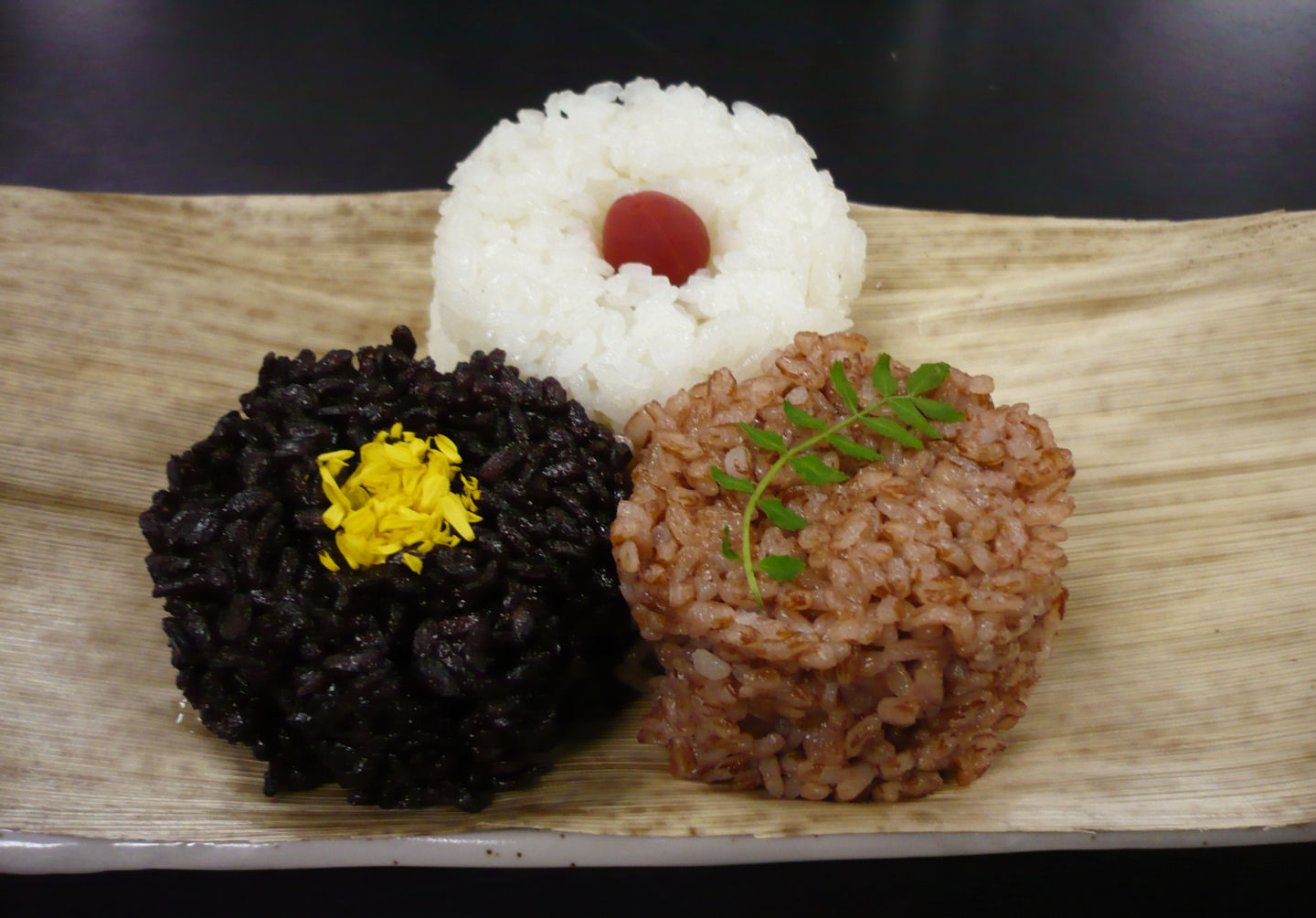
"caption": "Modern, domesticated rice comes in a range of colors, usually described as white, red and black. But collectors have never found black grains in more than a thousand samples of wild rice stored in genebanks. Now geneticists have traced this rare grain's origin and spread.",
"description": "Modern, domesticated rice comes in a range of colors, usually described as white, red and black. But collectors have never found black grains in more than a thousand samples of wild rice stored in genebanks. Now geneticists have traced this rare grain's origin and sprea",
"title": "Modern, domesticated rice comes in a range of colors, usually described as white, red and black. But collectors have never found black grains in more than a thousand samples of wild rice stored in genebanks. Now geneticists have traced this rare grain's origin and spread.",
"credit": "Courtesy of Takeshi Ebitani/Takuya Yamaguchi.",
"status": "inherit",
"isLoading": false,
"fetchFailed": false
},
"bayareabites_101454": {
"type": "attachments",
"id": "bayareabites_101454",
"meta": {
"index": "attachments_1716263798",
"site": "bayareabites",
"id": "101454",
"found": true
},
"parent": 100319,
"imgSizes": {
"twentyfourteen-full-width": {
"file": "https://ww2.kqed.org/app/uploads/sites/24/2015/09/Mariposa-Fruit-galette-1038x576.jpg",
"width": 1038,
"mimeType": "image/jpeg",
"height": 576
},
"thumbnail": {
"file": "https://ww2.kqed.org/app/uploads/sites/24/2015/09/Mariposa-Fruit-galette-400x244.jpg",
"width": 400,
"mimeType": "image/jpeg",
"height": 244
},
"fd-sm": {
"file": "https://ww2.kqed.org/app/uploads/sites/24/2015/09/Mariposa-Fruit-galette-960x585.jpg",
"width": 960,
"mimeType": "image/jpeg",
"height": 585
},
"post-thumbnail": {
"file": "https://ww2.kqed.org/app/uploads/sites/24/2015/09/Mariposa-Fruit-galette-672x372.jpg",
"width": 672,
"mimeType": "image/jpeg",
"height": 372
},
"kqedFullSize": {
"file": "https://ww2.kqed.org/app/uploads/sites/24/2015/09/Mariposa-Fruit-galette.jpg",
"width": 1920,
"height": 1170
},
"large": {
"file": "https://ww2.kqed.org/app/uploads/sites/24/2015/09/Mariposa-Fruit-galette-1440x878.jpg",
"width": 1440,
"mimeType": "image/jpeg",
"height": 878
},
"guest-author-96": {
"file": "https://ww2.kqed.org/app/uploads/sites/24/2015/09/Mariposa-Fruit-galette-96x96.jpg",
"width": 96,
"mimeType": "image/jpeg",
"height": 96
},
"medium": {
"file": "https://ww2.kqed.org/app/uploads/sites/24/2015/09/Mariposa-Fruit-galette-800x488.jpg",
"width": 800,
"mimeType": "image/jpeg",
"height": 488
},
"guest-author-64": {
"file": "https://ww2.kqed.org/app/uploads/sites/24/2015/09/Mariposa-Fruit-galette-64x64.jpg",
"width": 64,
"mimeType": "image/jpeg",
"height": 64
},
"guest-author-32": {
"file": "https://ww2.kqed.org/app/uploads/sites/24/2015/09/Mariposa-Fruit-galette-32x32.jpg",
"width": 32,
"mimeType": "image/jpeg",
"height": 32
},
"cat_post_thumb_sizecategory-posts-2": {
"file": "https://ww2.kqed.org/app/uploads/sites/24/2015/09/Mariposa-Fruit-galette-150x150.jpg",
"width": 150,
"mimeType": "image/jpeg",
"height": 150
},
"fd-lrg": {
"file": "https://ww2.kqed.org/app/uploads/sites/24/2015/09/Mariposa-Fruit-galette-1920x1170.jpg",
"width": 1920,
"mimeType": "image/jpeg",
"height": 1170
},
"fd-med": {
"file": "https://ww2.kqed.org/app/uploads/sites/24/2015/09/Mariposa-Fruit-galette-1180x719.jpg",
"width": 1180,
"mimeType": "image/jpeg",
"height": 719
},
"detail": {
"file": "https://ww2.kqed.org/app/uploads/sites/24/2015/09/Mariposa-Fruit-galette-75x75.jpg",
"width": 75,
"mimeType": "image/jpeg",
"height": 75
},
"guest-author-128": {
"file": "https://ww2.kqed.org/app/uploads/sites/24/2015/09/Mariposa-Fruit-galette-128x128.jpg",
"width": 128,
"mimeType": "image/jpeg",
"height": 128
}
},
"publishDate": 1443581226,
"modified": 1443581322,
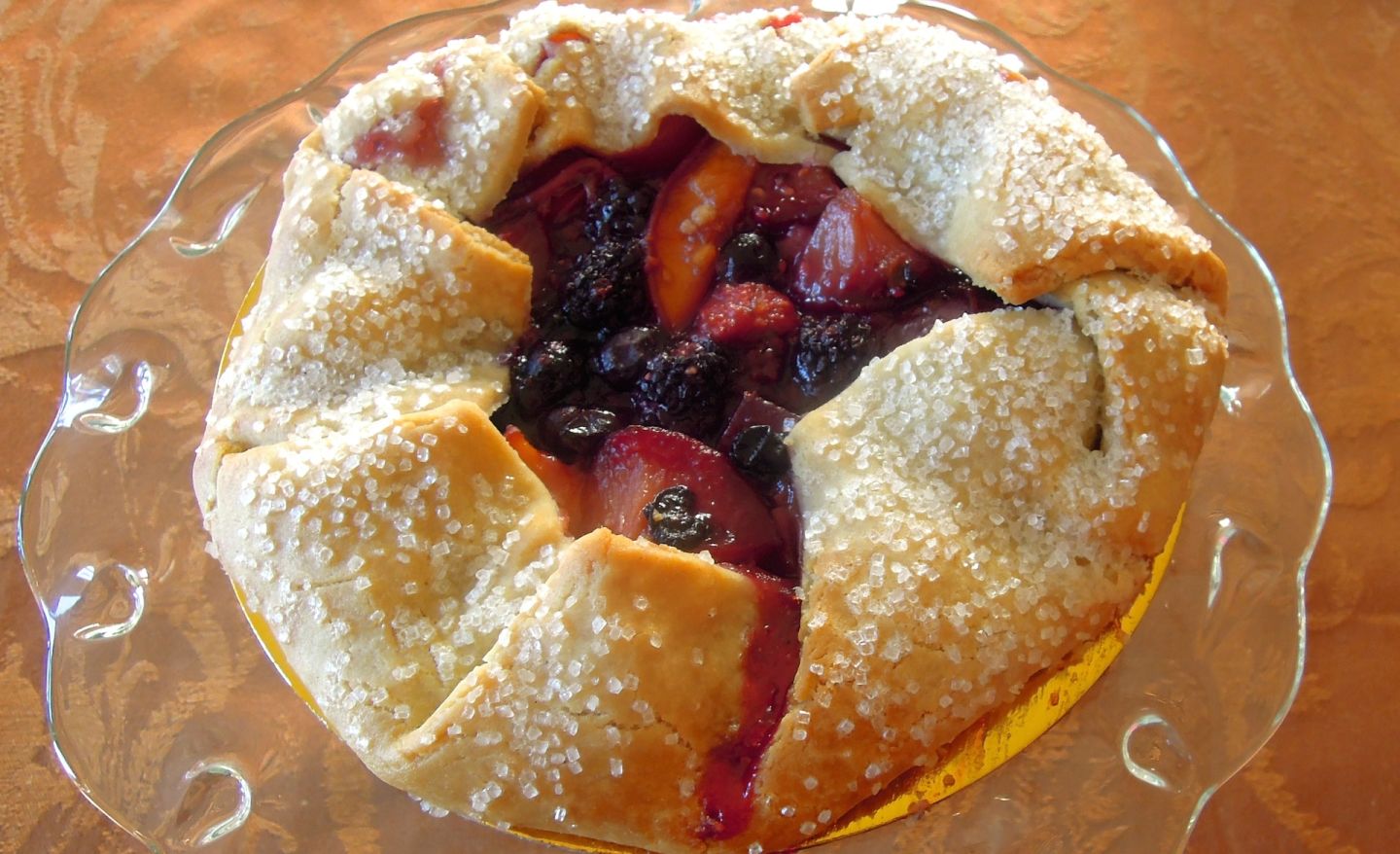
"caption": "Mariposa fruit galette",
"description": "Mariposa fruit galette",
"title": "Mariposa fruit galette",
"credit": "Anna Mindess",
"status": "inherit",
"isLoading": false,
"fetchFailed": false
},
"bayareabites_101392": {
"type": "attachments",
"id": "bayareabites_101392",
"meta": {
"index": "attachments_1716263798",
"site": "bayareabites",
"id": "101392",
"found": true
},
"parent": 101391,
"imgSizes": {
"twentyfourteen-full-width": {
"file": "https://ww2.kqed.org/app/uploads/sites/24/2015/09/gettyimages-468840748_custom-93ed36dc67cafc6a445ad9d93d2f390eb79e771d-1038x576.jpg",
"width": 1038,
"mimeType": "image/jpeg",
"height": 576
},
"thumbnail": {
"file": "https://ww2.kqed.org/app/uploads/sites/24/2015/09/gettyimages-468840748_custom-93ed36dc67cafc6a445ad9d93d2f390eb79e771d-400x267.jpg",
"width": 400,
"mimeType": "image/jpeg",
"height": 267
},
"fd-sm": {
"file": "https://ww2.kqed.org/app/uploads/sites/24/2015/09/gettyimages-468840748_custom-93ed36dc67cafc6a445ad9d93d2f390eb79e771d-960x641.jpg",
"width": 960,
"mimeType": "image/jpeg",
"height": 641
},
"post-thumbnail": {
"file": "https://ww2.kqed.org/app/uploads/sites/24/2015/09/gettyimages-468840748_custom-93ed36dc67cafc6a445ad9d93d2f390eb79e771d-672x372.jpg",
"width": 672,
"mimeType": "image/jpeg",
"height": 372
},
"kqedFullSize": {
"file": "https://ww2.kqed.org/app/uploads/sites/24/2015/09/gettyimages-468840748_custom-93ed36dc67cafc6a445ad9d93d2f390eb79e771d.jpg",
"width": 3000,
"height": 2003
},
"large": {
"file": "https://ww2.kqed.org/app/uploads/sites/24/2015/09/gettyimages-468840748_custom-93ed36dc67cafc6a445ad9d93d2f390eb79e771d-1440x961.jpg",
"width": 1440,
"mimeType": "image/jpeg",
"height": 961
},
"guest-author-96": {
"file": "https://ww2.kqed.org/app/uploads/sites/24/2015/09/gettyimages-468840748_custom-93ed36dc67cafc6a445ad9d93d2f390eb79e771d-96x96.jpg",
"width": 96,
"mimeType": "image/jpeg",
"height": 96
},
"medium": {
"file": "https://ww2.kqed.org/app/uploads/sites/24/2015/09/gettyimages-468840748_custom-93ed36dc67cafc6a445ad9d93d2f390eb79e771d-800x534.jpg",
"width": 800,
"mimeType": "image/jpeg",
"height": 534
},
"guest-author-64": {
"file": "https://ww2.kqed.org/app/uploads/sites/24/2015/09/gettyimages-468840748_custom-93ed36dc67cafc6a445ad9d93d2f390eb79e771d-64x64.jpg",
"width": 64,
"mimeType": "image/jpeg",
"height": 64
},
"guest-author-32": {
"file": "https://ww2.kqed.org/app/uploads/sites/24/2015/09/gettyimages-468840748_custom-93ed36dc67cafc6a445ad9d93d2f390eb79e771d-32x32.jpg",
"width": 32,
"mimeType": "image/jpeg",
"height": 32
},
"cat_post_thumb_sizecategory-posts-2": {
"file": "https://ww2.kqed.org/app/uploads/sites/24/2015/09/gettyimages-468840748_custom-93ed36dc67cafc6a445ad9d93d2f390eb79e771d-150x150.jpg",
"width": 150,
"mimeType": "image/jpeg",
"height": 150
},
"fd-lrg": {
"file": "https://ww2.kqed.org/app/uploads/sites/24/2015/09/gettyimages-468840748_custom-93ed36dc67cafc6a445ad9d93d2f390eb79e771d-1920x1282.jpg",
"width": 1920,
"mimeType": "image/jpeg",
"height": 1282
},
"fd-med": {
"file": "https://ww2.kqed.org/app/uploads/sites/24/2015/09/gettyimages-468840748_custom-93ed36dc67cafc6a445ad9d93d2f390eb79e771d-1180x788.jpg",
"width": 1180,
"mimeType": "image/jpeg",
"height": 788
},
"detail": {
"file": "https://ww2.kqed.org/app/uploads/sites/24/2015/09/gettyimages-468840748_custom-93ed36dc67cafc6a445ad9d93d2f390eb79e771d-75x75.jpg",
"width": 75,
"mimeType": "image/jpeg",
"height": 75
},
"guest-author-128": {
"file": "https://ww2.kqed.org/app/uploads/sites/24/2015/09/gettyimages-468840748_custom-93ed36dc67cafc6a445ad9d93d2f390eb79e771d-128x128.jpg",
"width": 128,
"mimeType": "image/jpeg",
"height": 128
}
},
"publishDate": 1443498968,
"modified": 1443499137,
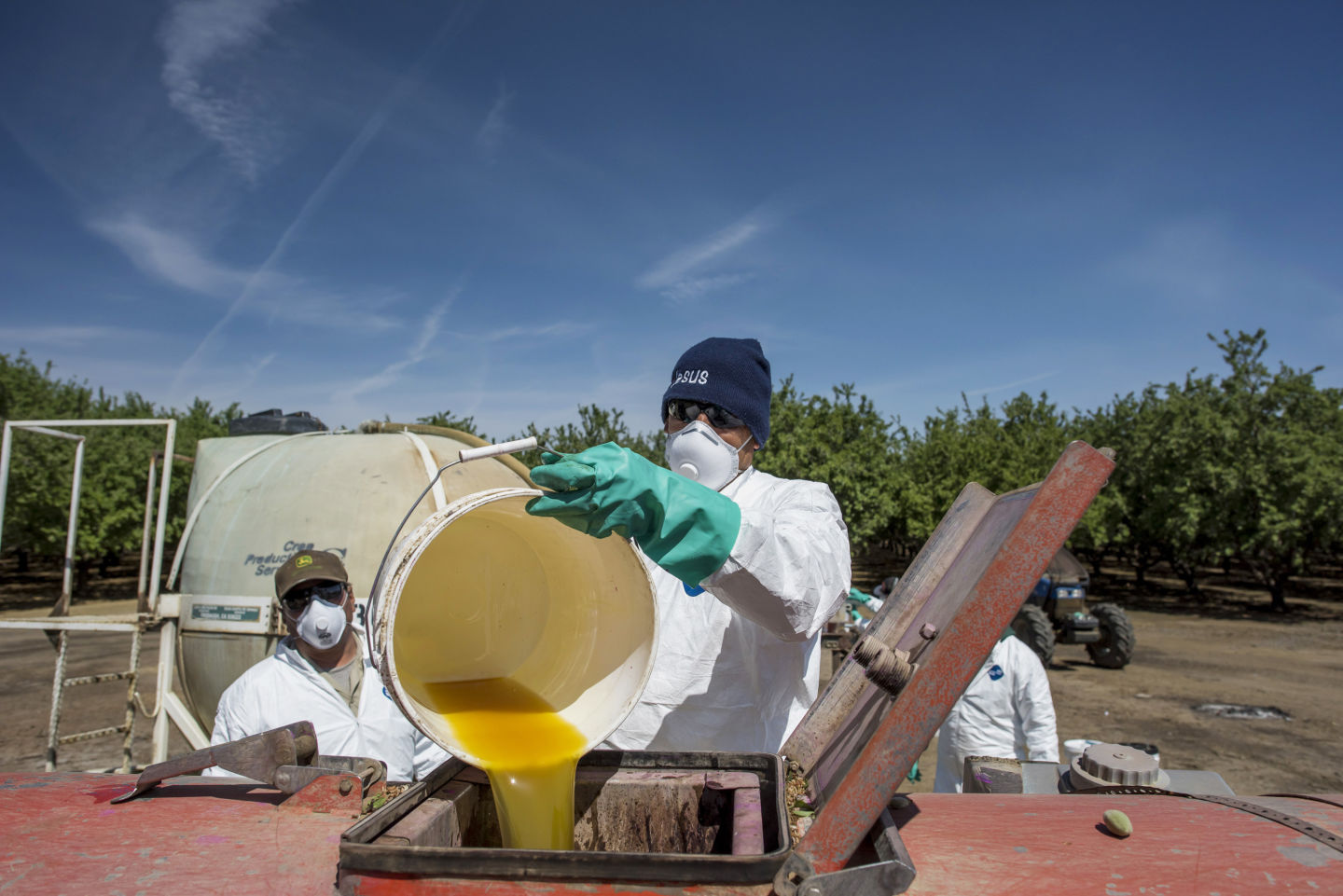
"caption": "A worker pours a bucket of pesticide into a machine to be sprayed on almond trees at Del Bosque Farms Inc. in Firebaugh, Calif., on April 6, 2015. California and Washington already have adopted, through state regulation, many of the rules that the EPA now wants to put in place nationwide.",
"description": "A worker pours a bucket of pesticide into a machine to be sprayed on almond trees at Del Bosque Farms Inc. in Firebaugh, Calif., on April 6, 2015. California and Washington already have adopted, through state regulation, many of the rules that the EPA now wants to put in place nationwide",
"title": "A worker pours a bucket of pesticide into a machine to be sprayed on almond trees at Del Bosque Farms Inc. in Firebaugh, Calif., on April 6, 2015. California and Washington already have adopted, through state regulation, many of the rules that the EPA now wants to put in place nationwide.",
"credit": "David Paul Morris/Bloomberg/Getty Images",
"status": "inherit",
"isLoading": false,
"fetchFailed": false
},
"bayareabites_100991": {
"type": "attachments",
"id": "bayareabites_100991",
"meta": {
"index": "attachments_1716263798",
"site": "bayareabites",
"id": "100991",
"found": true
},
"parent": 100990,
"imgSizes": {
"twentyfourteen-full-width": {
"file": "https://ww2.kqed.org/app/uploads/sites/24/2015/09/veggies_web-9d06eae05695dfde3abc5518102536da410e3043-1038x576.jpg",
"width": 1038,
"mimeType": "image/jpeg",
"height": 576
},
"thumbnail": {
"file": "https://ww2.kqed.org/app/uploads/sites/24/2015/09/veggies_web-9d06eae05695dfde3abc5518102536da410e3043-400x300.jpg",
"width": 400,
"mimeType": "image/jpeg",
"height": 300
},
"fd-sm": {
"file": "https://ww2.kqed.org/app/uploads/sites/24/2015/09/veggies_web-9d06eae05695dfde3abc5518102536da410e3043-960x719.jpg",
"width": 960,
"mimeType": "image/jpeg",
"height": 719
},
"post-thumbnail": {
"file": "https://ww2.kqed.org/app/uploads/sites/24/2015/09/veggies_web-9d06eae05695dfde3abc5518102536da410e3043-672x372.jpg",
"width": 672,
"mimeType": "image/jpeg",
"height": 372
},
"kqedFullSize": {
"file": "https://ww2.kqed.org/app/uploads/sites/24/2015/09/veggies_web-9d06eae05695dfde3abc5518102536da410e3043.jpg",
"width": 4880,
"height": 3655
},
"large": {
"file": "https://ww2.kqed.org/app/uploads/sites/24/2015/09/veggies_web-9d06eae05695dfde3abc5518102536da410e3043-1440x1079.jpg",
"width": 1440,
"mimeType": "image/jpeg",
"height": 1079
},
"guest-author-96": {
"file": "https://ww2.kqed.org/app/uploads/sites/24/2015/09/veggies_web-9d06eae05695dfde3abc5518102536da410e3043-96x96.jpg",
"width": 96,
"mimeType": "image/jpeg",
"height": 96
},
"medium": {
"file": "https://ww2.kqed.org/app/uploads/sites/24/2015/09/veggies_web-9d06eae05695dfde3abc5518102536da410e3043-800x599.jpg",
"width": 800,
"mimeType": "image/jpeg",
"height": 599
},
"guest-author-64": {
"file": "https://ww2.kqed.org/app/uploads/sites/24/2015/09/veggies_web-9d06eae05695dfde3abc5518102536da410e3043-64x64.jpg",
"width": 64,
"mimeType": "image/jpeg",
"height": 64
},
"guest-author-32": {
"file": "https://ww2.kqed.org/app/uploads/sites/24/2015/09/veggies_web-9d06eae05695dfde3abc5518102536da410e3043-32x32.jpg",
"width": 32,
"mimeType": "image/jpeg",
"height": 32
},
"cat_post_thumb_sizecategory-posts-2": {
"file": "https://ww2.kqed.org/app/uploads/sites/24/2015/09/veggies_web-9d06eae05695dfde3abc5518102536da410e3043-150x150.jpg",
"width": 150,
"mimeType": "image/jpeg",
"height": 150
},
"fd-lrg": {
"file": "https://ww2.kqed.org/app/uploads/sites/24/2015/09/veggies_web-9d06eae05695dfde3abc5518102536da410e3043-1920x1438.jpg",
"width": 1920,
"mimeType": "image/jpeg",
"height": 1438
},
"fd-med": {
"file": "https://ww2.kqed.org/app/uploads/sites/24/2015/09/veggies_web-9d06eae05695dfde3abc5518102536da410e3043-1180x884.jpg",
"width": 1180,
"mimeType": "image/jpeg",
"height": 884
},
"detail": {
"file": "https://ww2.kqed.org/app/uploads/sites/24/2015/09/veggies_web-9d06eae05695dfde3abc5518102536da410e3043-75x75.jpg",
"width": 75,
"mimeType": "image/jpeg",
"height": 75
},
"guest-author-128": {
"file": "https://ww2.kqed.org/app/uploads/sites/24/2015/09/veggies_web-9d06eae05695dfde3abc5518102536da410e3043-128x128.jpg",
"width": 128,
"mimeType": "image/jpeg",
"height": 128
}
},
"publishDate": 1442763715,
"modified": 1442764032,
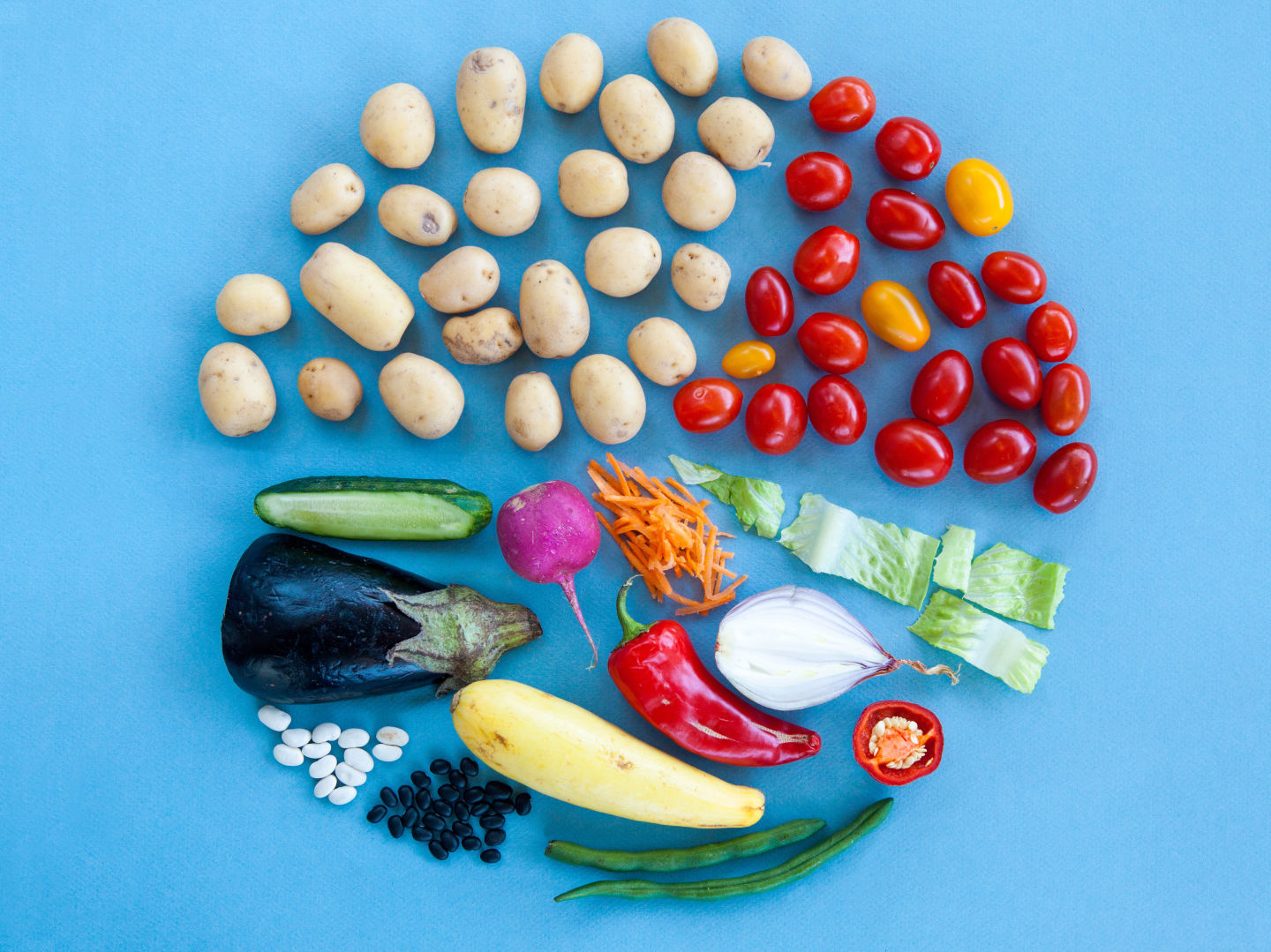
"caption": "About 50 percent of the vegetables available today are tomatoes and potatoes. According to new USDA data. Lettuce is the third most available single vegetable. Legumes and all other vegetables make up 41 percent.",
"description": "About 50 percent of the vegetables available today are tomatoes and potatoes. According to <a href="http://www.ers.usda.gov/data-products/chart-gallery/detail.aspx?chartId=53769",
"title": "About 50 percent of the vegetables available today are tomatoes and potatoes. According to new USDA data. Lettuce is the third most available single vegetable. Legumes and all other vegetables make up 41 percent.",
"credit": "Ryan Kellman/NPR ",
"status": "inherit",
"isLoading": false,
"fetchFailed": false
},
"bayareabites_100840": {
"type": "attachments",
"id": "bayareabites_100840",
"meta": {
"index": "attachments_1716263798",
"site": "bayareabites",
"id": "100840",
"found": true
},
"parent": 100839,
"imgSizes": {
"twentyfourteen-full-width": {
"file": "https://ww2.kqed.org/app/uploads/sites/24/2015/09/ap_44972528173_custom-3269c680632b2b1430deb2132e3430395b28301a-1038x576.jpg",
"width": 1038,
"mimeType": "image/jpeg",
"height": 576
},
"thumbnail": {
"file": "https://ww2.kqed.org/app/uploads/sites/24/2015/09/ap_44972528173_custom-3269c680632b2b1430deb2132e3430395b28301a-400x300.jpg",
"width": 400,
"mimeType": "image/jpeg",
"height": 300
},
"fd-sm": {
"file": "https://ww2.kqed.org/app/uploads/sites/24/2015/09/ap_44972528173_custom-3269c680632b2b1430deb2132e3430395b28301a-960x719.jpg",
"width": 960,
"mimeType": "image/jpeg",
"height": 719
},
"post-thumbnail": {
"file": "https://ww2.kqed.org/app/uploads/sites/24/2015/09/ap_44972528173_custom-3269c680632b2b1430deb2132e3430395b28301a-672x372.jpg",
"width": 672,
"mimeType": "image/jpeg",
"height": 372
},
"kqedFullSize": {
"file": "https://ww2.kqed.org/app/uploads/sites/24/2015/09/ap_44972528173_custom-3269c680632b2b1430deb2132e3430395b28301a.jpg",
"width": 3000,
"height": 2248
},
"large": {
"file": "https://ww2.kqed.org/app/uploads/sites/24/2015/09/ap_44972528173_custom-3269c680632b2b1430deb2132e3430395b28301a-1440x1079.jpg",
"width": 1440,
"mimeType": "image/jpeg",
"height": 1079
},
"guest-author-96": {
"file": "https://ww2.kqed.org/app/uploads/sites/24/2015/09/ap_44972528173_custom-3269c680632b2b1430deb2132e3430395b28301a-96x96.jpg",
"width": 96,
"mimeType": "image/jpeg",
"height": 96
},
"medium": {
"file": "https://ww2.kqed.org/app/uploads/sites/24/2015/09/ap_44972528173_custom-3269c680632b2b1430deb2132e3430395b28301a-800x599.jpg",
"width": 800,
"mimeType": "image/jpeg",
"height": 599
},
"guest-author-64": {
"file": "https://ww2.kqed.org/app/uploads/sites/24/2015/09/ap_44972528173_custom-3269c680632b2b1430deb2132e3430395b28301a-64x64.jpg",
"width": 64,
"mimeType": "image/jpeg",
"height": 64
},
"guest-author-32": {
"file": "https://ww2.kqed.org/app/uploads/sites/24/2015/09/ap_44972528173_custom-3269c680632b2b1430deb2132e3430395b28301a-32x32.jpg",
"width": 32,
"mimeType": "image/jpeg",
"height": 32
},
"cat_post_thumb_sizecategory-posts-2": {
"file": "https://ww2.kqed.org/app/uploads/sites/24/2015/09/ap_44972528173_custom-3269c680632b2b1430deb2132e3430395b28301a-150x150.jpg",
"width": 150,
"mimeType": "image/jpeg",
"height": 150
},
"fd-lrg": {
"file": "https://ww2.kqed.org/app/uploads/sites/24/2015/09/ap_44972528173_custom-3269c680632b2b1430deb2132e3430395b28301a-1920x1439.jpg",
"width": 1920,
"mimeType": "image/jpeg",
"height": 1439
},
"fd-med": {
"file": "https://ww2.kqed.org/app/uploads/sites/24/2015/09/ap_44972528173_custom-3269c680632b2b1430deb2132e3430395b28301a-1180x884.jpg",
"width": 1180,
"mimeType": "image/jpeg",
"height": 884
},
"detail": {
"file": "https://ww2.kqed.org/app/uploads/sites/24/2015/09/ap_44972528173_custom-3269c680632b2b1430deb2132e3430395b28301a-75x75.jpg",
"width": 75,
"mimeType": "image/jpeg",
"height": 75
},
"guest-author-128": {
"file": "https://ww2.kqed.org/app/uploads/sites/24/2015/09/ap_44972528173_custom-3269c680632b2b1430deb2132e3430395b28301a-128x128.jpg",
"width": 128,
"mimeType": "image/jpeg",
"height": 128
}
},
"publishDate": 1442599815,
"modified": 1442600042,
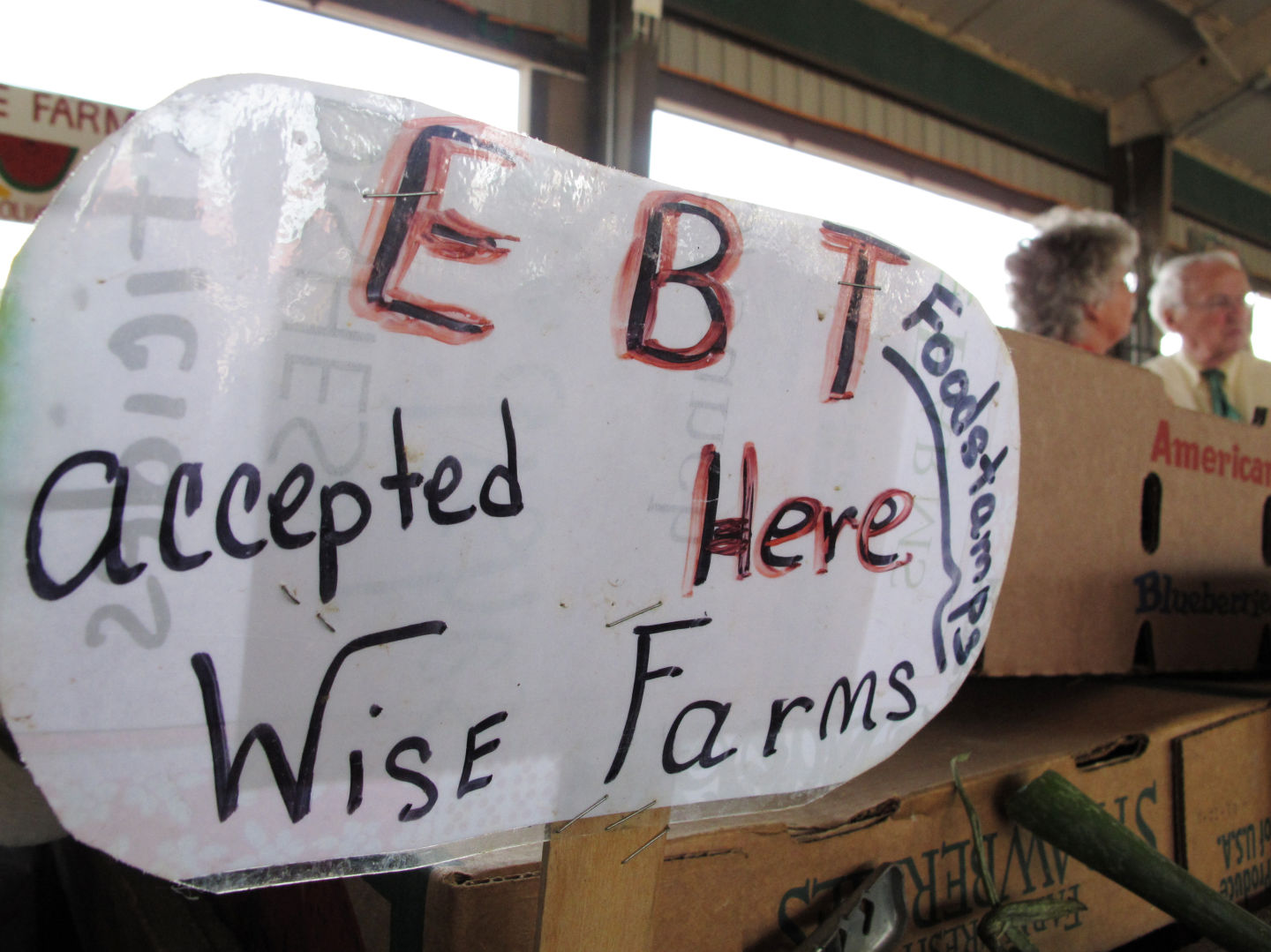
"caption": "The federal food stamps program is working to make sure low-income Americans are getting enough calories, but those calories are less nutritious than what everyone else eats, research finds. The USDA is funding programs to try to bridge that gap, such as initiatives that allow food stamp recipients to use their benefits at farmers markets.",
"description": "The federal food stamps program is working to make sure low-income Americans are getting enough calories, but those calories are less nutritious than what everyone else eats, research finds. The USDA is funding programs to try to bridge that gap, such as initiatives that allow food stamp recipients to use their benefits at farmers markets.",
"title": "The federal food stamps program is working to make sure low-income Americans are getting enough calories, but those calories are less nutritious than what everyone else eats, research finds. The USDA is funding programs to try to bridge that gap, such as initiatives that allow food stamp recipients to use their benefits at farmers markets.",
"credit": "Allen Breed/AP ",
"status": "inherit",
"isLoading": false,
"fetchFailed": false
},
"bayareabites_100830": {
"type": "attachments",
"id": "bayareabites_100830",
"meta": {
"index": "attachments_1716263798",
"site": "bayareabites",
"id": "100830",
"found": true
},
"parent": 100828,
"imgSizes": {
"twentyfourteen-full-width": {
"file": "https://ww2.kqed.org/app/uploads/sites/24/2015/09/gettyimages-76752535_custom-94c9cceba80676c271ceb8f431c47b7e016144aa-1038x576.jpg",
"width": 1038,
"mimeType": "image/jpeg",
"height": 576
},
"thumbnail": {
"file": "https://ww2.kqed.org/app/uploads/sites/24/2015/09/gettyimages-76752535_custom-94c9cceba80676c271ceb8f431c47b7e016144aa-400x266.jpg",
"width": 400,
"mimeType": "image/jpeg",
"height": 266
},
"fd-sm": {
"file": "https://ww2.kqed.org/app/uploads/sites/24/2015/09/gettyimages-76752535_custom-94c9cceba80676c271ceb8f431c47b7e016144aa-960x639.jpg",
"width": 960,
"mimeType": "image/jpeg",
"height": 639
},
"post-thumbnail": {
"file": "https://ww2.kqed.org/app/uploads/sites/24/2015/09/gettyimages-76752535_custom-94c9cceba80676c271ceb8f431c47b7e016144aa-672x372.jpg",
"width": 672,
"mimeType": "image/jpeg",
"height": 372
},
"kqedFullSize": {
"file": "https://ww2.kqed.org/app/uploads/sites/24/2015/09/gettyimages-76752535_custom-94c9cceba80676c271ceb8f431c47b7e016144aa.jpg",
"width": 3000,
"height": 1998
},
"large": {
"file": "https://ww2.kqed.org/app/uploads/sites/24/2015/09/gettyimages-76752535_custom-94c9cceba80676c271ceb8f431c47b7e016144aa-1440x959.jpg",
"width": 1440,
"mimeType": "image/jpeg",
"height": 959
},
"guest-author-96": {
"file": "https://ww2.kqed.org/app/uploads/sites/24/2015/09/gettyimages-76752535_custom-94c9cceba80676c271ceb8f431c47b7e016144aa-96x96.jpg",
"width": 96,
"mimeType": "image/jpeg",
"height": 96
},
"medium": {
"file": "https://ww2.kqed.org/app/uploads/sites/24/2015/09/gettyimages-76752535_custom-94c9cceba80676c271ceb8f431c47b7e016144aa-800x533.jpg",
"width": 800,
"mimeType": "image/jpeg",
"height": 533
},
"guest-author-64": {
"file": "https://ww2.kqed.org/app/uploads/sites/24/2015/09/gettyimages-76752535_custom-94c9cceba80676c271ceb8f431c47b7e016144aa-64x64.jpg",
"width": 64,
"mimeType": "image/jpeg",
"height": 64
},
"guest-author-32": {
"file": "https://ww2.kqed.org/app/uploads/sites/24/2015/09/gettyimages-76752535_custom-94c9cceba80676c271ceb8f431c47b7e016144aa-32x32.jpg",
"width": 32,
"mimeType": "image/jpeg",
"height": 32
},
"cat_post_thumb_sizecategory-posts-2": {
"file": "https://ww2.kqed.org/app/uploads/sites/24/2015/09/gettyimages-76752535_custom-94c9cceba80676c271ceb8f431c47b7e016144aa-150x150.jpg",
"width": 150,
"mimeType": "image/jpeg",
"height": 150
},
"fd-lrg": {
"file": "https://ww2.kqed.org/app/uploads/sites/24/2015/09/gettyimages-76752535_custom-94c9cceba80676c271ceb8f431c47b7e016144aa-1920x1279.jpg",
"width": 1920,
"mimeType": "image/jpeg",
"height": 1279
},
"fd-med": {
"file": "https://ww2.kqed.org/app/uploads/sites/24/2015/09/gettyimages-76752535_custom-94c9cceba80676c271ceb8f431c47b7e016144aa-1180x786.jpg",
"width": 1180,
"mimeType": "image/jpeg",
"height": 786
},
"detail": {
"file": "https://ww2.kqed.org/app/uploads/sites/24/2015/09/gettyimages-76752535_custom-94c9cceba80676c271ceb8f431c47b7e016144aa-75x75.jpg",
"width": 75,
"mimeType": "image/jpeg",
"height": 75
},
"guest-author-128": {
"file": "https://ww2.kqed.org/app/uploads/sites/24/2015/09/gettyimages-76752535_custom-94c9cceba80676c271ceb8f431c47b7e016144aa-128x128.jpg",
"width": 128,
"mimeType": "image/jpeg",
"height": 128
}
},
"publishDate": 1442597529,
"modified": 1442598089,
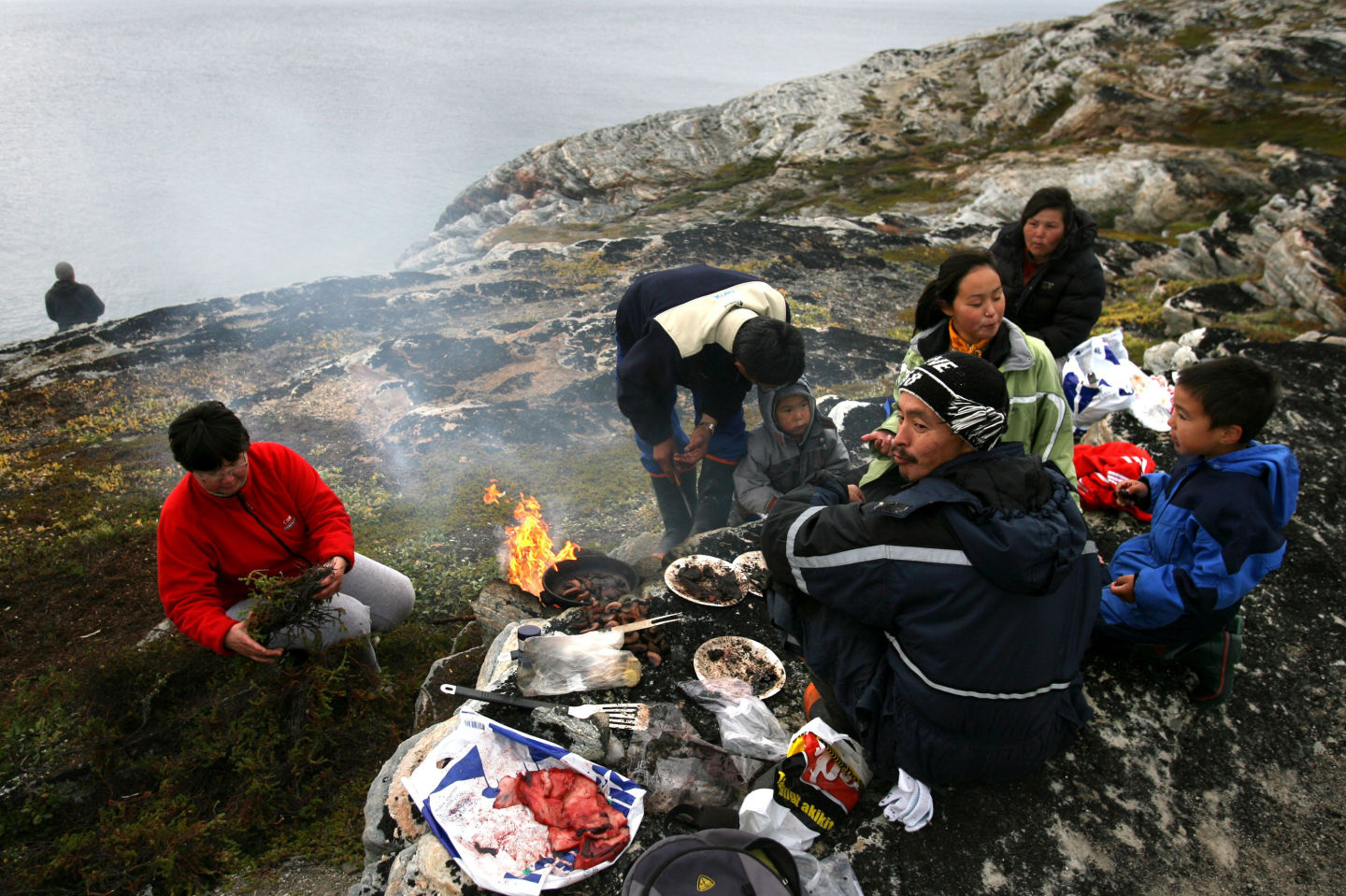
"caption": "Arne Lange, a 39-year-old Inuit fisherman, and his family barbecue seal meat on an island near the village of Ilimanaq, Greenland in 2007.",
"description": "Arne Lange, a 39-year-old Inuit fisherman, and his family barbecue seal meat on an island near the village of Ilimanaq, Greenland in 2007.",
"title": "Arne Lange, a 39-year-old Inuit fisherman, and his family barbecue seal meat on an island near the village of Ilimanaq, Greenland in 2007.",
"credit": "Uriel Sinai/Getty Images ",
"status": "inherit",
"isLoading": false,
"fetchFailed": false
},
"bayareabites_100543": {
"type": "attachments",
"id": "bayareabites_100543",
"meta": {
"index": "attachments_1716263798",
"site": "bayareabites",
"id": "100543",
"found": true
},
"parent": 100395,
"imgSizes": {
"twentyfourteen-full-width": {
"file": "https://ww2.kqed.org/app/uploads/sites/24/2015/09/corner3-1920-1038x576.jpg",
"width": 1038,
"mimeType": "image/jpeg",
"height": 576
},
"thumbnail": {
"file": "https://ww2.kqed.org/app/uploads/sites/24/2015/09/corner3-1920-400x300.jpg",
"width": 400,
"mimeType": "image/jpeg",
"height": 300
},
"fd-sm": {
"file": "https://ww2.kqed.org/app/uploads/sites/24/2015/09/corner3-1920-960x720.jpg",
"width": 960,
"mimeType": "image/jpeg",
"height": 720
},
"post-thumbnail": {
"file": "https://ww2.kqed.org/app/uploads/sites/24/2015/09/corner3-1920-672x372.jpg",
"width": 672,
"mimeType": "image/jpeg",
"height": 372
},
"kqedFullSize": {
"file": "https://ww2.kqed.org/app/uploads/sites/24/2015/09/corner3-1920.jpg",
"width": 1920,
"height": 1440
},
"large": {
"file": "https://ww2.kqed.org/app/uploads/sites/24/2015/09/corner3-1920-1440x1080.jpg",
"width": 1440,
"mimeType": "image/jpeg",
"height": 1080
},
"guest-author-96": {
"file": "https://ww2.kqed.org/app/uploads/sites/24/2015/09/corner3-1920-96x96.jpg",
"width": 96,
"mimeType": "image/jpeg",
"height": 96
},
"medium": {
"file": "https://ww2.kqed.org/app/uploads/sites/24/2015/09/corner3-1920-800x600.jpg",
"width": 800,
"mimeType": "image/jpeg",
"height": 600
},
"guest-author-64": {
"file": "https://ww2.kqed.org/app/uploads/sites/24/2015/09/corner3-1920-64x64.jpg",
"width": 64,
"mimeType": "image/jpeg",
"height": 64
},
"guest-author-32": {
"file": "https://ww2.kqed.org/app/uploads/sites/24/2015/09/corner3-1920-32x32.jpg",
"width": 32,
"mimeType": "image/jpeg",
"height": 32
},
"cat_post_thumb_sizecategory-posts-2": {
"file": "https://ww2.kqed.org/app/uploads/sites/24/2015/09/corner3-1920-150x150.jpg",
"width": 150,
"mimeType": "image/jpeg",
"height": 150
},
"fd-lrg": {
"file": "https://ww2.kqed.org/app/uploads/sites/24/2015/09/corner3-1920-1920x1440.jpg",
"width": 1920,
"mimeType": "image/jpeg",
"height": 1440
},
"fd-med": {
"file": "https://ww2.kqed.org/app/uploads/sites/24/2015/09/corner3-1920-1180x885.jpg",
"width": 1180,
"mimeType": "image/jpeg",
"height": 885
},
"detail": {
"file": "https://ww2.kqed.org/app/uploads/sites/24/2015/09/corner3-1920-75x75.jpg",
"width": 75,
"mimeType": "image/jpeg",
"height": 75
},
"guest-author-128": {
"file": "https://ww2.kqed.org/app/uploads/sites/24/2015/09/corner3-1920-128x128.jpg",
"width": 128,
"mimeType": "image/jpeg",
"height": 128
}
},
"publishDate": 1442363073,
"modified": 1442363214,
"caption": "Paula Beal, HOPE Healthy Corner Store Leader, has been helping out with the transition of Sunbeam Market in West Oakland.",
"description": "Paula Beal, HOPE Healthy Corner Store Leader, has been helping out with the transition of Sunbeam Market in West Oakland.",
"title": "Paula Beal, HOPE Healthy Corner Store Leader, has been helping out with the transition of Sunbeam Market in West Oakland.",
"credit": "Photo courtesy of HOPE Collaborative",
"status": "inherit",
"isLoading": false,
"fetchFailed": false
},
"bayareabites_100477": {
"type": "attachments",
"id": "bayareabites_100477",
"meta": {
"index": "attachments_1716263798",
"site": "bayareabites",
"id": "100477",
"found": true
},
"parent": 100476,
"imgSizes": {
"twentyfourteen-full-width": {
"file": "https://ww2.kqed.org/app/uploads/sites/24/2015/09/oliveoilnute_custom-99023628f9a3349fa02205360ac735a38485225f-1038x576.jpg",
"width": 1038,
"mimeType": "image/jpeg",
"height": 576
},
"thumbnail": {
"file": "https://ww2.kqed.org/app/uploads/sites/24/2015/09/oliveoilnute_custom-99023628f9a3349fa02205360ac735a38485225f-400x271.jpg",
"width": 400,
"mimeType": "image/jpeg",
"height": 271
},
"fd-sm": {
"file": "https://ww2.kqed.org/app/uploads/sites/24/2015/09/oliveoilnute_custom-99023628f9a3349fa02205360ac735a38485225f-960x651.jpg",
"width": 960,
"mimeType": "image/jpeg",
"height": 651
},
"post-thumbnail": {
"file": "https://ww2.kqed.org/app/uploads/sites/24/2015/09/oliveoilnute_custom-99023628f9a3349fa02205360ac735a38485225f-672x372.jpg",
"width": 672,
"mimeType": "image/jpeg",
"height": 372
},
"kqedFullSize": {
"file": "https://ww2.kqed.org/app/uploads/sites/24/2015/09/oliveoilnute_custom-99023628f9a3349fa02205360ac735a38485225f.jpg",
"width": 2000,
"height": 1356
},
"large": {
"file": "https://ww2.kqed.org/app/uploads/sites/24/2015/09/oliveoilnute_custom-99023628f9a3349fa02205360ac735a38485225f-1440x976.jpg",
"width": 1440,
"mimeType": "image/jpeg",
"height": 976
},
"guest-author-96": {
"file": "https://ww2.kqed.org/app/uploads/sites/24/2015/09/oliveoilnute_custom-99023628f9a3349fa02205360ac735a38485225f-96x96.jpg",
"width": 96,
"mimeType": "image/jpeg",
"height": 96
},
"medium": {
"file": "https://ww2.kqed.org/app/uploads/sites/24/2015/09/oliveoilnute_custom-99023628f9a3349fa02205360ac735a38485225f-800x542.jpg",
"width": 800,
"mimeType": "image/jpeg",
"height": 542
},
"guest-author-64": {
"file": "https://ww2.kqed.org/app/uploads/sites/24/2015/09/oliveoilnute_custom-99023628f9a3349fa02205360ac735a38485225f-64x64.jpg",
"width": 64,
"mimeType": "image/jpeg",
"height": 64
},
"guest-author-32": {
"file": "https://ww2.kqed.org/app/uploads/sites/24/2015/09/oliveoilnute_custom-99023628f9a3349fa02205360ac735a38485225f-32x32.jpg",
"width": 32,
"mimeType": "image/jpeg",
"height": 32
},
"cat_post_thumb_sizecategory-posts-2": {
"file": "https://ww2.kqed.org/app/uploads/sites/24/2015/09/oliveoilnute_custom-99023628f9a3349fa02205360ac735a38485225f-150x150.jpg",
"width": 150,
"mimeType": "image/jpeg",
"height": 150
},
"fd-lrg": {
"file": "https://ww2.kqed.org/app/uploads/sites/24/2015/09/oliveoilnute_custom-99023628f9a3349fa02205360ac735a38485225f-1920x1302.jpg",
"width": 1920,
"mimeType": "image/jpeg",
"height": 1302
},
"fd-med": {
"file": "https://ww2.kqed.org/app/uploads/sites/24/2015/09/oliveoilnute_custom-99023628f9a3349fa02205360ac735a38485225f-1180x800.jpg",
"width": 1180,
"mimeType": "image/jpeg",
"height": 800
},
"detail": {
"file": "https://ww2.kqed.org/app/uploads/sites/24/2015/09/oliveoilnute_custom-99023628f9a3349fa02205360ac735a38485225f-75x75.jpg",
"width": 75,
"mimeType": "image/jpeg",
"height": 75
},
"guest-author-128": {
"file": "https://ww2.kqed.org/app/uploads/sites/24/2015/09/oliveoilnute_custom-99023628f9a3349fa02205360ac735a38485225f-128x128.jpg",
"width": 128,
"mimeType": "image/jpeg",
"height": 128
}
},
"publishDate": 1442248045,
"modified": 1442248274,
"caption": "The group of women in a new study with the lowest rate of breast cancer consumed about four tablespoons of olive oil each day.",
"description": "The group of women in a new study with the lowest rate of breast cancer consumed about four tablespoons of olive oil each day.",
"title": "The group of women in a new study with the lowest rate of breast cancer consumed about four tablespoons of olive oil each day.",
"credit": "Heather Rousseau/NPR ",
"status": "inherit",
"isLoading": false,
"fetchFailed": false
},
"bayareabites_100280": {
"type": "attachments",
"id": "bayareabites_100280",
"meta": {
"index": "attachments_1716263798",
"site": "bayareabites",
"id": "100280",
"found": true
},
"parent": 99849,
"imgSizes": {
"twentyfourteen-full-width": {
"file": "https://ww2.kqed.org/app/uploads/sites/24/2015/08/living-apothecary-1038x576.jpg",
"width": 1038,
"mimeType": "image/jpeg",
"height": 576
},
"thumbnail": {
"file": "https://ww2.kqed.org/app/uploads/sites/24/2015/08/living-apothecary-400x300.jpg",
"width": 400,
"mimeType": "image/jpeg",
"height": 300
},
"fd-sm": {
"file": "https://ww2.kqed.org/app/uploads/sites/24/2015/08/living-apothecary-960x720.jpg",
"width": 960,
"mimeType": "image/jpeg",
"height": 720
},
"post-thumbnail": {
"file": "https://ww2.kqed.org/app/uploads/sites/24/2015/08/living-apothecary-672x372.jpg",
"width": 672,
"mimeType": "image/jpeg",
"height": 372
},
"kqedFullSize": {
"file": "https://ww2.kqed.org/app/uploads/sites/24/2015/08/living-apothecary.jpg",
"width": 1920,
"height": 1440
},
"large": {
"file": "https://ww2.kqed.org/app/uploads/sites/24/2015/08/living-apothecary-1440x1080.jpg",
"width": 1440,
"mimeType": "image/jpeg",
"height": 1080
},
"guest-author-96": {
"file": "https://ww2.kqed.org/app/uploads/sites/24/2015/08/living-apothecary-96x96.jpg",
"width": 96,
"mimeType": "image/jpeg",
"height": 96
},
"medium": {
"file": "https://ww2.kqed.org/app/uploads/sites/24/2015/08/living-apothecary-800x600.jpg",
"width": 800,
"mimeType": "image/jpeg",
"height": 600
},
"guest-author-64": {
"file": "https://ww2.kqed.org/app/uploads/sites/24/2015/08/living-apothecary-64x64.jpg",
"width": 64,
"mimeType": "image/jpeg",
"height": 64
},
"guest-author-32": {
"file": "https://ww2.kqed.org/app/uploads/sites/24/2015/08/living-apothecary-32x32.jpg",
"width": 32,
"mimeType": "image/jpeg",
"height": 32
},
"cat_post_thumb_sizecategory-posts-2": {
"file": "https://ww2.kqed.org/app/uploads/sites/24/2015/08/living-apothecary-150x150.jpg",
"width": 150,
"mimeType": "image/jpeg",
"height": 150
},
"fd-lrg": {
"file": "https://ww2.kqed.org/app/uploads/sites/24/2015/08/living-apothecary-1920x1440.jpg",
"width": 1920,
"mimeType": "image/jpeg",
"height": 1440
},
"fd-med": {
"file": "https://ww2.kqed.org/app/uploads/sites/24/2015/08/living-apothecary-1180x885.jpg",
"width": 1180,
"mimeType": "image/jpeg",
"height": 885
},
"detail": {
"file": "https://ww2.kqed.org/app/uploads/sites/24/2015/08/living-apothecary-75x75.jpg",
"width": 75,
"mimeType": "image/jpeg",
"height": 75
},
"guest-author-128": {
"file": "https://ww2.kqed.org/app/uploads/sites/24/2015/08/living-apothecary-128x128.jpg",
"width": 128,
"mimeType": "image/jpeg",
"height": 128
}
},
"publishDate": 1441850879,
"modified": 1441850920,
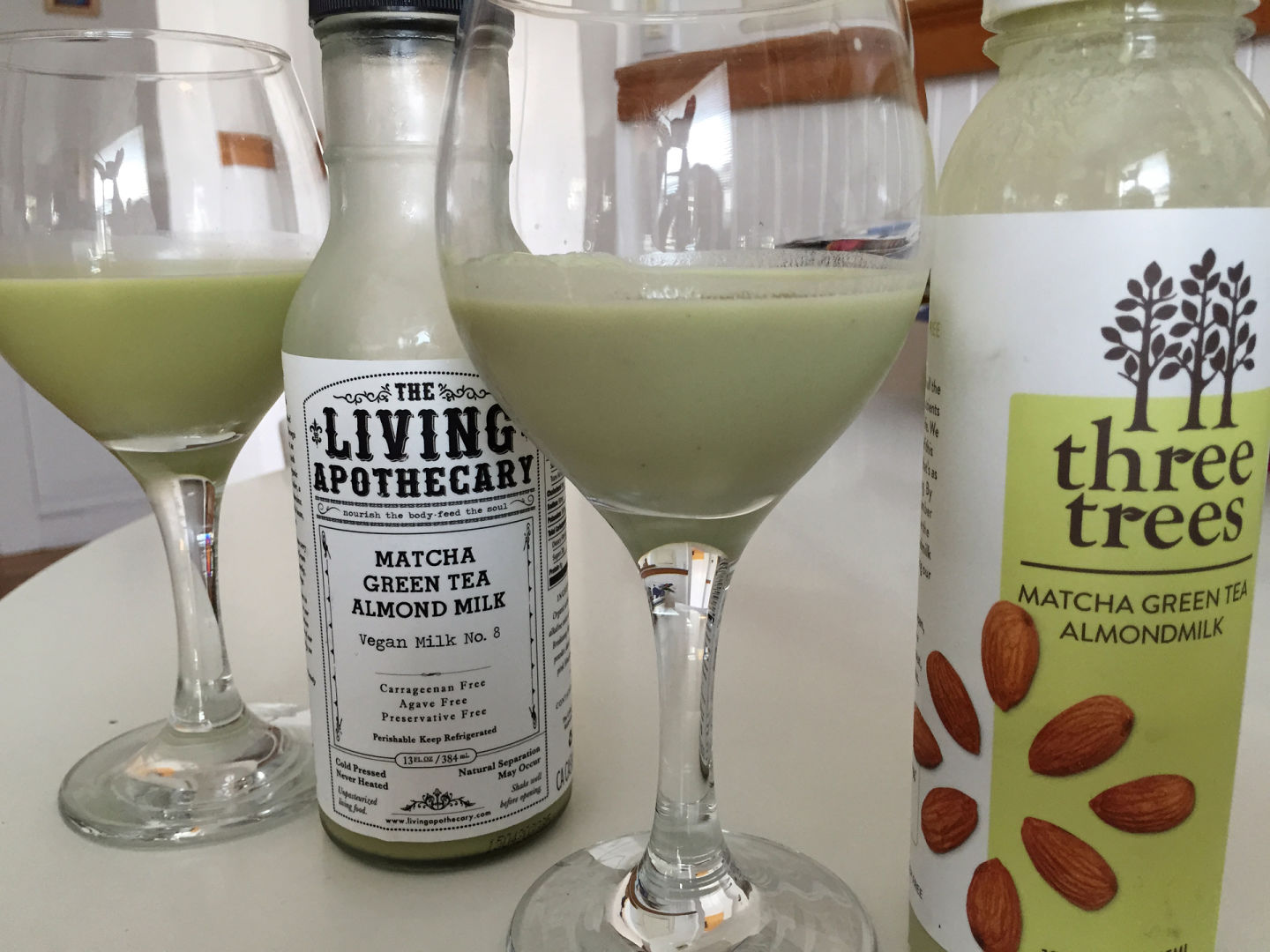
"caption": "Both Three Trees and The Living Apothecary offer a Matcha Green Tea flavored almond milk.",
"description": "Both Three Trees and The Living Apothecary offer a Matcha Green Tea flavored almond milk.",
"title": "Both Three Trees and The Living Apothecary offer a Matcha Green Tea flavored almond milk.",
"credit": "Alix Wall",
"status": "inherit",
"isLoading": false,
"fetchFailed": false
},
"bayareabites_100260": {
"type": "attachments",
"id": "bayareabites_100260",
"meta": {
"index": "attachments_1716263798",
"site": "bayareabites",
"id": "100260",
"found": true
},
"parent": 100257,
"imgSizes": {
"twentyfourteen-full-width": {
"file": "https://ww2.kqed.org/app/uploads/sites/24/2015/09/CHAMPSS-1024x576.jpeg",
"width": 1024,
"mimeType": "image/jpeg",
"height": 576
},
"thumbnail": {
"file": "https://ww2.kqed.org/app/uploads/sites/24/2015/09/CHAMPSS-400x266.jpeg",
"width": 400,
"mimeType": "image/jpeg",
"height": 266
},
"fd-sm": {
"file": "https://ww2.kqed.org/app/uploads/sites/24/2015/09/CHAMPSS-960x639.jpeg",
"width": 960,
"mimeType": "image/jpeg",
"height": 639
},
"post-thumbnail": {
"file": "https://ww2.kqed.org/app/uploads/sites/24/2015/09/CHAMPSS-672x372.jpeg",
"width": 672,
"mimeType": "image/jpeg",
"height": 372
},
"kqedFullSize": {
"file": "https://ww2.kqed.org/app/uploads/sites/24/2015/09/CHAMPSS.jpeg",
"width": 1024,
"height": 682
},
"cat_post_thumb_sizecategory-posts-2": {
"file": "https://ww2.kqed.org/app/uploads/sites/24/2015/09/CHAMPSS-150x150.jpeg",
"width": 150,
"mimeType": "image/jpeg",
"height": 150
},
"guest-author-96": {
"file": "https://ww2.kqed.org/app/uploads/sites/24/2015/09/CHAMPSS-96x96.jpeg",
"width": 96,
"mimeType": "image/jpeg",
"height": 96
},
"medium": {
"file": "https://ww2.kqed.org/app/uploads/sites/24/2015/09/CHAMPSS-800x533.jpeg",
"width": 800,
"mimeType": "image/jpeg",
"height": 533
},
"guest-author-64": {
"file": "https://ww2.kqed.org/app/uploads/sites/24/2015/09/CHAMPSS-64x64.jpeg",
"width": 64,
"mimeType": "image/jpeg",
"height": 64
},
"detail": {
"file": "https://ww2.kqed.org/app/uploads/sites/24/2015/09/CHAMPSS-75x75.jpeg",
"width": 75,
"mimeType": "image/jpeg",
"height": 75
},
"guest-author-32": {
"file": "https://ww2.kqed.org/app/uploads/sites/24/2015/09/CHAMPSS-32x32.jpeg",
"width": 32,
"mimeType": "image/jpeg",
"height": 32
},
"guest-author-128": {
"file": "https://ww2.kqed.org/app/uploads/sites/24/2015/09/CHAMPSS-128x128.jpeg",
"width": 128,
"mimeType": "image/jpeg",
"height": 128
}
},
"publishDate": 1441849300,
"modified": 1441849495,
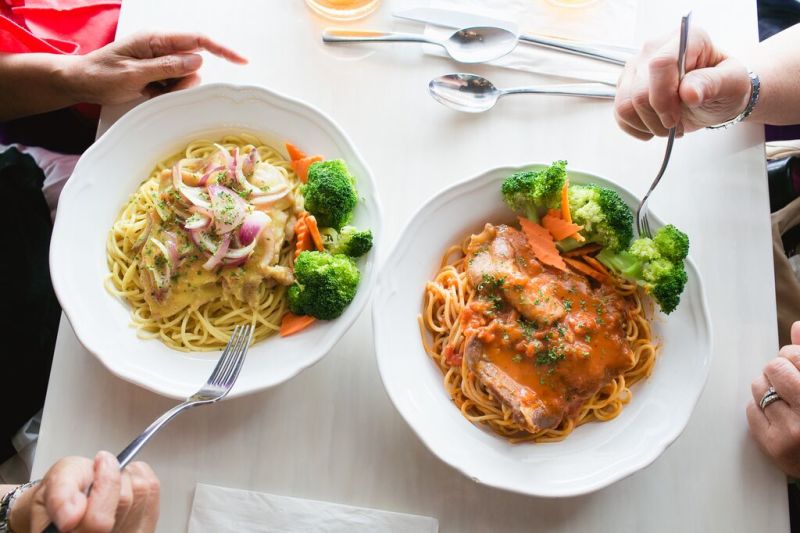
"caption": "Two of the pasta dishes served as part of the CHAMPSS menu for seniors at Prince Cooking, a Hong Kong-style restaurant in San Francisco's Outer Sunset district.",
"description": "Two of the pasta dishes served as part of the CHAMPSS menu for seniors at Prince Cooking, a Hong Kong-style restaurant in San Francisco's Outer Sunset district.",
"title": "Two of the pasta dishes served as part of the CHAMPSS menu for seniors at Prince Cooking, a Hong Kong-style restaurant in San Francisco's Outer Sunset district.",
"credit": "Andria Lo",
"status": "inherit",
"isLoading": false,
"fetchFailed": false
},
"bayareabites_100146": {
"type": "attachments",
"id": "bayareabites_100146",
"meta": {
"index": "attachments_1716263798",
"site": "bayareabites",
"id": "100146",
"found": true
},
"parent": 100145,
"imgSizes": {
"thumbnail": {
"file": "https://ww2.kqed.org/app/uploads/sites/24/2015/09/blacklivesmatter-400x267.jpg",
"width": 400,
"mimeType": "image/jpeg",
"height": 267
},
"post-thumbnail": {
"file": "https://ww2.kqed.org/app/uploads/sites/24/2015/09/blacklivesmatter-672x372.jpg",
"width": 672,
"mimeType": "image/jpeg",
"height": 372
},
"kqedFullSize": {
"file": "https://ww2.kqed.org/app/uploads/sites/24/2015/09/blacklivesmatter.jpg",
"width": 680,
"height": 454
},
"cat_post_thumb_sizecategory-posts-2": {
"file": "https://ww2.kqed.org/app/uploads/sites/24/2015/09/blacklivesmatter-150x150.jpg",
"width": 150,
"mimeType": "image/jpeg",
"height": 150
},
"guest-author-96": {
"file": "https://ww2.kqed.org/app/uploads/sites/24/2015/09/blacklivesmatter-96x96.jpg",
"width": 96,
"mimeType": "image/jpeg",
"height": 96
},
"guest-author-64": {
"file": "https://ww2.kqed.org/app/uploads/sites/24/2015/09/blacklivesmatter-64x64.jpg",
"width": 64,
"mimeType": "image/jpeg",
"height": 64
},
"detail": {
"file": "https://ww2.kqed.org/app/uploads/sites/24/2015/09/blacklivesmatter-75x75.jpg",
"width": 75,
"mimeType": "image/jpeg",
"height": 75
},
"guest-author-32": {
"file": "https://ww2.kqed.org/app/uploads/sites/24/2015/09/blacklivesmatter-32x32.jpg",
"width": 32,
"mimeType": "image/jpeg",
"height": 32
},
"guest-author-128": {
"file": "https://ww2.kqed.org/app/uploads/sites/24/2015/09/blacklivesmatter-128x128.jpg",
"width": 128,
"mimeType": "image/jpeg",
"height": 128
}
},
"publishDate": 1441728052,
"modified": 1441728186,
"caption": "Black Lives Matter",
"description": "Black Lives Matter",
"title": "blacklivesmatter",
"credit": "\t\u003ca href=\"http://www.shutterstock.com/gallery-940660p1.html?cr=00&pl=edit-00\">a katz / Shutterstock.com\u003c/a>\t",
"status": "inherit",
"isLoading": false,
"fetchFailed": false
},
"bayareabites_99975": {
"type": "attachments",
"id": "bayareabites_99975",
"meta": {
"index": "attachments_1716263798",
"site": "bayareabites",
"id": "99975",
"found": true
},
"parent": 99974,
"imgSizes": {
"twentyfourteen-full-width": {
"file": "https://ww2.kqed.org/app/uploads/sites/24/2015/09/gettyimages-95581411_wide-5b8522632d107af1389e153538bbbb8a9753d37f-1038x576.jpg",
"width": 1038,
"mimeType": "image/jpeg",
"height": 576
},
"thumbnail": {
"file": "https://ww2.kqed.org/app/uploads/sites/24/2015/09/gettyimages-95581411_wide-5b8522632d107af1389e153538bbbb8a9753d37f-400x225.jpg",
"width": 400,
"mimeType": "image/jpeg",
"height": 225
},
"fd-sm": {
"file": "https://ww2.kqed.org/app/uploads/sites/24/2015/09/gettyimages-95581411_wide-5b8522632d107af1389e153538bbbb8a9753d37f-960x540.jpg",
"width": 960,
"mimeType": "image/jpeg",
"height": 540
},
"post-thumbnail": {
"file": "https://ww2.kqed.org/app/uploads/sites/24/2015/09/gettyimages-95581411_wide-5b8522632d107af1389e153538bbbb8a9753d37f-672x372.jpg",
"width": 672,
"mimeType": "image/jpeg",
"height": 372
},
"kqedFullSize": {
"file": "https://ww2.kqed.org/app/uploads/sites/24/2015/09/gettyimages-95581411_wide-5b8522632d107af1389e153538bbbb8a9753d37f-e1441236395106.jpg",
"width": 1920,
"height": 1080
},
"large": {
"file": "https://ww2.kqed.org/app/uploads/sites/24/2015/09/gettyimages-95581411_wide-5b8522632d107af1389e153538bbbb8a9753d37f-1440x810.jpg",
"width": 1440,
"mimeType": "image/jpeg",
"height": 810
},
"guest-author-96": {
"file": "https://ww2.kqed.org/app/uploads/sites/24/2015/09/gettyimages-95581411_wide-5b8522632d107af1389e153538bbbb8a9753d37f-96x96.jpg",
"width": 96,
"mimeType": "image/jpeg",
"height": 96
},
"medium": {
"file": "https://ww2.kqed.org/app/uploads/sites/24/2015/09/gettyimages-95581411_wide-5b8522632d107af1389e153538bbbb8a9753d37f-800x450.jpg",
"width": 800,
"mimeType": "image/jpeg",
"height": 450
},
"guest-author-64": {
"file": "https://ww2.kqed.org/app/uploads/sites/24/2015/09/gettyimages-95581411_wide-5b8522632d107af1389e153538bbbb8a9753d37f-64x64.jpg",
"width": 64,
"mimeType": "image/jpeg",
"height": 64
},
"guest-author-32": {
"file": "https://ww2.kqed.org/app/uploads/sites/24/2015/09/gettyimages-95581411_wide-5b8522632d107af1389e153538bbbb8a9753d37f-32x32.jpg",
"width": 32,
"mimeType": "image/jpeg",
"height": 32
},
"cat_post_thumb_sizecategory-posts-2": {
"file": "https://ww2.kqed.org/app/uploads/sites/24/2015/09/gettyimages-95581411_wide-5b8522632d107af1389e153538bbbb8a9753d37f-150x150.jpg",
"width": 150,
"mimeType": "image/jpeg",
"height": 150
},
"fd-lrg": {
"file": "https://ww2.kqed.org/app/uploads/sites/24/2015/09/gettyimages-95581411_wide-5b8522632d107af1389e153538bbbb8a9753d37f-1920x1080.jpg",
"width": 1920,
"mimeType": "image/jpeg",
"height": 1080
},
"fd-med": {
"file": "https://ww2.kqed.org/app/uploads/sites/24/2015/09/gettyimages-95581411_wide-5b8522632d107af1389e153538bbbb8a9753d37f-1180x664.jpg",
"width": 1180,
"mimeType": "image/jpeg",
"height": 664
},
"detail": {
"file": "https://ww2.kqed.org/app/uploads/sites/24/2015/09/gettyimages-95581411_wide-5b8522632d107af1389e153538bbbb8a9753d37f-75x75.jpg",
"width": 75,
"mimeType": "image/jpeg",
"height": 75
},
"guest-author-128": {
"file": "https://ww2.kqed.org/app/uploads/sites/24/2015/09/gettyimages-95581411_wide-5b8522632d107af1389e153538bbbb8a9753d37f-128x128.jpg",
"width": 128,
"mimeType": "image/jpeg",
"height": 128
}
},
"publishDate": 1441226861,
"modified": 1441235568,
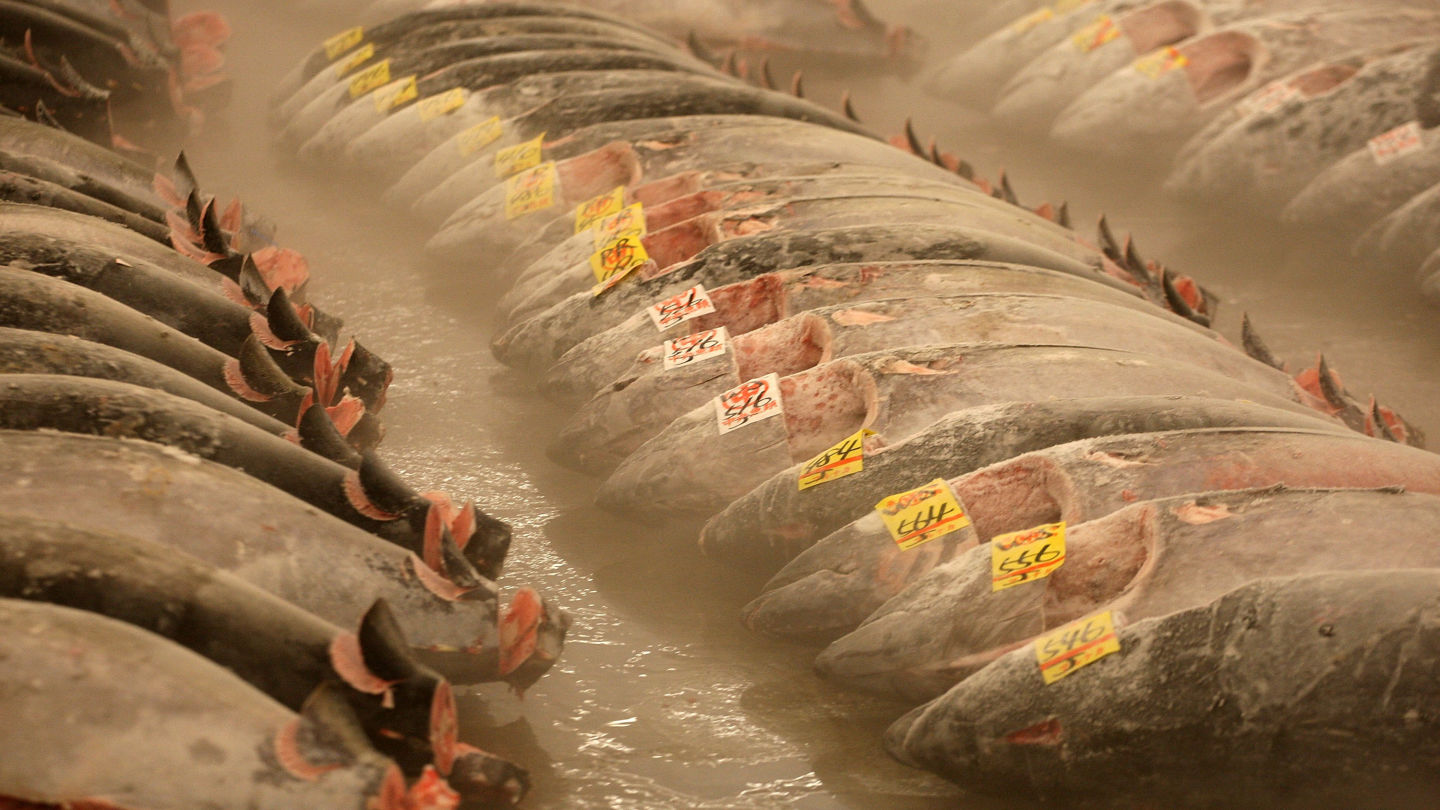
"caption": "Frozen tuna lies on the ground at the Tsukiji fish market in Tokyo. The FDA recommends freezing raw fish before serving it in sushi as a way to keep it free of parasites. But as a recent outbreak of Salmonella in the U.S. highlights, freezing doesn't guarantee that raw sushi fish is pathogen-free.",
"description": "Frozen tuna lies on the ground at the Tsukiji fish market in Tokyo. The FDA recommends freezing raw fish before serving it in sushi as a way to keep it free of parasites. But as a recent outbreak of \u003cem>Salmonell\u003c/em>a in the U.S. highlights, freezing doesn’t guarantee that raw sushi fish is pathogen-fre",
"title": "Frozen tuna lies on the ground at the Tsukiji fish market in Tokyo. The FDA recommends freezing raw fish before serving it in sushi as a way to keep it free of parasites. But as a recent outbreak of Salmonella in the U.S. highlights, freezing doesn't guarantee that raw sushi fish is pathogen-free.",
"credit": "Koichi Kamoshida/Getty Images",
"status": "inherit",
"isLoading": false,
"fetchFailed": false
}
},
"audioPlayerReducer": {
"postId": "stream_live",
"isPaused": true,
"isPlaying": false,
"pfsActive": false,
"pledgeModalIsOpen": true,
"playerDrawerIsOpen": false,
"liveAudioPlayStartedAt": 0,
"liveAudioPlayContext": ""
},
"authorsReducer": {
"byline_bayareabites_101744": {
"type": "authors",
"id": "byline_bayareabites_101744",
"meta": {
"override": true
},
"slug": "byline_bayareabites_101744",
"name": "Jeremy Cherfas, \u003ca href=\"https://ww2.kqed.org/bayareabites/category/npr-food/\">NPR Food\u003c/a>",
"isLoading": false
},
"byline_bayareabites_101391": {
"type": "authors",
"id": "byline_bayareabites_101391",
"meta": {
"override": true
},
"slug": "byline_bayareabites_101391",
"name": "Dan Charles, \u003ca href=\"https://ww2.kqed.org/bayareabites/category/npr-food/\">NPR Food\u003c/a>",
"isLoading": false
},
"byline_bayareabites_100990": {
"type": "authors",
"id": "byline_bayareabites_100990",
"meta": {
"override": true
},
"slug": "byline_bayareabites_100990",
"name": "Tracie McMillan, \u003ca href=\"https://ww2.kqed.org/bayareabites/author/nprfood/\">NPR Food\u003c/a>",
"isLoading": false
},
"byline_bayareabites_100839": {
"type": "authors",
"id": "byline_bayareabites_100839",
"meta": {
"override": true
},
"slug": "byline_bayareabites_100839",
"name": "Maria Godoy, \u003ca href=\"https://ww2.kqed.org/bayareabites/author/nprfood/\">NPR Food\u003c/a>",
"isLoading": false
},
"byline_bayareabites_100828": {
"type": "authors",
"id": "byline_bayareabites_100828",
"meta": {
"override": true
},
"slug": "byline_bayareabites_100828",
"name": "Angus Chen, \u003ca href=\"https://ww2.kqed.org/bayareabites/author/nprfood/\">NPR Food\u003c/a>",
"isLoading": false
},
"byline_bayareabites_100476": {
"type": "authors",
"id": "byline_bayareabites_100476",
"meta": {
"override": true
},
"slug": "byline_bayareabites_100476",
"name": "Allison Aubrey, \u003ca href=\"https://ww2.kqed.org/bayareabites/author/nprfood/\">NPR Food\u003c/a>",
"isLoading": false
},
"byline_bayareabites_100257": {
"type": "authors",
"id": "byline_bayareabites_100257",
"meta": {
"override": true
},
"slug": "byline_bayareabites_100257",
"name": "Lisa Wong Macabasco, Hyphen on \u003ca href=\"https://ww2.kqed.org/bayareabites/author/caamedia/\">CAAM\u003c/a>",
"isLoading": false
},
"byline_bayareabites_99974": {
"type": "authors",
"id": "byline_bayareabites_99974",
"meta": {
"override": true
},
"slug": "byline_bayareabites_99974",
"name": "Lydia Zuraw, \u003ca href=\"https://ww2.kqed.org/bayareabites/author/nprfood/\">NPR Food\u003c/a>",
"isLoading": false
},
"annamindess": {
"type": "authors",
"id": "5283",
"meta": {
"index": "authors_1716337520",
"id": "5283",
"found": true
},
"name": "Anna Mindess",
"firstName": "Anna",
"lastName": "Mindess",
"slug": "annamindess",
"email": "amindess@aol.com",
"display_author_email": false,
"staff_mastheads": [],
"title": "KQED Contributor",
"bio": "My passion is exploring the connections between food, travel and culture. I am a regular contributor to AFAR, Edible East Bay Magazine, Oakland Magazine, Berkeleyside's NOSH and other publications. I usually take a route that's slightly off the beaten path, like \u003ca href=\"http://edibleeastbay.com/online-magazine/fall-harvest-2017/fun-with-food-insults/\">collecting food-related insults\u003c/a> around the world or \u003ca href=\"https://www.afar.com/magazine/what-i-learned-hawking-sweet-potatoes-with-a-street-vendor-in-taiwan?email=amindess%40aol.com&utm_source=Sailthru&utm_medium=email&utm_campaign=Doctors%20Without%20Borders&utm_term=Daily%20Wander%20Newsletter\">volunteering with a Sweet Potato Mama\u003c/a> (street food seller) in Tapei.\r\n\r\nCulture is the thread that ties together my several careers. I also work as a sign language interpreter, educator and author. My study of Deaf culture has taken me around the world, where I am always on a quest to find Deaf-owned restaurants. I love making connections between my different worlds, for example in this AFAR story where I share \u003ca href=\"https://www.afar.com/magazine/tips-from-a-sign-language-interpreter-for-overcoming-language-barriers\">tips for communicating across cultures\u003c/a> that I learned from the real experts, Deaf people. Or this \u003ca href=\"http://edibleeastbay.com/online-magazine/fall-harvest-2017/deaf-chefs-compete/\">profile of a Deaf chef and culinary arts instructor\u003c/a> at the California School for the Deaf.\r\n\r\nTo see my visual/edible take on the world, follow me on Instagram: \u003ca href=\"https://www.instagram.com/annamindess/\">annamindess. \u003c/a>\r\n\r\nFor more of my stories: visit Contently \u003ca href=\"http://annamindess.contently.com\">annamindess.contently.com\u003c/a>",
"avatar": "https://secure.gravatar.com/avatar/23c79f04bf3d58b2e727d35ca471d184e8945f6ed82e41a0c062eab5e7dc2bb5?s=600&d=blank&r=g",
"twitter": null,
"bluesky": null,
"facebook": null,
"instagram": null,
"linkedin": null,
"sites": [
{
"site": "arts",
"roles": [
"subscriber"
]
},
{
"site": "bayareabites",
"roles": [
"author"
]
},
{
"site": "food",
"roles": [
"contributor"
]
}
],
"headData": {
"title": "Anna Mindess | KQED",
"description": "KQED Contributor",
"ogImgSrc": "https://secure.gravatar.com/avatar/23c79f04bf3d58b2e727d35ca471d184e8945f6ed82e41a0c062eab5e7dc2bb5?s=600&d=blank&r=g",
"twImgSrc": "https://secure.gravatar.com/avatar/23c79f04bf3d58b2e727d35ca471d184e8945f6ed82e41a0c062eab5e7dc2bb5?s=600&d=blank&r=g"
},
"isLoading": false,
"link": "/author/annamindess"
},
"alexandrawall": {
"type": "authors",
"id": "5567",
"meta": {
"index": "authors_1716337520",
"id": "5567",
"found": true
},
"name": "Alix Wall",
"firstName": "Alix",
"lastName": "Wall",
"slug": "alexandrawall",
"email": "alixwall@sbcglobal.net",
"display_author_email": false,
"staff_mastheads": [],
"title": null,
"bio": "Alix Wall appeared in her hometown paper in Riverside, California as “Chef of the Week” when she was 15 years old, and in high school, she founded “The Bon Appetit Club.” After working as a journalist for many years, Alix became a certified natural foods chef from Bauman College in Berkeley. While she cooks part-time healthy, organic meals for busy families, she is also a contributing editor of j. weekly, the Bay Area’s Jewish newspaper, in which she has a monthly food column. Her food writing can also be found on Berkeleyside’s NOSH and in Edible East Bay. In addition to food, she loves writing about how couples met and fell in love, which she does for The San Francisco Chronicle’s Style section and j. weekly. In 2016, she founded The Illuminoshi: The Not-So-Secret Society of Bay Area Jewish Food Professionals. She is also writer/producer for a documentary-in-progress called \u003ca href=\"https://www.lonelychildmovie.com/\">The Lonely Child\u003c/a>. Follow Alix on Twitter \u003ca href=\"https://twitter.com/WallAlix\">@WallAlix\u003c/a>.",
"avatar": "https://secure.gravatar.com/avatar/421a27f26a185be932f8d567b499b1f1?s=600&d=blank&r=g",
"twitter": null,
"facebook": null,
"instagram": null,
"linkedin": null,
"sites": [
{
"site": "bayareabites",
"roles": [
"contributor"
]
},
{
"site": "food",
"roles": [
"contributor"
]
}
],
"headData": {
"title": "Alix Wall | KQED",
"description": null,
"ogImgSrc": "https://secure.gravatar.com/avatar/421a27f26a185be932f8d567b499b1f1?s=600&d=blank&r=g",
"twImgSrc": "https://secure.gravatar.com/avatar/421a27f26a185be932f8d567b499b1f1?s=600&d=blank&r=g"
},
"isLoading": false,
"link": "/author/alexandrawall"
},
"civileat": {
"type": "authors",
"id": "5583",
"meta": {
"index": "authors_1716337520",
"id": "5583",
"found": true
},
"name": "Civil Eats",
"firstName": "Civil",
"lastName": "Eats",
"slug": "civileat",
"email": "twilight@civileats.com",
"display_author_email": false,
"staff_mastheads": [],
"title": null,
"bio": "\u003ca href=\"http://civileats.com/\">Civil Eats\u003c/a> is a daily news source for critical thought about the American food system. We publish stories that shift the conversation around sustainable agriculture in an effort to build economically and socially just communities. Follow Civil Eats on Twitter \u003ca href=\"https://twitter.com/CivilEats\">@civileats\u003c/a> and on \u003ca href=\"https://www.facebook.com/pages/Civil-Eats/56766540637\">Facebook\u003c/a>.",
"avatar": "https://secure.gravatar.com/avatar/8f6f50bfb6403afe7cbc194b66cc1d4d?s=600&d=blank&r=g",
"twitter": "CivilEats",
"facebook": "/pages/Civil-Eats/56766540637?ref=hl",
"instagram": null,
"linkedin": null,
"sites": [
{
"site": "bayareabites",
"roles": [
"contributor"
]
},
{
"site": "food",
"roles": [
"contributor"
]
}
],
"headData": {
"title": "Civil Eats | KQED",
"description": null,
"ogImgSrc": "https://secure.gravatar.com/avatar/8f6f50bfb6403afe7cbc194b66cc1d4d?s=600&d=blank&r=g",
"twImgSrc": "https://secure.gravatar.com/avatar/8f6f50bfb6403afe7cbc194b66cc1d4d?s=600&d=blank&r=g"
},
"isLoading": false,
"link": "/author/civileat"
}
},
"pagesReducer": {
"bayareabites_category_health-and-nutrition": {
"type": "terms",
"id": "bayareabites_1245",
"meta": {
"index": "terms_1716263798",
"site": "bayareabites",
"id": "1245",
"score": 14.407927
},
"featImg": null,
"name": "health and nutrition",
"description": null,
"taxonomy": "category",
"headData": {
"twImgId": null,
"twTitle": null,
"ogTitle": null,
"ogImgId": null,
"twDescription": null,
"description": null,
"title": "health and nutrition Archives | KQED Bay Area Bites",
"ogDescription": null
},
"ttid": 1078,
"slug": "health-and-nutrition",
"isLoading": false,
"title": "health and nutrition",
"pageMeta": {
"site": "bayareabites",
"WpPageTemplate": "page-topic-editorial",
"currentPage": 21
},
"blocks": [
{
"blockName": "kqed/post-list",
"attrs": {
"layout": "cardArticle2",
"query": "posts/bayareabites?category=health-and-nutrition",
"seeMore": false,
"paginated": true,
"page": 21
}
},
{
"blockName": "kqed/ad"
}
]
}
},
"pfsSessionReducer": {},
"postsReducer": {
"stream_live": {
"type": "live",
"id": "stream_live",
"audioUrl": "https://streams.kqed.org/kqedradio",
"title": "Live Stream",
"excerpt": "Live Stream information currently unavailable.",
"link": "/radio",
"featImg": "",
"label": {
"name": "KQED Live",
"link": "/"
}
},
"stream_kqedNewscast": {
"type": "posts",
"id": "stream_kqedNewscast",
"audioUrl": "https://www.kqed.org/.stream/anon/radio/RDnews/newscast.mp3?_=1",
"title": "KQED Newscast",
"featImg": "",
"label": {
"name": "88.5 FM",
"link": "/"
}
},
"bayareabites_101744": {
"type": "posts",
"id": "bayareabites_101744",
"meta": {
"index": "posts_1716263798",
"site": "bayareabites",
"id": "101744",
"score": null,
"sort": [
1444143658000
]
},
"parent": 0,
"labelTerm": {
"site": "bayareabites"
},
"blocks": [],
"publishDate": 1444143658,
"format": "standard",
"disqusTitle": "How 'Forbidden' Black Rice Flourished For Millennia",
"title": "How 'Forbidden' Black Rice Flourished For Millennia",
"headTitle": "Bay Area Bites | KQED Food",
"content": "\u003cp>In ancient China, black rice was considered so superior and rare, it was reserved exclusively for the emperor and royalty. These days the grain, also known as forbidden rice, has become the darling of gourmets and people seeking superior nutrition.\u003c/p>\n\u003cp>These folks are onto something: The color of black rice is the result of plant pigments called anthocyanins, which research has linked to a number of positive health effects: from anti-inflammatory properties to \u003ca href=\"http://www.npr.org/sections/thesalt/2013/01/14/169323332/women-with-a-berry-snacking-habit-may-have-healthier-hearts\">healthier arteries\u003c/a> and better insulin regulation.\u003c/p>\n\u003cp>And now, geneticists \u003ca href=\"http://www.plantcell.org/content/early/2015/09/11/tpc.15.00310.abstract\">report\u003c/a> they've traced the birth and spread of black rice.\u003c/p>\n\u003cp>Modern, domesticated rice comes in a range of colors, usually described as white, red and black. The wild rice from which it was domesticated has reddish grains, but the early farmers who created the rice we eat today selected for white grains. Collectors have never found black grains in more than a thousand samples of wild rice stored in genebanks. And yet black varieties are fairly widespread, albeit sporadically, across Asia — from India to Japan — with black varieties in each of the three subspecies of edible rice.\u003c/p>\n\u003cp>All of which poses a bit of a problem for the origin of black rice. The fact that it has never been found in wild rice means that it must have arisen after the start of domestication. How, then, did it spread across Asia and into the different subspecies?\u003c/p>\n\u003cp>[ad fullwidth]\u003c/p>\n\u003cp>A team of researchers led by Takeshi Izawa, of the \u003ca href=\"http://www.nias.affrc.go.jp/index_e.html\">National Institute of Agrobiological Sciences\u003c/a> in Tsukuba, Japan, studied 21 different varieties of black rice that had been maintained by farmers. They found that changes to a single gene causes the black coloration, by restoring the chemical pathway that makes the pigments. That pathway is blocked in white rice. The researchers also found tell-tale leftovers from one of the rice subspecies flanking the gene in the other subspecies. That suggests that black grains arose once and then spread by crossing with already domesticated varieties of the other subspecies, probably more than once.\u003c/p>\n\u003cp>\u003ca href=\"http://www.ucl.ac.uk/archaeology/people/staff/fuller\">Dorian Fuller\u003c/a>, a professor of archaeobotany at University College London and an authority on the domestication of rice, agrees that it is highly likely that farmers selected for black grains when they showed up after accidental crossing. \"Color, like fragrance, is often a target of post-domestication cultural selection — think of all the colors of maize or potatoes.\"\u003c/p>\n\u003cp>But the question remains: Just why did those farmers select black varieties? And why was black rice a tribute for the emperor?\u003c/p>\n\u003cp>It's tempting to believe that the ancient Chinese somehow knew black rice was more nutritious. And indeed, traditional Chinese medicine speaks of black rice as being good for old people and as a tonic. Farmers who grow black varieties also talk of medicinal effects: For example, according to Nepali hill farmers, black rice is good for you in \"the maternal period.\" But while some cultures value black rice, in other places, such as Laos, it is viewed as nutritionally inferior to white rice.\u003c/p>\n\u003cp>Modern nutritional science has shown that colored rices are more nutritious than white rice, even after milling. In addition to beneficial pigments, they often contain higher amounts of minerals like iron and zinc and, sometimes, more protein, which could indeed improve the health of people who ate them.\u003c/p>\n\u003cp>As \u003ca href=\"http://www.nutrition.tufts.edu/faculty/peterson-julia\">Julia Peterson\u003c/a>, an adjunct assistant professor with the Friedman School of Nutrition Science and Policy at Tufts University, puts it, while some ancient peoples might have known black rice had medicinal properties, they probably weren't attributing those health benefits to anthocyanins.\u003c/p>\n\u003cp>Perhaps black rice was incidentally healthier, and farmers and the emperor selected it simply because it was rare and interesting. Which might also explain its popularity today.\u003c/p>\n\u003chr>\n\u003cp>\u003cem>\u003ca href=\"http://www.jeremycherfas.net/about/\">Jeremy Cherfas\u003c/a> is a biologist and science journalist based in Rome.\u003c/em>\u003c/p>\n\u003cp>\u003c/p>\n\u003cp>\u003cem>Copyright 2015 \u003ca href=\"http://www.npr.org/\" target=\"_blank\">NPR\u003c/a>.\u003c/em> \u003c/p>\n\n",
"disqusIdentifier": "101744 http://ww2.kqed.org/bayareabites/?p=101744",
"disqusUrl": "https://ww2.kqed.org/bayareabites/2015/10/06/how-forbidden-black-rice-flourished-for-millennia/",
"stats": {
"hasVideo": false,
"hasChartOrMap": false,
"hasAudio": false,
"hasPolis": false,
"wordCount": 634,
"hasGoogleForm": false,
"hasGallery": false,
"hasHearkenModule": false,
"iframeSrcs": [],
"paragraphCount": 16
},
"modified": 1444101801,
"excerpt": "Once reserved for the exclusive use of Chinese royalty, black rice these days has become the darling of gourmets seeking superior nutrition. Now geneticists have traced where this rare rice came from.",
"headData": {
"twImgId": "",
"twTitle": "",
"ogTitle": "",
"ogImgId": "",
"twDescription": "",
"description": "Once reserved for the exclusive use of Chinese royalty, black rice these days has become the darling of gourmets seeking superior nutrition. Now geneticists have traced where this rare rice came from.",
"title": "How 'Forbidden' Black Rice Flourished For Millennia | KQED",
"ogDescription": "",
"schema": {
"@context": "https://schema.org",
"@type": "Article",
"headline": "How 'Forbidden' Black Rice Flourished For Millennia",
"datePublished": "2015-10-06T08:00:58-07:00",
"dateModified": "2015-10-05T20:23:21-07:00",
"image": "https://cdn.kqed.org/wp-content/uploads/2020/02/KQED-OG-Image@1x.png"
}
},
"guestAuthors": [],
"slug": "how-forbidden-black-rice-flourished-for-millennia",
"status": "publish",
"nprApiLink": "http://api.npr.org/query?id=445316722&apiKey=MDAxOTAwOTE4MDEyMTkxMDAzNjczZDljZA004",
"nprByline": "Jeremy Cherfas, \u003ca href=\"https://ww2.kqed.org/bayareabites/category/npr-food/\">NPR Food\u003c/a>",
"nprStoryDate": "Mon, 05 Oct 2015 14:55:00 -0400",
"nprLastModifiedDate": "Mon, 05 Oct 2015 14:57:12 -0400",
"nprHtmlLink": "http://www.npr.org/sections/thesalt/2015/10/05/445316722/how-forbidden-black-rice-flourished-for-millennia?ft=nprml&f=445316722",
"nprStoryId": "445316722",
"nprRetrievedStory": "1",
"nprPubDate": "Mon, 05 Oct 2015 14:57:00 -0400",
"path": "/bayareabites/101744/how-forbidden-black-rice-flourished-for-millennia",
"audioTrackLength": null,
"parsedContent": [
{
"type": "contentString",
"content": "\u003cdiv class=\"post-body\">\u003cp>\u003cp>In ancient China, black rice was considered so superior and rare, it was reserved exclusively for the emperor and royalty. These days the grain, also known as forbidden rice, has become the darling of gourmets and people seeking superior nutrition.\u003c/p>\n\u003cp>These folks are onto something: The color of black rice is the result of plant pigments called anthocyanins, which research has linked to a number of positive health effects: from anti-inflammatory properties to \u003ca href=\"http://www.npr.org/sections/thesalt/2013/01/14/169323332/women-with-a-berry-snacking-habit-may-have-healthier-hearts\">healthier arteries\u003c/a> and better insulin regulation.\u003c/p>\n\u003cp>And now, geneticists \u003ca href=\"http://www.plantcell.org/content/early/2015/09/11/tpc.15.00310.abstract\">report\u003c/a> they've traced the birth and spread of black rice.\u003c/p>\n\u003cp>Modern, domesticated rice comes in a range of colors, usually described as white, red and black. The wild rice from which it was domesticated has reddish grains, but the early farmers who created the rice we eat today selected for white grains. Collectors have never found black grains in more than a thousand samples of wild rice stored in genebanks. And yet black varieties are fairly widespread, albeit sporadically, across Asia — from India to Japan — with black varieties in each of the three subspecies of edible rice.\u003c/p>\n\u003cp>All of which poses a bit of a problem for the origin of black rice. The fact that it has never been found in wild rice means that it must have arisen after the start of domestication. How, then, did it spread across Asia and into the different subspecies?\u003c/p>\n\u003cp>\u003c/p>\u003c/div>",
"attributes": {
"named": {},
"numeric": []
}
},
{
"type": "component",
"content": "",
"name": "ad",
"attributes": {
"named": {
"label": "fullwidth"
},
"numeric": [
"fullwidth"
]
}
},
{
"type": "contentString",
"content": "\u003cdiv class=\"post-body\">\u003cp>\u003c/p>\n\u003cp>A team of researchers led by Takeshi Izawa, of the \u003ca href=\"http://www.nias.affrc.go.jp/index_e.html\">National Institute of Agrobiological Sciences\u003c/a> in Tsukuba, Japan, studied 21 different varieties of black rice that had been maintained by farmers. They found that changes to a single gene causes the black coloration, by restoring the chemical pathway that makes the pigments. That pathway is blocked in white rice. The researchers also found tell-tale leftovers from one of the rice subspecies flanking the gene in the other subspecies. That suggests that black grains arose once and then spread by crossing with already domesticated varieties of the other subspecies, probably more than once.\u003c/p>\n\u003cp>\u003ca href=\"http://www.ucl.ac.uk/archaeology/people/staff/fuller\">Dorian Fuller\u003c/a>, a professor of archaeobotany at University College London and an authority on the domestication of rice, agrees that it is highly likely that farmers selected for black grains when they showed up after accidental crossing. \"Color, like fragrance, is often a target of post-domestication cultural selection — think of all the colors of maize or potatoes.\"\u003c/p>\n\u003cp>But the question remains: Just why did those farmers select black varieties? And why was black rice a tribute for the emperor?\u003c/p>\n\u003cp>It's tempting to believe that the ancient Chinese somehow knew black rice was more nutritious. And indeed, traditional Chinese medicine speaks of black rice as being good for old people and as a tonic. Farmers who grow black varieties also talk of medicinal effects: For example, according to Nepali hill farmers, black rice is good for you in \"the maternal period.\" But while some cultures value black rice, in other places, such as Laos, it is viewed as nutritionally inferior to white rice.\u003c/p>\n\u003cp>Modern nutritional science has shown that colored rices are more nutritious than white rice, even after milling. In addition to beneficial pigments, they often contain higher amounts of minerals like iron and zinc and, sometimes, more protein, which could indeed improve the health of people who ate them.\u003c/p>\n\u003cp>As \u003ca href=\"http://www.nutrition.tufts.edu/faculty/peterson-julia\">Julia Peterson\u003c/a>, an adjunct assistant professor with the Friedman School of Nutrition Science and Policy at Tufts University, puts it, while some ancient peoples might have known black rice had medicinal properties, they probably weren't attributing those health benefits to anthocyanins.\u003c/p>\n\u003cp>Perhaps black rice was incidentally healthier, and farmers and the emperor selected it simply because it was rare and interesting. Which might also explain its popularity today.\u003c/p>\n\u003chr>\n\u003cp>\u003cem>\u003ca href=\"http://www.jeremycherfas.net/about/\">Jeremy Cherfas\u003c/a> is a biologist and science journalist based in Rome.\u003c/em>\u003c/p>\n\u003cp>\u003c/p>\n\u003cp>\u003cem>Copyright 2015 \u003ca href=\"http://www.npr.org/\" target=\"_blank\">NPR\u003c/a>.\u003c/em> \u003c/p>\n\n\u003c/div>\u003c/p>",
"attributes": {
"named": {},
"numeric": []
}
}
],
"link": "/bayareabites/101744/how-forbidden-black-rice-flourished-for-millennia",
"authors": [
"byline_bayareabites_101744"
],
"categories": [
"bayareabites_2998",
"bayareabites_2090",
"bayareabites_1245",
"bayareabites_10916"
],
"tags": [
"bayareabites_14917",
"bayareabites_272",
"bayareabites_215"
],
"featImg": "bayareabites_101745",
"label": "bayareabites"
},
"bayareabites_100319": {
"type": "posts",
"id": "bayareabites_100319",
"meta": {
"index": "posts_1716263798",
"site": "bayareabites",
"id": "100319",
"score": null,
"sort": [
1443629444000
]
},
"parent": 0,
"labelTerm": {},
"blocks": [],
"publishDate": 1443629444,
"format": "standard",
"disqusTitle": "5 Dedicated Gluten-Free Bakeries Around the Bay Area",
"title": "5 Dedicated Gluten-Free Bakeries Around the Bay Area",
"headTitle": "Bay Area Bites | KQED Food",
"content": "\u003cp>When I used to walk into even the most elegant pastry shop and ask for something without gluten, I was lucky to be offered a “gluten-free” almond or coconut macaroon, which was cozied up in the case right next to conventional muffins, scones and cookies. The problem for the \u003ca href=\"http://www.mayoclinic.org/healthy-lifestyle/nutrition-and-healthy-eating/in-depth/gluten-free-diet/art-20048530?_ga=1.262680523.690883551.1456637465\" target=\"_blank\">increasing number of customers who avoid gluten\u003c/a> by choice or necessity is that these treats will most likely be prepared in a kitchen which is enveloped by wheat flour: on pans, on hands and in the air. That cross-contamination is too risky for those with extreme allergies or celiac disease, because, for them, even the tiniest bit of wheat can trigger a dangerous allergic reaction.\u003c/p>\n\u003cp>I have been following a g/f diet for about 15 years, due to a wheat-intolerance. In the old days, there were slim pickings: crumbly, Styrofoam-esque breads, and dry takes on token sweet treats. But oh, how things changed in the last few years! While most local markets now carry a range of g/f frozen breads and packaged cookies, even the finest frozen baked good cannot compare to fragrant, warm muffins, pastries or rolls right out of the oven.\u003c/p>\n\u003cp>A handful of “dedicated gluten-free bakeries”—where everything is prepared in completely gluten-free kitchens—now encircle the Bay Area, so whether you live in San Francisco, the East Bay, the South Bay, Marin or the San Ramon Valley, you are not far from freshly baked moist muffins, decadent desserts, killer cupcakes or satisfying sandwich breads that you can trust are 100% gluten-free.\u003c/p>\n\u003cp>A side benefit is that all five bakeries also cater to customers with an array of additional allergies and diet preferences, so patrons with a sensitivity to dairy, eggs, soy or nuts or those who follow vegan or Paleo diets can blissfully munch on sinfully-satisfying brownies, scones, cinnamon rolls, cupcakes, cookies, pies and breads. All five bakeries also make and decorate special-order cakes -- enabling weddings, holiday dinners and kids’ birthday parties to be accessible and enjoyable for all. (Prices vary, but generally cakes run about $35, breads from $8-$10, muffins and donuts $3-$4, cookies $1-$2.)\u003c/p>\n\u003cp>Since each bakery carries scores of sweet and savory products, I couldn’t possibly sample them all (though goodness knows I tried!) but I list a few of my favorites below. You can check out their websites for a full listing, but better yet, stop in for a visit and conduct your own tasting of gourmet gluten-free goodies.\u003c/p>\n\u003cp>[ad fullwidth]\u003c/p>\n\u003cp>[gallery type=\"slideshow\" link=\"none\" size=\"full\" ids=\"101455,101457,101454,101452,101453,101456\"]\u003c/p>\n\u003ch3>Mariposa\u003c/h3>\n\u003cp>“Mariposa” is Spanish for “butterfly” and founder Patti Furey Crane picked the name because the transformation that a butterfly goes through reflects the way that “many people who adopt a gluten-free lifestyle transform their lives through food.” Her bakery is the godmother of Bay Area dedicated g/f bakeries. It’s the oldest and largest g/f bakery with two locations: Oakland’s Temescal District and San Francisco’s Ferry Building. But it all happened by accident. Crane never planned to open a bakery café at all. In 2002, after she was diagnosed with MS and researched what she could do to calm the symptoms of her autoimmune condition, she read about eliminating gluten from her diet. The few g/f products she found at the time were, she remembers, “mass-produced, bland, with a texture that wasn’t right.” Since she had baked a lot with her mother as a little girl, she set about converting some tried-and-true recipes (like biscotti and brownies) to g/f versions to sell at natural food markets. \u003c/p>\n\u003cp>Crane started making her wholesale baked goods in a shared kitchen. When she needed more space and found the Telegraph Avenue location in 2006, it was zoned for retail. She was forced to comply by becoming a retail outlet and Crane and her husband duly installed a counter, but not much else. There was no signage and their door was a heavy, steel contraption. It’s a wonder that her customers managed to find Mariposa, but when they did, they were not shy about offering suggestions of what she should add to her line. “The business stemmed from customer cravings,” says Crane, “including me, too, since I’m a consumer and I have my own cravings.” Mariposa now produces more than 70 items and Crane is always looking to add new things.\u003c/p>\n\u003cp>Her multi-grain bread has a complex flavor/texture profile with a blend of flours, plus flax and sunflower seeds. The delightful cream-filled Penguino cupcake contains no known allergens but an intensely fudgy flavor. My family loves Mariposa’s seasonal fruit galette, a dessert elegant enough for company, with its balance of delicate crust, tangy fruit and crunch of sugar sprinkled on top. The Oakland location now has a pleasant café with plenty of seating, while the Ferry Building Bakeshop, added in 2012, is more of a to-go spot. For breakfast, try a bagel, cinnamon roll, Danish or pumpkin muffin. Lunch features a selection of pizza, sandwiches, empanadas and more.\u003c/p>\n\u003cp>\u003cstrong>\u003ca href=\"http://www.mariposabaking.com\" target=\"_blank\">Mariposa\u003c/a>\u003c/strong>\u003cbr>\n5427 Telegraph Ave., Unit 3D [\u003ca href=\"https://goo.gl/6Ph0yk\" target=\"_blank\">Map\u003c/a>]\u003cbr>\nOakland, CA 94609\u003cbr>\nPh: (510) 595-0955\u003cbr>\nHours: Mon-Fri 9am-6pm; Sat 9am-5pm; Sun 10am-5pm\u003c/p>\n\u003cp>One Ferry Building, suite 32 [\u003ca href=\"https://goo.gl/LUHQgM\" target=\"_blank\">Map\u003c/a>]\u003cbr>\nSan Francisco, CA 94111\u003cbr>\nPh: (510) 595-0955\u003cbr>\nHours: Mon-Sat 8am-6pm; Sun 10am-5pm\u003cbr>\n(for both locations:)\u003cbr>\nFacebook: \u003ca href=\"https://www.facebook.com/MariposaBaking?fref=ts\" target=\"_blank\">Mariposa Baking Artisan Crafted Gluten Free Bakery \u003c/a>\u003cbr>\nTwitter: \u003ca href=\"https://twitter.com/mariposabaking\" target=\"_blank\">@MariposaBaking\u003c/a>\u003c/p>\n\u003cp>[gallery type=\"slideshow\" link=\"none\" size=\"full\" ids=\"101445,101449,101450,101448,101447,101446\"]\u003c/p>\n\u003ch3>Bacano Bakery\u003c/h3>\n\u003cp>As the youngest, local g/f bakery, Bacano celebrates its one-year birthday this month; its name is Spanish slang for cool, or very good. Founder Laverne Matias started selling his g/f goods three years ago at farmers' markets (he continues at Oakland’s \u003ca href=\"https://www.facebook.com/GrandLakeFarmersMarket\" target=\"_blank\">Grand Lake\u003c/a> and \u003ca href=\"http://www.yelp.com/biz/temescal-farmers-market-oakland\" target=\"_blank\">Temescal\u003c/a> and San Francisco’s \u003ca href=\"http://www.yelp.com/biz/clement-street-farmers-market-san-francisco\" target=\"_blank\">Clement\u003c/a>), then opened this cozy spot in Emeryville last September. Matias, who grew up in Puerto Rico, also baked at home with his mother. He moved to California in 2000 to become a lawyer after he was accepted into Hastings Law School, but changed his mind about that career path. Deciding he wanted something “more human,” he did a stint as head of HR for a large (conventional) baking company, then branched off on his own to develop some healthier recipes. He also studied existential psychology at JFK University and worked for three years as a licensed psychotherapist. But at the moment, his bakery/café is keeping him tuned in to people’s more earthly desires.\u003c/p>\n\u003cp>Matias explains his approach: “We don’t use gluten-free flour mixes. We prefer to create unique blends of gluten-free flours to complement each item. I love ancient grains such as teff, millet, sorghum and quinoa. We also use nut flours and meals like almond, coconut and hazelnut.”\u003c/p>\n\u003cp>Bacano offers a unique bread called \"Seeds of Joy,\" which contains a complex blend of teff, sorghum and sweet rice flours sprinkled with fennel, caraway and coriander seeds. I keep it in the freezer, and toast to enjoy it with savory spreads like hummus or avocado.\u003c/p>\n\u003cp>I was wild about Bacano's \"Monkey Paradise\" muffins—essentially banana bread plus chocolate chips, walnuts and dried cherries—and found their fig scones divine. The De Young Museum serves another of my favorites at Bacano: their grain-free, cranberry date walnut bites, jewel-like orbs that burst with flavor.\u003c/p>\n\u003cp>Bacano’s cakes feature some unusual flavor combinations, including rosemary with coconut; and orange, almond and pistachio. Since they use all natural ingredients, the classic mauve roses with green foliage on the icing are colored with beet and spinach juice, respectively. \u003c/p>\n\u003cp>At lunchtime, Bacano’s café offers soups, salads, quiche, pizza and sandwiches.\u003c/p>\n\u003cp>\u003ca href=\"http://www.bacanobakery.com\" target=\"_blank\">\u003cstrong>Bacano Bakery\u003c/strong>\u003c/a>\u003cbr>\n1298 65\u003csup>th\u003c/sup> St. [\u003ca href=\"https://goo.gl/sJSDLO\" target=\"_blank\">Map\u003c/a>]\u003cbr>\nEmeryville, CA 94608\u003cbr>\nPh: (510) 250-9751\u003cbr>\nHours: Mon-Sat 8am-3pm\u003cbr>\nFacebook: \u003ca href=\"https://www.facebook.com/BacanoBakery?fref=ts\" target=\"_blank\">Bacano Bakery\u003c/a>\u003cbr>\nTwitter: \u003ca href=\"http://www.twitter.com/zestbakery\" target=\"_blank\">@BacanoBakery\u003c/a>\u003c/p>\n\u003cp>[gallery type=\"slideshow\" link=\"none\" size=\"full\" ids=\"101460,101462,101461,101464,101463,101465\"]\u003c/p>\n\u003ch3>Zest Bakery\u003c/h3>\n\u003cp>This family-owned bakery in San Carlos is the only one of the five that does not announce “gluten-free” on its store front, as its scalloped green awning proclaims “organic.” But once you are inside, the baked goods in the inviting cases all sport friendly “Hi, My Name is ____” labels which clearly state that every item is indeed g/f as well as often dairy-free, egg-free, soy-free etc.\u003c/p>\n\u003cp>Cynthia Fleischer is the current manager, baker and co-owner. Zest began in 2009 when Fleisher’s brother-in-law, Patrick Luke, who has celiac disease, and his wife Charissa (Cynthia’s sister), started baking g/f creations at home. In 2010, they found this charming storefront in San Carlos and started their retail bakery. After Cynthia was laid off from Genentech, where she worked as a bio-process-technician, she jokes that she “traded one lab for another” and now develops new g/f recipes as well as baking the favorites that have been there since the beginning. One of these is Zest’s petite almond cake, a must-try fluffy cloud of marzipan. Another winner is their Triple Berry muffin, moist and light, with a hint of lemon and a crunchy topping.\u003c/p>\n\u003cp>Cynthia Fleischer claims their secret is using a combination of flours and ground seeds for their breads and pastries. When she recently found herself craving something with bacon, she devised the devilishly good bacon maple bourbon muffins.\u003c/p>\n\u003cp>At lunchtime, Zest Bakery offers quiche and made-to-order sandwiches. They also have ice cream sandwiches, ravioli, unbaked pizza and pie crusts in the freezer.\u003c/p>\n\u003cp>\u003ca href=\"http://www.zestbakery.com\" target=\"_blank\">\u003cstrong>Zest Bakery\u003c/strong>\u003c/a>\u003cbr>\n1224 Arroyo Ave. [\u003ca href=\"https://goo.gl/hO0xXD\" target=\"_blank\">Map\u003c/a>]\u003cbr>\nSan Carlos, CA 94070\u003cbr>\nPh: (650) 241-ZEST (9378)\u003cbr>\nHours: Tue-Fri 9am-4pm; Sat 8am-4pm; Sun 8am-2pm\u003cbr>\nFacebook:\u003ca href=\"https://www.facebook.com/zestbakery?fref=ts\" target=\"_blank\"> Zest Bakery\u003c/a>\u003cbr>\nTwitter: \u003ca href=\"http://www.twitter.com/zestbakery\" target=\"_blank\">@zestbakery\u003c/a>\u003c/p>\n\u003cp>[gallery type=\"slideshow\" link=\"none\" size=\"full\" ids=\"101470,101471,101469,101472,101468,101467\"]\u003c/p>\n\u003ch3>Miglet’s\u003c/h3>\n\u003cp>Katie Taylor started baking gluten-free when her mother, Elaine Taylor was diagnosed with celiac disease. Her mother also happens to be co-founder and president of \u003ca href=\"https://ttff.org\" target=\"_blank\">The Taylor Family Foundation\u003c/a>, which runs summer camps for children with physical and mental challenges. When Katie volunteered at the summer Celiac Camp at Camp Arroyo, her sweet treats were such a big hit with the campers, that their parents encouraged her to begin making g/f birthday cakes. Katie was inspired to expand to a g/f catering business and then in 2010 opened a retail storefront, Miglet’s Cupcake shop, tucked away in the corner of Crossroads shopping center in Danville. (\"Miglet\" was Katie's childhood nickname – a combination of Piglet and Monkey.)\u003c/p>\n\u003cp>If you or your kids have a sweet tooth and need to eat g/f, Miglet's cupcakes, cream puffs and donuts should satisfy your cravings. Their cupcakes sport a pompadour of swirled icing and sometimes a surprise in the middle. For example, the most popular variety, vanilla salted caramel cupcakes have additional caramel piped into the center. Besides the usual chocolate and lemon flavors, Miglet’s gets creative with their combinations: strawberry margarita cupcakes with key lime frosting; piña colada donuts with pineapple chunks and toasted coconut; rocky road donuts. Be warned that their donuts sell out quickly, often by noon.\u003c/p>\n\u003cp>They also bake a variety of cookies, scones and sweet breads such as pumpkin, lemon poppy seed and banana bread.\u003c/p>\n\u003cp>Miglet's small space focuses on baking sweet treats, but they also offer a variety of salads, chicken pot pies, mac and cheese and quiche for lunch in their cold case. And if you live near the “680 Corridor” and can’t always trek out to Oakland or Emeryville, their grocery section carries frozen loaves of Mariposa’s and Bacano’s breads plus \u003ca href=\"http://www.breadsrsly.com\" target=\"_blank\">Bread SRSLY\u003c/a>’s sourdough. There's also a selection of g/f crackers, pasta, cookies, g/f flour and other products.\u003c/p>\n\u003cp>\u003ca href=\"http://www.migletsgf.com/index.html\" target=\"_blank\">\u003cstrong>Miglet's\u003c/strong>\u003c/a>\u003cbr>\n480 San Ramon Valley Blvd. [\u003ca href=\"https://goo.gl/rhSSWI\" target=\"_blank\">Map\u003c/a>]\u003cbr>\nDanville, CA 94526\u003cbr>\nPh: (925) 831-9016\u003cbr>\nHours: Mon-Sat 9am-6pm; Sun 10am-5pm\u003cbr>\nFacebook: \u003ca href=\"https://www.facebook.com/migletsgf?fref=ts\" target=\"_blank\">Miglet's Gluten Free Bakery & Grocery\u003c/a>\u003cbr>\nTwitter: \u003ca href=\"https://twitter.com/migletsgf\" target=\"_blank\">@migletsgf\u003c/a>\u003c/p>\n\u003cp>[gallery type=\"slideshow\" link=\"none\" size=\"full\" ids=\"101474,101477,101478,101475,101476,101479\"]\u003c/p>\n\u003ch3>Flour Craft Bakery\u003c/h3>\n\u003cp>If you are driving out of the city for a day hike in the North Bay, take a small detour to this lovely, light-filled bakery café in delightful downtown San Anselmo for some awesome baked goods that all happen to be gluten-free. After discovering her own severe gluten intolerance 15 years ago, Heather Hardcastle, chef and co-owner of Flour Craft Bakery, decided to change her career as well as her diet. In 2008, she studied pastry at the Culinary Institute of America in St. Helena, which naturally focused on conventional baking recipes and techniques. She then reformulated all the recipes to make them gluten-free. Her professional training is evident in the quality of her breads, pastries and desserts. Hardcastle began her g/f foray by developing a signature granola that she sold at farmers markets.\u003c/p>\n\u003cp>After a crowd-funding campaign, she and her husband opened Flour Craft Bakery in 2013. “My goal is making delicious food,” says Hardcastle. “The fact that it is gluten-free is just a bonus.” The menu of breads, brioche, muffins, cookies and cakes changes monthly. For lunch, there’s quiche, quinoa salad, lentil salad and sandwiches on housemade focaccia.\u003c/p>\n\u003cp>I found the blackberry Earl Grey scone light and fluffy, the flourless hazelnut brownie decadent, and the marbled coffee cake with espresso glaze moist and crumbly. But the warm olive focaccia, kissed with olive oil, is one of the best things I’ve ever tasted—period. Even if you don’t have a date in Marin planned, visit Flour Craft. It’s worth the drive.\u003c/p>\n\u003cp>\u003ca href=\"http://flourcraftbakery.com\" target=\"_blank\">\u003cstrong>Flour Craft Bakery\u003c/strong>\u003c/a>\u003cbr>\n702 San Anselmo Ave. [\u003ca href=\"https://goo.gl/rgOQWn\" target=\"_blank\">Map\u003c/a>]\u003cbr>\nSan Anselmo, CA 94960\u003cbr>\nPh: (415) 453-3100\u003cbr>\nHours: Tue-Sat 7am-4pm; Sun 8am-3pm\u003cbr>\nFacebook: \u003ca href=\"https://www.facebook.com/flourcraft?fref=ts\" target=\"_blank\">Flour Craft Bakery\u003c/a>\u003cbr>\nTwitter: \u003ca href=\"https://twitter.com/flourcraft\" target=\"_blank\">@flourcraft\u003c/a>\u003c/p>\n\u003cp>[ad floatright]\u003c/p>\n\u003cp>\u003cstrong>Additional Resources:\u003c/strong>\u003cbr>\n\u003ca href=\"http://knowgluten.me/2013/09/13/eat-at-dedicated-gluten-free-restaurant/\" target=\"_blank\">Top Ten Reasons to Eat at a Dedicated Gluten Free Restaurant\u003c/a>\u003c/p>\n\n",
"disqusIdentifier": "100319 http://ww2.kqed.org/bayareabites/?p=100319",
"disqusUrl": "https://ww2.kqed.org/bayareabites/2015/09/30/5-dedicated-gluten-free-bakeries-around-the-bay-area/",
"stats": {
"hasVideo": false,
"hasChartOrMap": false,
"hasAudio": false,
"hasPolis": false,
"wordCount": 2437,
"hasGoogleForm": false,
"hasGallery": true,
"hasHearkenModule": false,
"iframeSrcs": [],
"paragraphCount": 39
},
"modified": 1456637653,
"excerpt": "Dedicated Gluten-Free Bakeries = sweet heaven for anyone with celiac disease or serious wheat intolerance. Luckily, the Bay Area is sprinkled with 5 such paradises from north to south and east to west.",
"headData": {
"twImgId": "",
"twTitle": "",
"ogTitle": "",
"ogImgId": "",
"twDescription": "",
"description": "Dedicated Gluten-Free Bakeries = sweet heaven for anyone with celiac disease or serious wheat intolerance. Luckily, the Bay Area is sprinkled with 5 such paradises from north to south and east to west.",
"title": "5 Dedicated Gluten-Free Bakeries Around the Bay Area | KQED",
"ogDescription": "",
"schema": {
"@context": "https://schema.org",
"@type": "Article",
"headline": "5 Dedicated Gluten-Free Bakeries Around the Bay Area",
"datePublished": "2015-09-30T09:10:44-07:00",
"dateModified": "2016-02-27T21:34:13-08:00",
"image": "https://cdn.kqed.org/wp-content/uploads/2020/02/KQED-OG-Image@1x.png"
}
},
"guestAuthors": [],
"slug": "5-dedicated-gluten-free-bakeries-around-the-bay-area",
"status": "publish",
"sourceUrl": "https://ww2.kqed.org/bayareabites/category/guides-2/",
"source": "Guides",
"path": "/bayareabites/100319/5-dedicated-gluten-free-bakeries-around-the-bay-area",
"audioTrackLength": null,
"parsedContent": [
{
"type": "contentString",
"content": "\u003cdiv class=\"post-body\">\u003cp>\u003cp>When I used to walk into even the most elegant pastry shop and ask for something without gluten, I was lucky to be offered a “gluten-free” almond or coconut macaroon, which was cozied up in the case right next to conventional muffins, scones and cookies. The problem for the \u003ca href=\"http://www.mayoclinic.org/healthy-lifestyle/nutrition-and-healthy-eating/in-depth/gluten-free-diet/art-20048530?_ga=1.262680523.690883551.1456637465\" target=\"_blank\">increasing number of customers who avoid gluten\u003c/a> by choice or necessity is that these treats will most likely be prepared in a kitchen which is enveloped by wheat flour: on pans, on hands and in the air. That cross-contamination is too risky for those with extreme allergies or celiac disease, because, for them, even the tiniest bit of wheat can trigger a dangerous allergic reaction.\u003c/p>\n\u003cp>I have been following a g/f diet for about 15 years, due to a wheat-intolerance. In the old days, there were slim pickings: crumbly, Styrofoam-esque breads, and dry takes on token sweet treats. But oh, how things changed in the last few years! While most local markets now carry a range of g/f frozen breads and packaged cookies, even the finest frozen baked good cannot compare to fragrant, warm muffins, pastries or rolls right out of the oven.\u003c/p>\n\u003cp>A handful of “dedicated gluten-free bakeries”—where everything is prepared in completely gluten-free kitchens—now encircle the Bay Area, so whether you live in San Francisco, the East Bay, the South Bay, Marin or the San Ramon Valley, you are not far from freshly baked moist muffins, decadent desserts, killer cupcakes or satisfying sandwich breads that you can trust are 100% gluten-free.\u003c/p>\n\u003cp>A side benefit is that all five bakeries also cater to customers with an array of additional allergies and diet preferences, so patrons with a sensitivity to dairy, eggs, soy or nuts or those who follow vegan or Paleo diets can blissfully munch on sinfully-satisfying brownies, scones, cinnamon rolls, cupcakes, cookies, pies and breads. All five bakeries also make and decorate special-order cakes -- enabling weddings, holiday dinners and kids’ birthday parties to be accessible and enjoyable for all. (Prices vary, but generally cakes run about $35, breads from $8-$10, muffins and donuts $3-$4, cookies $1-$2.)\u003c/p>\n\u003cp>Since each bakery carries scores of sweet and savory products, I couldn’t possibly sample them all (though goodness knows I tried!) but I list a few of my favorites below. You can check out their websites for a full listing, but better yet, stop in for a visit and conduct your own tasting of gourmet gluten-free goodies.\u003c/p>\n\u003cp>\u003c/p>\u003c/div>",
"attributes": {
"named": {},
"numeric": []
}
},
{
"type": "component",
"content": "",
"name": "ad",
"attributes": {
"named": {
"label": "fullwidth"
},
"numeric": [
"fullwidth"
]
}
},
{
"type": "contentString",
"content": "\u003cdiv class=\"post-body\">\u003cp>\u003c/p>\n\u003cp>\u003c/p>\u003c/div>",
"attributes": {
"named": {},
"numeric": []
}
},
{
"type": "component",
"content": "",
"name": "gallery",
"attributes": {
"named": {
"type": "slideshow",
"link": "none",
"size": "full",
"ids": "101455,101457,101454,101452,101453,101456",
"label": ""
},
"numeric": []
}
},
{
"type": "contentString",
"content": "\u003cdiv class=\"post-body\">\u003cp>\u003c/p>\n\u003ch3>Mariposa\u003c/h3>\n\u003cp>“Mariposa” is Spanish for “butterfly” and founder Patti Furey Crane picked the name because the transformation that a butterfly goes through reflects the way that “many people who adopt a gluten-free lifestyle transform their lives through food.” Her bakery is the godmother of Bay Area dedicated g/f bakeries. It’s the oldest and largest g/f bakery with two locations: Oakland’s Temescal District and San Francisco’s Ferry Building. But it all happened by accident. Crane never planned to open a bakery café at all. In 2002, after she was diagnosed with MS and researched what she could do to calm the symptoms of her autoimmune condition, she read about eliminating gluten from her diet. The few g/f products she found at the time were, she remembers, “mass-produced, bland, with a texture that wasn’t right.” Since she had baked a lot with her mother as a little girl, she set about converting some tried-and-true recipes (like biscotti and brownies) to g/f versions to sell at natural food markets. \u003c/p>\n\u003cp>Crane started making her wholesale baked goods in a shared kitchen. When she needed more space and found the Telegraph Avenue location in 2006, it was zoned for retail. She was forced to comply by becoming a retail outlet and Crane and her husband duly installed a counter, but not much else. There was no signage and their door was a heavy, steel contraption. It’s a wonder that her customers managed to find Mariposa, but when they did, they were not shy about offering suggestions of what she should add to her line. “The business stemmed from customer cravings,” says Crane, “including me, too, since I’m a consumer and I have my own cravings.” Mariposa now produces more than 70 items and Crane is always looking to add new things.\u003c/p>\n\u003cp>Her multi-grain bread has a complex flavor/texture profile with a blend of flours, plus flax and sunflower seeds. The delightful cream-filled Penguino cupcake contains no known allergens but an intensely fudgy flavor. My family loves Mariposa’s seasonal fruit galette, a dessert elegant enough for company, with its balance of delicate crust, tangy fruit and crunch of sugar sprinkled on top. The Oakland location now has a pleasant café with plenty of seating, while the Ferry Building Bakeshop, added in 2012, is more of a to-go spot. For breakfast, try a bagel, cinnamon roll, Danish or pumpkin muffin. Lunch features a selection of pizza, sandwiches, empanadas and more.\u003c/p>\n\u003cp>\u003cstrong>\u003ca href=\"http://www.mariposabaking.com\" target=\"_blank\">Mariposa\u003c/a>\u003c/strong>\u003cbr>\n5427 Telegraph Ave., Unit 3D [\u003ca href=\"https://goo.gl/6Ph0yk\" target=\"_blank\">Map\u003c/a>]\u003cbr>\nOakland, CA 94609\u003cbr>\nPh: (510) 595-0955\u003cbr>\nHours: Mon-Fri 9am-6pm; Sat 9am-5pm; Sun 10am-5pm\u003c/p>\n\u003cp>One Ferry Building, suite 32 [\u003ca href=\"https://goo.gl/LUHQgM\" target=\"_blank\">Map\u003c/a>]\u003cbr>\nSan Francisco, CA 94111\u003cbr>\nPh: (510) 595-0955\u003cbr>\nHours: Mon-Sat 8am-6pm; Sun 10am-5pm\u003cbr>\n(for both locations:)\u003cbr>\nFacebook: \u003ca href=\"https://www.facebook.com/MariposaBaking?fref=ts\" target=\"_blank\">Mariposa Baking Artisan Crafted Gluten Free Bakery \u003c/a>\u003cbr>\nTwitter: \u003ca href=\"https://twitter.com/mariposabaking\" target=\"_blank\">@MariposaBaking\u003c/a>\u003c/p>\n\u003cp>\u003c/p>\u003c/div>",
"attributes": {
"named": {},
"numeric": []
}
},
{
"type": "component",
"content": "",
"name": "gallery",
"attributes": {
"named": {
"type": "slideshow",
"link": "none",
"size": "full",
"ids": "101445,101449,101450,101448,101447,101446",
"label": ""
},
"numeric": []
}
},
{
"type": "contentString",
"content": "\u003cdiv class=\"post-body\">\u003cp>\u003c/p>\n\u003ch3>Bacano Bakery\u003c/h3>\n\u003cp>As the youngest, local g/f bakery, Bacano celebrates its one-year birthday this month; its name is Spanish slang for cool, or very good. Founder Laverne Matias started selling his g/f goods three years ago at farmers' markets (he continues at Oakland’s \u003ca href=\"https://www.facebook.com/GrandLakeFarmersMarket\" target=\"_blank\">Grand Lake\u003c/a> and \u003ca href=\"http://www.yelp.com/biz/temescal-farmers-market-oakland\" target=\"_blank\">Temescal\u003c/a> and San Francisco’s \u003ca href=\"http://www.yelp.com/biz/clement-street-farmers-market-san-francisco\" target=\"_blank\">Clement\u003c/a>), then opened this cozy spot in Emeryville last September. Matias, who grew up in Puerto Rico, also baked at home with his mother. He moved to California in 2000 to become a lawyer after he was accepted into Hastings Law School, but changed his mind about that career path. Deciding he wanted something “more human,” he did a stint as head of HR for a large (conventional) baking company, then branched off on his own to develop some healthier recipes. He also studied existential psychology at JFK University and worked for three years as a licensed psychotherapist. But at the moment, his bakery/café is keeping him tuned in to people’s more earthly desires.\u003c/p>\n\u003cp>Matias explains his approach: “We don’t use gluten-free flour mixes. We prefer to create unique blends of gluten-free flours to complement each item. I love ancient grains such as teff, millet, sorghum and quinoa. We also use nut flours and meals like almond, coconut and hazelnut.”\u003c/p>\n\u003cp>Bacano offers a unique bread called \"Seeds of Joy,\" which contains a complex blend of teff, sorghum and sweet rice flours sprinkled with fennel, caraway and coriander seeds. I keep it in the freezer, and toast to enjoy it with savory spreads like hummus or avocado.\u003c/p>\n\u003cp>I was wild about Bacano's \"Monkey Paradise\" muffins—essentially banana bread plus chocolate chips, walnuts and dried cherries—and found their fig scones divine. The De Young Museum serves another of my favorites at Bacano: their grain-free, cranberry date walnut bites, jewel-like orbs that burst with flavor.\u003c/p>\n\u003cp>Bacano’s cakes feature some unusual flavor combinations, including rosemary with coconut; and orange, almond and pistachio. Since they use all natural ingredients, the classic mauve roses with green foliage on the icing are colored with beet and spinach juice, respectively. \u003c/p>\n\u003cp>At lunchtime, Bacano’s café offers soups, salads, quiche, pizza and sandwiches.\u003c/p>\n\u003cp>\u003ca href=\"http://www.bacanobakery.com\" target=\"_blank\">\u003cstrong>Bacano Bakery\u003c/strong>\u003c/a>\u003cbr>\n1298 65\u003csup>th\u003c/sup> St. [\u003ca href=\"https://goo.gl/sJSDLO\" target=\"_blank\">Map\u003c/a>]\u003cbr>\nEmeryville, CA 94608\u003cbr>\nPh: (510) 250-9751\u003cbr>\nHours: Mon-Sat 8am-3pm\u003cbr>\nFacebook: \u003ca href=\"https://www.facebook.com/BacanoBakery?fref=ts\" target=\"_blank\">Bacano Bakery\u003c/a>\u003cbr>\nTwitter: \u003ca href=\"http://www.twitter.com/zestbakery\" target=\"_blank\">@BacanoBakery\u003c/a>\u003c/p>\n\u003cp>\u003c/p>\u003c/div>",
"attributes": {
"named": {},
"numeric": []
}
},
{
"type": "component",
"content": "",
"name": "gallery",
"attributes": {
"named": {
"type": "slideshow",
"link": "none",
"size": "full",
"ids": "101460,101462,101461,101464,101463,101465",
"label": ""
},
"numeric": []
}
},
{
"type": "contentString",
"content": "\u003cdiv class=\"post-body\">\u003cp>\u003c/p>\n\u003ch3>Zest Bakery\u003c/h3>\n\u003cp>This family-owned bakery in San Carlos is the only one of the five that does not announce “gluten-free” on its store front, as its scalloped green awning proclaims “organic.” But once you are inside, the baked goods in the inviting cases all sport friendly “Hi, My Name is ____” labels which clearly state that every item is indeed g/f as well as often dairy-free, egg-free, soy-free etc.\u003c/p>\n\u003cp>Cynthia Fleischer is the current manager, baker and co-owner. Zest began in 2009 when Fleisher’s brother-in-law, Patrick Luke, who has celiac disease, and his wife Charissa (Cynthia’s sister), started baking g/f creations at home. In 2010, they found this charming storefront in San Carlos and started their retail bakery. After Cynthia was laid off from Genentech, where she worked as a bio-process-technician, she jokes that she “traded one lab for another” and now develops new g/f recipes as well as baking the favorites that have been there since the beginning. One of these is Zest’s petite almond cake, a must-try fluffy cloud of marzipan. Another winner is their Triple Berry muffin, moist and light, with a hint of lemon and a crunchy topping.\u003c/p>\n\u003cp>Cynthia Fleischer claims their secret is using a combination of flours and ground seeds for their breads and pastries. When she recently found herself craving something with bacon, she devised the devilishly good bacon maple bourbon muffins.\u003c/p>\n\u003cp>At lunchtime, Zest Bakery offers quiche and made-to-order sandwiches. They also have ice cream sandwiches, ravioli, unbaked pizza and pie crusts in the freezer.\u003c/p>\n\u003cp>\u003ca href=\"http://www.zestbakery.com\" target=\"_blank\">\u003cstrong>Zest Bakery\u003c/strong>\u003c/a>\u003cbr>\n1224 Arroyo Ave. [\u003ca href=\"https://goo.gl/hO0xXD\" target=\"_blank\">Map\u003c/a>]\u003cbr>\nSan Carlos, CA 94070\u003cbr>\nPh: (650) 241-ZEST (9378)\u003cbr>\nHours: Tue-Fri 9am-4pm; Sat 8am-4pm; Sun 8am-2pm\u003cbr>\nFacebook:\u003ca href=\"https://www.facebook.com/zestbakery?fref=ts\" target=\"_blank\"> Zest Bakery\u003c/a>\u003cbr>\nTwitter: \u003ca href=\"http://www.twitter.com/zestbakery\" target=\"_blank\">@zestbakery\u003c/a>\u003c/p>\n\u003cp>\u003c/p>\u003c/div>",
"attributes": {
"named": {},
"numeric": []
}
},
{
"type": "component",
"content": "",
"name": "gallery",
"attributes": {
"named": {
"type": "slideshow",
"link": "none",
"size": "full",
"ids": "101470,101471,101469,101472,101468,101467",
"label": ""
},
"numeric": []
}
},
{
"type": "contentString",
"content": "\u003cdiv class=\"post-body\">\u003cp>\u003c/p>\n\u003ch3>Miglet’s\u003c/h3>\n\u003cp>Katie Taylor started baking gluten-free when her mother, Elaine Taylor was diagnosed with celiac disease. Her mother also happens to be co-founder and president of \u003ca href=\"https://ttff.org\" target=\"_blank\">The Taylor Family Foundation\u003c/a>, which runs summer camps for children with physical and mental challenges. When Katie volunteered at the summer Celiac Camp at Camp Arroyo, her sweet treats were such a big hit with the campers, that their parents encouraged her to begin making g/f birthday cakes. Katie was inspired to expand to a g/f catering business and then in 2010 opened a retail storefront, Miglet’s Cupcake shop, tucked away in the corner of Crossroads shopping center in Danville. (\"Miglet\" was Katie's childhood nickname – a combination of Piglet and Monkey.)\u003c/p>\n\u003cp>If you or your kids have a sweet tooth and need to eat g/f, Miglet's cupcakes, cream puffs and donuts should satisfy your cravings. Their cupcakes sport a pompadour of swirled icing and sometimes a surprise in the middle. For example, the most popular variety, vanilla salted caramel cupcakes have additional caramel piped into the center. Besides the usual chocolate and lemon flavors, Miglet’s gets creative with their combinations: strawberry margarita cupcakes with key lime frosting; piña colada donuts with pineapple chunks and toasted coconut; rocky road donuts. Be warned that their donuts sell out quickly, often by noon.\u003c/p>\n\u003cp>They also bake a variety of cookies, scones and sweet breads such as pumpkin, lemon poppy seed and banana bread.\u003c/p>\n\u003cp>Miglet's small space focuses on baking sweet treats, but they also offer a variety of salads, chicken pot pies, mac and cheese and quiche for lunch in their cold case. And if you live near the “680 Corridor” and can’t always trek out to Oakland or Emeryville, their grocery section carries frozen loaves of Mariposa’s and Bacano’s breads plus \u003ca href=\"http://www.breadsrsly.com\" target=\"_blank\">Bread SRSLY\u003c/a>’s sourdough. There's also a selection of g/f crackers, pasta, cookies, g/f flour and other products.\u003c/p>\n\u003cp>\u003ca href=\"http://www.migletsgf.com/index.html\" target=\"_blank\">\u003cstrong>Miglet's\u003c/strong>\u003c/a>\u003cbr>\n480 San Ramon Valley Blvd. [\u003ca href=\"https://goo.gl/rhSSWI\" target=\"_blank\">Map\u003c/a>]\u003cbr>\nDanville, CA 94526\u003cbr>\nPh: (925) 831-9016\u003cbr>\nHours: Mon-Sat 9am-6pm; Sun 10am-5pm\u003cbr>\nFacebook: \u003ca href=\"https://www.facebook.com/migletsgf?fref=ts\" target=\"_blank\">Miglet's Gluten Free Bakery & Grocery\u003c/a>\u003cbr>\nTwitter: \u003ca href=\"https://twitter.com/migletsgf\" target=\"_blank\">@migletsgf\u003c/a>\u003c/p>\n\u003cp>\u003c/p>\u003c/div>",
"attributes": {
"named": {},
"numeric": []
}
},
{
"type": "component",
"content": "",
"name": "gallery",
"attributes": {
"named": {
"type": "slideshow",
"link": "none",
"size": "full",
"ids": "101474,101477,101478,101475,101476,101479",
"label": ""
},
"numeric": []
}
},
{
"type": "contentString",
"content": "\u003cdiv class=\"post-body\">\u003cp>\u003c/p>\n\u003ch3>Flour Craft Bakery\u003c/h3>\n\u003cp>If you are driving out of the city for a day hike in the North Bay, take a small detour to this lovely, light-filled bakery café in delightful downtown San Anselmo for some awesome baked goods that all happen to be gluten-free. After discovering her own severe gluten intolerance 15 years ago, Heather Hardcastle, chef and co-owner of Flour Craft Bakery, decided to change her career as well as her diet. In 2008, she studied pastry at the Culinary Institute of America in St. Helena, which naturally focused on conventional baking recipes and techniques. She then reformulated all the recipes to make them gluten-free. Her professional training is evident in the quality of her breads, pastries and desserts. Hardcastle began her g/f foray by developing a signature granola that she sold at farmers markets.\u003c/p>\n\u003cp>After a crowd-funding campaign, she and her husband opened Flour Craft Bakery in 2013. “My goal is making delicious food,” says Hardcastle. “The fact that it is gluten-free is just a bonus.” The menu of breads, brioche, muffins, cookies and cakes changes monthly. For lunch, there’s quiche, quinoa salad, lentil salad and sandwiches on housemade focaccia.\u003c/p>\n\u003cp>I found the blackberry Earl Grey scone light and fluffy, the flourless hazelnut brownie decadent, and the marbled coffee cake with espresso glaze moist and crumbly. But the warm olive focaccia, kissed with olive oil, is one of the best things I’ve ever tasted—period. Even if you don’t have a date in Marin planned, visit Flour Craft. It’s worth the drive.\u003c/p>\n\u003cp>\u003ca href=\"http://flourcraftbakery.com\" target=\"_blank\">\u003cstrong>Flour Craft Bakery\u003c/strong>\u003c/a>\u003cbr>\n702 San Anselmo Ave. [\u003ca href=\"https://goo.gl/rgOQWn\" target=\"_blank\">Map\u003c/a>]\u003cbr>\nSan Anselmo, CA 94960\u003cbr>\nPh: (415) 453-3100\u003cbr>\nHours: Tue-Sat 7am-4pm; Sun 8am-3pm\u003cbr>\nFacebook: \u003ca href=\"https://www.facebook.com/flourcraft?fref=ts\" target=\"_blank\">Flour Craft Bakery\u003c/a>\u003cbr>\nTwitter: \u003ca href=\"https://twitter.com/flourcraft\" target=\"_blank\">@flourcraft\u003c/a>\u003c/p>\n\u003cp>\u003c/p>\u003c/div>",
"attributes": {
"named": {},
"numeric": []
}
},
{
"type": "component",
"content": "",
"name": "ad",
"attributes": {
"named": {
"label": "floatright"
},
"numeric": [
"floatright"
]
}
},
{
"type": "contentString",
"content": "\u003cdiv class=\"post-body\">\u003cp>\u003c/p>\n\u003cp>\u003cstrong>Additional Resources:\u003c/strong>\u003cbr>\n\u003ca href=\"http://knowgluten.me/2013/09/13/eat-at-dedicated-gluten-free-restaurant/\" target=\"_blank\">Top Ten Reasons to Eat at a Dedicated Gluten Free Restaurant\u003c/a>\u003c/p>\n\n\u003c/div>\u003c/p>",
"attributes": {
"named": {},
"numeric": []
}
}
],
"link": "/bayareabites/100319/5-dedicated-gluten-free-bakeries-around-the-bay-area",
"authors": [
"5283"
],
"categories": [
"bayareabites_1516",
"bayareabites_109",
"bayareabites_8770",
"bayareabites_13746",
"bayareabites_1245",
"bayareabites_1246",
"bayareabites_1875",
"bayareabites_366",
"bayareabites_90",
"bayareabites_91",
"bayareabites_1873"
],
"tags": [
"bayareabites_14903",
"bayareabites_10343",
"bayareabites_14904",
"bayareabites_12574",
"bayareabites_138",
"bayareabites_14901",
"bayareabites_11034",
"bayareabites_13879",
"bayareabites_14905",
"bayareabites_14906"
],
"featImg": "bayareabites_101454",
"label": "source_bayareabites_100319"
},
"bayareabites_101391": {
"type": "posts",
"id": "bayareabites_101391",
"meta": {
"index": "posts_1716263798",
"site": "bayareabites",
"id": "101391",
"score": null,
"sort": [
1443499523000
]
},
"parent": 0,
"labelTerm": {},
"blocks": [],
"publishDate": 1443499523,
"format": "standard",
"disqusTitle": "EPA Announces New Rules To Protect Farmworkers From Pesticides",
"title": "EPA Announces New Rules To Protect Farmworkers From Pesticides",
"headTitle": "Bay Area Bites | KQED Food",
"content": "\u003cp>The Environmental Protection Agency has \u003ca href=\"http://www2.epa.gov/pesticide-worker-safety/revisions-worker-protection-standard#when\">released\u003c/a> a final version of updated rules intended to keep farmworkers from being poisoned by pesticides. The previous \"worker protection standard\" for farms has been in effect since 1992.\u003c/p>\n\u003cp>The new rules require farms to make a host of changes. Employers will have to train workers on the risks of pesticides every year, rather than every five years. Workers will have to stay farther away from contaminated fields. Farmers will have to keep more records on exactly when and where they used specific pesticides. And no children under the age of 18 will be allowed to handle the chemicals.\u003c/p>\n\u003cp>There's very little solid data on exactly how many workers are exposed to hazardous levels of pesticides, though the EPA estimates that 10,000 to 20,000 workers may be poisoned by pesticides each year. Many others are exposed to hazardous chemicals but experience less severe symptoms.\u003c/p>\n\u003cp>Farmworker advocates praised the new rules. \"We've been fighting for more than 20 years from some of these improvements,\" says Virginia Ruiz, director of occupational and environmental health at \u003ca href=\"https://www.farmworkerjustice.org/\">Farmworker Justice\u003c/a>.\u003c/p>\n\u003cp>But the new rules do not go as far as some had hoped. They do not, for instance, require routine medical monitoring of workers who specialize in applying the most dangerous pesticides. Both California and Washington require such monitoring, and these programs have identified workers who had been been exposed to pesticides and were at risk for developing more serious health problems. The EPA, however, \u003ca href=\"http://www2.epa.gov/sites/production/files/2015-09/documents/agricultural_worker_protection_standard_revisions.pdf\">decided\u003c/a> that requiring such monitoring across the nation would cost too much.\u003c/p>\n\u003cp>[ad fullwidth]\u003c/p>\n\u003cp>The agency also decided not to demand that employers and pesticide manufacturers translate their safety documents into Spanish or other languages that workers \u003ca href=\"http://www.npr.org/sections/thesalt/2013/07/17/203015727/how-to-better-protect-farm-workers-from-pesticides-use-spanish\">may understand\u003c/a> better than English. According to the EPA, there's little convincing evidence that such a requirement would improve safety, although the agency still \"encourages ... employers to display this information in such a way that workers and handlers can understand, including translation.\"\u003c/p>\n\u003cp>California and Washington already have adopted, through state regulation, many of the rules that the EPA now wants to put in place nationwide. The EPA rules will take effect about 14 months from now.\u003c/p>\n\u003cp>The rules will not apply, however, to farm owners and their immediate families. This was intended to reduce the regulatory burden on small, family-operated farms. \u003c/p>\n\u003cp>\u003c/p>\n\u003cp>\u003cem>Copyright 2015 \u003ca href=\"http://www.npr.org/\" target=\"_blank\">NPR\u003c/a>.\u003c/em>\u003c/p>\n\n",
"disqusIdentifier": "101391 http://ww2.kqed.org/bayareabites/?p=101391",
"disqusUrl": "https://ww2.kqed.org/bayareabites/2015/09/28/epa-announces-new-rules-to-protect-farmworkers-from-pesticides/",
"stats": {
"hasVideo": false,
"hasChartOrMap": false,
"hasAudio": false,
"hasPolis": false,
"wordCount": 392,
"hasGoogleForm": false,
"hasGallery": false,
"hasHearkenModule": false,
"iframeSrcs": [],
"paragraphCount": 11
},
"modified": 1443499523,
"excerpt": "The federal government is requiring farmers to keep more records on exactly when and where they used specific pesticides. And no children under the age of 18 will be allowed to handle the chemicals.",
"headData": {
"twImgId": "",
"twTitle": "",
"ogTitle": "",
"ogImgId": "",
"twDescription": "",
"description": "The federal government is requiring farmers to keep more records on exactly when and where they used specific pesticides. And no children under the age of 18 will be allowed to handle the chemicals.",
"title": "EPA Announces New Rules To Protect Farmworkers From Pesticides | KQED",
"ogDescription": "",
"schema": {
"@context": "https://schema.org",
"@type": "Article",
"headline": "EPA Announces New Rules To Protect Farmworkers From Pesticides",
"datePublished": "2015-09-28T21:05:23-07:00",
"dateModified": "2015-09-28T21:05:23-07:00",
"image": "https://cdn.kqed.org/wp-content/uploads/2020/02/KQED-OG-Image@1x.png"
}
},
"guestAuthors": [],
"slug": "epa-announces-new-rules-to-protect-farmworkers-from-pesticides",
"status": "publish",
"sourceUrl": "https://ww2.kqed.org/bayareabites/category/politics-activism-food-safety/",
"nprApiLink": "http://api.npr.org/query?id=444220963&apiKey=MDAxOTAwOTE4MDEyMTkxMDAzNjczZDljZA004",
"nprByline": "Dan Charles, \u003ca href=\"https://ww2.kqed.org/bayareabites/category/npr-food/\">NPR Food\u003c/a>",
"nprStoryDate": "Mon, 28 Sep 2015 18:09:22 -0400",
"nprLastModifiedDate": "Mon, 28 Sep 2015 18:09:22 -0400",
"nprHtmlLink": "http://www.npr.org/sections/thesalt/2015/09/28/444220963/epa-announces-new-rules-to-protect-farmworkers-from-pesticides?ft=nprml&f=444220963",
"source": "Health and Politics",
"nprStoryId": "444220963",
"nprRetrievedStory": "1",
"nprPubDate": "Mon, 28 Sep 2015 18:09:00 -0400",
"path": "/bayareabites/101391/epa-announces-new-rules-to-protect-farmworkers-from-pesticides",
"audioTrackLength": null,
"parsedContent": [
{
"type": "contentString",
"content": "\u003cdiv class=\"post-body\">\u003cp>\u003cp>The Environmental Protection Agency has \u003ca href=\"http://www2.epa.gov/pesticide-worker-safety/revisions-worker-protection-standard#when\">released\u003c/a> a final version of updated rules intended to keep farmworkers from being poisoned by pesticides. The previous \"worker protection standard\" for farms has been in effect since 1992.\u003c/p>\n\u003cp>The new rules require farms to make a host of changes. Employers will have to train workers on the risks of pesticides every year, rather than every five years. Workers will have to stay farther away from contaminated fields. Farmers will have to keep more records on exactly when and where they used specific pesticides. And no children under the age of 18 will be allowed to handle the chemicals.\u003c/p>\n\u003cp>There's very little solid data on exactly how many workers are exposed to hazardous levels of pesticides, though the EPA estimates that 10,000 to 20,000 workers may be poisoned by pesticides each year. Many others are exposed to hazardous chemicals but experience less severe symptoms.\u003c/p>\n\u003cp>Farmworker advocates praised the new rules. \"We've been fighting for more than 20 years from some of these improvements,\" says Virginia Ruiz, director of occupational and environmental health at \u003ca href=\"https://www.farmworkerjustice.org/\">Farmworker Justice\u003c/a>.\u003c/p>\n\u003cp>But the new rules do not go as far as some had hoped. They do not, for instance, require routine medical monitoring of workers who specialize in applying the most dangerous pesticides. Both California and Washington require such monitoring, and these programs have identified workers who had been been exposed to pesticides and were at risk for developing more serious health problems. The EPA, however, \u003ca href=\"http://www2.epa.gov/sites/production/files/2015-09/documents/agricultural_worker_protection_standard_revisions.pdf\">decided\u003c/a> that requiring such monitoring across the nation would cost too much.\u003c/p>\n\u003cp>\u003c/p>\u003c/div>",
"attributes": {
"named": {},
"numeric": []
}
},
{
"type": "component",
"content": "",
"name": "ad",
"attributes": {
"named": {
"label": "fullwidth"
},
"numeric": [
"fullwidth"
]
}
},
{
"type": "contentString",
"content": "\u003cdiv class=\"post-body\">\u003cp>\u003c/p>\n\u003cp>The agency also decided not to demand that employers and pesticide manufacturers translate their safety documents into Spanish or other languages that workers \u003ca href=\"http://www.npr.org/sections/thesalt/2013/07/17/203015727/how-to-better-protect-farm-workers-from-pesticides-use-spanish\">may understand\u003c/a> better than English. According to the EPA, there's little convincing evidence that such a requirement would improve safety, although the agency still \"encourages ... employers to display this information in such a way that workers and handlers can understand, including translation.\"\u003c/p>\n\u003cp>California and Washington already have adopted, through state regulation, many of the rules that the EPA now wants to put in place nationwide. The EPA rules will take effect about 14 months from now.\u003c/p>\n\u003cp>The rules will not apply, however, to farm owners and their immediate families. This was intended to reduce the regulatory burden on small, family-operated farms. \u003c/p>\n\u003cp>\u003c/p>\n\u003cp>\u003cem>Copyright 2015 \u003ca href=\"http://www.npr.org/\" target=\"_blank\">NPR\u003c/a>.\u003c/em>\u003c/p>\n\n\u003c/div>\u003c/p>",
"attributes": {
"named": {},
"numeric": []
}
}
],
"link": "/bayareabites/101391/epa-announces-new-rules-to-protect-farmworkers-from-pesticides",
"authors": [
"byline_bayareabites_101391"
],
"categories": [
"bayareabites_1874",
"bayareabites_10028",
"bayareabites_1245",
"bayareabites_10916",
"bayareabites_2035",
"bayareabites_60"
],
"tags": [
"bayareabites_11952",
"bayareabites_3644",
"bayareabites_11445"
],
"featImg": "bayareabites_101392",
"label": "source_bayareabites_101391"
},
"bayareabites_100990": {
"type": "posts",
"id": "bayareabites_100990",
"meta": {
"index": "posts_1716263798",
"site": "bayareabites",
"id": "100990",
"score": null,
"sort": [
1442764338000
]
},
"parent": 0,
"labelTerm": {},
"blocks": [],
"publishDate": 1442764338,
"format": "standard",
"disqusTitle": "The U.S. Doesn't Have Enough Of The Vegetables We're Supposed To Eat",
"title": "The U.S. Doesn't Have Enough Of The Vegetables We're Supposed To Eat",
"headTitle": "Bay Area Bites | KQED Food",
"content": "\u003cp>If you are looking for proof that Americans' vegetable habits lean towards french fries and ketchup, the U.S. Department of Agriculture has it: Nearly 50 percent of vegetables and legumes available in the U.S. in 2013 were either tomatoes or potatoes. Lettuce came in third as the most available vegetable, according to \u003ca href=\"http://www.ers.usda.gov/data-products/chart-gallery/detail.aspx?chartId=53769&ref=collection&embed=True&widgetId=37373\">new data\u003c/a> out this week.\u003c/p>\n\u003cp>And while the USDA's own dietary guidelines recommend that adults consume 2.5 to 3 cups of vegetables a day, the agency's researchers \u003ca href=\"https://docs.google.com/viewer?url=http%3A%2F%2Fwww.ers.usda.gov%2Fdatafiles%2FFood_Availabily_Per_Capita_Data_System%2FLossAdjusted_Food_Availability%2Fservings.xls\">found\u003c/a> that only 1.7 cups per person are available.\u003c/p>\n\u003cp>\"The dietary guidelines promote variety,\" \u003ca href=\"http://www.ers.usda.gov/ers-staff-directory/jeanine-bentley.aspx\">Jeanine Bentley\u003c/a>, a social science analyst at the USDA's Economic Research Service, tells The Salt. \"But when you look at it, there isn't much variety. Mostly people consume potatoes, tomatoes and lettuce.\" (The data technically tally domestic production and imports, then subtract exports, but researchers commonly use them as a proxy for consumption.)\u003c/p>\n\u003cp>The federal dietary guidelines do not recommend relying primarily on potatoes, tomatoes and lettuce for most of our vegetable needs. They prescribe a varied mix that includes dark leafy greens, orange and yellow vegetables, and beans—along with those potatoes and tomatoes. And they want us to eat them because they help reduce the risk for heart disease, stroke and some cancers as well as help keep us at a healthy weight.\u003c/p>\n\u003cp>So the vegetables that are available don't really match what we're supposed to be eating. What about what we are actually eating?\u003c/p>\n\u003cp>[ad fullwidth]\u003c/p>\n\u003cp>Some 87 percent of adults failed to meet the vegetable intake recommendations during 2007-2010, according to \u003ca href=\"http://www.cdc.gov/mmwr/preview/mmwrhtml/mm6426a1.htm\">recent survey data\u003c/a> from the Centers for Disease Control and Prevention. The survey found a lot of variation state to state — with 5.5 percent of people in Mississippi getting enough vegetables to 13 percent in California meeting the recommendations.\u003c/p>\n\u003cp>Most people are likely to be eating tomatoes and potatoes, but as the USDA \u003ca href=\"http://www.npr.org/sections/thesalt/2014/05/21/311895781/the-vegetables-most-americans-eat-are-drowning-in-salt-and-fat\">has noted\u003c/a>, we often get them in the not-so-nutritious forms of french fries and pizza. About one-third of potatoes, and two-thirds of tomatoes, were bound for processing — think chips, sweetened pizza sauce and ketchup.\u003c/p>\n\u003cp>All these numbers beg some questions: Do our lopsided habits mean that Americans are merely eating what's on offer, a kind of supply-side theory of diet? Or are all those potatoes and tomatoes crowding out spinach and Brussels sprouts because they're what consumers demand?\u003c/p>\n\u003cp>\"We have a serious disconnect between agriculture and health policy in our country,\" said \u003ca href=\"http://www.foodpolitics.com/about/\">Marion Nestle\u003c/a>, a leading nutrition researcher and author at New York University. \"The USDA does not support 'specialty crops' [like vegetables] to any appreciable extent and the Department of Commerce' figures show that the relative price of fruits and vegetables has gone up much faster than that of fast food or sodas.\" So while Americans are told to eat fruits and vegetables for their health, the government has meanwhile mostly just subsidized other crops that end up in cheaper, less healthy processed food. \"Price has a lot to do with this,\" she adds.\u003c/p>\n\u003cp>Although this week's USDA report focuses on the limited variety of vegetables available to American shoppers, other agency data suggest that the country simply doesn't offer enough vegetables, period. A 2010 \u003ca href=\"http://www.ncbi.nlm.nih.gov/pmc/articles/PMC2858769\">study\u003c/a> in the American Journal of Preventive Medicine estimated that the U.S. vegetable supply would need to increase by 70 percent — almost entirely in dark leafy greens, orange vegetables and legumes — in order for Americans to meet recommended daily allowances at the time.\u003c/p>\n\u003cp>With a dietary landscape like that, it's entirely possible that Americans are choosing potatoes and tomatoes, at least for now, says \u003ca href=\"http://www.ucsusa.org/about/staff/staff/lindsey-haynes-maslow.html#.VfsnuSBVhBc\">Lindsey Haynes-Maslow\u003c/a>, a food systems and health analyst at the Union of Concerned Scientists.\u003c/p>\n\u003cp>\"What I see here with lots of potatoes, tomatoes and lettuce ... [is] that people are used to these items, and habits are hard to break,\" says Maslow, adding that relying mostly on the potatoes, tomatoes and lettuce \"doesn't cut it,\" nutrition-wise.\u003c/p>\n\u003cp>Still, she says, \"If more Americans got used to eating more fruits and vegetables they might be demanding more of it,\" she says. \"But it's really hard to demand something you've not grown up with.\"\u003c/p>\n\u003cp>That's why behavioral economists are so keen to figure out how to nudge kids to try and develop a taste for more vegetables — they're researching everything from financial incentives to arranging food differently on the lunch line. And there's some hopeful news in that department: The CDC recently \u003ca href=\"http://www.cdc.gov/mmwr/preview/mmwrhtml/mm6433a3.htm\">reported\u003c/a> that, since the passage of the Healthy, Hunger-Free Kids Act of 2010, there's been a big increase in the number of schools serving two or more vegetables and whole grain-rich foods every day.\u003c/p>\n\u003cp>Most interesting of all, that food isn't just on kids plates: It's getting eaten, too. A Rudd Center for Food Policy and Obesity \u003ca href=\"http://online.liebertpub.com/doi/full/10.1089/chi.2015.0019\">study\u003c/a> of kids' lunch habits following the passage of the bill found that kids ate more fruit, threw away fewer vegetables and ate more of their now-healthier entrees, too.\u003c/p>\n\u003chr>\n\u003cp>\u003c/p>\n\u003cp>\u003cem>Tracie McMillan is the author of \u003c/em>The American Way of Eating\u003cem>, a \u003c/em>New York Times\u003cem> bestseller, and a senior fellow at the Schuster Institute for Investigative Journalism at Brandeis University. You can follow her on Twitter @tmmcmillan.\u003c/em>\u003cbr>\n\u003cem>\u003cbr>\nCopyright 2015 \u003ca href=\"http://www.npr.org/\" target=\"_blank\">NPR\u003c/a>.\u003c/em> \u003c/p>\n\n",
"disqusIdentifier": "100990 http://ww2.kqed.org/bayareabites/?p=100990",
"disqusUrl": "https://ww2.kqed.org/bayareabites/2015/09/20/the-u-s-doesnt-have-enough-of-the-vegetables-were-supposed-to-eat/",
"stats": {
"hasVideo": false,
"hasChartOrMap": false,
"hasAudio": false,
"hasPolis": false,
"wordCount": 898,
"hasGoogleForm": false,
"hasGallery": false,
"hasHearkenModule": false,
"iframeSrcs": [],
"paragraphCount": 18
},
"modified": 1442764338,
"excerpt": "The government's dietary guidelines recommend that adults consume 2.5 to 3 cups of vegetables a day, But USDA researchers found that only 1.7 cups per person are available.",
"headData": {
"twImgId": "",
"twTitle": "",
"ogTitle": "",
"ogImgId": "",
"twDescription": "",
"description": "The government's dietary guidelines recommend that adults consume 2.5 to 3 cups of vegetables a day, But USDA researchers found that only 1.7 cups per person are available.",
"title": "The U.S. Doesn't Have Enough Of The Vegetables We're Supposed To Eat | KQED",
"ogDescription": "",
"schema": {
"@context": "https://schema.org",
"@type": "Article",
"headline": "The U.S. Doesn't Have Enough Of The Vegetables We're Supposed To Eat",
"datePublished": "2015-09-20T08:52:18-07:00",
"dateModified": "2015-09-20T08:52:18-07:00",
"image": "https://cdn.kqed.org/wp-content/uploads/2020/02/KQED-OG-Image@1x.png"
}
},
"guestAuthors": [],
"slug": "the-u-s-doesnt-have-enough-of-the-vegetables-were-supposed-to-eat",
"status": "publish",
"sourceUrl": "https://ww2.kqed.org/bayareabites/category/health-and-nutrition/",
"nprApiLink": "http://api.npr.org/query?id=441494432&apiKey=MDAxOTAwOTE4MDEyMTkxMDAzNjczZDljZA004",
"nprByline": "Tracie McMillan, \u003ca href=\"https://ww2.kqed.org/bayareabites/author/nprfood/\">NPR Food\u003c/a>",
"nprStoryDate": "Sat, 19 Sep 2015 21:50:00 -0400",
"nprLastModifiedDate": "Sat, 19 Sep 2015 21:51:09 -0400",
"nprHtmlLink": "http://www.npr.org/sections/thesalt/2015/09/19/441494432/the-u-s-doesnt-have-enough-of-the-vegetables-were-supposed-to-eat?ft=nprml&f=441494432",
"source": "Health and Nutrition",
"nprStoryId": "441494432",
"nprRetrievedStory": "1",
"nprPubDate": "Sat, 19 Sep 2015 21:51:00 -0400",
"path": "/bayareabites/100990/the-u-s-doesnt-have-enough-of-the-vegetables-were-supposed-to-eat",
"audioTrackLength": null,
"parsedContent": [
{
"type": "contentString",
"content": "\u003cdiv class=\"post-body\">\u003cp>\u003cp>If you are looking for proof that Americans' vegetable habits lean towards french fries and ketchup, the U.S. Department of Agriculture has it: Nearly 50 percent of vegetables and legumes available in the U.S. in 2013 were either tomatoes or potatoes. Lettuce came in third as the most available vegetable, according to \u003ca href=\"http://www.ers.usda.gov/data-products/chart-gallery/detail.aspx?chartId=53769&ref=collection&embed=True&widgetId=37373\">new data\u003c/a> out this week.\u003c/p>\n\u003cp>And while the USDA's own dietary guidelines recommend that adults consume 2.5 to 3 cups of vegetables a day, the agency's researchers \u003ca href=\"https://docs.google.com/viewer?url=http%3A%2F%2Fwww.ers.usda.gov%2Fdatafiles%2FFood_Availabily_Per_Capita_Data_System%2FLossAdjusted_Food_Availability%2Fservings.xls\">found\u003c/a> that only 1.7 cups per person are available.\u003c/p>\n\u003cp>\"The dietary guidelines promote variety,\" \u003ca href=\"http://www.ers.usda.gov/ers-staff-directory/jeanine-bentley.aspx\">Jeanine Bentley\u003c/a>, a social science analyst at the USDA's Economic Research Service, tells The Salt. \"But when you look at it, there isn't much variety. Mostly people consume potatoes, tomatoes and lettuce.\" (The data technically tally domestic production and imports, then subtract exports, but researchers commonly use them as a proxy for consumption.)\u003c/p>\n\u003cp>The federal dietary guidelines do not recommend relying primarily on potatoes, tomatoes and lettuce for most of our vegetable needs. They prescribe a varied mix that includes dark leafy greens, orange and yellow vegetables, and beans—along with those potatoes and tomatoes. And they want us to eat them because they help reduce the risk for heart disease, stroke and some cancers as well as help keep us at a healthy weight.\u003c/p>\n\u003cp>So the vegetables that are available don't really match what we're supposed to be eating. What about what we are actually eating?\u003c/p>\n\u003cp>\u003c/p>\u003c/div>",
"attributes": {
"named": {},
"numeric": []
}
},
{
"type": "component",
"content": "",
"name": "ad",
"attributes": {
"named": {
"label": "fullwidth"
},
"numeric": [
"fullwidth"
]
}
},
{
"type": "contentString",
"content": "\u003cdiv class=\"post-body\">\u003cp>\u003c/p>\n\u003cp>Some 87 percent of adults failed to meet the vegetable intake recommendations during 2007-2010, according to \u003ca href=\"http://www.cdc.gov/mmwr/preview/mmwrhtml/mm6426a1.htm\">recent survey data\u003c/a> from the Centers for Disease Control and Prevention. The survey found a lot of variation state to state — with 5.5 percent of people in Mississippi getting enough vegetables to 13 percent in California meeting the recommendations.\u003c/p>\n\u003cp>Most people are likely to be eating tomatoes and potatoes, but as the USDA \u003ca href=\"http://www.npr.org/sections/thesalt/2014/05/21/311895781/the-vegetables-most-americans-eat-are-drowning-in-salt-and-fat\">has noted\u003c/a>, we often get them in the not-so-nutritious forms of french fries and pizza. About one-third of potatoes, and two-thirds of tomatoes, were bound for processing — think chips, sweetened pizza sauce and ketchup.\u003c/p>\n\u003cp>All these numbers beg some questions: Do our lopsided habits mean that Americans are merely eating what's on offer, a kind of supply-side theory of diet? Or are all those potatoes and tomatoes crowding out spinach and Brussels sprouts because they're what consumers demand?\u003c/p>\n\u003cp>\"We have a serious disconnect between agriculture and health policy in our country,\" said \u003ca href=\"http://www.foodpolitics.com/about/\">Marion Nestle\u003c/a>, a leading nutrition researcher and author at New York University. \"The USDA does not support 'specialty crops' [like vegetables] to any appreciable extent and the Department of Commerce' figures show that the relative price of fruits and vegetables has gone up much faster than that of fast food or sodas.\" So while Americans are told to eat fruits and vegetables for their health, the government has meanwhile mostly just subsidized other crops that end up in cheaper, less healthy processed food. \"Price has a lot to do with this,\" she adds.\u003c/p>\n\u003cp>Although this week's USDA report focuses on the limited variety of vegetables available to American shoppers, other agency data suggest that the country simply doesn't offer enough vegetables, period. A 2010 \u003ca href=\"http://www.ncbi.nlm.nih.gov/pmc/articles/PMC2858769\">study\u003c/a> in the American Journal of Preventive Medicine estimated that the U.S. vegetable supply would need to increase by 70 percent — almost entirely in dark leafy greens, orange vegetables and legumes — in order for Americans to meet recommended daily allowances at the time.\u003c/p>\n\u003cp>With a dietary landscape like that, it's entirely possible that Americans are choosing potatoes and tomatoes, at least for now, says \u003ca href=\"http://www.ucsusa.org/about/staff/staff/lindsey-haynes-maslow.html#.VfsnuSBVhBc\">Lindsey Haynes-Maslow\u003c/a>, a food systems and health analyst at the Union of Concerned Scientists.\u003c/p>\n\u003cp>\"What I see here with lots of potatoes, tomatoes and lettuce ... [is] that people are used to these items, and habits are hard to break,\" says Maslow, adding that relying mostly on the potatoes, tomatoes and lettuce \"doesn't cut it,\" nutrition-wise.\u003c/p>\n\u003cp>Still, she says, \"If more Americans got used to eating more fruits and vegetables they might be demanding more of it,\" she says. \"But it's really hard to demand something you've not grown up with.\"\u003c/p>\n\u003cp>That's why behavioral economists are so keen to figure out how to nudge kids to try and develop a taste for more vegetables — they're researching everything from financial incentives to arranging food differently on the lunch line. And there's some hopeful news in that department: The CDC recently \u003ca href=\"http://www.cdc.gov/mmwr/preview/mmwrhtml/mm6433a3.htm\">reported\u003c/a> that, since the passage of the Healthy, Hunger-Free Kids Act of 2010, there's been a big increase in the number of schools serving two or more vegetables and whole grain-rich foods every day.\u003c/p>\n\u003cp>Most interesting of all, that food isn't just on kids plates: It's getting eaten, too. A Rudd Center for Food Policy and Obesity \u003ca href=\"http://online.liebertpub.com/doi/full/10.1089/chi.2015.0019\">study\u003c/a> of kids' lunch habits following the passage of the bill found that kids ate more fruit, threw away fewer vegetables and ate more of their now-healthier entrees, too.\u003c/p>\n\u003chr>\n\u003cp>\u003c/p>\n\u003cp>\u003cem>Tracie McMillan is the author of \u003c/em>The American Way of Eating\u003cem>, a \u003c/em>New York Times\u003cem> bestseller, and a senior fellow at the Schuster Institute for Investigative Journalism at Brandeis University. You can follow her on Twitter @tmmcmillan.\u003c/em>\u003cbr>\n\u003cem>\u003cbr>\nCopyright 2015 \u003ca href=\"http://www.npr.org/\" target=\"_blank\">NPR\u003c/a>.\u003c/em> \u003c/p>\n\n\u003c/div>\u003c/p>",
"attributes": {
"named": {},
"numeric": []
}
}
],
"link": "/bayareabites/100990/the-u-s-doesnt-have-enough-of-the-vegetables-were-supposed-to-eat",
"authors": [
"byline_bayareabites_100990"
],
"categories": [
"bayareabites_10028",
"bayareabites_1245",
"bayareabites_10916",
"bayareabites_358"
],
"tags": [
"bayareabites_663",
"bayareabites_449",
"bayareabites_13166"
],
"featImg": "bayareabites_100991",
"label": "source_bayareabites_100990"
},
"bayareabites_100839": {
"type": "posts",
"id": "bayareabites_100839",
"meta": {
"index": "posts_1716263798",
"site": "bayareabites",
"id": "100839",
"score": null,
"sort": [
1442600270000
]
},
"parent": 0,
"labelTerm": {
"site": "bayareabites"
},
"blocks": [],
"publishDate": 1442600270,
"format": "standard",
"disqusTitle": "Study Finds Most People On Food Stamps Eat Less Nutritious Food Than Everyone Else",
"title": "Study Finds Most People On Food Stamps Eat Less Nutritious Food Than Everyone Else",
"headTitle": "Bay Area Bites | KQED Food",
"content": "\u003cp>The wealth gap in America manifests itself not just in our pocketbooks but also in our bellies: The poor are eating less nutritious food than everyone else.\u003c/p>\n\u003cp>So concludes a new \u003ca href=\"http://www.ajpmonline.org/article/S0749-3797(15)00226-3/abstract\">review\u003c/a> of 25 studies published between 2003 and 2014 that looked at the food spending and quality of diets of participants in SNAP, the federal Supplemental Nutrition Assistance Program, also known as food stamps.\u003c/p>\n\u003cp>Compared with both higher-income Americans and low-income people eligible but not enrolled in the program, SNAP participants on average ate about the same number of calories. But they consumed fewer fruits and vegetables and whole grains and more added sugars, says \u003ca href=\"https://www.chip.uconn.edu/chipweb/bio.php?id=806\">Tatiana Andreyeva\u003c/a>, the study's lead author and a researcher with the Rudd Center for Food Policy and Obesity at the University of Connecticut.\u003c/p>\n\u003cp>\"SNAP is working to reduce food insecurity. That's the good news,\" Andreyeva tells The Salt. \"One of the major findings is we didn't find any difference in calorie intake. The bad news is that the quality of diet is lower.\"\u003c/p>\n\u003cp>As a whole, Americans aren't exactly the healthiest eaters – only \u003ca href=\"https://www.nlm.nih.gov/medlineplus/news/fullstory_153500.html\">1 in 10\u003c/a> of us eat enough fruits and vegetables, and much of what \u003ca href=\"http://www.npr.org/sections/thesalt/2014/05/21/311895781/the-vegetables-most-americans-eat-are-drowning-in-salt-and-fat\">we do eat\u003c/a> are tomatoes and starchy potatoes in the form of pizza and french fries. In the studies Andreyeva reviewed,\u003cstrong> \u003c/strong>the average American scored just 58 out of 100 – a failing grade – on the \u003ca href=\"http://www.cnpp.usda.gov/healthyeatingindex\">Healthy Eating Index\u003c/a>, a measure of how well diets meet the federal dietary guidelines.\u003c/p>\n\u003cp>[ad fullwidth]\u003c/p>\n\u003cp>But the average food stamp recipient scored even worse: 47 out of 100 in one study, and 51 out 100 in another. Their scores were even lower than what low-income people not in the program got on average: 51 out of 100 in one study and 57 out 100 in the other.\u003c/p>\n\u003cp>Andreyeva stresses that her findings, which appear in the October issue of the \u003cem>American Journal of Preventive Medicine\u003c/em>, don't mean people on SNAP make particularly bad food choices. Rather, they likely reflect the reality that the people who turn to SNAP for help tend to have the most limited means. Indeed, she found that both adults and children on SNAP were less likely to eat three meals a day than higher-income people not enrolled.\u003c/p>\n\u003cp>\"It's hard to eat healthy on a very limited budget,\" Andreyeva says, especially when the cheapest food is often packed with calories but not necessarily nutrients, and many lack the time and skills to cook.\u003c/p>\n\u003cp>About 14.5 percent of Americans — some \u003ca href=\"http://www.fns.usda.gov/sites/default/files/pd/29SNAPcurrPP.pdf\">46.5 million people\u003c/a> — rely on food stamps. And at a time when more than \u003ca href=\"http://www.cdc.gov/obesity/data/adult.html\">one-third of U.S. adults\u003c/a> are obese, she hopes her research will prompt lawmakers to consider how SNAP can address not just hunger but quality nutrition.\u003c/p>\n\u003cp>While the move toward healthier eating habits takes hold among wealthier Americans, Andreyeva worries the poorest among us will get left behind.\u003c/p>\n\u003cp>\"Overall I feel that diets are improving slowly,\" she says. \"My concern is that they're not improving at all or at slower rate among SNAP participants.\"\u003c/p>\n\u003cp>Take, for example, sugary drink consumption. The studies she looked at came to different conclusions on the question of whether SNAP recipients drink more soda than everyone else. But she notes that \u003ca href=\"http://www.ncbi.nlm.nih.gov/pubmed/26303370\">research\u003c/a> published just last month — too late to include in her review – found that people on food stamps got 12 percent of their daily calories from sugary drinks, versus 6 percent for higher-income people. This finding comes even as overall \u003ca href=\"http://www.npr.org/sections/health-shots/2014/05/16/312823157/will-soda-lovers-drink-to-less-sugar-in-the-can\">soda sales are declining\u003c/a> in the U.S.\u003c/p>\n\u003cp>Now, the U.S. Department of Agriculture has been experimenting with incentive programs to encourage healthier eating habits for people on SNAP.\u003c/p>\n\u003cp>For instance, as \u003ca href=\"http://www.npr.org/sections/thesalt/2014/11/10/361803607/how-double-bucks-for-food-stamps-conquered-capitol-hill\">we've reported\u003c/a>, the agency is investing $100 million in \u003ca href=\"http://www.doubleupfoodbucks.org/\">Double Up Food Bucks\u003c/a>, a program that doubles the value of SNAP benefits when people use them to buy fruits and vegetables at farmers markets.\u003c/p>\n\u003cp>And USDA also helps fund education efforts like \u003ca href=\"http://cookingmatters.org/\">Cooking Matters\u003c/a>. The program teaches low-income families how to cook and shop to get the most nutritional bang for the buck – by buying frozen versus fresh vegetables, for example, or focusing on the price-per-unit rather than the total price when comparing two items.\u003c/p>\n\u003cp>Across the U.S., hundreds of nutrition education and incentive programs are being implemented, says \u003ca href=\"http://altarum.org/staff/ruth-morgan\">Ruth Morgan\u003c/a>, an analyst with the Altarum Institute who helps evaluate food assistance programs for the USDA.\u003c/p>\n\u003cp>\"There's been a push on USDA side to see what's working. Everyone is reinventing the wheel,\" Morgan says.\u003c/p>\n\u003cp>But these incentive programs are run by states, so the USDA's Food and Nutrition Service says it's hard to know just how many hungry Americans on SNAP they're reaching. \u003c/p>\n\u003cp>\u003c/p>\n\u003cp>\u003cem>Copyright 2015 \u003ca href=\"http://www.npr.org/\" target=\"_blank\">NPR\u003c/a>.\u003c/em>\u003c/p>\n\n",
"disqusIdentifier": "100839 http://ww2.kqed.org/bayareabites/?p=100839",
"disqusUrl": "https://ww2.kqed.org/bayareabites/2015/09/18/most-people-on-food-stamps-eat-less-nutritious-food-than-everyone-else/",
"stats": {
"hasVideo": false,
"hasChartOrMap": false,
"hasAudio": false,
"hasPolis": false,
"wordCount": 803,
"hasGoogleForm": false,
"hasGallery": false,
"hasHearkenModule": false,
"iframeSrcs": [],
"paragraphCount": 21
},
"modified": 1442600787,
"excerpt": "People on federal food assistance on average ate fewer fruits and vegetables and had worse diets than other Americans, a study finds. It reflects the challenges of eating well on limited means.",
"headData": {
"twImgId": "",
"twTitle": "",
"ogTitle": "",
"ogImgId": "",
"twDescription": "",
"description": "People on federal food assistance on average ate fewer fruits and vegetables and had worse diets than other Americans, a study finds. It reflects the challenges of eating well on limited means.",
"title": "Study Finds Most People On Food Stamps Eat Less Nutritious Food Than Everyone Else | KQED",
"ogDescription": "",
"schema": {
"@context": "https://schema.org",
"@type": "Article",
"headline": "Study Finds Most People On Food Stamps Eat Less Nutritious Food Than Everyone Else",
"datePublished": "2015-09-18T11:17:50-07:00",
"dateModified": "2015-09-18T11:26:27-07:00",
"image": "https://cdn.kqed.org/wp-content/uploads/2020/02/KQED-OG-Image@1x.png"
}
},
"guestAuthors": [],
"slug": "most-people-on-food-stamps-eat-less-nutritious-food-than-everyone-else",
"status": "publish",
"nprApiLink": "http://api.npr.org/query?id=441143723&apiKey=MDAxOTAwOTE4MDEyMTkxMDAzNjczZDljZA004",
"nprByline": "Maria Godoy, \u003ca href=\"https://ww2.kqed.org/bayareabites/author/nprfood/\">NPR Food\u003c/a>",
"nprStoryDate": "Fri, 18 Sep 2015 12:59:00 -0400",
"nprLastModifiedDate": "Fri, 18 Sep 2015 14:09:56 -0400",
"nprHtmlLink": "http://www.npr.org/sections/thesalt/2015/09/18/441143723/people-on-food-stamps-eat-less-nutritious-food-than-everyone-else?ft=nprml&f=441143723",
"nprStoryId": "441143723",
"nprRetrievedStory": "1",
"nprPubDate": "Fri, 18 Sep 2015 14:09:00 -0400",
"path": "/bayareabites/100839/most-people-on-food-stamps-eat-less-nutritious-food-than-everyone-else",
"audioTrackLength": null,
"parsedContent": [
{
"type": "contentString",
"content": "\u003cdiv class=\"post-body\">\u003cp>\u003cp>The wealth gap in America manifests itself not just in our pocketbooks but also in our bellies: The poor are eating less nutritious food than everyone else.\u003c/p>\n\u003cp>So concludes a new \u003ca href=\"http://www.ajpmonline.org/article/S0749-3797(15)00226-3/abstract\">review\u003c/a> of 25 studies published between 2003 and 2014 that looked at the food spending and quality of diets of participants in SNAP, the federal Supplemental Nutrition Assistance Program, also known as food stamps.\u003c/p>\n\u003cp>Compared with both higher-income Americans and low-income people eligible but not enrolled in the program, SNAP participants on average ate about the same number of calories. But they consumed fewer fruits and vegetables and whole grains and more added sugars, says \u003ca href=\"https://www.chip.uconn.edu/chipweb/bio.php?id=806\">Tatiana Andreyeva\u003c/a>, the study's lead author and a researcher with the Rudd Center for Food Policy and Obesity at the University of Connecticut.\u003c/p>\n\u003cp>\"SNAP is working to reduce food insecurity. That's the good news,\" Andreyeva tells The Salt. \"One of the major findings is we didn't find any difference in calorie intake. The bad news is that the quality of diet is lower.\"\u003c/p>\n\u003cp>As a whole, Americans aren't exactly the healthiest eaters – only \u003ca href=\"https://www.nlm.nih.gov/medlineplus/news/fullstory_153500.html\">1 in 10\u003c/a> of us eat enough fruits and vegetables, and much of what \u003ca href=\"http://www.npr.org/sections/thesalt/2014/05/21/311895781/the-vegetables-most-americans-eat-are-drowning-in-salt-and-fat\">we do eat\u003c/a> are tomatoes and starchy potatoes in the form of pizza and french fries. In the studies Andreyeva reviewed,\u003cstrong> \u003c/strong>the average American scored just 58 out of 100 – a failing grade – on the \u003ca href=\"http://www.cnpp.usda.gov/healthyeatingindex\">Healthy Eating Index\u003c/a>, a measure of how well diets meet the federal dietary guidelines.\u003c/p>\n\u003cp>\u003c/p>\u003c/div>",
"attributes": {
"named": {},
"numeric": []
}
},
{
"type": "component",
"content": "",
"name": "ad",
"attributes": {
"named": {
"label": "fullwidth"
},
"numeric": [
"fullwidth"
]
}
},
{
"type": "contentString",
"content": "\u003cdiv class=\"post-body\">\u003cp>\u003c/p>\n\u003cp>But the average food stamp recipient scored even worse: 47 out of 100 in one study, and 51 out 100 in another. Their scores were even lower than what low-income people not in the program got on average: 51 out of 100 in one study and 57 out 100 in the other.\u003c/p>\n\u003cp>Andreyeva stresses that her findings, which appear in the October issue of the \u003cem>American Journal of Preventive Medicine\u003c/em>, don't mean people on SNAP make particularly bad food choices. Rather, they likely reflect the reality that the people who turn to SNAP for help tend to have the most limited means. Indeed, she found that both adults and children on SNAP were less likely to eat three meals a day than higher-income people not enrolled.\u003c/p>\n\u003cp>\"It's hard to eat healthy on a very limited budget,\" Andreyeva says, especially when the cheapest food is often packed with calories but not necessarily nutrients, and many lack the time and skills to cook.\u003c/p>\n\u003cp>About 14.5 percent of Americans — some \u003ca href=\"http://www.fns.usda.gov/sites/default/files/pd/29SNAPcurrPP.pdf\">46.5 million people\u003c/a> — rely on food stamps. And at a time when more than \u003ca href=\"http://www.cdc.gov/obesity/data/adult.html\">one-third of U.S. adults\u003c/a> are obese, she hopes her research will prompt lawmakers to consider how SNAP can address not just hunger but quality nutrition.\u003c/p>\n\u003cp>While the move toward healthier eating habits takes hold among wealthier Americans, Andreyeva worries the poorest among us will get left behind.\u003c/p>\n\u003cp>\"Overall I feel that diets are improving slowly,\" she says. \"My concern is that they're not improving at all or at slower rate among SNAP participants.\"\u003c/p>\n\u003cp>Take, for example, sugary drink consumption. The studies she looked at came to different conclusions on the question of whether SNAP recipients drink more soda than everyone else. But she notes that \u003ca href=\"http://www.ncbi.nlm.nih.gov/pubmed/26303370\">research\u003c/a> published just last month — too late to include in her review – found that people on food stamps got 12 percent of their daily calories from sugary drinks, versus 6 percent for higher-income people. This finding comes even as overall \u003ca href=\"http://www.npr.org/sections/health-shots/2014/05/16/312823157/will-soda-lovers-drink-to-less-sugar-in-the-can\">soda sales are declining\u003c/a> in the U.S.\u003c/p>\n\u003cp>Now, the U.S. Department of Agriculture has been experimenting with incentive programs to encourage healthier eating habits for people on SNAP.\u003c/p>\n\u003cp>For instance, as \u003ca href=\"http://www.npr.org/sections/thesalt/2014/11/10/361803607/how-double-bucks-for-food-stamps-conquered-capitol-hill\">we've reported\u003c/a>, the agency is investing $100 million in \u003ca href=\"http://www.doubleupfoodbucks.org/\">Double Up Food Bucks\u003c/a>, a program that doubles the value of SNAP benefits when people use them to buy fruits and vegetables at farmers markets.\u003c/p>\n\u003cp>And USDA also helps fund education efforts like \u003ca href=\"http://cookingmatters.org/\">Cooking Matters\u003c/a>. The program teaches low-income families how to cook and shop to get the most nutritional bang for the buck – by buying frozen versus fresh vegetables, for example, or focusing on the price-per-unit rather than the total price when comparing two items.\u003c/p>\n\u003cp>Across the U.S., hundreds of nutrition education and incentive programs are being implemented, says \u003ca href=\"http://altarum.org/staff/ruth-morgan\">Ruth Morgan\u003c/a>, an analyst with the Altarum Institute who helps evaluate food assistance programs for the USDA.\u003c/p>\n\u003cp>\"There's been a push on USDA side to see what's working. Everyone is reinventing the wheel,\" Morgan says.\u003c/p>\n\u003cp>But these incentive programs are run by states, so the USDA's Food and Nutrition Service says it's hard to know just how many hungry Americans on SNAP they're reaching. \u003c/p>\n\u003cp>\u003c/p>\n\u003cp>\u003cem>Copyright 2015 \u003ca href=\"http://www.npr.org/\" target=\"_blank\">NPR\u003c/a>.\u003c/em>\u003c/p>\n\n\u003c/div>\u003c/p>",
"attributes": {
"named": {},
"numeric": []
}
}
],
"link": "/bayareabites/100839/most-people-on-food-stamps-eat-less-nutritious-food-than-everyone-else",
"authors": [
"byline_bayareabites_100839"
],
"categories": [
"bayareabites_1962",
"bayareabites_10028",
"bayareabites_1245",
"bayareabites_2035",
"bayareabites_358"
],
"tags": [
"bayareabites_14846",
"bayareabites_8713",
"bayareabites_13313",
"bayareabites_10011",
"bayareabites_449",
"bayareabites_2613",
"bayareabites_11838",
"bayareabites_11318",
"bayareabites_8913"
],
"featImg": "bayareabites_100840",
"label": "bayareabites"
},
"bayareabites_100828": {
"type": "posts",
"id": "bayareabites_100828",
"meta": {
"index": "posts_1716263798",
"site": "bayareabites",
"id": "100828",
"score": null,
"sort": [
1442598485000
]
},
"parent": 0,
"labelTerm": {
"site": "bayareabites"
},
"blocks": [],
"publishDate": 1442598485,
"format": "standard",
"disqusTitle": "The Secret To The Inuit High-Fat Diet May Be Good Genes",
"title": "The Secret To The Inuit High-Fat Diet May Be Good Genes",
"headTitle": "Bay Area Bites | KQED Food",
"content": "\u003cp>We talk a lot on The Salt about the \u003ca href=\"http://www.npr.org/tags/172883560/mediterranean-diet\">Mediterranean diet\u003c/a>, which is rich in nuts, olive oil, fish, fruits and vegetables. Scientists believe it's one of the world's healthiest patterns of eating, and can protect against a lot of chronic diseases.\u003c/p>\n\u003cp>In the Arctic, the typical meal looks very different. There, a traditional plate would have some fatty marine animal like seal or whale and not much else – fruits and vegetables are hard to come by in the harsh climate.\u003c/p>\n\u003cp>And yet despite the fact that the high-fat Arctic diet may sound like a heart attack waiting to happen, these people tend to have low rates of heart disease and diabetes.\u003c/p>\n\u003cp>Researchers thought maybe it was the omega-3 fatty acids in the meat and blubber that might be protective. But a \u003ca href=\"http://www.sciencemag.org/content/349/6254/1343.short\">new study\u003c/a> on Inuit in Greenland suggests that Arctic peoples evolved certain genetic adaptations that allow them to consume much higher amounts of fat than most other people around the world, according a team of researchers reporting Thursday in the journal \u003cem>Science\u003c/em>.\u003c/p>\n\u003cp>Computational biologist \u003ca href=\"http://cteg.berkeley.edu/~nielsen/\">Rasmus Nielsen\u003c/a> at the University of California, Berkeley lead the research, and began by looking for genetic differences between a 191 Inuit in Greenland, 60 Europeans, and 44 ethnic Chinese. \"When we did that, it pointed directly to one group of genes where we had an extremely strong signal,\" Nielsen says. \"They regulate how much of these omega-3s and omega-6s you make yourself naturally.\"\u003c/p>\n\u003cp>[ad fullwidth]\u003c/p>\n\u003cp>Nearly all of the Inuit in Nielsen's study had variances in these genes that researchers think slow down the body's natural production of omega-3 and omega-6 fats. \"We saw that the Inuit have such a high diet of omega-3s, so they produce much less of it themselves,\" Nielsen says. And the genes seem to play a role in lowering levels of LDL cholesterol, the bad kind that's linked to heart disease. Only about 3 percent of Europeans and 15 percent of Chinese had the same genetic markers, the team writes.\u003c/p>\n\u003cp>Nielsen thinks these genes helped Inuit ancestors survive in the brutal cold near the North Pole and stay healthy on a diet of almost exclusively fat and protein. And he thinks the genes are mostly unique to humans living in this environment.\u003c/p>\n\u003cfigure id=\"attachment_100829\" class=\"wp-caption aligncenter\" style=\"max-width: 1920px\">\u003cimg src=\"http://ww2.kqed.org/bayareabites/wp-content/uploads/sites/24/2015/09/fumagalli2hr_custom-7131a6fff5ecd97f09ed2cead81a2f5676c4c0d5-e1442597797167.jpg\" alt=\"The village of Ukkusissat, Greenland, near where the researchers conducted their study of the Inuit diet.\" width=\"1920\" height=\"1279\" class=\"size-full wp-image-100829\">\u003cfigcaption class=\"wp-caption-text\">The village of Ukkusissat, Greenland, near where the researchers conducted their study of the Inuit diet. \u003ccite>( Uriel Sinai/Getty Images)\u003c/cite>\u003c/figcaption>\u003c/figure>\n\u003cp>But there's a lot of uncertainty about the genes. \"The regulation of fats in your body is a really complex network. You turn one knob, and it just changes everything everywhere else,\" Nielsen says. So, he notes, the full implication of having these mutations still isn't well understood.\u003c/p>\n\u003cp>That's part of the reason why some researchers aren't completely blown away by the study. Whether or not these genes have helped Inuit stay slim on a high-fat diet is still unclear, says \u003ca href=\"https://genetics.med.harvard.edu/faculty/hirschhorn\">Joel Hirschhorn\u003c/a>, a geneticist at Harvard Medical School. \"They're taking a leap of faith,\" he says.\u003c/p>\n\u003cp>The genes in question seem to influence so many different processes in the body that pinpointing their effect is difficult, he says. \"It's harder to go beyond the known biology of these genes and make connections to weight.\"\u003c/p>\n\u003cp>On top of that, Hirschhorn thinks there could be reasons other than diet for why Inuit have these mutations. \"There are lots of things about the lifestyle in Greenland that are different and could lead to these adaptations,\" he says.\u003c/p>\n\u003cfigure id=\"attachment_100831\" class=\"wp-caption aligncenter\" style=\"max-width: 1920px\">\u003cimg src=\"http://ww2.kqed.org/bayareabites/wp-content/uploads/sites/24/2015/09/198400850_5959b708f3_o-76c48fc35e9d8dec48eece2080ae6de6eb47779d-e1442597936322.jpg\" alt=\"Seal meat and fish air dry in Greenland.\" width=\"1920\" height=\"1440\" class=\"size-full wp-image-100831\">\u003cfigcaption class=\"wp-caption-text\">Seal meat and fish air dry in Greenland. \u003ccite>(\u003ca href=\"https://www.flickr.com/photos/wili/198400850/\">Ville Miettinen/Flickr\u003c/a> )\u003c/cite>\u003c/figcaption>\u003c/figure>\n\u003cp>Even so, Hirschhorn says he's excited about the paper because \"it's a clear example of human evolution.\" Like the genes that have allowed groups that practice dairying to \u003ca href=\"http://www.npr.org/sections/thesalt/2012/12/27/168144785/an-evolutionary-whodunit-how-did-humans-develop-lactose-tolerance\">tolerate lactose\u003c/a> in milk, it's another example of human adaptations to different environments or diets, says \u003ca href=\"http://www.med.upenn.edu/tishkoff/Lab/Tishkoff/Tishkoff.html\">Sarah Tishkoff\u003c/a>, a geneticist at the University of Pennsylvania.\u003c/p>\n\u003cp>Nowadays, very few Greenlanders still eat a completely traditional diet. And the move away from the high-fat, high-protein diet may be leading to the rising rate of \u003ca href=\"http://www.ncbi.nlm.nih.gov/pmc/articles/PMC3851810/\">diabetes\u003c/a>. \"If they switch to a modern diet that's high in carbohydrates, particularly simple ones like glucose and sugar, then they tend to be quite unhealthy,\" Nielsen says.\u003c/p>\n\u003cp>That suggests that understanding these adaptations could eventually lead to specialized diets for each person. \"We know now that the Inuit adapted to a very specific diet. That may be true for other populations as well,\" he says.\u003c/p>\n\u003cp>In other words: The answer to how harmful a high-fat diet is for you could depend on your genomics. \u003c/p>\n\u003cp>\u003c/p>\n\u003cp> \u003cem>Copyright 2015 \u003ca href=\"http://www.npr.org/\" target=\"_blank\">NPR\u003c/a>.\u003c/em> \u003c/p>\n\n",
"disqusIdentifier": "100828 http://ww2.kqed.org/bayareabites/?p=100828",
"disqusUrl": "https://ww2.kqed.org/bayareabites/2015/09/18/the-secret-to-the-inuit-high-fat-diet-may-be-good-genes/",
"stats": {
"hasVideo": false,
"hasChartOrMap": false,
"hasAudio": false,
"hasPolis": false,
"wordCount": 775,
"hasGoogleForm": false,
"hasGallery": false,
"hasHearkenModule": false,
"iframeSrcs": [],
"paragraphCount": 18
},
"modified": 1442598485,
"excerpt": "A new study on Inuit in Greenland suggests that Arctic peoples evolved genetic adaptations that allow them to get by mostly on seal blubber and meat without developing health problems.",
"headData": {
"twImgId": "",
"twTitle": "",
"ogTitle": "",
"ogImgId": "",
"twDescription": "",
"description": "A new study on Inuit in Greenland suggests that Arctic peoples evolved genetic adaptations that allow them to get by mostly on seal blubber and meat without developing health problems.",
"title": "The Secret To The Inuit High-Fat Diet May Be Good Genes | KQED",
"ogDescription": "",
"schema": {
"@context": "https://schema.org",
"@type": "Article",
"headline": "The Secret To The Inuit High-Fat Diet May Be Good Genes",
"datePublished": "2015-09-18T10:48:05-07:00",
"dateModified": "2015-09-18T10:48:05-07:00",
"image": "https://cdn.kqed.org/wp-content/uploads/2020/02/KQED-OG-Image@1x.png"
}
},
"guestAuthors": [],
"slug": "the-secret-to-the-inuit-high-fat-diet-may-be-good-genes",
"status": "publish",
"nprApiLink": "http://api.npr.org/query?id=441169188&apiKey=MDAxOTAwOTE4MDEyMTkxMDAzNjczZDljZA004",
"nprByline": "Angus Chen, \u003ca href=\"https://ww2.kqed.org/bayareabites/author/nprfood/\">NPR Food\u003c/a>",
"nprStoryDate": "Thu, 17 Sep 2015 18:20:00 -0400",
"nprLastModifiedDate": "Thu, 17 Sep 2015 18:23:58 -0400",
"nprHtmlLink": "http://www.npr.org/sections/thesalt/2015/09/17/441169188/the-secret-to-the-inuit-high-fat-diet-may-be-good-genes?ft=nprml&f=441169188",
"nprStoryId": "441169188",
"nprRetrievedStory": "1",
"nprPubDate": "Thu, 17 Sep 2015 18:24:00 -0400",
"path": "/bayareabites/100828/the-secret-to-the-inuit-high-fat-diet-may-be-good-genes",
"audioTrackLength": null,
"parsedContent": [
{
"type": "contentString",
"content": "\u003cdiv class=\"post-body\">\u003cp>\u003cp>We talk a lot on The Salt about the \u003ca href=\"http://www.npr.org/tags/172883560/mediterranean-diet\">Mediterranean diet\u003c/a>, which is rich in nuts, olive oil, fish, fruits and vegetables. Scientists believe it's one of the world's healthiest patterns of eating, and can protect against a lot of chronic diseases.\u003c/p>\n\u003cp>In the Arctic, the typical meal looks very different. There, a traditional plate would have some fatty marine animal like seal or whale and not much else – fruits and vegetables are hard to come by in the harsh climate.\u003c/p>\n\u003cp>And yet despite the fact that the high-fat Arctic diet may sound like a heart attack waiting to happen, these people tend to have low rates of heart disease and diabetes.\u003c/p>\n\u003cp>Researchers thought maybe it was the omega-3 fatty acids in the meat and blubber that might be protective. But a \u003ca href=\"http://www.sciencemag.org/content/349/6254/1343.short\">new study\u003c/a> on Inuit in Greenland suggests that Arctic peoples evolved certain genetic adaptations that allow them to consume much higher amounts of fat than most other people around the world, according a team of researchers reporting Thursday in the journal \u003cem>Science\u003c/em>.\u003c/p>\n\u003cp>Computational biologist \u003ca href=\"http://cteg.berkeley.edu/~nielsen/\">Rasmus Nielsen\u003c/a> at the University of California, Berkeley lead the research, and began by looking for genetic differences between a 191 Inuit in Greenland, 60 Europeans, and 44 ethnic Chinese. \"When we did that, it pointed directly to one group of genes where we had an extremely strong signal,\" Nielsen says. \"They regulate how much of these omega-3s and omega-6s you make yourself naturally.\"\u003c/p>\n\u003cp>\u003c/p>\u003c/div>",
"attributes": {
"named": {},
"numeric": []
}
},
{
"type": "component",
"content": "",
"name": "ad",
"attributes": {
"named": {
"label": "fullwidth"
},
"numeric": [
"fullwidth"
]
}
},
{
"type": "contentString",
"content": "\u003cdiv class=\"post-body\">\u003cp>\u003c/p>\n\u003cp>Nearly all of the Inuit in Nielsen's study had variances in these genes that researchers think slow down the body's natural production of omega-3 and omega-6 fats. \"We saw that the Inuit have such a high diet of omega-3s, so they produce much less of it themselves,\" Nielsen says. And the genes seem to play a role in lowering levels of LDL cholesterol, the bad kind that's linked to heart disease. Only about 3 percent of Europeans and 15 percent of Chinese had the same genetic markers, the team writes.\u003c/p>\n\u003cp>Nielsen thinks these genes helped Inuit ancestors survive in the brutal cold near the North Pole and stay healthy on a diet of almost exclusively fat and protein. And he thinks the genes are mostly unique to humans living in this environment.\u003c/p>\n\u003cfigure id=\"attachment_100829\" class=\"wp-caption aligncenter\" style=\"max-width: 1920px\">\u003cimg src=\"http://ww2.kqed.org/bayareabites/wp-content/uploads/sites/24/2015/09/fumagalli2hr_custom-7131a6fff5ecd97f09ed2cead81a2f5676c4c0d5-e1442597797167.jpg\" alt=\"The village of Ukkusissat, Greenland, near where the researchers conducted their study of the Inuit diet.\" width=\"1920\" height=\"1279\" class=\"size-full wp-image-100829\">\u003cfigcaption class=\"wp-caption-text\">The village of Ukkusissat, Greenland, near where the researchers conducted their study of the Inuit diet. \u003ccite>( Uriel Sinai/Getty Images)\u003c/cite>\u003c/figcaption>\u003c/figure>\n\u003cp>But there's a lot of uncertainty about the genes. \"The regulation of fats in your body is a really complex network. You turn one knob, and it just changes everything everywhere else,\" Nielsen says. So, he notes, the full implication of having these mutations still isn't well understood.\u003c/p>\n\u003cp>That's part of the reason why some researchers aren't completely blown away by the study. Whether or not these genes have helped Inuit stay slim on a high-fat diet is still unclear, says \u003ca href=\"https://genetics.med.harvard.edu/faculty/hirschhorn\">Joel Hirschhorn\u003c/a>, a geneticist at Harvard Medical School. \"They're taking a leap of faith,\" he says.\u003c/p>\n\u003cp>The genes in question seem to influence so many different processes in the body that pinpointing their effect is difficult, he says. \"It's harder to go beyond the known biology of these genes and make connections to weight.\"\u003c/p>\n\u003cp>On top of that, Hirschhorn thinks there could be reasons other than diet for why Inuit have these mutations. \"There are lots of things about the lifestyle in Greenland that are different and could lead to these adaptations,\" he says.\u003c/p>\n\u003cfigure id=\"attachment_100831\" class=\"wp-caption aligncenter\" style=\"max-width: 1920px\">\u003cimg src=\"http://ww2.kqed.org/bayareabites/wp-content/uploads/sites/24/2015/09/198400850_5959b708f3_o-76c48fc35e9d8dec48eece2080ae6de6eb47779d-e1442597936322.jpg\" alt=\"Seal meat and fish air dry in Greenland.\" width=\"1920\" height=\"1440\" class=\"size-full wp-image-100831\">\u003cfigcaption class=\"wp-caption-text\">Seal meat and fish air dry in Greenland. \u003ccite>(\u003ca href=\"https://www.flickr.com/photos/wili/198400850/\">Ville Miettinen/Flickr\u003c/a> )\u003c/cite>\u003c/figcaption>\u003c/figure>\n\u003cp>Even so, Hirschhorn says he's excited about the paper because \"it's a clear example of human evolution.\" Like the genes that have allowed groups that practice dairying to \u003ca href=\"http://www.npr.org/sections/thesalt/2012/12/27/168144785/an-evolutionary-whodunit-how-did-humans-develop-lactose-tolerance\">tolerate lactose\u003c/a> in milk, it's another example of human adaptations to different environments or diets, says \u003ca href=\"http://www.med.upenn.edu/tishkoff/Lab/Tishkoff/Tishkoff.html\">Sarah Tishkoff\u003c/a>, a geneticist at the University of Pennsylvania.\u003c/p>\n\u003cp>Nowadays, very few Greenlanders still eat a completely traditional diet. And the move away from the high-fat, high-protein diet may be leading to the rising rate of \u003ca href=\"http://www.ncbi.nlm.nih.gov/pmc/articles/PMC3851810/\">diabetes\u003c/a>. \"If they switch to a modern diet that's high in carbohydrates, particularly simple ones like glucose and sugar, then they tend to be quite unhealthy,\" Nielsen says.\u003c/p>\n\u003cp>That suggests that understanding these adaptations could eventually lead to specialized diets for each person. \"We know now that the Inuit adapted to a very specific diet. That may be true for other populations as well,\" he says.\u003c/p>\n\u003cp>In other words: The answer to how harmful a high-fat diet is for you could depend on your genomics. \u003c/p>\n\u003cp>\u003c/p>\n\u003cp> \u003cem>Copyright 2015 \u003ca href=\"http://www.npr.org/\" target=\"_blank\">NPR\u003c/a>.\u003c/em> \u003c/p>\n\n\u003c/div>\u003c/p>",
"attributes": {
"named": {},
"numeric": []
}
}
],
"link": "/bayareabites/100828/the-secret-to-the-inuit-high-fat-diet-may-be-good-genes",
"authors": [
"byline_bayareabites_100828"
],
"categories": [
"bayareabites_10028",
"bayareabites_4084",
"bayareabites_1245",
"bayareabites_10916",
"bayareabites_358"
],
"tags": [
"bayareabites_11215",
"bayareabites_12330",
"bayareabites_14845",
"bayareabites_11260",
"bayareabites_11103"
],
"featImg": "bayareabites_100830",
"label": "bayareabites"
},
"bayareabites_100395": {
"type": "posts",
"id": "bayareabites_100395",
"meta": {
"index": "posts_1716263798",
"site": "bayareabites",
"id": "100395",
"score": null,
"sort": [
1442432787000
]
},
"parent": 0,
"labelTerm": {
"site": "bayareabites"
},
"blocks": [],
"publishDate": 1442432787,
"format": "aside",
"disqusTitle": "Local Bay Area Chefs Wanted for 'Healthy Corner Store Chef Challenge'",
"title": "Local Bay Area Chefs Wanted for 'Healthy Corner Store Chef Challenge'",
"headTitle": "Bay Area Bites | KQED Food",
"content": "\u003cfigure id=\"attachment_100541\" class=\"wp-caption aligncenter\" style=\"max-width: 1200px\">\u003cimg class=\"size-full wp-image-100541\" src=\"http://ww2.kqed.org/bayareabites/wp-content/uploads/sites/24/2015/09/corner1-final.jpg\" alt=\"Youth volunteers with the HOPE Collaborative lead a taste test at a West Oakland corner store in the Healthy Corner Store Project.\" width=\"1200\" height=\"800\" srcset=\"https://ww2.kqed.org/app/uploads/sites/24/2015/09/corner1-final.jpg 1200w, https://ww2.kqed.org/app/uploads/sites/24/2015/09/corner1-final-400x267.jpg 400w, https://ww2.kqed.org/app/uploads/sites/24/2015/09/corner1-final-800x533.jpg 800w, https://ww2.kqed.org/app/uploads/sites/24/2015/09/corner1-final-1180x787.jpg 1180w, https://ww2.kqed.org/app/uploads/sites/24/2015/09/corner1-final-960x640.jpg 960w\" sizes=\"(max-width: 1200px) 100vw, 1200px\">\u003cfigcaption class=\"wp-caption-text\">Youth volunteers with the HOPE Collaborative lead a taste test at a West Oakland corner store in the Healthy Corner Store Project. \u003ccite>(Photo courtesy of HOPE Collaborative)\u003c/cite>\u003c/figcaption>\u003c/figure>\n\u003cp>Iron Chef it isn’t. But some Bay Area chefs are currently in their kitchens, trying to come up with a healthy wrap, bowl or sandwich that can not only tickle the taste buds, but can be easily made with limited kitchens and bought for around $5.\u003c/p>\n\u003cp>It’s called the \u003ca href=\"http://www.hopecollaborative.net/wp-content/uploads/2015/08/HOPEChefChallengeGuidelines_Final.pdf\" target=\"_blank\">Healthy Corner Store Chef Challenge\u003c/a>, and rather than at Kitchen Stadium, it will be happening at Oakland’s Humanist Hall on \u003ca href=\"https://www.facebook.com/events/891133840980371/\" target=\"_blank\">October 5\u003c/a>.\u003c/p>\n\u003cp>The competition is being put on by the \u003ca href=\"http://www.hopecollaborative.net\" target=\"_blank\">HOPE Collaborative\u003c/a>, (HOPE stands for Health for Oakland's People and Environment) a grassroots network of public agencies, community professionals and Oakland residents who are trying to bring healthier food options to so-called “food deserts,” or low-income neighborhoods in Oakland without easy access to healthy and nutritious food, like fresh produce.\u003c/p>\n\u003cp>Founded in 2007, HOPE was established by invitation by the \u003ca href=\"https://www.wkkf.org/what-we-do/healthy-kids/food-and-community\" target=\"_blank\">W.K. Kellogg Foundation’s Food and Fitness Collaborative Initiative\u003c/a>.\u003c/p>\n\u003cp>While HOPE has numerous projects in the food and environmental justice arena, one success story has been the \u003ca href=\"http://www.hopecollaborative.net/our-work/food-systems/healthy-corner-store-project/\" target=\"_blank\">Healthy Corner Store Project.\u003c/a>\u003c/p>\n\u003cp>[ad fullwidth]\u003c/p>\n\u003cp>When residents of West and East Oakland complained about a lack of quality food within walking distance, HOPE surveyed 80 business owners to find out where there might be interest, and identified which neighborhood stores would be a good fit for the program.\u003c/p>\n\u003cp>While some of the stores have already added or expanded their fresh produce section, “these local markets see the most need for a deli and prepared foods section with healthy food in their stores, but they don’t have the know-how or resources to implement that,” said Sabrina Wu, HOPE’s Project Director.\u003c/p>\n\u003cfigure id=\"attachment_100542\" class=\"wp-caption aligncenter\" style=\"max-width: 640px\">\u003cimg class=\"size-full wp-image-100542\" src=\"http://ww2.kqed.org/bayareabites/wp-content/uploads/sites/24/2015/09/corner2-final.jpg\" alt=\"Fresh, local, organic produce is now stocked at the Three Amigos Market in East Oakland as part of the Healthy Corner Store Project.\" width=\"640\" height=\"480\" srcset=\"https://ww2.kqed.org/app/uploads/sites/24/2015/09/corner2-final.jpg 640w, https://ww2.kqed.org/app/uploads/sites/24/2015/09/corner2-final-400x300.jpg 400w\" sizes=\"(max-width: 640px) 100vw, 640px\">\u003cfigcaption class=\"wp-caption-text\">Fresh, local, organic produce is now stocked at the Three Amigos Market in East Oakland as part of the Healthy Corner Store Project. \u003ccite>(Photo courtesy of HOPE Collaborative)\u003c/cite>\u003c/figcaption>\u003c/figure>\n\u003cp>HOPE has already worked with some local chefs to develop recipes, and they’ve worked with architects to help design expansions of the stores. They’ve connected stores with grants and funding sources, and consulted with store owners on everything from regulations that must be followed when selling fresh produce, to how to track sales and how the stores’ bottom line is affected by the changes made.\u003c/p>\n\u003cp>“We’ve connected each store with an organization to provide on the ground grassroots support,” said Wu, but “we are also encouraging people to support the store, because the store owners will only maintain these changes over time if people are buying the product, and ultimately, we want these stores to be able to transition to a healthier business model and better serve the community.”\u003c/p>\n\u003cp>The program draws from the best practices of similar healthy retail programs around the country that are in existence or have been in the past, Wu said.\u003c/p>\n\u003cp>For the October 5 event, the goal is to raise broader public awareness and support of the Healthy Corner Store Project, but also to “leverage the amazing foodie and restaurant community here in the Bay Area to better support food access for low income people,” said Wu, adding “We’d like to engage as many Oakland residents as possible in our work.”\u003c/p>\n\u003cfigure id=\"attachment_100543\" class=\"wp-caption aligncenter\" style=\"max-width: 1920px\">\u003cimg class=\"size-full wp-image-100543\" src=\"http://ww2.kqed.org/bayareabites/wp-content/uploads/sites/24/2015/09/corner3-1920.jpg\" alt=\"Paula Beal, HOPE Healthy Corner Store Leader, has been helping out with the transition of Sunbeam Market in West Oakland.\" width=\"1920\" height=\"1440\" srcset=\"https://ww2.kqed.org/app/uploads/sites/24/2015/09/corner3-1920.jpg 1920w, https://ww2.kqed.org/app/uploads/sites/24/2015/09/corner3-1920-400x300.jpg 400w, https://ww2.kqed.org/app/uploads/sites/24/2015/09/corner3-1920-800x600.jpg 800w, https://ww2.kqed.org/app/uploads/sites/24/2015/09/corner3-1920-1440x1080.jpg 1440w, https://ww2.kqed.org/app/uploads/sites/24/2015/09/corner3-1920-1180x885.jpg 1180w, https://ww2.kqed.org/app/uploads/sites/24/2015/09/corner3-1920-960x720.jpg 960w\" sizes=\"(max-width: 1920px) 100vw, 1920px\">\u003cfigcaption class=\"wp-caption-text\">Paula Beal, HOPE Healthy Corner Store Leader, has been helping out with the transition of Sunbeam Market in West Oakland. \u003ccite>(Photo courtesy of HOPE Collaborative)\u003c/cite>\u003c/figcaption>\u003c/figure>\n\u003cp>A broad call went out to chefs – both beginning and more experienced restaurant chefs – to create a dish that costs around $5 that is both delicious and nutritious. Furthermore, it must be able to be made in a limited kitchen, which, for example, doesn’t have a kitchen hood, since that is not something a corner store has.\u003c/p>\n\u003cul>Chefs can enter in one or more of the five categories, which include:\n\u003cli>sandwich, wrap or Panini\u003c/li>\n\u003cli>side or main salad\u003c/li>\n\u003cli>smoothie or juice\u003c/li>\n\u003cli>soup or stew\u003c/li>\n\u003cli>rice or noodle bowl\u003c/li>\n\u003c/ul>\n\u003cp>The HOPE Collaborative has assembled some experts in the field to serve on a judging panel, but those in attendance will also be able to taste each entry and vote on their favorite as well. While an audience favorite will be announced that night, the judges panel will be “rating them with a different lens,\" said Wu. Of course the nutritional profile is paramount, but the judges “will be looking at how feasible it is to replicate it in a corner store, and how culturally appropriate it may be for the population that lives there, and whether the recipe price point is reasonable within those markets. All of those things will be looked at rather than just taste.”\u003c/p>\n\u003cp>They figured out the space has room for about 20 chefs to compete, so all who enter may not be chosen. Those chefs who do compete may have their recipe included in a future cookbook put out by the HOPE Collaborative.\u003c/p>\n\u003cp>The event will be emceed by \u003ca href=\"http://charliehallowell.com\" target=\"_blank\">Chef Charlie Hallowell\u003c/a>, owner of Oakland restaurants \u003ca href=\"http://www.pizzaiolooakland.com\" target=\"_blank\">Pizzaiolo\u003c/a>, \u003ca href=\"http://bootandshoeservice.com\" target=\"_blank\">Boot & Shoe Service \u003c/a>and \u003ca href=\"http://penroseoakland.com\" target=\"_blank\">Penrose\u003c/a>, and a DJ will be spinning as well.\u003c/p>\n\u003cp>\u003c/p>\n\u003cp>Chefs can submit entries until 5 p.m. on September 30. The Chef Challenge Event is at 5 p.m. on Monday, October 5 at the Humanist Hall, 390 27\u003csup>th\u003c/sup> Street, Oakland. Chefs can receive a $50 stipend to buy food, and must prepare over 100 sample tastes for the crowd.\u003c/p>\n\u003cul>\n\u003cli>Get the \u003ca href=\"http://www.hopecollaborative.net/wp-content/uploads/2015/08/HOPEChefChallengeGuidelines_Final.pdf\" target=\"_blank\">\u003cstrong>Contest guidelines\u003c/strong>\u003c/a> on the Hope Collaborative website.\u003c/li>\n\u003cli>Get \u003ca href=\"https://www.facebook.com/events/891133840980371/\" target=\"_blank\">\u003cstrong>tickets and information\u003c/strong>\u003c/a> about the October 5 \u003cstrong>Healthy Corner Store Chef Challenge\u003c/strong> on the event Facebook page.\u003c/li>\n\u003c/ul>\n\n",
"disqusIdentifier": "100395 http://ww2.kqed.org/bayareabites/?p=100395",
"disqusUrl": "https://ww2.kqed.org/bayareabites/2015/09/16/local-bay-area-chefs-wanted-for-healthy-corner-store-chef-challenge/",
"stats": {
"hasVideo": false,
"hasChartOrMap": false,
"hasAudio": false,
"hasPolis": false,
"wordCount": 960,
"hasGoogleForm": false,
"hasGallery": false,
"hasHearkenModule": false,
"iframeSrcs": [],
"paragraphCount": 18
},
"modified": 1481592805,
"excerpt": "Local chefs are invited to go head-to-head to come up with a healthy and delicious meal for around $5 that can be sold at a corner market in a contest called the Healthy Corner Store Chef Challenge, sponsored by Oakland's HOPE Collective.",
"headData": {
"twImgId": "",
"twTitle": "",
"ogTitle": "",
"ogImgId": "",
"twDescription": "",
"description": "Local chefs are invited to go head-to-head to come up with a healthy and delicious meal for around $5 that can be sold at a corner market in a contest called the Healthy Corner Store Chef Challenge, sponsored by Oakland's HOPE Collective.",
"title": "Local Bay Area Chefs Wanted for 'Healthy Corner Store Chef Challenge' | KQED",
"ogDescription": "",
"schema": {
"@context": "https://schema.org",
"@type": "Article",
"headline": "Local Bay Area Chefs Wanted for 'Healthy Corner Store Chef Challenge'",
"datePublished": "2015-09-16T12:46:27-07:00",
"dateModified": "2016-12-12T17:33:25-08:00",
"image": "https://cdn.kqed.org/wp-content/uploads/2020/02/KQED-OG-Image@1x.png"
}
},
"guestAuthors": [],
"slug": "local-bay-area-chefs-wanted-for-healthy-corner-store-chef-challenge",
"status": "publish",
"path": "/bayareabites/100395/local-bay-area-chefs-wanted-for-healthy-corner-store-chef-challenge",
"audioTrackLength": null,
"parsedContent": [
{
"type": "contentString",
"content": "\u003cdiv class=\"post-body\">\u003cp>\u003cfigure id=\"attachment_100541\" class=\"wp-caption aligncenter\" style=\"max-width: 1200px\">\u003cimg class=\"size-full wp-image-100541\" src=\"http://ww2.kqed.org/bayareabites/wp-content/uploads/sites/24/2015/09/corner1-final.jpg\" alt=\"Youth volunteers with the HOPE Collaborative lead a taste test at a West Oakland corner store in the Healthy Corner Store Project.\" width=\"1200\" height=\"800\" srcset=\"https://ww2.kqed.org/app/uploads/sites/24/2015/09/corner1-final.jpg 1200w, https://ww2.kqed.org/app/uploads/sites/24/2015/09/corner1-final-400x267.jpg 400w, https://ww2.kqed.org/app/uploads/sites/24/2015/09/corner1-final-800x533.jpg 800w, https://ww2.kqed.org/app/uploads/sites/24/2015/09/corner1-final-1180x787.jpg 1180w, https://ww2.kqed.org/app/uploads/sites/24/2015/09/corner1-final-960x640.jpg 960w\" sizes=\"(max-width: 1200px) 100vw, 1200px\">\u003cfigcaption class=\"wp-caption-text\">Youth volunteers with the HOPE Collaborative lead a taste test at a West Oakland corner store in the Healthy Corner Store Project. \u003ccite>(Photo courtesy of HOPE Collaborative)\u003c/cite>\u003c/figcaption>\u003c/figure>\n\u003cp>Iron Chef it isn’t. But some Bay Area chefs are currently in their kitchens, trying to come up with a healthy wrap, bowl or sandwich that can not only tickle the taste buds, but can be easily made with limited kitchens and bought for around $5.\u003c/p>\n\u003cp>It’s called the \u003ca href=\"http://www.hopecollaborative.net/wp-content/uploads/2015/08/HOPEChefChallengeGuidelines_Final.pdf\" target=\"_blank\">Healthy Corner Store Chef Challenge\u003c/a>, and rather than at Kitchen Stadium, it will be happening at Oakland’s Humanist Hall on \u003ca href=\"https://www.facebook.com/events/891133840980371/\" target=\"_blank\">October 5\u003c/a>.\u003c/p>\n\u003cp>The competition is being put on by the \u003ca href=\"http://www.hopecollaborative.net\" target=\"_blank\">HOPE Collaborative\u003c/a>, (HOPE stands for Health for Oakland's People and Environment) a grassroots network of public agencies, community professionals and Oakland residents who are trying to bring healthier food options to so-called “food deserts,” or low-income neighborhoods in Oakland without easy access to healthy and nutritious food, like fresh produce.\u003c/p>\n\u003cp>Founded in 2007, HOPE was established by invitation by the \u003ca href=\"https://www.wkkf.org/what-we-do/healthy-kids/food-and-community\" target=\"_blank\">W.K. Kellogg Foundation’s Food and Fitness Collaborative Initiative\u003c/a>.\u003c/p>\n\u003cp>While HOPE has numerous projects in the food and environmental justice arena, one success story has been the \u003ca href=\"http://www.hopecollaborative.net/our-work/food-systems/healthy-corner-store-project/\" target=\"_blank\">Healthy Corner Store Project.\u003c/a>\u003c/p>\n\u003cp>\u003c/p>\u003c/div>",
"attributes": {
"named": {},
"numeric": []
}
},
{
"type": "component",
"content": "",
"name": "ad",
"attributes": {
"named": {
"label": "fullwidth"
},
"numeric": [
"fullwidth"
]
}
},
{
"type": "contentString",
"content": "\u003cdiv class=\"post-body\">\u003cp>\u003c/p>\n\u003cp>When residents of West and East Oakland complained about a lack of quality food within walking distance, HOPE surveyed 80 business owners to find out where there might be interest, and identified which neighborhood stores would be a good fit for the program.\u003c/p>\n\u003cp>While some of the stores have already added or expanded their fresh produce section, “these local markets see the most need for a deli and prepared foods section with healthy food in their stores, but they don’t have the know-how or resources to implement that,” said Sabrina Wu, HOPE’s Project Director.\u003c/p>\n\u003cfigure id=\"attachment_100542\" class=\"wp-caption aligncenter\" style=\"max-width: 640px\">\u003cimg class=\"size-full wp-image-100542\" src=\"http://ww2.kqed.org/bayareabites/wp-content/uploads/sites/24/2015/09/corner2-final.jpg\" alt=\"Fresh, local, organic produce is now stocked at the Three Amigos Market in East Oakland as part of the Healthy Corner Store Project.\" width=\"640\" height=\"480\" srcset=\"https://ww2.kqed.org/app/uploads/sites/24/2015/09/corner2-final.jpg 640w, https://ww2.kqed.org/app/uploads/sites/24/2015/09/corner2-final-400x300.jpg 400w\" sizes=\"(max-width: 640px) 100vw, 640px\">\u003cfigcaption class=\"wp-caption-text\">Fresh, local, organic produce is now stocked at the Three Amigos Market in East Oakland as part of the Healthy Corner Store Project. \u003ccite>(Photo courtesy of HOPE Collaborative)\u003c/cite>\u003c/figcaption>\u003c/figure>\n\u003cp>HOPE has already worked with some local chefs to develop recipes, and they’ve worked with architects to help design expansions of the stores. They’ve connected stores with grants and funding sources, and consulted with store owners on everything from regulations that must be followed when selling fresh produce, to how to track sales and how the stores’ bottom line is affected by the changes made.\u003c/p>\n\u003cp>“We’ve connected each store with an organization to provide on the ground grassroots support,” said Wu, but “we are also encouraging people to support the store, because the store owners will only maintain these changes over time if people are buying the product, and ultimately, we want these stores to be able to transition to a healthier business model and better serve the community.”\u003c/p>\n\u003cp>The program draws from the best practices of similar healthy retail programs around the country that are in existence or have been in the past, Wu said.\u003c/p>\n\u003cp>For the October 5 event, the goal is to raise broader public awareness and support of the Healthy Corner Store Project, but also to “leverage the amazing foodie and restaurant community here in the Bay Area to better support food access for low income people,” said Wu, adding “We’d like to engage as many Oakland residents as possible in our work.”\u003c/p>\n\u003cfigure id=\"attachment_100543\" class=\"wp-caption aligncenter\" style=\"max-width: 1920px\">\u003cimg class=\"size-full wp-image-100543\" src=\"http://ww2.kqed.org/bayareabites/wp-content/uploads/sites/24/2015/09/corner3-1920.jpg\" alt=\"Paula Beal, HOPE Healthy Corner Store Leader, has been helping out with the transition of Sunbeam Market in West Oakland.\" width=\"1920\" height=\"1440\" srcset=\"https://ww2.kqed.org/app/uploads/sites/24/2015/09/corner3-1920.jpg 1920w, https://ww2.kqed.org/app/uploads/sites/24/2015/09/corner3-1920-400x300.jpg 400w, https://ww2.kqed.org/app/uploads/sites/24/2015/09/corner3-1920-800x600.jpg 800w, https://ww2.kqed.org/app/uploads/sites/24/2015/09/corner3-1920-1440x1080.jpg 1440w, https://ww2.kqed.org/app/uploads/sites/24/2015/09/corner3-1920-1180x885.jpg 1180w, https://ww2.kqed.org/app/uploads/sites/24/2015/09/corner3-1920-960x720.jpg 960w\" sizes=\"(max-width: 1920px) 100vw, 1920px\">\u003cfigcaption class=\"wp-caption-text\">Paula Beal, HOPE Healthy Corner Store Leader, has been helping out with the transition of Sunbeam Market in West Oakland. \u003ccite>(Photo courtesy of HOPE Collaborative)\u003c/cite>\u003c/figcaption>\u003c/figure>\n\u003cp>A broad call went out to chefs – both beginning and more experienced restaurant chefs – to create a dish that costs around $5 that is both delicious and nutritious. Furthermore, it must be able to be made in a limited kitchen, which, for example, doesn’t have a kitchen hood, since that is not something a corner store has.\u003c/p>\n\u003cul>Chefs can enter in one or more of the five categories, which include:\n\u003cli>sandwich, wrap or Panini\u003c/li>\n\u003cli>side or main salad\u003c/li>\n\u003cli>smoothie or juice\u003c/li>\n\u003cli>soup or stew\u003c/li>\n\u003cli>rice or noodle bowl\u003c/li>\n\u003c/ul>\n\u003cp>The HOPE Collaborative has assembled some experts in the field to serve on a judging panel, but those in attendance will also be able to taste each entry and vote on their favorite as well. While an audience favorite will be announced that night, the judges panel will be “rating them with a different lens,\" said Wu. Of course the nutritional profile is paramount, but the judges “will be looking at how feasible it is to replicate it in a corner store, and how culturally appropriate it may be for the population that lives there, and whether the recipe price point is reasonable within those markets. All of those things will be looked at rather than just taste.”\u003c/p>\n\u003cp>They figured out the space has room for about 20 chefs to compete, so all who enter may not be chosen. Those chefs who do compete may have their recipe included in a future cookbook put out by the HOPE Collaborative.\u003c/p>\n\u003cp>The event will be emceed by \u003ca href=\"http://charliehallowell.com\" target=\"_blank\">Chef Charlie Hallowell\u003c/a>, owner of Oakland restaurants \u003ca href=\"http://www.pizzaiolooakland.com\" target=\"_blank\">Pizzaiolo\u003c/a>, \u003ca href=\"http://bootandshoeservice.com\" target=\"_blank\">Boot & Shoe Service \u003c/a>and \u003ca href=\"http://penroseoakland.com\" target=\"_blank\">Penrose\u003c/a>, and a DJ will be spinning as well.\u003c/p>\n\u003cp>\u003c/p>\n\u003cp>Chefs can submit entries until 5 p.m. on September 30. The Chef Challenge Event is at 5 p.m. on Monday, October 5 at the Humanist Hall, 390 27\u003csup>th\u003c/sup> Street, Oakland. Chefs can receive a $50 stipend to buy food, and must prepare over 100 sample tastes for the crowd.\u003c/p>\n\u003cul>\n\u003cli>Get the \u003ca href=\"http://www.hopecollaborative.net/wp-content/uploads/2015/08/HOPEChefChallengeGuidelines_Final.pdf\" target=\"_blank\">\u003cstrong>Contest guidelines\u003c/strong>\u003c/a> on the Hope Collaborative website.\u003c/li>\n\u003cli>Get \u003ca href=\"https://www.facebook.com/events/891133840980371/\" target=\"_blank\">\u003cstrong>tickets and information\u003c/strong>\u003c/a> about the October 5 \u003cstrong>Healthy Corner Store Chef Challenge\u003c/strong> on the event Facebook page.\u003c/li>\n\u003c/ul>\n\n\u003c/div>\u003c/p>",
"attributes": {
"named": {},
"numeric": []
}
}
],
"link": "/bayareabites/100395/local-bay-area-chefs-wanted-for-healthy-corner-store-chef-challenge",
"authors": [
"5567"
],
"categories": [
"bayareabites_8770",
"bayareabites_1962",
"bayareabites_50",
"bayareabites_1245",
"bayareabites_366"
],
"tags": [
"bayareabites_14820",
"bayareabites_14818",
"bayareabites_14819"
],
"featImg": "bayareabites_100543",
"label": "bayareabites"
},
"bayareabites_100476": {
"type": "posts",
"id": "bayareabites_100476",
"meta": {
"index": "posts_1716263798",
"site": "bayareabites",
"id": "100476",
"score": null,
"sort": [
1442248443000
]
},
"parent": 0,
"labelTerm": {
"site": "bayareabites"
},
"blocks": [],
"publishDate": 1442248443,
"format": "standard",
"disqusTitle": "Mediterranean Diet With Extra Olive Oil May Lower Breast Cancer Risk",
"title": "Mediterranean Diet With Extra Olive Oil May Lower Breast Cancer Risk",
"headTitle": "Bay Area Bites | KQED Food",
"content": "\u003cp>\u003cstrong>Listen to the Story on Morning Edition:\u003c/strong>\u003cbr>\nhttp://pd.npr.org/anon.npr-mp3/npr/me/2015/09/20150914_me_mediterranean_diet_with_extra_olive_oil_may_lower_breast_cancer_risk_.mp3\u003c/p>\n\u003cp>By now, surely you've heard of the Mediterranean diet.\u003c/p>\n\u003cp>It's a pattern of eating that emphasizes fish, nuts, legumes, fruits, vegetables and olive oil — lots of olive oil.\u003c/p>\n\u003cp>The evidence of its benefits has been piling up. For instance, a 2013 \u003ca href=\"http://www.nejm.org/doi/full/10.1056/NEJMoa1200303\">study\u003c/a> in the \u003cem>New England Journal of Medicine\u003c/em> showed that the diet can protect against heart disease. Another study published earlier this year revealed it can help \u003ca href=\"http://www.npr.org/sections/thesalt/2015/05/12/406164802/brain-boost-mediterranean-diet-may-fend-off-memory-loss\">fend off\u003c/a> memory loss.\u003c/p>\n\u003cp>Now, researchers say that eating a Mediterranean diet supplemented with four tablespoons per day of extra-virgin olive oil reduces the risk of breast cancer.\u003c/p>\n\u003cp>[ad fullwidth]\u003c/p>\n\u003cp>\"We found a strong reduction in the risk of breast cancer,\" says \u003ca href=\"http://www.unav.edu/departamento/preventiva/sun\">Miguel Martinez Gonzalez\u003c/a>, an author of the study and a leading researcher on the preventive health effects of the Mediterranean diet at the University of Navarra in Spain.\u003c/p>\n\u003cp>For his latest study, which appears Monday in \u003cem>JAMA: Journal of the American Medical Association\u003c/em>, Martinez Gonzales assigned about 4,000 women between the ages of 60 and 80 to follow either the Mediterranean-plus-olive-oil diet or a low-fat diet.\u003c/p>\n\u003cp>He found that the women following the Mediterranean diet had a 68 percent lower relative risk of developing breast cancer during a five-year follow-up period compared with women on the low-fat diet.\u003c/p>\n\u003cp>One of \u003cem>JAMA's\u003c/em> editors, Mitchell Katz, weighed in on the study in a separate editor's note.\u003c/p>\n\u003cp>\u003cem>\u003c/em> \"Of course, no study is perfect,\" he wrote. And there are certainly limitations to this one, including the fact that this was a homogeneous group of white women.\u003c/p>\n\u003cp>But, Katz points out, the Mediterranean diet is known to reduce the risk of cardiovascular disease and \"may also prevent breast cancer.\"\u003c/p>\n\u003cp>In conclusion, he wrote, \"we hope to see more emphasis on Mediterranean diet to reduce cancer and cardiovascular disease and improve health and well-being.\"\u003c/p>\n\u003cp>What's tricky about the findings, Katz tells The Salt in an interview, is that it's hard to know which compound, or compounds, in the Mediterranean diet could be most beneficial.\u003c/p>\n\u003cp>But given that the group of women with the lowest rate of breast cancer consumed about four tablespoons of olive oil in their diet each day, \"it makes you wonder whether it's something in the extra-virgin olive oil.\"\u003c/p>\n\u003cp>As we've reported, extra-virgin olive oil is, in essence, the fresh-squeezed juice of an olive. \"It's a fruit juice,\" Tom Mueller, author of a book on olive oil, \u003cem>Extra Virginity\u003c/em>, \u003ca href=\"http://www.npr.org/sections/thesalt/2013/09/30/226844915/to-get-the-benefits-of-olive-oil-fresh-may-be-best\">told us\u003c/a> a few years back.\u003c/p>\n\u003cp>And inside are a whole range of potentially beneficial compounds known as polyphenols. One of them is oleocanthal, which \"possesses similar anti-inflammatory properties to ibuprofen [pain reliever],\" according to a study \u003ca href=\"http://www.ncbi.nlm.nih.gov/pubmed/21443487\">published\u003c/a> in 2011.\u003c/p>\n\u003cp>And, as we've told you before: When it comes to choosing extra virgin olive oil, \u003ca href=\"http://www.npr.org/sections/thesalt/2013/09/30/226844915/to-get-the-benefits-of-olive-oil-fresh-may-be-best\">fresh is best,\u003c/a> so look for a harvest date on the bottle.\u003c/p>\n\u003cp>\u003c/p>\n\u003cp>\u003cem>Copyright 2015 \u003ca href=\"http://www.npr.org/\" target=\"_blank\">NPR\u003c/a>.\u003c/em> \u003c/p>\n\n",
"disqusIdentifier": "100476 http://ww2.kqed.org/bayareabites/?p=100476",
"disqusUrl": "https://ww2.kqed.org/bayareabites/2015/09/14/mediterranean-diet-with-extra-olive-oil-may-lower-breast-cancer-risk/",
"stats": {
"hasVideo": false,
"hasChartOrMap": false,
"hasAudio": false,
"hasPolis": false,
"wordCount": 511,
"hasGoogleForm": false,
"hasGallery": false,
"hasHearkenModule": false,
"iframeSrcs": [],
"paragraphCount": 20
},
"modified": 1442248443,
"excerpt": "A study finds that women who ate a Mediterranean diet plus four tablespoons of extra-virgin olive oil per day had a significantly lower risk of breast cancer compared with women on a low-fat diet.",
"headData": {
"twImgId": "",
"twTitle": "",
"ogTitle": "",
"ogImgId": "",
"twDescription": "",
"description": "A study finds that women who ate a Mediterranean diet plus four tablespoons of extra-virgin olive oil per day had a significantly lower risk of breast cancer compared with women on a low-fat diet.",
"title": "Mediterranean Diet With Extra Olive Oil May Lower Breast Cancer Risk | KQED",
"ogDescription": "",
"schema": {
"@context": "https://schema.org",
"@type": "Article",
"headline": "Mediterranean Diet With Extra Olive Oil May Lower Breast Cancer Risk",
"datePublished": "2015-09-14T09:34:03-07:00",
"dateModified": "2015-09-14T09:34:03-07:00",
"image": "https://cdn.kqed.org/wp-content/uploads/2020/02/KQED-OG-Image@1x.png"
}
},
"guestAuthors": [],
"slug": "mediterranean-diet-with-extra-olive-oil-may-lower-breast-cancer-risk",
"status": "publish",
"nprApiLink": "http://api.npr.org/query?id=439241950&apiKey=MDAxOTAwOTE4MDEyMTkxMDAzNjczZDljZA004",
"nprByline": "Allison Aubrey, \u003ca href=\"https://ww2.kqed.org/bayareabites/author/nprfood/\">NPR Food\u003c/a>",
"nprStoryDate": "Mon, 14 Sep 2015 05:31:00 -0400",
"nprLastModifiedDate": "Mon, 14 Sep 2015 11:59:46 -0400",
"nprHtmlLink": "http://www.npr.org/sections/thesalt/2015/09/14/439241950/mediterranean-diet-with-extra-olive-oil-may-lower-breast-cancer-risk?ft=nprml&f=439241950",
"nprAudio": "http://pd.npr.org/anon.npr-mp3/npr/me/2015/09/20150914_me_mediterranean_diet_with_extra_olive_oil_may_lower_breast_cancer_risk_.mp3?orgId=1&topicId=1053&d=111&p=3&story=439241950&t=progseg&e=440152965&seg=13&ft=nprml&f=439241950",
"nprAudioM3u": "http://api.npr.org/m3u/1440173618-eee618.m3u?orgId=1&topicId=1053&d=111&p=3&story=439241950&t=progseg&e=440152965&seg=13&ft=nprml&f=439241950",
"nprStoryId": "439241950",
"nprRetrievedStory": "1",
"nprPubDate": "Mon, 14 Sep 2015 11:59:00 -0400",
"path": "/bayareabites/100476/mediterranean-diet-with-extra-olive-oil-may-lower-breast-cancer-risk",
"audioUrl": "http://pd.npr.org/anon.npr-mp3/npr/me/2015/09/20150914_me_mediterranean_diet_with_extra_olive_oil_may_lower_breast_cancer_risk_.mp3?orgId=1&topicId=1053&d=111&p=3&story=439241950&t=progseg&e=440152965&seg=13&ft=nprml&f=439241950",
"audioTrackLength": null,
"parsedContent": [
{
"type": "contentString",
"content": "\u003cdiv class=\"post-body\">\u003cp>\u003cp>\u003cstrong>Listen to the Story on Morning Edition:\u003c/strong>\u003cbr>\nhttp://pd.npr.org/anon.npr-mp3/npr/me/2015/09/20150914_me_mediterranean_diet_with_extra_olive_oil_may_lower_breast_cancer_risk_.mp3\u003c/p>\n\u003cp>By now, surely you've heard of the Mediterranean diet.\u003c/p>\n\u003cp>It's a pattern of eating that emphasizes fish, nuts, legumes, fruits, vegetables and olive oil — lots of olive oil.\u003c/p>\n\u003cp>The evidence of its benefits has been piling up. For instance, a 2013 \u003ca href=\"http://www.nejm.org/doi/full/10.1056/NEJMoa1200303\">study\u003c/a> in the \u003cem>New England Journal of Medicine\u003c/em> showed that the diet can protect against heart disease. Another study published earlier this year revealed it can help \u003ca href=\"http://www.npr.org/sections/thesalt/2015/05/12/406164802/brain-boost-mediterranean-diet-may-fend-off-memory-loss\">fend off\u003c/a> memory loss.\u003c/p>\n\u003cp>Now, researchers say that eating a Mediterranean diet supplemented with four tablespoons per day of extra-virgin olive oil reduces the risk of breast cancer.\u003c/p>\n\u003cp>\u003c/p>\u003c/div>",
"attributes": {
"named": {},
"numeric": []
}
},
{
"type": "component",
"content": "",
"name": "ad",
"attributes": {
"named": {
"label": "fullwidth"
},
"numeric": [
"fullwidth"
]
}
},
{
"type": "contentString",
"content": "\u003cdiv class=\"post-body\">\u003cp>\u003c/p>\n\u003cp>\"We found a strong reduction in the risk of breast cancer,\" says \u003ca href=\"http://www.unav.edu/departamento/preventiva/sun\">Miguel Martinez Gonzalez\u003c/a>, an author of the study and a leading researcher on the preventive health effects of the Mediterranean diet at the University of Navarra in Spain.\u003c/p>\n\u003cp>For his latest study, which appears Monday in \u003cem>JAMA: Journal of the American Medical Association\u003c/em>, Martinez Gonzales assigned about 4,000 women between the ages of 60 and 80 to follow either the Mediterranean-plus-olive-oil diet or a low-fat diet.\u003c/p>\n\u003cp>He found that the women following the Mediterranean diet had a 68 percent lower relative risk of developing breast cancer during a five-year follow-up period compared with women on the low-fat diet.\u003c/p>\n\u003cp>One of \u003cem>JAMA's\u003c/em> editors, Mitchell Katz, weighed in on the study in a separate editor's note.\u003c/p>\n\u003cp>\u003cem>\u003c/em> \"Of course, no study is perfect,\" he wrote. And there are certainly limitations to this one, including the fact that this was a homogeneous group of white women.\u003c/p>\n\u003cp>But, Katz points out, the Mediterranean diet is known to reduce the risk of cardiovascular disease and \"may also prevent breast cancer.\"\u003c/p>\n\u003cp>In conclusion, he wrote, \"we hope to see more emphasis on Mediterranean diet to reduce cancer and cardiovascular disease and improve health and well-being.\"\u003c/p>\n\u003cp>What's tricky about the findings, Katz tells The Salt in an interview, is that it's hard to know which compound, or compounds, in the Mediterranean diet could be most beneficial.\u003c/p>\n\u003cp>But given that the group of women with the lowest rate of breast cancer consumed about four tablespoons of olive oil in their diet each day, \"it makes you wonder whether it's something in the extra-virgin olive oil.\"\u003c/p>\n\u003cp>As we've reported, extra-virgin olive oil is, in essence, the fresh-squeezed juice of an olive. \"It's a fruit juice,\" Tom Mueller, author of a book on olive oil, \u003cem>Extra Virginity\u003c/em>, \u003ca href=\"http://www.npr.org/sections/thesalt/2013/09/30/226844915/to-get-the-benefits-of-olive-oil-fresh-may-be-best\">told us\u003c/a> a few years back.\u003c/p>\n\u003cp>And inside are a whole range of potentially beneficial compounds known as polyphenols. One of them is oleocanthal, which \"possesses similar anti-inflammatory properties to ibuprofen [pain reliever],\" according to a study \u003ca href=\"http://www.ncbi.nlm.nih.gov/pubmed/21443487\">published\u003c/a> in 2011.\u003c/p>\n\u003cp>And, as we've told you before: When it comes to choosing extra virgin olive oil, \u003ca href=\"http://www.npr.org/sections/thesalt/2013/09/30/226844915/to-get-the-benefits-of-olive-oil-fresh-may-be-best\">fresh is best,\u003c/a> so look for a harvest date on the bottle.\u003c/p>\n\u003cp>\u003c/p>\n\u003cp>\u003cem>Copyright 2015 \u003ca href=\"http://www.npr.org/\" target=\"_blank\">NPR\u003c/a>.\u003c/em> \u003c/p>\n\n\u003c/div>\u003c/p>",
"attributes": {
"named": {},
"numeric": []
}
}
],
"link": "/bayareabites/100476/mediterranean-diet-with-extra-olive-oil-may-lower-breast-cancer-risk",
"authors": [
"byline_bayareabites_100476"
],
"categories": [
"bayareabites_1245"
],
"tags": [
"bayareabites_9719",
"bayareabites_10897",
"bayareabites_11518",
"bayareabites_11260",
"bayareabites_12699"
],
"featImg": "bayareabites_100477",
"label": "bayareabites"
},
"bayareabites_99849": {
"type": "posts",
"id": "bayareabites_99849",
"meta": {
"index": "posts_1716263798",
"site": "bayareabites",
"id": "99849",
"score": null,
"sort": [
1441926123000
]
},
"parent": 0,
"labelTerm": {
"site": "bayareabites"
},
"blocks": [],
"publishDate": 1441926123,
"format": "standard",
"disqusTitle": "Two Bay Area Almond Milk Companies are Offering Up All Kinds of Flavor",
"title": "Two Bay Area Almond Milk Companies are Offering Up All Kinds of Flavor",
"headTitle": "Bay Area Bites | KQED Food",
"content": "\u003cp>As almond milk continues to grow in popularity – drought be damned – two local companies are distinguishing themselves by offering a variety of different flavors; everything from matcha to ginger to chai to cacao to turmeric to a root beer float.\u003c/p>\n\u003cp>\u003ca href=\"http://livingapothecary.com\" target=\"_blank\">The Living Apothecary\u003c/a> and \u003ca href=\"http://threetrees.com\" target=\"_blank\">Three Trees\u003c/a> are both women-owned businesses. And while one is now based in San Mateo, and the other is in the process of building its own kitchen space in Richmond, for a time, they were both at \u003ca href=\"http://www.theberkeleykitchens.com\" target=\"_blank\">The Berkeley Kitchens\u003c/a>, at the same time.\u003c/p>\n\u003cp>“It could been seen as hard when there’s more competition, but I like to think that we’re all creating a legitimate beverage space for almond milk, we’re all helping to make it more of an accessible and understood beverage,” said Shari Stein Curry, a founder of The Living Apothecary, a business that began in Oakland, in 2012, then moved to Berkeley, and will soon be in Richmond.\u003c/p>\n\u003cp>“We all have a similar mentality so I’m all about being supportive and building each other up, because ultimately that will create more space and more markets will want to pick us up.”\u003c/p>\n\u003cp>It’s worthy of mention that the fresh almond milk that these two companies make – and is found in the refrigerated section – is a world of difference than those found in tetrapaks, and it’s more expensive as well. While the latter can sit on store shelves for months, the fresh ones have a relatively short shelf life – eight days for The Living Apothecary and three to four weeks for Three Trees, but both only last a few days once opened – because both of these brands have no fillers or preservatives in them.\u003c/p>\n\u003cfigure id=\"attachment_100281\" class=\"wp-caption aligncenter\" style=\"max-width: 1920px\">\u003cimg src=\"http://ww2.kqed.org/bayareabites/wp-content/uploads/sites/24/2015/08/living-apothecary1.jpg\" alt=\"The Living Apothecary is known for its flavored almond milks and pro-biotic tonics.\" width=\"1920\" height=\"686\" class=\"size-full wp-image-100281\" srcset=\"https://ww2.kqed.org/app/uploads/sites/24/2015/08/living-apothecary1.jpg 1920w, https://ww2.kqed.org/app/uploads/sites/24/2015/08/living-apothecary1-400x143.jpg 400w, https://ww2.kqed.org/app/uploads/sites/24/2015/08/living-apothecary1-800x286.jpg 800w, https://ww2.kqed.org/app/uploads/sites/24/2015/08/living-apothecary1-1440x515.jpg 1440w, https://ww2.kqed.org/app/uploads/sites/24/2015/08/living-apothecary1-1180x422.jpg 1180w, https://ww2.kqed.org/app/uploads/sites/24/2015/08/living-apothecary1-960x343.jpg 960w\" sizes=\"(max-width: 1920px) 100vw, 1920px\">\u003cfigcaption class=\"wp-caption-text\">The Living Apothecary is known for its flavored almond milks and pro-biotic tonics. \u003ccite>(Good Eggs)\u003c/cite>\u003c/figcaption>\u003c/figure>\n\u003cp>Curry was a mixologist at Berkeley’s \u003ca href=\"http://www.rivolirestaurant.com\" target=\"_blank\">Rivoli Restaurant\u003c/a>, and became known for her produce-heavy cocktails that changed with the seasons. She became friendly with a server on staff there, Traci Hunt who was a juicing enthusiast, and they launched their business focusing mostly on pressed juices, but with lines of almond milks and probiotic tonics, too.\u003c/p>\n\u003cp>[ad fullwidth]\u003c/p>\n\u003cp>This January, they decided to drop the pressed juices and focus only on their almond milks and tonics, which are made from kefir grains.\u003c/p>\n\u003cp>“It was an emotional decision but our business has dictated what’s needed to happen, and we’re more focused now,” said Curry.\u003c/p>\n\u003cp>While they launched with four flavors of almond milk: regular, cacao rose, turmeric snap and ginger vanilla bean, they’ve since added matcha, root beer float “we needed to create our own syrup to make it healthy, so we use dates, molasses, sasparilla, burdock root and juniper berries,” said Curry, “it’s such a beautiful syrup that’s actually healthy,” and a cacao peppermint almond cashew milk that was meant to be seasonal, but sold so well that they’ve kept it year-round.\u003c/p>\n\u003cp>A flavored 13 ounce bottle sells for $7.99 on the online marketplace \u003ca href=\"https://www.goodeggs.com/sfbay/everyday-staples-new\" target=\"_blank\">Good Eggs\u003c/a>.\u003c/p>\n\u003cp>Currently they are sourcing their almonds from Spain, where they can get high quality organic almonds.\u003c/p>\n\u003cp>“With the drought, we feel a bit more passionate about not contributing to it,” said Curry, which is why they went from sourcing their almonds locally to getting them from abroad. “However, the almond industry is a fluctuating world, and we’re trying to do our best. We have some relationships with some farmers in the area who are pesticide-free and can’t afford to be certified as organic. We could potentially switch over at some point.”\u003c/p>\n\u003cp>The only sweetener they use is dates.\u003c/p>\n\u003cp>“People are floored by our flavors, and they have so many nutritional benefits,” said Curry, explaining that with almond milk, you get all of the nutrients of the almonds, but without the high fat content, and the nut milk is also a rich source of vitamin E.\u003c/p>\n\u003cfigure id=\"attachment_100279\" class=\"wp-caption aligncenter\" style=\"max-width: 1920px\">\u003cimg src=\"http://ww2.kqed.org/bayareabites/wp-content/uploads/sites/24/2015/08/almond-three-trees.jpg\" alt=\"Three Trees offers a thicker almond milk and uses organic cane sugar as a sweetener, making it more of an indulgence.\" width=\"1920\" height=\"1256\" class=\"size-full wp-image-100279\" srcset=\"https://ww2.kqed.org/app/uploads/sites/24/2015/08/almond-three-trees.jpg 1920w, https://ww2.kqed.org/app/uploads/sites/24/2015/08/almond-three-trees-400x262.jpg 400w, https://ww2.kqed.org/app/uploads/sites/24/2015/08/almond-three-trees-800x523.jpg 800w, https://ww2.kqed.org/app/uploads/sites/24/2015/08/almond-three-trees-1440x942.jpg 1440w, https://ww2.kqed.org/app/uploads/sites/24/2015/08/almond-three-trees-1180x772.jpg 1180w, https://ww2.kqed.org/app/uploads/sites/24/2015/08/almond-three-trees-960x628.jpg 960w\" sizes=\"(max-width: 1920px) 100vw, 1920px\">\u003cfigcaption class=\"wp-caption-text\">Three Trees offers a thicker almond milk and uses organic cane sugar as a sweetener, making it more of an indulgence. \u003ccite>(Lauren Burnett)\u003c/cite>\u003c/figcaption>\u003c/figure>\n\u003cp>Meanwhile, Three Trees was founded by Jenny Eu, who also set out to create a pure, healthful plant-based beverage. While she offered pistachio and cashew milks at first as well, she too narrowed down her product line, deciding to just focus on almond milk.\u003c/p>\n\u003cp>Lauren Burnett, a production manager at Three Trees said the company did not feel it could keep its product at a reasonable price point if they used organic almonds, so they source conventional almonds from the Central Valley. When asked about the drought, Salleigh Knox, operations manager, said “we’ve built in fluctuating almond pricing into our price on the shelves, so now we don’t foresee passing on additional costs to our consumers. But we’re listening to the news like everyone else.”\u003c/p>\n\u003cp>Given that there is a lot of talk about how much water is used to produce one almond, she said, “Everything we grow uses water, and almonds have a spotlight on them because they’re a high-yielding crop. We don’t want to point fingers, as everyone can help with the drought by using water more efficiently.”\u003c/p>\n\u003cp>Three Trees is the almond milk supplier for \u003ca href=\"https://www.goodeggs.com/sfbay/produce?welcome=yes\" target=\"_blank\">Blue Bottle Coffee \u003c/a>stores in the Bay Area, and it’s sold in about 15 markets.\u003c/p>\n\u003cp>In addition to unsweetened regular – in which it also comes in a large size – it comes in vanilla, which they say tastes a bit like melted vanilla ice cream, cold-brewed coffee – which has a third the amount of caffeine as a cup of coffee does – a chai spice, which has no caffeine, cocoa and matcha.\u003c/p>\n\u003cp>The company positions the 12-oz size, which retails on Good Eggs for $6.99 as “a healthy indulgence for breakfast, or on your way out the door, or when you need something to hold you over between meals,” said Burnett. “It fills you up but not so much that you’re not hungry for dinner.”\u003c/p>\n\u003cp>In summary, here are the main differences between the two: while both companies have a matcha flavor, all of their other flavors are different from each other. Three Trees is definitely thicker, making it more like a milkshake, and indeed, “some of our customers feel they can have one as an afternoon pick-me-up and not feel as guilty as if they had a milkshake,” said Burnett. Both companies soak their almonds to make them more easily digestible. The Living Apothecary uses glass bottles while Three Trees uses plastic (those who buy the Living Apothecary at the Farmers Markets can and do bring their bottles back for re-use) and The Living Apothecary uses dates as its sweetening agent, while Three Trees uses organic cane sugar, because they prefer the taste. Also, the Living Apothecary currently uses organic almonds from Spain, while Three Trees gets its non-organic almonds from the Central Valley. Both companies sell single sizes of their flavored milks, and large-sized plain ones. While both companies provided me with plenty of samples, I didn’t find myself liking one company over the other; they are just different, and my guess is that most people will probably just choose by which flavor they like the best, though those looking more for a milkshake-like treat will be predisposed to go for Three Threes, and those who prefer organic and/or no sugar will go for The Living Apothecary.\u003c/p>\n\u003cp>[ad floatright]\u003c/p>\n\u003cp>This is certainly an expanding market; while the two companies profiled above certainly offer more in terms of their selection of flavors, there are plenty of other Bay Area companies making other flavored almond milks. \u003ca href=\"http://milkmansf.com\" target=\"_blank\">MilkmanSF\u003c/a> has coconut almond, and a kit for making your own cacao almond milk; \u003ca href=\"http://foragerproject.com\" target=\"_blank\">Forager\u003c/a> offers nut milks made from a variety of nuts, not only almonds, with coffee, coconut, vanilla, chocolate, matcha and walnuts and honey; \u003ca href=\"http://happymoosejuice.com\" target=\"_blank\">Happy Moose Juice\u003c/a> offers vanilla and chocolate almond milk; \u003ca href=\"http://www.popandbottle.com\" target=\"_blank\">Pop & Bottle\u003c/a> offers vanilla and chai; \u003ca href=\"https://www.urbanremedy.com\" target=\"_blank\">Urban Remedy\u003c/a> offers regular and matcha; \u003ca href=\"http://www.marinlivingfoods.com\" target=\"_blank\">Marin Living Foods\u003c/a> has regular, vanilla and chia seeds; and a cacao almond smoothie. (Did we miss anyone? Please announce yourselves in the comments if we did).\u003c/p>\n\n",
"disqusIdentifier": "99849 http://ww2.kqed.org/bayareabites/?p=99849",
"disqusUrl": "https://ww2.kqed.org/bayareabites/2015/09/10/two-bay-area-almond-milk-companies-are-offering-up-all-kinds-of-flavor/",
"stats": {
"hasVideo": false,
"hasChartOrMap": false,
"hasAudio": false,
"hasPolis": false,
"wordCount": 1426,
"hasGoogleForm": false,
"hasGallery": false,
"hasHearkenModule": false,
"iframeSrcs": [],
"paragraphCount": 24
},
"modified": 1441991118,
"excerpt": "Local brands of fresh almond milks are proliferating like crazy. We take a look at two brands that are offering way beyond your plain, vanilla and chocolate.",
"headData": {
"twImgId": "",
"twTitle": "",
"ogTitle": "",
"ogImgId": "",
"twDescription": "",
"description": "Local brands of fresh almond milks are proliferating like crazy. We take a look at two brands that are offering way beyond your plain, vanilla and chocolate.",
"title": "Two Bay Area Almond Milk Companies are Offering Up All Kinds of Flavor | KQED",
"ogDescription": "",
"schema": {
"@context": "https://schema.org",
"@type": "Article",
"headline": "Two Bay Area Almond Milk Companies are Offering Up All Kinds of Flavor",
"datePublished": "2015-09-10T16:02:03-07:00",
"dateModified": "2015-09-11T10:05:18-07:00",
"image": "https://cdn.kqed.org/wp-content/uploads/2020/02/KQED-OG-Image@1x.png"
}
},
"guestAuthors": [],
"slug": "two-bay-area-almond-milk-companies-are-offering-up-all-kinds-of-flavor",
"status": "publish",
"path": "/bayareabites/99849/two-bay-area-almond-milk-companies-are-offering-up-all-kinds-of-flavor",
"audioTrackLength": null,
"parsedContent": [
{
"type": "contentString",
"content": "\u003cdiv class=\"post-body\">\u003cp>\u003cp>As almond milk continues to grow in popularity – drought be damned – two local companies are distinguishing themselves by offering a variety of different flavors; everything from matcha to ginger to chai to cacao to turmeric to a root beer float.\u003c/p>\n\u003cp>\u003ca href=\"http://livingapothecary.com\" target=\"_blank\">The Living Apothecary\u003c/a> and \u003ca href=\"http://threetrees.com\" target=\"_blank\">Three Trees\u003c/a> are both women-owned businesses. And while one is now based in San Mateo, and the other is in the process of building its own kitchen space in Richmond, for a time, they were both at \u003ca href=\"http://www.theberkeleykitchens.com\" target=\"_blank\">The Berkeley Kitchens\u003c/a>, at the same time.\u003c/p>\n\u003cp>“It could been seen as hard when there’s more competition, but I like to think that we’re all creating a legitimate beverage space for almond milk, we’re all helping to make it more of an accessible and understood beverage,” said Shari Stein Curry, a founder of The Living Apothecary, a business that began in Oakland, in 2012, then moved to Berkeley, and will soon be in Richmond.\u003c/p>\n\u003cp>“We all have a similar mentality so I’m all about being supportive and building each other up, because ultimately that will create more space and more markets will want to pick us up.”\u003c/p>\n\u003cp>It’s worthy of mention that the fresh almond milk that these two companies make – and is found in the refrigerated section – is a world of difference than those found in tetrapaks, and it’s more expensive as well. While the latter can sit on store shelves for months, the fresh ones have a relatively short shelf life – eight days for The Living Apothecary and three to four weeks for Three Trees, but both only last a few days once opened – because both of these brands have no fillers or preservatives in them.\u003c/p>\n\u003cfigure id=\"attachment_100281\" class=\"wp-caption aligncenter\" style=\"max-width: 1920px\">\u003cimg src=\"http://ww2.kqed.org/bayareabites/wp-content/uploads/sites/24/2015/08/living-apothecary1.jpg\" alt=\"The Living Apothecary is known for its flavored almond milks and pro-biotic tonics.\" width=\"1920\" height=\"686\" class=\"size-full wp-image-100281\" srcset=\"https://ww2.kqed.org/app/uploads/sites/24/2015/08/living-apothecary1.jpg 1920w, https://ww2.kqed.org/app/uploads/sites/24/2015/08/living-apothecary1-400x143.jpg 400w, https://ww2.kqed.org/app/uploads/sites/24/2015/08/living-apothecary1-800x286.jpg 800w, https://ww2.kqed.org/app/uploads/sites/24/2015/08/living-apothecary1-1440x515.jpg 1440w, https://ww2.kqed.org/app/uploads/sites/24/2015/08/living-apothecary1-1180x422.jpg 1180w, https://ww2.kqed.org/app/uploads/sites/24/2015/08/living-apothecary1-960x343.jpg 960w\" sizes=\"(max-width: 1920px) 100vw, 1920px\">\u003cfigcaption class=\"wp-caption-text\">The Living Apothecary is known for its flavored almond milks and pro-biotic tonics. \u003ccite>(Good Eggs)\u003c/cite>\u003c/figcaption>\u003c/figure>\n\u003cp>Curry was a mixologist at Berkeley’s \u003ca href=\"http://www.rivolirestaurant.com\" target=\"_blank\">Rivoli Restaurant\u003c/a>, and became known for her produce-heavy cocktails that changed with the seasons. She became friendly with a server on staff there, Traci Hunt who was a juicing enthusiast, and they launched their business focusing mostly on pressed juices, but with lines of almond milks and probiotic tonics, too.\u003c/p>\n\u003cp>\u003c/p>\u003c/div>",
"attributes": {
"named": {},
"numeric": []
}
},
{
"type": "component",
"content": "",
"name": "ad",
"attributes": {
"named": {
"label": "fullwidth"
},
"numeric": [
"fullwidth"
]
}
},
{
"type": "contentString",
"content": "\u003cdiv class=\"post-body\">\u003cp>\u003c/p>\n\u003cp>This January, they decided to drop the pressed juices and focus only on their almond milks and tonics, which are made from kefir grains.\u003c/p>\n\u003cp>“It was an emotional decision but our business has dictated what’s needed to happen, and we’re more focused now,” said Curry.\u003c/p>\n\u003cp>While they launched with four flavors of almond milk: regular, cacao rose, turmeric snap and ginger vanilla bean, they’ve since added matcha, root beer float “we needed to create our own syrup to make it healthy, so we use dates, molasses, sasparilla, burdock root and juniper berries,” said Curry, “it’s such a beautiful syrup that’s actually healthy,” and a cacao peppermint almond cashew milk that was meant to be seasonal, but sold so well that they’ve kept it year-round.\u003c/p>\n\u003cp>A flavored 13 ounce bottle sells for $7.99 on the online marketplace \u003ca href=\"https://www.goodeggs.com/sfbay/everyday-staples-new\" target=\"_blank\">Good Eggs\u003c/a>.\u003c/p>\n\u003cp>Currently they are sourcing their almonds from Spain, where they can get high quality organic almonds.\u003c/p>\n\u003cp>“With the drought, we feel a bit more passionate about not contributing to it,” said Curry, which is why they went from sourcing their almonds locally to getting them from abroad. “However, the almond industry is a fluctuating world, and we’re trying to do our best. We have some relationships with some farmers in the area who are pesticide-free and can’t afford to be certified as organic. We could potentially switch over at some point.”\u003c/p>\n\u003cp>The only sweetener they use is dates.\u003c/p>\n\u003cp>“People are floored by our flavors, and they have so many nutritional benefits,” said Curry, explaining that with almond milk, you get all of the nutrients of the almonds, but without the high fat content, and the nut milk is also a rich source of vitamin E.\u003c/p>\n\u003cfigure id=\"attachment_100279\" class=\"wp-caption aligncenter\" style=\"max-width: 1920px\">\u003cimg src=\"http://ww2.kqed.org/bayareabites/wp-content/uploads/sites/24/2015/08/almond-three-trees.jpg\" alt=\"Three Trees offers a thicker almond milk and uses organic cane sugar as a sweetener, making it more of an indulgence.\" width=\"1920\" height=\"1256\" class=\"size-full wp-image-100279\" srcset=\"https://ww2.kqed.org/app/uploads/sites/24/2015/08/almond-three-trees.jpg 1920w, https://ww2.kqed.org/app/uploads/sites/24/2015/08/almond-three-trees-400x262.jpg 400w, https://ww2.kqed.org/app/uploads/sites/24/2015/08/almond-three-trees-800x523.jpg 800w, https://ww2.kqed.org/app/uploads/sites/24/2015/08/almond-three-trees-1440x942.jpg 1440w, https://ww2.kqed.org/app/uploads/sites/24/2015/08/almond-three-trees-1180x772.jpg 1180w, https://ww2.kqed.org/app/uploads/sites/24/2015/08/almond-three-trees-960x628.jpg 960w\" sizes=\"(max-width: 1920px) 100vw, 1920px\">\u003cfigcaption class=\"wp-caption-text\">Three Trees offers a thicker almond milk and uses organic cane sugar as a sweetener, making it more of an indulgence. \u003ccite>(Lauren Burnett)\u003c/cite>\u003c/figcaption>\u003c/figure>\n\u003cp>Meanwhile, Three Trees was founded by Jenny Eu, who also set out to create a pure, healthful plant-based beverage. While she offered pistachio and cashew milks at first as well, she too narrowed down her product line, deciding to just focus on almond milk.\u003c/p>\n\u003cp>Lauren Burnett, a production manager at Three Trees said the company did not feel it could keep its product at a reasonable price point if they used organic almonds, so they source conventional almonds from the Central Valley. When asked about the drought, Salleigh Knox, operations manager, said “we’ve built in fluctuating almond pricing into our price on the shelves, so now we don’t foresee passing on additional costs to our consumers. But we’re listening to the news like everyone else.”\u003c/p>\n\u003cp>Given that there is a lot of talk about how much water is used to produce one almond, she said, “Everything we grow uses water, and almonds have a spotlight on them because they’re a high-yielding crop. We don’t want to point fingers, as everyone can help with the drought by using water more efficiently.”\u003c/p>\n\u003cp>Three Trees is the almond milk supplier for \u003ca href=\"https://www.goodeggs.com/sfbay/produce?welcome=yes\" target=\"_blank\">Blue Bottle Coffee \u003c/a>stores in the Bay Area, and it’s sold in about 15 markets.\u003c/p>\n\u003cp>In addition to unsweetened regular – in which it also comes in a large size – it comes in vanilla, which they say tastes a bit like melted vanilla ice cream, cold-brewed coffee – which has a third the amount of caffeine as a cup of coffee does – a chai spice, which has no caffeine, cocoa and matcha.\u003c/p>\n\u003cp>The company positions the 12-oz size, which retails on Good Eggs for $6.99 as “a healthy indulgence for breakfast, or on your way out the door, or when you need something to hold you over between meals,” said Burnett. “It fills you up but not so much that you’re not hungry for dinner.”\u003c/p>\n\u003cp>In summary, here are the main differences between the two: while both companies have a matcha flavor, all of their other flavors are different from each other. Three Trees is definitely thicker, making it more like a milkshake, and indeed, “some of our customers feel they can have one as an afternoon pick-me-up and not feel as guilty as if they had a milkshake,” said Burnett. Both companies soak their almonds to make them more easily digestible. The Living Apothecary uses glass bottles while Three Trees uses plastic (those who buy the Living Apothecary at the Farmers Markets can and do bring their bottles back for re-use) and The Living Apothecary uses dates as its sweetening agent, while Three Trees uses organic cane sugar, because they prefer the taste. Also, the Living Apothecary currently uses organic almonds from Spain, while Three Trees gets its non-organic almonds from the Central Valley. Both companies sell single sizes of their flavored milks, and large-sized plain ones. While both companies provided me with plenty of samples, I didn’t find myself liking one company over the other; they are just different, and my guess is that most people will probably just choose by which flavor they like the best, though those looking more for a milkshake-like treat will be predisposed to go for Three Threes, and those who prefer organic and/or no sugar will go for The Living Apothecary.\u003c/p>\n\u003cp>\u003c/p>\u003c/div>",
"attributes": {
"named": {},
"numeric": []
}
},
{
"type": "component",
"content": "",
"name": "ad",
"attributes": {
"named": {
"label": "floatright"
},
"numeric": [
"floatright"
]
}
},
{
"type": "contentString",
"content": "\u003cdiv class=\"post-body\">\u003cp>\u003c/p>\n\u003cp>This is certainly an expanding market; while the two companies profiled above certainly offer more in terms of their selection of flavors, there are plenty of other Bay Area companies making other flavored almond milks. \u003ca href=\"http://milkmansf.com\" target=\"_blank\">MilkmanSF\u003c/a> has coconut almond, and a kit for making your own cacao almond milk; \u003ca href=\"http://foragerproject.com\" target=\"_blank\">Forager\u003c/a> offers nut milks made from a variety of nuts, not only almonds, with coffee, coconut, vanilla, chocolate, matcha and walnuts and honey; \u003ca href=\"http://happymoosejuice.com\" target=\"_blank\">Happy Moose Juice\u003c/a> offers vanilla and chocolate almond milk; \u003ca href=\"http://www.popandbottle.com\" target=\"_blank\">Pop & Bottle\u003c/a> offers vanilla and chai; \u003ca href=\"https://www.urbanremedy.com\" target=\"_blank\">Urban Remedy\u003c/a> offers regular and matcha; \u003ca href=\"http://www.marinlivingfoods.com\" target=\"_blank\">Marin Living Foods\u003c/a> has regular, vanilla and chia seeds; and a cacao almond smoothie. (Did we miss anyone? Please announce yourselves in the comments if we did).\u003c/p>\n\n\u003c/div>\u003c/p>",
"attributes": {
"named": {},
"numeric": []
}
}
],
"link": "/bayareabites/99849/two-bay-area-almond-milk-companies-are-offering-up-all-kinds-of-flavor",
"authors": [
"5567"
],
"categories": [
"bayareabites_109",
"bayareabites_13306",
"bayareabites_8770",
"bayareabites_4084",
"bayareabites_1245",
"bayareabites_1875",
"bayareabites_91",
"bayareabites_1873"
],
"tags": [
"bayareabites_8841",
"bayareabites_8624",
"bayareabites_11813",
"bayareabites_14774",
"bayareabites_1621",
"bayareabites_14813",
"bayareabites_14814",
"bayareabites_1344"
],
"featImg": "bayareabites_100280",
"label": "bayareabites"
},
"bayareabites_100257": {
"type": "posts",
"id": "bayareabites_100257",
"meta": {
"index": "posts_1716263798",
"site": "bayareabites",
"id": "100257",
"score": null,
"sort": [
1441916503000
]
},
"parent": 0,
"labelTerm": {
"site": "bayareabites"
},
"blocks": [],
"publishDate": 1441916503,
"format": "standard",
"disqusTitle": "Are Your Grandparents Being Served?",
"title": "Are Your Grandparents Being Served?",
"headTitle": "Bay Area Bites | KQED Food",
"content": "\u003cp>James Wong is a man of routine. Every morning, the 63-year-old resident of San Francisco’s Sunset District meets his friends for some tai-chi exercise. Then they decide where to eat lunch. It’s usually at one of three senior centers in the southwest corner of the city. There they can get a hot meal, perhaps even freshly cooked, for $2.\u003c/p>\n\u003cp>Recently Wong and his crew have added a new element to their routine: dinner at S & E Café or Prince Cooking, two Hong Kong–style cafes in the Outer Sunset. These restaurants that are part of an innovative new program that allows seniors to choose from a special menu of healthy Chinese American favorites and dine with friends and family whenever they want.\u003c/p>\n\u003cp>“We go there, have a good time, gossip a little bit,” he said. His favorite menu item is fish with curry sauce over pasta. “It’s a good value for us, considering you usually pay $10 to $12 for a dish. Now it’s $3.50 for a dish, a drink, and a little dessert.” He’s a fan, and he knows what a well-run dining program should look like: he previously worked as a restaurant manager at a Mariott hotel in San Mateo.\u003c/p>\n\u003cp>The program, called CHAMPSS (Choosing Healthy Appetizing Meal Plan Solutions for Seniors), is a step towards giving seniors more flexibility and choice beyond the two usual ways to get low-cost meals: congregate meals at senior centers or home-delivered meals. Both are limited in terms of menu variety (there’s usually only one meal option per day) and meal-time (diners must eat at set times for congregate meals, usually limited to an hour or 90 minutes). Plus, some seniors just don’t find the idea of a congregate meal at a senior center that appealing.\u003c/p>\n\u003cp>“A lot of seniors now, especially the baby boomers, they don’t want to tell people they’re attending a senior center program,” said Josephine Ma, director of fund development at Self-Help for the Elderly, the San Francisco senior service agency that runs the program. With CHAMPSS, “they can just go to a restaurant any time they want and enjoy gathering and having fun with friends. That opens up the social life of the seniors. They love it. They can go whenever they want, and pick whatever they want from the menu.”\u003c/p>\n\u003cfigure id=\"attachment_100262\" class=\"wp-caption aligncenter\" style=\"max-width: 1024px\">\u003cimg src=\"http://ww2.kqed.org/bayareabites/wp-content/uploads/sites/24/2015/09/prince-cooking.jpeg\" alt=\"Outer Sunset resident David Lok eating lunch off the CHAMPSS Menu at Prince Cooking.\" width=\"1024\" height=\"682\" class=\"size-full wp-image-100262\" srcset=\"https://ww2.kqed.org/app/uploads/sites/24/2015/09/prince-cooking.jpeg 1024w, https://ww2.kqed.org/app/uploads/sites/24/2015/09/prince-cooking-400x266.jpeg 400w, https://ww2.kqed.org/app/uploads/sites/24/2015/09/prince-cooking-800x533.jpeg 800w, https://ww2.kqed.org/app/uploads/sites/24/2015/09/prince-cooking-960x639.jpeg 960w\" sizes=\"(max-width: 1024px) 100vw, 1024px\">\u003cfigcaption class=\"wp-caption-text\">Outer Sunset resident David Lok eating lunch off the CHAMPSS Menu at Prince Cooking. \u003ccite>(Andria Lo)\u003c/cite>\u003c/figcaption>\u003c/figure>\n\u003cp>At S & E Café, a Hong Kong-style diner on 19th Avenue near Taraval Street, diners can order from the 16-item CHAMPSS menu four days a week, anytime during the café’s hours, 10:30 a.m. to 2 a.m. Another perk is that the CHAMPSS menu is heavy on Chinese American fare, ideal for the Sunset’s large Chinese American population; about half of the district’s residents are Asian American, and 99 percent of the CHAMPSS diners are as well. There’s wonton noodle soup, BBQ pork fried rice, fish fillet with bok choi over rice, braised tofu with bok choi and mushroom over rice, and the Hong Kong–style perennial favorite comfort food, baked rice dishes. The meals come with milk or calcium- and vitamin D–fortified orange juice, and fruit or Jello for dessert—all for a bargain suggested donation of $3.50, tax and tip included. (A second CHAMPSS dining establishment, Prince Cooking on Noriega Street near 21st Avenue, was added in June. The menu has a similar Asian and American bent: salmon pasta with Japanese gravy and seafood udon with vegetables, for example.)\u003c/p>\n\u003cp>[ad fullwidth]\u003c/p>\n\u003cp>The CHAMPSS program is only the newest approach in a longstanding effort dating back to the 1970s, that aims for culturally appropriate, low-cost meals for an exponentially growing and increasingly diverse senior population. And the call to address this population is only getting stronger. The number of people age 65 and older is expected to double over the next 30 years. Today two in 10 elders are elders of color; by 2050 that number will double to over four in 10. Over the next four decades, AAPI elders will have the largest relative population growth among all elders. And diverse elders experience disproportionately higher poverty rates, according to a 2012 report by the Diverse Elders Coalition: nearly 10 percent of AAPI elders have incomes below the Federal Poverty Thresholds, compared to 9 percent of all American elders and 7 percent of non-Hispanic white elders.\u003c/p>\n\u003cp>San Francisco in particular has seen an explosion of growth among Asian American seniors. Asian Pacific Islanders made up 27 percent of the city’s senior population in 1990; that jumped to 40 percent by 2008. During that time, the number of white seniors decreased by over 9,000, while Asian Pacific Islanders increased by almost 25,000. Today more than 60,000 API seniors live in San Francisco, and a third of those live below 150 percent of the Federal Poverty Line.\u003c/p>\n\u003cp>Groups catering to this booming AAPI elder population today with culturally sensitive meals must navigate not only cuts in funding but also strict regulations on food preparation and nutrients. Yet ambitious and innovative new programs like CHAMPSS are attempting to serve this population—literally—with not only healthy, nutritious meals from their heritage but also with increased choice and flexibility about how and when they eat their meals.\u003c/p>\n\u003cp>The issue of culturally appropriate meals has been enduring challenge.\u003c/p>\n\u003cp>“It’s been an issue ever since communities of color and Jewish communities have complained about how the meal program doesn’t meet their needs,” said Donna L. Yee, CEO of the Asian Cultural Center in Sacramento. “There’s been an ongoing roil about how to make the program be more responsive to the seniors it serves.”\u003c/p>\n\u003cp>Although a number of groups in California and New York have been serving culturally appropriate meals for the past 30 years, Wesley Lum, president and CEO of the National Asian Pacific Center on Aging, says that progress on the issue is uneven throughout the states. “To be frank, to have just tasty nutritional meals for seniors, that seniors want to eat, is a challenge, let alone something that is culturally or ethnically specific,” Lum said.\u003c/p>\n\u003cp>Yet Lum notes that he’s seen a push towards meals that can be tasty and nutritional. “Meals can be done creatively so that they’re diverse and people have choice. So it’s not just something that’s served, and it’s not just mush.”\u003c/p>\n\u003cp>The CHAMPSS program in San Francisco is run by Self-Help for the Elderly, a nearly 50-year old group that serves some 60 to 100 Chinese meals a day (suggested donation: $2.50) at each of 11 senior centers spread throughout the Bay Area. It’s one of a number of providers that the city’s Department of Aging and Adult Services has contracted with to serve solely cuisine targeting different ethnic populations, among them Centro Latino de San Francisco (serving Mexican and Central American meals), Kimochi in Japantown, and Russian American Community Services.\u003c/p>\n\u003cfigure id=\"attachment_100261\" class=\"wp-caption alignright\" style=\"max-width: 512px\">\u003cimg src=\"http://ww2.kqed.org/bayareabites/wp-content/uploads/sites/24/2015/09/pasta-dish.jpeg\" alt=\"A pasta dish served as part of the CHAMPSS menu for seniors at Prince Cooking, a Hong Kong-style restaurant in San Francisco’s Outer Sunset district.\" width=\"512\" height=\"768\" class=\"size-full wp-image-100261\" srcset=\"https://ww2.kqed.org/app/uploads/sites/24/2015/09/pasta-dish.jpeg 512w, https://ww2.kqed.org/app/uploads/sites/24/2015/09/pasta-dish-400x600.jpeg 400w\" sizes=\"(max-width: 512px) 100vw, 512px\">\u003cfigcaption class=\"wp-caption-text\">A pasta dish served as part of the CHAMPSS menu for seniors at Prince Cooking, a Hong Kong-style restaurant in San Francisco’s Outer Sunset district. \u003ccite>(Andria Lo)\u003c/cite>\u003c/figcaption>\u003c/figure>\n\u003cp>“We take a lot of effort to make sure people have meals that are culturally appropriate because we know that nutrition is really important,” Anne Hinton, executive director of San Francisco’s Department of Aging and Adult Services. “We know people in their 70s, 80s, and early 90s, who are used to eating certain types of food, are more likely to eat a meal they’re familiar with. As you get older, senses can dim. Taste buds can be not as sharp as when you’re younger. So familiar food will attract them to eat the food more than something less well known.” And the food is good, Hinton notes. “We get a lot of praise for all of our ethnic foods. Some people even travel all over the city to because they think the food is so good.”\u003c/p>\n\u003cp>Hinton had been on the lookout for novel ways to operate programs in areas of the city where affordable properties for senior services are scarce but the need is great, like the Sunset District. “We only have one senior center in that area, run by Self-Help, and it already has two meal seatings,” Hinton noted. “The site cannot accommodate any more meal servings. We knew they would want to expand if they could, they just didn’t have the site. That just seemed like a great opportunity to do something different.” Then she heard about Kansas.\u003c/p>\n\u003cp>The first-ever CHAMPSS meal was served in 2008 at a Hy-Vee grocery store food court in Johnson County, Kansas, which contains many of Kansas City’s affluent suburbs. Like the Self-Help for the Elderly, Johnson County had watched the number of seniors at their congregate meal sites decline in recent years, despite a growing number of older adults. In fact, on a national basis, both congregate and home-delivered nutrition programs have been experiencing declines since 2010, for a variety of reasons. Johnson County managed to correctly pinpoint the source of its decline to limited dining hours and menu choices. The CHAMPSS in Kansas became a success, and the people behind the program gave presentations around the country to show how it could be done.\u003c/p>\n\u003cp>To Hinton, the Kansas program was a revelation. “They were using businesses to deliver programs,” she marveled. “Find a business that has a kitchen and make use of it in a neighborhood where you’re having trouble finding a kitchen yourself.” She was confident it would be perfect for the Sunset. “We didn’t have any reservations that people would go to the site. We were pretty clear that if we could establish a site like this, we would have more than enough customers.”\u003c/p>\n\u003cp>The hardest and most time-consuming part was finding a restaurant to partner with, according to Kelly Chew, Self-Help for the Elderly’s director of nutrition and senior centers, who visited about 60 eating establishments in the Sunset and the adjacent Richmond District over the better part of 2013 before signing on with S & E Café, already well-known among the Chinese American community. Chew and Ma both admit that the café sees very little profit, and may even operate at a loss, in the CHAMPSS partnership—the actual cost for each meal is around $10, Self-Help gives the café $7, and the rest is covered through Self-Help’s fundraising efforts and funds from the city’s Department of Aging and Adult Services. They highly praised S & E Café’s owner for his generosity and support of seniors and the community.\u003c/p>\n\u003cp>Following a kitchen remodel and meetings with Self-Help’s dietician to develop a menu, the first CHAMPSS meal was served in July 2014. Within a month, they had dished up 2,000 more meals. Today the restaurant sees around 50 CHAMPSS customers a day on average, and on some days up to 90 such customers, far exceeding expectations of 40 customers per day. The number of active CHAMPSS clients has ballooned from 200 in the first few months to about a thousand today.\u003c/p>\n\u003cp>Most are Chinese: “It’s been really well-received by seniors in the Chinese community,” Ma said proudly. Chew underscores that fact by saying that the vast majority pay the full $3.50 suggested donation—a testament to how much they appreciate the program. “They love the CHAMPSS program, that’s why they are willing to support it,” she said.\u003c/p>\n\u003cfigure id=\"attachment_100263\" class=\"wp-caption alignright\" style=\"max-width: 510px\">\u003cimg src=\"http://ww2.kqed.org/bayareabites/wp-content/uploads/sites/24/2015/09/prince-cooking1.jpg\" alt=\"Prince Cooking is one of two San Francisco restaurants that are part of an innovative new program that allows seniors to choose from a special menu of healthy Chinese American favorites and dine with friends and family whenever they want.\" width=\"510\" height=\"340\" class=\"size-full wp-image-100263\" srcset=\"https://ww2.kqed.org/app/uploads/sites/24/2015/09/prince-cooking1.jpg 510w, https://ww2.kqed.org/app/uploads/sites/24/2015/09/prince-cooking1-400x267.jpg 400w\" sizes=\"(max-width: 510px) 100vw, 510px\">\u003cfigcaption class=\"wp-caption-text\">Prince Cooking is one of two San Francisco restaurants that are part of an innovative new program that allows seniors to choose from a special menu of healthy Chinese American favorites and dine with friends and family whenever they want. \u003ccite>(Andria Lo)\u003c/cite>\u003c/figcaption>\u003c/figure>\n\u003cp>What’s more, seniors are clamoring for even more CHAMPSS restaurants, Chew says. Self-Help is continuing to seek out restaurants, perhaps at a sit-down–style restaurant instead of a café, and maybe at a place serving Asian fusion food. After all, eating one kind of cuisine all the time can get tiresome, even if it’s your own culture’s food. “The seniors tell me they’d like to try more, different cuisines,” Chew said.\u003c/p>\n\u003cp>Much like the Asian community itself, the Asian palate is very diverse: not all Asians want to eat Asian food. Those involved with the issue of culturally appropriate food acknowledge that it’s far more relevant to recently arrived immigrants than those who are very familiar with American food. Donna Yee’s Asian Community Center caters to a broad population around Sacramento and thus serves American food. But Yee says that’s precisely why a large number of Japanese American elders dine at her group’s sites. “They like coming to the site because we don’t serve Japanese food,” Yee said. “It’s one of the times of the week they eat American food.”\u003c/p>\n\u003cp>Plus sometimes culturally appropriate meals are not the most nutritious, points out Michael Tsang, project manager at Two Bridges Neighborhood Council in Manhattan’s Lower East Side. “While there is a general perception that Asian seniors eat a lot of fresh produce, the reality is that they often do not meet the recommended daily minimums for fresh fruits and vegetables,” Tsang said. A 2015 study of 3,000 of NYC’s of Chinese seniors found that 19 percent of respondents ate fruits and vegetables more than or equal to five times daily, and over 60 percent of respondents rated their health as fair or poor.\u003c/p>\n\u003cp>He believes it isn’t too late to introduce seniors to new, healthier foods or cooking techniques. “We are trying to understand how daily meals are being prepared, how seniors respond to different foods, and how we can encourage seniors to try healthier alternatives or try something entirely different.” After a major local supermarket where most of Two Bridges’ senior residents bought groceries closed in 2013, the group has tried a number of ways to promote other options for shopping in the neighborhood, including producing a grocery guide and giving monthly walking tours of the many small markets in the area. For seniors who have trouble getting to shops, the group also partners with a CSA to deliver food boxes of up to 12 pounds of fresh, locally grown vegetables for $12 and has enlisted a chef to show seniors how less-familiar vegetables can be cooked.\u003c/p>\n\u003cp>But ever-tighter funding and strict regulations are curbing more truly innovative ways to provide culturally appropriate meals for seniors. Funding for many senior nutrition programs has also been often meager and unreliable at best. “Oftentimes the money that is given to community-based organizations and kitchens to provide these meals are not enough even to meet the cost of preparing these meals,” said the National Asian Pacific Center on Aging’s Lum.\u003c/p>\n\u003cp>“Anyone doing a meal program has to do a significant amount of fundraising in addition to getting other kinds of steady money,” said Yee, who is a member of AARP’s Caregiving Advisory Panel. “There are as many ways nutrition programs are funded, in terms of what the payer mix, as there are programs.”\u003c/p>\n\u003cp>Overall for senior nutrition programs across the country, “an increase in funding would really go a long way,” Yee noted. “If money wasn’t an issue, I think the program would be substantially further ahead and it would really be a more exciting venture. And people would probably be getting better nutrition too.”\u003c/p>\n\u003cfigure id=\"attachment_100259\" class=\"wp-caption alignright\" style=\"max-width: 510px\">\u003cimg src=\"http://ww2.kqed.org/bayareabites/wp-content/uploads/sites/24/2015/09/CHAMPSS-menu.jpg\" alt=\"All meals on the CHAMPSS menu include a drink and a dessert of jello or fruit—all for only $3.50 suggested donation, including tax and tip.\" width=\"510\" height=\"340\" class=\"size-full wp-image-100259\" srcset=\"https://ww2.kqed.org/app/uploads/sites/24/2015/09/CHAMPSS-menu.jpg 510w, https://ww2.kqed.org/app/uploads/sites/24/2015/09/CHAMPSS-menu-400x267.jpg 400w\" sizes=\"(max-width: 510px) 100vw, 510px\">\u003cfigcaption class=\"wp-caption-text\">All meals on the CHAMPSS menu include a drink and a dessert of jello or fruit—all for only $3.50 suggested donation, including tax and tip. \u003ccite>(Andria Lo)\u003c/cite>\u003c/figcaption>\u003c/figure>\n\u003cp>The regulations are just as constricting as the funding. All menus must be reviewed by a city or state agency, sometimes months in advance, to ensure meals are nutritious and balanced for seniors, rich in vitamins they need (vitamins D and B12 and calcium, for example) and low in the ingredients they don’t need (transfats, salt, and sugar, to name a few). The federal Older Americans Act requires that all meals served using OAA funds must adhere to the current \u003ca title=\"External link to Dietary Guidelines on Health.gov website\" href=\"http://www.health.gov/dietaryguidelines/\" target=\"_blank\">Dietary Guidelines for Americans (DGAs)\u003c/a>, provide a minimum of one-third of the \u003ca title=\"External link to Dietary Reference Intakes on the United States Department of Agriculture website\" href=\"http://fnic.nal.usda.gov/dietary-guidance/dietary-reference-intakes\" target=\"_blank\">Dietary Reference Intakes\u003c/a>, meet state and local food safety and sanitation requirements and be appealing to older adults. States also have their own rules. In California, for example, meals must be at least 300 calories, have milk or another source of calcium, be low in salt and sugar, and contain a certain proportion as protein.\u003c/p>\n\u003cp>The standardized rules that govern nutrition programs are extremely limiting, according to Yee. “On the one hand you could say that we barely ever see headlines that some senior has gotten sick because the food wasn’t safe to eat,” Yee said. “On the other hand I know that there are a lot of ways we err to the extreme. It’s pretty regulated. [Regulators] would say it’s pretty safe.”\u003c/p>\n\u003cp>Tsang is also familiar with the “long and challenging” process of serving seniors tasty, cost-effective, nutritious meals. “There are certain food and diet standards that senior institutions must follow when preparing daily meals and menus, but sometimes these standards don’t quite match what seniors are used to eating culturally,” he said. “Additionally, most food programs are limited by budget, and often rely on bulk ordering shelf-stable foods to stay within that budget. The skills of kitchen staff, as well as the amount of time it takes to prepare fresh produce, is yet another challenge.”\u003c/p>\n\u003cp>The CHAMPSS program is not without its flaws. Joyce Chan, a 70-year-old resident of San Francisco’s Sunset District, has dined at both CHAMPSS restaurants some 10 times. Although she says she and her friends love the program and enjoy having a place to gather and socialize outside of the senior center, she strongly criticized the service CHAMPSS diners receive. “I don’t like the attitude sometimes,” she said. “They treat you like second class. They should treat all customers the same.” She claimed the restaurants direct CHAMPSS diners to sit in certain areas of the restaurant and have refused to provide to-go boxes for leftover food. “Don’t divide it like, ‘You are eating senior citizen meals so I don’t need to provide you good service.’ Why? Because I pay $3.50 and you treat me like that? That’s bad. I feel so irritated. I will go somewhere else.” But she acknowledged she often forgets her pledge to never return: “Old people forget things so easily.” (Chew said she has not received any complaints about the service and those practices were not part of the restaurants’ policy.)\u003c/p>\n\u003cp>Yee also sounded skeptical about the CHAMPSS program. She questioned whether it was cost effective, noting that similar voucher programs have ended up proving more expensive than serving meals at a senior centers. But she acknowledged that any program that gives more choice to seniors about what they eat is remarkable. “It’s been a longtime challenge endemic to the senior nutrition program since it started in the 1970s. It’s wonderful that nutrition providers continue to innovate and improve on what they’re doing. It’s also no secret that, because of the uncertain funding, providers are constantly under the gun to meet price points that are more and more ridiculous every year. It’s always amazing when a provider is able to give individual choices on food items on any given day.”\u003c/p>\n\u003cp>Wong, for one, is sure to keep going back to the CHAMPSS restaurants. But, as someone who’s lived in the United States for 50 years and has developed a taste for all types of cuisine, he has one tip for the organizers: “Think about getting some Mexican food.”\u003c/p>\n\u003chr>\n\u003cp>[ad floatright]\u003c/p>\n\u003cp>\u003cstrong>Lisa Wong Macabasco\u003c/strong> is the assistant social media editor at Slate. A former editor in chief of Hyphen magazine, she has worked for Mother Jones, Modern Farmer, the San Francisco Bay Guardian, KoreAm, the Asian American Writers’ Workshop’s Open City magazine, and AsianWeek. Find her at \u003ca href=\"https://twitter.com/lmacabasco\" target=\"_blank\">@lmacabasco\u003c/a> and \u003ca href=\"http://macabasco.com/\" target=\"_blank\">macabasco.com\u003c/a>. She wrote this article through a Journalists in Aging Fellowship, a collaboration of New America Media and the Gerontological Society of America, with support from AARP.\u003c/p>\n\n",
"disqusIdentifier": "100257 http://ww2.kqed.org/bayareabites/?p=100257",
"disqusUrl": "https://ww2.kqed.org/bayareabites/2015/09/10/are-your-grandparents-being-served/",
"stats": {
"hasVideo": false,
"hasChartOrMap": false,
"hasAudio": false,
"hasPolis": false,
"wordCount": 3602,
"hasGoogleForm": false,
"hasGallery": false,
"hasHearkenModule": false,
"iframeSrcs": [],
"paragraphCount": 37
},
"modified": 1441916503,
"excerpt": "A new San Francisco program serves Chinese seniors nutritional Chinese American favorites far from the senior center.",
"headData": {
"twImgId": "",
"twTitle": "",
"ogTitle": "",
"ogImgId": "",
"twDescription": "",
"description": "A new San Francisco program serves Chinese seniors nutritional Chinese American favorites far from the senior center.",
"title": "Are Your Grandparents Being Served? | KQED",
"ogDescription": "",
"schema": {
"@context": "https://schema.org",
"@type": "Article",
"headline": "Are Your Grandparents Being Served?",
"datePublished": "2015-09-10T13:21:43-07:00",
"dateModified": "2015-09-10T13:21:43-07:00",
"image": "https://cdn.kqed.org/wp-content/uploads/2020/02/KQED-OG-Image@1x.png"
}
},
"guestAuthors": [],
"slug": "are-your-grandparents-being-served",
"status": "publish",
"nprByline": "Lisa Wong Macabasco, Hyphen on \u003ca href=\"https://ww2.kqed.org/bayareabites/author/caamedia/\">CAAM\u003c/a>",
"path": "/bayareabites/100257/are-your-grandparents-being-served",
"audioTrackLength": null,
"parsedContent": [
{
"type": "contentString",
"content": "\u003cdiv class=\"post-body\">\u003cp>\u003cp>James Wong is a man of routine. Every morning, the 63-year-old resident of San Francisco’s Sunset District meets his friends for some tai-chi exercise. Then they decide where to eat lunch. It’s usually at one of three senior centers in the southwest corner of the city. There they can get a hot meal, perhaps even freshly cooked, for $2.\u003c/p>\n\u003cp>Recently Wong and his crew have added a new element to their routine: dinner at S & E Café or Prince Cooking, two Hong Kong–style cafes in the Outer Sunset. These restaurants that are part of an innovative new program that allows seniors to choose from a special menu of healthy Chinese American favorites and dine with friends and family whenever they want.\u003c/p>\n\u003cp>“We go there, have a good time, gossip a little bit,” he said. His favorite menu item is fish with curry sauce over pasta. “It’s a good value for us, considering you usually pay $10 to $12 for a dish. Now it’s $3.50 for a dish, a drink, and a little dessert.” He’s a fan, and he knows what a well-run dining program should look like: he previously worked as a restaurant manager at a Mariott hotel in San Mateo.\u003c/p>\n\u003cp>The program, called CHAMPSS (Choosing Healthy Appetizing Meal Plan Solutions for Seniors), is a step towards giving seniors more flexibility and choice beyond the two usual ways to get low-cost meals: congregate meals at senior centers or home-delivered meals. Both are limited in terms of menu variety (there’s usually only one meal option per day) and meal-time (diners must eat at set times for congregate meals, usually limited to an hour or 90 minutes). Plus, some seniors just don’t find the idea of a congregate meal at a senior center that appealing.\u003c/p>\n\u003cp>“A lot of seniors now, especially the baby boomers, they don’t want to tell people they’re attending a senior center program,” said Josephine Ma, director of fund development at Self-Help for the Elderly, the San Francisco senior service agency that runs the program. With CHAMPSS, “they can just go to a restaurant any time they want and enjoy gathering and having fun with friends. That opens up the social life of the seniors. They love it. They can go whenever they want, and pick whatever they want from the menu.”\u003c/p>\n\u003cfigure id=\"attachment_100262\" class=\"wp-caption aligncenter\" style=\"max-width: 1024px\">\u003cimg src=\"http://ww2.kqed.org/bayareabites/wp-content/uploads/sites/24/2015/09/prince-cooking.jpeg\" alt=\"Outer Sunset resident David Lok eating lunch off the CHAMPSS Menu at Prince Cooking.\" width=\"1024\" height=\"682\" class=\"size-full wp-image-100262\" srcset=\"https://ww2.kqed.org/app/uploads/sites/24/2015/09/prince-cooking.jpeg 1024w, https://ww2.kqed.org/app/uploads/sites/24/2015/09/prince-cooking-400x266.jpeg 400w, https://ww2.kqed.org/app/uploads/sites/24/2015/09/prince-cooking-800x533.jpeg 800w, https://ww2.kqed.org/app/uploads/sites/24/2015/09/prince-cooking-960x639.jpeg 960w\" sizes=\"(max-width: 1024px) 100vw, 1024px\">\u003cfigcaption class=\"wp-caption-text\">Outer Sunset resident David Lok eating lunch off the CHAMPSS Menu at Prince Cooking. \u003ccite>(Andria Lo)\u003c/cite>\u003c/figcaption>\u003c/figure>\n\u003cp>At S & E Café, a Hong Kong-style diner on 19th Avenue near Taraval Street, diners can order from the 16-item CHAMPSS menu four days a week, anytime during the café’s hours, 10:30 a.m. to 2 a.m. Another perk is that the CHAMPSS menu is heavy on Chinese American fare, ideal for the Sunset’s large Chinese American population; about half of the district’s residents are Asian American, and 99 percent of the CHAMPSS diners are as well. There’s wonton noodle soup, BBQ pork fried rice, fish fillet with bok choi over rice, braised tofu with bok choi and mushroom over rice, and the Hong Kong–style perennial favorite comfort food, baked rice dishes. The meals come with milk or calcium- and vitamin D–fortified orange juice, and fruit or Jello for dessert—all for a bargain suggested donation of $3.50, tax and tip included. (A second CHAMPSS dining establishment, Prince Cooking on Noriega Street near 21st Avenue, was added in June. The menu has a similar Asian and American bent: salmon pasta with Japanese gravy and seafood udon with vegetables, for example.)\u003c/p>\n\u003cp>\u003c/p>\u003c/div>",
"attributes": {
"named": {},
"numeric": []
}
},
{
"type": "component",
"content": "",
"name": "ad",
"attributes": {
"named": {
"label": "fullwidth"
},
"numeric": [
"fullwidth"
]
}
},
{
"type": "contentString",
"content": "\u003cdiv class=\"post-body\">\u003cp>\u003c/p>\n\u003cp>The CHAMPSS program is only the newest approach in a longstanding effort dating back to the 1970s, that aims for culturally appropriate, low-cost meals for an exponentially growing and increasingly diverse senior population. And the call to address this population is only getting stronger. The number of people age 65 and older is expected to double over the next 30 years. Today two in 10 elders are elders of color; by 2050 that number will double to over four in 10. Over the next four decades, AAPI elders will have the largest relative population growth among all elders. And diverse elders experience disproportionately higher poverty rates, according to a 2012 report by the Diverse Elders Coalition: nearly 10 percent of AAPI elders have incomes below the Federal Poverty Thresholds, compared to 9 percent of all American elders and 7 percent of non-Hispanic white elders.\u003c/p>\n\u003cp>San Francisco in particular has seen an explosion of growth among Asian American seniors. Asian Pacific Islanders made up 27 percent of the city’s senior population in 1990; that jumped to 40 percent by 2008. During that time, the number of white seniors decreased by over 9,000, while Asian Pacific Islanders increased by almost 25,000. Today more than 60,000 API seniors live in San Francisco, and a third of those live below 150 percent of the Federal Poverty Line.\u003c/p>\n\u003cp>Groups catering to this booming AAPI elder population today with culturally sensitive meals must navigate not only cuts in funding but also strict regulations on food preparation and nutrients. Yet ambitious and innovative new programs like CHAMPSS are attempting to serve this population—literally—with not only healthy, nutritious meals from their heritage but also with increased choice and flexibility about how and when they eat their meals.\u003c/p>\n\u003cp>The issue of culturally appropriate meals has been enduring challenge.\u003c/p>\n\u003cp>“It’s been an issue ever since communities of color and Jewish communities have complained about how the meal program doesn’t meet their needs,” said Donna L. Yee, CEO of the Asian Cultural Center in Sacramento. “There’s been an ongoing roil about how to make the program be more responsive to the seniors it serves.”\u003c/p>\n\u003cp>Although a number of groups in California and New York have been serving culturally appropriate meals for the past 30 years, Wesley Lum, president and CEO of the National Asian Pacific Center on Aging, says that progress on the issue is uneven throughout the states. “To be frank, to have just tasty nutritional meals for seniors, that seniors want to eat, is a challenge, let alone something that is culturally or ethnically specific,” Lum said.\u003c/p>\n\u003cp>Yet Lum notes that he’s seen a push towards meals that can be tasty and nutritional. “Meals can be done creatively so that they’re diverse and people have choice. So it’s not just something that’s served, and it’s not just mush.”\u003c/p>\n\u003cp>The CHAMPSS program in San Francisco is run by Self-Help for the Elderly, a nearly 50-year old group that serves some 60 to 100 Chinese meals a day (suggested donation: $2.50) at each of 11 senior centers spread throughout the Bay Area. It’s one of a number of providers that the city’s Department of Aging and Adult Services has contracted with to serve solely cuisine targeting different ethnic populations, among them Centro Latino de San Francisco (serving Mexican and Central American meals), Kimochi in Japantown, and Russian American Community Services.\u003c/p>\n\u003cfigure id=\"attachment_100261\" class=\"wp-caption alignright\" style=\"max-width: 512px\">\u003cimg src=\"http://ww2.kqed.org/bayareabites/wp-content/uploads/sites/24/2015/09/pasta-dish.jpeg\" alt=\"A pasta dish served as part of the CHAMPSS menu for seniors at Prince Cooking, a Hong Kong-style restaurant in San Francisco’s Outer Sunset district.\" width=\"512\" height=\"768\" class=\"size-full wp-image-100261\" srcset=\"https://ww2.kqed.org/app/uploads/sites/24/2015/09/pasta-dish.jpeg 512w, https://ww2.kqed.org/app/uploads/sites/24/2015/09/pasta-dish-400x600.jpeg 400w\" sizes=\"(max-width: 512px) 100vw, 512px\">\u003cfigcaption class=\"wp-caption-text\">A pasta dish served as part of the CHAMPSS menu for seniors at Prince Cooking, a Hong Kong-style restaurant in San Francisco’s Outer Sunset district. \u003ccite>(Andria Lo)\u003c/cite>\u003c/figcaption>\u003c/figure>\n\u003cp>“We take a lot of effort to make sure people have meals that are culturally appropriate because we know that nutrition is really important,” Anne Hinton, executive director of San Francisco’s Department of Aging and Adult Services. “We know people in their 70s, 80s, and early 90s, who are used to eating certain types of food, are more likely to eat a meal they’re familiar with. As you get older, senses can dim. Taste buds can be not as sharp as when you’re younger. So familiar food will attract them to eat the food more than something less well known.” And the food is good, Hinton notes. “We get a lot of praise for all of our ethnic foods. Some people even travel all over the city to because they think the food is so good.”\u003c/p>\n\u003cp>Hinton had been on the lookout for novel ways to operate programs in areas of the city where affordable properties for senior services are scarce but the need is great, like the Sunset District. “We only have one senior center in that area, run by Self-Help, and it already has two meal seatings,” Hinton noted. “The site cannot accommodate any more meal servings. We knew they would want to expand if they could, they just didn’t have the site. That just seemed like a great opportunity to do something different.” Then she heard about Kansas.\u003c/p>\n\u003cp>The first-ever CHAMPSS meal was served in 2008 at a Hy-Vee grocery store food court in Johnson County, Kansas, which contains many of Kansas City’s affluent suburbs. Like the Self-Help for the Elderly, Johnson County had watched the number of seniors at their congregate meal sites decline in recent years, despite a growing number of older adults. In fact, on a national basis, both congregate and home-delivered nutrition programs have been experiencing declines since 2010, for a variety of reasons. Johnson County managed to correctly pinpoint the source of its decline to limited dining hours and menu choices. The CHAMPSS in Kansas became a success, and the people behind the program gave presentations around the country to show how it could be done.\u003c/p>\n\u003cp>To Hinton, the Kansas program was a revelation. “They were using businesses to deliver programs,” she marveled. “Find a business that has a kitchen and make use of it in a neighborhood where you’re having trouble finding a kitchen yourself.” She was confident it would be perfect for the Sunset. “We didn’t have any reservations that people would go to the site. We were pretty clear that if we could establish a site like this, we would have more than enough customers.”\u003c/p>\n\u003cp>The hardest and most time-consuming part was finding a restaurant to partner with, according to Kelly Chew, Self-Help for the Elderly’s director of nutrition and senior centers, who visited about 60 eating establishments in the Sunset and the adjacent Richmond District over the better part of 2013 before signing on with S & E Café, already well-known among the Chinese American community. Chew and Ma both admit that the café sees very little profit, and may even operate at a loss, in the CHAMPSS partnership—the actual cost for each meal is around $10, Self-Help gives the café $7, and the rest is covered through Self-Help’s fundraising efforts and funds from the city’s Department of Aging and Adult Services. They highly praised S & E Café’s owner for his generosity and support of seniors and the community.\u003c/p>\n\u003cp>Following a kitchen remodel and meetings with Self-Help’s dietician to develop a menu, the first CHAMPSS meal was served in July 2014. Within a month, they had dished up 2,000 more meals. Today the restaurant sees around 50 CHAMPSS customers a day on average, and on some days up to 90 such customers, far exceeding expectations of 40 customers per day. The number of active CHAMPSS clients has ballooned from 200 in the first few months to about a thousand today.\u003c/p>\n\u003cp>Most are Chinese: “It’s been really well-received by seniors in the Chinese community,” Ma said proudly. Chew underscores that fact by saying that the vast majority pay the full $3.50 suggested donation—a testament to how much they appreciate the program. “They love the CHAMPSS program, that’s why they are willing to support it,” she said.\u003c/p>\n\u003cfigure id=\"attachment_100263\" class=\"wp-caption alignright\" style=\"max-width: 510px\">\u003cimg src=\"http://ww2.kqed.org/bayareabites/wp-content/uploads/sites/24/2015/09/prince-cooking1.jpg\" alt=\"Prince Cooking is one of two San Francisco restaurants that are part of an innovative new program that allows seniors to choose from a special menu of healthy Chinese American favorites and dine with friends and family whenever they want.\" width=\"510\" height=\"340\" class=\"size-full wp-image-100263\" srcset=\"https://ww2.kqed.org/app/uploads/sites/24/2015/09/prince-cooking1.jpg 510w, https://ww2.kqed.org/app/uploads/sites/24/2015/09/prince-cooking1-400x267.jpg 400w\" sizes=\"(max-width: 510px) 100vw, 510px\">\u003cfigcaption class=\"wp-caption-text\">Prince Cooking is one of two San Francisco restaurants that are part of an innovative new program that allows seniors to choose from a special menu of healthy Chinese American favorites and dine with friends and family whenever they want. \u003ccite>(Andria Lo)\u003c/cite>\u003c/figcaption>\u003c/figure>\n\u003cp>What’s more, seniors are clamoring for even more CHAMPSS restaurants, Chew says. Self-Help is continuing to seek out restaurants, perhaps at a sit-down–style restaurant instead of a café, and maybe at a place serving Asian fusion food. After all, eating one kind of cuisine all the time can get tiresome, even if it’s your own culture’s food. “The seniors tell me they’d like to try more, different cuisines,” Chew said.\u003c/p>\n\u003cp>Much like the Asian community itself, the Asian palate is very diverse: not all Asians want to eat Asian food. Those involved with the issue of culturally appropriate food acknowledge that it’s far more relevant to recently arrived immigrants than those who are very familiar with American food. Donna Yee’s Asian Community Center caters to a broad population around Sacramento and thus serves American food. But Yee says that’s precisely why a large number of Japanese American elders dine at her group’s sites. “They like coming to the site because we don’t serve Japanese food,” Yee said. “It’s one of the times of the week they eat American food.”\u003c/p>\n\u003cp>Plus sometimes culturally appropriate meals are not the most nutritious, points out Michael Tsang, project manager at Two Bridges Neighborhood Council in Manhattan’s Lower East Side. “While there is a general perception that Asian seniors eat a lot of fresh produce, the reality is that they often do not meet the recommended daily minimums for fresh fruits and vegetables,” Tsang said. A 2015 study of 3,000 of NYC’s of Chinese seniors found that 19 percent of respondents ate fruits and vegetables more than or equal to five times daily, and over 60 percent of respondents rated their health as fair or poor.\u003c/p>\n\u003cp>He believes it isn’t too late to introduce seniors to new, healthier foods or cooking techniques. “We are trying to understand how daily meals are being prepared, how seniors respond to different foods, and how we can encourage seniors to try healthier alternatives or try something entirely different.” After a major local supermarket where most of Two Bridges’ senior residents bought groceries closed in 2013, the group has tried a number of ways to promote other options for shopping in the neighborhood, including producing a grocery guide and giving monthly walking tours of the many small markets in the area. For seniors who have trouble getting to shops, the group also partners with a CSA to deliver food boxes of up to 12 pounds of fresh, locally grown vegetables for $12 and has enlisted a chef to show seniors how less-familiar vegetables can be cooked.\u003c/p>\n\u003cp>But ever-tighter funding and strict regulations are curbing more truly innovative ways to provide culturally appropriate meals for seniors. Funding for many senior nutrition programs has also been often meager and unreliable at best. “Oftentimes the money that is given to community-based organizations and kitchens to provide these meals are not enough even to meet the cost of preparing these meals,” said the National Asian Pacific Center on Aging’s Lum.\u003c/p>\n\u003cp>“Anyone doing a meal program has to do a significant amount of fundraising in addition to getting other kinds of steady money,” said Yee, who is a member of AARP’s Caregiving Advisory Panel. “There are as many ways nutrition programs are funded, in terms of what the payer mix, as there are programs.”\u003c/p>\n\u003cp>Overall for senior nutrition programs across the country, “an increase in funding would really go a long way,” Yee noted. “If money wasn’t an issue, I think the program would be substantially further ahead and it would really be a more exciting venture. And people would probably be getting better nutrition too.”\u003c/p>\n\u003cfigure id=\"attachment_100259\" class=\"wp-caption alignright\" style=\"max-width: 510px\">\u003cimg src=\"http://ww2.kqed.org/bayareabites/wp-content/uploads/sites/24/2015/09/CHAMPSS-menu.jpg\" alt=\"All meals on the CHAMPSS menu include a drink and a dessert of jello or fruit—all for only $3.50 suggested donation, including tax and tip.\" width=\"510\" height=\"340\" class=\"size-full wp-image-100259\" srcset=\"https://ww2.kqed.org/app/uploads/sites/24/2015/09/CHAMPSS-menu.jpg 510w, https://ww2.kqed.org/app/uploads/sites/24/2015/09/CHAMPSS-menu-400x267.jpg 400w\" sizes=\"(max-width: 510px) 100vw, 510px\">\u003cfigcaption class=\"wp-caption-text\">All meals on the CHAMPSS menu include a drink and a dessert of jello or fruit—all for only $3.50 suggested donation, including tax and tip. \u003ccite>(Andria Lo)\u003c/cite>\u003c/figcaption>\u003c/figure>\n\u003cp>The regulations are just as constricting as the funding. All menus must be reviewed by a city or state agency, sometimes months in advance, to ensure meals are nutritious and balanced for seniors, rich in vitamins they need (vitamins D and B12 and calcium, for example) and low in the ingredients they don’t need (transfats, salt, and sugar, to name a few). The federal Older Americans Act requires that all meals served using OAA funds must adhere to the current \u003ca title=\"External link to Dietary Guidelines on Health.gov website\" href=\"http://www.health.gov/dietaryguidelines/\" target=\"_blank\">Dietary Guidelines for Americans (DGAs)\u003c/a>, provide a minimum of one-third of the \u003ca title=\"External link to Dietary Reference Intakes on the United States Department of Agriculture website\" href=\"http://fnic.nal.usda.gov/dietary-guidance/dietary-reference-intakes\" target=\"_blank\">Dietary Reference Intakes\u003c/a>, meet state and local food safety and sanitation requirements and be appealing to older adults. States also have their own rules. In California, for example, meals must be at least 300 calories, have milk or another source of calcium, be low in salt and sugar, and contain a certain proportion as protein.\u003c/p>\n\u003cp>The standardized rules that govern nutrition programs are extremely limiting, according to Yee. “On the one hand you could say that we barely ever see headlines that some senior has gotten sick because the food wasn’t safe to eat,” Yee said. “On the other hand I know that there are a lot of ways we err to the extreme. It’s pretty regulated. [Regulators] would say it’s pretty safe.”\u003c/p>\n\u003cp>Tsang is also familiar with the “long and challenging” process of serving seniors tasty, cost-effective, nutritious meals. “There are certain food and diet standards that senior institutions must follow when preparing daily meals and menus, but sometimes these standards don’t quite match what seniors are used to eating culturally,” he said. “Additionally, most food programs are limited by budget, and often rely on bulk ordering shelf-stable foods to stay within that budget. The skills of kitchen staff, as well as the amount of time it takes to prepare fresh produce, is yet another challenge.”\u003c/p>\n\u003cp>The CHAMPSS program is not without its flaws. Joyce Chan, a 70-year-old resident of San Francisco’s Sunset District, has dined at both CHAMPSS restaurants some 10 times. Although she says she and her friends love the program and enjoy having a place to gather and socialize outside of the senior center, she strongly criticized the service CHAMPSS diners receive. “I don’t like the attitude sometimes,” she said. “They treat you like second class. They should treat all customers the same.” She claimed the restaurants direct CHAMPSS diners to sit in certain areas of the restaurant and have refused to provide to-go boxes for leftover food. “Don’t divide it like, ‘You are eating senior citizen meals so I don’t need to provide you good service.’ Why? Because I pay $3.50 and you treat me like that? That’s bad. I feel so irritated. I will go somewhere else.” But she acknowledged she often forgets her pledge to never return: “Old people forget things so easily.” (Chew said she has not received any complaints about the service and those practices were not part of the restaurants’ policy.)\u003c/p>\n\u003cp>Yee also sounded skeptical about the CHAMPSS program. She questioned whether it was cost effective, noting that similar voucher programs have ended up proving more expensive than serving meals at a senior centers. But she acknowledged that any program that gives more choice to seniors about what they eat is remarkable. “It’s been a longtime challenge endemic to the senior nutrition program since it started in the 1970s. It’s wonderful that nutrition providers continue to innovate and improve on what they’re doing. It’s also no secret that, because of the uncertain funding, providers are constantly under the gun to meet price points that are more and more ridiculous every year. It’s always amazing when a provider is able to give individual choices on food items on any given day.”\u003c/p>\n\u003cp>Wong, for one, is sure to keep going back to the CHAMPSS restaurants. But, as someone who’s lived in the United States for 50 years and has developed a taste for all types of cuisine, he has one tip for the organizers: “Think about getting some Mexican food.”\u003c/p>\n\u003chr>\n\u003cp>\u003c/p>\u003c/div>",
"attributes": {
"named": {},
"numeric": []
}
},
{
"type": "component",
"content": "",
"name": "ad",
"attributes": {
"named": {
"label": "floatright"
},
"numeric": [
"floatright"
]
}
},
{
"type": "contentString",
"content": "\u003cdiv class=\"post-body\">\u003cp>\u003c/p>\n\u003cp>\u003cstrong>Lisa Wong Macabasco\u003c/strong> is the assistant social media editor at Slate. A former editor in chief of Hyphen magazine, she has worked for Mother Jones, Modern Farmer, the San Francisco Bay Guardian, KoreAm, the Asian American Writers’ Workshop’s Open City magazine, and AsianWeek. Find her at \u003ca href=\"https://twitter.com/lmacabasco\" target=\"_blank\">@lmacabasco\u003c/a> and \u003ca href=\"http://macabasco.com/\" target=\"_blank\">macabasco.com\u003c/a>. She wrote this article through a Journalists in Aging Fellowship, a collaboration of New America Media and the Gerontological Society of America, with support from AARP.\u003c/p>\n\n\u003c/div>\u003c/p>",
"attributes": {
"named": {},
"numeric": []
}
}
],
"link": "/bayareabites/100257/are-your-grandparents-being-served",
"authors": [
"byline_bayareabites_100257"
],
"categories": [
"bayareabites_2998",
"bayareabites_3032",
"bayareabites_1245",
"bayareabites_90"
],
"tags": [
"bayareabites_14807",
"bayareabites_475",
"bayareabites_14808",
"bayareabites_13702"
],
"featImg": "bayareabites_100260",
"label": "bayareabites"
},
"bayareabites_100145": {
"type": "posts",
"id": "bayareabites_100145",
"meta": {
"index": "posts_1716263798",
"site": "bayareabites",
"id": "100145",
"score": null,
"sort": [
1441729536000
]
},
"parent": 0,
"labelTerm": {
"site": "bayareabites"
},
"blocks": [],
"publishDate": 1441729536,
"format": "standard",
"disqusTitle": "Why Food Belongs in Our Discussions of Race",
"title": "Why Food Belongs in Our Discussions of Race",
"headTitle": "Bay Area Bites | KQED Food",
"content": "\u003cp>In the wake of the unrest in Ferguson, Missouri, after the death of Michael Brown, the Baltimore uprising after the death of Freddie Gray, and the emergence of the Black Lives Matter movement, much has been \u003ca href=\"http://www.nytimes.com/2015/05/10/opinion/sunday/the-real-problem-with-americas-inner-cities.html\">written\u003c/a> about the nature of poverty and violence in American cities. But one aspect that is chronically underreported is the lack of access to healthy foods in many of those same communities. Indeed, the reliance on a highly processed food supply is causing disease, suffering, and eventual death, especially to those in the poorest of neighborhoods.\u003c/p>\n\u003cp>A \u003ca href=\"http://hub.jhu.edu/2015/06/10/baltimore-food-deserts\">report\u003c/a> released this June by the Johns Hopkins Center for a Livable Future found that one in four Baltimore residents lives in an under-resourced area or “food desert” (a term that some food activists \u003ca href=\"http://news.yahoo.com/time-ditch-term-food-desert-211708444.html\">reject\u003c/a>). This is not unusual or unique to Baltimore, but is the standard in urban centers throughout the country. Only eight percent of Black Americans live in a community with \u003ca href=\"http://stateofobesity.org/disparities/blacks/\">one or more grocery stores\u003c/a>, compared to 31 percent of white Americans.\u003c/p>\n\u003cp>And while food is by no means at the center of the Black Lives Matter movement, it could emerge as an important corollary issue in the months and years to come.\u003c/p>\n\u003cp>“The fact is, I can’t get an organic apple for 10 miles,” said Ron Finley, known as the “\u003ca href=\"http://www.ted.com/talks/ron_finley_a_guerilla_gardener_in_south_central_la\">gangsta gardener\u003c/a>,” who lives in South Central, Los Angeles. “Why is it like that? Why don’t certain companies do business in these so-called communities? ‘Oh there’s no money,’ they say—there’s money. If there’s no money than why are there drugstores here? Why are the dialysis centers here? Why are there fast food restaurants? What there is, is disregard for these places.”\u003c/p>\n\u003cp>The disregard that Finley speaks of has vast implications for the health of people living in areas with little access to healthy, whole foods. Meaning that a significant threat to Black lives comes from our food supply itself—from the glut of fast food and other highly processed food options and the virtually unregulated chemical additives that lace these foods.\u003c/p>\n\u003cp>[ad fullwidth]\u003c/p>\n\u003cp>The rates of diet-related disease break down dramatically along racial lines. African Americans get sick at younger ages, have more severe illnesses, and die sooner than white Americans. \u003cem>The American Journal of Public Health\u003c/em> \u003ca href=\"http://ajph.aphapublications.org/doi/abs/10.2105/AJPH.2004.060749\">found\u003c/a> that Blacks scored almost 50 percent higher than whites on a measurement called Allostatic Load, the 10 biomarkers of aging and stress. While there are clearly multiple factors at work, diet plays a significant role in these findings.\u003c/p>\n\u003cp>According to the Centers for Disease Control and Prevention, the \u003ca href=\"http://www.cdc.gov/mmwr/preview/mmwrhtml/mm5827a2.htm\">rate of obesity\u003c/a> for African Americans is 51 percent higher than for white Americans and one in two African Americans born in the year 2000 is expected to develop type 2 diabetes. Compared with white adults, the \u003ca href=\"http://ndep.nih.gov/diabetes-facts/\">risk of diabetes\u003c/a> is 77 percent higher among blacks. The \u003ca href=\"http://stateofobesity.org/disparities/blacks/\">rates of death\u003c/a> from heart disease and stroke are almost twice as high among African Americans.\u003c/p>\n\u003cp>Just as our economy has become starkly stratified with wealth concentrated at the top, it is increasing clear that we live in a two-tiered food system in which the wealthy tend to eat well and are rewarded with better health, while the poor tend to eat low-quality diets, causing their health to suffer. A \u003ca href=\"http://archinte.jamanetwork.com/article.aspx?articleid=1899558\">report\u003c/a> released last year by the Harvard School of Public Health found that while diet quality improved among people of high socioeconomic status, it deteriorated among those at the other end of the spectrum, and the gap doubled between 2000 and 2010. African Americans experience the highest \u003ca href=\"http://www.census.gov/prod/2013pubs/acsbr11-17.pdf\">rate of poverty\u003c/a> in the U.S.—25.8 percent, compared to 11.6 percent of whites. And 45.8 percent of young Black children \u003ca href=\"http://stateofworkingamerica.org/fact-sheets/poverty/\">live in poverty\u003c/a> compared with 14.5 percent of white children.\u003c/p>\n\u003cp>Dr. Marvin L. “Doc” Cheatham, Sr., President of the Matthew A. Henson Neighborhood Association in Baltimore said he sees this in his community. “Stop allowing there to be two Baltimores,” he wrote in an email. “Have the Health Department and our elected officials place more funding and more emphasis on poorer, neglected, communities….”\u003c/p>\n\u003cp>The solution to food inequality has traditionally been framed as a problem of access and education: Bring healthy foods into under-served communities and educate those living there on healthy eating, the argument goes. But just as getting oneself out of poverty is far \u003ca href=\"http://www.theatlantic.com/features/archive/2014/05/the-case-for-reparations/361631/\">more complicated\u003c/a> than working hard and getting an education, maintaining a healthy body by “choosing” to eat well is far more complex than making simple decisions about what to eat in our current food landscape.\u003c/p>\n\u003cp>In both cases, the ideology of “personal responsibility” is invoked, which fails to address deeper, structural issues like the myriad causes and effects of poverty. As \u003ca href=\"http://www.ucpress.edu/book.php?isbn=9780520266254\">author\u003c/a> and University of California Santa Cruz professor Julie Guthman puts it, “Built environments reflect social relations and political dynamics…more than it creates them.”\u003c/p>\n\u003cp>When we frame the problem in terms of simplistic solutions, like “better access to fruits and vegetables” or “education about healthy eating” the underlying structures remain and the food, agricultural, and chemical industries are not impacted at all. As Ta-Nehisi Coates’ writes in his \u003ca href=\"http://www.amazon.com/Between-World-Me-Ta-Nehisi-Coates/dp/0812993543\">new book\u003c/a> \u003cem>Between The World And Me\u003c/em>, “The purpose of the language of … ‘personal responsibility’ is broad exoneration.”\u003c/p>\n\u003cp>I asked Karen Washington, a food activist and farmer at \u003ca href=\"http://www.riseandrootfarm.com/index/\">Rise & Root Farm\u003c/a> in the Bronx, what she thought about creating better access in “food deserts.” “Bringing a grocery store into food insecure neighborhoods is not the answer,” she wrote in a recent email. “What needs to be addressed is the cause of food insecurity; the reason for hunger and poverty. Do you really think that bringing a supermarket into an impoverished neighborhood, where people have no jobs and no hope is the solution? Heck no!”\u003c/p>\n\u003cp>According to the latest U.S. Department of Labor \u003ca href=\"http://www.bls.gov/news.release/empsit.nr0.htm\">report\u003c/a>, the rate of Black unemployment is more than double the rate of white unemployment—9.1 and 4.2 percent, respectively. Workers \u003ca href=\"http://www.epi.org/publication/a-decade-of-flat-wages-the-key-barrier-to-shared-prosperity-and-a-rising-middle-class/\">wages\u003c/a> have been stagnant across the board for the past decade but for black workers, wages have fallen by \u003ca href=\"http://www.epi.org/publication/the-impact-of-full-employment-on-african-american-employment-and-wages/\">twice as much\u003c/a> as they have for whites in the past five years.\u003c/p>\n\u003cp>Washington says that the bottom line is that people need jobs. “No one talks about job creation, business enterprises, or entrepreneurships in low-income communities,” she said. “We have to start owning our own businesses, like farmers’ markets, food hubs, and food cooperatives. When you own something it gives you power.”\u003c/p>\n\u003cp>Finley wants to see more people growing food for themselves and their neighbors. He says the focus is too often merely about bringing food into communities. “People don’t have any skin in the game. I want people to have some kind of hand in their food. I don’t care how rich you are, if you don’t have a hand in your food, you’re enslaved,” he said.\u003c/p>\n\u003cp>Of course, it’s critical to point out that for many people of color, the danger of immediate bodily harm is far more pressing than concerns about long-term health effects. As Washington sees it, it doesn’t make sense to apply the Black Lives Matter Movement directly to food. “The only correlation is that people are tired of the injustices that plague their communities each and every day and are starting to take action and matters into their own hands,” she said.\u003c/p>\n\u003cp>But it’s also clear that the Black Lives Matter movement is expanding. “We are broadening the conversation around state violence to include all of the ways in which Black people are intentionally left powerless at the hands of the state,” \u003ca href=\"http://blacklivesmatter.com/about/\">reads\u003c/a> the group’s website.\u003c/p>\n\u003cp>It’s crucial to bring issues around food and health into dialogue with discussions of structural racism, poverty, and violence in this country. “What are they feeding us if we have more diseases than we’ve ever had before in certain communities?” asks Finley. “You have asthma, hypertension, diabetes, obesity—and all of this stuff is food-related.”\u003c/p>\n\u003cp>Finley says this makes for an obvious connection to the Black Lives Matter movement. “We’re under siege and a lot of these communities are being occupied and terrorized—by food companies,” he said.\u003c/p>\n\u003cp>[ad floatright]\u003c/p>\n\u003cp>\u003cstrong>About the Writer\u003c/strong>\u003cbr>\n\u003ca href=\"http://civileats.com/author/kwartman/\" target=\"_blank\">Kristin Wartman\u003c/a> is a journalist who writes about food, health, politics, and culture. Her work has appeared in \u003cem>The New York Times\u003c/em>, \u003cem>The Atlantic\u003c/em>, Huffington Post and many others. Kristin's first book, Formerly Known as Food—a critical look at how the industrial food system is changing our minds, bodies, and culture—is forthcoming from St. Martin’s Press.\u003c/p>\n\n",
"disqusIdentifier": "100145 http://ww2.kqed.org/bayareabites/?p=100145",
"disqusUrl": "https://ww2.kqed.org/bayareabites/2015/09/08/why-food-belongs-in-our-discussions-of-race/",
"stats": {
"hasVideo": false,
"hasChartOrMap": false,
"hasAudio": false,
"hasPolis": false,
"wordCount": 1522,
"hasGoogleForm": false,
"hasGallery": false,
"hasHearkenModule": false,
"iframeSrcs": [],
"paragraphCount": 23
},
"modified": 1546974911,
"excerpt": "While the Black Lives Matters movement works to put a stop to police violence, another less-visible form of structural violence is taking place all across America.",
"headData": {
"twImgId": "",
"twTitle": "",
"ogTitle": "",
"ogImgId": "",
"twDescription": "",
"description": "While the Black Lives Matters movement works to put a stop to police violence, another less-visible form of structural violence is taking place all across America.",
"title": "Why Food Belongs in Our Discussions of Race | KQED",
"ogDescription": "",
"schema": {
"@context": "https://schema.org",
"@type": "Article",
"headline": "Why Food Belongs in Our Discussions of Race",
"datePublished": "2015-09-08T09:25:36-07:00",
"dateModified": "2019-01-08T11:15:11-08:00",
"image": "https://cdn.kqed.org/wp-content/uploads/2020/02/KQED-OG-Image@1x.png"
}
},
"guestAuthors": [],
"slug": "why-food-belongs-in-our-discussions-of-race",
"status": "publish",
"path": "/bayareabites/100145/why-food-belongs-in-our-discussions-of-race",
"audioTrackLength": null,
"parsedContent": [
{
"type": "contentString",
"content": "\u003cdiv class=\"post-body\">\u003cp>\u003cp>In the wake of the unrest in Ferguson, Missouri, after the death of Michael Brown, the Baltimore uprising after the death of Freddie Gray, and the emergence of the Black Lives Matter movement, much has been \u003ca href=\"http://www.nytimes.com/2015/05/10/opinion/sunday/the-real-problem-with-americas-inner-cities.html\">written\u003c/a> about the nature of poverty and violence in American cities. But one aspect that is chronically underreported is the lack of access to healthy foods in many of those same communities. Indeed, the reliance on a highly processed food supply is causing disease, suffering, and eventual death, especially to those in the poorest of neighborhoods.\u003c/p>\n\u003cp>A \u003ca href=\"http://hub.jhu.edu/2015/06/10/baltimore-food-deserts\">report\u003c/a> released this June by the Johns Hopkins Center for a Livable Future found that one in four Baltimore residents lives in an under-resourced area or “food desert” (a term that some food activists \u003ca href=\"http://news.yahoo.com/time-ditch-term-food-desert-211708444.html\">reject\u003c/a>). This is not unusual or unique to Baltimore, but is the standard in urban centers throughout the country. Only eight percent of Black Americans live in a community with \u003ca href=\"http://stateofobesity.org/disparities/blacks/\">one or more grocery stores\u003c/a>, compared to 31 percent of white Americans.\u003c/p>\n\u003cp>And while food is by no means at the center of the Black Lives Matter movement, it could emerge as an important corollary issue in the months and years to come.\u003c/p>\n\u003cp>“The fact is, I can’t get an organic apple for 10 miles,” said Ron Finley, known as the “\u003ca href=\"http://www.ted.com/talks/ron_finley_a_guerilla_gardener_in_south_central_la\">gangsta gardener\u003c/a>,” who lives in South Central, Los Angeles. “Why is it like that? Why don’t certain companies do business in these so-called communities? ‘Oh there’s no money,’ they say—there’s money. If there’s no money than why are there drugstores here? Why are the dialysis centers here? Why are there fast food restaurants? What there is, is disregard for these places.”\u003c/p>\n\u003cp>The disregard that Finley speaks of has vast implications for the health of people living in areas with little access to healthy, whole foods. Meaning that a significant threat to Black lives comes from our food supply itself—from the glut of fast food and other highly processed food options and the virtually unregulated chemical additives that lace these foods.\u003c/p>\n\u003cp>\u003c/p>\u003c/div>",
"attributes": {
"named": {},
"numeric": []
}
},
{
"type": "component",
"content": "",
"name": "ad",
"attributes": {
"named": {
"label": "fullwidth"
},
"numeric": [
"fullwidth"
]
}
},
{
"type": "contentString",
"content": "\u003cdiv class=\"post-body\">\u003cp>\u003c/p>\n\u003cp>The rates of diet-related disease break down dramatically along racial lines. African Americans get sick at younger ages, have more severe illnesses, and die sooner than white Americans. \u003cem>The American Journal of Public Health\u003c/em> \u003ca href=\"http://ajph.aphapublications.org/doi/abs/10.2105/AJPH.2004.060749\">found\u003c/a> that Blacks scored almost 50 percent higher than whites on a measurement called Allostatic Load, the 10 biomarkers of aging and stress. While there are clearly multiple factors at work, diet plays a significant role in these findings.\u003c/p>\n\u003cp>According to the Centers for Disease Control and Prevention, the \u003ca href=\"http://www.cdc.gov/mmwr/preview/mmwrhtml/mm5827a2.htm\">rate of obesity\u003c/a> for African Americans is 51 percent higher than for white Americans and one in two African Americans born in the year 2000 is expected to develop type 2 diabetes. Compared with white adults, the \u003ca href=\"http://ndep.nih.gov/diabetes-facts/\">risk of diabetes\u003c/a> is 77 percent higher among blacks. The \u003ca href=\"http://stateofobesity.org/disparities/blacks/\">rates of death\u003c/a> from heart disease and stroke are almost twice as high among African Americans.\u003c/p>\n\u003cp>Just as our economy has become starkly stratified with wealth concentrated at the top, it is increasing clear that we live in a two-tiered food system in which the wealthy tend to eat well and are rewarded with better health, while the poor tend to eat low-quality diets, causing their health to suffer. A \u003ca href=\"http://archinte.jamanetwork.com/article.aspx?articleid=1899558\">report\u003c/a> released last year by the Harvard School of Public Health found that while diet quality improved among people of high socioeconomic status, it deteriorated among those at the other end of the spectrum, and the gap doubled between 2000 and 2010. African Americans experience the highest \u003ca href=\"http://www.census.gov/prod/2013pubs/acsbr11-17.pdf\">rate of poverty\u003c/a> in the U.S.—25.8 percent, compared to 11.6 percent of whites. And 45.8 percent of young Black children \u003ca href=\"http://stateofworkingamerica.org/fact-sheets/poverty/\">live in poverty\u003c/a> compared with 14.5 percent of white children.\u003c/p>\n\u003cp>Dr. Marvin L. “Doc” Cheatham, Sr., President of the Matthew A. Henson Neighborhood Association in Baltimore said he sees this in his community. “Stop allowing there to be two Baltimores,” he wrote in an email. “Have the Health Department and our elected officials place more funding and more emphasis on poorer, neglected, communities….”\u003c/p>\n\u003cp>The solution to food inequality has traditionally been framed as a problem of access and education: Bring healthy foods into under-served communities and educate those living there on healthy eating, the argument goes. But just as getting oneself out of poverty is far \u003ca href=\"http://www.theatlantic.com/features/archive/2014/05/the-case-for-reparations/361631/\">more complicated\u003c/a> than working hard and getting an education, maintaining a healthy body by “choosing” to eat well is far more complex than making simple decisions about what to eat in our current food landscape.\u003c/p>\n\u003cp>In both cases, the ideology of “personal responsibility” is invoked, which fails to address deeper, structural issues like the myriad causes and effects of poverty. As \u003ca href=\"http://www.ucpress.edu/book.php?isbn=9780520266254\">author\u003c/a> and University of California Santa Cruz professor Julie Guthman puts it, “Built environments reflect social relations and political dynamics…more than it creates them.”\u003c/p>\n\u003cp>When we frame the problem in terms of simplistic solutions, like “better access to fruits and vegetables” or “education about healthy eating” the underlying structures remain and the food, agricultural, and chemical industries are not impacted at all. As Ta-Nehisi Coates’ writes in his \u003ca href=\"http://www.amazon.com/Between-World-Me-Ta-Nehisi-Coates/dp/0812993543\">new book\u003c/a> \u003cem>Between The World And Me\u003c/em>, “The purpose of the language of … ‘personal responsibility’ is broad exoneration.”\u003c/p>\n\u003cp>I asked Karen Washington, a food activist and farmer at \u003ca href=\"http://www.riseandrootfarm.com/index/\">Rise & Root Farm\u003c/a> in the Bronx, what she thought about creating better access in “food deserts.” “Bringing a grocery store into food insecure neighborhoods is not the answer,” she wrote in a recent email. “What needs to be addressed is the cause of food insecurity; the reason for hunger and poverty. Do you really think that bringing a supermarket into an impoverished neighborhood, where people have no jobs and no hope is the solution? Heck no!”\u003c/p>\n\u003cp>According to the latest U.S. Department of Labor \u003ca href=\"http://www.bls.gov/news.release/empsit.nr0.htm\">report\u003c/a>, the rate of Black unemployment is more than double the rate of white unemployment—9.1 and 4.2 percent, respectively. Workers \u003ca href=\"http://www.epi.org/publication/a-decade-of-flat-wages-the-key-barrier-to-shared-prosperity-and-a-rising-middle-class/\">wages\u003c/a> have been stagnant across the board for the past decade but for black workers, wages have fallen by \u003ca href=\"http://www.epi.org/publication/the-impact-of-full-employment-on-african-american-employment-and-wages/\">twice as much\u003c/a> as they have for whites in the past five years.\u003c/p>\n\u003cp>Washington says that the bottom line is that people need jobs. “No one talks about job creation, business enterprises, or entrepreneurships in low-income communities,” she said. “We have to start owning our own businesses, like farmers’ markets, food hubs, and food cooperatives. When you own something it gives you power.”\u003c/p>\n\u003cp>Finley wants to see more people growing food for themselves and their neighbors. He says the focus is too often merely about bringing food into communities. “People don’t have any skin in the game. I want people to have some kind of hand in their food. I don’t care how rich you are, if you don’t have a hand in your food, you’re enslaved,” he said.\u003c/p>\n\u003cp>Of course, it’s critical to point out that for many people of color, the danger of immediate bodily harm is far more pressing than concerns about long-term health effects. As Washington sees it, it doesn’t make sense to apply the Black Lives Matter Movement directly to food. “The only correlation is that people are tired of the injustices that plague their communities each and every day and are starting to take action and matters into their own hands,” she said.\u003c/p>\n\u003cp>But it’s also clear that the Black Lives Matter movement is expanding. “We are broadening the conversation around state violence to include all of the ways in which Black people are intentionally left powerless at the hands of the state,” \u003ca href=\"http://blacklivesmatter.com/about/\">reads\u003c/a> the group’s website.\u003c/p>\n\u003cp>It’s crucial to bring issues around food and health into dialogue with discussions of structural racism, poverty, and violence in this country. “What are they feeding us if we have more diseases than we’ve ever had before in certain communities?” asks Finley. “You have asthma, hypertension, diabetes, obesity—and all of this stuff is food-related.”\u003c/p>\n\u003cp>Finley says this makes for an obvious connection to the Black Lives Matter movement. “We’re under siege and a lot of these communities are being occupied and terrorized—by food companies,” he said.\u003c/p>\n\u003cp>\u003c/p>\u003c/div>",
"attributes": {
"named": {},
"numeric": []
}
},
{
"type": "component",
"content": "",
"name": "ad",
"attributes": {
"named": {
"label": "floatright"
},
"numeric": [
"floatright"
]
}
},
{
"type": "contentString",
"content": "\u003cdiv class=\"post-body\">\u003cp>\u003c/p>\n\u003cp>\u003cstrong>About the Writer\u003c/strong>\u003cbr>\n\u003ca href=\"http://civileats.com/author/kwartman/\" target=\"_blank\">Kristin Wartman\u003c/a> is a journalist who writes about food, health, politics, and culture. Her work has appeared in \u003cem>The New York Times\u003c/em>, \u003cem>The Atlantic\u003c/em>, Huffington Post and many others. Kristin's first book, Formerly Known as Food—a critical look at how the industrial food system is changing our minds, bodies, and culture—is forthcoming from St. Martin’s Press.\u003c/p>\n\n\u003c/div>\u003c/p>",
"attributes": {
"named": {},
"numeric": []
}
}
],
"link": "/bayareabites/100145/why-food-belongs-in-our-discussions-of-race",
"authors": [
"5583"
],
"categories": [
"bayareabites_13718",
"bayareabites_1962",
"bayareabites_1245",
"bayareabites_2035"
],
"tags": [
"bayareabites_16263",
"bayareabites_14775",
"bayareabites_449"
],
"featImg": "bayareabites_100146",
"label": "bayareabites"
},
"bayareabites_99974": {
"type": "posts",
"id": "bayareabites_99974",
"meta": {
"index": "posts_1716263798",
"site": "bayareabites",
"id": "99974",
"score": null,
"sort": [
1441236255000
]
},
"parent": 0,
"labelTerm": {
"site": "bayareabites"
},
"blocks": [],
"publishDate": 1441236255,
"format": "standard",
"disqusTitle": "Why Freezing Didn't Keep Sushi Tuna Safe From Salmonella",
"title": "Why Freezing Didn't Keep Sushi Tuna Safe From Salmonella",
"headTitle": "Bay Area Bites | KQED Food",
"content": "\u003cp>A recent outbreak of \u003cem>Salmonella\u003c/em> in frozen tuna might have sushi lovers wondering if it's safe to eat that raw fish.\u003c/p>\n\u003cp>The outbreak in question \u003ca href=\"http://www.foodsafetynews.com/2015/04/25-salmonella-cases-possibly-linked-to-raw-tuna-consumed-in-southern-california/\" target=\"_blank\">began in California\u003c/a> in March. All told, it sickened 65 people in 11 states. There were 35 cases in California, with another 18 in Arizona and New Mexico. The rest of the cases were scattered across the country, including four in Minnesota.\u003c/p>\n\u003cp>Most of the victims interviewed by public health investigators said they'd eaten sushi made with raw tuna in the week before they became ill. It was the Minnesota Department of Health that discovered the outbreak strains of \u003cem>Salmonella\u003c/em> in some frozen raw tuna imported from Indonesia. The California importer, Osamu Corp., had shipped the frozen tuna to sushi restaurants and grocery stores that make sushi throughout the U.S.\u003c/p>\n\u003cp>In late August, the Centers for Disease Control and Prevention announced that the outbreak was over. But the agency warned that some of the \u003ca href=\"http://www.cdc.gov/salmonella/paratyphi-b-05-15/advice.html\" target=\"_blank\">recalled tuna\u003c/a> might still be lurking in the freezers of restaurants uninformed about the outbreak, so people could still get sick.\u003c/p>\n\u003cp>It's not unheard of for\u003cem> Salmonella\u003c/em> to contaminate raw tuna. The pathogen strain linked to this year's outbreak has been linked to raw tuna before. And in 2012, another strain of \u003cem>Salmonella\u003c/em> linked to frozen, pre-packaged raw tuna \u003ca href=\"http://www.cdc.gov/salmonella/bareilly-04-12/index.html\" target=\"_blank\">sickened 425 people\u003c/a>.\u003c/p>\n\u003cp>[ad fullwidth]\u003c/p>\n\u003cp>\"We knew it could be a possible vehicle,\" says CDC epidemiologist Matthew Wise.\u003c/p>\n\u003cp>But \u003cem>Salmonella\u003c/em> is a bacteria that lives in the intestines of animals, particularly chickens. That's why outbreaks are so often associated with chickens — on a plate or at a petting zoo.\u003c/p>\n\u003cp>So if pathogens like \u003cem>Salmonella\u003c/em> don't usually contaminate fish, what went wrong with the sushi tuna in this case? The FDA tells The Salt it doesn't know for sure. Maybe someone in the processing facility didn't wash their hands. Maybe the water or equipment used in processing was contaminated. Or maybe a bird or rodent got into the fish on the boat or during the ride to the processing facility. There are many opportunities for contamination to occur between capture and processing.\u003c/p>\n\u003cp>\u003cstrong> \u003c/strong>And the truth is, foodborne pathogens turn up in unexpected foods all the time. For example, another type of bacteria called \u003cem>Listeria\u003c/em> is usually associated with foods like deli meats, sprouts and soft cheeses. But within the past year, \u003cem>Listeria\u003c/em> outbreaks have been unexpectedly linked to caramel apples and ice cream.\u003c/p>\n\u003cp>Ironically, freezing is usually considered a way to make sushi safer, because it kills any parasitic worms living in the raw fish flesh. That's why last month, \u003ca href=\"http://www.nytimes.com/2015/07/11/nyregion/new-york-city-requires-restaurants-to-freeze-raw-fish-before-serving.html\" target=\"_blank\">New York City\u003c/a> began requiring sushi restaurants to freeze their fish before serving it. Many of the city's top sushi spots have been freezing their raw fish for this very reason for years.\u003c/p>\n\u003cp>The \u003ca href=\"http://www.fda.gov/downloads/Food/GuidanceRegulation/RetailFoodProtection/FoodCode/UCM374510.pdf\" target=\"_blank\">FDA Food Code\u003c/a>, a model that states can use when creating their own food-safety legislation, lists the specific temperatures and lengths of time at which freezing can kill parasitic worms in raw or partially cooked fish.\u003c/p>\n\u003cp>But as this case highlights, freezing doesn't guarantee your sushi is pathogen-free. While freezing will slow down the growth \u003cem>of Salmonella\u003c/em>, cooking or pasteurizing are the only ways to kill the bacteria.\u003c/p>\n\u003cp>And the CDC recommends that people at higher risk for serious foodborne illness — kids under 5, adults over 65, pregnant women and other people with weakened immune systems — shouldn't eat raw seafood, regardless of whether there's an outbreak happening. \u003cstrong> \u003c/strong>\u003c/p>\n\u003cp>\"It's important to remember that cooking is an important way of killing bacteria,\" Wise says. \"Any product, like raw fish, that has not undergone any type of kill step to destroy pathogens carries some additional risk to the consumer.\"\u003c/p>\n\u003chr>\n\u003cp>\u003cem>Lydia Zuraw is a journalist who covers food safety and food policy. She's based in Washington, D.C.\u003c/em>\u003c/p>\n\u003cp>\u003c/p>\n\u003cp>\u003cem>Copyright 2015 \u003ca href=\"http://www.npr.org/\" target=\"_blank\">NPR\u003c/a>.\u003c/em> \u003c/p>\n\n",
"disqusIdentifier": "99974 http://ww2.kqed.org/bayareabites/?p=99974",
"disqusUrl": "https://ww2.kqed.org/bayareabites/2015/09/02/why-freezing-didnt-keep-sushi-tuna-safe-from-salmonella/",
"stats": {
"hasVideo": false,
"hasChartOrMap": false,
"hasAudio": false,
"hasPolis": false,
"wordCount": 650,
"hasGoogleForm": false,
"hasGallery": false,
"hasHearkenModule": false,
"iframeSrcs": [],
"paragraphCount": 18
},
"modified": 1441236402,
"excerpt": "Freezing is usually considered a way to make raw fish safer. But a recent outbreak of \u003cem>Salmonella\u003c/em> in frozen, raw tuna used in sushi across the U.S. highlights the limits of the food-safety technique.",
"headData": {
"twImgId": "",
"twTitle": "",
"ogTitle": "",
"ogImgId": "",
"twDescription": "",
"description": "Freezing is usually considered a way to make raw fish safer. But a recent outbreak of Salmonella in frozen, raw tuna used in sushi across the U.S. highlights the limits of the food-safety technique.",
"title": "Why Freezing Didn't Keep Sushi Tuna Safe From Salmonella | KQED",
"ogDescription": "",
"schema": {
"@context": "https://schema.org",
"@type": "Article",
"headline": "Why Freezing Didn't Keep Sushi Tuna Safe From Salmonella",
"datePublished": "2015-09-02T16:24:15-07:00",
"dateModified": "2015-09-02T16:26:42-07:00",
"image": "https://cdn.kqed.org/wp-content/uploads/2020/02/KQED-OG-Image@1x.png"
}
},
"guestAuthors": [],
"slug": "why-freezing-didnt-keep-sushi-tuna-safe-from-salmonella",
"status": "publish",
"nprApiLink": "http://api.npr.org/query?id=436691493&apiKey=MDAxOTAwOTE4MDEyMTkxMDAzNjczZDljZA004",
"nprByline": "Lydia Zuraw, \u003ca href=\"https://ww2.kqed.org/bayareabites/author/nprfood/\">NPR Food\u003c/a>",
"nprStoryDate": "Wed, 02 Sep 2015 10:55:00 -0400",
"nprLastModifiedDate": "Wed, 02 Sep 2015 16:09:53 -0400",
"nprHtmlLink": "http://www.npr.org/sections/thesalt/2015/09/02/436691493/why-freezing-didn-t-keep-that-sushi-tuna-safe-from-salmonella?ft=nprml&f=436691493",
"nprStoryId": "436691493",
"nprRetrievedStory": "1",
"nprPubDate": "Wed, 02 Sep 2015 16:09:00 -0400",
"path": "/bayareabites/99974/why-freezing-didnt-keep-sushi-tuna-safe-from-salmonella",
"audioTrackLength": null,
"parsedContent": [
{
"type": "contentString",
"content": "\u003cdiv class=\"post-body\">\u003cp>\u003cp>A recent outbreak of \u003cem>Salmonella\u003c/em> in frozen tuna might have sushi lovers wondering if it's safe to eat that raw fish.\u003c/p>\n\u003cp>The outbreak in question \u003ca href=\"http://www.foodsafetynews.com/2015/04/25-salmonella-cases-possibly-linked-to-raw-tuna-consumed-in-southern-california/\" target=\"_blank\">began in California\u003c/a> in March. All told, it sickened 65 people in 11 states. There were 35 cases in California, with another 18 in Arizona and New Mexico. The rest of the cases were scattered across the country, including four in Minnesota.\u003c/p>\n\u003cp>Most of the victims interviewed by public health investigators said they'd eaten sushi made with raw tuna in the week before they became ill. It was the Minnesota Department of Health that discovered the outbreak strains of \u003cem>Salmonella\u003c/em> in some frozen raw tuna imported from Indonesia. The California importer, Osamu Corp., had shipped the frozen tuna to sushi restaurants and grocery stores that make sushi throughout the U.S.\u003c/p>\n\u003cp>In late August, the Centers for Disease Control and Prevention announced that the outbreak was over. But the agency warned that some of the \u003ca href=\"http://www.cdc.gov/salmonella/paratyphi-b-05-15/advice.html\" target=\"_blank\">recalled tuna\u003c/a> might still be lurking in the freezers of restaurants uninformed about the outbreak, so people could still get sick.\u003c/p>\n\u003cp>It's not unheard of for\u003cem> Salmonella\u003c/em> to contaminate raw tuna. The pathogen strain linked to this year's outbreak has been linked to raw tuna before. And in 2012, another strain of \u003cem>Salmonella\u003c/em> linked to frozen, pre-packaged raw tuna \u003ca href=\"http://www.cdc.gov/salmonella/bareilly-04-12/index.html\" target=\"_blank\">sickened 425 people\u003c/a>.\u003c/p>\n\u003cp>\u003c/p>\u003c/div>",
"attributes": {
"named": {},
"numeric": []
}
},
{
"type": "component",
"content": "",
"name": "ad",
"attributes": {
"named": {
"label": "fullwidth"
},
"numeric": [
"fullwidth"
]
}
},
{
"type": "contentString",
"content": "\u003cdiv class=\"post-body\">\u003cp>\u003c/p>\n\u003cp>\"We knew it could be a possible vehicle,\" says CDC epidemiologist Matthew Wise.\u003c/p>\n\u003cp>But \u003cem>Salmonella\u003c/em> is a bacteria that lives in the intestines of animals, particularly chickens. That's why outbreaks are so often associated with chickens — on a plate or at a petting zoo.\u003c/p>\n\u003cp>So if pathogens like \u003cem>Salmonella\u003c/em> don't usually contaminate fish, what went wrong with the sushi tuna in this case? The FDA tells The Salt it doesn't know for sure. Maybe someone in the processing facility didn't wash their hands. Maybe the water or equipment used in processing was contaminated. Or maybe a bird or rodent got into the fish on the boat or during the ride to the processing facility. There are many opportunities for contamination to occur between capture and processing.\u003c/p>\n\u003cp>\u003cstrong> \u003c/strong>And the truth is, foodborne pathogens turn up in unexpected foods all the time. For example, another type of bacteria called \u003cem>Listeria\u003c/em> is usually associated with foods like deli meats, sprouts and soft cheeses. But within the past year, \u003cem>Listeria\u003c/em> outbreaks have been unexpectedly linked to caramel apples and ice cream.\u003c/p>\n\u003cp>Ironically, freezing is usually considered a way to make sushi safer, because it kills any parasitic worms living in the raw fish flesh. That's why last month, \u003ca href=\"http://www.nytimes.com/2015/07/11/nyregion/new-york-city-requires-restaurants-to-freeze-raw-fish-before-serving.html\" target=\"_blank\">New York City\u003c/a> began requiring sushi restaurants to freeze their fish before serving it. Many of the city's top sushi spots have been freezing their raw fish for this very reason for years.\u003c/p>\n\u003cp>The \u003ca href=\"http://www.fda.gov/downloads/Food/GuidanceRegulation/RetailFoodProtection/FoodCode/UCM374510.pdf\" target=\"_blank\">FDA Food Code\u003c/a>, a model that states can use when creating their own food-safety legislation, lists the specific temperatures and lengths of time at which freezing can kill parasitic worms in raw or partially cooked fish.\u003c/p>\n\u003cp>But as this case highlights, freezing doesn't guarantee your sushi is pathogen-free. While freezing will slow down the growth \u003cem>of Salmonella\u003c/em>, cooking or pasteurizing are the only ways to kill the bacteria.\u003c/p>\n\u003cp>And the CDC recommends that people at higher risk for serious foodborne illness — kids under 5, adults over 65, pregnant women and other people with weakened immune systems — shouldn't eat raw seafood, regardless of whether there's an outbreak happening. \u003cstrong> \u003c/strong>\u003c/p>\n\u003cp>\"It's important to remember that cooking is an important way of killing bacteria,\" Wise says. \"Any product, like raw fish, that has not undergone any type of kill step to destroy pathogens carries some additional risk to the consumer.\"\u003c/p>\n\u003chr>\n\u003cp>\u003cem>Lydia Zuraw is a journalist who covers food safety and food policy. She's based in Washington, D.C.\u003c/em>\u003c/p>\n\u003cp>\u003c/p>\n\u003cp>\u003cem>Copyright 2015 \u003ca href=\"http://www.npr.org/\" target=\"_blank\">NPR\u003c/a>.\u003c/em> \u003c/p>\n\n\u003c/div>\u003c/p>",
"attributes": {
"named": {},
"numeric": []
}
}
],
"link": "/bayareabites/99974/why-freezing-didnt-keep-sushi-tuna-safe-from-salmonella",
"authors": [
"byline_bayareabites_99974"
],
"categories": [
"bayareabites_10028",
"bayareabites_1245",
"bayareabites_2035"
],
"tags": [
"bayareabites_10994",
"bayareabites_2608",
"bayareabites_13757",
"bayareabites_14787",
"bayareabites_2037",
"bayareabites_336"
],
"featImg": "bayareabites_99975",
"label": "bayareabites"
}
},
"podcastsReducer": {
"isFetching": false,
"fetchFailed": false,
"hasFetched": false,
"podcasts": {}
},
"radioProgramsReducer": {
"isFetching": false,
"fetchFailed": false,
"hasFetched": false,
"radioPrograms": {}
},
"radioSearchSegmentsReducer": {},
"programsReducer": {
"all-things-considered": {
"id": "all-things-considered",
"title": "All Things Considered",
"info": "Every weekday, \u003cem>All Things Considered\u003c/em> hosts Robert Siegel, Audie Cornish, Ari Shapiro, and Kelly McEvers present the program's trademark mix of news, interviews, commentaries, reviews, and offbeat features. Michel Martin hosts on the weekends.",
"airtime": "MON-FRI 1pm-2pm, 4:30pm-6:30pm\u003cbr />SAT-SUN 5pm-6pm",
"imageSrc": "https://cdn.kqed.org/wp-content/uploads/2024/04/All-Things-Considered-Podcast-Tile-360x360-1.jpg",
"officialWebsiteLink": "https://www.npr.org/programs/all-things-considered/",
"meta": {
"site": "news",
"source": "npr"
},
"link": "/radio/program/all-things-considered"
},
"american-suburb-podcast": {
"id": "american-suburb-podcast",
"title": "American Suburb: The Podcast",
"tagline": "The flip side of gentrification, told through one town",
"info": "Gentrification is changing cities across America, forcing people from neighborhoods they have long called home. Call them the displaced. Now those priced out of the Bay Area are looking for a better life in an unlikely place. American Suburb follows this migration to one California town along the Delta, 45 miles from San Francisco. But is this once sleepy suburb ready for them?",
"imageSrc": "https://cdn.kqed.org/wp-content/uploads/2024/04/American-Suburb-Podcast-Tile-703x703-1.jpg",
"officialWebsiteLink": "/news/series/american-suburb-podcast",
"meta": {
"site": "news",
"source": "kqed",
"order": 19
},
"link": "/news/series/american-suburb-podcast/",
"subscribe": {
"npr": "https://rpb3r.app.goo.gl/RBrW",
"apple": "https://itunes.apple.com/WebObjects/MZStore.woa/wa/viewPodcast?mt=2&id=1287748328",
"tuneIn": "https://tunein.com/radio/American-Suburb-p1086805/",
"rss": "https://ww2.kqed.org/news/series/american-suburb-podcast/feed/podcast",
"google": "https://podcasts.google.com/feed/aHR0cHM6Ly9mZWVkcy5tZWdhcGhvbmUuZm0vS1FJTkMzMDExODgxNjA5"
}
},
"baycurious": {
"id": "baycurious",
"title": "Bay Curious",
"tagline": "Exploring the Bay Area, one question at a time",
"info": "KQED’s new podcast, Bay Curious, gets to the bottom of the mysteries — both profound and peculiar — that give the Bay Area its unique identity. And we’ll do it with your help! You ask the questions. You decide what Bay Curious investigates. And you join us on the journey to find the answers.",
"imageSrc": "https://cdn.kqed.org/wp-content/uploads/2024/04/Bay-Curious-Podcast-Tile-703x703-1.jpg",
"imageAlt": "KQED Bay Curious",
"officialWebsiteLink": "/news/series/baycurious",
"meta": {
"site": "news",
"source": "kqed",
"order": 3
},
"link": "/podcasts/baycurious",
"subscribe": {
"apple": "https://podcasts.apple.com/us/podcast/bay-curious/id1172473406",
"npr": "https://www.npr.org/podcasts/500557090/bay-curious",
"rss": "https://ww2.kqed.org/news/category/bay-curious-podcast/feed/podcast",
"amazon": "https://music.amazon.com/podcasts/9a90d476-aa04-455d-9a4c-0871ed6216d4/bay-curious",
"stitcher": "https://www.stitcher.com/podcast/kqed/bay-curious",
"spotify": "https://open.spotify.com/show/6O76IdmhixfijmhTZLIJ8k"
}
},
"bbc-world-service": {
"id": "bbc-world-service",
"title": "BBC World Service",
"info": "The day's top stories from BBC News compiled twice daily in the week, once at weekends.",
"airtime": "MON-FRI 9pm-10pm, TUE-FRI 1am-2am",
"imageSrc": "https://cdn.kqed.org/wp-content/uploads/2024/04/BBC-World-Service-Podcast-Tile-360x360-1.jpg",
"officialWebsiteLink": "https://www.bbc.co.uk/sounds/play/live:bbc_world_service",
"meta": {
"site": "news",
"source": "BBC World Service"
},
"link": "/radio/program/bbc-world-service",
"subscribe": {
"apple": "https://itunes.apple.com/us/podcast/global-news-podcast/id135067274?mt=2",
"tuneIn": "https://tunein.com/radio/BBC-World-Service-p455581/",
"rss": "https://podcasts.files.bbci.co.uk/p02nq0gn.rss"
}
},
"californiareport": {
"id": "californiareport",
"title": "The California Report",
"tagline": "California, day by day",
"info": "KQED’s statewide radio news program providing daily coverage of issues, trends and public policy decisions.",
"imageSrc": "https://cdn.kqed.org/wp-content/uploads/2024/04/The-California-Report-Podcast-Tile-703x703-1.jpg",
"imageAlt": "KQED The California Report",
"officialWebsiteLink": "/californiareport",
"meta": {
"site": "news",
"source": "kqed",
"order": 8
},
"link": "/californiareport",
"subscribe": {
"apple": "https://podcasts.apple.com/us/podcast/kqeds-the-california-report/id79681292",
"amazon": "https://music.amazon.com/podcasts/26099305-72af-4542-9dde-ac1807fe36d5/kqed-s-the-california-report",
"npr": "https://www.npr.org/podcasts/432285393/the-california-report",
"stitcher": "https://www.stitcher.com/podcast/kqedfm-kqeds-the-california-report-podcast-8838",
"rss": "https://ww2.kqed.org/news/tag/tcram/feed/podcast"
}
},
"californiareportmagazine": {
"id": "californiareportmagazine",
"title": "The California Report Magazine",
"tagline": "Your state, your stories",
"info": "Every week, The California Report Magazine takes you on a road trip for the ears: to visit the places and meet the people who make California unique. The in-depth storytelling podcast from the California Report.",
"airtime": "FRI 4:30pm-5pm, 6:30pm-7pm, 11pm-11:30pm",
"imageSrc": "https://cdn.kqed.org/wp-content/uploads/2024/04/The-California-Report-Magazine-Podcast-Tile-703x703-1.jpg",
"imageAlt": "KQED The California Report Magazine",
"officialWebsiteLink": "/californiareportmagazine",
"meta": {
"site": "news",
"source": "kqed",
"order": 10
},
"link": "/californiareportmagazine",
"subscribe": {
"apple": "https://podcasts.apple.com/us/podcast/the-california-report-magazine/id1314750545",
"google": "https://podcasts.google.com/feed/aHR0cHM6Ly9mZWVkcy5tZWdhcGhvbmUuZm0vS1FJTkM3NjkwNjk1OTAz",
"npr": "https://www.npr.org/podcasts/564733126/the-california-report-magazine",
"stitcher": "https://www.stitcher.com/podcast/kqed/the-california-report-magazine",
"rss": "https://ww2.kqed.org/news/tag/tcrmag/feed/podcast"
}
},
"city-arts": {
"id": "city-arts",
"title": "City Arts & Lectures",
"info": "A one-hour radio program to hear celebrated writers, artists and thinkers address contemporary ideas and values, often discussing the creative process. Please note: tapes or transcripts are not available",
"imageSrc": "https://ww2.kqed.org/radio/wp-content/uploads/sites/50/2018/05/cityartsandlecture-300x300.jpg",
"officialWebsiteLink": "https://www.cityarts.net/",
"airtime": "SUN 1pm-2pm, TUE 10pm, WED 1am",
"meta": {
"site": "news",
"source": "City Arts & Lectures"
},
"link": "https://www.cityarts.net",
"subscribe": {
"tuneIn": "https://tunein.com/radio/City-Arts-and-Lectures-p692/",
"rss": "https://www.cityarts.net/feed/"
}
},
"closealltabs": {
"id": "closealltabs",
"title": "Close All Tabs",
"tagline": "Your irreverent guide to the trends redefining our world",
"info": "Close All Tabs breaks down how digital culture shapes our world through thoughtful insights and irreverent humor.",
"imageSrc": "https://cdn.kqed.org/wp-content/uploads/2025/02/CAT_2_Tile-scaled.jpg",
"imageAlt": "KQED Close All Tabs",
"officialWebsiteLink": "/podcasts/closealltabs",
"meta": {
"site": "news",
"source": "kqed",
"order": 1
},
"link": "/podcasts/closealltabs",
"subscribe": {
"apple": "https://podcasts.apple.com/us/podcast/close-all-tabs/id214663465",
"rss": "https://feeds.megaphone.fm/KQINC6993880386",
"amazon": "https://music.amazon.com/podcasts/92d9d4ac-67a3-4eed-b10a-fb45d45b1ef2/close-all-tabs",
"spotify": "https://open.spotify.com/show/6LAJFHnGK1pYXYzv6SIol6?si=deb0cae19813417c"
}
},
"code-switch-life-kit": {
"id": "code-switch-life-kit",
"title": "Code Switch / Life Kit",
"info": "\u003cem>Code Switch\u003c/em>, which listeners will hear in the first part of the hour, has fearless and much-needed conversations about race. Hosted by journalists of color, the show tackles the subject of race head-on, exploring how it impacts every part of society — from politics and pop culture to history, sports and more.\u003cbr />\u003cbr />\u003cem>Life Kit\u003c/em>, which will be in the second part of the hour, guides you through spaces and feelings no one prepares you for — from finances to mental health, from workplace microaggressions to imposter syndrome, from relationships to parenting. The show features experts with real world experience and shares their knowledge. Because everyone needs a little help being human.\u003cbr />\u003cbr />\u003ca href=\"https://www.npr.org/podcasts/510312/codeswitch\">\u003cem>Code Switch\u003c/em> offical site and podcast\u003c/a>\u003cbr />\u003ca href=\"https://www.npr.org/lifekit\">\u003cem>Life Kit\u003c/em> offical site and podcast\u003c/a>\u003cbr />",
"airtime": "SUN 9pm-10pm",
"imageSrc": "https://cdn.kqed.org/wp-content/uploads/2024/04/Code-Switch-Life-Kit-Podcast-Tile-360x360-1.jpg",
"meta": {
"site": "radio",
"source": "npr"
},
"link": "/radio/program/code-switch-life-kit",
"subscribe": {
"apple": "https://podcasts.apple.com/podcast/1112190608?mt=2&at=11l79Y&ct=nprdirectory",
"google": "https://podcasts.google.com/feed/aHR0cHM6Ly93d3cubnByLm9yZy9yc3MvcG9kY2FzdC5waHA_aWQ9NTEwMzEy",
"spotify": "https://open.spotify.com/show/3bExJ9JQpkwNhoHvaIIuyV",
"rss": "https://feeds.npr.org/510312/podcast.xml"
}
},
"commonwealth-club": {
"id": "commonwealth-club",
"title": "Commonwealth Club of California Podcast",
"info": "The Commonwealth Club of California is the nation's oldest and largest public affairs forum. As a non-partisan forum, The Club brings to the public airwaves diverse viewpoints on important topics. The Club's weekly radio broadcast - the oldest in the U.S., dating back to 1924 - is carried across the nation on public radio stations and is now podcasting. Our website archive features audio of our recent programs, as well as selected speeches from our long and distinguished history. This podcast feed is usually updated twice a week and is always un-edited.",
"airtime": "THU 10pm, FRI 1am",
"imageSrc": "https://cdn.kqed.org/wp-content/uploads/2024/04/Commonwealth-Club-Podcast-Tile-360x360-1.jpg",
"officialWebsiteLink": "https://www.commonwealthclub.org/podcasts",
"meta": {
"site": "news",
"source": "Commonwealth Club of California"
},
"link": "/radio/program/commonwealth-club",
"subscribe": {
"apple": "https://itunes.apple.com/us/podcast/commonwealth-club-of-california-podcast/id976334034?mt=2",
"google": "https://podcasts.google.com/feed/aHR0cDovL3d3dy5jb21tb253ZWFsdGhjbHViLm9yZy9hdWRpby9wb2RjYXN0L3dlZWtseS54bWw",
"tuneIn": "https://tunein.com/radio/Commonwealth-Club-of-California-p1060/"
}
},
"forum": {
"id": "forum",
"title": "Forum",
"tagline": "The conversation starts here",
"info": "KQED’s live call-in program discussing local, state, national and international issues, as well as in-depth interviews.",
"airtime": "MON-FRI 9am-11am, 10pm-11pm",
"imageSrc": "https://cdn.kqed.org/wp-content/uploads/2024/04/Forum-Podcast-Tile-703x703-1.jpg",
"imageAlt": "KQED Forum with Mina Kim and Alexis Madrigal",
"officialWebsiteLink": "/forum",
"meta": {
"site": "news",
"source": "kqed",
"order": 9
},
"link": "/forum",
"subscribe": {
"apple": "https://podcasts.apple.com/us/podcast/kqeds-forum/id73329719",
"google": "https://podcasts.google.com/feed/aHR0cHM6Ly9mZWVkcy5tZWdhcGhvbmUuZm0vS1FJTkM5NTU3MzgxNjMz",
"npr": "https://www.npr.org/podcasts/432307980/forum",
"stitcher": "https://www.stitcher.com/podcast/kqedfm-kqeds-forum-podcast",
"rss": "https://feeds.megaphone.fm/KQINC9557381633"
}
},
"freakonomics-radio": {
"id": "freakonomics-radio",
"title": "Freakonomics Radio",
"info": "Freakonomics Radio is a one-hour award-winning podcast and public-radio project hosted by Stephen Dubner, with co-author Steve Levitt as a regular guest. It is produced in partnership with WNYC.",
"imageSrc": "https://ww2.kqed.org/news/wp-content/uploads/sites/10/2018/05/freakonomicsRadio.png",
"officialWebsiteLink": "http://freakonomics.com/",
"airtime": "SUN 1am-2am, SAT 3pm-4pm",
"meta": {
"site": "radio",
"source": "WNYC"
},
"link": "/radio/program/freakonomics-radio",
"subscribe": {
"npr": "https://rpb3r.app.goo.gl/4s8b",
"apple": "https://itunes.apple.com/us/podcast/freakonomics-radio/id354668519",
"tuneIn": "https://tunein.com/podcasts/WNYC-Podcasts/Freakonomics-Radio-p272293/",
"rss": "https://feeds.feedburner.com/freakonomicsradio"
}
},
"fresh-air": {
"id": "fresh-air",
"title": "Fresh Air",
"info": "Hosted by Terry Gross, \u003cem>Fresh Air from WHYY\u003c/em> is the Peabody Award-winning weekday magazine of contemporary arts and issues. One of public radio's most popular programs, Fresh Air features intimate conversations with today's biggest luminaries.",
"airtime": "MON-FRI 7pm-8pm",
"imageSrc": "https://cdn.kqed.org/wp-content/uploads/2024/04/Fresh-Air-Podcast-Tile-360x360-1.jpg",
"officialWebsiteLink": "https://www.npr.org/programs/fresh-air/",
"meta": {
"site": "radio",
"source": "npr"
},
"link": "/radio/program/fresh-air",
"subscribe": {
"npr": "https://rpb3r.app.goo.gl/4s8b",
"apple": "https://itunes.apple.com/WebObjects/MZStore.woa/wa/viewPodcast?s=143441&mt=2&id=214089682&at=11l79Y&ct=nprdirectory",
"tuneIn": "https://tunein.com/radio/Fresh-Air-p17/",
"rss": "https://feeds.npr.org/381444908/podcast.xml"
}
},
"here-and-now": {
"id": "here-and-now",
"title": "Here & Now",
"info": "A live production of NPR and WBUR Boston, in collaboration with stations across the country, Here & Now reflects the fluid world of news as it's happening in the middle of the day, with timely, in-depth news, interviews and conversation. Hosted by Robin Young, Jeremy Hobson and Tonya Mosley.",
"airtime": "MON-THU 11am-12pm",
"imageSrc": "https://cdn.kqed.org/wp-content/uploads/2024/04/Here-And-Now-Podcast-Tile-360x360-1.jpg",
"officialWebsiteLink": "http://www.wbur.org/hereandnow",
"meta": {
"site": "news",
"source": "npr"
},
"link": "/radio/program/here-and-now",
"subsdcribe": {
"apple": "https://itunes.apple.com/WebObjects/MZStore.woa/wa/viewPodcast?mt=2&id=426698661",
"tuneIn": "https://tunein.com/radio/Here--Now-p211/",
"rss": "https://feeds.npr.org/510051/podcast.xml"
}
},
"hidden-brain": {
"id": "hidden-brain",
"title": "Hidden Brain",
"info": "Shankar Vedantam uses science and storytelling to reveal the unconscious patterns that drive human behavior, shape our choices and direct our relationships.",
"imageSrc": "https://ww2.kqed.org/radio/wp-content/uploads/sites/50/2018/05/hiddenbrain.jpg",
"officialWebsiteLink": "https://www.npr.org/series/423302056/hidden-brain",
"airtime": "SUN 7pm-8pm",
"meta": {
"site": "news",
"source": "NPR"
},
"link": "/radio/program/hidden-brain",
"subscribe": {
"apple": "https://itunes.apple.com/us/podcast/hidden-brain/id1028908750?mt=2",
"tuneIn": "https://tunein.com/podcasts/Science-Podcasts/Hidden-Brain-p787503/",
"rss": "https://feeds.npr.org/510308/podcast.xml"
}
},
"how-i-built-this": {
"id": "how-i-built-this",
"title": "How I Built This with Guy Raz",
"info": "Guy Raz dives into the stories behind some of the world's best known companies. How I Built This weaves a narrative journey about innovators, entrepreneurs and idealists—and the movements they built.",
"imageSrc": "https://ww2.kqed.org/news/wp-content/uploads/sites/10/2018/05/howIBuiltThis.png",
"officialWebsiteLink": "https://www.npr.org/podcasts/510313/how-i-built-this",
"airtime": "SUN 7:30pm-8pm",
"meta": {
"site": "news",
"source": "npr"
},
"link": "/radio/program/how-i-built-this",
"subscribe": {
"npr": "https://rpb3r.app.goo.gl/3zxy",
"apple": "https://itunes.apple.com/us/podcast/how-i-built-this-with-guy-raz/id1150510297?mt=2",
"tuneIn": "https://tunein.com/podcasts/Arts--Culture-Podcasts/How-I-Built-This-p910896/",
"rss": "https://feeds.npr.org/510313/podcast.xml"
}
},
"hyphenacion": {
"id": "hyphenacion",
"title": "Hyphenación",
"tagline": "Where conversation and cultura meet",
"info": "What kind of no sabo word is Hyphenación? For us, it’s about living within a hyphenation. Like being a third-gen Mexican-American from the Texas border now living that Bay Area Chicano life. Like Xorje! Each week we bring together a couple of hyphenated Latinos to talk all about personal life choices: family, careers, relationships, belonging … everything is on the table. ",
"imageSrc": "https://cdn.kqed.org/wp-content/uploads/2025/03/Hyphenacion_FinalAssets_PodcastTile.png",
"imageAlt": "KQED Hyphenación",
"officialWebsiteLink": "/podcasts/hyphenacion",
"meta": {
"site": "news",
"source": "kqed",
"order": 15
},
"link": "/podcasts/hyphenacion",
"subscribe": {
"apple": "https://podcasts.apple.com/us/podcast/hyphenaci%C3%B3n/id1191591838",
"spotify": "https://open.spotify.com/show/2p3Fifq96nw9BPcmFdIq0o?si=39209f7b25774f38",
"youtube": "https://www.youtube.com/c/kqedarts",
"amazon": "https://music.amazon.com/podcasts/6c3dd23c-93fb-4aab-97ba-1725fa6315f1/hyphenaci%C3%B3n",
"rss": "https://feeds.megaphone.fm/KQINC2275451163"
}
},
"jerrybrown": {
"id": "jerrybrown",
"title": "The Political Mind of Jerry Brown",
"tagline": "Lessons from a lifetime in politics",
"info": "The Political Mind of Jerry Brown brings listeners the wisdom of the former Governor, Mayor, and presidential candidate. Scott Shafer interviewed Brown for more than 40 hours, covering the former governor's life and half-century in the political game – and Brown has some lessons he'd like to share. ",
"imageSrc": "https://cdn.kqed.org/wp-content/uploads/2024/04/The-Political-Mind-of-Jerry-Brown-Podcast-Tile-703x703-1.jpg",
"imageAlt": "KQED The Political Mind of Jerry Brown",
"officialWebsiteLink": "/podcasts/jerrybrown",
"meta": {
"site": "news",
"source": "kqed",
"order": 18
},
"link": "/podcasts/jerrybrown",
"subscribe": {
"npr": "https://www.npr.org/podcasts/790253322/the-political-mind-of-jerry-brown",
"apple": "https://itunes.apple.com/us/podcast/id1492194549",
"rss": "https://ww2.kqed.org/news/series/jerrybrown/feed/podcast/",
"tuneIn": "http://tun.in/pjGcK",
"stitcher": "https://www.stitcher.com/podcast/kqed/the-political-mind-of-jerry-brown",
"spotify": "https://open.spotify.com/show/54C1dmuyFyKMFttY6X2j6r?si=K8SgRCoISNK6ZbjpXrX5-w",
"amazon": "https://music.amazon.com/podcasts/44420f75-3b0e-4301-ab3b-16da6b09e543/the-political-mind-of-jerry-brown"
}
},
"latino-usa": {
"id": "latino-usa",
"title": "Latino USA",
"airtime": "MON 1am-2am, SUN 6pm-7pm",
"info": "Latino USA, the radio journal of news and culture, is the only national, English-language radio program produced from a Latino perspective.",
"imageSrc": "https://ww2.kqed.org/radio/wp-content/uploads/sites/50/2018/04/latinoUsa.jpg",
"officialWebsiteLink": "http://latinousa.org/",
"meta": {
"site": "news",
"source": "npr"
},
"link": "/radio/program/latino-usa",
"subscribe": {
"npr": "https://rpb3r.app.goo.gl/xtTd",
"apple": "https://itunes.apple.com/WebObjects/MZStore.woa/wa/viewPodcast?s=143441&mt=2&id=79681317&at=11l79Y&ct=nprdirectory",
"tuneIn": "https://tunein.com/radio/Latino-USA-p621/",
"rss": "https://feeds.npr.org/510016/podcast.xml"
}
},
"marketplace": {
"id": "marketplace",
"title": "Marketplace",
"info": "Our flagship program, helmed by Kai Ryssdal, examines what the day in money delivered, through stories, conversations, newsworthy numbers and more. Updated Monday through Friday at about 3:30 p.m. PT.",
"airtime": "MON-FRI 4pm-4:30pm, MON-WED 6:30pm-7pm",
"imageSrc": "https://cdn.kqed.org/wp-content/uploads/2024/04/Marketplace-Podcast-Tile-360x360-1.jpg",
"officialWebsiteLink": "https://www.marketplace.org/",
"meta": {
"site": "news",
"source": "American Public Media"
},
"link": "/radio/program/marketplace",
"subscribe": {
"apple": "https://itunes.apple.com/WebObjects/MZStore.woa/wa/viewPodcast?s=143441&mt=2&id=201853034&at=11l79Y&ct=nprdirectory",
"tuneIn": "https://tunein.com/radio/APM-Marketplace-p88/",
"rss": "https://feeds.publicradio.org/public_feeds/marketplace-pm/rss/rss"
}
},
"masters-of-scale": {
"id": "masters-of-scale",
"title": "Masters of Scale",
"info": "Masters of Scale is an original podcast in which LinkedIn co-founder and Greylock Partner Reid Hoffman sets out to describe and prove theories that explain how great entrepreneurs take their companies from zero to a gazillion in ingenious fashion.",
"airtime": "Every other Wednesday June 12 through October 16 at 8pm (repeats Thursdays at 2am)",
"imageSrc": "https://cdn.kqed.org/wp-content/uploads/2024/04/Masters-of-Scale-Podcast-Tile-360x360-1.jpg",
"officialWebsiteLink": "https://mastersofscale.com/",
"meta": {
"site": "radio",
"source": "WaitWhat"
},
"link": "/radio/program/masters-of-scale",
"subscribe": {
"apple": "http://mastersofscale.app.link/",
"rss": "https://rss.art19.com/masters-of-scale"
}
},
"mindshift": {
"id": "mindshift",
"title": "MindShift",
"tagline": "A podcast about the future of learning and how we raise our kids",
"info": "The MindShift podcast explores the innovations in education that are shaping how kids learn. Hosts Ki Sung and Katrina Schwartz introduce listeners to educators, researchers, parents and students who are developing effective ways to improve how kids learn. We cover topics like how fed-up administrators are developing surprising tactics to deal with classroom disruptions; how listening to podcasts are helping kids develop reading skills; the consequences of overparenting; and why interdisciplinary learning can engage students on all ends of the traditional achievement spectrum. This podcast is part of the MindShift education site, a division of KQED News. KQED is an NPR/PBS member station based in San Francisco. You can also visit the MindShift website for episodes and supplemental blog posts or tweet us \u003ca href=\"https://twitter.com/MindShiftKQED\">@MindShiftKQED\u003c/a> or visit us at \u003ca href=\"/mindshift\">MindShift.KQED.org\u003c/a>",
"imageSrc": "https://cdn.kqed.org/wp-content/uploads/2024/04/Mindshift-Podcast-Tile-703x703-1.jpg",
"imageAlt": "KQED MindShift: How We Will Learn",
"officialWebsiteLink": "/mindshift/",
"meta": {
"site": "news",
"source": "kqed",
"order": 12
},
"link": "/podcasts/mindshift",
"subscribe": {
"apple": "https://podcasts.apple.com/us/podcast/mindshift-podcast/id1078765985",
"google": "https://podcasts.google.com/feed/aHR0cHM6Ly9mZWVkcy5tZWdhcGhvbmUuZm0vS1FJTkM1NzY0NjAwNDI5",
"npr": "https://www.npr.org/podcasts/464615685/mind-shift-podcast",
"stitcher": "https://www.stitcher.com/podcast/kqed/stories-teachers-share",
"spotify": "https://open.spotify.com/show/0MxSpNYZKNprFLCl7eEtyx"
}
},
"morning-edition": {
"id": "morning-edition",
"title": "Morning Edition",
"info": "\u003cem>Morning Edition\u003c/em> takes listeners around the country and the world with multi-faceted stories and commentaries every weekday. Hosts Steve Inskeep, David Greene and Rachel Martin bring you the latest breaking news and features to prepare you for the day.",
"airtime": "MON-FRI 3am-9am",
"imageSrc": "https://cdn.kqed.org/wp-content/uploads/2024/04/Morning-Edition-Podcast-Tile-360x360-1.jpg",
"officialWebsiteLink": "https://www.npr.org/programs/morning-edition/",
"meta": {
"site": "news",
"source": "npr"
},
"link": "/radio/program/morning-edition"
},
"onourwatch": {
"id": "onourwatch",
"title": "On Our Watch",
"tagline": "Deeply-reported investigative journalism",
"info": "For decades, the process for how police police themselves has been inconsistent – if not opaque. In some states, like California, these proceedings were completely hidden. After a new police transparency law unsealed scores of internal affairs files, our reporters set out to examine these cases and the shadow world of police discipline. On Our Watch brings listeners into the rooms where officers are questioned and witnesses are interrogated to find out who this system is really protecting. Is it the officers, or the public they've sworn to serve?",
"imageSrc": "https://cdn.kqed.org/wp-content/uploads/2024/04/On-Our-Watch-Podcast-Tile-703x703-1.jpg",
"imageAlt": "On Our Watch from NPR and KQED",
"officialWebsiteLink": "/podcasts/onourwatch",
"meta": {
"site": "news",
"source": "kqed",
"order": 11
},
"link": "/podcasts/onourwatch",
"subscribe": {
"apple": "https://podcasts.apple.com/podcast/id1567098962",
"google": "https://podcasts.google.com/feed/aHR0cHM6Ly9mZWVkcy5ucHIub3JnLzUxMDM2MC9wb2RjYXN0LnhtbD9zYz1nb29nbGVwb2RjYXN0cw",
"npr": "https://rpb3r.app.goo.gl/onourwatch",
"spotify": "https://open.spotify.com/show/0OLWoyizopu6tY1XiuX70x",
"tuneIn": "https://tunein.com/radio/On-Our-Watch-p1436229/",
"stitcher": "https://www.stitcher.com/show/on-our-watch",
"rss": "https://feeds.npr.org/510360/podcast.xml"
}
},
"on-the-media": {
"id": "on-the-media",
"title": "On The Media",
"info": "Our weekly podcast explores how the media 'sausage' is made, casts an incisive eye on fluctuations in the marketplace of ideas, and examines threats to the freedom of information and expression in America and abroad. For one hour a week, the show tries to lift the veil from the process of \"making media,\" especially news media, because it's through that lens that we see the world and the world sees us",
"airtime": "SUN 2pm-3pm, MON 12am-1am",
"imageSrc": "https://ww2.kqed.org/radio/wp-content/uploads/sites/50/2018/04/onTheMedia.png",
"officialWebsiteLink": "https://www.wnycstudios.org/shows/otm",
"meta": {
"site": "news",
"source": "wnyc"
},
"link": "/radio/program/on-the-media",
"subscribe": {
"apple": "https://itunes.apple.com/us/podcast/on-the-media/id73330715?mt=2",
"tuneIn": "https://tunein.com/radio/On-the-Media-p69/",
"rss": "http://feeds.wnyc.org/onthemedia"
}
},
"pbs-newshour": {
"id": "pbs-newshour",
"title": "PBS NewsHour",
"info": "Analysis, background reports and updates from the PBS NewsHour putting today's news in context.",
"airtime": "MON-FRI 3pm-4pm",
"imageSrc": "https://cdn.kqed.org/wp-content/uploads/2024/04/PBS-News-Hour-Podcast-Tile-360x360-1.jpg",
"officialWebsiteLink": "https://www.pbs.org/newshour/",
"meta": {
"site": "news",
"source": "pbs"
},
"link": "/radio/program/pbs-newshour",
"subscribe": {
"apple": "https://itunes.apple.com/us/podcast/pbs-newshour-full-show/id394432287?mt=2",
"tuneIn": "https://tunein.com/radio/PBS-NewsHour---Full-Show-p425698/",
"rss": "https://www.pbs.org/newshour/feeds/rss/podcasts/show"
}
},
"perspectives": {
"id": "perspectives",
"title": "Perspectives",
"tagline": "KQED's series of daily listener commentaries since 1991",
"info": "KQED's series of daily listener commentaries since 1991.",
"imageSrc": "https://cdn.kqed.org/wp-content/uploads/2025/01/Perspectives_Tile_Final.jpg",
"imageAlt": "KQED Perspectives",
"officialWebsiteLink": "/perspectives/",
"meta": {
"site": "radio",
"source": "kqed",
"order": 14
},
"link": "/perspectives",
"subscribe": {
"apple": "https://podcasts.apple.com/us/podcast/id73801135",
"npr": "https://www.npr.org/podcasts/432309616/perspectives",
"rss": "https://ww2.kqed.org/perspectives/category/perspectives/feed/",
"google": "https://podcasts.google.com/feed/aHR0cHM6Ly93dzIua3FlZC5vcmcvcGVyc3BlY3RpdmVzL2NhdGVnb3J5L3BlcnNwZWN0aXZlcy9mZWVkLw"
}
},
"planet-money": {
"id": "planet-money",
"title": "Planet Money",
"info": "The economy explained. Imagine you could call up a friend and say, Meet me at the bar and tell me what's going on with the economy. Now imagine that's actually a fun evening.",
"airtime": "SUN 3pm-4pm",
"imageSrc": "https://ww2.kqed.org/radio/wp-content/uploads/sites/50/2018/04/planetmoney.jpg",
"officialWebsiteLink": "https://www.npr.org/sections/money/",
"meta": {
"site": "news",
"source": "npr"
},
"link": "/radio/program/planet-money",
"subscribe": {
"npr": "https://rpb3r.app.goo.gl/M4f5",
"apple": "https://itunes.apple.com/us/podcast/planet-money/id290783428?mt=2",
"tuneIn": "https://tunein.com/podcasts/Business--Economics-Podcasts/Planet-Money-p164680/",
"rss": "https://feeds.npr.org/510289/podcast.xml"
}
},
"politicalbreakdown": {
"id": "politicalbreakdown",
"title": "Political Breakdown",
"tagline": "Politics from a personal perspective",
"info": "Political Breakdown is a new series that explores the political intersection of California and the nation. Each week hosts Scott Shafer and Marisa Lagos are joined with a new special guest to unpack politics -- with personality — and offer an insider’s glimpse at how politics happens.",
"airtime": "THU 6:30pm-7pm",
"imageSrc": "https://cdn.kqed.org/wp-content/uploads/2024/04/Political-Breakdown-2024-Podcast-Tile-703x703-1.jpg",
"imageAlt": "KQED Political Breakdown",
"officialWebsiteLink": "/podcasts/politicalbreakdown",
"meta": {
"site": "radio",
"source": "kqed",
"order": 5
},
"link": "/podcasts/politicalbreakdown",
"subscribe": {
"apple": "https://podcasts.apple.com/us/podcast/political-breakdown/id1327641087",
"amazon": "https://music.amazon.com/podcasts/e0c2d153-ad36-4c8d-901d-f1da6a724824/political-breakdown",
"npr": "https://www.npr.org/podcasts/572155894/political-breakdown",
"stitcher": "https://www.stitcher.com/podcast/kqed/political-breakdown",
"spotify": "https://open.spotify.com/show/07RVyIjIdk2WDuVehvBMoN",
"rss": "https://ww2.kqed.org/news/tag/political-breakdown/feed/podcast"
}
},
"possible": {
"id": "possible",
"title": "Possible",
"info": "Possible is hosted by entrepreneur Reid Hoffman and writer Aria Finger. Together in Possible, Hoffman and Finger lead enlightening discussions about building a brighter collective future. The show features interviews with visionary guests like Trevor Noah, Sam Altman and Janette Sadik-Khan. Possible paints an optimistic portrait of the world we can create through science, policy, business, art and our shared humanity. It asks: What if everything goes right for once? How can we get there? Each episode also includes a short fiction story generated by advanced AI GPT-4, serving as a thought-provoking springboard to speculate how humanity could leverage technology for good.",
"airtime": "SUN 2pm",
"imageSrc": "https://cdn.kqed.org/wp-content/uploads/2024/04/Possible-Podcast-Tile-360x360-1.jpg",
"officialWebsiteLink": "https://www.possible.fm/",
"meta": {
"site": "news",
"source": "Possible"
},
"link": "/radio/program/possible",
"subscribe": {
"apple": "https://podcasts.apple.com/us/podcast/possible/id1677184070",
"spotify": "https://open.spotify.com/show/730YpdUSNlMyPQwNnyjp4k"
}
},
"pri-the-world": {
"id": "pri-the-world",
"title": "PRI's The World: Latest Edition",
"info": "Each weekday, host Marco Werman and his team of producers bring you the world's most interesting stories in an hour of radio that reminds us just how small our planet really is.",
"airtime": "MON-FRI 2pm-3pm",
"imageSrc": "https://cdn.kqed.org/wp-content/uploads/2024/04/The-World-Podcast-Tile-360x360-1.jpg",
"officialWebsiteLink": "https://www.pri.org/programs/the-world",
"meta": {
"site": "news",
"source": "PRI"
},
"link": "/radio/program/pri-the-world",
"subscribe": {
"apple": "https://itunes.apple.com/us/podcast/pris-the-world-latest-edition/id278196007?mt=2",
"tuneIn": "https://tunein.com/podcasts/News--Politics-Podcasts/PRIs-The-World-p24/",
"rss": "http://feeds.feedburner.com/pri/theworld"
}
},
"radiolab": {
"id": "radiolab",
"title": "Radiolab",
"info": "A two-time Peabody Award-winner, Radiolab is an investigation told through sounds and stories, and centered around one big idea. In the Radiolab world, information sounds like music and science and culture collide. Hosted by Jad Abumrad and Robert Krulwich, the show is designed for listeners who demand skepticism, but appreciate wonder. WNYC Studios is the producer of other leading podcasts including Freakonomics Radio, Death, Sex & Money, On the Media and many more.",
"airtime": "SUN 12am-1am, SAT 2pm-3pm",
"imageSrc": "https://ww2.kqed.org/radio/wp-content/uploads/sites/50/2018/04/radiolab1400.png",
"officialWebsiteLink": "https://www.wnycstudios.org/shows/radiolab/",
"meta": {
"site": "science",
"source": "WNYC"
},
"link": "/radio/program/radiolab",
"subscribe": {
"apple": "https://itunes.apple.com/us/podcast/radiolab/id152249110?mt=2",
"tuneIn": "https://tunein.com/radio/RadioLab-p68032/",
"rss": "https://feeds.wnyc.org/radiolab"
}
},
"reveal": {
"id": "reveal",
"title": "Reveal",
"info": "Created by The Center for Investigative Reporting and PRX, Reveal is public radios first one-hour weekly radio show and podcast dedicated to investigative reporting. Credible, fact based and without a partisan agenda, Reveal combines the power and artistry of driveway moment storytelling with data-rich reporting on critically important issues. The result is stories that inform and inspire, arming our listeners with information to right injustices, hold the powerful accountable and improve lives.Reveal is hosted by Al Letson and showcases the award-winning work of CIR and newsrooms large and small across the nation. In a radio and podcast market crowded with choices, Reveal focuses on important and often surprising stories that illuminate the world for our listeners.",
"airtime": "SAT 4pm-5pm",
"imageSrc": "https://ww2.kqed.org/radio/wp-content/uploads/sites/50/2018/04/reveal300px.png",
"officialWebsiteLink": "https://www.revealnews.org/episodes/",
"meta": {
"site": "news",
"source": "npr"
},
"link": "/radio/program/reveal",
"subscribe": {
"apple": "https://itunes.apple.com/us/podcast/reveal/id886009669",
"tuneIn": "https://tunein.com/radio/Reveal-p679597/",
"rss": "http://feeds.revealradio.org/revealpodcast"
}
},
"rightnowish": {
"id": "rightnowish",
"title": "Rightnowish",
"tagline": "Art is where you find it",
"info": "Rightnowish digs into life in the Bay Area right now… ish. Journalist Pendarvis Harshaw takes us to galleries painted on the sides of liquor stores in West Oakland. We'll dance in warehouses in the Bayview, make smoothies with kids in South Berkeley, and listen to classical music in a 1984 Cutlass Supreme in Richmond. Every week, Pen talks to movers and shakers about how the Bay Area shapes what they create, and how they shape the place we call home.",
"imageSrc": "https://cdn.kqed.org/wp-content/uploads/2024/04/Rightnowish-Podcast-Tile-500x500-1.jpg",
"imageAlt": "KQED Rightnowish with Pendarvis Harshaw",
"officialWebsiteLink": "/podcasts/rightnowish",
"meta": {
"site": "arts",
"source": "kqed",
"order": 16
},
"link": "/podcasts/rightnowish",
"subscribe": {
"npr": "https://www.npr.org/podcasts/721590300/rightnowish",
"rss": "https://ww2.kqed.org/arts/programs/rightnowish/feed/podcast",
"apple": "https://podcasts.apple.com/us/podcast/rightnowish/id1482187648",
"stitcher": "https://www.stitcher.com/podcast/kqed/rightnowish",
"google": "https://podcasts.google.com/feed/aHR0cHM6Ly9mZWVkcy5tZWdhcGhvbmUuZm0vS1FJTkMxMjU5MTY3NDc4",
"spotify": "https://open.spotify.com/show/7kEJuafTzTVan7B78ttz1I"
}
},
"science-friday": {
"id": "science-friday",
"title": "Science Friday",
"info": "Science Friday is a weekly science talk show, broadcast live over public radio stations nationwide. Each week, the show focuses on science topics that are in the news and tries to bring an educated, balanced discussion to bear on the scientific issues at hand. Panels of expert guests join host Ira Flatow, a veteran science journalist, to discuss science and to take questions from listeners during the call-in portion of the program.",
"airtime": "FRI 11am-1pm",
"imageSrc": "https://cdn.kqed.org/wp-content/uploads/2024/04/Science-Friday-Podcast-Tile-360x360-1.jpg",
"officialWebsiteLink": "https://www.wnycstudios.org/shows/science-friday",
"meta": {
"site": "news",
"source": "npr"
},
"link": "/radio/program/science-friday",
"subscribe": {
"apple": "https://itunes.apple.com/WebObjects/MZStore.woa/wa/viewPodcast?s=143441&mt=2&id=73329284&at=11l79Y&ct=nprdirectory",
"tuneIn": "https://tunein.com/radio/Science-Friday-p394/",
"rss": "http://feeds.wnyc.org/science-friday"
}
},
"snap-judgment": {
"id": "snap-judgment",
"title": "Snap Judgment",
"tagline": "Real stories with killer beats",
"info": "The Snap Judgment radio show and podcast mixes real stories with killer beats to produce cinematic, dramatic radio. Snap's musical brand of storytelling dares listeners to see the world through the eyes of another. This is storytelling... with a BEAT!! Snap first aired on public radio stations nationwide in July 2010. Today, Snap Judgment airs on over 450 public radio stations and is brought to the airwaves by KQED & PRX.",
"airtime": "SAT 1pm-2pm, 9pm-10pm",
"imageSrc": "https://cdn.kqed.org/wp-content/uploads/2024/05/Snap-Judgment-Podcast-Tile-703x703-1.jpg",
"imageAlt": "KQED Snap Judgment",
"officialWebsiteLink": "https://snapjudgment.org",
"meta": {
"site": "arts",
"source": "kqed",
"order": 4
},
"link": "https://snapjudgment.org",
"subscribe": {
"apple": "https://podcasts.apple.com/us/podcast/snap-judgment/id283657561",
"npr": "https://www.npr.org/podcasts/449018144/snap-judgment",
"stitcher": "https://www.pandora.com/podcast/snap-judgment/PC:241?source=stitcher-sunset",
"spotify": "https://open.spotify.com/show/3Cct7ZWmxHNAtLgBTqjC5v",
"rss": "https://snap.feed.snapjudgment.org/"
}
},
"soldout": {
"id": "soldout",
"title": "SOLD OUT: Rethinking Housing in America",
"tagline": "A new future for housing",
"info": "Sold Out: Rethinking Housing in America",
"imageSrc": "https://cdn.kqed.org/wp-content/uploads/2024/04/Sold-Out-Podcast-Tile-703x703-1.jpg",
"imageAlt": "KQED Sold Out: Rethinking Housing in America",
"officialWebsiteLink": "/podcasts/soldout",
"meta": {
"site": "news",
"source": "kqed",
"order": 13
},
"link": "/podcasts/soldout",
"subscribe": {
"npr": "https://www.npr.org/podcasts/911586047/s-o-l-d-o-u-t-a-new-future-for-housing",
"apple": "https://podcasts.apple.com/us/podcast/introducing-sold-out-rethinking-housing-in-america/id1531354937",
"rss": "https://feeds.megaphone.fm/soldout",
"spotify": "https://open.spotify.com/show/38dTBSk2ISFoPiyYNoKn1X",
"stitcher": "https://www.stitcher.com/podcast/kqed/sold-out-rethinking-housing-in-america",
"tunein": "https://tunein.com/radio/SOLD-OUT-Rethinking-Housing-in-America-p1365871/"
}
},
"spooked": {
"id": "spooked",
"title": "Spooked",
"tagline": "True-life supernatural stories",
"info": "",
"imageSrc": "https://cdn.kqed.org/wp-content/uploads/2024/10/Spooked-Podcast-Tile-703x703-1.jpg",
"imageAlt": "KQED Spooked",
"officialWebsiteLink": "https://spookedpodcast.org/",
"meta": {
"site": "news",
"source": "kqed",
"order": 7
},
"link": "https://spookedpodcast.org/",
"subscribe": {
"apple": "https://podcasts.apple.com/us/podcast/spooked/id1279361017",
"npr": "https://www.npr.org/podcasts/549547848/snap-judgment-presents-spooked",
"spotify": "https://open.spotify.com/show/76571Rfl3m7PLJQZKQIGCT",
"rss": "https://feeds.simplecast.com/TBotaapn"
}
},
"tech-nation": {
"id": "tech-nation",
"title": "Tech Nation Radio Podcast",
"info": "Tech Nation is a weekly public radio program, hosted by Dr. Moira Gunn. Founded in 1993, it has grown from a simple interview show to a multi-faceted production, featuring conversations with noted technology and science leaders, and a weekly science and technology-related commentary.",
"airtime": "FRI 10pm",
"imageSrc": "https://cdn.kqed.org/wp-content/uploads/2024/04/Tech-Nation-Radio-Podcast-Tile-360x360-1.jpg",
"officialWebsiteLink": "http://technation.podomatic.com/",
"meta": {
"site": "science",
"source": "Tech Nation Media"
},
"link": "/radio/program/tech-nation",
"subscribe": {
"rss": "https://technation.podomatic.com/rss2.xml"
}
},
"ted-radio-hour": {
"id": "ted-radio-hour",
"title": "TED Radio Hour",
"info": "The TED Radio Hour is a journey through fascinating ideas, astonishing inventions, fresh approaches to old problems, and new ways to think and create.",
"airtime": "SUN 3pm-4pm, SAT 10pm-11pm",
"imageSrc": "https://ww2.kqed.org/radio/wp-content/uploads/sites/50/2018/04/tedRadioHour.jpg",
"officialWebsiteLink": "https://www.npr.org/programs/ted-radio-hour/?showDate=2018-06-22",
"meta": {
"site": "news",
"source": "npr"
},
"link": "/radio/program/ted-radio-hour",
"subscribe": {
"npr": "https://rpb3r.app.goo.gl/8vsS",
"apple": "https://itunes.apple.com/WebObjects/MZStore.woa/wa/viewPodcast?s=143441&mt=2&id=523121474&at=11l79Y&ct=nprdirectory",
"tuneIn": "https://tunein.com/radio/TED-Radio-Hour-p418021/",
"rss": "https://feeds.npr.org/510298/podcast.xml"
}
},
"thebay": {
"id": "thebay",
"title": "The Bay",
"tagline": "Local news to keep you rooted",
"info": "Host Devin Katayama walks you through the biggest story of the day with reporters and newsmakers.",
"imageSrc": "https://cdn.kqed.org/wp-content/uploads/2024/04/The-Bay-Podcast-Tile-703x703-1.jpg",
"imageAlt": "KQED The Bay",
"officialWebsiteLink": "/podcasts/thebay",
"meta": {
"site": "radio",
"source": "kqed",
"order": 2
},
"link": "/podcasts/thebay",
"subscribe": {
"apple": "https://podcasts.apple.com/us/podcast/the-bay/id1350043452",
"amazon": "https://music.amazon.com/podcasts/d800ea4c-7a2c-42f2-b861-edaf78a5db0b/the-bay",
"npr": "https://www.npr.org/podcasts/586725995/the-bay",
"stitcher": "https://www.stitcher.com/podcast/kqed/the-bay",
"spotify": "https://open.spotify.com/show/4BIKBKIujizLHlIlBNaAqQ",
"rss": "https://feeds.megaphone.fm/KQINC8259786327"
}
},
"thelatest": {
"id": "thelatest",
"title": "The Latest",
"tagline": "Trusted local news in real time",
"info": "",
"imageSrc": "https://cdn.kqed.org/wp-content/uploads/2025/05/The-Latest-2025-Podcast-Tile-703x703-1.jpg",
"imageAlt": "KQED The Latest",
"officialWebsiteLink": "/thelatest",
"meta": {
"site": "news",
"source": "kqed",
"order": 6
},
"link": "/thelatest",
"subscribe": {
"apple": "https://podcasts.apple.com/us/podcast/the-latest-from-kqed/id1197721799",
"npr": "https://www.npr.org/podcasts/1257949365/the-latest-from-k-q-e-d",
"spotify": "https://open.spotify.com/show/5KIIXMgM9GTi5AepwOYvIZ?si=bd3053fec7244dba",
"rss": "https://feeds.megaphone.fm/KQINC9137121918"
}
},
"theleap": {
"id": "theleap",
"title": "The Leap",
"tagline": "What if you closed your eyes, and jumped?",
"info": "Stories about people making dramatic, risky changes, told by award-winning public radio reporter Judy Campbell.",
"imageSrc": "https://cdn.kqed.org/wp-content/uploads/2024/04/The-Leap-Podcast-Tile-703x703-1.jpg",
"imageAlt": "KQED The Leap",
"officialWebsiteLink": "/podcasts/theleap",
"meta": {
"site": "news",
"source": "kqed",
"order": 17
},
"link": "/podcasts/theleap",
"subscribe": {
"apple": "https://podcasts.apple.com/us/podcast/the-leap/id1046668171",
"npr": "https://www.npr.org/podcasts/447248267/the-leap",
"stitcher": "https://www.stitcher.com/podcast/kqed/the-leap",
"spotify": "https://open.spotify.com/show/3sSlVHHzU0ytLwuGs1SD1U",
"rss": "https://ww2.kqed.org/news/programs/the-leap/feed/podcast"
}
},
"the-moth-radio-hour": {
"id": "the-moth-radio-hour",
"title": "The Moth Radio Hour",
"info": "Since its launch in 1997, The Moth has presented thousands of true stories, told live and without notes, to standing-room-only crowds worldwide. Moth storytellers stand alone, under a spotlight, with only a microphone and a roomful of strangers. The storyteller and the audience embark on a high-wire act of shared experience which is both terrifying and exhilarating. Since 2008, The Moth podcast has featured many of our favorite stories told live on Moth stages around the country. For information on all of our programs and live events, visit themoth.org.",
"airtime": "SAT 8pm-9pm and SUN 11am-12pm",
"imageSrc": "https://ww2.kqed.org/radio/wp-content/uploads/sites/50/2018/04/theMoth.jpg",
"officialWebsiteLink": "https://themoth.org/",
"meta": {
"site": "arts",
"source": "prx"
},
"link": "/radio/program/the-moth-radio-hour",
"subscribe": {
"apple": "https://itunes.apple.com/us/podcast/the-moth-podcast/id275699983?mt=2",
"tuneIn": "https://tunein.com/radio/The-Moth-p273888/",
"rss": "http://feeds.themoth.org/themothpodcast"
}
},
"the-new-yorker-radio-hour": {
"id": "the-new-yorker-radio-hour",
"title": "The New Yorker Radio Hour",
"info": "The New Yorker Radio Hour is a weekly program presented by the magazine's editor, David Remnick, and produced by WNYC Studios and The New Yorker. Each episode features a diverse mix of interviews, profiles, storytelling, and an occasional burst of humor inspired by the magazine, and shaped by its writers, artists, and editors. This isn't a radio version of a magazine, but something all its own, reflecting the rich possibilities of audio storytelling and conversation. Theme music for the show was composed and performed by Merrill Garbus of tUnE-YArDs.",
"airtime": "SAT 10am-11am",
"imageSrc": "https://cdn.kqed.org/wp-content/uploads/2024/04/The-New-Yorker-Podcast-Tile-360x360-1.jpg",
"officialWebsiteLink": "https://www.wnycstudios.org/shows/tnyradiohour",
"meta": {
"site": "arts",
"source": "WNYC"
},
"link": "/radio/program/the-new-yorker-radio-hour",
"subscribe": {
"apple": "https://itunes.apple.com/us/podcast/id1050430296",
"tuneIn": "https://tunein.com/podcasts/WNYC-Podcasts/New-Yorker-Radio-Hour-p803804/",
"rss": "https://feeds.feedburner.com/newyorkerradiohour"
}
},
"the-sam-sanders-show": {
"id": "the-sam-sanders-show",
"title": "The Sam Sanders Show",
"info": "One of public radio's most dynamic voices, Sam Sanders helped launch The NPR Politics Podcast and hosted NPR's hit show It's Been A Minute. Now, the award-winning host returns with something brand new, The Sam Sanders Show. Every week, Sam Sanders and friends dig into the culture that shapes our lives: what's driving the biggest trends, how artists really think, and even the memes you can't stop scrolling past. Sam is beloved for his way of unpacking the world and bringing you up close to fresh currents and engaging conversations. The Sam Sanders Show is smart, funny and always a good time.",
"airtime": "FRI 12-1pm AND SAT 11am-12pm",
"imageSrc": "https://cdn.kqed.org/wp-content/uploads/2025/11/The-Sam-Sanders-Show-Podcast-Tile-400x400-1.jpg",
"officialWebsiteLink": "https://www.kcrw.com/shows/the-sam-sanders-show/latest",
"meta": {
"site": "arts",
"source": "KCRW"
},
"link": "https://www.kcrw.com/shows/the-sam-sanders-show/latest",
"subscribe": {
"rss": "https://feed.cdnstream1.com/zjb/feed/download/ac/28/59/ac28594c-e1d0-4231-8728-61865cdc80e8.xml"
}
},
"the-splendid-table": {
"id": "the-splendid-table",
"title": "The Splendid Table",
"info": "\u003cem>The Splendid Table\u003c/em> hosts our nation's conversations about cooking, sustainability and food culture.",
"imageSrc": "https://cdn.kqed.org/wp-content/uploads/2024/04/The-Splendid-Table-Podcast-Tile-360x360-1.jpg",
"officialWebsiteLink": "https://www.splendidtable.org/",
"airtime": "SUN 10-11 pm",
"meta": {
"site": "radio",
"source": "npr"
},
"link": "/radio/program/the-splendid-table"
},
"this-american-life": {
"id": "this-american-life",
"title": "This American Life",
"info": "This American Life is a weekly public radio show, heard by 2.2 million people on more than 500 stations. Another 2.5 million people download the weekly podcast. It is hosted by Ira Glass, produced in collaboration with Chicago Public Media, delivered to stations by PRX The Public Radio Exchange, and has won all of the major broadcasting awards.",
"airtime": "SAT 12pm-1pm, 7pm-8pm",
"imageSrc": "https://ww2.kqed.org/radio/wp-content/uploads/sites/50/2018/04/thisAmericanLife.png",
"officialWebsiteLink": "https://www.thisamericanlife.org/",
"meta": {
"site": "news",
"source": "wbez"
},
"link": "/radio/program/this-american-life",
"subscribe": {
"apple": "https://itunes.apple.com/WebObjects/MZStore.woa/wa/viewPodcast?s=143441&mt=2&id=201671138&at=11l79Y&ct=nprdirectory",
"rss": "https://www.thisamericanlife.org/podcast/rss.xml"
}
},
"tinydeskradio": {
"id": "tinydeskradio",
"title": "Tiny Desk Radio",
"info": "We're bringing the best of Tiny Desk to the airwaves, only on public radio.",
"airtime": "SUN 8pm and SAT 9pm",
"imageSrc": "https://cdn.kqed.org/wp-content/uploads/2025/04/300x300-For-Member-Station-Logo-Tiny-Desk-Radio-@2x.png",
"officialWebsiteLink": "https://www.npr.org/series/g-s1-52030/tiny-desk-radio",
"meta": {
"site": "news",
"source": "npr"
},
"link": "/radio/program/tinydeskradio",
"subscribe": {
"rss": "https://feeds.npr.org/g-s1-52030/rss.xml"
}
},
"wait-wait-dont-tell-me": {
"id": "wait-wait-dont-tell-me",
"title": "Wait Wait... Don't Tell Me!",
"info": "Peter Sagal and Bill Kurtis host the weekly NPR News quiz show alongside some of the best and brightest news and entertainment personalities.",
"airtime": "SUN 10am-11am, SAT 11am-12pm, SAT 6pm-7pm",
"imageSrc": "https://cdn.kqed.org/wp-content/uploads/2024/04/Wait-Wait-Podcast-Tile-300x300-1.jpg",
"officialWebsiteLink": "https://www.npr.org/programs/wait-wait-dont-tell-me/",
"meta": {
"site": "news",
"source": "npr"
},
"link": "/radio/program/wait-wait-dont-tell-me",
"subscribe": {
"npr": "https://rpb3r.app.goo.gl/Xogv",
"apple": "https://itunes.apple.com/WebObjects/MZStore.woa/wa/viewPodcast?s=143441&mt=2&id=121493804&at=11l79Y&ct=nprdirectory",
"tuneIn": "https://tunein.com/radio/Wait-Wait-Dont-Tell-Me-p46/",
"rss": "https://feeds.npr.org/344098539/podcast.xml"
}
},
"weekend-edition-saturday": {
"id": "weekend-edition-saturday",
"title": "Weekend Edition Saturday",
"info": "Weekend Edition Saturday wraps up the week's news and offers a mix of analysis and features on a wide range of topics, including arts, sports, entertainment, and human interest stories. The two-hour program is hosted by NPR's Peabody Award-winning Scott Simon.",
"airtime": "SAT 5am-10am",
"imageSrc": "https://cdn.kqed.org/wp-content/uploads/2024/04/Weekend-Edition-Podcast-Tile-360x360-1.jpg",
"officialWebsiteLink": "https://www.npr.org/programs/weekend-edition-saturday/",
"meta": {
"site": "news",
"source": "npr"
},
"link": "/radio/program/weekend-edition-saturday"
},
"weekend-edition-sunday": {
"id": "weekend-edition-sunday",
"title": "Weekend Edition Sunday",
"info": "Weekend Edition Sunday features interviews with newsmakers, artists, scientists, politicians, musicians, writers, theologians and historians. The program has covered news events from Nelson Mandela's 1990 release from a South African prison to the capture of Saddam Hussein.",
"airtime": "SUN 5am-10am",
"imageSrc": "https://cdn.kqed.org/wp-content/uploads/2024/04/Weekend-Edition-Podcast-Tile-360x360-1.jpg",
"officialWebsiteLink": "https://www.npr.org/programs/weekend-edition-sunday/",
"meta": {
"site": "news",
"source": "npr"
},
"link": "/radio/program/weekend-edition-sunday"
}
},
"racesReducer": {},
"racesGenElectionReducer": {},
"racesGenElection2026Reducer": {},
"racesGenElection2026PresidentialReducer": {},
"radioSchedulesReducer": {},
"listsReducer": {
"posts/bayareabites?category=health-and-nutrition": {
"isFetching": false,
"latestQuery": {
"from": 240,
"size": 12
},
"vitalsOnly": false,
"totalRequested": 12,
"isLoading": false,
"isLoadingMore": true,
"total": {
"value": 759,
"relation": "eq"
},
"items": [
"bayareabites_101744",
"bayareabites_100319",
"bayareabites_101391",
"bayareabites_100990",
"bayareabites_100839",
"bayareabites_100828",
"bayareabites_100395",
"bayareabites_100476",
"bayareabites_99849",
"bayareabites_100257",
"bayareabites_100145",
"bayareabites_99974"
],
"complete": true
}
},
"recallGuideReducer": {
"intros": {},
"policy": {},
"candidates": {}
},
"savedArticleReducer": {
"articles": [],
"status": {}
},
"newslettersReducer": {
"isFetching": false,
"fetchFailed": false,
"hasFetched": false,
"newsletters": {},
"isSubscribing": false,
"isUnsubscribing": false,
"subscribedNewsletters": {}
},
"termsReducer": {
"about": {
"name": "About",
"type": "terms",
"id": "about",
"slug": "about",
"link": "/about",
"taxonomy": "site"
},
"arts": {
"name": "Arts & Culture",
"grouping": [
"arts",
"pop",
"trulyca"
],
"description": "KQED Arts provides daily in-depth coverage of the Bay Area's music, art, film, performing arts, literature and arts news, as well as cultural commentary and criticism.",
"type": "terms",
"id": "arts",
"slug": "arts",
"link": "/arts",
"taxonomy": "site"
},
"artschool": {
"name": "Art School",
"parent": "arts",
"type": "terms",
"id": "artschool",
"slug": "artschool",
"link": "/artschool",
"taxonomy": "site"
},
"bayareabites": {
"name": "KQED food",
"grouping": [
"food",
"bayareabites",
"checkplease"
],
"parent": "food",
"type": "terms",
"id": "bayareabites",
"slug": "bayareabites",
"link": "/food",
"taxonomy": "site"
},
"bayareahiphop": {
"name": "Bay Area Hiphop",
"type": "terms",
"id": "bayareahiphop",
"slug": "bayareahiphop",
"link": "/bayareahiphop",
"taxonomy": "site"
},
"campaign21": {
"name": "Campaign 21",
"type": "terms",
"id": "campaign21",
"slug": "campaign21",
"link": "/campaign21",
"taxonomy": "site"
},
"careers": {
"name": "Careers",
"type": "terms",
"id": "careers",
"slug": "careers",
"link": "/careers",
"taxonomy": "site"
},
"checkplease": {
"name": "KQED food",
"grouping": [
"food",
"bayareabites",
"checkplease"
],
"parent": "food",
"type": "terms",
"id": "checkplease",
"slug": "checkplease",
"link": "/food",
"taxonomy": "site"
},
"education": {
"name": "Education",
"grouping": [
"education"
],
"type": "terms",
"id": "education",
"slug": "education",
"link": "/education",
"taxonomy": "site"
},
"elections": {
"name": "Elections",
"type": "terms",
"id": "elections",
"slug": "elections",
"link": "/elections",
"taxonomy": "site"
},
"events": {
"name": "Events",
"type": "terms",
"id": "events",
"slug": "events",
"link": "/events",
"taxonomy": "site"
},
"event": {
"name": "Event",
"alias": "events",
"type": "terms",
"id": "event",
"slug": "event",
"link": "/event",
"taxonomy": "site"
},
"filmschoolshorts": {
"name": "Film School Shorts",
"type": "terms",
"id": "filmschoolshorts",
"slug": "filmschoolshorts",
"link": "/filmschoolshorts",
"taxonomy": "site"
},
"food": {
"name": "KQED food",
"grouping": [
"food",
"bayareabites",
"checkplease"
],
"type": "terms",
"id": "food",
"slug": "food",
"link": "/food",
"taxonomy": "site"
},
"forum": {
"name": "Forum",
"relatedContentQuery": "posts/forum?",
"parent": "news",
"type": "terms",
"id": "forum",
"slug": "forum",
"link": "/forum",
"taxonomy": "site"
},
"futureofyou": {
"name": "Future of You",
"grouping": [
"science",
"futureofyou"
],
"parent": "science",
"type": "terms",
"id": "futureofyou",
"slug": "futureofyou",
"link": "/futureofyou",
"taxonomy": "site"
},
"jpepinheart": {
"name": "KQED food",
"relatedContentQuery": "posts/food,bayareabites,checkplease",
"parent": "food",
"type": "terms",
"id": "jpepinheart",
"slug": "jpepinheart",
"link": "/food",
"taxonomy": "site"
},
"liveblog": {
"name": "Live Blog",
"type": "terms",
"id": "liveblog",
"slug": "liveblog",
"link": "/liveblog",
"taxonomy": "site"
},
"livetv": {
"name": "Live TV",
"parent": "tv",
"type": "terms",
"id": "livetv",
"slug": "livetv",
"link": "/livetv",
"taxonomy": "site"
},
"lowdown": {
"name": "The Lowdown",
"relatedContentQuery": "posts/lowdown?",
"parent": "news",
"type": "terms",
"id": "lowdown",
"slug": "lowdown",
"link": "/lowdown",
"taxonomy": "site"
},
"mindshift": {
"name": "Mindshift",
"parent": "news",
"description": "MindShift explores the future of education by highlighting the innovative – and sometimes counterintuitive – ways educators and parents are helping all children succeed.",
"type": "terms",
"id": "mindshift",
"slug": "mindshift",
"link": "/mindshift",
"taxonomy": "site"
},
"news": {
"name": "News",
"grouping": [
"news",
"forum"
],
"type": "terms",
"id": "news",
"slug": "news",
"link": "/news",
"taxonomy": "site"
},
"newsletters": {
"name": "newsletters",
"type": "terms",
"id": "newsletters",
"slug": "newsletters",
"link": "/newsletters",
"taxonomy": "site"
},
"perspectives": {
"name": "Perspectives",
"parent": "radio",
"type": "terms",
"id": "perspectives",
"slug": "perspectives",
"link": "/perspectives",
"taxonomy": "site"
},
"podcasts": {
"name": "Podcasts",
"type": "terms",
"id": "podcasts",
"slug": "podcasts",
"link": "/podcasts",
"taxonomy": "site"
},
"pop": {
"name": "Pop",
"parent": "arts",
"type": "terms",
"id": "pop",
"slug": "pop",
"link": "/pop",
"taxonomy": "site"
},
"pressroom": {
"name": "Pressroom",
"type": "terms",
"id": "pressroom",
"slug": "pressroom",
"link": "/pressroom",
"taxonomy": "site"
},
"quest": {
"name": "Quest",
"parent": "science",
"type": "terms",
"id": "quest",
"slug": "quest",
"link": "/quest",
"taxonomy": "site"
},
"radio": {
"name": "Radio",
"grouping": [
"forum",
"perspectives"
],
"description": "Listen to KQED Public Radio – home of Forum and The California Report – on 88.5 FM in San Francisco, 89.3 FM in Sacramento, 88.3 FM in Santa Rosa and 88.1 FM in Martinez.",
"type": "terms",
"id": "radio",
"slug": "radio",
"link": "/radio",
"taxonomy": "site"
},
"root": {
"name": "KQED",
"image": "https://ww2.kqed.org/app/uploads/2020/02/KQED-OG-Image@1x.png",
"imageWidth": 1200,
"imageHeight": 630,
"headData": {
"title": "KQED | News, Radio, Podcasts, TV | Public Media for Northern California",
"description": "KQED provides public radio, television, and independent reporting on issues that matter to the Bay Area. We’re the NPR and PBS member station for Northern California."
},
"type": "terms",
"id": "root",
"slug": "root",
"link": "/root",
"taxonomy": "site"
},
"science": {
"name": "Science",
"grouping": [
"science",
"futureofyou"
],
"description": "KQED Science brings you award-winning science and environment coverage from the Bay Area and beyond.",
"type": "terms",
"id": "science",
"slug": "science",
"link": "/science",
"taxonomy": "site"
},
"stateofhealth": {
"name": "State of Health",
"parent": "science",
"type": "terms",
"id": "stateofhealth",
"slug": "stateofhealth",
"link": "/stateofhealth",
"taxonomy": "site"
},
"support": {
"name": "Support",
"type": "terms",
"id": "support",
"slug": "support",
"link": "/support",
"taxonomy": "site"
},
"thedolist": {
"name": "The Do List",
"parent": "arts",
"type": "terms",
"id": "thedolist",
"slug": "thedolist",
"link": "/thedolist",
"taxonomy": "site"
},
"trulyca": {
"name": "Truly CA",
"grouping": [
"arts",
"pop",
"trulyca"
],
"parent": "arts",
"type": "terms",
"id": "trulyca",
"slug": "trulyca",
"link": "/trulyca",
"taxonomy": "site"
},
"tv": {
"name": "TV",
"type": "terms",
"id": "tv",
"slug": "tv",
"link": "/tv",
"taxonomy": "site"
},
"voterguide": {
"name": "Voter Guide",
"parent": "elections",
"alias": "elections",
"type": "terms",
"id": "voterguide",
"slug": "voterguide",
"link": "/voterguide",
"taxonomy": "site"
},
"guiaelectoral": {
"name": "Guia Electoral",
"parent": "elections",
"alias": "elections",
"type": "terms",
"id": "guiaelectoral",
"slug": "guiaelectoral",
"link": "/guiaelectoral",
"taxonomy": "site"
},
"bayareabites_category_health-and-nutrition": {
"isLoading": true
},
"bayareabites_1245": {
"type": "terms",
"id": "bayareabites_1245",
"meta": {
"index": "terms_1716263798",
"site": "bayareabites",
"id": "1245",
"found": true
},
"relationships": {},
"featImg": null,
"name": "health and nutrition",
"description": null,
"taxonomy": "category",
"headData": {
"twImgId": null,
"twTitle": null,
"ogTitle": null,
"ogImgId": null,
"twDescription": null,
"description": null,
"title": "health and nutrition Archives | KQED Bay Area Bites",
"ogDescription": null
},
"ttid": 1078,
"slug": "health-and-nutrition",
"isLoading": false,
"link": "/bayareabites/category/health-and-nutrition"
},
"source_bayareabites_100319": {
"type": "terms",
"id": "source_bayareabites_100319",
"meta": {
"override": true
},
"name": "Guides",
"link": "https://ww2.kqed.org/bayareabites/category/guides-2/",
"isLoading": false
},
"source_bayareabites_101391": {
"type": "terms",
"id": "source_bayareabites_101391",
"meta": {
"override": true
},
"name": "Health and Politics",
"link": "https://ww2.kqed.org/bayareabites/category/politics-activism-food-safety/",
"isLoading": false
},
"source_bayareabites_100990": {
"type": "terms",
"id": "source_bayareabites_100990",
"meta": {
"override": true
},
"name": "Health and Nutrition",
"link": "https://ww2.kqed.org/bayareabites/category/health-and-nutrition/",
"isLoading": false
},
"bayareabites_2998": {
"type": "terms",
"id": "bayareabites_2998",
"meta": {
"index": "terms_1716263798",
"site": "bayareabites",
"id": "2998",
"found": true
},
"relationships": {},
"featImg": null,
"name": "asian food and drink",
"description": null,
"taxonomy": "category",
"headData": {
"twImgId": null,
"twTitle": null,
"ogTitle": null,
"ogImgId": null,
"twDescription": null,
"description": null,
"title": "asian food and drink Archives | KQED Bay Area Bites",
"ogDescription": null
},
"ttid": 58,
"slug": "asian-food-and-drink",
"isLoading": false,
"link": "/bayareabites/category/asian-food-and-drink"
},
"bayareabites_2090": {
"type": "terms",
"id": "bayareabites_2090",
"meta": {
"index": "terms_1716263798",
"site": "bayareabites",
"id": "2090",
"found": true
},
"relationships": {},
"featImg": null,
"name": "food history and celebrities",
"description": null,
"taxonomy": "category",
"headData": {
"twImgId": null,
"twTitle": null,
"ogTitle": null,
"ogImgId": null,
"twDescription": null,
"description": null,
"title": "food history and celebrities Archives | KQED Bay Area Bites",
"ogDescription": null
},
"ttid": 1561,
"slug": "food-history-and-celebrities",
"isLoading": false,
"link": "/bayareabites/category/food-history-and-celebrities"
},
"bayareabites_10916": {
"type": "terms",
"id": "bayareabites_10916",
"meta": {
"index": "terms_1716263798",
"site": "bayareabites",
"id": "10916",
"found": true
},
"relationships": {},
"featImg": null,
"name": "NPR food",
"description": null,
"taxonomy": "category",
"headData": {
"twImgId": null,
"twTitle": null,
"ogTitle": null,
"ogImgId": null,
"twDescription": null,
"description": null,
"title": "NPR food Archives | KQED Bay Area Bites",
"ogDescription": null
},
"ttid": 5375,
"slug": "npr-food",
"isLoading": false,
"link": "/bayareabites/category/npr-food"
},
"bayareabites_14917": {
"type": "terms",
"id": "bayareabites_14917",
"meta": {
"index": "terms_1716263798",
"site": "bayareabites",
"id": "14917",
"found": true
},
"relationships": {},
"featImg": null,
"name": "black rice",
"description": null,
"taxonomy": "tag",
"headData": {
"twImgId": null,
"twTitle": null,
"ogTitle": null,
"ogImgId": null,
"twDescription": null,
"description": null,
"title": "black rice Archives | KQED Bay Area Bites",
"ogDescription": null
},
"ttid": 99247,
"slug": "black-rice",
"isLoading": false,
"link": "/bayareabites/tag/black-rice"
},
"bayareabites_272": {
"type": "terms",
"id": "bayareabites_272",
"meta": {
"index": "terms_1716263798",
"site": "bayareabites",
"id": "272",
"found": true
},
"relationships": {},
"featImg": null,
"name": "china",
"description": null,
"taxonomy": "tag",
"headData": {
"twImgId": null,
"twTitle": null,
"ogTitle": null,
"ogImgId": null,
"twDescription": null,
"description": null,
"title": "china Archives | KQED Bay Area Bites",
"ogDescription": null
},
"ttid": 237,
"slug": "china",
"isLoading": false,
"link": "/bayareabites/tag/china"
},
"bayareabites_215": {
"type": "terms",
"id": "bayareabites_215",
"meta": {
"index": "terms_1716263798",
"site": "bayareabites",
"id": "215",
"found": true
},
"relationships": {},
"featImg": null,
"name": "rice",
"description": null,
"taxonomy": "tag",
"headData": {
"twImgId": null,
"twTitle": null,
"ogTitle": null,
"ogImgId": null,
"twDescription": null,
"description": null,
"title": "rice Archives | KQED Bay Area Bites",
"ogDescription": null
},
"ttid": 180,
"slug": "rice",
"isLoading": false,
"link": "/bayareabites/tag/rice"
},
"bayareabites_1516": {
"type": "terms",
"id": "bayareabites_1516",
"meta": {
"index": "terms_1716263798",
"site": "bayareabites",
"id": "1516",
"found": true
},
"relationships": {},
"featImg": null,
"name": "baking and bakeries",
"description": null,
"taxonomy": "category",
"headData": {
"twImgId": null,
"twTitle": null,
"ogTitle": null,
"ogImgId": null,
"twDescription": null,
"description": null,
"title": "baking and bakeries Archives | KQED Bay Area Bites",
"ogDescription": null
},
"ttid": 1253,
"slug": "baking-and-bakeries",
"isLoading": false,
"link": "/bayareabites/category/baking-and-bakeries"
},
"bayareabites_109": {
"type": "terms",
"id": "bayareabites_109",
"meta": {
"index": "terms_1716263798",
"site": "bayareabites",
"id": "109",
"found": true
},
"relationships": {},
"featImg": null,
"name": "bay area",
"description": null,
"taxonomy": "category",
"headData": {
"twImgId": null,
"twTitle": null,
"ogTitle": null,
"ogImgId": null,
"twDescription": null,
"description": null,
"title": "bay area Archives | KQED Bay Area Bites",
"ogDescription": null
},
"ttid": 73,
"slug": "bay-area",
"isLoading": false,
"link": "/bayareabites/category/bay-area"
},
"bayareabites_8770": {
"type": "terms",
"id": "bayareabites_8770",
"meta": {
"index": "terms_1716263798",
"site": "bayareabites",
"id": "8770",
"found": true
},
"relationships": {},
"featImg": null,
"name": "east bay",
"description": null,
"taxonomy": "category",
"headData": {
"twImgId": null,
"twTitle": null,
"ogTitle": null,
"ogImgId": null,
"twDescription": null,
"description": null,
"title": "east bay Archives | KQED Bay Area Bites",
"ogDescription": null
},
"ttid": 7634,
"slug": "east-bay",
"isLoading": false,
"link": "/bayareabites/category/east-bay"
},
"bayareabites_13746": {
"type": "terms",
"id": "bayareabites_13746",
"meta": {
"index": "terms_1716263798",
"site": "bayareabites",
"id": "13746",
"found": true
},
"relationships": {},
"featImg": null,
"name": "guides",
"description": null,
"taxonomy": "category",
"headData": {
"twImgId": null,
"twTitle": null,
"ogTitle": null,
"ogImgId": null,
"twDescription": null,
"description": null,
"title": "guides Archives | KQED Bay Area Bites",
"ogDescription": null
},
"ttid": 8219,
"slug": "guides-2",
"isLoading": false,
"link": "/bayareabites/category/guides-2"
},
"bayareabites_1246": {
"type": "terms",
"id": "bayareabites_1246",
"meta": {
"index": "terms_1716263798",
"site": "bayareabites",
"id": "1246",
"found": true
},
"relationships": {},
"featImg": null,
"name": "kids and family",
"description": null,
"taxonomy": "category",
"headData": {
"twImgId": null,
"twTitle": null,
"ogTitle": null,
"ogImgId": null,
"twDescription": null,
"description": null,
"title": "kids and family Archives | KQED Bay Area Bites",
"ogDescription": null
},
"ttid": 1085,
"slug": "kids-and-family",
"isLoading": false,
"link": "/bayareabites/category/kids-and-family"
},
"bayareabites_1875": {
"type": "terms",
"id": "bayareabites_1875",
"meta": {
"index": "terms_1716263798",
"site": "bayareabites",
"id": "1875",
"found": true
},
"relationships": {},
"featImg": null,
"name": "local food businesses",
"description": null,
"taxonomy": "category",
"headData": {
"twImgId": null,
"twTitle": null,
"ogTitle": null,
"ogImgId": null,
"twDescription": null,
"description": null,
"title": "local food businesses Archives | KQED Bay Area Bites",
"ogDescription": null
},
"ttid": 1453,
"slug": "local-food-businesses",
"isLoading": false,
"link": "/bayareabites/category/local-food-businesses"
},
"bayareabites_366": {
"type": "terms",
"id": "bayareabites_366",
"meta": {
"index": "terms_1716263798",
"site": "bayareabites",
"id": "366",
"found": true
},
"relationships": {},
"featImg": null,
"name": "oakland",
"description": null,
"taxonomy": "category",
"headData": {
"twImgId": null,
"twTitle": null,
"ogTitle": null,
"ogImgId": null,
"twDescription": null,
"description": null,
"title": "oakland Archives | KQED Bay Area Bites",
"ogDescription": null
},
"ttid": 7635,
"slug": "oakland",
"isLoading": false,
"link": "/bayareabites/category/oakland"
},
"bayareabites_90": {
"type": "terms",
"id": "bayareabites_90",
"meta": {
"index": "terms_1716263798",
"site": "bayareabites",
"id": "90",
"found": true
},
"relationships": {},
"featImg": null,
"name": "san francisco",
"description": null,
"taxonomy": "category",
"headData": {
"twImgId": null,
"twTitle": null,
"ogTitle": null,
"ogImgId": null,
"twDescription": null,
"description": null,
"title": "san francisco Archives | KQED Bay Area Bites",
"ogDescription": null
},
"ttid": 54,
"slug": "san-francisco",
"isLoading": false,
"link": "/bayareabites/category/san-francisco"
},
"bayareabites_91": {
"type": "terms",
"id": "bayareabites_91",
"meta": {
"index": "terms_1716263798",
"site": "bayareabites",
"id": "91",
"found": true
},
"relationships": {},
"featImg": null,
"name": "south bay",
"description": null,
"taxonomy": "category",
"headData": {
"twImgId": null,
"twTitle": null,
"ogTitle": null,
"ogImgId": null,
"twDescription": null,
"description": null,
"title": "south bay Archives | KQED Bay Area Bites",
"ogDescription": null
},
"ttid": 8157,
"slug": "south-bay",
"isLoading": false,
"link": "/bayareabites/category/south-bay"
},
"bayareabites_1873": {
"type": "terms",
"id": "bayareabites_1873",
"meta": {
"index": "terms_1716263798",
"site": "bayareabites",
"id": "1873",
"found": true
},
"relationships": {},
"featImg": null,
"name": "vegetarian and vegan",
"description": null,
"taxonomy": "category",
"headData": {
"twImgId": null,
"twTitle": null,
"ogTitle": null,
"ogImgId": null,
"twDescription": null,
"description": null,
"title": "vegetarian and vegan Archives | KQED Bay Area Bites",
"ogDescription": null
},
"ttid": 1451,
"slug": "vegetarian-and-vegan",
"isLoading": false,
"link": "/bayareabites/category/vegetarian-and-vegan"
},
"bayareabites_14903": {
"type": "terms",
"id": "bayareabites_14903",
"meta": {
"index": "terms_1716263798",
"site": "bayareabites",
"id": "14903",
"found": true
},
"relationships": {},
"featImg": null,
"name": "bacano",
"description": null,
"taxonomy": "tag",
"headData": {
"twImgId": null,
"twTitle": null,
"ogTitle": null,
"ogImgId": null,
"twDescription": null,
"description": null,
"title": "bacano Archives | KQED Bay Area Bites",
"ogDescription": null
},
"ttid": 99233,
"slug": "bacano",
"isLoading": false,
"link": "/bayareabites/tag/bacano"
},
"bayareabites_10343": {
"type": "terms",
"id": "bayareabites_10343",
"meta": {
"index": "terms_1716263798",
"site": "bayareabites",
"id": "10343",
"found": true
},
"relationships": {},
"featImg": null,
"name": "celiac disease",
"description": null,
"taxonomy": "tag",
"headData": {
"twImgId": null,
"twTitle": null,
"ogTitle": null,
"ogImgId": null,
"twDescription": null,
"description": null,
"title": "celiac disease Archives | KQED Bay Area Bites",
"ogDescription": null
},
"ttid": 4797,
"slug": "celiac-disease",
"isLoading": false,
"link": "/bayareabites/tag/celiac-disease"
},
"bayareabites_14904": {
"type": "terms",
"id": "bayareabites_14904",
"meta": {
"index": "terms_1716263798",
"site": "bayareabites",
"id": "14904",
"found": true
},
"relationships": {},
"featImg": null,
"name": "flour craft bakery",
"description": null,
"taxonomy": "tag",
"headData": {
"twImgId": null,
"twTitle": null,
"ogTitle": null,
"ogImgId": null,
"twDescription": null,
"description": null,
"title": "flour craft bakery Archives | KQED Bay Area Bites",
"ogDescription": null
},
"ttid": 99234,
"slug": "flour-craft-bakery",
"isLoading": false,
"link": "/bayareabites/tag/flour-craft-bakery"
},
"bayareabites_12574": {
"type": "terms",
"id": "bayareabites_12574",
"meta": {
"index": "terms_1716263798",
"site": "bayareabites",
"id": "12574",
"found": true
},
"relationships": {},
"featImg": null,
"name": "gluten intolerance",
"description": null,
"taxonomy": "tag",
"headData": {
"twImgId": null,
"twTitle": null,
"ogTitle": null,
"ogImgId": null,
"twDescription": null,
"description": null,
"title": "gluten intolerance Archives | KQED Bay Area Bites",
"ogDescription": null
},
"ttid": 7037,
"slug": "gluten-intolerance",
"isLoading": false,
"link": "/bayareabites/tag/gluten-intolerance"
},
"bayareabites_138": {
"type": "terms",
"id": "bayareabites_138",
"meta": {
"index": "terms_1716263798",
"site": "bayareabites",
"id": "138",
"found": true
},
"relationships": {},
"featImg": null,
"name": "gluten-free",
"description": null,
"taxonomy": "tag",
"headData": {
"twImgId": null,
"twTitle": null,
"ogTitle": null,
"ogImgId": null,
"twDescription": null,
"description": null,
"title": "gluten-free Archives | KQED Bay Area Bites",
"ogDescription": null
},
"ttid": 103,
"slug": "gluten-free",
"isLoading": false,
"link": "/bayareabites/tag/gluten-free"
},
"bayareabites_14901": {
"type": "terms",
"id": "bayareabites_14901",
"meta": {
"index": "terms_1716263798",
"site": "bayareabites",
"id": "14901",
"found": true
},
"relationships": {},
"featImg": null,
"name": "gluten-free bakeries",
"description": null,
"taxonomy": "tag",
"headData": {
"twImgId": null,
"twTitle": null,
"ogTitle": null,
"ogImgId": null,
"twDescription": null,
"description": null,
"title": "gluten-free bakeries Archives | KQED Bay Area Bites",
"ogDescription": null
},
"ttid": 99231,
"slug": "gluten-free-bakeries",
"isLoading": false,
"link": "/bayareabites/tag/gluten-free-bakeries"
},
"bayareabites_11034": {
"type": "terms",
"id": "bayareabites_11034",
"meta": {
"index": "terms_1716263798",
"site": "bayareabites",
"id": "11034",
"found": true
},
"relationships": {},
"featImg": null,
"name": "gluten-free baking",
"description": null,
"taxonomy": "tag",
"headData": {
"twImgId": null,
"twTitle": null,
"ogTitle": null,
"ogImgId": null,
"twDescription": null,
"description": null,
"title": "gluten-free baking Archives | KQED Bay Area Bites",
"ogDescription": null
},
"ttid": 5493,
"slug": "gluten-free-baking",
"isLoading": false,
"link": "/bayareabites/tag/gluten-free-baking"
},
"bayareabites_13879": {
"type": "terms",
"id": "bayareabites_13879",
"meta": {
"index": "terms_1716263798",
"site": "bayareabites",
"id": "13879",
"found": true
},
"relationships": {},
"featImg": null,
"name": "mariposa baking",
"description": null,
"taxonomy": "tag",
"headData": {
"twImgId": null,
"twTitle": null,
"ogTitle": null,
"ogImgId": null,
"twDescription": null,
"description": null,
"title": "mariposa baking Archives | KQED Bay Area Bites",
"ogDescription": null
},
"ttid": 8353,
"slug": "mariposa-baking",
"isLoading": false,
"link": "/bayareabites/tag/mariposa-baking"
},
"bayareabites_14905": {
"type": "terms",
"id": "bayareabites_14905",
"meta": {
"index": "terms_1716263798",
"site": "bayareabites",
"id": "14905",
"found": true
},
"relationships": {},
"featImg": null,
"name": "miglet's",
"description": null,
"taxonomy": "tag",
"headData": {
"twImgId": null,
"twTitle": null,
"ogTitle": null,
"ogImgId": null,
"twDescription": null,
"description": null,
"title": "miglet's Archives | KQED Bay Area Bites",
"ogDescription": null
},
"ttid": 99235,
"slug": "miglets",
"isLoading": false,
"link": "/bayareabites/tag/miglets"
},
"bayareabites_14906": {
"type": "terms",
"id": "bayareabites_14906",
"meta": {
"index": "terms_1716263798",
"site": "bayareabites",
"id": "14906",
"found": true
},
"relationships": {},
"featImg": null,
"name": "zest bakery",
"description": null,
"taxonomy": "tag",
"headData": {
"twImgId": null,
"twTitle": null,
"ogTitle": null,
"ogImgId": null,
"twDescription": null,
"description": null,
"title": "zest bakery Archives | KQED Bay Area Bites",
"ogDescription": null
},
"ttid": 99236,
"slug": "zest-bakery",
"isLoading": false,
"link": "/bayareabites/tag/zest-bakery"
},
"bayareabites_1874": {
"type": "terms",
"id": "bayareabites_1874",
"meta": {
"index": "terms_1716263798",
"site": "bayareabites",
"id": "1874",
"found": true
},
"relationships": {},
"featImg": null,
"name": "farmers and farms",
"description": null,
"taxonomy": "category",
"headData": {
"twImgId": null,
"twTitle": null,
"ogTitle": null,
"ogImgId": null,
"twDescription": null,
"description": null,
"title": "farmers and farms Archives | KQED Bay Area Bites",
"ogDescription": null
},
"ttid": 1452,
"slug": "farmers-farmers-markets",
"isLoading": false,
"link": "/bayareabites/category/farmers-farmers-markets"
},
"bayareabites_10028": {
"type": "terms",
"id": "bayareabites_10028",
"meta": {
"index": "terms_1716263798",
"site": "bayareabites",
"id": "10028",
"found": true
},
"relationships": {},
"featImg": null,
"name": "food news",
"description": null,
"taxonomy": "category",
"headData": {
"twImgId": null,
"twTitle": null,
"ogTitle": null,
"ogImgId": null,
"twDescription": null,
"description": null,
"title": "food news Archives | KQED Bay Area Bites",
"ogDescription": null
},
"ttid": 8301,
"slug": "food-news",
"isLoading": false,
"link": "/bayareabites/category/food-news"
},
"bayareabites_2035": {
"type": "terms",
"id": "bayareabites_2035",
"meta": {
"index": "terms_1716263798",
"site": "bayareabites",
"id": "2035",
"found": true
},
"relationships": {},
"featImg": null,
"name": "politics, activism, food safety",
"description": null,
"taxonomy": "category",
"headData": {
"twImgId": null,
"twTitle": null,
"ogTitle": null,
"ogImgId": null,
"twDescription": null,
"description": null,
"title": "politics, activism, food safety Archives | KQED Bay Area Bites",
"ogDescription": null
},
"ttid": 943,
"slug": "politics-activism-food-safety",
"isLoading": false,
"link": "/bayareabites/category/politics-activism-food-safety"
},
"bayareabites_60": {
"type": "terms",
"id": "bayareabites_60",
"meta": {
"index": "terms_1716263798",
"site": "bayareabites",
"id": "60",
"found": true
},
"relationships": {},
"featImg": null,
"name": "sustainability, environment, climate change",
"description": null,
"taxonomy": "category",
"headData": {
"twImgId": null,
"twTitle": null,
"ogTitle": null,
"ogImgId": null,
"twDescription": null,
"description": null,
"title": "sustainability, environment, climate change Archives | KQED Bay Area Bites",
"ogDescription": null
},
"ttid": 23,
"slug": "sustainability",
"isLoading": false,
"link": "/bayareabites/category/sustainability"
},
"bayareabites_11952": {
"type": "terms",
"id": "bayareabites_11952",
"meta": {
"index": "terms_1716263798",
"site": "bayareabites",
"id": "11952",
"found": true
},
"relationships": {},
"featImg": null,
"name": "EPA",
"description": null,
"taxonomy": "tag",
"headData": {
"twImgId": null,
"twTitle": null,
"ogTitle": null,
"ogImgId": null,
"twDescription": null,
"description": null,
"title": "EPA Archives | KQED Bay Area Bites",
"ogDescription": null
},
"ttid": 6414,
"slug": "epa",
"isLoading": false,
"link": "/bayareabites/tag/epa"
},
"bayareabites_3644": {
"type": "terms",
"id": "bayareabites_3644",
"meta": {
"index": "terms_1716263798",
"site": "bayareabites",
"id": "3644",
"found": true
},
"relationships": {},
"featImg": null,
"name": "farmworkers",
"description": null,
"taxonomy": "tag",
"headData": {
"twImgId": null,
"twTitle": null,
"ogTitle": null,
"ogImgId": null,
"twDescription": null,
"description": null,
"title": "farmworkers Archives | KQED Bay Area Bites",
"ogDescription": null
},
"ttid": 2408,
"slug": "farmworkers",
"isLoading": false,
"link": "/bayareabites/tag/farmworkers"
},
"bayareabites_11445": {
"type": "terms",
"id": "bayareabites_11445",
"meta": {
"index": "terms_1716263798",
"site": "bayareabites",
"id": "11445",
"found": true
},
"relationships": {},
"featImg": null,
"name": "pesticides",
"description": null,
"taxonomy": "tag",
"headData": {
"twImgId": null,
"twTitle": null,
"ogTitle": null,
"ogImgId": null,
"twDescription": null,
"description": null,
"title": "pesticides Archives | KQED Bay Area Bites",
"ogDescription": null
},
"ttid": 5905,
"slug": "pesticides",
"isLoading": false,
"link": "/bayareabites/tag/pesticides"
},
"bayareabites_358": {
"type": "terms",
"id": "bayareabites_358",
"meta": {
"index": "terms_1716263798",
"site": "bayareabites",
"id": "358",
"found": true
},
"relationships": {},
"featImg": null,
"name": "science",
"description": null,
"taxonomy": "category",
"headData": {
"twImgId": null,
"twTitle": null,
"ogTitle": null,
"ogImgId": null,
"twDescription": null,
"description": null,
"title": "science Archives | KQED Bay Area Bites",
"ogDescription": null
},
"ttid": 7943,
"slug": "science",
"isLoading": false,
"link": "/bayareabites/category/science"
},
"bayareabites_663": {
"type": "terms",
"id": "bayareabites_663",
"meta": {
"index": "terms_1716263798",
"site": "bayareabites",
"id": "663",
"found": true
},
"relationships": {},
"featImg": null,
"name": "diet",
"description": null,
"taxonomy": "tag",
"headData": {
"twImgId": null,
"twTitle": null,
"ogTitle": null,
"ogImgId": null,
"twDescription": null,
"description": null,
"title": "diet Archives | KQED Bay Area Bites",
"ogDescription": null
},
"ttid": 628,
"slug": "diet",
"isLoading": false,
"link": "/bayareabites/tag/diet"
},
"bayareabites_449": {
"type": "terms",
"id": "bayareabites_449",
"meta": {
"index": "terms_1716263798",
"site": "bayareabites",
"id": "449",
"found": true
},
"relationships": {},
"featImg": null,
"name": "nutrition",
"description": null,
"taxonomy": "tag",
"headData": {
"twImgId": null,
"twTitle": null,
"ogTitle": null,
"ogImgId": null,
"twDescription": null,
"description": null,
"title": "nutrition Archives | KQED Bay Area Bites",
"ogDescription": null
},
"ttid": 414,
"slug": "nutrition",
"isLoading": false,
"link": "/bayareabites/tag/nutrition"
},
"bayareabites_13166": {
"type": "terms",
"id": "bayareabites_13166",
"meta": {
"index": "terms_1716263798",
"site": "bayareabites",
"id": "13166",
"found": true
},
"relationships": {},
"featImg": null,
"name": "U.S. Dietary Guidelines",
"description": null,
"taxonomy": "tag",
"headData": {
"twImgId": null,
"twTitle": null,
"ogTitle": null,
"ogImgId": null,
"twDescription": null,
"description": null,
"title": "U.S. Dietary Guidelines Archives | KQED Bay Area Bites",
"ogDescription": null
},
"ttid": 7629,
"slug": "u-s-dietary-guidelines",
"isLoading": false,
"link": "/bayareabites/tag/u-s-dietary-guidelines"
},
"bayareabites_1962": {
"type": "terms",
"id": "bayareabites_1962",
"meta": {
"index": "terms_1716263798",
"site": "bayareabites",
"id": "1962",
"found": true
},
"relationships": {},
"featImg": null,
"name": "economy and food costs",
"description": null,
"taxonomy": "category",
"headData": {
"twImgId": null,
"twTitle": null,
"ogTitle": null,
"ogImgId": null,
"twDescription": null,
"description": null,
"title": "economy and food costs Archives | KQED Bay Area Bites",
"ogDescription": null
},
"ttid": 1488,
"slug": "economy-and-food-costs",
"isLoading": false,
"link": "/bayareabites/category/economy-and-food-costs"
},
"bayareabites_14846": {
"type": "terms",
"id": "bayareabites_14846",
"meta": {
"index": "terms_1716263798",
"site": "bayareabites",
"id": "14846",
"found": true
},
"relationships": {},
"featImg": null,
"name": "Cooking Matters",
"description": null,
"taxonomy": "tag",
"headData": {
"twImgId": null,
"twTitle": null,
"ogTitle": null,
"ogImgId": null,
"twDescription": null,
"description": null,
"title": "Cooking Matters Archives | KQED Bay Area Bites",
"ogDescription": null
},
"ttid": 99176,
"slug": "cooking-matters",
"isLoading": false,
"link": "/bayareabites/tag/cooking-matters"
},
"bayareabites_8713": {
"type": "terms",
"id": "bayareabites_8713",
"meta": {
"index": "terms_1716263798",
"site": "bayareabites",
"id": "8713",
"found": true
},
"relationships": {},
"featImg": null,
"name": "food desert",
"description": null,
"taxonomy": "tag",
"headData": {
"twImgId": null,
"twTitle": null,
"ogTitle": null,
"ogImgId": null,
"twDescription": null,
"description": null,
"title": "food desert Archives | KQED Bay Area Bites",
"ogDescription": null
},
"ttid": 3166,
"slug": "food-desert",
"isLoading": false,
"link": "/bayareabites/tag/food-desert"
},
"bayareabites_13313": {
"type": "terms",
"id": "bayareabites_13313",
"meta": {
"index": "terms_1716263798",
"site": "bayareabites",
"id": "13313",
"found": true
},
"relationships": {},
"featImg": null,
"name": "food insecurity",
"description": null,
"taxonomy": "tag",
"headData": {
"twImgId": null,
"twTitle": null,
"ogTitle": null,
"ogImgId": null,
"twDescription": null,
"description": null,
"title": "food insecurity Archives | KQED Bay Area Bites",
"ogDescription": null
},
"ttid": 7781,
"slug": "food-insecurity",
"isLoading": false,
"link": "/bayareabites/tag/food-insecurity"
},
"bayareabites_10011": {
"type": "terms",
"id": "bayareabites_10011",
"meta": {
"index": "terms_1716263798",
"site": "bayareabites",
"id": "10011",
"found": true
},
"relationships": {},
"featImg": null,
"name": "food stamps",
"description": null,
"taxonomy": "tag",
"headData": {
"twImgId": null,
"twTitle": null,
"ogTitle": null,
"ogImgId": null,
"twDescription": null,
"description": null,
"title": "food stamps Archives | KQED Bay Area Bites",
"ogDescription": null
},
"ttid": 4465,
"slug": "food-stamps",
"isLoading": false,
"link": "/bayareabites/tag/food-stamps"
},
"bayareabites_2613": {
"type": "terms",
"id": "bayareabites_2613",
"meta": {
"index": "terms_1716263798",
"site": "bayareabites",
"id": "2613",
"found": true
},
"relationships": {},
"featImg": null,
"name": "obesity",
"description": null,
"taxonomy": "tag",
"headData": {
"twImgId": null,
"twTitle": null,
"ogTitle": null,
"ogImgId": null,
"twDescription": null,
"description": null,
"title": "obesity Archives | KQED Bay Area Bites",
"ogDescription": null
},
"ttid": 1907,
"slug": "obesity",
"isLoading": false,
"link": "/bayareabites/tag/obesity"
},
"bayareabites_11838": {
"type": "terms",
"id": "bayareabites_11838",
"meta": {
"index": "terms_1716263798",
"site": "bayareabites",
"id": "11838",
"found": true
},
"relationships": {},
"featImg": null,
"name": "SNAP",
"description": null,
"taxonomy": "tag",
"headData": {
"twImgId": null,
"twTitle": null,
"ogTitle": null,
"ogImgId": null,
"twDescription": null,
"description": null,
"title": "SNAP Archives | KQED Bay Area Bites",
"ogDescription": null
},
"ttid": 6300,
"slug": "snap",
"isLoading": false,
"link": "/bayareabites/tag/snap"
},
"bayareabites_11318": {
"type": "terms",
"id": "bayareabites_11318",
"meta": {
"index": "terms_1716263798",
"site": "bayareabites",
"id": "11318",
"found": true
},
"relationships": {},
"featImg": null,
"name": "study",
"description": null,
"taxonomy": "tag",
"headData": {
"twImgId": null,
"twTitle": null,
"ogTitle": null,
"ogImgId": null,
"twDescription": null,
"description": null,
"title": "study Archives | KQED Bay Area Bites",
"ogDescription": null
},
"ttid": 5777,
"slug": "study",
"isLoading": false,
"link": "/bayareabites/tag/study"
},
"bayareabites_8913": {
"type": "terms",
"id": "bayareabites_8913",
"meta": {
"index": "terms_1716263798",
"site": "bayareabites",
"id": "8913",
"found": true
},
"relationships": {},
"featImg": null,
"name": "usda",
"description": null,
"taxonomy": "tag",
"headData": {
"twImgId": null,
"twTitle": null,
"ogTitle": null,
"ogImgId": null,
"twDescription": null,
"description": null,
"title": "usda Archives | KQED Bay Area Bites",
"ogDescription": null
},
"ttid": 3366,
"slug": "usda",
"isLoading": false,
"link": "/bayareabites/tag/usda"
},
"bayareabites_4084": {
"type": "terms",
"id": "bayareabites_4084",
"meta": {
"index": "terms_1716263798",
"site": "bayareabites",
"id": "4084",
"found": true
},
"relationships": {},
"featImg": null,
"name": "food trends and technology",
"description": null,
"taxonomy": "category",
"headData": {
"twImgId": null,
"twTitle": null,
"ogTitle": null,
"ogImgId": null,
"twDescription": null,
"description": null,
"title": "food trends and technology Archives | KQED Bay Area Bites",
"ogDescription": null
},
"ttid": 2573,
"slug": "food-and-technology",
"isLoading": false,
"link": "/bayareabites/category/food-and-technology"
},
"bayareabites_11215": {
"type": "terms",
"id": "bayareabites_11215",
"meta": {
"index": "terms_1716263798",
"site": "bayareabites",
"id": "11215",
"found": true
},
"relationships": {},
"featImg": null,
"name": "diabetes",
"description": null,
"taxonomy": "tag",
"headData": {
"twImgId": null,
"twTitle": null,
"ogTitle": null,
"ogImgId": null,
"twDescription": null,
"description": null,
"title": "diabetes Archives | KQED Bay Area Bites",
"ogDescription": null
},
"ttid": 5674,
"slug": "diabetes",
"isLoading": false,
"link": "/bayareabites/tag/diabetes"
},
"bayareabites_12330": {
"type": "terms",
"id": "bayareabites_12330",
"meta": {
"index": "terms_1716263798",
"site": "bayareabites",
"id": "12330",
"found": true
},
"relationships": {},
"featImg": null,
"name": "diets",
"description": null,
"taxonomy": "tag",
"headData": {
"twImgId": null,
"twTitle": null,
"ogTitle": null,
"ogImgId": null,
"twDescription": null,
"description": null,
"title": "diets Archives | KQED Bay Area Bites",
"ogDescription": null
},
"ttid": 6792,
"slug": "diets",
"isLoading": false,
"link": "/bayareabites/tag/diets"
},
"bayareabites_14845": {
"type": "terms",
"id": "bayareabites_14845",
"meta": {
"index": "terms_1716263798",
"site": "bayareabites",
"id": "14845",
"found": true
},
"relationships": {},
"featImg": null,
"name": "high-fat diet",
"description": null,
"taxonomy": "tag",
"headData": {
"twImgId": null,
"twTitle": null,
"ogTitle": null,
"ogImgId": null,
"twDescription": null,
"description": null,
"title": "high-fat diet Archives | KQED Bay Area Bites",
"ogDescription": null
},
"ttid": 99175,
"slug": "high-fat-diet",
"isLoading": false,
"link": "/bayareabites/tag/high-fat-diet"
},
"bayareabites_11260": {
"type": "terms",
"id": "bayareabites_11260",
"meta": {
"index": "terms_1716263798",
"site": "bayareabites",
"id": "11260",
"found": true
},
"relationships": {},
"featImg": null,
"name": "Mediterranean Diet",
"description": null,
"taxonomy": "tag",
"headData": {
"twImgId": null,
"twTitle": null,
"ogTitle": null,
"ogImgId": null,
"twDescription": null,
"description": null,
"title": "Mediterranean Diet Archives | KQED Bay Area Bites",
"ogDescription": null
},
"ttid": 5719,
"slug": "mediterranean-diet",
"isLoading": false,
"link": "/bayareabites/tag/mediterranean-diet"
},
"bayareabites_11103": {
"type": "terms",
"id": "bayareabites_11103",
"meta": {
"index": "terms_1716263798",
"site": "bayareabites",
"id": "11103",
"found": true
},
"relationships": {},
"featImg": null,
"name": "omega-3s",
"description": null,
"taxonomy": "tag",
"headData": {
"twImgId": null,
"twTitle": null,
"ogTitle": null,
"ogImgId": null,
"twDescription": null,
"description": null,
"title": "omega-3s Archives | KQED Bay Area Bites",
"ogDescription": null
},
"ttid": 5562,
"slug": "omega-3s",
"isLoading": false,
"link": "/bayareabites/tag/omega-3s"
},
"bayareabites_50": {
"type": "terms",
"id": "bayareabites_50",
"meta": {
"index": "terms_1716263798",
"site": "bayareabites",
"id": "50",
"found": true
},
"relationships": {},
"featImg": null,
"name": "events",
"description": null,
"taxonomy": "category",
"headData": {
"twImgId": null,
"twTitle": null,
"ogTitle": null,
"ogImgId": null,
"twDescription": null,
"description": null,
"title": "events Archives | KQED Bay Area Bites",
"ogDescription": null
},
"ttid": 750,
"slug": "events",
"isLoading": false,
"link": "/bayareabites/category/events"
},
"bayareabites_14820": {
"type": "terms",
"id": "bayareabites_14820",
"meta": {
"index": "terms_1716263798",
"site": "bayareabites",
"id": "14820",
"found": true
},
"relationships": {},
"featImg": null,
"name": "Healthy Corner Market Project",
"description": null,
"taxonomy": "tag",
"headData": {
"twImgId": null,
"twTitle": null,
"ogTitle": null,
"ogImgId": null,
"twDescription": null,
"description": null,
"title": "Healthy Corner Market Project Archives | KQED Bay Area Bites",
"ogDescription": null
},
"ttid": 99150,
"slug": "healthy-corner-market-project",
"isLoading": false,
"link": "/bayareabites/tag/healthy-corner-market-project"
},
"bayareabites_14818": {
"type": "terms",
"id": "bayareabites_14818",
"meta": {
"index": "terms_1716263798",
"site": "bayareabites",
"id": "14818",
"found": true
},
"relationships": {},
"featImg": null,
"name": "HOPE Collective",
"description": null,
"taxonomy": "tag",
"headData": {
"twImgId": null,
"twTitle": null,
"ogTitle": null,
"ogImgId": null,
"twDescription": null,
"description": null,
"title": "HOPE Collective Archives | KQED Bay Area Bites",
"ogDescription": null
},
"ttid": 99148,
"slug": "hope-collective",
"isLoading": false,
"link": "/bayareabites/tag/hope-collective"
},
"bayareabites_14819": {
"type": "terms",
"id": "bayareabites_14819",
"meta": {
"index": "terms_1716263798",
"site": "bayareabites",
"id": "14819",
"found": true
},
"relationships": {},
"featImg": null,
"name": "Sabrina Wu",
"description": null,
"taxonomy": "tag",
"headData": {
"twImgId": null,
"twTitle": null,
"ogTitle": null,
"ogImgId": null,
"twDescription": null,
"description": null,
"title": "Sabrina Wu Archives | KQED Bay Area Bites",
"ogDescription": null
},
"ttid": 99149,
"slug": "sabrina-wu",
"isLoading": false,
"link": "/bayareabites/tag/sabrina-wu"
},
"bayareabites_9719": {
"type": "terms",
"id": "bayareabites_9719",
"meta": {
"index": "terms_1716263798",
"site": "bayareabites",
"id": "9719",
"found": true
},
"relationships": {},
"featImg": null,
"name": "breast cancer",
"description": null,
"taxonomy": "tag",
"headData": {
"twImgId": null,
"twTitle": null,
"ogTitle": null,
"ogImgId": null,
"twDescription": null,
"description": null,
"title": "breast cancer Archives | KQED Bay Area Bites",
"ogDescription": null
},
"ttid": 4173,
"slug": "breast-cancer",
"isLoading": false,
"link": "/bayareabites/tag/breast-cancer"
},
"bayareabites_10897": {
"type": "terms",
"id": "bayareabites_10897",
"meta": {
"index": "terms_1716263798",
"site": "bayareabites",
"id": "10897",
"found": true
},
"relationships": {},
"featImg": null,
"name": "extra virgin olive oil",
"description": null,
"taxonomy": "tag",
"headData": {
"twImgId": null,
"twTitle": null,
"ogTitle": null,
"ogImgId": null,
"twDescription": null,
"description": null,
"title": "extra virgin olive oil Archives | KQED Bay Area Bites",
"ogDescription": null
},
"ttid": 5355,
"slug": "extra-virgin-olive-oil",
"isLoading": false,
"link": "/bayareabites/tag/extra-virgin-olive-oil"
},
"bayareabites_11518": {
"type": "terms",
"id": "bayareabites_11518",
"meta": {
"index": "terms_1716263798",
"site": "bayareabites",
"id": "11518",
"found": true
},
"relationships": {},
"featImg": null,
"name": "fat",
"description": null,
"taxonomy": "tag",
"headData": {
"twImgId": null,
"twTitle": null,
"ogTitle": null,
"ogImgId": null,
"twDescription": null,
"description": null,
"title": "fat Archives | KQED Bay Area Bites",
"ogDescription": null
},
"ttid": 5979,
"slug": "fat",
"isLoading": false,
"link": "/bayareabites/tag/fat"
},
"bayareabites_12699": {
"type": "terms",
"id": "bayareabites_12699",
"meta": {
"index": "terms_1716263798",
"site": "bayareabites",
"id": "12699",
"found": true
},
"relationships": {},
"featImg": null,
"name": "polyphenols",
"description": null,
"taxonomy": "tag",
"headData": {
"twImgId": null,
"twTitle": null,
"ogTitle": null,
"ogImgId": null,
"twDescription": null,
"description": null,
"title": "polyphenols Archives | KQED Bay Area Bites",
"ogDescription": null
},
"ttid": 7162,
"slug": "polyphenols",
"isLoading": false,
"link": "/bayareabites/tag/polyphenols"
},
"bayareabites_13306": {
"type": "terms",
"id": "bayareabites_13306",
"meta": {
"index": "terms_1716263798",
"site": "bayareabites",
"id": "13306",
"found": true
},
"relationships": {},
"featImg": null,
"name": "beverages",
"description": null,
"taxonomy": "category",
"headData": {
"twImgId": null,
"twTitle": null,
"ogTitle": null,
"ogImgId": null,
"twDescription": null,
"description": null,
"title": "beverages Archives | KQED Bay Area Bites",
"ogDescription": null
},
"ttid": 7773,
"slug": "beverages",
"isLoading": false,
"link": "/bayareabites/category/beverages"
},
"bayareabites_8841": {
"type": "terms",
"id": "bayareabites_8841",
"meta": {
"index": "terms_1716263798",
"site": "bayareabites",
"id": "8841",
"found": true
},
"relationships": {},
"featImg": null,
"name": "almond milk",
"description": null,
"taxonomy": "tag",
"headData": {
"twImgId": null,
"twTitle": null,
"ogTitle": null,
"ogImgId": null,
"twDescription": null,
"description": null,
"title": "almond milk Archives | KQED Bay Area Bites",
"ogDescription": null
},
"ttid": 3294,
"slug": "almond-milk",
"isLoading": false,
"link": "/bayareabites/tag/almond-milk"
},
"bayareabites_8624": {
"type": "terms",
"id": "bayareabites_8624",
"meta": {
"index": "terms_1716263798",
"site": "bayareabites",
"id": "8624",
"found": true
},
"relationships": {},
"featImg": null,
"name": "almonds",
"description": null,
"taxonomy": "tag",
"headData": {
"twImgId": null,
"twTitle": null,
"ogTitle": null,
"ogImgId": null,
"twDescription": null,
"description": null,
"title": "almonds Archives | KQED Bay Area Bites",
"ogDescription": null
},
"ttid": 3077,
"slug": "almonds",
"isLoading": false,
"link": "/bayareabites/tag/almonds"
},
"bayareabites_11813": {
"type": "terms",
"id": "bayareabites_11813",
"meta": {
"index": "terms_1716263798",
"site": "bayareabites",
"id": "11813",
"found": true
},
"relationships": {},
"featImg": null,
"name": "drought",
"description": null,
"taxonomy": "tag",
"headData": {
"twImgId": null,
"twTitle": null,
"ogTitle": null,
"ogImgId": null,
"twDescription": null,
"description": null,
"title": "drought Archives | KQED Bay Area Bites",
"ogDescription": null
},
"ttid": 6275,
"slug": "drought",
"isLoading": false,
"link": "/bayareabites/tag/drought"
},
"bayareabites_14774": {
"type": "terms",
"id": "bayareabites_14774",
"meta": {
"index": "terms_1716263798",
"site": "bayareabites",
"id": "14774",
"found": true
},
"relationships": {},
"featImg": null,
"name": "juice",
"description": null,
"taxonomy": "tag",
"headData": {
"twImgId": null,
"twTitle": null,
"ogTitle": null,
"ogImgId": null,
"twDescription": null,
"description": null,
"title": "juice Archives | KQED Bay Area Bites",
"ogDescription": null
},
"ttid": 3737,
"slug": "juice",
"isLoading": false,
"link": "/bayareabites/tag/juice"
},
"bayareabites_1621": {
"type": "terms",
"id": "bayareabites_1621",
"meta": {
"index": "terms_1716263798",
"site": "bayareabites",
"id": "1621",
"found": true
},
"relationships": {},
"featImg": null,
"name": "milk",
"description": null,
"taxonomy": "tag",
"headData": {
"twImgId": null,
"twTitle": null,
"ogTitle": null,
"ogImgId": null,
"twDescription": null,
"description": null,
"title": "milk Archives | KQED Bay Area Bites",
"ogDescription": null
},
"ttid": 1320,
"slug": "milk",
"isLoading": false,
"link": "/bayareabites/tag/milk"
},
"bayareabites_14813": {
"type": "terms",
"id": "bayareabites_14813",
"meta": {
"index": "terms_1716263798",
"site": "bayareabites",
"id": "14813",
"found": true
},
"relationships": {},
"featImg": null,
"name": "The Living Apothecary",
"description": null,
"taxonomy": "tag",
"headData": {
"twImgId": null,
"twTitle": null,
"ogTitle": null,
"ogImgId": null,
"twDescription": null,
"description": null,
"title": "The Living Apothecary Archives | KQED Bay Area Bites",
"ogDescription": null
},
"ttid": 99143,
"slug": "the-living-apothecary",
"isLoading": false,
"link": "/bayareabites/tag/the-living-apothecary"
},
"bayareabites_14814": {
"type": "terms",
"id": "bayareabites_14814",
"meta": {
"index": "terms_1716263798",
"site": "bayareabites",
"id": "14814",
"found": true
},
"relationships": {},
"featImg": null,
"name": "Three Trees",
"description": null,
"taxonomy": "tag",
"headData": {
"twImgId": null,
"twTitle": null,
"ogTitle": null,
"ogImgId": null,
"twDescription": null,
"description": null,
"title": "Three Trees Archives | KQED Bay Area Bites",
"ogDescription": null
},
"ttid": 99144,
"slug": "three-trees",
"isLoading": false,
"link": "/bayareabites/tag/three-trees"
},
"bayareabites_1344": {
"type": "terms",
"id": "bayareabites_1344",
"meta": {
"index": "terms_1716263798",
"site": "bayareabites",
"id": "1344",
"found": true
},
"relationships": {},
"featImg": null,
"name": "water",
"description": null,
"taxonomy": "tag",
"headData": {
"twImgId": null,
"twTitle": null,
"ogTitle": null,
"ogImgId": null,
"twDescription": null,
"description": null,
"title": "water Archives | KQED Bay Area Bites",
"ogDescription": null
},
"ttid": 1295,
"slug": "water",
"isLoading": false,
"link": "/bayareabites/tag/water"
},
"bayareabites_3032": {
"type": "terms",
"id": "bayareabites_3032",
"meta": {
"index": "terms_1716263798",
"site": "bayareabites",
"id": "3032",
"found": true
},
"relationships": {},
"featImg": null,
"name": "food banks, hunger, volunteer",
"description": null,
"taxonomy": "category",
"headData": {
"twImgId": null,
"twTitle": null,
"ogTitle": null,
"ogImgId": null,
"twDescription": null,
"description": null,
"title": "food banks, hunger, volunteer Archives | KQED Bay Area Bites",
"ogDescription": null
},
"ttid": 2109,
"slug": "food-banks-hunger-volunteer",
"isLoading": false,
"link": "/bayareabites/category/food-banks-hunger-volunteer"
},
"bayareabites_14807": {
"type": "terms",
"id": "bayareabites_14807",
"meta": {
"index": "terms_1716263798",
"site": "bayareabites",
"id": "14807",
"found": true
},
"relationships": {},
"featImg": null,
"name": "CHAMPSS",
"description": null,
"taxonomy": "tag",
"headData": {
"twImgId": null,
"twTitle": null,
"ogTitle": null,
"ogImgId": null,
"twDescription": null,
"description": null,
"title": "CHAMPSS Archives | KQED Bay Area Bites",
"ogDescription": null
},
"ttid": 99137,
"slug": "champss",
"isLoading": false,
"link": "/bayareabites/tag/champss"
},
"bayareabites_475": {
"type": "terms",
"id": "bayareabites_475",
"meta": {
"index": "terms_1716263798",
"site": "bayareabites",
"id": "475",
"found": true
},
"relationships": {},
"featImg": null,
"name": "chinese",
"description": null,
"taxonomy": "tag",
"headData": {
"twImgId": null,
"twTitle": null,
"ogTitle": null,
"ogImgId": null,
"twDescription": null,
"description": null,
"title": "chinese Archives | KQED Bay Area Bites",
"ogDescription": null
},
"ttid": 440,
"slug": "chinese",
"isLoading": false,
"link": "/bayareabites/tag/chinese"
},
"bayareabites_14808": {
"type": "terms",
"id": "bayareabites_14808",
"meta": {
"index": "terms_1716263798",
"site": "bayareabites",
"id": "14808",
"found": true
},
"relationships": {},
"featImg": null,
"name": "meal plans",
"description": null,
"taxonomy": "tag",
"headData": {
"twImgId": null,
"twTitle": null,
"ogTitle": null,
"ogImgId": null,
"twDescription": null,
"description": null,
"title": "meal plans Archives | KQED Bay Area Bites",
"ogDescription": null
},
"ttid": 99138,
"slug": "meal-plans",
"isLoading": false,
"link": "/bayareabites/tag/meal-plans"
},
"bayareabites_13702": {
"type": "terms",
"id": "bayareabites_13702",
"meta": {
"index": "terms_1716263798",
"site": "bayareabites",
"id": "13702",
"found": true
},
"relationships": {},
"featImg": null,
"name": "seniors",
"description": null,
"taxonomy": "tag",
"headData": {
"twImgId": null,
"twTitle": null,
"ogTitle": null,
"ogImgId": null,
"twDescription": null,
"description": null,
"title": "seniors Archives | KQED Bay Area Bites",
"ogDescription": null
},
"ttid": 8174,
"slug": "seniors",
"isLoading": false,
"link": "/bayareabites/tag/seniors"
},
"bayareabites_13718": {
"type": "terms",
"id": "bayareabites_13718",
"meta": {
"index": "terms_1716263798",
"site": "bayareabites",
"id": "13718",
"found": true
},
"relationships": {},
"featImg": null,
"name": "Civil Eats",
"description": null,
"taxonomy": "category",
"headData": {
"twImgId": null,
"twTitle": null,
"ogTitle": null,
"ogImgId": null,
"twDescription": null,
"description": null,
"title": "Civil Eats Archives | KQED Bay Area Bites",
"ogDescription": null
},
"ttid": 8190,
"slug": "civil-eats",
"isLoading": false,
"link": "/bayareabites/category/civil-eats"
},
"bayareabites_16263": {
"type": "terms",
"id": "bayareabites_16263",
"meta": {
"index": "terms_1716263798",
"site": "bayareabites",
"id": "16263",
"found": true
},
"relationships": {},
"featImg": null,
"name": "culture",
"description": null,
"taxonomy": "tag",
"headData": {
"twImgId": null,
"twTitle": null,
"ogTitle": null,
"ogImgId": null,
"twDescription": null,
"description": null,
"title": "culture Archives | KQED Bay Area Bites",
"ogDescription": null
},
"ttid": 100593,
"slug": "culture",
"isLoading": false,
"link": "/bayareabites/tag/culture"
},
"bayareabites_14775": {
"type": "terms",
"id": "bayareabites_14775",
"meta": {
"index": "terms_1716263798",
"site": "bayareabites",
"id": "14775",
"found": true
},
"relationships": {},
"featImg": null,
"name": "food news",
"description": null,
"taxonomy": "tag",
"headData": {
"twImgId": null,
"twTitle": null,
"ogTitle": null,
"ogImgId": null,
"twDescription": null,
"description": null,
"title": "food news Archives | KQED Bay Area Bites",
"ogDescription": null
},
"ttid": 4482,
"slug": "food-news",
"isLoading": false,
"link": "/bayareabites/tag/food-news"
},
"bayareabites_10994": {
"type": "terms",
"id": "bayareabites_10994",
"meta": {
"index": "terms_1716263798",
"site": "bayareabites",
"id": "10994",
"found": true
},
"relationships": {},
"featImg": null,
"name": "CDC",
"description": null,
"taxonomy": "tag",
"headData": {
"twImgId": null,
"twTitle": null,
"ogTitle": null,
"ogImgId": null,
"twDescription": null,
"description": null,
"title": "CDC Archives | KQED Bay Area Bites",
"ogDescription": null
},
"ttid": 5453,
"slug": "cdc",
"isLoading": false,
"link": "/bayareabites/tag/cdc"
},
"bayareabites_2608": {
"type": "terms",
"id": "bayareabites_2608",
"meta": {
"index": "terms_1716263798",
"site": "bayareabites",
"id": "2608",
"found": true
},
"relationships": {},
"featImg": null,
"name": "FDA",
"description": null,
"taxonomy": "tag",
"headData": {
"twImgId": null,
"twTitle": null,
"ogTitle": null,
"ogImgId": null,
"twDescription": null,
"description": null,
"title": "FDA Archives | KQED Bay Area Bites",
"ogDescription": null
},
"ttid": 1862,
"slug": "fda",
"isLoading": false,
"link": "/bayareabites/tag/fda"
},
"bayareabites_13757": {
"type": "terms",
"id": "bayareabites_13757",
"meta": {
"index": "terms_1716263798",
"site": "bayareabites",
"id": "13757",
"found": true
},
"relationships": {},
"featImg": null,
"name": "foodborne pathogen",
"description": null,
"taxonomy": "tag",
"headData": {
"twImgId": null,
"twTitle": null,
"ogTitle": null,
"ogImgId": null,
"twDescription": null,
"description": null,
"title": "foodborne pathogen Archives | KQED Bay Area Bites",
"ogDescription": null
},
"ttid": 8230,
"slug": "foodborne-pathogen",
"isLoading": false,
"link": "/bayareabites/tag/foodborne-pathogen"
},
"bayareabites_14787": {
"type": "terms",
"id": "bayareabites_14787",
"meta": {
"index": "terms_1716263798",
"site": "bayareabites",
"id": "14787",
"found": true
},
"relationships": {},
"featImg": null,
"name": "freezing",
"description": null,
"taxonomy": "tag",
"headData": {
"twImgId": null,
"twTitle": null,
"ogTitle": null,
"ogImgId": null,
"twDescription": null,
"description": null,
"title": "freezing Archives | KQED Bay Area Bites",
"ogDescription": null
},
"ttid": 99117,
"slug": "freezing",
"isLoading": false,
"link": "/bayareabites/tag/freezing"
},
"bayareabites_2037": {
"type": "terms",
"id": "bayareabites_2037",
"meta": {
"index": "terms_1716263798",
"site": "bayareabites",
"id": "2037",
"found": true
},
"relationships": {},
"featImg": null,
"name": "salmonella",
"description": null,
"taxonomy": "tag",
"headData": {
"twImgId": null,
"twTitle": null,
"ogTitle": null,
"ogImgId": null,
"twDescription": null,
"description": null,
"title": "salmonella Archives | KQED Bay Area Bites",
"ogDescription": null
},
"ttid": 1536,
"slug": "salmonella",
"isLoading": false,
"link": "/bayareabites/tag/salmonella"
},
"bayareabites_336": {
"type": "terms",
"id": "bayareabites_336",
"meta": {
"index": "terms_1716263798",
"site": "bayareabites",
"id": "336",
"found": true
},
"relationships": {},
"featImg": null,
"name": "sushi",
"description": null,
"taxonomy": "tag",
"headData": {
"twImgId": null,
"twTitle": null,
"ogTitle": null,
"ogImgId": null,
"twDescription": null,
"description": null,
"title": "sushi Archives | KQED Bay Area Bites",
"ogDescription": null
},
"ttid": 301,
"slug": "sushi",
"isLoading": false,
"link": "/bayareabites/tag/sushi"
}
},
"userPermissionsReducer": {
"wpLoggedIn": false
},
"eventsReducer": {},
"fssReducer": {},
"tvDailyScheduleReducer": {},
"tvWeeklyScheduleReducer": {},
"tvPrimetimeScheduleReducer": {},
"tvMonthlyScheduleReducer": {},
"userAccountReducer": {
"user": {
"email": null,
"emailStatus": "EMAIL_UNVALIDATED",
"loggedStatus": "LOGGED_OUT",
"loggingChecked": false,
"articles": [],
"firstName": null,
"lastName": null,
"phoneNumber": null,
"fetchingMembership": false,
"membershipError": false,
"memberships": [
{
"id": null,
"startDate": null,
"firstName": null,
"lastName": null,
"familyNumber": null,
"memberNumber": null,
"memberSince": null,
"expirationDate": null,
"pfsEligible": false,
"isSustaining": false,
"membershipLevel": "Prospect",
"membershipStatus": "Non Member",
"lastGiftDate": null,
"renewalDate": null,
"lastDonationAmount": null
}
]
},
"authModal": {
"isOpen": false,
"view": "LANDING_VIEW"
},
"error": null
},
"youthMediaReducer": {},
"checkPleaseReducer": {
"filterData": {
"region": {
"key": "Restaurant Region",
"filters": [
"Any Region"
]
},
"cuisine": {
"key": "Restaurant Cuisine",
"filters": [
"Any Cuisine"
]
}
},
"restaurantDataById": {},
"restaurantIdsSorted": [],
"error": null
},
"userAgentReducer": {
"userAgent": "Mozilla/5.0 AppleWebKit/537.36 (KHTML, like Gecko; compatible; ClaudeBot/1.0; +claudebot@anthropic.com)",
"isBot": true
},
"requestOutcomesReducer": {
"notFound": []
}
}