window.__IS_SSR__=true
window.__INITIAL_STATE__={
"attachmentsReducer": {
"audio_0": {
"type": "attachments",
"id": "audio_0",
"imgSizes": {
"kqedFullSize": {
"file": "https://ww2.kqed.org/news/wp-content/themes/KQED-unified/img/audio_bgs/background0.jpg"
}
}
},
"audio_1": {
"type": "attachments",
"id": "audio_1",
"imgSizes": {
"kqedFullSize": {
"file": "https://ww2.kqed.org/news/wp-content/themes/KQED-unified/img/audio_bgs/background1.jpg"
}
}
},
"audio_2": {
"type": "attachments",
"id": "audio_2",
"imgSizes": {
"kqedFullSize": {
"file": "https://ww2.kqed.org/news/wp-content/themes/KQED-unified/img/audio_bgs/background2.jpg"
}
}
},
"audio_3": {
"type": "attachments",
"id": "audio_3",
"imgSizes": {
"kqedFullSize": {
"file": "https://ww2.kqed.org/news/wp-content/themes/KQED-unified/img/audio_bgs/background3.jpg"
}
}
},
"audio_4": {
"type": "attachments",
"id": "audio_4",
"imgSizes": {
"kqedFullSize": {
"file": "https://ww2.kqed.org/news/wp-content/themes/KQED-unified/img/audio_bgs/background4.jpg"
}
}
},
"placeholder": {
"type": "attachments",
"id": "placeholder",
"imgSizes": {
"thumbnail": {
"file": "https://cdn.kqed.org/wp-content/uploads/2024/12/KQED-Default-Image-816638274-2000x1333-1-160x107.jpg",
"width": 160,
"height": 107,
"mimeType": "image/jpeg"
},
"medium": {
"file": "https://cdn.kqed.org/wp-content/uploads/2024/12/KQED-Default-Image-816638274-2000x1333-1-800x533.jpg",
"width": 800,
"height": 533,
"mimeType": "image/jpeg"
},
"medium_large": {
"file": "https://cdn.kqed.org/wp-content/uploads/2024/12/KQED-Default-Image-816638274-2000x1333-1-768x512.jpg",
"width": 768,
"height": 512,
"mimeType": "image/jpeg"
},
"large": {
"file": "https://cdn.kqed.org/wp-content/uploads/2024/12/KQED-Default-Image-816638274-2000x1333-1-1020x680.jpg",
"width": 1020,
"height": 680,
"mimeType": "image/jpeg"
},
"1536x1536": {
"file": "https://cdn.kqed.org/wp-content/uploads/2024/12/KQED-Default-Image-816638274-2000x1333-1-1536x1024.jpg",
"width": 1536,
"height": 1024,
"mimeType": "image/jpeg"
},
"fd-lrg": {
"file": "https://cdn.kqed.org/wp-content/uploads/2024/12/KQED-Default-Image-816638274-2000x1333-1-1536x1024.jpg",
"width": 1536,
"height": 1024,
"mimeType": "image/jpeg"
},
"fd-med": {
"file": "https://cdn.kqed.org/wp-content/uploads/2024/12/KQED-Default-Image-816638274-2000x1333-1-1020x680.jpg",
"width": 1020,
"height": 680,
"mimeType": "image/jpeg"
},
"fd-sm": {
"file": "https://cdn.kqed.org/wp-content/uploads/2024/12/KQED-Default-Image-816638274-2000x1333-1-800x533.jpg",
"width": 800,
"height": 533,
"mimeType": "image/jpeg"
},
"post-thumbnail": {
"file": "https://cdn.kqed.org/wp-content/uploads/2024/12/KQED-Default-Image-816638274-2000x1333-1-672x372.jpg",
"width": 672,
"height": 372,
"mimeType": "image/jpeg"
},
"twentyfourteen-full-width": {
"file": "https://cdn.kqed.org/wp-content/uploads/2024/12/KQED-Default-Image-816638274-2000x1333-1-1038x576.jpg",
"width": 1038,
"height": 576,
"mimeType": "image/jpeg"
},
"xxsmall": {
"file": "https://cdn.kqed.org/wp-content/uploads/2024/12/KQED-Default-Image-816638274-2000x1333-1-160x107.jpg",
"width": 160,
"height": 107,
"mimeType": "image/jpeg"
},
"xsmall": {
"file": "https://cdn.kqed.org/wp-content/uploads/2024/12/KQED-Default-Image-816638274-2000x1333-1-672x372.jpg",
"width": 672,
"height": 372,
"mimeType": "image/jpeg"
},
"small": {
"file": "https://cdn.kqed.org/wp-content/uploads/2024/12/KQED-Default-Image-816638274-2000x1333-1-672x372.jpg",
"width": 672,
"height": 372,
"mimeType": "image/jpeg"
},
"xlarge": {
"file": "https://cdn.kqed.org/wp-content/uploads/2024/12/KQED-Default-Image-816638274-2000x1333-1-1020x680.jpg",
"width": 1020,
"height": 680,
"mimeType": "image/jpeg"
},
"full-width": {
"file": "https://cdn.kqed.org/wp-content/uploads/2024/12/KQED-Default-Image-816638274-2000x1333-1-1920x1280.jpg",
"width": 1920,
"height": 1280,
"mimeType": "image/jpeg"
},
"guest-author-32": {
"file": "https://cdn.kqed.org/wp-content/uploads/2025/01/KQED-Default-Image-816638274-1333x1333-1-160x160.jpg",
"width": 32,
"height": 32,
"mimeType": "image/jpeg"
},
"guest-author-50": {
"file": "https://cdn.kqed.org/wp-content/uploads/2025/01/KQED-Default-Image-816638274-1333x1333-1-160x160.jpg",
"width": 50,
"height": 50,
"mimeType": "image/jpeg"
},
"guest-author-64": {
"file": "https://cdn.kqed.org/wp-content/uploads/2025/01/KQED-Default-Image-816638274-1333x1333-1-160x160.jpg",
"width": 64,
"height": 64,
"mimeType": "image/jpeg"
},
"guest-author-96": {
"file": "https://cdn.kqed.org/wp-content/uploads/2025/01/KQED-Default-Image-816638274-1333x1333-1-160x160.jpg",
"width": 96,
"height": 96,
"mimeType": "image/jpeg"
},
"guest-author-128": {
"file": "https://cdn.kqed.org/wp-content/uploads/2025/01/KQED-Default-Image-816638274-1333x1333-1-160x160.jpg",
"width": 128,
"height": 128,
"mimeType": "image/jpeg"
},
"detail": {
"file": "https://cdn.kqed.org/wp-content/uploads/2025/01/KQED-Default-Image-816638274-1333x1333-1-160x160.jpg",
"width": 160,
"height": 160,
"mimeType": "image/jpeg"
},
"kqedFullSize": {
"file": "https://cdn.kqed.org/wp-content/uploads/2024/12/KQED-Default-Image-816638274-2000x1333-1.jpg",
"width": 2000,
"height": 1333
}
}
},
"bayareabites_79655": {
"type": "attachments",
"id": "bayareabites_79655",
"meta": {
"index": "attachments_1716263798",
"site": "bayareabites",
"id": "79655",
"found": true
},
"parent": 79635,
"imgSizes": {
"kqedFullSize": {
"file": "https://ww2.kqed.org/app/uploads/sites/24/2014/03/food-dot-com640x360.jpg",
"width": 640,
"height": 360
}
},
"publishDate": 1396033781,
"modified": 1396033781,
"caption": null,
"description": null,
"title": "food-dot-com640x360",
"credit": null,
"status": "inherit",
"isLoading": false,
"fetchFailed": false
},
"bayareabites_79632": {
"type": "attachments",
"id": "bayareabites_79632",
"meta": {
"index": "attachments_1716263798",
"site": "bayareabites",
"id": "79632",
"found": true
},
"parent": 79621,
"imgSizes": {
"kqedFullSize": {
"file": "https://ww2.kqed.org/app/uploads/sites/24/2014/03/grinder-orphespress.jpg",
"width": 624,
"height": 350
}
},
"publishDate": 1395958646,
"modified": 1395958646,
"caption": null,
"description": null,
"title": "grinder-orphespress",
"credit": null,
"status": "inherit",
"isLoading": false,
"fetchFailed": false
},
"bayareabites_79563": {
"type": "attachments",
"id": "bayareabites_79563",
"meta": {
"index": "attachments_1716263798",
"site": "bayareabites",
"id": "79563",
"found": true
},
"parent": 79543,
"imgSizes": {
"kqedFullSize": {
"file": "https://ww2.kqed.org/app/uploads/sites/24/2014/03/4154402424_e776d1bb7e_z.jpg",
"width": 640,
"height": 480
}
},
"publishDate": 1395892783,
"modified": 1395892783,
"caption": "The \"T\"page in the AP Stylebook includes clarification that the word tacos is spelled tacos. Photo: George Kelly/Flickr",
"description": null,
"title": "4154402424_e776d1bb7e_z",
"credit": null,
"status": "inherit",
"isLoading": false,
"fetchFailed": false
},
"bayareabites_79537": {
"type": "attachments",
"id": "bayareabites_79537",
"meta": {
"index": "attachments_1716263798",
"site": "bayareabites",
"id": "79537",
"found": true
},
"parent": 79529,
"imgSizes": {
"kqedFullSize": {
"file": "https://ww2.kqed.org/app/uploads/sites/24/2014/03/flavoring.jpg",
"width": 624,
"height": 351
}
},
"publishDate": 1395885248,
"modified": 1395885248,
"caption": null,
"description": null,
"title": "flavoring",
"credit": null,
"status": "inherit",
"isLoading": false,
"fetchFailed": false
},
"bayareabites_79401": {
"type": "attachments",
"id": "bayareabites_79401",
"meta": {
"index": "attachments_1716263798",
"site": "bayareabites",
"id": "79401",
"found": true
},
"parent": 79400,
"imgSizes": {
"kqedFullSize": {
"file": "https://ww2.kqed.org/app/uploads/sites/24/2014/03/screen-shot-2014-03-20-at-3.48.12-pm_custom-e0d510cd302b72339846795251d46783aa51d1fe.png",
"width": 610,
"height": 758
}
},
"publishDate": 1395695972,
"modified": 1395695972,
"caption": "Comparing apples to oranges. Image: Google",
"description": null,
"title": "Comparing apples to oranges",
"credit": null,
"status": "inherit",
"isLoading": false,
"fetchFailed": false
},
"bayareabites_79280": {
"type": "attachments",
"id": "bayareabites_79280",
"meta": {
"index": "attachments_1716263798",
"site": "bayareabites",
"id": "79280",
"found": true
},
"parent": 79273,
"imgSizes": {
"kqedFullSize": {
"file": "https://ww2.kqed.org/app/uploads/sites/24/2014/03/terrorism-livestock.jpg",
"width": 624,
"height": 350
}
},
"publishDate": 1395270788,
"modified": 1395270788,
"caption": null,
"description": null,
"title": "terrorism-livestock",
"credit": null,
"status": "inherit",
"isLoading": false,
"fetchFailed": false
},
"bayareabites_79221": {
"type": "attachments",
"id": "bayareabites_79221",
"meta": {
"index": "attachments_1716263798",
"site": "bayareabites",
"id": "79221",
"found": true
},
"parent": 79211,
"imgSizes": {
"kqedFullSize": {
"file": "https://ww2.kqed.org/app/uploads/sites/24/2014/03/craftbrewing.jpg",
"width": 624,
"height": 350
}
},
"publishDate": 1395176846,
"modified": 1395176846,
"caption": null,
"description": null,
"title": "craftbrewing",
"credit": null,
"status": "inherit",
"isLoading": false,
"fetchFailed": false
},
"bayareabites_79096": {
"type": "attachments",
"id": "bayareabites_79096",
"meta": {
"index": "attachments_1716263798",
"site": "bayareabites",
"id": "79096",
"found": true
},
"parent": 79084,
"imgSizes": {
"kqedFullSize": {
"file": "https://ww2.kqed.org/app/uploads/sites/24/2014/03/featured.png",
"width": 640,
"height": 400
}
},
"publishDate": 1394755056,
"modified": 1394755056,
"caption": "Meat hanging in the shop at Belcampo. Photo: Courtesy of Belcampo",
"description": null,
"title": "featured",
"credit": null,
"status": "inherit",
"isLoading": false,
"fetchFailed": false
},
"bayareabites_79064": {
"type": "attachments",
"id": "bayareabites_79064",
"meta": {
"index": "attachments_1716263798",
"site": "bayareabites",
"id": "79064",
"found": true
},
"parent": 79058,
"imgSizes": {
"kqedFullSize": {
"file": "https://ww2.kqed.org/app/uploads/sites/24/2014/03/hub_screenshot-3-_custom-28f8329bc34b8d042f460eaa86ea7cb8181e0f81-s4.jpg",
"width": 624,
"height": 335
}
},
"publishDate": 1394647952,
"modified": 1394647952,
"caption": "Food Porn Index: This is what you're posting about, foodies. Photo: Courtesy of Bolthouse Farms",
"description": null,
"title": "hub_screenshot-3-",
"credit": null,
"status": "inherit",
"isLoading": false,
"fetchFailed": false
},
"bayareabites_79020": {
"type": "attachments",
"id": "bayareabites_79020",
"meta": {
"index": "attachments_1716263798",
"site": "bayareabites",
"id": "79020",
"found": true
},
"parent": 79014,
"imgSizes": {
"kqedFullSize": {
"file": "https://ww2.kqed.org/app/uploads/sites/24/2014/03/istock_000025546842large_wide-4e7159840f98c8ba6f203e3eb88090b91e8b9a1a-s4.jpg",
"width": 624,
"height": 351
}
},
"publishDate": 1394572628,
"modified": 1394572628,
"caption": "France's famed mollusk appetizer could be endangered by an unwelcome worm arrival, scientists worry. Photo: iStockphoto",
"description": null,
"title": "istock_000025546842large",
"credit": null,
"status": "inherit",
"isLoading": false,
"fetchFailed": false
},
"bayareabites_79002": {
"type": "attachments",
"id": "bayareabites_79002",
"meta": {
"index": "attachments_1716263798",
"site": "bayareabites",
"id": "79002",
"found": true
},
"parent": 78996,
"imgSizes": {
"kqedFullSize": {
"file": "https://ww2.kqed.org/app/uploads/sites/24/2014/03/ocean-bottle-on-ship-with-barrels_wide-a4152f98908e8c358bc4e14d795fd1494fa226ac-s4.jpg",
"width": 624,
"height": 350
}
},
"publishDate": 1394563295,
"modified": 1394563295,
"caption": "Jefferson's Ocean bourbon is aged on the high seas, a technique that takes advantage of basic physical chemistry. The bottles sell for $200 a piece. Photo: Courtesy of OCEARCH",
"description": null,
"title": "ocean-bottle-on-ship-with-barrels",
"credit": null,
"status": "inherit",
"isLoading": false,
"fetchFailed": false
},
"bayareabites_78991": {
"type": "attachments",
"id": "bayareabites_78991",
"meta": {
"index": "attachments_1716263798",
"site": "bayareabites",
"id": "78991",
"found": true
},
"parent": 78986,
"imgSizes": {
"kqedFullSize": {
"file": "https://ww2.kqed.org/app/uploads/sites/24/2014/03/newtown-creek_31_wide-39dddd70ecb3cf18b6083f7a788e64f33f486425-s4.jpg",
"width": 624,
"height": 350
}
},
"publishDate": 1394553636,
"modified": 1394553636,
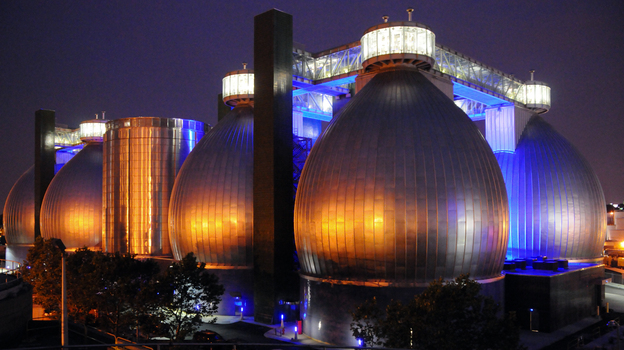
"caption": "The digester eggs at Newtown Creek Wastewater Treatment Plant in Brooklyn contain millions of gallons of black sludge. Photo: Courtesy of New York City Department of Environmental Protection",
"description": null,
"title": "newtown-creek_31",
"credit": null,
"status": "inherit",
"isLoading": false,
"fetchFailed": false
}
},
"audioPlayerReducer": {
"postId": "stream_live",
"isPaused": true,
"isPlaying": false,
"pfsActive": false,
"pledgeModalIsOpen": true,
"playerDrawerIsOpen": false,
"liveAudioPlayStartedAt": 0,
"liveAudioPlayContext": ""
},
"authorsReducer": {
"byline_bayareabites_79621": {
"type": "authors",
"id": "byline_bayareabites_79621",
"meta": {
"override": true
},
"slug": "byline_bayareabites_79621",
"name": "Sam Dean",
"isLoading": false
},
"byline_bayareabites_79529": {
"type": "authors",
"id": "byline_bayareabites_79529",
"meta": {
"override": true
},
"slug": "byline_bayareabites_79529",
"name": "Michaeleen Doucleff",
"isLoading": false
},
"byline_bayareabites_79400": {
"type": "authors",
"id": "byline_bayareabites_79400",
"meta": {
"override": true
},
"slug": "byline_bayareabites_79400",
"name": "Eliza Barclay",
"isLoading": false
},
"byline_bayareabites_79273": {
"type": "authors",
"id": "byline_bayareabites_79273",
"meta": {
"override": true
},
"slug": "byline_bayareabites_79273",
"name": "Luke Runyon",
"isLoading": false
},
"byline_bayareabites_79211": {
"type": "authors",
"id": "byline_bayareabites_79211",
"meta": {
"override": true
},
"slug": "byline_bayareabites_79211",
"name": "Laurel White",
"isLoading": false
},
"byline_bayareabites_79058": {
"type": "authors",
"id": "byline_bayareabites_79058",
"meta": {
"override": true
},
"slug": "byline_bayareabites_79058",
"name": "Linda Poon",
"isLoading": false
},
"byline_bayareabites_79014": {
"type": "authors",
"id": "byline_bayareabites_79014",
"meta": {
"override": true
},
"slug": "byline_bayareabites_79014",
"name": "Chelsea Edgar",
"isLoading": false
},
"byline_bayareabites_78996": {
"type": "authors",
"id": "byline_bayareabites_78996",
"meta": {
"override": true
},
"slug": "byline_bayareabites_78996",
"name": "Amy Guttman",
"isLoading": false
},
"byline_bayareabites_78986": {
"type": "authors",
"id": "byline_bayareabites_78986",
"meta": {
"override": true
},
"slug": "byline_bayareabites_78986",
"name": "Joel Rose",
"isLoading": false
},
"kdomara": {
"type": "authors",
"id": "1459",
"meta": {
"index": "authors_1716337520",
"id": "1459",
"found": true
},
"name": "Kelly O'Mara",
"firstName": "Kelly",
"lastName": "O'Mara",
"slug": "kdomara",
"email": "komara@kqed.org",
"display_author_email": false,
"staff_mastheads": [
"news"
],
"title": "KQED Contributor",
"bio": "Kelly O'Mara is a writer and reporter in the San Francisco Bay Area. She writes about food, health, sports, travel, business and California news. Her work has appeared on KQED, online for Outside Magazine, epsnW, VICE and in Competitor Magazine, among others. Follow Kelly on Twitter \u003ca href=\"https://twitter.com/kellydomara\">@kellydomara\u003c/a>.",
"avatar": "https://secure.gravatar.com/avatar/768fec7412028b72f13bdd0f5f9d8186?s=600&d=blank&r=g",
"twitter": null,
"facebook": null,
"instagram": null,
"linkedin": null,
"sites": [
{
"site": "arts",
"roles": []
},
{
"site": "news",
"roles": []
},
{
"site": "bayareabites",
"roles": []
},
{
"site": "stateofhealth",
"roles": []
},
{
"site": "science",
"roles": []
},
{
"site": "checkplease",
"roles": [
"editor"
]
},
{
"site": "food",
"roles": []
},
{
"site": "forum",
"roles": [
"editor"
]
},
{
"site": "liveblog",
"roles": [
"editor"
]
}
],
"headData": {
"title": "Kelly O'Mara | KQED",
"description": "KQED Contributor",
"ogImgSrc": "https://secure.gravatar.com/avatar/768fec7412028b72f13bdd0f5f9d8186?s=600&d=blank&r=g",
"twImgSrc": "https://secure.gravatar.com/avatar/768fec7412028b72f13bdd0f5f9d8186?s=600&d=blank&r=g"
},
"isLoading": false,
"link": "/author/kdomara"
}
},
"pagesReducer": {
"bayareabites_category_food-and-technology": {
"type": "terms",
"id": "bayareabites_4084",
"meta": {
"index": "terms_1716263798",
"site": "bayareabites",
"id": "4084",
"score": 14.405603
},
"featImg": null,
"name": "food trends and technology",
"description": null,
"taxonomy": "category",
"headData": {
"twImgId": null,
"twTitle": null,
"ogTitle": null,
"ogImgId": null,
"twDescription": null,
"description": null,
"title": "food trends and technology Archives | KQED Bay Area Bites",
"ogDescription": null
},
"ttid": 2573,
"slug": "food-and-technology",
"isLoading": false,
"title": "food trends and technology",
"pageMeta": {
"site": "bayareabites",
"WpPageTemplate": "page-topic-editorial",
"currentPage": 39
},
"blocks": [
{
"blockName": "kqed/post-list",
"attrs": {
"layout": "cardArticle2",
"query": "posts/bayareabites?category=food-and-technology",
"seeMore": false,
"paginated": true,
"page": 39
}
},
{
"blockName": "kqed/ad"
}
]
}
},
"pfsSessionReducer": {},
"postsReducer": {
"stream_live": {
"type": "live",
"id": "stream_live",
"audioUrl": "https://streams.kqed.org/kqedradio",
"title": "Live Stream",
"excerpt": "Live Stream information currently unavailable.",
"link": "/radio",
"featImg": "",
"label": {
"name": "KQED Live",
"link": "/"
}
},
"stream_kqedNewscast": {
"type": "posts",
"id": "stream_kqedNewscast",
"audioUrl": "https://www.kqed.org/.stream/anon/radio/RDnews/newscast.mp3?_=1",
"title": "KQED Newscast",
"featImg": "",
"label": {
"name": "88.5 FM",
"link": "/"
}
},
"bayareabites_79635": {
"type": "posts",
"id": "bayareabites_79635",
"meta": {
"index": "posts_1716263798",
"site": "bayareabites",
"id": "79635",
"score": null,
"sort": [
1396034406000
]
},
"parent": 0,
"labelTerm": {
"site": "bayareabites"
},
"blocks": [],
"publishDate": 1396034406,
"format": "aside",
"disqusTitle": "New Food Domain Extensions Released Including .food, .restaurant and .organic",
"title": "New Food Domain Extensions Released Including .food, .restaurant and .organic",
"headTitle": "Bay Area Bites | KQED Food",
"content": "\u003cfigure id=\"attachment_79654\" class=\"wp-caption aligncenter\" style=\"max-width: 853px\">\u003ca href=\"http://ww2.kqed.org/bayareabites/wp-content/uploads/sites/24/2014/03/food-dot-com.jpg\">\u003cimg src=\"http://ww2.kqed.org/bayareabites/wp-content/uploads/sites/24/2014/03/food-dot-com.jpg\" alt=\"Pizza.food delivery from ICANN's video New gTLDs: The Dot has new friends!\" width=\"853\" height=\"454\" class=\"size-full wp-image-79654\">\u003c/a>\u003cfigcaption class=\"wp-caption-text\">Pizza.food delivery from ICANN's video New gTLDs: The Dot has new friends!\u003c/figcaption>\u003c/figure>\n\u003cp>Soon food could have an internet all its own--sort of. Earlier this spring, a \u003ca href=\"http://newgtlds.icann.org/en/program-status/delegated-strings\">number of domain extensions\u003c/a> aimed at specific industries and geographic areas began to roll out to the public, meaning that people could get website addresses like www.exercise.guru (actually a url squatter bought that one, sorry) or www.kellyrides.bike. Later this year .food and other food-related extensions are expected to be released.\u003c/p>\n\u003cp>Last year, \u003ca href=\"https://www.icann.org/\" target=\"_blank\">ICANN (Internet Corporation for Assigned Names and Numbers)\u003c/a> released thousands of new generic top-level domains, known as gTLDs. This means we will no longer be limited to .com, .org, and their less-popular cousins. Instead, what that means is that ICANN is making available over 600 domain extensions like .photography, .healthcare, .restaurant and .food.\u003c/p>\n\u003cp>Watch ICANN's video explaining the new gTLDs aka \"the new dots.\"\u003c/p>\n\u003cp>[youtube //www.youtube.com/watch?v=1kFcxf8KAjg] \u003c/p>\n\u003cp>All of a sudden, said Andrew Rosener, CEO of domain broker \u003ca href=\"http://www.mediaoptions.com/\" target=\"_blank\">Media Options\u003c/a>, your website won't have to be www.MikesNewYorkPizza.com anymore. It could be www.MikesPizza.restaurant or www.MikesNewYork.pizza or www.MikesPizza.nyc. \u003c/p>\n\u003cp>[ad fullwidth]\u003c/p>\n\u003cp>But, not yet.\u003c/p>\n\u003cp>Right now, the whole thing is \"kind of a cluster&@$%,\" said Rosener. \u003c/p>\n\u003cp>When ICANN announced these new gTLDs two years ago, any operating company could apply to run one. It costs $185,000 to apply to operate one of the new gTLDs, said Rosener, but if there are multiple applications then there is an auction. One of the biggest applications, \u003ca href=\"http://www.donuts.co/\" target=\"_blank\">Donuts.co\u003c/a>, spent about $56 million applying for over 300 gTLDs. Many of those applications are just now being sorted out and finally rolled out to the public. That doesn't mean, though, that there's a lot of clarity about who is running which ones, how expensive they are, or even why you'd want one.\u003c/p>\n\u003cp>Because of the volume of domain extensions, there's \"a lot of confusion,\" said Rosener. The renewal and operating fees will vary from operator to operator. Which registrars support which domain extensions will also vary, ie. some of them you'll be able to purchase at GoDaddy (the biggest registrar with 84% of registration) but some you won't. How those domain extensions are supported will also vary. What that means practically is if you want to register your food business with a url that ends in .food or .sanfrancisco or .organic, you may not be able to figure out how to do so or how much you'll have to pay.\u003c/p>\n\u003cp>And, perhaps the biggest thing that's still unclear is how these new gTLDs will be treated in search engines. Right now, for example, Google favors .com addresses and addresses that have been registered for a longer amount of time. No one knows how or if that will change.\u003c/p>\n\u003cp>\"It's yet to be determined how Google will treat them in its search algorithm,\" said Rosener. Google is also applying to operate some of the new gTLDs itself--including .google, .yotube, and .web--through a shell company called Charleston Road Registry. If Google treats its own domain extensions differently than other new extensions, then there could be problems.\u003c/p>\n\u003cp>The most popular of the new domain extensions or gTLDs has so far been .guru, which has over 30,000 registrations. About 18,000 people also registered to get .photography domains. But, those are the most popular and they're certainly not going to get anywhere near as many registrations as traditional domain extensions--or even as many as new extensions like .co (which got 1.5 million). Right now, .food has about 250,000 people pre-registered, which just means that those people want to get additional information and be notified when .food becomes available. It's unlikely .food will actually garner anywhere close to that many addresses. It's expected to be made available later this year. \"None of these will ever get a million registrations,\" said Rosener. \u003c/p>\n\u003cp>The main reason people will want to buy one of these new domain extensions is to market their small business, or because the available mainstream web addresses is limited.\u003c/p>\n\u003cp>\u003c/p>\n\u003cp>\"It creates interesting marketing assets,\" said Rosener. \"But, it's not viable as a primary address for anything besides small and medium businesses.\"\u003c/p>\n\n",
"disqusIdentifier": "79635 http://blogs.kqed.org/bayareabites/?p=79635",
"disqusUrl": "https://ww2.kqed.org/bayareabites/2014/03/28/new-food-domain-extensions-released/",
"stats": {
"hasVideo": true,
"hasChartOrMap": false,
"hasAudio": false,
"hasPolis": false,
"wordCount": 723,
"hasGoogleForm": false,
"hasGallery": false,
"hasHearkenModule": false,
"iframeSrcs": [],
"paragraphCount": 16
},
"modified": 1396034885,
"excerpt": "ICANN has released thousands of new domain extension--including .food and .restaurant and even .organic. This could be a windfall for small food businesses, as long as they can figure out how it works.",
"headData": {
"twImgId": "",
"twTitle": "",
"ogTitle": "",
"ogImgId": "",
"twDescription": "",
"description": "ICANN has released thousands of new domain extension--including .food and .restaurant and even .organic. This could be a windfall for small food businesses, as long as they can figure out how it works.",
"title": "New Food Domain Extensions Released Including .food, .restaurant and .organic | KQED",
"ogDescription": "",
"schema": {
"@context": "https://schema.org",
"@type": "Article",
"headline": "New Food Domain Extensions Released Including .food, .restaurant and .organic",
"datePublished": "2014-03-28T12:20:06-07:00",
"dateModified": "2014-03-28T12:28:05-07:00",
"image": "https://cdn.kqed.org/wp-content/uploads/2020/02/KQED-OG-Image@1x.png"
}
},
"guestAuthors": [],
"slug": "new-food-domain-extensions-released",
"status": "publish",
"path": "/bayareabites/79635/new-food-domain-extensions-released",
"audioTrackLength": null,
"parsedContent": [
{
"type": "contentString",
"content": "\u003cdiv class=\"post-body\">\u003cp>\u003cfigure id=\"attachment_79654\" class=\"wp-caption aligncenter\" style=\"max-width: 853px\">\u003ca href=\"http://ww2.kqed.org/bayareabites/wp-content/uploads/sites/24/2014/03/food-dot-com.jpg\">\u003cimg src=\"http://ww2.kqed.org/bayareabites/wp-content/uploads/sites/24/2014/03/food-dot-com.jpg\" alt=\"Pizza.food delivery from ICANN's video New gTLDs: The Dot has new friends!\" width=\"853\" height=\"454\" class=\"size-full wp-image-79654\">\u003c/a>\u003cfigcaption class=\"wp-caption-text\">Pizza.food delivery from ICANN's video New gTLDs: The Dot has new friends!\u003c/figcaption>\u003c/figure>\n\u003cp>Soon food could have an internet all its own--sort of. Earlier this spring, a \u003ca href=\"http://newgtlds.icann.org/en/program-status/delegated-strings\">number of domain extensions\u003c/a> aimed at specific industries and geographic areas began to roll out to the public, meaning that people could get website addresses like www.exercise.guru (actually a url squatter bought that one, sorry) or www.kellyrides.bike. Later this year .food and other food-related extensions are expected to be released.\u003c/p>\n\u003cp>Last year, \u003ca href=\"https://www.icann.org/\" target=\"_blank\">ICANN (Internet Corporation for Assigned Names and Numbers)\u003c/a> released thousands of new generic top-level domains, known as gTLDs. This means we will no longer be limited to .com, .org, and their less-popular cousins. Instead, what that means is that ICANN is making available over 600 domain extensions like .photography, .healthcare, .restaurant and .food.\u003c/p>\n\u003cp>Watch ICANN's video explaining the new gTLDs aka \"the new dots.\"\u003c/p>\n\u003cp>\u003c/p>\u003cp>\u003cspan class='utils-parseShortcode-shortcodes-__youtubeShortcode__embedYoutube'>\n \u003cspan class='utils-parseShortcode-shortcodes-__youtubeShortcode__embedYoutubeInside'>\n \u003ciframe\n loading='lazy'\n class='utils-parseShortcode-shortcodes-__youtubeShortcode__youtubePlayer'\n type='text/html'\n src='//www.youtube.com/embed/1kFcxf8KAjg'\n title='//www.youtube.com/embed/1kFcxf8KAjg'\n allowfullscreen='true'\n style='border:0;'>\u003c/iframe>\n \u003c/span>\n \u003c/span>\u003c/p>\u003cp> \u003c/p>\n\u003cp>All of a sudden, said Andrew Rosener, CEO of domain broker \u003ca href=\"http://www.mediaoptions.com/\" target=\"_blank\">Media Options\u003c/a>, your website won't have to be www.MikesNewYorkPizza.com anymore. It could be www.MikesPizza.restaurant or www.MikesNewYork.pizza or www.MikesPizza.nyc. \u003c/p>\n\u003cp>\u003c/p>\u003c/div>",
"attributes": {
"named": {},
"numeric": []
}
},
{
"type": "component",
"content": "",
"name": "ad",
"attributes": {
"named": {
"label": "fullwidth"
},
"numeric": [
"fullwidth"
]
}
},
{
"type": "contentString",
"content": "\u003cdiv class=\"post-body\">\u003cp>\u003c/p>\n\u003cp>But, not yet.\u003c/p>\n\u003cp>Right now, the whole thing is \"kind of a cluster&@$%,\" said Rosener. \u003c/p>\n\u003cp>When ICANN announced these new gTLDs two years ago, any operating company could apply to run one. It costs $185,000 to apply to operate one of the new gTLDs, said Rosener, but if there are multiple applications then there is an auction. One of the biggest applications, \u003ca href=\"http://www.donuts.co/\" target=\"_blank\">Donuts.co\u003c/a>, spent about $56 million applying for over 300 gTLDs. Many of those applications are just now being sorted out and finally rolled out to the public. That doesn't mean, though, that there's a lot of clarity about who is running which ones, how expensive they are, or even why you'd want one.\u003c/p>\n\u003cp>Because of the volume of domain extensions, there's \"a lot of confusion,\" said Rosener. The renewal and operating fees will vary from operator to operator. Which registrars support which domain extensions will also vary, ie. some of them you'll be able to purchase at GoDaddy (the biggest registrar with 84% of registration) but some you won't. How those domain extensions are supported will also vary. What that means practically is if you want to register your food business with a url that ends in .food or .sanfrancisco or .organic, you may not be able to figure out how to do so or how much you'll have to pay.\u003c/p>\n\u003cp>And, perhaps the biggest thing that's still unclear is how these new gTLDs will be treated in search engines. Right now, for example, Google favors .com addresses and addresses that have been registered for a longer amount of time. No one knows how or if that will change.\u003c/p>\n\u003cp>\"It's yet to be determined how Google will treat them in its search algorithm,\" said Rosener. Google is also applying to operate some of the new gTLDs itself--including .google, .yotube, and .web--through a shell company called Charleston Road Registry. If Google treats its own domain extensions differently than other new extensions, then there could be problems.\u003c/p>\n\u003cp>The most popular of the new domain extensions or gTLDs has so far been .guru, which has over 30,000 registrations. About 18,000 people also registered to get .photography domains. But, those are the most popular and they're certainly not going to get anywhere near as many registrations as traditional domain extensions--or even as many as new extensions like .co (which got 1.5 million). Right now, .food has about 250,000 people pre-registered, which just means that those people want to get additional information and be notified when .food becomes available. It's unlikely .food will actually garner anywhere close to that many addresses. It's expected to be made available later this year. \"None of these will ever get a million registrations,\" said Rosener. \u003c/p>\n\u003cp>The main reason people will want to buy one of these new domain extensions is to market their small business, or because the available mainstream web addresses is limited.\u003c/p>\n\u003cp>\u003c/p>\n\u003cp>\"It creates interesting marketing assets,\" said Rosener. \"But, it's not viable as a primary address for anything besides small and medium businesses.\"\u003c/p>\n\n\u003c/div>\u003c/p>",
"attributes": {
"named": {},
"numeric": []
}
}
],
"link": "/bayareabites/79635/new-food-domain-extensions-released",
"authors": [
"1459"
],
"categories": [
"bayareabites_752",
"bayareabites_4084",
"bayareabites_12555",
"bayareabites_1927"
],
"tags": [
"bayareabites_13210",
"bayareabites_1997",
"bayareabites_13211",
"bayareabites_9572"
],
"featImg": "bayareabites_79655",
"label": "bayareabites"
},
"bayareabites_79621": {
"type": "posts",
"id": "bayareabites_79621",
"meta": {
"index": "posts_1716263798",
"site": "bayareabites",
"id": "79621",
"score": null,
"sort": [
1395958677000
]
},
"parent": 0,
"labelTerm": {
"site": "bayareabites"
},
"blocks": [],
"publishDate": 1395958677,
"format": "aside",
"disqusTitle": "The Search For The Perfect Cup Of Coffee Can Be Such A Grind(er)",
"title": "The Search For The Perfect Cup Of Coffee Can Be Such A Grind(er)",
"headTitle": "Bay Area Bites | KQED Food",
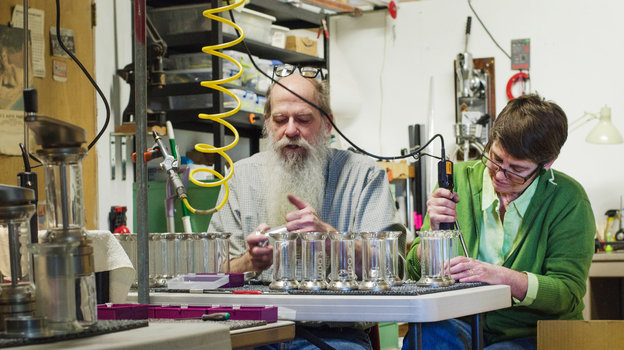
"content": "\u003cfigure id=\"attachment_79622\" class=\"wp-caption aligncenter\" style=\"max-width: 1674px\">\u003ca href=\"http://ww2.kqed.org/bayareabites/wp-content/uploads/sites/24/2014/03/orphespress-npr8-copy_wide-19ff3940f8c9e62fc49c1852cb8447f324a34273.jpg\">\u003cimg src=\"http://ww2.kqed.org/bayareabites/wp-content/uploads/sites/24/2014/03/orphespress-npr8-copy_wide-19ff3940f8c9e62fc49c1852cb8447f324a34273.jpg\" alt=\"Doug and Barb Garrott assemble a Lido 2 grinder at their home in Troy, Idaho. They've spent the past three years perfecting their design for the hand-cranked machine. Photo: Jessica Greene\" width=\"1674\" height=\"940\" class=\"size-full wp-image-79622\">\u003c/a>\u003cfigcaption class=\"wp-caption-text\">Doug and Barb Garrott assemble a Lido 2 grinder at their home in Troy, Idaho. They've spent the past three years perfecting their design for the hand-cranked machine. Photo: Jessica Greene\u003c/figcaption>\u003c/figure>\n\u003cp>Post by Sam Dean, \u003ca href=\"http://www.npr.org/blogs/thesalt/2014/03/27/287449219/for-a-perfect-cup-of-coffee-it-s-all-a-sleight-of-hand-grind\">The Salt at NPR Food\u003c/a> (3/27/14)\u003c/p>\n\u003cp>In the tiny town of Troy, Idaho, Barb and Doug Garrott have spent the past three years perfecting a machine that could change the morning routines of coffee drinkers all over the country: a $175 hand-cranked coffee grinder.\u003c/p>\n\u003cp>It's called the \u003ca href=\"http://www.oehandgrinders.com/LIDO-2_c_23.html\">Lido 2\u003c/a>, the first run of 500 has already sold out on preorder, and coffee aficionados are asking for more.\u003c/p>\n\u003cp>Before you spit that cup of coffee all over your screen, consider this: Single cups of pour-over coffee, brewed with nothing but hot water and a paper filter, are replacing shots of espresso as the gold standard of the gourmet coffee world.\u003c/p>\n\u003cp>People in pursuit of the perfect cup of Joe no longer need to spend thousands of dollars on an espresso machine to brew like a pro. That shift has given rise to a new wave of high-end home coffee lovers (and a \u003ca href=\"http://www.theatlantic.com/magazine/archive/2014/03/java-script/357562/\">wave of articles\u003c/a> on the seemingly simple art of making a cup of regular coffee).\u003c/p>\n\u003cp>[ad fullwidth]\u003c/p>\n\u003cp>But even if good coffee is more accessible than ever, it's not quite as easy as getting good beans, a $10 drip cone and practicing your hot water pour. Without a good grinder to chop those single-origin beans into a consistent size, you might as well be brewing with your grandma's percolator.\u003c/p>\n\u003cfigure id=\"attachment_79628\" class=\"wp-caption alignleft\" style=\"max-width: 290px\">\u003ca href=\"http://ww2.kqed.org/bayareabites/wp-content/uploads/sites/24/2014/03/grinder.jpg\">\u003cimg src=\"http://ww2.kqed.org/bayareabites/wp-content/uploads/sites/24/2014/03/grinder-290x217.jpg\" alt=\"The Lido 2 (far right) is the latest hand grinder produced by the Garrotts. Their previous efforts were the well-regarded Pharos (left) and Lido 1 (center). Photo: Jessica Greene\" width=\"290\" height=\"217\" class=\"size-medium wp-image-79628\">\u003c/a>\u003cfigcaption class=\"wp-caption-text\">The Lido 2 (far right) is the latest hand grinder produced by the Garrotts. Their previous efforts were the well-regarded Pharos (left) and Lido 1 (center). Photo: Jessica Greene\u003c/figcaption>\u003c/figure>\n\u003cp>Ask anyone in the coffee industry, and they'll tell you: The grinder is the unsung hero of the coffee process. Benjamin Brewer, \u003ca href=\"http://www.bluebottlecoffee.com/\">Blue Bottle Coffee\u003c/a>'s director of quality control, says the switch from a \"crummy\" grinder to a more competent machine \"totally makes a difference. It's like, oh, we can actually taste the coffee now!\"\u003c/p>\n\u003cp>Making coffee is all about dissolving some of the roasted beans' flavor compounds — including the slightly bitter tang of caffeine — into hot water. Every brewing method is designed to pull out just the right amount. For espresso, that extraction happens when hot water passes through tightly packed, superfine grounds for just a few moments; for French press, when water steeps in coarse-ground beans for a few minutes.\u003c/p>\n\u003cp>But all of that depends on the coffee grounds being as close to uniform in size as possible. Once you introduce too many big chunks (known as \"boulders\" in grinder parlance) or tiny microparticles (dubbed \"fines\"), the extraction gets all out of whack.\u003c/p>\n\u003cp>The fines give up their flavor too fast, making for a bitter brew, and the boulders hardly give up anything at all, leaving your cup thin and sour. It's the same problem that occurs whenever you cook widely varying chunks of anything all together — potatoes in a pot of boiling water, for instance. The result will come out either cooked to oblivion or underdone.\u003c/p>\n\u003cp>The whirling blade grinder that most people have at home just doesn't cut it. The blade smashes coffee to smithereens, making boulders and fines all over the place. Instead, the coffee pros use burr grinders, which chew the beans up to a precise, consistent size by funneling them through a set of steel or ceramic teeth.\u003c/p>\n\u003cp>In other words, a good grinder can make all the difference between a cup of sludge and a rich, aromatic morning mug of Joe.\u003c/p>\n\u003cp>Which is exactly why the Garrotts set out to make an ideal hand grinder three years ago. \"It started out as a winter project to stave off the boredom,\" Barb says.\u003c/p>\n\u003cp>She and Doug had been running a business called \u003ca href=\"http://www.orphanespresso.com/\">Orphan Espresso\u003c/a>, selling repair parts for vintage espresso machines and old-timey wood-box coffee grinders. They'd found themselves disappointed with most of the hand grinders on the market, vintage and new. So, they figured, they might as well make one themselves.\u003c/p>\n\u003cp>Since their first machine debuted in 2011, they've sold over 1,500 grinders, mostly to the self-selecting coffee obsessives on forums like \u003ca href=\"http://www.home-barista.com/\">Home Barista\u003c/a> and \u003ca href=\"http://www.coffeegeek.com/\">CoffeeGeek\u003c/a>. Each one was painstakingly put together by hand in the workshop next to their house. Now, with the Lido 2, they've gone through the hoops to mass manufacture their parts in Taiwan, but are still assembling their first run of 500 at home.\u003c/p>\n\u003cp>The $175 price tag comes from using professional-grade parts, cast metal construction and lots of attention to detail. They also added adjustment mechanisms to stop the teeth from wobbling while crushing up beans. That means the grind is more regular, and more consistent, than many of the hand grinders on the market.\u003c/p>\n\u003cp>But why make, or buy, a hand grinder at all?\u003c/p>\n\u003cp>Simply put, they deliver the same quality as motorized machines at a fraction of the cost. There are other hand grinders that are even cheaper than the Lido 2, such as the Hario Slim ($50) and Porlex Mini ($7). But die-hard coffee lovers contend that with sub-$100 models, you'll have problems with inconsistent grinds.\u003c/p>\n\u003cp>\u003ca href=\"https://twitter.com/jbviau\">Joshua Viau\u003c/a>, a regular Home Barista contributor, says the appeal of the Lido 2 and other serious hand grinders goes beyond mechanics.\u003c/p>\n\u003cp>\"You taste differences in the cup, but it's more than that. These feel like tools, like something that lasts.\" Grinding every morning, he says, \"you form a bond with it.\" \u003c/p>\n\u003cp>\u003c/p>\n\u003cp>\u003cem>Copyright 2014 \u003ca href=\"http://www.npr.org/\">NPR\u003c/a>.\u003c/em> \u003c/p>\n\n",
"disqusIdentifier": "79621 http://blogs.kqed.org/bayareabites/?p=79621",
"disqusUrl": "https://ww2.kqed.org/bayareabites/2014/03/27/the-search-for-the-perfect-cup-of-coffee-can-be-such-a-grinder/",
"stats": {
"hasVideo": false,
"hasChartOrMap": false,
"hasAudio": false,
"hasPolis": false,
"wordCount": 945,
"hasGoogleForm": false,
"hasGallery": false,
"hasHearkenModule": false,
"iframeSrcs": [],
"paragraphCount": 23
},
"modified": 1395958689,
"excerpt": "It's the holy grail of the coffee world: a grinder that optimizes flavor from every bean. An Idaho couple has spent years perfecting a hand-cranked machine that's as good as much pricier models.",
"headData": {
"twImgId": "",
"twTitle": "",
"ogTitle": "",
"ogImgId": "",
"twDescription": "",
"description": "It's the holy grail of the coffee world: a grinder that optimizes flavor from every bean. An Idaho couple has spent years perfecting a hand-cranked machine that's as good as much pricier models.",
"title": "The Search For The Perfect Cup Of Coffee Can Be Such A Grind(er) | KQED",
"ogDescription": "",
"schema": {
"@context": "https://schema.org",
"@type": "Article",
"headline": "The Search For The Perfect Cup Of Coffee Can Be Such A Grind(er)",
"datePublished": "2014-03-27T15:17:57-07:00",
"dateModified": "2014-03-27T15:18:09-07:00",
"image": "https://cdn.kqed.org/wp-content/uploads/2020/02/KQED-OG-Image@1x.png"
}
},
"guestAuthors": [],
"slug": "the-search-for-the-perfect-cup-of-coffee-can-be-such-a-grinder",
"status": "publish",
"nprApiLink": "http://api.npr.org/query?id=287449219&apiKey=MDAxOTAwOTE4MDEyMTkxMDAzNjczZDljZA004",
"nprByline": "Sam Dean",
"nprStoryDate": "Thu, 27 Mar 2014 15:25:00 -0400",
"nprLastModifiedDate": "Thu, 27 Mar 2014 17:42:15 -0400",
"nprHtmlLink": "http://www.npr.org/blogs/thesalt/2014/03/27/287449219/for-a-perfect-cup-of-coffee-it-s-all-a-sleight-of-hand-grind?ft=3&f=287449219",
"nprStoryId": "287449219",
"nprRetrievedStory": "1",
"nprPubDate": "Thu, 27 Mar 2014 17:42:00 -0400",
"path": "/bayareabites/79621/the-search-for-the-perfect-cup-of-coffee-can-be-such-a-grinder",
"audioTrackLength": null,
"parsedContent": [
{
"type": "contentString",
"content": "\u003cdiv class=\"post-body\">\u003cp>\u003cfigure id=\"attachment_79622\" class=\"wp-caption aligncenter\" style=\"max-width: 1674px\">\u003ca href=\"http://ww2.kqed.org/bayareabites/wp-content/uploads/sites/24/2014/03/orphespress-npr8-copy_wide-19ff3940f8c9e62fc49c1852cb8447f324a34273.jpg\">\u003cimg src=\"http://ww2.kqed.org/bayareabites/wp-content/uploads/sites/24/2014/03/orphespress-npr8-copy_wide-19ff3940f8c9e62fc49c1852cb8447f324a34273.jpg\" alt=\"Doug and Barb Garrott assemble a Lido 2 grinder at their home in Troy, Idaho. They've spent the past three years perfecting their design for the hand-cranked machine. Photo: Jessica Greene\" width=\"1674\" height=\"940\" class=\"size-full wp-image-79622\">\u003c/a>\u003cfigcaption class=\"wp-caption-text\">Doug and Barb Garrott assemble a Lido 2 grinder at their home in Troy, Idaho. They've spent the past three years perfecting their design for the hand-cranked machine. Photo: Jessica Greene\u003c/figcaption>\u003c/figure>\n\u003cp>Post by Sam Dean, \u003ca href=\"http://www.npr.org/blogs/thesalt/2014/03/27/287449219/for-a-perfect-cup-of-coffee-it-s-all-a-sleight-of-hand-grind\">The Salt at NPR Food\u003c/a> (3/27/14)\u003c/p>\n\u003cp>In the tiny town of Troy, Idaho, Barb and Doug Garrott have spent the past three years perfecting a machine that could change the morning routines of coffee drinkers all over the country: a $175 hand-cranked coffee grinder.\u003c/p>\n\u003cp>It's called the \u003ca href=\"http://www.oehandgrinders.com/LIDO-2_c_23.html\">Lido 2\u003c/a>, the first run of 500 has already sold out on preorder, and coffee aficionados are asking for more.\u003c/p>\n\u003cp>Before you spit that cup of coffee all over your screen, consider this: Single cups of pour-over coffee, brewed with nothing but hot water and a paper filter, are replacing shots of espresso as the gold standard of the gourmet coffee world.\u003c/p>\n\u003cp>People in pursuit of the perfect cup of Joe no longer need to spend thousands of dollars on an espresso machine to brew like a pro. That shift has given rise to a new wave of high-end home coffee lovers (and a \u003ca href=\"http://www.theatlantic.com/magazine/archive/2014/03/java-script/357562/\">wave of articles\u003c/a> on the seemingly simple art of making a cup of regular coffee).\u003c/p>\n\u003cp>\u003c/p>\u003c/div>",
"attributes": {
"named": {},
"numeric": []
}
},
{
"type": "component",
"content": "",
"name": "ad",
"attributes": {
"named": {
"label": "fullwidth"
},
"numeric": [
"fullwidth"
]
}
},
{
"type": "contentString",
"content": "\u003cdiv class=\"post-body\">\u003cp>\u003c/p>\n\u003cp>But even if good coffee is more accessible than ever, it's not quite as easy as getting good beans, a $10 drip cone and practicing your hot water pour. Without a good grinder to chop those single-origin beans into a consistent size, you might as well be brewing with your grandma's percolator.\u003c/p>\n\u003cfigure id=\"attachment_79628\" class=\"wp-caption alignleft\" style=\"max-width: 290px\">\u003ca href=\"http://ww2.kqed.org/bayareabites/wp-content/uploads/sites/24/2014/03/grinder.jpg\">\u003cimg src=\"http://ww2.kqed.org/bayareabites/wp-content/uploads/sites/24/2014/03/grinder-290x217.jpg\" alt=\"The Lido 2 (far right) is the latest hand grinder produced by the Garrotts. Their previous efforts were the well-regarded Pharos (left) and Lido 1 (center). Photo: Jessica Greene\" width=\"290\" height=\"217\" class=\"size-medium wp-image-79628\">\u003c/a>\u003cfigcaption class=\"wp-caption-text\">The Lido 2 (far right) is the latest hand grinder produced by the Garrotts. Their previous efforts were the well-regarded Pharos (left) and Lido 1 (center). Photo: Jessica Greene\u003c/figcaption>\u003c/figure>\n\u003cp>Ask anyone in the coffee industry, and they'll tell you: The grinder is the unsung hero of the coffee process. Benjamin Brewer, \u003ca href=\"http://www.bluebottlecoffee.com/\">Blue Bottle Coffee\u003c/a>'s director of quality control, says the switch from a \"crummy\" grinder to a more competent machine \"totally makes a difference. It's like, oh, we can actually taste the coffee now!\"\u003c/p>\n\u003cp>Making coffee is all about dissolving some of the roasted beans' flavor compounds — including the slightly bitter tang of caffeine — into hot water. Every brewing method is designed to pull out just the right amount. For espresso, that extraction happens when hot water passes through tightly packed, superfine grounds for just a few moments; for French press, when water steeps in coarse-ground beans for a few minutes.\u003c/p>\n\u003cp>But all of that depends on the coffee grounds being as close to uniform in size as possible. Once you introduce too many big chunks (known as \"boulders\" in grinder parlance) or tiny microparticles (dubbed \"fines\"), the extraction gets all out of whack.\u003c/p>\n\u003cp>The fines give up their flavor too fast, making for a bitter brew, and the boulders hardly give up anything at all, leaving your cup thin and sour. It's the same problem that occurs whenever you cook widely varying chunks of anything all together — potatoes in a pot of boiling water, for instance. The result will come out either cooked to oblivion or underdone.\u003c/p>\n\u003cp>The whirling blade grinder that most people have at home just doesn't cut it. The blade smashes coffee to smithereens, making boulders and fines all over the place. Instead, the coffee pros use burr grinders, which chew the beans up to a precise, consistent size by funneling them through a set of steel or ceramic teeth.\u003c/p>\n\u003cp>In other words, a good grinder can make all the difference between a cup of sludge and a rich, aromatic morning mug of Joe.\u003c/p>\n\u003cp>Which is exactly why the Garrotts set out to make an ideal hand grinder three years ago. \"It started out as a winter project to stave off the boredom,\" Barb says.\u003c/p>\n\u003cp>She and Doug had been running a business called \u003ca href=\"http://www.orphanespresso.com/\">Orphan Espresso\u003c/a>, selling repair parts for vintage espresso machines and old-timey wood-box coffee grinders. They'd found themselves disappointed with most of the hand grinders on the market, vintage and new. So, they figured, they might as well make one themselves.\u003c/p>\n\u003cp>Since their first machine debuted in 2011, they've sold over 1,500 grinders, mostly to the self-selecting coffee obsessives on forums like \u003ca href=\"http://www.home-barista.com/\">Home Barista\u003c/a> and \u003ca href=\"http://www.coffeegeek.com/\">CoffeeGeek\u003c/a>. Each one was painstakingly put together by hand in the workshop next to their house. Now, with the Lido 2, they've gone through the hoops to mass manufacture their parts in Taiwan, but are still assembling their first run of 500 at home.\u003c/p>\n\u003cp>The $175 price tag comes from using professional-grade parts, cast metal construction and lots of attention to detail. They also added adjustment mechanisms to stop the teeth from wobbling while crushing up beans. That means the grind is more regular, and more consistent, than many of the hand grinders on the market.\u003c/p>\n\u003cp>But why make, or buy, a hand grinder at all?\u003c/p>\n\u003cp>Simply put, they deliver the same quality as motorized machines at a fraction of the cost. There are other hand grinders that are even cheaper than the Lido 2, such as the Hario Slim ($50) and Porlex Mini ($7). But die-hard coffee lovers contend that with sub-$100 models, you'll have problems with inconsistent grinds.\u003c/p>\n\u003cp>\u003ca href=\"https://twitter.com/jbviau\">Joshua Viau\u003c/a>, a regular Home Barista contributor, says the appeal of the Lido 2 and other serious hand grinders goes beyond mechanics.\u003c/p>\n\u003cp>\"You taste differences in the cup, but it's more than that. These feel like tools, like something that lasts.\" Grinding every morning, he says, \"you form a bond with it.\" \u003c/p>\n\u003cp>\u003c/p>\n\u003cp>\u003cem>Copyright 2014 \u003ca href=\"http://www.npr.org/\">NPR\u003c/a>.\u003c/em> \u003c/p>\n\n\u003c/div>\u003c/p>",
"attributes": {
"named": {},
"numeric": []
}
}
],
"link": "/bayareabites/79621/the-search-for-the-perfect-cup-of-coffee-can-be-such-a-grinder",
"authors": [
"byline_bayareabites_79621"
],
"categories": [
"bayareabites_1321",
"bayareabites_4084",
"bayareabites_10916",
"bayareabites_1248"
],
"tags": [
"bayareabites_125",
"bayareabites_13208",
"bayareabites_13207",
"bayareabites_13209"
],
"featImg": "bayareabites_79632",
"label": "bayareabites"
},
"bayareabites_79543": {
"type": "posts",
"id": "bayareabites_79543",
"meta": {
"index": "posts_1716263798",
"site": "bayareabites",
"id": "79543",
"score": null,
"sort": [
1395939908000
]
},
"parent": 0,
"labelTerm": {
"site": "bayareabites"
},
"blocks": [],
"publishDate": 1395939908,
"format": "aside",
"disqusTitle": "AP Stylebook Adds 'Aioli,' 'Vegan,' and 'Buffalo Wings'",
"title": "AP Stylebook Adds 'Aioli,' 'Vegan,' and 'Buffalo Wings'",
"headTitle": "Bay Area Bites | KQED Food",
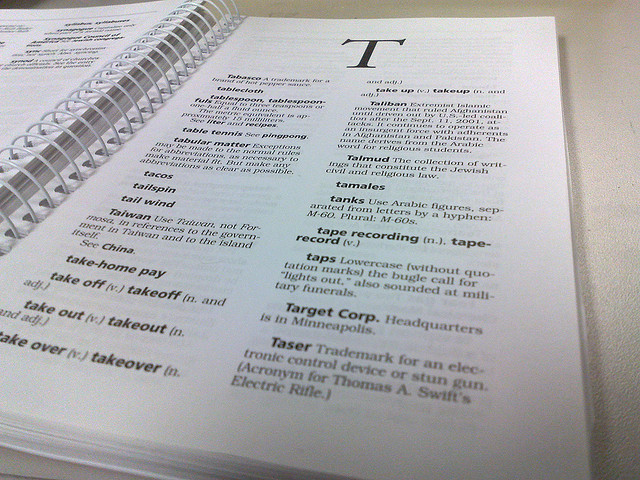
"content": "\u003cfigure id=\"attachment_79563\" class=\"wp-caption aligncenter\" style=\"max-width: 640px\">\u003ca href=\"http://www.flickr.com/photos/35034347485@N01/4154402424/in/photolist-7k7p71-7k7p9b-8xUZRs-8xRXSF-7Xx6DG-88fS5b-dJMT2D-dMaW5Q-gKfoJs-7U7LXk-7YFek2-e9J9j6-dVk1oz-9boQx6\">\u003cimg class=\"size-full wp-image-79563\" src=\"http://ww2.kqed.org/bayareabites/wp-content/uploads/sites/24/2014/03/4154402424_e776d1bb7e_z.jpg\" alt='The \"T\" page in the AP Stylebook includes clarification that the word tacos is spelled tacos. Photo: George Kelly/Flickr' width=\"640\" height=\"480\">\u003c/a>\u003cfigcaption class=\"wp-caption-text\">The \"T\" page in the AP Stylebook includes clarification that the word tacos is spelled tacos. Photo: George Kelly/Flickr\u003c/figcaption>\u003c/figure>\n\u003cp>The \u003ca href=\"http://www.apstylebook.com/\" target=\"_blank\">Associated Press Stylebook\u003c/a> announced this week its updates for 2014, which include adding a number of new food terms, such as aioli, Buffalo wings, caipirinha, demi-glace, kamut, mixologist, vegan and vegetarian.\u003c/p>\n\u003cp>You'd have thought vegetarian would have achieved mainstream acceptance before now, but in fact it wasn't until this week that AP added the entries on vegan and vegetarian. While the AP Stylebook determines what many news organizations use in their reporting, it often can seem behind the times. Along with finally acknowledging vegan, it also added entries on selfie and Snapchat--though it continues to insist on capitalizing Internet.\u003c/p>\n\u003cp>Last year, the AP Stylebook added entries on Grand Marnier, upside-down cake and madeleine.\u003c/p>\n\u003cp>The most recent changes were announced at the American Copy Editors Society conference during the Ask the AP Stylebook Editors session. \u003ca href=\"http://www.copydesk.org/blog/2014/03/25/updates-to-ap-stylebook-include-over-hyphenation-of-wal-mart/\" target=\"_blank\">Reportedly, some of the additions and changes (emoji!) were met with audible gasps\u003c/a>. Most notably, \u003ca href=\"http://www.upi.com/Top_News/US/2014/03/20/Associated-Press-removes-distinction-between-over-and-more-than/8731395353344/\" target=\"_blank\">people are up in arms\u003c/a> over permission to now use \"over\" (instead of just \"more than\") in reference to a numerical value.\u003c/p>\n\u003cp>While the AP Stylebook updates each year, it was in 2011 that AP added a specific food section to its stylebook in recognition of the growing importance that food is playing in the media. That section consolidated existing food and wine terms, as well as added new entries. The food section also includes an official recipe section and answers style questions about the kitchen. Some of the explanations and definitions at times can be entertaining: \"locavore -- The preferred term for a person who strives to eat locally produced foods.\"\u003c/p>\n\u003cp>[ad fullwidth]\u003c/p>\n\u003cp>The reason AP Stylebook changes matter to those outside the insular world of copyeditors is because how AP goes so too goes society. When the Associated Press announced it would no longer use the term \"illegal immigrant\"--ruling that only actions can be illegal, not people--\u003ca href=\"http://www.nytimes.com/2013/04/24/business/media/the-times-shifts-on-illegal-immigrant-but-doesnt-ban-the-use.html?pagewanted=all&_r=0\" target=\"_blank\">The New York Times shortly followed suit\u003c/a>. Will how we refer to immigrants without proper paperwork change how we perceive them? Perhaps, in the long arc of history.\u003c/p>\n\u003cp>In that same way, the fact the vegans and vegetarians are finally getting their own definitions in the AP Stylebook suggests that they have become very nearly mainstream. It may not have much effect on how people who choose not to eat meat are perceived, but at least it will spread the word about their decisions.\u003c/p>\n\u003cp>And, evidently, Buffalo wings finally needed someone to explain if they're really made of Buffalo.\u003c/p>\n\u003cp>\u003c/p>\n\u003cp>\u003cem>Want daily tips on your grammar, punctuation and style? Follow \u003ca href=\"https://twitter.com/APStylebook\" target=\"_blank\">@APStyleBook\u003c/a> for tips like: \u003c/em>\u003c/p>\n\u003cul>\n\u003cli>\"Sichuan is the preferred spelling: Sichuan peppercorns (not Szechwan).\"\u003c/li>\n\u003cli>\"It's barbecue, not barbeque or Bar-B-Q.\"\u003c/li>\n\u003c/ul>\n\n",
"disqusIdentifier": "79543 http://blogs.kqed.org/bayareabites/?p=79543",
"disqusUrl": "https://ww2.kqed.org/bayareabites/2014/03/27/ap-stylebook-adds-aioli-vegan-and-buffalo-wings/",
"stats": {
"hasVideo": false,
"hasChartOrMap": false,
"hasAudio": false,
"hasPolis": false,
"wordCount": 466,
"hasGoogleForm": false,
"hasGallery": false,
"hasHearkenModule": false,
"iframeSrcs": [],
"paragraphCount": 11
},
"modified": 1395959570,
"excerpt": "The AP Stylebook announced its changes for the year, which include a number of food additions. The add-ons may have larger implications in how the foods and food trends are seen in society.",
"headData": {
"twImgId": "",
"twTitle": "",
"ogTitle": "",
"ogImgId": "",
"twDescription": "",
"description": "The AP Stylebook announced its changes for the year, which include a number of food additions. The add-ons may have larger implications in how the foods and food trends are seen in society.",
"title": "AP Stylebook Adds 'Aioli,' 'Vegan,' and 'Buffalo Wings' | KQED",
"ogDescription": "",
"schema": {
"@context": "https://schema.org",
"@type": "Article",
"headline": "AP Stylebook Adds 'Aioli,' 'Vegan,' and 'Buffalo Wings'",
"datePublished": "2014-03-27T10:05:08-07:00",
"dateModified": "2014-03-27T15:32:50-07:00",
"image": "https://cdn.kqed.org/wp-content/uploads/2020/02/KQED-OG-Image@1x.png"
}
},
"guestAuthors": [],
"slug": "ap-stylebook-adds-aioli-vegan-and-buffalo-wings",
"status": "publish",
"path": "/bayareabites/79543/ap-stylebook-adds-aioli-vegan-and-buffalo-wings",
"audioTrackLength": null,
"parsedContent": [
{
"type": "contentString",
"content": "\u003cdiv class=\"post-body\">\u003cp>\u003cfigure id=\"attachment_79563\" class=\"wp-caption aligncenter\" style=\"max-width: 640px\">\u003ca href=\"http://www.flickr.com/photos/35034347485@N01/4154402424/in/photolist-7k7p71-7k7p9b-8xUZRs-8xRXSF-7Xx6DG-88fS5b-dJMT2D-dMaW5Q-gKfoJs-7U7LXk-7YFek2-e9J9j6-dVk1oz-9boQx6\">\u003cimg class=\"size-full wp-image-79563\" src=\"http://ww2.kqed.org/bayareabites/wp-content/uploads/sites/24/2014/03/4154402424_e776d1bb7e_z.jpg\" alt='The \"T\" page in the AP Stylebook includes clarification that the word tacos is spelled tacos. Photo: George Kelly/Flickr' width=\"640\" height=\"480\">\u003c/a>\u003cfigcaption class=\"wp-caption-text\">The \"T\" page in the AP Stylebook includes clarification that the word tacos is spelled tacos. Photo: George Kelly/Flickr\u003c/figcaption>\u003c/figure>\n\u003cp>The \u003ca href=\"http://www.apstylebook.com/\" target=\"_blank\">Associated Press Stylebook\u003c/a> announced this week its updates for 2014, which include adding a number of new food terms, such as aioli, Buffalo wings, caipirinha, demi-glace, kamut, mixologist, vegan and vegetarian.\u003c/p>\n\u003cp>You'd have thought vegetarian would have achieved mainstream acceptance before now, but in fact it wasn't until this week that AP added the entries on vegan and vegetarian. While the AP Stylebook determines what many news organizations use in their reporting, it often can seem behind the times. Along with finally acknowledging vegan, it also added entries on selfie and Snapchat--though it continues to insist on capitalizing Internet.\u003c/p>\n\u003cp>Last year, the AP Stylebook added entries on Grand Marnier, upside-down cake and madeleine.\u003c/p>\n\u003cp>The most recent changes were announced at the American Copy Editors Society conference during the Ask the AP Stylebook Editors session. \u003ca href=\"http://www.copydesk.org/blog/2014/03/25/updates-to-ap-stylebook-include-over-hyphenation-of-wal-mart/\" target=\"_blank\">Reportedly, some of the additions and changes (emoji!) were met with audible gasps\u003c/a>. Most notably, \u003ca href=\"http://www.upi.com/Top_News/US/2014/03/20/Associated-Press-removes-distinction-between-over-and-more-than/8731395353344/\" target=\"_blank\">people are up in arms\u003c/a> over permission to now use \"over\" (instead of just \"more than\") in reference to a numerical value.\u003c/p>\n\u003cp>While the AP Stylebook updates each year, it was in 2011 that AP added a specific food section to its stylebook in recognition of the growing importance that food is playing in the media. That section consolidated existing food and wine terms, as well as added new entries. The food section also includes an official recipe section and answers style questions about the kitchen. Some of the explanations and definitions at times can be entertaining: \"locavore -- The preferred term for a person who strives to eat locally produced foods.\"\u003c/p>\n\u003cp>\u003c/p>\u003c/div>",
"attributes": {
"named": {},
"numeric": []
}
},
{
"type": "component",
"content": "",
"name": "ad",
"attributes": {
"named": {
"label": "fullwidth"
},
"numeric": [
"fullwidth"
]
}
},
{
"type": "contentString",
"content": "\u003cdiv class=\"post-body\">\u003cp>\u003c/p>\n\u003cp>The reason AP Stylebook changes matter to those outside the insular world of copyeditors is because how AP goes so too goes society. When the Associated Press announced it would no longer use the term \"illegal immigrant\"--ruling that only actions can be illegal, not people--\u003ca href=\"http://www.nytimes.com/2013/04/24/business/media/the-times-shifts-on-illegal-immigrant-but-doesnt-ban-the-use.html?pagewanted=all&_r=0\" target=\"_blank\">The New York Times shortly followed suit\u003c/a>. Will how we refer to immigrants without proper paperwork change how we perceive them? Perhaps, in the long arc of history.\u003c/p>\n\u003cp>In that same way, the fact the vegans and vegetarians are finally getting their own definitions in the AP Stylebook suggests that they have become very nearly mainstream. It may not have much effect on how people who choose not to eat meat are perceived, but at least it will spread the word about their decisions.\u003c/p>\n\u003cp>And, evidently, Buffalo wings finally needed someone to explain if they're really made of Buffalo.\u003c/p>\n\u003cp>\u003c/p>\n\u003cp>\u003cem>Want daily tips on your grammar, punctuation and style? Follow \u003ca href=\"https://twitter.com/APStylebook\" target=\"_blank\">@APStyleBook\u003c/a> for tips like: \u003c/em>\u003c/p>\n\u003cul>\n\u003cli>\"Sichuan is the preferred spelling: Sichuan peppercorns (not Szechwan).\"\u003c/li>\n\u003cli>\"It's barbecue, not barbeque or Bar-B-Q.\"\u003c/li>\n\u003c/ul>\n\n\u003c/div>\u003c/p>",
"attributes": {
"named": {},
"numeric": []
}
}
],
"link": "/bayareabites/79543/ap-stylebook-adds-aioli-vegan-and-buffalo-wings",
"authors": [
"1459"
],
"categories": [
"bayareabites_752",
"bayareabites_2254",
"bayareabites_1865",
"bayareabites_4084"
],
"tags": [
"bayareabites_13206",
"bayareabites_2671"
],
"featImg": "bayareabites_79563",
"label": "bayareabites"
},
"bayareabites_79529": {
"type": "posts",
"id": "bayareabites_79529",
"meta": {
"index": "posts_1716263798",
"site": "bayareabites",
"id": "79529",
"score": null,
"sort": [
1395885539000
]
},
"parent": 0,
"labelTerm": {
"site": "bayareabites"
},
"blocks": [],
"publishDate": 1395885539,
"format": "aside",
"disqusTitle": "Does Beaver Tush Flavor Your Strawberry Shortcake? We Go Myth Busting",
"title": "Does Beaver Tush Flavor Your Strawberry Shortcake? We Go Myth Busting",
"headTitle": "Bay Area Bites | KQED Food",
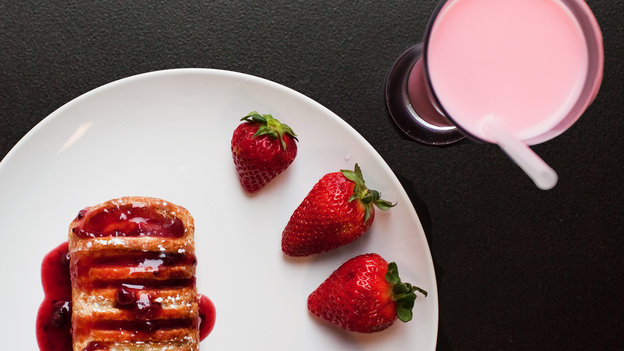
"content": "\u003cfigure id=\"attachment_79531\" class=\"wp-caption aligncenter\" style=\"max-width: 1539px\">\u003ca href=\"http://ww2.kqed.org/bayareabites/wp-content/uploads/sites/24/2014/03/img_8676_wide-bd06c82897d6e1c7ffc513ed1dc39f0616a53219.jpg\">\u003cimg src=\"http://ww2.kqed.org/bayareabites/wp-content/uploads/sites/24/2014/03/img_8676_wide-bd06c82897d6e1c7ffc513ed1dc39f0616a53219.jpg\" alt=\"What's Flavoring Your Pastry? Decades ago, scientists used compounds extracted from a gland in a beaver's tush to help create strawberry and raspberry flavorings or enhance vanilla substitutes. But the chance of encountering eau de beaver in foods today is actually slim to none. Photo: Meg Vogel/NPR\" width=\"1539\" height=\"866\" class=\"size-full wp-image-79531\">\u003c/a>\u003cfigcaption class=\"wp-caption-text\">What's Flavoring Your Pastry? Decades ago, scientists used compounds extracted from a gland in a beaver's tush to help create strawberry and raspberry flavorings or enhance vanilla substitutes. But the chance of encountering eau de beaver in foods today is actually slim to none. Photo: Meg Vogel/NPR\u003c/figcaption>\u003c/figure>\n\u003cp>Post by Michaeleen Doucleff, \u003ca href=\"http://www.npr.org/blogs/thesalt/2014/03/26/293406191/does-beaver-tush-flavor-your-strawberry-shortcake-we-go-myth-busting\">The Salt at NPR Food\u003c/a> (4/26/14)\u003c/p>\n\u003cp>A few years ago, celebrity chef Jamie Oliver kicked up a foodie firestorm when he \u003ca href=\"https://www.youtube.com/watch?v=8J_uSMGvrwg\">told\u003c/a> the audience at the \u003cem>Late Show with David Letterman\u003c/em> that vanilla ice cream contains flavoring from a beaver's ... um, derriere.\u003c/p>\n\u003cp>[youtube //www.youtube.com/watch?v=8J_uSMGvrwg]\u003c/p>\n\u003cp>\"Beaver anal gland — yes,\" Oliver shouted bluntly, as the crowd booed and hissed. \"Oh, come on! You're telling me you don't like a little beaver? ... It's in cheap sorts of strawberry syrups and vanilla ice cream.\"\u003c/p>\n\u003cp>In the food flavoring world, the truth can be stranger than fiction. (Remember when Starbucks was coloring its strawberry Frappuccinos with \u003ca href=\"http://www.npr.org/blogs/thesalt/2012/03/30/149700341/food-coloring-made-from-insects-irks-some-starbucks-patrons\">crushed bugs\u003c/a>?) And since Oliver's big reveal, the Internet has perpetuated the tale of the beaver tush flavoring.\u003c/p>\n\u003cp>[ad fullwidth]\u003c/p>\n\u003cp>But was Oliver telling the truth? Or was he pulling our turkey legs?\u003c/p>\n\u003cp>Probably a little bit of both, says flavor chemist \u003ca href=\"http://www.flavor.umn.edu/who_we_are/Gary/\">Gary Reineccius\u003c/a>, from the University of Minnesota.\u003c/p>\n\u003cp>Decades ago, he explains, scientists did indeed extract compounds from a gland in a beaver's tush. And then they would use the potion to help create strawberry and raspberry flavorings or to enhance vanilla substitutes.\u003c/p>\n\u003cp>And these days, the Food and Drug Administration \u003ca href=\"http://www.ncbi.nlm.nih.gov/pubmed/17365147\">regards\u003c/a> the beaver extract as a safe, natural flavoring. There's even a Swedish \u003ca href=\"http://dolly.jorgensenweb.net/nordicnature/?p=1015\">schnapps\u003c/a> flavored with it, called \u003cem>baverhojt\u003c/em>.\u003c/p>\n\u003cp>But the chance of encountering \u003cem>eau de beaver\u003c/em> in foods today is actually slim to none, Reineccius says. It's simply too expensive. So companies have pretty much stopped using it.\u003c/p>\n\u003cp>\"In the flavor industry, you need tons and tons of material to work with,\" Reineccius tells The Salt. \"It's not like you can grow fields of beavers to harvest. There aren't very many of them. So it ends up being a very expensive product — and not very popular with food companies.\"\u003c/p>\n\u003cp>In 2004, the food industry \u003ca href=\"http://books.google.com/books?id=A8OyTzGGJhYC&lpg=PA277&ots=YeByZKDtcL&dq=castoreum%20food%20ingredients&pg=PA277#v=onepage&q&f=false\">used\u003c/a> only about 300 pounds of the beaver extract, according to according to the fifth edition of \u003cem>Fenaroli's Handbook of Flavor Ingredients,\u003c/em> an industry bible of sorts. That's a mere drop in the bucket compared with the amount of vanilla extract used. And in 2011, the Vegetarian Resource Group \u003ca href=\"http://www.vrg.org/blog/2011/06/17/beaver-gland-castoreum-not-used-in-vanilla-flavorings-according-to-manufacturers/\">asked\u003c/a> five companies that make vanilla flavoring if they used any beaver extract. All of them said no.\u003c/p>\n\u003cp>\"If food companies can find anything else to substitute for vanilla or to create a strawberry flavor, they will,\" Reineccius says. \"It actually isn't very hard to make a basic strawberry flavor that you would recognize with just two compounds.\"\u003c/p>\n\u003cp>So why did flavor scientists go looking to beaver behinds in the first place?\u003c/p>\n\u003cp>Turns out, the scent of beaver is not only pleasant but downright wonderful, wildlife ecologist Joanne Crawford \u003ca href=\"http://newswatch.nationalgeographic.com/2013/10/01/beaver-butts-emit-goo-used-for-vanilla-flavoring/\">told\u003c/a> \u003cem>National Geographic\u003c/em> in October.\u003c/p>\n\u003cp>\"I lift up the animal's tail and I'm like, 'Get down there, and stick your nose near its bum,' \" she said, adding, \"People think I'm nuts. I tell them, 'Oh, but it's beavers; it smells really good.' \"\u003c/p>\n\u003cp>Like dogs, beavers mark their territory by secreting pungent scents from their behinds. But unlike Fido's odors, the fragrance of beavers has been prized by perfumers for centuries. Extracts of its secretions are thought to have put the \"oh!\" in many famous \u003cem>eaux de toilette,\u003c/em> from Chanel to Shalimar.\u003c/p>\n\u003cp>So why such a fuss over a rodent's secretion?\u003c/p>\n\u003cp>The beaver's scent contains hundreds of compounds, including ones that smell like honey, anise and even raspberry. At high concentrations, the mixture has an intense animal, musky and leathery odor. But at low concentrations, the bouquet supposedly takes on more subtle nuances.\u003c/p>\n\u003cp>Those fruity fragrant compounds probably come from the beaver's diet of bark and leaves, Crawford told NatGeo, and because the beaver secretions don't contain foul-smell bacteria.\u003c/p>\n\u003cp>That last point brings up another remark from chef Oliver that needs correcting. Beaver food flavoring doesn't actually come from the animal's anal gland but from another organ next to it, called the castor sac. And the technical term for the beaver extract is \"castoreum.\"\u003c/p>\n\u003cp>And with that refresher on biology, we can all go safely back to enjoying a cup of vanilla ice cream with strawberry syrup drizzled on top. \u003c/p>\n\u003cp>\u003c/p>\n\u003cp>\u003cem>Copyright 2014 \u003ca href=\"http://www.npr.org/\">NPR\u003c/a>.\u003c/em> \u003c/p>\n\n",
"disqusIdentifier": "79529 http://blogs.kqed.org/bayareabites/?p=79529",
"disqusUrl": "https://ww2.kqed.org/bayareabites/2014/03/26/does-beaver-tush-flavor-your-strawberry-shortcake-we-go-myth-busting/",
"stats": {
"hasVideo": true,
"hasChartOrMap": false,
"hasAudio": false,
"hasPolis": false,
"wordCount": 766,
"hasGoogleForm": false,
"hasGallery": false,
"hasHearkenModule": false,
"iframeSrcs": [],
"paragraphCount": 25
},
"modified": 1395885539,
"excerpt": "Heard the rumor that strawberry syrups contain flavoring from a beaver's tush? The potion was once a common food flavoring. But settle down! The time of beaver-spiked ice pops and pastries has ended.",
"headData": {
"twImgId": "",
"twTitle": "",
"ogTitle": "",
"ogImgId": "",
"twDescription": "",
"description": "Heard the rumor that strawberry syrups contain flavoring from a beaver's tush? The potion was once a common food flavoring. But settle down! The time of beaver-spiked ice pops and pastries has ended.",
"title": "Does Beaver Tush Flavor Your Strawberry Shortcake? We Go Myth Busting | KQED",
"ogDescription": "",
"schema": {
"@context": "https://schema.org",
"@type": "Article",
"headline": "Does Beaver Tush Flavor Your Strawberry Shortcake? We Go Myth Busting",
"datePublished": "2014-03-26T18:58:59-07:00",
"dateModified": "2014-03-26T18:58:59-07:00",
"image": "https://cdn.kqed.org/wp-content/uploads/2020/02/KQED-OG-Image@1x.png"
}
},
"guestAuthors": [],
"slug": "does-beaver-tush-flavor-your-strawberry-shortcake-we-go-myth-busting",
"status": "publish",
"nprApiLink": "http://api.npr.org/query?id=293406191&apiKey=MDAxOTAwOTE4MDEyMTkxMDAzNjczZDljZA004",
"nprByline": "Michaeleen Doucleff",
"nprStoryDate": "Wed, 26 Mar 2014 16:41:00 -0400",
"nprLastModifiedDate": "Wed, 26 Mar 2014 19:15:46 -0400",
"nprHtmlLink": "http://www.npr.org/blogs/thesalt/2014/03/26/293406191/does-beaver-tush-flavor-your-strawberry-shortcake-we-go-myth-busting?ft=3&f=293406191",
"nprStoryId": "293406191",
"nprRetrievedStory": "1",
"nprPubDate": "Wed, 26 Mar 2014 19:15:00 -0400",
"path": "/bayareabites/79529/does-beaver-tush-flavor-your-strawberry-shortcake-we-go-myth-busting",
"audioTrackLength": null,
"parsedContent": [
{
"type": "contentString",
"content": "\u003cdiv class=\"post-body\">\u003cp>\u003cfigure id=\"attachment_79531\" class=\"wp-caption aligncenter\" style=\"max-width: 1539px\">\u003ca href=\"http://ww2.kqed.org/bayareabites/wp-content/uploads/sites/24/2014/03/img_8676_wide-bd06c82897d6e1c7ffc513ed1dc39f0616a53219.jpg\">\u003cimg src=\"http://ww2.kqed.org/bayareabites/wp-content/uploads/sites/24/2014/03/img_8676_wide-bd06c82897d6e1c7ffc513ed1dc39f0616a53219.jpg\" alt=\"What's Flavoring Your Pastry? Decades ago, scientists used compounds extracted from a gland in a beaver's tush to help create strawberry and raspberry flavorings or enhance vanilla substitutes. But the chance of encountering eau de beaver in foods today is actually slim to none. Photo: Meg Vogel/NPR\" width=\"1539\" height=\"866\" class=\"size-full wp-image-79531\">\u003c/a>\u003cfigcaption class=\"wp-caption-text\">What's Flavoring Your Pastry? Decades ago, scientists used compounds extracted from a gland in a beaver's tush to help create strawberry and raspberry flavorings or enhance vanilla substitutes. But the chance of encountering eau de beaver in foods today is actually slim to none. Photo: Meg Vogel/NPR\u003c/figcaption>\u003c/figure>\n\u003cp>Post by Michaeleen Doucleff, \u003ca href=\"http://www.npr.org/blogs/thesalt/2014/03/26/293406191/does-beaver-tush-flavor-your-strawberry-shortcake-we-go-myth-busting\">The Salt at NPR Food\u003c/a> (4/26/14)\u003c/p>\n\u003cp>A few years ago, celebrity chef Jamie Oliver kicked up a foodie firestorm when he \u003ca href=\"https://www.youtube.com/watch?v=8J_uSMGvrwg\">told\u003c/a> the audience at the \u003cem>Late Show with David Letterman\u003c/em> that vanilla ice cream contains flavoring from a beaver's ... um, derriere.\u003c/p>\n\u003cp>\u003c/p>\u003cp>\u003cspan class='utils-parseShortcode-shortcodes-__youtubeShortcode__embedYoutube'>\n \u003cspan class='utils-parseShortcode-shortcodes-__youtubeShortcode__embedYoutubeInside'>\n \u003ciframe\n loading='lazy'\n class='utils-parseShortcode-shortcodes-__youtubeShortcode__youtubePlayer'\n type='text/html'\n src='//www.youtube.com/embed/8J_uSMGvrwg'\n title='//www.youtube.com/embed/8J_uSMGvrwg'\n allowfullscreen='true'\n style='border:0;'>\u003c/iframe>\n \u003c/span>\n \u003c/span>\u003c/p>\u003cp>\u003c/p>\n\u003cp>\"Beaver anal gland — yes,\" Oliver shouted bluntly, as the crowd booed and hissed. \"Oh, come on! You're telling me you don't like a little beaver? ... It's in cheap sorts of strawberry syrups and vanilla ice cream.\"\u003c/p>\n\u003cp>In the food flavoring world, the truth can be stranger than fiction. (Remember when Starbucks was coloring its strawberry Frappuccinos with \u003ca href=\"http://www.npr.org/blogs/thesalt/2012/03/30/149700341/food-coloring-made-from-insects-irks-some-starbucks-patrons\">crushed bugs\u003c/a>?) And since Oliver's big reveal, the Internet has perpetuated the tale of the beaver tush flavoring.\u003c/p>\n\u003cp>\u003c/p>\u003c/div>",
"attributes": {
"named": {},
"numeric": []
}
},
{
"type": "component",
"content": "",
"name": "ad",
"attributes": {
"named": {
"label": "fullwidth"
},
"numeric": [
"fullwidth"
]
}
},
{
"type": "contentString",
"content": "\u003cdiv class=\"post-body\">\u003cp>\u003c/p>\n\u003cp>But was Oliver telling the truth? Or was he pulling our turkey legs?\u003c/p>\n\u003cp>Probably a little bit of both, says flavor chemist \u003ca href=\"http://www.flavor.umn.edu/who_we_are/Gary/\">Gary Reineccius\u003c/a>, from the University of Minnesota.\u003c/p>\n\u003cp>Decades ago, he explains, scientists did indeed extract compounds from a gland in a beaver's tush. And then they would use the potion to help create strawberry and raspberry flavorings or to enhance vanilla substitutes.\u003c/p>\n\u003cp>And these days, the Food and Drug Administration \u003ca href=\"http://www.ncbi.nlm.nih.gov/pubmed/17365147\">regards\u003c/a> the beaver extract as a safe, natural flavoring. There's even a Swedish \u003ca href=\"http://dolly.jorgensenweb.net/nordicnature/?p=1015\">schnapps\u003c/a> flavored with it, called \u003cem>baverhojt\u003c/em>.\u003c/p>\n\u003cp>But the chance of encountering \u003cem>eau de beaver\u003c/em> in foods today is actually slim to none, Reineccius says. It's simply too expensive. So companies have pretty much stopped using it.\u003c/p>\n\u003cp>\"In the flavor industry, you need tons and tons of material to work with,\" Reineccius tells The Salt. \"It's not like you can grow fields of beavers to harvest. There aren't very many of them. So it ends up being a very expensive product — and not very popular with food companies.\"\u003c/p>\n\u003cp>In 2004, the food industry \u003ca href=\"http://books.google.com/books?id=A8OyTzGGJhYC&lpg=PA277&ots=YeByZKDtcL&dq=castoreum%20food%20ingredients&pg=PA277#v=onepage&q&f=false\">used\u003c/a> only about 300 pounds of the beaver extract, according to according to the fifth edition of \u003cem>Fenaroli's Handbook of Flavor Ingredients,\u003c/em> an industry bible of sorts. That's a mere drop in the bucket compared with the amount of vanilla extract used. And in 2011, the Vegetarian Resource Group \u003ca href=\"http://www.vrg.org/blog/2011/06/17/beaver-gland-castoreum-not-used-in-vanilla-flavorings-according-to-manufacturers/\">asked\u003c/a> five companies that make vanilla flavoring if they used any beaver extract. All of them said no.\u003c/p>\n\u003cp>\"If food companies can find anything else to substitute for vanilla or to create a strawberry flavor, they will,\" Reineccius says. \"It actually isn't very hard to make a basic strawberry flavor that you would recognize with just two compounds.\"\u003c/p>\n\u003cp>So why did flavor scientists go looking to beaver behinds in the first place?\u003c/p>\n\u003cp>Turns out, the scent of beaver is not only pleasant but downright wonderful, wildlife ecologist Joanne Crawford \u003ca href=\"http://newswatch.nationalgeographic.com/2013/10/01/beaver-butts-emit-goo-used-for-vanilla-flavoring/\">told\u003c/a> \u003cem>National Geographic\u003c/em> in October.\u003c/p>\n\u003cp>\"I lift up the animal's tail and I'm like, 'Get down there, and stick your nose near its bum,' \" she said, adding, \"People think I'm nuts. I tell them, 'Oh, but it's beavers; it smells really good.' \"\u003c/p>\n\u003cp>Like dogs, beavers mark their territory by secreting pungent scents from their behinds. But unlike Fido's odors, the fragrance of beavers has been prized by perfumers for centuries. Extracts of its secretions are thought to have put the \"oh!\" in many famous \u003cem>eaux de toilette,\u003c/em> from Chanel to Shalimar.\u003c/p>\n\u003cp>So why such a fuss over a rodent's secretion?\u003c/p>\n\u003cp>The beaver's scent contains hundreds of compounds, including ones that smell like honey, anise and even raspberry. At high concentrations, the mixture has an intense animal, musky and leathery odor. But at low concentrations, the bouquet supposedly takes on more subtle nuances.\u003c/p>\n\u003cp>Those fruity fragrant compounds probably come from the beaver's diet of bark and leaves, Crawford told NatGeo, and because the beaver secretions don't contain foul-smell bacteria.\u003c/p>\n\u003cp>That last point brings up another remark from chef Oliver that needs correcting. Beaver food flavoring doesn't actually come from the animal's anal gland but from another organ next to it, called the castor sac. And the technical term for the beaver extract is \"castoreum.\"\u003c/p>\n\u003cp>And with that refresher on biology, we can all go safely back to enjoying a cup of vanilla ice cream with strawberry syrup drizzled on top. \u003c/p>\n\u003cp>\u003c/p>\n\u003cp>\u003cem>Copyright 2014 \u003ca href=\"http://www.npr.org/\">NPR\u003c/a>.\u003c/em> \u003c/p>\n\n\u003c/div>\u003c/p>",
"attributes": {
"named": {},
"numeric": []
}
}
],
"link": "/bayareabites/79529/does-beaver-tush-flavor-your-strawberry-shortcake-we-go-myth-busting",
"authors": [
"byline_bayareabites_79529"
],
"categories": [
"bayareabites_4084",
"bayareabites_10916"
],
"tags": [
"bayareabites_13203",
"bayareabites_13201",
"bayareabites_13200",
"bayareabites_13202",
"bayareabites_495",
"bayareabites_10921"
],
"featImg": "bayareabites_79537",
"label": "bayareabites"
},
"bayareabites_79400": {
"type": "posts",
"id": "bayareabites_79400",
"meta": {
"index": "posts_1716263798",
"site": "bayareabites",
"id": "79400",
"score": null,
"sort": [
1395696613000
]
},
"parent": 0,
"labelTerm": {
"site": "bayareabites"
},
"blocks": [],
"publishDate": 1395696613,
"format": "aside",
"disqusTitle": "Apples Vs. Oranges: Google Tool Offers Ultimate Nutrition Smackdown",
"title": "Apples Vs. Oranges: Google Tool Offers Ultimate Nutrition Smackdown",
"headTitle": "Bay Area Bites | KQED Food",
"content": "\u003cfigure id=\"attachment_79401\" class=\"wp-caption aligncenter\" style=\"max-width: 610px\">\u003ca href=\"http://ww2.kqed.org/bayareabites/wp-content/uploads/sites/24/2014/03/screen-shot-2014-03-20-at-3.48.12-pm_custom-e0d510cd302b72339846795251d46783aa51d1fe.png\">\u003cimg src=\"http://ww2.kqed.org/bayareabites/wp-content/uploads/sites/24/2014/03/screen-shot-2014-03-20-at-3.48.12-pm_custom-e0d510cd302b72339846795251d46783aa51d1fe.png\" alt=\"Comparing apples to oranges. Image: Google\" width=\"610\" height=\"758\" class=\"size-full wp-image-79401\">\u003c/a>\u003cfigcaption class=\"wp-caption-text\">Comparing apples to oranges. Image: \u003ca href=\"https://www.google.com/search?q=google+compare+apples+to+oranges&oq=google+compare+apples+to+oranges&aqs=chrome..69i57j69i64.7774j0j7&sourceid=chrome&espv=2&es_sm=119&ie=UTF-8#q=compare+apples+to+oranges\">Google\u003c/a>\u003c/figcaption>\u003c/figure>\n\u003cp>Post by Eliza Barclay, \u003ca href=\"http://www.npr.org/blogs/thesalt/2014/03/24/291963536/apples-vs-oranges-google-tool-offers-ultimate-nutrition-smackdown\">The Salt at NPR Food\u003c/a> (3/24/14) \u003c/p>\n\u003cp>Leave it to the \u003ca href=\"http://www.reddit.com/r/keto/comments/1zr9rn/dont_know_if_you_know_this_or_not_but_google_can/\">folks at Reddit\u003c/a> to uncover the hidden treasures of the Internet. Recently, they were gabbing about Google's nutrition comparison tool, which was quietly \u003ca href=\"https://plus.google.com/+google/posts/GWhv8Lbooso\">launched\u003c/a> at the end of 2013 and escaped us here at The Salt.\u003c/p>\n\u003cp>Using this clever little tool is as simple as searching for two types of food, preceded by the word \"compare.\" The word \"vs.\" between the two foods also seems to work for some comparisons but not every single one.\u003c/p>\n\u003cp>So, for example, say you want to compare the calories, sugar content and nutrients of mashed potatoes and sweet potatoes? Just type in \"\u003ca href=\"https://www.google.com/#q=compare+mashed+potatoes+and+sweet+potatoes\">compare mashed potatoes and sweet potatoes\u003c/a>,\" and boom, you get photos and an elegant chart revealing that sweet potatoes have 4.2 grams of sugar per 100 grams, compared with 0.5 grams in mashed potatoes. Scroll down and you'll see that sweet potatoes kill mashed potatoes in vitamin A, potassium and calcium content.\u003c/p>\n\u003cp>As you contrast ingredients, perhaps out of sheer curiosity, perhaps while designing a meal plan, you'll learn a lot by playing around with the preparation and cooking method of the food. Tweak the mashed potatoes to \"potato, mashed, with milk and butter,\" and unsurprisingly, the fat content jumps up.\u003c/p>\n\u003cp>[ad fullwidth]\u003c/p>\n\u003cp>You can even compare apples and oranges (apples are slightly sweeter and have slightly more calories, in case you were wondering). Or analyze foods from totally different food groups — for instance, what do grapes and bacon have in common? Google says it's getting most of its data from the U.S. Department of Agriculture's \u003ca href=\"http://ndb.nal.usda.gov/ndb/search/list\">National Nutrient Database\u003c/a>, so you can compare pretty much anything in it.\u003c/p>\n\u003cp>According to Google spokeswoman Krisztina Radosavljevic-Szilagyi, the company created the comparison tool after the success of its original nutrition search tool, \u003ca href=\"http://insidesearch.blogspot.com/2013/05/time-to-back-away-from-cookie-jar.html\">introduced\u003c/a> in May 2013.\u003c/p>\n\u003cfigure id=\"attachment_79402\" class=\"wp-caption aligncenter\" style=\"max-width: 553px\">\u003ca href=\"http://ww2.kqed.org/bayareabites/wp-content/uploads/sites/24/2014/03/screen-shot-2014-03-24-at-1.02.38-pm-c5875980de137cbb7dc1ec3531fefb5a5764f399.png\">\u003cimg src=\"http://ww2.kqed.org/bayareabites/wp-content/uploads/sites/24/2014/03/screen-shot-2014-03-24-at-1.02.38-pm-c5875980de137cbb7dc1ec3531fefb5a5764f399.png\" alt=\"Compare Bacon to Kale. Image: Google\" width=\"553\" height=\"415\" class=\"size-full wp-image-79402\">\u003c/a>\u003cfigcaption class=\"wp-caption-text\">Compare Bacon to Kale. Image: Google\u003c/figcaption>\u003c/figure>\n\u003cp>\"We noticed that people were doing a lot of food and nutrition searches — multi-step searches on one food and another food,\" Radosavljevic-Szilagyi tells The Salt. \"These things are often compared to one another, so we thought, why don't we make it easy?\"\u003c/p>\n\u003cp>The data aren't perfect — as we discovered when we dug deep into bacon. Depending on the preparation you choose, the number of protein grams fluctuates pretty dramatically, dropping all the way to 0.1 grams for \"cooked bacon.\" (Some \u003ca href=\"http://chowhound.chow.com/topics/967843\">have posited\u003c/a> that \"cooked bacon\" in this case means bacon grease, but it's not clear.) Still, you may still learn some surprising facts. For instance, when it comes to \"bacon vs. ham,\" bacon comes out way fattier than almost all cuts of ham.\u003c/p>\n\u003cp>Of course, when we typed in \"bacon vs. kale\" for fun, we also got a slew of tempting-looking recipes. Radosavljevic-Szilagyi reminded us that's because Google's algorithm is always calculating \"what might be useful to you when you ask a question.\" Thanks, Google. Yes, I \u003cem>would\u003c/em> like to make \u003ca href=\"http://iowagirleats.com/2014/02/26/warm-kale-salad-with-bacon-dates-almonds-crispy-shallots-and-parmesan/\">Warm Kale Salad with Bacon, Dates, Almonds, Crispy Shallots and Parmesan\u003c/a>.\u003c/p>\n\u003cp>The company \u003ca href=\"https://plus.google.com/+google/posts/6oM6nXzfhJS\">rolled out\u003c/a> yet another food search tool at the end of February: This one helps you access restaurant menus faster — so you don't have to mess with all those Flash presentations and slideshows that can make it frustrating to scan a Thai menu for your favorite duck curry on your smartphone. Google says it has access to the menus of 75 percent of restaurants in the U.S.\u003c/p>\n\u003cp>And the food tools won't stop there, Radosavljevic-Szilagyi says. \"There are plenty more complicated food, recipe and nutrition questions to help people answer. We want to give as many answers to as many complicated questions as possible.\"\u003c/p>\n\u003cp>\u003c/p>\n\u003cp>\u003cem>Copyright 2014 \u003ca href=\"http://www.npr.org/\">NPR\u003c/a>.\u003c/em> \u003c/p>\n\n",
"disqusIdentifier": "79400 http://blogs.kqed.org/bayareabites/?p=79400",
"disqusUrl": "https://ww2.kqed.org/bayareabites/2014/03/24/apples-vs-oranges-google-tool-offers-ultimate-nutrition-smackdown/",
"stats": {
"hasVideo": false,
"hasChartOrMap": false,
"hasAudio": false,
"hasPolis": false,
"wordCount": 635,
"hasGoogleForm": false,
"hasGallery": false,
"hasHearkenModule": false,
"iframeSrcs": [],
"paragraphCount": 15
},
"modified": 1395696613,
"excerpt": "Lawyers may tell you not to compare apples with oranges. But Google's new tool allows you to compare the nutrition of any food in a huge government database. You might even learn something surprising.",
"headData": {
"twImgId": "",
"twTitle": "",
"ogTitle": "",
"ogImgId": "",
"twDescription": "",
"description": "Lawyers may tell you not to compare apples with oranges. But Google's new tool allows you to compare the nutrition of any food in a huge government database. You might even learn something surprising.",
"title": "Apples Vs. Oranges: Google Tool Offers Ultimate Nutrition Smackdown | KQED",
"ogDescription": "",
"schema": {
"@context": "https://schema.org",
"@type": "Article",
"headline": "Apples Vs. Oranges: Google Tool Offers Ultimate Nutrition Smackdown",
"datePublished": "2014-03-24T14:30:13-07:00",
"dateModified": "2014-03-24T14:30:13-07:00",
"image": "https://cdn.kqed.org/wp-content/uploads/2020/02/KQED-OG-Image@1x.png"
}
},
"guestAuthors": [],
"slug": "apples-vs-oranges-google-tool-offers-ultimate-nutrition-smackdown",
"status": "publish",
"nprApiLink": "http://api.npr.org/query?id=291963536&apiKey=MDAxOTAwOTE4MDEyMTkxMDAzNjczZDljZA004",
"nprByline": "Eliza Barclay",
"nprStoryDate": "Mon, 24 Mar 2014 13:30:00 -0400",
"nprLastModifiedDate": "Mon, 24 Mar 2014 14:40:54 -0400",
"nprHtmlLink": "http://www.npr.org/blogs/thesalt/2014/03/24/291963536/apples-vs-oranges-google-tool-offers-ultimate-nutrition-smackdown?ft=3&f=291963536",
"nprStoryId": "291963536",
"nprRetrievedStory": "1",
"nprPubDate": "Mon, 24 Mar 2014 14:40:00 -0400",
"path": "/bayareabites/79400/apples-vs-oranges-google-tool-offers-ultimate-nutrition-smackdown",
"audioTrackLength": null,
"parsedContent": [
{
"type": "contentString",
"content": "\u003cdiv class=\"post-body\">\u003cp>\u003cfigure id=\"attachment_79401\" class=\"wp-caption aligncenter\" style=\"max-width: 610px\">\u003ca href=\"http://ww2.kqed.org/bayareabites/wp-content/uploads/sites/24/2014/03/screen-shot-2014-03-20-at-3.48.12-pm_custom-e0d510cd302b72339846795251d46783aa51d1fe.png\">\u003cimg src=\"http://ww2.kqed.org/bayareabites/wp-content/uploads/sites/24/2014/03/screen-shot-2014-03-20-at-3.48.12-pm_custom-e0d510cd302b72339846795251d46783aa51d1fe.png\" alt=\"Comparing apples to oranges. Image: Google\" width=\"610\" height=\"758\" class=\"size-full wp-image-79401\">\u003c/a>\u003cfigcaption class=\"wp-caption-text\">Comparing apples to oranges. Image: \u003ca href=\"https://www.google.com/search?q=google+compare+apples+to+oranges&oq=google+compare+apples+to+oranges&aqs=chrome..69i57j69i64.7774j0j7&sourceid=chrome&espv=2&es_sm=119&ie=UTF-8#q=compare+apples+to+oranges\">Google\u003c/a>\u003c/figcaption>\u003c/figure>\n\u003cp>Post by Eliza Barclay, \u003ca href=\"http://www.npr.org/blogs/thesalt/2014/03/24/291963536/apples-vs-oranges-google-tool-offers-ultimate-nutrition-smackdown\">The Salt at NPR Food\u003c/a> (3/24/14) \u003c/p>\n\u003cp>Leave it to the \u003ca href=\"http://www.reddit.com/r/keto/comments/1zr9rn/dont_know_if_you_know_this_or_not_but_google_can/\">folks at Reddit\u003c/a> to uncover the hidden treasures of the Internet. Recently, they were gabbing about Google's nutrition comparison tool, which was quietly \u003ca href=\"https://plus.google.com/+google/posts/GWhv8Lbooso\">launched\u003c/a> at the end of 2013 and escaped us here at The Salt.\u003c/p>\n\u003cp>Using this clever little tool is as simple as searching for two types of food, preceded by the word \"compare.\" The word \"vs.\" between the two foods also seems to work for some comparisons but not every single one.\u003c/p>\n\u003cp>So, for example, say you want to compare the calories, sugar content and nutrients of mashed potatoes and sweet potatoes? Just type in \"\u003ca href=\"https://www.google.com/#q=compare+mashed+potatoes+and+sweet+potatoes\">compare mashed potatoes and sweet potatoes\u003c/a>,\" and boom, you get photos and an elegant chart revealing that sweet potatoes have 4.2 grams of sugar per 100 grams, compared with 0.5 grams in mashed potatoes. Scroll down and you'll see that sweet potatoes kill mashed potatoes in vitamin A, potassium and calcium content.\u003c/p>\n\u003cp>As you contrast ingredients, perhaps out of sheer curiosity, perhaps while designing a meal plan, you'll learn a lot by playing around with the preparation and cooking method of the food. Tweak the mashed potatoes to \"potato, mashed, with milk and butter,\" and unsurprisingly, the fat content jumps up.\u003c/p>\n\u003cp>\u003c/p>\u003c/div>",
"attributes": {
"named": {},
"numeric": []
}
},
{
"type": "component",
"content": "",
"name": "ad",
"attributes": {
"named": {
"label": "fullwidth"
},
"numeric": [
"fullwidth"
]
}
},
{
"type": "contentString",
"content": "\u003cdiv class=\"post-body\">\u003cp>\u003c/p>\n\u003cp>You can even compare apples and oranges (apples are slightly sweeter and have slightly more calories, in case you were wondering). Or analyze foods from totally different food groups — for instance, what do grapes and bacon have in common? Google says it's getting most of its data from the U.S. Department of Agriculture's \u003ca href=\"http://ndb.nal.usda.gov/ndb/search/list\">National Nutrient Database\u003c/a>, so you can compare pretty much anything in it.\u003c/p>\n\u003cp>According to Google spokeswoman Krisztina Radosavljevic-Szilagyi, the company created the comparison tool after the success of its original nutrition search tool, \u003ca href=\"http://insidesearch.blogspot.com/2013/05/time-to-back-away-from-cookie-jar.html\">introduced\u003c/a> in May 2013.\u003c/p>\n\u003cfigure id=\"attachment_79402\" class=\"wp-caption aligncenter\" style=\"max-width: 553px\">\u003ca href=\"http://ww2.kqed.org/bayareabites/wp-content/uploads/sites/24/2014/03/screen-shot-2014-03-24-at-1.02.38-pm-c5875980de137cbb7dc1ec3531fefb5a5764f399.png\">\u003cimg src=\"http://ww2.kqed.org/bayareabites/wp-content/uploads/sites/24/2014/03/screen-shot-2014-03-24-at-1.02.38-pm-c5875980de137cbb7dc1ec3531fefb5a5764f399.png\" alt=\"Compare Bacon to Kale. Image: Google\" width=\"553\" height=\"415\" class=\"size-full wp-image-79402\">\u003c/a>\u003cfigcaption class=\"wp-caption-text\">Compare Bacon to Kale. Image: Google\u003c/figcaption>\u003c/figure>\n\u003cp>\"We noticed that people were doing a lot of food and nutrition searches — multi-step searches on one food and another food,\" Radosavljevic-Szilagyi tells The Salt. \"These things are often compared to one another, so we thought, why don't we make it easy?\"\u003c/p>\n\u003cp>The data aren't perfect — as we discovered when we dug deep into bacon. Depending on the preparation you choose, the number of protein grams fluctuates pretty dramatically, dropping all the way to 0.1 grams for \"cooked bacon.\" (Some \u003ca href=\"http://chowhound.chow.com/topics/967843\">have posited\u003c/a> that \"cooked bacon\" in this case means bacon grease, but it's not clear.) Still, you may still learn some surprising facts. For instance, when it comes to \"bacon vs. ham,\" bacon comes out way fattier than almost all cuts of ham.\u003c/p>\n\u003cp>Of course, when we typed in \"bacon vs. kale\" for fun, we also got a slew of tempting-looking recipes. Radosavljevic-Szilagyi reminded us that's because Google's algorithm is always calculating \"what might be useful to you when you ask a question.\" Thanks, Google. Yes, I \u003cem>would\u003c/em> like to make \u003ca href=\"http://iowagirleats.com/2014/02/26/warm-kale-salad-with-bacon-dates-almonds-crispy-shallots-and-parmesan/\">Warm Kale Salad with Bacon, Dates, Almonds, Crispy Shallots and Parmesan\u003c/a>.\u003c/p>\n\u003cp>The company \u003ca href=\"https://plus.google.com/+google/posts/6oM6nXzfhJS\">rolled out\u003c/a> yet another food search tool at the end of February: This one helps you access restaurant menus faster — so you don't have to mess with all those Flash presentations and slideshows that can make it frustrating to scan a Thai menu for your favorite duck curry on your smartphone. Google says it has access to the menus of 75 percent of restaurants in the U.S.\u003c/p>\n\u003cp>And the food tools won't stop there, Radosavljevic-Szilagyi says. \"There are plenty more complicated food, recipe and nutrition questions to help people answer. We want to give as many answers to as many complicated questions as possible.\"\u003c/p>\n\u003cp>\u003c/p>\n\u003cp>\u003cem>Copyright 2014 \u003ca href=\"http://www.npr.org/\">NPR\u003c/a>.\u003c/em> \u003c/p>\n\n\u003c/div>\u003c/p>",
"attributes": {
"named": {},
"numeric": []
}
}
],
"link": "/bayareabites/79400/apples-vs-oranges-google-tool-offers-ultimate-nutrition-smackdown",
"authors": [
"byline_bayareabites_79400"
],
"categories": [
"bayareabites_4084",
"bayareabites_1245",
"bayareabites_10916"
],
"tags": [
"bayareabites_1997",
"bayareabites_449",
"bayareabites_11203",
"bayareabites_10921",
"bayareabites_13192"
],
"featImg": "bayareabites_79401",
"label": "bayareabites"
},
"bayareabites_79273": {
"type": "posts",
"id": "bayareabites_79273",
"meta": {
"index": "posts_1716263798",
"site": "bayareabites",
"id": "79273",
"score": null,
"sort": [
1395270954000
]
},
"parent": 0,
"labelTerm": {
"site": "bayareabites"
},
"blocks": [],
"publishDate": 1395270954,
"format": "aside",
"disqusTitle": "Could Our Food Supply Be A Target For Terrorists?",
"title": "Could Our Food Supply Be A Target For Terrorists?",
"headTitle": "Bay Area Bites | KQED Food",
"content": "\u003cfigure id=\"attachment_79274\" class=\"wp-caption aligncenter\" style=\"max-width: 1673px\">\u003ca href=\"http://ww2.kqed.org/bayareabites/wp-content/uploads/sites/24/2014/03/hires-copy_wide-b9646207396ccab1fa3fd0f760ae294f2342c39e.jpg\">\u003cimg src=\"http://ww2.kqed.org/bayareabites/wp-content/uploads/sites/24/2014/03/hires-copy_wide-b9646207396ccab1fa3fd0f760ae294f2342c39e.jpg\" alt=\"Few livestock owners consider their operations targets of terrorism. And that mindset could leave them vulnerable. Photo: iStockphoto\" width=\"1673\" height=\"940\" class=\"size-full wp-image-79274\">\u003c/a>\u003cfigcaption class=\"wp-caption-text\">Few livestock owners consider their operations targets of terrorism. And that mindset could leave them vulnerable. Photo: iStockphoto\u003c/figcaption>\u003c/figure>\n\u003cp>Post by Luke Runyon, \u003ca href=\"http://kunc.org/\">KUNC\u003c/a> at \u003ca href=\"http://www.npr.org/blogs/thesalt/2014/03/19/290251928/could-our-food-supply-be-a-target-for-terrorists\">The Salt at NPR Food\u003c/a> (3/19/14)\u003c/p>\n\u003cp>It sounds like the plot of a Hollywood blockbuster: Villains bent on chaos set their sights on a food company — an easy target — with plans to lace its products with a chemical or pathogen. The hero finds out in time to save the day.\u003c/p>\n\u003cp>Sound far-fetched? Not according to U.S. regulators who have been pondering such scenarios.\u003c/p>\n\u003cp>Under \u003ca href=\"http://www.regulations.gov/#!documentDetail;D=FDA-2013-N-1425-0002\">new proposed rules\u003c/a> from the Food and Drug Administration, food processors and manufacturers – both domestic and companies abroad that ship food to the U.S. – would need to take steps to mitigate a potential terrorist attack.\u003c/p>\n\u003cp>Few documented incidents of malicious food contamination exist, though, which raises the question: Is food terrorism fact or fiction?\u003c/p>\n\u003cp>[ad fullwidth]\u003c/p>\n\u003cp>In the wake of Sept. 11, the U.S. government spent years, and billions of dollars, fortifying various industries against possible terrorist attacks. And since then, the United States has seen its fair share of terrorist attacks, including the April 2013 Boston Marathon bombing.\u003c/p>\n\u003cp>While the food system has remained relatively untouched, \"we've certainly studied it since 9/11 to assess what the potential impacts might be,\" says Don Kraemer, deputy director of the FDA's Center for Food Safety and Applied Nutrition. \"And they can be catastrophic,\" he says.\u003c/p>\n\u003cp>The FDA rules \u003ca href=\"http://www.fda.gov/downloads/Food/GuidanceRegulation/FSMA/UCM379548.pdf\">focus on weak links\u003c/a> in food processing and manufacturing in an attempt to ferret out where the vulnerabilities exist.\u003c/p>\n\u003cp>The rules mostly apply to facilities in charge of bulk storage or handling of liquids for human consumption – think dairy plants where milk is stored in big vats. Another area of concern? Facilities like large, industrial bakeries where lots of ingredients are mixed together.\u003c/p>\n\u003cp>\"A lot of food processing manufacturers don't practice rigid biosecurity,\" says \u003ca href=\"http://www.rand.org/about/people/c/chalk_peter.html\">Peter Chalk,\u003c/a> a terrorism analyst with the RAND Corporation, a policy think tank.\u003c/p>\n\u003cp>Many food companies fail to take even the most basic precaution, he says. Owners don't padlock warehouses or engage in sufficient surveillance. Or they hire a lot of transient workers without performing background checks.\u003c/p>\n\u003cp>\"So actually, introducing a contaminant — salmonella, botulism, mercury — into the food chain would not be particularly difficult,\" Chalk says.\u003c/p>\n\u003cp>The weak links, though, haven't really been tested. The last big bioterror attack in the U.S. happened in 1984 in The Dalles, Ore. That's when members of a cult infected salad bars with salmonella; more than 700 people were sickened. Since then, the American food system has grappled more with unintentional outbreaks, like the \u003ca href=\"http://ww2.kqed.org/bayareabites/2013/08/14/listeria-outbreak-still-haunts-colorados-cantaloupe-growers/\">listeria-laden cantaloupe\u003c/a> that killed 33 people in 2011.\u003c/p>\n\u003cp>Would the FDA's proposed rules keep us safe? Chalk says the vulnerabilities go well beyond what's covered in the proposal.\u003c/p>\n\u003cp>Producers could be at risk as well, he says. It would be relatively easy to deal a devastating blow to the country's livestock industry with a virus in a vial. An act of agroterrorism like that keeps some food experts up at night.\u003c/p>\n\u003cp>If a terrorist wanted to deal a devastating economic blow to the U.S., all it would take is a calculated release of foot-and-mouth disease on the nation's livestock. Unintentional outbreaks in Europe and South America have haunted economies there, as trade is shut down and whole herds are culled to quarantine the disease.\u003c/p>\n\u003cp>The impact of a deliberate outbreak in the U.S. could be huge. One risk assessment from the Department of Homeland Security found that if a pathogen like foot-and-mouth disease were let loose among Great Plains ranchers, total damages could exceed $50 billion. Exports and trade could be cut off, and consumer demand would likely take a huge hit.\u003c/p>\n\u003cp>When U.S. troops raided an al-Qaida storehouse in Afghanistan in 2002, they found \u003ca href=\"http://www.fbi.gov/stats-services/publications/law-enforcement-bulletin/february-2012/agroterrorism\">documents detailing ways to attack American agriculture\u003c/a> in order to deal a blow to the U.S. economy. Still, no attack has materialized in the 12 years since.\u003c/p>\n\u003cp>\"Agriculture is critical infrastructure in a country,\" says Keith Roehr, Colorado's state veterinarian. \"How would we eradicate the disease? We don't know. ... We know there would be steps we would take. Do we know exactly what these would be? No, we don't.\"\u003c/p>\n\u003cp>Yet few livestock owners consider their operations targets of terrorism, Roehr says. And that mindset could leave them vulnerable.\u003c/p>\n\u003cp>Experts suspect that the bigger reason the U.S. has avoided a large-scale attack on food and farms is that an attack like that doesn't carry the same weight as a suicide bombing or mass shooting.\u003c/p>\n\u003cp>\"It lacks a visible point for the media to latch onto, [except for] the possible images of burning cows,\" Chalk says. \"Really, it doesn't have the same blood lust appeal of carrying out a suicide attack in a shopping mall.\"\u003c/p>\n\u003cp>Still, it's a risk that government regulators want the food industry to consider more seriously, in case what seems like a grisly fiction turns into reality.\u003c/p>\n\u003cp>\u003cem>\u003ca href=\"http://harvestpublicmedia.org/article/could-our-food-supply-be-target-terrorists\">A version of this post\u003c/a>\u003c/em>\u003cem> first appeared on the Harvest Public Media website.\u003c/em>\u003c/p>\n\u003cp>\u003c/p>\n\u003cp> \u003cem>Copyright 2014 \u003ca href=\"http://kunc.org\">KUNC-FM\u003c/a>.\u003c/em> \u003c/p>\n\n",
"disqusIdentifier": "79273 http://blogs.kqed.org/bayareabites/?p=79273",
"disqusUrl": "https://ww2.kqed.org/bayareabites/2014/03/19/could-our-food-supply-be-a-target-for-terrorists/",
"stats": {
"hasVideo": false,
"hasChartOrMap": false,
"hasAudio": false,
"hasPolis": false,
"wordCount": 872,
"hasGoogleForm": false,
"hasGallery": false,
"hasHearkenModule": false,
"iframeSrcs": [],
"paragraphCount": 27
},
"modified": 1395270954,
"excerpt": "Terrorists haven't hit our food supply – yet. But there are major vulnerabilities, from food processing plants to cattle ranching. U.S. regulators want the industry to start taking the risk seriously.",
"headData": {
"twImgId": "",
"twTitle": "",
"ogTitle": "",
"ogImgId": "",
"twDescription": "",
"description": "Terrorists haven't hit our food supply – yet. But there are major vulnerabilities, from food processing plants to cattle ranching. U.S. regulators want the industry to start taking the risk seriously.",
"title": "Could Our Food Supply Be A Target For Terrorists? | KQED",
"ogDescription": "",
"schema": {
"@context": "https://schema.org",
"@type": "Article",
"headline": "Could Our Food Supply Be A Target For Terrorists?",
"datePublished": "2014-03-19T16:15:54-07:00",
"dateModified": "2014-03-19T16:15:54-07:00",
"image": "https://cdn.kqed.org/wp-content/uploads/2020/02/KQED-OG-Image@1x.png"
}
},
"guestAuthors": [],
"slug": "could-our-food-supply-be-a-target-for-terrorists",
"status": "publish",
"nprApiLink": "http://api.npr.org/query?id=290251928&apiKey=MDAxOTAwOTE4MDEyMTkxMDAzNjczZDljZA004",
"nprByline": "Luke Runyon",
"nprStoryDate": "Wed, 19 Mar 2014 14:46:00 -0400",
"nprLastModifiedDate": "Wed, 19 Mar 2014 15:13:23 -0400",
"nprHtmlLink": "http://www.npr.org/blogs/thesalt/2014/03/19/290251928/could-our-food-supply-be-a-target-for-terrorists?ft=3&f=290251928",
"nprStoryId": "290251928",
"nprRetrievedStory": "1",
"nprPubDate": "Wed, 19 Mar 2014 15:13:00 -0400",
"path": "/bayareabites/79273/could-our-food-supply-be-a-target-for-terrorists",
"audioTrackLength": null,
"parsedContent": [
{
"type": "contentString",
"content": "\u003cdiv class=\"post-body\">\u003cp>\u003cfigure id=\"attachment_79274\" class=\"wp-caption aligncenter\" style=\"max-width: 1673px\">\u003ca href=\"http://ww2.kqed.org/bayareabites/wp-content/uploads/sites/24/2014/03/hires-copy_wide-b9646207396ccab1fa3fd0f760ae294f2342c39e.jpg\">\u003cimg src=\"http://ww2.kqed.org/bayareabites/wp-content/uploads/sites/24/2014/03/hires-copy_wide-b9646207396ccab1fa3fd0f760ae294f2342c39e.jpg\" alt=\"Few livestock owners consider their operations targets of terrorism. And that mindset could leave them vulnerable. Photo: iStockphoto\" width=\"1673\" height=\"940\" class=\"size-full wp-image-79274\">\u003c/a>\u003cfigcaption class=\"wp-caption-text\">Few livestock owners consider their operations targets of terrorism. And that mindset could leave them vulnerable. Photo: iStockphoto\u003c/figcaption>\u003c/figure>\n\u003cp>Post by Luke Runyon, \u003ca href=\"http://kunc.org/\">KUNC\u003c/a> at \u003ca href=\"http://www.npr.org/blogs/thesalt/2014/03/19/290251928/could-our-food-supply-be-a-target-for-terrorists\">The Salt at NPR Food\u003c/a> (3/19/14)\u003c/p>\n\u003cp>It sounds like the plot of a Hollywood blockbuster: Villains bent on chaos set their sights on a food company — an easy target — with plans to lace its products with a chemical or pathogen. The hero finds out in time to save the day.\u003c/p>\n\u003cp>Sound far-fetched? Not according to U.S. regulators who have been pondering such scenarios.\u003c/p>\n\u003cp>Under \u003ca href=\"http://www.regulations.gov/#!documentDetail;D=FDA-2013-N-1425-0002\">new proposed rules\u003c/a> from the Food and Drug Administration, food processors and manufacturers – both domestic and companies abroad that ship food to the U.S. – would need to take steps to mitigate a potential terrorist attack.\u003c/p>\n\u003cp>Few documented incidents of malicious food contamination exist, though, which raises the question: Is food terrorism fact or fiction?\u003c/p>\n\u003cp>\u003c/p>\u003c/div>",
"attributes": {
"named": {},
"numeric": []
}
},
{
"type": "component",
"content": "",
"name": "ad",
"attributes": {
"named": {
"label": "fullwidth"
},
"numeric": [
"fullwidth"
]
}
},
{
"type": "contentString",
"content": "\u003cdiv class=\"post-body\">\u003cp>\u003c/p>\n\u003cp>In the wake of Sept. 11, the U.S. government spent years, and billions of dollars, fortifying various industries against possible terrorist attacks. And since then, the United States has seen its fair share of terrorist attacks, including the April 2013 Boston Marathon bombing.\u003c/p>\n\u003cp>While the food system has remained relatively untouched, \"we've certainly studied it since 9/11 to assess what the potential impacts might be,\" says Don Kraemer, deputy director of the FDA's Center for Food Safety and Applied Nutrition. \"And they can be catastrophic,\" he says.\u003c/p>\n\u003cp>The FDA rules \u003ca href=\"http://www.fda.gov/downloads/Food/GuidanceRegulation/FSMA/UCM379548.pdf\">focus on weak links\u003c/a> in food processing and manufacturing in an attempt to ferret out where the vulnerabilities exist.\u003c/p>\n\u003cp>The rules mostly apply to facilities in charge of bulk storage or handling of liquids for human consumption – think dairy plants where milk is stored in big vats. Another area of concern? Facilities like large, industrial bakeries where lots of ingredients are mixed together.\u003c/p>\n\u003cp>\"A lot of food processing manufacturers don't practice rigid biosecurity,\" says \u003ca href=\"http://www.rand.org/about/people/c/chalk_peter.html\">Peter Chalk,\u003c/a> a terrorism analyst with the RAND Corporation, a policy think tank.\u003c/p>\n\u003cp>Many food companies fail to take even the most basic precaution, he says. Owners don't padlock warehouses or engage in sufficient surveillance. Or they hire a lot of transient workers without performing background checks.\u003c/p>\n\u003cp>\"So actually, introducing a contaminant — salmonella, botulism, mercury — into the food chain would not be particularly difficult,\" Chalk says.\u003c/p>\n\u003cp>The weak links, though, haven't really been tested. The last big bioterror attack in the U.S. happened in 1984 in The Dalles, Ore. That's when members of a cult infected salad bars with salmonella; more than 700 people were sickened. Since then, the American food system has grappled more with unintentional outbreaks, like the \u003ca href=\"http://ww2.kqed.org/bayareabites/2013/08/14/listeria-outbreak-still-haunts-colorados-cantaloupe-growers/\">listeria-laden cantaloupe\u003c/a> that killed 33 people in 2011.\u003c/p>\n\u003cp>Would the FDA's proposed rules keep us safe? Chalk says the vulnerabilities go well beyond what's covered in the proposal.\u003c/p>\n\u003cp>Producers could be at risk as well, he says. It would be relatively easy to deal a devastating blow to the country's livestock industry with a virus in a vial. An act of agroterrorism like that keeps some food experts up at night.\u003c/p>\n\u003cp>If a terrorist wanted to deal a devastating economic blow to the U.S., all it would take is a calculated release of foot-and-mouth disease on the nation's livestock. Unintentional outbreaks in Europe and South America have haunted economies there, as trade is shut down and whole herds are culled to quarantine the disease.\u003c/p>\n\u003cp>The impact of a deliberate outbreak in the U.S. could be huge. One risk assessment from the Department of Homeland Security found that if a pathogen like foot-and-mouth disease were let loose among Great Plains ranchers, total damages could exceed $50 billion. Exports and trade could be cut off, and consumer demand would likely take a huge hit.\u003c/p>\n\u003cp>When U.S. troops raided an al-Qaida storehouse in Afghanistan in 2002, they found \u003ca href=\"http://www.fbi.gov/stats-services/publications/law-enforcement-bulletin/february-2012/agroterrorism\">documents detailing ways to attack American agriculture\u003c/a> in order to deal a blow to the U.S. economy. Still, no attack has materialized in the 12 years since.\u003c/p>\n\u003cp>\"Agriculture is critical infrastructure in a country,\" says Keith Roehr, Colorado's state veterinarian. \"How would we eradicate the disease? We don't know. ... We know there would be steps we would take. Do we know exactly what these would be? No, we don't.\"\u003c/p>\n\u003cp>Yet few livestock owners consider their operations targets of terrorism, Roehr says. And that mindset could leave them vulnerable.\u003c/p>\n\u003cp>Experts suspect that the bigger reason the U.S. has avoided a large-scale attack on food and farms is that an attack like that doesn't carry the same weight as a suicide bombing or mass shooting.\u003c/p>\n\u003cp>\"It lacks a visible point for the media to latch onto, [except for] the possible images of burning cows,\" Chalk says. \"Really, it doesn't have the same blood lust appeal of carrying out a suicide attack in a shopping mall.\"\u003c/p>\n\u003cp>Still, it's a risk that government regulators want the food industry to consider more seriously, in case what seems like a grisly fiction turns into reality.\u003c/p>\n\u003cp>\u003cem>\u003ca href=\"http://harvestpublicmedia.org/article/could-our-food-supply-be-target-terrorists\">A version of this post\u003c/a>\u003c/em>\u003cem> first appeared on the Harvest Public Media website.\u003c/em>\u003c/p>\n\u003cp>\u003c/p>\n\u003cp> \u003cem>Copyright 2014 \u003ca href=\"http://kunc.org\">KUNC-FM\u003c/a>.\u003c/em> \u003c/p>\n\n\u003c/div>\u003c/p>",
"attributes": {
"named": {},
"numeric": []
}
}
],
"link": "/bayareabites/79273/could-our-food-supply-be-a-target-for-terrorists",
"authors": [
"byline_bayareabites_79273"
],
"categories": [
"bayareabites_4084",
"bayareabites_10916",
"bayareabites_2035"
],
"tags": [
"bayareabites_13177",
"bayareabites_2608",
"bayareabites_13175",
"bayareabites_13176",
"bayareabites_8914",
"bayareabites_13173",
"bayareabites_13174"
],
"featImg": "bayareabites_79280",
"label": "bayareabites"
},
"bayareabites_79211": {
"type": "posts",
"id": "bayareabites_79211",
"meta": {
"index": "posts_1716263798",
"site": "bayareabites",
"id": "79211",
"score": null,
"sort": [
1395177219000
]
},
"parent": 0,
"labelTerm": {
"site": "bayareabites"
},
"blocks": [],
"publishDate": 1395177219,
"format": "aside",
"disqusTitle": "A Cold One For Everyone: Craft Beer Sales Surge In 2013",
"title": "A Cold One For Everyone: Craft Beer Sales Surge In 2013",
"headTitle": "Bay Area Bites | KQED Food",
"content": "\u003cfigure id=\"attachment_79212\" class=\"wp-caption aligncenter\" style=\"max-width: 1674px\">\u003ca href=\"http://ww2.kqed.org/bayareabites/wp-content/uploads/sites/24/2014/03/467650193_wide-192ce150796a985d989fd441d4d60bf811de89e9.jpg\">\u003cimg src=\"http://ww2.kqed.org/bayareabites/wp-content/uploads/sites/24/2014/03/467650193_wide-192ce150796a985d989fd441d4d60bf811de89e9.jpg\" alt=\"I'll drink to that: Craft beer sales jumped 20 percent last year. Photo: Justin Sullivan/Getty Images\" width=\"1674\" height=\"940\" class=\"size-full wp-image-79212\">\u003c/a>\u003cfigcaption class=\"wp-caption-text\">I'll drink to that: Craft beer sales jumped 20 percent last year. Photo: Justin Sullivan/Getty Images\u003c/figcaption>\u003c/figure>\n\u003cp>Post by Laurel White, \u003ca href=\"http://www.npr.org/blogs/thesalt/2014/03/18/291138908/a-cold-one-for-everyone-craft-beer-sales-surge-in-2013\">The Salt at NPR Food\u003c/a> (3/18/14)\u003c/p>\n\u003cp>If you think craft beer is seemingly everywhere these days, there's good reason. From bars and restaurants to grocery store aisles, the selection of locally made, often quirkily named brews has grown at an exponential rate – and it looks set to keep on growing.\u003c/p>\n\u003cp>Craft beer sales jumped 20 percent last year and now make up nearly 8 percent of all beer sales in America, according to new numbers from \u003ca href=\"https://www.brewersassociation.org/\">the Brewers Association\u003c/a>, an industry trade group.\u003c/p>\n\u003cp>\"With this stellar year, craft has now averaged 10.9 percent growth over the last decade,\" said Bart Watson, staff economist at the association. \"Beer drinkers are excited about what small and independent brewers are offering, and that is evidenced by the rising production and sales of the craft segment.\"\u003c/p>\n\u003cp>And craft breweries are quickly multiplying, too: There were 2,768 of them operating in the United States last year, up from around 2,300 in 2012, according to the association. (\u003ca href=\"http://www.brewersassociation.org/pages/about-us/history-of-craft-brewing\">A history of craft brewing\u003c/a> on the group's site points out that there were only eight craft breweries in the U.S. in 1980 and 537 in 1994.)\u003c/p>\n\u003cfigure id=\"attachment_79213\" class=\"wp-caption aligncenter\" style=\"max-width: 1203px\">\u003ca href=\"http://ww2.kqed.org/bayareabites/wp-content/uploads/sites/24/2014/03/growth-small_hr-69e2a3a49b55a271959315eaaccdaddaa6193cae.png\">\u003cimg src=\"http://ww2.kqed.org/bayareabites/wp-content/uploads/sites/24/2014/03/growth-small_hr-69e2a3a49b55a271959315eaaccdaddaa6193cae.png\" alt=\"Craft breweries now make up 98 percent of all U.S. operating breweries. Of course, overall sales are still dwarfed by traditional beers. Infographic: Courtesy of the Brewers Association\" width=\"1203\" height=\"902\" class=\"size-full wp-image-79213\">\u003c/a>\u003cfigcaption class=\"wp-caption-text\">Craft breweries now make up 98 percent of all U.S. operating breweries. Of course, overall sales are still dwarfed by traditional beers. Infographic: Courtesy of the Brewers Association\u003c/figcaption>\u003c/figure>\n\u003cp>To be deemed a \"craft\" brewery by the association, a facility must be \"small, independent, and traditional:\"\u003c/p>\n\u003cul>\n\u003cli>Small: A facility can produce no more than 6 million barrels of beer annually.\u003c/li>\n\u003cli>Independent: Less than 25 percent of the craft brewery can be owned or controlled (or have \"equivalent economic interest\") by a beverage alcohol industry member that is not itself a craft brewer. (For example, Anheuser-Busch can't own more than 25 percent of a \"craft\" brewery – that's what \u003ca href=\"http://www.chicagobusiness.com/article/20130504/ISSUE01/305049963/how-goose-island-held-on-to-its-craft-beer-cred\">excluded Goose Island from the club\u003c/a> in 2011.)\u003c/li>\n\u003cli>Traditional: Most of the alcoholic beverages produced by the brewery have to be beers whose flavor derives from \"traditional or innovative brewing ingredients and their fermentation.\" (No \u003ca href=\"http://en.wikipedia.org/wiki/Alcopop\">flavored malt beverages\u003c/a> allowed.)\u003c/li>\n\u003c/ul>\n\u003cp>The movement away from \"fizzy, yellow, uninteresting, adjunct-laden lagers\" reflects a maturing and more sophisticated American palate, says Matt Simpson, owner of \u003ca href=\"http://www.thebeerexpert.com/\">The Beer Sommelier\u003c/a>.\u003c/p>\n\u003cp>[ad fullwidth]\u003c/p>\n\u003cp>\"With craft beer, said contents are more flavorful, aromatic, enjoyable and as complex or simple as one would like,\" Simpson tells The Salt. \"Craft beer is a no-brainer, for anyone who truly loves beer.\"\u003c/p>\n\u003cp>Though craft brews may still be the David to Bud's Goliath in terms of overall sales, the number of craft options continues to grow, adding diversity of flavor to the beer market, which is part of the appeal.\u003c/p>\n\u003cp>These days, there's a craft beer for practically every palate – and price range. For example, there's \u003ca href=\"http://www.npr.org/blogs/thesalt/2013/10/08/230535459/meet-dave-a-19-year-old-craft-beer-with-a-2-000-price-tag\">\"Dave,\"\u003c/a> the 19-year-old barleywine that sells for $2,000 in Portland. Some craft beers cater to the \u003ca href=\"http://ww2.kqed.org/bayareabites/2013/02/03/a-quest-for-real-beer-without-the-gluten/\">gluten-free\u003c/a> crowd, while others emphasize their\u003ca href=\"http://www.npr.org/blogs/thesalt/2013/11/06/243486057/forget-barley-and-hops-craft-brewers-want-a-taste-of-place\"> \"taste of place\"\u003c/a> by incorporating local seeds, leaves, roots, fruits and fungi in their recipes.\u003c/p>\n\u003cp>Indeed, to stand out in an increasingly crowded field, many craft brewers are redefining the frontiers of beer flavor. Witness the rise of \u003ca href=\"http://www.npr.org/blogs/thesalt/2013/10/15/234914933/pucker-up-america-beers-are-going-sour\">sour beers\u003c/a>, which pump up the bacteria action to create a tart, crisp taste. And then there are \u003ca href=\"http://www.npr.org/blogs/thesalt/2014/01/09/255830836/blending-red-wine-with-porter-ale-a-crossover-beer-worth-the-buzz\">beer-wine mashups\u003c/a> that combine two of mankind's oldest beverages.\u003c/p>\n\u003cp>So who's winning the craft beer flavor wars? We'll get a better sense later this month, when the Brewers Association will release the list of the top-selling craft brewing companies in the country.\u003c/p>\n\u003cp>\u003c/p>\n\u003cp>\u003cem>Copyright 2014 \u003ca href=\"http://www.npr.org/\">NPR\u003c/a>.\u003c/em> \u003c/p>\n\n",
"disqusIdentifier": "79211 http://blogs.kqed.org/bayareabites/?p=79211",
"disqusUrl": "https://ww2.kqed.org/bayareabites/2014/03/18/a-cold-one-for-everyone-craft-beer-sales-surge-in-2013/",
"stats": {
"hasVideo": false,
"hasChartOrMap": false,
"hasAudio": false,
"hasPolis": false,
"wordCount": 622,
"hasGoogleForm": false,
"hasGallery": false,
"hasHearkenModule": false,
"iframeSrcs": [],
"paragraphCount": 15
},
"modified": 1395178098,
"excerpt": "If craft beers seem to be everywhere these days, there's good reason: Sales jumped 20 percent in 2013. To stand out in an increasingly crowded field, many brewers are pushing the flavor frontiers.",
"headData": {
"twImgId": "",
"twTitle": "",
"ogTitle": "",
"ogImgId": "",
"twDescription": "",
"description": "If craft beers seem to be everywhere these days, there's good reason: Sales jumped 20 percent in 2013. To stand out in an increasingly crowded field, many brewers are pushing the flavor frontiers.",
"title": "A Cold One For Everyone: Craft Beer Sales Surge In 2013 | KQED",
"ogDescription": "",
"schema": {
"@context": "https://schema.org",
"@type": "Article",
"headline": "A Cold One For Everyone: Craft Beer Sales Surge In 2013",
"datePublished": "2014-03-18T14:13:39-07:00",
"dateModified": "2014-03-18T14:28:18-07:00",
"image": "https://cdn.kqed.org/wp-content/uploads/2020/02/KQED-OG-Image@1x.png"
}
},
"guestAuthors": [],
"slug": "a-cold-one-for-everyone-craft-beer-sales-surge-in-2013",
"status": "publish",
"nprApiLink": "http://api.npr.org/query?id=291138908&apiKey=MDAxOTAwOTE4MDEyMTkxMDAzNjczZDljZA004",
"nprByline": "Laurel White",
"nprStoryDate": "Tue, 18 Mar 2014 15:41:00 -0400",
"nprLastModifiedDate": "Tue, 18 Mar 2014 15:47:08 -0400",
"nprHtmlLink": "http://www.npr.org/blogs/thesalt/2014/03/18/291138908/a-cold-one-for-everyone-craft-beer-sales-surge-in-2013?ft=3&f=291138908",
"nprStoryId": "291138908",
"nprRetrievedStory": "1",
"nprPubDate": "Tue, 18 Mar 2014 15:47:00 -0400",
"path": "/bayareabites/79211/a-cold-one-for-everyone-craft-beer-sales-surge-in-2013",
"audioTrackLength": null,
"parsedContent": [
{
"type": "contentString",
"content": "\u003cdiv class=\"post-body\">\u003cp>\u003cfigure id=\"attachment_79212\" class=\"wp-caption aligncenter\" style=\"max-width: 1674px\">\u003ca href=\"http://ww2.kqed.org/bayareabites/wp-content/uploads/sites/24/2014/03/467650193_wide-192ce150796a985d989fd441d4d60bf811de89e9.jpg\">\u003cimg src=\"http://ww2.kqed.org/bayareabites/wp-content/uploads/sites/24/2014/03/467650193_wide-192ce150796a985d989fd441d4d60bf811de89e9.jpg\" alt=\"I'll drink to that: Craft beer sales jumped 20 percent last year. Photo: Justin Sullivan/Getty Images\" width=\"1674\" height=\"940\" class=\"size-full wp-image-79212\">\u003c/a>\u003cfigcaption class=\"wp-caption-text\">I'll drink to that: Craft beer sales jumped 20 percent last year. Photo: Justin Sullivan/Getty Images\u003c/figcaption>\u003c/figure>\n\u003cp>Post by Laurel White, \u003ca href=\"http://www.npr.org/blogs/thesalt/2014/03/18/291138908/a-cold-one-for-everyone-craft-beer-sales-surge-in-2013\">The Salt at NPR Food\u003c/a> (3/18/14)\u003c/p>\n\u003cp>If you think craft beer is seemingly everywhere these days, there's good reason. From bars and restaurants to grocery store aisles, the selection of locally made, often quirkily named brews has grown at an exponential rate – and it looks set to keep on growing.\u003c/p>\n\u003cp>Craft beer sales jumped 20 percent last year and now make up nearly 8 percent of all beer sales in America, according to new numbers from \u003ca href=\"https://www.brewersassociation.org/\">the Brewers Association\u003c/a>, an industry trade group.\u003c/p>\n\u003cp>\"With this stellar year, craft has now averaged 10.9 percent growth over the last decade,\" said Bart Watson, staff economist at the association. \"Beer drinkers are excited about what small and independent brewers are offering, and that is evidenced by the rising production and sales of the craft segment.\"\u003c/p>\n\u003cp>And craft breweries are quickly multiplying, too: There were 2,768 of them operating in the United States last year, up from around 2,300 in 2012, according to the association. (\u003ca href=\"http://www.brewersassociation.org/pages/about-us/history-of-craft-brewing\">A history of craft brewing\u003c/a> on the group's site points out that there were only eight craft breweries in the U.S. in 1980 and 537 in 1994.)\u003c/p>\n\u003cfigure id=\"attachment_79213\" class=\"wp-caption aligncenter\" style=\"max-width: 1203px\">\u003ca href=\"http://ww2.kqed.org/bayareabites/wp-content/uploads/sites/24/2014/03/growth-small_hr-69e2a3a49b55a271959315eaaccdaddaa6193cae.png\">\u003cimg src=\"http://ww2.kqed.org/bayareabites/wp-content/uploads/sites/24/2014/03/growth-small_hr-69e2a3a49b55a271959315eaaccdaddaa6193cae.png\" alt=\"Craft breweries now make up 98 percent of all U.S. operating breweries. Of course, overall sales are still dwarfed by traditional beers. Infographic: Courtesy of the Brewers Association\" width=\"1203\" height=\"902\" class=\"size-full wp-image-79213\">\u003c/a>\u003cfigcaption class=\"wp-caption-text\">Craft breweries now make up 98 percent of all U.S. operating breweries. Of course, overall sales are still dwarfed by traditional beers. Infographic: Courtesy of the Brewers Association\u003c/figcaption>\u003c/figure>\n\u003cp>To be deemed a \"craft\" brewery by the association, a facility must be \"small, independent, and traditional:\"\u003c/p>\n\u003cul>\n\u003cli>Small: A facility can produce no more than 6 million barrels of beer annually.\u003c/li>\n\u003cli>Independent: Less than 25 percent of the craft brewery can be owned or controlled (or have \"equivalent economic interest\") by a beverage alcohol industry member that is not itself a craft brewer. (For example, Anheuser-Busch can't own more than 25 percent of a \"craft\" brewery – that's what \u003ca href=\"http://www.chicagobusiness.com/article/20130504/ISSUE01/305049963/how-goose-island-held-on-to-its-craft-beer-cred\">excluded Goose Island from the club\u003c/a> in 2011.)\u003c/li>\n\u003cli>Traditional: Most of the alcoholic beverages produced by the brewery have to be beers whose flavor derives from \"traditional or innovative brewing ingredients and their fermentation.\" (No \u003ca href=\"http://en.wikipedia.org/wiki/Alcopop\">flavored malt beverages\u003c/a> allowed.)\u003c/li>\n\u003c/ul>\n\u003cp>The movement away from \"fizzy, yellow, uninteresting, adjunct-laden lagers\" reflects a maturing and more sophisticated American palate, says Matt Simpson, owner of \u003ca href=\"http://www.thebeerexpert.com/\">The Beer Sommelier\u003c/a>.\u003c/p>\n\u003cp>\u003c/p>\u003c/div>",
"attributes": {
"named": {},
"numeric": []
}
},
{
"type": "component",
"content": "",
"name": "ad",
"attributes": {
"named": {
"label": "fullwidth"
},
"numeric": [
"fullwidth"
]
}
},
{
"type": "contentString",
"content": "\u003cdiv class=\"post-body\">\u003cp>\u003c/p>\n\u003cp>\"With craft beer, said contents are more flavorful, aromatic, enjoyable and as complex or simple as one would like,\" Simpson tells The Salt. \"Craft beer is a no-brainer, for anyone who truly loves beer.\"\u003c/p>\n\u003cp>Though craft brews may still be the David to Bud's Goliath in terms of overall sales, the number of craft options continues to grow, adding diversity of flavor to the beer market, which is part of the appeal.\u003c/p>\n\u003cp>These days, there's a craft beer for practically every palate – and price range. For example, there's \u003ca href=\"http://www.npr.org/blogs/thesalt/2013/10/08/230535459/meet-dave-a-19-year-old-craft-beer-with-a-2-000-price-tag\">\"Dave,\"\u003c/a> the 19-year-old barleywine that sells for $2,000 in Portland. Some craft beers cater to the \u003ca href=\"http://ww2.kqed.org/bayareabites/2013/02/03/a-quest-for-real-beer-without-the-gluten/\">gluten-free\u003c/a> crowd, while others emphasize their\u003ca href=\"http://www.npr.org/blogs/thesalt/2013/11/06/243486057/forget-barley-and-hops-craft-brewers-want-a-taste-of-place\"> \"taste of place\"\u003c/a> by incorporating local seeds, leaves, roots, fruits and fungi in their recipes.\u003c/p>\n\u003cp>Indeed, to stand out in an increasingly crowded field, many craft brewers are redefining the frontiers of beer flavor. Witness the rise of \u003ca href=\"http://www.npr.org/blogs/thesalt/2013/10/15/234914933/pucker-up-america-beers-are-going-sour\">sour beers\u003c/a>, which pump up the bacteria action to create a tart, crisp taste. And then there are \u003ca href=\"http://www.npr.org/blogs/thesalt/2014/01/09/255830836/blending-red-wine-with-porter-ale-a-crossover-beer-worth-the-buzz\">beer-wine mashups\u003c/a> that combine two of mankind's oldest beverages.\u003c/p>\n\u003cp>So who's winning the craft beer flavor wars? We'll get a better sense later this month, when the Brewers Association will release the list of the top-selling craft brewing companies in the country.\u003c/p>\n\u003cp>\u003c/p>\n\u003cp>\u003cem>Copyright 2014 \u003ca href=\"http://www.npr.org/\">NPR\u003c/a>.\u003c/em> \u003c/p>\n\n\u003c/div>\u003c/p>",
"attributes": {
"named": {},
"numeric": []
}
}
],
"link": "/bayareabites/79211/a-cold-one-for-everyone-craft-beer-sales-surge-in-2013",
"authors": [
"byline_bayareabites_79211"
],
"categories": [
"bayareabites_301",
"bayareabites_4084",
"bayareabites_10916"
],
"tags": [
"bayareabites_14753",
"bayareabites_11160",
"bayareabites_12352",
"bayareabites_13167",
"bayareabites_10921"
],
"featImg": "bayareabites_79221",
"label": "bayareabites"
},
"bayareabites_79084": {
"type": "posts",
"id": "bayareabites_79084",
"meta": {
"index": "posts_1716263798",
"site": "bayareabites",
"id": "79084",
"score": null,
"sort": [
1394812834000
]
},
"parent": 0,
"labelTerm": {
"site": "bayareabites"
},
"blocks": [],
"publishDate": 1394812834,
"format": "aside",
"disqusTitle": "Whole Animal Butchery: The Growth, the Problems, and the Future",
"title": "Whole Animal Butchery: The Growth, the Problems, and the Future",
"headTitle": "Bay Area Bites | KQED Food",
"content": "\u003cfigure id=\"attachment_79094\" class=\"wp-caption aligncenter\" style=\"max-width: 1013px\">\u003ca href=\"http://ww2.kqed.org/bayareabites/wp-content/uploads/sites/24/2014/03/Meat_hanging.jpg.client.x675.jpg\">\u003cimg class=\"size-full wp-image-79094\" src=\"http://ww2.kqed.org/bayareabites/wp-content/uploads/sites/24/2014/03/Meat_hanging.jpg.client.x675.jpg\" alt=\"Meat hanging in the shop at Belcampo. Photo: Courtesy of Belcampo\" width=\"1013\" height=\"675\">\u003c/a>\u003cfigcaption class=\"wp-caption-text\">Meat hanging in the shop at Belcampo. Photo: Courtesy of Belcampo\u003c/figcaption>\u003c/figure>\n\u003cp>Ten years ago -- even five years ago -- whole animal butchery was just \"something you'd experience in rural areas,\" said Ryan Farr, head of \u003ca href=\"http://4505meats.com/\" target=\"_blank\" rel=\"noopener\">4505 Meats\u003c/a>, and that was only out of necessity. When he started buying whole animals in Northern California, back in the late 1990s, \"it was kind of weird.\"\u003c/p>\n\u003cp>But, slowly, as diners started to ask more and more questions about where their vegetables were coming from, they began to wonder about their meat too.\u003c/p>\n\u003cp>\"Folks just want to know more about what they're eating,\" he said. That caught on quickly in cities and foodie hotspots, like San Francisco. Now, there are probably a dozen to two dozen butchers in the Bay Area and maybe 50 restaurants that do some form of whole animal butchery, including all the local favorites like \u003ca href=\"http://www.fattedcalf.com/\" target=\"_blank\" rel=\"noopener\">Fatted Calf\u003c/a>, \u003ca href=\"http://www.avedanos.com/\" target=\"_blank\" rel=\"noopener\">Avedano's\u003c/a>, and \u003ca href=\"http://www.drewesmeats.com/\" target=\"_blank\" rel=\"noopener\">Drewes Bros. Meats\u003c/a>.\u003c/p>\n\u003cp>'Whole animal' or 'whole beast' refers to using the entire animal -- all the bits that are left after cutting out a couple of flank steaks. Some shops buy whole animals -- chickens or pigs or cows -- and do the cutting themselves. Some restaurants buy all the pieces after they've been cut by a trusted butcher. Many places instead buy a surplus of popular cuts for most of their meals, but do some entrees as whole animals or special events, such as whole pig roasts. The benefits are multi-fold, said Farr. It makes it easier to know where what you're eating came from and to track the quality from small local farmers. The taste can also be very different for animals that are stored and aged whole before being cut. And, using every single piece of an animal -- \u003ca title=\"Why We Should Quit Tossing Fish Heads and Eat ‘Em Up Instead. Yum!\" href=\"http://ww2.kqed.org/bayareabites/2014/03/08/why-we-should-quit-tossing-fish-heads-and-eat-em-up-instead-yum/\" target=\"_blank\" rel=\"noopener\">instead of throwing food out\u003c/a> -- is important for creating a sustainable food system.\u003c/p>\n\u003cp>While most in-the-know diners may think of whole animal butchery as normal (or even a passing trend), that doesn't mean it's actually become mainstream yet. There's still a wealth of challenges and problems.\u003c/p>\n\u003cp>[ad fullwidth]\u003c/p>\n\u003cp>\"You have to educate the diner, so they know they're not always getting a ribeye,\" said Farr. In restaurants that comes down to the waiter knowing the difference between obscure cuts of meat, and in butcher shops it means people asking questions.\u003c/p>\n\u003cp>There's also practical issues of money and what exactly do you do with \u003cem>all\u003c/em> the parts of the animal. It can be more expensive to buy whole animals and more labor-intensive to do unique and strange cuts. And, then, you're still left over with a lot of bits.\u003c/p>\n\u003cfigure id=\"attachment_79100\" class=\"wp-caption aligncenter\" style=\"max-width: 920px\">\u003ca href=\"http://ww2.kqed.org/bayareabites/wp-content/uploads/sites/24/2014/03/Coarse_Chapter-Heading.jpg\">\u003cimg class=\"size-full wp-image-79100\" src=\"http://ww2.kqed.org/bayareabites/wp-content/uploads/sites/24/2014/03/Coarse_Chapter-Heading.jpg\" alt=\"Farr's new book explains how to make sausage. Photo: Courtesy of Ryan Farr\" width=\"920\" height=\"581\">\u003c/a>\u003cfigcaption class=\"wp-caption-text\">Farr's new book explains how to make sausage. Photo: Courtesy of Ryan Farr\u003c/figcaption>\u003c/figure>\n\u003cp>That's why Farr is just about to release a second book on how to make sausage, because a whole lot of those bits end up becoming sausage. His first book, \u003cem>\u003ca title=\"Ryan Farr’s Bible For Whole Beast Butchery\" href=\"http://ww2.kqed.org/bayareabites/2011/11/09/ryan-farrs-bible-for-whole-beast-butchery/\" target=\"_blank\" rel=\"noopener\">Whole Beast Butchery\u003c/a>\u003c/em>, tried to explain to the home butcher how to go about doing this themselves. Now, he's trying to help them make sausage, since that's the easiest thing to do with the leftovers if you're genuinely trying to use all of the animal.\u003c/p>\n\u003cp>Farr is optimistic that as more people learn about the meat they're eating (and even try some butchering themselves), whole animal butchery will go from niche market to mainstream. The challenge will be that with the majority of demand currently being met by small shops and small farms and not always enough slaughterhouses, there will have to be a growth and shift in the supply. For him the next question is how to expand beyond high-end diners. What if instead of going to Burger King, families stopped for an affordable burger from their local butcher?\u003c/p>\n\u003cp>\"A Whopper Jr. has been $1 since I was a kid,\" said Farr.\u003c/p>\n\u003ch3>A Guild Again\u003c/h3>\n\u003cp>Farr had to do things by trial and error, but that's not true for the next batch of up-and-coming butchers. Part of the shift in the supply is coming with a growth in the number of highly-trained butchers.\u003c/p>\n\u003cp>In 2011, Marissa Guggiana, author of \u003cem>\u003ca href=\"http://www.welcomebooks.com/primalcuts/\" target=\"_blank\" rel=\"noopener\">Primal Cuts\u003c/a>\u003c/em>, and Tia Harrison, of Avedano's, founded \u003ca href=\"http://www.thebutchersguild.org/\" target=\"_blank\" rel=\"noopener\">The Butcher's Guild\u003c/a>.\u003c/p>\n\u003cp>Traditionally, guilds help to preserve a craft and ensure that the next generation can carry on the art. That is exactly what they're trying to do. In the last five years they've added over 200 members from all over -- the Bay Area, New York, Atlanta, Austin. The only qualification is that \"you have to be doing at least some whole animal butchery,\" said Guggiana.\u003c/p>\n\u003cp>The group wanted to be inclusive and wanted to acknowledge that 100% whole animal butchery is very hard. There are lots of places, she said, that are doing 20-25% whole animal and supplementing with chicken breasts or ribeyes.\u003c/p>\n\u003cp>Part of what makes whole animal butchery hard -- besides needing the training and skills, which the guild is working to pass on -- is that you also need the infrastructure to support you: farmers and distributors and slaughterhouses and processing plants. Many of those things used to be in every community, much like local butcher shops used to be mainstays in each neighborhood or town, but all of that was very centralized in the last 50 years, said Guggiana. Rebuilding that infrastructure \"takes money and it takes expertise,\" she said.\u003c/p>\n\u003cp>But, it's coming. It's hard to deny the unprecedented growth in whole animal butchery and the momentum building. It's important for people, and for the natural system, to have diversity, said Guggiana.\u003c/p>\n\u003cp>\"If you just drink the fruit of the juice all the time, it becomes poison,\" she said.\u003c/p>\n\u003cfigure id=\"attachment_79092\" class=\"wp-caption aligncenter\" style=\"max-width: 969px\">\u003ca href=\"http://ww2.kqed.org/bayareabites/wp-content/uploads/sites/24/2014/03/2_meat-1.png.client.x675.png\">\u003cimg class=\"size-full wp-image-79092\" src=\"http://ww2.kqed.org/bayareabites/wp-content/uploads/sites/24/2014/03/2_meat-1.png.client.x675.png\" alt=\"Cuts of meat from Belcampo. Photo: Courtesy of Belcampo\" width=\"969\" height=\"675\">\u003c/a>\u003cfigcaption class=\"wp-caption-text\">Cuts of meat from Belcampo. Photo: Courtesy of Belcampo\u003c/figcaption>\u003c/figure>\n\u003ch3>Vertically Integrated Animals\u003c/h3>\n\u003cp>Most whole animal butchers and restaurants that buy whole animals don't have control over where the animal is slaughtered or what happens in that process. It's part of the challenges that Guggiana sees the industry having to overcome. And, it's why some places are trying to break out on their own.\u003c/p>\n\u003cp>When \u003ca href=\"http://www.belcampomeatco.com/\" target=\"_blank\" rel=\"noopener\">Belcampo Meat Company\u003c/a> began considering the business of butchery and providing whole animals to customers, they came against one big problem: slaughterhouses. Bronwen Hanna-Korpi, the president of Belcampo Meat Co., studied the food system while getting her Masters and realized one of the biggest holes in accountability comes when the ranchers and farmers drive their animals to the slaughterhouse. \"Great, local places have to drive eight hours to a facility,\" she said. And, they don't always have control over what's happening in that facility -- as \u003ca title=\"Saving the Local Slaughterhouse\" href=\"http://ww2.kqed.org/bayareabites/2014/03/12/saving-the-local-slaughterhouse/\" target=\"_blank\" rel=\"noopener\">the recent Rancho Feeding Corp. recall and shutdown \u003c/a>highlighted.\u003c/p>\n\u003cp>That's why when Belcampo was founded in 2011 it was founded as three integrated parts: the farm, the slaughterhouse, and the butcher shops and restaurant.\u003c/p>\n\u003cp>\"For reasons of safety and transparency and quality, we wanted to be totally integrated,\" said Hanna-Korpi. It's a sentiment that any local butcher or whole animal advocate can appreciate.\u003c/p>\n\u003cfigure id=\"attachment_79093\" class=\"wp-caption aligncenter\" style=\"max-width: 1012px\">\u003ca href=\"http://ww2.kqed.org/bayareabites/wp-content/uploads/sites/24/2014/03/4_Belcampo_2-Photo-credit-Nick-Weidner-.jpg.0x675.2cnwyyjk8y7xecdipoktob03il51att9.jpg\">\u003cimg class=\"size-full wp-image-79093\" src=\"http://ww2.kqed.org/bayareabites/wp-content/uploads/sites/24/2014/03/4_Belcampo_2-Photo-credit-Nick-Weidner-.jpg.0x675.2cnwyyjk8y7xecdipoktob03il51att9.jpg\" alt=\"The Belcampo Farm in Shasta. Photo: Nick Weidner\" width=\"1012\" height=\"675\">\u003c/a>\u003cfigcaption class=\"wp-caption-text\">The Belcampo Farm in Shasta. Photo: Nick Weidner\u003c/figcaption>\u003c/figure>\n\u003cp>The company operates two farms up near Mt. Shasta, a slaughterhouse facility that also takes orders from small local ranchers, and a restaurant in Larkspur. They're hoping that ensures that they can track the meat from start all the way to the table, which -- ideally -- means it doesn't have the same problems as some of the mass-processed and mass-produced meat.\u003c/p>\n\u003cp>But, Belcampo still faces all the same problems that come with dealing with whole animals. Most of the time, when butchers cut meat, they're left with trim, which gets turned into ground beef or sausage. But, that's a \u003cem>whole lot\u003c/em> of ground beef that the restaurant and butcher shop would have to move. (The company doesn't do wholesale.) So, instead, they've had to be creative about how to use all the meat on the animal.\u003c/p>\n\u003cp>\"We raise a whole cow, we have to figure out a way to move the whole animal itself,\" she said. That often means taking the time to do a more labor-intensive cut of an obscure piece, which is more exciting to eat and can be sold for a higher price. It also means being flexible about what gets moved from the butcher shop to the restaurant. If quail isn't selling one week out of the cases, then the restaurant may find itself delivering a quail special that weekend. And, that means the diners that come to the restaurant have to be prepared for cuts they've never heard of and menus that change frequently.\u003c/p>\n\u003cp>Whole animal butchery, she believes, though, is now here to stay -- at least in some form. \"It's now a term that people use,\" she said. At least, Belcampo is banking on it being here to stay. They're opening a Los Angeles restaurant this week, to go with their Marin County restaurant, and then will open five more restaurants this year.\u003c/p>\n\u003cp>\"Butchery is really becoming more of a craft again,\" she said. With the mass production of meat post-World War II, the skill was lost. Butchers, frequently, were just opening boxes and taking out patties. But, no more. Now skilled butchers are taking over shops and restaurants. Small farms are raising whole animals to be sold. A number of slaughterhouse business models are being tested. Some will be like Belcampo's, taking orders from other small local farms, and some will be like what \u003ca title=\"Saving the Local Slaughterhouse\" href=\"http://ww2.kqed.org/bayareabites/2014/03/12/saving-the-local-slaughterhouse/\" target=\"_blank\" rel=\"noopener\">Marin Sun Farms proposes in taking over the Rancho Feeding Corp. slaughterhouse\u003c/a>. All these things are necessary to continue to rebuild the meat production system. And, for our part, we'll have to continue to ask questions and opt for the higher-quality, whole animal cuts -- even when it means less meat, but better meat.\u003c/p>\n\u003cp>[ad floatright]\u003c/p>\n\u003cp>Who wants to go back to eating boxed patties anyway, when they could eat hand-crafted cuts from the whole animal?\u003c/p>\n\n",
"disqusIdentifier": "79084 http://blogs.kqed.org/bayareabites/?p=79084",
"disqusUrl": "https://ww2.kqed.org/bayareabites/2014/03/14/whole-animal-butchery-the-growth-the-problems-and-the-future/",
"stats": {
"hasVideo": false,
"hasChartOrMap": false,
"hasAudio": false,
"hasPolis": false,
"wordCount": 1665,
"hasGoogleForm": false,
"hasGallery": false,
"hasHearkenModule": false,
"iframeSrcs": [],
"paragraphCount": 29
},
"modified": 1550604719,
"excerpt": "Whole animal, or whole beast, butchery has become wildly popular in the last five years. But, that doesn't mean it's not without its challenges -- still. Top local butchers talk about how the industry has changed and if this trend is here to stay.",
"headData": {
"twImgId": "",
"twTitle": "",
"ogTitle": "",
"ogImgId": "",
"twDescription": "",
"description": "Whole animal, or whole beast, butchery has become wildly popular in the last five years. But, that doesn't mean it's not without its challenges -- still. Top local butchers talk about how the industry has changed and if this trend is here to stay.",
"title": "Whole Animal Butchery: The Growth, the Problems, and the Future | KQED",
"ogDescription": "",
"schema": {
"@context": "https://schema.org",
"@type": "Article",
"headline": "Whole Animal Butchery: The Growth, the Problems, and the Future",
"datePublished": "2014-03-14T09:00:34-07:00",
"dateModified": "2019-02-19T11:31:59-08:00",
"image": "https://cdn.kqed.org/wp-content/uploads/2020/02/KQED-OG-Image@1x.png"
}
},
"guestAuthors": [],
"slug": "whole-animal-butchery-the-growth-the-problems-and-the-future",
"status": "publish",
"path": "/bayareabites/79084/whole-animal-butchery-the-growth-the-problems-and-the-future",
"audioTrackLength": null,
"parsedContent": [
{
"type": "contentString",
"content": "\u003cdiv class=\"post-body\">\u003cp>\u003cfigure id=\"attachment_79094\" class=\"wp-caption aligncenter\" style=\"max-width: 1013px\">\u003ca href=\"http://ww2.kqed.org/bayareabites/wp-content/uploads/sites/24/2014/03/Meat_hanging.jpg.client.x675.jpg\">\u003cimg class=\"size-full wp-image-79094\" src=\"http://ww2.kqed.org/bayareabites/wp-content/uploads/sites/24/2014/03/Meat_hanging.jpg.client.x675.jpg\" alt=\"Meat hanging in the shop at Belcampo. Photo: Courtesy of Belcampo\" width=\"1013\" height=\"675\">\u003c/a>\u003cfigcaption class=\"wp-caption-text\">Meat hanging in the shop at Belcampo. Photo: Courtesy of Belcampo\u003c/figcaption>\u003c/figure>\n\u003cp>Ten years ago -- even five years ago -- whole animal butchery was just \"something you'd experience in rural areas,\" said Ryan Farr, head of \u003ca href=\"http://4505meats.com/\" target=\"_blank\" rel=\"noopener\">4505 Meats\u003c/a>, and that was only out of necessity. When he started buying whole animals in Northern California, back in the late 1990s, \"it was kind of weird.\"\u003c/p>\n\u003cp>But, slowly, as diners started to ask more and more questions about where their vegetables were coming from, they began to wonder about their meat too.\u003c/p>\n\u003cp>\"Folks just want to know more about what they're eating,\" he said. That caught on quickly in cities and foodie hotspots, like San Francisco. Now, there are probably a dozen to two dozen butchers in the Bay Area and maybe 50 restaurants that do some form of whole animal butchery, including all the local favorites like \u003ca href=\"http://www.fattedcalf.com/\" target=\"_blank\" rel=\"noopener\">Fatted Calf\u003c/a>, \u003ca href=\"http://www.avedanos.com/\" target=\"_blank\" rel=\"noopener\">Avedano's\u003c/a>, and \u003ca href=\"http://www.drewesmeats.com/\" target=\"_blank\" rel=\"noopener\">Drewes Bros. Meats\u003c/a>.\u003c/p>\n\u003cp>'Whole animal' or 'whole beast' refers to using the entire animal -- all the bits that are left after cutting out a couple of flank steaks. Some shops buy whole animals -- chickens or pigs or cows -- and do the cutting themselves. Some restaurants buy all the pieces after they've been cut by a trusted butcher. Many places instead buy a surplus of popular cuts for most of their meals, but do some entrees as whole animals or special events, such as whole pig roasts. The benefits are multi-fold, said Farr. It makes it easier to know where what you're eating came from and to track the quality from small local farmers. The taste can also be very different for animals that are stored and aged whole before being cut. And, using every single piece of an animal -- \u003ca title=\"Why We Should Quit Tossing Fish Heads and Eat ‘Em Up Instead. Yum!\" href=\"http://ww2.kqed.org/bayareabites/2014/03/08/why-we-should-quit-tossing-fish-heads-and-eat-em-up-instead-yum/\" target=\"_blank\" rel=\"noopener\">instead of throwing food out\u003c/a> -- is important for creating a sustainable food system.\u003c/p>\n\u003cp>While most in-the-know diners may think of whole animal butchery as normal (or even a passing trend), that doesn't mean it's actually become mainstream yet. There's still a wealth of challenges and problems.\u003c/p>\n\u003cp>\u003c/p>\u003c/div>",
"attributes": {
"named": {},
"numeric": []
}
},
{
"type": "component",
"content": "",
"name": "ad",
"attributes": {
"named": {
"label": "fullwidth"
},
"numeric": [
"fullwidth"
]
}
},
{
"type": "contentString",
"content": "\u003cdiv class=\"post-body\">\u003cp>\u003c/p>\n\u003cp>\"You have to educate the diner, so they know they're not always getting a ribeye,\" said Farr. In restaurants that comes down to the waiter knowing the difference between obscure cuts of meat, and in butcher shops it means people asking questions.\u003c/p>\n\u003cp>There's also practical issues of money and what exactly do you do with \u003cem>all\u003c/em> the parts of the animal. It can be more expensive to buy whole animals and more labor-intensive to do unique and strange cuts. And, then, you're still left over with a lot of bits.\u003c/p>\n\u003cfigure id=\"attachment_79100\" class=\"wp-caption aligncenter\" style=\"max-width: 920px\">\u003ca href=\"http://ww2.kqed.org/bayareabites/wp-content/uploads/sites/24/2014/03/Coarse_Chapter-Heading.jpg\">\u003cimg class=\"size-full wp-image-79100\" src=\"http://ww2.kqed.org/bayareabites/wp-content/uploads/sites/24/2014/03/Coarse_Chapter-Heading.jpg\" alt=\"Farr's new book explains how to make sausage. Photo: Courtesy of Ryan Farr\" width=\"920\" height=\"581\">\u003c/a>\u003cfigcaption class=\"wp-caption-text\">Farr's new book explains how to make sausage. Photo: Courtesy of Ryan Farr\u003c/figcaption>\u003c/figure>\n\u003cp>That's why Farr is just about to release a second book on how to make sausage, because a whole lot of those bits end up becoming sausage. His first book, \u003cem>\u003ca title=\"Ryan Farr’s Bible For Whole Beast Butchery\" href=\"http://ww2.kqed.org/bayareabites/2011/11/09/ryan-farrs-bible-for-whole-beast-butchery/\" target=\"_blank\" rel=\"noopener\">Whole Beast Butchery\u003c/a>\u003c/em>, tried to explain to the home butcher how to go about doing this themselves. Now, he's trying to help them make sausage, since that's the easiest thing to do with the leftovers if you're genuinely trying to use all of the animal.\u003c/p>\n\u003cp>Farr is optimistic that as more people learn about the meat they're eating (and even try some butchering themselves), whole animal butchery will go from niche market to mainstream. The challenge will be that with the majority of demand currently being met by small shops and small farms and not always enough slaughterhouses, there will have to be a growth and shift in the supply. For him the next question is how to expand beyond high-end diners. What if instead of going to Burger King, families stopped for an affordable burger from their local butcher?\u003c/p>\n\u003cp>\"A Whopper Jr. has been $1 since I was a kid,\" said Farr.\u003c/p>\n\u003ch3>A Guild Again\u003c/h3>\n\u003cp>Farr had to do things by trial and error, but that's not true for the next batch of up-and-coming butchers. Part of the shift in the supply is coming with a growth in the number of highly-trained butchers.\u003c/p>\n\u003cp>In 2011, Marissa Guggiana, author of \u003cem>\u003ca href=\"http://www.welcomebooks.com/primalcuts/\" target=\"_blank\" rel=\"noopener\">Primal Cuts\u003c/a>\u003c/em>, and Tia Harrison, of Avedano's, founded \u003ca href=\"http://www.thebutchersguild.org/\" target=\"_blank\" rel=\"noopener\">The Butcher's Guild\u003c/a>.\u003c/p>\n\u003cp>Traditionally, guilds help to preserve a craft and ensure that the next generation can carry on the art. That is exactly what they're trying to do. In the last five years they've added over 200 members from all over -- the Bay Area, New York, Atlanta, Austin. The only qualification is that \"you have to be doing at least some whole animal butchery,\" said Guggiana.\u003c/p>\n\u003cp>The group wanted to be inclusive and wanted to acknowledge that 100% whole animal butchery is very hard. There are lots of places, she said, that are doing 20-25% whole animal and supplementing with chicken breasts or ribeyes.\u003c/p>\n\u003cp>Part of what makes whole animal butchery hard -- besides needing the training and skills, which the guild is working to pass on -- is that you also need the infrastructure to support you: farmers and distributors and slaughterhouses and processing plants. Many of those things used to be in every community, much like local butcher shops used to be mainstays in each neighborhood or town, but all of that was very centralized in the last 50 years, said Guggiana. Rebuilding that infrastructure \"takes money and it takes expertise,\" she said.\u003c/p>\n\u003cp>But, it's coming. It's hard to deny the unprecedented growth in whole animal butchery and the momentum building. It's important for people, and for the natural system, to have diversity, said Guggiana.\u003c/p>\n\u003cp>\"If you just drink the fruit of the juice all the time, it becomes poison,\" she said.\u003c/p>\n\u003cfigure id=\"attachment_79092\" class=\"wp-caption aligncenter\" style=\"max-width: 969px\">\u003ca href=\"http://ww2.kqed.org/bayareabites/wp-content/uploads/sites/24/2014/03/2_meat-1.png.client.x675.png\">\u003cimg class=\"size-full wp-image-79092\" src=\"http://ww2.kqed.org/bayareabites/wp-content/uploads/sites/24/2014/03/2_meat-1.png.client.x675.png\" alt=\"Cuts of meat from Belcampo. Photo: Courtesy of Belcampo\" width=\"969\" height=\"675\">\u003c/a>\u003cfigcaption class=\"wp-caption-text\">Cuts of meat from Belcampo. Photo: Courtesy of Belcampo\u003c/figcaption>\u003c/figure>\n\u003ch3>Vertically Integrated Animals\u003c/h3>\n\u003cp>Most whole animal butchers and restaurants that buy whole animals don't have control over where the animal is slaughtered or what happens in that process. It's part of the challenges that Guggiana sees the industry having to overcome. And, it's why some places are trying to break out on their own.\u003c/p>\n\u003cp>When \u003ca href=\"http://www.belcampomeatco.com/\" target=\"_blank\" rel=\"noopener\">Belcampo Meat Company\u003c/a> began considering the business of butchery and providing whole animals to customers, they came against one big problem: slaughterhouses. Bronwen Hanna-Korpi, the president of Belcampo Meat Co., studied the food system while getting her Masters and realized one of the biggest holes in accountability comes when the ranchers and farmers drive their animals to the slaughterhouse. \"Great, local places have to drive eight hours to a facility,\" she said. And, they don't always have control over what's happening in that facility -- as \u003ca title=\"Saving the Local Slaughterhouse\" href=\"http://ww2.kqed.org/bayareabites/2014/03/12/saving-the-local-slaughterhouse/\" target=\"_blank\" rel=\"noopener\">the recent Rancho Feeding Corp. recall and shutdown \u003c/a>highlighted.\u003c/p>\n\u003cp>That's why when Belcampo was founded in 2011 it was founded as three integrated parts: the farm, the slaughterhouse, and the butcher shops and restaurant.\u003c/p>\n\u003cp>\"For reasons of safety and transparency and quality, we wanted to be totally integrated,\" said Hanna-Korpi. It's a sentiment that any local butcher or whole animal advocate can appreciate.\u003c/p>\n\u003cfigure id=\"attachment_79093\" class=\"wp-caption aligncenter\" style=\"max-width: 1012px\">\u003ca href=\"http://ww2.kqed.org/bayareabites/wp-content/uploads/sites/24/2014/03/4_Belcampo_2-Photo-credit-Nick-Weidner-.jpg.0x675.2cnwyyjk8y7xecdipoktob03il51att9.jpg\">\u003cimg class=\"size-full wp-image-79093\" src=\"http://ww2.kqed.org/bayareabites/wp-content/uploads/sites/24/2014/03/4_Belcampo_2-Photo-credit-Nick-Weidner-.jpg.0x675.2cnwyyjk8y7xecdipoktob03il51att9.jpg\" alt=\"The Belcampo Farm in Shasta. Photo: Nick Weidner\" width=\"1012\" height=\"675\">\u003c/a>\u003cfigcaption class=\"wp-caption-text\">The Belcampo Farm in Shasta. Photo: Nick Weidner\u003c/figcaption>\u003c/figure>\n\u003cp>The company operates two farms up near Mt. Shasta, a slaughterhouse facility that also takes orders from small local ranchers, and a restaurant in Larkspur. They're hoping that ensures that they can track the meat from start all the way to the table, which -- ideally -- means it doesn't have the same problems as some of the mass-processed and mass-produced meat.\u003c/p>\n\u003cp>But, Belcampo still faces all the same problems that come with dealing with whole animals. Most of the time, when butchers cut meat, they're left with trim, which gets turned into ground beef or sausage. But, that's a \u003cem>whole lot\u003c/em> of ground beef that the restaurant and butcher shop would have to move. (The company doesn't do wholesale.) So, instead, they've had to be creative about how to use all the meat on the animal.\u003c/p>\n\u003cp>\"We raise a whole cow, we have to figure out a way to move the whole animal itself,\" she said. That often means taking the time to do a more labor-intensive cut of an obscure piece, which is more exciting to eat and can be sold for a higher price. It also means being flexible about what gets moved from the butcher shop to the restaurant. If quail isn't selling one week out of the cases, then the restaurant may find itself delivering a quail special that weekend. And, that means the diners that come to the restaurant have to be prepared for cuts they've never heard of and menus that change frequently.\u003c/p>\n\u003cp>Whole animal butchery, she believes, though, is now here to stay -- at least in some form. \"It's now a term that people use,\" she said. At least, Belcampo is banking on it being here to stay. They're opening a Los Angeles restaurant this week, to go with their Marin County restaurant, and then will open five more restaurants this year.\u003c/p>\n\u003cp>\"Butchery is really becoming more of a craft again,\" she said. With the mass production of meat post-World War II, the skill was lost. Butchers, frequently, were just opening boxes and taking out patties. But, no more. Now skilled butchers are taking over shops and restaurants. Small farms are raising whole animals to be sold. A number of slaughterhouse business models are being tested. Some will be like Belcampo's, taking orders from other small local farms, and some will be like what \u003ca title=\"Saving the Local Slaughterhouse\" href=\"http://ww2.kqed.org/bayareabites/2014/03/12/saving-the-local-slaughterhouse/\" target=\"_blank\" rel=\"noopener\">Marin Sun Farms proposes in taking over the Rancho Feeding Corp. slaughterhouse\u003c/a>. All these things are necessary to continue to rebuild the meat production system. And, for our part, we'll have to continue to ask questions and opt for the higher-quality, whole animal cuts -- even when it means less meat, but better meat.\u003c/p>\n\u003cp>\u003c/p>\u003c/div>",
"attributes": {
"named": {},
"numeric": []
}
},
{
"type": "component",
"content": "",
"name": "ad",
"attributes": {
"named": {
"label": "floatright"
},
"numeric": [
"floatright"
]
}
},
{
"type": "contentString",
"content": "\u003cdiv class=\"post-body\">\u003cp>\u003c/p>\n\u003cp>Who wants to go back to eating boxed patties anyway, when they could eat hand-crafted cuts from the whole animal?\u003c/p>\n\n\u003c/div>\u003c/p>",
"attributes": {
"named": {},
"numeric": []
}
}
],
"link": "/bayareabites/79084/whole-animal-butchery-the-growth-the-problems-and-the-future",
"authors": [
"1459"
],
"categories": [
"bayareabites_109",
"bayareabites_752",
"bayareabites_1874",
"bayareabites_4084"
],
"tags": [
"bayareabites_2959",
"bayareabites_1596",
"bayareabites_13162",
"bayareabites_16292"
],
"featImg": "bayareabites_79096",
"label": "bayareabites"
},
"bayareabites_79058": {
"type": "posts",
"id": "bayareabites_79058",
"meta": {
"index": "posts_1716263798",
"site": "bayareabites",
"id": "79058",
"score": null,
"sort": [
1394648110000
]
},
"parent": 0,
"labelTerm": {
"site": "bayareabites"
},
"blocks": [],
"publishDate": 1394648110,
"format": "aside",
"disqusTitle": "Who Says Food Porn Has to be Dominated by Junk Food?",
"title": "Who Says Food Porn Has to be Dominated by Junk Food?",
"headTitle": "Bay Area Bites | KQED Food",
"content": "\u003cfigure id=\"attachment_79060\" class=\"wp-caption aligncenter\" style=\"max-width: 1024px\">\u003ca href=\"http://ww2.kqed.org/bayareabites/wp-content/uploads/sites/24/2014/03/hub_screenshot-3-_custom-28f8329bc34b8d042f460eaa86ea7cb8181e0f81.jpg\">\u003cimg src=\"http://ww2.kqed.org/bayareabites/wp-content/uploads/sites/24/2014/03/hub_screenshot-3-_custom-28f8329bc34b8d042f460eaa86ea7cb8181e0f81-1024x550.jpg\" alt=\"Food Porn Index: This is what you're posting about, foodies. Photo: Courtesy of Bolthouse Farms\" width=\"1024\" height=\"550\" class=\"size-large wp-image-79060\">\u003c/a>\u003cfigcaption class=\"wp-caption-text\">Food Porn Index: This is what you're posting about, foodies. Photo: Courtesy of Bolthouse Farms\u003c/figcaption>\u003c/figure>\n\u003cp>Post by Linda Poon, \u003ca href=\"http://www.npr.org/blogs/thesalt/2014/03/12/289411732/who-says-food-porn-has-to-be-dominated-by-junk-food\" target=\"_blank\">The Salt at NPR Food\u003c/a> (3/12/2014)\u003c/p>\n\u003cp>It's one of our guiltiest pleasures on the internet, and though some of us may not like to admit it, chances are, we've done it. Some are even addicted. That's right, we're talking about the endless consumption and distribution of food porn.\u003c/p>\n\u003cp>Photos of fatty foods like grease-laced bacon and glistening donuts abound to satisfy our virtual cravings, yet their healthier counterparts — fruits and veggies – just haven't been getting as much love online.\u003c/p>\n\u003cp>But why should the junk food guys have all the fun?\u003c/p>\n\u003cp>That was the thinking behind \u003ca href=\"http://www.foodpornindex.com/\">Food Porn Index\u003c/a>, an interactive website that highlights this unhealthy imbalance in social media. The index uses a custom algorithm to track how many times certain food hashtags are used on Twitter and Instagram, updating every 15 minutes.\u003c/p>\n\u003cfigure id=\"attachment_79059\" class=\"wp-caption aligncenter\" style=\"max-width: 1024px\">\u003ca href=\"http://ww2.kqed.org/bayareabites/wp-content/uploads/sites/24/2014/03/melon_experience-c36036b17489e12afeced1a0804ca060c7eea68a.jpg\">\u003cimg src=\"http://ww2.kqed.org/bayareabites/wp-content/uploads/sites/24/2014/03/melon_experience-c36036b17489e12afeced1a0804ca060c7eea68a-1024x767.jpg\" alt=\"Relax with Food Porn Index's "melon meditation." Om ... Photo: Courtesy of Bolthouse Farms\" width=\"1024\" height=\"767\" class=\"size-large wp-image-79059\">\u003c/a>\u003cfigcaption class=\"wp-caption-text\">Relax with Food Porn Index's \"melon meditation.\" Om ... Photo: Courtesy of Bolthouse Farms\u003c/figcaption>\u003c/figure>\n\u003cp>Sure, the site is part of a marketing campaign from carrot and juice company \u003ca href=\"http://www.bolthouse.com/\">Bolthouse Farms'\u003c/a> — whose \u003cem>thing\u003c/em> is to make healthy foods edgy — but it's also pretty interesting nonetheless.\u003c/p>\n\u003cp>[ad fullwidth]\u003c/p>\n\u003cp>On the index's front page, you'll find a grid of boxes featuring 24 different food hashtags and pictures – 12 healthy ones and 12 unhealthy ones – along with the number of times they've been mentioned. Depending on which box you click on, you'll be shuttled over to a different interactive experience — say, a fast-paced game of \"guac-a-mole or a trippy \"melon meditation,\" led by a soothing voice.\u003c/p>\n\u003cp>The goal is to sway the online conversation to be more about fruits and vegetables, and less about junk food, in a lighthearted way, says Todd Putman, Bolthouse's chief officer or marketing and innovation. He plans to showcase the success of the website at the \u003ca href=\"http://ahealthieramerica.org/\">Partnership for a Healthier America\u003c/a> summit this week, where first lady Michelle Obama will be speaking.\u003c/p>\n\u003cp>\"We're aiming for humor, to make guacamole fun, to really bring to life the juxtaposition of Brussels sprouts and having fun with them,\" he says. \"Because people don't necessarily do that today and ... we think [that], to the extent that you can have fun with fruits and vegetables, it can accelerate the consumption. (For the record, we here at The Salt have always found guacamole fun.)\u003c/p>\n\u003cp>Bolthouse may be onto something. Over half of Americans who use social media agree that seeing photos of fruits and vegetables actually motivates them to eat healthier, according to a recent survey that market research company Harris Interactive conducted for Bolthouse. At the same time, about a third of respondents admitted that those glorified photos of cookies, pizza and cake also make them give into their unhealthy cravings.\u003c/p>\n\u003cp>\"What better way than to have a little bit of a laugh around something that's quite serious, which is the way the people eat in this country,\" Putman says. \"We all know [our eating habits are] out of whack, out of balance, and you can clearly see that mathematically.\"\u003c/p>\n\u003cp>To date, the website has collected nearly 200 million hashtags — 71 percent are for junk food, while only 29 percent are for healthy foods. That's actually a slight improvement from when the site was first launched back in February, when the numbers sat at 72.4 percent and 27.6 percent.\u003c/p>\n\u003cp>Among the most popular hashtags? \u003ca href=\"https://twitter.com/search?q=%23condiment&src=typd\">#condiment\u003c/a>. As of this writing, it's clocked in more than 26 million mentions. On the healthy side, the winner is \u003ca href=\"https://twitter.com/search?q=%23vegetable&src=typd\">#vegetable\u003c/a> — with only 14 million uses.\u003c/p>\n\u003cp>While junk food may be winning the hashtag war so far, the site is getting attention – attracting 42,000 unique visitors in under a month. Putman hopes that will encourage other marketers to get more playful with selling healthy foods.\u003c/p>\n\u003cp>\"Marketing of healthy fruits and vegetables need to be more creative, needs to be more innovative, needs to be more relevant ... and more emotive versus rational,\" he says. \u003c/p>\n\u003cp>\u003c/p>\n\u003cp>\u003cem>Copyright 2014 \u003ca href=\"http://www.npr.org/\" target=\"_blank\">NPR\u003c/a>. \u003c/em>\u003c/p>\n\n",
"disqusIdentifier": "79058 http://blogs.kqed.org/bayareabites/?p=79058",
"disqusUrl": "https://ww2.kqed.org/bayareabites/2014/03/12/who-says-food-porn-has-to-be-dominated-by-junk-food/",
"stats": {
"hasVideo": false,
"hasChartOrMap": false,
"hasAudio": false,
"hasPolis": false,
"wordCount": 694,
"hasGoogleForm": false,
"hasGallery": false,
"hasHearkenModule": false,
"iframeSrcs": [],
"paragraphCount": 18
},
"modified": 1394648110,
"excerpt": "Carrots don't stand much of a chance against cronuts when it comes to tweets and Instagrams about food. The new Food Porn Index aims to change the conversation by tracking our virtual cravings.",
"headData": {
"twImgId": "",
"twTitle": "",
"ogTitle": "",
"ogImgId": "",
"twDescription": "",
"description": "Carrots don't stand much of a chance against cronuts when it comes to tweets and Instagrams about food. The new Food Porn Index aims to change the conversation by tracking our virtual cravings.",
"title": "Who Says Food Porn Has to be Dominated by Junk Food? | KQED",
"ogDescription": "",
"schema": {
"@context": "https://schema.org",
"@type": "Article",
"headline": "Who Says Food Porn Has to be Dominated by Junk Food?",
"datePublished": "2014-03-12T11:15:10-07:00",
"dateModified": "2014-03-12T11:15:10-07:00",
"image": "https://cdn.kqed.org/wp-content/uploads/2020/02/KQED-OG-Image@1x.png"
}
},
"guestAuthors": [],
"slug": "who-says-food-porn-has-to-be-dominated-by-junk-food",
"status": "publish",
"nprApiLink": "http://api.npr.org/query?id=289411732&apiKey=MDAxOTAwOTE4MDEyMTkxMDAzNjczZDljZA004",
"nprByline": "Linda Poon",
"nprStoryDate": "Wed, 12 Mar 2014 12:39:00 -0400",
"nprLastModifiedDate": "Wed, 12 Mar 2014 13:20:27 -0400",
"nprHtmlLink": "http://www.npr.org/blogs/thesalt/2014/03/12/289411732/who-says-food-porn-has-to-be-dominated-by-junk-food?ft=3&f=289411732",
"nprStoryId": "289411732",
"nprRetrievedStory": "1",
"nprPubDate": "Wed, 12 Mar 2014 13:20:00 -0400",
"path": "/bayareabites/79058/who-says-food-porn-has-to-be-dominated-by-junk-food",
"audioTrackLength": null,
"parsedContent": [
{
"type": "contentString",
"content": "\u003cdiv class=\"post-body\">\u003cp>\u003cfigure id=\"attachment_79060\" class=\"wp-caption aligncenter\" style=\"max-width: 1024px\">\u003ca href=\"http://ww2.kqed.org/bayareabites/wp-content/uploads/sites/24/2014/03/hub_screenshot-3-_custom-28f8329bc34b8d042f460eaa86ea7cb8181e0f81.jpg\">\u003cimg src=\"http://ww2.kqed.org/bayareabites/wp-content/uploads/sites/24/2014/03/hub_screenshot-3-_custom-28f8329bc34b8d042f460eaa86ea7cb8181e0f81-1024x550.jpg\" alt=\"Food Porn Index: This is what you're posting about, foodies. Photo: Courtesy of Bolthouse Farms\" width=\"1024\" height=\"550\" class=\"size-large wp-image-79060\">\u003c/a>\u003cfigcaption class=\"wp-caption-text\">Food Porn Index: This is what you're posting about, foodies. Photo: Courtesy of Bolthouse Farms\u003c/figcaption>\u003c/figure>\n\u003cp>Post by Linda Poon, \u003ca href=\"http://www.npr.org/blogs/thesalt/2014/03/12/289411732/who-says-food-porn-has-to-be-dominated-by-junk-food\" target=\"_blank\">The Salt at NPR Food\u003c/a> (3/12/2014)\u003c/p>\n\u003cp>It's one of our guiltiest pleasures on the internet, and though some of us may not like to admit it, chances are, we've done it. Some are even addicted. That's right, we're talking about the endless consumption and distribution of food porn.\u003c/p>\n\u003cp>Photos of fatty foods like grease-laced bacon and glistening donuts abound to satisfy our virtual cravings, yet their healthier counterparts — fruits and veggies – just haven't been getting as much love online.\u003c/p>\n\u003cp>But why should the junk food guys have all the fun?\u003c/p>\n\u003cp>That was the thinking behind \u003ca href=\"http://www.foodpornindex.com/\">Food Porn Index\u003c/a>, an interactive website that highlights this unhealthy imbalance in social media. The index uses a custom algorithm to track how many times certain food hashtags are used on Twitter and Instagram, updating every 15 minutes.\u003c/p>\n\u003cfigure id=\"attachment_79059\" class=\"wp-caption aligncenter\" style=\"max-width: 1024px\">\u003ca href=\"http://ww2.kqed.org/bayareabites/wp-content/uploads/sites/24/2014/03/melon_experience-c36036b17489e12afeced1a0804ca060c7eea68a.jpg\">\u003cimg src=\"http://ww2.kqed.org/bayareabites/wp-content/uploads/sites/24/2014/03/melon_experience-c36036b17489e12afeced1a0804ca060c7eea68a-1024x767.jpg\" alt=\"Relax with Food Porn Index's "melon meditation." Om ... Photo: Courtesy of Bolthouse Farms\" width=\"1024\" height=\"767\" class=\"size-large wp-image-79059\">\u003c/a>\u003cfigcaption class=\"wp-caption-text\">Relax with Food Porn Index's \"melon meditation.\" Om ... Photo: Courtesy of Bolthouse Farms\u003c/figcaption>\u003c/figure>\n\u003cp>Sure, the site is part of a marketing campaign from carrot and juice company \u003ca href=\"http://www.bolthouse.com/\">Bolthouse Farms'\u003c/a> — whose \u003cem>thing\u003c/em> is to make healthy foods edgy — but it's also pretty interesting nonetheless.\u003c/p>\n\u003cp>\u003c/p>\u003c/div>",
"attributes": {
"named": {},
"numeric": []
}
},
{
"type": "component",
"content": "",
"name": "ad",
"attributes": {
"named": {
"label": "fullwidth"
},
"numeric": [
"fullwidth"
]
}
},
{
"type": "contentString",
"content": "\u003cdiv class=\"post-body\">\u003cp>\u003c/p>\n\u003cp>On the index's front page, you'll find a grid of boxes featuring 24 different food hashtags and pictures – 12 healthy ones and 12 unhealthy ones – along with the number of times they've been mentioned. Depending on which box you click on, you'll be shuttled over to a different interactive experience — say, a fast-paced game of \"guac-a-mole or a trippy \"melon meditation,\" led by a soothing voice.\u003c/p>\n\u003cp>The goal is to sway the online conversation to be more about fruits and vegetables, and less about junk food, in a lighthearted way, says Todd Putman, Bolthouse's chief officer or marketing and innovation. He plans to showcase the success of the website at the \u003ca href=\"http://ahealthieramerica.org/\">Partnership for a Healthier America\u003c/a> summit this week, where first lady Michelle Obama will be speaking.\u003c/p>\n\u003cp>\"We're aiming for humor, to make guacamole fun, to really bring to life the juxtaposition of Brussels sprouts and having fun with them,\" he says. \"Because people don't necessarily do that today and ... we think [that], to the extent that you can have fun with fruits and vegetables, it can accelerate the consumption. (For the record, we here at The Salt have always found guacamole fun.)\u003c/p>\n\u003cp>Bolthouse may be onto something. Over half of Americans who use social media agree that seeing photos of fruits and vegetables actually motivates them to eat healthier, according to a recent survey that market research company Harris Interactive conducted for Bolthouse. At the same time, about a third of respondents admitted that those glorified photos of cookies, pizza and cake also make them give into their unhealthy cravings.\u003c/p>\n\u003cp>\"What better way than to have a little bit of a laugh around something that's quite serious, which is the way the people eat in this country,\" Putman says. \"We all know [our eating habits are] out of whack, out of balance, and you can clearly see that mathematically.\"\u003c/p>\n\u003cp>To date, the website has collected nearly 200 million hashtags — 71 percent are for junk food, while only 29 percent are for healthy foods. That's actually a slight improvement from when the site was first launched back in February, when the numbers sat at 72.4 percent and 27.6 percent.\u003c/p>\n\u003cp>Among the most popular hashtags? \u003ca href=\"https://twitter.com/search?q=%23condiment&src=typd\">#condiment\u003c/a>. As of this writing, it's clocked in more than 26 million mentions. On the healthy side, the winner is \u003ca href=\"https://twitter.com/search?q=%23vegetable&src=typd\">#vegetable\u003c/a> — with only 14 million uses.\u003c/p>\n\u003cp>While junk food may be winning the hashtag war so far, the site is getting attention – attracting 42,000 unique visitors in under a month. Putman hopes that will encourage other marketers to get more playful with selling healthy foods.\u003c/p>\n\u003cp>\"Marketing of healthy fruits and vegetables need to be more creative, needs to be more innovative, needs to be more relevant ... and more emotive versus rational,\" he says. \u003c/p>\n\u003cp>\u003c/p>\n\u003cp>\u003cem>Copyright 2014 \u003ca href=\"http://www.npr.org/\" target=\"_blank\">NPR\u003c/a>. \u003c/em>\u003c/p>\n\n\u003c/div>\u003c/p>",
"attributes": {
"named": {},
"numeric": []
}
}
],
"link": "/bayareabites/79058/who-says-food-porn-has-to-be-dominated-by-junk-food",
"authors": [
"byline_bayareabites_79058"
],
"categories": [
"bayareabites_2407",
"bayareabites_4084",
"bayareabites_1245",
"bayareabites_334",
"bayareabites_12555",
"bayareabites_10916",
"bayareabites_1927"
],
"tags": [
"bayareabites_1103",
"bayareabites_13158",
"bayareabites_310",
"bayareabites_13159",
"bayareabites_9572",
"bayareabites_8718",
"bayareabites_10921"
],
"featImg": "bayareabites_79064",
"label": "bayareabites"
},
"bayareabites_79014": {
"type": "posts",
"id": "bayareabites_79014",
"meta": {
"index": "posts_1716263798",
"site": "bayareabites",
"id": "79014",
"score": null,
"sort": [
1394573055000
]
},
"parent": 0,
"labelTerm": {
"site": "bayareabites"
},
"blocks": [],
"publishDate": 1394573055,
"format": "aside",
"disqusTitle": "Save the Escargot! Snail-Devouring Predator Rears Its Head In France",
"title": "Save the Escargot! Snail-Devouring Predator Rears Its Head In France",
"headTitle": "Bay Area Bites | KQED Food",
"content": "\u003cfigure id=\"attachment_79016\" class=\"wp-caption aligncenter\" style=\"max-width: 1024px\">\u003ca href=\"http://ww2.kqed.org/bayareabites/wp-content/uploads/sites/24/2014/03/istock_000025546842large_wide-4e7159840f98c8ba6f203e3eb88090b91e8b9a1a.jpg\">\u003cimg src=\"http://ww2.kqed.org/bayareabites/wp-content/uploads/sites/24/2014/03/istock_000025546842large_wide-4e7159840f98c8ba6f203e3eb88090b91e8b9a1a-1024x575.jpg\" alt=\"France's famed mollusk appetizer could be endangered by an unwelcome worm arrival, scientists worry. Photo: iStockphoto\" width=\"1024\" height=\"575\" class=\"size-large wp-image-79016\">\u003c/a>\u003cfigcaption class=\"wp-caption-text\">France's famed mollusk appetizer could be endangered by an unwelcome worm arrival, scientists worry. Photo: iStockphoto\u003c/figcaption>\u003c/figure>\n\u003cp>Post by Chelsea Edgar, \u003ca href=\"http://www.npr.org/blogs/thesalt/2014/03/11/288781606/save-the-escargot-snail-devouring-predator-rears-its-head-in-france\" target=\"_blank\">The Salt at NPR Food\u003c/a> (3/11/2014)\u003c/p>\n\u003cp>Oh, no, not the escargot!\u003c/p>\n\u003cp>A vicious little worm with an appetite for snails has made its European debut. And that has some scientists worried about the future of France's famed mollusk appetizer.\u003c/p>\n\u003cp>The New Guinea flatworm (\u003cem>Platydemus manokwari)\u003c/em> is the lone worm on the Global Invasive Species Database's list of 100 of the\u003ca href=\"http://www.issg.org/database/species/ecology.asp?si=133&fr=1&sts=sss&lang=EN\"> world's most dangerous invaders\u003c/a>. And last November, it was discovered in a greenhouse in Caen, Normandy.\u003c/p>\n\u003cp>A team of experts, led by Jean-Lou Justine of France's Museum of Natural History, confirmed the trespasser's identity with molecular gene analysis. Last week, the team published its findings on the worm in \u003ca href=\"https://peerj.com/articles/297/\">PeerJ\u003c/a>, marking the first appearance of \u003cem>P. manokwari\u003c/em>\u003cem> \u003c/em>on European soil.\u003c/p>\n\u003cfigure id=\"attachment_79015\" class=\"wp-caption aligncenter\" style=\"max-width: 1024px\">\u003ca href=\"http://ww2.kqed.org/bayareabites/wp-content/uploads/sites/24/2014/03/pressreleasepeerj_justine-50dd72a2733ad36063c0f0e253420a04538db269.jpg\">\u003cimg src=\"http://ww2.kqed.org/bayareabites/wp-content/uploads/sites/24/2014/03/pressreleasepeerj_justine-50dd72a2733ad36063c0f0e253420a04538db269-1024x767.jpg\" alt=\"A specimen of Platydemus manokwari collected in a greenhouse at Caen in Normandy. You can see its white pharynx protruding from the underside, ingesting soft tissues of a specimen of the Mediterranean snail. Photo: Pierre Gros/PeerJ\" width=\"1024\" height=\"767\" class=\"size-large wp-image-79015\">\u003c/a>\u003cfigcaption class=\"wp-caption-text\">A specimen of Platydemus manokwari collected in a greenhouse at Caen in Normandy. You can see its white pharynx protruding from the underside, ingesting soft tissues of a specimen of the Mediterranean snail. Photo: Pierre Gros/PeerJ\u003c/figcaption>\u003c/figure>\n\u003cp>\"All snails in Europe could be wiped out,\" Justine \u003ca href=\"%20http:/news.discovery.com/animals/endangered-species/escargot-could-follow-the-dodo-scientists-warn-140304.htm\">told\u003c/a> \u003cem>Discovery News\u003c/em>. \"It may seem ironic, but it's worth pointing out the effect that this will have on French cooking.\"\u003cstrong>\u003c/strong>\u003c/p>\n\u003cp>[ad fullwidth]\u003c/p>\n\u003cp>The voracious interloper\u003cem> \u003c/em>hails from the South Pacific, where it thrives on earthworms, insects — and its preferred prey, snails. In fact, \u003cem>P. manokwari\u003c/em> is such an effective snail predator that it has been deliberately released into several countries in the Pacific to keep another invader, the giant African snail, under control. It's a strategy some researchers warn is dangerous, because \u003cem>P. manokwari\u003c/em>\u003cem> \u003c/em>will go after wanted, native snail species as well.\u003c/p>\n\u003cp>Dr. Leigh Winsor, an adjunct senior fellow at James Cook University and a member of the research team that identified the predator, believes that the flatworm hitched a ride to France on a plant shipped from the Pacific region.\u003c/p>\n\u003cp>\"We've quarantined the botanic gardens in Caen where the flatworm was found, with a prohibition on importing and exporting potted plants to and from other gardens,\" he tells The Salt.\u003c/p>\n\u003cp>The news would seem to bode ill for France's snail farmers, whose practice is already dying out. These days, 90 percent of the snails found on the menus of French restaurants actually come from Poland or Romania, according to Yves Détraigne, a French senator.\u003c/p>\n\u003cp>\"Among the 30,000 tonnes of snails consumed in our country each year, only 800 to 1,000 tonnes are produced by 250 to 300 French snail farmers, who guarantee consumers true quality in terms of taste and hygiene,\" Détraigne \u003ca href=\"http://www.telegraph.co.uk/news/worldnews/europe/france/10154406/True-French-snails-face-gastronomic-extinction-because-of-eastern-European-competition-Gallic-farmers-warn.html\">reportedly wrote\u003c/a> in a letter to the French ministry of agriculture in 2013.\u003c/p>\n\u003cp>But all may not be lost for the snail farmers of France, says \u003ca href=\"http://www2.hawaii.edu/~cowie/rob/rhcpage.htm\">Robert Cowie\u003c/a>, a research professor who studies snails and other creatures at the University of Hawaii. For one thing, he says, climate is on the farmers' side.\u003c/p>\n\u003cp>\"The New Guinea flatworm doesn't do well in temperatures below 10 degrees Celsius (50 degrees Farenheit), and even in the south of France, winter temperatures drop consistently below that,\" he tells The Salt. \"I don't see it as a major threat to France, but given the effects of global warming, the potential northward expansion of their global range is quite possible.\"\u003c/p>\n\u003cp>To date, no other \u003cem>P. manokwari\u003c/em> have been sighted in France since the first cagey worm was spotted last fall. Even so, Winsor is encouraging snail farmers throughout the country to quarantine their precious escargot. \u003c/p>\n\u003cp>\u003c/p>\n\u003cp>\u003cem>Copyright 2014 \u003ca href=\"http://www.npr.org\" target=\"_blank\">NPR\u003c/a>. \u003c/em>\u003c/p>\n\n",
"disqusIdentifier": "79014 http://blogs.kqed.org/bayareabites/?p=79014",
"disqusUrl": "https://ww2.kqed.org/bayareabites/2014/03/11/save-the-escargot-snail-devouring-predator-rears-its-head-in-france/",
"stats": {
"hasVideo": false,
"hasChartOrMap": false,
"hasAudio": false,
"hasPolis": false,
"wordCount": 605,
"hasGoogleForm": false,
"hasGallery": false,
"hasHearkenModule": false,
"iframeSrcs": [],
"paragraphCount": 17
},
"modified": 1394573055,
"excerpt": "The New Guinea flatworm is a vicious little thing with an appetite for snails. Its discovery in Normandy has raised concerns about the fate of Europe's snails — and France's famed mollusk appetizer.",
"headData": {
"twImgId": "",
"twTitle": "",
"ogTitle": "",
"ogImgId": "",
"twDescription": "",
"description": "The New Guinea flatworm is a vicious little thing with an appetite for snails. Its discovery in Normandy has raised concerns about the fate of Europe's snails — and France's famed mollusk appetizer.",
"title": "Save the Escargot! Snail-Devouring Predator Rears Its Head In France | KQED",
"ogDescription": "",
"schema": {
"@context": "https://schema.org",
"@type": "Article",
"headline": "Save the Escargot! Snail-Devouring Predator Rears Its Head In France",
"datePublished": "2014-03-11T14:24:15-07:00",
"dateModified": "2014-03-11T14:24:15-07:00",
"image": "https://cdn.kqed.org/wp-content/uploads/2020/02/KQED-OG-Image@1x.png"
}
},
"guestAuthors": [],
"slug": "save-the-escargot-snail-devouring-predator-rears-its-head-in-france",
"status": "publish",
"nprApiLink": "http://api.npr.org/query?id=288781606&apiKey=MDAxOTAwOTE4MDEyMTkxMDAzNjczZDljZA004",
"nprByline": "Chelsea Edgar",
"nprStoryDate": "Tue, 11 Mar 2014 16:21:00 -0400",
"nprLastModifiedDate": "Tue, 11 Mar 2014 17:10:01 -0400",
"nprHtmlLink": "http://www.npr.org/blogs/thesalt/2014/03/11/288781606/save-the-escargot-snail-devouring-predator-rears-its-head-in-france?ft=3&f=288781606",
"nprStoryId": "288781606",
"nprRetrievedStory": "1",
"nprPubDate": "Tue, 11 Mar 2014 17:10:00 -0400",
"path": "/bayareabites/79014/save-the-escargot-snail-devouring-predator-rears-its-head-in-france",
"audioTrackLength": null,
"parsedContent": [
{
"type": "contentString",
"content": "\u003cdiv class=\"post-body\">\u003cp>\u003cfigure id=\"attachment_79016\" class=\"wp-caption aligncenter\" style=\"max-width: 1024px\">\u003ca href=\"http://ww2.kqed.org/bayareabites/wp-content/uploads/sites/24/2014/03/istock_000025546842large_wide-4e7159840f98c8ba6f203e3eb88090b91e8b9a1a.jpg\">\u003cimg src=\"http://ww2.kqed.org/bayareabites/wp-content/uploads/sites/24/2014/03/istock_000025546842large_wide-4e7159840f98c8ba6f203e3eb88090b91e8b9a1a-1024x575.jpg\" alt=\"France's famed mollusk appetizer could be endangered by an unwelcome worm arrival, scientists worry. Photo: iStockphoto\" width=\"1024\" height=\"575\" class=\"size-large wp-image-79016\">\u003c/a>\u003cfigcaption class=\"wp-caption-text\">France's famed mollusk appetizer could be endangered by an unwelcome worm arrival, scientists worry. Photo: iStockphoto\u003c/figcaption>\u003c/figure>\n\u003cp>Post by Chelsea Edgar, \u003ca href=\"http://www.npr.org/blogs/thesalt/2014/03/11/288781606/save-the-escargot-snail-devouring-predator-rears-its-head-in-france\" target=\"_blank\">The Salt at NPR Food\u003c/a> (3/11/2014)\u003c/p>\n\u003cp>Oh, no, not the escargot!\u003c/p>\n\u003cp>A vicious little worm with an appetite for snails has made its European debut. And that has some scientists worried about the future of France's famed mollusk appetizer.\u003c/p>\n\u003cp>The New Guinea flatworm (\u003cem>Platydemus manokwari)\u003c/em> is the lone worm on the Global Invasive Species Database's list of 100 of the\u003ca href=\"http://www.issg.org/database/species/ecology.asp?si=133&fr=1&sts=sss&lang=EN\"> world's most dangerous invaders\u003c/a>. And last November, it was discovered in a greenhouse in Caen, Normandy.\u003c/p>\n\u003cp>A team of experts, led by Jean-Lou Justine of France's Museum of Natural History, confirmed the trespasser's identity with molecular gene analysis. Last week, the team published its findings on the worm in \u003ca href=\"https://peerj.com/articles/297/\">PeerJ\u003c/a>, marking the first appearance of \u003cem>P. manokwari\u003c/em>\u003cem> \u003c/em>on European soil.\u003c/p>\n\u003cfigure id=\"attachment_79015\" class=\"wp-caption aligncenter\" style=\"max-width: 1024px\">\u003ca href=\"http://ww2.kqed.org/bayareabites/wp-content/uploads/sites/24/2014/03/pressreleasepeerj_justine-50dd72a2733ad36063c0f0e253420a04538db269.jpg\">\u003cimg src=\"http://ww2.kqed.org/bayareabites/wp-content/uploads/sites/24/2014/03/pressreleasepeerj_justine-50dd72a2733ad36063c0f0e253420a04538db269-1024x767.jpg\" alt=\"A specimen of Platydemus manokwari collected in a greenhouse at Caen in Normandy. You can see its white pharynx protruding from the underside, ingesting soft tissues of a specimen of the Mediterranean snail. Photo: Pierre Gros/PeerJ\" width=\"1024\" height=\"767\" class=\"size-large wp-image-79015\">\u003c/a>\u003cfigcaption class=\"wp-caption-text\">A specimen of Platydemus manokwari collected in a greenhouse at Caen in Normandy. You can see its white pharynx protruding from the underside, ingesting soft tissues of a specimen of the Mediterranean snail. Photo: Pierre Gros/PeerJ\u003c/figcaption>\u003c/figure>\n\u003cp>\"All snails in Europe could be wiped out,\" Justine \u003ca href=\"%20http:/news.discovery.com/animals/endangered-species/escargot-could-follow-the-dodo-scientists-warn-140304.htm\">told\u003c/a> \u003cem>Discovery News\u003c/em>. \"It may seem ironic, but it's worth pointing out the effect that this will have on French cooking.\"\u003cstrong>\u003c/strong>\u003c/p>\n\u003cp>\u003c/p>\u003c/div>",
"attributes": {
"named": {},
"numeric": []
}
},
{
"type": "component",
"content": "",
"name": "ad",
"attributes": {
"named": {
"label": "fullwidth"
},
"numeric": [
"fullwidth"
]
}
},
{
"type": "contentString",
"content": "\u003cdiv class=\"post-body\">\u003cp>\u003c/p>\n\u003cp>The voracious interloper\u003cem> \u003c/em>hails from the South Pacific, where it thrives on earthworms, insects — and its preferred prey, snails. In fact, \u003cem>P. manokwari\u003c/em> is such an effective snail predator that it has been deliberately released into several countries in the Pacific to keep another invader, the giant African snail, under control. It's a strategy some researchers warn is dangerous, because \u003cem>P. manokwari\u003c/em>\u003cem> \u003c/em>will go after wanted, native snail species as well.\u003c/p>\n\u003cp>Dr. Leigh Winsor, an adjunct senior fellow at James Cook University and a member of the research team that identified the predator, believes that the flatworm hitched a ride to France on a plant shipped from the Pacific region.\u003c/p>\n\u003cp>\"We've quarantined the botanic gardens in Caen where the flatworm was found, with a prohibition on importing and exporting potted plants to and from other gardens,\" he tells The Salt.\u003c/p>\n\u003cp>The news would seem to bode ill for France's snail farmers, whose practice is already dying out. These days, 90 percent of the snails found on the menus of French restaurants actually come from Poland or Romania, according to Yves Détraigne, a French senator.\u003c/p>\n\u003cp>\"Among the 30,000 tonnes of snails consumed in our country each year, only 800 to 1,000 tonnes are produced by 250 to 300 French snail farmers, who guarantee consumers true quality in terms of taste and hygiene,\" Détraigne \u003ca href=\"http://www.telegraph.co.uk/news/worldnews/europe/france/10154406/True-French-snails-face-gastronomic-extinction-because-of-eastern-European-competition-Gallic-farmers-warn.html\">reportedly wrote\u003c/a> in a letter to the French ministry of agriculture in 2013.\u003c/p>\n\u003cp>But all may not be lost for the snail farmers of France, says \u003ca href=\"http://www2.hawaii.edu/~cowie/rob/rhcpage.htm\">Robert Cowie\u003c/a>, a research professor who studies snails and other creatures at the University of Hawaii. For one thing, he says, climate is on the farmers' side.\u003c/p>\n\u003cp>\"The New Guinea flatworm doesn't do well in temperatures below 10 degrees Celsius (50 degrees Farenheit), and even in the south of France, winter temperatures drop consistently below that,\" he tells The Salt. \"I don't see it as a major threat to France, but given the effects of global warming, the potential northward expansion of their global range is quite possible.\"\u003c/p>\n\u003cp>To date, no other \u003cem>P. manokwari\u003c/em> have been sighted in France since the first cagey worm was spotted last fall. Even so, Winsor is encouraging snail farmers throughout the country to quarantine their precious escargot. \u003c/p>\n\u003cp>\u003c/p>\n\u003cp>\u003cem>Copyright 2014 \u003ca href=\"http://www.npr.org\" target=\"_blank\">NPR\u003c/a>. \u003c/em>\u003c/p>\n\n\u003c/div>\u003c/p>",
"attributes": {
"named": {},
"numeric": []
}
}
],
"link": "/bayareabites/79014/save-the-escargot-snail-devouring-predator-rears-its-head-in-france",
"authors": [
"byline_bayareabites_79014"
],
"categories": [
"bayareabites_4084",
"bayareabites_10916",
"bayareabites_2035",
"bayareabites_60",
"bayareabites_61"
],
"tags": [
"bayareabites_592",
"bayareabites_74",
"bayareabites_13153",
"bayareabites_10921"
],
"featImg": "bayareabites_79020",
"label": "bayareabites"
},
"bayareabites_78996": {
"type": "posts",
"id": "bayareabites_78996",
"meta": {
"index": "posts_1716263798",
"site": "bayareabites",
"id": "78996",
"score": null,
"sort": [
1394563475000
]
},
"parent": 0,
"labelTerm": {
"site": "bayareabites"
},
"blocks": [],
"publishDate": 1394563475,
"format": "aside",
"disqusTitle": "For a Faster-Aged Bourbon, You Need the Motion of the Ocean",
"title": "For a Faster-Aged Bourbon, You Need the Motion of the Ocean",
"headTitle": "Bay Area Bites | KQED Food",
"content": "\u003cfigure id=\"attachment_78997\" class=\"wp-caption aligncenter\" style=\"max-width: 1024px\">\u003ca href=\"http://ww2.kqed.org/bayareabites/wp-content/uploads/sites/24/2014/03/ocean-bottle-on-ship-with-barrels_wide-a4152f98908e8c358bc4e14d795fd1494fa226ac.jpg\">\u003cimg src=\"http://ww2.kqed.org/bayareabites/wp-content/uploads/sites/24/2014/03/ocean-bottle-on-ship-with-barrels_wide-a4152f98908e8c358bc4e14d795fd1494fa226ac-1024x575.jpg\" alt=\"Jefferson's Ocean bourbon is aged on the high seas, a technique that takes advantage of basic physical chemistry. The bottles sell for $200 a piece. Photo: Courtesy of OCEARCH\" width=\"1024\" height=\"575\" class=\"size-large wp-image-78997\">\u003c/a>\u003cfigcaption class=\"wp-caption-text\">Jefferson's Ocean bourbon is aged on the high seas, a technique that takes advantage of basic physical chemistry. The bottles sell for $200 a piece. Photo: Courtesy of OCEARCH\u003c/figcaption>\u003c/figure>\n\u003cp>Post by Amy Guttman, \u003ca href=\"http://www.npr.org/blogs/thesalt/2014/03/11/288780160/for-a-faster-aged-bourbon-you-need-the-motion-of-the-ocean\" target=\"_blank\">The Salt at NPR Food\u003c/a> (3/11/2014)\u003c/p>\n\u003cp>From its earliest days as America's homegrown whiskey elixir, Kentucky bourbon has been traveling on boats.\u003c/p>\n\u003cp>In fact, boats were a key reason why Kentucky became the king of bourbon. In the late 1700s, trade depended on waterways, and distillers in the state had a big advantage: the Ohio River. They'd load their barrels onto flatboats on the Ohio, which flowed into the Mississippi, taking their golden liquor as far down as New Orleans.\u003c/p>\n\u003cp>Back then, placing barrels on boats was a necessity. These days, it's become a novelty: Eighth-generation Kentucky bourbon distiller Trey Zoeller is using the motion of the ocean to produce bottles worth $200 each.\u003c/p>\n\u003cp>\"We're going back to how bourbon was initially aged,\" Zoeller tells The Salt. \"The color and flavor came from the rocking on the water. Bourbon was loaded on to ships in Kentucky, and by the time it traveled to the people buying it, the flavor improved.\"\u003c/p>\n\u003cp>[ad fullwidth]\u003c/p>\n\u003cp>Bourbon is a family legacy for Zoeller. His great-great-great grandmother was among the first female distillers and his father, Chet, is a \u003ca href=\"http://www.kentuckydistilleries.net/zoeller.html\" target=\"_blank\">bourbon scholar\u003c/a>. Zoeller has been in the artisanal whiskey business since the 1990s with his \u003ca href=\"http://jeffersonsbourbon.com/\">Jefferson's Bourbon\u003c/a>. Five years ago, Zoeller was celebrating his birthday on a friend's boat off the coast of Costa Rica. As two Kentucky boys are wont to do, they were raising glasses full of bourbon. That's when Zoeller got the idea to send barrels of bourbon out to sea.\u003c/p>\n\u003cfigure id=\"attachment_78998\" class=\"wp-caption aligncenter\" style=\"max-width: 1024px\">\u003ca href=\"http://ww2.kqed.org/bayareabites/wp-content/uploads/sites/24/2014/03/ocearch-ship-9fe23013d9062967252cc1783bb76272a59f2109.jpg\">\u003cimg src=\"http://ww2.kqed.org/bayareabites/wp-content/uploads/sites/24/2014/03/ocearch-ship-9fe23013d9062967252cc1783bb76272a59f2109-1024x768.jpg\" alt=\"This OCEARCH ship carried Zoeller's first bourbon-aged barrels for three and a half years, covering more than 10,000 nautical miles. According to Tom Collins, a chemist at UC Davis, the higher temperatures of tropical locales, and the swill of the ocean, can accelerate the whiskey aging process. Photo: Courtesy of OCEARCH\" width=\"1024\" height=\"768\" class=\"size-large wp-image-78998\">\u003c/a>\u003cfigcaption class=\"wp-caption-text\">This OCEARCH ship carried Zoeller's first bourbon-aged barrels for three and a half years, covering more than 10,000 nautical miles. According to Tom Collins, a chemist at UC Davis, the higher temperatures of tropical locales, and the swill of the ocean, can accelerate the whiskey aging process. Photo: Courtesy of OCEARCH\u003c/figcaption>\u003c/figure>\n\u003cp>\"I was watching the bourbon in the bottle shift from side to side,\" he recalls, \"and I thought, if it'll do that in the bottle, it'll do that in a barrel on a ship.\"\u003c/p>\n\u003cp>Chemist Tom Collins, a researcher at the University of Davis who has \u003ca href=\"http://ww2.kqed.org/bayareabites/2013/09/11/rye-bother-an-inside-the-barrel-look-at-american-whiskeys\">analyzed the flavor profiles\u003c/a> of American whiskeys, says higher temperatures like those found in tropical locales, and the swill of the ocean, can both accelerate the whiskey aging process.\u003c/p>\n\u003cp>\"The daily swing in temperature matters,\" Collins explains. \"As the liquid warms up, it expands into the wood. And then as it cools down, it contracts, which can improve extraction\" of compounds from the wood – compounds that give aged whiskey its characteristic flavor. \"These reactions are generally favored with higher temperatures.\"\u003c/p>\n\u003cp>And greater extraction, Collins says, results in more caramel-related compounds, altering the flavor and color of bourbon.\u003c/p>\n\u003cp>After his initial revelation, Zoeller sent five barrels of recently distilled bourbon out to sea with his friend Chris Fischer. A high school friend of Zoeller's, Fischer heads \u003ca href=\"http://www.ocearch.org/\" target=\"_blank\">OCEARCH\u003c/a>, an organization that tracks sharks and other endangered marine life. He kept the barrels on board his ship for three and a half years. Fischer covered more than 10,000 nautical miles, travelling south of the equator and in and out of the Panama Canal six times.\u003c/p>\n\u003cp>So what happened when Zoeller tapped those first barrels?\u003c/p>\n\u003cp>\"The experiment totally exceeded our expectations,\" he says. \"The bourbon went in clear as water and came out black. Bourbon always picks up color in the barrel, but this 4-year-old bourbon was darker than 30-year-old bourbon.\"\u003c/p>\n\u003cp>And the salt air gave the bourbon a briny taste — more similar to an Irish single malt — and coloring like dark rum, Zoeller says.\u003c/p>\n\u003cp>The unique combination fuelled a buying frenzy among bourbon enthusiasts. Some paid much as a \u003ca href=\"http://capitolbourbon.blogspot.co.uk/2013/05/thoughts-on-facebook-bourbon-exchange.html\" target=\"_blank\">thousand dollars\u003c/a> at auction for a bottle — $800 more than the original selling price.\u003c/p>\n\u003cp>Since those first barrels were shipped out, Zoeller has aged two more generations of his Jefferson's Ocean bourbon on the high seas for roughly three to four years at a time, varying their routes to more than 40 ports — as far north as Scandinavia and south to Africa's Cape of Good Hope. Each batch returns with a different flavor and color.\u003c/p>\n\u003cp>Zoeller now has nearly 200 barrels traversing the globe, with official tasters monitoring the aging process and flavor at various ports along the journey. But how does he ensure that crew members don't sneak their own samples?\u003c/p>\n\u003cp>\"We've now got it locked up with cameras monitoring the barrels,\" he says, \"but that doesn't mean they can't outsmart me!\" \u003c/p>\n\u003cp>\u003c/p>\n\u003cp>\u003cem>Copyright 2014 \u003ca href=\"http://www.npr.org/\" target=\"_blank\">NPR\u003c/a>. \u003c/em>\u003c/p>\n\n",
"disqusIdentifier": "78996 http://blogs.kqed.org/bayareabites/?p=78996",
"disqusUrl": "https://ww2.kqed.org/bayareabites/2014/03/11/for-a-faster-aged-bourbon-you-need-the-motion-of-the-ocean/",
"stats": {
"hasVideo": false,
"hasChartOrMap": false,
"hasAudio": false,
"hasPolis": false,
"wordCount": 806,
"hasGoogleForm": false,
"hasGallery": false,
"hasHearkenModule": false,
"iframeSrcs": [],
"paragraphCount": 21
},
"modified": 1394563475,
"excerpt": "The longer bourbon ages, the richer its flavor and color. Now, an artisan Kentucky distiller is speeding up nature by sending barrels on boat journeys on the high seas. How does it work? Chemistry.",
"headData": {
"twImgId": "",
"twTitle": "",
"ogTitle": "",
"ogImgId": "",
"twDescription": "",
"description": "The longer bourbon ages, the richer its flavor and color. Now, an artisan Kentucky distiller is speeding up nature by sending barrels on boat journeys on the high seas. How does it work? Chemistry.",
"title": "For a Faster-Aged Bourbon, You Need the Motion of the Ocean | KQED",
"ogDescription": "",
"schema": {
"@context": "https://schema.org",
"@type": "Article",
"headline": "For a Faster-Aged Bourbon, You Need the Motion of the Ocean",
"datePublished": "2014-03-11T11:44:35-07:00",
"dateModified": "2014-03-11T11:44:35-07:00",
"image": "https://cdn.kqed.org/wp-content/uploads/2020/02/KQED-OG-Image@1x.png"
}
},
"guestAuthors": [],
"slug": "for-a-faster-aged-bourbon-you-need-the-motion-of-the-ocean",
"status": "publish",
"nprApiLink": "http://api.npr.org/query?id=288780160&apiKey=MDAxOTAwOTE4MDEyMTkxMDAzNjczZDljZA004",
"nprByline": "Amy Guttman",
"nprStoryDate": "Tue, 11 Mar 2014 13:48:00 -0400",
"nprLastModifiedDate": "Tue, 11 Mar 2014 14:25:47 -0400",
"nprHtmlLink": "http://www.npr.org/blogs/thesalt/2014/03/11/288780160/for-a-faster-aged-bourbon-you-need-the-motion-of-the-ocean?ft=3&f=288780160",
"nprStoryId": "288780160",
"nprRetrievedStory": "1",
"nprPubDate": "Tue, 11 Mar 2014 14:25:00 -0400",
"path": "/bayareabites/78996/for-a-faster-aged-bourbon-you-need-the-motion-of-the-ocean",
"audioTrackLength": null,
"parsedContent": [
{
"type": "contentString",
"content": "\u003cdiv class=\"post-body\">\u003cp>\u003cfigure id=\"attachment_78997\" class=\"wp-caption aligncenter\" style=\"max-width: 1024px\">\u003ca href=\"http://ww2.kqed.org/bayareabites/wp-content/uploads/sites/24/2014/03/ocean-bottle-on-ship-with-barrels_wide-a4152f98908e8c358bc4e14d795fd1494fa226ac.jpg\">\u003cimg src=\"http://ww2.kqed.org/bayareabites/wp-content/uploads/sites/24/2014/03/ocean-bottle-on-ship-with-barrels_wide-a4152f98908e8c358bc4e14d795fd1494fa226ac-1024x575.jpg\" alt=\"Jefferson's Ocean bourbon is aged on the high seas, a technique that takes advantage of basic physical chemistry. The bottles sell for $200 a piece. Photo: Courtesy of OCEARCH\" width=\"1024\" height=\"575\" class=\"size-large wp-image-78997\">\u003c/a>\u003cfigcaption class=\"wp-caption-text\">Jefferson's Ocean bourbon is aged on the high seas, a technique that takes advantage of basic physical chemistry. The bottles sell for $200 a piece. Photo: Courtesy of OCEARCH\u003c/figcaption>\u003c/figure>\n\u003cp>Post by Amy Guttman, \u003ca href=\"http://www.npr.org/blogs/thesalt/2014/03/11/288780160/for-a-faster-aged-bourbon-you-need-the-motion-of-the-ocean\" target=\"_blank\">The Salt at NPR Food\u003c/a> (3/11/2014)\u003c/p>\n\u003cp>From its earliest days as America's homegrown whiskey elixir, Kentucky bourbon has been traveling on boats.\u003c/p>\n\u003cp>In fact, boats were a key reason why Kentucky became the king of bourbon. In the late 1700s, trade depended on waterways, and distillers in the state had a big advantage: the Ohio River. They'd load their barrels onto flatboats on the Ohio, which flowed into the Mississippi, taking their golden liquor as far down as New Orleans.\u003c/p>\n\u003cp>Back then, placing barrels on boats was a necessity. These days, it's become a novelty: Eighth-generation Kentucky bourbon distiller Trey Zoeller is using the motion of the ocean to produce bottles worth $200 each.\u003c/p>\n\u003cp>\"We're going back to how bourbon was initially aged,\" Zoeller tells The Salt. \"The color and flavor came from the rocking on the water. Bourbon was loaded on to ships in Kentucky, and by the time it traveled to the people buying it, the flavor improved.\"\u003c/p>\n\u003cp>\u003c/p>\u003c/div>",
"attributes": {
"named": {},
"numeric": []
}
},
{
"type": "component",
"content": "",
"name": "ad",
"attributes": {
"named": {
"label": "fullwidth"
},
"numeric": [
"fullwidth"
]
}
},
{
"type": "contentString",
"content": "\u003cdiv class=\"post-body\">\u003cp>\u003c/p>\n\u003cp>Bourbon is a family legacy for Zoeller. His great-great-great grandmother was among the first female distillers and his father, Chet, is a \u003ca href=\"http://www.kentuckydistilleries.net/zoeller.html\" target=\"_blank\">bourbon scholar\u003c/a>. Zoeller has been in the artisanal whiskey business since the 1990s with his \u003ca href=\"http://jeffersonsbourbon.com/\">Jefferson's Bourbon\u003c/a>. Five years ago, Zoeller was celebrating his birthday on a friend's boat off the coast of Costa Rica. As two Kentucky boys are wont to do, they were raising glasses full of bourbon. That's when Zoeller got the idea to send barrels of bourbon out to sea.\u003c/p>\n\u003cfigure id=\"attachment_78998\" class=\"wp-caption aligncenter\" style=\"max-width: 1024px\">\u003ca href=\"http://ww2.kqed.org/bayareabites/wp-content/uploads/sites/24/2014/03/ocearch-ship-9fe23013d9062967252cc1783bb76272a59f2109.jpg\">\u003cimg src=\"http://ww2.kqed.org/bayareabites/wp-content/uploads/sites/24/2014/03/ocearch-ship-9fe23013d9062967252cc1783bb76272a59f2109-1024x768.jpg\" alt=\"This OCEARCH ship carried Zoeller's first bourbon-aged barrels for three and a half years, covering more than 10,000 nautical miles. According to Tom Collins, a chemist at UC Davis, the higher temperatures of tropical locales, and the swill of the ocean, can accelerate the whiskey aging process. Photo: Courtesy of OCEARCH\" width=\"1024\" height=\"768\" class=\"size-large wp-image-78998\">\u003c/a>\u003cfigcaption class=\"wp-caption-text\">This OCEARCH ship carried Zoeller's first bourbon-aged barrels for three and a half years, covering more than 10,000 nautical miles. According to Tom Collins, a chemist at UC Davis, the higher temperatures of tropical locales, and the swill of the ocean, can accelerate the whiskey aging process. Photo: Courtesy of OCEARCH\u003c/figcaption>\u003c/figure>\n\u003cp>\"I was watching the bourbon in the bottle shift from side to side,\" he recalls, \"and I thought, if it'll do that in the bottle, it'll do that in a barrel on a ship.\"\u003c/p>\n\u003cp>Chemist Tom Collins, a researcher at the University of Davis who has \u003ca href=\"http://ww2.kqed.org/bayareabites/2013/09/11/rye-bother-an-inside-the-barrel-look-at-american-whiskeys\">analyzed the flavor profiles\u003c/a> of American whiskeys, says higher temperatures like those found in tropical locales, and the swill of the ocean, can both accelerate the whiskey aging process.\u003c/p>\n\u003cp>\"The daily swing in temperature matters,\" Collins explains. \"As the liquid warms up, it expands into the wood. And then as it cools down, it contracts, which can improve extraction\" of compounds from the wood – compounds that give aged whiskey its characteristic flavor. \"These reactions are generally favored with higher temperatures.\"\u003c/p>\n\u003cp>And greater extraction, Collins says, results in more caramel-related compounds, altering the flavor and color of bourbon.\u003c/p>\n\u003cp>After his initial revelation, Zoeller sent five barrels of recently distilled bourbon out to sea with his friend Chris Fischer. A high school friend of Zoeller's, Fischer heads \u003ca href=\"http://www.ocearch.org/\" target=\"_blank\">OCEARCH\u003c/a>, an organization that tracks sharks and other endangered marine life. He kept the barrels on board his ship for three and a half years. Fischer covered more than 10,000 nautical miles, travelling south of the equator and in and out of the Panama Canal six times.\u003c/p>\n\u003cp>So what happened when Zoeller tapped those first barrels?\u003c/p>\n\u003cp>\"The experiment totally exceeded our expectations,\" he says. \"The bourbon went in clear as water and came out black. Bourbon always picks up color in the barrel, but this 4-year-old bourbon was darker than 30-year-old bourbon.\"\u003c/p>\n\u003cp>And the salt air gave the bourbon a briny taste — more similar to an Irish single malt — and coloring like dark rum, Zoeller says.\u003c/p>\n\u003cp>The unique combination fuelled a buying frenzy among bourbon enthusiasts. Some paid much as a \u003ca href=\"http://capitolbourbon.blogspot.co.uk/2013/05/thoughts-on-facebook-bourbon-exchange.html\" target=\"_blank\">thousand dollars\u003c/a> at auction for a bottle — $800 more than the original selling price.\u003c/p>\n\u003cp>Since those first barrels were shipped out, Zoeller has aged two more generations of his Jefferson's Ocean bourbon on the high seas for roughly three to four years at a time, varying their routes to more than 40 ports — as far north as Scandinavia and south to Africa's Cape of Good Hope. Each batch returns with a different flavor and color.\u003c/p>\n\u003cp>Zoeller now has nearly 200 barrels traversing the globe, with official tasters monitoring the aging process and flavor at various ports along the journey. But how does he ensure that crew members don't sneak their own samples?\u003c/p>\n\u003cp>\"We've now got it locked up with cameras monitoring the barrels,\" he says, \"but that doesn't mean they can't outsmart me!\" \u003c/p>\n\u003cp>\u003c/p>\n\u003cp>\u003cem>Copyright 2014 \u003ca href=\"http://www.npr.org/\" target=\"_blank\">NPR\u003c/a>. \u003c/em>\u003c/p>\n\n\u003c/div>\u003c/p>",
"attributes": {
"named": {},
"numeric": []
}
}
],
"link": "/bayareabites/78996/for-a-faster-aged-bourbon-you-need-the-motion-of-the-ocean",
"authors": [
"byline_bayareabites_78996"
],
"categories": [
"bayareabites_1244",
"bayareabites_4084",
"bayareabites_12555",
"bayareabites_10916",
"bayareabites_61"
],
"tags": [
"bayareabites_799",
"bayareabites_11509",
"bayareabites_13151",
"bayareabites_10921",
"bayareabites_506"
],
"featImg": "bayareabites_79002",
"label": "bayareabites"
},
"bayareabites_78986": {
"type": "posts",
"id": "bayareabites_78986",
"meta": {
"index": "posts_1716263798",
"site": "bayareabites",
"id": "78986",
"score": null,
"sort": [
1394553878000
]
},
"parent": 0,
"labelTerm": {
"site": "bayareabites"
},
"blocks": [],
"publishDate": 1394553878,
"format": "aside",
"disqusTitle": "Turning Food Waste Into Fuel Takes Gumption and Trillions of Bacteria ",
"title": "Turning Food Waste Into Fuel Takes Gumption and Trillions of Bacteria ",
"headTitle": "Bay Area Bites | KQED Food",
"content": "\u003cfigure id=\"attachment_78987\" class=\"wp-caption aligncenter\" style=\"max-width: 1024px\">\u003ca href=\"http://ww2.kqed.org/bayareabites/wp-content/uploads/sites/24/2014/03/newtown-creek_31_wide-39dddd70ecb3cf18b6083f7a788e64f33f486425.jpg\">\u003cimg src=\"http://ww2.kqed.org/bayareabites/wp-content/uploads/sites/24/2014/03/newtown-creek_31_wide-39dddd70ecb3cf18b6083f7a788e64f33f486425-1024x575.jpg\" alt=\"The digester eggs at Newtown Creek Wastewater Treatment Plant in Brooklyn contain millions of gallons of black sludge. Photo: Courtesy of New York City Department of Environmental Protection\" width=\"1024\" height=\"575\" class=\"size-large wp-image-78987\">\u003c/a>\u003cfigcaption class=\"wp-caption-text\">The digester eggs at Newtown Creek Wastewater Treatment Plant in Brooklyn contain millions of gallons of black sludge. Photo: Courtesy of New York City Department of Environmental Protection\u003c/figcaption>\u003c/figure>\n\u003cp>Post by \u003ca href=\"http://www.npr.org/people/159989569/joel-rose\" target=\"_blank\">Joel Rose\u003c/a>, \u003ca href=\"http://www.npr.org/blogs/thesalt/2014/03/11/287310897/turning-food-waste-into-fuel-takes-gumption-and-trillions-of-bacteria\" target=\"_blank\">The Salt at NPR Food\u003c/a> (3/11/2014)\u003c/p>\n\u003cp>\u003cstrong>Listen to the Story\u003c/strong> on \u003ca href=\"http://www.npr.org/blogs/thesalt/2014/03/11/287310897/turning-food-waste-into-fuel-takes-gumption-and-trillions-of-bacteria\">Morning Edition\u003c/a> [audio src=\"http://pd.npr.org/anon.npr-mp3/npr/me/2014/03/20140311_me_turning_food_waste_into_fuel_takes_gumption_and_trillions_of_bacteria_.mp3\"] \u003c/p>\n\u003cp>Every year, Americans send millions of tons of food to the landfill. What if you could use all of those pizza crusts and rotten vegetables to heat your home? That's already happening in one unlikely laboratory: the \u003ca href=\"http://www.nyc.gov/html/dep/html/environmental_education/newtown_wwtp.shtml\">Newtown Creek\u003c/a> Wastewater Treatment Plant in Brooklyn.\u003c/p>\n\u003cp>The plant's longtime superintendent, Jimmy Pynn, shows off the plant's crown jewels: eight huge, shiny, oval-shaped steel tanks known as digester eggs. Each one contains millions of gallons of black sludge that's roughly the consistency of pea soup. Pynn calls it \"black gold.\"\u003c/p>\n\u003cp>\"It has a pungent odor to it,\" Pynn says. \"To most people it's like ugly, yucky stuff.\"\u003c/p>\n\u003cp>[ad fullwidth]\u003c/p>\n\u003cp>Where others see foul and potentially hazardous sludge, Pynn sees a source of renewable energy, thanks to trillions of helpful bacteria inside the digester eggs.\u003c/p>\n\u003cp>\"The digesters like to be fed like us: three times a day,\" he says. \"They like to be kept warm, 98 degrees. And whether we want to admit it or not, we all make gas. And that's what we have these guys for: to make gas.\"\u003c/p>\n\u003cfigure id=\"attachment_78988\" class=\"wp-caption aligncenter\" style=\"max-width: 1024px\">\u003ca href=\"http://ww2.kqed.org/bayareabites/wp-content/uploads/sites/24/2014/03/newtown-creek-wwtp-501141b1289965fd7504edd1806a1cf1e26015c0.jpg\">\u003cimg src=\"http://ww2.kqed.org/bayareabites/wp-content/uploads/sites/24/2014/03/newtown-creek-wwtp-501141b1289965fd7504edd1806a1cf1e26015c0-1024x768.jpg\" alt=\"There are eight digester eggs. They're made of steel, and each contains millions of gallons of black sludge. Photo: Courtesy of New York City Department of Environmental Protection\" width=\"1024\" height=\"768\" class=\"size-large wp-image-78988\">\u003c/a>\u003cfigcaption class=\"wp-caption-text\">There are eight digester eggs. They're made of steel, and each contains millions of gallons of black sludge. Photo: Courtesy of New York City Department of Environmental Protection\u003c/figcaption>\u003c/figure>\n\u003cp>In this case, that gas is methane, which can be used to heat homes or make electricity. Right now, what these bacteria are digesting is mostly sewage sludge. But they're being introduced to a new diet: food scraps. The hope is that this plant will soon take in hundreds of tons of organic waste from houses and apartments.\u003c/p>\n\u003cp>\"We could be taking all of Brooklyn's organics,\" says \u003ca href=\"http://www.nyc.gov/html/dsny/html/about/org_dc_bwprr.shtml\">Ron Gonen\u003c/a>, New York's deputy commissioner for recycling, \"and rather than paying millions of dollars to send it to landfill, right here in Brooklyn, converting it into clean, renewable energy.\"\u003c/p>\n\u003cp>This is similar to what happens in your backyard compost heap — but here, the bacteria do their work without oxygen. It's called anaerobic digestion.\u003c/p>\n\u003cp>Anaerobic digestion isn't a brand new idea. What is new is the idea of adding food waste into the mix, at least in the U.S.\u003c/p>\n\u003cp>It's already being done in Europe, and a handful of cities in California and Canada are experimenting, as well as a famous theme park that creates a lot of food-related trash.\u003c/p>\n\u003cp>\u003ca href=\"http://www.harvestpower.com/about/board-of-directors/\">Paul Sellew\u003c/a> heads Harvest Power in Waltham, Mass. It recently built a digester to handle the waste from the Walt Disney World Resort in Florida and the local community.\u003c/p>\n\u003cp>\"Cardboard packaging, past-prime produce, rotten tomatoes, fats, oils, greases from fryers, past-prime dairy products and loaves of bread — those are all great food-stuffs for an anaerobic digester,\" says Sellew. \"My microorganisms love that. That's their five-course meal.\"\u003c/p>\n\u003cp>But the operation at Disney has nothing on the complexity of implementing a food waste system in New York City.\u003c/p>\n\u003cp>\"Everything in New York City is like big scale when you're talking about quantities of waste,\" says \u003ca href=\"http://www.baruch.cuny.edu/spa/facultystaff/facultydirectory/bio_macBride.php\">Samantha MacBride\u003c/a>, a former New York sanitation official who's now a professor at the City University of New York's Baruch College.\u003c/p>\n\u003cp>\"Right now, it's all in its infancy,\" says MacBride. \"And it's a huge question mark about whether it can grow.\"\u003c/p>\n\u003cp>One challenge is how to separate the organic material from the rest of the trash in a city as dense as New York. \"When you're in an apartment building, to separate out food scraps — it requires a lot of dedication and attention,\" says MacBride. \"It doesn't have to stink, and it doesn't have to be inconvenient. But it takes extra work.\"\u003c/p>\n\u003cp>New York restaurants are about to find out just \u003cem>how much\u003c/em> extra work next year.\u003c/p>\n\u003cp>In 2015, they will be required to stop sending their organic waste to landfills. And it is not yet clear where all that organic waste will go. For example, the digester eggs at Newtown Creek are just starting to take food waste. And they can only handle a small fraction of what's coming.\u003cstrong>\u003c/strong>\u003c/p>\n\u003cp>\"It's the first, what I'll call the baby step,\" says Paul Sellew at Harvest Power. \"Because ultimately in New York City, just the restaurants alone, you're talking well over a million tons a year,\" he says.\u003c/p>\n\u003cp>This fledgling industry is trying to build more compost plants and digesters to handle all of that waste, says Sellew. The costliest part may be finding good locations in or around the nation's biggest cities.\u003c/p>\n\u003cp>As for the trillions of bacteria? They'll work for free — as long as you feed them. \u003c/p>\n\u003cp>\u003c/p>\n\u003cp>\u003cem>Copyright 2014 \u003ca href=\"http://www.npr.org/\" target=\"_blank\">NPR\u003c/a>. \u003c/em>\u003c/p>\n\n",
"disqusIdentifier": "78986 http://blogs.kqed.org/bayareabites/?p=78986",
"disqusUrl": "https://ww2.kqed.org/bayareabites/2014/03/11/turning-food-waste-into-fuel-takes-gumption-and-trillions-of-bacteria/",
"stats": {
"hasVideo": false,
"hasChartOrMap": false,
"hasAudio": true,
"hasPolis": false,
"wordCount": 846,
"hasGoogleForm": false,
"hasGallery": false,
"hasHearkenModule": false,
"iframeSrcs": [],
"paragraphCount": 26
},
"modified": 1394553878,
"excerpt": "A Brooklyn waste treatment plant has become an unlikely lab for an ambitious effort to turn millions of tons of food scraps from New York City's apartments and restaurants into renewable energy.",
"headData": {
"twImgId": "",
"twTitle": "",
"ogTitle": "",
"ogImgId": "",
"twDescription": "",
"description": "A Brooklyn waste treatment plant has become an unlikely lab for an ambitious effort to turn millions of tons of food scraps from New York City's apartments and restaurants into renewable energy.",
"title": "Turning Food Waste Into Fuel Takes Gumption and Trillions of Bacteria | KQED",
"ogDescription": "",
"schema": {
"@context": "https://schema.org",
"@type": "Article",
"headline": "Turning Food Waste Into Fuel Takes Gumption and Trillions of Bacteria ",
"datePublished": "2014-03-11T09:04:38-07:00",
"dateModified": "2014-03-11T09:04:38-07:00",
"image": "https://cdn.kqed.org/wp-content/uploads/2020/02/KQED-OG-Image@1x.png"
}
},
"guestAuthors": [],
"slug": "turning-food-waste-into-fuel-takes-gumption-and-trillions-of-bacteria",
"status": "publish",
"nprApiLink": "http://api.npr.org/query?id=287310897&apiKey=MDAxOTAwOTE4MDEyMTkxMDAzNjczZDljZA004",
"nprByline": "Joel Rose",
"nprStoryDate": "Tue, 11 Mar 2014 03:06:00 -0400",
"nprLastModifiedDate": "Tue, 11 Mar 2014 09:07:01 -0400",
"nprHtmlLink": "http://www.npr.org/blogs/thesalt/2014/03/11/287310897/turning-food-waste-into-fuel-takes-gumption-and-trillions-of-bacteria?ft=3&f=287310897",
"nprAudio": "http://pd.npr.org/anon.npr-mp3/npr/me/2014/03/20140311_me_turning_food_waste_into_fuel_takes_gumption_and_trillions_of_bacteria_.mp3?orgId=1&topicId=1053&ft=3&f=287310897",
"nprAudioM3u": "http://api.npr.org/m3u/1288883527-92f18e.m3u?orgId=1&topicId=1053&ft=3&f=287310897",
"nprStoryId": "287310897",
"nprRetrievedStory": "1",
"nprPubDate": "Tue, 11 Mar 2014 10:28:00 -0400",
"path": "/bayareabites/78986/turning-food-waste-into-fuel-takes-gumption-and-trillions-of-bacteria",
"audioUrl": "http://pd.npr.org/anon.npr-mp3/npr/me/2014/03/20140311_me_turning_food_waste_into_fuel_takes_gumption_and_trillions_of_bacteria_.mp3?orgId=1&topicId=1053&ft=3&f=287310897",
"audioDuration": null,
"audioTrackLength": null,
"parsedContent": [
{
"type": "contentString",
"content": "\u003cdiv class=\"post-body\">\u003cp>\u003cfigure id=\"attachment_78987\" class=\"wp-caption aligncenter\" style=\"max-width: 1024px\">\u003ca href=\"http://ww2.kqed.org/bayareabites/wp-content/uploads/sites/24/2014/03/newtown-creek_31_wide-39dddd70ecb3cf18b6083f7a788e64f33f486425.jpg\">\u003cimg src=\"http://ww2.kqed.org/bayareabites/wp-content/uploads/sites/24/2014/03/newtown-creek_31_wide-39dddd70ecb3cf18b6083f7a788e64f33f486425-1024x575.jpg\" alt=\"The digester eggs at Newtown Creek Wastewater Treatment Plant in Brooklyn contain millions of gallons of black sludge. Photo: Courtesy of New York City Department of Environmental Protection\" width=\"1024\" height=\"575\" class=\"size-large wp-image-78987\">\u003c/a>\u003cfigcaption class=\"wp-caption-text\">The digester eggs at Newtown Creek Wastewater Treatment Plant in Brooklyn contain millions of gallons of black sludge. Photo: Courtesy of New York City Department of Environmental Protection\u003c/figcaption>\u003c/figure>\n\u003cp>Post by \u003ca href=\"http://www.npr.org/people/159989569/joel-rose\" target=\"_blank\">Joel Rose\u003c/a>, \u003ca href=\"http://www.npr.org/blogs/thesalt/2014/03/11/287310897/turning-food-waste-into-fuel-takes-gumption-and-trillions-of-bacteria\" target=\"_blank\">The Salt at NPR Food\u003c/a> (3/11/2014)\u003c/p>\n\u003cp>\u003cstrong>Listen to the Story\u003c/strong> on \u003ca href=\"http://www.npr.org/blogs/thesalt/2014/03/11/287310897/turning-food-waste-into-fuel-takes-gumption-and-trillions-of-bacteria\">Morning Edition\u003c/a> \u003c/p>\u003c/div>",
"attributes": {
"named": {},
"numeric": []
}
},
{
"type": "component",
"content": "",
"name": "audio",
"attributes": {
"named": {
"src": "http://pd.npr.org/anon.npr-mp3/npr/me/2014/03/20140311_me_turning_food_waste_into_fuel_takes_gumption_and_trillions_of_bacteria_.mp3",
"label": ""
},
"numeric": []
}
},
{
"type": "contentString",
"content": "\u003cdiv class=\"post-body\">\u003cp> \u003c/p>\n\u003cp>Every year, Americans send millions of tons of food to the landfill. What if you could use all of those pizza crusts and rotten vegetables to heat your home? That's already happening in one unlikely laboratory: the \u003ca href=\"http://www.nyc.gov/html/dep/html/environmental_education/newtown_wwtp.shtml\">Newtown Creek\u003c/a> Wastewater Treatment Plant in Brooklyn.\u003c/p>\n\u003cp>The plant's longtime superintendent, Jimmy Pynn, shows off the plant's crown jewels: eight huge, shiny, oval-shaped steel tanks known as digester eggs. Each one contains millions of gallons of black sludge that's roughly the consistency of pea soup. Pynn calls it \"black gold.\"\u003c/p>\n\u003cp>\"It has a pungent odor to it,\" Pynn says. \"To most people it's like ugly, yucky stuff.\"\u003c/p>\n\u003cp>\u003c/p>\u003c/div>",
"attributes": {
"named": {},
"numeric": []
}
},
{
"type": "component",
"content": "",
"name": "ad",
"attributes": {
"named": {
"label": "fullwidth"
},
"numeric": [
"fullwidth"
]
}
},
{
"type": "contentString",
"content": "\u003cdiv class=\"post-body\">\u003cp>\u003c/p>\n\u003cp>Where others see foul and potentially hazardous sludge, Pynn sees a source of renewable energy, thanks to trillions of helpful bacteria inside the digester eggs.\u003c/p>\n\u003cp>\"The digesters like to be fed like us: three times a day,\" he says. \"They like to be kept warm, 98 degrees. And whether we want to admit it or not, we all make gas. And that's what we have these guys for: to make gas.\"\u003c/p>\n\u003cfigure id=\"attachment_78988\" class=\"wp-caption aligncenter\" style=\"max-width: 1024px\">\u003ca href=\"http://ww2.kqed.org/bayareabites/wp-content/uploads/sites/24/2014/03/newtown-creek-wwtp-501141b1289965fd7504edd1806a1cf1e26015c0.jpg\">\u003cimg src=\"http://ww2.kqed.org/bayareabites/wp-content/uploads/sites/24/2014/03/newtown-creek-wwtp-501141b1289965fd7504edd1806a1cf1e26015c0-1024x768.jpg\" alt=\"There are eight digester eggs. They're made of steel, and each contains millions of gallons of black sludge. Photo: Courtesy of New York City Department of Environmental Protection\" width=\"1024\" height=\"768\" class=\"size-large wp-image-78988\">\u003c/a>\u003cfigcaption class=\"wp-caption-text\">There are eight digester eggs. They're made of steel, and each contains millions of gallons of black sludge. Photo: Courtesy of New York City Department of Environmental Protection\u003c/figcaption>\u003c/figure>\n\u003cp>In this case, that gas is methane, which can be used to heat homes or make electricity. Right now, what these bacteria are digesting is mostly sewage sludge. But they're being introduced to a new diet: food scraps. The hope is that this plant will soon take in hundreds of tons of organic waste from houses and apartments.\u003c/p>\n\u003cp>\"We could be taking all of Brooklyn's organics,\" says \u003ca href=\"http://www.nyc.gov/html/dsny/html/about/org_dc_bwprr.shtml\">Ron Gonen\u003c/a>, New York's deputy commissioner for recycling, \"and rather than paying millions of dollars to send it to landfill, right here in Brooklyn, converting it into clean, renewable energy.\"\u003c/p>\n\u003cp>This is similar to what happens in your backyard compost heap — but here, the bacteria do their work without oxygen. It's called anaerobic digestion.\u003c/p>\n\u003cp>Anaerobic digestion isn't a brand new idea. What is new is the idea of adding food waste into the mix, at least in the U.S.\u003c/p>\n\u003cp>It's already being done in Europe, and a handful of cities in California and Canada are experimenting, as well as a famous theme park that creates a lot of food-related trash.\u003c/p>\n\u003cp>\u003ca href=\"http://www.harvestpower.com/about/board-of-directors/\">Paul Sellew\u003c/a> heads Harvest Power in Waltham, Mass. It recently built a digester to handle the waste from the Walt Disney World Resort in Florida and the local community.\u003c/p>\n\u003cp>\"Cardboard packaging, past-prime produce, rotten tomatoes, fats, oils, greases from fryers, past-prime dairy products and loaves of bread — those are all great food-stuffs for an anaerobic digester,\" says Sellew. \"My microorganisms love that. That's their five-course meal.\"\u003c/p>\n\u003cp>But the operation at Disney has nothing on the complexity of implementing a food waste system in New York City.\u003c/p>\n\u003cp>\"Everything in New York City is like big scale when you're talking about quantities of waste,\" says \u003ca href=\"http://www.baruch.cuny.edu/spa/facultystaff/facultydirectory/bio_macBride.php\">Samantha MacBride\u003c/a>, a former New York sanitation official who's now a professor at the City University of New York's Baruch College.\u003c/p>\n\u003cp>\"Right now, it's all in its infancy,\" says MacBride. \"And it's a huge question mark about whether it can grow.\"\u003c/p>\n\u003cp>One challenge is how to separate the organic material from the rest of the trash in a city as dense as New York. \"When you're in an apartment building, to separate out food scraps — it requires a lot of dedication and attention,\" says MacBride. \"It doesn't have to stink, and it doesn't have to be inconvenient. But it takes extra work.\"\u003c/p>\n\u003cp>New York restaurants are about to find out just \u003cem>how much\u003c/em> extra work next year.\u003c/p>\n\u003cp>In 2015, they will be required to stop sending their organic waste to landfills. And it is not yet clear where all that organic waste will go. For example, the digester eggs at Newtown Creek are just starting to take food waste. And they can only handle a small fraction of what's coming.\u003cstrong>\u003c/strong>\u003c/p>\n\u003cp>\"It's the first, what I'll call the baby step,\" says Paul Sellew at Harvest Power. \"Because ultimately in New York City, just the restaurants alone, you're talking well over a million tons a year,\" he says.\u003c/p>\n\u003cp>This fledgling industry is trying to build more compost plants and digesters to handle all of that waste, says Sellew. The costliest part may be finding good locations in or around the nation's biggest cities.\u003c/p>\n\u003cp>As for the trillions of bacteria? They'll work for free — as long as you feed them. \u003c/p>\n\u003cp>\u003c/p>\n\u003cp>\u003cem>Copyright 2014 \u003ca href=\"http://www.npr.org/\" target=\"_blank\">NPR\u003c/a>. \u003c/em>\u003c/p>\n\n\u003c/div>\u003c/p>",
"attributes": {
"named": {},
"numeric": []
}
}
],
"link": "/bayareabites/78986/turning-food-waste-into-fuel-takes-gumption-and-trillions-of-bacteria",
"authors": [
"byline_bayareabites_78986"
],
"categories": [
"bayareabites_4084",
"bayareabites_10916",
"bayareabites_2035",
"bayareabites_34",
"bayareabites_60"
],
"tags": [
"bayareabites_2524",
"bayareabites_3707",
"bayareabites_72",
"bayareabites_10921"
],
"featImg": "bayareabites_78991",
"label": "bayareabites"
}
},
"podcastsReducer": {
"isFetching": false,
"fetchFailed": false,
"hasFetched": false,
"podcasts": {}
},
"radioProgramsReducer": {
"isFetching": false,
"fetchFailed": false,
"hasFetched": false,
"radioPrograms": {}
},
"radioSearchSegmentsReducer": {},
"programsReducer": {
"all-things-considered": {
"id": "all-things-considered",
"title": "All Things Considered",
"info": "Every weekday, \u003cem>All Things Considered\u003c/em> hosts Robert Siegel, Audie Cornish, Ari Shapiro, and Kelly McEvers present the program's trademark mix of news, interviews, commentaries, reviews, and offbeat features. Michel Martin hosts on the weekends.",
"airtime": "MON-FRI 1pm-2pm, 4:30pm-6:30pm\u003cbr />SAT-SUN 5pm-6pm",
"imageSrc": "https://cdn.kqed.org/wp-content/uploads/2024/04/All-Things-Considered-Podcast-Tile-360x360-1.jpg",
"officialWebsiteLink": "https://www.npr.org/programs/all-things-considered/",
"meta": {
"site": "news",
"source": "npr"
},
"link": "/radio/program/all-things-considered"
},
"american-suburb-podcast": {
"id": "american-suburb-podcast",
"title": "American Suburb: The Podcast",
"tagline": "The flip side of gentrification, told through one town",
"info": "Gentrification is changing cities across America, forcing people from neighborhoods they have long called home. Call them the displaced. Now those priced out of the Bay Area are looking for a better life in an unlikely place. American Suburb follows this migration to one California town along the Delta, 45 miles from San Francisco. But is this once sleepy suburb ready for them?",
"imageSrc": "https://cdn.kqed.org/wp-content/uploads/2024/04/American-Suburb-Podcast-Tile-703x703-1.jpg",
"officialWebsiteLink": "/news/series/american-suburb-podcast",
"meta": {
"site": "news",
"source": "kqed",
"order": 19
},
"link": "/news/series/american-suburb-podcast/",
"subscribe": {
"npr": "https://rpb3r.app.goo.gl/RBrW",
"apple": "https://itunes.apple.com/WebObjects/MZStore.woa/wa/viewPodcast?mt=2&id=1287748328",
"tuneIn": "https://tunein.com/radio/American-Suburb-p1086805/",
"rss": "https://ww2.kqed.org/news/series/american-suburb-podcast/feed/podcast",
"google": "https://podcasts.google.com/feed/aHR0cHM6Ly9mZWVkcy5tZWdhcGhvbmUuZm0vS1FJTkMzMDExODgxNjA5"
}
},
"baycurious": {
"id": "baycurious",
"title": "Bay Curious",
"tagline": "Exploring the Bay Area, one question at a time",
"info": "KQED’s new podcast, Bay Curious, gets to the bottom of the mysteries — both profound and peculiar — that give the Bay Area its unique identity. And we’ll do it with your help! You ask the questions. You decide what Bay Curious investigates. And you join us on the journey to find the answers.",
"imageSrc": "https://cdn.kqed.org/wp-content/uploads/2024/04/Bay-Curious-Podcast-Tile-703x703-1.jpg",
"imageAlt": "KQED Bay Curious",
"officialWebsiteLink": "/news/series/baycurious",
"meta": {
"site": "news",
"source": "kqed",
"order": 3
},
"link": "/podcasts/baycurious",
"subscribe": {
"apple": "https://podcasts.apple.com/us/podcast/bay-curious/id1172473406",
"npr": "https://www.npr.org/podcasts/500557090/bay-curious",
"rss": "https://ww2.kqed.org/news/category/bay-curious-podcast/feed/podcast",
"amazon": "https://music.amazon.com/podcasts/9a90d476-aa04-455d-9a4c-0871ed6216d4/bay-curious",
"stitcher": "https://www.stitcher.com/podcast/kqed/bay-curious",
"spotify": "https://open.spotify.com/show/6O76IdmhixfijmhTZLIJ8k"
}
},
"bbc-world-service": {
"id": "bbc-world-service",
"title": "BBC World Service",
"info": "The day's top stories from BBC News compiled twice daily in the week, once at weekends.",
"airtime": "MON-FRI 9pm-10pm, TUE-FRI 1am-2am",
"imageSrc": "https://cdn.kqed.org/wp-content/uploads/2024/04/BBC-World-Service-Podcast-Tile-360x360-1.jpg",
"officialWebsiteLink": "https://www.bbc.co.uk/sounds/play/live:bbc_world_service",
"meta": {
"site": "news",
"source": "BBC World Service"
},
"link": "/radio/program/bbc-world-service",
"subscribe": {
"apple": "https://itunes.apple.com/us/podcast/global-news-podcast/id135067274?mt=2",
"tuneIn": "https://tunein.com/radio/BBC-World-Service-p455581/",
"rss": "https://podcasts.files.bbci.co.uk/p02nq0gn.rss"
}
},
"californiareport": {
"id": "californiareport",
"title": "The California Report",
"tagline": "California, day by day",
"info": "KQED’s statewide radio news program providing daily coverage of issues, trends and public policy decisions.",
"imageSrc": "https://cdn.kqed.org/wp-content/uploads/2024/04/The-California-Report-Podcast-Tile-703x703-1.jpg",
"imageAlt": "KQED The California Report",
"officialWebsiteLink": "/californiareport",
"meta": {
"site": "news",
"source": "kqed",
"order": 8
},
"link": "/californiareport",
"subscribe": {
"apple": "https://podcasts.apple.com/us/podcast/kqeds-the-california-report/id79681292",
"amazon": "https://music.amazon.com/podcasts/26099305-72af-4542-9dde-ac1807fe36d5/kqed-s-the-california-report",
"npr": "https://www.npr.org/podcasts/432285393/the-california-report",
"stitcher": "https://www.stitcher.com/podcast/kqedfm-kqeds-the-california-report-podcast-8838",
"rss": "https://ww2.kqed.org/news/tag/tcram/feed/podcast"
}
},
"californiareportmagazine": {
"id": "californiareportmagazine",
"title": "The California Report Magazine",
"tagline": "Your state, your stories",
"info": "Every week, The California Report Magazine takes you on a road trip for the ears: to visit the places and meet the people who make California unique. The in-depth storytelling podcast from the California Report.",
"airtime": "FRI 4:30pm-5pm, 6:30pm-7pm, 11pm-11:30pm",
"imageSrc": "https://cdn.kqed.org/wp-content/uploads/2024/04/The-California-Report-Magazine-Podcast-Tile-703x703-1.jpg",
"imageAlt": "KQED The California Report Magazine",
"officialWebsiteLink": "/californiareportmagazine",
"meta": {
"site": "news",
"source": "kqed",
"order": 10
},
"link": "/californiareportmagazine",
"subscribe": {
"apple": "https://podcasts.apple.com/us/podcast/the-california-report-magazine/id1314750545",
"google": "https://podcasts.google.com/feed/aHR0cHM6Ly9mZWVkcy5tZWdhcGhvbmUuZm0vS1FJTkM3NjkwNjk1OTAz",
"npr": "https://www.npr.org/podcasts/564733126/the-california-report-magazine",
"stitcher": "https://www.stitcher.com/podcast/kqed/the-california-report-magazine",
"rss": "https://ww2.kqed.org/news/tag/tcrmag/feed/podcast"
}
},
"city-arts": {
"id": "city-arts",
"title": "City Arts & Lectures",
"info": "A one-hour radio program to hear celebrated writers, artists and thinkers address contemporary ideas and values, often discussing the creative process. Please note: tapes or transcripts are not available",
"imageSrc": "https://ww2.kqed.org/radio/wp-content/uploads/sites/50/2018/05/cityartsandlecture-300x300.jpg",
"officialWebsiteLink": "https://www.cityarts.net/",
"airtime": "SUN 1pm-2pm, TUE 10pm, WED 1am",
"meta": {
"site": "news",
"source": "City Arts & Lectures"
},
"link": "https://www.cityarts.net",
"subscribe": {
"tuneIn": "https://tunein.com/radio/City-Arts-and-Lectures-p692/",
"rss": "https://www.cityarts.net/feed/"
}
},
"closealltabs": {
"id": "closealltabs",
"title": "Close All Tabs",
"tagline": "Your irreverent guide to the trends redefining our world",
"info": "Close All Tabs breaks down how digital culture shapes our world through thoughtful insights and irreverent humor.",
"imageSrc": "https://cdn.kqed.org/wp-content/uploads/2025/02/CAT_2_Tile-scaled.jpg",
"imageAlt": "KQED Close All Tabs",
"officialWebsiteLink": "/podcasts/closealltabs",
"meta": {
"site": "news",
"source": "kqed",
"order": 1
},
"link": "/podcasts/closealltabs",
"subscribe": {
"apple": "https://podcasts.apple.com/us/podcast/close-all-tabs/id214663465",
"rss": "https://feeds.megaphone.fm/KQINC6993880386",
"amazon": "https://music.amazon.com/podcasts/92d9d4ac-67a3-4eed-b10a-fb45d45b1ef2/close-all-tabs",
"spotify": "https://open.spotify.com/show/6LAJFHnGK1pYXYzv6SIol6?si=deb0cae19813417c"
}
},
"code-switch-life-kit": {
"id": "code-switch-life-kit",
"title": "Code Switch / Life Kit",
"info": "\u003cem>Code Switch\u003c/em>, which listeners will hear in the first part of the hour, has fearless and much-needed conversations about race. Hosted by journalists of color, the show tackles the subject of race head-on, exploring how it impacts every part of society — from politics and pop culture to history, sports and more.\u003cbr />\u003cbr />\u003cem>Life Kit\u003c/em>, which will be in the second part of the hour, guides you through spaces and feelings no one prepares you for — from finances to mental health, from workplace microaggressions to imposter syndrome, from relationships to parenting. The show features experts with real world experience and shares their knowledge. Because everyone needs a little help being human.\u003cbr />\u003cbr />\u003ca href=\"https://www.npr.org/podcasts/510312/codeswitch\">\u003cem>Code Switch\u003c/em> offical site and podcast\u003c/a>\u003cbr />\u003ca href=\"https://www.npr.org/lifekit\">\u003cem>Life Kit\u003c/em> offical site and podcast\u003c/a>\u003cbr />",
"airtime": "SUN 9pm-10pm",
"imageSrc": "https://cdn.kqed.org/wp-content/uploads/2024/04/Code-Switch-Life-Kit-Podcast-Tile-360x360-1.jpg",
"meta": {
"site": "radio",
"source": "npr"
},
"link": "/radio/program/code-switch-life-kit",
"subscribe": {
"apple": "https://podcasts.apple.com/podcast/1112190608?mt=2&at=11l79Y&ct=nprdirectory",
"google": "https://podcasts.google.com/feed/aHR0cHM6Ly93d3cubnByLm9yZy9yc3MvcG9kY2FzdC5waHA_aWQ9NTEwMzEy",
"spotify": "https://open.spotify.com/show/3bExJ9JQpkwNhoHvaIIuyV",
"rss": "https://feeds.npr.org/510312/podcast.xml"
}
},
"commonwealth-club": {
"id": "commonwealth-club",
"title": "Commonwealth Club of California Podcast",
"info": "The Commonwealth Club of California is the nation's oldest and largest public affairs forum. As a non-partisan forum, The Club brings to the public airwaves diverse viewpoints on important topics. The Club's weekly radio broadcast - the oldest in the U.S., dating back to 1924 - is carried across the nation on public radio stations and is now podcasting. Our website archive features audio of our recent programs, as well as selected speeches from our long and distinguished history. This podcast feed is usually updated twice a week and is always un-edited.",
"airtime": "THU 10pm, FRI 1am",
"imageSrc": "https://cdn.kqed.org/wp-content/uploads/2024/04/Commonwealth-Club-Podcast-Tile-360x360-1.jpg",
"officialWebsiteLink": "https://www.commonwealthclub.org/podcasts",
"meta": {
"site": "news",
"source": "Commonwealth Club of California"
},
"link": "/radio/program/commonwealth-club",
"subscribe": {
"apple": "https://itunes.apple.com/us/podcast/commonwealth-club-of-california-podcast/id976334034?mt=2",
"google": "https://podcasts.google.com/feed/aHR0cDovL3d3dy5jb21tb253ZWFsdGhjbHViLm9yZy9hdWRpby9wb2RjYXN0L3dlZWtseS54bWw",
"tuneIn": "https://tunein.com/radio/Commonwealth-Club-of-California-p1060/"
}
},
"forum": {
"id": "forum",
"title": "Forum",
"tagline": "The conversation starts here",
"info": "KQED’s live call-in program discussing local, state, national and international issues, as well as in-depth interviews.",
"airtime": "MON-FRI 9am-11am, 10pm-11pm",
"imageSrc": "https://cdn.kqed.org/wp-content/uploads/2024/04/Forum-Podcast-Tile-703x703-1.jpg",
"imageAlt": "KQED Forum with Mina Kim and Alexis Madrigal",
"officialWebsiteLink": "/forum",
"meta": {
"site": "news",
"source": "kqed",
"order": 9
},
"link": "/forum",
"subscribe": {
"apple": "https://podcasts.apple.com/us/podcast/kqeds-forum/id73329719",
"google": "https://podcasts.google.com/feed/aHR0cHM6Ly9mZWVkcy5tZWdhcGhvbmUuZm0vS1FJTkM5NTU3MzgxNjMz",
"npr": "https://www.npr.org/podcasts/432307980/forum",
"stitcher": "https://www.stitcher.com/podcast/kqedfm-kqeds-forum-podcast",
"rss": "https://feeds.megaphone.fm/KQINC9557381633"
}
},
"freakonomics-radio": {
"id": "freakonomics-radio",
"title": "Freakonomics Radio",
"info": "Freakonomics Radio is a one-hour award-winning podcast and public-radio project hosted by Stephen Dubner, with co-author Steve Levitt as a regular guest. It is produced in partnership with WNYC.",
"imageSrc": "https://ww2.kqed.org/news/wp-content/uploads/sites/10/2018/05/freakonomicsRadio.png",
"officialWebsiteLink": "http://freakonomics.com/",
"airtime": "SUN 1am-2am, SAT 3pm-4pm",
"meta": {
"site": "radio",
"source": "WNYC"
},
"link": "/radio/program/freakonomics-radio",
"subscribe": {
"npr": "https://rpb3r.app.goo.gl/4s8b",
"apple": "https://itunes.apple.com/us/podcast/freakonomics-radio/id354668519",
"tuneIn": "https://tunein.com/podcasts/WNYC-Podcasts/Freakonomics-Radio-p272293/",
"rss": "https://feeds.feedburner.com/freakonomicsradio"
}
},
"fresh-air": {
"id": "fresh-air",
"title": "Fresh Air",
"info": "Hosted by Terry Gross, \u003cem>Fresh Air from WHYY\u003c/em> is the Peabody Award-winning weekday magazine of contemporary arts and issues. One of public radio's most popular programs, Fresh Air features intimate conversations with today's biggest luminaries.",
"airtime": "MON-FRI 7pm-8pm",
"imageSrc": "https://cdn.kqed.org/wp-content/uploads/2024/04/Fresh-Air-Podcast-Tile-360x360-1.jpg",
"officialWebsiteLink": "https://www.npr.org/programs/fresh-air/",
"meta": {
"site": "radio",
"source": "npr"
},
"link": "/radio/program/fresh-air",
"subscribe": {
"npr": "https://rpb3r.app.goo.gl/4s8b",
"apple": "https://itunes.apple.com/WebObjects/MZStore.woa/wa/viewPodcast?s=143441&mt=2&id=214089682&at=11l79Y&ct=nprdirectory",
"tuneIn": "https://tunein.com/radio/Fresh-Air-p17/",
"rss": "https://feeds.npr.org/381444908/podcast.xml"
}
},
"here-and-now": {
"id": "here-and-now",
"title": "Here & Now",
"info": "A live production of NPR and WBUR Boston, in collaboration with stations across the country, Here & Now reflects the fluid world of news as it's happening in the middle of the day, with timely, in-depth news, interviews and conversation. Hosted by Robin Young, Jeremy Hobson and Tonya Mosley.",
"airtime": "MON-THU 11am-12pm",
"imageSrc": "https://cdn.kqed.org/wp-content/uploads/2024/04/Here-And-Now-Podcast-Tile-360x360-1.jpg",
"officialWebsiteLink": "http://www.wbur.org/hereandnow",
"meta": {
"site": "news",
"source": "npr"
},
"link": "/radio/program/here-and-now",
"subsdcribe": {
"apple": "https://itunes.apple.com/WebObjects/MZStore.woa/wa/viewPodcast?mt=2&id=426698661",
"tuneIn": "https://tunein.com/radio/Here--Now-p211/",
"rss": "https://feeds.npr.org/510051/podcast.xml"
}
},
"hidden-brain": {
"id": "hidden-brain",
"title": "Hidden Brain",
"info": "Shankar Vedantam uses science and storytelling to reveal the unconscious patterns that drive human behavior, shape our choices and direct our relationships.",
"imageSrc": "https://ww2.kqed.org/radio/wp-content/uploads/sites/50/2018/05/hiddenbrain.jpg",
"officialWebsiteLink": "https://www.npr.org/series/423302056/hidden-brain",
"airtime": "SUN 7pm-8pm",
"meta": {
"site": "news",
"source": "NPR"
},
"link": "/radio/program/hidden-brain",
"subscribe": {
"apple": "https://itunes.apple.com/us/podcast/hidden-brain/id1028908750?mt=2",
"tuneIn": "https://tunein.com/podcasts/Science-Podcasts/Hidden-Brain-p787503/",
"rss": "https://feeds.npr.org/510308/podcast.xml"
}
},
"how-i-built-this": {
"id": "how-i-built-this",
"title": "How I Built This with Guy Raz",
"info": "Guy Raz dives into the stories behind some of the world's best known companies. How I Built This weaves a narrative journey about innovators, entrepreneurs and idealists—and the movements they built.",
"imageSrc": "https://ww2.kqed.org/news/wp-content/uploads/sites/10/2018/05/howIBuiltThis.png",
"officialWebsiteLink": "https://www.npr.org/podcasts/510313/how-i-built-this",
"airtime": "SUN 7:30pm-8pm",
"meta": {
"site": "news",
"source": "npr"
},
"link": "/radio/program/how-i-built-this",
"subscribe": {
"npr": "https://rpb3r.app.goo.gl/3zxy",
"apple": "https://itunes.apple.com/us/podcast/how-i-built-this-with-guy-raz/id1150510297?mt=2",
"tuneIn": "https://tunein.com/podcasts/Arts--Culture-Podcasts/How-I-Built-This-p910896/",
"rss": "https://feeds.npr.org/510313/podcast.xml"
}
},
"hyphenacion": {
"id": "hyphenacion",
"title": "Hyphenación",
"tagline": "Where conversation and cultura meet",
"info": "What kind of no sabo word is Hyphenación? For us, it’s about living within a hyphenation. Like being a third-gen Mexican-American from the Texas border now living that Bay Area Chicano life. Like Xorje! Each week we bring together a couple of hyphenated Latinos to talk all about personal life choices: family, careers, relationships, belonging … everything is on the table. ",
"imageSrc": "https://cdn.kqed.org/wp-content/uploads/2025/03/Hyphenacion_FinalAssets_PodcastTile.png",
"imageAlt": "KQED Hyphenación",
"officialWebsiteLink": "/podcasts/hyphenacion",
"meta": {
"site": "news",
"source": "kqed",
"order": 15
},
"link": "/podcasts/hyphenacion",
"subscribe": {
"apple": "https://podcasts.apple.com/us/podcast/hyphenaci%C3%B3n/id1191591838",
"spotify": "https://open.spotify.com/show/2p3Fifq96nw9BPcmFdIq0o?si=39209f7b25774f38",
"youtube": "https://www.youtube.com/c/kqedarts",
"amazon": "https://music.amazon.com/podcasts/6c3dd23c-93fb-4aab-97ba-1725fa6315f1/hyphenaci%C3%B3n",
"rss": "https://feeds.megaphone.fm/KQINC2275451163"
}
},
"jerrybrown": {
"id": "jerrybrown",
"title": "The Political Mind of Jerry Brown",
"tagline": "Lessons from a lifetime in politics",
"info": "The Political Mind of Jerry Brown brings listeners the wisdom of the former Governor, Mayor, and presidential candidate. Scott Shafer interviewed Brown for more than 40 hours, covering the former governor's life and half-century in the political game – and Brown has some lessons he'd like to share. ",
"imageSrc": "https://cdn.kqed.org/wp-content/uploads/2024/04/The-Political-Mind-of-Jerry-Brown-Podcast-Tile-703x703-1.jpg",
"imageAlt": "KQED The Political Mind of Jerry Brown",
"officialWebsiteLink": "/podcasts/jerrybrown",
"meta": {
"site": "news",
"source": "kqed",
"order": 18
},
"link": "/podcasts/jerrybrown",
"subscribe": {
"npr": "https://www.npr.org/podcasts/790253322/the-political-mind-of-jerry-brown",
"apple": "https://itunes.apple.com/us/podcast/id1492194549",
"rss": "https://ww2.kqed.org/news/series/jerrybrown/feed/podcast/",
"tuneIn": "http://tun.in/pjGcK",
"stitcher": "https://www.stitcher.com/podcast/kqed/the-political-mind-of-jerry-brown",
"spotify": "https://open.spotify.com/show/54C1dmuyFyKMFttY6X2j6r?si=K8SgRCoISNK6ZbjpXrX5-w",
"amazon": "https://music.amazon.com/podcasts/44420f75-3b0e-4301-ab3b-16da6b09e543/the-political-mind-of-jerry-brown"
}
},
"latino-usa": {
"id": "latino-usa",
"title": "Latino USA",
"airtime": "MON 1am-2am, SUN 6pm-7pm",
"info": "Latino USA, the radio journal of news and culture, is the only national, English-language radio program produced from a Latino perspective.",
"imageSrc": "https://ww2.kqed.org/radio/wp-content/uploads/sites/50/2018/04/latinoUsa.jpg",
"officialWebsiteLink": "http://latinousa.org/",
"meta": {
"site": "news",
"source": "npr"
},
"link": "/radio/program/latino-usa",
"subscribe": {
"npr": "https://rpb3r.app.goo.gl/xtTd",
"apple": "https://itunes.apple.com/WebObjects/MZStore.woa/wa/viewPodcast?s=143441&mt=2&id=79681317&at=11l79Y&ct=nprdirectory",
"tuneIn": "https://tunein.com/radio/Latino-USA-p621/",
"rss": "https://feeds.npr.org/510016/podcast.xml"
}
},
"marketplace": {
"id": "marketplace",
"title": "Marketplace",
"info": "Our flagship program, helmed by Kai Ryssdal, examines what the day in money delivered, through stories, conversations, newsworthy numbers and more. Updated Monday through Friday at about 3:30 p.m. PT.",
"airtime": "MON-FRI 4pm-4:30pm, MON-WED 6:30pm-7pm",
"imageSrc": "https://cdn.kqed.org/wp-content/uploads/2024/04/Marketplace-Podcast-Tile-360x360-1.jpg",
"officialWebsiteLink": "https://www.marketplace.org/",
"meta": {
"site": "news",
"source": "American Public Media"
},
"link": "/radio/program/marketplace",
"subscribe": {
"apple": "https://itunes.apple.com/WebObjects/MZStore.woa/wa/viewPodcast?s=143441&mt=2&id=201853034&at=11l79Y&ct=nprdirectory",
"tuneIn": "https://tunein.com/radio/APM-Marketplace-p88/",
"rss": "https://feeds.publicradio.org/public_feeds/marketplace-pm/rss/rss"
}
},
"masters-of-scale": {
"id": "masters-of-scale",
"title": "Masters of Scale",
"info": "Masters of Scale is an original podcast in which LinkedIn co-founder and Greylock Partner Reid Hoffman sets out to describe and prove theories that explain how great entrepreneurs take their companies from zero to a gazillion in ingenious fashion.",
"airtime": "Every other Wednesday June 12 through October 16 at 8pm (repeats Thursdays at 2am)",
"imageSrc": "https://cdn.kqed.org/wp-content/uploads/2024/04/Masters-of-Scale-Podcast-Tile-360x360-1.jpg",
"officialWebsiteLink": "https://mastersofscale.com/",
"meta": {
"site": "radio",
"source": "WaitWhat"
},
"link": "/radio/program/masters-of-scale",
"subscribe": {
"apple": "http://mastersofscale.app.link/",
"rss": "https://rss.art19.com/masters-of-scale"
}
},
"mindshift": {
"id": "mindshift",
"title": "MindShift",
"tagline": "A podcast about the future of learning and how we raise our kids",
"info": "The MindShift podcast explores the innovations in education that are shaping how kids learn. Hosts Ki Sung and Katrina Schwartz introduce listeners to educators, researchers, parents and students who are developing effective ways to improve how kids learn. We cover topics like how fed-up administrators are developing surprising tactics to deal with classroom disruptions; how listening to podcasts are helping kids develop reading skills; the consequences of overparenting; and why interdisciplinary learning can engage students on all ends of the traditional achievement spectrum. This podcast is part of the MindShift education site, a division of KQED News. KQED is an NPR/PBS member station based in San Francisco. You can also visit the MindShift website for episodes and supplemental blog posts or tweet us \u003ca href=\"https://twitter.com/MindShiftKQED\">@MindShiftKQED\u003c/a> or visit us at \u003ca href=\"/mindshift\">MindShift.KQED.org\u003c/a>",
"imageSrc": "https://cdn.kqed.org/wp-content/uploads/2024/04/Mindshift-Podcast-Tile-703x703-1.jpg",
"imageAlt": "KQED MindShift: How We Will Learn",
"officialWebsiteLink": "/mindshift/",
"meta": {
"site": "news",
"source": "kqed",
"order": 12
},
"link": "/podcasts/mindshift",
"subscribe": {
"apple": "https://podcasts.apple.com/us/podcast/mindshift-podcast/id1078765985",
"google": "https://podcasts.google.com/feed/aHR0cHM6Ly9mZWVkcy5tZWdhcGhvbmUuZm0vS1FJTkM1NzY0NjAwNDI5",
"npr": "https://www.npr.org/podcasts/464615685/mind-shift-podcast",
"stitcher": "https://www.stitcher.com/podcast/kqed/stories-teachers-share",
"spotify": "https://open.spotify.com/show/0MxSpNYZKNprFLCl7eEtyx"
}
},
"morning-edition": {
"id": "morning-edition",
"title": "Morning Edition",
"info": "\u003cem>Morning Edition\u003c/em> takes listeners around the country and the world with multi-faceted stories and commentaries every weekday. Hosts Steve Inskeep, David Greene and Rachel Martin bring you the latest breaking news and features to prepare you for the day.",
"airtime": "MON-FRI 3am-9am",
"imageSrc": "https://cdn.kqed.org/wp-content/uploads/2024/04/Morning-Edition-Podcast-Tile-360x360-1.jpg",
"officialWebsiteLink": "https://www.npr.org/programs/morning-edition/",
"meta": {
"site": "news",
"source": "npr"
},
"link": "/radio/program/morning-edition"
},
"onourwatch": {
"id": "onourwatch",
"title": "On Our Watch",
"tagline": "Deeply-reported investigative journalism",
"info": "For decades, the process for how police police themselves has been inconsistent – if not opaque. In some states, like California, these proceedings were completely hidden. After a new police transparency law unsealed scores of internal affairs files, our reporters set out to examine these cases and the shadow world of police discipline. On Our Watch brings listeners into the rooms where officers are questioned and witnesses are interrogated to find out who this system is really protecting. Is it the officers, or the public they've sworn to serve?",
"imageSrc": "https://cdn.kqed.org/wp-content/uploads/2024/04/On-Our-Watch-Podcast-Tile-703x703-1.jpg",
"imageAlt": "On Our Watch from NPR and KQED",
"officialWebsiteLink": "/podcasts/onourwatch",
"meta": {
"site": "news",
"source": "kqed",
"order": 11
},
"link": "/podcasts/onourwatch",
"subscribe": {
"apple": "https://podcasts.apple.com/podcast/id1567098962",
"google": "https://podcasts.google.com/feed/aHR0cHM6Ly9mZWVkcy5ucHIub3JnLzUxMDM2MC9wb2RjYXN0LnhtbD9zYz1nb29nbGVwb2RjYXN0cw",
"npr": "https://rpb3r.app.goo.gl/onourwatch",
"spotify": "https://open.spotify.com/show/0OLWoyizopu6tY1XiuX70x",
"tuneIn": "https://tunein.com/radio/On-Our-Watch-p1436229/",
"stitcher": "https://www.stitcher.com/show/on-our-watch",
"rss": "https://feeds.npr.org/510360/podcast.xml"
}
},
"on-the-media": {
"id": "on-the-media",
"title": "On The Media",
"info": "Our weekly podcast explores how the media 'sausage' is made, casts an incisive eye on fluctuations in the marketplace of ideas, and examines threats to the freedom of information and expression in America and abroad. For one hour a week, the show tries to lift the veil from the process of \"making media,\" especially news media, because it's through that lens that we see the world and the world sees us",
"airtime": "SUN 2pm-3pm, MON 12am-1am",
"imageSrc": "https://ww2.kqed.org/radio/wp-content/uploads/sites/50/2018/04/onTheMedia.png",
"officialWebsiteLink": "https://www.wnycstudios.org/shows/otm",
"meta": {
"site": "news",
"source": "wnyc"
},
"link": "/radio/program/on-the-media",
"subscribe": {
"apple": "https://itunes.apple.com/us/podcast/on-the-media/id73330715?mt=2",
"tuneIn": "https://tunein.com/radio/On-the-Media-p69/",
"rss": "http://feeds.wnyc.org/onthemedia"
}
},
"pbs-newshour": {
"id": "pbs-newshour",
"title": "PBS NewsHour",
"info": "Analysis, background reports and updates from the PBS NewsHour putting today's news in context.",
"airtime": "MON-FRI 3pm-4pm",
"imageSrc": "https://cdn.kqed.org/wp-content/uploads/2024/04/PBS-News-Hour-Podcast-Tile-360x360-1.jpg",
"officialWebsiteLink": "https://www.pbs.org/newshour/",
"meta": {
"site": "news",
"source": "pbs"
},
"link": "/radio/program/pbs-newshour",
"subscribe": {
"apple": "https://itunes.apple.com/us/podcast/pbs-newshour-full-show/id394432287?mt=2",
"tuneIn": "https://tunein.com/radio/PBS-NewsHour---Full-Show-p425698/",
"rss": "https://www.pbs.org/newshour/feeds/rss/podcasts/show"
}
},
"perspectives": {
"id": "perspectives",
"title": "Perspectives",
"tagline": "KQED's series of daily listener commentaries since 1991",
"info": "KQED's series of daily listener commentaries since 1991.",
"imageSrc": "https://cdn.kqed.org/wp-content/uploads/2025/01/Perspectives_Tile_Final.jpg",
"imageAlt": "KQED Perspectives",
"officialWebsiteLink": "/perspectives/",
"meta": {
"site": "radio",
"source": "kqed",
"order": 14
},
"link": "/perspectives",
"subscribe": {
"apple": "https://podcasts.apple.com/us/podcast/id73801135",
"npr": "https://www.npr.org/podcasts/432309616/perspectives",
"rss": "https://ww2.kqed.org/perspectives/category/perspectives/feed/",
"google": "https://podcasts.google.com/feed/aHR0cHM6Ly93dzIua3FlZC5vcmcvcGVyc3BlY3RpdmVzL2NhdGVnb3J5L3BlcnNwZWN0aXZlcy9mZWVkLw"
}
},
"planet-money": {
"id": "planet-money",
"title": "Planet Money",
"info": "The economy explained. Imagine you could call up a friend and say, Meet me at the bar and tell me what's going on with the economy. Now imagine that's actually a fun evening.",
"airtime": "SUN 3pm-4pm",
"imageSrc": "https://ww2.kqed.org/radio/wp-content/uploads/sites/50/2018/04/planetmoney.jpg",
"officialWebsiteLink": "https://www.npr.org/sections/money/",
"meta": {
"site": "news",
"source": "npr"
},
"link": "/radio/program/planet-money",
"subscribe": {
"npr": "https://rpb3r.app.goo.gl/M4f5",
"apple": "https://itunes.apple.com/us/podcast/planet-money/id290783428?mt=2",
"tuneIn": "https://tunein.com/podcasts/Business--Economics-Podcasts/Planet-Money-p164680/",
"rss": "https://feeds.npr.org/510289/podcast.xml"
}
},
"politicalbreakdown": {
"id": "politicalbreakdown",
"title": "Political Breakdown",
"tagline": "Politics from a personal perspective",
"info": "Political Breakdown is a new series that explores the political intersection of California and the nation. Each week hosts Scott Shafer and Marisa Lagos are joined with a new special guest to unpack politics -- with personality — and offer an insider’s glimpse at how politics happens.",
"airtime": "THU 6:30pm-7pm",
"imageSrc": "https://cdn.kqed.org/wp-content/uploads/2024/04/Political-Breakdown-2024-Podcast-Tile-703x703-1.jpg",
"imageAlt": "KQED Political Breakdown",
"officialWebsiteLink": "/podcasts/politicalbreakdown",
"meta": {
"site": "radio",
"source": "kqed",
"order": 5
},
"link": "/podcasts/politicalbreakdown",
"subscribe": {
"apple": "https://podcasts.apple.com/us/podcast/political-breakdown/id1327641087",
"amazon": "https://music.amazon.com/podcasts/e0c2d153-ad36-4c8d-901d-f1da6a724824/political-breakdown",
"npr": "https://www.npr.org/podcasts/572155894/political-breakdown",
"stitcher": "https://www.stitcher.com/podcast/kqed/political-breakdown",
"spotify": "https://open.spotify.com/show/07RVyIjIdk2WDuVehvBMoN",
"rss": "https://ww2.kqed.org/news/tag/political-breakdown/feed/podcast"
}
},
"possible": {
"id": "possible",
"title": "Possible",
"info": "Possible is hosted by entrepreneur Reid Hoffman and writer Aria Finger. Together in Possible, Hoffman and Finger lead enlightening discussions about building a brighter collective future. The show features interviews with visionary guests like Trevor Noah, Sam Altman and Janette Sadik-Khan. Possible paints an optimistic portrait of the world we can create through science, policy, business, art and our shared humanity. It asks: What if everything goes right for once? How can we get there? Each episode also includes a short fiction story generated by advanced AI GPT-4, serving as a thought-provoking springboard to speculate how humanity could leverage technology for good.",
"airtime": "SUN 2pm",
"imageSrc": "https://cdn.kqed.org/wp-content/uploads/2024/04/Possible-Podcast-Tile-360x360-1.jpg",
"officialWebsiteLink": "https://www.possible.fm/",
"meta": {
"site": "news",
"source": "Possible"
},
"link": "/radio/program/possible",
"subscribe": {
"apple": "https://podcasts.apple.com/us/podcast/possible/id1677184070",
"spotify": "https://open.spotify.com/show/730YpdUSNlMyPQwNnyjp4k"
}
},
"pri-the-world": {
"id": "pri-the-world",
"title": "PRI's The World: Latest Edition",
"info": "Each weekday, host Marco Werman and his team of producers bring you the world's most interesting stories in an hour of radio that reminds us just how small our planet really is.",
"airtime": "MON-FRI 2pm-3pm",
"imageSrc": "https://cdn.kqed.org/wp-content/uploads/2024/04/The-World-Podcast-Tile-360x360-1.jpg",
"officialWebsiteLink": "https://www.pri.org/programs/the-world",
"meta": {
"site": "news",
"source": "PRI"
},
"link": "/radio/program/pri-the-world",
"subscribe": {
"apple": "https://itunes.apple.com/us/podcast/pris-the-world-latest-edition/id278196007?mt=2",
"tuneIn": "https://tunein.com/podcasts/News--Politics-Podcasts/PRIs-The-World-p24/",
"rss": "http://feeds.feedburner.com/pri/theworld"
}
},
"radiolab": {
"id": "radiolab",
"title": "Radiolab",
"info": "A two-time Peabody Award-winner, Radiolab is an investigation told through sounds and stories, and centered around one big idea. In the Radiolab world, information sounds like music and science and culture collide. Hosted by Jad Abumrad and Robert Krulwich, the show is designed for listeners who demand skepticism, but appreciate wonder. WNYC Studios is the producer of other leading podcasts including Freakonomics Radio, Death, Sex & Money, On the Media and many more.",
"airtime": "SUN 12am-1am, SAT 2pm-3pm",
"imageSrc": "https://ww2.kqed.org/radio/wp-content/uploads/sites/50/2018/04/radiolab1400.png",
"officialWebsiteLink": "https://www.wnycstudios.org/shows/radiolab/",
"meta": {
"site": "science",
"source": "WNYC"
},
"link": "/radio/program/radiolab",
"subscribe": {
"apple": "https://itunes.apple.com/us/podcast/radiolab/id152249110?mt=2",
"tuneIn": "https://tunein.com/radio/RadioLab-p68032/",
"rss": "https://feeds.wnyc.org/radiolab"
}
},
"reveal": {
"id": "reveal",
"title": "Reveal",
"info": "Created by The Center for Investigative Reporting and PRX, Reveal is public radios first one-hour weekly radio show and podcast dedicated to investigative reporting. Credible, fact based and without a partisan agenda, Reveal combines the power and artistry of driveway moment storytelling with data-rich reporting on critically important issues. The result is stories that inform and inspire, arming our listeners with information to right injustices, hold the powerful accountable and improve lives.Reveal is hosted by Al Letson and showcases the award-winning work of CIR and newsrooms large and small across the nation. In a radio and podcast market crowded with choices, Reveal focuses on important and often surprising stories that illuminate the world for our listeners.",
"airtime": "SAT 4pm-5pm",
"imageSrc": "https://ww2.kqed.org/radio/wp-content/uploads/sites/50/2018/04/reveal300px.png",
"officialWebsiteLink": "https://www.revealnews.org/episodes/",
"meta": {
"site": "news",
"source": "npr"
},
"link": "/radio/program/reveal",
"subscribe": {
"apple": "https://itunes.apple.com/us/podcast/reveal/id886009669",
"tuneIn": "https://tunein.com/radio/Reveal-p679597/",
"rss": "http://feeds.revealradio.org/revealpodcast"
}
},
"rightnowish": {
"id": "rightnowish",
"title": "Rightnowish",
"tagline": "Art is where you find it",
"info": "Rightnowish digs into life in the Bay Area right now… ish. Journalist Pendarvis Harshaw takes us to galleries painted on the sides of liquor stores in West Oakland. We'll dance in warehouses in the Bayview, make smoothies with kids in South Berkeley, and listen to classical music in a 1984 Cutlass Supreme in Richmond. Every week, Pen talks to movers and shakers about how the Bay Area shapes what they create, and how they shape the place we call home.",
"imageSrc": "https://cdn.kqed.org/wp-content/uploads/2024/04/Rightnowish-Podcast-Tile-500x500-1.jpg",
"imageAlt": "KQED Rightnowish with Pendarvis Harshaw",
"officialWebsiteLink": "/podcasts/rightnowish",
"meta": {
"site": "arts",
"source": "kqed",
"order": 16
},
"link": "/podcasts/rightnowish",
"subscribe": {
"npr": "https://www.npr.org/podcasts/721590300/rightnowish",
"rss": "https://ww2.kqed.org/arts/programs/rightnowish/feed/podcast",
"apple": "https://podcasts.apple.com/us/podcast/rightnowish/id1482187648",
"stitcher": "https://www.stitcher.com/podcast/kqed/rightnowish",
"google": "https://podcasts.google.com/feed/aHR0cHM6Ly9mZWVkcy5tZWdhcGhvbmUuZm0vS1FJTkMxMjU5MTY3NDc4",
"spotify": "https://open.spotify.com/show/7kEJuafTzTVan7B78ttz1I"
}
},
"science-friday": {
"id": "science-friday",
"title": "Science Friday",
"info": "Science Friday is a weekly science talk show, broadcast live over public radio stations nationwide. Each week, the show focuses on science topics that are in the news and tries to bring an educated, balanced discussion to bear on the scientific issues at hand. Panels of expert guests join host Ira Flatow, a veteran science journalist, to discuss science and to take questions from listeners during the call-in portion of the program.",
"airtime": "FRI 11am-1pm",
"imageSrc": "https://cdn.kqed.org/wp-content/uploads/2024/04/Science-Friday-Podcast-Tile-360x360-1.jpg",
"officialWebsiteLink": "https://www.wnycstudios.org/shows/science-friday",
"meta": {
"site": "news",
"source": "npr"
},
"link": "/radio/program/science-friday",
"subscribe": {
"apple": "https://itunes.apple.com/WebObjects/MZStore.woa/wa/viewPodcast?s=143441&mt=2&id=73329284&at=11l79Y&ct=nprdirectory",
"tuneIn": "https://tunein.com/radio/Science-Friday-p394/",
"rss": "http://feeds.wnyc.org/science-friday"
}
},
"snap-judgment": {
"id": "snap-judgment",
"title": "Snap Judgment",
"tagline": "Real stories with killer beats",
"info": "The Snap Judgment radio show and podcast mixes real stories with killer beats to produce cinematic, dramatic radio. Snap's musical brand of storytelling dares listeners to see the world through the eyes of another. This is storytelling... with a BEAT!! Snap first aired on public radio stations nationwide in July 2010. Today, Snap Judgment airs on over 450 public radio stations and is brought to the airwaves by KQED & PRX.",
"airtime": "SAT 1pm-2pm, 9pm-10pm",
"imageSrc": "https://cdn.kqed.org/wp-content/uploads/2024/05/Snap-Judgment-Podcast-Tile-703x703-1.jpg",
"imageAlt": "KQED Snap Judgment",
"officialWebsiteLink": "https://snapjudgment.org",
"meta": {
"site": "arts",
"source": "kqed",
"order": 4
},
"link": "https://snapjudgment.org",
"subscribe": {
"apple": "https://podcasts.apple.com/us/podcast/snap-judgment/id283657561",
"npr": "https://www.npr.org/podcasts/449018144/snap-judgment",
"stitcher": "https://www.pandora.com/podcast/snap-judgment/PC:241?source=stitcher-sunset",
"spotify": "https://open.spotify.com/show/3Cct7ZWmxHNAtLgBTqjC5v",
"rss": "https://snap.feed.snapjudgment.org/"
}
},
"soldout": {
"id": "soldout",
"title": "SOLD OUT: Rethinking Housing in America",
"tagline": "A new future for housing",
"info": "Sold Out: Rethinking Housing in America",
"imageSrc": "https://cdn.kqed.org/wp-content/uploads/2024/04/Sold-Out-Podcast-Tile-703x703-1.jpg",
"imageAlt": "KQED Sold Out: Rethinking Housing in America",
"officialWebsiteLink": "/podcasts/soldout",
"meta": {
"site": "news",
"source": "kqed",
"order": 13
},
"link": "/podcasts/soldout",
"subscribe": {
"npr": "https://www.npr.org/podcasts/911586047/s-o-l-d-o-u-t-a-new-future-for-housing",
"apple": "https://podcasts.apple.com/us/podcast/introducing-sold-out-rethinking-housing-in-america/id1531354937",
"rss": "https://feeds.megaphone.fm/soldout",
"spotify": "https://open.spotify.com/show/38dTBSk2ISFoPiyYNoKn1X",
"stitcher": "https://www.stitcher.com/podcast/kqed/sold-out-rethinking-housing-in-america",
"tunein": "https://tunein.com/radio/SOLD-OUT-Rethinking-Housing-in-America-p1365871/"
}
},
"spooked": {
"id": "spooked",
"title": "Spooked",
"tagline": "True-life supernatural stories",
"info": "",
"imageSrc": "https://cdn.kqed.org/wp-content/uploads/2024/10/Spooked-Podcast-Tile-703x703-1.jpg",
"imageAlt": "KQED Spooked",
"officialWebsiteLink": "https://spookedpodcast.org/",
"meta": {
"site": "news",
"source": "kqed",
"order": 7
},
"link": "https://spookedpodcast.org/",
"subscribe": {
"apple": "https://podcasts.apple.com/us/podcast/spooked/id1279361017",
"npr": "https://www.npr.org/podcasts/549547848/snap-judgment-presents-spooked",
"spotify": "https://open.spotify.com/show/76571Rfl3m7PLJQZKQIGCT",
"rss": "https://feeds.simplecast.com/TBotaapn"
}
},
"tech-nation": {
"id": "tech-nation",
"title": "Tech Nation Radio Podcast",
"info": "Tech Nation is a weekly public radio program, hosted by Dr. Moira Gunn. Founded in 1993, it has grown from a simple interview show to a multi-faceted production, featuring conversations with noted technology and science leaders, and a weekly science and technology-related commentary.",
"airtime": "FRI 10pm",
"imageSrc": "https://cdn.kqed.org/wp-content/uploads/2024/04/Tech-Nation-Radio-Podcast-Tile-360x360-1.jpg",
"officialWebsiteLink": "http://technation.podomatic.com/",
"meta": {
"site": "science",
"source": "Tech Nation Media"
},
"link": "/radio/program/tech-nation",
"subscribe": {
"rss": "https://technation.podomatic.com/rss2.xml"
}
},
"ted-radio-hour": {
"id": "ted-radio-hour",
"title": "TED Radio Hour",
"info": "The TED Radio Hour is a journey through fascinating ideas, astonishing inventions, fresh approaches to old problems, and new ways to think and create.",
"airtime": "SUN 3pm-4pm, SAT 10pm-11pm",
"imageSrc": "https://ww2.kqed.org/radio/wp-content/uploads/sites/50/2018/04/tedRadioHour.jpg",
"officialWebsiteLink": "https://www.npr.org/programs/ted-radio-hour/?showDate=2018-06-22",
"meta": {
"site": "news",
"source": "npr"
},
"link": "/radio/program/ted-radio-hour",
"subscribe": {
"npr": "https://rpb3r.app.goo.gl/8vsS",
"apple": "https://itunes.apple.com/WebObjects/MZStore.woa/wa/viewPodcast?s=143441&mt=2&id=523121474&at=11l79Y&ct=nprdirectory",
"tuneIn": "https://tunein.com/radio/TED-Radio-Hour-p418021/",
"rss": "https://feeds.npr.org/510298/podcast.xml"
}
},
"thebay": {
"id": "thebay",
"title": "The Bay",
"tagline": "Local news to keep you rooted",
"info": "Host Devin Katayama walks you through the biggest story of the day with reporters and newsmakers.",
"imageSrc": "https://cdn.kqed.org/wp-content/uploads/2024/04/The-Bay-Podcast-Tile-703x703-1.jpg",
"imageAlt": "KQED The Bay",
"officialWebsiteLink": "/podcasts/thebay",
"meta": {
"site": "radio",
"source": "kqed",
"order": 2
},
"link": "/podcasts/thebay",
"subscribe": {
"apple": "https://podcasts.apple.com/us/podcast/the-bay/id1350043452",
"amazon": "https://music.amazon.com/podcasts/d800ea4c-7a2c-42f2-b861-edaf78a5db0b/the-bay",
"npr": "https://www.npr.org/podcasts/586725995/the-bay",
"stitcher": "https://www.stitcher.com/podcast/kqed/the-bay",
"spotify": "https://open.spotify.com/show/4BIKBKIujizLHlIlBNaAqQ",
"rss": "https://feeds.megaphone.fm/KQINC8259786327"
}
},
"thelatest": {
"id": "thelatest",
"title": "The Latest",
"tagline": "Trusted local news in real time",
"info": "",
"imageSrc": "https://cdn.kqed.org/wp-content/uploads/2025/05/The-Latest-2025-Podcast-Tile-703x703-1.jpg",
"imageAlt": "KQED The Latest",
"officialWebsiteLink": "/thelatest",
"meta": {
"site": "news",
"source": "kqed",
"order": 6
},
"link": "/thelatest",
"subscribe": {
"apple": "https://podcasts.apple.com/us/podcast/the-latest-from-kqed/id1197721799",
"npr": "https://www.npr.org/podcasts/1257949365/the-latest-from-k-q-e-d",
"spotify": "https://open.spotify.com/show/5KIIXMgM9GTi5AepwOYvIZ?si=bd3053fec7244dba",
"rss": "https://feeds.megaphone.fm/KQINC9137121918"
}
},
"theleap": {
"id": "theleap",
"title": "The Leap",
"tagline": "What if you closed your eyes, and jumped?",
"info": "Stories about people making dramatic, risky changes, told by award-winning public radio reporter Judy Campbell.",
"imageSrc": "https://cdn.kqed.org/wp-content/uploads/2024/04/The-Leap-Podcast-Tile-703x703-1.jpg",
"imageAlt": "KQED The Leap",
"officialWebsiteLink": "/podcasts/theleap",
"meta": {
"site": "news",
"source": "kqed",
"order": 17
},
"link": "/podcasts/theleap",
"subscribe": {
"apple": "https://podcasts.apple.com/us/podcast/the-leap/id1046668171",
"npr": "https://www.npr.org/podcasts/447248267/the-leap",
"stitcher": "https://www.stitcher.com/podcast/kqed/the-leap",
"spotify": "https://open.spotify.com/show/3sSlVHHzU0ytLwuGs1SD1U",
"rss": "https://ww2.kqed.org/news/programs/the-leap/feed/podcast"
}
},
"the-moth-radio-hour": {
"id": "the-moth-radio-hour",
"title": "The Moth Radio Hour",
"info": "Since its launch in 1997, The Moth has presented thousands of true stories, told live and without notes, to standing-room-only crowds worldwide. Moth storytellers stand alone, under a spotlight, with only a microphone and a roomful of strangers. The storyteller and the audience embark on a high-wire act of shared experience which is both terrifying and exhilarating. Since 2008, The Moth podcast has featured many of our favorite stories told live on Moth stages around the country. For information on all of our programs and live events, visit themoth.org.",
"airtime": "SAT 8pm-9pm and SUN 11am-12pm",
"imageSrc": "https://ww2.kqed.org/radio/wp-content/uploads/sites/50/2018/04/theMoth.jpg",
"officialWebsiteLink": "https://themoth.org/",
"meta": {
"site": "arts",
"source": "prx"
},
"link": "/radio/program/the-moth-radio-hour",
"subscribe": {
"apple": "https://itunes.apple.com/us/podcast/the-moth-podcast/id275699983?mt=2",
"tuneIn": "https://tunein.com/radio/The-Moth-p273888/",
"rss": "http://feeds.themoth.org/themothpodcast"
}
},
"the-new-yorker-radio-hour": {
"id": "the-new-yorker-radio-hour",
"title": "The New Yorker Radio Hour",
"info": "The New Yorker Radio Hour is a weekly program presented by the magazine's editor, David Remnick, and produced by WNYC Studios and The New Yorker. Each episode features a diverse mix of interviews, profiles, storytelling, and an occasional burst of humor inspired by the magazine, and shaped by its writers, artists, and editors. This isn't a radio version of a magazine, but something all its own, reflecting the rich possibilities of audio storytelling and conversation. Theme music for the show was composed and performed by Merrill Garbus of tUnE-YArDs.",
"airtime": "SAT 10am-11am",
"imageSrc": "https://cdn.kqed.org/wp-content/uploads/2024/04/The-New-Yorker-Podcast-Tile-360x360-1.jpg",
"officialWebsiteLink": "https://www.wnycstudios.org/shows/tnyradiohour",
"meta": {
"site": "arts",
"source": "WNYC"
},
"link": "/radio/program/the-new-yorker-radio-hour",
"subscribe": {
"apple": "https://itunes.apple.com/us/podcast/id1050430296",
"tuneIn": "https://tunein.com/podcasts/WNYC-Podcasts/New-Yorker-Radio-Hour-p803804/",
"rss": "https://feeds.feedburner.com/newyorkerradiohour"
}
},
"the-sam-sanders-show": {
"id": "the-sam-sanders-show",
"title": "The Sam Sanders Show",
"info": "One of public radio's most dynamic voices, Sam Sanders helped launch The NPR Politics Podcast and hosted NPR's hit show It's Been A Minute. Now, the award-winning host returns with something brand new, The Sam Sanders Show. Every week, Sam Sanders and friends dig into the culture that shapes our lives: what's driving the biggest trends, how artists really think, and even the memes you can't stop scrolling past. Sam is beloved for his way of unpacking the world and bringing you up close to fresh currents and engaging conversations. The Sam Sanders Show is smart, funny and always a good time.",
"airtime": "FRI 12-1pm AND SAT 11am-12pm",
"imageSrc": "https://cdn.kqed.org/wp-content/uploads/2025/11/The-Sam-Sanders-Show-Podcast-Tile-400x400-1.jpg",
"officialWebsiteLink": "https://www.kcrw.com/shows/the-sam-sanders-show/latest",
"meta": {
"site": "arts",
"source": "KCRW"
},
"link": "https://www.kcrw.com/shows/the-sam-sanders-show/latest",
"subscribe": {
"rss": "https://feed.cdnstream1.com/zjb/feed/download/ac/28/59/ac28594c-e1d0-4231-8728-61865cdc80e8.xml"
}
},
"the-splendid-table": {
"id": "the-splendid-table",
"title": "The Splendid Table",
"info": "\u003cem>The Splendid Table\u003c/em> hosts our nation's conversations about cooking, sustainability and food culture.",
"imageSrc": "https://cdn.kqed.org/wp-content/uploads/2024/04/The-Splendid-Table-Podcast-Tile-360x360-1.jpg",
"officialWebsiteLink": "https://www.splendidtable.org/",
"airtime": "SUN 10-11 pm",
"meta": {
"site": "radio",
"source": "npr"
},
"link": "/radio/program/the-splendid-table"
},
"this-american-life": {
"id": "this-american-life",
"title": "This American Life",
"info": "This American Life is a weekly public radio show, heard by 2.2 million people on more than 500 stations. Another 2.5 million people download the weekly podcast. It is hosted by Ira Glass, produced in collaboration with Chicago Public Media, delivered to stations by PRX The Public Radio Exchange, and has won all of the major broadcasting awards.",
"airtime": "SAT 12pm-1pm, 7pm-8pm",
"imageSrc": "https://ww2.kqed.org/radio/wp-content/uploads/sites/50/2018/04/thisAmericanLife.png",
"officialWebsiteLink": "https://www.thisamericanlife.org/",
"meta": {
"site": "news",
"source": "wbez"
},
"link": "/radio/program/this-american-life",
"subscribe": {
"apple": "https://itunes.apple.com/WebObjects/MZStore.woa/wa/viewPodcast?s=143441&mt=2&id=201671138&at=11l79Y&ct=nprdirectory",
"rss": "https://www.thisamericanlife.org/podcast/rss.xml"
}
},
"tinydeskradio": {
"id": "tinydeskradio",
"title": "Tiny Desk Radio",
"info": "We're bringing the best of Tiny Desk to the airwaves, only on public radio.",
"airtime": "SUN 8pm and SAT 9pm",
"imageSrc": "https://cdn.kqed.org/wp-content/uploads/2025/04/300x300-For-Member-Station-Logo-Tiny-Desk-Radio-@2x.png",
"officialWebsiteLink": "https://www.npr.org/series/g-s1-52030/tiny-desk-radio",
"meta": {
"site": "news",
"source": "npr"
},
"link": "/radio/program/tinydeskradio",
"subscribe": {
"rss": "https://feeds.npr.org/g-s1-52030/rss.xml"
}
},
"wait-wait-dont-tell-me": {
"id": "wait-wait-dont-tell-me",
"title": "Wait Wait... Don't Tell Me!",
"info": "Peter Sagal and Bill Kurtis host the weekly NPR News quiz show alongside some of the best and brightest news and entertainment personalities.",
"airtime": "SUN 10am-11am, SAT 11am-12pm, SAT 6pm-7pm",
"imageSrc": "https://cdn.kqed.org/wp-content/uploads/2024/04/Wait-Wait-Podcast-Tile-300x300-1.jpg",
"officialWebsiteLink": "https://www.npr.org/programs/wait-wait-dont-tell-me/",
"meta": {
"site": "news",
"source": "npr"
},
"link": "/radio/program/wait-wait-dont-tell-me",
"subscribe": {
"npr": "https://rpb3r.app.goo.gl/Xogv",
"apple": "https://itunes.apple.com/WebObjects/MZStore.woa/wa/viewPodcast?s=143441&mt=2&id=121493804&at=11l79Y&ct=nprdirectory",
"tuneIn": "https://tunein.com/radio/Wait-Wait-Dont-Tell-Me-p46/",
"rss": "https://feeds.npr.org/344098539/podcast.xml"
}
},
"weekend-edition-saturday": {
"id": "weekend-edition-saturday",
"title": "Weekend Edition Saturday",
"info": "Weekend Edition Saturday wraps up the week's news and offers a mix of analysis and features on a wide range of topics, including arts, sports, entertainment, and human interest stories. The two-hour program is hosted by NPR's Peabody Award-winning Scott Simon.",
"airtime": "SAT 5am-10am",
"imageSrc": "https://cdn.kqed.org/wp-content/uploads/2024/04/Weekend-Edition-Podcast-Tile-360x360-1.jpg",
"officialWebsiteLink": "https://www.npr.org/programs/weekend-edition-saturday/",
"meta": {
"site": "news",
"source": "npr"
},
"link": "/radio/program/weekend-edition-saturday"
},
"weekend-edition-sunday": {
"id": "weekend-edition-sunday",
"title": "Weekend Edition Sunday",
"info": "Weekend Edition Sunday features interviews with newsmakers, artists, scientists, politicians, musicians, writers, theologians and historians. The program has covered news events from Nelson Mandela's 1990 release from a South African prison to the capture of Saddam Hussein.",
"airtime": "SUN 5am-10am",
"imageSrc": "https://cdn.kqed.org/wp-content/uploads/2024/04/Weekend-Edition-Podcast-Tile-360x360-1.jpg",
"officialWebsiteLink": "https://www.npr.org/programs/weekend-edition-sunday/",
"meta": {
"site": "news",
"source": "npr"
},
"link": "/radio/program/weekend-edition-sunday"
}
},
"racesReducer": {},
"racesGenElectionReducer": {},
"racesGenElection2026Reducer": {},
"radioSchedulesReducer": {},
"listsReducer": {
"posts/bayareabites?category=food-and-technology": {
"isFetching": false,
"latestQuery": {
"from": 456,
"size": 12
},
"vitalsOnly": false,
"totalRequested": 12,
"isLoading": false,
"isLoadingMore": true,
"total": {
"value": 743,
"relation": "eq"
},
"items": [
"bayareabites_79635",
"bayareabites_79621",
"bayareabites_79543",
"bayareabites_79529",
"bayareabites_79400",
"bayareabites_79273",
"bayareabites_79211",
"bayareabites_79084",
"bayareabites_79058",
"bayareabites_79014",
"bayareabites_78996",
"bayareabites_78986"
],
"complete": true
}
},
"recallGuideReducer": {
"intros": {},
"policy": {},
"candidates": {}
},
"savedArticleReducer": {
"articles": [],
"status": {}
},
"newslettersReducer": {
"isFetching": false,
"fetchFailed": false,
"hasFetched": false,
"newsletters": {},
"isSubscribing": false,
"isUnsubscribing": false,
"subscribedNewsletters": {}
},
"termsReducer": {
"about": {
"name": "About",
"type": "terms",
"id": "about",
"slug": "about",
"link": "/about",
"taxonomy": "site"
},
"arts": {
"name": "Arts & Culture",
"grouping": [
"arts",
"pop",
"trulyca"
],
"description": "KQED Arts provides daily in-depth coverage of the Bay Area's music, art, film, performing arts, literature and arts news, as well as cultural commentary and criticism.",
"type": "terms",
"id": "arts",
"slug": "arts",
"link": "/arts",
"taxonomy": "site"
},
"artschool": {
"name": "Art School",
"parent": "arts",
"type": "terms",
"id": "artschool",
"slug": "artschool",
"link": "/artschool",
"taxonomy": "site"
},
"bayareabites": {
"name": "KQED food",
"grouping": [
"food",
"bayareabites",
"checkplease"
],
"parent": "food",
"type": "terms",
"id": "bayareabites",
"slug": "bayareabites",
"link": "/food",
"taxonomy": "site"
},
"bayareahiphop": {
"name": "Bay Area Hiphop",
"type": "terms",
"id": "bayareahiphop",
"slug": "bayareahiphop",
"link": "/bayareahiphop",
"taxonomy": "site"
},
"campaign21": {
"name": "Campaign 21",
"type": "terms",
"id": "campaign21",
"slug": "campaign21",
"link": "/campaign21",
"taxonomy": "site"
},
"careers": {
"name": "Careers",
"type": "terms",
"id": "careers",
"slug": "careers",
"link": "/careers",
"taxonomy": "site"
},
"checkplease": {
"name": "KQED food",
"grouping": [
"food",
"bayareabites",
"checkplease"
],
"parent": "food",
"type": "terms",
"id": "checkplease",
"slug": "checkplease",
"link": "/food",
"taxonomy": "site"
},
"education": {
"name": "Education",
"grouping": [
"education"
],
"type": "terms",
"id": "education",
"slug": "education",
"link": "/education",
"taxonomy": "site"
},
"elections": {
"name": "Elections",
"type": "terms",
"id": "elections",
"slug": "elections",
"link": "/elections",
"taxonomy": "site"
},
"events": {
"name": "Events",
"type": "terms",
"id": "events",
"slug": "events",
"link": "/events",
"taxonomy": "site"
},
"event": {
"name": "Event",
"alias": "events",
"type": "terms",
"id": "event",
"slug": "event",
"link": "/event",
"taxonomy": "site"
},
"filmschoolshorts": {
"name": "Film School Shorts",
"type": "terms",
"id": "filmschoolshorts",
"slug": "filmschoolshorts",
"link": "/filmschoolshorts",
"taxonomy": "site"
},
"food": {
"name": "KQED food",
"grouping": [
"food",
"bayareabites",
"checkplease"
],
"type": "terms",
"id": "food",
"slug": "food",
"link": "/food",
"taxonomy": "site"
},
"forum": {
"name": "Forum",
"relatedContentQuery": "posts/forum?",
"parent": "news",
"type": "terms",
"id": "forum",
"slug": "forum",
"link": "/forum",
"taxonomy": "site"
},
"futureofyou": {
"name": "Future of You",
"grouping": [
"science",
"futureofyou"
],
"parent": "science",
"type": "terms",
"id": "futureofyou",
"slug": "futureofyou",
"link": "/futureofyou",
"taxonomy": "site"
},
"jpepinheart": {
"name": "KQED food",
"relatedContentQuery": "posts/food,bayareabites,checkplease",
"parent": "food",
"type": "terms",
"id": "jpepinheart",
"slug": "jpepinheart",
"link": "/food",
"taxonomy": "site"
},
"liveblog": {
"name": "Live Blog",
"type": "terms",
"id": "liveblog",
"slug": "liveblog",
"link": "/liveblog",
"taxonomy": "site"
},
"livetv": {
"name": "Live TV",
"parent": "tv",
"type": "terms",
"id": "livetv",
"slug": "livetv",
"link": "/livetv",
"taxonomy": "site"
},
"lowdown": {
"name": "The Lowdown",
"relatedContentQuery": "posts/lowdown?",
"parent": "news",
"type": "terms",
"id": "lowdown",
"slug": "lowdown",
"link": "/lowdown",
"taxonomy": "site"
},
"mindshift": {
"name": "Mindshift",
"parent": "news",
"description": "MindShift explores the future of education by highlighting the innovative – and sometimes counterintuitive – ways educators and parents are helping all children succeed.",
"type": "terms",
"id": "mindshift",
"slug": "mindshift",
"link": "/mindshift",
"taxonomy": "site"
},
"news": {
"name": "News",
"grouping": [
"news",
"forum"
],
"type": "terms",
"id": "news",
"slug": "news",
"link": "/news",
"taxonomy": "site"
},
"newsletters": {
"name": "newsletters",
"type": "terms",
"id": "newsletters",
"slug": "newsletters",
"link": "/newsletters",
"taxonomy": "site"
},
"perspectives": {
"name": "Perspectives",
"parent": "radio",
"type": "terms",
"id": "perspectives",
"slug": "perspectives",
"link": "/perspectives",
"taxonomy": "site"
},
"podcasts": {
"name": "Podcasts",
"type": "terms",
"id": "podcasts",
"slug": "podcasts",
"link": "/podcasts",
"taxonomy": "site"
},
"pop": {
"name": "Pop",
"parent": "arts",
"type": "terms",
"id": "pop",
"slug": "pop",
"link": "/pop",
"taxonomy": "site"
},
"pressroom": {
"name": "Pressroom",
"type": "terms",
"id": "pressroom",
"slug": "pressroom",
"link": "/pressroom",
"taxonomy": "site"
},
"quest": {
"name": "Quest",
"parent": "science",
"type": "terms",
"id": "quest",
"slug": "quest",
"link": "/quest",
"taxonomy": "site"
},
"radio": {
"name": "Radio",
"grouping": [
"forum",
"perspectives"
],
"description": "Listen to KQED Public Radio – home of Forum and The California Report – on 88.5 FM in San Francisco, 89.3 FM in Sacramento, 88.3 FM in Santa Rosa and 88.1 FM in Martinez.",
"type": "terms",
"id": "radio",
"slug": "radio",
"link": "/radio",
"taxonomy": "site"
},
"root": {
"name": "KQED",
"image": "https://ww2.kqed.org/app/uploads/2020/02/KQED-OG-Image@1x.png",
"imageWidth": 1200,
"imageHeight": 630,
"headData": {
"title": "KQED | News, Radio, Podcasts, TV | Public Media for Northern California",
"description": "KQED provides public radio, television, and independent reporting on issues that matter to the Bay Area. We’re the NPR and PBS member station for Northern California."
},
"type": "terms",
"id": "root",
"slug": "root",
"link": "/root",
"taxonomy": "site"
},
"science": {
"name": "Science",
"grouping": [
"science",
"futureofyou"
],
"description": "KQED Science brings you award-winning science and environment coverage from the Bay Area and beyond.",
"type": "terms",
"id": "science",
"slug": "science",
"link": "/science",
"taxonomy": "site"
},
"stateofhealth": {
"name": "State of Health",
"parent": "science",
"type": "terms",
"id": "stateofhealth",
"slug": "stateofhealth",
"link": "/stateofhealth",
"taxonomy": "site"
},
"support": {
"name": "Support",
"type": "terms",
"id": "support",
"slug": "support",
"link": "/support",
"taxonomy": "site"
},
"thedolist": {
"name": "The Do List",
"parent": "arts",
"type": "terms",
"id": "thedolist",
"slug": "thedolist",
"link": "/thedolist",
"taxonomy": "site"
},
"trulyca": {
"name": "Truly CA",
"grouping": [
"arts",
"pop",
"trulyca"
],
"parent": "arts",
"type": "terms",
"id": "trulyca",
"slug": "trulyca",
"link": "/trulyca",
"taxonomy": "site"
},
"tv": {
"name": "TV",
"type": "terms",
"id": "tv",
"slug": "tv",
"link": "/tv",
"taxonomy": "site"
},
"voterguide": {
"name": "Voter Guide",
"parent": "elections",
"alias": "elections",
"type": "terms",
"id": "voterguide",
"slug": "voterguide",
"link": "/voterguide",
"taxonomy": "site"
},
"guiaelectoral": {
"name": "Guia Electoral",
"parent": "elections",
"alias": "elections",
"type": "terms",
"id": "guiaelectoral",
"slug": "guiaelectoral",
"link": "/guiaelectoral",
"taxonomy": "site"
},
"bayareabites_category_food-and-technology": {
"isLoading": true
},
"bayareabites_4084": {
"type": "terms",
"id": "bayareabites_4084",
"meta": {
"index": "terms_1716263798",
"site": "bayareabites",
"id": "4084",
"found": true
},
"relationships": {},
"featImg": null,
"name": "food trends and technology",
"description": null,
"taxonomy": "category",
"headData": {
"twImgId": null,
"twTitle": null,
"ogTitle": null,
"ogImgId": null,
"twDescription": null,
"description": null,
"title": "food trends and technology Archives | KQED Bay Area Bites",
"ogDescription": null
},
"ttid": 2573,
"slug": "food-and-technology",
"isLoading": false,
"link": "/bayareabites/category/food-and-technology"
},
"bayareabites_752": {
"type": "terms",
"id": "bayareabites_752",
"meta": {
"index": "terms_1716263798",
"site": "bayareabites",
"id": "752",
"found": true
},
"relationships": {},
"featImg": null,
"name": "Bay Area Bites Food + Drink",
"description": null,
"taxonomy": "category",
"headData": {
"twImgId": null,
"twTitle": null,
"ogTitle": null,
"ogImgId": null,
"twDescription": null,
"description": null,
"title": "Bay Area Bites Food + Drink Archives | KQED Bay Area Bites",
"ogDescription": null
},
"ttid": 1,
"slug": "food-and-drink",
"isLoading": false,
"link": "/bayareabites/category/food-and-drink"
},
"bayareabites_12555": {
"type": "terms",
"id": "bayareabites_12555",
"meta": {
"index": "terms_1716263798",
"site": "bayareabites",
"id": "12555",
"found": true
},
"relationships": {},
"featImg": null,
"name": "marketing, advertising & labeling",
"description": null,
"taxonomy": "category",
"headData": {
"twImgId": null,
"twTitle": null,
"ogTitle": null,
"ogImgId": null,
"twDescription": null,
"description": null,
"title": "marketing, advertising & labeling Archives | KQED Bay Area Bites",
"ogDescription": null
},
"ttid": 7018,
"slug": "marketing-and-advertising",
"isLoading": false,
"link": "/bayareabites/category/marketing-and-advertising"
},
"bayareabites_1927": {
"type": "terms",
"id": "bayareabites_1927",
"meta": {
"index": "terms_1716263798",
"site": "bayareabites",
"id": "1927",
"found": true
},
"relationships": {},
"featImg": null,
"name": "online marketplaces and food sites",
"description": null,
"taxonomy": "category",
"headData": {
"twImgId": null,
"twTitle": null,
"ogTitle": null,
"ogImgId": null,
"twDescription": null,
"description": null,
"title": "online marketplaces and food sites Archives | KQED Bay Area Bites",
"ogDescription": null
},
"ttid": 1472,
"slug": "online-marketplaces-and-food-sites",
"isLoading": false,
"link": "/bayareabites/category/online-marketplaces-and-food-sites"
},
"bayareabites_13210": {
"type": "terms",
"id": "bayareabites_13210",
"meta": {
"index": "terms_1716263798",
"site": "bayareabites",
"id": "13210",
"found": true
},
"relationships": {},
"featImg": null,
"name": "domain",
"description": null,
"taxonomy": "tag",
"headData": {
"twImgId": null,
"twTitle": null,
"ogTitle": null,
"ogImgId": null,
"twDescription": null,
"description": null,
"title": "domain Archives | KQED Bay Area Bites",
"ogDescription": null
},
"ttid": 7676,
"slug": "domain",
"isLoading": false,
"link": "/bayareabites/tag/domain"
},
"bayareabites_1997": {
"type": "terms",
"id": "bayareabites_1997",
"meta": {
"index": "terms_1716263798",
"site": "bayareabites",
"id": "1997",
"found": true
},
"relationships": {},
"featImg": null,
"name": "google",
"description": null,
"taxonomy": "tag",
"headData": {
"twImgId": null,
"twTitle": null,
"ogTitle": null,
"ogImgId": null,
"twDescription": null,
"description": null,
"title": "google Archives | KQED Bay Area Bites",
"ogDescription": null
},
"ttid": 1509,
"slug": "google",
"isLoading": false,
"link": "/bayareabites/tag/google"
},
"bayareabites_13211": {
"type": "terms",
"id": "bayareabites_13211",
"meta": {
"index": "terms_1716263798",
"site": "bayareabites",
"id": "13211",
"found": true
},
"relationships": {},
"featImg": null,
"name": "ICANN",
"description": null,
"taxonomy": "tag",
"headData": {
"twImgId": null,
"twTitle": null,
"ogTitle": null,
"ogImgId": null,
"twDescription": null,
"description": null,
"title": "ICANN Archives | KQED Bay Area Bites",
"ogDescription": null
},
"ttid": 7677,
"slug": "icann",
"isLoading": false,
"link": "/bayareabites/tag/icann"
},
"bayareabites_9572": {
"type": "terms",
"id": "bayareabites_9572",
"meta": {
"index": "terms_1716263798",
"site": "bayareabites",
"id": "9572",
"found": true
},
"relationships": {},
"featImg": null,
"name": "internet",
"description": null,
"taxonomy": "tag",
"headData": {
"twImgId": null,
"twTitle": null,
"ogTitle": null,
"ogImgId": null,
"twDescription": null,
"description": null,
"title": "internet Archives | KQED Bay Area Bites",
"ogDescription": null
},
"ttid": 4026,
"slug": "internet",
"isLoading": false,
"link": "/bayareabites/tag/internet"
},
"bayareabites_1321": {
"type": "terms",
"id": "bayareabites_1321",
"meta": {
"index": "terms_1716263798",
"site": "bayareabites",
"id": "1321",
"found": true
},
"relationships": {},
"featImg": null,
"name": "cookware and accessories",
"description": null,
"taxonomy": "category",
"headData": {
"twImgId": null,
"twTitle": null,
"ogTitle": null,
"ogImgId": null,
"twDescription": null,
"description": null,
"title": "cookware and accessories Archives | KQED Bay Area Bites",
"ogDescription": null
},
"ttid": 1155,
"slug": "cookware-and-accessories",
"isLoading": false,
"link": "/bayareabites/category/cookware-and-accessories"
},
"bayareabites_10916": {
"type": "terms",
"id": "bayareabites_10916",
"meta": {
"index": "terms_1716263798",
"site": "bayareabites",
"id": "10916",
"found": true
},
"relationships": {},
"featImg": null,
"name": "NPR food",
"description": null,
"taxonomy": "category",
"headData": {
"twImgId": null,
"twTitle": null,
"ogTitle": null,
"ogImgId": null,
"twDescription": null,
"description": null,
"title": "NPR food Archives | KQED Bay Area Bites",
"ogDescription": null
},
"ttid": 5375,
"slug": "npr-food",
"isLoading": false,
"link": "/bayareabites/category/npr-food"
},
"bayareabites_1248": {
"type": "terms",
"id": "bayareabites_1248",
"meta": {
"index": "terms_1716263798",
"site": "bayareabites",
"id": "1248",
"found": true
},
"relationships": {},
"featImg": null,
"name": "tea and coffee",
"description": null,
"taxonomy": "category",
"headData": {
"twImgId": null,
"twTitle": null,
"ogTitle": null,
"ogImgId": null,
"twDescription": null,
"description": null,
"title": "tea and coffee Archives | KQED Bay Area Bites",
"ogDescription": null
},
"ttid": 1086,
"slug": "tea-and-coffee",
"isLoading": false,
"link": "/bayareabites/category/tea-and-coffee"
},
"bayareabites_125": {
"type": "terms",
"id": "bayareabites_125",
"meta": {
"index": "terms_1716263798",
"site": "bayareabites",
"id": "125",
"found": true
},
"relationships": {},
"featImg": null,
"name": "coffee",
"description": null,
"taxonomy": "tag",
"headData": {
"twImgId": null,
"twTitle": null,
"ogTitle": null,
"ogImgId": null,
"twDescription": null,
"description": null,
"title": "coffee Archives | KQED Bay Area Bites",
"ogDescription": null
},
"ttid": 89,
"slug": "coffee",
"isLoading": false,
"link": "/bayareabites/tag/coffee"
},
"bayareabites_13208": {
"type": "terms",
"id": "bayareabites_13208",
"meta": {
"index": "terms_1716263798",
"site": "bayareabites",
"id": "13208",
"found": true
},
"relationships": {},
"featImg": null,
"name": "hand-crank coffee grinder",
"description": null,
"taxonomy": "tag",
"headData": {
"twImgId": null,
"twTitle": null,
"ogTitle": null,
"ogImgId": null,
"twDescription": null,
"description": null,
"title": "hand-crank coffee grinder Archives | KQED Bay Area Bites",
"ogDescription": null
},
"ttid": 7674,
"slug": "hand-crank-coffee-grinder",
"isLoading": false,
"link": "/bayareabites/tag/hand-crank-coffee-grinder"
},
"bayareabites_13207": {
"type": "terms",
"id": "bayareabites_13207",
"meta": {
"index": "terms_1716263798",
"site": "bayareabites",
"id": "13207",
"found": true
},
"relationships": {},
"featImg": null,
"name": "Lido 2",
"description": null,
"taxonomy": "tag",
"headData": {
"twImgId": null,
"twTitle": null,
"ogTitle": null,
"ogImgId": null,
"twDescription": null,
"description": null,
"title": "Lido 2 Archives | KQED Bay Area Bites",
"ogDescription": null
},
"ttid": 7673,
"slug": "lido-2",
"isLoading": false,
"link": "/bayareabites/tag/lido-2"
},
"bayareabites_13209": {
"type": "terms",
"id": "bayareabites_13209",
"meta": {
"index": "terms_1716263798",
"site": "bayareabites",
"id": "13209",
"found": true
},
"relationships": {},
"featImg": null,
"name": "Orphan Espresso",
"description": null,
"taxonomy": "tag",
"headData": {
"twImgId": null,
"twTitle": null,
"ogTitle": null,
"ogImgId": null,
"twDescription": null,
"description": null,
"title": "Orphan Espresso Archives | KQED Bay Area Bites",
"ogDescription": null
},
"ttid": 7675,
"slug": "orphan-espresso",
"isLoading": false,
"link": "/bayareabites/tag/orphan-espresso"
},
"bayareabites_2254": {
"type": "terms",
"id": "bayareabites_2254",
"meta": {
"index": "terms_1716263798",
"site": "bayareabites",
"id": "2254",
"found": true
},
"relationships": {},
"featImg": null,
"name": "books, magazines, newspapers",
"description": null,
"taxonomy": "category",
"headData": {
"twImgId": null,
"twTitle": null,
"ogTitle": null,
"ogImgId": null,
"twDescription": null,
"description": null,
"title": "books, magazines, newspapers Archives | KQED Bay Area Bites",
"ogDescription": null
},
"ttid": 11,
"slug": "books-and-magazines",
"isLoading": false,
"link": "/bayareabites/category/books-and-magazines"
},
"bayareabites_1865": {
"type": "terms",
"id": "bayareabites_1865",
"meta": {
"index": "terms_1716263798",
"site": "bayareabites",
"id": "1865",
"found": true
},
"relationships": {},
"featImg": null,
"name": "food bloggers and social media",
"description": null,
"taxonomy": "category",
"headData": {
"twImgId": null,
"twTitle": null,
"ogTitle": null,
"ogImgId": null,
"twDescription": null,
"description": null,
"title": "food bloggers and social media Archives | KQED Bay Area Bites",
"ogDescription": null
},
"ttid": 1240,
"slug": "food-bloggers-and-social-media",
"isLoading": false,
"link": "/bayareabites/category/food-bloggers-and-social-media"
},
"bayareabites_13206": {
"type": "terms",
"id": "bayareabites_13206",
"meta": {
"index": "terms_1716263798",
"site": "bayareabites",
"id": "13206",
"found": true
},
"relationships": {},
"featImg": null,
"name": "AP Stylebook",
"description": null,
"taxonomy": "tag",
"headData": {
"twImgId": null,
"twTitle": null,
"ogTitle": null,
"ogImgId": null,
"twDescription": null,
"description": null,
"title": "AP Stylebook Archives | KQED Bay Area Bites",
"ogDescription": null
},
"ttid": 7672,
"slug": "ap-stylebook",
"isLoading": false,
"link": "/bayareabites/tag/ap-stylebook"
},
"bayareabites_2671": {
"type": "terms",
"id": "bayareabites_2671",
"meta": {
"index": "terms_1716263798",
"site": "bayareabites",
"id": "2671",
"found": true
},
"relationships": {},
"featImg": null,
"name": "language",
"description": null,
"taxonomy": "tag",
"headData": {
"twImgId": null,
"twTitle": null,
"ogTitle": null,
"ogImgId": null,
"twDescription": null,
"description": null,
"title": "language Archives | KQED Bay Area Bites",
"ogDescription": null
},
"ttid": 1891,
"slug": "language",
"isLoading": false,
"link": "/bayareabites/tag/language"
},
"bayareabites_13203": {
"type": "terms",
"id": "bayareabites_13203",
"meta": {
"index": "terms_1716263798",
"site": "bayareabites",
"id": "13203",
"found": true
},
"relationships": {},
"featImg": null,
"name": "anal glands",
"description": null,
"taxonomy": "tag",
"headData": {
"twImgId": null,
"twTitle": null,
"ogTitle": null,
"ogImgId": null,
"twDescription": null,
"description": null,
"title": "anal glands Archives | KQED Bay Area Bites",
"ogDescription": null
},
"ttid": 7669,
"slug": "anal-glands",
"isLoading": false,
"link": "/bayareabites/tag/anal-glands"
},
"bayareabites_13201": {
"type": "terms",
"id": "bayareabites_13201",
"meta": {
"index": "terms_1716263798",
"site": "bayareabites",
"id": "13201",
"found": true
},
"relationships": {},
"featImg": null,
"name": "beaver",
"description": null,
"taxonomy": "tag",
"headData": {
"twImgId": null,
"twTitle": null,
"ogTitle": null,
"ogImgId": null,
"twDescription": null,
"description": null,
"title": "beaver Archives | KQED Bay Area Bites",
"ogDescription": null
},
"ttid": 7667,
"slug": "beaver",
"isLoading": false,
"link": "/bayareabites/tag/beaver"
},
"bayareabites_13200": {
"type": "terms",
"id": "bayareabites_13200",
"meta": {
"index": "terms_1716263798",
"site": "bayareabites",
"id": "13200",
"found": true
},
"relationships": {},
"featImg": null,
"name": "castoreum",
"description": null,
"taxonomy": "tag",
"headData": {
"twImgId": null,
"twTitle": null,
"ogTitle": null,
"ogImgId": null,
"twDescription": null,
"description": null,
"title": "castoreum Archives | KQED Bay Area Bites",
"ogDescription": null
},
"ttid": 7666,
"slug": "castoreum",
"isLoading": false,
"link": "/bayareabites/tag/castoreum"
},
"bayareabites_13202": {
"type": "terms",
"id": "bayareabites_13202",
"meta": {
"index": "terms_1716263798",
"site": "bayareabites",
"id": "13202",
"found": true
},
"relationships": {},
"featImg": null,
"name": "flavoring",
"description": null,
"taxonomy": "tag",
"headData": {
"twImgId": null,
"twTitle": null,
"ogTitle": null,
"ogImgId": null,
"twDescription": null,
"description": null,
"title": "flavoring Archives | KQED Bay Area Bites",
"ogDescription": null
},
"ttid": 7668,
"slug": "flavoring",
"isLoading": false,
"link": "/bayareabites/tag/flavoring"
},
"bayareabites_495": {
"type": "terms",
"id": "bayareabites_495",
"meta": {
"index": "terms_1716263798",
"site": "bayareabites",
"id": "495",
"found": true
},
"relationships": {},
"featImg": null,
"name": "jamie oliver",
"description": null,
"taxonomy": "tag",
"headData": {
"twImgId": null,
"twTitle": null,
"ogTitle": null,
"ogImgId": null,
"twDescription": null,
"description": null,
"title": "jamie oliver Archives | KQED Bay Area Bites",
"ogDescription": null
},
"ttid": 460,
"slug": "jamie-oliver",
"isLoading": false,
"link": "/bayareabites/tag/jamie-oliver"
},
"bayareabites_10921": {
"type": "terms",
"id": "bayareabites_10921",
"meta": {
"index": "terms_1716263798",
"site": "bayareabites",
"id": "10921",
"found": true
},
"relationships": {},
"featImg": null,
"name": "the salt",
"description": null,
"taxonomy": "tag",
"headData": {
"twImgId": null,
"twTitle": null,
"ogTitle": null,
"ogImgId": null,
"twDescription": null,
"description": null,
"title": "the salt Archives | KQED Bay Area Bites",
"ogDescription": null
},
"ttid": 5380,
"slug": "the-salt",
"isLoading": false,
"link": "/bayareabites/tag/the-salt"
},
"bayareabites_1245": {
"type": "terms",
"id": "bayareabites_1245",
"meta": {
"index": "terms_1716263798",
"site": "bayareabites",
"id": "1245",
"found": true
},
"relationships": {},
"featImg": null,
"name": "health and nutrition",
"description": null,
"taxonomy": "category",
"headData": {
"twImgId": null,
"twTitle": null,
"ogTitle": null,
"ogImgId": null,
"twDescription": null,
"description": null,
"title": "health and nutrition Archives | KQED Bay Area Bites",
"ogDescription": null
},
"ttid": 1078,
"slug": "health-and-nutrition",
"isLoading": false,
"link": "/bayareabites/category/health-and-nutrition"
},
"bayareabites_449": {
"type": "terms",
"id": "bayareabites_449",
"meta": {
"index": "terms_1716263798",
"site": "bayareabites",
"id": "449",
"found": true
},
"relationships": {},
"featImg": null,
"name": "nutrition",
"description": null,
"taxonomy": "tag",
"headData": {
"twImgId": null,
"twTitle": null,
"ogTitle": null,
"ogImgId": null,
"twDescription": null,
"description": null,
"title": "nutrition Archives | KQED Bay Area Bites",
"ogDescription": null
},
"ttid": 414,
"slug": "nutrition",
"isLoading": false,
"link": "/bayareabites/tag/nutrition"
},
"bayareabites_11203": {
"type": "terms",
"id": "bayareabites_11203",
"meta": {
"index": "terms_1716263798",
"site": "bayareabites",
"id": "11203",
"found": true
},
"relationships": {},
"featImg": null,
"name": "Reddit",
"description": null,
"taxonomy": "tag",
"headData": {
"twImgId": null,
"twTitle": null,
"ogTitle": null,
"ogImgId": null,
"twDescription": null,
"description": null,
"title": "Reddit Archives | KQED Bay Area Bites",
"ogDescription": null
},
"ttid": 5662,
"slug": "reddit",
"isLoading": false,
"link": "/bayareabites/tag/reddit"
},
"bayareabites_13192": {
"type": "terms",
"id": "bayareabites_13192",
"meta": {
"index": "terms_1716263798",
"site": "bayareabites",
"id": "13192",
"found": true
},
"relationships": {},
"featImg": null,
"name": "tool",
"description": null,
"taxonomy": "tag",
"headData": {
"twImgId": null,
"twTitle": null,
"ogTitle": null,
"ogImgId": null,
"twDescription": null,
"description": null,
"title": "tool Archives | KQED Bay Area Bites",
"ogDescription": null
},
"ttid": 7658,
"slug": "tool",
"isLoading": false,
"link": "/bayareabites/tag/tool"
},
"bayareabites_2035": {
"type": "terms",
"id": "bayareabites_2035",
"meta": {
"index": "terms_1716263798",
"site": "bayareabites",
"id": "2035",
"found": true
},
"relationships": {},
"featImg": null,
"name": "politics, activism, food safety",
"description": null,
"taxonomy": "category",
"headData": {
"twImgId": null,
"twTitle": null,
"ogTitle": null,
"ogImgId": null,
"twDescription": null,
"description": null,
"title": "politics, activism, food safety Archives | KQED Bay Area Bites",
"ogDescription": null
},
"ttid": 943,
"slug": "politics-activism-food-safety",
"isLoading": false,
"link": "/bayareabites/category/politics-activism-food-safety"
},
"bayareabites_13177": {
"type": "terms",
"id": "bayareabites_13177",
"meta": {
"index": "terms_1716263798",
"site": "bayareabites",
"id": "13177",
"found": true
},
"relationships": {},
"featImg": null,
"name": "agroterrorism",
"description": null,
"taxonomy": "tag",
"headData": {
"twImgId": null,
"twTitle": null,
"ogTitle": null,
"ogImgId": null,
"twDescription": null,
"description": null,
"title": "agroterrorism Archives | KQED Bay Area Bites",
"ogDescription": null
},
"ttid": 7643,
"slug": "agroterrorism",
"isLoading": false,
"link": "/bayareabites/tag/agroterrorism"
},
"bayareabites_2608": {
"type": "terms",
"id": "bayareabites_2608",
"meta": {
"index": "terms_1716263798",
"site": "bayareabites",
"id": "2608",
"found": true
},
"relationships": {},
"featImg": null,
"name": "FDA",
"description": null,
"taxonomy": "tag",
"headData": {
"twImgId": null,
"twTitle": null,
"ogTitle": null,
"ogImgId": null,
"twDescription": null,
"description": null,
"title": "FDA Archives | KQED Bay Area Bites",
"ogDescription": null
},
"ttid": 1862,
"slug": "fda",
"isLoading": false,
"link": "/bayareabites/tag/fda"
},
"bayareabites_13175": {
"type": "terms",
"id": "bayareabites_13175",
"meta": {
"index": "terms_1716263798",
"site": "bayareabites",
"id": "13175",
"found": true
},
"relationships": {},
"featImg": null,
"name": "food supply",
"description": null,
"taxonomy": "tag",
"headData": {
"twImgId": null,
"twTitle": null,
"ogTitle": null,
"ogImgId": null,
"twDescription": null,
"description": null,
"title": "food supply Archives | KQED Bay Area Bites",
"ogDescription": null
},
"ttid": 7641,
"slug": "food-supply",
"isLoading": false,
"link": "/bayareabites/tag/food-supply"
},
"bayareabites_13176": {
"type": "terms",
"id": "bayareabites_13176",
"meta": {
"index": "terms_1716263798",
"site": "bayareabites",
"id": "13176",
"found": true
},
"relationships": {},
"featImg": null,
"name": "KUNC",
"description": null,
"taxonomy": "tag",
"headData": {
"twImgId": null,
"twTitle": null,
"ogTitle": null,
"ogImgId": null,
"twDescription": null,
"description": null,
"title": "KUNC Archives | KQED Bay Area Bites",
"ogDescription": null
},
"ttid": 7642,
"slug": "kunc",
"isLoading": false,
"link": "/bayareabites/tag/kunc"
},
"bayareabites_8914": {
"type": "terms",
"id": "bayareabites_8914",
"meta": {
"index": "terms_1716263798",
"site": "bayareabites",
"id": "8914",
"found": true
},
"relationships": {},
"featImg": null,
"name": "livestock",
"description": null,
"taxonomy": "tag",
"headData": {
"twImgId": null,
"twTitle": null,
"ogTitle": null,
"ogImgId": null,
"twDescription": null,
"description": null,
"title": "livestock Archives | KQED Bay Area Bites",
"ogDescription": null
},
"ttid": 3367,
"slug": "livestock",
"isLoading": false,
"link": "/bayareabites/tag/livestock"
},
"bayareabites_13173": {
"type": "terms",
"id": "bayareabites_13173",
"meta": {
"index": "terms_1716263798",
"site": "bayareabites",
"id": "13173",
"found": true
},
"relationships": {},
"featImg": null,
"name": "terrorism",
"description": null,
"taxonomy": "tag",
"headData": {
"twImgId": null,
"twTitle": null,
"ogTitle": null,
"ogImgId": null,
"twDescription": null,
"description": null,
"title": "terrorism Archives | KQED Bay Area Bites",
"ogDescription": null
},
"ttid": 7639,
"slug": "terrorism",
"isLoading": false,
"link": "/bayareabites/tag/terrorism"
},
"bayareabites_13174": {
"type": "terms",
"id": "bayareabites_13174",
"meta": {
"index": "terms_1716263798",
"site": "bayareabites",
"id": "13174",
"found": true
},
"relationships": {},
"featImg": null,
"name": "terrorist",
"description": null,
"taxonomy": "tag",
"headData": {
"twImgId": null,
"twTitle": null,
"ogTitle": null,
"ogImgId": null,
"twDescription": null,
"description": null,
"title": "terrorist Archives | KQED Bay Area Bites",
"ogDescription": null
},
"ttid": 7640,
"slug": "terrorist",
"isLoading": false,
"link": "/bayareabites/tag/terrorist"
},
"bayareabites_301": {
"type": "terms",
"id": "bayareabites_301",
"meta": {
"index": "terms_1716263798",
"site": "bayareabites",
"id": "301",
"found": true
},
"relationships": {},
"featImg": null,
"name": "beer",
"description": "Beer",
"taxonomy": "category",
"headData": {
"twImgId": null,
"twTitle": null,
"ogTitle": null,
"ogImgId": null,
"twDescription": null,
"description": "beer",
"title": "beer Archives | KQED Bay Area Bites",
"ogDescription": null
},
"ttid": 1071,
"slug": "beer",
"isLoading": false,
"link": "/bayareabites/category/beer"
},
"bayareabites_14753": {
"type": "terms",
"id": "bayareabites_14753",
"meta": {
"index": "terms_1716263798",
"site": "bayareabites",
"id": "14753",
"found": true
},
"relationships": {},
"featImg": null,
"name": "beer",
"description": null,
"taxonomy": "tag",
"headData": {
"twImgId": null,
"twTitle": null,
"ogTitle": null,
"ogImgId": null,
"twDescription": null,
"description": null,
"title": "beer Archives | KQED Bay Area Bites",
"ogDescription": null
},
"ttid": 266,
"slug": "beer",
"isLoading": false,
"link": "/bayareabites/tag/beer"
},
"bayareabites_11160": {
"type": "terms",
"id": "bayareabites_11160",
"meta": {
"index": "terms_1716263798",
"site": "bayareabites",
"id": "11160",
"found": true
},
"relationships": {},
"featImg": null,
"name": "craft beer",
"description": null,
"taxonomy": "tag",
"headData": {
"twImgId": null,
"twTitle": null,
"ogTitle": null,
"ogImgId": null,
"twDescription": null,
"description": null,
"title": "craft beer Archives | KQED Bay Area Bites",
"ogDescription": null
},
"ttid": 5619,
"slug": "craft-beer",
"isLoading": false,
"link": "/bayareabites/tag/craft-beer"
},
"bayareabites_12352": {
"type": "terms",
"id": "bayareabites_12352",
"meta": {
"index": "terms_1716263798",
"site": "bayareabites",
"id": "12352",
"found": true
},
"relationships": {},
"featImg": null,
"name": "craft brewing",
"description": null,
"taxonomy": "tag",
"headData": {
"twImgId": null,
"twTitle": null,
"ogTitle": null,
"ogImgId": null,
"twDescription": null,
"description": null,
"title": "craft brewing Archives | KQED Bay Area Bites",
"ogDescription": null
},
"ttid": 6814,
"slug": "craft-brewing",
"isLoading": false,
"link": "/bayareabites/tag/craft-brewing"
},
"bayareabites_13167": {
"type": "terms",
"id": "bayareabites_13167",
"meta": {
"index": "terms_1716263798",
"site": "bayareabites",
"id": "13167",
"found": true
},
"relationships": {},
"featImg": null,
"name": "gluten-free beer",
"description": null,
"taxonomy": "tag",
"headData": {
"twImgId": null,
"twTitle": null,
"ogTitle": null,
"ogImgId": null,
"twDescription": null,
"description": null,
"title": "gluten-free beer Archives | KQED Bay Area Bites",
"ogDescription": null
},
"ttid": 7630,
"slug": "gluten-free-beer",
"isLoading": false,
"link": "/bayareabites/tag/gluten-free-beer"
},
"bayareabites_109": {
"type": "terms",
"id": "bayareabites_109",
"meta": {
"index": "terms_1716263798",
"site": "bayareabites",
"id": "109",
"found": true
},
"relationships": {},
"featImg": null,
"name": "bay area",
"description": null,
"taxonomy": "category",
"headData": {
"twImgId": null,
"twTitle": null,
"ogTitle": null,
"ogImgId": null,
"twDescription": null,
"description": null,
"title": "bay area Archives | KQED Bay Area Bites",
"ogDescription": null
},
"ttid": 73,
"slug": "bay-area",
"isLoading": false,
"link": "/bayareabites/category/bay-area"
},
"bayareabites_1874": {
"type": "terms",
"id": "bayareabites_1874",
"meta": {
"index": "terms_1716263798",
"site": "bayareabites",
"id": "1874",
"found": true
},
"relationships": {},
"featImg": null,
"name": "farmers and farms",
"description": null,
"taxonomy": "category",
"headData": {
"twImgId": null,
"twTitle": null,
"ogTitle": null,
"ogImgId": null,
"twDescription": null,
"description": null,
"title": "farmers and farms Archives | KQED Bay Area Bites",
"ogDescription": null
},
"ttid": 1452,
"slug": "farmers-farmers-markets",
"isLoading": false,
"link": "/bayareabites/category/farmers-farmers-markets"
},
"bayareabites_2959": {
"type": "terms",
"id": "bayareabites_2959",
"meta": {
"index": "terms_1716263798",
"site": "bayareabites",
"id": "2959",
"found": true
},
"relationships": {},
"featImg": null,
"name": "4505 meats",
"description": null,
"taxonomy": "tag",
"headData": {
"twImgId": null,
"twTitle": null,
"ogTitle": null,
"ogImgId": null,
"twDescription": null,
"description": null,
"title": "4505 meats Archives | KQED Bay Area Bites",
"ogDescription": null
},
"ttid": 2065,
"slug": "4505-meats",
"isLoading": false,
"link": "/bayareabites/tag/4505-meats"
},
"bayareabites_1596": {
"type": "terms",
"id": "bayareabites_1596",
"meta": {
"index": "terms_1716263798",
"site": "bayareabites",
"id": "1596",
"found": true
},
"relationships": {},
"featImg": null,
"name": "butchery",
"description": null,
"taxonomy": "tag",
"headData": {
"twImgId": null,
"twTitle": null,
"ogTitle": null,
"ogImgId": null,
"twDescription": null,
"description": null,
"title": "butchery Archives | KQED Bay Area Bites",
"ogDescription": null
},
"ttid": 1298,
"slug": "butchery",
"isLoading": false,
"link": "/bayareabites/tag/butchery"
},
"bayareabites_13162": {
"type": "terms",
"id": "bayareabites_13162",
"meta": {
"index": "terms_1716263798",
"site": "bayareabites",
"id": "13162",
"found": true
},
"relationships": {},
"featImg": null,
"name": "whole animal",
"description": null,
"taxonomy": "tag",
"headData": {
"twImgId": null,
"twTitle": null,
"ogTitle": null,
"ogImgId": null,
"twDescription": null,
"description": null,
"title": "whole animal Archives | KQED Bay Area Bites",
"ogDescription": null
},
"ttid": 7625,
"slug": "whole-animal",
"isLoading": false,
"link": "/bayareabites/tag/whole-animal"
},
"bayareabites_16292": {
"type": "terms",
"id": "bayareabites_16292",
"meta": {
"index": "terms_1716263798",
"site": "bayareabites",
"id": "16292",
"found": true
},
"relationships": {},
"featImg": null,
"name": "whole beast",
"description": null,
"taxonomy": "tag",
"headData": {
"twImgId": null,
"twTitle": null,
"ogTitle": null,
"ogImgId": null,
"twDescription": null,
"description": null,
"title": "whole beast Archives | KQED Bay Area Bites",
"ogDescription": null
},
"ttid": 100622,
"slug": "whole-beast",
"isLoading": false,
"link": "/bayareabites/tag/whole-beast"
},
"bayareabites_2407": {
"type": "terms",
"id": "bayareabites_2407",
"meta": {
"index": "terms_1716263798",
"site": "bayareabites",
"id": "2407",
"found": true
},
"relationships": {},
"featImg": null,
"name": "food art, writing, music, dance",
"description": null,
"taxonomy": "category",
"headData": {
"twImgId": null,
"twTitle": null,
"ogTitle": null,
"ogImgId": null,
"twDescription": null,
"description": null,
"title": "food art, writing, music, dance Archives | KQED Bay Area Bites",
"ogDescription": null
},
"ttid": 941,
"slug": "food-art-writing-music",
"isLoading": false,
"link": "/bayareabites/category/food-art-writing-music"
},
"bayareabites_334": {
"type": "terms",
"id": "bayareabites_334",
"meta": {
"index": "terms_1716263798",
"site": "bayareabites",
"id": "334",
"found": true
},
"relationships": {},
"featImg": null,
"name": "humor",
"description": null,
"taxonomy": "category",
"headData": {
"twImgId": null,
"twTitle": null,
"ogTitle": null,
"ogImgId": null,
"twDescription": null,
"description": null,
"title": "humor Archives | KQED Bay Area Bites",
"ogDescription": null
},
"ttid": 5913,
"slug": "humor",
"isLoading": false,
"link": "/bayareabites/category/humor"
},
"bayareabites_1103": {
"type": "terms",
"id": "bayareabites_1103",
"meta": {
"index": "terms_1716263798",
"site": "bayareabites",
"id": "1103",
"found": true
},
"relationships": {},
"featImg": null,
"name": "food porn",
"description": null,
"taxonomy": "tag",
"headData": {
"twImgId": null,
"twTitle": null,
"ogTitle": null,
"ogImgId": null,
"twDescription": null,
"description": null,
"title": "food porn Archives | KQED Bay Area Bites",
"ogDescription": null
},
"ttid": 986,
"slug": "food-porn",
"isLoading": false,
"link": "/bayareabites/tag/food-porn"
},
"bayareabites_13158": {
"type": "terms",
"id": "bayareabites_13158",
"meta": {
"index": "terms_1716263798",
"site": "bayareabites",
"id": "13158",
"found": true
},
"relationships": {},
"featImg": null,
"name": "Food Porn Index",
"description": null,
"taxonomy": "tag",
"headData": {
"twImgId": null,
"twTitle": null,
"ogTitle": null,
"ogImgId": null,
"twDescription": null,
"description": null,
"title": "Food Porn Index Archives | KQED Bay Area Bites",
"ogDescription": null
},
"ttid": 7621,
"slug": "food-porn-index",
"isLoading": false,
"link": "/bayareabites/tag/food-porn-index"
},
"bayareabites_310": {
"type": "terms",
"id": "bayareabites_310",
"meta": {
"index": "terms_1716263798",
"site": "bayareabites",
"id": "310",
"found": true
},
"relationships": {},
"featImg": null,
"name": "healthy eating",
"description": null,
"taxonomy": "tag",
"headData": {
"twImgId": null,
"twTitle": null,
"ogTitle": null,
"ogImgId": null,
"twDescription": null,
"description": null,
"title": "healthy eating Archives | KQED Bay Area Bites",
"ogDescription": null
},
"ttid": 275,
"slug": "healthy-eating",
"isLoading": false,
"link": "/bayareabites/tag/healthy-eating"
},
"bayareabites_13159": {
"type": "terms",
"id": "bayareabites_13159",
"meta": {
"index": "terms_1716263798",
"site": "bayareabites",
"id": "13159",
"found": true
},
"relationships": {},
"featImg": null,
"name": "instagram",
"description": null,
"taxonomy": "tag",
"headData": {
"twImgId": null,
"twTitle": null,
"ogTitle": null,
"ogImgId": null,
"twDescription": null,
"description": null,
"title": "instagram Archives | KQED Bay Area Bites",
"ogDescription": null
},
"ttid": 7622,
"slug": "instagram",
"isLoading": false,
"link": "/bayareabites/tag/instagram"
},
"bayareabites_8718": {
"type": "terms",
"id": "bayareabites_8718",
"meta": {
"index": "terms_1716263798",
"site": "bayareabites",
"id": "8718",
"found": true
},
"relationships": {},
"featImg": null,
"name": "michelle obama",
"description": null,
"taxonomy": "tag",
"headData": {
"twImgId": null,
"twTitle": null,
"ogTitle": null,
"ogImgId": null,
"twDescription": null,
"description": null,
"title": "michelle obama Archives | KQED Bay Area Bites",
"ogDescription": null
},
"ttid": 3171,
"slug": "michelle-obama",
"isLoading": false,
"link": "/bayareabites/tag/michelle-obama"
},
"bayareabites_60": {
"type": "terms",
"id": "bayareabites_60",
"meta": {
"index": "terms_1716263798",
"site": "bayareabites",
"id": "60",
"found": true
},
"relationships": {},
"featImg": null,
"name": "sustainability, environment, climate change",
"description": null,
"taxonomy": "category",
"headData": {
"twImgId": null,
"twTitle": null,
"ogTitle": null,
"ogImgId": null,
"twDescription": null,
"description": null,
"title": "sustainability, environment, climate change Archives | KQED Bay Area Bites",
"ogDescription": null
},
"ttid": 23,
"slug": "sustainability",
"isLoading": false,
"link": "/bayareabites/category/sustainability"
},
"bayareabites_61": {
"type": "terms",
"id": "bayareabites_61",
"meta": {
"index": "terms_1716263798",
"site": "bayareabites",
"id": "61",
"found": true
},
"relationships": {},
"featImg": null,
"name": "travel",
"description": null,
"taxonomy": "category",
"headData": {
"twImgId": null,
"twTitle": null,
"ogTitle": null,
"ogImgId": null,
"twDescription": null,
"description": null,
"title": "travel Archives | KQED Bay Area Bites",
"ogDescription": null
},
"ttid": 1216,
"slug": "travel",
"isLoading": false,
"link": "/bayareabites/category/travel"
},
"bayareabites_592": {
"type": "terms",
"id": "bayareabites_592",
"meta": {
"index": "terms_1716263798",
"site": "bayareabites",
"id": "592",
"found": true
},
"relationships": {},
"featImg": null,
"name": "escargot",
"description": null,
"taxonomy": "tag",
"headData": {
"twImgId": null,
"twTitle": null,
"ogTitle": null,
"ogImgId": null,
"twDescription": null,
"description": null,
"title": "escargot Archives | KQED Bay Area Bites",
"ogDescription": null
},
"ttid": 557,
"slug": "escargot",
"isLoading": false,
"link": "/bayareabites/tag/escargot"
},
"bayareabites_74": {
"type": "terms",
"id": "bayareabites_74",
"meta": {
"index": "terms_1716263798",
"site": "bayareabites",
"id": "74",
"found": true
},
"relationships": {},
"featImg": null,
"name": "France",
"description": null,
"taxonomy": "tag",
"headData": {
"twImgId": null,
"twTitle": null,
"ogTitle": null,
"ogImgId": null,
"twDescription": null,
"description": null,
"title": "France Archives | KQED Bay Area Bites",
"ogDescription": null
},
"ttid": 38,
"slug": "france",
"isLoading": false,
"link": "/bayareabites/tag/france"
},
"bayareabites_13153": {
"type": "terms",
"id": "bayareabites_13153",
"meta": {
"index": "terms_1716263798",
"site": "bayareabites",
"id": "13153",
"found": true
},
"relationships": {},
"featImg": null,
"name": "invasive species",
"description": null,
"taxonomy": "tag",
"headData": {
"twImgId": null,
"twTitle": null,
"ogTitle": null,
"ogImgId": null,
"twDescription": null,
"description": null,
"title": "invasive species Archives | KQED Bay Area Bites",
"ogDescription": null
},
"ttid": 7616,
"slug": "invasive-species",
"isLoading": false,
"link": "/bayareabites/tag/invasive-species"
},
"bayareabites_1244": {
"type": "terms",
"id": "bayareabites_1244",
"meta": {
"index": "terms_1716263798",
"site": "bayareabites",
"id": "1244",
"found": true
},
"relationships": {},
"featImg": null,
"name": "cocktails and spirits",
"description": null,
"taxonomy": "category",
"headData": {
"twImgId": null,
"twTitle": null,
"ogTitle": null,
"ogImgId": null,
"twDescription": null,
"description": null,
"title": "cocktails and spirits Archives | KQED Bay Area Bites",
"ogDescription": null
},
"ttid": 53,
"slug": "cocktails-and-spirits",
"isLoading": false,
"link": "/bayareabites/category/cocktails-and-spirits"
},
"bayareabites_799": {
"type": "terms",
"id": "bayareabites_799",
"meta": {
"index": "terms_1716263798",
"site": "bayareabites",
"id": "799",
"found": true
},
"relationships": {},
"featImg": null,
"name": "bourbon",
"description": null,
"taxonomy": "tag",
"headData": {
"twImgId": null,
"twTitle": null,
"ogTitle": null,
"ogImgId": null,
"twDescription": null,
"description": null,
"title": "bourbon Archives | KQED Bay Area Bites",
"ogDescription": null
},
"ttid": 797,
"slug": "bourbon",
"isLoading": false,
"link": "/bayareabites/tag/bourbon"
},
"bayareabites_11509": {
"type": "terms",
"id": "bayareabites_11509",
"meta": {
"index": "terms_1716263798",
"site": "bayareabites",
"id": "11509",
"found": true
},
"relationships": {},
"featImg": null,
"name": "kentucky",
"description": null,
"taxonomy": "tag",
"headData": {
"twImgId": null,
"twTitle": null,
"ogTitle": null,
"ogImgId": null,
"twDescription": null,
"description": null,
"title": "kentucky Archives | KQED Bay Area Bites",
"ogDescription": null
},
"ttid": 5970,
"slug": "kentucky",
"isLoading": false,
"link": "/bayareabites/tag/kentucky"
},
"bayareabites_13151": {
"type": "terms",
"id": "bayareabites_13151",
"meta": {
"index": "terms_1716263798",
"site": "bayareabites",
"id": "13151",
"found": true
},
"relationships": {},
"featImg": null,
"name": "Ocearch",
"description": null,
"taxonomy": "tag",
"headData": {
"twImgId": null,
"twTitle": null,
"ogTitle": null,
"ogImgId": null,
"twDescription": null,
"description": null,
"title": "Ocearch Archives | KQED Bay Area Bites",
"ogDescription": null
},
"ttid": 7614,
"slug": "ocearch",
"isLoading": false,
"link": "/bayareabites/tag/ocearch"
},
"bayareabites_506": {
"type": "terms",
"id": "bayareabites_506",
"meta": {
"index": "terms_1716263798",
"site": "bayareabites",
"id": "506",
"found": true
},
"relationships": {},
"featImg": null,
"name": "whiskey",
"description": null,
"taxonomy": "tag",
"headData": {
"twImgId": null,
"twTitle": null,
"ogTitle": null,
"ogImgId": null,
"twDescription": null,
"description": null,
"title": "whiskey Archives | KQED Bay Area Bites",
"ogDescription": null
},
"ttid": 471,
"slug": "whiskey",
"isLoading": false,
"link": "/bayareabites/tag/whiskey"
},
"bayareabites_34": {
"type": "terms",
"id": "bayareabites_34",
"meta": {
"index": "terms_1716263798",
"site": "bayareabites",
"id": "34",
"found": true
},
"relationships": {},
"featImg": null,
"name": "radio",
"description": null,
"taxonomy": "category",
"headData": {
"twImgId": null,
"twTitle": null,
"ogTitle": null,
"ogImgId": null,
"twDescription": null,
"description": null,
"title": "radio Archives | KQED Bay Area Bites",
"ogDescription": null
},
"ttid": 1158,
"slug": "radio",
"isLoading": false,
"link": "/bayareabites/category/radio"
},
"bayareabites_2524": {
"type": "terms",
"id": "bayareabites_2524",
"meta": {
"index": "terms_1716263798",
"site": "bayareabites",
"id": "2524",
"found": true
},
"relationships": {},
"featImg": null,
"name": "compost",
"description": null,
"taxonomy": "tag",
"headData": {
"twImgId": null,
"twTitle": null,
"ogTitle": null,
"ogImgId": null,
"twDescription": null,
"description": null,
"title": "compost Archives | KQED Bay Area Bites",
"ogDescription": null
},
"ttid": 1822,
"slug": "compost",
"isLoading": false,
"link": "/bayareabites/tag/compost"
},
"bayareabites_3707": {
"type": "terms",
"id": "bayareabites_3707",
"meta": {
"index": "terms_1716263798",
"site": "bayareabites",
"id": "3707",
"found": true
},
"relationships": {},
"featImg": null,
"name": "food waste",
"description": null,
"taxonomy": "tag",
"headData": {
"twImgId": null,
"twTitle": null,
"ogTitle": null,
"ogImgId": null,
"twDescription": null,
"description": null,
"title": "food waste Archives | KQED Bay Area Bites",
"ogDescription": null
},
"ttid": 2448,
"slug": "food-waste",
"isLoading": false,
"link": "/bayareabites/tag/food-waste"
},
"bayareabites_72": {
"type": "terms",
"id": "bayareabites_72",
"meta": {
"index": "terms_1716263798",
"site": "bayareabites",
"id": "72",
"found": true
},
"relationships": {},
"featImg": null,
"name": "New York City",
"description": null,
"taxonomy": "tag",
"headData": {
"twImgId": null,
"twTitle": null,
"ogTitle": null,
"ogImgId": null,
"twDescription": null,
"description": null,
"title": "New York City Archives | KQED Bay Area Bites",
"ogDescription": null
},
"ttid": 36,
"slug": "new-york-city",
"isLoading": false,
"link": "/bayareabites/tag/new-york-city"
}
},
"userPermissionsReducer": {
"wpLoggedIn": false
},
"eventsReducer": {},
"fssReducer": {},
"tvDailyScheduleReducer": {},
"tvWeeklyScheduleReducer": {},
"tvPrimetimeScheduleReducer": {},
"tvMonthlyScheduleReducer": {},
"userAccountReducer": {
"user": {
"email": null,
"emailStatus": "EMAIL_UNVALIDATED",
"loggedStatus": "LOGGED_OUT",
"loggingChecked": false,
"articles": [],
"firstName": null,
"lastName": null,
"phoneNumber": null,
"fetchingMembership": false,
"membershipError": false,
"memberships": [
{
"id": null,
"startDate": null,
"firstName": null,
"lastName": null,
"familyNumber": null,
"memberNumber": null,
"memberSince": null,
"expirationDate": null,
"pfsEligible": false,
"isSustaining": false,
"membershipLevel": "Prospect",
"membershipStatus": "Non Member",
"lastGiftDate": null,
"renewalDate": null,
"lastDonationAmount": null
}
]
},
"authModal": {
"isOpen": false,
"view": "LANDING_VIEW"
},
"error": null
},
"youthMediaReducer": {},
"checkPleaseReducer": {
"filterData": {
"region": {
"key": "Restaurant Region",
"filters": [
"Any Region"
]
},
"cuisine": {
"key": "Restaurant Cuisine",
"filters": [
"Any Cuisine"
]
}
},
"restaurantDataById": {},
"restaurantIdsSorted": [],
"error": null
},
"userAgentReducer": {
"userAgent": "Mozilla/5.0 AppleWebKit/537.36 (KHTML, like Gecko; compatible; ClaudeBot/1.0; +claudebot@anthropic.com)",
"isBot": true
},
"requestOutcomesReducer": {
"notFound": []
}
}