window.__IS_SSR__=true
window.__INITIAL_STATE__={
"attachmentsReducer": {
"audio_0": {
"type": "attachments",
"id": "audio_0",
"imgSizes": {
"kqedFullSize": {
"file": "https://ww2.kqed.org/news/wp-content/themes/KQED-unified/img/audio_bgs/background0.jpg"
}
}
},
"audio_1": {
"type": "attachments",
"id": "audio_1",
"imgSizes": {
"kqedFullSize": {
"file": "https://ww2.kqed.org/news/wp-content/themes/KQED-unified/img/audio_bgs/background1.jpg"
}
}
},
"audio_2": {
"type": "attachments",
"id": "audio_2",
"imgSizes": {
"kqedFullSize": {
"file": "https://ww2.kqed.org/news/wp-content/themes/KQED-unified/img/audio_bgs/background2.jpg"
}
}
},
"audio_3": {
"type": "attachments",
"id": "audio_3",
"imgSizes": {
"kqedFullSize": {
"file": "https://ww2.kqed.org/news/wp-content/themes/KQED-unified/img/audio_bgs/background3.jpg"
}
}
},
"audio_4": {
"type": "attachments",
"id": "audio_4",
"imgSizes": {
"kqedFullSize": {
"file": "https://ww2.kqed.org/news/wp-content/themes/KQED-unified/img/audio_bgs/background4.jpg"
}
}
},
"placeholder": {
"type": "attachments",
"id": "placeholder",
"imgSizes": {
"thumbnail": {
"file": "https://cdn.kqed.org/wp-content/uploads/2024/12/KQED-Default-Image-816638274-2000x1333-1-160x107.jpg",
"width": 160,
"height": 107,
"mimeType": "image/jpeg"
},
"medium": {
"file": "https://cdn.kqed.org/wp-content/uploads/2024/12/KQED-Default-Image-816638274-2000x1333-1-800x533.jpg",
"width": 800,
"height": 533,
"mimeType": "image/jpeg"
},
"medium_large": {
"file": "https://cdn.kqed.org/wp-content/uploads/2024/12/KQED-Default-Image-816638274-2000x1333-1-768x512.jpg",
"width": 768,
"height": 512,
"mimeType": "image/jpeg"
},
"large": {
"file": "https://cdn.kqed.org/wp-content/uploads/2024/12/KQED-Default-Image-816638274-2000x1333-1-1020x680.jpg",
"width": 1020,
"height": 680,
"mimeType": "image/jpeg"
},
"1536x1536": {
"file": "https://cdn.kqed.org/wp-content/uploads/2024/12/KQED-Default-Image-816638274-2000x1333-1-1536x1024.jpg",
"width": 1536,
"height": 1024,
"mimeType": "image/jpeg"
},
"fd-lrg": {
"file": "https://cdn.kqed.org/wp-content/uploads/2024/12/KQED-Default-Image-816638274-2000x1333-1-1536x1024.jpg",
"width": 1536,
"height": 1024,
"mimeType": "image/jpeg"
},
"fd-med": {
"file": "https://cdn.kqed.org/wp-content/uploads/2024/12/KQED-Default-Image-816638274-2000x1333-1-1020x680.jpg",
"width": 1020,
"height": 680,
"mimeType": "image/jpeg"
},
"fd-sm": {
"file": "https://cdn.kqed.org/wp-content/uploads/2024/12/KQED-Default-Image-816638274-2000x1333-1-800x533.jpg",
"width": 800,
"height": 533,
"mimeType": "image/jpeg"
},
"post-thumbnail": {
"file": "https://cdn.kqed.org/wp-content/uploads/2024/12/KQED-Default-Image-816638274-2000x1333-1-672x372.jpg",
"width": 672,
"height": 372,
"mimeType": "image/jpeg"
},
"twentyfourteen-full-width": {
"file": "https://cdn.kqed.org/wp-content/uploads/2024/12/KQED-Default-Image-816638274-2000x1333-1-1038x576.jpg",
"width": 1038,
"height": 576,
"mimeType": "image/jpeg"
},
"xxsmall": {
"file": "https://cdn.kqed.org/wp-content/uploads/2024/12/KQED-Default-Image-816638274-2000x1333-1-160x107.jpg",
"width": 160,
"height": 107,
"mimeType": "image/jpeg"
},
"xsmall": {
"file": "https://cdn.kqed.org/wp-content/uploads/2024/12/KQED-Default-Image-816638274-2000x1333-1-672x372.jpg",
"width": 672,
"height": 372,
"mimeType": "image/jpeg"
},
"small": {
"file": "https://cdn.kqed.org/wp-content/uploads/2024/12/KQED-Default-Image-816638274-2000x1333-1-672x372.jpg",
"width": 672,
"height": 372,
"mimeType": "image/jpeg"
},
"xlarge": {
"file": "https://cdn.kqed.org/wp-content/uploads/2024/12/KQED-Default-Image-816638274-2000x1333-1-1020x680.jpg",
"width": 1020,
"height": 680,
"mimeType": "image/jpeg"
},
"full-width": {
"file": "https://cdn.kqed.org/wp-content/uploads/2024/12/KQED-Default-Image-816638274-2000x1333-1-1920x1280.jpg",
"width": 1920,
"height": 1280,
"mimeType": "image/jpeg"
},
"guest-author-32": {
"file": "https://cdn.kqed.org/wp-content/uploads/2025/01/KQED-Default-Image-816638274-1333x1333-1-160x160.jpg",
"width": 32,
"height": 32,
"mimeType": "image/jpeg"
},
"guest-author-50": {
"file": "https://cdn.kqed.org/wp-content/uploads/2025/01/KQED-Default-Image-816638274-1333x1333-1-160x160.jpg",
"width": 50,
"height": 50,
"mimeType": "image/jpeg"
},
"guest-author-64": {
"file": "https://cdn.kqed.org/wp-content/uploads/2025/01/KQED-Default-Image-816638274-1333x1333-1-160x160.jpg",
"width": 64,
"height": 64,
"mimeType": "image/jpeg"
},
"guest-author-96": {
"file": "https://cdn.kqed.org/wp-content/uploads/2025/01/KQED-Default-Image-816638274-1333x1333-1-160x160.jpg",
"width": 96,
"height": 96,
"mimeType": "image/jpeg"
},
"guest-author-128": {
"file": "https://cdn.kqed.org/wp-content/uploads/2025/01/KQED-Default-Image-816638274-1333x1333-1-160x160.jpg",
"width": 128,
"height": 128,
"mimeType": "image/jpeg"
},
"detail": {
"file": "https://cdn.kqed.org/wp-content/uploads/2025/01/KQED-Default-Image-816638274-1333x1333-1-160x160.jpg",
"width": 160,
"height": 160,
"mimeType": "image/jpeg"
},
"kqedFullSize": {
"file": "https://cdn.kqed.org/wp-content/uploads/2024/12/KQED-Default-Image-816638274-2000x1333-1.jpg",
"width": 2000,
"height": 1333
}
}
},
"bayareabites_78984": {
"type": "attachments",
"id": "bayareabites_78984",
"meta": {
"index": "attachments_1716263798",
"site": "bayareabites",
"id": "78984",
"found": true
},
"parent": 78979,
"imgSizes": {
"kqedFullSize": {
"file": "https://ww2.kqed.org/app/uploads/sites/24/2014/03/ap9109060344_wide-7d6ea895e371884e0a237aa1c95ce04d498aca9c-s4.jpg",
"width": 624,
"height": 350
}
},
"publishDate": 1394493663,
"modified": 1394493663,
"caption": "Pepsi was the first American consumer product to be manufactured and sold in the former Soviet Union. In 1991, Russians could buy the soda for 20 kopeks, about 10 cents. Photo: Peter Dejong/AP",
"description": null,
"title": "ap9109060344",
"credit": null,
"status": "inherit",
"isLoading": false,
"fetchFailed": false
},
"bayareabites_78977": {
"type": "attachments",
"id": "bayareabites_78977",
"meta": {
"index": "attachments_1716263798",
"site": "bayareabites",
"id": "78977",
"found": true
},
"parent": 78971,
"imgSizes": {
"kqedFullSize": {
"file": "https://ww2.kqed.org/app/uploads/sites/24/2014/03/eden-iced_06-800a50baa82612579ff491f995c53809cb46b02a-s4.jpg",
"width": 624,
"height": 467
}
},
"publishDate": 1394485804,
"modified": 1394485804,
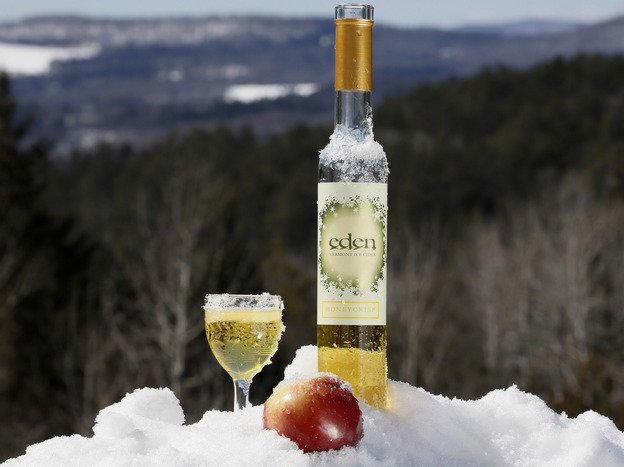
"caption": "The icy winter is just what's needed for tasty ice cider. Photo: Herb Swanson/NPR",
"description": null,
"title": "eden-iced_06",
"credit": null,
"status": "inherit",
"isLoading": false,
"fetchFailed": false
},
"bayareabites_78949": {
"type": "attachments",
"id": "bayareabites_78949",
"meta": {
"index": "attachments_1716263798",
"site": "bayareabites",
"id": "78949",
"found": true
},
"parent": 78943,
"imgSizes": {
"kqedFullSize": {
"file": "https://ww2.kqed.org/app/uploads/sites/24/2014/03/cabezonhead_wide-ab315bd56f81ef7b61ee657e38281b2681b7de7d-s4.jpg",
"width": 624,
"height": 351
}
},
"publishDate": 1394253629,
"modified": 1394253629,
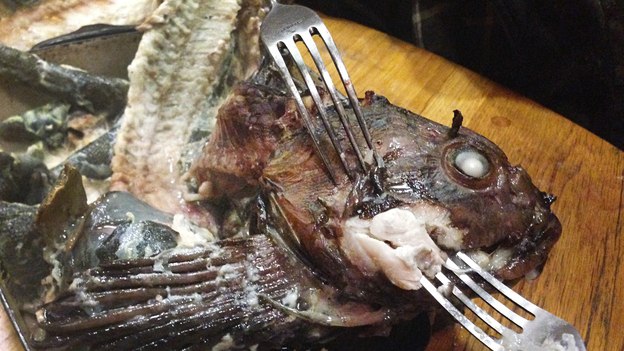
"caption": "The head of a cabezon fish prepared by the author. Photo: Alastair Bland/NPR",
"description": null,
"title": "cabezonhead",
"credit": null,
"status": "inherit",
"isLoading": false,
"fetchFailed": false
},
"bayareabites_78914": {
"type": "attachments",
"id": "bayareabites_78914",
"meta": {
"index": "attachments_1716263798",
"site": "bayareabites",
"id": "78914",
"found": true
},
"parent": 78908,
"imgSizes": {
"kqedFullSize": {
"file": "https://ww2.kqed.org/app/uploads/sites/24/2014/03/img_8514_wide-b141c860b6fe2429874e7df215cb295ff9a617e8-s4.jpg",
"width": 624,
"height": 350
}
},
"publishDate": 1394163602,
"modified": 1394163602,
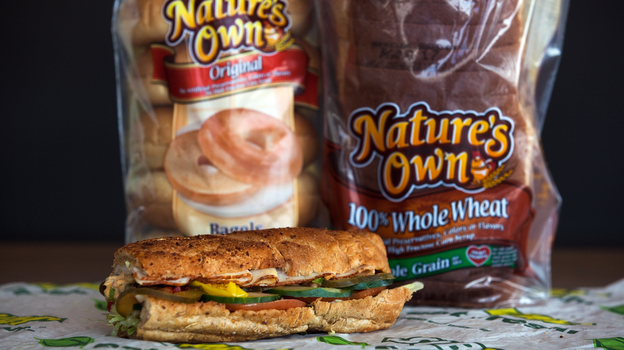
"caption": "Subway was quick to say it would phase out azodicarbonamide from its bread after a popular food blogger raised health concerns. Nature's Own soon noted that it had already removed the compound with the funny name from its bread products. But what's the evidence behind the claims? Photo: Meg Vogel/NPR",
"description": null,
"title": "img_8514",
"credit": null,
"status": "inherit",
"isLoading": false,
"fetchFailed": false
},
"bayareabites_78929": {
"type": "attachments",
"id": "bayareabites_78929",
"meta": {
"index": "attachments_1716263798",
"site": "bayareabites",
"id": "78929",
"found": true
},
"parent": 78926,
"imgSizes": {
"kqedFullSize": {
"file": "https://ww2.kqed.org/app/uploads/sites/24/2014/03/cagefree_01_wide-8596ea43f086c063b0ab9dbc51c7511f26c9378b-s4.jpg",
"width": 624,
"height": 350
}
},
"publishDate": 1394201698,
"modified": 1394201698,
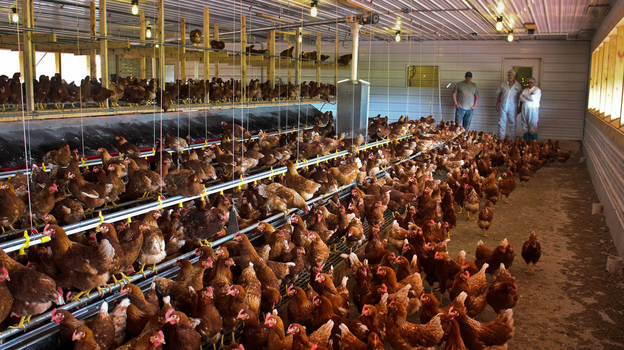
"caption": "Free-range chickens lay eggs for Sauder's Quality Eggs in Pennsylvania. Photo: Dan Charles/NPR",
"description": null,
"title": "cagefree_01",
"credit": null,
"status": "inherit",
"isLoading": false,
"fetchFailed": false
},
"bayareabites_78829": {
"type": "attachments",
"id": "bayareabites_78829",
"meta": {
"index": "attachments_1716263798",
"site": "bayareabites",
"id": "78829",
"found": true
},
"parent": 78823,
"imgSizes": {
"kqedFullSize": {
"file": "https://ww2.kqed.org/app/uploads/sites/24/2014/03/ap0806120725141_wide-4bf9af956ce041cada1f7fc6471c1483dd5ca67a-s4.jpg",
"width": 624,
"height": 350
}
},
"publishDate": 1393973575,
"modified": 1393973575,
"caption": "The world is increasingly relying on a few dozen mega-crops, like wheat and potatoes, for survival. Above, a wheat field in Arkansas. Photo: Danny Johnston/AP",
"description": "The world is increasingly relying on a few dozen mega-crops, like wheat and potatoes, for survival. Above, a wheat field in Arkansas.",
"title": "ap0806120725141",
"credit": null,
"status": "inherit",
"isLoading": false,
"fetchFailed": false
},
"bayareabites_78811": {
"type": "attachments",
"id": "bayareabites_78811",
"meta": {
"index": "attachments_1716263798",
"site": "bayareabites",
"id": "78811",
"found": true
},
"parent": 78804,
"imgSizes": {
"kqedFullSize": {
"file": "https://ww2.kqed.org/app/uploads/sites/24/2014/03/email_offering-1.jpg",
"width": 597,
"height": 376
}
},
"publishDate": 1393959628,
"modified": 1393959628,
"caption": "Munchery is looking to expand its home-delivered meals. Photo: Munchery",
"description": null,
"title": "email_offering-1",
"credit": null,
"status": "inherit",
"isLoading": false,
"fetchFailed": false
},
"bayareabites_78801": {
"type": "attachments",
"id": "bayareabites_78801",
"meta": {
"index": "attachments_1716263798",
"site": "bayareabites",
"id": "78801",
"found": true
},
"parent": 78795,
"imgSizes": {
"kqedFullSize": {
"file": "https://ww2.kqed.org/app/uploads/sites/24/2014/03/12775373765_6f21a8ca0c_b_wide-f268886ddc92e3aa82bd81ee037930ca418af7b9-s4.jpg",
"width": 624,
"height": 350
}
},
"publishDate": 1393952056,
"modified": 1393952056,
"caption": "Watson's culinary concoctions were served up from an IBM food truck at a tech conference in Las Vegas last week. Next stop: Austin. Photo: IBM Research/Flickr",
"description": null,
"title": "12775373765_6f21a8ca0c_b",
"credit": null,
"status": "inherit",
"isLoading": false,
"fetchFailed": false
},
"bayareabites_78714": {
"type": "attachments",
"id": "bayareabites_78714",
"meta": {
"index": "attachments_1716263798",
"site": "bayareabites",
"id": "78714",
"found": true
},
"parent": 78713,
"imgSizes": {
"kqedFullSize": {
"file": "https://ww2.kqed.org/app/uploads/sites/24/2014/02/norway-salmon-29bb81276351fe076b4f494219d0357bff70714c.jpg",
"width": 638,
"height": 479
}
},
"publishDate": 1393640648,
"modified": 1393640648,
"caption": "Farm-raised Norwegian salmon for sale in Oregon in 2009. Photo: Natalie Maynor/Flickr",
"description": null,
"title": "salmon",
"credit": null,
"status": "inherit",
"isLoading": false,
"fetchFailed": false
},
"bayareabites_78672": {
"type": "attachments",
"id": "bayareabites_78672",
"meta": {
"index": "attachments_1716263798",
"site": "bayareabites",
"id": "78672",
"found": true
},
"parent": 78668,
"imgSizes": {
"kqedFullSize": {
"file": "https://ww2.kqed.org/app/uploads/sites/24/2014/02/features-sriracha.jpg",
"width": 624,
"height": 468
}
},
"publishDate": 1393518387,
"modified": 1393518387,
"caption": "Sriracha chili sauce is produced at the Huy Fong Foods factory in Irwindale, Calif. Photo: Nick Ut/AP",
"description": null,
"title": "ap558431719885",
"credit": null,
"status": "inherit",
"isLoading": false,
"fetchFailed": false
},
"bayareabites_78567": {
"type": "attachments",
"id": "bayareabites_78567",
"meta": {
"index": "attachments_1716263798",
"site": "bayareabites",
"id": "78567",
"found": true
},
"parent": 78564,
"imgSizes": {
"kqedFullSize": {
"file": "https://ww2.kqed.org/app/uploads/sites/24/2014/02/450198019_wide-5fd80c7cf35545adc7ccdf3275cf126bf53de585-s4.jpg",
"width": 624,
"height": 350
}
},
"publishDate": 1393360819,
"modified": 1393360819,
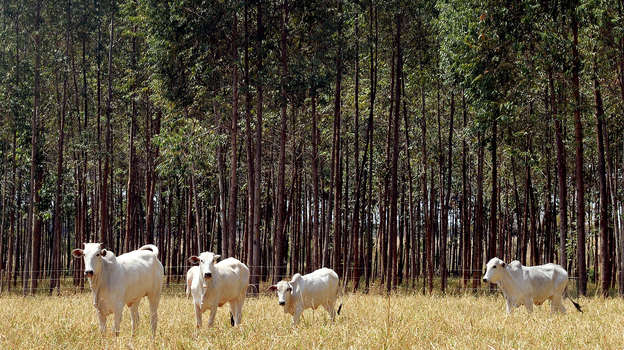
"caption": "Cattle graze at a Brazilian Agricultural Research experimental farm in Planaltina in Goias state. To reduce emissions from deforestation, the Brazilian government is experimenting with grazing on integrated forest and pasture lands. Photo: Evaristo Sa/AFP/Getty Images",
"description": null,
"title": "450198019_wide-5fd80c7cf35545adc7ccdf3275cf126bf53de585-s4",
"credit": null,
"status": "inherit",
"isLoading": false,
"fetchFailed": false
},
"bayareabites_78502": {
"type": "attachments",
"id": "bayareabites_78502",
"meta": {
"index": "attachments_1716263798",
"site": "bayareabites",
"id": "78502",
"found": true
},
"parent": 78496,
"imgSizes": {
"kqedFullSize": {
"file": "https://ww2.kqed.org/app/uploads/sites/24/2014/02/470367019-fb3fa6b5e62a9021d9c715d1ece38398c955bebc-s4.jpg",
"width": 624,
"height": 467
}
},
"publishDate": 1393092003,
"modified": 1393092003,
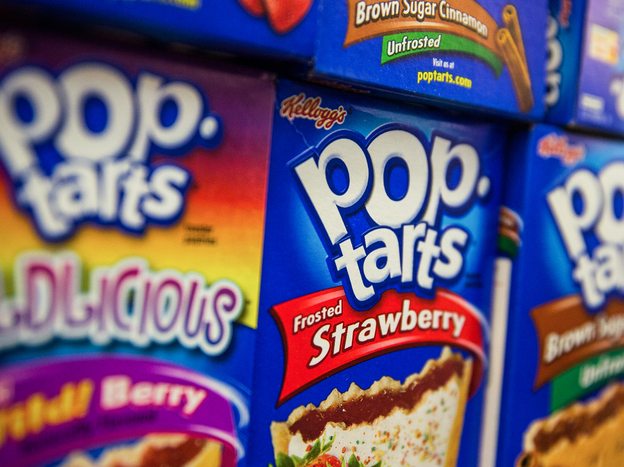
"caption": "Kellogg, maker of Pop-Tarts, announced Feb. 14 that it will buy palm oil — an ingredient in Pop-Tarts — only from companies that don't destroy rain forests where palm trees are grown. Photo: Andrew Burton/Getty Images",
"description": null,
"title": "470367019-fb3fa6b5e62a9021d9c715d1ece38398c955bebc-s4",
"credit": null,
"status": "inherit",
"isLoading": false,
"fetchFailed": false
}
},
"audioPlayerReducer": {
"postId": "stream_live",
"isPaused": true,
"isPlaying": false,
"pfsActive": false,
"pledgeModalIsOpen": true,
"playerDrawerIsOpen": false,
"liveAudioPlayStartedAt": 0,
"liveAudioPlayContext": ""
},
"authorsReducer": {
"byline_bayareabites_78979": {
"type": "authors",
"id": "byline_bayareabites_78979",
"meta": {
"override": true
},
"slug": "byline_bayareabites_78979",
"name": "Sonari Glinton",
"isLoading": false
},
"byline_bayareabites_78971": {
"type": "authors",
"id": "byline_bayareabites_78971",
"meta": {
"override": true
},
"slug": "byline_bayareabites_78971",
"name": "Charlotte Albright",
"isLoading": false
},
"byline_bayareabites_78943": {
"type": "authors",
"id": "byline_bayareabites_78943",
"meta": {
"override": true
},
"slug": "byline_bayareabites_78943",
"name": "Alastair Bland",
"isLoading": false
},
"byline_bayareabites_78908": {
"type": "authors",
"id": "byline_bayareabites_78908",
"meta": {
"override": true
},
"slug": "byline_bayareabites_78908",
"name": "Allison Aubrey",
"isLoading": false
},
"byline_bayareabites_78926": {
"type": "authors",
"id": "byline_bayareabites_78926",
"meta": {
"override": true
},
"slug": "byline_bayareabites_78926",
"name": "Frank Morris",
"isLoading": false
},
"byline_bayareabites_78823": {
"type": "authors",
"id": "byline_bayareabites_78823",
"meta": {
"override": true
},
"slug": "byline_bayareabites_78823",
"name": "Dan Charles",
"isLoading": false
},
"byline_bayareabites_78795": {
"type": "authors",
"id": "byline_bayareabites_78795",
"meta": {
"override": true
},
"slug": "byline_bayareabites_78795",
"name": "Maanvi Singh",
"isLoading": false
},
"byline_bayareabites_78713": {
"type": "authors",
"id": "byline_bayareabites_78713",
"meta": {
"override": true
},
"slug": "byline_bayareabites_78713",
"name": "Eliza Barclay",
"isLoading": false
},
"byline_bayareabites_78668": {
"type": "authors",
"id": "byline_bayareabites_78668",
"meta": {
"override": true
},
"slug": "byline_bayareabites_78668",
"name": "Karen Grigsby Bates",
"isLoading": false
},
"byline_bayareabites_78564": {
"type": "authors",
"id": "byline_bayareabites_78564",
"meta": {
"override": true
},
"slug": "byline_bayareabites_78564",
"name": "Eliza Barclay",
"isLoading": false
},
"byline_bayareabites_78496": {
"type": "authors",
"id": "byline_bayareabites_78496",
"meta": {
"override": true
},
"slug": "byline_bayareabites_78496",
"name": "Allison Aubrey",
"isLoading": false
},
"kdomara": {
"type": "authors",
"id": "1459",
"meta": {
"index": "authors_1716337520",
"id": "1459",
"found": true
},
"name": "Kelly O'Mara",
"firstName": "Kelly",
"lastName": "O'Mara",
"slug": "kdomara",
"email": "komara@kqed.org",
"display_author_email": false,
"staff_mastheads": [
"news"
],
"title": "KQED Contributor",
"bio": "Kelly O'Mara is a writer and reporter in the San Francisco Bay Area. She writes about food, health, sports, travel, business and California news. Her work has appeared on KQED, online for Outside Magazine, epsnW, VICE and in Competitor Magazine, among others. Follow Kelly on Twitter \u003ca href=\"https://twitter.com/kellydomara\">@kellydomara\u003c/a>.",
"avatar": "https://secure.gravatar.com/avatar/768fec7412028b72f13bdd0f5f9d8186?s=600&d=blank&r=g",
"twitter": null,
"facebook": null,
"instagram": null,
"linkedin": null,
"sites": [
{
"site": "arts",
"roles": []
},
{
"site": "news",
"roles": []
},
{
"site": "bayareabites",
"roles": []
},
{
"site": "stateofhealth",
"roles": []
},
{
"site": "science",
"roles": []
},
{
"site": "checkplease",
"roles": [
"editor"
]
},
{
"site": "food",
"roles": []
},
{
"site": "forum",
"roles": [
"editor"
]
},
{
"site": "liveblog",
"roles": [
"editor"
]
}
],
"headData": {
"title": "Kelly O'Mara | KQED",
"description": "KQED Contributor",
"ogImgSrc": "https://secure.gravatar.com/avatar/768fec7412028b72f13bdd0f5f9d8186?s=600&d=blank&r=g",
"twImgSrc": "https://secure.gravatar.com/avatar/768fec7412028b72f13bdd0f5f9d8186?s=600&d=blank&r=g"
},
"isLoading": false,
"link": "/author/kdomara"
}
},
"pagesReducer": {
"bayareabites_category_food-and-technology": {
"type": "terms",
"id": "bayareabites_4084",
"meta": {
"index": "terms_1716263798",
"site": "bayareabites",
"id": "4084",
"score": 14.405561
},
"featImg": null,
"name": "food trends and technology",
"description": null,
"taxonomy": "category",
"headData": {
"twImgId": null,
"twTitle": null,
"ogTitle": null,
"ogImgId": null,
"twDescription": null,
"description": null,
"title": "food trends and technology Archives | KQED Bay Area Bites",
"ogDescription": null
},
"ttid": 2573,
"slug": "food-and-technology",
"isLoading": false,
"title": "food trends and technology",
"pageMeta": {
"site": "bayareabites",
"WpPageTemplate": "page-topic-editorial",
"currentPage": 40
},
"blocks": [
{
"blockName": "kqed/post-list",
"attrs": {
"layout": "cardArticle2",
"query": "posts/bayareabites?category=food-and-technology",
"seeMore": false,
"paginated": true,
"page": 40
}
},
{
"blockName": "kqed/ad"
}
]
}
},
"pfsSessionReducer": {},
"postsReducer": {
"stream_live": {
"type": "live",
"id": "stream_live",
"audioUrl": "https://streams.kqed.org/kqedradio",
"title": "Live Stream",
"excerpt": "Live Stream information currently unavailable.",
"link": "/radio",
"featImg": "",
"label": {
"name": "KQED Live",
"link": "/"
}
},
"stream_kqedNewscast": {
"type": "posts",
"id": "stream_kqedNewscast",
"audioUrl": "https://www.kqed.org/.stream/anon/radio/RDnews/newscast.mp3?_=1",
"title": "KQED Newscast",
"featImg": "",
"label": {
"name": "88.5 FM",
"link": "/"
}
},
"bayareabites_78979": {
"type": "posts",
"id": "bayareabites_78979",
"meta": {
"index": "posts_1716263798",
"site": "bayareabites",
"id": "78979",
"score": null,
"sort": [
1394493779000
]
},
"parent": 0,
"labelTerm": {
"site": "bayareabites"
},
"blocks": [],
"publishDate": 1394493779,
"format": "aside",
"disqusTitle": "What Pepsi Can Teach Us About Soft (Drink) Power in Russia",
"title": "What Pepsi Can Teach Us About Soft (Drink) Power in Russia",
"headTitle": "Bay Area Bites | KQED Food",
"content": "\u003cfigure id=\"attachment_78980\" class=\"wp-caption aligncenter\" style=\"max-width: 1024px\">\u003ca href=\"http://ww2.kqed.org/bayareabites/wp-content/uploads/sites/24/2014/03/ap9109060344_wide-7d6ea895e371884e0a237aa1c95ce04d498aca9c.jpg\">\u003cimg src=\"http://ww2.kqed.org/bayareabites/wp-content/uploads/sites/24/2014/03/ap9109060344_wide-7d6ea895e371884e0a237aa1c95ce04d498aca9c-1024x575.jpg\" alt=\"Pepsi was the first American consumer product to be manufactured and sold in the former Soviet Union. In 1991, Russians could buy the soda for 20 kopeks, about 10 cents. Photo: Peter Dejong/AP\" width=\"1024\" height=\"575\" class=\"size-large wp-image-78980\">\u003c/a>\u003cfigcaption class=\"wp-caption-text\">Pepsi was the first American consumer product to be manufactured and sold in the former Soviet Union. In 1991, Russians could buy the soda for 20 kopeks, about 10 cents. Photo: Peter Dejong/AP\u003c/figcaption>\u003c/figure>\n\u003cp>Post by \u003ca href=\"http://www.npr.org/people/130330851/sonari-glinton\" target=\"_blank\">Sonari Glinton\u003c/a>, \u003ca href=\"http://www.npr.org/blogs/thesalt/2014/03/10/288570744/what-pepsi-can-teach-us-about-soft-drink-power-in-russia\" target=\"_blank\">The Salt at NPR Food\u003c/a> (3/10/2014)\u003c/p>\n\u003cp>\u003cstrong>Listen to the Story\u003c/strong> on \u003ca href=\"http://www.npr.org/blogs/thesalt/2014/03/10/288570744/what-pepsi-can-teach-us-about-soft-drink-power-in-russia\">All Things Considered\u003c/a> [audio src=\"http://pd.npr.org/anon.npr-mp3/npr/atc/2014/03/20140310_atc_how_pepsi_won_over_khrushchev_and_broke_into_the_russian_market.mp3\"] \u003c/p>\n\u003cp>The United States has threatened economic sanctions against Moscow, but America is light on financial leverage in Russia: The country represents less than 1 percent of U.S. trade, and few major U.S. companies have significant investments there.\u003c/p>\n\u003cp>But one company with a long history in Russia is Pepsi.\u003c/p>\n\u003cp>So how did the American soft drink giant get its foot in the door to build a major market in Russia?\u003c/p>\n\u003cp>[ad fullwidth]\u003c/p>\n\u003cp>This story of how Pepsi came to be sold widely in Russia could give us some insight into how the two counties do or don't do business with each other. The relationship dates back to the Soviet era.\u003c/p>\n\u003cp>During the Cold War, then-Vice President Richard Nixon visited Soviet Russia to meet with Premier Nikita Khrushchev, which produced some memorable moments. The two men stood in front of a microphone and sparred, with the help of interpreters, in a televised session now known as the Kitchen Debate. The 1959 debate, which \u003ca href=\"http://www.youtube.com/watch?v=D7HqOrAakco\">you can watch on YouTube\u003c/a>, is all kinds of historical, nerdy awesomeness.\u003c/p>\n\u003cp>\"You plan to outstrip us, particularly in the production of consumer goods. If this competition is to do the best for both of our peoples and for people everywhere, there must be a free exchange of ideas,\" \u003ca href=\"http://www.youtube.com/watch?v=z6RLCw1OZFw\">Nixon said as Khrushchev began to speak\u003c/a> over him. \"You never concede anything.\"\u003c/p>\n\u003cp>One thing Russia didn't have on us was brown, fizzy, sugary, delicious drinks. At that debate, Nixon and Khrushchev shared a Pepsi.\u003c/p>\n\u003cp>At the time, this shared drink gave Donald Kendall a bright idea. Kendall, who was a buddy of Nixon's, was the head of Pepsi's international operations at the time.\u003c/p>\n\u003cp>\"[Kendall] went to Russia in 1959 and struck up a good relationship with Nikita Khrushchev,\" recounts \u003ca href=\"http://www.iie.com/staff/author_bio.cfm?author_id=455\">Anders Aslund\u003c/a> with the Peterson Institute for International Economics.\u003c/p>\n\u003cp>Later, the Soviet government itself began bottling Pepsi, but it wasn't the drink we know.\u003c/p>\n\u003cp>\"Pepsi was perceived by the population as a Soviet product, and Soviet products were truly bad,\" Aslund says. \"While Pepsi was reasonably good, it was not as good as Western Pepsi.\"\u003c/p>\n\u003cp>Good or bad, Pepsi was the only option.\u003c/p>\n\u003cp>Then the Berlin Wall fell. When the Soviet Union closed, a form of free enterprise opened. In the 1990s, there was a boom in the U.S., and American companies were looking to grow.\u003c/p>\n\u003cp>During this time, Pepsi was getting its butt kicked by Coca-Cola all over the world, says Ali Dibadj, a senior analyst with equity research firm Sanford Bernstein who studies packaged goods such as soda and chips. Dibadj says Pepsi had one key element going for it: The company knew a lot about Russia.\u003c/p>\n\u003cp>\"Pepsi had to find a place to grow that was the path of least resistance, and arguably built on the history, since 1959, and the lower penetration by The Coca-Cola Company. Russia was the closest-to-home option, and it wasn't that close to home,\" Dibadj says.\u003c/p>\n\u003cp>It worked. Russia is now Pepsi's second-largest market behind the U.S., accounting for roughly 8 percent of sales.\u003c/p>\n\u003cp>So if Pepsi could become a dominant consumer force in Russia, then why hasn't everyone followed suit?\u003c/p>\n\u003cp>Well, companies such as Ford, Nike, McDonald's, Boeing and John Deere do have investments in the country, but they don't rely on the Russian market like Pepsi does. The reason, Dibadj says, is that Russia is unpredictable, and so are its consumers.\u003c/p>\n\u003cp>\"The consumer has a history — given communism, given what they've been though — to, at the first sign of fear, shift very quickly to either different pack sizes [or] different brands. And [Russian consumers] have historically been used to lower-quality brands,\" Dibadj says.\u003c/p>\n\u003cp>At the first sign of trouble, Russian consumers go from drinking soda to tap water. Not only that, it's really hard for companies to get into Russia. With such a large country, you have to build giant distribution networks, and there's a lot of red tape.\u003c/p>\n\u003cp>\"We don't have a lot of economic leverage,\" Dibadj says. \"There's not a lot of stuff that Russians buy from us, and we don't buy that much stuff from Russia.\"\u003c/p>\n\u003cp>It's the age-old chicken and egg problem, says \u003ca href=\"http://www0.gsb.columbia.edu/faculty/akhandelwal/\">Amit Khandelwal,\u003c/a> who teaches at Columbia University's Business School. American businesses, he says, are afraid to invest in Russia because it's risky; and it might be less risky if there were more of a U.S. corporate presence there.\u003c/p>\n\u003cp>\"The U.S. won't have the potential threat of sanctions if there is no pain on both sides,\" Khandelwal says. \"There is no pain on both sides precisely because no business has found it attractive enough to substantially grow their operations in Russia.\"\u003c/p>\n\u003cp>In other words, in order for the U.S. to have more soft power in Russia, the U.S. will have to sell that country more than soft drinks. \u003c/p>\n\u003cp>\u003c/p>\n\u003cp>\u003cem>Copyright 2014 \u003ca href=\"http://www.npr.org/\" target=\"_blank\">NPR\u003c/a>. \u003c/em>\u003c/p>\n\n",
"disqusIdentifier": "78979 http://blogs.kqed.org/bayareabites/?p=78979",
"disqusUrl": "https://ww2.kqed.org/bayareabites/2014/03/10/what-pepsi-can-teach-us-about-soft-drink-power-in-russia/",
"stats": {
"hasVideo": false,
"hasChartOrMap": false,
"hasAudio": true,
"hasPolis": false,
"wordCount": 904,
"hasGoogleForm": false,
"hasGallery": false,
"hasHearkenModule": false,
"iframeSrcs": [],
"paragraphCount": 29
},
"modified": 1394493779,
"excerpt": "The soft drink giant is one of the few big U.S. firms with major investments in Russia. And the reasons why say a lot about why the U.S. has less leverage in Russia than it might like.",
"headData": {
"twImgId": "",
"twTitle": "",
"ogTitle": "",
"ogImgId": "",
"twDescription": "",
"description": "The soft drink giant is one of the few big U.S. firms with major investments in Russia. And the reasons why say a lot about why the U.S. has less leverage in Russia than it might like.",
"title": "What Pepsi Can Teach Us About Soft (Drink) Power in Russia | KQED",
"ogDescription": "",
"schema": {
"@context": "https://schema.org",
"@type": "Article",
"headline": "What Pepsi Can Teach Us About Soft (Drink) Power in Russia",
"datePublished": "2014-03-10T16:22:59-07:00",
"dateModified": "2014-03-10T16:22:59-07:00",
"image": "https://cdn.kqed.org/wp-content/uploads/2020/02/KQED-OG-Image@1x.png"
}
},
"guestAuthors": [],
"slug": "what-pepsi-can-teach-us-about-soft-drink-power-in-russia",
"status": "publish",
"nprApiLink": "http://api.npr.org/query?id=288570744&apiKey=MDAxOTAwOTE4MDEyMTkxMDAzNjczZDljZA004",
"nprByline": "Sonari Glinton",
"nprStoryDate": "Mon, 10 Mar 2014 17:34:00 -0400",
"nprLastModifiedDate": "Mon, 10 Mar 2014 19:06:32 -0400",
"nprHtmlLink": "http://www.npr.org/blogs/thesalt/2014/03/10/288570744/what-pepsi-can-teach-us-about-soft-drink-power-in-russia?ft=3&f=288570744",
"nprAudio": "http://pd.npr.org/anon.npr-mp3/npr/atc/2014/03/20140310_atc_how_pepsi_won_over_khrushchev_and_broke_into_the_russian_market.mp3?orgId=1&topicId=1006&ft=3&f=288570744",
"nprAudioM3u": "http://api.npr.org/m3u/1288713015-bbff9c.m3u?orgId=1&topicId=1006&ft=3&f=288570744",
"nprStoryId": "288570744",
"nprRetrievedStory": "1",
"nprPubDate": "Mon, 10 Mar 2014 19:06:00 -0400",
"path": "/bayareabites/78979/what-pepsi-can-teach-us-about-soft-drink-power-in-russia",
"audioUrl": "http://pd.npr.org/anon.npr-mp3/npr/atc/2014/03/20140310_atc_how_pepsi_won_over_khrushchev_and_broke_into_the_russian_market.mp3?orgId=1&topicId=1006&ft=3&f=288570744",
"audioDuration": null,
"audioTrackLength": null,
"parsedContent": [
{
"type": "contentString",
"content": "\u003cdiv class=\"post-body\">\u003cp>\u003cfigure id=\"attachment_78980\" class=\"wp-caption aligncenter\" style=\"max-width: 1024px\">\u003ca href=\"http://ww2.kqed.org/bayareabites/wp-content/uploads/sites/24/2014/03/ap9109060344_wide-7d6ea895e371884e0a237aa1c95ce04d498aca9c.jpg\">\u003cimg src=\"http://ww2.kqed.org/bayareabites/wp-content/uploads/sites/24/2014/03/ap9109060344_wide-7d6ea895e371884e0a237aa1c95ce04d498aca9c-1024x575.jpg\" alt=\"Pepsi was the first American consumer product to be manufactured and sold in the former Soviet Union. In 1991, Russians could buy the soda for 20 kopeks, about 10 cents. Photo: Peter Dejong/AP\" width=\"1024\" height=\"575\" class=\"size-large wp-image-78980\">\u003c/a>\u003cfigcaption class=\"wp-caption-text\">Pepsi was the first American consumer product to be manufactured and sold in the former Soviet Union. In 1991, Russians could buy the soda for 20 kopeks, about 10 cents. Photo: Peter Dejong/AP\u003c/figcaption>\u003c/figure>\n\u003cp>Post by \u003ca href=\"http://www.npr.org/people/130330851/sonari-glinton\" target=\"_blank\">Sonari Glinton\u003c/a>, \u003ca href=\"http://www.npr.org/blogs/thesalt/2014/03/10/288570744/what-pepsi-can-teach-us-about-soft-drink-power-in-russia\" target=\"_blank\">The Salt at NPR Food\u003c/a> (3/10/2014)\u003c/p>\n\u003cp>\u003cstrong>Listen to the Story\u003c/strong> on \u003ca href=\"http://www.npr.org/blogs/thesalt/2014/03/10/288570744/what-pepsi-can-teach-us-about-soft-drink-power-in-russia\">All Things Considered\u003c/a> \u003c/p>\u003c/div>",
"attributes": {
"named": {},
"numeric": []
}
},
{
"type": "component",
"content": "",
"name": "audio",
"attributes": {
"named": {
"src": "http://pd.npr.org/anon.npr-mp3/npr/atc/2014/03/20140310_atc_how_pepsi_won_over_khrushchev_and_broke_into_the_russian_market.mp3",
"label": ""
},
"numeric": []
}
},
{
"type": "contentString",
"content": "\u003cdiv class=\"post-body\">\u003cp> \u003c/p>\n\u003cp>The United States has threatened economic sanctions against Moscow, but America is light on financial leverage in Russia: The country represents less than 1 percent of U.S. trade, and few major U.S. companies have significant investments there.\u003c/p>\n\u003cp>But one company with a long history in Russia is Pepsi.\u003c/p>\n\u003cp>So how did the American soft drink giant get its foot in the door to build a major market in Russia?\u003c/p>\n\u003cp>\u003c/p>\u003c/div>",
"attributes": {
"named": {},
"numeric": []
}
},
{
"type": "component",
"content": "",
"name": "ad",
"attributes": {
"named": {
"label": "fullwidth"
},
"numeric": [
"fullwidth"
]
}
},
{
"type": "contentString",
"content": "\u003cdiv class=\"post-body\">\u003cp>\u003c/p>\n\u003cp>This story of how Pepsi came to be sold widely in Russia could give us some insight into how the two counties do or don't do business with each other. The relationship dates back to the Soviet era.\u003c/p>\n\u003cp>During the Cold War, then-Vice President Richard Nixon visited Soviet Russia to meet with Premier Nikita Khrushchev, which produced some memorable moments. The two men stood in front of a microphone and sparred, with the help of interpreters, in a televised session now known as the Kitchen Debate. The 1959 debate, which \u003ca href=\"http://www.youtube.com/watch?v=D7HqOrAakco\">you can watch on YouTube\u003c/a>, is all kinds of historical, nerdy awesomeness.\u003c/p>\n\u003cp>\"You plan to outstrip us, particularly in the production of consumer goods. If this competition is to do the best for both of our peoples and for people everywhere, there must be a free exchange of ideas,\" \u003ca href=\"http://www.youtube.com/watch?v=z6RLCw1OZFw\">Nixon said as Khrushchev began to speak\u003c/a> over him. \"You never concede anything.\"\u003c/p>\n\u003cp>One thing Russia didn't have on us was brown, fizzy, sugary, delicious drinks. At that debate, Nixon and Khrushchev shared a Pepsi.\u003c/p>\n\u003cp>At the time, this shared drink gave Donald Kendall a bright idea. Kendall, who was a buddy of Nixon's, was the head of Pepsi's international operations at the time.\u003c/p>\n\u003cp>\"[Kendall] went to Russia in 1959 and struck up a good relationship with Nikita Khrushchev,\" recounts \u003ca href=\"http://www.iie.com/staff/author_bio.cfm?author_id=455\">Anders Aslund\u003c/a> with the Peterson Institute for International Economics.\u003c/p>\n\u003cp>Later, the Soviet government itself began bottling Pepsi, but it wasn't the drink we know.\u003c/p>\n\u003cp>\"Pepsi was perceived by the population as a Soviet product, and Soviet products were truly bad,\" Aslund says. \"While Pepsi was reasonably good, it was not as good as Western Pepsi.\"\u003c/p>\n\u003cp>Good or bad, Pepsi was the only option.\u003c/p>\n\u003cp>Then the Berlin Wall fell. When the Soviet Union closed, a form of free enterprise opened. In the 1990s, there was a boom in the U.S., and American companies were looking to grow.\u003c/p>\n\u003cp>During this time, Pepsi was getting its butt kicked by Coca-Cola all over the world, says Ali Dibadj, a senior analyst with equity research firm Sanford Bernstein who studies packaged goods such as soda and chips. Dibadj says Pepsi had one key element going for it: The company knew a lot about Russia.\u003c/p>\n\u003cp>\"Pepsi had to find a place to grow that was the path of least resistance, and arguably built on the history, since 1959, and the lower penetration by The Coca-Cola Company. Russia was the closest-to-home option, and it wasn't that close to home,\" Dibadj says.\u003c/p>\n\u003cp>It worked. Russia is now Pepsi's second-largest market behind the U.S., accounting for roughly 8 percent of sales.\u003c/p>\n\u003cp>So if Pepsi could become a dominant consumer force in Russia, then why hasn't everyone followed suit?\u003c/p>\n\u003cp>Well, companies such as Ford, Nike, McDonald's, Boeing and John Deere do have investments in the country, but they don't rely on the Russian market like Pepsi does. The reason, Dibadj says, is that Russia is unpredictable, and so are its consumers.\u003c/p>\n\u003cp>\"The consumer has a history — given communism, given what they've been though — to, at the first sign of fear, shift very quickly to either different pack sizes [or] different brands. And [Russian consumers] have historically been used to lower-quality brands,\" Dibadj says.\u003c/p>\n\u003cp>At the first sign of trouble, Russian consumers go from drinking soda to tap water. Not only that, it's really hard for companies to get into Russia. With such a large country, you have to build giant distribution networks, and there's a lot of red tape.\u003c/p>\n\u003cp>\"We don't have a lot of economic leverage,\" Dibadj says. \"There's not a lot of stuff that Russians buy from us, and we don't buy that much stuff from Russia.\"\u003c/p>\n\u003cp>It's the age-old chicken and egg problem, says \u003ca href=\"http://www0.gsb.columbia.edu/faculty/akhandelwal/\">Amit Khandelwal,\u003c/a> who teaches at Columbia University's Business School. American businesses, he says, are afraid to invest in Russia because it's risky; and it might be less risky if there were more of a U.S. corporate presence there.\u003c/p>\n\u003cp>\"The U.S. won't have the potential threat of sanctions if there is no pain on both sides,\" Khandelwal says. \"There is no pain on both sides precisely because no business has found it attractive enough to substantially grow their operations in Russia.\"\u003c/p>\n\u003cp>In other words, in order for the U.S. to have more soft power in Russia, the U.S. will have to sell that country more than soft drinks. \u003c/p>\n\u003cp>\u003c/p>\n\u003cp>\u003cem>Copyright 2014 \u003ca href=\"http://www.npr.org/\" target=\"_blank\">NPR\u003c/a>. \u003c/em>\u003c/p>\n\n\u003c/div>\u003c/p>",
"attributes": {
"named": {},
"numeric": []
}
}
],
"link": "/bayareabites/78979/what-pepsi-can-teach-us-about-soft-drink-power-in-russia",
"authors": [
"byline_bayareabites_78979"
],
"categories": [
"bayareabites_1962",
"bayareabites_2090",
"bayareabites_4084",
"bayareabites_12555",
"bayareabites_10916",
"bayareabites_2035",
"bayareabites_34",
"bayareabites_61"
],
"tags": [
"bayareabites_11107",
"bayareabites_13150",
"bayareabites_11931",
"bayareabites_11194",
"bayareabites_10921"
],
"featImg": "bayareabites_78984",
"label": "bayareabites"
},
"bayareabites_78971": {
"type": "posts",
"id": "bayareabites_78971",
"meta": {
"index": "posts_1716263798",
"site": "bayareabites",
"id": "78971",
"score": null,
"sort": [
1394485966000
]
},
"parent": 0,
"labelTerm": {
"site": "bayareabites"
},
"blocks": [],
"publishDate": 1394485966,
"format": "aside",
"disqusTitle": "The Upside of All This Cold? A Boom in Ice Cider",
"title": "The Upside of All This Cold? A Boom in Ice Cider",
"headTitle": "Bay Area Bites | KQED Food",
"content": "\u003cfigure id=\"attachment_78973\" class=\"wp-caption aligncenter\" style=\"max-width: 1024px\">\u003ca href=\"http://ww2.kqed.org/bayareabites/wp-content/uploads/sites/24/2014/03/eden-iced_06-800a50baa82612579ff491f995c53809cb46b02a.jpg\">\u003cimg src=\"http://ww2.kqed.org/bayareabites/wp-content/uploads/sites/24/2014/03/eden-iced_06-800a50baa82612579ff491f995c53809cb46b02a-1024x767.jpg\" alt=\"The icy winter is just what's needed for tasty ice cider. Photo: Herb Swanson/NPR\" width=\"1024\" height=\"767\" class=\"size-large wp-image-78973\">\u003c/a>\u003cfigcaption class=\"wp-caption-text\">The icy winter is just what's needed for tasty ice cider. Photo: Herb Swanson/NPR\u003c/figcaption>\u003c/figure>\n\u003cp>Post by Charlotte Albright, \u003ca href=\"http://www.npr.org/blogs/thesalt/2014/03/10/287389633/the-upside-of-all-this-cold-a-boom-in-iced-cider\" target=\"_blank\">Vermont Public Radio for The Salt at NPR Food \u003c/a>(3/10/2014)\u003c/p>\n\u003cp>If there's anything most of us are tired of this winter, it's bone-chilling cold.\u003cbr> It's enough to drive you to drink. \u003c/p>\n\u003cp> Literally. Because frigid weather is just what some enterprising artisans need to make a dessert wine that has been showing up on trendy tables and menus. Ice cider was invented in Quebec in the 1990s. This time of year, it's fermenting on the other side of the border as well, as a few snowy states try to tap into the locavore market and turn perishables into profits. \u003c/p>\n\u003cp> The first American maker to have a federally approved label is \u003ca href=\"http://www.edenicecider.com/\">Eden Ice Cider\u003c/a>, which got its start about eight years ago in a rural corner of Vermont known as the Northeast Kingdom. That's when Eleanor Leger, a Vermonter, and her husband, Albert, a Canadian, were sipping apple liqueur in Montreal, and wondering, \"Why doesn't anybody make this stuff on our side of the border?\" Vermont usually has more than enough ice and apples of its own, plus long cold spells needed to concentrate flavor.\u003c/p>\n\u003cp> Eleanor says this has been the best winter ever. At the end of each fall, she and her husband press cider from their 1,000 apple trees (and from a few other orchards) and stick the plastic vats in cold storage. After the first frost, they drag them outdoors. This crazy year, the stuff has frozen, almost thawed, and frozen several times. That makes for a rich, concentrated apple elixir — and lots of it. Yield is important, because about 75 percent of the original cider is left behind in an icy block after the concentrate drizzles out, ready for fermentation.\u003c/p>\n\u003cp>[ad fullwidth]\u003c/p>\n\u003cp> Now the amber liquid is bubbling away in steel vats along the walls of a big cellar. Albert — sometimes with his Canadian enologist — tastes it just about every day to decide when to stop the fermentation. Ice cider makers aim for a subtle balance of apple, sugar, and acidity. Each variety of late-season apple creates a different flavor. Honey Crisp apples, for example, have a hint of honey, though no bees were involved. \u003c/p>\n\u003cp> A lot of people who don't love sweet dessert wines like ice cider. Apples are naturally more tart than grapes, so they leave a crisper, fresher aftertaste. And apples may be New England's true terroir. Though Calvinists might have frowned on turning a Northern Spy into a thimbleful of booze, hard apple cider was a popular alcoholic drink in Colonial America. Now that it's making a comeback with brands like \u003ca href=\"http://www.woodchuck.com/\">Woodchuck\u003c/a>, ice cider wine seems to be riding on its coattails.\u003c/p>\n\u003cp>Eden, Vermont's largest producer, is filling about 40,000 bottles a year, and it's available in at least 20 states. Vermont has sprouted at least five other ice cider makers, with more likely to venture into the orchard as the trend takes off. \u003c/p>\n\u003cp> So what else can you do with this alcoholic ambrosia, besides sip it? At 30 bucks a bottle, most thrifty New Englanders serve it in slender stemmed goblets on special occasions. \u003c/p>\n\u003cp> Martha Stewart gave it \u003ca href=\"http://images.marthastewart.com/images/channel/holidays/workshop/FullCookbook_2012.pdf\">a thumbs up for Thanksgiving\u003c/a> fare. You can also shake it up in cocktails. Eden has just come out with an aperitif cider infused with red currants and bitters, and they are now fermenting something like an apple champagne. \u003c/p>\n\u003cp> \"We want Vermont to be known for ice cider,\" Eleanor Leger says. \"This is apple country.\" \u003c/p>\n\u003cp> But \u003ca href=\"http://www.kennebeccider.com/products\">Maine\u003c/a>, \u003ca href=\"http://newyorkcorkreport.com/blog/2013/01/31/ice-cider-learning-to-love-the-cold/\">New York\u003c/a>, \u003ca href=\"https://cydermarket.com/Michigan.html\">Michigan\u003c/a>, and \u003ca href=\"http://seattlebeernews.com/2012/09/special-ice-cider-tasting-at-full-throttle-bottles-tonight-for-wa-cider-week/\">Washington\u003c/a> are starting to ride the ice cider wave, too. The question is not whether they have enough apples. The real test will be whether they have enough ice.\u003c/p>\n\u003cp> There, at least this year, far northern Vermont may have them beat. \u003c/p>\n\u003cp>\u003c/p>\n\u003cp>\u003cem>Copyright 2014 \u003ca href=\"http://www.vpr.net\" target=\"_blank\">Vermont Public Radio\u003c/a>. \u003c/em>\u003c/p>\n\n",
"disqusIdentifier": "78971 http://blogs.kqed.org/bayareabites/?p=78971",
"disqusUrl": "https://ww2.kqed.org/bayareabites/2014/03/10/the-upside-of-all-this-cold-a-boom-in-ice-cider/",
"stats": {
"hasVideo": false,
"hasChartOrMap": false,
"hasAudio": false,
"hasPolis": false,
"wordCount": 662,
"hasGoogleForm": false,
"hasGallery": false,
"hasHearkenModule": false,
"iframeSrcs": [],
"paragraphCount": 16
},
"modified": 1550268099,
"excerpt": "Canada invented ice cider in the '90s. Now it's becoming trendy and Vermont wants to cash in, too. The frigid winter has been just the stuff to turn the state's frozen apples into tasty dessert wine.",
"headData": {
"twImgId": "",
"twTitle": "",
"ogTitle": "",
"ogImgId": "",
"twDescription": "",
"description": "Canada invented ice cider in the '90s. Now it's becoming trendy and Vermont wants to cash in, too. The frigid winter has been just the stuff to turn the state's frozen apples into tasty dessert wine.",
"title": "The Upside of All This Cold? A Boom in Ice Cider | KQED",
"ogDescription": "",
"schema": {
"@context": "https://schema.org",
"@type": "Article",
"headline": "The Upside of All This Cold? A Boom in Ice Cider",
"datePublished": "2014-03-10T14:12:46-07:00",
"dateModified": "2019-02-15T14:01:39-08:00",
"image": "https://cdn.kqed.org/wp-content/uploads/2020/02/KQED-OG-Image@1x.png"
}
},
"guestAuthors": [],
"slug": "the-upside-of-all-this-cold-a-boom-in-ice-cider",
"status": "publish",
"nprApiLink": "http://api.npr.org/query?id=287389633&apiKey=MDAxOTAwOTE4MDEyMTkxMDAzNjczZDljZA004",
"nprByline": "Charlotte Albright",
"nprStoryDate": "Mon, 10 Mar 2014 12:50:00 -0400",
"nprLastModifiedDate": "Mon, 10 Mar 2014 14:19:17 -0400",
"nprHtmlLink": "http://www.npr.org/blogs/thesalt/2014/03/10/287389633/the-upside-of-all-this-cold-a-boom-in-iced-cider?ft=3&f=287389633",
"nprStoryId": "287389633",
"nprRetrievedStory": "1",
"nprPubDate": "Mon, 10 Mar 2014 14:19:00 -0400",
"path": "/bayareabites/78971/the-upside-of-all-this-cold-a-boom-in-ice-cider",
"audioTrackLength": null,
"parsedContent": [
{
"type": "contentString",
"content": "\u003cdiv class=\"post-body\">\u003cp>\u003cfigure id=\"attachment_78973\" class=\"wp-caption aligncenter\" style=\"max-width: 1024px\">\u003ca href=\"http://ww2.kqed.org/bayareabites/wp-content/uploads/sites/24/2014/03/eden-iced_06-800a50baa82612579ff491f995c53809cb46b02a.jpg\">\u003cimg src=\"http://ww2.kqed.org/bayareabites/wp-content/uploads/sites/24/2014/03/eden-iced_06-800a50baa82612579ff491f995c53809cb46b02a-1024x767.jpg\" alt=\"The icy winter is just what's needed for tasty ice cider. Photo: Herb Swanson/NPR\" width=\"1024\" height=\"767\" class=\"size-large wp-image-78973\">\u003c/a>\u003cfigcaption class=\"wp-caption-text\">The icy winter is just what's needed for tasty ice cider. Photo: Herb Swanson/NPR\u003c/figcaption>\u003c/figure>\n\u003cp>Post by Charlotte Albright, \u003ca href=\"http://www.npr.org/blogs/thesalt/2014/03/10/287389633/the-upside-of-all-this-cold-a-boom-in-iced-cider\" target=\"_blank\">Vermont Public Radio for The Salt at NPR Food \u003c/a>(3/10/2014)\u003c/p>\n\u003cp>If there's anything most of us are tired of this winter, it's bone-chilling cold.\u003cbr> It's enough to drive you to drink. \u003c/p>\n\u003cp> Literally. Because frigid weather is just what some enterprising artisans need to make a dessert wine that has been showing up on trendy tables and menus. Ice cider was invented in Quebec in the 1990s. This time of year, it's fermenting on the other side of the border as well, as a few snowy states try to tap into the locavore market and turn perishables into profits. \u003c/p>\n\u003cp> The first American maker to have a federally approved label is \u003ca href=\"http://www.edenicecider.com/\">Eden Ice Cider\u003c/a>, which got its start about eight years ago in a rural corner of Vermont known as the Northeast Kingdom. That's when Eleanor Leger, a Vermonter, and her husband, Albert, a Canadian, were sipping apple liqueur in Montreal, and wondering, \"Why doesn't anybody make this stuff on our side of the border?\" Vermont usually has more than enough ice and apples of its own, plus long cold spells needed to concentrate flavor.\u003c/p>\n\u003cp> Eleanor says this has been the best winter ever. At the end of each fall, she and her husband press cider from their 1,000 apple trees (and from a few other orchards) and stick the plastic vats in cold storage. After the first frost, they drag them outdoors. This crazy year, the stuff has frozen, almost thawed, and frozen several times. That makes for a rich, concentrated apple elixir — and lots of it. Yield is important, because about 75 percent of the original cider is left behind in an icy block after the concentrate drizzles out, ready for fermentation.\u003c/p>\n\u003cp>\u003c/p>\u003c/div>",
"attributes": {
"named": {},
"numeric": []
}
},
{
"type": "component",
"content": "",
"name": "ad",
"attributes": {
"named": {
"label": "fullwidth"
},
"numeric": [
"fullwidth"
]
}
},
{
"type": "contentString",
"content": "\u003cdiv class=\"post-body\">\u003cp>\u003c/p>\n\u003cp> Now the amber liquid is bubbling away in steel vats along the walls of a big cellar. Albert — sometimes with his Canadian enologist — tastes it just about every day to decide when to stop the fermentation. Ice cider makers aim for a subtle balance of apple, sugar, and acidity. Each variety of late-season apple creates a different flavor. Honey Crisp apples, for example, have a hint of honey, though no bees were involved. \u003c/p>\n\u003cp> A lot of people who don't love sweet dessert wines like ice cider. Apples are naturally more tart than grapes, so they leave a crisper, fresher aftertaste. And apples may be New England's true terroir. Though Calvinists might have frowned on turning a Northern Spy into a thimbleful of booze, hard apple cider was a popular alcoholic drink in Colonial America. Now that it's making a comeback with brands like \u003ca href=\"http://www.woodchuck.com/\">Woodchuck\u003c/a>, ice cider wine seems to be riding on its coattails.\u003c/p>\n\u003cp>Eden, Vermont's largest producer, is filling about 40,000 bottles a year, and it's available in at least 20 states. Vermont has sprouted at least five other ice cider makers, with more likely to venture into the orchard as the trend takes off. \u003c/p>\n\u003cp> So what else can you do with this alcoholic ambrosia, besides sip it? At 30 bucks a bottle, most thrifty New Englanders serve it in slender stemmed goblets on special occasions. \u003c/p>\n\u003cp> Martha Stewart gave it \u003ca href=\"http://images.marthastewart.com/images/channel/holidays/workshop/FullCookbook_2012.pdf\">a thumbs up for Thanksgiving\u003c/a> fare. You can also shake it up in cocktails. Eden has just come out with an aperitif cider infused with red currants and bitters, and they are now fermenting something like an apple champagne. \u003c/p>\n\u003cp> \"We want Vermont to be known for ice cider,\" Eleanor Leger says. \"This is apple country.\" \u003c/p>\n\u003cp> But \u003ca href=\"http://www.kennebeccider.com/products\">Maine\u003c/a>, \u003ca href=\"http://newyorkcorkreport.com/blog/2013/01/31/ice-cider-learning-to-love-the-cold/\">New York\u003c/a>, \u003ca href=\"https://cydermarket.com/Michigan.html\">Michigan\u003c/a>, and \u003ca href=\"http://seattlebeernews.com/2012/09/special-ice-cider-tasting-at-full-throttle-bottles-tonight-for-wa-cider-week/\">Washington\u003c/a> are starting to ride the ice cider wave, too. The question is not whether they have enough apples. The real test will be whether they have enough ice.\u003c/p>\n\u003cp> There, at least this year, far northern Vermont may have them beat. \u003c/p>\n\u003cp>\u003c/p>\n\u003cp>\u003cem>Copyright 2014 \u003ca href=\"http://www.vpr.net\" target=\"_blank\">Vermont Public Radio\u003c/a>. \u003c/em>\u003c/p>\n\n\u003c/div>\u003c/p>",
"attributes": {
"named": {},
"numeric": []
}
}
],
"link": "/bayareabites/78971/the-upside-of-all-this-cold-a-boom-in-ice-cider",
"authors": [
"byline_bayareabites_78971"
],
"categories": [
"bayareabites_1244",
"bayareabites_1962",
"bayareabites_4084",
"bayareabites_10916"
],
"tags": [
"bayareabites_469",
"bayareabites_14760",
"bayareabites_14877",
"bayareabites_14775",
"bayareabites_13149",
"bayareabites_10921",
"bayareabites_560"
],
"featImg": "bayareabites_78977",
"label": "bayareabites"
},
"bayareabites_78943": {
"type": "posts",
"id": "bayareabites_78943",
"meta": {
"index": "posts_1716263798",
"site": "bayareabites",
"id": "78943",
"score": null,
"sort": [
1394293500000
]
},
"parent": 0,
"labelTerm": {
"site": "bayareabites"
},
"blocks": [],
"publishDate": 1394293500,
"format": "aside",
"disqusTitle": "Why We Should Quit Tossing Fish Heads and Eat 'Em Up Instead. Yum!",
"title": "Why We Should Quit Tossing Fish Heads and Eat 'Em Up Instead. Yum!",
"headTitle": "Bay Area Bites | KQED Food",
"content": "\u003cfigure id=\"attachment_78944\" class=\"wp-caption aligncenter\" style=\"max-width: 1024px\">\u003ca href=\"http://ww2.kqed.org/bayareabites/wp-content/uploads/sites/24/2014/03/cabezonhead_wide-ab315bd56f81ef7b61ee657e38281b2681b7de7d.jpg\">\u003cimg src=\"http://ww2.kqed.org/bayareabites/wp-content/uploads/sites/24/2014/03/cabezonhead_wide-ab315bd56f81ef7b61ee657e38281b2681b7de7d-1024x576.jpg\" alt=\"The head of a cabezon fish prepared by the author. Photo: Alastair Bland/NPR\" width=\"1024\" height=\"576\" class=\"size-large wp-image-78944\">\u003c/a>\u003cfigcaption class=\"wp-caption-text\">The head of a cabezon fish prepared by the author. Photo: Alastair Bland/NPR\u003c/figcaption>\u003c/figure>\n\u003cp>Post by Alastair Bland, \u003ca href=\"http://www.npr.org/blogs/thesalt/2014/03/07/286881659/why-we-should-quit-tossing-fish-heads-and-eat-em-up-instead-yum\" target=\"_blank\">The Salt at NPR Food\u003c/a> (3/7/2014)\u003c/p>\n\u003cp>About a decade ago, I backpacked the coastal desert of Baja California, Mexico, feasting daily on snapper and corvina that I caught and grilled whole over driftwood beach fires.\u003c/p>\n\u003cp>The highlight, for me, were their heads, which oozed with sizzling fat and were packed with extra-tender meat along the jawbones, around the eye sockets, below the gill plates and in the cheeks. Even the eyeballs and the softer pieces of cartilage were delicious. I devoured all but their backbones and ribs, which I threw in the fire pit to char.\u003c/p>\n\u003cp>But most North Americans and Europeans miss out on the joys of fish heads, preferring to eat only clean, boneless filets. And with little demand for fish byproducts worldwide, most heads, tails and carcasses are processed into livestock feed or farm fertilizer or thrown back into the sea.\u003c/p>\n\u003cp>The United Nations Food and Agriculture Organization recently \u003ca href=\"http://www.fao.org/news/story/en/item/214442/icode/\" target=\"_blank\">called\u003c/a> out the absurdity of this waste, suggesting it's time to get more fish heads on people's plates.\u003c/p>\n\u003cp>[ad fullwidth]\u003c/p>\n\u003cp>\"We must ensure that these byproducts are not wasted,\" Audun Lem, chief of FAO's products, trade and marketing branch, said in a statement.\u003c/p>\n\u003cp>Norwegian fishermen alone dumped an estimated 220,000 tons of wild fish parts at sea in 2011 after processing their catch on the water, according to a \u003ca href=\"http://www.sciencedirect.com/science/article/pii/S0924224414000235\" target=\"_blank\">report\u003c/a> published in February in the journal \u003cem>Trends in Food Science and Technology\u003c/em>. Filleting a fish and tossing the scraps can be extremely wasteful, producing \u003ca href=\"http://alaskafisheries.noaa.gov/rr/tables/tabl3.pdf\" target=\"_blank\">two to three pounds\u003c/a> of head and scraps for every pound of boneless, skinless meat, the National Marine Fisheries Service reports.\u003c/p>\n\u003cfigure id=\"attachment_78945\" class=\"wp-caption aligncenter\" style=\"max-width: 1024px\">\u003ca href=\"http://ww2.kqed.org/bayareabites/wp-content/uploads/sites/24/2014/03/atlanticsalmonheads_small_sq-1521a058514cd4d49dfac4087dfb49a48730f1e1.jpg\">\u003cimg src=\"http://ww2.kqed.org/bayareabites/wp-content/uploads/sites/24/2014/03/atlanticsalmonheads_small_sq-1521a058514cd4d49dfac4087dfb49a48730f1e1-1024x1024.jpg\" alt=\"Heads of farmed Atlantic salmon for sale at an Asian-owned grocery store in San Francisco. Photo: Alastair Bland/NPR\" width=\"1024\" height=\"1024\" class=\"size-large wp-image-78945\">\u003c/a>\u003cfigcaption class=\"wp-caption-text\">Heads of farmed Atlantic salmon for sale at an Asian-owned grocery store in San Francisco. Photo: Alastair Bland/NPR\u003c/figcaption>\u003c/figure>\n\u003cp>Jogeir Toppe\u003cstrong>, \u003c/strong>a scientist with the FAO in Rome, studies the economics and logistics of utilizing fish byproducts. He says there are lots of incentives for developing the market for fish heads and bones at a mass scale.\u003c/p>\n\u003cp>Fish bones, brains, cartilage and fat are nutritious, containing extra-high levels of vitamin A, omega-3 fatty acids, iron, zinc and calcium, according to Toppe. And using such scraps for human food could also benefit the environment by reducing pollution from processing facilities.\u003c/p>\n\u003cp>\"From the nutritional, environmental and economic points of view, it makes perfect sense to use all parts of the fish,\" Toppe tells The Salt. (The exception, he notes, is shark, orange roughy, swordfish and some tuna heads, because they could contain high levels of mercury and other toxins.)\u003c/p>\n\u003cp>Of course, eating fish heads isn't a novel idea in many parts of the world. In Southeast Asia, fish head curry is a popular item. Toppe, who has studied diets in Africa, notes people living around Lake Victoria who catch Nile perch fillet the fish and send the meat to Europe. And they get to enjoy the heads and other remains at home.\u003c/p>\n\u003cp>A few nations, including Iceland, Norway, Scotland and the U.S., send frozen or dehydrated cod and salmon heads to Africa and Asia, and Toppe says entrepreneurs around the world are edging into this business.\u003c/p>\n\u003cp>Frank Allen runs an operation called Live Online Seafood that transfers frozen cod heads from Alaskan fishing vessels directly to trans-Pacific freighters at the port of Dutch Harbor. From there, the meaty heads are shipped to China and South Korea, where they are prized for making fish soup.\u003c/p>\n\u003cp>The cod heads, Allen says, include the collar meat behind the gills and amount to about a third of the entire fish. Allen's company currently handles about 40 tons of cod heads per month — less, he estimates, than 1 percent the total amount of cod heads macerated and pumped overboard from Alaskan fish processing boats. He hopes eventually to be delivering cod heads to nations in Africa.\u003c/p>\n\u003cp>\"That's where people really need it the most,\" Allen says.\u003c/p>\n\u003cp>Another Alaskan company, called Alaska Marine Nutrition near Kenai, renders salmon heads into oil, which is packed into one-gram capsules and marketed as a nutritional supplement in the U.S.\u003c/p>\n\u003cp>Co-owner Richard Mullins says that seems to be the most effective way to market the nutritional goodness of fish heads to Americans.\u003c/p>\n\u003cp>\"We have a thing in our culture about eating things with eyes,\" Mullins says.\u003c/p>\n\u003cp>But those who want to give fish heads a try can often find salmon heads and other fish scraps at Asian grocery stores and outdoor fish markets.\u003c/p>\n\u003cp>\"I sell all of my salmon byproducts,\" says commercial fisherman Pat O'Shea, who peddles fish parts, along with steaks and fillets, at San Francisco markets. Filipinos in the area, he says, buys his salmon heads to make a soup called \u003cem>sinigang\u003c/em>, while Chinese-American customers often buy the tails to bake and eat like chips.\u003c/p>\n\u003cp>If you're still leery of trying a whole fish head, then maybe this short film, featuring the song \"Fish Heads\" by the duo Barnes and Barnes, will stoke you're appetite: \"Eat them up, yum!\" \u003c/p>\n\u003cp>[youtube //www.youtube.com/watch?v=TqBsXoZMVDc]\u003c/p>\n\u003cp>\u003c/p>\n\u003cp>\u003cem>Copyright 2014 \u003ca href=\"http://www.npr.org/\" target=\"_blank\">NPR\u003c/a>. \u003c/em>\u003c/p>\n\n",
"disqusIdentifier": "78943 http://blogs.kqed.org/bayareabites/?p=78943",
"disqusUrl": "https://ww2.kqed.org/bayareabites/2014/03/08/why-we-should-quit-tossing-fish-heads-and-eat-em-up-instead-yum/",
"stats": {
"hasVideo": true,
"hasChartOrMap": false,
"hasAudio": false,
"hasPolis": false,
"wordCount": 867,
"hasGoogleForm": false,
"hasGallery": false,
"hasHearkenModule": false,
"iframeSrcs": [],
"paragraphCount": 25
},
"modified": 1394253935,
"excerpt": "If you really want to fight food waste, eat fish heads, the U.N. says. They're nutritious and delicious, but most fish heads get thrown back in the sea as trash or turned into livestock feed.",
"headData": {
"twImgId": "",
"twTitle": "",
"ogTitle": "",
"ogImgId": "",
"twDescription": "",
"description": "If you really want to fight food waste, eat fish heads, the U.N. says. They're nutritious and delicious, but most fish heads get thrown back in the sea as trash or turned into livestock feed.",
"title": "Why We Should Quit Tossing Fish Heads and Eat 'Em Up Instead. Yum! | KQED",
"ogDescription": "",
"schema": {
"@context": "https://schema.org",
"@type": "Article",
"headline": "Why We Should Quit Tossing Fish Heads and Eat 'Em Up Instead. Yum!",
"datePublished": "2014-03-08T07:45:00-08:00",
"dateModified": "2014-03-07T20:45:35-08:00",
"image": "https://cdn.kqed.org/wp-content/uploads/2020/02/KQED-OG-Image@1x.png"
}
},
"guestAuthors": [],
"slug": "why-we-should-quit-tossing-fish-heads-and-eat-em-up-instead-yum",
"status": "publish",
"nprApiLink": "http://api.npr.org/query?id=286881659&apiKey=MDAxOTAwOTE4MDEyMTkxMDAzNjczZDljZA004",
"nprByline": "Alastair Bland",
"nprStoryDate": "Fri, 07 Mar 2014 15:06:00 -0500",
"nprLastModifiedDate": "Fri, 07 Mar 2014 15:18:32 -0500",
"nprHtmlLink": "http://www.npr.org/blogs/thesalt/2014/03/07/286881659/why-we-should-quit-tossing-fish-heads-and-eat-em-up-instead-yum?ft=3&f=286881659",
"nprStoryId": "286881659",
"nprRetrievedStory": "1",
"nprPubDate": "Fri, 07 Mar 2014 15:18:00 -0500",
"path": "/bayareabites/78943/why-we-should-quit-tossing-fish-heads-and-eat-em-up-instead-yum",
"audioTrackLength": null,
"parsedContent": [
{
"type": "contentString",
"content": "\u003cdiv class=\"post-body\">\u003cp>\u003cfigure id=\"attachment_78944\" class=\"wp-caption aligncenter\" style=\"max-width: 1024px\">\u003ca href=\"http://ww2.kqed.org/bayareabites/wp-content/uploads/sites/24/2014/03/cabezonhead_wide-ab315bd56f81ef7b61ee657e38281b2681b7de7d.jpg\">\u003cimg src=\"http://ww2.kqed.org/bayareabites/wp-content/uploads/sites/24/2014/03/cabezonhead_wide-ab315bd56f81ef7b61ee657e38281b2681b7de7d-1024x576.jpg\" alt=\"The head of a cabezon fish prepared by the author. Photo: Alastair Bland/NPR\" width=\"1024\" height=\"576\" class=\"size-large wp-image-78944\">\u003c/a>\u003cfigcaption class=\"wp-caption-text\">The head of a cabezon fish prepared by the author. Photo: Alastair Bland/NPR\u003c/figcaption>\u003c/figure>\n\u003cp>Post by Alastair Bland, \u003ca href=\"http://www.npr.org/blogs/thesalt/2014/03/07/286881659/why-we-should-quit-tossing-fish-heads-and-eat-em-up-instead-yum\" target=\"_blank\">The Salt at NPR Food\u003c/a> (3/7/2014)\u003c/p>\n\u003cp>About a decade ago, I backpacked the coastal desert of Baja California, Mexico, feasting daily on snapper and corvina that I caught and grilled whole over driftwood beach fires.\u003c/p>\n\u003cp>The highlight, for me, were their heads, which oozed with sizzling fat and were packed with extra-tender meat along the jawbones, around the eye sockets, below the gill plates and in the cheeks. Even the eyeballs and the softer pieces of cartilage were delicious. I devoured all but their backbones and ribs, which I threw in the fire pit to char.\u003c/p>\n\u003cp>But most North Americans and Europeans miss out on the joys of fish heads, preferring to eat only clean, boneless filets. And with little demand for fish byproducts worldwide, most heads, tails and carcasses are processed into livestock feed or farm fertilizer or thrown back into the sea.\u003c/p>\n\u003cp>The United Nations Food and Agriculture Organization recently \u003ca href=\"http://www.fao.org/news/story/en/item/214442/icode/\" target=\"_blank\">called\u003c/a> out the absurdity of this waste, suggesting it's time to get more fish heads on people's plates.\u003c/p>\n\u003cp>\u003c/p>\u003c/div>",
"attributes": {
"named": {},
"numeric": []
}
},
{
"type": "component",
"content": "",
"name": "ad",
"attributes": {
"named": {
"label": "fullwidth"
},
"numeric": [
"fullwidth"
]
}
},
{
"type": "contentString",
"content": "\u003cdiv class=\"post-body\">\u003cp>\u003c/p>\n\u003cp>\"We must ensure that these byproducts are not wasted,\" Audun Lem, chief of FAO's products, trade and marketing branch, said in a statement.\u003c/p>\n\u003cp>Norwegian fishermen alone dumped an estimated 220,000 tons of wild fish parts at sea in 2011 after processing their catch on the water, according to a \u003ca href=\"http://www.sciencedirect.com/science/article/pii/S0924224414000235\" target=\"_blank\">report\u003c/a> published in February in the journal \u003cem>Trends in Food Science and Technology\u003c/em>. Filleting a fish and tossing the scraps can be extremely wasteful, producing \u003ca href=\"http://alaskafisheries.noaa.gov/rr/tables/tabl3.pdf\" target=\"_blank\">two to three pounds\u003c/a> of head and scraps for every pound of boneless, skinless meat, the National Marine Fisheries Service reports.\u003c/p>\n\u003cfigure id=\"attachment_78945\" class=\"wp-caption aligncenter\" style=\"max-width: 1024px\">\u003ca href=\"http://ww2.kqed.org/bayareabites/wp-content/uploads/sites/24/2014/03/atlanticsalmonheads_small_sq-1521a058514cd4d49dfac4087dfb49a48730f1e1.jpg\">\u003cimg src=\"http://ww2.kqed.org/bayareabites/wp-content/uploads/sites/24/2014/03/atlanticsalmonheads_small_sq-1521a058514cd4d49dfac4087dfb49a48730f1e1-1024x1024.jpg\" alt=\"Heads of farmed Atlantic salmon for sale at an Asian-owned grocery store in San Francisco. Photo: Alastair Bland/NPR\" width=\"1024\" height=\"1024\" class=\"size-large wp-image-78945\">\u003c/a>\u003cfigcaption class=\"wp-caption-text\">Heads of farmed Atlantic salmon for sale at an Asian-owned grocery store in San Francisco. Photo: Alastair Bland/NPR\u003c/figcaption>\u003c/figure>\n\u003cp>Jogeir Toppe\u003cstrong>, \u003c/strong>a scientist with the FAO in Rome, studies the economics and logistics of utilizing fish byproducts. He says there are lots of incentives for developing the market for fish heads and bones at a mass scale.\u003c/p>\n\u003cp>Fish bones, brains, cartilage and fat are nutritious, containing extra-high levels of vitamin A, omega-3 fatty acids, iron, zinc and calcium, according to Toppe. And using such scraps for human food could also benefit the environment by reducing pollution from processing facilities.\u003c/p>\n\u003cp>\"From the nutritional, environmental and economic points of view, it makes perfect sense to use all parts of the fish,\" Toppe tells The Salt. (The exception, he notes, is shark, orange roughy, swordfish and some tuna heads, because they could contain high levels of mercury and other toxins.)\u003c/p>\n\u003cp>Of course, eating fish heads isn't a novel idea in many parts of the world. In Southeast Asia, fish head curry is a popular item. Toppe, who has studied diets in Africa, notes people living around Lake Victoria who catch Nile perch fillet the fish and send the meat to Europe. And they get to enjoy the heads and other remains at home.\u003c/p>\n\u003cp>A few nations, including Iceland, Norway, Scotland and the U.S., send frozen or dehydrated cod and salmon heads to Africa and Asia, and Toppe says entrepreneurs around the world are edging into this business.\u003c/p>\n\u003cp>Frank Allen runs an operation called Live Online Seafood that transfers frozen cod heads from Alaskan fishing vessels directly to trans-Pacific freighters at the port of Dutch Harbor. From there, the meaty heads are shipped to China and South Korea, where they are prized for making fish soup.\u003c/p>\n\u003cp>The cod heads, Allen says, include the collar meat behind the gills and amount to about a third of the entire fish. Allen's company currently handles about 40 tons of cod heads per month — less, he estimates, than 1 percent the total amount of cod heads macerated and pumped overboard from Alaskan fish processing boats. He hopes eventually to be delivering cod heads to nations in Africa.\u003c/p>\n\u003cp>\"That's where people really need it the most,\" Allen says.\u003c/p>\n\u003cp>Another Alaskan company, called Alaska Marine Nutrition near Kenai, renders salmon heads into oil, which is packed into one-gram capsules and marketed as a nutritional supplement in the U.S.\u003c/p>\n\u003cp>Co-owner Richard Mullins says that seems to be the most effective way to market the nutritional goodness of fish heads to Americans.\u003c/p>\n\u003cp>\"We have a thing in our culture about eating things with eyes,\" Mullins says.\u003c/p>\n\u003cp>But those who want to give fish heads a try can often find salmon heads and other fish scraps at Asian grocery stores and outdoor fish markets.\u003c/p>\n\u003cp>\"I sell all of my salmon byproducts,\" says commercial fisherman Pat O'Shea, who peddles fish parts, along with steaks and fillets, at San Francisco markets. Filipinos in the area, he says, buys his salmon heads to make a soup called \u003cem>sinigang\u003c/em>, while Chinese-American customers often buy the tails to bake and eat like chips.\u003c/p>\n\u003cp>If you're still leery of trying a whole fish head, then maybe this short film, featuring the song \"Fish Heads\" by the duo Barnes and Barnes, will stoke you're appetite: \"Eat them up, yum!\" \u003c/p>\n\u003cp>\u003c/p>\u003cp>\u003cspan class='utils-parseShortcode-shortcodes-__youtubeShortcode__embedYoutube'>\n \u003cspan class='utils-parseShortcode-shortcodes-__youtubeShortcode__embedYoutubeInside'>\n \u003ciframe\n loading='lazy'\n class='utils-parseShortcode-shortcodes-__youtubeShortcode__youtubePlayer'\n type='text/html'\n src='//www.youtube.com/embed/TqBsXoZMVDc'\n title='//www.youtube.com/embed/TqBsXoZMVDc'\n allowfullscreen='true'\n style='border:0;'>\u003c/iframe>\n \u003c/span>\n \u003c/span>\u003c/p>\u003cp>\u003c/p>\n\u003cp>\u003c/p>\n\u003cp>\u003cem>Copyright 2014 \u003ca href=\"http://www.npr.org/\" target=\"_blank\">NPR\u003c/a>. \u003c/em>\u003c/p>\n\n\u003c/div>\u003c/p>",
"attributes": {
"named": {},
"numeric": []
}
}
],
"link": "/bayareabites/78943/why-we-should-quit-tossing-fish-heads-and-eat-em-up-instead-yum",
"authors": [
"byline_bayareabites_78943"
],
"categories": [
"bayareabites_2998",
"bayareabites_2695",
"bayareabites_1962",
"bayareabites_3032",
"bayareabites_4084",
"bayareabites_1245",
"bayareabites_10916",
"bayareabites_60"
],
"tags": [
"bayareabites_11293",
"bayareabites_376",
"bayareabites_13145",
"bayareabites_3707",
"bayareabites_10921"
],
"featImg": "bayareabites_78949",
"label": "bayareabites"
},
"bayareabites_78908": {
"type": "posts",
"id": "bayareabites_78908",
"meta": {
"index": "posts_1716263798",
"site": "bayareabites",
"id": "78908",
"score": null,
"sort": [
1394222745000
]
},
"parent": 0,
"labelTerm": {
"site": "bayareabites"
},
"blocks": [],
"publishDate": 1394222745,
"format": "aside",
"disqusTitle": "Almost 500 Foods Contain the 'Yoga Mat' Compound. Should We Care? ",
"title": "Almost 500 Foods Contain the 'Yoga Mat' Compound. Should We Care? ",
"headTitle": "Bay Area Bites | KQED Food",
"content": "\u003cfigure id=\"attachment_78909\" class=\"wp-caption aligncenter\" style=\"max-width: 1674px\">\u003ca href=\"http://ww2.kqed.org/bayareabites/wp-content/uploads/sites/24/2014/03/img_8514_wide-b141c860b6fe2429874e7df215cb295ff9a617e8.jpg\">\u003cimg src=\"http://ww2.kqed.org/bayareabites/wp-content/uploads/sites/24/2014/03/img_8514_wide-b141c860b6fe2429874e7df215cb295ff9a617e8.jpg\" alt=\"Subway was quick to say it would phase out azodicarbonamide from its bread after a popular food blogger raised health concerns. Nature's Own soon noted that it had already removed the compound with the funny name from its bread products. But what's the evidence behind the claims? Photo: Meg Vogel/NPR\" width=\"1674\" height=\"940\" class=\"size-full wp-image-78909\">\u003c/a>\u003cfigcaption class=\"wp-caption-text\">Subway was quick to say it would phase out azodicarbonamide from its bread after a popular food blogger raised health concerns. Nature's Own soon noted that it had already removed the compound with the funny name from its bread products. But what's the evidence behind the claims? Photo: Meg Vogel/NPR\u003c/figcaption>\u003c/figure>\n\u003cp>Post by \u003ca href=\"http://www.npr.org/people/2100208/allison-aubrey\" target=\"_blank\">Allison Aubrey\u003c/a>, \u003ca href=\"http://www.npr.org/blogs/thesalt/2014/03/06/286886095/almost-500-foods-contain-the-yoga-mat-compound-should-we-care-keep\" target=\"_blank\">The Salt at NPR Food\u003c/a> (3/6/2014)\u003c/p>\n\u003cp>\u003cstrong>Listen to the Story\u003c/strong> on \u003ca href=\"http://www.npr.org/blogs/thesalt/2014/03/06/286886095/almost-500-foods-contain-the-yoga-mat-compound-should-we-care-keep\">All Things Considered\u003c/a> [audio src=\"http://pd.npr.org/anon.npr-mp3/npr/atc/2014/03/20140306_atc_whos_afraid_of_azodicarbonamide.mp3\"] \u003c/p>\n\u003cp>That compound found in commercially baked bread — yep, the one that's in yoga mats, too — is in the news again.\u003c/p>\n\u003cp>A \u003ca href=\"http://www.ewg.org/release/yoga-mat-chemical-found-nearly-500-foods\">report\u003c/a> from the Environmental Working Group finds that the compound, azodicarbonamide, is found in close to 500 food products, from Pillsbury Dinner Rolls to Little Debbie products to Wonder Bread.\u003c/p>\n\u003cp>As you may recall, the sandwich chain Subway got a lot of attention a few weeks back when announced its plans to remove this compound — which is used to improve dough and maintain bread texture — from its bread.\u003c/p>\n\u003cp>[ad fullwidth]\u003c/p>\n\u003cp>And as we reported, the \u003ca href=\"http://www.npr.org/blogs/thesalt/2014/02/06/272455631/subway-phasing-out-bread-additive-after-blogger-flags-health-concerns\">kerfuffle\u003c/a> came in response to an online petition posted posted by the creator of the Food Babe blog. The \u003ca href=\"http://foodbabe.com/subway/\">online petition\u003c/a> pointed to a range of possible health concerns linked to the compound, everything from asthma to cancer.\u003c/p>\n\u003cp>But what is the evidence behind these claims?\u003c/p>\n\u003cp>Let's start with asthma and other respiratory issues. The concerns about breathing problems stem from factory workers who have been exposed to high levels of azodicarbonamide. But it turns out, outside of this occupational exposure, there's no evidence that there's any risk at all to consumers.\u003c/p>\n\u003cp>It's good to \"remind yourself to be more skeptical,\" says Justin Pagano, who has \u003ca href=\"http://www.reddit.com/r/skeptic/comments/1xafd5/food_babe_stop_using_logical_fallacies_in_your/\" target=\"_blank\">written\u003c/a> that he'd like to see more scientific inquiry and reasoning used in these \u003cem>what's-really-in-your-food\u003c/em>\u003cem> \u003c/em>campaigns.\u003c/p>\n\u003cp>He says there's a \"generational zeitgeist\" among his fellow millennials to \"take back food\" from the control of large companies and demand transparency.\u003c/p>\n\u003cp>And he agrees that it is important to be asking questions about how the food we eat may influence our health. Even if the questions are tough to answer.\u003c/p>\n\u003cp>Take, for instance, the tricky business of interpreting toxicity. John Coupland, a food science professor at Penn State, has \u003ca href=\"http://johncoupland.tumblr.com/\">blogged\u003c/a> about the complexities involved.\u003c/p>\n\u003cp>He explains that small amounts of two compounds, semicarbazide and urethane, are formed as azodicarbonamide breaks down during the baking process. And it's possible that these compounds may pose a risk.\u003c/p>\n\u003cp>\"The real question is whether these tiny concentrations in bread are toxicologically significant,\" Coupland writes.\u003c/p>\n\u003cp>Groups such as the Environmental Working group argue that since it's not essential and it could pose health risks, azodicarbonamide should be removed from the food supply.\u003c/p>\n\u003cp>\"This is an unnecessary chemical that's added to bread,\" says EWG scientist David Andrews. And there are viable alternatives, such as ascorbic acid, which is a form of vitamin C.\u003c/p>\n\u003cp>But the FDA considers small amounts of azodicarbonamide to be safe. The agency long ago set an allowable level of 45 parts per million in dough.\u003c/p>\n\u003cp>And food scientist Kantha Shelke of Corvus Blue, who works as an independent consultant to the food industry, says this is reasonable. After all, it's the dose that makes the poison. And \"45 parts per million is very, very, very small,\" she says.\u003c/p>\n\u003cp>But in an era when social media can whip up a frenzy of concern, food companies are becoming quick to respond to get ahead of bad publicity — regardless of the science.\u003c/p>\n\u003cp>\"No [food company or chain] wants to be associated with anything that can be remotely considered harmful,\" Shelke says.\u003c/p>\n\u003cp>Which may explain why, in the wake of Subway's announcement, several more manufacturers have also decided to drop azodicarbonamide from their products.\u003c/p>\n\u003cp>For instance, bread maker \u003ca href=\"http://www.naturesownbread.com/assets/uploads/Natures_Own_Bakery_Foods_Do_Not_Contain_Azodicarbonamide_2-14.pdf\">Nature's Own\u003c/a> noted that it has already phased out the compound from its bread products.\u003c/p>\n\u003cp>And intuitively, it just feels \u003cem>better\u003c/em>\u003cem> \u003c/em>to know that a compound used to make yoga mats is being removed from breads.\u003c/p>\n\u003cp>But maybe I'm just being closed-minded here.\u003c/p>\n\u003cp>For a different perspective, I reached out to bakery industry consultant \u003ca href=\"http://bakercogs.com/services/theresa-cogswell/\">Theresa Cogswell\u003c/a>. She pointed out that \"there are many things used in industrial uses\" that cross over into food use as well.\u003c/p>\n\u003cp>\"And the assumption that it's bad for you,\" she says, is just not accurate.\u003c/p>\n\u003cp>Take, for instance, sheet rock, or gypsum. It contains calcium sulfate, which is also used as a food additive. In fact, it's used to make tofu.\u003c/p>\n\u003cp>Hmmm. A vegan favorite contains the same compound that's used to make drywall. Who knew? \u003c/p>\n\u003cp>\u003c/p>\n\u003cp>\u003cem>Copyright 2014 \u003ca href=\"http://www.npr.org/\" target=\"_blank\">NPR\u003c/a>. \u003c/em>\u003c/p>\n\n",
"disqusIdentifier": "78908 http://blogs.kqed.org/bayareabites/?p=78908",
"disqusUrl": "https://ww2.kqed.org/bayareabites/2014/03/07/almost-500-foods-contain-the-yoga-mat-compound-should-we-care/",
"stats": {
"hasVideo": false,
"hasChartOrMap": false,
"hasAudio": true,
"hasPolis": false,
"wordCount": 792,
"hasGoogleForm": false,
"hasGallery": false,
"hasHearkenModule": false,
"iframeSrcs": [],
"paragraphCount": 31
},
"modified": 1394163905,
"excerpt": "A report finds that azodicarbonamide wasn't just in Subway's bread: It's in hundreds of foods. While it has been linked to asthma in factory workers, the additive poses no known risk to consumers.",
"headData": {
"twImgId": "",
"twTitle": "",
"ogTitle": "",
"ogImgId": "",
"twDescription": "",
"description": "A report finds that azodicarbonamide wasn't just in Subway's bread: It's in hundreds of foods. While it has been linked to asthma in factory workers, the additive poses no known risk to consumers.",
"title": "Almost 500 Foods Contain the 'Yoga Mat' Compound. Should We Care? | KQED",
"ogDescription": "",
"schema": {
"@context": "https://schema.org",
"@type": "Article",
"headline": "Almost 500 Foods Contain the 'Yoga Mat' Compound. Should We Care? ",
"datePublished": "2014-03-07T12:05:45-08:00",
"dateModified": "2014-03-06T19:45:05-08:00",
"image": "https://cdn.kqed.org/wp-content/uploads/2020/02/KQED-OG-Image@1x.png"
}
},
"guestAuthors": [],
"slug": "almost-500-foods-contain-the-yoga-mat-compound-should-we-care",
"status": "publish",
"nprApiLink": "http://api.npr.org/query?id=286886095&apiKey=MDAxOTAwOTE4MDEyMTkxMDAzNjczZDljZA004",
"nprByline": "Allison Aubrey",
"nprStoryDate": "Thu, 06 Mar 2014 16:00:00 -0500",
"nprLastModifiedDate": "Thu, 06 Mar 2014 18:45:26 -0500",
"nprHtmlLink": "http://www.npr.org/blogs/thesalt/2014/03/06/286886095/almost-500-foods-contain-the-yoga-mat-compound-should-we-care-keep?ft=3&f=286886095",
"nprAudio": "http://pd.npr.org/anon.npr-mp3/npr/atc/2014/03/20140306_atc_whos_afraid_of_azodicarbonamide.mp3?orgId=1&topicId=1134&ft=3&f=286886095",
"nprAudioM3u": "http://api.npr.org/m3u/1286886096-879201.m3u?orgId=1&topicId=1134&ft=3&f=286886095",
"nprStoryId": "286886095",
"nprRetrievedStory": "1",
"nprPubDate": "Thu, 06 Mar 2014 19:50:00 -0500",
"path": "/bayareabites/78908/almost-500-foods-contain-the-yoga-mat-compound-should-we-care",
"audioUrl": "http://pd.npr.org/anon.npr-mp3/npr/atc/2014/03/20140306_atc_whos_afraid_of_azodicarbonamide.mp3?orgId=1&topicId=1134&ft=3&f=286886095",
"audioDuration": null,
"audioTrackLength": null,
"parsedContent": [
{
"type": "contentString",
"content": "\u003cdiv class=\"post-body\">\u003cp>\u003cfigure id=\"attachment_78909\" class=\"wp-caption aligncenter\" style=\"max-width: 1674px\">\u003ca href=\"http://ww2.kqed.org/bayareabites/wp-content/uploads/sites/24/2014/03/img_8514_wide-b141c860b6fe2429874e7df215cb295ff9a617e8.jpg\">\u003cimg src=\"http://ww2.kqed.org/bayareabites/wp-content/uploads/sites/24/2014/03/img_8514_wide-b141c860b6fe2429874e7df215cb295ff9a617e8.jpg\" alt=\"Subway was quick to say it would phase out azodicarbonamide from its bread after a popular food blogger raised health concerns. Nature's Own soon noted that it had already removed the compound with the funny name from its bread products. But what's the evidence behind the claims? Photo: Meg Vogel/NPR\" width=\"1674\" height=\"940\" class=\"size-full wp-image-78909\">\u003c/a>\u003cfigcaption class=\"wp-caption-text\">Subway was quick to say it would phase out azodicarbonamide from its bread after a popular food blogger raised health concerns. Nature's Own soon noted that it had already removed the compound with the funny name from its bread products. But what's the evidence behind the claims? Photo: Meg Vogel/NPR\u003c/figcaption>\u003c/figure>\n\u003cp>Post by \u003ca href=\"http://www.npr.org/people/2100208/allison-aubrey\" target=\"_blank\">Allison Aubrey\u003c/a>, \u003ca href=\"http://www.npr.org/blogs/thesalt/2014/03/06/286886095/almost-500-foods-contain-the-yoga-mat-compound-should-we-care-keep\" target=\"_blank\">The Salt at NPR Food\u003c/a> (3/6/2014)\u003c/p>\n\u003cp>\u003cstrong>Listen to the Story\u003c/strong> on \u003ca href=\"http://www.npr.org/blogs/thesalt/2014/03/06/286886095/almost-500-foods-contain-the-yoga-mat-compound-should-we-care-keep\">All Things Considered\u003c/a> \u003c/p>\u003c/div>",
"attributes": {
"named": {},
"numeric": []
}
},
{
"type": "component",
"content": "",
"name": "audio",
"attributes": {
"named": {
"src": "http://pd.npr.org/anon.npr-mp3/npr/atc/2014/03/20140306_atc_whos_afraid_of_azodicarbonamide.mp3",
"label": ""
},
"numeric": []
}
},
{
"type": "contentString",
"content": "\u003cdiv class=\"post-body\">\u003cp> \u003c/p>\n\u003cp>That compound found in commercially baked bread — yep, the one that's in yoga mats, too — is in the news again.\u003c/p>\n\u003cp>A \u003ca href=\"http://www.ewg.org/release/yoga-mat-chemical-found-nearly-500-foods\">report\u003c/a> from the Environmental Working Group finds that the compound, azodicarbonamide, is found in close to 500 food products, from Pillsbury Dinner Rolls to Little Debbie products to Wonder Bread.\u003c/p>\n\u003cp>As you may recall, the sandwich chain Subway got a lot of attention a few weeks back when announced its plans to remove this compound — which is used to improve dough and maintain bread texture — from its bread.\u003c/p>\n\u003cp>\u003c/p>\u003c/div>",
"attributes": {
"named": {},
"numeric": []
}
},
{
"type": "component",
"content": "",
"name": "ad",
"attributes": {
"named": {
"label": "fullwidth"
},
"numeric": [
"fullwidth"
]
}
},
{
"type": "contentString",
"content": "\u003cdiv class=\"post-body\">\u003cp>\u003c/p>\n\u003cp>And as we reported, the \u003ca href=\"http://www.npr.org/blogs/thesalt/2014/02/06/272455631/subway-phasing-out-bread-additive-after-blogger-flags-health-concerns\">kerfuffle\u003c/a> came in response to an online petition posted posted by the creator of the Food Babe blog. The \u003ca href=\"http://foodbabe.com/subway/\">online petition\u003c/a> pointed to a range of possible health concerns linked to the compound, everything from asthma to cancer.\u003c/p>\n\u003cp>But what is the evidence behind these claims?\u003c/p>\n\u003cp>Let's start with asthma and other respiratory issues. The concerns about breathing problems stem from factory workers who have been exposed to high levels of azodicarbonamide. But it turns out, outside of this occupational exposure, there's no evidence that there's any risk at all to consumers.\u003c/p>\n\u003cp>It's good to \"remind yourself to be more skeptical,\" says Justin Pagano, who has \u003ca href=\"http://www.reddit.com/r/skeptic/comments/1xafd5/food_babe_stop_using_logical_fallacies_in_your/\" target=\"_blank\">written\u003c/a> that he'd like to see more scientific inquiry and reasoning used in these \u003cem>what's-really-in-your-food\u003c/em>\u003cem> \u003c/em>campaigns.\u003c/p>\n\u003cp>He says there's a \"generational zeitgeist\" among his fellow millennials to \"take back food\" from the control of large companies and demand transparency.\u003c/p>\n\u003cp>And he agrees that it is important to be asking questions about how the food we eat may influence our health. Even if the questions are tough to answer.\u003c/p>\n\u003cp>Take, for instance, the tricky business of interpreting toxicity. John Coupland, a food science professor at Penn State, has \u003ca href=\"http://johncoupland.tumblr.com/\">blogged\u003c/a> about the complexities involved.\u003c/p>\n\u003cp>He explains that small amounts of two compounds, semicarbazide and urethane, are formed as azodicarbonamide breaks down during the baking process. And it's possible that these compounds may pose a risk.\u003c/p>\n\u003cp>\"The real question is whether these tiny concentrations in bread are toxicologically significant,\" Coupland writes.\u003c/p>\n\u003cp>Groups such as the Environmental Working group argue that since it's not essential and it could pose health risks, azodicarbonamide should be removed from the food supply.\u003c/p>\n\u003cp>\"This is an unnecessary chemical that's added to bread,\" says EWG scientist David Andrews. And there are viable alternatives, such as ascorbic acid, which is a form of vitamin C.\u003c/p>\n\u003cp>But the FDA considers small amounts of azodicarbonamide to be safe. The agency long ago set an allowable level of 45 parts per million in dough.\u003c/p>\n\u003cp>And food scientist Kantha Shelke of Corvus Blue, who works as an independent consultant to the food industry, says this is reasonable. After all, it's the dose that makes the poison. And \"45 parts per million is very, very, very small,\" she says.\u003c/p>\n\u003cp>But in an era when social media can whip up a frenzy of concern, food companies are becoming quick to respond to get ahead of bad publicity — regardless of the science.\u003c/p>\n\u003cp>\"No [food company or chain] wants to be associated with anything that can be remotely considered harmful,\" Shelke says.\u003c/p>\n\u003cp>Which may explain why, in the wake of Subway's announcement, several more manufacturers have also decided to drop azodicarbonamide from their products.\u003c/p>\n\u003cp>For instance, bread maker \u003ca href=\"http://www.naturesownbread.com/assets/uploads/Natures_Own_Bakery_Foods_Do_Not_Contain_Azodicarbonamide_2-14.pdf\">Nature's Own\u003c/a> noted that it has already phased out the compound from its bread products.\u003c/p>\n\u003cp>And intuitively, it just feels \u003cem>better\u003c/em>\u003cem> \u003c/em>to know that a compound used to make yoga mats is being removed from breads.\u003c/p>\n\u003cp>But maybe I'm just being closed-minded here.\u003c/p>\n\u003cp>For a different perspective, I reached out to bakery industry consultant \u003ca href=\"http://bakercogs.com/services/theresa-cogswell/\">Theresa Cogswell\u003c/a>. She pointed out that \"there are many things used in industrial uses\" that cross over into food use as well.\u003c/p>\n\u003cp>\"And the assumption that it's bad for you,\" she says, is just not accurate.\u003c/p>\n\u003cp>Take, for instance, sheet rock, or gypsum. It contains calcium sulfate, which is also used as a food additive. In fact, it's used to make tofu.\u003c/p>\n\u003cp>Hmmm. A vegan favorite contains the same compound that's used to make drywall. Who knew? \u003c/p>\n\u003cp>\u003c/p>\n\u003cp>\u003cem>Copyright 2014 \u003ca href=\"http://www.npr.org/\" target=\"_blank\">NPR\u003c/a>. \u003c/em>\u003c/p>\n\n\u003c/div>\u003c/p>",
"attributes": {
"named": {},
"numeric": []
}
}
],
"link": "/bayareabites/78908/almost-500-foods-contain-the-yoga-mat-compound-should-we-care",
"authors": [
"byline_bayareabites_78908"
],
"categories": [
"bayareabites_1516",
"bayareabites_1865",
"bayareabites_4084",
"bayareabites_12555",
"bayareabites_10916",
"bayareabites_2035",
"bayareabites_34",
"bayareabites_1873"
],
"tags": [
"bayareabites_13135",
"bayareabites_13137",
"bayareabites_13136",
"bayareabites_13089",
"bayareabites_10921",
"bayareabites_13075"
],
"featImg": "bayareabites_78914",
"label": "bayareabites"
},
"bayareabites_78926": {
"type": "posts",
"id": "bayareabites_78926",
"meta": {
"index": "posts_1716263798",
"site": "bayareabites",
"id": "78926",
"score": null,
"sort": [
1394202313000
]
},
"parent": 0,
"labelTerm": {
"site": "bayareabites"
},
"blocks": [],
"publishDate": 1394202313,
"format": "aside",
"disqusTitle": "Poultry Farmers to Fight Back on California Cage-Free Egg Law",
"title": "Poultry Farmers to Fight Back on California Cage-Free Egg Law",
"headTitle": "Bay Area Bites | KQED Food",
"content": "\u003cfigure id=\"attachment_78927\" class=\"wp-caption aligncenter\" style=\"max-width: 1673px\">\u003ca href=\"http://ww2.kqed.org/bayareabites/wp-content/uploads/sites/24/2014/03/cagefree_01_wide-8596ea43f086c063b0ab9dbc51c7511f26c9378b.jpg\">\u003cimg src=\"http://ww2.kqed.org/bayareabites/wp-content/uploads/sites/24/2014/03/cagefree_01_wide-8596ea43f086c063b0ab9dbc51c7511f26c9378b.jpg\" alt=\"Free-range chickens lay eggs for Sauder's Quality Eggs in Pennsylvania. Photo: Dan Charles/NPR\" width=\"1673\" height=\"940\" class=\"size-full wp-image-78927\">\u003c/a>\u003cfigcaption class=\"wp-caption-text\">Free-range chickens lay eggs for Sauder's Quality Eggs in Pennsylvania. Photo: Dan Charles/NPR\u003c/figcaption>\u003c/figure>\n\u003cp>Post by Frank Morris, \u003ca href=\"http://www.npr.org/blogs/thesalt/2014/03/07/286811197/poultry-farmers-to-fight-back-on-california-cage-free-egg-law\" target=\"_blank\">KCUR for The Salt at NPR Food\u003c/a> (3/7/2014)\u003c/p>\n\u003cp>\u003cstrong>Listen to the Story\u003c/strong> on \u003ca href=\"http://www.npr.org/blogs/thesalt/2014/03/07/286811197/poultry-farmers-to-fight-back-on-california-cage-free-egg-law\">Morning Edition\u003c/a> [audio src=\"http://pd.npr.org/anon.npr-mp3/npr/me/2014/03/20140307_me_poultry_farmers_to_fight_back_on_california_cage-free_egg_law.mp3\"] \u003c/p>\n\u003cp>By most measures David Kesten's hens are living the good life.\u003c/p>\n\u003cp>\"They can act like chickens, they can run around,\" says Kesten, who's raising hens in an old wooden shed in the open countryside near Concordia, Mo. \"They can go out and catch bugs, they can dig in the ground.\"\u003c/p>\n\u003cp>But most U.S. hens live crammed into very close quarters, according to \u003ca href=\"http://www.humanesociety.org/about/leadership/executive_staff/joe_maxwell.html\">Joe Maxwell\u003c/a>, with the Humane Society of the U.S. And he says that's just wrong.\u003c/p>\n\u003cp>[ad fullwidth]\u003c/p>\n\u003cp>\"There are some things we should not do to animals,\" says Maxwell.\u003c/p>\n\u003cp>California voters felt the same way and six years ago they passed \u003ca href=\"http://www.smartvoter.org/2008/11/04/ca/state/prop/2/\">Proposition 2\u003c/a>, requiring California producers to provide cages that are almost twice as large as most chickens have now. The legislature followed that with a law requiring that all eggs sold in California be raised under those conditions.\u003c/p>\n\u003cp>\u003ca href=\"http://www.ago.ne.gov/about/jon_bruning\">Nebraska Attorney General Jon Bruning\u003c/a> and five other attorneys general have joined a lawsuit against California.\u003c/p>\n\u003cp>\"We can't have our farmers and ranchers at the whim of California's voters, and that's why we filed the lawsuit,\" says Bruning.\u003c/p>\n\u003cp>Their chief complaint is that their egg producers must either spend millions to comply with California restrictions, or face being shut out of that enormous market.\u003c/p>\n\u003cp>\u003ca href=\"http://www.mopork.com/MPA_BoardOfDirectors.asp\">Don Nikodim\u003c/a> with the Missouri Pork Association calls it \"a clear violation of the U.S. Commerce Clause.\"\u003c/p>\n\u003cp>Now, why would pig farmers care about henhouse restrictions?\u003c/p>\n\u003cp>Because when a huge state like California slaps restrictions on food it imports, farmers all over the country become alarmed. And Nikodim says, this won't likely stop with eggs.\u003c/p>\n\u003cp>\"Logically, the next step is, we should extend our authority on how you produce pork to other states, as well,\" he says. \"Then is it dairy, is it beef, is it corn — go down the list.\"\u003c/p>\n\u003cp>Nikodim is worried that restrictions on cramped pig stalls, called \u003ca href=\"http://ww2.kqed.org/bayareabites/2014/01/07/smithfield-prods-its-pork-suppliers-to-dump-pig-crates\">gestation crates\u003c/a>, may come next. \u003ca href=\"http://www.mofb.org/AboutUs/BoardofDirectors/BlakeHurst.aspx\">Blake Hurst\u003c/a>, with the Missouri Farm Bureau, says if this kind of thing goes unchecked, farmers could soon face a mishmash of state laws.\u003c/p>\n\u003cp>\"It's important because of the precedent set,\" says Hurst. \"It's not important because of how chickens are housed.\"\u003c/p>\n\u003cp>The egg lawsuit isn't the first effort to try and blunt state-specific livestock restrictions. Last year, Rep. Steve King, R-IA tried to amend the Farm Bill to nullify restrictions like California's Proposition 2.\u003c/p>\n\u003cp>\"We just simply cannot let California dictate to the rest of the country, how we house hens, or hogs, or cattle,\" says King.\u003c/p>\n\u003cp>But a coalition animal welfare organizations and environmentalists killed the King amendment, according to Maxwell.\u003c/p>\n\u003cp>\"They couldn't win legislatively, so they're going to try a judiciary track to preempt state's rights to regulate health and safety and animal welfare: King amendment round two,\" says Maxwell.\u003c/p>\n\u003cp>Meanwhile, in California, egg producers are gearing up to comply with the new law when it kicks in January 1. Jill Benson, whose great-grandfather started \u003ca href=\"http://www.jswest.com/index.php/component/content/article/62\">JS West\u003c/a>, an egg producer with hundreds of thousands of birds, says many of them now enjoy nearly double the space they had before.\u003c/p>\n\u003cp>\"And you see perches, nest boxes, scratch areas, emery boards, and a number of accoutrements where the bird is able to display more of her natural behaviors,\" says Benson.\u003c/p>\n\u003cp>As you'd expect, comparatively spacious chicken accommodations are more expensive to build, but over years the cost turns out to be about a penny an egg.\u003c/p>\n\u003cp>Well, that's what the egg industry was saying last year in \u003ca href=\"http://www.eggbill.com/videos.html\">a video\u003c/a> that was part of a campaign by the United Egg Producers to mandate cages compliant with California law nationwide.\u003c/p>\n\u003cp>Jo Manhart, with the Missouri Egg Council, says egg producers had agreed to uniform national standard with their old adversaries, the Humane Society. The resulting Egg Bill drew lots of support, but ran into a wall of opposition from the meat industry.\u003c/p>\n\u003cp>\"They did not want this deal to go through because they felt it would affect them later on, and I think it would,\" Manhart says. \"So, that's dead.\"\u003c/p>\n\u003cp>So, the death of Egg Bill, and the King amendment, set up the current lawsuit in a U.S. District Court. And the ruling will almost certainly be appealed.\u003c/p>\n\u003cp>After all, there's a lot at stake, in a battle pitting state against state, and big ag against powerful animal welfare groups. The money involved could be in the billions. And that ain't chicken feed. \u003c/p>\n\u003cp>\u003c/p>\n\u003cp>\u003cem>Copyright 2014 \u003ca href=\"http://www.kcur.org/\" target=\"_blank\">KCUR-FM\u003c/a>. \u003c/em>\u003c/p>\n\n",
"disqusIdentifier": "78926 http://blogs.kqed.org/bayareabites/?p=78926",
"disqusUrl": "https://ww2.kqed.org/bayareabites/2014/03/07/poultry-farmers-to-fight-back-on-california-cage-free-egg-law/",
"stats": {
"hasVideo": false,
"hasChartOrMap": false,
"hasAudio": true,
"hasPolis": false,
"wordCount": 807,
"hasGoogleForm": false,
"hasGallery": false,
"hasHearkenModule": false,
"iframeSrcs": [],
"paragraphCount": 31
},
"modified": 1394202313,
"excerpt": "Missouri farmers will file a lawsuit against California over its law barring the sale of eggs from producers whose chickens are raised in small cages. The plaintiffs say the law is unconstitutional.",
"headData": {
"twImgId": "",
"twTitle": "",
"ogTitle": "",
"ogImgId": "",
"twDescription": "",
"description": "Missouri farmers will file a lawsuit against California over its law barring the sale of eggs from producers whose chickens are raised in small cages. The plaintiffs say the law is unconstitutional.",
"title": "Poultry Farmers to Fight Back on California Cage-Free Egg Law | KQED",
"ogDescription": "",
"schema": {
"@context": "https://schema.org",
"@type": "Article",
"headline": "Poultry Farmers to Fight Back on California Cage-Free Egg Law",
"datePublished": "2014-03-07T06:25:13-08:00",
"dateModified": "2014-03-07T06:25:13-08:00",
"image": "https://cdn.kqed.org/wp-content/uploads/2020/02/KQED-OG-Image@1x.png"
}
},
"guestAuthors": [],
"slug": "poultry-farmers-to-fight-back-on-california-cage-free-egg-law",
"status": "publish",
"nprApiLink": "http://api.npr.org/query?id=286811197&apiKey=MDAxOTAwOTE4MDEyMTkxMDAzNjczZDljZA004",
"nprByline": "Frank Morris",
"nprStoryDate": "Fri, 07 Mar 2014 03:14:00 -0500",
"nprLastModifiedDate": "Fri, 07 Mar 2014 03:14:11 -0500",
"nprHtmlLink": "http://www.npr.org/blogs/thesalt/2014/03/07/286811197/poultry-farmers-to-fight-back-on-california-cage-free-egg-law?ft=3&f=286811197",
"nprAudio": "http://pd.npr.org/anon.npr-mp3/npr/me/2014/03/20140307_me_poultry_farmers_to_fight_back_on_california_cage-free_egg_law.mp3?orgId=60&topicId=1053&ft=3&f=286811197",
"nprAudioM3u": "http://api.npr.org/m3u/1287117401-993d36.m3u?orgId=60&topicId=1053&ft=3&f=286811197",
"nprStoryId": "286811197",
"nprRetrievedStory": "1",
"nprPubDate": "Fri, 07 Mar 2014 07:13:00 -0500",
"path": "/bayareabites/78926/poultry-farmers-to-fight-back-on-california-cage-free-egg-law",
"audioUrl": "http://pd.npr.org/anon.npr-mp3/npr/me/2014/03/20140307_me_poultry_farmers_to_fight_back_on_california_cage-free_egg_law.mp3?orgId=60&topicId=1053&ft=3&f=286811197",
"audioDuration": null,
"audioTrackLength": null,
"parsedContent": [
{
"type": "contentString",
"content": "\u003cdiv class=\"post-body\">\u003cp>\u003cfigure id=\"attachment_78927\" class=\"wp-caption aligncenter\" style=\"max-width: 1673px\">\u003ca href=\"http://ww2.kqed.org/bayareabites/wp-content/uploads/sites/24/2014/03/cagefree_01_wide-8596ea43f086c063b0ab9dbc51c7511f26c9378b.jpg\">\u003cimg src=\"http://ww2.kqed.org/bayareabites/wp-content/uploads/sites/24/2014/03/cagefree_01_wide-8596ea43f086c063b0ab9dbc51c7511f26c9378b.jpg\" alt=\"Free-range chickens lay eggs for Sauder's Quality Eggs in Pennsylvania. Photo: Dan Charles/NPR\" width=\"1673\" height=\"940\" class=\"size-full wp-image-78927\">\u003c/a>\u003cfigcaption class=\"wp-caption-text\">Free-range chickens lay eggs for Sauder's Quality Eggs in Pennsylvania. Photo: Dan Charles/NPR\u003c/figcaption>\u003c/figure>\n\u003cp>Post by Frank Morris, \u003ca href=\"http://www.npr.org/blogs/thesalt/2014/03/07/286811197/poultry-farmers-to-fight-back-on-california-cage-free-egg-law\" target=\"_blank\">KCUR for The Salt at NPR Food\u003c/a> (3/7/2014)\u003c/p>\n\u003cp>\u003cstrong>Listen to the Story\u003c/strong> on \u003ca href=\"http://www.npr.org/blogs/thesalt/2014/03/07/286811197/poultry-farmers-to-fight-back-on-california-cage-free-egg-law\">Morning Edition\u003c/a> \u003c/p>\u003c/div>",
"attributes": {
"named": {},
"numeric": []
}
},
{
"type": "component",
"content": "",
"name": "audio",
"attributes": {
"named": {
"src": "http://pd.npr.org/anon.npr-mp3/npr/me/2014/03/20140307_me_poultry_farmers_to_fight_back_on_california_cage-free_egg_law.mp3",
"label": ""
},
"numeric": []
}
},
{
"type": "contentString",
"content": "\u003cdiv class=\"post-body\">\u003cp> \u003c/p>\n\u003cp>By most measures David Kesten's hens are living the good life.\u003c/p>\n\u003cp>\"They can act like chickens, they can run around,\" says Kesten, who's raising hens in an old wooden shed in the open countryside near Concordia, Mo. \"They can go out and catch bugs, they can dig in the ground.\"\u003c/p>\n\u003cp>But most U.S. hens live crammed into very close quarters, according to \u003ca href=\"http://www.humanesociety.org/about/leadership/executive_staff/joe_maxwell.html\">Joe Maxwell\u003c/a>, with the Humane Society of the U.S. And he says that's just wrong.\u003c/p>\n\u003cp>\u003c/p>\u003c/div>",
"attributes": {
"named": {},
"numeric": []
}
},
{
"type": "component",
"content": "",
"name": "ad",
"attributes": {
"named": {
"label": "fullwidth"
},
"numeric": [
"fullwidth"
]
}
},
{
"type": "contentString",
"content": "\u003cdiv class=\"post-body\">\u003cp>\u003c/p>\n\u003cp>\"There are some things we should not do to animals,\" says Maxwell.\u003c/p>\n\u003cp>California voters felt the same way and six years ago they passed \u003ca href=\"http://www.smartvoter.org/2008/11/04/ca/state/prop/2/\">Proposition 2\u003c/a>, requiring California producers to provide cages that are almost twice as large as most chickens have now. The legislature followed that with a law requiring that all eggs sold in California be raised under those conditions.\u003c/p>\n\u003cp>\u003ca href=\"http://www.ago.ne.gov/about/jon_bruning\">Nebraska Attorney General Jon Bruning\u003c/a> and five other attorneys general have joined a lawsuit against California.\u003c/p>\n\u003cp>\"We can't have our farmers and ranchers at the whim of California's voters, and that's why we filed the lawsuit,\" says Bruning.\u003c/p>\n\u003cp>Their chief complaint is that their egg producers must either spend millions to comply with California restrictions, or face being shut out of that enormous market.\u003c/p>\n\u003cp>\u003ca href=\"http://www.mopork.com/MPA_BoardOfDirectors.asp\">Don Nikodim\u003c/a> with the Missouri Pork Association calls it \"a clear violation of the U.S. Commerce Clause.\"\u003c/p>\n\u003cp>Now, why would pig farmers care about henhouse restrictions?\u003c/p>\n\u003cp>Because when a huge state like California slaps restrictions on food it imports, farmers all over the country become alarmed. And Nikodim says, this won't likely stop with eggs.\u003c/p>\n\u003cp>\"Logically, the next step is, we should extend our authority on how you produce pork to other states, as well,\" he says. \"Then is it dairy, is it beef, is it corn — go down the list.\"\u003c/p>\n\u003cp>Nikodim is worried that restrictions on cramped pig stalls, called \u003ca href=\"http://ww2.kqed.org/bayareabites/2014/01/07/smithfield-prods-its-pork-suppliers-to-dump-pig-crates\">gestation crates\u003c/a>, may come next. \u003ca href=\"http://www.mofb.org/AboutUs/BoardofDirectors/BlakeHurst.aspx\">Blake Hurst\u003c/a>, with the Missouri Farm Bureau, says if this kind of thing goes unchecked, farmers could soon face a mishmash of state laws.\u003c/p>\n\u003cp>\"It's important because of the precedent set,\" says Hurst. \"It's not important because of how chickens are housed.\"\u003c/p>\n\u003cp>The egg lawsuit isn't the first effort to try and blunt state-specific livestock restrictions. Last year, Rep. Steve King, R-IA tried to amend the Farm Bill to nullify restrictions like California's Proposition 2.\u003c/p>\n\u003cp>\"We just simply cannot let California dictate to the rest of the country, how we house hens, or hogs, or cattle,\" says King.\u003c/p>\n\u003cp>But a coalition animal welfare organizations and environmentalists killed the King amendment, according to Maxwell.\u003c/p>\n\u003cp>\"They couldn't win legislatively, so they're going to try a judiciary track to preempt state's rights to regulate health and safety and animal welfare: King amendment round two,\" says Maxwell.\u003c/p>\n\u003cp>Meanwhile, in California, egg producers are gearing up to comply with the new law when it kicks in January 1. Jill Benson, whose great-grandfather started \u003ca href=\"http://www.jswest.com/index.php/component/content/article/62\">JS West\u003c/a>, an egg producer with hundreds of thousands of birds, says many of them now enjoy nearly double the space they had before.\u003c/p>\n\u003cp>\"And you see perches, nest boxes, scratch areas, emery boards, and a number of accoutrements where the bird is able to display more of her natural behaviors,\" says Benson.\u003c/p>\n\u003cp>As you'd expect, comparatively spacious chicken accommodations are more expensive to build, but over years the cost turns out to be about a penny an egg.\u003c/p>\n\u003cp>Well, that's what the egg industry was saying last year in \u003ca href=\"http://www.eggbill.com/videos.html\">a video\u003c/a> that was part of a campaign by the United Egg Producers to mandate cages compliant with California law nationwide.\u003c/p>\n\u003cp>Jo Manhart, with the Missouri Egg Council, says egg producers had agreed to uniform national standard with their old adversaries, the Humane Society. The resulting Egg Bill drew lots of support, but ran into a wall of opposition from the meat industry.\u003c/p>\n\u003cp>\"They did not want this deal to go through because they felt it would affect them later on, and I think it would,\" Manhart says. \"So, that's dead.\"\u003c/p>\n\u003cp>So, the death of Egg Bill, and the King amendment, set up the current lawsuit in a U.S. District Court. And the ruling will almost certainly be appealed.\u003c/p>\n\u003cp>After all, there's a lot at stake, in a battle pitting state against state, and big ag against powerful animal welfare groups. The money involved could be in the billions. And that ain't chicken feed. \u003c/p>\n\u003cp>\u003c/p>\n\u003cp>\u003cem>Copyright 2014 \u003ca href=\"http://www.kcur.org/\" target=\"_blank\">KCUR-FM\u003c/a>. \u003c/em>\u003c/p>\n\n\u003c/div>\u003c/p>",
"attributes": {
"named": {},
"numeric": []
}
}
],
"link": "/bayareabites/78926/poultry-farmers-to-fight-back-on-california-cage-free-egg-law",
"authors": [
"byline_bayareabites_78926"
],
"categories": [
"bayareabites_1874",
"bayareabites_4084",
"bayareabites_10916",
"bayareabites_2035",
"bayareabites_34"
],
"tags": [
"bayareabites_11915",
"bayareabites_250",
"bayareabites_621",
"bayareabites_11075",
"bayareabites_616",
"bayareabites_1559",
"bayareabites_10921"
],
"featImg": "bayareabites_78929",
"label": "bayareabites"
},
"bayareabites_78823": {
"type": "posts",
"id": "bayareabites_78823",
"meta": {
"index": "posts_1716263798",
"site": "bayareabites",
"id": "78823",
"score": null,
"sort": [
1393973890000
]
},
"parent": 0,
"labelTerm": {
"site": "bayareabites"
},
"blocks": [],
"publishDate": 1393973890,
"format": "aside",
"disqusTitle": "In the New Globalized Diet, Wheat, Soy and Palm Oil Rule",
"title": "In the New Globalized Diet, Wheat, Soy and Palm Oil Rule",
"headTitle": "Bay Area Bites | KQED Food",
"content": "\u003cfigure id=\"attachment_78824\" class=\"wp-caption aligncenter\" style=\"max-width: 1674px\">\u003ca href=\"http://ww2.kqed.org/bayareabites/wp-content/uploads/sites/24/2014/03/ap0806120725141_wide-4bf9af956ce041cada1f7fc6471c1483dd5ca67a.jpg\">\u003cimg src=\"http://ww2.kqed.org/bayareabites/wp-content/uploads/sites/24/2014/03/ap0806120725141_wide-4bf9af956ce041cada1f7fc6471c1483dd5ca67a.jpg\" alt=\"The world is increasingly relying on a few dozen mega-crops, like wheat and potatoes, for survival. Above, a wheat field in Arkansas. Photo: Danny Johnston/AP\" width=\"1674\" height=\"940\" class=\"size-full wp-image-78824\">\u003c/a>\u003cfigcaption class=\"wp-caption-text\">The world is increasingly relying on a few dozen mega-crops, like wheat and potatoes, for survival. Above, a wheat field in Arkansas. Photo: Danny Johnston/AP\u003c/figcaption>\u003c/figure>\n\u003cp>Post by \u003ca href=\"http://www.npr.org/people/143160021/daniel-charles\" target=\"_blank\">Dan Charles\u003c/a>, \u003ca href=\"http://www.npr.org/blogs/thesalt/2014/03/03/285335070/in-the-new-globalized-diet-wheat-soy-and-palm-oil-rule\" target=\"_blank\">The Salt at NPR Food\u003c/a> (3/4/2014)\u003c/p>\n\u003cp>\u003cstrong>Listen to the Story\u003c/strong> on \u003ca href=\"http://www.npr.org/blogs/thesalt/2014/03/03/285335070/in-the-new-globalized-diet-wheat-soy-and-palm-oil-rule\">Morning Edition\u003c/a> [audio src=\"http://pd.npr.org/anon.npr-mp3/npr/me/2014/03/20140304_me_in_the_new_globalized_diet_wheat_soy_and_palm_oil_rule.mp3\"] \u003c/p>\n\u003cp>These days you can fly to far corners of the world and eat pretty much the same food as you could back home. There's pizza in China and sushi in Ethiopia.\u003c/p>\n\u003cp>A new scientific \u003ca href=\"http://www.ciatnews.cgiar.org/2014/03/03/globalized-diet-more-food-less-diversity-more-associated-risks/\">study\u003c/a> shows that something similar is true of the crops that farmers grow. Increasingly, there's a standard global diet, and the human race is depending more and more on a handful of major crops for much of its food.\u003c/p>\n\u003cp>At the same time, all over the world, people are eating a bigger variety of foods. But until now, no one had crunched the numbers to see whether global diets were overall getting less diverse, or more.\u003c/p>\n\u003cp>[ad fullwidth]\u003c/p>\n\u003cp>\"We wanted to know, really, how many crops feed the world, and what's happening with them,\" says Colin Khoury, a visiting researcher at the International Center for Tropical Agriculture, or \u003ca href=\"http://www.ciatnews.cgiar.org/\">CIAT\u003c/a>, in Cali, Colombia.\u003c/p>\n\u003cp>Khoury and his collaborators went through \u003ca href=\"http://www.pnas.org/content/early/2014/02/26/1313490111\">50 years of data\u003c/a> collected by the United Nations' Food and Agriculture Organization. And they uncovered two big trends.\u003c/p>\n\u003cfigure id=\"attachment_78825\" class=\"wp-caption alignleft\" style=\"max-width: 200px\">\u003ca href=\"http://ww2.kqed.org/bayareabites/wp-content/uploads/sites/24/2014/03/diet_composition_crops_custom-0d3ebb044b7ac8f4671074f05face0f036faf6ec.jpg\">\u003cimg src=\"http://ww2.kqed.org/bayareabites/wp-content/uploads/sites/24/2014/03/diet_composition_crops_custom-0d3ebb044b7ac8f4671074f05face0f036faf6ec.jpg\" alt=\"Photo: International Center for Tropical Agriculture\" width=\"200\" height=\"325\" class=\"size-full wp-image-78825\">\u003c/a>\u003cfigcaption class=\"wp-caption-text\">Photo: International Center for Tropical Agriculture\u003c/figcaption>\u003c/figure>\n\u003cp>The first: \"Hey, actually, there's places where diets are diversifying, where they're adding crops,\" says Khoury.\u003c/p>\n\u003cp>In parts of Asia, such as China, rice is a declining portion of the average person's diet as they add in other foods that are now more available. In the U.S., meanwhile, people are eating more imported foods, like mangoes and coconut water.\u003c/p>\n\u003cp>But here's the second discovery: Those bigger menus of food also are getting more and more similar to each other, from Nanjing to Nairobi. Everybody is relying more and more heavily on a few dozen global mega-foods.\u003c/p>\n\u003cp>Many of those foods are part of what you'd call a standard Western diet, including wheat, potatoes and dairy. But other mega-crops come from the tropics, such as \u003ca href=\"280257631\">palm oil\u003c/a>. \"It's grown on a large scale in Malaysia and Indonesia, but it's become a global commodity in diets essentially everywhere,\" says Khoury.\u003c/p>\n\u003cp>Smaller crops, meanwhile, are getting pushed aside. \u003ca href=\"http://www.npr.org/2012/09/12/160946531/sorghum-travels-from-the-south-to-the-mainstream\">Sorghum\u003c/a> and \u003ca href=\"http://www.npr.org/blogs/thesalt/2013/10/02/227889550/can-millet-take-on-quinoa-first-itll-need-a-makeover\">millet\u003c/a>, for instance, are grown quite widely around the world but they're losing out to corn and soybeans. Other small crops that you only find in certain areas could disappear altogether.\u003c/p>\n\u003cp>\"In the Andes, aside from the potato, most of the rest of the traditional roots and tubers, crops like \u003ca href=\"http://cipotato.org/roots-and-tubers\">oca and maca\u003c/a>, are declining in the amount of production, and the amount of consumption,\" says Khoury.\u003c/p>\n\u003cp>A lot of things are driving this trend, he says. There's a rise in international trade, but also \"people moving to cities, having more access to supermarkets, to fast food, having less time to cook, not having gardens.\u003c/p>\n\u003cp>The trend toward greater dependence on fewer crops continues, Khoury says. And so do the risks. It's dangerous to depend on just a few crops because any one of them could be hit by some disaster, such as disease.\u003c/p>\n\u003cp>But governments and international organizations can still help to safeguard diversity in our food sources. They can act to preserve the many genetic varieties of mega-crops that still exist, and also preserve and encourage cultivation of minor crops, he says.\u003c/p>\n\u003cp>\u003ca href=\"http://www.rachellaudan.com/\">Rachel Laudan\u003c/a>, a historian at the University of Texas and author of \u003ca href=\"http://www.amazon.com/Cuisine-Empire-Cooking-World-History/dp/0520266455\">Cuisine and Empire: Cooking in World History\u003c/a>, says that it's important to remember that what drives the rise and fall of crops is demand for them, after they've been transformed into something mouth-watering. \"They're only interesting if they've been processed in some way,\" she says.\u003c/p>\n\u003cp>Think of all the things people do with wheat, she says. \"You can get bread. You can get flatbread. You can get cakes. You can get pie. You can get beer!\"\u003c/p>\n\u003cp>That's what turned wheat into a mega-crop. Root crops, by contrast, were difficult to store, transport or process into interesting foods.\u003c/p>\n\u003cp>We could still turn some of these minor crops into attractive foods if there's enough interest in them, she says. In fact, interest may be reviving.\u003c/p>\n\u003cp>Consumers in the U.S. and Europe are snapping up little-known tropical fruits and so-called ancient grains, like \u003ca href=\"http://www.npr.org/2013/10/02/227838385/farro-an-ancient-if-complicated-grain-worth-figuring-out\">farro\u003c/a> and \u003ca href=\"http://www.npr.org/blogs/thesalt/2013/08/15/212342707/can-quinoa-farming-go-global-without-leaving-andeans-behind\">quinoa\u003c/a>. Perhaps some of those minor crops can get their own spot on the global menu. \u003c/p>\n\u003cp>\u003c/p>\n\u003cp>\u003cem>Copyright 2014 \u003ca href=\"http://www.npr.org/\" target=\"_blank\">NPR\u003c/a>. \u003c/em>\u003c/p>\n\n",
"disqusIdentifier": "78823 http://blogs.kqed.org/bayareabites/?p=78823",
"disqusUrl": "https://ww2.kqed.org/bayareabites/2014/03/04/in-the-new-globalized-diet-wheat-soy-and-palm-oil-rule/",
"stats": {
"hasVideo": false,
"hasChartOrMap": false,
"hasAudio": true,
"hasPolis": false,
"wordCount": 780,
"hasGoogleForm": false,
"hasGallery": false,
"hasHearkenModule": false,
"iframeSrcs": [],
"paragraphCount": 24
},
"modified": 1393973890,
"excerpt": "People around the world are eating a wider range of foods. But as a whole, we are increasingly reliant on a few crops. Researchers say that increases the risk of agricultural disaster.",
"headData": {
"twImgId": "",
"twTitle": "",
"ogTitle": "",
"ogImgId": "",
"twDescription": "",
"description": "People around the world are eating a wider range of foods. But as a whole, we are increasingly reliant on a few crops. Researchers say that increases the risk of agricultural disaster.",
"title": "In the New Globalized Diet, Wheat, Soy and Palm Oil Rule | KQED",
"ogDescription": "",
"schema": {
"@context": "https://schema.org",
"@type": "Article",
"headline": "In the New Globalized Diet, Wheat, Soy and Palm Oil Rule",
"datePublished": "2014-03-04T14:58:10-08:00",
"dateModified": "2014-03-04T14:58:10-08:00",
"image": "https://cdn.kqed.org/wp-content/uploads/2020/02/KQED-OG-Image@1x.png"
}
},
"guestAuthors": [],
"slug": "in-the-new-globalized-diet-wheat-soy-and-palm-oil-rule",
"status": "publish",
"nprApiLink": "http://api.npr.org/query?id=285335070&apiKey=MDAxOTAwOTE4MDEyMTkxMDAzNjczZDljZA004",
"nprByline": "Dan Charles",
"nprStoryDate": "Tue, 04 Mar 2014 03:50:00 -0500",
"nprLastModifiedDate": "Tue, 04 Mar 2014 03:50:47 -0500",
"nprHtmlLink": "http://www.npr.org/blogs/thesalt/2014/03/03/285335070/in-the-new-globalized-diet-wheat-soy-and-palm-oil-rule?ft=3&f=285335070",
"nprAudio": "http://pd.npr.org/anon.npr-mp3/npr/me/2014/03/20140304_me_in_the_new_globalized_diet_wheat_soy_and_palm_oil_rule.mp3?orgId=1&topicId=1053&ft=3&f=285335070",
"nprAudioM3u": "http://api.npr.org/m3u/1285581499-1877fa.m3u?orgId=1&topicId=1053&ft=3&f=285335070",
"nprStoryId": "285335070",
"nprRetrievedStory": "1",
"nprPubDate": "Tue, 04 Mar 2014 08:04:00 -0500",
"path": "/bayareabites/78823/in-the-new-globalized-diet-wheat-soy-and-palm-oil-rule",
"audioUrl": "http://pd.npr.org/anon.npr-mp3/npr/me/2014/03/20140304_me_in_the_new_globalized_diet_wheat_soy_and_palm_oil_rule.mp3?orgId=1&topicId=1053&ft=3&f=285335070",
"audioDuration": null,
"audioTrackLength": null,
"parsedContent": [
{
"type": "contentString",
"content": "\u003cdiv class=\"post-body\">\u003cp>\u003cfigure id=\"attachment_78824\" class=\"wp-caption aligncenter\" style=\"max-width: 1674px\">\u003ca href=\"http://ww2.kqed.org/bayareabites/wp-content/uploads/sites/24/2014/03/ap0806120725141_wide-4bf9af956ce041cada1f7fc6471c1483dd5ca67a.jpg\">\u003cimg src=\"http://ww2.kqed.org/bayareabites/wp-content/uploads/sites/24/2014/03/ap0806120725141_wide-4bf9af956ce041cada1f7fc6471c1483dd5ca67a.jpg\" alt=\"The world is increasingly relying on a few dozen mega-crops, like wheat and potatoes, for survival. Above, a wheat field in Arkansas. Photo: Danny Johnston/AP\" width=\"1674\" height=\"940\" class=\"size-full wp-image-78824\">\u003c/a>\u003cfigcaption class=\"wp-caption-text\">The world is increasingly relying on a few dozen mega-crops, like wheat and potatoes, for survival. Above, a wheat field in Arkansas. Photo: Danny Johnston/AP\u003c/figcaption>\u003c/figure>\n\u003cp>Post by \u003ca href=\"http://www.npr.org/people/143160021/daniel-charles\" target=\"_blank\">Dan Charles\u003c/a>, \u003ca href=\"http://www.npr.org/blogs/thesalt/2014/03/03/285335070/in-the-new-globalized-diet-wheat-soy-and-palm-oil-rule\" target=\"_blank\">The Salt at NPR Food\u003c/a> (3/4/2014)\u003c/p>\n\u003cp>\u003cstrong>Listen to the Story\u003c/strong> on \u003ca href=\"http://www.npr.org/blogs/thesalt/2014/03/03/285335070/in-the-new-globalized-diet-wheat-soy-and-palm-oil-rule\">Morning Edition\u003c/a> \u003c/p>\u003c/div>",
"attributes": {
"named": {},
"numeric": []
}
},
{
"type": "component",
"content": "",
"name": "audio",
"attributes": {
"named": {
"src": "http://pd.npr.org/anon.npr-mp3/npr/me/2014/03/20140304_me_in_the_new_globalized_diet_wheat_soy_and_palm_oil_rule.mp3",
"label": ""
},
"numeric": []
}
},
{
"type": "contentString",
"content": "\u003cdiv class=\"post-body\">\u003cp> \u003c/p>\n\u003cp>These days you can fly to far corners of the world and eat pretty much the same food as you could back home. There's pizza in China and sushi in Ethiopia.\u003c/p>\n\u003cp>A new scientific \u003ca href=\"http://www.ciatnews.cgiar.org/2014/03/03/globalized-diet-more-food-less-diversity-more-associated-risks/\">study\u003c/a> shows that something similar is true of the crops that farmers grow. Increasingly, there's a standard global diet, and the human race is depending more and more on a handful of major crops for much of its food.\u003c/p>\n\u003cp>At the same time, all over the world, people are eating a bigger variety of foods. But until now, no one had crunched the numbers to see whether global diets were overall getting less diverse, or more.\u003c/p>\n\u003cp>\u003c/p>\u003c/div>",
"attributes": {
"named": {},
"numeric": []
}
},
{
"type": "component",
"content": "",
"name": "ad",
"attributes": {
"named": {
"label": "fullwidth"
},
"numeric": [
"fullwidth"
]
}
},
{
"type": "contentString",
"content": "\u003cdiv class=\"post-body\">\u003cp>\u003c/p>\n\u003cp>\"We wanted to know, really, how many crops feed the world, and what's happening with them,\" says Colin Khoury, a visiting researcher at the International Center for Tropical Agriculture, or \u003ca href=\"http://www.ciatnews.cgiar.org/\">CIAT\u003c/a>, in Cali, Colombia.\u003c/p>\n\u003cp>Khoury and his collaborators went through \u003ca href=\"http://www.pnas.org/content/early/2014/02/26/1313490111\">50 years of data\u003c/a> collected by the United Nations' Food and Agriculture Organization. And they uncovered two big trends.\u003c/p>\n\u003cfigure id=\"attachment_78825\" class=\"wp-caption alignleft\" style=\"max-width: 200px\">\u003ca href=\"http://ww2.kqed.org/bayareabites/wp-content/uploads/sites/24/2014/03/diet_composition_crops_custom-0d3ebb044b7ac8f4671074f05face0f036faf6ec.jpg\">\u003cimg src=\"http://ww2.kqed.org/bayareabites/wp-content/uploads/sites/24/2014/03/diet_composition_crops_custom-0d3ebb044b7ac8f4671074f05face0f036faf6ec.jpg\" alt=\"Photo: International Center for Tropical Agriculture\" width=\"200\" height=\"325\" class=\"size-full wp-image-78825\">\u003c/a>\u003cfigcaption class=\"wp-caption-text\">Photo: International Center for Tropical Agriculture\u003c/figcaption>\u003c/figure>\n\u003cp>The first: \"Hey, actually, there's places where diets are diversifying, where they're adding crops,\" says Khoury.\u003c/p>\n\u003cp>In parts of Asia, such as China, rice is a declining portion of the average person's diet as they add in other foods that are now more available. In the U.S., meanwhile, people are eating more imported foods, like mangoes and coconut water.\u003c/p>\n\u003cp>But here's the second discovery: Those bigger menus of food also are getting more and more similar to each other, from Nanjing to Nairobi. Everybody is relying more and more heavily on a few dozen global mega-foods.\u003c/p>\n\u003cp>Many of those foods are part of what you'd call a standard Western diet, including wheat, potatoes and dairy. But other mega-crops come from the tropics, such as \u003ca href=\"280257631\">palm oil\u003c/a>. \"It's grown on a large scale in Malaysia and Indonesia, but it's become a global commodity in diets essentially everywhere,\" says Khoury.\u003c/p>\n\u003cp>Smaller crops, meanwhile, are getting pushed aside. \u003ca href=\"http://www.npr.org/2012/09/12/160946531/sorghum-travels-from-the-south-to-the-mainstream\">Sorghum\u003c/a> and \u003ca href=\"http://www.npr.org/blogs/thesalt/2013/10/02/227889550/can-millet-take-on-quinoa-first-itll-need-a-makeover\">millet\u003c/a>, for instance, are grown quite widely around the world but they're losing out to corn and soybeans. Other small crops that you only find in certain areas could disappear altogether.\u003c/p>\n\u003cp>\"In the Andes, aside from the potato, most of the rest of the traditional roots and tubers, crops like \u003ca href=\"http://cipotato.org/roots-and-tubers\">oca and maca\u003c/a>, are declining in the amount of production, and the amount of consumption,\" says Khoury.\u003c/p>\n\u003cp>A lot of things are driving this trend, he says. There's a rise in international trade, but also \"people moving to cities, having more access to supermarkets, to fast food, having less time to cook, not having gardens.\u003c/p>\n\u003cp>The trend toward greater dependence on fewer crops continues, Khoury says. And so do the risks. It's dangerous to depend on just a few crops because any one of them could be hit by some disaster, such as disease.\u003c/p>\n\u003cp>But governments and international organizations can still help to safeguard diversity in our food sources. They can act to preserve the many genetic varieties of mega-crops that still exist, and also preserve and encourage cultivation of minor crops, he says.\u003c/p>\n\u003cp>\u003ca href=\"http://www.rachellaudan.com/\">Rachel Laudan\u003c/a>, a historian at the University of Texas and author of \u003ca href=\"http://www.amazon.com/Cuisine-Empire-Cooking-World-History/dp/0520266455\">Cuisine and Empire: Cooking in World History\u003c/a>, says that it's important to remember that what drives the rise and fall of crops is demand for them, after they've been transformed into something mouth-watering. \"They're only interesting if they've been processed in some way,\" she says.\u003c/p>\n\u003cp>Think of all the things people do with wheat, she says. \"You can get bread. You can get flatbread. You can get cakes. You can get pie. You can get beer!\"\u003c/p>\n\u003cp>That's what turned wheat into a mega-crop. Root crops, by contrast, were difficult to store, transport or process into interesting foods.\u003c/p>\n\u003cp>We could still turn some of these minor crops into attractive foods if there's enough interest in them, she says. In fact, interest may be reviving.\u003c/p>\n\u003cp>Consumers in the U.S. and Europe are snapping up little-known tropical fruits and so-called ancient grains, like \u003ca href=\"http://www.npr.org/2013/10/02/227838385/farro-an-ancient-if-complicated-grain-worth-figuring-out\">farro\u003c/a> and \u003ca href=\"http://www.npr.org/blogs/thesalt/2013/08/15/212342707/can-quinoa-farming-go-global-without-leaving-andeans-behind\">quinoa\u003c/a>. Perhaps some of those minor crops can get their own spot on the global menu. \u003c/p>\n\u003cp>\u003c/p>\n\u003cp>\u003cem>Copyright 2014 \u003ca href=\"http://www.npr.org/\" target=\"_blank\">NPR\u003c/a>. \u003c/em>\u003c/p>\n\n\u003c/div>\u003c/p>",
"attributes": {
"named": {},
"numeric": []
}
}
],
"link": "/bayareabites/78823/in-the-new-globalized-diet-wheat-soy-and-palm-oil-rule",
"authors": [
"byline_bayareabites_78823"
],
"categories": [
"bayareabites_1962",
"bayareabites_1874",
"bayareabites_4084",
"bayareabites_10916",
"bayareabites_34",
"bayareabites_60"
],
"tags": [
"bayareabites_129",
"bayareabites_12355",
"bayareabites_4214",
"bayareabites_11870",
"bayareabites_215",
"bayareabites_3581",
"bayareabites_10921"
],
"featImg": "bayareabites_78829",
"label": "bayareabites"
},
"bayareabites_78804": {
"type": "posts",
"id": "bayareabites_78804",
"meta": {
"index": "posts_1716263798",
"site": "bayareabites",
"id": "78804",
"score": null,
"sort": [
1393967177000
]
},
"parent": 0,
"labelTerm": {
"site": "bayareabites"
},
"blocks": [],
"publishDate": 1393967177,
"format": "aside",
"disqusTitle": "What is Munchery: The Food Delivery Service Raises Funding, Looks to Expand",
"title": "What is Munchery: The Food Delivery Service Raises Funding, Looks to Expand",
"headTitle": "Bay Area Bites | KQED Food",
"content": "\u003cfigure id=\"attachment_78811\" class=\"wp-caption aligncenter\" style=\"max-width: 597px\">\u003ca href=\"http://ww2.kqed.org/bayareabites/wp-content/uploads/sites/24/2014/03/email_offering-1.jpg\">\u003cimg src=\"http://ww2.kqed.org/bayareabites/wp-content/uploads/sites/24/2014/03/email_offering-1.jpg\" alt=\"Munchery is looking to expand its home-delivered meals. Photo: Munchery\" width=\"597\" height=\"376\" class=\"size-full wp-image-78811\">\u003c/a>\u003cfigcaption class=\"wp-caption-text\">Munchery is looking to expand its home-delivered meals. Photo: Munchery\u003c/figcaption>\u003c/figure>\n\u003cp>At the beginning of February, \u003cem>TechCrunch\u003c/em> \u003ca href=\"http://techcrunch.com/2014/02/04/munchery-20-million-series-b/\" target=\"_blank\">reported \u003c/a>that the private chef-prepared, food delivery service \u003ca href=\"https://munchery.com/\" target=\"_blank\">Munchery \u003c/a>was raising an additional $20 million in funding on top of the $4 million in Series A and $700,000 in seed money it had previously raised. It's a report that Munchery CEO Tri Tran still will not comment on nor confirm, but he does acknowledge, \"Of course, we're looking to expand.\"\u003c/p>\n\u003cp>That expansion will bring the packaged gourmet meals to places beyond the immediate area around San Francisco and it will increase the number of chefs who work with Munchery to make those meals, said Tran.\u003c/p>\n\u003cfigure id=\"attachment_78805\" class=\"wp-caption aligncenter\" style=\"max-width: 1536px\">\u003ca href=\"http://ww2.kqed.org/bayareabites/wp-content/uploads/sites/24/2014/03/dish_02.jpg\">\u003cimg src=\"http://ww2.kqed.org/bayareabites/wp-content/uploads/sites/24/2014/03/dish_02.jpg\" alt=\"A meal prepared from Munchery. Photo: Munchery\" width=\"1536\" height=\"1024\" class=\"size-full wp-image-78805\">\u003c/a>\u003cfigcaption class=\"wp-caption-text\">A meal prepared from Munchery. Photo: Munchery\u003c/figcaption>\u003c/figure>\n\u003cp>There are \u003ca href=\"http://ww2.kqed.org/bayareabites/2013/12/12/food-delivery-technology/\" target=\"_blank\">lots and lots of food delivery apps and start-ups\u003c/a>, especially in the Bay Area. But, Tran believes what he offers is fundamentally different. Munchery is not a delivery service from an existing restaurant, yet it does rely on well-known and high-end chefs -- unlike some other packaged meals that are dropped off at your door. Most notably, Munchery \u003ca href=\"http://insidescoopsf.sfgate.com/blog/2013/10/24/bridget-batson-moves-from-gitane-to-home-delivery-start-up-munchery/\" target=\"_blank\">picked up chef Bridget Batson from Gitane last year\u003c/a>.\u003c/p>\n\u003cp>According to Tran, Munchery is the result of his own problems answering the question 'what's for dinner' each night. Too often he and his wife ate take-out. But, his neighbor was a private chef, who had previously been a chef at Google. Surely there was a way to get those delicious meals for dinner without it being as prohibitively expensive as hiring your own chef each night.\u003c/p>\n\u003cp>\"I approached it like an engineer would,\" he said.\u003c/p>\n\u003cp>[ad fullwidth]\u003c/p>\n\u003cp>At the end of 2010, the service was launched in beta. Personal and private chefs would make extra meals with their regular orders. Those meals would be purchased on the Munchery platform by busy San Franciscans and delivered to their door that evening. \u003c/p>\n\u003cp>\"I initially used to do all the deliveries by myself,\" said Tran.\u003c/p>\n\u003cp>By March 2011, the service went public and Tran quit his day job as an engineer. They also hired actual part-time delivery drivers and software engineers. Initially the idea was to partner with chefs so that they could sell additional meals on Munchery. The company then takes a commission from each purchase and the partner chefs are responsible for all their own ingredients, kitchens and production. That is still half of what Munchery does, allowing a customer to pick from a wide menu as long as the meals each chef makes don't sell out. \u003c/p>\n\u003cfigure id=\"attachment_78806\" class=\"wp-caption aligncenter\" style=\"max-width: 1492px\">\u003ca href=\"http://ww2.kqed.org/bayareabites/wp-content/uploads/sites/24/2014/03/dish_06.jpg\">\u003cimg src=\"http://ww2.kqed.org/bayareabites/wp-content/uploads/sites/24/2014/03/dish_06.jpg\" alt=\"Munchery added drinks to its delivery this past summer. Photo: Munchery\" width=\"1492\" height=\"1055\" class=\"size-full wp-image-78806\">\u003c/a>\u003cfigcaption class=\"wp-caption-text\">Munchery added drinks to its delivery this past summer. Photo: Munchery\u003c/figcaption>\u003c/figure>\n\u003cp>However, this past summer, the demand became too great to meet with just the 30 \"partner chefs.\" There are now eight resident chefs on staff too, including Batson, who make meals also available on each day's changing menu. \u003ca href=\"http://techcrunch.com/2013/10/29/munchery-rebuilds-mobile-apps-hires-3-star-chef-and-gets-into-booze/\" target=\"_blank\">The service also revamped its mobile app to order on-the-go and began offering drinks and kids portions as well\u003c/a> (presumably not together).\u003c/p>\n\u003cp>Tran won't disclose the number of customers they have except to say that \"thousands and thousands\" of meals are delivered each week.\u003c/p>\n\u003cp>Meals can be ordered the day of -- as long as they're not sold out -- and are delivered fully-cooked and chilled in recycled containers. All you're supposed to have to do is follow the heating instructions. \u003c/p>\n\u003cfigure id=\"attachment_78815\" class=\"wp-caption aligncenter\" style=\"max-width: 1673px\">\u003ca href=\"http://ww2.kqed.org/bayareabites/wp-content/uploads/sites/24/2014/03/IMG_20140225_170819_385.jpg\">\u003cimg src=\"http://ww2.kqed.org/bayareabites/wp-content/uploads/sites/24/2014/03/IMG_20140225_170819_385.jpg\" alt=\"The package that was delivered at our door. Photo: Kelly O'Mara\" width=\"1673\" height=\"941\" class=\"size-full wp-image-78815\">\u003c/a>\u003cfigcaption class=\"wp-caption-text\">The package that was delivered at our door. Photo: Kelly O'Mara\u003c/figcaption>\u003c/figure>\n\u003cp>The food is about $9-13 per entree, with additional sides available for a few dollars more. There's also a $4.95 surcharge for living in Marin or the South Bay -- areas outside its initial San Francisco delivery zone. Tipping isn't an option on the first delivery, but after that it can be added into your order online or on the iPhone app. The delivery driver doesn't see if there's a tip, which is supposed to relieve some of the awkwardness of deliverymen waiting at the door for a tip, said Tran. (There's also a wealth of feel-good additions to the service: carbon offsets purchased for all delivery miles, packaging made from fully-recycled materials.)\u003c/p>\n\u003cp>To test out the service, I ordered dinner. The only meals not sold out for that night didn't appeal to me. Instead, I ordered for three nights later: Coffee Crusted Bavette Steak, Grilled Pork Tenderloin & Sumac, \"Catalan Style\" Lacinato Kale and Zucchini Apple Oat Bread. That sounds fancy. The question with delivery meals is always how it actually works out in person.\u003c/p>\n\u003cp>Promptly a few minutes after 5 p.m., a knock at our door delivered a package of brightly-colored Munchery boxes. The entrees sat in small trays to be heated in the oven or microwave. I tried one entree in each with mixed results. \u003c/p>\n\u003cfigure id=\"attachment_78816\" class=\"wp-caption aligncenter\" style=\"max-width: 1673px\">\u003ca href=\"http://ww2.kqed.org/bayareabites/wp-content/uploads/sites/24/2014/03/IMG_20140225_185642_300.jpg\">\u003cimg src=\"http://ww2.kqed.org/bayareabites/wp-content/uploads/sites/24/2014/03/IMG_20140225_185642_300.jpg\" alt=\"The steak and potatoes didn't look like much in its tray. Photo: Kelly O'Mara\" width=\"1673\" height=\"941\" class=\"size-full wp-image-78816\">\u003c/a>\u003cfigcaption class=\"wp-caption-text\">The steak and potatoes didn't look like much in its tray. Photo: Kelly O'Mara\u003c/figcaption>\u003c/figure>\n\u003cp>Out of the boxes and in the small trays the food didn't look as exciting as it had online. But once we started eating, it didn't matter how it looked. It tasted far better than anything either of us would have been able to make that night.\u003c/p>\n\u003cp>The steak had an interesting bite with the coffee flavor, despite the fact that I had accidentally over-cooked it while heating, and the pork tenderloin was juicy and tangy. Each of the entrees (at $12.95, even with the slight discount for ordering days in advance) came with a few spoonfuls of vegetables or a side, which might be filling enough for most people but wouldn't have been for me. To add to that, I ordered the kale. I didn't love it, but there was nothing wrong with it either. The highlight of the meal, though, was the zucchini apple oat bread. It wasn't so much bread as a dessert -- sweet and light. It also made me interested in the other treats from \u003ca href=\"https://munchery.com/chefs/emily-guzzardi#/emily-guzzardi\" target=\"_blank\">that chef\u003c/a>, whose name is prominently displayed on the item. \u003c/p>\n\u003cfigure id=\"attachment_78817\" class=\"wp-caption aligncenter\" style=\"max-width: 1673px\">\u003ca href=\"http://ww2.kqed.org/bayareabites/wp-content/uploads/sites/24/2014/03/IMG_20140225_191632_909.jpg\">\u003cimg src=\"http://ww2.kqed.org/bayareabites/wp-content/uploads/sites/24/2014/03/IMG_20140225_191632_909.jpg\" alt=\"What dinner from Munchery looks like. Photo: Kelly O'Mara\" width=\"1673\" height=\"941\" class=\"size-full wp-image-78817\">\u003c/a>\u003cfigcaption class=\"wp-caption-text\">What dinner from Munchery looks like. Photo: Kelly O'Mara\u003c/figcaption>\u003c/figure>\n\u003cp>That's partially the whole point, said Tran, and why chefs like to work with Munchery. It allows them to create a brand and reach new people. And, the variety of chefs keeps each customer from getting stuck in a boring slump of eating the same thing every night.\u003c/p>\n\u003cp>\"I order from Munchery everyday,\" said Tran. \"But, I don't order from the same chef everyday.\"\u003c/p>\n\u003cp>At $45, with the living in Marin County delivery fee, it's a little pricey for me to order everyday. But, that price would go down if you lived in San Francisco or if you limited yourself to just entrees. And, there are certainly more than a few people in the area spending more than that on take-out or eating out each night. It's ease also makes it an easy answer to the 'what's for dinner' question. That means the company isn't having trouble finding a foothold in the crowded food start-up industry -- though Munchery isn't profitable yet.\u003c/p>\n\u003cp>[ad floatright]\u003c/p>\n\u003cp>All of this has happened out of a headquarters in the Mission. Up next is expanding the delivery region, expanding the number of options, and expanding who is eating that food. The idealized mission is to bring food prepared by private chefs to those who can't afford private chefs, just as long as they can afford Munchery. \"We want to bring eating better to everybody,\" said Tran. \u003c/p>\n\n",
"disqusIdentifier": "78804 http://blogs.kqed.org/bayareabites/?p=78804",
"disqusUrl": "https://ww2.kqed.org/bayareabites/2014/03/04/munchery-expand-20-million/",
"stats": {
"hasVideo": false,
"hasChartOrMap": false,
"hasAudio": false,
"hasPolis": false,
"wordCount": 1253,
"hasGoogleForm": false,
"hasGallery": false,
"hasHearkenModule": false,
"iframeSrcs": [],
"paragraphCount": 22
},
"modified": 1394202829,
"excerpt": "Chef-prepared meals delivered to your door? Munchery is hoping to expand its service with new funding and new chefs.",
"headData": {
"twImgId": "",
"twTitle": "",
"ogTitle": "",
"ogImgId": "",
"twDescription": "",
"description": "Chef-prepared meals delivered to your door? Munchery is hoping to expand its service with new funding and new chefs.",
"title": "What is Munchery: The Food Delivery Service Raises Funding, Looks to Expand | KQED",
"ogDescription": "",
"schema": {
"@context": "https://schema.org",
"@type": "Article",
"headline": "What is Munchery: The Food Delivery Service Raises Funding, Looks to Expand",
"datePublished": "2014-03-04T13:06:17-08:00",
"dateModified": "2014-03-07T06:33:49-08:00",
"image": "https://cdn.kqed.org/wp-content/uploads/2020/02/KQED-OG-Image@1x.png"
}
},
"guestAuthors": [],
"slug": "munchery-expand-20-million",
"status": "publish",
"path": "/bayareabites/78804/munchery-expand-20-million",
"audioTrackLength": null,
"parsedContent": [
{
"type": "contentString",
"content": "\u003cdiv class=\"post-body\">\u003cp>\u003cfigure id=\"attachment_78811\" class=\"wp-caption aligncenter\" style=\"max-width: 597px\">\u003ca href=\"http://ww2.kqed.org/bayareabites/wp-content/uploads/sites/24/2014/03/email_offering-1.jpg\">\u003cimg src=\"http://ww2.kqed.org/bayareabites/wp-content/uploads/sites/24/2014/03/email_offering-1.jpg\" alt=\"Munchery is looking to expand its home-delivered meals. Photo: Munchery\" width=\"597\" height=\"376\" class=\"size-full wp-image-78811\">\u003c/a>\u003cfigcaption class=\"wp-caption-text\">Munchery is looking to expand its home-delivered meals. Photo: Munchery\u003c/figcaption>\u003c/figure>\n\u003cp>At the beginning of February, \u003cem>TechCrunch\u003c/em> \u003ca href=\"http://techcrunch.com/2014/02/04/munchery-20-million-series-b/\" target=\"_blank\">reported \u003c/a>that the private chef-prepared, food delivery service \u003ca href=\"https://munchery.com/\" target=\"_blank\">Munchery \u003c/a>was raising an additional $20 million in funding on top of the $4 million in Series A and $700,000 in seed money it had previously raised. It's a report that Munchery CEO Tri Tran still will not comment on nor confirm, but he does acknowledge, \"Of course, we're looking to expand.\"\u003c/p>\n\u003cp>That expansion will bring the packaged gourmet meals to places beyond the immediate area around San Francisco and it will increase the number of chefs who work with Munchery to make those meals, said Tran.\u003c/p>\n\u003cfigure id=\"attachment_78805\" class=\"wp-caption aligncenter\" style=\"max-width: 1536px\">\u003ca href=\"http://ww2.kqed.org/bayareabites/wp-content/uploads/sites/24/2014/03/dish_02.jpg\">\u003cimg src=\"http://ww2.kqed.org/bayareabites/wp-content/uploads/sites/24/2014/03/dish_02.jpg\" alt=\"A meal prepared from Munchery. Photo: Munchery\" width=\"1536\" height=\"1024\" class=\"size-full wp-image-78805\">\u003c/a>\u003cfigcaption class=\"wp-caption-text\">A meal prepared from Munchery. Photo: Munchery\u003c/figcaption>\u003c/figure>\n\u003cp>There are \u003ca href=\"http://ww2.kqed.org/bayareabites/2013/12/12/food-delivery-technology/\" target=\"_blank\">lots and lots of food delivery apps and start-ups\u003c/a>, especially in the Bay Area. But, Tran believes what he offers is fundamentally different. Munchery is not a delivery service from an existing restaurant, yet it does rely on well-known and high-end chefs -- unlike some other packaged meals that are dropped off at your door. Most notably, Munchery \u003ca href=\"http://insidescoopsf.sfgate.com/blog/2013/10/24/bridget-batson-moves-from-gitane-to-home-delivery-start-up-munchery/\" target=\"_blank\">picked up chef Bridget Batson from Gitane last year\u003c/a>.\u003c/p>\n\u003cp>According to Tran, Munchery is the result of his own problems answering the question 'what's for dinner' each night. Too often he and his wife ate take-out. But, his neighbor was a private chef, who had previously been a chef at Google. Surely there was a way to get those delicious meals for dinner without it being as prohibitively expensive as hiring your own chef each night.\u003c/p>\n\u003cp>\"I approached it like an engineer would,\" he said.\u003c/p>\n\u003cp>\u003c/p>\u003c/div>",
"attributes": {
"named": {},
"numeric": []
}
},
{
"type": "component",
"content": "",
"name": "ad",
"attributes": {
"named": {
"label": "fullwidth"
},
"numeric": [
"fullwidth"
]
}
},
{
"type": "contentString",
"content": "\u003cdiv class=\"post-body\">\u003cp>\u003c/p>\n\u003cp>At the end of 2010, the service was launched in beta. Personal and private chefs would make extra meals with their regular orders. Those meals would be purchased on the Munchery platform by busy San Franciscans and delivered to their door that evening. \u003c/p>\n\u003cp>\"I initially used to do all the deliveries by myself,\" said Tran.\u003c/p>\n\u003cp>By March 2011, the service went public and Tran quit his day job as an engineer. They also hired actual part-time delivery drivers and software engineers. Initially the idea was to partner with chefs so that they could sell additional meals on Munchery. The company then takes a commission from each purchase and the partner chefs are responsible for all their own ingredients, kitchens and production. That is still half of what Munchery does, allowing a customer to pick from a wide menu as long as the meals each chef makes don't sell out. \u003c/p>\n\u003cfigure id=\"attachment_78806\" class=\"wp-caption aligncenter\" style=\"max-width: 1492px\">\u003ca href=\"http://ww2.kqed.org/bayareabites/wp-content/uploads/sites/24/2014/03/dish_06.jpg\">\u003cimg src=\"http://ww2.kqed.org/bayareabites/wp-content/uploads/sites/24/2014/03/dish_06.jpg\" alt=\"Munchery added drinks to its delivery this past summer. Photo: Munchery\" width=\"1492\" height=\"1055\" class=\"size-full wp-image-78806\">\u003c/a>\u003cfigcaption class=\"wp-caption-text\">Munchery added drinks to its delivery this past summer. Photo: Munchery\u003c/figcaption>\u003c/figure>\n\u003cp>However, this past summer, the demand became too great to meet with just the 30 \"partner chefs.\" There are now eight resident chefs on staff too, including Batson, who make meals also available on each day's changing menu. \u003ca href=\"http://techcrunch.com/2013/10/29/munchery-rebuilds-mobile-apps-hires-3-star-chef-and-gets-into-booze/\" target=\"_blank\">The service also revamped its mobile app to order on-the-go and began offering drinks and kids portions as well\u003c/a> (presumably not together).\u003c/p>\n\u003cp>Tran won't disclose the number of customers they have except to say that \"thousands and thousands\" of meals are delivered each week.\u003c/p>\n\u003cp>Meals can be ordered the day of -- as long as they're not sold out -- and are delivered fully-cooked and chilled in recycled containers. All you're supposed to have to do is follow the heating instructions. \u003c/p>\n\u003cfigure id=\"attachment_78815\" class=\"wp-caption aligncenter\" style=\"max-width: 1673px\">\u003ca href=\"http://ww2.kqed.org/bayareabites/wp-content/uploads/sites/24/2014/03/IMG_20140225_170819_385.jpg\">\u003cimg src=\"http://ww2.kqed.org/bayareabites/wp-content/uploads/sites/24/2014/03/IMG_20140225_170819_385.jpg\" alt=\"The package that was delivered at our door. Photo: Kelly O'Mara\" width=\"1673\" height=\"941\" class=\"size-full wp-image-78815\">\u003c/a>\u003cfigcaption class=\"wp-caption-text\">The package that was delivered at our door. Photo: Kelly O'Mara\u003c/figcaption>\u003c/figure>\n\u003cp>The food is about $9-13 per entree, with additional sides available for a few dollars more. There's also a $4.95 surcharge for living in Marin or the South Bay -- areas outside its initial San Francisco delivery zone. Tipping isn't an option on the first delivery, but after that it can be added into your order online or on the iPhone app. The delivery driver doesn't see if there's a tip, which is supposed to relieve some of the awkwardness of deliverymen waiting at the door for a tip, said Tran. (There's also a wealth of feel-good additions to the service: carbon offsets purchased for all delivery miles, packaging made from fully-recycled materials.)\u003c/p>\n\u003cp>To test out the service, I ordered dinner. The only meals not sold out for that night didn't appeal to me. Instead, I ordered for three nights later: Coffee Crusted Bavette Steak, Grilled Pork Tenderloin & Sumac, \"Catalan Style\" Lacinato Kale and Zucchini Apple Oat Bread. That sounds fancy. The question with delivery meals is always how it actually works out in person.\u003c/p>\n\u003cp>Promptly a few minutes after 5 p.m., a knock at our door delivered a package of brightly-colored Munchery boxes. The entrees sat in small trays to be heated in the oven or microwave. I tried one entree in each with mixed results. \u003c/p>\n\u003cfigure id=\"attachment_78816\" class=\"wp-caption aligncenter\" style=\"max-width: 1673px\">\u003ca href=\"http://ww2.kqed.org/bayareabites/wp-content/uploads/sites/24/2014/03/IMG_20140225_185642_300.jpg\">\u003cimg src=\"http://ww2.kqed.org/bayareabites/wp-content/uploads/sites/24/2014/03/IMG_20140225_185642_300.jpg\" alt=\"The steak and potatoes didn't look like much in its tray. Photo: Kelly O'Mara\" width=\"1673\" height=\"941\" class=\"size-full wp-image-78816\">\u003c/a>\u003cfigcaption class=\"wp-caption-text\">The steak and potatoes didn't look like much in its tray. Photo: Kelly O'Mara\u003c/figcaption>\u003c/figure>\n\u003cp>Out of the boxes and in the small trays the food didn't look as exciting as it had online. But once we started eating, it didn't matter how it looked. It tasted far better than anything either of us would have been able to make that night.\u003c/p>\n\u003cp>The steak had an interesting bite with the coffee flavor, despite the fact that I had accidentally over-cooked it while heating, and the pork tenderloin was juicy and tangy. Each of the entrees (at $12.95, even with the slight discount for ordering days in advance) came with a few spoonfuls of vegetables or a side, which might be filling enough for most people but wouldn't have been for me. To add to that, I ordered the kale. I didn't love it, but there was nothing wrong with it either. The highlight of the meal, though, was the zucchini apple oat bread. It wasn't so much bread as a dessert -- sweet and light. It also made me interested in the other treats from \u003ca href=\"https://munchery.com/chefs/emily-guzzardi#/emily-guzzardi\" target=\"_blank\">that chef\u003c/a>, whose name is prominently displayed on the item. \u003c/p>\n\u003cfigure id=\"attachment_78817\" class=\"wp-caption aligncenter\" style=\"max-width: 1673px\">\u003ca href=\"http://ww2.kqed.org/bayareabites/wp-content/uploads/sites/24/2014/03/IMG_20140225_191632_909.jpg\">\u003cimg src=\"http://ww2.kqed.org/bayareabites/wp-content/uploads/sites/24/2014/03/IMG_20140225_191632_909.jpg\" alt=\"What dinner from Munchery looks like. Photo: Kelly O'Mara\" width=\"1673\" height=\"941\" class=\"size-full wp-image-78817\">\u003c/a>\u003cfigcaption class=\"wp-caption-text\">What dinner from Munchery looks like. Photo: Kelly O'Mara\u003c/figcaption>\u003c/figure>\n\u003cp>That's partially the whole point, said Tran, and why chefs like to work with Munchery. It allows them to create a brand and reach new people. And, the variety of chefs keeps each customer from getting stuck in a boring slump of eating the same thing every night.\u003c/p>\n\u003cp>\"I order from Munchery everyday,\" said Tran. \"But, I don't order from the same chef everyday.\"\u003c/p>\n\u003cp>At $45, with the living in Marin County delivery fee, it's a little pricey for me to order everyday. But, that price would go down if you lived in San Francisco or if you limited yourself to just entrees. And, there are certainly more than a few people in the area spending more than that on take-out or eating out each night. It's ease also makes it an easy answer to the 'what's for dinner' question. That means the company isn't having trouble finding a foothold in the crowded food start-up industry -- though Munchery isn't profitable yet.\u003c/p>\n\u003cp>\u003c/p>\u003c/div>",
"attributes": {
"named": {},
"numeric": []
}
},
{
"type": "component",
"content": "",
"name": "ad",
"attributes": {
"named": {
"label": "floatright"
},
"numeric": [
"floatright"
]
}
},
{
"type": "contentString",
"content": "\u003cdiv class=\"post-body\">\u003cp>\u003c/p>\n\u003cp>All of this has happened out of a headquarters in the Mission. Up next is expanding the delivery region, expanding the number of options, and expanding who is eating that food. The idealized mission is to bring food prepared by private chefs to those who can't afford private chefs, just as long as they can afford Munchery. \"We want to bring eating better to everybody,\" said Tran. \u003c/p>\n\n\u003c/div>\u003c/p>",
"attributes": {
"named": {},
"numeric": []
}
}
],
"link": "/bayareabites/78804/munchery-expand-20-million",
"authors": [
"1459"
],
"categories": [
"bayareabites_109",
"bayareabites_752",
"bayareabites_63",
"bayareabites_4084",
"bayareabites_1875",
"bayareabites_90",
"bayareabites_181"
],
"tags": [
"bayareabites_8529",
"bayareabites_2258",
"bayareabites_8684",
"bayareabites_8693",
"bayareabites_13126",
"bayareabites_13138"
],
"featImg": "bayareabites_78811",
"label": "bayareabites"
},
"bayareabites_78795": {
"type": "posts",
"id": "bayareabites_78795",
"meta": {
"index": "posts_1716263798",
"site": "bayareabites",
"id": "78795",
"score": null,
"sort": [
1393952304000
]
},
"parent": 0,
"labelTerm": {
"site": "bayareabites"
},
"blocks": [],
"publishDate": 1393952304,
"format": "aside",
"disqusTitle": "Our Supercomputer Overlord is Now Running a Food Truck",
"title": "Our Supercomputer Overlord is Now Running a Food Truck",
"headTitle": "Bay Area Bites | KQED Food",
"content": "\u003cfigure id=\"attachment_78796\" class=\"wp-caption alignright\" style=\"max-width: 1024px\">\u003ca href=\"http://ww2.kqed.org/bayareabites/wp-content/uploads/sites/24/2014/03/12775373765_6f21a8ca0c_b_wide-f268886ddc92e3aa82bd81ee037930ca418af7b9.jpg\">\u003cimg src=\"http://ww2.kqed.org/bayareabites/wp-content/uploads/sites/24/2014/03/12775373765_6f21a8ca0c_b_wide-f268886ddc92e3aa82bd81ee037930ca418af7b9.jpg\" alt=\"Watson's culinary concoctions were served up from an IBM food truck at a tech conference in Las Vegas last week. Next stop: Austin. Photo: IBM Research/Flickr\" width=\"1024\" height=\"575\" class=\"size-full wp-image-78796\">\u003c/a>\u003cfigcaption class=\"wp-caption-text\">Watson's culinary concoctions were served up from an IBM food truck at a tech conference in Las Vegas last week. Next stop: Austin. Photo: IBM Research/Flickr\u003c/figcaption>\u003c/figure>\n\u003cp>Post by Maanvi Singh, \u003ca href=\"http://www.npr.org/blogs/thesalt/2014/03/03/285326611/our-supercomputer-overlord-is-now-running-a-food-truck\" target=\"_blank\">The Salt at NPR Food\u003c/a> (3/4/2014)\u003c/p>\n\u003cp>These days, there's a lot of pressure on chefs to think up the most fantastical, cutting-edge dishes. We live in an age of cronuts, \u003ca href=\"http://www.npr.org/blogs/thesalt/2013/08/19/213505018/sandwich-monday-pb-j-fries\">PB&J fries\u003c/a> and pecan pie \u003ca href=\"http://www.npr.org/blogs/thesalt/2013/12/09/249757596/sandwich-monday-pecan-pie-pringles\">potato chips\u003c/a>.\u003c/p>\n\u003cp>Yet even the greatest of culinary masterminds are merely human, at the end of the day. And strokes of genius can be few and far between.\u003c/p>\n\u003cfigure id=\"attachment_78797\" class=\"wp-caption alignright\" style=\"max-width: 1024px\">\u003ca href=\"http://ww2.kqed.org/bayareabites/wp-content/uploads/sites/24/2014/03/12775122814_df3dcfa487_b-2dcce250f3b256aa947b3cfdbfe8661fd02ccf93.jpg\">\u003cimg src=\"http://ww2.kqed.org/bayareabites/wp-content/uploads/sites/24/2014/03/12775122814_df3dcfa487_b-2dcce250f3b256aa947b3cfdbfe8661fd02ccf93.jpg\" alt=\"At the IBM food truck, chef James Briscione serves up Baltic apple pie — a dish that includes pork loin, apples and garlic chips. Photo: IBM Research/Flickr\" width=\"1024\" height=\"768\" class=\"size-full wp-image-78797\">\u003c/a>\u003cfigcaption class=\"wp-caption-text\">At the IBM food truck, chef James Briscione serves up Baltic apple pie — a dish that includes pork loin, apples and garlic chips. Photo: IBM Research/Flickr\u003c/figcaption>\u003c/figure>\n\u003cp>That's where IBM's supercomputer, Watson, comes in. Watson, you might remember, crushed it on\u003cem> Jeopardy!\u003c/em> \u003ca href=\"http://www.npr.org/2011/02/20/133916058/the-dark-side-of-watson\">back in February 2011\u003c/a>. Since then, researchers at IBM have teamed up with the Institute of Culinary Education in New York. They've re-programmed Watson to serve as a sort of sous-chef that can spit out novel ingredient combinations and recipes on command.\u003c/p>\n\u003cp>The IBM researchers call it \"creative computing.\" Chefs can specify a key ingredient and a cuisine, and IBM's computer program will come up with millions of ideas.\u003c/p>\n\u003cp>[ad fullwidth]\u003c/p>\n\u003cp>So far, the \u003ca href=\"http://www.ibm.com/smarterplanet/us/en/cognitivecooking/tech.html?cmp=usbrb&cm=s&csr=cognitive_cooking_site&cr=home&ct=usbrb301\">program\u003c/a> has generated dishes like Swiss-Thai asparagus quiche and Austrian chocolate burrito. IBM served both out of a food truck that it debuted at a Las Vegas tech conference last week. They may sound like strange flavor combinations, but human taste testers have deemed them delicious. The truck's next stop is Austin, where it will be serving up more of these unorthodox dishes at the South By Southwest music festival.\u003c/p>\n\u003cp>\"The goal is to help chefs figure out combinations they would not have thought about,\" says \u003ca href=\"http://researcher.ibm.com/researcher/view.php?person=us-pinel\">Florian Pinel\u003c/a>, one of the IBM researchers behind the technology.\u003c/p>\n\u003cp>Chefs usually think about pairs of ingredients when pondering new tastes and combinations, Pinel tells The Salt. Occasionally, they'll think about three flavors that might work well together.\u003c/p>\n\u003cp>By contrast, \"the computer can go through trillions and quadrillions of possibilities,\" Pinel says.\u003c/p>\n\u003cp>The chef starts by suggesting a main ingredient — say, lobster. The program then goes through its huge database of recipes and ingredient profiles, looking for other ingredients known to pair well with it in different global cuisines. The program evaluates the chemistry of the food and models human perception to try to predict which ingredient pairings will prove tasty and surprising. (One dish it came up with: a Cuban-style lobster bouillabaisse with squash.) This video explains how it all works in more detail:\u003c/p>\n\u003cp>[youtube //www.youtube.com/watch?v=mr-1JAnairs]\u003c/p>\n\u003cp>The current prototype, which the chefs at ICE are testing out, produces a simple list of ingredients and a suggestion about how to cook them. For example, it might suggest making a pie filled with pork tenderloin, apples, garlic and allspice. This sort of system works well for chefs, who can figure out how to proceed from there, Pinel says.\u003c/p>\n\u003cp>And IBM is also working on an app for the general public, which will provide more detailed recipes for culinary novices, Pinel says.\u003c/p>\n\u003cp>For chefs, the program is a great way to generate new, unexpected dishes, says \u003ca href=\"http://jamesbriscione.com/wordpress/\">James Briscione\u003c/a>, the director of culinary development at ICE and one of the chefs working on IBM's food truck.\u003c/p>\n\u003cp>\"It has driven up some flavor pairings that we would not have thought of,\" he tells The Salt. \"But we haven't come across an instance yet where something didn't taste good.\"\u003c/p>\n\u003cp>Take the pork belly moussaka that Watson's program thought up. \"The ingredient list sounds horrendous,\" Briscione says. It involved cottage cheese, red bell peppers, dill, pork belly and cheddar cheese.\u003c/p>\n\u003cp>\"I said, 'No freaking way! This sounds horrible,' \" Briscione says. But in the end, the moussaka turned out quite mouthwatering. \"Everyone who tasted it had to say, 'Wow.' \"\u003c/p>\n\u003cp>Still, computers won't be replacing chefs any time soon. Briscione says that while computers are great at coming up with flavor combinations, they still have trouble with things like balance and texture.\u003c/p>\n\u003cp>\"You can end up with a list of ingredients, and none of them has an element of crispiness,\" he says. That's where chefs have to use their expertise. And it's where human creativity comes into play.\u003c/p>\n\u003cp>\"Two different chefs can get the same list of ingredients and come up with completely different dishes,\" Briscione says.\u003c/p>\n\u003cp>Curious foodies can taste IBM's offerings at \u003ca href=\"http://sxsw.com/interactive\">SXSW Interactive\u003c/a> from Friday, March 7, through Tuesday, March 11. You can also \u003ca href=\"http://www.ibm.com/smarterplanet/us/en/cognitivecooking/\">vote online\u003c/a> for the types of dishes you'd like the food truck to serve.\u003c/p>\n\u003cp>Can't make it to Austin? You may be out of luck: IBM has no firm plans for the food truck's next stop. But if you're itching to try one of Watson's creations, you could give one of \u003ca href=\"http://www.ibm.com/smarterplanet/us/en/cognitivecooking/food.html\">these computer-generated recipes\u003c/a>, with instructions from ICE chefs, a whirl. \u003c/p>\n\u003cp>\u003c/p>\n\u003cp>\u003cem>Copyright 2014 \u003ca href=\"http://www.npr.org/\" target=\"_blank\">NPR\u003c/a>. \u003c/em>\u003c/p>\n\n",
"disqusIdentifier": "78795 http://blogs.kqed.org/bayareabites/?p=78795",
"disqusUrl": "https://ww2.kqed.org/bayareabites/2014/03/04/our-supercomputer-overlord-is-now-running-a-food-truck/",
"stats": {
"hasVideo": true,
"hasChartOrMap": false,
"hasAudio": false,
"hasPolis": false,
"wordCount": 848,
"hasGoogleForm": false,
"hasGallery": false,
"hasHearkenModule": false,
"iframeSrcs": [],
"paragraphCount": 25
},
"modified": 1393964214,
"excerpt": "IBM's Watson, known for crushing the human competition on\u003cem> Jeopardy!\u003c/em>, is now a sous-chef. It's spitting out novel ingredient combos for human chefs to cook, and hitting the road with sample dishes.",
"headData": {
"twImgId": "",
"twTitle": "",
"ogTitle": "",
"ogImgId": "",
"twDescription": "",
"description": "IBM's Watson, known for crushing the human competition on Jeopardy!, is now a sous-chef. It's spitting out novel ingredient combos for human chefs to cook, and hitting the road with sample dishes.",
"title": "Our Supercomputer Overlord is Now Running a Food Truck | KQED",
"ogDescription": "",
"schema": {
"@context": "https://schema.org",
"@type": "Article",
"headline": "Our Supercomputer Overlord is Now Running a Food Truck",
"datePublished": "2014-03-04T08:58:24-08:00",
"dateModified": "2014-03-04T12:16:54-08:00",
"image": "https://cdn.kqed.org/wp-content/uploads/2020/02/KQED-OG-Image@1x.png"
}
},
"guestAuthors": [],
"slug": "our-supercomputer-overlord-is-now-running-a-food-truck",
"status": "publish",
"nprApiLink": "http://api.npr.org/query?id=285326611&apiKey=MDAxOTAwOTE4MDEyMTkxMDAzNjczZDljZA004",
"nprByline": "Maanvi Singh",
"nprStoryDate": "Tue, 04 Mar 2014 11:19:00 -0500",
"nprLastModifiedDate": "Tue, 04 Mar 2014 11:22:12 -0500",
"nprHtmlLink": "http://www.npr.org/blogs/thesalt/2014/03/03/285326611/our-supercomputer-overlord-is-now-running-a-food-truck?ft=3&f=285326611",
"nprStoryId": "285326611",
"nprRetrievedStory": "1",
"nprPubDate": "Tue, 04 Mar 2014 11:22:00 -0500",
"path": "/bayareabites/78795/our-supercomputer-overlord-is-now-running-a-food-truck",
"audioTrackLength": null,
"parsedContent": [
{
"type": "contentString",
"content": "\u003cdiv class=\"post-body\">\u003cp>\u003cfigure id=\"attachment_78796\" class=\"wp-caption alignright\" style=\"max-width: 1024px\">\u003ca href=\"http://ww2.kqed.org/bayareabites/wp-content/uploads/sites/24/2014/03/12775373765_6f21a8ca0c_b_wide-f268886ddc92e3aa82bd81ee037930ca418af7b9.jpg\">\u003cimg src=\"http://ww2.kqed.org/bayareabites/wp-content/uploads/sites/24/2014/03/12775373765_6f21a8ca0c_b_wide-f268886ddc92e3aa82bd81ee037930ca418af7b9.jpg\" alt=\"Watson's culinary concoctions were served up from an IBM food truck at a tech conference in Las Vegas last week. Next stop: Austin. Photo: IBM Research/Flickr\" width=\"1024\" height=\"575\" class=\"size-full wp-image-78796\">\u003c/a>\u003cfigcaption class=\"wp-caption-text\">Watson's culinary concoctions were served up from an IBM food truck at a tech conference in Las Vegas last week. Next stop: Austin. Photo: IBM Research/Flickr\u003c/figcaption>\u003c/figure>\n\u003cp>Post by Maanvi Singh, \u003ca href=\"http://www.npr.org/blogs/thesalt/2014/03/03/285326611/our-supercomputer-overlord-is-now-running-a-food-truck\" target=\"_blank\">The Salt at NPR Food\u003c/a> (3/4/2014)\u003c/p>\n\u003cp>These days, there's a lot of pressure on chefs to think up the most fantastical, cutting-edge dishes. We live in an age of cronuts, \u003ca href=\"http://www.npr.org/blogs/thesalt/2013/08/19/213505018/sandwich-monday-pb-j-fries\">PB&J fries\u003c/a> and pecan pie \u003ca href=\"http://www.npr.org/blogs/thesalt/2013/12/09/249757596/sandwich-monday-pecan-pie-pringles\">potato chips\u003c/a>.\u003c/p>\n\u003cp>Yet even the greatest of culinary masterminds are merely human, at the end of the day. And strokes of genius can be few and far between.\u003c/p>\n\u003cfigure id=\"attachment_78797\" class=\"wp-caption alignright\" style=\"max-width: 1024px\">\u003ca href=\"http://ww2.kqed.org/bayareabites/wp-content/uploads/sites/24/2014/03/12775122814_df3dcfa487_b-2dcce250f3b256aa947b3cfdbfe8661fd02ccf93.jpg\">\u003cimg src=\"http://ww2.kqed.org/bayareabites/wp-content/uploads/sites/24/2014/03/12775122814_df3dcfa487_b-2dcce250f3b256aa947b3cfdbfe8661fd02ccf93.jpg\" alt=\"At the IBM food truck, chef James Briscione serves up Baltic apple pie — a dish that includes pork loin, apples and garlic chips. Photo: IBM Research/Flickr\" width=\"1024\" height=\"768\" class=\"size-full wp-image-78797\">\u003c/a>\u003cfigcaption class=\"wp-caption-text\">At the IBM food truck, chef James Briscione serves up Baltic apple pie — a dish that includes pork loin, apples and garlic chips. Photo: IBM Research/Flickr\u003c/figcaption>\u003c/figure>\n\u003cp>That's where IBM's supercomputer, Watson, comes in. Watson, you might remember, crushed it on\u003cem> Jeopardy!\u003c/em> \u003ca href=\"http://www.npr.org/2011/02/20/133916058/the-dark-side-of-watson\">back in February 2011\u003c/a>. Since then, researchers at IBM have teamed up with the Institute of Culinary Education in New York. They've re-programmed Watson to serve as a sort of sous-chef that can spit out novel ingredient combinations and recipes on command.\u003c/p>\n\u003cp>The IBM researchers call it \"creative computing.\" Chefs can specify a key ingredient and a cuisine, and IBM's computer program will come up with millions of ideas.\u003c/p>\n\u003cp>\u003c/p>\u003c/div>",
"attributes": {
"named": {},
"numeric": []
}
},
{
"type": "component",
"content": "",
"name": "ad",
"attributes": {
"named": {
"label": "fullwidth"
},
"numeric": [
"fullwidth"
]
}
},
{
"type": "contentString",
"content": "\u003cdiv class=\"post-body\">\u003cp>\u003c/p>\n\u003cp>So far, the \u003ca href=\"http://www.ibm.com/smarterplanet/us/en/cognitivecooking/tech.html?cmp=usbrb&cm=s&csr=cognitive_cooking_site&cr=home&ct=usbrb301\">program\u003c/a> has generated dishes like Swiss-Thai asparagus quiche and Austrian chocolate burrito. IBM served both out of a food truck that it debuted at a Las Vegas tech conference last week. They may sound like strange flavor combinations, but human taste testers have deemed them delicious. The truck's next stop is Austin, where it will be serving up more of these unorthodox dishes at the South By Southwest music festival.\u003c/p>\n\u003cp>\"The goal is to help chefs figure out combinations they would not have thought about,\" says \u003ca href=\"http://researcher.ibm.com/researcher/view.php?person=us-pinel\">Florian Pinel\u003c/a>, one of the IBM researchers behind the technology.\u003c/p>\n\u003cp>Chefs usually think about pairs of ingredients when pondering new tastes and combinations, Pinel tells The Salt. Occasionally, they'll think about three flavors that might work well together.\u003c/p>\n\u003cp>By contrast, \"the computer can go through trillions and quadrillions of possibilities,\" Pinel says.\u003c/p>\n\u003cp>The chef starts by suggesting a main ingredient — say, lobster. The program then goes through its huge database of recipes and ingredient profiles, looking for other ingredients known to pair well with it in different global cuisines. The program evaluates the chemistry of the food and models human perception to try to predict which ingredient pairings will prove tasty and surprising. (One dish it came up with: a Cuban-style lobster bouillabaisse with squash.) This video explains how it all works in more detail:\u003c/p>\n\u003cp>\u003c/p>\u003cp>\u003cspan class='utils-parseShortcode-shortcodes-__youtubeShortcode__embedYoutube'>\n \u003cspan class='utils-parseShortcode-shortcodes-__youtubeShortcode__embedYoutubeInside'>\n \u003ciframe\n loading='lazy'\n class='utils-parseShortcode-shortcodes-__youtubeShortcode__youtubePlayer'\n type='text/html'\n src='//www.youtube.com/embed/mr-1JAnairs'\n title='//www.youtube.com/embed/mr-1JAnairs'\n allowfullscreen='true'\n style='border:0;'>\u003c/iframe>\n \u003c/span>\n \u003c/span>\u003c/p>\u003cp>\u003c/p>\n\u003cp>The current prototype, which the chefs at ICE are testing out, produces a simple list of ingredients and a suggestion about how to cook them. For example, it might suggest making a pie filled with pork tenderloin, apples, garlic and allspice. This sort of system works well for chefs, who can figure out how to proceed from there, Pinel says.\u003c/p>\n\u003cp>And IBM is also working on an app for the general public, which will provide more detailed recipes for culinary novices, Pinel says.\u003c/p>\n\u003cp>For chefs, the program is a great way to generate new, unexpected dishes, says \u003ca href=\"http://jamesbriscione.com/wordpress/\">James Briscione\u003c/a>, the director of culinary development at ICE and one of the chefs working on IBM's food truck.\u003c/p>\n\u003cp>\"It has driven up some flavor pairings that we would not have thought of,\" he tells The Salt. \"But we haven't come across an instance yet where something didn't taste good.\"\u003c/p>\n\u003cp>Take the pork belly moussaka that Watson's program thought up. \"The ingredient list sounds horrendous,\" Briscione says. It involved cottage cheese, red bell peppers, dill, pork belly and cheddar cheese.\u003c/p>\n\u003cp>\"I said, 'No freaking way! This sounds horrible,' \" Briscione says. But in the end, the moussaka turned out quite mouthwatering. \"Everyone who tasted it had to say, 'Wow.' \"\u003c/p>\n\u003cp>Still, computers won't be replacing chefs any time soon. Briscione says that while computers are great at coming up with flavor combinations, they still have trouble with things like balance and texture.\u003c/p>\n\u003cp>\"You can end up with a list of ingredients, and none of them has an element of crispiness,\" he says. That's where chefs have to use their expertise. And it's where human creativity comes into play.\u003c/p>\n\u003cp>\"Two different chefs can get the same list of ingredients and come up with completely different dishes,\" Briscione says.\u003c/p>\n\u003cp>Curious foodies can taste IBM's offerings at \u003ca href=\"http://sxsw.com/interactive\">SXSW Interactive\u003c/a> from Friday, March 7, through Tuesday, March 11. You can also \u003ca href=\"http://www.ibm.com/smarterplanet/us/en/cognitivecooking/\">vote online\u003c/a> for the types of dishes you'd like the food truck to serve.\u003c/p>\n\u003cp>Can't make it to Austin? You may be out of luck: IBM has no firm plans for the food truck's next stop. But if you're itching to try one of Watson's creations, you could give one of \u003ca href=\"http://www.ibm.com/smarterplanet/us/en/cognitivecooking/food.html\">these computer-generated recipes\u003c/a>, with instructions from ICE chefs, a whirl. \u003c/p>\n\u003cp>\u003c/p>\n\u003cp>\u003cem>Copyright 2014 \u003ca href=\"http://www.npr.org/\" target=\"_blank\">NPR\u003c/a>. \u003c/em>\u003c/p>\n\n\u003c/div>\u003c/p>",
"attributes": {
"named": {},
"numeric": []
}
}
],
"link": "/bayareabites/78795/our-supercomputer-overlord-is-now-running-a-food-truck",
"authors": [
"byline_bayareabites_78795"
],
"categories": [
"bayareabites_4084",
"bayareabites_10916",
"bayareabites_181",
"bayareabites_316"
],
"tags": [
"bayareabites_9230",
"bayareabites_8693",
"bayareabites_13123",
"bayareabites_13124",
"bayareabites_13125",
"bayareabites_10921"
],
"featImg": "bayareabites_78801",
"label": "bayareabites"
},
"bayareabites_78713": {
"type": "posts",
"id": "bayareabites_78713",
"meta": {
"index": "posts_1716263798",
"site": "bayareabites",
"id": "78713",
"score": null,
"sort": [
1393705803000
]
},
"parent": 0,
"labelTerm": {
"site": "bayareabites"
},
"blocks": [],
"publishDate": 1393705803,
"format": "aside",
"disqusTitle": "'Peak Salmon' May Be Unlikely, But Threats to Farmed Salmon Loom",
"title": "'Peak Salmon' May Be Unlikely, But Threats to Farmed Salmon Loom",
"headTitle": "Bay Area Bites | KQED Food",
"content": "\u003cfigure id=\"attachment_78714\" class=\"wp-caption aligncenter\" style=\"max-width: 638px\">\u003ca href=\"http://ww2.kqed.org/bayareabites/wp-content/uploads/sites/24/2014/02/norway-salmon-29bb81276351fe076b4f494219d0357bff70714c.jpg\">\u003cimg src=\"http://ww2.kqed.org/bayareabites/wp-content/uploads/sites/24/2014/02/norway-salmon-29bb81276351fe076b4f494219d0357bff70714c.jpg\" alt=\"Farm-raised Norwegian salmon for sale in Oregon in 2009. Photo: Natalie Maynor/Flickr\" width=\"638\" height=\"479\" class=\"size-full wp-image-78714\">\u003c/a>\u003cfigcaption class=\"wp-caption-text\">Farm-raised Norwegian salmon for sale in Oregon in 2009. Photo: Natalie Maynor/Flickr\u003c/figcaption>\u003c/figure>\n\u003cp>Post by Eliza Barclay, \u003ca href=\"http://www.npr.org/blogs/thesalt/2014/02/28/283946905/peak-salmon-may-be-unlikely-but-threats-to-farmed-salmon-loom\" target=\"_blank\">The Salt at NPR Food\u003c/a> (2/28/2014)\u003c/p>\n\u003cp>Earlier this month, reporters at \u003ca href=\"http://www.bloombergview.com/articles/2014-02-24/your-best-sushi-years-are-behind-you\">Bloomberg\u003c/a> and the \u003ca href=\"http://www.ft.com/cms/s/0/6235dd24-9573-11e3-8371-00144feab7de.html%20\">Financial Times\u003c/a> suggested that we might be nearing \"peak salmon\" — a play on peak oil, in which we theoretically reach maximum production, and the only direction left to go is down.\u003c/p>\n\u003cp>Their logic? The price for a kilogram (2.2 pounds) of Norwegian farmed salmon at the end of 2013 was 50 percent higher than it had been the previous year.\u003c/p>\n\u003cp>Norway is the world's leading producer of farmed salmon, in part because the country's narrow fjords offer favorable conditions for packing hundreds of thousands of fish together in huge, industrial operations. So the price of its salmon is a pretty good bellwether for the world market.\u003c/p>\n\u003cp>Both news outlets surmised that the tightening supply of fish food — in particular, fish oil made from anchovies and other small, oily species — was to blame for the surge in prices. And, they speculated, with overfishing of those fish and rising demand for salmon from China, prices could stay high, with no increase in production to bring them down.\u003c/p>\n\u003cp>[ad fullwidth]\u003c/p>\n\u003cp>But, like peak oil, the chance that we've already reached peak salmon is murky at best, says \u003ca href=\"http://fishpool.eu/default.aspx?articleid=19&pageId=5\">Piotr Wingaard\u003c/a>, a broker at the Norwegian seafood brokerage Fish Pool in Oslo. Wingaard lives and breaths the global salmon trade.\u003c/p>\n\u003cp>\"The peak salmon theory is a bit questionable, because we will have more salmon this year, and the year after we will have even more,\" Wingaard tells The Salt.\u003c/p>\n\u003cp>Wingaard acknowledges that Norway's salmon sector is unlikely to see the massive growth it had in recent years — for example, 22 percent growth in 2012. Even so, he says, it's still on track to grow as much as 10 percent the next several years.\u003c/p>\n\u003cp>Meanwhile, prices are already dropping from their all-time high in December, which Wingaard attributes to unusually high demand from people celebrating the Christmas holidays.\u003c/p>\n\u003cp>And he's not the only one saying this. Another Norwegian seafood brokerage, Fondsfinans, \u003ca href=\"https://www.undercurrentnews.com/2014/01/09/brokerage-expects-40-price-drops/\">reported\u003c/a> in January that it predicts farmed salmon prices will drop 40 percent by this fall from the all-time high prices reported in December.\u003c/p>\n\u003cp>Wingaard is also doubtful that the rising price of salmon feed, which conservation groups speculate is happening because of overfishing of small fish that end up in the feed, is having much of an impact on the price of salmon, either.\u003c/p>\n\u003cp>\"I would say the feed is increasing in price, but it's so low compared to the [farmed salmon] price increase, it's almost irrelevant,\" he says.\u003c/p>\n\u003cp>And even though he's confident in production, Wingaard admits there are very real threats to the farmed salmon industry that could drive prices way up if catastrophic scenarios were to play out. Those threats, such as parasitic sea lice and diseases like \u003ca href=\"http://www.ilovechile.cl/2014/02/07/isa-alert-chiloe/101576\">infectious salmon anemia\u003c/a>, are biological and, thus, unpredictable.\u003c/p>\n\u003cp>\"These are much bigger issues than feed in terms of production,\" says Wingaard.\u003c/p>\n\u003cp>Salmon farmers around the world have to look no further than \u003ca href=\"http://www.businesschile.cl/en/news/special-report/rough-seas-salmon-farming-chile\">what happened\u003c/a> to Chile in 2007 to get a fright. The industry there was devastated by a double whammy: a ferocious outbreak of infectious salmon anemia brought over from Norway, followed by an infestation of sea lice. It's still fighting both scourges. (Read \u003cem>Mother Jones'\u003c/em> \u003ca href=\"http://www.motherjones.com/tom-philpott/2011/09/sea-lice-farmed-salmon-pesticide\">report\u003c/a> on how the industry controls the lice with pesticides.)\u003c/p>\n\u003cp>Like other salmon-farming countries, Norway struggles with sea lice, but the problem is largely contained there, Wingaard says. Still, that doesn't mean officials aren't worried.\u003c/p>\n\u003cp>He says the Norwegian government was supposed to issue 45 more licenses for new fish farms by 2014, but it is holding back. The reason? Concern that too many new farms would create a recipe for disease — and disaster.\u003c/p>\n\u003cp>\"When these farms reach a certain level of density of fish, they can get big problems with sea lice and disease,\" says Wingaard. \"If we see big increases in the number of fish and farms in Norway, we could see the same problems.\" \u003c/p>\n\u003cp>\u003c/p>\n\u003cp>\u003cem>Copyright 2014 \u003ca href=\"http://www.npr.org/\" target=\"_blank\">NPR\u003c/a>. \u003c/em>\u003c/p>\n\n",
"disqusIdentifier": "78713 http://blogs.kqed.org/bayareabites/?p=78713",
"disqusUrl": "https://ww2.kqed.org/bayareabites/2014/03/01/peak-salmon-may-be-unlikely-but-threats-to-farmed-salmon-loom/",
"stats": {
"hasVideo": false,
"hasChartOrMap": false,
"hasAudio": false,
"hasPolis": false,
"wordCount": 699,
"hasGoogleForm": false,
"hasGallery": false,
"hasHearkenModule": false,
"iframeSrcs": [],
"paragraphCount": 21
},
"modified": 1393641043,
"excerpt": "Some speculate that overfishing of the small fish fed to farmed salmon led to the all-time high prices seen in 2013. But Norwegian salmon experts say the bigger threat to the farmed fish is disease.",
"headData": {
"twImgId": "",
"twTitle": "",
"ogTitle": "",
"ogImgId": "",
"twDescription": "",
"description": "Some speculate that overfishing of the small fish fed to farmed salmon led to the all-time high prices seen in 2013. But Norwegian salmon experts say the bigger threat to the farmed fish is disease.",
"title": "'Peak Salmon' May Be Unlikely, But Threats to Farmed Salmon Loom | KQED",
"ogDescription": "",
"schema": {
"@context": "https://schema.org",
"@type": "Article",
"headline": "'Peak Salmon' May Be Unlikely, But Threats to Farmed Salmon Loom",
"datePublished": "2014-03-01T12:30:03-08:00",
"dateModified": "2014-02-28T18:30:43-08:00",
"image": "https://cdn.kqed.org/wp-content/uploads/2020/02/KQED-OG-Image@1x.png"
}
},
"guestAuthors": [],
"slug": "peak-salmon-may-be-unlikely-but-threats-to-farmed-salmon-loom",
"status": "publish",
"nprApiLink": "http://api.npr.org/query?id=283946905&apiKey=MDAxOTAwOTE4MDEyMTkxMDAzNjczZDljZA004",
"nprByline": "Eliza Barclay",
"nprStoryDate": "Fri, 28 Feb 2014 17:22:00 -0500",
"nprLastModifiedDate": "Fri, 28 Feb 2014 17:22:01 -0500",
"nprHtmlLink": "http://www.npr.org/blogs/thesalt/2014/02/28/283946905/peak-salmon-may-be-unlikely-but-threats-to-farmed-salmon-loom?ft=3&f=283946905",
"nprStoryId": "283946905",
"nprRetrievedStory": "1",
"nprPubDate": "Fri, 28 Feb 2014 17:22:00 -0500",
"path": "/bayareabites/78713/peak-salmon-may-be-unlikely-but-threats-to-farmed-salmon-loom",
"audioTrackLength": null,
"parsedContent": [
{
"type": "contentString",
"content": "\u003cdiv class=\"post-body\">\u003cp>\u003cfigure id=\"attachment_78714\" class=\"wp-caption aligncenter\" style=\"max-width: 638px\">\u003ca href=\"http://ww2.kqed.org/bayareabites/wp-content/uploads/sites/24/2014/02/norway-salmon-29bb81276351fe076b4f494219d0357bff70714c.jpg\">\u003cimg src=\"http://ww2.kqed.org/bayareabites/wp-content/uploads/sites/24/2014/02/norway-salmon-29bb81276351fe076b4f494219d0357bff70714c.jpg\" alt=\"Farm-raised Norwegian salmon for sale in Oregon in 2009. Photo: Natalie Maynor/Flickr\" width=\"638\" height=\"479\" class=\"size-full wp-image-78714\">\u003c/a>\u003cfigcaption class=\"wp-caption-text\">Farm-raised Norwegian salmon for sale in Oregon in 2009. Photo: Natalie Maynor/Flickr\u003c/figcaption>\u003c/figure>\n\u003cp>Post by Eliza Barclay, \u003ca href=\"http://www.npr.org/blogs/thesalt/2014/02/28/283946905/peak-salmon-may-be-unlikely-but-threats-to-farmed-salmon-loom\" target=\"_blank\">The Salt at NPR Food\u003c/a> (2/28/2014)\u003c/p>\n\u003cp>Earlier this month, reporters at \u003ca href=\"http://www.bloombergview.com/articles/2014-02-24/your-best-sushi-years-are-behind-you\">Bloomberg\u003c/a> and the \u003ca href=\"http://www.ft.com/cms/s/0/6235dd24-9573-11e3-8371-00144feab7de.html%20\">Financial Times\u003c/a> suggested that we might be nearing \"peak salmon\" — a play on peak oil, in which we theoretically reach maximum production, and the only direction left to go is down.\u003c/p>\n\u003cp>Their logic? The price for a kilogram (2.2 pounds) of Norwegian farmed salmon at the end of 2013 was 50 percent higher than it had been the previous year.\u003c/p>\n\u003cp>Norway is the world's leading producer of farmed salmon, in part because the country's narrow fjords offer favorable conditions for packing hundreds of thousands of fish together in huge, industrial operations. So the price of its salmon is a pretty good bellwether for the world market.\u003c/p>\n\u003cp>Both news outlets surmised that the tightening supply of fish food — in particular, fish oil made from anchovies and other small, oily species — was to blame for the surge in prices. And, they speculated, with overfishing of those fish and rising demand for salmon from China, prices could stay high, with no increase in production to bring them down.\u003c/p>\n\u003cp>\u003c/p>\u003c/div>",
"attributes": {
"named": {},
"numeric": []
}
},
{
"type": "component",
"content": "",
"name": "ad",
"attributes": {
"named": {
"label": "fullwidth"
},
"numeric": [
"fullwidth"
]
}
},
{
"type": "contentString",
"content": "\u003cdiv class=\"post-body\">\u003cp>\u003c/p>\n\u003cp>But, like peak oil, the chance that we've already reached peak salmon is murky at best, says \u003ca href=\"http://fishpool.eu/default.aspx?articleid=19&pageId=5\">Piotr Wingaard\u003c/a>, a broker at the Norwegian seafood brokerage Fish Pool in Oslo. Wingaard lives and breaths the global salmon trade.\u003c/p>\n\u003cp>\"The peak salmon theory is a bit questionable, because we will have more salmon this year, and the year after we will have even more,\" Wingaard tells The Salt.\u003c/p>\n\u003cp>Wingaard acknowledges that Norway's salmon sector is unlikely to see the massive growth it had in recent years — for example, 22 percent growth in 2012. Even so, he says, it's still on track to grow as much as 10 percent the next several years.\u003c/p>\n\u003cp>Meanwhile, prices are already dropping from their all-time high in December, which Wingaard attributes to unusually high demand from people celebrating the Christmas holidays.\u003c/p>\n\u003cp>And he's not the only one saying this. Another Norwegian seafood brokerage, Fondsfinans, \u003ca href=\"https://www.undercurrentnews.com/2014/01/09/brokerage-expects-40-price-drops/\">reported\u003c/a> in January that it predicts farmed salmon prices will drop 40 percent by this fall from the all-time high prices reported in December.\u003c/p>\n\u003cp>Wingaard is also doubtful that the rising price of salmon feed, which conservation groups speculate is happening because of overfishing of small fish that end up in the feed, is having much of an impact on the price of salmon, either.\u003c/p>\n\u003cp>\"I would say the feed is increasing in price, but it's so low compared to the [farmed salmon] price increase, it's almost irrelevant,\" he says.\u003c/p>\n\u003cp>And even though he's confident in production, Wingaard admits there are very real threats to the farmed salmon industry that could drive prices way up if catastrophic scenarios were to play out. Those threats, such as parasitic sea lice and diseases like \u003ca href=\"http://www.ilovechile.cl/2014/02/07/isa-alert-chiloe/101576\">infectious salmon anemia\u003c/a>, are biological and, thus, unpredictable.\u003c/p>\n\u003cp>\"These are much bigger issues than feed in terms of production,\" says Wingaard.\u003c/p>\n\u003cp>Salmon farmers around the world have to look no further than \u003ca href=\"http://www.businesschile.cl/en/news/special-report/rough-seas-salmon-farming-chile\">what happened\u003c/a> to Chile in 2007 to get a fright. The industry there was devastated by a double whammy: a ferocious outbreak of infectious salmon anemia brought over from Norway, followed by an infestation of sea lice. It's still fighting both scourges. (Read \u003cem>Mother Jones'\u003c/em> \u003ca href=\"http://www.motherjones.com/tom-philpott/2011/09/sea-lice-farmed-salmon-pesticide\">report\u003c/a> on how the industry controls the lice with pesticides.)\u003c/p>\n\u003cp>Like other salmon-farming countries, Norway struggles with sea lice, but the problem is largely contained there, Wingaard says. Still, that doesn't mean officials aren't worried.\u003c/p>\n\u003cp>He says the Norwegian government was supposed to issue 45 more licenses for new fish farms by 2014, but it is holding back. The reason? Concern that too many new farms would create a recipe for disease — and disaster.\u003c/p>\n\u003cp>\"When these farms reach a certain level of density of fish, they can get big problems with sea lice and disease,\" says Wingaard. \"If we see big increases in the number of fish and farms in Norway, we could see the same problems.\" \u003c/p>\n\u003cp>\u003c/p>\n\u003cp>\u003cem>Copyright 2014 \u003ca href=\"http://www.npr.org/\" target=\"_blank\">NPR\u003c/a>. \u003c/em>\u003c/p>\n\n\u003c/div>\u003c/p>",
"attributes": {
"named": {},
"numeric": []
}
}
],
"link": "/bayareabites/78713/peak-salmon-may-be-unlikely-but-threats-to-farmed-salmon-loom",
"authors": [
"byline_bayareabites_78713"
],
"categories": [
"bayareabites_1962",
"bayareabites_1874",
"bayareabites_4084",
"bayareabites_10916"
],
"tags": [
"bayareabites_12116",
"bayareabites_13119",
"bayareabites_80",
"bayareabites_10921"
],
"featImg": "bayareabites_78714",
"label": "bayareabites"
},
"bayareabites_78668": {
"type": "posts",
"id": "bayareabites_78668",
"meta": {
"index": "posts_1716263798",
"site": "bayareabites",
"id": "78668",
"score": null,
"sort": [
1393518668000
]
},
"parent": 0,
"labelTerm": {
"site": "bayareabites"
},
"blocks": [],
"publishDate": 1393518668,
"format": "aside",
"disqusTitle": "Sriracha Maker Given More Time to Contain Spicy Fumes",
"title": "Sriracha Maker Given More Time to Contain Spicy Fumes",
"headTitle": "Bay Area Bites | KQED Food",
"content": "\u003cfigure id=\"attachment_78669\" class=\"wp-caption aligncenter\" style=\"max-width: 1448px\">\u003ca href=\"http://ww2.kqed.org/bayareabites/wp-content/uploads/sites/24/2014/02/ap558431719885-fa15ca3ba746e3fbdc3f7f474100769ca3611b0b.jpg\">\u003cimg src=\"http://ww2.kqed.org/bayareabites/wp-content/uploads/sites/24/2014/02/ap558431719885-fa15ca3ba746e3fbdc3f7f474100769ca3611b0b.jpg\" alt=\"Sriracha chili sauce is produced at the Huy Fong Foods factory in Irwindale, Calif. Photo: Nick Ut/AP\" width=\"1448\" height=\"1086\" class=\"size-full wp-image-78669\">\u003c/a>\u003cfigcaption class=\"wp-caption-text\">Sriracha chili sauce is produced at the Huy Fong Foods factory in Irwindale, Calif. Photo: Nick Ut/AP\u003c/figcaption>\u003c/figure>\n\u003cp>Post by \u003ca href=\"http://www.npr.org/people/2100211/karen-grigsby-bates\" target=\"_blank\">Karen Grigsby Bates\u003c/a>, \u003ca href=\"http://www.npr.org/2014/02/27/283307892/sriracha-maker-given-more-time-to-contain-spicy-fumes\" target=\"_blank\">NPR\u003c/a> (2/27/2014)\u003c/p>\n\u003cp>\u003cstrong>Listen to the Story\u003c/strong> on \u003ca href=\"http://www.npr.org/2014/02/27/283307892/sriracha-maker-given-more-time-to-contain-spicy-fumes\">Morning Edition\u003c/a> [audio src=\"http://pd.npr.org/anon.npr-mp3/npr/me/2014/02/20140227_me_sriracha_maker_given_more_time_to_contain_spicy_fumes.mp3\"] \u003c/p>\n\u003cp>The saga over the darling of the condiment world, Sriracha, continues.\u003c/p>\n\u003cp>The popular hot sauce in the rooster bottle is made by Huy Fong Foods in the Los Angeles suburb of Irwindale. The city has had to balance its need for business success against complaints from some residents about spicy fumes from the plant.\u003c/p>\n\u003cp>Wednesday night, after a contentious hearing, Irwindale's city council decided to give Huy Fong a bit more time to figure out how to contain those fumes.\u003c/p>\n\u003cp>[ad fullwidth]\u003c/p>\n\u003cp>Sriracha, the hot sauce for hipsters (and the rest of us) has gotten widespread national attention since some Irwindale residents complained. They say that when the red jalapenos that give the sauce its distinctive color are crushed, the fumes from the chiles become a big problem. Last fall, during grinding season, Yolanda Wested told CBS News she couldn't stay outside.\u003c/p>\n\u003cp>\"We had a bridal shower, we had to have the guests go inside, because they were choking, hacking, it was right in the throat,\" said Wested.\u003c/p>\n\u003cp>The people who have complained say in the 12-week period in which Huy Fong Foods grinds its fresh jalapenos, the air is downright dangerous. Young Whang is the proprietor of a liquor store right across from Huy Fong headquarters, and she doesn't agree.\u003c/p>\n\u003cp>\"I don't smell any,\" says Whang. \"I came to my customer, I ask her sometime — 'you smell any?' They say no.\"\u003c/p>\n\u003cp>But in a city with a population just under 1500, even a few complaints matter. Writer D.J. Waldie has spent several decades chronicling the evolution of Southern California's suburbs. He says Irwindale's size is a large part of why the local government is taking these complaints so seriously.\u003c/p>\n\u003cp>\"City councils, particularly in small communities, have a very small electorate, and they have to worry about the anger or uncertainty of just a few hundred people,\" says Waldie.\u003c/p>\n\u003cp>Maybe even fewer than that. The South Coast Air Quality Management District told NPR that while 61 complaints about Irwindale's eye-watering air had been received since October, 41 of those complaints came from only 4 addresses. Media manager Sam Atwood said agency personnel investigated most complaints, but could only trace the odor to Huy Fong on three days.\u003c/p>\n\u003cp>So: Revenue and the cachet of producing one of the world's most recognized condiments, or occasionally irritating the sensitivities of a few residents — what carries more weight?\u003c/p>\n\u003cfigure id=\"attachment_78670\" class=\"wp-caption aligncenter\" style=\"max-width: 1448px\">\u003ca href=\"http://ww2.kqed.org/bayareabites/wp-content/uploads/sites/24/2014/02/ap925069027143-b10c36942935e919dd962565e67e43cc38910ec7.jpg\">\u003cimg src=\"http://ww2.kqed.org/bayareabites/wp-content/uploads/sites/24/2014/02/ap925069027143-b10c36942935e919dd962565e67e43cc38910ec7.jpg\" alt=\"All heat and spice inside the Huy Fong Foods grinding rooms. Photo: Nick Ut/ASSOCIATED PRESS\" width=\"1448\" height=\"1087\" class=\"size-full wp-image-78670\">\u003c/a>\u003cfigcaption class=\"wp-caption-text\">All heat and spice inside the Huy Fong Foods grinding rooms. Photo: Nick Ut/ASSOCIATED PRESS\u003c/figcaption>\u003c/figure>\n\u003cp>\"Both have decent arguments, says Jody Armour, law professor at the University of Southern California. \"But that's what makes it a tough case in a lot of ways.\"\u003c/p>\n\u003cp>Armour says the Huy Fong clash with its neighbors represents two legitimate, competing interests. On the one hand, Armour points out, you have mostly-Latino neighbors who strive to maintain well-kept blocks and don't want to see — or smell — any slippage in standards.\u003c/p>\n\u003cp>\"Communities of color are concerned with being blighted,\" says Armour.\u003c/p>\n\u003cp>On the other side is David Tran, who came to the United States with nothing as a Vietnamese refugee. His entrepreneurial spark turned a taste of home into 60 million dollars in sales last year.\u003c/p>\n\u003cp>Filmmaker Griffin Hammond produced a documentary called Sriracha with David Tran's cooperation. While filming, Hammond visited the factory during grinding season. He says that while the smell inside the grinding room can be \"pretty unbearable,\" it is barely noticeable from outside.\u003c/p>\n\u003cp>\"Once I stepped outside the grinding room, I didn't smell it anymore,\" says Hammond. \"They have it nicely cordoned off. And every time I've stepped outside the factory, I've never smelled it.\"\u003c/p>\n\u003cp>Wednesday night, representatives from the Air Quality Management District read a letter at the city council meeting offering to work with Tran to \"suggest and evaluate\" ventilation designs that would resolve odor issues, so he and Irwindale can coexist peacefully.\u003c/p>\n\u003cp>Meanwhile, people in other cities, including some on the East Coast, have invited David Tran to move Huy Fong to their region. Filmmaker Griffin Hammond believes that's highly unlikely.\u003c/p>\n\u003cp>\"Of course they're not going to move to Philadelphia,\" says Hammond. \"There are no fields of red jalapenos in Pennsylvania.\"\u003c/p>\n\u003cp>Although they \u003cem>do\u003c/em> put Sriracha on cheese steaks... \u003c/p>\n\u003cp>\u003c/p>\n\u003cp>\u003cem>Copyright 2014 \u003ca href=\"http://www.npr.org/\" target=\"_blank\">NPR\u003c/a>. \u003c/em>\u003c/p>\n\n",
"disqusIdentifier": "78668 http://blogs.kqed.org/bayareabites/?p=78668",
"disqusUrl": "https://ww2.kqed.org/bayareabites/2014/02/27/sriracha-maker-given-more-time-to-contain-spicy-fumes/",
"stats": {
"hasVideo": false,
"hasChartOrMap": false,
"hasAudio": true,
"hasPolis": false,
"wordCount": 772,
"hasGoogleForm": false,
"hasGallery": false,
"hasHearkenModule": false,
"iframeSrcs": [],
"paragraphCount": 26
},
"modified": 1393518668,
"excerpt": "The L.A. suburb of Irwindale has had to balance its need for business success against complaints from residents about the plant's fumes. Huy Fong Foods makes the hot sauce in the rooster bottle.",
"headData": {
"twImgId": "",
"twTitle": "",
"ogTitle": "",
"ogImgId": "",
"twDescription": "",
"description": "The L.A. suburb of Irwindale has had to balance its need for business success against complaints from residents about the plant's fumes. Huy Fong Foods makes the hot sauce in the rooster bottle.",
"title": "Sriracha Maker Given More Time to Contain Spicy Fumes | KQED",
"ogDescription": "",
"schema": {
"@context": "https://schema.org",
"@type": "Article",
"headline": "Sriracha Maker Given More Time to Contain Spicy Fumes",
"datePublished": "2014-02-27T08:31:08-08:00",
"dateModified": "2014-02-27T08:31:08-08:00",
"image": "https://cdn.kqed.org/wp-content/uploads/2020/02/KQED-OG-Image@1x.png"
}
},
"guestAuthors": [],
"slug": "sriracha-maker-given-more-time-to-contain-spicy-fumes",
"status": "publish",
"nprApiLink": "http://api.npr.org/query?id=283307892&apiKey=MDAxOTAwOTE4MDEyMTkxMDAzNjczZDljZA004",
"nprByline": "Karen Grigsby Bates",
"nprStoryDate": "Thu, 27 Feb 2014 05:00:00 -0500",
"nprLastModifiedDate": "Thu, 27 Feb 2014 10:12:26 -0500",
"nprHtmlLink": "http://www.npr.org/2014/02/27/283307892/sriracha-maker-given-more-time-to-contain-spicy-fumes?ft=3&f=283307892",
"nprAudio": "http://pd.npr.org/anon.npr-mp3/npr/me/2014/02/20140227_me_sriracha_maker_given_more_time_to_contain_spicy_fumes.mp3?orgId=1&topicId=1006&ft=3&f=283307892",
"nprAudioM3u": "http://api.npr.org/m3u/1283307893-e8636f.m3u?orgId=1&topicId=1006&ft=3&f=283307892",
"nprStoryId": "283307892",
"nprRetrievedStory": "1",
"nprPubDate": "Thu, 27 Feb 2014 07:30:00 -0500",
"path": "/bayareabites/78668/sriracha-maker-given-more-time-to-contain-spicy-fumes",
"audioUrl": "http://pd.npr.org/anon.npr-mp3/npr/me/2014/02/20140227_me_sriracha_maker_given_more_time_to_contain_spicy_fumes.mp3?orgId=1&topicId=1006&ft=3&f=283307892",
"audioDuration": null,
"audioTrackLength": null,
"parsedContent": [
{
"type": "contentString",
"content": "\u003cdiv class=\"post-body\">\u003cp>\u003cfigure id=\"attachment_78669\" class=\"wp-caption aligncenter\" style=\"max-width: 1448px\">\u003ca href=\"http://ww2.kqed.org/bayareabites/wp-content/uploads/sites/24/2014/02/ap558431719885-fa15ca3ba746e3fbdc3f7f474100769ca3611b0b.jpg\">\u003cimg src=\"http://ww2.kqed.org/bayareabites/wp-content/uploads/sites/24/2014/02/ap558431719885-fa15ca3ba746e3fbdc3f7f474100769ca3611b0b.jpg\" alt=\"Sriracha chili sauce is produced at the Huy Fong Foods factory in Irwindale, Calif. Photo: Nick Ut/AP\" width=\"1448\" height=\"1086\" class=\"size-full wp-image-78669\">\u003c/a>\u003cfigcaption class=\"wp-caption-text\">Sriracha chili sauce is produced at the Huy Fong Foods factory in Irwindale, Calif. Photo: Nick Ut/AP\u003c/figcaption>\u003c/figure>\n\u003cp>Post by \u003ca href=\"http://www.npr.org/people/2100211/karen-grigsby-bates\" target=\"_blank\">Karen Grigsby Bates\u003c/a>, \u003ca href=\"http://www.npr.org/2014/02/27/283307892/sriracha-maker-given-more-time-to-contain-spicy-fumes\" target=\"_blank\">NPR\u003c/a> (2/27/2014)\u003c/p>\n\u003cp>\u003cstrong>Listen to the Story\u003c/strong> on \u003ca href=\"http://www.npr.org/2014/02/27/283307892/sriracha-maker-given-more-time-to-contain-spicy-fumes\">Morning Edition\u003c/a> \u003c/p>\u003c/div>",
"attributes": {
"named": {},
"numeric": []
}
},
{
"type": "component",
"content": "",
"name": "audio",
"attributes": {
"named": {
"src": "http://pd.npr.org/anon.npr-mp3/npr/me/2014/02/20140227_me_sriracha_maker_given_more_time_to_contain_spicy_fumes.mp3",
"label": ""
},
"numeric": []
}
},
{
"type": "contentString",
"content": "\u003cdiv class=\"post-body\">\u003cp> \u003c/p>\n\u003cp>The saga over the darling of the condiment world, Sriracha, continues.\u003c/p>\n\u003cp>The popular hot sauce in the rooster bottle is made by Huy Fong Foods in the Los Angeles suburb of Irwindale. The city has had to balance its need for business success against complaints from some residents about spicy fumes from the plant.\u003c/p>\n\u003cp>Wednesday night, after a contentious hearing, Irwindale's city council decided to give Huy Fong a bit more time to figure out how to contain those fumes.\u003c/p>\n\u003cp>\u003c/p>\u003c/div>",
"attributes": {
"named": {},
"numeric": []
}
},
{
"type": "component",
"content": "",
"name": "ad",
"attributes": {
"named": {
"label": "fullwidth"
},
"numeric": [
"fullwidth"
]
}
},
{
"type": "contentString",
"content": "\u003cdiv class=\"post-body\">\u003cp>\u003c/p>\n\u003cp>Sriracha, the hot sauce for hipsters (and the rest of us) has gotten widespread national attention since some Irwindale residents complained. They say that when the red jalapenos that give the sauce its distinctive color are crushed, the fumes from the chiles become a big problem. Last fall, during grinding season, Yolanda Wested told CBS News she couldn't stay outside.\u003c/p>\n\u003cp>\"We had a bridal shower, we had to have the guests go inside, because they were choking, hacking, it was right in the throat,\" said Wested.\u003c/p>\n\u003cp>The people who have complained say in the 12-week period in which Huy Fong Foods grinds its fresh jalapenos, the air is downright dangerous. Young Whang is the proprietor of a liquor store right across from Huy Fong headquarters, and she doesn't agree.\u003c/p>\n\u003cp>\"I don't smell any,\" says Whang. \"I came to my customer, I ask her sometime — 'you smell any?' They say no.\"\u003c/p>\n\u003cp>But in a city with a population just under 1500, even a few complaints matter. Writer D.J. Waldie has spent several decades chronicling the evolution of Southern California's suburbs. He says Irwindale's size is a large part of why the local government is taking these complaints so seriously.\u003c/p>\n\u003cp>\"City councils, particularly in small communities, have a very small electorate, and they have to worry about the anger or uncertainty of just a few hundred people,\" says Waldie.\u003c/p>\n\u003cp>Maybe even fewer than that. The South Coast Air Quality Management District told NPR that while 61 complaints about Irwindale's eye-watering air had been received since October, 41 of those complaints came from only 4 addresses. Media manager Sam Atwood said agency personnel investigated most complaints, but could only trace the odor to Huy Fong on three days.\u003c/p>\n\u003cp>So: Revenue and the cachet of producing one of the world's most recognized condiments, or occasionally irritating the sensitivities of a few residents — what carries more weight?\u003c/p>\n\u003cfigure id=\"attachment_78670\" class=\"wp-caption aligncenter\" style=\"max-width: 1448px\">\u003ca href=\"http://ww2.kqed.org/bayareabites/wp-content/uploads/sites/24/2014/02/ap925069027143-b10c36942935e919dd962565e67e43cc38910ec7.jpg\">\u003cimg src=\"http://ww2.kqed.org/bayareabites/wp-content/uploads/sites/24/2014/02/ap925069027143-b10c36942935e919dd962565e67e43cc38910ec7.jpg\" alt=\"All heat and spice inside the Huy Fong Foods grinding rooms. Photo: Nick Ut/ASSOCIATED PRESS\" width=\"1448\" height=\"1087\" class=\"size-full wp-image-78670\">\u003c/a>\u003cfigcaption class=\"wp-caption-text\">All heat and spice inside the Huy Fong Foods grinding rooms. Photo: Nick Ut/ASSOCIATED PRESS\u003c/figcaption>\u003c/figure>\n\u003cp>\"Both have decent arguments, says Jody Armour, law professor at the University of Southern California. \"But that's what makes it a tough case in a lot of ways.\"\u003c/p>\n\u003cp>Armour says the Huy Fong clash with its neighbors represents two legitimate, competing interests. On the one hand, Armour points out, you have mostly-Latino neighbors who strive to maintain well-kept blocks and don't want to see — or smell — any slippage in standards.\u003c/p>\n\u003cp>\"Communities of color are concerned with being blighted,\" says Armour.\u003c/p>\n\u003cp>On the other side is David Tran, who came to the United States with nothing as a Vietnamese refugee. His entrepreneurial spark turned a taste of home into 60 million dollars in sales last year.\u003c/p>\n\u003cp>Filmmaker Griffin Hammond produced a documentary called Sriracha with David Tran's cooperation. While filming, Hammond visited the factory during grinding season. He says that while the smell inside the grinding room can be \"pretty unbearable,\" it is barely noticeable from outside.\u003c/p>\n\u003cp>\"Once I stepped outside the grinding room, I didn't smell it anymore,\" says Hammond. \"They have it nicely cordoned off. And every time I've stepped outside the factory, I've never smelled it.\"\u003c/p>\n\u003cp>Wednesday night, representatives from the Air Quality Management District read a letter at the city council meeting offering to work with Tran to \"suggest and evaluate\" ventilation designs that would resolve odor issues, so he and Irwindale can coexist peacefully.\u003c/p>\n\u003cp>Meanwhile, people in other cities, including some on the East Coast, have invited David Tran to move Huy Fong to their region. Filmmaker Griffin Hammond believes that's highly unlikely.\u003c/p>\n\u003cp>\"Of course they're not going to move to Philadelphia,\" says Hammond. \"There are no fields of red jalapenos in Pennsylvania.\"\u003c/p>\n\u003cp>Although they \u003cem>do\u003c/em> put Sriracha on cheese steaks... \u003c/p>\n\u003cp>\u003c/p>\n\u003cp>\u003cem>Copyright 2014 \u003ca href=\"http://www.npr.org/\" target=\"_blank\">NPR\u003c/a>. \u003c/em>\u003c/p>\n\n\u003c/div>\u003c/p>",
"attributes": {
"named": {},
"numeric": []
}
}
],
"link": "/bayareabites/78668/sriracha-maker-given-more-time-to-contain-spicy-fumes",
"authors": [
"byline_bayareabites_78668"
],
"categories": [
"bayareabites_4084",
"bayareabites_10916",
"bayareabites_2035",
"bayareabites_34"
],
"tags": [
"bayareabites_182",
"bayareabites_8288",
"bayareabites_12800"
],
"featImg": "bayareabites_78672",
"label": "bayareabites"
},
"bayareabites_78564": {
"type": "posts",
"id": "bayareabites_78564",
"meta": {
"index": "posts_1716263798",
"site": "bayareabites",
"id": "78564",
"score": null,
"sort": [
1393361078000
]
},
"parent": 0,
"labelTerm": {
"site": "bayareabites"
},
"blocks": [],
"publishDate": 1393361078,
"format": "aside",
"disqusTitle": "Why Farmers Can Prevent Global Warming Just as Well as Vegetarians",
"title": "Why Farmers Can Prevent Global Warming Just as Well as Vegetarians",
"headTitle": "Bay Area Bites | KQED Food",
"content": "\u003cfigure id=\"attachment_78565\" class=\"wp-caption aligncenter\" style=\"max-width: 1449px\">\u003ca href=\"http://ww2.kqed.org/bayareabites/wp-content/uploads/sites/24/2014/02/450198019-e4f96fa97e6a7c634b3114ac24d646f349ae1e36.jpg\">\u003cimg src=\"http://ww2.kqed.org/bayareabites/wp-content/uploads/sites/24/2014/02/450198019-e4f96fa97e6a7c634b3114ac24d646f349ae1e36.jpg\" alt=\"Cattle graze at a Brazilian Agricultural Research experimental farm in Planaltina in Goias state. To reduce emissions from deforestation, the Brazilian government is experimenting with grazing on integrated forest and pasture lands. Photo: Evaristo Sa/AFP/Getty Images\" width=\"1449\" height=\"1086\" class=\"size-full wp-image-78565\">\u003c/a>\u003cfigcaption class=\"wp-caption-text\">Cattle graze at a Brazilian Agricultural Research experimental farm in Planaltina in Goias state. To reduce emissions from deforestation, the Brazilian government is experimenting with grazing on integrated forest and pasture lands. Photo: Evaristo Sa/AFP/Getty Images\u003c/figcaption>\u003c/figure>\n\u003cp>Post by Eliza Barclay, \u003ca href=\"http://www.npr.org/blogs/thesalt/2014/02/24/282117840/why-farmers-can-prevent-global-warming-better-than-vegetarians\" target=\"_blank\">The Salt at NPR Food\u003c/a> (2/25/2014)\u003c/p>\n\u003cp>We Americans are \u003ca href=\"http://www.npr.org/blogs/thesalt/2012/06/27/155527365/visualizing-a-nation-of-meat-eaters\">heavy consumers\u003c/a> of meat, and we're increasingly reminded that eating less of it will shrink our carbon footprint. Growing the crops to feed all those animals releases lots of greenhouse gases.\u003c/p>\n\u003cp>But a new study argues that eating less meat isn't a very practical climate-protection recipe for developing countries, where demand for meat is rising most quickly. The study's authors say there's a better path: Help farmers produce livestock more efficiently, reducing the incentive to snap up new land to graze their animals.\u003c/p>\n\u003cp>The \u003ca href=\"http://www.pnas.org/cgi/doi/10.1073/pnas.1308044111\">analysis\u003c/a>, which appeared Monday in the \u003cem>Proceedings of the National Academy of Sciences,\u003c/em> starts with the stark reality of rising demand for animal products: It's projected to double by 2050. And given that the livestock industry is already responsible for 12 percent of global greenhouse gas emissions (from \u003ca href=\"http://www.npr.org/blogs/thesalt/2012/06/27/155527365/visualizing-a-nation-of-meat-eaters\">feeding, raising and transporting\u003c/a> animals), that means it's poised to generate a whole lot more.\u003c/p>\n\u003cp>Can that big increase be avoided? According to the researchers, who hail from agricultural and ecological research institutions around the world, it can. And the key, paradoxically, is to get animals to eat more grain.\u003c/p>\n\u003cp>[ad fullwidth]\u003c/p>\n\u003cp>Here's why. A whopping 30 percent of the globe's land area already is used, one way or another, to raise livestock. The key is to prevent that area from expanding as countries like China, India and Brazil ramp up their meat production. Converting more land for animals can create a lot of new emissions. For example, significant emissions \u003ca href=\"http://www.npr.org/blogs/thetwo-way/2012/11/27/166024046/brazil-claims-success-in-protecting-amazon-rainforest\">have come\u003c/a> from turning forests or savannahs in Brazil into grazing areas and into fields devoted to growing crops for feed.\u003c/p>\n\u003cp>But according to the researchers, a lot of animals in the poorest corners of the world still eat only grass. This way of producing meat isn't a very efficient use of land, and in the long run, these animals actually emit more greenhouse gases, per pound of meat produced, than an animal raised in an industrial facility on grain.\u003c/p>\n\u003cp>\"If we're able to develop policies to become more efficient producers of these products, we can continue to meet demand while reducing emissions,\" \u003ca href=\"http://www.nrel.colostate.edu/conant-lab/\">Rich Conant\u003c/a>, an ecosystem ecologist at the Natural Resource Ecology Laboratory at Colorado State University and a co-author of the study, tells The Salt. \"We already know there are lots of things producers can do on the farm, and there's a lot of research going on how they can more effectively manage the herd, to how they can get more meat from the animals, to how they manage the waste.\"\u003c/p>\n\u003cp>In fact, the researchers argue that a global tax on meat production for its greenhouse emissions would be misguided. It could make meat too expensive for the poorest people who really need it for nutrition. Instead, the researchers advocate policies that try to limit land-use change by making farmers more productive.\u003c/p>\n\u003cp>So what does this mean for consumers who want to buy the most environmentally sound meat? According to Conant, over the next couple of years we should get a much better idea of how to compare the efficiency of livestock producers and choose accordingly.\u003c/p>\n\u003cp>\u003ca href=\"http://scholar.google.com/citations?user=_vmjCiYAAAAJ&hl=en\">Mario Herrero\u003c/a>, the chief research scientist at Australia's national science agency, the CSIRO, and another of the study's authors, says Brazil has started a certification scheme for meat coming from the Amazon to ensure that it does not come from deforested land. \"This seems to be working,\" Herrero tells us in an email.\u003c/p>\n\u003cp>\"I think there should be tax breaks or incentives (payments for ecosystems services) for farmers to use their land in ways that produce food sustainably,\" he adds. \"These mechanisms are more efficient than taxing the products we should consume less of.\"\u003c/p>\n\u003cp>And \u003ca href=\"http://www.ucsusa.org/about/staff/staff/doug-boucher.html\">Doug Boucher\u003c/a>, who directs climate research and analysis at the Union of Concerned Scientists, says consumers in rich countries where overconsumption of red meat in particular is linked to health epidemics like \u003ca href=\"http://ww2.kqed.org/bayareabites/2013/06/18/hot-dogs-bacon-and-red-meat-tied-to-increased-diabetes-risk/\">diabetes\u003c/a> and \u003ca href=\"http://www.npr.org/blogs/thesalt/2012/03/12/148457233/death-by-bacon-study-finds-eating-meat-is-risky\">cancer\u003c/a> still need to think about cutting back.\u003c/p>\n\u003cp>\"We are already consuming at a level that's harmful to us, and so we might as well shift over to chicken and pork, eggs and milk because they also have much lower greenhouse gas emissions than beef,\" says Boucher. His \u003ca href=\"http://www.nature.com/nclimate/journal/v4/n1/full/nclimate2081.html\">paper\u003c/a>, published in \u003cem>Nature Climate Change\u003c/em> in December, showed that ruminant livestock — including sheep, goats, buffaloes and, most important, cattle — produce significantly more greenhouse gas emissions than poultry, pork or plants.\u003c/p>\n\u003cp>\"It's not a matter of giving up meat. It's a matter of shifting to other kinds that have less climate impacts,\" Boucher says. \u003c/p>\n\u003cp>\u003c/p>\n\u003cp>\u003cem>Copyright 2014 \u003ca href=\"http://www.npr.org\" target=\"_blank\">NPR\u003c/a>.\u003c/em>\u003c/p>\n\n",
"disqusIdentifier": "78564 http://blogs.kqed.org/bayareabites/?p=78564",
"disqusUrl": "https://ww2.kqed.org/bayareabites/2014/02/25/why-farmers-can-prevent-global-warming-just-as-well-as-vegetarians/",
"stats": {
"hasVideo": false,
"hasChartOrMap": false,
"hasAudio": false,
"hasPolis": false,
"wordCount": 818,
"hasGoogleForm": false,
"hasGallery": false,
"hasHearkenModule": false,
"iframeSrcs": [],
"paragraphCount": 18
},
"modified": 1393361078,
"excerpt": "A study argues that if we want to cut emissions from meat production, we should help farmers produce more meat with less land. Farmers also need incentives not to cut down forests to graze animals.",
"headData": {
"twImgId": "",
"twTitle": "",
"ogTitle": "",
"ogImgId": "",
"twDescription": "",
"description": "A study argues that if we want to cut emissions from meat production, we should help farmers produce more meat with less land. Farmers also need incentives not to cut down forests to graze animals.",
"title": "Why Farmers Can Prevent Global Warming Just as Well as Vegetarians | KQED",
"ogDescription": "",
"schema": {
"@context": "https://schema.org",
"@type": "Article",
"headline": "Why Farmers Can Prevent Global Warming Just as Well as Vegetarians",
"datePublished": "2014-02-25T12:44:38-08:00",
"dateModified": "2014-02-25T12:44:38-08:00",
"image": "https://cdn.kqed.org/wp-content/uploads/2020/02/KQED-OG-Image@1x.png"
}
},
"guestAuthors": [],
"slug": "why-farmers-can-prevent-global-warming-just-as-well-as-vegetarians",
"status": "publish",
"nprApiLink": "http://api.npr.org/query?id=282117840&apiKey=MDAxOTAwOTE4MDEyMTkxMDAzNjczZDljZA004",
"nprByline": "Eliza Barclay",
"nprStoryDate": "Tue, 25 Feb 2014 13:10:00 -0500",
"nprLastModifiedDate": "Tue, 25 Feb 2014 14:58:10 -0500",
"nprHtmlLink": "http://www.npr.org/blogs/thesalt/2014/02/24/282117840/why-farmers-can-prevent-global-warming-better-than-vegetarians?ft=3&f=282117840",
"nprStoryId": "282117840",
"nprRetrievedStory": "1",
"nprPubDate": "Tue, 25 Feb 2014 14:58:00 -0500",
"path": "/bayareabites/78564/why-farmers-can-prevent-global-warming-just-as-well-as-vegetarians",
"audioTrackLength": null,
"parsedContent": [
{
"type": "contentString",
"content": "\u003cdiv class=\"post-body\">\u003cp>\u003cfigure id=\"attachment_78565\" class=\"wp-caption aligncenter\" style=\"max-width: 1449px\">\u003ca href=\"http://ww2.kqed.org/bayareabites/wp-content/uploads/sites/24/2014/02/450198019-e4f96fa97e6a7c634b3114ac24d646f349ae1e36.jpg\">\u003cimg src=\"http://ww2.kqed.org/bayareabites/wp-content/uploads/sites/24/2014/02/450198019-e4f96fa97e6a7c634b3114ac24d646f349ae1e36.jpg\" alt=\"Cattle graze at a Brazilian Agricultural Research experimental farm in Planaltina in Goias state. To reduce emissions from deforestation, the Brazilian government is experimenting with grazing on integrated forest and pasture lands. Photo: Evaristo Sa/AFP/Getty Images\" width=\"1449\" height=\"1086\" class=\"size-full wp-image-78565\">\u003c/a>\u003cfigcaption class=\"wp-caption-text\">Cattle graze at a Brazilian Agricultural Research experimental farm in Planaltina in Goias state. To reduce emissions from deforestation, the Brazilian government is experimenting with grazing on integrated forest and pasture lands. Photo: Evaristo Sa/AFP/Getty Images\u003c/figcaption>\u003c/figure>\n\u003cp>Post by Eliza Barclay, \u003ca href=\"http://www.npr.org/blogs/thesalt/2014/02/24/282117840/why-farmers-can-prevent-global-warming-better-than-vegetarians\" target=\"_blank\">The Salt at NPR Food\u003c/a> (2/25/2014)\u003c/p>\n\u003cp>We Americans are \u003ca href=\"http://www.npr.org/blogs/thesalt/2012/06/27/155527365/visualizing-a-nation-of-meat-eaters\">heavy consumers\u003c/a> of meat, and we're increasingly reminded that eating less of it will shrink our carbon footprint. Growing the crops to feed all those animals releases lots of greenhouse gases.\u003c/p>\n\u003cp>But a new study argues that eating less meat isn't a very practical climate-protection recipe for developing countries, where demand for meat is rising most quickly. The study's authors say there's a better path: Help farmers produce livestock more efficiently, reducing the incentive to snap up new land to graze their animals.\u003c/p>\n\u003cp>The \u003ca href=\"http://www.pnas.org/cgi/doi/10.1073/pnas.1308044111\">analysis\u003c/a>, which appeared Monday in the \u003cem>Proceedings of the National Academy of Sciences,\u003c/em> starts with the stark reality of rising demand for animal products: It's projected to double by 2050. And given that the livestock industry is already responsible for 12 percent of global greenhouse gas emissions (from \u003ca href=\"http://www.npr.org/blogs/thesalt/2012/06/27/155527365/visualizing-a-nation-of-meat-eaters\">feeding, raising and transporting\u003c/a> animals), that means it's poised to generate a whole lot more.\u003c/p>\n\u003cp>Can that big increase be avoided? According to the researchers, who hail from agricultural and ecological research institutions around the world, it can. And the key, paradoxically, is to get animals to eat more grain.\u003c/p>\n\u003cp>\u003c/p>\u003c/div>",
"attributes": {
"named": {},
"numeric": []
}
},
{
"type": "component",
"content": "",
"name": "ad",
"attributes": {
"named": {
"label": "fullwidth"
},
"numeric": [
"fullwidth"
]
}
},
{
"type": "contentString",
"content": "\u003cdiv class=\"post-body\">\u003cp>\u003c/p>\n\u003cp>Here's why. A whopping 30 percent of the globe's land area already is used, one way or another, to raise livestock. The key is to prevent that area from expanding as countries like China, India and Brazil ramp up their meat production. Converting more land for animals can create a lot of new emissions. For example, significant emissions \u003ca href=\"http://www.npr.org/blogs/thetwo-way/2012/11/27/166024046/brazil-claims-success-in-protecting-amazon-rainforest\">have come\u003c/a> from turning forests or savannahs in Brazil into grazing areas and into fields devoted to growing crops for feed.\u003c/p>\n\u003cp>But according to the researchers, a lot of animals in the poorest corners of the world still eat only grass. This way of producing meat isn't a very efficient use of land, and in the long run, these animals actually emit more greenhouse gases, per pound of meat produced, than an animal raised in an industrial facility on grain.\u003c/p>\n\u003cp>\"If we're able to develop policies to become more efficient producers of these products, we can continue to meet demand while reducing emissions,\" \u003ca href=\"http://www.nrel.colostate.edu/conant-lab/\">Rich Conant\u003c/a>, an ecosystem ecologist at the Natural Resource Ecology Laboratory at Colorado State University and a co-author of the study, tells The Salt. \"We already know there are lots of things producers can do on the farm, and there's a lot of research going on how they can more effectively manage the herd, to how they can get more meat from the animals, to how they manage the waste.\"\u003c/p>\n\u003cp>In fact, the researchers argue that a global tax on meat production for its greenhouse emissions would be misguided. It could make meat too expensive for the poorest people who really need it for nutrition. Instead, the researchers advocate policies that try to limit land-use change by making farmers more productive.\u003c/p>\n\u003cp>So what does this mean for consumers who want to buy the most environmentally sound meat? According to Conant, over the next couple of years we should get a much better idea of how to compare the efficiency of livestock producers and choose accordingly.\u003c/p>\n\u003cp>\u003ca href=\"http://scholar.google.com/citations?user=_vmjCiYAAAAJ&hl=en\">Mario Herrero\u003c/a>, the chief research scientist at Australia's national science agency, the CSIRO, and another of the study's authors, says Brazil has started a certification scheme for meat coming from the Amazon to ensure that it does not come from deforested land. \"This seems to be working,\" Herrero tells us in an email.\u003c/p>\n\u003cp>\"I think there should be tax breaks or incentives (payments for ecosystems services) for farmers to use their land in ways that produce food sustainably,\" he adds. \"These mechanisms are more efficient than taxing the products we should consume less of.\"\u003c/p>\n\u003cp>And \u003ca href=\"http://www.ucsusa.org/about/staff/staff/doug-boucher.html\">Doug Boucher\u003c/a>, who directs climate research and analysis at the Union of Concerned Scientists, says consumers in rich countries where overconsumption of red meat in particular is linked to health epidemics like \u003ca href=\"http://ww2.kqed.org/bayareabites/2013/06/18/hot-dogs-bacon-and-red-meat-tied-to-increased-diabetes-risk/\">diabetes\u003c/a> and \u003ca href=\"http://www.npr.org/blogs/thesalt/2012/03/12/148457233/death-by-bacon-study-finds-eating-meat-is-risky\">cancer\u003c/a> still need to think about cutting back.\u003c/p>\n\u003cp>\"We are already consuming at a level that's harmful to us, and so we might as well shift over to chicken and pork, eggs and milk because they also have much lower greenhouse gas emissions than beef,\" says Boucher. His \u003ca href=\"http://www.nature.com/nclimate/journal/v4/n1/full/nclimate2081.html\">paper\u003c/a>, published in \u003cem>Nature Climate Change\u003c/em> in December, showed that ruminant livestock — including sheep, goats, buffaloes and, most important, cattle — produce significantly more greenhouse gas emissions than poultry, pork or plants.\u003c/p>\n\u003cp>\"It's not a matter of giving up meat. It's a matter of shifting to other kinds that have less climate impacts,\" Boucher says. \u003c/p>\n\u003cp>\u003c/p>\n\u003cp>\u003cem>Copyright 2014 \u003ca href=\"http://www.npr.org\" target=\"_blank\">NPR\u003c/a>.\u003c/em>\u003c/p>\n\n\u003c/div>\u003c/p>",
"attributes": {
"named": {},
"numeric": []
}
}
],
"link": "/bayareabites/78564/why-farmers-can-prevent-global-warming-just-as-well-as-vegetarians",
"authors": [
"byline_bayareabites_78564"
],
"categories": [
"bayareabites_1874",
"bayareabites_4084",
"bayareabites_1245",
"bayareabites_10916",
"bayareabites_2035",
"bayareabites_60",
"bayareabites_1873"
],
"tags": [
"bayareabites_620",
"bayareabites_8966",
"bayareabites_4214"
],
"featImg": "bayareabites_78567",
"label": "bayareabites"
},
"bayareabites_78496": {
"type": "posts",
"id": "bayareabites_78496",
"meta": {
"index": "posts_1716263798",
"site": "bayareabites",
"id": "78496",
"score": null,
"sort": [
1393099038000
]
},
"parent": 0,
"labelTerm": {
"site": "bayareabites"
},
"blocks": [],
"publishDate": 1393099038,
"format": "aside",
"disqusTitle": "How Tracing the Oil in Your Pop-Tarts May Help Save Rain Forests",
"title": "How Tracing the Oil in Your Pop-Tarts May Help Save Rain Forests",
"headTitle": "Bay Area Bites | KQED Food",
"content": "\u003cfigure id=\"attachment_78498\" class=\"wp-caption aligncenter\" style=\"max-width: 1673px\">\u003ca href=\"http://ww2.kqed.org/bayareabites/wp-content/uploads/sites/24/2014/02/180200907_wide-b1f809fbe160ba8d8eaa5c875cf56190e2c73bfc.jpg\">\u003cimg src=\"http://ww2.kqed.org/bayareabites/wp-content/uploads/sites/24/2014/02/180200907_wide-b1f809fbe160ba8d8eaa5c875cf56190e2c73bfc.jpg\" alt=\"An access road is constructed in a peatland forest being cleared for a palm oil plantation on Indonesia's Sumatra island in 2013. Photo: Chaideer Mahyuddin/AFP/Getty Images\" width=\"1673\" height=\"940\" class=\"size-full wp-image-78498\">\u003c/a>\u003cfigcaption class=\"wp-caption-text\">An access road is constructed in a peatland forest being cleared for a palm oil plantation on Indonesia's Sumatra island in 2013. Photo: Chaideer Mahyuddin/AFP/Getty Images\u003c/figcaption>\u003c/figure>\n\u003cp>Post by Allison Aubrey, \u003ca href=\"http://www.npr.org/blogs/thesalt/2014/02/20/280257631/how-tracing-the-oil-in-your-pop-tarts-may-help-save-rainforests\" target=\"_blank\">The Salt at NPR Food\u003c/a> (2/2/2014)\u003c/p>\n\u003cp>If you think a small shareholder can't get the attention of the multibillion-dollar palm oil industry, think again.\u003c/p>\n\u003cp>\u003ca href=\"http://www.linkedin.com/pub/lucia-von-reusner/35/834/577\">Lucia von Reusner\u003c/a> lives half a world away from the palm oil plantations in Southeast Asia that have become notorious for environmental, labor and human rights abuses.\u003c/p>\n\u003cp>So, how did she nudge for change? She couldn't tell palm oil plantations in Indonesia to clean up their act. But, as a Kellogg shareholder, she figured out how to put pressure on the company to use \u003cem>its\u003c/em> leverage to push for change.\u003c/p>\n\u003cp>Palm oil, of course, is the fat that lubricates so many of our packaged snacks today, from Pop-Tarts and Eggo waffles to soaps and other personal products. And global demand for palm oil has grown quickly.\u003c/p>\n\u003cp>[ad fullwidth]\u003c/p>\n\u003cp>The clear-cutting of precious forests in countries like Indonesia and Malaysia to grow the oil palm trees has been \u003ca href=\"http://www.ucsusa.org/global_warming/solutions/stop-deforestation/palm-oil-and-forests.html\">well-documented\u003c/a>. More recently, an investigation by \u003ca href=\"http://www.businessweek.com/articles/2013-07-18/indonesias-palm-oil-industry-rife-with-human-rights-abuses\">BloombergBusinessweek\u003c/a> into human rights abuses on Indonesian palm oil plantations and an \u003ca href=\"http://humanityunited.org/pdfs/Modern_Slavery_in_the_Palm_Oil_Industry.pdf\">Accenture analysis\u003c/a> that described the use of child labor have raised more awareness about other unsavory realities in the industry.\u003c/p>\n\u003cp>Von Reusner, who works as a shareholder advocate for \u003ca href=\"http://greencentury.com/?gclid=CJ-D7KzL27wCFeYDOgod6TYA0g\">Green Century Capital Management\u003c/a>, a mutual fund company that attracts green-minded investors\u003cem>\u003c/em>, saw an opportunity to do something about it.\u003c/p>\n\u003cp>She got on an earnings conference call in August 2013 with the CEO of Kellogg and asked this question:\u003c/p>\n\u003cp>\"As a company publicly committed to sustainability, how will Kellogg ensure that the Kellogg brand is not associated with illegal deforestation?\"\u003c/p>\n\u003cp>One of Kellogg's main suppliers of palm oil, \u003ca href=\"http://www.wilmar-international.com/\">Wilmar\u003c/a>, has, in the past, been ranked among least sustainable companies in the world by \u003ca href=\"http://www.newsweek.com/2012/10/22/newsweek-green-rankings-2012-u-s-500-list.html\">Newsweek's green rankings\u003c/a>.\u003c/p>\n\u003cfigure id=\"attachment_78497\" class=\"wp-caption aligncenter\" style=\"max-width: 1448px\">\u003ca href=\"http://ww2.kqed.org/bayareabites/wp-content/uploads/sites/24/2014/02/470367019-fb3fa6b5e62a9021d9c715d1ece38398c955bebc.jpg\">\u003cimg src=\"http://ww2.kqed.org/bayareabites/wp-content/uploads/sites/24/2014/02/470367019-fb3fa6b5e62a9021d9c715d1ece38398c955bebc.jpg\" alt=\"Kellogg, maker of Pop-Tarts, announced Feb. 14 that it will buy palm oil — an ingredient in Pop-Tarts — only from companies that don't destroy rain forests where palm trees are grown. Photo: Andrew Burton/Getty Images\" width=\"1448\" height=\"1086\" class=\"size-full wp-image-78497\">\u003c/a>\u003cfigcaption class=\"wp-caption-text\">Kellogg, maker of Pop-Tarts, announced Feb. 14 that it will buy palm oil — an ingredient in Pop-Tarts — only from companies that don't destroy rain forests where palm trees are grown. Photo: Andrew Burton/Getty Images\u003c/figcaption>\u003c/figure>\n\u003cp>Von Reusner's questioning garnered lots of attention and \u003ca href=\"http://mobile.bloomberg.com/news/2013-08-01/kellogg-ceo-challenged-on-rain-forest-harm-during-earnings-call.html\">was picked up\u003c/a> by Bloomberg News. And she filed a shareholder proposal aimed at getting Kellogg to make changes.\u003c/p>\n\u003cp>Now, keep in mind her mutual fund is a tiny investor in Kellogg. (Kellogg has $21 billion in publicly traded shares. Green Century owns about $180,000 worth.) But von Reusner didn't see this as an obstacle.\u003c/p>\n\u003cp>\"As a shareholder in Kellogg, Green Century has a direct voice that management was obligated to respond to,\" von Reusner tells us.\u003c/p>\n\u003cp>The chief sustainability officer at Kellogg, Diane Holdorf, says that even before this shareholder petition was filed, the company was already at work drafting a new policy on palm oil.\u003c/p>\n\u003cp>And this month, Kellogg released a new global commitment to work with palm oil suppliers to buy oil that is fully traceable to its source.\u003c/p>\n\u003cp>In a \u003ca href=\"http://newsroom.kelloggcompany.com/2014-02-14-Kellogg-Announces-Global-Commitment-To-Fully-Traceable-Sourcing-Of-Palm-Oil\">press release\u003c/a>, the company wrote, \"Kellogg is working through its supply chain — from suppliers to processors to growers — to ensure that palm oil it uses is sourced from plantations that uphold the company's commitment to protect forests and peat lands, as well as human and community rights. \"\u003c/p>\n\u003cp>Kellogg had already made substantial efforts to engage with its suppliers to change how it sources palm oil. And the company has been procuring oil produced to standards set by the \u003ca href=\"http://www.rspo.org/\">Roundtable on Sustainable Palm Oil\u003c/a>.\u003c/p>\n\u003cp>But it seems that von Reusner's actions may have been a nudge to the industry to go yet a step further. And there has been a chorus of voices joining her. For instance, multiple groups had been \u003ca href=\"http://www.forestheroes.org/\">leaning on\u003c/a> Kellogg to end its partnerships with supplier Wilmar.\u003c/p>\n\u003cp>Then, in December of last year, Wilmar \u003ca href=\"http://www.wilmar-international.com/sustainability/\">announced\u003c/a> a No Deforestation, No Exploitation policy, which advocates like von Reusner and Forest Heroes consider a big victory.\u003c/p>\n\u003cp>So if Kellogg and Wilmar are stepping up to make this new commitment, who's next? As we've \u003ca href=\"http://www.npr.org/blogs/thesalt/2013/03/12/174140241/can-dunkin-donuts-really-turn-its-palm-oil-green\">reported\u003c/a>, Dunkin' Donuts made changes after New York State Comptroller Thomas DiNapoli, who oversees the state's public pension fund, made a stink.\u003c/p>\n\u003cp>The folks at the Rainforest Action Network have a \u003ca href=\":%20http:/conflictpalmoil.org\">campaign\u003c/a> targeting 20 snack-food-makers to make changes in the way they source palm oil.\u003c/p>\n\u003cp>Now, lots of advocates say the commitment made by Kellogg is encouraging.\u003c/p>\n\u003cp>\"It's a very hopeful sign,\" says Laurel Sutherlin of the Rainforest Action Network. \"But it's too early to say, 'Problem solved.' \"\u003c/p>\n\u003cp>Sutherlin says it's important to keep pressuring companies to act on the commitments they're making. \u003c/p>\n\u003cp>\u003c/p>\n\u003cp>\u003cem>Copyright 2014 \u003ca href=\"http://www.npr.org\" target=\"_blank\">NPR\u003c/a>. \u003c/em>\u003c/p>\n\n",
"disqusIdentifier": "78496 http://blogs.kqed.org/bayareabites/?p=78496",
"disqusUrl": "https://ww2.kqed.org/bayareabites/2014/02/22/how-tracing-the-oil-in-your-pop-tarts-may-help-save-rain-forests/",
"stats": {
"hasVideo": false,
"hasChartOrMap": false,
"hasAudio": false,
"hasPolis": false,
"wordCount": 795,
"hasGoogleForm": false,
"hasGallery": false,
"hasHearkenModule": false,
"iframeSrcs": [],
"paragraphCount": 27
},
"modified": 1393092028,
"excerpt": "A Kellogg shareholder helped nudge the company to buy palm oil that's fully traceable to its source. The hope is that more transparency in the industry will prevent environmental and labor abuses.",
"headData": {
"twImgId": "",
"twTitle": "",
"ogTitle": "",
"ogImgId": "",
"twDescription": "",
"description": "A Kellogg shareholder helped nudge the company to buy palm oil that's fully traceable to its source. The hope is that more transparency in the industry will prevent environmental and labor abuses.",
"title": "How Tracing the Oil in Your Pop-Tarts May Help Save Rain Forests | KQED",
"ogDescription": "",
"schema": {
"@context": "https://schema.org",
"@type": "Article",
"headline": "How Tracing the Oil in Your Pop-Tarts May Help Save Rain Forests",
"datePublished": "2014-02-22T11:57:18-08:00",
"dateModified": "2014-02-22T10:00:28-08:00",
"image": "https://cdn.kqed.org/wp-content/uploads/2020/02/KQED-OG-Image@1x.png"
}
},
"guestAuthors": [],
"slug": "how-tracing-the-oil-in-your-pop-tarts-may-help-save-rain-forests",
"status": "publish",
"nprApiLink": "http://api.npr.org/query?id=280257631&apiKey=MDAxOTAwOTE4MDEyMTkxMDAzNjczZDljZA004",
"nprByline": "Allison Aubrey",
"nprStoryDate": "Fri, 21 Feb 2014 16:34:00 -0500",
"nprLastModifiedDate": "Fri, 21 Feb 2014 20:57:28 -0500",
"nprHtmlLink": "http://www.npr.org/blogs/thesalt/2014/02/20/280257631/how-tracing-the-oil-in-your-pop-tarts-may-help-save-rainforests?ft=3&f=280257631",
"nprStoryId": "280257631",
"nprRetrievedStory": "1",
"nprPubDate": "Fri, 21 Feb 2014 20:57:00 -0500",
"path": "/bayareabites/78496/how-tracing-the-oil-in-your-pop-tarts-may-help-save-rain-forests",
"audioTrackLength": null,
"parsedContent": [
{
"type": "contentString",
"content": "\u003cdiv class=\"post-body\">\u003cp>\u003cfigure id=\"attachment_78498\" class=\"wp-caption aligncenter\" style=\"max-width: 1673px\">\u003ca href=\"http://ww2.kqed.org/bayareabites/wp-content/uploads/sites/24/2014/02/180200907_wide-b1f809fbe160ba8d8eaa5c875cf56190e2c73bfc.jpg\">\u003cimg src=\"http://ww2.kqed.org/bayareabites/wp-content/uploads/sites/24/2014/02/180200907_wide-b1f809fbe160ba8d8eaa5c875cf56190e2c73bfc.jpg\" alt=\"An access road is constructed in a peatland forest being cleared for a palm oil plantation on Indonesia's Sumatra island in 2013. Photo: Chaideer Mahyuddin/AFP/Getty Images\" width=\"1673\" height=\"940\" class=\"size-full wp-image-78498\">\u003c/a>\u003cfigcaption class=\"wp-caption-text\">An access road is constructed in a peatland forest being cleared for a palm oil plantation on Indonesia's Sumatra island in 2013. Photo: Chaideer Mahyuddin/AFP/Getty Images\u003c/figcaption>\u003c/figure>\n\u003cp>Post by Allison Aubrey, \u003ca href=\"http://www.npr.org/blogs/thesalt/2014/02/20/280257631/how-tracing-the-oil-in-your-pop-tarts-may-help-save-rainforests\" target=\"_blank\">The Salt at NPR Food\u003c/a> (2/2/2014)\u003c/p>\n\u003cp>If you think a small shareholder can't get the attention of the multibillion-dollar palm oil industry, think again.\u003c/p>\n\u003cp>\u003ca href=\"http://www.linkedin.com/pub/lucia-von-reusner/35/834/577\">Lucia von Reusner\u003c/a> lives half a world away from the palm oil plantations in Southeast Asia that have become notorious for environmental, labor and human rights abuses.\u003c/p>\n\u003cp>So, how did she nudge for change? She couldn't tell palm oil plantations in Indonesia to clean up their act. But, as a Kellogg shareholder, she figured out how to put pressure on the company to use \u003cem>its\u003c/em> leverage to push for change.\u003c/p>\n\u003cp>Palm oil, of course, is the fat that lubricates so many of our packaged snacks today, from Pop-Tarts and Eggo waffles to soaps and other personal products. And global demand for palm oil has grown quickly.\u003c/p>\n\u003cp>\u003c/p>\u003c/div>",
"attributes": {
"named": {},
"numeric": []
}
},
{
"type": "component",
"content": "",
"name": "ad",
"attributes": {
"named": {
"label": "fullwidth"
},
"numeric": [
"fullwidth"
]
}
},
{
"type": "contentString",
"content": "\u003cdiv class=\"post-body\">\u003cp>\u003c/p>\n\u003cp>The clear-cutting of precious forests in countries like Indonesia and Malaysia to grow the oil palm trees has been \u003ca href=\"http://www.ucsusa.org/global_warming/solutions/stop-deforestation/palm-oil-and-forests.html\">well-documented\u003c/a>. More recently, an investigation by \u003ca href=\"http://www.businessweek.com/articles/2013-07-18/indonesias-palm-oil-industry-rife-with-human-rights-abuses\">BloombergBusinessweek\u003c/a> into human rights abuses on Indonesian palm oil plantations and an \u003ca href=\"http://humanityunited.org/pdfs/Modern_Slavery_in_the_Palm_Oil_Industry.pdf\">Accenture analysis\u003c/a> that described the use of child labor have raised more awareness about other unsavory realities in the industry.\u003c/p>\n\u003cp>Von Reusner, who works as a shareholder advocate for \u003ca href=\"http://greencentury.com/?gclid=CJ-D7KzL27wCFeYDOgod6TYA0g\">Green Century Capital Management\u003c/a>, a mutual fund company that attracts green-minded investors\u003cem>\u003c/em>, saw an opportunity to do something about it.\u003c/p>\n\u003cp>She got on an earnings conference call in August 2013 with the CEO of Kellogg and asked this question:\u003c/p>\n\u003cp>\"As a company publicly committed to sustainability, how will Kellogg ensure that the Kellogg brand is not associated with illegal deforestation?\"\u003c/p>\n\u003cp>One of Kellogg's main suppliers of palm oil, \u003ca href=\"http://www.wilmar-international.com/\">Wilmar\u003c/a>, has, in the past, been ranked among least sustainable companies in the world by \u003ca href=\"http://www.newsweek.com/2012/10/22/newsweek-green-rankings-2012-u-s-500-list.html\">Newsweek's green rankings\u003c/a>.\u003c/p>\n\u003cfigure id=\"attachment_78497\" class=\"wp-caption aligncenter\" style=\"max-width: 1448px\">\u003ca href=\"http://ww2.kqed.org/bayareabites/wp-content/uploads/sites/24/2014/02/470367019-fb3fa6b5e62a9021d9c715d1ece38398c955bebc.jpg\">\u003cimg src=\"http://ww2.kqed.org/bayareabites/wp-content/uploads/sites/24/2014/02/470367019-fb3fa6b5e62a9021d9c715d1ece38398c955bebc.jpg\" alt=\"Kellogg, maker of Pop-Tarts, announced Feb. 14 that it will buy palm oil — an ingredient in Pop-Tarts — only from companies that don't destroy rain forests where palm trees are grown. Photo: Andrew Burton/Getty Images\" width=\"1448\" height=\"1086\" class=\"size-full wp-image-78497\">\u003c/a>\u003cfigcaption class=\"wp-caption-text\">Kellogg, maker of Pop-Tarts, announced Feb. 14 that it will buy palm oil — an ingredient in Pop-Tarts — only from companies that don't destroy rain forests where palm trees are grown. Photo: Andrew Burton/Getty Images\u003c/figcaption>\u003c/figure>\n\u003cp>Von Reusner's questioning garnered lots of attention and \u003ca href=\"http://mobile.bloomberg.com/news/2013-08-01/kellogg-ceo-challenged-on-rain-forest-harm-during-earnings-call.html\">was picked up\u003c/a> by Bloomberg News. And she filed a shareholder proposal aimed at getting Kellogg to make changes.\u003c/p>\n\u003cp>Now, keep in mind her mutual fund is a tiny investor in Kellogg. (Kellogg has $21 billion in publicly traded shares. Green Century owns about $180,000 worth.) But von Reusner didn't see this as an obstacle.\u003c/p>\n\u003cp>\"As a shareholder in Kellogg, Green Century has a direct voice that management was obligated to respond to,\" von Reusner tells us.\u003c/p>\n\u003cp>The chief sustainability officer at Kellogg, Diane Holdorf, says that even before this shareholder petition was filed, the company was already at work drafting a new policy on palm oil.\u003c/p>\n\u003cp>And this month, Kellogg released a new global commitment to work with palm oil suppliers to buy oil that is fully traceable to its source.\u003c/p>\n\u003cp>In a \u003ca href=\"http://newsroom.kelloggcompany.com/2014-02-14-Kellogg-Announces-Global-Commitment-To-Fully-Traceable-Sourcing-Of-Palm-Oil\">press release\u003c/a>, the company wrote, \"Kellogg is working through its supply chain — from suppliers to processors to growers — to ensure that palm oil it uses is sourced from plantations that uphold the company's commitment to protect forests and peat lands, as well as human and community rights. \"\u003c/p>\n\u003cp>Kellogg had already made substantial efforts to engage with its suppliers to change how it sources palm oil. And the company has been procuring oil produced to standards set by the \u003ca href=\"http://www.rspo.org/\">Roundtable on Sustainable Palm Oil\u003c/a>.\u003c/p>\n\u003cp>But it seems that von Reusner's actions may have been a nudge to the industry to go yet a step further. And there has been a chorus of voices joining her. For instance, multiple groups had been \u003ca href=\"http://www.forestheroes.org/\">leaning on\u003c/a> Kellogg to end its partnerships with supplier Wilmar.\u003c/p>\n\u003cp>Then, in December of last year, Wilmar \u003ca href=\"http://www.wilmar-international.com/sustainability/\">announced\u003c/a> a No Deforestation, No Exploitation policy, which advocates like von Reusner and Forest Heroes consider a big victory.\u003c/p>\n\u003cp>So if Kellogg and Wilmar are stepping up to make this new commitment, who's next? As we've \u003ca href=\"http://www.npr.org/blogs/thesalt/2013/03/12/174140241/can-dunkin-donuts-really-turn-its-palm-oil-green\">reported\u003c/a>, Dunkin' Donuts made changes after New York State Comptroller Thomas DiNapoli, who oversees the state's public pension fund, made a stink.\u003c/p>\n\u003cp>The folks at the Rainforest Action Network have a \u003ca href=\":%20http:/conflictpalmoil.org\">campaign\u003c/a> targeting 20 snack-food-makers to make changes in the way they source palm oil.\u003c/p>\n\u003cp>Now, lots of advocates say the commitment made by Kellogg is encouraging.\u003c/p>\n\u003cp>\"It's a very hopeful sign,\" says Laurel Sutherlin of the Rainforest Action Network. \"But it's too early to say, 'Problem solved.' \"\u003c/p>\n\u003cp>Sutherlin says it's important to keep pressuring companies to act on the commitments they're making. \u003c/p>\n\u003cp>\u003c/p>\n\u003cp>\u003cem>Copyright 2014 \u003ca href=\"http://www.npr.org\" target=\"_blank\">NPR\u003c/a>. \u003c/em>\u003c/p>\n\n\u003c/div>\u003c/p>",
"attributes": {
"named": {},
"numeric": []
}
}
],
"link": "/bayareabites/78496/how-tracing-the-oil-in-your-pop-tarts-may-help-save-rain-forests",
"authors": [
"byline_bayareabites_78496"
],
"categories": [
"bayareabites_4084",
"bayareabites_10916",
"bayareabites_2035",
"bayareabites_60"
],
"tags": [
"bayareabites_13098",
"bayareabites_11281",
"bayareabites_11870",
"bayareabites_9680"
],
"featImg": "bayareabites_78502",
"label": "bayareabites"
}
},
"podcastsReducer": {
"isFetching": false,
"fetchFailed": false,
"hasFetched": false,
"podcasts": {}
},
"radioProgramsReducer": {
"isFetching": false,
"fetchFailed": false,
"hasFetched": false,
"radioPrograms": {}
},
"radioSearchSegmentsReducer": {},
"programsReducer": {
"all-things-considered": {
"id": "all-things-considered",
"title": "All Things Considered",
"info": "Every weekday, \u003cem>All Things Considered\u003c/em> hosts Robert Siegel, Audie Cornish, Ari Shapiro, and Kelly McEvers present the program's trademark mix of news, interviews, commentaries, reviews, and offbeat features. Michel Martin hosts on the weekends.",
"airtime": "MON-FRI 1pm-2pm, 4:30pm-6:30pm\u003cbr />SAT-SUN 5pm-6pm",
"imageSrc": "https://cdn.kqed.org/wp-content/uploads/2024/04/All-Things-Considered-Podcast-Tile-360x360-1.jpg",
"officialWebsiteLink": "https://www.npr.org/programs/all-things-considered/",
"meta": {
"site": "news",
"source": "npr"
},
"link": "/radio/program/all-things-considered"
},
"american-suburb-podcast": {
"id": "american-suburb-podcast",
"title": "American Suburb: The Podcast",
"tagline": "The flip side of gentrification, told through one town",
"info": "Gentrification is changing cities across America, forcing people from neighborhoods they have long called home. Call them the displaced. Now those priced out of the Bay Area are looking for a better life in an unlikely place. American Suburb follows this migration to one California town along the Delta, 45 miles from San Francisco. But is this once sleepy suburb ready for them?",
"imageSrc": "https://cdn.kqed.org/wp-content/uploads/2024/04/American-Suburb-Podcast-Tile-703x703-1.jpg",
"officialWebsiteLink": "/news/series/american-suburb-podcast",
"meta": {
"site": "news",
"source": "kqed",
"order": 19
},
"link": "/news/series/american-suburb-podcast/",
"subscribe": {
"npr": "https://rpb3r.app.goo.gl/RBrW",
"apple": "https://itunes.apple.com/WebObjects/MZStore.woa/wa/viewPodcast?mt=2&id=1287748328",
"tuneIn": "https://tunein.com/radio/American-Suburb-p1086805/",
"rss": "https://ww2.kqed.org/news/series/american-suburb-podcast/feed/podcast",
"google": "https://podcasts.google.com/feed/aHR0cHM6Ly9mZWVkcy5tZWdhcGhvbmUuZm0vS1FJTkMzMDExODgxNjA5"
}
},
"baycurious": {
"id": "baycurious",
"title": "Bay Curious",
"tagline": "Exploring the Bay Area, one question at a time",
"info": "KQED’s new podcast, Bay Curious, gets to the bottom of the mysteries — both profound and peculiar — that give the Bay Area its unique identity. And we’ll do it with your help! You ask the questions. You decide what Bay Curious investigates. And you join us on the journey to find the answers.",
"imageSrc": "https://cdn.kqed.org/wp-content/uploads/2024/04/Bay-Curious-Podcast-Tile-703x703-1.jpg",
"imageAlt": "KQED Bay Curious",
"officialWebsiteLink": "/news/series/baycurious",
"meta": {
"site": "news",
"source": "kqed",
"order": 3
},
"link": "/podcasts/baycurious",
"subscribe": {
"apple": "https://podcasts.apple.com/us/podcast/bay-curious/id1172473406",
"npr": "https://www.npr.org/podcasts/500557090/bay-curious",
"rss": "https://ww2.kqed.org/news/category/bay-curious-podcast/feed/podcast",
"amazon": "https://music.amazon.com/podcasts/9a90d476-aa04-455d-9a4c-0871ed6216d4/bay-curious",
"stitcher": "https://www.stitcher.com/podcast/kqed/bay-curious",
"spotify": "https://open.spotify.com/show/6O76IdmhixfijmhTZLIJ8k"
}
},
"bbc-world-service": {
"id": "bbc-world-service",
"title": "BBC World Service",
"info": "The day's top stories from BBC News compiled twice daily in the week, once at weekends.",
"airtime": "MON-FRI 9pm-10pm, TUE-FRI 1am-2am",
"imageSrc": "https://cdn.kqed.org/wp-content/uploads/2024/04/BBC-World-Service-Podcast-Tile-360x360-1.jpg",
"officialWebsiteLink": "https://www.bbc.co.uk/sounds/play/live:bbc_world_service",
"meta": {
"site": "news",
"source": "BBC World Service"
},
"link": "/radio/program/bbc-world-service",
"subscribe": {
"apple": "https://itunes.apple.com/us/podcast/global-news-podcast/id135067274?mt=2",
"tuneIn": "https://tunein.com/radio/BBC-World-Service-p455581/",
"rss": "https://podcasts.files.bbci.co.uk/p02nq0gn.rss"
}
},
"californiareport": {
"id": "californiareport",
"title": "The California Report",
"tagline": "California, day by day",
"info": "KQED’s statewide radio news program providing daily coverage of issues, trends and public policy decisions.",
"imageSrc": "https://cdn.kqed.org/wp-content/uploads/2024/04/The-California-Report-Podcast-Tile-703x703-1.jpg",
"imageAlt": "KQED The California Report",
"officialWebsiteLink": "/californiareport",
"meta": {
"site": "news",
"source": "kqed",
"order": 8
},
"link": "/californiareport",
"subscribe": {
"apple": "https://podcasts.apple.com/us/podcast/kqeds-the-california-report/id79681292",
"amazon": "https://music.amazon.com/podcasts/26099305-72af-4542-9dde-ac1807fe36d5/kqed-s-the-california-report",
"npr": "https://www.npr.org/podcasts/432285393/the-california-report",
"stitcher": "https://www.stitcher.com/podcast/kqedfm-kqeds-the-california-report-podcast-8838",
"rss": "https://ww2.kqed.org/news/tag/tcram/feed/podcast"
}
},
"californiareportmagazine": {
"id": "californiareportmagazine",
"title": "The California Report Magazine",
"tagline": "Your state, your stories",
"info": "Every week, The California Report Magazine takes you on a road trip for the ears: to visit the places and meet the people who make California unique. The in-depth storytelling podcast from the California Report.",
"airtime": "FRI 4:30pm-5pm, 6:30pm-7pm, 11pm-11:30pm",
"imageSrc": "https://cdn.kqed.org/wp-content/uploads/2024/04/The-California-Report-Magazine-Podcast-Tile-703x703-1.jpg",
"imageAlt": "KQED The California Report Magazine",
"officialWebsiteLink": "/californiareportmagazine",
"meta": {
"site": "news",
"source": "kqed",
"order": 10
},
"link": "/californiareportmagazine",
"subscribe": {
"apple": "https://podcasts.apple.com/us/podcast/the-california-report-magazine/id1314750545",
"google": "https://podcasts.google.com/feed/aHR0cHM6Ly9mZWVkcy5tZWdhcGhvbmUuZm0vS1FJTkM3NjkwNjk1OTAz",
"npr": "https://www.npr.org/podcasts/564733126/the-california-report-magazine",
"stitcher": "https://www.stitcher.com/podcast/kqed/the-california-report-magazine",
"rss": "https://ww2.kqed.org/news/tag/tcrmag/feed/podcast"
}
},
"city-arts": {
"id": "city-arts",
"title": "City Arts & Lectures",
"info": "A one-hour radio program to hear celebrated writers, artists and thinkers address contemporary ideas and values, often discussing the creative process. Please note: tapes or transcripts are not available",
"imageSrc": "https://ww2.kqed.org/radio/wp-content/uploads/sites/50/2018/05/cityartsandlecture-300x300.jpg",
"officialWebsiteLink": "https://www.cityarts.net/",
"airtime": "SUN 1pm-2pm, TUE 10pm, WED 1am",
"meta": {
"site": "news",
"source": "City Arts & Lectures"
},
"link": "https://www.cityarts.net",
"subscribe": {
"tuneIn": "https://tunein.com/radio/City-Arts-and-Lectures-p692/",
"rss": "https://www.cityarts.net/feed/"
}
},
"closealltabs": {
"id": "closealltabs",
"title": "Close All Tabs",
"tagline": "Your irreverent guide to the trends redefining our world",
"info": "Close All Tabs breaks down how digital culture shapes our world through thoughtful insights and irreverent humor.",
"imageSrc": "https://cdn.kqed.org/wp-content/uploads/2025/02/CAT_2_Tile-scaled.jpg",
"imageAlt": "KQED Close All Tabs",
"officialWebsiteLink": "/podcasts/closealltabs",
"meta": {
"site": "news",
"source": "kqed",
"order": 1
},
"link": "/podcasts/closealltabs",
"subscribe": {
"apple": "https://podcasts.apple.com/us/podcast/close-all-tabs/id214663465",
"rss": "https://feeds.megaphone.fm/KQINC6993880386",
"amazon": "https://music.amazon.com/podcasts/92d9d4ac-67a3-4eed-b10a-fb45d45b1ef2/close-all-tabs",
"spotify": "https://open.spotify.com/show/6LAJFHnGK1pYXYzv6SIol6?si=deb0cae19813417c"
}
},
"code-switch-life-kit": {
"id": "code-switch-life-kit",
"title": "Code Switch / Life Kit",
"info": "\u003cem>Code Switch\u003c/em>, which listeners will hear in the first part of the hour, has fearless and much-needed conversations about race. Hosted by journalists of color, the show tackles the subject of race head-on, exploring how it impacts every part of society — from politics and pop culture to history, sports and more.\u003cbr />\u003cbr />\u003cem>Life Kit\u003c/em>, which will be in the second part of the hour, guides you through spaces and feelings no one prepares you for — from finances to mental health, from workplace microaggressions to imposter syndrome, from relationships to parenting. The show features experts with real world experience and shares their knowledge. Because everyone needs a little help being human.\u003cbr />\u003cbr />\u003ca href=\"https://www.npr.org/podcasts/510312/codeswitch\">\u003cem>Code Switch\u003c/em> offical site and podcast\u003c/a>\u003cbr />\u003ca href=\"https://www.npr.org/lifekit\">\u003cem>Life Kit\u003c/em> offical site and podcast\u003c/a>\u003cbr />",
"airtime": "SUN 9pm-10pm",
"imageSrc": "https://cdn.kqed.org/wp-content/uploads/2024/04/Code-Switch-Life-Kit-Podcast-Tile-360x360-1.jpg",
"meta": {
"site": "radio",
"source": "npr"
},
"link": "/radio/program/code-switch-life-kit",
"subscribe": {
"apple": "https://podcasts.apple.com/podcast/1112190608?mt=2&at=11l79Y&ct=nprdirectory",
"google": "https://podcasts.google.com/feed/aHR0cHM6Ly93d3cubnByLm9yZy9yc3MvcG9kY2FzdC5waHA_aWQ9NTEwMzEy",
"spotify": "https://open.spotify.com/show/3bExJ9JQpkwNhoHvaIIuyV",
"rss": "https://feeds.npr.org/510312/podcast.xml"
}
},
"commonwealth-club": {
"id": "commonwealth-club",
"title": "Commonwealth Club of California Podcast",
"info": "The Commonwealth Club of California is the nation's oldest and largest public affairs forum. As a non-partisan forum, The Club brings to the public airwaves diverse viewpoints on important topics. The Club's weekly radio broadcast - the oldest in the U.S., dating back to 1924 - is carried across the nation on public radio stations and is now podcasting. Our website archive features audio of our recent programs, as well as selected speeches from our long and distinguished history. This podcast feed is usually updated twice a week and is always un-edited.",
"airtime": "THU 10pm, FRI 1am",
"imageSrc": "https://cdn.kqed.org/wp-content/uploads/2024/04/Commonwealth-Club-Podcast-Tile-360x360-1.jpg",
"officialWebsiteLink": "https://www.commonwealthclub.org/podcasts",
"meta": {
"site": "news",
"source": "Commonwealth Club of California"
},
"link": "/radio/program/commonwealth-club",
"subscribe": {
"apple": "https://itunes.apple.com/us/podcast/commonwealth-club-of-california-podcast/id976334034?mt=2",
"google": "https://podcasts.google.com/feed/aHR0cDovL3d3dy5jb21tb253ZWFsdGhjbHViLm9yZy9hdWRpby9wb2RjYXN0L3dlZWtseS54bWw",
"tuneIn": "https://tunein.com/radio/Commonwealth-Club-of-California-p1060/"
}
},
"forum": {
"id": "forum",
"title": "Forum",
"tagline": "The conversation starts here",
"info": "KQED’s live call-in program discussing local, state, national and international issues, as well as in-depth interviews.",
"airtime": "MON-FRI 9am-11am, 10pm-11pm",
"imageSrc": "https://cdn.kqed.org/wp-content/uploads/2024/04/Forum-Podcast-Tile-703x703-1.jpg",
"imageAlt": "KQED Forum with Mina Kim and Alexis Madrigal",
"officialWebsiteLink": "/forum",
"meta": {
"site": "news",
"source": "kqed",
"order": 9
},
"link": "/forum",
"subscribe": {
"apple": "https://podcasts.apple.com/us/podcast/kqeds-forum/id73329719",
"google": "https://podcasts.google.com/feed/aHR0cHM6Ly9mZWVkcy5tZWdhcGhvbmUuZm0vS1FJTkM5NTU3MzgxNjMz",
"npr": "https://www.npr.org/podcasts/432307980/forum",
"stitcher": "https://www.stitcher.com/podcast/kqedfm-kqeds-forum-podcast",
"rss": "https://feeds.megaphone.fm/KQINC9557381633"
}
},
"freakonomics-radio": {
"id": "freakonomics-radio",
"title": "Freakonomics Radio",
"info": "Freakonomics Radio is a one-hour award-winning podcast and public-radio project hosted by Stephen Dubner, with co-author Steve Levitt as a regular guest. It is produced in partnership with WNYC.",
"imageSrc": "https://ww2.kqed.org/news/wp-content/uploads/sites/10/2018/05/freakonomicsRadio.png",
"officialWebsiteLink": "http://freakonomics.com/",
"airtime": "SUN 1am-2am, SAT 3pm-4pm",
"meta": {
"site": "radio",
"source": "WNYC"
},
"link": "/radio/program/freakonomics-radio",
"subscribe": {
"npr": "https://rpb3r.app.goo.gl/4s8b",
"apple": "https://itunes.apple.com/us/podcast/freakonomics-radio/id354668519",
"tuneIn": "https://tunein.com/podcasts/WNYC-Podcasts/Freakonomics-Radio-p272293/",
"rss": "https://feeds.feedburner.com/freakonomicsradio"
}
},
"fresh-air": {
"id": "fresh-air",
"title": "Fresh Air",
"info": "Hosted by Terry Gross, \u003cem>Fresh Air from WHYY\u003c/em> is the Peabody Award-winning weekday magazine of contemporary arts and issues. One of public radio's most popular programs, Fresh Air features intimate conversations with today's biggest luminaries.",
"airtime": "MON-FRI 7pm-8pm",
"imageSrc": "https://cdn.kqed.org/wp-content/uploads/2024/04/Fresh-Air-Podcast-Tile-360x360-1.jpg",
"officialWebsiteLink": "https://www.npr.org/programs/fresh-air/",
"meta": {
"site": "radio",
"source": "npr"
},
"link": "/radio/program/fresh-air",
"subscribe": {
"npr": "https://rpb3r.app.goo.gl/4s8b",
"apple": "https://itunes.apple.com/WebObjects/MZStore.woa/wa/viewPodcast?s=143441&mt=2&id=214089682&at=11l79Y&ct=nprdirectory",
"tuneIn": "https://tunein.com/radio/Fresh-Air-p17/",
"rss": "https://feeds.npr.org/381444908/podcast.xml"
}
},
"here-and-now": {
"id": "here-and-now",
"title": "Here & Now",
"info": "A live production of NPR and WBUR Boston, in collaboration with stations across the country, Here & Now reflects the fluid world of news as it's happening in the middle of the day, with timely, in-depth news, interviews and conversation. Hosted by Robin Young, Jeremy Hobson and Tonya Mosley.",
"airtime": "MON-THU 11am-12pm",
"imageSrc": "https://cdn.kqed.org/wp-content/uploads/2024/04/Here-And-Now-Podcast-Tile-360x360-1.jpg",
"officialWebsiteLink": "http://www.wbur.org/hereandnow",
"meta": {
"site": "news",
"source": "npr"
},
"link": "/radio/program/here-and-now",
"subsdcribe": {
"apple": "https://itunes.apple.com/WebObjects/MZStore.woa/wa/viewPodcast?mt=2&id=426698661",
"tuneIn": "https://tunein.com/radio/Here--Now-p211/",
"rss": "https://feeds.npr.org/510051/podcast.xml"
}
},
"hidden-brain": {
"id": "hidden-brain",
"title": "Hidden Brain",
"info": "Shankar Vedantam uses science and storytelling to reveal the unconscious patterns that drive human behavior, shape our choices and direct our relationships.",
"imageSrc": "https://ww2.kqed.org/radio/wp-content/uploads/sites/50/2018/05/hiddenbrain.jpg",
"officialWebsiteLink": "https://www.npr.org/series/423302056/hidden-brain",
"airtime": "SUN 7pm-8pm",
"meta": {
"site": "news",
"source": "NPR"
},
"link": "/radio/program/hidden-brain",
"subscribe": {
"apple": "https://itunes.apple.com/us/podcast/hidden-brain/id1028908750?mt=2",
"tuneIn": "https://tunein.com/podcasts/Science-Podcasts/Hidden-Brain-p787503/",
"rss": "https://feeds.npr.org/510308/podcast.xml"
}
},
"how-i-built-this": {
"id": "how-i-built-this",
"title": "How I Built This with Guy Raz",
"info": "Guy Raz dives into the stories behind some of the world's best known companies. How I Built This weaves a narrative journey about innovators, entrepreneurs and idealists—and the movements they built.",
"imageSrc": "https://ww2.kqed.org/news/wp-content/uploads/sites/10/2018/05/howIBuiltThis.png",
"officialWebsiteLink": "https://www.npr.org/podcasts/510313/how-i-built-this",
"airtime": "SUN 7:30pm-8pm",
"meta": {
"site": "news",
"source": "npr"
},
"link": "/radio/program/how-i-built-this",
"subscribe": {
"npr": "https://rpb3r.app.goo.gl/3zxy",
"apple": "https://itunes.apple.com/us/podcast/how-i-built-this-with-guy-raz/id1150510297?mt=2",
"tuneIn": "https://tunein.com/podcasts/Arts--Culture-Podcasts/How-I-Built-This-p910896/",
"rss": "https://feeds.npr.org/510313/podcast.xml"
}
},
"hyphenacion": {
"id": "hyphenacion",
"title": "Hyphenación",
"tagline": "Where conversation and cultura meet",
"info": "What kind of no sabo word is Hyphenación? For us, it’s about living within a hyphenation. Like being a third-gen Mexican-American from the Texas border now living that Bay Area Chicano life. Like Xorje! Each week we bring together a couple of hyphenated Latinos to talk all about personal life choices: family, careers, relationships, belonging … everything is on the table. ",
"imageSrc": "https://cdn.kqed.org/wp-content/uploads/2025/03/Hyphenacion_FinalAssets_PodcastTile.png",
"imageAlt": "KQED Hyphenación",
"officialWebsiteLink": "/podcasts/hyphenacion",
"meta": {
"site": "news",
"source": "kqed",
"order": 15
},
"link": "/podcasts/hyphenacion",
"subscribe": {
"apple": "https://podcasts.apple.com/us/podcast/hyphenaci%C3%B3n/id1191591838",
"spotify": "https://open.spotify.com/show/2p3Fifq96nw9BPcmFdIq0o?si=39209f7b25774f38",
"youtube": "https://www.youtube.com/c/kqedarts",
"amazon": "https://music.amazon.com/podcasts/6c3dd23c-93fb-4aab-97ba-1725fa6315f1/hyphenaci%C3%B3n",
"rss": "https://feeds.megaphone.fm/KQINC2275451163"
}
},
"jerrybrown": {
"id": "jerrybrown",
"title": "The Political Mind of Jerry Brown",
"tagline": "Lessons from a lifetime in politics",
"info": "The Political Mind of Jerry Brown brings listeners the wisdom of the former Governor, Mayor, and presidential candidate. Scott Shafer interviewed Brown for more than 40 hours, covering the former governor's life and half-century in the political game – and Brown has some lessons he'd like to share. ",
"imageSrc": "https://cdn.kqed.org/wp-content/uploads/2024/04/The-Political-Mind-of-Jerry-Brown-Podcast-Tile-703x703-1.jpg",
"imageAlt": "KQED The Political Mind of Jerry Brown",
"officialWebsiteLink": "/podcasts/jerrybrown",
"meta": {
"site": "news",
"source": "kqed",
"order": 18
},
"link": "/podcasts/jerrybrown",
"subscribe": {
"npr": "https://www.npr.org/podcasts/790253322/the-political-mind-of-jerry-brown",
"apple": "https://itunes.apple.com/us/podcast/id1492194549",
"rss": "https://ww2.kqed.org/news/series/jerrybrown/feed/podcast/",
"tuneIn": "http://tun.in/pjGcK",
"stitcher": "https://www.stitcher.com/podcast/kqed/the-political-mind-of-jerry-brown",
"spotify": "https://open.spotify.com/show/54C1dmuyFyKMFttY6X2j6r?si=K8SgRCoISNK6ZbjpXrX5-w",
"amazon": "https://music.amazon.com/podcasts/44420f75-3b0e-4301-ab3b-16da6b09e543/the-political-mind-of-jerry-brown"
}
},
"latino-usa": {
"id": "latino-usa",
"title": "Latino USA",
"airtime": "MON 1am-2am, SUN 6pm-7pm",
"info": "Latino USA, the radio journal of news and culture, is the only national, English-language radio program produced from a Latino perspective.",
"imageSrc": "https://ww2.kqed.org/radio/wp-content/uploads/sites/50/2018/04/latinoUsa.jpg",
"officialWebsiteLink": "http://latinousa.org/",
"meta": {
"site": "news",
"source": "npr"
},
"link": "/radio/program/latino-usa",
"subscribe": {
"npr": "https://rpb3r.app.goo.gl/xtTd",
"apple": "https://itunes.apple.com/WebObjects/MZStore.woa/wa/viewPodcast?s=143441&mt=2&id=79681317&at=11l79Y&ct=nprdirectory",
"tuneIn": "https://tunein.com/radio/Latino-USA-p621/",
"rss": "https://feeds.npr.org/510016/podcast.xml"
}
},
"marketplace": {
"id": "marketplace",
"title": "Marketplace",
"info": "Our flagship program, helmed by Kai Ryssdal, examines what the day in money delivered, through stories, conversations, newsworthy numbers and more. Updated Monday through Friday at about 3:30 p.m. PT.",
"airtime": "MON-FRI 4pm-4:30pm, MON-WED 6:30pm-7pm",
"imageSrc": "https://cdn.kqed.org/wp-content/uploads/2024/04/Marketplace-Podcast-Tile-360x360-1.jpg",
"officialWebsiteLink": "https://www.marketplace.org/",
"meta": {
"site": "news",
"source": "American Public Media"
},
"link": "/radio/program/marketplace",
"subscribe": {
"apple": "https://itunes.apple.com/WebObjects/MZStore.woa/wa/viewPodcast?s=143441&mt=2&id=201853034&at=11l79Y&ct=nprdirectory",
"tuneIn": "https://tunein.com/radio/APM-Marketplace-p88/",
"rss": "https://feeds.publicradio.org/public_feeds/marketplace-pm/rss/rss"
}
},
"masters-of-scale": {
"id": "masters-of-scale",
"title": "Masters of Scale",
"info": "Masters of Scale is an original podcast in which LinkedIn co-founder and Greylock Partner Reid Hoffman sets out to describe and prove theories that explain how great entrepreneurs take their companies from zero to a gazillion in ingenious fashion.",
"airtime": "Every other Wednesday June 12 through October 16 at 8pm (repeats Thursdays at 2am)",
"imageSrc": "https://cdn.kqed.org/wp-content/uploads/2024/04/Masters-of-Scale-Podcast-Tile-360x360-1.jpg",
"officialWebsiteLink": "https://mastersofscale.com/",
"meta": {
"site": "radio",
"source": "WaitWhat"
},
"link": "/radio/program/masters-of-scale",
"subscribe": {
"apple": "http://mastersofscale.app.link/",
"rss": "https://rss.art19.com/masters-of-scale"
}
},
"mindshift": {
"id": "mindshift",
"title": "MindShift",
"tagline": "A podcast about the future of learning and how we raise our kids",
"info": "The MindShift podcast explores the innovations in education that are shaping how kids learn. Hosts Ki Sung and Katrina Schwartz introduce listeners to educators, researchers, parents and students who are developing effective ways to improve how kids learn. We cover topics like how fed-up administrators are developing surprising tactics to deal with classroom disruptions; how listening to podcasts are helping kids develop reading skills; the consequences of overparenting; and why interdisciplinary learning can engage students on all ends of the traditional achievement spectrum. This podcast is part of the MindShift education site, a division of KQED News. KQED is an NPR/PBS member station based in San Francisco. You can also visit the MindShift website for episodes and supplemental blog posts or tweet us \u003ca href=\"https://twitter.com/MindShiftKQED\">@MindShiftKQED\u003c/a> or visit us at \u003ca href=\"/mindshift\">MindShift.KQED.org\u003c/a>",
"imageSrc": "https://cdn.kqed.org/wp-content/uploads/2024/04/Mindshift-Podcast-Tile-703x703-1.jpg",
"imageAlt": "KQED MindShift: How We Will Learn",
"officialWebsiteLink": "/mindshift/",
"meta": {
"site": "news",
"source": "kqed",
"order": 12
},
"link": "/podcasts/mindshift",
"subscribe": {
"apple": "https://podcasts.apple.com/us/podcast/mindshift-podcast/id1078765985",
"google": "https://podcasts.google.com/feed/aHR0cHM6Ly9mZWVkcy5tZWdhcGhvbmUuZm0vS1FJTkM1NzY0NjAwNDI5",
"npr": "https://www.npr.org/podcasts/464615685/mind-shift-podcast",
"stitcher": "https://www.stitcher.com/podcast/kqed/stories-teachers-share",
"spotify": "https://open.spotify.com/show/0MxSpNYZKNprFLCl7eEtyx"
}
},
"morning-edition": {
"id": "morning-edition",
"title": "Morning Edition",
"info": "\u003cem>Morning Edition\u003c/em> takes listeners around the country and the world with multi-faceted stories and commentaries every weekday. Hosts Steve Inskeep, David Greene and Rachel Martin bring you the latest breaking news and features to prepare you for the day.",
"airtime": "MON-FRI 3am-9am",
"imageSrc": "https://cdn.kqed.org/wp-content/uploads/2024/04/Morning-Edition-Podcast-Tile-360x360-1.jpg",
"officialWebsiteLink": "https://www.npr.org/programs/morning-edition/",
"meta": {
"site": "news",
"source": "npr"
},
"link": "/radio/program/morning-edition"
},
"onourwatch": {
"id": "onourwatch",
"title": "On Our Watch",
"tagline": "Deeply-reported investigative journalism",
"info": "For decades, the process for how police police themselves has been inconsistent – if not opaque. In some states, like California, these proceedings were completely hidden. After a new police transparency law unsealed scores of internal affairs files, our reporters set out to examine these cases and the shadow world of police discipline. On Our Watch brings listeners into the rooms where officers are questioned and witnesses are interrogated to find out who this system is really protecting. Is it the officers, or the public they've sworn to serve?",
"imageSrc": "https://cdn.kqed.org/wp-content/uploads/2024/04/On-Our-Watch-Podcast-Tile-703x703-1.jpg",
"imageAlt": "On Our Watch from NPR and KQED",
"officialWebsiteLink": "/podcasts/onourwatch",
"meta": {
"site": "news",
"source": "kqed",
"order": 11
},
"link": "/podcasts/onourwatch",
"subscribe": {
"apple": "https://podcasts.apple.com/podcast/id1567098962",
"google": "https://podcasts.google.com/feed/aHR0cHM6Ly9mZWVkcy5ucHIub3JnLzUxMDM2MC9wb2RjYXN0LnhtbD9zYz1nb29nbGVwb2RjYXN0cw",
"npr": "https://rpb3r.app.goo.gl/onourwatch",
"spotify": "https://open.spotify.com/show/0OLWoyizopu6tY1XiuX70x",
"tuneIn": "https://tunein.com/radio/On-Our-Watch-p1436229/",
"stitcher": "https://www.stitcher.com/show/on-our-watch",
"rss": "https://feeds.npr.org/510360/podcast.xml"
}
},
"on-the-media": {
"id": "on-the-media",
"title": "On The Media",
"info": "Our weekly podcast explores how the media 'sausage' is made, casts an incisive eye on fluctuations in the marketplace of ideas, and examines threats to the freedom of information and expression in America and abroad. For one hour a week, the show tries to lift the veil from the process of \"making media,\" especially news media, because it's through that lens that we see the world and the world sees us",
"airtime": "SUN 2pm-3pm, MON 12am-1am",
"imageSrc": "https://ww2.kqed.org/radio/wp-content/uploads/sites/50/2018/04/onTheMedia.png",
"officialWebsiteLink": "https://www.wnycstudios.org/shows/otm",
"meta": {
"site": "news",
"source": "wnyc"
},
"link": "/radio/program/on-the-media",
"subscribe": {
"apple": "https://itunes.apple.com/us/podcast/on-the-media/id73330715?mt=2",
"tuneIn": "https://tunein.com/radio/On-the-Media-p69/",
"rss": "http://feeds.wnyc.org/onthemedia"
}
},
"pbs-newshour": {
"id": "pbs-newshour",
"title": "PBS NewsHour",
"info": "Analysis, background reports and updates from the PBS NewsHour putting today's news in context.",
"airtime": "MON-FRI 3pm-4pm",
"imageSrc": "https://cdn.kqed.org/wp-content/uploads/2024/04/PBS-News-Hour-Podcast-Tile-360x360-1.jpg",
"officialWebsiteLink": "https://www.pbs.org/newshour/",
"meta": {
"site": "news",
"source": "pbs"
},
"link": "/radio/program/pbs-newshour",
"subscribe": {
"apple": "https://itunes.apple.com/us/podcast/pbs-newshour-full-show/id394432287?mt=2",
"tuneIn": "https://tunein.com/radio/PBS-NewsHour---Full-Show-p425698/",
"rss": "https://www.pbs.org/newshour/feeds/rss/podcasts/show"
}
},
"perspectives": {
"id": "perspectives",
"title": "Perspectives",
"tagline": "KQED's series of daily listener commentaries since 1991",
"info": "KQED's series of daily listener commentaries since 1991.",
"imageSrc": "https://cdn.kqed.org/wp-content/uploads/2025/01/Perspectives_Tile_Final.jpg",
"imageAlt": "KQED Perspectives",
"officialWebsiteLink": "/perspectives/",
"meta": {
"site": "radio",
"source": "kqed",
"order": 14
},
"link": "/perspectives",
"subscribe": {
"apple": "https://podcasts.apple.com/us/podcast/id73801135",
"npr": "https://www.npr.org/podcasts/432309616/perspectives",
"rss": "https://ww2.kqed.org/perspectives/category/perspectives/feed/",
"google": "https://podcasts.google.com/feed/aHR0cHM6Ly93dzIua3FlZC5vcmcvcGVyc3BlY3RpdmVzL2NhdGVnb3J5L3BlcnNwZWN0aXZlcy9mZWVkLw"
}
},
"planet-money": {
"id": "planet-money",
"title": "Planet Money",
"info": "The economy explained. Imagine you could call up a friend and say, Meet me at the bar and tell me what's going on with the economy. Now imagine that's actually a fun evening.",
"airtime": "SUN 3pm-4pm",
"imageSrc": "https://ww2.kqed.org/radio/wp-content/uploads/sites/50/2018/04/planetmoney.jpg",
"officialWebsiteLink": "https://www.npr.org/sections/money/",
"meta": {
"site": "news",
"source": "npr"
},
"link": "/radio/program/planet-money",
"subscribe": {
"npr": "https://rpb3r.app.goo.gl/M4f5",
"apple": "https://itunes.apple.com/us/podcast/planet-money/id290783428?mt=2",
"tuneIn": "https://tunein.com/podcasts/Business--Economics-Podcasts/Planet-Money-p164680/",
"rss": "https://feeds.npr.org/510289/podcast.xml"
}
},
"politicalbreakdown": {
"id": "politicalbreakdown",
"title": "Political Breakdown",
"tagline": "Politics from a personal perspective",
"info": "Political Breakdown is a new series that explores the political intersection of California and the nation. Each week hosts Scott Shafer and Marisa Lagos are joined with a new special guest to unpack politics -- with personality — and offer an insider’s glimpse at how politics happens.",
"airtime": "THU 6:30pm-7pm",
"imageSrc": "https://cdn.kqed.org/wp-content/uploads/2024/04/Political-Breakdown-2024-Podcast-Tile-703x703-1.jpg",
"imageAlt": "KQED Political Breakdown",
"officialWebsiteLink": "/podcasts/politicalbreakdown",
"meta": {
"site": "radio",
"source": "kqed",
"order": 5
},
"link": "/podcasts/politicalbreakdown",
"subscribe": {
"apple": "https://podcasts.apple.com/us/podcast/political-breakdown/id1327641087",
"amazon": "https://music.amazon.com/podcasts/e0c2d153-ad36-4c8d-901d-f1da6a724824/political-breakdown",
"npr": "https://www.npr.org/podcasts/572155894/political-breakdown",
"stitcher": "https://www.stitcher.com/podcast/kqed/political-breakdown",
"spotify": "https://open.spotify.com/show/07RVyIjIdk2WDuVehvBMoN",
"rss": "https://ww2.kqed.org/news/tag/political-breakdown/feed/podcast"
}
},
"possible": {
"id": "possible",
"title": "Possible",
"info": "Possible is hosted by entrepreneur Reid Hoffman and writer Aria Finger. Together in Possible, Hoffman and Finger lead enlightening discussions about building a brighter collective future. The show features interviews with visionary guests like Trevor Noah, Sam Altman and Janette Sadik-Khan. Possible paints an optimistic portrait of the world we can create through science, policy, business, art and our shared humanity. It asks: What if everything goes right for once? How can we get there? Each episode also includes a short fiction story generated by advanced AI GPT-4, serving as a thought-provoking springboard to speculate how humanity could leverage technology for good.",
"airtime": "SUN 2pm",
"imageSrc": "https://cdn.kqed.org/wp-content/uploads/2024/04/Possible-Podcast-Tile-360x360-1.jpg",
"officialWebsiteLink": "https://www.possible.fm/",
"meta": {
"site": "news",
"source": "Possible"
},
"link": "/radio/program/possible",
"subscribe": {
"apple": "https://podcasts.apple.com/us/podcast/possible/id1677184070",
"spotify": "https://open.spotify.com/show/730YpdUSNlMyPQwNnyjp4k"
}
},
"pri-the-world": {
"id": "pri-the-world",
"title": "PRI's The World: Latest Edition",
"info": "Each weekday, host Marco Werman and his team of producers bring you the world's most interesting stories in an hour of radio that reminds us just how small our planet really is.",
"airtime": "MON-FRI 2pm-3pm",
"imageSrc": "https://cdn.kqed.org/wp-content/uploads/2024/04/The-World-Podcast-Tile-360x360-1.jpg",
"officialWebsiteLink": "https://www.pri.org/programs/the-world",
"meta": {
"site": "news",
"source": "PRI"
},
"link": "/radio/program/pri-the-world",
"subscribe": {
"apple": "https://itunes.apple.com/us/podcast/pris-the-world-latest-edition/id278196007?mt=2",
"tuneIn": "https://tunein.com/podcasts/News--Politics-Podcasts/PRIs-The-World-p24/",
"rss": "http://feeds.feedburner.com/pri/theworld"
}
},
"radiolab": {
"id": "radiolab",
"title": "Radiolab",
"info": "A two-time Peabody Award-winner, Radiolab is an investigation told through sounds and stories, and centered around one big idea. In the Radiolab world, information sounds like music and science and culture collide. Hosted by Jad Abumrad and Robert Krulwich, the show is designed for listeners who demand skepticism, but appreciate wonder. WNYC Studios is the producer of other leading podcasts including Freakonomics Radio, Death, Sex & Money, On the Media and many more.",
"airtime": "SUN 12am-1am, SAT 2pm-3pm",
"imageSrc": "https://ww2.kqed.org/radio/wp-content/uploads/sites/50/2018/04/radiolab1400.png",
"officialWebsiteLink": "https://www.wnycstudios.org/shows/radiolab/",
"meta": {
"site": "science",
"source": "WNYC"
},
"link": "/radio/program/radiolab",
"subscribe": {
"apple": "https://itunes.apple.com/us/podcast/radiolab/id152249110?mt=2",
"tuneIn": "https://tunein.com/radio/RadioLab-p68032/",
"rss": "https://feeds.wnyc.org/radiolab"
}
},
"reveal": {
"id": "reveal",
"title": "Reveal",
"info": "Created by The Center for Investigative Reporting and PRX, Reveal is public radios first one-hour weekly radio show and podcast dedicated to investigative reporting. Credible, fact based and without a partisan agenda, Reveal combines the power and artistry of driveway moment storytelling with data-rich reporting on critically important issues. The result is stories that inform and inspire, arming our listeners with information to right injustices, hold the powerful accountable and improve lives.Reveal is hosted by Al Letson and showcases the award-winning work of CIR and newsrooms large and small across the nation. In a radio and podcast market crowded with choices, Reveal focuses on important and often surprising stories that illuminate the world for our listeners.",
"airtime": "SAT 4pm-5pm",
"imageSrc": "https://ww2.kqed.org/radio/wp-content/uploads/sites/50/2018/04/reveal300px.png",
"officialWebsiteLink": "https://www.revealnews.org/episodes/",
"meta": {
"site": "news",
"source": "npr"
},
"link": "/radio/program/reveal",
"subscribe": {
"apple": "https://itunes.apple.com/us/podcast/reveal/id886009669",
"tuneIn": "https://tunein.com/radio/Reveal-p679597/",
"rss": "http://feeds.revealradio.org/revealpodcast"
}
},
"rightnowish": {
"id": "rightnowish",
"title": "Rightnowish",
"tagline": "Art is where you find it",
"info": "Rightnowish digs into life in the Bay Area right now… ish. Journalist Pendarvis Harshaw takes us to galleries painted on the sides of liquor stores in West Oakland. We'll dance in warehouses in the Bayview, make smoothies with kids in South Berkeley, and listen to classical music in a 1984 Cutlass Supreme in Richmond. Every week, Pen talks to movers and shakers about how the Bay Area shapes what they create, and how they shape the place we call home.",
"imageSrc": "https://cdn.kqed.org/wp-content/uploads/2024/04/Rightnowish-Podcast-Tile-500x500-1.jpg",
"imageAlt": "KQED Rightnowish with Pendarvis Harshaw",
"officialWebsiteLink": "/podcasts/rightnowish",
"meta": {
"site": "arts",
"source": "kqed",
"order": 16
},
"link": "/podcasts/rightnowish",
"subscribe": {
"npr": "https://www.npr.org/podcasts/721590300/rightnowish",
"rss": "https://ww2.kqed.org/arts/programs/rightnowish/feed/podcast",
"apple": "https://podcasts.apple.com/us/podcast/rightnowish/id1482187648",
"stitcher": "https://www.stitcher.com/podcast/kqed/rightnowish",
"google": "https://podcasts.google.com/feed/aHR0cHM6Ly9mZWVkcy5tZWdhcGhvbmUuZm0vS1FJTkMxMjU5MTY3NDc4",
"spotify": "https://open.spotify.com/show/7kEJuafTzTVan7B78ttz1I"
}
},
"science-friday": {
"id": "science-friday",
"title": "Science Friday",
"info": "Science Friday is a weekly science talk show, broadcast live over public radio stations nationwide. Each week, the show focuses on science topics that are in the news and tries to bring an educated, balanced discussion to bear on the scientific issues at hand. Panels of expert guests join host Ira Flatow, a veteran science journalist, to discuss science and to take questions from listeners during the call-in portion of the program.",
"airtime": "FRI 11am-1pm",
"imageSrc": "https://cdn.kqed.org/wp-content/uploads/2024/04/Science-Friday-Podcast-Tile-360x360-1.jpg",
"officialWebsiteLink": "https://www.wnycstudios.org/shows/science-friday",
"meta": {
"site": "news",
"source": "npr"
},
"link": "/radio/program/science-friday",
"subscribe": {
"apple": "https://itunes.apple.com/WebObjects/MZStore.woa/wa/viewPodcast?s=143441&mt=2&id=73329284&at=11l79Y&ct=nprdirectory",
"tuneIn": "https://tunein.com/radio/Science-Friday-p394/",
"rss": "http://feeds.wnyc.org/science-friday"
}
},
"snap-judgment": {
"id": "snap-judgment",
"title": "Snap Judgment",
"tagline": "Real stories with killer beats",
"info": "The Snap Judgment radio show and podcast mixes real stories with killer beats to produce cinematic, dramatic radio. Snap's musical brand of storytelling dares listeners to see the world through the eyes of another. This is storytelling... with a BEAT!! Snap first aired on public radio stations nationwide in July 2010. Today, Snap Judgment airs on over 450 public radio stations and is brought to the airwaves by KQED & PRX.",
"airtime": "SAT 1pm-2pm, 9pm-10pm",
"imageSrc": "https://cdn.kqed.org/wp-content/uploads/2024/05/Snap-Judgment-Podcast-Tile-703x703-1.jpg",
"imageAlt": "KQED Snap Judgment",
"officialWebsiteLink": "https://snapjudgment.org",
"meta": {
"site": "arts",
"source": "kqed",
"order": 4
},
"link": "https://snapjudgment.org",
"subscribe": {
"apple": "https://podcasts.apple.com/us/podcast/snap-judgment/id283657561",
"npr": "https://www.npr.org/podcasts/449018144/snap-judgment",
"stitcher": "https://www.pandora.com/podcast/snap-judgment/PC:241?source=stitcher-sunset",
"spotify": "https://open.spotify.com/show/3Cct7ZWmxHNAtLgBTqjC5v",
"rss": "https://snap.feed.snapjudgment.org/"
}
},
"soldout": {
"id": "soldout",
"title": "SOLD OUT: Rethinking Housing in America",
"tagline": "A new future for housing",
"info": "Sold Out: Rethinking Housing in America",
"imageSrc": "https://cdn.kqed.org/wp-content/uploads/2024/04/Sold-Out-Podcast-Tile-703x703-1.jpg",
"imageAlt": "KQED Sold Out: Rethinking Housing in America",
"officialWebsiteLink": "/podcasts/soldout",
"meta": {
"site": "news",
"source": "kqed",
"order": 13
},
"link": "/podcasts/soldout",
"subscribe": {
"npr": "https://www.npr.org/podcasts/911586047/s-o-l-d-o-u-t-a-new-future-for-housing",
"apple": "https://podcasts.apple.com/us/podcast/introducing-sold-out-rethinking-housing-in-america/id1531354937",
"rss": "https://feeds.megaphone.fm/soldout",
"spotify": "https://open.spotify.com/show/38dTBSk2ISFoPiyYNoKn1X",
"stitcher": "https://www.stitcher.com/podcast/kqed/sold-out-rethinking-housing-in-america",
"tunein": "https://tunein.com/radio/SOLD-OUT-Rethinking-Housing-in-America-p1365871/"
}
},
"spooked": {
"id": "spooked",
"title": "Spooked",
"tagline": "True-life supernatural stories",
"info": "",
"imageSrc": "https://cdn.kqed.org/wp-content/uploads/2024/10/Spooked-Podcast-Tile-703x703-1.jpg",
"imageAlt": "KQED Spooked",
"officialWebsiteLink": "https://spookedpodcast.org/",
"meta": {
"site": "news",
"source": "kqed",
"order": 7
},
"link": "https://spookedpodcast.org/",
"subscribe": {
"apple": "https://podcasts.apple.com/us/podcast/spooked/id1279361017",
"npr": "https://www.npr.org/podcasts/549547848/snap-judgment-presents-spooked",
"spotify": "https://open.spotify.com/show/76571Rfl3m7PLJQZKQIGCT",
"rss": "https://feeds.simplecast.com/TBotaapn"
}
},
"tech-nation": {
"id": "tech-nation",
"title": "Tech Nation Radio Podcast",
"info": "Tech Nation is a weekly public radio program, hosted by Dr. Moira Gunn. Founded in 1993, it has grown from a simple interview show to a multi-faceted production, featuring conversations with noted technology and science leaders, and a weekly science and technology-related commentary.",
"airtime": "FRI 10pm",
"imageSrc": "https://cdn.kqed.org/wp-content/uploads/2024/04/Tech-Nation-Radio-Podcast-Tile-360x360-1.jpg",
"officialWebsiteLink": "http://technation.podomatic.com/",
"meta": {
"site": "science",
"source": "Tech Nation Media"
},
"link": "/radio/program/tech-nation",
"subscribe": {
"rss": "https://technation.podomatic.com/rss2.xml"
}
},
"ted-radio-hour": {
"id": "ted-radio-hour",
"title": "TED Radio Hour",
"info": "The TED Radio Hour is a journey through fascinating ideas, astonishing inventions, fresh approaches to old problems, and new ways to think and create.",
"airtime": "SUN 3pm-4pm, SAT 10pm-11pm",
"imageSrc": "https://ww2.kqed.org/radio/wp-content/uploads/sites/50/2018/04/tedRadioHour.jpg",
"officialWebsiteLink": "https://www.npr.org/programs/ted-radio-hour/?showDate=2018-06-22",
"meta": {
"site": "news",
"source": "npr"
},
"link": "/radio/program/ted-radio-hour",
"subscribe": {
"npr": "https://rpb3r.app.goo.gl/8vsS",
"apple": "https://itunes.apple.com/WebObjects/MZStore.woa/wa/viewPodcast?s=143441&mt=2&id=523121474&at=11l79Y&ct=nprdirectory",
"tuneIn": "https://tunein.com/radio/TED-Radio-Hour-p418021/",
"rss": "https://feeds.npr.org/510298/podcast.xml"
}
},
"thebay": {
"id": "thebay",
"title": "The Bay",
"tagline": "Local news to keep you rooted",
"info": "Host Devin Katayama walks you through the biggest story of the day with reporters and newsmakers.",
"imageSrc": "https://cdn.kqed.org/wp-content/uploads/2024/04/The-Bay-Podcast-Tile-703x703-1.jpg",
"imageAlt": "KQED The Bay",
"officialWebsiteLink": "/podcasts/thebay",
"meta": {
"site": "radio",
"source": "kqed",
"order": 2
},
"link": "/podcasts/thebay",
"subscribe": {
"apple": "https://podcasts.apple.com/us/podcast/the-bay/id1350043452",
"amazon": "https://music.amazon.com/podcasts/d800ea4c-7a2c-42f2-b861-edaf78a5db0b/the-bay",
"npr": "https://www.npr.org/podcasts/586725995/the-bay",
"stitcher": "https://www.stitcher.com/podcast/kqed/the-bay",
"spotify": "https://open.spotify.com/show/4BIKBKIujizLHlIlBNaAqQ",
"rss": "https://feeds.megaphone.fm/KQINC8259786327"
}
},
"thelatest": {
"id": "thelatest",
"title": "The Latest",
"tagline": "Trusted local news in real time",
"info": "",
"imageSrc": "https://cdn.kqed.org/wp-content/uploads/2025/05/The-Latest-2025-Podcast-Tile-703x703-1.jpg",
"imageAlt": "KQED The Latest",
"officialWebsiteLink": "/thelatest",
"meta": {
"site": "news",
"source": "kqed",
"order": 6
},
"link": "/thelatest",
"subscribe": {
"apple": "https://podcasts.apple.com/us/podcast/the-latest-from-kqed/id1197721799",
"npr": "https://www.npr.org/podcasts/1257949365/the-latest-from-k-q-e-d",
"spotify": "https://open.spotify.com/show/5KIIXMgM9GTi5AepwOYvIZ?si=bd3053fec7244dba",
"rss": "https://feeds.megaphone.fm/KQINC9137121918"
}
},
"theleap": {
"id": "theleap",
"title": "The Leap",
"tagline": "What if you closed your eyes, and jumped?",
"info": "Stories about people making dramatic, risky changes, told by award-winning public radio reporter Judy Campbell.",
"imageSrc": "https://cdn.kqed.org/wp-content/uploads/2024/04/The-Leap-Podcast-Tile-703x703-1.jpg",
"imageAlt": "KQED The Leap",
"officialWebsiteLink": "/podcasts/theleap",
"meta": {
"site": "news",
"source": "kqed",
"order": 17
},
"link": "/podcasts/theleap",
"subscribe": {
"apple": "https://podcasts.apple.com/us/podcast/the-leap/id1046668171",
"npr": "https://www.npr.org/podcasts/447248267/the-leap",
"stitcher": "https://www.stitcher.com/podcast/kqed/the-leap",
"spotify": "https://open.spotify.com/show/3sSlVHHzU0ytLwuGs1SD1U",
"rss": "https://ww2.kqed.org/news/programs/the-leap/feed/podcast"
}
},
"the-moth-radio-hour": {
"id": "the-moth-radio-hour",
"title": "The Moth Radio Hour",
"info": "Since its launch in 1997, The Moth has presented thousands of true stories, told live and without notes, to standing-room-only crowds worldwide. Moth storytellers stand alone, under a spotlight, with only a microphone and a roomful of strangers. The storyteller and the audience embark on a high-wire act of shared experience which is both terrifying and exhilarating. Since 2008, The Moth podcast has featured many of our favorite stories told live on Moth stages around the country. For information on all of our programs and live events, visit themoth.org.",
"airtime": "SAT 8pm-9pm and SUN 11am-12pm",
"imageSrc": "https://ww2.kqed.org/radio/wp-content/uploads/sites/50/2018/04/theMoth.jpg",
"officialWebsiteLink": "https://themoth.org/",
"meta": {
"site": "arts",
"source": "prx"
},
"link": "/radio/program/the-moth-radio-hour",
"subscribe": {
"apple": "https://itunes.apple.com/us/podcast/the-moth-podcast/id275699983?mt=2",
"tuneIn": "https://tunein.com/radio/The-Moth-p273888/",
"rss": "http://feeds.themoth.org/themothpodcast"
}
},
"the-new-yorker-radio-hour": {
"id": "the-new-yorker-radio-hour",
"title": "The New Yorker Radio Hour",
"info": "The New Yorker Radio Hour is a weekly program presented by the magazine's editor, David Remnick, and produced by WNYC Studios and The New Yorker. Each episode features a diverse mix of interviews, profiles, storytelling, and an occasional burst of humor inspired by the magazine, and shaped by its writers, artists, and editors. This isn't a radio version of a magazine, but something all its own, reflecting the rich possibilities of audio storytelling and conversation. Theme music for the show was composed and performed by Merrill Garbus of tUnE-YArDs.",
"airtime": "SAT 10am-11am",
"imageSrc": "https://cdn.kqed.org/wp-content/uploads/2024/04/The-New-Yorker-Podcast-Tile-360x360-1.jpg",
"officialWebsiteLink": "https://www.wnycstudios.org/shows/tnyradiohour",
"meta": {
"site": "arts",
"source": "WNYC"
},
"link": "/radio/program/the-new-yorker-radio-hour",
"subscribe": {
"apple": "https://itunes.apple.com/us/podcast/id1050430296",
"tuneIn": "https://tunein.com/podcasts/WNYC-Podcasts/New-Yorker-Radio-Hour-p803804/",
"rss": "https://feeds.feedburner.com/newyorkerradiohour"
}
},
"the-sam-sanders-show": {
"id": "the-sam-sanders-show",
"title": "The Sam Sanders Show",
"info": "One of public radio's most dynamic voices, Sam Sanders helped launch The NPR Politics Podcast and hosted NPR's hit show It's Been A Minute. Now, the award-winning host returns with something brand new, The Sam Sanders Show. Every week, Sam Sanders and friends dig into the culture that shapes our lives: what's driving the biggest trends, how artists really think, and even the memes you can't stop scrolling past. Sam is beloved for his way of unpacking the world and bringing you up close to fresh currents and engaging conversations. The Sam Sanders Show is smart, funny and always a good time.",
"airtime": "FRI 12-1pm AND SAT 11am-12pm",
"imageSrc": "https://cdn.kqed.org/wp-content/uploads/2025/11/The-Sam-Sanders-Show-Podcast-Tile-400x400-1.jpg",
"officialWebsiteLink": "https://www.kcrw.com/shows/the-sam-sanders-show/latest",
"meta": {
"site": "arts",
"source": "KCRW"
},
"link": "https://www.kcrw.com/shows/the-sam-sanders-show/latest",
"subscribe": {
"rss": "https://feed.cdnstream1.com/zjb/feed/download/ac/28/59/ac28594c-e1d0-4231-8728-61865cdc80e8.xml"
}
},
"the-splendid-table": {
"id": "the-splendid-table",
"title": "The Splendid Table",
"info": "\u003cem>The Splendid Table\u003c/em> hosts our nation's conversations about cooking, sustainability and food culture.",
"imageSrc": "https://cdn.kqed.org/wp-content/uploads/2024/04/The-Splendid-Table-Podcast-Tile-360x360-1.jpg",
"officialWebsiteLink": "https://www.splendidtable.org/",
"airtime": "SUN 10-11 pm",
"meta": {
"site": "radio",
"source": "npr"
},
"link": "/radio/program/the-splendid-table"
},
"this-american-life": {
"id": "this-american-life",
"title": "This American Life",
"info": "This American Life is a weekly public radio show, heard by 2.2 million people on more than 500 stations. Another 2.5 million people download the weekly podcast. It is hosted by Ira Glass, produced in collaboration with Chicago Public Media, delivered to stations by PRX The Public Radio Exchange, and has won all of the major broadcasting awards.",
"airtime": "SAT 12pm-1pm, 7pm-8pm",
"imageSrc": "https://ww2.kqed.org/radio/wp-content/uploads/sites/50/2018/04/thisAmericanLife.png",
"officialWebsiteLink": "https://www.thisamericanlife.org/",
"meta": {
"site": "news",
"source": "wbez"
},
"link": "/radio/program/this-american-life",
"subscribe": {
"apple": "https://itunes.apple.com/WebObjects/MZStore.woa/wa/viewPodcast?s=143441&mt=2&id=201671138&at=11l79Y&ct=nprdirectory",
"rss": "https://www.thisamericanlife.org/podcast/rss.xml"
}
},
"tinydeskradio": {
"id": "tinydeskradio",
"title": "Tiny Desk Radio",
"info": "We're bringing the best of Tiny Desk to the airwaves, only on public radio.",
"airtime": "SUN 8pm and SAT 9pm",
"imageSrc": "https://cdn.kqed.org/wp-content/uploads/2025/04/300x300-For-Member-Station-Logo-Tiny-Desk-Radio-@2x.png",
"officialWebsiteLink": "https://www.npr.org/series/g-s1-52030/tiny-desk-radio",
"meta": {
"site": "news",
"source": "npr"
},
"link": "/radio/program/tinydeskradio",
"subscribe": {
"rss": "https://feeds.npr.org/g-s1-52030/rss.xml"
}
},
"wait-wait-dont-tell-me": {
"id": "wait-wait-dont-tell-me",
"title": "Wait Wait... Don't Tell Me!",
"info": "Peter Sagal and Bill Kurtis host the weekly NPR News quiz show alongside some of the best and brightest news and entertainment personalities.",
"airtime": "SUN 10am-11am, SAT 11am-12pm, SAT 6pm-7pm",
"imageSrc": "https://cdn.kqed.org/wp-content/uploads/2024/04/Wait-Wait-Podcast-Tile-300x300-1.jpg",
"officialWebsiteLink": "https://www.npr.org/programs/wait-wait-dont-tell-me/",
"meta": {
"site": "news",
"source": "npr"
},
"link": "/radio/program/wait-wait-dont-tell-me",
"subscribe": {
"npr": "https://rpb3r.app.goo.gl/Xogv",
"apple": "https://itunes.apple.com/WebObjects/MZStore.woa/wa/viewPodcast?s=143441&mt=2&id=121493804&at=11l79Y&ct=nprdirectory",
"tuneIn": "https://tunein.com/radio/Wait-Wait-Dont-Tell-Me-p46/",
"rss": "https://feeds.npr.org/344098539/podcast.xml"
}
},
"weekend-edition-saturday": {
"id": "weekend-edition-saturday",
"title": "Weekend Edition Saturday",
"info": "Weekend Edition Saturday wraps up the week's news and offers a mix of analysis and features on a wide range of topics, including arts, sports, entertainment, and human interest stories. The two-hour program is hosted by NPR's Peabody Award-winning Scott Simon.",
"airtime": "SAT 5am-10am",
"imageSrc": "https://cdn.kqed.org/wp-content/uploads/2024/04/Weekend-Edition-Podcast-Tile-360x360-1.jpg",
"officialWebsiteLink": "https://www.npr.org/programs/weekend-edition-saturday/",
"meta": {
"site": "news",
"source": "npr"
},
"link": "/radio/program/weekend-edition-saturday"
},
"weekend-edition-sunday": {
"id": "weekend-edition-sunday",
"title": "Weekend Edition Sunday",
"info": "Weekend Edition Sunday features interviews with newsmakers, artists, scientists, politicians, musicians, writers, theologians and historians. The program has covered news events from Nelson Mandela's 1990 release from a South African prison to the capture of Saddam Hussein.",
"airtime": "SUN 5am-10am",
"imageSrc": "https://cdn.kqed.org/wp-content/uploads/2024/04/Weekend-Edition-Podcast-Tile-360x360-1.jpg",
"officialWebsiteLink": "https://www.npr.org/programs/weekend-edition-sunday/",
"meta": {
"site": "news",
"source": "npr"
},
"link": "/radio/program/weekend-edition-sunday"
}
},
"racesReducer": {},
"racesGenElectionReducer": {},
"racesGenElection2026Reducer": {},
"radioSchedulesReducer": {},
"listsReducer": {
"posts/bayareabites?category=food-and-technology": {
"isFetching": false,
"latestQuery": {
"from": 468,
"size": 12
},
"vitalsOnly": false,
"totalRequested": 12,
"isLoading": false,
"isLoadingMore": true,
"total": {
"value": 743,
"relation": "eq"
},
"items": [
"bayareabites_78979",
"bayareabites_78971",
"bayareabites_78943",
"bayareabites_78908",
"bayareabites_78926",
"bayareabites_78823",
"bayareabites_78804",
"bayareabites_78795",
"bayareabites_78713",
"bayareabites_78668",
"bayareabites_78564",
"bayareabites_78496"
],
"complete": true
}
},
"recallGuideReducer": {
"intros": {},
"policy": {},
"candidates": {}
},
"savedArticleReducer": {
"articles": [],
"status": {}
},
"newslettersReducer": {
"isFetching": false,
"fetchFailed": false,
"hasFetched": false,
"newsletters": {},
"isSubscribing": false,
"isUnsubscribing": false,
"subscribedNewsletters": {}
},
"termsReducer": {
"about": {
"name": "About",
"type": "terms",
"id": "about",
"slug": "about",
"link": "/about",
"taxonomy": "site"
},
"arts": {
"name": "Arts & Culture",
"grouping": [
"arts",
"pop",
"trulyca"
],
"description": "KQED Arts provides daily in-depth coverage of the Bay Area's music, art, film, performing arts, literature and arts news, as well as cultural commentary and criticism.",
"type": "terms",
"id": "arts",
"slug": "arts",
"link": "/arts",
"taxonomy": "site"
},
"artschool": {
"name": "Art School",
"parent": "arts",
"type": "terms",
"id": "artschool",
"slug": "artschool",
"link": "/artschool",
"taxonomy": "site"
},
"bayareabites": {
"name": "KQED food",
"grouping": [
"food",
"bayareabites",
"checkplease"
],
"parent": "food",
"type": "terms",
"id": "bayareabites",
"slug": "bayareabites",
"link": "/food",
"taxonomy": "site"
},
"bayareahiphop": {
"name": "Bay Area Hiphop",
"type": "terms",
"id": "bayareahiphop",
"slug": "bayareahiphop",
"link": "/bayareahiphop",
"taxonomy": "site"
},
"campaign21": {
"name": "Campaign 21",
"type": "terms",
"id": "campaign21",
"slug": "campaign21",
"link": "/campaign21",
"taxonomy": "site"
},
"careers": {
"name": "Careers",
"type": "terms",
"id": "careers",
"slug": "careers",
"link": "/careers",
"taxonomy": "site"
},
"checkplease": {
"name": "KQED food",
"grouping": [
"food",
"bayareabites",
"checkplease"
],
"parent": "food",
"type": "terms",
"id": "checkplease",
"slug": "checkplease",
"link": "/food",
"taxonomy": "site"
},
"education": {
"name": "Education",
"grouping": [
"education"
],
"type": "terms",
"id": "education",
"slug": "education",
"link": "/education",
"taxonomy": "site"
},
"elections": {
"name": "Elections",
"type": "terms",
"id": "elections",
"slug": "elections",
"link": "/elections",
"taxonomy": "site"
},
"events": {
"name": "Events",
"type": "terms",
"id": "events",
"slug": "events",
"link": "/events",
"taxonomy": "site"
},
"event": {
"name": "Event",
"alias": "events",
"type": "terms",
"id": "event",
"slug": "event",
"link": "/event",
"taxonomy": "site"
},
"filmschoolshorts": {
"name": "Film School Shorts",
"type": "terms",
"id": "filmschoolshorts",
"slug": "filmschoolshorts",
"link": "/filmschoolshorts",
"taxonomy": "site"
},
"food": {
"name": "KQED food",
"grouping": [
"food",
"bayareabites",
"checkplease"
],
"type": "terms",
"id": "food",
"slug": "food",
"link": "/food",
"taxonomy": "site"
},
"forum": {
"name": "Forum",
"relatedContentQuery": "posts/forum?",
"parent": "news",
"type": "terms",
"id": "forum",
"slug": "forum",
"link": "/forum",
"taxonomy": "site"
},
"futureofyou": {
"name": "Future of You",
"grouping": [
"science",
"futureofyou"
],
"parent": "science",
"type": "terms",
"id": "futureofyou",
"slug": "futureofyou",
"link": "/futureofyou",
"taxonomy": "site"
},
"jpepinheart": {
"name": "KQED food",
"relatedContentQuery": "posts/food,bayareabites,checkplease",
"parent": "food",
"type": "terms",
"id": "jpepinheart",
"slug": "jpepinheart",
"link": "/food",
"taxonomy": "site"
},
"liveblog": {
"name": "Live Blog",
"type": "terms",
"id": "liveblog",
"slug": "liveblog",
"link": "/liveblog",
"taxonomy": "site"
},
"livetv": {
"name": "Live TV",
"parent": "tv",
"type": "terms",
"id": "livetv",
"slug": "livetv",
"link": "/livetv",
"taxonomy": "site"
},
"lowdown": {
"name": "The Lowdown",
"relatedContentQuery": "posts/lowdown?",
"parent": "news",
"type": "terms",
"id": "lowdown",
"slug": "lowdown",
"link": "/lowdown",
"taxonomy": "site"
},
"mindshift": {
"name": "Mindshift",
"parent": "news",
"description": "MindShift explores the future of education by highlighting the innovative – and sometimes counterintuitive – ways educators and parents are helping all children succeed.",
"type": "terms",
"id": "mindshift",
"slug": "mindshift",
"link": "/mindshift",
"taxonomy": "site"
},
"news": {
"name": "News",
"grouping": [
"news",
"forum"
],
"type": "terms",
"id": "news",
"slug": "news",
"link": "/news",
"taxonomy": "site"
},
"newsletters": {
"name": "newsletters",
"type": "terms",
"id": "newsletters",
"slug": "newsletters",
"link": "/newsletters",
"taxonomy": "site"
},
"perspectives": {
"name": "Perspectives",
"parent": "radio",
"type": "terms",
"id": "perspectives",
"slug": "perspectives",
"link": "/perspectives",
"taxonomy": "site"
},
"podcasts": {
"name": "Podcasts",
"type": "terms",
"id": "podcasts",
"slug": "podcasts",
"link": "/podcasts",
"taxonomy": "site"
},
"pop": {
"name": "Pop",
"parent": "arts",
"type": "terms",
"id": "pop",
"slug": "pop",
"link": "/pop",
"taxonomy": "site"
},
"pressroom": {
"name": "Pressroom",
"type": "terms",
"id": "pressroom",
"slug": "pressroom",
"link": "/pressroom",
"taxonomy": "site"
},
"quest": {
"name": "Quest",
"parent": "science",
"type": "terms",
"id": "quest",
"slug": "quest",
"link": "/quest",
"taxonomy": "site"
},
"radio": {
"name": "Radio",
"grouping": [
"forum",
"perspectives"
],
"description": "Listen to KQED Public Radio – home of Forum and The California Report – on 88.5 FM in San Francisco, 89.3 FM in Sacramento, 88.3 FM in Santa Rosa and 88.1 FM in Martinez.",
"type": "terms",
"id": "radio",
"slug": "radio",
"link": "/radio",
"taxonomy": "site"
},
"root": {
"name": "KQED",
"image": "https://ww2.kqed.org/app/uploads/2020/02/KQED-OG-Image@1x.png",
"imageWidth": 1200,
"imageHeight": 630,
"headData": {
"title": "KQED | News, Radio, Podcasts, TV | Public Media for Northern California",
"description": "KQED provides public radio, television, and independent reporting on issues that matter to the Bay Area. We’re the NPR and PBS member station for Northern California."
},
"type": "terms",
"id": "root",
"slug": "root",
"link": "/root",
"taxonomy": "site"
},
"science": {
"name": "Science",
"grouping": [
"science",
"futureofyou"
],
"description": "KQED Science brings you award-winning science and environment coverage from the Bay Area and beyond.",
"type": "terms",
"id": "science",
"slug": "science",
"link": "/science",
"taxonomy": "site"
},
"stateofhealth": {
"name": "State of Health",
"parent": "science",
"type": "terms",
"id": "stateofhealth",
"slug": "stateofhealth",
"link": "/stateofhealth",
"taxonomy": "site"
},
"support": {
"name": "Support",
"type": "terms",
"id": "support",
"slug": "support",
"link": "/support",
"taxonomy": "site"
},
"thedolist": {
"name": "The Do List",
"parent": "arts",
"type": "terms",
"id": "thedolist",
"slug": "thedolist",
"link": "/thedolist",
"taxonomy": "site"
},
"trulyca": {
"name": "Truly CA",
"grouping": [
"arts",
"pop",
"trulyca"
],
"parent": "arts",
"type": "terms",
"id": "trulyca",
"slug": "trulyca",
"link": "/trulyca",
"taxonomy": "site"
},
"tv": {
"name": "TV",
"type": "terms",
"id": "tv",
"slug": "tv",
"link": "/tv",
"taxonomy": "site"
},
"voterguide": {
"name": "Voter Guide",
"parent": "elections",
"alias": "elections",
"type": "terms",
"id": "voterguide",
"slug": "voterguide",
"link": "/voterguide",
"taxonomy": "site"
},
"guiaelectoral": {
"name": "Guia Electoral",
"parent": "elections",
"alias": "elections",
"type": "terms",
"id": "guiaelectoral",
"slug": "guiaelectoral",
"link": "/guiaelectoral",
"taxonomy": "site"
},
"bayareabites_category_food-and-technology": {
"isLoading": true
},
"bayareabites_4084": {
"type": "terms",
"id": "bayareabites_4084",
"meta": {
"index": "terms_1716263798",
"site": "bayareabites",
"id": "4084",
"found": true
},
"relationships": {},
"featImg": null,
"name": "food trends and technology",
"description": null,
"taxonomy": "category",
"headData": {
"twImgId": null,
"twTitle": null,
"ogTitle": null,
"ogImgId": null,
"twDescription": null,
"description": null,
"title": "food trends and technology Archives | KQED Bay Area Bites",
"ogDescription": null
},
"ttid": 2573,
"slug": "food-and-technology",
"isLoading": false,
"link": "/bayareabites/category/food-and-technology"
},
"bayareabites_1962": {
"type": "terms",
"id": "bayareabites_1962",
"meta": {
"index": "terms_1716263798",
"site": "bayareabites",
"id": "1962",
"found": true
},
"relationships": {},
"featImg": null,
"name": "economy and food costs",
"description": null,
"taxonomy": "category",
"headData": {
"twImgId": null,
"twTitle": null,
"ogTitle": null,
"ogImgId": null,
"twDescription": null,
"description": null,
"title": "economy and food costs Archives | KQED Bay Area Bites",
"ogDescription": null
},
"ttid": 1488,
"slug": "economy-and-food-costs",
"isLoading": false,
"link": "/bayareabites/category/economy-and-food-costs"
},
"bayareabites_2090": {
"type": "terms",
"id": "bayareabites_2090",
"meta": {
"index": "terms_1716263798",
"site": "bayareabites",
"id": "2090",
"found": true
},
"relationships": {},
"featImg": null,
"name": "food history and celebrities",
"description": null,
"taxonomy": "category",
"headData": {
"twImgId": null,
"twTitle": null,
"ogTitle": null,
"ogImgId": null,
"twDescription": null,
"description": null,
"title": "food history and celebrities Archives | KQED Bay Area Bites",
"ogDescription": null
},
"ttid": 1561,
"slug": "food-history-and-celebrities",
"isLoading": false,
"link": "/bayareabites/category/food-history-and-celebrities"
},
"bayareabites_12555": {
"type": "terms",
"id": "bayareabites_12555",
"meta": {
"index": "terms_1716263798",
"site": "bayareabites",
"id": "12555",
"found": true
},
"relationships": {},
"featImg": null,
"name": "marketing, advertising & labeling",
"description": null,
"taxonomy": "category",
"headData": {
"twImgId": null,
"twTitle": null,
"ogTitle": null,
"ogImgId": null,
"twDescription": null,
"description": null,
"title": "marketing, advertising & labeling Archives | KQED Bay Area Bites",
"ogDescription": null
},
"ttid": 7018,
"slug": "marketing-and-advertising",
"isLoading": false,
"link": "/bayareabites/category/marketing-and-advertising"
},
"bayareabites_10916": {
"type": "terms",
"id": "bayareabites_10916",
"meta": {
"index": "terms_1716263798",
"site": "bayareabites",
"id": "10916",
"found": true
},
"relationships": {},
"featImg": null,
"name": "NPR food",
"description": null,
"taxonomy": "category",
"headData": {
"twImgId": null,
"twTitle": null,
"ogTitle": null,
"ogImgId": null,
"twDescription": null,
"description": null,
"title": "NPR food Archives | KQED Bay Area Bites",
"ogDescription": null
},
"ttid": 5375,
"slug": "npr-food",
"isLoading": false,
"link": "/bayareabites/category/npr-food"
},
"bayareabites_2035": {
"type": "terms",
"id": "bayareabites_2035",
"meta": {
"index": "terms_1716263798",
"site": "bayareabites",
"id": "2035",
"found": true
},
"relationships": {},
"featImg": null,
"name": "politics, activism, food safety",
"description": null,
"taxonomy": "category",
"headData": {
"twImgId": null,
"twTitle": null,
"ogTitle": null,
"ogImgId": null,
"twDescription": null,
"description": null,
"title": "politics, activism, food safety Archives | KQED Bay Area Bites",
"ogDescription": null
},
"ttid": 943,
"slug": "politics-activism-food-safety",
"isLoading": false,
"link": "/bayareabites/category/politics-activism-food-safety"
},
"bayareabites_34": {
"type": "terms",
"id": "bayareabites_34",
"meta": {
"index": "terms_1716263798",
"site": "bayareabites",
"id": "34",
"found": true
},
"relationships": {},
"featImg": null,
"name": "radio",
"description": null,
"taxonomy": "category",
"headData": {
"twImgId": null,
"twTitle": null,
"ogTitle": null,
"ogImgId": null,
"twDescription": null,
"description": null,
"title": "radio Archives | KQED Bay Area Bites",
"ogDescription": null
},
"ttid": 1158,
"slug": "radio",
"isLoading": false,
"link": "/bayareabites/category/radio"
},
"bayareabites_61": {
"type": "terms",
"id": "bayareabites_61",
"meta": {
"index": "terms_1716263798",
"site": "bayareabites",
"id": "61",
"found": true
},
"relationships": {},
"featImg": null,
"name": "travel",
"description": null,
"taxonomy": "category",
"headData": {
"twImgId": null,
"twTitle": null,
"ogTitle": null,
"ogImgId": null,
"twDescription": null,
"description": null,
"title": "travel Archives | KQED Bay Area Bites",
"ogDescription": null
},
"ttid": 1216,
"slug": "travel",
"isLoading": false,
"link": "/bayareabites/category/travel"
},
"bayareabites_11107": {
"type": "terms",
"id": "bayareabites_11107",
"meta": {
"index": "terms_1716263798",
"site": "bayareabites",
"id": "11107",
"found": true
},
"relationships": {},
"featImg": null,
"name": "coca-cola",
"description": null,
"taxonomy": "tag",
"headData": {
"twImgId": null,
"twTitle": null,
"ogTitle": null,
"ogImgId": null,
"twDescription": null,
"description": null,
"title": "coca-cola Archives | KQED Bay Area Bites",
"ogDescription": null
},
"ttid": 5566,
"slug": "coca-cola",
"isLoading": false,
"link": "/bayareabites/tag/coca-cola"
},
"bayareabites_13150": {
"type": "terms",
"id": "bayareabites_13150",
"meta": {
"index": "terms_1716263798",
"site": "bayareabites",
"id": "13150",
"found": true
},
"relationships": {},
"featImg": null,
"name": "Cold War",
"description": null,
"taxonomy": "tag",
"headData": {
"twImgId": null,
"twTitle": null,
"ogTitle": null,
"ogImgId": null,
"twDescription": null,
"description": null,
"title": "Cold War Archives | KQED Bay Area Bites",
"ogDescription": null
},
"ttid": 7613,
"slug": "cold-war",
"isLoading": false,
"link": "/bayareabites/tag/cold-war"
},
"bayareabites_11931": {
"type": "terms",
"id": "bayareabites_11931",
"meta": {
"index": "terms_1716263798",
"site": "bayareabites",
"id": "11931",
"found": true
},
"relationships": {},
"featImg": null,
"name": "pepsi",
"description": null,
"taxonomy": "tag",
"headData": {
"twImgId": null,
"twTitle": null,
"ogTitle": null,
"ogImgId": null,
"twDescription": null,
"description": null,
"title": "pepsi Archives | KQED Bay Area Bites",
"ogDescription": null
},
"ttid": 6393,
"slug": "pepsi",
"isLoading": false,
"link": "/bayareabites/tag/pepsi"
},
"bayareabites_11194": {
"type": "terms",
"id": "bayareabites_11194",
"meta": {
"index": "terms_1716263798",
"site": "bayareabites",
"id": "11194",
"found": true
},
"relationships": {},
"featImg": null,
"name": "russia",
"description": null,
"taxonomy": "tag",
"headData": {
"twImgId": null,
"twTitle": null,
"ogTitle": null,
"ogImgId": null,
"twDescription": null,
"description": null,
"title": "russia Archives | KQED Bay Area Bites",
"ogDescription": null
},
"ttid": 5653,
"slug": "russia",
"isLoading": false,
"link": "/bayareabites/tag/russia"
},
"bayareabites_10921": {
"type": "terms",
"id": "bayareabites_10921",
"meta": {
"index": "terms_1716263798",
"site": "bayareabites",
"id": "10921",
"found": true
},
"relationships": {},
"featImg": null,
"name": "the salt",
"description": null,
"taxonomy": "tag",
"headData": {
"twImgId": null,
"twTitle": null,
"ogTitle": null,
"ogImgId": null,
"twDescription": null,
"description": null,
"title": "the salt Archives | KQED Bay Area Bites",
"ogDescription": null
},
"ttid": 5380,
"slug": "the-salt",
"isLoading": false,
"link": "/bayareabites/tag/the-salt"
},
"bayareabites_1244": {
"type": "terms",
"id": "bayareabites_1244",
"meta": {
"index": "terms_1716263798",
"site": "bayareabites",
"id": "1244",
"found": true
},
"relationships": {},
"featImg": null,
"name": "cocktails and spirits",
"description": null,
"taxonomy": "category",
"headData": {
"twImgId": null,
"twTitle": null,
"ogTitle": null,
"ogImgId": null,
"twDescription": null,
"description": null,
"title": "cocktails and spirits Archives | KQED Bay Area Bites",
"ogDescription": null
},
"ttid": 53,
"slug": "cocktails-and-spirits",
"isLoading": false,
"link": "/bayareabites/category/cocktails-and-spirits"
},
"bayareabites_469": {
"type": "terms",
"id": "bayareabites_469",
"meta": {
"index": "terms_1716263798",
"site": "bayareabites",
"id": "469",
"found": true
},
"relationships": {},
"featImg": null,
"name": "apples",
"description": null,
"taxonomy": "tag",
"headData": {
"twImgId": null,
"twTitle": null,
"ogTitle": null,
"ogImgId": null,
"twDescription": null,
"description": null,
"title": "apples Archives | KQED Bay Area Bites",
"ogDescription": null
},
"ttid": 434,
"slug": "apples",
"isLoading": false,
"link": "/bayareabites/tag/apples"
},
"bayareabites_14760": {
"type": "terms",
"id": "bayareabites_14760",
"meta": {
"index": "terms_1716263798",
"site": "bayareabites",
"id": "14760",
"found": true
},
"relationships": {},
"featImg": null,
"name": "cider",
"description": null,
"taxonomy": "tag",
"headData": {
"twImgId": null,
"twTitle": null,
"ogTitle": null,
"ogImgId": null,
"twDescription": null,
"description": null,
"title": "cider Archives | KQED Bay Area Bites",
"ogDescription": null
},
"ttid": 1166,
"slug": "cider",
"isLoading": false,
"link": "/bayareabites/tag/cider"
},
"bayareabites_14877": {
"type": "terms",
"id": "bayareabites_14877",
"meta": {
"index": "terms_1716263798",
"site": "bayareabites",
"id": "14877",
"found": true
},
"relationships": {},
"featImg": null,
"name": "food education",
"description": null,
"taxonomy": "tag",
"headData": {
"twImgId": null,
"twTitle": null,
"ogTitle": null,
"ogImgId": null,
"twDescription": null,
"description": null,
"title": "food education Archives | KQED Bay Area Bites",
"ogDescription": null
},
"ttid": 99207,
"slug": "food-education",
"isLoading": false,
"link": "/bayareabites/tag/food-education"
},
"bayareabites_14775": {
"type": "terms",
"id": "bayareabites_14775",
"meta": {
"index": "terms_1716263798",
"site": "bayareabites",
"id": "14775",
"found": true
},
"relationships": {},
"featImg": null,
"name": "food news",
"description": null,
"taxonomy": "tag",
"headData": {
"twImgId": null,
"twTitle": null,
"ogTitle": null,
"ogImgId": null,
"twDescription": null,
"description": null,
"title": "food news Archives | KQED Bay Area Bites",
"ogDescription": null
},
"ttid": 4482,
"slug": "food-news",
"isLoading": false,
"link": "/bayareabites/tag/food-news"
},
"bayareabites_13149": {
"type": "terms",
"id": "bayareabites_13149",
"meta": {
"index": "terms_1716263798",
"site": "bayareabites",
"id": "13149",
"found": true
},
"relationships": {},
"featImg": null,
"name": "ice cider",
"description": null,
"taxonomy": "tag",
"headData": {
"twImgId": null,
"twTitle": null,
"ogTitle": null,
"ogImgId": null,
"twDescription": null,
"description": null,
"title": "ice cider Archives | KQED Bay Area Bites",
"ogDescription": null
},
"ttid": 7612,
"slug": "ice-cider",
"isLoading": false,
"link": "/bayareabites/tag/ice-cider"
},
"bayareabites_560": {
"type": "terms",
"id": "bayareabites_560",
"meta": {
"index": "terms_1716263798",
"site": "bayareabites",
"id": "560",
"found": true
},
"relationships": {},
"featImg": null,
"name": "vermont",
"description": null,
"taxonomy": "tag",
"headData": {
"twImgId": null,
"twTitle": null,
"ogTitle": null,
"ogImgId": null,
"twDescription": null,
"description": null,
"title": "vermont Archives | KQED Bay Area Bites",
"ogDescription": null
},
"ttid": 525,
"slug": "vermont",
"isLoading": false,
"link": "/bayareabites/tag/vermont"
},
"bayareabites_2998": {
"type": "terms",
"id": "bayareabites_2998",
"meta": {
"index": "terms_1716263798",
"site": "bayareabites",
"id": "2998",
"found": true
},
"relationships": {},
"featImg": null,
"name": "asian food and drink",
"description": null,
"taxonomy": "category",
"headData": {
"twImgId": null,
"twTitle": null,
"ogTitle": null,
"ogImgId": null,
"twDescription": null,
"description": null,
"title": "asian food and drink Archives | KQED Bay Area Bites",
"ogDescription": null
},
"ttid": 58,
"slug": "asian-food-and-drink",
"isLoading": false,
"link": "/bayareabites/category/asian-food-and-drink"
},
"bayareabites_2695": {
"type": "terms",
"id": "bayareabites_2695",
"meta": {
"index": "terms_1716263798",
"site": "bayareabites",
"id": "2695",
"found": true
},
"relationships": {},
"featImg": null,
"name": "cooking techniques and tips",
"description": null,
"taxonomy": "category",
"headData": {
"twImgId": null,
"twTitle": null,
"ogTitle": null,
"ogImgId": null,
"twDescription": null,
"description": null,
"title": "cooking techniques and tips Archives | KQED Bay Area Bites",
"ogDescription": null
},
"ttid": 1905,
"slug": "cooking-techniques-and-tips",
"isLoading": false,
"link": "/bayareabites/category/cooking-techniques-and-tips"
},
"bayareabites_3032": {
"type": "terms",
"id": "bayareabites_3032",
"meta": {
"index": "terms_1716263798",
"site": "bayareabites",
"id": "3032",
"found": true
},
"relationships": {},
"featImg": null,
"name": "food banks, hunger, volunteer",
"description": null,
"taxonomy": "category",
"headData": {
"twImgId": null,
"twTitle": null,
"ogTitle": null,
"ogImgId": null,
"twDescription": null,
"description": null,
"title": "food banks, hunger, volunteer Archives | KQED Bay Area Bites",
"ogDescription": null
},
"ttid": 2109,
"slug": "food-banks-hunger-volunteer",
"isLoading": false,
"link": "/bayareabites/category/food-banks-hunger-volunteer"
},
"bayareabites_1245": {
"type": "terms",
"id": "bayareabites_1245",
"meta": {
"index": "terms_1716263798",
"site": "bayareabites",
"id": "1245",
"found": true
},
"relationships": {},
"featImg": null,
"name": "health and nutrition",
"description": null,
"taxonomy": "category",
"headData": {
"twImgId": null,
"twTitle": null,
"ogTitle": null,
"ogImgId": null,
"twDescription": null,
"description": null,
"title": "health and nutrition Archives | KQED Bay Area Bites",
"ogDescription": null
},
"ttid": 1078,
"slug": "health-and-nutrition",
"isLoading": false,
"link": "/bayareabites/category/health-and-nutrition"
},
"bayareabites_60": {
"type": "terms",
"id": "bayareabites_60",
"meta": {
"index": "terms_1716263798",
"site": "bayareabites",
"id": "60",
"found": true
},
"relationships": {},
"featImg": null,
"name": "sustainability, environment, climate change",
"description": null,
"taxonomy": "category",
"headData": {
"twImgId": null,
"twTitle": null,
"ogTitle": null,
"ogImgId": null,
"twDescription": null,
"description": null,
"title": "sustainability, environment, climate change Archives | KQED Bay Area Bites",
"ogDescription": null
},
"ttid": 23,
"slug": "sustainability",
"isLoading": false,
"link": "/bayareabites/category/sustainability"
},
"bayareabites_11293": {
"type": "terms",
"id": "bayareabites_11293",
"meta": {
"index": "terms_1716263798",
"site": "bayareabites",
"id": "11293",
"found": true
},
"relationships": {},
"featImg": null,
"name": "FAO",
"description": null,
"taxonomy": "tag",
"headData": {
"twImgId": null,
"twTitle": null,
"ogTitle": null,
"ogImgId": null,
"twDescription": null,
"description": null,
"title": "FAO Archives | KQED Bay Area Bites",
"ogDescription": null
},
"ttid": 5752,
"slug": "fao",
"isLoading": false,
"link": "/bayareabites/tag/fao"
},
"bayareabites_376": {
"type": "terms",
"id": "bayareabites_376",
"meta": {
"index": "terms_1716263798",
"site": "bayareabites",
"id": "376",
"found": true
},
"relationships": {},
"featImg": null,
"name": "fish",
"description": null,
"taxonomy": "tag",
"headData": {
"twImgId": null,
"twTitle": null,
"ogTitle": null,
"ogImgId": null,
"twDescription": null,
"description": null,
"title": "fish Archives | KQED Bay Area Bites",
"ogDescription": null
},
"ttid": 341,
"slug": "fish",
"isLoading": false,
"link": "/bayareabites/tag/fish"
},
"bayareabites_13145": {
"type": "terms",
"id": "bayareabites_13145",
"meta": {
"index": "terms_1716263798",
"site": "bayareabites",
"id": "13145",
"found": true
},
"relationships": {},
"featImg": null,
"name": "fish heads",
"description": null,
"taxonomy": "tag",
"headData": {
"twImgId": null,
"twTitle": null,
"ogTitle": null,
"ogImgId": null,
"twDescription": null,
"description": null,
"title": "fish heads Archives | KQED Bay Area Bites",
"ogDescription": null
},
"ttid": 7608,
"slug": "fish-heads",
"isLoading": false,
"link": "/bayareabites/tag/fish-heads"
},
"bayareabites_3707": {
"type": "terms",
"id": "bayareabites_3707",
"meta": {
"index": "terms_1716263798",
"site": "bayareabites",
"id": "3707",
"found": true
},
"relationships": {},
"featImg": null,
"name": "food waste",
"description": null,
"taxonomy": "tag",
"headData": {
"twImgId": null,
"twTitle": null,
"ogTitle": null,
"ogImgId": null,
"twDescription": null,
"description": null,
"title": "food waste Archives | KQED Bay Area Bites",
"ogDescription": null
},
"ttid": 2448,
"slug": "food-waste",
"isLoading": false,
"link": "/bayareabites/tag/food-waste"
},
"bayareabites_1516": {
"type": "terms",
"id": "bayareabites_1516",
"meta": {
"index": "terms_1716263798",
"site": "bayareabites",
"id": "1516",
"found": true
},
"relationships": {},
"featImg": null,
"name": "baking and bakeries",
"description": null,
"taxonomy": "category",
"headData": {
"twImgId": null,
"twTitle": null,
"ogTitle": null,
"ogImgId": null,
"twDescription": null,
"description": null,
"title": "baking and bakeries Archives | KQED Bay Area Bites",
"ogDescription": null
},
"ttid": 1253,
"slug": "baking-and-bakeries",
"isLoading": false,
"link": "/bayareabites/category/baking-and-bakeries"
},
"bayareabites_1865": {
"type": "terms",
"id": "bayareabites_1865",
"meta": {
"index": "terms_1716263798",
"site": "bayareabites",
"id": "1865",
"found": true
},
"relationships": {},
"featImg": null,
"name": "food bloggers and social media",
"description": null,
"taxonomy": "category",
"headData": {
"twImgId": null,
"twTitle": null,
"ogTitle": null,
"ogImgId": null,
"twDescription": null,
"description": null,
"title": "food bloggers and social media Archives | KQED Bay Area Bites",
"ogDescription": null
},
"ttid": 1240,
"slug": "food-bloggers-and-social-media",
"isLoading": false,
"link": "/bayareabites/category/food-bloggers-and-social-media"
},
"bayareabites_1873": {
"type": "terms",
"id": "bayareabites_1873",
"meta": {
"index": "terms_1716263798",
"site": "bayareabites",
"id": "1873",
"found": true
},
"relationships": {},
"featImg": null,
"name": "vegetarian and vegan",
"description": null,
"taxonomy": "category",
"headData": {
"twImgId": null,
"twTitle": null,
"ogTitle": null,
"ogImgId": null,
"twDescription": null,
"description": null,
"title": "vegetarian and vegan Archives | KQED Bay Area Bites",
"ogDescription": null
},
"ttid": 1451,
"slug": "vegetarian-and-vegan",
"isLoading": false,
"link": "/bayareabites/category/vegetarian-and-vegan"
},
"bayareabites_13135": {
"type": "terms",
"id": "bayareabites_13135",
"meta": {
"index": "terms_1716263798",
"site": "bayareabites",
"id": "13135",
"found": true
},
"relationships": {},
"featImg": null,
"name": "azodicarbonamide",
"description": null,
"taxonomy": "tag",
"headData": {
"twImgId": null,
"twTitle": null,
"ogTitle": null,
"ogImgId": null,
"twDescription": null,
"description": null,
"title": "azodicarbonamide Archives | KQED Bay Area Bites",
"ogDescription": null
},
"ttid": 7598,
"slug": "azodicarbonamide",
"isLoading": false,
"link": "/bayareabites/tag/azodicarbonamide"
},
"bayareabites_13137": {
"type": "terms",
"id": "bayareabites_13137",
"meta": {
"index": "terms_1716263798",
"site": "bayareabites",
"id": "13137",
"found": true
},
"relationships": {},
"featImg": null,
"name": "chemicals",
"description": null,
"taxonomy": "tag",
"headData": {
"twImgId": null,
"twTitle": null,
"ogTitle": null,
"ogImgId": null,
"twDescription": null,
"description": null,
"title": "chemicals Archives | KQED Bay Area Bites",
"ogDescription": null
},
"ttid": 7600,
"slug": "chemicals",
"isLoading": false,
"link": "/bayareabites/tag/chemicals"
},
"bayareabites_13136": {
"type": "terms",
"id": "bayareabites_13136",
"meta": {
"index": "terms_1716263798",
"site": "bayareabites",
"id": "13136",
"found": true
},
"relationships": {},
"featImg": null,
"name": "Nature's Own",
"description": null,
"taxonomy": "tag",
"headData": {
"twImgId": null,
"twTitle": null,
"ogTitle": null,
"ogImgId": null,
"twDescription": null,
"description": null,
"title": "Nature's Own Archives | KQED Bay Area Bites",
"ogDescription": null
},
"ttid": 7599,
"slug": "natures-own",
"isLoading": false,
"link": "/bayareabites/tag/natures-own"
},
"bayareabites_13089": {
"type": "terms",
"id": "bayareabites_13089",
"meta": {
"index": "terms_1716263798",
"site": "bayareabites",
"id": "13089",
"found": true
},
"relationships": {},
"featImg": null,
"name": "Subway",
"description": null,
"taxonomy": "tag",
"headData": {
"twImgId": null,
"twTitle": null,
"ogTitle": null,
"ogImgId": null,
"twDescription": null,
"description": null,
"title": "Subway Archives | KQED Bay Area Bites",
"ogDescription": null
},
"ttid": 7552,
"slug": "subway",
"isLoading": false,
"link": "/bayareabites/tag/subway"
},
"bayareabites_13075": {
"type": "terms",
"id": "bayareabites_13075",
"meta": {
"index": "terms_1716263798",
"site": "bayareabites",
"id": "13075",
"found": true
},
"relationships": {},
"featImg": null,
"name": "toxins",
"description": null,
"taxonomy": "tag",
"headData": {
"twImgId": null,
"twTitle": null,
"ogTitle": null,
"ogImgId": null,
"twDescription": null,
"description": null,
"title": "toxins Archives | KQED Bay Area Bites",
"ogDescription": null
},
"ttid": 7538,
"slug": "toxins",
"isLoading": false,
"link": "/bayareabites/tag/toxins"
},
"bayareabites_1874": {
"type": "terms",
"id": "bayareabites_1874",
"meta": {
"index": "terms_1716263798",
"site": "bayareabites",
"id": "1874",
"found": true
},
"relationships": {},
"featImg": null,
"name": "farmers and farms",
"description": null,
"taxonomy": "category",
"headData": {
"twImgId": null,
"twTitle": null,
"ogTitle": null,
"ogImgId": null,
"twDescription": null,
"description": null,
"title": "farmers and farms Archives | KQED Bay Area Bites",
"ogDescription": null
},
"ttid": 1452,
"slug": "farmers-farmers-markets",
"isLoading": false,
"link": "/bayareabites/category/farmers-farmers-markets"
},
"bayareabites_11915": {
"type": "terms",
"id": "bayareabites_11915",
"meta": {
"index": "terms_1716263798",
"site": "bayareabites",
"id": "11915",
"found": true
},
"relationships": {},
"featImg": null,
"name": "cage-free",
"description": null,
"taxonomy": "tag",
"headData": {
"twImgId": null,
"twTitle": null,
"ogTitle": null,
"ogImgId": null,
"twDescription": null,
"description": null,
"title": "cage-free Archives | KQED Bay Area Bites",
"ogDescription": null
},
"ttid": 6377,
"slug": "cage-free",
"isLoading": false,
"link": "/bayareabites/tag/cage-free"
},
"bayareabites_250": {
"type": "terms",
"id": "bayareabites_250",
"meta": {
"index": "terms_1716263798",
"site": "bayareabites",
"id": "250",
"found": true
},
"relationships": {},
"featImg": null,
"name": "California",
"description": null,
"taxonomy": "tag",
"headData": {
"twImgId": null,
"twTitle": null,
"ogTitle": null,
"ogImgId": null,
"twDescription": null,
"description": null,
"title": "California Archives | KQED Bay Area Bites",
"ogDescription": null
},
"ttid": 215,
"slug": "california",
"isLoading": false,
"link": "/bayareabites/tag/california"
},
"bayareabites_621": {
"type": "terms",
"id": "bayareabites_621",
"meta": {
"index": "terms_1716263798",
"site": "bayareabites",
"id": "621",
"found": true
},
"relationships": {},
"featImg": null,
"name": "chicken",
"description": null,
"taxonomy": "tag",
"headData": {
"twImgId": null,
"twTitle": null,
"ogTitle": null,
"ogImgId": null,
"twDescription": null,
"description": null,
"title": "chicken Archives | KQED Bay Area Bites",
"ogDescription": null
},
"ttid": 586,
"slug": "chicken",
"isLoading": false,
"link": "/bayareabites/tag/chicken"
},
"bayareabites_11075": {
"type": "terms",
"id": "bayareabites_11075",
"meta": {
"index": "terms_1716263798",
"site": "bayareabites",
"id": "11075",
"found": true
},
"relationships": {},
"featImg": null,
"name": "lawsuit",
"description": null,
"taxonomy": "tag",
"headData": {
"twImgId": null,
"twTitle": null,
"ogTitle": null,
"ogImgId": null,
"twDescription": null,
"description": null,
"title": "lawsuit Archives | KQED Bay Area Bites",
"ogDescription": null
},
"ttid": 5534,
"slug": "lawsuit",
"isLoading": false,
"link": "/bayareabites/tag/lawsuit"
},
"bayareabites_616": {
"type": "terms",
"id": "bayareabites_616",
"meta": {
"index": "terms_1716263798",
"site": "bayareabites",
"id": "616",
"found": true
},
"relationships": {},
"featImg": null,
"name": "pork",
"description": null,
"taxonomy": "tag",
"headData": {
"twImgId": null,
"twTitle": null,
"ogTitle": null,
"ogImgId": null,
"twDescription": null,
"description": null,
"title": "pork Archives | KQED Bay Area Bites",
"ogDescription": null
},
"ttid": 581,
"slug": "pork",
"isLoading": false,
"link": "/bayareabites/tag/pork"
},
"bayareabites_1559": {
"type": "terms",
"id": "bayareabites_1559",
"meta": {
"index": "terms_1716263798",
"site": "bayareabites",
"id": "1559",
"found": true
},
"relationships": {},
"featImg": null,
"name": "proposition 2",
"description": null,
"taxonomy": "tag",
"headData": {
"twImgId": null,
"twTitle": null,
"ogTitle": null,
"ogImgId": null,
"twDescription": null,
"description": null,
"title": "proposition 2 Archives | KQED Bay Area Bites",
"ogDescription": null
},
"ttid": 1270,
"slug": "proposition-2",
"isLoading": false,
"link": "/bayareabites/tag/proposition-2"
},
"bayareabites_129": {
"type": "terms",
"id": "bayareabites_129",
"meta": {
"index": "terms_1716263798",
"site": "bayareabites",
"id": "129",
"found": true
},
"relationships": {},
"featImg": null,
"name": "agriculture",
"description": null,
"taxonomy": "tag",
"headData": {
"twImgId": null,
"twTitle": null,
"ogTitle": null,
"ogImgId": null,
"twDescription": null,
"description": null,
"title": "agriculture Archives | KQED Bay Area Bites",
"ogDescription": null
},
"ttid": 93,
"slug": "agriculture",
"isLoading": false,
"link": "/bayareabites/tag/agriculture"
},
"bayareabites_12355": {
"type": "terms",
"id": "bayareabites_12355",
"meta": {
"index": "terms_1716263798",
"site": "bayareabites",
"id": "12355",
"found": true
},
"relationships": {},
"featImg": null,
"name": "diversity",
"description": null,
"taxonomy": "tag",
"headData": {
"twImgId": null,
"twTitle": null,
"ogTitle": null,
"ogImgId": null,
"twDescription": null,
"description": null,
"title": "diversity Archives | KQED Bay Area Bites",
"ogDescription": null
},
"ttid": 6817,
"slug": "diversity",
"isLoading": false,
"link": "/bayareabites/tag/diversity"
},
"bayareabites_4214": {
"type": "terms",
"id": "bayareabites_4214",
"meta": {
"index": "terms_1716263798",
"site": "bayareabites",
"id": "4214",
"found": true
},
"relationships": {},
"featImg": null,
"name": "grain",
"description": null,
"taxonomy": "tag",
"headData": {
"twImgId": null,
"twTitle": null,
"ogTitle": null,
"ogImgId": null,
"twDescription": null,
"description": null,
"title": "grain Archives | KQED Bay Area Bites",
"ogDescription": null
},
"ttid": 2641,
"slug": "grain",
"isLoading": false,
"link": "/bayareabites/tag/grain"
},
"bayareabites_11870": {
"type": "terms",
"id": "bayareabites_11870",
"meta": {
"index": "terms_1716263798",
"site": "bayareabites",
"id": "11870",
"found": true
},
"relationships": {},
"featImg": null,
"name": "palm oil",
"description": null,
"taxonomy": "tag",
"headData": {
"twImgId": null,
"twTitle": null,
"ogTitle": null,
"ogImgId": null,
"twDescription": null,
"description": null,
"title": "palm oil Archives | KQED Bay Area Bites",
"ogDescription": null
},
"ttid": 6332,
"slug": "palm-oil",
"isLoading": false,
"link": "/bayareabites/tag/palm-oil"
},
"bayareabites_215": {
"type": "terms",
"id": "bayareabites_215",
"meta": {
"index": "terms_1716263798",
"site": "bayareabites",
"id": "215",
"found": true
},
"relationships": {},
"featImg": null,
"name": "rice",
"description": null,
"taxonomy": "tag",
"headData": {
"twImgId": null,
"twTitle": null,
"ogTitle": null,
"ogImgId": null,
"twDescription": null,
"description": null,
"title": "rice Archives | KQED Bay Area Bites",
"ogDescription": null
},
"ttid": 180,
"slug": "rice",
"isLoading": false,
"link": "/bayareabites/tag/rice"
},
"bayareabites_3581": {
"type": "terms",
"id": "bayareabites_3581",
"meta": {
"index": "terms_1716263798",
"site": "bayareabites",
"id": "3581",
"found": true
},
"relationships": {},
"featImg": null,
"name": "soy",
"description": null,
"taxonomy": "tag",
"headData": {
"twImgId": null,
"twTitle": null,
"ogTitle": null,
"ogImgId": null,
"twDescription": null,
"description": null,
"title": "soy Archives | KQED Bay Area Bites",
"ogDescription": null
},
"ttid": 2371,
"slug": "soy",
"isLoading": false,
"link": "/bayareabites/tag/soy"
},
"bayareabites_109": {
"type": "terms",
"id": "bayareabites_109",
"meta": {
"index": "terms_1716263798",
"site": "bayareabites",
"id": "109",
"found": true
},
"relationships": {},
"featImg": null,
"name": "bay area",
"description": null,
"taxonomy": "category",
"headData": {
"twImgId": null,
"twTitle": null,
"ogTitle": null,
"ogImgId": null,
"twDescription": null,
"description": null,
"title": "bay area Archives | KQED Bay Area Bites",
"ogDescription": null
},
"ttid": 73,
"slug": "bay-area",
"isLoading": false,
"link": "/bayareabites/category/bay-area"
},
"bayareabites_752": {
"type": "terms",
"id": "bayareabites_752",
"meta": {
"index": "terms_1716263798",
"site": "bayareabites",
"id": "752",
"found": true
},
"relationships": {},
"featImg": null,
"name": "Bay Area Bites Food + Drink",
"description": null,
"taxonomy": "category",
"headData": {
"twImgId": null,
"twTitle": null,
"ogTitle": null,
"ogImgId": null,
"twDescription": null,
"description": null,
"title": "Bay Area Bites Food + Drink Archives | KQED Bay Area Bites",
"ogDescription": null
},
"ttid": 1,
"slug": "food-and-drink",
"isLoading": false,
"link": "/bayareabites/category/food-and-drink"
},
"bayareabites_63": {
"type": "terms",
"id": "bayareabites_63",
"meta": {
"index": "terms_1716263798",
"site": "bayareabites",
"id": "63",
"found": true
},
"relationships": {},
"featImg": null,
"name": "chefs",
"description": null,
"taxonomy": "category",
"headData": {
"twImgId": null,
"twTitle": null,
"ogTitle": null,
"ogImgId": null,
"twDescription": null,
"description": null,
"title": "chefs Archives | KQED Bay Area Bites",
"ogDescription": null
},
"ttid": 27,
"slug": "chefs",
"isLoading": false,
"link": "/bayareabites/category/chefs"
},
"bayareabites_1875": {
"type": "terms",
"id": "bayareabites_1875",
"meta": {
"index": "terms_1716263798",
"site": "bayareabites",
"id": "1875",
"found": true
},
"relationships": {},
"featImg": null,
"name": "local food businesses",
"description": null,
"taxonomy": "category",
"headData": {
"twImgId": null,
"twTitle": null,
"ogTitle": null,
"ogImgId": null,
"twDescription": null,
"description": null,
"title": "local food businesses Archives | KQED Bay Area Bites",
"ogDescription": null
},
"ttid": 1453,
"slug": "local-food-businesses",
"isLoading": false,
"link": "/bayareabites/category/local-food-businesses"
},
"bayareabites_90": {
"type": "terms",
"id": "bayareabites_90",
"meta": {
"index": "terms_1716263798",
"site": "bayareabites",
"id": "90",
"found": true
},
"relationships": {},
"featImg": null,
"name": "san francisco",
"description": null,
"taxonomy": "category",
"headData": {
"twImgId": null,
"twTitle": null,
"ogTitle": null,
"ogImgId": null,
"twDescription": null,
"description": null,
"title": "san francisco Archives | KQED Bay Area Bites",
"ogDescription": null
},
"ttid": 54,
"slug": "san-francisco",
"isLoading": false,
"link": "/bayareabites/category/san-francisco"
},
"bayareabites_181": {
"type": "terms",
"id": "bayareabites_181",
"meta": {
"index": "terms_1716263798",
"site": "bayareabites",
"id": "181",
"found": true
},
"relationships": {},
"featImg": null,
"name": "street food and fast food",
"description": null,
"taxonomy": "category",
"headData": {
"twImgId": null,
"twTitle": null,
"ogTitle": null,
"ogImgId": null,
"twDescription": null,
"description": null,
"title": "street food and fast food Archives | KQED Bay Area Bites",
"ogDescription": null
},
"ttid": 1872,
"slug": "street-food",
"isLoading": false,
"link": "/bayareabites/category/street-food"
},
"bayareabites_8529": {
"type": "terms",
"id": "bayareabites_8529",
"meta": {
"index": "terms_1716263798",
"site": "bayareabites",
"id": "8529",
"found": true
},
"relationships": {},
"featImg": null,
"name": "Bridget Batson",
"description": null,
"taxonomy": "tag",
"headData": {
"twImgId": null,
"twTitle": null,
"ogTitle": null,
"ogImgId": null,
"twDescription": null,
"description": null,
"title": "Bridget Batson Archives | KQED Bay Area Bites",
"ogDescription": null
},
"ttid": 2982,
"slug": "bridget-batson",
"isLoading": false,
"link": "/bayareabites/tag/bridget-batson"
},
"bayareabites_2258": {
"type": "terms",
"id": "bayareabites_2258",
"meta": {
"index": "terms_1716263798",
"site": "bayareabites",
"id": "2258",
"found": true
},
"relationships": {},
"featImg": null,
"name": "delivery",
"description": null,
"taxonomy": "tag",
"headData": {
"twImgId": null,
"twTitle": null,
"ogTitle": null,
"ogImgId": null,
"twDescription": null,
"description": null,
"title": "delivery Archives | KQED Bay Area Bites",
"ogDescription": null
},
"ttid": 1681,
"slug": "delivery",
"isLoading": false,
"link": "/bayareabites/tag/delivery"
},
"bayareabites_8684": {
"type": "terms",
"id": "bayareabites_8684",
"meta": {
"index": "terms_1716263798",
"site": "bayareabites",
"id": "8684",
"found": true
},
"relationships": {},
"featImg": null,
"name": "food apps",
"description": null,
"taxonomy": "tag",
"headData": {
"twImgId": null,
"twTitle": null,
"ogTitle": null,
"ogImgId": null,
"twDescription": null,
"description": null,
"title": "food apps Archives | KQED Bay Area Bites",
"ogDescription": null
},
"ttid": 3137,
"slug": "food-apps",
"isLoading": false,
"link": "/bayareabites/tag/food-apps"
},
"bayareabites_8693": {
"type": "terms",
"id": "bayareabites_8693",
"meta": {
"index": "terms_1716263798",
"site": "bayareabites",
"id": "8693",
"found": true
},
"relationships": {},
"featImg": null,
"name": "food technology",
"description": null,
"taxonomy": "tag",
"headData": {
"twImgId": null,
"twTitle": null,
"ogTitle": null,
"ogImgId": null,
"twDescription": null,
"description": null,
"title": "food technology Archives | KQED Bay Area Bites",
"ogDescription": null
},
"ttid": 3146,
"slug": "food-technology",
"isLoading": false,
"link": "/bayareabites/tag/food-technology"
},
"bayareabites_13126": {
"type": "terms",
"id": "bayareabites_13126",
"meta": {
"index": "terms_1716263798",
"site": "bayareabites",
"id": "13126",
"found": true
},
"relationships": {},
"featImg": null,
"name": "Munchery",
"description": null,
"taxonomy": "tag",
"headData": {
"twImgId": null,
"twTitle": null,
"ogTitle": null,
"ogImgId": null,
"twDescription": null,
"description": null,
"title": "Munchery Archives | KQED Bay Area Bites",
"ogDescription": null
},
"ttid": 7589,
"slug": "munchery",
"isLoading": false,
"link": "/bayareabites/tag/munchery"
},
"bayareabites_13138": {
"type": "terms",
"id": "bayareabites_13138",
"meta": {
"index": "terms_1716263798",
"site": "bayareabites",
"id": "13138",
"found": true
},
"relationships": {},
"featImg": null,
"name": "ocal food delivery",
"description": null,
"taxonomy": "tag",
"headData": {
"twImgId": null,
"twTitle": null,
"ogTitle": null,
"ogImgId": null,
"twDescription": null,
"description": null,
"title": "ocal food delivery Archives | KQED Bay Area Bites",
"ogDescription": null
},
"ttid": 7601,
"slug": "ocal-food-delivery",
"isLoading": false,
"link": "/bayareabites/tag/ocal-food-delivery"
},
"bayareabites_316": {
"type": "terms",
"id": "bayareabites_316",
"meta": {
"index": "terms_1716263798",
"site": "bayareabites",
"id": "316",
"found": true
},
"relationships": {},
"featImg": null,
"name": "video",
"description": null,
"taxonomy": "category",
"headData": {
"twImgId": null,
"twTitle": null,
"ogTitle": null,
"ogImgId": null,
"twDescription": null,
"description": null,
"title": "video Archives | KQED Bay Area Bites",
"ogDescription": null
},
"ttid": 5360,
"slug": "video",
"isLoading": false,
"link": "/bayareabites/category/video"
},
"bayareabites_9230": {
"type": "terms",
"id": "bayareabites_9230",
"meta": {
"index": "terms_1716263798",
"site": "bayareabites",
"id": "9230",
"found": true
},
"relationships": {},
"featImg": null,
"name": "computers",
"description": null,
"taxonomy": "tag",
"headData": {
"twImgId": null,
"twTitle": null,
"ogTitle": null,
"ogImgId": null,
"twDescription": null,
"description": null,
"title": "computers Archives | KQED Bay Area Bites",
"ogDescription": null
},
"ttid": 3684,
"slug": "computers",
"isLoading": false,
"link": "/bayareabites/tag/computers"
},
"bayareabites_13123": {
"type": "terms",
"id": "bayareabites_13123",
"meta": {
"index": "terms_1716263798",
"site": "bayareabites",
"id": "13123",
"found": true
},
"relationships": {},
"featImg": null,
"name": "IBM",
"description": null,
"taxonomy": "tag",
"headData": {
"twImgId": null,
"twTitle": null,
"ogTitle": null,
"ogImgId": null,
"twDescription": null,
"description": null,
"title": "IBM Archives | KQED Bay Area Bites",
"ogDescription": null
},
"ttid": 7586,
"slug": "ibm",
"isLoading": false,
"link": "/bayareabites/tag/ibm"
},
"bayareabites_13124": {
"type": "terms",
"id": "bayareabites_13124",
"meta": {
"index": "terms_1716263798",
"site": "bayareabites",
"id": "13124",
"found": true
},
"relationships": {},
"featImg": null,
"name": "Institute of Culinary Education",
"description": null,
"taxonomy": "tag",
"headData": {
"twImgId": null,
"twTitle": null,
"ogTitle": null,
"ogImgId": null,
"twDescription": null,
"description": null,
"title": "Institute of Culinary Education Archives | KQED Bay Area Bites",
"ogDescription": null
},
"ttid": 7587,
"slug": "institute-of-culinary-education",
"isLoading": false,
"link": "/bayareabites/tag/institute-of-culinary-education"
},
"bayareabites_13125": {
"type": "terms",
"id": "bayareabites_13125",
"meta": {
"index": "terms_1716263798",
"site": "bayareabites",
"id": "13125",
"found": true
},
"relationships": {},
"featImg": null,
"name": "SXSW",
"description": null,
"taxonomy": "tag",
"headData": {
"twImgId": null,
"twTitle": null,
"ogTitle": null,
"ogImgId": null,
"twDescription": null,
"description": null,
"title": "SXSW Archives | KQED Bay Area Bites",
"ogDescription": null
},
"ttid": 7588,
"slug": "sxsw",
"isLoading": false,
"link": "/bayareabites/tag/sxsw"
},
"bayareabites_12116": {
"type": "terms",
"id": "bayareabites_12116",
"meta": {
"index": "terms_1716263798",
"site": "bayareabites",
"id": "12116",
"found": true
},
"relationships": {},
"featImg": null,
"name": "bloomberg",
"description": null,
"taxonomy": "tag",
"headData": {
"twImgId": null,
"twTitle": null,
"ogTitle": null,
"ogImgId": null,
"twDescription": null,
"description": null,
"title": "bloomberg Archives | KQED Bay Area Bites",
"ogDescription": null
},
"ttid": 6578,
"slug": "bloomberg",
"isLoading": false,
"link": "/bayareabites/tag/bloomberg"
},
"bayareabites_13119": {
"type": "terms",
"id": "bayareabites_13119",
"meta": {
"index": "terms_1716263798",
"site": "bayareabites",
"id": "13119",
"found": true
},
"relationships": {},
"featImg": null,
"name": "Norway",
"description": null,
"taxonomy": "tag",
"headData": {
"twImgId": null,
"twTitle": null,
"ogTitle": null,
"ogImgId": null,
"twDescription": null,
"description": null,
"title": "Norway Archives | KQED Bay Area Bites",
"ogDescription": null
},
"ttid": 7582,
"slug": "norway",
"isLoading": false,
"link": "/bayareabites/tag/norway"
},
"bayareabites_80": {
"type": "terms",
"id": "bayareabites_80",
"meta": {
"index": "terms_1716263798",
"site": "bayareabites",
"id": "80",
"found": true
},
"relationships": {},
"featImg": null,
"name": "salmon",
"description": null,
"taxonomy": "tag",
"headData": {
"twImgId": null,
"twTitle": null,
"ogTitle": null,
"ogImgId": null,
"twDescription": null,
"description": null,
"title": "salmon Archives | KQED Bay Area Bites",
"ogDescription": null
},
"ttid": 44,
"slug": "salmon",
"isLoading": false,
"link": "/bayareabites/tag/salmon"
},
"bayareabites_182": {
"type": "terms",
"id": "bayareabites_182",
"meta": {
"index": "terms_1716263798",
"site": "bayareabites",
"id": "182",
"found": true
},
"relationships": {},
"featImg": null,
"name": "los angeles",
"description": null,
"taxonomy": "tag",
"headData": {
"twImgId": null,
"twTitle": null,
"ogTitle": null,
"ogImgId": null,
"twDescription": null,
"description": null,
"title": "los angeles Archives | KQED Bay Area Bites",
"ogDescription": null
},
"ttid": 147,
"slug": "los-angeles",
"isLoading": false,
"link": "/bayareabites/tag/los-angeles"
},
"bayareabites_8288": {
"type": "terms",
"id": "bayareabites_8288",
"meta": {
"index": "terms_1716263798",
"site": "bayareabites",
"id": "8288",
"found": true
},
"relationships": {},
"featImg": null,
"name": "spicy food",
"description": null,
"taxonomy": "tag",
"headData": {
"twImgId": null,
"twTitle": null,
"ogTitle": null,
"ogImgId": null,
"twDescription": null,
"description": null,
"title": "spicy food Archives | KQED Bay Area Bites",
"ogDescription": null
},
"ttid": 2741,
"slug": "spicy-food",
"isLoading": false,
"link": "/bayareabites/tag/spicy-food"
},
"bayareabites_12800": {
"type": "terms",
"id": "bayareabites_12800",
"meta": {
"index": "terms_1716263798",
"site": "bayareabites",
"id": "12800",
"found": true
},
"relationships": {},
"featImg": null,
"name": "Sriracha",
"description": null,
"taxonomy": "tag",
"headData": {
"twImgId": null,
"twTitle": null,
"ogTitle": null,
"ogImgId": null,
"twDescription": null,
"description": null,
"title": "Sriracha Archives | KQED Bay Area Bites",
"ogDescription": null
},
"ttid": 7263,
"slug": "sriracha",
"isLoading": false,
"link": "/bayareabites/tag/sriracha"
},
"bayareabites_620": {
"type": "terms",
"id": "bayareabites_620",
"meta": {
"index": "terms_1716263798",
"site": "bayareabites",
"id": "620",
"found": true
},
"relationships": {},
"featImg": null,
"name": "beef",
"description": null,
"taxonomy": "tag",
"headData": {
"twImgId": null,
"twTitle": null,
"ogTitle": null,
"ogImgId": null,
"twDescription": null,
"description": null,
"title": "beef Archives | KQED Bay Area Bites",
"ogDescription": null
},
"ttid": 585,
"slug": "beef",
"isLoading": false,
"link": "/bayareabites/tag/beef"
},
"bayareabites_8966": {
"type": "terms",
"id": "bayareabites_8966",
"meta": {
"index": "terms_1716263798",
"site": "bayareabites",
"id": "8966",
"found": true
},
"relationships": {},
"featImg": null,
"name": "cattle",
"description": null,
"taxonomy": "tag",
"headData": {
"twImgId": null,
"twTitle": null,
"ogTitle": null,
"ogImgId": null,
"twDescription": null,
"description": null,
"title": "cattle Archives | KQED Bay Area Bites",
"ogDescription": null
},
"ttid": 3419,
"slug": "cattle",
"isLoading": false,
"link": "/bayareabites/tag/cattle"
},
"bayareabites_13098": {
"type": "terms",
"id": "bayareabites_13098",
"meta": {
"index": "terms_1716263798",
"site": "bayareabites",
"id": "13098",
"found": true
},
"relationships": {},
"featImg": null,
"name": "deforestation",
"description": null,
"taxonomy": "tag",
"headData": {
"twImgId": null,
"twTitle": null,
"ogTitle": null,
"ogImgId": null,
"twDescription": null,
"description": null,
"title": "deforestation Archives | KQED Bay Area Bites",
"ogDescription": null
},
"ttid": 7561,
"slug": "deforestation",
"isLoading": false,
"link": "/bayareabites/tag/deforestation"
},
"bayareabites_11281": {
"type": "terms",
"id": "bayareabites_11281",
"meta": {
"index": "terms_1716263798",
"site": "bayareabites",
"id": "11281",
"found": true
},
"relationships": {},
"featImg": null,
"name": "Kellogg",
"description": null,
"taxonomy": "tag",
"headData": {
"twImgId": null,
"twTitle": null,
"ogTitle": null,
"ogImgId": null,
"twDescription": null,
"description": null,
"title": "Kellogg Archives | KQED Bay Area Bites",
"ogDescription": null
},
"ttid": 5740,
"slug": "kellogg",
"isLoading": false,
"link": "/bayareabites/tag/kellogg"
},
"bayareabites_9680": {
"type": "terms",
"id": "bayareabites_9680",
"meta": {
"index": "terms_1716263798",
"site": "bayareabites",
"id": "9680",
"found": true
},
"relationships": {},
"featImg": null,
"name": "Pop-Tart",
"description": null,
"taxonomy": "tag",
"headData": {
"twImgId": null,
"twTitle": null,
"ogTitle": null,
"ogImgId": null,
"twDescription": null,
"description": null,
"title": "Pop-Tart Archives | KQED Bay Area Bites",
"ogDescription": null
},
"ttid": 4134,
"slug": "pop-tart",
"isLoading": false,
"link": "/bayareabites/tag/pop-tart"
}
},
"userPermissionsReducer": {
"wpLoggedIn": false
},
"eventsReducer": {},
"fssReducer": {},
"tvDailyScheduleReducer": {},
"tvWeeklyScheduleReducer": {},
"tvPrimetimeScheduleReducer": {},
"tvMonthlyScheduleReducer": {},
"userAccountReducer": {
"user": {
"email": null,
"emailStatus": "EMAIL_UNVALIDATED",
"loggedStatus": "LOGGED_OUT",
"loggingChecked": false,
"articles": [],
"firstName": null,
"lastName": null,
"phoneNumber": null,
"fetchingMembership": false,
"membershipError": false,
"memberships": [
{
"id": null,
"startDate": null,
"firstName": null,
"lastName": null,
"familyNumber": null,
"memberNumber": null,
"memberSince": null,
"expirationDate": null,
"pfsEligible": false,
"isSustaining": false,
"membershipLevel": "Prospect",
"membershipStatus": "Non Member",
"lastGiftDate": null,
"renewalDate": null,
"lastDonationAmount": null
}
]
},
"authModal": {
"isOpen": false,
"view": "LANDING_VIEW"
},
"error": null
},
"youthMediaReducer": {},
"checkPleaseReducer": {
"filterData": {
"region": {
"key": "Restaurant Region",
"filters": [
"Any Region"
]
},
"cuisine": {
"key": "Restaurant Cuisine",
"filters": [
"Any Cuisine"
]
}
},
"restaurantDataById": {},
"restaurantIdsSorted": [],
"error": null
},
"userAgentReducer": {
"userAgent": "Mozilla/5.0 AppleWebKit/537.36 (KHTML, like Gecko; compatible; ClaudeBot/1.0; +claudebot@anthropic.com)",
"isBot": true
},
"requestOutcomesReducer": {
"notFound": []
}
}