window.__IS_SSR__=true
window.__INITIAL_STATE__={
"attachmentsReducer": {
"audio_0": {
"type": "attachments",
"id": "audio_0",
"imgSizes": {
"kqedFullSize": {
"file": "https://ww2.kqed.org/news/wp-content/themes/KQED-unified/img/audio_bgs/background0.jpg"
}
}
},
"audio_1": {
"type": "attachments",
"id": "audio_1",
"imgSizes": {
"kqedFullSize": {
"file": "https://ww2.kqed.org/news/wp-content/themes/KQED-unified/img/audio_bgs/background1.jpg"
}
}
},
"audio_2": {
"type": "attachments",
"id": "audio_2",
"imgSizes": {
"kqedFullSize": {
"file": "https://ww2.kqed.org/news/wp-content/themes/KQED-unified/img/audio_bgs/background2.jpg"
}
}
},
"audio_3": {
"type": "attachments",
"id": "audio_3",
"imgSizes": {
"kqedFullSize": {
"file": "https://ww2.kqed.org/news/wp-content/themes/KQED-unified/img/audio_bgs/background3.jpg"
}
}
},
"audio_4": {
"type": "attachments",
"id": "audio_4",
"imgSizes": {
"kqedFullSize": {
"file": "https://ww2.kqed.org/news/wp-content/themes/KQED-unified/img/audio_bgs/background4.jpg"
}
}
},
"placeholder": {
"type": "attachments",
"id": "placeholder",
"imgSizes": {
"thumbnail": {
"file": "https://cdn.kqed.org/wp-content/uploads/2024/12/KQED-Default-Image-816638274-2000x1333-1-160x107.jpg",
"width": 160,
"height": 107,
"mimeType": "image/jpeg"
},
"medium": {
"file": "https://cdn.kqed.org/wp-content/uploads/2024/12/KQED-Default-Image-816638274-2000x1333-1-800x533.jpg",
"width": 800,
"height": 533,
"mimeType": "image/jpeg"
},
"medium_large": {
"file": "https://cdn.kqed.org/wp-content/uploads/2024/12/KQED-Default-Image-816638274-2000x1333-1-768x512.jpg",
"width": 768,
"height": 512,
"mimeType": "image/jpeg"
},
"large": {
"file": "https://cdn.kqed.org/wp-content/uploads/2024/12/KQED-Default-Image-816638274-2000x1333-1-1020x680.jpg",
"width": 1020,
"height": 680,
"mimeType": "image/jpeg"
},
"1536x1536": {
"file": "https://cdn.kqed.org/wp-content/uploads/2024/12/KQED-Default-Image-816638274-2000x1333-1-1536x1024.jpg",
"width": 1536,
"height": 1024,
"mimeType": "image/jpeg"
},
"fd-lrg": {
"file": "https://cdn.kqed.org/wp-content/uploads/2024/12/KQED-Default-Image-816638274-2000x1333-1-1536x1024.jpg",
"width": 1536,
"height": 1024,
"mimeType": "image/jpeg"
},
"fd-med": {
"file": "https://cdn.kqed.org/wp-content/uploads/2024/12/KQED-Default-Image-816638274-2000x1333-1-1020x680.jpg",
"width": 1020,
"height": 680,
"mimeType": "image/jpeg"
},
"fd-sm": {
"file": "https://cdn.kqed.org/wp-content/uploads/2024/12/KQED-Default-Image-816638274-2000x1333-1-800x533.jpg",
"width": 800,
"height": 533,
"mimeType": "image/jpeg"
},
"post-thumbnail": {
"file": "https://cdn.kqed.org/wp-content/uploads/2024/12/KQED-Default-Image-816638274-2000x1333-1-672x372.jpg",
"width": 672,
"height": 372,
"mimeType": "image/jpeg"
},
"twentyfourteen-full-width": {
"file": "https://cdn.kqed.org/wp-content/uploads/2024/12/KQED-Default-Image-816638274-2000x1333-1-1038x576.jpg",
"width": 1038,
"height": 576,
"mimeType": "image/jpeg"
},
"xxsmall": {
"file": "https://cdn.kqed.org/wp-content/uploads/2024/12/KQED-Default-Image-816638274-2000x1333-1-160x107.jpg",
"width": 160,
"height": 107,
"mimeType": "image/jpeg"
},
"xsmall": {
"file": "https://cdn.kqed.org/wp-content/uploads/2024/12/KQED-Default-Image-816638274-2000x1333-1-672x372.jpg",
"width": 672,
"height": 372,
"mimeType": "image/jpeg"
},
"small": {
"file": "https://cdn.kqed.org/wp-content/uploads/2024/12/KQED-Default-Image-816638274-2000x1333-1-672x372.jpg",
"width": 672,
"height": 372,
"mimeType": "image/jpeg"
},
"xlarge": {
"file": "https://cdn.kqed.org/wp-content/uploads/2024/12/KQED-Default-Image-816638274-2000x1333-1-1020x680.jpg",
"width": 1020,
"height": 680,
"mimeType": "image/jpeg"
},
"full-width": {
"file": "https://cdn.kqed.org/wp-content/uploads/2024/12/KQED-Default-Image-816638274-2000x1333-1-1920x1280.jpg",
"width": 1920,
"height": 1280,
"mimeType": "image/jpeg"
},
"guest-author-32": {
"file": "https://cdn.kqed.org/wp-content/uploads/2025/01/KQED-Default-Image-816638274-1333x1333-1-160x160.jpg",
"width": 32,
"height": 32,
"mimeType": "image/jpeg"
},
"guest-author-50": {
"file": "https://cdn.kqed.org/wp-content/uploads/2025/01/KQED-Default-Image-816638274-1333x1333-1-160x160.jpg",
"width": 50,
"height": 50,
"mimeType": "image/jpeg"
},
"guest-author-64": {
"file": "https://cdn.kqed.org/wp-content/uploads/2025/01/KQED-Default-Image-816638274-1333x1333-1-160x160.jpg",
"width": 64,
"height": 64,
"mimeType": "image/jpeg"
},
"guest-author-96": {
"file": "https://cdn.kqed.org/wp-content/uploads/2025/01/KQED-Default-Image-816638274-1333x1333-1-160x160.jpg",
"width": 96,
"height": 96,
"mimeType": "image/jpeg"
},
"guest-author-128": {
"file": "https://cdn.kqed.org/wp-content/uploads/2025/01/KQED-Default-Image-816638274-1333x1333-1-160x160.jpg",
"width": 128,
"height": 128,
"mimeType": "image/jpeg"
},
"detail": {
"file": "https://cdn.kqed.org/wp-content/uploads/2025/01/KQED-Default-Image-816638274-1333x1333-1-160x160.jpg",
"width": 160,
"height": 160,
"mimeType": "image/jpeg"
},
"kqedFullSize": {
"file": "https://cdn.kqed.org/wp-content/uploads/2024/12/KQED-Default-Image-816638274-2000x1333-1.jpg",
"width": 2000,
"height": 1333
}
}
},
"bayareabites_68323": {
"type": "attachments",
"id": "bayareabites_68323",
"meta": {
"index": "attachments_1716263798",
"site": "bayareabites",
"id": "68323",
"found": true
},
"parent": 68318,
"imgSizes": {
"kqedFullSize": {
"file": "https://ww2.kqed.org/app/uploads/sites/24/2013/08/quinoa-640.jpg",
"width": 624,
"height": 468
}
},
"publishDate": 1376610303,
"modified": 1376610303,
"caption": "A man cleans quinoa grain in Pacoma, Bolivia. Photo: Juan Karita/AP",
"description": null,
"title": "quinoa - 640",
"credit": null,
"status": "inherit",
"isLoading": false,
"fetchFailed": false
},
"bayareabites_68312": {
"type": "attachments",
"id": "bayareabites_68312",
"meta": {
"index": "attachments_1716263798",
"site": "bayareabites",
"id": "68312",
"found": true
},
"parent": 68307,
"imgSizes": {
"kqedFullSize": {
"file": "https://ww2.kqed.org/app/uploads/sites/24/2013/08/faux-meat-640.jpg",
"width": 624,
"height": 467
}
},
"publishDate": 1376591717,
"modified": 1376591717,
"caption": "Burger King's veggie burger is among the many meat substitute options on the market. Photo: NPR",
"description": null,
"title": "faux-meat - 640",
"credit": null,
"status": "inherit",
"isLoading": false,
"fetchFailed": false
},
"bayareabites_68250": {
"type": "attachments",
"id": "bayareabites_68250",
"meta": {
"index": "attachments_1716263798",
"site": "bayareabites",
"id": "68250",
"found": true
},
"parent": 68245,
"imgSizes": {
"kqedFullSize": {
"file": "https://ww2.kqed.org/app/uploads/sites/24/2013/08/listeria-640.jpg",
"width": 624,
"height": 350
}
},
"publishDate": 1376513255,
"modified": 1376513255,
"caption": "A melon washing station sprays cantaloupes with clean water and sanitizer. Photo: Kristin Kidd/Colorado Public Radio",
"description": "A melon washing station sprays cantaloupes with clean water and sanitizer.",
"title": "dsc_0270",
"credit": null,
"status": "inherit",
"isLoading": false,
"fetchFailed": false
},
"bayareabites_67976": {
"type": "attachments",
"id": "bayareabites_67976",
"meta": {
"index": "attachments_1716263798",
"site": "bayareabites",
"id": "67976",
"found": true
},
"parent": 67969,
"imgSizes": {
"kqedFullSize": {
"file": "https://ww2.kqed.org/app/uploads/sites/24/2013/08/cattle0640.jpg",
"width": 624,
"height": 350
}
},
"publishDate": 1376091010,
"modified": 1376091010,
"caption": "A pen at a feedlot in central Kansas that houses 30,000 cattle. Feedlots are where cattle are \"finished\" before slaughter, often with the use of growth-promoting drugs like zilpaterol. Photo: Peggy Lowe, Harvest Public Media",
"description": "A pen at a feedlot in central Kansas that houses 30,000 cattle. Feedlots are where cattle are “finished” before slaughter, often with the use of growth-promoting drugs like zilpate",
"title": "feedlot",
"credit": null,
"status": "inherit",
"isLoading": false,
"fetchFailed": false
},
"bayareabites_67959": {
"type": "attachments",
"id": "bayareabites_67959",
"meta": {
"index": "attachments_1716263798",
"site": "bayareabites",
"id": "67959",
"found": true
},
"parent": 67952,
"imgSizes": {
"kqedFullSize": {
"file": "https://ww2.kqed.org/app/uploads/sites/24/2013/08/farmworkers-640.jpeg",
"width": 624,
"height": 413
}
},
"publishDate": 1376063813,
"modified": 1376063813,
"caption": "Marcelina, a Triqui Mexican, picks strawberries at a farm in Washington State. Photo: Courtesy of Seth M. Holmes",
"description": "Marcelina, a Triqui Mexican, picks strawberries at a farm in Washington State.",
"title": "ucpphoto4",
"credit": null,
"status": "inherit",
"isLoading": false,
"fetchFailed": false
},
"bayareabites_67941": {
"type": "attachments",
"id": "bayareabites_67941",
"meta": {
"index": "attachments_1716263798",
"site": "bayareabites",
"id": "67941",
"found": true
},
"parent": 67932,
"imgSizes": {
"kqedFullSize": {
"file": "https://ww2.kqed.org/app/uploads/sites/24/2013/08/hawaii-640.jpg",
"width": 624,
"height": 492
}
},
"publishDate": 1376062487,
"modified": 1376062487,
"caption": "Colorful covers of menus from the Royal Hawaiian Hotel (left) and the Monarch Room Royal Hawaiian Hotel. Photo: New York Public Library",
"description": "Colorful covers of menus from the Royal Hawaiian Hotel (left) and the Monarch Room Royal Hawaiian Hotel.",
"title": "hawaii-8",
"credit": null,
"status": "inherit",
"isLoading": false,
"fetchFailed": false
},
"bayareabites_67908": {
"type": "attachments",
"id": "bayareabites_67908",
"meta": {
"index": "attachments_1716263798",
"site": "bayareabites",
"id": "67908",
"found": true
},
"parent": 67901,
"imgSizes": {
"kqedFullSize": {
"file": "https://ww2.kqed.org/app/uploads/sites/24/2013/08/pesto-feature.jpg",
"width": 624,
"height": 350
}
},
"publishDate": 1375992766,
"modified": 1375992766,
"caption": "Julia della Croce says pistachio pesto is an economical — and delicious — alternative when Italian pine nuts can cost up to $120 per pound. Photo: Nathan Hoyt/Courtesy of Julia della Croce",
"description": "Julia della Croce says pistachio pesto is an economical -- and delicious -- alternative when Italian pine nuts can cost up to $120 per pound.",
"title": "pistachio",
"credit": null,
"status": "inherit",
"isLoading": false,
"fetchFailed": false
},
"bayareabites_67914": {
"type": "attachments",
"id": "bayareabites_67914",
"meta": {
"index": "attachments_1716263798",
"site": "bayareabites",
"id": "67914",
"found": true
},
"parent": 67860,
"imgSizes": {
"kqedFullSize": {
"file": "https://ww2.kqed.org/app/uploads/sites/24/2013/08/meatcsa.jpg",
"width": 640,
"height": 402
}
},
"publishDate": 1375994909,
"modified": 1375994909,
"caption": "Meat delivered via CSA. Photo: nlbarber/Flickr.com",
"description": null,
"title": "meatcsa",
"credit": null,
"status": "inherit",
"isLoading": false,
"fetchFailed": false
},
"bayareabites_67844": {
"type": "attachments",
"id": "bayareabites_67844",
"meta": {
"index": "attachments_1716263798",
"site": "bayareabites",
"id": "67844",
"found": true
},
"parent": 67835,
"imgSizes": {
"kqedFullSize": {
"file": "https://ww2.kqed.org/app/uploads/sites/24/2013/08/immigration-feature.jpg",
"width": 624,
"height": 467
}
},
"publishDate": 1375914414,
"modified": 1375914414,
"caption": "Celerino Sanchez, an H-2A worker from Guerrero, Mexico, weeds rows of mint at HerbCo International in Duvall, Wash. Photo: Liz Jones/NPR",
"description": "Celerino Sanchez, an H-2A worker from Guerrero, Mexico, weeds rows of mint at HerbCo International in Duvall, Wash.",
"title": "celerino-sanchez",
"credit": null,
"status": "inherit",
"isLoading": false,
"fetchFailed": false
},
"bayareabites_67637": {
"type": "attachments",
"id": "bayareabites_67637",
"meta": {
"index": "attachments_1716263798",
"site": "bayareabites",
"id": "67637",
"found": true
},
"parent": 67631,
"imgSizes": {
"kqedFullSize": {
"file": "https://ww2.kqed.org/app/uploads/sites/24/2013/08/culture-beef-640.jpg",
"width": 624,
"height": 468
}
},
"publishDate": 1375733788,
"modified": 1375733788,
"caption": "The burger developed by Professor Mark Post of Maastricht University in the Netherlands. Photo: David Parry / PA Wire",
"description": "The burger developed by Professor Mark Post of Maastricht University in the Netherlands.",
"title": "cultured-beef-03",
"credit": null,
"status": "inherit",
"isLoading": false,
"fetchFailed": false
},
"bayareabites_67352": {
"type": "attachments",
"id": "bayareabites_67352",
"meta": {
"index": "attachments_1716263798",
"site": "bayareabites",
"id": "67352",
"found": true
},
"parent": 0,
"imgSizes": {
"kqedFullSize": {
"file": "https://ww2.kqed.org/app/uploads/sites/24/2013/08/Old_Weang_Ping_FeaturedImage.jpg",
"width": 639,
"height": 362
}
},
"publishDate": 1375414989,
"modified": 1375414989,
"caption": null,
"description": null,
"title": "Old_Weang_Ping_FeaturedImage",
"credit": null,
"status": "inherit",
"isLoading": false,
"fetchFailed": false
},
"bayareabites_67185": {
"type": "attachments",
"id": "bayareabites_67185",
"meta": {
"index": "attachments_1716263798",
"site": "bayareabites",
"id": "67185",
"found": true
},
"parent": 67176,
"imgSizes": {
"kqedFullSize": {
"file": "https://ww2.kqed.org/app/uploads/sites/24/2013/08/mcdonalds-2.jpg",
"width": 390,
"height": 500
}
},
"publishDate": 1375377768,
"modified": 1375377768,
"caption": "Princeton University's International Networks Archive created this map to show the global presence of McDonald's. Infographic: Jonathan Harris/Princeton University",
"description": "Princeton University's International Networks Archive created this map to show the global presence of McDonald's.",
"title": "starbucks2",
"credit": null,
"status": "inherit",
"isLoading": false,
"fetchFailed": false
}
},
"audioPlayerReducer": {
"postId": "stream_live",
"isPaused": true,
"isPlaying": false,
"pfsActive": false,
"pledgeModalIsOpen": true,
"playerDrawerIsOpen": false,
"liveAudioPlayStartedAt": 0,
"liveAudioPlayContext": ""
},
"authorsReducer": {
"byline_bayareabites_68318": {
"type": "authors",
"id": "byline_bayareabites_68318",
"meta": {
"override": true
},
"slug": "byline_bayareabites_68318",
"name": "Dan Charles",
"isLoading": false
},
"byline_bayareabites_68307": {
"type": "authors",
"id": "byline_bayareabites_68307",
"meta": {
"override": true
},
"slug": "byline_bayareabites_68307",
"name": "Eliza Barclay",
"isLoading": false
},
"byline_bayareabites_68245": {
"type": "authors",
"id": "byline_bayareabites_68245",
"meta": {
"override": true
},
"slug": "byline_bayareabites_68245",
"name": "Eric Whitney",
"isLoading": false
},
"byline_bayareabites_67969": {
"type": "authors",
"id": "byline_bayareabites_67969",
"meta": {
"override": true
},
"slug": "byline_bayareabites_67969",
"name": "Peggy Lowe",
"isLoading": false
},
"byline_bayareabites_67952": {
"type": "authors",
"id": "byline_bayareabites_67952",
"meta": {
"override": true
},
"slug": "byline_bayareabites_67952",
"name": "Eliza Barclay",
"isLoading": false
},
"byline_bayareabites_67932": {
"type": "authors",
"id": "byline_bayareabites_67932",
"meta": {
"override": true
},
"slug": "byline_bayareabites_67932",
"name": "Christopher Joyce",
"isLoading": false
},
"byline_bayareabites_67901": {
"type": "authors",
"id": "byline_bayareabites_67901",
"meta": {
"override": true
},
"slug": "byline_bayareabites_67901",
"name": "NPR Staff",
"isLoading": false
},
"byline_bayareabites_67860": {
"type": "authors",
"id": "byline_bayareabites_67860",
"meta": {
"override": true
},
"slug": "byline_bayareabites_67860",
"name": "Twilight Greenaway",
"isLoading": false
},
"byline_bayareabites_67835": {
"type": "authors",
"id": "byline_bayareabites_67835",
"meta": {
"override": true
},
"slug": "byline_bayareabites_67835",
"name": "Liz Jones",
"isLoading": false
},
"byline_bayareabites_67631": {
"type": "authors",
"id": "byline_bayareabites_67631",
"meta": {
"override": true
},
"slug": "byline_bayareabites_67631",
"name": "Eliza Barclay",
"isLoading": false
},
"byline_bayareabites_67176": {
"type": "authors",
"id": "byline_bayareabites_67176",
"meta": {
"override": true
},
"slug": "byline_bayareabites_67176",
"name": "Jessica Naudziunas",
"isLoading": false
},
"laurenbenichou": {
"type": "authors",
"id": "5466",
"meta": {
"index": "authors_1716337520",
"id": "5466",
"found": true
},
"name": "Lo Benichou",
"firstName": "Lo",
"lastName": "Benichou",
"slug": "laurenbenichou",
"email": "laurenbenichou@gmail.com",
"display_author_email": false,
"staff_mastheads": [],
"title": null,
"bio": "My name is Lo. I am a multimedia journalist and interactive web developer. I currently work at WIRED. I like data and stories. I like coding. I tried to do both at once. I occasionally write about food because food is life.",
"avatar": "https://secure.gravatar.com/avatar/20ac556dc8ae6a2669bcc745dd30b24d?s=600&d=blank&r=g",
"twitter": "LoBenichou",
"facebook": null,
"instagram": null,
"linkedin": null,
"sites": [
{
"site": "bayareabites",
"roles": [
"contributor"
]
},
{
"site": "food",
"roles": [
"contributor"
]
}
],
"headData": {
"title": "Lo Benichou | KQED",
"description": null,
"ogImgSrc": "https://secure.gravatar.com/avatar/20ac556dc8ae6a2669bcc745dd30b24d?s=600&d=blank&r=g",
"twImgSrc": "https://secure.gravatar.com/avatar/20ac556dc8ae6a2669bcc745dd30b24d?s=600&d=blank&r=g"
},
"isLoading": false,
"link": "/author/laurenbenichou"
}
},
"pagesReducer": {
"bayareabites_category_economy-and-food-costs": {
"type": "terms",
"id": "bayareabites_1962",
"meta": {
"index": "terms_1716263798",
"site": "bayareabites",
"id": "1962",
"score": 13.896381
},
"featImg": null,
"name": "economy and food costs",
"description": null,
"taxonomy": "category",
"headData": {
"twImgId": null,
"twTitle": null,
"ogTitle": null,
"ogImgId": null,
"twDescription": null,
"description": null,
"title": "economy and food costs Archives | KQED Bay Area Bites",
"ogDescription": null
},
"ttid": 1488,
"slug": "economy-and-food-costs",
"isLoading": false,
"title": "economy and food costs",
"pageMeta": {
"site": "bayareabites",
"WpPageTemplate": "page-topic-editorial",
"currentPage": 17
},
"blocks": [
{
"blockName": "kqed/post-list",
"attrs": {
"layout": "cardArticle2",
"query": "posts/bayareabites?category=economy-and-food-costs",
"seeMore": false,
"paginated": true,
"page": 17
}
},
{
"blockName": "kqed/ad"
}
]
}
},
"pfsSessionReducer": {},
"postsReducer": {
"stream_live": {
"type": "live",
"id": "stream_live",
"audioUrl": "https://streams.kqed.org/kqedradio",
"title": "Live Stream",
"excerpt": "Live Stream information currently unavailable.",
"link": "/radio",
"featImg": "",
"label": {
"name": "KQED Live",
"link": "/"
}
},
"stream_kqedNewscast": {
"type": "posts",
"id": "stream_kqedNewscast",
"audioUrl": "https://www.kqed.org/.stream/anon/radio/RDnews/newscast.mp3?_=1",
"title": "KQED Newscast",
"featImg": "",
"label": {
"name": "88.5 FM",
"link": "/"
}
},
"bayareabites_68318": {
"type": "posts",
"id": "bayareabites_68318",
"meta": {
"index": "posts_1716263798",
"site": "bayareabites",
"id": "68318",
"score": null,
"sort": [
1376610528000
]
},
"parent": 0,
"labelTerm": {
"site": "bayareabites"
},
"blocks": [],
"publishDate": 1376610528,
"format": "aside",
"disqusTitle": "Can Quinoa Farming Go Global Without Leaving Andeans Behind?",
"title": "Can Quinoa Farming Go Global Without Leaving Andeans Behind?",
"headTitle": "Bay Area Bites | KQED Food",
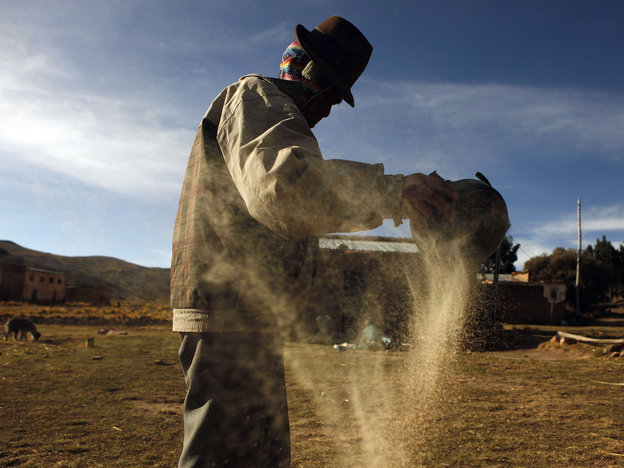
"content": "\u003cfigure id=\"attachment_68324\" class=\"wp-caption aligncenter\" style=\"max-width: 1120px\">\u003ca href=\"http://ww2.kqed.org/bayareabites/wp-content/uploads/sites/24/2013/08/quinoa-full.jpg\">\u003cimg src=\"http://ww2.kqed.org/bayareabites/wp-content/uploads/sites/24/2013/08/quinoa-full.jpg\" alt=\"A man cleans quinoa grain in Pacoma, Bolivia. Photo: Juan Karita/AP\" width=\"1120\" height=\"840\" class=\"size-full wp-image-68324\">\u003c/a>\u003cfigcaption class=\"wp-caption-text\">A man cleans quinoa grain in Pacoma, Bolivia. Photo: Juan Karita/AP\u003c/figcaption>\u003c/figure>\n\u003cp>\u003cstrong>Listen to the Story\u003c/strong> on \u003ca href=\"http://www.npr.org/blogs/thesalt/2013/08/15/212342707/can-quinoa-farming-go-global-without-leaving-andeans-behind\">All Things Considered\u003c/a> [audio src=\"http://pd.npr.org/anon.npr-mp3/npr/atc/2013/08/20130815_atc_16.mp3\"] \u003c/p>\n\u003cp>Post by \u003ca href=\"http://www.npr.org/people/143160021/daniel-charles\">Dan Charles\u003c/a>, \u003ca href=\"http://www.npr.org/people/143160021/daniel-charles\">The Salt at NPR Food \u003c/a>(8/15/2013)\u003c/p>\n\u003cp>I ate quinoa-and-turkey chili in a cafeteria today, which, when you think about it, is pretty amazing. Rarely does an entire culture, almost overnight, adopt an entirely new food.\u003c/p>\n\u003cp>Just 15 years ago, quinoa was practically unknown outside of the Andean region of South America. When European explorers first arrived in the Americas, they liked some of the food they found here (potatoes, corn) but they had no use for quinoa. For a while, they even tried to get people here to stop growing it. So while corn and potatoes spread around the globe, quinoa stayed home. Only the people of present-day Bolivia, Peru, Chile and Ecuador persisted in growing this multicolored relative of spinach and tumbleweed, with its big lumpy head of seeds.\u003c/p>\n\u003cp>How times change.\u003c/p>\n\u003cp>[ad fullwidth]\u003c/p>\n\u003cp>Quinoa is now seen as cool, exotic and supernutritious. It's turned into a profitable \u003ca href=\"http://www.economist.com/node/21554570\">export crop\u003c/a> for those Andean farmers. And it's ready to take another leap — into global production.\u003c/p>\n\u003cp>Farmers around the world are hoping to climb onto this quinoa bandwagon by growing quinoa themselves, with tractors and combines and large-scale processing plants. And some Andean farmers are asking, \"What happens to us?\"\u003c/p>\n\u003cp>Both sides gathered this week at Washington State University, in Pullman, Wash., for a kind of global quinoa \u003ca href=\"https://www.etouches.com/ehome/quinoa/\">summit\u003c/a>. The group included agricultural researchers who are experimenting with quinoa in Denmark, France, Pakistan, Malawi, Colorado, and the \u003ca href=\"http://www.npr.org/blogs/thesalt/2012/11/29/166155875/quinoa-craze-inspires-north-america-to-start-growing-its-own\">Pacific Northwest\u003c/a> of the United States.\u003c/p>\n\u003cp>Some had stories of success; others, tales of failure. \"It was not immediately successful anywhere that it's been grown,\" says \u003ca href=\"http://css.wsu.edu/people/faculty/kevin-murphy/\">Kevin Murphy\u003c/a>, a plant breeder at Washington State University, who organized the conference. Many varieties of quinoa only seem happy in the cool, dry, highlands of the Andes. If it's too hot, many won't produce a harvest. Too much rain is bad, too.\u003c/p>\n\u003cp>\"We're spending a lot of time testing different varieties that have come out of the Andean countries to see if any of them will, one, survive here, and two, produce a seed that we'd like to eat,\" says \u003ca href=\"http://lifesciences.byu.edu/~PJM43\">Jeff Maughan\u003c/a>, a scientist at Brigham Young University. Maughan is studying the genetics of quinoa.\u003c/p>\n\u003cp>Researchers also are figuring out how to mass-produce this crop, and harvest it with machines.\u003c/p>\n\u003cp>Murphy says those practical problems can be solved. He's more worried about something else: fairness.\u003c/p>\n\u003cp>In four or five years, he says, quinoa won't only be grown in the Andes anymore. But what about the \u003cem>people\u003c/em> of the Andes, such as the farmers whose ancestors kept quinoa alive through the centuries, who selected all these different varieties? What will happen to them?\u003c/p>\n\u003cp>\"For me, that's the most pressing question, the most urgent question,\" Murphy says.\u003c/p>\n\u003cp>Murphy invited some Bolivian farmers to this quinoa summit, and five of them came. They'd never been outside Bolivia before.\u003c/p>\n\u003cp>Pablo Laguna was also there. He's an anthropologist, half-Bolivian and half-French, who's been working among traditional quinoa farmers. He has become a bridge between them and the outside world.\u003c/p>\n\u003cp>Laguna says that when these farmers see the rest of the world trying to grow their crop, they have a couple of reactions. \"On the one hand, they're proud of being descendants of people who selected those plants,\" he says.\u003c/p>\n\u003cp>They're also pragmatic, Laguna says. They know they can't stop the growing international appetite for quinoa. They don't even want to; it's been profitable for them. (Some news reports have suggested that poor Bolivians have been hurt by foreign demand for quinoa, but Laguna and \u003ca href=\"http://www.friendsofecuador.org/2013/07/controversy-quantity-and-quinoa/\">others\u003c/a> say that's almost completely \u003ca href=\"http://www.npr.org/blogs/thesalt/2013/07/16/202737139/is-our-love-of-quinoa-hurting-or-helping-farmers-who-grow-it\">untrue\u003c/a>.)\u003c/p>\n\u003cp>But the Bolivian farmers also feel that if they provide this plant for competitors to grow in places like the United States or Australia, they should see some benefits.\u003c/p>\n\u003cp>That's why, at the moment, the government of Bolivia is trying to keep control over many quinoa varieties. It won't give samples, for instance, to plant breeders in the U.S. like Murphy.\u003c/p>\n\u003cp>\"For some of the researchers, that was a bit of a bitter pill to swallow, because they believe in free access to seeds, and to crops,\" says Murphy.\u003c/p>\n\u003cp>But Murphy doesn't have a problem with that. Bolivia is making an important point, he says.\u003c/p>\n\u003cp>\"Nobody is doubting that quinoa production is going to go global, so we want to do it right,\" he says. \"And doing it right means doing it with the input of the Bolivian farmers right from the beginning. You know, realizing that this is their seed, this is their sacred plant, and we need to respect that, and we need to figure out a way to compensate them for that.\"\u003c/p>\n\u003cp>At the conference, there was talk of creating a special brand for Andean quinoa, a little like the special recognition granted to other traditional foods, like Bordeaux wine.\u003c/p>\n\u003cp>This brand would be top-quality quinoa, and consumers might also be willing to pay extra for it, just because it would be quinoa from the land and the communities that safeguarded it for thousands of years.\u003c/p>\n\u003cp>\u003c/p>\n\u003cp>\u003cem>Copyright 2013 \u003ca href=\"http://www.npr.org\">NPR\u003c/a>. \u003c/em>\u003c/p>\n\n",
"disqusIdentifier": "68318 http://blogs.kqed.org/bayareabites/?p=68318",
"disqusUrl": "https://ww2.kqed.org/bayareabites/2013/08/15/can-quinoa-farming-go-global-without-leaving-andeans-behind/",
"stats": {
"hasVideo": false,
"hasChartOrMap": false,
"hasAudio": true,
"hasPolis": false,
"wordCount": 903,
"hasGoogleForm": false,
"hasGallery": false,
"hasHearkenModule": false,
"iframeSrcs": [],
"paragraphCount": 28
},
"modified": 1376719324,
"excerpt": "At a \"quinoa summit\" this week, farmers from around the world are trading tips on how to turn this ancient Andean grain into a large-scale crop. Some Andean farmers who currently grow quinoa are asking, \"What happens to us?\"",
"headData": {
"twImgId": "",
"twTitle": "",
"ogTitle": "",
"ogImgId": "",
"twDescription": "",
"description": "At a "quinoa summit" this week, farmers from around the world are trading tips on how to turn this ancient Andean grain into a large-scale crop. Some Andean farmers who currently grow quinoa are asking, "What happens to us?"",
"title": "Can Quinoa Farming Go Global Without Leaving Andeans Behind? | KQED",
"ogDescription": "",
"schema": {
"@context": "https://schema.org",
"@type": "Article",
"headline": "Can Quinoa Farming Go Global Without Leaving Andeans Behind?",
"datePublished": "2013-08-15T16:48:48-07:00",
"dateModified": "2013-08-16T23:02:04-07:00",
"image": "https://cdn.kqed.org/wp-content/uploads/2020/02/KQED-OG-Image@1x.png"
}
},
"guestAuthors": [],
"slug": "can-quinoa-farming-go-global-without-leaving-andeans-behind",
"status": "publish",
"nprApiLink": "http://api.npr.org/query?id=212342707&apiKey=MDAxOTAwOTE4MDEyMTkxMDAzNjczZDljZA004",
"nprByline": "Dan Charles",
"nprStoryDate": "Thu, 15 Aug 2013 15:00:00 -0400",
"nprLastModifiedDate": "Thu, 15 Aug 2013 18:14:41 -0400",
"nprHtmlLink": "http://www.npr.org/blogs/thesalt/2013/08/15/212342707/can-quinoa-farming-go-global-without-leaving-andeans-behind?ft=3&f=212342707",
"nprAudio": "http://pd.npr.org/anon.npr-mp3/npr/atc/2013/08/20130815_atc_16.mp3?orgId=1&topicId=1053&ft=3&f=212342707",
"nprAudioM3u": "http://api.npr.org/m3u/1212370211-f7e890.m3u?orgId=1&topicId=1053&ft=3&f=212342707",
"nprStoryId": "212342707",
"nprRetrievedStory": "1",
"nprPubDate": "Thu, 15 Aug 2013 18:14:00 -0400",
"path": "/bayareabites/68318/can-quinoa-farming-go-global-without-leaving-andeans-behind",
"audioUrl": "http://pd.npr.org/anon.npr-mp3/npr/atc/2013/08/20130815_atc_16.mp3?orgId=1&topicId=1053&ft=3&f=212342707",
"audioDuration": null,
"audioTrackLength": null,
"parsedContent": [
{
"type": "contentString",
"content": "\u003cdiv class=\"post-body\">\u003cp>\u003cfigure id=\"attachment_68324\" class=\"wp-caption aligncenter\" style=\"max-width: 1120px\">\u003ca href=\"http://ww2.kqed.org/bayareabites/wp-content/uploads/sites/24/2013/08/quinoa-full.jpg\">\u003cimg src=\"http://ww2.kqed.org/bayareabites/wp-content/uploads/sites/24/2013/08/quinoa-full.jpg\" alt=\"A man cleans quinoa grain in Pacoma, Bolivia. Photo: Juan Karita/AP\" width=\"1120\" height=\"840\" class=\"size-full wp-image-68324\">\u003c/a>\u003cfigcaption class=\"wp-caption-text\">A man cleans quinoa grain in Pacoma, Bolivia. Photo: Juan Karita/AP\u003c/figcaption>\u003c/figure>\n\u003cp>\u003cstrong>Listen to the Story\u003c/strong> on \u003ca href=\"http://www.npr.org/blogs/thesalt/2013/08/15/212342707/can-quinoa-farming-go-global-without-leaving-andeans-behind\">All Things Considered\u003c/a> \u003c/p>\u003c/div>",
"attributes": {
"named": {},
"numeric": []
}
},
{
"type": "component",
"content": "",
"name": "audio",
"attributes": {
"named": {
"src": "http://pd.npr.org/anon.npr-mp3/npr/atc/2013/08/20130815_atc_16.mp3",
"label": ""
},
"numeric": []
}
},
{
"type": "contentString",
"content": "\u003cdiv class=\"post-body\">\u003cp> \u003c/p>\n\u003cp>Post by \u003ca href=\"http://www.npr.org/people/143160021/daniel-charles\">Dan Charles\u003c/a>, \u003ca href=\"http://www.npr.org/people/143160021/daniel-charles\">The Salt at NPR Food \u003c/a>(8/15/2013)\u003c/p>\n\u003cp>I ate quinoa-and-turkey chili in a cafeteria today, which, when you think about it, is pretty amazing. Rarely does an entire culture, almost overnight, adopt an entirely new food.\u003c/p>\n\u003cp>Just 15 years ago, quinoa was practically unknown outside of the Andean region of South America. When European explorers first arrived in the Americas, they liked some of the food they found here (potatoes, corn) but they had no use for quinoa. For a while, they even tried to get people here to stop growing it. So while corn and potatoes spread around the globe, quinoa stayed home. Only the people of present-day Bolivia, Peru, Chile and Ecuador persisted in growing this multicolored relative of spinach and tumbleweed, with its big lumpy head of seeds.\u003c/p>\n\u003cp>How times change.\u003c/p>\n\u003cp>\u003c/p>\u003c/div>",
"attributes": {
"named": {},
"numeric": []
}
},
{
"type": "component",
"content": "",
"name": "ad",
"attributes": {
"named": {
"label": "fullwidth"
},
"numeric": [
"fullwidth"
]
}
},
{
"type": "contentString",
"content": "\u003cdiv class=\"post-body\">\u003cp>\u003c/p>\n\u003cp>Quinoa is now seen as cool, exotic and supernutritious. It's turned into a profitable \u003ca href=\"http://www.economist.com/node/21554570\">export crop\u003c/a> for those Andean farmers. And it's ready to take another leap — into global production.\u003c/p>\n\u003cp>Farmers around the world are hoping to climb onto this quinoa bandwagon by growing quinoa themselves, with tractors and combines and large-scale processing plants. And some Andean farmers are asking, \"What happens to us?\"\u003c/p>\n\u003cp>Both sides gathered this week at Washington State University, in Pullman, Wash., for a kind of global quinoa \u003ca href=\"https://www.etouches.com/ehome/quinoa/\">summit\u003c/a>. The group included agricultural researchers who are experimenting with quinoa in Denmark, France, Pakistan, Malawi, Colorado, and the \u003ca href=\"http://www.npr.org/blogs/thesalt/2012/11/29/166155875/quinoa-craze-inspires-north-america-to-start-growing-its-own\">Pacific Northwest\u003c/a> of the United States.\u003c/p>\n\u003cp>Some had stories of success; others, tales of failure. \"It was not immediately successful anywhere that it's been grown,\" says \u003ca href=\"http://css.wsu.edu/people/faculty/kevin-murphy/\">Kevin Murphy\u003c/a>, a plant breeder at Washington State University, who organized the conference. Many varieties of quinoa only seem happy in the cool, dry, highlands of the Andes. If it's too hot, many won't produce a harvest. Too much rain is bad, too.\u003c/p>\n\u003cp>\"We're spending a lot of time testing different varieties that have come out of the Andean countries to see if any of them will, one, survive here, and two, produce a seed that we'd like to eat,\" says \u003ca href=\"http://lifesciences.byu.edu/~PJM43\">Jeff Maughan\u003c/a>, a scientist at Brigham Young University. Maughan is studying the genetics of quinoa.\u003c/p>\n\u003cp>Researchers also are figuring out how to mass-produce this crop, and harvest it with machines.\u003c/p>\n\u003cp>Murphy says those practical problems can be solved. He's more worried about something else: fairness.\u003c/p>\n\u003cp>In four or five years, he says, quinoa won't only be grown in the Andes anymore. But what about the \u003cem>people\u003c/em> of the Andes, such as the farmers whose ancestors kept quinoa alive through the centuries, who selected all these different varieties? What will happen to them?\u003c/p>\n\u003cp>\"For me, that's the most pressing question, the most urgent question,\" Murphy says.\u003c/p>\n\u003cp>Murphy invited some Bolivian farmers to this quinoa summit, and five of them came. They'd never been outside Bolivia before.\u003c/p>\n\u003cp>Pablo Laguna was also there. He's an anthropologist, half-Bolivian and half-French, who's been working among traditional quinoa farmers. He has become a bridge between them and the outside world.\u003c/p>\n\u003cp>Laguna says that when these farmers see the rest of the world trying to grow their crop, they have a couple of reactions. \"On the one hand, they're proud of being descendants of people who selected those plants,\" he says.\u003c/p>\n\u003cp>They're also pragmatic, Laguna says. They know they can't stop the growing international appetite for quinoa. They don't even want to; it's been profitable for them. (Some news reports have suggested that poor Bolivians have been hurt by foreign demand for quinoa, but Laguna and \u003ca href=\"http://www.friendsofecuador.org/2013/07/controversy-quantity-and-quinoa/\">others\u003c/a> say that's almost completely \u003ca href=\"http://www.npr.org/blogs/thesalt/2013/07/16/202737139/is-our-love-of-quinoa-hurting-or-helping-farmers-who-grow-it\">untrue\u003c/a>.)\u003c/p>\n\u003cp>But the Bolivian farmers also feel that if they provide this plant for competitors to grow in places like the United States or Australia, they should see some benefits.\u003c/p>\n\u003cp>That's why, at the moment, the government of Bolivia is trying to keep control over many quinoa varieties. It won't give samples, for instance, to plant breeders in the U.S. like Murphy.\u003c/p>\n\u003cp>\"For some of the researchers, that was a bit of a bitter pill to swallow, because they believe in free access to seeds, and to crops,\" says Murphy.\u003c/p>\n\u003cp>But Murphy doesn't have a problem with that. Bolivia is making an important point, he says.\u003c/p>\n\u003cp>\"Nobody is doubting that quinoa production is going to go global, so we want to do it right,\" he says. \"And doing it right means doing it with the input of the Bolivian farmers right from the beginning. You know, realizing that this is their seed, this is their sacred plant, and we need to respect that, and we need to figure out a way to compensate them for that.\"\u003c/p>\n\u003cp>At the conference, there was talk of creating a special brand for Andean quinoa, a little like the special recognition granted to other traditional foods, like Bordeaux wine.\u003c/p>\n\u003cp>This brand would be top-quality quinoa, and consumers might also be willing to pay extra for it, just because it would be quinoa from the land and the communities that safeguarded it for thousands of years.\u003c/p>\n\u003cp>\u003c/p>\n\u003cp>\u003cem>Copyright 2013 \u003ca href=\"http://www.npr.org\">NPR\u003c/a>. \u003c/em>\u003c/p>\n\n\u003c/div>\u003c/p>",
"attributes": {
"named": {},
"numeric": []
}
}
],
"link": "/bayareabites/68318/can-quinoa-farming-go-global-without-leaving-andeans-behind",
"authors": [
"byline_bayareabites_68318"
],
"categories": [
"bayareabites_1962",
"bayareabites_1874",
"bayareabites_10916",
"bayareabites_2035",
"bayareabites_34",
"bayareabites_60",
"bayareabites_61"
],
"tags": [
"bayareabites_12226",
"bayareabites_12032",
"bayareabites_4207"
],
"featImg": "bayareabites_68323",
"label": "bayareabites"
},
"bayareabites_68307": {
"type": "posts",
"id": "bayareabites_68307",
"meta": {
"index": "posts_1716263798",
"site": "bayareabites",
"id": "68307",
"score": null,
"sort": [
1376591916000
]
},
"parent": 0,
"labelTerm": {
"site": "bayareabites"
},
"blocks": [],
"publishDate": 1376591916,
"format": "aside",
"disqusTitle": "Even Carnivores Are Putting More Fake Meat On Their Plates",
"title": "Even Carnivores Are Putting More Fake Meat On Their Plates",
"headTitle": "Bay Area Bites | KQED Food",
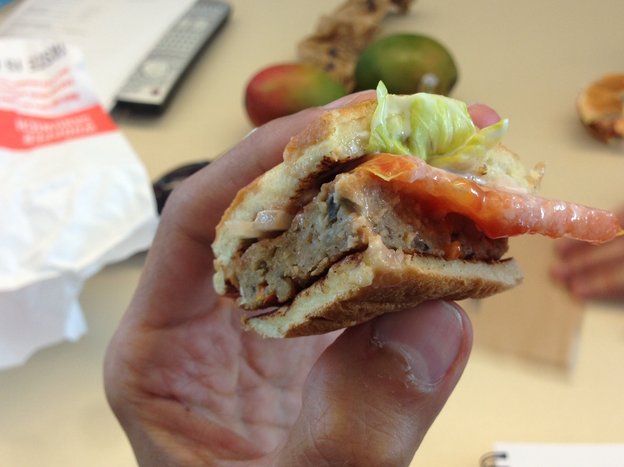
"content": "\u003cfigure id=\"attachment_68313\" class=\"wp-caption aligncenter\" style=\"max-width: 1120px\">\u003ca href=\"http://ww2.kqed.org/bayareabites/wp-content/uploads/sites/24/2013/08/faux-meat-full.jpg\">\u003cimg src=\"http://ww2.kqed.org/bayareabites/wp-content/uploads/sites/24/2013/08/faux-meat-full.jpg\" alt=\"Burger King's veggie burger is among the many meat substitute options on the market. Photo: NPR\" width=\"1120\" height=\"839\" class=\"size-full wp-image-68313\">\u003c/a>\u003cfigcaption class=\"wp-caption-text\">Burger King's veggie burger is among the many meat substitute options on the market. Photo: NPR\u003c/figcaption>\u003c/figure>\n\u003cp>Post by Eliza Barclay, \u003ca href=\"http://www.npr.org/blogs/thesalt/2013/08/14/212024490/even-carnivores-are-putting-more-fake-meat-on-their-plates\">The Salt at NPR Food\u003c/a> (8/15/2013)\u003c/p>\n\u003cp>From Bill Gates to Google's Sergei Brin, influential investors are putting their money where their mouth is. The pet cause of the tech world, it seems, is the need to find good-tasting substitutes to conventional animal products, like \u003ca href=\"http://ww2.kqed.org/bayareabites/2013/06/13/why-bill-gates-is-investing-in-chicken-less-eggs/\">chicken-less eggs\u003c/a> or \u003ca href=\"http://ww2.kqed.org/bayareabites/2013/08/05/long-awaited-lab-grown-burger-is-unveiled-in-london/\">in vitro beef\u003c/a>, to avert environmental crisis from rising consumption.\u003c/p>\n\u003cp>According to new research, consumers — and not just vegetarians — are also warming up to products like tempeh, tofu and seitan that can stand in for meat.\u003c/p>\n\u003cp>In a \u003ca href=\"http://store.mintel.com/meat-alternatives-us-june-2013\">survey\u003c/a> released this week by the market research firm Mintel, 36 percent of U.S. consumers said they buy meat substitutes — even though only 7 percent identified themselves as vegetarian.\u003c/p>\n\u003cp>According to Mintel, sales of meat alternatives reached $553 million in 2012, up 8 percent from 2010.\u003c/p>\n\u003cp>[ad fullwidth]\u003c/p>\n\u003cp>\"The bottom line is that vegetarians and vegans aren't the only people eating 'fake' meat — meat eaters are also exploring this newfound protein superpower,\" said Beth Bloom, food and drink analyst at Mintel, in a \u003ca href=\"http://www.mintel.com/press-centre/food-and-drink/meat-alternatives-market-trend\">statement\u003c/a>.\u003c/p>\n\u003cp>Most popular in the meat substitute aisle are burgers, either made from \u003ca href=\"http://www.npr.org/blogs/thesalt/2013/07/15/202363304/sandwich-monday-the-burger-king-veggie-burger\">veggies\u003c/a>, wheat or soy, followed by fake poultry products, like Tofurkey, according to the survey. Women were slightly more likely than men to buy the foods.\u003c/p>\n\u003cp>So why all the enthusiasm for meat substitutes? The most common response among the 2,000 people Mintel surveyed on the web was that alternative meat products are healthy. After that, people said they chose fake meat because they were trying to reduce their meat consumption, and because they like the taste of the products. (As we \u003ca href=\"http://www.npr.org/blogs/thesalt/2012/03/19/148923598/meat-substitute-market-beefs-up\">reported \u003c/a>last year, the selection has gotten better — 110 new meat substitute products came on the market in 2010 and 2011.)\u003c/p>\n\u003cp>Still, the majority of Americans don't buy meat alternatives. Among people who said they're not buying these products, 67 percent said it was because they prefer real meat. Another 34 percent said they don't like the taste of meat alternatives, while 20 percent don't like the texture.\u003c/p>\n\u003cp>Texture and flavor are likely to be the biggest hurdles for meat substitute entrepreneurs, like Ethan Brown of Beyond Meat (whom we profiled last year), who say they're \u003ca href=\"http://www.npr.org/blogs/thesalt/2012/05/17/152519988/a-farmer-bets-better-fake-chicken-meat-will-be-as-good-as-the-real-thing\">hoping to break out\u003c/a> of the health-food niche and sell to mainstream meat-eaters. \u003c/p>\n\u003cp>\u003c/p>\n\u003cp>\u003cem>Copyright 2013 \u003ca href=\"http://www.npr.org\">NPR\u003c/a>. \u003c/em>\u003c/p>\n\n",
"disqusIdentifier": "68307 http://blogs.kqed.org/bayareabites/?p=68307",
"disqusUrl": "https://ww2.kqed.org/bayareabites/2013/08/15/even-carnivores-are-putting-more-fake-meat-on-their-plates/",
"stats": {
"hasVideo": false,
"hasChartOrMap": false,
"hasAudio": false,
"hasPolis": false,
"wordCount": 416,
"hasGoogleForm": false,
"hasGallery": false,
"hasHearkenModule": false,
"iframeSrcs": [],
"paragraphCount": 13
},
"modified": 1376591916,
"excerpt": "Vegetarians aren't the only ones buying products like tempeh, tofu and seitan, a survey finds. Sales of meat alternatives climbed 8 percent between 2010 and 2012, thanks in part to meat eaters looking for a break from meat.",
"headData": {
"twImgId": "",
"twTitle": "",
"ogTitle": "",
"ogImgId": "",
"twDescription": "",
"description": "Vegetarians aren't the only ones buying products like tempeh, tofu and seitan, a survey finds. Sales of meat alternatives climbed 8 percent between 2010 and 2012, thanks in part to meat eaters looking for a break from meat.",
"title": "Even Carnivores Are Putting More Fake Meat On Their Plates | KQED",
"ogDescription": "",
"schema": {
"@context": "https://schema.org",
"@type": "Article",
"headline": "Even Carnivores Are Putting More Fake Meat On Their Plates",
"datePublished": "2013-08-15T11:38:36-07:00",
"dateModified": "2013-08-15T11:38:36-07:00",
"image": "https://cdn.kqed.org/wp-content/uploads/2020/02/KQED-OG-Image@1x.png"
}
},
"guestAuthors": [],
"slug": "even-carnivores-are-putting-more-fake-meat-on-their-plates",
"status": "publish",
"nprApiLink": "http://api.npr.org/query?id=212024490&apiKey=MDAxOTAwOTE4MDEyMTkxMDAzNjczZDljZA004",
"nprByline": "Eliza Barclay",
"nprStoryDate": "Thu, 15 Aug 2013 12:18:00 -0400",
"nprLastModifiedDate": "Thu, 15 Aug 2013 13:34:03 -0400",
"nprHtmlLink": "http://www.npr.org/blogs/thesalt/2013/08/14/212024490/even-carnivores-are-putting-more-fake-meat-on-their-plates?ft=3&f=212024490",
"nprStoryId": "212024490",
"nprRetrievedStory": "1",
"nprPubDate": "Thu, 15 Aug 2013 13:34:00 -0400",
"path": "/bayareabites/68307/even-carnivores-are-putting-more-fake-meat-on-their-plates",
"audioTrackLength": null,
"parsedContent": [
{
"type": "contentString",
"content": "\u003cdiv class=\"post-body\">\u003cp>\u003cfigure id=\"attachment_68313\" class=\"wp-caption aligncenter\" style=\"max-width: 1120px\">\u003ca href=\"http://ww2.kqed.org/bayareabites/wp-content/uploads/sites/24/2013/08/faux-meat-full.jpg\">\u003cimg src=\"http://ww2.kqed.org/bayareabites/wp-content/uploads/sites/24/2013/08/faux-meat-full.jpg\" alt=\"Burger King's veggie burger is among the many meat substitute options on the market. Photo: NPR\" width=\"1120\" height=\"839\" class=\"size-full wp-image-68313\">\u003c/a>\u003cfigcaption class=\"wp-caption-text\">Burger King's veggie burger is among the many meat substitute options on the market. Photo: NPR\u003c/figcaption>\u003c/figure>\n\u003cp>Post by Eliza Barclay, \u003ca href=\"http://www.npr.org/blogs/thesalt/2013/08/14/212024490/even-carnivores-are-putting-more-fake-meat-on-their-plates\">The Salt at NPR Food\u003c/a> (8/15/2013)\u003c/p>\n\u003cp>From Bill Gates to Google's Sergei Brin, influential investors are putting their money where their mouth is. The pet cause of the tech world, it seems, is the need to find good-tasting substitutes to conventional animal products, like \u003ca href=\"http://ww2.kqed.org/bayareabites/2013/06/13/why-bill-gates-is-investing-in-chicken-less-eggs/\">chicken-less eggs\u003c/a> or \u003ca href=\"http://ww2.kqed.org/bayareabites/2013/08/05/long-awaited-lab-grown-burger-is-unveiled-in-london/\">in vitro beef\u003c/a>, to avert environmental crisis from rising consumption.\u003c/p>\n\u003cp>According to new research, consumers — and not just vegetarians — are also warming up to products like tempeh, tofu and seitan that can stand in for meat.\u003c/p>\n\u003cp>In a \u003ca href=\"http://store.mintel.com/meat-alternatives-us-june-2013\">survey\u003c/a> released this week by the market research firm Mintel, 36 percent of U.S. consumers said they buy meat substitutes — even though only 7 percent identified themselves as vegetarian.\u003c/p>\n\u003cp>According to Mintel, sales of meat alternatives reached $553 million in 2012, up 8 percent from 2010.\u003c/p>\n\u003cp>\u003c/p>\u003c/div>",
"attributes": {
"named": {},
"numeric": []
}
},
{
"type": "component",
"content": "",
"name": "ad",
"attributes": {
"named": {
"label": "fullwidth"
},
"numeric": [
"fullwidth"
]
}
},
{
"type": "contentString",
"content": "\u003cdiv class=\"post-body\">\u003cp>\u003c/p>\n\u003cp>\"The bottom line is that vegetarians and vegans aren't the only people eating 'fake' meat — meat eaters are also exploring this newfound protein superpower,\" said Beth Bloom, food and drink analyst at Mintel, in a \u003ca href=\"http://www.mintel.com/press-centre/food-and-drink/meat-alternatives-market-trend\">statement\u003c/a>.\u003c/p>\n\u003cp>Most popular in the meat substitute aisle are burgers, either made from \u003ca href=\"http://www.npr.org/blogs/thesalt/2013/07/15/202363304/sandwich-monday-the-burger-king-veggie-burger\">veggies\u003c/a>, wheat or soy, followed by fake poultry products, like Tofurkey, according to the survey. Women were slightly more likely than men to buy the foods.\u003c/p>\n\u003cp>So why all the enthusiasm for meat substitutes? The most common response among the 2,000 people Mintel surveyed on the web was that alternative meat products are healthy. After that, people said they chose fake meat because they were trying to reduce their meat consumption, and because they like the taste of the products. (As we \u003ca href=\"http://www.npr.org/blogs/thesalt/2012/03/19/148923598/meat-substitute-market-beefs-up\">reported \u003c/a>last year, the selection has gotten better — 110 new meat substitute products came on the market in 2010 and 2011.)\u003c/p>\n\u003cp>Still, the majority of Americans don't buy meat alternatives. Among people who said they're not buying these products, 67 percent said it was because they prefer real meat. Another 34 percent said they don't like the taste of meat alternatives, while 20 percent don't like the texture.\u003c/p>\n\u003cp>Texture and flavor are likely to be the biggest hurdles for meat substitute entrepreneurs, like Ethan Brown of Beyond Meat (whom we profiled last year), who say they're \u003ca href=\"http://www.npr.org/blogs/thesalt/2012/05/17/152519988/a-farmer-bets-better-fake-chicken-meat-will-be-as-good-as-the-real-thing\">hoping to break out\u003c/a> of the health-food niche and sell to mainstream meat-eaters. \u003c/p>\n\u003cp>\u003c/p>\n\u003cp>\u003cem>Copyright 2013 \u003ca href=\"http://www.npr.org\">NPR\u003c/a>. \u003c/em>\u003c/p>\n\n\u003c/div>\u003c/p>",
"attributes": {
"named": {},
"numeric": []
}
}
],
"link": "/bayareabites/68307/even-carnivores-are-putting-more-fake-meat-on-their-plates",
"authors": [
"byline_bayareabites_68307"
],
"categories": [
"bayareabites_1962",
"bayareabites_1245",
"bayareabites_10916",
"bayareabites_1873"
],
"tags": [
"bayareabites_8701",
"bayareabites_12225",
"bayareabites_3585"
],
"featImg": "bayareabites_68312",
"label": "bayareabites"
},
"bayareabites_68245": {
"type": "posts",
"id": "bayareabites_68245",
"meta": {
"index": "posts_1716263798",
"site": "bayareabites",
"id": "68245",
"score": null,
"sort": [
1376513398000
]
},
"parent": 0,
"labelTerm": {
"site": "bayareabites"
},
"blocks": [],
"publishDate": 1376513398,
"format": "aside",
"disqusTitle": "Listeria Outbreak Still Haunts Colorado's Cantaloupe Growers",
"title": "Listeria Outbreak Still Haunts Colorado's Cantaloupe Growers",
"headTitle": "Bay Area Bites | KQED Food",
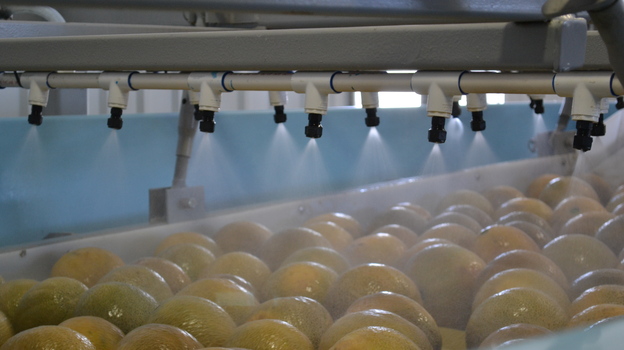
"content": "\u003cfigure id=\"attachment_68251\" class=\"wp-caption aligncenter\" style=\"max-width: 1120px\">\u003ca href=\"http://ww2.kqed.org/bayareabites/wp-content/uploads/sites/24/2013/08/listeria-full.jpg\">\u003cimg src=\"http://ww2.kqed.org/bayareabites/wp-content/uploads/sites/24/2013/08/listeria-full.jpg\" alt=\"A melon washing station sprays cantaloupes with clean water and sanitizer. Photo: Kristin Kidd/Colorado Public Radio\" width=\"1120\" height=\"629\" class=\"size-full wp-image-68251\">\u003c/a>\u003cfigcaption class=\"wp-caption-text\">A melon washing station sprays cantaloupes with clean water and sanitizer. Photo: Kristin Kidd/Colorado Public Radio\u003c/figcaption>\u003c/figure>\n\u003cp>\u003cstrong>Listen to the Story\u003c/strong> on \u003ca href=\"http://www.npr.org/blogs/thesalt/2013/08/14/211784739/listeria-outbreak-still-haunts-colorados-cantaloupe-growers\">Morning Edition\u003c/a> [audio src=\"http://pd.npr.org/anon.npr-mp3/npr/me/2013/08/20130814_me_04.mp3\"] \u003c/p>\n\u003cp>Post by Eric Whitney, \u003ca href=\"http://www.npr.org/blogs/thesalt/2013/08/14/211784739/listeria-outbreak-still-haunts-colorados-cantaloupe-growers\">The Salt at NPR Food\u003c/a> (8/14/2013)\u003c/p>\n\u003cp>Two years after cantaloupe were linked to one of the worst foodborne\u003ca href=\"http://www.foodsafetynews.com/2012/04/the-ten-deadliest-outbreaks-in-history-revisited/#.UgqI7NKKK5I\"> outbreaks\u003c/a> in U.S. history, lawyers have filed a fresh round of lawsuits. Meanwhile, farmers are trying to win back customers after their signature crop was tarred by a broad brush.\u003c/p>\n\u003cp>Only \u003ca href=\"http://www.cdc.gov/listeria/outbreaks/cantaloupes-jensen-farms/index.html\">one Colorado farm\u003c/a> supplied cantaloupes contaminated with the listeria bacteria that killed 33 people and sickened at least 147 more in 28 states in 2011.\u003c/p>\n\u003cp>But that farmer sold his fruit as coming from Rocky Ford, Colo., and the longtime family farmers there, and the whole town, took a huge hit.\u003c/p>\n\u003cp>[ad fullwidth]\u003c/p>\n\u003cp>\"The whole community is very proud of the cantaloupe. The Rocky Ford high school mascot is \u003ca href=\"http://www.rockyford.k12.co.us/district/RFHSbanner.jpg\">the 'Meloneer,'\u003c/a>\" says \u003ca href=\"http://hirakatafarms.com/\">Mike Hirakata,\u003c/a> a fourth generation melon grower here, \"very proud to be Meloneers.\"\u003c/p>\n\u003cp>The tainted fruit \u003ca href=\"http://www.cpr.org/article/Sleuthing_Colorados_Listeria_Outbreak\">came from a farm 90 miles away\u003c/a>, but Rocky Ford farmers had never trademarked their local name and couldn't keep others from using it. That had never been a problem until 2011. The area's farmers have now \u003ca href=\"http://www.rockyfordgrowersassociation.com/\">legally protected their name\u003c/a>, and they're taking other measures to convince the public that the cantaloupe they've built a 100-year reputation on are safe.\u003c/p>\n\u003cp>\"If we wanted to keep going, we figured we needed to make changes that were for the better for our industry and for the customers,\" Hirakata says on a tour of his packing shed, newly refurbished with hundreds of thousands of dollars in new equipment.\u003c/p>\n\u003cp>He shows off the melon washing station that sprays his cantaloupes with clean water and sanitizer before the fruit are sent to an enormous cooling room. There, the melons are rapidly chilled to further inhibit the growth of any bacteria that might have survived the bath.\u003c/p>\n\u003cp>Farmers and the state of Colorado also invested in research that found that consumers play an important role in preventing cantaloupe-related outbreaks.\u003c/p>\n\u003cp>Their survey found that \"more than half of consumers weren't washing cantaloupe at all before consuming them,\" says Marisa Bunning, a food safety researcher at Colorado State University.\u003c/p>\n\u003cp>\"It already looked clean, and they weren't going to be eating the rind. It didn't occur to them to wash it,\" she says.\u003c/p>\n\u003cp>But researchers now believe that the deadly bacteria that caused the outbreak didn't penetrate the fruit until consumers cut into it, pushing listeria from the outer rind into the flesh they would eat with each pass of a knife.\u003c/p>\n\u003cp>\"The knife needs to be washed between cuts,\" Bunning says, \"just to be assured you're not causing any cross-contamination from the rind to the flesh.\"\u003c/p>\n\u003cp>Rocky Ford cantaloupe growers hired a public relations firm to help get that word out, and to tell people about the new safety measures they're taking to make sure that what happened at the one bad farm in 2011 will never happen at their facilities.\u003c/p>\n\u003cp>Farmer Hirakata says he never wants to go through something like that again, and not just because of the financial losses his family suffered. For over a week after the outbreak was first identified, he wasn't sure whether melons from his farm were making people sick.\u003c/p>\n\u003cp>\"It was just kind of a sick-to-your-stomach feeling for that whole time, a lot of sleepless nights,\" he recalls.\u003c/p>\n\u003cp>Consumers appear to be forgiving, so far. Last year, Rocky Ford growers sold every cantaloupe they harvested, but they only planted 20 percent of a normal crop. This year they're planting more, but still not enough to send any out of state.\u003c/p>\n\u003cp>At an urban farmers market recently, several native Coloradans echoed shopper Bob Purvine's sentiment about the outbreak.\u003c/p>\n\u003cp>\"It had us all a little paranoid,\" he said, but \"probably wouldn't prevent me from buying the cantaloupe when it comes time again.\"\u003c/p>\n\u003cp>Why? Rocky Ford melons, he says, are the \"best cantaloupe ever.\" \u003c/p>\n\u003cp>\u003c/p>\n\u003cp>\u003cem>Copyright 2013 \u003ca href=\"http://www.cpr.org\">Colorado Public Radio\u003c/a>. \u003c/em>\u003c/p>\n\n",
"disqusIdentifier": "68245 http://blogs.kqed.org/bayareabites/?p=68245",
"disqusUrl": "https://ww2.kqed.org/bayareabites/2013/08/14/listeria-outbreak-still-haunts-colorados-cantaloupe-growers/",
"stats": {
"hasVideo": false,
"hasChartOrMap": false,
"hasAudio": true,
"hasPolis": false,
"wordCount": 700,
"hasGoogleForm": false,
"hasGallery": false,
"hasHearkenModule": false,
"iframeSrcs": [],
"paragraphCount": 24
},
"modified": 1376513398,
"excerpt": "The contaminated fruit that killed 33 people and sickened at least 147 others in 2011 came from a farm 90 miles from Rocky Ford, Colo. But the town's many melon farmers took a huge hit nonetheless, and are still trying to convince the public their cantaloupes are safe.",
"headData": {
"twImgId": "",
"twTitle": "",
"ogTitle": "",
"ogImgId": "",
"twDescription": "",
"description": "The contaminated fruit that killed 33 people and sickened at least 147 others in 2011 came from a farm 90 miles from Rocky Ford, Colo. But the town's many melon farmers took a huge hit nonetheless, and are still trying to convince the public their cantaloupes are safe.",
"title": "Listeria Outbreak Still Haunts Colorado's Cantaloupe Growers | KQED",
"ogDescription": "",
"schema": {
"@context": "https://schema.org",
"@type": "Article",
"headline": "Listeria Outbreak Still Haunts Colorado's Cantaloupe Growers",
"datePublished": "2013-08-14T13:49:58-07:00",
"dateModified": "2013-08-14T13:49:58-07:00",
"image": "https://cdn.kqed.org/wp-content/uploads/2020/02/KQED-OG-Image@1x.png"
}
},
"guestAuthors": [],
"slug": "listeria-outbreak-still-haunts-colorados-cantaloupe-growers",
"status": "publish",
"nprApiLink": "http://api.npr.org/query?id=211784739&apiKey=MDAxOTAwOTE4MDEyMTkxMDAzNjczZDljZA004",
"nprByline": "Eric Whitney",
"nprStoryDate": "Wed, 14 Aug 2013 04:00:00 -0400",
"nprLastModifiedDate": "Wed, 14 Aug 2013 13:48:16 -0400",
"nprHtmlLink": "http://www.npr.org/blogs/thesalt/2013/08/14/211784739/listeria-outbreak-still-haunts-colorados-cantaloupe-growers?ft=3&f=211784739",
"nprAudio": "http://pd.npr.org/anon.npr-mp3/npr/me/2013/08/20130814_me_04.mp3?orgId=32&topicId=1053&ft=3&f=211784739",
"nprAudioM3u": "http://api.npr.org/m3u/1211890352-d675dd.m3u?orgId=32&topicId=1053&ft=3&f=211784739",
"nprStoryId": "211784739",
"nprRetrievedStory": "1",
"nprPubDate": "Wed, 14 Aug 2013 13:48:00 -0400",
"path": "/bayareabites/68245/listeria-outbreak-still-haunts-colorados-cantaloupe-growers",
"audioUrl": "http://pd.npr.org/anon.npr-mp3/npr/me/2013/08/20130814_me_04.mp3?orgId=32&topicId=1053&ft=3&f=211784739",
"audioDuration": null,
"audioTrackLength": null,
"parsedContent": [
{
"type": "contentString",
"content": "\u003cdiv class=\"post-body\">\u003cp>\u003cfigure id=\"attachment_68251\" class=\"wp-caption aligncenter\" style=\"max-width: 1120px\">\u003ca href=\"http://ww2.kqed.org/bayareabites/wp-content/uploads/sites/24/2013/08/listeria-full.jpg\">\u003cimg src=\"http://ww2.kqed.org/bayareabites/wp-content/uploads/sites/24/2013/08/listeria-full.jpg\" alt=\"A melon washing station sprays cantaloupes with clean water and sanitizer. Photo: Kristin Kidd/Colorado Public Radio\" width=\"1120\" height=\"629\" class=\"size-full wp-image-68251\">\u003c/a>\u003cfigcaption class=\"wp-caption-text\">A melon washing station sprays cantaloupes with clean water and sanitizer. Photo: Kristin Kidd/Colorado Public Radio\u003c/figcaption>\u003c/figure>\n\u003cp>\u003cstrong>Listen to the Story\u003c/strong> on \u003ca href=\"http://www.npr.org/blogs/thesalt/2013/08/14/211784739/listeria-outbreak-still-haunts-colorados-cantaloupe-growers\">Morning Edition\u003c/a> \u003c/p>\u003c/div>",
"attributes": {
"named": {},
"numeric": []
}
},
{
"type": "component",
"content": "",
"name": "audio",
"attributes": {
"named": {
"src": "http://pd.npr.org/anon.npr-mp3/npr/me/2013/08/20130814_me_04.mp3",
"label": ""
},
"numeric": []
}
},
{
"type": "contentString",
"content": "\u003cdiv class=\"post-body\">\u003cp> \u003c/p>\n\u003cp>Post by Eric Whitney, \u003ca href=\"http://www.npr.org/blogs/thesalt/2013/08/14/211784739/listeria-outbreak-still-haunts-colorados-cantaloupe-growers\">The Salt at NPR Food\u003c/a> (8/14/2013)\u003c/p>\n\u003cp>Two years after cantaloupe were linked to one of the worst foodborne\u003ca href=\"http://www.foodsafetynews.com/2012/04/the-ten-deadliest-outbreaks-in-history-revisited/#.UgqI7NKKK5I\"> outbreaks\u003c/a> in U.S. history, lawyers have filed a fresh round of lawsuits. Meanwhile, farmers are trying to win back customers after their signature crop was tarred by a broad brush.\u003c/p>\n\u003cp>Only \u003ca href=\"http://www.cdc.gov/listeria/outbreaks/cantaloupes-jensen-farms/index.html\">one Colorado farm\u003c/a> supplied cantaloupes contaminated with the listeria bacteria that killed 33 people and sickened at least 147 more in 28 states in 2011.\u003c/p>\n\u003cp>But that farmer sold his fruit as coming from Rocky Ford, Colo., and the longtime family farmers there, and the whole town, took a huge hit.\u003c/p>\n\u003cp>\u003c/p>\u003c/div>",
"attributes": {
"named": {},
"numeric": []
}
},
{
"type": "component",
"content": "",
"name": "ad",
"attributes": {
"named": {
"label": "fullwidth"
},
"numeric": [
"fullwidth"
]
}
},
{
"type": "contentString",
"content": "\u003cdiv class=\"post-body\">\u003cp>\u003c/p>\n\u003cp>\"The whole community is very proud of the cantaloupe. The Rocky Ford high school mascot is \u003ca href=\"http://www.rockyford.k12.co.us/district/RFHSbanner.jpg\">the 'Meloneer,'\u003c/a>\" says \u003ca href=\"http://hirakatafarms.com/\">Mike Hirakata,\u003c/a> a fourth generation melon grower here, \"very proud to be Meloneers.\"\u003c/p>\n\u003cp>The tainted fruit \u003ca href=\"http://www.cpr.org/article/Sleuthing_Colorados_Listeria_Outbreak\">came from a farm 90 miles away\u003c/a>, but Rocky Ford farmers had never trademarked their local name and couldn't keep others from using it. That had never been a problem until 2011. The area's farmers have now \u003ca href=\"http://www.rockyfordgrowersassociation.com/\">legally protected their name\u003c/a>, and they're taking other measures to convince the public that the cantaloupe they've built a 100-year reputation on are safe.\u003c/p>\n\u003cp>\"If we wanted to keep going, we figured we needed to make changes that were for the better for our industry and for the customers,\" Hirakata says on a tour of his packing shed, newly refurbished with hundreds of thousands of dollars in new equipment.\u003c/p>\n\u003cp>He shows off the melon washing station that sprays his cantaloupes with clean water and sanitizer before the fruit are sent to an enormous cooling room. There, the melons are rapidly chilled to further inhibit the growth of any bacteria that might have survived the bath.\u003c/p>\n\u003cp>Farmers and the state of Colorado also invested in research that found that consumers play an important role in preventing cantaloupe-related outbreaks.\u003c/p>\n\u003cp>Their survey found that \"more than half of consumers weren't washing cantaloupe at all before consuming them,\" says Marisa Bunning, a food safety researcher at Colorado State University.\u003c/p>\n\u003cp>\"It already looked clean, and they weren't going to be eating the rind. It didn't occur to them to wash it,\" she says.\u003c/p>\n\u003cp>But researchers now believe that the deadly bacteria that caused the outbreak didn't penetrate the fruit until consumers cut into it, pushing listeria from the outer rind into the flesh they would eat with each pass of a knife.\u003c/p>\n\u003cp>\"The knife needs to be washed between cuts,\" Bunning says, \"just to be assured you're not causing any cross-contamination from the rind to the flesh.\"\u003c/p>\n\u003cp>Rocky Ford cantaloupe growers hired a public relations firm to help get that word out, and to tell people about the new safety measures they're taking to make sure that what happened at the one bad farm in 2011 will never happen at their facilities.\u003c/p>\n\u003cp>Farmer Hirakata says he never wants to go through something like that again, and not just because of the financial losses his family suffered. For over a week after the outbreak was first identified, he wasn't sure whether melons from his farm were making people sick.\u003c/p>\n\u003cp>\"It was just kind of a sick-to-your-stomach feeling for that whole time, a lot of sleepless nights,\" he recalls.\u003c/p>\n\u003cp>Consumers appear to be forgiving, so far. Last year, Rocky Ford growers sold every cantaloupe they harvested, but they only planted 20 percent of a normal crop. This year they're planting more, but still not enough to send any out of state.\u003c/p>\n\u003cp>At an urban farmers market recently, several native Coloradans echoed shopper Bob Purvine's sentiment about the outbreak.\u003c/p>\n\u003cp>\"It had us all a little paranoid,\" he said, but \"probably wouldn't prevent me from buying the cantaloupe when it comes time again.\"\u003c/p>\n\u003cp>Why? Rocky Ford melons, he says, are the \"best cantaloupe ever.\" \u003c/p>\n\u003cp>\u003c/p>\n\u003cp>\u003cem>Copyright 2013 \u003ca href=\"http://www.cpr.org\">Colorado Public Radio\u003c/a>. \u003c/em>\u003c/p>\n\n\u003c/div>\u003c/p>",
"attributes": {
"named": {},
"numeric": []
}
}
],
"link": "/bayareabites/68245/listeria-outbreak-still-haunts-colorados-cantaloupe-growers",
"authors": [
"byline_bayareabites_68245"
],
"categories": [
"bayareabites_1962",
"bayareabites_1874",
"bayareabites_10916",
"bayareabites_2035",
"bayareabites_34"
],
"tags": [
"bayareabites_10709",
"bayareabites_12217",
"bayareabites_12219",
"bayareabites_12218"
],
"featImg": "bayareabites_68250",
"label": "bayareabites"
},
"bayareabites_67969": {
"type": "posts",
"id": "bayareabites_67969",
"meta": {
"index": "posts_1716263798",
"site": "bayareabites",
"id": "67969",
"score": null,
"sort": [
1376091284000
]
},
"parent": 0,
"labelTerm": {
"site": "bayareabites"
},
"blocks": [],
"publishDate": 1376091284,
"format": "aside",
"disqusTitle": "Did Tyson Ban Doping Cows with Zilmax to Boost Foreign Sales?",
"title": "Did Tyson Ban Doping Cows with Zilmax to Boost Foreign Sales?",
"headTitle": "Bay Area Bites | KQED Food",
"content": "\u003cfigure id=\"attachment_67977\" class=\"wp-caption aligncenter\" style=\"max-width: 1120px\">\u003ca href=\"http://ww2.kqed.org/bayareabites/wp-content/uploads/sites/24/2013/08/cattlefull.jpg\">\u003cimg src=\"http://ww2.kqed.org/bayareabites/wp-content/uploads/sites/24/2013/08/cattlefull.jpg\" alt='A pen at a feedlot in central Kansas that houses 30,000 cattle. Feedlots are where cattle are \"finished\" before slaughter, often with the use of growth-promoting drugs like zilpaterol. Photo: Peggy Lowe, Harvest Public Media' width=\"1120\" height=\"629\" class=\"size-full wp-image-67977\">\u003c/a>\u003cfigcaption class=\"wp-caption-text\">A pen at a feedlot in central Kansas that houses 30,000 cattle. Feedlots are where cattle are \"finished\" before slaughter, often with the use of growth-promoting drugs like zilpaterol. Photo: Peggy Lowe, Harvest Public Media\u003c/figcaption>\u003c/figure>\n\u003cp>\u003cstrong>Listen to the Story\u003c/strong> on \u003ca href=\"http://www.npr.org/blogs/thesalt/2013/08/09/210538430/did-tyson-drop-zilmax-fed-beef-to-appease-foreign-buyers\">All Things Considered\u003c/a> [audio src=\"http://pd.npr.org/anon.npr-mp3/npr/atc/2013/08/20130809_atc_17.mp3\"] \u003c/p>\n\u003cp>Post by Peggy Lowe, \u003ca href=\"http://www.npr.org/blogs/thesalt/2013/08/09/210538430/did-tyson-drop-zilmax-fed-beef-to-appease-foreign-buyers\">The Salt at NPR Food\u003c/a> (8/9/2013)\u003c/p>\n\u003cp>Tyson Foods Inc. announced this week that it would soon suspend purchases of cattle that had been treated with a controversial drug, citing animal welfare concerns.\u003c/p>\n\u003cp>But many in the industry wonder if the real reason is the battle for sales in other countries, where certain drugs that make livestock grow faster are banned.\u003c/p>\n\u003cp>\"I really do think this is more of a marketing ploy from Tyson to raise some awareness so they can garner some export business from our overseas export partners,\" says Dan Norcini, an independent commodities broker.\u003c/p>\n\u003cp>[ad fullwidth]\u003c/p>\n\u003cp>Surprising many in the industry, Tyson sent a letter to cattle feeders saying that as of Sept. 6, the company would no longer buy animals that had been treated with \u003ca href=\"http://www.zilmax.com/\">Zilmax\u003c/a>, a drug that bulks up cattle by as much as 30 pounds just before slaughter. Tyson controls 26 percent of the U.S. beef supply and is the first company in the industry to make this change.\u003c/p>\n\u003cp>The letter cited recent reports of cattle being delivered for processing that couldn't walk or move.\u003c/p>\n\u003cp>\"We do not know the specific cause of these problems, but some animal health experts have suggested that the use of the feed supplement Zilmax, also known as zilpaterol, is one possible cause,\" the letter said, adding that it wasn't a food safety issue.\u003c/p>\n\u003cp>The company that manufactures Zilmax, Merck Animal Health, issued a \u003ca href=\"http://www.merck-animal-health-usa.com/news/2013-8-8.aspx\">statement\u003c/a> saying the product is safe.\u003c/p>\n\u003cp>\"We are surprised by Tyson's letter,\" the statement said. \"We are confident that, based on all of the available data on Zilmax, the experience reported by Tyson is not attributable to Zilmax.\"\u003c/p>\n\u003cp>Zilmax, approved by the FDA for use in livestock, is a beta-agonist and acts as a steroid, turning fat into muscle. As the \u003cem>Chronicle of Higher Education\u003c/em> \u003ca href=\"http://chronicle.com/article/As-Beef-Cattle-Become/131480/\">reported\u003c/a> in 2012, the drug can make meat tough and tasteless. But new reports have surfaced recently suggesting that cattle are growing so large — up to 1,300 pounds — that they can't walk.\u003c/p>\n\u003cp>Lilly Callaway, an animal scientist who works for JBS, the largest beef-producing company in the world, told a meeting of cattle producers in Denver this week that her company is seeing increasing reports of animals fed beta-agonists as stressed.\u003c/p>\n\u003cp>\"Truck drivers have indicated that there is a difference between loading cattle depending on the beta-agonist status of the diet,\" she told \u003ca href=\"http://feedstuffs.com/story-tyson-stops-buying-cattle-fed-popular-beta-agonist-45-101133\">Feedstuffs\u003c/a>, a weekly agribusiness newspaper. \"Our plants have indicated that particular lots of cattle are showing up as 'tender-footed' — they do not want to move, seem lethargic and stiff, and have no energy.\"\u003c/p>\n\u003cp>Mike Callicrate, a Kansas cattle rancher and president of the \u003ca href=\"http://www.competitivemarkets.com/\">Organization for Competitive Markets\u003c/a>, a small group of beef producers fighting consolidation of the industry, says he wasn't surprised by Tyson's move. Consumers are growing increasingly aware of how their food is produced, he says, and they don't like what the use of what he calls \"performance-enhancing drugs\" to dope livestock.\u003c/p>\n\u003cp>\"The Lance Armstrong, baseball-player type of compounds are precisely the same compounds being used in livestock production,\" he says. \"We have killed our export markets with the use of all these growth-promoting, growth-enhancing, performance-enhancing type drugs.\"\u003c/p>\n\u003cp>China, \u003ca href=\"http://ww2.kqed.org/bayareabites/2013/02/12/why-russia-is-saying-nyet-to-u-s-meat-imports/\">Russia\u003c/a> and many countries in the European Union have banned the use of these drugs in meat production. In May, Smithfield Foods, the largest pork producer in the world, announced it would cut in half its purchase of animals raised with a similar drug, ractopamine. Just a week later, Smithfield \u003ca href=\"http://www.npr.org/blogs/thetwo-way/2013/05/29/187029237/smithfield-foods-to-be-sold-to-chinese-firm-for-4-72-billion\">announced\u003c/a> its sale to a Chinese company.\u003c/p>\n\u003cp>Patty Lovera, assistant director of Food and Water Watch in Washington, D.C., says she hopes that large companies' barring the use of such drugs will become a trend.\u003c/p>\n\u003cp>\"It's a little bit unfortunate that it takes other countries having good standards to make an improvement in the U.S. marketplace,\" she said, \"but at this point we'll take what we can get, I think, when it comes to how we look at the drugs that are allowed to be given to food animals.\"\u003c/p>\n\u003cp>But not everyone is happy about Tyson's decision. The last few years have been tough on cattle ranchers and farmers. They've suffered through \u003ca href=\"http://ww2.kqed.org/bayareabites/2013/06/12/drought-high-cost-beef/\">drought\u003c/a> drying up their hay and grass, then watched as that weather killed off corn and sent feed prices sky high.\u003c/p>\n\u003cp>Norcini, the commodities broker, says Zilmax was a godsend to producers, allowing them to feed the cattle less and get a better price thanks to the added pounds. He thinks Tyson is taking a big risk.\u003c/p>\n\u003cp>\"They may appease or they may keep some people happy in ... the animal rights front. They may gain some followers and some accolades from that,\" he says. \"But I think the cattle industry as a whole is not going to look at this particularly in a good light.\"\u003c/p>\n\u003cp>Meanwhile, Lovera and others wonder if Tyson is simply sending a message to all those countries now negotiating two large trade agreements with the U.S.\u003c/p>\n\u003cp>\"This stuff is front and center in these trade negotiations so I just think it's really interesting to see a big player like this volunteer some change, probably to make export markets happy,\" she says.\u003c/p>\n\u003cp>\u003cem>Peggy Lowe is a reporter for \u003c/em>\u003ca href=\"http://harvestpublicmedia.org/\">Harvest Public Media\u003c/a>\u003cem>, a public radio reporting collaboration that focuses on agriculture and food production.\u003c/em> \u003c/p>\n\u003cp>\u003c/p>\n\u003cp>\u003cem>Copyright 2013 \u003ca href=\"http://www.npr.org\">NPR\u003c/a>. \u003c/em>\u003c/p>\n\n",
"disqusIdentifier": "67969 http://blogs.kqed.org/bayareabites/?p=67969",
"disqusUrl": "https://ww2.kqed.org/bayareabites/2013/08/09/did-tyson-ban-doping-cows-with-zilmax-to-boost-foreign-sales/",
"stats": {
"hasVideo": false,
"hasChartOrMap": false,
"hasAudio": true,
"hasPolis": false,
"wordCount": 971,
"hasGoogleForm": false,
"hasGallery": false,
"hasHearkenModule": false,
"iframeSrcs": [],
"paragraphCount": 27
},
"modified": 1376091284,
"excerpt": "Tyson Foods said it will stop using the controversial drug, which fattens cattle, because of potential animal welfare issues. But many in the beef industry say the company is just interested in boosting exports to countries like China and the European Union, where growth-promoting drugs for meat production are banned.",
"headData": {
"twImgId": "",
"twTitle": "",
"ogTitle": "",
"ogImgId": "",
"twDescription": "",
"description": "Tyson Foods said it will stop using the controversial drug, which fattens cattle, because of potential animal welfare issues. But many in the beef industry say the company is just interested in boosting exports to countries like China and the European Union, where growth-promoting drugs for meat production are banned.",
"title": "Did Tyson Ban Doping Cows with Zilmax to Boost Foreign Sales? | KQED",
"ogDescription": "",
"schema": {
"@context": "https://schema.org",
"@type": "Article",
"headline": "Did Tyson Ban Doping Cows with Zilmax to Boost Foreign Sales?",
"datePublished": "2013-08-09T16:34:44-07:00",
"dateModified": "2013-08-09T16:34:44-07:00",
"image": "https://cdn.kqed.org/wp-content/uploads/2020/02/KQED-OG-Image@1x.png"
}
},
"guestAuthors": [],
"slug": "did-tyson-ban-doping-cows-with-zilmax-to-boost-foreign-sales",
"status": "publish",
"nprApiLink": "http://api.npr.org/query?id=210538430&apiKey=MDAxOTAwOTE4MDEyMTkxMDAzNjczZDljZA004",
"nprByline": "Peggy Lowe",
"nprStoryDate": "Fri, 09 Aug 2013 15:00:00 -0400",
"nprLastModifiedDate": "Fri, 09 Aug 2013 18:36:07 -0400",
"nprHtmlLink": "http://www.npr.org/blogs/thesalt/2013/08/09/210538430/did-tyson-drop-zilmax-fed-beef-to-appease-foreign-buyers?ft=3&f=210538430",
"nprAudio": "http://pd.npr.org/anon.npr-mp3/npr/atc/2013/08/20130809_atc_17.mp3?orgId=1&topicId=1053&ft=3&f=210538430",
"nprAudioM3u": "http://api.npr.org/m3u/1210576571-aa9218.m3u?orgId=1&topicId=1053&ft=3&f=210538430",
"nprStoryId": "210538430",
"nprRetrievedStory": "1",
"nprPubDate": "Fri, 09 Aug 2013 18:36:00 -0400",
"path": "/bayareabites/67969/did-tyson-ban-doping-cows-with-zilmax-to-boost-foreign-sales",
"audioUrl": "http://pd.npr.org/anon.npr-mp3/npr/atc/2013/08/20130809_atc_17.mp3?orgId=1&topicId=1053&ft=3&f=210538430",
"audioDuration": null,
"audioTrackLength": null,
"parsedContent": [
{
"type": "contentString",
"content": "\u003cdiv class=\"post-body\">\u003cp>\u003cfigure id=\"attachment_67977\" class=\"wp-caption aligncenter\" style=\"max-width: 1120px\">\u003ca href=\"http://ww2.kqed.org/bayareabites/wp-content/uploads/sites/24/2013/08/cattlefull.jpg\">\u003cimg src=\"http://ww2.kqed.org/bayareabites/wp-content/uploads/sites/24/2013/08/cattlefull.jpg\" alt='A pen at a feedlot in central Kansas that houses 30,000 cattle. Feedlots are where cattle are \"finished\" before slaughter, often with the use of growth-promoting drugs like zilpaterol. Photo: Peggy Lowe, Harvest Public Media' width=\"1120\" height=\"629\" class=\"size-full wp-image-67977\">\u003c/a>\u003cfigcaption class=\"wp-caption-text\">A pen at a feedlot in central Kansas that houses 30,000 cattle. Feedlots are where cattle are \"finished\" before slaughter, often with the use of growth-promoting drugs like zilpaterol. Photo: Peggy Lowe, Harvest Public Media\u003c/figcaption>\u003c/figure>\n\u003cp>\u003cstrong>Listen to the Story\u003c/strong> on \u003ca href=\"http://www.npr.org/blogs/thesalt/2013/08/09/210538430/did-tyson-drop-zilmax-fed-beef-to-appease-foreign-buyers\">All Things Considered\u003c/a> \u003c/p>\u003c/div>",
"attributes": {
"named": {},
"numeric": []
}
},
{
"type": "component",
"content": "",
"name": "audio",
"attributes": {
"named": {
"src": "http://pd.npr.org/anon.npr-mp3/npr/atc/2013/08/20130809_atc_17.mp3",
"label": ""
},
"numeric": []
}
},
{
"type": "contentString",
"content": "\u003cdiv class=\"post-body\">\u003cp> \u003c/p>\n\u003cp>Post by Peggy Lowe, \u003ca href=\"http://www.npr.org/blogs/thesalt/2013/08/09/210538430/did-tyson-drop-zilmax-fed-beef-to-appease-foreign-buyers\">The Salt at NPR Food\u003c/a> (8/9/2013)\u003c/p>\n\u003cp>Tyson Foods Inc. announced this week that it would soon suspend purchases of cattle that had been treated with a controversial drug, citing animal welfare concerns.\u003c/p>\n\u003cp>But many in the industry wonder if the real reason is the battle for sales in other countries, where certain drugs that make livestock grow faster are banned.\u003c/p>\n\u003cp>\"I really do think this is more of a marketing ploy from Tyson to raise some awareness so they can garner some export business from our overseas export partners,\" says Dan Norcini, an independent commodities broker.\u003c/p>\n\u003cp>\u003c/p>\u003c/div>",
"attributes": {
"named": {},
"numeric": []
}
},
{
"type": "component",
"content": "",
"name": "ad",
"attributes": {
"named": {
"label": "fullwidth"
},
"numeric": [
"fullwidth"
]
}
},
{
"type": "contentString",
"content": "\u003cdiv class=\"post-body\">\u003cp>\u003c/p>\n\u003cp>Surprising many in the industry, Tyson sent a letter to cattle feeders saying that as of Sept. 6, the company would no longer buy animals that had been treated with \u003ca href=\"http://www.zilmax.com/\">Zilmax\u003c/a>, a drug that bulks up cattle by as much as 30 pounds just before slaughter. Tyson controls 26 percent of the U.S. beef supply and is the first company in the industry to make this change.\u003c/p>\n\u003cp>The letter cited recent reports of cattle being delivered for processing that couldn't walk or move.\u003c/p>\n\u003cp>\"We do not know the specific cause of these problems, but some animal health experts have suggested that the use of the feed supplement Zilmax, also known as zilpaterol, is one possible cause,\" the letter said, adding that it wasn't a food safety issue.\u003c/p>\n\u003cp>The company that manufactures Zilmax, Merck Animal Health, issued a \u003ca href=\"http://www.merck-animal-health-usa.com/news/2013-8-8.aspx\">statement\u003c/a> saying the product is safe.\u003c/p>\n\u003cp>\"We are surprised by Tyson's letter,\" the statement said. \"We are confident that, based on all of the available data on Zilmax, the experience reported by Tyson is not attributable to Zilmax.\"\u003c/p>\n\u003cp>Zilmax, approved by the FDA for use in livestock, is a beta-agonist and acts as a steroid, turning fat into muscle. As the \u003cem>Chronicle of Higher Education\u003c/em> \u003ca href=\"http://chronicle.com/article/As-Beef-Cattle-Become/131480/\">reported\u003c/a> in 2012, the drug can make meat tough and tasteless. But new reports have surfaced recently suggesting that cattle are growing so large — up to 1,300 pounds — that they can't walk.\u003c/p>\n\u003cp>Lilly Callaway, an animal scientist who works for JBS, the largest beef-producing company in the world, told a meeting of cattle producers in Denver this week that her company is seeing increasing reports of animals fed beta-agonists as stressed.\u003c/p>\n\u003cp>\"Truck drivers have indicated that there is a difference between loading cattle depending on the beta-agonist status of the diet,\" she told \u003ca href=\"http://feedstuffs.com/story-tyson-stops-buying-cattle-fed-popular-beta-agonist-45-101133\">Feedstuffs\u003c/a>, a weekly agribusiness newspaper. \"Our plants have indicated that particular lots of cattle are showing up as 'tender-footed' — they do not want to move, seem lethargic and stiff, and have no energy.\"\u003c/p>\n\u003cp>Mike Callicrate, a Kansas cattle rancher and president of the \u003ca href=\"http://www.competitivemarkets.com/\">Organization for Competitive Markets\u003c/a>, a small group of beef producers fighting consolidation of the industry, says he wasn't surprised by Tyson's move. Consumers are growing increasingly aware of how their food is produced, he says, and they don't like what the use of what he calls \"performance-enhancing drugs\" to dope livestock.\u003c/p>\n\u003cp>\"The Lance Armstrong, baseball-player type of compounds are precisely the same compounds being used in livestock production,\" he says. \"We have killed our export markets with the use of all these growth-promoting, growth-enhancing, performance-enhancing type drugs.\"\u003c/p>\n\u003cp>China, \u003ca href=\"http://ww2.kqed.org/bayareabites/2013/02/12/why-russia-is-saying-nyet-to-u-s-meat-imports/\">Russia\u003c/a> and many countries in the European Union have banned the use of these drugs in meat production. In May, Smithfield Foods, the largest pork producer in the world, announced it would cut in half its purchase of animals raised with a similar drug, ractopamine. Just a week later, Smithfield \u003ca href=\"http://www.npr.org/blogs/thetwo-way/2013/05/29/187029237/smithfield-foods-to-be-sold-to-chinese-firm-for-4-72-billion\">announced\u003c/a> its sale to a Chinese company.\u003c/p>\n\u003cp>Patty Lovera, assistant director of Food and Water Watch in Washington, D.C., says she hopes that large companies' barring the use of such drugs will become a trend.\u003c/p>\n\u003cp>\"It's a little bit unfortunate that it takes other countries having good standards to make an improvement in the U.S. marketplace,\" she said, \"but at this point we'll take what we can get, I think, when it comes to how we look at the drugs that are allowed to be given to food animals.\"\u003c/p>\n\u003cp>But not everyone is happy about Tyson's decision. The last few years have been tough on cattle ranchers and farmers. They've suffered through \u003ca href=\"http://ww2.kqed.org/bayareabites/2013/06/12/drought-high-cost-beef/\">drought\u003c/a> drying up their hay and grass, then watched as that weather killed off corn and sent feed prices sky high.\u003c/p>\n\u003cp>Norcini, the commodities broker, says Zilmax was a godsend to producers, allowing them to feed the cattle less and get a better price thanks to the added pounds. He thinks Tyson is taking a big risk.\u003c/p>\n\u003cp>\"They may appease or they may keep some people happy in ... the animal rights front. They may gain some followers and some accolades from that,\" he says. \"But I think the cattle industry as a whole is not going to look at this particularly in a good light.\"\u003c/p>\n\u003cp>Meanwhile, Lovera and others wonder if Tyson is simply sending a message to all those countries now negotiating two large trade agreements with the U.S.\u003c/p>\n\u003cp>\"This stuff is front and center in these trade negotiations so I just think it's really interesting to see a big player like this volunteer some change, probably to make export markets happy,\" she says.\u003c/p>\n\u003cp>\u003cem>Peggy Lowe is a reporter for \u003c/em>\u003ca href=\"http://harvestpublicmedia.org/\">Harvest Public Media\u003c/a>\u003cem>, a public radio reporting collaboration that focuses on agriculture and food production.\u003c/em> \u003c/p>\n\u003cp>\u003c/p>\n\u003cp>\u003cem>Copyright 2013 \u003ca href=\"http://www.npr.org\">NPR\u003c/a>. \u003c/em>\u003c/p>\n\n\u003c/div>\u003c/p>",
"attributes": {
"named": {},
"numeric": []
}
}
],
"link": "/bayareabites/67969/did-tyson-ban-doping-cows-with-zilmax-to-boost-foreign-sales",
"authors": [
"byline_bayareabites_67969"
],
"categories": [
"bayareabites_1962",
"bayareabites_1874",
"bayareabites_10916",
"bayareabites_2035",
"bayareabites_34"
],
"tags": [
"bayareabites_620",
"bayareabites_8966",
"bayareabites_2608",
"bayareabites_8914",
"bayareabites_12192",
"bayareabites_12193"
],
"featImg": "bayareabites_67976",
"label": "bayareabites"
},
"bayareabites_67952": {
"type": "posts",
"id": "bayareabites_67952",
"meta": {
"index": "posts_1716263798",
"site": "bayareabites",
"id": "67952",
"score": null,
"sort": [
1376064107000
]
},
"parent": 0,
"labelTerm": {
"site": "bayareabites"
},
"blocks": [],
"publishDate": 1376064107,
"format": "aside",
"disqusTitle": "Why Picking Your Berries for $8,000 a Year Hurts a Lot",
"title": "Why Picking Your Berries for $8,000 a Year Hurts a Lot",
"headTitle": "Bay Area Bites | KQED Food",
"content": "\u003cfigure id=\"attachment_67958\" class=\"wp-caption aligncenter\" style=\"max-width: 1120px\">\u003ca href=\"http://ww2.kqed.org/bayareabites/wp-content/uploads/sites/24/2013/08/farmworkers.jpeg\">\u003cimg src=\"http://ww2.kqed.org/bayareabites/wp-content/uploads/sites/24/2013/08/farmworkers.jpeg\" alt=\"Marcelina, a Triqui Mexican, picks strawberries at a farm in Washington State. Photo: Courtesy of Seth M. Holmes\" width=\"1120\" height=\"742\" class=\"size-full wp-image-67958\">\u003c/a>\u003cfigcaption class=\"wp-caption-text\">Marcelina, a Triqui Mexican, picks strawberries at a farm in Washington State. Photo: Courtesy of Seth M. Holmes\u003c/figcaption>\u003c/figure>\n\u003cp>Post by Eliza Barclay, \u003ca href=\"http://www.npr.org/blogs/thesalt/2013/08/09/209925420/why-picking-your-berries-for-8-000-a-year-hurts-a-lot\">The Salt at NPR Food\u003c/a> (8/9/2013)\u003c/p>\n\u003cp>As the supply chain that delivers our food to us gets longer and more complicated, many consumers want to understand – and control – where their food comes from.\u003c/p>\n\u003cp>But even if we meet farmers at the \u003ca href=\"http://www.npr.org/blogs/thesalt/2012/08/30/160303008/on-the-farmers-market-frontier-its-not-just-about-profit\">farmers market\u003c/a>, urban consumers are still largely divorced from the people who grow, pick and package our food. And we may even willfully ignore their suffering, argues \u003ca href=\"http://sph.berkeley.edu/faculty/holmes.php\">Seth Holmes\u003c/a>, a medical anthropologist and professor of health and social behavior at the University of California, Berkeley, in his provocative new book, \u003cem>\u003ca href=\"http://www.ucpress.edu/book.php?isbn=9780520275140\">Fresh Fruit, Broken Bodies\u003c/a>\u003c/em>.\u003c/p>\n\u003cp>For two summers between 2003 and 2005, Holmes lived on a farm in the Skagit Valley of Washington state. The farm produces strawberries, apples, raspberries and blueberries to sell to berry companies like Driscoll and dairy companies like Häagen-Dazs. He traveled there with a group of Triqui Indians, across the border from their hometown of San Miguel in Oaxaca, Mexico. As Holmes soon learned, the Triquis make up the very bottom rung of the agricultural labor ladder and earn between $5,000-$8,000 a year.\u003c/p>\n\u003cp>Holmes stayed in the camp with the other laborers, in a shack with a tin roof and no insulation. Over the winter, he traveled with the Triquis to Madera, Calif., to prune grapevines in a vineyard. In 2005, Holmes went back to medical school, but he has continued to visit the same workers nearly every year since.\u003c/p>\n\u003cp>[ad fullwidth]\u003c/p>\n\u003cp>On the berry farm, Holmes picked fruit once or twice a week; the Triqui workers picked seven days a week, rain or shine, without a day off. And that took a heavy toll on their bodies: back and knee pain, slipped disks, type 2 diabetes, premature births. As one Triqui worker he calls Abelino told him, \"You pick with your hands bent over kneeling, your back hurts; you get knee pains and [hip] pains ... You suffer a lot.\"\u003c/p>\n\u003cp>We talked to Holmes about his time with the Triquis; here's part of our conversation, edited for brevity and clarity.\u003c/p>\n\u003cp>\u003cstrong>What was the most surprising or shocking aspect of the food system that you uncovered in your research?\u003c/strong>\u003c/p>\n\u003cp>\"Before I did the research, I had a sense of the hierarchy of people involved in the food labor chain. But over the course of the first five months, it became clear that the hierarchy is much more detailed and subtle. There are indigenous Mexicans [like the Triqui] who occupy the rung with the most demanding physical labor – they're the ones who are bent over picking. The \u003cem>mestizos\u003c/em> operate the machines – that's not quite as demanding. Then the U.S.-born Latinos are in charge of some things, and use English and Spanish. The white Americans have the most control.\u003c/p>\n\u003cp>\"What was troubling was that people on every rung of hierarchy are legitimizing and justifying it. Farmworkers are doing that, too.\"\u003c/p>\n\u003cp>\u003cstrong>Do you think that hierarchy is representative of farms in other states in the U.S.?\u003c/strong>\u003c/p>\n\u003cp>\"I think it is. The indigenous people from Mexico and Central America have the least powerful position. The system is different in California, because farms tend to hire \u003ca href=\"http://www.npr.org/templates/story/story.php?storyId=4865345\">a contractor\u003c/a> to get big fields picked or pruned. The contractor goes out and finds laborers, and in my field research, I found that system to be worse in the sense that farmworkers are not paid directly by the farm. There's no paper trail. When we were in California, every time we pruned, we were paid less than minimum wage. With that system, labor laws are less likely to be enforced. But in Washington state, the farmworkers were hired directly by farmers, who were more likely to pay minimum wage.\"\u003c/p>\n\u003cp>\u003cstrong>Do you think that the American public cares about the labor required to produce our food?\u003c/strong>\u003c/p>\n\u003cp>\"We talk so little about the people who do the work that gives us the fresh fruit and vegetables that we want. Farmworkers are pretty hidden, and there's a concept from John Paul Sarte, the French philosopher, called \u003ca href=\"http://plato.stanford.edu/entries/sartre/\">bad faith\u003c/a>, meaning self-deception. My simplified version of that is that we consciously hide from ourselves the difficult realities of the workers. We somewhat know them, but we don't think about them much. In that way it seems like 'communal bad faith.' \"\u003c/p>\n\u003cp>\u003cstrong>Why do you think the people in the food movement calling for changes in the industrial food system don't talk \u003cstrong>much\u003c/strong> about the labor issues?\u003c/strong>\u003c/p>\n\u003cp>\"On some level, a lot of the food movement is concerned with, \"How does this food affect me and my body? Are there hormones in it? \u003ca href=\"http://ww2.kqed.org/bayareabites/2013/07/11/are-antibiotics-on-the-farm-risky-business/\">Antibiotics\u003c/a>? Pesticides?\" But the workers who are harvesting the food and spraying the pesticides — their bodies are human, too. Ideally, we would think about them and what's going into that work. If there are ways that we, as consumers, can lend a voice towards farmworkers having health care that will protect the bodies that are working so hard to give us the healthy food we can eat, I think that's really important.\"\u003c/p>\n\u003cp>\u003cstrong>So you think the health care available to farmworkers is deficient?\u003c/strong>\u003c/p>\n\u003cp>\"In Washington State and California, the people I met were pretty lucky to have independently run, grant-funded non-profit clinics to go to. But it's unclear what will happen with the Affordable Care Act. The law is wonderful in lots of ways, and will increase access for a lot of people, but there are no provisions for immigrants. Meanwhile, immigration reform \u003ca href=\"http://www.npr.org/templates/story/story.php?storyId=203361077\">is stalled\u003c/a>, and it looks like part of the reason is that several representatives won't vote for reform unless newly legalized immigrants will not be eligible for full health care. But the people who are getting sick to help us get a healthy diet deserve health care.\"\u003c/p>\n\u003cp>\u003cstrong>It's clear from the book that you don't really blame the farm owners for the poor living and working conditions of berry pickers. As you write, \"The corporatization of U.S. agriculture and the growth of international free markets squeeze growers such that they cannot easily imagine increasing the pay of the pickers or improving the labor camps without bankrupting the farm ... many of the most powerful inputs into the suffering of farmworkers are structural, not willed by individuals.\"\u003c/strong>\u003c/p>\n\u003cp>\"Sometimes it is fair for us to blame farm owners. But sometimes it isn't. We also have to look at the North American Free Trade Agreement, and other free trade agreements. In general, the problems in agriculture are long-standing.\"\u003c/p>\n\u003cp>\u003cstrong>What do you think is the most important thing for consumers to know about the people behind their food?\u003c/strong>\u003c/p>\n\u003cp>\"Farmworkers help us be healthy by harvesting fruits and vegetables, and they're helping the health of our economy by paying sales taxes and Social Security. But we are not prone to value their health or bodies or well-being. That seems disrespectful and unfair.\" \u003c/p>\n\u003cp>[ad floatright]\u003c/p>\n\u003cp>\u003cem>Copyright 2013 \u003ca href=\"http://www.npr.org\">NPR\u003c/a>. \u003c/em>\u003c/p>\n\n",
"disqusIdentifier": "67952 http://blogs.kqed.org/bayareabites/?p=67952",
"disqusUrl": "https://ww2.kqed.org/bayareabites/2013/08/09/why-picking-your-berries-for-8000-a-year-hurts-a-lot/",
"stats": {
"hasVideo": false,
"hasChartOrMap": false,
"hasAudio": false,
"hasPolis": false,
"wordCount": 1185,
"hasGoogleForm": false,
"hasGallery": false,
"hasHearkenModule": false,
"iframeSrcs": [],
"paragraphCount": 25
},
"modified": 1376064107,
"excerpt": "Picking berries is hard, sometimes back-breaking work. But consumers rarely consider the physical labor required to deliver them fresh fruits and vegetables. In a new book, a medical anthropologist argues that farmworkers who suffer physically while picking fresh fruit and vegetables deserve better health care.",
"headData": {
"twImgId": "",
"twTitle": "",
"ogTitle": "",
"ogImgId": "",
"twDescription": "",
"description": "Picking berries is hard, sometimes back-breaking work. But consumers rarely consider the physical labor required to deliver them fresh fruits and vegetables. In a new book, a medical anthropologist argues that farmworkers who suffer physically while picking fresh fruit and vegetables deserve better health care.",
"title": "Why Picking Your Berries for $8,000 a Year Hurts a Lot | KQED",
"ogDescription": "",
"schema": {
"@context": "https://schema.org",
"@type": "Article",
"headline": "Why Picking Your Berries for $8,000 a Year Hurts a Lot",
"datePublished": "2013-08-09T09:01:47-07:00",
"dateModified": "2013-08-09T09:01:47-07:00",
"image": "https://cdn.kqed.org/wp-content/uploads/2020/02/KQED-OG-Image@1x.png"
}
},
"guestAuthors": [],
"slug": "why-picking-your-berries-for-8000-a-year-hurts-a-lot",
"status": "publish",
"nprApiLink": "http://api.npr.org/query?id=209925420&apiKey=MDAxOTAwOTE4MDEyMTkxMDAzNjczZDljZA004",
"nprByline": "Eliza Barclay",
"nprStoryDate": "Fri, 09 Aug 2013 11:31:00 -0400",
"nprLastModifiedDate": "Fri, 09 Aug 2013 11:31:56 -0400",
"nprHtmlLink": "http://www.npr.org/blogs/thesalt/2013/08/09/209925420/why-picking-your-berries-for-8-000-a-year-hurts-a-lot?ft=3&f=209925420",
"nprStoryId": "209925420",
"nprRetrievedStory": "1",
"nprPubDate": "Fri, 09 Aug 2013 11:31:00 -0400",
"path": "/bayareabites/67952/why-picking-your-berries-for-8000-a-year-hurts-a-lot",
"audioTrackLength": null,
"parsedContent": [
{
"type": "contentString",
"content": "\u003cdiv class=\"post-body\">\u003cp>\u003cfigure id=\"attachment_67958\" class=\"wp-caption aligncenter\" style=\"max-width: 1120px\">\u003ca href=\"http://ww2.kqed.org/bayareabites/wp-content/uploads/sites/24/2013/08/farmworkers.jpeg\">\u003cimg src=\"http://ww2.kqed.org/bayareabites/wp-content/uploads/sites/24/2013/08/farmworkers.jpeg\" alt=\"Marcelina, a Triqui Mexican, picks strawberries at a farm in Washington State. Photo: Courtesy of Seth M. Holmes\" width=\"1120\" height=\"742\" class=\"size-full wp-image-67958\">\u003c/a>\u003cfigcaption class=\"wp-caption-text\">Marcelina, a Triqui Mexican, picks strawberries at a farm in Washington State. Photo: Courtesy of Seth M. Holmes\u003c/figcaption>\u003c/figure>\n\u003cp>Post by Eliza Barclay, \u003ca href=\"http://www.npr.org/blogs/thesalt/2013/08/09/209925420/why-picking-your-berries-for-8-000-a-year-hurts-a-lot\">The Salt at NPR Food\u003c/a> (8/9/2013)\u003c/p>\n\u003cp>As the supply chain that delivers our food to us gets longer and more complicated, many consumers want to understand – and control – where their food comes from.\u003c/p>\n\u003cp>But even if we meet farmers at the \u003ca href=\"http://www.npr.org/blogs/thesalt/2012/08/30/160303008/on-the-farmers-market-frontier-its-not-just-about-profit\">farmers market\u003c/a>, urban consumers are still largely divorced from the people who grow, pick and package our food. And we may even willfully ignore their suffering, argues \u003ca href=\"http://sph.berkeley.edu/faculty/holmes.php\">Seth Holmes\u003c/a>, a medical anthropologist and professor of health and social behavior at the University of California, Berkeley, in his provocative new book, \u003cem>\u003ca href=\"http://www.ucpress.edu/book.php?isbn=9780520275140\">Fresh Fruit, Broken Bodies\u003c/a>\u003c/em>.\u003c/p>\n\u003cp>For two summers between 2003 and 2005, Holmes lived on a farm in the Skagit Valley of Washington state. The farm produces strawberries, apples, raspberries and blueberries to sell to berry companies like Driscoll and dairy companies like Häagen-Dazs. He traveled there with a group of Triqui Indians, across the border from their hometown of San Miguel in Oaxaca, Mexico. As Holmes soon learned, the Triquis make up the very bottom rung of the agricultural labor ladder and earn between $5,000-$8,000 a year.\u003c/p>\n\u003cp>Holmes stayed in the camp with the other laborers, in a shack with a tin roof and no insulation. Over the winter, he traveled with the Triquis to Madera, Calif., to prune grapevines in a vineyard. In 2005, Holmes went back to medical school, but he has continued to visit the same workers nearly every year since.\u003c/p>\n\u003cp>\u003c/p>\u003c/div>",
"attributes": {
"named": {},
"numeric": []
}
},
{
"type": "component",
"content": "",
"name": "ad",
"attributes": {
"named": {
"label": "fullwidth"
},
"numeric": [
"fullwidth"
]
}
},
{
"type": "contentString",
"content": "\u003cdiv class=\"post-body\">\u003cp>\u003c/p>\n\u003cp>On the berry farm, Holmes picked fruit once or twice a week; the Triqui workers picked seven days a week, rain or shine, without a day off. And that took a heavy toll on their bodies: back and knee pain, slipped disks, type 2 diabetes, premature births. As one Triqui worker he calls Abelino told him, \"You pick with your hands bent over kneeling, your back hurts; you get knee pains and [hip] pains ... You suffer a lot.\"\u003c/p>\n\u003cp>We talked to Holmes about his time with the Triquis; here's part of our conversation, edited for brevity and clarity.\u003c/p>\n\u003cp>\u003cstrong>What was the most surprising or shocking aspect of the food system that you uncovered in your research?\u003c/strong>\u003c/p>\n\u003cp>\"Before I did the research, I had a sense of the hierarchy of people involved in the food labor chain. But over the course of the first five months, it became clear that the hierarchy is much more detailed and subtle. There are indigenous Mexicans [like the Triqui] who occupy the rung with the most demanding physical labor – they're the ones who are bent over picking. The \u003cem>mestizos\u003c/em> operate the machines – that's not quite as demanding. Then the U.S.-born Latinos are in charge of some things, and use English and Spanish. The white Americans have the most control.\u003c/p>\n\u003cp>\"What was troubling was that people on every rung of hierarchy are legitimizing and justifying it. Farmworkers are doing that, too.\"\u003c/p>\n\u003cp>\u003cstrong>Do you think that hierarchy is representative of farms in other states in the U.S.?\u003c/strong>\u003c/p>\n\u003cp>\"I think it is. The indigenous people from Mexico and Central America have the least powerful position. The system is different in California, because farms tend to hire \u003ca href=\"http://www.npr.org/templates/story/story.php?storyId=4865345\">a contractor\u003c/a> to get big fields picked or pruned. The contractor goes out and finds laborers, and in my field research, I found that system to be worse in the sense that farmworkers are not paid directly by the farm. There's no paper trail. When we were in California, every time we pruned, we were paid less than minimum wage. With that system, labor laws are less likely to be enforced. But in Washington state, the farmworkers were hired directly by farmers, who were more likely to pay minimum wage.\"\u003c/p>\n\u003cp>\u003cstrong>Do you think that the American public cares about the labor required to produce our food?\u003c/strong>\u003c/p>\n\u003cp>\"We talk so little about the people who do the work that gives us the fresh fruit and vegetables that we want. Farmworkers are pretty hidden, and there's a concept from John Paul Sarte, the French philosopher, called \u003ca href=\"http://plato.stanford.edu/entries/sartre/\">bad faith\u003c/a>, meaning self-deception. My simplified version of that is that we consciously hide from ourselves the difficult realities of the workers. We somewhat know them, but we don't think about them much. In that way it seems like 'communal bad faith.' \"\u003c/p>\n\u003cp>\u003cstrong>Why do you think the people in the food movement calling for changes in the industrial food system don't talk \u003cstrong>much\u003c/strong> about the labor issues?\u003c/strong>\u003c/p>\n\u003cp>\"On some level, a lot of the food movement is concerned with, \"How does this food affect me and my body? Are there hormones in it? \u003ca href=\"http://ww2.kqed.org/bayareabites/2013/07/11/are-antibiotics-on-the-farm-risky-business/\">Antibiotics\u003c/a>? Pesticides?\" But the workers who are harvesting the food and spraying the pesticides — their bodies are human, too. Ideally, we would think about them and what's going into that work. If there are ways that we, as consumers, can lend a voice towards farmworkers having health care that will protect the bodies that are working so hard to give us the healthy food we can eat, I think that's really important.\"\u003c/p>\n\u003cp>\u003cstrong>So you think the health care available to farmworkers is deficient?\u003c/strong>\u003c/p>\n\u003cp>\"In Washington State and California, the people I met were pretty lucky to have independently run, grant-funded non-profit clinics to go to. But it's unclear what will happen with the Affordable Care Act. The law is wonderful in lots of ways, and will increase access for a lot of people, but there are no provisions for immigrants. Meanwhile, immigration reform \u003ca href=\"http://www.npr.org/templates/story/story.php?storyId=203361077\">is stalled\u003c/a>, and it looks like part of the reason is that several representatives won't vote for reform unless newly legalized immigrants will not be eligible for full health care. But the people who are getting sick to help us get a healthy diet deserve health care.\"\u003c/p>\n\u003cp>\u003cstrong>It's clear from the book that you don't really blame the farm owners for the poor living and working conditions of berry pickers. As you write, \"The corporatization of U.S. agriculture and the growth of international free markets squeeze growers such that they cannot easily imagine increasing the pay of the pickers or improving the labor camps without bankrupting the farm ... many of the most powerful inputs into the suffering of farmworkers are structural, not willed by individuals.\"\u003c/strong>\u003c/p>\n\u003cp>\"Sometimes it is fair for us to blame farm owners. But sometimes it isn't. We also have to look at the North American Free Trade Agreement, and other free trade agreements. In general, the problems in agriculture are long-standing.\"\u003c/p>\n\u003cp>\u003cstrong>What do you think is the most important thing for consumers to know about the people behind their food?\u003c/strong>\u003c/p>\n\u003cp>\"Farmworkers help us be healthy by harvesting fruits and vegetables, and they're helping the health of our economy by paying sales taxes and Social Security. But we are not prone to value their health or bodies or well-being. That seems disrespectful and unfair.\" \u003c/p>\n\u003cp>\u003c/p>\u003c/div>",
"attributes": {
"named": {},
"numeric": []
}
},
{
"type": "component",
"content": "",
"name": "ad",
"attributes": {
"named": {
"label": "floatright"
},
"numeric": [
"floatright"
]
}
},
{
"type": "contentString",
"content": "\u003cdiv class=\"post-body\">\u003cp>\u003c/p>\n\u003cp>\u003cem>Copyright 2013 \u003ca href=\"http://www.npr.org\">NPR\u003c/a>. \u003c/em>\u003c/p>\n\n\u003c/div>\u003c/p>",
"attributes": {
"named": {},
"numeric": []
}
}
],
"link": "/bayareabites/67952/why-picking-your-berries-for-8000-a-year-hurts-a-lot",
"authors": [
"byline_bayareabites_67952"
],
"categories": [
"bayareabites_2254",
"bayareabites_1962",
"bayareabites_1874",
"bayareabites_10916",
"bayareabites_2035"
],
"tags": [
"bayareabites_3644",
"bayareabites_9677",
"bayareabites_452",
"bayareabites_12191"
],
"featImg": "bayareabites_67959",
"label": "bayareabites"
},
"bayareabites_67932": {
"type": "posts",
"id": "bayareabites_67932",
"meta": {
"index": "posts_1716263798",
"site": "bayareabites",
"id": "67932",
"score": null,
"sort": [
1376059388000
]
},
"parent": 0,
"labelTerm": {
"site": "bayareabites"
},
"blocks": [],
"publishDate": 1376059388,
"format": "aside",
"disqusTitle": "Old Hawaiian Menus Tell Story of Local Fish and Their Demise",
"title": "Old Hawaiian Menus Tell Story of Local Fish and Their Demise",
"headTitle": "Bay Area Bites | KQED Food",
"content": "\u003cfigure id=\"attachment_67942\" class=\"wp-caption aligncenter\" style=\"max-width: 1120px\">\u003ca href=\"http://ww2.kqed.org/bayareabites/wp-content/uploads/sites/24/2013/08/hawaii-full.jpg\">\u003cimg src=\"http://ww2.kqed.org/bayareabites/wp-content/uploads/sites/24/2013/08/hawaii-full.jpg\" alt=\"Colorful covers of menus from the Royal Hawaiian Hotel (left) and the Monarch Room Royal Hawaiian Hotel. Photo: New York Public Library\" width=\"1120\" height=\"883\" class=\"size-full wp-image-67942\">\u003c/a>\u003cfigcaption class=\"wp-caption-text\">Colorful covers of menus from the Royal Hawaiian Hotel (left) and the Monarch Room Royal Hawaiian Hotel. Photo: New York Public Library\u003c/figcaption>\u003c/figure>\n\u003cp>\u003cstrong>Listen to the Story\u003c/strong> on \u003ca href=\"http://www.npr.org/blogs/thesalt/2013/08/09/210195491/hawaiian-menus-say-aloha-oe-to-once-popular-fish-species\">Morning Edition\u003c/a> [audio src=\"http://pd.npr.org/anon.npr-mp3/npr/me/2013/08/20130809_me_18.mp3\"] \u003c/p>\n\u003cp>Post by \u003ca href=\"http://www.npr.org/people/2100689/christopher-joyce\">Christopher Joyce\u003c/a>, \u003ca href=\"http://www.npr.org/blogs/thesalt/2013/08/09/210195491/hawaiian-menus-say-aloha-oe-to-once-popular-fish-species\">The Salt at NPR Food\u003c/a> (8/9/2013)\u003c/p>\n\u003cp>In the early to mid-1900s, the islands of Hawaii were a far-away, exotic destination. People who managed to get there often kept mementos of that journey including kitschy menus from Hawaiian fine dining restaurants and hotels like like Trader Vic's and Prince Kuhio's.\u003c/p>\n\u003cp>Now these old menus are serving a purpose beyond colorful relics from the past. \u003ca href=\"http://people.duke.edu/~ksv2/\">Kyle Van Houtan\u003c/a>, an ecologist with the National Oceanic and Atmospheric Administration, says he's found a scientific purpose for the menus.\u003c/p>\n\u003cp>Years ago, he traveled to Hawaii to study sea turtles. He wanted to know where they ended up. In a shark's belly? Or as turtle soup?\u003c/p>\n\u003cp>[ad fullwidth]\u003c/p>\n\u003cp>One day he got one of those lightning-bolt ideas: Maybe turtle would show on old restaurant menus? Over time, he collected 500 menus.\u003c/p>\n\u003cp>\"People had just kept them because they were beautiful,\" Van Houtan says. \"They were memorabilia of grandma's trip and grandpa's to Hawaii in 1915.\"\u003c/p>\n\u003cp>He also combed through menus from galleries, a museum — even the \u003ca href=\"http://digital.library.unlv.edu/collections/menus\">Las Vegas Public Library\u003c/a>. But Van Houtan came up empty handed. There were no sea turtles on the menus. Ever.\u003c/p>\n\u003cfigure id=\"attachment_67939\" class=\"wp-caption alignleft\" style=\"max-width: 196px\">\u003ca href=\"http://ww2.kqed.org/bayareabites/wp-content/uploads/sites/24/2013/08/hawaii2.jpg\">\u003cimg src=\"http://ww2.kqed.org/bayareabites/wp-content/uploads/sites/24/2013/08/hawaii2-196x290.jpg\" alt=\"This vintage 1935 menu from the Royal Hawaiian Hotel lists flounder and red snapper, two local fish that an ecologist says have faded from Hawaiian menus over time. Photo: New York Public Library\" width=\"196\" height=\"290\" class=\"size-medium wp-image-67939\">\u003c/a>\u003cfigcaption class=\"wp-caption-text\">This vintage 1935 menu from the Royal Hawaiian Hotel lists flounder and red snapper, two local fish that an ecologist says have faded from Hawaiian menus over time. Photo: New York Public Library\u003c/figcaption>\u003c/figure>\n\u003cp>What the ecologist did happen upon was a different marine discovery. After World War II, a lot of the locally caught fish were bottom feeding and reef dwellers. Van Houtan says the types of fish that lived close to shore started to disappear from menus.\u003c/p>\n\u003cp>\"Fish like \u003ca href=\"http://ww2.kqed.org/bayareabites/2013/02/21/one-in-three-fish-sold-at-restaurants-and-grocery-stores-is-mislabeled/\">snapper\u003c/a> and flounder and grouper,\" he said. \"They really took a nosedive.\"\u003c/p>\n\u003cp>So, Van Houtan used fisheries data combined with his menus to calculate this interesting tidbit: Local fish numbers had dropped to about a tenth of what they once were.\u003c/p>\n\u003cp>\"These are very desirable fish,\" he said. \"They used to be on the menus we see them on there in the 1930s and 1940s, but they're not in any of the menus today.\"\u003c/p>\n\u003cp>Fast-forward 20 years and swanky 60s eateries like the Tropics had replaced local fish with deep ocean fish, like tuna and swordfish. Or Maine lobster, flown in from the mainland, washed down with 85-cent martinis.\u003c/p>\n\u003cp>There were still a few quirky island offerings, too. Apparently, tourists couldn't get enough of Hawaiian \u003ca href=\"http://www.hawaii.edu/recipes/veggies/onions.html\">pickled onions \u003c/a>-- not so surprising for 1960s palates.\u003c/p>\n\u003cp>Aside from sour appetizers, there was real scientific value in Van Houtan's fish forensics.\u003c/p>\n\u003cp>Here's why: Fisheries records in Hawaii were nonexistent until about 1950, and pretty spotty for years after. With these menus and fish entrees, Van Houtan was able to chronicle a crash in local fisheries and a shift to deep ocean fish.\u003c/p>\n\u003cp>True, changing tastes might have also played a role, but clearly something — overfishing, pollution or both — had hurt local fish populations.\u003c/p>\n\u003cfigure id=\"attachment_67940\" class=\"wp-caption aligncenter\" style=\"max-width: 624px\">\u003ca href=\"http://ww2.kqed.org/bayareabites/wp-content/uploads/sites/24/2013/08/hawaii3.jpg\">\u003cimg src=\"http://ww2.kqed.org/bayareabites/wp-content/uploads/sites/24/2013/08/hawaii3.jpg\" alt=\"Ecologist Kyle Van Houtan in the field with a wild hawksbill sea turtle. Van Houtan began reading old Hawaiian menus in search of information about the turtles but instead saw changes in fish consumption. Photo: Kyle Van Houtan/NOAA\" width=\"624\" height=\"448\" class=\"size-full wp-image-67940\">\u003c/a>\u003cfigcaption class=\"wp-caption-text\">Ecologist Kyle Van Houtan in the field with a wild hawksbill sea turtle. Van Houtan began reading old Hawaiian menus in search of information about the turtles but instead saw changes in fish consumption. Photo: Kyle Van Houtan/NOAA\u003c/figcaption>\u003c/figure>\n\u003cp>Van Houtan published his findings in the journal \u003cem>Frontiers in Ecology\u003c/em>. One of his coauthors is \u003ca href=\"http://www.colby.edu/directory_cs/lemcclen/\">Loren McClenachan\u003c/a>, an environmental scientist at Colby College in Maine. She did similar \u003ca href=\"http://onlinelibrary.wiley.com/doi/10.1111/j.1467-2979.2012.00465.x/abstract\">research\u003c/a> on Caribbean fisheries, based on diaries. \u003c/p>\n\u003cp>\"Travelers' [diaries] mostly, so early natural history diaries,\" McClenachan said. \"I used a published diary from a pirate who traveled around the Caribbean in the 1600s.\"\u003c/p>\n\u003cp>McClenachan says other scientists are calling them now with ideas on how to mine menus for more information.\u003c/p>\n\u003cp>\"For example, changes in price and ... rarity,\" she said. \"Did things get more expensive before they disappear?\"\u003c/p>\n\u003cp>If that's the case, then the Hawaiian beach-side cocktail may be headed for extinction. That 85-cent martini in 1969 is now $14 in Waikiki. \u003c/p>\n\u003cp>\u003c/p>\n\u003cp>\u003cem>Copyright 2013 \u003ca href=\"http://www.npr.org\">NPR\u003c/a>. \u003c/em>\u003c/p>\n\n",
"disqusIdentifier": "67932 http://blogs.kqed.org/bayareabites/?p=67932",
"disqusUrl": "https://ww2.kqed.org/bayareabites/2013/08/09/old-hawaiian-menus-tell-story-of-local-fish-and-their-demise/",
"stats": {
"hasVideo": false,
"hasChartOrMap": false,
"hasAudio": true,
"hasPolis": false,
"wordCount": 713,
"hasGoogleForm": false,
"hasGallery": false,
"hasHearkenModule": false,
"iframeSrcs": [],
"paragraphCount": 25
},
"modified": 1376090888,
"excerpt": "An ecologist wondered if Hawaiian menus might help explain what happened to Hawaii's sea turtle population. But the menus revealed another marine tragedy: that local fish numbers had dropped to about a tenth of what they once were.",
"headData": {
"twImgId": "",
"twTitle": "",
"ogTitle": "",
"ogImgId": "",
"twDescription": "",
"description": "An ecologist wondered if Hawaiian menus might help explain what happened to Hawaii's sea turtle population. But the menus revealed another marine tragedy: that local fish numbers had dropped to about a tenth of what they once were.",
"title": "Old Hawaiian Menus Tell Story of Local Fish and Their Demise | KQED",
"ogDescription": "",
"schema": {
"@context": "https://schema.org",
"@type": "Article",
"headline": "Old Hawaiian Menus Tell Story of Local Fish and Their Demise",
"datePublished": "2013-08-09T07:43:08-07:00",
"dateModified": "2013-08-09T16:28:08-07:00",
"image": "https://cdn.kqed.org/wp-content/uploads/2020/02/KQED-OG-Image@1x.png"
}
},
"guestAuthors": [],
"slug": "old-hawaiian-menus-tell-story-of-local-fish-and-their-demise",
"status": "publish",
"nprApiLink": "http://api.npr.org/query?id=210195491&apiKey=MDAxOTAwOTE4MDEyMTkxMDAzNjczZDljZA004",
"nprByline": "Christopher Joyce",
"nprStoryDate": "Fri, 09 Aug 2013 04:00:00 -0400",
"nprLastModifiedDate": "Fri, 09 Aug 2013 10:55:22 -0400",
"nprHtmlLink": "http://www.npr.org/blogs/thesalt/2013/08/09/210195491/hawaiian-menus-say-aloha-oe-to-once-popular-fish-species?ft=3&f=210195491",
"nprAudio": "http://pd.npr.org/anon.npr-mp3/npr/me/2013/08/20130809_me_18.mp3?orgId=1&topicId=1053&ft=3&f=210195491",
"nprAudioM3u": "http://api.npr.org/m3u/1210412972-58c68e.m3u?orgId=1&topicId=1053&ft=3&f=210195491",
"nprStoryId": "210195491",
"nprRetrievedStory": "1",
"nprPubDate": "Fri, 09 Aug 2013 10:55:00 -0400",
"path": "/bayareabites/67932/old-hawaiian-menus-tell-story-of-local-fish-and-their-demise",
"audioUrl": "http://pd.npr.org/anon.npr-mp3/npr/me/2013/08/20130809_me_18.mp3?orgId=1&topicId=1053&ft=3&f=210195491",
"audioDuration": null,
"audioTrackLength": null,
"parsedContent": [
{
"type": "contentString",
"content": "\u003cdiv class=\"post-body\">\u003cp>\u003cfigure id=\"attachment_67942\" class=\"wp-caption aligncenter\" style=\"max-width: 1120px\">\u003ca href=\"http://ww2.kqed.org/bayareabites/wp-content/uploads/sites/24/2013/08/hawaii-full.jpg\">\u003cimg src=\"http://ww2.kqed.org/bayareabites/wp-content/uploads/sites/24/2013/08/hawaii-full.jpg\" alt=\"Colorful covers of menus from the Royal Hawaiian Hotel (left) and the Monarch Room Royal Hawaiian Hotel. Photo: New York Public Library\" width=\"1120\" height=\"883\" class=\"size-full wp-image-67942\">\u003c/a>\u003cfigcaption class=\"wp-caption-text\">Colorful covers of menus from the Royal Hawaiian Hotel (left) and the Monarch Room Royal Hawaiian Hotel. Photo: New York Public Library\u003c/figcaption>\u003c/figure>\n\u003cp>\u003cstrong>Listen to the Story\u003c/strong> on \u003ca href=\"http://www.npr.org/blogs/thesalt/2013/08/09/210195491/hawaiian-menus-say-aloha-oe-to-once-popular-fish-species\">Morning Edition\u003c/a> \u003c/p>\u003c/div>",
"attributes": {
"named": {},
"numeric": []
}
},
{
"type": "component",
"content": "",
"name": "audio",
"attributes": {
"named": {
"src": "http://pd.npr.org/anon.npr-mp3/npr/me/2013/08/20130809_me_18.mp3",
"label": ""
},
"numeric": []
}
},
{
"type": "contentString",
"content": "\u003cdiv class=\"post-body\">\u003cp> \u003c/p>\n\u003cp>Post by \u003ca href=\"http://www.npr.org/people/2100689/christopher-joyce\">Christopher Joyce\u003c/a>, \u003ca href=\"http://www.npr.org/blogs/thesalt/2013/08/09/210195491/hawaiian-menus-say-aloha-oe-to-once-popular-fish-species\">The Salt at NPR Food\u003c/a> (8/9/2013)\u003c/p>\n\u003cp>In the early to mid-1900s, the islands of Hawaii were a far-away, exotic destination. People who managed to get there often kept mementos of that journey including kitschy menus from Hawaiian fine dining restaurants and hotels like like Trader Vic's and Prince Kuhio's.\u003c/p>\n\u003cp>Now these old menus are serving a purpose beyond colorful relics from the past. \u003ca href=\"http://people.duke.edu/~ksv2/\">Kyle Van Houtan\u003c/a>, an ecologist with the National Oceanic and Atmospheric Administration, says he's found a scientific purpose for the menus.\u003c/p>\n\u003cp>Years ago, he traveled to Hawaii to study sea turtles. He wanted to know where they ended up. In a shark's belly? Or as turtle soup?\u003c/p>\n\u003cp>\u003c/p>\u003c/div>",
"attributes": {
"named": {},
"numeric": []
}
},
{
"type": "component",
"content": "",
"name": "ad",
"attributes": {
"named": {
"label": "fullwidth"
},
"numeric": [
"fullwidth"
]
}
},
{
"type": "contentString",
"content": "\u003cdiv class=\"post-body\">\u003cp>\u003c/p>\n\u003cp>One day he got one of those lightning-bolt ideas: Maybe turtle would show on old restaurant menus? Over time, he collected 500 menus.\u003c/p>\n\u003cp>\"People had just kept them because they were beautiful,\" Van Houtan says. \"They were memorabilia of grandma's trip and grandpa's to Hawaii in 1915.\"\u003c/p>\n\u003cp>He also combed through menus from galleries, a museum — even the \u003ca href=\"http://digital.library.unlv.edu/collections/menus\">Las Vegas Public Library\u003c/a>. But Van Houtan came up empty handed. There were no sea turtles on the menus. Ever.\u003c/p>\n\u003cfigure id=\"attachment_67939\" class=\"wp-caption alignleft\" style=\"max-width: 196px\">\u003ca href=\"http://ww2.kqed.org/bayareabites/wp-content/uploads/sites/24/2013/08/hawaii2.jpg\">\u003cimg src=\"http://ww2.kqed.org/bayareabites/wp-content/uploads/sites/24/2013/08/hawaii2-196x290.jpg\" alt=\"This vintage 1935 menu from the Royal Hawaiian Hotel lists flounder and red snapper, two local fish that an ecologist says have faded from Hawaiian menus over time. Photo: New York Public Library\" width=\"196\" height=\"290\" class=\"size-medium wp-image-67939\">\u003c/a>\u003cfigcaption class=\"wp-caption-text\">This vintage 1935 menu from the Royal Hawaiian Hotel lists flounder and red snapper, two local fish that an ecologist says have faded from Hawaiian menus over time. Photo: New York Public Library\u003c/figcaption>\u003c/figure>\n\u003cp>What the ecologist did happen upon was a different marine discovery. After World War II, a lot of the locally caught fish were bottom feeding and reef dwellers. Van Houtan says the types of fish that lived close to shore started to disappear from menus.\u003c/p>\n\u003cp>\"Fish like \u003ca href=\"http://ww2.kqed.org/bayareabites/2013/02/21/one-in-three-fish-sold-at-restaurants-and-grocery-stores-is-mislabeled/\">snapper\u003c/a> and flounder and grouper,\" he said. \"They really took a nosedive.\"\u003c/p>\n\u003cp>So, Van Houtan used fisheries data combined with his menus to calculate this interesting tidbit: Local fish numbers had dropped to about a tenth of what they once were.\u003c/p>\n\u003cp>\"These are very desirable fish,\" he said. \"They used to be on the menus we see them on there in the 1930s and 1940s, but they're not in any of the menus today.\"\u003c/p>\n\u003cp>Fast-forward 20 years and swanky 60s eateries like the Tropics had replaced local fish with deep ocean fish, like tuna and swordfish. Or Maine lobster, flown in from the mainland, washed down with 85-cent martinis.\u003c/p>\n\u003cp>There were still a few quirky island offerings, too. Apparently, tourists couldn't get enough of Hawaiian \u003ca href=\"http://www.hawaii.edu/recipes/veggies/onions.html\">pickled onions \u003c/a>-- not so surprising for 1960s palates.\u003c/p>\n\u003cp>Aside from sour appetizers, there was real scientific value in Van Houtan's fish forensics.\u003c/p>\n\u003cp>Here's why: Fisheries records in Hawaii were nonexistent until about 1950, and pretty spotty for years after. With these menus and fish entrees, Van Houtan was able to chronicle a crash in local fisheries and a shift to deep ocean fish.\u003c/p>\n\u003cp>True, changing tastes might have also played a role, but clearly something — overfishing, pollution or both — had hurt local fish populations.\u003c/p>\n\u003cfigure id=\"attachment_67940\" class=\"wp-caption aligncenter\" style=\"max-width: 624px\">\u003ca href=\"http://ww2.kqed.org/bayareabites/wp-content/uploads/sites/24/2013/08/hawaii3.jpg\">\u003cimg src=\"http://ww2.kqed.org/bayareabites/wp-content/uploads/sites/24/2013/08/hawaii3.jpg\" alt=\"Ecologist Kyle Van Houtan in the field with a wild hawksbill sea turtle. Van Houtan began reading old Hawaiian menus in search of information about the turtles but instead saw changes in fish consumption. Photo: Kyle Van Houtan/NOAA\" width=\"624\" height=\"448\" class=\"size-full wp-image-67940\">\u003c/a>\u003cfigcaption class=\"wp-caption-text\">Ecologist Kyle Van Houtan in the field with a wild hawksbill sea turtle. Van Houtan began reading old Hawaiian menus in search of information about the turtles but instead saw changes in fish consumption. Photo: Kyle Van Houtan/NOAA\u003c/figcaption>\u003c/figure>\n\u003cp>Van Houtan published his findings in the journal \u003cem>Frontiers in Ecology\u003c/em>. One of his coauthors is \u003ca href=\"http://www.colby.edu/directory_cs/lemcclen/\">Loren McClenachan\u003c/a>, an environmental scientist at Colby College in Maine. She did similar \u003ca href=\"http://onlinelibrary.wiley.com/doi/10.1111/j.1467-2979.2012.00465.x/abstract\">research\u003c/a> on Caribbean fisheries, based on diaries. \u003c/p>\n\u003cp>\"Travelers' [diaries] mostly, so early natural history diaries,\" McClenachan said. \"I used a published diary from a pirate who traveled around the Caribbean in the 1600s.\"\u003c/p>\n\u003cp>McClenachan says other scientists are calling them now with ideas on how to mine menus for more information.\u003c/p>\n\u003cp>\"For example, changes in price and ... rarity,\" she said. \"Did things get more expensive before they disappear?\"\u003c/p>\n\u003cp>If that's the case, then the Hawaiian beach-side cocktail may be headed for extinction. That 85-cent martini in 1969 is now $14 in Waikiki. \u003c/p>\n\u003cp>\u003c/p>\n\u003cp>\u003cem>Copyright 2013 \u003ca href=\"http://www.npr.org\">NPR\u003c/a>. \u003c/em>\u003c/p>\n\n\u003c/div>\u003c/p>",
"attributes": {
"named": {},
"numeric": []
}
}
],
"link": "/bayareabites/67932/old-hawaiian-menus-tell-story-of-local-fish-and-their-demise",
"authors": [
"byline_bayareabites_67932"
],
"categories": [
"bayareabites_1962",
"bayareabites_2090",
"bayareabites_10916",
"bayareabites_34",
"bayareabites_12",
"bayareabites_60"
],
"tags": [
"bayareabites_12190",
"bayareabites_114",
"bayareabites_8581",
"bayareabites_198"
],
"featImg": "bayareabites_67941",
"label": "bayareabites"
},
"bayareabites_67901": {
"type": "posts",
"id": "bayareabites_67901",
"meta": {
"index": "posts_1716263798",
"site": "bayareabites",
"id": "67901",
"score": null,
"sort": [
1376020807000
]
},
"parent": 0,
"labelTerm": {
"site": "bayareabites"
},
"blocks": [],
"publishDate": 1376020807,
"format": "aside",
"disqusTitle": "Don't Let the Price of Pine Nuts Keep You from Pesto",
"title": "Don't Let the Price of Pine Nuts Keep You from Pesto",
"headTitle": "Bay Area Bites | KQED Food",
"content": "\u003cfigure id=\"attachment_67907\" class=\"wp-caption aligncenter\" style=\"max-width: 1120px\">\u003ca href=\"http://ww2.kqed.org/bayareabites/wp-content/uploads/sites/24/2013/08/pesto-full.jpg\">\u003cimg src=\"http://ww2.kqed.org/bayareabites/wp-content/uploads/sites/24/2013/08/pesto-full.jpg\" alt=\"Julia della Croce says pistachio pesto is an economical — and delicious — alternative when Italian pine nuts can cost up to $120 per pound. Photo: Nathan Hoyt/Courtesy of Julia della Croce\" width=\"1120\" height=\"629\" class=\"size-full wp-image-67907\">\u003c/a>\u003cfigcaption class=\"wp-caption-text\">Julia della Croce says pistachio pesto is an economical — and delicious — alternative when Italian pine nuts can cost up to $120 per pound. Photo: Nathan Hoyt/Courtesy of Julia della Croce\u003c/figcaption>\u003c/figure>\n\u003cp>\u003cstrong>Listen to the Story\u003c/strong> on \u003ca href=\"http://www.npr.org/blogs/thesalt/2013/08/08/209604826/dont-let-the-price-of-pine-nuts-keep-you-from-pesto\">All Things Considered\u003c/a> [audio src=\"http://pd.npr.org/anon.npr-mp3/npr/atc/2013/08/20130808_atc_07.mp3\"] \u003c/p>\n\u003cp>Post by Serri Graslie, \u003ca href=\"http://www.npr.org/2013/08/08/209604826/dont-let-the-price-of-pine-nuts-keep-you-from-pesto\">NPR Food\u003c/a> (8/8/2013)\u003c/p>\n\u003cp>Basil is growing thick and leafy in many backyard gardens throughout the U.S. right now, which means many people are thinking about pesto. It's one of the more basic sauces you can make — in addition to basil, all you need is Parmesan or Romano cheese, a little garlic, some extra virgin olive oil and Italian pine nuts.\u003c/p>\n\u003cp>But if you've looked for them at the grocery store recently, you know those little nuts sport a big price tag. \u003ca href=\"http://www.theworld.org/2010/10/italy%E2%80%99s-pine-nut-pest/\">Hungry bugs\u003c/a> and warmer temperatures have \u003ca href=\"http://articles.chicagotribune.com/2010-09-01/features/sc-food-0827-pinenuts-20100901_1_pine-nuts-climate-change-harvesting\" target=\"_blank\">severely diminished harvests\u003c/a>. Now it's not uncommon to see them selling for $60 to $120 a pound.\u003c/p>\n\u003cp>Julia della Croce, author of \u003ca href=\"http://www.amazon.com/dp/1906868271\" target=\"_blank\">Italian Home Cooking\u003c/a>\u003cem>, \u003c/em>says it's a global problem.\u003c/p>\n\u003cp>[ad fullwidth]\u003c/p>\n\u003cp>\"Even in Italy, where they're also very expensive, they keep them under lock and key in the shops,\" she says. \"So even the Italians can't afford them.\"\u003c/p>\n\u003cp>Asian pine nuts are more available. They're about half the price of the cheapest Italian pignolis, but della Croce says they are not as flavorful or aromatic. And buyer beware: The Asian-grown nuts are often sold in bulk but go rancid quickly because of their high oil content. Additionally, some consumers have also reported a \u003ca href=\"http://www.washingtonpost.com/wp-dyn/content/article/2010/12/14/AR2010121406053.html\" target=\"_blank\">long-lasting bitter aftertaste\u003c/a> from eating them.\u003c/p>\n\u003cp>If you're feeling ambitious and live in the American West or Southwest, you could \u003ca href=\"http://www.blm.gov/pgdata/etc/medialib/blm/nv/recreation.Par.60356.File.dat/pine_nuts.pdf\" target=\"_blank\">collect your own pinyon pine nuts\u003c/a> on most public lands that are managed by the Bureau of Land Management. You can harvest up to 25 pounds without a permit — but it's labor intensive, another factor that's driving up the price.\u003c/p>\n\u003cp>So what's a frugal cook to do if they want to make several batches of pesto? Della Croce turned to pistachios as a colorful — and still nutty — alternative. She shared a recipe for \u003cem>All Things Considered\u003c/em>'s \u003ca href=\"http://www.npr.org/series/175306271/found-recipes\" target=\"_blank\">Found Recipes\u003c/a> series.\u003c/p>\n\u003cp>The idea came to her when she was reminiscing about a trip to Sicily. A particular area near Mount Etna grows a lot of pistachios.\u003c/p>\n\u003cp>\"Very flavorful, delicious pistachios — and they were in everything,\" she says.\u003c/p>\n\u003cp>Instead of using pistachios as a wholesale replacement for the pine nuts, she added some almonds and cut the basil with parsley to tone down the sweetness. She topped it all off with some extra virgin olive oil and a little cheese.\u003c/p>\n\u003cp>\"I came up with the most delicious pesto,\" she says. \"In fact, I think I even prefer it to the original, and it's beautiful because the pistachios are green.\"\u003c/p>\n\u003cp>And when you're only paying $14 a pound for pistachios by comparison, it doesn't hit the pocketbook quite so hard.\u003c/p>\n\u003chr>\n\u003ch3>Recipe: Fusilli With Pistachio Pesto\u003c/h3>\n\u003cp>\u003cem>This pesto coats short macaroni cuts best, including fusilli, penne and gemelli. Fusilli are especially suitable because the coils trap the pesto nicely for an excellent ratio of sauce to pasta surface. Mind that when saucing pasta, it is essential to reserve about half a cup of the pasta cooking water before draining; you will need to blend a few tablespoons or possibly more with the pesto to loosen it up for an even coating.\u003c/em>\u003c/p>\n\u003cp>\u003cem>Note: If the membrane of the pistachios don't peel off easily after rubbing them with your fingers, blanch them in boiling water for about 1 minute. Drain, shock in cold water, and dry the nuts in a paper towel. Toast them lightly, and when they cool, peel off any skins that haven't come off.\u003c/em>\u003c/p>\n\u003cp>\u003cem>Serves 4 to 6\u003c/em>\u003c/p>\n\u003cp>\u003cstrong>Pesto\u003c/strong>\u003c/p>\n\u003cp>1/2 cup shelled, peeled, unsalted pistachios, plus a handful, roughly chopped, reserved for scattering over each portion\u003c/p>\n\u003cp>3 tablespoons lightly toasted, blanched almonds\u003c/p>\n\u003cp>1 packed cup fresh basil leaves\u003c/p>\n\u003cp>1/2 packed cup fresh flat-leaf parsley leaves\u003c/p>\n\u003cp>1/2 cup good quality extra-virgin olive oil\u003c/p>\n\u003cp>1/2 teaspoon sea salt\u003c/p>\n\u003cp>Freshly ground white or black pepper\u003c/p>\n\u003cp>\u003cstrong>Pasta\u003c/strong>\u003c/p>\n\u003cp>1 pound imported Italian fusilli\u003cem> \u003c/em>or other pasta mentioned in recipe headnote\u003c/p>\n\u003cp>2 tablespoons kosher salt\u003c/p>\n\u003cp>3 tablespoons freshly grated parmigiano-reggiano or grana padano cheese, plus additional for the table\u003c/p>\n\u003cp>In a food processor, combine the pistachios, almonds, basil, parsley, olive oil, salt and pepper. Process, pulsing every few seconds until the mixture is blended but still has a slightly grainy consistency. Take care not to over-grind to avoid a paste-like result. Use a rubber spatula to transfer the pesto to a small mixing bowl. Press plastic wrap directly on the surface of the pesto and chill until you are ready to use it. For best results, use it within several hours of preparing.\u003c/p>\n\u003cp>If you need to make it far in advance, proceed as above, transfer the pesto to a freezer container and cover with a thin film of olive oil; press plastic wrap directly on the surface and seal the container. When ready to use, thaw and continue with the recipe as below.\u003c/p>\n\u003cp>Bring 5 quarts water to a rolling boil. Add the salt and the pasta at the same time. Cook precisely as indicated on the package directions. Just before draining, set aside 1/2 cup of the pasta cooking water. Drain the pasta; while it is still dripping wet, return it to the pan. Add the pesto and the 3 tablespoons grated cheese, blending well with a wooden spoon and working in a few tablespoons of the reserved cooking water or more, if needed, to loosen up the sauce and coat the pasta evenly. Transfer to individual plates and scatter the chopped pistachios over each. Pass additional grated cheese at the table. \u003c/p>\n\u003cp>\u003c/p>\n\u003cp>\u003cem>Copyright 2013 \u003ca href=\"http://www.npr.org\">NPR\u003c/a>.\u003cbr>\n\u003c/em>\u003c/p>\n\n",
"disqusIdentifier": "67901 http://blogs.kqed.org/bayareabites/?p=67901",
"disqusUrl": "https://ww2.kqed.org/bayareabites/2013/08/08/dont-let-the-price-of-pine-nuts-keep-you-from-pesto/",
"stats": {
"hasVideo": false,
"hasChartOrMap": false,
"hasAudio": true,
"hasPolis": false,
"wordCount": 995,
"hasGoogleForm": false,
"hasGallery": false,
"hasHearkenModule": false,
"iframeSrcs": [],
"paragraphCount": 35
},
"modified": 1376062758,
"excerpt": "Hungry bugs and warmer temperatures mean pine trees aren't producing as many seeds as they once did, driving up the cost of Italian pine nuts to $120 per pound in some cases. Cookbook author Julia della Croce found a colorful — and delicious — alternative in pistachios.",
"headData": {
"twImgId": "",
"twTitle": "",
"ogTitle": "",
"ogImgId": "",
"twDescription": "",
"description": "Hungry bugs and warmer temperatures mean pine trees aren't producing as many seeds as they once did, driving up the cost of Italian pine nuts to $120 per pound in some cases. Cookbook author Julia della Croce found a colorful — and delicious — alternative in pistachios.",
"title": "Don't Let the Price of Pine Nuts Keep You from Pesto | KQED",
"ogDescription": "",
"schema": {
"@context": "https://schema.org",
"@type": "Article",
"headline": "Don't Let the Price of Pine Nuts Keep You from Pesto",
"datePublished": "2013-08-08T21:00:07-07:00",
"dateModified": "2013-08-09T08:39:18-07:00",
"image": "https://cdn.kqed.org/wp-content/uploads/2020/02/KQED-OG-Image@1x.png"
}
},
"guestAuthors": [],
"slug": "dont-let-the-price-of-pine-nuts-keep-you-from-pesto",
"status": "publish",
"nprApiLink": "http://api.npr.org/query?id=209604826&apiKey=MDAxOTAwOTE4MDEyMTkxMDAzNjczZDljZA004",
"nprByline": "NPR Staff",
"nprStoryDate": "Thu, 08 Aug 2013 15:00:00 -0400",
"nprLastModifiedDate": "Thu, 08 Aug 2013 15:51:33 -0400",
"nprHtmlLink": "http://www.npr.org/2013/08/08/209604826/dont-let-the-price-of-pine-nuts-keep-you-from-pesto?ft=3&f=209604826",
"nprStoryId": "209604826",
"nprRetrievedStory": "1",
"nprPubDate": "Thu, 08 Aug 2013 15:51:00 -0400",
"path": "/bayareabites/67901/dont-let-the-price-of-pine-nuts-keep-you-from-pesto",
"audioUrl": "http://pd.npr.org/anon.npr-mp3/npr/atc/2013/08/20130808_atc_07.mp3?orgId=1&topicId=1139&aggIds=175306271&ft=3&f=209604826",
"audioDuration": null,
"audioTrackLength": null,
"parsedContent": [
{
"type": "contentString",
"content": "\u003cdiv class=\"post-body\">\u003cp>\u003cfigure id=\"attachment_67907\" class=\"wp-caption aligncenter\" style=\"max-width: 1120px\">\u003ca href=\"http://ww2.kqed.org/bayareabites/wp-content/uploads/sites/24/2013/08/pesto-full.jpg\">\u003cimg src=\"http://ww2.kqed.org/bayareabites/wp-content/uploads/sites/24/2013/08/pesto-full.jpg\" alt=\"Julia della Croce says pistachio pesto is an economical — and delicious — alternative when Italian pine nuts can cost up to $120 per pound. Photo: Nathan Hoyt/Courtesy of Julia della Croce\" width=\"1120\" height=\"629\" class=\"size-full wp-image-67907\">\u003c/a>\u003cfigcaption class=\"wp-caption-text\">Julia della Croce says pistachio pesto is an economical — and delicious — alternative when Italian pine nuts can cost up to $120 per pound. Photo: Nathan Hoyt/Courtesy of Julia della Croce\u003c/figcaption>\u003c/figure>\n\u003cp>\u003cstrong>Listen to the Story\u003c/strong> on \u003ca href=\"http://www.npr.org/blogs/thesalt/2013/08/08/209604826/dont-let-the-price-of-pine-nuts-keep-you-from-pesto\">All Things Considered\u003c/a> \u003c/p>\u003c/div>",
"attributes": {
"named": {},
"numeric": []
}
},
{
"type": "component",
"content": "",
"name": "audio",
"attributes": {
"named": {
"src": "http://pd.npr.org/anon.npr-mp3/npr/atc/2013/08/20130808_atc_07.mp3",
"label": ""
},
"numeric": []
}
},
{
"type": "contentString",
"content": "\u003cdiv class=\"post-body\">\u003cp> \u003c/p>\n\u003cp>Post by Serri Graslie, \u003ca href=\"http://www.npr.org/2013/08/08/209604826/dont-let-the-price-of-pine-nuts-keep-you-from-pesto\">NPR Food\u003c/a> (8/8/2013)\u003c/p>\n\u003cp>Basil is growing thick and leafy in many backyard gardens throughout the U.S. right now, which means many people are thinking about pesto. It's one of the more basic sauces you can make — in addition to basil, all you need is Parmesan or Romano cheese, a little garlic, some extra virgin olive oil and Italian pine nuts.\u003c/p>\n\u003cp>But if you've looked for them at the grocery store recently, you know those little nuts sport a big price tag. \u003ca href=\"http://www.theworld.org/2010/10/italy%E2%80%99s-pine-nut-pest/\">Hungry bugs\u003c/a> and warmer temperatures have \u003ca href=\"http://articles.chicagotribune.com/2010-09-01/features/sc-food-0827-pinenuts-20100901_1_pine-nuts-climate-change-harvesting\" target=\"_blank\">severely diminished harvests\u003c/a>. Now it's not uncommon to see them selling for $60 to $120 a pound.\u003c/p>\n\u003cp>Julia della Croce, author of \u003ca href=\"http://www.amazon.com/dp/1906868271\" target=\"_blank\">Italian Home Cooking\u003c/a>\u003cem>, \u003c/em>says it's a global problem.\u003c/p>\n\u003cp>\u003c/p>\u003c/div>",
"attributes": {
"named": {},
"numeric": []
}
},
{
"type": "component",
"content": "",
"name": "ad",
"attributes": {
"named": {
"label": "fullwidth"
},
"numeric": [
"fullwidth"
]
}
},
{
"type": "contentString",
"content": "\u003cdiv class=\"post-body\">\u003cp>\u003c/p>\n\u003cp>\"Even in Italy, where they're also very expensive, they keep them under lock and key in the shops,\" she says. \"So even the Italians can't afford them.\"\u003c/p>\n\u003cp>Asian pine nuts are more available. They're about half the price of the cheapest Italian pignolis, but della Croce says they are not as flavorful or aromatic. And buyer beware: The Asian-grown nuts are often sold in bulk but go rancid quickly because of their high oil content. Additionally, some consumers have also reported a \u003ca href=\"http://www.washingtonpost.com/wp-dyn/content/article/2010/12/14/AR2010121406053.html\" target=\"_blank\">long-lasting bitter aftertaste\u003c/a> from eating them.\u003c/p>\n\u003cp>If you're feeling ambitious and live in the American West or Southwest, you could \u003ca href=\"http://www.blm.gov/pgdata/etc/medialib/blm/nv/recreation.Par.60356.File.dat/pine_nuts.pdf\" target=\"_blank\">collect your own pinyon pine nuts\u003c/a> on most public lands that are managed by the Bureau of Land Management. You can harvest up to 25 pounds without a permit — but it's labor intensive, another factor that's driving up the price.\u003c/p>\n\u003cp>So what's a frugal cook to do if they want to make several batches of pesto? Della Croce turned to pistachios as a colorful — and still nutty — alternative. She shared a recipe for \u003cem>All Things Considered\u003c/em>'s \u003ca href=\"http://www.npr.org/series/175306271/found-recipes\" target=\"_blank\">Found Recipes\u003c/a> series.\u003c/p>\n\u003cp>The idea came to her when she was reminiscing about a trip to Sicily. A particular area near Mount Etna grows a lot of pistachios.\u003c/p>\n\u003cp>\"Very flavorful, delicious pistachios — and they were in everything,\" she says.\u003c/p>\n\u003cp>Instead of using pistachios as a wholesale replacement for the pine nuts, she added some almonds and cut the basil with parsley to tone down the sweetness. She topped it all off with some extra virgin olive oil and a little cheese.\u003c/p>\n\u003cp>\"I came up with the most delicious pesto,\" she says. \"In fact, I think I even prefer it to the original, and it's beautiful because the pistachios are green.\"\u003c/p>\n\u003cp>And when you're only paying $14 a pound for pistachios by comparison, it doesn't hit the pocketbook quite so hard.\u003c/p>\n\u003chr>\n\u003ch3>Recipe: Fusilli With Pistachio Pesto\u003c/h3>\n\u003cp>\u003cem>This pesto coats short macaroni cuts best, including fusilli, penne and gemelli. Fusilli are especially suitable because the coils trap the pesto nicely for an excellent ratio of sauce to pasta surface. Mind that when saucing pasta, it is essential to reserve about half a cup of the pasta cooking water before draining; you will need to blend a few tablespoons or possibly more with the pesto to loosen it up for an even coating.\u003c/em>\u003c/p>\n\u003cp>\u003cem>Note: If the membrane of the pistachios don't peel off easily after rubbing them with your fingers, blanch them in boiling water for about 1 minute. Drain, shock in cold water, and dry the nuts in a paper towel. Toast them lightly, and when they cool, peel off any skins that haven't come off.\u003c/em>\u003c/p>\n\u003cp>\u003cem>Serves 4 to 6\u003c/em>\u003c/p>\n\u003cp>\u003cstrong>Pesto\u003c/strong>\u003c/p>\n\u003cp>1/2 cup shelled, peeled, unsalted pistachios, plus a handful, roughly chopped, reserved for scattering over each portion\u003c/p>\n\u003cp>3 tablespoons lightly toasted, blanched almonds\u003c/p>\n\u003cp>1 packed cup fresh basil leaves\u003c/p>\n\u003cp>1/2 packed cup fresh flat-leaf parsley leaves\u003c/p>\n\u003cp>1/2 cup good quality extra-virgin olive oil\u003c/p>\n\u003cp>1/2 teaspoon sea salt\u003c/p>\n\u003cp>Freshly ground white or black pepper\u003c/p>\n\u003cp>\u003cstrong>Pasta\u003c/strong>\u003c/p>\n\u003cp>1 pound imported Italian fusilli\u003cem> \u003c/em>or other pasta mentioned in recipe headnote\u003c/p>\n\u003cp>2 tablespoons kosher salt\u003c/p>\n\u003cp>3 tablespoons freshly grated parmigiano-reggiano or grana padano cheese, plus additional for the table\u003c/p>\n\u003cp>In a food processor, combine the pistachios, almonds, basil, parsley, olive oil, salt and pepper. Process, pulsing every few seconds until the mixture is blended but still has a slightly grainy consistency. Take care not to over-grind to avoid a paste-like result. Use a rubber spatula to transfer the pesto to a small mixing bowl. Press plastic wrap directly on the surface of the pesto and chill until you are ready to use it. For best results, use it within several hours of preparing.\u003c/p>\n\u003cp>If you need to make it far in advance, proceed as above, transfer the pesto to a freezer container and cover with a thin film of olive oil; press plastic wrap directly on the surface and seal the container. When ready to use, thaw and continue with the recipe as below.\u003c/p>\n\u003cp>Bring 5 quarts water to a rolling boil. Add the salt and the pasta at the same time. Cook precisely as indicated on the package directions. Just before draining, set aside 1/2 cup of the pasta cooking water. Drain the pasta; while it is still dripping wet, return it to the pan. Add the pesto and the 3 tablespoons grated cheese, blending well with a wooden spoon and working in a few tablespoons of the reserved cooking water or more, if needed, to loosen up the sauce and coat the pasta evenly. Transfer to individual plates and scatter the chopped pistachios over each. Pass additional grated cheese at the table. \u003c/p>\n\u003cp>\u003c/p>\n\u003cp>\u003cem>Copyright 2013 \u003ca href=\"http://www.npr.org\">NPR\u003c/a>.\u003cbr>\n\u003c/em>\u003c/p>\n\n\u003c/div>\u003c/p>",
"attributes": {
"named": {},
"numeric": []
}
}
],
"link": "/bayareabites/67901/dont-let-the-price-of-pine-nuts-keep-you-from-pesto",
"authors": [
"byline_bayareabites_67901"
],
"categories": [
"bayareabites_63",
"bayareabites_2695",
"bayareabites_1962",
"bayareabites_10916",
"bayareabites_34",
"bayareabites_12"
],
"tags": [
"bayareabites_12189",
"bayareabites_8987",
"bayareabites_1992",
"bayareabites_2036"
],
"featImg": "bayareabites_67908",
"label": "bayareabites"
},
"bayareabites_67860": {
"type": "posts",
"id": "bayareabites_67860",
"meta": {
"index": "posts_1716263798",
"site": "bayareabites",
"id": "67860",
"score": null,
"sort": [
1375995026000
]
},
"parent": 0,
"labelTerm": {
"site": "bayareabites"
},
"blocks": [],
"publishDate": 1375995026,
"format": "aside",
"disqusTitle": "Bring Home the Bacon or Put It in a Meat Locker?",
"title": "Bring Home the Bacon or Put It in a Meat Locker?",
"headTitle": "Bay Area Bites | KQED Food",
"content": "\u003cfigure id=\"attachment_67866\" class=\"wp-caption alignleft\" style=\"max-width: 216px\">\u003ca href=\"http://ww2.kqed.org/bayareabites/wp-content/uploads/sites/24/2013/08/meatlocker1.jpg\">\u003cimg class=\"size-medium wp-image-67866\" src=\"http://ww2.kqed.org/bayareabites/wp-content/uploads/sites/24/2013/08/meatlocker1-216x290.jpg\" alt=\"Time for a meat locker? One Flickr user's freezer after purchasing a large share of a pig. Photo: Cowgirl Jules/via Flickr\" width=\"216\" height=\"290\">\u003c/a>\u003cfigcaption class=\"wp-caption-text\">Time for a meat locker? One Flickr user's freezer after purchasing a large share of a pig. Photo: Cowgirl Jules/via Flickr\u003c/figcaption>\u003c/figure>\n\u003cp>Post by Twilight Greenaway, \u003ca href=\"http://www.npr.org/blogs/thesalt/2013/08/07/209834679/bring-home-the-bacon-or-put-it-in-a-meat-locker\">The Salt on NPR Food\u003c/a>(8/7/2013)\u003c/p>\n\u003cp>Why buy 1 pound of hamburger meat from a local farmer when you can buy 5 pounds — plus another 20 pounds of stew meat, steaks and roast — for as little as half the price of what it all goes for at the market?\u003c/p>\n\u003cp>That's part of the logic behind meat shares — plans for buying meat in bulk that are cropping up around the country. Farmers are keen on these schemes, similar to \u003ca href=\"http://www.localharvest.org/meat-csa-C22277\">meat CSAs\u003c/a>, because it gives them the chance to sell whole, half and quarter animals (broken down into individual cuts). Selling this way allows them to move a lot of meat quickly, at a desirable price.\u003c/p>\n\u003cp>But if you're suddenly the proud owner of 20 pounds of frozen beef, pork or chicken, your freezer may be feeling the hurt.\u003c/p>\n\u003cp>\u003ca href=\"http://ccetompkins.org/agriculture/farm-marketing\">Matt LeRoux\u003c/a>, an agriculture marketing specialist at the Cornell Cooperative Extension in Ithaca, N.Y., says this is a common complaint in Ithaca, where meat shares have taken off. So he had an idea: Why not start a community freezer space to make bulk meat sales easier for both parties?\u003c/p>\n\u003cp>[ad fullwidth]\u003c/p>\n\u003cp>\"I'm trying to reinvent an old system that was really popular in the 1940s, when not everyone owned a freezer, and then started to disappear in the '60s,\" says LeRoux.\u003c/p>\n\u003cp>In early August, LeRoux launched a pilot project called Meat Locker with an $80,000 grant from the U.S. Department of Agriculture's Farmers Market Promotion Program. It's an amount that LeRoux says will fund two shared spaces — one in Ithaca and one in the nearby town of Corning — for around 100 members each, for a fee of $3 to $5 a month.\u003c/p>\n\u003cp>According to Arthur Neal of USDA's Agricultural Marketing Service, the meat locker will also serve as food distribution hub, where people can rendezvous with farmers. \"As consumers seek to purchase more local foods, including local meats and proteins, projects like this will aid those efforts,\" he says.\u003c/p>\n\u003cp>At first, LeRoux says, he considered raising money to help area residents buy home freezers. But then he realized a 10x14 freezer would be more energy efficient than 100 small home freezers running at once. \"[Big freezers] are the public transportation of freezing meat,\" he says.\u003c/p>\n\u003cfigure id=\"attachment_67914\" class=\"wp-caption aligncenter\" style=\"max-width: 640px\">\u003ca href=\"http://ww2.kqed.org/bayareabites/wp-content/uploads/sites/24/2013/08/meatcsa.jpg\">\u003cimg class=\"size-full wp-image-67914\" src=\"http://ww2.kqed.org/bayareabites/wp-content/uploads/sites/24/2013/08/meatcsa.jpg\" alt=\"Meat delivered via CSA. Photo: nlbarber/Flickr.com\" width=\"640\" height=\"402\">\u003c/a>\u003cfigcaption class=\"wp-caption-text\">Meat delivered via CSA. Photo: \u003ca href=\"http://www.flickr.com/photos/76353144@N00/8540161617/sizes/z/in/photolist-e1EyvP-8zoyZg-8zrHts-8zozpt-8zozxR-8zozfk-8zrH6W-8zrHdY-a9ntKa-a9nj9v-a9njyc-a9njHt-a9nfGg-a9q4YU-a9q6r3-a9nh94-a9niNc-a9nkKv-a9q5hA-a9q82G-a9njne-a9q6EJ-a9ngJM-a9nk5n-a9niix-a9ngvM-a9nm2X-a9q73s-a9qa6j/\">nlbarber/Flickr.com\u003c/a>\u003c/figcaption>\u003c/figure>\n\u003cp>For consumers like Avi Miner, a local foods educator and farmers market manager in Ithaca, having access to a unit in the shared freezer space may inspire him to buy more local meat. Miner knows many of the farmers in his area, and values high-quality, pasture-raised meat grown close to home. But he admits that he springs for \"good meat\" less than half the time.\u003c/p>\n\u003cp>\"There are a lot of people, like me, who love the idea of buying meat locally, but it's a big financial step — bigger than joining a vegetable CSA,\" Miner tells The Salt. Paying upfront, on the other hand, \"would bring the price of local meat down to the point where it becomes affordable.\"\u003c/p>\n\u003cp>Once the locker is open, Miner plans to buy a quarter of an animal for himself or go in on half an animal with friends, if they can get a better price that way.\u003c/p>\n\u003cp>But is there enough demand for this kind of shared meat locker outside local food enclaves and college towns like Ithaca? According to LeRoux, that question is what drove him to want to build a second locker in Corning, a smaller town that USDA has identified as a \u003ca href=\"http://www.npr.org/blogs/thesalt/2013/03/13/174112591/how-to-find-a-food-desert-near-you\">food desert\u003c/a>. Like the Ithaca meat locker, this site will also offer individual storage units within a 10 x 14 freezer.\u003c/p>\n\u003cp>LeRoux expects some of the clientele will be foodies and committed locavores. But he's also hoping to attract members of the international community in Ithaca, some of whom are always on the lookout for less-common meats such as goat.\u003c/p>\n\u003cp>And he thinks the freezers will appeal to folks watching their budget.\u003c/p>\n\u003cp>\u003c/p>\n\u003cp>\u003cem>Copyright \u003ca href=\"http://www.npr.org\">2013 NPR\u003c/a>. \u003c/em>\u003c/p>\n\n",
"disqusIdentifier": "67860 http://blogs.kqed.org/bayareabites/?p=67860",
"disqusUrl": "https://ww2.kqed.org/bayareabites/2013/08/08/bring-home-the-bacon-or-put-it-in-a-meat-locker/",
"stats": {
"hasVideo": false,
"hasChartOrMap": false,
"hasAudio": false,
"hasPolis": false,
"wordCount": 704,
"hasGoogleForm": false,
"hasGallery": false,
"hasHearkenModule": false,
"iframeSrcs": [],
"paragraphCount": 18
},
"modified": 1375995026,
"excerpt": "If you're suddenly the proud owner of 25 pounds of pork or chicken, your freezer may feel the hurt. So marketers at the Cornell Cooperative Extension in Ithaca, N.Y., are piloting a community meat locker where consumers can store large quantities of meat purchased through meat shares.",
"headData": {
"twImgId": "",
"twTitle": "",
"ogTitle": "",
"ogImgId": "",
"twDescription": "",
"description": "If you're suddenly the proud owner of 25 pounds of pork or chicken, your freezer may feel the hurt. So marketers at the Cornell Cooperative Extension in Ithaca, N.Y., are piloting a community meat locker where consumers can store large quantities of meat purchased through meat shares.",
"title": "Bring Home the Bacon or Put It in a Meat Locker? | KQED",
"ogDescription": "",
"schema": {
"@context": "https://schema.org",
"@type": "Article",
"headline": "Bring Home the Bacon or Put It in a Meat Locker?",
"datePublished": "2013-08-08T13:50:26-07:00",
"dateModified": "2013-08-08T13:50:26-07:00",
"image": "https://cdn.kqed.org/wp-content/uploads/2020/02/KQED-OG-Image@1x.png"
}
},
"guestAuthors": [],
"slug": "bring-home-the-bacon-or-put-it-in-a-meat-locker",
"status": "publish",
"nprApiLink": "http://api.npr.org/query?id=209834679&apiKey=MDAxOTAwOTE4MDEyMTkxMDAzNjczZDljZA004",
"nprByline": "Twilight Greenaway",
"nprStoryDate": "Wed, 07 Aug 2013 16:01:00 -0400",
"nprLastModifiedDate": "Wed, 07 Aug 2013 17:26:00 -0400",
"nprHtmlLink": "http://www.npr.org/blogs/thesalt/2013/08/07/209834679/bring-home-the-bacon-or-put-it-in-a-meat-locker?ft=3&f=209834679",
"nprStoryId": "209834679",
"nprRetrievedStory": "1",
"nprPubDate": "Wed, 07 Aug 2013 17:26:00 -0400",
"path": "/bayareabites/67860/bring-home-the-bacon-or-put-it-in-a-meat-locker",
"audioTrackLength": null,
"parsedContent": [
{
"type": "contentString",
"content": "\u003cdiv class=\"post-body\">\u003cp>\u003cfigure id=\"attachment_67866\" class=\"wp-caption alignleft\" style=\"max-width: 216px\">\u003ca href=\"http://ww2.kqed.org/bayareabites/wp-content/uploads/sites/24/2013/08/meatlocker1.jpg\">\u003cimg class=\"size-medium wp-image-67866\" src=\"http://ww2.kqed.org/bayareabites/wp-content/uploads/sites/24/2013/08/meatlocker1-216x290.jpg\" alt=\"Time for a meat locker? One Flickr user's freezer after purchasing a large share of a pig. Photo: Cowgirl Jules/via Flickr\" width=\"216\" height=\"290\">\u003c/a>\u003cfigcaption class=\"wp-caption-text\">Time for a meat locker? One Flickr user's freezer after purchasing a large share of a pig. Photo: Cowgirl Jules/via Flickr\u003c/figcaption>\u003c/figure>\n\u003cp>Post by Twilight Greenaway, \u003ca href=\"http://www.npr.org/blogs/thesalt/2013/08/07/209834679/bring-home-the-bacon-or-put-it-in-a-meat-locker\">The Salt on NPR Food\u003c/a>(8/7/2013)\u003c/p>\n\u003cp>Why buy 1 pound of hamburger meat from a local farmer when you can buy 5 pounds — plus another 20 pounds of stew meat, steaks and roast — for as little as half the price of what it all goes for at the market?\u003c/p>\n\u003cp>That's part of the logic behind meat shares — plans for buying meat in bulk that are cropping up around the country. Farmers are keen on these schemes, similar to \u003ca href=\"http://www.localharvest.org/meat-csa-C22277\">meat CSAs\u003c/a>, because it gives them the chance to sell whole, half and quarter animals (broken down into individual cuts). Selling this way allows them to move a lot of meat quickly, at a desirable price.\u003c/p>\n\u003cp>But if you're suddenly the proud owner of 20 pounds of frozen beef, pork or chicken, your freezer may be feeling the hurt.\u003c/p>\n\u003cp>\u003ca href=\"http://ccetompkins.org/agriculture/farm-marketing\">Matt LeRoux\u003c/a>, an agriculture marketing specialist at the Cornell Cooperative Extension in Ithaca, N.Y., says this is a common complaint in Ithaca, where meat shares have taken off. So he had an idea: Why not start a community freezer space to make bulk meat sales easier for both parties?\u003c/p>\n\u003cp>\u003c/p>\u003c/div>",
"attributes": {
"named": {},
"numeric": []
}
},
{
"type": "component",
"content": "",
"name": "ad",
"attributes": {
"named": {
"label": "fullwidth"
},
"numeric": [
"fullwidth"
]
}
},
{
"type": "contentString",
"content": "\u003cdiv class=\"post-body\">\u003cp>\u003c/p>\n\u003cp>\"I'm trying to reinvent an old system that was really popular in the 1940s, when not everyone owned a freezer, and then started to disappear in the '60s,\" says LeRoux.\u003c/p>\n\u003cp>In early August, LeRoux launched a pilot project called Meat Locker with an $80,000 grant from the U.S. Department of Agriculture's Farmers Market Promotion Program. It's an amount that LeRoux says will fund two shared spaces — one in Ithaca and one in the nearby town of Corning — for around 100 members each, for a fee of $3 to $5 a month.\u003c/p>\n\u003cp>According to Arthur Neal of USDA's Agricultural Marketing Service, the meat locker will also serve as food distribution hub, where people can rendezvous with farmers. \"As consumers seek to purchase more local foods, including local meats and proteins, projects like this will aid those efforts,\" he says.\u003c/p>\n\u003cp>At first, LeRoux says, he considered raising money to help area residents buy home freezers. But then he realized a 10x14 freezer would be more energy efficient than 100 small home freezers running at once. \"[Big freezers] are the public transportation of freezing meat,\" he says.\u003c/p>\n\u003cfigure id=\"attachment_67914\" class=\"wp-caption aligncenter\" style=\"max-width: 640px\">\u003ca href=\"http://ww2.kqed.org/bayareabites/wp-content/uploads/sites/24/2013/08/meatcsa.jpg\">\u003cimg class=\"size-full wp-image-67914\" src=\"http://ww2.kqed.org/bayareabites/wp-content/uploads/sites/24/2013/08/meatcsa.jpg\" alt=\"Meat delivered via CSA. Photo: nlbarber/Flickr.com\" width=\"640\" height=\"402\">\u003c/a>\u003cfigcaption class=\"wp-caption-text\">Meat delivered via CSA. Photo: \u003ca href=\"http://www.flickr.com/photos/76353144@N00/8540161617/sizes/z/in/photolist-e1EyvP-8zoyZg-8zrHts-8zozpt-8zozxR-8zozfk-8zrH6W-8zrHdY-a9ntKa-a9nj9v-a9njyc-a9njHt-a9nfGg-a9q4YU-a9q6r3-a9nh94-a9niNc-a9nkKv-a9q5hA-a9q82G-a9njne-a9q6EJ-a9ngJM-a9nk5n-a9niix-a9ngvM-a9nm2X-a9q73s-a9qa6j/\">nlbarber/Flickr.com\u003c/a>\u003c/figcaption>\u003c/figure>\n\u003cp>For consumers like Avi Miner, a local foods educator and farmers market manager in Ithaca, having access to a unit in the shared freezer space may inspire him to buy more local meat. Miner knows many of the farmers in his area, and values high-quality, pasture-raised meat grown close to home. But he admits that he springs for \"good meat\" less than half the time.\u003c/p>\n\u003cp>\"There are a lot of people, like me, who love the idea of buying meat locally, but it's a big financial step — bigger than joining a vegetable CSA,\" Miner tells The Salt. Paying upfront, on the other hand, \"would bring the price of local meat down to the point where it becomes affordable.\"\u003c/p>\n\u003cp>Once the locker is open, Miner plans to buy a quarter of an animal for himself or go in on half an animal with friends, if they can get a better price that way.\u003c/p>\n\u003cp>But is there enough demand for this kind of shared meat locker outside local food enclaves and college towns like Ithaca? According to LeRoux, that question is what drove him to want to build a second locker in Corning, a smaller town that USDA has identified as a \u003ca href=\"http://www.npr.org/blogs/thesalt/2013/03/13/174112591/how-to-find-a-food-desert-near-you\">food desert\u003c/a>. Like the Ithaca meat locker, this site will also offer individual storage units within a 10 x 14 freezer.\u003c/p>\n\u003cp>LeRoux expects some of the clientele will be foodies and committed locavores. But he's also hoping to attract members of the international community in Ithaca, some of whom are always on the lookout for less-common meats such as goat.\u003c/p>\n\u003cp>And he thinks the freezers will appeal to folks watching their budget.\u003c/p>\n\u003cp>\u003c/p>\n\u003cp>\u003cem>Copyright \u003ca href=\"http://www.npr.org\">2013 NPR\u003c/a>. \u003c/em>\u003c/p>\n\n\u003c/div>\u003c/p>",
"attributes": {
"named": {},
"numeric": []
}
}
],
"link": "/bayareabites/67860/bring-home-the-bacon-or-put-it-in-a-meat-locker",
"authors": [
"byline_bayareabites_67860"
],
"categories": [
"bayareabites_1962",
"bayareabites_4084",
"bayareabites_10916",
"bayareabites_2035",
"bayareabites_60"
],
"tags": [
"bayareabites_368",
"bayareabites_11803",
"bayareabites_8713",
"bayareabites_12183",
"bayareabites_12182"
],
"featImg": "bayareabites_67914",
"label": "bayareabites"
},
"bayareabites_67835": {
"type": "posts",
"id": "bayareabites_67835",
"meta": {
"index": "posts_1716263798",
"site": "bayareabites",
"id": "67835",
"score": null,
"sort": [
1375914677000
]
},
"parent": 0,
"labelTerm": {
"site": "bayareabites"
},
"blocks": [],
"publishDate": 1375914677,
"format": "aside",
"disqusTitle": "After Immigration Bust, Herb Grower Tries a New Path",
"title": "After Immigration Bust, Herb Grower Tries a New Path",
"headTitle": "Bay Area Bites | KQED Food",
"content": "\u003cfigure id=\"attachment_67846\" class=\"wp-caption aligncenter\" style=\"max-width: 1120px\">\u003ca href=\"http://ww2.kqed.org/bayareabites/wp-content/uploads/sites/24/2013/08/immigration-full.jpg\">\u003cimg src=\"http://ww2.kqed.org/bayareabites/wp-content/uploads/sites/24/2013/08/immigration-full.jpg\" alt=\"Celerino Sanchez, an H-2A worker from Guerrero, Mexico, weeds rows of mint at HerbCo International in Duvall, Wash. Photo: Liz Jones/NPR\" width=\"1120\" height=\"839\" class=\"size-full wp-image-67846\">\u003c/a>\u003cfigcaption class=\"wp-caption-text\">Celerino Sanchez, an H-2A worker from Guerrero, Mexico, weeds rows of mint at HerbCo International in Duvall, Wash. Photo: Liz Jones/NPR\u003c/figcaption>\u003c/figure>\n\u003cp>\u003cstrong>Listen to the Story\u003c/strong> on \u003ca href=\"http://www.npr.org/blogs/thesalt/2013/08/07/207854285/after-immigration-bust-herb-grower-tries-a-new-path\">All Things Considered\u003c/a> [audio src=\"http://pd.npr.org/anon.npr-mp3/npr/atc/2013/08/20130807_atc_05.mp3\"] \u003c/p>\n\u003cp>Post by \u003ca href=\"http://www.kuow.org/people/liz-jones\">Liz Jones\u003c/a>, \u003ca href=\"http://www.npr.org/blogs/thesalt/2013/08/07/207854285/after-immigration-bust-herb-grower-tries-a-new-path\">The Salt at NPR Food\u003c/a> (8/7/2013)\u003c/p>\n\u003cp>The ongoing immigration debate in Congress often spotlights the job market for people living in the U.S. illegally. Not long ago, that market included one of the country's top organic herb farms — until an immigration bust forced the business, based in Washington state, to clean up its payroll.\u003c/p>\n\u003cp>Ted Andrews, owner of \u003ca href=\"http://www.herbco.net/\">HerbCo International\u003c/a>, says he's learned some tough lessons during the transition to a legal workforce. Lesson No. 1: \"There are events that can destroy a business in the snap of a finger,\" he says. \"This was one of them.\"\u003c/p>\n\u003cp>In 2011, Andrews pleaded guilty in federal court to knowingly hiring illegal workers from Mexico. That came after an immigration inspection revealed that Andrews had employed more than 200 people without valid paperwork at his farm near Seattle.\u003c/p>\n\u003cfigure id=\"attachment_67845\" class=\"wp-caption aligncenter\" style=\"max-width: 1120px\">\u003ca href=\"http://ww2.kqed.org/bayareabites/wp-content/uploads/sites/24/2013/08/immigration2.jpg\">\u003cimg src=\"http://ww2.kqed.org/bayareabites/wp-content/uploads/sites/24/2013/08/immigration2.jpg\" alt=\"Ted Andrews, CEO of HerbCo International, says the H-2A agricultural guest worker program improvements. Liz Jones/NPR\" width=\"1120\" height=\"839\" class=\"size-full wp-image-67845\">\u003c/a>\u003cfigcaption class=\"wp-caption-text\">Ted Andrews, CEO of HerbCo International, says the H-2A agricultural guest worker program improvements. Liz Jones/NPR\u003c/figcaption>\u003c/figure>\n\u003cp>HerbCo International grows a variety of herbs on farms in five states. After the \"immigration event,\" as Andrews calls it, he struggled to find a stable and legal workforce at this farm. Hundreds of workers came and went, but few lasted long. So Andrews turned to the federal \u003ca href=\"http://www.uscis.gov/portal/site/uscis/menuitem.eb1d4c2a3e5b9ac89243c6a7543f6d1a/?vgnextoid=889f0b89284a3210VgnVCM100000b92ca60aRCRD&vgnextchannel=889f0b89284a3210VgnVCM100000b92ca60aRCRD\">H-2A visa program\u003c/a> to bring in more workers straight from Mexico.\u003c/p>\n\u003cp>[ad fullwidth]\u003c/p>\n\u003cp>They're paid about $12 an hour, the same wages as the local crews. But the company also covers the guest workers' travel costs, housing and other fees. Altogether, Andrews ends up paying about $1.50 more per hour for each foreign worker.\u003c/p>\n\u003cp>But there is a big upside, Andrews says. \"They certainly are our very best employees. They come here willing and able to do the job. They're happy to come here and work and work and work.\"\u003c/p>\n\u003cp>That's not necessarily a good thing, says Andrea Schmitt, an attorney with \u003ca href=\"http://www.columbialegal.org/\">Columbia Legal Services\u003c/a> in Olympia, Wash., who focuses on farmworker rights. \"That's often described by growers as H-2A workers being 'good workers,' in quotes,\" she says. \"Sort of a euphemism for people who follow orders, no matter what.\"\u003c/p>\n\u003cp>While the H-2A program includes protections for workers, Schmitt says, these contract employees are still vulnerable to abuses because \"they're really far from home, they've been brought here by somebody else and are generally less aware of their rights.\"\u003c/p>\n\u003cp>The use of the H-2A visa program has steadily grown in recent years due in part to stepped-up immigration enforcement. Since 2009, the feds have more aggressively audited employers to ensure their workforces are legal. It's this audit process that led to HerbCo's criminal prosecution, massive staff turnover — and a $1 million fine.\u003c/p>\n\u003cp>\"At the end, we want to reduce the magnet for illegal immigration, and that is employers,\" says Waldemar Rodriguez, a deputy assistant director with U.S. Immigration and Customs Enforcement's Homeland Security Investigations.\u003c/p>\n\u003cp>Rodriguez says the agency's recent shift to targeting employers more than workers is paying off. Last year, the agency set a record for these immigration audits and subsequent criminal arrests.\u003c/p>\n\u003cp>Back at the HerbCo farm, Augustina Reyes waters row after row of basil plants inside an 85-degree greenhouse.\u003c/p>\n\u003cp>Reyes, who came here on the H-2A program from Oaxaca, Mexico, says the visa program is perfect for her. She used to sneak across the border for work, she says, but prefers the less-risky trip as a guest worker. \"It's better to come with the program because I don't have any trouble coming here,\" she explains.\u003c/p>\n\u003cp>Reyes is on a seven-month contract and expects to save up $4,000 to $5,000 to take home, after deducting her stateside expenses, such as cell phone bills and groceries.\u003c/p>\n\u003cp>Farm owner Ted Andrews hopes to see improvements in the guest worker program included in the immigration reform bill passed by the Senate and now stalled in the House. Most H-2A visas last 10 months or fewer, but Andrews would prefer to employ guest workers for an entire year. He's also had to hire extra staff to navigate the complex program and complete the required paperwork, he says, and has had guest workers arrive several weeks late. That's disruptive for growers who rely on a large labor force during a short harvest window, he says.\u003c/p>\n\u003cp>Despite these challenges, Andrews says, the biggest lesson from his immigration event makes the program well worth the effort: \"It's about the people. The people make the harvest.\"\u003c/p>\n\u003cp>If you take care of your employees, he says, they'll take care of you.\u003c/p>\n\u003cp>\u003c/p>\n\u003cp>\u003cem>Copyright 2013 \u003ca href=\"http://www.kuow.org\">Puget Sound Public Radio\u003c/a>. \u003c/em>\u003c/p>\n\n",
"disqusIdentifier": "67835 http://blogs.kqed.org/bayareabites/?p=67835",
"disqusUrl": "https://ww2.kqed.org/bayareabites/2013/08/07/after-immigration-bust-herb-grower-tries-a-new-path/",
"stats": {
"hasVideo": false,
"hasChartOrMap": false,
"hasAudio": true,
"hasPolis": false,
"wordCount": 828,
"hasGoogleForm": false,
"hasGallery": false,
"hasHearkenModule": false,
"iframeSrcs": [],
"paragraphCount": 22
},
"modified": 1375914677,
"excerpt": "One of the nation's largest herb producers once relied heavily on undocumented labor, but has learned some hard lessons since an immigration crackdown. He says transitioning to a legal workforce was well worth it, but that navigating a cumbersome foreign worker program has been challenging.",
"headData": {
"twImgId": "",
"twTitle": "",
"ogTitle": "",
"ogImgId": "",
"twDescription": "",
"description": "One of the nation's largest herb producers once relied heavily on undocumented labor, but has learned some hard lessons since an immigration crackdown. He says transitioning to a legal workforce was well worth it, but that navigating a cumbersome foreign worker program has been challenging.",
"title": "After Immigration Bust, Herb Grower Tries a New Path | KQED",
"ogDescription": "",
"schema": {
"@context": "https://schema.org",
"@type": "Article",
"headline": "After Immigration Bust, Herb Grower Tries a New Path",
"datePublished": "2013-08-07T15:31:17-07:00",
"dateModified": "2013-08-07T15:31:17-07:00",
"image": "https://cdn.kqed.org/wp-content/uploads/2020/02/KQED-OG-Image@1x.png"
}
},
"guestAuthors": [],
"slug": "after-immigration-bust-herb-grower-tries-a-new-path",
"status": "publish",
"nprApiLink": "http://api.npr.org/query?id=207854285&apiKey=MDAxOTAwOTE4MDEyMTkxMDAzNjczZDljZA004",
"nprByline": "Liz Jones",
"nprStoryDate": "Wed, 07 Aug 2013 15:00:00 -0400",
"nprLastModifiedDate": "Wed, 07 Aug 2013 17:48:55 -0400",
"nprHtmlLink": "http://www.npr.org/blogs/thesalt/2013/08/07/207854285/after-immigration-bust-herb-grower-tries-a-new-path?ft=3&f=207854285",
"nprAudio": "http://pd.npr.org/anon.npr-mp3/npr/atc/2013/08/20130807_atc_05.mp3?orgId=231&topicId=1006&ft=3&f=207854285",
"nprAudioM3u": "http://api.npr.org/m3u/1209909022-75eceb.m3u?orgId=231&topicId=1006&ft=3&f=207854285",
"nprStoryId": "207854285",
"nprRetrievedStory": "1",
"nprPubDate": "Wed, 07 Aug 2013 17:48:00 -0400",
"path": "/bayareabites/67835/after-immigration-bust-herb-grower-tries-a-new-path",
"audioUrl": "http://pd.npr.org/anon.npr-mp3/npr/atc/2013/08/20130807_atc_05.mp3?orgId=231&topicId=1006&ft=3&f=207854285",
"audioDuration": null,
"audioTrackLength": null,
"parsedContent": [
{
"type": "contentString",
"content": "\u003cdiv class=\"post-body\">\u003cp>\u003cfigure id=\"attachment_67846\" class=\"wp-caption aligncenter\" style=\"max-width: 1120px\">\u003ca href=\"http://ww2.kqed.org/bayareabites/wp-content/uploads/sites/24/2013/08/immigration-full.jpg\">\u003cimg src=\"http://ww2.kqed.org/bayareabites/wp-content/uploads/sites/24/2013/08/immigration-full.jpg\" alt=\"Celerino Sanchez, an H-2A worker from Guerrero, Mexico, weeds rows of mint at HerbCo International in Duvall, Wash. Photo: Liz Jones/NPR\" width=\"1120\" height=\"839\" class=\"size-full wp-image-67846\">\u003c/a>\u003cfigcaption class=\"wp-caption-text\">Celerino Sanchez, an H-2A worker from Guerrero, Mexico, weeds rows of mint at HerbCo International in Duvall, Wash. Photo: Liz Jones/NPR\u003c/figcaption>\u003c/figure>\n\u003cp>\u003cstrong>Listen to the Story\u003c/strong> on \u003ca href=\"http://www.npr.org/blogs/thesalt/2013/08/07/207854285/after-immigration-bust-herb-grower-tries-a-new-path\">All Things Considered\u003c/a> \u003c/p>\u003c/div>",
"attributes": {
"named": {},
"numeric": []
}
},
{
"type": "component",
"content": "",
"name": "audio",
"attributes": {
"named": {
"src": "http://pd.npr.org/anon.npr-mp3/npr/atc/2013/08/20130807_atc_05.mp3",
"label": ""
},
"numeric": []
}
},
{
"type": "contentString",
"content": "\u003cdiv class=\"post-body\">\u003cp> \u003c/p>\n\u003cp>Post by \u003ca href=\"http://www.kuow.org/people/liz-jones\">Liz Jones\u003c/a>, \u003ca href=\"http://www.npr.org/blogs/thesalt/2013/08/07/207854285/after-immigration-bust-herb-grower-tries-a-new-path\">The Salt at NPR Food\u003c/a> (8/7/2013)\u003c/p>\n\u003cp>The ongoing immigration debate in Congress often spotlights the job market for people living in the U.S. illegally. Not long ago, that market included one of the country's top organic herb farms — until an immigration bust forced the business, based in Washington state, to clean up its payroll.\u003c/p>\n\u003cp>Ted Andrews, owner of \u003ca href=\"http://www.herbco.net/\">HerbCo International\u003c/a>, says he's learned some tough lessons during the transition to a legal workforce. Lesson No. 1: \"There are events that can destroy a business in the snap of a finger,\" he says. \"This was one of them.\"\u003c/p>\n\u003cp>In 2011, Andrews pleaded guilty in federal court to knowingly hiring illegal workers from Mexico. That came after an immigration inspection revealed that Andrews had employed more than 200 people without valid paperwork at his farm near Seattle.\u003c/p>\n\u003cfigure id=\"attachment_67845\" class=\"wp-caption aligncenter\" style=\"max-width: 1120px\">\u003ca href=\"http://ww2.kqed.org/bayareabites/wp-content/uploads/sites/24/2013/08/immigration2.jpg\">\u003cimg src=\"http://ww2.kqed.org/bayareabites/wp-content/uploads/sites/24/2013/08/immigration2.jpg\" alt=\"Ted Andrews, CEO of HerbCo International, says the H-2A agricultural guest worker program improvements. Liz Jones/NPR\" width=\"1120\" height=\"839\" class=\"size-full wp-image-67845\">\u003c/a>\u003cfigcaption class=\"wp-caption-text\">Ted Andrews, CEO of HerbCo International, says the H-2A agricultural guest worker program improvements. Liz Jones/NPR\u003c/figcaption>\u003c/figure>\n\u003cp>HerbCo International grows a variety of herbs on farms in five states. After the \"immigration event,\" as Andrews calls it, he struggled to find a stable and legal workforce at this farm. Hundreds of workers came and went, but few lasted long. So Andrews turned to the federal \u003ca href=\"http://www.uscis.gov/portal/site/uscis/menuitem.eb1d4c2a3e5b9ac89243c6a7543f6d1a/?vgnextoid=889f0b89284a3210VgnVCM100000b92ca60aRCRD&vgnextchannel=889f0b89284a3210VgnVCM100000b92ca60aRCRD\">H-2A visa program\u003c/a> to bring in more workers straight from Mexico.\u003c/p>\n\u003cp>\u003c/p>\u003c/div>",
"attributes": {
"named": {},
"numeric": []
}
},
{
"type": "component",
"content": "",
"name": "ad",
"attributes": {
"named": {
"label": "fullwidth"
},
"numeric": [
"fullwidth"
]
}
},
{
"type": "contentString",
"content": "\u003cdiv class=\"post-body\">\u003cp>\u003c/p>\n\u003cp>They're paid about $12 an hour, the same wages as the local crews. But the company also covers the guest workers' travel costs, housing and other fees. Altogether, Andrews ends up paying about $1.50 more per hour for each foreign worker.\u003c/p>\n\u003cp>But there is a big upside, Andrews says. \"They certainly are our very best employees. They come here willing and able to do the job. They're happy to come here and work and work and work.\"\u003c/p>\n\u003cp>That's not necessarily a good thing, says Andrea Schmitt, an attorney with \u003ca href=\"http://www.columbialegal.org/\">Columbia Legal Services\u003c/a> in Olympia, Wash., who focuses on farmworker rights. \"That's often described by growers as H-2A workers being 'good workers,' in quotes,\" she says. \"Sort of a euphemism for people who follow orders, no matter what.\"\u003c/p>\n\u003cp>While the H-2A program includes protections for workers, Schmitt says, these contract employees are still vulnerable to abuses because \"they're really far from home, they've been brought here by somebody else and are generally less aware of their rights.\"\u003c/p>\n\u003cp>The use of the H-2A visa program has steadily grown in recent years due in part to stepped-up immigration enforcement. Since 2009, the feds have more aggressively audited employers to ensure their workforces are legal. It's this audit process that led to HerbCo's criminal prosecution, massive staff turnover — and a $1 million fine.\u003c/p>\n\u003cp>\"At the end, we want to reduce the magnet for illegal immigration, and that is employers,\" says Waldemar Rodriguez, a deputy assistant director with U.S. Immigration and Customs Enforcement's Homeland Security Investigations.\u003c/p>\n\u003cp>Rodriguez says the agency's recent shift to targeting employers more than workers is paying off. Last year, the agency set a record for these immigration audits and subsequent criminal arrests.\u003c/p>\n\u003cp>Back at the HerbCo farm, Augustina Reyes waters row after row of basil plants inside an 85-degree greenhouse.\u003c/p>\n\u003cp>Reyes, who came here on the H-2A program from Oaxaca, Mexico, says the visa program is perfect for her. She used to sneak across the border for work, she says, but prefers the less-risky trip as a guest worker. \"It's better to come with the program because I don't have any trouble coming here,\" she explains.\u003c/p>\n\u003cp>Reyes is on a seven-month contract and expects to save up $4,000 to $5,000 to take home, after deducting her stateside expenses, such as cell phone bills and groceries.\u003c/p>\n\u003cp>Farm owner Ted Andrews hopes to see improvements in the guest worker program included in the immigration reform bill passed by the Senate and now stalled in the House. Most H-2A visas last 10 months or fewer, but Andrews would prefer to employ guest workers for an entire year. He's also had to hire extra staff to navigate the complex program and complete the required paperwork, he says, and has had guest workers arrive several weeks late. That's disruptive for growers who rely on a large labor force during a short harvest window, he says.\u003c/p>\n\u003cp>Despite these challenges, Andrews says, the biggest lesson from his immigration event makes the program well worth the effort: \"It's about the people. The people make the harvest.\"\u003c/p>\n\u003cp>If you take care of your employees, he says, they'll take care of you.\u003c/p>\n\u003cp>\u003c/p>\n\u003cp>\u003cem>Copyright 2013 \u003ca href=\"http://www.kuow.org\">Puget Sound Public Radio\u003c/a>. \u003c/em>\u003c/p>\n\n\u003c/div>\u003c/p>",
"attributes": {
"named": {},
"numeric": []
}
}
],
"link": "/bayareabites/67835/after-immigration-bust-herb-grower-tries-a-new-path",
"authors": [
"byline_bayareabites_67835"
],
"categories": [
"bayareabites_1962",
"bayareabites_1874",
"bayareabites_10916",
"bayareabites_2035",
"bayareabites_34"
],
"tags": [
"bayareabites_3644",
"bayareabites_12181",
"bayareabites_12180",
"bayareabites_452"
],
"featImg": "bayareabites_67844",
"label": "bayareabites"
},
"bayareabites_67631": {
"type": "posts",
"id": "bayareabites_67631",
"meta": {
"index": "posts_1716263798",
"site": "bayareabites",
"id": "67631",
"score": null,
"sort": [
1375734173000
]
},
"parent": 0,
"labelTerm": {
"site": "bayareabites"
},
"blocks": [],
"publishDate": 1375734173,
"format": "aside",
"disqusTitle": "Long Awaited Lab-Grown Burger Is Unveiled In London",
"title": "Long Awaited Lab-Grown Burger Is Unveiled In London",
"headTitle": "Bay Area Bites | KQED Food",
"content": "\u003cfigure id=\"attachment_67638\" class=\"wp-caption aligncenter\" style=\"max-width: 1120px\">\u003ca href=\"http://ww2.kqed.org/bayareabites/wp-content/uploads/sites/24/2013/08/culture-beef-large.jpg\">\u003cimg src=\"http://ww2.kqed.org/bayareabites/wp-content/uploads/sites/24/2013/08/culture-beef-large.jpg\" alt=\"The burger developed by Professor Mark Post of Maastricht University in the Netherlands. Photo: David Parry / PA Wire\" width=\"1120\" height=\"840\" class=\"size-full wp-image-67638\">\u003c/a>\u003cfigcaption class=\"wp-caption-text\">The burger developed by Professor Mark Post of Maastricht University in the Netherlands. Photo: David Parry / PA Wire\u003c/figcaption>\u003c/figure>\n\u003cp>Post by Eliza Barclay at \u003ca href=\"http://www.npr.org/blogs/thesalt/2013/08/05/209163204/long-awaited-lab-grown-burger-is-unveiled-in-london\">The Salt, NPR Food\u003c/a> (8/5/2013)\u003c/p>\n\u003cp>After three months, $330,000 and a high-profile media blitz, the world's first hamburger grown in a lab made its worldwide debut Monday.\u003c/p>\n\u003cp>The unveiling of \"\u003ca href=\"http://culturedbeef.net/\">cultured beef\u003c/a>,\" as the burger is branded, was a production worthy of the Food Network era, complete with chatty host, live-streamed video, hand-picked taste testers, a top London chef and an eager audience (made up mostly of journalists). Rarely has a single food gotten such star treatment.\u003c/p>\n\u003cp>But this was no ordinary food launch, of course. The burger, which began as just a few stem cells extracted from a cow's shoulder, represents a technology potentially so disruptive that it has attracted the support of Google co-founder Sergei Brin.\u003c/p>\n\u003cp>\"Sometimes a new technology comes along and it has the capability to transform how we view the world,\" Brin says in a promotional video released Monday, the same day he was unmasked as the anonymous donor who ponied up money to grow the burger.\u003c/p>\n\u003cp>[ad fullwidth]\u003c/p>\n\u003cp>It took three months to culture the 20,000 individual muscle fibers that make up one single patty. But the technology behind this burger builds upon a decade of research by Dutch scientists, who applied some of the same techniques used to develop \u003ca href=\"http://www.npr.org/blogs/health/2013/07/04/198110553/scientists-grow-simple-human-liver-in-a-petri-dish\">artificial livers\u003c/a> and \u003ca href=\"http://www.npr.org/2011/07/11/137770068/windpipe-grown-from-stem-cells-implanted-in-man\">windpipes\u003c/a>. In the last few years, \u003ca href=\"http://www.fys.unimaas.nl/post.html\">Mark Post\u003c/a>, a vascular physiologist at Maastricht University in the Netherlands, has taken the lead. And it was Post who presented the burger at the launch event.\u003c/p>\n\u003cfigure id=\"attachment_67639\" class=\"wp-caption aligncenter\" style=\"max-width: 1120px\">\u003ca href=\"http://ww2.kqed.org/bayareabites/wp-content/uploads/sites/24/2013/08/cultured-beed2-large.jpg\">\u003cimg src=\"http://ww2.kqed.org/bayareabites/wp-content/uploads/sites/24/2013/08/cultured-beed2-large.jpg\" alt=\"Scientists say commercial production of cultured beef could begin within 10 to 20 years. Photo: David Parry / PA Wire\" width=\"1120\" height=\"839\" class=\"size-full wp-image-67639\">\u003c/a>\u003cfigcaption class=\"wp-caption-text\">Scientists say commercial production of cultured beef could begin within 10 to 20 years. Photo: David Parry / PA Wire\u003c/figcaption>\u003c/figure>\n\u003cp>The chosen tasters, who appeared to be supportive of the technology, were Austrian food scientist \u003ca href=\"http://www.futurefoodstudio.at/index_en.html\">Hanni Rützler\u003c/a> and \u003ca href=\"http://www.joshschonwald.com/\">Josh Schonwald\u003c/a>, a Chicago-based journalist and author of \u003cem>The Taste of Tomorrow: Dispatches From The Future of Food\u003c/em>. No one on stage seemed to see the technology as \"inherently creepy,\" as New Yorker writer Michael Specter \u003ca href=\"http://www.npr.org/2011/08/30/139786731/tube-burgers-the-world-of-in-vitro-meat\">called it\u003c/a> on \u003cem>Fresh Air\u003c/em> in 2011.\u003c/p>\n\u003cp>Chef Richard McGeown of London's \u003ca href=\"http://www.couchspolperro.com/\">Couch's\u003c/a> Great House Restaurant praised the burger's nice color as he browned it in sunflower oil and butter. It was up to Rützler and Schonwald to describe the taste of this burger, composed entirely of muscle and served without salt, pepper or condiments. The verdict?\u003c/p>\n\u003cp>\"It has the texture, the mouthfeel like meat,\" Schonwald put it. \"But the absence is fat. The bite feels like a conventional hamburger, but it's kind of an unnatural experience, because fat is a big part of what makes it juicy.\"\u003c/p>\n\u003cp>Rützler agreed the burger was edible, but not delectable. \"It has quite an intense texture, very close to meat,\" she said. \"I thought it would be softer.\"\u003c/p>\n\u003cp>But flavor, at this stage, is almost beside the point.\u003c/p>\n\u003cp>Monday's demonstration was really more of a proof of concept that meat can indeed be grown in a petri dish. The idea that humans might one day be able to produce large quantities of meat from very few animals is potentially game-changing, especially for those deeply worried about the environmental and animal welfare costs of industrial meat production.\u003c/p>\n\u003cp>\"Our current meat production is at a maximum and it's not going to be sustainable,\" Post said. \"We need to come up with an alternative.\"\u003c/p>\n\u003cp>To create his alternative, Post first removed tissue from a cow with a syringe. Then he separated out the stem cells that specifically make new muscle when the cow is injured. He put those stem cells in a growth medium with antibiotics (to prevent contamination from bacteria). Over time, the cells divide, and with the help of some scaffolding provided by the researchers, \"the cells will self-organize into muscle fibers,\" Post explains in the promo video.\u003c/p>\n\u003cp>This was no small feat. As synthetic biologist Christina Agapakis pointed out in a \u003ca href=\"http://blogs.discovermagazine.com/crux/2012/04/24/steak-of-the-art-the-fatal-flaws-of-in-vitro-meat/#.Uf_LnqwaHka\">blog post\u003c/a> for \u003cem>Discover\u003c/em> in 2012, \"Cell culture is one of the most expensive and resource-intensive techniques in modern biology. Keeping the cells warm, healthy, well-fed, and free of contamination takes incredible labor and energy, even when scaled to the 10,000-liter vats that biotech companies use.\" Hence this burger's hefty pricetag.\u003c/p>\n\u003cp>And while the technique for growing cow cells avoids animal slaughter, it still requires animal inputs that \u003ca href=\"http://igitur-archive.library.uu.nl/vet/2006-0816-200033/valk_04_thehumanecollection.pdf\">raise ethical concerns\u003c/a>. As Agapakis notes, the burger cells are grown in a medium \"supplemented with fetal bovine serum—literally the blood of unborn cows.\" Post says he is working on a non-animal based growth medium.\u003c/p>\n\u003cp>It will be a longtime yet before the average consumer gets to sample an in vitro burger. First, Post says he has to bring down the pricetag — currently about $154 a pound – as well as the time it takes to grow one burger.\u003c/p>\n\u003cp>\"We need to show that we can make it more efficient,\" he says, \"but we think we can have a more affordable price and have this in supermarkets in 10 to 20 years.\"\u003c/p>\n\u003cp>For that, Post and his colleagues will need more research funding – they're hoping to attract the interest of food companies. Agapakis is among those who question how scalable the technology can really be.\u003c/p>\n\u003cp>And there's another major hurdle: Researchers are still figuring out how to grow fat to mix in with the muscle to improve the flavor and texture.\u003c/p>\n\u003cp>So will an in vitro steak also be on the menu? Post says it's theoretically possible, but even more technically challenging than a burger and not a priority for the moment.\u003c/p>\n\u003cp>Also not on Post's to-do list: in vitro chicken, pork or fish – he's focusing on replacing conventional beef because \u003ca href=\"http://www.npr.org/blogs/thesalt/2012/06/27/155527365/visualizing-a-nation-of-meat-eaters\">it requires more resources\u003c/a> than any other meat to produce.\u003c/p>\n\u003cp>Still, science alone can't address what is possibly the biggest hurdle facing in vitro meat: the perception that food grown in a petri dish is gross.\u003c/p>\n\u003cp>For now, Post and others are betting that as consumers becomes more aware of meat production practices, they'll be more open to trying an alternative with fewer ethical or environmental strings attached. In vitro meat advocates like to say, \"If you visited a slaughterhouse and visited a lab, the cultured meat would be the obvious choice.\"\u003c/p>\n\u003cp>And Brin of Google seems to think that some opposition to a new idea is natural, and even encouraging. \"If some people don't see this as science fiction, it's probably not transformative enough,\" he said.\u003c/p>\n\u003cp>\u003cem>What do you think? Would you try or buy a lab-grown hamburger if you could?\u003c/em> \u003c/p>\n\u003cp>[ad floatright]\u003c/p>\n\u003cp>\u003cem>Copyright 2013 \u003ca href=\"http://www.npr.org\">NPR\u003c/a>. \u003c/em>\u003c/p>\n\n",
"disqusIdentifier": "67631 http://blogs.kqed.org/bayareabites/?p=67631",
"disqusUrl": "https://ww2.kqed.org/bayareabites/2013/08/05/long-awaited-lab-grown-burger-is-unveiled-in-london/",
"stats": {
"hasVideo": false,
"hasChartOrMap": false,
"hasAudio": false,
"hasPolis": false,
"wordCount": 1129,
"hasGoogleForm": false,
"hasGallery": false,
"hasHearkenModule": false,
"iframeSrcs": [],
"paragraphCount": 29
},
"modified": 1375734173,
"excerpt": "Rarely has a single food gotten such star treatment as the hamburger that made its debut in London on Monday. But the burger — grown from stem cells taken from a cow — represents a technology potentially so disruptive that it has attracted the support of Google co-founder Sergei Brin.",
"headData": {
"twImgId": "",
"twTitle": "",
"ogTitle": "",
"ogImgId": "",
"twDescription": "",
"description": "Rarely has a single food gotten such star treatment as the hamburger that made its debut in London on Monday. But the burger — grown from stem cells taken from a cow — represents a technology potentially so disruptive that it has attracted the support of Google co-founder Sergei Brin.",
"title": "Long Awaited Lab-Grown Burger Is Unveiled In London | KQED",
"ogDescription": "",
"schema": {
"@context": "https://schema.org",
"@type": "Article",
"headline": "Long Awaited Lab-Grown Burger Is Unveiled In London",
"datePublished": "2013-08-05T13:22:53-07:00",
"dateModified": "2013-08-05T13:22:53-07:00",
"image": "https://cdn.kqed.org/wp-content/uploads/2020/02/KQED-OG-Image@1x.png"
}
},
"guestAuthors": [],
"slug": "long-awaited-lab-grown-burger-is-unveiled-in-london",
"status": "publish",
"nprApiLink": "http://api.npr.org/query?id=209163204&apiKey=MDAxOTAwOTE4MDEyMTkxMDAzNjczZDljZA004",
"nprByline": "Eliza Barclay",
"nprStoryDate": "Mon, 05 Aug 2013 16:00:00 -0400",
"nprLastModifiedDate": "Mon, 05 Aug 2013 16:00:40 -0400",
"nprHtmlLink": "http://www.npr.org/blogs/thesalt/2013/08/05/209163204/long-awaited-lab-grown-burger-is-unveiled-in-london?ft=3&f=209163204",
"nprStoryId": "209163204",
"nprRetrievedStory": "1",
"nprPubDate": "Mon, 05 Aug 2013 16:00:00 -0400",
"path": "/bayareabites/67631/long-awaited-lab-grown-burger-is-unveiled-in-london",
"audioTrackLength": null,
"parsedContent": [
{
"type": "contentString",
"content": "\u003cdiv class=\"post-body\">\u003cp>\u003cfigure id=\"attachment_67638\" class=\"wp-caption aligncenter\" style=\"max-width: 1120px\">\u003ca href=\"http://ww2.kqed.org/bayareabites/wp-content/uploads/sites/24/2013/08/culture-beef-large.jpg\">\u003cimg src=\"http://ww2.kqed.org/bayareabites/wp-content/uploads/sites/24/2013/08/culture-beef-large.jpg\" alt=\"The burger developed by Professor Mark Post of Maastricht University in the Netherlands. Photo: David Parry / PA Wire\" width=\"1120\" height=\"840\" class=\"size-full wp-image-67638\">\u003c/a>\u003cfigcaption class=\"wp-caption-text\">The burger developed by Professor Mark Post of Maastricht University in the Netherlands. Photo: David Parry / PA Wire\u003c/figcaption>\u003c/figure>\n\u003cp>Post by Eliza Barclay at \u003ca href=\"http://www.npr.org/blogs/thesalt/2013/08/05/209163204/long-awaited-lab-grown-burger-is-unveiled-in-london\">The Salt, NPR Food\u003c/a> (8/5/2013)\u003c/p>\n\u003cp>After three months, $330,000 and a high-profile media blitz, the world's first hamburger grown in a lab made its worldwide debut Monday.\u003c/p>\n\u003cp>The unveiling of \"\u003ca href=\"http://culturedbeef.net/\">cultured beef\u003c/a>,\" as the burger is branded, was a production worthy of the Food Network era, complete with chatty host, live-streamed video, hand-picked taste testers, a top London chef and an eager audience (made up mostly of journalists). Rarely has a single food gotten such star treatment.\u003c/p>\n\u003cp>But this was no ordinary food launch, of course. The burger, which began as just a few stem cells extracted from a cow's shoulder, represents a technology potentially so disruptive that it has attracted the support of Google co-founder Sergei Brin.\u003c/p>\n\u003cp>\"Sometimes a new technology comes along and it has the capability to transform how we view the world,\" Brin says in a promotional video released Monday, the same day he was unmasked as the anonymous donor who ponied up money to grow the burger.\u003c/p>\n\u003cp>\u003c/p>\u003c/div>",
"attributes": {
"named": {},
"numeric": []
}
},
{
"type": "component",
"content": "",
"name": "ad",
"attributes": {
"named": {
"label": "fullwidth"
},
"numeric": [
"fullwidth"
]
}
},
{
"type": "contentString",
"content": "\u003cdiv class=\"post-body\">\u003cp>\u003c/p>\n\u003cp>It took three months to culture the 20,000 individual muscle fibers that make up one single patty. But the technology behind this burger builds upon a decade of research by Dutch scientists, who applied some of the same techniques used to develop \u003ca href=\"http://www.npr.org/blogs/health/2013/07/04/198110553/scientists-grow-simple-human-liver-in-a-petri-dish\">artificial livers\u003c/a> and \u003ca href=\"http://www.npr.org/2011/07/11/137770068/windpipe-grown-from-stem-cells-implanted-in-man\">windpipes\u003c/a>. In the last few years, \u003ca href=\"http://www.fys.unimaas.nl/post.html\">Mark Post\u003c/a>, a vascular physiologist at Maastricht University in the Netherlands, has taken the lead. And it was Post who presented the burger at the launch event.\u003c/p>\n\u003cfigure id=\"attachment_67639\" class=\"wp-caption aligncenter\" style=\"max-width: 1120px\">\u003ca href=\"http://ww2.kqed.org/bayareabites/wp-content/uploads/sites/24/2013/08/cultured-beed2-large.jpg\">\u003cimg src=\"http://ww2.kqed.org/bayareabites/wp-content/uploads/sites/24/2013/08/cultured-beed2-large.jpg\" alt=\"Scientists say commercial production of cultured beef could begin within 10 to 20 years. Photo: David Parry / PA Wire\" width=\"1120\" height=\"839\" class=\"size-full wp-image-67639\">\u003c/a>\u003cfigcaption class=\"wp-caption-text\">Scientists say commercial production of cultured beef could begin within 10 to 20 years. Photo: David Parry / PA Wire\u003c/figcaption>\u003c/figure>\n\u003cp>The chosen tasters, who appeared to be supportive of the technology, were Austrian food scientist \u003ca href=\"http://www.futurefoodstudio.at/index_en.html\">Hanni Rützler\u003c/a> and \u003ca href=\"http://www.joshschonwald.com/\">Josh Schonwald\u003c/a>, a Chicago-based journalist and author of \u003cem>The Taste of Tomorrow: Dispatches From The Future of Food\u003c/em>. No one on stage seemed to see the technology as \"inherently creepy,\" as New Yorker writer Michael Specter \u003ca href=\"http://www.npr.org/2011/08/30/139786731/tube-burgers-the-world-of-in-vitro-meat\">called it\u003c/a> on \u003cem>Fresh Air\u003c/em> in 2011.\u003c/p>\n\u003cp>Chef Richard McGeown of London's \u003ca href=\"http://www.couchspolperro.com/\">Couch's\u003c/a> Great House Restaurant praised the burger's nice color as he browned it in sunflower oil and butter. It was up to Rützler and Schonwald to describe the taste of this burger, composed entirely of muscle and served without salt, pepper or condiments. The verdict?\u003c/p>\n\u003cp>\"It has the texture, the mouthfeel like meat,\" Schonwald put it. \"But the absence is fat. The bite feels like a conventional hamburger, but it's kind of an unnatural experience, because fat is a big part of what makes it juicy.\"\u003c/p>\n\u003cp>Rützler agreed the burger was edible, but not delectable. \"It has quite an intense texture, very close to meat,\" she said. \"I thought it would be softer.\"\u003c/p>\n\u003cp>But flavor, at this stage, is almost beside the point.\u003c/p>\n\u003cp>Monday's demonstration was really more of a proof of concept that meat can indeed be grown in a petri dish. The idea that humans might one day be able to produce large quantities of meat from very few animals is potentially game-changing, especially for those deeply worried about the environmental and animal welfare costs of industrial meat production.\u003c/p>\n\u003cp>\"Our current meat production is at a maximum and it's not going to be sustainable,\" Post said. \"We need to come up with an alternative.\"\u003c/p>\n\u003cp>To create his alternative, Post first removed tissue from a cow with a syringe. Then he separated out the stem cells that specifically make new muscle when the cow is injured. He put those stem cells in a growth medium with antibiotics (to prevent contamination from bacteria). Over time, the cells divide, and with the help of some scaffolding provided by the researchers, \"the cells will self-organize into muscle fibers,\" Post explains in the promo video.\u003c/p>\n\u003cp>This was no small feat. As synthetic biologist Christina Agapakis pointed out in a \u003ca href=\"http://blogs.discovermagazine.com/crux/2012/04/24/steak-of-the-art-the-fatal-flaws-of-in-vitro-meat/#.Uf_LnqwaHka\">blog post\u003c/a> for \u003cem>Discover\u003c/em> in 2012, \"Cell culture is one of the most expensive and resource-intensive techniques in modern biology. Keeping the cells warm, healthy, well-fed, and free of contamination takes incredible labor and energy, even when scaled to the 10,000-liter vats that biotech companies use.\" Hence this burger's hefty pricetag.\u003c/p>\n\u003cp>And while the technique for growing cow cells avoids animal slaughter, it still requires animal inputs that \u003ca href=\"http://igitur-archive.library.uu.nl/vet/2006-0816-200033/valk_04_thehumanecollection.pdf\">raise ethical concerns\u003c/a>. As Agapakis notes, the burger cells are grown in a medium \"supplemented with fetal bovine serum—literally the blood of unborn cows.\" Post says he is working on a non-animal based growth medium.\u003c/p>\n\u003cp>It will be a longtime yet before the average consumer gets to sample an in vitro burger. First, Post says he has to bring down the pricetag — currently about $154 a pound – as well as the time it takes to grow one burger.\u003c/p>\n\u003cp>\"We need to show that we can make it more efficient,\" he says, \"but we think we can have a more affordable price and have this in supermarkets in 10 to 20 years.\"\u003c/p>\n\u003cp>For that, Post and his colleagues will need more research funding – they're hoping to attract the interest of food companies. Agapakis is among those who question how scalable the technology can really be.\u003c/p>\n\u003cp>And there's another major hurdle: Researchers are still figuring out how to grow fat to mix in with the muscle to improve the flavor and texture.\u003c/p>\n\u003cp>So will an in vitro steak also be on the menu? Post says it's theoretically possible, but even more technically challenging than a burger and not a priority for the moment.\u003c/p>\n\u003cp>Also not on Post's to-do list: in vitro chicken, pork or fish – he's focusing on replacing conventional beef because \u003ca href=\"http://www.npr.org/blogs/thesalt/2012/06/27/155527365/visualizing-a-nation-of-meat-eaters\">it requires more resources\u003c/a> than any other meat to produce.\u003c/p>\n\u003cp>Still, science alone can't address what is possibly the biggest hurdle facing in vitro meat: the perception that food grown in a petri dish is gross.\u003c/p>\n\u003cp>For now, Post and others are betting that as consumers becomes more aware of meat production practices, they'll be more open to trying an alternative with fewer ethical or environmental strings attached. In vitro meat advocates like to say, \"If you visited a slaughterhouse and visited a lab, the cultured meat would be the obvious choice.\"\u003c/p>\n\u003cp>And Brin of Google seems to think that some opposition to a new idea is natural, and even encouraging. \"If some people don't see this as science fiction, it's probably not transformative enough,\" he said.\u003c/p>\n\u003cp>\u003cem>What do you think? Would you try or buy a lab-grown hamburger if you could?\u003c/em> \u003c/p>\n\u003cp>\u003c/p>\u003c/div>",
"attributes": {
"named": {},
"numeric": []
}
},
{
"type": "component",
"content": "",
"name": "ad",
"attributes": {
"named": {
"label": "floatright"
},
"numeric": [
"floatright"
]
}
},
{
"type": "contentString",
"content": "\u003cdiv class=\"post-body\">\u003cp>\u003c/p>\n\u003cp>\u003cem>Copyright 2013 \u003ca href=\"http://www.npr.org\">NPR\u003c/a>. \u003c/em>\u003c/p>\n\n\u003c/div>\u003c/p>",
"attributes": {
"named": {},
"numeric": []
}
}
],
"link": "/bayareabites/67631/long-awaited-lab-grown-burger-is-unveiled-in-london",
"authors": [
"byline_bayareabites_67631"
],
"categories": [
"bayareabites_1962",
"bayareabites_4084",
"bayareabites_1245",
"bayareabites_10916",
"bayareabites_2035",
"bayareabites_60",
"bayareabites_61"
],
"tags": [
"bayareabites_620",
"bayareabites_12170",
"bayareabites_9807",
"bayareabites_12173",
"bayareabites_12172",
"bayareabites_11955",
"bayareabites_12171"
],
"featImg": "bayareabites_67637",
"label": "bayareabites"
},
"bayareabites_67221": {
"type": "posts",
"id": "bayareabites_67221",
"meta": {
"index": "posts_1716263798",
"site": "bayareabites",
"id": "67221",
"score": null,
"sort": [
1375462131000
]
},
"parent": 0,
"labelTerm": {
"site": "bayareabites"
},
"blocks": [],
"publishDate": 1375462131,
"format": "aside",
"disqusTitle": "Old Weang Ping Village: Not a Business, a Sanctuary. ",
"title": "Old Weang Ping Village: Not a Business, a Sanctuary. ",
"headTitle": "Bay Area Bites | KQED Food",
"content": "\u003cfigure id=\"attachment_67319\" class=\"wp-caption aligncenter\" style=\"max-width: 1000px\">\u003ca href=\"http://ww2.kqed.org/bayareabites/wp-content/uploads/sites/24/2013/08/Old_Weang_Ping.jpg\">\u003cimg src=\"http://ww2.kqed.org/bayareabites/wp-content/uploads/sites/24/2013/08/Old_Weang_Ping.jpg\" alt=\"Old Weang Ping has been opened since 1983. Photo: Lauren Benichou\" width=\"1000\" height=\"664\" class=\"size-full wp-image-67319\">\u003c/a>\u003cfigcaption class=\"wp-caption-text\">Old Weang Ping has been opened since 1983. Photo: Lauren Benichou\u003c/figcaption>\u003c/figure>\n\u003cp>If you’ve lived in Oakland long enough, you’ve probably heard about Old Weang Ping Village, the worst kept secret in town. Located in a residential neighborhood of East Oakland, right behind Mills College, this little shack-like restaurant offers some of the best Thai food I’ve ever eaten. But after 30 years of running this little gem, owners Pat and Jook Sawanwatana are finally retiring. Does this mean the end of Old Weang Ping? Certainly not. \u003c/p>\n\u003cfigure id=\"attachment_67320\" class=\"wp-caption aligncenter\" style=\"max-width: 1000px\">\u003ca href=\"http://ww2.kqed.org/bayareabites/wp-content/uploads/sites/24/2013/08/Old_Weang_Ping1.jpg\">\u003cimg src=\"http://ww2.kqed.org/bayareabites/wp-content/uploads/sites/24/2013/08/Old_Weang_Ping1.jpg\" alt=\"You can't miss the place. Look for the "Country Cooking" sign over the thatched roof. Photo: Lauren Benichou\" width=\"1000\" height=\"664\" class=\"size-full wp-image-67320\">\u003c/a>\u003cfigcaption class=\"wp-caption-text\">You can't miss the place. Look for the \"Country Cooking\" sign over the thatched roof. Photo: Lauren Benichou\u003c/figcaption>\u003c/figure>\n\u003cp>Pat moved from Thailand to Oakland in the 1970s. He attended Lincoln University and got his B.A. in Political Science. After that, Pat took on a bunch of jobs until he decided it was time to do something new. \u003c/p>\n\u003cp>“Nobody was going to open a restaurant here,” Pat said. “I am the type of person who wants to do what nobody wants to do.” \u003c/p>\n\u003cfigure id=\"attachment_67335\" class=\"wp-caption aligncenter\" style=\"max-width: 1000px\">\u003ca href=\"http://ww2.kqed.org/bayareabites/wp-content/uploads/sites/24/2013/08/Old_Weang_Ping18.jpg\">\u003cimg src=\"http://ww2.kqed.org/bayareabites/wp-content/uploads/sites/24/2013/08/Old_Weang_Ping18.jpg\" alt=\"The entrance at Old Weang Ping is covered in vegetation, Buddhist symbols and twinkle lights. Photo: Lauren Benichou\" width=\"1000\" height=\"664\" class=\"size-full wp-image-67335\">\u003c/a>\u003cfigcaption class=\"wp-caption-text\">The entrance at Old Weang Ping is covered in vegetation, Buddhist symbols and twinkle lights. Photo: Lauren Benichou\u003c/figcaption>\u003c/figure>\n\u003cp>The Sawanwatanas opened the restaurant in 1983. But this investment was not about making a profit Pat told me.\u003c/p>\n\u003cp>“It’s not only a restaurant,\" he said. \"it’s promoting the community and providing a place to eat.” \u003c/p>\n\u003cp>[ad fullwidth]\u003c/p>\n\u003cp>And you know he means it. The most expensive dish on the menu, including the specials, is $7.75. Pat never tried to promote the restaurant. He actually said that the busiest time he had in the last 30 years was after he registered the restaurant on \u003ca href=\"http://www.yelp.com/biz/old-weang-ping-oakland\">Yelp\u003c/a>. \u003c/p>\n\u003cfigure id=\"attachment_67322\" class=\"wp-caption aligncenter\" style=\"max-width: 1000px\">\u003ca href=\"http://ww2.kqed.org/bayareabites/wp-content/uploads/sites/24/2013/08/Old_Weang_Ping4.jpg\">\u003cimg src=\"http://ww2.kqed.org/bayareabites/wp-content/uploads/sites/24/2013/08/Old_Weang_Ping4.jpg\" alt=\"Pat Sawanwatana is the owner of Old Weang Ping. Photo: Lauren Benichou. \" width=\"1000\" height=\"664\" class=\"size-full wp-image-67322\">\u003c/a>\u003cfigcaption class=\"wp-caption-text\">Pat Sawanwatana is the owner of Old Weang Ping. Photo: Lauren Benichou\u003c/figcaption>\u003c/figure>\n\u003cp>“It’s not a business, it’s a sanctuary,” he said. \u003c/p>\n\u003cp>Pat was born a Buddhist. While that aspect of his education definitely influenced his views on life, he isn’t the religious type. But his agreeable attitude and his joie de vivre transpire through the homey decor and the comforting food. \u003c/p>\n\u003cfigure id=\"attachment_67330\" class=\"wp-caption aligncenter\" style=\"max-width: 1000px\">\u003ca href=\"http://ww2.kqed.org/bayareabites/wp-content/uploads/sites/24/2013/08/Old_Weang_Ping13.jpg\">\u003cimg src=\"http://ww2.kqed.org/bayareabites/wp-content/uploads/sites/24/2013/08/Old_Weang_Ping13.jpg\" alt=\"Pat decorated the place. The result is this kitschy bamboo decor. Photo: Lauren Benichou. \" width=\"1000\" height=\"664\" class=\"size-full wp-image-67330\">\u003c/a>\u003cfigcaption class=\"wp-caption-text\">Pat decorated the place. The result is this kitschy bamboo decor. Photo: Lauren Benichou\u003c/figcaption>\u003c/figure>\n\u003cp>To make sure you can actually enter the restaurant, you should call and let Pat know that you’re coming. It’s good manners and if it’s too full, Pat will let you know! Once in the front, you may have to knock at the door. Pat usually leaves it locked. Inside, a tropical jungle path composed of fake plants and Buddhist decorations leads to the main room, also lusciously decorated with kitschy bamboo walls and twinkle lights. Overall, it feels like your kitschy grandmother's home. \u003c/p>\n\u003cfigure id=\"attachment_67332\" class=\"wp-caption aligncenter\" style=\"max-width: 1000px\">\u003ca href=\"http://ww2.kqed.org/bayareabites/wp-content/uploads/sites/24/2013/08/Old_Weang_Ping15.jpg\">\u003cimg src=\"http://ww2.kqed.org/bayareabites/wp-content/uploads/sites/24/2013/08/Old_Weang_Ping15.jpg\" alt=\"The unlimited Thai iced tea is on the house. Photo: Lauren Benichou.\" width=\"1000\" height=\"664\" class=\"size-full wp-image-67332\">\u003c/a>\u003cfigcaption class=\"wp-caption-text\">The unlimited Thai iced tea is on the house. Photo: Lauren Benichou.\u003c/figcaption>\u003c/figure>\n\u003cp>The food menu lists the ingredients and it’s up to the hungry customers to combine them in whichever way they desire. Pick the meat or fish, choose the sautéed sauce from a list of eight sauces or simply pick a curry sauce. You may end up with something like this: roasted duck with sweet basil sauce; pad see ew with chicken; bamboo shoot, eggplant and mushroom in green curry with Thai sticky rice. In other words, the combinations are endless. But if you don’t feel like thinking too hard, you can also pick one of the specials. Some of the most popular dishes are the pumpkin curry and the roast coconut and curry prawn with Indian crepes. Oh, and did I mention the free unlimited Thai iced tea? \u003c/p>\n\u003cfigure id=\"attachment_67327\" class=\"wp-caption aligncenter\" style=\"max-width: 1000px\">\u003ca href=\"http://ww2.kqed.org/bayareabites/wp-content/uploads/sites/24/2013/08/Old_Weang_Ping10.jpg\">\u003cimg src=\"http://ww2.kqed.org/bayareabites/wp-content/uploads/sites/24/2013/08/Old_Weang_Ping10.jpg\" alt=\"Coconut milk soup with chicken. Photo: Lauren Benichou\" width=\"1000\" height=\"664\" class=\"size-full wp-image-67327\">\u003c/a>\u003cfigcaption class=\"wp-caption-text\">Coconut milk soup with chicken. Photo: Lauren Benichou\u003c/figcaption>\u003c/figure>\n\u003cfigure id=\"attachment_67326\" class=\"wp-caption aligncenter\" style=\"max-width: 1000px\">\u003ca href=\"http://ww2.kqed.org/bayareabites/wp-content/uploads/sites/24/2013/08/Old_Weang_Ping8.jpg\">\u003cimg src=\"http://ww2.kqed.org/bayareabites/wp-content/uploads/sites/24/2013/08/Old_Weang_Ping8.jpg\" alt=\"Vegetarian egg rolls. Photo: Lauren Benichou.\" width=\"1000\" height=\"664\" class=\"size-full wp-image-67326\">\u003c/a>\u003cfigcaption class=\"wp-caption-text\">Vegetarian egg rolls. Photo: Lauren Benichou\u003c/figcaption>\u003c/figure>\n\u003cfigure id=\"attachment_67336\" class=\"wp-caption aligncenter\" style=\"max-width: 1000px\">\u003ca href=\"http://ww2.kqed.org/bayareabites/wp-content/uploads/sites/24/2013/08/Old_Weang_Ping19.jpg\">\u003cimg src=\"http://ww2.kqed.org/bayareabites/wp-content/uploads/sites/24/2013/08/Old_Weang_Ping19.jpg\" alt=\"Roast coconut curry prawn with Indian crepe. Photo: Lauren Benichou. \" width=\"1000\" height=\"664\" class=\"size-full wp-image-67336\">\u003c/a>\u003cfigcaption class=\"wp-caption-text\">Roast coconut curry prawn with Indian crepe. Photo: Lauren Benichou\u003c/figcaption>\u003c/figure>\n\u003cfigure id=\"attachment_67337\" class=\"wp-caption aligncenter\" style=\"max-width: 1000px\">\u003ca href=\"http://ww2.kqed.org/bayareabites/wp-content/uploads/sites/24/2013/08/Old_Weang_Ping9.jpg\">\u003cimg src=\"http://ww2.kqed.org/bayareabites/wp-content/uploads/sites/24/2013/08/Old_Weang_Ping9.jpg\" alt=\"Traditional pad thai with tofu and chicken. Photo: Lauren Benichou.\" width=\"1000\" height=\"664\" class=\"size-full wp-image-67337\">\u003c/a>\u003cfigcaption class=\"wp-caption-text\">Traditional pad thai with tofu and chicken. Photo: Lauren Benichou\u003c/figcaption>\u003c/figure>\n\u003cfigure id=\"attachment_67325\" class=\"wp-caption aligncenter\" style=\"max-width: 1000px\">\u003ca href=\"http://ww2.kqed.org/bayareabites/wp-content/uploads/sites/24/2013/08/Old_Weang_Ping7.jpg\">\u003cimg src=\"http://ww2.kqed.org/bayareabites/wp-content/uploads/sites/24/2013/08/Old_Weang_Ping7.jpg\" alt=\"Vegetable combo with eggplant, baby corn, mushrooms and green beans. Photo: Lauren Benichou. \" width=\"1000\" height=\"664\" class=\"size-full wp-image-67325\">\u003c/a>\u003cfigcaption class=\"wp-caption-text\">Vegetable combo with eggplant, baby corn, mushrooms and green beans. Photo: Lauren Benichou\u003c/figcaption>\u003c/figure>\n\u003cfigure id=\"attachment_67323\" class=\"wp-caption aligncenter\" style=\"max-width: 1000px\">\u003ca href=\"http://ww2.kqed.org/bayareabites/wp-content/uploads/sites/24/2013/08/Old_Weang_Ping5.jpg\">\u003cimg src=\"http://ww2.kqed.org/bayareabites/wp-content/uploads/sites/24/2013/08/Old_Weang_Ping5.jpg\" alt=\"Thai sticky rice comes in a small basket. Photo: Lauren Benichou.\" width=\"1000\" height=\"664\" class=\"size-full wp-image-67323\">\u003c/a>\u003cfigcaption class=\"wp-caption-text\">Thai sticky rice comes in a small basket. Photo: Lauren Benichou\u003c/figcaption>\u003c/figure>\n\u003cp>Every sanctuary needs a miracle-maker and that’s where Jook, Pat’s wife, comes in. I am careful not to use the word “cook” because she truly is a miracle-maker. According to Chris Peterson, the operator and, as of August 1, the new owner, Jook works with three burners, no timer and no measuring tools and she works alone.\u003c/p>\n\u003cp>“She is amazing,” Peterson said. “It’s incredible how quickly she does everything. It’s all accurate, fluid and always great.” \u003c/p>\n\u003cfigure id=\"attachment_67321\" class=\"wp-caption aligncenter\" style=\"max-width: 1000px\">\u003ca href=\"http://ww2.kqed.org/bayareabites/wp-content/uploads/sites/24/2013/08/Old_Weang_Ping3.jpg\">\u003cimg src=\"http://ww2.kqed.org/bayareabites/wp-content/uploads/sites/24/2013/08/Old_Weang_Ping3.jpg\" alt=\"Chris Peterson is officially the new owner of Old Weang Ping as of August 1st, 2013. Photo: Lauren Benichou.\" width=\"1000\" height=\"663\" class=\"size-full wp-image-67321\">\u003c/a>\u003cfigcaption class=\"wp-caption-text\">Chris Peterson is officially the new owner of Old Weang Ping as of August 1st, 2013. Photo: Lauren Benichou\u003c/figcaption>\u003c/figure>\n\u003cp>The fact that the restaurant has had a following for nearly 30 years, that Pat is an incredible man who built his own cabin in the woods and that Jook sometimes cooks for over 30 people by herself, Peterson feels like taking over the restaurant while retaining its authenticity might be daunting. But he is willing to try his best. \u003c/p>\n\u003cp>“Both of them are wizards,” Peterson said. “But this place is going to stay the way it is. It’s about balance.” \u003c/p>\n\u003cp>Peterson met Pat through a friend and they immediately bonded. \u003c/p>\n\u003cp>“I came in every Wednesday for 10 years,” Peterson said.” I also came for birthdays and special events.” \u003c/p>\n\u003cfigure id=\"attachment_67347\" class=\"wp-caption aligncenter\" style=\"max-width: 1000px\">\u003ca href=\"http://ww2.kqed.org/bayareabites/wp-content/uploads/sites/24/2013/08/Old_Weang_Ping20.jpg\">\u003cimg src=\"http://ww2.kqed.org/bayareabites/wp-content/uploads/sites/24/2013/08/Old_Weang_Ping20.jpg\" alt=\"Pat says "it's all about balance." Photo: Lauren Benichou\" width=\"1000\" height=\"664\" class=\"size-full wp-image-67347\">\u003c/a>\u003cfigcaption class=\"wp-caption-text\">Pat says \"it's all about balance.\" Photo: Lauren Benichou\u003c/figcaption>\u003c/figure>\n\u003cp>Pat and Jook had been trying to retire for years and they failed to find anyone to keep the “balance” that they worked so hard on maintaining. One day, Pat mentioned his retirement to Peterson. \u003c/p>\n\u003cp>“I didn’t think he was asking anything of me,” Peterson said. “Then our common friends told me that Pat would never ask directly but it was his way to ask.”\u003c/p>\n\u003cp>Peterson hasn’t work in a restaurant since he was 23 and he was, until recently, an elementary school teacher. \u003c/p>\n\u003cp>“I decided to call up Pat and I said hey, is this crazy? Should I be the one taking over? Pat proceeded to tell me all the horrible things that happen when you run a restaurant and then I said yes.” \u003c/p>\n\u003cp>Peterson gave notice to his old job in April and started training with Jook. \u003c/p>\n\u003cp>“If I mess up, Jook pushes me out of the way laughing,” he says. “That’s how I am learning right now.” \u003c/p>\n\u003cfigure id=\"attachment_67333\" class=\"wp-caption aligncenter\" style=\"max-width: 1000px\">\u003ca href=\"http://ww2.kqed.org/bayareabites/wp-content/uploads/sites/24/2013/08/Old_Weang_Ping16.jpg\">\u003cimg src=\"http://ww2.kqed.org/bayareabites/wp-content/uploads/sites/24/2013/08/Old_Weang_Ping16.jpg\" alt=\"Don't forget to lock the door behind you. Photo: Lauren Benichou.\" width=\"1000\" height=\"664\" class=\"size-full wp-image-67333\">\u003c/a>\u003cfigcaption class=\"wp-caption-text\">Don't forget to lock the door behind you. Photo: Lauren Benichou\u003c/figcaption>\u003c/figure>\n\u003cp>Peterson says that he has put out many dishes already and that people finds them excellent. They can’t see the difference. \u003c/p>\n\u003cp>So faithful followers of Old Weong Ping, don’t you fret! Pat seems to have chosen the right guy to take over the enterprise and maintain the restaurant as the peaceful sanctuary that it is. \u003c/p>\n\u003cp>[ad floatright]\u003c/p>\n\u003cp>\u003ca href=\"http://www.yelp.com/biz/old-weang-ping-oakland\">\u003cstrong>Old Weang Ping\u003c/strong>\u003c/a>\u003cbr>\nHours: Tue-Sun 5PM-9PM\u003cbr>\nCash Only!\u003cbr>\n6217 MacArthur Blvd (Between 62nd and 63rd Ave)\u003cbr>\nOakland, CA 94605 [\u003ca href=\"http://goo.gl/maps/O5NfI\" target=\"_blank\">Map\u003c/a>]\u003cbr>\nPh: (510) 430-8771\u003c/p>\n\n",
"disqusIdentifier": "67221 http://blogs.kqed.org/bayareabites/?p=67221",
"disqusUrl": "https://ww2.kqed.org/bayareabites/2013/08/02/old-weang-ping-village-not-a-business-a-sanctuary/",
"stats": {
"hasVideo": false,
"hasChartOrMap": false,
"hasAudio": false,
"hasPolis": false,
"wordCount": 1186,
"hasGoogleForm": false,
"hasGallery": false,
"hasHearkenModule": false,
"iframeSrcs": [],
"paragraphCount": 27
},
"modified": 1375551724,
"excerpt": "After 30 years of running the Thai restaurant Old Weang Ping, a locals' favorite in East Oakland, owners Pat and Jook Sawanwatana are finally retiring. Does this mean the end of Old Weang Ping Village as we know it? Certainly not. ",
"headData": {
"twImgId": "",
"twTitle": "",
"ogTitle": "",
"ogImgId": "",
"twDescription": "",
"description": "After 30 years of running the Thai restaurant Old Weang Ping, a locals' favorite in East Oakland, owners Pat and Jook Sawanwatana are finally retiring. Does this mean the end of Old Weang Ping Village as we know it? Certainly not. ",
"title": "Old Weang Ping Village: Not a Business, a Sanctuary. | KQED",
"ogDescription": "",
"schema": {
"@context": "https://schema.org",
"@type": "Article",
"headline": "Old Weang Ping Village: Not a Business, a Sanctuary. ",
"datePublished": "2013-08-02T09:48:51-07:00",
"dateModified": "2013-08-03T10:42:04-07:00",
"image": "https://cdn.kqed.org/wp-content/uploads/2020/02/KQED-OG-Image@1x.png"
}
},
"guestAuthors": [],
"slug": "old-weang-ping-village-not-a-business-a-sanctuary",
"status": "publish",
"path": "/bayareabites/67221/old-weang-ping-village-not-a-business-a-sanctuary",
"audioTrackLength": null,
"parsedContent": [
{
"type": "contentString",
"content": "\u003cdiv class=\"post-body\">\u003cp>\u003cfigure id=\"attachment_67319\" class=\"wp-caption aligncenter\" style=\"max-width: 1000px\">\u003ca href=\"http://ww2.kqed.org/bayareabites/wp-content/uploads/sites/24/2013/08/Old_Weang_Ping.jpg\">\u003cimg src=\"http://ww2.kqed.org/bayareabites/wp-content/uploads/sites/24/2013/08/Old_Weang_Ping.jpg\" alt=\"Old Weang Ping has been opened since 1983. Photo: Lauren Benichou\" width=\"1000\" height=\"664\" class=\"size-full wp-image-67319\">\u003c/a>\u003cfigcaption class=\"wp-caption-text\">Old Weang Ping has been opened since 1983. Photo: Lauren Benichou\u003c/figcaption>\u003c/figure>\n\u003cp>If you’ve lived in Oakland long enough, you’ve probably heard about Old Weang Ping Village, the worst kept secret in town. Located in a residential neighborhood of East Oakland, right behind Mills College, this little shack-like restaurant offers some of the best Thai food I’ve ever eaten. But after 30 years of running this little gem, owners Pat and Jook Sawanwatana are finally retiring. Does this mean the end of Old Weang Ping? Certainly not. \u003c/p>\n\u003cfigure id=\"attachment_67320\" class=\"wp-caption aligncenter\" style=\"max-width: 1000px\">\u003ca href=\"http://ww2.kqed.org/bayareabites/wp-content/uploads/sites/24/2013/08/Old_Weang_Ping1.jpg\">\u003cimg src=\"http://ww2.kqed.org/bayareabites/wp-content/uploads/sites/24/2013/08/Old_Weang_Ping1.jpg\" alt=\"You can't miss the place. Look for the "Country Cooking" sign over the thatched roof. Photo: Lauren Benichou\" width=\"1000\" height=\"664\" class=\"size-full wp-image-67320\">\u003c/a>\u003cfigcaption class=\"wp-caption-text\">You can't miss the place. Look for the \"Country Cooking\" sign over the thatched roof. Photo: Lauren Benichou\u003c/figcaption>\u003c/figure>\n\u003cp>Pat moved from Thailand to Oakland in the 1970s. He attended Lincoln University and got his B.A. in Political Science. After that, Pat took on a bunch of jobs until he decided it was time to do something new. \u003c/p>\n\u003cp>“Nobody was going to open a restaurant here,” Pat said. “I am the type of person who wants to do what nobody wants to do.” \u003c/p>\n\u003cfigure id=\"attachment_67335\" class=\"wp-caption aligncenter\" style=\"max-width: 1000px\">\u003ca href=\"http://ww2.kqed.org/bayareabites/wp-content/uploads/sites/24/2013/08/Old_Weang_Ping18.jpg\">\u003cimg src=\"http://ww2.kqed.org/bayareabites/wp-content/uploads/sites/24/2013/08/Old_Weang_Ping18.jpg\" alt=\"The entrance at Old Weang Ping is covered in vegetation, Buddhist symbols and twinkle lights. Photo: Lauren Benichou\" width=\"1000\" height=\"664\" class=\"size-full wp-image-67335\">\u003c/a>\u003cfigcaption class=\"wp-caption-text\">The entrance at Old Weang Ping is covered in vegetation, Buddhist symbols and twinkle lights. Photo: Lauren Benichou\u003c/figcaption>\u003c/figure>\n\u003cp>The Sawanwatanas opened the restaurant in 1983. But this investment was not about making a profit Pat told me.\u003c/p>\n\u003cp>“It’s not only a restaurant,\" he said. \"it’s promoting the community and providing a place to eat.” \u003c/p>\n\u003cp>\u003c/p>\u003c/div>",
"attributes": {
"named": {},
"numeric": []
}
},
{
"type": "component",
"content": "",
"name": "ad",
"attributes": {
"named": {
"label": "fullwidth"
},
"numeric": [
"fullwidth"
]
}
},
{
"type": "contentString",
"content": "\u003cdiv class=\"post-body\">\u003cp>\u003c/p>\n\u003cp>And you know he means it. The most expensive dish on the menu, including the specials, is $7.75. Pat never tried to promote the restaurant. He actually said that the busiest time he had in the last 30 years was after he registered the restaurant on \u003ca href=\"http://www.yelp.com/biz/old-weang-ping-oakland\">Yelp\u003c/a>. \u003c/p>\n\u003cfigure id=\"attachment_67322\" class=\"wp-caption aligncenter\" style=\"max-width: 1000px\">\u003ca href=\"http://ww2.kqed.org/bayareabites/wp-content/uploads/sites/24/2013/08/Old_Weang_Ping4.jpg\">\u003cimg src=\"http://ww2.kqed.org/bayareabites/wp-content/uploads/sites/24/2013/08/Old_Weang_Ping4.jpg\" alt=\"Pat Sawanwatana is the owner of Old Weang Ping. Photo: Lauren Benichou. \" width=\"1000\" height=\"664\" class=\"size-full wp-image-67322\">\u003c/a>\u003cfigcaption class=\"wp-caption-text\">Pat Sawanwatana is the owner of Old Weang Ping. Photo: Lauren Benichou\u003c/figcaption>\u003c/figure>\n\u003cp>“It’s not a business, it’s a sanctuary,” he said. \u003c/p>\n\u003cp>Pat was born a Buddhist. While that aspect of his education definitely influenced his views on life, he isn’t the religious type. But his agreeable attitude and his joie de vivre transpire through the homey decor and the comforting food. \u003c/p>\n\u003cfigure id=\"attachment_67330\" class=\"wp-caption aligncenter\" style=\"max-width: 1000px\">\u003ca href=\"http://ww2.kqed.org/bayareabites/wp-content/uploads/sites/24/2013/08/Old_Weang_Ping13.jpg\">\u003cimg src=\"http://ww2.kqed.org/bayareabites/wp-content/uploads/sites/24/2013/08/Old_Weang_Ping13.jpg\" alt=\"Pat decorated the place. The result is this kitschy bamboo decor. Photo: Lauren Benichou. \" width=\"1000\" height=\"664\" class=\"size-full wp-image-67330\">\u003c/a>\u003cfigcaption class=\"wp-caption-text\">Pat decorated the place. The result is this kitschy bamboo decor. Photo: Lauren Benichou\u003c/figcaption>\u003c/figure>\n\u003cp>To make sure you can actually enter the restaurant, you should call and let Pat know that you’re coming. It’s good manners and if it’s too full, Pat will let you know! Once in the front, you may have to knock at the door. Pat usually leaves it locked. Inside, a tropical jungle path composed of fake plants and Buddhist decorations leads to the main room, also lusciously decorated with kitschy bamboo walls and twinkle lights. Overall, it feels like your kitschy grandmother's home. \u003c/p>\n\u003cfigure id=\"attachment_67332\" class=\"wp-caption aligncenter\" style=\"max-width: 1000px\">\u003ca href=\"http://ww2.kqed.org/bayareabites/wp-content/uploads/sites/24/2013/08/Old_Weang_Ping15.jpg\">\u003cimg src=\"http://ww2.kqed.org/bayareabites/wp-content/uploads/sites/24/2013/08/Old_Weang_Ping15.jpg\" alt=\"The unlimited Thai iced tea is on the house. Photo: Lauren Benichou.\" width=\"1000\" height=\"664\" class=\"size-full wp-image-67332\">\u003c/a>\u003cfigcaption class=\"wp-caption-text\">The unlimited Thai iced tea is on the house. Photo: Lauren Benichou.\u003c/figcaption>\u003c/figure>\n\u003cp>The food menu lists the ingredients and it’s up to the hungry customers to combine them in whichever way they desire. Pick the meat or fish, choose the sautéed sauce from a list of eight sauces or simply pick a curry sauce. You may end up with something like this: roasted duck with sweet basil sauce; pad see ew with chicken; bamboo shoot, eggplant and mushroom in green curry with Thai sticky rice. In other words, the combinations are endless. But if you don’t feel like thinking too hard, you can also pick one of the specials. Some of the most popular dishes are the pumpkin curry and the roast coconut and curry prawn with Indian crepes. Oh, and did I mention the free unlimited Thai iced tea? \u003c/p>\n\u003cfigure id=\"attachment_67327\" class=\"wp-caption aligncenter\" style=\"max-width: 1000px\">\u003ca href=\"http://ww2.kqed.org/bayareabites/wp-content/uploads/sites/24/2013/08/Old_Weang_Ping10.jpg\">\u003cimg src=\"http://ww2.kqed.org/bayareabites/wp-content/uploads/sites/24/2013/08/Old_Weang_Ping10.jpg\" alt=\"Coconut milk soup with chicken. Photo: Lauren Benichou\" width=\"1000\" height=\"664\" class=\"size-full wp-image-67327\">\u003c/a>\u003cfigcaption class=\"wp-caption-text\">Coconut milk soup with chicken. Photo: Lauren Benichou\u003c/figcaption>\u003c/figure>\n\u003cfigure id=\"attachment_67326\" class=\"wp-caption aligncenter\" style=\"max-width: 1000px\">\u003ca href=\"http://ww2.kqed.org/bayareabites/wp-content/uploads/sites/24/2013/08/Old_Weang_Ping8.jpg\">\u003cimg src=\"http://ww2.kqed.org/bayareabites/wp-content/uploads/sites/24/2013/08/Old_Weang_Ping8.jpg\" alt=\"Vegetarian egg rolls. Photo: Lauren Benichou.\" width=\"1000\" height=\"664\" class=\"size-full wp-image-67326\">\u003c/a>\u003cfigcaption class=\"wp-caption-text\">Vegetarian egg rolls. Photo: Lauren Benichou\u003c/figcaption>\u003c/figure>\n\u003cfigure id=\"attachment_67336\" class=\"wp-caption aligncenter\" style=\"max-width: 1000px\">\u003ca href=\"http://ww2.kqed.org/bayareabites/wp-content/uploads/sites/24/2013/08/Old_Weang_Ping19.jpg\">\u003cimg src=\"http://ww2.kqed.org/bayareabites/wp-content/uploads/sites/24/2013/08/Old_Weang_Ping19.jpg\" alt=\"Roast coconut curry prawn with Indian crepe. Photo: Lauren Benichou. \" width=\"1000\" height=\"664\" class=\"size-full wp-image-67336\">\u003c/a>\u003cfigcaption class=\"wp-caption-text\">Roast coconut curry prawn with Indian crepe. Photo: Lauren Benichou\u003c/figcaption>\u003c/figure>\n\u003cfigure id=\"attachment_67337\" class=\"wp-caption aligncenter\" style=\"max-width: 1000px\">\u003ca href=\"http://ww2.kqed.org/bayareabites/wp-content/uploads/sites/24/2013/08/Old_Weang_Ping9.jpg\">\u003cimg src=\"http://ww2.kqed.org/bayareabites/wp-content/uploads/sites/24/2013/08/Old_Weang_Ping9.jpg\" alt=\"Traditional pad thai with tofu and chicken. Photo: Lauren Benichou.\" width=\"1000\" height=\"664\" class=\"size-full wp-image-67337\">\u003c/a>\u003cfigcaption class=\"wp-caption-text\">Traditional pad thai with tofu and chicken. Photo: Lauren Benichou\u003c/figcaption>\u003c/figure>\n\u003cfigure id=\"attachment_67325\" class=\"wp-caption aligncenter\" style=\"max-width: 1000px\">\u003ca href=\"http://ww2.kqed.org/bayareabites/wp-content/uploads/sites/24/2013/08/Old_Weang_Ping7.jpg\">\u003cimg src=\"http://ww2.kqed.org/bayareabites/wp-content/uploads/sites/24/2013/08/Old_Weang_Ping7.jpg\" alt=\"Vegetable combo with eggplant, baby corn, mushrooms and green beans. Photo: Lauren Benichou. \" width=\"1000\" height=\"664\" class=\"size-full wp-image-67325\">\u003c/a>\u003cfigcaption class=\"wp-caption-text\">Vegetable combo with eggplant, baby corn, mushrooms and green beans. Photo: Lauren Benichou\u003c/figcaption>\u003c/figure>\n\u003cfigure id=\"attachment_67323\" class=\"wp-caption aligncenter\" style=\"max-width: 1000px\">\u003ca href=\"http://ww2.kqed.org/bayareabites/wp-content/uploads/sites/24/2013/08/Old_Weang_Ping5.jpg\">\u003cimg src=\"http://ww2.kqed.org/bayareabites/wp-content/uploads/sites/24/2013/08/Old_Weang_Ping5.jpg\" alt=\"Thai sticky rice comes in a small basket. Photo: Lauren Benichou.\" width=\"1000\" height=\"664\" class=\"size-full wp-image-67323\">\u003c/a>\u003cfigcaption class=\"wp-caption-text\">Thai sticky rice comes in a small basket. Photo: Lauren Benichou\u003c/figcaption>\u003c/figure>\n\u003cp>Every sanctuary needs a miracle-maker and that’s where Jook, Pat’s wife, comes in. I am careful not to use the word “cook” because she truly is a miracle-maker. According to Chris Peterson, the operator and, as of August 1, the new owner, Jook works with three burners, no timer and no measuring tools and she works alone.\u003c/p>\n\u003cp>“She is amazing,” Peterson said. “It’s incredible how quickly she does everything. It’s all accurate, fluid and always great.” \u003c/p>\n\u003cfigure id=\"attachment_67321\" class=\"wp-caption aligncenter\" style=\"max-width: 1000px\">\u003ca href=\"http://ww2.kqed.org/bayareabites/wp-content/uploads/sites/24/2013/08/Old_Weang_Ping3.jpg\">\u003cimg src=\"http://ww2.kqed.org/bayareabites/wp-content/uploads/sites/24/2013/08/Old_Weang_Ping3.jpg\" alt=\"Chris Peterson is officially the new owner of Old Weang Ping as of August 1st, 2013. Photo: Lauren Benichou.\" width=\"1000\" height=\"663\" class=\"size-full wp-image-67321\">\u003c/a>\u003cfigcaption class=\"wp-caption-text\">Chris Peterson is officially the new owner of Old Weang Ping as of August 1st, 2013. Photo: Lauren Benichou\u003c/figcaption>\u003c/figure>\n\u003cp>The fact that the restaurant has had a following for nearly 30 years, that Pat is an incredible man who built his own cabin in the woods and that Jook sometimes cooks for over 30 people by herself, Peterson feels like taking over the restaurant while retaining its authenticity might be daunting. But he is willing to try his best. \u003c/p>\n\u003cp>“Both of them are wizards,” Peterson said. “But this place is going to stay the way it is. It’s about balance.” \u003c/p>\n\u003cp>Peterson met Pat through a friend and they immediately bonded. \u003c/p>\n\u003cp>“I came in every Wednesday for 10 years,” Peterson said.” I also came for birthdays and special events.” \u003c/p>\n\u003cfigure id=\"attachment_67347\" class=\"wp-caption aligncenter\" style=\"max-width: 1000px\">\u003ca href=\"http://ww2.kqed.org/bayareabites/wp-content/uploads/sites/24/2013/08/Old_Weang_Ping20.jpg\">\u003cimg src=\"http://ww2.kqed.org/bayareabites/wp-content/uploads/sites/24/2013/08/Old_Weang_Ping20.jpg\" alt=\"Pat says "it's all about balance." Photo: Lauren Benichou\" width=\"1000\" height=\"664\" class=\"size-full wp-image-67347\">\u003c/a>\u003cfigcaption class=\"wp-caption-text\">Pat says \"it's all about balance.\" Photo: Lauren Benichou\u003c/figcaption>\u003c/figure>\n\u003cp>Pat and Jook had been trying to retire for years and they failed to find anyone to keep the “balance” that they worked so hard on maintaining. One day, Pat mentioned his retirement to Peterson. \u003c/p>\n\u003cp>“I didn’t think he was asking anything of me,” Peterson said. “Then our common friends told me that Pat would never ask directly but it was his way to ask.”\u003c/p>\n\u003cp>Peterson hasn’t work in a restaurant since he was 23 and he was, until recently, an elementary school teacher. \u003c/p>\n\u003cp>“I decided to call up Pat and I said hey, is this crazy? Should I be the one taking over? Pat proceeded to tell me all the horrible things that happen when you run a restaurant and then I said yes.” \u003c/p>\n\u003cp>Peterson gave notice to his old job in April and started training with Jook. \u003c/p>\n\u003cp>“If I mess up, Jook pushes me out of the way laughing,” he says. “That’s how I am learning right now.” \u003c/p>\n\u003cfigure id=\"attachment_67333\" class=\"wp-caption aligncenter\" style=\"max-width: 1000px\">\u003ca href=\"http://ww2.kqed.org/bayareabites/wp-content/uploads/sites/24/2013/08/Old_Weang_Ping16.jpg\">\u003cimg src=\"http://ww2.kqed.org/bayareabites/wp-content/uploads/sites/24/2013/08/Old_Weang_Ping16.jpg\" alt=\"Don't forget to lock the door behind you. Photo: Lauren Benichou.\" width=\"1000\" height=\"664\" class=\"size-full wp-image-67333\">\u003c/a>\u003cfigcaption class=\"wp-caption-text\">Don't forget to lock the door behind you. Photo: Lauren Benichou\u003c/figcaption>\u003c/figure>\n\u003cp>Peterson says that he has put out many dishes already and that people finds them excellent. They can’t see the difference. \u003c/p>\n\u003cp>So faithful followers of Old Weong Ping, don’t you fret! Pat seems to have chosen the right guy to take over the enterprise and maintain the restaurant as the peaceful sanctuary that it is. \u003c/p>\n\u003cp>\u003c/p>\u003c/div>",
"attributes": {
"named": {},
"numeric": []
}
},
{
"type": "component",
"content": "",
"name": "ad",
"attributes": {
"named": {
"label": "floatright"
},
"numeric": [
"floatright"
]
}
},
{
"type": "contentString",
"content": "\u003cdiv class=\"post-body\">\u003cp>\u003c/p>\n\u003cp>\u003ca href=\"http://www.yelp.com/biz/old-weang-ping-oakland\">\u003cstrong>Old Weang Ping\u003c/strong>\u003c/a>\u003cbr>\nHours: Tue-Sun 5PM-9PM\u003cbr>\nCash Only!\u003cbr>\n6217 MacArthur Blvd (Between 62nd and 63rd Ave)\u003cbr>\nOakland, CA 94605 [\u003ca href=\"http://goo.gl/maps/O5NfI\" target=\"_blank\">Map\u003c/a>]\u003cbr>\nPh: (510) 430-8771\u003c/p>\n\n\u003c/div>\u003c/p>",
"attributes": {
"named": {},
"numeric": []
}
}
],
"link": "/bayareabites/67221/old-weang-ping-village-not-a-business-a-sanctuary",
"authors": [
"5466"
],
"categories": [
"bayareabites_2998",
"bayareabites_109",
"bayareabites_752",
"bayareabites_1962",
"bayareabites_2090",
"bayareabites_1146",
"bayareabites_1875",
"bayareabites_1807",
"bayareabites_10",
"bayareabites_61"
],
"tags": [
"bayareabites_985",
"bayareabites_12156",
"bayareabites_12160",
"bayareabites_2891",
"bayareabites_11449",
"bayareabites_12159",
"bayareabites_14757",
"bayareabites_12155",
"bayareabites_12157",
"bayareabites_2633",
"bayareabites_1190",
"bayareabites_12158",
"bayareabites_2932"
],
"featImg": "bayareabites_67352",
"label": "bayareabites"
},
"bayareabites_67176": {
"type": "posts",
"id": "bayareabites_67176",
"meta": {
"index": "posts_1716263798",
"site": "bayareabites",
"id": "67176",
"score": null,
"sort": [
1375378092000
]
},
"parent": 0,
"labelTerm": {
"site": "bayareabites"
},
"blocks": [],
"publishDate": 1375378092,
"format": "aside",
"disqusTitle": "Where In The World Are There No McDonald's?",
"title": "Where In The World Are There No McDonald's?",
"headTitle": "Bay Area Bites | KQED Food",
"content": "\u003cfigure id=\"attachment_67186\" class=\"wp-caption aligncenter\" style=\"max-width: 1120px\">\u003ca href=\"http://ww2.kqed.org/bayareabites/wp-content/uploads/sites/24/2013/08/mcdonalds-1.jpg\">\u003cimg src=\"http://ww2.kqed.org/bayareabites/wp-content/uploads/sites/24/2013/08/mcdonalds-1.jpg\" alt=\"Countries like Cambodia still have yet to gain their own McDonald's franchise, but other American fast food chains, like KFC, have done well here. Photo: bo.peter/via Flickr\" width=\"1120\" height=\"840\" class=\"size-full wp-image-67186\">\u003c/a>\u003cfigcaption class=\"wp-caption-text\">Countries like Cambodia still have yet to gain their own McDonald's franchise, but other American fast food chains, like KFC, have done well here. Photo: bo.peter/via Flickr\u003c/figcaption>\u003c/figure>\n\u003cp>Post by Jessica Naudziunas, \u003ca href=\"http://www.npr.org/blogs/thesalt/2013/07/25/205547517/where-in-the-world-are-there-no-mcdonalds\">The Salt at NPR Food\u003c/a> (8/1/13)\u003c/p>\n\u003cp>Recent news out of Vietnam intrigued us here at The Salt. Ho Chi Minh City is set to get its McDonald's sometime in the next year, according to the company.\u003c/p>\n\u003cp>It seems Vietnam is ready for the iconic American food, and McDonald's is confident that Vietnamese consumers now have enough disposable income to get hooked on shakes, burgers and fries.\u003c/p>\n\u003cp>That got us thinking about the global reach of one of the world's most iconic food companies.\u003c/p>\n\u003cp>McDonald's may seem to be everywhere, but there are still 105 countries without the fast food giant, from Ghana to Jamaica to Yemen to Tajikistan. And in six countries, McDonald's once had a presence, but due to economics, and sometimes politics, the franchises closed.\u003c/p>\n\u003cfigure id=\"attachment_67185\" class=\"wp-caption aligncenter\" style=\"max-width: 390px\">\u003ca href=\"http://ww2.kqed.org/bayareabites/wp-content/uploads/sites/24/2013/08/mcdonalds-2.jpg\">\u003cimg src=\"http://ww2.kqed.org/bayareabites/wp-content/uploads/sites/24/2013/08/mcdonalds-2.jpg\" alt=\"Princeton University's International Networks Archive created this map to show the global presence of McDonald's. Infographic: Jonathan Harris/Princeton University\" width=\"390\" height=\"500\" class=\"size-full wp-image-67185\">\u003c/a>\u003cfigcaption class=\"wp-caption-text\">Princeton University's International Networks Archive created this map to show the global presence of McDonald's. Infographic: Jonathan Harris/Princeton University\u003c/figcaption>\u003c/figure>\n\u003cp>Still, \u003ca href=\"https://www.edwardjones.com/en_US/media/strategists_analysts/strategists_analysts/russo/index.html\">Jack Russo\u003c/a>, a consumer goods policy analyst with the financial services firm Edward Jones, tells The Salt that McDonald's is \u003ca href=\"http://www.aboutmcdonalds.com/mcd/country/map.html\">well-represented\u003c/a> overseas.\u003c/p>\n\u003cp>[ad fullwidth]\u003c/p>\n\u003cp>\"Two-thirds of their total revenue is outside of the U.S.,\" Russo says.\u003c/p>\n\u003cp>The company has 34,480 restaurants in 119 countries, including Cuba and France, where it's especially beloved, \u003ca href=\"http://www.npr.org/blogs/thesalt/2012/01/24/145698222/why-mcdonalds-in-france-doesnt-feel-like-fast-food\">even by foreigners\u003c/a>.\u003c/p>\n\u003cp>You \u003ca href=\"http://www.aboutmcdonalds.com/content/dam/AboutMcDonalds/Investors/Investor%202013/McDonalds%202012%20Financial%20Information%20Workbook.xlsx\">won't find\u003c/a> a Big Mac if you visit the Vatican City. And if you are one of the rare foreigners to make it inside North Korea, you won't find one there, either.\u003c/p>\n\u003cp>\u003ca href=\"http://www.princeton.edu/sociology/faculty/centeno/\">Miguel Centeno\u003c/a> is a sociologist at Princeton University. He was part of a team that \u003ca href=\"http://www.princeton.edu/~ina/infographics/\">created maps\u003c/a> to track globalization; one of them is called \"The Fries That Bind Us,\" a colorful look at McDonald's and its reach worldwide.\u003c/p>\n\u003cp>\"If you want a definition of what the rich world and the poor world are, well, if you can get a McDonald's, you are in the rich world,\" Centeno told The Salt. \"If you look at where these restaurants are located, it doesn't map on to culture; it maps on to money.\"\u003c/p>\n\u003cp>It also sometimes maps onto politics. One of the most recent closures this May was in \u003ca href=\"http://www.balkaninsight.com/en/article/mcdonald-s-closes-in-macedonia\">Macedonia\u003c/a> after disputes between a franchisee and the American headquarters. And in the case of \u003ca href=\"http://latino.foxnews.com/latino/lifestyle/2013/06/28/no-big-macs-in-bolivia-bolivians-prefer-their-burgers-to-fast-food-joints/\">Bolivia\u003c/a>, the government said they'd rather not have fries with that in 2002, when all McDonald's franchises there were closed.\u003c/p>\n\u003cp>Just listen to Bolivian President \u003ca href=\"http://www.theguardian.com/world/evo-morales\">Evo Morales\u003c/a> talk about his lack of love for fast food, and you might begin to understand. He recently \u003ca href=\"http://webtv.un.org/search/evo-morales-ayma-president-of-bolivia-on-the-global-launch-of-the-international-year-of-quinoa-2013-press-conference/2178737271001?term=morales&sort=date#full-text\">railed \u003c/a>against Western fast food chains during \u003ca href=\"http://media.npr.org/documents/2013/aug/un-general-assembly-quinoa.pdf\">a speech\u003c/a> in February:\u003c/p>\n\u003cblockquote>\n\u003cp>\"The major multinational food companies seek to control the production of food and to dominate global markets by imposing their customs and foods. The only goal of such producers is to generate profits. So they standardize food and drinks, turning them into global foods produced on a massive scale with the same formula. They are not interested in the health of human beings, only in their earnings and corporate profits.\"\u003c/p>\n\u003c/blockquote>\n\u003cp>But as \u003ca href=\"http://www.foodfirst.org/en/Tanya+kerssen+bio\">Tanya Kerssen\u003c/a>, a food policy analyst with the Institute for Food and Development Policy tells The Salt, Bolivians eat fast food, too.\u003c/p>\n\u003cp>\"Many people have suggested that Bolivians rejected McDonald's out of a cultural preference for traditional, healthy, local and 'slow' foods,\" Kerssen says. \"But a beloved snack is the \u003ca href=\"http://www.bloggingfrombolivia.com/2010/01/bolivian-food-salchipapa.html\">salchipapa\u003c/a> — french fries topped with slices of hot dog, slathered in ketchup and mayonnaise. Most Bolivians, as far as I can tell, love burgers and fries.\"\u003c/p>\n\u003cp>In the isolated island nation of \u003ca href=\"https://maps.google.com/maps?q=Iceland&rlz=1C1RNVE_enUS540US540&um=1&ie=UTF-8&hl=en&sa=N&tab=wl\">Iceland\u003c/a>, their McDonald's departure had more to do with economics.\u003c/p>\n\u003cp>\u003ca href=\"http://www.time.com/time/quotes/0,,1932418,00.html\">Jon Gardar Ogmundsson\u003c/a> owned what was one of only three McDonald's restaurants in the country for about six years before he had to shut his doors after 18 months of financial struggle in 2009.\u003c/p>\n\u003cp>\"When we were importing goods, it was doubling and tripling in price,\" he says. \"We always thought in Iceland our currency would recover, but it hasn't, even until today.\"\u003c/p>\n\u003cp>People stopped buying burgers at his McDonald's franchise. But the financial crisis didn't keep him out of the burger game. Now, he owns a locally sourced \"green line\" \u003ca href=\"http://www.neurope.eu/article/mcdonald%E2%80%99s-successor-iceland-good-start\">fast food restaurant\u003c/a> called Metro.\u003c/p>\n\u003cp>And, Ogmundsson says, with his newfound ability to price his products as he chooses, and offer more health-conscious meals for discerning Icelanders, Metro \"is actually doing quite well.\" \u003c/p>\n\u003cblockquote>\n\u003ch3>No McDonald's In These Locales\u003c/h3>\n\u003cp>\u003cstrong>Here are a few countries out of the 105 in the world where you won't find McDonald's fries or burgers.\u003c/strong>\u003c/p>\n\u003cul>\n\u003cli>Bermuda*\u003c/li>\n\u003cli>Barbados*\u003c/li>\n\u003cli>Cambodia\u003c/li>\n\u003cli>Jamaica*\u003c/li>\n\u003cli>Ghana\u003c/li>\n\u003cli> Montenegro\u003c/li>\n\u003cli>Yemen\u003c/li>\n\u003c/ul>\n\u003cp>* Denotes countries that have had at least one McDonald's restaurant, since closed.\u003c/p>\u003c/blockquote>\n\u003cp>\u003c/p>\n\u003cp>\u003cem>\u003cbr>\nCopyright 2013 \u003ca href=\"http://www.npr.org/\">NPR\u003c/a>.\u003c/em> \u003c/p>\n\n",
"disqusIdentifier": "67176 http://blogs.kqed.org/bayareabites/?p=67176",
"disqusUrl": "https://ww2.kqed.org/bayareabites/2013/08/01/where-in-the-world-are-there-no-mcdonalds/",
"stats": {
"hasVideo": false,
"hasChartOrMap": false,
"hasAudio": false,
"hasPolis": false,
"wordCount": 816,
"hasGoogleForm": false,
"hasGallery": false,
"hasHearkenModule": false,
"iframeSrcs": [],
"paragraphCount": 26
},
"modified": 1375378286,
"excerpt": "McDonald's may seem to be everywhere, but there are still 105 countries without the fast food giant, from Ghana to Jamaica to Yemen to Tajikistan. In six countries, McDonald's once had a presence, but due to economics, and sometimes politics, the franchises closed.",
"headData": {
"twImgId": "",
"twTitle": "",
"ogTitle": "",
"ogImgId": "",
"twDescription": "",
"description": "McDonald's may seem to be everywhere, but there are still 105 countries without the fast food giant, from Ghana to Jamaica to Yemen to Tajikistan. In six countries, McDonald's once had a presence, but due to economics, and sometimes politics, the franchises closed.",
"title": "Where In The World Are There No McDonald's? | KQED",
"ogDescription": "",
"schema": {
"@context": "https://schema.org",
"@type": "Article",
"headline": "Where In The World Are There No McDonald's?",
"datePublished": "2013-08-01T10:28:12-07:00",
"dateModified": "2013-08-01T10:31:26-07:00",
"image": "https://cdn.kqed.org/wp-content/uploads/2020/02/KQED-OG-Image@1x.png"
}
},
"guestAuthors": [],
"slug": "where-in-the-world-are-there-no-mcdonalds",
"status": "publish",
"nprApiLink": "http://api.npr.org/query?id=205547517&apiKey=MDAxOTAwOTE4MDEyMTkxMDAzNjczZDljZA004",
"nprByline": "Jessica Naudziunas",
"nprStoryDate": "Thu, 01 Aug 2013 11:56:00 -0400",
"nprLastModifiedDate": "Thu, 01 Aug 2013 13:09:55 -0400",
"nprHtmlLink": "http://www.npr.org/blogs/thesalt/2013/07/25/205547517/where-in-the-world-are-there-no-mcdonalds?ft=3&f=205547517",
"nprStoryId": "205547517",
"nprRetrievedStory": "1",
"nprPubDate": "Thu, 01 Aug 2013 13:09:00 -0400",
"path": "/bayareabites/67176/where-in-the-world-are-there-no-mcdonalds",
"audioTrackLength": null,
"parsedContent": [
{
"type": "contentString",
"content": "\u003cdiv class=\"post-body\">\u003cp>\u003cfigure id=\"attachment_67186\" class=\"wp-caption aligncenter\" style=\"max-width: 1120px\">\u003ca href=\"http://ww2.kqed.org/bayareabites/wp-content/uploads/sites/24/2013/08/mcdonalds-1.jpg\">\u003cimg src=\"http://ww2.kqed.org/bayareabites/wp-content/uploads/sites/24/2013/08/mcdonalds-1.jpg\" alt=\"Countries like Cambodia still have yet to gain their own McDonald's franchise, but other American fast food chains, like KFC, have done well here. Photo: bo.peter/via Flickr\" width=\"1120\" height=\"840\" class=\"size-full wp-image-67186\">\u003c/a>\u003cfigcaption class=\"wp-caption-text\">Countries like Cambodia still have yet to gain their own McDonald's franchise, but other American fast food chains, like KFC, have done well here. Photo: bo.peter/via Flickr\u003c/figcaption>\u003c/figure>\n\u003cp>Post by Jessica Naudziunas, \u003ca href=\"http://www.npr.org/blogs/thesalt/2013/07/25/205547517/where-in-the-world-are-there-no-mcdonalds\">The Salt at NPR Food\u003c/a> (8/1/13)\u003c/p>\n\u003cp>Recent news out of Vietnam intrigued us here at The Salt. Ho Chi Minh City is set to get its McDonald's sometime in the next year, according to the company.\u003c/p>\n\u003cp>It seems Vietnam is ready for the iconic American food, and McDonald's is confident that Vietnamese consumers now have enough disposable income to get hooked on shakes, burgers and fries.\u003c/p>\n\u003cp>That got us thinking about the global reach of one of the world's most iconic food companies.\u003c/p>\n\u003cp>McDonald's may seem to be everywhere, but there are still 105 countries without the fast food giant, from Ghana to Jamaica to Yemen to Tajikistan. And in six countries, McDonald's once had a presence, but due to economics, and sometimes politics, the franchises closed.\u003c/p>\n\u003cfigure id=\"attachment_67185\" class=\"wp-caption aligncenter\" style=\"max-width: 390px\">\u003ca href=\"http://ww2.kqed.org/bayareabites/wp-content/uploads/sites/24/2013/08/mcdonalds-2.jpg\">\u003cimg src=\"http://ww2.kqed.org/bayareabites/wp-content/uploads/sites/24/2013/08/mcdonalds-2.jpg\" alt=\"Princeton University's International Networks Archive created this map to show the global presence of McDonald's. Infographic: Jonathan Harris/Princeton University\" width=\"390\" height=\"500\" class=\"size-full wp-image-67185\">\u003c/a>\u003cfigcaption class=\"wp-caption-text\">Princeton University's International Networks Archive created this map to show the global presence of McDonald's. Infographic: Jonathan Harris/Princeton University\u003c/figcaption>\u003c/figure>\n\u003cp>Still, \u003ca href=\"https://www.edwardjones.com/en_US/media/strategists_analysts/strategists_analysts/russo/index.html\">Jack Russo\u003c/a>, a consumer goods policy analyst with the financial services firm Edward Jones, tells The Salt that McDonald's is \u003ca href=\"http://www.aboutmcdonalds.com/mcd/country/map.html\">well-represented\u003c/a> overseas.\u003c/p>\n\u003cp>\u003c/p>\u003c/div>",
"attributes": {
"named": {},
"numeric": []
}
},
{
"type": "component",
"content": "",
"name": "ad",
"attributes": {
"named": {
"label": "fullwidth"
},
"numeric": [
"fullwidth"
]
}
},
{
"type": "contentString",
"content": "\u003cdiv class=\"post-body\">\u003cp>\u003c/p>\n\u003cp>\"Two-thirds of their total revenue is outside of the U.S.,\" Russo says.\u003c/p>\n\u003cp>The company has 34,480 restaurants in 119 countries, including Cuba and France, where it's especially beloved, \u003ca href=\"http://www.npr.org/blogs/thesalt/2012/01/24/145698222/why-mcdonalds-in-france-doesnt-feel-like-fast-food\">even by foreigners\u003c/a>.\u003c/p>\n\u003cp>You \u003ca href=\"http://www.aboutmcdonalds.com/content/dam/AboutMcDonalds/Investors/Investor%202013/McDonalds%202012%20Financial%20Information%20Workbook.xlsx\">won't find\u003c/a> a Big Mac if you visit the Vatican City. And if you are one of the rare foreigners to make it inside North Korea, you won't find one there, either.\u003c/p>\n\u003cp>\u003ca href=\"http://www.princeton.edu/sociology/faculty/centeno/\">Miguel Centeno\u003c/a> is a sociologist at Princeton University. He was part of a team that \u003ca href=\"http://www.princeton.edu/~ina/infographics/\">created maps\u003c/a> to track globalization; one of them is called \"The Fries That Bind Us,\" a colorful look at McDonald's and its reach worldwide.\u003c/p>\n\u003cp>\"If you want a definition of what the rich world and the poor world are, well, if you can get a McDonald's, you are in the rich world,\" Centeno told The Salt. \"If you look at where these restaurants are located, it doesn't map on to culture; it maps on to money.\"\u003c/p>\n\u003cp>It also sometimes maps onto politics. One of the most recent closures this May was in \u003ca href=\"http://www.balkaninsight.com/en/article/mcdonald-s-closes-in-macedonia\">Macedonia\u003c/a> after disputes between a franchisee and the American headquarters. And in the case of \u003ca href=\"http://latino.foxnews.com/latino/lifestyle/2013/06/28/no-big-macs-in-bolivia-bolivians-prefer-their-burgers-to-fast-food-joints/\">Bolivia\u003c/a>, the government said they'd rather not have fries with that in 2002, when all McDonald's franchises there were closed.\u003c/p>\n\u003cp>Just listen to Bolivian President \u003ca href=\"http://www.theguardian.com/world/evo-morales\">Evo Morales\u003c/a> talk about his lack of love for fast food, and you might begin to understand. He recently \u003ca href=\"http://webtv.un.org/search/evo-morales-ayma-president-of-bolivia-on-the-global-launch-of-the-international-year-of-quinoa-2013-press-conference/2178737271001?term=morales&sort=date#full-text\">railed \u003c/a>against Western fast food chains during \u003ca href=\"http://media.npr.org/documents/2013/aug/un-general-assembly-quinoa.pdf\">a speech\u003c/a> in February:\u003c/p>\n\u003cblockquote>\n\u003cp>\"The major multinational food companies seek to control the production of food and to dominate global markets by imposing their customs and foods. The only goal of such producers is to generate profits. So they standardize food and drinks, turning them into global foods produced on a massive scale with the same formula. They are not interested in the health of human beings, only in their earnings and corporate profits.\"\u003c/p>\n\u003c/blockquote>\n\u003cp>But as \u003ca href=\"http://www.foodfirst.org/en/Tanya+kerssen+bio\">Tanya Kerssen\u003c/a>, a food policy analyst with the Institute for Food and Development Policy tells The Salt, Bolivians eat fast food, too.\u003c/p>\n\u003cp>\"Many people have suggested that Bolivians rejected McDonald's out of a cultural preference for traditional, healthy, local and 'slow' foods,\" Kerssen says. \"But a beloved snack is the \u003ca href=\"http://www.bloggingfrombolivia.com/2010/01/bolivian-food-salchipapa.html\">salchipapa\u003c/a> — french fries topped with slices of hot dog, slathered in ketchup and mayonnaise. Most Bolivians, as far as I can tell, love burgers and fries.\"\u003c/p>\n\u003cp>In the isolated island nation of \u003ca href=\"https://maps.google.com/maps?q=Iceland&rlz=1C1RNVE_enUS540US540&um=1&ie=UTF-8&hl=en&sa=N&tab=wl\">Iceland\u003c/a>, their McDonald's departure had more to do with economics.\u003c/p>\n\u003cp>\u003ca href=\"http://www.time.com/time/quotes/0,,1932418,00.html\">Jon Gardar Ogmundsson\u003c/a> owned what was one of only three McDonald's restaurants in the country for about six years before he had to shut his doors after 18 months of financial struggle in 2009.\u003c/p>\n\u003cp>\"When we were importing goods, it was doubling and tripling in price,\" he says. \"We always thought in Iceland our currency would recover, but it hasn't, even until today.\"\u003c/p>\n\u003cp>People stopped buying burgers at his McDonald's franchise. But the financial crisis didn't keep him out of the burger game. Now, he owns a locally sourced \"green line\" \u003ca href=\"http://www.neurope.eu/article/mcdonald%E2%80%99s-successor-iceland-good-start\">fast food restaurant\u003c/a> called Metro.\u003c/p>\n\u003cp>And, Ogmundsson says, with his newfound ability to price his products as he chooses, and offer more health-conscious meals for discerning Icelanders, Metro \"is actually doing quite well.\" \u003c/p>\n\u003cblockquote>\n\u003ch3>No McDonald's In These Locales\u003c/h3>\n\u003cp>\u003cstrong>Here are a few countries out of the 105 in the world where you won't find McDonald's fries or burgers.\u003c/strong>\u003c/p>\n\u003cul>\n\u003cli>Bermuda*\u003c/li>\n\u003cli>Barbados*\u003c/li>\n\u003cli>Cambodia\u003c/li>\n\u003cli>Jamaica*\u003c/li>\n\u003cli>Ghana\u003c/li>\n\u003cli> Montenegro\u003c/li>\n\u003cli>Yemen\u003c/li>\n\u003c/ul>\n\u003cp>* Denotes countries that have had at least one McDonald's restaurant, since closed.\u003c/p>\u003c/blockquote>\n\u003cp>\u003c/p>\n\u003cp>\u003cem>\u003cbr>\nCopyright 2013 \u003ca href=\"http://www.npr.org/\">NPR\u003c/a>.\u003c/em> \u003c/p>\n\n\u003c/div>\u003c/p>",
"attributes": {
"named": {},
"numeric": []
}
}
],
"link": "/bayareabites/67176/where-in-the-world-are-there-no-mcdonalds",
"authors": [
"byline_bayareabites_67176"
],
"categories": [
"bayareabites_1962",
"bayareabites_10916",
"bayareabites_181"
],
"tags": [
"bayareabites_12146",
"bayareabites_9101",
"bayareabites_10921",
"bayareabites_2929"
],
"featImg": "bayareabites_67185",
"label": "bayareabites"
}
},
"podcastsReducer": {
"isFetching": false,
"fetchFailed": false,
"hasFetched": false,
"podcasts": {}
},
"radioProgramsReducer": {
"isFetching": false,
"fetchFailed": false,
"hasFetched": false,
"radioPrograms": {}
},
"radioSearchSegmentsReducer": {},
"programsReducer": {
"all-things-considered": {
"id": "all-things-considered",
"title": "All Things Considered",
"info": "Every weekday, \u003cem>All Things Considered\u003c/em> hosts Robert Siegel, Audie Cornish, Ari Shapiro, and Kelly McEvers present the program's trademark mix of news, interviews, commentaries, reviews, and offbeat features. Michel Martin hosts on the weekends.",
"airtime": "MON-FRI 1pm-2pm, 4:30pm-6:30pm\u003cbr />SAT-SUN 5pm-6pm",
"imageSrc": "https://cdn.kqed.org/wp-content/uploads/2024/04/All-Things-Considered-Podcast-Tile-360x360-1.jpg",
"officialWebsiteLink": "https://www.npr.org/programs/all-things-considered/",
"meta": {
"site": "news",
"source": "npr"
},
"link": "/radio/program/all-things-considered"
},
"american-suburb-podcast": {
"id": "american-suburb-podcast",
"title": "American Suburb: The Podcast",
"tagline": "The flip side of gentrification, told through one town",
"info": "Gentrification is changing cities across America, forcing people from neighborhoods they have long called home. Call them the displaced. Now those priced out of the Bay Area are looking for a better life in an unlikely place. American Suburb follows this migration to one California town along the Delta, 45 miles from San Francisco. But is this once sleepy suburb ready for them?",
"imageSrc": "https://cdn.kqed.org/wp-content/uploads/2024/04/American-Suburb-Podcast-Tile-703x703-1.jpg",
"officialWebsiteLink": "/news/series/american-suburb-podcast",
"meta": {
"site": "news",
"source": "kqed",
"order": 19
},
"link": "/news/series/american-suburb-podcast/",
"subscribe": {
"npr": "https://rpb3r.app.goo.gl/RBrW",
"apple": "https://itunes.apple.com/WebObjects/MZStore.woa/wa/viewPodcast?mt=2&id=1287748328",
"tuneIn": "https://tunein.com/radio/American-Suburb-p1086805/",
"rss": "https://ww2.kqed.org/news/series/american-suburb-podcast/feed/podcast",
"google": "https://podcasts.google.com/feed/aHR0cHM6Ly9mZWVkcy5tZWdhcGhvbmUuZm0vS1FJTkMzMDExODgxNjA5"
}
},
"baycurious": {
"id": "baycurious",
"title": "Bay Curious",
"tagline": "Exploring the Bay Area, one question at a time",
"info": "KQED’s new podcast, Bay Curious, gets to the bottom of the mysteries — both profound and peculiar — that give the Bay Area its unique identity. And we’ll do it with your help! You ask the questions. You decide what Bay Curious investigates. And you join us on the journey to find the answers.",
"imageSrc": "https://cdn.kqed.org/wp-content/uploads/2024/04/Bay-Curious-Podcast-Tile-703x703-1.jpg",
"imageAlt": "KQED Bay Curious",
"officialWebsiteLink": "/news/series/baycurious",
"meta": {
"site": "news",
"source": "kqed",
"order": 3
},
"link": "/podcasts/baycurious",
"subscribe": {
"apple": "https://podcasts.apple.com/us/podcast/bay-curious/id1172473406",
"npr": "https://www.npr.org/podcasts/500557090/bay-curious",
"rss": "https://ww2.kqed.org/news/category/bay-curious-podcast/feed/podcast",
"amazon": "https://music.amazon.com/podcasts/9a90d476-aa04-455d-9a4c-0871ed6216d4/bay-curious",
"stitcher": "https://www.stitcher.com/podcast/kqed/bay-curious",
"spotify": "https://open.spotify.com/show/6O76IdmhixfijmhTZLIJ8k"
}
},
"bbc-world-service": {
"id": "bbc-world-service",
"title": "BBC World Service",
"info": "The day's top stories from BBC News compiled twice daily in the week, once at weekends.",
"airtime": "MON-FRI 9pm-10pm, TUE-FRI 1am-2am",
"imageSrc": "https://cdn.kqed.org/wp-content/uploads/2024/04/BBC-World-Service-Podcast-Tile-360x360-1.jpg",
"officialWebsiteLink": "https://www.bbc.co.uk/sounds/play/live:bbc_world_service",
"meta": {
"site": "news",
"source": "BBC World Service"
},
"link": "/radio/program/bbc-world-service",
"subscribe": {
"apple": "https://itunes.apple.com/us/podcast/global-news-podcast/id135067274?mt=2",
"tuneIn": "https://tunein.com/radio/BBC-World-Service-p455581/",
"rss": "https://podcasts.files.bbci.co.uk/p02nq0gn.rss"
}
},
"californiareport": {
"id": "californiareport",
"title": "The California Report",
"tagline": "California, day by day",
"info": "KQED’s statewide radio news program providing daily coverage of issues, trends and public policy decisions.",
"imageSrc": "https://cdn.kqed.org/wp-content/uploads/2024/04/The-California-Report-Podcast-Tile-703x703-1.jpg",
"imageAlt": "KQED The California Report",
"officialWebsiteLink": "/californiareport",
"meta": {
"site": "news",
"source": "kqed",
"order": 8
},
"link": "/californiareport",
"subscribe": {
"apple": "https://podcasts.apple.com/us/podcast/kqeds-the-california-report/id79681292",
"amazon": "https://music.amazon.com/podcasts/26099305-72af-4542-9dde-ac1807fe36d5/kqed-s-the-california-report",
"npr": "https://www.npr.org/podcasts/432285393/the-california-report",
"stitcher": "https://www.stitcher.com/podcast/kqedfm-kqeds-the-california-report-podcast-8838",
"rss": "https://ww2.kqed.org/news/tag/tcram/feed/podcast"
}
},
"californiareportmagazine": {
"id": "californiareportmagazine",
"title": "The California Report Magazine",
"tagline": "Your state, your stories",
"info": "Every week, The California Report Magazine takes you on a road trip for the ears: to visit the places and meet the people who make California unique. The in-depth storytelling podcast from the California Report.",
"airtime": "FRI 4:30pm-5pm, 6:30pm-7pm, 11pm-11:30pm",
"imageSrc": "https://cdn.kqed.org/wp-content/uploads/2024/04/The-California-Report-Magazine-Podcast-Tile-703x703-1.jpg",
"imageAlt": "KQED The California Report Magazine",
"officialWebsiteLink": "/californiareportmagazine",
"meta": {
"site": "news",
"source": "kqed",
"order": 10
},
"link": "/californiareportmagazine",
"subscribe": {
"apple": "https://podcasts.apple.com/us/podcast/the-california-report-magazine/id1314750545",
"google": "https://podcasts.google.com/feed/aHR0cHM6Ly9mZWVkcy5tZWdhcGhvbmUuZm0vS1FJTkM3NjkwNjk1OTAz",
"npr": "https://www.npr.org/podcasts/564733126/the-california-report-magazine",
"stitcher": "https://www.stitcher.com/podcast/kqed/the-california-report-magazine",
"rss": "https://ww2.kqed.org/news/tag/tcrmag/feed/podcast"
}
},
"city-arts": {
"id": "city-arts",
"title": "City Arts & Lectures",
"info": "A one-hour radio program to hear celebrated writers, artists and thinkers address contemporary ideas and values, often discussing the creative process. Please note: tapes or transcripts are not available",
"imageSrc": "https://ww2.kqed.org/radio/wp-content/uploads/sites/50/2018/05/cityartsandlecture-300x300.jpg",
"officialWebsiteLink": "https://www.cityarts.net/",
"airtime": "SUN 1pm-2pm, TUE 10pm, WED 1am",
"meta": {
"site": "news",
"source": "City Arts & Lectures"
},
"link": "https://www.cityarts.net",
"subscribe": {
"tuneIn": "https://tunein.com/radio/City-Arts-and-Lectures-p692/",
"rss": "https://www.cityarts.net/feed/"
}
},
"closealltabs": {
"id": "closealltabs",
"title": "Close All Tabs",
"tagline": "Your irreverent guide to the trends redefining our world",
"info": "Close All Tabs breaks down how digital culture shapes our world through thoughtful insights and irreverent humor.",
"imageSrc": "https://cdn.kqed.org/wp-content/uploads/2025/02/CAT_2_Tile-scaled.jpg",
"imageAlt": "KQED Close All Tabs",
"officialWebsiteLink": "/podcasts/closealltabs",
"meta": {
"site": "news",
"source": "kqed",
"order": 1
},
"link": "/podcasts/closealltabs",
"subscribe": {
"apple": "https://podcasts.apple.com/us/podcast/close-all-tabs/id214663465",
"rss": "https://feeds.megaphone.fm/KQINC6993880386",
"amazon": "https://music.amazon.com/podcasts/92d9d4ac-67a3-4eed-b10a-fb45d45b1ef2/close-all-tabs",
"spotify": "https://open.spotify.com/show/6LAJFHnGK1pYXYzv6SIol6?si=deb0cae19813417c"
}
},
"code-switch-life-kit": {
"id": "code-switch-life-kit",
"title": "Code Switch / Life Kit",
"info": "\u003cem>Code Switch\u003c/em>, which listeners will hear in the first part of the hour, has fearless and much-needed conversations about race. Hosted by journalists of color, the show tackles the subject of race head-on, exploring how it impacts every part of society — from politics and pop culture to history, sports and more.\u003cbr />\u003cbr />\u003cem>Life Kit\u003c/em>, which will be in the second part of the hour, guides you through spaces and feelings no one prepares you for — from finances to mental health, from workplace microaggressions to imposter syndrome, from relationships to parenting. The show features experts with real world experience and shares their knowledge. Because everyone needs a little help being human.\u003cbr />\u003cbr />\u003ca href=\"https://www.npr.org/podcasts/510312/codeswitch\">\u003cem>Code Switch\u003c/em> offical site and podcast\u003c/a>\u003cbr />\u003ca href=\"https://www.npr.org/lifekit\">\u003cem>Life Kit\u003c/em> offical site and podcast\u003c/a>\u003cbr />",
"airtime": "SUN 9pm-10pm",
"imageSrc": "https://cdn.kqed.org/wp-content/uploads/2024/04/Code-Switch-Life-Kit-Podcast-Tile-360x360-1.jpg",
"meta": {
"site": "radio",
"source": "npr"
},
"link": "/radio/program/code-switch-life-kit",
"subscribe": {
"apple": "https://podcasts.apple.com/podcast/1112190608?mt=2&at=11l79Y&ct=nprdirectory",
"google": "https://podcasts.google.com/feed/aHR0cHM6Ly93d3cubnByLm9yZy9yc3MvcG9kY2FzdC5waHA_aWQ9NTEwMzEy",
"spotify": "https://open.spotify.com/show/3bExJ9JQpkwNhoHvaIIuyV",
"rss": "https://feeds.npr.org/510312/podcast.xml"
}
},
"commonwealth-club": {
"id": "commonwealth-club",
"title": "Commonwealth Club of California Podcast",
"info": "The Commonwealth Club of California is the nation's oldest and largest public affairs forum. As a non-partisan forum, The Club brings to the public airwaves diverse viewpoints on important topics. The Club's weekly radio broadcast - the oldest in the U.S., dating back to 1924 - is carried across the nation on public radio stations and is now podcasting. Our website archive features audio of our recent programs, as well as selected speeches from our long and distinguished history. This podcast feed is usually updated twice a week and is always un-edited.",
"airtime": "THU 10pm, FRI 1am",
"imageSrc": "https://cdn.kqed.org/wp-content/uploads/2024/04/Commonwealth-Club-Podcast-Tile-360x360-1.jpg",
"officialWebsiteLink": "https://www.commonwealthclub.org/podcasts",
"meta": {
"site": "news",
"source": "Commonwealth Club of California"
},
"link": "/radio/program/commonwealth-club",
"subscribe": {
"apple": "https://itunes.apple.com/us/podcast/commonwealth-club-of-california-podcast/id976334034?mt=2",
"google": "https://podcasts.google.com/feed/aHR0cDovL3d3dy5jb21tb253ZWFsdGhjbHViLm9yZy9hdWRpby9wb2RjYXN0L3dlZWtseS54bWw",
"tuneIn": "https://tunein.com/radio/Commonwealth-Club-of-California-p1060/"
}
},
"forum": {
"id": "forum",
"title": "Forum",
"tagline": "The conversation starts here",
"info": "KQED’s live call-in program discussing local, state, national and international issues, as well as in-depth interviews.",
"airtime": "MON-FRI 9am-11am, 10pm-11pm",
"imageSrc": "https://cdn.kqed.org/wp-content/uploads/2024/04/Forum-Podcast-Tile-703x703-1.jpg",
"imageAlt": "KQED Forum with Mina Kim and Alexis Madrigal",
"officialWebsiteLink": "/forum",
"meta": {
"site": "news",
"source": "kqed",
"order": 9
},
"link": "/forum",
"subscribe": {
"apple": "https://podcasts.apple.com/us/podcast/kqeds-forum/id73329719",
"google": "https://podcasts.google.com/feed/aHR0cHM6Ly9mZWVkcy5tZWdhcGhvbmUuZm0vS1FJTkM5NTU3MzgxNjMz",
"npr": "https://www.npr.org/podcasts/432307980/forum",
"stitcher": "https://www.stitcher.com/podcast/kqedfm-kqeds-forum-podcast",
"rss": "https://feeds.megaphone.fm/KQINC9557381633"
}
},
"freakonomics-radio": {
"id": "freakonomics-radio",
"title": "Freakonomics Radio",
"info": "Freakonomics Radio is a one-hour award-winning podcast and public-radio project hosted by Stephen Dubner, with co-author Steve Levitt as a regular guest. It is produced in partnership with WNYC.",
"imageSrc": "https://ww2.kqed.org/news/wp-content/uploads/sites/10/2018/05/freakonomicsRadio.png",
"officialWebsiteLink": "http://freakonomics.com/",
"airtime": "SUN 1am-2am, SAT 3pm-4pm",
"meta": {
"site": "radio",
"source": "WNYC"
},
"link": "/radio/program/freakonomics-radio",
"subscribe": {
"npr": "https://rpb3r.app.goo.gl/4s8b",
"apple": "https://itunes.apple.com/us/podcast/freakonomics-radio/id354668519",
"tuneIn": "https://tunein.com/podcasts/WNYC-Podcasts/Freakonomics-Radio-p272293/",
"rss": "https://feeds.feedburner.com/freakonomicsradio"
}
},
"fresh-air": {
"id": "fresh-air",
"title": "Fresh Air",
"info": "Hosted by Terry Gross, \u003cem>Fresh Air from WHYY\u003c/em> is the Peabody Award-winning weekday magazine of contemporary arts and issues. One of public radio's most popular programs, Fresh Air features intimate conversations with today's biggest luminaries.",
"airtime": "MON-FRI 7pm-8pm",
"imageSrc": "https://cdn.kqed.org/wp-content/uploads/2024/04/Fresh-Air-Podcast-Tile-360x360-1.jpg",
"officialWebsiteLink": "https://www.npr.org/programs/fresh-air/",
"meta": {
"site": "radio",
"source": "npr"
},
"link": "/radio/program/fresh-air",
"subscribe": {
"npr": "https://rpb3r.app.goo.gl/4s8b",
"apple": "https://itunes.apple.com/WebObjects/MZStore.woa/wa/viewPodcast?s=143441&mt=2&id=214089682&at=11l79Y&ct=nprdirectory",
"tuneIn": "https://tunein.com/radio/Fresh-Air-p17/",
"rss": "https://feeds.npr.org/381444908/podcast.xml"
}
},
"here-and-now": {
"id": "here-and-now",
"title": "Here & Now",
"info": "A live production of NPR and WBUR Boston, in collaboration with stations across the country, Here & Now reflects the fluid world of news as it's happening in the middle of the day, with timely, in-depth news, interviews and conversation. Hosted by Robin Young, Jeremy Hobson and Tonya Mosley.",
"airtime": "MON-THU 11am-12pm",
"imageSrc": "https://cdn.kqed.org/wp-content/uploads/2024/04/Here-And-Now-Podcast-Tile-360x360-1.jpg",
"officialWebsiteLink": "http://www.wbur.org/hereandnow",
"meta": {
"site": "news",
"source": "npr"
},
"link": "/radio/program/here-and-now",
"subsdcribe": {
"apple": "https://itunes.apple.com/WebObjects/MZStore.woa/wa/viewPodcast?mt=2&id=426698661",
"tuneIn": "https://tunein.com/radio/Here--Now-p211/",
"rss": "https://feeds.npr.org/510051/podcast.xml"
}
},
"hidden-brain": {
"id": "hidden-brain",
"title": "Hidden Brain",
"info": "Shankar Vedantam uses science and storytelling to reveal the unconscious patterns that drive human behavior, shape our choices and direct our relationships.",
"imageSrc": "https://ww2.kqed.org/radio/wp-content/uploads/sites/50/2018/05/hiddenbrain.jpg",
"officialWebsiteLink": "https://www.npr.org/series/423302056/hidden-brain",
"airtime": "SUN 7pm-8pm",
"meta": {
"site": "news",
"source": "NPR"
},
"link": "/radio/program/hidden-brain",
"subscribe": {
"apple": "https://itunes.apple.com/us/podcast/hidden-brain/id1028908750?mt=2",
"tuneIn": "https://tunein.com/podcasts/Science-Podcasts/Hidden-Brain-p787503/",
"rss": "https://feeds.npr.org/510308/podcast.xml"
}
},
"how-i-built-this": {
"id": "how-i-built-this",
"title": "How I Built This with Guy Raz",
"info": "Guy Raz dives into the stories behind some of the world's best known companies. How I Built This weaves a narrative journey about innovators, entrepreneurs and idealists—and the movements they built.",
"imageSrc": "https://ww2.kqed.org/news/wp-content/uploads/sites/10/2018/05/howIBuiltThis.png",
"officialWebsiteLink": "https://www.npr.org/podcasts/510313/how-i-built-this",
"airtime": "SUN 7:30pm-8pm",
"meta": {
"site": "news",
"source": "npr"
},
"link": "/radio/program/how-i-built-this",
"subscribe": {
"npr": "https://rpb3r.app.goo.gl/3zxy",
"apple": "https://itunes.apple.com/us/podcast/how-i-built-this-with-guy-raz/id1150510297?mt=2",
"tuneIn": "https://tunein.com/podcasts/Arts--Culture-Podcasts/How-I-Built-This-p910896/",
"rss": "https://feeds.npr.org/510313/podcast.xml"
}
},
"hyphenacion": {
"id": "hyphenacion",
"title": "Hyphenación",
"tagline": "Where conversation and cultura meet",
"info": "What kind of no sabo word is Hyphenación? For us, it’s about living within a hyphenation. Like being a third-gen Mexican-American from the Texas border now living that Bay Area Chicano life. Like Xorje! Each week we bring together a couple of hyphenated Latinos to talk all about personal life choices: family, careers, relationships, belonging … everything is on the table. ",
"imageSrc": "https://cdn.kqed.org/wp-content/uploads/2025/03/Hyphenacion_FinalAssets_PodcastTile.png",
"imageAlt": "KQED Hyphenación",
"officialWebsiteLink": "/podcasts/hyphenacion",
"meta": {
"site": "news",
"source": "kqed",
"order": 15
},
"link": "/podcasts/hyphenacion",
"subscribe": {
"apple": "https://podcasts.apple.com/us/podcast/hyphenaci%C3%B3n/id1191591838",
"spotify": "https://open.spotify.com/show/2p3Fifq96nw9BPcmFdIq0o?si=39209f7b25774f38",
"youtube": "https://www.youtube.com/c/kqedarts",
"amazon": "https://music.amazon.com/podcasts/6c3dd23c-93fb-4aab-97ba-1725fa6315f1/hyphenaci%C3%B3n",
"rss": "https://feeds.megaphone.fm/KQINC2275451163"
}
},
"jerrybrown": {
"id": "jerrybrown",
"title": "The Political Mind of Jerry Brown",
"tagline": "Lessons from a lifetime in politics",
"info": "The Political Mind of Jerry Brown brings listeners the wisdom of the former Governor, Mayor, and presidential candidate. Scott Shafer interviewed Brown for more than 40 hours, covering the former governor's life and half-century in the political game – and Brown has some lessons he'd like to share. ",
"imageSrc": "https://cdn.kqed.org/wp-content/uploads/2024/04/The-Political-Mind-of-Jerry-Brown-Podcast-Tile-703x703-1.jpg",
"imageAlt": "KQED The Political Mind of Jerry Brown",
"officialWebsiteLink": "/podcasts/jerrybrown",
"meta": {
"site": "news",
"source": "kqed",
"order": 18
},
"link": "/podcasts/jerrybrown",
"subscribe": {
"npr": "https://www.npr.org/podcasts/790253322/the-political-mind-of-jerry-brown",
"apple": "https://itunes.apple.com/us/podcast/id1492194549",
"rss": "https://ww2.kqed.org/news/series/jerrybrown/feed/podcast/",
"tuneIn": "http://tun.in/pjGcK",
"stitcher": "https://www.stitcher.com/podcast/kqed/the-political-mind-of-jerry-brown",
"spotify": "https://open.spotify.com/show/54C1dmuyFyKMFttY6X2j6r?si=K8SgRCoISNK6ZbjpXrX5-w",
"amazon": "https://music.amazon.com/podcasts/44420f75-3b0e-4301-ab3b-16da6b09e543/the-political-mind-of-jerry-brown"
}
},
"latino-usa": {
"id": "latino-usa",
"title": "Latino USA",
"airtime": "MON 1am-2am, SUN 6pm-7pm",
"info": "Latino USA, the radio journal of news and culture, is the only national, English-language radio program produced from a Latino perspective.",
"imageSrc": "https://ww2.kqed.org/radio/wp-content/uploads/sites/50/2018/04/latinoUsa.jpg",
"officialWebsiteLink": "http://latinousa.org/",
"meta": {
"site": "news",
"source": "npr"
},
"link": "/radio/program/latino-usa",
"subscribe": {
"npr": "https://rpb3r.app.goo.gl/xtTd",
"apple": "https://itunes.apple.com/WebObjects/MZStore.woa/wa/viewPodcast?s=143441&mt=2&id=79681317&at=11l79Y&ct=nprdirectory",
"tuneIn": "https://tunein.com/radio/Latino-USA-p621/",
"rss": "https://feeds.npr.org/510016/podcast.xml"
}
},
"marketplace": {
"id": "marketplace",
"title": "Marketplace",
"info": "Our flagship program, helmed by Kai Ryssdal, examines what the day in money delivered, through stories, conversations, newsworthy numbers and more. Updated Monday through Friday at about 3:30 p.m. PT.",
"airtime": "MON-FRI 4pm-4:30pm, MON-WED 6:30pm-7pm",
"imageSrc": "https://cdn.kqed.org/wp-content/uploads/2024/04/Marketplace-Podcast-Tile-360x360-1.jpg",
"officialWebsiteLink": "https://www.marketplace.org/",
"meta": {
"site": "news",
"source": "American Public Media"
},
"link": "/radio/program/marketplace",
"subscribe": {
"apple": "https://itunes.apple.com/WebObjects/MZStore.woa/wa/viewPodcast?s=143441&mt=2&id=201853034&at=11l79Y&ct=nprdirectory",
"tuneIn": "https://tunein.com/radio/APM-Marketplace-p88/",
"rss": "https://feeds.publicradio.org/public_feeds/marketplace-pm/rss/rss"
}
},
"masters-of-scale": {
"id": "masters-of-scale",
"title": "Masters of Scale",
"info": "Masters of Scale is an original podcast in which LinkedIn co-founder and Greylock Partner Reid Hoffman sets out to describe and prove theories that explain how great entrepreneurs take their companies from zero to a gazillion in ingenious fashion.",
"airtime": "Every other Wednesday June 12 through October 16 at 8pm (repeats Thursdays at 2am)",
"imageSrc": "https://cdn.kqed.org/wp-content/uploads/2024/04/Masters-of-Scale-Podcast-Tile-360x360-1.jpg",
"officialWebsiteLink": "https://mastersofscale.com/",
"meta": {
"site": "radio",
"source": "WaitWhat"
},
"link": "/radio/program/masters-of-scale",
"subscribe": {
"apple": "http://mastersofscale.app.link/",
"rss": "https://rss.art19.com/masters-of-scale"
}
},
"mindshift": {
"id": "mindshift",
"title": "MindShift",
"tagline": "A podcast about the future of learning and how we raise our kids",
"info": "The MindShift podcast explores the innovations in education that are shaping how kids learn. Hosts Ki Sung and Katrina Schwartz introduce listeners to educators, researchers, parents and students who are developing effective ways to improve how kids learn. We cover topics like how fed-up administrators are developing surprising tactics to deal with classroom disruptions; how listening to podcasts are helping kids develop reading skills; the consequences of overparenting; and why interdisciplinary learning can engage students on all ends of the traditional achievement spectrum. This podcast is part of the MindShift education site, a division of KQED News. KQED is an NPR/PBS member station based in San Francisco. You can also visit the MindShift website for episodes and supplemental blog posts or tweet us \u003ca href=\"https://twitter.com/MindShiftKQED\">@MindShiftKQED\u003c/a> or visit us at \u003ca href=\"/mindshift\">MindShift.KQED.org\u003c/a>",
"imageSrc": "https://cdn.kqed.org/wp-content/uploads/2024/04/Mindshift-Podcast-Tile-703x703-1.jpg",
"imageAlt": "KQED MindShift: How We Will Learn",
"officialWebsiteLink": "/mindshift/",
"meta": {
"site": "news",
"source": "kqed",
"order": 12
},
"link": "/podcasts/mindshift",
"subscribe": {
"apple": "https://podcasts.apple.com/us/podcast/mindshift-podcast/id1078765985",
"google": "https://podcasts.google.com/feed/aHR0cHM6Ly9mZWVkcy5tZWdhcGhvbmUuZm0vS1FJTkM1NzY0NjAwNDI5",
"npr": "https://www.npr.org/podcasts/464615685/mind-shift-podcast",
"stitcher": "https://www.stitcher.com/podcast/kqed/stories-teachers-share",
"spotify": "https://open.spotify.com/show/0MxSpNYZKNprFLCl7eEtyx"
}
},
"morning-edition": {
"id": "morning-edition",
"title": "Morning Edition",
"info": "\u003cem>Morning Edition\u003c/em> takes listeners around the country and the world with multi-faceted stories and commentaries every weekday. Hosts Steve Inskeep, David Greene and Rachel Martin bring you the latest breaking news and features to prepare you for the day.",
"airtime": "MON-FRI 3am-9am",
"imageSrc": "https://cdn.kqed.org/wp-content/uploads/2024/04/Morning-Edition-Podcast-Tile-360x360-1.jpg",
"officialWebsiteLink": "https://www.npr.org/programs/morning-edition/",
"meta": {
"site": "news",
"source": "npr"
},
"link": "/radio/program/morning-edition"
},
"onourwatch": {
"id": "onourwatch",
"title": "On Our Watch",
"tagline": "Deeply-reported investigative journalism",
"info": "For decades, the process for how police police themselves has been inconsistent – if not opaque. In some states, like California, these proceedings were completely hidden. After a new police transparency law unsealed scores of internal affairs files, our reporters set out to examine these cases and the shadow world of police discipline. On Our Watch brings listeners into the rooms where officers are questioned and witnesses are interrogated to find out who this system is really protecting. Is it the officers, or the public they've sworn to serve?",
"imageSrc": "https://cdn.kqed.org/wp-content/uploads/2024/04/On-Our-Watch-Podcast-Tile-703x703-1.jpg",
"imageAlt": "On Our Watch from NPR and KQED",
"officialWebsiteLink": "/podcasts/onourwatch",
"meta": {
"site": "news",
"source": "kqed",
"order": 11
},
"link": "/podcasts/onourwatch",
"subscribe": {
"apple": "https://podcasts.apple.com/podcast/id1567098962",
"google": "https://podcasts.google.com/feed/aHR0cHM6Ly9mZWVkcy5ucHIub3JnLzUxMDM2MC9wb2RjYXN0LnhtbD9zYz1nb29nbGVwb2RjYXN0cw",
"npr": "https://rpb3r.app.goo.gl/onourwatch",
"spotify": "https://open.spotify.com/show/0OLWoyizopu6tY1XiuX70x",
"tuneIn": "https://tunein.com/radio/On-Our-Watch-p1436229/",
"stitcher": "https://www.stitcher.com/show/on-our-watch",
"rss": "https://feeds.npr.org/510360/podcast.xml"
}
},
"on-the-media": {
"id": "on-the-media",
"title": "On The Media",
"info": "Our weekly podcast explores how the media 'sausage' is made, casts an incisive eye on fluctuations in the marketplace of ideas, and examines threats to the freedom of information and expression in America and abroad. For one hour a week, the show tries to lift the veil from the process of \"making media,\" especially news media, because it's through that lens that we see the world and the world sees us",
"airtime": "SUN 2pm-3pm, MON 12am-1am",
"imageSrc": "https://ww2.kqed.org/radio/wp-content/uploads/sites/50/2018/04/onTheMedia.png",
"officialWebsiteLink": "https://www.wnycstudios.org/shows/otm",
"meta": {
"site": "news",
"source": "wnyc"
},
"link": "/radio/program/on-the-media",
"subscribe": {
"apple": "https://itunes.apple.com/us/podcast/on-the-media/id73330715?mt=2",
"tuneIn": "https://tunein.com/radio/On-the-Media-p69/",
"rss": "http://feeds.wnyc.org/onthemedia"
}
},
"pbs-newshour": {
"id": "pbs-newshour",
"title": "PBS NewsHour",
"info": "Analysis, background reports and updates from the PBS NewsHour putting today's news in context.",
"airtime": "MON-FRI 3pm-4pm",
"imageSrc": "https://cdn.kqed.org/wp-content/uploads/2024/04/PBS-News-Hour-Podcast-Tile-360x360-1.jpg",
"officialWebsiteLink": "https://www.pbs.org/newshour/",
"meta": {
"site": "news",
"source": "pbs"
},
"link": "/radio/program/pbs-newshour",
"subscribe": {
"apple": "https://itunes.apple.com/us/podcast/pbs-newshour-full-show/id394432287?mt=2",
"tuneIn": "https://tunein.com/radio/PBS-NewsHour---Full-Show-p425698/",
"rss": "https://www.pbs.org/newshour/feeds/rss/podcasts/show"
}
},
"perspectives": {
"id": "perspectives",
"title": "Perspectives",
"tagline": "KQED's series of daily listener commentaries since 1991",
"info": "KQED's series of daily listener commentaries since 1991.",
"imageSrc": "https://cdn.kqed.org/wp-content/uploads/2025/01/Perspectives_Tile_Final.jpg",
"imageAlt": "KQED Perspectives",
"officialWebsiteLink": "/perspectives/",
"meta": {
"site": "radio",
"source": "kqed",
"order": 14
},
"link": "/perspectives",
"subscribe": {
"apple": "https://podcasts.apple.com/us/podcast/id73801135",
"npr": "https://www.npr.org/podcasts/432309616/perspectives",
"rss": "https://ww2.kqed.org/perspectives/category/perspectives/feed/",
"google": "https://podcasts.google.com/feed/aHR0cHM6Ly93dzIua3FlZC5vcmcvcGVyc3BlY3RpdmVzL2NhdGVnb3J5L3BlcnNwZWN0aXZlcy9mZWVkLw"
}
},
"planet-money": {
"id": "planet-money",
"title": "Planet Money",
"info": "The economy explained. Imagine you could call up a friend and say, Meet me at the bar and tell me what's going on with the economy. Now imagine that's actually a fun evening.",
"airtime": "SUN 3pm-4pm",
"imageSrc": "https://ww2.kqed.org/radio/wp-content/uploads/sites/50/2018/04/planetmoney.jpg",
"officialWebsiteLink": "https://www.npr.org/sections/money/",
"meta": {
"site": "news",
"source": "npr"
},
"link": "/radio/program/planet-money",
"subscribe": {
"npr": "https://rpb3r.app.goo.gl/M4f5",
"apple": "https://itunes.apple.com/us/podcast/planet-money/id290783428?mt=2",
"tuneIn": "https://tunein.com/podcasts/Business--Economics-Podcasts/Planet-Money-p164680/",
"rss": "https://feeds.npr.org/510289/podcast.xml"
}
},
"politicalbreakdown": {
"id": "politicalbreakdown",
"title": "Political Breakdown",
"tagline": "Politics from a personal perspective",
"info": "Political Breakdown is a new series that explores the political intersection of California and the nation. Each week hosts Scott Shafer and Marisa Lagos are joined with a new special guest to unpack politics -- with personality — and offer an insider’s glimpse at how politics happens.",
"airtime": "THU 6:30pm-7pm",
"imageSrc": "https://cdn.kqed.org/wp-content/uploads/2024/04/Political-Breakdown-2024-Podcast-Tile-703x703-1.jpg",
"imageAlt": "KQED Political Breakdown",
"officialWebsiteLink": "/podcasts/politicalbreakdown",
"meta": {
"site": "radio",
"source": "kqed",
"order": 5
},
"link": "/podcasts/politicalbreakdown",
"subscribe": {
"apple": "https://podcasts.apple.com/us/podcast/political-breakdown/id1327641087",
"amazon": "https://music.amazon.com/podcasts/e0c2d153-ad36-4c8d-901d-f1da6a724824/political-breakdown",
"npr": "https://www.npr.org/podcasts/572155894/political-breakdown",
"stitcher": "https://www.stitcher.com/podcast/kqed/political-breakdown",
"spotify": "https://open.spotify.com/show/07RVyIjIdk2WDuVehvBMoN",
"rss": "https://ww2.kqed.org/news/tag/political-breakdown/feed/podcast"
}
},
"possible": {
"id": "possible",
"title": "Possible",
"info": "Possible is hosted by entrepreneur Reid Hoffman and writer Aria Finger. Together in Possible, Hoffman and Finger lead enlightening discussions about building a brighter collective future. The show features interviews with visionary guests like Trevor Noah, Sam Altman and Janette Sadik-Khan. Possible paints an optimistic portrait of the world we can create through science, policy, business, art and our shared humanity. It asks: What if everything goes right for once? How can we get there? Each episode also includes a short fiction story generated by advanced AI GPT-4, serving as a thought-provoking springboard to speculate how humanity could leverage technology for good.",
"airtime": "SUN 2pm",
"imageSrc": "https://cdn.kqed.org/wp-content/uploads/2024/04/Possible-Podcast-Tile-360x360-1.jpg",
"officialWebsiteLink": "https://www.possible.fm/",
"meta": {
"site": "news",
"source": "Possible"
},
"link": "/radio/program/possible",
"subscribe": {
"apple": "https://podcasts.apple.com/us/podcast/possible/id1677184070",
"spotify": "https://open.spotify.com/show/730YpdUSNlMyPQwNnyjp4k"
}
},
"pri-the-world": {
"id": "pri-the-world",
"title": "PRI's The World: Latest Edition",
"info": "Each weekday, host Marco Werman and his team of producers bring you the world's most interesting stories in an hour of radio that reminds us just how small our planet really is.",
"airtime": "MON-FRI 2pm-3pm",
"imageSrc": "https://cdn.kqed.org/wp-content/uploads/2024/04/The-World-Podcast-Tile-360x360-1.jpg",
"officialWebsiteLink": "https://www.pri.org/programs/the-world",
"meta": {
"site": "news",
"source": "PRI"
},
"link": "/radio/program/pri-the-world",
"subscribe": {
"apple": "https://itunes.apple.com/us/podcast/pris-the-world-latest-edition/id278196007?mt=2",
"tuneIn": "https://tunein.com/podcasts/News--Politics-Podcasts/PRIs-The-World-p24/",
"rss": "http://feeds.feedburner.com/pri/theworld"
}
},
"radiolab": {
"id": "radiolab",
"title": "Radiolab",
"info": "A two-time Peabody Award-winner, Radiolab is an investigation told through sounds and stories, and centered around one big idea. In the Radiolab world, information sounds like music and science and culture collide. Hosted by Jad Abumrad and Robert Krulwich, the show is designed for listeners who demand skepticism, but appreciate wonder. WNYC Studios is the producer of other leading podcasts including Freakonomics Radio, Death, Sex & Money, On the Media and many more.",
"airtime": "SUN 12am-1am, SAT 2pm-3pm",
"imageSrc": "https://ww2.kqed.org/radio/wp-content/uploads/sites/50/2018/04/radiolab1400.png",
"officialWebsiteLink": "https://www.wnycstudios.org/shows/radiolab/",
"meta": {
"site": "science",
"source": "WNYC"
},
"link": "/radio/program/radiolab",
"subscribe": {
"apple": "https://itunes.apple.com/us/podcast/radiolab/id152249110?mt=2",
"tuneIn": "https://tunein.com/radio/RadioLab-p68032/",
"rss": "https://feeds.wnyc.org/radiolab"
}
},
"reveal": {
"id": "reveal",
"title": "Reveal",
"info": "Created by The Center for Investigative Reporting and PRX, Reveal is public radios first one-hour weekly radio show and podcast dedicated to investigative reporting. Credible, fact based and without a partisan agenda, Reveal combines the power and artistry of driveway moment storytelling with data-rich reporting on critically important issues. The result is stories that inform and inspire, arming our listeners with information to right injustices, hold the powerful accountable and improve lives.Reveal is hosted by Al Letson and showcases the award-winning work of CIR and newsrooms large and small across the nation. In a radio and podcast market crowded with choices, Reveal focuses on important and often surprising stories that illuminate the world for our listeners.",
"airtime": "SAT 4pm-5pm",
"imageSrc": "https://ww2.kqed.org/radio/wp-content/uploads/sites/50/2018/04/reveal300px.png",
"officialWebsiteLink": "https://www.revealnews.org/episodes/",
"meta": {
"site": "news",
"source": "npr"
},
"link": "/radio/program/reveal",
"subscribe": {
"apple": "https://itunes.apple.com/us/podcast/reveal/id886009669",
"tuneIn": "https://tunein.com/radio/Reveal-p679597/",
"rss": "http://feeds.revealradio.org/revealpodcast"
}
},
"rightnowish": {
"id": "rightnowish",
"title": "Rightnowish",
"tagline": "Art is where you find it",
"info": "Rightnowish digs into life in the Bay Area right now… ish. Journalist Pendarvis Harshaw takes us to galleries painted on the sides of liquor stores in West Oakland. We'll dance in warehouses in the Bayview, make smoothies with kids in South Berkeley, and listen to classical music in a 1984 Cutlass Supreme in Richmond. Every week, Pen talks to movers and shakers about how the Bay Area shapes what they create, and how they shape the place we call home.",
"imageSrc": "https://cdn.kqed.org/wp-content/uploads/2024/04/Rightnowish-Podcast-Tile-500x500-1.jpg",
"imageAlt": "KQED Rightnowish with Pendarvis Harshaw",
"officialWebsiteLink": "/podcasts/rightnowish",
"meta": {
"site": "arts",
"source": "kqed",
"order": 16
},
"link": "/podcasts/rightnowish",
"subscribe": {
"npr": "https://www.npr.org/podcasts/721590300/rightnowish",
"rss": "https://ww2.kqed.org/arts/programs/rightnowish/feed/podcast",
"apple": "https://podcasts.apple.com/us/podcast/rightnowish/id1482187648",
"stitcher": "https://www.stitcher.com/podcast/kqed/rightnowish",
"google": "https://podcasts.google.com/feed/aHR0cHM6Ly9mZWVkcy5tZWdhcGhvbmUuZm0vS1FJTkMxMjU5MTY3NDc4",
"spotify": "https://open.spotify.com/show/7kEJuafTzTVan7B78ttz1I"
}
},
"science-friday": {
"id": "science-friday",
"title": "Science Friday",
"info": "Science Friday is a weekly science talk show, broadcast live over public radio stations nationwide. Each week, the show focuses on science topics that are in the news and tries to bring an educated, balanced discussion to bear on the scientific issues at hand. Panels of expert guests join host Ira Flatow, a veteran science journalist, to discuss science and to take questions from listeners during the call-in portion of the program.",
"airtime": "FRI 11am-1pm",
"imageSrc": "https://cdn.kqed.org/wp-content/uploads/2024/04/Science-Friday-Podcast-Tile-360x360-1.jpg",
"officialWebsiteLink": "https://www.wnycstudios.org/shows/science-friday",
"meta": {
"site": "news",
"source": "npr"
},
"link": "/radio/program/science-friday",
"subscribe": {
"apple": "https://itunes.apple.com/WebObjects/MZStore.woa/wa/viewPodcast?s=143441&mt=2&id=73329284&at=11l79Y&ct=nprdirectory",
"tuneIn": "https://tunein.com/radio/Science-Friday-p394/",
"rss": "http://feeds.wnyc.org/science-friday"
}
},
"snap-judgment": {
"id": "snap-judgment",
"title": "Snap Judgment",
"tagline": "Real stories with killer beats",
"info": "The Snap Judgment radio show and podcast mixes real stories with killer beats to produce cinematic, dramatic radio. Snap's musical brand of storytelling dares listeners to see the world through the eyes of another. This is storytelling... with a BEAT!! Snap first aired on public radio stations nationwide in July 2010. Today, Snap Judgment airs on over 450 public radio stations and is brought to the airwaves by KQED & PRX.",
"airtime": "SAT 1pm-2pm, 9pm-10pm",
"imageSrc": "https://cdn.kqed.org/wp-content/uploads/2024/05/Snap-Judgment-Podcast-Tile-703x703-1.jpg",
"imageAlt": "KQED Snap Judgment",
"officialWebsiteLink": "https://snapjudgment.org",
"meta": {
"site": "arts",
"source": "kqed",
"order": 4
},
"link": "https://snapjudgment.org",
"subscribe": {
"apple": "https://podcasts.apple.com/us/podcast/snap-judgment/id283657561",
"npr": "https://www.npr.org/podcasts/449018144/snap-judgment",
"stitcher": "https://www.pandora.com/podcast/snap-judgment/PC:241?source=stitcher-sunset",
"spotify": "https://open.spotify.com/show/3Cct7ZWmxHNAtLgBTqjC5v",
"rss": "https://snap.feed.snapjudgment.org/"
}
},
"soldout": {
"id": "soldout",
"title": "SOLD OUT: Rethinking Housing in America",
"tagline": "A new future for housing",
"info": "Sold Out: Rethinking Housing in America",
"imageSrc": "https://cdn.kqed.org/wp-content/uploads/2024/04/Sold-Out-Podcast-Tile-703x703-1.jpg",
"imageAlt": "KQED Sold Out: Rethinking Housing in America",
"officialWebsiteLink": "/podcasts/soldout",
"meta": {
"site": "news",
"source": "kqed",
"order": 13
},
"link": "/podcasts/soldout",
"subscribe": {
"npr": "https://www.npr.org/podcasts/911586047/s-o-l-d-o-u-t-a-new-future-for-housing",
"apple": "https://podcasts.apple.com/us/podcast/introducing-sold-out-rethinking-housing-in-america/id1531354937",
"rss": "https://feeds.megaphone.fm/soldout",
"spotify": "https://open.spotify.com/show/38dTBSk2ISFoPiyYNoKn1X",
"stitcher": "https://www.stitcher.com/podcast/kqed/sold-out-rethinking-housing-in-america",
"tunein": "https://tunein.com/radio/SOLD-OUT-Rethinking-Housing-in-America-p1365871/"
}
},
"spooked": {
"id": "spooked",
"title": "Spooked",
"tagline": "True-life supernatural stories",
"info": "",
"imageSrc": "https://cdn.kqed.org/wp-content/uploads/2024/10/Spooked-Podcast-Tile-703x703-1.jpg",
"imageAlt": "KQED Spooked",
"officialWebsiteLink": "https://spookedpodcast.org/",
"meta": {
"site": "news",
"source": "kqed",
"order": 7
},
"link": "https://spookedpodcast.org/",
"subscribe": {
"apple": "https://podcasts.apple.com/us/podcast/spooked/id1279361017",
"npr": "https://www.npr.org/podcasts/549547848/snap-judgment-presents-spooked",
"spotify": "https://open.spotify.com/show/76571Rfl3m7PLJQZKQIGCT",
"rss": "https://feeds.simplecast.com/TBotaapn"
}
},
"tech-nation": {
"id": "tech-nation",
"title": "Tech Nation Radio Podcast",
"info": "Tech Nation is a weekly public radio program, hosted by Dr. Moira Gunn. Founded in 1993, it has grown from a simple interview show to a multi-faceted production, featuring conversations with noted technology and science leaders, and a weekly science and technology-related commentary.",
"airtime": "FRI 10pm",
"imageSrc": "https://cdn.kqed.org/wp-content/uploads/2024/04/Tech-Nation-Radio-Podcast-Tile-360x360-1.jpg",
"officialWebsiteLink": "http://technation.podomatic.com/",
"meta": {
"site": "science",
"source": "Tech Nation Media"
},
"link": "/radio/program/tech-nation",
"subscribe": {
"rss": "https://technation.podomatic.com/rss2.xml"
}
},
"ted-radio-hour": {
"id": "ted-radio-hour",
"title": "TED Radio Hour",
"info": "The TED Radio Hour is a journey through fascinating ideas, astonishing inventions, fresh approaches to old problems, and new ways to think and create.",
"airtime": "SUN 3pm-4pm, SAT 10pm-11pm",
"imageSrc": "https://ww2.kqed.org/radio/wp-content/uploads/sites/50/2018/04/tedRadioHour.jpg",
"officialWebsiteLink": "https://www.npr.org/programs/ted-radio-hour/?showDate=2018-06-22",
"meta": {
"site": "news",
"source": "npr"
},
"link": "/radio/program/ted-radio-hour",
"subscribe": {
"npr": "https://rpb3r.app.goo.gl/8vsS",
"apple": "https://itunes.apple.com/WebObjects/MZStore.woa/wa/viewPodcast?s=143441&mt=2&id=523121474&at=11l79Y&ct=nprdirectory",
"tuneIn": "https://tunein.com/radio/TED-Radio-Hour-p418021/",
"rss": "https://feeds.npr.org/510298/podcast.xml"
}
},
"thebay": {
"id": "thebay",
"title": "The Bay",
"tagline": "Local news to keep you rooted",
"info": "Host Devin Katayama walks you through the biggest story of the day with reporters and newsmakers.",
"imageSrc": "https://cdn.kqed.org/wp-content/uploads/2024/04/The-Bay-Podcast-Tile-703x703-1.jpg",
"imageAlt": "KQED The Bay",
"officialWebsiteLink": "/podcasts/thebay",
"meta": {
"site": "radio",
"source": "kqed",
"order": 2
},
"link": "/podcasts/thebay",
"subscribe": {
"apple": "https://podcasts.apple.com/us/podcast/the-bay/id1350043452",
"amazon": "https://music.amazon.com/podcasts/d800ea4c-7a2c-42f2-b861-edaf78a5db0b/the-bay",
"npr": "https://www.npr.org/podcasts/586725995/the-bay",
"stitcher": "https://www.stitcher.com/podcast/kqed/the-bay",
"spotify": "https://open.spotify.com/show/4BIKBKIujizLHlIlBNaAqQ",
"rss": "https://feeds.megaphone.fm/KQINC8259786327"
}
},
"thelatest": {
"id": "thelatest",
"title": "The Latest",
"tagline": "Trusted local news in real time",
"info": "",
"imageSrc": "https://cdn.kqed.org/wp-content/uploads/2025/05/The-Latest-2025-Podcast-Tile-703x703-1.jpg",
"imageAlt": "KQED The Latest",
"officialWebsiteLink": "/thelatest",
"meta": {
"site": "news",
"source": "kqed",
"order": 6
},
"link": "/thelatest",
"subscribe": {
"apple": "https://podcasts.apple.com/us/podcast/the-latest-from-kqed/id1197721799",
"npr": "https://www.npr.org/podcasts/1257949365/the-latest-from-k-q-e-d",
"spotify": "https://open.spotify.com/show/5KIIXMgM9GTi5AepwOYvIZ?si=bd3053fec7244dba",
"rss": "https://feeds.megaphone.fm/KQINC9137121918"
}
},
"theleap": {
"id": "theleap",
"title": "The Leap",
"tagline": "What if you closed your eyes, and jumped?",
"info": "Stories about people making dramatic, risky changes, told by award-winning public radio reporter Judy Campbell.",
"imageSrc": "https://cdn.kqed.org/wp-content/uploads/2024/04/The-Leap-Podcast-Tile-703x703-1.jpg",
"imageAlt": "KQED The Leap",
"officialWebsiteLink": "/podcasts/theleap",
"meta": {
"site": "news",
"source": "kqed",
"order": 17
},
"link": "/podcasts/theleap",
"subscribe": {
"apple": "https://podcasts.apple.com/us/podcast/the-leap/id1046668171",
"npr": "https://www.npr.org/podcasts/447248267/the-leap",
"stitcher": "https://www.stitcher.com/podcast/kqed/the-leap",
"spotify": "https://open.spotify.com/show/3sSlVHHzU0ytLwuGs1SD1U",
"rss": "https://ww2.kqed.org/news/programs/the-leap/feed/podcast"
}
},
"the-moth-radio-hour": {
"id": "the-moth-radio-hour",
"title": "The Moth Radio Hour",
"info": "Since its launch in 1997, The Moth has presented thousands of true stories, told live and without notes, to standing-room-only crowds worldwide. Moth storytellers stand alone, under a spotlight, with only a microphone and a roomful of strangers. The storyteller and the audience embark on a high-wire act of shared experience which is both terrifying and exhilarating. Since 2008, The Moth podcast has featured many of our favorite stories told live on Moth stages around the country. For information on all of our programs and live events, visit themoth.org.",
"airtime": "SAT 8pm-9pm and SUN 11am-12pm",
"imageSrc": "https://ww2.kqed.org/radio/wp-content/uploads/sites/50/2018/04/theMoth.jpg",
"officialWebsiteLink": "https://themoth.org/",
"meta": {
"site": "arts",
"source": "prx"
},
"link": "/radio/program/the-moth-radio-hour",
"subscribe": {
"apple": "https://itunes.apple.com/us/podcast/the-moth-podcast/id275699983?mt=2",
"tuneIn": "https://tunein.com/radio/The-Moth-p273888/",
"rss": "http://feeds.themoth.org/themothpodcast"
}
},
"the-new-yorker-radio-hour": {
"id": "the-new-yorker-radio-hour",
"title": "The New Yorker Radio Hour",
"info": "The New Yorker Radio Hour is a weekly program presented by the magazine's editor, David Remnick, and produced by WNYC Studios and The New Yorker. Each episode features a diverse mix of interviews, profiles, storytelling, and an occasional burst of humor inspired by the magazine, and shaped by its writers, artists, and editors. This isn't a radio version of a magazine, but something all its own, reflecting the rich possibilities of audio storytelling and conversation. Theme music for the show was composed and performed by Merrill Garbus of tUnE-YArDs.",
"airtime": "SAT 10am-11am",
"imageSrc": "https://cdn.kqed.org/wp-content/uploads/2024/04/The-New-Yorker-Podcast-Tile-360x360-1.jpg",
"officialWebsiteLink": "https://www.wnycstudios.org/shows/tnyradiohour",
"meta": {
"site": "arts",
"source": "WNYC"
},
"link": "/radio/program/the-new-yorker-radio-hour",
"subscribe": {
"apple": "https://itunes.apple.com/us/podcast/id1050430296",
"tuneIn": "https://tunein.com/podcasts/WNYC-Podcasts/New-Yorker-Radio-Hour-p803804/",
"rss": "https://feeds.feedburner.com/newyorkerradiohour"
}
},
"the-sam-sanders-show": {
"id": "the-sam-sanders-show",
"title": "The Sam Sanders Show",
"info": "One of public radio's most dynamic voices, Sam Sanders helped launch The NPR Politics Podcast and hosted NPR's hit show It's Been A Minute. Now, the award-winning host returns with something brand new, The Sam Sanders Show. Every week, Sam Sanders and friends dig into the culture that shapes our lives: what's driving the biggest trends, how artists really think, and even the memes you can't stop scrolling past. Sam is beloved for his way of unpacking the world and bringing you up close to fresh currents and engaging conversations. The Sam Sanders Show is smart, funny and always a good time.",
"airtime": "FRI 12-1pm AND SAT 11am-12pm",
"imageSrc": "https://cdn.kqed.org/wp-content/uploads/2025/11/The-Sam-Sanders-Show-Podcast-Tile-400x400-1.jpg",
"officialWebsiteLink": "https://www.kcrw.com/shows/the-sam-sanders-show/latest",
"meta": {
"site": "arts",
"source": "KCRW"
},
"link": "https://www.kcrw.com/shows/the-sam-sanders-show/latest",
"subscribe": {
"rss": "https://feed.cdnstream1.com/zjb/feed/download/ac/28/59/ac28594c-e1d0-4231-8728-61865cdc80e8.xml"
}
},
"the-splendid-table": {
"id": "the-splendid-table",
"title": "The Splendid Table",
"info": "\u003cem>The Splendid Table\u003c/em> hosts our nation's conversations about cooking, sustainability and food culture.",
"imageSrc": "https://cdn.kqed.org/wp-content/uploads/2024/04/The-Splendid-Table-Podcast-Tile-360x360-1.jpg",
"officialWebsiteLink": "https://www.splendidtable.org/",
"airtime": "SUN 10-11 pm",
"meta": {
"site": "radio",
"source": "npr"
},
"link": "/radio/program/the-splendid-table"
},
"this-american-life": {
"id": "this-american-life",
"title": "This American Life",
"info": "This American Life is a weekly public radio show, heard by 2.2 million people on more than 500 stations. Another 2.5 million people download the weekly podcast. It is hosted by Ira Glass, produced in collaboration with Chicago Public Media, delivered to stations by PRX The Public Radio Exchange, and has won all of the major broadcasting awards.",
"airtime": "SAT 12pm-1pm, 7pm-8pm",
"imageSrc": "https://ww2.kqed.org/radio/wp-content/uploads/sites/50/2018/04/thisAmericanLife.png",
"officialWebsiteLink": "https://www.thisamericanlife.org/",
"meta": {
"site": "news",
"source": "wbez"
},
"link": "/radio/program/this-american-life",
"subscribe": {
"apple": "https://itunes.apple.com/WebObjects/MZStore.woa/wa/viewPodcast?s=143441&mt=2&id=201671138&at=11l79Y&ct=nprdirectory",
"rss": "https://www.thisamericanlife.org/podcast/rss.xml"
}
},
"tinydeskradio": {
"id": "tinydeskradio",
"title": "Tiny Desk Radio",
"info": "We're bringing the best of Tiny Desk to the airwaves, only on public radio.",
"airtime": "SUN 8pm and SAT 9pm",
"imageSrc": "https://cdn.kqed.org/wp-content/uploads/2025/04/300x300-For-Member-Station-Logo-Tiny-Desk-Radio-@2x.png",
"officialWebsiteLink": "https://www.npr.org/series/g-s1-52030/tiny-desk-radio",
"meta": {
"site": "news",
"source": "npr"
},
"link": "/radio/program/tinydeskradio",
"subscribe": {
"rss": "https://feeds.npr.org/g-s1-52030/rss.xml"
}
},
"wait-wait-dont-tell-me": {
"id": "wait-wait-dont-tell-me",
"title": "Wait Wait... Don't Tell Me!",
"info": "Peter Sagal and Bill Kurtis host the weekly NPR News quiz show alongside some of the best and brightest news and entertainment personalities.",
"airtime": "SUN 10am-11am, SAT 11am-12pm, SAT 6pm-7pm",
"imageSrc": "https://cdn.kqed.org/wp-content/uploads/2024/04/Wait-Wait-Podcast-Tile-300x300-1.jpg",
"officialWebsiteLink": "https://www.npr.org/programs/wait-wait-dont-tell-me/",
"meta": {
"site": "news",
"source": "npr"
},
"link": "/radio/program/wait-wait-dont-tell-me",
"subscribe": {
"npr": "https://rpb3r.app.goo.gl/Xogv",
"apple": "https://itunes.apple.com/WebObjects/MZStore.woa/wa/viewPodcast?s=143441&mt=2&id=121493804&at=11l79Y&ct=nprdirectory",
"tuneIn": "https://tunein.com/radio/Wait-Wait-Dont-Tell-Me-p46/",
"rss": "https://feeds.npr.org/344098539/podcast.xml"
}
},
"weekend-edition-saturday": {
"id": "weekend-edition-saturday",
"title": "Weekend Edition Saturday",
"info": "Weekend Edition Saturday wraps up the week's news and offers a mix of analysis and features on a wide range of topics, including arts, sports, entertainment, and human interest stories. The two-hour program is hosted by NPR's Peabody Award-winning Scott Simon.",
"airtime": "SAT 5am-10am",
"imageSrc": "https://cdn.kqed.org/wp-content/uploads/2024/04/Weekend-Edition-Podcast-Tile-360x360-1.jpg",
"officialWebsiteLink": "https://www.npr.org/programs/weekend-edition-saturday/",
"meta": {
"site": "news",
"source": "npr"
},
"link": "/radio/program/weekend-edition-saturday"
},
"weekend-edition-sunday": {
"id": "weekend-edition-sunday",
"title": "Weekend Edition Sunday",
"info": "Weekend Edition Sunday features interviews with newsmakers, artists, scientists, politicians, musicians, writers, theologians and historians. The program has covered news events from Nelson Mandela's 1990 release from a South African prison to the capture of Saddam Hussein.",
"airtime": "SUN 5am-10am",
"imageSrc": "https://cdn.kqed.org/wp-content/uploads/2024/04/Weekend-Edition-Podcast-Tile-360x360-1.jpg",
"officialWebsiteLink": "https://www.npr.org/programs/weekend-edition-sunday/",
"meta": {
"site": "news",
"source": "npr"
},
"link": "/radio/program/weekend-edition-sunday"
}
},
"racesReducer": {},
"racesGenElectionReducer": {},
"racesGenElection2026Reducer": {},
"racesGenElection2026PresidentialReducer": {},
"radioSchedulesReducer": {},
"listsReducer": {
"posts/bayareabites?category=economy-and-food-costs": {
"isFetching": false,
"latestQuery": {
"from": 192,
"size": 12
},
"vitalsOnly": false,
"totalRequested": 12,
"isLoading": false,
"isLoadingMore": true,
"total": {
"value": 270,
"relation": "eq"
},
"items": [
"bayareabites_68318",
"bayareabites_68307",
"bayareabites_68245",
"bayareabites_67969",
"bayareabites_67952",
"bayareabites_67932",
"bayareabites_67901",
"bayareabites_67860",
"bayareabites_67835",
"bayareabites_67631",
"bayareabites_67221",
"bayareabites_67176"
],
"complete": true
}
},
"recallGuideReducer": {
"intros": {},
"policy": {},
"candidates": {}
},
"savedArticleReducer": {
"articles": [],
"status": {}
},
"newslettersReducer": {
"isFetching": false,
"fetchFailed": false,
"hasFetched": false,
"newsletters": {},
"isSubscribing": false,
"isUnsubscribing": false,
"subscribedNewsletters": {}
},
"termsReducer": {
"about": {
"name": "About",
"type": "terms",
"id": "about",
"slug": "about",
"link": "/about",
"taxonomy": "site"
},
"arts": {
"name": "Arts & Culture",
"grouping": [
"arts",
"pop",
"trulyca"
],
"description": "KQED Arts provides daily in-depth coverage of the Bay Area's music, art, film, performing arts, literature and arts news, as well as cultural commentary and criticism.",
"type": "terms",
"id": "arts",
"slug": "arts",
"link": "/arts",
"taxonomy": "site"
},
"artschool": {
"name": "Art School",
"parent": "arts",
"type": "terms",
"id": "artschool",
"slug": "artschool",
"link": "/artschool",
"taxonomy": "site"
},
"bayareabites": {
"name": "KQED food",
"grouping": [
"food",
"bayareabites",
"checkplease"
],
"parent": "food",
"type": "terms",
"id": "bayareabites",
"slug": "bayareabites",
"link": "/food",
"taxonomy": "site"
},
"bayareahiphop": {
"name": "Bay Area Hiphop",
"type": "terms",
"id": "bayareahiphop",
"slug": "bayareahiphop",
"link": "/bayareahiphop",
"taxonomy": "site"
},
"campaign21": {
"name": "Campaign 21",
"type": "terms",
"id": "campaign21",
"slug": "campaign21",
"link": "/campaign21",
"taxonomy": "site"
},
"careers": {
"name": "Careers",
"type": "terms",
"id": "careers",
"slug": "careers",
"link": "/careers",
"taxonomy": "site"
},
"checkplease": {
"name": "KQED food",
"grouping": [
"food",
"bayareabites",
"checkplease"
],
"parent": "food",
"type": "terms",
"id": "checkplease",
"slug": "checkplease",
"link": "/food",
"taxonomy": "site"
},
"education": {
"name": "Education",
"grouping": [
"education"
],
"type": "terms",
"id": "education",
"slug": "education",
"link": "/education",
"taxonomy": "site"
},
"elections": {
"name": "Elections",
"type": "terms",
"id": "elections",
"slug": "elections",
"link": "/elections",
"taxonomy": "site"
},
"events": {
"name": "Events",
"type": "terms",
"id": "events",
"slug": "events",
"link": "/events",
"taxonomy": "site"
},
"event": {
"name": "Event",
"alias": "events",
"type": "terms",
"id": "event",
"slug": "event",
"link": "/event",
"taxonomy": "site"
},
"filmschoolshorts": {
"name": "Film School Shorts",
"type": "terms",
"id": "filmschoolshorts",
"slug": "filmschoolshorts",
"link": "/filmschoolshorts",
"taxonomy": "site"
},
"food": {
"name": "KQED food",
"grouping": [
"food",
"bayareabites",
"checkplease"
],
"type": "terms",
"id": "food",
"slug": "food",
"link": "/food",
"taxonomy": "site"
},
"forum": {
"name": "Forum",
"relatedContentQuery": "posts/forum?",
"parent": "news",
"type": "terms",
"id": "forum",
"slug": "forum",
"link": "/forum",
"taxonomy": "site"
},
"futureofyou": {
"name": "Future of You",
"grouping": [
"science",
"futureofyou"
],
"parent": "science",
"type": "terms",
"id": "futureofyou",
"slug": "futureofyou",
"link": "/futureofyou",
"taxonomy": "site"
},
"jpepinheart": {
"name": "KQED food",
"relatedContentQuery": "posts/food,bayareabites,checkplease",
"parent": "food",
"type": "terms",
"id": "jpepinheart",
"slug": "jpepinheart",
"link": "/food",
"taxonomy": "site"
},
"liveblog": {
"name": "Live Blog",
"type": "terms",
"id": "liveblog",
"slug": "liveblog",
"link": "/liveblog",
"taxonomy": "site"
},
"livetv": {
"name": "Live TV",
"parent": "tv",
"type": "terms",
"id": "livetv",
"slug": "livetv",
"link": "/livetv",
"taxonomy": "site"
},
"lowdown": {
"name": "The Lowdown",
"relatedContentQuery": "posts/lowdown?",
"parent": "news",
"type": "terms",
"id": "lowdown",
"slug": "lowdown",
"link": "/lowdown",
"taxonomy": "site"
},
"mindshift": {
"name": "Mindshift",
"parent": "news",
"description": "MindShift explores the future of education by highlighting the innovative – and sometimes counterintuitive – ways educators and parents are helping all children succeed.",
"type": "terms",
"id": "mindshift",
"slug": "mindshift",
"link": "/mindshift",
"taxonomy": "site"
},
"news": {
"name": "News",
"grouping": [
"news",
"forum"
],
"type": "terms",
"id": "news",
"slug": "news",
"link": "/news",
"taxonomy": "site"
},
"newsletters": {
"name": "newsletters",
"type": "terms",
"id": "newsletters",
"slug": "newsletters",
"link": "/newsletters",
"taxonomy": "site"
},
"perspectives": {
"name": "Perspectives",
"parent": "radio",
"type": "terms",
"id": "perspectives",
"slug": "perspectives",
"link": "/perspectives",
"taxonomy": "site"
},
"podcasts": {
"name": "Podcasts",
"type": "terms",
"id": "podcasts",
"slug": "podcasts",
"link": "/podcasts",
"taxonomy": "site"
},
"pop": {
"name": "Pop",
"parent": "arts",
"type": "terms",
"id": "pop",
"slug": "pop",
"link": "/pop",
"taxonomy": "site"
},
"pressroom": {
"name": "Pressroom",
"type": "terms",
"id": "pressroom",
"slug": "pressroom",
"link": "/pressroom",
"taxonomy": "site"
},
"quest": {
"name": "Quest",
"parent": "science",
"type": "terms",
"id": "quest",
"slug": "quest",
"link": "/quest",
"taxonomy": "site"
},
"radio": {
"name": "Radio",
"grouping": [
"forum",
"perspectives"
],
"description": "Listen to KQED Public Radio – home of Forum and The California Report – on 88.5 FM in San Francisco, 89.3 FM in Sacramento, 88.3 FM in Santa Rosa and 88.1 FM in Martinez.",
"type": "terms",
"id": "radio",
"slug": "radio",
"link": "/radio",
"taxonomy": "site"
},
"root": {
"name": "KQED",
"image": "https://ww2.kqed.org/app/uploads/2020/02/KQED-OG-Image@1x.png",
"imageWidth": 1200,
"imageHeight": 630,
"headData": {
"title": "KQED | News, Radio, Podcasts, TV | Public Media for Northern California",
"description": "KQED provides public radio, television, and independent reporting on issues that matter to the Bay Area. We’re the NPR and PBS member station for Northern California."
},
"type": "terms",
"id": "root",
"slug": "root",
"link": "/root",
"taxonomy": "site"
},
"science": {
"name": "Science",
"grouping": [
"science",
"futureofyou"
],
"description": "KQED Science brings you award-winning science and environment coverage from the Bay Area and beyond.",
"type": "terms",
"id": "science",
"slug": "science",
"link": "/science",
"taxonomy": "site"
},
"stateofhealth": {
"name": "State of Health",
"parent": "science",
"type": "terms",
"id": "stateofhealth",
"slug": "stateofhealth",
"link": "/stateofhealth",
"taxonomy": "site"
},
"support": {
"name": "Support",
"type": "terms",
"id": "support",
"slug": "support",
"link": "/support",
"taxonomy": "site"
},
"thedolist": {
"name": "The Do List",
"parent": "arts",
"type": "terms",
"id": "thedolist",
"slug": "thedolist",
"link": "/thedolist",
"taxonomy": "site"
},
"trulyca": {
"name": "Truly CA",
"grouping": [
"arts",
"pop",
"trulyca"
],
"parent": "arts",
"type": "terms",
"id": "trulyca",
"slug": "trulyca",
"link": "/trulyca",
"taxonomy": "site"
},
"tv": {
"name": "TV",
"type": "terms",
"id": "tv",
"slug": "tv",
"link": "/tv",
"taxonomy": "site"
},
"voterguide": {
"name": "Voter Guide",
"parent": "elections",
"alias": "elections",
"type": "terms",
"id": "voterguide",
"slug": "voterguide",
"link": "/voterguide",
"taxonomy": "site"
},
"guiaelectoral": {
"name": "Guia Electoral",
"parent": "elections",
"alias": "elections",
"type": "terms",
"id": "guiaelectoral",
"slug": "guiaelectoral",
"link": "/guiaelectoral",
"taxonomy": "site"
},
"bayareabites_category_economy-and-food-costs": {
"isLoading": true
},
"bayareabites_1962": {
"type": "terms",
"id": "bayareabites_1962",
"meta": {
"index": "terms_1716263798",
"site": "bayareabites",
"id": "1962",
"found": true
},
"relationships": {},
"featImg": null,
"name": "economy and food costs",
"description": null,
"taxonomy": "category",
"headData": {
"twImgId": null,
"twTitle": null,
"ogTitle": null,
"ogImgId": null,
"twDescription": null,
"description": null,
"title": "economy and food costs Archives | KQED Bay Area Bites",
"ogDescription": null
},
"ttid": 1488,
"slug": "economy-and-food-costs",
"isLoading": false,
"link": "/bayareabites/category/economy-and-food-costs"
},
"bayareabites_1874": {
"type": "terms",
"id": "bayareabites_1874",
"meta": {
"index": "terms_1716263798",
"site": "bayareabites",
"id": "1874",
"found": true
},
"relationships": {},
"featImg": null,
"name": "farmers and farms",
"description": null,
"taxonomy": "category",
"headData": {
"twImgId": null,
"twTitle": null,
"ogTitle": null,
"ogImgId": null,
"twDescription": null,
"description": null,
"title": "farmers and farms Archives | KQED Bay Area Bites",
"ogDescription": null
},
"ttid": 1452,
"slug": "farmers-farmers-markets",
"isLoading": false,
"link": "/bayareabites/category/farmers-farmers-markets"
},
"bayareabites_10916": {
"type": "terms",
"id": "bayareabites_10916",
"meta": {
"index": "terms_1716263798",
"site": "bayareabites",
"id": "10916",
"found": true
},
"relationships": {},
"featImg": null,
"name": "NPR food",
"description": null,
"taxonomy": "category",
"headData": {
"twImgId": null,
"twTitle": null,
"ogTitle": null,
"ogImgId": null,
"twDescription": null,
"description": null,
"title": "NPR food Archives | KQED Bay Area Bites",
"ogDescription": null
},
"ttid": 5375,
"slug": "npr-food",
"isLoading": false,
"link": "/bayareabites/category/npr-food"
},
"bayareabites_2035": {
"type": "terms",
"id": "bayareabites_2035",
"meta": {
"index": "terms_1716263798",
"site": "bayareabites",
"id": "2035",
"found": true
},
"relationships": {},
"featImg": null,
"name": "politics, activism, food safety",
"description": null,
"taxonomy": "category",
"headData": {
"twImgId": null,
"twTitle": null,
"ogTitle": null,
"ogImgId": null,
"twDescription": null,
"description": null,
"title": "politics, activism, food safety Archives | KQED Bay Area Bites",
"ogDescription": null
},
"ttid": 943,
"slug": "politics-activism-food-safety",
"isLoading": false,
"link": "/bayareabites/category/politics-activism-food-safety"
},
"bayareabites_34": {
"type": "terms",
"id": "bayareabites_34",
"meta": {
"index": "terms_1716263798",
"site": "bayareabites",
"id": "34",
"found": true
},
"relationships": {},
"featImg": null,
"name": "radio",
"description": null,
"taxonomy": "category",
"headData": {
"twImgId": null,
"twTitle": null,
"ogTitle": null,
"ogImgId": null,
"twDescription": null,
"description": null,
"title": "radio Archives | KQED Bay Area Bites",
"ogDescription": null
},
"ttid": 1158,
"slug": "radio",
"isLoading": false,
"link": "/bayareabites/category/radio"
},
"bayareabites_60": {
"type": "terms",
"id": "bayareabites_60",
"meta": {
"index": "terms_1716263798",
"site": "bayareabites",
"id": "60",
"found": true
},
"relationships": {},
"featImg": null,
"name": "sustainability, environment, climate change",
"description": null,
"taxonomy": "category",
"headData": {
"twImgId": null,
"twTitle": null,
"ogTitle": null,
"ogImgId": null,
"twDescription": null,
"description": null,
"title": "sustainability, environment, climate change Archives | KQED Bay Area Bites",
"ogDescription": null
},
"ttid": 23,
"slug": "sustainability",
"isLoading": false,
"link": "/bayareabites/category/sustainability"
},
"bayareabites_61": {
"type": "terms",
"id": "bayareabites_61",
"meta": {
"index": "terms_1716263798",
"site": "bayareabites",
"id": "61",
"found": true
},
"relationships": {},
"featImg": null,
"name": "travel",
"description": null,
"taxonomy": "category",
"headData": {
"twImgId": null,
"twTitle": null,
"ogTitle": null,
"ogImgId": null,
"twDescription": null,
"description": null,
"title": "travel Archives | KQED Bay Area Bites",
"ogDescription": null
},
"ttid": 1216,
"slug": "travel",
"isLoading": false,
"link": "/bayareabites/category/travel"
},
"bayareabites_12226": {
"type": "terms",
"id": "bayareabites_12226",
"meta": {
"index": "terms_1716263798",
"site": "bayareabites",
"id": "12226",
"found": true
},
"relationships": {},
"featImg": null,
"name": "Andean farmers",
"description": null,
"taxonomy": "tag",
"headData": {
"twImgId": null,
"twTitle": null,
"ogTitle": null,
"ogImgId": null,
"twDescription": null,
"description": null,
"title": "Andean farmers Archives | KQED Bay Area Bites",
"ogDescription": null
},
"ttid": 6688,
"slug": "andean-farmers",
"isLoading": false,
"link": "/bayareabites/tag/andean-farmers"
},
"bayareabites_12032": {
"type": "terms",
"id": "bayareabites_12032",
"meta": {
"index": "terms_1716263798",
"site": "bayareabites",
"id": "12032",
"found": true
},
"relationships": {},
"featImg": null,
"name": "Bolivia",
"description": null,
"taxonomy": "tag",
"headData": {
"twImgId": null,
"twTitle": null,
"ogTitle": null,
"ogImgId": null,
"twDescription": null,
"description": null,
"title": "Bolivia Archives | KQED Bay Area Bites",
"ogDescription": null
},
"ttid": 6494,
"slug": "bolivia",
"isLoading": false,
"link": "/bayareabites/tag/bolivia"
},
"bayareabites_4207": {
"type": "terms",
"id": "bayareabites_4207",
"meta": {
"index": "terms_1716263798",
"site": "bayareabites",
"id": "4207",
"found": true
},
"relationships": {},
"featImg": null,
"name": "quinoa",
"description": null,
"taxonomy": "tag",
"headData": {
"twImgId": null,
"twTitle": null,
"ogTitle": null,
"ogImgId": null,
"twDescription": null,
"description": null,
"title": "quinoa Archives | KQED Bay Area Bites",
"ogDescription": null
},
"ttid": 2636,
"slug": "quinoa",
"isLoading": false,
"link": "/bayareabites/tag/quinoa"
},
"bayareabites_1245": {
"type": "terms",
"id": "bayareabites_1245",
"meta": {
"index": "terms_1716263798",
"site": "bayareabites",
"id": "1245",
"found": true
},
"relationships": {},
"featImg": null,
"name": "health and nutrition",
"description": null,
"taxonomy": "category",
"headData": {
"twImgId": null,
"twTitle": null,
"ogTitle": null,
"ogImgId": null,
"twDescription": null,
"description": null,
"title": "health and nutrition Archives | KQED Bay Area Bites",
"ogDescription": null
},
"ttid": 1078,
"slug": "health-and-nutrition",
"isLoading": false,
"link": "/bayareabites/category/health-and-nutrition"
},
"bayareabites_1873": {
"type": "terms",
"id": "bayareabites_1873",
"meta": {
"index": "terms_1716263798",
"site": "bayareabites",
"id": "1873",
"found": true
},
"relationships": {},
"featImg": null,
"name": "vegetarian and vegan",
"description": null,
"taxonomy": "category",
"headData": {
"twImgId": null,
"twTitle": null,
"ogTitle": null,
"ogImgId": null,
"twDescription": null,
"description": null,
"title": "vegetarian and vegan Archives | KQED Bay Area Bites",
"ogDescription": null
},
"ttid": 1451,
"slug": "vegetarian-and-vegan",
"isLoading": false,
"link": "/bayareabites/category/vegetarian-and-vegan"
},
"bayareabites_8701": {
"type": "terms",
"id": "bayareabites_8701",
"meta": {
"index": "terms_1716263798",
"site": "bayareabites",
"id": "8701",
"found": true
},
"relationships": {},
"featImg": null,
"name": "eating meat",
"description": null,
"taxonomy": "tag",
"headData": {
"twImgId": null,
"twTitle": null,
"ogTitle": null,
"ogImgId": null,
"twDescription": null,
"description": null,
"title": "eating meat Archives | KQED Bay Area Bites",
"ogDescription": null
},
"ttid": 3154,
"slug": "eating-meat",
"isLoading": false,
"link": "/bayareabites/tag/eating-meat"
},
"bayareabites_12225": {
"type": "terms",
"id": "bayareabites_12225",
"meta": {
"index": "terms_1716263798",
"site": "bayareabites",
"id": "12225",
"found": true
},
"relationships": {},
"featImg": null,
"name": "meat alternatives",
"description": null,
"taxonomy": "tag",
"headData": {
"twImgId": null,
"twTitle": null,
"ogTitle": null,
"ogImgId": null,
"twDescription": null,
"description": null,
"title": "meat alternatives Archives | KQED Bay Area Bites",
"ogDescription": null
},
"ttid": 6687,
"slug": "meat-alternatives",
"isLoading": false,
"link": "/bayareabites/tag/meat-alternatives"
},
"bayareabites_3585": {
"type": "terms",
"id": "bayareabites_3585",
"meta": {
"index": "terms_1716263798",
"site": "bayareabites",
"id": "3585",
"found": true
},
"relationships": {},
"featImg": null,
"name": "tofu",
"description": null,
"taxonomy": "tag",
"headData": {
"twImgId": null,
"twTitle": null,
"ogTitle": null,
"ogImgId": null,
"twDescription": null,
"description": null,
"title": "tofu Archives | KQED Bay Area Bites",
"ogDescription": null
},
"ttid": 2375,
"slug": "tofu",
"isLoading": false,
"link": "/bayareabites/tag/tofu"
},
"bayareabites_10709": {
"type": "terms",
"id": "bayareabites_10709",
"meta": {
"index": "terms_1716263798",
"site": "bayareabites",
"id": "10709",
"found": true
},
"relationships": {},
"featImg": null,
"name": "canteloupe",
"description": null,
"taxonomy": "tag",
"headData": {
"twImgId": null,
"twTitle": null,
"ogTitle": null,
"ogImgId": null,
"twDescription": null,
"description": null,
"title": "canteloupe Archives | KQED Bay Area Bites",
"ogDescription": null
},
"ttid": 5163,
"slug": "canteloupe",
"isLoading": false,
"link": "/bayareabites/tag/canteloupe"
},
"bayareabites_12217": {
"type": "terms",
"id": "bayareabites_12217",
"meta": {
"index": "terms_1716263798",
"site": "bayareabites",
"id": "12217",
"found": true
},
"relationships": {},
"featImg": null,
"name": "Colorado",
"description": null,
"taxonomy": "tag",
"headData": {
"twImgId": null,
"twTitle": null,
"ogTitle": null,
"ogImgId": null,
"twDescription": null,
"description": null,
"title": "Colorado Archives | KQED Bay Area Bites",
"ogDescription": null
},
"ttid": 6679,
"slug": "colorado",
"isLoading": false,
"link": "/bayareabites/tag/colorado"
},
"bayareabites_12219": {
"type": "terms",
"id": "bayareabites_12219",
"meta": {
"index": "terms_1716263798",
"site": "bayareabites",
"id": "12219",
"found": true
},
"relationships": {},
"featImg": null,
"name": "listeria",
"description": null,
"taxonomy": "tag",
"headData": {
"twImgId": null,
"twTitle": null,
"ogTitle": null,
"ogImgId": null,
"twDescription": null,
"description": null,
"title": "listeria Archives | KQED Bay Area Bites",
"ogDescription": null
},
"ttid": 6681,
"slug": "listeria",
"isLoading": false,
"link": "/bayareabites/tag/listeria"
},
"bayareabites_12218": {
"type": "terms",
"id": "bayareabites_12218",
"meta": {
"index": "terms_1716263798",
"site": "bayareabites",
"id": "12218",
"found": true
},
"relationships": {},
"featImg": null,
"name": "Rocky Ford Farms",
"description": null,
"taxonomy": "tag",
"headData": {
"twImgId": null,
"twTitle": null,
"ogTitle": null,
"ogImgId": null,
"twDescription": null,
"description": null,
"title": "Rocky Ford Farms Archives | KQED Bay Area Bites",
"ogDescription": null
},
"ttid": 6680,
"slug": "rocky-ford-farms",
"isLoading": false,
"link": "/bayareabites/tag/rocky-ford-farms"
},
"bayareabites_620": {
"type": "terms",
"id": "bayareabites_620",
"meta": {
"index": "terms_1716263798",
"site": "bayareabites",
"id": "620",
"found": true
},
"relationships": {},
"featImg": null,
"name": "beef",
"description": null,
"taxonomy": "tag",
"headData": {
"twImgId": null,
"twTitle": null,
"ogTitle": null,
"ogImgId": null,
"twDescription": null,
"description": null,
"title": "beef Archives | KQED Bay Area Bites",
"ogDescription": null
},
"ttid": 585,
"slug": "beef",
"isLoading": false,
"link": "/bayareabites/tag/beef"
},
"bayareabites_8966": {
"type": "terms",
"id": "bayareabites_8966",
"meta": {
"index": "terms_1716263798",
"site": "bayareabites",
"id": "8966",
"found": true
},
"relationships": {},
"featImg": null,
"name": "cattle",
"description": null,
"taxonomy": "tag",
"headData": {
"twImgId": null,
"twTitle": null,
"ogTitle": null,
"ogImgId": null,
"twDescription": null,
"description": null,
"title": "cattle Archives | KQED Bay Area Bites",
"ogDescription": null
},
"ttid": 3419,
"slug": "cattle",
"isLoading": false,
"link": "/bayareabites/tag/cattle"
},
"bayareabites_2608": {
"type": "terms",
"id": "bayareabites_2608",
"meta": {
"index": "terms_1716263798",
"site": "bayareabites",
"id": "2608",
"found": true
},
"relationships": {},
"featImg": null,
"name": "FDA",
"description": null,
"taxonomy": "tag",
"headData": {
"twImgId": null,
"twTitle": null,
"ogTitle": null,
"ogImgId": null,
"twDescription": null,
"description": null,
"title": "FDA Archives | KQED Bay Area Bites",
"ogDescription": null
},
"ttid": 1862,
"slug": "fda",
"isLoading": false,
"link": "/bayareabites/tag/fda"
},
"bayareabites_8914": {
"type": "terms",
"id": "bayareabites_8914",
"meta": {
"index": "terms_1716263798",
"site": "bayareabites",
"id": "8914",
"found": true
},
"relationships": {},
"featImg": null,
"name": "livestock",
"description": null,
"taxonomy": "tag",
"headData": {
"twImgId": null,
"twTitle": null,
"ogTitle": null,
"ogImgId": null,
"twDescription": null,
"description": null,
"title": "livestock Archives | KQED Bay Area Bites",
"ogDescription": null
},
"ttid": 3367,
"slug": "livestock",
"isLoading": false,
"link": "/bayareabites/tag/livestock"
},
"bayareabites_12192": {
"type": "terms",
"id": "bayareabites_12192",
"meta": {
"index": "terms_1716263798",
"site": "bayareabites",
"id": "12192",
"found": true
},
"relationships": {},
"featImg": null,
"name": "Tyson",
"description": null,
"taxonomy": "tag",
"headData": {
"twImgId": null,
"twTitle": null,
"ogTitle": null,
"ogImgId": null,
"twDescription": null,
"description": null,
"title": "Tyson Archives | KQED Bay Area Bites",
"ogDescription": null
},
"ttid": 6654,
"slug": "tyson",
"isLoading": false,
"link": "/bayareabites/tag/tyson"
},
"bayareabites_12193": {
"type": "terms",
"id": "bayareabites_12193",
"meta": {
"index": "terms_1716263798",
"site": "bayareabites",
"id": "12193",
"found": true
},
"relationships": {},
"featImg": null,
"name": "Zilmax",
"description": null,
"taxonomy": "tag",
"headData": {
"twImgId": null,
"twTitle": null,
"ogTitle": null,
"ogImgId": null,
"twDescription": null,
"description": null,
"title": "Zilmax Archives | KQED Bay Area Bites",
"ogDescription": null
},
"ttid": 6655,
"slug": "zilmax",
"isLoading": false,
"link": "/bayareabites/tag/zilmax"
},
"bayareabites_2254": {
"type": "terms",
"id": "bayareabites_2254",
"meta": {
"index": "terms_1716263798",
"site": "bayareabites",
"id": "2254",
"found": true
},
"relationships": {},
"featImg": null,
"name": "books, magazines, newspapers",
"description": null,
"taxonomy": "category",
"headData": {
"twImgId": null,
"twTitle": null,
"ogTitle": null,
"ogImgId": null,
"twDescription": null,
"description": null,
"title": "books, magazines, newspapers Archives | KQED Bay Area Bites",
"ogDescription": null
},
"ttid": 11,
"slug": "books-and-magazines",
"isLoading": false,
"link": "/bayareabites/category/books-and-magazines"
},
"bayareabites_3644": {
"type": "terms",
"id": "bayareabites_3644",
"meta": {
"index": "terms_1716263798",
"site": "bayareabites",
"id": "3644",
"found": true
},
"relationships": {},
"featImg": null,
"name": "farmworkers",
"description": null,
"taxonomy": "tag",
"headData": {
"twImgId": null,
"twTitle": null,
"ogTitle": null,
"ogImgId": null,
"twDescription": null,
"description": null,
"title": "farmworkers Archives | KQED Bay Area Bites",
"ogDescription": null
},
"ttid": 2408,
"slug": "farmworkers",
"isLoading": false,
"link": "/bayareabites/tag/farmworkers"
},
"bayareabites_9677": {
"type": "terms",
"id": "bayareabites_9677",
"meta": {
"index": "terms_1716263798",
"site": "bayareabites",
"id": "9677",
"found": true
},
"relationships": {},
"featImg": null,
"name": "harvest",
"description": null,
"taxonomy": "tag",
"headData": {
"twImgId": null,
"twTitle": null,
"ogTitle": null,
"ogImgId": null,
"twDescription": null,
"description": null,
"title": "harvest Archives | KQED Bay Area Bites",
"ogDescription": null
},
"ttid": 4131,
"slug": "harvest",
"isLoading": false,
"link": "/bayareabites/tag/harvest"
},
"bayareabites_452": {
"type": "terms",
"id": "bayareabites_452",
"meta": {
"index": "terms_1716263798",
"site": "bayareabites",
"id": "452",
"found": true
},
"relationships": {},
"featImg": null,
"name": "immigrants",
"description": null,
"taxonomy": "tag",
"headData": {
"twImgId": null,
"twTitle": null,
"ogTitle": null,
"ogImgId": null,
"twDescription": null,
"description": null,
"title": "immigrants Archives | KQED Bay Area Bites",
"ogDescription": null
},
"ttid": 417,
"slug": "immigrants",
"isLoading": false,
"link": "/bayareabites/tag/immigrants"
},
"bayareabites_12191": {
"type": "terms",
"id": "bayareabites_12191",
"meta": {
"index": "terms_1716263798",
"site": "bayareabites",
"id": "12191",
"found": true
},
"relationships": {},
"featImg": null,
"name": "Seth Holmes",
"description": null,
"taxonomy": "tag",
"headData": {
"twImgId": null,
"twTitle": null,
"ogTitle": null,
"ogImgId": null,
"twDescription": null,
"description": null,
"title": "Seth Holmes Archives | KQED Bay Area Bites",
"ogDescription": null
},
"ttid": 6653,
"slug": "seth-holmes",
"isLoading": false,
"link": "/bayareabites/tag/seth-holmes"
},
"bayareabites_2090": {
"type": "terms",
"id": "bayareabites_2090",
"meta": {
"index": "terms_1716263798",
"site": "bayareabites",
"id": "2090",
"found": true
},
"relationships": {},
"featImg": null,
"name": "food history and celebrities",
"description": null,
"taxonomy": "category",
"headData": {
"twImgId": null,
"twTitle": null,
"ogTitle": null,
"ogImgId": null,
"twDescription": null,
"description": null,
"title": "food history and celebrities Archives | KQED Bay Area Bites",
"ogDescription": null
},
"ttid": 1561,
"slug": "food-history-and-celebrities",
"isLoading": false,
"link": "/bayareabites/category/food-history-and-celebrities"
},
"bayareabites_12": {
"type": "terms",
"id": "bayareabites_12",
"meta": {
"index": "terms_1716263798",
"site": "bayareabites",
"id": "12",
"found": true
},
"relationships": {},
"featImg": null,
"name": "recipes",
"description": null,
"taxonomy": "category",
"headData": {
"twImgId": null,
"twTitle": null,
"ogTitle": null,
"ogImgId": null,
"twDescription": null,
"description": null,
"title": "recipes Archives | KQED Bay Area Bites",
"ogDescription": null
},
"ttid": 10,
"slug": "recipes",
"isLoading": false,
"link": "/bayareabites/category/recipes"
},
"bayareabites_12190": {
"type": "terms",
"id": "bayareabites_12190",
"meta": {
"index": "terms_1716263798",
"site": "bayareabites",
"id": "12190",
"found": true
},
"relationships": {},
"featImg": null,
"name": "Frontiers in Ecology",
"description": null,
"taxonomy": "tag",
"headData": {
"twImgId": null,
"twTitle": null,
"ogTitle": null,
"ogImgId": null,
"twDescription": null,
"description": null,
"title": "Frontiers in Ecology Archives | KQED Bay Area Bites",
"ogDescription": null
},
"ttid": 6652,
"slug": "frontiers-in-ecology",
"isLoading": false,
"link": "/bayareabites/tag/frontiers-in-ecology"
},
"bayareabites_114": {
"type": "terms",
"id": "bayareabites_114",
"meta": {
"index": "terms_1716263798",
"site": "bayareabites",
"id": "114",
"found": true
},
"relationships": {},
"featImg": null,
"name": "hawaii",
"description": null,
"taxonomy": "tag",
"headData": {
"twImgId": null,
"twTitle": null,
"ogTitle": null,
"ogImgId": null,
"twDescription": null,
"description": null,
"title": "hawaii Archives | KQED Bay Area Bites",
"ogDescription": null
},
"ttid": 78,
"slug": "hawaii",
"isLoading": false,
"link": "/bayareabites/tag/hawaii"
},
"bayareabites_8581": {
"type": "terms",
"id": "bayareabites_8581",
"meta": {
"index": "terms_1716263798",
"site": "bayareabites",
"id": "8581",
"found": true
},
"relationships": {},
"featImg": null,
"name": "menus",
"description": null,
"taxonomy": "tag",
"headData": {
"twImgId": null,
"twTitle": null,
"ogTitle": null,
"ogImgId": null,
"twDescription": null,
"description": null,
"title": "menus Archives | KQED Bay Area Bites",
"ogDescription": null
},
"ttid": 3034,
"slug": "menus",
"isLoading": false,
"link": "/bayareabites/tag/menus"
},
"bayareabites_198": {
"type": "terms",
"id": "bayareabites_198",
"meta": {
"index": "terms_1716263798",
"site": "bayareabites",
"id": "198",
"found": true
},
"relationships": {},
"featImg": null,
"name": "tourists",
"description": null,
"taxonomy": "tag",
"headData": {
"twImgId": null,
"twTitle": null,
"ogTitle": null,
"ogImgId": null,
"twDescription": null,
"description": null,
"title": "tourists Archives | KQED Bay Area Bites",
"ogDescription": null
},
"ttid": 163,
"slug": "tourists",
"isLoading": false,
"link": "/bayareabites/tag/tourists"
},
"bayareabites_63": {
"type": "terms",
"id": "bayareabites_63",
"meta": {
"index": "terms_1716263798",
"site": "bayareabites",
"id": "63",
"found": true
},
"relationships": {},
"featImg": null,
"name": "chefs",
"description": null,
"taxonomy": "category",
"headData": {
"twImgId": null,
"twTitle": null,
"ogTitle": null,
"ogImgId": null,
"twDescription": null,
"description": null,
"title": "chefs Archives | KQED Bay Area Bites",
"ogDescription": null
},
"ttid": 27,
"slug": "chefs",
"isLoading": false,
"link": "/bayareabites/category/chefs"
},
"bayareabites_2695": {
"type": "terms",
"id": "bayareabites_2695",
"meta": {
"index": "terms_1716263798",
"site": "bayareabites",
"id": "2695",
"found": true
},
"relationships": {},
"featImg": null,
"name": "cooking techniques and tips",
"description": null,
"taxonomy": "category",
"headData": {
"twImgId": null,
"twTitle": null,
"ogTitle": null,
"ogImgId": null,
"twDescription": null,
"description": null,
"title": "cooking techniques and tips Archives | KQED Bay Area Bites",
"ogDescription": null
},
"ttid": 1905,
"slug": "cooking-techniques-and-tips",
"isLoading": false,
"link": "/bayareabites/category/cooking-techniques-and-tips"
},
"bayareabites_12189": {
"type": "terms",
"id": "bayareabites_12189",
"meta": {
"index": "terms_1716263798",
"site": "bayareabites",
"id": "12189",
"found": true
},
"relationships": {},
"featImg": null,
"name": "found recipes",
"description": null,
"taxonomy": "tag",
"headData": {
"twImgId": null,
"twTitle": null,
"ogTitle": null,
"ogImgId": null,
"twDescription": null,
"description": null,
"title": "found recipes Archives | KQED Bay Area Bites",
"ogDescription": null
},
"ttid": 6651,
"slug": "found-recipes",
"isLoading": false,
"link": "/bayareabites/tag/found-recipes"
},
"bayareabites_8987": {
"type": "terms",
"id": "bayareabites_8987",
"meta": {
"index": "terms_1716263798",
"site": "bayareabites",
"id": "8987",
"found": true
},
"relationships": {},
"featImg": null,
"name": "pesto",
"description": null,
"taxonomy": "tag",
"headData": {
"twImgId": null,
"twTitle": null,
"ogTitle": null,
"ogImgId": null,
"twDescription": null,
"description": null,
"title": "pesto Archives | KQED Bay Area Bites",
"ogDescription": null
},
"ttid": 3440,
"slug": "pesto",
"isLoading": false,
"link": "/bayareabites/tag/pesto"
},
"bayareabites_1992": {
"type": "terms",
"id": "bayareabites_1992",
"meta": {
"index": "terms_1716263798",
"site": "bayareabites",
"id": "1992",
"found": true
},
"relationships": {},
"featImg": null,
"name": "pine nuts",
"description": null,
"taxonomy": "tag",
"headData": {
"twImgId": null,
"twTitle": null,
"ogTitle": null,
"ogImgId": null,
"twDescription": null,
"description": null,
"title": "pine nuts Archives | KQED Bay Area Bites",
"ogDescription": null
},
"ttid": 1505,
"slug": "pine-nuts",
"isLoading": false,
"link": "/bayareabites/tag/pine-nuts"
},
"bayareabites_2036": {
"type": "terms",
"id": "bayareabites_2036",
"meta": {
"index": "terms_1716263798",
"site": "bayareabites",
"id": "2036",
"found": true
},
"relationships": {},
"featImg": null,
"name": "pistachio nuts",
"description": null,
"taxonomy": "tag",
"headData": {
"twImgId": null,
"twTitle": null,
"ogTitle": null,
"ogImgId": null,
"twDescription": null,
"description": null,
"title": "pistachio nuts Archives | KQED Bay Area Bites",
"ogDescription": null
},
"ttid": 1535,
"slug": "pistachio-nuts",
"isLoading": false,
"link": "/bayareabites/tag/pistachio-nuts"
},
"bayareabites_4084": {
"type": "terms",
"id": "bayareabites_4084",
"meta": {
"index": "terms_1716263798",
"site": "bayareabites",
"id": "4084",
"found": true
},
"relationships": {},
"featImg": null,
"name": "food trends and technology",
"description": null,
"taxonomy": "category",
"headData": {
"twImgId": null,
"twTitle": null,
"ogTitle": null,
"ogImgId": null,
"twDescription": null,
"description": null,
"title": "food trends and technology Archives | KQED Bay Area Bites",
"ogDescription": null
},
"ttid": 2573,
"slug": "food-and-technology",
"isLoading": false,
"link": "/bayareabites/category/food-and-technology"
},
"bayareabites_368": {
"type": "terms",
"id": "bayareabites_368",
"meta": {
"index": "terms_1716263798",
"site": "bayareabites",
"id": "368",
"found": true
},
"relationships": {},
"featImg": null,
"name": "csa",
"description": null,
"taxonomy": "tag",
"headData": {
"twImgId": null,
"twTitle": null,
"ogTitle": null,
"ogImgId": null,
"twDescription": null,
"description": null,
"title": "csa Archives | KQED Bay Area Bites",
"ogDescription": null
},
"ttid": 333,
"slug": "csa",
"isLoading": false,
"link": "/bayareabites/tag/csa"
},
"bayareabites_11803": {
"type": "terms",
"id": "bayareabites_11803",
"meta": {
"index": "terms_1716263798",
"site": "bayareabites",
"id": "11803",
"found": true
},
"relationships": {},
"featImg": null,
"name": "Department of agriculture",
"description": null,
"taxonomy": "tag",
"headData": {
"twImgId": null,
"twTitle": null,
"ogTitle": null,
"ogImgId": null,
"twDescription": null,
"description": null,
"title": "Department of agriculture Archives | KQED Bay Area Bites",
"ogDescription": null
},
"ttid": 6265,
"slug": "department-of-agriculture",
"isLoading": false,
"link": "/bayareabites/tag/department-of-agriculture"
},
"bayareabites_8713": {
"type": "terms",
"id": "bayareabites_8713",
"meta": {
"index": "terms_1716263798",
"site": "bayareabites",
"id": "8713",
"found": true
},
"relationships": {},
"featImg": null,
"name": "food desert",
"description": null,
"taxonomy": "tag",
"headData": {
"twImgId": null,
"twTitle": null,
"ogTitle": null,
"ogImgId": null,
"twDescription": null,
"description": null,
"title": "food desert Archives | KQED Bay Area Bites",
"ogDescription": null
},
"ttid": 3166,
"slug": "food-desert",
"isLoading": false,
"link": "/bayareabites/tag/food-desert"
},
"bayareabites_12183": {
"type": "terms",
"id": "bayareabites_12183",
"meta": {
"index": "terms_1716263798",
"site": "bayareabites",
"id": "12183",
"found": true
},
"relationships": {},
"featImg": null,
"name": "meat locker",
"description": null,
"taxonomy": "tag",
"headData": {
"twImgId": null,
"twTitle": null,
"ogTitle": null,
"ogImgId": null,
"twDescription": null,
"description": null,
"title": "meat locker Archives | KQED Bay Area Bites",
"ogDescription": null
},
"ttid": 6645,
"slug": "meat-locker",
"isLoading": false,
"link": "/bayareabites/tag/meat-locker"
},
"bayareabites_12182": {
"type": "terms",
"id": "bayareabites_12182",
"meta": {
"index": "terms_1716263798",
"site": "bayareabites",
"id": "12182",
"found": true
},
"relationships": {},
"featImg": null,
"name": "meat shares",
"description": null,
"taxonomy": "tag",
"headData": {
"twImgId": null,
"twTitle": null,
"ogTitle": null,
"ogImgId": null,
"twDescription": null,
"description": null,
"title": "meat shares Archives | KQED Bay Area Bites",
"ogDescription": null
},
"ttid": 6644,
"slug": "meat-shares",
"isLoading": false,
"link": "/bayareabites/tag/meat-shares"
},
"bayareabites_12181": {
"type": "terms",
"id": "bayareabites_12181",
"meta": {
"index": "terms_1716263798",
"site": "bayareabites",
"id": "12181",
"found": true
},
"relationships": {},
"featImg": null,
"name": "H2-A visa",
"description": null,
"taxonomy": "tag",
"headData": {
"twImgId": null,
"twTitle": null,
"ogTitle": null,
"ogImgId": null,
"twDescription": null,
"description": null,
"title": "H2-A visa Archives | KQED Bay Area Bites",
"ogDescription": null
},
"ttid": 6643,
"slug": "h2-a-visa",
"isLoading": false,
"link": "/bayareabites/tag/h2-a-visa"
},
"bayareabites_12180": {
"type": "terms",
"id": "bayareabites_12180",
"meta": {
"index": "terms_1716263798",
"site": "bayareabites",
"id": "12180",
"found": true
},
"relationships": {},
"featImg": null,
"name": "HerbCo International",
"description": null,
"taxonomy": "tag",
"headData": {
"twImgId": null,
"twTitle": null,
"ogTitle": null,
"ogImgId": null,
"twDescription": null,
"description": null,
"title": "HerbCo International Archives | KQED Bay Area Bites",
"ogDescription": null
},
"ttid": 6642,
"slug": "herbco-international",
"isLoading": false,
"link": "/bayareabites/tag/herbco-international"
},
"bayareabites_12170": {
"type": "terms",
"id": "bayareabites_12170",
"meta": {
"index": "terms_1716263798",
"site": "bayareabites",
"id": "12170",
"found": true
},
"relationships": {},
"featImg": null,
"name": "cultured beef",
"description": null,
"taxonomy": "tag",
"headData": {
"twImgId": null,
"twTitle": null,
"ogTitle": null,
"ogImgId": null,
"twDescription": null,
"description": null,
"title": "cultured beef Archives | KQED Bay Area Bites",
"ogDescription": null
},
"ttid": 6632,
"slug": "cultured-beef",
"isLoading": false,
"link": "/bayareabites/tag/cultured-beef"
},
"bayareabites_9807": {
"type": "terms",
"id": "bayareabites_9807",
"meta": {
"index": "terms_1716263798",
"site": "bayareabites",
"id": "9807",
"found": true
},
"relationships": {},
"featImg": null,
"name": "hamburger",
"description": null,
"taxonomy": "tag",
"headData": {
"twImgId": null,
"twTitle": null,
"ogTitle": null,
"ogImgId": null,
"twDescription": null,
"description": null,
"title": "hamburger Archives | KQED Bay Area Bites",
"ogDescription": null
},
"ttid": 4261,
"slug": "hamburger",
"isLoading": false,
"link": "/bayareabites/tag/hamburger"
},
"bayareabites_12173": {
"type": "terms",
"id": "bayareabites_12173",
"meta": {
"index": "terms_1716263798",
"site": "bayareabites",
"id": "12173",
"found": true
},
"relationships": {},
"featImg": null,
"name": "in vitro meat",
"description": null,
"taxonomy": "tag",
"headData": {
"twImgId": null,
"twTitle": null,
"ogTitle": null,
"ogImgId": null,
"twDescription": null,
"description": null,
"title": "in vitro meat Archives | KQED Bay Area Bites",
"ogDescription": null
},
"ttid": 6635,
"slug": "in-vitro-meat",
"isLoading": false,
"link": "/bayareabites/tag/in-vitro-meat"
},
"bayareabites_12172": {
"type": "terms",
"id": "bayareabites_12172",
"meta": {
"index": "terms_1716263798",
"site": "bayareabites",
"id": "12172",
"found": true
},
"relationships": {},
"featImg": null,
"name": "lab-grown",
"description": null,
"taxonomy": "tag",
"headData": {
"twImgId": null,
"twTitle": null,
"ogTitle": null,
"ogImgId": null,
"twDescription": null,
"description": null,
"title": "lab-grown Archives | KQED Bay Area Bites",
"ogDescription": null
},
"ttid": 6634,
"slug": "lab-grown",
"isLoading": false,
"link": "/bayareabites/tag/lab-grown"
},
"bayareabites_11955": {
"type": "terms",
"id": "bayareabites_11955",
"meta": {
"index": "terms_1716263798",
"site": "bayareabites",
"id": "11955",
"found": true
},
"relationships": {},
"featImg": null,
"name": "london",
"description": null,
"taxonomy": "tag",
"headData": {
"twImgId": null,
"twTitle": null,
"ogTitle": null,
"ogImgId": null,
"twDescription": null,
"description": null,
"title": "london Archives | KQED Bay Area Bites",
"ogDescription": null
},
"ttid": 6417,
"slug": "london",
"isLoading": false,
"link": "/bayareabites/tag/london"
},
"bayareabites_12171": {
"type": "terms",
"id": "bayareabites_12171",
"meta": {
"index": "terms_1716263798",
"site": "bayareabites",
"id": "12171",
"found": true
},
"relationships": {},
"featImg": null,
"name": "Mark Post",
"description": null,
"taxonomy": "tag",
"headData": {
"twImgId": null,
"twTitle": null,
"ogTitle": null,
"ogImgId": null,
"twDescription": null,
"description": null,
"title": "Mark Post Archives | KQED Bay Area Bites",
"ogDescription": null
},
"ttid": 6633,
"slug": "mark-post",
"isLoading": false,
"link": "/bayareabites/tag/mark-post"
},
"bayareabites_2998": {
"type": "terms",
"id": "bayareabites_2998",
"meta": {
"index": "terms_1716263798",
"site": "bayareabites",
"id": "2998",
"found": true
},
"relationships": {},
"featImg": null,
"name": "asian food and drink",
"description": null,
"taxonomy": "category",
"headData": {
"twImgId": null,
"twTitle": null,
"ogTitle": null,
"ogImgId": null,
"twDescription": null,
"description": null,
"title": "asian food and drink Archives | KQED Bay Area Bites",
"ogDescription": null
},
"ttid": 58,
"slug": "asian-food-and-drink",
"isLoading": false,
"link": "/bayareabites/category/asian-food-and-drink"
},
"bayareabites_109": {
"type": "terms",
"id": "bayareabites_109",
"meta": {
"index": "terms_1716263798",
"site": "bayareabites",
"id": "109",
"found": true
},
"relationships": {},
"featImg": null,
"name": "bay area",
"description": null,
"taxonomy": "category",
"headData": {
"twImgId": null,
"twTitle": null,
"ogTitle": null,
"ogImgId": null,
"twDescription": null,
"description": null,
"title": "bay area Archives | KQED Bay Area Bites",
"ogDescription": null
},
"ttid": 73,
"slug": "bay-area",
"isLoading": false,
"link": "/bayareabites/category/bay-area"
},
"bayareabites_752": {
"type": "terms",
"id": "bayareabites_752",
"meta": {
"index": "terms_1716263798",
"site": "bayareabites",
"id": "752",
"found": true
},
"relationships": {},
"featImg": null,
"name": "Bay Area Bites Food + Drink",
"description": null,
"taxonomy": "category",
"headData": {
"twImgId": null,
"twTitle": null,
"ogTitle": null,
"ogImgId": null,
"twDescription": null,
"description": null,
"title": "Bay Area Bites Food + Drink Archives | KQED Bay Area Bites",
"ogDescription": null
},
"ttid": 1,
"slug": "food-and-drink",
"isLoading": false,
"link": "/bayareabites/category/food-and-drink"
},
"bayareabites_1146": {
"type": "terms",
"id": "bayareabites_1146",
"meta": {
"index": "terms_1716263798",
"site": "bayareabites",
"id": "1146",
"found": true
},
"relationships": {},
"featImg": null,
"name": "hospitality",
"description": null,
"taxonomy": "category",
"headData": {
"twImgId": null,
"twTitle": null,
"ogTitle": null,
"ogImgId": null,
"twDescription": null,
"description": null,
"title": "hospitality Archives | KQED Bay Area Bites",
"ogDescription": null
},
"ttid": 1460,
"slug": "hospitality",
"isLoading": false,
"link": "/bayareabites/category/hospitality"
},
"bayareabites_1875": {
"type": "terms",
"id": "bayareabites_1875",
"meta": {
"index": "terms_1716263798",
"site": "bayareabites",
"id": "1875",
"found": true
},
"relationships": {},
"featImg": null,
"name": "local food businesses",
"description": null,
"taxonomy": "category",
"headData": {
"twImgId": null,
"twTitle": null,
"ogTitle": null,
"ogImgId": null,
"twDescription": null,
"description": null,
"title": "local food businesses Archives | KQED Bay Area Bites",
"ogDescription": null
},
"ttid": 1453,
"slug": "local-food-businesses",
"isLoading": false,
"link": "/bayareabites/category/local-food-businesses"
},
"bayareabites_1807": {
"type": "terms",
"id": "bayareabites_1807",
"meta": {
"index": "terms_1716263798",
"site": "bayareabites",
"id": "1807",
"found": true
},
"relationships": {},
"featImg": null,
"name": "restaurants, bars, cafes, pop-ups",
"description": null,
"taxonomy": "category",
"headData": {
"twImgId": null,
"twTitle": null,
"ogTitle": null,
"ogImgId": null,
"twDescription": null,
"description": null,
"title": "restaurants, bars, cafes, pop-ups Archives | KQED Bay Area Bites",
"ogDescription": null
},
"ttid": 56,
"slug": "restaurants-and-bars",
"isLoading": false,
"link": "/bayareabites/category/restaurants-and-bars"
},
"bayareabites_10": {
"type": "terms",
"id": "bayareabites_10",
"meta": {
"index": "terms_1716263798",
"site": "bayareabites",
"id": "10",
"found": true
},
"relationships": {},
"featImg": null,
"name": "reviews",
"description": null,
"taxonomy": "category",
"headData": {
"twImgId": null,
"twTitle": null,
"ogTitle": null,
"ogImgId": null,
"twDescription": null,
"description": null,
"title": "reviews Archives | KQED Bay Area Bites",
"ogDescription": null
},
"ttid": 24,
"slug": "reviews",
"isLoading": false,
"link": "/bayareabites/category/reviews"
},
"bayareabites_985": {
"type": "terms",
"id": "bayareabites_985",
"meta": {
"index": "terms_1716263798",
"site": "bayareabites",
"id": "985",
"found": true
},
"relationships": {},
"featImg": null,
"name": "cheap eats",
"description": null,
"taxonomy": "tag",
"headData": {
"twImgId": null,
"twTitle": null,
"ogTitle": null,
"ogImgId": null,
"twDescription": null,
"description": null,
"title": "cheap eats Archives | KQED Bay Area Bites",
"ogDescription": null
},
"ttid": 895,
"slug": "cheap-eats",
"isLoading": false,
"link": "/bayareabites/tag/cheap-eats"
},
"bayareabites_12156": {
"type": "terms",
"id": "bayareabites_12156",
"meta": {
"index": "terms_1716263798",
"site": "bayareabites",
"id": "12156",
"found": true
},
"relationships": {},
"featImg": null,
"name": "Chris Peterson",
"description": null,
"taxonomy": "tag",
"headData": {
"twImgId": null,
"twTitle": null,
"ogTitle": null,
"ogImgId": null,
"twDescription": null,
"description": null,
"title": "Chris Peterson Archives | KQED Bay Area Bites",
"ogDescription": null
},
"ttid": 6618,
"slug": "chris-peterson",
"isLoading": false,
"link": "/bayareabites/tag/chris-peterson"
},
"bayareabites_12160": {
"type": "terms",
"id": "bayareabites_12160",
"meta": {
"index": "terms_1716263798",
"site": "bayareabites",
"id": "12160",
"found": true
},
"relationships": {},
"featImg": null,
"name": "country cooking",
"description": null,
"taxonomy": "tag",
"headData": {
"twImgId": null,
"twTitle": null,
"ogTitle": null,
"ogImgId": null,
"twDescription": null,
"description": null,
"title": "country cooking Archives | KQED Bay Area Bites",
"ogDescription": null
},
"ttid": 6622,
"slug": "country-cooking",
"isLoading": false,
"link": "/bayareabites/tag/country-cooking"
},
"bayareabites_2891": {
"type": "terms",
"id": "bayareabites_2891",
"meta": {
"index": "terms_1716263798",
"site": "bayareabites",
"id": "2891",
"found": true
},
"relationships": {},
"featImg": null,
"name": "east oakland",
"description": null,
"taxonomy": "tag",
"headData": {
"twImgId": null,
"twTitle": null,
"ogTitle": null,
"ogImgId": null,
"twDescription": null,
"description": null,
"title": "east oakland Archives | KQED Bay Area Bites",
"ogDescription": null
},
"ttid": 2021,
"slug": "east-oakland",
"isLoading": false,
"link": "/bayareabites/tag/east-oakland"
},
"bayareabites_11449": {
"type": "terms",
"id": "bayareabites_11449",
"meta": {
"index": "terms_1716263798",
"site": "bayareabites",
"id": "11449",
"found": true
},
"relationships": {},
"featImg": null,
"name": "full-image",
"description": null,
"taxonomy": "tag",
"headData": {
"twImgId": null,
"twTitle": null,
"ogTitle": null,
"ogImgId": null,
"twDescription": null,
"description": null,
"title": "full-image Archives | KQED Bay Area Bites",
"ogDescription": null
},
"ttid": 5909,
"slug": "full-image",
"isLoading": false,
"link": "/bayareabites/tag/full-image"
},
"bayareabites_12159": {
"type": "terms",
"id": "bayareabites_12159",
"meta": {
"index": "terms_1716263798",
"site": "bayareabites",
"id": "12159",
"found": true
},
"relationships": {},
"featImg": null,
"name": "hidden gem",
"description": null,
"taxonomy": "tag",
"headData": {
"twImgId": null,
"twTitle": null,
"ogTitle": null,
"ogImgId": null,
"twDescription": null,
"description": null,
"title": "hidden gem Archives | KQED Bay Area Bites",
"ogDescription": null
},
"ttid": 6621,
"slug": "hidden-gem",
"isLoading": false,
"link": "/bayareabites/tag/hidden-gem"
},
"bayareabites_14757": {
"type": "terms",
"id": "bayareabites_14757",
"meta": {
"index": "terms_1716263798",
"site": "bayareabites",
"id": "14757",
"found": true
},
"relationships": {},
"featImg": null,
"name": "oakland",
"description": null,
"taxonomy": "tag",
"headData": {
"twImgId": null,
"twTitle": null,
"ogTitle": null,
"ogImgId": null,
"twDescription": null,
"description": null,
"title": "oakland Archives | KQED Bay Area Bites",
"ogDescription": null
},
"ttid": 331,
"slug": "oakland",
"isLoading": false,
"link": "/bayareabites/tag/oakland"
},
"bayareabites_12155": {
"type": "terms",
"id": "bayareabites_12155",
"meta": {
"index": "terms_1716263798",
"site": "bayareabites",
"id": "12155",
"found": true
},
"relationships": {},
"featImg": null,
"name": "Old Weang Ping",
"description": null,
"taxonomy": "tag",
"headData": {
"twImgId": null,
"twTitle": null,
"ogTitle": null,
"ogImgId": null,
"twDescription": null,
"description": null,
"title": "Old Weang Ping Archives | KQED Bay Area Bites",
"ogDescription": null
},
"ttid": 6617,
"slug": "old-weang-ping",
"isLoading": false,
"link": "/bayareabites/tag/old-weang-ping"
},
"bayareabites_12157": {
"type": "terms",
"id": "bayareabites_12157",
"meta": {
"index": "terms_1716263798",
"site": "bayareabites",
"id": "12157",
"found": true
},
"relationships": {},
"featImg": null,
"name": "Pat Sawanwatana",
"description": null,
"taxonomy": "tag",
"headData": {
"twImgId": null,
"twTitle": null,
"ogTitle": null,
"ogImgId": null,
"twDescription": null,
"description": null,
"title": "Pat Sawanwatana Archives | KQED Bay Area Bites",
"ogDescription": null
},
"ttid": 6619,
"slug": "pat-sawanwatana",
"isLoading": false,
"link": "/bayareabites/tag/pat-sawanwatana"
},
"bayareabites_2633": {
"type": "terms",
"id": "bayareabites_2633",
"meta": {
"index": "terms_1716263798",
"site": "bayareabites",
"id": "2633",
"found": true
},
"relationships": {},
"featImg": null,
"name": "Thai",
"description": null,
"taxonomy": "tag",
"headData": {
"twImgId": null,
"twTitle": null,
"ogTitle": null,
"ogImgId": null,
"twDescription": null,
"description": null,
"title": "Thai Archives | KQED Bay Area Bites",
"ogDescription": null
},
"ttid": 1875,
"slug": "thai",
"isLoading": false,
"link": "/bayareabites/tag/thai"
},
"bayareabites_1190": {
"type": "terms",
"id": "bayareabites_1190",
"meta": {
"index": "terms_1716263798",
"site": "bayareabites",
"id": "1190",
"found": true
},
"relationships": {},
"featImg": null,
"name": "thai food",
"description": null,
"taxonomy": "tag",
"headData": {
"twImgId": null,
"twTitle": null,
"ogTitle": null,
"ogImgId": null,
"twDescription": null,
"description": null,
"title": "thai food Archives | KQED Bay Area Bites",
"ogDescription": null
},
"ttid": 1049,
"slug": "thai-food",
"isLoading": false,
"link": "/bayareabites/tag/thai-food"
},
"bayareabites_12158": {
"type": "terms",
"id": "bayareabites_12158",
"meta": {
"index": "terms_1716263798",
"site": "bayareabites",
"id": "12158",
"found": true
},
"relationships": {},
"featImg": null,
"name": "Thai restaurant",
"description": null,
"taxonomy": "tag",
"headData": {
"twImgId": null,
"twTitle": null,
"ogTitle": null,
"ogImgId": null,
"twDescription": null,
"description": null,
"title": "Thai restaurant Archives | KQED Bay Area Bites",
"ogDescription": null
},
"ttid": 6620,
"slug": "thai-restaurant",
"isLoading": false,
"link": "/bayareabites/tag/thai-restaurant"
},
"bayareabites_2932": {
"type": "terms",
"id": "bayareabites_2932",
"meta": {
"index": "terms_1716263798",
"site": "bayareabites",
"id": "2932",
"found": true
},
"relationships": {},
"featImg": null,
"name": "thailand",
"description": null,
"taxonomy": "tag",
"headData": {
"twImgId": null,
"twTitle": null,
"ogTitle": null,
"ogImgId": null,
"twDescription": null,
"description": null,
"title": "thailand Archives | KQED Bay Area Bites",
"ogDescription": null
},
"ttid": 2043,
"slug": "thailand",
"isLoading": false,
"link": "/bayareabites/tag/thailand"
},
"bayareabites_181": {
"type": "terms",
"id": "bayareabites_181",
"meta": {
"index": "terms_1716263798",
"site": "bayareabites",
"id": "181",
"found": true
},
"relationships": {},
"featImg": null,
"name": "street food and fast food",
"description": null,
"taxonomy": "category",
"headData": {
"twImgId": null,
"twTitle": null,
"ogTitle": null,
"ogImgId": null,
"twDescription": null,
"description": null,
"title": "street food and fast food Archives | KQED Bay Area Bites",
"ogDescription": null
},
"ttid": 1872,
"slug": "street-food",
"isLoading": false,
"link": "/bayareabites/category/street-food"
},
"bayareabites_12146": {
"type": "terms",
"id": "bayareabites_12146",
"meta": {
"index": "terms_1716263798",
"site": "bayareabites",
"id": "12146",
"found": true
},
"relationships": {},
"featImg": null,
"name": "Institute for Food and Development Policy",
"description": null,
"taxonomy": "tag",
"headData": {
"twImgId": null,
"twTitle": null,
"ogTitle": null,
"ogImgId": null,
"twDescription": null,
"description": null,
"title": "Institute for Food and Development Policy Archives | KQED Bay Area Bites",
"ogDescription": null
},
"ttid": 6608,
"slug": "institute-for-food-and-development-policy",
"isLoading": false,
"link": "/bayareabites/tag/institute-for-food-and-development-policy"
},
"bayareabites_9101": {
"type": "terms",
"id": "bayareabites_9101",
"meta": {
"index": "terms_1716263798",
"site": "bayareabites",
"id": "9101",
"found": true
},
"relationships": {},
"featImg": null,
"name": "mcdonald's",
"description": null,
"taxonomy": "tag",
"headData": {
"twImgId": null,
"twTitle": null,
"ogTitle": null,
"ogImgId": null,
"twDescription": null,
"description": null,
"title": "mcdonald's Archives | KQED Bay Area Bites",
"ogDescription": null
},
"ttid": 3555,
"slug": "mcdonalds",
"isLoading": false,
"link": "/bayareabites/tag/mcdonalds"
},
"bayareabites_10921": {
"type": "terms",
"id": "bayareabites_10921",
"meta": {
"index": "terms_1716263798",
"site": "bayareabites",
"id": "10921",
"found": true
},
"relationships": {},
"featImg": null,
"name": "the salt",
"description": null,
"taxonomy": "tag",
"headData": {
"twImgId": null,
"twTitle": null,
"ogTitle": null,
"ogImgId": null,
"twDescription": null,
"description": null,
"title": "the salt Archives | KQED Bay Area Bites",
"ogDescription": null
},
"ttid": 5380,
"slug": "the-salt",
"isLoading": false,
"link": "/bayareabites/tag/the-salt"
},
"bayareabites_2929": {
"type": "terms",
"id": "bayareabites_2929",
"meta": {
"index": "terms_1716263798",
"site": "bayareabites",
"id": "2929",
"found": true
},
"relationships": {},
"featImg": null,
"name": "vietnam",
"description": null,
"taxonomy": "tag",
"headData": {
"twImgId": null,
"twTitle": null,
"ogTitle": null,
"ogImgId": null,
"twDescription": null,
"description": null,
"title": "vietnam Archives | KQED Bay Area Bites",
"ogDescription": null
},
"ttid": 2040,
"slug": "vietnam",
"isLoading": false,
"link": "/bayareabites/tag/vietnam"
}
},
"userPermissionsReducer": {
"wpLoggedIn": false
},
"eventsReducer": {},
"fssReducer": {},
"tvDailyScheduleReducer": {},
"tvWeeklyScheduleReducer": {},
"tvPrimetimeScheduleReducer": {},
"tvMonthlyScheduleReducer": {},
"userAccountReducer": {
"user": {
"email": null,
"emailStatus": "EMAIL_UNVALIDATED",
"loggedStatus": "LOGGED_OUT",
"loggingChecked": false,
"articles": [],
"firstName": null,
"lastName": null,
"phoneNumber": null,
"fetchingMembership": false,
"membershipError": false,
"memberships": [
{
"id": null,
"startDate": null,
"firstName": null,
"lastName": null,
"familyNumber": null,
"memberNumber": null,
"memberSince": null,
"expirationDate": null,
"pfsEligible": false,
"isSustaining": false,
"membershipLevel": "Prospect",
"membershipStatus": "Non Member",
"lastGiftDate": null,
"renewalDate": null,
"lastDonationAmount": null
}
]
},
"authModal": {
"isOpen": false,
"view": "LANDING_VIEW"
},
"error": null
},
"youthMediaReducer": {},
"checkPleaseReducer": {
"filterData": {
"region": {
"key": "Restaurant Region",
"filters": [
"Any Region"
]
},
"cuisine": {
"key": "Restaurant Cuisine",
"filters": [
"Any Cuisine"
]
}
},
"restaurantDataById": {},
"restaurantIdsSorted": [],
"error": null
},
"userAgentReducer": {
"userAgent": "Mozilla/5.0 AppleWebKit/537.36 (KHTML, like Gecko; compatible; ClaudeBot/1.0; +claudebot@anthropic.com)",
"isBot": true
},
"requestOutcomesReducer": {
"notFound": []
}
}