window.__IS_SSR__=true
window.__INITIAL_STATE__={
"attachmentsReducer": {
"audio_0": {
"type": "attachments",
"id": "audio_0",
"imgSizes": {
"kqedFullSize": {
"file": "https://ww2.kqed.org/news/wp-content/themes/KQED-unified/img/audio_bgs/background0.jpg"
}
}
},
"audio_1": {
"type": "attachments",
"id": "audio_1",
"imgSizes": {
"kqedFullSize": {
"file": "https://ww2.kqed.org/news/wp-content/themes/KQED-unified/img/audio_bgs/background1.jpg"
}
}
},
"audio_2": {
"type": "attachments",
"id": "audio_2",
"imgSizes": {
"kqedFullSize": {
"file": "https://ww2.kqed.org/news/wp-content/themes/KQED-unified/img/audio_bgs/background2.jpg"
}
}
},
"audio_3": {
"type": "attachments",
"id": "audio_3",
"imgSizes": {
"kqedFullSize": {
"file": "https://ww2.kqed.org/news/wp-content/themes/KQED-unified/img/audio_bgs/background3.jpg"
}
}
},
"audio_4": {
"type": "attachments",
"id": "audio_4",
"imgSizes": {
"kqedFullSize": {
"file": "https://ww2.kqed.org/news/wp-content/themes/KQED-unified/img/audio_bgs/background4.jpg"
}
}
},
"placeholder": {
"type": "attachments",
"id": "placeholder",
"imgSizes": {
"thumbnail": {
"file": "https://cdn.kqed.org/wp-content/uploads/2024/12/KQED-Default-Image-816638274-2000x1333-1-160x107.jpg",
"width": 160,
"height": 107,
"mimeType": "image/jpeg"
},
"medium": {
"file": "https://cdn.kqed.org/wp-content/uploads/2024/12/KQED-Default-Image-816638274-2000x1333-1-800x533.jpg",
"width": 800,
"height": 533,
"mimeType": "image/jpeg"
},
"medium_large": {
"file": "https://cdn.kqed.org/wp-content/uploads/2024/12/KQED-Default-Image-816638274-2000x1333-1-768x512.jpg",
"width": 768,
"height": 512,
"mimeType": "image/jpeg"
},
"large": {
"file": "https://cdn.kqed.org/wp-content/uploads/2024/12/KQED-Default-Image-816638274-2000x1333-1-1020x680.jpg",
"width": 1020,
"height": 680,
"mimeType": "image/jpeg"
},
"1536x1536": {
"file": "https://cdn.kqed.org/wp-content/uploads/2024/12/KQED-Default-Image-816638274-2000x1333-1-1536x1024.jpg",
"width": 1536,
"height": 1024,
"mimeType": "image/jpeg"
},
"fd-lrg": {
"file": "https://cdn.kqed.org/wp-content/uploads/2024/12/KQED-Default-Image-816638274-2000x1333-1-1536x1024.jpg",
"width": 1536,
"height": 1024,
"mimeType": "image/jpeg"
},
"fd-med": {
"file": "https://cdn.kqed.org/wp-content/uploads/2024/12/KQED-Default-Image-816638274-2000x1333-1-1020x680.jpg",
"width": 1020,
"height": 680,
"mimeType": "image/jpeg"
},
"fd-sm": {
"file": "https://cdn.kqed.org/wp-content/uploads/2024/12/KQED-Default-Image-816638274-2000x1333-1-800x533.jpg",
"width": 800,
"height": 533,
"mimeType": "image/jpeg"
},
"post-thumbnail": {
"file": "https://cdn.kqed.org/wp-content/uploads/2024/12/KQED-Default-Image-816638274-2000x1333-1-672x372.jpg",
"width": 672,
"height": 372,
"mimeType": "image/jpeg"
},
"twentyfourteen-full-width": {
"file": "https://cdn.kqed.org/wp-content/uploads/2024/12/KQED-Default-Image-816638274-2000x1333-1-1038x576.jpg",
"width": 1038,
"height": 576,
"mimeType": "image/jpeg"
},
"xxsmall": {
"file": "https://cdn.kqed.org/wp-content/uploads/2024/12/KQED-Default-Image-816638274-2000x1333-1-160x107.jpg",
"width": 160,
"height": 107,
"mimeType": "image/jpeg"
},
"xsmall": {
"file": "https://cdn.kqed.org/wp-content/uploads/2024/12/KQED-Default-Image-816638274-2000x1333-1-672x372.jpg",
"width": 672,
"height": 372,
"mimeType": "image/jpeg"
},
"small": {
"file": "https://cdn.kqed.org/wp-content/uploads/2024/12/KQED-Default-Image-816638274-2000x1333-1-672x372.jpg",
"width": 672,
"height": 372,
"mimeType": "image/jpeg"
},
"xlarge": {
"file": "https://cdn.kqed.org/wp-content/uploads/2024/12/KQED-Default-Image-816638274-2000x1333-1-1020x680.jpg",
"width": 1020,
"height": 680,
"mimeType": "image/jpeg"
},
"full-width": {
"file": "https://cdn.kqed.org/wp-content/uploads/2024/12/KQED-Default-Image-816638274-2000x1333-1-1920x1280.jpg",
"width": 1920,
"height": 1280,
"mimeType": "image/jpeg"
},
"guest-author-32": {
"file": "https://cdn.kqed.org/wp-content/uploads/2025/01/KQED-Default-Image-816638274-1333x1333-1-160x160.jpg",
"width": 32,
"height": 32,
"mimeType": "image/jpeg"
},
"guest-author-50": {
"file": "https://cdn.kqed.org/wp-content/uploads/2025/01/KQED-Default-Image-816638274-1333x1333-1-160x160.jpg",
"width": 50,
"height": 50,
"mimeType": "image/jpeg"
},
"guest-author-64": {
"file": "https://cdn.kqed.org/wp-content/uploads/2025/01/KQED-Default-Image-816638274-1333x1333-1-160x160.jpg",
"width": 64,
"height": 64,
"mimeType": "image/jpeg"
},
"guest-author-96": {
"file": "https://cdn.kqed.org/wp-content/uploads/2025/01/KQED-Default-Image-816638274-1333x1333-1-160x160.jpg",
"width": 96,
"height": 96,
"mimeType": "image/jpeg"
},
"guest-author-128": {
"file": "https://cdn.kqed.org/wp-content/uploads/2025/01/KQED-Default-Image-816638274-1333x1333-1-160x160.jpg",
"width": 128,
"height": 128,
"mimeType": "image/jpeg"
},
"detail": {
"file": "https://cdn.kqed.org/wp-content/uploads/2025/01/KQED-Default-Image-816638274-1333x1333-1-160x160.jpg",
"width": 160,
"height": 160,
"mimeType": "image/jpeg"
},
"kqedFullSize": {
"file": "https://cdn.kqed.org/wp-content/uploads/2024/12/KQED-Default-Image-816638274-2000x1333-1.jpg",
"width": 2000,
"height": 1333
}
}
},
"bayareabites_69378": {
"type": "attachments",
"id": "bayareabites_69378",
"meta": {
"index": "attachments_1716263798",
"site": "bayareabites",
"id": "69378",
"found": true
},
"parent": 69372,
"imgSizes": {
"kqedFullSize": {
"file": "https://ww2.kqed.org/app/uploads/sites/24/2013/09/thai-fishing.jpg",
"width": 624,
"height": 350
}
},
"publishDate": 1378240589,
"modified": 1378240589,
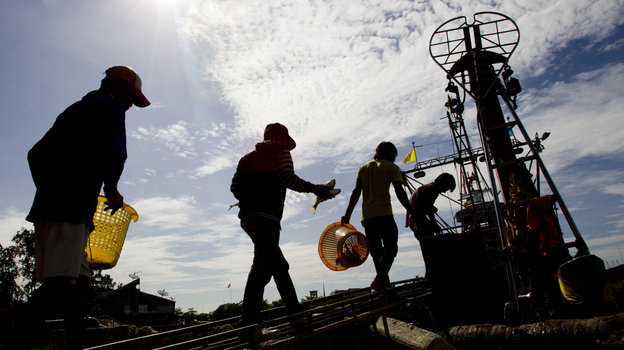
"caption": "Migrant workers from Myanmar return to a trawler after unloading fish following a fishing trip in the Gulf of Thailand in Samut Sakhon province Tuesday. A new report details \"deceptive and coercive\" labor practices in the Thai fishing sector, which relies heavily on workers from Cambodia and Myanmar, also known as Burma. Photo: Sakchai Lalit/AP",
"description": null,
"title": "thai-fishing",
"credit": null,
"status": "inherit",
"isLoading": false,
"fetchFailed": false
},
"bayareabites_69209": {
"type": "attachments",
"id": "bayareabites_69209",
"meta": {
"index": "attachments_1716263798",
"site": "bayareabites",
"id": "69209",
"found": true
},
"parent": 68873,
"imgSizes": {
"kqedFullSize": {
"file": "https://ww2.kqed.org/app/uploads/sites/24/2013/08/tokyofishmarket640x360.jpg",
"width": 640,
"height": 360
}
},
"publishDate": 1377846585,
"modified": 1377846585,
"caption": null,
"description": null,
"title": "tokyofishmarket640x360",
"credit": null,
"status": "inherit",
"isLoading": false,
"fetchFailed": false
},
"bayareabites_68865": {
"type": "attachments",
"id": "bayareabites_68865",
"meta": {
"index": "attachments_1716263798",
"site": "bayareabites",
"id": "68865",
"found": true
},
"parent": 68856,
"imgSizes": {
"kqedFullSize": {
"file": "https://ww2.kqed.org/app/uploads/sites/24/2013/08/dumplings.jpg",
"width": 624,
"height": 467
}
},
"publishDate": 1377559683,
"modified": 1377559683,
"caption": "Buuz are the Mongolian take on the dumpling, and are typically filled with mutton or beef. Dumplings can be found across Europe and Asia and most are stuffed with whatever the locals like to eat. Photo: \u003ca href=\"http://www.flickr.com/photos/33092397@N00/\">What'sAllThisThen/Flickr\u003c/a>",
"description": null,
"title": "dumplings",
"credit": null,
"status": "inherit",
"isLoading": false,
"fetchFailed": false
},
"bayareabites_68598": {
"type": "attachments",
"id": "bayareabites_68598",
"meta": {
"index": "attachments_1716263798",
"site": "bayareabites",
"id": "68598",
"found": true
},
"parent": 68592,
"imgSizes": {
"kqedFullSize": {
"file": "https://ww2.kqed.org/app/uploads/sites/24/2013/08/ramen-640.jpg",
"width": 624,
"height": 468
}
},
"publishDate": 1377015851,
"modified": 1377015851,
"caption": "A child eats instant noodles on a train at the Harbin Railway Station in northeast China. Photo: WANG JIANWEI/Xinhua /Landov",
"description": null,
"title": "ramen - 640",
"credit": null,
"status": "inherit",
"isLoading": false,
"fetchFailed": false
},
"bayareabites_67352": {
"type": "attachments",
"id": "bayareabites_67352",
"meta": {
"index": "attachments_1716263798",
"site": "bayareabites",
"id": "67352",
"found": true
},
"parent": 0,
"imgSizes": {
"kqedFullSize": {
"file": "https://ww2.kqed.org/app/uploads/sites/24/2013/08/Old_Weang_Ping_FeaturedImage.jpg",
"width": 639,
"height": 362
}
},
"publishDate": 1375414989,
"modified": 1375414989,
"caption": null,
"description": null,
"title": "Old_Weang_Ping_FeaturedImage",
"credit": null,
"status": "inherit",
"isLoading": false,
"fetchFailed": false
},
"bayareabites_66457": {
"type": "attachments",
"id": "bayareabites_66457",
"meta": {
"index": "attachments_1716263798",
"site": "bayareabites",
"id": "66457",
"found": true
},
"parent": 64207,
"imgSizes": {
"kqedFullSize": {
"file": "https://ww2.kqed.org/app/uploads/sites/24/2013/07/Beef-Pho640.jpg",
"width": 640,
"height": 359
}
},
"publishDate": 1374868095,
"modified": 1374868095,
"caption": null,
"description": null,
"title": "Beef-Pho640",
"credit": null,
"status": "inherit",
"isLoading": false,
"fetchFailed": false
},
"bayareabites_66223": {
"type": "attachments",
"id": "bayareabites_66223",
"meta": {
"index": "attachments_1716263798",
"site": "bayareabites",
"id": "66223",
"found": true
},
"parent": 66209,
"imgSizes": {
"kqedFullSize": {
"file": "https://ww2.kqed.org/app/uploads/sites/24/2013/07/rawfish-sm.jpg",
"width": 624,
"height": 350
}
},
"publishDate": 1374687555,
"modified": 1374687555,
"caption": null,
"description": "Italian-style Crudo with Basil Oil, Fennel and Lemon",
"title": "crudo",
"credit": null,
"status": "inherit",
"isLoading": false,
"fetchFailed": false
},
"bayareabites_65975": {
"type": "attachments",
"id": "bayareabites_65975",
"meta": {
"index": "attachments_1716263798",
"site": "bayareabites",
"id": "65975",
"found": true
},
"parent": 65966,
"imgSizes": {
"kqedFullSize": {
"file": "https://ww2.kqed.org/app/uploads/sites/24/2013/07/wontons-sm.jpg",
"width": 624,
"height": 467
}
},
"publishDate": 1374384213,
"modified": 1374384213,
"caption": null,
"description": "A member of the staff at the one-Michelin-starred restaurant Ho Hung Kee prepares wontons in Hong Kong.",
"title": "dumpling",
"credit": null,
"status": "inherit",
"isLoading": false,
"fetchFailed": false
},
"bayareabites_65828": {
"type": "attachments",
"id": "bayareabites_65828",
"meta": {
"index": "attachments_1716263798",
"site": "bayareabites",
"id": "65828",
"found": true
},
"parent": 64206,
"imgSizes": {
"kqedFullSize": {
"file": "https://ww2.kqed.org/app/uploads/sites/24/2013/07/Shrimp-Won-Ton-Soup-640x3601.jpg",
"width": 640,
"height": 360
}
},
"publishDate": 1374167871,
"modified": 1374167871,
"caption": null,
"description": null,
"title": "Shrimp-Won-Ton-Soup-640x360",
"credit": null,
"status": "inherit",
"isLoading": false,
"fetchFailed": false
},
"bayareabites_65783": {
"type": "attachments",
"id": "bayareabites_65783",
"meta": {
"index": "attachments_1716263798",
"site": "bayareabites",
"id": "65783",
"found": true
},
"parent": 65763,
"imgSizes": {
"kqedFullSize": {
"file": "https://ww2.kqed.org/app/uploads/sites/24/2013/07/scapes-sm.jpg",
"width": 624,
"height": 467
}
},
"publishDate": 1374101789,
"modified": 1374101789,
"caption": "T. Susan Chang for NPR",
"description": "Garlic Scapes",
"title": "scapes-overall-2",
"credit": null,
"status": "inherit",
"isLoading": false,
"fetchFailed": false
},
"bayareabites_65465": {
"type": "attachments",
"id": "bayareabites_65465",
"meta": {
"index": "attachments_1716263798",
"site": "bayareabites",
"id": "65465",
"found": true
},
"parent": 65460,
"imgSizes": {
"kqedFullSize": {
"file": "https://ww2.kqed.org/app/uploads/sites/24/2013/07/sake-sm.jpg",
"width": 624,
"height": 468
}
},
"publishDate": 1373995761,
"modified": 1373995761,
"caption": null,
"description": "Yoed Anis, president of the Texas Sake Company, says \"the only constraint holding us back\" from faster growth is the absence of a sufficient and consistent rice supply.",
"title": "texas-sake",
"credit": null,
"status": "inherit",
"isLoading": false,
"fetchFailed": false
},
"bayareabites_65265": {
"type": "attachments",
"id": "bayareabites_65265",
"meta": {
"index": "attachments_1716263798",
"site": "bayareabites",
"id": "65265",
"found": true
},
"parent": 65250,
"imgSizes": {
"kqedFullSize": {
"file": "https://ww2.kqed.org/app/uploads/sites/24/2013/07/ChefAlexOng-thumb-550x293.jpg",
"width": 550,
"height": 293
}
},
"publishDate": 1373657869,
"modified": 1373657869,
"caption": "Chef Alex Ong. Photo courtesy of Betelnut Restaurant",
"description": null,
"title": "ChefAlexOng-thumb-550x293",
"credit": null,
"status": "inherit",
"isLoading": false,
"fetchFailed": false
}
},
"audioPlayerReducer": {
"postId": "stream_live",
"isPaused": true,
"isPlaying": false,
"pfsActive": false,
"pledgeModalIsOpen": true,
"playerDrawerIsOpen": false,
"liveAudioPlayStartedAt": 0,
"liveAudioPlayContext": ""
},
"authorsReducer": {
"byline_bayareabites_69372": {
"type": "authors",
"id": "byline_bayareabites_69372",
"meta": {
"override": true
},
"slug": "byline_bayareabites_69372",
"name": "Krishnadev Calamur",
"isLoading": false
},
"byline_bayareabites_68856": {
"type": "authors",
"id": "byline_bayareabites_68856",
"meta": {
"override": true
},
"slug": "byline_bayareabites_68856",
"name": "Geoff Brumfiel",
"isLoading": false
},
"byline_bayareabites_68592": {
"type": "authors",
"id": "byline_bayareabites_68592",
"meta": {
"override": true
},
"slug": "byline_bayareabites_68592",
"name": "Eliza Barclay",
"isLoading": false
},
"byline_bayareabites_66209": {
"type": "authors",
"id": "byline_bayareabites_66209",
"meta": {
"override": true
},
"slug": "byline_bayareabites_66209",
"name": "Deena Prichep",
"isLoading": false
},
"byline_bayareabites_65966": {
"type": "authors",
"id": "byline_bayareabites_65966",
"meta": {
"override": true
},
"slug": "byline_bayareabites_65966",
"name": "Anna Haensch",
"isLoading": false
},
"byline_bayareabites_65763": {
"type": "authors",
"id": "byline_bayareabites_65763",
"meta": {
"override": true
},
"slug": "byline_bayareabites_65763",
"name": "T. Susan Chang",
"isLoading": false
},
"byline_bayareabites_65460": {
"type": "authors",
"id": "byline_bayareabites_65460",
"meta": {
"override": true
},
"slug": "byline_bayareabites_65460",
"name": "Alastair Bland",
"isLoading": false
},
"jennyoh": {
"type": "authors",
"id": "2100",
"meta": {
"index": "authors_1716337520",
"id": "2100",
"found": true
},
"name": "Jenny Oh",
"firstName": "Jenny",
"lastName": "Oh",
"slug": "jennyoh",
"email": "joh@kqed.org",
"display_author_email": false,
"staff_mastheads": [],
"title": "Audience Engagement Producer, Deep Look",
"bio": "Jenny is an Emmy Award-winning producer and is currently the Audience Engagement Producer for KQED Science's \u003cem>Deep Look\u003c/em> online video series. She was also a long-time contributor to Bay Area Bites, KQED's popular food blog. Jenny graduated with honors from New York University’s Tisch School of the Arts Film and Television program and has worked for WNET/PBS, The Learning Channel, Sundance Channel, HBO and the University of California.",
"avatar": "https://secure.gravatar.com/avatar/7ddda0ed657e46dbe66083f569967752?s=600&d=mm&r=g",
"twitter": null,
"facebook": null,
"instagram": null,
"linkedin": null,
"sites": [
{
"site": "arts",
"roles": []
},
{
"site": "pop",
"roles": []
},
{
"site": "about",
"roles": []
},
{
"site": "bayareabites",
"roles": []
},
{
"site": "science",
"roles": []
},
{
"site": "education",
"roles": []
},
{
"site": "quest",
"roles": []
},
{
"site": "food",
"roles": []
}
],
"headData": {
"title": "Jenny Oh | KQED",
"description": "Audience Engagement Producer, Deep Look",
"ogImgSrc": "https://secure.gravatar.com/avatar/7ddda0ed657e46dbe66083f569967752?s=600&d=mm&r=g",
"twImgSrc": "https://secure.gravatar.com/avatar/7ddda0ed657e46dbe66083f569967752?s=600&d=mm&r=g"
},
"isLoading": false,
"link": "/author/jennyoh"
},
"ginascialabba": {
"type": "authors",
"id": "2451",
"meta": {
"index": "authors_1716337520",
"id": "2451",
"found": true
},
"name": "Gina Scialabba",
"firstName": "Gina",
"lastName": "Scialabba",
"slug": "ginascialabba",
"email": "ginajournalist@gmail.com",
"display_author_email": false,
"staff_mastheads": [],
"title": null,
"bio": "Gina Scialabba is a journalist and practicing attorney based in San Francisco. She's a regular contributor to KQED Pop and now Bay Area Bites. When she's not reading a novel, newspaper or watching Mad Men, Sons of Anarchy or Anthony Bourdain, she's taking advantage of the richness and diversity of Bay Area culinary life. She also loves to travel. Next Stop: Vietnam, Thailand and Korea.",
"avatar": "https://secure.gravatar.com/avatar/e4df716be95aadc7807274c2405ccac8?s=600&d=blank&r=g",
"twitter": "Journalist_Gina",
"facebook": null,
"instagram": null,
"linkedin": null,
"sites": [
{
"site": "pop",
"roles": [
"contributor"
]
},
{
"site": "bayareabites",
"roles": [
"contributor"
]
}
],
"headData": {
"title": "Gina Scialabba | KQED",
"description": null,
"ogImgSrc": "https://secure.gravatar.com/avatar/e4df716be95aadc7807274c2405ccac8?s=600&d=blank&r=g",
"twImgSrc": "https://secure.gravatar.com/avatar/e4df716be95aadc7807274c2405ccac8?s=600&d=blank&r=g"
},
"isLoading": false,
"link": "/author/ginascialabba"
},
"maryladd": {
"type": "authors",
"id": "5092",
"meta": {
"index": "authors_1716337520",
"id": "5092",
"found": true
},
"name": "Mary Ladd",
"firstName": "Mary",
"lastName": "Ladd",
"slug": "maryladd",
"email": "writereadeat@gmail.com",
"display_author_email": false,
"staff_mastheads": [],
"title": null,
"bio": "Mary Ladd is a freelance writer and event professional based in her hometown of San Francisco. Her writing has been featured in SF Weekly, Tasting Table, the San Francisco Chronicle and elsewhere. She has shuttled \u003ca href=\"http://sf.eater.com/archives/2009/03/26/eater_map_mr_bourdains_san_francisco_whereabouts.php\">Anthony Bourdain\u003c/a> around town and mastered the art of properly loading a catering van in a flash. Mary has eaten the world’s hottest burger and loves to cook and eat. Follow her at \u003ca href=\"https://twitter.com/mladdfood\">@mladdfood\u003c/a>",
"avatar": "https://secure.gravatar.com/avatar/dab53b49e4e893d0d1e6a7ec6ed29e27?s=600&d=blank&r=g",
"twitter": "mladdfood",
"facebook": null,
"instagram": null,
"linkedin": null,
"sites": [
{
"site": "bayareabites",
"roles": [
"contributor"
]
}
],
"headData": {
"title": "Mary Ladd | KQED",
"description": null,
"ogImgSrc": "https://secure.gravatar.com/avatar/dab53b49e4e893d0d1e6a7ec6ed29e27?s=600&d=blank&r=g",
"twImgSrc": "https://secure.gravatar.com/avatar/dab53b49e4e893d0d1e6a7ec6ed29e27?s=600&d=blank&r=g"
},
"isLoading": false,
"link": "/author/maryladd"
},
"laurenbenichou": {
"type": "authors",
"id": "5466",
"meta": {
"index": "authors_1716337520",
"id": "5466",
"found": true
},
"name": "Lo Benichou",
"firstName": "Lo",
"lastName": "Benichou",
"slug": "laurenbenichou",
"email": "laurenbenichou@gmail.com",
"display_author_email": false,
"staff_mastheads": [],
"title": null,
"bio": "My name is Lo. I am a multimedia journalist and interactive web developer. I currently work at WIRED. I like data and stories. I like coding. I tried to do both at once. I occasionally write about food because food is life.",
"avatar": "https://secure.gravatar.com/avatar/20ac556dc8ae6a2669bcc745dd30b24d?s=600&d=blank&r=g",
"twitter": "LoBenichou",
"facebook": null,
"instagram": null,
"linkedin": null,
"sites": [
{
"site": "bayareabites",
"roles": [
"contributor"
]
},
{
"site": "food",
"roles": [
"contributor"
]
}
],
"headData": {
"title": "Lo Benichou | KQED",
"description": null,
"ogImgSrc": "https://secure.gravatar.com/avatar/20ac556dc8ae6a2669bcc745dd30b24d?s=600&d=blank&r=g",
"twImgSrc": "https://secure.gravatar.com/avatar/20ac556dc8ae6a2669bcc745dd30b24d?s=600&d=blank&r=g"
},
"isLoading": false,
"link": "/author/laurenbenichou"
}
},
"pagesReducer": {
"bayareabites_category_asian-food-and-drink": {
"type": "terms",
"id": "bayareabites_2998",
"meta": {
"index": "terms_1716263798",
"site": "bayareabites",
"id": "2998",
"score": 13.895298
},
"featImg": null,
"name": "asian food and drink",
"description": null,
"taxonomy": "category",
"headData": {
"twImgId": null,
"twTitle": null,
"ogTitle": null,
"ogImgId": null,
"twDescription": null,
"description": null,
"title": "asian food and drink Archives | KQED Bay Area Bites",
"ogDescription": null
},
"ttid": 58,
"slug": "asian-food-and-drink",
"isLoading": false,
"title": "asian food and drink",
"pageMeta": {
"site": "bayareabites",
"WpPageTemplate": "page-topic-editorial",
"currentPage": 19
},
"blocks": [
{
"blockName": "kqed/post-list",
"attrs": {
"layout": "cardArticle2",
"query": "posts/bayareabites?category=asian-food-and-drink",
"seeMore": false,
"paginated": true,
"page": 19
}
},
{
"blockName": "kqed/ad"
}
]
}
},
"pfsSessionReducer": {},
"postsReducer": {
"stream_live": {
"type": "live",
"id": "stream_live",
"audioUrl": "https://hls.kqed.org/hls/kqed_app/playlist.m3u8",
"title": "Live Stream",
"excerpt": "Live Stream information currently unavailable.",
"link": "/radio",
"featImg": "",
"label": {
"name": "KQED Live",
"link": "/"
}
},
"stream_kqedNewscast": {
"type": "posts",
"id": "stream_kqedNewscast",
"audioUrl": "https://www.kqed.org/.stream/anon/radio/RDnews/newscast.mp3?_=1",
"title": "KQED Newscast",
"featImg": "",
"label": {
"name": "88.5 FM",
"link": "/"
}
},
"bayareabites_69372": {
"type": "posts",
"id": "bayareabites_69372",
"meta": {
"index": "posts_1716263798",
"site": "bayareabites",
"id": "69372",
"score": null,
"sort": [
1378240757000
]
},
"parent": 0,
"labelTerm": {
"site": "bayareabites"
},
"blocks": [],
"publishDate": 1378240757,
"format": "aside",
"disqusTitle": "Thai Fishing Sector, Among World's Largest, Cited For Abuses",
"title": "Thai Fishing Sector, Among World's Largest, Cited For Abuses",
"headTitle": "Bay Area Bites | KQED Food",
"content": "\u003cfigure id=\"attachment_69378\" class=\"wp-caption aligncenter\" style=\"max-width: 624px\">\u003ca href=\"http://ww2.kqed.org/bayareabites/wp-content/uploads/sites/24/2013/09/thai-fishing.jpg\">\u003cimg class=\"size-full wp-image-69378\" src=\"http://ww2.kqed.org/bayareabites/wp-content/uploads/sites/24/2013/09/thai-fishing.jpg\" alt='Migrant workers from Myanmar return to a trawler after unloading fish following a fishing trip in the Gulf of Thailand in Samut Sakhon province Tuesday. A new report details \"deceptive and coercive\" labor practices in the Thai fishing sector, which relies heavily on workers from Cambodia and Myanmar, also known as Burma. Photo: Sakchai Lalit/AP' width=\"624\" height=\"350\">\u003c/a>\u003cfigcaption class=\"wp-caption-text\">Migrant workers from Myanmar return to a trawler after unloading fish following a fishing trip in the Gulf of Thailand in Samut Sakhon province Tuesday. A new report details \"deceptive and coercive\" labor practices in the Thai fishing sector, which relies heavily on workers from Cambodia and Myanmar, also known as Burma. Photo: Sakchai Lalit/AP\u003c/figcaption>\u003c/figure>\n\u003cp>Post by Krishnadev Calamur, \u003ca href=\"http://www.npr.org/blogs/parallels/2013/09/03/218558466/thai-fishing-sector-among-worlds-largest-cited-for-abuses\">Parallels at NPR Food\u003c/a> (9/3/13)\u003c/p>\n\u003cp>If you eat fish on a regular basis, chances are some of it is coming from Thailand. The Asian country is the world's No. 3 exporter of seafood (after China and Norway), and the U.S. is its top destination.\u003c/p>\n\u003cp>The Thai fishing industry has grown dramatically, and it is now coming under increased scrutiny. A new report details \"deceptive and coercive labor practices, and even forced labor and human trafficking within\" the Thai fishing sector.\u003c/p>\n\u003cp>The allegations are not new. An \u003ca href=\"http://www.npr.org/2012/06/19/155045295/confined-to-a-thai-fishing-boat-for-three-years\">NPR story\u003c/a> from June 2012 cited the example of one Cambodian who spent three years confined to a Thai fishing boat. A \u003cem>Global Post\u003c/em> series from last year chronicled what it called \"\u003ca href=\"http://www.globalpost.com/series/thailand-seafood-slavery\">seafood slavery\u003c/a>.\" And in May, the \u003ca href=\"http://ejfoundation.org/soldtotheseafilm\">Environmental Justice Foundation\u003c/a> said Thailand is doing little to prevent the abuses.\u003c/p>\n\u003cp>Thailand's fishing industry relies heavily on migrant workers from Cambodia and Burma — many of them undocumented. The \u003ca href=\"http://goo.gl/1lRBmp\">new report\u003c/a>, jointly released Monday by the International Labor Organization and the Asian Research Center for Migration at Chulalongkorn University, is the largest-ever conducted on the subject, surveying about 600 people who work on Thai boats in national and international waters.\u003c/p>\n\u003cp>[ad fullwidth]\u003c/p>\n\u003cp>The report says:\u003c/p>\n\u003cblockquote>\u003cp>\"The rapid growth of the Thai fishing sector over the past decades has come to an end, with higher fuel costs and a significant decrease in the Catch Per Unit of Effort (CPUE) due to overfishing. This has led to dramatic changes in the structure of employment and working conditions within the sector. Fewer people, both Thai and migrants, are willing to work on board because of the working conditions and as such, unscrupulous brokers and employers will often provide misleading information, withhold payment, threaten violence and use other means to recruit and employ fishers. It can therefore be said that this labor shortage — estimated to be as high as 50,000 workers — is both a cause and an effect of the abusive labor practices that are seen in the fishing sector.\"\u003c/p>\u003c/blockquote>\n\u003cp>But it does note that \"a significant proportion of the sample did not appear to be in an exploitative situation.\"\u003c/p>\n\u003cp>Still, the report increases pressure on the Thai government to better regulate the $7 billion fishing industry.\u003c/p>\n\u003cp>For four years in a row, the State Department put Thailand on its tier 2 watch list, the second-worst position, for failing to increase efforts to address human trafficking. But earlier this year, it was granted a waiver from an otherwise-required downgrade because \"the government has a written plan that, if implemented, would constitute making significant efforts to meet the minimum standards for the elimination of trafficking and is devoting sufficient resources to implement that plan.\"\u003c/p>\n\u003cp>The State Department's annual report cited Thailand's fishing industry, \u003ca href=\"http://www.state.gov/documents/organization/210742.pdf\">noting in June\u003c/a> that \"a significant portion of labor trafficking victims within Thailand are exploited in commercial fishing [and] fishing-related industries.\u003c/p>\n\u003cp>At the time, Luis CdeBaca, the U.S. ambassador in the Office to Monitor and Combat Trafficking in Persons, \u003ca href=\"http://www.npr.org/blogs/parallels/2013/06/19/193548577/u-s-wants-global-trafficking-report-to-hit-home\">told NPR's Michele Kelemen\u003c/a> in June that he wanted the report to hit home:\u003c/p>\n\u003cp>\"This year's report looks at things like the fishing industry — and actually raises a question that I think all of us should be asking, which is: How much of my life is impacting modern-day slavery? Do I know where the shrimp is being caught or processed that is on my plate? ... And instead of it being somebody else's problem, how can I make it my problem? How can I actually do something about it?\"\u003c/p>\n\u003cp>Similar problems also exist in shrimp farms and processing plants in the country, as NPR's Eliza Barclay noted in \u003ca href=\"http://ww2.kqed.org/bayareabites/2013/06/20/why-slave-labor-still-plagues-the-global-food-system/\">The Salt\u003c/a>.\u003c/p>\n\u003cp>\u003c/p>\n\u003cp>\u003cem>Copyright 2013 \u003ca href=\"http://www.npr.org/\">NPR\u003c/a>.\u003c/em>\u003c/p>\n\n",
"disqusIdentifier": "69372 http://blogs.kqed.org/bayareabites/?p=69372",
"disqusUrl": "https://ww2.kqed.org/bayareabites/2013/09/03/thai-fishing-sector-among-worlds-largest-cited-for-abuses/",
"stats": {
"hasVideo": false,
"hasChartOrMap": false,
"hasAudio": false,
"hasPolis": false,
"wordCount": 685,
"hasGoogleForm": false,
"hasGallery": false,
"hasHearkenModule": false,
"iframeSrcs": [],
"paragraphCount": 17
},
"modified": 1552424327,
"excerpt": "A report from the International Labor Organization details \"deceptive and coercive\" labor practices — and even forced labor within the industry. The allegations aren't new, but increase pressure on the Thai government to better regulate the $7 billion industry.",
"headData": {
"twImgId": "",
"twTitle": "",
"ogTitle": "",
"ogImgId": "",
"twDescription": "",
"description": "A report from the International Labor Organization details "deceptive and coercive" labor practices — and even forced labor within the industry. The allegations aren't new, but increase pressure on the Thai government to better regulate the $7 billion industry.",
"title": "Thai Fishing Sector, Among World's Largest, Cited For Abuses | KQED",
"ogDescription": "",
"schema": {
"@context": "https://schema.org",
"@type": "Article",
"headline": "Thai Fishing Sector, Among World's Largest, Cited For Abuses",
"datePublished": "2013-09-03T13:39:17-07:00",
"dateModified": "2019-03-12T13:58:47-07:00",
"image": "https://cdn.kqed.org/wp-content/uploads/2020/02/KQED-OG-Image@1x.png"
}
},
"guestAuthors": [],
"slug": "thai-fishing-sector-among-worlds-largest-cited-for-abuses",
"status": "publish",
"nprApiLink": "http://api.npr.org/query?id=218558466&apiKey=MDAxOTAwOTE4MDEyMTkxMDAzNjczZDljZA004",
"nprByline": "Krishnadev Calamur",
"nprStoryDate": "Tue, 03 Sep 2013 12:50:00 -0400",
"nprLastModifiedDate": "Tue, 03 Sep 2013 16:20:50 -0400",
"nprHtmlLink": "http://www.npr.org/blogs/parallels/2013/09/03/218558466/thai-fishing-sector-among-worlds-largest-cited-for-abuses?ft=3&f=218558466",
"nprStoryId": "218558466",
"nprRetrievedStory": "1",
"nprPubDate": "Tue, 03 Sep 2013 16:20:00 -0400",
"path": "/bayareabites/69372/thai-fishing-sector-among-worlds-largest-cited-for-abuses",
"audioTrackLength": null,
"parsedContent": [
{
"type": "contentString",
"content": "\u003cdiv class=\"post-body\">\u003cp>\u003cfigure id=\"attachment_69378\" class=\"wp-caption aligncenter\" style=\"max-width: 624px\">\u003ca href=\"http://ww2.kqed.org/bayareabites/wp-content/uploads/sites/24/2013/09/thai-fishing.jpg\">\u003cimg class=\"size-full wp-image-69378\" src=\"http://ww2.kqed.org/bayareabites/wp-content/uploads/sites/24/2013/09/thai-fishing.jpg\" alt='Migrant workers from Myanmar return to a trawler after unloading fish following a fishing trip in the Gulf of Thailand in Samut Sakhon province Tuesday. A new report details \"deceptive and coercive\" labor practices in the Thai fishing sector, which relies heavily on workers from Cambodia and Myanmar, also known as Burma. Photo: Sakchai Lalit/AP' width=\"624\" height=\"350\">\u003c/a>\u003cfigcaption class=\"wp-caption-text\">Migrant workers from Myanmar return to a trawler after unloading fish following a fishing trip in the Gulf of Thailand in Samut Sakhon province Tuesday. A new report details \"deceptive and coercive\" labor practices in the Thai fishing sector, which relies heavily on workers from Cambodia and Myanmar, also known as Burma. Photo: Sakchai Lalit/AP\u003c/figcaption>\u003c/figure>\n\u003cp>Post by Krishnadev Calamur, \u003ca href=\"http://www.npr.org/blogs/parallels/2013/09/03/218558466/thai-fishing-sector-among-worlds-largest-cited-for-abuses\">Parallels at NPR Food\u003c/a> (9/3/13)\u003c/p>\n\u003cp>If you eat fish on a regular basis, chances are some of it is coming from Thailand. The Asian country is the world's No. 3 exporter of seafood (after China and Norway), and the U.S. is its top destination.\u003c/p>\n\u003cp>The Thai fishing industry has grown dramatically, and it is now coming under increased scrutiny. A new report details \"deceptive and coercive labor practices, and even forced labor and human trafficking within\" the Thai fishing sector.\u003c/p>\n\u003cp>The allegations are not new. An \u003ca href=\"http://www.npr.org/2012/06/19/155045295/confined-to-a-thai-fishing-boat-for-three-years\">NPR story\u003c/a> from June 2012 cited the example of one Cambodian who spent three years confined to a Thai fishing boat. A \u003cem>Global Post\u003c/em> series from last year chronicled what it called \"\u003ca href=\"http://www.globalpost.com/series/thailand-seafood-slavery\">seafood slavery\u003c/a>.\" And in May, the \u003ca href=\"http://ejfoundation.org/soldtotheseafilm\">Environmental Justice Foundation\u003c/a> said Thailand is doing little to prevent the abuses.\u003c/p>\n\u003cp>Thailand's fishing industry relies heavily on migrant workers from Cambodia and Burma — many of them undocumented. The \u003ca href=\"http://goo.gl/1lRBmp\">new report\u003c/a>, jointly released Monday by the International Labor Organization and the Asian Research Center for Migration at Chulalongkorn University, is the largest-ever conducted on the subject, surveying about 600 people who work on Thai boats in national and international waters.\u003c/p>\n\u003cp>\u003c/p>\u003c/div>",
"attributes": {
"named": {},
"numeric": []
}
},
{
"type": "component",
"content": "",
"name": "ad",
"attributes": {
"named": {
"label": "fullwidth"
},
"numeric": [
"fullwidth"
]
}
},
{
"type": "contentString",
"content": "\u003cdiv class=\"post-body\">\u003cp>\u003c/p>\n\u003cp>The report says:\u003c/p>\n\u003cblockquote>\u003cp>\"The rapid growth of the Thai fishing sector over the past decades has come to an end, with higher fuel costs and a significant decrease in the Catch Per Unit of Effort (CPUE) due to overfishing. This has led to dramatic changes in the structure of employment and working conditions within the sector. Fewer people, both Thai and migrants, are willing to work on board because of the working conditions and as such, unscrupulous brokers and employers will often provide misleading information, withhold payment, threaten violence and use other means to recruit and employ fishers. It can therefore be said that this labor shortage — estimated to be as high as 50,000 workers — is both a cause and an effect of the abusive labor practices that are seen in the fishing sector.\"\u003c/p>\u003c/blockquote>\n\u003cp>But it does note that \"a significant proportion of the sample did not appear to be in an exploitative situation.\"\u003c/p>\n\u003cp>Still, the report increases pressure on the Thai government to better regulate the $7 billion fishing industry.\u003c/p>\n\u003cp>For four years in a row, the State Department put Thailand on its tier 2 watch list, the second-worst position, for failing to increase efforts to address human trafficking. But earlier this year, it was granted a waiver from an otherwise-required downgrade because \"the government has a written plan that, if implemented, would constitute making significant efforts to meet the minimum standards for the elimination of trafficking and is devoting sufficient resources to implement that plan.\"\u003c/p>\n\u003cp>The State Department's annual report cited Thailand's fishing industry, \u003ca href=\"http://www.state.gov/documents/organization/210742.pdf\">noting in June\u003c/a> that \"a significant portion of labor trafficking victims within Thailand are exploited in commercial fishing [and] fishing-related industries.\u003c/p>\n\u003cp>At the time, Luis CdeBaca, the U.S. ambassador in the Office to Monitor and Combat Trafficking in Persons, \u003ca href=\"http://www.npr.org/blogs/parallels/2013/06/19/193548577/u-s-wants-global-trafficking-report-to-hit-home\">told NPR's Michele Kelemen\u003c/a> in June that he wanted the report to hit home:\u003c/p>\n\u003cp>\"This year's report looks at things like the fishing industry — and actually raises a question that I think all of us should be asking, which is: How much of my life is impacting modern-day slavery? Do I know where the shrimp is being caught or processed that is on my plate? ... And instead of it being somebody else's problem, how can I make it my problem? How can I actually do something about it?\"\u003c/p>\n\u003cp>Similar problems also exist in shrimp farms and processing plants in the country, as NPR's Eliza Barclay noted in \u003ca href=\"http://ww2.kqed.org/bayareabites/2013/06/20/why-slave-labor-still-plagues-the-global-food-system/\">The Salt\u003c/a>.\u003c/p>\n\u003cp>\u003c/p>\n\u003cp>\u003cem>Copyright 2013 \u003ca href=\"http://www.npr.org/\">NPR\u003c/a>.\u003c/em>\u003c/p>\n\n\u003c/div>\u003c/p>",
"attributes": {
"named": {},
"numeric": []
}
}
],
"link": "/bayareabites/69372/thai-fishing-sector-among-worlds-largest-cited-for-abuses",
"authors": [
"byline_bayareabites_69372"
],
"categories": [
"bayareabites_2998",
"bayareabites_10916",
"bayareabites_2035"
],
"tags": [
"bayareabites_14775",
"bayareabites_11497",
"bayareabites_2932"
],
"featImg": "bayareabites_69378",
"label": "bayareabites"
},
"bayareabites_68873": {
"type": "posts",
"id": "bayareabites_68873",
"meta": {
"index": "posts_1716263798",
"site": "bayareabites",
"id": "68873",
"score": null,
"sort": [
1377878776000
]
},
"parent": 0,
"labelTerm": {
"site": "bayareabites"
},
"blocks": [],
"publishDate": 1377878776,
"format": "aside",
"disqusTitle": "International Cuisine: 5 Favorite Bay Area Specialty Food Shops",
"title": "International Cuisine: 5 Favorite Bay Area Specialty Food Shops",
"headTitle": "Bay Area Bites | KQED Food",
"content": "\u003cp>\u003cstrong>All Photos by \u003ca href=\"http://ww2.kqed.org/bayareabites/author/sarabloomberg/\">Sara Bloomberg\u003c/a>\u003c/strong>\u003c/p>\n\u003cp>The Bay Area is a multicultural \u003ca href=\"http://en.wikipedia.org/wiki/Salad_bowl_%28cultural_idea%29\">salad bowl\u003c/a>. People from all over the world flock here for the culture, the weather, the thriving tech job market, and of course, the food. With so many different ethnic groups calling this region \"home\" it's no wonder there's such a diversity of food choices available. In addition to a wealth of restaurants serving a variety of international cuisines and neighborhoods organized around specific cultural groups (Chinatown, Japantown, The Mission, etc.) there are also many markets that feature foods specific to particular regional cuisines.\u003c/p>\n\u003cp>Here are five favorite specialty shops selling food and culinary goods imported from Spain, Japan, Russia, Germany and Italy. If you are curious to explore products from these countries or are nostalgic for the food and culture from any of these regions be sure to visit these shops. And, of course, there are so many more of these specialty stores in the Bay Area so please share your favorites in the comments.\u003c/p>\n\u003ch2>\u003ca href=\"http://www.spanishtable.com/\">The Spanish Table 2\u003c/a>\u003c/h2>\n\u003cp>\u003cstrong>Address:\u003c/strong>\u003cbr>\n1814 San Pablo Ave\u003cbr>\nBerkeley, CA 94702\u003cbr>\n\u003cstrong>Phone:\u003c/strong> (510) 548-1383\u003cbr>\n\u003cstrong>Facebook:\u003c/strong> \u003ca href=\"https://www.facebook.com/pages/The-Spanish-Table/109303127090\">The Spanish Table\u003c/a>\u003cbr>\n\u003cstrong>Store Hours:\u003c/strong> Mon-Sat 10:00am-6:00pm, Sun 11:00am-5:00pm\u003c/p>\n\u003cp>\u003cstrong>Why we love it?\u003c/strong> How about a paella pan made to serve 200 people? \u003c/p>\n\u003cfigure id=\"attachment_69106\" class=\"wp-caption aligncenter\" style=\"max-width: 1000px\">\u003ca href=\"http://ww2.kqed.org/bayareabites/wp-content/uploads/sites/24/2013/08/5Bites_specialtystores_ST-26.jpg\">\u003cimg src=\"http://ww2.kqed.org/bayareabites/wp-content/uploads/sites/24/2013/08/5Bites_specialtystores_ST-26.jpg\" alt=\"Tagines are popular in North Africa and are primarily used for stews. There’s a lot of Moorish influence in Spanish cooking. Photo by Sara Bloomberg\" width=\"1000\" height=\"750\" class=\"size-full wp-image-69106\">\u003c/a>\u003cfigcaption class=\"wp-caption-text\">Tagines are popular in North Africa and are primarily used for stews. There’s a lot of Moorish influence in Spanish cooking. Photo by Sara Bloomberg\u003c/figcaption>\u003c/figure>\n\u003cp>\u003ca href=\"http://ww2.kqed.org/bayareabites/wp-content/uploads/sites/24/2013/08/5Bites_specialtystores_ST-28.jpg\">\u003cimg src=\"http://ww2.kqed.org/bayareabites/wp-content/uploads/sites/24/2013/08/5Bites_specialtystores_ST-28-290x217.jpg\" alt=\"The Spanish Table sells a variety of canned and preserved specialty foods from the Iberian Peninsula. Photo by Sara Bloomberg\" width=\"290\" height=\"217\" class=\"alignnone size-medium wp-image-69107\">\u003c/a>\u003ca href=\"http://ww2.kqed.org/bayareabites/wp-content/uploads/sites/24/2013/08/5Bites_specialtystores_ST-31.jpg\">\u003cimg src=\"http://ww2.kqed.org/bayareabites/wp-content/uploads/sites/24/2013/08/5Bites_specialtystores_ST-31-290x217.jpg\" alt=\"Squid ink is used for coloring and flavor in Spanish cooking. Photo by Sara Bloomberg\" width=\"290\" height=\"217\" class=\"alignnone size-medium wp-image-69108\">\u003c/a>\u003c/p>\n\u003cp>[ad fullwidth]\u003c/p>\n\u003cp>Looking for food from the Iberian Coast? Come to Berkeley's International Marketplace, home of \u003ca href=\"http://www.spanishtable.com/\">The Spanish Table 2\u003c/a> which opened in 2001. Here you will find foods from Portugal, Spain, Andorra, Gibraltar and, most recently, North Africa. The store sells wine, groceries, cookware, ceramics and cookbooks, and there is an \u003ca href=\"http://www.spanishtablewines.com/\">online wine shop\u003c/a> dedicated to selling wine from these regions. Store Manager, Caty Salas explained the main reason people shop here is the depth of product selection. “No one else has this focus. It’s a specialized niche,” she said. Salas said that while Cost Plus World Market may have some things, they certainly don’t have the range of products that Spanish Table imports. And, that’s what keeps customers coming back. \u003c/p>\n\u003cblockquote>\u003cp>“We have people from all over the world shopping here,” Salas said. “People come in here and say, ‘Oh my god. I haven’t seen these since I lived in Spain.”\u003c/p>\u003c/blockquote>\n\u003cp>Indeed, you can find a wealth of Spanish imports here—paella pans, tapas, North African tagines to make stews, and even a pickled partridge preserved in a jar. Not their best seller, Salas said, but certainly unique. They also carry a delectable selection of Manchego, jamon iberico, lomo, almonds, olives angulas, bacalao, piquillos and padrones. \u003c/p>\n\u003cp>They also have an impressive selection of Sherry and Madeira wine, as well as Spanish beer and wine.\u003c/p>\n\u003cp>\u003ca href=\"http://ww2.kqed.org/bayareabites/wp-content/uploads/sites/24/2013/08/5Bites_specialtystores_ST-32.jpg\">\u003cimg src=\"http://ww2.kqed.org/bayareabites/wp-content/uploads/sites/24/2013/08/5Bites_specialtystores_ST-32-290x217.jpg\" alt=\"The “porron” (prounced: po’ rohn) is used to drink wine without a fuss but it might take some practice to master the technique without spilling. Photo by Sara Bloomberg\" width=\"290\" height=\"217\" class=\"alignnone size-medium wp-image-69109\">\u003c/a>\u003ca href=\"http://ww2.kqed.org/bayareabites/wp-content/uploads/sites/24/2013/08/5Bites_specialtystores_ST-33.jpg\">\u003cimg src=\"http://ww2.kqed.org/bayareabites/wp-content/uploads/sites/24/2013/08/5Bites_specialtystores_ST-33-290x217.jpg\" alt=\"Whole quail and partridges are preserved confit-style. Photo by Sara Bloomberg\" width=\"290\" height=\"217\" class=\"alignnone size-medium wp-image-69110\">\u003c/a>\u003cbr>\n \u003ca href=\"http://ww2.kqed.org/bayareabites/wp-content/uploads/sites/24/2013/08/5Bites_specialtystores_ST-51.jpg\">\u003cimg src=\"http://ww2.kqed.org/bayareabites/wp-content/uploads/sites/24/2013/08/5Bites_specialtystores_ST-51-290x217.jpg\" alt=\"A Spanish vintage from 1935 will cost you hundreds of dollars. The Spanish Table carries a large selection of Madeira wines, Port and Sherry. Photo by Sara Bloomberg\" width=\"290\" height=\"217\" class=\"alignnone size-medium wp-image-69081\">\u003c/a>\u003ca href=\"http://ww2.kqed.org/bayareabites/wp-content/uploads/sites/24/2013/08/paella-pans-glasses.jpg\">\u003cimg src=\"http://ww2.kqed.org/bayareabites/wp-content/uploads/sites/24/2013/08/paella-pans-glasses-290x216.jpg\" alt=\"Various sizes of Paella pans line the back wall with wine goblets in the foreground. Photo: Sara Bloomberg\" width=\"290\" height=\"216\" class=\"alignnone size-medium wp-image-69212\">\u003c/a>\u003c/p>\n\u003ch2>\u003ca href=\"http://www.tokyofish.net/\">Tokyo Fish Market\u003c/a>\u003c/h2>\n\u003cp>\u003cstrong>Address:\u003c/strong>\u003cbr>\n1220 San Pablo Ave\u003cbr>\nBerkeley, CA 94706\u003cbr>\n\u003cstrong>Phone:\u003c/strong> (510) 524-7243\u003cbr>\n\u003cstrong>Store Hours:\u003c/strong> Mon-Sat 9:00am-6:00pm\u003c/p>\n\u003cp>\u003cstrong>Why we love it?\u003c/strong> A shelf of sushi roe that comes in all colors of the rainbow.\u003c/p>\n\u003cfigure id=\"attachment_69082\" class=\"wp-caption aligncenter\" style=\"max-width: 1000px\">\u003ca href=\"http://ww2.kqed.org/bayareabites/wp-content/uploads/sites/24/2013/08/5Bites_specialtystores_Fish-69.jpg\">\u003cimg src=\"http://ww2.kqed.org/bayareabites/wp-content/uploads/sites/24/2013/08/5Bites_specialtystores_Fish-69.jpg\" alt=\"The Tokyo Fish Market in Berkeley has two main parts: the gift shop is in the original brick storefront, and the fish market and grocery store are in the building right behind it. Photo by Sara Bloomberg\" width=\"1000\" height=\"750\" class=\"size-full wp-image-69082\">\u003c/a>\u003cfigcaption class=\"wp-caption-text\">The Tokyo Fish Market in Berkeley has two main parts: the gift shop is in the original brick storefront, and the fish market and grocery store are in the building right behind it. Photo by Sara Bloomberg\u003c/figcaption>\u003c/figure>\n\u003cp>\u003ca href=\"http://ww2.kqed.org/bayareabites/wp-content/uploads/sites/24/2013/08/5Bites_specialtystores_Fish-75.jpg\">\u003cimg src=\"http://ww2.kqed.org/bayareabites/wp-content/uploads/sites/24/2013/08/5Bites_specialtystores_Fish-75-290x217.jpg\" alt=\"Gourmet mochi is just begging to be eaten. Photo by Sara Bloomberg\" width=\"290\" height=\"217\" class=\"alignnone size-medium wp-image-69083\">\u003c/a>\u003ca href=\"http://ww2.kqed.org/bayareabites/wp-content/uploads/sites/24/2013/08/5Bites_specialtystores_Fish-89.jpg\">\u003cimg src=\"http://ww2.kqed.org/bayareabites/wp-content/uploads/sites/24/2013/08/5Bites_specialtystores_Fish-89-290x217.jpg\" alt=\"Colorful packages of roe and sushi will tempt you to taste the rainbow. These definitely aren't Skittles. Photo by Sara Bloomberg\" width=\"290\" height=\"217\" class=\"alignnone size-medium wp-image-69084\">\u003c/a>\u003c/p>\n\u003cp>Tokyo Fish Market is not just a fish market. It’s an institution that’s been around since 1963. You will certainly find plenty of fresh seafood, some even imported directly from Japan. The market is frequently packed with patrons who come to purchase items such as sake, Japanese rice, mochi candies, Japanese vegetables and live crabs. They carry over 100 types of fish and seafood products ranging from local rock cod and squid to smelt, tuna, halibut, octopus and soft-shell crabs. They also have a separate gift shop with Japanese food-related specialty items. \u003c/p>\n\u003cp>\u003ca href=\"http://ww2.kqed.org/bayareabites/wp-content/uploads/sites/24/2013/08/5Bites_specialtystores_Fish-93.jpg\">\u003cimg src=\"http://ww2.kqed.org/bayareabites/wp-content/uploads/sites/24/2013/08/5Bites_specialtystores_Fish-93-290x217.jpg\" alt=\"Rock cod, squid and smelt are among the seafood options available at Tokyo Fish Market in Berkeley. Photo by Sara Bloomberg\" width=\"290\" height=\"217\" class=\"alignnone size-medium wp-image-69085\">\u003c/a>\u003ca href=\"http://ww2.kqed.org/bayareabites/wp-content/uploads/sites/24/2013/08/5Bites_specialtystores_Fish-98.jpg\">\u003cimg src=\"http://ww2.kqed.org/bayareabites/wp-content/uploads/sites/24/2013/08/5Bites_specialtystores_Fish-98-290x217.jpg\" alt=\"Fresh octopus and other specialty seafood selections—including eel and crab—are offered at Tokyo Fish Market in Berkeley. Photo by Sara Bloomberg\" width=\"290\" height=\"217\" class=\"alignnone size-medium wp-image-69086\">\u003c/a>\u003cbr>\n\u003ca href=\"http://ww2.kqed.org/bayareabites/wp-content/uploads/sites/24/2013/08/5Bites_specialtystores_Fish-104.jpg\">\u003cimg src=\"http://ww2.kqed.org/bayareabites/wp-content/uploads/sites/24/2013/08/5Bites_specialtystores_Fish-104-290x217.jpg\" alt=\"Lychee fruit is native to China and popular in Southeast Asia. It contains potassium, phosphorus, magnesium, calcium and other trace minerals and vitamins. Photo by Sara Bloomberg\" width=\"290\" height=\"217\" class=\"alignnone size-medium wp-image-69087\">\u003c/a>\u003ca href=\"http://ww2.kqed.org/bayareabites/wp-content/uploads/sites/24/2013/08/tokyofishmarket.jpg\">\u003cimg src=\"http://ww2.kqed.org/bayareabites/wp-content/uploads/sites/24/2013/08/tokyofishmarket-290x217.jpg\" alt=\"Japanese rice, sake and other products line the shelves at Tokyo Fish Market. Photo: Sara Bloomberg\" width=\"290\" height=\"217\" class=\"alignnone size-medium wp-image-69213\">\u003c/a>\u003c/p>\n\u003ch2>\u003ca href=\"http://www.yelp.com/biz/royal-market-and-bakery-san-francisco\">Royal Market\u003c/a>\u003c/h2>\n\u003cp>\u003cstrong>Address:\u003c/strong>\u003cbr>\n5335 Geary Blvd (Between 17th Ave & 18th Ave)\u003cbr>\nSan Francisco, CA 94121\u003cbr>\n\u003cstrong>Neighborhood:\u003c/strong> Inner Richmond\u003cbr>\n\u003cstrong>Phone:\u003c/strong> (415) 221-5550\u003cbr>\n\u003cstrong>Store Hours:\u003c/strong> Every day 9:00am-9:00pm\u003c/p>\n\u003cp>\u003cstrong>Why we love it?\u003c/strong> They have chocolate \"babushka\" dolls. \u003c/p>\n\u003cfigure id=\"attachment_69210\" class=\"wp-caption aligncenter\" style=\"max-width: 998px\">\u003ca href=\"http://ww2.kqed.org/bayareabites/wp-content/uploads/sites/24/2013/08/5Bites_SpecialtyStores_RoyalMarketbabushka.jpg\">\u003cimg src=\"http://ww2.kqed.org/bayareabites/wp-content/uploads/sites/24/2013/08/5Bites_SpecialtyStores_RoyalMarketbabushka.jpg\" alt='Chocolate \"babushka\" dolls. Photo: Sara Bloomberg' width=\"998\" height=\"665\" class=\"size-full wp-image-69210\">\u003c/a>\u003cfigcaption class=\"wp-caption-text\">Chocolate \"babushka\" dolls. Photo: Sara Bloomberg\u003c/figcaption>\u003c/figure>\n\u003cp>\u003ca href=\"http://ww2.kqed.org/bayareabites/wp-content/uploads/sites/24/2013/08/5Bites_SpecialtyStores_RoyalMarket-02.jpg\">\u003cimg src=\"http://ww2.kqed.org/bayareabites/wp-content/uploads/sites/24/2013/08/5Bites_SpecialtyStores_RoyalMarket-02-290x193.jpg\" alt=\"Cherry and cranberry cakes are delivered from Los Angeles. Photo by Sara Bloomberg\" width=\"290\" height=\"193\" class=\"alignnone size-medium wp-image-69100\">\u003c/a>\u003ca href=\"http://ww2.kqed.org/bayareabites/wp-content/uploads/sites/24/2013/08/5Bites_SpecialtyStores_RoyalMarket-05.jpg\">\u003cimg src=\"http://ww2.kqed.org/bayareabites/wp-content/uploads/sites/24/2013/08/5Bites_SpecialtyStores_RoyalMarket-05-290x193.jpg\" alt=\"Vodka is a popular item at Royal Market and Bakery. Photo by Sara Bloomberg\" width=\"290\" height=\"193\" class=\"alignnone size-medium wp-image-69101\">\u003c/a>\u003c/p>\n\u003cp>Looking for a little Eastern European flavor to spice up your weekly menu? The Royal Market & Bakery is your one-stop shop. Located in the Inner Richmond district, Armenian store owner Vardges Kazaryan said vodka is definitely one of their best sellers. \u003c/p>\n\u003cblockquote>\u003cp>“We carry vodka. Lots of vodka,” he said. “Whatever you want, we have.”\u003c/p>\u003c/blockquote>\n\u003cp>They sell a mix of traditional Russian foods, as well as some Armenian, Georgian, and Middle Eastern fare. Their selection of fresh, Russian-inspired homemade products is quite impressive: Armenian bread, sweet cakes, savory kebabs, potatoes with sauce, pork, vegetables, chicken, beef tongues and caviar. \u003c/p>\n\u003cp>You can also find pierogies, sausages, cheddars, fresh fish and meat and housemade pickles of all kinds. The bakery is stellar, too, and offers Russian-style cranberry and cherry cakes from Los Angeles as well as other housemade desserts. \u003c/p>\n\u003cp>\u003ca href=\"http://ww2.kqed.org/bayareabites/wp-content/uploads/sites/24/2013/08/5Bites_SpecialtyStores_RoyalMarket-09.jpg\">\u003cimg src=\"http://ww2.kqed.org/bayareabites/wp-content/uploads/sites/24/2013/08/5Bites_SpecialtyStores_RoyalMarket-09-290x193.jpg\" alt=\"Shish kabobs are made fresh and can be either chicken, beef or lamb. Photo by Sara Bloomberg\" width=\"290\" height=\"193\" class=\"alignnone size-medium wp-image-69102\">\u003c/a>\u003ca href=\"http://ww2.kqed.org/bayareabites/wp-content/uploads/sites/24/2013/08/5Bites_SpecialtyStores_RoyalMarket-10.jpg\">\u003cimg src=\"http://ww2.kqed.org/bayareabites/wp-content/uploads/sites/24/2013/08/5Bites_SpecialtyStores_RoyalMarket-10-290x193.jpg\" alt=\"Beet salad is one of the many fresh deli items available at Royal Market and Bakery. Photo by Sara Bloomberg\" width=\"290\" height=\"193\" class=\"alignnone size-medium wp-image-69103\">\u003c/a>\u003cbr>\n\u003ca href=\"http://ww2.kqed.org/bayareabites/wp-content/uploads/sites/24/2013/08/5Bites_SpecialtyStores_RoyalMarket-11.jpg\">\u003cimg src=\"http://ww2.kqed.org/bayareabites/wp-content/uploads/sites/24/2013/08/5Bites_SpecialtyStores_RoyalMarket-11-290x193.jpg\" alt=\"Blintzes are traditionally made with either shredded beef or cottage cheese. Photo by Sara Bloomberg\" width=\"290\" height=\"193\" class=\"alignnone size-medium wp-image-69104\">\u003c/a>\u003ca href=\"http://ww2.kqed.org/bayareabites/wp-content/uploads/sites/24/2013/08/5Bites_SpecialtyStores_RoyalMarket-14.jpg\">\u003cimg src=\"http://ww2.kqed.org/bayareabites/wp-content/uploads/sites/24/2013/08/5Bites_SpecialtyStores_RoyalMarket-14-290x193.jpg\" alt=\"Sturgeon is a popular fish at Royal Market and Bakery. Photo by Sara Bloomberg\" width=\"290\" height=\"193\" class=\"alignnone size-medium wp-image-69105\">\u003c/a>\u003c/p>\n\u003ch2>\u003ca href=\"http://www.yelp.com/biz/lehrs-german-specialties-san-francisco\">Lehr's German Specialties\u003c/a>\u003c/h2>\n\u003cp>\u003cstrong>Address:\u003c/strong>\u003cbr>\n1581 Church Street\u003cbr>\nSan Francisco, CA 94131\u003cbr>\n\u003cstrong>Neighborhood:\u003c/strong> Noe Valley\u003cbr>\n\u003cstrong>Phone:\u003c/strong> (415) 282-6803\u003cbr>\n\u003cstrong>Hours:\u003c/strong> Everyday 10:00am-6:00pm\u003c/p>\n\u003cp>\u003cstrong>Why we love it?\u003c/strong> Rows and rows of German candies, lots of sauerkraut and curry ketchup. \u003c/p>\n\u003cfigure id=\"attachment_69089\" class=\"wp-caption aligncenter\" style=\"max-width: 1000px\">\u003ca href=\"http://ww2.kqed.org/bayareabites/wp-content/uploads/sites/24/2013/08/5Bites_specialtystores_Lehrs-11.jpg\">\u003cimg src=\"http://ww2.kqed.org/bayareabites/wp-content/uploads/sites/24/2013/08/5Bites_specialtystores_Lehrs-11.jpg\" alt=\"Curry and other flavored ketchups are popular items. Photo by Sara Bloomberg\" width=\"1000\" height=\"667\" class=\"size-full wp-image-69089\">\u003c/a>\u003cfigcaption class=\"wp-caption-text\">Curry and other flavored ketchups are popular items. Photo by Sara Bloomberg\u003c/figcaption>\u003c/figure>\n\u003cp>\u003ca href=\"http://ww2.kqed.org/bayareabites/wp-content/uploads/sites/24/2013/08/5Bites_specialtystores_Lehrs-03.jpg\">\u003cimg src=\"http://ww2.kqed.org/bayareabites/wp-content/uploads/sites/24/2013/08/5Bites_specialtystores_Lehrs-03-290x193.jpg\" alt=\"Bloodwurst is one of several traditional German sausages available at Lehr’s. Photo by Sara Bloomberg\" width=\"290\" height=\"193\" class=\"alignnone size-medium wp-image-69088\">\u003c/a>\u003ca href=\"http://ww2.kqed.org/bayareabites/wp-content/uploads/sites/24/2013/08/5Bites_specialtystores_lehrs-18.jpg\">\u003cimg src=\"http://ww2.kqed.org/bayareabites/wp-content/uploads/sites/24/2013/08/5Bites_specialtystores_lehrs-18-290x193.jpg\" alt=\"Not only is there a large selection of sauerkraut, you can also buy sauerkraut juice. Photo by Sara Bloomberg\" width=\"290\" height=\"193\" class=\"alignnone size-medium wp-image-69092\">\u003c/a>\u003c/p>\n\u003cp>Walking into Lehr’s German Specialties is like walking into Germany. And store owner Bridgette Lehr is there to guide you. She’s a sweet German woman who will tell you everything you need to know about Germany, German food and why they can’t carry the infamous \u003ca href=\"http://en.wikipedia.org/wiki/Kinder_Surprise\">Kinder Surprise Eggs\u003c/a>, anymore. (A chocolate egg containing a small toy. Apparently, there was a lawsuit and the company is \u003ca href=\"http://www.independent.co.uk/life-style/food-and-drink/news/us-ban-of-kinder-eggs-cracked-at-last-8539723.html\">prohibited\u003c/a> from selling them in the U.S.). \u003c/p>\n\u003cp>This is one of the last German-owned businesses in San Francisco that sells regional specialties including German food and drinks, books, and decorations. It’s been in San Francisco’s Noe Valley neighborhood for about 40 years and has a loyal following.\u003c/p>\n\u003cp>They carry a wide range of German products: large blocks of marzipan, teas to help cure insomnia, bloodwurst sausages, head cheese, pickled herring, handkäse (a type of cheese) and even sauerkraut juice to help with digestion. \u003c/p>\n\u003cp>A large portion of the store is also dedicated to German magazines, CDs and cassette tapes, cookware, imported toiletry items and costumes for Oktoberfest.\u003c/p>\n\u003cfigure id=\"attachment_69090\" class=\"wp-caption aligncenter\" style=\"max-width: 1000px\">\u003ca href=\"http://ww2.kqed.org/bayareabites/wp-content/uploads/sites/24/2013/08/5Bites_specialtystores_Lehrs-15.jpg\">\u003cimg src=\"http://ww2.kqed.org/bayareabites/wp-content/uploads/sites/24/2013/08/5Bites_specialtystores_Lehrs-15.jpg\" alt=\"Lehr’s German Specialties in San Francisco has been offering German and European specialty foods for nearly four decades. Photo by Sara Bloomberg\" width=\"1000\" height=\"667\" class=\"size-full wp-image-69090\">\u003c/a>\u003cfigcaption class=\"wp-caption-text\">Lehr’s German Specialties in San Francisco has been offering German and European specialty foods for nearly four decades. Photo by Sara Bloomberg\u003c/figcaption>\u003c/figure>\n\u003cp>\u003ca href=\"http://ww2.kqed.org/bayareabites/wp-content/uploads/sites/24/2013/08/5Bites_specialtystores_lehrs-16.jpg\">\u003cimg src=\"http://ww2.kqed.org/bayareabites/wp-content/uploads/sites/24/2013/08/5Bites_specialtystores_lehrs-16-290x193.jpg\" alt=\"Chocolate covered marzipan and liquor-filled chocolates come in many varieties. Photo by Sara Bloomberg/\" width=\"290\" height=\"193\" class=\"alignnone size-medium wp-image-69091\">\u003c/a>\u003ca href=\"http://ww2.kqed.org/bayareabites/wp-content/uploads/sites/24/2013/08/5Bites_specialtystores_lehrs-20.jpg\">\u003cimg src=\"http://ww2.kqed.org/bayareabites/wp-content/uploads/sites/24/2013/08/5Bites_specialtystores_lehrs-20-290x193.jpg\" alt=\"Pickled herring can be used for appetizers and even sandwiches. Photo by Sara Bloomberg\" width=\"290\" height=\"193\" class=\"alignnone size-medium wp-image-69093\">\u003c/a>\u003c/p>\n\u003cfigure id=\"attachment_69231\" class=\"wp-caption aligncenter\" style=\"max-width: 800px\">\u003ca href=\"http://ww2.kqed.org/bayareabites/wp-content/uploads/sites/24/2013/08/weiners.jpg\">\u003cimg src=\"http://ww2.kqed.org/bayareabites/wp-content/uploads/sites/24/2013/08/weiners.jpg\" alt=\"Meica Pork Weiners, Weisswurst and Bock-wurst adorn the shelves at Lehr’s. Photo: Sara Bloomberg\" width=\"800\" height=\"534\" class=\"size-full wp-image-69231\">\u003c/a>\u003cfigcaption class=\"wp-caption-text\">Meica Pork Weiners, Weisswurst and Bock-wurst adorn the shelves at Lehr’s. Photo: Sara Bloomberg\u003c/figcaption>\u003c/figure>\n\u003ch2>\u003ca href=\"http://www.luccaravioli.com/\">Lucca Ravioli Company\u003c/a>\u003c/h2>\n\u003cp>\u003cstrong>Address:\u003c/strong>\u003cbr>\n1100 Valencia Street\u003cbr>\nSan Francisco, CA 94110\u003cbr>\n\u003cstrong>Neighborhood:\u003c/strong> The Mission\u003cbr>\n\u003cstrong>Phone:\u003c/strong> (415) 647–5581\u003cbr>\n\u003cstrong>Store Hours:\u003c/strong> Mon-Sat 9:00am-6:00pm\u003c/p>\n\u003cp>\u003cstrong>Why we love it?\u003c/strong> Ravioli made on site with an old-school ravioli roller. Stop by in the morning to see the men hard at work. \u003c/p>\n\u003cfigure id=\"attachment_69094\" class=\"wp-caption aligncenter\" style=\"max-width: 1000px\">\u003ca href=\"http://ww2.kqed.org/bayareabites/wp-content/uploads/sites/24/2013/08/5Bites_specialtystores_Lucca-01.jpg\">\u003cimg src=\"http://ww2.kqed.org/bayareabites/wp-content/uploads/sites/24/2013/08/5Bites_specialtystores_Lucca-01.jpg\" alt=\"Lucca Ravioli gets busy right before dinner time. It’s only open from 9 a.m.-6 p.m. Monday through Saturday. Photo by Sara Bloomberg\" width=\"1000\" height=\"667\" class=\"size-full wp-image-69094\">\u003c/a>\u003cfigcaption class=\"wp-caption-text\">Lucca Ravioli gets busy right before dinner time. It’s only open from 9 a.m.-6 p.m. Monday through Saturday. Photo by Sara Bloomberg\u003c/figcaption>\u003c/figure>\n\u003cp>\u003ca href=\"http://ww2.kqed.org/bayareabites/wp-content/uploads/sites/24/2013/08/5Bites_specialtystores_Lucca-09.jpg\">\u003cimg src=\"http://ww2.kqed.org/bayareabites/wp-content/uploads/sites/24/2013/08/5Bites_specialtystores_Lucca-09-290x193.jpg\" alt=\"Christopher Lane tries some cheese at Lucca. He’s been a loyal customer for about 40 years. Photo by Sara Bloomberg\" width=\"290\" height=\"193\" class=\"alignnone size-medium wp-image-69095\">\u003c/a>\u003ca href=\"http://ww2.kqed.org/bayareabites/wp-content/uploads/sites/24/2013/08/5Bites_specialtystores_Lucca-10.jpg\">\u003cimg src=\"http://ww2.kqed.org/bayareabites/wp-content/uploads/sites/24/2013/08/5Bites_specialtystores_Lucca-10-290x193.jpg\" alt=\"An employee slices cheese by hand for a customer at Lucca Ravioli. Photo by Sara Bloomberg\" width=\"290\" height=\"193\" class=\"alignnone size-medium wp-image-69096\">\u003c/a>\u003c/p>\n\u003cp>Looking for fresh housemade Italian ravioli? Need gourmet Italian salami for that dinner party tonight? Go to Lucca Ravioli Company in San Francisco’s Mission district. From the moment you enter the always-crowded market you are treated like family. The experience is almost surreal. Men in white aprons greeting customers like they’re guests in their home. Store manager Martin Ricker seems to know every customer on a first-name basis. \u003c/p>\n\u003cp>The friendly service keeps people coming back for more, especially around the holidays when patrons line up down the block for specialty turkey and pumpkin ravioli. 54 pillows of this delightful dough will only cost you $7 a box. Don’t even think about trying to call in an order ahead of time. First come, first-served. That’s been the rule since the store opened in 1925. \u003c/p>\n\u003cp>They also carry other fresh pastas made on site such as fettuccine, tagliarini, linguini, lasagna and spinach-flavored; a huge array of dry meats, blocks of cheese, their ever-popular homemade pizza dough, wine and \u003cem>Fernet Branca\u003c/em>—that bitter and aromatic Italian \u003cem>digestif\u003c/em>— one of their best selling items and a San Francisco favorite for \u003ca href=\"http://www.sfweekly.com/2005-12-07/restaurants/the-myth-of-fernet/full/\">hangover prevention\u003c/a>. \u003c/p>\n\u003cfigure id=\"attachment_69097\" class=\"wp-caption aligncenter\" style=\"max-width: 1000px\">\u003ca href=\"http://ww2.kqed.org/bayareabites/wp-content/uploads/sites/24/2013/08/5Bites_specialtystores_Lucca-14_revised.jpg\">\u003cimg src=\"http://ww2.kqed.org/bayareabites/wp-content/uploads/sites/24/2013/08/5Bites_specialtystores_Lucca-14_revised.jpg\" alt=\"Pete Staniotes refreshes the ravioli and charcuterie case at Lucca Ravioli. Photo by Sara Bloomberg\" width=\"1000\" height=\"667\" class=\"size-full wp-image-69097\">\u003c/a>\u003cfigcaption class=\"wp-caption-text\">Pete Staniotes refreshes the ravioli and charcuterie case at Lucca Ravioli. Photo by Sara Bloomberg\u003c/figcaption>\u003c/figure>\n\u003cp>[ad floatright]\u003c/p>\n\u003cp>\u003ca href=\"http://ww2.kqed.org/bayareabites/wp-content/uploads/sites/24/2013/08/5Bites_specialtystores_Lucca-16.jpg\">\u003cimg src=\"http://ww2.kqed.org/bayareabites/wp-content/uploads/sites/24/2013/08/5Bites_specialtystores_Lucca-16-290x193.jpg\" alt=\"Fresh ravioli keeps customers coming back to Lucca Ravioli in San Francisco. Photo by Sara Bloomberg\" width=\"290\" height=\"193\" class=\"alignnone size-medium wp-image-69098\">\u003c/a>\u003ca href=\"http://ww2.kqed.org/bayareabites/wp-content/uploads/sites/24/2013/08/5Bites_specialtystores_Lucca-17.jpg\">\u003cimg src=\"http://ww2.kqed.org/bayareabites/wp-content/uploads/sites/24/2013/08/5Bites_specialtystores_Lucca-17-290x193.jpg\" alt=\"Fresh pizza dough is one of the many house-made specialties offered at Lucca Ravioli in San Francisco. Photo by Sara Bloomberg\" width=\"290\" height=\"193\" class=\"alignnone size-medium wp-image-69099\">\u003c/a>\u003c/p>\n\u003cfigure id=\"attachment_69211\" class=\"wp-caption aligncenter\" style=\"max-width: 800px\">\u003ca href=\"http://ww2.kqed.org/bayareabites/wp-content/uploads/sites/24/2013/08/fernet-branca.jpg\">\u003cimg src=\"http://ww2.kqed.org/bayareabites/wp-content/uploads/sites/24/2013/08/fernet-branca.jpg\" alt=\"Branca Menta and Fernet-Branca at Lucca Ravioli Company. Photo: Sara Bloomberg\" width=\"800\" height=\"535\" class=\"size-full wp-image-69211\">\u003c/a>\u003cfigcaption class=\"wp-caption-text\">Branca Menta and Fernet-Branca at Lucca Ravioli Company. Photo: Sara Bloomberg\u003c/figcaption>\u003c/figure>\n\n",
"disqusIdentifier": "68873 http://blogs.kqed.org/bayareabites/?p=68873",
"disqusUrl": "https://ww2.kqed.org/bayareabites/2013/08/30/international-cuisine-5-favorite-bay-area-specialty-food-shops/",
"stats": {
"hasVideo": false,
"hasChartOrMap": false,
"hasAudio": false,
"hasPolis": false,
"wordCount": 1442,
"hasGoogleForm": false,
"hasGallery": false,
"hasHearkenModule": false,
"iframeSrcs": [],
"paragraphCount": 41
},
"modified": 1378054738,
"excerpt": "Here are five favorite specialty shops selling food and culinary goods imported from Spain, Japan, Russia, Germany and Italy. If you are curious to explore products from these countries or are nostalgic for the food and culture from any of these regions be sure to visit these shops. And, of course, there are so many more of these specialty stores in the Bay Area so please share your favorites.\r\n",
"headData": {
"twImgId": "",
"twTitle": "",
"ogTitle": "",
"ogImgId": "",
"twDescription": "",
"description": "Here are five favorite specialty shops selling food and culinary goods imported from Spain, Japan, Russia, Germany and Italy. If you are curious to explore products from these countries or are nostalgic for the food and culture from any of these regions be sure to visit these shops. And, of course, there are so many more of these specialty stores in the Bay Area so please share your favorites.\r\n",
"title": "International Cuisine: 5 Favorite Bay Area Specialty Food Shops | KQED",
"ogDescription": "",
"schema": {
"@context": "https://schema.org",
"@type": "Article",
"headline": "International Cuisine: 5 Favorite Bay Area Specialty Food Shops",
"datePublished": "2013-08-30T09:06:16-07:00",
"dateModified": "2013-09-01T09:58:58-07:00",
"image": "https://cdn.kqed.org/wp-content/uploads/2020/02/KQED-OG-Image@1x.png"
}
},
"guestAuthors": [],
"slug": "international-cuisine-5-favorite-bay-area-specialty-food-shops",
"status": "publish",
"path": "/bayareabites/68873/international-cuisine-5-favorite-bay-area-specialty-food-shops",
"audioTrackLength": null,
"parsedContent": [
{
"type": "contentString",
"content": "\u003cdiv class=\"post-body\">\u003cp>\u003cp>\u003cstrong>All Photos by \u003ca href=\"http://ww2.kqed.org/bayareabites/author/sarabloomberg/\">Sara Bloomberg\u003c/a>\u003c/strong>\u003c/p>\n\u003cp>The Bay Area is a multicultural \u003ca href=\"http://en.wikipedia.org/wiki/Salad_bowl_%28cultural_idea%29\">salad bowl\u003c/a>. People from all over the world flock here for the culture, the weather, the thriving tech job market, and of course, the food. With so many different ethnic groups calling this region \"home\" it's no wonder there's such a diversity of food choices available. In addition to a wealth of restaurants serving a variety of international cuisines and neighborhoods organized around specific cultural groups (Chinatown, Japantown, The Mission, etc.) there are also many markets that feature foods specific to particular regional cuisines.\u003c/p>\n\u003cp>Here are five favorite specialty shops selling food and culinary goods imported from Spain, Japan, Russia, Germany and Italy. If you are curious to explore products from these countries or are nostalgic for the food and culture from any of these regions be sure to visit these shops. And, of course, there are so many more of these specialty stores in the Bay Area so please share your favorites in the comments.\u003c/p>\n\u003ch2>\u003ca href=\"http://www.spanishtable.com/\">The Spanish Table 2\u003c/a>\u003c/h2>\n\u003cp>\u003cstrong>Address:\u003c/strong>\u003cbr>\n1814 San Pablo Ave\u003cbr>\nBerkeley, CA 94702\u003cbr>\n\u003cstrong>Phone:\u003c/strong> (510) 548-1383\u003cbr>\n\u003cstrong>Facebook:\u003c/strong> \u003ca href=\"https://www.facebook.com/pages/The-Spanish-Table/109303127090\">The Spanish Table\u003c/a>\u003cbr>\n\u003cstrong>Store Hours:\u003c/strong> Mon-Sat 10:00am-6:00pm, Sun 11:00am-5:00pm\u003c/p>\n\u003cp>\u003cstrong>Why we love it?\u003c/strong> How about a paella pan made to serve 200 people? \u003c/p>\n\u003cfigure id=\"attachment_69106\" class=\"wp-caption aligncenter\" style=\"max-width: 1000px\">\u003ca href=\"http://ww2.kqed.org/bayareabites/wp-content/uploads/sites/24/2013/08/5Bites_specialtystores_ST-26.jpg\">\u003cimg src=\"http://ww2.kqed.org/bayareabites/wp-content/uploads/sites/24/2013/08/5Bites_specialtystores_ST-26.jpg\" alt=\"Tagines are popular in North Africa and are primarily used for stews. There’s a lot of Moorish influence in Spanish cooking. Photo by Sara Bloomberg\" width=\"1000\" height=\"750\" class=\"size-full wp-image-69106\">\u003c/a>\u003cfigcaption class=\"wp-caption-text\">Tagines are popular in North Africa and are primarily used for stews. There’s a lot of Moorish influence in Spanish cooking. Photo by Sara Bloomberg\u003c/figcaption>\u003c/figure>\n\u003cp>\u003ca href=\"http://ww2.kqed.org/bayareabites/wp-content/uploads/sites/24/2013/08/5Bites_specialtystores_ST-28.jpg\">\u003cimg src=\"http://ww2.kqed.org/bayareabites/wp-content/uploads/sites/24/2013/08/5Bites_specialtystores_ST-28-290x217.jpg\" alt=\"The Spanish Table sells a variety of canned and preserved specialty foods from the Iberian Peninsula. Photo by Sara Bloomberg\" width=\"290\" height=\"217\" class=\"alignnone size-medium wp-image-69107\">\u003c/a>\u003ca href=\"http://ww2.kqed.org/bayareabites/wp-content/uploads/sites/24/2013/08/5Bites_specialtystores_ST-31.jpg\">\u003cimg src=\"http://ww2.kqed.org/bayareabites/wp-content/uploads/sites/24/2013/08/5Bites_specialtystores_ST-31-290x217.jpg\" alt=\"Squid ink is used for coloring and flavor in Spanish cooking. Photo by Sara Bloomberg\" width=\"290\" height=\"217\" class=\"alignnone size-medium wp-image-69108\">\u003c/a>\u003c/p>\n\u003cp>\u003c/p>\u003c/div>",
"attributes": {
"named": {},
"numeric": []
}
},
{
"type": "component",
"content": "",
"name": "ad",
"attributes": {
"named": {
"label": "fullwidth"
},
"numeric": [
"fullwidth"
]
}
},
{
"type": "contentString",
"content": "\u003cdiv class=\"post-body\">\u003cp>\u003c/p>\n\u003cp>Looking for food from the Iberian Coast? Come to Berkeley's International Marketplace, home of \u003ca href=\"http://www.spanishtable.com/\">The Spanish Table 2\u003c/a> which opened in 2001. Here you will find foods from Portugal, Spain, Andorra, Gibraltar and, most recently, North Africa. The store sells wine, groceries, cookware, ceramics and cookbooks, and there is an \u003ca href=\"http://www.spanishtablewines.com/\">online wine shop\u003c/a> dedicated to selling wine from these regions. Store Manager, Caty Salas explained the main reason people shop here is the depth of product selection. “No one else has this focus. It’s a specialized niche,” she said. Salas said that while Cost Plus World Market may have some things, they certainly don’t have the range of products that Spanish Table imports. And, that’s what keeps customers coming back. \u003c/p>\n\u003cblockquote>\u003cp>“We have people from all over the world shopping here,” Salas said. “People come in here and say, ‘Oh my god. I haven’t seen these since I lived in Spain.”\u003c/p>\u003c/blockquote>\n\u003cp>Indeed, you can find a wealth of Spanish imports here—paella pans, tapas, North African tagines to make stews, and even a pickled partridge preserved in a jar. Not their best seller, Salas said, but certainly unique. They also carry a delectable selection of Manchego, jamon iberico, lomo, almonds, olives angulas, bacalao, piquillos and padrones. \u003c/p>\n\u003cp>They also have an impressive selection of Sherry and Madeira wine, as well as Spanish beer and wine.\u003c/p>\n\u003cp>\u003ca href=\"http://ww2.kqed.org/bayareabites/wp-content/uploads/sites/24/2013/08/5Bites_specialtystores_ST-32.jpg\">\u003cimg src=\"http://ww2.kqed.org/bayareabites/wp-content/uploads/sites/24/2013/08/5Bites_specialtystores_ST-32-290x217.jpg\" alt=\"The “porron” (prounced: po’ rohn) is used to drink wine without a fuss but it might take some practice to master the technique without spilling. Photo by Sara Bloomberg\" width=\"290\" height=\"217\" class=\"alignnone size-medium wp-image-69109\">\u003c/a>\u003ca href=\"http://ww2.kqed.org/bayareabites/wp-content/uploads/sites/24/2013/08/5Bites_specialtystores_ST-33.jpg\">\u003cimg src=\"http://ww2.kqed.org/bayareabites/wp-content/uploads/sites/24/2013/08/5Bites_specialtystores_ST-33-290x217.jpg\" alt=\"Whole quail and partridges are preserved confit-style. Photo by Sara Bloomberg\" width=\"290\" height=\"217\" class=\"alignnone size-medium wp-image-69110\">\u003c/a>\u003cbr>\n \u003ca href=\"http://ww2.kqed.org/bayareabites/wp-content/uploads/sites/24/2013/08/5Bites_specialtystores_ST-51.jpg\">\u003cimg src=\"http://ww2.kqed.org/bayareabites/wp-content/uploads/sites/24/2013/08/5Bites_specialtystores_ST-51-290x217.jpg\" alt=\"A Spanish vintage from 1935 will cost you hundreds of dollars. The Spanish Table carries a large selection of Madeira wines, Port and Sherry. Photo by Sara Bloomberg\" width=\"290\" height=\"217\" class=\"alignnone size-medium wp-image-69081\">\u003c/a>\u003ca href=\"http://ww2.kqed.org/bayareabites/wp-content/uploads/sites/24/2013/08/paella-pans-glasses.jpg\">\u003cimg src=\"http://ww2.kqed.org/bayareabites/wp-content/uploads/sites/24/2013/08/paella-pans-glasses-290x216.jpg\" alt=\"Various sizes of Paella pans line the back wall with wine goblets in the foreground. Photo: Sara Bloomberg\" width=\"290\" height=\"216\" class=\"alignnone size-medium wp-image-69212\">\u003c/a>\u003c/p>\n\u003ch2>\u003ca href=\"http://www.tokyofish.net/\">Tokyo Fish Market\u003c/a>\u003c/h2>\n\u003cp>\u003cstrong>Address:\u003c/strong>\u003cbr>\n1220 San Pablo Ave\u003cbr>\nBerkeley, CA 94706\u003cbr>\n\u003cstrong>Phone:\u003c/strong> (510) 524-7243\u003cbr>\n\u003cstrong>Store Hours:\u003c/strong> Mon-Sat 9:00am-6:00pm\u003c/p>\n\u003cp>\u003cstrong>Why we love it?\u003c/strong> A shelf of sushi roe that comes in all colors of the rainbow.\u003c/p>\n\u003cfigure id=\"attachment_69082\" class=\"wp-caption aligncenter\" style=\"max-width: 1000px\">\u003ca href=\"http://ww2.kqed.org/bayareabites/wp-content/uploads/sites/24/2013/08/5Bites_specialtystores_Fish-69.jpg\">\u003cimg src=\"http://ww2.kqed.org/bayareabites/wp-content/uploads/sites/24/2013/08/5Bites_specialtystores_Fish-69.jpg\" alt=\"The Tokyo Fish Market in Berkeley has two main parts: the gift shop is in the original brick storefront, and the fish market and grocery store are in the building right behind it. Photo by Sara Bloomberg\" width=\"1000\" height=\"750\" class=\"size-full wp-image-69082\">\u003c/a>\u003cfigcaption class=\"wp-caption-text\">The Tokyo Fish Market in Berkeley has two main parts: the gift shop is in the original brick storefront, and the fish market and grocery store are in the building right behind it. Photo by Sara Bloomberg\u003c/figcaption>\u003c/figure>\n\u003cp>\u003ca href=\"http://ww2.kqed.org/bayareabites/wp-content/uploads/sites/24/2013/08/5Bites_specialtystores_Fish-75.jpg\">\u003cimg src=\"http://ww2.kqed.org/bayareabites/wp-content/uploads/sites/24/2013/08/5Bites_specialtystores_Fish-75-290x217.jpg\" alt=\"Gourmet mochi is just begging to be eaten. Photo by Sara Bloomberg\" width=\"290\" height=\"217\" class=\"alignnone size-medium wp-image-69083\">\u003c/a>\u003ca href=\"http://ww2.kqed.org/bayareabites/wp-content/uploads/sites/24/2013/08/5Bites_specialtystores_Fish-89.jpg\">\u003cimg src=\"http://ww2.kqed.org/bayareabites/wp-content/uploads/sites/24/2013/08/5Bites_specialtystores_Fish-89-290x217.jpg\" alt=\"Colorful packages of roe and sushi will tempt you to taste the rainbow. These definitely aren't Skittles. Photo by Sara Bloomberg\" width=\"290\" height=\"217\" class=\"alignnone size-medium wp-image-69084\">\u003c/a>\u003c/p>\n\u003cp>Tokyo Fish Market is not just a fish market. It’s an institution that’s been around since 1963. You will certainly find plenty of fresh seafood, some even imported directly from Japan. The market is frequently packed with patrons who come to purchase items such as sake, Japanese rice, mochi candies, Japanese vegetables and live crabs. They carry over 100 types of fish and seafood products ranging from local rock cod and squid to smelt, tuna, halibut, octopus and soft-shell crabs. They also have a separate gift shop with Japanese food-related specialty items. \u003c/p>\n\u003cp>\u003ca href=\"http://ww2.kqed.org/bayareabites/wp-content/uploads/sites/24/2013/08/5Bites_specialtystores_Fish-93.jpg\">\u003cimg src=\"http://ww2.kqed.org/bayareabites/wp-content/uploads/sites/24/2013/08/5Bites_specialtystores_Fish-93-290x217.jpg\" alt=\"Rock cod, squid and smelt are among the seafood options available at Tokyo Fish Market in Berkeley. Photo by Sara Bloomberg\" width=\"290\" height=\"217\" class=\"alignnone size-medium wp-image-69085\">\u003c/a>\u003ca href=\"http://ww2.kqed.org/bayareabites/wp-content/uploads/sites/24/2013/08/5Bites_specialtystores_Fish-98.jpg\">\u003cimg src=\"http://ww2.kqed.org/bayareabites/wp-content/uploads/sites/24/2013/08/5Bites_specialtystores_Fish-98-290x217.jpg\" alt=\"Fresh octopus and other specialty seafood selections—including eel and crab—are offered at Tokyo Fish Market in Berkeley. Photo by Sara Bloomberg\" width=\"290\" height=\"217\" class=\"alignnone size-medium wp-image-69086\">\u003c/a>\u003cbr>\n\u003ca href=\"http://ww2.kqed.org/bayareabites/wp-content/uploads/sites/24/2013/08/5Bites_specialtystores_Fish-104.jpg\">\u003cimg src=\"http://ww2.kqed.org/bayareabites/wp-content/uploads/sites/24/2013/08/5Bites_specialtystores_Fish-104-290x217.jpg\" alt=\"Lychee fruit is native to China and popular in Southeast Asia. It contains potassium, phosphorus, magnesium, calcium and other trace minerals and vitamins. Photo by Sara Bloomberg\" width=\"290\" height=\"217\" class=\"alignnone size-medium wp-image-69087\">\u003c/a>\u003ca href=\"http://ww2.kqed.org/bayareabites/wp-content/uploads/sites/24/2013/08/tokyofishmarket.jpg\">\u003cimg src=\"http://ww2.kqed.org/bayareabites/wp-content/uploads/sites/24/2013/08/tokyofishmarket-290x217.jpg\" alt=\"Japanese rice, sake and other products line the shelves at Tokyo Fish Market. Photo: Sara Bloomberg\" width=\"290\" height=\"217\" class=\"alignnone size-medium wp-image-69213\">\u003c/a>\u003c/p>\n\u003ch2>\u003ca href=\"http://www.yelp.com/biz/royal-market-and-bakery-san-francisco\">Royal Market\u003c/a>\u003c/h2>\n\u003cp>\u003cstrong>Address:\u003c/strong>\u003cbr>\n5335 Geary Blvd (Between 17th Ave & 18th Ave)\u003cbr>\nSan Francisco, CA 94121\u003cbr>\n\u003cstrong>Neighborhood:\u003c/strong> Inner Richmond\u003cbr>\n\u003cstrong>Phone:\u003c/strong> (415) 221-5550\u003cbr>\n\u003cstrong>Store Hours:\u003c/strong> Every day 9:00am-9:00pm\u003c/p>\n\u003cp>\u003cstrong>Why we love it?\u003c/strong> They have chocolate \"babushka\" dolls. \u003c/p>\n\u003cfigure id=\"attachment_69210\" class=\"wp-caption aligncenter\" style=\"max-width: 998px\">\u003ca href=\"http://ww2.kqed.org/bayareabites/wp-content/uploads/sites/24/2013/08/5Bites_SpecialtyStores_RoyalMarketbabushka.jpg\">\u003cimg src=\"http://ww2.kqed.org/bayareabites/wp-content/uploads/sites/24/2013/08/5Bites_SpecialtyStores_RoyalMarketbabushka.jpg\" alt='Chocolate \"babushka\" dolls. Photo: Sara Bloomberg' width=\"998\" height=\"665\" class=\"size-full wp-image-69210\">\u003c/a>\u003cfigcaption class=\"wp-caption-text\">Chocolate \"babushka\" dolls. Photo: Sara Bloomberg\u003c/figcaption>\u003c/figure>\n\u003cp>\u003ca href=\"http://ww2.kqed.org/bayareabites/wp-content/uploads/sites/24/2013/08/5Bites_SpecialtyStores_RoyalMarket-02.jpg\">\u003cimg src=\"http://ww2.kqed.org/bayareabites/wp-content/uploads/sites/24/2013/08/5Bites_SpecialtyStores_RoyalMarket-02-290x193.jpg\" alt=\"Cherry and cranberry cakes are delivered from Los Angeles. Photo by Sara Bloomberg\" width=\"290\" height=\"193\" class=\"alignnone size-medium wp-image-69100\">\u003c/a>\u003ca href=\"http://ww2.kqed.org/bayareabites/wp-content/uploads/sites/24/2013/08/5Bites_SpecialtyStores_RoyalMarket-05.jpg\">\u003cimg src=\"http://ww2.kqed.org/bayareabites/wp-content/uploads/sites/24/2013/08/5Bites_SpecialtyStores_RoyalMarket-05-290x193.jpg\" alt=\"Vodka is a popular item at Royal Market and Bakery. Photo by Sara Bloomberg\" width=\"290\" height=\"193\" class=\"alignnone size-medium wp-image-69101\">\u003c/a>\u003c/p>\n\u003cp>Looking for a little Eastern European flavor to spice up your weekly menu? The Royal Market & Bakery is your one-stop shop. Located in the Inner Richmond district, Armenian store owner Vardges Kazaryan said vodka is definitely one of their best sellers. \u003c/p>\n\u003cblockquote>\u003cp>“We carry vodka. Lots of vodka,” he said. “Whatever you want, we have.”\u003c/p>\u003c/blockquote>\n\u003cp>They sell a mix of traditional Russian foods, as well as some Armenian, Georgian, and Middle Eastern fare. Their selection of fresh, Russian-inspired homemade products is quite impressive: Armenian bread, sweet cakes, savory kebabs, potatoes with sauce, pork, vegetables, chicken, beef tongues and caviar. \u003c/p>\n\u003cp>You can also find pierogies, sausages, cheddars, fresh fish and meat and housemade pickles of all kinds. The bakery is stellar, too, and offers Russian-style cranberry and cherry cakes from Los Angeles as well as other housemade desserts. \u003c/p>\n\u003cp>\u003ca href=\"http://ww2.kqed.org/bayareabites/wp-content/uploads/sites/24/2013/08/5Bites_SpecialtyStores_RoyalMarket-09.jpg\">\u003cimg src=\"http://ww2.kqed.org/bayareabites/wp-content/uploads/sites/24/2013/08/5Bites_SpecialtyStores_RoyalMarket-09-290x193.jpg\" alt=\"Shish kabobs are made fresh and can be either chicken, beef or lamb. Photo by Sara Bloomberg\" width=\"290\" height=\"193\" class=\"alignnone size-medium wp-image-69102\">\u003c/a>\u003ca href=\"http://ww2.kqed.org/bayareabites/wp-content/uploads/sites/24/2013/08/5Bites_SpecialtyStores_RoyalMarket-10.jpg\">\u003cimg src=\"http://ww2.kqed.org/bayareabites/wp-content/uploads/sites/24/2013/08/5Bites_SpecialtyStores_RoyalMarket-10-290x193.jpg\" alt=\"Beet salad is one of the many fresh deli items available at Royal Market and Bakery. Photo by Sara Bloomberg\" width=\"290\" height=\"193\" class=\"alignnone size-medium wp-image-69103\">\u003c/a>\u003cbr>\n\u003ca href=\"http://ww2.kqed.org/bayareabites/wp-content/uploads/sites/24/2013/08/5Bites_SpecialtyStores_RoyalMarket-11.jpg\">\u003cimg src=\"http://ww2.kqed.org/bayareabites/wp-content/uploads/sites/24/2013/08/5Bites_SpecialtyStores_RoyalMarket-11-290x193.jpg\" alt=\"Blintzes are traditionally made with either shredded beef or cottage cheese. Photo by Sara Bloomberg\" width=\"290\" height=\"193\" class=\"alignnone size-medium wp-image-69104\">\u003c/a>\u003ca href=\"http://ww2.kqed.org/bayareabites/wp-content/uploads/sites/24/2013/08/5Bites_SpecialtyStores_RoyalMarket-14.jpg\">\u003cimg src=\"http://ww2.kqed.org/bayareabites/wp-content/uploads/sites/24/2013/08/5Bites_SpecialtyStores_RoyalMarket-14-290x193.jpg\" alt=\"Sturgeon is a popular fish at Royal Market and Bakery. Photo by Sara Bloomberg\" width=\"290\" height=\"193\" class=\"alignnone size-medium wp-image-69105\">\u003c/a>\u003c/p>\n\u003ch2>\u003ca href=\"http://www.yelp.com/biz/lehrs-german-specialties-san-francisco\">Lehr's German Specialties\u003c/a>\u003c/h2>\n\u003cp>\u003cstrong>Address:\u003c/strong>\u003cbr>\n1581 Church Street\u003cbr>\nSan Francisco, CA 94131\u003cbr>\n\u003cstrong>Neighborhood:\u003c/strong> Noe Valley\u003cbr>\n\u003cstrong>Phone:\u003c/strong> (415) 282-6803\u003cbr>\n\u003cstrong>Hours:\u003c/strong> Everyday 10:00am-6:00pm\u003c/p>\n\u003cp>\u003cstrong>Why we love it?\u003c/strong> Rows and rows of German candies, lots of sauerkraut and curry ketchup. \u003c/p>\n\u003cfigure id=\"attachment_69089\" class=\"wp-caption aligncenter\" style=\"max-width: 1000px\">\u003ca href=\"http://ww2.kqed.org/bayareabites/wp-content/uploads/sites/24/2013/08/5Bites_specialtystores_Lehrs-11.jpg\">\u003cimg src=\"http://ww2.kqed.org/bayareabites/wp-content/uploads/sites/24/2013/08/5Bites_specialtystores_Lehrs-11.jpg\" alt=\"Curry and other flavored ketchups are popular items. Photo by Sara Bloomberg\" width=\"1000\" height=\"667\" class=\"size-full wp-image-69089\">\u003c/a>\u003cfigcaption class=\"wp-caption-text\">Curry and other flavored ketchups are popular items. Photo by Sara Bloomberg\u003c/figcaption>\u003c/figure>\n\u003cp>\u003ca href=\"http://ww2.kqed.org/bayareabites/wp-content/uploads/sites/24/2013/08/5Bites_specialtystores_Lehrs-03.jpg\">\u003cimg src=\"http://ww2.kqed.org/bayareabites/wp-content/uploads/sites/24/2013/08/5Bites_specialtystores_Lehrs-03-290x193.jpg\" alt=\"Bloodwurst is one of several traditional German sausages available at Lehr’s. Photo by Sara Bloomberg\" width=\"290\" height=\"193\" class=\"alignnone size-medium wp-image-69088\">\u003c/a>\u003ca href=\"http://ww2.kqed.org/bayareabites/wp-content/uploads/sites/24/2013/08/5Bites_specialtystores_lehrs-18.jpg\">\u003cimg src=\"http://ww2.kqed.org/bayareabites/wp-content/uploads/sites/24/2013/08/5Bites_specialtystores_lehrs-18-290x193.jpg\" alt=\"Not only is there a large selection of sauerkraut, you can also buy sauerkraut juice. Photo by Sara Bloomberg\" width=\"290\" height=\"193\" class=\"alignnone size-medium wp-image-69092\">\u003c/a>\u003c/p>\n\u003cp>Walking into Lehr’s German Specialties is like walking into Germany. And store owner Bridgette Lehr is there to guide you. She’s a sweet German woman who will tell you everything you need to know about Germany, German food and why they can’t carry the infamous \u003ca href=\"http://en.wikipedia.org/wiki/Kinder_Surprise\">Kinder Surprise Eggs\u003c/a>, anymore. (A chocolate egg containing a small toy. Apparently, there was a lawsuit and the company is \u003ca href=\"http://www.independent.co.uk/life-style/food-and-drink/news/us-ban-of-kinder-eggs-cracked-at-last-8539723.html\">prohibited\u003c/a> from selling them in the U.S.). \u003c/p>\n\u003cp>This is one of the last German-owned businesses in San Francisco that sells regional specialties including German food and drinks, books, and decorations. It’s been in San Francisco’s Noe Valley neighborhood for about 40 years and has a loyal following.\u003c/p>\n\u003cp>They carry a wide range of German products: large blocks of marzipan, teas to help cure insomnia, bloodwurst sausages, head cheese, pickled herring, handkäse (a type of cheese) and even sauerkraut juice to help with digestion. \u003c/p>\n\u003cp>A large portion of the store is also dedicated to German magazines, CDs and cassette tapes, cookware, imported toiletry items and costumes for Oktoberfest.\u003c/p>\n\u003cfigure id=\"attachment_69090\" class=\"wp-caption aligncenter\" style=\"max-width: 1000px\">\u003ca href=\"http://ww2.kqed.org/bayareabites/wp-content/uploads/sites/24/2013/08/5Bites_specialtystores_Lehrs-15.jpg\">\u003cimg src=\"http://ww2.kqed.org/bayareabites/wp-content/uploads/sites/24/2013/08/5Bites_specialtystores_Lehrs-15.jpg\" alt=\"Lehr’s German Specialties in San Francisco has been offering German and European specialty foods for nearly four decades. Photo by Sara Bloomberg\" width=\"1000\" height=\"667\" class=\"size-full wp-image-69090\">\u003c/a>\u003cfigcaption class=\"wp-caption-text\">Lehr’s German Specialties in San Francisco has been offering German and European specialty foods for nearly four decades. Photo by Sara Bloomberg\u003c/figcaption>\u003c/figure>\n\u003cp>\u003ca href=\"http://ww2.kqed.org/bayareabites/wp-content/uploads/sites/24/2013/08/5Bites_specialtystores_lehrs-16.jpg\">\u003cimg src=\"http://ww2.kqed.org/bayareabites/wp-content/uploads/sites/24/2013/08/5Bites_specialtystores_lehrs-16-290x193.jpg\" alt=\"Chocolate covered marzipan and liquor-filled chocolates come in many varieties. Photo by Sara Bloomberg/\" width=\"290\" height=\"193\" class=\"alignnone size-medium wp-image-69091\">\u003c/a>\u003ca href=\"http://ww2.kqed.org/bayareabites/wp-content/uploads/sites/24/2013/08/5Bites_specialtystores_lehrs-20.jpg\">\u003cimg src=\"http://ww2.kqed.org/bayareabites/wp-content/uploads/sites/24/2013/08/5Bites_specialtystores_lehrs-20-290x193.jpg\" alt=\"Pickled herring can be used for appetizers and even sandwiches. Photo by Sara Bloomberg\" width=\"290\" height=\"193\" class=\"alignnone size-medium wp-image-69093\">\u003c/a>\u003c/p>\n\u003cfigure id=\"attachment_69231\" class=\"wp-caption aligncenter\" style=\"max-width: 800px\">\u003ca href=\"http://ww2.kqed.org/bayareabites/wp-content/uploads/sites/24/2013/08/weiners.jpg\">\u003cimg src=\"http://ww2.kqed.org/bayareabites/wp-content/uploads/sites/24/2013/08/weiners.jpg\" alt=\"Meica Pork Weiners, Weisswurst and Bock-wurst adorn the shelves at Lehr’s. Photo: Sara Bloomberg\" width=\"800\" height=\"534\" class=\"size-full wp-image-69231\">\u003c/a>\u003cfigcaption class=\"wp-caption-text\">Meica Pork Weiners, Weisswurst and Bock-wurst adorn the shelves at Lehr’s. Photo: Sara Bloomberg\u003c/figcaption>\u003c/figure>\n\u003ch2>\u003ca href=\"http://www.luccaravioli.com/\">Lucca Ravioli Company\u003c/a>\u003c/h2>\n\u003cp>\u003cstrong>Address:\u003c/strong>\u003cbr>\n1100 Valencia Street\u003cbr>\nSan Francisco, CA 94110\u003cbr>\n\u003cstrong>Neighborhood:\u003c/strong> The Mission\u003cbr>\n\u003cstrong>Phone:\u003c/strong> (415) 647–5581\u003cbr>\n\u003cstrong>Store Hours:\u003c/strong> Mon-Sat 9:00am-6:00pm\u003c/p>\n\u003cp>\u003cstrong>Why we love it?\u003c/strong> Ravioli made on site with an old-school ravioli roller. Stop by in the morning to see the men hard at work. \u003c/p>\n\u003cfigure id=\"attachment_69094\" class=\"wp-caption aligncenter\" style=\"max-width: 1000px\">\u003ca href=\"http://ww2.kqed.org/bayareabites/wp-content/uploads/sites/24/2013/08/5Bites_specialtystores_Lucca-01.jpg\">\u003cimg src=\"http://ww2.kqed.org/bayareabites/wp-content/uploads/sites/24/2013/08/5Bites_specialtystores_Lucca-01.jpg\" alt=\"Lucca Ravioli gets busy right before dinner time. It’s only open from 9 a.m.-6 p.m. Monday through Saturday. Photo by Sara Bloomberg\" width=\"1000\" height=\"667\" class=\"size-full wp-image-69094\">\u003c/a>\u003cfigcaption class=\"wp-caption-text\">Lucca Ravioli gets busy right before dinner time. It’s only open from 9 a.m.-6 p.m. Monday through Saturday. Photo by Sara Bloomberg\u003c/figcaption>\u003c/figure>\n\u003cp>\u003ca href=\"http://ww2.kqed.org/bayareabites/wp-content/uploads/sites/24/2013/08/5Bites_specialtystores_Lucca-09.jpg\">\u003cimg src=\"http://ww2.kqed.org/bayareabites/wp-content/uploads/sites/24/2013/08/5Bites_specialtystores_Lucca-09-290x193.jpg\" alt=\"Christopher Lane tries some cheese at Lucca. He’s been a loyal customer for about 40 years. Photo by Sara Bloomberg\" width=\"290\" height=\"193\" class=\"alignnone size-medium wp-image-69095\">\u003c/a>\u003ca href=\"http://ww2.kqed.org/bayareabites/wp-content/uploads/sites/24/2013/08/5Bites_specialtystores_Lucca-10.jpg\">\u003cimg src=\"http://ww2.kqed.org/bayareabites/wp-content/uploads/sites/24/2013/08/5Bites_specialtystores_Lucca-10-290x193.jpg\" alt=\"An employee slices cheese by hand for a customer at Lucca Ravioli. Photo by Sara Bloomberg\" width=\"290\" height=\"193\" class=\"alignnone size-medium wp-image-69096\">\u003c/a>\u003c/p>\n\u003cp>Looking for fresh housemade Italian ravioli? Need gourmet Italian salami for that dinner party tonight? Go to Lucca Ravioli Company in San Francisco’s Mission district. From the moment you enter the always-crowded market you are treated like family. The experience is almost surreal. Men in white aprons greeting customers like they’re guests in their home. Store manager Martin Ricker seems to know every customer on a first-name basis. \u003c/p>\n\u003cp>The friendly service keeps people coming back for more, especially around the holidays when patrons line up down the block for specialty turkey and pumpkin ravioli. 54 pillows of this delightful dough will only cost you $7 a box. Don’t even think about trying to call in an order ahead of time. First come, first-served. That’s been the rule since the store opened in 1925. \u003c/p>\n\u003cp>They also carry other fresh pastas made on site such as fettuccine, tagliarini, linguini, lasagna and spinach-flavored; a huge array of dry meats, blocks of cheese, their ever-popular homemade pizza dough, wine and \u003cem>Fernet Branca\u003c/em>—that bitter and aromatic Italian \u003cem>digestif\u003c/em>— one of their best selling items and a San Francisco favorite for \u003ca href=\"http://www.sfweekly.com/2005-12-07/restaurants/the-myth-of-fernet/full/\">hangover prevention\u003c/a>. \u003c/p>\n\u003cfigure id=\"attachment_69097\" class=\"wp-caption aligncenter\" style=\"max-width: 1000px\">\u003ca href=\"http://ww2.kqed.org/bayareabites/wp-content/uploads/sites/24/2013/08/5Bites_specialtystores_Lucca-14_revised.jpg\">\u003cimg src=\"http://ww2.kqed.org/bayareabites/wp-content/uploads/sites/24/2013/08/5Bites_specialtystores_Lucca-14_revised.jpg\" alt=\"Pete Staniotes refreshes the ravioli and charcuterie case at Lucca Ravioli. Photo by Sara Bloomberg\" width=\"1000\" height=\"667\" class=\"size-full wp-image-69097\">\u003c/a>\u003cfigcaption class=\"wp-caption-text\">Pete Staniotes refreshes the ravioli and charcuterie case at Lucca Ravioli. Photo by Sara Bloomberg\u003c/figcaption>\u003c/figure>\n\u003cp>\u003c/p>\u003c/div>",
"attributes": {
"named": {},
"numeric": []
}
},
{
"type": "component",
"content": "",
"name": "ad",
"attributes": {
"named": {
"label": "floatright"
},
"numeric": [
"floatright"
]
}
},
{
"type": "contentString",
"content": "\u003cdiv class=\"post-body\">\u003cp>\u003c/p>\n\u003cp>\u003ca href=\"http://ww2.kqed.org/bayareabites/wp-content/uploads/sites/24/2013/08/5Bites_specialtystores_Lucca-16.jpg\">\u003cimg src=\"http://ww2.kqed.org/bayareabites/wp-content/uploads/sites/24/2013/08/5Bites_specialtystores_Lucca-16-290x193.jpg\" alt=\"Fresh ravioli keeps customers coming back to Lucca Ravioli in San Francisco. Photo by Sara Bloomberg\" width=\"290\" height=\"193\" class=\"alignnone size-medium wp-image-69098\">\u003c/a>\u003ca href=\"http://ww2.kqed.org/bayareabites/wp-content/uploads/sites/24/2013/08/5Bites_specialtystores_Lucca-17.jpg\">\u003cimg src=\"http://ww2.kqed.org/bayareabites/wp-content/uploads/sites/24/2013/08/5Bites_specialtystores_Lucca-17-290x193.jpg\" alt=\"Fresh pizza dough is one of the many house-made specialties offered at Lucca Ravioli in San Francisco. Photo by Sara Bloomberg\" width=\"290\" height=\"193\" class=\"alignnone size-medium wp-image-69099\">\u003c/a>\u003c/p>\n\u003cfigure id=\"attachment_69211\" class=\"wp-caption aligncenter\" style=\"max-width: 800px\">\u003ca href=\"http://ww2.kqed.org/bayareabites/wp-content/uploads/sites/24/2013/08/fernet-branca.jpg\">\u003cimg src=\"http://ww2.kqed.org/bayareabites/wp-content/uploads/sites/24/2013/08/fernet-branca.jpg\" alt=\"Branca Menta and Fernet-Branca at Lucca Ravioli Company. Photo: Sara Bloomberg\" width=\"800\" height=\"535\" class=\"size-full wp-image-69211\">\u003c/a>\u003cfigcaption class=\"wp-caption-text\">Branca Menta and Fernet-Branca at Lucca Ravioli Company. Photo: Sara Bloomberg\u003c/figcaption>\u003c/figure>\n\n\u003c/div>\u003c/p>",
"attributes": {
"named": {},
"numeric": []
}
}
],
"link": "/bayareabites/68873/international-cuisine-5-favorite-bay-area-specialty-food-shops",
"authors": [
"2451"
],
"categories": [
"bayareabites_2998",
"bayareabites_109",
"bayareabites_752",
"bayareabites_1875",
"bayareabites_1927",
"bayareabites_90",
"bayareabites_61"
],
"tags": [
"bayareabites_14751",
"bayareabites_14773",
"bayareabites_12286",
"bayareabites_2433",
"bayareabites_766",
"bayareabites_335",
"bayareabites_1477",
"bayareabites_12287",
"bayareabites_9109",
"bayareabites_9836"
],
"featImg": "bayareabites_69209",
"label": "bayareabites"
},
"bayareabites_68856": {
"type": "posts",
"id": "bayareabites_68856",
"meta": {
"index": "posts_1716263798",
"site": "bayareabites",
"id": "68856",
"score": null,
"sort": [
1377563335000
]
},
"parent": 0,
"labelTerm": {
"site": "bayareabites"
},
"blocks": [],
"publishDate": 1377563335,
"format": "aside",
"disqusTitle": "In the Beginning, There Were ... Dumplings?",
"title": "In the Beginning, There Were ... Dumplings?",
"headTitle": "Bay Area Bites | KQED Food",
"content": "\u003cfigure id=\"attachment_68865\" class=\"wp-caption aligncenter\" style=\"max-width: 624px\">\u003ca href=\"http://ww2.kqed.org/bayareabites/wp-content/uploads/sites/24/2013/08/dumplings.jpg\">\u003cimg src=\"http://ww2.kqed.org/bayareabites/wp-content/uploads/sites/24/2013/08/dumplings.jpg\" alt=\"Buuz are the Mongolian take on the dumpling, and are typically filled with mutton or beef. Dumplings can be found across Europe and Asia and most are stuffed with whatever the locals like to eat. Photo: What'sAllThisThen/Flickr\" width=\"624\" height=\"467\" class=\"size-full wp-image-68865\">\u003c/a>\u003cfigcaption class=\"wp-caption-text\">Buuz are the Mongolian take on the dumpling, and are typically filled with mutton or beef. Dumplings can be found across Europe and Asia and most are stuffed with whatever the locals like to eat. Photo: What'sAllThisThen/\u003ca href=\"http://www.flickr.com/photos/33092397@N00/\">Flickr\u003c/a>\u003c/figcaption>\u003c/figure>\n\u003cp>\u003cstrong>Listen to the Story\u003c/strong> on \u003ca href=\"http://www.npr.org/blogs/thesalt/2013/08/26/214833891/in-the-beginning-there-were-dumplings\">Morning Edition\u003c/a> [audio src=\"http://pd.npr.org/anon.npr-mp3/npr/me/2013/08/20130826_me_15.mp3\"] \u003c/p>\n\u003cp>Post by Geoff Brumfiel, \u003ca href=\"http://www.npr.org/blogs/thesalt/2013/08/26/214833891/in-the-beginning-there-were-dumplings\">The Salt at NPR Food\u003c/a> (8/26/13)\u003c/p>\n\u003cp>From Warsaw to Wuhan, people around the world love dumplings. They're tasty little packages that can be made of any grain and stuffed with whatever the locals crave. But where did they come from?\u003c/p>\n\u003cp>No one knows for sure, but \u003ca href=\"http://kenalbala.blogspot.com/\">Ken Albala\u003c/a>, a food historian at the University of the Pacific in Stockton, Calif., thinks dumplings have been around for a very long time. \"Almost without doubt, there are prehistoric dumplings,\" he says.\u003c/p>\n\u003cp>Albala envisions the origins of the dumplings like this: To get nutrition from wild grains, hunter-gatherer humans had to cook them. Maybe they'd hollow out a log and fill it with water. Then they'd use hot stones from a fire to get the water boiling. They'd throw in the grain, he says. \"And I think it's a very fine line between putting in loose flour or meal, and getting a porridge out of it, or putting in lumps,\" and getting out dumplings.\u003c/p>\n\u003cp>[ad fullwidth]\u003c/p>\n\u003cp>Given a choice between gruel and dumplings, Albala says, many people would have chosen the dumpling. \"A dumpling, I don't know, it seems like more fun to me,\" he says.\u003c/p>\n\u003cp>Some of the earliest archaeological evidence for dumplings date from over a thousand years ago, says \u003ca href=\"http://www.fuchsiadunlop.com/\">Fuchsia Dunlop\u003c/a>, a food writer who specializes in Chinese cuisine. Archaeologists have found wooden bowls filled with dumplings from eighth century \u003ca href=\"http://www.metmuseum.org/toah/hd/tang/hd_tang.htm\">Tang Dynasty\u003c/a> graves \"that look exactly the same as you'd see served in a restaurant in the area today,\" Dunlop says.\u003c/p>\n\u003cp>Dumplings were also around in Renaissance Europe, adds Albala. \"The recipes start showing up in the 15\u003csup>th\u003c/sup> century,\" he says, often under the heading \"gnocchi.\" \"Basically, you just take breadcrumbs, you add flour to it, sometimes cheese, sometimes herbs and egg to bind it.\"\u003c/p>\n\u003cp>\u003ciframe src=\"//instagram.com/p/ded7wxOI48/embed/\" width=\"612\" height=\"710\" frameborder=\"0\" scrolling=\"no\" allowtransparency=\"true\">\u003c/iframe>\u003c/p>\n\u003cp>Today, dumplings exist across Europe and Asia. Many are called \u003ca href=\"http://en.wikipedia.org/wiki/Manti_(dumpling)\">manti\u003c/a>, or some variation thereof. Most are stuffed with whatever the locals like to eat: In the far west of China, it's mutton, in the Himalayas \u003ca href=\"http://toastpoint.blogspot.com/2007/05/tibetan-momo-or-yak-dumplings.html\">it might be Yak meat\u003c/a>. In fact, says Dunlop, they're all pretty much the same as what the Chinese call \u003ca href=\"http://en.wikipedia.org/wiki/Wonton\">wontons\u003c/a> and the Italians call \u003ca href=\"http://en.wikipedia.org/wiki/Tortellini\">tortellini\u003c/a>. \"So the same methods, the same shapes of wrapped dumpling all the way from Italy, right across Asia to China and even Korea,\" she says.\u003c/p>\n\u003cp>It's the endless variation on the theme that make dumplings something to celebrate, says Scott Drewno, the executive chef at \u003ca href=\"http://www.wolfgangpuck.com/restaurants/fine-dining/3941\">The Source\u003c/a> restaurant in Washington, D.C.\u003c/p>\n\u003cp>An NPR dumpling week? It's not enough, he says. There are a thousand different possible types of dumplings: different folds, different fillings, different sauces, he says. \"You could do a month if you wanted to.\"\u003c/p>\n\u003chr>\n\u003ch3>\u003cstrong>Chef Drewno's \u003c/strong>\u003cstrong>Pork Potstickers with Black Vinegar Dipping Sauce\u003c/strong>\u003c/h3>\n\u003ch5>\u003c/h5>\n\u003cp>\u003cem>For Potsticker Filling\u003c/em>\u003c/p>\n\u003cp>3 lb pork butt\u003c/p>\n\u003cp>1 tb cure salt\u003c/p>\n\u003cp>2 tb chopped garlic\u003c/p>\n\u003cp>1 tb chopped ginger\u003c/p>\n\u003cp>2 tb sugar\u003c/p>\n\u003cp>¼ cup oyster sauce\u003c/p>\n\u003cp>1 tsp black pepper\u003c/p>\n\u003cp>1 tsp white pepper\u003c/p>\n\u003cp>¼ cup chopped cilantro\u003c/p>\n\u003cp>½ cup scallions, thinly sliced\u003c/p>\n\u003cp>1 tb sesame oil\u003c/p>\n\u003cp>¼ cup dried cherries, reconstituted, drained\u003c/p>\n\u003cp>¼ cup dried apricots, reconstituted, drained\u003c/p>\n\u003cp>¼ cup golden raisins, reconstituted, drained\u003c/p>\n\u003cp>Instructions: Mix all ingredients in bowl. Place in freezer for 20 minutes. Grind in mixer with ¼ inch die. Mix in KitchenAid with paddle attachment.\u003c/p>\n\u003cp>\u003cem>To Fill Potsickers\u003c/em>\u003c/p>\n\u003cp>Storebought potsticker skins\u003c/p>\n\u003cp>Egg Yolks\u003c/p>\n\u003cp>\u003cem>Instructions: \u003c/em>Place potsticker skin on table. Brush half with egg yolk. Place small amount of filling in center of skin. Fold skin in half, and pleat along top using thumb and forefinger. Press bottom gently against cutting board, then bend in crescent shape.\u003c/p>\n\u003cp>\u003cstrong>\u003c/strong>Place in boiling water, cook 3 to 4 minutes til fully cooked through. Drain.\u003c/p>\n\u003cp>Place in hot sauté pan with peanut oil and cook on one side until golden brown. Remove and place on plate with black vinegar dipping sauce (recipe follows). Garnish with carrot strings, beet strings, and daikon strings.\u003c/p>\n\u003cp>\u003cem>For Black Vinegar Dipping Sauce\u003c/em>\u003c/p>\n\u003cp>4 tsp black vinegar\u003c/p>\n\u003cp>1/8 cup chili oil\u003c/p>\n\u003cp>4 tsp sugar\u003c/p>\n\u003cp>2 tb soy sauce ( kikoman or yamasa )\u003c/p>\n\u003cp>2 tb mushroom soy sauce\u003c/p>\n\u003cp>¼ cup rice vinegar\u003c/p>\n\u003cp>2 tb ginger, finely chopped\u003c/p>\n\u003cp>\u003cem>Instructions:\u003c/em> Place all ingredients in bowl and mix well. \u003c/p>\n\u003cp>\u003c/p>\n\u003cp>\u003cem>Copyright 2013 \u003ca href=\"http://www.npr.org/\">NPR\u003c/a>.\u003c/em> \u003c/p>\n\n",
"disqusIdentifier": "68856 http://blogs.kqed.org/bayareabites/?p=68856",
"disqusUrl": "https://ww2.kqed.org/bayareabites/2013/08/26/in-the-beginning-there-were-dumplings/",
"stats": {
"hasVideo": false,
"hasChartOrMap": true,
"hasAudio": true,
"hasPolis": false,
"wordCount": 776,
"hasGoogleForm": false,
"hasGallery": false,
"hasHearkenModule": false,
"iframeSrcs": [
"//instagram.com/p/ded7wxOI48/embed/"
],
"paragraphCount": 46
},
"modified": 1377563386,
"excerpt": "From Warsaw to Wuhan, people around the world love dumplings. They're tasty little packages that can be made of any grain and stuffed with whatever the locals crave. But where did they come from? Some think prehistoric people may have been cooking them up.",
"headData": {
"twImgId": "",
"twTitle": "",
"ogTitle": "",
"ogImgId": "",
"twDescription": "",
"description": "From Warsaw to Wuhan, people around the world love dumplings. They're tasty little packages that can be made of any grain and stuffed with whatever the locals crave. But where did they come from? Some think prehistoric people may have been cooking them up.",
"title": "In the Beginning, There Were ... Dumplings? | KQED",
"ogDescription": "",
"schema": {
"@context": "https://schema.org",
"@type": "Article",
"headline": "In the Beginning, There Were ... Dumplings?",
"datePublished": "2013-08-26T17:28:55-07:00",
"dateModified": "2013-08-26T17:29:46-07:00",
"image": "https://cdn.kqed.org/wp-content/uploads/2020/02/KQED-OG-Image@1x.png"
}
},
"guestAuthors": [],
"slug": "in-the-beginning-there-were-dumplings",
"status": "publish",
"nprApiLink": "http://api.npr.org/query?id=214833891&apiKey=MDAxOTAwOTE4MDEyMTkxMDAzNjczZDljZA004",
"nprByline": "Geoff Brumfiel",
"nprStoryDate": "Mon, 26 Aug 2013 04:00:00 -0400",
"nprLastModifiedDate": "Mon, 26 Aug 2013 13:57:22 -0400",
"nprHtmlLink": "http://www.npr.org/blogs/thesalt/2013/08/26/214833891/in-the-beginning-there-were-dumplings?ft=3&f=214833891",
"nprAudio": "http://pd.npr.org/anon.npr-mp3/npr/me/2013/08/20130826_me_15.mp3?orgId=1&topicId=1053&ft=3&f=214833891",
"nprAudioM3u": "http://api.npr.org/m3u/1215665442-9bf37b.m3u?orgId=1&topicId=1053&ft=3&f=214833891",
"nprStoryId": "214833891",
"nprRetrievedStory": "1",
"nprPubDate": "Mon, 26 Aug 2013 13:57:00 -0400",
"path": "/bayareabites/68856/in-the-beginning-there-were-dumplings",
"audioUrl": "http://pd.npr.org/anon.npr-mp3/npr/me/2013/08/20130826_me_15.mp3?orgId=1&topicId=1053&ft=3&f=214833891",
"audioDuration": null,
"audioTrackLength": null,
"parsedContent": [
{
"type": "contentString",
"content": "\u003cdiv class=\"post-body\">\u003cp>\u003cfigure id=\"attachment_68865\" class=\"wp-caption aligncenter\" style=\"max-width: 624px\">\u003ca href=\"http://ww2.kqed.org/bayareabites/wp-content/uploads/sites/24/2013/08/dumplings.jpg\">\u003cimg src=\"http://ww2.kqed.org/bayareabites/wp-content/uploads/sites/24/2013/08/dumplings.jpg\" alt=\"Buuz are the Mongolian take on the dumpling, and are typically filled with mutton or beef. Dumplings can be found across Europe and Asia and most are stuffed with whatever the locals like to eat. Photo: What'sAllThisThen/Flickr\" width=\"624\" height=\"467\" class=\"size-full wp-image-68865\">\u003c/a>\u003cfigcaption class=\"wp-caption-text\">Buuz are the Mongolian take on the dumpling, and are typically filled with mutton or beef. Dumplings can be found across Europe and Asia and most are stuffed with whatever the locals like to eat. Photo: What'sAllThisThen/\u003ca href=\"http://www.flickr.com/photos/33092397@N00/\">Flickr\u003c/a>\u003c/figcaption>\u003c/figure>\n\u003cp>\u003cstrong>Listen to the Story\u003c/strong> on \u003ca href=\"http://www.npr.org/blogs/thesalt/2013/08/26/214833891/in-the-beginning-there-were-dumplings\">Morning Edition\u003c/a> \u003c/p>\u003c/div>",
"attributes": {
"named": {},
"numeric": []
}
},
{
"type": "component",
"content": "",
"name": "audio",
"attributes": {
"named": {
"src": "http://pd.npr.org/anon.npr-mp3/npr/me/2013/08/20130826_me_15.mp3",
"label": ""
},
"numeric": []
}
},
{
"type": "contentString",
"content": "\u003cdiv class=\"post-body\">\u003cp> \u003c/p>\n\u003cp>Post by Geoff Brumfiel, \u003ca href=\"http://www.npr.org/blogs/thesalt/2013/08/26/214833891/in-the-beginning-there-were-dumplings\">The Salt at NPR Food\u003c/a> (8/26/13)\u003c/p>\n\u003cp>From Warsaw to Wuhan, people around the world love dumplings. They're tasty little packages that can be made of any grain and stuffed with whatever the locals crave. But where did they come from?\u003c/p>\n\u003cp>No one knows for sure, but \u003ca href=\"http://kenalbala.blogspot.com/\">Ken Albala\u003c/a>, a food historian at the University of the Pacific in Stockton, Calif., thinks dumplings have been around for a very long time. \"Almost without doubt, there are prehistoric dumplings,\" he says.\u003c/p>\n\u003cp>Albala envisions the origins of the dumplings like this: To get nutrition from wild grains, hunter-gatherer humans had to cook them. Maybe they'd hollow out a log and fill it with water. Then they'd use hot stones from a fire to get the water boiling. They'd throw in the grain, he says. \"And I think it's a very fine line between putting in loose flour or meal, and getting a porridge out of it, or putting in lumps,\" and getting out dumplings.\u003c/p>\n\u003cp>\u003c/p>\u003c/div>",
"attributes": {
"named": {},
"numeric": []
}
},
{
"type": "component",
"content": "",
"name": "ad",
"attributes": {
"named": {
"label": "fullwidth"
},
"numeric": [
"fullwidth"
]
}
},
{
"type": "contentString",
"content": "\u003cdiv class=\"post-body\">\u003cp>\u003c/p>\n\u003cp>Given a choice between gruel and dumplings, Albala says, many people would have chosen the dumpling. \"A dumpling, I don't know, it seems like more fun to me,\" he says.\u003c/p>\n\u003cp>Some of the earliest archaeological evidence for dumplings date from over a thousand years ago, says \u003ca href=\"http://www.fuchsiadunlop.com/\">Fuchsia Dunlop\u003c/a>, a food writer who specializes in Chinese cuisine. Archaeologists have found wooden bowls filled with dumplings from eighth century \u003ca href=\"http://www.metmuseum.org/toah/hd/tang/hd_tang.htm\">Tang Dynasty\u003c/a> graves \"that look exactly the same as you'd see served in a restaurant in the area today,\" Dunlop says.\u003c/p>\n\u003cp>Dumplings were also around in Renaissance Europe, adds Albala. \"The recipes start showing up in the 15\u003csup>th\u003c/sup> century,\" he says, often under the heading \"gnocchi.\" \"Basically, you just take breadcrumbs, you add flour to it, sometimes cheese, sometimes herbs and egg to bind it.\"\u003c/p>\n\u003cp>\u003ciframe src=\"//instagram.com/p/ded7wxOI48/embed/\" width=\"612\" height=\"710\" frameborder=\"0\" scrolling=\"no\" allowtransparency=\"true\">\u003c/iframe>\u003c/p>\n\u003cp>Today, dumplings exist across Europe and Asia. Many are called \u003ca href=\"http://en.wikipedia.org/wiki/Manti_(dumpling)\">manti\u003c/a>, or some variation thereof. Most are stuffed with whatever the locals like to eat: In the far west of China, it's mutton, in the Himalayas \u003ca href=\"http://toastpoint.blogspot.com/2007/05/tibetan-momo-or-yak-dumplings.html\">it might be Yak meat\u003c/a>. In fact, says Dunlop, they're all pretty much the same as what the Chinese call \u003ca href=\"http://en.wikipedia.org/wiki/Wonton\">wontons\u003c/a> and the Italians call \u003ca href=\"http://en.wikipedia.org/wiki/Tortellini\">tortellini\u003c/a>. \"So the same methods, the same shapes of wrapped dumpling all the way from Italy, right across Asia to China and even Korea,\" she says.\u003c/p>\n\u003cp>It's the endless variation on the theme that make dumplings something to celebrate, says Scott Drewno, the executive chef at \u003ca href=\"http://www.wolfgangpuck.com/restaurants/fine-dining/3941\">The Source\u003c/a> restaurant in Washington, D.C.\u003c/p>\n\u003cp>An NPR dumpling week? It's not enough, he says. There are a thousand different possible types of dumplings: different folds, different fillings, different sauces, he says. \"You could do a month if you wanted to.\"\u003c/p>\n\u003chr>\n\u003ch3>\u003cstrong>Chef Drewno's \u003c/strong>\u003cstrong>Pork Potstickers with Black Vinegar Dipping Sauce\u003c/strong>\u003c/h3>\n\u003ch5>\u003c/h5>\n\u003cp>\u003cem>For Potsticker Filling\u003c/em>\u003c/p>\n\u003cp>3 lb pork butt\u003c/p>\n\u003cp>1 tb cure salt\u003c/p>\n\u003cp>2 tb chopped garlic\u003c/p>\n\u003cp>1 tb chopped ginger\u003c/p>\n\u003cp>2 tb sugar\u003c/p>\n\u003cp>¼ cup oyster sauce\u003c/p>\n\u003cp>1 tsp black pepper\u003c/p>\n\u003cp>1 tsp white pepper\u003c/p>\n\u003cp>¼ cup chopped cilantro\u003c/p>\n\u003cp>½ cup scallions, thinly sliced\u003c/p>\n\u003cp>1 tb sesame oil\u003c/p>\n\u003cp>¼ cup dried cherries, reconstituted, drained\u003c/p>\n\u003cp>¼ cup dried apricots, reconstituted, drained\u003c/p>\n\u003cp>¼ cup golden raisins, reconstituted, drained\u003c/p>\n\u003cp>Instructions: Mix all ingredients in bowl. Place in freezer for 20 minutes. Grind in mixer with ¼ inch die. Mix in KitchenAid with paddle attachment.\u003c/p>\n\u003cp>\u003cem>To Fill Potsickers\u003c/em>\u003c/p>\n\u003cp>Storebought potsticker skins\u003c/p>\n\u003cp>Egg Yolks\u003c/p>\n\u003cp>\u003cem>Instructions: \u003c/em>Place potsticker skin on table. Brush half with egg yolk. Place small amount of filling in center of skin. Fold skin in half, and pleat along top using thumb and forefinger. Press bottom gently against cutting board, then bend in crescent shape.\u003c/p>\n\u003cp>\u003cstrong>\u003c/strong>Place in boiling water, cook 3 to 4 minutes til fully cooked through. Drain.\u003c/p>\n\u003cp>Place in hot sauté pan with peanut oil and cook on one side until golden brown. Remove and place on plate with black vinegar dipping sauce (recipe follows). Garnish with carrot strings, beet strings, and daikon strings.\u003c/p>\n\u003cp>\u003cem>For Black Vinegar Dipping Sauce\u003c/em>\u003c/p>\n\u003cp>4 tsp black vinegar\u003c/p>\n\u003cp>1/8 cup chili oil\u003c/p>\n\u003cp>4 tsp sugar\u003c/p>\n\u003cp>2 tb soy sauce ( kikoman or yamasa )\u003c/p>\n\u003cp>2 tb mushroom soy sauce\u003c/p>\n\u003cp>¼ cup rice vinegar\u003c/p>\n\u003cp>2 tb ginger, finely chopped\u003c/p>\n\u003cp>\u003cem>Instructions:\u003c/em> Place all ingredients in bowl and mix well. \u003c/p>\n\u003cp>\u003c/p>\n\u003cp>\u003cem>Copyright 2013 \u003ca href=\"http://www.npr.org/\">NPR\u003c/a>.\u003c/em> \u003c/p>\n\n\u003c/div>\u003c/p>",
"attributes": {
"named": {},
"numeric": []
}
}
],
"link": "/bayareabites/68856/in-the-beginning-there-were-dumplings",
"authors": [
"byline_bayareabites_68856"
],
"categories": [
"bayareabites_2998",
"bayareabites_1763",
"bayareabites_10916",
"bayareabites_34",
"bayareabites_12"
],
"tags": [
"bayareabites_1544",
"bayareabites_12266",
"bayareabites_10921"
],
"featImg": "bayareabites_68865",
"label": "bayareabites"
},
"bayareabites_68592": {
"type": "posts",
"id": "bayareabites_68592",
"meta": {
"index": "posts_1716263798",
"site": "bayareabites",
"id": "68592",
"score": null,
"sort": [
1377016337000
]
},
"parent": 0,
"labelTerm": {
"site": "bayareabites"
},
"blocks": [],
"publishDate": 1377016337,
"format": "aside",
"disqusTitle": "Ramen to the Rescue: How Instant Noodles Fight Global Hunger ",
"title": "Ramen to the Rescue: How Instant Noodles Fight Global Hunger ",
"headTitle": "Bay Area Bites | KQED Food",
"content": "\u003cfigure id=\"attachment_68601\" class=\"wp-caption aligncenter\" style=\"max-width: 1120px\">\u003ca href=\"http://ww2.kqed.org/bayareabites/wp-content/uploads/sites/24/2013/08/ramen-full.jpg\">\u003cimg src=\"http://ww2.kqed.org/bayareabites/wp-content/uploads/sites/24/2013/08/ramen-full.jpg\" alt=\"A child eats instant noodles on a train at the Harbin Railway Station in northeast China. Photo: WANG JIANWEI/Xinhua /Landov\" width=\"1120\" height=\"840\" class=\"size-full wp-image-68601\">\u003c/a>\u003cfigcaption class=\"wp-caption-text\">A child eats instant noodles on a train at the Harbin Railway Station in northeast China. Photo: WANG JIANWEI/Xinhua /Landov\u003c/figcaption>\u003c/figure>\n\u003cp>Post by Eliza Barclay, \u003ca href=\"http://www.npr.org/blogs/thesalt/2013/08/16/212671438/ramen-to-the-rescue-how-instant-noodles-fight-global-hunger\">The Salt at NPR Food\u003c/a> (8/20/2013)\u003c/p>\n\u003cp>Ask about the foods that have conquered the world and you're likely to hear about Coca-Cola and McDonald's Big Macs.\u003c/p>\n\u003cp>But the most successful industrial food ever produced flies far under the radar. And it has finally been outed by three anthropologists in a fascinating \u003ca href=\"http://www.ucpress.edu/book.php?isbn=9780520276345\">new book\u003c/a>, \u003cem>The Noodle Narratives\u003c/em>, which analyzes the precipitous rise – or \"brilliant career,\" as the authors say — of instant ramen, from its birth in postwar Japan to its sales of just over \u003ca href=\"http://instantnoodles.org/noodles/expanding-market.html\">100 billion servings\u003c/a> worldwide in 2012.\u003c/p>\n\u003cp>Take a moment to digest that figure: It's about 14 servings for every single person on Earth, at a cost of just a few cents apiece. That's an astonishing quantity, especially to American consumers, who don't tend to think of the stiff, wavy blocks of noodles as an important staple (though they are for some college students, inmates and low-income Americans). And while our foodie culture currently has a fling with ramen (think ramen bars and the \u003ca href=\"http://www.grubstreet.com/2013/08/new-yorks-changing-ramen-scene.html\">ramen burger\u003c/a>), we're only the world's sixth-biggest market for the noodles, according to the World Instant Noodles Association. Our consumption is dwarfed by that of China and India — and even Vietnam.\u003c/p>\n\u003cfigure id=\"attachment_68600\" class=\"wp-caption alignleft\" style=\"max-width: 190px\">\u003ca href=\"http://ww2.kqed.org/bayareabites/wp-content/uploads/sites/24/2013/08/ramen3.jpg\">\u003cimg src=\"http://ww2.kqed.org/bayareabites/wp-content/uploads/sites/24/2013/08/ramen3-190x290.jpg\" alt=\"The Noodle Narratives: The Global Rise Of An Industrial Food Into The Twenty-First Century\" width=\"190\" height=\"290\" class=\"size-medium wp-image-68600\">\u003c/a>\u003cfigcaption class=\"wp-caption-text\">The Noodle Narratives:\u003cbr>The Global Rise Of An Industrial Food Into The Twenty-First Century\u003c/figcaption>\u003c/figure>\n\u003cp>Indeed, it's the multinational noodle companies' conquest of countries like Papua New Guinea, Nigeria, Brazil and Mexico that really interests the anthropologists: Frederick Errington of Trinity College, Tatsuro Fujikura of Kyoto University and Deborah Gewertz of Amherst College. And it's here that they make one of their most intriguing arguments: Instant noodles do good by alleviating the hunger of millions of people around the world. These super cheap, super palatable noodles, they write, help the low-wage workers in rich and poor countries alike hang on when the going gets tough.\u003c/p>\n\u003cp>[ad fullwidth]\u003c/p>\n\u003cp>\"They're cheap and tasty and tweakable,\" Gewertz tells The Salt. \"They're capable of being transformed to everyone's cultural taste.\"\u003c/p>\n\u003cp>In Thailand, instant ramen is seasoned with lemongrass and cilantro. Mexicans can buy Maruchan noodle soup cups flecked with \u003ca href=\"http://maruchan.com.mx/mg/vaso-maruchan/\">shrimp, lime and habanero\u003c/a>, among other flavors. Papua New Guineans have incorporated the noodles into rituals as cardinal as weaning babies and honoring the dead, she says.\u003c/p>\n\u003cp>In Japan, the birthplace of instant ramen, the consumer appetite for novel ramen products is so ravenous that manufacturers introduce 600 new flavors a year, the authors report. But it all started in the postwar period.\u003c/p>\n\u003cp>Back in 1957, businessman Momofuku Ando (yes, the namesake of \u003ca href=\"http://www.npr.org/templates/story/story.php?storyId=120012206\">Chef David Chang's beloved restaurants\u003c/a>) decided he wanted to invent an industrial take on freshly made ramen – the stuff Chang has helped make trendy again — for his hungry, budget-minded compatriots using surplus wheat donated by the U.S.\u003c/p>\n\u003cp>It took Ando years to perfect the process of making a dry block of noodles. But ultimately he succeeded by applying the \"principle of tempura:\" steaming and dousing the noodles in chicken broth, and then bathing them in hot oil. This dried them out, and made them shelf-stable, but also easy to rehydrate. He added the winning combination of MSG, salt and sugar (which now comes in a flavor packet) to round out the flavor. While industrial instant ramen has evolved new variations, Nissin and the other manufacturers haven't strayed far from Ando's original recipe.\u003c/p>\n\u003cp>While not exactly nutritious, instant noodles are a \"hunger killer,\" as the authors say. They're made with wheat flour, which has a \u003ca href=\"http://www.npr.org/blogs/thesalt/2012/09/10/160757730/low-and-slow-may-be-the-way-to-go-when-it-comes-to-dieting\">high glycemic index\u003c/a> (a metric for how soon a food is likely to make you hungry again). But they're also fried in palm oil, which is 49 percent saturated fat — higher than pork lard (40 percent) and soybean oil (14 percent).\u003c/p>\n\u003cp>All that fat keeps you feeling full longer and helps bring the noodles' overall glycemic index down. The fact that instant noodles become soup once you add water helps, too – as the authors note, soup provides longer satiety than, say, noodles alone. And that helps explain why ramen have become a staple of the world's undernourished, and part of some humanitarian food aid packages.\u003c/p>\n\u003cp>Palm is the industry's oil of choice because it's cheap, it can withstand high heat, and it has a longer shelf life than other oils. But in the U.S., \u003ca href=\"http://www.npr.org/blogs/thesalt/2013/07/25/205486197/palm-oil-in-the-food-supply-what-you-should-know\">we're told to eat palm oil sparingly\u003c/a> because it raises bad LDL cholesterol levels. So is it really wise for so many people around the world to be so reliant on instant ramen for sustenance? Why can't the urban poor eat something more nutritious than this highly processed, high-fat food?\u003c/p>\n\u003cp>Sure, that would be ideal, the authors say, but the reality is that in many global cities, the urban poor lack affordable alternatives that are more healthful than ramen. \"How are you going to feed these people?\" says Gewertz. \"I would love to feed them with fruits and vegetables at the local markets, but they are expensive.\"\u003c/p>\n\u003cfigure id=\"attachment_68599\" class=\"wp-caption aligncenter\" style=\"max-width: 1120px\">\u003ca href=\"http://ww2.kqed.org/bayareabites/wp-content/uploads/sites/24/2013/08/ramen2.jpg\">\u003cimg src=\"http://ww2.kqed.org/bayareabites/wp-content/uploads/sites/24/2013/08/ramen2.jpg\" alt=\"Passengers eat instant noodles at the railway station in Shenyang, China in January 2013. Photo: YANG XINYUE/Xinhua /Landov\" width=\"1120\" height=\"839\" class=\"size-full wp-image-68599\">\u003c/a>\u003cfigcaption class=\"wp-caption-text\">Passengers eat instant noodles at the railway station in Shenyang, China in January 2013. Photo: YANG XINYUE/Xinhua /Landov\u003c/figcaption>\u003c/figure>\n\u003cp>The authors say that \"real food\" advocates like journalist Michael Pollan, who \u003ca href=\"http://www.npr.org/templates/story/story.php?storyId=89876927\">wring their hands\u003c/a> over rising consumption of industrial food like ramen, raise important questions about its perils. But the authors also call ramen a \"virtually unstoppable\" phenomenon. And they foresee a world of 9 billion people \"in which the affluent will be presented with too many food choices and [will be] called upon to use their survival skills to choose wisely, and in which the poor will have to use their survival skills to get by on cheap food\" like ramen.\u003c/p>\n\u003cp>\"I'd love to take Michael Pollan to a squatter settlement and have him deal with poor, hungry people in such circumstances, who have no choice of going back home to grow subsistence crops or be part of a regional food system,\" says Gewertz. \"Subsistence agriculture is hard, dirty and hot work. People want out of it. It's not to be over romanticized.\"\u003c/p>\n\u003cp>Instead, as Gerwertz tells us, a better way to help the poor who rely on ramen is to make the noodles more nutritious: they could be \"reduced-sodium, lower-fat, higher-fiber, better fortified,\" though that will also translate into a slightly higher price.\u003c/p>\n\u003cp>\"We find it difficult to image the increasingly urbanized food future without this humble form of salt, MSG-enhanced, oily and sometimes sugary\" food, they write. But \"we conclude [that it's for the best] with great reluctance.\" \u003c/p>\n\u003cp>[ad floatright]\u003c/p>\n\u003cp>\u003cem>Copyright 2013 \u003ca href=\"http://www.npr.org\">NPR\u003c/a>. \u003c/em>\u003c/p>\n\n",
"disqusIdentifier": "68592 http://blogs.kqed.org/bayareabites/?p=68592",
"disqusUrl": "https://ww2.kqed.org/bayareabites/2013/08/20/ramen-to-the-rescue-how-instant-noodles-fight-global-hunger/",
"stats": {
"hasVideo": false,
"hasChartOrMap": false,
"hasAudio": false,
"hasPolis": false,
"wordCount": 1138,
"hasGoogleForm": false,
"hasGallery": false,
"hasHearkenModule": false,
"iframeSrcs": [],
"paragraphCount": 21
},
"modified": 1377016337,
"excerpt": "The super cheap, super palatable noodles help low-wage workers around the world get by, anthropologists argue in a new book. And rather than lament the ascendance of this highly processed food, they argue we should try to make it more nutritious.",
"headData": {
"twImgId": "",
"twTitle": "",
"ogTitle": "",
"ogImgId": "",
"twDescription": "",
"description": "The super cheap, super palatable noodles help low-wage workers around the world get by, anthropologists argue in a new book. And rather than lament the ascendance of this highly processed food, they argue we should try to make it more nutritious.",
"title": "Ramen to the Rescue: How Instant Noodles Fight Global Hunger | KQED",
"ogDescription": "",
"schema": {
"@context": "https://schema.org",
"@type": "Article",
"headline": "Ramen to the Rescue: How Instant Noodles Fight Global Hunger ",
"datePublished": "2013-08-20T09:32:17-07:00",
"dateModified": "2013-08-20T09:32:17-07:00",
"image": "https://cdn.kqed.org/wp-content/uploads/2020/02/KQED-OG-Image@1x.png"
}
},
"guestAuthors": [],
"slug": "ramen-to-the-rescue-how-instant-noodles-fight-global-hunger",
"status": "publish",
"nprApiLink": "http://api.npr.org/query?id=212671438&apiKey=MDAxOTAwOTE4MDEyMTkxMDAzNjczZDljZA004",
"nprByline": "Eliza Barclay",
"nprStoryDate": "Tue, 20 Aug 2013 11:53:00 -0400",
"nprLastModifiedDate": "Tue, 20 Aug 2013 11:59:22 -0400",
"nprHtmlLink": "http://www.npr.org/blogs/thesalt/2013/08/16/212671438/ramen-to-the-rescue-how-instant-noodles-fight-global-hunger?ft=3&f=212671438",
"nprStoryId": "212671438",
"nprRetrievedStory": "1",
"nprPubDate": "Tue, 20 Aug 2013 11:59:00 -0400",
"path": "/bayareabites/68592/ramen-to-the-rescue-how-instant-noodles-fight-global-hunger",
"audioTrackLength": null,
"parsedContent": [
{
"type": "contentString",
"content": "\u003cdiv class=\"post-body\">\u003cp>\u003cfigure id=\"attachment_68601\" class=\"wp-caption aligncenter\" style=\"max-width: 1120px\">\u003ca href=\"http://ww2.kqed.org/bayareabites/wp-content/uploads/sites/24/2013/08/ramen-full.jpg\">\u003cimg src=\"http://ww2.kqed.org/bayareabites/wp-content/uploads/sites/24/2013/08/ramen-full.jpg\" alt=\"A child eats instant noodles on a train at the Harbin Railway Station in northeast China. Photo: WANG JIANWEI/Xinhua /Landov\" width=\"1120\" height=\"840\" class=\"size-full wp-image-68601\">\u003c/a>\u003cfigcaption class=\"wp-caption-text\">A child eats instant noodles on a train at the Harbin Railway Station in northeast China. Photo: WANG JIANWEI/Xinhua /Landov\u003c/figcaption>\u003c/figure>\n\u003cp>Post by Eliza Barclay, \u003ca href=\"http://www.npr.org/blogs/thesalt/2013/08/16/212671438/ramen-to-the-rescue-how-instant-noodles-fight-global-hunger\">The Salt at NPR Food\u003c/a> (8/20/2013)\u003c/p>\n\u003cp>Ask about the foods that have conquered the world and you're likely to hear about Coca-Cola and McDonald's Big Macs.\u003c/p>\n\u003cp>But the most successful industrial food ever produced flies far under the radar. And it has finally been outed by three anthropologists in a fascinating \u003ca href=\"http://www.ucpress.edu/book.php?isbn=9780520276345\">new book\u003c/a>, \u003cem>The Noodle Narratives\u003c/em>, which analyzes the precipitous rise – or \"brilliant career,\" as the authors say — of instant ramen, from its birth in postwar Japan to its sales of just over \u003ca href=\"http://instantnoodles.org/noodles/expanding-market.html\">100 billion servings\u003c/a> worldwide in 2012.\u003c/p>\n\u003cp>Take a moment to digest that figure: It's about 14 servings for every single person on Earth, at a cost of just a few cents apiece. That's an astonishing quantity, especially to American consumers, who don't tend to think of the stiff, wavy blocks of noodles as an important staple (though they are for some college students, inmates and low-income Americans). And while our foodie culture currently has a fling with ramen (think ramen bars and the \u003ca href=\"http://www.grubstreet.com/2013/08/new-yorks-changing-ramen-scene.html\">ramen burger\u003c/a>), we're only the world's sixth-biggest market for the noodles, according to the World Instant Noodles Association. Our consumption is dwarfed by that of China and India — and even Vietnam.\u003c/p>\n\u003cfigure id=\"attachment_68600\" class=\"wp-caption alignleft\" style=\"max-width: 190px\">\u003ca href=\"http://ww2.kqed.org/bayareabites/wp-content/uploads/sites/24/2013/08/ramen3.jpg\">\u003cimg src=\"http://ww2.kqed.org/bayareabites/wp-content/uploads/sites/24/2013/08/ramen3-190x290.jpg\" alt=\"The Noodle Narratives: The Global Rise Of An Industrial Food Into The Twenty-First Century\" width=\"190\" height=\"290\" class=\"size-medium wp-image-68600\">\u003c/a>\u003cfigcaption class=\"wp-caption-text\">The Noodle Narratives:\u003cbr>The Global Rise Of An Industrial Food Into The Twenty-First Century\u003c/figcaption>\u003c/figure>\n\u003cp>Indeed, it's the multinational noodle companies' conquest of countries like Papua New Guinea, Nigeria, Brazil and Mexico that really interests the anthropologists: Frederick Errington of Trinity College, Tatsuro Fujikura of Kyoto University and Deborah Gewertz of Amherst College. And it's here that they make one of their most intriguing arguments: Instant noodles do good by alleviating the hunger of millions of people around the world. These super cheap, super palatable noodles, they write, help the low-wage workers in rich and poor countries alike hang on when the going gets tough.\u003c/p>\n\u003cp>\u003c/p>\u003c/div>",
"attributes": {
"named": {},
"numeric": []
}
},
{
"type": "component",
"content": "",
"name": "ad",
"attributes": {
"named": {
"label": "fullwidth"
},
"numeric": [
"fullwidth"
]
}
},
{
"type": "contentString",
"content": "\u003cdiv class=\"post-body\">\u003cp>\u003c/p>\n\u003cp>\"They're cheap and tasty and tweakable,\" Gewertz tells The Salt. \"They're capable of being transformed to everyone's cultural taste.\"\u003c/p>\n\u003cp>In Thailand, instant ramen is seasoned with lemongrass and cilantro. Mexicans can buy Maruchan noodle soup cups flecked with \u003ca href=\"http://maruchan.com.mx/mg/vaso-maruchan/\">shrimp, lime and habanero\u003c/a>, among other flavors. Papua New Guineans have incorporated the noodles into rituals as cardinal as weaning babies and honoring the dead, she says.\u003c/p>\n\u003cp>In Japan, the birthplace of instant ramen, the consumer appetite for novel ramen products is so ravenous that manufacturers introduce 600 new flavors a year, the authors report. But it all started in the postwar period.\u003c/p>\n\u003cp>Back in 1957, businessman Momofuku Ando (yes, the namesake of \u003ca href=\"http://www.npr.org/templates/story/story.php?storyId=120012206\">Chef David Chang's beloved restaurants\u003c/a>) decided he wanted to invent an industrial take on freshly made ramen – the stuff Chang has helped make trendy again — for his hungry, budget-minded compatriots using surplus wheat donated by the U.S.\u003c/p>\n\u003cp>It took Ando years to perfect the process of making a dry block of noodles. But ultimately he succeeded by applying the \"principle of tempura:\" steaming and dousing the noodles in chicken broth, and then bathing them in hot oil. This dried them out, and made them shelf-stable, but also easy to rehydrate. He added the winning combination of MSG, salt and sugar (which now comes in a flavor packet) to round out the flavor. While industrial instant ramen has evolved new variations, Nissin and the other manufacturers haven't strayed far from Ando's original recipe.\u003c/p>\n\u003cp>While not exactly nutritious, instant noodles are a \"hunger killer,\" as the authors say. They're made with wheat flour, which has a \u003ca href=\"http://www.npr.org/blogs/thesalt/2012/09/10/160757730/low-and-slow-may-be-the-way-to-go-when-it-comes-to-dieting\">high glycemic index\u003c/a> (a metric for how soon a food is likely to make you hungry again). But they're also fried in palm oil, which is 49 percent saturated fat — higher than pork lard (40 percent) and soybean oil (14 percent).\u003c/p>\n\u003cp>All that fat keeps you feeling full longer and helps bring the noodles' overall glycemic index down. The fact that instant noodles become soup once you add water helps, too – as the authors note, soup provides longer satiety than, say, noodles alone. And that helps explain why ramen have become a staple of the world's undernourished, and part of some humanitarian food aid packages.\u003c/p>\n\u003cp>Palm is the industry's oil of choice because it's cheap, it can withstand high heat, and it has a longer shelf life than other oils. But in the U.S., \u003ca href=\"http://www.npr.org/blogs/thesalt/2013/07/25/205486197/palm-oil-in-the-food-supply-what-you-should-know\">we're told to eat palm oil sparingly\u003c/a> because it raises bad LDL cholesterol levels. So is it really wise for so many people around the world to be so reliant on instant ramen for sustenance? Why can't the urban poor eat something more nutritious than this highly processed, high-fat food?\u003c/p>\n\u003cp>Sure, that would be ideal, the authors say, but the reality is that in many global cities, the urban poor lack affordable alternatives that are more healthful than ramen. \"How are you going to feed these people?\" says Gewertz. \"I would love to feed them with fruits and vegetables at the local markets, but they are expensive.\"\u003c/p>\n\u003cfigure id=\"attachment_68599\" class=\"wp-caption aligncenter\" style=\"max-width: 1120px\">\u003ca href=\"http://ww2.kqed.org/bayareabites/wp-content/uploads/sites/24/2013/08/ramen2.jpg\">\u003cimg src=\"http://ww2.kqed.org/bayareabites/wp-content/uploads/sites/24/2013/08/ramen2.jpg\" alt=\"Passengers eat instant noodles at the railway station in Shenyang, China in January 2013. Photo: YANG XINYUE/Xinhua /Landov\" width=\"1120\" height=\"839\" class=\"size-full wp-image-68599\">\u003c/a>\u003cfigcaption class=\"wp-caption-text\">Passengers eat instant noodles at the railway station in Shenyang, China in January 2013. Photo: YANG XINYUE/Xinhua /Landov\u003c/figcaption>\u003c/figure>\n\u003cp>The authors say that \"real food\" advocates like journalist Michael Pollan, who \u003ca href=\"http://www.npr.org/templates/story/story.php?storyId=89876927\">wring their hands\u003c/a> over rising consumption of industrial food like ramen, raise important questions about its perils. But the authors also call ramen a \"virtually unstoppable\" phenomenon. And they foresee a world of 9 billion people \"in which the affluent will be presented with too many food choices and [will be] called upon to use their survival skills to choose wisely, and in which the poor will have to use their survival skills to get by on cheap food\" like ramen.\u003c/p>\n\u003cp>\"I'd love to take Michael Pollan to a squatter settlement and have him deal with poor, hungry people in such circumstances, who have no choice of going back home to grow subsistence crops or be part of a regional food system,\" says Gewertz. \"Subsistence agriculture is hard, dirty and hot work. People want out of it. It's not to be over romanticized.\"\u003c/p>\n\u003cp>Instead, as Gerwertz tells us, a better way to help the poor who rely on ramen is to make the noodles more nutritious: they could be \"reduced-sodium, lower-fat, higher-fiber, better fortified,\" though that will also translate into a slightly higher price.\u003c/p>\n\u003cp>\"We find it difficult to image the increasingly urbanized food future without this humble form of salt, MSG-enhanced, oily and sometimes sugary\" food, they write. But \"we conclude [that it's for the best] with great reluctance.\" \u003c/p>\n\u003cp>\u003c/p>\u003c/div>",
"attributes": {
"named": {},
"numeric": []
}
},
{
"type": "component",
"content": "",
"name": "ad",
"attributes": {
"named": {
"label": "floatright"
},
"numeric": [
"floatright"
]
}
},
{
"type": "contentString",
"content": "\u003cdiv class=\"post-body\">\u003cp>\u003c/p>\n\u003cp>\u003cem>Copyright 2013 \u003ca href=\"http://www.npr.org\">NPR\u003c/a>. \u003c/em>\u003c/p>\n\n\u003c/div>\u003c/p>",
"attributes": {
"named": {},
"numeric": []
}
}
],
"link": "/bayareabites/68592/ramen-to-the-rescue-how-instant-noodles-fight-global-hunger",
"authors": [
"byline_bayareabites_68592"
],
"categories": [
"bayareabites_2998",
"bayareabites_1962",
"bayareabites_1245",
"bayareabites_10916",
"bayareabites_61"
],
"tags": [
"bayareabites_272",
"bayareabites_107",
"bayareabites_989",
"bayareabites_97",
"bayareabites_4042",
"bayareabites_2929"
],
"featImg": "bayareabites_68598",
"label": "bayareabites"
},
"bayareabites_67221": {
"type": "posts",
"id": "bayareabites_67221",
"meta": {
"index": "posts_1716263798",
"site": "bayareabites",
"id": "67221",
"score": null,
"sort": [
1375462131000
]
},
"parent": 0,
"labelTerm": {
"site": "bayareabites"
},
"blocks": [],
"publishDate": 1375462131,
"format": "aside",
"disqusTitle": "Old Weang Ping Village: Not a Business, a Sanctuary. ",
"title": "Old Weang Ping Village: Not a Business, a Sanctuary. ",
"headTitle": "Bay Area Bites | KQED Food",
"content": "\u003cfigure id=\"attachment_67319\" class=\"wp-caption aligncenter\" style=\"max-width: 1000px\">\u003ca href=\"http://ww2.kqed.org/bayareabites/wp-content/uploads/sites/24/2013/08/Old_Weang_Ping.jpg\">\u003cimg src=\"http://ww2.kqed.org/bayareabites/wp-content/uploads/sites/24/2013/08/Old_Weang_Ping.jpg\" alt=\"Old Weang Ping has been opened since 1983. Photo: Lauren Benichou\" width=\"1000\" height=\"664\" class=\"size-full wp-image-67319\">\u003c/a>\u003cfigcaption class=\"wp-caption-text\">Old Weang Ping has been opened since 1983. Photo: Lauren Benichou\u003c/figcaption>\u003c/figure>\n\u003cp>If you’ve lived in Oakland long enough, you’ve probably heard about Old Weang Ping Village, the worst kept secret in town. Located in a residential neighborhood of East Oakland, right behind Mills College, this little shack-like restaurant offers some of the best Thai food I’ve ever eaten. But after 30 years of running this little gem, owners Pat and Jook Sawanwatana are finally retiring. Does this mean the end of Old Weang Ping? Certainly not. \u003c/p>\n\u003cfigure id=\"attachment_67320\" class=\"wp-caption aligncenter\" style=\"max-width: 1000px\">\u003ca href=\"http://ww2.kqed.org/bayareabites/wp-content/uploads/sites/24/2013/08/Old_Weang_Ping1.jpg\">\u003cimg src=\"http://ww2.kqed.org/bayareabites/wp-content/uploads/sites/24/2013/08/Old_Weang_Ping1.jpg\" alt=\"You can't miss the place. Look for the "Country Cooking" sign over the thatched roof. Photo: Lauren Benichou\" width=\"1000\" height=\"664\" class=\"size-full wp-image-67320\">\u003c/a>\u003cfigcaption class=\"wp-caption-text\">You can't miss the place. Look for the \"Country Cooking\" sign over the thatched roof. Photo: Lauren Benichou\u003c/figcaption>\u003c/figure>\n\u003cp>Pat moved from Thailand to Oakland in the 1970s. He attended Lincoln University and got his B.A. in Political Science. After that, Pat took on a bunch of jobs until he decided it was time to do something new. \u003c/p>\n\u003cp>“Nobody was going to open a restaurant here,” Pat said. “I am the type of person who wants to do what nobody wants to do.” \u003c/p>\n\u003cfigure id=\"attachment_67335\" class=\"wp-caption aligncenter\" style=\"max-width: 1000px\">\u003ca href=\"http://ww2.kqed.org/bayareabites/wp-content/uploads/sites/24/2013/08/Old_Weang_Ping18.jpg\">\u003cimg src=\"http://ww2.kqed.org/bayareabites/wp-content/uploads/sites/24/2013/08/Old_Weang_Ping18.jpg\" alt=\"The entrance at Old Weang Ping is covered in vegetation, Buddhist symbols and twinkle lights. Photo: Lauren Benichou\" width=\"1000\" height=\"664\" class=\"size-full wp-image-67335\">\u003c/a>\u003cfigcaption class=\"wp-caption-text\">The entrance at Old Weang Ping is covered in vegetation, Buddhist symbols and twinkle lights. Photo: Lauren Benichou\u003c/figcaption>\u003c/figure>\n\u003cp>The Sawanwatanas opened the restaurant in 1983. But this investment was not about making a profit Pat told me.\u003c/p>\n\u003cp>“It’s not only a restaurant,\" he said. \"it’s promoting the community and providing a place to eat.” \u003c/p>\n\u003cp>[ad fullwidth]\u003c/p>\n\u003cp>And you know he means it. The most expensive dish on the menu, including the specials, is $7.75. Pat never tried to promote the restaurant. He actually said that the busiest time he had in the last 30 years was after he registered the restaurant on \u003ca href=\"http://www.yelp.com/biz/old-weang-ping-oakland\">Yelp\u003c/a>. \u003c/p>\n\u003cfigure id=\"attachment_67322\" class=\"wp-caption aligncenter\" style=\"max-width: 1000px\">\u003ca href=\"http://ww2.kqed.org/bayareabites/wp-content/uploads/sites/24/2013/08/Old_Weang_Ping4.jpg\">\u003cimg src=\"http://ww2.kqed.org/bayareabites/wp-content/uploads/sites/24/2013/08/Old_Weang_Ping4.jpg\" alt=\"Pat Sawanwatana is the owner of Old Weang Ping. Photo: Lauren Benichou. \" width=\"1000\" height=\"664\" class=\"size-full wp-image-67322\">\u003c/a>\u003cfigcaption class=\"wp-caption-text\">Pat Sawanwatana is the owner of Old Weang Ping. Photo: Lauren Benichou\u003c/figcaption>\u003c/figure>\n\u003cp>“It’s not a business, it’s a sanctuary,” he said. \u003c/p>\n\u003cp>Pat was born a Buddhist. While that aspect of his education definitely influenced his views on life, he isn’t the religious type. But his agreeable attitude and his joie de vivre transpire through the homey decor and the comforting food. \u003c/p>\n\u003cfigure id=\"attachment_67330\" class=\"wp-caption aligncenter\" style=\"max-width: 1000px\">\u003ca href=\"http://ww2.kqed.org/bayareabites/wp-content/uploads/sites/24/2013/08/Old_Weang_Ping13.jpg\">\u003cimg src=\"http://ww2.kqed.org/bayareabites/wp-content/uploads/sites/24/2013/08/Old_Weang_Ping13.jpg\" alt=\"Pat decorated the place. The result is this kitschy bamboo decor. Photo: Lauren Benichou. \" width=\"1000\" height=\"664\" class=\"size-full wp-image-67330\">\u003c/a>\u003cfigcaption class=\"wp-caption-text\">Pat decorated the place. The result is this kitschy bamboo decor. Photo: Lauren Benichou\u003c/figcaption>\u003c/figure>\n\u003cp>To make sure you can actually enter the restaurant, you should call and let Pat know that you’re coming. It’s good manners and if it’s too full, Pat will let you know! Once in the front, you may have to knock at the door. Pat usually leaves it locked. Inside, a tropical jungle path composed of fake plants and Buddhist decorations leads to the main room, also lusciously decorated with kitschy bamboo walls and twinkle lights. Overall, it feels like your kitschy grandmother's home. \u003c/p>\n\u003cfigure id=\"attachment_67332\" class=\"wp-caption aligncenter\" style=\"max-width: 1000px\">\u003ca href=\"http://ww2.kqed.org/bayareabites/wp-content/uploads/sites/24/2013/08/Old_Weang_Ping15.jpg\">\u003cimg src=\"http://ww2.kqed.org/bayareabites/wp-content/uploads/sites/24/2013/08/Old_Weang_Ping15.jpg\" alt=\"The unlimited Thai iced tea is on the house. Photo: Lauren Benichou.\" width=\"1000\" height=\"664\" class=\"size-full wp-image-67332\">\u003c/a>\u003cfigcaption class=\"wp-caption-text\">The unlimited Thai iced tea is on the house. Photo: Lauren Benichou.\u003c/figcaption>\u003c/figure>\n\u003cp>The food menu lists the ingredients and it’s up to the hungry customers to combine them in whichever way they desire. Pick the meat or fish, choose the sautéed sauce from a list of eight sauces or simply pick a curry sauce. You may end up with something like this: roasted duck with sweet basil sauce; pad see ew with chicken; bamboo shoot, eggplant and mushroom in green curry with Thai sticky rice. In other words, the combinations are endless. But if you don’t feel like thinking too hard, you can also pick one of the specials. Some of the most popular dishes are the pumpkin curry and the roast coconut and curry prawn with Indian crepes. Oh, and did I mention the free unlimited Thai iced tea? \u003c/p>\n\u003cfigure id=\"attachment_67327\" class=\"wp-caption aligncenter\" style=\"max-width: 1000px\">\u003ca href=\"http://ww2.kqed.org/bayareabites/wp-content/uploads/sites/24/2013/08/Old_Weang_Ping10.jpg\">\u003cimg src=\"http://ww2.kqed.org/bayareabites/wp-content/uploads/sites/24/2013/08/Old_Weang_Ping10.jpg\" alt=\"Coconut milk soup with chicken. Photo: Lauren Benichou\" width=\"1000\" height=\"664\" class=\"size-full wp-image-67327\">\u003c/a>\u003cfigcaption class=\"wp-caption-text\">Coconut milk soup with chicken. Photo: Lauren Benichou\u003c/figcaption>\u003c/figure>\n\u003cfigure id=\"attachment_67326\" class=\"wp-caption aligncenter\" style=\"max-width: 1000px\">\u003ca href=\"http://ww2.kqed.org/bayareabites/wp-content/uploads/sites/24/2013/08/Old_Weang_Ping8.jpg\">\u003cimg src=\"http://ww2.kqed.org/bayareabites/wp-content/uploads/sites/24/2013/08/Old_Weang_Ping8.jpg\" alt=\"Vegetarian egg rolls. Photo: Lauren Benichou.\" width=\"1000\" height=\"664\" class=\"size-full wp-image-67326\">\u003c/a>\u003cfigcaption class=\"wp-caption-text\">Vegetarian egg rolls. Photo: Lauren Benichou\u003c/figcaption>\u003c/figure>\n\u003cfigure id=\"attachment_67336\" class=\"wp-caption aligncenter\" style=\"max-width: 1000px\">\u003ca href=\"http://ww2.kqed.org/bayareabites/wp-content/uploads/sites/24/2013/08/Old_Weang_Ping19.jpg\">\u003cimg src=\"http://ww2.kqed.org/bayareabites/wp-content/uploads/sites/24/2013/08/Old_Weang_Ping19.jpg\" alt=\"Roast coconut curry prawn with Indian crepe. Photo: Lauren Benichou. \" width=\"1000\" height=\"664\" class=\"size-full wp-image-67336\">\u003c/a>\u003cfigcaption class=\"wp-caption-text\">Roast coconut curry prawn with Indian crepe. Photo: Lauren Benichou\u003c/figcaption>\u003c/figure>\n\u003cfigure id=\"attachment_67337\" class=\"wp-caption aligncenter\" style=\"max-width: 1000px\">\u003ca href=\"http://ww2.kqed.org/bayareabites/wp-content/uploads/sites/24/2013/08/Old_Weang_Ping9.jpg\">\u003cimg src=\"http://ww2.kqed.org/bayareabites/wp-content/uploads/sites/24/2013/08/Old_Weang_Ping9.jpg\" alt=\"Traditional pad thai with tofu and chicken. Photo: Lauren Benichou.\" width=\"1000\" height=\"664\" class=\"size-full wp-image-67337\">\u003c/a>\u003cfigcaption class=\"wp-caption-text\">Traditional pad thai with tofu and chicken. Photo: Lauren Benichou\u003c/figcaption>\u003c/figure>\n\u003cfigure id=\"attachment_67325\" class=\"wp-caption aligncenter\" style=\"max-width: 1000px\">\u003ca href=\"http://ww2.kqed.org/bayareabites/wp-content/uploads/sites/24/2013/08/Old_Weang_Ping7.jpg\">\u003cimg src=\"http://ww2.kqed.org/bayareabites/wp-content/uploads/sites/24/2013/08/Old_Weang_Ping7.jpg\" alt=\"Vegetable combo with eggplant, baby corn, mushrooms and green beans. Photo: Lauren Benichou. \" width=\"1000\" height=\"664\" class=\"size-full wp-image-67325\">\u003c/a>\u003cfigcaption class=\"wp-caption-text\">Vegetable combo with eggplant, baby corn, mushrooms and green beans. Photo: Lauren Benichou\u003c/figcaption>\u003c/figure>\n\u003cfigure id=\"attachment_67323\" class=\"wp-caption aligncenter\" style=\"max-width: 1000px\">\u003ca href=\"http://ww2.kqed.org/bayareabites/wp-content/uploads/sites/24/2013/08/Old_Weang_Ping5.jpg\">\u003cimg src=\"http://ww2.kqed.org/bayareabites/wp-content/uploads/sites/24/2013/08/Old_Weang_Ping5.jpg\" alt=\"Thai sticky rice comes in a small basket. Photo: Lauren Benichou.\" width=\"1000\" height=\"664\" class=\"size-full wp-image-67323\">\u003c/a>\u003cfigcaption class=\"wp-caption-text\">Thai sticky rice comes in a small basket. Photo: Lauren Benichou\u003c/figcaption>\u003c/figure>\n\u003cp>Every sanctuary needs a miracle-maker and that’s where Jook, Pat’s wife, comes in. I am careful not to use the word “cook” because she truly is a miracle-maker. According to Chris Peterson, the operator and, as of August 1, the new owner, Jook works with three burners, no timer and no measuring tools and she works alone.\u003c/p>\n\u003cp>“She is amazing,” Peterson said. “It’s incredible how quickly she does everything. It’s all accurate, fluid and always great.” \u003c/p>\n\u003cfigure id=\"attachment_67321\" class=\"wp-caption aligncenter\" style=\"max-width: 1000px\">\u003ca href=\"http://ww2.kqed.org/bayareabites/wp-content/uploads/sites/24/2013/08/Old_Weang_Ping3.jpg\">\u003cimg src=\"http://ww2.kqed.org/bayareabites/wp-content/uploads/sites/24/2013/08/Old_Weang_Ping3.jpg\" alt=\"Chris Peterson is officially the new owner of Old Weang Ping as of August 1st, 2013. Photo: Lauren Benichou.\" width=\"1000\" height=\"663\" class=\"size-full wp-image-67321\">\u003c/a>\u003cfigcaption class=\"wp-caption-text\">Chris Peterson is officially the new owner of Old Weang Ping as of August 1st, 2013. Photo: Lauren Benichou\u003c/figcaption>\u003c/figure>\n\u003cp>The fact that the restaurant has had a following for nearly 30 years, that Pat is an incredible man who built his own cabin in the woods and that Jook sometimes cooks for over 30 people by herself, Peterson feels like taking over the restaurant while retaining its authenticity might be daunting. But he is willing to try his best. \u003c/p>\n\u003cp>“Both of them are wizards,” Peterson said. “But this place is going to stay the way it is. It’s about balance.” \u003c/p>\n\u003cp>Peterson met Pat through a friend and they immediately bonded. \u003c/p>\n\u003cp>“I came in every Wednesday for 10 years,” Peterson said.” I also came for birthdays and special events.” \u003c/p>\n\u003cfigure id=\"attachment_67347\" class=\"wp-caption aligncenter\" style=\"max-width: 1000px\">\u003ca href=\"http://ww2.kqed.org/bayareabites/wp-content/uploads/sites/24/2013/08/Old_Weang_Ping20.jpg\">\u003cimg src=\"http://ww2.kqed.org/bayareabites/wp-content/uploads/sites/24/2013/08/Old_Weang_Ping20.jpg\" alt=\"Pat says "it's all about balance." Photo: Lauren Benichou\" width=\"1000\" height=\"664\" class=\"size-full wp-image-67347\">\u003c/a>\u003cfigcaption class=\"wp-caption-text\">Pat says \"it's all about balance.\" Photo: Lauren Benichou\u003c/figcaption>\u003c/figure>\n\u003cp>Pat and Jook had been trying to retire for years and they failed to find anyone to keep the “balance” that they worked so hard on maintaining. One day, Pat mentioned his retirement to Peterson. \u003c/p>\n\u003cp>“I didn’t think he was asking anything of me,” Peterson said. “Then our common friends told me that Pat would never ask directly but it was his way to ask.”\u003c/p>\n\u003cp>Peterson hasn’t work in a restaurant since he was 23 and he was, until recently, an elementary school teacher. \u003c/p>\n\u003cp>“I decided to call up Pat and I said hey, is this crazy? Should I be the one taking over? Pat proceeded to tell me all the horrible things that happen when you run a restaurant and then I said yes.” \u003c/p>\n\u003cp>Peterson gave notice to his old job in April and started training with Jook. \u003c/p>\n\u003cp>“If I mess up, Jook pushes me out of the way laughing,” he says. “That’s how I am learning right now.” \u003c/p>\n\u003cfigure id=\"attachment_67333\" class=\"wp-caption aligncenter\" style=\"max-width: 1000px\">\u003ca href=\"http://ww2.kqed.org/bayareabites/wp-content/uploads/sites/24/2013/08/Old_Weang_Ping16.jpg\">\u003cimg src=\"http://ww2.kqed.org/bayareabites/wp-content/uploads/sites/24/2013/08/Old_Weang_Ping16.jpg\" alt=\"Don't forget to lock the door behind you. Photo: Lauren Benichou.\" width=\"1000\" height=\"664\" class=\"size-full wp-image-67333\">\u003c/a>\u003cfigcaption class=\"wp-caption-text\">Don't forget to lock the door behind you. Photo: Lauren Benichou\u003c/figcaption>\u003c/figure>\n\u003cp>Peterson says that he has put out many dishes already and that people finds them excellent. They can’t see the difference. \u003c/p>\n\u003cp>So faithful followers of Old Weong Ping, don’t you fret! Pat seems to have chosen the right guy to take over the enterprise and maintain the restaurant as the peaceful sanctuary that it is. \u003c/p>\n\u003cp>[ad floatright]\u003c/p>\n\u003cp>\u003ca href=\"http://www.yelp.com/biz/old-weang-ping-oakland\">\u003cstrong>Old Weang Ping\u003c/strong>\u003c/a>\u003cbr>\nHours: Tue-Sun 5PM-9PM\u003cbr>\nCash Only!\u003cbr>\n6217 MacArthur Blvd (Between 62nd and 63rd Ave)\u003cbr>\nOakland, CA 94605 [\u003ca href=\"http://goo.gl/maps/O5NfI\" target=\"_blank\">Map\u003c/a>]\u003cbr>\nPh: (510) 430-8771\u003c/p>\n\n",
"disqusIdentifier": "67221 http://blogs.kqed.org/bayareabites/?p=67221",
"disqusUrl": "https://ww2.kqed.org/bayareabites/2013/08/02/old-weang-ping-village-not-a-business-a-sanctuary/",
"stats": {
"hasVideo": false,
"hasChartOrMap": false,
"hasAudio": false,
"hasPolis": false,
"wordCount": 1186,
"hasGoogleForm": false,
"hasGallery": false,
"hasHearkenModule": false,
"iframeSrcs": [],
"paragraphCount": 27
},
"modified": 1375551724,
"excerpt": "After 30 years of running the Thai restaurant Old Weang Ping, a locals' favorite in East Oakland, owners Pat and Jook Sawanwatana are finally retiring. Does this mean the end of Old Weang Ping Village as we know it? Certainly not. ",
"headData": {
"twImgId": "",
"twTitle": "",
"ogTitle": "",
"ogImgId": "",
"twDescription": "",
"description": "After 30 years of running the Thai restaurant Old Weang Ping, a locals' favorite in East Oakland, owners Pat and Jook Sawanwatana are finally retiring. Does this mean the end of Old Weang Ping Village as we know it? Certainly not. ",
"title": "Old Weang Ping Village: Not a Business, a Sanctuary. | KQED",
"ogDescription": "",
"schema": {
"@context": "https://schema.org",
"@type": "Article",
"headline": "Old Weang Ping Village: Not a Business, a Sanctuary. ",
"datePublished": "2013-08-02T09:48:51-07:00",
"dateModified": "2013-08-03T10:42:04-07:00",
"image": "https://cdn.kqed.org/wp-content/uploads/2020/02/KQED-OG-Image@1x.png"
}
},
"guestAuthors": [],
"slug": "old-weang-ping-village-not-a-business-a-sanctuary",
"status": "publish",
"path": "/bayareabites/67221/old-weang-ping-village-not-a-business-a-sanctuary",
"audioTrackLength": null,
"parsedContent": [
{
"type": "contentString",
"content": "\u003cdiv class=\"post-body\">\u003cp>\u003cfigure id=\"attachment_67319\" class=\"wp-caption aligncenter\" style=\"max-width: 1000px\">\u003ca href=\"http://ww2.kqed.org/bayareabites/wp-content/uploads/sites/24/2013/08/Old_Weang_Ping.jpg\">\u003cimg src=\"http://ww2.kqed.org/bayareabites/wp-content/uploads/sites/24/2013/08/Old_Weang_Ping.jpg\" alt=\"Old Weang Ping has been opened since 1983. Photo: Lauren Benichou\" width=\"1000\" height=\"664\" class=\"size-full wp-image-67319\">\u003c/a>\u003cfigcaption class=\"wp-caption-text\">Old Weang Ping has been opened since 1983. Photo: Lauren Benichou\u003c/figcaption>\u003c/figure>\n\u003cp>If you’ve lived in Oakland long enough, you’ve probably heard about Old Weang Ping Village, the worst kept secret in town. Located in a residential neighborhood of East Oakland, right behind Mills College, this little shack-like restaurant offers some of the best Thai food I’ve ever eaten. But after 30 years of running this little gem, owners Pat and Jook Sawanwatana are finally retiring. Does this mean the end of Old Weang Ping? Certainly not. \u003c/p>\n\u003cfigure id=\"attachment_67320\" class=\"wp-caption aligncenter\" style=\"max-width: 1000px\">\u003ca href=\"http://ww2.kqed.org/bayareabites/wp-content/uploads/sites/24/2013/08/Old_Weang_Ping1.jpg\">\u003cimg src=\"http://ww2.kqed.org/bayareabites/wp-content/uploads/sites/24/2013/08/Old_Weang_Ping1.jpg\" alt=\"You can't miss the place. Look for the "Country Cooking" sign over the thatched roof. Photo: Lauren Benichou\" width=\"1000\" height=\"664\" class=\"size-full wp-image-67320\">\u003c/a>\u003cfigcaption class=\"wp-caption-text\">You can't miss the place. Look for the \"Country Cooking\" sign over the thatched roof. Photo: Lauren Benichou\u003c/figcaption>\u003c/figure>\n\u003cp>Pat moved from Thailand to Oakland in the 1970s. He attended Lincoln University and got his B.A. in Political Science. After that, Pat took on a bunch of jobs until he decided it was time to do something new. \u003c/p>\n\u003cp>“Nobody was going to open a restaurant here,” Pat said. “I am the type of person who wants to do what nobody wants to do.” \u003c/p>\n\u003cfigure id=\"attachment_67335\" class=\"wp-caption aligncenter\" style=\"max-width: 1000px\">\u003ca href=\"http://ww2.kqed.org/bayareabites/wp-content/uploads/sites/24/2013/08/Old_Weang_Ping18.jpg\">\u003cimg src=\"http://ww2.kqed.org/bayareabites/wp-content/uploads/sites/24/2013/08/Old_Weang_Ping18.jpg\" alt=\"The entrance at Old Weang Ping is covered in vegetation, Buddhist symbols and twinkle lights. Photo: Lauren Benichou\" width=\"1000\" height=\"664\" class=\"size-full wp-image-67335\">\u003c/a>\u003cfigcaption class=\"wp-caption-text\">The entrance at Old Weang Ping is covered in vegetation, Buddhist symbols and twinkle lights. Photo: Lauren Benichou\u003c/figcaption>\u003c/figure>\n\u003cp>The Sawanwatanas opened the restaurant in 1983. But this investment was not about making a profit Pat told me.\u003c/p>\n\u003cp>“It’s not only a restaurant,\" he said. \"it’s promoting the community and providing a place to eat.” \u003c/p>\n\u003cp>\u003c/p>\u003c/div>",
"attributes": {
"named": {},
"numeric": []
}
},
{
"type": "component",
"content": "",
"name": "ad",
"attributes": {
"named": {
"label": "fullwidth"
},
"numeric": [
"fullwidth"
]
}
},
{
"type": "contentString",
"content": "\u003cdiv class=\"post-body\">\u003cp>\u003c/p>\n\u003cp>And you know he means it. The most expensive dish on the menu, including the specials, is $7.75. Pat never tried to promote the restaurant. He actually said that the busiest time he had in the last 30 years was after he registered the restaurant on \u003ca href=\"http://www.yelp.com/biz/old-weang-ping-oakland\">Yelp\u003c/a>. \u003c/p>\n\u003cfigure id=\"attachment_67322\" class=\"wp-caption aligncenter\" style=\"max-width: 1000px\">\u003ca href=\"http://ww2.kqed.org/bayareabites/wp-content/uploads/sites/24/2013/08/Old_Weang_Ping4.jpg\">\u003cimg src=\"http://ww2.kqed.org/bayareabites/wp-content/uploads/sites/24/2013/08/Old_Weang_Ping4.jpg\" alt=\"Pat Sawanwatana is the owner of Old Weang Ping. Photo: Lauren Benichou. \" width=\"1000\" height=\"664\" class=\"size-full wp-image-67322\">\u003c/a>\u003cfigcaption class=\"wp-caption-text\">Pat Sawanwatana is the owner of Old Weang Ping. Photo: Lauren Benichou\u003c/figcaption>\u003c/figure>\n\u003cp>“It’s not a business, it’s a sanctuary,” he said. \u003c/p>\n\u003cp>Pat was born a Buddhist. While that aspect of his education definitely influenced his views on life, he isn’t the religious type. But his agreeable attitude and his joie de vivre transpire through the homey decor and the comforting food. \u003c/p>\n\u003cfigure id=\"attachment_67330\" class=\"wp-caption aligncenter\" style=\"max-width: 1000px\">\u003ca href=\"http://ww2.kqed.org/bayareabites/wp-content/uploads/sites/24/2013/08/Old_Weang_Ping13.jpg\">\u003cimg src=\"http://ww2.kqed.org/bayareabites/wp-content/uploads/sites/24/2013/08/Old_Weang_Ping13.jpg\" alt=\"Pat decorated the place. The result is this kitschy bamboo decor. Photo: Lauren Benichou. \" width=\"1000\" height=\"664\" class=\"size-full wp-image-67330\">\u003c/a>\u003cfigcaption class=\"wp-caption-text\">Pat decorated the place. The result is this kitschy bamboo decor. Photo: Lauren Benichou\u003c/figcaption>\u003c/figure>\n\u003cp>To make sure you can actually enter the restaurant, you should call and let Pat know that you’re coming. It’s good manners and if it’s too full, Pat will let you know! Once in the front, you may have to knock at the door. Pat usually leaves it locked. Inside, a tropical jungle path composed of fake plants and Buddhist decorations leads to the main room, also lusciously decorated with kitschy bamboo walls and twinkle lights. Overall, it feels like your kitschy grandmother's home. \u003c/p>\n\u003cfigure id=\"attachment_67332\" class=\"wp-caption aligncenter\" style=\"max-width: 1000px\">\u003ca href=\"http://ww2.kqed.org/bayareabites/wp-content/uploads/sites/24/2013/08/Old_Weang_Ping15.jpg\">\u003cimg src=\"http://ww2.kqed.org/bayareabites/wp-content/uploads/sites/24/2013/08/Old_Weang_Ping15.jpg\" alt=\"The unlimited Thai iced tea is on the house. Photo: Lauren Benichou.\" width=\"1000\" height=\"664\" class=\"size-full wp-image-67332\">\u003c/a>\u003cfigcaption class=\"wp-caption-text\">The unlimited Thai iced tea is on the house. Photo: Lauren Benichou.\u003c/figcaption>\u003c/figure>\n\u003cp>The food menu lists the ingredients and it’s up to the hungry customers to combine them in whichever way they desire. Pick the meat or fish, choose the sautéed sauce from a list of eight sauces or simply pick a curry sauce. You may end up with something like this: roasted duck with sweet basil sauce; pad see ew with chicken; bamboo shoot, eggplant and mushroom in green curry with Thai sticky rice. In other words, the combinations are endless. But if you don’t feel like thinking too hard, you can also pick one of the specials. Some of the most popular dishes are the pumpkin curry and the roast coconut and curry prawn with Indian crepes. Oh, and did I mention the free unlimited Thai iced tea? \u003c/p>\n\u003cfigure id=\"attachment_67327\" class=\"wp-caption aligncenter\" style=\"max-width: 1000px\">\u003ca href=\"http://ww2.kqed.org/bayareabites/wp-content/uploads/sites/24/2013/08/Old_Weang_Ping10.jpg\">\u003cimg src=\"http://ww2.kqed.org/bayareabites/wp-content/uploads/sites/24/2013/08/Old_Weang_Ping10.jpg\" alt=\"Coconut milk soup with chicken. Photo: Lauren Benichou\" width=\"1000\" height=\"664\" class=\"size-full wp-image-67327\">\u003c/a>\u003cfigcaption class=\"wp-caption-text\">Coconut milk soup with chicken. Photo: Lauren Benichou\u003c/figcaption>\u003c/figure>\n\u003cfigure id=\"attachment_67326\" class=\"wp-caption aligncenter\" style=\"max-width: 1000px\">\u003ca href=\"http://ww2.kqed.org/bayareabites/wp-content/uploads/sites/24/2013/08/Old_Weang_Ping8.jpg\">\u003cimg src=\"http://ww2.kqed.org/bayareabites/wp-content/uploads/sites/24/2013/08/Old_Weang_Ping8.jpg\" alt=\"Vegetarian egg rolls. Photo: Lauren Benichou.\" width=\"1000\" height=\"664\" class=\"size-full wp-image-67326\">\u003c/a>\u003cfigcaption class=\"wp-caption-text\">Vegetarian egg rolls. Photo: Lauren Benichou\u003c/figcaption>\u003c/figure>\n\u003cfigure id=\"attachment_67336\" class=\"wp-caption aligncenter\" style=\"max-width: 1000px\">\u003ca href=\"http://ww2.kqed.org/bayareabites/wp-content/uploads/sites/24/2013/08/Old_Weang_Ping19.jpg\">\u003cimg src=\"http://ww2.kqed.org/bayareabites/wp-content/uploads/sites/24/2013/08/Old_Weang_Ping19.jpg\" alt=\"Roast coconut curry prawn with Indian crepe. Photo: Lauren Benichou. \" width=\"1000\" height=\"664\" class=\"size-full wp-image-67336\">\u003c/a>\u003cfigcaption class=\"wp-caption-text\">Roast coconut curry prawn with Indian crepe. Photo: Lauren Benichou\u003c/figcaption>\u003c/figure>\n\u003cfigure id=\"attachment_67337\" class=\"wp-caption aligncenter\" style=\"max-width: 1000px\">\u003ca href=\"http://ww2.kqed.org/bayareabites/wp-content/uploads/sites/24/2013/08/Old_Weang_Ping9.jpg\">\u003cimg src=\"http://ww2.kqed.org/bayareabites/wp-content/uploads/sites/24/2013/08/Old_Weang_Ping9.jpg\" alt=\"Traditional pad thai with tofu and chicken. Photo: Lauren Benichou.\" width=\"1000\" height=\"664\" class=\"size-full wp-image-67337\">\u003c/a>\u003cfigcaption class=\"wp-caption-text\">Traditional pad thai with tofu and chicken. Photo: Lauren Benichou\u003c/figcaption>\u003c/figure>\n\u003cfigure id=\"attachment_67325\" class=\"wp-caption aligncenter\" style=\"max-width: 1000px\">\u003ca href=\"http://ww2.kqed.org/bayareabites/wp-content/uploads/sites/24/2013/08/Old_Weang_Ping7.jpg\">\u003cimg src=\"http://ww2.kqed.org/bayareabites/wp-content/uploads/sites/24/2013/08/Old_Weang_Ping7.jpg\" alt=\"Vegetable combo with eggplant, baby corn, mushrooms and green beans. Photo: Lauren Benichou. \" width=\"1000\" height=\"664\" class=\"size-full wp-image-67325\">\u003c/a>\u003cfigcaption class=\"wp-caption-text\">Vegetable combo with eggplant, baby corn, mushrooms and green beans. Photo: Lauren Benichou\u003c/figcaption>\u003c/figure>\n\u003cfigure id=\"attachment_67323\" class=\"wp-caption aligncenter\" style=\"max-width: 1000px\">\u003ca href=\"http://ww2.kqed.org/bayareabites/wp-content/uploads/sites/24/2013/08/Old_Weang_Ping5.jpg\">\u003cimg src=\"http://ww2.kqed.org/bayareabites/wp-content/uploads/sites/24/2013/08/Old_Weang_Ping5.jpg\" alt=\"Thai sticky rice comes in a small basket. Photo: Lauren Benichou.\" width=\"1000\" height=\"664\" class=\"size-full wp-image-67323\">\u003c/a>\u003cfigcaption class=\"wp-caption-text\">Thai sticky rice comes in a small basket. Photo: Lauren Benichou\u003c/figcaption>\u003c/figure>\n\u003cp>Every sanctuary needs a miracle-maker and that’s where Jook, Pat’s wife, comes in. I am careful not to use the word “cook” because she truly is a miracle-maker. According to Chris Peterson, the operator and, as of August 1, the new owner, Jook works with three burners, no timer and no measuring tools and she works alone.\u003c/p>\n\u003cp>“She is amazing,” Peterson said. “It’s incredible how quickly she does everything. It’s all accurate, fluid and always great.” \u003c/p>\n\u003cfigure id=\"attachment_67321\" class=\"wp-caption aligncenter\" style=\"max-width: 1000px\">\u003ca href=\"http://ww2.kqed.org/bayareabites/wp-content/uploads/sites/24/2013/08/Old_Weang_Ping3.jpg\">\u003cimg src=\"http://ww2.kqed.org/bayareabites/wp-content/uploads/sites/24/2013/08/Old_Weang_Ping3.jpg\" alt=\"Chris Peterson is officially the new owner of Old Weang Ping as of August 1st, 2013. Photo: Lauren Benichou.\" width=\"1000\" height=\"663\" class=\"size-full wp-image-67321\">\u003c/a>\u003cfigcaption class=\"wp-caption-text\">Chris Peterson is officially the new owner of Old Weang Ping as of August 1st, 2013. Photo: Lauren Benichou\u003c/figcaption>\u003c/figure>\n\u003cp>The fact that the restaurant has had a following for nearly 30 years, that Pat is an incredible man who built his own cabin in the woods and that Jook sometimes cooks for over 30 people by herself, Peterson feels like taking over the restaurant while retaining its authenticity might be daunting. But he is willing to try his best. \u003c/p>\n\u003cp>“Both of them are wizards,” Peterson said. “But this place is going to stay the way it is. It’s about balance.” \u003c/p>\n\u003cp>Peterson met Pat through a friend and they immediately bonded. \u003c/p>\n\u003cp>“I came in every Wednesday for 10 years,” Peterson said.” I also came for birthdays and special events.” \u003c/p>\n\u003cfigure id=\"attachment_67347\" class=\"wp-caption aligncenter\" style=\"max-width: 1000px\">\u003ca href=\"http://ww2.kqed.org/bayareabites/wp-content/uploads/sites/24/2013/08/Old_Weang_Ping20.jpg\">\u003cimg src=\"http://ww2.kqed.org/bayareabites/wp-content/uploads/sites/24/2013/08/Old_Weang_Ping20.jpg\" alt=\"Pat says "it's all about balance." Photo: Lauren Benichou\" width=\"1000\" height=\"664\" class=\"size-full wp-image-67347\">\u003c/a>\u003cfigcaption class=\"wp-caption-text\">Pat says \"it's all about balance.\" Photo: Lauren Benichou\u003c/figcaption>\u003c/figure>\n\u003cp>Pat and Jook had been trying to retire for years and they failed to find anyone to keep the “balance” that they worked so hard on maintaining. One day, Pat mentioned his retirement to Peterson. \u003c/p>\n\u003cp>“I didn’t think he was asking anything of me,” Peterson said. “Then our common friends told me that Pat would never ask directly but it was his way to ask.”\u003c/p>\n\u003cp>Peterson hasn’t work in a restaurant since he was 23 and he was, until recently, an elementary school teacher. \u003c/p>\n\u003cp>“I decided to call up Pat and I said hey, is this crazy? Should I be the one taking over? Pat proceeded to tell me all the horrible things that happen when you run a restaurant and then I said yes.” \u003c/p>\n\u003cp>Peterson gave notice to his old job in April and started training with Jook. \u003c/p>\n\u003cp>“If I mess up, Jook pushes me out of the way laughing,” he says. “That’s how I am learning right now.” \u003c/p>\n\u003cfigure id=\"attachment_67333\" class=\"wp-caption aligncenter\" style=\"max-width: 1000px\">\u003ca href=\"http://ww2.kqed.org/bayareabites/wp-content/uploads/sites/24/2013/08/Old_Weang_Ping16.jpg\">\u003cimg src=\"http://ww2.kqed.org/bayareabites/wp-content/uploads/sites/24/2013/08/Old_Weang_Ping16.jpg\" alt=\"Don't forget to lock the door behind you. Photo: Lauren Benichou.\" width=\"1000\" height=\"664\" class=\"size-full wp-image-67333\">\u003c/a>\u003cfigcaption class=\"wp-caption-text\">Don't forget to lock the door behind you. Photo: Lauren Benichou\u003c/figcaption>\u003c/figure>\n\u003cp>Peterson says that he has put out many dishes already and that people finds them excellent. They can’t see the difference. \u003c/p>\n\u003cp>So faithful followers of Old Weong Ping, don’t you fret! Pat seems to have chosen the right guy to take over the enterprise and maintain the restaurant as the peaceful sanctuary that it is. \u003c/p>\n\u003cp>\u003c/p>\u003c/div>",
"attributes": {
"named": {},
"numeric": []
}
},
{
"type": "component",
"content": "",
"name": "ad",
"attributes": {
"named": {
"label": "floatright"
},
"numeric": [
"floatright"
]
}
},
{
"type": "contentString",
"content": "\u003cdiv class=\"post-body\">\u003cp>\u003c/p>\n\u003cp>\u003ca href=\"http://www.yelp.com/biz/old-weang-ping-oakland\">\u003cstrong>Old Weang Ping\u003c/strong>\u003c/a>\u003cbr>\nHours: Tue-Sun 5PM-9PM\u003cbr>\nCash Only!\u003cbr>\n6217 MacArthur Blvd (Between 62nd and 63rd Ave)\u003cbr>\nOakland, CA 94605 [\u003ca href=\"http://goo.gl/maps/O5NfI\" target=\"_blank\">Map\u003c/a>]\u003cbr>\nPh: (510) 430-8771\u003c/p>\n\n\u003c/div>\u003c/p>",
"attributes": {
"named": {},
"numeric": []
}
}
],
"link": "/bayareabites/67221/old-weang-ping-village-not-a-business-a-sanctuary",
"authors": [
"5466"
],
"categories": [
"bayareabites_2998",
"bayareabites_109",
"bayareabites_752",
"bayareabites_1962",
"bayareabites_2090",
"bayareabites_1146",
"bayareabites_1875",
"bayareabites_1807",
"bayareabites_10",
"bayareabites_61"
],
"tags": [
"bayareabites_985",
"bayareabites_12156",
"bayareabites_12160",
"bayareabites_2891",
"bayareabites_11449",
"bayareabites_12159",
"bayareabites_14757",
"bayareabites_12155",
"bayareabites_12157",
"bayareabites_2633",
"bayareabites_1190",
"bayareabites_12158",
"bayareabites_2932"
],
"featImg": "bayareabites_67352",
"label": "bayareabites"
},
"bayareabites_64207": {
"type": "posts",
"id": "bayareabites_64207",
"meta": {
"index": "posts_1716263798",
"site": "bayareabites",
"id": "64207",
"score": null,
"sort": [
1375204471000
]
},
"parent": 0,
"labelTerm": {
"site": "bayareabites"
},
"blocks": [],
"publishDate": 1375204471,
"format": "aside",
"disqusTitle": "5 Bites: Un-pho-gettable Vietnamese Food in Oakland",
"title": "5 Bites: Un-pho-gettable Vietnamese Food in Oakland",
"headTitle": "Bay Area Bites | KQED Food",
"content": "\u003cfigure id=\"attachment_66460\" class=\"wp-caption aligncenter\" style=\"max-width: 1000px\">\u003ca href=\"http://ww2.kqed.org/bayareabites/wp-content/uploads/sites/24/2013/07/Beef-Pho1000a.jpg\">\u003cimg src=\"http://ww2.kqed.org/bayareabites/wp-content/uploads/sites/24/2013/07/Beef-Pho1000a.jpg\" alt=\"Beef Pho from Binh Minh Quan\" width=\"1000\" height=\"561\" class=\"size-full wp-image-66460\">\u003c/a>\u003cfigcaption class=\"wp-caption-text\">Beef Pho from Binh Minh Quan.\u003c/figcaption>\u003c/figure>\n\u003cp>Oakland's Chinatown isn't just home to great Chinese food. You'll also find numerous Vietnamese restaurants in this diverse neighborhood and in the adjacent \u003ca href=\"http://ww2.kqed.org/bayareabites/2012/05/24/a-taste-of-laos-in-east-oakland/\" target=\"_blank\">Southeast Asian enclave of East Oakland\u003c/a>. Whether you're craving \u003cem>phở \u003c/em>or \u003cem>bánh mì\u003c/em>, check out these five favorite Vietnamese restaurants that are beloved by Bay Area natives. And be sure to tell us which places are at the top of your list in the comments.\u003c/p>\n\u003cp>[gallery type=\"slideshow\" link=\"file\" ids=\"66333,66334,66344,66336,66331,66388\" width=\"1000\"]\u003c/p>\n\u003cp>Located in the Clinton neighborhood of East Oakland, Bún Mam Sóc Trang has some of the tastiest Vietnamese food you'll find in the East Bay. While the exterior of the restaurant looks like a nondescript office building, the wonderful smells emanating from the kitchen will draw you in. If you arrive after 4pm, you'll have to take your food to go (like on my last visit) -- but that doesn't detract at all from its deliciousness. Their namesake fish soup, \u003cem>bún mam dóc trang\u003c/em>, is one of their most popular dishes and made with fish, shrimp, steamed pork belly, roast pork and noodles. If you've never tried this soup before, the friendly proprietor recommends that you sample it for the first time in their dining room. She'll happily bring you an alternate dish if you find the pungent nature of its fermented fish paste too overwhelming. The \u003cem>cơm tấm\u003c/em>, or broken rice plates, are accompanied with great sides such as egg cakes (quiche-like squares filled with translucent noodles) and fried shrimp cakes with a light, crispy crust. If you're in the mood for BBQ, try the grilled pork that's topped with scallions and crispy pork belly bits. Stir-fried lemongrass beef with mint and vermicelli is also a solid choice or the \u003cem>mi kho\u003c/em>, an egg noodle dish sauteed with ground pork, shrimp, BBQ pork and fried fish cakes.\u003c/p>\n\u003cp>\u003cstrong>\u003ca href=\"http://www.yelp.com/biz/b%C3%BAn-mam-s%C3%B3c-trang-oakland-2\" target=\"_blank\">Bún Mam Sóc Trang\u003c/a>\u003c/strong>\u003cbr>\n1326 E 18th St. [\u003ca href=\"http://goo.gl/maps/lCuGK\" target=\"_blank\">Map\u003c/a>]\u003cbr>\nOakland, CA 94606\u003cbr>\nPh: (510) 534-2828\u003cbr>\nHours: Tue-Sun 8am-6pm; From 4-6pm, Take-Out Only\u003cbr>\nPrice range: $ (Entrees $10 and under)\u003cbr>\nCash only\u003c/p>\n\u003cp>[gallery type=\"slideshow\" link=\"file\" ids=\"66441,66432,66429,66442,66440,66439,66426,66425,66437,66435,66427,66433,66438,66431,66430\" width=\"1000\"]\u003c/p>\n\u003cp>It's worth making the trek to the industrial section of International Avenue for Banh Mi Ba Le's Vietnamese sandwiches. While it's their specialty -- you'll be greeted by a colorful poster-sized menu of their full selection behind the counter -- they also offer a ton of lunch plates, dim sum and other delectables that are pre-packed and ready to go. Their standard \u003cem>bánh mì thịt\u003c/em> has sliced ham, garlicky pate, jalapeños, pickled radish, carrots, lemongrass and cucumber packed into a warm, crusty French roll. You can't go wrong with their grilled pork with lemongrass, and there's several vegetarian options also. \u003c/p>\n\u003cp>[ad fullwidth]\u003c/p>\n\u003cp>\u003cstrong>\u003ca href=\"http://www.yelp.com/biz/banh-mi-ba-le-oakland\" target=\"_blank\">Banh Mi Ba Le\u003c/a>\u003c/strong>\u003cbr>\n1909 International Blvd. [\u003ca href=\"http://goo.gl/maps/t2ZCL\" target=\"_blank\">Map\u003c/a>]\u003cbr>\nOakland, CA 94606\u003cbr>\nPh: (510) 261-9800\u003cbr>\nHours: Tue-Sat 6:30am-4pm; Sun 7am-4pm\u003cbr>\nPrice range: $ (Entrees $10 and under)\u003c/p>\n\u003cp>[gallery type=\"slideshow\" link=\"file\" ids=\"65437,65436,65441,65440,65439,65433,65431,65438,65435\"]\u003c/p>\n\u003cp>A homey spot with cozy cabana decor, Binh Minh Quan offers a wide array of Vietnamese dishes. You can choose from their more adventurous offerings like grilled wild boar or deer, goat fire pot or curried frog. Or you can take the DIY route and roll your own \u003cem>bánh hỏ\u003c/em> at the table. A server will bring you a bowl of hot water to steam the rice paper, and you can add grilled meat (there's also a shrimp and pork version) from the overflowing platter of accompaniments: peanuts, fried onions, green onions, lettuce, mint and basil leaves, cucumber, pickled carrots and bean sprouts. Mini summer rolls made with ground chicken, mushroom, carrots, taro, onions and garlic, rice paper, lettuce, mint leaves and fish sauce are a tasty starter. And for a traditional stomach-warming entree, you can go with a big bowl of beef pho.\u003c/p>\n\u003cp>\u003cstrong>\u003ca href=\"http://www.yelp.com/biz/binh-minh-quan-oakland\" target=\"_blank\">Binh Minh Quan\u003c/a>\u003c/strong>\u003cbr>\n338 12th St. [\u003ca href=\"http://goo.gl/maps/4QFJY\" target=\"_blank\">Map\u003c/a>]\u003cbr>\nPh: (510) 893-8136\u003cbr>\nHours: Mon-Sun 10am-10pm\u003cbr>\nPrice range: $$ Entrees ($11-$17)\u003c/p>\n\u003cp>[gallery type=\"slideshow\" link=\"file\" ids=\"65668,65667,65660,65661,65669,65666,65665,65664,65662\" width=\"1000\"]\u003c/p>\n\u003cp>Right around the corner from Binh Minh Quan is Tay Ho, which has an equally delicious selection of classic Vietnamese fare. I'm partial to their delicately flavored tumeric-coconut crispy crepe that's stuffed with pork, poached shrimp, mung beans, green onions and bean sprouts. A heaping plate of lettuce and fresh herbs accompanies the dish as well as their housemade \u003cem>nước mắm\u003c/em>, a sweet, fish sauce-based dressing. The same dressing is used on their green papaya salad which is topped with poached shrimp, fresh herbs and garnished with roasted peanuts. I also recommend their Buddha crispy spring rolls filled with tofu, taro, shiitake mushrooms and carrots. And if you'd like an alternate version of beef pho, try their roasted chicken pho that's made with rice noodles and a chicken-based broth. It's also served with roasted chicken on the side so you can savor its crispy skin.\u003c/p>\n\u003cp>\u003cstrong>\u003ca href=\"http://www.yelp.com/biz/tay-ho-restaurant-and-bar-oakland-2\" target=\"_blank\">Tay Ho\u003c/a>\u003c/strong>\u003cbr>\n344 12th St. [\u003ca href=\"http://goo.gl/maps/OJn9B\" target=\"_blank\">Map\u003c/a>]\u003cbr>\nOakland, CA 94607\u003cbr>\nPh: (510) 836-6388\u003cbr>\nHours: Tue-Sat 11am-9pm; Sun 11am-5pm\u003cbr>\nPrice range: $$ Entrees ($11-$17)\u003c/p>\n\u003cp>[gallery type=\"slideshow\" link=\"file\" ids=\"66370,66374,66375,66369,66380,66372,66373,66371,66368,66367,66366,66365\" width=\"1000\"]\u003c/p>\n\u003cp>This tiny, no-frills Vietnamese deli is usually packed with hungry customers, especially during the lunchtime rush. And there's no shortage of food to choose from: a hot buffet of curries, soups and stir-fries; spring rolls and dozens of other street snacks; there's even a small assortment of dim sum, too. If you're looking for some bargain eats in Chinatown, their \u003cem>bánh mì\u003c/em> sandwiches are a hard deal to beat. They're all priced under $4 each, including the \u003cem>thịt nguội\u003c/em> -- their classic pork/pate combo (and there's grilled pork or chicken versions, too.) And they have a wide selection of sweet (and visually stunning) pearl teas in their coolers, too. If you're in East Oakland, stop by their \u003ca href=\"http://www.camhuong.com/\" target=\"_blank\">International Blvd.\u003c/a> location. \u003c/p>\n\u003cp>\u003c/p>\n\u003cp>\u003cstrong>\u003ca href=\"http://www.camhuong.com/\" target=\"_blank\">Cam Huong\u003c/a> \u003c/strong>\u003cbr>\n920 Webster St. [\u003ca href=\"http://goo.gl/maps/LHhu0\" target=\"_blank\">Map\u003c/a>]\u003cbr>\nOakland, CA 94607\u003cbr>\nPh: (510) 444-8800\u003cbr>\nHours: Mon-Sun 7am-7pm\u003cbr>\nPrice range: $ (Entrees $10 and under)\u003cbr>\nCash only\u003c/p>\n\n",
"disqusIdentifier": "64207 http://blogs.kqed.org/bayareabites/?p=64207",
"disqusUrl": "https://ww2.kqed.org/bayareabites/2013/07/30/5-bites-un-pho-gettable-vietnamese-food-in-oakland/",
"stats": {
"hasVideo": false,
"hasChartOrMap": false,
"hasAudio": false,
"hasPolis": false,
"wordCount": 1118,
"hasGoogleForm": false,
"hasGallery": true,
"hasHearkenModule": false,
"iframeSrcs": [],
"paragraphCount": 18
},
"modified": 1445041640,
"excerpt": "Craving tasty Southeast Asian fare? Check out these five Vietnamese restaurants in Oakland.",
"headData": {
"twImgId": "",
"twTitle": "",
"ogTitle": "",
"ogImgId": "",
"twDescription": "",
"description": "Craving tasty Southeast Asian fare? Check out these five Vietnamese restaurants in Oakland.",
"title": "5 Bites: Un-pho-gettable Vietnamese Food in Oakland | KQED",
"ogDescription": "",
"schema": {
"@context": "https://schema.org",
"@type": "Article",
"headline": "5 Bites: Un-pho-gettable Vietnamese Food in Oakland",
"datePublished": "2013-07-30T10:14:31-07:00",
"dateModified": "2015-10-16T17:27:20-07:00",
"image": "https://cdn.kqed.org/wp-content/uploads/2020/02/KQED-OG-Image@1x.png"
}
},
"guestAuthors": [],
"slug": "5-bites-un-pho-gettable-vietnamese-food-in-oakland",
"status": "publish",
"path": "/bayareabites/64207/5-bites-un-pho-gettable-vietnamese-food-in-oakland",
"audioTrackLength": null,
"parsedContent": [
{
"type": "contentString",
"content": "\u003cdiv class=\"post-body\">\u003cp>\u003cfigure id=\"attachment_66460\" class=\"wp-caption aligncenter\" style=\"max-width: 1000px\">\u003ca href=\"http://ww2.kqed.org/bayareabites/wp-content/uploads/sites/24/2013/07/Beef-Pho1000a.jpg\">\u003cimg src=\"http://ww2.kqed.org/bayareabites/wp-content/uploads/sites/24/2013/07/Beef-Pho1000a.jpg\" alt=\"Beef Pho from Binh Minh Quan\" width=\"1000\" height=\"561\" class=\"size-full wp-image-66460\">\u003c/a>\u003cfigcaption class=\"wp-caption-text\">Beef Pho from Binh Minh Quan.\u003c/figcaption>\u003c/figure>\n\u003cp>Oakland's Chinatown isn't just home to great Chinese food. You'll also find numerous Vietnamese restaurants in this diverse neighborhood and in the adjacent \u003ca href=\"http://ww2.kqed.org/bayareabites/2012/05/24/a-taste-of-laos-in-east-oakland/\" target=\"_blank\">Southeast Asian enclave of East Oakland\u003c/a>. Whether you're craving \u003cem>phở \u003c/em>or \u003cem>bánh mì\u003c/em>, check out these five favorite Vietnamese restaurants that are beloved by Bay Area natives. And be sure to tell us which places are at the top of your list in the comments.\u003c/p>\n\u003cp>\u003c/p>\u003c/div>",
"attributes": {
"named": {},
"numeric": []
}
},
{
"type": "component",
"content": "",
"name": "gallery",
"attributes": {
"named": {
"type": "slideshow",
"link": "file",
"ids": "66333,66334,66344,66336,66331,66388",
"width": "1000",
"label": ""
},
"numeric": []
}
},
{
"type": "contentString",
"content": "\u003cdiv class=\"post-body\">\u003cp>\u003c/p>\n\u003cp>Located in the Clinton neighborhood of East Oakland, Bún Mam Sóc Trang has some of the tastiest Vietnamese food you'll find in the East Bay. While the exterior of the restaurant looks like a nondescript office building, the wonderful smells emanating from the kitchen will draw you in. If you arrive after 4pm, you'll have to take your food to go (like on my last visit) -- but that doesn't detract at all from its deliciousness. Their namesake fish soup, \u003cem>bún mam dóc trang\u003c/em>, is one of their most popular dishes and made with fish, shrimp, steamed pork belly, roast pork and noodles. If you've never tried this soup before, the friendly proprietor recommends that you sample it for the first time in their dining room. She'll happily bring you an alternate dish if you find the pungent nature of its fermented fish paste too overwhelming. The \u003cem>cơm tấm\u003c/em>, or broken rice plates, are accompanied with great sides such as egg cakes (quiche-like squares filled with translucent noodles) and fried shrimp cakes with a light, crispy crust. If you're in the mood for BBQ, try the grilled pork that's topped with scallions and crispy pork belly bits. Stir-fried lemongrass beef with mint and vermicelli is also a solid choice or the \u003cem>mi kho\u003c/em>, an egg noodle dish sauteed with ground pork, shrimp, BBQ pork and fried fish cakes.\u003c/p>\n\u003cp>\u003cstrong>\u003ca href=\"http://www.yelp.com/biz/b%C3%BAn-mam-s%C3%B3c-trang-oakland-2\" target=\"_blank\">Bún Mam Sóc Trang\u003c/a>\u003c/strong>\u003cbr>\n1326 E 18th St. [\u003ca href=\"http://goo.gl/maps/lCuGK\" target=\"_blank\">Map\u003c/a>]\u003cbr>\nOakland, CA 94606\u003cbr>\nPh: (510) 534-2828\u003cbr>\nHours: Tue-Sun 8am-6pm; From 4-6pm, Take-Out Only\u003cbr>\nPrice range: $ (Entrees $10 and under)\u003cbr>\nCash only\u003c/p>\n\u003cp>\u003c/p>\u003c/div>",
"attributes": {
"named": {},
"numeric": []
}
},
{
"type": "component",
"content": "",
"name": "gallery",
"attributes": {
"named": {
"type": "slideshow",
"link": "file",
"ids": "66441,66432,66429,66442,66440,66439,66426,66425,66437,66435,66427,66433,66438,66431,66430",
"width": "1000",
"label": ""
},
"numeric": []
}
},
{
"type": "contentString",
"content": "\u003cdiv class=\"post-body\">\u003cp>\u003c/p>\n\u003cp>It's worth making the trek to the industrial section of International Avenue for Banh Mi Ba Le's Vietnamese sandwiches. While it's their specialty -- you'll be greeted by a colorful poster-sized menu of their full selection behind the counter -- they also offer a ton of lunch plates, dim sum and other delectables that are pre-packed and ready to go. Their standard \u003cem>bánh mì thịt\u003c/em> has sliced ham, garlicky pate, jalapeños, pickled radish, carrots, lemongrass and cucumber packed into a warm, crusty French roll. You can't go wrong with their grilled pork with lemongrass, and there's several vegetarian options also. \u003c/p>\n\u003cp>\u003c/p>\u003c/div>",
"attributes": {
"named": {},
"numeric": []
}
},
{
"type": "component",
"content": "",
"name": "ad",
"attributes": {
"named": {
"label": "fullwidth"
},
"numeric": [
"fullwidth"
]
}
},
{
"type": "contentString",
"content": "\u003cdiv class=\"post-body\">\u003cp>\u003c/p>\n\u003cp>\u003cstrong>\u003ca href=\"http://www.yelp.com/biz/banh-mi-ba-le-oakland\" target=\"_blank\">Banh Mi Ba Le\u003c/a>\u003c/strong>\u003cbr>\n1909 International Blvd. [\u003ca href=\"http://goo.gl/maps/t2ZCL\" target=\"_blank\">Map\u003c/a>]\u003cbr>\nOakland, CA 94606\u003cbr>\nPh: (510) 261-9800\u003cbr>\nHours: Tue-Sat 6:30am-4pm; Sun 7am-4pm\u003cbr>\nPrice range: $ (Entrees $10 and under)\u003c/p>\n\u003cp>\u003c/p>\u003c/div>",
"attributes": {
"named": {},
"numeric": []
}
},
{
"type": "component",
"content": "",
"name": "gallery",
"attributes": {
"named": {
"type": "slideshow",
"link": "file",
"ids": "65437,65436,65441,65440,65439,65433,65431,65438,65435",
"label": ""
},
"numeric": []
}
},
{
"type": "contentString",
"content": "\u003cdiv class=\"post-body\">\u003cp>\u003c/p>\n\u003cp>A homey spot with cozy cabana decor, Binh Minh Quan offers a wide array of Vietnamese dishes. You can choose from their more adventurous offerings like grilled wild boar or deer, goat fire pot or curried frog. Or you can take the DIY route and roll your own \u003cem>bánh hỏ\u003c/em> at the table. A server will bring you a bowl of hot water to steam the rice paper, and you can add grilled meat (there's also a shrimp and pork version) from the overflowing platter of accompaniments: peanuts, fried onions, green onions, lettuce, mint and basil leaves, cucumber, pickled carrots and bean sprouts. Mini summer rolls made with ground chicken, mushroom, carrots, taro, onions and garlic, rice paper, lettuce, mint leaves and fish sauce are a tasty starter. And for a traditional stomach-warming entree, you can go with a big bowl of beef pho.\u003c/p>\n\u003cp>\u003cstrong>\u003ca href=\"http://www.yelp.com/biz/binh-minh-quan-oakland\" target=\"_blank\">Binh Minh Quan\u003c/a>\u003c/strong>\u003cbr>\n338 12th St. [\u003ca href=\"http://goo.gl/maps/4QFJY\" target=\"_blank\">Map\u003c/a>]\u003cbr>\nPh: (510) 893-8136\u003cbr>\nHours: Mon-Sun 10am-10pm\u003cbr>\nPrice range: $$ Entrees ($11-$17)\u003c/p>\n\u003cp>\u003c/p>\u003c/div>",
"attributes": {
"named": {},
"numeric": []
}
},
{
"type": "component",
"content": "",
"name": "gallery",
"attributes": {
"named": {
"type": "slideshow",
"link": "file",
"ids": "65668,65667,65660,65661,65669,65666,65665,65664,65662",
"width": "1000",
"label": ""
},
"numeric": []
}
},
{
"type": "contentString",
"content": "\u003cdiv class=\"post-body\">\u003cp>\u003c/p>\n\u003cp>Right around the corner from Binh Minh Quan is Tay Ho, which has an equally delicious selection of classic Vietnamese fare. I'm partial to their delicately flavored tumeric-coconut crispy crepe that's stuffed with pork, poached shrimp, mung beans, green onions and bean sprouts. A heaping plate of lettuce and fresh herbs accompanies the dish as well as their housemade \u003cem>nước mắm\u003c/em>, a sweet, fish sauce-based dressing. The same dressing is used on their green papaya salad which is topped with poached shrimp, fresh herbs and garnished with roasted peanuts. I also recommend their Buddha crispy spring rolls filled with tofu, taro, shiitake mushrooms and carrots. And if you'd like an alternate version of beef pho, try their roasted chicken pho that's made with rice noodles and a chicken-based broth. It's also served with roasted chicken on the side so you can savor its crispy skin.\u003c/p>\n\u003cp>\u003cstrong>\u003ca href=\"http://www.yelp.com/biz/tay-ho-restaurant-and-bar-oakland-2\" target=\"_blank\">Tay Ho\u003c/a>\u003c/strong>\u003cbr>\n344 12th St. [\u003ca href=\"http://goo.gl/maps/OJn9B\" target=\"_blank\">Map\u003c/a>]\u003cbr>\nOakland, CA 94607\u003cbr>\nPh: (510) 836-6388\u003cbr>\nHours: Tue-Sat 11am-9pm; Sun 11am-5pm\u003cbr>\nPrice range: $$ Entrees ($11-$17)\u003c/p>\n\u003cp>\u003c/p>\u003c/div>",
"attributes": {
"named": {},
"numeric": []
}
},
{
"type": "component",
"content": "",
"name": "gallery",
"attributes": {
"named": {
"type": "slideshow",
"link": "file",
"ids": "66370,66374,66375,66369,66380,66372,66373,66371,66368,66367,66366,66365",
"width": "1000",
"label": ""
},
"numeric": []
}
},
{
"type": "contentString",
"content": "\u003cdiv class=\"post-body\">\u003cp>\u003c/p>\n\u003cp>This tiny, no-frills Vietnamese deli is usually packed with hungry customers, especially during the lunchtime rush. And there's no shortage of food to choose from: a hot buffet of curries, soups and stir-fries; spring rolls and dozens of other street snacks; there's even a small assortment of dim sum, too. If you're looking for some bargain eats in Chinatown, their \u003cem>bánh mì\u003c/em> sandwiches are a hard deal to beat. They're all priced under $4 each, including the \u003cem>thịt nguội\u003c/em> -- their classic pork/pate combo (and there's grilled pork or chicken versions, too.) And they have a wide selection of sweet (and visually stunning) pearl teas in their coolers, too. If you're in East Oakland, stop by their \u003ca href=\"http://www.camhuong.com/\" target=\"_blank\">International Blvd.\u003c/a> location. \u003c/p>\n\u003cp>\u003c/p>\n\u003cp>\u003cstrong>\u003ca href=\"http://www.camhuong.com/\" target=\"_blank\">Cam Huong\u003c/a> \u003c/strong>\u003cbr>\n920 Webster St. [\u003ca href=\"http://goo.gl/maps/LHhu0\" target=\"_blank\">Map\u003c/a>]\u003cbr>\nOakland, CA 94607\u003cbr>\nPh: (510) 444-8800\u003cbr>\nHours: Mon-Sun 7am-7pm\u003cbr>\nPrice range: $ (Entrees $10 and under)\u003cbr>\nCash only\u003c/p>\n\n\u003c/div>\u003c/p>",
"attributes": {
"named": {},
"numeric": []
}
}
],
"link": "/bayareabites/64207/5-bites-un-pho-gettable-vietnamese-food-in-oakland",
"authors": [
"2100"
],
"categories": [
"bayareabites_13036",
"bayareabites_2998",
"bayareabites_109",
"bayareabites_13746",
"bayareabites_1875",
"bayareabites_1807",
"bayareabites_10"
],
"tags": [
"bayareabites_10749",
"bayareabites_1269",
"bayareabites_14757",
"bayareabites_1278",
"bayareabites_68"
],
"featImg": "bayareabites_66457",
"label": "bayareabites"
},
"bayareabites_66209": {
"type": "posts",
"id": "bayareabites_66209",
"meta": {
"index": "posts_1716263798",
"site": "bayareabites",
"id": "66209",
"score": null,
"sort": [
1374688230000
]
},
"parent": 0,
"labelTerm": {
"site": "bayareabites"
},
"blocks": [],
"publishDate": 1374688230,
"format": "aside",
"disqusTitle": "On Hot Summer Days, Cook Your Fish Without Fire",
"title": "On Hot Summer Days, Cook Your Fish Without Fire",
"headTitle": "Bay Area Bites | KQED Food",
"content": "\u003cfigure id=\"attachment_66224\" class=\"wp-caption aligncenter\" style=\"max-width: 1120px\">\u003ca href=\"http://ww2.kqed.org/bayareabites/wp-content/uploads/sites/24/2013/07/rawfish1.jpg\">\u003cimg src=\"http://ww2.kqed.org/bayareabites/wp-content/uploads/sites/24/2013/07/rawfish1.jpg\" alt=\"Italian-style Crudo with Basil Oil, Fennel and Lemon. Photo: Deena Prichep for NPR\" width=\"1120\" height=\"628\" class=\"size-full wp-image-66224\">\u003c/a>\u003cfigcaption class=\"wp-caption-text\">Italian-style Crudo with Basil Oil, Fennel and Lemon. Photo: Deena Prichep for NPR\u003c/figcaption>\u003c/figure>\n\u003cp>Post by Deena Prichep, \u003ca href=\"http://www.npr.org/2013/07/24/204925394/on-hot-summer-days-cook-your-fish-without-fire\">Kitchen Window at NPR Food\u003c/a> (7/24/13)\u003c/p>\n\u003cp>Get recipes for \u003ca href=\"#crudo\">Italian-Style Crudo With Basil Oil, Fennel And Lemon\u003c/a>, \u003ca href=\"#ahi\">Avocado Ahi Poke\u003c/a> and \u003ca href=\"#salmon\">Cambodian Salmon Salad\u003c/a>. \u003c/p>\n\u003cp>There are the summer days where we bake cobbler and pie, and grill up slabs of eggplant and bushels of corn. And then there are the tropically hot summer days where the thought of turning on an oven — or even an outdoor barbecue — is enough to make you want to flop your sweaty self across the bed (or, better yet, into a pool of cold water). On those dog days, you don't want your food warm from the grill — you want it dripping with cold. But as much as I love a good corn-filled summer salad or river-cold slice of watermelon, there are those sweltering days where you need a cold meal with a little more heft, a little more protein. On those days, there's raw fish.\u003c/p>\n\u003cp>This can be somewhat daunting. As someone who observed a fairly strict meat-free diet for over a decade, I tend to treat raw fish as something of a biohazard. I'm not alone — even the most adventurous cooks tend to feel that raw fish is a dish best left to the experts (preferably experts who have been required to pass food-safety certification exams). Also, beyond sushi, what would you actually make?\u003c/p>\n\u003cp>Let's start with the food safety concerns. These fears are not without merit: Raw fish is quite capable of making you sick, both from bacterial spoilage of the fish itself as well as nasty parasites it may be harboring. The latter can be found in several varieties of fish, including almost all of those that spend their lives (or at least part of them) in fresh water. However, these parasites can be killed with blast-freezing to subzero temperatures, in those cases where you're not looking to slice up fish that's just been caught. As for spoilage, the same holds true as with any fish purchase — go with a fishmonger you trust, one with good selection, knowledgeable staff and high turnover. Unfortunately, the term \"sushi grade\" is not regulated, but states have generally interpreted that as meaning the fish is safe to eat raw, as laid out in health code guidelines.\u003c/p>\n\u003cp>[ad fullwidth]\u003c/p>\n\u003cp>As for what you would make, there actually are a wealth of summer-friendly raw fish dishes from around the world, as well as some foolproof guidelines you can use to riff up your own creations. Some dishes, such as the South and Central American \u003cem>ceviche,\u003c/em> lightly \"cook\" the fish in an acid such as lime juice. Others serve the fish straight up, with just a light touch of oil, acid and salt to bring out its pure flavors.\u003c/p>\n\u003cp>There are Hawaiian poke recipes, which mix Pacific fish with a simple dressing of Asian flavors and pinch of seaweed. Peruvian \u003cem>tiradito\u003c/em> blends Latino and Japanese influences, and Tahitian \u003cem>poisson cru\u003c/em> bathes raw fish in coconut milk.\u003c/p>\n\u003cp>It's also quite easy to freestyle a summer raw fish dish out of whatever ingredients you have on hand. The flavor profile can vary, but as long as you have top-quality fish, a bit of salt to bring out the flavor and a splash of acid to provide a punch of counterpoint, you'll end up with something delicious. And — just as important — nice and cool.\u003c/p>\n\u003chr>\n\u003ch3>\u003ca name=\"crudo\">\u003c/a>Recipe: Italian-Style Crudo With Basil Oil, Fennel And Lemon\u003c/h3>\n\u003cp>\u003cem>David Pasternack, at New York City's Esca, has been championing crudo, an Italian take on sashimi using just fish, olive oil (of course), salt, lemon and select accents. For my take on this tradition, I turned the olive oil into a basil oil (which requires some sitting time), laid the fish on a bed of thinly sliced fennel and used chopped lemon almost as a bright Italian salsa.\u003c/em>\u003c/p>\n\u003cp>\u003cem>Makes 4 appetizer servings\u003c/em>\u003c/p>\n\u003cp>1 small bunch basil\u003c/p>\n\u003cp>About 1/2 cup olive oil\u003c/p>\n\u003cp>1 bulb fennel, thinly sliced, along with a few fronds\u003c/p>\n\u003cp>6 ounces sushi-grade fish, thinly sliced\u003c/p>\n\u003cp>1 lemon, Meyer or eureka, supremed (peeled with membranes cut away) and roughly chopped\u003c/p>\n\u003cp>Coarse salt and pepper\u003c/p>\n\u003cp>Bring small pot of salted water to a boil, and have a strainer ready in the sink. Add the basil to the boiling water, letting cook for just half a minute or so, until the color darkens. Immediately pour into the strainer, then rinse with cold water to stop the cooking. Dry as best you can (using a salad spinner and/or dish towel), then transfer to a blender. Pour in enough olive oil to cover, then blitz until it looks like green oil. Let sit in a cool place for a few hours (overnight is fine too), then strain. Set aside (this can be done in advance).\u003c/p>\n\u003cp>To serve, lay the fennel down on a serving plate, tucking in a few fronds here and there. Lay the fish down on the fennel and top with a sprinkling of the lemon. Pour the basil oil around the edges of the fennel, and over the top a bit as well if desired. Season with coarse salt and pepper and serve.\u003c/p>\n\u003chr>\n\u003ch3>\u003ca name=\"ahi\">\u003c/a>Recipe: Avocado Ahi Poke\u003c/h3>\n\u003cp>\u003cem>Poke comes from Hawaii, where the soy-dressed raw tuna is often enjoyed as a surf snack. Here the fish is tossed with buttery cubes of avocado, for a lighter summer take.\u003c/em>\u003c/p>\n\u003cfigure id=\"attachment_66221\" class=\"wp-caption aligncenter\" style=\"max-width: 1120px\">\u003ca href=\"http://ww2.kqed.org/bayareabites/wp-content/uploads/sites/24/2013/07/rawfish2.jpg\">\u003cimg src=\"http://ww2.kqed.org/bayareabites/wp-content/uploads/sites/24/2013/07/rawfish2.jpg\" alt=\"Avocado Ahi Poke. Photo: Deena Prichep for NPR\" width=\"1120\" height=\"839\" class=\"size-full wp-image-66221\">\u003c/a>\u003cfigcaption class=\"wp-caption-text\">Avocado Ahi Poke. Photo: Deena Prichep for NPR\u003c/figcaption>\u003c/figure>\n\u003cp>\u003cem>Makes 3-4 appetizer servings\u003c/em>\u003c/p>\n\u003cp>1/2 teaspoon grated fresh ginger\u003c/p>\n\u003cp>2 tablespoons soy sauce\u003c/p>\n\u003cp>1 teaspoon sesame oil\u003c/p>\n\u003cp>Juice of 1/2 lime\u003c/p>\n\u003cp>2 scallions, finely sliced\u003c/p>\n\u003cp>White pepper to taste\u003c/p>\n\u003cp>1/2 pound fresh tuna, diced into 1/2-inch cubes\u003c/p>\n\u003cp>1-2 tablespoons \u003cem>tobiko\u003c/em> (flying fish roe, available at Asian markets) or sesame seeds\u003c/p>\n\u003cp>1 avocado, diced into 3/4-inch cubes\u003c/p>\n\u003cp>1 handful cilantro, chopped\u003c/p>\n\u003cp>Cucumber slices or crackers for serving\u003c/p>\n\u003cp>In a medium-size bowl, whisk together the ginger, soy sauce, sesame oil, scallions and white pepper. Taste and adjust seasoning if desired. Stir in the tuna and \u003cem>tobiko\u003c/em> or sesame seeds, then return to the refrigerator to marinate for half an hour. Gently stir in the avocado and cilantro and serve.\u003c/p>\n\u003chr>\n\u003ch3>\u003ca name=\"salmon\">\u003c/a>Recipe: Cambodian Salmon Salad\u003c/h3>\n\u003cp>\u003cem>Dishes such as this are common in Southeast Asian cuisine, where a salty-sour marinade of lime juice and fish sauce is used to lightly (but not fully) cure the protein. This recipe is loosely adapted from Portland's Mekong Bistro, but the chef stressed that it can be freely adapted to suit your taste.\u003c/em>\u003c/p>\n\u003cfigure id=\"attachment_66222\" class=\"wp-caption aligncenter\" style=\"max-width: 1120px\">\u003ca href=\"http://ww2.kqed.org/bayareabites/wp-content/uploads/sites/24/2013/07/rawfish3.jpg\">\u003cimg src=\"http://ww2.kqed.org/bayareabites/wp-content/uploads/sites/24/2013/07/rawfish3.jpg\" alt=\"Cambodian Salmon Salad. Photo: Deena Prichep for NPR\" width=\"1120\" height=\"839\" class=\"size-full wp-image-66222\">\u003c/a>\u003cfigcaption class=\"wp-caption-text\">Cambodian Salmon Salad. Photo: Deena Prichep for NPR\u003c/figcaption>\u003c/figure>\n\u003cp>\u003cem>Makes 4 servings\u003c/em>\u003c/p>\n\u003cp>\u003cstrong>Dressing/Marinade\u003c/strong>\u003c/p>\n\u003cp>Juice and zest of 1 1/2 limes\u003c/p>\n\u003cp>2 tablespoons fish sauce\u003c/p>\n\u003cp>1 tablespoon sugar\u003c/p>\n\u003cp>2-3 cloves garlic (if you have Asian pickled garlic, use a few cloves of that, but regular garlic is fine)\u003c/p>\n\u003cp>1-2 dried red chilies, soaked in hot water for a few minutes, then stemmed and seeded (depending on your taste for heat)\u003c/p>\n\u003cp>\u003cstrong>Salad\u003c/strong>\u003c/p>\n\u003cp>12 ounces sushi-grade salmon, sliced into thin strips\u003c/p>\n\u003cp>1/2 head iceberg lettuce, thinly sliced\u003c/p>\n\u003cp>1 Asian cucumber, peeled in strips and sliced on the diagonal\u003c/p>\n\u003cp>1/4 red onion, thinly sliced\u003c/p>\n\u003cp>1 stalk lemongrass, peeled to the tender inner layers and sliced into thin rounds\u003c/p>\n\u003cp>1 handful each fresh mint, cilantro and basil, washed and torn\u003c/p>\n\u003cp>1 green mango, peeled and julienned (optional)\u003c/p>\n\u003cp>Place the dressing ingredients in a blender, and puree until the garlic and chilies are broken down to bits and the sugar is dissolved. Taste, and adjust flavor balance to your palate. Place in a bowl and add the sliced salmon. Refrigerate for about 30 minutes, stirring once or twice to distribute marinade, until the fish has lightened in color but is still tender.\u003c/p>\n\u003cp>While the fish is marinating, arrange the lettuce, cucumber, onion, lemongrass and herbs on a large serving platter. When the salmon is done marinating, place on top of the salad, pouring the additional dressing over the vegetables. Top with the green mango and serve. \u003c/p>\n\u003chr>\n\u003cp>\u003cstrong>About The Author\u003c/strong>\u003cbr>\nDeena Prichep is a Portland, Ore.-based freelance print and radio journalist. Her stories have appeared on \u003cem>Morning Edition\u003c/em>, \u003cem>All Things Considered\u003c/em>, \u003cem>Marketplace\u003c/em>, \u003cem>The Splendid Table\u003c/em>, Voice of America, \u003cem>The World\u003c/em> and Northwest News Network, and in \u003cem>The Oregonian\u003c/em>, \u003cem>Vegetarian Times\u003c/em> and \u003cem>Portland Monthly\u003c/em>. She chronicles her cooking experiments at \u003ca href=\"http://mostlyfoodstuffs.blogspot.com/\">Mostly Foodstuffs\u003c/a>.\u003c/p>\n\u003cp>[ad floatright]\u003c/p>\n\u003cp>\u003cem>Copyright 2013 \u003ca href=\"http://www.npr.org/\">NPR\u003c/a>.\u003c/em> \u003c/p>\n\n",
"disqusIdentifier": "66209 http://blogs.kqed.org/bayareabites/?p=66209",
"disqusUrl": "https://ww2.kqed.org/bayareabites/2013/07/24/on-hot-summer-days-cook-your-fish-without-fire/",
"stats": {
"hasVideo": false,
"hasChartOrMap": false,
"hasAudio": false,
"hasPolis": false,
"wordCount": 1429,
"hasGoogleForm": false,
"hasGallery": false,
"hasHearkenModule": false,
"iframeSrcs": [],
"paragraphCount": 54
},
"modified": 1374688883,
"excerpt": "As much as a river-cold slice of watermelon is refreshing in the summer, there are sweltering days when you need a cold meal with a little more heft, a little more protein. On those days, there's raw fish.",
"headData": {
"twImgId": "",
"twTitle": "",
"ogTitle": "",
"ogImgId": "",
"twDescription": "",
"description": "As much as a river-cold slice of watermelon is refreshing in the summer, there are sweltering days when you need a cold meal with a little more heft, a little more protein. On those days, there's raw fish.",
"title": "On Hot Summer Days, Cook Your Fish Without Fire | KQED",
"ogDescription": "",
"schema": {
"@context": "https://schema.org",
"@type": "Article",
"headline": "On Hot Summer Days, Cook Your Fish Without Fire",
"datePublished": "2013-07-24T10:50:30-07:00",
"dateModified": "2013-07-24T11:01:23-07:00",
"image": "https://cdn.kqed.org/wp-content/uploads/2020/02/KQED-OG-Image@1x.png"
}
},
"guestAuthors": [],
"slug": "on-hot-summer-days-cook-your-fish-without-fire",
"status": "publish",
"nprApiLink": "http://api.npr.org/query?id=204925394&apiKey=MDAxOTAwOTE4MDEyMTkxMDAzNjczZDljZA004",
"nprByline": "Deena Prichep",
"nprStoryDate": "Wed, 24 Jul 2013 00:05:00 -0400",
"nprLastModifiedDate": "Tue, 23 Jul 2013 19:50:11 -0400",
"nprHtmlLink": "http://www.npr.org/2013/07/24/204925394/on-hot-summer-days-cook-your-fish-without-fire?ft=3&f=204925394",
"nprStoryId": "204925394",
"nprRetrievedStory": "1",
"nprPubDate": "Wed, 24 Jul 2013 00:08:00 -0400",
"path": "/bayareabites/66209/on-hot-summer-days-cook-your-fish-without-fire",
"audioTrackLength": null,
"parsedContent": [
{
"type": "contentString",
"content": "\u003cdiv class=\"post-body\">\u003cp>\u003cfigure id=\"attachment_66224\" class=\"wp-caption aligncenter\" style=\"max-width: 1120px\">\u003ca href=\"http://ww2.kqed.org/bayareabites/wp-content/uploads/sites/24/2013/07/rawfish1.jpg\">\u003cimg src=\"http://ww2.kqed.org/bayareabites/wp-content/uploads/sites/24/2013/07/rawfish1.jpg\" alt=\"Italian-style Crudo with Basil Oil, Fennel and Lemon. Photo: Deena Prichep for NPR\" width=\"1120\" height=\"628\" class=\"size-full wp-image-66224\">\u003c/a>\u003cfigcaption class=\"wp-caption-text\">Italian-style Crudo with Basil Oil, Fennel and Lemon. Photo: Deena Prichep for NPR\u003c/figcaption>\u003c/figure>\n\u003cp>Post by Deena Prichep, \u003ca href=\"http://www.npr.org/2013/07/24/204925394/on-hot-summer-days-cook-your-fish-without-fire\">Kitchen Window at NPR Food\u003c/a> (7/24/13)\u003c/p>\n\u003cp>Get recipes for \u003ca href=\"#crudo\">Italian-Style Crudo With Basil Oil, Fennel And Lemon\u003c/a>, \u003ca href=\"#ahi\">Avocado Ahi Poke\u003c/a> and \u003ca href=\"#salmon\">Cambodian Salmon Salad\u003c/a>. \u003c/p>\n\u003cp>There are the summer days where we bake cobbler and pie, and grill up slabs of eggplant and bushels of corn. And then there are the tropically hot summer days where the thought of turning on an oven — or even an outdoor barbecue — is enough to make you want to flop your sweaty self across the bed (or, better yet, into a pool of cold water). On those dog days, you don't want your food warm from the grill — you want it dripping with cold. But as much as I love a good corn-filled summer salad or river-cold slice of watermelon, there are those sweltering days where you need a cold meal with a little more heft, a little more protein. On those days, there's raw fish.\u003c/p>\n\u003cp>This can be somewhat daunting. As someone who observed a fairly strict meat-free diet for over a decade, I tend to treat raw fish as something of a biohazard. I'm not alone — even the most adventurous cooks tend to feel that raw fish is a dish best left to the experts (preferably experts who have been required to pass food-safety certification exams). Also, beyond sushi, what would you actually make?\u003c/p>\n\u003cp>Let's start with the food safety concerns. These fears are not without merit: Raw fish is quite capable of making you sick, both from bacterial spoilage of the fish itself as well as nasty parasites it may be harboring. The latter can be found in several varieties of fish, including almost all of those that spend their lives (or at least part of them) in fresh water. However, these parasites can be killed with blast-freezing to subzero temperatures, in those cases where you're not looking to slice up fish that's just been caught. As for spoilage, the same holds true as with any fish purchase — go with a fishmonger you trust, one with good selection, knowledgeable staff and high turnover. Unfortunately, the term \"sushi grade\" is not regulated, but states have generally interpreted that as meaning the fish is safe to eat raw, as laid out in health code guidelines.\u003c/p>\n\u003cp>\u003c/p>\u003c/div>",
"attributes": {
"named": {},
"numeric": []
}
},
{
"type": "component",
"content": "",
"name": "ad",
"attributes": {
"named": {
"label": "fullwidth"
},
"numeric": [
"fullwidth"
]
}
},
{
"type": "contentString",
"content": "\u003cdiv class=\"post-body\">\u003cp>\u003c/p>\n\u003cp>As for what you would make, there actually are a wealth of summer-friendly raw fish dishes from around the world, as well as some foolproof guidelines you can use to riff up your own creations. Some dishes, such as the South and Central American \u003cem>ceviche,\u003c/em> lightly \"cook\" the fish in an acid such as lime juice. Others serve the fish straight up, with just a light touch of oil, acid and salt to bring out its pure flavors.\u003c/p>\n\u003cp>There are Hawaiian poke recipes, which mix Pacific fish with a simple dressing of Asian flavors and pinch of seaweed. Peruvian \u003cem>tiradito\u003c/em> blends Latino and Japanese influences, and Tahitian \u003cem>poisson cru\u003c/em> bathes raw fish in coconut milk.\u003c/p>\n\u003cp>It's also quite easy to freestyle a summer raw fish dish out of whatever ingredients you have on hand. The flavor profile can vary, but as long as you have top-quality fish, a bit of salt to bring out the flavor and a splash of acid to provide a punch of counterpoint, you'll end up with something delicious. And — just as important — nice and cool.\u003c/p>\n\u003chr>\n\u003ch3>\u003ca name=\"crudo\">\u003c/a>Recipe: Italian-Style Crudo With Basil Oil, Fennel And Lemon\u003c/h3>\n\u003cp>\u003cem>David Pasternack, at New York City's Esca, has been championing crudo, an Italian take on sashimi using just fish, olive oil (of course), salt, lemon and select accents. For my take on this tradition, I turned the olive oil into a basil oil (which requires some sitting time), laid the fish on a bed of thinly sliced fennel and used chopped lemon almost as a bright Italian salsa.\u003c/em>\u003c/p>\n\u003cp>\u003cem>Makes 4 appetizer servings\u003c/em>\u003c/p>\n\u003cp>1 small bunch basil\u003c/p>\n\u003cp>About 1/2 cup olive oil\u003c/p>\n\u003cp>1 bulb fennel, thinly sliced, along with a few fronds\u003c/p>\n\u003cp>6 ounces sushi-grade fish, thinly sliced\u003c/p>\n\u003cp>1 lemon, Meyer or eureka, supremed (peeled with membranes cut away) and roughly chopped\u003c/p>\n\u003cp>Coarse salt and pepper\u003c/p>\n\u003cp>Bring small pot of salted water to a boil, and have a strainer ready in the sink. Add the basil to the boiling water, letting cook for just half a minute or so, until the color darkens. Immediately pour into the strainer, then rinse with cold water to stop the cooking. Dry as best you can (using a salad spinner and/or dish towel), then transfer to a blender. Pour in enough olive oil to cover, then blitz until it looks like green oil. Let sit in a cool place for a few hours (overnight is fine too), then strain. Set aside (this can be done in advance).\u003c/p>\n\u003cp>To serve, lay the fennel down on a serving plate, tucking in a few fronds here and there. Lay the fish down on the fennel and top with a sprinkling of the lemon. Pour the basil oil around the edges of the fennel, and over the top a bit as well if desired. Season with coarse salt and pepper and serve.\u003c/p>\n\u003chr>\n\u003ch3>\u003ca name=\"ahi\">\u003c/a>Recipe: Avocado Ahi Poke\u003c/h3>\n\u003cp>\u003cem>Poke comes from Hawaii, where the soy-dressed raw tuna is often enjoyed as a surf snack. Here the fish is tossed with buttery cubes of avocado, for a lighter summer take.\u003c/em>\u003c/p>\n\u003cfigure id=\"attachment_66221\" class=\"wp-caption aligncenter\" style=\"max-width: 1120px\">\u003ca href=\"http://ww2.kqed.org/bayareabites/wp-content/uploads/sites/24/2013/07/rawfish2.jpg\">\u003cimg src=\"http://ww2.kqed.org/bayareabites/wp-content/uploads/sites/24/2013/07/rawfish2.jpg\" alt=\"Avocado Ahi Poke. Photo: Deena Prichep for NPR\" width=\"1120\" height=\"839\" class=\"size-full wp-image-66221\">\u003c/a>\u003cfigcaption class=\"wp-caption-text\">Avocado Ahi Poke. Photo: Deena Prichep for NPR\u003c/figcaption>\u003c/figure>\n\u003cp>\u003cem>Makes 3-4 appetizer servings\u003c/em>\u003c/p>\n\u003cp>1/2 teaspoon grated fresh ginger\u003c/p>\n\u003cp>2 tablespoons soy sauce\u003c/p>\n\u003cp>1 teaspoon sesame oil\u003c/p>\n\u003cp>Juice of 1/2 lime\u003c/p>\n\u003cp>2 scallions, finely sliced\u003c/p>\n\u003cp>White pepper to taste\u003c/p>\n\u003cp>1/2 pound fresh tuna, diced into 1/2-inch cubes\u003c/p>\n\u003cp>1-2 tablespoons \u003cem>tobiko\u003c/em> (flying fish roe, available at Asian markets) or sesame seeds\u003c/p>\n\u003cp>1 avocado, diced into 3/4-inch cubes\u003c/p>\n\u003cp>1 handful cilantro, chopped\u003c/p>\n\u003cp>Cucumber slices or crackers for serving\u003c/p>\n\u003cp>In a medium-size bowl, whisk together the ginger, soy sauce, sesame oil, scallions and white pepper. Taste and adjust seasoning if desired. Stir in the tuna and \u003cem>tobiko\u003c/em> or sesame seeds, then return to the refrigerator to marinate for half an hour. Gently stir in the avocado and cilantro and serve.\u003c/p>\n\u003chr>\n\u003ch3>\u003ca name=\"salmon\">\u003c/a>Recipe: Cambodian Salmon Salad\u003c/h3>\n\u003cp>\u003cem>Dishes such as this are common in Southeast Asian cuisine, where a salty-sour marinade of lime juice and fish sauce is used to lightly (but not fully) cure the protein. This recipe is loosely adapted from Portland's Mekong Bistro, but the chef stressed that it can be freely adapted to suit your taste.\u003c/em>\u003c/p>\n\u003cfigure id=\"attachment_66222\" class=\"wp-caption aligncenter\" style=\"max-width: 1120px\">\u003ca href=\"http://ww2.kqed.org/bayareabites/wp-content/uploads/sites/24/2013/07/rawfish3.jpg\">\u003cimg src=\"http://ww2.kqed.org/bayareabites/wp-content/uploads/sites/24/2013/07/rawfish3.jpg\" alt=\"Cambodian Salmon Salad. Photo: Deena Prichep for NPR\" width=\"1120\" height=\"839\" class=\"size-full wp-image-66222\">\u003c/a>\u003cfigcaption class=\"wp-caption-text\">Cambodian Salmon Salad. Photo: Deena Prichep for NPR\u003c/figcaption>\u003c/figure>\n\u003cp>\u003cem>Makes 4 servings\u003c/em>\u003c/p>\n\u003cp>\u003cstrong>Dressing/Marinade\u003c/strong>\u003c/p>\n\u003cp>Juice and zest of 1 1/2 limes\u003c/p>\n\u003cp>2 tablespoons fish sauce\u003c/p>\n\u003cp>1 tablespoon sugar\u003c/p>\n\u003cp>2-3 cloves garlic (if you have Asian pickled garlic, use a few cloves of that, but regular garlic is fine)\u003c/p>\n\u003cp>1-2 dried red chilies, soaked in hot water for a few minutes, then stemmed and seeded (depending on your taste for heat)\u003c/p>\n\u003cp>\u003cstrong>Salad\u003c/strong>\u003c/p>\n\u003cp>12 ounces sushi-grade salmon, sliced into thin strips\u003c/p>\n\u003cp>1/2 head iceberg lettuce, thinly sliced\u003c/p>\n\u003cp>1 Asian cucumber, peeled in strips and sliced on the diagonal\u003c/p>\n\u003cp>1/4 red onion, thinly sliced\u003c/p>\n\u003cp>1 stalk lemongrass, peeled to the tender inner layers and sliced into thin rounds\u003c/p>\n\u003cp>1 handful each fresh mint, cilantro and basil, washed and torn\u003c/p>\n\u003cp>1 green mango, peeled and julienned (optional)\u003c/p>\n\u003cp>Place the dressing ingredients in a blender, and puree until the garlic and chilies are broken down to bits and the sugar is dissolved. Taste, and adjust flavor balance to your palate. Place in a bowl and add the sliced salmon. Refrigerate for about 30 minutes, stirring once or twice to distribute marinade, until the fish has lightened in color but is still tender.\u003c/p>\n\u003cp>While the fish is marinating, arrange the lettuce, cucumber, onion, lemongrass and herbs on a large serving platter. When the salmon is done marinating, place on top of the salad, pouring the additional dressing over the vegetables. Top with the green mango and serve. \u003c/p>\n\u003chr>\n\u003cp>\u003cstrong>About The Author\u003c/strong>\u003cbr>\nDeena Prichep is a Portland, Ore.-based freelance print and radio journalist. Her stories have appeared on \u003cem>Morning Edition\u003c/em>, \u003cem>All Things Considered\u003c/em>, \u003cem>Marketplace\u003c/em>, \u003cem>The Splendid Table\u003c/em>, Voice of America, \u003cem>The World\u003c/em> and Northwest News Network, and in \u003cem>The Oregonian\u003c/em>, \u003cem>Vegetarian Times\u003c/em> and \u003cem>Portland Monthly\u003c/em>. She chronicles her cooking experiments at \u003ca href=\"http://mostlyfoodstuffs.blogspot.com/\">Mostly Foodstuffs\u003c/a>.\u003c/p>\n\u003cp>\u003c/p>\u003c/div>",
"attributes": {
"named": {},
"numeric": []
}
},
{
"type": "component",
"content": "",
"name": "ad",
"attributes": {
"named": {
"label": "floatright"
},
"numeric": [
"floatright"
]
}
},
{
"type": "contentString",
"content": "\u003cdiv class=\"post-body\">\u003cp>\u003c/p>\n\u003cp>\u003cem>Copyright 2013 \u003ca href=\"http://www.npr.org/\">NPR\u003c/a>.\u003c/em> \u003c/p>\n\n\u003c/div>\u003c/p>",
"attributes": {
"named": {},
"numeric": []
}
}
],
"link": "/bayareabites/66209/on-hot-summer-days-cook-your-fish-without-fire",
"authors": [
"byline_bayareabites_66209"
],
"categories": [
"bayareabites_2998",
"bayareabites_10916",
"bayareabites_12"
],
"tags": [
"bayareabites_12078",
"bayareabites_11086",
"bayareabites_116",
"bayareabites_12077",
"bayareabites_80",
"bayareabites_336",
"bayareabites_10921"
],
"featImg": "bayareabites_66223",
"label": "bayareabites"
},
"bayareabites_65966": {
"type": "posts",
"id": "bayareabites_65966",
"meta": {
"index": "posts_1716263798",
"site": "bayareabites",
"id": "65966",
"score": null,
"sort": [
1374385373000
]
},
"parent": 0,
"labelTerm": {
"site": "bayareabites"
},
"blocks": [],
"publishDate": 1374385373,
"format": "aside",
"disqusTitle": "From Ramen To Rotini: Following The Noodles Of The Silk Road ",
"title": "From Ramen To Rotini: Following The Noodles Of The Silk Road ",
"headTitle": "Bay Area Bites | KQED Food",
"content": "\u003cfigure id=\"attachment_65974\" class=\"wp-caption aligncenter\" style=\"max-width: 1120px\">\u003ca href=\"http://ww2.kqed.org/bayareabites/wp-content/uploads/sites/24/2013/07/wontons.jpg\">\u003cimg src=\"http://ww2.kqed.org/bayareabites/wp-content/uploads/sites/24/2013/07/wontons.jpg\" alt=\"A member of the staff at the one-Michelin-starred restaurant Ho Hung Kee prepares wontons in Hong Kong. Photo: AFP/AFP/Getty Images\" width=\"1120\" height=\"839\" class=\"size-full wp-image-65974\">\u003c/a>\u003cfigcaption class=\"wp-caption-text\">A member of the staff at the one-Michelin-starred restaurant Ho Hung Kee prepares wontons in Hong Kong. Photo: AFP/AFP/Getty Images\u003c/figcaption>\u003c/figure>\n\u003cp>\u003cstrong>Listen to the Story\u003c/strong> on \u003ca href=\"http://www.npr.org/blogs/thesalt/2013/07/20/203298888/from-ramen-to-rotini-following-the-noodles-of-the-silk-road\">Weekend Edition Saturday\u003c/a> [audio src=\"http://pd.npr.org/anon.npr-mp3/npr/wesat/2013/07/20130720_wesat_08.mp3\"] \u003c/p>\n\u003cp>Post by Anna Haensch, \u003ca href=\"http://www.npr.org/blogs/thesalt/2013/07/20/203298888/from-ramen-to-rotini-following-the-noodles-of-the-silk-road\">The Salt at NPR Food\u003c/a> (7/20/13)\u003c/p>\n\u003cp>Popular lore has it that the Italian merchant Marco Polo was responsible for introducing the noodle to China. This legend appeals to Italians, but if you ask the Chinese, they may beg to differ.\u003c/p>\n\u003cfigure id=\"attachment_65977\" class=\"wp-caption alignleft\" style=\"max-width: 290px\">\u003ca href=\"http://ww2.kqed.org/bayareabites/wp-content/uploads/sites/24/2013/07/silk_route.jpg\">\u003cimg src=\"http://ww2.kqed.org/bayareabites/wp-content/uploads/sites/24/2013/07/silk_route-290x162.jpg\" alt=\"The Silk Road stretched from Eastern China to Europe and was the primary route for merchants in the ancient Chinese silk trade. Photo: Wikimedia Commons\" width=\"290\" height=\"162\" class=\"size-medium wp-image-65977\">\u003c/a>\u003cfigcaption class=\"wp-caption-text\">The Silk Road stretched from Eastern China to Europe and was the primary route for merchants in the ancient Chinese silk trade. Photo: Wikimedia Commons\u003c/figcaption>\u003c/figure>\n\u003cp>In her latest book, \u003cem>\u003ca href=\"http://jenlinliu.com/blog/\">On the Noodle Road\u003c/a>, \u003c/em>author \u003ca href=\"http://jenlinliu.com\">Jen Lin-Liu\u003c/a> chronicles a six-month journey along the historic Silk Road from eastern China, through central Asia, Turkey, Iran and eventually arriving in Italy, in search of the true origin of the noodle.\u003c/p>\n\u003cp>As Lin-Liu tells NPR's Linda Wertheimer, the myth of pasta traveling from West to East was first popularized by \u003cem>Macaroni Journal\u003c/em>, the official trade journal of the pasta manufacturers of the U.S. In 1929, the journal had a story \"about how Marco Polo arrived at a destination that seemed more South Pacific than Chinese and came across natives drying strands of dough.\"\u003c/p>\n\u003cp>[ad fullwidth]\u003c/p>\n\u003cp>But this couldn't possibly be correct. \"As it turns out, the Chinese don't dry their pasta the way that Italians do,\" she says.\u003c/p>\n\u003cp>So what are the historical origins of noodles in China?\u003c/p>\n\u003cp>\"China has had a longer tradition of bread than noodles, and the ripping of dough — either boiled or cooked — into a wok of boiling water was how noodles first originated in China,\" says Lin-Liu.\u003c/p>\n\u003cp>In the Tibetan province of Qinghai, Lin-Liu finds women in a restaurant kitchen ripping long, flat strands of noodles by hand to make the square-shaped noodles that are typical to the region. Boiled in water, they are served up in a light mutton broth.\u003c/p>\n\u003cp>\"They're the right texture, chewy; just the right size, like a large postage stamp; and they're stir-fried in a spicy broth with bits of green peppers and onions and either lamb or beef. And they're delicious,\" Lin-Liu says.\u003c/p>\n\u003cfigure id=\"attachment_65976\" class=\"wp-caption alignleft\" style=\"max-width: 290px\">\u003ca href=\"http://ww2.kqed.org/bayareabites/wp-content/uploads/sites/24/2013/07/manti.jpg\">\u003cimg src=\"http://ww2.kqed.org/bayareabites/wp-content/uploads/sites/24/2013/07/manti-290x217.jpg\" alt=\"In Turkey, bits of meat are wrapped in squares of pasta to make manti. Photo: thebittenworld/Flickr\" width=\"290\" height=\"217\" class=\"size-medium wp-image-65976\">\u003c/a>\u003cfigcaption class=\"wp-caption-text\">In Turkey, bits of meat are wrapped in squares of pasta to make manti. Photo: thebittenworld/Flickr\u003c/figcaption>\u003c/figure>\n\u003cp>Heading further west, she comes across all manner of small dough parcels containing spiced meats, vegetables and cheeses. The wontons and dumplings of China give way to the \u003cem>manta\u003c/em> of Central Asia, the similarly named \u003cem>manti\u003c/em> of Turkey, and finally, the tortellini of Italy.\u003c/p>\n\u003cp>\"Some people theorized that Ghengis Khan was responsible for carrying these filled pasta dishes all the way from China through Eastern Europe, where of course you have pierogies and other similar dishes,\" says Lin-Liu.\u003c/p>\n\u003cp>But who does pasta best?\u003c/p>\n\u003cp>\"I think that there's a real toss-up between Italy and China,\" Lin-Liu says. \"At both ends of the Silk Road, you really get a refinement of pasta and noodles that you don't really see in the central part of the route.\"\u003c/p>\n\u003cp>But this diversity along the way is what Lin-Liu believes make noodles so pleasurable. Not only can they be prepared in such different ways, but they can be topped with almost anything.\u003cbr>\n\u003cem>\u003c/em>\u003c/p>\n\u003cp>\u003c/p>\n\u003cp>Copyright 2013 \u003ca href=\"http://www.npr.org/\">NPR\u003c/a>. \u003c/p>\n\n",
"disqusIdentifier": "65966 http://blogs.kqed.org/bayareabites/?p=65966",
"disqusUrl": "https://ww2.kqed.org/bayareabites/2013/07/20/from-ramen-to-rotini-following-the-noodles-of-the-silk-road/",
"stats": {
"hasVideo": false,
"hasChartOrMap": false,
"hasAudio": true,
"hasPolis": false,
"wordCount": 572,
"hasGoogleForm": false,
"hasGallery": false,
"hasHearkenModule": false,
"iframeSrcs": [],
"paragraphCount": 18
},
"modified": 1374385373,
"excerpt": "Is it possible that pasta originated in China and traveled west to Italy? Author Jen Lin-Liu travels the historic Silk Road from Beijing to Rome, tracing the evolution of pasta and sampling the offerings along the way.",
"headData": {
"twImgId": "",
"twTitle": "",
"ogTitle": "",
"ogImgId": "",
"twDescription": "",
"description": "Is it possible that pasta originated in China and traveled west to Italy? Author Jen Lin-Liu travels the historic Silk Road from Beijing to Rome, tracing the evolution of pasta and sampling the offerings along the way.",
"title": "From Ramen To Rotini: Following The Noodles Of The Silk Road | KQED",
"ogDescription": "",
"schema": {
"@context": "https://schema.org",
"@type": "Article",
"headline": "From Ramen To Rotini: Following The Noodles Of The Silk Road ",
"datePublished": "2013-07-20T22:42:53-07:00",
"dateModified": "2013-07-20T22:42:53-07:00",
"image": "https://cdn.kqed.org/wp-content/uploads/2020/02/KQED-OG-Image@1x.png"
}
},
"guestAuthors": [],
"slug": "from-ramen-to-rotini-following-the-noodles-of-the-silk-road",
"status": "publish",
"nprApiLink": "http://api.npr.org/query?id=203298888&apiKey=MDAxOTAwOTE4MDEyMTkxMDAzNjczZDljZA004",
"nprByline": "Anna Haensch",
"nprStoryDate": "Sat, 20 Jul 2013 08:00:00 -0400",
"nprLastModifiedDate": "Sat, 20 Jul 2013 19:22:33 -0400",
"nprHtmlLink": "http://www.npr.org/blogs/thesalt/2013/07/20/203298888/from-ramen-to-rotini-following-the-noodles-of-the-silk-road?ft=3&f=203298888",
"nprAudio": "http://pd.npr.org/anon.npr-mp3/npr/wesat/2013/07/20130720_wesat_08.mp3?orgId=1&topicId=1053&ft=3&f=203298888",
"nprAudioM3u": "http://api.npr.org/m3u/1203890638-aa95fb.m3u?orgId=1&topicId=1053&ft=3&f=203298888",
"nprStoryId": "203298888",
"nprRetrievedStory": "1",
"nprPubDate": "Sat, 20 Jul 2013 19:22:00 -0400",
"path": "/bayareabites/65966/from-ramen-to-rotini-following-the-noodles-of-the-silk-road",
"audioUrl": "http://pd.npr.org/anon.npr-mp3/npr/wesat/2013/07/20130720_wesat_08.mp3?orgId=1&topicId=1053&ft=3&f=203298888",
"audioDuration": null,
"audioTrackLength": null,
"parsedContent": [
{
"type": "contentString",
"content": "\u003cdiv class=\"post-body\">\u003cp>\u003cfigure id=\"attachment_65974\" class=\"wp-caption aligncenter\" style=\"max-width: 1120px\">\u003ca href=\"http://ww2.kqed.org/bayareabites/wp-content/uploads/sites/24/2013/07/wontons.jpg\">\u003cimg src=\"http://ww2.kqed.org/bayareabites/wp-content/uploads/sites/24/2013/07/wontons.jpg\" alt=\"A member of the staff at the one-Michelin-starred restaurant Ho Hung Kee prepares wontons in Hong Kong. Photo: AFP/AFP/Getty Images\" width=\"1120\" height=\"839\" class=\"size-full wp-image-65974\">\u003c/a>\u003cfigcaption class=\"wp-caption-text\">A member of the staff at the one-Michelin-starred restaurant Ho Hung Kee prepares wontons in Hong Kong. Photo: AFP/AFP/Getty Images\u003c/figcaption>\u003c/figure>\n\u003cp>\u003cstrong>Listen to the Story\u003c/strong> on \u003ca href=\"http://www.npr.org/blogs/thesalt/2013/07/20/203298888/from-ramen-to-rotini-following-the-noodles-of-the-silk-road\">Weekend Edition Saturday\u003c/a> \u003c/p>\u003c/div>",
"attributes": {
"named": {},
"numeric": []
}
},
{
"type": "component",
"content": "",
"name": "audio",
"attributes": {
"named": {
"src": "http://pd.npr.org/anon.npr-mp3/npr/wesat/2013/07/20130720_wesat_08.mp3",
"label": ""
},
"numeric": []
}
},
{
"type": "contentString",
"content": "\u003cdiv class=\"post-body\">\u003cp> \u003c/p>\n\u003cp>Post by Anna Haensch, \u003ca href=\"http://www.npr.org/blogs/thesalt/2013/07/20/203298888/from-ramen-to-rotini-following-the-noodles-of-the-silk-road\">The Salt at NPR Food\u003c/a> (7/20/13)\u003c/p>\n\u003cp>Popular lore has it that the Italian merchant Marco Polo was responsible for introducing the noodle to China. This legend appeals to Italians, but if you ask the Chinese, they may beg to differ.\u003c/p>\n\u003cfigure id=\"attachment_65977\" class=\"wp-caption alignleft\" style=\"max-width: 290px\">\u003ca href=\"http://ww2.kqed.org/bayareabites/wp-content/uploads/sites/24/2013/07/silk_route.jpg\">\u003cimg src=\"http://ww2.kqed.org/bayareabites/wp-content/uploads/sites/24/2013/07/silk_route-290x162.jpg\" alt=\"The Silk Road stretched from Eastern China to Europe and was the primary route for merchants in the ancient Chinese silk trade. Photo: Wikimedia Commons\" width=\"290\" height=\"162\" class=\"size-medium wp-image-65977\">\u003c/a>\u003cfigcaption class=\"wp-caption-text\">The Silk Road stretched from Eastern China to Europe and was the primary route for merchants in the ancient Chinese silk trade. Photo: Wikimedia Commons\u003c/figcaption>\u003c/figure>\n\u003cp>In her latest book, \u003cem>\u003ca href=\"http://jenlinliu.com/blog/\">On the Noodle Road\u003c/a>, \u003c/em>author \u003ca href=\"http://jenlinliu.com\">Jen Lin-Liu\u003c/a> chronicles a six-month journey along the historic Silk Road from eastern China, through central Asia, Turkey, Iran and eventually arriving in Italy, in search of the true origin of the noodle.\u003c/p>\n\u003cp>As Lin-Liu tells NPR's Linda Wertheimer, the myth of pasta traveling from West to East was first popularized by \u003cem>Macaroni Journal\u003c/em>, the official trade journal of the pasta manufacturers of the U.S. In 1929, the journal had a story \"about how Marco Polo arrived at a destination that seemed more South Pacific than Chinese and came across natives drying strands of dough.\"\u003c/p>\n\u003cp>\u003c/p>\u003c/div>",
"attributes": {
"named": {},
"numeric": []
}
},
{
"type": "component",
"content": "",
"name": "ad",
"attributes": {
"named": {
"label": "fullwidth"
},
"numeric": [
"fullwidth"
]
}
},
{
"type": "contentString",
"content": "\u003cdiv class=\"post-body\">\u003cp>\u003c/p>\n\u003cp>But this couldn't possibly be correct. \"As it turns out, the Chinese don't dry their pasta the way that Italians do,\" she says.\u003c/p>\n\u003cp>So what are the historical origins of noodles in China?\u003c/p>\n\u003cp>\"China has had a longer tradition of bread than noodles, and the ripping of dough — either boiled or cooked — into a wok of boiling water was how noodles first originated in China,\" says Lin-Liu.\u003c/p>\n\u003cp>In the Tibetan province of Qinghai, Lin-Liu finds women in a restaurant kitchen ripping long, flat strands of noodles by hand to make the square-shaped noodles that are typical to the region. Boiled in water, they are served up in a light mutton broth.\u003c/p>\n\u003cp>\"They're the right texture, chewy; just the right size, like a large postage stamp; and they're stir-fried in a spicy broth with bits of green peppers and onions and either lamb or beef. And they're delicious,\" Lin-Liu says.\u003c/p>\n\u003cfigure id=\"attachment_65976\" class=\"wp-caption alignleft\" style=\"max-width: 290px\">\u003ca href=\"http://ww2.kqed.org/bayareabites/wp-content/uploads/sites/24/2013/07/manti.jpg\">\u003cimg src=\"http://ww2.kqed.org/bayareabites/wp-content/uploads/sites/24/2013/07/manti-290x217.jpg\" alt=\"In Turkey, bits of meat are wrapped in squares of pasta to make manti. Photo: thebittenworld/Flickr\" width=\"290\" height=\"217\" class=\"size-medium wp-image-65976\">\u003c/a>\u003cfigcaption class=\"wp-caption-text\">In Turkey, bits of meat are wrapped in squares of pasta to make manti. Photo: thebittenworld/Flickr\u003c/figcaption>\u003c/figure>\n\u003cp>Heading further west, she comes across all manner of small dough parcels containing spiced meats, vegetables and cheeses. The wontons and dumplings of China give way to the \u003cem>manta\u003c/em> of Central Asia, the similarly named \u003cem>manti\u003c/em> of Turkey, and finally, the tortellini of Italy.\u003c/p>\n\u003cp>\"Some people theorized that Ghengis Khan was responsible for carrying these filled pasta dishes all the way from China through Eastern Europe, where of course you have pierogies and other similar dishes,\" says Lin-Liu.\u003c/p>\n\u003cp>But who does pasta best?\u003c/p>\n\u003cp>\"I think that there's a real toss-up between Italy and China,\" Lin-Liu says. \"At both ends of the Silk Road, you really get a refinement of pasta and noodles that you don't really see in the central part of the route.\"\u003c/p>\n\u003cp>But this diversity along the way is what Lin-Liu believes make noodles so pleasurable. Not only can they be prepared in such different ways, but they can be topped with almost anything.\u003cbr>\n\u003cem>\u003c/em>\u003c/p>\n\u003cp>\u003c/p>\n\u003cp>Copyright 2013 \u003ca href=\"http://www.npr.org/\">NPR\u003c/a>. \u003c/p>\n\n\u003c/div>\u003c/p>",
"attributes": {
"named": {},
"numeric": []
}
}
],
"link": "/bayareabites/65966/from-ramen-to-rotini-following-the-noodles-of-the-silk-road",
"authors": [
"byline_bayareabites_65966"
],
"categories": [
"bayareabites_2998",
"bayareabites_2090",
"bayareabites_10916",
"bayareabites_34"
],
"tags": [
"bayareabites_272",
"bayareabites_2386",
"bayareabites_8646",
"bayareabites_377",
"bayareabites_755",
"bayareabites_10921",
"bayareabites_12059"
],
"featImg": "bayareabites_65975",
"label": "bayareabites"
},
"bayareabites_64206": {
"type": "posts",
"id": "bayareabites_64206",
"meta": {
"index": "posts_1716263798",
"site": "bayareabites",
"id": "64206",
"score": null,
"sort": [
1374169981000
]
},
"parent": 0,
"labelTerm": {
"site": "bayareabites"
},
"blocks": [],
"publishDate": 1374169981,
"format": "aside",
"disqusTitle": "5 Bites: Chow Down in Oakland's Chinatown",
"title": "5 Bites: Chow Down in Oakland's Chinatown",
"headTitle": "Bay Area Bites | KQED Food",
"content": "\u003cfigure id=\"attachment_65835\" class=\"wp-caption aligncenter\" style=\"max-width: 1000px\">\u003ca href=\"http://ww2.kqed.org/bayareabites/wp-content/uploads/sites/24/2013/07/Shrimp-Won-Ton-Soup-22.jpg\">\u003cimg class=\"size-full wp-image-65835\" src=\"http://ww2.kqed.org/bayareabites/wp-content/uploads/sites/24/2013/07/Shrimp-Won-Ton-Soup-22.jpg\" alt=\"Shrimp Wonton Soup at Best Taste Restaurant\" width=\"1000\" height=\"561\">\u003c/a>\u003cfigcaption class=\"wp-caption-text\">Shrimp Wonton Soup at Best Taste Restaurant.\u003c/figcaption>\u003c/figure>\n\u003cp>Navigating the crowded corridors of any metropolitan Chinatown can be daunting, and Oakland is no exception. It can be overwhelming to try and find the best places to eat, especially since the small, unassuming restaurants sandwiched between busy produce vendors are usually the real culinary gems of the neighborhood. I keep a running tally of places that remain perennial favorites of my friends who've grown up in the Bay Area, and here are five restaurants that consistently receive thumbs up from locals. And luckily, they're all within easy walking distance of each other near Webster, Franklin and Harrison Streets. What are some of your favorites places to eat in Chinatown? Let us know in the comments.\u003c/p>\n\u003cp>[gallery type=\"slideshow\" link=\"file\" ids=\"65625,65623,65626,65624,65622,65621\" width=\"1000\"]\u003c/p>\n\u003cp>A region in northeastern China whose name translates to \"mountain\" and \"east,\" the cuisine from the coastal province of Shandong belongs to the exalted \"\u003ca href=\"http://en.wikipedia.org/wiki/Chinese_cuisine#Lu_.28Shandong.29_.EF.BC.88.E9.AD.AF.E8.8F.9C.EF.BC.89\" target=\"_blank\">Eight Culinary Traditions\u003c/a>\" of China. Two delicious eponymous dishes -- Shan Dong beef and Shan Dong dumplings with pork and vegetables -- are generously portioned platters large enough to feed four hungry diners. The wonton noodle soup has a richly flavored broth chock-full of vegetables, chicken, beef and shrimp. For an extra dollar, you can substitute in their plump, homemade noodles -- which I recommend if you're ordering their spicy sesame paste noodles.\u003c/p>\n\u003cp>\u003cstrong>\u003ca href=\"http://sd.222.to/index.php\" target=\"_blank\">Shan Dong\u003c/a>\u003c/strong>\u003cbr>\n328 10th St., Ste 101 [\u003ca href=\"http://goo.gl/K798s\" target=\"_blank\">Map\u003c/a>]\u003cbr>\nOakland, CA 94607\u003cbr>\nPh: (510) 839-2299\u003cbr>\nHours: Tue-Thu, Sun 10am-9:30pm; Fri-Sat 10am-10pm\u003cbr>\nPrice range: $$ Entrees ($11-$17)\u003c/p>\n\u003cp>[gallery type=\"slideshow\" link=\"file\" ids=\"64859,64858,64855,65617,64862,64861,65616,65612,65613\" width=\"1000\"]\u003c/p>\n\u003cp>In the mood for fast, cheap and tasty \u003ca href=\"http://en.wikipedia.org/wiki/Cantonese_cuisine\" target=\"_blank\">Cantonese food\u003c/a>? This is a great go-to place, especially if you have late-night cravings for Chinese-style BBQ, claypot dishes, stir-fried noodles and soups. Scan their chef's specials if you want an exotic helping of snake soup or spare ribs with frogs, or peruse the hundreds of items in their phone book-sized menu. You can't go wrong with their big bowl of pork-shrimp wonton soup noodle soup, roasted duck over peppery white rice, sizzling claypot chicken with flecks of roast pork, onions, garlic and ginger and sauteed tender greens.\u003c/p>\n\u003cp>[ad fullwidth]\u003c/p>\n\u003cp>\u003cstrong>\u003ca href=\"http://www.yelp.com/biz/new-gold-medal-restaurant-oakland\" target=\"_blank\">New Gold Medal\u003c/a>\u003c/strong>\u003cbr>\n389 8th St. [\u003ca href=\"http://goo.gl/rYRfw\" target=\"_blank\">Map\u003c/a>]\u003cbr>\nOakland, CA 94607\u003cbr>\nPh: (510) 465-1940\u003cbr>\nHours: Mon, Wed 12-1pm; Mon 7pm-3am; Tue 12pm-3am; Wed 5pm-3am; Thu-Sat 7pm-4am; Sun 9-3am\u003cbr>\nPrice range: $ (Entrees $10 and under) \u003c/p>\n\u003cp>[gallery type=\"slideshow\" link=\"file\" ids=\"64948,64954,64952,64953,65644,65638,65648,64955,65640\" width=\"1000\"]\u003c/p>\n\u003cp>Located in the Pacific Renaissance Plaza mall, Gum Kuo is short on ambience but serves up some of the tastiest congee you'll find in Chinatown. Their chicken and mushroom rice porridge has the creamy consistency of risotto, while the roasted BBQ pork with rice, steamed greens and fried egg is a solid choice for breakfast, lunch or dinner. If you're in the mood for a fried delight, try the crispy salt and pepper shrimp that has a bit of a spicy kick. Roast duck and bok choy with a side of rice are another classic combo.\u003c/p>\n\u003cp>\u003cstrong>\u003ca href=\"http://www.yelp.com/biz/gum-kuo-restaurant-oakland\" target=\"_blank\">Gum Kuo\u003c/a>\u003c/strong>\u003cbr>\n388 9th St., Ste 182 [\u003ca href=\"http://goo.gl/52sRq\" target=\"_blank\">Map\u003c/a>]\u003cbr>\nOakland, CA 94607\u003cbr>\nPh: (510) 268-1288\u003cbr>\nHours: Mon-Thu, Sun 7:30am-10pm; Fri-Sat 7:30-12 am\u003cbr>\nPrice range: $ (Entrees $10 and under) \u003c/p>\n\u003cp>[gallery type=\"slideshow\" link=\"file\" ids=\"65420,65418,65630,65633,65417,65426\" width=\"1000\"]\u003c/p>\n\u003cp>This spot lives up to its name and brings on the heat with its spicy Szechuan menu. Items are rated between 1-3 levels of spiciness (look for the cute cartoon chili peppers next to the dishes.) The \"Kiss of Fire\" orange chicken or beef gets a double pepper designation, while the \"Gangsta\" casserole \"Murder Style\" earns triple peppers on the spiciness scale. Two highlights on the menu are the eggplant in garlic sauce and Szechuan fish with beans and tofu. If you have an acquired taste for pungent flavors, try any of their \"stinky\" dishes. The Ma-Po tofu with ground pork will certainly clear your sinuses.\u003c/p>\n\u003cp>\u003cstrong>\u003ca href=\"http://www.yelp.com/biz/spices-3-oakland\" target=\"_blank\">Spices 3\u003c/a>\u003c/strong>\u003cbr>\n369 12th St. [\u003ca href=\"http://goo.gl/vOTI2\" target=\"_blank\">Map\u003c/a>]\u003cbr>\nPh: (510) 625-8889\u003cbr>\nHours: Mon-Fri 10:30am-11pm; Sat-Sun 11:30am-11pm\u003cbr>\nPrice range: $$ Entrees ($11-$17)\u003cbr>\nCash Only\u003c/p>\n\u003cp>[gallery type=\"slideshow\" link=\"file\" ids=\"65574,65573,65577,65572, 65578,65570, 65579,65575,65576,65571\" width=\"1000\"]\u003c/p>\n\u003cp>A tiny, no-frills restaurant that specializes in standard southern Chinese fare, you'll find its patrons hunkered down before bowls of noodle soups, clay pots and congee while Chinese soap operas blare in the background. Be sure to try their BBQ pork, roasted pork and duck with rice and fresh shrimp wontons in soup. Most items on the menu are a real bargain, so you and a friend can eat well for $20 or less. Other standouts include the black mushrooms with mustard greens and beef short ribs with garlic.\u003c/p>\n\u003cp>\u003c/p>\n\u003cp>\u003cstrong>\u003ca href=\"http://www.yelp.com/biz/best-taste-restaurant-oakland\" target=\"_blank\">Best Taste Restaurant\u003c/a>\u003c/strong>\u003cbr>\n814 Franklin St. [\u003ca href=\"http://goo.gl/RjhY6\" target=\"_blank\">Map\u003c/a>]\u003cbr>\nPh: (510) 444-4983\u003cbr>\nHours: 7 days a week, 7am-7pm\u003cbr>\nPrice range: $ (Entrees $10 and under) \u003c/p>\n\n",
"disqusIdentifier": "64206 http://blogs.kqed.org/bayareabites/?p=64206",
"disqusUrl": "https://ww2.kqed.org/bayareabites/2013/07/18/5-bites-chow-down-in-oaklands-chinatown/",
"stats": {
"hasVideo": false,
"hasChartOrMap": false,
"hasAudio": false,
"hasPolis": false,
"wordCount": 862,
"hasGoogleForm": false,
"hasGallery": true,
"hasHearkenModule": false,
"iframeSrcs": [],
"paragraphCount": 18
},
"modified": 1454375989,
"excerpt": "Overwhelmed by the offerings in Oakland's Chinatown? Check out these five local favorites. ",
"headData": {
"twImgId": "",
"twTitle": "",
"ogTitle": "",
"ogImgId": "",
"twDescription": "",
"description": "Overwhelmed by the offerings in Oakland's Chinatown? Check out these five local favorites. ",
"title": "5 Bites: Chow Down in Oakland's Chinatown | KQED",
"ogDescription": "",
"schema": {
"@context": "https://schema.org",
"@type": "Article",
"headline": "5 Bites: Chow Down in Oakland's Chinatown",
"datePublished": "2013-07-18T10:53:01-07:00",
"dateModified": "2016-02-01T17:19:49-08:00",
"image": "https://cdn.kqed.org/wp-content/uploads/2020/02/KQED-OG-Image@1x.png"
}
},
"guestAuthors": [],
"slug": "5-bites-chow-down-in-oaklands-chinatown",
"status": "publish",
"path": "/bayareabites/64206/5-bites-chow-down-in-oaklands-chinatown",
"audioTrackLength": null,
"parsedContent": [
{
"type": "contentString",
"content": "\u003cdiv class=\"post-body\">\u003cp>\u003cfigure id=\"attachment_65835\" class=\"wp-caption aligncenter\" style=\"max-width: 1000px\">\u003ca href=\"http://ww2.kqed.org/bayareabites/wp-content/uploads/sites/24/2013/07/Shrimp-Won-Ton-Soup-22.jpg\">\u003cimg class=\"size-full wp-image-65835\" src=\"http://ww2.kqed.org/bayareabites/wp-content/uploads/sites/24/2013/07/Shrimp-Won-Ton-Soup-22.jpg\" alt=\"Shrimp Wonton Soup at Best Taste Restaurant\" width=\"1000\" height=\"561\">\u003c/a>\u003cfigcaption class=\"wp-caption-text\">Shrimp Wonton Soup at Best Taste Restaurant.\u003c/figcaption>\u003c/figure>\n\u003cp>Navigating the crowded corridors of any metropolitan Chinatown can be daunting, and Oakland is no exception. It can be overwhelming to try and find the best places to eat, especially since the small, unassuming restaurants sandwiched between busy produce vendors are usually the real culinary gems of the neighborhood. I keep a running tally of places that remain perennial favorites of my friends who've grown up in the Bay Area, and here are five restaurants that consistently receive thumbs up from locals. And luckily, they're all within easy walking distance of each other near Webster, Franklin and Harrison Streets. What are some of your favorites places to eat in Chinatown? Let us know in the comments.\u003c/p>\n\u003cp>\u003c/p>\u003c/div>",
"attributes": {
"named": {},
"numeric": []
}
},
{
"type": "component",
"content": "",
"name": "gallery",
"attributes": {
"named": {
"type": "slideshow",
"link": "file",
"ids": "65625,65623,65626,65624,65622,65621",
"width": "1000",
"label": ""
},
"numeric": []
}
},
{
"type": "contentString",
"content": "\u003cdiv class=\"post-body\">\u003cp>\u003c/p>\n\u003cp>A region in northeastern China whose name translates to \"mountain\" and \"east,\" the cuisine from the coastal province of Shandong belongs to the exalted \"\u003ca href=\"http://en.wikipedia.org/wiki/Chinese_cuisine#Lu_.28Shandong.29_.EF.BC.88.E9.AD.AF.E8.8F.9C.EF.BC.89\" target=\"_blank\">Eight Culinary Traditions\u003c/a>\" of China. Two delicious eponymous dishes -- Shan Dong beef and Shan Dong dumplings with pork and vegetables -- are generously portioned platters large enough to feed four hungry diners. The wonton noodle soup has a richly flavored broth chock-full of vegetables, chicken, beef and shrimp. For an extra dollar, you can substitute in their plump, homemade noodles -- which I recommend if you're ordering their spicy sesame paste noodles.\u003c/p>\n\u003cp>\u003cstrong>\u003ca href=\"http://sd.222.to/index.php\" target=\"_blank\">Shan Dong\u003c/a>\u003c/strong>\u003cbr>\n328 10th St., Ste 101 [\u003ca href=\"http://goo.gl/K798s\" target=\"_blank\">Map\u003c/a>]\u003cbr>\nOakland, CA 94607\u003cbr>\nPh: (510) 839-2299\u003cbr>\nHours: Tue-Thu, Sun 10am-9:30pm; Fri-Sat 10am-10pm\u003cbr>\nPrice range: $$ Entrees ($11-$17)\u003c/p>\n\u003cp>\u003c/p>\u003c/div>",
"attributes": {
"named": {},
"numeric": []
}
},
{
"type": "component",
"content": "",
"name": "gallery",
"attributes": {
"named": {
"type": "slideshow",
"link": "file",
"ids": "64859,64858,64855,65617,64862,64861,65616,65612,65613",
"width": "1000",
"label": ""
},
"numeric": []
}
},
{
"type": "contentString",
"content": "\u003cdiv class=\"post-body\">\u003cp>\u003c/p>\n\u003cp>In the mood for fast, cheap and tasty \u003ca href=\"http://en.wikipedia.org/wiki/Cantonese_cuisine\" target=\"_blank\">Cantonese food\u003c/a>? This is a great go-to place, especially if you have late-night cravings for Chinese-style BBQ, claypot dishes, stir-fried noodles and soups. Scan their chef's specials if you want an exotic helping of snake soup or spare ribs with frogs, or peruse the hundreds of items in their phone book-sized menu. You can't go wrong with their big bowl of pork-shrimp wonton soup noodle soup, roasted duck over peppery white rice, sizzling claypot chicken with flecks of roast pork, onions, garlic and ginger and sauteed tender greens.\u003c/p>\n\u003cp>\u003c/p>\u003c/div>",
"attributes": {
"named": {},
"numeric": []
}
},
{
"type": "component",
"content": "",
"name": "ad",
"attributes": {
"named": {
"label": "fullwidth"
},
"numeric": [
"fullwidth"
]
}
},
{
"type": "contentString",
"content": "\u003cdiv class=\"post-body\">\u003cp>\u003c/p>\n\u003cp>\u003cstrong>\u003ca href=\"http://www.yelp.com/biz/new-gold-medal-restaurant-oakland\" target=\"_blank\">New Gold Medal\u003c/a>\u003c/strong>\u003cbr>\n389 8th St. [\u003ca href=\"http://goo.gl/rYRfw\" target=\"_blank\">Map\u003c/a>]\u003cbr>\nOakland, CA 94607\u003cbr>\nPh: (510) 465-1940\u003cbr>\nHours: Mon, Wed 12-1pm; Mon 7pm-3am; Tue 12pm-3am; Wed 5pm-3am; Thu-Sat 7pm-4am; Sun 9-3am\u003cbr>\nPrice range: $ (Entrees $10 and under) \u003c/p>\n\u003cp>\u003c/p>\u003c/div>",
"attributes": {
"named": {},
"numeric": []
}
},
{
"type": "component",
"content": "",
"name": "gallery",
"attributes": {
"named": {
"type": "slideshow",
"link": "file",
"ids": "64948,64954,64952,64953,65644,65638,65648,64955,65640",
"width": "1000",
"label": ""
},
"numeric": []
}
},
{
"type": "contentString",
"content": "\u003cdiv class=\"post-body\">\u003cp>\u003c/p>\n\u003cp>Located in the Pacific Renaissance Plaza mall, Gum Kuo is short on ambience but serves up some of the tastiest congee you'll find in Chinatown. Their chicken and mushroom rice porridge has the creamy consistency of risotto, while the roasted BBQ pork with rice, steamed greens and fried egg is a solid choice for breakfast, lunch or dinner. If you're in the mood for a fried delight, try the crispy salt and pepper shrimp that has a bit of a spicy kick. Roast duck and bok choy with a side of rice are another classic combo.\u003c/p>\n\u003cp>\u003cstrong>\u003ca href=\"http://www.yelp.com/biz/gum-kuo-restaurant-oakland\" target=\"_blank\">Gum Kuo\u003c/a>\u003c/strong>\u003cbr>\n388 9th St., Ste 182 [\u003ca href=\"http://goo.gl/52sRq\" target=\"_blank\">Map\u003c/a>]\u003cbr>\nOakland, CA 94607\u003cbr>\nPh: (510) 268-1288\u003cbr>\nHours: Mon-Thu, Sun 7:30am-10pm; Fri-Sat 7:30-12 am\u003cbr>\nPrice range: $ (Entrees $10 and under) \u003c/p>\n\u003cp>\u003c/p>\u003c/div>",
"attributes": {
"named": {},
"numeric": []
}
},
{
"type": "component",
"content": "",
"name": "gallery",
"attributes": {
"named": {
"type": "slideshow",
"link": "file",
"ids": "65420,65418,65630,65633,65417,65426",
"width": "1000",
"label": ""
},
"numeric": []
}
},
{
"type": "contentString",
"content": "\u003cdiv class=\"post-body\">\u003cp>\u003c/p>\n\u003cp>This spot lives up to its name and brings on the heat with its spicy Szechuan menu. Items are rated between 1-3 levels of spiciness (look for the cute cartoon chili peppers next to the dishes.) The \"Kiss of Fire\" orange chicken or beef gets a double pepper designation, while the \"Gangsta\" casserole \"Murder Style\" earns triple peppers on the spiciness scale. Two highlights on the menu are the eggplant in garlic sauce and Szechuan fish with beans and tofu. If you have an acquired taste for pungent flavors, try any of their \"stinky\" dishes. The Ma-Po tofu with ground pork will certainly clear your sinuses.\u003c/p>\n\u003cp>\u003cstrong>\u003ca href=\"http://www.yelp.com/biz/spices-3-oakland\" target=\"_blank\">Spices 3\u003c/a>\u003c/strong>\u003cbr>\n369 12th St. [\u003ca href=\"http://goo.gl/vOTI2\" target=\"_blank\">Map\u003c/a>]\u003cbr>\nPh: (510) 625-8889\u003cbr>\nHours: Mon-Fri 10:30am-11pm; Sat-Sun 11:30am-11pm\u003cbr>\nPrice range: $$ Entrees ($11-$17)\u003cbr>\nCash Only\u003c/p>\n\u003cp>\u003c/p>\u003c/div>",
"attributes": {
"named": {},
"numeric": []
}
},
{
"type": "component",
"content": "",
"name": "gallery",
"attributes": {
"named": {
"type": "slideshow",
"link": "file",
"ids": "65574,65573,65577,65572, 65578,65570, 65579,65575,65576,65571",
"width": "1000",
"label": ""
},
"numeric": []
}
},
{
"type": "contentString",
"content": "\u003cdiv class=\"post-body\">\u003cp>\u003c/p>\n\u003cp>A tiny, no-frills restaurant that specializes in standard southern Chinese fare, you'll find its patrons hunkered down before bowls of noodle soups, clay pots and congee while Chinese soap operas blare in the background. Be sure to try their BBQ pork, roasted pork and duck with rice and fresh shrimp wontons in soup. Most items on the menu are a real bargain, so you and a friend can eat well for $20 or less. Other standouts include the black mushrooms with mustard greens and beef short ribs with garlic.\u003c/p>\n\u003cp>\u003c/p>\n\u003cp>\u003cstrong>\u003ca href=\"http://www.yelp.com/biz/best-taste-restaurant-oakland\" target=\"_blank\">Best Taste Restaurant\u003c/a>\u003c/strong>\u003cbr>\n814 Franklin St. [\u003ca href=\"http://goo.gl/RjhY6\" target=\"_blank\">Map\u003c/a>]\u003cbr>\nPh: (510) 444-4983\u003cbr>\nHours: 7 days a week, 7am-7pm\u003cbr>\nPrice range: $ (Entrees $10 and under) \u003c/p>\n\n\u003c/div>\u003c/p>",
"attributes": {
"named": {},
"numeric": []
}
}
],
"link": "/bayareabites/64206/5-bites-chow-down-in-oaklands-chinatown",
"authors": [
"2100"
],
"categories": [
"bayareabites_13036",
"bayareabites_2998",
"bayareabites_109",
"bayareabites_13746",
"bayareabites_1875",
"bayareabites_10851",
"bayareabites_1807",
"bayareabites_10"
],
"tags": [
"bayareabites_1269",
"bayareabites_475",
"bayareabites_2386",
"bayareabites_1784",
"bayareabites_11449",
"bayareabites_3529",
"bayareabites_14757",
"bayareabites_11157"
],
"featImg": "bayareabites_65828",
"label": "bayareabites"
},
"bayareabites_65763": {
"type": "posts",
"id": "bayareabites_65763",
"meta": {
"index": "posts_1716263798",
"site": "bayareabites",
"id": "65763",
"score": null,
"sort": [
1374102633000
]
},
"parent": 0,
"labelTerm": {
"site": "bayareabites"
},
"blocks": [],
"publishDate": 1374102633,
"format": "aside",
"disqusTitle": "Scape Velocity: Green Garlic Takes Flight",
"title": "Scape Velocity: Green Garlic Takes Flight",
"headTitle": "Bay Area Bites | KQED Food",
"content": "\u003cfigure id=\"attachment_65785\" class=\"wp-caption aligncenter\" style=\"max-width: 1120px\">\u003ca href=\"http://ww2.kqed.org/bayareabites/wp-content/uploads/sites/24/2013/07/scapes-0.jpg\">\u003cimg src=\"http://ww2.kqed.org/bayareabites/wp-content/uploads/sites/24/2013/07/scapes-0.jpg\" alt=\"Garlic Scapes. Photo: T. Susan Chang for NPR\" width=\"1120\" height=\"839\" class=\"size-full wp-image-65785\">\u003c/a>\u003cfigcaption class=\"wp-caption-text\">Garlic Scapes. Photo: T. Susan Chang for NPR\u003c/figcaption>\u003c/figure>\n\u003cp>Post by \u003ca href=\"http://www.npr.org/people/10593559/t-susan-chang\">T. Susan Chang\u003c/a>, \u003ca href=\"http://www.npr.org/2013/07/10/200147649/scape-velocity-green-garlic-takes-flight#pork\">Kitchen Window at NPR Food\u003c/a> (7/10/13)\u003c/p>\n\u003cp>Get recipes for: \u003ca href=\"#pork\">Pork And Garlic Scape Stir-Fry\u003c/a>, \u003ca href=\"#asparagus\">Sesame Ginger Scapes And Asparagus\u003c/a> and \u003ca href=\"#pesto\">Scape Pesto (Or \"Don't Have To\" Pesto)\u003c/a>\u003c/p>\n\u003cp>If you've never grown garlic, here's how you do it: On a bright cool fall afternoon, before the ground has frozen, you pry an ordinary, unpeeled clove of garlic off the bulb. You plant it in the ground, about 4 inches down and pointy side up. Maybe you cover the soil with some straw to protect it from extremes of heat, cold and drought.\u003c/p>\n\u003cp>Then comes the easy part — you forget about it. Thanksgiving comes, and a procession of seasonal holidays in which a lot of garlic is eaten, but none is given much thought. Thus ignored, the buried clove sleeps on while you sample chocolates in February and when the maple runs in March. And then, one day while venturing out into the winter-battered garden, still frost-edged and filled with flattened weeds, you see it — a small firm shoot poking up out of the ground like a miniature dorsal fin, glowing a brilliant emerald in an otherwise plantless wasteland.\u003c/p>\n\u003cp>The shoot grows slowly, then faster as the mercury rises. The rains of April multiply its leaves, while below the unseen clove fattens and divides. The rains also bring weeds, and for the first time since planting you actually have to take a few minutes to care for your garlic by keeping it free of new grass and lambs-quarters. Otherwise it pretty much takes care of itself.\u003c/p>\n\u003cp>[ad fullwidth]\u003c/p>\n\u003cp>By late spring the plant is a foot and a half high, with a half-dozen leaves (one for every layer of skin that covers the bulb). And then — just when you're hunting for the first ripe strawberries — something odd happens. The garlic sends up a central stalk, chartreuse and pointy at the end, and it starts growing \u003cem>fast\u003c/em>. It's called a scape. The scape shoots up and then goes serpentine — it begins to curl, forming one loop or maybe even two. There's a bump toward the end of the scape, and if you leave it alone it will develop into a \"bulbil\" (which is not a hobbit, but a miniature garlic you could plant if you wanted).\u003c/p>\n\u003cp>Don't let things get that far; instead, snap off the scape when it's done curlicuing. It's the gardener's dividend, and it is a rich one. The taste of that green garlic is haunting — biting, fresh, vegetal and verdant. It is to mature garlic what a string quartet is to an orchestra; what a sonnet is to a novel.\u003c/p>\n\u003cp>The scape's texture is a little like asparagus, and you can use it in the kind of stir-fry you normally start with crushed or pressed or minced or sliced garlic cloves. As far as I'm concerned, garlic scapes qualify as a vegetable, and you need to add little more than a handful of protein to make a fragrant and memorable one-pot meal. Some people like to pickle them and some like to puree them into soup. I like to throw them in my morning fried rice (always a random, opportunistic mixture of the leftover and the in-season).\u003c/p>\n\u003cp>But by far the easiest and most popular way to use garlic scapes is to turn them into scape pesto. I think of it as \"don't have to\" pesto. I \u003cem>don't have to \u003c/em>use garlic, because the scapes \u003cem>are\u003c/em> garlic. I could use basil, but I \u003cem>don't have to\u003c/em>. I could hunt down pine nuts instead of whatever's around, and I could toast them, but I \u003cem>don't have to\u003c/em>. I could use both Pecorino Romano and Parmigiano-Reggiano, but I \u003cem>don't have to\u003c/em>. And I not only \u003cem>don't have to \u003c/em>use a mortar and pestle, I \u003cem>can't.\u003c/em> So the scapes and the oil and whatever nuts or cheese all get thrown in the food processor, willy-nilly. Although the lack of care I've just described is probably criminal, it still tastes great every time.\u003c/p>\n\u003cp>For just these couple of weeks, the scapes yield bonus after bonus. And then, suddenly, that's it. The de-scaped garlic plant continues to grow and the bulb continues to ripen, until one day in July when you notice that two of its six or seven leaves have yellowed and withered. On a sunny, breezy afternoon — the kind that kites are made for — you uproot the fat bulbs, knock the dirt off of them and hang them somewhere cool and dry.\u003c/p>\n\u003cp>The very fattest you save for seed, for garlic grows better from year to year as it gets used to the conditions of your garden. While the kids sleep off their Halloween binge, you drop them in the ground, to be forgotten again. Until next spring — when that first bright emerald sighting once more jogs your memory, sending up a beacon of hope and dreams of scapes to come.\u003c/p>\n\u003chr>\n\u003ch3>\u003cstrong>\u003ca name=\"pork\">\u003c/a>Recipe: Pork And Garlic Scape Stir-Fry\u003c/strong>\u003c/h3>\n\u003cp>\u003cem>This recipe is very loosely adapted from Fuchsia Dunlop's \u003c/em>\u003ca href=\"http://www.npr.org/books/titles/176069849/every-grain-of-rice-simple-chinese-home-cooking\" target=\"_blank\">Every Grain of Rice\u003c/a>\u003cem> (Norton, 2013), a terrific collection of Chinese weekday stir-fry essentials, in case you're looking for one. I've reduced the amount of oil. You only need a little bit to start things off, since pork belly will oil itself nicely as soon as it heats up. You can find the chili bean paste and fermented black beans at Chinese groceries, or Asian grocery stories with a good selection of jarred Chinese condiments. You could stir-fry the whole thing at once rather than in two batches, but the textures and colors won't be as vivid.\u003c/em>\u003c/p>\n\u003cfigure id=\"attachment_65780\" class=\"wp-caption aligncenter\" style=\"max-width: 1120px\">\u003ca href=\"http://ww2.kqed.org/bayareabites/wp-content/uploads/sites/24/2013/07/scapepork-lg.jpg\">\u003cimg src=\"http://ww2.kqed.org/bayareabites/wp-content/uploads/sites/24/2013/07/scapepork-lg.jpg\" alt=\"Pork And Garlic Scape Stir-Fry. Photo: T. Susan Chang for NPR\" width=\"1120\" height=\"840\" class=\"size-full wp-image-65780\">\u003c/a>\u003cfigcaption class=\"wp-caption-text\">Pork And Garlic Scape Stir-Fry. Photo: T. Susan Chang for NPR\u003c/figcaption>\u003c/figure>\n\u003cp>\u003cem>Makes 4 servings, with rice\u003c/em>\u003c/p>\n\u003cp>1 pound pork belly, skin removed (you can ask your butcher to do this if you don't want to do it yourself)\u003c/p>\n\u003cp>2 dozen garlic scapes\u003c/p>\n\u003cp>2 teaspoons oil or lard\u003c/p>\n\u003cp>Pinch of salt\u003c/p>\n\u003cp>1/2 teaspoon sugar\u003c/p>\n\u003cp>2 tablespoons Sichuan chili bean paste (also called broad bean paste with chili or \u003cem>tou ban jiang\u003c/em>)\u003c/p>\n\u003cp>4 tablespoons fermented black beans, rinsed and drained\u003c/p>\n\u003cp>Cut the pork into slices about 1/8- to 1/4-inch thick, each with a good mixture of fat and lean. If you need to firm up the pork for slicing, just stick it in the freezer for 10 minutes. Cut the garlic stems into 1 3/4-inch sections, discarding any fibrous parts at their bases.\u003c/p>\n\u003cp>Heat a wok over a high flame. When hot, add 1 teaspoon of the oil. Add half the pork, reduce the heat to medium and stir-fry until the slices are just curved and tinged with gold and the oil is clear, adding a pinch of salt about halfway through the cooking time.\u003c/p>\n\u003cp>Use a wok scoop or slotted spoon to move the pork to one side of the wok. Add half the chili bean paste and half the black beans to the oil that pools in the space you have created. Stir-fry them briefly until the oil is red and fragrant. Then mix everything together, add 1/2 the sugar and then half the garlic scapes.\u003c/p>\n\u003cp>Increase the heat to high and stir-fry until the garlic scapes are cooked (they will appear slightly blistered and a brilliant dark green, and when you taste one, the pungency will have mellowed to a sweet garlickiness). Transfer to a serving bowl.\u003c/p>\n\u003cp>Repeat with the remaining half of the ingredients and serve.\u003c/p>\n\u003chr>\n\u003ch3>\u003ca name=\"asparagus\">\u003c/a>Recipe: Sesame Ginger Scapes And Asparagus\u003c/h3>\n\u003cp>\u003cem>If you can only get medium or thick asparagus, never fear. The asparagus from my garden comes in all different sizes at the same time, so I split the thicker stalks lengthwise down the middle (in half if you've got medium asparagus, in quarters if it's superthick) and proceed as directed. For this recipe, I prefer tamari to soy — it's a little less salty and drying — but I've used soy in a pinch.\u003c/em>\u003c/p>\n\u003cfigure id=\"attachment_65784\" class=\"wp-caption aligncenter\" style=\"max-width: 1120px\">\u003ca href=\"http://ww2.kqed.org/bayareabites/wp-content/uploads/sites/24/2013/07/scapesasparagus.jpg\">\u003cimg src=\"http://ww2.kqed.org/bayareabites/wp-content/uploads/sites/24/2013/07/scapesasparagus.jpg\" alt=\"Sesame Ginger Scapes And Asparagus. Photo: T. Susan Chang for NPR\" width=\"1120\" height=\"839\" class=\"size-full wp-image-65784\">\u003c/a>\u003cfigcaption class=\"wp-caption-text\">Sesame Ginger Scapes And Asparagus. Photo: T. Susan Chang for NPR\u003c/figcaption>\u003c/figure>\n\u003cp>\u003cem>Makes 4 servings as a side dish\u003c/em>\u003c/p>\n\u003cp>1 1/2 tablespoons vegetable oil\u003c/p>\n\u003cp>1 dozen garlic scapes chopped into 2-inch lengths\u003c/p>\n\u003cp>1 small bunch of pencil-thin asparagus, chopped into 2-inch lengths\u003c/p>\n\u003cp>1 1-inch knob of ginger, peeled and grated to yield about 1 teaspoon grated ginger\u003c/p>\n\u003cp>1 tablespoon tamari sauce\u003c/p>\n\u003cp>2 tablespoons mirin\u003c/p>\n\u003cp>1/2 teaspoon toasted sesame oil\u003c/p>\n\u003cp>About 1 tablespoon white sesame seeds, to garnish\u003c/p>\n\u003cp>Preheat a wok or large, heavy cast-iron skillet over a high flame until it's quite hot (a wisp of smoke may rise from the hot pan). Add the oil, followed immediately by the chopped scapes. Stir-fry for 2-3 minutes, until the scapes are aromatic and dark green, but not yet blistered.\u003c/p>\n\u003cp>Add the asparagus pieces and grated ginger together and continue stir-frying for a minute or two, until the asparagus has just softened and the ginger has released its fragrance. Don't overdo it — you'll have a chance to cook it further at the end if it's not quite done.\u003c/p>\n\u003cp>Push the greens to the side of the pan and add the mirin and tamari together. Reduce just a little, until the liquid bubbles and becomes a bit syrupy. Toss with the greens and shut off the heat. Add the sesame oil and toss a final time before garnishing with the sesame seeds and serving.\u003c/p>\n\u003chr>\n\u003ch3>\u003ca name=\"pesto\">\u003c/a>Recipe: Scape Pesto (Or 'Don't Have To' Pesto)\u003c/h3>\n\u003cp>\u003cem>A food processor is better than a blender for scape pesto, because you need the wider surface area to chop up the scapes. Warning: This is a pungent, supergarlicky pesto because the scapes are raw — I like it that way, but then again I'm not going on a first date tonight. If you'd like a mellower, tamer pesto, try blanching the scapes for 1 minute in boiling water before adding them to the food processor.\u003c/em>\u003c/p>\n\u003cfigure id=\"attachment_65779\" class=\"wp-caption aligncenter\" style=\"max-width: 1120px\">\u003ca href=\"http://ww2.kqed.org/bayareabites/wp-content/uploads/sites/24/2013/07/scape-pesto.jpg\">\u003cimg src=\"http://ww2.kqed.org/bayareabites/wp-content/uploads/sites/24/2013/07/scape-pesto.jpg\" alt=\"Scape Pesto. Photo: T. Susan Chang for NPR\" width=\"1120\" height=\"839\" class=\"size-full wp-image-65779\">\u003c/a>\u003cfigcaption class=\"wp-caption-text\">Scape Pesto. Photo: T. Susan Chang for NPR\u003c/figcaption>\u003c/figure>\n\u003cp>\u003cem>Makes 4 servings, enough to serve with 1 pound dry pasta\u003c/em>\u003c/p>\n\u003cp>2 dozen garlic scapes\u003c/p>\n\u003cp>Kosher salt, to taste\u003c/p>\n\u003cp>1/3 cup toasted pine nuts or other nuts\u003c/p>\n\u003cp>Handful of basil (optional)\u003c/p>\n\u003cp>1/2-3/4 cup olive oil\u003c/p>\n\u003cp>1/2 cup grated Parmigiano, Pecorino Romano or a combination\u003c/p>\n\u003cp>Chop the scapes very roughly, into about 4-inch lengths. Pulse the chopped scapes in a food processor, scraping down the sides a couple of times, until they've broken down into pungent, juicy bits, kind of like an eye-watering risotto. Salt to taste. Add the pine nuts and basil, if using, and pulse a few more times until distributed and flecked throughout.\u003c/p>\n\u003cp>Now run the processor continuously as you drizzle in the olive oil from above through the feeder tube. Stop once or twice to scrape down the sides. Stop when you achieve your preferred consistency — I like a rustic, rough scape pesto, but you can process it right down to a smooth puree if you don't mind adding quite a bit more oil.\u003c/p>\n\u003cp>Finally, add in the cheese and pulse just to combine. If you're not using the pesto right away, scrape it into a bowl and cover with plastic wrap, laying the wrap right against the surface to prevent discoloration. \u003c/p>\n\u003cp>\u003cstrong>About The Author\u003c/strong>\u003cbr>\n T. Susan Chang regularly reviews cookbooks for \u003cem>The Boston Globe,\u003c/em> \u003ca href=\"http://npr.org/\" target=\"_blank\">NPR.org\u003c/a> and the cookbook-indexing website \u003ca href=\"http://www.eatyourbooks.com/\">Eat Your Books\u003c/a>. She's the author of \u003ca href=\"http://www.amazon.com/Spoonful-Promises-Stories-Recipes-Well-Tempered/dp/0762772506/ref=sr_1_1?ie=UTF8&s=books&qid=1303827445&sr=8-1\">A Spoonful of Promises: Recipes and Stories From a Well-Tempered Table\u003c/a> and has just released the \u003ca href=\"http://itunes.apple.com/us/app/cookshelf-cookbook-rating/id638554845?mt=8\">CookShelf cookbook-rating app\u003c/a>, which is available on iPhone, iPad and Android devices. For more information, visit her blog, \u003ca href=\"http://tsusanchang.wordpress.com/\">Cookbooks for Dinner\u003c/a>.\u003c/p>\n\u003cp>[ad floatright]\u003c/p>\n\u003cp> \u003cem>Copyright 2013 \u003ca href=\"http://www.npr.org/\">NPR\u003c/a>.\u003c/em> \u003c/p>\n\n",
"disqusIdentifier": "65763 http://blogs.kqed.org/bayareabites/?p=65763",
"disqusUrl": "https://ww2.kqed.org/bayareabites/2013/07/17/scape-velocity-green-garlic-takes-flight-2/",
"stats": {
"hasVideo": false,
"hasChartOrMap": false,
"hasAudio": false,
"hasPolis": false,
"wordCount": 2008,
"hasGoogleForm": false,
"hasGallery": false,
"hasHearkenModule": false,
"iframeSrcs": [],
"paragraphCount": 53
},
"modified": 1374102633,
"excerpt": "Scapes are the gardener's dividend. The taste of that green garlic is haunting — biting, fresh, vegetal and verdant. It is to mature garlic what a string quartet is to an orchestra; what a sonnet is to a novel.",
"headData": {
"twImgId": "",
"twTitle": "",
"ogTitle": "",
"ogImgId": "",
"twDescription": "",
"description": "Scapes are the gardener's dividend. The taste of that green garlic is haunting — biting, fresh, vegetal and verdant. It is to mature garlic what a string quartet is to an orchestra; what a sonnet is to a novel.",
"title": "Scape Velocity: Green Garlic Takes Flight | KQED",
"ogDescription": "",
"schema": {
"@context": "https://schema.org",
"@type": "Article",
"headline": "Scape Velocity: Green Garlic Takes Flight",
"datePublished": "2013-07-17T16:10:33-07:00",
"dateModified": "2013-07-17T16:10:33-07:00",
"image": "https://cdn.kqed.org/wp-content/uploads/2020/02/KQED-OG-Image@1x.png"
}
},
"guestAuthors": [],
"slug": "scape-velocity-green-garlic-takes-flight-2",
"status": "publish",
"nprApiLink": "http://api.npr.org/query?id=200147649&apiKey=MDAxOTAwOTE4MDEyMTkxMDAzNjczZDljZA004",
"nprByline": "T. Susan Chang",
"nprStoryDate": "Wed, 10 Jul 2013 00:03:00 -0400",
"nprLastModifiedDate": "Tue, 09 Jul 2013 16:07:54 -0400",
"nprHtmlLink": "http://www.npr.org/2013/07/10/200147649/scape-velocity-green-garlic-takes-flight?ft=3&f=200147649",
"nprStoryId": "200147649",
"nprRetrievedStory": "1",
"nprPubDate": "Wed, 10 Jul 2013 00:03:00 -0400",
"path": "/bayareabites/65763/scape-velocity-green-garlic-takes-flight-2",
"audioTrackLength": null,
"parsedContent": [
{
"type": "contentString",
"content": "\u003cdiv class=\"post-body\">\u003cp>\u003cfigure id=\"attachment_65785\" class=\"wp-caption aligncenter\" style=\"max-width: 1120px\">\u003ca href=\"http://ww2.kqed.org/bayareabites/wp-content/uploads/sites/24/2013/07/scapes-0.jpg\">\u003cimg src=\"http://ww2.kqed.org/bayareabites/wp-content/uploads/sites/24/2013/07/scapes-0.jpg\" alt=\"Garlic Scapes. Photo: T. Susan Chang for NPR\" width=\"1120\" height=\"839\" class=\"size-full wp-image-65785\">\u003c/a>\u003cfigcaption class=\"wp-caption-text\">Garlic Scapes. Photo: T. Susan Chang for NPR\u003c/figcaption>\u003c/figure>\n\u003cp>Post by \u003ca href=\"http://www.npr.org/people/10593559/t-susan-chang\">T. Susan Chang\u003c/a>, \u003ca href=\"http://www.npr.org/2013/07/10/200147649/scape-velocity-green-garlic-takes-flight#pork\">Kitchen Window at NPR Food\u003c/a> (7/10/13)\u003c/p>\n\u003cp>Get recipes for: \u003ca href=\"#pork\">Pork And Garlic Scape Stir-Fry\u003c/a>, \u003ca href=\"#asparagus\">Sesame Ginger Scapes And Asparagus\u003c/a> and \u003ca href=\"#pesto\">Scape Pesto (Or \"Don't Have To\" Pesto)\u003c/a>\u003c/p>\n\u003cp>If you've never grown garlic, here's how you do it: On a bright cool fall afternoon, before the ground has frozen, you pry an ordinary, unpeeled clove of garlic off the bulb. You plant it in the ground, about 4 inches down and pointy side up. Maybe you cover the soil with some straw to protect it from extremes of heat, cold and drought.\u003c/p>\n\u003cp>Then comes the easy part — you forget about it. Thanksgiving comes, and a procession of seasonal holidays in which a lot of garlic is eaten, but none is given much thought. Thus ignored, the buried clove sleeps on while you sample chocolates in February and when the maple runs in March. And then, one day while venturing out into the winter-battered garden, still frost-edged and filled with flattened weeds, you see it — a small firm shoot poking up out of the ground like a miniature dorsal fin, glowing a brilliant emerald in an otherwise plantless wasteland.\u003c/p>\n\u003cp>The shoot grows slowly, then faster as the mercury rises. The rains of April multiply its leaves, while below the unseen clove fattens and divides. The rains also bring weeds, and for the first time since planting you actually have to take a few minutes to care for your garlic by keeping it free of new grass and lambs-quarters. Otherwise it pretty much takes care of itself.\u003c/p>\n\u003cp>\u003c/p>\u003c/div>",
"attributes": {
"named": {},
"numeric": []
}
},
{
"type": "component",
"content": "",
"name": "ad",
"attributes": {
"named": {
"label": "fullwidth"
},
"numeric": [
"fullwidth"
]
}
},
{
"type": "contentString",
"content": "\u003cdiv class=\"post-body\">\u003cp>\u003c/p>\n\u003cp>By late spring the plant is a foot and a half high, with a half-dozen leaves (one for every layer of skin that covers the bulb). And then — just when you're hunting for the first ripe strawberries — something odd happens. The garlic sends up a central stalk, chartreuse and pointy at the end, and it starts growing \u003cem>fast\u003c/em>. It's called a scape. The scape shoots up and then goes serpentine — it begins to curl, forming one loop or maybe even two. There's a bump toward the end of the scape, and if you leave it alone it will develop into a \"bulbil\" (which is not a hobbit, but a miniature garlic you could plant if you wanted).\u003c/p>\n\u003cp>Don't let things get that far; instead, snap off the scape when it's done curlicuing. It's the gardener's dividend, and it is a rich one. The taste of that green garlic is haunting — biting, fresh, vegetal and verdant. It is to mature garlic what a string quartet is to an orchestra; what a sonnet is to a novel.\u003c/p>\n\u003cp>The scape's texture is a little like asparagus, and you can use it in the kind of stir-fry you normally start with crushed or pressed or minced or sliced garlic cloves. As far as I'm concerned, garlic scapes qualify as a vegetable, and you need to add little more than a handful of protein to make a fragrant and memorable one-pot meal. Some people like to pickle them and some like to puree them into soup. I like to throw them in my morning fried rice (always a random, opportunistic mixture of the leftover and the in-season).\u003c/p>\n\u003cp>But by far the easiest and most popular way to use garlic scapes is to turn them into scape pesto. I think of it as \"don't have to\" pesto. I \u003cem>don't have to \u003c/em>use garlic, because the scapes \u003cem>are\u003c/em> garlic. I could use basil, but I \u003cem>don't have to\u003c/em>. I could hunt down pine nuts instead of whatever's around, and I could toast them, but I \u003cem>don't have to\u003c/em>. I could use both Pecorino Romano and Parmigiano-Reggiano, but I \u003cem>don't have to\u003c/em>. And I not only \u003cem>don't have to \u003c/em>use a mortar and pestle, I \u003cem>can't.\u003c/em> So the scapes and the oil and whatever nuts or cheese all get thrown in the food processor, willy-nilly. Although the lack of care I've just described is probably criminal, it still tastes great every time.\u003c/p>\n\u003cp>For just these couple of weeks, the scapes yield bonus after bonus. And then, suddenly, that's it. The de-scaped garlic plant continues to grow and the bulb continues to ripen, until one day in July when you notice that two of its six or seven leaves have yellowed and withered. On a sunny, breezy afternoon — the kind that kites are made for — you uproot the fat bulbs, knock the dirt off of them and hang them somewhere cool and dry.\u003c/p>\n\u003cp>The very fattest you save for seed, for garlic grows better from year to year as it gets used to the conditions of your garden. While the kids sleep off their Halloween binge, you drop them in the ground, to be forgotten again. Until next spring — when that first bright emerald sighting once more jogs your memory, sending up a beacon of hope and dreams of scapes to come.\u003c/p>\n\u003chr>\n\u003ch3>\u003cstrong>\u003ca name=\"pork\">\u003c/a>Recipe: Pork And Garlic Scape Stir-Fry\u003c/strong>\u003c/h3>\n\u003cp>\u003cem>This recipe is very loosely adapted from Fuchsia Dunlop's \u003c/em>\u003ca href=\"http://www.npr.org/books/titles/176069849/every-grain-of-rice-simple-chinese-home-cooking\" target=\"_blank\">Every Grain of Rice\u003c/a>\u003cem> (Norton, 2013), a terrific collection of Chinese weekday stir-fry essentials, in case you're looking for one. I've reduced the amount of oil. You only need a little bit to start things off, since pork belly will oil itself nicely as soon as it heats up. You can find the chili bean paste and fermented black beans at Chinese groceries, or Asian grocery stories with a good selection of jarred Chinese condiments. You could stir-fry the whole thing at once rather than in two batches, but the textures and colors won't be as vivid.\u003c/em>\u003c/p>\n\u003cfigure id=\"attachment_65780\" class=\"wp-caption aligncenter\" style=\"max-width: 1120px\">\u003ca href=\"http://ww2.kqed.org/bayareabites/wp-content/uploads/sites/24/2013/07/scapepork-lg.jpg\">\u003cimg src=\"http://ww2.kqed.org/bayareabites/wp-content/uploads/sites/24/2013/07/scapepork-lg.jpg\" alt=\"Pork And Garlic Scape Stir-Fry. Photo: T. Susan Chang for NPR\" width=\"1120\" height=\"840\" class=\"size-full wp-image-65780\">\u003c/a>\u003cfigcaption class=\"wp-caption-text\">Pork And Garlic Scape Stir-Fry. Photo: T. Susan Chang for NPR\u003c/figcaption>\u003c/figure>\n\u003cp>\u003cem>Makes 4 servings, with rice\u003c/em>\u003c/p>\n\u003cp>1 pound pork belly, skin removed (you can ask your butcher to do this if you don't want to do it yourself)\u003c/p>\n\u003cp>2 dozen garlic scapes\u003c/p>\n\u003cp>2 teaspoons oil or lard\u003c/p>\n\u003cp>Pinch of salt\u003c/p>\n\u003cp>1/2 teaspoon sugar\u003c/p>\n\u003cp>2 tablespoons Sichuan chili bean paste (also called broad bean paste with chili or \u003cem>tou ban jiang\u003c/em>)\u003c/p>\n\u003cp>4 tablespoons fermented black beans, rinsed and drained\u003c/p>\n\u003cp>Cut the pork into slices about 1/8- to 1/4-inch thick, each with a good mixture of fat and lean. If you need to firm up the pork for slicing, just stick it in the freezer for 10 minutes. Cut the garlic stems into 1 3/4-inch sections, discarding any fibrous parts at their bases.\u003c/p>\n\u003cp>Heat a wok over a high flame. When hot, add 1 teaspoon of the oil. Add half the pork, reduce the heat to medium and stir-fry until the slices are just curved and tinged with gold and the oil is clear, adding a pinch of salt about halfway through the cooking time.\u003c/p>\n\u003cp>Use a wok scoop or slotted spoon to move the pork to one side of the wok. Add half the chili bean paste and half the black beans to the oil that pools in the space you have created. Stir-fry them briefly until the oil is red and fragrant. Then mix everything together, add 1/2 the sugar and then half the garlic scapes.\u003c/p>\n\u003cp>Increase the heat to high and stir-fry until the garlic scapes are cooked (they will appear slightly blistered and a brilliant dark green, and when you taste one, the pungency will have mellowed to a sweet garlickiness). Transfer to a serving bowl.\u003c/p>\n\u003cp>Repeat with the remaining half of the ingredients and serve.\u003c/p>\n\u003chr>\n\u003ch3>\u003ca name=\"asparagus\">\u003c/a>Recipe: Sesame Ginger Scapes And Asparagus\u003c/h3>\n\u003cp>\u003cem>If you can only get medium or thick asparagus, never fear. The asparagus from my garden comes in all different sizes at the same time, so I split the thicker stalks lengthwise down the middle (in half if you've got medium asparagus, in quarters if it's superthick) and proceed as directed. For this recipe, I prefer tamari to soy — it's a little less salty and drying — but I've used soy in a pinch.\u003c/em>\u003c/p>\n\u003cfigure id=\"attachment_65784\" class=\"wp-caption aligncenter\" style=\"max-width: 1120px\">\u003ca href=\"http://ww2.kqed.org/bayareabites/wp-content/uploads/sites/24/2013/07/scapesasparagus.jpg\">\u003cimg src=\"http://ww2.kqed.org/bayareabites/wp-content/uploads/sites/24/2013/07/scapesasparagus.jpg\" alt=\"Sesame Ginger Scapes And Asparagus. Photo: T. Susan Chang for NPR\" width=\"1120\" height=\"839\" class=\"size-full wp-image-65784\">\u003c/a>\u003cfigcaption class=\"wp-caption-text\">Sesame Ginger Scapes And Asparagus. Photo: T. Susan Chang for NPR\u003c/figcaption>\u003c/figure>\n\u003cp>\u003cem>Makes 4 servings as a side dish\u003c/em>\u003c/p>\n\u003cp>1 1/2 tablespoons vegetable oil\u003c/p>\n\u003cp>1 dozen garlic scapes chopped into 2-inch lengths\u003c/p>\n\u003cp>1 small bunch of pencil-thin asparagus, chopped into 2-inch lengths\u003c/p>\n\u003cp>1 1-inch knob of ginger, peeled and grated to yield about 1 teaspoon grated ginger\u003c/p>\n\u003cp>1 tablespoon tamari sauce\u003c/p>\n\u003cp>2 tablespoons mirin\u003c/p>\n\u003cp>1/2 teaspoon toasted sesame oil\u003c/p>\n\u003cp>About 1 tablespoon white sesame seeds, to garnish\u003c/p>\n\u003cp>Preheat a wok or large, heavy cast-iron skillet over a high flame until it's quite hot (a wisp of smoke may rise from the hot pan). Add the oil, followed immediately by the chopped scapes. Stir-fry for 2-3 minutes, until the scapes are aromatic and dark green, but not yet blistered.\u003c/p>\n\u003cp>Add the asparagus pieces and grated ginger together and continue stir-frying for a minute or two, until the asparagus has just softened and the ginger has released its fragrance. Don't overdo it — you'll have a chance to cook it further at the end if it's not quite done.\u003c/p>\n\u003cp>Push the greens to the side of the pan and add the mirin and tamari together. Reduce just a little, until the liquid bubbles and becomes a bit syrupy. Toss with the greens and shut off the heat. Add the sesame oil and toss a final time before garnishing with the sesame seeds and serving.\u003c/p>\n\u003chr>\n\u003ch3>\u003ca name=\"pesto\">\u003c/a>Recipe: Scape Pesto (Or 'Don't Have To' Pesto)\u003c/h3>\n\u003cp>\u003cem>A food processor is better than a blender for scape pesto, because you need the wider surface area to chop up the scapes. Warning: This is a pungent, supergarlicky pesto because the scapes are raw — I like it that way, but then again I'm not going on a first date tonight. If you'd like a mellower, tamer pesto, try blanching the scapes for 1 minute in boiling water before adding them to the food processor.\u003c/em>\u003c/p>\n\u003cfigure id=\"attachment_65779\" class=\"wp-caption aligncenter\" style=\"max-width: 1120px\">\u003ca href=\"http://ww2.kqed.org/bayareabites/wp-content/uploads/sites/24/2013/07/scape-pesto.jpg\">\u003cimg src=\"http://ww2.kqed.org/bayareabites/wp-content/uploads/sites/24/2013/07/scape-pesto.jpg\" alt=\"Scape Pesto. Photo: T. Susan Chang for NPR\" width=\"1120\" height=\"839\" class=\"size-full wp-image-65779\">\u003c/a>\u003cfigcaption class=\"wp-caption-text\">Scape Pesto. Photo: T. Susan Chang for NPR\u003c/figcaption>\u003c/figure>\n\u003cp>\u003cem>Makes 4 servings, enough to serve with 1 pound dry pasta\u003c/em>\u003c/p>\n\u003cp>2 dozen garlic scapes\u003c/p>\n\u003cp>Kosher salt, to taste\u003c/p>\n\u003cp>1/3 cup toasted pine nuts or other nuts\u003c/p>\n\u003cp>Handful of basil (optional)\u003c/p>\n\u003cp>1/2-3/4 cup olive oil\u003c/p>\n\u003cp>1/2 cup grated Parmigiano, Pecorino Romano or a combination\u003c/p>\n\u003cp>Chop the scapes very roughly, into about 4-inch lengths. Pulse the chopped scapes in a food processor, scraping down the sides a couple of times, until they've broken down into pungent, juicy bits, kind of like an eye-watering risotto. Salt to taste. Add the pine nuts and basil, if using, and pulse a few more times until distributed and flecked throughout.\u003c/p>\n\u003cp>Now run the processor continuously as you drizzle in the olive oil from above through the feeder tube. Stop once or twice to scrape down the sides. Stop when you achieve your preferred consistency — I like a rustic, rough scape pesto, but you can process it right down to a smooth puree if you don't mind adding quite a bit more oil.\u003c/p>\n\u003cp>Finally, add in the cheese and pulse just to combine. If you're not using the pesto right away, scrape it into a bowl and cover with plastic wrap, laying the wrap right against the surface to prevent discoloration. \u003c/p>\n\u003cp>\u003cstrong>About The Author\u003c/strong>\u003cbr>\n T. Susan Chang regularly reviews cookbooks for \u003cem>The Boston Globe,\u003c/em> \u003ca href=\"http://npr.org/\" target=\"_blank\">NPR.org\u003c/a> and the cookbook-indexing website \u003ca href=\"http://www.eatyourbooks.com/\">Eat Your Books\u003c/a>. She's the author of \u003ca href=\"http://www.amazon.com/Spoonful-Promises-Stories-Recipes-Well-Tempered/dp/0762772506/ref=sr_1_1?ie=UTF8&s=books&qid=1303827445&sr=8-1\">A Spoonful of Promises: Recipes and Stories From a Well-Tempered Table\u003c/a> and has just released the \u003ca href=\"http://itunes.apple.com/us/app/cookshelf-cookbook-rating/id638554845?mt=8\">CookShelf cookbook-rating app\u003c/a>, which is available on iPhone, iPad and Android devices. For more information, visit her blog, \u003ca href=\"http://tsusanchang.wordpress.com/\">Cookbooks for Dinner\u003c/a>.\u003c/p>\n\u003cp>\u003c/p>\u003c/div>",
"attributes": {
"named": {},
"numeric": []
}
},
{
"type": "component",
"content": "",
"name": "ad",
"attributes": {
"named": {
"label": "floatright"
},
"numeric": [
"floatright"
]
}
},
{
"type": "contentString",
"content": "\u003cdiv class=\"post-body\">\u003cp>\u003c/p>\n\u003cp> \u003cem>Copyright 2013 \u003ca href=\"http://www.npr.org/\">NPR\u003c/a>.\u003c/em> \u003c/p>\n\n\u003c/div>\u003c/p>",
"attributes": {
"named": {},
"numeric": []
}
}
],
"link": "/bayareabites/65763/scape-velocity-green-garlic-takes-flight-2",
"authors": [
"byline_bayareabites_65763"
],
"categories": [
"bayareabites_2998",
"bayareabites_2554",
"bayareabites_10916",
"bayareabites_12"
],
"tags": [
"bayareabites_743",
"bayareabites_11086",
"bayareabites_8987",
"bayareabites_12052",
"bayareabites_11121"
],
"featImg": "bayareabites_65783",
"label": "bayareabites"
},
"bayareabites_65460": {
"type": "posts",
"id": "bayareabites_65460",
"meta": {
"index": "posts_1716263798",
"site": "bayareabites",
"id": "65460",
"score": null,
"sort": [
1373998361000
]
},
"parent": 0,
"labelTerm": {
"site": "bayareabites"
},
"blocks": [],
"publishDate": 1373998361,
"format": "aside",
"disqusTitle": "Local Sake: America's Craft Brewers Look East For Inspiration ",
"title": "Local Sake: America's Craft Brewers Look East For Inspiration ",
"headTitle": "Bay Area Bites | KQED Food",
"content": "\u003cfigure id=\"attachment_65466\" class=\"wp-caption aligncenter\" style=\"max-width: 1024px\">\u003ca href=\"http://ww2.kqed.org/bayareabites/wp-content/uploads/sites/24/2013/07/sake.jpg\">\u003cimg src=\"http://ww2.kqed.org/bayareabites/wp-content/uploads/sites/24/2013/07/sake-1024x768.jpg\" alt='Yoed Anis, president of the Texas Sake Company, says \"the only constraint holding us back\" from faster growth is the absence of a sufficient and consistent rice supply. Photo: Courtesy Texas Sake Company' width=\"1024\" height=\"768\" class=\"size-large wp-image-65466\">\u003c/a>\u003cfigcaption class=\"wp-caption-text\">Yoed Anis, president of the Texas Sake Company, says \"the only constraint holding us back\" from faster growth is the absence of a sufficient and consistent rice supply. Photo: Courtesy Texas Sake Company\u003c/figcaption>\u003c/figure>\n\u003cp>Post by Alastair Bland, \u003ca href=\"http://www.npr.org/blogs/thesalt/2013/07/16/202638368/local-sake-americas-craft-brewers-look-east-for-inspiration\">The Salt at NPR Food\u003c/a> (7/16/13)\u003c/p>\n\u003cp>Most of us are familiar with that hot, musky-smelling, cloudy drink served in teacups at sushi bars and sometimes called, erroneously, \"rice wine.\" In other words, most of us have had bad sake.\u003c/p>\n\u003cp>But finally, Americans are learning to love the good stuff.\u003c/p>\n\u003cp>Imports of high-end sake from Japan are escalating, and countless sake-focused bars and restaurants in cities across the country are carrying hundreds of bottles each. Savvy gourmands are pairing sake with cheese and chocolate. Mixologists are making sake cocktails. Portland, Ore., has hosted a \u003ca href=\"http://pdxfoodpress.com/sake-fest-pdx-returns-to-portland-june-27-2013/\">sake festival\u003c/a> three summers in a row.\u003c/p>\n\u003cp>Perhaps best of all, Americans are now making their own sake. SakeOne, in Portland, Ore., has been doing so since the 1990s and now sells almost a million bottles per year. Much more recently, microbreweries have begun appearing in garages, warehouses and restaurant kitchens across America, turning white pearls of rice into Japan's most famous table beverage.\u003c/p>\n\u003cp>[ad fullwidth]\u003c/p>\n\u003cp>Several such operations are already in business, while a half-dozen others are gearing up to go. In Asheville, N.C., two microbreweries may be just weeks away from launching: \u003ca href=\"http://www.bluekudzusake.com/\" target=\"_blank\">Blue Kudzu\u003c/a> and Ben's American Sake.\u003c/p>\n\u003cp>The latter will be based out of an izakaya-ramen restaurant called \u003ca href=\"https://www.facebook.com/pages/Bens-Tune-Up/640785415947665\">Ben's Tune-Up\u003c/a>. Co-owner and brewer Jonathan Robinson says that, in a local market saturated with craft beers, sake helps his place stand out.\u003c/p>\n\u003cp>\"I wouldn't want to be opening a brewery now,\" Robinson tells The Salt. \"Everyone is making beer now, and here a lot of people have been brewing for twenty years. But with sake, we're breaking new ground.\"\u003c/p>\n\u003cp>Ben's American Sake will be brewed onsite and served on tap. The bar list will include a sake infused with honey and kumquats as well as a carbonated, bubbly sake. Robinson also has plans to borrow a trick from the specialty beer world to make a decidedly nontraditional brew: bourbon barrel-aged sake.\u003c/p>\n\u003cfigure id=\"attachment_65467\" class=\"wp-caption aligncenter\" style=\"max-width: 1024px\">\u003ca href=\"http://ww2.kqed.org/bayareabites/wp-content/uploads/sites/24/2013/07/sake-bottle.jpg\">\u003cimg src=\"http://ww2.kqed.org/bayareabites/wp-content/uploads/sites/24/2013/07/sake-bottle-1024x768.jpg\" alt=\"The Texas Sake Company uses a Texas variety of rice for its Whooping Crane brew. Photo: Courtesy Texas Sake Company \" width=\"1024\" height=\"768\" class=\"size-large wp-image-65467\">\u003c/a>\u003cfigcaption class=\"wp-caption-text\">The Texas Sake Company uses a Texas variety of rice for its Whooping Crane brew. Photo: Courtesy Texas Sake Company\u003c/figcaption>\u003c/figure>\n\u003cp>Truer to Japanese styles is \u003ca href=\"http://www.moto-i.com/\" target=\"_blank\">Moto-I\u003c/a> in Minneapolis, widely considered the original American sake microbrewery. Owner Blake Richardson toured Japan's many sake breweries before starting his own restaurant-brewery in 2008. Richardson brews and serves unpasteurized sake. He also follows Japanese tradition and brews only in the winter.\u003c/p>\n\u003cp>\"That's when we have cold air and water, which are ideal conditions for brewing sake,\" he says.\u003c/p>\n\u003cp>Sake is, of course, made from rice — often of unique heirloom varieties that originated centuries ago in Japan. Milling is the first step: The white rice kernels are polished to remove the outer layers, which contain oils and proteins that can create foul flavors and aromas during fermentation.\u003c/p>\n\u003cp>The rice is then soaked and steamed before being infected with a species of mold called \u003cem>Aspergillus oryzae\u003c/em>, which rapidly converts the starches into sugars. Yeast ferments these sugars into alcohol and along the way can create dazzling, almost perfume-like aromas. Sake is rarely aged and is sometimes served just weeks after brewing.\u003c/p>\n\u003cp>In Japan, where the oldest existing breweries were founded in pre-Columbian times, centuries of honing the sake craft have culminated in numerous indigenous varieties of brewing rice, many sake yeasts, and highly specialized brewing knowledge and equipment.\u003c/p>\n\u003cp>In contrast, sake brewers in America must search hard for their ingredients and gear.\u003c/p>\n\u003cp>\"It's been difficult — the equipment just isn't here yet,\" says Dan Ford of \u003ca href=\"https://www.facebook.com/BlueCurrentBrewery\">Blue Current Brewery\u003c/a> in Kittery Point, Maine. \"Where would you find a 250-kilogram rice steamer in America?\"\u003c/p>\n\u003cp>Ford and his business partner, John Sygowski, imported their steamer from Japan and are now working out of a garage. The two plan to locate to a larger facility this summer and put their inaugural bottles on shelves in the fall.\u003c/p>\n\u003cp>Yoed Anis, president and toji (that's \"master brewer\" in Japanese) at the 100-percent organic \u003ca href=\"http://txsake.com/\" target=\"_blank\">Texas Sake Company\u003c/a>, says \"the only constraint holding us back\" from faster growth is the absence of a sufficient and consistent rice supply.\u003c/p>\n\u003cp>But not everyone is convinced that American brewers can make great sake. At \u003ca href=\"http://www.sakayanyc.com/\">Sakaya\u003c/a>, a Manhattan sake retail shop, owner Rick Smith carries only imported brands. He believes that nobody but the Japanese can produce truly great sake — at least, not yet.\u003c/p>\n\u003cp>\"In the American arena, they're hundreds of years behind Japan,\" says Smith, whose shop is one of only four retail outlets in America dedicated almost entirely to sake. \"In the United States, there's just no access to the quality of rice they have in Japan, or the know-how, or the equipment for processing it. I appreciate what [American craft sake brewers] are doing, but it's not yet equal to Japanese sake.\"\u003c/p>\n\u003cp>Richardson at Moto-I disagrees.\u003c/p>\n\u003cp>\u003c/p>\n\u003cp>\"Who ever thought in the 1970s that we could make a good chardonnay?\" he says. \"Who ever thought we could make a German-style pilsner? But America makes great wine and great beer, and with sake, we're seeing the same American story again.\"\u003cbr>\n\u003cem>\u003cbr>\nCopyright 2013 \u003ca href=\"http://www.npr.org/\">NPR\u003c/a>.\u003c/em> \u003c/p>\n\n",
"disqusIdentifier": "65460 http://blogs.kqed.org/bayareabites/?p=65460",
"disqusUrl": "https://ww2.kqed.org/bayareabites/2013/07/16/local-sake-americas-craft-brewers-look-east-for-inspiration/",
"stats": {
"hasVideo": false,
"hasChartOrMap": false,
"hasAudio": false,
"hasPolis": false,
"wordCount": 897,
"hasGoogleForm": false,
"hasGallery": false,
"hasHearkenModule": false,
"iframeSrcs": [],
"paragraphCount": 24
},
"modified": 1374013107,
"excerpt": "Many Americans have encountered sake as that hot, cloudy beverage served in sushi bars. But now, the good stuff is coming. High-end imports from Japan are up, and many bars now focus on sake. Best of all, perhaps, are the microbreweries popping up across the country.",
"headData": {
"twImgId": "",
"twTitle": "",
"ogTitle": "",
"ogImgId": "",
"twDescription": "",
"description": "Many Americans have encountered sake as that hot, cloudy beverage served in sushi bars. But now, the good stuff is coming. High-end imports from Japan are up, and many bars now focus on sake. Best of all, perhaps, are the microbreweries popping up across the country.",
"title": "Local Sake: America's Craft Brewers Look East For Inspiration | KQED",
"ogDescription": "",
"schema": {
"@context": "https://schema.org",
"@type": "Article",
"headline": "Local Sake: America's Craft Brewers Look East For Inspiration ",
"datePublished": "2013-07-16T11:12:41-07:00",
"dateModified": "2013-07-16T15:18:27-07:00",
"image": "https://cdn.kqed.org/wp-content/uploads/2020/02/KQED-OG-Image@1x.png"
}
},
"guestAuthors": [],
"slug": "local-sake-americas-craft-brewers-look-east-for-inspiration",
"status": "publish",
"nprApiLink": "http://api.npr.org/query?id=202638368&apiKey=MDAxOTAwOTE4MDEyMTkxMDAzNjczZDljZA004",
"nprByline": "Alastair Bland",
"nprStoryDate": "Tue, 16 Jul 2013 12:44:00 -0400",
"nprLastModifiedDate": "Tue, 16 Jul 2013 12:45:56 -0400",
"nprHtmlLink": "http://www.npr.org/blogs/thesalt/2013/07/16/202638368/local-sake-americas-craft-brewers-look-east-for-inspiration?ft=3&f=202638368",
"nprStoryId": "202638368",
"nprRetrievedStory": "1",
"nprPubDate": "Tue, 16 Jul 2013 12:45:00 -0400",
"path": "/bayareabites/65460/local-sake-americas-craft-brewers-look-east-for-inspiration",
"audioTrackLength": null,
"parsedContent": [
{
"type": "contentString",
"content": "\u003cdiv class=\"post-body\">\u003cp>\u003cfigure id=\"attachment_65466\" class=\"wp-caption aligncenter\" style=\"max-width: 1024px\">\u003ca href=\"http://ww2.kqed.org/bayareabites/wp-content/uploads/sites/24/2013/07/sake.jpg\">\u003cimg src=\"http://ww2.kqed.org/bayareabites/wp-content/uploads/sites/24/2013/07/sake-1024x768.jpg\" alt='Yoed Anis, president of the Texas Sake Company, says \"the only constraint holding us back\" from faster growth is the absence of a sufficient and consistent rice supply. Photo: Courtesy Texas Sake Company' width=\"1024\" height=\"768\" class=\"size-large wp-image-65466\">\u003c/a>\u003cfigcaption class=\"wp-caption-text\">Yoed Anis, president of the Texas Sake Company, says \"the only constraint holding us back\" from faster growth is the absence of a sufficient and consistent rice supply. Photo: Courtesy Texas Sake Company\u003c/figcaption>\u003c/figure>\n\u003cp>Post by Alastair Bland, \u003ca href=\"http://www.npr.org/blogs/thesalt/2013/07/16/202638368/local-sake-americas-craft-brewers-look-east-for-inspiration\">The Salt at NPR Food\u003c/a> (7/16/13)\u003c/p>\n\u003cp>Most of us are familiar with that hot, musky-smelling, cloudy drink served in teacups at sushi bars and sometimes called, erroneously, \"rice wine.\" In other words, most of us have had bad sake.\u003c/p>\n\u003cp>But finally, Americans are learning to love the good stuff.\u003c/p>\n\u003cp>Imports of high-end sake from Japan are escalating, and countless sake-focused bars and restaurants in cities across the country are carrying hundreds of bottles each. Savvy gourmands are pairing sake with cheese and chocolate. Mixologists are making sake cocktails. Portland, Ore., has hosted a \u003ca href=\"http://pdxfoodpress.com/sake-fest-pdx-returns-to-portland-june-27-2013/\">sake festival\u003c/a> three summers in a row.\u003c/p>\n\u003cp>Perhaps best of all, Americans are now making their own sake. SakeOne, in Portland, Ore., has been doing so since the 1990s and now sells almost a million bottles per year. Much more recently, microbreweries have begun appearing in garages, warehouses and restaurant kitchens across America, turning white pearls of rice into Japan's most famous table beverage.\u003c/p>\n\u003cp>\u003c/p>\u003c/div>",
"attributes": {
"named": {},
"numeric": []
}
},
{
"type": "component",
"content": "",
"name": "ad",
"attributes": {
"named": {
"label": "fullwidth"
},
"numeric": [
"fullwidth"
]
}
},
{
"type": "contentString",
"content": "\u003cdiv class=\"post-body\">\u003cp>\u003c/p>\n\u003cp>Several such operations are already in business, while a half-dozen others are gearing up to go. In Asheville, N.C., two microbreweries may be just weeks away from launching: \u003ca href=\"http://www.bluekudzusake.com/\" target=\"_blank\">Blue Kudzu\u003c/a> and Ben's American Sake.\u003c/p>\n\u003cp>The latter will be based out of an izakaya-ramen restaurant called \u003ca href=\"https://www.facebook.com/pages/Bens-Tune-Up/640785415947665\">Ben's Tune-Up\u003c/a>. Co-owner and brewer Jonathan Robinson says that, in a local market saturated with craft beers, sake helps his place stand out.\u003c/p>\n\u003cp>\"I wouldn't want to be opening a brewery now,\" Robinson tells The Salt. \"Everyone is making beer now, and here a lot of people have been brewing for twenty years. But with sake, we're breaking new ground.\"\u003c/p>\n\u003cp>Ben's American Sake will be brewed onsite and served on tap. The bar list will include a sake infused with honey and kumquats as well as a carbonated, bubbly sake. Robinson also has plans to borrow a trick from the specialty beer world to make a decidedly nontraditional brew: bourbon barrel-aged sake.\u003c/p>\n\u003cfigure id=\"attachment_65467\" class=\"wp-caption aligncenter\" style=\"max-width: 1024px\">\u003ca href=\"http://ww2.kqed.org/bayareabites/wp-content/uploads/sites/24/2013/07/sake-bottle.jpg\">\u003cimg src=\"http://ww2.kqed.org/bayareabites/wp-content/uploads/sites/24/2013/07/sake-bottle-1024x768.jpg\" alt=\"The Texas Sake Company uses a Texas variety of rice for its Whooping Crane brew. Photo: Courtesy Texas Sake Company \" width=\"1024\" height=\"768\" class=\"size-large wp-image-65467\">\u003c/a>\u003cfigcaption class=\"wp-caption-text\">The Texas Sake Company uses a Texas variety of rice for its Whooping Crane brew. Photo: Courtesy Texas Sake Company\u003c/figcaption>\u003c/figure>\n\u003cp>Truer to Japanese styles is \u003ca href=\"http://www.moto-i.com/\" target=\"_blank\">Moto-I\u003c/a> in Minneapolis, widely considered the original American sake microbrewery. Owner Blake Richardson toured Japan's many sake breweries before starting his own restaurant-brewery in 2008. Richardson brews and serves unpasteurized sake. He also follows Japanese tradition and brews only in the winter.\u003c/p>\n\u003cp>\"That's when we have cold air and water, which are ideal conditions for brewing sake,\" he says.\u003c/p>\n\u003cp>Sake is, of course, made from rice — often of unique heirloom varieties that originated centuries ago in Japan. Milling is the first step: The white rice kernels are polished to remove the outer layers, which contain oils and proteins that can create foul flavors and aromas during fermentation.\u003c/p>\n\u003cp>The rice is then soaked and steamed before being infected with a species of mold called \u003cem>Aspergillus oryzae\u003c/em>, which rapidly converts the starches into sugars. Yeast ferments these sugars into alcohol and along the way can create dazzling, almost perfume-like aromas. Sake is rarely aged and is sometimes served just weeks after brewing.\u003c/p>\n\u003cp>In Japan, where the oldest existing breweries were founded in pre-Columbian times, centuries of honing the sake craft have culminated in numerous indigenous varieties of brewing rice, many sake yeasts, and highly specialized brewing knowledge and equipment.\u003c/p>\n\u003cp>In contrast, sake brewers in America must search hard for their ingredients and gear.\u003c/p>\n\u003cp>\"It's been difficult — the equipment just isn't here yet,\" says Dan Ford of \u003ca href=\"https://www.facebook.com/BlueCurrentBrewery\">Blue Current Brewery\u003c/a> in Kittery Point, Maine. \"Where would you find a 250-kilogram rice steamer in America?\"\u003c/p>\n\u003cp>Ford and his business partner, John Sygowski, imported their steamer from Japan and are now working out of a garage. The two plan to locate to a larger facility this summer and put their inaugural bottles on shelves in the fall.\u003c/p>\n\u003cp>Yoed Anis, president and toji (that's \"master brewer\" in Japanese) at the 100-percent organic \u003ca href=\"http://txsake.com/\" target=\"_blank\">Texas Sake Company\u003c/a>, says \"the only constraint holding us back\" from faster growth is the absence of a sufficient and consistent rice supply.\u003c/p>\n\u003cp>But not everyone is convinced that American brewers can make great sake. At \u003ca href=\"http://www.sakayanyc.com/\">Sakaya\u003c/a>, a Manhattan sake retail shop, owner Rick Smith carries only imported brands. He believes that nobody but the Japanese can produce truly great sake — at least, not yet.\u003c/p>\n\u003cp>\"In the American arena, they're hundreds of years behind Japan,\" says Smith, whose shop is one of only four retail outlets in America dedicated almost entirely to sake. \"In the United States, there's just no access to the quality of rice they have in Japan, or the know-how, or the equipment for processing it. I appreciate what [American craft sake brewers] are doing, but it's not yet equal to Japanese sake.\"\u003c/p>\n\u003cp>Richardson at Moto-I disagrees.\u003c/p>\n\u003cp>\u003c/p>\n\u003cp>\"Who ever thought in the 1970s that we could make a good chardonnay?\" he says. \"Who ever thought we could make a German-style pilsner? But America makes great wine and great beer, and with sake, we're seeing the same American story again.\"\u003cbr>\n\u003cem>\u003cbr>\nCopyright 2013 \u003ca href=\"http://www.npr.org/\">NPR\u003c/a>.\u003c/em> \u003c/p>\n\n\u003c/div>\u003c/p>",
"attributes": {
"named": {},
"numeric": []
}
}
],
"link": "/bayareabites/65460/local-sake-americas-craft-brewers-look-east-for-inspiration",
"authors": [
"byline_bayareabites_65460"
],
"categories": [
"bayareabites_2998",
"bayareabites_1244",
"bayareabites_4084",
"bayareabites_10916",
"bayareabites_119"
],
"tags": [
"bayareabites_12021",
"bayareabites_12020",
"bayareabites_12019",
"bayareabites_1191",
"bayareabites_10921"
],
"featImg": "bayareabites_65465",
"label": "bayareabites"
},
"bayareabites_65250": {
"type": "posts",
"id": "bayareabites_65250",
"meta": {
"index": "posts_1716263798",
"site": "bayareabites",
"id": "65250",
"score": null,
"sort": [
1373660422000
]
},
"parent": 0,
"labelTerm": {
"site": "bayareabites"
},
"blocks": [],
"publishDate": 1373660422,
"format": "aside",
"disqusTitle": "Chef Alex Ong Leaves Betelnut after Twelve Years",
"title": "Chef Alex Ong Leaves Betelnut after Twelve Years",
"headTitle": "Bay Area Bites | KQED Food",
"content": "\u003cfigure id=\"attachment_65265\" class=\"wp-caption aligncenter\" style=\"max-width: 550px\">\u003ca href=\"http://ww2.kqed.org/bayareabites/wp-content/uploads/sites/24/2013/07/ChefAlexOng-thumb-550x293.jpg\">\u003cimg src=\"http://ww2.kqed.org/bayareabites/wp-content/uploads/sites/24/2013/07/ChefAlexOng-thumb-550x293.jpg\" alt=\"Chef Alex Ong. Photo courtesy of Betelnut Restaurant\" width=\"550\" height=\"293\" class=\"size-full wp-image-65265\">\u003c/a>\u003cfigcaption class=\"wp-caption-text\">Chef Alex Ong. Photo courtesy of Betelnut Restaurant\u003c/figcaption>\u003c/figure>\n\u003cp>Chef Alex Ong, 46, is leaving \u003ca href=\"http://www.betelnutrestaurant.com/\">Betelnut Restaurant\u003c/a> this month. There is already a new chef in place, according to Ong. Betelnut briefly morphed into a more casual spot called Hutong earlier this year. The name and concept overhaul stuck for a little over one month until San Francisco Chronicle restaurant critic \u003ca href=\"http://www.sfchronicle.com/restaurants/diningout/article/Hutong-takes-Betelnut-into-street-food-4468393.php?t=73fbce94d98af67ead\">Michael Bauer panned Hutong\u003c/a> in April. Then Hutong once again \u003ca href=\"http://insidescoopsf.sfgate.com/blog/2013/04/29/the-hutong-experiment-is-cut-short-betelnut-is-coming-back-this-week/\">became Betelnut\u003c/a>. Ong chatted openly about the reasons why he is leaving Betelnut, and is looking to possibly do some restaurant consulting while remaining open to other possibilities that may or may not include another restaurant in the Bay Area. \u003c/p>\n\u003cp>Ong is an East Bay resident who was born in Malaysia. His food stands out at events like SF Chefs, IACP, and related fundraisers. Cecilia Chiang is one of his mentors and he successfully pulls off adventurous dishes: chicken liver soaked in milk and fried, served with an addictive black pepper sauce; chicken wings with a sambal-tinged dip and the ever popular “recession survival” pig roast feast. In 2001, Ong was hired to head up the kitchen at Betelnut, a popular Cow Hollow restaurant on Union Street. He started his professional career in a giant kitchen operation with 600 cooks at the \u003ca href=\"http://www.shangri-la.com/?mkwid=sJkxvUlu6&pcrid=24483811160&pdv=c&WT.srch=1&utm_source=google&utm_medium=ppc&utm_term=shangri+la+hotels&utm_campaign=Brand+Exact+Terms\">Shangri-La Hotel\u003c/a> and next worked in Bermuda as the chef de partie at the \u003ca href=\"http://www.fairmont.com/southampton-bermuda/\">Fairmont Southampton Princess Hotel\u003c/a>. Ong worked for the Ritz-Carlton Hotel chain in \u003ca href=\"http://www.ritzcarlton.com/en/Properties/Atlanta/Default.htm\">Atlanta\u003c/a> & \u003ca href=\"http://www.ritzcarlton.com/en/Properties/AmeliaIsland/Default.htm\">Amelia Island\u003c/a> & served as chef tournant at \u003ca href=\"http://www.caesars.com/\">Caesar's Tahoe\u003c/a>. Finally settling in the Bay Area, he served as the executive chef for the Orocco East-West Supper Club, and was the senior sous chef for the much loved Stars & opening chef at the French-Vietnamese restaurant \u003ca href=\"http://www.lecolonialsf.com/menus.html\">Le Colonial\u003c/a>. Ong’s comments have been edited for grammar and clarity.\u003c/p>\n\u003cp>\u003cstrong>Bay Area Bites: Why are you leaving Betelnut? What happened?\u003c/strong>\u003c/p>\n\u003cp>\u003cstrong>Ong:\u003c/strong> Nothing happened. Contrary to what people say of Hutong, I have been there a long time, twelve years. It’s time for me to try to look for something for myself. I have two boys that are ages eight and six years old at home. I think it’s important for me to look at things: do I want to be in a restaurant slaving away seven days a week? Or be with my family? I am going to take some time off and just relax and be a dad and a husband for awhile. I really want to take my time and think about what I want to do. I’m not a spring chicken anymore. \u003c/p>\n\u003cp>I’m 46. I’m an old hag as we say in the industry. Perhaps I’ll do more consulting work. Whatever I do next, it’s not going to be cooking in a restaurant as much. I will miss the rush of dinner and service. It is what it is. I’ve got to make sure that the family comes first. If there’s an opportunity to do something small and fun and I’m able to put a good team together and run a restaurant, I won’t say no.\u003c/p>\n\u003cp>[ad fullwidth]\u003c/p>\n\u003cp>I am at that age where I am not comfortable with media and attention. I’m more about achieving good food, for people to have fun, and people to come back. At the end of the day, I go home. I am lucky that I have a job that I love and hopefully that I am good at it. I’m continuing to grow and share what I know and I realized there’s a lot of things I don’t know. It’s an unending quest for that knowledge. I went back to Malaysia and was begging my sister, “How did mom cook this?” I was absorbing all of that and it’s who I am. I don’t want to lose that. \u003c/p>\n\u003cp>\u003cstrong>Bay Area Bites: Are you staying in San Francisco then? \u003c/strong>\u003c/p>\n\u003cp>\u003cstrong>Ong:\u003c/strong> San Francisco is always a fun place to cook and work but I don’t want to pigeonhole myself. There’s a lot of opportunity out there. I had twelve amazing years at Betelnut. I walked in and thought “holy moly, this place is a monster.” I have nothing but great things to say about the people that I worked with and worked for, nothing but grateful thoughts for them. I learned so much from them. There are people saying, “Hutong failed.” Shit happens, we all move on. The good thing is that I realized I still have the fire in me to work for eleven weeks straight for ten to fifteen hours a day, and come back with a smile on my face and say “I want more.”\u003c/p>\n\u003cp>\u003cstrong>Bay Area Bites: Are there any dishes that you will not miss cooking or seeing on the menu?\u003c/strong>\u003c/p>\n\u003cp>\u003cstrong>Ong:\u003c/strong> Six months from now, I’ll be craving dishes from Betelut. When you’re away from something for a while, you crave it. You can have a glass of Champagne and one bite of minced chicken in lettuce cups [editor’s note: the lettuce cups are one of Betelnut’s most popular dishes] in your hand. \u003c/p>\n\u003cp>\u003cstrong>Bay Area Bites: What will be bubbling on your stove at home?\u003c/strong>\u003c/p>\n\u003cp>\u003cstrong>Ong:\u003c/strong> The simple stuff that doesn’t take days of preparation [laughs]. My oldest son will try anything once and is pretty adventurous and my youngest loves prosciutto, pizza, and fries. I come home for my late night snack of cured meats, and it’s gone because he ate it. He loves to go to \u003ca href=\"http://www.tonyspizzanapoletana.com/\">Tony’s Pizza\u003c/a> but will pick off every single spot of herb on his pizza. \u003c/p>\n\u003cp>The way we cook at home is very simple. For them, they’re still learning and I’ve showed them Malaysia and how I was brought up. It’s not “I’ve got to have a plate of Alice Waters' salad” with them. \u003c/p>\n\u003cp>\u003cstrong>Bay Area Bites: Have you talked to any of your mentors about what’s next?\u003c/strong>\u003c/p>\n\u003cp>\u003cstrong>Ong:\u003c/strong> I will let things unfold. When we did Hutong, it was a big who-ha with the press. I wasn’t really comfortable with that. When I open a restaurant, I want to get my ducks in a row. I want to get my feet wet and fine tune recipes. Talking to the media is a bit too much for me, to be honest. I just want to cook and get all our shit together first.\u003c/p>\n\u003cp>The most important thing right now is that people are calling and talking to me. It’s nice to chat and catch up with people and get a conversation going. I don’t want commit to anything right away.\u003c/p>\n\u003cp>I had lunch at \u003ca href=\"http://www.waterbarsf.com/\">Waterbar\u003c/a> with \u003ca href=\"http://www.emilyluchetti.com/\">Emily Luchetti\u003c/a> and she said that sometimes it’s nice to walk away and just recharge your batteries. The amount of time and stress and worry from working at a restaurant adds up. Things like the plumbing is not working, deliveries are not coming in. That eats you up over the years. I just want to be able to say a vendor isn’t calling me at 5 a.m. saying, “the fish for your VIP guests is not showing up.” \u003c/p>\n\u003cp>So I can have fun, go out and eat, be a Dad. My wife has always been the soccer and baseball mom. I’m not there to see my sons make a home run or do a triple play. I feel guilty. I want to take them swimming and have fun.\u003c/p>\n\u003cp>I want to do things like go to \u003ca href=\"http://www.zacharys.com/\">Zachary’s Pizza\u003c/a> and stuff ourselves with pie. We can go hiking or to a movie, for once and not worry about things. This way, I can be there for them and understand who my two boys are since right now they are trying to identify who they are. It’s important for me. \u003c/p>\n\u003cp>[ad floatright]\u003c/p>\n\u003cp>I worry about the little things for them, like the food that they eat at school. They eat too much junk food, and love it. I have my downfalls too and will indulge in that kind of thing. But I am thinking about how can we make things better for them and the future.\u003c/p>\n\n",
"disqusIdentifier": "65250 http://blogs.kqed.org/bayareabites/?p=65250",
"disqusUrl": "https://ww2.kqed.org/bayareabites/2013/07/12/chef-alex-ong-leaves-betelnut-after-twelve-years/",
"stats": {
"hasVideo": false,
"hasChartOrMap": false,
"hasAudio": false,
"hasPolis": false,
"wordCount": 1432,
"hasGoogleForm": false,
"hasGallery": false,
"hasHearkenModule": false,
"iframeSrcs": [],
"paragraphCount": 22
},
"modified": 1383234551,
"excerpt": "Chef Alex Ong is leaving Betelnut Restaurant (also briefly known as Hutong) after twelve years of cooking there. The East Bay resident may not be cooking the famed Betelnut shredded chicken lettuce cup dish during his time off (just yet), but says he looks forward to being a dad and relaxing with his family. And yes, pizza is on his mind.",
"headData": {
"twImgId": "",
"twTitle": "",
"ogTitle": "",
"ogImgId": "",
"twDescription": "",
"description": "Chef Alex Ong is leaving Betelnut Restaurant (also briefly known as Hutong) after twelve years of cooking there. The East Bay resident may not be cooking the famed Betelnut shredded chicken lettuce cup dish during his time off (just yet), but says he looks forward to being a dad and relaxing with his family. And yes, pizza is on his mind.",
"title": "Chef Alex Ong Leaves Betelnut after Twelve Years | KQED",
"ogDescription": "",
"schema": {
"@context": "https://schema.org",
"@type": "Article",
"headline": "Chef Alex Ong Leaves Betelnut after Twelve Years",
"datePublished": "2013-07-12T13:20:22-07:00",
"dateModified": "2013-10-31T08:49:11-07:00",
"image": "https://cdn.kqed.org/wp-content/uploads/2020/02/KQED-OG-Image@1x.png"
}
},
"guestAuthors": [],
"slug": "chef-alex-ong-leaves-betelnut-after-twelve-years",
"status": "publish",
"path": "/bayareabites/65250/chef-alex-ong-leaves-betelnut-after-twelve-years",
"audioTrackLength": null,
"parsedContent": [
{
"type": "contentString",
"content": "\u003cdiv class=\"post-body\">\u003cp>\u003cfigure id=\"attachment_65265\" class=\"wp-caption aligncenter\" style=\"max-width: 550px\">\u003ca href=\"http://ww2.kqed.org/bayareabites/wp-content/uploads/sites/24/2013/07/ChefAlexOng-thumb-550x293.jpg\">\u003cimg src=\"http://ww2.kqed.org/bayareabites/wp-content/uploads/sites/24/2013/07/ChefAlexOng-thumb-550x293.jpg\" alt=\"Chef Alex Ong. Photo courtesy of Betelnut Restaurant\" width=\"550\" height=\"293\" class=\"size-full wp-image-65265\">\u003c/a>\u003cfigcaption class=\"wp-caption-text\">Chef Alex Ong. Photo courtesy of Betelnut Restaurant\u003c/figcaption>\u003c/figure>\n\u003cp>Chef Alex Ong, 46, is leaving \u003ca href=\"http://www.betelnutrestaurant.com/\">Betelnut Restaurant\u003c/a> this month. There is already a new chef in place, according to Ong. Betelnut briefly morphed into a more casual spot called Hutong earlier this year. The name and concept overhaul stuck for a little over one month until San Francisco Chronicle restaurant critic \u003ca href=\"http://www.sfchronicle.com/restaurants/diningout/article/Hutong-takes-Betelnut-into-street-food-4468393.php?t=73fbce94d98af67ead\">Michael Bauer panned Hutong\u003c/a> in April. Then Hutong once again \u003ca href=\"http://insidescoopsf.sfgate.com/blog/2013/04/29/the-hutong-experiment-is-cut-short-betelnut-is-coming-back-this-week/\">became Betelnut\u003c/a>. Ong chatted openly about the reasons why he is leaving Betelnut, and is looking to possibly do some restaurant consulting while remaining open to other possibilities that may or may not include another restaurant in the Bay Area. \u003c/p>\n\u003cp>Ong is an East Bay resident who was born in Malaysia. His food stands out at events like SF Chefs, IACP, and related fundraisers. Cecilia Chiang is one of his mentors and he successfully pulls off adventurous dishes: chicken liver soaked in milk and fried, served with an addictive black pepper sauce; chicken wings with a sambal-tinged dip and the ever popular “recession survival” pig roast feast. In 2001, Ong was hired to head up the kitchen at Betelnut, a popular Cow Hollow restaurant on Union Street. He started his professional career in a giant kitchen operation with 600 cooks at the \u003ca href=\"http://www.shangri-la.com/?mkwid=sJkxvUlu6&pcrid=24483811160&pdv=c&WT.srch=1&utm_source=google&utm_medium=ppc&utm_term=shangri+la+hotels&utm_campaign=Brand+Exact+Terms\">Shangri-La Hotel\u003c/a> and next worked in Bermuda as the chef de partie at the \u003ca href=\"http://www.fairmont.com/southampton-bermuda/\">Fairmont Southampton Princess Hotel\u003c/a>. Ong worked for the Ritz-Carlton Hotel chain in \u003ca href=\"http://www.ritzcarlton.com/en/Properties/Atlanta/Default.htm\">Atlanta\u003c/a> & \u003ca href=\"http://www.ritzcarlton.com/en/Properties/AmeliaIsland/Default.htm\">Amelia Island\u003c/a> & served as chef tournant at \u003ca href=\"http://www.caesars.com/\">Caesar's Tahoe\u003c/a>. Finally settling in the Bay Area, he served as the executive chef for the Orocco East-West Supper Club, and was the senior sous chef for the much loved Stars & opening chef at the French-Vietnamese restaurant \u003ca href=\"http://www.lecolonialsf.com/menus.html\">Le Colonial\u003c/a>. Ong’s comments have been edited for grammar and clarity.\u003c/p>\n\u003cp>\u003cstrong>Bay Area Bites: Why are you leaving Betelnut? What happened?\u003c/strong>\u003c/p>\n\u003cp>\u003cstrong>Ong:\u003c/strong> Nothing happened. Contrary to what people say of Hutong, I have been there a long time, twelve years. It’s time for me to try to look for something for myself. I have two boys that are ages eight and six years old at home. I think it’s important for me to look at things: do I want to be in a restaurant slaving away seven days a week? Or be with my family? I am going to take some time off and just relax and be a dad and a husband for awhile. I really want to take my time and think about what I want to do. I’m not a spring chicken anymore. \u003c/p>\n\u003cp>I’m 46. I’m an old hag as we say in the industry. Perhaps I’ll do more consulting work. Whatever I do next, it’s not going to be cooking in a restaurant as much. I will miss the rush of dinner and service. It is what it is. I’ve got to make sure that the family comes first. If there’s an opportunity to do something small and fun and I’m able to put a good team together and run a restaurant, I won’t say no.\u003c/p>\n\u003cp>\u003c/p>\u003c/div>",
"attributes": {
"named": {},
"numeric": []
}
},
{
"type": "component",
"content": "",
"name": "ad",
"attributes": {
"named": {
"label": "fullwidth"
},
"numeric": [
"fullwidth"
]
}
},
{
"type": "contentString",
"content": "\u003cdiv class=\"post-body\">\u003cp>\u003c/p>\n\u003cp>I am at that age where I am not comfortable with media and attention. I’m more about achieving good food, for people to have fun, and people to come back. At the end of the day, I go home. I am lucky that I have a job that I love and hopefully that I am good at it. I’m continuing to grow and share what I know and I realized there’s a lot of things I don’t know. It’s an unending quest for that knowledge. I went back to Malaysia and was begging my sister, “How did mom cook this?” I was absorbing all of that and it’s who I am. I don’t want to lose that. \u003c/p>\n\u003cp>\u003cstrong>Bay Area Bites: Are you staying in San Francisco then? \u003c/strong>\u003c/p>\n\u003cp>\u003cstrong>Ong:\u003c/strong> San Francisco is always a fun place to cook and work but I don’t want to pigeonhole myself. There’s a lot of opportunity out there. I had twelve amazing years at Betelnut. I walked in and thought “holy moly, this place is a monster.” I have nothing but great things to say about the people that I worked with and worked for, nothing but grateful thoughts for them. I learned so much from them. There are people saying, “Hutong failed.” Shit happens, we all move on. The good thing is that I realized I still have the fire in me to work for eleven weeks straight for ten to fifteen hours a day, and come back with a smile on my face and say “I want more.”\u003c/p>\n\u003cp>\u003cstrong>Bay Area Bites: Are there any dishes that you will not miss cooking or seeing on the menu?\u003c/strong>\u003c/p>\n\u003cp>\u003cstrong>Ong:\u003c/strong> Six months from now, I’ll be craving dishes from Betelut. When you’re away from something for a while, you crave it. You can have a glass of Champagne and one bite of minced chicken in lettuce cups [editor’s note: the lettuce cups are one of Betelnut’s most popular dishes] in your hand. \u003c/p>\n\u003cp>\u003cstrong>Bay Area Bites: What will be bubbling on your stove at home?\u003c/strong>\u003c/p>\n\u003cp>\u003cstrong>Ong:\u003c/strong> The simple stuff that doesn’t take days of preparation [laughs]. My oldest son will try anything once and is pretty adventurous and my youngest loves prosciutto, pizza, and fries. I come home for my late night snack of cured meats, and it’s gone because he ate it. He loves to go to \u003ca href=\"http://www.tonyspizzanapoletana.com/\">Tony’s Pizza\u003c/a> but will pick off every single spot of herb on his pizza. \u003c/p>\n\u003cp>The way we cook at home is very simple. For them, they’re still learning and I’ve showed them Malaysia and how I was brought up. It’s not “I’ve got to have a plate of Alice Waters' salad” with them. \u003c/p>\n\u003cp>\u003cstrong>Bay Area Bites: Have you talked to any of your mentors about what’s next?\u003c/strong>\u003c/p>\n\u003cp>\u003cstrong>Ong:\u003c/strong> I will let things unfold. When we did Hutong, it was a big who-ha with the press. I wasn’t really comfortable with that. When I open a restaurant, I want to get my ducks in a row. I want to get my feet wet and fine tune recipes. Talking to the media is a bit too much for me, to be honest. I just want to cook and get all our shit together first.\u003c/p>\n\u003cp>The most important thing right now is that people are calling and talking to me. It’s nice to chat and catch up with people and get a conversation going. I don’t want commit to anything right away.\u003c/p>\n\u003cp>I had lunch at \u003ca href=\"http://www.waterbarsf.com/\">Waterbar\u003c/a> with \u003ca href=\"http://www.emilyluchetti.com/\">Emily Luchetti\u003c/a> and she said that sometimes it’s nice to walk away and just recharge your batteries. The amount of time and stress and worry from working at a restaurant adds up. Things like the plumbing is not working, deliveries are not coming in. That eats you up over the years. I just want to be able to say a vendor isn’t calling me at 5 a.m. saying, “the fish for your VIP guests is not showing up.” \u003c/p>\n\u003cp>So I can have fun, go out and eat, be a Dad. My wife has always been the soccer and baseball mom. I’m not there to see my sons make a home run or do a triple play. I feel guilty. I want to take them swimming and have fun.\u003c/p>\n\u003cp>I want to do things like go to \u003ca href=\"http://www.zacharys.com/\">Zachary’s Pizza\u003c/a> and stuff ourselves with pie. We can go hiking or to a movie, for once and not worry about things. This way, I can be there for them and understand who my two boys are since right now they are trying to identify who they are. It’s important for me. \u003c/p>\n\u003cp>\u003c/p>\u003c/div>",
"attributes": {
"named": {},
"numeric": []
}
},
{
"type": "component",
"content": "",
"name": "ad",
"attributes": {
"named": {
"label": "floatright"
},
"numeric": [
"floatright"
]
}
},
{
"type": "contentString",
"content": "\u003cdiv class=\"post-body\">\u003cp>\u003c/p>\n\u003cp>I worry about the little things for them, like the food that they eat at school. They eat too much junk food, and love it. I have my downfalls too and will indulge in that kind of thing. But I am thinking about how can we make things better for them and the future.\u003c/p>\n\n\u003c/div>\u003c/p>",
"attributes": {
"named": {},
"numeric": []
}
}
],
"link": "/bayareabites/65250/chef-alex-ong-leaves-betelnut-after-twelve-years",
"authors": [
"5092"
],
"categories": [
"bayareabites_2998",
"bayareabites_109",
"bayareabites_1875"
],
"tags": [
"bayareabites_11999",
"bayareabites_11993",
"bayareabites_11995",
"bayareabites_4301",
"bayareabites_11997",
"bayareabites_11996",
"bayareabites_2024",
"bayareabites_12000"
],
"featImg": "bayareabites_65265",
"label": "bayareabites"
}
},
"podcastsReducer": {
"isFetching": false,
"fetchFailed": false,
"hasFetched": false,
"podcasts": {}
},
"radioProgramsReducer": {
"isFetching": false,
"fetchFailed": false,
"hasFetched": false,
"radioPrograms": {}
},
"radioSearchSegmentsReducer": {},
"programsReducer": {
"all-things-considered": {
"id": "all-things-considered",
"title": "All Things Considered",
"info": "Every weekday, \u003cem>All Things Considered\u003c/em> hosts Robert Siegel, Audie Cornish, Ari Shapiro, and Kelly McEvers present the program's trademark mix of news, interviews, commentaries, reviews, and offbeat features. Michel Martin hosts on the weekends.",
"airtime": "MON-FRI 1pm-2pm, 4:30pm-6:30pm\u003cbr />SAT-SUN 5pm-6pm",
"imageSrc": "https://cdn.kqed.org/wp-content/uploads/2024/04/All-Things-Considered-Podcast-Tile-360x360-1.jpg",
"officialWebsiteLink": "https://www.npr.org/programs/all-things-considered/",
"meta": {
"site": "news",
"source": "npr"
},
"link": "/radio/program/all-things-considered"
},
"american-suburb-podcast": {
"id": "american-suburb-podcast",
"title": "American Suburb: The Podcast",
"tagline": "The flip side of gentrification, told through one town",
"info": "Gentrification is changing cities across America, forcing people from neighborhoods they have long called home. Call them the displaced. Now those priced out of the Bay Area are looking for a better life in an unlikely place. American Suburb follows this migration to one California town along the Delta, 45 miles from San Francisco. But is this once sleepy suburb ready for them?",
"imageSrc": "https://cdn.kqed.org/wp-content/uploads/2024/04/American-Suburb-Podcast-Tile-703x703-1.jpg",
"officialWebsiteLink": "/news/series/american-suburb-podcast",
"meta": {
"site": "news",
"source": "kqed",
"order": 19
},
"link": "/news/series/american-suburb-podcast/",
"subscribe": {
"npr": "https://rpb3r.app.goo.gl/RBrW",
"apple": "https://itunes.apple.com/WebObjects/MZStore.woa/wa/viewPodcast?mt=2&id=1287748328",
"tuneIn": "https://tunein.com/radio/American-Suburb-p1086805/",
"rss": "https://ww2.kqed.org/news/series/american-suburb-podcast/feed/podcast",
"google": "https://podcasts.google.com/feed/aHR0cHM6Ly9mZWVkcy5tZWdhcGhvbmUuZm0vS1FJTkMzMDExODgxNjA5"
}
},
"baycurious": {
"id": "baycurious",
"title": "Bay Curious",
"tagline": "Exploring the Bay Area, one question at a time",
"info": "KQED’s new podcast, Bay Curious, gets to the bottom of the mysteries — both profound and peculiar — that give the Bay Area its unique identity. And we’ll do it with your help! You ask the questions. You decide what Bay Curious investigates. And you join us on the journey to find the answers.",
"imageSrc": "https://cdn.kqed.org/wp-content/uploads/2024/04/Bay-Curious-Podcast-Tile-703x703-1.jpg",
"imageAlt": "KQED Bay Curious",
"officialWebsiteLink": "/news/series/baycurious",
"meta": {
"site": "news",
"source": "kqed",
"order": 3
},
"link": "/podcasts/baycurious",
"subscribe": {
"apple": "https://podcasts.apple.com/us/podcast/bay-curious/id1172473406",
"npr": "https://www.npr.org/podcasts/500557090/bay-curious",
"rss": "https://ww2.kqed.org/news/category/bay-curious-podcast/feed/podcast",
"amazon": "https://music.amazon.com/podcasts/9a90d476-aa04-455d-9a4c-0871ed6216d4/bay-curious",
"stitcher": "https://www.stitcher.com/podcast/kqed/bay-curious",
"spotify": "https://open.spotify.com/show/6O76IdmhixfijmhTZLIJ8k"
}
},
"bbc-world-service": {
"id": "bbc-world-service",
"title": "BBC World Service",
"info": "The day's top stories from BBC News compiled twice daily in the week, once at weekends.",
"airtime": "MON-FRI 9pm-10pm, TUE-FRI 1am-2am",
"imageSrc": "https://cdn.kqed.org/wp-content/uploads/2024/04/BBC-World-Service-Podcast-Tile-360x360-1.jpg",
"officialWebsiteLink": "https://www.bbc.co.uk/sounds/play/live:bbc_world_service",
"meta": {
"site": "news",
"source": "BBC World Service"
},
"link": "/radio/program/bbc-world-service",
"subscribe": {
"apple": "https://itunes.apple.com/us/podcast/global-news-podcast/id135067274?mt=2",
"tuneIn": "https://tunein.com/radio/BBC-World-Service-p455581/",
"rss": "https://podcasts.files.bbci.co.uk/p02nq0gn.rss"
}
},
"californiareport": {
"id": "californiareport",
"title": "The California Report",
"tagline": "California, day by day",
"info": "KQED’s statewide radio news program providing daily coverage of issues, trends and public policy decisions.",
"imageSrc": "https://cdn.kqed.org/wp-content/uploads/2024/04/The-California-Report-Podcast-Tile-703x703-1.jpg",
"imageAlt": "KQED The California Report",
"officialWebsiteLink": "/californiareport",
"meta": {
"site": "news",
"source": "kqed",
"order": 8
},
"link": "/californiareport",
"subscribe": {
"apple": "https://podcasts.apple.com/us/podcast/kqeds-the-california-report/id79681292",
"amazon": "https://music.amazon.com/podcasts/26099305-72af-4542-9dde-ac1807fe36d5/kqed-s-the-california-report",
"npr": "https://www.npr.org/podcasts/432285393/the-california-report",
"stitcher": "https://www.stitcher.com/podcast/kqedfm-kqeds-the-california-report-podcast-8838",
"rss": "https://ww2.kqed.org/news/tag/tcram/feed/podcast"
}
},
"californiareportmagazine": {
"id": "californiareportmagazine",
"title": "The California Report Magazine",
"tagline": "Your state, your stories",
"info": "Every week, The California Report Magazine takes you on a road trip for the ears: to visit the places and meet the people who make California unique. The in-depth storytelling podcast from the California Report.",
"airtime": "FRI 4:30pm-5pm, 6:30pm-7pm, 11pm-11:30pm",
"imageSrc": "https://cdn.kqed.org/wp-content/uploads/2024/04/The-California-Report-Magazine-Podcast-Tile-703x703-1.jpg",
"imageAlt": "KQED The California Report Magazine",
"officialWebsiteLink": "/californiareportmagazine",
"meta": {
"site": "news",
"source": "kqed",
"order": 10
},
"link": "/californiareportmagazine",
"subscribe": {
"apple": "https://podcasts.apple.com/us/podcast/the-california-report-magazine/id1314750545",
"google": "https://podcasts.google.com/feed/aHR0cHM6Ly9mZWVkcy5tZWdhcGhvbmUuZm0vS1FJTkM3NjkwNjk1OTAz",
"npr": "https://www.npr.org/podcasts/564733126/the-california-report-magazine",
"stitcher": "https://www.stitcher.com/podcast/kqed/the-california-report-magazine",
"rss": "https://ww2.kqed.org/news/tag/tcrmag/feed/podcast"
}
},
"city-arts": {
"id": "city-arts",
"title": "City Arts & Lectures",
"info": "A one-hour radio program to hear celebrated writers, artists and thinkers address contemporary ideas and values, often discussing the creative process. Please note: tapes or transcripts are not available",
"imageSrc": "https://ww2.kqed.org/radio/wp-content/uploads/sites/50/2018/05/cityartsandlecture-300x300.jpg",
"officialWebsiteLink": "https://www.cityarts.net/",
"airtime": "SUN 1pm-2pm, TUE 10pm, WED 1am",
"meta": {
"site": "news",
"source": "City Arts & Lectures"
},
"link": "https://www.cityarts.net",
"subscribe": {
"tuneIn": "https://tunein.com/radio/City-Arts-and-Lectures-p692/",
"rss": "https://www.cityarts.net/feed/"
}
},
"closealltabs": {
"id": "closealltabs",
"title": "Close All Tabs",
"tagline": "Your irreverent guide to the trends redefining our world",
"info": "Close All Tabs breaks down how digital culture shapes our world through thoughtful insights and irreverent humor.",
"imageSrc": "https://cdn.kqed.org/wp-content/uploads/2025/02/CAT_2_Tile-scaled.jpg",
"imageAlt": "KQED Close All Tabs",
"officialWebsiteLink": "/podcasts/closealltabs",
"meta": {
"site": "news",
"source": "kqed",
"order": 1
},
"link": "/podcasts/closealltabs",
"subscribe": {
"apple": "https://podcasts.apple.com/us/podcast/close-all-tabs/id214663465",
"rss": "https://feeds.megaphone.fm/KQINC6993880386",
"amazon": "https://music.amazon.com/podcasts/92d9d4ac-67a3-4eed-b10a-fb45d45b1ef2/close-all-tabs",
"spotify": "https://open.spotify.com/show/6LAJFHnGK1pYXYzv6SIol6?si=deb0cae19813417c"
}
},
"code-switch-life-kit": {
"id": "code-switch-life-kit",
"title": "Code Switch / Life Kit",
"info": "\u003cem>Code Switch\u003c/em>, which listeners will hear in the first part of the hour, has fearless and much-needed conversations about race. Hosted by journalists of color, the show tackles the subject of race head-on, exploring how it impacts every part of society — from politics and pop culture to history, sports and more.\u003cbr />\u003cbr />\u003cem>Life Kit\u003c/em>, which will be in the second part of the hour, guides you through spaces and feelings no one prepares you for — from finances to mental health, from workplace microaggressions to imposter syndrome, from relationships to parenting. The show features experts with real world experience and shares their knowledge. Because everyone needs a little help being human.\u003cbr />\u003cbr />\u003ca href=\"https://www.npr.org/podcasts/510312/codeswitch\">\u003cem>Code Switch\u003c/em> offical site and podcast\u003c/a>\u003cbr />\u003ca href=\"https://www.npr.org/lifekit\">\u003cem>Life Kit\u003c/em> offical site and podcast\u003c/a>\u003cbr />",
"airtime": "SUN 9pm-10pm",
"imageSrc": "https://cdn.kqed.org/wp-content/uploads/2024/04/Code-Switch-Life-Kit-Podcast-Tile-360x360-1.jpg",
"meta": {
"site": "radio",
"source": "npr"
},
"link": "/radio/program/code-switch-life-kit",
"subscribe": {
"apple": "https://podcasts.apple.com/podcast/1112190608?mt=2&at=11l79Y&ct=nprdirectory",
"google": "https://podcasts.google.com/feed/aHR0cHM6Ly93d3cubnByLm9yZy9yc3MvcG9kY2FzdC5waHA_aWQ9NTEwMzEy",
"spotify": "https://open.spotify.com/show/3bExJ9JQpkwNhoHvaIIuyV",
"rss": "https://feeds.npr.org/510312/podcast.xml"
}
},
"commonwealth-club": {
"id": "commonwealth-club",
"title": "Commonwealth Club of California Podcast",
"info": "The Commonwealth Club of California is the nation's oldest and largest public affairs forum. As a non-partisan forum, The Club brings to the public airwaves diverse viewpoints on important topics. The Club's weekly radio broadcast - the oldest in the U.S., dating back to 1924 - is carried across the nation on public radio stations and is now podcasting. Our website archive features audio of our recent programs, as well as selected speeches from our long and distinguished history. This podcast feed is usually updated twice a week and is always un-edited.",
"airtime": "THU 10pm, FRI 1am",
"imageSrc": "https://cdn.kqed.org/wp-content/uploads/2024/04/Commonwealth-Club-Podcast-Tile-360x360-1.jpg",
"officialWebsiteLink": "https://www.commonwealthclub.org/podcasts",
"meta": {
"site": "news",
"source": "Commonwealth Club of California"
},
"link": "/radio/program/commonwealth-club",
"subscribe": {
"apple": "https://itunes.apple.com/us/podcast/commonwealth-club-of-california-podcast/id976334034?mt=2",
"google": "https://podcasts.google.com/feed/aHR0cDovL3d3dy5jb21tb253ZWFsdGhjbHViLm9yZy9hdWRpby9wb2RjYXN0L3dlZWtseS54bWw",
"tuneIn": "https://tunein.com/radio/Commonwealth-Club-of-California-p1060/"
}
},
"forum": {
"id": "forum",
"title": "Forum",
"tagline": "The conversation starts here",
"info": "KQED’s live call-in program discussing local, state, national and international issues, as well as in-depth interviews.",
"airtime": "MON-FRI 9am-11am, 10pm-11pm",
"imageSrc": "https://cdn.kqed.org/wp-content/uploads/2024/04/Forum-Podcast-Tile-703x703-1.jpg",
"imageAlt": "KQED Forum with Mina Kim and Alexis Madrigal",
"officialWebsiteLink": "/forum",
"meta": {
"site": "news",
"source": "kqed",
"order": 9
},
"link": "/forum",
"subscribe": {
"apple": "https://podcasts.apple.com/us/podcast/kqeds-forum/id73329719",
"google": "https://podcasts.google.com/feed/aHR0cHM6Ly9mZWVkcy5tZWdhcGhvbmUuZm0vS1FJTkM5NTU3MzgxNjMz",
"npr": "https://www.npr.org/podcasts/432307980/forum",
"stitcher": "https://www.stitcher.com/podcast/kqedfm-kqeds-forum-podcast",
"rss": "https://feeds.megaphone.fm/KQINC9557381633"
}
},
"freakonomics-radio": {
"id": "freakonomics-radio",
"title": "Freakonomics Radio",
"info": "Freakonomics Radio is a one-hour award-winning podcast and public-radio project hosted by Stephen Dubner, with co-author Steve Levitt as a regular guest. It is produced in partnership with WNYC.",
"imageSrc": "https://ww2.kqed.org/news/wp-content/uploads/sites/10/2018/05/freakonomicsRadio.png",
"officialWebsiteLink": "http://freakonomics.com/",
"airtime": "SUN 1am-2am, SAT 3pm-4pm",
"meta": {
"site": "radio",
"source": "WNYC"
},
"link": "/radio/program/freakonomics-radio",
"subscribe": {
"npr": "https://rpb3r.app.goo.gl/4s8b",
"apple": "https://itunes.apple.com/us/podcast/freakonomics-radio/id354668519",
"tuneIn": "https://tunein.com/podcasts/WNYC-Podcasts/Freakonomics-Radio-p272293/",
"rss": "https://feeds.feedburner.com/freakonomicsradio"
}
},
"fresh-air": {
"id": "fresh-air",
"title": "Fresh Air",
"info": "Hosted by Terry Gross, \u003cem>Fresh Air from WHYY\u003c/em> is the Peabody Award-winning weekday magazine of contemporary arts and issues. One of public radio's most popular programs, Fresh Air features intimate conversations with today's biggest luminaries.",
"airtime": "MON-FRI 7pm-8pm",
"imageSrc": "https://cdn.kqed.org/wp-content/uploads/2024/04/Fresh-Air-Podcast-Tile-360x360-1.jpg",
"officialWebsiteLink": "https://www.npr.org/programs/fresh-air/",
"meta": {
"site": "radio",
"source": "npr"
},
"link": "/radio/program/fresh-air",
"subscribe": {
"npr": "https://rpb3r.app.goo.gl/4s8b",
"apple": "https://itunes.apple.com/WebObjects/MZStore.woa/wa/viewPodcast?s=143441&mt=2&id=214089682&at=11l79Y&ct=nprdirectory",
"tuneIn": "https://tunein.com/radio/Fresh-Air-p17/",
"rss": "https://feeds.npr.org/381444908/podcast.xml"
}
},
"here-and-now": {
"id": "here-and-now",
"title": "Here & Now",
"info": "A live production of NPR and WBUR Boston, in collaboration with stations across the country, Here & Now reflects the fluid world of news as it's happening in the middle of the day, with timely, in-depth news, interviews and conversation. Hosted by Robin Young, Jeremy Hobson and Tonya Mosley.",
"airtime": "MON-THU 11am-12pm",
"imageSrc": "https://cdn.kqed.org/wp-content/uploads/2024/04/Here-And-Now-Podcast-Tile-360x360-1.jpg",
"officialWebsiteLink": "http://www.wbur.org/hereandnow",
"meta": {
"site": "news",
"source": "npr"
},
"link": "/radio/program/here-and-now",
"subsdcribe": {
"apple": "https://itunes.apple.com/WebObjects/MZStore.woa/wa/viewPodcast?mt=2&id=426698661",
"tuneIn": "https://tunein.com/radio/Here--Now-p211/",
"rss": "https://feeds.npr.org/510051/podcast.xml"
}
},
"hidden-brain": {
"id": "hidden-brain",
"title": "Hidden Brain",
"info": "Shankar Vedantam uses science and storytelling to reveal the unconscious patterns that drive human behavior, shape our choices and direct our relationships.",
"imageSrc": "https://ww2.kqed.org/radio/wp-content/uploads/sites/50/2018/05/hiddenbrain.jpg",
"officialWebsiteLink": "https://www.npr.org/series/423302056/hidden-brain",
"airtime": "SUN 7pm-8pm",
"meta": {
"site": "news",
"source": "NPR"
},
"link": "/radio/program/hidden-brain",
"subscribe": {
"apple": "https://itunes.apple.com/us/podcast/hidden-brain/id1028908750?mt=2",
"tuneIn": "https://tunein.com/podcasts/Science-Podcasts/Hidden-Brain-p787503/",
"rss": "https://feeds.npr.org/510308/podcast.xml"
}
},
"how-i-built-this": {
"id": "how-i-built-this",
"title": "How I Built This with Guy Raz",
"info": "Guy Raz dives into the stories behind some of the world's best known companies. How I Built This weaves a narrative journey about innovators, entrepreneurs and idealists—and the movements they built.",
"imageSrc": "https://ww2.kqed.org/news/wp-content/uploads/sites/10/2018/05/howIBuiltThis.png",
"officialWebsiteLink": "https://www.npr.org/podcasts/510313/how-i-built-this",
"airtime": "SUN 7:30pm-8pm",
"meta": {
"site": "news",
"source": "npr"
},
"link": "/radio/program/how-i-built-this",
"subscribe": {
"npr": "https://rpb3r.app.goo.gl/3zxy",
"apple": "https://itunes.apple.com/us/podcast/how-i-built-this-with-guy-raz/id1150510297?mt=2",
"tuneIn": "https://tunein.com/podcasts/Arts--Culture-Podcasts/How-I-Built-This-p910896/",
"rss": "https://feeds.npr.org/510313/podcast.xml"
}
},
"hyphenacion": {
"id": "hyphenacion",
"title": "Hyphenación",
"tagline": "Where conversation and cultura meet",
"info": "What kind of no sabo word is Hyphenación? For us, it’s about living within a hyphenation. Like being a third-gen Mexican-American from the Texas border now living that Bay Area Chicano life. Like Xorje! Each week we bring together a couple of hyphenated Latinos to talk all about personal life choices: family, careers, relationships, belonging … everything is on the table. ",
"imageSrc": "https://cdn.kqed.org/wp-content/uploads/2025/03/Hyphenacion_FinalAssets_PodcastTile.png",
"imageAlt": "KQED Hyphenación",
"officialWebsiteLink": "/podcasts/hyphenacion",
"meta": {
"site": "news",
"source": "kqed",
"order": 15
},
"link": "/podcasts/hyphenacion",
"subscribe": {
"apple": "https://podcasts.apple.com/us/podcast/hyphenaci%C3%B3n/id1191591838",
"spotify": "https://open.spotify.com/show/2p3Fifq96nw9BPcmFdIq0o?si=39209f7b25774f38",
"youtube": "https://www.youtube.com/c/kqedarts",
"amazon": "https://music.amazon.com/podcasts/6c3dd23c-93fb-4aab-97ba-1725fa6315f1/hyphenaci%C3%B3n",
"rss": "https://feeds.megaphone.fm/KQINC2275451163"
}
},
"jerrybrown": {
"id": "jerrybrown",
"title": "The Political Mind of Jerry Brown",
"tagline": "Lessons from a lifetime in politics",
"info": "The Political Mind of Jerry Brown brings listeners the wisdom of the former Governor, Mayor, and presidential candidate. Scott Shafer interviewed Brown for more than 40 hours, covering the former governor's life and half-century in the political game – and Brown has some lessons he'd like to share. ",
"imageSrc": "https://cdn.kqed.org/wp-content/uploads/2024/04/The-Political-Mind-of-Jerry-Brown-Podcast-Tile-703x703-1.jpg",
"imageAlt": "KQED The Political Mind of Jerry Brown",
"officialWebsiteLink": "/podcasts/jerrybrown",
"meta": {
"site": "news",
"source": "kqed",
"order": 18
},
"link": "/podcasts/jerrybrown",
"subscribe": {
"npr": "https://www.npr.org/podcasts/790253322/the-political-mind-of-jerry-brown",
"apple": "https://itunes.apple.com/us/podcast/id1492194549",
"rss": "https://ww2.kqed.org/news/series/jerrybrown/feed/podcast/",
"tuneIn": "http://tun.in/pjGcK",
"stitcher": "https://www.stitcher.com/podcast/kqed/the-political-mind-of-jerry-brown",
"spotify": "https://open.spotify.com/show/54C1dmuyFyKMFttY6X2j6r?si=K8SgRCoISNK6ZbjpXrX5-w",
"amazon": "https://music.amazon.com/podcasts/44420f75-3b0e-4301-ab3b-16da6b09e543/the-political-mind-of-jerry-brown"
}
},
"latino-usa": {
"id": "latino-usa",
"title": "Latino USA",
"airtime": "MON 1am-2am, SUN 6pm-7pm",
"info": "Latino USA, the radio journal of news and culture, is the only national, English-language radio program produced from a Latino perspective.",
"imageSrc": "https://ww2.kqed.org/radio/wp-content/uploads/sites/50/2018/04/latinoUsa.jpg",
"officialWebsiteLink": "http://latinousa.org/",
"meta": {
"site": "news",
"source": "npr"
},
"link": "/radio/program/latino-usa",
"subscribe": {
"npr": "https://rpb3r.app.goo.gl/xtTd",
"apple": "https://itunes.apple.com/WebObjects/MZStore.woa/wa/viewPodcast?s=143441&mt=2&id=79681317&at=11l79Y&ct=nprdirectory",
"tuneIn": "https://tunein.com/radio/Latino-USA-p621/",
"rss": "https://feeds.npr.org/510016/podcast.xml"
}
},
"marketplace": {
"id": "marketplace",
"title": "Marketplace",
"info": "Our flagship program, helmed by Kai Ryssdal, examines what the day in money delivered, through stories, conversations, newsworthy numbers and more. Updated Monday through Friday at about 3:30 p.m. PT.",
"airtime": "MON-FRI 4pm-4:30pm, MON-WED 6:30pm-7pm",
"imageSrc": "https://cdn.kqed.org/wp-content/uploads/2024/04/Marketplace-Podcast-Tile-360x360-1.jpg",
"officialWebsiteLink": "https://www.marketplace.org/",
"meta": {
"site": "news",
"source": "American Public Media"
},
"link": "/radio/program/marketplace",
"subscribe": {
"apple": "https://itunes.apple.com/WebObjects/MZStore.woa/wa/viewPodcast?s=143441&mt=2&id=201853034&at=11l79Y&ct=nprdirectory",
"tuneIn": "https://tunein.com/radio/APM-Marketplace-p88/",
"rss": "https://feeds.publicradio.org/public_feeds/marketplace-pm/rss/rss"
}
},
"masters-of-scale": {
"id": "masters-of-scale",
"title": "Masters of Scale",
"info": "Masters of Scale is an original podcast in which LinkedIn co-founder and Greylock Partner Reid Hoffman sets out to describe and prove theories that explain how great entrepreneurs take their companies from zero to a gazillion in ingenious fashion.",
"airtime": "Every other Wednesday June 12 through October 16 at 8pm (repeats Thursdays at 2am)",
"imageSrc": "https://cdn.kqed.org/wp-content/uploads/2024/04/Masters-of-Scale-Podcast-Tile-360x360-1.jpg",
"officialWebsiteLink": "https://mastersofscale.com/",
"meta": {
"site": "radio",
"source": "WaitWhat"
},
"link": "/radio/program/masters-of-scale",
"subscribe": {
"apple": "http://mastersofscale.app.link/",
"rss": "https://rss.art19.com/masters-of-scale"
}
},
"mindshift": {
"id": "mindshift",
"title": "MindShift",
"tagline": "A podcast about the future of learning and how we raise our kids",
"info": "The MindShift podcast explores the innovations in education that are shaping how kids learn. Hosts Ki Sung and Katrina Schwartz introduce listeners to educators, researchers, parents and students who are developing effective ways to improve how kids learn. We cover topics like how fed-up administrators are developing surprising tactics to deal with classroom disruptions; how listening to podcasts are helping kids develop reading skills; the consequences of overparenting; and why interdisciplinary learning can engage students on all ends of the traditional achievement spectrum. This podcast is part of the MindShift education site, a division of KQED News. KQED is an NPR/PBS member station based in San Francisco. You can also visit the MindShift website for episodes and supplemental blog posts or tweet us \u003ca href=\"https://twitter.com/MindShiftKQED\">@MindShiftKQED\u003c/a> or visit us at \u003ca href=\"/mindshift\">MindShift.KQED.org\u003c/a>",
"imageSrc": "https://cdn.kqed.org/wp-content/uploads/2024/04/Mindshift-Podcast-Tile-703x703-1.jpg",
"imageAlt": "KQED MindShift: How We Will Learn",
"officialWebsiteLink": "/mindshift/",
"meta": {
"site": "news",
"source": "kqed",
"order": 12
},
"link": "/podcasts/mindshift",
"subscribe": {
"apple": "https://podcasts.apple.com/us/podcast/mindshift-podcast/id1078765985",
"google": "https://podcasts.google.com/feed/aHR0cHM6Ly9mZWVkcy5tZWdhcGhvbmUuZm0vS1FJTkM1NzY0NjAwNDI5",
"npr": "https://www.npr.org/podcasts/464615685/mind-shift-podcast",
"stitcher": "https://www.stitcher.com/podcast/kqed/stories-teachers-share",
"spotify": "https://open.spotify.com/show/0MxSpNYZKNprFLCl7eEtyx"
}
},
"morning-edition": {
"id": "morning-edition",
"title": "Morning Edition",
"info": "\u003cem>Morning Edition\u003c/em> takes listeners around the country and the world with multi-faceted stories and commentaries every weekday. Hosts Steve Inskeep, David Greene and Rachel Martin bring you the latest breaking news and features to prepare you for the day.",
"airtime": "MON-FRI 3am-9am",
"imageSrc": "https://cdn.kqed.org/wp-content/uploads/2024/04/Morning-Edition-Podcast-Tile-360x360-1.jpg",
"officialWebsiteLink": "https://www.npr.org/programs/morning-edition/",
"meta": {
"site": "news",
"source": "npr"
},
"link": "/radio/program/morning-edition"
},
"onourwatch": {
"id": "onourwatch",
"title": "On Our Watch",
"tagline": "Deeply-reported investigative journalism",
"info": "For decades, the process for how police police themselves has been inconsistent – if not opaque. In some states, like California, these proceedings were completely hidden. After a new police transparency law unsealed scores of internal affairs files, our reporters set out to examine these cases and the shadow world of police discipline. On Our Watch brings listeners into the rooms where officers are questioned and witnesses are interrogated to find out who this system is really protecting. Is it the officers, or the public they've sworn to serve?",
"imageSrc": "https://cdn.kqed.org/wp-content/uploads/2024/04/On-Our-Watch-Podcast-Tile-703x703-1.jpg",
"imageAlt": "On Our Watch from NPR and KQED",
"officialWebsiteLink": "/podcasts/onourwatch",
"meta": {
"site": "news",
"source": "kqed",
"order": 11
},
"link": "/podcasts/onourwatch",
"subscribe": {
"apple": "https://podcasts.apple.com/podcast/id1567098962",
"google": "https://podcasts.google.com/feed/aHR0cHM6Ly9mZWVkcy5ucHIub3JnLzUxMDM2MC9wb2RjYXN0LnhtbD9zYz1nb29nbGVwb2RjYXN0cw",
"npr": "https://rpb3r.app.goo.gl/onourwatch",
"spotify": "https://open.spotify.com/show/0OLWoyizopu6tY1XiuX70x",
"tuneIn": "https://tunein.com/radio/On-Our-Watch-p1436229/",
"stitcher": "https://www.stitcher.com/show/on-our-watch",
"rss": "https://feeds.npr.org/510360/podcast.xml"
}
},
"on-the-media": {
"id": "on-the-media",
"title": "On The Media",
"info": "Our weekly podcast explores how the media 'sausage' is made, casts an incisive eye on fluctuations in the marketplace of ideas, and examines threats to the freedom of information and expression in America and abroad. For one hour a week, the show tries to lift the veil from the process of \"making media,\" especially news media, because it's through that lens that we see the world and the world sees us",
"airtime": "SUN 2pm-3pm, MON 12am-1am",
"imageSrc": "https://ww2.kqed.org/radio/wp-content/uploads/sites/50/2018/04/onTheMedia.png",
"officialWebsiteLink": "https://www.wnycstudios.org/shows/otm",
"meta": {
"site": "news",
"source": "wnyc"
},
"link": "/radio/program/on-the-media",
"subscribe": {
"apple": "https://itunes.apple.com/us/podcast/on-the-media/id73330715?mt=2",
"tuneIn": "https://tunein.com/radio/On-the-Media-p69/",
"rss": "http://feeds.wnyc.org/onthemedia"
}
},
"pbs-newshour": {
"id": "pbs-newshour",
"title": "PBS NewsHour",
"info": "Analysis, background reports and updates from the PBS NewsHour putting today's news in context.",
"airtime": "MON-FRI 3pm-4pm",
"imageSrc": "https://cdn.kqed.org/wp-content/uploads/2024/04/PBS-News-Hour-Podcast-Tile-360x360-1.jpg",
"officialWebsiteLink": "https://www.pbs.org/newshour/",
"meta": {
"site": "news",
"source": "pbs"
},
"link": "/radio/program/pbs-newshour",
"subscribe": {
"apple": "https://itunes.apple.com/us/podcast/pbs-newshour-full-show/id394432287?mt=2",
"tuneIn": "https://tunein.com/radio/PBS-NewsHour---Full-Show-p425698/",
"rss": "https://www.pbs.org/newshour/feeds/rss/podcasts/show"
}
},
"perspectives": {
"id": "perspectives",
"title": "Perspectives",
"tagline": "KQED's series of daily listener commentaries since 1991",
"info": "KQED's series of daily listener commentaries since 1991.",
"imageSrc": "https://cdn.kqed.org/wp-content/uploads/2025/01/Perspectives_Tile_Final.jpg",
"imageAlt": "KQED Perspectives",
"officialWebsiteLink": "/perspectives/",
"meta": {
"site": "radio",
"source": "kqed",
"order": 14
},
"link": "/perspectives",
"subscribe": {
"apple": "https://podcasts.apple.com/us/podcast/id73801135",
"npr": "https://www.npr.org/podcasts/432309616/perspectives",
"rss": "https://ww2.kqed.org/perspectives/category/perspectives/feed/",
"google": "https://podcasts.google.com/feed/aHR0cHM6Ly93dzIua3FlZC5vcmcvcGVyc3BlY3RpdmVzL2NhdGVnb3J5L3BlcnNwZWN0aXZlcy9mZWVkLw"
}
},
"planet-money": {
"id": "planet-money",
"title": "Planet Money",
"info": "The economy explained. Imagine you could call up a friend and say, Meet me at the bar and tell me what's going on with the economy. Now imagine that's actually a fun evening.",
"airtime": "SUN 3pm-4pm",
"imageSrc": "https://ww2.kqed.org/radio/wp-content/uploads/sites/50/2018/04/planetmoney.jpg",
"officialWebsiteLink": "https://www.npr.org/sections/money/",
"meta": {
"site": "news",
"source": "npr"
},
"link": "/radio/program/planet-money",
"subscribe": {
"npr": "https://rpb3r.app.goo.gl/M4f5",
"apple": "https://itunes.apple.com/us/podcast/planet-money/id290783428?mt=2",
"tuneIn": "https://tunein.com/podcasts/Business--Economics-Podcasts/Planet-Money-p164680/",
"rss": "https://feeds.npr.org/510289/podcast.xml"
}
},
"politicalbreakdown": {
"id": "politicalbreakdown",
"title": "Political Breakdown",
"tagline": "Politics from a personal perspective",
"info": "Political Breakdown is a new series that explores the political intersection of California and the nation. Each week hosts Scott Shafer and Marisa Lagos are joined with a new special guest to unpack politics -- with personality — and offer an insider’s glimpse at how politics happens.",
"airtime": "THU 6:30pm-7pm",
"imageSrc": "https://cdn.kqed.org/wp-content/uploads/2024/04/Political-Breakdown-2024-Podcast-Tile-703x703-1.jpg",
"imageAlt": "KQED Political Breakdown",
"officialWebsiteLink": "/podcasts/politicalbreakdown",
"meta": {
"site": "radio",
"source": "kqed",
"order": 5
},
"link": "/podcasts/politicalbreakdown",
"subscribe": {
"apple": "https://podcasts.apple.com/us/podcast/political-breakdown/id1327641087",
"amazon": "https://music.amazon.com/podcasts/e0c2d153-ad36-4c8d-901d-f1da6a724824/political-breakdown",
"npr": "https://www.npr.org/podcasts/572155894/political-breakdown",
"stitcher": "https://www.stitcher.com/podcast/kqed/political-breakdown",
"spotify": "https://open.spotify.com/show/07RVyIjIdk2WDuVehvBMoN",
"rss": "https://ww2.kqed.org/news/tag/political-breakdown/feed/podcast"
}
},
"possible": {
"id": "possible",
"title": "Possible",
"info": "Possible is hosted by entrepreneur Reid Hoffman and writer Aria Finger. Together in Possible, Hoffman and Finger lead enlightening discussions about building a brighter collective future. The show features interviews with visionary guests like Trevor Noah, Sam Altman and Janette Sadik-Khan. Possible paints an optimistic portrait of the world we can create through science, policy, business, art and our shared humanity. It asks: What if everything goes right for once? How can we get there? Each episode also includes a short fiction story generated by advanced AI GPT-4, serving as a thought-provoking springboard to speculate how humanity could leverage technology for good.",
"airtime": "SUN 2pm",
"imageSrc": "https://cdn.kqed.org/wp-content/uploads/2024/04/Possible-Podcast-Tile-360x360-1.jpg",
"officialWebsiteLink": "https://www.possible.fm/",
"meta": {
"site": "news",
"source": "Possible"
},
"link": "/radio/program/possible",
"subscribe": {
"apple": "https://podcasts.apple.com/us/podcast/possible/id1677184070",
"spotify": "https://open.spotify.com/show/730YpdUSNlMyPQwNnyjp4k"
}
},
"pri-the-world": {
"id": "pri-the-world",
"title": "PRI's The World: Latest Edition",
"info": "Each weekday, host Marco Werman and his team of producers bring you the world's most interesting stories in an hour of radio that reminds us just how small our planet really is.",
"airtime": "MON-FRI 2pm-3pm",
"imageSrc": "https://cdn.kqed.org/wp-content/uploads/2024/04/The-World-Podcast-Tile-360x360-1.jpg",
"officialWebsiteLink": "https://www.pri.org/programs/the-world",
"meta": {
"site": "news",
"source": "PRI"
},
"link": "/radio/program/pri-the-world",
"subscribe": {
"apple": "https://itunes.apple.com/us/podcast/pris-the-world-latest-edition/id278196007?mt=2",
"tuneIn": "https://tunein.com/podcasts/News--Politics-Podcasts/PRIs-The-World-p24/",
"rss": "http://feeds.feedburner.com/pri/theworld"
}
},
"radiolab": {
"id": "radiolab",
"title": "Radiolab",
"info": "A two-time Peabody Award-winner, Radiolab is an investigation told through sounds and stories, and centered around one big idea. In the Radiolab world, information sounds like music and science and culture collide. Hosted by Jad Abumrad and Robert Krulwich, the show is designed for listeners who demand skepticism, but appreciate wonder. WNYC Studios is the producer of other leading podcasts including Freakonomics Radio, Death, Sex & Money, On the Media and many more.",
"airtime": "SUN 12am-1am, SAT 2pm-3pm",
"imageSrc": "https://ww2.kqed.org/radio/wp-content/uploads/sites/50/2018/04/radiolab1400.png",
"officialWebsiteLink": "https://www.wnycstudios.org/shows/radiolab/",
"meta": {
"site": "science",
"source": "WNYC"
},
"link": "/radio/program/radiolab",
"subscribe": {
"apple": "https://itunes.apple.com/us/podcast/radiolab/id152249110?mt=2",
"tuneIn": "https://tunein.com/radio/RadioLab-p68032/",
"rss": "https://feeds.wnyc.org/radiolab"
}
},
"reveal": {
"id": "reveal",
"title": "Reveal",
"info": "Created by The Center for Investigative Reporting and PRX, Reveal is public radios first one-hour weekly radio show and podcast dedicated to investigative reporting. Credible, fact based and without a partisan agenda, Reveal combines the power and artistry of driveway moment storytelling with data-rich reporting on critically important issues. The result is stories that inform and inspire, arming our listeners with information to right injustices, hold the powerful accountable and improve lives.Reveal is hosted by Al Letson and showcases the award-winning work of CIR and newsrooms large and small across the nation. In a radio and podcast market crowded with choices, Reveal focuses on important and often surprising stories that illuminate the world for our listeners.",
"airtime": "SAT 4pm-5pm",
"imageSrc": "https://ww2.kqed.org/radio/wp-content/uploads/sites/50/2018/04/reveal300px.png",
"officialWebsiteLink": "https://www.revealnews.org/episodes/",
"meta": {
"site": "news",
"source": "npr"
},
"link": "/radio/program/reveal",
"subscribe": {
"apple": "https://itunes.apple.com/us/podcast/reveal/id886009669",
"tuneIn": "https://tunein.com/radio/Reveal-p679597/",
"rss": "http://feeds.revealradio.org/revealpodcast"
}
},
"rightnowish": {
"id": "rightnowish",
"title": "Rightnowish",
"tagline": "Art is where you find it",
"info": "Rightnowish digs into life in the Bay Area right now… ish. Journalist Pendarvis Harshaw takes us to galleries painted on the sides of liquor stores in West Oakland. We'll dance in warehouses in the Bayview, make smoothies with kids in South Berkeley, and listen to classical music in a 1984 Cutlass Supreme in Richmond. Every week, Pen talks to movers and shakers about how the Bay Area shapes what they create, and how they shape the place we call home.",
"imageSrc": "https://cdn.kqed.org/wp-content/uploads/2024/04/Rightnowish-Podcast-Tile-500x500-1.jpg",
"imageAlt": "KQED Rightnowish with Pendarvis Harshaw",
"officialWebsiteLink": "/podcasts/rightnowish",
"meta": {
"site": "arts",
"source": "kqed",
"order": 16
},
"link": "/podcasts/rightnowish",
"subscribe": {
"npr": "https://www.npr.org/podcasts/721590300/rightnowish",
"rss": "https://ww2.kqed.org/arts/programs/rightnowish/feed/podcast",
"apple": "https://podcasts.apple.com/us/podcast/rightnowish/id1482187648",
"stitcher": "https://www.stitcher.com/podcast/kqed/rightnowish",
"google": "https://podcasts.google.com/feed/aHR0cHM6Ly9mZWVkcy5tZWdhcGhvbmUuZm0vS1FJTkMxMjU5MTY3NDc4",
"spotify": "https://open.spotify.com/show/7kEJuafTzTVan7B78ttz1I"
}
},
"science-friday": {
"id": "science-friday",
"title": "Science Friday",
"info": "Science Friday is a weekly science talk show, broadcast live over public radio stations nationwide. Each week, the show focuses on science topics that are in the news and tries to bring an educated, balanced discussion to bear on the scientific issues at hand. Panels of expert guests join host Ira Flatow, a veteran science journalist, to discuss science and to take questions from listeners during the call-in portion of the program.",
"airtime": "FRI 11am-1pm",
"imageSrc": "https://cdn.kqed.org/wp-content/uploads/2024/04/Science-Friday-Podcast-Tile-360x360-1.jpg",
"officialWebsiteLink": "https://www.wnycstudios.org/shows/science-friday",
"meta": {
"site": "news",
"source": "npr"
},
"link": "/radio/program/science-friday",
"subscribe": {
"apple": "https://itunes.apple.com/WebObjects/MZStore.woa/wa/viewPodcast?s=143441&mt=2&id=73329284&at=11l79Y&ct=nprdirectory",
"tuneIn": "https://tunein.com/radio/Science-Friday-p394/",
"rss": "http://feeds.wnyc.org/science-friday"
}
},
"snap-judgment": {
"id": "snap-judgment",
"title": "Snap Judgment",
"tagline": "Real stories with killer beats",
"info": "The Snap Judgment radio show and podcast mixes real stories with killer beats to produce cinematic, dramatic radio. Snap's musical brand of storytelling dares listeners to see the world through the eyes of another. This is storytelling... with a BEAT!! Snap first aired on public radio stations nationwide in July 2010. Today, Snap Judgment airs on over 450 public radio stations and is brought to the airwaves by KQED & PRX.",
"airtime": "SAT 1pm-2pm, 9pm-10pm",
"imageSrc": "https://cdn.kqed.org/wp-content/uploads/2024/05/Snap-Judgment-Podcast-Tile-703x703-1.jpg",
"imageAlt": "KQED Snap Judgment",
"officialWebsiteLink": "https://snapjudgment.org",
"meta": {
"site": "arts",
"source": "kqed",
"order": 4
},
"link": "https://snapjudgment.org",
"subscribe": {
"apple": "https://podcasts.apple.com/us/podcast/snap-judgment/id283657561",
"npr": "https://www.npr.org/podcasts/449018144/snap-judgment",
"stitcher": "https://www.pandora.com/podcast/snap-judgment/PC:241?source=stitcher-sunset",
"spotify": "https://open.spotify.com/show/3Cct7ZWmxHNAtLgBTqjC5v",
"rss": "https://snap.feed.snapjudgment.org/"
}
},
"soldout": {
"id": "soldout",
"title": "SOLD OUT: Rethinking Housing in America",
"tagline": "A new future for housing",
"info": "Sold Out: Rethinking Housing in America",
"imageSrc": "https://cdn.kqed.org/wp-content/uploads/2024/04/Sold-Out-Podcast-Tile-703x703-1.jpg",
"imageAlt": "KQED Sold Out: Rethinking Housing in America",
"officialWebsiteLink": "/podcasts/soldout",
"meta": {
"site": "news",
"source": "kqed",
"order": 13
},
"link": "/podcasts/soldout",
"subscribe": {
"npr": "https://www.npr.org/podcasts/911586047/s-o-l-d-o-u-t-a-new-future-for-housing",
"apple": "https://podcasts.apple.com/us/podcast/introducing-sold-out-rethinking-housing-in-america/id1531354937",
"rss": "https://feeds.megaphone.fm/soldout",
"spotify": "https://open.spotify.com/show/38dTBSk2ISFoPiyYNoKn1X",
"stitcher": "https://www.stitcher.com/podcast/kqed/sold-out-rethinking-housing-in-america",
"tunein": "https://tunein.com/radio/SOLD-OUT-Rethinking-Housing-in-America-p1365871/"
}
},
"spooked": {
"id": "spooked",
"title": "Spooked",
"tagline": "True-life supernatural stories",
"info": "",
"imageSrc": "https://cdn.kqed.org/wp-content/uploads/2024/10/Spooked-Podcast-Tile-703x703-1.jpg",
"imageAlt": "KQED Spooked",
"officialWebsiteLink": "https://spookedpodcast.org/",
"meta": {
"site": "news",
"source": "kqed",
"order": 7
},
"link": "https://spookedpodcast.org/",
"subscribe": {
"apple": "https://podcasts.apple.com/us/podcast/spooked/id1279361017",
"npr": "https://www.npr.org/podcasts/549547848/snap-judgment-presents-spooked",
"spotify": "https://open.spotify.com/show/76571Rfl3m7PLJQZKQIGCT",
"rss": "https://feeds.simplecast.com/TBotaapn"
}
},
"tech-nation": {
"id": "tech-nation",
"title": "Tech Nation Radio Podcast",
"info": "Tech Nation is a weekly public radio program, hosted by Dr. Moira Gunn. Founded in 1993, it has grown from a simple interview show to a multi-faceted production, featuring conversations with noted technology and science leaders, and a weekly science and technology-related commentary.",
"airtime": "FRI 10pm",
"imageSrc": "https://cdn.kqed.org/wp-content/uploads/2024/04/Tech-Nation-Radio-Podcast-Tile-360x360-1.jpg",
"officialWebsiteLink": "http://technation.podomatic.com/",
"meta": {
"site": "science",
"source": "Tech Nation Media"
},
"link": "/radio/program/tech-nation",
"subscribe": {
"rss": "https://technation.podomatic.com/rss2.xml"
}
},
"ted-radio-hour": {
"id": "ted-radio-hour",
"title": "TED Radio Hour",
"info": "The TED Radio Hour is a journey through fascinating ideas, astonishing inventions, fresh approaches to old problems, and new ways to think and create.",
"airtime": "SUN 3pm-4pm, SAT 10pm-11pm",
"imageSrc": "https://ww2.kqed.org/radio/wp-content/uploads/sites/50/2018/04/tedRadioHour.jpg",
"officialWebsiteLink": "https://www.npr.org/programs/ted-radio-hour/?showDate=2018-06-22",
"meta": {
"site": "news",
"source": "npr"
},
"link": "/radio/program/ted-radio-hour",
"subscribe": {
"npr": "https://rpb3r.app.goo.gl/8vsS",
"apple": "https://itunes.apple.com/WebObjects/MZStore.woa/wa/viewPodcast?s=143441&mt=2&id=523121474&at=11l79Y&ct=nprdirectory",
"tuneIn": "https://tunein.com/radio/TED-Radio-Hour-p418021/",
"rss": "https://feeds.npr.org/510298/podcast.xml"
}
},
"thebay": {
"id": "thebay",
"title": "The Bay",
"tagline": "Local news to keep you rooted",
"info": "Host Devin Katayama walks you through the biggest story of the day with reporters and newsmakers.",
"imageSrc": "https://cdn.kqed.org/wp-content/uploads/2024/04/The-Bay-Podcast-Tile-703x703-1.jpg",
"imageAlt": "KQED The Bay",
"officialWebsiteLink": "/podcasts/thebay",
"meta": {
"site": "radio",
"source": "kqed",
"order": 2
},
"link": "/podcasts/thebay",
"subscribe": {
"apple": "https://podcasts.apple.com/us/podcast/the-bay/id1350043452",
"amazon": "https://music.amazon.com/podcasts/d800ea4c-7a2c-42f2-b861-edaf78a5db0b/the-bay",
"npr": "https://www.npr.org/podcasts/586725995/the-bay",
"stitcher": "https://www.stitcher.com/podcast/kqed/the-bay",
"spotify": "https://open.spotify.com/show/4BIKBKIujizLHlIlBNaAqQ",
"rss": "https://feeds.megaphone.fm/KQINC8259786327"
}
},
"thelatest": {
"id": "thelatest",
"title": "The Latest",
"tagline": "Trusted local news in real time",
"info": "",
"imageSrc": "https://cdn.kqed.org/wp-content/uploads/2025/05/The-Latest-2025-Podcast-Tile-703x703-1.jpg",
"imageAlt": "KQED The Latest",
"officialWebsiteLink": "/thelatest",
"meta": {
"site": "news",
"source": "kqed",
"order": 6
},
"link": "/thelatest",
"subscribe": {
"apple": "https://podcasts.apple.com/us/podcast/the-latest-from-kqed/id1197721799",
"npr": "https://www.npr.org/podcasts/1257949365/the-latest-from-k-q-e-d",
"spotify": "https://open.spotify.com/show/5KIIXMgM9GTi5AepwOYvIZ?si=bd3053fec7244dba",
"rss": "https://feeds.megaphone.fm/KQINC9137121918"
}
},
"theleap": {
"id": "theleap",
"title": "The Leap",
"tagline": "What if you closed your eyes, and jumped?",
"info": "Stories about people making dramatic, risky changes, told by award-winning public radio reporter Judy Campbell.",
"imageSrc": "https://cdn.kqed.org/wp-content/uploads/2024/04/The-Leap-Podcast-Tile-703x703-1.jpg",
"imageAlt": "KQED The Leap",
"officialWebsiteLink": "/podcasts/theleap",
"meta": {
"site": "news",
"source": "kqed",
"order": 17
},
"link": "/podcasts/theleap",
"subscribe": {
"apple": "https://podcasts.apple.com/us/podcast/the-leap/id1046668171",
"npr": "https://www.npr.org/podcasts/447248267/the-leap",
"stitcher": "https://www.stitcher.com/podcast/kqed/the-leap",
"spotify": "https://open.spotify.com/show/3sSlVHHzU0ytLwuGs1SD1U",
"rss": "https://ww2.kqed.org/news/programs/the-leap/feed/podcast"
}
},
"the-moth-radio-hour": {
"id": "the-moth-radio-hour",
"title": "The Moth Radio Hour",
"info": "Since its launch in 1997, The Moth has presented thousands of true stories, told live and without notes, to standing-room-only crowds worldwide. Moth storytellers stand alone, under a spotlight, with only a microphone and a roomful of strangers. The storyteller and the audience embark on a high-wire act of shared experience which is both terrifying and exhilarating. Since 2008, The Moth podcast has featured many of our favorite stories told live on Moth stages around the country. For information on all of our programs and live events, visit themoth.org.",
"airtime": "SAT 8pm-9pm and SUN 11am-12pm",
"imageSrc": "https://ww2.kqed.org/radio/wp-content/uploads/sites/50/2018/04/theMoth.jpg",
"officialWebsiteLink": "https://themoth.org/",
"meta": {
"site": "arts",
"source": "prx"
},
"link": "/radio/program/the-moth-radio-hour",
"subscribe": {
"apple": "https://itunes.apple.com/us/podcast/the-moth-podcast/id275699983?mt=2",
"tuneIn": "https://tunein.com/radio/The-Moth-p273888/",
"rss": "http://feeds.themoth.org/themothpodcast"
}
},
"the-new-yorker-radio-hour": {
"id": "the-new-yorker-radio-hour",
"title": "The New Yorker Radio Hour",
"info": "The New Yorker Radio Hour is a weekly program presented by the magazine's editor, David Remnick, and produced by WNYC Studios and The New Yorker. Each episode features a diverse mix of interviews, profiles, storytelling, and an occasional burst of humor inspired by the magazine, and shaped by its writers, artists, and editors. This isn't a radio version of a magazine, but something all its own, reflecting the rich possibilities of audio storytelling and conversation. Theme music for the show was composed and performed by Merrill Garbus of tUnE-YArDs.",
"airtime": "SAT 10am-11am",
"imageSrc": "https://cdn.kqed.org/wp-content/uploads/2024/04/The-New-Yorker-Podcast-Tile-360x360-1.jpg",
"officialWebsiteLink": "https://www.wnycstudios.org/shows/tnyradiohour",
"meta": {
"site": "arts",
"source": "WNYC"
},
"link": "/radio/program/the-new-yorker-radio-hour",
"subscribe": {
"apple": "https://itunes.apple.com/us/podcast/id1050430296",
"tuneIn": "https://tunein.com/podcasts/WNYC-Podcasts/New-Yorker-Radio-Hour-p803804/",
"rss": "https://feeds.feedburner.com/newyorkerradiohour"
}
},
"the-sam-sanders-show": {
"id": "the-sam-sanders-show",
"title": "The Sam Sanders Show",
"info": "One of public radio's most dynamic voices, Sam Sanders helped launch The NPR Politics Podcast and hosted NPR's hit show It's Been A Minute. Now, the award-winning host returns with something brand new, The Sam Sanders Show. Every week, Sam Sanders and friends dig into the culture that shapes our lives: what's driving the biggest trends, how artists really think, and even the memes you can't stop scrolling past. Sam is beloved for his way of unpacking the world and bringing you up close to fresh currents and engaging conversations. The Sam Sanders Show is smart, funny and always a good time.",
"airtime": "FRI 12-1pm AND SAT 11am-12pm",
"imageSrc": "https://cdn.kqed.org/wp-content/uploads/2025/11/The-Sam-Sanders-Show-Podcast-Tile-400x400-1.jpg",
"officialWebsiteLink": "https://www.kcrw.com/shows/the-sam-sanders-show/latest",
"meta": {
"site": "arts",
"source": "KCRW"
},
"link": "https://www.kcrw.com/shows/the-sam-sanders-show/latest",
"subscribe": {
"rss": "https://feed.cdnstream1.com/zjb/feed/download/ac/28/59/ac28594c-e1d0-4231-8728-61865cdc80e8.xml"
}
},
"the-splendid-table": {
"id": "the-splendid-table",
"title": "The Splendid Table",
"info": "\u003cem>The Splendid Table\u003c/em> hosts our nation's conversations about cooking, sustainability and food culture.",
"imageSrc": "https://cdn.kqed.org/wp-content/uploads/2024/04/The-Splendid-Table-Podcast-Tile-360x360-1.jpg",
"officialWebsiteLink": "https://www.splendidtable.org/",
"airtime": "SUN 10-11 pm",
"meta": {
"site": "radio",
"source": "npr"
},
"link": "/radio/program/the-splendid-table"
},
"this-american-life": {
"id": "this-american-life",
"title": "This American Life",
"info": "This American Life is a weekly public radio show, heard by 2.2 million people on more than 500 stations. Another 2.5 million people download the weekly podcast. It is hosted by Ira Glass, produced in collaboration with Chicago Public Media, delivered to stations by PRX The Public Radio Exchange, and has won all of the major broadcasting awards.",
"airtime": "SAT 12pm-1pm, 7pm-8pm",
"imageSrc": "https://ww2.kqed.org/radio/wp-content/uploads/sites/50/2018/04/thisAmericanLife.png",
"officialWebsiteLink": "https://www.thisamericanlife.org/",
"meta": {
"site": "news",
"source": "wbez"
},
"link": "/radio/program/this-american-life",
"subscribe": {
"apple": "https://itunes.apple.com/WebObjects/MZStore.woa/wa/viewPodcast?s=143441&mt=2&id=201671138&at=11l79Y&ct=nprdirectory",
"rss": "https://www.thisamericanlife.org/podcast/rss.xml"
}
},
"tinydeskradio": {
"id": "tinydeskradio",
"title": "Tiny Desk Radio",
"info": "We're bringing the best of Tiny Desk to the airwaves, only on public radio.",
"airtime": "SUN 8pm and SAT 9pm",
"imageSrc": "https://cdn.kqed.org/wp-content/uploads/2025/04/300x300-For-Member-Station-Logo-Tiny-Desk-Radio-@2x.png",
"officialWebsiteLink": "https://www.npr.org/series/g-s1-52030/tiny-desk-radio",
"meta": {
"site": "news",
"source": "npr"
},
"link": "/radio/program/tinydeskradio",
"subscribe": {
"rss": "https://feeds.npr.org/g-s1-52030/rss.xml"
}
},
"wait-wait-dont-tell-me": {
"id": "wait-wait-dont-tell-me",
"title": "Wait Wait... Don't Tell Me!",
"info": "Peter Sagal and Bill Kurtis host the weekly NPR News quiz show alongside some of the best and brightest news and entertainment personalities.",
"airtime": "SUN 10am-11am, SAT 11am-12pm, SAT 6pm-7pm",
"imageSrc": "https://cdn.kqed.org/wp-content/uploads/2024/04/Wait-Wait-Podcast-Tile-300x300-1.jpg",
"officialWebsiteLink": "https://www.npr.org/programs/wait-wait-dont-tell-me/",
"meta": {
"site": "news",
"source": "npr"
},
"link": "/radio/program/wait-wait-dont-tell-me",
"subscribe": {
"npr": "https://rpb3r.app.goo.gl/Xogv",
"apple": "https://itunes.apple.com/WebObjects/MZStore.woa/wa/viewPodcast?s=143441&mt=2&id=121493804&at=11l79Y&ct=nprdirectory",
"tuneIn": "https://tunein.com/radio/Wait-Wait-Dont-Tell-Me-p46/",
"rss": "https://feeds.npr.org/344098539/podcast.xml"
}
},
"weekend-edition-saturday": {
"id": "weekend-edition-saturday",
"title": "Weekend Edition Saturday",
"info": "Weekend Edition Saturday wraps up the week's news and offers a mix of analysis and features on a wide range of topics, including arts, sports, entertainment, and human interest stories. The two-hour program is hosted by NPR's Peabody Award-winning Scott Simon.",
"airtime": "SAT 5am-10am",
"imageSrc": "https://cdn.kqed.org/wp-content/uploads/2024/04/Weekend-Edition-Podcast-Tile-360x360-1.jpg",
"officialWebsiteLink": "https://www.npr.org/programs/weekend-edition-saturday/",
"meta": {
"site": "news",
"source": "npr"
},
"link": "/radio/program/weekend-edition-saturday"
},
"weekend-edition-sunday": {
"id": "weekend-edition-sunday",
"title": "Weekend Edition Sunday",
"info": "Weekend Edition Sunday features interviews with newsmakers, artists, scientists, politicians, musicians, writers, theologians and historians. The program has covered news events from Nelson Mandela's 1990 release from a South African prison to the capture of Saddam Hussein.",
"airtime": "SUN 5am-10am",
"imageSrc": "https://cdn.kqed.org/wp-content/uploads/2024/04/Weekend-Edition-Podcast-Tile-360x360-1.jpg",
"officialWebsiteLink": "https://www.npr.org/programs/weekend-edition-sunday/",
"meta": {
"site": "news",
"source": "npr"
},
"link": "/radio/program/weekend-edition-sunday"
}
},
"racesReducer": {},
"racesGenElectionReducer": {},
"racesGenElection2026Reducer": {},
"racesGenElection2026PresidentialReducer": {},
"radioSchedulesReducer": {},
"listsReducer": {
"posts/bayareabites?category=asian-food-and-drink": {
"isFetching": false,
"latestQuery": {
"from": 216,
"size": 12
},
"vitalsOnly": false,
"totalRequested": 12,
"isLoading": false,
"isLoadingMore": true,
"total": {
"value": 375,
"relation": "eq"
},
"items": [
"bayareabites_69372",
"bayareabites_68873",
"bayareabites_68856",
"bayareabites_68592",
"bayareabites_67221",
"bayareabites_64207",
"bayareabites_66209",
"bayareabites_65966",
"bayareabites_64206",
"bayareabites_65763",
"bayareabites_65460",
"bayareabites_65250"
],
"complete": true
}
},
"recallGuideReducer": {
"intros": {},
"policy": {},
"candidates": {}
},
"savedArticleReducer": {
"articles": [],
"status": {}
},
"newslettersReducer": {
"isFetching": false,
"fetchFailed": false,
"hasFetched": false,
"newsletters": {},
"isSubscribing": false,
"isUnsubscribing": false,
"subscribedNewsletters": {}
},
"termsReducer": {
"about": {
"name": "About",
"type": "terms",
"id": "about",
"slug": "about",
"link": "/about",
"taxonomy": "site"
},
"arts": {
"name": "Arts & Culture",
"grouping": [
"arts",
"pop",
"trulyca"
],
"description": "KQED Arts provides daily in-depth coverage of the Bay Area's music, art, film, performing arts, literature and arts news, as well as cultural commentary and criticism.",
"type": "terms",
"id": "arts",
"slug": "arts",
"link": "/arts",
"taxonomy": "site"
},
"artschool": {
"name": "Art School",
"parent": "arts",
"type": "terms",
"id": "artschool",
"slug": "artschool",
"link": "/artschool",
"taxonomy": "site"
},
"bayareabites": {
"name": "KQED food",
"grouping": [
"food",
"bayareabites",
"checkplease"
],
"parent": "food",
"type": "terms",
"id": "bayareabites",
"slug": "bayareabites",
"link": "/food",
"taxonomy": "site"
},
"bayareahiphop": {
"name": "Bay Area Hiphop",
"type": "terms",
"id": "bayareahiphop",
"slug": "bayareahiphop",
"link": "/bayareahiphop",
"taxonomy": "site"
},
"campaign21": {
"name": "Campaign 21",
"type": "terms",
"id": "campaign21",
"slug": "campaign21",
"link": "/campaign21",
"taxonomy": "site"
},
"careers": {
"name": "Careers",
"type": "terms",
"id": "careers",
"slug": "careers",
"link": "/careers",
"taxonomy": "site"
},
"checkplease": {
"name": "KQED food",
"grouping": [
"food",
"bayareabites",
"checkplease"
],
"parent": "food",
"type": "terms",
"id": "checkplease",
"slug": "checkplease",
"link": "/food",
"taxonomy": "site"
},
"education": {
"name": "Education",
"grouping": [
"education"
],
"type": "terms",
"id": "education",
"slug": "education",
"link": "/education",
"taxonomy": "site"
},
"elections": {
"name": "Elections",
"type": "terms",
"id": "elections",
"slug": "elections",
"link": "/elections",
"taxonomy": "site"
},
"events": {
"name": "Events",
"type": "terms",
"id": "events",
"slug": "events",
"link": "/events",
"taxonomy": "site"
},
"event": {
"name": "Event",
"alias": "events",
"type": "terms",
"id": "event",
"slug": "event",
"link": "/event",
"taxonomy": "site"
},
"filmschoolshorts": {
"name": "Film School Shorts",
"type": "terms",
"id": "filmschoolshorts",
"slug": "filmschoolshorts",
"link": "/filmschoolshorts",
"taxonomy": "site"
},
"food": {
"name": "KQED food",
"grouping": [
"food",
"bayareabites",
"checkplease"
],
"type": "terms",
"id": "food",
"slug": "food",
"link": "/food",
"taxonomy": "site"
},
"forum": {
"name": "Forum",
"relatedContentQuery": "posts/forum?",
"parent": "news",
"type": "terms",
"id": "forum",
"slug": "forum",
"link": "/forum",
"taxonomy": "site"
},
"futureofyou": {
"name": "Future of You",
"grouping": [
"science",
"futureofyou"
],
"parent": "science",
"type": "terms",
"id": "futureofyou",
"slug": "futureofyou",
"link": "/futureofyou",
"taxonomy": "site"
},
"jpepinheart": {
"name": "KQED food",
"relatedContentQuery": "posts/food,bayareabites,checkplease",
"parent": "food",
"type": "terms",
"id": "jpepinheart",
"slug": "jpepinheart",
"link": "/food",
"taxonomy": "site"
},
"liveblog": {
"name": "Live Blog",
"type": "terms",
"id": "liveblog",
"slug": "liveblog",
"link": "/liveblog",
"taxonomy": "site"
},
"livetv": {
"name": "Live TV",
"parent": "tv",
"type": "terms",
"id": "livetv",
"slug": "livetv",
"link": "/livetv",
"taxonomy": "site"
},
"lowdown": {
"name": "The Lowdown",
"relatedContentQuery": "posts/lowdown?",
"parent": "news",
"type": "terms",
"id": "lowdown",
"slug": "lowdown",
"link": "/lowdown",
"taxonomy": "site"
},
"mindshift": {
"name": "Mindshift",
"parent": "news",
"description": "MindShift explores the future of education by highlighting the innovative – and sometimes counterintuitive – ways educators and parents are helping all children succeed.",
"type": "terms",
"id": "mindshift",
"slug": "mindshift",
"link": "/mindshift",
"taxonomy": "site"
},
"news": {
"name": "News",
"grouping": [
"news",
"forum"
],
"type": "terms",
"id": "news",
"slug": "news",
"link": "/news",
"taxonomy": "site"
},
"newsletters": {
"name": "newsletters",
"type": "terms",
"id": "newsletters",
"slug": "newsletters",
"link": "/newsletters",
"taxonomy": "site"
},
"perspectives": {
"name": "Perspectives",
"parent": "radio",
"type": "terms",
"id": "perspectives",
"slug": "perspectives",
"link": "/perspectives",
"taxonomy": "site"
},
"podcasts": {
"name": "Podcasts",
"type": "terms",
"id": "podcasts",
"slug": "podcasts",
"link": "/podcasts",
"taxonomy": "site"
},
"pop": {
"name": "Pop",
"parent": "arts",
"type": "terms",
"id": "pop",
"slug": "pop",
"link": "/pop",
"taxonomy": "site"
},
"pressroom": {
"name": "Pressroom",
"type": "terms",
"id": "pressroom",
"slug": "pressroom",
"link": "/pressroom",
"taxonomy": "site"
},
"quest": {
"name": "Quest",
"parent": "science",
"type": "terms",
"id": "quest",
"slug": "quest",
"link": "/quest",
"taxonomy": "site"
},
"radio": {
"name": "Radio",
"grouping": [
"forum",
"perspectives"
],
"description": "Listen to KQED Public Radio – home of Forum and The California Report – on 88.5 FM in San Francisco, 89.3 FM in Sacramento, 88.3 FM in Santa Rosa and 88.1 FM in Martinez.",
"type": "terms",
"id": "radio",
"slug": "radio",
"link": "/radio",
"taxonomy": "site"
},
"root": {
"name": "KQED",
"image": "https://ww2.kqed.org/app/uploads/2020/02/KQED-OG-Image@1x.png",
"imageWidth": 1200,
"imageHeight": 630,
"headData": {
"title": "KQED | News, Radio, Podcasts, TV | Public Media for Northern California",
"description": "KQED provides public radio, television, and independent reporting on issues that matter to the Bay Area. We’re the NPR and PBS member station for Northern California."
},
"type": "terms",
"id": "root",
"slug": "root",
"link": "/root",
"taxonomy": "site"
},
"science": {
"name": "Science",
"grouping": [
"science",
"futureofyou"
],
"description": "KQED Science brings you award-winning science and environment coverage from the Bay Area and beyond.",
"type": "terms",
"id": "science",
"slug": "science",
"link": "/science",
"taxonomy": "site"
},
"stateofhealth": {
"name": "State of Health",
"parent": "science",
"type": "terms",
"id": "stateofhealth",
"slug": "stateofhealth",
"link": "/stateofhealth",
"taxonomy": "site"
},
"support": {
"name": "Support",
"type": "terms",
"id": "support",
"slug": "support",
"link": "/support",
"taxonomy": "site"
},
"thedolist": {
"name": "The Do List",
"parent": "arts",
"type": "terms",
"id": "thedolist",
"slug": "thedolist",
"link": "/thedolist",
"taxonomy": "site"
},
"trulyca": {
"name": "Truly CA",
"grouping": [
"arts",
"pop",
"trulyca"
],
"parent": "arts",
"type": "terms",
"id": "trulyca",
"slug": "trulyca",
"link": "/trulyca",
"taxonomy": "site"
},
"tv": {
"name": "TV",
"type": "terms",
"id": "tv",
"slug": "tv",
"link": "/tv",
"taxonomy": "site"
},
"voterguide": {
"name": "Voter Guide",
"parent": "elections",
"alias": "elections",
"type": "terms",
"id": "voterguide",
"slug": "voterguide",
"link": "/voterguide",
"taxonomy": "site"
},
"guiaelectoral": {
"name": "Guia Electoral",
"parent": "elections",
"alias": "elections",
"type": "terms",
"id": "guiaelectoral",
"slug": "guiaelectoral",
"link": "/guiaelectoral",
"taxonomy": "site"
},
"bayareabites_category_asian-food-and-drink": {
"isLoading": true
},
"bayareabites_2998": {
"type": "terms",
"id": "bayareabites_2998",
"meta": {
"index": "terms_1716263798",
"site": "bayareabites",
"id": "2998",
"found": true
},
"relationships": {},
"featImg": null,
"name": "asian food and drink",
"description": null,
"taxonomy": "category",
"headData": {
"twImgId": null,
"twTitle": null,
"ogTitle": null,
"ogImgId": null,
"twDescription": null,
"description": null,
"title": "asian food and drink Archives | KQED Bay Area Bites",
"ogDescription": null
},
"ttid": 58,
"slug": "asian-food-and-drink",
"isLoading": false,
"link": "/bayareabites/category/asian-food-and-drink"
},
"bayareabites_10916": {
"type": "terms",
"id": "bayareabites_10916",
"meta": {
"index": "terms_1716263798",
"site": "bayareabites",
"id": "10916",
"found": true
},
"relationships": {},
"featImg": null,
"name": "NPR food",
"description": null,
"taxonomy": "category",
"headData": {
"twImgId": null,
"twTitle": null,
"ogTitle": null,
"ogImgId": null,
"twDescription": null,
"description": null,
"title": "NPR food Archives | KQED Bay Area Bites",
"ogDescription": null
},
"ttid": 5375,
"slug": "npr-food",
"isLoading": false,
"link": "/bayareabites/category/npr-food"
},
"bayareabites_2035": {
"type": "terms",
"id": "bayareabites_2035",
"meta": {
"index": "terms_1716263798",
"site": "bayareabites",
"id": "2035",
"found": true
},
"relationships": {},
"featImg": null,
"name": "politics, activism, food safety",
"description": null,
"taxonomy": "category",
"headData": {
"twImgId": null,
"twTitle": null,
"ogTitle": null,
"ogImgId": null,
"twDescription": null,
"description": null,
"title": "politics, activism, food safety Archives | KQED Bay Area Bites",
"ogDescription": null
},
"ttid": 943,
"slug": "politics-activism-food-safety",
"isLoading": false,
"link": "/bayareabites/category/politics-activism-food-safety"
},
"bayareabites_14775": {
"type": "terms",
"id": "bayareabites_14775",
"meta": {
"index": "terms_1716263798",
"site": "bayareabites",
"id": "14775",
"found": true
},
"relationships": {},
"featImg": null,
"name": "food news",
"description": null,
"taxonomy": "tag",
"headData": {
"twImgId": null,
"twTitle": null,
"ogTitle": null,
"ogImgId": null,
"twDescription": null,
"description": null,
"title": "food news Archives | KQED Bay Area Bites",
"ogDescription": null
},
"ttid": 4482,
"slug": "food-news",
"isLoading": false,
"link": "/bayareabites/tag/food-news"
},
"bayareabites_11497": {
"type": "terms",
"id": "bayareabites_11497",
"meta": {
"index": "terms_1716263798",
"site": "bayareabites",
"id": "11497",
"found": true
},
"relationships": {},
"featImg": null,
"name": "food policy",
"description": null,
"taxonomy": "tag",
"headData": {
"twImgId": null,
"twTitle": null,
"ogTitle": null,
"ogImgId": null,
"twDescription": null,
"description": null,
"title": "food policy Archives | KQED Bay Area Bites",
"ogDescription": null
},
"ttid": 5958,
"slug": "food-policy",
"isLoading": false,
"link": "/bayareabites/tag/food-policy"
},
"bayareabites_2932": {
"type": "terms",
"id": "bayareabites_2932",
"meta": {
"index": "terms_1716263798",
"site": "bayareabites",
"id": "2932",
"found": true
},
"relationships": {},
"featImg": null,
"name": "thailand",
"description": null,
"taxonomy": "tag",
"headData": {
"twImgId": null,
"twTitle": null,
"ogTitle": null,
"ogImgId": null,
"twDescription": null,
"description": null,
"title": "thailand Archives | KQED Bay Area Bites",
"ogDescription": null
},
"ttid": 2043,
"slug": "thailand",
"isLoading": false,
"link": "/bayareabites/tag/thailand"
},
"bayareabites_109": {
"type": "terms",
"id": "bayareabites_109",
"meta": {
"index": "terms_1716263798",
"site": "bayareabites",
"id": "109",
"found": true
},
"relationships": {},
"featImg": null,
"name": "bay area",
"description": null,
"taxonomy": "category",
"headData": {
"twImgId": null,
"twTitle": null,
"ogTitle": null,
"ogImgId": null,
"twDescription": null,
"description": null,
"title": "bay area Archives | KQED Bay Area Bites",
"ogDescription": null
},
"ttid": 73,
"slug": "bay-area",
"isLoading": false,
"link": "/bayareabites/category/bay-area"
},
"bayareabites_752": {
"type": "terms",
"id": "bayareabites_752",
"meta": {
"index": "terms_1716263798",
"site": "bayareabites",
"id": "752",
"found": true
},
"relationships": {},
"featImg": null,
"name": "Bay Area Bites Food + Drink",
"description": null,
"taxonomy": "category",
"headData": {
"twImgId": null,
"twTitle": null,
"ogTitle": null,
"ogImgId": null,
"twDescription": null,
"description": null,
"title": "Bay Area Bites Food + Drink Archives | KQED Bay Area Bites",
"ogDescription": null
},
"ttid": 1,
"slug": "food-and-drink",
"isLoading": false,
"link": "/bayareabites/category/food-and-drink"
},
"bayareabites_1875": {
"type": "terms",
"id": "bayareabites_1875",
"meta": {
"index": "terms_1716263798",
"site": "bayareabites",
"id": "1875",
"found": true
},
"relationships": {},
"featImg": null,
"name": "local food businesses",
"description": null,
"taxonomy": "category",
"headData": {
"twImgId": null,
"twTitle": null,
"ogTitle": null,
"ogImgId": null,
"twDescription": null,
"description": null,
"title": "local food businesses Archives | KQED Bay Area Bites",
"ogDescription": null
},
"ttid": 1453,
"slug": "local-food-businesses",
"isLoading": false,
"link": "/bayareabites/category/local-food-businesses"
},
"bayareabites_1927": {
"type": "terms",
"id": "bayareabites_1927",
"meta": {
"index": "terms_1716263798",
"site": "bayareabites",
"id": "1927",
"found": true
},
"relationships": {},
"featImg": null,
"name": "online marketplaces and food sites",
"description": null,
"taxonomy": "category",
"headData": {
"twImgId": null,
"twTitle": null,
"ogTitle": null,
"ogImgId": null,
"twDescription": null,
"description": null,
"title": "online marketplaces and food sites Archives | KQED Bay Area Bites",
"ogDescription": null
},
"ttid": 1472,
"slug": "online-marketplaces-and-food-sites",
"isLoading": false,
"link": "/bayareabites/category/online-marketplaces-and-food-sites"
},
"bayareabites_90": {
"type": "terms",
"id": "bayareabites_90",
"meta": {
"index": "terms_1716263798",
"site": "bayareabites",
"id": "90",
"found": true
},
"relationships": {},
"featImg": null,
"name": "san francisco",
"description": null,
"taxonomy": "category",
"headData": {
"twImgId": null,
"twTitle": null,
"ogTitle": null,
"ogImgId": null,
"twDescription": null,
"description": null,
"title": "san francisco Archives | KQED Bay Area Bites",
"ogDescription": null
},
"ttid": 54,
"slug": "san-francisco",
"isLoading": false,
"link": "/bayareabites/category/san-francisco"
},
"bayareabites_61": {
"type": "terms",
"id": "bayareabites_61",
"meta": {
"index": "terms_1716263798",
"site": "bayareabites",
"id": "61",
"found": true
},
"relationships": {},
"featImg": null,
"name": "travel",
"description": null,
"taxonomy": "category",
"headData": {
"twImgId": null,
"twTitle": null,
"ogTitle": null,
"ogImgId": null,
"twDescription": null,
"description": null,
"title": "travel Archives | KQED Bay Area Bites",
"ogDescription": null
},
"ttid": 1216,
"slug": "travel",
"isLoading": false,
"link": "/bayareabites/category/travel"
},
"bayareabites_14751": {
"type": "terms",
"id": "bayareabites_14751",
"meta": {
"index": "terms_1716263798",
"site": "bayareabites",
"id": "14751",
"found": true
},
"relationships": {},
"featImg": null,
"name": "berkeley",
"description": null,
"taxonomy": "tag",
"headData": {
"twImgId": null,
"twTitle": null,
"ogTitle": null,
"ogImgId": null,
"twDescription": null,
"description": null,
"title": "berkeley Archives | KQED Bay Area Bites",
"ogDescription": null
},
"ttid": 229,
"slug": "berkeley",
"isLoading": false,
"link": "/bayareabites/tag/berkeley"
},
"bayareabites_14773": {
"type": "terms",
"id": "bayareabites_14773",
"meta": {
"index": "terms_1716263798",
"site": "bayareabites",
"id": "14773",
"found": true
},
"relationships": {},
"featImg": null,
"name": "east bay",
"description": null,
"taxonomy": "tag",
"headData": {
"twImgId": null,
"twTitle": null,
"ogTitle": null,
"ogImgId": null,
"twDescription": null,
"description": null,
"title": "east bay Archives | KQED Bay Area Bites",
"ogDescription": null
},
"ttid": 3223,
"slug": "east-bay",
"isLoading": false,
"link": "/bayareabites/tag/east-bay"
},
"bayareabites_12286": {
"type": "terms",
"id": "bayareabites_12286",
"meta": {
"index": "terms_1716263798",
"site": "bayareabites",
"id": "12286",
"found": true
},
"relationships": {},
"featImg": null,
"name": "ethnic food markets",
"description": null,
"taxonomy": "tag",
"headData": {
"twImgId": null,
"twTitle": null,
"ogTitle": null,
"ogImgId": null,
"twDescription": null,
"description": null,
"title": "ethnic food markets Archives | KQED Bay Area Bites",
"ogDescription": null
},
"ttid": 6748,
"slug": "ethnic-food-markets",
"isLoading": false,
"link": "/bayareabites/tag/ethnic-food-markets"
},
"bayareabites_2433": {
"type": "terms",
"id": "bayareabites_2433",
"meta": {
"index": "terms_1716263798",
"site": "bayareabites",
"id": "2433",
"found": true
},
"relationships": {},
"featImg": null,
"name": "german",
"description": null,
"taxonomy": "tag",
"headData": {
"twImgId": null,
"twTitle": null,
"ogTitle": null,
"ogImgId": null,
"twDescription": null,
"description": null,
"title": "german Archives | KQED Bay Area Bites",
"ogDescription": null
},
"ttid": 1807,
"slug": "german",
"isLoading": false,
"link": "/bayareabites/tag/german"
},
"bayareabites_766": {
"type": "terms",
"id": "bayareabites_766",
"meta": {
"index": "terms_1716263798",
"site": "bayareabites",
"id": "766",
"found": true
},
"relationships": {},
"featImg": null,
"name": "Italian",
"description": null,
"taxonomy": "tag",
"headData": {
"twImgId": null,
"twTitle": null,
"ogTitle": null,
"ogImgId": null,
"twDescription": null,
"description": null,
"title": "Italian Archives | KQED Bay Area Bites",
"ogDescription": null
},
"ttid": 849,
"slug": "italian",
"isLoading": false,
"link": "/bayareabites/tag/italian"
},
"bayareabites_335": {
"type": "terms",
"id": "bayareabites_335",
"meta": {
"index": "terms_1716263798",
"site": "bayareabites",
"id": "335",
"found": true
},
"relationships": {},
"featImg": null,
"name": "Japanese",
"description": null,
"taxonomy": "tag",
"headData": {
"twImgId": null,
"twTitle": null,
"ogTitle": null,
"ogImgId": null,
"twDescription": null,
"description": null,
"title": "Japanese Archives | KQED Bay Area Bites",
"ogDescription": null
},
"ttid": 300,
"slug": "japanese",
"isLoading": false,
"link": "/bayareabites/tag/japanese"
},
"bayareabites_1477": {
"type": "terms",
"id": "bayareabites_1477",
"meta": {
"index": "terms_1716263798",
"site": "bayareabites",
"id": "1477",
"found": true
},
"relationships": {},
"featImg": null,
"name": "spanish",
"description": null,
"taxonomy": "tag",
"headData": {
"twImgId": null,
"twTitle": null,
"ogTitle": null,
"ogImgId": null,
"twDescription": null,
"description": null,
"title": "spanish Archives | KQED Bay Area Bites",
"ogDescription": null
},
"ttid": 1234,
"slug": "spanish",
"isLoading": false,
"link": "/bayareabites/tag/spanish"
},
"bayareabites_12287": {
"type": "terms",
"id": "bayareabites_12287",
"meta": {
"index": "terms_1716263798",
"site": "bayareabites",
"id": "12287",
"found": true
},
"relationships": {},
"featImg": null,
"name": "specialty markets",
"description": null,
"taxonomy": "tag",
"headData": {
"twImgId": null,
"twTitle": null,
"ogTitle": null,
"ogImgId": null,
"twDescription": null,
"description": null,
"title": "specialty markets Archives | KQED Bay Area Bites",
"ogDescription": null
},
"ttid": 6749,
"slug": "specialty-markets",
"isLoading": false,
"link": "/bayareabites/tag/specialty-markets"
},
"bayareabites_9109": {
"type": "terms",
"id": "bayareabites_9109",
"meta": {
"index": "terms_1716263798",
"site": "bayareabites",
"id": "9109",
"found": true
},
"relationships": {},
"featImg": null,
"name": "The Spanish Table",
"description": null,
"taxonomy": "tag",
"headData": {
"twImgId": null,
"twTitle": null,
"ogTitle": null,
"ogImgId": null,
"twDescription": null,
"description": null,
"title": "The Spanish Table Archives | KQED Bay Area Bites",
"ogDescription": null
},
"ttid": 3563,
"slug": "the-spanish-table",
"isLoading": false,
"link": "/bayareabites/tag/the-spanish-table"
},
"bayareabites_9836": {
"type": "terms",
"id": "bayareabites_9836",
"meta": {
"index": "terms_1716263798",
"site": "bayareabites",
"id": "9836",
"found": true
},
"relationships": {},
"featImg": null,
"name": "Tokyo Fish Market",
"description": null,
"taxonomy": "tag",
"headData": {
"twImgId": null,
"twTitle": null,
"ogTitle": null,
"ogImgId": null,
"twDescription": null,
"description": null,
"title": "Tokyo Fish Market Archives | KQED Bay Area Bites",
"ogDescription": null
},
"ttid": 4290,
"slug": "tokyo-fish-market",
"isLoading": false,
"link": "/bayareabites/tag/tokyo-fish-market"
},
"bayareabites_1763": {
"type": "terms",
"id": "bayareabites_1763",
"meta": {
"index": "terms_1716263798",
"site": "bayareabites",
"id": "1763",
"found": true
},
"relationships": {},
"featImg": null,
"name": "holidays and traditions",
"description": null,
"taxonomy": "category",
"headData": {
"twImgId": null,
"twTitle": null,
"ogTitle": null,
"ogImgId": null,
"twDescription": null,
"description": null,
"title": "holidays and traditions Archives | KQED Bay Area Bites",
"ogDescription": null
},
"ttid": 1254,
"slug": "holidays-and-traditions",
"isLoading": false,
"link": "/bayareabites/category/holidays-and-traditions"
},
"bayareabites_34": {
"type": "terms",
"id": "bayareabites_34",
"meta": {
"index": "terms_1716263798",
"site": "bayareabites",
"id": "34",
"found": true
},
"relationships": {},
"featImg": null,
"name": "radio",
"description": null,
"taxonomy": "category",
"headData": {
"twImgId": null,
"twTitle": null,
"ogTitle": null,
"ogImgId": null,
"twDescription": null,
"description": null,
"title": "radio Archives | KQED Bay Area Bites",
"ogDescription": null
},
"ttid": 1158,
"slug": "radio",
"isLoading": false,
"link": "/bayareabites/category/radio"
},
"bayareabites_12": {
"type": "terms",
"id": "bayareabites_12",
"meta": {
"index": "terms_1716263798",
"site": "bayareabites",
"id": "12",
"found": true
},
"relationships": {},
"featImg": null,
"name": "recipes",
"description": null,
"taxonomy": "category",
"headData": {
"twImgId": null,
"twTitle": null,
"ogTitle": null,
"ogImgId": null,
"twDescription": null,
"description": null,
"title": "recipes Archives | KQED Bay Area Bites",
"ogDescription": null
},
"ttid": 10,
"slug": "recipes",
"isLoading": false,
"link": "/bayareabites/category/recipes"
},
"bayareabites_1544": {
"type": "terms",
"id": "bayareabites_1544",
"meta": {
"index": "terms_1716263798",
"site": "bayareabites",
"id": "1544",
"found": true
},
"relationships": {},
"featImg": null,
"name": "dumplings",
"description": null,
"taxonomy": "tag",
"headData": {
"twImgId": null,
"twTitle": null,
"ogTitle": null,
"ogImgId": null,
"twDescription": null,
"description": null,
"title": "dumplings Archives | KQED Bay Area Bites",
"ogDescription": null
},
"ttid": 1266,
"slug": "dumplings",
"isLoading": false,
"link": "/bayareabites/tag/dumplings"
},
"bayareabites_12266": {
"type": "terms",
"id": "bayareabites_12266",
"meta": {
"index": "terms_1716263798",
"site": "bayareabites",
"id": "12266",
"found": true
},
"relationships": {},
"featImg": null,
"name": "potstickers",
"description": null,
"taxonomy": "tag",
"headData": {
"twImgId": null,
"twTitle": null,
"ogTitle": null,
"ogImgId": null,
"twDescription": null,
"description": null,
"title": "potstickers Archives | KQED Bay Area Bites",
"ogDescription": null
},
"ttid": 6728,
"slug": "potstickers",
"isLoading": false,
"link": "/bayareabites/tag/potstickers"
},
"bayareabites_10921": {
"type": "terms",
"id": "bayareabites_10921",
"meta": {
"index": "terms_1716263798",
"site": "bayareabites",
"id": "10921",
"found": true
},
"relationships": {},
"featImg": null,
"name": "the salt",
"description": null,
"taxonomy": "tag",
"headData": {
"twImgId": null,
"twTitle": null,
"ogTitle": null,
"ogImgId": null,
"twDescription": null,
"description": null,
"title": "the salt Archives | KQED Bay Area Bites",
"ogDescription": null
},
"ttid": 5380,
"slug": "the-salt",
"isLoading": false,
"link": "/bayareabites/tag/the-salt"
},
"bayareabites_1962": {
"type": "terms",
"id": "bayareabites_1962",
"meta": {
"index": "terms_1716263798",
"site": "bayareabites",
"id": "1962",
"found": true
},
"relationships": {},
"featImg": null,
"name": "economy and food costs",
"description": null,
"taxonomy": "category",
"headData": {
"twImgId": null,
"twTitle": null,
"ogTitle": null,
"ogImgId": null,
"twDescription": null,
"description": null,
"title": "economy and food costs Archives | KQED Bay Area Bites",
"ogDescription": null
},
"ttid": 1488,
"slug": "economy-and-food-costs",
"isLoading": false,
"link": "/bayareabites/category/economy-and-food-costs"
},
"bayareabites_1245": {
"type": "terms",
"id": "bayareabites_1245",
"meta": {
"index": "terms_1716263798",
"site": "bayareabites",
"id": "1245",
"found": true
},
"relationships": {},
"featImg": null,
"name": "health and nutrition",
"description": null,
"taxonomy": "category",
"headData": {
"twImgId": null,
"twTitle": null,
"ogTitle": null,
"ogImgId": null,
"twDescription": null,
"description": null,
"title": "health and nutrition Archives | KQED Bay Area Bites",
"ogDescription": null
},
"ttid": 1078,
"slug": "health-and-nutrition",
"isLoading": false,
"link": "/bayareabites/category/health-and-nutrition"
},
"bayareabites_272": {
"type": "terms",
"id": "bayareabites_272",
"meta": {
"index": "terms_1716263798",
"site": "bayareabites",
"id": "272",
"found": true
},
"relationships": {},
"featImg": null,
"name": "china",
"description": null,
"taxonomy": "tag",
"headData": {
"twImgId": null,
"twTitle": null,
"ogTitle": null,
"ogImgId": null,
"twDescription": null,
"description": null,
"title": "china Archives | KQED Bay Area Bites",
"ogDescription": null
},
"ttid": 237,
"slug": "china",
"isLoading": false,
"link": "/bayareabites/tag/china"
},
"bayareabites_107": {
"type": "terms",
"id": "bayareabites_107",
"meta": {
"index": "terms_1716263798",
"site": "bayareabites",
"id": "107",
"found": true
},
"relationships": {},
"featImg": null,
"name": "india",
"description": null,
"taxonomy": "tag",
"headData": {
"twImgId": null,
"twTitle": null,
"ogTitle": null,
"ogImgId": null,
"twDescription": null,
"description": null,
"title": "india Archives | KQED Bay Area Bites",
"ogDescription": null
},
"ttid": 71,
"slug": "india",
"isLoading": false,
"link": "/bayareabites/tag/india"
},
"bayareabites_989": {
"type": "terms",
"id": "bayareabites_989",
"meta": {
"index": "terms_1716263798",
"site": "bayareabites",
"id": "989",
"found": true
},
"relationships": {},
"featImg": null,
"name": "japan",
"description": null,
"taxonomy": "tag",
"headData": {
"twImgId": null,
"twTitle": null,
"ogTitle": null,
"ogImgId": null,
"twDescription": null,
"description": null,
"title": "japan Archives | KQED Bay Area Bites",
"ogDescription": null
},
"ttid": 900,
"slug": "japan",
"isLoading": false,
"link": "/bayareabites/tag/japan"
},
"bayareabites_97": {
"type": "terms",
"id": "bayareabites_97",
"meta": {
"index": "terms_1716263798",
"site": "bayareabites",
"id": "97",
"found": true
},
"relationships": {},
"featImg": null,
"name": "michael pollan",
"description": null,
"taxonomy": "tag",
"headData": {
"twImgId": null,
"twTitle": null,
"ogTitle": null,
"ogImgId": null,
"twDescription": null,
"description": null,
"title": "michael pollan Archives | KQED Bay Area Bites",
"ogDescription": null
},
"ttid": 61,
"slug": "michael-pollan",
"isLoading": false,
"link": "/bayareabites/tag/michael-pollan"
},
"bayareabites_4042": {
"type": "terms",
"id": "bayareabites_4042",
"meta": {
"index": "terms_1716263798",
"site": "bayareabites",
"id": "4042",
"found": true
},
"relationships": {},
"featImg": null,
"name": "ramen",
"description": null,
"taxonomy": "tag",
"headData": {
"twImgId": null,
"twTitle": null,
"ogTitle": null,
"ogImgId": null,
"twDescription": null,
"description": null,
"title": "ramen Archives | KQED Bay Area Bites",
"ogDescription": null
},
"ttid": 2547,
"slug": "ramen",
"isLoading": false,
"link": "/bayareabites/tag/ramen"
},
"bayareabites_2929": {
"type": "terms",
"id": "bayareabites_2929",
"meta": {
"index": "terms_1716263798",
"site": "bayareabites",
"id": "2929",
"found": true
},
"relationships": {},
"featImg": null,
"name": "vietnam",
"description": null,
"taxonomy": "tag",
"headData": {
"twImgId": null,
"twTitle": null,
"ogTitle": null,
"ogImgId": null,
"twDescription": null,
"description": null,
"title": "vietnam Archives | KQED Bay Area Bites",
"ogDescription": null
},
"ttid": 2040,
"slug": "vietnam",
"isLoading": false,
"link": "/bayareabites/tag/vietnam"
},
"bayareabites_2090": {
"type": "terms",
"id": "bayareabites_2090",
"meta": {
"index": "terms_1716263798",
"site": "bayareabites",
"id": "2090",
"found": true
},
"relationships": {},
"featImg": null,
"name": "food history and celebrities",
"description": null,
"taxonomy": "category",
"headData": {
"twImgId": null,
"twTitle": null,
"ogTitle": null,
"ogImgId": null,
"twDescription": null,
"description": null,
"title": "food history and celebrities Archives | KQED Bay Area Bites",
"ogDescription": null
},
"ttid": 1561,
"slug": "food-history-and-celebrities",
"isLoading": false,
"link": "/bayareabites/category/food-history-and-celebrities"
},
"bayareabites_1146": {
"type": "terms",
"id": "bayareabites_1146",
"meta": {
"index": "terms_1716263798",
"site": "bayareabites",
"id": "1146",
"found": true
},
"relationships": {},
"featImg": null,
"name": "hospitality",
"description": null,
"taxonomy": "category",
"headData": {
"twImgId": null,
"twTitle": null,
"ogTitle": null,
"ogImgId": null,
"twDescription": null,
"description": null,
"title": "hospitality Archives | KQED Bay Area Bites",
"ogDescription": null
},
"ttid": 1460,
"slug": "hospitality",
"isLoading": false,
"link": "/bayareabites/category/hospitality"
},
"bayareabites_1807": {
"type": "terms",
"id": "bayareabites_1807",
"meta": {
"index": "terms_1716263798",
"site": "bayareabites",
"id": "1807",
"found": true
},
"relationships": {},
"featImg": null,
"name": "restaurants, bars, cafes, pop-ups",
"description": null,
"taxonomy": "category",
"headData": {
"twImgId": null,
"twTitle": null,
"ogTitle": null,
"ogImgId": null,
"twDescription": null,
"description": null,
"title": "restaurants, bars, cafes, pop-ups Archives | KQED Bay Area Bites",
"ogDescription": null
},
"ttid": 56,
"slug": "restaurants-and-bars",
"isLoading": false,
"link": "/bayareabites/category/restaurants-and-bars"
},
"bayareabites_10": {
"type": "terms",
"id": "bayareabites_10",
"meta": {
"index": "terms_1716263798",
"site": "bayareabites",
"id": "10",
"found": true
},
"relationships": {},
"featImg": null,
"name": "reviews",
"description": null,
"taxonomy": "category",
"headData": {
"twImgId": null,
"twTitle": null,
"ogTitle": null,
"ogImgId": null,
"twDescription": null,
"description": null,
"title": "reviews Archives | KQED Bay Area Bites",
"ogDescription": null
},
"ttid": 24,
"slug": "reviews",
"isLoading": false,
"link": "/bayareabites/category/reviews"
},
"bayareabites_985": {
"type": "terms",
"id": "bayareabites_985",
"meta": {
"index": "terms_1716263798",
"site": "bayareabites",
"id": "985",
"found": true
},
"relationships": {},
"featImg": null,
"name": "cheap eats",
"description": null,
"taxonomy": "tag",
"headData": {
"twImgId": null,
"twTitle": null,
"ogTitle": null,
"ogImgId": null,
"twDescription": null,
"description": null,
"title": "cheap eats Archives | KQED Bay Area Bites",
"ogDescription": null
},
"ttid": 895,
"slug": "cheap-eats",
"isLoading": false,
"link": "/bayareabites/tag/cheap-eats"
},
"bayareabites_12156": {
"type": "terms",
"id": "bayareabites_12156",
"meta": {
"index": "terms_1716263798",
"site": "bayareabites",
"id": "12156",
"found": true
},
"relationships": {},
"featImg": null,
"name": "Chris Peterson",
"description": null,
"taxonomy": "tag",
"headData": {
"twImgId": null,
"twTitle": null,
"ogTitle": null,
"ogImgId": null,
"twDescription": null,
"description": null,
"title": "Chris Peterson Archives | KQED Bay Area Bites",
"ogDescription": null
},
"ttid": 6618,
"slug": "chris-peterson",
"isLoading": false,
"link": "/bayareabites/tag/chris-peterson"
},
"bayareabites_12160": {
"type": "terms",
"id": "bayareabites_12160",
"meta": {
"index": "terms_1716263798",
"site": "bayareabites",
"id": "12160",
"found": true
},
"relationships": {},
"featImg": null,
"name": "country cooking",
"description": null,
"taxonomy": "tag",
"headData": {
"twImgId": null,
"twTitle": null,
"ogTitle": null,
"ogImgId": null,
"twDescription": null,
"description": null,
"title": "country cooking Archives | KQED Bay Area Bites",
"ogDescription": null
},
"ttid": 6622,
"slug": "country-cooking",
"isLoading": false,
"link": "/bayareabites/tag/country-cooking"
},
"bayareabites_2891": {
"type": "terms",
"id": "bayareabites_2891",
"meta": {
"index": "terms_1716263798",
"site": "bayareabites",
"id": "2891",
"found": true
},
"relationships": {},
"featImg": null,
"name": "east oakland",
"description": null,
"taxonomy": "tag",
"headData": {
"twImgId": null,
"twTitle": null,
"ogTitle": null,
"ogImgId": null,
"twDescription": null,
"description": null,
"title": "east oakland Archives | KQED Bay Area Bites",
"ogDescription": null
},
"ttid": 2021,
"slug": "east-oakland",
"isLoading": false,
"link": "/bayareabites/tag/east-oakland"
},
"bayareabites_11449": {
"type": "terms",
"id": "bayareabites_11449",
"meta": {
"index": "terms_1716263798",
"site": "bayareabites",
"id": "11449",
"found": true
},
"relationships": {},
"featImg": null,
"name": "full-image",
"description": null,
"taxonomy": "tag",
"headData": {
"twImgId": null,
"twTitle": null,
"ogTitle": null,
"ogImgId": null,
"twDescription": null,
"description": null,
"title": "full-image Archives | KQED Bay Area Bites",
"ogDescription": null
},
"ttid": 5909,
"slug": "full-image",
"isLoading": false,
"link": "/bayareabites/tag/full-image"
},
"bayareabites_12159": {
"type": "terms",
"id": "bayareabites_12159",
"meta": {
"index": "terms_1716263798",
"site": "bayareabites",
"id": "12159",
"found": true
},
"relationships": {},
"featImg": null,
"name": "hidden gem",
"description": null,
"taxonomy": "tag",
"headData": {
"twImgId": null,
"twTitle": null,
"ogTitle": null,
"ogImgId": null,
"twDescription": null,
"description": null,
"title": "hidden gem Archives | KQED Bay Area Bites",
"ogDescription": null
},
"ttid": 6621,
"slug": "hidden-gem",
"isLoading": false,
"link": "/bayareabites/tag/hidden-gem"
},
"bayareabites_14757": {
"type": "terms",
"id": "bayareabites_14757",
"meta": {
"index": "terms_1716263798",
"site": "bayareabites",
"id": "14757",
"found": true
},
"relationships": {},
"featImg": null,
"name": "oakland",
"description": null,
"taxonomy": "tag",
"headData": {
"twImgId": null,
"twTitle": null,
"ogTitle": null,
"ogImgId": null,
"twDescription": null,
"description": null,
"title": "oakland Archives | KQED Bay Area Bites",
"ogDescription": null
},
"ttid": 331,
"slug": "oakland",
"isLoading": false,
"link": "/bayareabites/tag/oakland"
},
"bayareabites_12155": {
"type": "terms",
"id": "bayareabites_12155",
"meta": {
"index": "terms_1716263798",
"site": "bayareabites",
"id": "12155",
"found": true
},
"relationships": {},
"featImg": null,
"name": "Old Weang Ping",
"description": null,
"taxonomy": "tag",
"headData": {
"twImgId": null,
"twTitle": null,
"ogTitle": null,
"ogImgId": null,
"twDescription": null,
"description": null,
"title": "Old Weang Ping Archives | KQED Bay Area Bites",
"ogDescription": null
},
"ttid": 6617,
"slug": "old-weang-ping",
"isLoading": false,
"link": "/bayareabites/tag/old-weang-ping"
},
"bayareabites_12157": {
"type": "terms",
"id": "bayareabites_12157",
"meta": {
"index": "terms_1716263798",
"site": "bayareabites",
"id": "12157",
"found": true
},
"relationships": {},
"featImg": null,
"name": "Pat Sawanwatana",
"description": null,
"taxonomy": "tag",
"headData": {
"twImgId": null,
"twTitle": null,
"ogTitle": null,
"ogImgId": null,
"twDescription": null,
"description": null,
"title": "Pat Sawanwatana Archives | KQED Bay Area Bites",
"ogDescription": null
},
"ttid": 6619,
"slug": "pat-sawanwatana",
"isLoading": false,
"link": "/bayareabites/tag/pat-sawanwatana"
},
"bayareabites_2633": {
"type": "terms",
"id": "bayareabites_2633",
"meta": {
"index": "terms_1716263798",
"site": "bayareabites",
"id": "2633",
"found": true
},
"relationships": {},
"featImg": null,
"name": "Thai",
"description": null,
"taxonomy": "tag",
"headData": {
"twImgId": null,
"twTitle": null,
"ogTitle": null,
"ogImgId": null,
"twDescription": null,
"description": null,
"title": "Thai Archives | KQED Bay Area Bites",
"ogDescription": null
},
"ttid": 1875,
"slug": "thai",
"isLoading": false,
"link": "/bayareabites/tag/thai"
},
"bayareabites_1190": {
"type": "terms",
"id": "bayareabites_1190",
"meta": {
"index": "terms_1716263798",
"site": "bayareabites",
"id": "1190",
"found": true
},
"relationships": {},
"featImg": null,
"name": "thai food",
"description": null,
"taxonomy": "tag",
"headData": {
"twImgId": null,
"twTitle": null,
"ogTitle": null,
"ogImgId": null,
"twDescription": null,
"description": null,
"title": "thai food Archives | KQED Bay Area Bites",
"ogDescription": null
},
"ttid": 1049,
"slug": "thai-food",
"isLoading": false,
"link": "/bayareabites/tag/thai-food"
},
"bayareabites_12158": {
"type": "terms",
"id": "bayareabites_12158",
"meta": {
"index": "terms_1716263798",
"site": "bayareabites",
"id": "12158",
"found": true
},
"relationships": {},
"featImg": null,
"name": "Thai restaurant",
"description": null,
"taxonomy": "tag",
"headData": {
"twImgId": null,
"twTitle": null,
"ogTitle": null,
"ogImgId": null,
"twDescription": null,
"description": null,
"title": "Thai restaurant Archives | KQED Bay Area Bites",
"ogDescription": null
},
"ttid": 6620,
"slug": "thai-restaurant",
"isLoading": false,
"link": "/bayareabites/tag/thai-restaurant"
},
"bayareabites_13036": {
"type": "terms",
"id": "bayareabites_13036",
"meta": {
"index": "terms_1716263798",
"site": "bayareabites",
"id": "13036",
"found": true
},
"relationships": {},
"featImg": null,
"name": "5 Bites Restaurant Roundups",
"description": null,
"taxonomy": "category",
"headData": {
"twImgId": null,
"twTitle": null,
"ogTitle": null,
"ogImgId": null,
"twDescription": null,
"description": null,
"title": "5 Bites Restaurant Roundups Archives | KQED Bay Area Bites",
"ogDescription": null
},
"ttid": 7499,
"slug": "5-bites-restaurant-roundups",
"isLoading": false,
"link": "/bayareabites/category/5-bites-restaurant-roundups"
},
"bayareabites_13746": {
"type": "terms",
"id": "bayareabites_13746",
"meta": {
"index": "terms_1716263798",
"site": "bayareabites",
"id": "13746",
"found": true
},
"relationships": {},
"featImg": null,
"name": "guides",
"description": null,
"taxonomy": "category",
"headData": {
"twImgId": null,
"twTitle": null,
"ogTitle": null,
"ogImgId": null,
"twDescription": null,
"description": null,
"title": "guides Archives | KQED Bay Area Bites",
"ogDescription": null
},
"ttid": 8219,
"slug": "guides-2",
"isLoading": false,
"link": "/bayareabites/category/guides-2"
},
"bayareabites_10749": {
"type": "terms",
"id": "bayareabites_10749",
"meta": {
"index": "terms_1716263798",
"site": "bayareabites",
"id": "10749",
"found": true
},
"relationships": {},
"featImg": null,
"name": "banh mi",
"description": null,
"taxonomy": "tag",
"headData": {
"twImgId": null,
"twTitle": null,
"ogTitle": null,
"ogImgId": null,
"twDescription": null,
"description": null,
"title": "banh mi Archives | KQED Bay Area Bites",
"ogDescription": null
},
"ttid": 5203,
"slug": "banh-mi",
"isLoading": false,
"link": "/bayareabites/tag/banh-mi"
},
"bayareabites_1269": {
"type": "terms",
"id": "bayareabites_1269",
"meta": {
"index": "terms_1716263798",
"site": "bayareabites",
"id": "1269",
"found": true
},
"relationships": {},
"featImg": null,
"name": "chinatown",
"description": null,
"taxonomy": "tag",
"headData": {
"twImgId": null,
"twTitle": null,
"ogTitle": null,
"ogImgId": null,
"twDescription": null,
"description": null,
"title": "chinatown Archives | KQED Bay Area Bites",
"ogDescription": null
},
"ttid": 1112,
"slug": "chinatown",
"isLoading": false,
"link": "/bayareabites/tag/chinatown"
},
"bayareabites_1278": {
"type": "terms",
"id": "bayareabites_1278",
"meta": {
"index": "terms_1716263798",
"site": "bayareabites",
"id": "1278",
"found": true
},
"relationships": {},
"featImg": null,
"name": "pho",
"description": null,
"taxonomy": "tag",
"headData": {
"twImgId": null,
"twTitle": null,
"ogTitle": null,
"ogImgId": null,
"twDescription": null,
"description": null,
"title": "pho Archives | KQED Bay Area Bites",
"ogDescription": null
},
"ttid": 1119,
"slug": "pho",
"isLoading": false,
"link": "/bayareabites/tag/pho"
},
"bayareabites_68": {
"type": "terms",
"id": "bayareabites_68",
"meta": {
"index": "terms_1716263798",
"site": "bayareabites",
"id": "68",
"found": true
},
"relationships": {},
"featImg": null,
"name": "vietnamese",
"description": null,
"taxonomy": "tag",
"headData": {
"twImgId": null,
"twTitle": null,
"ogTitle": null,
"ogImgId": null,
"twDescription": null,
"description": null,
"title": "vietnamese Archives | KQED Bay Area Bites",
"ogDescription": null
},
"ttid": 32,
"slug": "vietnamese",
"isLoading": false,
"link": "/bayareabites/tag/vietnamese"
},
"bayareabites_12078": {
"type": "terms",
"id": "bayareabites_12078",
"meta": {
"index": "terms_1716263798",
"site": "bayareabites",
"id": "12078",
"found": true
},
"relationships": {},
"featImg": null,
"name": "crudo",
"description": null,
"taxonomy": "tag",
"headData": {
"twImgId": null,
"twTitle": null,
"ogTitle": null,
"ogImgId": null,
"twDescription": null,
"description": null,
"title": "crudo Archives | KQED Bay Area Bites",
"ogDescription": null
},
"ttid": 6540,
"slug": "crudo",
"isLoading": false,
"link": "/bayareabites/tag/crudo"
},
"bayareabites_11086": {
"type": "terms",
"id": "bayareabites_11086",
"meta": {
"index": "terms_1716263798",
"site": "bayareabites",
"id": "11086",
"found": true
},
"relationships": {},
"featImg": null,
"name": "kitchen window",
"description": null,
"taxonomy": "tag",
"headData": {
"twImgId": null,
"twTitle": null,
"ogTitle": null,
"ogImgId": null,
"twDescription": null,
"description": null,
"title": "kitchen window Archives | KQED Bay Area Bites",
"ogDescription": null
},
"ttid": 5545,
"slug": "kitchen-window",
"isLoading": false,
"link": "/bayareabites/tag/kitchen-window"
},
"bayareabites_116": {
"type": "terms",
"id": "bayareabites_116",
"meta": {
"index": "terms_1716263798",
"site": "bayareabites",
"id": "116",
"found": true
},
"relationships": {},
"featImg": null,
"name": "poke",
"description": null,
"taxonomy": "tag",
"headData": {
"twImgId": null,
"twTitle": null,
"ogTitle": null,
"ogImgId": null,
"twDescription": null,
"description": null,
"title": "poke Archives | KQED Bay Area Bites",
"ogDescription": null
},
"ttid": 80,
"slug": "poke",
"isLoading": false,
"link": "/bayareabites/tag/poke"
},
"bayareabites_12077": {
"type": "terms",
"id": "bayareabites_12077",
"meta": {
"index": "terms_1716263798",
"site": "bayareabites",
"id": "12077",
"found": true
},
"relationships": {},
"featImg": null,
"name": "raw fish",
"description": null,
"taxonomy": "tag",
"headData": {
"twImgId": null,
"twTitle": null,
"ogTitle": null,
"ogImgId": null,
"twDescription": null,
"description": null,
"title": "raw fish Archives | KQED Bay Area Bites",
"ogDescription": null
},
"ttid": 6539,
"slug": "raw-fish",
"isLoading": false,
"link": "/bayareabites/tag/raw-fish"
},
"bayareabites_80": {
"type": "terms",
"id": "bayareabites_80",
"meta": {
"index": "terms_1716263798",
"site": "bayareabites",
"id": "80",
"found": true
},
"relationships": {},
"featImg": null,
"name": "salmon",
"description": null,
"taxonomy": "tag",
"headData": {
"twImgId": null,
"twTitle": null,
"ogTitle": null,
"ogImgId": null,
"twDescription": null,
"description": null,
"title": "salmon Archives | KQED Bay Area Bites",
"ogDescription": null
},
"ttid": 44,
"slug": "salmon",
"isLoading": false,
"link": "/bayareabites/tag/salmon"
},
"bayareabites_336": {
"type": "terms",
"id": "bayareabites_336",
"meta": {
"index": "terms_1716263798",
"site": "bayareabites",
"id": "336",
"found": true
},
"relationships": {},
"featImg": null,
"name": "sushi",
"description": null,
"taxonomy": "tag",
"headData": {
"twImgId": null,
"twTitle": null,
"ogTitle": null,
"ogImgId": null,
"twDescription": null,
"description": null,
"title": "sushi Archives | KQED Bay Area Bites",
"ogDescription": null
},
"ttid": 301,
"slug": "sushi",
"isLoading": false,
"link": "/bayareabites/tag/sushi"
},
"bayareabites_2386": {
"type": "terms",
"id": "bayareabites_2386",
"meta": {
"index": "terms_1716263798",
"site": "bayareabites",
"id": "2386",
"found": true
},
"relationships": {},
"featImg": null,
"name": "chinese food",
"description": null,
"taxonomy": "tag",
"headData": {
"twImgId": null,
"twTitle": null,
"ogTitle": null,
"ogImgId": null,
"twDescription": null,
"description": null,
"title": "chinese food Archives | KQED Bay Area Bites",
"ogDescription": null
},
"ttid": 1773,
"slug": "chinese-food",
"isLoading": false,
"link": "/bayareabites/tag/chinese-food"
},
"bayareabites_8646": {
"type": "terms",
"id": "bayareabites_8646",
"meta": {
"index": "terms_1716263798",
"site": "bayareabites",
"id": "8646",
"found": true
},
"relationships": {},
"featImg": null,
"name": "italy",
"description": null,
"taxonomy": "tag",
"headData": {
"twImgId": null,
"twTitle": null,
"ogTitle": null,
"ogImgId": null,
"twDescription": null,
"description": null,
"title": "italy Archives | KQED Bay Area Bites",
"ogDescription": null
},
"ttid": 3099,
"slug": "italy",
"isLoading": false,
"link": "/bayareabites/tag/italy"
},
"bayareabites_377": {
"type": "terms",
"id": "bayareabites_377",
"meta": {
"index": "terms_1716263798",
"site": "bayareabites",
"id": "377",
"found": true
},
"relationships": {},
"featImg": null,
"name": "noodles",
"description": null,
"taxonomy": "tag",
"headData": {
"twImgId": null,
"twTitle": null,
"ogTitle": null,
"ogImgId": null,
"twDescription": null,
"description": null,
"title": "noodles Archives | KQED Bay Area Bites",
"ogDescription": null
},
"ttid": 342,
"slug": "noodles",
"isLoading": false,
"link": "/bayareabites/tag/noodles"
},
"bayareabites_755": {
"type": "terms",
"id": "bayareabites_755",
"meta": {
"index": "terms_1716263798",
"site": "bayareabites",
"id": "755",
"found": true
},
"relationships": {},
"featImg": null,
"name": "pasta",
"description": null,
"taxonomy": "tag",
"headData": {
"twImgId": null,
"twTitle": null,
"ogTitle": null,
"ogImgId": null,
"twDescription": null,
"description": null,
"title": "pasta Archives | KQED Bay Area Bites",
"ogDescription": null
},
"ttid": 896,
"slug": "pasta",
"isLoading": false,
"link": "/bayareabites/tag/pasta"
},
"bayareabites_12059": {
"type": "terms",
"id": "bayareabites_12059",
"meta": {
"index": "terms_1716263798",
"site": "bayareabites",
"id": "12059",
"found": true
},
"relationships": {},
"featImg": null,
"name": "the silk road",
"description": null,
"taxonomy": "tag",
"headData": {
"twImgId": null,
"twTitle": null,
"ogTitle": null,
"ogImgId": null,
"twDescription": null,
"description": null,
"title": "the silk road Archives | KQED Bay Area Bites",
"ogDescription": null
},
"ttid": 6521,
"slug": "the-silk-road",
"isLoading": false,
"link": "/bayareabites/tag/the-silk-road"
},
"bayareabites_10851": {
"type": "terms",
"id": "bayareabites_10851",
"meta": {
"index": "terms_1716263798",
"site": "bayareabites",
"id": "10851",
"found": true
},
"relationships": {},
"featImg": null,
"name": "photo gallery",
"description": null,
"taxonomy": "category",
"headData": {
"twImgId": null,
"twTitle": null,
"ogTitle": null,
"ogImgId": null,
"twDescription": null,
"description": null,
"title": "photo gallery Archives | KQED Bay Area Bites",
"ogDescription": null
},
"ttid": 5305,
"slug": "photo-gallery",
"isLoading": false,
"link": "/bayareabites/category/photo-gallery"
},
"bayareabites_475": {
"type": "terms",
"id": "bayareabites_475",
"meta": {
"index": "terms_1716263798",
"site": "bayareabites",
"id": "475",
"found": true
},
"relationships": {},
"featImg": null,
"name": "chinese",
"description": null,
"taxonomy": "tag",
"headData": {
"twImgId": null,
"twTitle": null,
"ogTitle": null,
"ogImgId": null,
"twDescription": null,
"description": null,
"title": "chinese Archives | KQED Bay Area Bites",
"ogDescription": null
},
"ttid": 440,
"slug": "chinese",
"isLoading": false,
"link": "/bayareabites/tag/chinese"
},
"bayareabites_1784": {
"type": "terms",
"id": "bayareabites_1784",
"meta": {
"index": "terms_1716263798",
"site": "bayareabites",
"id": "1784",
"found": true
},
"relationships": {},
"featImg": null,
"name": "chinese new year",
"description": null,
"taxonomy": "tag",
"headData": {
"twImgId": null,
"twTitle": null,
"ogTitle": null,
"ogImgId": null,
"twDescription": null,
"description": null,
"title": "chinese new year Archives | KQED Bay Area Bites",
"ogDescription": null
},
"ttid": 1399,
"slug": "chinese-new-year",
"isLoading": false,
"link": "/bayareabites/tag/chinese-new-year"
},
"bayareabites_3529": {
"type": "terms",
"id": "bayareabites_3529",
"meta": {
"index": "terms_1716263798",
"site": "bayareabites",
"id": "3529",
"found": true
},
"relationships": {},
"featImg": null,
"name": "lunar new year",
"description": null,
"taxonomy": "tag",
"headData": {
"twImgId": null,
"twTitle": null,
"ogTitle": null,
"ogImgId": null,
"twDescription": null,
"description": null,
"title": "lunar new year Archives | KQED Bay Area Bites",
"ogDescription": null
},
"ttid": 2343,
"slug": "lunar-new-year",
"isLoading": false,
"link": "/bayareabites/tag/lunar-new-year"
},
"bayareabites_11157": {
"type": "terms",
"id": "bayareabites_11157",
"meta": {
"index": "terms_1716263798",
"site": "bayareabites",
"id": "11157",
"found": true
},
"relationships": {},
"featImg": null,
"name": "Oakland Chinatown",
"description": null,
"taxonomy": "tag",
"headData": {
"twImgId": null,
"twTitle": null,
"ogTitle": null,
"ogImgId": null,
"twDescription": null,
"description": null,
"title": "Oakland Chinatown Archives | KQED Bay Area Bites",
"ogDescription": null
},
"ttid": 5616,
"slug": "oakland-chinatown",
"isLoading": false,
"link": "/bayareabites/tag/oakland-chinatown"
},
"bayareabites_2554": {
"type": "terms",
"id": "bayareabites_2554",
"meta": {
"index": "terms_1716263798",
"site": "bayareabites",
"id": "2554",
"found": true
},
"relationships": {},
"featImg": null,
"name": "gardening and urban farming",
"description": null,
"taxonomy": "category",
"headData": {
"twImgId": null,
"twTitle": null,
"ogTitle": null,
"ogImgId": null,
"twDescription": null,
"description": null,
"title": "gardening and urban farming Archives | KQED Bay Area Bites",
"ogDescription": null
},
"ttid": 1016,
"slug": "gardening-and-urban-farming",
"isLoading": false,
"link": "/bayareabites/category/gardening-and-urban-farming"
},
"bayareabites_743": {
"type": "terms",
"id": "bayareabites_743",
"meta": {
"index": "terms_1716263798",
"site": "bayareabites",
"id": "743",
"found": true
},
"relationships": {},
"featImg": null,
"name": "green garlic",
"description": null,
"taxonomy": "tag",
"headData": {
"twImgId": null,
"twTitle": null,
"ogTitle": null,
"ogImgId": null,
"twDescription": null,
"description": null,
"title": "green garlic Archives | KQED Bay Area Bites",
"ogDescription": null
},
"ttid": 708,
"slug": "green-garlic",
"isLoading": false,
"link": "/bayareabites/tag/green-garlic"
},
"bayareabites_8987": {
"type": "terms",
"id": "bayareabites_8987",
"meta": {
"index": "terms_1716263798",
"site": "bayareabites",
"id": "8987",
"found": true
},
"relationships": {},
"featImg": null,
"name": "pesto",
"description": null,
"taxonomy": "tag",
"headData": {
"twImgId": null,
"twTitle": null,
"ogTitle": null,
"ogImgId": null,
"twDescription": null,
"description": null,
"title": "pesto Archives | KQED Bay Area Bites",
"ogDescription": null
},
"ttid": 3440,
"slug": "pesto",
"isLoading": false,
"link": "/bayareabites/tag/pesto"
},
"bayareabites_12052": {
"type": "terms",
"id": "bayareabites_12052",
"meta": {
"index": "terms_1716263798",
"site": "bayareabites",
"id": "12052",
"found": true
},
"relationships": {},
"featImg": null,
"name": "scapes",
"description": null,
"taxonomy": "tag",
"headData": {
"twImgId": null,
"twTitle": null,
"ogTitle": null,
"ogImgId": null,
"twDescription": null,
"description": null,
"title": "scapes Archives | KQED Bay Area Bites",
"ogDescription": null
},
"ttid": 6514,
"slug": "scapes",
"isLoading": false,
"link": "/bayareabites/tag/scapes"
},
"bayareabites_11121": {
"type": "terms",
"id": "bayareabites_11121",
"meta": {
"index": "terms_1716263798",
"site": "bayareabites",
"id": "11121",
"found": true
},
"relationships": {},
"featImg": null,
"name": "T. Susan Chang",
"description": null,
"taxonomy": "tag",
"headData": {
"twImgId": null,
"twTitle": null,
"ogTitle": null,
"ogImgId": null,
"twDescription": null,
"description": null,
"title": "T. Susan Chang Archives | KQED Bay Area Bites",
"ogDescription": null
},
"ttid": 5580,
"slug": "t-susan-chang",
"isLoading": false,
"link": "/bayareabites/tag/t-susan-chang"
},
"bayareabites_1244": {
"type": "terms",
"id": "bayareabites_1244",
"meta": {
"index": "terms_1716263798",
"site": "bayareabites",
"id": "1244",
"found": true
},
"relationships": {},
"featImg": null,
"name": "cocktails and spirits",
"description": null,
"taxonomy": "category",
"headData": {
"twImgId": null,
"twTitle": null,
"ogTitle": null,
"ogImgId": null,
"twDescription": null,
"description": null,
"title": "cocktails and spirits Archives | KQED Bay Area Bites",
"ogDescription": null
},
"ttid": 53,
"slug": "cocktails-and-spirits",
"isLoading": false,
"link": "/bayareabites/category/cocktails-and-spirits"
},
"bayareabites_4084": {
"type": "terms",
"id": "bayareabites_4084",
"meta": {
"index": "terms_1716263798",
"site": "bayareabites",
"id": "4084",
"found": true
},
"relationships": {},
"featImg": null,
"name": "food trends and technology",
"description": null,
"taxonomy": "category",
"headData": {
"twImgId": null,
"twTitle": null,
"ogTitle": null,
"ogImgId": null,
"twDescription": null,
"description": null,
"title": "food trends and technology Archives | KQED Bay Area Bites",
"ogDescription": null
},
"ttid": 2573,
"slug": "food-and-technology",
"isLoading": false,
"link": "/bayareabites/category/food-and-technology"
},
"bayareabites_119": {
"type": "terms",
"id": "bayareabites_119",
"meta": {
"index": "terms_1716263798",
"site": "bayareabites",
"id": "119",
"found": true
},
"relationships": {},
"featImg": null,
"name": "wine",
"description": null,
"taxonomy": "category",
"headData": {
"twImgId": null,
"twTitle": null,
"ogTitle": null,
"ogImgId": null,
"twDescription": null,
"description": null,
"title": "wine Archives | KQED Bay Area Bites",
"ogDescription": null
},
"ttid": 83,
"slug": "wine",
"isLoading": false,
"link": "/bayareabites/category/wine"
},
"bayareabites_12021": {
"type": "terms",
"id": "bayareabites_12021",
"meta": {
"index": "terms_1716263798",
"site": "bayareabites",
"id": "12021",
"found": true
},
"relationships": {},
"featImg": null,
"name": "Ben's American Sake",
"description": null,
"taxonomy": "tag",
"headData": {
"twImgId": null,
"twTitle": null,
"ogTitle": null,
"ogImgId": null,
"twDescription": null,
"description": null,
"title": "Ben's American Sake Archives | KQED Bay Area Bites",
"ogDescription": null
},
"ttid": 6483,
"slug": "bens-american-sake",
"isLoading": false,
"link": "/bayareabites/tag/bens-american-sake"
},
"bayareabites_12020": {
"type": "terms",
"id": "bayareabites_12020",
"meta": {
"index": "terms_1716263798",
"site": "bayareabites",
"id": "12020",
"found": true
},
"relationships": {},
"featImg": null,
"name": "Blue Kudzu",
"description": null,
"taxonomy": "tag",
"headData": {
"twImgId": null,
"twTitle": null,
"ogTitle": null,
"ogImgId": null,
"twDescription": null,
"description": null,
"title": "Blue Kudzu Archives | KQED Bay Area Bites",
"ogDescription": null
},
"ttid": 6482,
"slug": "blue-kudzu",
"isLoading": false,
"link": "/bayareabites/tag/blue-kudzu"
},
"bayareabites_12019": {
"type": "terms",
"id": "bayareabites_12019",
"meta": {
"index": "terms_1716263798",
"site": "bayareabites",
"id": "12019",
"found": true
},
"relationships": {},
"featImg": null,
"name": "microbreweries",
"description": null,
"taxonomy": "tag",
"headData": {
"twImgId": null,
"twTitle": null,
"ogTitle": null,
"ogImgId": null,
"twDescription": null,
"description": null,
"title": "microbreweries Archives | KQED Bay Area Bites",
"ogDescription": null
},
"ttid": 6481,
"slug": "microbreweries",
"isLoading": false,
"link": "/bayareabites/tag/microbreweries"
},
"bayareabites_1191": {
"type": "terms",
"id": "bayareabites_1191",
"meta": {
"index": "terms_1716263798",
"site": "bayareabites",
"id": "1191",
"found": true
},
"relationships": {},
"featImg": null,
"name": "sake",
"description": null,
"taxonomy": "tag",
"headData": {
"twImgId": null,
"twTitle": null,
"ogTitle": null,
"ogImgId": null,
"twDescription": null,
"description": null,
"title": "sake Archives | KQED Bay Area Bites",
"ogDescription": null
},
"ttid": 1050,
"slug": "sake",
"isLoading": false,
"link": "/bayareabites/tag/sake"
},
"bayareabites_11999": {
"type": "terms",
"id": "bayareabites_11999",
"meta": {
"index": "terms_1716263798",
"site": "bayareabites",
"id": "11999",
"found": true
},
"relationships": {},
"featImg": null,
"name": "Alex Ong",
"description": null,
"taxonomy": "tag",
"headData": {
"twImgId": null,
"twTitle": null,
"ogTitle": null,
"ogImgId": null,
"twDescription": null,
"description": null,
"title": "Alex Ong Archives | KQED Bay Area Bites",
"ogDescription": null
},
"ttid": 6461,
"slug": "alex-ong",
"isLoading": false,
"link": "/bayareabites/tag/alex-ong"
},
"bayareabites_11993": {
"type": "terms",
"id": "bayareabites_11993",
"meta": {
"index": "terms_1716263798",
"site": "bayareabites",
"id": "11993",
"found": true
},
"relationships": {},
"featImg": null,
"name": "betelnut",
"description": null,
"taxonomy": "tag",
"headData": {
"twImgId": null,
"twTitle": null,
"ogTitle": null,
"ogImgId": null,
"twDescription": null,
"description": null,
"title": "betelnut Archives | KQED Bay Area Bites",
"ogDescription": null
},
"ttid": 6455,
"slug": "betelnut",
"isLoading": false,
"link": "/bayareabites/tag/betelnut"
},
"bayareabites_11995": {
"type": "terms",
"id": "bayareabites_11995",
"meta": {
"index": "terms_1716263798",
"site": "bayareabites",
"id": "11995",
"found": true
},
"relationships": {},
"featImg": null,
"name": "cow hollow",
"description": null,
"taxonomy": "tag",
"headData": {
"twImgId": null,
"twTitle": null,
"ogTitle": null,
"ogImgId": null,
"twDescription": null,
"description": null,
"title": "cow hollow Archives | KQED Bay Area Bites",
"ogDescription": null
},
"ttid": 6457,
"slug": "cow-hollow",
"isLoading": false,
"link": "/bayareabites/tag/cow-hollow"
},
"bayareabites_4301": {
"type": "terms",
"id": "bayareabites_4301",
"meta": {
"index": "terms_1716263798",
"site": "bayareabites",
"id": "4301",
"found": true
},
"relationships": {},
"featImg": null,
"name": "emily luchetti",
"description": null,
"taxonomy": "tag",
"headData": {
"twImgId": null,
"twTitle": null,
"ogTitle": null,
"ogImgId": null,
"twDescription": null,
"description": null,
"title": "emily luchetti Archives | KQED Bay Area Bites",
"ogDescription": null
},
"ttid": 2678,
"slug": "emily-luchetti",
"isLoading": false,
"link": "/bayareabites/tag/emily-luchetti"
},
"bayareabites_11997": {
"type": "terms",
"id": "bayareabites_11997",
"meta": {
"index": "terms_1716263798",
"site": "bayareabites",
"id": "11997",
"found": true
},
"relationships": {},
"featImg": null,
"name": "hutong restaurant",
"description": null,
"taxonomy": "tag",
"headData": {
"twImgId": null,
"twTitle": null,
"ogTitle": null,
"ogImgId": null,
"twDescription": null,
"description": null,
"title": "hutong restaurant Archives | KQED Bay Area Bites",
"ogDescription": null
},
"ttid": 6459,
"slug": "hutong-restaurant",
"isLoading": false,
"link": "/bayareabites/tag/hutong-restaurant"
},
"bayareabites_11996": {
"type": "terms",
"id": "bayareabites_11996",
"meta": {
"index": "terms_1716263798",
"site": "bayareabites",
"id": "11996",
"found": true
},
"relationships": {},
"featImg": null,
"name": "malaysian food",
"description": null,
"taxonomy": "tag",
"headData": {
"twImgId": null,
"twTitle": null,
"ogTitle": null,
"ogImgId": null,
"twDescription": null,
"description": null,
"title": "malaysian food Archives | KQED Bay Area Bites",
"ogDescription": null
},
"ttid": 6458,
"slug": "malaysian-food",
"isLoading": false,
"link": "/bayareabites/tag/malaysian-food"
},
"bayareabites_2024": {
"type": "terms",
"id": "bayareabites_2024",
"meta": {
"index": "terms_1716263798",
"site": "bayareabites",
"id": "2024",
"found": true
},
"relationships": {},
"featImg": null,
"name": "michael bauer",
"description": null,
"taxonomy": "tag",
"headData": {
"twImgId": null,
"twTitle": null,
"ogTitle": null,
"ogImgId": null,
"twDescription": null,
"description": null,
"title": "michael bauer Archives | KQED Bay Area Bites",
"ogDescription": null
},
"ttid": 1528,
"slug": "michael-bauer",
"isLoading": false,
"link": "/bayareabites/tag/michael-bauer"
},
"bayareabites_12000": {
"type": "terms",
"id": "bayareabites_12000",
"meta": {
"index": "terms_1716263798",
"site": "bayareabites",
"id": "12000",
"found": true
},
"relationships": {},
"featImg": null,
"name": "real restaurants",
"description": null,
"taxonomy": "tag",
"headData": {
"twImgId": null,
"twTitle": null,
"ogTitle": null,
"ogImgId": null,
"twDescription": null,
"description": null,
"title": "real restaurants Archives | KQED Bay Area Bites",
"ogDescription": null
},
"ttid": 6462,
"slug": "real-restaurants",
"isLoading": false,
"link": "/bayareabites/tag/real-restaurants"
}
},
"userPermissionsReducer": {
"wpLoggedIn": false
},
"eventsReducer": {},
"fssReducer": {},
"tvDailyScheduleReducer": {},
"tvWeeklyScheduleReducer": {},
"tvPrimetimeScheduleReducer": {},
"tvMonthlyScheduleReducer": {},
"userAccountReducer": {
"user": {
"email": null,
"emailStatus": "EMAIL_UNVALIDATED",
"loggedStatus": "LOGGED_OUT",
"loggingChecked": false,
"articles": [],
"firstName": null,
"lastName": null,
"phoneNumber": null,
"fetchingMembership": false,
"membershipError": false,
"memberships": [
{
"id": null,
"startDate": null,
"firstName": null,
"lastName": null,
"familyNumber": null,
"memberNumber": null,
"memberSince": null,
"expirationDate": null,
"pfsEligible": false,
"isSustaining": false,
"membershipLevel": "Prospect",
"membershipStatus": "Non Member",
"lastGiftDate": null,
"renewalDate": null,
"lastDonationAmount": null
}
]
},
"authModal": {
"isOpen": false,
"view": "LANDING_VIEW"
},
"error": null
},
"youthMediaReducer": {},
"checkPleaseReducer": {
"filterData": {
"region": {
"key": "Restaurant Region",
"filters": [
"Any Region"
]
},
"cuisine": {
"key": "Restaurant Cuisine",
"filters": [
"Any Cuisine"
]
}
},
"restaurantDataById": {},
"restaurantIdsSorted": [],
"error": null
},
"userAgentReducer": {
"userAgent": "Mozilla/5.0 AppleWebKit/537.36 (KHTML, like Gecko; compatible; ClaudeBot/1.0; +claudebot@anthropic.com)",
"isBot": true
},
"requestOutcomesReducer": {
"notFound": []
},
"navPromosReducer": {
"isFetching": false,
"fetchFailed": false,
"hasFetched": true,
"promos": {
"news": {
"name": "2026 Voter Guide",
"link": "/voterguide",
"imageURL": "https://cdn.kqed.org/wp-content/uploads/2026/10/Nav-News-Nov2026ElectionCoverage@2x-7bd4aad4.png",
"description": "Get informed in minutes with our Voter Guide for California’s November 3 election."
},
"podcasts-radio": {},
"video-tv": {},
"events": {},
"support": {}
}
}
}