window.__IS_SSR__=true
window.__INITIAL_STATE__={
"attachmentsReducer": {
"audio_0": {
"type": "attachments",
"id": "audio_0",
"imgSizes": {
"kqedFullSize": {
"file": "https://ww2.kqed.org/news/wp-content/themes/KQED-unified/img/audio_bgs/background0.jpg"
}
}
},
"audio_1": {
"type": "attachments",
"id": "audio_1",
"imgSizes": {
"kqedFullSize": {
"file": "https://ww2.kqed.org/news/wp-content/themes/KQED-unified/img/audio_bgs/background1.jpg"
}
}
},
"audio_2": {
"type": "attachments",
"id": "audio_2",
"imgSizes": {
"kqedFullSize": {
"file": "https://ww2.kqed.org/news/wp-content/themes/KQED-unified/img/audio_bgs/background2.jpg"
}
}
},
"audio_3": {
"type": "attachments",
"id": "audio_3",
"imgSizes": {
"kqedFullSize": {
"file": "https://ww2.kqed.org/news/wp-content/themes/KQED-unified/img/audio_bgs/background3.jpg"
}
}
},
"audio_4": {
"type": "attachments",
"id": "audio_4",
"imgSizes": {
"kqedFullSize": {
"file": "https://ww2.kqed.org/news/wp-content/themes/KQED-unified/img/audio_bgs/background4.jpg"
}
}
},
"placeholder": {
"type": "attachments",
"id": "placeholder",
"imgSizes": {
"thumbnail": {
"file": "https://cdn.kqed.org/wp-content/uploads/2024/12/KQED-Default-Image-816638274-2000x1333-1-160x107.jpg",
"width": 160,
"height": 107,
"mimeType": "image/jpeg"
},
"medium": {
"file": "https://cdn.kqed.org/wp-content/uploads/2024/12/KQED-Default-Image-816638274-2000x1333-1-800x533.jpg",
"width": 800,
"height": 533,
"mimeType": "image/jpeg"
},
"medium_large": {
"file": "https://cdn.kqed.org/wp-content/uploads/2024/12/KQED-Default-Image-816638274-2000x1333-1-768x512.jpg",
"width": 768,
"height": 512,
"mimeType": "image/jpeg"
},
"large": {
"file": "https://cdn.kqed.org/wp-content/uploads/2024/12/KQED-Default-Image-816638274-2000x1333-1-1020x680.jpg",
"width": 1020,
"height": 680,
"mimeType": "image/jpeg"
},
"1536x1536": {
"file": "https://cdn.kqed.org/wp-content/uploads/2024/12/KQED-Default-Image-816638274-2000x1333-1-1536x1024.jpg",
"width": 1536,
"height": 1024,
"mimeType": "image/jpeg"
},
"fd-lrg": {
"file": "https://cdn.kqed.org/wp-content/uploads/2024/12/KQED-Default-Image-816638274-2000x1333-1-1536x1024.jpg",
"width": 1536,
"height": 1024,
"mimeType": "image/jpeg"
},
"fd-med": {
"file": "https://cdn.kqed.org/wp-content/uploads/2024/12/KQED-Default-Image-816638274-2000x1333-1-1020x680.jpg",
"width": 1020,
"height": 680,
"mimeType": "image/jpeg"
},
"fd-sm": {
"file": "https://cdn.kqed.org/wp-content/uploads/2024/12/KQED-Default-Image-816638274-2000x1333-1-800x533.jpg",
"width": 800,
"height": 533,
"mimeType": "image/jpeg"
},
"post-thumbnail": {
"file": "https://cdn.kqed.org/wp-content/uploads/2024/12/KQED-Default-Image-816638274-2000x1333-1-672x372.jpg",
"width": 672,
"height": 372,
"mimeType": "image/jpeg"
},
"twentyfourteen-full-width": {
"file": "https://cdn.kqed.org/wp-content/uploads/2024/12/KQED-Default-Image-816638274-2000x1333-1-1038x576.jpg",
"width": 1038,
"height": 576,
"mimeType": "image/jpeg"
},
"xxsmall": {
"file": "https://cdn.kqed.org/wp-content/uploads/2024/12/KQED-Default-Image-816638274-2000x1333-1-160x107.jpg",
"width": 160,
"height": 107,
"mimeType": "image/jpeg"
},
"xsmall": {
"file": "https://cdn.kqed.org/wp-content/uploads/2024/12/KQED-Default-Image-816638274-2000x1333-1-672x372.jpg",
"width": 672,
"height": 372,
"mimeType": "image/jpeg"
},
"small": {
"file": "https://cdn.kqed.org/wp-content/uploads/2024/12/KQED-Default-Image-816638274-2000x1333-1-672x372.jpg",
"width": 672,
"height": 372,
"mimeType": "image/jpeg"
},
"xlarge": {
"file": "https://cdn.kqed.org/wp-content/uploads/2024/12/KQED-Default-Image-816638274-2000x1333-1-1020x680.jpg",
"width": 1020,
"height": 680,
"mimeType": "image/jpeg"
},
"full-width": {
"file": "https://cdn.kqed.org/wp-content/uploads/2024/12/KQED-Default-Image-816638274-2000x1333-1-1920x1280.jpg",
"width": 1920,
"height": 1280,
"mimeType": "image/jpeg"
},
"guest-author-32": {
"file": "https://cdn.kqed.org/wp-content/uploads/2025/01/KQED-Default-Image-816638274-1333x1333-1-160x160.jpg",
"width": 32,
"height": 32,
"mimeType": "image/jpeg"
},
"guest-author-50": {
"file": "https://cdn.kqed.org/wp-content/uploads/2025/01/KQED-Default-Image-816638274-1333x1333-1-160x160.jpg",
"width": 50,
"height": 50,
"mimeType": "image/jpeg"
},
"guest-author-64": {
"file": "https://cdn.kqed.org/wp-content/uploads/2025/01/KQED-Default-Image-816638274-1333x1333-1-160x160.jpg",
"width": 64,
"height": 64,
"mimeType": "image/jpeg"
},
"guest-author-96": {
"file": "https://cdn.kqed.org/wp-content/uploads/2025/01/KQED-Default-Image-816638274-1333x1333-1-160x160.jpg",
"width": 96,
"height": 96,
"mimeType": "image/jpeg"
},
"guest-author-128": {
"file": "https://cdn.kqed.org/wp-content/uploads/2025/01/KQED-Default-Image-816638274-1333x1333-1-160x160.jpg",
"width": 128,
"height": 128,
"mimeType": "image/jpeg"
},
"detail": {
"file": "https://cdn.kqed.org/wp-content/uploads/2025/01/KQED-Default-Image-816638274-1333x1333-1-160x160.jpg",
"width": 160,
"height": 160,
"mimeType": "image/jpeg"
},
"kqedFullSize": {
"file": "https://cdn.kqed.org/wp-content/uploads/2024/12/KQED-Default-Image-816638274-2000x1333-1.jpg",
"width": 2000,
"height": 1333
}
}
},
"bayareabites_75769": {
"type": "attachments",
"id": "bayareabites_75769",
"meta": {
"index": "attachments_1716263798",
"site": "bayareabites",
"id": "75769",
"found": true
},
"parent": 75736,
"imgSizes": {
"kqedFullSize": {
"file": "https://ww2.kqed.org/app/uploads/sites/24/2013/12/foodallergies640x360.jpg",
"width": 640,
"height": 360
}
},
"publishDate": 1388166833,
"modified": 1388166833,
"caption": null,
"description": null,
"title": "foodallergies640x360",
"credit": null,
"status": "inherit",
"isLoading": false,
"fetchFailed": false
},
"bayareabites_75669": {
"type": "attachments",
"id": "bayareabites_75669",
"meta": {
"index": "attachments_1716263798",
"site": "bayareabites",
"id": "75669",
"found": true
},
"parent": 75655,
"imgSizes": {
"kqedFullSize": {
"file": "https://ww2.kqed.org/app/uploads/sites/24/2013/12/Cho-Mei-and-parents640x360.jpg",
"width": 640,
"height": 360
}
},
"publishDate": 1387787198,
"modified": 1387787198,
"caption": null,
"description": null,
"title": "Cho-Mei-and-parents640x360",
"credit": null,
"status": "inherit",
"isLoading": false,
"fetchFailed": false
},
"bayareabites_73220": {
"type": "attachments",
"id": "bayareabites_73220",
"meta": {
"index": "attachments_1716263798",
"site": "bayareabites",
"id": "73220",
"found": true
},
"parent": 73215,
"imgSizes": {
"kqedFullSize": {
"file": "https://ww2.kqed.org/app/uploads/sites/24/2013/11/peppercorns.jpg",
"width": 624,
"height": 467
}
},
"publishDate": 1383342962,
"modified": 1383342962,
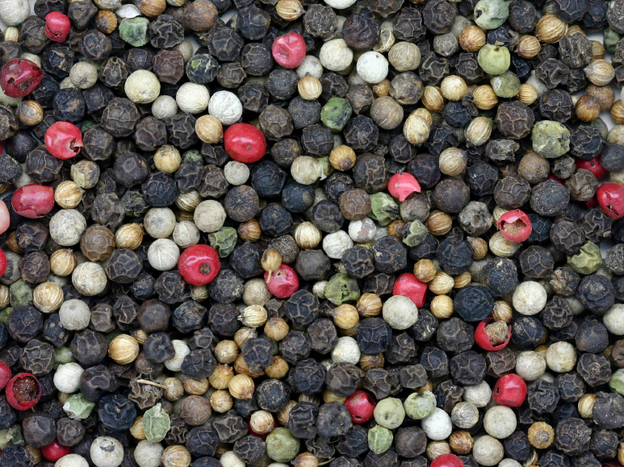
"caption": "Pepper is the spice most commonly contaminated with salmonella and other pathogens. iStockphoto.com",
"description": "Pepper is the spice most commonly contaminated with salmonella and other pathogens.",
"title": "istock_000000425435small",
"credit": null,
"status": "inherit",
"isLoading": false,
"fetchFailed": false
},
"bayareabites_71904": {
"type": "attachments",
"id": "bayareabites_71904",
"meta": {
"index": "attachments_1716263798",
"site": "bayareabites",
"id": "71904",
"found": true
},
"parent": 71815,
"imgSizes": {
"kqedFullSize": {
"file": "https://ww2.kqed.org/app/uploads/sites/24/2013/10/cp812-group640x360.jpg",
"width": 640,
"height": 360
}
},
"publishDate": 1381289060,
"modified": 1381289060,
"caption": null,
"description": null,
"title": "cp812-group640x360",
"credit": null,
"status": "inherit",
"isLoading": false,
"fetchFailed": false
},
"bayareabites_71789": {
"type": "attachments",
"id": "bayareabites_71789",
"meta": {
"index": "attachments_1716263798",
"site": "bayareabites",
"id": "71789",
"found": true
},
"parent": 71758,
"imgSizes": {
"kqedFullSize": {
"file": "https://ww2.kqed.org/app/uploads/sites/24/2013/10/Shanghai-Dumplings640x360.jpg",
"width": 640,
"height": 360
}
},
"publishDate": 1381189117,
"modified": 1381189117,
"caption": null,
"description": null,
"title": "Shanghai-Dumplings640x360",
"credit": null,
"status": "inherit",
"isLoading": false,
"fetchFailed": false
},
"bayareabites_71463": {
"type": "attachments",
"id": "bayareabites_71463",
"meta": {
"index": "attachments_1716263798",
"site": "bayareabites",
"id": "71463",
"found": true
},
"parent": 71242,
"imgSizes": {
"kqedFullSize": {
"file": "https://ww2.kqed.org/app/uploads/sites/24/2013/10/ganesha-worship640x360.jpg",
"width": 640,
"height": 360
}
},
"publishDate": 1380671936,
"modified": 1380671936,
"caption": null,
"description": null,
"title": "ganesha-worship640x360",
"credit": null,
"status": "inherit",
"isLoading": false,
"fetchFailed": false
},
"bayareabites_71386": {
"type": "attachments",
"id": "bayareabites_71386",
"meta": {
"index": "attachments_1716263798",
"site": "bayareabites",
"id": "71386",
"found": true
},
"parent": 71080,
"imgSizes": {
"kqedFullSize": {
"file": "https://ww2.kqed.org/app/uploads/sites/24/2013/10/icy-vs-spicy-640x360.jpg",
"width": 640,
"height": 360
}
},
"publishDate": 1380649052,
"modified": 1380649052,
"caption": null,
"description": null,
"title": "icy-vs-spicy-640x360",
"credit": null,
"status": "inherit",
"isLoading": false,
"fetchFailed": false
},
"bayareabites_70873": {
"type": "attachments",
"id": "bayareabites_70873",
"meta": {
"index": "attachments_1716263798",
"site": "bayareabites",
"id": "70873",
"found": true
},
"parent": 70861,
"imgSizes": {
"kqedFullSize": {
"file": "https://ww2.kqed.org/app/uploads/sites/24/2013/09/seaurchin-sm.jpg",
"width": 624,
"height": 467
}
},
"publishDate": 1379975809,
"modified": 1379975809,
"caption": null,
"description": null,
"title": "seaurchin-sm",
"credit": null,
"status": "inherit",
"isLoading": false,
"fetchFailed": false
},
"bayareabites_70380": {
"type": "attachments",
"id": "bayareabites_70380",
"meta": {
"index": "attachments_1716263798",
"site": "bayareabites",
"id": "70380",
"found": true
},
"parent": 70379,
"imgSizes": {
"kqedFullSize": {
"file": "https://ww2.kqed.org/app/uploads/sites/24/2013/09/goldricecompare-3f668436a741ae7bbe24086ae89860b3998bf38f.jpg",
"width": 200,
"height": 150
}
},
"publishDate": 1379446595,
"modified": 1379446595,
"caption": null,
"description": "Genetically modified to be enriched with beta-carotene, golden rice grains (left) are a deep yellow. At right, white rice grains.",
"title": "Genetically modified to be enriched with beta-carotene, golden rice grains (left) are a deep yellow. At right, white rice grains.",
"credit": null,
"status": "inherit",
"isLoading": false,
"fetchFailed": false
},
"bayareabites_69644": {
"type": "attachments",
"id": "bayareabites_69644",
"meta": {
"index": "attachments_1716263798",
"site": "bayareabites",
"id": "69644",
"found": true
},
"parent": 69638,
"imgSizes": {
"kqedFullSize": {
"file": "https://ww2.kqed.org/app/uploads/sites/24/2013/09/chickennuggets_wide-4d2a9c68f23ae14312ec6afb9a0d300eed6d8fe9-s4-c85.jpg",
"width": 624,
"height": 350
}
},
"publishDate": 1378425902,
"modified": 1378425902,
"caption": null,
"description": null,
"title": "chickennuggets_wide-4d2a9c68f23ae14312ec6afb9a0d300eed6d8fe9-s4-c85",
"credit": null,
"status": "inherit",
"isLoading": false,
"fetchFailed": false
},
"bayareabites_68988": {
"type": "attachments",
"id": "bayareabites_68988",
"meta": {
"index": "attachments_1716263798",
"site": "bayareabites",
"id": "68988",
"found": true
},
"parent": 68981,
"imgSizes": {
"kqedFullSize": {
"file": "https://ww2.kqed.org/app/uploads/sites/24/2013/08/cp807-group-640x360.jpg",
"width": 640,
"height": 360
}
},
"publishDate": 1377654315,
"modified": 1377654315,
"caption": null,
"description": null,
"title": "cp807-group-640x360",
"credit": null,
"status": "inherit",
"isLoading": false,
"fetchFailed": false
},
"bayareabites_69437": {
"type": "attachments",
"id": "bayareabites_69437",
"meta": {
"index": "attachments_1716263798",
"site": "bayareabites",
"id": "69437",
"found": true
},
"parent": 69421,
"imgSizes": {
"kqedFullSize": {
"file": "https://ww2.kqed.org/app/uploads/sites/24/2013/09/IMG_2709-659x371.jpg",
"width": 659,
"height": 371
}
},
"publishDate": 1378256890,
"modified": 1378256890,
"caption": "Kao Nam Tod, or Rice Ball Salad. Photo: Jonathan Darr",
"description": null,
"title": "IMG_2709-659x371",
"credit": null,
"status": "inherit",
"isLoading": false,
"fetchFailed": false
}
},
"audioPlayerReducer": {
"postId": "stream_live",
"isPaused": true,
"isPlaying": false,
"pfsActive": false,
"pledgeModalIsOpen": true,
"playerDrawerIsOpen": false,
"liveAudioPlayStartedAt": 0,
"liveAudioPlayContext": ""
},
"authorsReducer": {
"byline_bayareabites_73215": {
"type": "authors",
"id": "byline_bayareabites_73215",
"meta": {
"override": true
},
"slug": "byline_bayareabites_73215",
"name": "Nancy Shute",
"isLoading": false
},
"byline_bayareabites_70861": {
"type": "authors",
"id": "byline_bayareabites_70861",
"meta": {
"override": true
},
"slug": "byline_bayareabites_70861",
"name": "Maggie Martin",
"isLoading": false
},
"byline_bayareabites_70379": {
"type": "authors",
"id": "byline_bayareabites_70379",
"meta": {
"override": true
},
"slug": "byline_bayareabites_70379",
"name": "Dan Charles",
"isLoading": false
},
"byline_bayareabites_69638": {
"type": "authors",
"id": "byline_bayareabites_69638",
"meta": {
"override": true
},
"slug": "byline_bayareabites_69638",
"name": "Maria Godoy",
"isLoading": false
},
"skalantari": {
"type": "authors",
"id": "46",
"meta": {
"index": "authors_1716337520",
"id": "46",
"found": true
},
"name": "Shuka Kalantari",
"firstName": "Shuka",
"lastName": "Kalantari",
"slug": "skalantari",
"email": "skalantari@kqed.org",
"display_author_email": false,
"staff_mastheads": [],
"title": "KQED Contributor",
"bio": "Shuka Kalantari is a Bay Area journalist reporting on health, food, culture and immigrant communities in California and internationally. She's reported for Public Radio International’s The World, BBC World News Service’s Outlook, Philosophy Talk, Vice Magazine. Shuka is also a frequent contributor to KQED Public Media. You can follow her \u003ca href=\"https://twitter.com/skalantari\">@skalantari\u003c/a> on Twitter and \u003ca href=\"https://instagram.com/skalantari/\">Instagram\u003c/a>.",
"avatar": "https://secure.gravatar.com/avatar/51d9608640bde16ba09124272a0c0f355429db1ebc29f1853b8d87aab1ae1753?s=600&d=blank&r=g",
"twitter": null,
"bluesky": null,
"facebook": null,
"instagram": null,
"linkedin": null,
"sites": [
{
"site": "news",
"roles": [
"subscriber"
]
},
{
"site": "bayareabites",
"roles": [
"subscriber"
]
},
{
"site": "stateofhealth",
"roles": [
"subscriber"
]
}
],
"headData": {
"title": "Shuka Kalantari | KQED",
"description": "KQED Contributor",
"ogImgSrc": "https://secure.gravatar.com/avatar/51d9608640bde16ba09124272a0c0f355429db1ebc29f1853b8d87aab1ae1753?s=600&d=blank&r=g",
"twImgSrc": "https://secure.gravatar.com/avatar/51d9608640bde16ba09124272a0c0f355429db1ebc29f1853b8d87aab1ae1753?s=600&d=blank&r=g"
},
"isLoading": false,
"link": "/author/skalantari"
},
"rachael-myrow": {
"type": "authors",
"id": "251",
"meta": {
"index": "authors_1716337520",
"id": "251",
"found": true
},
"name": "Rachael Myrow",
"firstName": "Rachael",
"lastName": "Myrow",
"slug": "rachael-myrow",
"email": "rmyrow@kqed.org",
"display_author_email": true,
"staff_mastheads": [
"news"
],
"title": "Senior Editor of KQED's Silicon Valley News Desk",
"bio": "• I write and edit stories about how Silicon Valley power and policies shape everyday life in California. I’m also passionate about making Bay Area history and culture more accessible to a broad public. • I’ve been a journalist for most of my life, starting in high school with The Franklin Press in Los Angeles, where I grew up. While earning my first degree in English at UC Berkeley, I got my start in public radio at KALX-FM. After completing a second degree in journalism at Cal, I landed my first professional job at Marketplace, then moved on to KPCC (now LAist), and then KQED, where I hosted The California Report for more than seven years. • My reporting has appeared on NPR, The World, WBUR’s \u003ci>Here & Now\u003c/i>, and the BBC. I also guest host for KQED’s \u003ci>Forum\u003c/i>, as well as the Commonwealth Club in San Francisco. • I speak periodically on media, democracy and technology issues, and do voiceover work for documentaries and educational video projects. • Outside of the studio, you'll find me hiking Bay Area trails and whipping up Insta-ready meals in my kitchen. • I do not accept gifts, money, or favors from anyone connected to my reporting, I don't pay people for information, and I do not support or donate to political causes. • I strive to treat the people I report on with fairness, honesty, and respect. I also recognize there are often multiple sides to a story and work to verify information through multiple sources and documentation. If I get something wrong, I correct it.",
"avatar": "https://secure.gravatar.com/avatar/3ed8a3c5f26025e4a805ba634cda8cd764906b97438a6d9ce216b044e340da4e?s=600&d=blank&r=g",
"twitter": "rachaelmyrow",
"bluesky": null,
"facebook": null,
"instagram": null,
"linkedin": "https://www.linkedin.com/in/rachaelmyrow/",
"sites": [
{
"site": "arts",
"roles": [
"administrator"
]
},
{
"site": "news",
"roles": [
"edit_others_posts",
"editor"
]
},
{
"site": "futureofyou",
"roles": [
"editor"
]
},
{
"site": "bayareabites",
"roles": [
"editor"
]
},
{
"site": "stateofhealth",
"roles": [
"editor"
]
},
{
"site": "science",
"roles": [
"editor"
]
},
{
"site": "food",
"roles": [
"editor"
]
},
{
"site": "forum",
"roles": [
"editor"
]
},
{
"site": "liveblog",
"roles": [
"author"
]
}
],
"headData": {
"title": "Rachael Myrow | KQED",
"description": "Senior Editor of KQED's Silicon Valley News Desk",
"ogImgSrc": "https://secure.gravatar.com/avatar/3ed8a3c5f26025e4a805ba634cda8cd764906b97438a6d9ce216b044e340da4e?s=600&d=blank&r=g",
"twImgSrc": "https://secure.gravatar.com/avatar/3ed8a3c5f26025e4a805ba634cda8cd764906b97438a6d9ce216b044e340da4e?s=600&d=blank&r=g"
},
"isLoading": false,
"link": "/author/rachael-myrow"
},
"wendy-goodfriend": {
"type": "authors",
"id": "5014",
"meta": {
"index": "authors_1716337520",
"id": "5014",
"found": true
},
"name": "Wendy Goodfriend",
"firstName": "Wendy",
"lastName": "Goodfriend",
"slug": "wendy-goodfriend",
"email": "wendy@wendygoodfriend.com",
"display_author_email": false,
"staff_mastheads": [],
"title": "KQED Contributor",
"bio": "I was the Senior Digital Producer for KQED Food up until July, 2018. Since 2001, I designed, produced, managed and contributed to mostly food-related websites and blogs for KQED including: KQED.org; KQED Food; Bay Area Bites; Check, Please! Bay Area; Taste This; Celebrity Chefs; seven of Jacques Pepin's TV series websites; and Joanne Weir's Cooking in the City. I initiated the majority of KQED Food's social media feeds and maintained them up until 2017. As far as content creation, photography is my passion and I also shoot video and write stories. My photos have been used in articles for KQED Food, News, Arts, and Science as well as for promotional purposes in print and online. Professional education and training includes: clinical psychology, photography, commercial cooking, web design, information architecture and UX.",
"avatar": "https://secure.gravatar.com/avatar/dfba64372339cc34cf17e446e6f18fa8?s=600&d=blank&r=g",
"twitter": null,
"facebook": "bayareabites",
"instagram": null,
"linkedin": "wendygoodfriend",
"sites": [
{
"site": "jpepinheart",
"roles": []
},
{
"site": "about",
"roles": [
"editor"
]
},
{
"site": "bayareabites",
"roles": [
"subscriber"
]
},
{
"site": "science",
"roles": [
"administrator"
]
},
{
"site": "checkplease",
"roles": [
"subscriber"
]
},
{
"site": "food",
"roles": [
"author"
]
},
{
"site": "essentialpepin",
"roles": [
"administrator"
]
}
],
"headData": {
"title": "Wendy Goodfriend | KQED",
"description": "KQED Contributor",
"ogImgSrc": "https://secure.gravatar.com/avatar/dfba64372339cc34cf17e446e6f18fa8?s=600&d=blank&r=g",
"twImgSrc": "https://secure.gravatar.com/avatar/dfba64372339cc34cf17e446e6f18fa8?s=600&d=blank&r=g"
},
"isLoading": false,
"link": "/author/wendy-goodfriend"
},
"annamindess": {
"type": "authors",
"id": "5283",
"meta": {
"index": "authors_1716337520",
"id": "5283",
"found": true
},
"name": "Anna Mindess",
"firstName": "Anna",
"lastName": "Mindess",
"slug": "annamindess",
"email": "amindess@aol.com",
"display_author_email": false,
"staff_mastheads": [],
"title": "KQED Contributor",
"bio": "My passion is exploring the connections between food, travel and culture. I am a regular contributor to AFAR, Edible East Bay Magazine, Oakland Magazine, Berkeleyside's NOSH and other publications. I usually take a route that's slightly off the beaten path, like \u003ca href=\"http://edibleeastbay.com/online-magazine/fall-harvest-2017/fun-with-food-insults/\">collecting food-related insults\u003c/a> around the world or \u003ca href=\"https://www.afar.com/magazine/what-i-learned-hawking-sweet-potatoes-with-a-street-vendor-in-taiwan?email=amindess%40aol.com&utm_source=Sailthru&utm_medium=email&utm_campaign=Doctors%20Without%20Borders&utm_term=Daily%20Wander%20Newsletter\">volunteering with a Sweet Potato Mama\u003c/a> (street food seller) in Tapei.\r\n\r\nCulture is the thread that ties together my several careers. I also work as a sign language interpreter, educator and author. My study of Deaf culture has taken me around the world, where I am always on a quest to find Deaf-owned restaurants. I love making connections between my different worlds, for example in this AFAR story where I share \u003ca href=\"https://www.afar.com/magazine/tips-from-a-sign-language-interpreter-for-overcoming-language-barriers\">tips for communicating across cultures\u003c/a> that I learned from the real experts, Deaf people. Or this \u003ca href=\"http://edibleeastbay.com/online-magazine/fall-harvest-2017/deaf-chefs-compete/\">profile of a Deaf chef and culinary arts instructor\u003c/a> at the California School for the Deaf.\r\n\r\nTo see my visual/edible take on the world, follow me on Instagram: \u003ca href=\"https://www.instagram.com/annamindess/\">annamindess. \u003c/a>\r\n\r\nFor more of my stories: visit Contently \u003ca href=\"http://annamindess.contently.com\">annamindess.contently.com\u003c/a>",
"avatar": "https://secure.gravatar.com/avatar/23c79f04bf3d58b2e727d35ca471d184e8945f6ed82e41a0c062eab5e7dc2bb5?s=600&d=blank&r=g",
"twitter": null,
"bluesky": null,
"facebook": null,
"instagram": null,
"linkedin": null,
"sites": [
{
"site": "arts",
"roles": [
"subscriber"
]
},
{
"site": "bayareabites",
"roles": [
"author"
]
},
{
"site": "food",
"roles": [
"contributor"
]
}
],
"headData": {
"title": "Anna Mindess | KQED",
"description": "KQED Contributor",
"ogImgSrc": "https://secure.gravatar.com/avatar/23c79f04bf3d58b2e727d35ca471d184e8945f6ed82e41a0c062eab5e7dc2bb5?s=600&d=blank&r=g",
"twImgSrc": "https://secure.gravatar.com/avatar/23c79f04bf3d58b2e727d35ca471d184e8945f6ed82e41a0c062eab5e7dc2bb5?s=600&d=blank&r=g"
},
"isLoading": false,
"link": "/author/annamindess"
},
"oaklandlocal": {
"type": "authors",
"id": "5475",
"meta": {
"index": "authors_1716337520",
"id": "5475",
"found": true
},
"name": "Oakland Local",
"firstName": "Oakland",
"lastName": "Local",
"slug": "oaklandlocal",
"email": "oaklandlocal@oaklandlocal.com",
"display_author_email": false,
"staff_mastheads": [],
"title": null,
"bio": "\u003ca href=\"http://oaklandlocal.com/\">Oakland Local\u003c/a>, Oakland's leading news & community site, is filled with people who love to eat, drink and talk about food equity issues, sometimes all at the same time. We're avid about farm to table, affordable local restaurants, food artisans, intense chefs, butchers, bakers, and gardeners and everyone who wants to talk about what tastes good--and where to get it/make it or grow it--in Oakland, CA",
"avatar": "https://secure.gravatar.com/avatar/487293d74fcce97c7016ed0309409181?s=600&d=blank&r=g",
"twitter": "oaklandlocal",
"facebook": "oaklocal",
"instagram": null,
"linkedin": null,
"sites": [
{
"site": "bayareabites",
"roles": [
"contributor"
]
}
],
"headData": {
"title": "Oakland Local | KQED",
"description": null,
"ogImgSrc": "https://secure.gravatar.com/avatar/487293d74fcce97c7016ed0309409181?s=600&d=blank&r=g",
"twImgSrc": "https://secure.gravatar.com/avatar/487293d74fcce97c7016ed0309409181?s=600&d=blank&r=g"
},
"isLoading": false,
"link": "/author/oaklandlocal"
},
"katewilliams": {
"type": "authors",
"id": "5485",
"meta": {
"index": "authors_1716337520",
"id": "5485",
"found": true
},
"name": "Kate Williams",
"firstName": "Kate",
"lastName": "Williams",
"slug": "katewilliams",
"email": "williaka@gmail.com",
"display_author_email": false,
"staff_mastheads": [],
"title": null,
"bio": "Kate Williams grew up outside of Atlanta, where twenty-pound baskets of peaches were an end-of-summer tradition. After spending time in Boston developing recipes for America's Test Kitchen and pretending to be a New Englander, she moved to sunny Berkeley. Here she works as a personal chef and food writer, covering topics ranging from taco trucks to modernist cookbooks. In addition to KQED's Bay Area Bites, Kate's work appears on Serious Eats, Berkeleyside NOSH, The Oxford American, America's Test Kitchen cookbooks, and Food52.",
"avatar": "https://secure.gravatar.com/avatar/25623fe56e181fe8b6ee92fd0ea077de?s=600&d=blank&r=g",
"twitter": "KateHWilliams",
"facebook": null,
"instagram": null,
"linkedin": null,
"sites": [
{
"site": "bayareabites",
"roles": [
"contributor"
]
},
{
"site": "food",
"roles": [
"contributor"
]
}
],
"headData": {
"title": "Kate Williams | KQED",
"description": null,
"ogImgSrc": "https://secure.gravatar.com/avatar/25623fe56e181fe8b6ee92fd0ea077de?s=600&d=blank&r=g",
"twImgSrc": "https://secure.gravatar.com/avatar/25623fe56e181fe8b6ee92fd0ea077de?s=600&d=blank&r=g"
},
"isLoading": false,
"link": "/author/katewilliams"
}
},
"pagesReducer": {
"bayareabites_category_asian-food-and-drink": {
"type": "terms",
"id": "bayareabites_2998",
"meta": {
"index": "terms_1716263798",
"site": "bayareabites",
"id": "2998",
"score": 13.895298
},
"featImg": null,
"name": "asian food and drink",
"description": null,
"taxonomy": "category",
"headData": {
"twImgId": null,
"twTitle": null,
"ogTitle": null,
"ogImgId": null,
"twDescription": null,
"description": null,
"title": "asian food and drink Archives | KQED Bay Area Bites",
"ogDescription": null
},
"ttid": 58,
"slug": "asian-food-and-drink",
"isLoading": false,
"title": "asian food and drink",
"pageMeta": {
"site": "bayareabites",
"WpPageTemplate": "page-topic-editorial",
"currentPage": 18
},
"blocks": [
{
"blockName": "kqed/post-list",
"attrs": {
"layout": "cardArticle2",
"query": "posts/bayareabites?category=asian-food-and-drink",
"seeMore": false,
"paginated": true,
"page": 18
}
},
{
"blockName": "kqed/ad"
}
]
}
},
"pfsSessionReducer": {},
"postsReducer": {
"stream_live": {
"type": "live",
"id": "stream_live",
"audioUrl": "https://hls.kqed.org/hls/kqed_app/playlist.m3u8",
"title": "Live Stream",
"excerpt": "Live Stream information currently unavailable.",
"link": "/radio",
"featImg": "",
"label": {
"name": "KQED Live",
"link": "/"
}
},
"stream_kqedNewscast": {
"type": "posts",
"id": "stream_kqedNewscast",
"audioUrl": "https://www.kqed.org/.stream/anon/radio/RDnews/newscast.mp3?_=1",
"title": "KQED Newscast",
"featImg": "",
"label": {
"name": "88.5 FM",
"link": "/"
}
},
"bayareabites_75736": {
"type": "posts",
"id": "bayareabites_75736",
"meta": {
"index": "posts_1716263798",
"site": "bayareabites",
"id": "75736",
"score": null,
"sort": [
1388087056000
]
},
"parent": 0,
"labelTerm": {
"site": "bayareabites"
},
"blocks": [],
"publishDate": 1388087056,
"format": "aside",
"disqusTitle": "Don't Poison the Guests: Advice on Food Allergies, Intolerances and Sensitivities",
"title": "Don't Poison the Guests: Advice on Food Allergies, Intolerances and Sensitivities",
"headTitle": "Bay Area Bites | KQED Food",
"content": "\u003cfigure id=\"attachment_75739\" class=\"wp-caption aligncenter\" style=\"max-width: 1000px\">\u003ca href=\"http://ww2.kqed.org/bayareabites/wp-content/uploads/sites/24/2013/12/firstone.jpg\">\u003cimg class=\"size-full wp-image-75739\" src=\"http://ww2.kqed.org/bayareabites/wp-content/uploads/sites/24/2013/12/firstone.jpg\" alt=\"New challenge for hosts: pull off a delicious dinner without knocking off your guests. Illustration: Lila Volkas\" width=\"1000\" height=\"667\">\u003c/a>\u003cfigcaption class=\"wp-caption-text\">New challenge for hosts: pull off a delicious dinner without knocking off your guests. Illustration: \u003ca href=\"http://ww2.kqed.org/bayareabites/author/lilavolkas/\">Lila Volkas\u003c/a>\u003c/figcaption>\u003c/figure>\n\u003cp>\u003cstrong>Illustrations by\u003c/strong> \u003ca href=\"http://ww2.kqed.org/bayareabites/author/lilavolkas/\">\u003cstrong>Lila Volkas\u003c/strong>\u003c/a>\u003c/p>\n\u003cp>As her friend spooned a ladle of steaming, scalloped potatoes onto Tara’s plate, he murmured, “Oh, I always put a bit of flour in the sauce, I’m sure a little won’t hurt you.”\u003c/p>\n\u003cp>“Yeah, right,” replied Tara, who has \u003ca href=\"http://www.csaceliacs.info/celiac_disease_defined.jsp\">celiac disease\u003c/a> and had provided her host with a complete rundown of her extreme intolerance to gluten, “if you want me to end this evening in an ambulance!”\u003c/p>\n\u003cp>Modern menus have turned into minefields, as it seems that everyone and their little brother asserts their sensitivity to something: nuts, wheat, dairy, soy, eggs, fish--even cilantro. Suddenly, it’s puzzling or even perilous to invite people over for a simple meal. What’s the difference between a trendy, personal preference and a life-threatening condition and what can we serve that all our guests will enjoy without a trip to the ER?\u003c/p>\n\u003cfigure id=\"attachment_75740\" class=\"wp-caption aligncenter\" style=\"max-width: 1000px\">\u003ca href=\"http://ww2.kqed.org/bayareabites/wp-content/uploads/sites/24/2013/12/burp.jpg\">\u003cimg class=\"size-full wp-image-75740\" src=\"http://ww2.kqed.org/bayareabites/wp-content/uploads/sites/24/2013/12/burp.jpg\" alt=\"Many people are sensitive to bell peppers. Illustration: Lila Volkas\" width=\"1000\" height=\"751\">\u003c/a>\u003cfigcaption class=\"wp-caption-text\">Many people are sensitive to bell peppers. Illustration: \u003ca href=\"http://ww2.kqed.org/bayareabites/author/lilavolkas/\">Lila Volkas\u003c/a>\u003c/figcaption>\u003c/figure>\n\u003cp>When I cook for friends, I always inquire about their dietary restrictions, because I have a collection of my own: bell peppers make me burp, and dairy, wheat, and soy cause painful bloating. But luckily, my food \u003ca href=\"http://www.mayoclinic.com/health/food-allergy/AN01109\">intolerances are not the same as allergies \u003c/a>and thus are easily managed. Lacking the right enzymes to digest these foods, I do best just avoiding them, but I’ve also found some workarounds.\u003c/p>\n\u003cfigure id=\"attachment_75741\" class=\"wp-caption aligncenter\" style=\"max-width: 1000px\">\u003ca href=\"http://ww2.kqed.org/bayareabites/wp-content/uploads/sites/24/2013/12/milk-fat.jpg\">\u003cimg class=\"size-full wp-image-75741\" src=\"http://ww2.kqed.org/bayareabites/wp-content/uploads/sites/24/2013/12/milk-fat.jpg\" alt=\"Smaller fat molecules make goat milk easier to digest than cow milk. Illustration: Lila Volkas\" width=\"1000\" height=\"589\">\u003c/a>\u003cfigcaption class=\"wp-caption-text\">Smaller fat molecules make goat milk easier to digest than cow milk. Illustration: \u003ca href=\"http://ww2.kqed.org/bayareabites/author/lilavolkas/\">Lila Volkas\u003c/a>\u003c/figcaption>\u003c/figure>\n\u003cp>\u003ca href=\"http://www.goatpatrol-horseshoeing.com/goat-farm-products-services/goat-milk-products/\">Goat milk\u003c/a>, for instance, is much easier to digest than cow’s milk because it contains less lactose and its fat molecules are one-fifth the size of those in the bovine beverage. So I only pig out on goat cheese. If someone offers me a tempting slice of their homemade pumpkin bread, I can pop a couple of \u003ca href=\"http://www.enzymedica.com/store/GlutenEase\">enzyme pills\u003c/a>, which usually do the trick. And even if I unknowingly consume a bite of wheat or dairy, while I might be uncomfortable for the rest of the evening, it won’t send me to the hospital.\u003c/p>\n\u003cp>[ad fullwidth]\u003c/p>\n\u003cp>Not so for my friend Rachel, who has severe allergies to a host of foods, especially fish and nuts. These extreme allergies run in her family and compel her to carry a \u003ca href=\"http://en.wikipedia.org/wiki/Epinephrine_autoinjector\">self-injecting dose of epinephrine\u003c/a>, which might just save her life.\u003c/p>\n\u003cp>Scientists cannot yet explain \u003ca href=\"http://www.npr.org/2013/04/15/177319365/the-doctor-trying-to-solve-the-mystery-of-food-allergies\">the recent rapid growth\u003c/a> in the number of people (especially children) who suffer from potentially fatal food allergies. Nearly \u003ca href=\"http://www.foodallergy.org/facts-and-stats\">15 million Americans\u003c/a> have a moderate to severe food allergy. This now includes 1 in every 10 preschoolers, a rate that has more than doubled in the last decade.\u003c/p>\n\u003cp>These life-threatening allergies are a disorder of the immune system, in which the body sees the allergen as a foreign invader and mobilizes its forces to attack by releasing histamine and other powerful chemicals that trigger allergic symptoms, such as nausea, hives, itching, swelling, and shortness of breath.\u003c/p>\n\u003cfigure id=\"attachment_75743\" class=\"wp-caption aligncenter\" style=\"max-width: 1000px\">\u003ca href=\"http://ww2.kqed.org/bayareabites/wp-content/uploads/sites/24/2013/12/fish.jpg\">\u003cimg class=\"size-full wp-image-75743\" src=\"http://ww2.kqed.org/bayareabites/wp-content/uploads/sites/24/2013/12/fish.jpg\" alt=\"Even a sharing a kiss with someone who just ate fish is enough to unleash a vicious anaphylactic reaction. Illustration: Lila Volkas\" width=\"1000\" height=\"681\">\u003c/a>\u003cfigcaption class=\"wp-caption-text\">Even a sharing a kiss with someone who just ate fish is enough to unleash a vicious anaphylactic reaction. Illustration: \u003ca href=\"http://ww2.kqed.org/bayareabites/author/lilavolkas/\">Lila Volkas\u003c/a>\u003c/figcaption>\u003c/figure>\n\u003cp>It only takes a tiny bit of the offending food to unleash \u003ca href=\"http://en.wikipedia.org/wiki/Anaphylaxis\">anaphylaxis\u003c/a> which can lead to death in a matter of minutes. Even kissing a person who just snacked on sushi or polished off a PB & J is enough to spark an onset of dire symptoms.\u003c/p>\n\u003cp>With more children suffering from severe allergies, their parents try to cope by taking full control of everything their children put in their mouths--a daunting task. But recent news of a \u003ca href=\"http://www.nytimes.com/2013/03/10/magazine/can-a-radical-new-treatment-save-children-with-severe-allergies.html?pagewanted=all&_r=0\">new therapy\u003c/a> has shown promising results in desensitizing even those with multiple allergies.\u003c/p>\n\u003cp>When my friend Rachel was in her twenties and had a battery of allergy tests, her doctor noticed obvious positive results for allergies to many fish, but didn’t see a reaction to salmon and so recommended that she cautiously experiment with it. The next time Rachel and her husband went out to dinner, he ordered the grilled salmon and she dipped her fork into a drop of salmon juice run-off, but the minute it hit her tongue, Rachel immediately felt a tell-tale itching sensation on her lips. Her husband rushed her to the hospital and she made it just as her throat was dangerously starting to swell.\u003c/p>\n\u003cp>Now, Rachel picks her restaurants carefully (avoiding fish-forward cuisines like Japanese or even Thai, where fish sauce is a common ingredient although it’s not always listed on the menu). She informs waiters and friends that she cannot have any nuts or fish or even anything that came in contact with these foods.\u003c/p>\n\u003cp>“Sometimes people just don’t understand the severity of this condition,“ Rachel tells me. “Last summer, I was invited to a friend’s barbeque and although he assured me he would be preparing chicken and burgers, when I arrived I saw a plate of fish sitting by the grill. I was horrified. My friend had good intentions, but didn't understand that cooking my chicken next to his fish could cause an allergic reaction. In the end, to my immense relief, he decided not to cook any fish that night.”\u003c/p>\n\u003cfigure id=\"attachment_75744\" class=\"wp-caption aligncenter\" style=\"max-width: 1000px\">\u003ca href=\"http://ww2.kqed.org/bayareabites/wp-content/uploads/sites/24/2013/12/glutino.jpg\">\u003cimg class=\"size-full wp-image-75744\" src=\"http://ww2.kqed.org/bayareabites/wp-content/uploads/sites/24/2013/12/glutino.jpg\" alt=\"For those with celiac disease, gluten acts like an alien invader and tramples the villi in their small intestines. Illustration: Lila Volkas\" width=\"1000\" height=\"683\">\u003c/a>\u003cfigcaption class=\"wp-caption-text\">For those with celiac disease, gluten acts like an alien invader and tramples the villi in their small intestines. Illustration: \u003ca href=\"http://ww2.kqed.org/bayareabites/author/lilavolkas/\">Lila Volkas\u003c/a>\u003c/figcaption>\u003c/figure>\n\u003cp>Celiac disease is another autoimmune disorder, but one that targets the small intestines. \u003ca href=\"http://www.webmd.com/digestive-disorders/celiac-disease/celiac-disease-what-happens\">Gluten destroys the villi\u003c/a>, which are fingerlike projections lining the small intestines, where the vitamins and nutrients from the foods we eat are supposed to get absorbed. Continued exposure to gluten often wreaks havoc on the entire body.\u003c/p>\n\u003cp>My friend Tara only discovered she had celiac in her mid-30s, after a lifetime of assorted complaints (skin problems, arthritis and digestive issues). After a few months on a trip in India, (with its rice-based diet), her symptoms inexplicably improved. But when she returned to California, they worsened. A clever doctor made the connection and the diagnosis.\u003c/p>\n\u003cp>“Twenty-five years ago, there weren’t many resources for those who have to eat gluten-free,” says Tara, “but thankfully now there is so much more awareness, gluten-free products even restaurants with gluten-free menus. “And \u003ca href=\"http://www.mariposabaking.com/\">Mariposa Bakery\u003c/a> in Oakland,” adds Tara smiling, thinking about their cupcakes. Tara has become an expert gluten-free baker herself so that she does not have to feel deprived.\u003c/p>\n\u003cp>For both my friends Tara and Rachel, getting invited over to someone’s house for dinner necessitates preparation and backup plans. They let their hosts know their dietary restrictions and often offer to bring a dish to share. If they are going to a large event where it won’t be easy to know for sure what possible allergens are in the food, they may eat something at home first, or bring an emergency back-up snack, just in case.\u003c/p>\n\u003cp>Like my problem with peppers, some food sensitivities don’t fall neatly into the categories of intolerance or allergy. Take the \u003ca href=\"http://foodreference.about.com/od/Herbs-and-Spices/a/Why-Does-Cilantro-Taste-Soapy.htm\">great cilantro divide\u003c/a>. Genetics seems to determine whether we love the fragrant green leaves or find their flavor reminiscent of soap.\u003c/p>\n\u003cp>And while the focus here is on medical conditions, strongly held personal preferences and practices -- from \u003ca href=\"http://en.wikipedia.org/wiki/Veganism\">veganism\u003c/a> to the \u003ca href=\"http://en.wikipedia.org/wiki/Paleolithic_diet\">Paleo diet\u003c/a> -- can be just as fervently followed and thus present their own set of hosting hurdles.\u003c/p>\n\u003ch3>ADVICE FOR THE HOST\u003c/h3>\n\u003cp>[ad floatright]\u003c/p>\n\u003cp>What are the best ways to deal with this array of possible food proscriptions? It depends on the size of the group you are cooking for. If it’s an intimate dinner for a couple of friends, you can probably make the whole meal conform to their dietary needs and thus be assured of a relaxed evening for everyone. Here are some other strategies if you are coordinating a large potluck or serving a buffet for 100.\u003c/p>\n\u003cfigure id=\"attachment_75745\" class=\"wp-caption aligncenter\" style=\"max-width: 1000px\">\u003ca href=\"http://ww2.kqed.org/bayareabites/wp-content/uploads/sites/24/2013/12/salad.jpg\">\u003cimg class=\"size-full wp-image-75745\" src=\"http://ww2.kqed.org/bayareabites/wp-content/uploads/sites/24/2013/12/salad.jpg\" alt=\"Thoughtful hosting: a make your own salad bar. Illustration: Lila Volkas\" width=\"1000\" height=\"667\">\u003c/a>\u003cfigcaption class=\"wp-caption-text\">Thoughtful hosting: a \"make-your-own\" salad bar. Illustration: \u003ca href=\"http://ww2.kqed.org/bayareabites/author/lilavolkas/\">Lila Volkas\u003c/a>\u003c/figcaption>\u003c/figure>\n\u003ch3>TIPS\u003c/h3>\n\u003cul>\n\u003cli>Ask guests re: dietary restrictions before you plan your menu. If you are unsure of the specifics of their sensitivities, ask clarifying questions.\u003c/li>\n\u003cli>Keep the labels, boxes and bags of foods you used, so guests with allergies can check them out. Sometimes they will recognize a benign sounding ingredient as potentially harmful.\u003c/li>\n\u003cli>On a buffet table: a card next to each dish, detailing ingredients will be much appreciated.\u003c/li>\n\u003cli>Since even a small amount of an allergen can make people sick, avoid cross-contamination of utensils, dishes and cutting surfaces with offending foods.\u003c/li>\n\u003cli>A “make-your-own” bar for salads, tacos or ice cream sundaes, etc. will allow guests the freedom to include or avoid ingredients.\u003c/li>\n\u003cli>Provide questionable add-ins in separate bowls, each with its own spoon, to avoid cross-contamination\u003c/li>\n\u003cli>For a potluck or buffet, set aside a corner of the table for g/f, nut-free, vegan, etc. so these dishes can be grouped together.\u003c/li>\n\u003cli>Read labels. There may be hidden ingredients that you are not aware of, (e.g., regular soy-sauce contains gluten; while wheat-free tamari does not).\u003c/li>\n\u003cli>Don’t take it personally, if a friend declines to try your prize-winning ceviche or sculpted marzipan fruits.\u003c/li>\n\u003c/ul>\n\n",
"disqusIdentifier": "75736 http://blogs.kqed.org/bayareabites/?p=75736",
"disqusUrl": "https://ww2.kqed.org/bayareabites/2013/12/26/dont-poison-the-guests-advice-on-food-allergies-intolerances-and-sensitivities/",
"stats": {
"hasVideo": false,
"hasChartOrMap": false,
"hasAudio": false,
"hasPolis": false,
"wordCount": 1562,
"hasGoogleForm": false,
"hasGallery": false,
"hasHearkenModule": false,
"iframeSrcs": [],
"paragraphCount": 23
},
"modified": 1388700909,
"excerpt": "Wheat, nuts, fish, dairy--seems like everyone is allergic to something these days. What's a host to do? An illustrated guide to the difference between intolerance and allergy. And tips for cooking for those with these conditions (and having them leave sated --and alive.)",
"headData": {
"twImgId": "",
"twTitle": "",
"ogTitle": "",
"ogImgId": "",
"twDescription": "",
"description": "Wheat, nuts, fish, dairy--seems like everyone is allergic to something these days. What's a host to do? An illustrated guide to the difference between intolerance and allergy. And tips for cooking for those with these conditions (and having them leave sated --and alive.)",
"title": "Don't Poison the Guests: Advice on Food Allergies, Intolerances and Sensitivities | KQED",
"ogDescription": "",
"schema": {
"@context": "https://schema.org",
"@type": "Article",
"headline": "Don't Poison the Guests: Advice on Food Allergies, Intolerances and Sensitivities",
"datePublished": "2013-12-26T11:44:16-08:00",
"dateModified": "2014-01-02T14:15:09-08:00",
"image": "https://cdn.kqed.org/wp-content/uploads/2020/02/KQED-OG-Image@1x.png"
}
},
"guestAuthors": [],
"slug": "dont-poison-the-guests-advice-on-food-allergies-intolerances-and-sensitivities",
"status": "publish",
"path": "/bayareabites/75736/dont-poison-the-guests-advice-on-food-allergies-intolerances-and-sensitivities",
"audioTrackLength": null,
"parsedContent": [
{
"type": "contentString",
"content": "\u003cdiv class=\"post-body\">\u003cp>\u003cfigure id=\"attachment_75739\" class=\"wp-caption aligncenter\" style=\"max-width: 1000px\">\u003ca href=\"http://ww2.kqed.org/bayareabites/wp-content/uploads/sites/24/2013/12/firstone.jpg\">\u003cimg class=\"size-full wp-image-75739\" src=\"http://ww2.kqed.org/bayareabites/wp-content/uploads/sites/24/2013/12/firstone.jpg\" alt=\"New challenge for hosts: pull off a delicious dinner without knocking off your guests. Illustration: Lila Volkas\" width=\"1000\" height=\"667\">\u003c/a>\u003cfigcaption class=\"wp-caption-text\">New challenge for hosts: pull off a delicious dinner without knocking off your guests. Illustration: \u003ca href=\"http://ww2.kqed.org/bayareabites/author/lilavolkas/\">Lila Volkas\u003c/a>\u003c/figcaption>\u003c/figure>\n\u003cp>\u003cstrong>Illustrations by\u003c/strong> \u003ca href=\"http://ww2.kqed.org/bayareabites/author/lilavolkas/\">\u003cstrong>Lila Volkas\u003c/strong>\u003c/a>\u003c/p>\n\u003cp>As her friend spooned a ladle of steaming, scalloped potatoes onto Tara’s plate, he murmured, “Oh, I always put a bit of flour in the sauce, I’m sure a little won’t hurt you.”\u003c/p>\n\u003cp>“Yeah, right,” replied Tara, who has \u003ca href=\"http://www.csaceliacs.info/celiac_disease_defined.jsp\">celiac disease\u003c/a> and had provided her host with a complete rundown of her extreme intolerance to gluten, “if you want me to end this evening in an ambulance!”\u003c/p>\n\u003cp>Modern menus have turned into minefields, as it seems that everyone and their little brother asserts their sensitivity to something: nuts, wheat, dairy, soy, eggs, fish--even cilantro. Suddenly, it’s puzzling or even perilous to invite people over for a simple meal. What’s the difference between a trendy, personal preference and a life-threatening condition and what can we serve that all our guests will enjoy without a trip to the ER?\u003c/p>\n\u003cfigure id=\"attachment_75740\" class=\"wp-caption aligncenter\" style=\"max-width: 1000px\">\u003ca href=\"http://ww2.kqed.org/bayareabites/wp-content/uploads/sites/24/2013/12/burp.jpg\">\u003cimg class=\"size-full wp-image-75740\" src=\"http://ww2.kqed.org/bayareabites/wp-content/uploads/sites/24/2013/12/burp.jpg\" alt=\"Many people are sensitive to bell peppers. Illustration: Lila Volkas\" width=\"1000\" height=\"751\">\u003c/a>\u003cfigcaption class=\"wp-caption-text\">Many people are sensitive to bell peppers. Illustration: \u003ca href=\"http://ww2.kqed.org/bayareabites/author/lilavolkas/\">Lila Volkas\u003c/a>\u003c/figcaption>\u003c/figure>\n\u003cp>When I cook for friends, I always inquire about their dietary restrictions, because I have a collection of my own: bell peppers make me burp, and dairy, wheat, and soy cause painful bloating. But luckily, my food \u003ca href=\"http://www.mayoclinic.com/health/food-allergy/AN01109\">intolerances are not the same as allergies \u003c/a>and thus are easily managed. Lacking the right enzymes to digest these foods, I do best just avoiding them, but I’ve also found some workarounds.\u003c/p>\n\u003cfigure id=\"attachment_75741\" class=\"wp-caption aligncenter\" style=\"max-width: 1000px\">\u003ca href=\"http://ww2.kqed.org/bayareabites/wp-content/uploads/sites/24/2013/12/milk-fat.jpg\">\u003cimg class=\"size-full wp-image-75741\" src=\"http://ww2.kqed.org/bayareabites/wp-content/uploads/sites/24/2013/12/milk-fat.jpg\" alt=\"Smaller fat molecules make goat milk easier to digest than cow milk. Illustration: Lila Volkas\" width=\"1000\" height=\"589\">\u003c/a>\u003cfigcaption class=\"wp-caption-text\">Smaller fat molecules make goat milk easier to digest than cow milk. Illustration: \u003ca href=\"http://ww2.kqed.org/bayareabites/author/lilavolkas/\">Lila Volkas\u003c/a>\u003c/figcaption>\u003c/figure>\n\u003cp>\u003ca href=\"http://www.goatpatrol-horseshoeing.com/goat-farm-products-services/goat-milk-products/\">Goat milk\u003c/a>, for instance, is much easier to digest than cow’s milk because it contains less lactose and its fat molecules are one-fifth the size of those in the bovine beverage. So I only pig out on goat cheese. If someone offers me a tempting slice of their homemade pumpkin bread, I can pop a couple of \u003ca href=\"http://www.enzymedica.com/store/GlutenEase\">enzyme pills\u003c/a>, which usually do the trick. And even if I unknowingly consume a bite of wheat or dairy, while I might be uncomfortable for the rest of the evening, it won’t send me to the hospital.\u003c/p>\n\u003cp>\u003c/p>\u003c/div>",
"attributes": {
"named": {},
"numeric": []
}
},
{
"type": "component",
"content": "",
"name": "ad",
"attributes": {
"named": {
"label": "fullwidth"
},
"numeric": [
"fullwidth"
]
}
},
{
"type": "contentString",
"content": "\u003cdiv class=\"post-body\">\u003cp>\u003c/p>\n\u003cp>Not so for my friend Rachel, who has severe allergies to a host of foods, especially fish and nuts. These extreme allergies run in her family and compel her to carry a \u003ca href=\"http://en.wikipedia.org/wiki/Epinephrine_autoinjector\">self-injecting dose of epinephrine\u003c/a>, which might just save her life.\u003c/p>\n\u003cp>Scientists cannot yet explain \u003ca href=\"http://www.npr.org/2013/04/15/177319365/the-doctor-trying-to-solve-the-mystery-of-food-allergies\">the recent rapid growth\u003c/a> in the number of people (especially children) who suffer from potentially fatal food allergies. Nearly \u003ca href=\"http://www.foodallergy.org/facts-and-stats\">15 million Americans\u003c/a> have a moderate to severe food allergy. This now includes 1 in every 10 preschoolers, a rate that has more than doubled in the last decade.\u003c/p>\n\u003cp>These life-threatening allergies are a disorder of the immune system, in which the body sees the allergen as a foreign invader and mobilizes its forces to attack by releasing histamine and other powerful chemicals that trigger allergic symptoms, such as nausea, hives, itching, swelling, and shortness of breath.\u003c/p>\n\u003cfigure id=\"attachment_75743\" class=\"wp-caption aligncenter\" style=\"max-width: 1000px\">\u003ca href=\"http://ww2.kqed.org/bayareabites/wp-content/uploads/sites/24/2013/12/fish.jpg\">\u003cimg class=\"size-full wp-image-75743\" src=\"http://ww2.kqed.org/bayareabites/wp-content/uploads/sites/24/2013/12/fish.jpg\" alt=\"Even a sharing a kiss with someone who just ate fish is enough to unleash a vicious anaphylactic reaction. Illustration: Lila Volkas\" width=\"1000\" height=\"681\">\u003c/a>\u003cfigcaption class=\"wp-caption-text\">Even a sharing a kiss with someone who just ate fish is enough to unleash a vicious anaphylactic reaction. Illustration: \u003ca href=\"http://ww2.kqed.org/bayareabites/author/lilavolkas/\">Lila Volkas\u003c/a>\u003c/figcaption>\u003c/figure>\n\u003cp>It only takes a tiny bit of the offending food to unleash \u003ca href=\"http://en.wikipedia.org/wiki/Anaphylaxis\">anaphylaxis\u003c/a> which can lead to death in a matter of minutes. Even kissing a person who just snacked on sushi or polished off a PB & J is enough to spark an onset of dire symptoms.\u003c/p>\n\u003cp>With more children suffering from severe allergies, their parents try to cope by taking full control of everything their children put in their mouths--a daunting task. But recent news of a \u003ca href=\"http://www.nytimes.com/2013/03/10/magazine/can-a-radical-new-treatment-save-children-with-severe-allergies.html?pagewanted=all&_r=0\">new therapy\u003c/a> has shown promising results in desensitizing even those with multiple allergies.\u003c/p>\n\u003cp>When my friend Rachel was in her twenties and had a battery of allergy tests, her doctor noticed obvious positive results for allergies to many fish, but didn’t see a reaction to salmon and so recommended that she cautiously experiment with it. The next time Rachel and her husband went out to dinner, he ordered the grilled salmon and she dipped her fork into a drop of salmon juice run-off, but the minute it hit her tongue, Rachel immediately felt a tell-tale itching sensation on her lips. Her husband rushed her to the hospital and she made it just as her throat was dangerously starting to swell.\u003c/p>\n\u003cp>Now, Rachel picks her restaurants carefully (avoiding fish-forward cuisines like Japanese or even Thai, where fish sauce is a common ingredient although it’s not always listed on the menu). She informs waiters and friends that she cannot have any nuts or fish or even anything that came in contact with these foods.\u003c/p>\n\u003cp>“Sometimes people just don’t understand the severity of this condition,“ Rachel tells me. “Last summer, I was invited to a friend’s barbeque and although he assured me he would be preparing chicken and burgers, when I arrived I saw a plate of fish sitting by the grill. I was horrified. My friend had good intentions, but didn't understand that cooking my chicken next to his fish could cause an allergic reaction. In the end, to my immense relief, he decided not to cook any fish that night.”\u003c/p>\n\u003cfigure id=\"attachment_75744\" class=\"wp-caption aligncenter\" style=\"max-width: 1000px\">\u003ca href=\"http://ww2.kqed.org/bayareabites/wp-content/uploads/sites/24/2013/12/glutino.jpg\">\u003cimg class=\"size-full wp-image-75744\" src=\"http://ww2.kqed.org/bayareabites/wp-content/uploads/sites/24/2013/12/glutino.jpg\" alt=\"For those with celiac disease, gluten acts like an alien invader and tramples the villi in their small intestines. Illustration: Lila Volkas\" width=\"1000\" height=\"683\">\u003c/a>\u003cfigcaption class=\"wp-caption-text\">For those with celiac disease, gluten acts like an alien invader and tramples the villi in their small intestines. Illustration: \u003ca href=\"http://ww2.kqed.org/bayareabites/author/lilavolkas/\">Lila Volkas\u003c/a>\u003c/figcaption>\u003c/figure>\n\u003cp>Celiac disease is another autoimmune disorder, but one that targets the small intestines. \u003ca href=\"http://www.webmd.com/digestive-disorders/celiac-disease/celiac-disease-what-happens\">Gluten destroys the villi\u003c/a>, which are fingerlike projections lining the small intestines, where the vitamins and nutrients from the foods we eat are supposed to get absorbed. Continued exposure to gluten often wreaks havoc on the entire body.\u003c/p>\n\u003cp>My friend Tara only discovered she had celiac in her mid-30s, after a lifetime of assorted complaints (skin problems, arthritis and digestive issues). After a few months on a trip in India, (with its rice-based diet), her symptoms inexplicably improved. But when she returned to California, they worsened. A clever doctor made the connection and the diagnosis.\u003c/p>\n\u003cp>“Twenty-five years ago, there weren’t many resources for those who have to eat gluten-free,” says Tara, “but thankfully now there is so much more awareness, gluten-free products even restaurants with gluten-free menus. “And \u003ca href=\"http://www.mariposabaking.com/\">Mariposa Bakery\u003c/a> in Oakland,” adds Tara smiling, thinking about their cupcakes. Tara has become an expert gluten-free baker herself so that she does not have to feel deprived.\u003c/p>\n\u003cp>For both my friends Tara and Rachel, getting invited over to someone’s house for dinner necessitates preparation and backup plans. They let their hosts know their dietary restrictions and often offer to bring a dish to share. If they are going to a large event where it won’t be easy to know for sure what possible allergens are in the food, they may eat something at home first, or bring an emergency back-up snack, just in case.\u003c/p>\n\u003cp>Like my problem with peppers, some food sensitivities don’t fall neatly into the categories of intolerance or allergy. Take the \u003ca href=\"http://foodreference.about.com/od/Herbs-and-Spices/a/Why-Does-Cilantro-Taste-Soapy.htm\">great cilantro divide\u003c/a>. Genetics seems to determine whether we love the fragrant green leaves or find their flavor reminiscent of soap.\u003c/p>\n\u003cp>And while the focus here is on medical conditions, strongly held personal preferences and practices -- from \u003ca href=\"http://en.wikipedia.org/wiki/Veganism\">veganism\u003c/a> to the \u003ca href=\"http://en.wikipedia.org/wiki/Paleolithic_diet\">Paleo diet\u003c/a> -- can be just as fervently followed and thus present their own set of hosting hurdles.\u003c/p>\n\u003ch3>ADVICE FOR THE HOST\u003c/h3>\n\u003cp>\u003c/p>\u003c/div>",
"attributes": {
"named": {},
"numeric": []
}
},
{
"type": "component",
"content": "",
"name": "ad",
"attributes": {
"named": {
"label": "floatright"
},
"numeric": [
"floatright"
]
}
},
{
"type": "contentString",
"content": "\u003cdiv class=\"post-body\">\u003cp>\u003c/p>\n\u003cp>What are the best ways to deal with this array of possible food proscriptions? It depends on the size of the group you are cooking for. If it’s an intimate dinner for a couple of friends, you can probably make the whole meal conform to their dietary needs and thus be assured of a relaxed evening for everyone. Here are some other strategies if you are coordinating a large potluck or serving a buffet for 100.\u003c/p>\n\u003cfigure id=\"attachment_75745\" class=\"wp-caption aligncenter\" style=\"max-width: 1000px\">\u003ca href=\"http://ww2.kqed.org/bayareabites/wp-content/uploads/sites/24/2013/12/salad.jpg\">\u003cimg class=\"size-full wp-image-75745\" src=\"http://ww2.kqed.org/bayareabites/wp-content/uploads/sites/24/2013/12/salad.jpg\" alt=\"Thoughtful hosting: a make your own salad bar. Illustration: Lila Volkas\" width=\"1000\" height=\"667\">\u003c/a>\u003cfigcaption class=\"wp-caption-text\">Thoughtful hosting: a \"make-your-own\" salad bar. Illustration: \u003ca href=\"http://ww2.kqed.org/bayareabites/author/lilavolkas/\">Lila Volkas\u003c/a>\u003c/figcaption>\u003c/figure>\n\u003ch3>TIPS\u003c/h3>\n\u003cul>\n\u003cli>Ask guests re: dietary restrictions before you plan your menu. If you are unsure of the specifics of their sensitivities, ask clarifying questions.\u003c/li>\n\u003cli>Keep the labels, boxes and bags of foods you used, so guests with allergies can check them out. Sometimes they will recognize a benign sounding ingredient as potentially harmful.\u003c/li>\n\u003cli>On a buffet table: a card next to each dish, detailing ingredients will be much appreciated.\u003c/li>\n\u003cli>Since even a small amount of an allergen can make people sick, avoid cross-contamination of utensils, dishes and cutting surfaces with offending foods.\u003c/li>\n\u003cli>A “make-your-own” bar for salads, tacos or ice cream sundaes, etc. will allow guests the freedom to include or avoid ingredients.\u003c/li>\n\u003cli>Provide questionable add-ins in separate bowls, each with its own spoon, to avoid cross-contamination\u003c/li>\n\u003cli>For a potluck or buffet, set aside a corner of the table for g/f, nut-free, vegan, etc. so these dishes can be grouped together.\u003c/li>\n\u003cli>Read labels. There may be hidden ingredients that you are not aware of, (e.g., regular soy-sauce contains gluten; while wheat-free tamari does not).\u003c/li>\n\u003cli>Don’t take it personally, if a friend declines to try your prize-winning ceviche or sculpted marzipan fruits.\u003c/li>\n\u003c/ul>\n\n\u003c/div>\u003c/p>",
"attributes": {
"named": {},
"numeric": []
}
}
],
"link": "/bayareabites/75736/dont-poison-the-guests-advice-on-food-allergies-intolerances-and-sensitivities",
"authors": [
"5283"
],
"categories": [
"bayareabites_2998",
"bayareabites_1516",
"bayareabites_752",
"bayareabites_4084",
"bayareabites_1245",
"bayareabites_12869",
"bayareabites_1763",
"bayareabites_1146",
"bayareabites_334",
"bayareabites_1873"
],
"tags": [
"bayareabites_12845",
"bayareabites_12482",
"bayareabites_1859",
"bayareabites_10343",
"bayareabites_12846",
"bayareabites_10480",
"bayareabites_12848",
"bayareabites_2398",
"bayareabites_12574",
"bayareabites_12460",
"bayareabites_138",
"bayareabites_12847",
"bayareabites_12849",
"bayareabites_12162"
],
"featImg": "bayareabites_75769",
"label": "bayareabites"
},
"bayareabites_75655": {
"type": "posts",
"id": "bayareabites_75655",
"meta": {
"index": "posts_1716263798",
"site": "bayareabites",
"id": "75655",
"score": null,
"sort": [
1387932594000
]
},
"parent": 0,
"labelTerm": {
"site": "bayareabites"
},
"blocks": [],
"publishDate": 1387932594,
"format": "aside",
"disqusTitle": "Liberian and Burmese Refugees Celebrate Christmas in Oakland",
"title": "Liberian and Burmese Refugees Celebrate Christmas in Oakland",
"headTitle": "Bay Area Bites | KQED Food",
"content": "\u003cp>\u003ciframe width=\"100%\" height=\"166\" scrolling=\"no\" frameborder=\"no\" src=\"https://w.soundcloud.com/player/?url=https%3A//api.soundcloud.com/tracks/126398306&color=36ab18&auto_play=false&show_artwork=true\">\u003c/iframe>\u003c/p>\n\u003cp>The U.S. resettles over 50,000 refugees each year. Some celebrated Christmas before coming to the States, others didn't. But once they're here, Christmas becomes a time for family to come together, simply because it's a holiday where cities shut down, and most people have the day off from work or school. Many refugee families cook, eat, and celebrate during the holidays, but they do it in their own way, with their own traditional foods -- like 18-year-old Patience Wilson and her family. They came to Oakland as Liberian refugees eight years ago. Wilson says she had a bit of culture shock when she saw how Christmas is celebrated in the U.S.: lots of decorations, and even more lights.\u003c/p>\n\u003cfigure id=\"attachment_75671\" class=\"wp-caption aligncenter\" style=\"max-width: 1000px\">\u003ca href=\"http://ww2.kqed.org/bayareabites/wp-content/uploads/sites/24/2013/12/Wilson-4-1000.jpg\">\u003cimg src=\"http://ww2.kqed.org/bayareabites/wp-content/uploads/sites/24/2013/12/Wilson-4-1000.jpg\" alt=\"Patience Wilson proudly poses in front of the plantain dish she will prepare for Christmas dinner. Photo: Shuka Kalantari\" width=\"1000\" height=\"750\" class=\"size-full wp-image-75671\">\u003c/a>\u003cfigcaption class=\"wp-caption-text\">Patience Wilson proudly poses in front of the plantain dish she will prepare for Christmas dinner. Photo: Shuka Kalantari\u003c/figcaption>\u003c/figure>\n\u003cp>“We were kind of surprised that they put a tree in their house for Christmas and they just put stuff on it,” Wilson says at her home in Oakland. “It was kind of cool, but it was kind of dirty because it was just all over the place and every time you have to sweep it and cut stuff off of it.” \u003c/p>\n\u003cp>Back in her Liberian refugee camp in the Ivory Coast, Wilson says Christmas was a time for the entire community to come together, not just family. It was one huge party, and everybody was invited.\u003c/p>\n\u003cp>“You know how people go out for Halloween and get candy? For Christmas, we go out and knock on people’s doors and say, ‘Happy New Year’ or something like that and we get money.”\u003c/p>\n\u003cp>[ad fullwidth]\u003c/p>\n\u003cp>As a kid, Wilson says that was her favorite Christmas activity. At the end of the day, the whole neighborhood would gather to make music.\u003c/p>\n\u003cp>Patience's grandfather, 74-year-old Robert, comes into the kitchen and sings one of those Liberian Christmas carols. Robert brought Wilson and their family to Oakland when Wilson was 10 years old. She's now a senior in high school. Her grandparents left Liberia during one of the countries civil wars because Robert was from the Kranh ethnic group, and his was wife was from the Grebo group -- and the two factions were fighting. Wilson was raised in a Liberian community in an Ivory Coast refugee camp known as 'Peacetown.' In the past decade, over 600 Liberian refugees have resettled to California, and a few hundred now live in Oakland.\u003c/p>\n\u003cfigure id=\"attachment_75673\" class=\"wp-caption aligncenter\" style=\"max-width: 1000px\">\u003ca href=\"http://ww2.kqed.org/bayareabites/wp-content/uploads/sites/24/2013/12/Wilson-and-Robert1000.jpg\">\u003cimg src=\"http://ww2.kqed.org/bayareabites/wp-content/uploads/sites/24/2013/12/Wilson-and-Robert1000.jpg\" alt=\"Patience Wilson lives with her grandparents. Patience poses with her grandfather, Robert, who gave the fried plantains a taste test, and they passed. He said they tasted perfect. Photo: Shuka Kalantari\" width=\"1000\" height=\"750\" class=\"size-full wp-image-75673\">\u003c/a>\u003cfigcaption class=\"wp-caption-text\">Patience Wilson lives with her grandparents. Patience poses with her grandfather, Robert, who gave the fried plantains a taste test, and they passed. He said they tasted perfect. Photo: Shuka Kalantari\u003c/figcaption>\u003c/figure>\n\u003cp>In the Peacetown refugee camp, they lived off food rations, but would trade with locals for luxuries like yams and plantains. Wilson says for the holidays, they'd go all out.\u003c/p>\n\u003cp>“We’d make fried rice, we called it jarov rice. We fry chicken. We make a lot of different soups. There’s this rice it’s kinda green, we call it chuck rice,” says Wilson.\u003c/p>\n\u003cp>Wilson says she'll be making one of those plantain dishes for Christmas dinner here, and begins to prepare it in her kitchen to demonstrate.\u003c/p>\n\u003cp>“There’s some where it’s mashed up and it’s really spicy. Those were my favorite but I don’t know how to make it. So I just make these ones where you just fry them.”\u003c/p>\n\u003cp>Wilson chops up the plantains, cooks them in hot oil, waits until they brown, then serves them to her grandfather to see if they're up to par. Robert takes a bite and proclaims loudly that they’re perfect, which makes Wilson smile.\u003c/p>\n\u003cfigure id=\"attachment_75672\" class=\"wp-caption aligncenter\" style=\"max-width: 1000px\">\u003ca href=\"http://ww2.kqed.org/bayareabites/wp-content/uploads/sites/24/2013/12/Wilson-5-1000.jpg\">\u003cimg src=\"http://ww2.kqed.org/bayareabites/wp-content/uploads/sites/24/2013/12/Wilson-5-1000.jpg\" alt=\"Patience Wilson says there's an art to frying plantains – you want to make sure they’re brown and crispy on the outside while still being sweet and chewy on the inside. Photo: Shuka Kalantari\" width=\"1000\" height=\"750\" class=\"size-full wp-image-75672\">\u003c/a>\u003cfigcaption class=\"wp-caption-text\">Patience Wilson says there’s an art to frying plantains – you want to make sure they’re brown and crispy on the outside while still being sweet and chewy on the inside. Photo: Shuka Kalantari\u003c/figcaption>\u003c/figure>\n\u003cp>Lauren Markham says food is a refugee's connection to her homeland. She works with refugees around the globe, through a San Francisco-based group called \u003ca href=\"http://www.reftrans.org/\">\u003cstrong>Refugee Transitions\u003c/strong>\u003c/a>. Markham says she's always offered food when she visits refugees in their homes, and she never refuses a bite -- because food is a way to strengthen self-esteem, especially among newly arrived refugee women.\u003c/p>\n\u003cblockquote>\u003cp>“Being in a place where you’re always the recipient of services, to be able to offer something to someone, and being able to offer a gift from your own heart, that you made, is a really powerful thing.”\u003c/p>\u003c/blockquote>\n\u003cp>Markham says families learn very quickly where to buy their cultural food. She says refugees are happy that the Oakland area has many ethnic food markets available. \u003c/p>\n\u003cp>“The families from Thailand can buy these certain ingredients from the Chinese markets in Chinatown. And the families from Iraq can go to the halal market on Telegraph.”\u003c/p>\n\u003cp>Markham often asks refugees for recipes, and she says they're always thrilled to share -- it's a chance for them to reverse roles and be the teacher in a foreign land. That's what inspired Markham to make a refugee cookbook, called \u003ca href=\"http://www.reftrans.org/cookbook-project/\">\u003cstrong>Between Meals\u003c/strong>\u003c/a>. It’ll be released in February, with most of the proceeds going the refugee women in the Bay Area who contributed recipes.\u003c/p>\n\u003cp>Markham says refugees struggle to find the balance between retaining their own cultures, and assimilating to those in the U.S. -- like the American Christmas. \u003c/p>\n\u003cp>“I’ve definitely been in families homes who have little Christmas decorations and ornaments that they found because I guess that, ‘tis the season, and that’s what we do here,” Markham says. “Just as it happens in the fashion that we wear, or learning English, or eating McDonalds -- participating in other aspects of this culture.”\u003c/p>\n\u003cp>Twenty-one year old Cho Mei and her family have fully embraced Christmas. They're Karen refugees, an ethnic minority in Burma. She says her family was Buddhist, but they would celebrate each year with their Christian neighbors in her refugee camp in Thailand.\u003c/p>\n\u003cfigure id=\"attachment_75668\" class=\"wp-caption aligncenter\" style=\"max-width: 1000px\">\u003ca href=\"http://ww2.kqed.org/bayareabites/wp-content/uploads/sites/24/2013/12/Cho-Mei-and-parents1000.jpg\">\u003cimg src=\"http://ww2.kqed.org/bayareabites/wp-content/uploads/sites/24/2013/12/Cho-Mei-and-parents1000.jpg\" alt=\"Cho Mei and parents: Cho Mei and her parents bought their first Christmas tree this year. Cho Mei says she’s even doing a Secret Santa with her family – something she learned from her Burmese church group in Oakland. Photo: Shuka Kalantari\" width=\"1000\" height=\"750\" class=\"size-full wp-image-75668\">\u003c/a>\u003cfigcaption class=\"wp-caption-text\">Cho Mei and parents: Cho Mei and her parents bought their first Christmas tree this year. Cho Mei says she’s even doing a Secret Santa with her family – something she learned from her Burmese church group in Oakland. Photo: Shuka Kalantari\u003c/figcaption>\u003c/figure>\n\u003cp>“In Thailand if you put a candle in front of your house, and people come sing in your house, and you can give like candy, a little bit gift,” Cho Mei says. \u003c/p>\n\u003cp>Cho Mei's family fled Burma because many Karen people are tortured, raped and forced into labor by the Burmese government. They relocated to a refugee camp in Thailand that borders Burma. But once they got there, Cho Mei says they were practically treated like prisoners.\u003c/p>\n\u003cp>“When we lived in Thailand you cannot go in outside of your camp,” Cho Mei says. “If you go in outside, if the Thai police catch you, they put you in the jail. That’s why we cannot go outside, we have to stay in our camp.”\u003c/p>\n\u003cp>But Cho Mei’s parents and her older brother would secretly venture out of camp at least once a year. She says the UN provided food rations, but not enough clothes. Plus they need money to send Cho Mei to the school in the refugee camp.\u003c/p>\n\u003cp>After nine years in the refugee camp, Cho Mei's family relocated to a Burmese neighborhood in Oakland -- 200 Burmese refugees have moved to the county in the past five years alone. Over 37 hundred Burmese refugees have relocated to California in the past decade. A large number of Karen in Oakland are Christian. So Cho Mei's family soon adopted that religion as their own.\u003c/p>\n\u003cp>Cho Mei's mother, Naw Htoo, goes into the kitchen and boils water to prepare one of her holiday dishes -- a traditional Karen soup with lemongrass, lime and chicken called Da Klah Chi. Cho Mei's family still cooks Karen food on Christmas. Even though they've converted to Christianity, they still hold onto their Burmese heritage through food. Cho Mei says she goes Christmas caroling with her Karen church members in Oakland, but they sing in their own language.\u003c/p>\n\u003cfigure id=\"attachment_75670\" class=\"wp-caption aligncenter\" style=\"max-width: 1000px\">\u003ca href=\"http://ww2.kqed.org/bayareabites/wp-content/uploads/sites/24/2013/12/Naw-Htoo-1-1000.jpg\">\u003cimg src=\"http://ww2.kqed.org/bayareabites/wp-content/uploads/sites/24/2013/12/Naw-Htoo-1-1000.jpg\" alt=\"Cho Mei's mother, Naw Htoo prepares a traditional Karen soup with chicken, lemongrass, cilantro and spices at their home in Oakland. Photo: Shuka Kalantari\" width=\"1000\" height=\"750\" class=\"size-full wp-image-75670\">\u003c/a>\u003cfigcaption class=\"wp-caption-text\">Cho Mei’s mother, Naw Htoo, prepares a traditional Karen soup with chicken, lemongrass, cilantro and spices at their home in Oakland. Photo: Shuka Kalantari\u003c/figcaption>\u003c/figure>\n\u003cp>Cho Mei’s family bought their first Christmas tree this year and put neon ‘Merry Christmas’ sign on their wall. Patience Wilson, the Liberian refugee, is also buying her first Christmas tree with money she's saved from her after-school job. Both girls and their families will get December 25 off -- and that's reason enough to celebrate.\u003c/p>\n\u003cp>\u003ca href=\"http://www.reftrans.org/cookbook-project/\">\u003cstrong>Between Meals: The Refugee Transition Cookbook Project\u003c/strong>\u003c/a>\u003cbr>\nBetween Meals includes recipes from Afghanistan, Eritrea, Liberia, Somalia, and different Burmese ethnic groups. Here’s a sneak peak at one of the recipes in the cookbook -- a chicken and lemongrass soup made by Cho Mei’s mother, Naw Htoo.\u003c/p>\n\u003cfigure id=\"attachment_75674\" class=\"wp-caption aligncenter\" style=\"max-width: 700px\">\u003ca href=\"http://ww2.kqed.org/bayareabites/wp-content/uploads/sites/24/2013/12/Photo-Credit-Dani-Fisher-Burmese-Soup-dish-from-recipe700.jpg\">\u003cimg src=\"http://ww2.kqed.org/bayareabites/wp-content/uploads/sites/24/2013/12/Photo-Credit-Dani-Fisher-Burmese-Soup-dish-from-recipe700.jpg\" alt=\"Burmese (Karen) Chicken Soup. Photo: Dani Fisher\" width=\"700\" height=\"1050\" class=\"size-full wp-image-75674\">\u003c/a>\u003cfigcaption class=\"wp-caption-text\">Burmese (Karen) Chicken Soup. Photo: Dani Fisher\u003c/figcaption>\u003c/figure>\n\u003ch3>Burmese (Karen) Chicken Soup\u003c/h3>\n\u003cul>\n\u003cstrong>Ingredients:\u003c/strong>\n\u003cli>4 chicken breasts, cut into very small pieces and stir-fried in\u003c/li>\n\u003cli>2 T oil\u003c/li>\n\u003cli>1/4 T turmeric\u003c/li>\n\u003cli>1/4 T salt\u003c/li>\n\u003cli>About 4 quarts water\u003c/li>\n\u003cli>1/2 T powdered chicken broth (bouillon)\u003c/li>\n\u003cli>1 14-oz can coconut milk\u003c/li>\n\u003cli>1 14-oz package dried yellow mung beans, rinsed 3 times in cold water\u003c/li>\n\u003cli>1 medium to large onion, cut into 8 pieces\u003c/li>\n\u003cli>1/2 T paprika\u003c/li>\n\u003cli>10 garlic cloves\u003c/li>\n\u003cli>1 T salt\u003c/li>\n\u003cli>1 14-oz package of yellow Chinese noodles. (One brand is Sunlee. These are spaghetti-like wheat noodles with turmeric added for color)\u003c/li>\n\u003c/ul>\n\u003cul>\n\u003cstrong>Toppings\u003c/strong>\n\u003cli>2 limes, each cut into 8 pieces\u003c/li>\n\u003cli>Small dish of red pepper flakes\u003c/li>\n\u003cli>Half a bunch of fresh coriander leaves, washed and cut into small pieces with scissors\u003c/li>\n\u003cli>6 eggs, hard-boiled and peeled. (If more than 6 people will be served, make one egg for each)\u003c/li>\n\u003cli>3 small red onions, cut into small slivers; rinse in water; squeeze water out by hand\u003c/li>\n\u003cli>About half a 7-oz package of shahe dried rice noodles (found in Asian store; they’re about half-an-inch wide; use as much as you think guests will eat as crispy topping for noodle dish).\u003c/li>\n\u003cli>2 1/2 c oil\u003c/li>\n\u003c/ul>\n\u003cp>[ad floatright]\u003c/p>\n\u003cp>\u003cstrong>Cooking Instructions\u003c/strong>\u003c/p>\n\u003col>\n\u003cli>Put the hard-boil the eggs in water; cool, peel, and set aside for later.\u003c/li>\n\u003cli>Stir-fry the small chicken pieces in oil with salt and turmeric.\u003c/li>\n\u003cli>Stir-fry the chopped onion in oil with paprika.\u003c/li>\n\u003cli>Fill a large pot with the 4 quarts water.\u003c/li>\n\u003cli>Add the chicken broth powder and stir.\u003c/li>\n\u003cli>Add the salt and stir.\u003c/li>\n\u003cli>Add the coconut milk and stir.\u003c/li>\n\u003cli>Add the mung beans and stir.\u003c/li>\n\u003cli>Add the 10 garlic cloves and stir.\u003c/li>\n\u003cli>Add the stir-fried onions and stir.\u003c/li>\n\u003cli>Bring to boil over high heat. Lower to medium heat and cook about 30 minutes, until the mung beans are soft and losing their shape.\u003c/li>\n\u003cli>In a different large pot, boil the yellow Chinese noodles in enough water to cover them; cook until they are soft/al dente. Drain.\u003c/li>\n\u003cli>Meanwhile, in a wok or deep pan, heat 2 1/2 cups oil on high heat. By the handful, drop in a batch of the dried rice noodles. (Be careful of splatters.) Stir constantly until crisp and beginning to brown. Remove with a slotted spoon and repeat until all have been fried. Put in a large bowl for the table.\n\u003c/li>\n\u003cli>Prepare the toppings as described above while you wait for the noodles and sauce to finish. Put each topping in a separate dish for the table.\u003c/li>\n\u003cli>Put noodles and sauce in separate large bowls on the table. Each person serves him/herself noodles and ladles sauce over them, then tops with toppings as desired, including coriander, squeezed lime juice and crispy rice noodles.\u003c/li>\n\u003c/ol>\n\n",
"disqusIdentifier": "75655 http://blogs.kqed.org/bayareabites/?p=75655",
"disqusUrl": "https://ww2.kqed.org/bayareabites/2013/12/24/liberian-and-burmese-refugees-celebrate-christmas-in-oakland/",
"stats": {
"hasVideo": false,
"hasChartOrMap": true,
"hasAudio": true,
"hasPolis": false,
"wordCount": 2017,
"hasGoogleForm": false,
"hasGallery": false,
"hasHearkenModule": false,
"iframeSrcs": [
"https://w.soundcloud.com/player/"
],
"paragraphCount": 31
},
"modified": 1449087262,
"excerpt": "Some refugees celebrated Christmas before coming to the U.S, others didn't. But once they're here, Christmas often becomes a time for family to come together. Here are two stories about how refugees in Oakland celebrate the holidays with their own traditions, and their own cultural foods.",
"headData": {
"twImgId": "",
"twTitle": "",
"ogTitle": "",
"ogImgId": "",
"twDescription": "",
"description": "Some refugees celebrated Christmas before coming to the U.S, others didn't. But once they're here, Christmas often becomes a time for family to come together. Here are two stories about how refugees in Oakland celebrate the holidays with their own traditions, and their own cultural foods.",
"title": "Liberian and Burmese Refugees Celebrate Christmas in Oakland | KQED",
"ogDescription": "",
"schema": {
"@context": "https://schema.org",
"@type": "Article",
"headline": "Liberian and Burmese Refugees Celebrate Christmas in Oakland",
"datePublished": "2013-12-24T16:49:54-08:00",
"dateModified": "2015-12-02T12:14:22-08:00",
"image": "https://cdn.kqed.org/wp-content/uploads/2020/02/KQED-OG-Image@1x.png"
}
},
"guestAuthors": [],
"slug": "liberian-and-burmese-refugees-celebrate-christmas-in-oakland",
"status": "publish",
"path": "/bayareabites/75655/liberian-and-burmese-refugees-celebrate-christmas-in-oakland",
"audioTrackLength": null,
"parsedContent": [
{
"type": "contentString",
"content": "\u003cdiv class=\"post-body\">\u003cp>\u003cp>\u003ciframe width=\"100%\" height=\"166\" scrolling=\"no\" frameborder=\"no\" src=\"https://w.soundcloud.com/player/?url=https%3A//api.soundcloud.com/tracks/126398306&color=36ab18&auto_play=false&show_artwork=true\">\u003c/iframe>\u003c/p>\n\u003cp>The U.S. resettles over 50,000 refugees each year. Some celebrated Christmas before coming to the States, others didn't. But once they're here, Christmas becomes a time for family to come together, simply because it's a holiday where cities shut down, and most people have the day off from work or school. Many refugee families cook, eat, and celebrate during the holidays, but they do it in their own way, with their own traditional foods -- like 18-year-old Patience Wilson and her family. They came to Oakland as Liberian refugees eight years ago. Wilson says she had a bit of culture shock when she saw how Christmas is celebrated in the U.S.: lots of decorations, and even more lights.\u003c/p>\n\u003cfigure id=\"attachment_75671\" class=\"wp-caption aligncenter\" style=\"max-width: 1000px\">\u003ca href=\"http://ww2.kqed.org/bayareabites/wp-content/uploads/sites/24/2013/12/Wilson-4-1000.jpg\">\u003cimg src=\"http://ww2.kqed.org/bayareabites/wp-content/uploads/sites/24/2013/12/Wilson-4-1000.jpg\" alt=\"Patience Wilson proudly poses in front of the plantain dish she will prepare for Christmas dinner. Photo: Shuka Kalantari\" width=\"1000\" height=\"750\" class=\"size-full wp-image-75671\">\u003c/a>\u003cfigcaption class=\"wp-caption-text\">Patience Wilson proudly poses in front of the plantain dish she will prepare for Christmas dinner. Photo: Shuka Kalantari\u003c/figcaption>\u003c/figure>\n\u003cp>“We were kind of surprised that they put a tree in their house for Christmas and they just put stuff on it,” Wilson says at her home in Oakland. “It was kind of cool, but it was kind of dirty because it was just all over the place and every time you have to sweep it and cut stuff off of it.” \u003c/p>\n\u003cp>Back in her Liberian refugee camp in the Ivory Coast, Wilson says Christmas was a time for the entire community to come together, not just family. It was one huge party, and everybody was invited.\u003c/p>\n\u003cp>“You know how people go out for Halloween and get candy? For Christmas, we go out and knock on people’s doors and say, ‘Happy New Year’ or something like that and we get money.”\u003c/p>\n\u003cp>\u003c/p>\u003c/div>",
"attributes": {
"named": {},
"numeric": []
}
},
{
"type": "component",
"content": "",
"name": "ad",
"attributes": {
"named": {
"label": "fullwidth"
},
"numeric": [
"fullwidth"
]
}
},
{
"type": "contentString",
"content": "\u003cdiv class=\"post-body\">\u003cp>\u003c/p>\n\u003cp>As a kid, Wilson says that was her favorite Christmas activity. At the end of the day, the whole neighborhood would gather to make music.\u003c/p>\n\u003cp>Patience's grandfather, 74-year-old Robert, comes into the kitchen and sings one of those Liberian Christmas carols. Robert brought Wilson and their family to Oakland when Wilson was 10 years old. She's now a senior in high school. Her grandparents left Liberia during one of the countries civil wars because Robert was from the Kranh ethnic group, and his was wife was from the Grebo group -- and the two factions were fighting. Wilson was raised in a Liberian community in an Ivory Coast refugee camp known as 'Peacetown.' In the past decade, over 600 Liberian refugees have resettled to California, and a few hundred now live in Oakland.\u003c/p>\n\u003cfigure id=\"attachment_75673\" class=\"wp-caption aligncenter\" style=\"max-width: 1000px\">\u003ca href=\"http://ww2.kqed.org/bayareabites/wp-content/uploads/sites/24/2013/12/Wilson-and-Robert1000.jpg\">\u003cimg src=\"http://ww2.kqed.org/bayareabites/wp-content/uploads/sites/24/2013/12/Wilson-and-Robert1000.jpg\" alt=\"Patience Wilson lives with her grandparents. Patience poses with her grandfather, Robert, who gave the fried plantains a taste test, and they passed. He said they tasted perfect. Photo: Shuka Kalantari\" width=\"1000\" height=\"750\" class=\"size-full wp-image-75673\">\u003c/a>\u003cfigcaption class=\"wp-caption-text\">Patience Wilson lives with her grandparents. Patience poses with her grandfather, Robert, who gave the fried plantains a taste test, and they passed. He said they tasted perfect. Photo: Shuka Kalantari\u003c/figcaption>\u003c/figure>\n\u003cp>In the Peacetown refugee camp, they lived off food rations, but would trade with locals for luxuries like yams and plantains. Wilson says for the holidays, they'd go all out.\u003c/p>\n\u003cp>“We’d make fried rice, we called it jarov rice. We fry chicken. We make a lot of different soups. There’s this rice it’s kinda green, we call it chuck rice,” says Wilson.\u003c/p>\n\u003cp>Wilson says she'll be making one of those plantain dishes for Christmas dinner here, and begins to prepare it in her kitchen to demonstrate.\u003c/p>\n\u003cp>“There’s some where it’s mashed up and it’s really spicy. Those were my favorite but I don’t know how to make it. So I just make these ones where you just fry them.”\u003c/p>\n\u003cp>Wilson chops up the plantains, cooks them in hot oil, waits until they brown, then serves them to her grandfather to see if they're up to par. Robert takes a bite and proclaims loudly that they’re perfect, which makes Wilson smile.\u003c/p>\n\u003cfigure id=\"attachment_75672\" class=\"wp-caption aligncenter\" style=\"max-width: 1000px\">\u003ca href=\"http://ww2.kqed.org/bayareabites/wp-content/uploads/sites/24/2013/12/Wilson-5-1000.jpg\">\u003cimg src=\"http://ww2.kqed.org/bayareabites/wp-content/uploads/sites/24/2013/12/Wilson-5-1000.jpg\" alt=\"Patience Wilson says there's an art to frying plantains – you want to make sure they’re brown and crispy on the outside while still being sweet and chewy on the inside. Photo: Shuka Kalantari\" width=\"1000\" height=\"750\" class=\"size-full wp-image-75672\">\u003c/a>\u003cfigcaption class=\"wp-caption-text\">Patience Wilson says there’s an art to frying plantains – you want to make sure they’re brown and crispy on the outside while still being sweet and chewy on the inside. Photo: Shuka Kalantari\u003c/figcaption>\u003c/figure>\n\u003cp>Lauren Markham says food is a refugee's connection to her homeland. She works with refugees around the globe, through a San Francisco-based group called \u003ca href=\"http://www.reftrans.org/\">\u003cstrong>Refugee Transitions\u003c/strong>\u003c/a>. Markham says she's always offered food when she visits refugees in their homes, and she never refuses a bite -- because food is a way to strengthen self-esteem, especially among newly arrived refugee women.\u003c/p>\n\u003cblockquote>\u003cp>“Being in a place where you’re always the recipient of services, to be able to offer something to someone, and being able to offer a gift from your own heart, that you made, is a really powerful thing.”\u003c/p>\u003c/blockquote>\n\u003cp>Markham says families learn very quickly where to buy their cultural food. She says refugees are happy that the Oakland area has many ethnic food markets available. \u003c/p>\n\u003cp>“The families from Thailand can buy these certain ingredients from the Chinese markets in Chinatown. And the families from Iraq can go to the halal market on Telegraph.”\u003c/p>\n\u003cp>Markham often asks refugees for recipes, and she says they're always thrilled to share -- it's a chance for them to reverse roles and be the teacher in a foreign land. That's what inspired Markham to make a refugee cookbook, called \u003ca href=\"http://www.reftrans.org/cookbook-project/\">\u003cstrong>Between Meals\u003c/strong>\u003c/a>. It’ll be released in February, with most of the proceeds going the refugee women in the Bay Area who contributed recipes.\u003c/p>\n\u003cp>Markham says refugees struggle to find the balance between retaining their own cultures, and assimilating to those in the U.S. -- like the American Christmas. \u003c/p>\n\u003cp>“I’ve definitely been in families homes who have little Christmas decorations and ornaments that they found because I guess that, ‘tis the season, and that’s what we do here,” Markham says. “Just as it happens in the fashion that we wear, or learning English, or eating McDonalds -- participating in other aspects of this culture.”\u003c/p>\n\u003cp>Twenty-one year old Cho Mei and her family have fully embraced Christmas. They're Karen refugees, an ethnic minority in Burma. She says her family was Buddhist, but they would celebrate each year with their Christian neighbors in her refugee camp in Thailand.\u003c/p>\n\u003cfigure id=\"attachment_75668\" class=\"wp-caption aligncenter\" style=\"max-width: 1000px\">\u003ca href=\"http://ww2.kqed.org/bayareabites/wp-content/uploads/sites/24/2013/12/Cho-Mei-and-parents1000.jpg\">\u003cimg src=\"http://ww2.kqed.org/bayareabites/wp-content/uploads/sites/24/2013/12/Cho-Mei-and-parents1000.jpg\" alt=\"Cho Mei and parents: Cho Mei and her parents bought their first Christmas tree this year. Cho Mei says she’s even doing a Secret Santa with her family – something she learned from her Burmese church group in Oakland. Photo: Shuka Kalantari\" width=\"1000\" height=\"750\" class=\"size-full wp-image-75668\">\u003c/a>\u003cfigcaption class=\"wp-caption-text\">Cho Mei and parents: Cho Mei and her parents bought their first Christmas tree this year. Cho Mei says she’s even doing a Secret Santa with her family – something she learned from her Burmese church group in Oakland. Photo: Shuka Kalantari\u003c/figcaption>\u003c/figure>\n\u003cp>“In Thailand if you put a candle in front of your house, and people come sing in your house, and you can give like candy, a little bit gift,” Cho Mei says. \u003c/p>\n\u003cp>Cho Mei's family fled Burma because many Karen people are tortured, raped and forced into labor by the Burmese government. They relocated to a refugee camp in Thailand that borders Burma. But once they got there, Cho Mei says they were practically treated like prisoners.\u003c/p>\n\u003cp>“When we lived in Thailand you cannot go in outside of your camp,” Cho Mei says. “If you go in outside, if the Thai police catch you, they put you in the jail. That’s why we cannot go outside, we have to stay in our camp.”\u003c/p>\n\u003cp>But Cho Mei’s parents and her older brother would secretly venture out of camp at least once a year. She says the UN provided food rations, but not enough clothes. Plus they need money to send Cho Mei to the school in the refugee camp.\u003c/p>\n\u003cp>After nine years in the refugee camp, Cho Mei's family relocated to a Burmese neighborhood in Oakland -- 200 Burmese refugees have moved to the county in the past five years alone. Over 37 hundred Burmese refugees have relocated to California in the past decade. A large number of Karen in Oakland are Christian. So Cho Mei's family soon adopted that religion as their own.\u003c/p>\n\u003cp>Cho Mei's mother, Naw Htoo, goes into the kitchen and boils water to prepare one of her holiday dishes -- a traditional Karen soup with lemongrass, lime and chicken called Da Klah Chi. Cho Mei's family still cooks Karen food on Christmas. Even though they've converted to Christianity, they still hold onto their Burmese heritage through food. Cho Mei says she goes Christmas caroling with her Karen church members in Oakland, but they sing in their own language.\u003c/p>\n\u003cfigure id=\"attachment_75670\" class=\"wp-caption aligncenter\" style=\"max-width: 1000px\">\u003ca href=\"http://ww2.kqed.org/bayareabites/wp-content/uploads/sites/24/2013/12/Naw-Htoo-1-1000.jpg\">\u003cimg src=\"http://ww2.kqed.org/bayareabites/wp-content/uploads/sites/24/2013/12/Naw-Htoo-1-1000.jpg\" alt=\"Cho Mei's mother, Naw Htoo prepares a traditional Karen soup with chicken, lemongrass, cilantro and spices at their home in Oakland. Photo: Shuka Kalantari\" width=\"1000\" height=\"750\" class=\"size-full wp-image-75670\">\u003c/a>\u003cfigcaption class=\"wp-caption-text\">Cho Mei’s mother, Naw Htoo, prepares a traditional Karen soup with chicken, lemongrass, cilantro and spices at their home in Oakland. Photo: Shuka Kalantari\u003c/figcaption>\u003c/figure>\n\u003cp>Cho Mei’s family bought their first Christmas tree this year and put neon ‘Merry Christmas’ sign on their wall. Patience Wilson, the Liberian refugee, is also buying her first Christmas tree with money she's saved from her after-school job. Both girls and their families will get December 25 off -- and that's reason enough to celebrate.\u003c/p>\n\u003cp>\u003ca href=\"http://www.reftrans.org/cookbook-project/\">\u003cstrong>Between Meals: The Refugee Transition Cookbook Project\u003c/strong>\u003c/a>\u003cbr>\nBetween Meals includes recipes from Afghanistan, Eritrea, Liberia, Somalia, and different Burmese ethnic groups. Here’s a sneak peak at one of the recipes in the cookbook -- a chicken and lemongrass soup made by Cho Mei’s mother, Naw Htoo.\u003c/p>\n\u003cfigure id=\"attachment_75674\" class=\"wp-caption aligncenter\" style=\"max-width: 700px\">\u003ca href=\"http://ww2.kqed.org/bayareabites/wp-content/uploads/sites/24/2013/12/Photo-Credit-Dani-Fisher-Burmese-Soup-dish-from-recipe700.jpg\">\u003cimg src=\"http://ww2.kqed.org/bayareabites/wp-content/uploads/sites/24/2013/12/Photo-Credit-Dani-Fisher-Burmese-Soup-dish-from-recipe700.jpg\" alt=\"Burmese (Karen) Chicken Soup. Photo: Dani Fisher\" width=\"700\" height=\"1050\" class=\"size-full wp-image-75674\">\u003c/a>\u003cfigcaption class=\"wp-caption-text\">Burmese (Karen) Chicken Soup. Photo: Dani Fisher\u003c/figcaption>\u003c/figure>\n\u003ch3>Burmese (Karen) Chicken Soup\u003c/h3>\n\u003cul>\n\u003cstrong>Ingredients:\u003c/strong>\n\u003cli>4 chicken breasts, cut into very small pieces and stir-fried in\u003c/li>\n\u003cli>2 T oil\u003c/li>\n\u003cli>1/4 T turmeric\u003c/li>\n\u003cli>1/4 T salt\u003c/li>\n\u003cli>About 4 quarts water\u003c/li>\n\u003cli>1/2 T powdered chicken broth (bouillon)\u003c/li>\n\u003cli>1 14-oz can coconut milk\u003c/li>\n\u003cli>1 14-oz package dried yellow mung beans, rinsed 3 times in cold water\u003c/li>\n\u003cli>1 medium to large onion, cut into 8 pieces\u003c/li>\n\u003cli>1/2 T paprika\u003c/li>\n\u003cli>10 garlic cloves\u003c/li>\n\u003cli>1 T salt\u003c/li>\n\u003cli>1 14-oz package of yellow Chinese noodles. (One brand is Sunlee. These are spaghetti-like wheat noodles with turmeric added for color)\u003c/li>\n\u003c/ul>\n\u003cul>\n\u003cstrong>Toppings\u003c/strong>\n\u003cli>2 limes, each cut into 8 pieces\u003c/li>\n\u003cli>Small dish of red pepper flakes\u003c/li>\n\u003cli>Half a bunch of fresh coriander leaves, washed and cut into small pieces with scissors\u003c/li>\n\u003cli>6 eggs, hard-boiled and peeled. (If more than 6 people will be served, make one egg for each)\u003c/li>\n\u003cli>3 small red onions, cut into small slivers; rinse in water; squeeze water out by hand\u003c/li>\n\u003cli>About half a 7-oz package of shahe dried rice noodles (found in Asian store; they’re about half-an-inch wide; use as much as you think guests will eat as crispy topping for noodle dish).\u003c/li>\n\u003cli>2 1/2 c oil\u003c/li>\n\u003c/ul>\n\u003cp>\u003c/p>\u003c/div>",
"attributes": {
"named": {},
"numeric": []
}
},
{
"type": "component",
"content": "",
"name": "ad",
"attributes": {
"named": {
"label": "floatright"
},
"numeric": [
"floatright"
]
}
},
{
"type": "contentString",
"content": "\u003cdiv class=\"post-body\">\u003cp>\u003c/p>\n\u003cp>\u003cstrong>Cooking Instructions\u003c/strong>\u003c/p>\n\u003col>\n\u003cli>Put the hard-boil the eggs in water; cool, peel, and set aside for later.\u003c/li>\n\u003cli>Stir-fry the small chicken pieces in oil with salt and turmeric.\u003c/li>\n\u003cli>Stir-fry the chopped onion in oil with paprika.\u003c/li>\n\u003cli>Fill a large pot with the 4 quarts water.\u003c/li>\n\u003cli>Add the chicken broth powder and stir.\u003c/li>\n\u003cli>Add the salt and stir.\u003c/li>\n\u003cli>Add the coconut milk and stir.\u003c/li>\n\u003cli>Add the mung beans and stir.\u003c/li>\n\u003cli>Add the 10 garlic cloves and stir.\u003c/li>\n\u003cli>Add the stir-fried onions and stir.\u003c/li>\n\u003cli>Bring to boil over high heat. Lower to medium heat and cook about 30 minutes, until the mung beans are soft and losing their shape.\u003c/li>\n\u003cli>In a different large pot, boil the yellow Chinese noodles in enough water to cover them; cook until they are soft/al dente. Drain.\u003c/li>\n\u003cli>Meanwhile, in a wok or deep pan, heat 2 1/2 cups oil on high heat. By the handful, drop in a batch of the dried rice noodles. (Be careful of splatters.) Stir constantly until crisp and beginning to brown. Remove with a slotted spoon and repeat until all have been fried. Put in a large bowl for the table.\n\u003c/li>\n\u003cli>Prepare the toppings as described above while you wait for the noodles and sauce to finish. Put each topping in a separate dish for the table.\u003c/li>\n\u003cli>Put noodles and sauce in separate large bowls on the table. Each person serves him/herself noodles and ladles sauce over them, then tops with toppings as desired, including coriander, squeezed lime juice and crispy rice noodles.\u003c/li>\n\u003c/ol>\n\n\u003c/div>\u003c/p>",
"attributes": {
"named": {},
"numeric": []
}
}
],
"link": "/bayareabites/75655/liberian-and-burmese-refugees-celebrate-christmas-in-oakland",
"authors": [
"46"
],
"categories": [
"bayareabites_2998",
"bayareabites_752",
"bayareabites_1763",
"bayareabites_45",
"bayareabites_34",
"bayareabites_12"
],
"tags": [
"bayareabites_12835",
"bayareabites_284",
"bayareabites_558",
"bayareabites_12833",
"bayareabites_14757",
"bayareabites_12836",
"bayareabites_12834"
],
"featImg": "bayareabites_75669",
"label": "bayareabites"
},
"bayareabites_73215": {
"type": "posts",
"id": "bayareabites_73215",
"meta": {
"index": "posts_1716263798",
"site": "bayareabites",
"id": "73215",
"score": null,
"sort": [
1383343252000
]
},
"parent": 0,
"labelTerm": {
"site": "bayareabites"
},
"blocks": [],
"publishDate": 1383343252,
"format": "aside",
"disqusTitle": "A Spice Buyer On Why Pepper Is Dirty, And How It Gets Clean",
"title": "A Spice Buyer On Why Pepper Is Dirty, And How It Gets Clean",
"headTitle": "Bay Area Bites | KQED Food",
"content": "\u003cfigure id=\"attachment_73220\" class=\"wp-caption aligncenter\" style=\"max-width: 624px\">\u003ca href=\"http://ww2.kqed.org/bayareabites/wp-content/uploads/sites/24/2013/11/peppercorns.jpg\">\u003cimg src=\"http://ww2.kqed.org/bayareabites/wp-content/uploads/sites/24/2013/11/peppercorns.jpg\" alt=\"Pepper is the spice most commonly contaminated with salmonella and other pathogens. iStockphoto.com\" width=\"624\" height=\"467\" class=\"size-full wp-image-73220\">\u003c/a>\u003cfigcaption class=\"wp-caption-text\">Pepper is the spice most commonly contaminated with salmonella and other pathogens. iStockphoto.com\u003c/figcaption>\u003c/figure>\n\u003cp>Post by Nancy Shute at \u003ca href=\"http://www.npr.org/blogs/thesalt/2013/10/31/242155387/a-spice-buyer-on-why-pepper-is-dirty-and-how-it-gets-clean\">The Salt at NPR Food\u003c/a> (11/1/13)\u003c/p>\n\u003cp>This week's news that the Food and Drug Administration \u003ca href=\"http://www.fda.gov/Food/FoodScienceResearch/RiskSafetyAssessment/ucm367339.htm\">found\u003c/a> that 12 percent of spices imported to the U.S. are contaminated was a little disheartening.\u003c/p>\n\u003cp>As the FDA reported, all kinds of nasty stuff hitch a ride with spices into the country — from insects to animal excrement to pathogens. The agency looked closely at pepper and sesame seeds, but says this is an issue with lots of other spices, too.\u003c/p>\n\u003cp>After spices are harvested from plants, they're often laid on the ground to dry, as \u003ca href=\"http://ww2.kqed.org/bayareabites/2013/08/29/your-kitchen-spices-can-often-harbor-salmonella/\">we reported\u003c/a> in August. Salmonella comes from birds and other animals, so the animals are getting into the spices somewhere in picking, drying, processing or storage.\u003c/p>\n\u003cp>We called up Al Goetze, who has been a spice buyer for McCormick & Company for 30 years, to find out how spices get so filthy. And of course we wanted to know what the world's largest spice buyer is doing about the problem.\u003c/p>\n\u003cp>[ad fullwidth]\u003c/p>\n\u003cp>Goetze had returned from a buying trip to India's Western Ghats. Here's an edited version of our conversation.\u003c/p>\n\u003cp>\u003cstrong>The FDA found things like rodent hair and insect parts in the spices they tested. Are there ways to keep that stuff out of spices?\u003c/strong>\u003c/p>\n\u003cp>Like all agricultural commodities, there is a level of filth that is introduced to the product at harvest time, drying activity and in storage. This is particularly true of spices and herbs grown in the developing countries. Many of the contaminants are introduced to the products from field insects and rodents. Also dirt, stones and other plant matter are picked up with the spices and herbs at time of harvest. During sun drying on tarps or concrete yards, more foreign matter and pathogens can contaminate the products. Improper storage conditions can lead to storage insect and/or rodent infestations.\u003c/p>\n\u003cp>All of our shippers we work with do some level of rudimentary cleaning to ensure our raw materials meet FDA import [laws]. We then further clean the spices and herbs in our main milling center in the U.S.\u003c/p>\n\u003cp>\u003cstrong>The FDA says it also found salmonella in 7 percent of the spices it tested. Did that surprise you?\u003c/strong>\u003c/p>\n\u003cp>It's clear to me that [these contaminated spices] weren't correctly sterilized at the source. And in processing in the U.S. they probably got recontaminated. Some people think just because someone has steamed or treated it overseas, you bring it in and that's the end of it. Well, no, it's not.\u003c/p>\n\u003cp>\u003cstrong>Does McCormick test for pathogens? \u003c/strong>\u003c/p>\n\u003cp>We test for pathogens, but not at the source. We know that there are pathogens in almost all spices. How can there not be, considering the environment in which they're grown and how they're handled? The farms haven't changed a lot since I first started — it's a multitude of small farmers. In India, I've heard estimates of 150,000 pepper farmers.\u003c/p>\n\u003cp>\u003cstrong>Tell us about that growing and handling process.\u003c/strong>\u003c/p>\n\u003cp>People think we buyers negotiate with farmers; the reality is you can't, because there are so many small farmers.\u003c/p>\n\u003cp>There is usually someone [in the village] they are dedicated to go to, or who has the best price. They look at the peppers to see if they're clean. Then, it's stored there at the collector, and once there's enough it goes to a processor or exporter. They do rudimentary cleaning to get to FDA detection action levels. At this level they're not dealing with anything you can't see — stones, other plant leaves. It's mostly moved around in small poly woven bags.\u003c/p>\n\u003cp>\u003cstrong>What happens once that pepper gets to McCormick?\u003c/strong>\u003c/p>\n\u003cp>We may clean it first, and then it goes into a steam sterilization process. It's pasteurization. We do that with all of our spices. You can test a lot; you can take 10 different samples, 50 different samples, but there can still be hot spots in the lot where salmonella can be.\u003c/p>\n\u003cp>\u003cstrong>It sounds like steam sterilizing would affect flavor. Is there quality loss?\u003c/strong>\u003c/p>\n\u003cp>Yes, there is, particularly on the real fragile herbs. The leafy things like basil, that's a very delicate leaf; you have to do that in a way that gets the job done in the least amount of time.\u003c/p>\n\u003cp>\u003cstrong>Do you irradiate spices?\u003c/strong>\u003c/p>\n\u003cp>That is probably the one and only technology that we have that is sterile when it's done. It will kill bacteria down to single-digit levels. We do not use any irradiation in our facilities. The only time we do use it is if we have an industrial customer, for instance something they might use in a cheese product, dill seed or cumin seed, [and] they don't want yeast or mold. We ship it to the irradiator en route to them.\u003c/p>\n\u003cp>\u003cstrong>Where are the spices sterilized?\u003c/strong>\u003c/p>\n\u003cp>Our biggest plant is in Hunt Valley, Md., and we have a similar setup in Avignon [France] for Europe.\u003cstrong> \u003c/strong>\u003c/p>\n\u003cp>We don't want to sterilize and process our products [in the countries where we source our spices] for the most part. Any spice that has a hard shell, the minute you mill it you're releasing a lot of flavor and aroma. Black pepper, the minute you mill it it's going downhill. We don't want to push that all back to the source. It's a six- or eight-week journey to get to us.\u003c/p>\n\u003cp>\u003cstrong>There's been a lot of talk on working more with farmers to improve food safety with spices. Will that solve the problem?\u003c/strong>\u003c/p>\n\u003cp>Things are changing at the source, don't get me wrong, but they're changing at a relatively slow pace. It's just because of the enormity of the way these things are grown, the number of farmers involved. You have to look at the supply chain all the way from the farm to the end product.\u003c/p>\n\u003cp>\u003cstrong>What's new in the spice world?\u003c/strong>\u003c/p>\n\u003cp>People ask me what's the latest spice; the reality is there's nothing new. What you're seeing today more than anything is a revolution in seasoning blends and flavors. In the 1950s, the average household had 10 different spices. Today it's 40-some. And most of those are blends. \u003c/p>\n\u003cp>[ad floatright]\u003c/p>\n\u003cp>\u003cem>Copyright 2013 \u003ca href=\"http://www.npr.org/\">NPR\u003c/a>.\u003c/em> \u003c/p>\n\n",
"disqusIdentifier": "73215 http://blogs.kqed.org/bayareabites/?p=73215",
"disqusUrl": "https://ww2.kqed.org/bayareabites/2013/11/01/a-spice-buyer-on-why-pepper-is-dirty-and-how-it-gets-clean/",
"stats": {
"hasVideo": false,
"hasChartOrMap": false,
"hasAudio": false,
"hasPolis": false,
"wordCount": 1080,
"hasGoogleForm": false,
"hasGallery": false,
"hasHearkenModule": false,
"iframeSrcs": [],
"paragraphCount": 32
},
"modified": 1383343252,
"excerpt": "Spices get dirty because of the way they're grown, stored and harvested, according to the head spice buyer for McCormick & Company. Because there are so many small farmers and shippers worldwide, that end of the supply chain is hard to control. So spices need to be sterilized before they hit supermarket shelves.",
"headData": {
"twImgId": "",
"twTitle": "",
"ogTitle": "",
"ogImgId": "",
"twDescription": "",
"description": "Spices get dirty because of the way they're grown, stored and harvested, according to the head spice buyer for McCormick & Company. Because there are so many small farmers and shippers worldwide, that end of the supply chain is hard to control. So spices need to be sterilized before they hit supermarket shelves.",
"title": "A Spice Buyer On Why Pepper Is Dirty, And How It Gets Clean | KQED",
"ogDescription": "",
"schema": {
"@context": "https://schema.org",
"@type": "Article",
"headline": "A Spice Buyer On Why Pepper Is Dirty, And How It Gets Clean",
"datePublished": "2013-11-01T15:00:52-07:00",
"dateModified": "2013-11-01T15:00:52-07:00",
"image": "https://cdn.kqed.org/wp-content/uploads/2020/02/KQED-OG-Image@1x.png"
}
},
"guestAuthors": [],
"slug": "a-spice-buyer-on-why-pepper-is-dirty-and-how-it-gets-clean",
"status": "publish",
"nprApiLink": "http://api.npr.org/query?id=242155387&apiKey=MDAxOTAwOTE4MDEyMTkxMDAzNjczZDljZA004",
"nprByline": "Nancy Shute",
"nprStoryDate": "Fri, 01 Nov 2013 12:57:00 -0400",
"nprLastModifiedDate": "Fri, 01 Nov 2013 15:21:58 -0400",
"nprHtmlLink": "http://www.npr.org/blogs/thesalt/2013/10/31/242155387/a-spice-buyer-on-why-pepper-is-dirty-and-how-it-gets-clean?ft=3&f=242155387",
"nprStoryId": "242155387",
"nprRetrievedStory": "1",
"nprPubDate": "Fri, 01 Nov 2013 15:21:00 -0400",
"path": "/bayareabites/73215/a-spice-buyer-on-why-pepper-is-dirty-and-how-it-gets-clean",
"audioTrackLength": null,
"parsedContent": [
{
"type": "contentString",
"content": "\u003cdiv class=\"post-body\">\u003cp>\u003cfigure id=\"attachment_73220\" class=\"wp-caption aligncenter\" style=\"max-width: 624px\">\u003ca href=\"http://ww2.kqed.org/bayareabites/wp-content/uploads/sites/24/2013/11/peppercorns.jpg\">\u003cimg src=\"http://ww2.kqed.org/bayareabites/wp-content/uploads/sites/24/2013/11/peppercorns.jpg\" alt=\"Pepper is the spice most commonly contaminated with salmonella and other pathogens. iStockphoto.com\" width=\"624\" height=\"467\" class=\"size-full wp-image-73220\">\u003c/a>\u003cfigcaption class=\"wp-caption-text\">Pepper is the spice most commonly contaminated with salmonella and other pathogens. iStockphoto.com\u003c/figcaption>\u003c/figure>\n\u003cp>Post by Nancy Shute at \u003ca href=\"http://www.npr.org/blogs/thesalt/2013/10/31/242155387/a-spice-buyer-on-why-pepper-is-dirty-and-how-it-gets-clean\">The Salt at NPR Food\u003c/a> (11/1/13)\u003c/p>\n\u003cp>This week's news that the Food and Drug Administration \u003ca href=\"http://www.fda.gov/Food/FoodScienceResearch/RiskSafetyAssessment/ucm367339.htm\">found\u003c/a> that 12 percent of spices imported to the U.S. are contaminated was a little disheartening.\u003c/p>\n\u003cp>As the FDA reported, all kinds of nasty stuff hitch a ride with spices into the country — from insects to animal excrement to pathogens. The agency looked closely at pepper and sesame seeds, but says this is an issue with lots of other spices, too.\u003c/p>\n\u003cp>After spices are harvested from plants, they're often laid on the ground to dry, as \u003ca href=\"http://ww2.kqed.org/bayareabites/2013/08/29/your-kitchen-spices-can-often-harbor-salmonella/\">we reported\u003c/a> in August. Salmonella comes from birds and other animals, so the animals are getting into the spices somewhere in picking, drying, processing or storage.\u003c/p>\n\u003cp>We called up Al Goetze, who has been a spice buyer for McCormick & Company for 30 years, to find out how spices get so filthy. And of course we wanted to know what the world's largest spice buyer is doing about the problem.\u003c/p>\n\u003cp>\u003c/p>\u003c/div>",
"attributes": {
"named": {},
"numeric": []
}
},
{
"type": "component",
"content": "",
"name": "ad",
"attributes": {
"named": {
"label": "fullwidth"
},
"numeric": [
"fullwidth"
]
}
},
{
"type": "contentString",
"content": "\u003cdiv class=\"post-body\">\u003cp>\u003c/p>\n\u003cp>Goetze had returned from a buying trip to India's Western Ghats. Here's an edited version of our conversation.\u003c/p>\n\u003cp>\u003cstrong>The FDA found things like rodent hair and insect parts in the spices they tested. Are there ways to keep that stuff out of spices?\u003c/strong>\u003c/p>\n\u003cp>Like all agricultural commodities, there is a level of filth that is introduced to the product at harvest time, drying activity and in storage. This is particularly true of spices and herbs grown in the developing countries. Many of the contaminants are introduced to the products from field insects and rodents. Also dirt, stones and other plant matter are picked up with the spices and herbs at time of harvest. During sun drying on tarps or concrete yards, more foreign matter and pathogens can contaminate the products. Improper storage conditions can lead to storage insect and/or rodent infestations.\u003c/p>\n\u003cp>All of our shippers we work with do some level of rudimentary cleaning to ensure our raw materials meet FDA import [laws]. We then further clean the spices and herbs in our main milling center in the U.S.\u003c/p>\n\u003cp>\u003cstrong>The FDA says it also found salmonella in 7 percent of the spices it tested. Did that surprise you?\u003c/strong>\u003c/p>\n\u003cp>It's clear to me that [these contaminated spices] weren't correctly sterilized at the source. And in processing in the U.S. they probably got recontaminated. Some people think just because someone has steamed or treated it overseas, you bring it in and that's the end of it. Well, no, it's not.\u003c/p>\n\u003cp>\u003cstrong>Does McCormick test for pathogens? \u003c/strong>\u003c/p>\n\u003cp>We test for pathogens, but not at the source. We know that there are pathogens in almost all spices. How can there not be, considering the environment in which they're grown and how they're handled? The farms haven't changed a lot since I first started — it's a multitude of small farmers. In India, I've heard estimates of 150,000 pepper farmers.\u003c/p>\n\u003cp>\u003cstrong>Tell us about that growing and handling process.\u003c/strong>\u003c/p>\n\u003cp>People think we buyers negotiate with farmers; the reality is you can't, because there are so many small farmers.\u003c/p>\n\u003cp>There is usually someone [in the village] they are dedicated to go to, or who has the best price. They look at the peppers to see if they're clean. Then, it's stored there at the collector, and once there's enough it goes to a processor or exporter. They do rudimentary cleaning to get to FDA detection action levels. At this level they're not dealing with anything you can't see — stones, other plant leaves. It's mostly moved around in small poly woven bags.\u003c/p>\n\u003cp>\u003cstrong>What happens once that pepper gets to McCormick?\u003c/strong>\u003c/p>\n\u003cp>We may clean it first, and then it goes into a steam sterilization process. It's pasteurization. We do that with all of our spices. You can test a lot; you can take 10 different samples, 50 different samples, but there can still be hot spots in the lot where salmonella can be.\u003c/p>\n\u003cp>\u003cstrong>It sounds like steam sterilizing would affect flavor. Is there quality loss?\u003c/strong>\u003c/p>\n\u003cp>Yes, there is, particularly on the real fragile herbs. The leafy things like basil, that's a very delicate leaf; you have to do that in a way that gets the job done in the least amount of time.\u003c/p>\n\u003cp>\u003cstrong>Do you irradiate spices?\u003c/strong>\u003c/p>\n\u003cp>That is probably the one and only technology that we have that is sterile when it's done. It will kill bacteria down to single-digit levels. We do not use any irradiation in our facilities. The only time we do use it is if we have an industrial customer, for instance something they might use in a cheese product, dill seed or cumin seed, [and] they don't want yeast or mold. We ship it to the irradiator en route to them.\u003c/p>\n\u003cp>\u003cstrong>Where are the spices sterilized?\u003c/strong>\u003c/p>\n\u003cp>Our biggest plant is in Hunt Valley, Md., and we have a similar setup in Avignon [France] for Europe.\u003cstrong> \u003c/strong>\u003c/p>\n\u003cp>We don't want to sterilize and process our products [in the countries where we source our spices] for the most part. Any spice that has a hard shell, the minute you mill it you're releasing a lot of flavor and aroma. Black pepper, the minute you mill it it's going downhill. We don't want to push that all back to the source. It's a six- or eight-week journey to get to us.\u003c/p>\n\u003cp>\u003cstrong>There's been a lot of talk on working more with farmers to improve food safety with spices. Will that solve the problem?\u003c/strong>\u003c/p>\n\u003cp>Things are changing at the source, don't get me wrong, but they're changing at a relatively slow pace. It's just because of the enormity of the way these things are grown, the number of farmers involved. You have to look at the supply chain all the way from the farm to the end product.\u003c/p>\n\u003cp>\u003cstrong>What's new in the spice world?\u003c/strong>\u003c/p>\n\u003cp>People ask me what's the latest spice; the reality is there's nothing new. What you're seeing today more than anything is a revolution in seasoning blends and flavors. In the 1950s, the average household had 10 different spices. Today it's 40-some. And most of those are blends. \u003c/p>\n\u003cp>\u003c/p>\u003c/div>",
"attributes": {
"named": {},
"numeric": []
}
},
{
"type": "component",
"content": "",
"name": "ad",
"attributes": {
"named": {
"label": "floatright"
},
"numeric": [
"floatright"
]
}
},
{
"type": "contentString",
"content": "\u003cdiv class=\"post-body\">\u003cp>\u003c/p>\n\u003cp>\u003cem>Copyright 2013 \u003ca href=\"http://www.npr.org/\">NPR\u003c/a>.\u003c/em> \u003c/p>\n\n\u003c/div>\u003c/p>",
"attributes": {
"named": {},
"numeric": []
}
}
],
"link": "/bayareabites/73215/a-spice-buyer-on-why-pepper-is-dirty-and-how-it-gets-clean",
"authors": [
"byline_bayareabites_73215"
],
"categories": [
"bayareabites_2998",
"bayareabites_1245",
"bayareabites_10916",
"bayareabites_2035"
],
"tags": [
"bayareabites_12641",
"bayareabites_2608",
"bayareabites_8539",
"bayareabites_12642",
"bayareabites_1769",
"bayareabites_2037",
"bayareabites_136",
"bayareabites_10921"
],
"featImg": "bayareabites_73220",
"label": "bayareabites"
},
"bayareabites_71815": {
"type": "posts",
"id": "bayareabites_71815",
"meta": {
"index": "posts_1716263798",
"site": "bayareabites",
"id": "71815",
"score": null,
"sort": [
1381370322000
]
},
"parent": 0,
"labelTerm": {
"site": "bayareabites"
},
"blocks": [],
"publishDate": 1381370322,
"format": "aside",
"disqusTitle": "Zin Restaurant & Wine Bar, Turtle Tower, Copita Tequileria y Comida: Check, Please! Bay Area reviews",
"title": "Zin Restaurant & Wine Bar, Turtle Tower, Copita Tequileria y Comida: Check, Please! Bay Area reviews",
"headTitle": "Bay Area Bites | KQED Food",
"content": "\u003cfigure id=\"attachment_71905\" class=\"wp-caption aligncenter\" style=\"max-width: 1000px\">\u003ca href=\"http://ww2.kqed.org/bayareabites/wp-content/uploads/sites/24/2013/10/cp812-group1000.jpg\">\u003cimg src=\"http://ww2.kqed.org/bayareabites/wp-content/uploads/sites/24/2013/10/cp812-group1000.jpg\" alt=\"Guests and host Leslie Sbrocco tape the twelfth episode of Season 8 of Check, Please! Bay Area at KQED. Photo: Wendy Goodfriend\" width=\"1000\" height=\"669\" class=\"size-full wp-image-71905\">\u003c/a>\u003cfigcaption class=\"wp-caption-text\">Guests and host Leslie Sbrocco tape the twelfth episode of Season 8 of Check, Please! Bay Area at KQED. Photo: Wendy Goodfriend\u003c/figcaption>\u003c/figure>\n\u003cp>\u003ca href=\"http://www.kqed.org/checkplease\">Check, Please! Bay Area's\u003c/a> twelfth and final episode of Season 8 airs on Thursday October 10 at 7:30pm on KQED 9. \u003ca href=\"http://www.kqed.org/tv/programs/index.jsp?pgmid=14084\">View other airtimes\u003c/a>.\u003c/p>\n\u003cp>You can watch individual restaurant segments as well as \u003ca href=\"http://blogs.kqed.org/checkplease/?p=9872\">view the entire episode online\u003c/a>. The website provides restaurant information not specified on the show and you are free to share your opinions on the restaurants featured. This season, Leslie Sbrocco will continue to share wine (and beer and spirits) tips with each episode.\u003c/p>\n\u003cp>The twelfth episode of Season 8 features these restaurants: \u003ca href=\"http://blogs.kqed.org/checkplease/?p=9912\">Zin Restaurant & Wine Bar,\u003c/a> (Healdsburg), \u003ca href=\"http://blogs.kqed.org/checkplease/?p=9898\">Turtle Tower Restaurant\u003c/a> (San Francisco) and \u003ca href=\"http://blogs.kqed.org/checkplease/?p=9885\">Copita Tequileria y Comida\u003c/a> (Sausalito).\u003c/p>\n\u003cp>If you are interested in being a guest on the next season of Check, Please! Bay Area you can \u003ca href=\"http://blogs.kqed.org/checkplease/apply/\">apply online\u003c/a>.\u003c/p>\n\u003cp>\u003cstrong>Watch Leslie Sbrocco share her Tips about Tequila:\u003c/strong>\u003cbr>\n[youtube //www.youtube.com/watch?v=eGD2PphcHvQ]\u003c/p>\n\u003cp>[ad fullwidth]\u003c/p>\n\u003cp>\u003c/p>\n\u003cp>\u003ca href=\"http://blogs.kqed.org/checkplease/category/wine-tips/\">View more Wine, Beer and Spirits Tips at Check, Please! Bay Area\u003c/a>.\u003c/p>\n\n",
"disqusIdentifier": "71815 http://blogs.kqed.org/bayareabites/?p=71815",
"disqusUrl": "https://ww2.kqed.org/bayareabites/2013/10/09/zin-restaurant-wine-bar-turtle-tower-copita-tequileria-y-comida-check-please-bay-area-reviews/",
"stats": {
"hasVideo": true,
"hasChartOrMap": false,
"hasAudio": false,
"hasPolis": false,
"wordCount": 177,
"hasGoogleForm": false,
"hasGallery": false,
"hasHearkenModule": false,
"iframeSrcs": [],
"paragraphCount": 8
},
"modified": 1381415369,
"excerpt": "The final episode of Season 8 reviews restaurants serving American Regional cuisine in Healdsburg, Vietnamese food in San Francisco, and Modern Mexican cuisine and tequila in Sausalito.",
"headData": {
"twImgId": "",
"twTitle": "",
"ogTitle": "",
"ogImgId": "",
"twDescription": "",
"description": "The final episode of Season 8 reviews restaurants serving American Regional cuisine in Healdsburg, Vietnamese food in San Francisco, and Modern Mexican cuisine and tequila in Sausalito.",
"title": "Zin Restaurant & Wine Bar, Turtle Tower, Copita Tequileria y Comida: Check, Please! Bay Area reviews | KQED",
"ogDescription": "",
"schema": {
"@context": "https://schema.org",
"@type": "Article",
"headline": "Zin Restaurant & Wine Bar, Turtle Tower, Copita Tequileria y Comida: Check, Please! Bay Area reviews",
"datePublished": "2013-10-09T18:58:42-07:00",
"dateModified": "2013-10-10T07:29:29-07:00",
"image": "https://cdn.kqed.org/wp-content/uploads/2020/02/KQED-OG-Image@1x.png"
}
},
"guestAuthors": [],
"slug": "zin-restaurant-wine-bar-turtle-tower-copita-tequileria-y-comida-check-please-bay-area-reviews",
"status": "publish",
"path": "/bayareabites/71815/zin-restaurant-wine-bar-turtle-tower-copita-tequileria-y-comida-check-please-bay-area-reviews",
"audioTrackLength": null,
"parsedContent": [
{
"type": "contentString",
"content": "\u003cdiv class=\"post-body\">\u003cp>\u003cfigure id=\"attachment_71905\" class=\"wp-caption aligncenter\" style=\"max-width: 1000px\">\u003ca href=\"http://ww2.kqed.org/bayareabites/wp-content/uploads/sites/24/2013/10/cp812-group1000.jpg\">\u003cimg src=\"http://ww2.kqed.org/bayareabites/wp-content/uploads/sites/24/2013/10/cp812-group1000.jpg\" alt=\"Guests and host Leslie Sbrocco tape the twelfth episode of Season 8 of Check, Please! Bay Area at KQED. Photo: Wendy Goodfriend\" width=\"1000\" height=\"669\" class=\"size-full wp-image-71905\">\u003c/a>\u003cfigcaption class=\"wp-caption-text\">Guests and host Leslie Sbrocco tape the twelfth episode of Season 8 of Check, Please! Bay Area at KQED. Photo: Wendy Goodfriend\u003c/figcaption>\u003c/figure>\n\u003cp>\u003ca href=\"http://www.kqed.org/checkplease\">Check, Please! Bay Area's\u003c/a> twelfth and final episode of Season 8 airs on Thursday October 10 at 7:30pm on KQED 9. \u003ca href=\"http://www.kqed.org/tv/programs/index.jsp?pgmid=14084\">View other airtimes\u003c/a>.\u003c/p>\n\u003cp>You can watch individual restaurant segments as well as \u003ca href=\"http://blogs.kqed.org/checkplease/?p=9872\">view the entire episode online\u003c/a>. The website provides restaurant information not specified on the show and you are free to share your opinions on the restaurants featured. This season, Leslie Sbrocco will continue to share wine (and beer and spirits) tips with each episode.\u003c/p>\n\u003cp>The twelfth episode of Season 8 features these restaurants: \u003ca href=\"http://blogs.kqed.org/checkplease/?p=9912\">Zin Restaurant & Wine Bar,\u003c/a> (Healdsburg), \u003ca href=\"http://blogs.kqed.org/checkplease/?p=9898\">Turtle Tower Restaurant\u003c/a> (San Francisco) and \u003ca href=\"http://blogs.kqed.org/checkplease/?p=9885\">Copita Tequileria y Comida\u003c/a> (Sausalito).\u003c/p>\n\u003cp>If you are interested in being a guest on the next season of Check, Please! Bay Area you can \u003ca href=\"http://blogs.kqed.org/checkplease/apply/\">apply online\u003c/a>.\u003c/p>\n\u003cp>\u003cstrong>Watch Leslie Sbrocco share her Tips about Tequila:\u003c/strong>\u003cbr>\n\u003c/p>\u003cp>\u003cspan class='utils-parseShortcode-shortcodes-__youtubeShortcode__embedYoutube'>\n \u003cspan class='utils-parseShortcode-shortcodes-__youtubeShortcode__embedYoutubeInside'>\n \u003ciframe\n loading='lazy'\n class='utils-parseShortcode-shortcodes-__youtubeShortcode__youtubePlayer'\n type='text/html'\n src='//www.youtube.com/embed/eGD2PphcHvQ'\n title='//www.youtube.com/embed/eGD2PphcHvQ'\n allowfullscreen='true'\n style='border:0;'>\u003c/iframe>\n \u003c/span>\n \u003c/span>\u003c/p>\u003cp>\u003c/p>\n\u003cp>\u003c/p>\u003c/div>",
"attributes": {
"named": {},
"numeric": []
}
},
{
"type": "component",
"content": "",
"name": "ad",
"attributes": {
"named": {
"label": "fullwidth"
},
"numeric": [
"fullwidth"
]
}
},
{
"type": "contentString",
"content": "\u003cdiv class=\"post-body\">\u003cp>\u003c/p>\n\u003cp>\u003c/p>\n\u003cp>\u003ca href=\"http://blogs.kqed.org/checkplease/category/wine-tips/\">View more Wine, Beer and Spirits Tips at Check, Please! Bay Area\u003c/a>.\u003c/p>\n\n\u003c/div>\u003c/p>",
"attributes": {
"named": {},
"numeric": []
}
}
],
"link": "/bayareabites/71815/zin-restaurant-wine-bar-turtle-tower-copita-tequileria-y-comida-check-please-bay-area-reviews",
"authors": [
"5014"
],
"categories": [
"bayareabites_2998",
"bayareabites_109",
"bayareabites_752",
"bayareabites_45",
"bayareabites_1807",
"bayareabites_10",
"bayareabites_90"
],
"tags": [
"bayareabites_763",
"bayareabites_10383",
"bayareabites_10146",
"bayareabites_1278",
"bayareabites_2736",
"bayareabites_9268",
"bayareabites_8894",
"bayareabites_12514"
],
"featImg": "bayareabites_71904",
"label": "bayareabites"
},
"bayareabites_71758": {
"type": "posts",
"id": "bayareabites_71758",
"meta": {
"index": "posts_1716263798",
"site": "bayareabites",
"id": "71758",
"score": null,
"sort": [
1381240857000
]
},
"parent": 0,
"labelTerm": {
"site": "bayareabites"
},
"blocks": [],
"publishDate": 1381240857,
"format": "aside",
"disqusTitle": "Mama Ji’s: A Deliciously Quirky Addition to the Castro's Restaurant Scene",
"title": "Mama Ji’s: A Deliciously Quirky Addition to the Castro's Restaurant Scene",
"headTitle": "Bay Area Bites | KQED Food",
"content": "\u003cp>The words “dim sum” conjure images of roving carts, chicken feet, and indecipherable character-filled menus. There are crowded tables, long waits, and florescent lights. You may have a hangover.\u003c/p>\n\u003cp>So it is a little peculiar to walk into \u003ca href=\"http://www.yelp.com/biz/mama-jis-san-francisco-2\">Mama Ji’s\u003c/a> on a sunny Sunday afternoon and be greeted with English menus, tiny tidy tables, and a full selection of Belgian beers. The room is strangely calm, even with a packed house—chalk it up to the lack of background music and patrons’ enthusiastic noshing. Even on the cusp of the Folsom Street Fare nearby, the wait for a table was only a few minutes; the host, co-owner Marv Woatla, is cheery and helpful, if a bit spacey.\u003c/p>\n\u003cfigure id=\"attachment_71760\" class=\"wp-caption aligncenter\" style=\"max-width: 1000px\">\u003ca href=\"http://ww2.kqed.org/bayareabites/wp-content/uploads/sites/24/2013/10/Mama-Jis-Exterior.jpg\">\u003cimg src=\"http://ww2.kqed.org/bayareabites/wp-content/uploads/sites/24/2013/10/Mama-Jis-Exterior.jpg\" alt=\"Mama Ji’s sits on a quiet stretch of 18th Street in the Castro. Photo: Kate Williams\" width=\"1000\" height=\"665\" class=\"size-full wp-image-71760\">\u003c/a>\u003cfigcaption class=\"wp-caption-text\">Mama Ji’s sits on a quiet stretch of 18th Street in the Castro. Photo: Kate Williams\u003c/figcaption>\u003c/figure>\n\u003cp>Mama Ji’s has a history much like that other \u003ca href=\"http://missionchinesefood.com/sf/\">Sichuan darling\u003c/a> over on Mission Street. Begun as a pop-up in the back of Queen Malika café last October, Lili “Mama” Ji and Woatla, her husband, formally took over the space this past May. This move has allowed Ji to expand the menu to include not only her family’s specialties, but also dim sum and Sichuan classics. They picked up a prize dim sum cook in Li Guozhong, formally of Daly City’s \u003ca href=\"http://www.koipalace.com/default.htm?cache=07012013\">Koi Palace\u003c/a>. \u003c/p>\n\u003cp>A surprising Belgian beer selection, curated by Woatla, makes up the bulk of the drink menu; they’ve also got \u003ca href=\"http://www.ritualroasters.com/\">Ritual\u003c/a> coffee and \u003ca href=\"http://www.redblossomtea.com/\">Red Blossom Teas\u003c/a> for teetotalers. \u003c/p>\n\u003cfigure id=\"attachment_71762\" class=\"wp-caption aligncenter\" style=\"max-width: 1000px\">\u003ca href=\"http://ww2.kqed.org/bayareabites/wp-content/uploads/sites/24/2013/10/Shanghai-Dumplings-w_-Turnip-Cakes.jpg\">\u003cimg src=\"http://ww2.kqed.org/bayareabites/wp-content/uploads/sites/24/2013/10/Shanghai-Dumplings-w_-Turnip-Cakes.jpg\" alt=\"Shanghai Dumplings w/ Turnip Cakes.jpg Caption: Shanghai soup dumplings are a classic dim sum order. Photo: Kate Williams\" width=\"1000\" height=\"667\" class=\"size-full wp-image-71762\">\u003c/a>\u003cfigcaption class=\"wp-caption-text\">Shanghai Dumplings w/ Turnip Cakes.jpg Caption: Shanghai soup dumplings are a classic dim sum order. Photo: Kate Williams\u003c/figcaption>\u003c/figure>\n\u003cp>If \u003ca href=\"http://www.sfweekly.com/2013-07-03/restaurants/mama-ji-s-dim-sum-castro-belgian-beer/full/\">recent\u003c/a> \u003ca href=\"http://www.sfexaminer.com/sanfrancisco/szechuan-fare-nicely-hot-hot-hot-at-mama-jis/Content?oid=2569249\">press\u003c/a> is any indication, Mama Ji’s is a welcome addition to the otherwise dull selection of Castro restaurants. But is the restaurant poised to be good enough to stand with the city’s greats, or is it destined to remain a quirky neighborhood staple? \u003c/p>\n\u003cp>[ad fullwidth]\u003c/p>\n\u003cp>Given the experience during our recent visit, it ultimately seems geared towards the later. \u003c/p>\n\u003cp>The dim sum menu holds few surprises—steamed dumplings of all stripes, fried pot stickers, turnip cakes, chive pancakes are all common orders—but there are a couple Mama Ji originals, like vegetarian pork buns and a steamed lotus-leaf wrapped packet of glutinous rice and shrimp sausage.\u003c/p>\n\u003cfigure id=\"attachment_71759\" class=\"wp-caption aligncenter\" style=\"max-width: 1000px\">\u003ca href=\"http://ww2.kqed.org/bayareabites/wp-content/uploads/sites/24/2013/10/Barbeque-Pork-Dumplings.jpg\">\u003cimg src=\"http://ww2.kqed.org/bayareabites/wp-content/uploads/sites/24/2013/10/Barbeque-Pork-Dumplings.jpg\" alt=\"Barbeque Pork Bao are huge, fluffy char siu-filled steamed buns. Photo: Kate Williams\" width=\"1000\" height=\"667\" class=\"size-full wp-image-71759\">\u003c/a>\u003cfigcaption class=\"wp-caption-text\">Barbeque Pork Bao are huge, fluffy char siu-filled steamed buns. Photo: Kate Williams\u003c/figcaption>\u003c/figure>\n\u003cp>On our dim sum visit, we filled our tiny table with steam baskets and noodle platters. The classic steamed dishes falter a little: The juicy and fragrant pork and shrimp filling in Ji’s shu mai dumplings is unfortunately overshadowed by thick, chewy wrappers. A similar fate befalls the well-seasoned but soup-deficient xiao long bao. Neon barbeque pork is on the saccharine side of sweet, but would make for a decent bao if not for the overwhelming size of the large Wonderbread-like bun.\u003c/p>\n\u003cfigure id=\"attachment_71763\" class=\"wp-caption aligncenter\" style=\"max-width: 1000px\">\u003ca href=\"http://ww2.kqed.org/bayareabites/wp-content/uploads/sites/24/2013/10/Shrimp-Sausage-and-Rice-packets.jpg\">\u003cimg src=\"http://ww2.kqed.org/bayareabites/wp-content/uploads/sites/24/2013/10/Shrimp-Sausage-and-Rice-packets.jpg\" alt=\"Lotus leaves encase a surprisingly comforting mélange of sweet rice and salty shrimp sausage. Photo: Kate Williams\" width=\"1000\" height=\"667\" class=\"size-full wp-image-71763\">\u003c/a>\u003cfigcaption class=\"wp-caption-text\">Lotus leaves encase a surprisingly comforting mélange of sweet rice and salty shrimp sausage. Photo: Kate Williams\u003c/figcaption>\u003c/figure>\n\u003cp>Far better is the aforementioned steamed sweet rice and shrimp sausage. It’s a rustic, comforting, and pleasantly tender dish, exhibiting harmonious balance between salty shrimp, sweet rice, and fatty pork. The grassy lotus leaf grounds the dish, its fragrant perfume tying together the multitudinous flavors. Similarly, fried turnip cakes studded with unnamed pork pieces are lightened by the bright salinity of dried shrimp added to the dough. Much like a piece of good salty ham, they’re easy to fill up on.\u003c/p>\n\u003cp>But try to leave room for the springy Sichuanese noodles with spicy soybean paste. They’re as much sauce as noodles—that’s a great thing. Every bite comes loaded with rich ground pork, tangy fermented bean paste, and super-hot fresh green peppers. The green peppers especially are a smart move, as they freshen and intensify an otherwise fat-leaden dish—is reason enough to explore the dinner menu.\u003c/p>\n\u003cfigure id=\"attachment_71761\" class=\"wp-caption aligncenter\" style=\"max-width: 1000px\">\u003ca href=\"http://ww2.kqed.org/bayareabites/wp-content/uploads/sites/24/2013/10/Noodles-with-Spicy-Bean-Sauce.jpg\">\u003cimg src=\"http://ww2.kqed.org/bayareabites/wp-content/uploads/sites/24/2013/10/Noodles-with-Spicy-Bean-Sauce.jpg\" alt=\"Ji’s noodles with spicy soybean paste are reason enough to return for dinner. Photo: Kate Williams\" width=\"1000\" height=\"668\" class=\"size-full wp-image-71761\">\u003c/a>\u003cfigcaption class=\"wp-caption-text\">Ji’s noodles with spicy soybean paste are reason enough to return for dinner. Photo: Kate Williams\u003c/figcaption>\u003c/figure>\n\u003cp>Service is friendly and chatty, but a little disorganized. All of our dishes showed up at once, making it hard to sample each item while hot. While this wasn’t a serious problem for the noodles, we struggled to get through the steamed items at their peak. A staggered coursing of dumplings to fried items would have been welcome.\u003c/p>\n\u003cp>It’s not surprising that Mama Ji’s has been compared to both local dim sum joints and popular, hipper Sichuan restaurants nearby. But, frankly, Mama Ji’s is too unique for such comparisons to stick. With authentically fiery Sichuan fare, family-friendly dim sum, and an upscale drink selection, Mama Ji’s is truly more a mash-up of a restaurant. (Dare we call it fusion?) This status is by no means a critique. Instead, it befits a restaurant born out of a pop-up—flexible, creative, and fun—and we hope it stays this way.\u003c/p>\n\u003ch3>Information:\u003c/h3>\n\u003cp>\u003c/p>\n\u003cp>\u003ca href=\"http://www.yelp.com/biz/mama-jis-san-francisco-2\">Mama Ji’s\u003c/a>\u003cbr>\n\u003cstrong>Address:\u003c/strong> \u003ca href=\"http://goo.gl/q50R6X\">Map\u003c/a>\u003cbr>\n4416 18th Street\u003cbr>\nSan Francisco, CA 94114\u003cbr>\n\u003cstrong>Phone:\u003c/strong> (415) 626-4416\u003cbr>\n\u003cstrong>Facebook:\u003c/strong> \u003ca href=\"https://www.facebook.com/pages/Mama-Jis/185785668227051\">Mama Ji’s\u003c/a> \u003c/p>\n\n",
"disqusIdentifier": "71758 http://blogs.kqed.org/bayareabites/?p=71758",
"disqusUrl": "https://ww2.kqed.org/bayareabites/2013/10/08/mama-jis-a-deliciously-quirky-addition-to-the-castros-restaurant-scene/",
"stats": {
"hasVideo": false,
"hasChartOrMap": false,
"hasAudio": false,
"hasPolis": false,
"wordCount": 882,
"hasGoogleForm": false,
"hasGallery": false,
"hasHearkenModule": false,
"iframeSrcs": [],
"paragraphCount": 15
},
"modified": 1381322314,
"excerpt": "The Castro is not the first place that pops into your head when you think \"dim sum\" or \"Sichuan,\" but that fact doesn't stop new restaurant Mama Ji's from serving up platefuls of steamed and stir-fried specialties all day long. BAB sent Kate Williams to check out this unassuming, quirky spot. \r\n\r\n",
"headData": {
"twImgId": "",
"twTitle": "",
"ogTitle": "",
"ogImgId": "",
"twDescription": "",
"description": "The Castro is not the first place that pops into your head when you think "dim sum" or "Sichuan," but that fact doesn't stop new restaurant Mama Ji's from serving up platefuls of steamed and stir-fried specialties all day long. BAB sent Kate Williams to check out this unassuming, quirky spot. \r\n\r\n",
"title": "Mama Ji’s: A Deliciously Quirky Addition to the Castro's Restaurant Scene | KQED",
"ogDescription": "",
"schema": {
"@context": "https://schema.org",
"@type": "Article",
"headline": "Mama Ji’s: A Deliciously Quirky Addition to the Castro's Restaurant Scene",
"datePublished": "2013-10-08T07:00:57-07:00",
"dateModified": "2013-10-09T05:38:34-07:00",
"image": "https://cdn.kqed.org/wp-content/uploads/2020/02/KQED-OG-Image@1x.png"
}
},
"guestAuthors": [],
"slug": "mama-jis-a-deliciously-quirky-addition-to-the-castros-restaurant-scene",
"status": "publish",
"path": "/bayareabites/71758/mama-jis-a-deliciously-quirky-addition-to-the-castros-restaurant-scene",
"audioTrackLength": null,
"parsedContent": [
{
"type": "contentString",
"content": "\u003cdiv class=\"post-body\">\u003cp>\u003cp>The words “dim sum” conjure images of roving carts, chicken feet, and indecipherable character-filled menus. There are crowded tables, long waits, and florescent lights. You may have a hangover.\u003c/p>\n\u003cp>So it is a little peculiar to walk into \u003ca href=\"http://www.yelp.com/biz/mama-jis-san-francisco-2\">Mama Ji’s\u003c/a> on a sunny Sunday afternoon and be greeted with English menus, tiny tidy tables, and a full selection of Belgian beers. The room is strangely calm, even with a packed house—chalk it up to the lack of background music and patrons’ enthusiastic noshing. Even on the cusp of the Folsom Street Fare nearby, the wait for a table was only a few minutes; the host, co-owner Marv Woatla, is cheery and helpful, if a bit spacey.\u003c/p>\n\u003cfigure id=\"attachment_71760\" class=\"wp-caption aligncenter\" style=\"max-width: 1000px\">\u003ca href=\"http://ww2.kqed.org/bayareabites/wp-content/uploads/sites/24/2013/10/Mama-Jis-Exterior.jpg\">\u003cimg src=\"http://ww2.kqed.org/bayareabites/wp-content/uploads/sites/24/2013/10/Mama-Jis-Exterior.jpg\" alt=\"Mama Ji’s sits on a quiet stretch of 18th Street in the Castro. Photo: Kate Williams\" width=\"1000\" height=\"665\" class=\"size-full wp-image-71760\">\u003c/a>\u003cfigcaption class=\"wp-caption-text\">Mama Ji’s sits on a quiet stretch of 18th Street in the Castro. Photo: Kate Williams\u003c/figcaption>\u003c/figure>\n\u003cp>Mama Ji’s has a history much like that other \u003ca href=\"http://missionchinesefood.com/sf/\">Sichuan darling\u003c/a> over on Mission Street. Begun as a pop-up in the back of Queen Malika café last October, Lili “Mama” Ji and Woatla, her husband, formally took over the space this past May. This move has allowed Ji to expand the menu to include not only her family’s specialties, but also dim sum and Sichuan classics. They picked up a prize dim sum cook in Li Guozhong, formally of Daly City’s \u003ca href=\"http://www.koipalace.com/default.htm?cache=07012013\">Koi Palace\u003c/a>. \u003c/p>\n\u003cp>A surprising Belgian beer selection, curated by Woatla, makes up the bulk of the drink menu; they’ve also got \u003ca href=\"http://www.ritualroasters.com/\">Ritual\u003c/a> coffee and \u003ca href=\"http://www.redblossomtea.com/\">Red Blossom Teas\u003c/a> for teetotalers. \u003c/p>\n\u003cfigure id=\"attachment_71762\" class=\"wp-caption aligncenter\" style=\"max-width: 1000px\">\u003ca href=\"http://ww2.kqed.org/bayareabites/wp-content/uploads/sites/24/2013/10/Shanghai-Dumplings-w_-Turnip-Cakes.jpg\">\u003cimg src=\"http://ww2.kqed.org/bayareabites/wp-content/uploads/sites/24/2013/10/Shanghai-Dumplings-w_-Turnip-Cakes.jpg\" alt=\"Shanghai Dumplings w/ Turnip Cakes.jpg Caption: Shanghai soup dumplings are a classic dim sum order. Photo: Kate Williams\" width=\"1000\" height=\"667\" class=\"size-full wp-image-71762\">\u003c/a>\u003cfigcaption class=\"wp-caption-text\">Shanghai Dumplings w/ Turnip Cakes.jpg Caption: Shanghai soup dumplings are a classic dim sum order. Photo: Kate Williams\u003c/figcaption>\u003c/figure>\n\u003cp>If \u003ca href=\"http://www.sfweekly.com/2013-07-03/restaurants/mama-ji-s-dim-sum-castro-belgian-beer/full/\">recent\u003c/a> \u003ca href=\"http://www.sfexaminer.com/sanfrancisco/szechuan-fare-nicely-hot-hot-hot-at-mama-jis/Content?oid=2569249\">press\u003c/a> is any indication, Mama Ji’s is a welcome addition to the otherwise dull selection of Castro restaurants. But is the restaurant poised to be good enough to stand with the city’s greats, or is it destined to remain a quirky neighborhood staple? \u003c/p>\n\u003cp>\u003c/p>\u003c/div>",
"attributes": {
"named": {},
"numeric": []
}
},
{
"type": "component",
"content": "",
"name": "ad",
"attributes": {
"named": {
"label": "fullwidth"
},
"numeric": [
"fullwidth"
]
}
},
{
"type": "contentString",
"content": "\u003cdiv class=\"post-body\">\u003cp>\u003c/p>\n\u003cp>Given the experience during our recent visit, it ultimately seems geared towards the later. \u003c/p>\n\u003cp>The dim sum menu holds few surprises—steamed dumplings of all stripes, fried pot stickers, turnip cakes, chive pancakes are all common orders—but there are a couple Mama Ji originals, like vegetarian pork buns and a steamed lotus-leaf wrapped packet of glutinous rice and shrimp sausage.\u003c/p>\n\u003cfigure id=\"attachment_71759\" class=\"wp-caption aligncenter\" style=\"max-width: 1000px\">\u003ca href=\"http://ww2.kqed.org/bayareabites/wp-content/uploads/sites/24/2013/10/Barbeque-Pork-Dumplings.jpg\">\u003cimg src=\"http://ww2.kqed.org/bayareabites/wp-content/uploads/sites/24/2013/10/Barbeque-Pork-Dumplings.jpg\" alt=\"Barbeque Pork Bao are huge, fluffy char siu-filled steamed buns. Photo: Kate Williams\" width=\"1000\" height=\"667\" class=\"size-full wp-image-71759\">\u003c/a>\u003cfigcaption class=\"wp-caption-text\">Barbeque Pork Bao are huge, fluffy char siu-filled steamed buns. Photo: Kate Williams\u003c/figcaption>\u003c/figure>\n\u003cp>On our dim sum visit, we filled our tiny table with steam baskets and noodle platters. The classic steamed dishes falter a little: The juicy and fragrant pork and shrimp filling in Ji’s shu mai dumplings is unfortunately overshadowed by thick, chewy wrappers. A similar fate befalls the well-seasoned but soup-deficient xiao long bao. Neon barbeque pork is on the saccharine side of sweet, but would make for a decent bao if not for the overwhelming size of the large Wonderbread-like bun.\u003c/p>\n\u003cfigure id=\"attachment_71763\" class=\"wp-caption aligncenter\" style=\"max-width: 1000px\">\u003ca href=\"http://ww2.kqed.org/bayareabites/wp-content/uploads/sites/24/2013/10/Shrimp-Sausage-and-Rice-packets.jpg\">\u003cimg src=\"http://ww2.kqed.org/bayareabites/wp-content/uploads/sites/24/2013/10/Shrimp-Sausage-and-Rice-packets.jpg\" alt=\"Lotus leaves encase a surprisingly comforting mélange of sweet rice and salty shrimp sausage. Photo: Kate Williams\" width=\"1000\" height=\"667\" class=\"size-full wp-image-71763\">\u003c/a>\u003cfigcaption class=\"wp-caption-text\">Lotus leaves encase a surprisingly comforting mélange of sweet rice and salty shrimp sausage. Photo: Kate Williams\u003c/figcaption>\u003c/figure>\n\u003cp>Far better is the aforementioned steamed sweet rice and shrimp sausage. It’s a rustic, comforting, and pleasantly tender dish, exhibiting harmonious balance between salty shrimp, sweet rice, and fatty pork. The grassy lotus leaf grounds the dish, its fragrant perfume tying together the multitudinous flavors. Similarly, fried turnip cakes studded with unnamed pork pieces are lightened by the bright salinity of dried shrimp added to the dough. Much like a piece of good salty ham, they’re easy to fill up on.\u003c/p>\n\u003cp>But try to leave room for the springy Sichuanese noodles with spicy soybean paste. They’re as much sauce as noodles—that’s a great thing. Every bite comes loaded with rich ground pork, tangy fermented bean paste, and super-hot fresh green peppers. The green peppers especially are a smart move, as they freshen and intensify an otherwise fat-leaden dish—is reason enough to explore the dinner menu.\u003c/p>\n\u003cfigure id=\"attachment_71761\" class=\"wp-caption aligncenter\" style=\"max-width: 1000px\">\u003ca href=\"http://ww2.kqed.org/bayareabites/wp-content/uploads/sites/24/2013/10/Noodles-with-Spicy-Bean-Sauce.jpg\">\u003cimg src=\"http://ww2.kqed.org/bayareabites/wp-content/uploads/sites/24/2013/10/Noodles-with-Spicy-Bean-Sauce.jpg\" alt=\"Ji’s noodles with spicy soybean paste are reason enough to return for dinner. Photo: Kate Williams\" width=\"1000\" height=\"668\" class=\"size-full wp-image-71761\">\u003c/a>\u003cfigcaption class=\"wp-caption-text\">Ji’s noodles with spicy soybean paste are reason enough to return for dinner. Photo: Kate Williams\u003c/figcaption>\u003c/figure>\n\u003cp>Service is friendly and chatty, but a little disorganized. All of our dishes showed up at once, making it hard to sample each item while hot. While this wasn’t a serious problem for the noodles, we struggled to get through the steamed items at their peak. A staggered coursing of dumplings to fried items would have been welcome.\u003c/p>\n\u003cp>It’s not surprising that Mama Ji’s has been compared to both local dim sum joints and popular, hipper Sichuan restaurants nearby. But, frankly, Mama Ji’s is too unique for such comparisons to stick. With authentically fiery Sichuan fare, family-friendly dim sum, and an upscale drink selection, Mama Ji’s is truly more a mash-up of a restaurant. (Dare we call it fusion?) This status is by no means a critique. Instead, it befits a restaurant born out of a pop-up—flexible, creative, and fun—and we hope it stays this way.\u003c/p>\n\u003ch3>Information:\u003c/h3>\n\u003cp>\u003c/p>\n\u003cp>\u003ca href=\"http://www.yelp.com/biz/mama-jis-san-francisco-2\">Mama Ji’s\u003c/a>\u003cbr>\n\u003cstrong>Address:\u003c/strong> \u003ca href=\"http://goo.gl/q50R6X\">Map\u003c/a>\u003cbr>\n4416 18th Street\u003cbr>\nSan Francisco, CA 94114\u003cbr>\n\u003cstrong>Phone:\u003c/strong> (415) 626-4416\u003cbr>\n\u003cstrong>Facebook:\u003c/strong> \u003ca href=\"https://www.facebook.com/pages/Mama-Jis/185785668227051\">Mama Ji’s\u003c/a> \u003c/p>\n\n\u003c/div>\u003c/p>",
"attributes": {
"named": {},
"numeric": []
}
}
],
"link": "/bayareabites/71758/mama-jis-a-deliciously-quirky-addition-to-the-castros-restaurant-scene",
"authors": [
"5485"
],
"categories": [
"bayareabites_2998",
"bayareabites_109",
"bayareabites_752",
"bayareabites_1807",
"bayareabites_10",
"bayareabites_90"
],
"tags": [
"bayareabites_625",
"bayareabites_2232",
"bayareabites_12512",
"bayareabites_12513"
],
"featImg": "bayareabites_71789",
"label": "bayareabites"
},
"bayareabites_71242": {
"type": "posts",
"id": "bayareabites_71242",
"meta": {
"index": "posts_1716263798",
"site": "bayareabites",
"id": "71242",
"score": null,
"sort": [
1380718056000
]
},
"parent": 0,
"labelTerm": {
"site": "bayareabites"
},
"blocks": [],
"publishDate": 1380718056,
"format": "aside",
"disqusTitle": "Food & Spirituality: Serving Up a Holy Feast at the Shiva-Vishnu Temple",
"title": "Food & Spirituality: Serving Up a Holy Feast at the Shiva-Vishnu Temple",
"headTitle": "Bay Area Bites | KQED Food",
"content": "\u003cfigure id=\"attachment_71496\" class=\"wp-caption aligncenter\" style=\"max-width: 1000px\">\u003ca href=\"http://ww2.kqed.org/bayareabites/wp-content/uploads/sites/24/2013/10/temple1000.jpg\">\u003cimg src=\"http://ww2.kqed.org/bayareabites/wp-content/uploads/sites/24/2013/10/temple1000.jpg\" alt=\"Shiva-Vishnu Temple in Livermore. Photo: Wendy Goodfriend\" width=\"1000\" height=\"669\" class=\"size-full wp-image-71496\">\u003c/a>\u003cfigcaption class=\"wp-caption-text\">Shiva-Vishnu Temple in Livermore. Photo: \u003ca href=\"http://ww2.kqed.org/bayareabites/author/wendy-goodfriend/\">Wendy Goodfriend\u003c/a>\u003c/figcaption>\u003c/figure>\n\u003cp>\u003ciframe width=\"100%\" height=\"166\" scrolling=\"no\" frameborder=\"no\" src=\"https://w.soundcloud.com/player/?url=http%3A%2F%2Fapi.soundcloud.com%2Ftracks%2F113492162\">\u003c/iframe>\u003c/p>\n\u003cp>It’s hard to overstate the awe and wonder you feel turning into the parking lot of the \u003ca href=\"http://www.livermoretemple.org/hints/\">Shiva-Vishnu Temple\u003c/a>. Rising incongruously from the quiet suburban streets of Livermore, the white, intricately carved spires of the main hall hint at another world within. Inside, as a priest chants from Vedic scriptures, a couple thousand devotees from all over the Bay Area make the rounds, visiting shrines for all the major Hindu gods.\u003c/p>\n\u003cfigure id=\"attachment_71465\" class=\"wp-caption aligncenter\" style=\"max-width: 1000px\">\u003ca href=\"http://ww2.kqed.org/bayareabites/wp-content/uploads/sites/24/2013/10/ganesha-worship1000.jpg\">\u003cimg src=\"http://ww2.kqed.org/bayareabites/wp-content/uploads/sites/24/2013/10/ganesha-worship1000.jpg\" alt=\"Ceremony worshipping Ganesha. Photo: Wendy Goodfriend\" width=\"1000\" height=\"669\" class=\"size-full wp-image-71465\">\u003c/a>\u003cfigcaption class=\"wp-caption-text\">Ceremony worshipping Ganesha. Photo: \u003ca href=\"http://ww2.kqed.org/bayareabites/author/wendy-goodfriend/\">Wendy Goodfriend\u003c/a>\u003c/figcaption>\u003c/figure>\n\u003cp>The temple boasts about 25,000 people on its email list, though many families regularly attend smaller temples close to home. They come to Shiva-Vishnu for the major celebrations. There are \u003ca href=\"http://www.usatemples.com/blog/list-of-all-hindu-temples-in-usa/\">more than 30 Hindu temples\u003c/a> in the Bay Area, and the number is \u003ca href=\"http://www.mercurynews.com/ci_18046364\">exploding\u003c/a>, along with the Asian Indian population, thanks to Silicon Valley.\u003c/p>\n\u003cfigure id=\"attachment_71473\" class=\"wp-caption aligncenter\" style=\"max-width: 1000px\">\u003ca href=\"http://ww2.kqed.org/bayareabites/wp-content/uploads/sites/24/2013/10/om-namah-shivaya1000.jpg\">\u003cimg src=\"http://ww2.kqed.org/bayareabites/wp-content/uploads/sites/24/2013/10/om-namah-shivaya1000.jpg\" alt=\"Om Namah Shivaya barricade enclosing place settings to celebrate Ganesha. Photo: Wendy Goodfriend\" width=\"1000\" height=\"669\" class=\"size-full wp-image-71473\">\u003c/a>\u003cfigcaption class=\"wp-caption-text\">Om Namah Shivaya barricade enclosing place settings to celebrate Ganesha. Photo: \u003ca href=\"http://ww2.kqed.org/bayareabites/author/wendy-goodfriend/\">Wendy Goodfriend\u003c/a>\u003c/figcaption>\u003c/figure>\n\u003cp>Everything in the temple is designed to focus the attention on engagement with the divine: the chanting of Vedic scriptures, the tinkling of bells, garlands of flowers, incense, and, of course, food. There are two commercial-sized kitchens on the temple grounds where food is prepared for the gods and the public. The cooks are devout volunteers from the community. In the sacred kitchen they wear dhoti, a traditional loincloth, and kum kum, or red powder, on their foreheads, reflecting the fact the cooking is a spiritual practice. Framed Vedic mantras are posted on the walls.\u003c/p>\n\u003cfigure id=\"attachment_71452\" class=\"wp-caption aligncenter\" style=\"max-width: 1000px\">\u003ca href=\"http://ww2.kqed.org/bayareabites/wp-content/uploads/sites/24/2013/10/cook-kitchen1000a.jpg\">\u003cimg src=\"http://ww2.kqed.org/bayareabites/wp-content/uploads/sites/24/2013/10/cook-kitchen1000a.jpg\" alt=\"In the public kitchen enormous pots are used by the temple cooks to prepare holiday feasts. Photo: Wendy Goodfriend \" width=\"1000\" height=\"669\" class=\"size-full wp-image-71452\">\u003c/a>\u003cfigcaption class=\"wp-caption-text\">In the public kitchen enormous pots are used by the temple cooks to prepare holiday feasts. Photo: \u003ca href=\"http://ww2.kqed.org/bayareabites/author/wendy-goodfriend/\">Wendy Goodfriend\u003c/a>\u003c/figcaption>\u003c/figure>\n\u003cp>[gallery type=\"slideshow\" link=\"none\" size=\"full\" ids=\"71451,71455,71477,71454,71456,71476,71480,71497\"]\u003c/p>\n\u003cp>\"They are reciting the hymns when they are doing the cooking,\" \u003ca href=\"http://www.wics-ca.org/members/prabha.html\">Prabha Duneja\u003c/a> of Pleasanton explains. She’s written eight books on Hinduism and lectures widely at religious colleges across the country. \u003c/p>\n\u003cblockquote>\u003cp>The food, she says is \"saturated with positive energy, and then the food is offered to god. And then it becomes graced. And then everybody takes a part of it.\"\u003c/p>\u003c/blockquote>\n\u003cp>[gallery type=\"slideshow\" link=\"none\" size=\"full\" ids=\"71485,71479\"]\u003c/p>\n\u003cfigure id=\"attachment_71469\" class=\"wp-caption aligncenter\" style=\"max-width: 1000px\">\u003ca href=\"http://ww2.kqed.org/bayareabites/wp-content/uploads/sites/24/2013/10/ganesha-worship1000d.jpg\">\u003cimg src=\"http://ww2.kqed.org/bayareabites/wp-content/uploads/sites/24/2013/10/ganesha-worship1000d.jpg\" alt=\"Congregation participating in ritual honoring Ganesha. Photo: Wendy Goodfriend\" width=\"1000\" height=\"669\" class=\"size-full wp-image-71469\">\u003c/a>\u003cfigcaption class=\"wp-caption-text\">Congregation participating in ritual honoring Ganesha. Photo: \u003ca href=\"http://ww2.kqed.org/bayareabites/author/wendy-goodfriend/\">Wendy Goodfriend\u003c/a>\u003c/figcaption>\u003c/figure>\n\u003cp>The Shiva-Vishnu Temple is pan-Indian, serving people from all Hindu traditions. Twelve priests imported from all over India serve the congregation here, but the food tends to skew Southern, starting with the fact that everything is vegetarian. Huge pots -- the size of steel pan drums -- hold lentils, garbanzo bean stews, vegetable stews like \u003ca href=\"http://en.wikipedia.org/wiki/Sambar_%28dish%29\">sambar\u003c/a>, rice pilafs, and sweet (\u003ca href=\"http://reneesrecipe.wordpress.com/2011/10/02/sheera-sweetened-semolina-with-raisins-nuts/\">sheera\u003c/a>) and savory (\u003ca href=\"http://food-india.com/recipe/R026_050/R033.htm\">upama\u003c/a>) forms of cream of wheat.\u003c/p>\n\u003cblockquote>\u003cp>\"No meat can enter on the premises of the temple!\" Duneja says emphatically. \"Because meat comes from the animal, you know, and when the animal is killed, they are very angry. So that vibration goes into the food.\"\u003c/p>\u003c/blockquote>\n\u003cp>So how to account for all those restaurants serving chicken vindaloo and lamb korma? Duneja cites foreign occupiers. \"India was ruled by Islam and then by Britishers. They introduced non-vegetarian food.\" That's especially true in northern India. Duneja comes from New Delhi in the north where meat is part of the cuisine but she herself is vegetarian as part of her religious practice. \"Our holy books all emphasize vegetarian food.\"\u003c/p>\n\u003cp>[ad fullwidth]\u003c/p>\n\u003cp>The meal on offer also reflects the calendar of worship. Different holidays draw different population blends, reflecting regional preferences for certain gods and celebrations. I visited in September, during the 10-day celebration of Lord Ganesha, Ganesha Chathurthi, a South Indian favorite.\u003c/p>\n\u003cfigure id=\"attachment_71470\" class=\"wp-caption aligncenter\" style=\"max-width: 1000px\">\u003ca href=\"http://ww2.kqed.org/bayareabites/wp-content/uploads/sites/24/2013/10/ganesha1000.jpg\">\u003cimg src=\"http://ww2.kqed.org/bayareabites/wp-content/uploads/sites/24/2013/10/ganesha1000.jpg\" alt=\"Lord Ganesha - remover of obstacles. Photo: Wendy Goodfriend\" width=\"1000\" height=\"669\" class=\"size-full wp-image-71470\">\u003c/a>\u003cfigcaption class=\"wp-caption-text\">Lord Ganesha - remover of obstacles. Photo: \u003ca href=\"http://ww2.kqed.org/bayareabites/author/wendy-goodfriend/\">Wendy Goodfriend\u003c/a>\u003c/figcaption>\u003c/figure>\n\u003cp>[gallery type=\"slideshow\" link=\"none\" size=\"full\" ids=\"71460,71471,71459\"]\u003c/p>\n\u003cp>Between his elephant head and his big, pot belly, Lord Ganesha is easily the most adorable of all Hindu gods, but he serves a vital function. He is the remover of all obstacles, and the god of beginnings. One of the priests here, Pandit Nagaraja, explains \"In our Hindu tradition, whatever work you do, you start with praying to Lord Ganesha. Without that, it will not go a step further.\"\u003c/p>\n\u003cp>That said, the belly suggests how much Lord Ganesha loves sweet, round things. So the cooks made mountains of \u003cem>ladoo\u003c/em>, dough balls stuffed with coconut, cardamom and nuts.\u003c/p>\n\u003cp>But we're getting ahead of ourselves. Ladoo is dessert, and there's plenty of savory dishes to eat first.\u003c/p>\n\u003cp>Duneja notes \"Most of the food is a mixture of grains, vegetables and eaten with yogurt. That makes it a complete meal, you know?\"\u003c/p>\n\u003cp>Duneja adds the explosion of Asian Indians in the Bay Area has brought with it an explosion of Indian restaurants, many of them serving up South Indian dishes. Her favorite is Swagat Indian Cuisine in Milpitas but there are numerous other choices. Here's a list of options to explore, and if you've already made the rounds, please feel free to recommend your favorites in the comments section!\u003c/p>\n\u003cp>\u003cstrong>Indian restaurants serving both vegetarian and meat dishes:\u003c/strong>\u003c/p>\n\u003cul>\n\u003cli>\u003ca href=\"http://www.ajantarestaurant.com/\">Ajanta\u003c/a>\u003c/li>\n\u003cli>\u003ca href=\"http://www.amber-india.com/Indian-Restaurant-Mountain-View/\">Amber India\u003c/a>\u003c/li>\n\u003cli>\u003ca href=\"http://www.aslamsrasoi.com/\">Aslam's Rasoi\u003c/a>\u003c/li>\n\u003cli>\u003ca href=\"http://www.breadsofindia.com/review.html\">Breads of India\u003c/a>\u003c/li>\n\u003cli>\u003ca href=\"http://dosasf.com/index.php\">Dosa\u003c/a>\u003c/li>\n\u003cli>\u003ca href=\"http://www.lotusrestaurant.com/\">Lotus Cuisine of India\u003c/a>\u003c/li>\n\u003cli>\u003ca href=\"http://www.pakwanrestaurant.com/\">Pakwan\u003c/a>\u003c/li>\n\u003cli>\u003ca href=\"http://www.swagat.com/\">Swagat Indian Cuisine\u003c/a>\u003c/li>\n\u003cli>\u003ca href=\"http://www.sansarindiancuisine.com/\">Sansar Indian Cuisine\u003c/a>\u003c/li>\n\u003cli>\u003ca href=\"http://tajofmarin.com/\">Taj of Marin\u003c/a>\u003c/li>\n\u003cli>\u003ca href=\"http://www.tasteofthehimalayas.com/\">Taste of the Himalayas\u003c/a>\u003c/li>\n\u003cli>\u003ca href=\"http://www.vikschaatcorner.com/\">Vik’s Chaat Corner\u003c/a>\u003c/li>\n\u003c/ul>\n\u003cp>\u003c/p>\n\u003cp>\u003cstrong>Indian restaurants serving only vegetarian dishes:\u003c/strong>\u003c/p>\n\u003cul>\n\u003cli>\u003ca href=\"http://www.anandafuara.com/\">Ananda Fuara\u003c/a>\u003c/li>\n\u003cli>\u003ca href=\"http://www.mydeedees.com/\">Deedee's\u003c/a>\u003c/li>\n\u003cli>\u003ca href=\"http://kamakshiskitchen.com/\">Kamakshi's Kitchen \u003c/a>\u003c/li>\n\u003cli>\u003ca href=\"http://www.yelp.com/biz/komala-vilas-sunnyvale\">Komalavilas\u003c/a>\u003c/li>\n\u003cli>\u003ca href=\"http://www.krishnarestaurant-fremont.com/\">Krishna\u003c/a>\u003c/li>\n\u003cli>\u003ca href=\"http://tirupathibhimas.us/\">Thirupathi Bhimas\u003c/a>\u003c/li>\n\u003cli>\u003ca href=\"http://udupipalace.org/\">Udupi Palace\u003c/a>\u003c/li>\n\u003c/ul>\n\n",
"disqusIdentifier": "71242 http://blogs.kqed.org/bayareabites/?p=71242",
"disqusUrl": "https://ww2.kqed.org/bayareabites/2013/10/02/serving-up-a-holy-feast-at-the-shiva-vishnu-temple/",
"stats": {
"hasVideo": false,
"hasChartOrMap": true,
"hasAudio": true,
"hasPolis": false,
"wordCount": 886,
"hasGoogleForm": false,
"hasGallery": true,
"hasHearkenModule": false,
"iframeSrcs": [
"https://w.soundcloud.com/player/"
],
"paragraphCount": 22
},
"modified": 1437074074,
"excerpt": "Livermore's Shiva-Vishnu Temple is a major touchstone for the Bay Area's growing Indian American community. Vegetarian meals are prepared weekly and offered up for free to the gods and the public. Rachael Myrow visited the temple in September, during the 10-day celebration of Lord Ganesha.",
"headData": {
"twImgId": "",
"twTitle": "",
"ogTitle": "",
"ogImgId": "",
"twDescription": "",
"description": "Livermore's Shiva-Vishnu Temple is a major touchstone for the Bay Area's growing Indian American community. Vegetarian meals are prepared weekly and offered up for free to the gods and the public. Rachael Myrow visited the temple in September, during the 10-day celebration of Lord Ganesha.",
"title": "Food & Spirituality: Serving Up a Holy Feast at the Shiva-Vishnu Temple | KQED",
"ogDescription": "",
"schema": {
"@context": "https://schema.org",
"@type": "Article",
"headline": "Food & Spirituality: Serving Up a Holy Feast at the Shiva-Vishnu Temple",
"datePublished": "2013-10-02T05:47:36-07:00",
"dateModified": "2015-07-16T12:14:34-07:00",
"image": "https://cdn.kqed.org/wp-content/uploads/2020/02/KQED-OG-Image@1x.png"
}
},
"guestAuthors": [],
"slug": "serving-up-a-holy-feast-at-the-shiva-vishnu-temple",
"status": "publish",
"path": "/bayareabites/71242/serving-up-a-holy-feast-at-the-shiva-vishnu-temple",
"audioTrackLength": null,
"parsedContent": [
{
"type": "contentString",
"content": "\u003cdiv class=\"post-body\">\u003cp>\u003cfigure id=\"attachment_71496\" class=\"wp-caption aligncenter\" style=\"max-width: 1000px\">\u003ca href=\"http://ww2.kqed.org/bayareabites/wp-content/uploads/sites/24/2013/10/temple1000.jpg\">\u003cimg src=\"http://ww2.kqed.org/bayareabites/wp-content/uploads/sites/24/2013/10/temple1000.jpg\" alt=\"Shiva-Vishnu Temple in Livermore. Photo: Wendy Goodfriend\" width=\"1000\" height=\"669\" class=\"size-full wp-image-71496\">\u003c/a>\u003cfigcaption class=\"wp-caption-text\">Shiva-Vishnu Temple in Livermore. Photo: \u003ca href=\"http://ww2.kqed.org/bayareabites/author/wendy-goodfriend/\">Wendy Goodfriend\u003c/a>\u003c/figcaption>\u003c/figure>\n\u003cp>\u003ciframe width=\"100%\" height=\"166\" scrolling=\"no\" frameborder=\"no\" src=\"https://w.soundcloud.com/player/?url=http%3A%2F%2Fapi.soundcloud.com%2Ftracks%2F113492162\">\u003c/iframe>\u003c/p>\n\u003cp>It’s hard to overstate the awe and wonder you feel turning into the parking lot of the \u003ca href=\"http://www.livermoretemple.org/hints/\">Shiva-Vishnu Temple\u003c/a>. Rising incongruously from the quiet suburban streets of Livermore, the white, intricately carved spires of the main hall hint at another world within. Inside, as a priest chants from Vedic scriptures, a couple thousand devotees from all over the Bay Area make the rounds, visiting shrines for all the major Hindu gods.\u003c/p>\n\u003cfigure id=\"attachment_71465\" class=\"wp-caption aligncenter\" style=\"max-width: 1000px\">\u003ca href=\"http://ww2.kqed.org/bayareabites/wp-content/uploads/sites/24/2013/10/ganesha-worship1000.jpg\">\u003cimg src=\"http://ww2.kqed.org/bayareabites/wp-content/uploads/sites/24/2013/10/ganesha-worship1000.jpg\" alt=\"Ceremony worshipping Ganesha. Photo: Wendy Goodfriend\" width=\"1000\" height=\"669\" class=\"size-full wp-image-71465\">\u003c/a>\u003cfigcaption class=\"wp-caption-text\">Ceremony worshipping Ganesha. Photo: \u003ca href=\"http://ww2.kqed.org/bayareabites/author/wendy-goodfriend/\">Wendy Goodfriend\u003c/a>\u003c/figcaption>\u003c/figure>\n\u003cp>The temple boasts about 25,000 people on its email list, though many families regularly attend smaller temples close to home. They come to Shiva-Vishnu for the major celebrations. There are \u003ca href=\"http://www.usatemples.com/blog/list-of-all-hindu-temples-in-usa/\">more than 30 Hindu temples\u003c/a> in the Bay Area, and the number is \u003ca href=\"http://www.mercurynews.com/ci_18046364\">exploding\u003c/a>, along with the Asian Indian population, thanks to Silicon Valley.\u003c/p>\n\u003cfigure id=\"attachment_71473\" class=\"wp-caption aligncenter\" style=\"max-width: 1000px\">\u003ca href=\"http://ww2.kqed.org/bayareabites/wp-content/uploads/sites/24/2013/10/om-namah-shivaya1000.jpg\">\u003cimg src=\"http://ww2.kqed.org/bayareabites/wp-content/uploads/sites/24/2013/10/om-namah-shivaya1000.jpg\" alt=\"Om Namah Shivaya barricade enclosing place settings to celebrate Ganesha. Photo: Wendy Goodfriend\" width=\"1000\" height=\"669\" class=\"size-full wp-image-71473\">\u003c/a>\u003cfigcaption class=\"wp-caption-text\">Om Namah Shivaya barricade enclosing place settings to celebrate Ganesha. Photo: \u003ca href=\"http://ww2.kqed.org/bayareabites/author/wendy-goodfriend/\">Wendy Goodfriend\u003c/a>\u003c/figcaption>\u003c/figure>\n\u003cp>Everything in the temple is designed to focus the attention on engagement with the divine: the chanting of Vedic scriptures, the tinkling of bells, garlands of flowers, incense, and, of course, food. There are two commercial-sized kitchens on the temple grounds where food is prepared for the gods and the public. The cooks are devout volunteers from the community. In the sacred kitchen they wear dhoti, a traditional loincloth, and kum kum, or red powder, on their foreheads, reflecting the fact the cooking is a spiritual practice. Framed Vedic mantras are posted on the walls.\u003c/p>\n\u003cfigure id=\"attachment_71452\" class=\"wp-caption aligncenter\" style=\"max-width: 1000px\">\u003ca href=\"http://ww2.kqed.org/bayareabites/wp-content/uploads/sites/24/2013/10/cook-kitchen1000a.jpg\">\u003cimg src=\"http://ww2.kqed.org/bayareabites/wp-content/uploads/sites/24/2013/10/cook-kitchen1000a.jpg\" alt=\"In the public kitchen enormous pots are used by the temple cooks to prepare holiday feasts. Photo: Wendy Goodfriend \" width=\"1000\" height=\"669\" class=\"size-full wp-image-71452\">\u003c/a>\u003cfigcaption class=\"wp-caption-text\">In the public kitchen enormous pots are used by the temple cooks to prepare holiday feasts. Photo: \u003ca href=\"http://ww2.kqed.org/bayareabites/author/wendy-goodfriend/\">Wendy Goodfriend\u003c/a>\u003c/figcaption>\u003c/figure>\n\u003cp>\u003c/p>\u003c/div>",
"attributes": {
"named": {},
"numeric": []
}
},
{
"type": "component",
"content": "",
"name": "gallery",
"attributes": {
"named": {
"type": "slideshow",
"link": "none",
"size": "full",
"ids": "71451,71455,71477,71454,71456,71476,71480,71497",
"label": ""
},
"numeric": []
}
},
{
"type": "contentString",
"content": "\u003cdiv class=\"post-body\">\u003cp>\u003c/p>\n\u003cp>\"They are reciting the hymns when they are doing the cooking,\" \u003ca href=\"http://www.wics-ca.org/members/prabha.html\">Prabha Duneja\u003c/a> of Pleasanton explains. She’s written eight books on Hinduism and lectures widely at religious colleges across the country. \u003c/p>\n\u003cblockquote>\u003cp>The food, she says is \"saturated with positive energy, and then the food is offered to god. And then it becomes graced. And then everybody takes a part of it.\"\u003c/p>\u003c/blockquote>\n\u003cp>\u003c/p>\u003c/div>",
"attributes": {
"named": {},
"numeric": []
}
},
{
"type": "component",
"content": "",
"name": "gallery",
"attributes": {
"named": {
"type": "slideshow",
"link": "none",
"size": "full",
"ids": "71485,71479",
"label": ""
},
"numeric": []
}
},
{
"type": "contentString",
"content": "\u003cdiv class=\"post-body\">\u003cp>\u003c/p>\n\u003cfigure id=\"attachment_71469\" class=\"wp-caption aligncenter\" style=\"max-width: 1000px\">\u003ca href=\"http://ww2.kqed.org/bayareabites/wp-content/uploads/sites/24/2013/10/ganesha-worship1000d.jpg\">\u003cimg src=\"http://ww2.kqed.org/bayareabites/wp-content/uploads/sites/24/2013/10/ganesha-worship1000d.jpg\" alt=\"Congregation participating in ritual honoring Ganesha. Photo: Wendy Goodfriend\" width=\"1000\" height=\"669\" class=\"size-full wp-image-71469\">\u003c/a>\u003cfigcaption class=\"wp-caption-text\">Congregation participating in ritual honoring Ganesha. Photo: \u003ca href=\"http://ww2.kqed.org/bayareabites/author/wendy-goodfriend/\">Wendy Goodfriend\u003c/a>\u003c/figcaption>\u003c/figure>\n\u003cp>The Shiva-Vishnu Temple is pan-Indian, serving people from all Hindu traditions. Twelve priests imported from all over India serve the congregation here, but the food tends to skew Southern, starting with the fact that everything is vegetarian. Huge pots -- the size of steel pan drums -- hold lentils, garbanzo bean stews, vegetable stews like \u003ca href=\"http://en.wikipedia.org/wiki/Sambar_%28dish%29\">sambar\u003c/a>, rice pilafs, and sweet (\u003ca href=\"http://reneesrecipe.wordpress.com/2011/10/02/sheera-sweetened-semolina-with-raisins-nuts/\">sheera\u003c/a>) and savory (\u003ca href=\"http://food-india.com/recipe/R026_050/R033.htm\">upama\u003c/a>) forms of cream of wheat.\u003c/p>\n\u003cblockquote>\u003cp>\"No meat can enter on the premises of the temple!\" Duneja says emphatically. \"Because meat comes from the animal, you know, and when the animal is killed, they are very angry. So that vibration goes into the food.\"\u003c/p>\u003c/blockquote>\n\u003cp>So how to account for all those restaurants serving chicken vindaloo and lamb korma? Duneja cites foreign occupiers. \"India was ruled by Islam and then by Britishers. They introduced non-vegetarian food.\" That's especially true in northern India. Duneja comes from New Delhi in the north where meat is part of the cuisine but she herself is vegetarian as part of her religious practice. \"Our holy books all emphasize vegetarian food.\"\u003c/p>\n\u003cp>\u003c/p>\u003c/div>",
"attributes": {
"named": {},
"numeric": []
}
},
{
"type": "component",
"content": "",
"name": "ad",
"attributes": {
"named": {
"label": "fullwidth"
},
"numeric": [
"fullwidth"
]
}
},
{
"type": "contentString",
"content": "\u003cdiv class=\"post-body\">\u003cp>\u003c/p>\n\u003cp>The meal on offer also reflects the calendar of worship. Different holidays draw different population blends, reflecting regional preferences for certain gods and celebrations. I visited in September, during the 10-day celebration of Lord Ganesha, Ganesha Chathurthi, a South Indian favorite.\u003c/p>\n\u003cfigure id=\"attachment_71470\" class=\"wp-caption aligncenter\" style=\"max-width: 1000px\">\u003ca href=\"http://ww2.kqed.org/bayareabites/wp-content/uploads/sites/24/2013/10/ganesha1000.jpg\">\u003cimg src=\"http://ww2.kqed.org/bayareabites/wp-content/uploads/sites/24/2013/10/ganesha1000.jpg\" alt=\"Lord Ganesha - remover of obstacles. Photo: Wendy Goodfriend\" width=\"1000\" height=\"669\" class=\"size-full wp-image-71470\">\u003c/a>\u003cfigcaption class=\"wp-caption-text\">Lord Ganesha - remover of obstacles. Photo: \u003ca href=\"http://ww2.kqed.org/bayareabites/author/wendy-goodfriend/\">Wendy Goodfriend\u003c/a>\u003c/figcaption>\u003c/figure>\n\u003cp>\u003c/p>\u003c/div>",
"attributes": {
"named": {},
"numeric": []
}
},
{
"type": "component",
"content": "",
"name": "gallery",
"attributes": {
"named": {
"type": "slideshow",
"link": "none",
"size": "full",
"ids": "71460,71471,71459",
"label": ""
},
"numeric": []
}
},
{
"type": "contentString",
"content": "\u003cdiv class=\"post-body\">\u003cp>\u003c/p>\n\u003cp>Between his elephant head and his big, pot belly, Lord Ganesha is easily the most adorable of all Hindu gods, but he serves a vital function. He is the remover of all obstacles, and the god of beginnings. One of the priests here, Pandit Nagaraja, explains \"In our Hindu tradition, whatever work you do, you start with praying to Lord Ganesha. Without that, it will not go a step further.\"\u003c/p>\n\u003cp>That said, the belly suggests how much Lord Ganesha loves sweet, round things. So the cooks made mountains of \u003cem>ladoo\u003c/em>, dough balls stuffed with coconut, cardamom and nuts.\u003c/p>\n\u003cp>But we're getting ahead of ourselves. Ladoo is dessert, and there's plenty of savory dishes to eat first.\u003c/p>\n\u003cp>Duneja notes \"Most of the food is a mixture of grains, vegetables and eaten with yogurt. That makes it a complete meal, you know?\"\u003c/p>\n\u003cp>Duneja adds the explosion of Asian Indians in the Bay Area has brought with it an explosion of Indian restaurants, many of them serving up South Indian dishes. Her favorite is Swagat Indian Cuisine in Milpitas but there are numerous other choices. Here's a list of options to explore, and if you've already made the rounds, please feel free to recommend your favorites in the comments section!\u003c/p>\n\u003cp>\u003cstrong>Indian restaurants serving both vegetarian and meat dishes:\u003c/strong>\u003c/p>\n\u003cul>\n\u003cli>\u003ca href=\"http://www.ajantarestaurant.com/\">Ajanta\u003c/a>\u003c/li>\n\u003cli>\u003ca href=\"http://www.amber-india.com/Indian-Restaurant-Mountain-View/\">Amber India\u003c/a>\u003c/li>\n\u003cli>\u003ca href=\"http://www.aslamsrasoi.com/\">Aslam's Rasoi\u003c/a>\u003c/li>\n\u003cli>\u003ca href=\"http://www.breadsofindia.com/review.html\">Breads of India\u003c/a>\u003c/li>\n\u003cli>\u003ca href=\"http://dosasf.com/index.php\">Dosa\u003c/a>\u003c/li>\n\u003cli>\u003ca href=\"http://www.lotusrestaurant.com/\">Lotus Cuisine of India\u003c/a>\u003c/li>\n\u003cli>\u003ca href=\"http://www.pakwanrestaurant.com/\">Pakwan\u003c/a>\u003c/li>\n\u003cli>\u003ca href=\"http://www.swagat.com/\">Swagat Indian Cuisine\u003c/a>\u003c/li>\n\u003cli>\u003ca href=\"http://www.sansarindiancuisine.com/\">Sansar Indian Cuisine\u003c/a>\u003c/li>\n\u003cli>\u003ca href=\"http://tajofmarin.com/\">Taj of Marin\u003c/a>\u003c/li>\n\u003cli>\u003ca href=\"http://www.tasteofthehimalayas.com/\">Taste of the Himalayas\u003c/a>\u003c/li>\n\u003cli>\u003ca href=\"http://www.vikschaatcorner.com/\">Vik’s Chaat Corner\u003c/a>\u003c/li>\n\u003c/ul>\n\u003cp>\u003c/p>\n\u003cp>\u003cstrong>Indian restaurants serving only vegetarian dishes:\u003c/strong>\u003c/p>\n\u003cul>\n\u003cli>\u003ca href=\"http://www.anandafuara.com/\">Ananda Fuara\u003c/a>\u003c/li>\n\u003cli>\u003ca href=\"http://www.mydeedees.com/\">Deedee's\u003c/a>\u003c/li>\n\u003cli>\u003ca href=\"http://kamakshiskitchen.com/\">Kamakshi's Kitchen \u003c/a>\u003c/li>\n\u003cli>\u003ca href=\"http://www.yelp.com/biz/komala-vilas-sunnyvale\">Komalavilas\u003c/a>\u003c/li>\n\u003cli>\u003ca href=\"http://www.krishnarestaurant-fremont.com/\">Krishna\u003c/a>\u003c/li>\n\u003cli>\u003ca href=\"http://tirupathibhimas.us/\">Thirupathi Bhimas\u003c/a>\u003c/li>\n\u003cli>\u003ca href=\"http://udupipalace.org/\">Udupi Palace\u003c/a>\u003c/li>\n\u003c/ul>\n\n\u003c/div>\u003c/p>",
"attributes": {
"named": {},
"numeric": []
}
}
],
"link": "/bayareabites/71242/serving-up-a-holy-feast-at-the-shiva-vishnu-temple",
"authors": [
"251",
"5014"
],
"categories": [
"bayareabites_2998",
"bayareabites_109",
"bayareabites_50",
"bayareabites_12493",
"bayareabites_45",
"bayareabites_1875",
"bayareabites_34",
"bayareabites_1873"
],
"tags": [
"bayareabites_14782",
"bayareabites_12475",
"bayareabites_8435",
"bayareabites_324",
"bayareabites_215",
"bayareabites_12479",
"bayareabites_12476",
"bayareabites_108"
],
"featImg": "bayareabites_71463",
"label": "bayareabites"
},
"bayareabites_71080": {
"type": "posts",
"id": "bayareabites_71080",
"meta": {
"index": "posts_1716263798",
"site": "bayareabites",
"id": "71080",
"score": null,
"sort": [
1380649839000
]
},
"parent": 0,
"labelTerm": {
"site": "bayareabites"
},
"blocks": [],
"publishDate": 1380649839,
"format": "aside",
"disqusTitle": "Icy or Spicy? Cooling Foods Across Cultures",
"title": "Icy or Spicy? Cooling Foods Across Cultures",
"headTitle": "Bay Area Bites | KQED Food",
"content": "\u003cfigure id=\"attachment_71082\" class=\"wp-caption aligncenter\" style=\"max-width: 1000px\">\u003ca href=\"http://ww2.kqed.org/bayareabites/wp-content/uploads/sites/24/2013/09/icy-vs-spicy-Collage.jpg\">\u003cimg class=\"size-full wp-image-71082\" src=\"http://ww2.kqed.org/bayareabites/wp-content/uploads/sites/24/2013/09/icy-vs-spicy-Collage.jpg\" alt=\"In summertime, some like it cold and some like it hot. Left photo: Managementboy, wikimedia commons; Right photo: McKay Savage, Flickr\" width=\"1000\" height=\"690\">\u003c/a>\u003cfigcaption class=\"wp-caption-text\">In summertime, some like it cold and some like it hot. Left photo: Managementboy, \u003ca href=\"http://commons.wikimedia.org/wiki/File:Ice_cream_cone_.jpg\">wikimedia commons\u003c/a>; Right photo: McKay Savage, \u003ca href=\"http://commons.wikimedia.org/wiki/File:India_-_Koyambedu_Market_-_Chili_Peppers_01_(3986954258).jpg\">wikimedia commons\u003c/a>\u003c/figcaption>\u003c/figure>\n\u003cp>Like a dripping popsicle in an overheated toddler’s hand, I’m melting in Kyoto’s sultry, summer streets. Luckily, my friend Tomoko knows the perfect thing to revive me: a cooling lunch of icy noodles at a restaurant perched atop a cascading mountain stream. The only hitch -- and part of the fun -- is that we’ll have to catch our somen noodles (with chopsticks, of course) as they whiz down the cold water rushing through a bamboo tube. \u003cem>Nagashi Somen\u003c/em> or “flowing noodles” is a traditional treat to cope with Japan’s sauna-like summers. Some families erect a backyard bamboo course to delight the kids -- \u003ca href=\"http://vimeo.com/47912950\">as in this video.\u003c/a>\u003c/p>\n\u003cfigure id=\"attachment_71083\" class=\"wp-caption aligncenter\" style=\"max-width: 1000px\">\u003ca href=\"http://ww2.kqed.org/bayareabites/wp-content/uploads/sites/24/2013/09/Nagashi-somen-Collage.jpg\">\u003cimg class=\"size-full wp-image-71083\" src=\"http://ww2.kqed.org/bayareabites/wp-content/uploads/sites/24/2013/09/Nagashi-somen-Collage.jpg\" alt=\"Catch your noodles before they get away. Nagashi Somen, Kibune, Japan. Photo: Anna Mindess\" width=\"1000\" height=\"798\">\u003c/a>\u003cfigcaption class=\"wp-caption-text\">Catch your noodles before they slip away. Nagashi Somen, Kibune, Japan. Photos: Anna Mindess, Tomoko Yoshihara\u003c/figcaption>\u003c/figure>\n\u003cp>Near Kyoto, \u003ca href=\"http://hirobun.co.jp/\">only one restaurant\u003c/a> serves this summertime-only, snatch-your-noodle-experience. Tomoko and I take a 20-minute train ride and a 10-minute bus ride to the village of Kibune, nestled in a forested valley. Then we walk up a narrow mountain road, past picturesque inns and high-end kaiseki restaurants set on platforms over the gushing river. Even though it’s an uphill trek to the last eating spot at the top of the path, the forest's shaded greenery, undulating thrum of cicadas and refreshing river air feels revitalizing -- plus it’s twenty degrees cooler than in the city.\u003c/p>\n\u003cp>This popular restaurant adds a stainless steel gutter inside the traditional bamboo pipe -- perhaps for ease of cleanup or added speed? The crowd of diners are seated ten at a time at the noodle bar and treated to bracing breezes from nearby dramatic waterfalls. As the server brings us each a bowl of dipping sauce and pair of chopsticks to nab our noodles, she points out which of the several pipelines are assigned to which diners and the fun begins as slippery strands zoom by hungry patrons. Squeals of delight or frustration are heard all around, followed by murmurs of enjoyment.\u003c/p>\n\u003cp>Tomoko is seated \"downstream\" from me, so she can snag a clump of noodles if I miss it, which I do on the first round. Then she shares her strategy: stand the ends of the chopsticks in the water to act as a dainty dam. It works! My chilled nest of noodles, dipped in tangy sauce, tastes even better for having caught it. Once we all get the hang of it, the challenge is to grab your noodles, take a photo, dip and eat before the next bundle comes whizzing by. You can watch all the diners attempting this juggling act. After a dozen or so rounds, a last tangle of pink noodles silently slides by to announce the final serving.\u003c/p>\n\u003cp>On our journey back to the city, I ask Tomoko what other foods are eaten in \u003cstrong>Japan\u003c/strong>’s meltingly hot summers. Besides cold noodles (somen, \u003ca href=\"http://www.japanfoodaddict.com/noodles/hiayshi-chuka-reimen/\">reimen\u003c/a> and soba), she tells me that unagi is supposed to supply strength to withstand the withering weather. Plus cooling sweets such as \u003cem>mizu-yokan\u003c/em> (a jelly made with red adzuki beans) and shaved iced desserts like \u003cem>kakigori,\u003c/em> flavored\u003cem> \u003c/em>with green tea or other syrups.\u003c/p>\n\u003cp>[ad fullwidth]\u003c/p>\n\u003cp>Even though our rare Bay Area hot spells are short and blessedly dry,” I start to wonder about \"cooling foods\" in other cultures. So I ask a few Bay Area connections to share their wisdom. (This is just a sampling of cultures. Please feel free to add your favorites).\u003c/p>\n\u003cfigure id=\"attachment_71084\" class=\"wp-caption aligncenter\" style=\"max-width: 1000px\">\u003ca href=\"http://ww2.kqed.org/bayareabites/wp-content/uploads/sites/24/2013/09/icy-desserts-Collage.jpg\">\u003cimg class=\"size-full wp-image-71084\" src=\"http://ww2.kqed.org/bayareabites/wp-content/uploads/sites/24/2013/09/icy-desserts-Collage.jpg\" alt=\"Sweet and Icy. Left: Halo-halo, photo: tumbler??. Center: Kakigori, photo: Chris 73, wikimedia commons. Right: Ice Kachang, photo: Anna Mindess\" width=\"1000\" height=\"430\">\u003c/a>\u003cfigcaption class=\"wp-caption-text\">Sweet and Icy. Left: Halo-halo, photo: \u003ca href=\"http://25.media.tumblr.com/tumblr_lju93jDC5M1qhl5rgo1_500.jpg\">tumblr\u003c/a>. Center: Kakigori, photo: Chris 73, \u003ca href=\"http://commons.wikimedia.org/wiki/File:Macha_kakigori_snow_cone.jpg\">wikimedia commons\u003c/a>. Right: Ice Kachang, photo: Anna Mindess\u003c/figcaption>\u003c/figure>\n\u003ch3>Sweet and Icy\u003c/h3>\n\u003cp>Aileen Suzara, educator, natural chef and environmental justice advocate, who often writes about \u003cstrong>Filipino\u003c/strong> cuisine at \u003ca href=\"http://www.kitchenkwento.typepad.com/\">Kitchen Kwento, \u003c/a> suggests the classic Filipino icy treat, \u003cem>halo-halo\u003c/em>, “literally a mix-mix\" with a range of possible ingredients. The layered medley may include jackfruit, kaong palm fruit, pineapple gelatin, red beans, a scoop of shaved ice, toasted rice pinipig or \u003cem>ube\u003c/em> (purple yam) ice cream, topped with evaporated milk, leche flan and strands of coconut.\u003c/p>\n\u003cp>This reminds me of Ice Kachang, a mountain of shaved ice, doused with syrups and toppings, which I sampled \u003ca href=\"http://ww2.kqed.org/bayareabites/2011/11/17/sweet-treats-in-food-obsessed-singapore/\">on a trip to \u003cstrong>Singapore\u003c/strong>\u003c/a>, another steamy city. \u003cstrong>Korean\u003c/strong> \u003cem>Pat-bing-soo\u003c/em> also features shaved ice, topped with sweet red bean paste and mochi. And of course, even a day in the 70’s would be an excuse for San Franciscans to head over to \u003ca href=\"http://biritecreamery.com/\">Bi-Rite Creamery\u003c/a> for a scoop of their salted caramel or balsamic strawberry ice cream. Ironically, this\u003ca href=\"http://healthland.time.com/2013/06/15/surprising-foods-that-toy-with-body-temperature/\"> article in Time\u003c/a> reveals that slurping ice cream actually heats up the body, thanks to its fat content. (Oh, now I know why SF is such an ice cream-crazed city -- it makes us warmer!)\u003c/p>\n\u003ch3>Soup (cold or hot)\u003c/h3>\n\u003cp>While we’re on the subject of chilled dishes, people in many countries enjoy cold soups during the hottest months -- think \u003cstrong>Spanish\u003c/strong> gazpachos, \u003cstrong>Swedish\u003c/strong> fruit soups, and \u003cstrong>French\u003c/strong>-inspired vichyssoise. Yet, on the opposite end of the culinary continuum, diners in other cultures prefer to sip hot summer soups for their cooling properties.\u003c/p>\n\u003cp>A recent \u003ca href=\"http://articles.chicagotribune.com/2013-07-25/features/ct-dining-0725-korean-summer-20130725_1_korean-dishes-broth-whole-bird\">article in the Chicago Tribune\u003c/a> featured \u003cstrong>Korean\u003c/strong> summer foods, like \u003cem>Sam gye tang\u003c/em> (Ginseng Chicken Soup).\u003c/p>\n\u003cblockquote>\u003cp>\"Boiled chicken in a steaming stone bowl may sound like the last thing you crave on a sweltering, 90 percent humidity afternoon. But that's exactly what Koreans line up for during the summer doldrums. Sam gye tang is young chicken or hen stuffed with glutinous rice, garlic, jujube (a prune-y maroon date), ginseng and sometimes ginger, then simmered in its own fat and juices. The two vital \"warming\" ingredients, ginseng and garlic, are meant to inject you with nutrients lost to excessive sweating, as well as regulate blood flow and metabolism.\"\u003c/p>\u003c/blockquote>\n\u003cp>Wok-wizard and acclaimed cookbook author, \u003ca href=\"http://www.graceyoung.com/\">Grace Young\u003c/a>, grew up in a traditional \u003cstrong>Chinese\u003c/strong> home in San Francisco. In \u003ca href=\"http://www.amazon.com/Wisdom-Chinese-Kitchen-Grace-Young/dp/0684847396/ref=sr_1_1?s=books&ie=UTF8&qid=1380343667&sr=1-1&keywords=the+wisdom+of+the+chinese+kitchen\">The Wisdom of the Chinese Kitchen\u003c/a> she presents “the brilliant harmony of Chinese cooking” as an ingenious system to mitigate the effects of external as well as internal heat. “Unlike the Western practice of drinking iced beverages to cool the body,\" Young explains, \"hot soups are often drunk in the summer in China.”\u003c/p>\n\u003cp>Young includes recipes her mother and aunt would routinely make during hot weather, including Herbal Winter Melon Soup with adzuki beans, and Soybean and Sparerib Soup with ginger. She explains that these soups are \"tonics\" and sipped for their healing properties, rather than consumed as a meal. Young recalls that growing up in her Cantonese family's home, a bowl or two was drunk at mealtimes, in place of water, milk or soda. She also notes that these “yin-yang concoctions” are \"an acquired taste\" and change with the seasons.\u003c/p>\n\u003ch3>Heat from Spice is Nice\u003c/h3>\n\u003cp>It’s not just the warm temperature of the food, but the heat from spices (especially peppers) that many cultures employ to beat the heat. Vinita Jacinto, chef and cooking teacher, who writes at \u003ca href=\"http://spicewhisperer.wordpress.com/\">The Spice Whisperer\u003c/a> shares that in \u003cstrong>India\u003c/strong>, certain herbs and spices (like cumin and cayenne) promote perspiration to naturally cool the body. \"Spicy food is a natural way to keep cool in the tropics,\" she says. One of her favorite hot weather beverages is \u003cem> Jal-Jeera, \u003c/em>a spiced lemonade she prepares with toasted cumin powder, mint, cilantro, black salt and raw sugar or agave.\u003c/p>\n\u003cfigure id=\"attachment_71087\" class=\"wp-caption aligncenter\" style=\"max-width: 1000px\">\u003ca href=\"http://ww2.kqed.org/bayareabites/wp-content/uploads/sites/24/2013/09/spice-whisperer-collage.jpg\">\u003cimg class=\"size-full wp-image-71087\" src=\"http://ww2.kqed.org/bayareabites/wp-content/uploads/sites/24/2013/09/spice-whisperer-collage.jpg\" alt=\"Vinita Jacinto, the Spice Whisperer\" width=\"1000\" height=\"608\">\u003c/a>\u003cfigcaption class=\"wp-caption-text\">Vinita Jacinto, the Spice Whisperer, photo: Anna Mindess\u003c/figcaption>\u003c/figure>\n\u003cp>Because of its replenishing, high water content, watermelon is a natural hot weather favorite around the world. Jacinto amps up watermelon's cooling capabilities by sprinkling chunks of fruit with a mixture of dry mango powder, black salt, ginger powder and garnishing with chopped mint. An additional summer drink she suggests is a salted buttermilk lassi with toasted cumin and muddled mint. \"Its protein fights off heat exhaustion as it rehydrates the body,\" counsels Jacinto.\u003c/p>\n\u003cp>Another devotee of the power of peppers is Nico Vera, who chronicles the drinks and cuisine of \u003cstrong>Peru\u003c/strong> in his blog \u003ca href=\"http://www.piscotrail.com/\">Pisco Trail\u003c/a>. \"During Peruvian summers [November-March], when Lima is hot and humid,\" Vera says, “the most cooling dish for lunch is ceviche: fresh fish, lime juice, onions, salt, hot peppers, and a cold beer make quite the combination. I suspect that the hot peppers also act as cooling agents, in that they make one perspire and cool off.”\u003c/p>\n\u003cfigure id=\"attachment_71086\" class=\"wp-caption aligncenter\" style=\"max-width: 1000px\">\u003ca href=\"http://ww2.kqed.org/bayareabites/wp-content/uploads/sites/24/2013/09/ceviche-nikkei.jpg\">\u003cimg class=\"size-full wp-image-71086\" src=\"http://ww2.kqed.org/bayareabites/wp-content/uploads/sites/24/2013/09/ceviche-nikkei.jpg\" alt=\"Japanese inspired Peruvian Ceviche by Nico Vera\" width=\"1000\" height=\"750\">\u003c/a>\u003cfigcaption class=\"wp-caption-text\">Japanese inspired Peruvian Ceviche, photo by Nico Vera\u003c/figcaption>\u003c/figure>\n\u003cp>Traveling full circle back to Japan, Vera comments that, “Peru has a tremendous abundance and variety of fish. But not until the arrival of the Japanese 100 years ago, did Peruvians truly become interested in seafood. Thanks in large part to their profound appreciation for fish, the Japanese transformed how Peruvians prepared and ate Ceviche, making it one of Peru’s most culturally significant dishes.” \u003ca href=\"http://www.piscotrail.com/2011/07/02/recipes/ceviche-nikkei/\">Here is his recipe\u003c/a> for Ceviche Nikkei.\u003c/p>\n\u003cp>[ad floatright]\u003c/p>\n\u003cp>With our quirky Bay Area weather patterns, we often get our warmest days in early fall, so you might just want to keep some ice and spice handy.\u003c/p>\n\n",
"disqusIdentifier": "71080 http://blogs.kqed.org/bayareabites/?p=71080",
"disqusUrl": "https://ww2.kqed.org/bayareabites/2013/10/01/icy-or-spicy-cooling-foods-across-cultures/",
"stats": {
"hasVideo": false,
"hasChartOrMap": false,
"hasAudio": false,
"hasPolis": false,
"wordCount": 1562,
"hasGoogleForm": false,
"hasGallery": false,
"hasHearkenModule": false,
"iframeSrcs": [],
"paragraphCount": 20
},
"modified": 1380719045,
"excerpt": "While the Bay Area doesn't get the swoon-inducing heat and humidity of Japan, Peru, India or the Philippines, we can still partake of their edible solutions for cooling relief. Some like it cold and icy with mounds of shaved ice doused with syrups, while others turn to peppers and spice to induce a natural cooling response.",
"headData": {
"twImgId": "",
"twTitle": "",
"ogTitle": "",
"ogImgId": "",
"twDescription": "",
"description": "While the Bay Area doesn't get the swoon-inducing heat and humidity of Japan, Peru, India or the Philippines, we can still partake of their edible solutions for cooling relief. Some like it cold and icy with mounds of shaved ice doused with syrups, while others turn to peppers and spice to induce a natural cooling response.",
"title": "Icy or Spicy? Cooling Foods Across Cultures | KQED",
"ogDescription": "",
"schema": {
"@context": "https://schema.org",
"@type": "Article",
"headline": "Icy or Spicy? Cooling Foods Across Cultures",
"datePublished": "2013-10-01T10:50:39-07:00",
"dateModified": "2013-10-02T06:04:05-07:00",
"image": "https://cdn.kqed.org/wp-content/uploads/2020/02/KQED-OG-Image@1x.png"
}
},
"guestAuthors": [],
"slug": "icy-or-spicy-cooling-foods-across-cultures",
"status": "publish",
"path": "/bayareabites/71080/icy-or-spicy-cooling-foods-across-cultures",
"audioTrackLength": null,
"parsedContent": [
{
"type": "contentString",
"content": "\u003cdiv class=\"post-body\">\u003cp>\u003cfigure id=\"attachment_71082\" class=\"wp-caption aligncenter\" style=\"max-width: 1000px\">\u003ca href=\"http://ww2.kqed.org/bayareabites/wp-content/uploads/sites/24/2013/09/icy-vs-spicy-Collage.jpg\">\u003cimg class=\"size-full wp-image-71082\" src=\"http://ww2.kqed.org/bayareabites/wp-content/uploads/sites/24/2013/09/icy-vs-spicy-Collage.jpg\" alt=\"In summertime, some like it cold and some like it hot. Left photo: Managementboy, wikimedia commons; Right photo: McKay Savage, Flickr\" width=\"1000\" height=\"690\">\u003c/a>\u003cfigcaption class=\"wp-caption-text\">In summertime, some like it cold and some like it hot. Left photo: Managementboy, \u003ca href=\"http://commons.wikimedia.org/wiki/File:Ice_cream_cone_.jpg\">wikimedia commons\u003c/a>; Right photo: McKay Savage, \u003ca href=\"http://commons.wikimedia.org/wiki/File:India_-_Koyambedu_Market_-_Chili_Peppers_01_(3986954258).jpg\">wikimedia commons\u003c/a>\u003c/figcaption>\u003c/figure>\n\u003cp>Like a dripping popsicle in an overheated toddler’s hand, I’m melting in Kyoto’s sultry, summer streets. Luckily, my friend Tomoko knows the perfect thing to revive me: a cooling lunch of icy noodles at a restaurant perched atop a cascading mountain stream. The only hitch -- and part of the fun -- is that we’ll have to catch our somen noodles (with chopsticks, of course) as they whiz down the cold water rushing through a bamboo tube. \u003cem>Nagashi Somen\u003c/em> or “flowing noodles” is a traditional treat to cope with Japan’s sauna-like summers. Some families erect a backyard bamboo course to delight the kids -- \u003ca href=\"http://vimeo.com/47912950\">as in this video.\u003c/a>\u003c/p>\n\u003cfigure id=\"attachment_71083\" class=\"wp-caption aligncenter\" style=\"max-width: 1000px\">\u003ca href=\"http://ww2.kqed.org/bayareabites/wp-content/uploads/sites/24/2013/09/Nagashi-somen-Collage.jpg\">\u003cimg class=\"size-full wp-image-71083\" src=\"http://ww2.kqed.org/bayareabites/wp-content/uploads/sites/24/2013/09/Nagashi-somen-Collage.jpg\" alt=\"Catch your noodles before they get away. Nagashi Somen, Kibune, Japan. Photo: Anna Mindess\" width=\"1000\" height=\"798\">\u003c/a>\u003cfigcaption class=\"wp-caption-text\">Catch your noodles before they slip away. Nagashi Somen, Kibune, Japan. Photos: Anna Mindess, Tomoko Yoshihara\u003c/figcaption>\u003c/figure>\n\u003cp>Near Kyoto, \u003ca href=\"http://hirobun.co.jp/\">only one restaurant\u003c/a> serves this summertime-only, snatch-your-noodle-experience. Tomoko and I take a 20-minute train ride and a 10-minute bus ride to the village of Kibune, nestled in a forested valley. Then we walk up a narrow mountain road, past picturesque inns and high-end kaiseki restaurants set on platforms over the gushing river. Even though it’s an uphill trek to the last eating spot at the top of the path, the forest's shaded greenery, undulating thrum of cicadas and refreshing river air feels revitalizing -- plus it’s twenty degrees cooler than in the city.\u003c/p>\n\u003cp>This popular restaurant adds a stainless steel gutter inside the traditional bamboo pipe -- perhaps for ease of cleanup or added speed? The crowd of diners are seated ten at a time at the noodle bar and treated to bracing breezes from nearby dramatic waterfalls. As the server brings us each a bowl of dipping sauce and pair of chopsticks to nab our noodles, she points out which of the several pipelines are assigned to which diners and the fun begins as slippery strands zoom by hungry patrons. Squeals of delight or frustration are heard all around, followed by murmurs of enjoyment.\u003c/p>\n\u003cp>Tomoko is seated \"downstream\" from me, so she can snag a clump of noodles if I miss it, which I do on the first round. Then she shares her strategy: stand the ends of the chopsticks in the water to act as a dainty dam. It works! My chilled nest of noodles, dipped in tangy sauce, tastes even better for having caught it. Once we all get the hang of it, the challenge is to grab your noodles, take a photo, dip and eat before the next bundle comes whizzing by. You can watch all the diners attempting this juggling act. After a dozen or so rounds, a last tangle of pink noodles silently slides by to announce the final serving.\u003c/p>\n\u003cp>On our journey back to the city, I ask Tomoko what other foods are eaten in \u003cstrong>Japan\u003c/strong>’s meltingly hot summers. Besides cold noodles (somen, \u003ca href=\"http://www.japanfoodaddict.com/noodles/hiayshi-chuka-reimen/\">reimen\u003c/a> and soba), she tells me that unagi is supposed to supply strength to withstand the withering weather. Plus cooling sweets such as \u003cem>mizu-yokan\u003c/em> (a jelly made with red adzuki beans) and shaved iced desserts like \u003cem>kakigori,\u003c/em> flavored\u003cem> \u003c/em>with green tea or other syrups.\u003c/p>\n\u003cp>\u003c/p>\u003c/div>",
"attributes": {
"named": {},
"numeric": []
}
},
{
"type": "component",
"content": "",
"name": "ad",
"attributes": {
"named": {
"label": "fullwidth"
},
"numeric": [
"fullwidth"
]
}
},
{
"type": "contentString",
"content": "\u003cdiv class=\"post-body\">\u003cp>\u003c/p>\n\u003cp>Even though our rare Bay Area hot spells are short and blessedly dry,” I start to wonder about \"cooling foods\" in other cultures. So I ask a few Bay Area connections to share their wisdom. (This is just a sampling of cultures. Please feel free to add your favorites).\u003c/p>\n\u003cfigure id=\"attachment_71084\" class=\"wp-caption aligncenter\" style=\"max-width: 1000px\">\u003ca href=\"http://ww2.kqed.org/bayareabites/wp-content/uploads/sites/24/2013/09/icy-desserts-Collage.jpg\">\u003cimg class=\"size-full wp-image-71084\" src=\"http://ww2.kqed.org/bayareabites/wp-content/uploads/sites/24/2013/09/icy-desserts-Collage.jpg\" alt=\"Sweet and Icy. Left: Halo-halo, photo: tumbler??. Center: Kakigori, photo: Chris 73, wikimedia commons. Right: Ice Kachang, photo: Anna Mindess\" width=\"1000\" height=\"430\">\u003c/a>\u003cfigcaption class=\"wp-caption-text\">Sweet and Icy. Left: Halo-halo, photo: \u003ca href=\"http://25.media.tumblr.com/tumblr_lju93jDC5M1qhl5rgo1_500.jpg\">tumblr\u003c/a>. Center: Kakigori, photo: Chris 73, \u003ca href=\"http://commons.wikimedia.org/wiki/File:Macha_kakigori_snow_cone.jpg\">wikimedia commons\u003c/a>. Right: Ice Kachang, photo: Anna Mindess\u003c/figcaption>\u003c/figure>\n\u003ch3>Sweet and Icy\u003c/h3>\n\u003cp>Aileen Suzara, educator, natural chef and environmental justice advocate, who often writes about \u003cstrong>Filipino\u003c/strong> cuisine at \u003ca href=\"http://www.kitchenkwento.typepad.com/\">Kitchen Kwento, \u003c/a> suggests the classic Filipino icy treat, \u003cem>halo-halo\u003c/em>, “literally a mix-mix\" with a range of possible ingredients. The layered medley may include jackfruit, kaong palm fruit, pineapple gelatin, red beans, a scoop of shaved ice, toasted rice pinipig or \u003cem>ube\u003c/em> (purple yam) ice cream, topped with evaporated milk, leche flan and strands of coconut.\u003c/p>\n\u003cp>This reminds me of Ice Kachang, a mountain of shaved ice, doused with syrups and toppings, which I sampled \u003ca href=\"http://ww2.kqed.org/bayareabites/2011/11/17/sweet-treats-in-food-obsessed-singapore/\">on a trip to \u003cstrong>Singapore\u003c/strong>\u003c/a>, another steamy city. \u003cstrong>Korean\u003c/strong> \u003cem>Pat-bing-soo\u003c/em> also features shaved ice, topped with sweet red bean paste and mochi. And of course, even a day in the 70’s would be an excuse for San Franciscans to head over to \u003ca href=\"http://biritecreamery.com/\">Bi-Rite Creamery\u003c/a> for a scoop of their salted caramel or balsamic strawberry ice cream. Ironically, this\u003ca href=\"http://healthland.time.com/2013/06/15/surprising-foods-that-toy-with-body-temperature/\"> article in Time\u003c/a> reveals that slurping ice cream actually heats up the body, thanks to its fat content. (Oh, now I know why SF is such an ice cream-crazed city -- it makes us warmer!)\u003c/p>\n\u003ch3>Soup (cold or hot)\u003c/h3>\n\u003cp>While we’re on the subject of chilled dishes, people in many countries enjoy cold soups during the hottest months -- think \u003cstrong>Spanish\u003c/strong> gazpachos, \u003cstrong>Swedish\u003c/strong> fruit soups, and \u003cstrong>French\u003c/strong>-inspired vichyssoise. Yet, on the opposite end of the culinary continuum, diners in other cultures prefer to sip hot summer soups for their cooling properties.\u003c/p>\n\u003cp>A recent \u003ca href=\"http://articles.chicagotribune.com/2013-07-25/features/ct-dining-0725-korean-summer-20130725_1_korean-dishes-broth-whole-bird\">article in the Chicago Tribune\u003c/a> featured \u003cstrong>Korean\u003c/strong> summer foods, like \u003cem>Sam gye tang\u003c/em> (Ginseng Chicken Soup).\u003c/p>\n\u003cblockquote>\u003cp>\"Boiled chicken in a steaming stone bowl may sound like the last thing you crave on a sweltering, 90 percent humidity afternoon. But that's exactly what Koreans line up for during the summer doldrums. Sam gye tang is young chicken or hen stuffed with glutinous rice, garlic, jujube (a prune-y maroon date), ginseng and sometimes ginger, then simmered in its own fat and juices. The two vital \"warming\" ingredients, ginseng and garlic, are meant to inject you with nutrients lost to excessive sweating, as well as regulate blood flow and metabolism.\"\u003c/p>\u003c/blockquote>\n\u003cp>Wok-wizard and acclaimed cookbook author, \u003ca href=\"http://www.graceyoung.com/\">Grace Young\u003c/a>, grew up in a traditional \u003cstrong>Chinese\u003c/strong> home in San Francisco. In \u003ca href=\"http://www.amazon.com/Wisdom-Chinese-Kitchen-Grace-Young/dp/0684847396/ref=sr_1_1?s=books&ie=UTF8&qid=1380343667&sr=1-1&keywords=the+wisdom+of+the+chinese+kitchen\">The Wisdom of the Chinese Kitchen\u003c/a> she presents “the brilliant harmony of Chinese cooking” as an ingenious system to mitigate the effects of external as well as internal heat. “Unlike the Western practice of drinking iced beverages to cool the body,\" Young explains, \"hot soups are often drunk in the summer in China.”\u003c/p>\n\u003cp>Young includes recipes her mother and aunt would routinely make during hot weather, including Herbal Winter Melon Soup with adzuki beans, and Soybean and Sparerib Soup with ginger. She explains that these soups are \"tonics\" and sipped for their healing properties, rather than consumed as a meal. Young recalls that growing up in her Cantonese family's home, a bowl or two was drunk at mealtimes, in place of water, milk or soda. She also notes that these “yin-yang concoctions” are \"an acquired taste\" and change with the seasons.\u003c/p>\n\u003ch3>Heat from Spice is Nice\u003c/h3>\n\u003cp>It’s not just the warm temperature of the food, but the heat from spices (especially peppers) that many cultures employ to beat the heat. Vinita Jacinto, chef and cooking teacher, who writes at \u003ca href=\"http://spicewhisperer.wordpress.com/\">The Spice Whisperer\u003c/a> shares that in \u003cstrong>India\u003c/strong>, certain herbs and spices (like cumin and cayenne) promote perspiration to naturally cool the body. \"Spicy food is a natural way to keep cool in the tropics,\" she says. One of her favorite hot weather beverages is \u003cem> Jal-Jeera, \u003c/em>a spiced lemonade she prepares with toasted cumin powder, mint, cilantro, black salt and raw sugar or agave.\u003c/p>\n\u003cfigure id=\"attachment_71087\" class=\"wp-caption aligncenter\" style=\"max-width: 1000px\">\u003ca href=\"http://ww2.kqed.org/bayareabites/wp-content/uploads/sites/24/2013/09/spice-whisperer-collage.jpg\">\u003cimg class=\"size-full wp-image-71087\" src=\"http://ww2.kqed.org/bayareabites/wp-content/uploads/sites/24/2013/09/spice-whisperer-collage.jpg\" alt=\"Vinita Jacinto, the Spice Whisperer\" width=\"1000\" height=\"608\">\u003c/a>\u003cfigcaption class=\"wp-caption-text\">Vinita Jacinto, the Spice Whisperer, photo: Anna Mindess\u003c/figcaption>\u003c/figure>\n\u003cp>Because of its replenishing, high water content, watermelon is a natural hot weather favorite around the world. Jacinto amps up watermelon's cooling capabilities by sprinkling chunks of fruit with a mixture of dry mango powder, black salt, ginger powder and garnishing with chopped mint. An additional summer drink she suggests is a salted buttermilk lassi with toasted cumin and muddled mint. \"Its protein fights off heat exhaustion as it rehydrates the body,\" counsels Jacinto.\u003c/p>\n\u003cp>Another devotee of the power of peppers is Nico Vera, who chronicles the drinks and cuisine of \u003cstrong>Peru\u003c/strong> in his blog \u003ca href=\"http://www.piscotrail.com/\">Pisco Trail\u003c/a>. \"During Peruvian summers [November-March], when Lima is hot and humid,\" Vera says, “the most cooling dish for lunch is ceviche: fresh fish, lime juice, onions, salt, hot peppers, and a cold beer make quite the combination. I suspect that the hot peppers also act as cooling agents, in that they make one perspire and cool off.”\u003c/p>\n\u003cfigure id=\"attachment_71086\" class=\"wp-caption aligncenter\" style=\"max-width: 1000px\">\u003ca href=\"http://ww2.kqed.org/bayareabites/wp-content/uploads/sites/24/2013/09/ceviche-nikkei.jpg\">\u003cimg class=\"size-full wp-image-71086\" src=\"http://ww2.kqed.org/bayareabites/wp-content/uploads/sites/24/2013/09/ceviche-nikkei.jpg\" alt=\"Japanese inspired Peruvian Ceviche by Nico Vera\" width=\"1000\" height=\"750\">\u003c/a>\u003cfigcaption class=\"wp-caption-text\">Japanese inspired Peruvian Ceviche, photo by Nico Vera\u003c/figcaption>\u003c/figure>\n\u003cp>Traveling full circle back to Japan, Vera comments that, “Peru has a tremendous abundance and variety of fish. But not until the arrival of the Japanese 100 years ago, did Peruvians truly become interested in seafood. Thanks in large part to their profound appreciation for fish, the Japanese transformed how Peruvians prepared and ate Ceviche, making it one of Peru’s most culturally significant dishes.” \u003ca href=\"http://www.piscotrail.com/2011/07/02/recipes/ceviche-nikkei/\">Here is his recipe\u003c/a> for Ceviche Nikkei.\u003c/p>\n\u003cp>\u003c/p>\u003c/div>",
"attributes": {
"named": {},
"numeric": []
}
},
{
"type": "component",
"content": "",
"name": "ad",
"attributes": {
"named": {
"label": "floatright"
},
"numeric": [
"floatright"
]
}
},
{
"type": "contentString",
"content": "\u003cdiv class=\"post-body\">\u003cp>\u003c/p>\n\u003cp>With our quirky Bay Area weather patterns, we often get our warmest days in early fall, so you might just want to keep some ice and spice handy.\u003c/p>\n\n\u003c/div>\u003c/p>",
"attributes": {
"named": {},
"numeric": []
}
}
],
"link": "/bayareabites/71080/icy-or-spicy-cooling-foods-across-cultures",
"authors": [
"5283"
],
"categories": [
"bayareabites_2998",
"bayareabites_752",
"bayareabites_1245",
"bayareabites_1763",
"bayareabites_12",
"bayareabites_61"
],
"tags": [
"bayareabites_10737",
"bayareabites_11079",
"bayareabites_12457",
"bayareabites_12467",
"bayareabites_12459",
"bayareabites_989",
"bayareabites_10422",
"bayareabites_12468",
"bayareabites_3588",
"bayareabites_11397",
"bayareabites_8288",
"bayareabites_12469",
"bayareabites_12470",
"bayareabites_10163"
],
"featImg": "bayareabites_71386",
"label": "bayareabites"
},
"bayareabites_70861": {
"type": "posts",
"id": "bayareabites_70861",
"meta": {
"index": "posts_1716263798",
"site": "bayareabites",
"id": "70861",
"score": null,
"sort": [
1379976208000
]
},
"parent": 0,
"labelTerm": {
"site": "bayareabites"
},
"blocks": [],
"publishDate": 1379976208,
"format": "aside",
"disqusTitle": "Raising Tastier Sea Urchins For Foodies And The Environment",
"title": "Raising Tastier Sea Urchins For Foodies And The Environment",
"headTitle": "Bay Area Bites | KQED Food",
"content": "\u003cfigure id=\"attachment_70874\" class=\"wp-caption aligncenter\" style=\"max-width: 1120px\">\u003ca href=\"http://ww2.kqed.org/bayareabites/wp-content/uploads/sites/24/2013/09/seaurchin.jpg\">\u003cimg src=\"http://ww2.kqed.org/bayareabites/wp-content/uploads/sites/24/2013/09/seaurchin.jpg\" alt=\"Sea urchins are considered a culinary delicacy, but demand can't keep up with supply. Photo: Aizat Faiz/Flickr\" width=\"1120\" height=\"839\" class=\"size-full wp-image-70874\">\u003c/a>\u003cfigcaption class=\"wp-caption-text\">Sea urchins are considered a culinary delicacy, but demand can't keep up with supply. Photo: Aizat Faiz/Flickr\u003c/figcaption>\u003c/figure>\n\u003cp>Post by \u003ca href=\"http://apr.org/people/maggie-martin\">Maggie Martin\u003c/a>, \u003ca href=\"http://apr.org/\">Alabama Public Radio\u003c/a> at \u003ca href=\"http://www.npr.org/blogs/thesalt/2013/09/23/225456245/raising-tastier-sea-urchins-for-foodies-and-the-environment\">The Salt at NPR Food\u003c/a> (9/23/13)\u003c/p>\n\u003cp>Sea urchins are considered a culinary delicacy in many parts of the world, including Japan and the United States. The market for this \"foie gras of the sea\" is growing rapidly — so fast that supply can't keep up with demand.\u003c/p>\n\u003cp>But a scientist in Birmingham, Ala., says he's found a solution: He's built a sea urchin farm in his lab and has even developed a food for them to make them taste better. Now, he wants to take his tasty urchins out of his farm and into restaurants across the country.\u003c/p>\n\u003cp>Deep in a basement at the \u003ca href=\"http://www.uab.edu/home/\">University of Alabama at Birmingham\u003c/a>, biology professor \u003ca href=\"http://www.uab.edu/cas/biology/watts\">Stephen Watts\u003c/a> opens a door into a large, wet room that smells — well, fishy. Inside, hundreds of spiny sea urchins sit in large blue tanks. Each urchin lives in a small cage that's about 3 inches high with different colored tags attached. The tags detail the different diets that Watts and his team feed these sea creatures. As I look into one of the cages, I see an urchin using its feet, which look like tiny tubes, to eat something that resembles spaghetti.\u003c/p>\n\u003cp>\"They're slow eaters,\" Watts says. \"And they'll start at one end and eat it much like a rabbit might eat a carrot, from one end all the way to the other.\"\u003c/p>\n\u003cp>[ad fullwidth]\u003c/p>\n\u003cp>Watts started his sea urchin farm nearly two decades ago as a sustainable solution to a big problem: Sea urchins have been so overharvested that, in some areas, their numbers will never recover. For instance, during the heyday, in the mid-1990s, Maine fishermen harvested about 50 million tons of sea urchins each year. These days, 90 percent of the original urchin population off the coast of Maine has permanently disappeared, Watts says.\u003c/p>\n\u003cfigure id=\"attachment_70876\" class=\"wp-caption alignleft\" style=\"max-width: 290px\">\u003ca href=\"http://ww2.kqed.org/bayareabites/wp-content/uploads/sites/24/2013/09/stephen-watts.jpg\">\u003cimg src=\"http://ww2.kqed.org/bayareabites/wp-content/uploads/sites/24/2013/09/stephen-watts-290x217.jpg\" alt=\"Stephen Watts, a biology professor at the University of Alabama at Birmingham, has been growing sea urchins in a lab for nearly two decades as a way to address overharvesting. Photo: Maggie Martin\" width=\"290\" height=\"217\" class=\"size-medium wp-image-70876\">\u003c/a>\u003cfigcaption class=\"wp-caption-text\">Stephen Watts, a biology professor at the University of Alabama at Birmingham, has been growing sea urchins in a lab for nearly two decades as a way to address overharvesting. Photo: Maggie Martin\u003c/figcaption>\u003c/figure>\n\u003cp>A few floors above his sea urchin farm, Watts pulls out metal trays with plastic bags filled with those spaghetti-like strands the urchin was eating earlier.\u003c/p>\n\u003cp>Watts says urchins, like many animals, are what they eat. And that's exactly what he's counting on. He's created a special feed to make his sea urchins taste better. Watt's feed contains essential nutrients that sea urchins would normally get from sea kelp.\u003c/p>\n\u003cp>So why not just feed the urchins kelp? Scientists used to do that, Watts says, but then they realized it could lead to overharvesting of kelp. When Watts started experimenting with feed a few years ago, he noticed that it seemed to change the taste of the urchins. So he decided to bring in someone with a more refined palate to confirm whether he was really onto something.\u003c/p>\n\u003cp>That's where the \u003ca href=\"http://www.hotandhotfishclub.com/\">Hot and Hot Fish Club\u003c/a> in downtown Birmingham comes in. Owner \u003ca href=\"http://andrewzimmern.com/2013/01/16/5-questions-chris-hastings/\">Chris Hastings\u003c/a>, a James Beard award-winning chef, has been Watts' unofficial taste tester for about two years. (Every so often, diners at the restaurant will also get to savor a sample.)\u003c/p>\n\u003cp>So far, Hastings says, he's been impressed: \"It was not only sweet, not only delicious, but it had that great umami — those flavor characteristics. I was pleasantly surprised.\"\u003c/p>\n\u003cp>With a stamp of approval from Hastings, Watts feels confident enough that his sea urchins will be successful in an open market.\u003c/p>\n\u003cp>But \u003ca href=\"http://old.cba.ua.edu/personnel/grichey\">Glenn Richey\u003c/a>, a member of the state's \u003ca href=\"http://eatalabamaseafood.com/about/meet-the-commission/\">seafood marketing commission\u003c/a> who also teaches at the University of Alabama in Tuscaloosa, warns that the feed Watts created for his urchins could potentially hurt him with consumers who have become increasingly wary of foods that have been altered or changed. The fact that the sea urchins are lab grown, not wild caught, Richey notes, might also prove to be an issue.\u003c/p>\n\u003cp>Meanwhile, Watts is facing another obstacle: money. Although his research is federally funded, that same money cannot be used to commercialize his product. So Watts still needs to find investors willing to help take his sea creatures out of the lab and onto a restaurant menu. \u003c/p>\n\u003cp>\u003c/p>\n\u003cp>\u003cem>Copyright 2013 \u003ca href=\"http://www.apr.org\">Alabama Public Radio\u003c/a>.\u003c/em> \u003c/p>\n\n",
"disqusIdentifier": "70861 http://blogs.kqed.org/bayareabites/?p=70861",
"disqusUrl": "https://ww2.kqed.org/bayareabites/2013/09/23/raising-tastier-sea-urchins-for-foodies-and-the-environment/",
"stats": {
"hasVideo": false,
"hasChartOrMap": false,
"hasAudio": false,
"hasPolis": false,
"wordCount": 732,
"hasGoogleForm": false,
"hasGallery": false,
"hasHearkenModule": false,
"iframeSrcs": [],
"paragraphCount": 17
},
"modified": 1379983087,
"excerpt": "A scientist in Birmingham, Ala., is trying to help overharvested sea urchins, considered a delicacy in many parts of the world, find their way back to a restaurant near you. He's developed an urchin farm to help grow them more sustainably and a special feed that gives them a sweet umami taste.",
"headData": {
"twImgId": "",
"twTitle": "",
"ogTitle": "",
"ogImgId": "",
"twDescription": "",
"description": "A scientist in Birmingham, Ala., is trying to help overharvested sea urchins, considered a delicacy in many parts of the world, find their way back to a restaurant near you. He's developed an urchin farm to help grow them more sustainably and a special feed that gives them a sweet umami taste.",
"title": "Raising Tastier Sea Urchins For Foodies And The Environment | KQED",
"ogDescription": "",
"schema": {
"@context": "https://schema.org",
"@type": "Article",
"headline": "Raising Tastier Sea Urchins For Foodies And The Environment",
"datePublished": "2013-09-23T15:43:28-07:00",
"dateModified": "2013-09-23T17:38:07-07:00",
"image": "https://cdn.kqed.org/wp-content/uploads/2020/02/KQED-OG-Image@1x.png"
}
},
"guestAuthors": [],
"slug": "raising-tastier-sea-urchins-for-foodies-and-the-environment",
"status": "publish",
"nprApiLink": "http://api.npr.org/query?id=225456245&apiKey=MDAxOTAwOTE4MDEyMTkxMDAzNjczZDljZA004",
"nprByline": "Maggie Martin",
"nprStoryDate": "Mon, 23 Sep 2013 17:25:00 -0400",
"nprLastModifiedDate": "Mon, 23 Sep 2013 18:09:28 -0400",
"nprHtmlLink": "http://www.npr.org/blogs/thesalt/2013/09/23/225456245/raising-tastier-sea-urchins-for-foodies-and-the-environment?ft=3&f=225456245",
"nprStoryId": "225456245",
"nprRetrievedStory": "1",
"nprPubDate": "Mon, 23 Sep 2013 18:09:00 -0400",
"path": "/bayareabites/70861/raising-tastier-sea-urchins-for-foodies-and-the-environment",
"audioTrackLength": null,
"parsedContent": [
{
"type": "contentString",
"content": "\u003cdiv class=\"post-body\">\u003cp>\u003cfigure id=\"attachment_70874\" class=\"wp-caption aligncenter\" style=\"max-width: 1120px\">\u003ca href=\"http://ww2.kqed.org/bayareabites/wp-content/uploads/sites/24/2013/09/seaurchin.jpg\">\u003cimg src=\"http://ww2.kqed.org/bayareabites/wp-content/uploads/sites/24/2013/09/seaurchin.jpg\" alt=\"Sea urchins are considered a culinary delicacy, but demand can't keep up with supply. Photo: Aizat Faiz/Flickr\" width=\"1120\" height=\"839\" class=\"size-full wp-image-70874\">\u003c/a>\u003cfigcaption class=\"wp-caption-text\">Sea urchins are considered a culinary delicacy, but demand can't keep up with supply. Photo: Aizat Faiz/Flickr\u003c/figcaption>\u003c/figure>\n\u003cp>Post by \u003ca href=\"http://apr.org/people/maggie-martin\">Maggie Martin\u003c/a>, \u003ca href=\"http://apr.org/\">Alabama Public Radio\u003c/a> at \u003ca href=\"http://www.npr.org/blogs/thesalt/2013/09/23/225456245/raising-tastier-sea-urchins-for-foodies-and-the-environment\">The Salt at NPR Food\u003c/a> (9/23/13)\u003c/p>\n\u003cp>Sea urchins are considered a culinary delicacy in many parts of the world, including Japan and the United States. The market for this \"foie gras of the sea\" is growing rapidly — so fast that supply can't keep up with demand.\u003c/p>\n\u003cp>But a scientist in Birmingham, Ala., says he's found a solution: He's built a sea urchin farm in his lab and has even developed a food for them to make them taste better. Now, he wants to take his tasty urchins out of his farm and into restaurants across the country.\u003c/p>\n\u003cp>Deep in a basement at the \u003ca href=\"http://www.uab.edu/home/\">University of Alabama at Birmingham\u003c/a>, biology professor \u003ca href=\"http://www.uab.edu/cas/biology/watts\">Stephen Watts\u003c/a> opens a door into a large, wet room that smells — well, fishy. Inside, hundreds of spiny sea urchins sit in large blue tanks. Each urchin lives in a small cage that's about 3 inches high with different colored tags attached. The tags detail the different diets that Watts and his team feed these sea creatures. As I look into one of the cages, I see an urchin using its feet, which look like tiny tubes, to eat something that resembles spaghetti.\u003c/p>\n\u003cp>\"They're slow eaters,\" Watts says. \"And they'll start at one end and eat it much like a rabbit might eat a carrot, from one end all the way to the other.\"\u003c/p>\n\u003cp>\u003c/p>\u003c/div>",
"attributes": {
"named": {},
"numeric": []
}
},
{
"type": "component",
"content": "",
"name": "ad",
"attributes": {
"named": {
"label": "fullwidth"
},
"numeric": [
"fullwidth"
]
}
},
{
"type": "contentString",
"content": "\u003cdiv class=\"post-body\">\u003cp>\u003c/p>\n\u003cp>Watts started his sea urchin farm nearly two decades ago as a sustainable solution to a big problem: Sea urchins have been so overharvested that, in some areas, their numbers will never recover. For instance, during the heyday, in the mid-1990s, Maine fishermen harvested about 50 million tons of sea urchins each year. These days, 90 percent of the original urchin population off the coast of Maine has permanently disappeared, Watts says.\u003c/p>\n\u003cfigure id=\"attachment_70876\" class=\"wp-caption alignleft\" style=\"max-width: 290px\">\u003ca href=\"http://ww2.kqed.org/bayareabites/wp-content/uploads/sites/24/2013/09/stephen-watts.jpg\">\u003cimg src=\"http://ww2.kqed.org/bayareabites/wp-content/uploads/sites/24/2013/09/stephen-watts-290x217.jpg\" alt=\"Stephen Watts, a biology professor at the University of Alabama at Birmingham, has been growing sea urchins in a lab for nearly two decades as a way to address overharvesting. Photo: Maggie Martin\" width=\"290\" height=\"217\" class=\"size-medium wp-image-70876\">\u003c/a>\u003cfigcaption class=\"wp-caption-text\">Stephen Watts, a biology professor at the University of Alabama at Birmingham, has been growing sea urchins in a lab for nearly two decades as a way to address overharvesting. Photo: Maggie Martin\u003c/figcaption>\u003c/figure>\n\u003cp>A few floors above his sea urchin farm, Watts pulls out metal trays with plastic bags filled with those spaghetti-like strands the urchin was eating earlier.\u003c/p>\n\u003cp>Watts says urchins, like many animals, are what they eat. And that's exactly what he's counting on. He's created a special feed to make his sea urchins taste better. Watt's feed contains essential nutrients that sea urchins would normally get from sea kelp.\u003c/p>\n\u003cp>So why not just feed the urchins kelp? Scientists used to do that, Watts says, but then they realized it could lead to overharvesting of kelp. When Watts started experimenting with feed a few years ago, he noticed that it seemed to change the taste of the urchins. So he decided to bring in someone with a more refined palate to confirm whether he was really onto something.\u003c/p>\n\u003cp>That's where the \u003ca href=\"http://www.hotandhotfishclub.com/\">Hot and Hot Fish Club\u003c/a> in downtown Birmingham comes in. Owner \u003ca href=\"http://andrewzimmern.com/2013/01/16/5-questions-chris-hastings/\">Chris Hastings\u003c/a>, a James Beard award-winning chef, has been Watts' unofficial taste tester for about two years. (Every so often, diners at the restaurant will also get to savor a sample.)\u003c/p>\n\u003cp>So far, Hastings says, he's been impressed: \"It was not only sweet, not only delicious, but it had that great umami — those flavor characteristics. I was pleasantly surprised.\"\u003c/p>\n\u003cp>With a stamp of approval from Hastings, Watts feels confident enough that his sea urchins will be successful in an open market.\u003c/p>\n\u003cp>But \u003ca href=\"http://old.cba.ua.edu/personnel/grichey\">Glenn Richey\u003c/a>, a member of the state's \u003ca href=\"http://eatalabamaseafood.com/about/meet-the-commission/\">seafood marketing commission\u003c/a> who also teaches at the University of Alabama in Tuscaloosa, warns that the feed Watts created for his urchins could potentially hurt him with consumers who have become increasingly wary of foods that have been altered or changed. The fact that the sea urchins are lab grown, not wild caught, Richey notes, might also prove to be an issue.\u003c/p>\n\u003cp>Meanwhile, Watts is facing another obstacle: money. Although his research is federally funded, that same money cannot be used to commercialize his product. So Watts still needs to find investors willing to help take his sea creatures out of the lab and onto a restaurant menu. \u003c/p>\n\u003cp>\u003c/p>\n\u003cp>\u003cem>Copyright 2013 \u003ca href=\"http://www.apr.org\">Alabama Public Radio\u003c/a>.\u003c/em> \u003c/p>\n\n\u003c/div>\u003c/p>",
"attributes": {
"named": {},
"numeric": []
}
}
],
"link": "/bayareabites/70861/raising-tastier-sea-urchins-for-foodies-and-the-environment",
"authors": [
"byline_bayareabites_70861"
],
"categories": [
"bayareabites_2998",
"bayareabites_4084",
"bayareabites_10916",
"bayareabites_60"
],
"tags": [
"bayareabites_12445",
"bayareabites_12444",
"bayareabites_12446",
"bayareabites_12440",
"bayareabites_12442",
"bayareabites_10921",
"bayareabites_1166",
"bayareabites_12439",
"bayareabites_12441"
],
"featImg": "bayareabites_70873",
"label": "bayareabites"
},
"bayareabites_70379": {
"type": "posts",
"id": "bayareabites_70379",
"meta": {
"index": "posts_1716263798",
"site": "bayareabites",
"id": "70379",
"score": null,
"sort": [
1379447295000
]
},
"parent": 0,
"labelTerm": {
"site": "bayareabites"
},
"blocks": [],
"publishDate": 1379447295,
"format": "aside",
"disqusTitle": "Golden Rice Study Violated Ethical Rules, Tufts Says",
"title": "Golden Rice Study Violated Ethical Rules, Tufts Says",
"headTitle": "Bay Area Bites | KQED Food",
"content": "\u003cfigure id=\"attachment_70387\" class=\"wp-caption aligncenter\" style=\"max-width: 624px\">\u003ca href=\"http://ww2.kqed.org/bayareabites/wp-content/uploads/sites/24/2013/09/goldricecompare.jpg\">\u003cimg src=\"http://ww2.kqed.org/bayareabites/wp-content/uploads/sites/24/2013/09/goldricecompare.jpg\" alt=\"Genetically modified to be enriched with beta-carotene, golden rice grains (left) are a deep yellow. At right, white rice grains. Photo: Isagani Serrano/International Rice Research Institute\" width=\"624\" height=\"468\" class=\"size-full wp-image-70387\">\u003c/a>\u003cfigcaption class=\"wp-caption-text\">Genetically modified to be enriched with beta-carotene, golden rice grains (left) are a deep yellow. At right, white rice grains. Photo: Isagani Serrano/International Rice Research Institute\u003c/figcaption>\u003c/figure>\n\u003cp>Post by \u003ca href=\"http://www.npr.org/people/143160021/daniel-charles\">Dan Charles\u003c/a>, \u003ca href=\"http://www.npr.org/blogs/thesalt/2013/09/17/223382375/golden-rice-study-violated-ethical-rules-tufts-says\">The Salt at NPR Food\u003c/a> (9/17/13)\u003c/p>\n\u003cp>Tufts University announced Tuesday that one of its researchers broke ethical rules while carrying out a study of genetically modified \"\u003ca href=\"http://ww2.kqed.org/bayareabites/2013/03/10/in-a-grain-of-golden-rice-a-world-of-controversy-over-gmo-foods/\">golden rice\u003c/a>\" in China.\u003c/p>\n\u003cp>According to the Tufts report, the scientific conclusions of the study remain valid. The researchers had \u003ca href=\"http://ajcn.nutrition.org/content/96/3/658.abstract\">found\u003c/a> that a single bowl of this rice can supply more than half of a child's daily vitamin A requirement — the most convincing evidence so far that golden rice can, in fact, be a useful tool in fighting malnutrition. But when the study was published last year, anti-biotech campaigners at Greenpeace China immediately called it a scandal, \u003ca href=\"http://www.greenpeace.org/eastasia/news/blog/24-children-used-as-guinea-pigs-in-geneticall/blog/41956/\">accusing\u003c/a> the research team, led by Tufts' Guangwen Tang, of feeding children a \"potentially dangerous product\" without informing their parents of exactly what the children were eating.\u003c/p>\n\u003cp>Chinese media started investigating and found evidence that Tang and her collaborators in China had cut corners when it came to informing Chinese parents and Chinese regulatory authorities about details of the study. According to a \u003ca href=\"http://www.nature.com/news/china-sacks-officials-over-golden-rice-controversy-1.11998\">report\u003c/a> in\u003cem> Nature\u003c/em> magazine, Chinese reporters found an email from a Chinese official involved in the study in which he explained that he was dropping any mention of genetic modification in some documents presented to the children's parents because it was \"too sensitive.\"\u003c/p>\n\u003cp>In December of last year, the Chinese government \u003ca href=\"http://news.sciencemag.org/people-events/2012/12/chinese-researchers-punished-role-gm-rice-study\">announced\u003c/a> that it was punishing several China-based researchers who were involved in the study, removing them from their jobs. According to the government, the researchers didn't obtain proper approvals before carrying out the study.\u003c/p>\n\u003cp>[ad fullwidth]\u003c/p>\n\u003cp>Some American researchers were skeptical of the Chinese findings. They suspected that the researchers involved in this study were simply the victims of an anti-biotech backlash in China.\u003c/p>\n\u003cp>But Tufts, after spending more than a year carrying out its own review, now says that the study was not \"conducted in full compliance with ... policy or federal regulations. According to the Tufts report, the researchers did not adequately explain the nature of golden rice and made some changes in the study without getting approval from the committee at Tufts that is supposed to review all research involving human subjects.\u003c/p>\n\u003cp>Guangwen Tang will be banned from conducting research on human subjects for two years. For two years after that, any research that she conducts will be under the direct supervision of another investigator.\u003c/p>\n\u003cp>\u003c/p>\n\u003cp>\u003cem>Copyright 2013 \u003ca href=\"http://www.npr.org/\">NPR\u003c/a>.\u003c/em> \u003c/p>\n\n",
"disqusIdentifier": "70379 http://blogs.kqed.org/bayareabites/?p=70379",
"disqusUrl": "https://ww2.kqed.org/bayareabites/2013/09/17/golden-rice-study-violated-ethical-rules-tufts-says/",
"stats": {
"hasVideo": false,
"hasChartOrMap": false,
"hasAudio": false,
"hasPolis": false,
"wordCount": 428,
"hasGoogleForm": false,
"hasGallery": false,
"hasHearkenModule": false,
"iframeSrcs": [],
"paragraphCount": 11
},
"modified": 1379447544,
"excerpt": "Tufts University says that one of its researchers violated ethics rules while carrying out a study of genetically modified \"golden rice\" in China. The study showed that the rice can fight malnutrition, but researchers didn't provide enough information to the parents of the children who ate it, Tufts says.",
"headData": {
"twImgId": "",
"twTitle": "",
"ogTitle": "",
"ogImgId": "",
"twDescription": "",
"description": "Tufts University says that one of its researchers violated ethics rules while carrying out a study of genetically modified "golden rice" in China. The study showed that the rice can fight malnutrition, but researchers didn't provide enough information to the parents of the children who ate it, Tufts says.",
"title": "Golden Rice Study Violated Ethical Rules, Tufts Says | KQED",
"ogDescription": "",
"schema": {
"@context": "https://schema.org",
"@type": "Article",
"headline": "Golden Rice Study Violated Ethical Rules, Tufts Says",
"datePublished": "2013-09-17T12:48:15-07:00",
"dateModified": "2013-09-17T12:52:24-07:00",
"image": "https://cdn.kqed.org/wp-content/uploads/2020/02/KQED-OG-Image@1x.png"
}
},
"guestAuthors": [],
"slug": "golden-rice-study-violated-ethical-rules-tufts-says",
"status": "publish",
"nprApiLink": "http://api.npr.org/query?id=223382375&apiKey=MDAxOTAwOTE4MDEyMTkxMDAzNjczZDljZA004",
"nprByline": "Dan Charles",
"nprStoryDate": "Tue, 17 Sep 2013 13:23:00 -0400",
"nprLastModifiedDate": "Tue, 17 Sep 2013 15:15:06 -0400",
"nprHtmlLink": "http://www.npr.org/blogs/thesalt/2013/09/17/223382375/golden-rice-study-violated-ethical-rules-tufts-says?ft=3&f=223382375",
"nprStoryId": "223382375",
"nprRetrievedStory": "1",
"nprPubDate": "Tue, 17 Sep 2013 15:15:00 -0400",
"path": "/bayareabites/70379/golden-rice-study-violated-ethical-rules-tufts-says",
"audioTrackLength": null,
"parsedContent": [
{
"type": "contentString",
"content": "\u003cdiv class=\"post-body\">\u003cp>\u003cfigure id=\"attachment_70387\" class=\"wp-caption aligncenter\" style=\"max-width: 624px\">\u003ca href=\"http://ww2.kqed.org/bayareabites/wp-content/uploads/sites/24/2013/09/goldricecompare.jpg\">\u003cimg src=\"http://ww2.kqed.org/bayareabites/wp-content/uploads/sites/24/2013/09/goldricecompare.jpg\" alt=\"Genetically modified to be enriched with beta-carotene, golden rice grains (left) are a deep yellow. At right, white rice grains. Photo: Isagani Serrano/International Rice Research Institute\" width=\"624\" height=\"468\" class=\"size-full wp-image-70387\">\u003c/a>\u003cfigcaption class=\"wp-caption-text\">Genetically modified to be enriched with beta-carotene, golden rice grains (left) are a deep yellow. At right, white rice grains. Photo: Isagani Serrano/International Rice Research Institute\u003c/figcaption>\u003c/figure>\n\u003cp>Post by \u003ca href=\"http://www.npr.org/people/143160021/daniel-charles\">Dan Charles\u003c/a>, \u003ca href=\"http://www.npr.org/blogs/thesalt/2013/09/17/223382375/golden-rice-study-violated-ethical-rules-tufts-says\">The Salt at NPR Food\u003c/a> (9/17/13)\u003c/p>\n\u003cp>Tufts University announced Tuesday that one of its researchers broke ethical rules while carrying out a study of genetically modified \"\u003ca href=\"http://ww2.kqed.org/bayareabites/2013/03/10/in-a-grain-of-golden-rice-a-world-of-controversy-over-gmo-foods/\">golden rice\u003c/a>\" in China.\u003c/p>\n\u003cp>According to the Tufts report, the scientific conclusions of the study remain valid. The researchers had \u003ca href=\"http://ajcn.nutrition.org/content/96/3/658.abstract\">found\u003c/a> that a single bowl of this rice can supply more than half of a child's daily vitamin A requirement — the most convincing evidence so far that golden rice can, in fact, be a useful tool in fighting malnutrition. But when the study was published last year, anti-biotech campaigners at Greenpeace China immediately called it a scandal, \u003ca href=\"http://www.greenpeace.org/eastasia/news/blog/24-children-used-as-guinea-pigs-in-geneticall/blog/41956/\">accusing\u003c/a> the research team, led by Tufts' Guangwen Tang, of feeding children a \"potentially dangerous product\" without informing their parents of exactly what the children were eating.\u003c/p>\n\u003cp>Chinese media started investigating and found evidence that Tang and her collaborators in China had cut corners when it came to informing Chinese parents and Chinese regulatory authorities about details of the study. According to a \u003ca href=\"http://www.nature.com/news/china-sacks-officials-over-golden-rice-controversy-1.11998\">report\u003c/a> in\u003cem> Nature\u003c/em> magazine, Chinese reporters found an email from a Chinese official involved in the study in which he explained that he was dropping any mention of genetic modification in some documents presented to the children's parents because it was \"too sensitive.\"\u003c/p>\n\u003cp>In December of last year, the Chinese government \u003ca href=\"http://news.sciencemag.org/people-events/2012/12/chinese-researchers-punished-role-gm-rice-study\">announced\u003c/a> that it was punishing several China-based researchers who were involved in the study, removing them from their jobs. According to the government, the researchers didn't obtain proper approvals before carrying out the study.\u003c/p>\n\u003cp>\u003c/p>\u003c/div>",
"attributes": {
"named": {},
"numeric": []
}
},
{
"type": "component",
"content": "",
"name": "ad",
"attributes": {
"named": {
"label": "fullwidth"
},
"numeric": [
"fullwidth"
]
}
},
{
"type": "contentString",
"content": "\u003cdiv class=\"post-body\">\u003cp>\u003c/p>\n\u003cp>Some American researchers were skeptical of the Chinese findings. They suspected that the researchers involved in this study were simply the victims of an anti-biotech backlash in China.\u003c/p>\n\u003cp>But Tufts, after spending more than a year carrying out its own review, now says that the study was not \"conducted in full compliance with ... policy or federal regulations. According to the Tufts report, the researchers did not adequately explain the nature of golden rice and made some changes in the study without getting approval from the committee at Tufts that is supposed to review all research involving human subjects.\u003c/p>\n\u003cp>Guangwen Tang will be banned from conducting research on human subjects for two years. For two years after that, any research that she conducts will be under the direct supervision of another investigator.\u003c/p>\n\u003cp>\u003c/p>\n\u003cp>\u003cem>Copyright 2013 \u003ca href=\"http://www.npr.org/\">NPR\u003c/a>.\u003c/em> \u003c/p>\n\n\u003c/div>\u003c/p>",
"attributes": {
"named": {},
"numeric": []
}
}
],
"link": "/bayareabites/70379/golden-rice-study-violated-ethical-rules-tufts-says",
"authors": [
"byline_bayareabites_70379"
],
"categories": [
"bayareabites_2998",
"bayareabites_1874",
"bayareabites_4084",
"bayareabites_1245",
"bayareabites_10916",
"bayareabites_2035"
],
"tags": [
"bayareabites_272",
"bayareabites_11270",
"bayareabites_10772",
"bayareabites_12277",
"bayareabites_10771",
"bayareabites_10787",
"bayareabites_11675",
"bayareabites_12405",
"bayareabites_12407",
"bayareabites_11318",
"bayareabites_10921",
"bayareabites_12406"
],
"featImg": "bayareabites_70380",
"label": "bayareabites"
},
"bayareabites_69638": {
"type": "posts",
"id": "bayareabites_69638",
"meta": {
"index": "posts_1716263798",
"site": "bayareabites",
"id": "69638",
"score": null,
"sort": [
1378426085000
]
},
"parent": 0,
"labelTerm": {
"site": "bayareabites"
},
"blocks": [],
"publishDate": 1378426085,
"format": "aside",
"disqusTitle": "Was Your Chicken Nugget Made In China? It'll Soon Be Hard To Know",
"title": "Was Your Chicken Nugget Made In China? It'll Soon Be Hard To Know",
"headTitle": "Bay Area Bites | KQED Food",
"content": "\u003cfigure id=\"attachment_69643\" class=\"wp-caption alignnone\" style=\"max-width: 1120px\">\u003ca href=\"http://ww2.kqed.org/bayareabites/wp-content/uploads/sites/24/2013/09/chickennuggets_wide-4d2a9c68f23ae14312ec6afb9a0d300eed6d8fe9-s40-c85.jpg\">\u003cimg src=\"http://ww2.kqed.org/bayareabites/wp-content/uploads/sites/24/2013/09/chickennuggets_wide-4d2a9c68f23ae14312ec6afb9a0d300eed6d8fe9-s40-c85.jpg\" alt=\"Chicken nuggets. Photo: iStockphoto\" width=\"1120\" height=\"629\" class=\"size-full wp-image-69643\">\u003c/a>\u003cfigcaption class=\"wp-caption-text\">Chicken nuggets. Photo: iStockphoto\u003c/figcaption>\u003c/figure>\n\u003cp>Post by Maria Godoy, \u003ca href=\"http://www.npr.org/blogs/thesalt/2013/09/05/219377718/was-your-chicken-nugget-made-in-china-itll-soon-be-hard-to-know\">The Salt at NPR Food\u003c/a> (9/5/13)\u003c/p>\n\u003cp>Here's a bit of news that might make you drop that chicken nugget midbite.\u003c/p>\n\u003cp>Just before the start of the long holiday weekend last Friday, the U.S. Department of Agriculture quietly \u003ca href=\"http://www.fsis.usda.gov/wps/wcm/connect/c3dab827-151d-4373-917f-139db6a2466d/China_2013_Poultry_Processing.pdf?MOD=AJPERES\">announced\u003c/a> that it was ending a ban on processed chicken imports from China. The kicker: These products can now be sold in the U.S. without a country-of-origin label.\u003c/p>\n\u003cp>For starters, just four Chinese processing plants will be allowed to export cooked chicken products to the U.S., as first reported by \u003ca href=\"http://www.politico.com/story/2013/08/audit-gives-china-green-light-to-process-us-chicken-96091.html\">Politico\u003c/a>. The plants in question passed USDA inspection in March. Initially, these processors will only be allowed to export chicken products made from birds that were raised in the U.S. and Canada. Because of that, the poultry processors won't be required to have a USDA inspector on site, as \u003cem>The New York Times\u003c/em> \u003ca href=\"http://www.nytimes.com/2013/08/31/business/chinese-chicken-processors-are-cleared-to-ship-to-us.html?_r=3&\">notes\u003c/a>, adding:\u003c/p>\n\u003cp>\"And because the poultry will be processed, it will not require country-of-origin labeling. Nor will consumers eating chicken noodle soup from a can or chicken nuggets in a fast-food restaurant know if the chicken came from Chinese processing plants.\"\u003c/p>\n\u003cp>[ad fullwidth]\u003c/p>\n\u003cp>That's a pretty disturbing thought for anyone who's followed the slew of stories regarding food safety failures in China in recent years. As we've \u003ca href=\"http://www.npr.org/blogs/thesalt/2013/05/09/181900858/rat-mutton-and-bird-flu-strange-days-for-meat-eaters-in-shanghai\">previously reported\u003c/a> on The Salt, this year alone, thousands of dead pigs turned up in the waters of Shanghai, rat meat was passed off as mutton and — perhaps most disconcerting for U.S. consumers — there was an outbreak of the \u003ca href=\"http://www.npr.org/templates/archives/archive.php?thingId=176912114\">H7N9 bird flu virus\u003c/a> among live fowl in fresh meat markets.\u003c/p>\n\u003cp>What's more, critics fear that the changes could eventually open the floodgates for a whole slew of chicken products from China. As the industry publication \u003ca href=\"http://www.worldpoultry.net/Broilers/Markets--Trade/2013/9/China-given-green-light-to-export-poultry-to-US-1351550W/\">World Poultry\u003c/a> notes:\u003c/p>\n\u003cblockquote>\n\u003cp>\"It is thought ... that the government would eventually expand the rules, so that chickens and turkeys bred in China could end up in the American market. Experts suggest that this could be the first step towards allowing China to export its own domestic chickens to the U.S.\"\u003c/p>\n\u003c/blockquote>\n\u003cp>The USDA's decision comes with a backdrop of long-running trade disputes over meat between the U.S. and China. In a nutshell: China banned U.S. beef exports in 2003 after a case of mad cow disease turned up in a Washington state cow. Then, when the bird flu virus broke out widely among Asian bird flocks in 2004, the U.S. blocked imports of Chinese poultry. China challenged that decision in front of the World Trade Organization, which \u003ca href=\"http://www.wto.org/english/tratop_e/dispu_e/cases_e/ds392_e.htm\">ruled\u003c/a> in China's favor in 2010.\u003c/p>\n\u003cp>And, chicken lovers, brace yourselves: There's more. A report suggests chicken inspections here in the U.S. might be poised to take a turn for the worse. The Government Accountability Office \u003ca href=\"http://www.gao.gov/assets/660/657144.pdf\">said\u003c/a> this week it has serious \"questions about the validity\" of the new procedures for inspecting poultry across the country.\u003c/p>\n\u003cp>Basically, these changes would replace many USDA inspectors on chicken processing lines with employees from the poultry companies themselves. The USDA has been piloting the new procedures, which will save money and significantly speed up processing lines, in 29 chicken plants. As \u003cem>The Washington Post\u003c/em> \u003ca href=\"http://www.washingtonpost.com/politics/government-report-new-usda-poultry-inspection-procedures-are-based-on-bad-data/2013/09/03/ef158ece-14bd-11e3-b182-1b3bb2eb474c_story.html\">reports\u003c/a>, the plan is to roll out the new procedures eventually to \"most of the country's 239 chicken and 96 turkey plants.\"\u003c/p>\n\u003cp>The problem? According to the GAO, the USDA did a poor job of evaluating the effectiveness of the pilot programs it has in place.\u003c/p>\n\u003cp>As a result, the report concludes, it's hard to justify the USDA's conclusions that the new procedures will do a better job than current approaches at cutting down on the number of dangerous bacteria like salmonella that pop up on the birds that will later end up on our dinner tables.\u003c/p>\n\u003cp>Still, the USDA maintains that the changes will, in fact, boost food safety. In a \u003ca href=\"http://www.foodsafetynews.com/2013/09/full-disclosure-changes-to-poultry-inspections-needed-to-protect-public-health/#.Uij70NKsjTq\">commentary\u003c/a> published on Food Safety News, USDA food safety and inspections administrator \u003ca href=\"http://www.usda.gov/wps/portal/usda/usdahome?contentidonly=true&contentid=bio_almanza.xml\">Alfred Almanza\u003c/a> writes, \"If finalized and implemented broadly, this new inspection system would enable [USDA inspectors] to better fulfill our food safety mission. Nothing in the GAO's report contradicts this basic fact.\" \u003c/p>\n\u003cp>\u003c/p>\n\u003cp>\u003cem>Copyright 2013 \u003ca href=\"http://www.npr.org/\">NPR\u003c/a>.\u003c/em> \u003c/p>\n\n",
"disqusIdentifier": "69638 http://blogs.kqed.org/bayareabites/?p=69638",
"disqusUrl": "https://ww2.kqed.org/bayareabites/2013/09/05/was-your-chicken-nugget-made-in-china-itll-soon-be-hard-to-know/",
"stats": {
"hasVideo": false,
"hasChartOrMap": false,
"hasAudio": false,
"hasPolis": false,
"wordCount": 709,
"hasGoogleForm": false,
"hasGallery": false,
"hasHearkenModule": false,
"iframeSrcs": [],
"paragraphCount": 17
},
"modified": 1378426085,
"excerpt": "The USDA has quietly ended a ban on processed chicken imports from China. The products won't require a country-of-origin label — which means there's no way to know whether those chicken nuggets in the freezer aisle came from a country with a spotty food safety reputation.",
"headData": {
"twImgId": "",
"twTitle": "",
"ogTitle": "",
"ogImgId": "",
"twDescription": "",
"description": "The USDA has quietly ended a ban on processed chicken imports from China. The products won't require a country-of-origin label — which means there's no way to know whether those chicken nuggets in the freezer aisle came from a country with a spotty food safety reputation.",
"title": "Was Your Chicken Nugget Made In China? It'll Soon Be Hard To Know | KQED",
"ogDescription": "",
"schema": {
"@context": "https://schema.org",
"@type": "Article",
"headline": "Was Your Chicken Nugget Made In China? It'll Soon Be Hard To Know",
"datePublished": "2013-09-05T17:08:05-07:00",
"dateModified": "2013-09-05T17:08:05-07:00",
"image": "https://cdn.kqed.org/wp-content/uploads/2020/02/KQED-OG-Image@1x.png"
}
},
"guestAuthors": [],
"slug": "was-your-chicken-nugget-made-in-china-itll-soon-be-hard-to-know",
"status": "publish",
"nprApiLink": "http://api.npr.org/query?id=219377718&apiKey=MDAxOTAwOTE4MDEyMTkxMDAzNjczZDljZA004",
"nprByline": "Maria Godoy",
"nprStoryDate": "Thu, 05 Sep 2013 18:41:00 -0400",
"nprLastModifiedDate": "Thu, 05 Sep 2013 19:54:36 -0400",
"nprHtmlLink": "http://www.npr.org/blogs/thesalt/2013/09/05/219377718/was-your-chicken-nugget-made-in-china-itll-soon-be-hard-to-know?ft=3&f=219377718",
"nprStoryId": "219377718",
"nprRetrievedStory": "1",
"nprPubDate": "Thu, 05 Sep 2013 19:54:00 -0400",
"path": "/bayareabites/69638/was-your-chicken-nugget-made-in-china-itll-soon-be-hard-to-know",
"audioTrackLength": null,
"parsedContent": [
{
"type": "contentString",
"content": "\u003cdiv class=\"post-body\">\u003cp>\u003cfigure id=\"attachment_69643\" class=\"wp-caption alignnone\" style=\"max-width: 1120px\">\u003ca href=\"http://ww2.kqed.org/bayareabites/wp-content/uploads/sites/24/2013/09/chickennuggets_wide-4d2a9c68f23ae14312ec6afb9a0d300eed6d8fe9-s40-c85.jpg\">\u003cimg src=\"http://ww2.kqed.org/bayareabites/wp-content/uploads/sites/24/2013/09/chickennuggets_wide-4d2a9c68f23ae14312ec6afb9a0d300eed6d8fe9-s40-c85.jpg\" alt=\"Chicken nuggets. Photo: iStockphoto\" width=\"1120\" height=\"629\" class=\"size-full wp-image-69643\">\u003c/a>\u003cfigcaption class=\"wp-caption-text\">Chicken nuggets. Photo: iStockphoto\u003c/figcaption>\u003c/figure>\n\u003cp>Post by Maria Godoy, \u003ca href=\"http://www.npr.org/blogs/thesalt/2013/09/05/219377718/was-your-chicken-nugget-made-in-china-itll-soon-be-hard-to-know\">The Salt at NPR Food\u003c/a> (9/5/13)\u003c/p>\n\u003cp>Here's a bit of news that might make you drop that chicken nugget midbite.\u003c/p>\n\u003cp>Just before the start of the long holiday weekend last Friday, the U.S. Department of Agriculture quietly \u003ca href=\"http://www.fsis.usda.gov/wps/wcm/connect/c3dab827-151d-4373-917f-139db6a2466d/China_2013_Poultry_Processing.pdf?MOD=AJPERES\">announced\u003c/a> that it was ending a ban on processed chicken imports from China. The kicker: These products can now be sold in the U.S. without a country-of-origin label.\u003c/p>\n\u003cp>For starters, just four Chinese processing plants will be allowed to export cooked chicken products to the U.S., as first reported by \u003ca href=\"http://www.politico.com/story/2013/08/audit-gives-china-green-light-to-process-us-chicken-96091.html\">Politico\u003c/a>. The plants in question passed USDA inspection in March. Initially, these processors will only be allowed to export chicken products made from birds that were raised in the U.S. and Canada. Because of that, the poultry processors won't be required to have a USDA inspector on site, as \u003cem>The New York Times\u003c/em> \u003ca href=\"http://www.nytimes.com/2013/08/31/business/chinese-chicken-processors-are-cleared-to-ship-to-us.html?_r=3&\">notes\u003c/a>, adding:\u003c/p>\n\u003cp>\"And because the poultry will be processed, it will not require country-of-origin labeling. Nor will consumers eating chicken noodle soup from a can or chicken nuggets in a fast-food restaurant know if the chicken came from Chinese processing plants.\"\u003c/p>\n\u003cp>\u003c/p>\u003c/div>",
"attributes": {
"named": {},
"numeric": []
}
},
{
"type": "component",
"content": "",
"name": "ad",
"attributes": {
"named": {
"label": "fullwidth"
},
"numeric": [
"fullwidth"
]
}
},
{
"type": "contentString",
"content": "\u003cdiv class=\"post-body\">\u003cp>\u003c/p>\n\u003cp>That's a pretty disturbing thought for anyone who's followed the slew of stories regarding food safety failures in China in recent years. As we've \u003ca href=\"http://www.npr.org/blogs/thesalt/2013/05/09/181900858/rat-mutton-and-bird-flu-strange-days-for-meat-eaters-in-shanghai\">previously reported\u003c/a> on The Salt, this year alone, thousands of dead pigs turned up in the waters of Shanghai, rat meat was passed off as mutton and — perhaps most disconcerting for U.S. consumers — there was an outbreak of the \u003ca href=\"http://www.npr.org/templates/archives/archive.php?thingId=176912114\">H7N9 bird flu virus\u003c/a> among live fowl in fresh meat markets.\u003c/p>\n\u003cp>What's more, critics fear that the changes could eventually open the floodgates for a whole slew of chicken products from China. As the industry publication \u003ca href=\"http://www.worldpoultry.net/Broilers/Markets--Trade/2013/9/China-given-green-light-to-export-poultry-to-US-1351550W/\">World Poultry\u003c/a> notes:\u003c/p>\n\u003cblockquote>\n\u003cp>\"It is thought ... that the government would eventually expand the rules, so that chickens and turkeys bred in China could end up in the American market. Experts suggest that this could be the first step towards allowing China to export its own domestic chickens to the U.S.\"\u003c/p>\n\u003c/blockquote>\n\u003cp>The USDA's decision comes with a backdrop of long-running trade disputes over meat between the U.S. and China. In a nutshell: China banned U.S. beef exports in 2003 after a case of mad cow disease turned up in a Washington state cow. Then, when the bird flu virus broke out widely among Asian bird flocks in 2004, the U.S. blocked imports of Chinese poultry. China challenged that decision in front of the World Trade Organization, which \u003ca href=\"http://www.wto.org/english/tratop_e/dispu_e/cases_e/ds392_e.htm\">ruled\u003c/a> in China's favor in 2010.\u003c/p>\n\u003cp>And, chicken lovers, brace yourselves: There's more. A report suggests chicken inspections here in the U.S. might be poised to take a turn for the worse. The Government Accountability Office \u003ca href=\"http://www.gao.gov/assets/660/657144.pdf\">said\u003c/a> this week it has serious \"questions about the validity\" of the new procedures for inspecting poultry across the country.\u003c/p>\n\u003cp>Basically, these changes would replace many USDA inspectors on chicken processing lines with employees from the poultry companies themselves. The USDA has been piloting the new procedures, which will save money and significantly speed up processing lines, in 29 chicken plants. As \u003cem>The Washington Post\u003c/em> \u003ca href=\"http://www.washingtonpost.com/politics/government-report-new-usda-poultry-inspection-procedures-are-based-on-bad-data/2013/09/03/ef158ece-14bd-11e3-b182-1b3bb2eb474c_story.html\">reports\u003c/a>, the plan is to roll out the new procedures eventually to \"most of the country's 239 chicken and 96 turkey plants.\"\u003c/p>\n\u003cp>The problem? According to the GAO, the USDA did a poor job of evaluating the effectiveness of the pilot programs it has in place.\u003c/p>\n\u003cp>As a result, the report concludes, it's hard to justify the USDA's conclusions that the new procedures will do a better job than current approaches at cutting down on the number of dangerous bacteria like salmonella that pop up on the birds that will later end up on our dinner tables.\u003c/p>\n\u003cp>Still, the USDA maintains that the changes will, in fact, boost food safety. In a \u003ca href=\"http://www.foodsafetynews.com/2013/09/full-disclosure-changes-to-poultry-inspections-needed-to-protect-public-health/#.Uij70NKsjTq\">commentary\u003c/a> published on Food Safety News, USDA food safety and inspections administrator \u003ca href=\"http://www.usda.gov/wps/portal/usda/usdahome?contentidonly=true&contentid=bio_almanza.xml\">Alfred Almanza\u003c/a> writes, \"If finalized and implemented broadly, this new inspection system would enable [USDA inspectors] to better fulfill our food safety mission. Nothing in the GAO's report contradicts this basic fact.\" \u003c/p>\n\u003cp>\u003c/p>\n\u003cp>\u003cem>Copyright 2013 \u003ca href=\"http://www.npr.org/\">NPR\u003c/a>.\u003c/em> \u003c/p>\n\n\u003c/div>\u003c/p>",
"attributes": {
"named": {},
"numeric": []
}
}
],
"link": "/bayareabites/69638/was-your-chicken-nugget-made-in-china-itll-soon-be-hard-to-know",
"authors": [
"byline_bayareabites_69638"
],
"categories": [
"bayareabites_2998",
"bayareabites_4084",
"bayareabites_1245",
"bayareabites_10916",
"bayareabites_2035"
],
"tags": [
"bayareabites_621",
"bayareabites_12327",
"bayareabites_272",
"bayareabites_11696",
"bayareabites_12328",
"bayareabites_12329",
"bayareabites_8913"
],
"featImg": "bayareabites_69644",
"label": "bayareabites"
},
"bayareabites_68981": {
"type": "posts",
"id": "bayareabites_68981",
"meta": {
"index": "posts_1716263798",
"site": "bayareabites",
"id": "68981",
"score": null,
"sort": [
1378361780000
]
},
"parent": 0,
"labelTerm": {
"site": "bayareabites"
},
"blocks": [],
"publishDate": 1378361780,
"format": "aside",
"disqusTitle": "Check, Please! Bay Area reviews: Aslam's Rasoi, Poesia, encuentro café and wine bar",
"title": "Check, Please! Bay Area reviews: Aslam's Rasoi, Poesia, encuentro café and wine bar",
"headTitle": "Bay Area Bites | KQED Food",
"content": "\u003cfigure id=\"attachment_68989\" class=\"wp-caption aligncenter\" style=\"max-width: 1000px\">\u003ca href=\"http://ww2.kqed.org/bayareabites/wp-content/uploads/sites/24/2013/08/cp807-group-1000.jpg\">\u003cimg src=\"http://ww2.kqed.org/bayareabites/wp-content/uploads/sites/24/2013/08/cp807-group-1000.jpg\" alt=\"Guests and host Leslie Sbrocco tape the seventh episode of Season 8 of Check, Please! Bay Area at KQED. Photo: Wendy Goodfriend\" width=\"1000\" height=\"669\" class=\"size-full wp-image-68989\">\u003c/a>\u003cfigcaption class=\"wp-caption-text\">Guests and host Leslie Sbrocco tape the seventh episode of Season 8 of Check, Please! Bay Area at KQED. Photo: Wendy Goodfriend\u003c/figcaption>\u003c/figure>\n\u003cp>\u003ca href=\"http://www.kqed.org/checkplease\">Check, Please! Bay Area's\u003c/a> seventh episode of Season 8 airs on Thursday September 5 at 7:30pm on KQED 9. \u003ca href=\"http://www.kqed.org/tv/programs/index.jsp?pgmid=14084\">View other airtimes\u003c/a>.\u003c/p>\n\u003cp>You can watch individual restaurant segments as well as \u003ca href=\"http://blogs.kqed.org/checkplease/?p=9111\">view the entire episode online\u003c/a>. The website provides restaurant information not specified on the show and you are free to share your opinions on the restaurants featured. This season, Leslie Sbrocco will continue to share wine (and spirits) tips with each episode.\u003c/p>\n\u003cp>The seventh episode of Season 8 features these restaurants: \u003ca href=\"http://blogs.kqed.org/checkplease/?p=9162\">Aslam's Rasoi\u003c/a> (San Francisco), \u003ca href=\"http://blogs.kqed.org/checkplease/?p=9179\">Poesia\u003c/a> (San Francisco) and \u003ca href=\"http://blogs.kqed.org/checkplease/?p=9195\">encuentro café and wine bar\u003c/a> (Oakland).\u003c/p>\n\u003cp>\u003cstrong>Watch Leslie Sbrocco share her Wine Tips about Lodi Wines:\u003c/strong>\u003c/p>\n\u003cp>[youtube //www.youtube.com/watch?v=lYirBMIyloM]\u003c/p>\n\u003cp>\u003ca href=\"http://blogs.kqed.org/checkplease/category/wine-tips/\">View more Wine Tips at Check, Please! Bay Area\u003c/a>.\u003c/p>\n\u003cp>[ad fullwidth]\u003c/p>\u003cp>\u003c/p>\n",
"disqusIdentifier": "68981 http://blogs.kqed.org/bayareabites/?p=68981",
"disqusUrl": "https://ww2.kqed.org/bayareabites/2013/09/04/check-please-bay-area-reviews-aslams-rasoi-poesia-encuentro-cafe-and-wine-bar/",
"stats": {
"hasVideo": true,
"hasChartOrMap": false,
"hasAudio": false,
"hasPolis": false,
"wordCount": 150,
"hasGoogleForm": false,
"hasGallery": false,
"hasHearkenModule": false,
"iframeSrcs": [],
"paragraphCount": 8
},
"modified": 1378408883,
"excerpt": "Check, Please! Bay Area reviews these restaurants: Aslam's Rasoi (San Francisco), Poesia (San Francisco), encuentro café and wine bar (Oakland). Watch Leslie Sbrocco shares her wine tips about Lodi wines.",
"headData": {
"twImgId": "",
"twTitle": "",
"ogTitle": "",
"ogImgId": "",
"twDescription": "",
"description": "Check, Please! Bay Area reviews these restaurants: Aslam's Rasoi (San Francisco), Poesia (San Francisco), encuentro café and wine bar (Oakland). Watch Leslie Sbrocco shares her wine tips about Lodi wines.",
"title": "Check, Please! Bay Area reviews: Aslam's Rasoi, Poesia, encuentro café and wine bar | KQED",
"ogDescription": "",
"schema": {
"@context": "https://schema.org",
"@type": "Article",
"headline": "Check, Please! Bay Area reviews: Aslam's Rasoi, Poesia, encuentro café and wine bar",
"datePublished": "2013-09-04T23:16:20-07:00",
"dateModified": "2013-09-05T12:21:23-07:00",
"image": "https://cdn.kqed.org/wp-content/uploads/2020/02/KQED-OG-Image@1x.png"
}
},
"guestAuthors": [],
"slug": "check-please-bay-area-reviews-aslams-rasoi-poesia-encuentro-cafe-and-wine-bar",
"status": "publish",
"path": "/bayareabites/68981/check-please-bay-area-reviews-aslams-rasoi-poesia-encuentro-cafe-and-wine-bar",
"audioTrackLength": null,
"parsedContent": [
{
"type": "contentString",
"content": "\u003cdiv class=\"post-body\">\u003cp>\u003cfigure id=\"attachment_68989\" class=\"wp-caption aligncenter\" style=\"max-width: 1000px\">\u003ca href=\"http://ww2.kqed.org/bayareabites/wp-content/uploads/sites/24/2013/08/cp807-group-1000.jpg\">\u003cimg src=\"http://ww2.kqed.org/bayareabites/wp-content/uploads/sites/24/2013/08/cp807-group-1000.jpg\" alt=\"Guests and host Leslie Sbrocco tape the seventh episode of Season 8 of Check, Please! Bay Area at KQED. Photo: Wendy Goodfriend\" width=\"1000\" height=\"669\" class=\"size-full wp-image-68989\">\u003c/a>\u003cfigcaption class=\"wp-caption-text\">Guests and host Leslie Sbrocco tape the seventh episode of Season 8 of Check, Please! Bay Area at KQED. Photo: Wendy Goodfriend\u003c/figcaption>\u003c/figure>\n\u003cp>\u003ca href=\"http://www.kqed.org/checkplease\">Check, Please! Bay Area's\u003c/a> seventh episode of Season 8 airs on Thursday September 5 at 7:30pm on KQED 9. \u003ca href=\"http://www.kqed.org/tv/programs/index.jsp?pgmid=14084\">View other airtimes\u003c/a>.\u003c/p>\n\u003cp>You can watch individual restaurant segments as well as \u003ca href=\"http://blogs.kqed.org/checkplease/?p=9111\">view the entire episode online\u003c/a>. The website provides restaurant information not specified on the show and you are free to share your opinions on the restaurants featured. This season, Leslie Sbrocco will continue to share wine (and spirits) tips with each episode.\u003c/p>\n\u003cp>The seventh episode of Season 8 features these restaurants: \u003ca href=\"http://blogs.kqed.org/checkplease/?p=9162\">Aslam's Rasoi\u003c/a> (San Francisco), \u003ca href=\"http://blogs.kqed.org/checkplease/?p=9179\">Poesia\u003c/a> (San Francisco) and \u003ca href=\"http://blogs.kqed.org/checkplease/?p=9195\">encuentro café and wine bar\u003c/a> (Oakland).\u003c/p>\n\u003cp>\u003cstrong>Watch Leslie Sbrocco share her Wine Tips about Lodi Wines:\u003c/strong>\u003c/p>\n\u003cp>\u003c/p>\u003cp>\u003cspan class='utils-parseShortcode-shortcodes-__youtubeShortcode__embedYoutube'>\n \u003cspan class='utils-parseShortcode-shortcodes-__youtubeShortcode__embedYoutubeInside'>\n \u003ciframe\n loading='lazy'\n class='utils-parseShortcode-shortcodes-__youtubeShortcode__youtubePlayer'\n type='text/html'\n src='//www.youtube.com/embed/lYirBMIyloM'\n title='//www.youtube.com/embed/lYirBMIyloM'\n allowfullscreen='true'\n style='border:0;'>\u003c/iframe>\n \u003c/span>\n \u003c/span>\u003c/p>\u003cp>\u003c/p>\n\u003cp>\u003ca href=\"http://blogs.kqed.org/checkplease/category/wine-tips/\">View more Wine Tips at Check, Please! Bay Area\u003c/a>.\u003c/p>\n\u003cp>\u003c/p>\u003c/div>",
"attributes": {
"named": {},
"numeric": []
}
},
{
"type": "component",
"content": "",
"name": "ad",
"attributes": {
"named": {
"label": "fullwidth"
},
"numeric": [
"fullwidth"
]
}
},
{
"type": "contentString",
"content": "\u003cdiv class=\"post-body\">\u003cp>\u003c/p>\u003cp>\u003c/p>\n\u003c/div>\u003c/p>",
"attributes": {
"named": {},
"numeric": []
}
}
],
"link": "/bayareabites/68981/check-please-bay-area-reviews-aslams-rasoi-poesia-encuentro-cafe-and-wine-bar",
"authors": [
"5014"
],
"categories": [
"bayareabites_2998",
"bayareabites_109",
"bayareabites_752",
"bayareabites_45",
"bayareabites_1807",
"bayareabites_10",
"bayareabites_90",
"bayareabites_1593",
"bayareabites_119"
],
"tags": [
"bayareabites_12278",
"bayareabites_763",
"bayareabites_12280",
"bayareabites_867",
"bayareabites_12279",
"bayareabites_14748",
"bayareabites_9509"
],
"featImg": "bayareabites_68988",
"label": "bayareabites"
},
"bayareabites_69421": {
"type": "posts",
"id": "bayareabites_69421",
"meta": {
"index": "posts_1716263798",
"site": "bayareabites",
"id": "69421",
"score": null,
"sort": [
1378316250000
]
},
"parent": 0,
"labelTerm": {
"site": "bayareabites"
},
"blocks": [],
"publishDate": 1378316250,
"format": "aside",
"disqusTitle": "Oakland Go-To: Chai Thai Noodles on International Boulevard",
"title": "Oakland Go-To: Chai Thai Noodles on International Boulevard",
"headTitle": "Bay Area Bites | KQED Food",
"content": "\u003cfigure id=\"attachment_69437\" class=\"wp-caption aligncenter\" style=\"max-width: 659px\">\u003ca href=\"http://ww2.kqed.org/bayareabites/wp-content/uploads/sites/24/2013/09/IMG_2709-659x371.jpg\">\u003cimg src=\"http://ww2.kqed.org/bayareabites/wp-content/uploads/sites/24/2013/09/IMG_2709-659x371.jpg\" alt=\"Kao Nam Tod, or Rice Ball Salad. Photo: Jonathan Darr\" width=\"659\" height=\"371\" class=\"size-full wp-image-69437\">\u003c/a>\u003cfigcaption class=\"wp-caption-text\">Kao Nam Tod, or Rice Ball Salad. Photo: Jonathan Darr\u003c/figcaption>\u003c/figure>\n\u003cp>Post by \u003ca href=\"http://oaklandlocal.com/author/jondarr/\">Jonathan Darr\u003c/a>, \u003ca href=\"http://oaklandlocal.com/2013/09/chaithainoodle/\">Oakland Local\u003c/a> (9/2/13)\u003c/p>\n\u003cp>\u003cstrong>“What’s your go-to restaurant?”\u003c/strong>\u003c/p>\n\u003cp>I love hearing the answer to this question and thought it would be a fun feature to explore in the column. I’ll share mine, but I’ll also be asking other folks where they dine frequently in Oakland, visiting the restaurant, and reporting back.\u003c/p>\n\u003col>\n\u003ch2>The Basic “Go-To” Restaurant Criteria:\u003c/h2>\n\u003cli>A place you recommend with no hesitation and limited qualification.\u003c/li>\n\u003cli>If you frequently dine with the same person, it’s that place you both agree to easily.\u003c/li>\n\u003c/ol>\n\u003cp>My first “Oakland Go-To” is the delicious and reasonably priced \u003ca href=\"http://www.chaithainoodle.com/index.html\">Chai Thai Noodles\u003c/a>. I learned about this International Boulevard Thai/Lao restaurant just about a year ago, after asking a new colleague what his “Oakland Go-To” was. His recommendation was enthusiastic and our first visit did not disappoint.\u003c/p>\n\u003cp>Neither did our tenth. In fact, we’ve returned at least a dozen times with friends, family, and colleagues. What’s not to like? Most dishes are under $10, portions are generous, and the dishes are complex with thoughtful layers of flavor and texture. The sweet, sour, salty, balances work here and I’ve yet to have a dish I wouldn’t order again. While the entrees and stir fry noodle dishes are excellent, we tend to gravitate towards the salads, curries, and noodle soups. On our most recent visits, we’ve been enjoying:\u003c/p>\n\u003ch2>APPETIZERS\u003c/h2>\n\u003cp>Chai Thai’s \u003cstrong>Kao Nam Tod ($8.95)\u003c/strong>, or Rice Ball Salad (pictured above), is my favorite version of this dish. A substantial mound of crispy deep fried rice, peanuts, cilantro, preserved pork, green onions, and much more, arrives on a beautiful plate accompanied by fresh, large, crisp leaves of romaine and sprigs of mint and cilantro.\u003c/p>\n\u003cp>[ad fullwidth]\u003c/p>\n\u003cp>A heaping spoonful of the rice mixture wrapped in lettuce and topped with herbs brings an excellent flavor dance to your mouth. The crunch of the deep fried rice and the softness of the pork. The crisp, cool lettuce holding it all together. Salty, sweet, earthy, bright, sour, spicy and more. The preserved pork actually tastes fermented (in a good way) and is served in both larger pieces and a larger amount than I have seen at other area restaurants. I could eat this dish every day.\u003c/p>\n\u003cp>After a significant hiatus from the menu, \u003cstrong>Gui Chai ($6.50)\u003c/strong> has made a return appearance. These crispy fried chive cakes come four to an order and are served with a sweet soy dipping sauce. These are not for those who don’t like a whole mouthful of chives. You pretty much need to be a chive lover. The rice flour outside can be a little chewy and gelatinous for some, but I’m definitely a fan.\u003c/p>\n\u003cfigure id=\"attachment_69434\" class=\"wp-caption aligncenter\" style=\"max-width: 800px\">\u003ca href=\"http://ww2.kqed.org/bayareabites/wp-content/uploads/sites/24/2013/09/IMG_2613.jpg\">\u003cimg src=\"http://ww2.kqed.org/bayareabites/wp-content/uploads/sites/24/2013/09/IMG_2613.jpg\" alt=\"Chive cakes served with a sweet sauce. Photo: Jonathan Darr\" width=\"800\" height=\"450\" class=\"size-full wp-image-69434\">\u003c/a>\u003cfigcaption class=\"wp-caption-text\">Chive cakes served with a sweet sauce. Photo: Jonathan Darr\u003c/figcaption>\u003c/figure>\n\u003cp>Another standout appetizer is the \u003cstrong>Sai Aou ($7.95)\u003c/strong>, a deep fried pork sausage served with peanuts, lime bits, cabbage and a chef’s dipping sauce. The skin is crisp and the inside is just moist enough to hold together. Each bite brings a pleasant balance of ground pork, onion, lemongrass, garlic, fish sauce, chile, and lime. It’s a lot to pack into a sausage, but nothing dominates, and somehow it still ends up tasting noticeably meaty.\u003c/p>\n\u003cp>Even though it’s been fried within an inch of its life, the sausage is remarkably grease-free. Also known as Sai Ua, this dish from the northern city of Chiang Mai comes pre-sliced for easy eating. The “chef’s dipping sauce” is a pungent and moderately sweet concoction that tastes of fish sauce, soy sauce, and a touch of sweetness.\u003c/p>\n\u003cfigure id=\"attachment_69435\" class=\"wp-caption aligncenter\" style=\"max-width: 800px\">\u003ca href=\"http://ww2.kqed.org/bayareabites/wp-content/uploads/sites/24/2013/09/IMG_2617.jpg\">\u003cimg src=\"http://ww2.kqed.org/bayareabites/wp-content/uploads/sites/24/2013/09/IMG_2617.jpg\" alt=\"Sai Aou, deep fried pork sausage served with peanuts, lime bits, cabbage and the chef’s dipping sauce. Photo: Jonathan Darr\" width=\"800\" height=\"598\" class=\"size-full wp-image-69435\">\u003c/a>\u003cfigcaption class=\"wp-caption-text\">Sai Aou, deep fried pork sausage served with peanuts, lime bits, cabbage and the chef’s dipping sauce. Photo: Jonathan Darr\u003c/figcaption>\u003c/figure>\n\u003ch2>CURRIES\u003c/h2>\n\u003cp>Chai Thai offers nearly a dozen curries between their printed menu and specials. On our most recent visit, we tried the \u003cstrong>Pumpkin Curry ($9.95)\u003c/strong>. Rich coconut milk red curry comes with sautéed pumpkin, bell peppers, and basil, and can be served with pork, chicken, or beef. We especially like the cubes of pumpkin that lend a hearty earthiness to the dish. It leans a bit to the sweet side, but with so many savory, spicy dishes, having a few dishes on the table with a little sweetness is nice.\u003c/p>\n\u003cp>We also love the Gang Kew Wan, or green curry (perhaps the best I have ever had), and the \u003cstrong>Gang Ga-Ree\u003c/strong>, a luscious yellow curry served with potatoes. Like most of their curries, both come as a rice plate \u003cstrong>($8.50)\u003c/strong> or in a slightly larger a la carte portion without the rice \u003cstrong>($9.95)\u003c/strong>.\u003c/p>\n\u003cp>Taking a cue from a friend who we recently ate with, we asked our server to add green beans to the pumpkin curry so we could get a few more vegetables in. They were delicious in the curry, perfectly cooked.\u003c/p>\n\u003cfigure id=\"attachment_69436\" class=\"wp-caption aligncenter\" style=\"max-width: 800px\">\u003ca href=\"http://ww2.kqed.org/bayareabites/wp-content/uploads/sites/24/2013/09/IMG_2619.jpg\">\u003cimg src=\"http://ww2.kqed.org/bayareabites/wp-content/uploads/sites/24/2013/09/IMG_2619.jpg\" alt=\"Pumpkin Curry with pork and added green beans. Photo: Jonathan Darr\" width=\"800\" height=\"451\" class=\"size-full wp-image-69436\">\u003c/a>\u003cfigcaption class=\"wp-caption-text\">Pumpkin Curry with pork and added green beans. Photo: Jonathan Darr\u003c/figcaption>\u003c/figure>\n\u003ch2>NOODLE SOUPS\u003c/h2>\n\u003cp>Every time we visit, we have the same conversation. Do we want to share some curries and noodle plates, or each get our own choice from the Noodle Soups selections? We usually end up sharing anyway, but there’s one dish I hate to sacrifice even the tiniest spoonful of.\u003c/p>\n\u003cp>\u003cstrong>Kao Soy Thai ($7.95)\u003c/strong> is a rich coconut-milk based yellow curry soup served over boiled egg noodles and topped with crispy egg noodles. The soup is slightly sweet, but the sweetness is counterbalanced by pickled mustard greens. It comes with a generous portion of poached chicken and a scattering of red onions, cilantro and peppers. This dish is comforting and lush, thick, creamy, and expertly touching all the right notes Thai cuisine is known for.\u003c/p>\n\u003cp>This dish is also known as Chiang Mai Noodles as this version of the dish (there are Burmese, Lao and others) is eaten in northern Thailand. We look forward to trying the similarly named cousin of this dish, \u003cstrong>Kao Soy Laos ($7.95)\u003c/strong>.\u003c/p>\n\u003cfigure id=\"attachment_69438\" class=\"wp-caption aligncenter\" style=\"max-width: 800px\">\u003ca href=\"http://ww2.kqed.org/bayareabites/wp-content/uploads/sites/24/2013/09/IMG_2856-1.jpg\">\u003cimg src=\"http://ww2.kqed.org/bayareabites/wp-content/uploads/sites/24/2013/09/IMG_2856-1.jpg\" alt=\"Kao Soy Thai keeps bringing us back. Coconut chicken curry, red onion, and pickled mustard greens served over and under egg noodles. Photo: Jonathan Darr\" width=\"800\" height=\"451\" class=\"size-full wp-image-69438\">\u003c/a>\u003cfigcaption class=\"wp-caption-text\">Kao Soy Thai keeps bringing us back. Coconut chicken curry, red onion, and pickled mustard greens served over and under egg noodles. Photo: Jonathan Darr\u003c/figcaption>\u003c/figure>\n\u003cp>While the Kao Soy Thai is the dish I have to force myself not to order in the name of trying more of Chai Thai’s large menu, I never regret caving in and ordering it. But if we are talking soups, I’d be remiss not to mention the \u003cstrong>Pork Leg Stew Noodle ($8.95)\u003c/strong>, the Beef Noodle Soup ($8.95) and the \u003cstrong>Tom Yum Noodle ($8.95)\u003c/strong>.\u003c/p>\n\u003cp>The broth of the \u003cstrong>Pork Leg Stew Noodle\u003c/strong> is one of the most complex, deep, rich, and delicious broths I have had. It’s like a deeper, darker, richer cousin to another favorite, Vietnamese pho. The \u003cstrong>Beef Noodle Soup\u003c/strong> is a close second on our list with its chewy tripe, moist beef balls, and thin slices of beef. Finally, the \u003cstrong>Tom Yum Noodle\u003c/strong> dish brings two of my favorites together, tom yum soup, and noodles of your choice. I usually choose the wide flat noodles, not noodles you usually see on menus. The dish is definitely heavy on the sour side with a bright lemongrass and galangal broth.\u003c/p>\n\u003ch2>THE REST\u003c/h2>\n\u003cp>I trust the vast majority of the menu at Chai Thai Noodles. There is an occasional miss or something less to my taste than I would like, but I never hesitate to recommend it to anyone and my husband and I always agree that it’s time for a visit. This fits both the criteria to be our first “Oakland Go-To.”\u003c/p>\n\u003cul>\n\u003cstrong>If you go:\u003c/strong>\n\u003cli>Don’t skip the dry-erase board specials just because the writing has been up there for a while. We order from here frequently and not been disappointed.\u003c/li>\n\u003cli>When they ask if you want it spicy, they really do mean spicy. Really.\u003c/li>\n\u003cli>Ask for one of the revolving condiment holders which has pickled hot peppers, sambal, chili oil and crushed red peppers. You may not need it, but it’s nice to have the option.\u003c/li>\n\u003cli>The last seating each night is thirty minutes before closing, and they are closed each day from 4:00 – 5:00 pm.\u003c/li>\n\u003c/ul>\n\u003cp>[ad floatright]\u003c/p>\n\u003cp>\u003ca href=\"http://www.chaithainoodle.com/\">\u003cstrong>Chai Thai Noodles\u003c/strong>\u003c/a>\u003cbr>\n545 International Blvd, Suite B\u003cbr>\nOakland, CA 94606\u003cbr>\n\u003ca href=\"http://www.chaithainoodle.com/\">chaithainoodle.com\u003c/a>\u003cbr>\nM-Th 11:00 am – 9:30 pm\u003cbr>\nF 11:00 am – 10:00 pm\u003cbr>\nS 11:30 am – 10:00 pm\u003cbr>\nSu 11:30 am – 9:30 pm\u003cbr>\nAll major credit cards accepted.\u003c/p>\n\n",
"disqusIdentifier": "69421 http://blogs.kqed.org/bayareabites/?p=69421",
"disqusUrl": "https://ww2.kqed.org/bayareabites/2013/09/04/oakland-go-to-chai-thai-noodles-on-international-boulevard/",
"stats": {
"hasVideo": false,
"hasChartOrMap": false,
"hasAudio": false,
"hasPolis": false,
"wordCount": 1470,
"hasGoogleForm": false,
"hasGallery": false,
"hasHearkenModule": false,
"iframeSrcs": [],
"paragraphCount": 22
},
"modified": 1378316250,
"excerpt": "Jonathan Darr at Oakland Local shares his basic \"Go-To\" restaurant criteria and highlights one of his favorite \"Oakland Go-To\" spots -- a Thai/Lao restaurant on International Boulevard.",
"headData": {
"twImgId": "",
"twTitle": "",
"ogTitle": "",
"ogImgId": "",
"twDescription": "",
"description": "Jonathan Darr at Oakland Local shares his basic "Go-To" restaurant criteria and highlights one of his favorite "Oakland Go-To" spots -- a Thai/Lao restaurant on International Boulevard.",
"title": "Oakland Go-To: Chai Thai Noodles on International Boulevard | KQED",
"ogDescription": "",
"schema": {
"@context": "https://schema.org",
"@type": "Article",
"headline": "Oakland Go-To: Chai Thai Noodles on International Boulevard",
"datePublished": "2013-09-04T10:37:30-07:00",
"dateModified": "2013-09-04T10:37:30-07:00",
"image": "https://cdn.kqed.org/wp-content/uploads/2020/02/KQED-OG-Image@1x.png"
}
},
"guestAuthors": [],
"slug": "oakland-go-to-chai-thai-noodles-on-international-boulevard",
"status": "publish",
"path": "/bayareabites/69421/oakland-go-to-chai-thai-noodles-on-international-boulevard",
"audioTrackLength": null,
"parsedContent": [
{
"type": "contentString",
"content": "\u003cdiv class=\"post-body\">\u003cp>\u003cfigure id=\"attachment_69437\" class=\"wp-caption aligncenter\" style=\"max-width: 659px\">\u003ca href=\"http://ww2.kqed.org/bayareabites/wp-content/uploads/sites/24/2013/09/IMG_2709-659x371.jpg\">\u003cimg src=\"http://ww2.kqed.org/bayareabites/wp-content/uploads/sites/24/2013/09/IMG_2709-659x371.jpg\" alt=\"Kao Nam Tod, or Rice Ball Salad. Photo: Jonathan Darr\" width=\"659\" height=\"371\" class=\"size-full wp-image-69437\">\u003c/a>\u003cfigcaption class=\"wp-caption-text\">Kao Nam Tod, or Rice Ball Salad. Photo: Jonathan Darr\u003c/figcaption>\u003c/figure>\n\u003cp>Post by \u003ca href=\"http://oaklandlocal.com/author/jondarr/\">Jonathan Darr\u003c/a>, \u003ca href=\"http://oaklandlocal.com/2013/09/chaithainoodle/\">Oakland Local\u003c/a> (9/2/13)\u003c/p>\n\u003cp>\u003cstrong>“What’s your go-to restaurant?”\u003c/strong>\u003c/p>\n\u003cp>I love hearing the answer to this question and thought it would be a fun feature to explore in the column. I’ll share mine, but I’ll also be asking other folks where they dine frequently in Oakland, visiting the restaurant, and reporting back.\u003c/p>\n\u003col>\n\u003ch2>The Basic “Go-To” Restaurant Criteria:\u003c/h2>\n\u003cli>A place you recommend with no hesitation and limited qualification.\u003c/li>\n\u003cli>If you frequently dine with the same person, it’s that place you both agree to easily.\u003c/li>\n\u003c/ol>\n\u003cp>My first “Oakland Go-To” is the delicious and reasonably priced \u003ca href=\"http://www.chaithainoodle.com/index.html\">Chai Thai Noodles\u003c/a>. I learned about this International Boulevard Thai/Lao restaurant just about a year ago, after asking a new colleague what his “Oakland Go-To” was. His recommendation was enthusiastic and our first visit did not disappoint.\u003c/p>\n\u003cp>Neither did our tenth. In fact, we’ve returned at least a dozen times with friends, family, and colleagues. What’s not to like? Most dishes are under $10, portions are generous, and the dishes are complex with thoughtful layers of flavor and texture. The sweet, sour, salty, balances work here and I’ve yet to have a dish I wouldn’t order again. While the entrees and stir fry noodle dishes are excellent, we tend to gravitate towards the salads, curries, and noodle soups. On our most recent visits, we’ve been enjoying:\u003c/p>\n\u003ch2>APPETIZERS\u003c/h2>\n\u003cp>Chai Thai’s \u003cstrong>Kao Nam Tod ($8.95)\u003c/strong>, or Rice Ball Salad (pictured above), is my favorite version of this dish. A substantial mound of crispy deep fried rice, peanuts, cilantro, preserved pork, green onions, and much more, arrives on a beautiful plate accompanied by fresh, large, crisp leaves of romaine and sprigs of mint and cilantro.\u003c/p>\n\u003cp>\u003c/p>\u003c/div>",
"attributes": {
"named": {},
"numeric": []
}
},
{
"type": "component",
"content": "",
"name": "ad",
"attributes": {
"named": {
"label": "fullwidth"
},
"numeric": [
"fullwidth"
]
}
},
{
"type": "contentString",
"content": "\u003cdiv class=\"post-body\">\u003cp>\u003c/p>\n\u003cp>A heaping spoonful of the rice mixture wrapped in lettuce and topped with herbs brings an excellent flavor dance to your mouth. The crunch of the deep fried rice and the softness of the pork. The crisp, cool lettuce holding it all together. Salty, sweet, earthy, bright, sour, spicy and more. The preserved pork actually tastes fermented (in a good way) and is served in both larger pieces and a larger amount than I have seen at other area restaurants. I could eat this dish every day.\u003c/p>\n\u003cp>After a significant hiatus from the menu, \u003cstrong>Gui Chai ($6.50)\u003c/strong> has made a return appearance. These crispy fried chive cakes come four to an order and are served with a sweet soy dipping sauce. These are not for those who don’t like a whole mouthful of chives. You pretty much need to be a chive lover. The rice flour outside can be a little chewy and gelatinous for some, but I’m definitely a fan.\u003c/p>\n\u003cfigure id=\"attachment_69434\" class=\"wp-caption aligncenter\" style=\"max-width: 800px\">\u003ca href=\"http://ww2.kqed.org/bayareabites/wp-content/uploads/sites/24/2013/09/IMG_2613.jpg\">\u003cimg src=\"http://ww2.kqed.org/bayareabites/wp-content/uploads/sites/24/2013/09/IMG_2613.jpg\" alt=\"Chive cakes served with a sweet sauce. Photo: Jonathan Darr\" width=\"800\" height=\"450\" class=\"size-full wp-image-69434\">\u003c/a>\u003cfigcaption class=\"wp-caption-text\">Chive cakes served with a sweet sauce. Photo: Jonathan Darr\u003c/figcaption>\u003c/figure>\n\u003cp>Another standout appetizer is the \u003cstrong>Sai Aou ($7.95)\u003c/strong>, a deep fried pork sausage served with peanuts, lime bits, cabbage and a chef’s dipping sauce. The skin is crisp and the inside is just moist enough to hold together. Each bite brings a pleasant balance of ground pork, onion, lemongrass, garlic, fish sauce, chile, and lime. It’s a lot to pack into a sausage, but nothing dominates, and somehow it still ends up tasting noticeably meaty.\u003c/p>\n\u003cp>Even though it’s been fried within an inch of its life, the sausage is remarkably grease-free. Also known as Sai Ua, this dish from the northern city of Chiang Mai comes pre-sliced for easy eating. The “chef’s dipping sauce” is a pungent and moderately sweet concoction that tastes of fish sauce, soy sauce, and a touch of sweetness.\u003c/p>\n\u003cfigure id=\"attachment_69435\" class=\"wp-caption aligncenter\" style=\"max-width: 800px\">\u003ca href=\"http://ww2.kqed.org/bayareabites/wp-content/uploads/sites/24/2013/09/IMG_2617.jpg\">\u003cimg src=\"http://ww2.kqed.org/bayareabites/wp-content/uploads/sites/24/2013/09/IMG_2617.jpg\" alt=\"Sai Aou, deep fried pork sausage served with peanuts, lime bits, cabbage and the chef’s dipping sauce. Photo: Jonathan Darr\" width=\"800\" height=\"598\" class=\"size-full wp-image-69435\">\u003c/a>\u003cfigcaption class=\"wp-caption-text\">Sai Aou, deep fried pork sausage served with peanuts, lime bits, cabbage and the chef’s dipping sauce. Photo: Jonathan Darr\u003c/figcaption>\u003c/figure>\n\u003ch2>CURRIES\u003c/h2>\n\u003cp>Chai Thai offers nearly a dozen curries between their printed menu and specials. On our most recent visit, we tried the \u003cstrong>Pumpkin Curry ($9.95)\u003c/strong>. Rich coconut milk red curry comes with sautéed pumpkin, bell peppers, and basil, and can be served with pork, chicken, or beef. We especially like the cubes of pumpkin that lend a hearty earthiness to the dish. It leans a bit to the sweet side, but with so many savory, spicy dishes, having a few dishes on the table with a little sweetness is nice.\u003c/p>\n\u003cp>We also love the Gang Kew Wan, or green curry (perhaps the best I have ever had), and the \u003cstrong>Gang Ga-Ree\u003c/strong>, a luscious yellow curry served with potatoes. Like most of their curries, both come as a rice plate \u003cstrong>($8.50)\u003c/strong> or in a slightly larger a la carte portion without the rice \u003cstrong>($9.95)\u003c/strong>.\u003c/p>\n\u003cp>Taking a cue from a friend who we recently ate with, we asked our server to add green beans to the pumpkin curry so we could get a few more vegetables in. They were delicious in the curry, perfectly cooked.\u003c/p>\n\u003cfigure id=\"attachment_69436\" class=\"wp-caption aligncenter\" style=\"max-width: 800px\">\u003ca href=\"http://ww2.kqed.org/bayareabites/wp-content/uploads/sites/24/2013/09/IMG_2619.jpg\">\u003cimg src=\"http://ww2.kqed.org/bayareabites/wp-content/uploads/sites/24/2013/09/IMG_2619.jpg\" alt=\"Pumpkin Curry with pork and added green beans. Photo: Jonathan Darr\" width=\"800\" height=\"451\" class=\"size-full wp-image-69436\">\u003c/a>\u003cfigcaption class=\"wp-caption-text\">Pumpkin Curry with pork and added green beans. Photo: Jonathan Darr\u003c/figcaption>\u003c/figure>\n\u003ch2>NOODLE SOUPS\u003c/h2>\n\u003cp>Every time we visit, we have the same conversation. Do we want to share some curries and noodle plates, or each get our own choice from the Noodle Soups selections? We usually end up sharing anyway, but there’s one dish I hate to sacrifice even the tiniest spoonful of.\u003c/p>\n\u003cp>\u003cstrong>Kao Soy Thai ($7.95)\u003c/strong> is a rich coconut-milk based yellow curry soup served over boiled egg noodles and topped with crispy egg noodles. The soup is slightly sweet, but the sweetness is counterbalanced by pickled mustard greens. It comes with a generous portion of poached chicken and a scattering of red onions, cilantro and peppers. This dish is comforting and lush, thick, creamy, and expertly touching all the right notes Thai cuisine is known for.\u003c/p>\n\u003cp>This dish is also known as Chiang Mai Noodles as this version of the dish (there are Burmese, Lao and others) is eaten in northern Thailand. We look forward to trying the similarly named cousin of this dish, \u003cstrong>Kao Soy Laos ($7.95)\u003c/strong>.\u003c/p>\n\u003cfigure id=\"attachment_69438\" class=\"wp-caption aligncenter\" style=\"max-width: 800px\">\u003ca href=\"http://ww2.kqed.org/bayareabites/wp-content/uploads/sites/24/2013/09/IMG_2856-1.jpg\">\u003cimg src=\"http://ww2.kqed.org/bayareabites/wp-content/uploads/sites/24/2013/09/IMG_2856-1.jpg\" alt=\"Kao Soy Thai keeps bringing us back. Coconut chicken curry, red onion, and pickled mustard greens served over and under egg noodles. Photo: Jonathan Darr\" width=\"800\" height=\"451\" class=\"size-full wp-image-69438\">\u003c/a>\u003cfigcaption class=\"wp-caption-text\">Kao Soy Thai keeps bringing us back. Coconut chicken curry, red onion, and pickled mustard greens served over and under egg noodles. Photo: Jonathan Darr\u003c/figcaption>\u003c/figure>\n\u003cp>While the Kao Soy Thai is the dish I have to force myself not to order in the name of trying more of Chai Thai’s large menu, I never regret caving in and ordering it. But if we are talking soups, I’d be remiss not to mention the \u003cstrong>Pork Leg Stew Noodle ($8.95)\u003c/strong>, the Beef Noodle Soup ($8.95) and the \u003cstrong>Tom Yum Noodle ($8.95)\u003c/strong>.\u003c/p>\n\u003cp>The broth of the \u003cstrong>Pork Leg Stew Noodle\u003c/strong> is one of the most complex, deep, rich, and delicious broths I have had. It’s like a deeper, darker, richer cousin to another favorite, Vietnamese pho. The \u003cstrong>Beef Noodle Soup\u003c/strong> is a close second on our list with its chewy tripe, moist beef balls, and thin slices of beef. Finally, the \u003cstrong>Tom Yum Noodle\u003c/strong> dish brings two of my favorites together, tom yum soup, and noodles of your choice. I usually choose the wide flat noodles, not noodles you usually see on menus. The dish is definitely heavy on the sour side with a bright lemongrass and galangal broth.\u003c/p>\n\u003ch2>THE REST\u003c/h2>\n\u003cp>I trust the vast majority of the menu at Chai Thai Noodles. There is an occasional miss or something less to my taste than I would like, but I never hesitate to recommend it to anyone and my husband and I always agree that it’s time for a visit. This fits both the criteria to be our first “Oakland Go-To.”\u003c/p>\n\u003cul>\n\u003cstrong>If you go:\u003c/strong>\n\u003cli>Don’t skip the dry-erase board specials just because the writing has been up there for a while. We order from here frequently and not been disappointed.\u003c/li>\n\u003cli>When they ask if you want it spicy, they really do mean spicy. Really.\u003c/li>\n\u003cli>Ask for one of the revolving condiment holders which has pickled hot peppers, sambal, chili oil and crushed red peppers. You may not need it, but it’s nice to have the option.\u003c/li>\n\u003cli>The last seating each night is thirty minutes before closing, and they are closed each day from 4:00 – 5:00 pm.\u003c/li>\n\u003c/ul>\n\u003cp>\u003c/p>\u003c/div>",
"attributes": {
"named": {},
"numeric": []
}
},
{
"type": "component",
"content": "",
"name": "ad",
"attributes": {
"named": {
"label": "floatright"
},
"numeric": [
"floatright"
]
}
},
{
"type": "contentString",
"content": "\u003cdiv class=\"post-body\">\u003cp>\u003c/p>\n\u003cp>\u003ca href=\"http://www.chaithainoodle.com/\">\u003cstrong>Chai Thai Noodles\u003c/strong>\u003c/a>\u003cbr>\n545 International Blvd, Suite B\u003cbr>\nOakland, CA 94606\u003cbr>\n\u003ca href=\"http://www.chaithainoodle.com/\">chaithainoodle.com\u003c/a>\u003cbr>\nM-Th 11:00 am – 9:30 pm\u003cbr>\nF 11:00 am – 10:00 pm\u003cbr>\nS 11:30 am – 10:00 pm\u003cbr>\nSu 11:30 am – 9:30 pm\u003cbr>\nAll major credit cards accepted.\u003c/p>\n\n\u003c/div>\u003c/p>",
"attributes": {
"named": {},
"numeric": []
}
}
],
"link": "/bayareabites/69421/oakland-go-to-chai-thai-noodles-on-international-boulevard",
"authors": [
"5475"
],
"categories": [
"bayareabites_2998",
"bayareabites_109",
"bayareabites_12093",
"bayareabites_1807",
"bayareabites_10"
],
"tags": [
"bayareabites_12308",
"bayareabites_12309",
"bayareabites_14757"
],
"featImg": "bayareabites_69437",
"label": "bayareabites"
}
},
"podcastsReducer": {
"isFetching": false,
"fetchFailed": false,
"hasFetched": false,
"podcasts": {}
},
"radioProgramsReducer": {
"isFetching": false,
"fetchFailed": false,
"hasFetched": false,
"radioPrograms": {}
},
"radioSearchSegmentsReducer": {},
"programsReducer": {
"all-things-considered": {
"id": "all-things-considered",
"title": "All Things Considered",
"info": "Every weekday, \u003cem>All Things Considered\u003c/em> hosts Robert Siegel, Audie Cornish, Ari Shapiro, and Kelly McEvers present the program's trademark mix of news, interviews, commentaries, reviews, and offbeat features. Michel Martin hosts on the weekends.",
"airtime": "MON-FRI 1pm-2pm, 4:30pm-6:30pm\u003cbr />SAT-SUN 5pm-6pm",
"imageSrc": "https://cdn.kqed.org/wp-content/uploads/2024/04/All-Things-Considered-Podcast-Tile-360x360-1.jpg",
"officialWebsiteLink": "https://www.npr.org/programs/all-things-considered/",
"meta": {
"site": "news",
"source": "npr"
},
"link": "/radio/program/all-things-considered"
},
"american-suburb-podcast": {
"id": "american-suburb-podcast",
"title": "American Suburb: The Podcast",
"tagline": "The flip side of gentrification, told through one town",
"info": "Gentrification is changing cities across America, forcing people from neighborhoods they have long called home. Call them the displaced. Now those priced out of the Bay Area are looking for a better life in an unlikely place. American Suburb follows this migration to one California town along the Delta, 45 miles from San Francisco. But is this once sleepy suburb ready for them?",
"imageSrc": "https://cdn.kqed.org/wp-content/uploads/2024/04/American-Suburb-Podcast-Tile-703x703-1.jpg",
"officialWebsiteLink": "/news/series/american-suburb-podcast",
"meta": {
"site": "news",
"source": "kqed",
"order": 19
},
"link": "/news/series/american-suburb-podcast/",
"subscribe": {
"npr": "https://rpb3r.app.goo.gl/RBrW",
"apple": "https://itunes.apple.com/WebObjects/MZStore.woa/wa/viewPodcast?mt=2&id=1287748328",
"tuneIn": "https://tunein.com/radio/American-Suburb-p1086805/",
"rss": "https://ww2.kqed.org/news/series/american-suburb-podcast/feed/podcast",
"google": "https://podcasts.google.com/feed/aHR0cHM6Ly9mZWVkcy5tZWdhcGhvbmUuZm0vS1FJTkMzMDExODgxNjA5"
}
},
"baycurious": {
"id": "baycurious",
"title": "Bay Curious",
"tagline": "Exploring the Bay Area, one question at a time",
"info": "KQED’s new podcast, Bay Curious, gets to the bottom of the mysteries — both profound and peculiar — that give the Bay Area its unique identity. And we’ll do it with your help! You ask the questions. You decide what Bay Curious investigates. And you join us on the journey to find the answers.",
"imageSrc": "https://cdn.kqed.org/wp-content/uploads/2024/04/Bay-Curious-Podcast-Tile-703x703-1.jpg",
"imageAlt": "KQED Bay Curious",
"officialWebsiteLink": "/news/series/baycurious",
"meta": {
"site": "news",
"source": "kqed",
"order": 3
},
"link": "/podcasts/baycurious",
"subscribe": {
"apple": "https://podcasts.apple.com/us/podcast/bay-curious/id1172473406",
"npr": "https://www.npr.org/podcasts/500557090/bay-curious",
"rss": "https://ww2.kqed.org/news/category/bay-curious-podcast/feed/podcast",
"amazon": "https://music.amazon.com/podcasts/9a90d476-aa04-455d-9a4c-0871ed6216d4/bay-curious",
"stitcher": "https://www.stitcher.com/podcast/kqed/bay-curious",
"spotify": "https://open.spotify.com/show/6O76IdmhixfijmhTZLIJ8k"
}
},
"bbc-world-service": {
"id": "bbc-world-service",
"title": "BBC World Service",
"info": "The day's top stories from BBC News compiled twice daily in the week, once at weekends.",
"airtime": "MON-FRI 9pm-10pm, TUE-FRI 1am-2am",
"imageSrc": "https://cdn.kqed.org/wp-content/uploads/2024/04/BBC-World-Service-Podcast-Tile-360x360-1.jpg",
"officialWebsiteLink": "https://www.bbc.co.uk/sounds/play/live:bbc_world_service",
"meta": {
"site": "news",
"source": "BBC World Service"
},
"link": "/radio/program/bbc-world-service",
"subscribe": {
"apple": "https://itunes.apple.com/us/podcast/global-news-podcast/id135067274?mt=2",
"tuneIn": "https://tunein.com/radio/BBC-World-Service-p455581/",
"rss": "https://podcasts.files.bbci.co.uk/p02nq0gn.rss"
}
},
"californiareport": {
"id": "californiareport",
"title": "The California Report",
"tagline": "California, day by day",
"info": "KQED’s statewide radio news program providing daily coverage of issues, trends and public policy decisions.",
"imageSrc": "https://cdn.kqed.org/wp-content/uploads/2024/04/The-California-Report-Podcast-Tile-703x703-1.jpg",
"imageAlt": "KQED The California Report",
"officialWebsiteLink": "/californiareport",
"meta": {
"site": "news",
"source": "kqed",
"order": 8
},
"link": "/californiareport",
"subscribe": {
"apple": "https://podcasts.apple.com/us/podcast/kqeds-the-california-report/id79681292",
"amazon": "https://music.amazon.com/podcasts/26099305-72af-4542-9dde-ac1807fe36d5/kqed-s-the-california-report",
"npr": "https://www.npr.org/podcasts/432285393/the-california-report",
"stitcher": "https://www.stitcher.com/podcast/kqedfm-kqeds-the-california-report-podcast-8838",
"rss": "https://ww2.kqed.org/news/tag/tcram/feed/podcast"
}
},
"californiareportmagazine": {
"id": "californiareportmagazine",
"title": "The California Report Magazine",
"tagline": "Your state, your stories",
"info": "Every week, The California Report Magazine takes you on a road trip for the ears: to visit the places and meet the people who make California unique. The in-depth storytelling podcast from the California Report.",
"airtime": "FRI 4:30pm-5pm, 6:30pm-7pm, 11pm-11:30pm",
"imageSrc": "https://cdn.kqed.org/wp-content/uploads/2024/04/The-California-Report-Magazine-Podcast-Tile-703x703-1.jpg",
"imageAlt": "KQED The California Report Magazine",
"officialWebsiteLink": "/californiareportmagazine",
"meta": {
"site": "news",
"source": "kqed",
"order": 10
},
"link": "/californiareportmagazine",
"subscribe": {
"apple": "https://podcasts.apple.com/us/podcast/the-california-report-magazine/id1314750545",
"google": "https://podcasts.google.com/feed/aHR0cHM6Ly9mZWVkcy5tZWdhcGhvbmUuZm0vS1FJTkM3NjkwNjk1OTAz",
"npr": "https://www.npr.org/podcasts/564733126/the-california-report-magazine",
"stitcher": "https://www.stitcher.com/podcast/kqed/the-california-report-magazine",
"rss": "https://ww2.kqed.org/news/tag/tcrmag/feed/podcast"
}
},
"city-arts": {
"id": "city-arts",
"title": "City Arts & Lectures",
"info": "A one-hour radio program to hear celebrated writers, artists and thinkers address contemporary ideas and values, often discussing the creative process. Please note: tapes or transcripts are not available",
"imageSrc": "https://ww2.kqed.org/radio/wp-content/uploads/sites/50/2018/05/cityartsandlecture-300x300.jpg",
"officialWebsiteLink": "https://www.cityarts.net/",
"airtime": "SUN 1pm-2pm, TUE 10pm, WED 1am",
"meta": {
"site": "news",
"source": "City Arts & Lectures"
},
"link": "https://www.cityarts.net",
"subscribe": {
"tuneIn": "https://tunein.com/radio/City-Arts-and-Lectures-p692/",
"rss": "https://www.cityarts.net/feed/"
}
},
"closealltabs": {
"id": "closealltabs",
"title": "Close All Tabs",
"tagline": "Your irreverent guide to the trends redefining our world",
"info": "Close All Tabs breaks down how digital culture shapes our world through thoughtful insights and irreverent humor.",
"imageSrc": "https://cdn.kqed.org/wp-content/uploads/2025/02/CAT_2_Tile-scaled.jpg",
"imageAlt": "KQED Close All Tabs",
"officialWebsiteLink": "/podcasts/closealltabs",
"meta": {
"site": "news",
"source": "kqed",
"order": 1
},
"link": "/podcasts/closealltabs",
"subscribe": {
"apple": "https://podcasts.apple.com/us/podcast/close-all-tabs/id214663465",
"rss": "https://feeds.megaphone.fm/KQINC6993880386",
"amazon": "https://music.amazon.com/podcasts/92d9d4ac-67a3-4eed-b10a-fb45d45b1ef2/close-all-tabs",
"spotify": "https://open.spotify.com/show/6LAJFHnGK1pYXYzv6SIol6?si=deb0cae19813417c"
}
},
"code-switch-life-kit": {
"id": "code-switch-life-kit",
"title": "Code Switch / Life Kit",
"info": "\u003cem>Code Switch\u003c/em>, which listeners will hear in the first part of the hour, has fearless and much-needed conversations about race. Hosted by journalists of color, the show tackles the subject of race head-on, exploring how it impacts every part of society — from politics and pop culture to history, sports and more.\u003cbr />\u003cbr />\u003cem>Life Kit\u003c/em>, which will be in the second part of the hour, guides you through spaces and feelings no one prepares you for — from finances to mental health, from workplace microaggressions to imposter syndrome, from relationships to parenting. The show features experts with real world experience and shares their knowledge. Because everyone needs a little help being human.\u003cbr />\u003cbr />\u003ca href=\"https://www.npr.org/podcasts/510312/codeswitch\">\u003cem>Code Switch\u003c/em> offical site and podcast\u003c/a>\u003cbr />\u003ca href=\"https://www.npr.org/lifekit\">\u003cem>Life Kit\u003c/em> offical site and podcast\u003c/a>\u003cbr />",
"airtime": "SUN 9pm-10pm",
"imageSrc": "https://cdn.kqed.org/wp-content/uploads/2024/04/Code-Switch-Life-Kit-Podcast-Tile-360x360-1.jpg",
"meta": {
"site": "radio",
"source": "npr"
},
"link": "/radio/program/code-switch-life-kit",
"subscribe": {
"apple": "https://podcasts.apple.com/podcast/1112190608?mt=2&at=11l79Y&ct=nprdirectory",
"google": "https://podcasts.google.com/feed/aHR0cHM6Ly93d3cubnByLm9yZy9yc3MvcG9kY2FzdC5waHA_aWQ9NTEwMzEy",
"spotify": "https://open.spotify.com/show/3bExJ9JQpkwNhoHvaIIuyV",
"rss": "https://feeds.npr.org/510312/podcast.xml"
}
},
"commonwealth-club": {
"id": "commonwealth-club",
"title": "Commonwealth Club of California Podcast",
"info": "The Commonwealth Club of California is the nation's oldest and largest public affairs forum. As a non-partisan forum, The Club brings to the public airwaves diverse viewpoints on important topics. The Club's weekly radio broadcast - the oldest in the U.S., dating back to 1924 - is carried across the nation on public radio stations and is now podcasting. Our website archive features audio of our recent programs, as well as selected speeches from our long and distinguished history. This podcast feed is usually updated twice a week and is always un-edited.",
"airtime": "THU 10pm, FRI 1am",
"imageSrc": "https://cdn.kqed.org/wp-content/uploads/2024/04/Commonwealth-Club-Podcast-Tile-360x360-1.jpg",
"officialWebsiteLink": "https://www.commonwealthclub.org/podcasts",
"meta": {
"site": "news",
"source": "Commonwealth Club of California"
},
"link": "/radio/program/commonwealth-club",
"subscribe": {
"apple": "https://itunes.apple.com/us/podcast/commonwealth-club-of-california-podcast/id976334034?mt=2",
"google": "https://podcasts.google.com/feed/aHR0cDovL3d3dy5jb21tb253ZWFsdGhjbHViLm9yZy9hdWRpby9wb2RjYXN0L3dlZWtseS54bWw",
"tuneIn": "https://tunein.com/radio/Commonwealth-Club-of-California-p1060/"
}
},
"forum": {
"id": "forum",
"title": "Forum",
"tagline": "The conversation starts here",
"info": "KQED’s live call-in program discussing local, state, national and international issues, as well as in-depth interviews.",
"airtime": "MON-FRI 9am-11am, 10pm-11pm",
"imageSrc": "https://cdn.kqed.org/wp-content/uploads/2024/04/Forum-Podcast-Tile-703x703-1.jpg",
"imageAlt": "KQED Forum with Mina Kim and Alexis Madrigal",
"officialWebsiteLink": "/forum",
"meta": {
"site": "news",
"source": "kqed",
"order": 9
},
"link": "/forum",
"subscribe": {
"apple": "https://podcasts.apple.com/us/podcast/kqeds-forum/id73329719",
"google": "https://podcasts.google.com/feed/aHR0cHM6Ly9mZWVkcy5tZWdhcGhvbmUuZm0vS1FJTkM5NTU3MzgxNjMz",
"npr": "https://www.npr.org/podcasts/432307980/forum",
"stitcher": "https://www.stitcher.com/podcast/kqedfm-kqeds-forum-podcast",
"rss": "https://feeds.megaphone.fm/KQINC9557381633"
}
},
"freakonomics-radio": {
"id": "freakonomics-radio",
"title": "Freakonomics Radio",
"info": "Freakonomics Radio is a one-hour award-winning podcast and public-radio project hosted by Stephen Dubner, with co-author Steve Levitt as a regular guest. It is produced in partnership with WNYC.",
"imageSrc": "https://ww2.kqed.org/news/wp-content/uploads/sites/10/2018/05/freakonomicsRadio.png",
"officialWebsiteLink": "http://freakonomics.com/",
"airtime": "SUN 1am-2am, SAT 3pm-4pm",
"meta": {
"site": "radio",
"source": "WNYC"
},
"link": "/radio/program/freakonomics-radio",
"subscribe": {
"npr": "https://rpb3r.app.goo.gl/4s8b",
"apple": "https://itunes.apple.com/us/podcast/freakonomics-radio/id354668519",
"tuneIn": "https://tunein.com/podcasts/WNYC-Podcasts/Freakonomics-Radio-p272293/",
"rss": "https://feeds.feedburner.com/freakonomicsradio"
}
},
"fresh-air": {
"id": "fresh-air",
"title": "Fresh Air",
"info": "Hosted by Terry Gross, \u003cem>Fresh Air from WHYY\u003c/em> is the Peabody Award-winning weekday magazine of contemporary arts and issues. One of public radio's most popular programs, Fresh Air features intimate conversations with today's biggest luminaries.",
"airtime": "MON-FRI 7pm-8pm",
"imageSrc": "https://cdn.kqed.org/wp-content/uploads/2024/04/Fresh-Air-Podcast-Tile-360x360-1.jpg",
"officialWebsiteLink": "https://www.npr.org/programs/fresh-air/",
"meta": {
"site": "radio",
"source": "npr"
},
"link": "/radio/program/fresh-air",
"subscribe": {
"npr": "https://rpb3r.app.goo.gl/4s8b",
"apple": "https://itunes.apple.com/WebObjects/MZStore.woa/wa/viewPodcast?s=143441&mt=2&id=214089682&at=11l79Y&ct=nprdirectory",
"tuneIn": "https://tunein.com/radio/Fresh-Air-p17/",
"rss": "https://feeds.npr.org/381444908/podcast.xml"
}
},
"here-and-now": {
"id": "here-and-now",
"title": "Here & Now",
"info": "A live production of NPR and WBUR Boston, in collaboration with stations across the country, Here & Now reflects the fluid world of news as it's happening in the middle of the day, with timely, in-depth news, interviews and conversation. Hosted by Robin Young, Jeremy Hobson and Tonya Mosley.",
"airtime": "MON-THU 11am-12pm",
"imageSrc": "https://cdn.kqed.org/wp-content/uploads/2024/04/Here-And-Now-Podcast-Tile-360x360-1.jpg",
"officialWebsiteLink": "http://www.wbur.org/hereandnow",
"meta": {
"site": "news",
"source": "npr"
},
"link": "/radio/program/here-and-now",
"subsdcribe": {
"apple": "https://itunes.apple.com/WebObjects/MZStore.woa/wa/viewPodcast?mt=2&id=426698661",
"tuneIn": "https://tunein.com/radio/Here--Now-p211/",
"rss": "https://feeds.npr.org/510051/podcast.xml"
}
},
"hidden-brain": {
"id": "hidden-brain",
"title": "Hidden Brain",
"info": "Shankar Vedantam uses science and storytelling to reveal the unconscious patterns that drive human behavior, shape our choices and direct our relationships.",
"imageSrc": "https://ww2.kqed.org/radio/wp-content/uploads/sites/50/2018/05/hiddenbrain.jpg",
"officialWebsiteLink": "https://www.npr.org/series/423302056/hidden-brain",
"airtime": "SUN 7pm-8pm",
"meta": {
"site": "news",
"source": "NPR"
},
"link": "/radio/program/hidden-brain",
"subscribe": {
"apple": "https://itunes.apple.com/us/podcast/hidden-brain/id1028908750?mt=2",
"tuneIn": "https://tunein.com/podcasts/Science-Podcasts/Hidden-Brain-p787503/",
"rss": "https://feeds.npr.org/510308/podcast.xml"
}
},
"how-i-built-this": {
"id": "how-i-built-this",
"title": "How I Built This with Guy Raz",
"info": "Guy Raz dives into the stories behind some of the world's best known companies. How I Built This weaves a narrative journey about innovators, entrepreneurs and idealists—and the movements they built.",
"imageSrc": "https://ww2.kqed.org/news/wp-content/uploads/sites/10/2018/05/howIBuiltThis.png",
"officialWebsiteLink": "https://www.npr.org/podcasts/510313/how-i-built-this",
"airtime": "SUN 7:30pm-8pm",
"meta": {
"site": "news",
"source": "npr"
},
"link": "/radio/program/how-i-built-this",
"subscribe": {
"npr": "https://rpb3r.app.goo.gl/3zxy",
"apple": "https://itunes.apple.com/us/podcast/how-i-built-this-with-guy-raz/id1150510297?mt=2",
"tuneIn": "https://tunein.com/podcasts/Arts--Culture-Podcasts/How-I-Built-This-p910896/",
"rss": "https://feeds.npr.org/510313/podcast.xml"
}
},
"hyphenacion": {
"id": "hyphenacion",
"title": "Hyphenación",
"tagline": "Where conversation and cultura meet",
"info": "What kind of no sabo word is Hyphenación? For us, it’s about living within a hyphenation. Like being a third-gen Mexican-American from the Texas border now living that Bay Area Chicano life. Like Xorje! Each week we bring together a couple of hyphenated Latinos to talk all about personal life choices: family, careers, relationships, belonging … everything is on the table. ",
"imageSrc": "https://cdn.kqed.org/wp-content/uploads/2025/03/Hyphenacion_FinalAssets_PodcastTile.png",
"imageAlt": "KQED Hyphenación",
"officialWebsiteLink": "/podcasts/hyphenacion",
"meta": {
"site": "news",
"source": "kqed",
"order": 15
},
"link": "/podcasts/hyphenacion",
"subscribe": {
"apple": "https://podcasts.apple.com/us/podcast/hyphenaci%C3%B3n/id1191591838",
"spotify": "https://open.spotify.com/show/2p3Fifq96nw9BPcmFdIq0o?si=39209f7b25774f38",
"youtube": "https://www.youtube.com/c/kqedarts",
"amazon": "https://music.amazon.com/podcasts/6c3dd23c-93fb-4aab-97ba-1725fa6315f1/hyphenaci%C3%B3n",
"rss": "https://feeds.megaphone.fm/KQINC2275451163"
}
},
"jerrybrown": {
"id": "jerrybrown",
"title": "The Political Mind of Jerry Brown",
"tagline": "Lessons from a lifetime in politics",
"info": "The Political Mind of Jerry Brown brings listeners the wisdom of the former Governor, Mayor, and presidential candidate. Scott Shafer interviewed Brown for more than 40 hours, covering the former governor's life and half-century in the political game – and Brown has some lessons he'd like to share. ",
"imageSrc": "https://cdn.kqed.org/wp-content/uploads/2024/04/The-Political-Mind-of-Jerry-Brown-Podcast-Tile-703x703-1.jpg",
"imageAlt": "KQED The Political Mind of Jerry Brown",
"officialWebsiteLink": "/podcasts/jerrybrown",
"meta": {
"site": "news",
"source": "kqed",
"order": 18
},
"link": "/podcasts/jerrybrown",
"subscribe": {
"npr": "https://www.npr.org/podcasts/790253322/the-political-mind-of-jerry-brown",
"apple": "https://itunes.apple.com/us/podcast/id1492194549",
"rss": "https://ww2.kqed.org/news/series/jerrybrown/feed/podcast/",
"tuneIn": "http://tun.in/pjGcK",
"stitcher": "https://www.stitcher.com/podcast/kqed/the-political-mind-of-jerry-brown",
"spotify": "https://open.spotify.com/show/54C1dmuyFyKMFttY6X2j6r?si=K8SgRCoISNK6ZbjpXrX5-w",
"amazon": "https://music.amazon.com/podcasts/44420f75-3b0e-4301-ab3b-16da6b09e543/the-political-mind-of-jerry-brown"
}
},
"latino-usa": {
"id": "latino-usa",
"title": "Latino USA",
"airtime": "MON 1am-2am, SUN 6pm-7pm",
"info": "Latino USA, the radio journal of news and culture, is the only national, English-language radio program produced from a Latino perspective.",
"imageSrc": "https://ww2.kqed.org/radio/wp-content/uploads/sites/50/2018/04/latinoUsa.jpg",
"officialWebsiteLink": "http://latinousa.org/",
"meta": {
"site": "news",
"source": "npr"
},
"link": "/radio/program/latino-usa",
"subscribe": {
"npr": "https://rpb3r.app.goo.gl/xtTd",
"apple": "https://itunes.apple.com/WebObjects/MZStore.woa/wa/viewPodcast?s=143441&mt=2&id=79681317&at=11l79Y&ct=nprdirectory",
"tuneIn": "https://tunein.com/radio/Latino-USA-p621/",
"rss": "https://feeds.npr.org/510016/podcast.xml"
}
},
"marketplace": {
"id": "marketplace",
"title": "Marketplace",
"info": "Our flagship program, helmed by Kai Ryssdal, examines what the day in money delivered, through stories, conversations, newsworthy numbers and more. Updated Monday through Friday at about 3:30 p.m. PT.",
"airtime": "MON-FRI 4pm-4:30pm, MON-WED 6:30pm-7pm",
"imageSrc": "https://cdn.kqed.org/wp-content/uploads/2024/04/Marketplace-Podcast-Tile-360x360-1.jpg",
"officialWebsiteLink": "https://www.marketplace.org/",
"meta": {
"site": "news",
"source": "American Public Media"
},
"link": "/radio/program/marketplace",
"subscribe": {
"apple": "https://itunes.apple.com/WebObjects/MZStore.woa/wa/viewPodcast?s=143441&mt=2&id=201853034&at=11l79Y&ct=nprdirectory",
"tuneIn": "https://tunein.com/radio/APM-Marketplace-p88/",
"rss": "https://feeds.publicradio.org/public_feeds/marketplace-pm/rss/rss"
}
},
"masters-of-scale": {
"id": "masters-of-scale",
"title": "Masters of Scale",
"info": "Masters of Scale is an original podcast in which LinkedIn co-founder and Greylock Partner Reid Hoffman sets out to describe and prove theories that explain how great entrepreneurs take their companies from zero to a gazillion in ingenious fashion.",
"airtime": "Every other Wednesday June 12 through October 16 at 8pm (repeats Thursdays at 2am)",
"imageSrc": "https://cdn.kqed.org/wp-content/uploads/2024/04/Masters-of-Scale-Podcast-Tile-360x360-1.jpg",
"officialWebsiteLink": "https://mastersofscale.com/",
"meta": {
"site": "radio",
"source": "WaitWhat"
},
"link": "/radio/program/masters-of-scale",
"subscribe": {
"apple": "http://mastersofscale.app.link/",
"rss": "https://rss.art19.com/masters-of-scale"
}
},
"mindshift": {
"id": "mindshift",
"title": "MindShift",
"tagline": "A podcast about the future of learning and how we raise our kids",
"info": "The MindShift podcast explores the innovations in education that are shaping how kids learn. Hosts Ki Sung and Katrina Schwartz introduce listeners to educators, researchers, parents and students who are developing effective ways to improve how kids learn. We cover topics like how fed-up administrators are developing surprising tactics to deal with classroom disruptions; how listening to podcasts are helping kids develop reading skills; the consequences of overparenting; and why interdisciplinary learning can engage students on all ends of the traditional achievement spectrum. This podcast is part of the MindShift education site, a division of KQED News. KQED is an NPR/PBS member station based in San Francisco. You can also visit the MindShift website for episodes and supplemental blog posts or tweet us \u003ca href=\"https://twitter.com/MindShiftKQED\">@MindShiftKQED\u003c/a> or visit us at \u003ca href=\"/mindshift\">MindShift.KQED.org\u003c/a>",
"imageSrc": "https://cdn.kqed.org/wp-content/uploads/2024/04/Mindshift-Podcast-Tile-703x703-1.jpg",
"imageAlt": "KQED MindShift: How We Will Learn",
"officialWebsiteLink": "/mindshift/",
"meta": {
"site": "news",
"source": "kqed",
"order": 12
},
"link": "/podcasts/mindshift",
"subscribe": {
"apple": "https://podcasts.apple.com/us/podcast/mindshift-podcast/id1078765985",
"google": "https://podcasts.google.com/feed/aHR0cHM6Ly9mZWVkcy5tZWdhcGhvbmUuZm0vS1FJTkM1NzY0NjAwNDI5",
"npr": "https://www.npr.org/podcasts/464615685/mind-shift-podcast",
"stitcher": "https://www.stitcher.com/podcast/kqed/stories-teachers-share",
"spotify": "https://open.spotify.com/show/0MxSpNYZKNprFLCl7eEtyx"
}
},
"morning-edition": {
"id": "morning-edition",
"title": "Morning Edition",
"info": "\u003cem>Morning Edition\u003c/em> takes listeners around the country and the world with multi-faceted stories and commentaries every weekday. Hosts Steve Inskeep, David Greene and Rachel Martin bring you the latest breaking news and features to prepare you for the day.",
"airtime": "MON-FRI 3am-9am",
"imageSrc": "https://cdn.kqed.org/wp-content/uploads/2024/04/Morning-Edition-Podcast-Tile-360x360-1.jpg",
"officialWebsiteLink": "https://www.npr.org/programs/morning-edition/",
"meta": {
"site": "news",
"source": "npr"
},
"link": "/radio/program/morning-edition"
},
"onourwatch": {
"id": "onourwatch",
"title": "On Our Watch",
"tagline": "Deeply-reported investigative journalism",
"info": "For decades, the process for how police police themselves has been inconsistent – if not opaque. In some states, like California, these proceedings were completely hidden. After a new police transparency law unsealed scores of internal affairs files, our reporters set out to examine these cases and the shadow world of police discipline. On Our Watch brings listeners into the rooms where officers are questioned and witnesses are interrogated to find out who this system is really protecting. Is it the officers, or the public they've sworn to serve?",
"imageSrc": "https://cdn.kqed.org/wp-content/uploads/2024/04/On-Our-Watch-Podcast-Tile-703x703-1.jpg",
"imageAlt": "On Our Watch from NPR and KQED",
"officialWebsiteLink": "/podcasts/onourwatch",
"meta": {
"site": "news",
"source": "kqed",
"order": 11
},
"link": "/podcasts/onourwatch",
"subscribe": {
"apple": "https://podcasts.apple.com/podcast/id1567098962",
"google": "https://podcasts.google.com/feed/aHR0cHM6Ly9mZWVkcy5ucHIub3JnLzUxMDM2MC9wb2RjYXN0LnhtbD9zYz1nb29nbGVwb2RjYXN0cw",
"npr": "https://rpb3r.app.goo.gl/onourwatch",
"spotify": "https://open.spotify.com/show/0OLWoyizopu6tY1XiuX70x",
"tuneIn": "https://tunein.com/radio/On-Our-Watch-p1436229/",
"stitcher": "https://www.stitcher.com/show/on-our-watch",
"rss": "https://feeds.npr.org/510360/podcast.xml"
}
},
"on-the-media": {
"id": "on-the-media",
"title": "On The Media",
"info": "Our weekly podcast explores how the media 'sausage' is made, casts an incisive eye on fluctuations in the marketplace of ideas, and examines threats to the freedom of information and expression in America and abroad. For one hour a week, the show tries to lift the veil from the process of \"making media,\" especially news media, because it's through that lens that we see the world and the world sees us",
"airtime": "SUN 2pm-3pm, MON 12am-1am",
"imageSrc": "https://ww2.kqed.org/radio/wp-content/uploads/sites/50/2018/04/onTheMedia.png",
"officialWebsiteLink": "https://www.wnycstudios.org/shows/otm",
"meta": {
"site": "news",
"source": "wnyc"
},
"link": "/radio/program/on-the-media",
"subscribe": {
"apple": "https://itunes.apple.com/us/podcast/on-the-media/id73330715?mt=2",
"tuneIn": "https://tunein.com/radio/On-the-Media-p69/",
"rss": "http://feeds.wnyc.org/onthemedia"
}
},
"pbs-newshour": {
"id": "pbs-newshour",
"title": "PBS NewsHour",
"info": "Analysis, background reports and updates from the PBS NewsHour putting today's news in context.",
"airtime": "MON-FRI 3pm-4pm",
"imageSrc": "https://cdn.kqed.org/wp-content/uploads/2024/04/PBS-News-Hour-Podcast-Tile-360x360-1.jpg",
"officialWebsiteLink": "https://www.pbs.org/newshour/",
"meta": {
"site": "news",
"source": "pbs"
},
"link": "/radio/program/pbs-newshour",
"subscribe": {
"apple": "https://itunes.apple.com/us/podcast/pbs-newshour-full-show/id394432287?mt=2",
"tuneIn": "https://tunein.com/radio/PBS-NewsHour---Full-Show-p425698/",
"rss": "https://www.pbs.org/newshour/feeds/rss/podcasts/show"
}
},
"perspectives": {
"id": "perspectives",
"title": "Perspectives",
"tagline": "KQED's series of daily listener commentaries since 1991",
"info": "KQED's series of daily listener commentaries since 1991.",
"imageSrc": "https://cdn.kqed.org/wp-content/uploads/2025/01/Perspectives_Tile_Final.jpg",
"imageAlt": "KQED Perspectives",
"officialWebsiteLink": "/perspectives/",
"meta": {
"site": "radio",
"source": "kqed",
"order": 14
},
"link": "/perspectives",
"subscribe": {
"apple": "https://podcasts.apple.com/us/podcast/id73801135",
"npr": "https://www.npr.org/podcasts/432309616/perspectives",
"rss": "https://ww2.kqed.org/perspectives/category/perspectives/feed/",
"google": "https://podcasts.google.com/feed/aHR0cHM6Ly93dzIua3FlZC5vcmcvcGVyc3BlY3RpdmVzL2NhdGVnb3J5L3BlcnNwZWN0aXZlcy9mZWVkLw"
}
},
"planet-money": {
"id": "planet-money",
"title": "Planet Money",
"info": "The economy explained. Imagine you could call up a friend and say, Meet me at the bar and tell me what's going on with the economy. Now imagine that's actually a fun evening.",
"airtime": "SUN 3pm-4pm",
"imageSrc": "https://ww2.kqed.org/radio/wp-content/uploads/sites/50/2018/04/planetmoney.jpg",
"officialWebsiteLink": "https://www.npr.org/sections/money/",
"meta": {
"site": "news",
"source": "npr"
},
"link": "/radio/program/planet-money",
"subscribe": {
"npr": "https://rpb3r.app.goo.gl/M4f5",
"apple": "https://itunes.apple.com/us/podcast/planet-money/id290783428?mt=2",
"tuneIn": "https://tunein.com/podcasts/Business--Economics-Podcasts/Planet-Money-p164680/",
"rss": "https://feeds.npr.org/510289/podcast.xml"
}
},
"politicalbreakdown": {
"id": "politicalbreakdown",
"title": "Political Breakdown",
"tagline": "Politics from a personal perspective",
"info": "Political Breakdown is a new series that explores the political intersection of California and the nation. Each week hosts Scott Shafer and Marisa Lagos are joined with a new special guest to unpack politics -- with personality — and offer an insider’s glimpse at how politics happens.",
"airtime": "THU 6:30pm-7pm",
"imageSrc": "https://cdn.kqed.org/wp-content/uploads/2024/04/Political-Breakdown-2024-Podcast-Tile-703x703-1.jpg",
"imageAlt": "KQED Political Breakdown",
"officialWebsiteLink": "/podcasts/politicalbreakdown",
"meta": {
"site": "radio",
"source": "kqed",
"order": 5
},
"link": "/podcasts/politicalbreakdown",
"subscribe": {
"apple": "https://podcasts.apple.com/us/podcast/political-breakdown/id1327641087",
"amazon": "https://music.amazon.com/podcasts/e0c2d153-ad36-4c8d-901d-f1da6a724824/political-breakdown",
"npr": "https://www.npr.org/podcasts/572155894/political-breakdown",
"stitcher": "https://www.stitcher.com/podcast/kqed/political-breakdown",
"spotify": "https://open.spotify.com/show/07RVyIjIdk2WDuVehvBMoN",
"rss": "https://ww2.kqed.org/news/tag/political-breakdown/feed/podcast"
}
},
"possible": {
"id": "possible",
"title": "Possible",
"info": "Possible is hosted by entrepreneur Reid Hoffman and writer Aria Finger. Together in Possible, Hoffman and Finger lead enlightening discussions about building a brighter collective future. The show features interviews with visionary guests like Trevor Noah, Sam Altman and Janette Sadik-Khan. Possible paints an optimistic portrait of the world we can create through science, policy, business, art and our shared humanity. It asks: What if everything goes right for once? How can we get there? Each episode also includes a short fiction story generated by advanced AI GPT-4, serving as a thought-provoking springboard to speculate how humanity could leverage technology for good.",
"airtime": "SUN 2pm",
"imageSrc": "https://cdn.kqed.org/wp-content/uploads/2024/04/Possible-Podcast-Tile-360x360-1.jpg",
"officialWebsiteLink": "https://www.possible.fm/",
"meta": {
"site": "news",
"source": "Possible"
},
"link": "/radio/program/possible",
"subscribe": {
"apple": "https://podcasts.apple.com/us/podcast/possible/id1677184070",
"spotify": "https://open.spotify.com/show/730YpdUSNlMyPQwNnyjp4k"
}
},
"pri-the-world": {
"id": "pri-the-world",
"title": "PRI's The World: Latest Edition",
"info": "Each weekday, host Marco Werman and his team of producers bring you the world's most interesting stories in an hour of radio that reminds us just how small our planet really is.",
"airtime": "MON-FRI 2pm-3pm",
"imageSrc": "https://cdn.kqed.org/wp-content/uploads/2024/04/The-World-Podcast-Tile-360x360-1.jpg",
"officialWebsiteLink": "https://www.pri.org/programs/the-world",
"meta": {
"site": "news",
"source": "PRI"
},
"link": "/radio/program/pri-the-world",
"subscribe": {
"apple": "https://itunes.apple.com/us/podcast/pris-the-world-latest-edition/id278196007?mt=2",
"tuneIn": "https://tunein.com/podcasts/News--Politics-Podcasts/PRIs-The-World-p24/",
"rss": "http://feeds.feedburner.com/pri/theworld"
}
},
"radiolab": {
"id": "radiolab",
"title": "Radiolab",
"info": "A two-time Peabody Award-winner, Radiolab is an investigation told through sounds and stories, and centered around one big idea. In the Radiolab world, information sounds like music and science and culture collide. Hosted by Jad Abumrad and Robert Krulwich, the show is designed for listeners who demand skepticism, but appreciate wonder. WNYC Studios is the producer of other leading podcasts including Freakonomics Radio, Death, Sex & Money, On the Media and many more.",
"airtime": "SUN 12am-1am, SAT 2pm-3pm",
"imageSrc": "https://ww2.kqed.org/radio/wp-content/uploads/sites/50/2018/04/radiolab1400.png",
"officialWebsiteLink": "https://www.wnycstudios.org/shows/radiolab/",
"meta": {
"site": "science",
"source": "WNYC"
},
"link": "/radio/program/radiolab",
"subscribe": {
"apple": "https://itunes.apple.com/us/podcast/radiolab/id152249110?mt=2",
"tuneIn": "https://tunein.com/radio/RadioLab-p68032/",
"rss": "https://feeds.wnyc.org/radiolab"
}
},
"reveal": {
"id": "reveal",
"title": "Reveal",
"info": "Created by The Center for Investigative Reporting and PRX, Reveal is public radios first one-hour weekly radio show and podcast dedicated to investigative reporting. Credible, fact based and without a partisan agenda, Reveal combines the power and artistry of driveway moment storytelling with data-rich reporting on critically important issues. The result is stories that inform and inspire, arming our listeners with information to right injustices, hold the powerful accountable and improve lives.Reveal is hosted by Al Letson and showcases the award-winning work of CIR and newsrooms large and small across the nation. In a radio and podcast market crowded with choices, Reveal focuses on important and often surprising stories that illuminate the world for our listeners.",
"airtime": "SAT 4pm-5pm",
"imageSrc": "https://ww2.kqed.org/radio/wp-content/uploads/sites/50/2018/04/reveal300px.png",
"officialWebsiteLink": "https://www.revealnews.org/episodes/",
"meta": {
"site": "news",
"source": "npr"
},
"link": "/radio/program/reveal",
"subscribe": {
"apple": "https://itunes.apple.com/us/podcast/reveal/id886009669",
"tuneIn": "https://tunein.com/radio/Reveal-p679597/",
"rss": "http://feeds.revealradio.org/revealpodcast"
}
},
"rightnowish": {
"id": "rightnowish",
"title": "Rightnowish",
"tagline": "Art is where you find it",
"info": "Rightnowish digs into life in the Bay Area right now… ish. Journalist Pendarvis Harshaw takes us to galleries painted on the sides of liquor stores in West Oakland. We'll dance in warehouses in the Bayview, make smoothies with kids in South Berkeley, and listen to classical music in a 1984 Cutlass Supreme in Richmond. Every week, Pen talks to movers and shakers about how the Bay Area shapes what they create, and how they shape the place we call home.",
"imageSrc": "https://cdn.kqed.org/wp-content/uploads/2024/04/Rightnowish-Podcast-Tile-500x500-1.jpg",
"imageAlt": "KQED Rightnowish with Pendarvis Harshaw",
"officialWebsiteLink": "/podcasts/rightnowish",
"meta": {
"site": "arts",
"source": "kqed",
"order": 16
},
"link": "/podcasts/rightnowish",
"subscribe": {
"npr": "https://www.npr.org/podcasts/721590300/rightnowish",
"rss": "https://ww2.kqed.org/arts/programs/rightnowish/feed/podcast",
"apple": "https://podcasts.apple.com/us/podcast/rightnowish/id1482187648",
"stitcher": "https://www.stitcher.com/podcast/kqed/rightnowish",
"google": "https://podcasts.google.com/feed/aHR0cHM6Ly9mZWVkcy5tZWdhcGhvbmUuZm0vS1FJTkMxMjU5MTY3NDc4",
"spotify": "https://open.spotify.com/show/7kEJuafTzTVan7B78ttz1I"
}
},
"science-friday": {
"id": "science-friday",
"title": "Science Friday",
"info": "Science Friday is a weekly science talk show, broadcast live over public radio stations nationwide. Each week, the show focuses on science topics that are in the news and tries to bring an educated, balanced discussion to bear on the scientific issues at hand. Panels of expert guests join host Ira Flatow, a veteran science journalist, to discuss science and to take questions from listeners during the call-in portion of the program.",
"airtime": "FRI 11am-1pm",
"imageSrc": "https://cdn.kqed.org/wp-content/uploads/2024/04/Science-Friday-Podcast-Tile-360x360-1.jpg",
"officialWebsiteLink": "https://www.wnycstudios.org/shows/science-friday",
"meta": {
"site": "news",
"source": "npr"
},
"link": "/radio/program/science-friday",
"subscribe": {
"apple": "https://itunes.apple.com/WebObjects/MZStore.woa/wa/viewPodcast?s=143441&mt=2&id=73329284&at=11l79Y&ct=nprdirectory",
"tuneIn": "https://tunein.com/radio/Science-Friday-p394/",
"rss": "http://feeds.wnyc.org/science-friday"
}
},
"snap-judgment": {
"id": "snap-judgment",
"title": "Snap Judgment",
"tagline": "Real stories with killer beats",
"info": "The Snap Judgment radio show and podcast mixes real stories with killer beats to produce cinematic, dramatic radio. Snap's musical brand of storytelling dares listeners to see the world through the eyes of another. This is storytelling... with a BEAT!! Snap first aired on public radio stations nationwide in July 2010. Today, Snap Judgment airs on over 450 public radio stations and is brought to the airwaves by KQED & PRX.",
"airtime": "SAT 1pm-2pm, 9pm-10pm",
"imageSrc": "https://cdn.kqed.org/wp-content/uploads/2024/05/Snap-Judgment-Podcast-Tile-703x703-1.jpg",
"imageAlt": "KQED Snap Judgment",
"officialWebsiteLink": "https://snapjudgment.org",
"meta": {
"site": "arts",
"source": "kqed",
"order": 4
},
"link": "https://snapjudgment.org",
"subscribe": {
"apple": "https://podcasts.apple.com/us/podcast/snap-judgment/id283657561",
"npr": "https://www.npr.org/podcasts/449018144/snap-judgment",
"stitcher": "https://www.pandora.com/podcast/snap-judgment/PC:241?source=stitcher-sunset",
"spotify": "https://open.spotify.com/show/3Cct7ZWmxHNAtLgBTqjC5v",
"rss": "https://snap.feed.snapjudgment.org/"
}
},
"soldout": {
"id": "soldout",
"title": "SOLD OUT: Rethinking Housing in America",
"tagline": "A new future for housing",
"info": "Sold Out: Rethinking Housing in America",
"imageSrc": "https://cdn.kqed.org/wp-content/uploads/2024/04/Sold-Out-Podcast-Tile-703x703-1.jpg",
"imageAlt": "KQED Sold Out: Rethinking Housing in America",
"officialWebsiteLink": "/podcasts/soldout",
"meta": {
"site": "news",
"source": "kqed",
"order": 13
},
"link": "/podcasts/soldout",
"subscribe": {
"npr": "https://www.npr.org/podcasts/911586047/s-o-l-d-o-u-t-a-new-future-for-housing",
"apple": "https://podcasts.apple.com/us/podcast/introducing-sold-out-rethinking-housing-in-america/id1531354937",
"rss": "https://feeds.megaphone.fm/soldout",
"spotify": "https://open.spotify.com/show/38dTBSk2ISFoPiyYNoKn1X",
"stitcher": "https://www.stitcher.com/podcast/kqed/sold-out-rethinking-housing-in-america",
"tunein": "https://tunein.com/radio/SOLD-OUT-Rethinking-Housing-in-America-p1365871/"
}
},
"spooked": {
"id": "spooked",
"title": "Spooked",
"tagline": "True-life supernatural stories",
"info": "",
"imageSrc": "https://cdn.kqed.org/wp-content/uploads/2024/10/Spooked-Podcast-Tile-703x703-1.jpg",
"imageAlt": "KQED Spooked",
"officialWebsiteLink": "https://spookedpodcast.org/",
"meta": {
"site": "news",
"source": "kqed",
"order": 7
},
"link": "https://spookedpodcast.org/",
"subscribe": {
"apple": "https://podcasts.apple.com/us/podcast/spooked/id1279361017",
"npr": "https://www.npr.org/podcasts/549547848/snap-judgment-presents-spooked",
"spotify": "https://open.spotify.com/show/76571Rfl3m7PLJQZKQIGCT",
"rss": "https://feeds.simplecast.com/TBotaapn"
}
},
"tech-nation": {
"id": "tech-nation",
"title": "Tech Nation Radio Podcast",
"info": "Tech Nation is a weekly public radio program, hosted by Dr. Moira Gunn. Founded in 1993, it has grown from a simple interview show to a multi-faceted production, featuring conversations with noted technology and science leaders, and a weekly science and technology-related commentary.",
"airtime": "FRI 10pm",
"imageSrc": "https://cdn.kqed.org/wp-content/uploads/2024/04/Tech-Nation-Radio-Podcast-Tile-360x360-1.jpg",
"officialWebsiteLink": "http://technation.podomatic.com/",
"meta": {
"site": "science",
"source": "Tech Nation Media"
},
"link": "/radio/program/tech-nation",
"subscribe": {
"rss": "https://technation.podomatic.com/rss2.xml"
}
},
"ted-radio-hour": {
"id": "ted-radio-hour",
"title": "TED Radio Hour",
"info": "The TED Radio Hour is a journey through fascinating ideas, astonishing inventions, fresh approaches to old problems, and new ways to think and create.",
"airtime": "SUN 3pm-4pm, SAT 10pm-11pm",
"imageSrc": "https://ww2.kqed.org/radio/wp-content/uploads/sites/50/2018/04/tedRadioHour.jpg",
"officialWebsiteLink": "https://www.npr.org/programs/ted-radio-hour/?showDate=2018-06-22",
"meta": {
"site": "news",
"source": "npr"
},
"link": "/radio/program/ted-radio-hour",
"subscribe": {
"npr": "https://rpb3r.app.goo.gl/8vsS",
"apple": "https://itunes.apple.com/WebObjects/MZStore.woa/wa/viewPodcast?s=143441&mt=2&id=523121474&at=11l79Y&ct=nprdirectory",
"tuneIn": "https://tunein.com/radio/TED-Radio-Hour-p418021/",
"rss": "https://feeds.npr.org/510298/podcast.xml"
}
},
"thebay": {
"id": "thebay",
"title": "The Bay",
"tagline": "Local news to keep you rooted",
"info": "Host Devin Katayama walks you through the biggest story of the day with reporters and newsmakers.",
"imageSrc": "https://cdn.kqed.org/wp-content/uploads/2024/04/The-Bay-Podcast-Tile-703x703-1.jpg",
"imageAlt": "KQED The Bay",
"officialWebsiteLink": "/podcasts/thebay",
"meta": {
"site": "radio",
"source": "kqed",
"order": 2
},
"link": "/podcasts/thebay",
"subscribe": {
"apple": "https://podcasts.apple.com/us/podcast/the-bay/id1350043452",
"amazon": "https://music.amazon.com/podcasts/d800ea4c-7a2c-42f2-b861-edaf78a5db0b/the-bay",
"npr": "https://www.npr.org/podcasts/586725995/the-bay",
"stitcher": "https://www.stitcher.com/podcast/kqed/the-bay",
"spotify": "https://open.spotify.com/show/4BIKBKIujizLHlIlBNaAqQ",
"rss": "https://feeds.megaphone.fm/KQINC8259786327"
}
},
"thelatest": {
"id": "thelatest",
"title": "The Latest",
"tagline": "Trusted local news in real time",
"info": "",
"imageSrc": "https://cdn.kqed.org/wp-content/uploads/2025/05/The-Latest-2025-Podcast-Tile-703x703-1.jpg",
"imageAlt": "KQED The Latest",
"officialWebsiteLink": "/thelatest",
"meta": {
"site": "news",
"source": "kqed",
"order": 6
},
"link": "/thelatest",
"subscribe": {
"apple": "https://podcasts.apple.com/us/podcast/the-latest-from-kqed/id1197721799",
"npr": "https://www.npr.org/podcasts/1257949365/the-latest-from-k-q-e-d",
"spotify": "https://open.spotify.com/show/5KIIXMgM9GTi5AepwOYvIZ?si=bd3053fec7244dba",
"rss": "https://feeds.megaphone.fm/KQINC9137121918"
}
},
"theleap": {
"id": "theleap",
"title": "The Leap",
"tagline": "What if you closed your eyes, and jumped?",
"info": "Stories about people making dramatic, risky changes, told by award-winning public radio reporter Judy Campbell.",
"imageSrc": "https://cdn.kqed.org/wp-content/uploads/2024/04/The-Leap-Podcast-Tile-703x703-1.jpg",
"imageAlt": "KQED The Leap",
"officialWebsiteLink": "/podcasts/theleap",
"meta": {
"site": "news",
"source": "kqed",
"order": 17
},
"link": "/podcasts/theleap",
"subscribe": {
"apple": "https://podcasts.apple.com/us/podcast/the-leap/id1046668171",
"npr": "https://www.npr.org/podcasts/447248267/the-leap",
"stitcher": "https://www.stitcher.com/podcast/kqed/the-leap",
"spotify": "https://open.spotify.com/show/3sSlVHHzU0ytLwuGs1SD1U",
"rss": "https://ww2.kqed.org/news/programs/the-leap/feed/podcast"
}
},
"the-moth-radio-hour": {
"id": "the-moth-radio-hour",
"title": "The Moth Radio Hour",
"info": "Since its launch in 1997, The Moth has presented thousands of true stories, told live and without notes, to standing-room-only crowds worldwide. Moth storytellers stand alone, under a spotlight, with only a microphone and a roomful of strangers. The storyteller and the audience embark on a high-wire act of shared experience which is both terrifying and exhilarating. Since 2008, The Moth podcast has featured many of our favorite stories told live on Moth stages around the country. For information on all of our programs and live events, visit themoth.org.",
"airtime": "SAT 8pm-9pm and SUN 11am-12pm",
"imageSrc": "https://ww2.kqed.org/radio/wp-content/uploads/sites/50/2018/04/theMoth.jpg",
"officialWebsiteLink": "https://themoth.org/",
"meta": {
"site": "arts",
"source": "prx"
},
"link": "/radio/program/the-moth-radio-hour",
"subscribe": {
"apple": "https://itunes.apple.com/us/podcast/the-moth-podcast/id275699983?mt=2",
"tuneIn": "https://tunein.com/radio/The-Moth-p273888/",
"rss": "http://feeds.themoth.org/themothpodcast"
}
},
"the-new-yorker-radio-hour": {
"id": "the-new-yorker-radio-hour",
"title": "The New Yorker Radio Hour",
"info": "The New Yorker Radio Hour is a weekly program presented by the magazine's editor, David Remnick, and produced by WNYC Studios and The New Yorker. Each episode features a diverse mix of interviews, profiles, storytelling, and an occasional burst of humor inspired by the magazine, and shaped by its writers, artists, and editors. This isn't a radio version of a magazine, but something all its own, reflecting the rich possibilities of audio storytelling and conversation. Theme music for the show was composed and performed by Merrill Garbus of tUnE-YArDs.",
"airtime": "SAT 10am-11am",
"imageSrc": "https://cdn.kqed.org/wp-content/uploads/2024/04/The-New-Yorker-Podcast-Tile-360x360-1.jpg",
"officialWebsiteLink": "https://www.wnycstudios.org/shows/tnyradiohour",
"meta": {
"site": "arts",
"source": "WNYC"
},
"link": "/radio/program/the-new-yorker-radio-hour",
"subscribe": {
"apple": "https://itunes.apple.com/us/podcast/id1050430296",
"tuneIn": "https://tunein.com/podcasts/WNYC-Podcasts/New-Yorker-Radio-Hour-p803804/",
"rss": "https://feeds.feedburner.com/newyorkerradiohour"
}
},
"the-sam-sanders-show": {
"id": "the-sam-sanders-show",
"title": "The Sam Sanders Show",
"info": "One of public radio's most dynamic voices, Sam Sanders helped launch The NPR Politics Podcast and hosted NPR's hit show It's Been A Minute. Now, the award-winning host returns with something brand new, The Sam Sanders Show. Every week, Sam Sanders and friends dig into the culture that shapes our lives: what's driving the biggest trends, how artists really think, and even the memes you can't stop scrolling past. Sam is beloved for his way of unpacking the world and bringing you up close to fresh currents and engaging conversations. The Sam Sanders Show is smart, funny and always a good time.",
"airtime": "FRI 12-1pm AND SAT 11am-12pm",
"imageSrc": "https://cdn.kqed.org/wp-content/uploads/2025/11/The-Sam-Sanders-Show-Podcast-Tile-400x400-1.jpg",
"officialWebsiteLink": "https://www.kcrw.com/shows/the-sam-sanders-show/latest",
"meta": {
"site": "arts",
"source": "KCRW"
},
"link": "https://www.kcrw.com/shows/the-sam-sanders-show/latest",
"subscribe": {
"rss": "https://feed.cdnstream1.com/zjb/feed/download/ac/28/59/ac28594c-e1d0-4231-8728-61865cdc80e8.xml"
}
},
"the-splendid-table": {
"id": "the-splendid-table",
"title": "The Splendid Table",
"info": "\u003cem>The Splendid Table\u003c/em> hosts our nation's conversations about cooking, sustainability and food culture.",
"imageSrc": "https://cdn.kqed.org/wp-content/uploads/2024/04/The-Splendid-Table-Podcast-Tile-360x360-1.jpg",
"officialWebsiteLink": "https://www.splendidtable.org/",
"airtime": "SUN 10-11 pm",
"meta": {
"site": "radio",
"source": "npr"
},
"link": "/radio/program/the-splendid-table"
},
"this-american-life": {
"id": "this-american-life",
"title": "This American Life",
"info": "This American Life is a weekly public radio show, heard by 2.2 million people on more than 500 stations. Another 2.5 million people download the weekly podcast. It is hosted by Ira Glass, produced in collaboration with Chicago Public Media, delivered to stations by PRX The Public Radio Exchange, and has won all of the major broadcasting awards.",
"airtime": "SAT 12pm-1pm, 7pm-8pm",
"imageSrc": "https://ww2.kqed.org/radio/wp-content/uploads/sites/50/2018/04/thisAmericanLife.png",
"officialWebsiteLink": "https://www.thisamericanlife.org/",
"meta": {
"site": "news",
"source": "wbez"
},
"link": "/radio/program/this-american-life",
"subscribe": {
"apple": "https://itunes.apple.com/WebObjects/MZStore.woa/wa/viewPodcast?s=143441&mt=2&id=201671138&at=11l79Y&ct=nprdirectory",
"rss": "https://www.thisamericanlife.org/podcast/rss.xml"
}
},
"tinydeskradio": {
"id": "tinydeskradio",
"title": "Tiny Desk Radio",
"info": "We're bringing the best of Tiny Desk to the airwaves, only on public radio.",
"airtime": "SUN 8pm and SAT 9pm",
"imageSrc": "https://cdn.kqed.org/wp-content/uploads/2025/04/300x300-For-Member-Station-Logo-Tiny-Desk-Radio-@2x.png",
"officialWebsiteLink": "https://www.npr.org/series/g-s1-52030/tiny-desk-radio",
"meta": {
"site": "news",
"source": "npr"
},
"link": "/radio/program/tinydeskradio",
"subscribe": {
"rss": "https://feeds.npr.org/g-s1-52030/rss.xml"
}
},
"wait-wait-dont-tell-me": {
"id": "wait-wait-dont-tell-me",
"title": "Wait Wait... Don't Tell Me!",
"info": "Peter Sagal and Bill Kurtis host the weekly NPR News quiz show alongside some of the best and brightest news and entertainment personalities.",
"airtime": "SUN 10am-11am, SAT 11am-12pm, SAT 6pm-7pm",
"imageSrc": "https://cdn.kqed.org/wp-content/uploads/2024/04/Wait-Wait-Podcast-Tile-300x300-1.jpg",
"officialWebsiteLink": "https://www.npr.org/programs/wait-wait-dont-tell-me/",
"meta": {
"site": "news",
"source": "npr"
},
"link": "/radio/program/wait-wait-dont-tell-me",
"subscribe": {
"npr": "https://rpb3r.app.goo.gl/Xogv",
"apple": "https://itunes.apple.com/WebObjects/MZStore.woa/wa/viewPodcast?s=143441&mt=2&id=121493804&at=11l79Y&ct=nprdirectory",
"tuneIn": "https://tunein.com/radio/Wait-Wait-Dont-Tell-Me-p46/",
"rss": "https://feeds.npr.org/344098539/podcast.xml"
}
},
"weekend-edition-saturday": {
"id": "weekend-edition-saturday",
"title": "Weekend Edition Saturday",
"info": "Weekend Edition Saturday wraps up the week's news and offers a mix of analysis and features on a wide range of topics, including arts, sports, entertainment, and human interest stories. The two-hour program is hosted by NPR's Peabody Award-winning Scott Simon.",
"airtime": "SAT 5am-10am",
"imageSrc": "https://cdn.kqed.org/wp-content/uploads/2024/04/Weekend-Edition-Podcast-Tile-360x360-1.jpg",
"officialWebsiteLink": "https://www.npr.org/programs/weekend-edition-saturday/",
"meta": {
"site": "news",
"source": "npr"
},
"link": "/radio/program/weekend-edition-saturday"
},
"weekend-edition-sunday": {
"id": "weekend-edition-sunday",
"title": "Weekend Edition Sunday",
"info": "Weekend Edition Sunday features interviews with newsmakers, artists, scientists, politicians, musicians, writers, theologians and historians. The program has covered news events from Nelson Mandela's 1990 release from a South African prison to the capture of Saddam Hussein.",
"airtime": "SUN 5am-10am",
"imageSrc": "https://cdn.kqed.org/wp-content/uploads/2024/04/Weekend-Edition-Podcast-Tile-360x360-1.jpg",
"officialWebsiteLink": "https://www.npr.org/programs/weekend-edition-sunday/",
"meta": {
"site": "news",
"source": "npr"
},
"link": "/radio/program/weekend-edition-sunday"
}
},
"racesReducer": {},
"racesGenElectionReducer": {},
"racesGenElection2026Reducer": {},
"racesGenElection2026PresidentialReducer": {},
"radioSchedulesReducer": {},
"listsReducer": {
"posts/bayareabites?category=asian-food-and-drink": {
"isFetching": false,
"latestQuery": {
"from": 204,
"size": 12
},
"vitalsOnly": false,
"totalRequested": 12,
"isLoading": false,
"isLoadingMore": true,
"total": {
"value": 375,
"relation": "eq"
},
"items": [
"bayareabites_75736",
"bayareabites_75655",
"bayareabites_73215",
"bayareabites_71815",
"bayareabites_71758",
"bayareabites_71242",
"bayareabites_71080",
"bayareabites_70861",
"bayareabites_70379",
"bayareabites_69638",
"bayareabites_68981",
"bayareabites_69421"
],
"complete": true
}
},
"recallGuideReducer": {
"intros": {},
"policy": {},
"candidates": {}
},
"savedArticleReducer": {
"articles": [],
"status": {}
},
"newslettersReducer": {
"isFetching": false,
"fetchFailed": false,
"hasFetched": false,
"newsletters": {},
"isSubscribing": false,
"isUnsubscribing": false,
"subscribedNewsletters": {}
},
"termsReducer": {
"about": {
"name": "About",
"type": "terms",
"id": "about",
"slug": "about",
"link": "/about",
"taxonomy": "site"
},
"arts": {
"name": "Arts & Culture",
"grouping": [
"arts",
"pop",
"trulyca"
],
"description": "KQED Arts provides daily in-depth coverage of the Bay Area's music, art, film, performing arts, literature and arts news, as well as cultural commentary and criticism.",
"type": "terms",
"id": "arts",
"slug": "arts",
"link": "/arts",
"taxonomy": "site"
},
"artschool": {
"name": "Art School",
"parent": "arts",
"type": "terms",
"id": "artschool",
"slug": "artschool",
"link": "/artschool",
"taxonomy": "site"
},
"bayareabites": {
"name": "KQED food",
"grouping": [
"food",
"bayareabites",
"checkplease"
],
"parent": "food",
"type": "terms",
"id": "bayareabites",
"slug": "bayareabites",
"link": "/food",
"taxonomy": "site"
},
"bayareahiphop": {
"name": "Bay Area Hiphop",
"type": "terms",
"id": "bayareahiphop",
"slug": "bayareahiphop",
"link": "/bayareahiphop",
"taxonomy": "site"
},
"campaign21": {
"name": "Campaign 21",
"type": "terms",
"id": "campaign21",
"slug": "campaign21",
"link": "/campaign21",
"taxonomy": "site"
},
"careers": {
"name": "Careers",
"type": "terms",
"id": "careers",
"slug": "careers",
"link": "/careers",
"taxonomy": "site"
},
"checkplease": {
"name": "KQED food",
"grouping": [
"food",
"bayareabites",
"checkplease"
],
"parent": "food",
"type": "terms",
"id": "checkplease",
"slug": "checkplease",
"link": "/food",
"taxonomy": "site"
},
"education": {
"name": "Education",
"grouping": [
"education"
],
"type": "terms",
"id": "education",
"slug": "education",
"link": "/education",
"taxonomy": "site"
},
"elections": {
"name": "Elections",
"type": "terms",
"id": "elections",
"slug": "elections",
"link": "/elections",
"taxonomy": "site"
},
"events": {
"name": "Events",
"type": "terms",
"id": "events",
"slug": "events",
"link": "/events",
"taxonomy": "site"
},
"event": {
"name": "Event",
"alias": "events",
"type": "terms",
"id": "event",
"slug": "event",
"link": "/event",
"taxonomy": "site"
},
"filmschoolshorts": {
"name": "Film School Shorts",
"type": "terms",
"id": "filmschoolshorts",
"slug": "filmschoolshorts",
"link": "/filmschoolshorts",
"taxonomy": "site"
},
"food": {
"name": "KQED food",
"grouping": [
"food",
"bayareabites",
"checkplease"
],
"type": "terms",
"id": "food",
"slug": "food",
"link": "/food",
"taxonomy": "site"
},
"forum": {
"name": "Forum",
"relatedContentQuery": "posts/forum?",
"parent": "news",
"type": "terms",
"id": "forum",
"slug": "forum",
"link": "/forum",
"taxonomy": "site"
},
"futureofyou": {
"name": "Future of You",
"grouping": [
"science",
"futureofyou"
],
"parent": "science",
"type": "terms",
"id": "futureofyou",
"slug": "futureofyou",
"link": "/futureofyou",
"taxonomy": "site"
},
"jpepinheart": {
"name": "KQED food",
"relatedContentQuery": "posts/food,bayareabites,checkplease",
"parent": "food",
"type": "terms",
"id": "jpepinheart",
"slug": "jpepinheart",
"link": "/food",
"taxonomy": "site"
},
"liveblog": {
"name": "Live Blog",
"type": "terms",
"id": "liveblog",
"slug": "liveblog",
"link": "/liveblog",
"taxonomy": "site"
},
"livetv": {
"name": "Live TV",
"parent": "tv",
"type": "terms",
"id": "livetv",
"slug": "livetv",
"link": "/livetv",
"taxonomy": "site"
},
"lowdown": {
"name": "The Lowdown",
"relatedContentQuery": "posts/lowdown?",
"parent": "news",
"type": "terms",
"id": "lowdown",
"slug": "lowdown",
"link": "/lowdown",
"taxonomy": "site"
},
"mindshift": {
"name": "Mindshift",
"parent": "news",
"description": "MindShift explores the future of education by highlighting the innovative – and sometimes counterintuitive – ways educators and parents are helping all children succeed.",
"type": "terms",
"id": "mindshift",
"slug": "mindshift",
"link": "/mindshift",
"taxonomy": "site"
},
"news": {
"name": "News",
"grouping": [
"news",
"forum"
],
"type": "terms",
"id": "news",
"slug": "news",
"link": "/news",
"taxonomy": "site"
},
"newsletters": {
"name": "newsletters",
"type": "terms",
"id": "newsletters",
"slug": "newsletters",
"link": "/newsletters",
"taxonomy": "site"
},
"perspectives": {
"name": "Perspectives",
"parent": "radio",
"type": "terms",
"id": "perspectives",
"slug": "perspectives",
"link": "/perspectives",
"taxonomy": "site"
},
"podcasts": {
"name": "Podcasts",
"type": "terms",
"id": "podcasts",
"slug": "podcasts",
"link": "/podcasts",
"taxonomy": "site"
},
"pop": {
"name": "Pop",
"parent": "arts",
"type": "terms",
"id": "pop",
"slug": "pop",
"link": "/pop",
"taxonomy": "site"
},
"pressroom": {
"name": "Pressroom",
"type": "terms",
"id": "pressroom",
"slug": "pressroom",
"link": "/pressroom",
"taxonomy": "site"
},
"quest": {
"name": "Quest",
"parent": "science",
"type": "terms",
"id": "quest",
"slug": "quest",
"link": "/quest",
"taxonomy": "site"
},
"radio": {
"name": "Radio",
"grouping": [
"forum",
"perspectives"
],
"description": "Listen to KQED Public Radio – home of Forum and The California Report – on 88.5 FM in San Francisco, 89.3 FM in Sacramento, 88.3 FM in Santa Rosa and 88.1 FM in Martinez.",
"type": "terms",
"id": "radio",
"slug": "radio",
"link": "/radio",
"taxonomy": "site"
},
"root": {
"name": "KQED",
"image": "https://ww2.kqed.org/app/uploads/2020/02/KQED-OG-Image@1x.png",
"imageWidth": 1200,
"imageHeight": 630,
"headData": {
"title": "KQED | News, Radio, Podcasts, TV | Public Media for Northern California",
"description": "KQED provides public radio, television, and independent reporting on issues that matter to the Bay Area. We’re the NPR and PBS member station for Northern California."
},
"type": "terms",
"id": "root",
"slug": "root",
"link": "/root",
"taxonomy": "site"
},
"science": {
"name": "Science",
"grouping": [
"science",
"futureofyou"
],
"description": "KQED Science brings you award-winning science and environment coverage from the Bay Area and beyond.",
"type": "terms",
"id": "science",
"slug": "science",
"link": "/science",
"taxonomy": "site"
},
"stateofhealth": {
"name": "State of Health",
"parent": "science",
"type": "terms",
"id": "stateofhealth",
"slug": "stateofhealth",
"link": "/stateofhealth",
"taxonomy": "site"
},
"support": {
"name": "Support",
"type": "terms",
"id": "support",
"slug": "support",
"link": "/support",
"taxonomy": "site"
},
"thedolist": {
"name": "The Do List",
"parent": "arts",
"type": "terms",
"id": "thedolist",
"slug": "thedolist",
"link": "/thedolist",
"taxonomy": "site"
},
"trulyca": {
"name": "Truly CA",
"grouping": [
"arts",
"pop",
"trulyca"
],
"parent": "arts",
"type": "terms",
"id": "trulyca",
"slug": "trulyca",
"link": "/trulyca",
"taxonomy": "site"
},
"tv": {
"name": "TV",
"type": "terms",
"id": "tv",
"slug": "tv",
"link": "/tv",
"taxonomy": "site"
},
"voterguide": {
"name": "Voter Guide",
"parent": "elections",
"alias": "elections",
"type": "terms",
"id": "voterguide",
"slug": "voterguide",
"link": "/voterguide",
"taxonomy": "site"
},
"guiaelectoral": {
"name": "Guia Electoral",
"parent": "elections",
"alias": "elections",
"type": "terms",
"id": "guiaelectoral",
"slug": "guiaelectoral",
"link": "/guiaelectoral",
"taxonomy": "site"
},
"bayareabites_category_asian-food-and-drink": {
"isLoading": true
},
"bayareabites_2998": {
"type": "terms",
"id": "bayareabites_2998",
"meta": {
"index": "terms_1716263798",
"site": "bayareabites",
"id": "2998",
"found": true
},
"relationships": {},
"featImg": null,
"name": "asian food and drink",
"description": null,
"taxonomy": "category",
"headData": {
"twImgId": null,
"twTitle": null,
"ogTitle": null,
"ogImgId": null,
"twDescription": null,
"description": null,
"title": "asian food and drink Archives | KQED Bay Area Bites",
"ogDescription": null
},
"ttid": 58,
"slug": "asian-food-and-drink",
"isLoading": false,
"link": "/bayareabites/category/asian-food-and-drink"
},
"bayareabites_1516": {
"type": "terms",
"id": "bayareabites_1516",
"meta": {
"index": "terms_1716263798",
"site": "bayareabites",
"id": "1516",
"found": true
},
"relationships": {},
"featImg": null,
"name": "baking and bakeries",
"description": null,
"taxonomy": "category",
"headData": {
"twImgId": null,
"twTitle": null,
"ogTitle": null,
"ogImgId": null,
"twDescription": null,
"description": null,
"title": "baking and bakeries Archives | KQED Bay Area Bites",
"ogDescription": null
},
"ttid": 1253,
"slug": "baking-and-bakeries",
"isLoading": false,
"link": "/bayareabites/category/baking-and-bakeries"
},
"bayareabites_752": {
"type": "terms",
"id": "bayareabites_752",
"meta": {
"index": "terms_1716263798",
"site": "bayareabites",
"id": "752",
"found": true
},
"relationships": {},
"featImg": null,
"name": "Bay Area Bites Food + Drink",
"description": null,
"taxonomy": "category",
"headData": {
"twImgId": null,
"twTitle": null,
"ogTitle": null,
"ogImgId": null,
"twDescription": null,
"description": null,
"title": "Bay Area Bites Food + Drink Archives | KQED Bay Area Bites",
"ogDescription": null
},
"ttid": 1,
"slug": "food-and-drink",
"isLoading": false,
"link": "/bayareabites/category/food-and-drink"
},
"bayareabites_4084": {
"type": "terms",
"id": "bayareabites_4084",
"meta": {
"index": "terms_1716263798",
"site": "bayareabites",
"id": "4084",
"found": true
},
"relationships": {},
"featImg": null,
"name": "food trends and technology",
"description": null,
"taxonomy": "category",
"headData": {
"twImgId": null,
"twTitle": null,
"ogTitle": null,
"ogImgId": null,
"twDescription": null,
"description": null,
"title": "food trends and technology Archives | KQED Bay Area Bites",
"ogDescription": null
},
"ttid": 2573,
"slug": "food-and-technology",
"isLoading": false,
"link": "/bayareabites/category/food-and-technology"
},
"bayareabites_1245": {
"type": "terms",
"id": "bayareabites_1245",
"meta": {
"index": "terms_1716263798",
"site": "bayareabites",
"id": "1245",
"found": true
},
"relationships": {},
"featImg": null,
"name": "health and nutrition",
"description": null,
"taxonomy": "category",
"headData": {
"twImgId": null,
"twTitle": null,
"ogTitle": null,
"ogImgId": null,
"twDescription": null,
"description": null,
"title": "health and nutrition Archives | KQED Bay Area Bites",
"ogDescription": null
},
"ttid": 1078,
"slug": "health-and-nutrition",
"isLoading": false,
"link": "/bayareabites/category/health-and-nutrition"
},
"bayareabites_12869": {
"type": "terms",
"id": "bayareabites_12869",
"meta": {
"index": "terms_1716263798",
"site": "bayareabites",
"id": "12869",
"found": true
},
"relationships": {},
"featImg": null,
"name": "healthy recipes and guides",
"description": null,
"taxonomy": "category",
"headData": {
"twImgId": null,
"twTitle": null,
"ogTitle": null,
"ogImgId": null,
"twDescription": null,
"description": null,
"title": "healthy recipes and guides Archives | KQED Bay Area Bites",
"ogDescription": null
},
"ttid": 7332,
"slug": "healthy-recipes",
"isLoading": false,
"link": "/bayareabites/category/healthy-recipes"
},
"bayareabites_1763": {
"type": "terms",
"id": "bayareabites_1763",
"meta": {
"index": "terms_1716263798",
"site": "bayareabites",
"id": "1763",
"found": true
},
"relationships": {},
"featImg": null,
"name": "holidays and traditions",
"description": null,
"taxonomy": "category",
"headData": {
"twImgId": null,
"twTitle": null,
"ogTitle": null,
"ogImgId": null,
"twDescription": null,
"description": null,
"title": "holidays and traditions Archives | KQED Bay Area Bites",
"ogDescription": null
},
"ttid": 1254,
"slug": "holidays-and-traditions",
"isLoading": false,
"link": "/bayareabites/category/holidays-and-traditions"
},
"bayareabites_1146": {
"type": "terms",
"id": "bayareabites_1146",
"meta": {
"index": "terms_1716263798",
"site": "bayareabites",
"id": "1146",
"found": true
},
"relationships": {},
"featImg": null,
"name": "hospitality",
"description": null,
"taxonomy": "category",
"headData": {
"twImgId": null,
"twTitle": null,
"ogTitle": null,
"ogImgId": null,
"twDescription": null,
"description": null,
"title": "hospitality Archives | KQED Bay Area Bites",
"ogDescription": null
},
"ttid": 1460,
"slug": "hospitality",
"isLoading": false,
"link": "/bayareabites/category/hospitality"
},
"bayareabites_334": {
"type": "terms",
"id": "bayareabites_334",
"meta": {
"index": "terms_1716263798",
"site": "bayareabites",
"id": "334",
"found": true
},
"relationships": {},
"featImg": null,
"name": "humor",
"description": null,
"taxonomy": "category",
"headData": {
"twImgId": null,
"twTitle": null,
"ogTitle": null,
"ogImgId": null,
"twDescription": null,
"description": null,
"title": "humor Archives | KQED Bay Area Bites",
"ogDescription": null
},
"ttid": 5913,
"slug": "humor",
"isLoading": false,
"link": "/bayareabites/category/humor"
},
"bayareabites_1873": {
"type": "terms",
"id": "bayareabites_1873",
"meta": {
"index": "terms_1716263798",
"site": "bayareabites",
"id": "1873",
"found": true
},
"relationships": {},
"featImg": null,
"name": "vegetarian and vegan",
"description": null,
"taxonomy": "category",
"headData": {
"twImgId": null,
"twTitle": null,
"ogTitle": null,
"ogImgId": null,
"twDescription": null,
"description": null,
"title": "vegetarian and vegan Archives | KQED Bay Area Bites",
"ogDescription": null
},
"ttid": 1451,
"slug": "vegetarian-and-vegan",
"isLoading": false,
"link": "/bayareabites/category/vegetarian-and-vegan"
},
"bayareabites_12845": {
"type": "terms",
"id": "bayareabites_12845",
"meta": {
"index": "terms_1716263798",
"site": "bayareabites",
"id": "12845",
"found": true
},
"relationships": {},
"featImg": null,
"name": "anaphylaxis",
"description": null,
"taxonomy": "tag",
"headData": {
"twImgId": null,
"twTitle": null,
"ogTitle": null,
"ogImgId": null,
"twDescription": null,
"description": null,
"title": "anaphylaxis Archives | KQED Bay Area Bites",
"ogDescription": null
},
"ttid": 7308,
"slug": "anaphylaxis",
"isLoading": false,
"link": "/bayareabites/tag/anaphylaxis"
},
"bayareabites_12482": {
"type": "terms",
"id": "bayareabites_12482",
"meta": {
"index": "terms_1716263798",
"site": "bayareabites",
"id": "12482",
"found": true
},
"relationships": {},
"featImg": null,
"name": "bell peppers",
"description": null,
"taxonomy": "tag",
"headData": {
"twImgId": null,
"twTitle": null,
"ogTitle": null,
"ogImgId": null,
"twDescription": null,
"description": null,
"title": "bell peppers Archives | KQED Bay Area Bites",
"ogDescription": null
},
"ttid": 6944,
"slug": "bell-peppers",
"isLoading": false,
"link": "/bayareabites/tag/bell-peppers"
},
"bayareabites_1859": {
"type": "terms",
"id": "bayareabites_1859",
"meta": {
"index": "terms_1716263798",
"site": "bayareabites",
"id": "1859",
"found": true
},
"relationships": {},
"featImg": null,
"name": "celiac",
"description": null,
"taxonomy": "tag",
"headData": {
"twImgId": null,
"twTitle": null,
"ogTitle": null,
"ogImgId": null,
"twDescription": null,
"description": null,
"title": "celiac Archives | KQED Bay Area Bites",
"ogDescription": null
},
"ttid": 1445,
"slug": "celiac",
"isLoading": false,
"link": "/bayareabites/tag/celiac"
},
"bayareabites_10343": {
"type": "terms",
"id": "bayareabites_10343",
"meta": {
"index": "terms_1716263798",
"site": "bayareabites",
"id": "10343",
"found": true
},
"relationships": {},
"featImg": null,
"name": "celiac disease",
"description": null,
"taxonomy": "tag",
"headData": {
"twImgId": null,
"twTitle": null,
"ogTitle": null,
"ogImgId": null,
"twDescription": null,
"description": null,
"title": "celiac disease Archives | KQED Bay Area Bites",
"ogDescription": null
},
"ttid": 4797,
"slug": "celiac-disease",
"isLoading": false,
"link": "/bayareabites/tag/celiac-disease"
},
"bayareabites_12846": {
"type": "terms",
"id": "bayareabites_12846",
"meta": {
"index": "terms_1716263798",
"site": "bayareabites",
"id": "12846",
"found": true
},
"relationships": {},
"featImg": null,
"name": "cilantro",
"description": null,
"taxonomy": "tag",
"headData": {
"twImgId": null,
"twTitle": null,
"ogTitle": null,
"ogImgId": null,
"twDescription": null,
"description": null,
"title": "cilantro Archives | KQED Bay Area Bites",
"ogDescription": null
},
"ttid": 7309,
"slug": "cilantro",
"isLoading": false,
"link": "/bayareabites/tag/cilantro"
},
"bayareabites_10480": {
"type": "terms",
"id": "bayareabites_10480",
"meta": {
"index": "terms_1716263798",
"site": "bayareabites",
"id": "10480",
"found": true
},
"relationships": {},
"featImg": null,
"name": "dairy",
"description": null,
"taxonomy": "tag",
"headData": {
"twImgId": null,
"twTitle": null,
"ogTitle": null,
"ogImgId": null,
"twDescription": null,
"description": null,
"title": "dairy Archives | KQED Bay Area Bites",
"ogDescription": null
},
"ttid": 4934,
"slug": "dairy",
"isLoading": false,
"link": "/bayareabites/tag/dairy"
},
"bayareabites_12848": {
"type": "terms",
"id": "bayareabites_12848",
"meta": {
"index": "terms_1716263798",
"site": "bayareabites",
"id": "12848",
"found": true
},
"relationships": {},
"featImg": null,
"name": "fish allergy",
"description": null,
"taxonomy": "tag",
"headData": {
"twImgId": null,
"twTitle": null,
"ogTitle": null,
"ogImgId": null,
"twDescription": null,
"description": null,
"title": "fish allergy Archives | KQED Bay Area Bites",
"ogDescription": null
},
"ttid": 7311,
"slug": "fish-allergy",
"isLoading": false,
"link": "/bayareabites/tag/fish-allergy"
},
"bayareabites_2398": {
"type": "terms",
"id": "bayareabites_2398",
"meta": {
"index": "terms_1716263798",
"site": "bayareabites",
"id": "2398",
"found": true
},
"relationships": {},
"featImg": null,
"name": "food allergies",
"description": null,
"taxonomy": "tag",
"headData": {
"twImgId": null,
"twTitle": null,
"ogTitle": null,
"ogImgId": null,
"twDescription": null,
"description": null,
"title": "food allergies Archives | KQED Bay Area Bites",
"ogDescription": null
},
"ttid": 1782,
"slug": "food-allergies",
"isLoading": false,
"link": "/bayareabites/tag/food-allergies"
},
"bayareabites_12574": {
"type": "terms",
"id": "bayareabites_12574",
"meta": {
"index": "terms_1716263798",
"site": "bayareabites",
"id": "12574",
"found": true
},
"relationships": {},
"featImg": null,
"name": "gluten intolerance",
"description": null,
"taxonomy": "tag",
"headData": {
"twImgId": null,
"twTitle": null,
"ogTitle": null,
"ogImgId": null,
"twDescription": null,
"description": null,
"title": "gluten intolerance Archives | KQED Bay Area Bites",
"ogDescription": null
},
"ttid": 7037,
"slug": "gluten-intolerance",
"isLoading": false,
"link": "/bayareabites/tag/gluten-intolerance"
},
"bayareabites_12460": {
"type": "terms",
"id": "bayareabites_12460",
"meta": {
"index": "terms_1716263798",
"site": "bayareabites",
"id": "12460",
"found": true
},
"relationships": {},
"featImg": null,
"name": "gluten sensitivity",
"description": null,
"taxonomy": "tag",
"headData": {
"twImgId": null,
"twTitle": null,
"ogTitle": null,
"ogImgId": null,
"twDescription": null,
"description": null,
"title": "gluten sensitivity Archives | KQED Bay Area Bites",
"ogDescription": null
},
"ttid": 6922,
"slug": "gluten-sensitivity",
"isLoading": false,
"link": "/bayareabites/tag/gluten-sensitivity"
},
"bayareabites_138": {
"type": "terms",
"id": "bayareabites_138",
"meta": {
"index": "terms_1716263798",
"site": "bayareabites",
"id": "138",
"found": true
},
"relationships": {},
"featImg": null,
"name": "gluten-free",
"description": null,
"taxonomy": "tag",
"headData": {
"twImgId": null,
"twTitle": null,
"ogTitle": null,
"ogImgId": null,
"twDescription": null,
"description": null,
"title": "gluten-free Archives | KQED Bay Area Bites",
"ogDescription": null
},
"ttid": 103,
"slug": "gluten-free",
"isLoading": false,
"link": "/bayareabites/tag/gluten-free"
},
"bayareabites_12847": {
"type": "terms",
"id": "bayareabites_12847",
"meta": {
"index": "terms_1716263798",
"site": "bayareabites",
"id": "12847",
"found": true
},
"relationships": {},
"featImg": null,
"name": "goat milk vs. cow milk",
"description": null,
"taxonomy": "tag",
"headData": {
"twImgId": null,
"twTitle": null,
"ogTitle": null,
"ogImgId": null,
"twDescription": null,
"description": null,
"title": "goat milk vs. cow milk Archives | KQED Bay Area Bites",
"ogDescription": null
},
"ttid": 7310,
"slug": "goat-milk-vs-cow-milk",
"isLoading": false,
"link": "/bayareabites/tag/goat-milk-vs-cow-milk"
},
"bayareabites_12849": {
"type": "terms",
"id": "bayareabites_12849",
"meta": {
"index": "terms_1716263798",
"site": "bayareabites",
"id": "12849",
"found": true
},
"relationships": {},
"featImg": null,
"name": "nut allergy free",
"description": null,
"taxonomy": "tag",
"headData": {
"twImgId": null,
"twTitle": null,
"ogTitle": null,
"ogImgId": null,
"twDescription": null,
"description": null,
"title": "nut allergy free Archives | KQED Bay Area Bites",
"ogDescription": null
},
"ttid": 7312,
"slug": "nut-allergy-free",
"isLoading": false,
"link": "/bayareabites/tag/nut-allergy-free"
},
"bayareabites_12162": {
"type": "terms",
"id": "bayareabites_12162",
"meta": {
"index": "terms_1716263798",
"site": "bayareabites",
"id": "12162",
"found": true
},
"relationships": {},
"featImg": null,
"name": "wheat allergies",
"description": null,
"taxonomy": "tag",
"headData": {
"twImgId": null,
"twTitle": null,
"ogTitle": null,
"ogImgId": null,
"twDescription": null,
"description": null,
"title": "wheat allergies Archives | KQED Bay Area Bites",
"ogDescription": null
},
"ttid": 6624,
"slug": "wheat-allergies",
"isLoading": false,
"link": "/bayareabites/tag/wheat-allergies"
},
"bayareabites_45": {
"type": "terms",
"id": "bayareabites_45",
"meta": {
"index": "terms_1716263798",
"site": "bayareabites",
"id": "45",
"found": true
},
"relationships": {},
"featImg": null,
"name": "KQED",
"description": null,
"taxonomy": "category",
"headData": {
"twImgId": null,
"twTitle": null,
"ogTitle": null,
"ogImgId": null,
"twDescription": null,
"description": null,
"title": "KQED Archives | KQED Bay Area Bites",
"ogDescription": null
},
"ttid": 7,
"slug": "kqed",
"isLoading": false,
"link": "/bayareabites/category/kqed"
},
"bayareabites_34": {
"type": "terms",
"id": "bayareabites_34",
"meta": {
"index": "terms_1716263798",
"site": "bayareabites",
"id": "34",
"found": true
},
"relationships": {},
"featImg": null,
"name": "radio",
"description": null,
"taxonomy": "category",
"headData": {
"twImgId": null,
"twTitle": null,
"ogTitle": null,
"ogImgId": null,
"twDescription": null,
"description": null,
"title": "radio Archives | KQED Bay Area Bites",
"ogDescription": null
},
"ttid": 1158,
"slug": "radio",
"isLoading": false,
"link": "/bayareabites/category/radio"
},
"bayareabites_12": {
"type": "terms",
"id": "bayareabites_12",
"meta": {
"index": "terms_1716263798",
"site": "bayareabites",
"id": "12",
"found": true
},
"relationships": {},
"featImg": null,
"name": "recipes",
"description": null,
"taxonomy": "category",
"headData": {
"twImgId": null,
"twTitle": null,
"ogTitle": null,
"ogImgId": null,
"twDescription": null,
"description": null,
"title": "recipes Archives | KQED Bay Area Bites",
"ogDescription": null
},
"ttid": 10,
"slug": "recipes",
"isLoading": false,
"link": "/bayareabites/category/recipes"
},
"bayareabites_12835": {
"type": "terms",
"id": "bayareabites_12835",
"meta": {
"index": "terms_1716263798",
"site": "bayareabites",
"id": "12835",
"found": true
},
"relationships": {},
"featImg": null,
"name": "Between Meals",
"description": null,
"taxonomy": "tag",
"headData": {
"twImgId": null,
"twTitle": null,
"ogTitle": null,
"ogImgId": null,
"twDescription": null,
"description": null,
"title": "Between Meals Archives | KQED Bay Area Bites",
"ogDescription": null
},
"ttid": 7298,
"slug": "between-meals",
"isLoading": false,
"link": "/bayareabites/tag/between-meals"
},
"bayareabites_284": {
"type": "terms",
"id": "bayareabites_284",
"meta": {
"index": "terms_1716263798",
"site": "bayareabites",
"id": "284",
"found": true
},
"relationships": {},
"featImg": null,
"name": "Burmese",
"description": null,
"taxonomy": "tag",
"headData": {
"twImgId": null,
"twTitle": null,
"ogTitle": null,
"ogImgId": null,
"twDescription": null,
"description": null,
"title": "Burmese Archives | KQED Bay Area Bites",
"ogDescription": null
},
"ttid": 249,
"slug": "burmese",
"isLoading": false,
"link": "/bayareabites/tag/burmese"
},
"bayareabites_558": {
"type": "terms",
"id": "bayareabites_558",
"meta": {
"index": "terms_1716263798",
"site": "bayareabites",
"id": "558",
"found": true
},
"relationships": {},
"featImg": null,
"name": "christmas",
"description": null,
"taxonomy": "tag",
"headData": {
"twImgId": null,
"twTitle": null,
"ogTitle": null,
"ogImgId": null,
"twDescription": null,
"description": null,
"title": "christmas Archives | KQED Bay Area Bites",
"ogDescription": null
},
"ttid": 523,
"slug": "christmas",
"isLoading": false,
"link": "/bayareabites/tag/christmas"
},
"bayareabites_12833": {
"type": "terms",
"id": "bayareabites_12833",
"meta": {
"index": "terms_1716263798",
"site": "bayareabites",
"id": "12833",
"found": true
},
"relationships": {},
"featImg": null,
"name": "liberian",
"description": null,
"taxonomy": "tag",
"headData": {
"twImgId": null,
"twTitle": null,
"ogTitle": null,
"ogImgId": null,
"twDescription": null,
"description": null,
"title": "liberian Archives | KQED Bay Area Bites",
"ogDescription": null
},
"ttid": 7296,
"slug": "liberian",
"isLoading": false,
"link": "/bayareabites/tag/liberian"
},
"bayareabites_14757": {
"type": "terms",
"id": "bayareabites_14757",
"meta": {
"index": "terms_1716263798",
"site": "bayareabites",
"id": "14757",
"found": true
},
"relationships": {},
"featImg": null,
"name": "oakland",
"description": null,
"taxonomy": "tag",
"headData": {
"twImgId": null,
"twTitle": null,
"ogTitle": null,
"ogImgId": null,
"twDescription": null,
"description": null,
"title": "oakland Archives | KQED Bay Area Bites",
"ogDescription": null
},
"ttid": 331,
"slug": "oakland",
"isLoading": false,
"link": "/bayareabites/tag/oakland"
},
"bayareabites_12836": {
"type": "terms",
"id": "bayareabites_12836",
"meta": {
"index": "terms_1716263798",
"site": "bayareabites",
"id": "12836",
"found": true
},
"relationships": {},
"featImg": null,
"name": "Refugee Transitions",
"description": null,
"taxonomy": "tag",
"headData": {
"twImgId": null,
"twTitle": null,
"ogTitle": null,
"ogImgId": null,
"twDescription": null,
"description": null,
"title": "Refugee Transitions Archives | KQED Bay Area Bites",
"ogDescription": null
},
"ttid": 7299,
"slug": "refugee-transitions",
"isLoading": false,
"link": "/bayareabites/tag/refugee-transitions"
},
"bayareabites_12834": {
"type": "terms",
"id": "bayareabites_12834",
"meta": {
"index": "terms_1716263798",
"site": "bayareabites",
"id": "12834",
"found": true
},
"relationships": {},
"featImg": null,
"name": "refugees",
"description": null,
"taxonomy": "tag",
"headData": {
"twImgId": null,
"twTitle": null,
"ogTitle": null,
"ogImgId": null,
"twDescription": null,
"description": null,
"title": "refugees Archives | KQED Bay Area Bites",
"ogDescription": null
},
"ttid": 7297,
"slug": "refugees",
"isLoading": false,
"link": "/bayareabites/tag/refugees"
},
"bayareabites_10916": {
"type": "terms",
"id": "bayareabites_10916",
"meta": {
"index": "terms_1716263798",
"site": "bayareabites",
"id": "10916",
"found": true
},
"relationships": {},
"featImg": null,
"name": "NPR food",
"description": null,
"taxonomy": "category",
"headData": {
"twImgId": null,
"twTitle": null,
"ogTitle": null,
"ogImgId": null,
"twDescription": null,
"description": null,
"title": "NPR food Archives | KQED Bay Area Bites",
"ogDescription": null
},
"ttid": 5375,
"slug": "npr-food",
"isLoading": false,
"link": "/bayareabites/category/npr-food"
},
"bayareabites_2035": {
"type": "terms",
"id": "bayareabites_2035",
"meta": {
"index": "terms_1716263798",
"site": "bayareabites",
"id": "2035",
"found": true
},
"relationships": {},
"featImg": null,
"name": "politics, activism, food safety",
"description": null,
"taxonomy": "category",
"headData": {
"twImgId": null,
"twTitle": null,
"ogTitle": null,
"ogImgId": null,
"twDescription": null,
"description": null,
"title": "politics, activism, food safety Archives | KQED Bay Area Bites",
"ogDescription": null
},
"ttid": 943,
"slug": "politics-activism-food-safety",
"isLoading": false,
"link": "/bayareabites/category/politics-activism-food-safety"
},
"bayareabites_12641": {
"type": "terms",
"id": "bayareabites_12641",
"meta": {
"index": "terms_1716263798",
"site": "bayareabites",
"id": "12641",
"found": true
},
"relationships": {},
"featImg": null,
"name": "contamination",
"description": null,
"taxonomy": "tag",
"headData": {
"twImgId": null,
"twTitle": null,
"ogTitle": null,
"ogImgId": null,
"twDescription": null,
"description": null,
"title": "contamination Archives | KQED Bay Area Bites",
"ogDescription": null
},
"ttid": 7104,
"slug": "contamination",
"isLoading": false,
"link": "/bayareabites/tag/contamination"
},
"bayareabites_2608": {
"type": "terms",
"id": "bayareabites_2608",
"meta": {
"index": "terms_1716263798",
"site": "bayareabites",
"id": "2608",
"found": true
},
"relationships": {},
"featImg": null,
"name": "FDA",
"description": null,
"taxonomy": "tag",
"headData": {
"twImgId": null,
"twTitle": null,
"ogTitle": null,
"ogImgId": null,
"twDescription": null,
"description": null,
"title": "FDA Archives | KQED Bay Area Bites",
"ogDescription": null
},
"ttid": 1862,
"slug": "fda",
"isLoading": false,
"link": "/bayareabites/tag/fda"
},
"bayareabites_8539": {
"type": "terms",
"id": "bayareabites_8539",
"meta": {
"index": "terms_1716263798",
"site": "bayareabites",
"id": "8539",
"found": true
},
"relationships": {},
"featImg": null,
"name": "food borne illness",
"description": null,
"taxonomy": "tag",
"headData": {
"twImgId": null,
"twTitle": null,
"ogTitle": null,
"ogImgId": null,
"twDescription": null,
"description": null,
"title": "food borne illness Archives | KQED Bay Area Bites",
"ogDescription": null
},
"ttid": 2992,
"slug": "food-borne-illness",
"isLoading": false,
"link": "/bayareabites/tag/food-borne-illness"
},
"bayareabites_12642": {
"type": "terms",
"id": "bayareabites_12642",
"meta": {
"index": "terms_1716263798",
"site": "bayareabites",
"id": "12642",
"found": true
},
"relationships": {},
"featImg": null,
"name": "McCormick & Company",
"description": null,
"taxonomy": "tag",
"headData": {
"twImgId": null,
"twTitle": null,
"ogTitle": null,
"ogImgId": null,
"twDescription": null,
"description": null,
"title": "McCormick & Company Archives | KQED Bay Area Bites",
"ogDescription": null
},
"ttid": 7105,
"slug": "mccormick-company",
"isLoading": false,
"link": "/bayareabites/tag/mccormick-company"
},
"bayareabites_1769": {
"type": "terms",
"id": "bayareabites_1769",
"meta": {
"index": "terms_1716263798",
"site": "bayareabites",
"id": "1769",
"found": true
},
"relationships": {},
"featImg": null,
"name": "pepper",
"description": null,
"taxonomy": "tag",
"headData": {
"twImgId": null,
"twTitle": null,
"ogTitle": null,
"ogImgId": null,
"twDescription": null,
"description": null,
"title": "pepper Archives | KQED Bay Area Bites",
"ogDescription": null
},
"ttid": 1389,
"slug": "pepper",
"isLoading": false,
"link": "/bayareabites/tag/pepper"
},
"bayareabites_2037": {
"type": "terms",
"id": "bayareabites_2037",
"meta": {
"index": "terms_1716263798",
"site": "bayareabites",
"id": "2037",
"found": true
},
"relationships": {},
"featImg": null,
"name": "salmonella",
"description": null,
"taxonomy": "tag",
"headData": {
"twImgId": null,
"twTitle": null,
"ogTitle": null,
"ogImgId": null,
"twDescription": null,
"description": null,
"title": "salmonella Archives | KQED Bay Area Bites",
"ogDescription": null
},
"ttid": 1536,
"slug": "salmonella",
"isLoading": false,
"link": "/bayareabites/tag/salmonella"
},
"bayareabites_136": {
"type": "terms",
"id": "bayareabites_136",
"meta": {
"index": "terms_1716263798",
"site": "bayareabites",
"id": "136",
"found": true
},
"relationships": {},
"featImg": null,
"name": "spices",
"description": null,
"taxonomy": "tag",
"headData": {
"twImgId": null,
"twTitle": null,
"ogTitle": null,
"ogImgId": null,
"twDescription": null,
"description": null,
"title": "spices Archives | KQED Bay Area Bites",
"ogDescription": null
},
"ttid": 101,
"slug": "spices",
"isLoading": false,
"link": "/bayareabites/tag/spices"
},
"bayareabites_10921": {
"type": "terms",
"id": "bayareabites_10921",
"meta": {
"index": "terms_1716263798",
"site": "bayareabites",
"id": "10921",
"found": true
},
"relationships": {},
"featImg": null,
"name": "the salt",
"description": null,
"taxonomy": "tag",
"headData": {
"twImgId": null,
"twTitle": null,
"ogTitle": null,
"ogImgId": null,
"twDescription": null,
"description": null,
"title": "the salt Archives | KQED Bay Area Bites",
"ogDescription": null
},
"ttid": 5380,
"slug": "the-salt",
"isLoading": false,
"link": "/bayareabites/tag/the-salt"
},
"bayareabites_109": {
"type": "terms",
"id": "bayareabites_109",
"meta": {
"index": "terms_1716263798",
"site": "bayareabites",
"id": "109",
"found": true
},
"relationships": {},
"featImg": null,
"name": "bay area",
"description": null,
"taxonomy": "category",
"headData": {
"twImgId": null,
"twTitle": null,
"ogTitle": null,
"ogImgId": null,
"twDescription": null,
"description": null,
"title": "bay area Archives | KQED Bay Area Bites",
"ogDescription": null
},
"ttid": 73,
"slug": "bay-area",
"isLoading": false,
"link": "/bayareabites/category/bay-area"
},
"bayareabites_1807": {
"type": "terms",
"id": "bayareabites_1807",
"meta": {
"index": "terms_1716263798",
"site": "bayareabites",
"id": "1807",
"found": true
},
"relationships": {},
"featImg": null,
"name": "restaurants, bars, cafes, pop-ups",
"description": null,
"taxonomy": "category",
"headData": {
"twImgId": null,
"twTitle": null,
"ogTitle": null,
"ogImgId": null,
"twDescription": null,
"description": null,
"title": "restaurants, bars, cafes, pop-ups Archives | KQED Bay Area Bites",
"ogDescription": null
},
"ttid": 56,
"slug": "restaurants-and-bars",
"isLoading": false,
"link": "/bayareabites/category/restaurants-and-bars"
},
"bayareabites_10": {
"type": "terms",
"id": "bayareabites_10",
"meta": {
"index": "terms_1716263798",
"site": "bayareabites",
"id": "10",
"found": true
},
"relationships": {},
"featImg": null,
"name": "reviews",
"description": null,
"taxonomy": "category",
"headData": {
"twImgId": null,
"twTitle": null,
"ogTitle": null,
"ogImgId": null,
"twDescription": null,
"description": null,
"title": "reviews Archives | KQED Bay Area Bites",
"ogDescription": null
},
"ttid": 24,
"slug": "reviews",
"isLoading": false,
"link": "/bayareabites/category/reviews"
},
"bayareabites_90": {
"type": "terms",
"id": "bayareabites_90",
"meta": {
"index": "terms_1716263798",
"site": "bayareabites",
"id": "90",
"found": true
},
"relationships": {},
"featImg": null,
"name": "san francisco",
"description": null,
"taxonomy": "category",
"headData": {
"twImgId": null,
"twTitle": null,
"ogTitle": null,
"ogImgId": null,
"twDescription": null,
"description": null,
"title": "san francisco Archives | KQED Bay Area Bites",
"ogDescription": null
},
"ttid": 54,
"slug": "san-francisco",
"isLoading": false,
"link": "/bayareabites/category/san-francisco"
},
"bayareabites_763": {
"type": "terms",
"id": "bayareabites_763",
"meta": {
"index": "terms_1716263798",
"site": "bayareabites",
"id": "763",
"found": true
},
"relationships": {},
"featImg": null,
"name": "check please bay area",
"description": null,
"taxonomy": "tag",
"headData": {
"twImgId": null,
"twTitle": null,
"ogTitle": null,
"ogImgId": null,
"twDescription": null,
"description": null,
"title": "check please bay area Archives | KQED Bay Area Bites",
"ogDescription": null
},
"ttid": 2241,
"slug": "check-please-bay-area",
"isLoading": false,
"link": "/bayareabites/tag/check-please-bay-area"
},
"bayareabites_10383": {
"type": "terms",
"id": "bayareabites_10383",
"meta": {
"index": "terms_1716263798",
"site": "bayareabites",
"id": "10383",
"found": true
},
"relationships": {},
"featImg": null,
"name": "Copita Tequileria Y Comida",
"description": null,
"taxonomy": "tag",
"headData": {
"twImgId": null,
"twTitle": null,
"ogTitle": null,
"ogImgId": null,
"twDescription": null,
"description": null,
"title": "Copita Tequileria Y Comida Archives | KQED Bay Area Bites",
"ogDescription": null
},
"ttid": 4837,
"slug": "copita-tequileria-y-comida",
"isLoading": false,
"link": "/bayareabites/tag/copita-tequileria-y-comida"
},
"bayareabites_10146": {
"type": "terms",
"id": "bayareabites_10146",
"meta": {
"index": "terms_1716263798",
"site": "bayareabites",
"id": "10146",
"found": true
},
"relationships": {},
"featImg": null,
"name": "Healdsburg",
"description": null,
"taxonomy": "tag",
"headData": {
"twImgId": null,
"twTitle": null,
"ogTitle": null,
"ogImgId": null,
"twDescription": null,
"description": null,
"title": "Healdsburg Archives | KQED Bay Area Bites",
"ogDescription": null
},
"ttid": 4600,
"slug": "healdsburg",
"isLoading": false,
"link": "/bayareabites/tag/healdsburg"
},
"bayareabites_1278": {
"type": "terms",
"id": "bayareabites_1278",
"meta": {
"index": "terms_1716263798",
"site": "bayareabites",
"id": "1278",
"found": true
},
"relationships": {},
"featImg": null,
"name": "pho",
"description": null,
"taxonomy": "tag",
"headData": {
"twImgId": null,
"twTitle": null,
"ogTitle": null,
"ogImgId": null,
"twDescription": null,
"description": null,
"title": "pho Archives | KQED Bay Area Bites",
"ogDescription": null
},
"ttid": 1119,
"slug": "pho",
"isLoading": false,
"link": "/bayareabites/tag/pho"
},
"bayareabites_2736": {
"type": "terms",
"id": "bayareabites_2736",
"meta": {
"index": "terms_1716263798",
"site": "bayareabites",
"id": "2736",
"found": true
},
"relationships": {},
"featImg": null,
"name": "sausalito",
"description": null,
"taxonomy": "tag",
"headData": {
"twImgId": null,
"twTitle": null,
"ogTitle": null,
"ogImgId": null,
"twDescription": null,
"description": null,
"title": "sausalito Archives | KQED Bay Area Bites",
"ogDescription": null
},
"ttid": 1932,
"slug": "sausalito",
"isLoading": false,
"link": "/bayareabites/tag/sausalito"
},
"bayareabites_9268": {
"type": "terms",
"id": "bayareabites_9268",
"meta": {
"index": "terms_1716263798",
"site": "bayareabites",
"id": "9268",
"found": true
},
"relationships": {},
"featImg": null,
"name": "tequila",
"description": null,
"taxonomy": "tag",
"headData": {
"twImgId": null,
"twTitle": null,
"ogTitle": null,
"ogImgId": null,
"twDescription": null,
"description": null,
"title": "tequila Archives | KQED Bay Area Bites",
"ogDescription": null
},
"ttid": 3722,
"slug": "tequila",
"isLoading": false,
"link": "/bayareabites/tag/tequila"
},
"bayareabites_8894": {
"type": "terms",
"id": "bayareabites_8894",
"meta": {
"index": "terms_1716263798",
"site": "bayareabites",
"id": "8894",
"found": true
},
"relationships": {},
"featImg": null,
"name": "turtle tower",
"description": null,
"taxonomy": "tag",
"headData": {
"twImgId": null,
"twTitle": null,
"ogTitle": null,
"ogImgId": null,
"twDescription": null,
"description": null,
"title": "turtle tower Archives | KQED Bay Area Bites",
"ogDescription": null
},
"ttid": 3347,
"slug": "turtle-tower",
"isLoading": false,
"link": "/bayareabites/tag/turtle-tower"
},
"bayareabites_12514": {
"type": "terms",
"id": "bayareabites_12514",
"meta": {
"index": "terms_1716263798",
"site": "bayareabites",
"id": "12514",
"found": true
},
"relationships": {},
"featImg": null,
"name": "Zin Restaurant & Wine Bar",
"description": null,
"taxonomy": "tag",
"headData": {
"twImgId": null,
"twTitle": null,
"ogTitle": null,
"ogImgId": null,
"twDescription": null,
"description": null,
"title": "Zin Restaurant & Wine Bar Archives | KQED Bay Area Bites",
"ogDescription": null
},
"ttid": 6977,
"slug": "zin-restaurant-wine-bar",
"isLoading": false,
"link": "/bayareabites/tag/zin-restaurant-wine-bar"
},
"bayareabites_625": {
"type": "terms",
"id": "bayareabites_625",
"meta": {
"index": "terms_1716263798",
"site": "bayareabites",
"id": "625",
"found": true
},
"relationships": {},
"featImg": null,
"name": "Castro",
"description": null,
"taxonomy": "tag",
"headData": {
"twImgId": null,
"twTitle": null,
"ogTitle": null,
"ogImgId": null,
"twDescription": null,
"description": null,
"title": "Castro Archives | KQED Bay Area Bites",
"ogDescription": null
},
"ttid": 590,
"slug": "castro",
"isLoading": false,
"link": "/bayareabites/tag/castro"
},
"bayareabites_2232": {
"type": "terms",
"id": "bayareabites_2232",
"meta": {
"index": "terms_1716263798",
"site": "bayareabites",
"id": "2232",
"found": true
},
"relationships": {},
"featImg": null,
"name": "dim sum",
"description": null,
"taxonomy": "tag",
"headData": {
"twImgId": null,
"twTitle": null,
"ogTitle": null,
"ogImgId": null,
"twDescription": null,
"description": null,
"title": "dim sum Archives | KQED Bay Area Bites",
"ogDescription": null
},
"ttid": 1661,
"slug": "dim-sum",
"isLoading": false,
"link": "/bayareabites/tag/dim-sum"
},
"bayareabites_12512": {
"type": "terms",
"id": "bayareabites_12512",
"meta": {
"index": "terms_1716263798",
"site": "bayareabites",
"id": "12512",
"found": true
},
"relationships": {},
"featImg": null,
"name": "Mama Ji's",
"description": null,
"taxonomy": "tag",
"headData": {
"twImgId": null,
"twTitle": null,
"ogTitle": null,
"ogImgId": null,
"twDescription": null,
"description": null,
"title": "Mama Ji's Archives | KQED Bay Area Bites",
"ogDescription": null
},
"ttid": 6975,
"slug": "mama-jis",
"isLoading": false,
"link": "/bayareabites/tag/mama-jis"
},
"bayareabites_12513": {
"type": "terms",
"id": "bayareabites_12513",
"meta": {
"index": "terms_1716263798",
"site": "bayareabites",
"id": "12513",
"found": true
},
"relationships": {},
"featImg": null,
"name": "Sichuan",
"description": null,
"taxonomy": "tag",
"headData": {
"twImgId": null,
"twTitle": null,
"ogTitle": null,
"ogImgId": null,
"twDescription": null,
"description": null,
"title": "Sichuan Archives | KQED Bay Area Bites",
"ogDescription": null
},
"ttid": 6976,
"slug": "sichuan",
"isLoading": false,
"link": "/bayareabites/tag/sichuan"
},
"bayareabites_50": {
"type": "terms",
"id": "bayareabites_50",
"meta": {
"index": "terms_1716263798",
"site": "bayareabites",
"id": "50",
"found": true
},
"relationships": {},
"featImg": null,
"name": "events",
"description": null,
"taxonomy": "category",
"headData": {
"twImgId": null,
"twTitle": null,
"ogTitle": null,
"ogImgId": null,
"twDescription": null,
"description": null,
"title": "events Archives | KQED Bay Area Bites",
"ogDescription": null
},
"ttid": 750,
"slug": "events",
"isLoading": false,
"link": "/bayareabites/category/events"
},
"bayareabites_12493": {
"type": "terms",
"id": "bayareabites_12493",
"meta": {
"index": "terms_1716263798",
"site": "bayareabites",
"id": "12493",
"found": true
},
"relationships": {},
"featImg": null,
"name": "Food & Spirituality",
"description": null,
"taxonomy": "category",
"headData": {
"twImgId": null,
"twTitle": null,
"ogTitle": null,
"ogImgId": null,
"twDescription": null,
"description": null,
"title": "Food & Spirituality Archives | KQED Bay Area Bites",
"ogDescription": null
},
"ttid": 6956,
"slug": "food-spirituality",
"isLoading": false,
"link": "/bayareabites/category/food-spirituality"
},
"bayareabites_1875": {
"type": "terms",
"id": "bayareabites_1875",
"meta": {
"index": "terms_1716263798",
"site": "bayareabites",
"id": "1875",
"found": true
},
"relationships": {},
"featImg": null,
"name": "local food businesses",
"description": null,
"taxonomy": "category",
"headData": {
"twImgId": null,
"twTitle": null,
"ogTitle": null,
"ogImgId": null,
"twDescription": null,
"description": null,
"title": "local food businesses Archives | KQED Bay Area Bites",
"ogDescription": null
},
"ttid": 1453,
"slug": "local-food-businesses",
"isLoading": false,
"link": "/bayareabites/category/local-food-businesses"
},
"bayareabites_14782": {
"type": "terms",
"id": "bayareabites_14782",
"meta": {
"index": "terms_1716263798",
"site": "bayareabites",
"id": "14782",
"found": true
},
"relationships": {},
"featImg": null,
"name": "Food & Spirituality",
"description": null,
"taxonomy": "tag",
"headData": {
"twImgId": null,
"twTitle": null,
"ogTitle": null,
"ogImgId": null,
"twDescription": null,
"description": null,
"title": "Food & Spirituality Archives | KQED Bay Area Bites",
"ogDescription": null
},
"ttid": 6955,
"slug": "food-spirituality",
"isLoading": false,
"link": "/bayareabites/tag/food-spirituality"
},
"bayareabites_12475": {
"type": "terms",
"id": "bayareabites_12475",
"meta": {
"index": "terms_1716263798",
"site": "bayareabites",
"id": "12475",
"found": true
},
"relationships": {},
"featImg": null,
"name": "Ganesha",
"description": null,
"taxonomy": "tag",
"headData": {
"twImgId": null,
"twTitle": null,
"ogTitle": null,
"ogImgId": null,
"twDescription": null,
"description": null,
"title": "Ganesha Archives | KQED Bay Area Bites",
"ogDescription": null
},
"ttid": 6937,
"slug": "ganesha",
"isLoading": false,
"link": "/bayareabites/tag/ganesha"
},
"bayareabites_8435": {
"type": "terms",
"id": "bayareabites_8435",
"meta": {
"index": "terms_1716263798",
"site": "bayareabites",
"id": "8435",
"found": true
},
"relationships": {},
"featImg": null,
"name": "indian",
"description": null,
"taxonomy": "tag",
"headData": {
"twImgId": null,
"twTitle": null,
"ogTitle": null,
"ogImgId": null,
"twDescription": null,
"description": null,
"title": "indian Archives | KQED Bay Area Bites",
"ogDescription": null
},
"ttid": 2888,
"slug": "indian",
"isLoading": false,
"link": "/bayareabites/tag/indian"
},
"bayareabites_324": {
"type": "terms",
"id": "bayareabites_324",
"meta": {
"index": "terms_1716263798",
"site": "bayareabites",
"id": "324",
"found": true
},
"relationships": {},
"featImg": null,
"name": "indian food",
"description": null,
"taxonomy": "tag",
"headData": {
"twImgId": null,
"twTitle": null,
"ogTitle": null,
"ogImgId": null,
"twDescription": null,
"description": null,
"title": "indian food Archives | KQED Bay Area Bites",
"ogDescription": null
},
"ttid": 289,
"slug": "indian-food",
"isLoading": false,
"link": "/bayareabites/tag/indian-food"
},
"bayareabites_215": {
"type": "terms",
"id": "bayareabites_215",
"meta": {
"index": "terms_1716263798",
"site": "bayareabites",
"id": "215",
"found": true
},
"relationships": {},
"featImg": null,
"name": "rice",
"description": null,
"taxonomy": "tag",
"headData": {
"twImgId": null,
"twTitle": null,
"ogTitle": null,
"ogImgId": null,
"twDescription": null,
"description": null,
"title": "rice Archives | KQED Bay Area Bites",
"ogDescription": null
},
"ttid": 180,
"slug": "rice",
"isLoading": false,
"link": "/bayareabites/tag/rice"
},
"bayareabites_12479": {
"type": "terms",
"id": "bayareabites_12479",
"meta": {
"index": "terms_1716263798",
"site": "bayareabites",
"id": "12479",
"found": true
},
"relationships": {},
"featImg": null,
"name": "sambar",
"description": null,
"taxonomy": "tag",
"headData": {
"twImgId": null,
"twTitle": null,
"ogTitle": null,
"ogImgId": null,
"twDescription": null,
"description": null,
"title": "sambar Archives | KQED Bay Area Bites",
"ogDescription": null
},
"ttid": 6941,
"slug": "sambar",
"isLoading": false,
"link": "/bayareabites/tag/sambar"
},
"bayareabites_12476": {
"type": "terms",
"id": "bayareabites_12476",
"meta": {
"index": "terms_1716263798",
"site": "bayareabites",
"id": "12476",
"found": true
},
"relationships": {},
"featImg": null,
"name": "South Indian",
"description": null,
"taxonomy": "tag",
"headData": {
"twImgId": null,
"twTitle": null,
"ogTitle": null,
"ogImgId": null,
"twDescription": null,
"description": null,
"title": "South Indian Archives | KQED Bay Area Bites",
"ogDescription": null
},
"ttid": 6938,
"slug": "south-indian",
"isLoading": false,
"link": "/bayareabites/tag/south-indian"
},
"bayareabites_108": {
"type": "terms",
"id": "bayareabites_108",
"meta": {
"index": "terms_1716263798",
"site": "bayareabites",
"id": "108",
"found": true
},
"relationships": {},
"featImg": null,
"name": "vegetarian",
"description": null,
"taxonomy": "tag",
"headData": {
"twImgId": null,
"twTitle": null,
"ogTitle": null,
"ogImgId": null,
"twDescription": null,
"description": null,
"title": "vegetarian Archives | KQED Bay Area Bites",
"ogDescription": null
},
"ttid": 72,
"slug": "vegetarian",
"isLoading": false,
"link": "/bayareabites/tag/vegetarian"
},
"bayareabites_61": {
"type": "terms",
"id": "bayareabites_61",
"meta": {
"index": "terms_1716263798",
"site": "bayareabites",
"id": "61",
"found": true
},
"relationships": {},
"featImg": null,
"name": "travel",
"description": null,
"taxonomy": "category",
"headData": {
"twImgId": null,
"twTitle": null,
"ogTitle": null,
"ogImgId": null,
"twDescription": null,
"description": null,
"title": "travel Archives | KQED Bay Area Bites",
"ogDescription": null
},
"ttid": 1216,
"slug": "travel",
"isLoading": false,
"link": "/bayareabites/category/travel"
},
"bayareabites_10737": {
"type": "terms",
"id": "bayareabites_10737",
"meta": {
"index": "terms_1716263798",
"site": "bayareabites",
"id": "10737",
"found": true
},
"relationships": {},
"featImg": null,
"name": "Aileen Suzara",
"description": null,
"taxonomy": "tag",
"headData": {
"twImgId": null,
"twTitle": null,
"ogTitle": null,
"ogImgId": null,
"twDescription": null,
"description": null,
"title": "Aileen Suzara Archives | KQED Bay Area Bites",
"ogDescription": null
},
"ttid": 5191,
"slug": "aileen-suzara",
"isLoading": false,
"link": "/bayareabites/tag/aileen-suzara"
},
"bayareabites_11079": {
"type": "terms",
"id": "bayareabites_11079",
"meta": {
"index": "terms_1716263798",
"site": "bayareabites",
"id": "11079",
"found": true
},
"relationships": {},
"featImg": null,
"name": "ceviche",
"description": null,
"taxonomy": "tag",
"headData": {
"twImgId": null,
"twTitle": null,
"ogTitle": null,
"ogImgId": null,
"twDescription": null,
"description": null,
"title": "ceviche Archives | KQED Bay Area Bites",
"ogDescription": null
},
"ttid": 5538,
"slug": "ceviche",
"isLoading": false,
"link": "/bayareabites/tag/ceviche"
},
"bayareabites_12457": {
"type": "terms",
"id": "bayareabites_12457",
"meta": {
"index": "terms_1716263798",
"site": "bayareabites",
"id": "12457",
"found": true
},
"relationships": {},
"featImg": null,
"name": "cooling foods",
"description": null,
"taxonomy": "tag",
"headData": {
"twImgId": null,
"twTitle": null,
"ogTitle": null,
"ogImgId": null,
"twDescription": null,
"description": null,
"title": "cooling foods Archives | KQED Bay Area Bites",
"ogDescription": null
},
"ttid": 6919,
"slug": "cooling-foods",
"isLoading": false,
"link": "/bayareabites/tag/cooling-foods"
},
"bayareabites_12467": {
"type": "terms",
"id": "bayareabites_12467",
"meta": {
"index": "terms_1716263798",
"site": "bayareabites",
"id": "12467",
"found": true
},
"relationships": {},
"featImg": null,
"name": "halo halo",
"description": null,
"taxonomy": "tag",
"headData": {
"twImgId": null,
"twTitle": null,
"ogTitle": null,
"ogImgId": null,
"twDescription": null,
"description": null,
"title": "halo halo Archives | KQED Bay Area Bites",
"ogDescription": null
},
"ttid": 6929,
"slug": "halo-halo",
"isLoading": false,
"link": "/bayareabites/tag/halo-halo"
},
"bayareabites_12459": {
"type": "terms",
"id": "bayareabites_12459",
"meta": {
"index": "terms_1716263798",
"site": "bayareabites",
"id": "12459",
"found": true
},
"relationships": {},
"featImg": null,
"name": "icy food",
"description": null,
"taxonomy": "tag",
"headData": {
"twImgId": null,
"twTitle": null,
"ogTitle": null,
"ogImgId": null,
"twDescription": null,
"description": null,
"title": "icy food Archives | KQED Bay Area Bites",
"ogDescription": null
},
"ttid": 6921,
"slug": "icy-food",
"isLoading": false,
"link": "/bayareabites/tag/icy-food"
},
"bayareabites_989": {
"type": "terms",
"id": "bayareabites_989",
"meta": {
"index": "terms_1716263798",
"site": "bayareabites",
"id": "989",
"found": true
},
"relationships": {},
"featImg": null,
"name": "japan",
"description": null,
"taxonomy": "tag",
"headData": {
"twImgId": null,
"twTitle": null,
"ogTitle": null,
"ogImgId": null,
"twDescription": null,
"description": null,
"title": "japan Archives | KQED Bay Area Bites",
"ogDescription": null
},
"ttid": 900,
"slug": "japan",
"isLoading": false,
"link": "/bayareabites/tag/japan"
},
"bayareabites_10422": {
"type": "terms",
"id": "bayareabites_10422",
"meta": {
"index": "terms_1716263798",
"site": "bayareabites",
"id": "10422",
"found": true
},
"relationships": {},
"featImg": null,
"name": "Japanese food",
"description": null,
"taxonomy": "tag",
"headData": {
"twImgId": null,
"twTitle": null,
"ogTitle": null,
"ogImgId": null,
"twDescription": null,
"description": null,
"title": "Japanese food Archives | KQED Bay Area Bites",
"ogDescription": null
},
"ttid": 4876,
"slug": "japanese-food",
"isLoading": false,
"link": "/bayareabites/tag/japanese-food"
},
"bayareabites_12468": {
"type": "terms",
"id": "bayareabites_12468",
"meta": {
"index": "terms_1716263798",
"site": "bayareabites",
"id": "12468",
"found": true
},
"relationships": {},
"featImg": null,
"name": "Korean food",
"description": null,
"taxonomy": "tag",
"headData": {
"twImgId": null,
"twTitle": null,
"ogTitle": null,
"ogImgId": null,
"twDescription": null,
"description": null,
"title": "Korean food Archives | KQED Bay Area Bites",
"ogDescription": null
},
"ttid": 6930,
"slug": "korean-food",
"isLoading": false,
"link": "/bayareabites/tag/korean-food"
},
"bayareabites_3588": {
"type": "terms",
"id": "bayareabites_3588",
"meta": {
"index": "terms_1716263798",
"site": "bayareabites",
"id": "3588",
"found": true
},
"relationships": {},
"featImg": null,
"name": "kyoto",
"description": null,
"taxonomy": "tag",
"headData": {
"twImgId": null,
"twTitle": null,
"ogTitle": null,
"ogImgId": null,
"twDescription": null,
"description": null,
"title": "kyoto Archives | KQED Bay Area Bites",
"ogDescription": null
},
"ttid": 2376,
"slug": "kyoto",
"isLoading": false,
"link": "/bayareabites/tag/kyoto"
},
"bayareabites_11397": {
"type": "terms",
"id": "bayareabites_11397",
"meta": {
"index": "terms_1716263798",
"site": "bayareabites",
"id": "11397",
"found": true
},
"relationships": {},
"featImg": null,
"name": "Nico Vera",
"description": null,
"taxonomy": "tag",
"headData": {
"twImgId": null,
"twTitle": null,
"ogTitle": null,
"ogImgId": null,
"twDescription": null,
"description": null,
"title": "Nico Vera Archives | KQED Bay Area Bites",
"ogDescription": null
},
"ttid": 5857,
"slug": "nico-vera",
"isLoading": false,
"link": "/bayareabites/tag/nico-vera"
},
"bayareabites_8288": {
"type": "terms",
"id": "bayareabites_8288",
"meta": {
"index": "terms_1716263798",
"site": "bayareabites",
"id": "8288",
"found": true
},
"relationships": {},
"featImg": null,
"name": "spicy food",
"description": null,
"taxonomy": "tag",
"headData": {
"twImgId": null,
"twTitle": null,
"ogTitle": null,
"ogImgId": null,
"twDescription": null,
"description": null,
"title": "spicy food Archives | KQED Bay Area Bites",
"ogDescription": null
},
"ttid": 2741,
"slug": "spicy-food",
"isLoading": false,
"link": "/bayareabites/tag/spicy-food"
},
"bayareabites_12469": {
"type": "terms",
"id": "bayareabites_12469",
"meta": {
"index": "terms_1716263798",
"site": "bayareabites",
"id": "12469",
"found": true
},
"relationships": {},
"featImg": null,
"name": "The Pisco Trail",
"description": null,
"taxonomy": "tag",
"headData": {
"twImgId": null,
"twTitle": null,
"ogTitle": null,
"ogImgId": null,
"twDescription": null,
"description": null,
"title": "The Pisco Trail Archives | KQED Bay Area Bites",
"ogDescription": null
},
"ttid": 6931,
"slug": "the-pisco-trail",
"isLoading": false,
"link": "/bayareabites/tag/the-pisco-trail"
},
"bayareabites_12470": {
"type": "terms",
"id": "bayareabites_12470",
"meta": {
"index": "terms_1716263798",
"site": "bayareabites",
"id": "12470",
"found": true
},
"relationships": {},
"featImg": null,
"name": "The Spice Whisperer",
"description": null,
"taxonomy": "tag",
"headData": {
"twImgId": null,
"twTitle": null,
"ogTitle": null,
"ogImgId": null,
"twDescription": null,
"description": null,
"title": "The Spice Whisperer Archives | KQED Bay Area Bites",
"ogDescription": null
},
"ttid": 6932,
"slug": "the-spice-whisperer",
"isLoading": false,
"link": "/bayareabites/tag/the-spice-whisperer"
},
"bayareabites_10163": {
"type": "terms",
"id": "bayareabites_10163",
"meta": {
"index": "terms_1716263798",
"site": "bayareabites",
"id": "10163",
"found": true
},
"relationships": {},
"featImg": null,
"name": "Vinita Chopra Jacinto",
"description": null,
"taxonomy": "tag",
"headData": {
"twImgId": null,
"twTitle": null,
"ogTitle": null,
"ogImgId": null,
"twDescription": null,
"description": null,
"title": "Vinita Chopra Jacinto Archives | KQED Bay Area Bites",
"ogDescription": null
},
"ttid": 4617,
"slug": "vinita-chopra-jacinto",
"isLoading": false,
"link": "/bayareabites/tag/vinita-chopra-jacinto"
},
"bayareabites_60": {
"type": "terms",
"id": "bayareabites_60",
"meta": {
"index": "terms_1716263798",
"site": "bayareabites",
"id": "60",
"found": true
},
"relationships": {},
"featImg": null,
"name": "sustainability, environment, climate change",
"description": null,
"taxonomy": "category",
"headData": {
"twImgId": null,
"twTitle": null,
"ogTitle": null,
"ogImgId": null,
"twDescription": null,
"description": null,
"title": "sustainability, environment, climate change Archives | KQED Bay Area Bites",
"ogDescription": null
},
"ttid": 23,
"slug": "sustainability",
"isLoading": false,
"link": "/bayareabites/category/sustainability"
},
"bayareabites_12445": {
"type": "terms",
"id": "bayareabites_12445",
"meta": {
"index": "terms_1716263798",
"site": "bayareabites",
"id": "12445",
"found": true
},
"relationships": {},
"featImg": null,
"name": "Alabama Public Radio",
"description": null,
"taxonomy": "tag",
"headData": {
"twImgId": null,
"twTitle": null,
"ogTitle": null,
"ogImgId": null,
"twDescription": null,
"description": null,
"title": "Alabama Public Radio Archives | KQED Bay Area Bites",
"ogDescription": null
},
"ttid": 6907,
"slug": "alabama-public-radio",
"isLoading": false,
"link": "/bayareabites/tag/alabama-public-radio"
},
"bayareabites_12444": {
"type": "terms",
"id": "bayareabites_12444",
"meta": {
"index": "terms_1716263798",
"site": "bayareabites",
"id": "12444",
"found": true
},
"relationships": {},
"featImg": null,
"name": "APR",
"description": null,
"taxonomy": "tag",
"headData": {
"twImgId": null,
"twTitle": null,
"ogTitle": null,
"ogImgId": null,
"twDescription": null,
"description": null,
"title": "APR Archives | KQED Bay Area Bites",
"ogDescription": null
},
"ttid": 6906,
"slug": "apr",
"isLoading": false,
"link": "/bayareabites/tag/apr"
},
"bayareabites_12446": {
"type": "terms",
"id": "bayareabites_12446",
"meta": {
"index": "terms_1716263798",
"site": "bayareabites",
"id": "12446",
"found": true
},
"relationships": {},
"featImg": null,
"name": "foie gras of the sea",
"description": null,
"taxonomy": "tag",
"headData": {
"twImgId": null,
"twTitle": null,
"ogTitle": null,
"ogImgId": null,
"twDescription": null,
"description": null,
"title": "foie gras of the sea Archives | KQED Bay Area Bites",
"ogDescription": null
},
"ttid": 6908,
"slug": "foie-gras-of-the-sea",
"isLoading": false,
"link": "/bayareabites/tag/foie-gras-of-the-sea"
},
"bayareabites_12440": {
"type": "terms",
"id": "bayareabites_12440",
"meta": {
"index": "terms_1716263798",
"site": "bayareabites",
"id": "12440",
"found": true
},
"relationships": {},
"featImg": null,
"name": "sea urchin",
"description": null,
"taxonomy": "tag",
"headData": {
"twImgId": null,
"twTitle": null,
"ogTitle": null,
"ogImgId": null,
"twDescription": null,
"description": null,
"title": "sea urchin Archives | KQED Bay Area Bites",
"ogDescription": null
},
"ttid": 6902,
"slug": "sea-urchin",
"isLoading": false,
"link": "/bayareabites/tag/sea-urchin"
},
"bayareabites_12442": {
"type": "terms",
"id": "bayareabites_12442",
"meta": {
"index": "terms_1716263798",
"site": "bayareabites",
"id": "12442",
"found": true
},
"relationships": {},
"featImg": null,
"name": "Stephen Watts",
"description": null,
"taxonomy": "tag",
"headData": {
"twImgId": null,
"twTitle": null,
"ogTitle": null,
"ogImgId": null,
"twDescription": null,
"description": null,
"title": "Stephen Watts Archives | KQED Bay Area Bites",
"ogDescription": null
},
"ttid": 6904,
"slug": "stephen-watts",
"isLoading": false,
"link": "/bayareabites/tag/stephen-watts"
},
"bayareabites_1166": {
"type": "terms",
"id": "bayareabites_1166",
"meta": {
"index": "terms_1716263798",
"site": "bayareabites",
"id": "1166",
"found": true
},
"relationships": {},
"featImg": null,
"name": "umami",
"description": null,
"taxonomy": "tag",
"headData": {
"twImgId": null,
"twTitle": null,
"ogTitle": null,
"ogImgId": null,
"twDescription": null,
"description": null,
"title": "umami Archives | KQED Bay Area Bites",
"ogDescription": null
},
"ttid": 1031,
"slug": "umami",
"isLoading": false,
"link": "/bayareabites/tag/umami"
},
"bayareabites_12439": {
"type": "terms",
"id": "bayareabites_12439",
"meta": {
"index": "terms_1716263798",
"site": "bayareabites",
"id": "12439",
"found": true
},
"relationships": {},
"featImg": null,
"name": "uni",
"description": null,
"taxonomy": "tag",
"headData": {
"twImgId": null,
"twTitle": null,
"ogTitle": null,
"ogImgId": null,
"twDescription": null,
"description": null,
"title": "uni Archives | KQED Bay Area Bites",
"ogDescription": null
},
"ttid": 6901,
"slug": "uni",
"isLoading": false,
"link": "/bayareabites/tag/uni"
},
"bayareabites_12441": {
"type": "terms",
"id": "bayareabites_12441",
"meta": {
"index": "terms_1716263798",
"site": "bayareabites",
"id": "12441",
"found": true
},
"relationships": {},
"featImg": null,
"name": "University of Alabama",
"description": null,
"taxonomy": "tag",
"headData": {
"twImgId": null,
"twTitle": null,
"ogTitle": null,
"ogImgId": null,
"twDescription": null,
"description": null,
"title": "University of Alabama Archives | KQED Bay Area Bites",
"ogDescription": null
},
"ttid": 6903,
"slug": "university-of-alabama",
"isLoading": false,
"link": "/bayareabites/tag/university-of-alabama"
},
"bayareabites_1874": {
"type": "terms",
"id": "bayareabites_1874",
"meta": {
"index": "terms_1716263798",
"site": "bayareabites",
"id": "1874",
"found": true
},
"relationships": {},
"featImg": null,
"name": "farmers and farms",
"description": null,
"taxonomy": "category",
"headData": {
"twImgId": null,
"twTitle": null,
"ogTitle": null,
"ogImgId": null,
"twDescription": null,
"description": null,
"title": "farmers and farms Archives | KQED Bay Area Bites",
"ogDescription": null
},
"ttid": 1452,
"slug": "farmers-farmers-markets",
"isLoading": false,
"link": "/bayareabites/category/farmers-farmers-markets"
},
"bayareabites_272": {
"type": "terms",
"id": "bayareabites_272",
"meta": {
"index": "terms_1716263798",
"site": "bayareabites",
"id": "272",
"found": true
},
"relationships": {},
"featImg": null,
"name": "china",
"description": null,
"taxonomy": "tag",
"headData": {
"twImgId": null,
"twTitle": null,
"ogTitle": null,
"ogImgId": null,
"twDescription": null,
"description": null,
"title": "china Archives | KQED Bay Area Bites",
"ogDescription": null
},
"ttid": 237,
"slug": "china",
"isLoading": false,
"link": "/bayareabites/tag/china"
},
"bayareabites_11270": {
"type": "terms",
"id": "bayareabites_11270",
"meta": {
"index": "terms_1716263798",
"site": "bayareabites",
"id": "11270",
"found": true
},
"relationships": {},
"featImg": null,
"name": "dan charles",
"description": null,
"taxonomy": "tag",
"headData": {
"twImgId": null,
"twTitle": null,
"ogTitle": null,
"ogImgId": null,
"twDescription": null,
"description": null,
"title": "dan charles Archives | KQED Bay Area Bites",
"ogDescription": null
},
"ttid": 5729,
"slug": "dan-charles",
"isLoading": false,
"link": "/bayareabites/tag/dan-charles"
},
"bayareabites_10772": {
"type": "terms",
"id": "bayareabites_10772",
"meta": {
"index": "terms_1716263798",
"site": "bayareabites",
"id": "10772",
"found": true
},
"relationships": {},
"featImg": null,
"name": "GE",
"description": null,
"taxonomy": "tag",
"headData": {
"twImgId": null,
"twTitle": null,
"ogTitle": null,
"ogImgId": null,
"twDescription": null,
"description": null,
"title": "GE Archives | KQED Bay Area Bites",
"ogDescription": null
},
"ttid": 5226,
"slug": "ge",
"isLoading": false,
"link": "/bayareabites/tag/ge"
},
"bayareabites_12277": {
"type": "terms",
"id": "bayareabites_12277",
"meta": {
"index": "terms_1716263798",
"site": "bayareabites",
"id": "12277",
"found": true
},
"relationships": {},
"featImg": null,
"name": "genetic engineering",
"description": null,
"taxonomy": "tag",
"headData": {
"twImgId": null,
"twTitle": null,
"ogTitle": null,
"ogImgId": null,
"twDescription": null,
"description": null,
"title": "genetic engineering Archives | KQED Bay Area Bites",
"ogDescription": null
},
"ttid": 6739,
"slug": "genetic-engineering",
"isLoading": false,
"link": "/bayareabites/tag/genetic-engineering"
},
"bayareabites_10771": {
"type": "terms",
"id": "bayareabites_10771",
"meta": {
"index": "terms_1716263798",
"site": "bayareabites",
"id": "10771",
"found": true
},
"relationships": {},
"featImg": null,
"name": "GMO",
"description": null,
"taxonomy": "tag",
"headData": {
"twImgId": null,
"twTitle": null,
"ogTitle": null,
"ogImgId": null,
"twDescription": null,
"description": null,
"title": "GMO Archives | KQED Bay Area Bites",
"ogDescription": null
},
"ttid": 5225,
"slug": "gmo",
"isLoading": false,
"link": "/bayareabites/tag/gmo"
},
"bayareabites_10787": {
"type": "terms",
"id": "bayareabites_10787",
"meta": {
"index": "terms_1716263798",
"site": "bayareabites",
"id": "10787",
"found": true
},
"relationships": {},
"featImg": null,
"name": "GMOs",
"description": null,
"taxonomy": "tag",
"headData": {
"twImgId": null,
"twTitle": null,
"ogTitle": null,
"ogImgId": null,
"twDescription": null,
"description": null,
"title": "GMOs Archives | KQED Bay Area Bites",
"ogDescription": null
},
"ttid": 5241,
"slug": "gmos",
"isLoading": false,
"link": "/bayareabites/tag/gmos"
},
"bayareabites_11675": {
"type": "terms",
"id": "bayareabites_11675",
"meta": {
"index": "terms_1716263798",
"site": "bayareabites",
"id": "11675",
"found": true
},
"relationships": {},
"featImg": null,
"name": "golden rice",
"description": null,
"taxonomy": "tag",
"headData": {
"twImgId": null,
"twTitle": null,
"ogTitle": null,
"ogImgId": null,
"twDescription": null,
"description": null,
"title": "golden rice Archives | KQED Bay Area Bites",
"ogDescription": null
},
"ttid": 6137,
"slug": "golden-rice",
"isLoading": false,
"link": "/bayareabites/tag/golden-rice"
},
"bayareabites_12405": {
"type": "terms",
"id": "bayareabites_12405",
"meta": {
"index": "terms_1716263798",
"site": "bayareabites",
"id": "12405",
"found": true
},
"relationships": {},
"featImg": null,
"name": "golden rice study",
"description": null,
"taxonomy": "tag",
"headData": {
"twImgId": null,
"twTitle": null,
"ogTitle": null,
"ogImgId": null,
"twDescription": null,
"description": null,
"title": "golden rice study Archives | KQED Bay Area Bites",
"ogDescription": null
},
"ttid": 6867,
"slug": "golden-rice-study",
"isLoading": false,
"link": "/bayareabites/tag/golden-rice-study"
},
"bayareabites_12407": {
"type": "terms",
"id": "bayareabites_12407",
"meta": {
"index": "terms_1716263798",
"site": "bayareabites",
"id": "12407",
"found": true
},
"relationships": {},
"featImg": null,
"name": "malnutrition",
"description": null,
"taxonomy": "tag",
"headData": {
"twImgId": null,
"twTitle": null,
"ogTitle": null,
"ogImgId": null,
"twDescription": null,
"description": null,
"title": "malnutrition Archives | KQED Bay Area Bites",
"ogDescription": null
},
"ttid": 6869,
"slug": "malnutrition",
"isLoading": false,
"link": "/bayareabites/tag/malnutrition"
},
"bayareabites_11318": {
"type": "terms",
"id": "bayareabites_11318",
"meta": {
"index": "terms_1716263798",
"site": "bayareabites",
"id": "11318",
"found": true
},
"relationships": {},
"featImg": null,
"name": "study",
"description": null,
"taxonomy": "tag",
"headData": {
"twImgId": null,
"twTitle": null,
"ogTitle": null,
"ogImgId": null,
"twDescription": null,
"description": null,
"title": "study Archives | KQED Bay Area Bites",
"ogDescription": null
},
"ttid": 5777,
"slug": "study",
"isLoading": false,
"link": "/bayareabites/tag/study"
},
"bayareabites_12406": {
"type": "terms",
"id": "bayareabites_12406",
"meta": {
"index": "terms_1716263798",
"site": "bayareabites",
"id": "12406",
"found": true
},
"relationships": {},
"featImg": null,
"name": "tufts",
"description": null,
"taxonomy": "tag",
"headData": {
"twImgId": null,
"twTitle": null,
"ogTitle": null,
"ogImgId": null,
"twDescription": null,
"description": null,
"title": "tufts Archives | KQED Bay Area Bites",
"ogDescription": null
},
"ttid": 6868,
"slug": "tufts",
"isLoading": false,
"link": "/bayareabites/tag/tufts"
},
"bayareabites_621": {
"type": "terms",
"id": "bayareabites_621",
"meta": {
"index": "terms_1716263798",
"site": "bayareabites",
"id": "621",
"found": true
},
"relationships": {},
"featImg": null,
"name": "chicken",
"description": null,
"taxonomy": "tag",
"headData": {
"twImgId": null,
"twTitle": null,
"ogTitle": null,
"ogImgId": null,
"twDescription": null,
"description": null,
"title": "chicken Archives | KQED Bay Area Bites",
"ogDescription": null
},
"ttid": 586,
"slug": "chicken",
"isLoading": false,
"link": "/bayareabites/tag/chicken"
},
"bayareabites_12327": {
"type": "terms",
"id": "bayareabites_12327",
"meta": {
"index": "terms_1716263798",
"site": "bayareabites",
"id": "12327",
"found": true
},
"relationships": {},
"featImg": null,
"name": "chicken nuggets",
"description": null,
"taxonomy": "tag",
"headData": {
"twImgId": null,
"twTitle": null,
"ogTitle": null,
"ogImgId": null,
"twDescription": null,
"description": null,
"title": "chicken nuggets Archives | KQED Bay Area Bites",
"ogDescription": null
},
"ttid": 6789,
"slug": "chicken-nuggets",
"isLoading": false,
"link": "/bayareabites/tag/chicken-nuggets"
},
"bayareabites_11696": {
"type": "terms",
"id": "bayareabites_11696",
"meta": {
"index": "terms_1716263798",
"site": "bayareabites",
"id": "11696",
"found": true
},
"relationships": {},
"featImg": null,
"name": "imports",
"description": null,
"taxonomy": "tag",
"headData": {
"twImgId": null,
"twTitle": null,
"ogTitle": null,
"ogImgId": null,
"twDescription": null,
"description": null,
"title": "imports Archives | KQED Bay Area Bites",
"ogDescription": null
},
"ttid": 6158,
"slug": "imports",
"isLoading": false,
"link": "/bayareabites/tag/imports"
},
"bayareabites_12328": {
"type": "terms",
"id": "bayareabites_12328",
"meta": {
"index": "terms_1716263798",
"site": "bayareabites",
"id": "12328",
"found": true
},
"relationships": {},
"featImg": null,
"name": "poultry",
"description": null,
"taxonomy": "tag",
"headData": {
"twImgId": null,
"twTitle": null,
"ogTitle": null,
"ogImgId": null,
"twDescription": null,
"description": null,
"title": "poultry Archives | KQED Bay Area Bites",
"ogDescription": null
},
"ttid": 6790,
"slug": "poultry",
"isLoading": false,
"link": "/bayareabites/tag/poultry"
},
"bayareabites_12329": {
"type": "terms",
"id": "bayareabites_12329",
"meta": {
"index": "terms_1716263798",
"site": "bayareabites",
"id": "12329",
"found": true
},
"relationships": {},
"featImg": null,
"name": "processed chicken",
"description": null,
"taxonomy": "tag",
"headData": {
"twImgId": null,
"twTitle": null,
"ogTitle": null,
"ogImgId": null,
"twDescription": null,
"description": null,
"title": "processed chicken Archives | KQED Bay Area Bites",
"ogDescription": null
},
"ttid": 6791,
"slug": "processed-chicken",
"isLoading": false,
"link": "/bayareabites/tag/processed-chicken"
},
"bayareabites_8913": {
"type": "terms",
"id": "bayareabites_8913",
"meta": {
"index": "terms_1716263798",
"site": "bayareabites",
"id": "8913",
"found": true
},
"relationships": {},
"featImg": null,
"name": "usda",
"description": null,
"taxonomy": "tag",
"headData": {
"twImgId": null,
"twTitle": null,
"ogTitle": null,
"ogImgId": null,
"twDescription": null,
"description": null,
"title": "usda Archives | KQED Bay Area Bites",
"ogDescription": null
},
"ttid": 3366,
"slug": "usda",
"isLoading": false,
"link": "/bayareabites/tag/usda"
},
"bayareabites_1593": {
"type": "terms",
"id": "bayareabites_1593",
"meta": {
"index": "terms_1716263798",
"site": "bayareabites",
"id": "1593",
"found": true
},
"relationships": {},
"featImg": null,
"name": "tv, film, video, photography",
"description": null,
"taxonomy": "category",
"headData": {
"twImgId": null,
"twTitle": null,
"ogTitle": null,
"ogImgId": null,
"twDescription": null,
"description": null,
"title": "tv, film, video, photography Archives | KQED Bay Area Bites",
"ogDescription": null
},
"ttid": 9,
"slug": "tv-film-video",
"isLoading": false,
"link": "/bayareabites/category/tv-film-video"
},
"bayareabites_119": {
"type": "terms",
"id": "bayareabites_119",
"meta": {
"index": "terms_1716263798",
"site": "bayareabites",
"id": "119",
"found": true
},
"relationships": {},
"featImg": null,
"name": "wine",
"description": null,
"taxonomy": "category",
"headData": {
"twImgId": null,
"twTitle": null,
"ogTitle": null,
"ogImgId": null,
"twDescription": null,
"description": null,
"title": "wine Archives | KQED Bay Area Bites",
"ogDescription": null
},
"ttid": 83,
"slug": "wine",
"isLoading": false,
"link": "/bayareabites/category/wine"
},
"bayareabites_12278": {
"type": "terms",
"id": "bayareabites_12278",
"meta": {
"index": "terms_1716263798",
"site": "bayareabites",
"id": "12278",
"found": true
},
"relationships": {},
"featImg": null,
"name": "Aslam's Rasoi",
"description": null,
"taxonomy": "tag",
"headData": {
"twImgId": null,
"twTitle": null,
"ogTitle": null,
"ogImgId": null,
"twDescription": null,
"description": null,
"title": "Aslam's Rasoi Archives | KQED Bay Area Bites",
"ogDescription": null
},
"ttid": 6740,
"slug": "aslams-rasoi",
"isLoading": false,
"link": "/bayareabites/tag/aslams-rasoi"
},
"bayareabites_12280": {
"type": "terms",
"id": "bayareabites_12280",
"meta": {
"index": "terms_1716263798",
"site": "bayareabites",
"id": "12280",
"found": true
},
"relationships": {},
"featImg": null,
"name": "encuentro café & wine bar",
"description": null,
"taxonomy": "tag",
"headData": {
"twImgId": null,
"twTitle": null,
"ogTitle": null,
"ogImgId": null,
"twDescription": null,
"description": null,
"title": "encuentro café & wine bar Archives | KQED Bay Area Bites",
"ogDescription": null
},
"ttid": 6742,
"slug": "encuentro-cafe-wine-bar",
"isLoading": false,
"link": "/bayareabites/tag/encuentro-cafe-wine-bar"
},
"bayareabites_867": {
"type": "terms",
"id": "bayareabites_867",
"meta": {
"index": "terms_1716263798",
"site": "bayareabites",
"id": "867",
"found": true
},
"relationships": {},
"featImg": null,
"name": "leslie sbrocco",
"description": null,
"taxonomy": "tag",
"headData": {
"twImgId": null,
"twTitle": null,
"ogTitle": null,
"ogImgId": null,
"twDescription": null,
"description": null,
"title": "leslie sbrocco Archives | KQED Bay Area Bites",
"ogDescription": null
},
"ttid": 2242,
"slug": "leslie-sbrocco",
"isLoading": false,
"link": "/bayareabites/tag/leslie-sbrocco"
},
"bayareabites_12279": {
"type": "terms",
"id": "bayareabites_12279",
"meta": {
"index": "terms_1716263798",
"site": "bayareabites",
"id": "12279",
"found": true
},
"relationships": {},
"featImg": null,
"name": "Poesia",
"description": null,
"taxonomy": "tag",
"headData": {
"twImgId": null,
"twTitle": null,
"ogTitle": null,
"ogImgId": null,
"twDescription": null,
"description": null,
"title": "Poesia Archives | KQED Bay Area Bites",
"ogDescription": null
},
"ttid": 6741,
"slug": "poesia",
"isLoading": false,
"link": "/bayareabites/tag/poesia"
},
"bayareabites_14748": {
"type": "terms",
"id": "bayareabites_14748",
"meta": {
"index": "terms_1716263798",
"site": "bayareabites",
"id": "14748",
"found": true
},
"relationships": {},
"featImg": null,
"name": "wine",
"description": null,
"taxonomy": "tag",
"headData": {
"twImgId": null,
"twTitle": null,
"ogTitle": null,
"ogImgId": null,
"twDescription": null,
"description": null,
"title": "wine Archives | KQED Bay Area Bites",
"ogDescription": null
},
"ttid": 930,
"slug": "wine",
"isLoading": false,
"link": "/bayareabites/tag/wine"
},
"bayareabites_9509": {
"type": "terms",
"id": "bayareabites_9509",
"meta": {
"index": "terms_1716263798",
"site": "bayareabites",
"id": "9509",
"found": true
},
"relationships": {},
"featImg": null,
"name": "wine tip",
"description": null,
"taxonomy": "tag",
"headData": {
"twImgId": null,
"twTitle": null,
"ogTitle": null,
"ogImgId": null,
"twDescription": null,
"description": null,
"title": "wine tip Archives | KQED Bay Area Bites",
"ogDescription": null
},
"ttid": 3963,
"slug": "wine-tip",
"isLoading": false,
"link": "/bayareabites/tag/wine-tip"
},
"bayareabites_12093": {
"type": "terms",
"id": "bayareabites_12093",
"meta": {
"index": "terms_1716263798",
"site": "bayareabites",
"id": "12093",
"found": true
},
"relationships": {},
"featImg": null,
"name": "Oakland Local",
"description": null,
"taxonomy": "category",
"headData": {
"twImgId": null,
"twTitle": null,
"ogTitle": null,
"ogImgId": null,
"twDescription": null,
"description": null,
"title": "Oakland Local Archives | KQED Bay Area Bites",
"ogDescription": null
},
"ttid": 6555,
"slug": "oakland-local",
"isLoading": false,
"link": "/bayareabites/category/oakland-local"
},
"bayareabites_12308": {
"type": "terms",
"id": "bayareabites_12308",
"meta": {
"index": "terms_1716263798",
"site": "bayareabites",
"id": "12308",
"found": true
},
"relationships": {},
"featImg": null,
"name": "chai thai noodles",
"description": null,
"taxonomy": "tag",
"headData": {
"twImgId": null,
"twTitle": null,
"ogTitle": null,
"ogImgId": null,
"twDescription": null,
"description": null,
"title": "chai thai noodles Archives | KQED Bay Area Bites",
"ogDescription": null
},
"ttid": 6770,
"slug": "chai-thai-noodles",
"isLoading": false,
"link": "/bayareabites/tag/chai-thai-noodles"
},
"bayareabites_12309": {
"type": "terms",
"id": "bayareabites_12309",
"meta": {
"index": "terms_1716263798",
"site": "bayareabites",
"id": "12309",
"found": true
},
"relationships": {},
"featImg": null,
"name": "international boulevard",
"description": null,
"taxonomy": "tag",
"headData": {
"twImgId": null,
"twTitle": null,
"ogTitle": null,
"ogImgId": null,
"twDescription": null,
"description": null,
"title": "international boulevard Archives | KQED Bay Area Bites",
"ogDescription": null
},
"ttid": 6771,
"slug": "international-boulevard",
"isLoading": false,
"link": "/bayareabites/tag/international-boulevard"
}
},
"userPermissionsReducer": {
"wpLoggedIn": false
},
"eventsReducer": {},
"fssReducer": {},
"tvDailyScheduleReducer": {},
"tvWeeklyScheduleReducer": {},
"tvPrimetimeScheduleReducer": {},
"tvMonthlyScheduleReducer": {},
"userAccountReducer": {
"user": {
"email": null,
"emailStatus": "EMAIL_UNVALIDATED",
"loggedStatus": "LOGGED_OUT",
"loggingChecked": false,
"articles": [],
"firstName": null,
"lastName": null,
"phoneNumber": null,
"fetchingMembership": false,
"membershipError": false,
"memberships": [
{
"id": null,
"startDate": null,
"firstName": null,
"lastName": null,
"familyNumber": null,
"memberNumber": null,
"memberSince": null,
"expirationDate": null,
"pfsEligible": false,
"isSustaining": false,
"membershipLevel": "Prospect",
"membershipStatus": "Non Member",
"lastGiftDate": null,
"renewalDate": null,
"lastDonationAmount": null
}
]
},
"authModal": {
"isOpen": false,
"view": "LANDING_VIEW"
},
"error": null
},
"youthMediaReducer": {},
"checkPleaseReducer": {
"filterData": {
"region": {
"key": "Restaurant Region",
"filters": [
"Any Region"
]
},
"cuisine": {
"key": "Restaurant Cuisine",
"filters": [
"Any Cuisine"
]
}
},
"restaurantDataById": {},
"restaurantIdsSorted": [],
"error": null
},
"userAgentReducer": {
"userAgent": "Mozilla/5.0 AppleWebKit/537.36 (KHTML, like Gecko; compatible; ClaudeBot/1.0; +claudebot@anthropic.com)",
"isBot": true
},
"requestOutcomesReducer": {
"notFound": []
},
"navPromosReducer": {
"isFetching": false,
"fetchFailed": false,
"hasFetched": true,
"promos": {
"news": {
"name": "2026 Voter Guide",
"link": "/voterguide",
"imageURL": "https://cdn.kqed.org/wp-content/uploads/2026/10/Nav-News-Nov2026ElectionCoverage@2x-7bd4aad4.png",
"description": "Get informed in minutes with our Voter Guide for California’s November 3 election."
},
"podcasts-radio": {},
"video-tv": {},
"events": {},
"support": {}
}
}
}