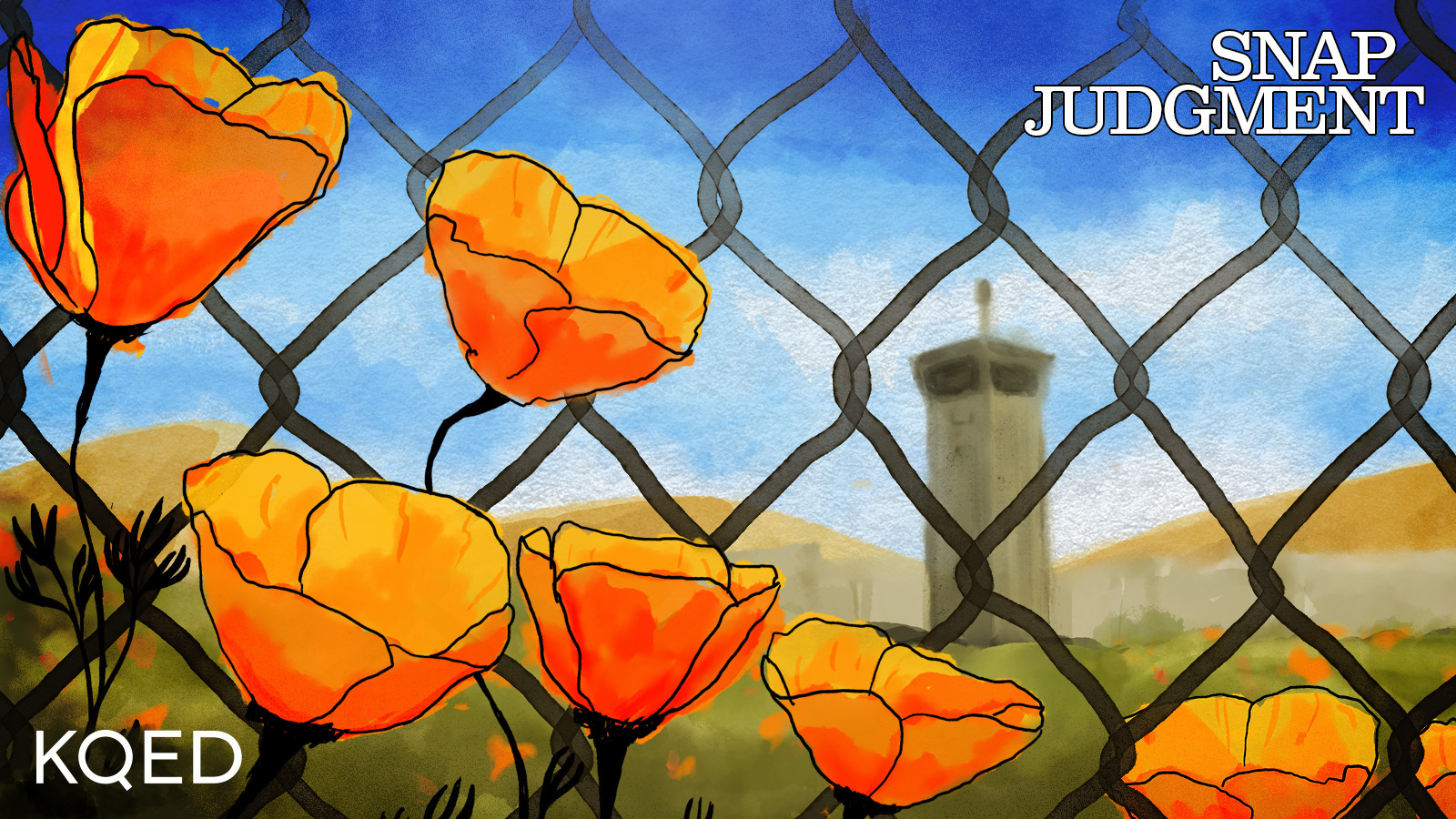
Women at a California Prison Reported Abuse. Then Came ‘Operation Breakdown’
Ghosts and Glamour Take the San Francisco Stage
LAN Parties Make a Comeback; What's the 'Most Important Statewide Race?'
San Francisco's Condor Club Is Full of History, Dancers ... and Ghosts?
What Happened to the Quantified Self Movement?
Showing Up: Street Pets, Stranded Whales and a Scream at the Sea
Ultramarathoning Helped Him Train for Life After Prison
Stories of Persistence: From Negotiating Rent to Swimming the CA Coast
The Speaker: A New Podcast on Nancy Pelosi's Unlikely Path to Power
Silicon Valley Used to Be Carpeted With Flower Farms
Inside the SF Church Where John Coltrane is a Saint; CA Gold Fever in 2026?
Tourists Still Drawn to Route 66; The Legacy of Jackie the Eagle; Teaching About Cesar Chavez Now
Player sponsored by
window.__IS_SSR__=true
window.__INITIAL_STATE__={
"attachmentsReducer": {
"audio_0": {
"type": "attachments",
"id": "audio_0",
"imgSizes": {
"kqedFullSize": {
"file": "https://ww2.kqed.org/news/wp-content/themes/KQED-unified/img/audio_bgs/background0.jpg"
}
}
},
"audio_1": {
"type": "attachments",
"id": "audio_1",
"imgSizes": {
"kqedFullSize": {
"file": "https://ww2.kqed.org/news/wp-content/themes/KQED-unified/img/audio_bgs/background1.jpg"
}
}
},
"audio_2": {
"type": "attachments",
"id": "audio_2",
"imgSizes": {
"kqedFullSize": {
"file": "https://ww2.kqed.org/news/wp-content/themes/KQED-unified/img/audio_bgs/background2.jpg"
}
}
},
"audio_3": {
"type": "attachments",
"id": "audio_3",
"imgSizes": {
"kqedFullSize": {
"file": "https://ww2.kqed.org/news/wp-content/themes/KQED-unified/img/audio_bgs/background3.jpg"
}
}
},
"audio_4": {
"type": "attachments",
"id": "audio_4",
"imgSizes": {
"kqedFullSize": {
"file": "https://ww2.kqed.org/news/wp-content/themes/KQED-unified/img/audio_bgs/background4.jpg"
}
}
},
"placeholder": {
"type": "attachments",
"id": "placeholder",
"imgSizes": {
"thumbnail": {
"file": "https://cdn.kqed.org/wp-content/uploads/2024/12/KQED-Default-Image-816638274-2000x1333-1-160x107.jpg",
"width": 160,
"height": 107,
"mimeType": "image/jpeg"
},
"medium": {
"file": "https://cdn.kqed.org/wp-content/uploads/2024/12/KQED-Default-Image-816638274-2000x1333-1-800x533.jpg",
"width": 800,
"height": 533,
"mimeType": "image/jpeg"
},
"medium_large": {
"file": "https://cdn.kqed.org/wp-content/uploads/2024/12/KQED-Default-Image-816638274-2000x1333-1-768x512.jpg",
"width": 768,
"height": 512,
"mimeType": "image/jpeg"
},
"large": {
"file": "https://cdn.kqed.org/wp-content/uploads/2024/12/KQED-Default-Image-816638274-2000x1333-1-1020x680.jpg",
"width": 1020,
"height": 680,
"mimeType": "image/jpeg"
},
"1536x1536": {
"file": "https://cdn.kqed.org/wp-content/uploads/2024/12/KQED-Default-Image-816638274-2000x1333-1-1536x1024.jpg",
"width": 1536,
"height": 1024,
"mimeType": "image/jpeg"
},
"fd-lrg": {
"file": "https://cdn.kqed.org/wp-content/uploads/2024/12/KQED-Default-Image-816638274-2000x1333-1-1536x1024.jpg",
"width": 1536,
"height": 1024,
"mimeType": "image/jpeg"
},
"fd-med": {
"file": "https://cdn.kqed.org/wp-content/uploads/2024/12/KQED-Default-Image-816638274-2000x1333-1-1020x680.jpg",
"width": 1020,
"height": 680,
"mimeType": "image/jpeg"
},
"fd-sm": {
"file": "https://cdn.kqed.org/wp-content/uploads/2024/12/KQED-Default-Image-816638274-2000x1333-1-800x533.jpg",
"width": 800,
"height": 533,
"mimeType": "image/jpeg"
},
"post-thumbnail": {
"file": "https://cdn.kqed.org/wp-content/uploads/2024/12/KQED-Default-Image-816638274-2000x1333-1-672x372.jpg",
"width": 672,
"height": 372,
"mimeType": "image/jpeg"
},
"twentyfourteen-full-width": {
"file": "https://cdn.kqed.org/wp-content/uploads/2024/12/KQED-Default-Image-816638274-2000x1333-1-1038x576.jpg",
"width": 1038,
"height": 576,
"mimeType": "image/jpeg"
},
"xxsmall": {
"file": "https://cdn.kqed.org/wp-content/uploads/2024/12/KQED-Default-Image-816638274-2000x1333-1-160x107.jpg",
"width": 160,
"height": 107,
"mimeType": "image/jpeg"
},
"xsmall": {
"file": "https://cdn.kqed.org/wp-content/uploads/2024/12/KQED-Default-Image-816638274-2000x1333-1-672x372.jpg",
"width": 672,
"height": 372,
"mimeType": "image/jpeg"
},
"small": {
"file": "https://cdn.kqed.org/wp-content/uploads/2024/12/KQED-Default-Image-816638274-2000x1333-1-672x372.jpg",
"width": 672,
"height": 372,
"mimeType": "image/jpeg"
},
"xlarge": {
"file": "https://cdn.kqed.org/wp-content/uploads/2024/12/KQED-Default-Image-816638274-2000x1333-1-1020x680.jpg",
"width": 1020,
"height": 680,
"mimeType": "image/jpeg"
},
"full-width": {
"file": "https://cdn.kqed.org/wp-content/uploads/2024/12/KQED-Default-Image-816638274-2000x1333-1-1920x1280.jpg",
"width": 1920,
"height": 1280,
"mimeType": "image/jpeg"
},
"guest-author-32": {
"file": "https://cdn.kqed.org/wp-content/uploads/2025/01/KQED-Default-Image-816638274-1333x1333-1-160x160.jpg",
"width": 32,
"height": 32,
"mimeType": "image/jpeg"
},
"guest-author-50": {
"file": "https://cdn.kqed.org/wp-content/uploads/2025/01/KQED-Default-Image-816638274-1333x1333-1-160x160.jpg",
"width": 50,
"height": 50,
"mimeType": "image/jpeg"
},
"guest-author-64": {
"file": "https://cdn.kqed.org/wp-content/uploads/2025/01/KQED-Default-Image-816638274-1333x1333-1-160x160.jpg",
"width": 64,
"height": 64,
"mimeType": "image/jpeg"
},
"guest-author-96": {
"file": "https://cdn.kqed.org/wp-content/uploads/2025/01/KQED-Default-Image-816638274-1333x1333-1-160x160.jpg",
"width": 96,
"height": 96,
"mimeType": "image/jpeg"
},
"guest-author-128": {
"file": "https://cdn.kqed.org/wp-content/uploads/2025/01/KQED-Default-Image-816638274-1333x1333-1-160x160.jpg",
"width": 128,
"height": 128,
"mimeType": "image/jpeg"
},
"detail": {
"file": "https://cdn.kqed.org/wp-content/uploads/2025/01/KQED-Default-Image-816638274-1333x1333-1-160x160.jpg",
"width": 160,
"height": 160,
"mimeType": "image/jpeg"
},
"kqedFullSize": {
"file": "https://cdn.kqed.org/wp-content/uploads/2024/12/KQED-Default-Image-816638274-2000x1333-1.jpg",
"width": 2000,
"height": 1333
}
}
},
"news_12108342": {
"type": "attachments",
"id": "news_12108342",
"meta": {
"index": "attachments_1716263798",
"site": "news",
"id": "12108342",
"found": true
},
"title": "WeAreJaneDoe-1600x900",
"publishDate": 1793823233,
"status": "inherit",
"parent": 12107943,
"modified": 1793823233,
"caption": null,
"credit": null,
"altTag": null,
"description": null,
"imgSizes": {
"thumbnail": {
"file": "https://cdn.kqed.org/wp-content/uploads/sites/10/2026/11/WeAreJaneDoe-1600x900-1-cdbdfe3a-160x90.jpg",
"width": 160,
"height": 90,
"mimeType": "image/jpeg"
},
"1536x1536": {
"file": "https://cdn.kqed.org/wp-content/uploads/sites/10/2026/11/WeAreJaneDoe-1600x900-1-cdbdfe3a-1536x864.jpg",
"width": 1536,
"height": 864,
"mimeType": "image/jpeg"
},
"post-thumbnail": {
"file": "https://cdn.kqed.org/wp-content/uploads/sites/10/2026/11/WeAreJaneDoe-1600x900-1-cdbdfe3a-672x372.jpg",
"width": 672,
"height": 372,
"mimeType": "image/jpeg"
},
"twentyfourteen-full-width": {
"file": "https://cdn.kqed.org/wp-content/uploads/sites/10/2026/11/WeAreJaneDoe-1600x900-1-cdbdfe3a-1038x576.jpg",
"width": 1038,
"height": 576,
"mimeType": "image/jpeg"
},
"npr-cds-wide": {
"file": "https://cdn.kqed.org/wp-content/uploads/sites/10/2026/11/WeAreJaneDoe-1600x900-1-cdbdfe3a-1200x675.jpg",
"width": 1200,
"height": 675,
"mimeType": "image/jpeg"
},
"npr-cds-square": {
"file": "https://cdn.kqed.org/wp-content/uploads/sites/10/2026/11/WeAreJaneDoe-1600x900-1-cdbdfe3a-600x600.jpg",
"width": 600,
"height": 600,
"mimeType": "image/jpeg"
},
"kqedFullSize": {
"file": "https://cdn.kqed.org/wp-content/uploads/sites/10/2026/11/WeAreJaneDoe-1600x900-1-cdbdfe3a.jpg",
"width": 1600,
"height": 900
}
},
"isLoading": false,
"fetchFailed": false
},
"news_12105655": {
"type": "attachments",
"id": "news_12105655",
"meta": {
"index": "attachments_1716263798",
"site": "news",
"id": "12105655",
"found": true
},
"title": "261021-DESI DRAG-SP-06",
"publishDate": 1792625341,
"status": "inherit",
"parent": 0,
"modified": 1793308373,
"caption": "Masala Mahal performs \"Dola re Dola\" at Dhoom Pride in San Francisco on June 7, 2026.",
"credit": "Srishti Prabha/KQED",
"altTag": null,
"description": null,
"imgSizes": {
"thumbnail": {
"file": "https://cdn.kqed.org/wp-content/uploads/sites/10/2026/10/261021-DESI-DRAG-SP-06-b8ab8503-160x107.jpg",
"width": 160,
"height": 107,
"mimeType": "image/jpeg"
},
"1536x1536": {
"file": "https://cdn.kqed.org/wp-content/uploads/sites/10/2026/10/261021-DESI-DRAG-SP-06-b8ab8503-1536x1024.jpg",
"width": 1536,
"height": 1024,
"mimeType": "image/jpeg"
},
"post-thumbnail": {
"file": "https://cdn.kqed.org/wp-content/uploads/sites/10/2026/10/261021-DESI-DRAG-SP-06-b8ab8503-672x372.jpg",
"width": 672,
"height": 372,
"mimeType": "image/jpeg"
},
"twentyfourteen-full-width": {
"file": "https://cdn.kqed.org/wp-content/uploads/sites/10/2026/10/261021-DESI-DRAG-SP-06-b8ab8503-1038x576.jpg",
"width": 1038,
"height": 576,
"mimeType": "image/jpeg"
},
"npr-cds-wide": {
"file": "https://cdn.kqed.org/wp-content/uploads/sites/10/2026/10/261021-DESI-DRAG-SP-06-b8ab8503-1200x675.jpg",
"width": 1200,
"height": 675,
"mimeType": "image/jpeg"
},
"npr-cds-square": {
"file": "https://cdn.kqed.org/wp-content/uploads/sites/10/2026/10/261021-DESI-DRAG-SP-06-b8ab8503-600x600.jpg",
"width": 600,
"height": 600,
"mimeType": "image/jpeg"
},
"kqedFullSize": {
"file": "https://cdn.kqed.org/wp-content/uploads/sites/10/2026/10/261021-DESI-DRAG-SP-06-b8ab8503.jpg",
"width": 2000,
"height": 1333
}
},
"isLoading": false,
"fetchFailed": false
},
"news_12079345": {
"type": "attachments",
"id": "news_12079345",
"meta": {
"index": "attachments_1716263798",
"site": "news",
"id": "12079345",
"found": true
},
"title": "260409-InsuranceCandidateForum-02-BL_qed",
"publishDate": 1775777241,
"status": "inherit",
"parent": 0,
"modified": 1775777348,
"caption": "Jane Kim, former San Francisco supervisor, speaks during a forum for candidates for California insurance commissioner at the San Francisco Bay Area Planning and Urban Research Association (SPUR) in San Francisco on April 9, 2026. The event brought together candidates to discuss the state’s insurance market, including affordability and coverage challenges facing homeowners.",
"credit": "Beth LaBerge/KQED",
"altTag": null,
"description": null,
"imgSizes": {
"thumbnail": {
"file": "https://cdn.kqed.org/wp-content/uploads/sites/10/2026/04/260409-InsuranceCandidateForum-02-BL_qed-160x107.jpg",
"width": 160,
"height": 107,
"mimeType": "image/jpeg"
},
"1536x1536": {
"file": "https://cdn.kqed.org/wp-content/uploads/sites/10/2026/04/260409-InsuranceCandidateForum-02-BL_qed-1536x1024.jpg",
"width": 1536,
"height": 1024,
"mimeType": "image/jpeg"
},
"post-thumbnail": {
"file": "https://cdn.kqed.org/wp-content/uploads/sites/10/2026/04/260409-InsuranceCandidateForum-02-BL_qed-672x372.jpg",
"width": 672,
"height": 372,
"mimeType": "image/jpeg"
},
"twentyfourteen-full-width": {
"file": "https://cdn.kqed.org/wp-content/uploads/sites/10/2026/04/260409-InsuranceCandidateForum-02-BL_qed-1038x576.jpg",
"width": 1038,
"height": 576,
"mimeType": "image/jpeg"
},
"npr-cds-wide": {
"file": "https://cdn.kqed.org/wp-content/uploads/sites/10/2026/04/260409-InsuranceCandidateForum-02-BL_qed-1200x675.jpg",
"width": 1200,
"height": 675,
"mimeType": "image/jpeg"
},
"npr-cds-square": {
"file": "https://cdn.kqed.org/wp-content/uploads/sites/10/2026/04/260409-InsuranceCandidateForum-02-BL_qed-600x600.jpg",
"width": 600,
"height": 600,
"mimeType": "image/jpeg"
},
"kqedFullSize": {
"file": "https://cdn.kqed.org/wp-content/uploads/sites/10/2026/04/260409-InsuranceCandidateForum-02-BL_qed.jpg",
"width": 1999,
"height": 1333
}
},
"isLoading": false,
"fetchFailed": false
},
"news_12104796": {
"type": "attachments",
"id": "news_12104796",
"meta": {
"index": "attachments_1716263798",
"site": "news",
"id": "12104796",
"found": true
},
"title": "Condor-club",
"publishDate": 1792175535,
"status": "inherit",
"parent": 12104793,
"modified": 1792175632,
"caption": "The Condor Club has been a North Beach fixture for over 60 years. San Francisco icon, Carol Doda, danced topless there. But some say it may also be haunted.",
"credit": "Eric Molina/Flickr",
"altTag": "A large neon sign glows brightly on a darkened street, reading Condor.",
"description": null,
"imgSizes": {
"medium": {
"file": "https://cdn.kqed.org/wp-content/uploads/sites/10/2026/10/Condor-club-f1208a64-2000x1328.jpg",
"width": 2000,
"height": 1328,
"mimeType": "image/jpeg"
},
"large": {
"file": "https://cdn.kqed.org/wp-content/uploads/sites/10/2026/10/Condor-club-f1208a64-2000x1328.jpg",
"width": 2000,
"height": 1328,
"mimeType": "image/jpeg"
},
"thumbnail": {
"file": "https://cdn.kqed.org/wp-content/uploads/sites/10/2026/10/Condor-club-f1208a64-160x106.jpg",
"width": 160,
"height": 106,
"mimeType": "image/jpeg"
},
"1536x1536": {
"file": "https://cdn.kqed.org/wp-content/uploads/sites/10/2026/10/Condor-club-f1208a64-1536x1020.jpg",
"width": 1536,
"height": 1020,
"mimeType": "image/jpeg"
},
"post-thumbnail": {
"file": "https://cdn.kqed.org/wp-content/uploads/sites/10/2026/10/Condor-club-f1208a64-672x372.jpg",
"width": 672,
"height": 372,
"mimeType": "image/jpeg"
},
"twentyfourteen-full-width": {
"file": "https://cdn.kqed.org/wp-content/uploads/sites/10/2026/10/Condor-club-f1208a64-1038x576.jpg",
"width": 1038,
"height": 576,
"mimeType": "image/jpeg"
},
"full-width": {
"file": "https://cdn.kqed.org/wp-content/uploads/sites/10/2026/10/Condor-club-f1208a64-2000x1328.jpg",
"width": 2000,
"height": 1328,
"mimeType": "image/jpeg"
},
"npr-cds-wide": {
"file": "https://cdn.kqed.org/wp-content/uploads/sites/10/2026/10/Condor-club-f1208a64-1200x675.jpg",
"width": 1200,
"height": 675,
"mimeType": "image/jpeg"
},
"npr-cds-square": {
"file": "https://cdn.kqed.org/wp-content/uploads/sites/10/2026/10/Condor-club-f1208a64-600x600.jpg",
"width": 600,
"height": 600,
"mimeType": "image/jpeg"
},
"kqedFullSize": {
"file": "https://cdn.kqed.org/wp-content/uploads/sites/10/2026/10/Condor-club-f1208a64.jpg",
"width": 2048,
"height": 1360
}
},
"isLoading": false,
"fetchFailed": false
},
"news_12104412": {
"type": "attachments",
"id": "news_12104412",
"meta": {
"index": "attachments_1716263798",
"site": "news",
"id": "12104412",
"found": true
},
"title": "CAT_Quantified-Self.img_",
"publishDate": 1792010561,
"status": "inherit",
"parent": 12104409,
"modified": 1792010657,
"caption": "The Quantified Self movement started as a small gathering of tech enthusiasts on a quest for self-discovery, and has evolved into the modern industry of wearable technology that tracks your every move. ",
"credit": "Design by Maya Cueva; Image by Teera Konakan/Getty Images",
"altTag": null,
"description": null,
"imgSizes": {
"thumbnail": {
"file": "https://cdn.kqed.org/wp-content/uploads/sites/10/2026/10/CAT_Quantified-Self.img_-6b560f7b-160x90.png",
"width": 160,
"height": 90,
"mimeType": "image/png"
},
"1536x1536": {
"file": "https://cdn.kqed.org/wp-content/uploads/sites/10/2026/10/CAT_Quantified-Self.img_-6b560f7b-1536x864.png",
"width": 1536,
"height": 864,
"mimeType": "image/png"
},
"post-thumbnail": {
"file": "https://cdn.kqed.org/wp-content/uploads/sites/10/2026/10/CAT_Quantified-Self.img_-6b560f7b-672x372.png",
"width": 672,
"height": 372,
"mimeType": "image/png"
},
"twentyfourteen-full-width": {
"file": "https://cdn.kqed.org/wp-content/uploads/sites/10/2026/10/CAT_Quantified-Self.img_-6b560f7b-1038x576.png",
"width": 1038,
"height": 576,
"mimeType": "image/png"
},
"npr-cds-wide": {
"file": "https://cdn.kqed.org/wp-content/uploads/sites/10/2026/10/CAT_Quantified-Self.img_-6b560f7b-1200x675.png",
"width": 1200,
"height": 675,
"mimeType": "image/png"
},
"npr-cds-square": {
"file": "https://cdn.kqed.org/wp-content/uploads/sites/10/2026/10/CAT_Quantified-Self.img_-6b560f7b-600x600.png",
"width": 600,
"height": 600,
"mimeType": "image/png"
},
"kqedFullSize": {
"file": "https://cdn.kqed.org/wp-content/uploads/sites/10/2026/10/CAT_Quantified-Self.img_-6b560f7b.png",
"width": 1920,
"height": 1080
}
},
"isLoading": false,
"fetchFailed": false
},
"news_12102840": {
"type": "attachments",
"id": "news_12102840",
"meta": {
"index": "attachments_1716263798",
"site": "news",
"id": "12102840",
"found": true
},
"title": "092326-STREETVETS-20-MC-KQED",
"publishDate": 1791219973,
"status": "inherit",
"parent": 0,
"modified": 1791220152,
"caption": "Meg McAdams cuts the nails of Christy Grensberg’s new puppy, Houdini, on Sept. 23, 2026, in Oakland.",
"credit": "Miles Cull/KQED",
"altTag": null,
"description": null,
"imgSizes": {
"thumbnail": {
"file": "https://cdn.kqed.org/wp-content/uploads/sites/10/2026/10/092326-STREETVETS-20-MC-KQED-160x107.jpg",
"width": 160,
"height": 107,
"mimeType": "image/jpeg"
},
"1536x1536": {
"file": "https://cdn.kqed.org/wp-content/uploads/sites/10/2026/10/092326-STREETVETS-20-MC-KQED-1536x1025.jpg",
"width": 1536,
"height": 1025,
"mimeType": "image/jpeg"
},
"post-thumbnail": {
"file": "https://cdn.kqed.org/wp-content/uploads/sites/10/2026/10/092326-STREETVETS-20-MC-KQED-672x372.jpg",
"width": 672,
"height": 372,
"mimeType": "image/jpeg"
},
"twentyfourteen-full-width": {
"file": "https://cdn.kqed.org/wp-content/uploads/sites/10/2026/10/092326-STREETVETS-20-MC-KQED-1038x576.jpg",
"width": 1038,
"height": 576,
"mimeType": "image/jpeg"
},
"npr-cds-wide": {
"file": "https://cdn.kqed.org/wp-content/uploads/sites/10/2026/10/092326-STREETVETS-20-MC-KQED-1200x675.jpg",
"width": 1200,
"height": 675,
"mimeType": "image/jpeg"
},
"npr-cds-square": {
"file": "https://cdn.kqed.org/wp-content/uploads/sites/10/2026/10/092326-STREETVETS-20-MC-KQED-600x600.jpg",
"width": 600,
"height": 600,
"mimeType": "image/jpeg"
},
"kqedFullSize": {
"file": "https://cdn.kqed.org/wp-content/uploads/sites/10/2026/10/092326-STREETVETS-20-MC-KQED.jpg",
"width": 2000,
"height": 1334
}
},
"isLoading": false,
"fetchFailed": false
},
"news_12102207": {
"type": "attachments",
"id": "news_12102207",
"meta": {
"index": "attachments_1716263798",
"site": "news",
"id": "12102207",
"found": true
},
"title": null,
"publishDate": 1790802154,
"status": "inherit",
"parent": 12102202,
"modified": 1790814690,
"caption": "Cesar Quijano and his Amity support team at the finish line of the San Diego 100.",
"credit": "Lucy Copp/LAist",
"altTag": null,
"description": null,
"imgSizes": {
"thumbnail": {
"file": "https://cdn.kqed.org/wp-content/uploads/sites/10/2026/09/download-160x120.jpeg",
"width": 160,
"height": 120,
"mimeType": "image/jpeg"
},
"post-thumbnail": {
"file": "https://cdn.kqed.org/wp-content/uploads/sites/10/2026/09/download-672x372.jpeg",
"width": 672,
"height": 372,
"mimeType": "image/jpeg"
},
"twentyfourteen-full-width": {
"file": "https://cdn.kqed.org/wp-content/uploads/sites/10/2026/09/download-1038x576.jpeg",
"width": 1038,
"height": 576,
"mimeType": "image/jpeg"
},
"npr-cds-wide": {
"file": "https://cdn.kqed.org/wp-content/uploads/sites/10/2026/09/download-1200x675.jpeg",
"width": 1200,
"height": 675,
"mimeType": "image/jpeg"
},
"npr-cds-square": {
"file": "https://cdn.kqed.org/wp-content/uploads/sites/10/2026/09/download-600x600.jpeg",
"width": 600,
"height": 600,
"mimeType": "image/jpeg"
},
"kqedFullSize": {
"file": "https://cdn.kqed.org/wp-content/uploads/sites/10/2026/09/download.jpeg",
"width": 1344,
"height": 1008
}
},
"isLoading": false,
"fetchFailed": false
},
"news_12101628": {
"type": "attachments",
"id": "news_12101628",
"meta": {
"index": "attachments_1716263798",
"site": "news",
"id": "12101628",
"found": true
},
"title": "260609-housingcrisisharlowsrain-TV-01227_qed",
"publishDate": 1790620577,
"status": "inherit",
"parent": 12100661,
"modified": 1790620591,
"caption": "Harlow Srain poses for a portrait on the balcony of her housing unit in San Francisco on June 9, 2026.",
"credit": "Tâm Vũ/KQED",
"altTag": null,
"description": null,
"imgSizes": {
"thumbnail": {
"file": "https://cdn.kqed.org/wp-content/uploads/sites/10/2026/09/260609-housingcrisisharlowsrain-TV-01227_qed-160x107.jpg",
"width": 160,
"height": 107,
"mimeType": "image/jpeg"
},
"1536x1536": {
"file": "https://cdn.kqed.org/wp-content/uploads/sites/10/2026/09/260609-housingcrisisharlowsrain-TV-01227_qed-1536x1024.jpg",
"width": 1536,
"height": 1024,
"mimeType": "image/jpeg"
},
"post-thumbnail": {
"file": "https://cdn.kqed.org/wp-content/uploads/sites/10/2026/09/260609-housingcrisisharlowsrain-TV-01227_qed-672x372.jpg",
"width": 672,
"height": 372,
"mimeType": "image/jpeg"
},
"twentyfourteen-full-width": {
"file": "https://cdn.kqed.org/wp-content/uploads/sites/10/2026/09/260609-housingcrisisharlowsrain-TV-01227_qed-1038x576.jpg",
"width": 1038,
"height": 576,
"mimeType": "image/jpeg"
},
"npr-cds-wide": {
"file": "https://cdn.kqed.org/wp-content/uploads/sites/10/2026/09/260609-housingcrisisharlowsrain-TV-01227_qed-1200x675.jpg",
"width": 1200,
"height": 675,
"mimeType": "image/jpeg"
},
"npr-cds-square": {
"file": "https://cdn.kqed.org/wp-content/uploads/sites/10/2026/09/260609-housingcrisisharlowsrain-TV-01227_qed-600x600.jpg",
"width": 600,
"height": 600,
"mimeType": "image/jpeg"
},
"kqedFullSize": {
"file": "https://cdn.kqed.org/wp-content/uploads/sites/10/2026/09/260609-housingcrisisharlowsrain-TV-01227_qed.jpg",
"width": 2000,
"height": 1333
}
},
"isLoading": false,
"fetchFailed": false
},
"news_12098630": {
"type": "attachments",
"id": "news_12098630",
"meta": {
"index": "attachments_1716263798",
"site": "news",
"id": "12098630",
"found": true
},
"title": "TheSpeaker_Horizontal_Episode 1-13",
"publishDate": 1788888970,
"status": "inherit",
"parent": 12098628,
"modified": 1789515833,
"caption": "Photo courtesy of the Office of Speaker Emerita Nancy Pelosi.",
"credit": null,
"altTag": "A smiling young Nancy Pelosi wears a red shirt and gestures with her arm out to the side in front of a large poster for her congressional campaign.",
"description": null,
"imgSizes": {
"medium": {
"file": "https://cdn.kqed.org/wp-content/uploads/sites/10/2026/09/TheSpeaker_Horizontal_Episode-1-13-2000x1125.jpg",
"width": 2000,
"height": 1125,
"mimeType": "image/jpeg"
},
"large": {
"file": "https://cdn.kqed.org/wp-content/uploads/sites/10/2026/09/TheSpeaker_Horizontal_Episode-1-13-2000x1125.jpg",
"width": 2000,
"height": 1125,
"mimeType": "image/jpeg"
},
"thumbnail": {
"file": "https://cdn.kqed.org/wp-content/uploads/sites/10/2026/09/TheSpeaker_Horizontal_Episode-1-13-160x90.jpg",
"width": 160,
"height": 90,
"mimeType": "image/jpeg"
},
"1536x1536": {
"file": "https://cdn.kqed.org/wp-content/uploads/sites/10/2026/09/TheSpeaker_Horizontal_Episode-1-13-1536x864.jpg",
"width": 1536,
"height": 864,
"mimeType": "image/jpeg"
},
"2048x2048": {
"file": "https://cdn.kqed.org/wp-content/uploads/sites/10/2026/09/TheSpeaker_Horizontal_Episode-1-13-2048x1152.jpg",
"width": 2048,
"height": 1152,
"mimeType": "image/jpeg"
},
"post-thumbnail": {
"file": "https://cdn.kqed.org/wp-content/uploads/sites/10/2026/09/TheSpeaker_Horizontal_Episode-1-13-672x372.jpg",
"width": 672,
"height": 372,
"mimeType": "image/jpeg"
},
"twentyfourteen-full-width": {
"file": "https://cdn.kqed.org/wp-content/uploads/sites/10/2026/09/TheSpeaker_Horizontal_Episode-1-13-1038x576.jpg",
"width": 1038,
"height": 576,
"mimeType": "image/jpeg"
},
"full-width": {
"file": "https://cdn.kqed.org/wp-content/uploads/sites/10/2026/09/TheSpeaker_Horizontal_Episode-1-13-2000x1125.jpg",
"width": 2000,
"height": 1125,
"mimeType": "image/jpeg"
},
"npr-cds-wide": {
"file": "https://cdn.kqed.org/wp-content/uploads/sites/10/2026/09/TheSpeaker_Horizontal_Episode-1-13-1200x675.jpg",
"width": 1200,
"height": 675,
"mimeType": "image/jpeg"
},
"npr-cds-square": {
"file": "https://cdn.kqed.org/wp-content/uploads/sites/10/2026/09/TheSpeaker_Horizontal_Episode-1-13-600x600.jpg",
"width": 600,
"height": 600,
"mimeType": "image/jpeg"
},
"kqedFullSize": {
"file": "https://cdn.kqed.org/wp-content/uploads/sites/10/2026/09/TheSpeaker_Horizontal_Episode-1-13-scaled.jpg",
"width": 2560,
"height": 1440
}
},
"isLoading": false,
"fetchFailed": false
},
"news_12089261": {
"type": "attachments",
"id": "news_12089261",
"meta": {
"index": "attachments_1716263798",
"site": "news",
"id": "12089261",
"found": true
},
"title": "260629_ForgottenFlowers_05-KQED",
"publishDate": 1782770341,
"status": "inherit",
"parent": 12090069,
"modified": 1789598365,
"caption": "A Stanford-themed corsage made during a corsage-making workshop.",
"credit": "Courtesy of Diego Bustamante",
"altTag": null,
"description": null,
"imgSizes": {
"thumbnail": {
"file": "https://cdn.kqed.org/wp-content/uploads/sites/10/2026/06/260629_ForgottenFlowers_05-KQED-160x107.jpg",
"width": 160,
"height": 107,
"mimeType": "image/jpeg"
},
"1536x1536": {
"file": "https://cdn.kqed.org/wp-content/uploads/sites/10/2026/06/260629_ForgottenFlowers_05-KQED-1536x1024.jpg",
"width": 1536,
"height": 1024,
"mimeType": "image/jpeg"
},
"post-thumbnail": {
"file": "https://cdn.kqed.org/wp-content/uploads/sites/10/2026/06/260629_ForgottenFlowers_05-KQED-672x372.jpg",
"width": 672,
"height": 372,
"mimeType": "image/jpeg"
},
"twentyfourteen-full-width": {
"file": "https://cdn.kqed.org/wp-content/uploads/sites/10/2026/06/260629_ForgottenFlowers_05-KQED-1038x576.jpg",
"width": 1038,
"height": 576,
"mimeType": "image/jpeg"
},
"npr-cds-wide": {
"file": "https://cdn.kqed.org/wp-content/uploads/sites/10/2026/06/260629_ForgottenFlowers_05-KQED-1200x675.jpg",
"width": 1200,
"height": 675,
"mimeType": "image/jpeg"
},
"npr-cds-square": {
"file": "https://cdn.kqed.org/wp-content/uploads/sites/10/2026/06/260629_ForgottenFlowers_05-KQED-600x600.jpg",
"width": 600,
"height": 600,
"mimeType": "image/jpeg"
},
"kqedFullSize": {
"file": "https://cdn.kqed.org/wp-content/uploads/sites/10/2026/06/260629_ForgottenFlowers_05-KQED.jpg",
"width": 2000,
"height": 1333
}
},
"isLoading": false,
"fetchFailed": false
},
"news_12068329": {
"type": "attachments",
"id": "news_12068329",
"meta": {
"index": "attachments_1716263798",
"site": "news",
"id": "12068329",
"found": true
},
"title": "20251221_JohnColtraneChurch_December_GH-6_qed",
"publishDate": 1766517655,
"status": "inherit",
"parent": 12070415,
"modified": 1768938345,
"caption": "His Eminence Archbishop Franzo W. King greets congregants after Sunday mass at the St. John Coltrane Church at Fort Mason in San Francisco on Dec. 21, 2025.",
"credit": "Gustavo Hernandez/KQED",
"altTag": null,
"description": null,
"imgSizes": {
"thumbnail": {
"file": "https://cdn.kqed.org/wp-content/uploads/sites/10/2025/12/20251221_JohnColtraneChurch_December_GH-6_qed-160x107.jpg",
"width": 160,
"height": 107,
"mimeType": "image/jpeg"
},
"1536x1536": {
"file": "https://cdn.kqed.org/wp-content/uploads/sites/10/2025/12/20251221_JohnColtraneChurch_December_GH-6_qed-1536x1024.jpg",
"width": 1536,
"height": 1024,
"mimeType": "image/jpeg"
},
"post-thumbnail": {
"file": "https://cdn.kqed.org/wp-content/uploads/sites/10/2025/12/20251221_JohnColtraneChurch_December_GH-6_qed-672x372.jpg",
"width": 672,
"height": 372,
"mimeType": "image/jpeg"
},
"twentyfourteen-full-width": {
"file": "https://cdn.kqed.org/wp-content/uploads/sites/10/2025/12/20251221_JohnColtraneChurch_December_GH-6_qed-1038x576.jpg",
"width": 1038,
"height": 576,
"mimeType": "image/jpeg"
},
"npr-cds-wide": {
"file": "https://cdn.kqed.org/wp-content/uploads/sites/10/2025/12/20251221_JohnColtraneChurch_December_GH-6_qed-1200x675.jpg",
"width": 1200,
"height": 675,
"mimeType": "image/jpeg"
},
"kqedFullSize": {
"file": "https://cdn.kqed.org/wp-content/uploads/sites/10/2025/12/20251221_JohnColtraneChurch_December_GH-6_qed.jpg",
"width": 2000,
"height": 1333
}
},
"isLoading": false,
"fetchFailed": false
},
"news_12096619": {
"type": "attachments",
"id": "news_12096619",
"meta": {
"index": "attachments_1716263798",
"site": "news",
"id": "12096619",
"found": true
},
"title": "260824-Big Bear Eagles 2way-01-KQED",
"publishDate": 1787613195,
"status": "inherit",
"parent": 0,
"modified": 1787701334,
"caption": "Jackie, the late Big Bear bald eagle, is seen on a 2023 livestream from the San Bernardino Mountains.",
"credit": "Photo Courtesy: Friends of Big Bear Valley ",
"altTag": null,
"description": null,
"imgSizes": {
"thumbnail": {
"file": "https://cdn.kqed.org/wp-content/uploads/sites/10/2026/08/260824-Big-Bear-Eagles-2way-01-KQED-160x90.jpg",
"width": 160,
"height": 90,
"mimeType": "image/jpeg"
},
"1536x1536": {
"file": "https://cdn.kqed.org/wp-content/uploads/sites/10/2026/08/260824-Big-Bear-Eagles-2way-01-KQED-1536x864.jpg",
"width": 1536,
"height": 864,
"mimeType": "image/jpeg"
},
"post-thumbnail": {
"file": "https://cdn.kqed.org/wp-content/uploads/sites/10/2026/08/260824-Big-Bear-Eagles-2way-01-KQED-672x372.jpg",
"width": 672,
"height": 372,
"mimeType": "image/jpeg"
},
"twentyfourteen-full-width": {
"file": "https://cdn.kqed.org/wp-content/uploads/sites/10/2026/08/260824-Big-Bear-Eagles-2way-01-KQED-1038x576.jpg",
"width": 1038,
"height": 576,
"mimeType": "image/jpeg"
},
"npr-cds-wide": {
"file": "https://cdn.kqed.org/wp-content/uploads/sites/10/2026/08/260824-Big-Bear-Eagles-2way-01-KQED-1200x675.jpg",
"width": 1200,
"height": 675,
"mimeType": "image/jpeg"
},
"npr-cds-square": {
"file": "https://cdn.kqed.org/wp-content/uploads/sites/10/2026/08/260824-Big-Bear-Eagles-2way-01-KQED-600x600.jpg",
"width": 600,
"height": 600,
"mimeType": "image/jpeg"
},
"kqedFullSize": {
"file": "https://cdn.kqed.org/wp-content/uploads/sites/10/2026/08/260824-Big-Bear-Eagles-2way-01-KQED.jpg",
"width": 2000,
"height": 1125
}
},
"isLoading": false,
"fetchFailed": false
}
},
"audioPlayerReducer": {
"postId": "stream_live",
"isPaused": true,
"isPlaying": false,
"pfsActive": false,
"pledgeModalIsOpen": true,
"playerDrawerIsOpen": false,
"liveAudioPlayStartedAt": 0,
"liveAudioPlayContext": ""
},
"authorsReducer": {
"kqed": {
"type": "authors",
"id": "236",
"meta": {
"index": "authors_1716337520",
"id": "236",
"found": true
},
"name": "KQED News Staff",
"firstName": "KQED News Staff",
"lastName": null,
"slug": "kqed",
"email": "faq@kqed.org",
"display_author_email": false,
"staff_mastheads": [],
"title": null,
"bio": null,
"avatar": "https://secure.gravatar.com/avatar/ef0e801a68c4c54afa9180db14084167?s=600&d=blank&r=g",
"twitter": null,
"facebook": null,
"instagram": null,
"linkedin": null,
"sites": [
{
"site": "arts",
"roles": [
"contributor"
]
},
{
"site": "news",
"roles": [
"editor"
]
},
{
"site": "futureofyou",
"roles": [
"author"
]
}
],
"headData": {
"title": "KQED News Staff | KQED",
"description": null,
"ogImgSrc": "https://secure.gravatar.com/avatar/ef0e801a68c4c54afa9180db14084167?s=600&d=blank&r=g",
"twImgSrc": "https://secure.gravatar.com/avatar/ef0e801a68c4c54afa9180db14084167?s=600&d=blank&r=g"
},
"isLoading": false,
"link": "/author/kqed"
}
},
"pagesReducer": {
"author_kqed": {
"type": "pages",
"id": "236",
"meta": {
"index": "authors_1716337520",
"id": "236",
"score": 6.822197,
"site": "authors"
},
"name": "KQED News Staff",
"firstName": "KQED News Staff",
"lastName": null,
"slug": "kqed",
"email": "faq@kqed.org",
"display_author_email": false,
"staff_mastheads": [],
"title": null,
"bio": null,
"avatar": "https://secure.gravatar.com/avatar/ef0e801a68c4c54afa9180db14084167?s=600&d=blank&r=g",
"twitter": null,
"facebook": null,
"instagram": null,
"linkedin": null,
"sites": [
{
"site": "arts",
"roles": [
"contributor"
]
},
{
"site": "news",
"roles": [
"editor"
]
},
{
"site": "futureofyou",
"roles": [
"author"
]
}
],
"headData": {
"title": "KQED News Staff | KQED",
"description": null,
"ogImgSrc": "https://secure.gravatar.com/avatar/ef0e801a68c4c54afa9180db14084167?s=600&d=blank&r=g",
"twImgSrc": "https://secure.gravatar.com/avatar/ef0e801a68c4c54afa9180db14084167?s=600&d=blank&r=g"
},
"isLoading": false,
"hasAllInfo": true,
"blocks": [
{
"blockName": "kqed/staff-member",
"attrs": {
"author": {
"type": "authors",
"id": "236",
"meta": {
"index": "authors_1716337520",
"id": "236",
"score": 6.822197
},
"name": "KQED News Staff",
"firstName": "KQED News Staff",
"lastName": null,
"slug": "kqed",
"email": "faq@kqed.org",
"display_author_email": false,
"staff_mastheads": [],
"title": null,
"bio": null,
"avatar": "https://secure.gravatar.com/avatar/ef0e801a68c4c54afa9180db14084167?s=600&d=blank&r=g",
"twitter": null,
"facebook": null,
"instagram": null,
"linkedin": null,
"sites": [
{
"site": "arts",
"roles": [
"contributor"
]
},
{
"site": "news",
"roles": [
"editor"
]
},
{
"site": "futureofyou",
"roles": [
"author"
]
}
],
"headData": {
"title": "KQED News Staff | KQED",
"description": null,
"ogImgSrc": "https://secure.gravatar.com/avatar/ef0e801a68c4c54afa9180db14084167?s=600&d=blank&r=g",
"twImgSrc": "https://secure.gravatar.com/avatar/ef0e801a68c4c54afa9180db14084167?s=600&d=blank&r=g"
},
"isLoading": false,
"link": "/author/kqed",
"hasAllInfo": true
}
}
},
{
"blockName": "kqed/post-list",
"attrs": {
"query": "posts?author=236&authorName=KQED News Staff",
"title": "By KQED News Staff",
"layout": "cardArticle2",
"className": "wp-block--nomargintop",
"seeMore": true
}
}
]
}
},
"pfsSessionReducer": {},
"postsReducer": {
"stream_live": {
"type": "live",
"id": "stream_live",
"audioUrl": "https://hls.kqed.org/hls/kqed_app/playlist.m3u8",
"title": "Live Stream",
"excerpt": "Live Stream information currently unavailable.",
"link": "/radio",
"featImg": "",
"label": {
"name": "KQED Live",
"link": "/"
}
},
"stream_kqedNewscast": {
"type": "posts",
"id": "stream_kqedNewscast",
"audioUrl": "https://www.kqed.org/.stream/anon/radio/RDnews/newscast.mp3?_=1",
"title": "KQED Newscast",
"featImg": "",
"label": {
"name": "88.5 FM",
"link": "/"
}
},
"news_12107943": {
"type": "posts",
"id": "news_12107943",
"meta": {
"index": "posts_1716263798",
"site": "news",
"id": "12107943",
"score": null,
"sort": [
1793991600000
]
},
"guestAuthors": [],
"slug": "women-at-a-california-prison-reported-abuse-then-came-operation-breakdown",
"title": "Women at a California Prison Reported Abuse. Then Came ‘Operation Breakdown’",
"publishDate": 1793991600,
"format": "standard",
"headTitle": "Women at a California Prison Reported Abuse. Then Came ‘Operation Breakdown’ | KQED",
"labelTerm": {},
"content": "\n\u003cp class=\"wp-block-paragraph\">\u003cem>\u003ca href=\"http://itunes.apple.com/us/podcast/the-california-report-magazine/id1314750545?mt=2\" target=\"_blank\" rel=\"noopener noreferrer\">Listen to this and more in-depth storytelling by subscribing to The California Report Magazine podcast.\u003c/a>\u003c/em>\u003ci> \u003c/i>\u003c/p>\n\n\n\n\u003cp class=\"wp-block-paragraph\">In 2022, former correctional officer Gregory Rodriguez was charged with sexually assaulting thirteen women in the Central California Women’s Facility near Chowchilla. His arrest sparked a renewed wave of abuse complaints within the prison. Then one morning, just before Rodriguez would finally appear in court, over 150 incarcerated women were marched from their cells into a prison chow hall. When tensions escalated after hours without food or water, correctional officers turned chemical weapons on the women, pepper spraying and gassing them. The women say it was payback for speaking up about abuse. In this excerpt from the series “\u003ca href=\"https://snapjudgment.org/we-are-jane-doe/\">We Are Jane Doe\u003c/a>,” produced by KQED and Snap Studios, reporters Madi Bolaños and Anna Sussman investigate the complaints about sexual assault and retaliation within CCWF.\u003cbr>\u003c/p>\n",
"blocks": [
{
"blockName": "core/paragraph",
"attrs": {
"dropCap": false
},
"innerHTML": "\n\u003cp>\u003cem>\u003ca href=\"http://itunes.apple.com/us/podcast/the-california-report-magazine/id1314750545?mt=2\" target=\"_blank\" rel=\"noopener noreferrer\">Listen to this and more in-depth storytelling by subscribing to The California Report Magazine podcast.\u003c/a>\u003c/em>\u003ci> \u003c/i>\u003c/p>\n",
"innerContent": [
"\n\u003cp>\u003cem>\u003ca href=\"http://itunes.apple.com/us/podcast/the-california-report-magazine/id1314750545?mt=2\" target=\"_blank\" rel=\"noopener noreferrer\">Listen to this and more in-depth storytelling by subscribing to The California Report Magazine podcast.\u003c/a>\u003c/em>\u003ci> \u003c/i>\u003c/p>\n"
],
"innerBlocks": []
},
{
"blockName": "core/paragraph",
"attrs": {
"dropCap": false
},
"innerHTML": "\n\u003cp>In 2022, former correctional officer Gregory Rodriguez was charged with sexually assaulting thirteen women in the Central California Women’s Facility near Chowchilla. His arrest sparked a renewed wave of abuse complaints within the prison. Then one morning, just before Rodriguez would finally appear in court, over 150 incarcerated women were marched from their cells into a prison chow hall. When tensions escalated after hours without food or water, correctional officers turned chemical weapons on the women, pepper spraying and gassing them. The women say it was payback for speaking up about abuse. In this excerpt from the series “\u003ca href=\"https://snapjudgment.org/we-are-jane-doe/\">We Are Jane Doe\u003c/a>,” produced by KQED and Snap Studios, reporters Madi Bolaños and Anna Sussman investigate the complaints about sexual assault and retaliation within CCWF.\u003cbr>\u003c/p>\n",
"innerContent": [
"\n\u003cp>In 2022, former correctional officer Gregory Rodriguez was charged with sexually assaulting thirteen women in the Central California Women’s Facility near Chowchilla. His arrest sparked a renewed wave of abuse complaints within the prison. Then one morning, just before Rodriguez would finally appear in court, over 150 incarcerated women were marched from their cells into a prison chow hall. When tensions escalated after hours without food or water, correctional officers turned chemical weapons on the women, pepper spraying and gassing them. The women say it was payback for speaking up about abuse. In this excerpt from the series “\u003ca href=\"https://snapjudgment.org/we-are-jane-doe/\">We Are Jane Doe\u003c/a>,” produced by KQED and Snap Studios, reporters Madi Bolaños and Anna Sussman investigate the complaints about sexual assault and retaliation within CCWF.\u003cbr>\u003c/p>\n"
],
"innerBlocks": []
}
],
"excerpt": null,
"status": "publish",
"parent": 0,
"modified": 1793834239,
"stats": {
"hasAudio": false,
"hasVideo": false,
"hasChartOrMap": false,
"iframeSrcs": [],
"hasGoogleForm": false,
"hasGallery": false,
"hasHearkenModule": false,
"hasPolis": false,
"paragraphCount": 0,
"wordCount": 143
},
"headData": {
"title": "Women at a California Prison Reported Abuse. Then Came ‘Operation Breakdown’ | KQED",
"description": "Listen to this and more in-depth storytelling by subscribing to The California Report Magazine podcast. In 2022, former correctional officer Gregory Rodriguez was charged with sexually assaulting thirteen women in the Central California Women’s Facility near Chowchilla. His arrest sparked a renewed wave of abuse complaints within the prison. Then one morning, just before Rodriguez",
"ogTitle": "",
"ogDescription": "",
"ogImgId": "",
"twTitle": "",
"twDescription": "",
"twImgId": "",
"schema": {
"@context": "https://schema.org",
"@type": "NewsArticle",
"headline": "Women at a California Prison Reported Abuse. Then Came ‘Operation Breakdown’",
"datePublished": "2026-11-06T11:00:00-08:00",
"dateModified": "2026-11-04T15:17:19-08:00",
"image": "https://cdn.kqed.org/wp-content/uploads/2020/02/KQED-OG-Image@1x.png",
"isAccessibleForFree": "True",
"publisher": {
"@type": "NewsMediaOrganization",
"@id": "https://www.kqed.org/#organization",
"name": "KQED",
"logo": "https://cdn.kqed.org/wp-content/uploads/2020/02/KQED-OG-Image@1x.png",
"url": "https://www.kqed.org",
"sameAs": [
"https://www.facebook.com/KQED",
"https://twitter.com/KQED",
"https://www.instagram.com/kqed/",
"https://www.tiktok.com/@kqedofficial",
"https://www.linkedin.com/company/kqed",
"https://www.youtube.com/channel/UCeC0IOo7i1P_61zVUWbJ4nw"
]
}
}
},
"primaryCategory": {
"termId": 31795,
"slug": "california",
"name": "California"
},
"source": "The California Report Magazine",
"sourceUrl": "https://www.kqed.org/news/tag/tcrmag/ ",
"audioUrl": "https://www.podtrac.com/pts/redirect.mp3/traffic.megaphone.fm/KQINC4610849125.mp3",
"sticky": false,
"templateType": "standard",
"featuredImageType": "standard",
"excludeFromSiteSearch": "Include",
"articleAge": "0",
"path": "/news/12107943/women-at-a-california-prison-reported-abuse-then-came-operation-breakdown",
"audioTrackLength": null,
"parsedContent": [
{
"type": "contentString",
"content": "\u003cdiv class=\"post-body\">\u003cp>\n\u003cp class=\"wp-block-paragraph\">\u003cem>\u003ca href=\"http://itunes.apple.com/us/podcast/the-california-report-magazine/id1314750545?mt=2\" target=\"_blank\" rel=\"noopener noreferrer\">Listen to this and more in-depth storytelling by subscribing to The California Report Magazine podcast.\u003c/a>\u003c/em>\u003ci> \u003c/i>\u003c/p>\n\n\n\n\u003cp class=\"wp-block-paragraph\">In 2022, former correctional officer Gregory Rodriguez was charged with sexually assaulting thirteen women in the Central California Women’s Facility near Chowchilla. His arrest sparked a renewed wave of abuse complaints within the prison. Then one morning, just before Rodriguez would finally appear in court, over 150 incarcerated women were marched from their cells into a prison chow hall. When tensions escalated after hours without food or water, correctional officers turned chemical weapons on the women, pepper spraying and gassing them. The women say it was payback for speaking up about abuse. In this excerpt from the series “\u003ca href=\"https://snapjudgment.org/we-are-jane-doe/\">We Are Jane Doe\u003c/a>,” produced by KQED and Snap Studios, reporters Madi Bolaños and Anna Sussman investigate the complaints about sexual assault and retaliation within CCWF.\u003cbr>\u003c/p>\n\u003c/div>\u003c/p>",
"attributes": {
"named": {},
"numeric": []
}
}
],
"link": "/news/12107943/women-at-a-california-prison-reported-abuse-then-came-operation-breakdown",
"authors": [
"236"
],
"programs": [
"news_72",
"news_26731"
],
"categories": [
"news_31795",
"news_33520"
],
"tags": [
"news_18538"
],
"featImg": "news_12108342",
"label": "source_news_12107943"
},
"news_12107468": {
"type": "posts",
"id": "news_12107468",
"meta": {
"index": "posts_1716263798",
"site": "news",
"id": "12107468",
"score": null,
"sort": [
1793379600000
]
},
"guestAuthors": [],
"slug": "ghosts-and-glamour-take-the-san-francisco-stage",
"title": "Ghosts and Glamour Take the San Francisco Stage ",
"publishDate": 1793379600,
"format": "standard",
"headTitle": "Ghosts and Glamour Take the San Francisco Stage | KQED",
"labelTerm": {},
"content": "\n\u003cp class=\"wp-block-paragraph\">\u003cem>\u003ca href=\"http://itunes.apple.com/us/podcast/the-california-report-magazine/id1314750545?mt=2\" target=\"_blank\" rel=\"noopener noreferrer\">Listen to this and more in-depth storytelling by subscribing to The California Report Magazine podcast.\u003c/a>\u003c/em>\u003ci> \u003c/i>\u003c/p>\n\n\n\n\u003ch2 class=\"wp-block-heading\">\u003cstrong>\u003cstrong>\u003cstrong>\u003cstrong>\u003cstrong>\u003cstrong>\u003cstrong>\u003cstrong>\u003ca href=\"https://www.spookedpodcast.org/episodes/sea-legs-the-crossroads/\">\u003cstrong>History, Dancers and…Ghosts? North Beach’s Condor Club\u003c/strong>\u003c/a>\u003c/strong>\u003c/strong>\u003c/strong>\u003c/strong>\u003c/strong>\u003c/strong>\u003c/strong>\u003c/strong>\u003c/h2>\n\n\n\n\u003cp class=\"wp-block-paragraph\">A former bartender at San Francisco’s Condor Club, the first topless bar in America, says the place is haunted. She describes a bottle of Hennessy that wouldn’t stay put, footsteps on empty stairs and a shadowy figure she’s sure was legendary dancer Carol Doda. “Spooked” podcast producer Zoë Ferrigno visits the North Beach club and digs into the history behind the stories, including a deadly accident that may not have been an accident at all.\u003c/p>\n\n\n\n\u003ch2 class=\"wp-block-heading\">\u003cstrong>\u003cstrong>\u003cstrong>\u003cstrong>\u003cstrong>\u003cstrong>\u003cstrong>\u003cstrong>\u003cstrong>\u003cstrong>\u003ca href=\"https://www.kqed.org/news/12107037/one-of-the-bay-areas-only-desi-drag-collectives-serves-bollywood-glam-and-queer-joy\">One of Bay Area’s Only Desi Drag Collectives Serves Bollywood Glam and Queer Joy\u003c/a>\u003c/strong>\u003c/strong>\u003c/strong>\u003c/strong>\u003c/strong>\u003c/strong>\u003c/strong>\u003c/strong>\u003c/strong>\u003c/strong>\u003c/h2>\n\n\n\n\u003cp class=\"wp-block-paragraph\">Jason Sharma grew up mesmerized by Bollywood actresses but felt he couldn’t look or act like them. Raj Krishna did drag in secret in Singapore before moving to the U.S. Now they perform as Chai Auntea and Bindi Masala as a part of Masala Mahal, one of the only Desi drag collectives in the country. KQED’s Srishti Prabha follows them from a rehearsal in Oakland to a South Asian pride party in San Francisco, and delves into their response to feeling cast aside by both their own culture and mainstream drag.\u003c/p>\n\n\n\n\u003cp class=\"wp-block-paragraph\">\u003c/p>\n",
"blocks": [
{
"blockName": "core/paragraph",
"attrs": {
"dropCap": false
},
"innerHTML": "\n\u003cp>\u003cem>\u003ca href=\"http://itunes.apple.com/us/podcast/the-california-report-magazine/id1314750545?mt=2\" target=\"_blank\" rel=\"noopener noreferrer\">Listen to this and more in-depth storytelling by subscribing to The California Report Magazine podcast.\u003c/a>\u003c/em>\u003ci> \u003c/i>\u003c/p>\n",
"innerContent": [
"\n\u003cp>\u003cem>\u003ca href=\"http://itunes.apple.com/us/podcast/the-california-report-magazine/id1314750545?mt=2\" target=\"_blank\" rel=\"noopener noreferrer\">Listen to this and more in-depth storytelling by subscribing to The California Report Magazine podcast.\u003c/a>\u003c/em>\u003ci> \u003c/i>\u003c/p>\n"
],
"innerBlocks": []
},
{
"blockName": "core/heading",
"attrs": {
"text": "History, Dancers and…Ghosts? North Beach’s Condor Club",
"level": 2
},
"innerHTML": "\n\u003ch2 class=\"wp-block-heading\">\u003cstrong>\u003cstrong>\u003cstrong>\u003cstrong>\u003cstrong>\u003cstrong>\u003cstrong>\u003cstrong>\u003ca href=\"https://www.spookedpodcast.org/episodes/sea-legs-the-crossroads/\">\u003cstrong>History, Dancers and…Ghosts? North Beach’s Condor Club\u003c/strong>\u003c/a>\u003c/strong>\u003c/strong>\u003c/strong>\u003c/strong>\u003c/strong>\u003c/strong>\u003c/strong>\u003c/strong>\u003c/h2>\n",
"innerContent": [
"\n\u003ch2 class=\"wp-block-heading\">\u003cstrong>\u003cstrong>\u003cstrong>\u003cstrong>\u003cstrong>\u003cstrong>\u003cstrong>\u003cstrong>\u003ca href=\"https://www.spookedpodcast.org/episodes/sea-legs-the-crossroads/\">\u003cstrong>History, Dancers and…Ghosts? North Beach’s Condor Club\u003c/strong>\u003c/a>\u003c/strong>\u003c/strong>\u003c/strong>\u003c/strong>\u003c/strong>\u003c/strong>\u003c/strong>\u003c/strong>\u003c/h2>\n"
],
"innerBlocks": []
},
{
"blockName": "core/paragraph",
"attrs": {
"dropCap": false
},
"innerHTML": "\n\u003cp>A former bartender at San Francisco’s Condor Club, the first topless bar in America, says the place is haunted. She describes a bottle of Hennessy that wouldn’t stay put, footsteps on empty stairs and a shadowy figure she’s sure was legendary dancer Carol Doda. “Spooked” podcast producer Zoë Ferrigno visits the North Beach club and digs into the history behind the stories, including a deadly accident that may not have been an accident at all.\u003c/p>\n",
"innerContent": [
"\n\u003cp>A former bartender at San Francisco’s Condor Club, the first topless bar in America, says the place is haunted. She describes a bottle of Hennessy that wouldn’t stay put, footsteps on empty stairs and a shadowy figure she’s sure was legendary dancer Carol Doda. “Spooked” podcast producer Zoë Ferrigno visits the North Beach club and digs into the history behind the stories, including a deadly accident that may not have been an accident at all.\u003c/p>\n"
],
"innerBlocks": []
},
{
"blockName": "core/heading",
"attrs": {
"text": "One of Bay Area’s Only Desi Drag Collectives Serves Bollywood Glam and Queer Joy",
"level": 2
},
"innerHTML": "\n\u003ch2 class=\"wp-block-heading\">\u003cstrong>\u003cstrong>\u003cstrong>\u003cstrong>\u003cstrong>\u003cstrong>\u003cstrong>\u003cstrong>\u003cstrong>\u003cstrong>\u003ca href=\"https://www.kqed.org/news/12107037/one-of-the-bay-areas-only-desi-drag-collectives-serves-bollywood-glam-and-queer-joy\">One of Bay Area’s Only Desi Drag Collectives Serves Bollywood Glam and Queer Joy\u003c/a>\u003c/strong>\u003c/strong>\u003c/strong>\u003c/strong>\u003c/strong>\u003c/strong>\u003c/strong>\u003c/strong>\u003c/strong>\u003c/strong>\u003c/h2>\n",
"innerContent": [
"\n\u003ch2 class=\"wp-block-heading\">\u003cstrong>\u003cstrong>\u003cstrong>\u003cstrong>\u003cstrong>\u003cstrong>\u003cstrong>\u003cstrong>\u003cstrong>\u003cstrong>\u003ca href=\"https://www.kqed.org/news/12107037/one-of-the-bay-areas-only-desi-drag-collectives-serves-bollywood-glam-and-queer-joy\">One of Bay Area’s Only Desi Drag Collectives Serves Bollywood Glam and Queer Joy\u003c/a>\u003c/strong>\u003c/strong>\u003c/strong>\u003c/strong>\u003c/strong>\u003c/strong>\u003c/strong>\u003c/strong>\u003c/strong>\u003c/strong>\u003c/h2>\n"
],
"innerBlocks": []
},
{
"blockName": "core/paragraph",
"attrs": {
"dropCap": false
},
"innerHTML": "\n\u003cp>Jason Sharma grew up mesmerized by Bollywood actresses but felt he couldn’t look or act like them. Raj Krishna did drag in secret in Singapore before moving to the U.S. Now they perform as Chai Auntea and Bindi Masala as a part of Masala Mahal, one of the only Desi drag collectives in the country. KQED’s Srishti Prabha follows them from a rehearsal in Oakland to a South Asian pride party in San Francisco, and delves into their response to feeling cast aside by both their own culture and mainstream drag.\u003c/p>\n",
"innerContent": [
"\n\u003cp>Jason Sharma grew up mesmerized by Bollywood actresses but felt he couldn’t look or act like them. Raj Krishna did drag in secret in Singapore before moving to the U.S. Now they perform as Chai Auntea and Bindi Masala as a part of Masala Mahal, one of the only Desi drag collectives in the country. KQED’s Srishti Prabha follows them from a rehearsal in Oakland to a South Asian pride party in San Francisco, and delves into their response to feeling cast aside by both their own culture and mainstream drag.\u003c/p>\n"
],
"innerBlocks": []
},
{
"blockName": "core/paragraph",
"attrs": {
"dropCap": false
},
"innerHTML": "\n\u003cp>\u003c/p>\n",
"innerContent": [
"\n\u003cp>\u003c/p>\n"
],
"innerBlocks": []
}
],
"excerpt": null,
"status": "publish",
"parent": 0,
"modified": 1793375956,
"stats": {
"hasAudio": false,
"hasVideo": false,
"hasChartOrMap": false,
"iframeSrcs": [],
"hasGoogleForm": false,
"hasGallery": false,
"hasHearkenModule": false,
"hasPolis": false,
"paragraphCount": 0,
"wordCount": 215
},
"headData": {
"title": "Ghosts and Glamour Take the San Francisco Stage | KQED",
"description": "Listen to this and more in-depth storytelling by subscribing to The California Report Magazine podcast. History, Dancers and…Ghosts? North Beach’s Condor Club A former bartender at San Francisco’s Condor Club, the first topless bar in America, says the place is haunted. She describes a bottle of Hennessy that wouldn’t stay put, footsteps on empty stairs",
"ogTitle": "",
"ogDescription": "",
"ogImgId": "",
"twTitle": "",
"twDescription": "",
"twImgId": "",
"schema": {
"@context": "https://schema.org",
"@type": "NewsArticle",
"headline": "Ghosts and Glamour Take the San Francisco Stage ",
"datePublished": "2026-10-30T10:00:00-07:00",
"dateModified": "2026-10-30T08:59:16-07:00",
"image": "https://cdn.kqed.org/wp-content/uploads/2020/02/KQED-OG-Image@1x.png",
"isAccessibleForFree": "True",
"publisher": {
"@type": "NewsMediaOrganization",
"@id": "https://www.kqed.org/#organization",
"name": "KQED",
"logo": "https://cdn.kqed.org/wp-content/uploads/2020/02/KQED-OG-Image@1x.png",
"url": "https://www.kqed.org",
"sameAs": [
"https://www.facebook.com/KQED",
"https://twitter.com/KQED",
"https://www.instagram.com/kqed/",
"https://www.tiktok.com/@kqedofficial",
"https://www.linkedin.com/company/kqed",
"https://www.youtube.com/channel/UCeC0IOo7i1P_61zVUWbJ4nw"
]
}
}
},
"primaryCategory": {
"termId": 31795,
"slug": "california",
"name": "California"
},
"source": "The California Report Magazine",
"sourceUrl": "https://www.kqed.org/news/tag/tcrmag/ ",
"audioUrl": "https://www.podtrac.com/pts/redirect.mp3/traffic.megaphone.fm/KQINC9228493348.mp3",
"sticky": false,
"templateType": "standard",
"featuredImageType": "standard",
"excludeFromSiteSearch": "Include",
"articleAge": "0",
"path": "/news/12107468/ghosts-and-glamour-take-the-san-francisco-stage",
"audioTrackLength": null,
"parsedContent": [
{
"type": "contentString",
"content": "\u003cdiv class=\"post-body\">\u003cp>\n\u003cp class=\"wp-block-paragraph\">\u003cem>\u003ca href=\"http://itunes.apple.com/us/podcast/the-california-report-magazine/id1314750545?mt=2\" target=\"_blank\" rel=\"noopener noreferrer\">Listen to this and more in-depth storytelling by subscribing to The California Report Magazine podcast.\u003c/a>\u003c/em>\u003ci> \u003c/i>\u003c/p>\n\n\n\n\u003ch2 class=\"wp-block-heading\">\u003cstrong>\u003cstrong>\u003cstrong>\u003cstrong>\u003cstrong>\u003cstrong>\u003cstrong>\u003cstrong>\u003ca href=\"https://www.spookedpodcast.org/episodes/sea-legs-the-crossroads/\">\u003cstrong>History, Dancers and…Ghosts? North Beach’s Condor Club\u003c/strong>\u003c/a>\u003c/strong>\u003c/strong>\u003c/strong>\u003c/strong>\u003c/strong>\u003c/strong>\u003c/strong>\u003c/strong>\u003c/h2>\n\n\n\n\u003cp class=\"wp-block-paragraph\">A former bartender at San Francisco’s Condor Club, the first topless bar in America, says the place is haunted. She describes a bottle of Hennessy that wouldn’t stay put, footsteps on empty stairs and a shadowy figure she’s sure was legendary dancer Carol Doda. “Spooked” podcast producer Zoë Ferrigno visits the North Beach club and digs into the history behind the stories, including a deadly accident that may not have been an accident at all.\u003c/p>\n\n\n\n\u003ch2 class=\"wp-block-heading\">\u003cstrong>\u003cstrong>\u003cstrong>\u003cstrong>\u003cstrong>\u003cstrong>\u003cstrong>\u003cstrong>\u003cstrong>\u003cstrong>\u003ca href=\"https://www.kqed.org/news/12107037/one-of-the-bay-areas-only-desi-drag-collectives-serves-bollywood-glam-and-queer-joy\">One of Bay Area’s Only Desi Drag Collectives Serves Bollywood Glam and Queer Joy\u003c/a>\u003c/strong>\u003c/strong>\u003c/strong>\u003c/strong>\u003c/strong>\u003c/strong>\u003c/strong>\u003c/strong>\u003c/strong>\u003c/strong>\u003c/h2>\n\n\n\n\u003cp class=\"wp-block-paragraph\">Jason Sharma grew up mesmerized by Bollywood actresses but felt he couldn’t look or act like them. Raj Krishna did drag in secret in Singapore before moving to the U.S. Now they perform as Chai Auntea and Bindi Masala as a part of Masala Mahal, one of the only Desi drag collectives in the country. KQED’s Srishti Prabha follows them from a rehearsal in Oakland to a South Asian pride party in San Francisco, and delves into their response to feeling cast aside by both their own culture and mainstream drag.\u003c/p>\n\n\n\n\u003cp class=\"wp-block-paragraph\">\u003c/p>\n\u003c/div>\u003c/p>",
"attributes": {
"named": {},
"numeric": []
}
}
],
"link": "/news/12107468/ghosts-and-glamour-take-the-san-francisco-stage",
"authors": [
"236"
],
"programs": [
"news_72",
"news_26731"
],
"categories": [
"news_31795",
"news_33520"
],
"tags": [
"news_18538"
],
"featImg": "news_12105655",
"label": "source_news_12107468"
},
"news_12105531": {
"type": "posts",
"id": "news_12105531",
"meta": {
"index": "posts_1716263798",
"site": "news",
"id": "12105531",
"score": null,
"sort": [
1792774800000
]
},
"guestAuthors": [],
"slug": "lan-parties-make-a-comeback-whats-the-most-important-statewide-race",
"title": "LAN Parties Make a Comeback; What's the 'Most Important Statewide Race?'",
"publishDate": 1792774800,
"format": "standard",
"headTitle": "LAN Parties Make a Comeback; What’s the ‘Most Important Statewide Race?’ | KQED",
"labelTerm": {},
"content": "\n\u003cp class=\"wp-block-paragraph\">\u003cem>\u003ca href=\"http://itunes.apple.com/us/podcast/the-california-report-magazine/id1314750545?mt=2\" target=\"_blank\" rel=\"noopener noreferrer\">Listen to this and more in-depth storytelling by subscribing to The California Report Magazine podcast.\u003c/a>\u003c/em>\u003ci> \u003c/i>\u003c/p>\n\n\n\n\u003ch2 class=\"wp-block-heading\">\u003cstrong>\u003cstrong>\u003cstrong>\u003cstrong>\u003cstrong>\u003cstrong>\u003cstrong>\u003cstrong>Election Roundup: Gas Prices, Latino Vote, and the ‘Most Important Statewide Race?’\u003c/strong> \u003c/strong>\u003c/strong>\u003c/strong>\u003c/strong>\u003c/strong>\u003c/strong>\u003c/strong>\u003c/h2>\n\n\n\n\u003cp class=\"wp-block-paragraph\">With Election Day around the corner, \u003ca href=\"https://www.kqed.org/news/12104393/california-democrats-hope-iran-war-flips-the-script-on-gas-prices\">sky-high gas prices\u003c/a> are influencing some of California’s \u003ca href=\"https://www.kqed.org/news/12102409/local-loyalties-and-trump-opposition-collide-in-san-diego-house-race\">most competitive congressional races\u003c/a>, from San Diego County to the Central Valley. KQED politics correspondent Guy Marzorati and Political Breakdown co-host Marisa Lagos break down how Democrats and Republicans are courting Latino voters, where both parties could be falling short, and why the competition for California’s next insurance commissioner could be the “most important statewide race” this November.\u003c/p>\n\n\n\n\u003ch2 class=\"wp-block-heading\">\u003cstrong>\u003cstrong>\u003cstrong>\u003cstrong>\u003cstrong>\u003cstrong>\u003cstrong>\u003cstrong>\u003ca href=\"https://www.kcrw.com/shows/kcrw-reports/stories/gamers-lan-party-like-its-1999?srsltid=AYCX9vKZu9yfVIZ-AGeXMskuvsCQxNQCXRGy_9V8R1eASlnLy9S0NmSq\">\u003cstrong>LAN Parties Are Back, Clunky Computers and All\u003c/strong>\u003c/a>\u003c/strong>\u003c/strong>\u003c/strong>\u003c/strong>\u003c/strong>\u003c/strong>\u003c/strong>\u003c/strong>\u003c/h2>\n\n\n\n\u003cp class=\"wp-block-paragraph\">In the Y2K era, gamers lugged their bulky monitors and towers to friends’ houses to play video games all night on a “Local Area Network.” Now LAN parties are making a comeback across California, from a Napa winery to a streetwear shop in Los Angeles. Reporter Jennifer Swann spoke with gamers – of all ages – embracing the anachronistic tech and making in-person connections.\u003c/p>\n",
"blocks": [
{
"blockName": "core/paragraph",
"attrs": {
"dropCap": false
},
"innerHTML": "\n\u003cp>\u003cem>\u003ca href=\"http://itunes.apple.com/us/podcast/the-california-report-magazine/id1314750545?mt=2\" target=\"_blank\" rel=\"noopener noreferrer\">Listen to this and more in-depth storytelling by subscribing to The California Report Magazine podcast.\u003c/a>\u003c/em>\u003ci> \u003c/i>\u003c/p>\n",
"innerContent": [
"\n\u003cp>\u003cem>\u003ca href=\"http://itunes.apple.com/us/podcast/the-california-report-magazine/id1314750545?mt=2\" target=\"_blank\" rel=\"noopener noreferrer\">Listen to this and more in-depth storytelling by subscribing to The California Report Magazine podcast.\u003c/a>\u003c/em>\u003ci> \u003c/i>\u003c/p>\n"
],
"innerBlocks": []
},
{
"blockName": "core/heading",
"attrs": {
"text": "Election Roundup: Gas Prices, Latino Vote, and the ‘Most Important Statewide Race?’ ",
"level": 2
},
"innerHTML": "\n\u003ch2 class=\"wp-block-heading\">\u003cstrong>\u003cstrong>\u003cstrong>\u003cstrong>\u003cstrong>\u003cstrong>\u003cstrong>\u003cstrong>Election Roundup: Gas Prices, Latino Vote, and the ‘Most Important Statewide Race?’\u003c/strong> \u003c/strong>\u003c/strong>\u003c/strong>\u003c/strong>\u003c/strong>\u003c/strong>\u003c/strong>\u003c/h2>\n",
"innerContent": [
"\n\u003ch2 class=\"wp-block-heading\">\u003cstrong>\u003cstrong>\u003cstrong>\u003cstrong>\u003cstrong>\u003cstrong>\u003cstrong>\u003cstrong>Election Roundup: Gas Prices, Latino Vote, and the ‘Most Important Statewide Race?’\u003c/strong> \u003c/strong>\u003c/strong>\u003c/strong>\u003c/strong>\u003c/strong>\u003c/strong>\u003c/strong>\u003c/h2>\n"
],
"innerBlocks": []
},
{
"blockName": "core/paragraph",
"attrs": {
"dropCap": false
},
"innerHTML": "\n\u003cp>With Election Day around the corner, \u003ca href=\"https://www.kqed.org/news/12104393/california-democrats-hope-iran-war-flips-the-script-on-gas-prices\">sky-high gas prices\u003c/a> are influencing some of California’s \u003ca href=\"https://www.kqed.org/news/12102409/local-loyalties-and-trump-opposition-collide-in-san-diego-house-race\">most competitive congressional races\u003c/a>, from San Diego County to the Central Valley. KQED politics correspondent Guy Marzorati and Political Breakdown co-host Marisa Lagos break down how Democrats and Republicans are courting Latino voters, where both parties could be falling short, and why the competition for California’s next insurance commissioner could be the “most important statewide race” this November.\u003c/p>\n",
"innerContent": [
"\n\u003cp>With Election Day around the corner, \u003ca href=\"https://www.kqed.org/news/12104393/california-democrats-hope-iran-war-flips-the-script-on-gas-prices\">sky-high gas prices\u003c/a> are influencing some of California’s \u003ca href=\"https://www.kqed.org/news/12102409/local-loyalties-and-trump-opposition-collide-in-san-diego-house-race\">most competitive congressional races\u003c/a>, from San Diego County to the Central Valley. KQED politics correspondent Guy Marzorati and Political Breakdown co-host Marisa Lagos break down how Democrats and Republicans are courting Latino voters, where both parties could be falling short, and why the competition for California’s next insurance commissioner could be the “most important statewide race” this November.\u003c/p>\n"
],
"innerBlocks": []
},
{
"blockName": "core/heading",
"attrs": {
"text": "LAN Parties Are Back, Clunky Computers and All",
"level": 2
},
"innerHTML": "\n\u003ch2 class=\"wp-block-heading\">\u003cstrong>\u003cstrong>\u003cstrong>\u003cstrong>\u003cstrong>\u003cstrong>\u003cstrong>\u003cstrong>\u003ca href=\"https://www.kcrw.com/shows/kcrw-reports/stories/gamers-lan-party-like-its-1999?srsltid=AYCX9vKZu9yfVIZ-AGeXMskuvsCQxNQCXRGy_9V8R1eASlnLy9S0NmSq\">\u003cstrong>LAN Parties Are Back, Clunky Computers and All\u003c/strong>\u003c/a>\u003c/strong>\u003c/strong>\u003c/strong>\u003c/strong>\u003c/strong>\u003c/strong>\u003c/strong>\u003c/strong>\u003c/h2>\n",
"innerContent": [
"\n\u003ch2 class=\"wp-block-heading\">\u003cstrong>\u003cstrong>\u003cstrong>\u003cstrong>\u003cstrong>\u003cstrong>\u003cstrong>\u003cstrong>\u003ca href=\"https://www.kcrw.com/shows/kcrw-reports/stories/gamers-lan-party-like-its-1999?srsltid=AYCX9vKZu9yfVIZ-AGeXMskuvsCQxNQCXRGy_9V8R1eASlnLy9S0NmSq\">\u003cstrong>LAN Parties Are Back, Clunky Computers and All\u003c/strong>\u003c/a>\u003c/strong>\u003c/strong>\u003c/strong>\u003c/strong>\u003c/strong>\u003c/strong>\u003c/strong>\u003c/strong>\u003c/h2>\n"
],
"innerBlocks": []
},
{
"blockName": "core/paragraph",
"attrs": {
"dropCap": false
},
"innerHTML": "\n\u003cp>In the Y2K era, gamers lugged their bulky monitors and towers to friends’ houses to play video games all night on a “Local Area Network.” Now LAN parties are making a comeback across California, from a Napa winery to a streetwear shop in Los Angeles. Reporter Jennifer Swann spoke with gamers – of all ages – embracing the anachronistic tech and making in-person connections.\u003c/p>\n",
"innerContent": [
"\n\u003cp>In the Y2K era, gamers lugged their bulky monitors and towers to friends’ houses to play video games all night on a “Local Area Network.” Now LAN parties are making a comeback across California, from a Napa winery to a streetwear shop in Los Angeles. Reporter Jennifer Swann spoke with gamers – of all ages – embracing the anachronistic tech and making in-person connections.\u003c/p>\n"
],
"innerBlocks": []
}
],
"excerpt": null,
"status": "publish",
"parent": 0,
"modified": 1792689793,
"stats": {
"hasAudio": false,
"hasVideo": false,
"hasChartOrMap": false,
"iframeSrcs": [],
"hasGoogleForm": false,
"hasGallery": false,
"hasHearkenModule": false,
"hasPolis": false,
"paragraphCount": 0,
"wordCount": 178
},
"headData": {
"title": "LAN Parties Make a Comeback; What's the 'Most Important Statewide Race?' | KQED",
"description": "Listen to this and more in-depth storytelling by subscribing to The California Report Magazine podcast. Election Roundup: Gas Prices, Latino Vote, and the ‘Most Important Statewide Race?’ With Election Day around the corner, sky-high gas prices are influencing some of California’s most competitive congressional races, from San Diego County to the Central Valley. KQED politics",
"ogTitle": "",
"ogDescription": "",
"ogImgId": "",
"twTitle": "",
"twDescription": "",
"twImgId": "",
"schema": {
"@context": "https://schema.org",
"@type": "NewsArticle",
"headline": "LAN Parties Make a Comeback; What's the 'Most Important Statewide Race?'",
"datePublished": "2026-10-23T10:00:00-07:00",
"dateModified": "2026-10-22T10:23:13-07:00",
"image": "https://cdn.kqed.org/wp-content/uploads/2020/02/KQED-OG-Image@1x.png",
"isAccessibleForFree": "True",
"publisher": {
"@type": "NewsMediaOrganization",
"@id": "https://www.kqed.org/#organization",
"name": "KQED",
"logo": "https://cdn.kqed.org/wp-content/uploads/2020/02/KQED-OG-Image@1x.png",
"url": "https://www.kqed.org",
"sameAs": [
"https://www.facebook.com/KQED",
"https://twitter.com/KQED",
"https://www.instagram.com/kqed/",
"https://www.tiktok.com/@kqedofficial",
"https://www.linkedin.com/company/kqed",
"https://www.youtube.com/channel/UCeC0IOo7i1P_61zVUWbJ4nw"
]
}
}
},
"primaryCategory": {
"termId": 31795,
"slug": "california",
"name": "California"
},
"source": "The California Report Magazine",
"sourceUrl": "https://www.kqed.org/news/tag/tcrmag/ ",
"audioUrl": "https://www.podtrac.com/pts/redirect.mp3/traffic.megaphone.fm/KQINC1179380211.mp3",
"sticky": false,
"templateType": "standard",
"featuredImageType": "standard",
"excludeFromSiteSearch": "Include",
"articleAge": "0",
"path": "/news/12105531/lan-parties-make-a-comeback-whats-the-most-important-statewide-race",
"audioTrackLength": null,
"parsedContent": [
{
"type": "contentString",
"content": "\u003cdiv class=\"post-body\">\u003cp>\n\u003cp class=\"wp-block-paragraph\">\u003cem>\u003ca href=\"http://itunes.apple.com/us/podcast/the-california-report-magazine/id1314750545?mt=2\" target=\"_blank\" rel=\"noopener noreferrer\">Listen to this and more in-depth storytelling by subscribing to The California Report Magazine podcast.\u003c/a>\u003c/em>\u003ci> \u003c/i>\u003c/p>\n\n\n\n\u003ch2 class=\"wp-block-heading\">\u003cstrong>\u003cstrong>\u003cstrong>\u003cstrong>\u003cstrong>\u003cstrong>\u003cstrong>\u003cstrong>Election Roundup: Gas Prices, Latino Vote, and the ‘Most Important Statewide Race?’\u003c/strong> \u003c/strong>\u003c/strong>\u003c/strong>\u003c/strong>\u003c/strong>\u003c/strong>\u003c/strong>\u003c/h2>\n\n\n\n\u003cp class=\"wp-block-paragraph\">With Election Day around the corner, \u003ca href=\"https://www.kqed.org/news/12104393/california-democrats-hope-iran-war-flips-the-script-on-gas-prices\">sky-high gas prices\u003c/a> are influencing some of California’s \u003ca href=\"https://www.kqed.org/news/12102409/local-loyalties-and-trump-opposition-collide-in-san-diego-house-race\">most competitive congressional races\u003c/a>, from San Diego County to the Central Valley. KQED politics correspondent Guy Marzorati and Political Breakdown co-host Marisa Lagos break down how Democrats and Republicans are courting Latino voters, where both parties could be falling short, and why the competition for California’s next insurance commissioner could be the “most important statewide race” this November.\u003c/p>\n\n\n\n\u003ch2 class=\"wp-block-heading\">\u003cstrong>\u003cstrong>\u003cstrong>\u003cstrong>\u003cstrong>\u003cstrong>\u003cstrong>\u003cstrong>\u003ca href=\"https://www.kcrw.com/shows/kcrw-reports/stories/gamers-lan-party-like-its-1999?srsltid=AYCX9vKZu9yfVIZ-AGeXMskuvsCQxNQCXRGy_9V8R1eASlnLy9S0NmSq\">\u003cstrong>LAN Parties Are Back, Clunky Computers and All\u003c/strong>\u003c/a>\u003c/strong>\u003c/strong>\u003c/strong>\u003c/strong>\u003c/strong>\u003c/strong>\u003c/strong>\u003c/strong>\u003c/h2>\n\n\n\n\u003cp class=\"wp-block-paragraph\">In the Y2K era, gamers lugged their bulky monitors and towers to friends’ houses to play video games all night on a “Local Area Network.” Now LAN parties are making a comeback across California, from a Napa winery to a streetwear shop in Los Angeles. Reporter Jennifer Swann spoke with gamers – of all ages – embracing the anachronistic tech and making in-person connections.\u003c/p>\n\u003c/div>\u003c/p>",
"attributes": {
"named": {},
"numeric": []
}
}
],
"link": "/news/12105531/lan-parties-make-a-comeback-whats-the-most-important-statewide-race",
"authors": [
"236"
],
"programs": [
"news_72",
"news_26731"
],
"categories": [
"news_31795",
"news_33520"
],
"tags": [
"news_18538"
],
"featImg": "news_12079345",
"label": "source_news_12105531"
},
"news_12104793": {
"type": "posts",
"id": "news_12104793",
"meta": {
"index": "posts_1716263798",
"site": "news",
"id": "12104793",
"score": null,
"sort": [
1792663200000
]
},
"guestAuthors": [],
"slug": "san-franciscos-condor-club-is-full-of-history-dancers-and-ghosts",
"title": "San Francisco's Condor Club Is Full of History, Dancers ... and Ghosts?",
"publishDate": 1792663200,
"format": "standard",
"headTitle": "San Francisco’s Condor Club Is Full of History, Dancers … and Ghosts? | KQED",
"labelTerm": {},
"content": "\n\u003cp class=\"wp-block-paragraph\">\u003cstrong>Olivia Allen-Price: \u003c/strong>I’m Olivia Allen-Price, this is Bay Curious. Just a heads up that today’s episode includes discussion of nudity and sex. So turn it off or turn it up. We won’t judge you either way. \u003c/p>\n\n\n\n\u003cp class=\"wp-block-paragraph\">When you look back at San Francisco history, sexual entertainment has been a part of the culture since the boots of the earliest miners hit the soil in the mid-1800s. In these early days, prostitution was big business and brothels were easy to come by. We earned the name Barbary Coast in part because of them. \u003c/p>\n\n\n\n\u003cp class=\"wp-block-paragraph\">But every few decades, as public attitudes, state law, or local politics shifted, so too did San Francisco’s sex industry. It jumped from one neighborhood to another. Dance halls came and went. The pendulum would swing more conservative than more permissive. In the 1960s, North Beach was poppin’ with dozens of nightclubs, mostly offering jazz or other live music as the main attraction. But it wouldn’t stay that way for long. \u003c/p>\n\n\n\n\u003cp class=\"wp-block-paragraph\">The Condor Club and a charismatic performer named Carol Doda ushered in a new chapter for San Francisco’s sex industry. Doda has become a San Francisco icon and some say her presence in the Condor club has persisted despite her death in 2015. \u003c/p>\n\n\n\n\u003cp class=\"wp-block-paragraph\">Today we bring you a story about the Condor Club from Spooked, a KQED podcast about real ghost stories told by the people who lived them. Here’s producer Zoe Ferrigno.\u003c/p>\n\n\n\n\u003cp class=\"wp-block-paragraph\">\u003cstrong>Zoe Ferrigno: \u003c/strong>It’s a Sunday night, and my fiance Pete and I are in North Beach, walking up Broadway. Most nights of the week, this street is totally lit up with neon signs, but tonight, almost all of them are dark. There’s no glowing gangster outside of Big Owls, no blonde bombshell in front of the hungry eye. Even the bright green snake outside of the Garden of Eden has the night off. From the looks of it, there’s only one club open in North Beach tonight. And the 50 foot tall neon sign that says Condor in big gold letters is as bright as ever. Inside, the Condor Club is dark and very loud. There are Christmas decorations hanging on the walls and football is playing on the TVs. It kind of feels like just your average neighborhood bar, except for one thing. The dancer up on stage in a silver bikini top, hanging upside down on the stripper pole. The truth is, the Condor isn’t just a neighborhood bar, even if it feels that way sometimes. It’s one of the oldest strip clubs in San Francisco and the very first topless bar in America.\u003c/p>\n\n\n\n\u003cp class=\"wp-block-paragraph\">\u003cstrong>Rachel: \u003c/strong>I was really excited to work there, honestly, even if I wasn’t dancing, because it’s an iconic spot.\u003c/p>\n\n\n\n\u003cp class=\"wp-block-paragraph\">\u003cstrong>Zoe Ferrigno: \u003c/strong>That’s Rachel. She started working at the Condor as a bartender in 2019.\u003c/p>\n\n\n\n\u003cp class=\"wp-block-paragraph\">\u003cstrong>Rachel: \u003c/strong>The building itself is like over a hundred years old. So when you go in it has like a very like old-school burlesque vibe, which I really liked. The stairs are still made of hardwood, the railings are still make of hard wood. The wallpaper was like super detailed and ornate, paisley, with like these deep reds and gold. And then you just have pictures of dancers who danced there throughout the years. There’s this history there, like I wouldn’t be surprised if it opened as a museum one of these days. Rachel started out working the day shift at the club. In the beginning, it was intimidating. The girl who was training me during the daytime, she was very charismatic and a lot of people loved her. She had a lot of regulars that came in just for her. So I was just like, I felt like I had like this huge role to fill, you know.\u003c/p>\n\n\n\n\u003cp class=\"wp-block-paragraph\">\u003cstrong>Zoe Ferrigno: \u003c/strong>Rachel knew if she was going to win over the crowd, she was gonna have to put in some extra time before her shift when the club was dead.\u003c/p>\n\n\n\n\u003cp class=\"wp-block-paragraph\">\u003cstrong>Rachel: \u003c/strong>I came in and I was setting up the bar and I was practicing making drinks so that I could get faster at it. And I went to go grab a bottle, and then I noticed that the Hennessy bottle was out of place. It was just like slightly scooched towards the edge. And I noticed that because I’m one of those people where I’m like it needs to be in like a perfect little place, like it need to look neat. And so I went and I pushed it back and then I got down off the ladder and then, I started cleaning the bar and cutting fruit and just doing downtime stuff that you do as a bartender at the bar. I look up and that damn bottle. Is by the edge again and I’m just like, what the hell? Because I made sure that I pushed that thing back and then I went and I did it again.\u003c/p>\n\n\n\n\u003cp class=\"wp-block-paragraph\">\u003cstrong>Zoe Ferrigno: \u003c/strong>And it kept happening whenever she was there practicing in the deserted club with the empty stage.\u003c/p>\n\n\n\n\u003cp class=\"wp-block-paragraph\">\u003cstrong>Rachel: \u003c/strong>I would push it back, and then it would be slightly out of place again. And it was just that one bottle of Hennessy. It was really annoying.\u003c/p>\n\n\n\n\u003cp class=\"wp-block-paragraph\">\u003cstrong>Zoe Ferrigno: \u003c/strong>After a few weeks on the job, Rachel was starting to get the hang of things.\u003c/p>\n\n\n\n\u003cp class=\"wp-block-paragraph\">\u003cstrong>Rachel: \u003c/strong>Because we had a lot of beer drinkers, I would keep bottles of beer on ice. So I remember I was taking some Bud Lights, putting them on the ice. It’s very early, so like no customers had rolled in yet, the band hadn’t come in yet. And I heard what sounded like footsteps. It sounded like somebody was just darting up the stairs. I thought it was my manager, but then about five to 10 minutes later, it sounded like somebody was running back down the stairs. I was like, all right, what’s going on? Did something happen? So I decided to investigate. So I went upstairs and I looked around, my manager was not up there, I came back down. As I’m coming down the stairs leading up to the private rooms, he comes up from the basement stairs. And I’m like, I just heard somebody running up and down the stairs. I thought it was you. And he was just like, oh yeah, that’s the ghost. I’ve heard it too. In my head, I was like, people like to blame things that they can’t explain on ghosts. Or he’s just trying to scare me. That was what was going through my head. So I brushed it off and went back to work.\u003c/p>\n\n\n\n\u003cp class=\"wp-block-paragraph\">\u003cstrong>Zoe Ferrigno: \u003c/strong>It was another dead afternoon, and Rachel was all alone in the club again, up on the stage.\u003c/p>\n\n\n\n\u003cp class=\"wp-block-paragraph\">\u003cstrong>Rachel: \u003c/strong>My manager told me that he wanted me to start cleaning the mirror that’s behind the pole on the stage because no one was cleaning it and it’s just filled with fingerprints and lipstick stains because sometimes the girls would kiss the mirror. So I’m up there with the Windex and I’m wiping it down. I’m minding my own business. And then as I’m whipping away these fingerprints, I see a man standing behind me. And that’s when I got startled. He was very tall, very big, and he had a beard. He was wearing a full-on black suit, white button-up shirt with a red tie. It was the kind of outfit that the bouncers wore. And he looked like my old co-worker that I had at my old club. And I was like, Oh, did he come by to say hello and turn around and no one’s there. It was literally like a split second. Like I saw it in the mirror and I kinda got excited and I turned around and no one was there and I was like, what just happened? I got scared. I was like, is somebody in here? Like, who was that? I looked around and I was like maybe somebody from the night shift maybe came in to pick up their paycheck or something. Nope, no one was there. And then I remembered like, boss said it was haunted. Oh, is this what he was talking about? We’ll be back with more.\u003c/p>\n\n\n\n\u003cp class=\"wp-block-paragraph\">\u003cstrong>Olivia Allen-Price: \u003c/strong>After this quick break. And we’re back at the Condor Club with producer Zoe Frigno.\u003c/p>\n\n\n\n\u003cp class=\"wp-block-paragraph\">\u003cstrong>Zoe Ferrigno: \u003c/strong>Up on the same stage where Rachel saw the man behind her in the mirror, another dancer is finishing her set. There’s a guy in a suit up there with her, using a push broom to sweep up all the cash on stage. Pete and I get up and make our way into the club’s other room to get drinks at the bar. We see the stairs that lead up to the private rooms where Rachel heard the disembodied footsteps. And then towards the back of the club, we notice that part of the floor is glowing. We walk over and see that set into the floor is a baby grand piano. It’s underneath a layer of plexiglass and illuminated by hot pink lights. There’s a clear stripper pole coming up out of the plexi glass that goes all the way into the ceiling. It turns out that this piano plays a big role in the history of the club.\u003c/p>\n\n\n\n\u003cp class=\"wp-block-paragraph\">\u003cstrong>Rachel: \u003c/strong>I was bartending at night time, it was very very busy, very loud music playing. I was very stressed out because there was a lot of people and I have to deal with this door-to-ash order because one of the dancers had ordered food.\u003c/p>\n\n\n\n\u003cp class=\"wp-block-paragraph\">\u003cstrong>Zoe Ferrigno: \u003c/strong>Rachel grabbed the takeout bag and started heading for the back room. But before she got there, she ran into another dancer.\u003c/p>\n\n\n\n\u003cp class=\"wp-block-paragraph\">\u003cstrong>Rachel: \u003c/strong>Faces like super pale white. When I noticed they were looking up at the ceiling, I turn around, I look up. I was expecting to see something wild going down on the second floor in the private rooms because that’s what happens when you work in a nightclub. That’s what I was expecting to, see something Wild. But when I looked up, I saw this black shadowy figure of a woman, hourglass shape, pinned up hair with her hand on her hip, just like descending from the ceiling, like down to the floor. And it was dark, but I could see it. It was plain as day. And then as soon as it hits the floor, it just dissipates. It was like a raindrop hitting the floor. It was, like, poof. Gone. I was super shaken up. I had chills, I was freaking out, but the dancer next to me, she was like really freaking out. She was like, oh my God, did we just see that? I was trying really, really hard to keep it together, but I couldn’t stop shaking. Just the way she was posing, just the way that her body was shaped. There’s no doubt in my mind that that was Carol, absolutely.\u003c/p>\n\n\n\n\u003cp class=\"wp-block-paragraph\">\u003cstrong>Zoe Ferrigno: \u003c/strong>Carol, as in Carol Dota, the iconic topless dancer who made the Condor Club famous and who turned North Beach into a hub of sex and controversy in the 1960s.\u003c/p>\n\n\n\n\u003cp class=\"wp-block-paragraph\">\u003cstrong>Olivia Allen-Price: \u003c/strong>Yours was the first topless show.\u003c/p>\n\n\n\n\u003cp class=\"wp-block-paragraph\">\u003cstrong>Carol Doda: \u003c/strong>The first topless and the first to be in trouble. I was the first one to go to jail for three hours.\u003c/p>\n\n\n\n\u003cp class=\"wp-block-paragraph\">\u003cstrong>Interviewer: \u003c/strong>You did go to jail for three hours, what was that like?\u003c/p>\n\n\n\n\u003cp class=\"wp-block-paragraph\">\u003cstrong>Carol Doda: \u003c/strong>It was very terrible. I don’t particularly like it.\u003c/p>\n\n\n\n\u003cp class=\"wp-block-paragraph\">\u003cstrong>Interviewer: \u003c/strong>But I would like to know what is the performance of the condor, what did it consist of?\u003c/p>\n\n\n\n\u003cp class=\"wp-block-paragraph\">\u003cstrong>Carol Doda: \u003c/strong>Oh, it consisted of a piano, a ceiling, and a body coming out of the ceiling on the piano with this wild rock and roll music. And it was like going up and down on an elevator. And it would hit the stage and I would go into one of my routines, mostly rock and dancing, you know, the contemporary.\u003c/p>\n\n\n\n\u003cp class=\"wp-block-paragraph\">\u003cstrong>Zoe Ferrigno: \u003c/strong>Carol performed her signature moves, singing and dancing topless on top of the piano six times every night, and each time the crowd in the Chandra Club would go wild.\u003c/p>\n\n\n\n\u003cp class=\"wp-block-paragraph\">\u003cstrong>Rachel: \u003c/strong>When I saw the silhouette come down from the ceiling, like that was her platform where she had her piano, where she would come down. Like that was her spot. She passed away in 2015, so pretty recent, but I wouldn’t be surprised if she felt very spiritually and emotionally connected to that place.\u003c/p>\n\n\n\n\u003cp class=\"wp-block-paragraph\">\u003cstrong>Zoe Ferrigno: \u003c/strong>But the legacy of the piano that now sits encased in plexiglass beneath the floor goes beyond just Carol Dota.\u003c/p>\n\n\n\n\u003cp class=\"wp-block-paragraph\">\u003cstrong>Rachel \u003c/strong>So back in the early 80s, this floor host and a dancer decided that now that the club was closed, that it was a good idea to do the nasty on top of the piano. Why they thought that that was a great idea, I don’t know. But as they were, you know, being intimate on top the piano, it malfunctioned. And it just SMASHED against the ceiling. And it crushed the man. His girlfriend, the dancer, she was able to survive. But yeah, the four hosts, yeah, he did not survive, unfortunately.\u003c/p>\n\n\n\n\u003cp class=\"wp-block-paragraph\">\u003cstrong>Zoe Ferrigno: \u003c/strong>Over time, Rachel came to wonder if that was the large man in the bouncer suit, whose reflection she saw behind her that day, in the mirror.\u003c/p>\n\n\n\n\u003cp class=\"wp-block-paragraph\">\u003cstrong>Rachel: \u003c/strong>Apparently he had a beard, like that was his nickname, the beard.\u003c/p>\n\n\n\n\u003cp class=\"wp-block-paragraph\">\u003cstrong>Zoe Ferrigno: \u003c/strong>This theory intrigued me, so I started looking into it, and I found out that there’s evidence that the beard, whose real name was Jimmy Ferruzzo, may actually have been murdered by the mob, and then his death was staged to look like an accident. We probably won’t ever know what really happened, just like we’ll never know whether Rachel saw the beard that day, or the spirit of some other guy who just really loved Tennessee.\u003c/p>\n\n\n\n\u003cp class=\"wp-block-paragraph\">\u003cstrong>Rachel: \u003c/strong>To me, it’s like a lot of different spirits that are there. Even though I was there for only several months, I could definitely just feel a lot of different energy, because there’s just so many different people that have come and gone from that place since the 60s. And a strip club is a very emotionally charged place. There’s a lot of different emotions, and people are experiencing a bunch of different things. I feel like their energy just sort of lingers.\u003c/p>\n\n\n\n\u003cp class=\"wp-block-paragraph\">\u003cstrong>Zoe Ferrigno: \u003c/strong>It’s about 10 p.m at the Condor Club. There’s a little break in the entertainment and Pete has wandered off with his drink to the back of the club to check out the piano one more time. He’s standing right over it in the same place where Jimmy Ferruzzo met his end and where Rachel saw what she believes was Carol Doda’s ghost. There’s another dancer about to take the stage, but I think it’s time to go. I wanna get my fiance out of here in one piece.\u003c/p>\n\n\n\n\u003cp class=\"wp-block-paragraph\">\u003cstrong>Olivia Allen-Price: \u003c/strong>That was Spooked Productions Producer Zoe Ferringo. \u003c/p>\n\n\n\n\u003cp class=\"wp-block-paragraph\">Spooked is dropping new episodes right now as part of their latest season, The Spooked Field Guide to the Shadow. Be sure to check them out and subscribe over on the Spooked podcast feed. \u003c/p>\n\n\n\n\u003cp class=\"wp-block-paragraph\">And if you like what you’re hearing there, or here for that matter, consider becoming a KQED member and supporting our work. It’s super quick and easy. Just head to donate.kqed.org slash podcasts. \u003c/p>\n\n\n\n\u003cp class=\"wp-block-paragraph\">If you want to learn more about the history of the Condor Club and Carol’s legacy, check out the documentary Carol Dota, topless at the condor. \u003c/p>\n\n\n\n\u003cp class=\"wp-block-paragraph\">The Spooked team behind that episode was Doug Stewart, Casey Butler, Paulina Creakey, and Zoe Ferrigno.\u003c/p>\n\n\n\n\u003cp class=\"wp-block-paragraph\"> Bay Curious is made in San Francisco by Christopher Beale, Katrina Schwartz, Anna Casalme, and me, Olivia Allen-Price. We get extra support from Maha Sanad, Jen Chien, Katie Sprenger, Ethan Toven-Lindsey, and everyone on Team KQED. \u003c/p>\n\n\n\n\u003cp class=\"wp-block-paragraph\">I hope you have a wonderful week, and don’t see anything creepy in the mirror.\u003c/p>\n",
"blocks": [
{
"blockName": "core/paragraph",
"attrs": {
"dropCap": false
},
"innerHTML": "\n\u003cp>\u003cstrong>Olivia Allen-Price: \u003c/strong>I’m Olivia Allen-Price, this is Bay Curious. Just a heads up that today’s episode includes discussion of nudity and sex. So turn it off or turn it up. We won’t judge you either way. \u003c/p>\n",
"innerContent": [
"\n\u003cp>\u003cstrong>Olivia Allen-Price: \u003c/strong>I’m Olivia Allen-Price, this is Bay Curious. Just a heads up that today’s episode includes discussion of nudity and sex. So turn it off or turn it up. We won’t judge you either way. \u003c/p>\n"
],
"innerBlocks": []
},
{
"blockName": "core/paragraph",
"attrs": {
"dropCap": false
},
"innerHTML": "\n\u003cp>When you look back at San Francisco history, sexual entertainment has been a part of the culture since the boots of the earliest miners hit the soil in the mid-1800s. In these early days, prostitution was big business and brothels were easy to come by. We earned the name Barbary Coast in part because of them. \u003c/p>\n",
"innerContent": [
"\n\u003cp>When you look back at San Francisco history, sexual entertainment has been a part of the culture since the boots of the earliest miners hit the soil in the mid-1800s. In these early days, prostitution was big business and brothels were easy to come by. We earned the name Barbary Coast in part because of them. \u003c/p>\n"
],
"innerBlocks": []
},
{
"blockName": "core/paragraph",
"attrs": {
"dropCap": false
},
"innerHTML": "\n\u003cp>But every few decades, as public attitudes, state law, or local politics shifted, so too did San Francisco’s sex industry. It jumped from one neighborhood to another. Dance halls came and went. The pendulum would swing more conservative than more permissive. In the 1960s, North Beach was poppin’ with dozens of nightclubs, mostly offering jazz or other live music as the main attraction. But it wouldn’t stay that way for long. \u003c/p>\n",
"innerContent": [
"\n\u003cp>But every few decades, as public attitudes, state law, or local politics shifted, so too did San Francisco’s sex industry. It jumped from one neighborhood to another. Dance halls came and went. The pendulum would swing more conservative than more permissive. In the 1960s, North Beach was poppin’ with dozens of nightclubs, mostly offering jazz or other live music as the main attraction. But it wouldn’t stay that way for long. \u003c/p>\n"
],
"innerBlocks": []
},
{
"blockName": "core/paragraph",
"attrs": {
"dropCap": false
},
"innerHTML": "\n\u003cp>The Condor Club and a charismatic performer named Carol Doda ushered in a new chapter for San Francisco’s sex industry. Doda has become a San Francisco icon and some say her presence in the Condor club has persisted despite her death in 2015. \u003c/p>\n",
"innerContent": [
"\n\u003cp>The Condor Club and a charismatic performer named Carol Doda ushered in a new chapter for San Francisco’s sex industry. Doda has become a San Francisco icon and some say her presence in the Condor club has persisted despite her death in 2015. \u003c/p>\n"
],
"innerBlocks": []
},
{
"blockName": "core/paragraph",
"attrs": {
"dropCap": false
},
"innerHTML": "\n\u003cp>Today we bring you a story about the Condor Club from Spooked, a KQED podcast about real ghost stories told by the people who lived them. Here’s producer Zoe Ferrigno.\u003c/p>\n",
"innerContent": [
"\n\u003cp>Today we bring you a story about the Condor Club from Spooked, a KQED podcast about real ghost stories told by the people who lived them. Here’s producer Zoe Ferrigno.\u003c/p>\n"
],
"innerBlocks": []
},
{
"blockName": "core/paragraph",
"attrs": {
"dropCap": false
},
"innerHTML": "\n\u003cp>\u003cstrong>Zoe Ferrigno: \u003c/strong>It’s a Sunday night, and my fiance Pete and I are in North Beach, walking up Broadway. Most nights of the week, this street is totally lit up with neon signs, but tonight, almost all of them are dark. There’s no glowing gangster outside of Big Owls, no blonde bombshell in front of the hungry eye. Even the bright green snake outside of the Garden of Eden has the night off. From the looks of it, there’s only one club open in North Beach tonight. And the 50 foot tall neon sign that says Condor in big gold letters is as bright as ever. Inside, the Condor Club is dark and very loud. There are Christmas decorations hanging on the walls and football is playing on the TVs. It kind of feels like just your average neighborhood bar, except for one thing. The dancer up on stage in a silver bikini top, hanging upside down on the stripper pole. The truth is, the Condor isn’t just a neighborhood bar, even if it feels that way sometimes. It’s one of the oldest strip clubs in San Francisco and the very first topless bar in America.\u003c/p>\n",
"innerContent": [
"\n\u003cp>\u003cstrong>Zoe Ferrigno: \u003c/strong>It’s a Sunday night, and my fiance Pete and I are in North Beach, walking up Broadway. Most nights of the week, this street is totally lit up with neon signs, but tonight, almost all of them are dark. There’s no glowing gangster outside of Big Owls, no blonde bombshell in front of the hungry eye. Even the bright green snake outside of the Garden of Eden has the night off. From the looks of it, there’s only one club open in North Beach tonight. And the 50 foot tall neon sign that says Condor in big gold letters is as bright as ever. Inside, the Condor Club is dark and very loud. There are Christmas decorations hanging on the walls and football is playing on the TVs. It kind of feels like just your average neighborhood bar, except for one thing. The dancer up on stage in a silver bikini top, hanging upside down on the stripper pole. The truth is, the Condor isn’t just a neighborhood bar, even if it feels that way sometimes. It’s one of the oldest strip clubs in San Francisco and the very first topless bar in America.\u003c/p>\n"
],
"innerBlocks": []
},
{
"blockName": "core/paragraph",
"attrs": {
"dropCap": false
},
"innerHTML": "\n\u003cp>\u003cstrong>Rachel: \u003c/strong>I was really excited to work there, honestly, even if I wasn’t dancing, because it’s an iconic spot.\u003c/p>\n",
"innerContent": [
"\n\u003cp>\u003cstrong>Rachel: \u003c/strong>I was really excited to work there, honestly, even if I wasn’t dancing, because it’s an iconic spot.\u003c/p>\n"
],
"innerBlocks": []
},
{
"blockName": "core/paragraph",
"attrs": {
"dropCap": false
},
"innerHTML": "\n\u003cp>\u003cstrong>Zoe Ferrigno: \u003c/strong>That’s Rachel. She started working at the Condor as a bartender in 2019.\u003c/p>\n",
"innerContent": [
"\n\u003cp>\u003cstrong>Zoe Ferrigno: \u003c/strong>That’s Rachel. She started working at the Condor as a bartender in 2019.\u003c/p>\n"
],
"innerBlocks": []
},
{
"blockName": "core/paragraph",
"attrs": {
"dropCap": false
},
"innerHTML": "\n\u003cp>\u003cstrong>Rachel: \u003c/strong>The building itself is like over a hundred years old. So when you go in it has like a very like old-school burlesque vibe, which I really liked. The stairs are still made of hardwood, the railings are still make of hard wood. The wallpaper was like super detailed and ornate, paisley, with like these deep reds and gold. And then you just have pictures of dancers who danced there throughout the years. There’s this history there, like I wouldn’t be surprised if it opened as a museum one of these days. Rachel started out working the day shift at the club. In the beginning, it was intimidating. The girl who was training me during the daytime, she was very charismatic and a lot of people loved her. She had a lot of regulars that came in just for her. So I was just like, I felt like I had like this huge role to fill, you know.\u003c/p>\n",
"innerContent": [
"\n\u003cp>\u003cstrong>Rachel: \u003c/strong>The building itself is like over a hundred years old. So when you go in it has like a very like old-school burlesque vibe, which I really liked. The stairs are still made of hardwood, the railings are still make of hard wood. The wallpaper was like super detailed and ornate, paisley, with like these deep reds and gold. And then you just have pictures of dancers who danced there throughout the years. There’s this history there, like I wouldn’t be surprised if it opened as a museum one of these days. Rachel started out working the day shift at the club. In the beginning, it was intimidating. The girl who was training me during the daytime, she was very charismatic and a lot of people loved her. She had a lot of regulars that came in just for her. So I was just like, I felt like I had like this huge role to fill, you know.\u003c/p>\n"
],
"innerBlocks": []
},
{
"blockName": "core/paragraph",
"attrs": {
"dropCap": false
},
"innerHTML": "\n\u003cp>\u003cstrong>Zoe Ferrigno: \u003c/strong>Rachel knew if she was going to win over the crowd, she was gonna have to put in some extra time before her shift when the club was dead.\u003c/p>\n",
"innerContent": [
"\n\u003cp>\u003cstrong>Zoe Ferrigno: \u003c/strong>Rachel knew if she was going to win over the crowd, she was gonna have to put in some extra time before her shift when the club was dead.\u003c/p>\n"
],
"innerBlocks": []
},
{
"blockName": "core/paragraph",
"attrs": {
"dropCap": false
},
"innerHTML": "\n\u003cp>\u003cstrong>Rachel: \u003c/strong>I came in and I was setting up the bar and I was practicing making drinks so that I could get faster at it. And I went to go grab a bottle, and then I noticed that the Hennessy bottle was out of place. It was just like slightly scooched towards the edge. And I noticed that because I’m one of those people where I’m like it needs to be in like a perfect little place, like it need to look neat. And so I went and I pushed it back and then I got down off the ladder and then, I started cleaning the bar and cutting fruit and just doing downtime stuff that you do as a bartender at the bar. I look up and that damn bottle. Is by the edge again and I’m just like, what the hell? Because I made sure that I pushed that thing back and then I went and I did it again.\u003c/p>\n",
"innerContent": [
"\n\u003cp>\u003cstrong>Rachel: \u003c/strong>I came in and I was setting up the bar and I was practicing making drinks so that I could get faster at it. And I went to go grab a bottle, and then I noticed that the Hennessy bottle was out of place. It was just like slightly scooched towards the edge. And I noticed that because I’m one of those people where I’m like it needs to be in like a perfect little place, like it need to look neat. And so I went and I pushed it back and then I got down off the ladder and then, I started cleaning the bar and cutting fruit and just doing downtime stuff that you do as a bartender at the bar. I look up and that damn bottle. Is by the edge again and I’m just like, what the hell? Because I made sure that I pushed that thing back and then I went and I did it again.\u003c/p>\n"
],
"innerBlocks": []
},
{
"blockName": "core/paragraph",
"attrs": {
"dropCap": false
},
"innerHTML": "\n\u003cp>\u003cstrong>Zoe Ferrigno: \u003c/strong>And it kept happening whenever she was there practicing in the deserted club with the empty stage.\u003c/p>\n",
"innerContent": [
"\n\u003cp>\u003cstrong>Zoe Ferrigno: \u003c/strong>And it kept happening whenever she was there practicing in the deserted club with the empty stage.\u003c/p>\n"
],
"innerBlocks": []
},
{
"blockName": "core/paragraph",
"attrs": {
"dropCap": false
},
"innerHTML": "\n\u003cp>\u003cstrong>Rachel: \u003c/strong>I would push it back, and then it would be slightly out of place again. And it was just that one bottle of Hennessy. It was really annoying.\u003c/p>\n",
"innerContent": [
"\n\u003cp>\u003cstrong>Rachel: \u003c/strong>I would push it back, and then it would be slightly out of place again. And it was just that one bottle of Hennessy. It was really annoying.\u003c/p>\n"
],
"innerBlocks": []
},
{
"blockName": "core/paragraph",
"attrs": {
"dropCap": false
},
"innerHTML": "\n\u003cp>\u003cstrong>Zoe Ferrigno: \u003c/strong>After a few weeks on the job, Rachel was starting to get the hang of things.\u003c/p>\n",
"innerContent": [
"\n\u003cp>\u003cstrong>Zoe Ferrigno: \u003c/strong>After a few weeks on the job, Rachel was starting to get the hang of things.\u003c/p>\n"
],
"innerBlocks": []
},
{
"blockName": "core/paragraph",
"attrs": {
"dropCap": false
},
"innerHTML": "\n\u003cp>\u003cstrong>Rachel: \u003c/strong>Because we had a lot of beer drinkers, I would keep bottles of beer on ice. So I remember I was taking some Bud Lights, putting them on the ice. It’s very early, so like no customers had rolled in yet, the band hadn’t come in yet. And I heard what sounded like footsteps. It sounded like somebody was just darting up the stairs. I thought it was my manager, but then about five to 10 minutes later, it sounded like somebody was running back down the stairs. I was like, all right, what’s going on? Did something happen? So I decided to investigate. So I went upstairs and I looked around, my manager was not up there, I came back down. As I’m coming down the stairs leading up to the private rooms, he comes up from the basement stairs. And I’m like, I just heard somebody running up and down the stairs. I thought it was you. And he was just like, oh yeah, that’s the ghost. I’ve heard it too. In my head, I was like, people like to blame things that they can’t explain on ghosts. Or he’s just trying to scare me. That was what was going through my head. So I brushed it off and went back to work.\u003c/p>\n",
"innerContent": [
"\n\u003cp>\u003cstrong>Rachel: \u003c/strong>Because we had a lot of beer drinkers, I would keep bottles of beer on ice. So I remember I was taking some Bud Lights, putting them on the ice. It’s very early, so like no customers had rolled in yet, the band hadn’t come in yet. And I heard what sounded like footsteps. It sounded like somebody was just darting up the stairs. I thought it was my manager, but then about five to 10 minutes later, it sounded like somebody was running back down the stairs. I was like, all right, what’s going on? Did something happen? So I decided to investigate. So I went upstairs and I looked around, my manager was not up there, I came back down. As I’m coming down the stairs leading up to the private rooms, he comes up from the basement stairs. And I’m like, I just heard somebody running up and down the stairs. I thought it was you. And he was just like, oh yeah, that’s the ghost. I’ve heard it too. In my head, I was like, people like to blame things that they can’t explain on ghosts. Or he’s just trying to scare me. That was what was going through my head. So I brushed it off and went back to work.\u003c/p>\n"
],
"innerBlocks": []
},
{
"blockName": "core/paragraph",
"attrs": {
"dropCap": false
},
"innerHTML": "\n\u003cp>\u003cstrong>Zoe Ferrigno: \u003c/strong>It was another dead afternoon, and Rachel was all alone in the club again, up on the stage.\u003c/p>\n",
"innerContent": [
"\n\u003cp>\u003cstrong>Zoe Ferrigno: \u003c/strong>It was another dead afternoon, and Rachel was all alone in the club again, up on the stage.\u003c/p>\n"
],
"innerBlocks": []
},
{
"blockName": "core/paragraph",
"attrs": {
"dropCap": false
},
"innerHTML": "\n\u003cp>\u003cstrong>Rachel: \u003c/strong>My manager told me that he wanted me to start cleaning the mirror that’s behind the pole on the stage because no one was cleaning it and it’s just filled with fingerprints and lipstick stains because sometimes the girls would kiss the mirror. So I’m up there with the Windex and I’m wiping it down. I’m minding my own business. And then as I’m whipping away these fingerprints, I see a man standing behind me. And that’s when I got startled. He was very tall, very big, and he had a beard. He was wearing a full-on black suit, white button-up shirt with a red tie. It was the kind of outfit that the bouncers wore. And he looked like my old co-worker that I had at my old club. And I was like, Oh, did he come by to say hello and turn around and no one’s there. It was literally like a split second. Like I saw it in the mirror and I kinda got excited and I turned around and no one was there and I was like, what just happened? I got scared. I was like, is somebody in here? Like, who was that? I looked around and I was like maybe somebody from the night shift maybe came in to pick up their paycheck or something. Nope, no one was there. And then I remembered like, boss said it was haunted. Oh, is this what he was talking about? We’ll be back with more.\u003c/p>\n",
"innerContent": [
"\n\u003cp>\u003cstrong>Rachel: \u003c/strong>My manager told me that he wanted me to start cleaning the mirror that’s behind the pole on the stage because no one was cleaning it and it’s just filled with fingerprints and lipstick stains because sometimes the girls would kiss the mirror. So I’m up there with the Windex and I’m wiping it down. I’m minding my own business. And then as I’m whipping away these fingerprints, I see a man standing behind me. And that’s when I got startled. He was very tall, very big, and he had a beard. He was wearing a full-on black suit, white button-up shirt with a red tie. It was the kind of outfit that the bouncers wore. And he looked like my old co-worker that I had at my old club. And I was like, Oh, did he come by to say hello and turn around and no one’s there. It was literally like a split second. Like I saw it in the mirror and I kinda got excited and I turned around and no one was there and I was like, what just happened? I got scared. I was like, is somebody in here? Like, who was that? I looked around and I was like maybe somebody from the night shift maybe came in to pick up their paycheck or something. Nope, no one was there. And then I remembered like, boss said it was haunted. Oh, is this what he was talking about? We’ll be back with more.\u003c/p>\n"
],
"innerBlocks": []
},
{
"blockName": "core/paragraph",
"attrs": {
"dropCap": false
},
"innerHTML": "\n\u003cp>\u003cstrong>Olivia Allen-Price: \u003c/strong>After this quick break. And we’re back at the Condor Club with producer Zoe Frigno.\u003c/p>\n",
"innerContent": [
"\n\u003cp>\u003cstrong>Olivia Allen-Price: \u003c/strong>After this quick break. And we’re back at the Condor Club with producer Zoe Frigno.\u003c/p>\n"
],
"innerBlocks": []
},
{
"blockName": "core/paragraph",
"attrs": {
"dropCap": false
},
"innerHTML": "\n\u003cp>\u003cstrong>Zoe Ferrigno: \u003c/strong>Up on the same stage where Rachel saw the man behind her in the mirror, another dancer is finishing her set. There’s a guy in a suit up there with her, using a push broom to sweep up all the cash on stage. Pete and I get up and make our way into the club’s other room to get drinks at the bar. We see the stairs that lead up to the private rooms where Rachel heard the disembodied footsteps. And then towards the back of the club, we notice that part of the floor is glowing. We walk over and see that set into the floor is a baby grand piano. It’s underneath a layer of plexiglass and illuminated by hot pink lights. There’s a clear stripper pole coming up out of the plexi glass that goes all the way into the ceiling. It turns out that this piano plays a big role in the history of the club.\u003c/p>\n",
"innerContent": [
"\n\u003cp>\u003cstrong>Zoe Ferrigno: \u003c/strong>Up on the same stage where Rachel saw the man behind her in the mirror, another dancer is finishing her set. There’s a guy in a suit up there with her, using a push broom to sweep up all the cash on stage. Pete and I get up and make our way into the club’s other room to get drinks at the bar. We see the stairs that lead up to the private rooms where Rachel heard the disembodied footsteps. And then towards the back of the club, we notice that part of the floor is glowing. We walk over and see that set into the floor is a baby grand piano. It’s underneath a layer of plexiglass and illuminated by hot pink lights. There’s a clear stripper pole coming up out of the plexi glass that goes all the way into the ceiling. It turns out that this piano plays a big role in the history of the club.\u003c/p>\n"
],
"innerBlocks": []
},
{
"blockName": "core/paragraph",
"attrs": {
"dropCap": false
},
"innerHTML": "\n\u003cp>\u003cstrong>Rachel: \u003c/strong>I was bartending at night time, it was very very busy, very loud music playing. I was very stressed out because there was a lot of people and I have to deal with this door-to-ash order because one of the dancers had ordered food.\u003c/p>\n",
"innerContent": [
"\n\u003cp>\u003cstrong>Rachel: \u003c/strong>I was bartending at night time, it was very very busy, very loud music playing. I was very stressed out because there was a lot of people and I have to deal with this door-to-ash order because one of the dancers had ordered food.\u003c/p>\n"
],
"innerBlocks": []
},
{
"blockName": "core/paragraph",
"attrs": {
"dropCap": false
},
"innerHTML": "\n\u003cp>\u003cstrong>Zoe Ferrigno: \u003c/strong>Rachel grabbed the takeout bag and started heading for the back room. But before she got there, she ran into another dancer.\u003c/p>\n",
"innerContent": [
"\n\u003cp>\u003cstrong>Zoe Ferrigno: \u003c/strong>Rachel grabbed the takeout bag and started heading for the back room. But before she got there, she ran into another dancer.\u003c/p>\n"
],
"innerBlocks": []
},
{
"blockName": "core/paragraph",
"attrs": {
"dropCap": false
},
"innerHTML": "\n\u003cp>\u003cstrong>Rachel: \u003c/strong>Faces like super pale white. When I noticed they were looking up at the ceiling, I turn around, I look up. I was expecting to see something wild going down on the second floor in the private rooms because that’s what happens when you work in a nightclub. That’s what I was expecting to, see something Wild. But when I looked up, I saw this black shadowy figure of a woman, hourglass shape, pinned up hair with her hand on her hip, just like descending from the ceiling, like down to the floor. And it was dark, but I could see it. It was plain as day. And then as soon as it hits the floor, it just dissipates. It was like a raindrop hitting the floor. It was, like, poof. Gone. I was super shaken up. I had chills, I was freaking out, but the dancer next to me, she was like really freaking out. She was like, oh my God, did we just see that? I was trying really, really hard to keep it together, but I couldn’t stop shaking. Just the way she was posing, just the way that her body was shaped. There’s no doubt in my mind that that was Carol, absolutely.\u003c/p>\n",
"innerContent": [
"\n\u003cp>\u003cstrong>Rachel: \u003c/strong>Faces like super pale white. When I noticed they were looking up at the ceiling, I turn around, I look up. I was expecting to see something wild going down on the second floor in the private rooms because that’s what happens when you work in a nightclub. That’s what I was expecting to, see something Wild. But when I looked up, I saw this black shadowy figure of a woman, hourglass shape, pinned up hair with her hand on her hip, just like descending from the ceiling, like down to the floor. And it was dark, but I could see it. It was plain as day. And then as soon as it hits the floor, it just dissipates. It was like a raindrop hitting the floor. It was, like, poof. Gone. I was super shaken up. I had chills, I was freaking out, but the dancer next to me, she was like really freaking out. She was like, oh my God, did we just see that? I was trying really, really hard to keep it together, but I couldn’t stop shaking. Just the way she was posing, just the way that her body was shaped. There’s no doubt in my mind that that was Carol, absolutely.\u003c/p>\n"
],
"innerBlocks": []
},
{
"blockName": "core/paragraph",
"attrs": {
"dropCap": false
},
"innerHTML": "\n\u003cp>\u003cstrong>Zoe Ferrigno: \u003c/strong>Carol, as in Carol Dota, the iconic topless dancer who made the Condor Club famous and who turned North Beach into a hub of sex and controversy in the 1960s.\u003c/p>\n",
"innerContent": [
"\n\u003cp>\u003cstrong>Zoe Ferrigno: \u003c/strong>Carol, as in Carol Dota, the iconic topless dancer who made the Condor Club famous and who turned North Beach into a hub of sex and controversy in the 1960s.\u003c/p>\n"
],
"innerBlocks": []
},
{
"blockName": "core/paragraph",
"attrs": {
"dropCap": false
},
"innerHTML": "\n\u003cp>\u003cstrong>Olivia Allen-Price: \u003c/strong>Yours was the first topless show.\u003c/p>\n",
"innerContent": [
"\n\u003cp>\u003cstrong>Olivia Allen-Price: \u003c/strong>Yours was the first topless show.\u003c/p>\n"
],
"innerBlocks": []
},
{
"blockName": "core/paragraph",
"attrs": {
"dropCap": false
},
"innerHTML": "\n\u003cp>\u003cstrong>Carol Doda: \u003c/strong>The first topless and the first to be in trouble. I was the first one to go to jail for three hours.\u003c/p>\n",
"innerContent": [
"\n\u003cp>\u003cstrong>Carol Doda: \u003c/strong>The first topless and the first to be in trouble. I was the first one to go to jail for three hours.\u003c/p>\n"
],
"innerBlocks": []
},
{
"blockName": "core/paragraph",
"attrs": {
"dropCap": false
},
"innerHTML": "\n\u003cp>\u003cstrong>Interviewer: \u003c/strong>You did go to jail for three hours, what was that like?\u003c/p>\n",
"innerContent": [
"\n\u003cp>\u003cstrong>Interviewer: \u003c/strong>You did go to jail for three hours, what was that like?\u003c/p>\n"
],
"innerBlocks": []
},
{
"blockName": "core/paragraph",
"attrs": {
"dropCap": false
},
"innerHTML": "\n\u003cp>\u003cstrong>Carol Doda: \u003c/strong>It was very terrible. I don’t particularly like it.\u003c/p>\n",
"innerContent": [
"\n\u003cp>\u003cstrong>Carol Doda: \u003c/strong>It was very terrible. I don’t particularly like it.\u003c/p>\n"
],
"innerBlocks": []
},
{
"blockName": "core/paragraph",
"attrs": {
"dropCap": false
},
"innerHTML": "\n\u003cp>\u003cstrong>Interviewer: \u003c/strong>But I would like to know what is the performance of the condor, what did it consist of?\u003c/p>\n",
"innerContent": [
"\n\u003cp>\u003cstrong>Interviewer: \u003c/strong>But I would like to know what is the performance of the condor, what did it consist of?\u003c/p>\n"
],
"innerBlocks": []
},
{
"blockName": "core/paragraph",
"attrs": {
"dropCap": false
},
"innerHTML": "\n\u003cp>\u003cstrong>Carol Doda: \u003c/strong>Oh, it consisted of a piano, a ceiling, and a body coming out of the ceiling on the piano with this wild rock and roll music. And it was like going up and down on an elevator. And it would hit the stage and I would go into one of my routines, mostly rock and dancing, you know, the contemporary.\u003c/p>\n",
"innerContent": [
"\n\u003cp>\u003cstrong>Carol Doda: \u003c/strong>Oh, it consisted of a piano, a ceiling, and a body coming out of the ceiling on the piano with this wild rock and roll music. And it was like going up and down on an elevator. And it would hit the stage and I would go into one of my routines, mostly rock and dancing, you know, the contemporary.\u003c/p>\n"
],
"innerBlocks": []
},
{
"blockName": "core/paragraph",
"attrs": {
"dropCap": false
},
"innerHTML": "\n\u003cp>\u003cstrong>Zoe Ferrigno: \u003c/strong>Carol performed her signature moves, singing and dancing topless on top of the piano six times every night, and each time the crowd in the Chandra Club would go wild.\u003c/p>\n",
"innerContent": [
"\n\u003cp>\u003cstrong>Zoe Ferrigno: \u003c/strong>Carol performed her signature moves, singing and dancing topless on top of the piano six times every night, and each time the crowd in the Chandra Club would go wild.\u003c/p>\n"
],
"innerBlocks": []
},
{
"blockName": "core/paragraph",
"attrs": {
"dropCap": false
},
"innerHTML": "\n\u003cp>\u003cstrong>Rachel: \u003c/strong>When I saw the silhouette come down from the ceiling, like that was her platform where she had her piano, where she would come down. Like that was her spot. She passed away in 2015, so pretty recent, but I wouldn’t be surprised if she felt very spiritually and emotionally connected to that place.\u003c/p>\n",
"innerContent": [
"\n\u003cp>\u003cstrong>Rachel: \u003c/strong>When I saw the silhouette come down from the ceiling, like that was her platform where she had her piano, where she would come down. Like that was her spot. She passed away in 2015, so pretty recent, but I wouldn’t be surprised if she felt very spiritually and emotionally connected to that place.\u003c/p>\n"
],
"innerBlocks": []
},
{
"blockName": "core/paragraph",
"attrs": {
"dropCap": false
},
"innerHTML": "\n\u003cp>\u003cstrong>Zoe Ferrigno: \u003c/strong>But the legacy of the piano that now sits encased in plexiglass beneath the floor goes beyond just Carol Dota.\u003c/p>\n",
"innerContent": [
"\n\u003cp>\u003cstrong>Zoe Ferrigno: \u003c/strong>But the legacy of the piano that now sits encased in plexiglass beneath the floor goes beyond just Carol Dota.\u003c/p>\n"
],
"innerBlocks": []
},
{
"blockName": "core/paragraph",
"attrs": {
"dropCap": false
},
"innerHTML": "\n\u003cp>\u003cstrong>Rachel \u003c/strong>So back in the early 80s, this floor host and a dancer decided that now that the club was closed, that it was a good idea to do the nasty on top of the piano. Why they thought that that was a great idea, I don’t know. But as they were, you know, being intimate on top the piano, it malfunctioned. And it just SMASHED against the ceiling. And it crushed the man. His girlfriend, the dancer, she was able to survive. But yeah, the four hosts, yeah, he did not survive, unfortunately.\u003c/p>\n",
"innerContent": [
"\n\u003cp>\u003cstrong>Rachel \u003c/strong>So back in the early 80s, this floor host and a dancer decided that now that the club was closed, that it was a good idea to do the nasty on top of the piano. Why they thought that that was a great idea, I don’t know. But as they were, you know, being intimate on top the piano, it malfunctioned. And it just SMASHED against the ceiling. And it crushed the man. His girlfriend, the dancer, she was able to survive. But yeah, the four hosts, yeah, he did not survive, unfortunately.\u003c/p>\n"
],
"innerBlocks": []
},
{
"blockName": "core/paragraph",
"attrs": {
"dropCap": false
},
"innerHTML": "\n\u003cp>\u003cstrong>Zoe Ferrigno: \u003c/strong>Over time, Rachel came to wonder if that was the large man in the bouncer suit, whose reflection she saw behind her that day, in the mirror.\u003c/p>\n",
"innerContent": [
"\n\u003cp>\u003cstrong>Zoe Ferrigno: \u003c/strong>Over time, Rachel came to wonder if that was the large man in the bouncer suit, whose reflection she saw behind her that day, in the mirror.\u003c/p>\n"
],
"innerBlocks": []
},
{
"blockName": "core/paragraph",
"attrs": {
"dropCap": false
},
"innerHTML": "\n\u003cp>\u003cstrong>Rachel: \u003c/strong>Apparently he had a beard, like that was his nickname, the beard.\u003c/p>\n",
"innerContent": [
"\n\u003cp>\u003cstrong>Rachel: \u003c/strong>Apparently he had a beard, like that was his nickname, the beard.\u003c/p>\n"
],
"innerBlocks": []
},
{
"blockName": "core/paragraph",
"attrs": {
"dropCap": false
},
"innerHTML": "\n\u003cp>\u003cstrong>Zoe Ferrigno: \u003c/strong>This theory intrigued me, so I started looking into it, and I found out that there’s evidence that the beard, whose real name was Jimmy Ferruzzo, may actually have been murdered by the mob, and then his death was staged to look like an accident. We probably won’t ever know what really happened, just like we’ll never know whether Rachel saw the beard that day, or the spirit of some other guy who just really loved Tennessee.\u003c/p>\n",
"innerContent": [
"\n\u003cp>\u003cstrong>Zoe Ferrigno: \u003c/strong>This theory intrigued me, so I started looking into it, and I found out that there’s evidence that the beard, whose real name was Jimmy Ferruzzo, may actually have been murdered by the mob, and then his death was staged to look like an accident. We probably won’t ever know what really happened, just like we’ll never know whether Rachel saw the beard that day, or the spirit of some other guy who just really loved Tennessee.\u003c/p>\n"
],
"innerBlocks": []
},
{
"blockName": "core/paragraph",
"attrs": {
"dropCap": false
},
"innerHTML": "\n\u003cp>\u003cstrong>Rachel: \u003c/strong>To me, it’s like a lot of different spirits that are there. Even though I was there for only several months, I could definitely just feel a lot of different energy, because there’s just so many different people that have come and gone from that place since the 60s. And a strip club is a very emotionally charged place. There’s a lot of different emotions, and people are experiencing a bunch of different things. I feel like their energy just sort of lingers.\u003c/p>\n",
"innerContent": [
"\n\u003cp>\u003cstrong>Rachel: \u003c/strong>To me, it’s like a lot of different spirits that are there. Even though I was there for only several months, I could definitely just feel a lot of different energy, because there’s just so many different people that have come and gone from that place since the 60s. And a strip club is a very emotionally charged place. There’s a lot of different emotions, and people are experiencing a bunch of different things. I feel like their energy just sort of lingers.\u003c/p>\n"
],
"innerBlocks": []
},
{
"blockName": "core/paragraph",
"attrs": {
"dropCap": false
},
"innerHTML": "\n\u003cp>\u003cstrong>Zoe Ferrigno: \u003c/strong>It’s about 10 p.m at the Condor Club. There’s a little break in the entertainment and Pete has wandered off with his drink to the back of the club to check out the piano one more time. He’s standing right over it in the same place where Jimmy Ferruzzo met his end and where Rachel saw what she believes was Carol Doda’s ghost. There’s another dancer about to take the stage, but I think it’s time to go. I wanna get my fiance out of here in one piece.\u003c/p>\n",
"innerContent": [
"\n\u003cp>\u003cstrong>Zoe Ferrigno: \u003c/strong>It’s about 10 p.m at the Condor Club. There’s a little break in the entertainment and Pete has wandered off with his drink to the back of the club to check out the piano one more time. He’s standing right over it in the same place where Jimmy Ferruzzo met his end and where Rachel saw what she believes was Carol Doda’s ghost. There’s another dancer about to take the stage, but I think it’s time to go. I wanna get my fiance out of here in one piece.\u003c/p>\n"
],
"innerBlocks": []
},
{
"blockName": "core/paragraph",
"attrs": {
"dropCap": false
},
"innerHTML": "\n\u003cp>\u003cstrong>Olivia Allen-Price: \u003c/strong>That was Spooked Productions Producer Zoe Ferringo. \u003c/p>\n",
"innerContent": [
"\n\u003cp>\u003cstrong>Olivia Allen-Price: \u003c/strong>That was Spooked Productions Producer Zoe Ferringo. \u003c/p>\n"
],
"innerBlocks": []
},
{
"blockName": "core/paragraph",
"attrs": {
"dropCap": false
},
"innerHTML": "\n\u003cp>Spooked is dropping new episodes right now as part of their latest season, The Spooked Field Guide to the Shadow. Be sure to check them out and subscribe over on the Spooked podcast feed. \u003c/p>\n",
"innerContent": [
"\n\u003cp>Spooked is dropping new episodes right now as part of their latest season, The Spooked Field Guide to the Shadow. Be sure to check them out and subscribe over on the Spooked podcast feed. \u003c/p>\n"
],
"innerBlocks": []
},
{
"blockName": "core/paragraph",
"attrs": {
"dropCap": false
},
"innerHTML": "\n\u003cp>And if you like what you’re hearing there, or here for that matter, consider becoming a KQED member and supporting our work. It’s super quick and easy. Just head to donate.kqed.org slash podcasts. \u003c/p>\n",
"innerContent": [
"\n\u003cp>And if you like what you’re hearing there, or here for that matter, consider becoming a KQED member and supporting our work. It’s super quick and easy. Just head to donate.kqed.org slash podcasts. \u003c/p>\n"
],
"innerBlocks": []
},
{
"blockName": "core/paragraph",
"attrs": {
"dropCap": false
},
"innerHTML": "\n\u003cp>If you want to learn more about the history of the Condor Club and Carol’s legacy, check out the documentary Carol Dota, topless at the condor. \u003c/p>\n",
"innerContent": [
"\n\u003cp>If you want to learn more about the history of the Condor Club and Carol’s legacy, check out the documentary Carol Dota, topless at the condor. \u003c/p>\n"
],
"innerBlocks": []
},
{
"blockName": "core/paragraph",
"attrs": {
"dropCap": false
},
"innerHTML": "\n\u003cp>The Spooked team behind that episode was Doug Stewart, Casey Butler, Paulina Creakey, and Zoe Ferrigno.\u003c/p>\n",
"innerContent": [
"\n\u003cp>The Spooked team behind that episode was Doug Stewart, Casey Butler, Paulina Creakey, and Zoe Ferrigno.\u003c/p>\n"
],
"innerBlocks": []
},
{
"blockName": "core/paragraph",
"attrs": {
"dropCap": false
},
"innerHTML": "\n\u003cp> Bay Curious is made in San Francisco by Christopher Beale, Katrina Schwartz, Anna Casalme, and me, Olivia Allen-Price. We get extra support from Maha Sanad, Jen Chien, Katie Sprenger, Ethan Toven-Lindsey, and everyone on Team KQED. \u003c/p>\n",
"innerContent": [
"\n\u003cp> Bay Curious is made in San Francisco by Christopher Beale, Katrina Schwartz, Anna Casalme, and me, Olivia Allen-Price. We get extra support from Maha Sanad, Jen Chien, Katie Sprenger, Ethan Toven-Lindsey, and everyone on Team KQED. \u003c/p>\n"
],
"innerBlocks": []
},
{
"blockName": "core/paragraph",
"attrs": {
"dropCap": false
},
"innerHTML": "\n\u003cp>I hope you have a wonderful week, and don’t see anything creepy in the mirror.\u003c/p>\n",
"innerContent": [
"\n\u003cp>I hope you have a wonderful week, and don’t see anything creepy in the mirror.\u003c/p>\n"
],
"innerBlocks": []
}
],
"excerpt": "The Condor Club, in San Francisco's North Beach, may boast more than history. Some say it's haunted.",
"status": "publish",
"parent": 0,
"modified": 1792191183,
"stats": {
"hasAudio": false,
"hasVideo": false,
"hasChartOrMap": false,
"iframeSrcs": [],
"hasGoogleForm": false,
"hasGallery": false,
"hasHearkenModule": false,
"hasPolis": false,
"paragraphCount": 0,
"wordCount": 2823
},
"headData": {
"title": "San Francisco's Condor Club Is Full of History, Dancers ... and Ghosts? | KQED",
"description": "The Condor Club, in San Francisco's North Beach, may boast more than history. Some say it's haunted.",
"ogTitle": "",
"ogDescription": "",
"ogImgId": "",
"twTitle": "",
"twDescription": "",
"twImgId": "",
"schema": {
"@context": "https://schema.org",
"@type": "NewsArticle",
"headline": "San Francisco's Condor Club Is Full of History, Dancers ... and Ghosts?",
"datePublished": "2026-10-22T03:00:00-07:00",
"dateModified": "2026-10-16T15:53:03-07:00",
"image": "https://cdn.kqed.org/wp-content/uploads/2020/02/KQED-OG-Image@1x.png",
"isAccessibleForFree": "True",
"publisher": {
"@type": "NewsMediaOrganization",
"@id": "https://www.kqed.org/#organization",
"name": "KQED",
"logo": "https://cdn.kqed.org/wp-content/uploads/2020/02/KQED-OG-Image@1x.png",
"url": "https://www.kqed.org",
"sameAs": [
"https://www.facebook.com/KQED",
"https://twitter.com/KQED",
"https://www.instagram.com/kqed/",
"https://www.tiktok.com/@kqedofficial",
"https://www.linkedin.com/company/kqed",
"https://www.youtube.com/channel/UCeC0IOo7i1P_61zVUWbJ4nw"
]
}
}
},
"primaryCategory": {
"termId": 28250,
"slug": "local",
"name": "Local"
},
"source": "Bay Curious",
"sourceUrl": "https://www.kqed.org/podcasts/baycurious",
"audioUrl": "https://www.podtrac.com/pts/redirect.mp3/pdst.fm/e/traffic.megaphone.fm/KQINC2833415471.mp3",
"sticky": false,
"templateType": "standard",
"featuredImageType": "standard",
"excludeFromSiteSearch": "Include",
"articleAge": "0",
"path": "/news/12104793/san-franciscos-condor-club-is-full-of-history-dancers-and-ghosts",
"audioTrackLength": null,
"parsedContent": [
{
"type": "contentString",
"content": "\u003cdiv class=\"post-body\">\u003cp>\n\u003cp class=\"wp-block-paragraph\">\u003cstrong>Olivia Allen-Price: \u003c/strong>I’m Olivia Allen-Price, this is Bay Curious. Just a heads up that today’s episode includes discussion of nudity and sex. So turn it off or turn it up. We won’t judge you either way. \u003c/p>\n\n\n\n\u003cp class=\"wp-block-paragraph\">When you look back at San Francisco history, sexual entertainment has been a part of the culture since the boots of the earliest miners hit the soil in the mid-1800s. In these early days, prostitution was big business and brothels were easy to come by. We earned the name Barbary Coast in part because of them. \u003c/p>\n\n\n\n\u003cp class=\"wp-block-paragraph\">But every few decades, as public attitudes, state law, or local politics shifted, so too did San Francisco’s sex industry. It jumped from one neighborhood to another. Dance halls came and went. The pendulum would swing more conservative than more permissive. In the 1960s, North Beach was poppin’ with dozens of nightclubs, mostly offering jazz or other live music as the main attraction. But it wouldn’t stay that way for long. \u003c/p>\n\n\n\n\u003cp class=\"wp-block-paragraph\">The Condor Club and a charismatic performer named Carol Doda ushered in a new chapter for San Francisco’s sex industry. Doda has become a San Francisco icon and some say her presence in the Condor club has persisted despite her death in 2015. \u003c/p>\n\n\n\n\u003cp class=\"wp-block-paragraph\">Today we bring you a story about the Condor Club from Spooked, a KQED podcast about real ghost stories told by the people who lived them. Here’s producer Zoe Ferrigno.\u003c/p>\n\n\n\n\u003cp class=\"wp-block-paragraph\">\u003cstrong>Zoe Ferrigno: \u003c/strong>It’s a Sunday night, and my fiance Pete and I are in North Beach, walking up Broadway. Most nights of the week, this street is totally lit up with neon signs, but tonight, almost all of them are dark. There’s no glowing gangster outside of Big Owls, no blonde bombshell in front of the hungry eye. Even the bright green snake outside of the Garden of Eden has the night off. From the looks of it, there’s only one club open in North Beach tonight. And the 50 foot tall neon sign that says Condor in big gold letters is as bright as ever. Inside, the Condor Club is dark and very loud. There are Christmas decorations hanging on the walls and football is playing on the TVs. It kind of feels like just your average neighborhood bar, except for one thing. The dancer up on stage in a silver bikini top, hanging upside down on the stripper pole. The truth is, the Condor isn’t just a neighborhood bar, even if it feels that way sometimes. It’s one of the oldest strip clubs in San Francisco and the very first topless bar in America.\u003c/p>\n\n\n\n\u003cp class=\"wp-block-paragraph\">\u003cstrong>Rachel: \u003c/strong>I was really excited to work there, honestly, even if I wasn’t dancing, because it’s an iconic spot.\u003c/p>\n\n\n\n\u003cp class=\"wp-block-paragraph\">\u003cstrong>Zoe Ferrigno: \u003c/strong>That’s Rachel. She started working at the Condor as a bartender in 2019.\u003c/p>\n\n\n\n\u003cp class=\"wp-block-paragraph\">\u003cstrong>Rachel: \u003c/strong>The building itself is like over a hundred years old. So when you go in it has like a very like old-school burlesque vibe, which I really liked. The stairs are still made of hardwood, the railings are still make of hard wood. The wallpaper was like super detailed and ornate, paisley, with like these deep reds and gold. And then you just have pictures of dancers who danced there throughout the years. There’s this history there, like I wouldn’t be surprised if it opened as a museum one of these days. Rachel started out working the day shift at the club. In the beginning, it was intimidating. The girl who was training me during the daytime, she was very charismatic and a lot of people loved her. She had a lot of regulars that came in just for her. So I was just like, I felt like I had like this huge role to fill, you know.\u003c/p>\n\n\n\n\u003cp class=\"wp-block-paragraph\">\u003cstrong>Zoe Ferrigno: \u003c/strong>Rachel knew if she was going to win over the crowd, she was gonna have to put in some extra time before her shift when the club was dead.\u003c/p>\n\n\n\n\u003cp class=\"wp-block-paragraph\">\u003cstrong>Rachel: \u003c/strong>I came in and I was setting up the bar and I was practicing making drinks so that I could get faster at it. And I went to go grab a bottle, and then I noticed that the Hennessy bottle was out of place. It was just like slightly scooched towards the edge. And I noticed that because I’m one of those people where I’m like it needs to be in like a perfect little place, like it need to look neat. And so I went and I pushed it back and then I got down off the ladder and then, I started cleaning the bar and cutting fruit and just doing downtime stuff that you do as a bartender at the bar. I look up and that damn bottle. Is by the edge again and I’m just like, what the hell? Because I made sure that I pushed that thing back and then I went and I did it again.\u003c/p>\n\n\n\n\u003cp class=\"wp-block-paragraph\">\u003cstrong>Zoe Ferrigno: \u003c/strong>And it kept happening whenever she was there practicing in the deserted club with the empty stage.\u003c/p>\n\n\n\n\u003cp class=\"wp-block-paragraph\">\u003cstrong>Rachel: \u003c/strong>I would push it back, and then it would be slightly out of place again. And it was just that one bottle of Hennessy. It was really annoying.\u003c/p>\n\n\n\n\u003cp class=\"wp-block-paragraph\">\u003cstrong>Zoe Ferrigno: \u003c/strong>After a few weeks on the job, Rachel was starting to get the hang of things.\u003c/p>\n\n\n\n\u003cp class=\"wp-block-paragraph\">\u003cstrong>Rachel: \u003c/strong>Because we had a lot of beer drinkers, I would keep bottles of beer on ice. So I remember I was taking some Bud Lights, putting them on the ice. It’s very early, so like no customers had rolled in yet, the band hadn’t come in yet. And I heard what sounded like footsteps. It sounded like somebody was just darting up the stairs. I thought it was my manager, but then about five to 10 minutes later, it sounded like somebody was running back down the stairs. I was like, all right, what’s going on? Did something happen? So I decided to investigate. So I went upstairs and I looked around, my manager was not up there, I came back down. As I’m coming down the stairs leading up to the private rooms, he comes up from the basement stairs. And I’m like, I just heard somebody running up and down the stairs. I thought it was you. And he was just like, oh yeah, that’s the ghost. I’ve heard it too. In my head, I was like, people like to blame things that they can’t explain on ghosts. Or he’s just trying to scare me. That was what was going through my head. So I brushed it off and went back to work.\u003c/p>\n\n\n\n\u003cp class=\"wp-block-paragraph\">\u003cstrong>Zoe Ferrigno: \u003c/strong>It was another dead afternoon, and Rachel was all alone in the club again, up on the stage.\u003c/p>\n\n\n\n\u003cp class=\"wp-block-paragraph\">\u003cstrong>Rachel: \u003c/strong>My manager told me that he wanted me to start cleaning the mirror that’s behind the pole on the stage because no one was cleaning it and it’s just filled with fingerprints and lipstick stains because sometimes the girls would kiss the mirror. So I’m up there with the Windex and I’m wiping it down. I’m minding my own business. And then as I’m whipping away these fingerprints, I see a man standing behind me. And that’s when I got startled. He was very tall, very big, and he had a beard. He was wearing a full-on black suit, white button-up shirt with a red tie. It was the kind of outfit that the bouncers wore. And he looked like my old co-worker that I had at my old club. And I was like, Oh, did he come by to say hello and turn around and no one’s there. It was literally like a split second. Like I saw it in the mirror and I kinda got excited and I turned around and no one was there and I was like, what just happened? I got scared. I was like, is somebody in here? Like, who was that? I looked around and I was like maybe somebody from the night shift maybe came in to pick up their paycheck or something. Nope, no one was there. And then I remembered like, boss said it was haunted. Oh, is this what he was talking about? We’ll be back with more.\u003c/p>\n\n\n\n\u003cp class=\"wp-block-paragraph\">\u003cstrong>Olivia Allen-Price: \u003c/strong>After this quick break. And we’re back at the Condor Club with producer Zoe Frigno.\u003c/p>\n\n\n\n\u003cp class=\"wp-block-paragraph\">\u003cstrong>Zoe Ferrigno: \u003c/strong>Up on the same stage where Rachel saw the man behind her in the mirror, another dancer is finishing her set. There’s a guy in a suit up there with her, using a push broom to sweep up all the cash on stage. Pete and I get up and make our way into the club’s other room to get drinks at the bar. We see the stairs that lead up to the private rooms where Rachel heard the disembodied footsteps. And then towards the back of the club, we notice that part of the floor is glowing. We walk over and see that set into the floor is a baby grand piano. It’s underneath a layer of plexiglass and illuminated by hot pink lights. There’s a clear stripper pole coming up out of the plexi glass that goes all the way into the ceiling. It turns out that this piano plays a big role in the history of the club.\u003c/p>\n\n\n\n\u003cp class=\"wp-block-paragraph\">\u003cstrong>Rachel: \u003c/strong>I was bartending at night time, it was very very busy, very loud music playing. I was very stressed out because there was a lot of people and I have to deal with this door-to-ash order because one of the dancers had ordered food.\u003c/p>\n\n\n\n\u003cp class=\"wp-block-paragraph\">\u003cstrong>Zoe Ferrigno: \u003c/strong>Rachel grabbed the takeout bag and started heading for the back room. But before she got there, she ran into another dancer.\u003c/p>\n\n\n\n\u003cp class=\"wp-block-paragraph\">\u003cstrong>Rachel: \u003c/strong>Faces like super pale white. When I noticed they were looking up at the ceiling, I turn around, I look up. I was expecting to see something wild going down on the second floor in the private rooms because that’s what happens when you work in a nightclub. That’s what I was expecting to, see something Wild. But when I looked up, I saw this black shadowy figure of a woman, hourglass shape, pinned up hair with her hand on her hip, just like descending from the ceiling, like down to the floor. And it was dark, but I could see it. It was plain as day. And then as soon as it hits the floor, it just dissipates. It was like a raindrop hitting the floor. It was, like, poof. Gone. I was super shaken up. I had chills, I was freaking out, but the dancer next to me, she was like really freaking out. She was like, oh my God, did we just see that? I was trying really, really hard to keep it together, but I couldn’t stop shaking. Just the way she was posing, just the way that her body was shaped. There’s no doubt in my mind that that was Carol, absolutely.\u003c/p>\n\n\n\n\u003cp class=\"wp-block-paragraph\">\u003cstrong>Zoe Ferrigno: \u003c/strong>Carol, as in Carol Dota, the iconic topless dancer who made the Condor Club famous and who turned North Beach into a hub of sex and controversy in the 1960s.\u003c/p>\n\n\n\n\u003cp class=\"wp-block-paragraph\">\u003cstrong>Olivia Allen-Price: \u003c/strong>Yours was the first topless show.\u003c/p>\n\n\n\n\u003cp class=\"wp-block-paragraph\">\u003cstrong>Carol Doda: \u003c/strong>The first topless and the first to be in trouble. I was the first one to go to jail for three hours.\u003c/p>\n\n\n\n\u003cp class=\"wp-block-paragraph\">\u003cstrong>Interviewer: \u003c/strong>You did go to jail for three hours, what was that like?\u003c/p>\n\n\n\n\u003cp class=\"wp-block-paragraph\">\u003cstrong>Carol Doda: \u003c/strong>It was very terrible. I don’t particularly like it.\u003c/p>\n\n\n\n\u003cp class=\"wp-block-paragraph\">\u003cstrong>Interviewer: \u003c/strong>But I would like to know what is the performance of the condor, what did it consist of?\u003c/p>\n\n\n\n\u003cp class=\"wp-block-paragraph\">\u003cstrong>Carol Doda: \u003c/strong>Oh, it consisted of a piano, a ceiling, and a body coming out of the ceiling on the piano with this wild rock and roll music. And it was like going up and down on an elevator. And it would hit the stage and I would go into one of my routines, mostly rock and dancing, you know, the contemporary.\u003c/p>\n\n\n\n\u003cp class=\"wp-block-paragraph\">\u003cstrong>Zoe Ferrigno: \u003c/strong>Carol performed her signature moves, singing and dancing topless on top of the piano six times every night, and each time the crowd in the Chandra Club would go wild.\u003c/p>\n\n\n\n\u003cp class=\"wp-block-paragraph\">\u003cstrong>Rachel: \u003c/strong>When I saw the silhouette come down from the ceiling, like that was her platform where she had her piano, where she would come down. Like that was her spot. She passed away in 2015, so pretty recent, but I wouldn’t be surprised if she felt very spiritually and emotionally connected to that place.\u003c/p>\n\n\n\n\u003cp class=\"wp-block-paragraph\">\u003cstrong>Zoe Ferrigno: \u003c/strong>But the legacy of the piano that now sits encased in plexiglass beneath the floor goes beyond just Carol Dota.\u003c/p>\n\n\n\n\u003cp class=\"wp-block-paragraph\">\u003cstrong>Rachel \u003c/strong>So back in the early 80s, this floor host and a dancer decided that now that the club was closed, that it was a good idea to do the nasty on top of the piano. Why they thought that that was a great idea, I don’t know. But as they were, you know, being intimate on top the piano, it malfunctioned. And it just SMASHED against the ceiling. And it crushed the man. His girlfriend, the dancer, she was able to survive. But yeah, the four hosts, yeah, he did not survive, unfortunately.\u003c/p>\n\n\n\n\u003cp class=\"wp-block-paragraph\">\u003cstrong>Zoe Ferrigno: \u003c/strong>Over time, Rachel came to wonder if that was the large man in the bouncer suit, whose reflection she saw behind her that day, in the mirror.\u003c/p>\n\n\n\n\u003cp class=\"wp-block-paragraph\">\u003cstrong>Rachel: \u003c/strong>Apparently he had a beard, like that was his nickname, the beard.\u003c/p>\n\n\n\n\u003cp class=\"wp-block-paragraph\">\u003cstrong>Zoe Ferrigno: \u003c/strong>This theory intrigued me, so I started looking into it, and I found out that there’s evidence that the beard, whose real name was Jimmy Ferruzzo, may actually have been murdered by the mob, and then his death was staged to look like an accident. We probably won’t ever know what really happened, just like we’ll never know whether Rachel saw the beard that day, or the spirit of some other guy who just really loved Tennessee.\u003c/p>\n\n\n\n\u003cp class=\"wp-block-paragraph\">\u003cstrong>Rachel: \u003c/strong>To me, it’s like a lot of different spirits that are there. Even though I was there for only several months, I could definitely just feel a lot of different energy, because there’s just so many different people that have come and gone from that place since the 60s. And a strip club is a very emotionally charged place. There’s a lot of different emotions, and people are experiencing a bunch of different things. I feel like their energy just sort of lingers.\u003c/p>\n\n\n\n\u003cp class=\"wp-block-paragraph\">\u003cstrong>Zoe Ferrigno: \u003c/strong>It’s about 10 p.m at the Condor Club. There’s a little break in the entertainment and Pete has wandered off with his drink to the back of the club to check out the piano one more time. He’s standing right over it in the same place where Jimmy Ferruzzo met his end and where Rachel saw what she believes was Carol Doda’s ghost. There’s another dancer about to take the stage, but I think it’s time to go. I wanna get my fiance out of here in one piece.\u003c/p>\n\n\n\n\u003cp class=\"wp-block-paragraph\">\u003cstrong>Olivia Allen-Price: \u003c/strong>That was Spooked Productions Producer Zoe Ferringo. \u003c/p>\n\n\n\n\u003cp class=\"wp-block-paragraph\">Spooked is dropping new episodes right now as part of their latest season, The Spooked Field Guide to the Shadow. Be sure to check them out and subscribe over on the Spooked podcast feed. \u003c/p>\n\n\n\n\u003cp class=\"wp-block-paragraph\">And if you like what you’re hearing there, or here for that matter, consider becoming a KQED member and supporting our work. It’s super quick and easy. Just head to donate.kqed.org slash podcasts. \u003c/p>\n\n\n\n\u003cp class=\"wp-block-paragraph\">If you want to learn more about the history of the Condor Club and Carol’s legacy, check out the documentary Carol Dota, topless at the condor. \u003c/p>\n\n\n\n\u003cp class=\"wp-block-paragraph\">The Spooked team behind that episode was Doug Stewart, Casey Butler, Paulina Creakey, and Zoe Ferrigno.\u003c/p>\n\n\n\n\u003cp class=\"wp-block-paragraph\"> Bay Curious is made in San Francisco by Christopher Beale, Katrina Schwartz, Anna Casalme, and me, Olivia Allen-Price. We get extra support from Maha Sanad, Jen Chien, Katie Sprenger, Ethan Toven-Lindsey, and everyone on Team KQED. \u003c/p>\n\n\n\n\u003cp class=\"wp-block-paragraph\">I hope you have a wonderful week, and don’t see anything creepy in the mirror.\u003c/p>\n\u003c/div>\u003c/p>",
"attributes": {
"named": {},
"numeric": []
}
}
],
"link": "/news/12104793/san-franciscos-condor-club-is-full-of-history-dancers-and-ghosts",
"authors": [
"236"
],
"programs": [
"news_33523",
"news_34552"
],
"series": [
"news_17986"
],
"categories": [
"news_223",
"news_28250"
],
"tags": [
"news_1198",
"news_38"
],
"featImg": "news_12104796",
"label": "source_news_12104793"
},
"news_12104409": {
"type": "posts",
"id": "news_12104409",
"meta": {
"index": "posts_1716263798",
"site": "news",
"id": "12104409",
"score": null,
"sort": [
1792170000000
]
},
"guestAuthors": [],
"slug": "what-happened-to-the-quantified-self-movement",
"title": "What Happened to the Quantified Self Movement?",
"publishDate": 1792170000,
"format": "standard",
"headTitle": "What Happened to the Quantified Self Movement? | KQED",
"labelTerm": {},
"content": "\n\u003cp>\u003cem>\u003ca href=\"http://itunes.apple.com/us/podcast/the-california-report-magazine/id1314750545?mt=2\" target=\"_blank\" rel=\"noopener noreferrer\">Listen to this and more in-depth storytelling by subscribing to The California Report Magazine podcast.\u003c/a>\u003c/em>\u003ci> \u003c/i>\u003c/p>\n\n\n\n\u003ch2 class=\"wp-block-heading\">\u003cstrong>\u003cstrong>\u003cstrong>\u003cstrong>\u003cstrong>\u003ca href=\"https://www.kqed.org/news/12098023/silicon-valleys-earliest-self-trackers\">\u003cstrong>What Happened to the Quantified Self Movement?\u003c/strong>\u003c/a>\u003c/strong>\u003c/strong>\u003c/strong>\u003c/strong>\u003c/strong>\u003c/h2>\n\n\n\n\u003cp>Before Apple Watches and Oura rings, self-tracking was a hobby for tinkerers. In 2008, WIRED journalists Gary Wolf and Kevin Kelly invited about 20 of them to a meetup in Pacifica. It grew into the Quantified Self movement — a worldwide community of people running careful experiments on their own health and habits. In this excerpt from KQED’s Close All Tabs podcast, reporter Gabriela Glueck traces how that DIY subculture went mainstream once tech companies started selling wearables.\u003c/p>\n",
"blocks": [
{
"blockName": "core/paragraph",
"attrs": {
"dropCap": false
},
"innerHTML": "\n\u003cp>\u003cem>\u003ca href=\"http://itunes.apple.com/us/podcast/the-california-report-magazine/id1314750545?mt=2\" target=\"_blank\" rel=\"noopener noreferrer\">Listen to this and more in-depth storytelling by subscribing to The California Report Magazine podcast.\u003c/a>\u003c/em>\u003ci> \u003c/i>\u003c/p>\n",
"innerContent": [
"\n\u003cp>\u003cem>\u003ca href=\"http://itunes.apple.com/us/podcast/the-california-report-magazine/id1314750545?mt=2\" target=\"_blank\" rel=\"noopener noreferrer\">Listen to this and more in-depth storytelling by subscribing to The California Report Magazine podcast.\u003c/a>\u003c/em>\u003ci> \u003c/i>\u003c/p>\n"
],
"innerBlocks": []
},
{
"blockName": "core/heading",
"attrs": {
"text": "What Happened to the Quantified Self Movement?",
"level": 2
},
"innerHTML": "\n\u003ch2 class=\"wp-block-heading\">\u003cstrong>\u003cstrong>\u003cstrong>\u003cstrong>\u003cstrong>\u003ca href=\"https://www.kqed.org/news/12098023/silicon-valleys-earliest-self-trackers\">\u003cstrong>What Happened to the Quantified Self Movement?\u003c/strong>\u003c/a>\u003c/strong>\u003c/strong>\u003c/strong>\u003c/strong>\u003c/strong>\u003c/h2>\n",
"innerContent": [
"\n\u003ch2 class=\"wp-block-heading\">\u003cstrong>\u003cstrong>\u003cstrong>\u003cstrong>\u003cstrong>\u003ca href=\"https://www.kqed.org/news/12098023/silicon-valleys-earliest-self-trackers\">\u003cstrong>What Happened to the Quantified Self Movement?\u003c/strong>\u003c/a>\u003c/strong>\u003c/strong>\u003c/strong>\u003c/strong>\u003c/strong>\u003c/h2>\n"
],
"innerBlocks": []
},
{
"blockName": "core/paragraph",
"attrs": {
"dropCap": false
},
"innerHTML": "\n\u003cp>Before Apple Watches and Oura rings, self-tracking was a hobby for tinkerers. In 2008, WIRED journalists Gary Wolf and Kevin Kelly invited about 20 of them to a meetup in Pacifica. It grew into the Quantified Self movement — a worldwide community of people running careful experiments on their own health and habits. In this excerpt from KQED’s Close All Tabs podcast, reporter Gabriela Glueck traces how that DIY subculture went mainstream once tech companies started selling wearables.\u003c/p>\n",
"innerContent": [
"\n\u003cp>Before Apple Watches and Oura rings, self-tracking was a hobby for tinkerers. In 2008, WIRED journalists Gary Wolf and Kevin Kelly invited about 20 of them to a meetup in Pacifica. It grew into the Quantified Self movement — a worldwide community of people running careful experiments on their own health and habits. In this excerpt from KQED’s Close All Tabs podcast, reporter Gabriela Glueck traces how that DIY subculture went mainstream once tech companies started selling wearables.\u003c/p>\n"
],
"innerBlocks": []
}
],
"excerpt": null,
"status": "publish",
"parent": 0,
"modified": 1792109028,
"stats": {
"hasAudio": false,
"hasVideo": false,
"hasChartOrMap": false,
"iframeSrcs": [],
"hasGoogleForm": false,
"hasGallery": false,
"hasHearkenModule": false,
"hasPolis": false,
"paragraphCount": 2,
"wordCount": 103
},
"headData": {
"title": "What Happened to the Quantified Self Movement? | KQED",
"description": "Listen to this and more in-depth storytelling by subscribing to The California Report Magazine podcast. What Happened to the Quantified Self Movement? Before Apple Watches and Oura rings, self-tracking was a hobby for tinkerers. In 2008, WIRED journalists Gary Wolf and Kevin Kelly invited about 20 of them to a meetup in Pacifica. It grew",
"ogTitle": "",
"ogDescription": "",
"ogImgId": "",
"twTitle": "",
"twDescription": "",
"twImgId": "",
"schema": {
"@context": "https://schema.org",
"@type": "NewsArticle",
"headline": "What Happened to the Quantified Self Movement?",
"datePublished": "2026-10-16T10:00:00-07:00",
"dateModified": "2026-10-15T17:03:48-07:00",
"image": "https://cdn.kqed.org/wp-content/uploads/2020/02/KQED-OG-Image@1x.png",
"isAccessibleForFree": "True",
"publisher": {
"@type": "NewsMediaOrganization",
"@id": "https://www.kqed.org/#organization",
"name": "KQED",
"logo": "https://cdn.kqed.org/wp-content/uploads/2020/02/KQED-OG-Image@1x.png",
"url": "https://www.kqed.org",
"sameAs": [
"https://www.facebook.com/KQED",
"https://twitter.com/KQED",
"https://www.instagram.com/kqed/",
"https://www.tiktok.com/@kqedofficial",
"https://www.linkedin.com/company/kqed",
"https://www.youtube.com/channel/UCeC0IOo7i1P_61zVUWbJ4nw"
]
}
}
},
"primaryCategory": {
"termId": 31795,
"slug": "california",
"name": "California"
},
"source": "The California Report Magazine",
"sourceUrl": "https://www.kqed.org/news/tag/tcrmag/ ",
"audioUrl": "https://www.podtrac.com/pts/redirect.mp3/traffic.megaphone.fm/KQINC1436424256.mp3",
"sticky": false,
"templateType": "standard",
"featuredImageType": "standard",
"excludeFromSiteSearch": "Include",
"articleAge": "0",
"path": "/news/12104409/what-happened-to-the-quantified-self-movement",
"audioTrackLength": null,
"parsedContent": [
{
"type": "contentString",
"content": "\u003cdiv class=\"post-body\">\u003cp>\n\u003cp>\u003cem>\u003ca href=\"http://itunes.apple.com/us/podcast/the-california-report-magazine/id1314750545?mt=2\" target=\"_blank\" rel=\"noopener noreferrer\">Listen to this and more in-depth storytelling by subscribing to The California Report Magazine podcast.\u003c/a>\u003c/em>\u003ci> \u003c/i>\u003c/p>\n\n\n\n\u003ch2 class=\"wp-block-heading\">\u003cstrong>\u003cstrong>\u003cstrong>\u003cstrong>\u003cstrong>\u003ca href=\"https://www.kqed.org/news/12098023/silicon-valleys-earliest-self-trackers\">\u003cstrong>What Happened to the Quantified Self Movement?\u003c/strong>\u003c/a>\u003c/strong>\u003c/strong>\u003c/strong>\u003c/strong>\u003c/strong>\u003c/h2>\n\n\n\n\u003cp>Before Apple Watches and Oura rings, self-tracking was a hobby for tinkerers. In 2008, WIRED journalists Gary Wolf and Kevin Kelly invited about 20 of them to a meetup in Pacifica. It grew into the Quantified Self movement — a worldwide community of people running careful experiments on their own health and habits. In this excerpt from KQED’s Close All Tabs podcast, reporter Gabriela Glueck traces how that DIY subculture went mainstream once tech companies started selling wearables.\u003c/p>\n\u003c/div>\u003c/p>",
"attributes": {
"named": {},
"numeric": []
}
}
],
"link": "/news/12104409/what-happened-to-the-quantified-self-movement",
"authors": [
"236"
],
"programs": [
"news_72",
"news_26731"
],
"categories": [
"news_31795",
"news_33520"
],
"tags": [
"news_18538"
],
"featImg": "news_12104412",
"label": "source_news_12104409"
},
"news_12103362": {
"type": "posts",
"id": "news_12103362",
"meta": {
"index": "posts_1716263798",
"site": "news",
"id": "12103362",
"score": null,
"sort": [
1791565200000
]
},
"guestAuthors": [],
"slug": "showing-up-street-pets-stranded-whales-and-a-scream-at-the-sea",
"title": "Showing Up: Street Pets, Stranded Whales and a Scream at the Sea",
"publishDate": 1791565200,
"format": "standard",
"headTitle": "Showing Up: Street Pets, Stranded Whales and a Scream at the Sea | KQED",
"labelTerm": {},
"content": "\n\u003cp>\u003cem>\u003ca href=\"http://itunes.apple.com/us/podcast/the-california-report-magazine/id1314750545?mt=2\" target=\"_blank\" rel=\"noopener noreferrer\">Listen to this and more in-depth storytelling by subscribing to The California Report Magazine podcast.\u003c/a>\u003c/em>\u003ci> \u003c/i>\u003c/p>\n\n\n\n\u003ch2 class=\"wp-block-heading\">\u003cstrong>\u003cstrong>\u003cstrong>\u003cstrong>\u003cstrong>\u003ca href=\"https://www.kqed.org/news/12103515/oaklands-street-vet-provides-care-to-unhoused-residents-four-legged-friends\">Oakland Pet Lovers Provide Care to Unhoused Residents’ Furry Friends\u003c/a>\u003c/strong>\u003c/strong>\u003c/strong>\u003c/strong>\u003c/strong>\u003c/h2>\n\n\n\n\u003cp>For people living outside, a trip to the vet is often out of reach. Meg McAdam’s Human and Pet Initiative drives through Oakland’s homeless encampments, handing out kibble and vaccinating dogs and cats for free – no questions asked. Reporter Alastair Boone rides along for a day and finds that caring for the animals is also how McAdam earns the trust of their owners. This story originally aired on KALW’s “Crosscurrents.”\u003c/p>\n\n\n\n\u003ch2 class=\"wp-block-heading\">\u003cstrong>\u003cstrong>\u003cstrong>\u003cstrong>\u003cstrong>\u003cstrong>\u003ca href=\"https://snapjudgment.org/episode/the-whale/\">A Humboldt County Field Trip Becomes a Race to Save a Baby Whale\u003c/a>\u003c/strong>\u003c/strong>\u003c/strong>\u003c/strong>\u003c/strong>\u003c/strong>\u003c/h2>\n\n\n\n\u003cp>When a group of Humboldt County elementary students took a field trip to their local tide pools, they expected to find crabs and sea anemones. They also witnessed a pod of orcas attack a mother whale and her calf just offshore. Teachers and students found themselves at the center of a desperate rescue when the injured calf washed up on the beach in front of them. This story was produced by KQED’s Sukey Lewis and first aired on “Snap Judgment.”\u003c/p>\n\n\n\n\u003ch2 class=\"wp-block-heading\">\u003cstrong>\u003cstrong>\u003cstrong>\u003cstrong>\u003cstrong>\u003cstrong>At Sutro Heights, Strangers Gather to Scream at the Sea\u003c/strong>\u003c/strong>\u003c/strong>\u003c/strong>\u003c/strong>\u003c/strong>\u003c/h2>\n\n\n\n\u003cp>Did you just get laid off? Is your love life a disaster? Did not one, but two, of your violins get stolen? These are all good reasons to release a “guttural scream at the sea” according to Danielle Egan, who invited a crowd of strangers to join her in a collective wail at the Pacific Ocean in San Francisco.\u003c/p>\n",
"blocks": [
{
"blockName": "core/paragraph",
"attrs": {
"dropCap": false
},
"innerHTML": "\n\u003cp>\u003cem>\u003ca href=\"http://itunes.apple.com/us/podcast/the-california-report-magazine/id1314750545?mt=2\" target=\"_blank\" rel=\"noopener noreferrer\">Listen to this and more in-depth storytelling by subscribing to The California Report Magazine podcast.\u003c/a>\u003c/em>\u003ci> \u003c/i>\u003c/p>\n",
"innerContent": [
"\n\u003cp>\u003cem>\u003ca href=\"http://itunes.apple.com/us/podcast/the-california-report-magazine/id1314750545?mt=2\" target=\"_blank\" rel=\"noopener noreferrer\">Listen to this and more in-depth storytelling by subscribing to The California Report Magazine podcast.\u003c/a>\u003c/em>\u003ci> \u003c/i>\u003c/p>\n"
],
"innerBlocks": []
},
{
"blockName": "core/heading",
"attrs": {
"text": "Oakland Pet Lovers Provide Care to Unhoused Residents’ Furry Friends",
"level": 2
},
"innerHTML": "\n\u003ch2 class=\"wp-block-heading\">\u003cstrong>\u003cstrong>\u003cstrong>\u003cstrong>\u003cstrong>\u003ca href=\"https://www.kqed.org/news/12103515/oaklands-street-vet-provides-care-to-unhoused-residents-four-legged-friends\">Oakland Pet Lovers Provide Care to Unhoused Residents’ Furry Friends\u003c/a>\u003c/strong>\u003c/strong>\u003c/strong>\u003c/strong>\u003c/strong>\u003c/h2>\n",
"innerContent": [
"\n\u003ch2 class=\"wp-block-heading\">\u003cstrong>\u003cstrong>\u003cstrong>\u003cstrong>\u003cstrong>\u003ca href=\"https://www.kqed.org/news/12103515/oaklands-street-vet-provides-care-to-unhoused-residents-four-legged-friends\">Oakland Pet Lovers Provide Care to Unhoused Residents’ Furry Friends\u003c/a>\u003c/strong>\u003c/strong>\u003c/strong>\u003c/strong>\u003c/strong>\u003c/h2>\n"
],
"innerBlocks": []
},
{
"blockName": "core/paragraph",
"attrs": {
"dropCap": false
},
"innerHTML": "\n\u003cp>For people living outside, a trip to the vet is often out of reach. Meg McAdam’s Human and Pet Initiative drives through Oakland’s homeless encampments, handing out kibble and vaccinating dogs and cats for free – no questions asked. Reporter Alastair Boone rides along for a day and finds that caring for the animals is also how McAdam earns the trust of their owners. This story originally aired on KALW’s “Crosscurrents.”\u003c/p>\n",
"innerContent": [
"\n\u003cp>For people living outside, a trip to the vet is often out of reach. Meg McAdam’s Human and Pet Initiative drives through Oakland’s homeless encampments, handing out kibble and vaccinating dogs and cats for free – no questions asked. Reporter Alastair Boone rides along for a day and finds that caring for the animals is also how McAdam earns the trust of their owners. This story originally aired on KALW’s “Crosscurrents.”\u003c/p>\n"
],
"innerBlocks": []
},
{
"blockName": "core/heading",
"attrs": {
"text": "A Humboldt County Field Trip Becomes a Race to Save a Baby Whale",
"level": 2
},
"innerHTML": "\n\u003ch2 class=\"wp-block-heading\">\u003cstrong>\u003cstrong>\u003cstrong>\u003cstrong>\u003cstrong>\u003cstrong>\u003ca href=\"https://snapjudgment.org/episode/the-whale/\">A Humboldt County Field Trip Becomes a Race to Save a Baby Whale\u003c/a>\u003c/strong>\u003c/strong>\u003c/strong>\u003c/strong>\u003c/strong>\u003c/strong>\u003c/h2>\n",
"innerContent": [
"\n\u003ch2 class=\"wp-block-heading\">\u003cstrong>\u003cstrong>\u003cstrong>\u003cstrong>\u003cstrong>\u003cstrong>\u003ca href=\"https://snapjudgment.org/episode/the-whale/\">A Humboldt County Field Trip Becomes a Race to Save a Baby Whale\u003c/a>\u003c/strong>\u003c/strong>\u003c/strong>\u003c/strong>\u003c/strong>\u003c/strong>\u003c/h2>\n"
],
"innerBlocks": []
},
{
"blockName": "core/paragraph",
"attrs": {
"dropCap": false
},
"innerHTML": "\n\u003cp>When a group of Humboldt County elementary students took a field trip to their local tide pools, they expected to find crabs and sea anemones. They also witnessed a pod of orcas attack a mother whale and her calf just offshore. Teachers and students found themselves at the center of a desperate rescue when the injured calf washed up on the beach in front of them. This story was produced by KQED’s Sukey Lewis and first aired on “Snap Judgment.”\u003c/p>\n",
"innerContent": [
"\n\u003cp>When a group of Humboldt County elementary students took a field trip to their local tide pools, they expected to find crabs and sea anemones. They also witnessed a pod of orcas attack a mother whale and her calf just offshore. Teachers and students found themselves at the center of a desperate rescue when the injured calf washed up on the beach in front of them. This story was produced by KQED’s Sukey Lewis and first aired on “Snap Judgment.”\u003c/p>\n"
],
"innerBlocks": []
},
{
"blockName": "core/heading",
"attrs": {
"text": "At Sutro Heights, Strangers Gather to Scream at the Sea",
"level": 2
},
"innerHTML": "\n\u003ch2 class=\"wp-block-heading\">\u003cstrong>\u003cstrong>\u003cstrong>\u003cstrong>\u003cstrong>\u003cstrong>At Sutro Heights, Strangers Gather to Scream at the Sea\u003c/strong>\u003c/strong>\u003c/strong>\u003c/strong>\u003c/strong>\u003c/strong>\u003c/h2>\n",
"innerContent": [
"\n\u003ch2 class=\"wp-block-heading\">\u003cstrong>\u003cstrong>\u003cstrong>\u003cstrong>\u003cstrong>\u003cstrong>At Sutro Heights, Strangers Gather to Scream at the Sea\u003c/strong>\u003c/strong>\u003c/strong>\u003c/strong>\u003c/strong>\u003c/strong>\u003c/h2>\n"
],
"innerBlocks": []
},
{
"blockName": "core/paragraph",
"attrs": {
"dropCap": false
},
"innerHTML": "\n\u003cp>Did you just get laid off? Is your love life a disaster? Did not one, but two, of your violins get stolen? These are all good reasons to release a “guttural scream at the sea” according to Danielle Egan, who invited a crowd of strangers to join her in a collective wail at the Pacific Ocean in San Francisco.\u003c/p>\n",
"innerContent": [
"\n\u003cp>Did you just get laid off? Is your love life a disaster? Did not one, but two, of your violins get stolen? These are all good reasons to release a “guttural scream at the sea” according to Danielle Egan, who invited a crowd of strangers to join her in a collective wail at the Pacific Ocean in San Francisco.\u003c/p>\n"
],
"innerBlocks": []
}
],
"excerpt": null,
"status": "publish",
"parent": 0,
"modified": 1791574950,
"stats": {
"hasAudio": false,
"hasVideo": false,
"hasChartOrMap": false,
"iframeSrcs": [],
"hasGoogleForm": false,
"hasGallery": false,
"hasHearkenModule": false,
"hasPolis": false,
"paragraphCount": 4,
"wordCount": 271
},
"headData": {
"title": "Showing Up: Street Pets, Stranded Whales and a Scream at the Sea | KQED",
"description": "Listen to this and more in-depth storytelling by subscribing to The California Report Magazine podcast. Oakland Pet Lovers Provide Care to Unhoused Residents’ Furry Friends For people living outside, a trip to the vet is often out of reach. Meg McAdam's Human and Pet Initiative drives through Oakland's homeless encampments, handing out kibble and vaccinating dogs and cats for free – no questions asked. Reporter Alastair Boone rides along for a day and finds that caring for the animals is also how McAdam earns the trust of their owners. This story originally aired on KALW's "Crosscurrents." A Humboldt County Field",
"ogTitle": "",
"ogDescription": "",
"ogImgId": "",
"twTitle": "",
"twDescription": "",
"twImgId": "",
"schema": {
"@context": "https://schema.org",
"@type": "NewsArticle",
"headline": "Showing Up: Street Pets, Stranded Whales and a Scream at the Sea",
"datePublished": "2026-10-09T10:00:00-07:00",
"dateModified": "2026-10-09T12:42:30-07:00",
"image": "https://cdn.kqed.org/wp-content/uploads/2020/02/KQED-OG-Image@1x.png",
"isAccessibleForFree": "True",
"publisher": {
"@type": "NewsMediaOrganization",
"@id": "https://www.kqed.org/#organization",
"name": "KQED",
"logo": "https://cdn.kqed.org/wp-content/uploads/2020/02/KQED-OG-Image@1x.png",
"url": "https://www.kqed.org",
"sameAs": [
"https://www.facebook.com/KQED",
"https://twitter.com/KQED",
"https://www.instagram.com/kqed/",
"https://www.tiktok.com/@kqedofficial",
"https://www.linkedin.com/company/kqed",
"https://www.youtube.com/channel/UCeC0IOo7i1P_61zVUWbJ4nw"
]
}
}
},
"primaryCategory": {
"termId": 31795,
"slug": "california",
"name": "California"
},
"source": "The California Report Magazine",
"sourceUrl": "https://www.kqed.org/news/tag/tcrmag/ ",
"audioUrl": "https://www.podtrac.com/pts/redirect.mp3/traffic.megaphone.fm/KQINC7049177012.mp3",
"sticky": false,
"templateType": "standard",
"featuredImageType": "standard",
"excludeFromSiteSearch": "Include",
"articleAge": "0",
"path": "/news/12103362/showing-up-street-pets-stranded-whales-and-a-scream-at-the-sea",
"audioTrackLength": null,
"parsedContent": [
{
"type": "contentString",
"content": "\u003cdiv class=\"post-body\">\u003cp>\n\u003cp>\u003cem>\u003ca href=\"http://itunes.apple.com/us/podcast/the-california-report-magazine/id1314750545?mt=2\" target=\"_blank\" rel=\"noopener noreferrer\">Listen to this and more in-depth storytelling by subscribing to The California Report Magazine podcast.\u003c/a>\u003c/em>\u003ci> \u003c/i>\u003c/p>\n\n\n\n\u003ch2 class=\"wp-block-heading\">\u003cstrong>\u003cstrong>\u003cstrong>\u003cstrong>\u003cstrong>\u003ca href=\"https://www.kqed.org/news/12103515/oaklands-street-vet-provides-care-to-unhoused-residents-four-legged-friends\">Oakland Pet Lovers Provide Care to Unhoused Residents’ Furry Friends\u003c/a>\u003c/strong>\u003c/strong>\u003c/strong>\u003c/strong>\u003c/strong>\u003c/h2>\n\n\n\n\u003cp>For people living outside, a trip to the vet is often out of reach. Meg McAdam’s Human and Pet Initiative drives through Oakland’s homeless encampments, handing out kibble and vaccinating dogs and cats for free – no questions asked. Reporter Alastair Boone rides along for a day and finds that caring for the animals is also how McAdam earns the trust of their owners. This story originally aired on KALW’s “Crosscurrents.”\u003c/p>\n\n\n\n\u003ch2 class=\"wp-block-heading\">\u003cstrong>\u003cstrong>\u003cstrong>\u003cstrong>\u003cstrong>\u003cstrong>\u003ca href=\"https://snapjudgment.org/episode/the-whale/\">A Humboldt County Field Trip Becomes a Race to Save a Baby Whale\u003c/a>\u003c/strong>\u003c/strong>\u003c/strong>\u003c/strong>\u003c/strong>\u003c/strong>\u003c/h2>\n\n\n\n\u003cp>When a group of Humboldt County elementary students took a field trip to their local tide pools, they expected to find crabs and sea anemones. They also witnessed a pod of orcas attack a mother whale and her calf just offshore. Teachers and students found themselves at the center of a desperate rescue when the injured calf washed up on the beach in front of them. This story was produced by KQED’s Sukey Lewis and first aired on “Snap Judgment.”\u003c/p>\n\n\n\n\u003ch2 class=\"wp-block-heading\">\u003cstrong>\u003cstrong>\u003cstrong>\u003cstrong>\u003cstrong>\u003cstrong>At Sutro Heights, Strangers Gather to Scream at the Sea\u003c/strong>\u003c/strong>\u003c/strong>\u003c/strong>\u003c/strong>\u003c/strong>\u003c/h2>\n\n\n\n\u003cp>Did you just get laid off? Is your love life a disaster? Did not one, but two, of your violins get stolen? These are all good reasons to release a “guttural scream at the sea” according to Danielle Egan, who invited a crowd of strangers to join her in a collective wail at the Pacific Ocean in San Francisco.\u003c/p>\n\u003c/div>\u003c/p>",
"attributes": {
"named": {},
"numeric": []
}
}
],
"link": "/news/12103362/showing-up-street-pets-stranded-whales-and-a-scream-at-the-sea",
"authors": [
"236"
],
"programs": [
"news_72",
"news_26731"
],
"categories": [
"news_31795",
"news_33520"
],
"tags": [
"news_18538"
],
"featImg": "news_12102840",
"label": "source_news_12103362"
},
"news_12102202": {
"type": "posts",
"id": "news_12102202",
"meta": {
"index": "posts_1716263798",
"site": "news",
"id": "12102202",
"score": null,
"sort": [
1790960400000
]
},
"guestAuthors": [],
"slug": "ultramarathoning-helped-him-train-for-life-after-prison",
"title": "Ultramarathoning Helped Him Train for Life After Prison",
"publishDate": 1790960400,
"format": "standard",
"headTitle": "Ultramarathoning Helped Him Train for Life After Prison | KQED",
"labelTerm": {},
"content": "\n\u003cp>\u003cem>\u003ca href=\"http://itunes.apple.com/us/podcast/the-california-report-magazine/id1314750545?mt=2\" target=\"_blank\" rel=\"noopener noreferrer\">Listen to this and more in-depth storytelling by subscribing to The California Report Magazine podcast.\u003c/a>\u003c/em>\u003ci> \u003c/i>\u003c/p>\n\n\n\n\u003ch2 class=\"wp-block-heading\">\u003cstrong>\u003cstrong>\u003cstrong>\u003cstrong>One Man Took Up Running to Rebuild His Life After Prison\u003c/strong>\u003c/strong>\u003c/strong>\u003c/strong>\u003c/h2>\n\n\n\n\u003cp>When Cesar Quijano was paroled from Ironwood State Prison in 2022, he’d spent most of his adult life behind bars. Quijano joined a reentry program near San Diego, but he still struggled to disrupt old patterns – and to alter his path for good. Then, a new mentor suggested he take up running. Reporter Lucy Copp follows Quijano’s journey as he goes from fighting to finish a mile, to taking on a grueling 100-mile race through the mountains of San Diego. This is an excerpt from LAist Studios’ podcast \u003ca href=\"https://laist.com/podcasts/imperfectparadise/how-one-man-rebuilt-his-life-100-miles-at-a-time-1\">“Imperfect Paradise,”\u003c/a> where the story recently won a national Murrow award.\u003c/p>\n\n\n\n\u003cp>\u003c/p>\n",
"blocks": [
{
"blockName": "core/paragraph",
"attrs": {
"dropCap": false
},
"innerHTML": "\n\u003cp>\u003cem>\u003ca href=\"http://itunes.apple.com/us/podcast/the-california-report-magazine/id1314750545?mt=2\" target=\"_blank\" rel=\"noopener noreferrer\">Listen to this and more in-depth storytelling by subscribing to The California Report Magazine podcast.\u003c/a>\u003c/em>\u003ci> \u003c/i>\u003c/p>\n",
"innerContent": [
"\n\u003cp>\u003cem>\u003ca href=\"http://itunes.apple.com/us/podcast/the-california-report-magazine/id1314750545?mt=2\" target=\"_blank\" rel=\"noopener noreferrer\">Listen to this and more in-depth storytelling by subscribing to The California Report Magazine podcast.\u003c/a>\u003c/em>\u003ci> \u003c/i>\u003c/p>\n"
],
"innerBlocks": []
},
{
"blockName": "core/heading",
"attrs": {
"text": "One Man Took Up Running to Rebuild His Life After Prison",
"level": 2
},
"innerHTML": "\n\u003ch2 class=\"wp-block-heading\">\u003cstrong>\u003cstrong>\u003cstrong>\u003cstrong>One Man Took Up Running to Rebuild His Life After Prison\u003c/strong>\u003c/strong>\u003c/strong>\u003c/strong>\u003c/h2>\n",
"innerContent": [
"\n\u003ch2 class=\"wp-block-heading\">\u003cstrong>\u003cstrong>\u003cstrong>\u003cstrong>One Man Took Up Running to Rebuild His Life After Prison\u003c/strong>\u003c/strong>\u003c/strong>\u003c/strong>\u003c/h2>\n"
],
"innerBlocks": []
},
{
"blockName": "core/paragraph",
"attrs": {
"dropCap": false
},
"innerHTML": "\n\u003cp>When Cesar Quijano was paroled from Ironwood State Prison in 2022, he’d spent most of his adult life behind bars. Quijano joined a reentry program near San Diego, but he still struggled to disrupt old patterns – and to alter his path for good. Then, a new mentor suggested he take up running. Reporter Lucy Copp follows Quijano’s journey as he goes from fighting to finish a mile, to taking on a grueling 100-mile race through the mountains of San Diego. This is an excerpt from LAist Studios’ podcast \u003ca href=\"https://laist.com/podcasts/imperfectparadise/how-one-man-rebuilt-his-life-100-miles-at-a-time-1\">“Imperfect Paradise,”\u003c/a> where the story recently won a national Murrow award.\u003c/p>\n",
"innerContent": [
"\n\u003cp>When Cesar Quijano was paroled from Ironwood State Prison in 2022, he’d spent most of his adult life behind bars. Quijano joined a reentry program near San Diego, but he still struggled to disrupt old patterns – and to alter his path for good. Then, a new mentor suggested he take up running. Reporter Lucy Copp follows Quijano’s journey as he goes from fighting to finish a mile, to taking on a grueling 100-mile race through the mountains of San Diego. This is an excerpt from LAist Studios’ podcast \u003ca href=\"https://laist.com/podcasts/imperfectparadise/how-one-man-rebuilt-his-life-100-miles-at-a-time-1\">“Imperfect Paradise,”\u003c/a> where the story recently won a national Murrow award.\u003c/p>\n"
],
"innerBlocks": []
},
{
"blockName": "core/paragraph",
"attrs": {
"dropCap": false
},
"innerHTML": "\n\u003cp>\u003c/p>\n",
"innerContent": [
"\n\u003cp>\u003c/p>\n"
],
"innerBlocks": []
}
],
"excerpt": null,
"status": "publish",
"parent": 0,
"modified": 1790814734,
"stats": {
"hasAudio": false,
"hasVideo": false,
"hasChartOrMap": false,
"iframeSrcs": [],
"hasGoogleForm": false,
"hasGallery": false,
"hasHearkenModule": false,
"hasPolis": false,
"paragraphCount": 3,
"wordCount": 133
},
"headData": {
"title": "Ultramarathoning Helped Him Train for Life After Prison | KQED",
"description": "Listen to this and more in-depth storytelling by subscribing to The California Report Magazine podcast. One Man Took Up Running to Rebuild His Life After Prison When Cesar Quijano was paroled from Ironwood State Prison in 2022, he’d spent most of his adult life behind bars. Quijano joined a reentry program near San Diego, but",
"ogTitle": "",
"ogDescription": "",
"ogImgId": "",
"twTitle": "",
"twDescription": "",
"twImgId": "",
"schema": {
"@context": "https://schema.org",
"@type": "NewsArticle",
"headline": "Ultramarathoning Helped Him Train for Life After Prison",
"datePublished": "2026-10-02T10:00:00-07:00",
"dateModified": "2026-09-30T17:32:14-07:00",
"image": "https://cdn.kqed.org/wp-content/uploads/2020/02/KQED-OG-Image@1x.png",
"isAccessibleForFree": "True",
"publisher": {
"@type": "NewsMediaOrganization",
"@id": "https://www.kqed.org/#organization",
"name": "KQED",
"logo": "https://cdn.kqed.org/wp-content/uploads/2020/02/KQED-OG-Image@1x.png",
"url": "https://www.kqed.org",
"sameAs": [
"https://www.facebook.com/KQED",
"https://twitter.com/KQED",
"https://www.instagram.com/kqed/",
"https://www.tiktok.com/@kqedofficial",
"https://www.linkedin.com/company/kqed",
"https://www.youtube.com/channel/UCeC0IOo7i1P_61zVUWbJ4nw"
]
}
}
},
"primaryCategory": {
"termId": 31795,
"slug": "california",
"name": "California"
},
"source": "The California Report Magazine",
"sourceUrl": "https://www.kqed.org/news/tag/tcrmag/ ",
"audioUrl": "https://www.podtrac.com/pts/redirect.mp3/traffic.megaphone.fm/KQINC8058714835.mp3",
"sticky": false,
"templateType": "standard",
"featuredImageType": "standard",
"excludeFromSiteSearch": "Include",
"articleAge": "0",
"path": "/news/12102202/ultramarathoning-helped-him-train-for-life-after-prison",
"audioTrackLength": null,
"parsedContent": [
{
"type": "contentString",
"content": "\u003cdiv class=\"post-body\">\u003cp>\n\u003cp>\u003cem>\u003ca href=\"http://itunes.apple.com/us/podcast/the-california-report-magazine/id1314750545?mt=2\" target=\"_blank\" rel=\"noopener noreferrer\">Listen to this and more in-depth storytelling by subscribing to The California Report Magazine podcast.\u003c/a>\u003c/em>\u003ci> \u003c/i>\u003c/p>\n\n\n\n\u003ch2 class=\"wp-block-heading\">\u003cstrong>\u003cstrong>\u003cstrong>\u003cstrong>One Man Took Up Running to Rebuild His Life After Prison\u003c/strong>\u003c/strong>\u003c/strong>\u003c/strong>\u003c/h2>\n\n\n\n\u003cp>When Cesar Quijano was paroled from Ironwood State Prison in 2022, he’d spent most of his adult life behind bars. Quijano joined a reentry program near San Diego, but he still struggled to disrupt old patterns – and to alter his path for good. Then, a new mentor suggested he take up running. Reporter Lucy Copp follows Quijano’s journey as he goes from fighting to finish a mile, to taking on a grueling 100-mile race through the mountains of San Diego. This is an excerpt from LAist Studios’ podcast \u003ca href=\"https://laist.com/podcasts/imperfectparadise/how-one-man-rebuilt-his-life-100-miles-at-a-time-1\">“Imperfect Paradise,”\u003c/a> where the story recently won a national Murrow award.\u003c/p>\n\n\n\n\u003cp>\u003c/p>\n\u003c/div>\u003c/p>",
"attributes": {
"named": {},
"numeric": []
}
}
],
"link": "/news/12102202/ultramarathoning-helped-him-train-for-life-after-prison",
"authors": [
"236"
],
"programs": [
"news_72",
"news_26731"
],
"categories": [
"news_31795",
"news_33520"
],
"tags": [
"news_18538"
],
"featImg": "news_12102207",
"label": "source_news_12102202"
},
"news_12101319": {
"type": "posts",
"id": "news_12101319",
"meta": {
"index": "posts_1716263798",
"site": "news",
"id": "12101319",
"score": null,
"sort": [
1790355000000
]
},
"guestAuthors": [],
"slug": "stories-of-persistence-from-negotiating-rent-to-swimming-the-ca-coast",
"title": "Stories of Persistence: From Negotiating Rent to Swimming the CA Coast",
"publishDate": 1790355000,
"format": "standard",
"headTitle": "Stories of Persistence: From Negotiating Rent to Swimming the CA Coast | KQED",
"labelTerm": {},
"content": "\n\u003cp>\u003cem>\u003ca href=\"http://itunes.apple.com/us/podcast/the-california-report-magazine/id1314750545?mt=2\" target=\"_blank\" rel=\"noopener noreferrer\">Listen to this and more in-depth storytelling by subscribing to The California Report Magazine podcast.\u003c/a>\u003c/em>\u003ci> \u003c/i>\u003c/p>\n\n\n\n\u003ch2 class=\"wp-block-heading\">\u003cstrong>\u003cstrong>\u003cstrong>\u003cstrong>This SF Renter Is Trying to Beat the AI-Fueled Housing Boom With an Analog Approach \u003c/strong>\u003c/strong>\u003c/strong>\u003c/strong>\u003c/h2>\n\n\n\n\u003cp>Facing a rental market where even a shared apartment can cost thousands per month, San Francisco resident Harlow Srain has spent nine months cold-calling landlords and property managers, to see if they might be willing to charge less for rent. KQED Housing Reporter Adhiti Bandlamudi follows Srain’s search as she fights to stay in the community she’s built, rather than move to a cheaper apartment farther away.\u003c/p>\n\n\n\n\u003ch2 class=\"wp-block-heading\">\u003cstrong>\u003cstrong>\u003cstrong>\u003ca href=\"https://www.kalw.org/podcast/crosscurrents/2026-08-19/uncuffed-dance-dance-revolution\">\u003cstrong>Inside the Unlikely Dance That Brought Two Cultures Together at San Quentin\u003c/strong>\u003c/a>\u003c/strong>\u003c/strong>\u003c/strong>\u003c/h2>\n\n\n\n\u003cp>Amu Wynn and Angel Rodriguez are both incarcerated at San Quentin, where Wynn dances with the prison’s Native Hawaiian group and Rodriguez leads its Aztec Dance troupe. For the prison’s annual Day of Peace, the two broke with prison norms to stage an unprecedented joint performance blending their traditions. This is an excerpt from KALW’s podcast “Uncuffed.”\u003c/p>\n\n\n\n\u003ch2 class=\"wp-block-heading\">\u003cstrong>\u003cstrong>\u003cstrong>\u003cstrong>Meet the Woman Attempting to Swim the Entire California Coast\u003c/strong>\u003c/strong>\u003c/strong>\u003c/strong>\u003c/h2>\n\n\n\n\u003cp>In July, Catherine Breed got in the ocean near the Oregon border with a goal: to swim all 900 miles of California’s coastline and end near the Mexico border by October. She swims up to 15 miles a day, calling the journey her love letter to the California coast — and a tribute to the women in sports who came before her.\u003c/p>\n\n\n\n\u003ch2 class=\"wp-block-heading\">\u003cstrong>\u003cstrong>\u003cstrong>\u003cstrong>Inside the Nation’s Biggest National Park Cleanup, Now in Its Third Decade at Yosemite\u003c/strong>\u003c/strong>\u003c/strong>\u003c/strong>\u003c/h2>\n\n\n\n\u003cp>Yosemite has seen record visitor numbers this year after the park dropped its reservation system. And more visitors means more garbage. Right now, thousands of volunteers are descending for its annual “Facelift” cleanup, hauling everything from cigarette butts to smashed bicycles out of the park. Susan Valot reports on the event, which has removed more than a million pounds of trash from Yosemite since its founding.\u003c/p>\n",
"blocks": [
{
"blockName": "core/paragraph",
"attrs": {
"dropCap": false
},
"innerHTML": "\n\u003cp>\u003cem>\u003ca href=\"http://itunes.apple.com/us/podcast/the-california-report-magazine/id1314750545?mt=2\" target=\"_blank\" rel=\"noopener noreferrer\">Listen to this and more in-depth storytelling by subscribing to The California Report Magazine podcast.\u003c/a>\u003c/em>\u003ci> \u003c/i>\u003c/p>\n",
"innerContent": [
"\n\u003cp>\u003cem>\u003ca href=\"http://itunes.apple.com/us/podcast/the-california-report-magazine/id1314750545?mt=2\" target=\"_blank\" rel=\"noopener noreferrer\">Listen to this and more in-depth storytelling by subscribing to The California Report Magazine podcast.\u003c/a>\u003c/em>\u003ci> \u003c/i>\u003c/p>\n"
],
"innerBlocks": []
},
{
"blockName": "core/heading",
"attrs": {
"text": "This SF Renter Is Trying to Beat the AI-Fueled Housing Boom With an Analog Approach ",
"level": 2
},
"innerHTML": "\n\u003ch2 class=\"wp-block-heading\">\u003cstrong>\u003cstrong>\u003cstrong>\u003cstrong>This SF Renter Is Trying to Beat the AI-Fueled Housing Boom With an Analog Approach \u003c/strong>\u003c/strong>\u003c/strong>\u003c/strong>\u003c/h2>\n",
"innerContent": [
"\n\u003ch2 class=\"wp-block-heading\">\u003cstrong>\u003cstrong>\u003cstrong>\u003cstrong>This SF Renter Is Trying to Beat the AI-Fueled Housing Boom With an Analog Approach \u003c/strong>\u003c/strong>\u003c/strong>\u003c/strong>\u003c/h2>\n"
],
"innerBlocks": []
},
{
"blockName": "core/paragraph",
"attrs": {
"dropCap": false
},
"innerHTML": "\n\u003cp>Facing a rental market where even a shared apartment can cost thousands per month, San Francisco resident Harlow Srain has spent nine months cold-calling landlords and property managers, to see if they might be willing to charge less for rent. KQED Housing Reporter Adhiti Bandlamudi follows Srain’s search as she fights to stay in the community she’s built, rather than move to a cheaper apartment farther away.\u003c/p>\n",
"innerContent": [
"\n\u003cp>Facing a rental market where even a shared apartment can cost thousands per month, San Francisco resident Harlow Srain has spent nine months cold-calling landlords and property managers, to see if they might be willing to charge less for rent. KQED Housing Reporter Adhiti Bandlamudi follows Srain’s search as she fights to stay in the community she’s built, rather than move to a cheaper apartment farther away.\u003c/p>\n"
],
"innerBlocks": []
},
{
"blockName": "core/heading",
"attrs": {
"text": "Inside the Unlikely Dance That Brought Two Cultures Together at San Quentin",
"level": 2
},
"innerHTML": "\n\u003ch2 class=\"wp-block-heading\">\u003cstrong>\u003cstrong>\u003cstrong>\u003ca href=\"https://www.kalw.org/podcast/crosscurrents/2026-08-19/uncuffed-dance-dance-revolution\">\u003cstrong>Inside the Unlikely Dance That Brought Two Cultures Together at San Quentin\u003c/strong>\u003c/a>\u003c/strong>\u003c/strong>\u003c/strong>\u003c/h2>\n",
"innerContent": [
"\n\u003ch2 class=\"wp-block-heading\">\u003cstrong>\u003cstrong>\u003cstrong>\u003ca href=\"https://www.kalw.org/podcast/crosscurrents/2026-08-19/uncuffed-dance-dance-revolution\">\u003cstrong>Inside the Unlikely Dance That Brought Two Cultures Together at San Quentin\u003c/strong>\u003c/a>\u003c/strong>\u003c/strong>\u003c/strong>\u003c/h2>\n"
],
"innerBlocks": []
},
{
"blockName": "core/paragraph",
"attrs": {
"dropCap": false
},
"innerHTML": "\n\u003cp>Amu Wynn and Angel Rodriguez are both incarcerated at San Quentin, where Wynn dances with the prison’s Native Hawaiian group and Rodriguez leads its Aztec Dance troupe. For the prison’s annual Day of Peace, the two broke with prison norms to stage an unprecedented joint performance blending their traditions. This is an excerpt from KALW’s podcast “Uncuffed.”\u003c/p>\n",
"innerContent": [
"\n\u003cp>Amu Wynn and Angel Rodriguez are both incarcerated at San Quentin, where Wynn dances with the prison’s Native Hawaiian group and Rodriguez leads its Aztec Dance troupe. For the prison’s annual Day of Peace, the two broke with prison norms to stage an unprecedented joint performance blending their traditions. This is an excerpt from KALW’s podcast “Uncuffed.”\u003c/p>\n"
],
"innerBlocks": []
},
{
"blockName": "core/heading",
"attrs": {
"text": "Meet the Woman Attempting to Swim the Entire California Coast",
"level": 2
},
"innerHTML": "\n\u003ch2 class=\"wp-block-heading\">\u003cstrong>\u003cstrong>\u003cstrong>\u003cstrong>Meet the Woman Attempting to Swim the Entire California Coast\u003c/strong>\u003c/strong>\u003c/strong>\u003c/strong>\u003c/h2>\n",
"innerContent": [
"\n\u003ch2 class=\"wp-block-heading\">\u003cstrong>\u003cstrong>\u003cstrong>\u003cstrong>Meet the Woman Attempting to Swim the Entire California Coast\u003c/strong>\u003c/strong>\u003c/strong>\u003c/strong>\u003c/h2>\n"
],
"innerBlocks": []
},
{
"blockName": "core/paragraph",
"attrs": {
"dropCap": false
},
"innerHTML": "\n\u003cp>In July, Catherine Breed got in the ocean near the Oregon border with a goal: to swim all 900 miles of California’s coastline and end near the Mexico border by October. She swims up to 15 miles a day, calling the journey her love letter to the California coast — and a tribute to the women in sports who came before her.\u003c/p>\n",
"innerContent": [
"\n\u003cp>In July, Catherine Breed got in the ocean near the Oregon border with a goal: to swim all 900 miles of California’s coastline and end near the Mexico border by October. She swims up to 15 miles a day, calling the journey her love letter to the California coast — and a tribute to the women in sports who came before her.\u003c/p>\n"
],
"innerBlocks": []
},
{
"blockName": "core/heading",
"attrs": {
"text": "Inside the Nation’s Biggest National Park Cleanup, Now in Its Third Decade at Yosemite",
"level": 2
},
"innerHTML": "\n\u003ch2 class=\"wp-block-heading\">\u003cstrong>\u003cstrong>\u003cstrong>\u003cstrong>Inside the Nation’s Biggest National Park Cleanup, Now in Its Third Decade at Yosemite\u003c/strong>\u003c/strong>\u003c/strong>\u003c/strong>\u003c/h2>\n",
"innerContent": [
"\n\u003ch2 class=\"wp-block-heading\">\u003cstrong>\u003cstrong>\u003cstrong>\u003cstrong>Inside the Nation’s Biggest National Park Cleanup, Now in Its Third Decade at Yosemite\u003c/strong>\u003c/strong>\u003c/strong>\u003c/strong>\u003c/h2>\n"
],
"innerBlocks": []
},
{
"blockName": "core/paragraph",
"attrs": {
"dropCap": false
},
"innerHTML": "\n\u003cp>Yosemite has seen record visitor numbers this year after the park dropped its reservation system. And more visitors means more garbage. Right now, thousands of volunteers are descending for its annual “Facelift” cleanup, hauling everything from cigarette butts to smashed bicycles out of the park. Susan Valot reports on the event, which has removed more than a million pounds of trash from Yosemite since its founding.\u003c/p>\n",
"innerContent": [
"\n\u003cp>Yosemite has seen record visitor numbers this year after the park dropped its reservation system. And more visitors means more garbage. Right now, thousands of volunteers are descending for its annual “Facelift” cleanup, hauling everything from cigarette butts to smashed bicycles out of the park. Susan Valot reports on the event, which has removed more than a million pounds of trash from Yosemite since its founding.\u003c/p>\n"
],
"innerBlocks": []
}
],
"excerpt": null,
"status": "publish",
"parent": 0,
"modified": 1791567211,
"stats": {
"hasAudio": false,
"hasVideo": false,
"hasChartOrMap": false,
"iframeSrcs": [],
"hasGoogleForm": false,
"hasGallery": false,
"hasHearkenModule": false,
"hasPolis": false,
"paragraphCount": 5,
"wordCount": 339
},
"headData": {
"title": "Stories of Persistence: From Negotiating Rent to Swimming the CA Coast | KQED",
"description": "Listen to this and more in-depth storytelling by subscribing to The California Report Magazine podcast. This SF Renter Is Trying to Beat the AI-Fueled Housing Boom With an Analog Approach Facing a rental market where even a shared apartment can cost thousands per month, San Francisco resident Harlow Srain has spent nine months cold-calling landlords and property managers, to see if they might be willing to charge less for rent. KQED Housing Reporter Adhiti Bandlamudi follows Srain's search as she fights to stay in the community she's built, rather than move to a cheaper apartment farther away. Inside the Unlikely",
"ogTitle": "",
"ogDescription": "",
"ogImgId": "",
"twTitle": "",
"twDescription": "",
"twImgId": "",
"schema": {
"@context": "https://schema.org",
"@type": "NewsArticle",
"headline": "Stories of Persistence: From Negotiating Rent to Swimming the CA Coast",
"datePublished": "2026-09-25T09:50:00-07:00",
"dateModified": "2026-10-09T10:33:31-07:00",
"image": "https://cdn.kqed.org/wp-content/uploads/2020/02/KQED-OG-Image@1x.png",
"isAccessibleForFree": "True",
"publisher": {
"@type": "NewsMediaOrganization",
"@id": "https://www.kqed.org/#organization",
"name": "KQED",
"logo": "https://cdn.kqed.org/wp-content/uploads/2020/02/KQED-OG-Image@1x.png",
"url": "https://www.kqed.org",
"sameAs": [
"https://www.facebook.com/KQED",
"https://twitter.com/KQED",
"https://www.instagram.com/kqed/",
"https://www.tiktok.com/@kqedofficial",
"https://www.linkedin.com/company/kqed",
"https://www.youtube.com/channel/UCeC0IOo7i1P_61zVUWbJ4nw"
]
}
}
},
"primaryCategory": {
"termId": 31795,
"slug": "california",
"name": "California"
},
"source": "The California Report Magazine",
"sourceUrl": "https://www.kqed.org/news/tag/tcrmag/ ",
"audioUrl": "https://www.podtrac.com/pts/redirect.mp3/traffic.megaphone.fm/KQINC8563761746.mp3",
"sticky": false,
"templateType": "standard",
"featuredImageType": "standard",
"excludeFromSiteSearch": "Include",
"articleAge": "0",
"path": "/news/12101319/stories-of-persistence-from-negotiating-rent-to-swimming-the-ca-coast",
"audioTrackLength": null,
"parsedContent": [
{
"type": "contentString",
"content": "\u003cdiv class=\"post-body\">\u003cp>\n\u003cp>\u003cem>\u003ca href=\"http://itunes.apple.com/us/podcast/the-california-report-magazine/id1314750545?mt=2\" target=\"_blank\" rel=\"noopener noreferrer\">Listen to this and more in-depth storytelling by subscribing to The California Report Magazine podcast.\u003c/a>\u003c/em>\u003ci> \u003c/i>\u003c/p>\n\n\n\n\u003ch2 class=\"wp-block-heading\">\u003cstrong>\u003cstrong>\u003cstrong>\u003cstrong>This SF Renter Is Trying to Beat the AI-Fueled Housing Boom With an Analog Approach \u003c/strong>\u003c/strong>\u003c/strong>\u003c/strong>\u003c/h2>\n\n\n\n\u003cp>Facing a rental market where even a shared apartment can cost thousands per month, San Francisco resident Harlow Srain has spent nine months cold-calling landlords and property managers, to see if they might be willing to charge less for rent. KQED Housing Reporter Adhiti Bandlamudi follows Srain’s search as she fights to stay in the community she’s built, rather than move to a cheaper apartment farther away.\u003c/p>\n\n\n\n\u003ch2 class=\"wp-block-heading\">\u003cstrong>\u003cstrong>\u003cstrong>\u003ca href=\"https://www.kalw.org/podcast/crosscurrents/2026-08-19/uncuffed-dance-dance-revolution\">\u003cstrong>Inside the Unlikely Dance That Brought Two Cultures Together at San Quentin\u003c/strong>\u003c/a>\u003c/strong>\u003c/strong>\u003c/strong>\u003c/h2>\n\n\n\n\u003cp>Amu Wynn and Angel Rodriguez are both incarcerated at San Quentin, where Wynn dances with the prison’s Native Hawaiian group and Rodriguez leads its Aztec Dance troupe. For the prison’s annual Day of Peace, the two broke with prison norms to stage an unprecedented joint performance blending their traditions. This is an excerpt from KALW’s podcast “Uncuffed.”\u003c/p>\n\n\n\n\u003ch2 class=\"wp-block-heading\">\u003cstrong>\u003cstrong>\u003cstrong>\u003cstrong>Meet the Woman Attempting to Swim the Entire California Coast\u003c/strong>\u003c/strong>\u003c/strong>\u003c/strong>\u003c/h2>\n\n\n\n\u003cp>In July, Catherine Breed got in the ocean near the Oregon border with a goal: to swim all 900 miles of California’s coastline and end near the Mexico border by October. She swims up to 15 miles a day, calling the journey her love letter to the California coast — and a tribute to the women in sports who came before her.\u003c/p>\n\n\n\n\u003ch2 class=\"wp-block-heading\">\u003cstrong>\u003cstrong>\u003cstrong>\u003cstrong>Inside the Nation’s Biggest National Park Cleanup, Now in Its Third Decade at Yosemite\u003c/strong>\u003c/strong>\u003c/strong>\u003c/strong>\u003c/h2>\n\n\n\n\u003cp>Yosemite has seen record visitor numbers this year after the park dropped its reservation system. And more visitors means more garbage. Right now, thousands of volunteers are descending for its annual “Facelift” cleanup, hauling everything from cigarette butts to smashed bicycles out of the park. Susan Valot reports on the event, which has removed more than a million pounds of trash from Yosemite since its founding.\u003c/p>\n\u003c/div>\u003c/p>",
"attributes": {
"named": {},
"numeric": []
}
}
],
"link": "/news/12101319/stories-of-persistence-from-negotiating-rent-to-swimming-the-ca-coast",
"authors": [
"236"
],
"programs": [
"news_72",
"news_26731"
],
"categories": [
"news_31795",
"news_33520"
],
"tags": [
"news_18538"
],
"featImg": "news_12101628",
"label": "source_news_12101319"
},
"news_12100414": {
"type": "posts",
"id": "news_12100414",
"meta": {
"index": "posts_1716263798",
"site": "news",
"id": "12100414",
"score": null,
"sort": [
1789747200000
]
},
"guestAuthors": [],
"slug": "the-speaker-a-new-podcast-on-nancy-pelosis-unlikely-path-to-power",
"title": "The Speaker: A New Podcast on Nancy Pelosi's Unlikely Path to Power",
"publishDate": 1789747200,
"format": "standard",
"headTitle": "The Speaker: A New Podcast on Nancy Pelosi’s Unlikely Path to Power | KQED",
"labelTerm": {},
"content": "\n\u003cp>\u003cem>\u003ca href=\"http://itunes.apple.com/us/podcast/the-california-report-magazine/id1314750545?mt=2\" target=\"_blank\" rel=\"noopener noreferrer\">Listen to this and more in-depth storytelling by subscribing to The California Report Magazine podcast.\u003c/a>\u003c/em>\u003ci> \u003c/i>\u003c/p>\n\n\n\n\u003ch2 class=\"wp-block-heading\">\u003cstrong>\u003cstrong>\u003ca href=\"https://www.kqed.org/news/12098628/the-ultimate-insider\">\u003cstrong>The Speaker: A New Podcast on Nancy Pelosi’s Unlikely Path to Power\u003c/strong>\u003c/a>\u003c/strong>\u003c/strong>\u003c/h2>\n\n\n\n\u003cp>Ahead of Nancy Pelosi’s retirement, KQED’s Scott Shafer traces her improbable 1987 rise in a new podcast \u003cem>The Speaker: How Nancy Pelosi Changed the Face of Power\u003c/em>. The first episode revisits her primary against Democratic Socialist Harry Britt, who had hoped to become San Francisco’s first openly gay congressman amid the AIDS crisis — a race Pelosi narrowly won on her way to becoming one of the most powerful women in American politics.\u003c/p>\n",
"blocks": [
{
"blockName": "core/paragraph",
"attrs": {
"dropCap": false
},
"innerHTML": "\n\u003cp>\u003cem>\u003ca href=\"http://itunes.apple.com/us/podcast/the-california-report-magazine/id1314750545?mt=2\" target=\"_blank\" rel=\"noopener noreferrer\">Listen to this and more in-depth storytelling by subscribing to The California Report Magazine podcast.\u003c/a>\u003c/em>\u003ci> \u003c/i>\u003c/p>\n",
"innerContent": [
"\n\u003cp>\u003cem>\u003ca href=\"http://itunes.apple.com/us/podcast/the-california-report-magazine/id1314750545?mt=2\" target=\"_blank\" rel=\"noopener noreferrer\">Listen to this and more in-depth storytelling by subscribing to The California Report Magazine podcast.\u003c/a>\u003c/em>\u003ci> \u003c/i>\u003c/p>\n"
],
"innerBlocks": []
},
{
"blockName": "core/heading",
"attrs": {
"text": "The Speaker: A New Podcast on Nancy Pelosi’s Unlikely Path to Power",
"level": 2
},
"innerHTML": "\n\u003ch2 class=\"wp-block-heading\">\u003cstrong>\u003cstrong>\u003ca href=\"https://www.kqed.org/news/12098628/the-ultimate-insider\">\u003cstrong>The Speaker: A New Podcast on Nancy Pelosi’s Unlikely Path to Power\u003c/strong>\u003c/a>\u003c/strong>\u003c/strong>\u003c/h2>\n",
"innerContent": [
"\n\u003ch2 class=\"wp-block-heading\">\u003cstrong>\u003cstrong>\u003ca href=\"https://www.kqed.org/news/12098628/the-ultimate-insider\">\u003cstrong>The Speaker: A New Podcast on Nancy Pelosi’s Unlikely Path to Power\u003c/strong>\u003c/a>\u003c/strong>\u003c/strong>\u003c/h2>\n"
],
"innerBlocks": []
},
{
"blockName": "core/paragraph",
"attrs": {
"dropCap": false
},
"innerHTML": "\n\u003cp>Ahead of Nancy Pelosi’s retirement, KQED’s Scott Shafer traces her improbable 1987 rise in a new podcast \u003cem>The Speaker: How Nancy Pelosi Changed the Face of Power\u003c/em>. The first episode revisits her primary against Democratic Socialist Harry Britt, who had hoped to become San Francisco’s first openly gay congressman amid the AIDS crisis — a race Pelosi narrowly won on her way to becoming one of the most powerful women in American politics.\u003c/p>\n",
"innerContent": [
"\n\u003cp>Ahead of Nancy Pelosi’s retirement, KQED’s Scott Shafer traces her improbable 1987 rise in a new podcast \u003cem>The Speaker: How Nancy Pelosi Changed the Face of Power\u003c/em>. The first episode revisits her primary against Democratic Socialist Harry Britt, who had hoped to become San Francisco’s first openly gay congressman amid the AIDS crisis — a race Pelosi narrowly won on her way to becoming one of the most powerful women in American politics.\u003c/p>\n"
],
"innerBlocks": []
}
],
"excerpt": null,
"status": "publish",
"parent": 0,
"modified": 1789682673,
"stats": {
"hasAudio": false,
"hasVideo": false,
"hasChartOrMap": false,
"iframeSrcs": [],
"hasGoogleForm": false,
"hasGallery": false,
"hasHearkenModule": false,
"hasPolis": false,
"paragraphCount": 2,
"wordCount": 109
},
"headData": {
"title": "The Speaker: A New Podcast on Nancy Pelosi's Unlikely Path to Power | KQED",
"description": "Listen to this and more in-depth storytelling by subscribing to The California Report Magazine podcast. The Speaker: A New Podcast on Nancy Pelosi’s Unlikely Path to Power Ahead of Nancy Pelosi’s retirement, KQED’s Scott Shafer traces her improbable 1987 rise in a new podcast The Speaker: How Nancy Pelosi Changed the Face of Power. The",
"ogTitle": "",
"ogDescription": "",
"ogImgId": "",
"twTitle": "",
"twDescription": "",
"twImgId": "",
"schema": {
"@context": "https://schema.org",
"@type": "NewsArticle",
"headline": "The Speaker: A New Podcast on Nancy Pelosi's Unlikely Path to Power",
"datePublished": "2026-09-18T09:00:00-07:00",
"dateModified": "2026-09-17T15:04:33-07:00",
"image": "https://cdn.kqed.org/wp-content/uploads/2020/02/KQED-OG-Image@1x.png",
"isAccessibleForFree": "True",
"publisher": {
"@type": "NewsMediaOrganization",
"@id": "https://www.kqed.org/#organization",
"name": "KQED",
"logo": "https://cdn.kqed.org/wp-content/uploads/2020/02/KQED-OG-Image@1x.png",
"url": "https://www.kqed.org",
"sameAs": [
"https://www.facebook.com/KQED",
"https://twitter.com/KQED",
"https://www.instagram.com/kqed/",
"https://www.tiktok.com/@kqedofficial",
"https://www.linkedin.com/company/kqed",
"https://www.youtube.com/channel/UCeC0IOo7i1P_61zVUWbJ4nw"
]
}
}
},
"primaryCategory": {
"termId": 31795,
"slug": "california",
"name": "California"
},
"source": "The California Report Magazine",
"sourceUrl": "https://www.kqed.org/news/tag/tcrmag/ ",
"audioUrl": "https://www.podtrac.com/pts/redirect.mp3/traffic.megaphone.fm/KQINC6738812743.mp3",
"sticky": false,
"templateType": "standard",
"featuredImageType": "standard",
"excludeFromSiteSearch": "Include",
"articleAge": "0",
"path": "/news/12100414/the-speaker-a-new-podcast-on-nancy-pelosis-unlikely-path-to-power",
"audioTrackLength": null,
"parsedContent": [
{
"type": "contentString",
"content": "\u003cdiv class=\"post-body\">\u003cp>\n\u003cp>\u003cem>\u003ca href=\"http://itunes.apple.com/us/podcast/the-california-report-magazine/id1314750545?mt=2\" target=\"_blank\" rel=\"noopener noreferrer\">Listen to this and more in-depth storytelling by subscribing to The California Report Magazine podcast.\u003c/a>\u003c/em>\u003ci> \u003c/i>\u003c/p>\n\n\n\n\u003ch2 class=\"wp-block-heading\">\u003cstrong>\u003cstrong>\u003ca href=\"https://www.kqed.org/news/12098628/the-ultimate-insider\">\u003cstrong>The Speaker: A New Podcast on Nancy Pelosi’s Unlikely Path to Power\u003c/strong>\u003c/a>\u003c/strong>\u003c/strong>\u003c/h2>\n\n\n\n\u003cp>Ahead of Nancy Pelosi’s retirement, KQED’s Scott Shafer traces her improbable 1987 rise in a new podcast \u003cem>The Speaker: How Nancy Pelosi Changed the Face of Power\u003c/em>. The first episode revisits her primary against Democratic Socialist Harry Britt, who had hoped to become San Francisco’s first openly gay congressman amid the AIDS crisis — a race Pelosi narrowly won on her way to becoming one of the most powerful women in American politics.\u003c/p>\n\u003c/div>\u003c/p>",
"attributes": {
"named": {},
"numeric": []
}
}
],
"link": "/news/12100414/the-speaker-a-new-podcast-on-nancy-pelosis-unlikely-path-to-power",
"authors": [
"236"
],
"programs": [
"news_72",
"news_26731"
],
"categories": [
"news_31795",
"news_33520"
],
"tags": [
"news_18538"
],
"featImg": "news_12098630",
"label": "source_news_12100414"
},
"news_12100105": {
"type": "posts",
"id": "news_12100105",
"meta": {
"index": "posts_1716263798",
"site": "news",
"id": "12100105",
"score": null,
"sort": [
1789639200000
]
},
"guestAuthors": [],
"slug": "silicon-valley-used-to-be-carpeted-with-flower-farms",
"title": "Silicon Valley Used to Be Carpeted With Flower Farms",
"publishDate": 1789639200,
"format": "standard",
"headTitle": "Silicon Valley Used to Be Carpeted With Flower Farms | KQED",
"labelTerm": {
"term": 33523,
"site": "news"
},
"content": "\n\u003cp>For almost a hundred years, huge swaths of San Mateo and Santa Clara counties were used to grow flowers. Hundreds of acres of chrysanthemums, asters and irises dotted the landscape, part of a two million dollar flower industry. And many of the people growing these flowers were immigrants from Italy, Japan and China.\u003c/p>\n\n\n\n\u003cp>Because of racist laws around land ownership at the time, most of the Chinese growers had to lease land from white people. Leland and Jane Stanford were willing landlords. The land where Stanford Shopping Center, the school’s research park and graduate student housing are today all used to be flower farms. \u003c/p>\n\n\n\n\u003cp>Read Gabriela Glueck’s full story \u003ca href=\"https://www.kqed.org/news/12090069/when-chinese-flower-growers-helped-the-bay-area-bloom\">“When Chinese Flower Growers Helped the Bay Area Bloom”\u003c/a> on The California Report Magazine.\u003c/p>\n\n\n\n\u003cfigure class=\"wp-block-embed is-type-wp-embed is-provider-megaphone wp-block-embed-megaphone\">\u003cdiv class=\"wp-block-embed__wrapper\">\nhttps://playlist.megaphone.fm?e=KQINC4358921968&light=true\n\u003c/div>\u003c/figure>\n\n\n\n\u003ch2 class=\"wp-block-heading\">Episode Transcript\u003c/h2>\n\n\n\n\u003cp>\u003cstrong>Olivia Allen-Price: \u003c/strong>I’m Olivia Allen-Price. This is Bay Curious. We start today’s story at Stanford University at the office of archeologist Laura Jones.\u003c/p>\n\n\n\n\u003cp>The first big surprise is the sculpture just outside. A half human, half animal figure that she’s storing for an indigenous tribe.Then there’s the colorfully embroidered tapestry of campus landmarks inside… and the 3 dimensional map on her wall…\u003c/p>\n\n\n\n\u003cp>Things that don’t quite make the cut for a museum end up here, in Laura Jones’ office. So when a retiring colleague offered her some old Stanford maps from the 1950s, Laura says it was an easy yes.\u003c/p>\n\n\n\n\u003cp>\u003cstrong>Laura Jones: \u003c/strong>She shows me this map that’s got all these colored pencil areas on it, where the Stanford shopping center is today, where the Stanford Research Park is today, where our graduate student housing is today, and they’re coded for what flower is being grown.\u003c/p>\n\n\n\n\u003cp>\u003cstrong>Olivia Allen-Price: \u003c/strong>Fields and field of flowers blooming, as far as the eye could see.\u003c/p>\n\n\n\n\u003cp>\u003cstrong>Laura Jones: \u003c/strong>In black pencil, dark black pencil, are the names of the farmers, and they’re all Chinese and Japanese… \u003c/p>\n\n\n\n\u003cp>\u003cstrong>Olivia Allen-Price: \u003c/strong>For a solid stretch of the 20th century, the Bay Area was home to a burgeoning flower industry, shaped in part by Japanese, Italian, and Chinese farmers.\u003cbr>\u003cbr>In 1948 about 200 acres of chrysanthemums were grown in San Mateo and Santa Clara counties. Imagine, that’s about 150 football fields!\u003c/p>\n\n\n\n\u003cp>Some of these flowers were grown on Stanford lands between the 1890s and 1960s, in plots leased to Asian American farmers. \u003c/p>\n\n\n\n\u003cp>\u003cstrong>Laura Jones:\u003c/strong> If you could imagine, as you go down towards El Camino Real at the shopping center, or where our graduate students live today, you would have seen just fields of flowers.\u003c/p>\n\n\n\n\u003cp>\u003cstrong>Olivia Allen-Price: \u003c/strong>KQED reporter Gabriela Glueck met up with Laura to learn more about this history and the contributions of Chinese American growers in particular. \u003c/p>\n\n\n\n\u003cp>This story first aired on The California Report Magazine.\u003c/p>\n\n\n\n\u003cp>\u003cem>Music begins\u003c/em>\u003c/p>\n\n\n\n\u003cp>\u003cstrong>Gabriela Glueck: \u003c/strong>Beginning in the late 1800s, farmers in Santa Clara Valley began planting fruit orchards, and the area’s rich, fertile soil helped the region develop into an agricultural powerhouse. \u003c/p>\n\n\n\n\u003cp>One that came to be known as the “Garden of the World.”\u003c/p>\n\n\n\n\u003cp>Much of this agricultural land was owned by white farmers. But they regularly hired Chinese immigrant laborers and also leased them land. \u003c/p>\n\n\n\n\u003cp>\u003cstrong>Laura Jones: \u003c/strong>Chinese immigrants arrive in California in the 1840s and 1850s during the Gold Rush, not everybody found gold. So Chinese immigrants fan out across California looking for other things to do…\u003c/p>\n\n\n\n\u003cp>\u003cstrong>Gabriela Glueck: \u003c/strong>Discriminatory laws made land ownership nearly impossible for many immigrants. So leasing was the next best option.\u003c/p>\n\n\n\n\u003cp>\u003cem>Music fades\u003c/em>\u003c/p>\n\n\n\n\u003cp>\u003cstrong>Gabriela Glueck: \u003c/strong>As Laura tells it, Leland and Jane Stanford – the founders of Stanford University – were eager landlords.\u003c/p>\n\n\n\n\u003cp>\u003cstrong>Laura Jones:\u003c/strong> Leland Stanford, for example, employed hundreds of Chinese on his ranches and farms and here in Palo Alto. Mrs. Stanford had a number of leases with Chinese farmers. \u003c/p>\n\n\n\n\u003cp>\u003cstrong>Gabriela Glueck: \u003c/strong>Jim Mok was one such Chinese worker employed by the Stanfords. He worked as a foreman on their farm and at the University.\u003c/p>\n\n\n\n\u003cp>He helped lead the team of Chinese gardeners who planted the palm trees on Stanford’s famous palm drive.\u003c/p>\n\n\n\n\u003cp>\u003cstrong>Laura Jones:\u003c/strong>\u003cstrong>\u003cem> \u003c/em>\u003c/strong>He was a really gifted supervisor… he was paid well for it, too. And he saved his money, and then he leased some land from Jane, and he did his vegetable farm.\u003c/p>\n\n\n\n\u003cp>\u003cstrong>Gabriela Glueck: \u003c/strong>Mok was also a leader in his own community, helping other Chinese immigrants find work and land.\u003c/p>\n\n\n\n\u003cp>\u003cstrong>George Chin: \u003c/strong>Because he’s a foreman, he employed some of the fellow clansmen, relatives and whatnot. \u003c/p>\n\n\n\n\u003cp>\u003cstrong>Gabriela Glueck: \u003c/strong>That’s George Chin. He heads San Francisco’s Chinatown History & Culture Association.\u003c/p>\n\n\n\n\u003cp>\u003cs>\u003cbr>\u003c/s>\u003cstrong>George Chin: \u003c/strong>A lot of the Stanford Chinese workers came from particular place. This place is called Huangliang Du in Cantonese, this is southern part of Guangdong in China.\u003c/p>\n\n\n\n\u003cp>\u003cstrong>Gabriela Glueck: \u003c/strong>George says that at the start, Chinese land leasees were focused on growing vegetables. First for their own consumption, then for selling locally. \u003c/p>\n\n\n\n\u003cp>\u003cstrong>George Chin:\u003c/strong> And then they discover that they can sell flowers in San Francisco and make much more profit compared to vegetables.\u003c/p>\n\n\n\n\u003cp>\u003cstrong>Gabriela Glueck: \u003c/strong>So Mok switched gears, opting for asters and chrysanthemums in lieu of vegetables… Other Chinese immigrants followed suit.\u003c/p>\n\n\n\n\u003cp>It was a gradual transition, taking shape in the early 1900s, as the demand for cut flowers started to accelerate.\u003c/p>\n\n\n\n\u003cp>At the same time, Japanese and Italian immigrant farmers were making similar shifts, building their own greenhouses, and networks.\u003c/p>\n\n\n\n\u003cp>\u003cem>Music begins\u003c/em>\u003c/p>\n\n\n\n\u003cp>\u003cstrong>Gabriela Glueck: \u003c/strong>That’s when George’s dad, Arthur Y. Chin, came into the picture. He arrived in the United States in 1923, hailing from Guangdong Province in China, just like Mok did. And pretty quickly he got into the flower business, getting a lease in Palo Alto.\u003c/p>\n\n\n\n\u003cp>George spent much of his childhood on the farm. And he’s still got pictures of the place…including one black and white still of him and his two siblings in front of their house…\u003c/p>\n\n\n\n\u003cp>\u003cstrong>George Chin:\u003c/strong> And the background you see part of the greenhouse, which is the nurse part of the nursery, and that’s where my father grew the flowers.\u003c/p>\n\n\n\n\u003cp>Inside would be various row of chrysanthemums various color.\u003c/p>\n\n\n\n\u003cp>\u003cstrong>Gabriela Glueck: \u003c/strong>George says the business was truly a family operation, and in many ways, his mom was the backbone of it. She worked the fields, helped prepare cut flowers, cooked meals for the crew, and raised three children.\u003c/p>\n\n\n\n\u003cp>As a kid, George pitched in too, helping his parents with the hard work of flower growing.\u003c/p>\n\n\n\n\u003cp>\u003cstrong>George Chin:\u003c/strong>\u003cstrong>\u003cem> \u003c/em>\u003c/strong>When I’m a teenager, there’s a little bit of resentment because I cannot go to after school sports… I cannot join in the sports club, after school activity, because I have to be home working.\u003c/p>\n\n\n\n\u003cp>\u003cstrong>Gabriela Glueck: \u003c/strong>He’d help build and repair green houses. And pick buds on growing flower bushes to make sure only the biggest mum would bloom.\u003c/p>\n\n\n\n\u003cp>George says he remembers his dad packing up their family truck with fresh cut flowers to sell at the wholesaler. He’d also collect some other farmer’s flowers to take with him. It was just one of many ways this group of Chinese American growers — looked out for each other.\u003c/p>\n\n\n\n\u003cp>\u003cstrong>George Chin:\u003c/strong>\u003cstrong>\u003cem> \u003c/em>\u003c/strong>In order to protect each other and fought against the competitions the Chinese growers form a Bay Area Chrysanthemums Growers Association.\u003c/p>\n\n\n\n\u003cp>\u003cstrong>Olivia Allen-Price: \u003c/strong>You’re listening to Bay Curious – a podcast produced by listener supported KQED. You can join the hundreds of thousands of members in the Bay Area today but donate at \u003ca href=\"http://donate.kqed.org/podcasts\">donate.kqed.org/podcasts\u003c/a>. We’ve got to take a quick break – when we return The Chinese Growers scale up to meet a tide of demand.\u003c/p>\n\n\n\n\u003cp>\u003cstrong>Olivia Allen-Price: \u003c/strong>And we’re back…\u003cbr>\u003cbr>Jim Mok had helped build a community of Chinese flower growers on and around the Stanford campus. What started out as a small solo operation, grew into a large coordinated effort. \u003c/p>\n\n\n\n\u003cp>\u003cem>Music begins\u003c/em>\u003c/p>\n\n\n\n\u003cp>\u003cstrong>Gabriela Glueck: \u003c/strong>By the late 1970s, one report shows that the association had grown to nearly 140 Chinese growers.\u003c/p>\n\n\n\n\u003cp>The blueprint Mok and other enterprising immigrants laid out had really taken shape.\u003c/p>\n\n\n\n\u003cp>\u003cstrong>Laura Jones: \u003c/strong>These growers had essentially self organized into cooperatives so that they could, in fact, afford mass shipping…\u003c/p>\n\n\n\n\u003cp>\u003cstrong>Gabriela Glueck: \u003c/strong>Stanford archaeologist Laura Jones again.\u003c/p>\n\n\n\n\u003cp>\u003cstrong>Laura Jones:\u003c/strong> This is you providing thousands of flowers that are packed into a semi trailer truck, refrigerated truck, with other growers flowers, right? And going off to wholesalers somewhere but they’re banding together to access mass markets. \u003c/p>\n\n\n\n\u003cp>\u003cstrong>Gabriela Glueck: \u003c/strong>And those markets – both local and around the country – wanted chrysanthemums.\u003c/p>\n\n\n\n\u003cp>\u003cstrong>Laura Jones:\u003c/strong> In large part, for corsages, which is a tradition we don’t really follow as much anymore; it’s really rare but it was huge, huge between 1920 and about 1960. Men wore corsages as well as women. And it was just a major market.\u003c/p>\n\n\n\n\u003cp>\u003cem>Music begins\u003c/em>\u003cstrong>\u003cem>\u003cbr>\u003c/em>\u003c/strong>\u003cstrong>\u003cem>\u003cbr>\u003c/em>\u003c/strong>\u003cstrong>Gabriela Glueck: \u003c/strong>If you dig up pictures of old Cal versus Stanford football games and zoom in on the spectators, you’ll see them. White chrysanthemum corsages with a pipe cleaner shaped into a red S. And a yellow version with a blue C for Cal.\u003c/p>\n\n\n\n\u003cp>\u003cstrong>Laura Jones:\u003c/strong> And we found these ads in the local newspapers for chrysanthemum corsages. And they had the, they were about the big game. And so there’ll be a drawing of a, you know, a pretty girl with a giant corsage with a big S on it for the big game.\u003c/p>\n\n\n\n\u003cp>\u003cem>Music fades\u003c/em>\u003c/p>\n\n\n\n\u003cp>\u003cstrong>Gabriela Glueck: \u003c/strong>Cut flowers for your dining room table and for all other occasions were also popular. At every step, as new business opportunities arose, the Chinese growers worked together to take advantage.\u003c/p>\n\n\n\n\u003cp>\u003cstrong>Laura Jones:\u003c/strong>\u003cstrong>\u003cem> \u003c/em>\u003c/strong>These small growers on these small farms are banding together. They buy warehouses near trail train lines, right? They buy warehouses at the airport together. Because, I mean, who’s what? Person with six acres is going to buy a hangar at the airport.\u003c/p>\n\n\n\n\u003cp>\u003cstrong>Gabriela Glueck: \u003c/strong>That cooperation helped the industry scale. And it also gave immigrants a chance at upward mobility.\u003c/p>\n\n\n\n\u003cp>\u003cstrong>Laura Jones:\u003c/strong>\u003cstrong>\u003cem> \u003c/em>\u003c/strong>One of the things that’s interesting about flower growing and also true about vegetable farms is you can make a living with a fairly small acreage. You could be running, you know, a multi family operation on six leased acres. That’s real opportunity, right for immigrants to come in and start something for their families.\u003c/p>\n\n\n\n\u003cp>\u003cstrong>Gabriela Glueck: \u003c/strong>For George and his family, flower farming was supposed to be a stepping stone, a path to the middle class. And it was.\u003c/p>\n\n\n\n\u003cp>\u003cstrong>George Chin:\u003c/strong> Farming is not easy. I’m sure my father doesn’t really want to see his son actually just taking over the business so to speak.\u003c/p>\n\n\n\n\u003cp>\u003cstrong>Gabriela Glueck: \u003c/strong>After serving in the U.S. Air Force, George became an engineer, and when his parents retired from flower growing they just stopped leasing the plot. Today, it’s a condo.\u003c/p>\n\n\n\n\u003cp>\u003cem>Music begins\u003c/em>\u003c/p>\n\n\n\n\u003cp>\u003cstrong>Gabriela Glueck: \u003c/strong>In the 1980s, it became economical to ship cut flowers from South America. And Bay Area real estate was also starting to get Silicon-Valley pricey.\u003c/p>\n\n\n\n\u003cp>\u003cstrong>Laura Jones:\u003c/strong> So it’s like the perfect storm of wiping out these small flower farms.\u003c/p>\n\n\n\n\u003cp>\u003cstrong>Gabriela Glueck: \u003c/strong>For George, watching the history fade away was sad… but he says the best we can do now is make sure the story’s not forgotten.\u003c/p>\n\n\n\n\u003cp>It’s part of the reason he’s been so excited about the work Laura is doing. Since she first came across that map, she’s been researching this history, and plans to turn her findings into a digital exhibit called the Forgotten Flowers project.\u003c/p>\n\n\n\n\u003cp>Last year, Laura and George also helped put on a corsage making event on Stanford’s campus… as part of the initiative.\u003c/p>\n\n\n\n\u003cp>\u003cstrong>Laura Jones: \u003c/strong>We had a lot of the flower growers who came. It was a joyful event, right to recover that tradition at Stanford.\u003c/p>\n\n\n\n\u003cp>\u003cstrong>Gabriela Glueck: \u003c/strong>The corsage making kits came from a florist in San Francisco’s Chinatown. White chrysanthemums, pipe cleaners to make the Stanford S, and instruction sheets. \u003c/p>\n\n\n\n\u003cp>About 200 people showed up to take part.\u003c/p>\n\n\n\n\u003cp>\u003cstrong>George Chin:\u003c/strong>\u003cstrong>\u003cem> \u003c/em>\u003c/strong>It’s kind of exciting because, you are seeing people really intense of learning from the past. I think we’re there’s certain joy to be able to pass down this tradition.\u003c/p>\n\n\n\n\u003cp>\u003cbr>\u003cstrong>Gabriela Glueck: \u003c/strong>Corsage making has always been an intricate art form – arranging fresh cut flowers and carefully trimmed leaves into a balanced and wearable composition.\u003c/p>\n\n\n\n\u003cp>And at the event, it also offered crafters a way to connect with a not so distant past. When Stanford’s campus and the area surrounding it were blooming with flower farms and chrysanthemum fields were king.\u003c/p>\n\n\n\n\u003cp>\u003cem>Music begins\u003c/em>\u003cbr>\u003cbr>\u003cstrong>Olivia Allen-Price\u003c/strong>: That was KQED reporter Gabriella Glueck. Thanks to the team at The California Report Magazine for their work producing that story. The team includes Sasha Khokha, Victoria Mauleon, Suzie Racho and Brendan Willard.\u003c/p>\n\n\n\n\u003cp>Bay Curious is made in San Francisco at member-supported KQED. Our show is produced by Katrina Schwartz, Christopher Beale, Anna Casalme, and me, Olivia Allen-Price. We get extra support from Maha Sanad, Katie Sprenger, Jen Chien, Ethan Toven-Lindsey and everyone on team KQED.\u003c/p>\n\n\n\n\u003cp>Some members of the KQED podcast team are represented by The Screen Actors Guild, American Federation of Television and Radio Artists, San Francisco Northern California Local.\u003c/p>\n\n\n\n\u003cp>I’m Olivia Allen-Price. Have a wonderful week!\u003c/p>\n",
"blocks": [
{
"blockName": "core/paragraph",
"attrs": {
"dropCap": false
},
"innerHTML": "\n\u003cp>For almost a hundred years, huge swaths of San Mateo and Santa Clara counties were used to grow flowers. Hundreds of acres of chrysanthemums, asters and irises dotted the landscape, part of a two million dollar flower industry. And many of the people growing these flowers were immigrants from Italy, Japan and China.\u003c/p>\n",
"innerContent": [
"\n\u003cp>For almost a hundred years, huge swaths of San Mateo and Santa Clara counties were used to grow flowers. Hundreds of acres of chrysanthemums, asters and irises dotted the landscape, part of a two million dollar flower industry. And many of the people growing these flowers were immigrants from Italy, Japan and China.\u003c/p>\n"
],
"innerBlocks": []
},
{
"blockName": "core/paragraph",
"attrs": {
"dropCap": false
},
"innerHTML": "\n\u003cp>Because of racist laws around land ownership at the time, most of the Chinese growers had to lease land from white people. Leland and Jane Stanford were willing landlords. The land where Stanford Shopping Center, the school’s research park and graduate student housing are today all used to be flower farms. \u003c/p>\n",
"innerContent": [
"\n\u003cp>Because of racist laws around land ownership at the time, most of the Chinese growers had to lease land from white people. Leland and Jane Stanford were willing landlords. The land where Stanford Shopping Center, the school’s research park and graduate student housing are today all used to be flower farms. \u003c/p>\n"
],
"innerBlocks": []
},
{
"blockName": "core/paragraph",
"attrs": {
"dropCap": false
},
"innerHTML": "\n\u003cp>Read Gabriela Glueck’s full story \u003ca href=\"https://www.kqed.org/news/12090069/when-chinese-flower-growers-helped-the-bay-area-bloom\">“When Chinese Flower Growers Helped the Bay Area Bloom”\u003c/a> on The California Report Magazine.\u003c/p>\n",
"innerContent": [
"\n\u003cp>Read Gabriela Glueck’s full story \u003ca href=\"https://www.kqed.org/news/12090069/when-chinese-flower-growers-helped-the-bay-area-bloom\">“When Chinese Flower Growers Helped the Bay Area Bloom”\u003c/a> on The California Report Magazine.\u003c/p>\n"
],
"innerBlocks": []
},
{
"blockName": "core/embed",
"attrs": {
"url": "https://playlist.megaphone.fm?e=KQINC4358921968&light=true",
"type": "wp-embed",
"providerNameSlug": "megaphone",
"allowResponsive": true,
"responsive": false,
"previewable": true
},
"innerHTML": "\n\u003cfigure class=\"wp-block-embed is-type-wp-embed is-provider-megaphone wp-block-embed-megaphone\">\u003cdiv class=\"wp-block-embed__wrapper\">\nhttps://playlist.megaphone.fm?e=KQINC4358921968&light=true\n\u003c/div>\u003c/figure>\n",
"innerContent": [
"\n\u003cfigure class=\"wp-block-embed is-type-wp-embed is-provider-megaphone wp-block-embed-megaphone\">\u003cdiv class=\"wp-block-embed__wrapper\">\nhttps://playlist.megaphone.fm?e=KQINC4358921968&light=true\n\u003c/div>\u003c/figure>\n"
],
"innerBlocks": []
},
{
"blockName": "core/heading",
"attrs": {
"text": "Episode Transcript",
"level": 2
},
"innerHTML": "\n\u003ch2 class=\"wp-block-heading\">Episode Transcript\u003c/h2>\n",
"innerContent": [
"\n\u003ch2 class=\"wp-block-heading\">Episode Transcript\u003c/h2>\n"
],
"innerBlocks": []
},
{
"blockName": "core/paragraph",
"attrs": {
"dropCap": false
},
"innerHTML": "\n\u003cp>\u003cstrong>Olivia Allen-Price: \u003c/strong>I’m Olivia Allen-Price. This is Bay Curious. We start today’s story at Stanford University at the office of archeologist Laura Jones.\u003c/p>\n",
"innerContent": [
"\n\u003cp>\u003cstrong>Olivia Allen-Price: \u003c/strong>I’m Olivia Allen-Price. This is Bay Curious. We start today’s story at Stanford University at the office of archeologist Laura Jones.\u003c/p>\n"
],
"innerBlocks": []
},
{
"blockName": "core/paragraph",
"attrs": {
"dropCap": false
},
"innerHTML": "\n\u003cp>The first big surprise is the sculpture just outside. A half human, half animal figure that she’s storing for an indigenous tribe.Then there’s the colorfully embroidered tapestry of campus landmarks inside… and the 3 dimensional map on her wall…\u003c/p>\n",
"innerContent": [
"\n\u003cp>The first big surprise is the sculpture just outside. A half human, half animal figure that she’s storing for an indigenous tribe.Then there’s the colorfully embroidered tapestry of campus landmarks inside… and the 3 dimensional map on her wall…\u003c/p>\n"
],
"innerBlocks": []
},
{
"blockName": "core/paragraph",
"attrs": {
"dropCap": false
},
"innerHTML": "\n\u003cp>Things that don’t quite make the cut for a museum end up here, in Laura Jones’ office. So when a retiring colleague offered her some old Stanford maps from the 1950s, Laura says it was an easy yes.\u003c/p>\n",
"innerContent": [
"\n\u003cp>Things that don’t quite make the cut for a museum end up here, in Laura Jones’ office. So when a retiring colleague offered her some old Stanford maps from the 1950s, Laura says it was an easy yes.\u003c/p>\n"
],
"innerBlocks": []
},
{
"blockName": "core/paragraph",
"attrs": {
"dropCap": false
},
"innerHTML": "\n\u003cp>\u003cstrong>Laura Jones: \u003c/strong>She shows me this map that’s got all these colored pencil areas on it, where the Stanford shopping center is today, where the Stanford Research Park is today, where our graduate student housing is today, and they’re coded for what flower is being grown.\u003c/p>\n",
"innerContent": [
"\n\u003cp>\u003cstrong>Laura Jones: \u003c/strong>She shows me this map that’s got all these colored pencil areas on it, where the Stanford shopping center is today, where the Stanford Research Park is today, where our graduate student housing is today, and they’re coded for what flower is being grown.\u003c/p>\n"
],
"innerBlocks": []
},
{
"blockName": "core/paragraph",
"attrs": {
"dropCap": false
},
"innerHTML": "\n\u003cp>\u003cstrong>Olivia Allen-Price: \u003c/strong>Fields and field of flowers blooming, as far as the eye could see.\u003c/p>\n",
"innerContent": [
"\n\u003cp>\u003cstrong>Olivia Allen-Price: \u003c/strong>Fields and field of flowers blooming, as far as the eye could see.\u003c/p>\n"
],
"innerBlocks": []
},
{
"blockName": "core/paragraph",
"attrs": {
"dropCap": false
},
"innerHTML": "\n\u003cp>\u003cstrong>Laura Jones: \u003c/strong>In black pencil, dark black pencil, are the names of the farmers, and they’re all Chinese and Japanese… \u003c/p>\n",
"innerContent": [
"\n\u003cp>\u003cstrong>Laura Jones: \u003c/strong>In black pencil, dark black pencil, are the names of the farmers, and they’re all Chinese and Japanese… \u003c/p>\n"
],
"innerBlocks": []
},
{
"blockName": "core/paragraph",
"attrs": {
"dropCap": false
},
"innerHTML": "\n\u003cp>\u003cstrong>Olivia Allen-Price: \u003c/strong>For a solid stretch of the 20th century, the Bay Area was home to a burgeoning flower industry, shaped in part by Japanese, Italian, and Chinese farmers.\u003cbr>\u003cbr>In 1948 about 200 acres of chrysanthemums were grown in San Mateo and Santa Clara counties. Imagine, that’s about 150 football fields!\u003c/p>\n",
"innerContent": [
"\n\u003cp>\u003cstrong>Olivia Allen-Price: \u003c/strong>For a solid stretch of the 20th century, the Bay Area was home to a burgeoning flower industry, shaped in part by Japanese, Italian, and Chinese farmers.\u003cbr>\u003cbr>In 1948 about 200 acres of chrysanthemums were grown in San Mateo and Santa Clara counties. Imagine, that’s about 150 football fields!\u003c/p>\n"
],
"innerBlocks": []
},
{
"blockName": "core/paragraph",
"attrs": {
"dropCap": false
},
"innerHTML": "\n\u003cp>Some of these flowers were grown on Stanford lands between the 1890s and 1960s, in plots leased to Asian American farmers. \u003c/p>\n",
"innerContent": [
"\n\u003cp>Some of these flowers were grown on Stanford lands between the 1890s and 1960s, in plots leased to Asian American farmers. \u003c/p>\n"
],
"innerBlocks": []
},
{
"blockName": "core/paragraph",
"attrs": {
"dropCap": false
},
"innerHTML": "\n\u003cp>\u003cstrong>Laura Jones:\u003c/strong> If you could imagine, as you go down towards El Camino Real at the shopping center, or where our graduate students live today, you would have seen just fields of flowers.\u003c/p>\n",
"innerContent": [
"\n\u003cp>\u003cstrong>Laura Jones:\u003c/strong> If you could imagine, as you go down towards El Camino Real at the shopping center, or where our graduate students live today, you would have seen just fields of flowers.\u003c/p>\n"
],
"innerBlocks": []
},
{
"blockName": "core/paragraph",
"attrs": {
"dropCap": false
},
"innerHTML": "\n\u003cp>\u003cstrong>Olivia Allen-Price: \u003c/strong>KQED reporter Gabriela Glueck met up with Laura to learn more about this history and the contributions of Chinese American growers in particular. \u003c/p>\n",
"innerContent": [
"\n\u003cp>\u003cstrong>Olivia Allen-Price: \u003c/strong>KQED reporter Gabriela Glueck met up with Laura to learn more about this history and the contributions of Chinese American growers in particular. \u003c/p>\n"
],
"innerBlocks": []
},
{
"blockName": "core/paragraph",
"attrs": {
"dropCap": false
},
"innerHTML": "\n\u003cp>This story first aired on The California Report Magazine.\u003c/p>\n",
"innerContent": [
"\n\u003cp>This story first aired on The California Report Magazine.\u003c/p>\n"
],
"innerBlocks": []
},
{
"blockName": "core/paragraph",
"attrs": {
"dropCap": false
},
"innerHTML": "\n\u003cp>\u003cem>Music begins\u003c/em>\u003c/p>\n",
"innerContent": [
"\n\u003cp>\u003cem>Music begins\u003c/em>\u003c/p>\n"
],
"innerBlocks": []
},
{
"blockName": "core/paragraph",
"attrs": {
"dropCap": false
},
"innerHTML": "\n\u003cp>\u003cstrong>Gabriela Glueck: \u003c/strong>Beginning in the late 1800s, farmers in Santa Clara Valley began planting fruit orchards, and the area’s rich, fertile soil helped the region develop into an agricultural powerhouse. \u003c/p>\n",
"innerContent": [
"\n\u003cp>\u003cstrong>Gabriela Glueck: \u003c/strong>Beginning in the late 1800s, farmers in Santa Clara Valley began planting fruit orchards, and the area’s rich, fertile soil helped the region develop into an agricultural powerhouse. \u003c/p>\n"
],
"innerBlocks": []
},
{
"blockName": "core/paragraph",
"attrs": {
"dropCap": false
},
"innerHTML": "\n\u003cp>One that came to be known as the “Garden of the World.”\u003c/p>\n",
"innerContent": [
"\n\u003cp>One that came to be known as the “Garden of the World.”\u003c/p>\n"
],
"innerBlocks": []
},
{
"blockName": "core/paragraph",
"attrs": {
"dropCap": false
},
"innerHTML": "\n\u003cp>Much of this agricultural land was owned by white farmers. But they regularly hired Chinese immigrant laborers and also leased them land. \u003c/p>\n",
"innerContent": [
"\n\u003cp>Much of this agricultural land was owned by white farmers. But they regularly hired Chinese immigrant laborers and also leased them land. \u003c/p>\n"
],
"innerBlocks": []
},
{
"blockName": "core/paragraph",
"attrs": {
"dropCap": false
},
"innerHTML": "\n\u003cp>\u003cstrong>Laura Jones: \u003c/strong>Chinese immigrants arrive in California in the 1840s and 1850s during the Gold Rush, not everybody found gold. So Chinese immigrants fan out across California looking for other things to do…\u003c/p>\n",
"innerContent": [
"\n\u003cp>\u003cstrong>Laura Jones: \u003c/strong>Chinese immigrants arrive in California in the 1840s and 1850s during the Gold Rush, not everybody found gold. So Chinese immigrants fan out across California looking for other things to do…\u003c/p>\n"
],
"innerBlocks": []
},
{
"blockName": "core/paragraph",
"attrs": {
"dropCap": false
},
"innerHTML": "\n\u003cp>\u003cstrong>Gabriela Glueck: \u003c/strong>Discriminatory laws made land ownership nearly impossible for many immigrants. So leasing was the next best option.\u003c/p>\n",
"innerContent": [
"\n\u003cp>\u003cstrong>Gabriela Glueck: \u003c/strong>Discriminatory laws made land ownership nearly impossible for many immigrants. So leasing was the next best option.\u003c/p>\n"
],
"innerBlocks": []
},
{
"blockName": "core/paragraph",
"attrs": {
"dropCap": false
},
"innerHTML": "\n\u003cp>\u003cem>Music fades\u003c/em>\u003c/p>\n",
"innerContent": [
"\n\u003cp>\u003cem>Music fades\u003c/em>\u003c/p>\n"
],
"innerBlocks": []
},
{
"blockName": "core/paragraph",
"attrs": {
"dropCap": false
},
"innerHTML": "\n\u003cp>\u003cstrong>Gabriela Glueck: \u003c/strong>As Laura tells it, Leland and Jane Stanford – the founders of Stanford University – were eager landlords.\u003c/p>\n",
"innerContent": [
"\n\u003cp>\u003cstrong>Gabriela Glueck: \u003c/strong>As Laura tells it, Leland and Jane Stanford – the founders of Stanford University – were eager landlords.\u003c/p>\n"
],
"innerBlocks": []
},
{
"blockName": "core/paragraph",
"attrs": {
"dropCap": false
},
"innerHTML": "\n\u003cp>\u003cstrong>Laura Jones:\u003c/strong> Leland Stanford, for example, employed hundreds of Chinese on his ranches and farms and here in Palo Alto. Mrs. Stanford had a number of leases with Chinese farmers. \u003c/p>\n",
"innerContent": [
"\n\u003cp>\u003cstrong>Laura Jones:\u003c/strong> Leland Stanford, for example, employed hundreds of Chinese on his ranches and farms and here in Palo Alto. Mrs. Stanford had a number of leases with Chinese farmers. \u003c/p>\n"
],
"innerBlocks": []
},
{
"blockName": "core/paragraph",
"attrs": {
"dropCap": false
},
"innerHTML": "\n\u003cp>\u003cstrong>Gabriela Glueck: \u003c/strong>Jim Mok was one such Chinese worker employed by the Stanfords. He worked as a foreman on their farm and at the University.\u003c/p>\n",
"innerContent": [
"\n\u003cp>\u003cstrong>Gabriela Glueck: \u003c/strong>Jim Mok was one such Chinese worker employed by the Stanfords. He worked as a foreman on their farm and at the University.\u003c/p>\n"
],
"innerBlocks": []
},
{
"blockName": "core/paragraph",
"attrs": {
"dropCap": false
},
"innerHTML": "\n\u003cp>He helped lead the team of Chinese gardeners who planted the palm trees on Stanford’s famous palm drive.\u003c/p>\n",
"innerContent": [
"\n\u003cp>He helped lead the team of Chinese gardeners who planted the palm trees on Stanford’s famous palm drive.\u003c/p>\n"
],
"innerBlocks": []
},
{
"blockName": "core/paragraph",
"attrs": {
"dropCap": false
},
"innerHTML": "\n\u003cp>\u003cstrong>Laura Jones:\u003c/strong>\u003cstrong>\u003cem> \u003c/em>\u003c/strong>He was a really gifted supervisor… he was paid well for it, too. And he saved his money, and then he leased some land from Jane, and he did his vegetable farm.\u003c/p>\n",
"innerContent": [
"\n\u003cp>\u003cstrong>Laura Jones:\u003c/strong>\u003cstrong>\u003cem> \u003c/em>\u003c/strong>He was a really gifted supervisor… he was paid well for it, too. And he saved his money, and then he leased some land from Jane, and he did his vegetable farm.\u003c/p>\n"
],
"innerBlocks": []
},
{
"blockName": "core/paragraph",
"attrs": {
"dropCap": false
},
"innerHTML": "\n\u003cp>\u003cstrong>Gabriela Glueck: \u003c/strong>Mok was also a leader in his own community, helping other Chinese immigrants find work and land.\u003c/p>\n",
"innerContent": [
"\n\u003cp>\u003cstrong>Gabriela Glueck: \u003c/strong>Mok was also a leader in his own community, helping other Chinese immigrants find work and land.\u003c/p>\n"
],
"innerBlocks": []
},
{
"blockName": "core/paragraph",
"attrs": {
"dropCap": false
},
"innerHTML": "\n\u003cp>\u003cstrong>George Chin: \u003c/strong>Because he’s a foreman, he employed some of the fellow clansmen, relatives and whatnot. \u003c/p>\n",
"innerContent": [
"\n\u003cp>\u003cstrong>George Chin: \u003c/strong>Because he’s a foreman, he employed some of the fellow clansmen, relatives and whatnot. \u003c/p>\n"
],
"innerBlocks": []
},
{
"blockName": "core/paragraph",
"attrs": {
"dropCap": false
},
"innerHTML": "\n\u003cp>\u003cstrong>Gabriela Glueck: \u003c/strong>That’s George Chin. He heads San Francisco’s Chinatown History & Culture Association.\u003c/p>\n",
"innerContent": [
"\n\u003cp>\u003cstrong>Gabriela Glueck: \u003c/strong>That’s George Chin. He heads San Francisco’s Chinatown History & Culture Association.\u003c/p>\n"
],
"innerBlocks": []
},
{
"blockName": "core/paragraph",
"attrs": {
"dropCap": false
},
"innerHTML": "\n\u003cp>\u003cs>\u003cbr>\u003c/s>\u003cstrong>George Chin: \u003c/strong>A lot of the Stanford Chinese workers came from particular place. This place is called Huangliang Du in Cantonese, this is southern part of Guangdong in China.\u003c/p>\n",
"innerContent": [
"\n\u003cp>\u003cs>\u003cbr>\u003c/s>\u003cstrong>George Chin: \u003c/strong>A lot of the Stanford Chinese workers came from particular place. This place is called Huangliang Du in Cantonese, this is southern part of Guangdong in China.\u003c/p>\n"
],
"innerBlocks": []
},
{
"blockName": "core/paragraph",
"attrs": {
"dropCap": false
},
"innerHTML": "\n\u003cp>\u003cstrong>Gabriela Glueck: \u003c/strong>George says that at the start, Chinese land leasees were focused on growing vegetables. First for their own consumption, then for selling locally. \u003c/p>\n",
"innerContent": [
"\n\u003cp>\u003cstrong>Gabriela Glueck: \u003c/strong>George says that at the start, Chinese land leasees were focused on growing vegetables. First for their own consumption, then for selling locally. \u003c/p>\n"
],
"innerBlocks": []
},
{
"blockName": "core/paragraph",
"attrs": {
"dropCap": false
},
"innerHTML": "\n\u003cp>\u003cstrong>George Chin:\u003c/strong> And then they discover that they can sell flowers in San Francisco and make much more profit compared to vegetables.\u003c/p>\n",
"innerContent": [
"\n\u003cp>\u003cstrong>George Chin:\u003c/strong> And then they discover that they can sell flowers in San Francisco and make much more profit compared to vegetables.\u003c/p>\n"
],
"innerBlocks": []
},
{
"blockName": "core/paragraph",
"attrs": {
"dropCap": false
},
"innerHTML": "\n\u003cp>\u003cstrong>Gabriela Glueck: \u003c/strong>So Mok switched gears, opting for asters and chrysanthemums in lieu of vegetables… Other Chinese immigrants followed suit.\u003c/p>\n",
"innerContent": [
"\n\u003cp>\u003cstrong>Gabriela Glueck: \u003c/strong>So Mok switched gears, opting for asters and chrysanthemums in lieu of vegetables… Other Chinese immigrants followed suit.\u003c/p>\n"
],
"innerBlocks": []
},
{
"blockName": "core/paragraph",
"attrs": {
"dropCap": false
},
"innerHTML": "\n\u003cp>It was a gradual transition, taking shape in the early 1900s, as the demand for cut flowers started to accelerate.\u003c/p>\n",
"innerContent": [
"\n\u003cp>It was a gradual transition, taking shape in the early 1900s, as the demand for cut flowers started to accelerate.\u003c/p>\n"
],
"innerBlocks": []
},
{
"blockName": "core/paragraph",
"attrs": {
"dropCap": false
},
"innerHTML": "\n\u003cp>At the same time, Japanese and Italian immigrant farmers were making similar shifts, building their own greenhouses, and networks.\u003c/p>\n",
"innerContent": [
"\n\u003cp>At the same time, Japanese and Italian immigrant farmers were making similar shifts, building their own greenhouses, and networks.\u003c/p>\n"
],
"innerBlocks": []
},
{
"blockName": "core/paragraph",
"attrs": {
"dropCap": false
},
"innerHTML": "\n\u003cp>\u003cem>Music begins\u003c/em>\u003c/p>\n",
"innerContent": [
"\n\u003cp>\u003cem>Music begins\u003c/em>\u003c/p>\n"
],
"innerBlocks": []
},
{
"blockName": "core/paragraph",
"attrs": {
"dropCap": false
},
"innerHTML": "\n\u003cp>\u003cstrong>Gabriela Glueck: \u003c/strong>That’s when George’s dad, Arthur Y. Chin, came into the picture. He arrived in the United States in 1923, hailing from Guangdong Province in China, just like Mok did. And pretty quickly he got into the flower business, getting a lease in Palo Alto.\u003c/p>\n",
"innerContent": [
"\n\u003cp>\u003cstrong>Gabriela Glueck: \u003c/strong>That’s when George’s dad, Arthur Y. Chin, came into the picture. He arrived in the United States in 1923, hailing from Guangdong Province in China, just like Mok did. And pretty quickly he got into the flower business, getting a lease in Palo Alto.\u003c/p>\n"
],
"innerBlocks": []
},
{
"blockName": "core/paragraph",
"attrs": {
"dropCap": false
},
"innerHTML": "\n\u003cp>George spent much of his childhood on the farm. And he’s still got pictures of the place…including one black and white still of him and his two siblings in front of their house…\u003c/p>\n",
"innerContent": [
"\n\u003cp>George spent much of his childhood on the farm. And he’s still got pictures of the place…including one black and white still of him and his two siblings in front of their house…\u003c/p>\n"
],
"innerBlocks": []
},
{
"blockName": "core/paragraph",
"attrs": {
"dropCap": false
},
"innerHTML": "\n\u003cp>\u003cstrong>George Chin:\u003c/strong> And the background you see part of the greenhouse, which is the nurse part of the nursery, and that’s where my father grew the flowers.\u003c/p>\n",
"innerContent": [
"\n\u003cp>\u003cstrong>George Chin:\u003c/strong> And the background you see part of the greenhouse, which is the nurse part of the nursery, and that’s where my father grew the flowers.\u003c/p>\n"
],
"innerBlocks": []
},
{
"blockName": "core/paragraph",
"attrs": {
"dropCap": false
},
"innerHTML": "\n\u003cp>Inside would be various row of chrysanthemums various color.\u003c/p>\n",
"innerContent": [
"\n\u003cp>Inside would be various row of chrysanthemums various color.\u003c/p>\n"
],
"innerBlocks": []
},
{
"blockName": "core/paragraph",
"attrs": {
"dropCap": false
},
"innerHTML": "\n\u003cp>\u003cstrong>Gabriela Glueck: \u003c/strong>George says the business was truly a family operation, and in many ways, his mom was the backbone of it. She worked the fields, helped prepare cut flowers, cooked meals for the crew, and raised three children.\u003c/p>\n",
"innerContent": [
"\n\u003cp>\u003cstrong>Gabriela Glueck: \u003c/strong>George says the business was truly a family operation, and in many ways, his mom was the backbone of it. She worked the fields, helped prepare cut flowers, cooked meals for the crew, and raised three children.\u003c/p>\n"
],
"innerBlocks": []
},
{
"blockName": "core/paragraph",
"attrs": {
"dropCap": false
},
"innerHTML": "\n\u003cp>As a kid, George pitched in too, helping his parents with the hard work of flower growing.\u003c/p>\n",
"innerContent": [
"\n\u003cp>As a kid, George pitched in too, helping his parents with the hard work of flower growing.\u003c/p>\n"
],
"innerBlocks": []
},
{
"blockName": "core/paragraph",
"attrs": {
"dropCap": false
},
"innerHTML": "\n\u003cp>\u003cstrong>George Chin:\u003c/strong>\u003cstrong>\u003cem> \u003c/em>\u003c/strong>When I’m a teenager, there’s a little bit of resentment because I cannot go to after school sports… I cannot join in the sports club, after school activity, because I have to be home working.\u003c/p>\n",
"innerContent": [
"\n\u003cp>\u003cstrong>George Chin:\u003c/strong>\u003cstrong>\u003cem> \u003c/em>\u003c/strong>When I’m a teenager, there’s a little bit of resentment because I cannot go to after school sports… I cannot join in the sports club, after school activity, because I have to be home working.\u003c/p>\n"
],
"innerBlocks": []
},
{
"blockName": "core/paragraph",
"attrs": {
"dropCap": false
},
"innerHTML": "\n\u003cp>\u003cstrong>Gabriela Glueck: \u003c/strong>He’d help build and repair green houses. And pick buds on growing flower bushes to make sure only the biggest mum would bloom.\u003c/p>\n",
"innerContent": [
"\n\u003cp>\u003cstrong>Gabriela Glueck: \u003c/strong>He’d help build and repair green houses. And pick buds on growing flower bushes to make sure only the biggest mum would bloom.\u003c/p>\n"
],
"innerBlocks": []
},
{
"blockName": "core/paragraph",
"attrs": {
"dropCap": false
},
"innerHTML": "\n\u003cp>George says he remembers his dad packing up their family truck with fresh cut flowers to sell at the wholesaler. He’d also collect some other farmer’s flowers to take with him. It was just one of many ways this group of Chinese American growers — looked out for each other.\u003c/p>\n",
"innerContent": [
"\n\u003cp>George says he remembers his dad packing up their family truck with fresh cut flowers to sell at the wholesaler. He’d also collect some other farmer’s flowers to take with him. It was just one of many ways this group of Chinese American growers — looked out for each other.\u003c/p>\n"
],
"innerBlocks": []
},
{
"blockName": "core/paragraph",
"attrs": {
"dropCap": false
},
"innerHTML": "\n\u003cp>\u003cstrong>George Chin:\u003c/strong>\u003cstrong>\u003cem> \u003c/em>\u003c/strong>In order to protect each other and fought against the competitions the Chinese growers form a Bay Area Chrysanthemums Growers Association.\u003c/p>\n",
"innerContent": [
"\n\u003cp>\u003cstrong>George Chin:\u003c/strong>\u003cstrong>\u003cem> \u003c/em>\u003c/strong>In order to protect each other and fought against the competitions the Chinese growers form a Bay Area Chrysanthemums Growers Association.\u003c/p>\n"
],
"innerBlocks": []
},
{
"blockName": "core/paragraph",
"attrs": {
"dropCap": false
},
"innerHTML": "\n\u003cp>\u003cstrong>Olivia Allen-Price: \u003c/strong>You’re listening to Bay Curious – a podcast produced by listener supported KQED. You can join the hundreds of thousands of members in the Bay Area today but donate at \u003ca href=\"http://donate.kqed.org/podcasts\">donate.kqed.org/podcasts\u003c/a>. We’ve got to take a quick break – when we return The Chinese Growers scale up to meet a tide of demand.\u003c/p>\n",
"innerContent": [
"\n\u003cp>\u003cstrong>Olivia Allen-Price: \u003c/strong>You’re listening to Bay Curious – a podcast produced by listener supported KQED. You can join the hundreds of thousands of members in the Bay Area today but donate at \u003ca href=\"http://donate.kqed.org/podcasts\">donate.kqed.org/podcasts\u003c/a>. We’ve got to take a quick break – when we return The Chinese Growers scale up to meet a tide of demand.\u003c/p>\n"
],
"innerBlocks": []
},
{
"blockName": "core/paragraph",
"attrs": {
"dropCap": false
},
"innerHTML": "\n\u003cp>\u003cstrong>Olivia Allen-Price: \u003c/strong>And we’re back…\u003cbr>\u003cbr>Jim Mok had helped build a community of Chinese flower growers on and around the Stanford campus. What started out as a small solo operation, grew into a large coordinated effort. \u003c/p>\n",
"innerContent": [
"\n\u003cp>\u003cstrong>Olivia Allen-Price: \u003c/strong>And we’re back…\u003cbr>\u003cbr>Jim Mok had helped build a community of Chinese flower growers on and around the Stanford campus. What started out as a small solo operation, grew into a large coordinated effort. \u003c/p>\n"
],
"innerBlocks": []
},
{
"blockName": "core/paragraph",
"attrs": {
"dropCap": false
},
"innerHTML": "\n\u003cp>\u003cem>Music begins\u003c/em>\u003c/p>\n",
"innerContent": [
"\n\u003cp>\u003cem>Music begins\u003c/em>\u003c/p>\n"
],
"innerBlocks": []
},
{
"blockName": "core/paragraph",
"attrs": {
"dropCap": false
},
"innerHTML": "\n\u003cp>\u003cstrong>Gabriela Glueck: \u003c/strong>By the late 1970s, one report shows that the association had grown to nearly 140 Chinese growers.\u003c/p>\n",
"innerContent": [
"\n\u003cp>\u003cstrong>Gabriela Glueck: \u003c/strong>By the late 1970s, one report shows that the association had grown to nearly 140 Chinese growers.\u003c/p>\n"
],
"innerBlocks": []
},
{
"blockName": "core/paragraph",
"attrs": {
"dropCap": false
},
"innerHTML": "\n\u003cp>The blueprint Mok and other enterprising immigrants laid out had really taken shape.\u003c/p>\n",
"innerContent": [
"\n\u003cp>The blueprint Mok and other enterprising immigrants laid out had really taken shape.\u003c/p>\n"
],
"innerBlocks": []
},
{
"blockName": "core/paragraph",
"attrs": {
"dropCap": false
},
"innerHTML": "\n\u003cp>\u003cstrong>Laura Jones: \u003c/strong>These growers had essentially self organized into cooperatives so that they could, in fact, afford mass shipping…\u003c/p>\n",
"innerContent": [
"\n\u003cp>\u003cstrong>Laura Jones: \u003c/strong>These growers had essentially self organized into cooperatives so that they could, in fact, afford mass shipping…\u003c/p>\n"
],
"innerBlocks": []
},
{
"blockName": "core/paragraph",
"attrs": {
"dropCap": false
},
"innerHTML": "\n\u003cp>\u003cstrong>Gabriela Glueck: \u003c/strong>Stanford archaeologist Laura Jones again.\u003c/p>\n",
"innerContent": [
"\n\u003cp>\u003cstrong>Gabriela Glueck: \u003c/strong>Stanford archaeologist Laura Jones again.\u003c/p>\n"
],
"innerBlocks": []
},
{
"blockName": "core/paragraph",
"attrs": {
"dropCap": false
},
"innerHTML": "\n\u003cp>\u003cstrong>Laura Jones:\u003c/strong> This is you providing thousands of flowers that are packed into a semi trailer truck, refrigerated truck, with other growers flowers, right? And going off to wholesalers somewhere but they’re banding together to access mass markets. \u003c/p>\n",
"innerContent": [
"\n\u003cp>\u003cstrong>Laura Jones:\u003c/strong> This is you providing thousands of flowers that are packed into a semi trailer truck, refrigerated truck, with other growers flowers, right? And going off to wholesalers somewhere but they’re banding together to access mass markets. \u003c/p>\n"
],
"innerBlocks": []
},
{
"blockName": "core/paragraph",
"attrs": {
"dropCap": false
},
"innerHTML": "\n\u003cp>\u003cstrong>Gabriela Glueck: \u003c/strong>And those markets – both local and around the country – wanted chrysanthemums.\u003c/p>\n",
"innerContent": [
"\n\u003cp>\u003cstrong>Gabriela Glueck: \u003c/strong>And those markets – both local and around the country – wanted chrysanthemums.\u003c/p>\n"
],
"innerBlocks": []
},
{
"blockName": "core/paragraph",
"attrs": {
"dropCap": false
},
"innerHTML": "\n\u003cp>\u003cstrong>Laura Jones:\u003c/strong> In large part, for corsages, which is a tradition we don’t really follow as much anymore; it’s really rare but it was huge, huge between 1920 and about 1960. Men wore corsages as well as women. And it was just a major market.\u003c/p>\n",
"innerContent": [
"\n\u003cp>\u003cstrong>Laura Jones:\u003c/strong> In large part, for corsages, which is a tradition we don’t really follow as much anymore; it’s really rare but it was huge, huge between 1920 and about 1960. Men wore corsages as well as women. And it was just a major market.\u003c/p>\n"
],
"innerBlocks": []
},
{
"blockName": "core/paragraph",
"attrs": {
"dropCap": false
},
"innerHTML": "\n\u003cp>\u003cem>Music begins\u003c/em>\u003cstrong>\u003cem>\u003cbr>\u003c/em>\u003c/strong>\u003cstrong>\u003cem>\u003cbr>\u003c/em>\u003c/strong>\u003cstrong>Gabriela Glueck: \u003c/strong>If you dig up pictures of old Cal versus Stanford football games and zoom in on the spectators, you’ll see them. White chrysanthemum corsages with a pipe cleaner shaped into a red S. And a yellow version with a blue C for Cal.\u003c/p>\n",
"innerContent": [
"\n\u003cp>\u003cem>Music begins\u003c/em>\u003cstrong>\u003cem>\u003cbr>\u003c/em>\u003c/strong>\u003cstrong>\u003cem>\u003cbr>\u003c/em>\u003c/strong>\u003cstrong>Gabriela Glueck: \u003c/strong>If you dig up pictures of old Cal versus Stanford football games and zoom in on the spectators, you’ll see them. White chrysanthemum corsages with a pipe cleaner shaped into a red S. And a yellow version with a blue C for Cal.\u003c/p>\n"
],
"innerBlocks": []
},
{
"blockName": "core/paragraph",
"attrs": {
"dropCap": false
},
"innerHTML": "\n\u003cp>\u003cstrong>Laura Jones:\u003c/strong> And we found these ads in the local newspapers for chrysanthemum corsages. And they had the, they were about the big game. And so there’ll be a drawing of a, you know, a pretty girl with a giant corsage with a big S on it for the big game.\u003c/p>\n",
"innerContent": [
"\n\u003cp>\u003cstrong>Laura Jones:\u003c/strong> And we found these ads in the local newspapers for chrysanthemum corsages. And they had the, they were about the big game. And so there’ll be a drawing of a, you know, a pretty girl with a giant corsage with a big S on it for the big game.\u003c/p>\n"
],
"innerBlocks": []
},
{
"blockName": "core/paragraph",
"attrs": {
"dropCap": false
},
"innerHTML": "\n\u003cp>\u003cem>Music fades\u003c/em>\u003c/p>\n",
"innerContent": [
"\n\u003cp>\u003cem>Music fades\u003c/em>\u003c/p>\n"
],
"innerBlocks": []
},
{
"blockName": "core/paragraph",
"attrs": {
"dropCap": false
},
"innerHTML": "\n\u003cp>\u003cstrong>Gabriela Glueck: \u003c/strong>Cut flowers for your dining room table and for all other occasions were also popular. At every step, as new business opportunities arose, the Chinese growers worked together to take advantage.\u003c/p>\n",
"innerContent": [
"\n\u003cp>\u003cstrong>Gabriela Glueck: \u003c/strong>Cut flowers for your dining room table and for all other occasions were also popular. At every step, as new business opportunities arose, the Chinese growers worked together to take advantage.\u003c/p>\n"
],
"innerBlocks": []
},
{
"blockName": "core/paragraph",
"attrs": {
"dropCap": false
},
"innerHTML": "\n\u003cp>\u003cstrong>Laura Jones:\u003c/strong>\u003cstrong>\u003cem> \u003c/em>\u003c/strong>These small growers on these small farms are banding together. They buy warehouses near trail train lines, right? They buy warehouses at the airport together. Because, I mean, who’s what? Person with six acres is going to buy a hangar at the airport.\u003c/p>\n",
"innerContent": [
"\n\u003cp>\u003cstrong>Laura Jones:\u003c/strong>\u003cstrong>\u003cem> \u003c/em>\u003c/strong>These small growers on these small farms are banding together. They buy warehouses near trail train lines, right? They buy warehouses at the airport together. Because, I mean, who’s what? Person with six acres is going to buy a hangar at the airport.\u003c/p>\n"
],
"innerBlocks": []
},
{
"blockName": "core/paragraph",
"attrs": {
"dropCap": false
},
"innerHTML": "\n\u003cp>\u003cstrong>Gabriela Glueck: \u003c/strong>That cooperation helped the industry scale. And it also gave immigrants a chance at upward mobility.\u003c/p>\n",
"innerContent": [
"\n\u003cp>\u003cstrong>Gabriela Glueck: \u003c/strong>That cooperation helped the industry scale. And it also gave immigrants a chance at upward mobility.\u003c/p>\n"
],
"innerBlocks": []
},
{
"blockName": "core/paragraph",
"attrs": {
"dropCap": false
},
"innerHTML": "\n\u003cp>\u003cstrong>Laura Jones:\u003c/strong>\u003cstrong>\u003cem> \u003c/em>\u003c/strong>One of the things that’s interesting about flower growing and also true about vegetable farms is you can make a living with a fairly small acreage. You could be running, you know, a multi family operation on six leased acres. That’s real opportunity, right for immigrants to come in and start something for their families.\u003c/p>\n",
"innerContent": [
"\n\u003cp>\u003cstrong>Laura Jones:\u003c/strong>\u003cstrong>\u003cem> \u003c/em>\u003c/strong>One of the things that’s interesting about flower growing and also true about vegetable farms is you can make a living with a fairly small acreage. You could be running, you know, a multi family operation on six leased acres. That’s real opportunity, right for immigrants to come in and start something for their families.\u003c/p>\n"
],
"innerBlocks": []
},
{
"blockName": "core/paragraph",
"attrs": {
"dropCap": false
},
"innerHTML": "\n\u003cp>\u003cstrong>Gabriela Glueck: \u003c/strong>For George and his family, flower farming was supposed to be a stepping stone, a path to the middle class. And it was.\u003c/p>\n",
"innerContent": [
"\n\u003cp>\u003cstrong>Gabriela Glueck: \u003c/strong>For George and his family, flower farming was supposed to be a stepping stone, a path to the middle class. And it was.\u003c/p>\n"
],
"innerBlocks": []
},
{
"blockName": "core/paragraph",
"attrs": {
"dropCap": false
},
"innerHTML": "\n\u003cp>\u003cstrong>George Chin:\u003c/strong> Farming is not easy. I’m sure my father doesn’t really want to see his son actually just taking over the business so to speak.\u003c/p>\n",
"innerContent": [
"\n\u003cp>\u003cstrong>George Chin:\u003c/strong> Farming is not easy. I’m sure my father doesn’t really want to see his son actually just taking over the business so to speak.\u003c/p>\n"
],
"innerBlocks": []
},
{
"blockName": "core/paragraph",
"attrs": {
"dropCap": false
},
"innerHTML": "\n\u003cp>\u003cstrong>Gabriela Glueck: \u003c/strong>After serving in the U.S. Air Force, George became an engineer, and when his parents retired from flower growing they just stopped leasing the plot. Today, it’s a condo.\u003c/p>\n",
"innerContent": [
"\n\u003cp>\u003cstrong>Gabriela Glueck: \u003c/strong>After serving in the U.S. Air Force, George became an engineer, and when his parents retired from flower growing they just stopped leasing the plot. Today, it’s a condo.\u003c/p>\n"
],
"innerBlocks": []
},
{
"blockName": "core/paragraph",
"attrs": {
"dropCap": false
},
"innerHTML": "\n\u003cp>\u003cem>Music begins\u003c/em>\u003c/p>\n",
"innerContent": [
"\n\u003cp>\u003cem>Music begins\u003c/em>\u003c/p>\n"
],
"innerBlocks": []
},
{
"blockName": "core/paragraph",
"attrs": {
"dropCap": false
},
"innerHTML": "\n\u003cp>\u003cstrong>Gabriela Glueck: \u003c/strong>In the 1980s, it became economical to ship cut flowers from South America. And Bay Area real estate was also starting to get Silicon-Valley pricey.\u003c/p>\n",
"innerContent": [
"\n\u003cp>\u003cstrong>Gabriela Glueck: \u003c/strong>In the 1980s, it became economical to ship cut flowers from South America. And Bay Area real estate was also starting to get Silicon-Valley pricey.\u003c/p>\n"
],
"innerBlocks": []
},
{
"blockName": "core/paragraph",
"attrs": {
"dropCap": false
},
"innerHTML": "\n\u003cp>\u003cstrong>Laura Jones:\u003c/strong> So it’s like the perfect storm of wiping out these small flower farms.\u003c/p>\n",
"innerContent": [
"\n\u003cp>\u003cstrong>Laura Jones:\u003c/strong> So it’s like the perfect storm of wiping out these small flower farms.\u003c/p>\n"
],
"innerBlocks": []
},
{
"blockName": "core/paragraph",
"attrs": {
"dropCap": false
},
"innerHTML": "\n\u003cp>\u003cstrong>Gabriela Glueck: \u003c/strong>For George, watching the history fade away was sad… but he says the best we can do now is make sure the story’s not forgotten.\u003c/p>\n",
"innerContent": [
"\n\u003cp>\u003cstrong>Gabriela Glueck: \u003c/strong>For George, watching the history fade away was sad… but he says the best we can do now is make sure the story’s not forgotten.\u003c/p>\n"
],
"innerBlocks": []
},
{
"blockName": "core/paragraph",
"attrs": {
"dropCap": false
},
"innerHTML": "\n\u003cp>It’s part of the reason he’s been so excited about the work Laura is doing. Since she first came across that map, she’s been researching this history, and plans to turn her findings into a digital exhibit called the Forgotten Flowers project.\u003c/p>\n",
"innerContent": [
"\n\u003cp>It’s part of the reason he’s been so excited about the work Laura is doing. Since she first came across that map, she’s been researching this history, and plans to turn her findings into a digital exhibit called the Forgotten Flowers project.\u003c/p>\n"
],
"innerBlocks": []
},
{
"blockName": "core/paragraph",
"attrs": {
"dropCap": false
},
"innerHTML": "\n\u003cp>Last year, Laura and George also helped put on a corsage making event on Stanford’s campus… as part of the initiative.\u003c/p>\n",
"innerContent": [
"\n\u003cp>Last year, Laura and George also helped put on a corsage making event on Stanford’s campus… as part of the initiative.\u003c/p>\n"
],
"innerBlocks": []
},
{
"blockName": "core/paragraph",
"attrs": {
"dropCap": false
},
"innerHTML": "\n\u003cp>\u003cstrong>Laura Jones: \u003c/strong>We had a lot of the flower growers who came. It was a joyful event, right to recover that tradition at Stanford.\u003c/p>\n",
"innerContent": [
"\n\u003cp>\u003cstrong>Laura Jones: \u003c/strong>We had a lot of the flower growers who came. It was a joyful event, right to recover that tradition at Stanford.\u003c/p>\n"
],
"innerBlocks": []
},
{
"blockName": "core/paragraph",
"attrs": {
"dropCap": false
},
"innerHTML": "\n\u003cp>\u003cstrong>Gabriela Glueck: \u003c/strong>The corsage making kits came from a florist in San Francisco’s Chinatown. White chrysanthemums, pipe cleaners to make the Stanford S, and instruction sheets. \u003c/p>\n",
"innerContent": [
"\n\u003cp>\u003cstrong>Gabriela Glueck: \u003c/strong>The corsage making kits came from a florist in San Francisco’s Chinatown. White chrysanthemums, pipe cleaners to make the Stanford S, and instruction sheets. \u003c/p>\n"
],
"innerBlocks": []
},
{
"blockName": "core/paragraph",
"attrs": {
"dropCap": false
},
"innerHTML": "\n\u003cp>About 200 people showed up to take part.\u003c/p>\n",
"innerContent": [
"\n\u003cp>About 200 people showed up to take part.\u003c/p>\n"
],
"innerBlocks": []
},
{
"blockName": "core/paragraph",
"attrs": {
"dropCap": false
},
"innerHTML": "\n\u003cp>\u003cstrong>George Chin:\u003c/strong>\u003cstrong>\u003cem> \u003c/em>\u003c/strong>It’s kind of exciting because, you are seeing people really intense of learning from the past. I think we’re there’s certain joy to be able to pass down this tradition.\u003c/p>\n",
"innerContent": [
"\n\u003cp>\u003cstrong>George Chin:\u003c/strong>\u003cstrong>\u003cem> \u003c/em>\u003c/strong>It’s kind of exciting because, you are seeing people really intense of learning from the past. I think we’re there’s certain joy to be able to pass down this tradition.\u003c/p>\n"
],
"innerBlocks": []
},
{
"blockName": "core/paragraph",
"attrs": {
"dropCap": false
},
"innerHTML": "\n\u003cp>\u003cbr>\u003cstrong>Gabriela Glueck: \u003c/strong>Corsage making has always been an intricate art form – arranging fresh cut flowers and carefully trimmed leaves into a balanced and wearable composition.\u003c/p>\n",
"innerContent": [
"\n\u003cp>\u003cbr>\u003cstrong>Gabriela Glueck: \u003c/strong>Corsage making has always been an intricate art form – arranging fresh cut flowers and carefully trimmed leaves into a balanced and wearable composition.\u003c/p>\n"
],
"innerBlocks": []
},
{
"blockName": "core/paragraph",
"attrs": {
"dropCap": false
},
"innerHTML": "\n\u003cp>And at the event, it also offered crafters a way to connect with a not so distant past. When Stanford’s campus and the area surrounding it were blooming with flower farms and chrysanthemum fields were king.\u003c/p>\n",
"innerContent": [
"\n\u003cp>And at the event, it also offered crafters a way to connect with a not so distant past. When Stanford’s campus and the area surrounding it were blooming with flower farms and chrysanthemum fields were king.\u003c/p>\n"
],
"innerBlocks": []
},
{
"blockName": "core/paragraph",
"attrs": {
"dropCap": false
},
"innerHTML": "\n\u003cp>\u003cem>Music begins\u003c/em>\u003cbr>\u003cbr>\u003cstrong>Olivia Allen-Price\u003c/strong>: That was KQED reporter Gabriella Glueck. Thanks to the team at The California Report Magazine for their work producing that story. The team includes Sasha Khokha, Victoria Mauleon, Suzie Racho and Brendan Willard.\u003c/p>\n",
"innerContent": [
"\n\u003cp>\u003cem>Music begins\u003c/em>\u003cbr>\u003cbr>\u003cstrong>Olivia Allen-Price\u003c/strong>: That was KQED reporter Gabriella Glueck. Thanks to the team at The California Report Magazine for their work producing that story. The team includes Sasha Khokha, Victoria Mauleon, Suzie Racho and Brendan Willard.\u003c/p>\n"
],
"innerBlocks": []
},
{
"blockName": "core/paragraph",
"attrs": {
"dropCap": false
},
"innerHTML": "\n\u003cp>Bay Curious is made in San Francisco at member-supported KQED. Our show is produced by Katrina Schwartz, Christopher Beale, Anna Casalme, and me, Olivia Allen-Price. We get extra support from Maha Sanad, Katie Sprenger, Jen Chien, Ethan Toven-Lindsey and everyone on team KQED.\u003c/p>\n",
"innerContent": [
"\n\u003cp>Bay Curious is made in San Francisco at member-supported KQED. Our show is produced by Katrina Schwartz, Christopher Beale, Anna Casalme, and me, Olivia Allen-Price. We get extra support from Maha Sanad, Katie Sprenger, Jen Chien, Ethan Toven-Lindsey and everyone on team KQED.\u003c/p>\n"
],
"innerBlocks": []
},
{
"blockName": "core/paragraph",
"attrs": {
"dropCap": false
},
"innerHTML": "\n\u003cp>Some members of the KQED podcast team are represented by The Screen Actors Guild, American Federation of Television and Radio Artists, San Francisco Northern California Local.\u003c/p>\n",
"innerContent": [
"\n\u003cp>Some members of the KQED podcast team are represented by The Screen Actors Guild, American Federation of Television and Radio Artists, San Francisco Northern California Local.\u003c/p>\n"
],
"innerBlocks": []
},
{
"blockName": "core/paragraph",
"attrs": {
"dropCap": false
},
"innerHTML": "\n\u003cp>I’m Olivia Allen-Price. Have a wonderful week!\u003c/p>\n",
"innerContent": [
"\n\u003cp>I’m Olivia Allen-Price. Have a wonderful week!\u003c/p>\n"
],
"innerBlocks": []
}
],
"excerpt": null,
"status": "publish",
"parent": 0,
"modified": 1789598824,
"stats": {
"hasAudio": false,
"hasVideo": false,
"hasChartOrMap": false,
"iframeSrcs": [],
"hasGoogleForm": false,
"hasGallery": false,
"hasHearkenModule": false,
"hasPolis": false,
"paragraphCount": 82,
"wordCount": 2270
},
"headData": {
"title": "Silicon Valley Used to Be Carpeted With Flower Farms | KQED",
"description": "For almost a hundred years, huge swaths of San Mateo and Santa Clara counties were used to grow flowers. Hundreds of acres of chrysanthemums, asters and irises dotted the landscape, part of a two million dollar flower industry. And many of the people growing these flowers were immigrants from Italy, Japan and China. Because of",
"ogTitle": "",
"ogDescription": "",
"ogImgId": "",
"twTitle": "",
"twDescription": "",
"twImgId": "",
"schema": {
"@context": "https://schema.org",
"@type": "NewsArticle",
"headline": "Silicon Valley Used to Be Carpeted With Flower Farms",
"datePublished": "2026-09-17T03:00:00-07:00",
"dateModified": "2026-09-16T15:47:04-07:00",
"image": "https://cdn.kqed.org/wp-content/uploads/2020/02/KQED-OG-Image@1x.png",
"isAccessibleForFree": "True",
"publisher": {
"@type": "NewsMediaOrganization",
"@id": "https://www.kqed.org/#organization",
"name": "KQED",
"logo": "https://cdn.kqed.org/wp-content/uploads/2020/02/KQED-OG-Image@1x.png",
"url": "https://www.kqed.org",
"sameAs": [
"https://www.facebook.com/KQED",
"https://twitter.com/KQED",
"https://www.instagram.com/kqed/",
"https://www.tiktok.com/@kqedofficial",
"https://www.linkedin.com/company/kqed",
"https://www.youtube.com/channel/UCeC0IOo7i1P_61zVUWbJ4nw"
]
}
}
},
"primaryCategory": {
"termId": 33520,
"slug": "podcast",
"name": "Podcast"
},
"sticky": false,
"templateType": "standard",
"featuredImageType": "standard",
"excludeFromSiteSearch": "Include",
"articleAge": "0",
"path": "/news/12100105/silicon-valley-used-to-be-carpeted-with-flower-farms",
"audioTrackLength": null,
"parsedContent": [
{
"type": "contentString",
"content": "\u003cdiv class=\"post-body\">\u003cp>\n\u003cp>For almost a hundred years, huge swaths of San Mateo and Santa Clara counties were used to grow flowers. Hundreds of acres of chrysanthemums, asters and irises dotted the landscape, part of a two million dollar flower industry. And many of the people growing these flowers were immigrants from Italy, Japan and China.\u003c/p>\n\n\n\n\u003cp>Because of racist laws around land ownership at the time, most of the Chinese growers had to lease land from white people. Leland and Jane Stanford were willing landlords. The land where Stanford Shopping Center, the school’s research park and graduate student housing are today all used to be flower farms. \u003c/p>\n\n\n\n\u003cp>Read Gabriela Glueck’s full story \u003ca href=\"https://www.kqed.org/news/12090069/when-chinese-flower-growers-helped-the-bay-area-bloom\">“When Chinese Flower Growers Helped the Bay Area Bloom”\u003c/a> on The California Report Magazine.\u003c/p>\n\n\n\n\u003cfigure class=\"wp-block-embed is-type-wp-embed is-provider-megaphone wp-block-embed-megaphone\">\u003cdiv class=\"wp-block-embed__wrapper\">\nhttps://playlist.megaphone.fm?e=KQINC4358921968&light=true\n\u003c/div>\u003c/figure>\n\n\n\n\u003ch2 class=\"wp-block-heading\">Episode Transcript\u003c/h2>\n\n\n\n\u003cp>\u003cstrong>Olivia Allen-Price: \u003c/strong>I’m Olivia Allen-Price. This is Bay Curious. We start today’s story at Stanford University at the office of archeologist Laura Jones.\u003c/p>\n\n\n\n\u003cp>The first big surprise is the sculpture just outside. A half human, half animal figure that she’s storing for an indigenous tribe.Then there’s the colorfully embroidered tapestry of campus landmarks inside… and the 3 dimensional map on her wall…\u003c/p>\n\n\n\n\u003cp>Things that don’t quite make the cut for a museum end up here, in Laura Jones’ office. So when a retiring colleague offered her some old Stanford maps from the 1950s, Laura says it was an easy yes.\u003c/p>\n\n\n\n\u003cp>\u003cstrong>Laura Jones: \u003c/strong>She shows me this map that’s got all these colored pencil areas on it, where the Stanford shopping center is today, where the Stanford Research Park is today, where our graduate student housing is today, and they’re coded for what flower is being grown.\u003c/p>\n\n\n\n\u003cp>\u003cstrong>Olivia Allen-Price: \u003c/strong>Fields and field of flowers blooming, as far as the eye could see.\u003c/p>\n\n\n\n\u003cp>\u003cstrong>Laura Jones: \u003c/strong>In black pencil, dark black pencil, are the names of the farmers, and they’re all Chinese and Japanese… \u003c/p>\n\n\n\n\u003cp>\u003cstrong>Olivia Allen-Price: \u003c/strong>For a solid stretch of the 20th century, the Bay Area was home to a burgeoning flower industry, shaped in part by Japanese, Italian, and Chinese farmers.\u003cbr>\u003cbr>In 1948 about 200 acres of chrysanthemums were grown in San Mateo and Santa Clara counties. Imagine, that’s about 150 football fields!\u003c/p>\n\n\n\n\u003cp>Some of these flowers were grown on Stanford lands between the 1890s and 1960s, in plots leased to Asian American farmers. \u003c/p>\n\n\n\n\u003cp>\u003cstrong>Laura Jones:\u003c/strong> If you could imagine, as you go down towards El Camino Real at the shopping center, or where our graduate students live today, you would have seen just fields of flowers.\u003c/p>\n\n\n\n\u003cp>\u003cstrong>Olivia Allen-Price: \u003c/strong>KQED reporter Gabriela Glueck met up with Laura to learn more about this history and the contributions of Chinese American growers in particular. \u003c/p>\n\n\n\n\u003cp>This story first aired on The California Report Magazine.\u003c/p>\n\n\n\n\u003cp>\u003cem>Music begins\u003c/em>\u003c/p>\n\n\n\n\u003cp>\u003cstrong>Gabriela Glueck: \u003c/strong>Beginning in the late 1800s, farmers in Santa Clara Valley began planting fruit orchards, and the area’s rich, fertile soil helped the region develop into an agricultural powerhouse. \u003c/p>\n\n\n\n\u003cp>One that came to be known as the “Garden of the World.”\u003c/p>\n\n\n\n\u003cp>Much of this agricultural land was owned by white farmers. But they regularly hired Chinese immigrant laborers and also leased them land. \u003c/p>\n\n\n\n\u003cp>\u003cstrong>Laura Jones: \u003c/strong>Chinese immigrants arrive in California in the 1840s and 1850s during the Gold Rush, not everybody found gold. So Chinese immigrants fan out across California looking for other things to do…\u003c/p>\n\n\n\n\u003cp>\u003cstrong>Gabriela Glueck: \u003c/strong>Discriminatory laws made land ownership nearly impossible for many immigrants. So leasing was the next best option.\u003c/p>\n\n\n\n\u003cp>\u003cem>Music fades\u003c/em>\u003c/p>\n\n\n\n\u003cp>\u003cstrong>Gabriela Glueck: \u003c/strong>As Laura tells it, Leland and Jane Stanford – the founders of Stanford University – were eager landlords.\u003c/p>\n\n\n\n\u003cp>\u003cstrong>Laura Jones:\u003c/strong> Leland Stanford, for example, employed hundreds of Chinese on his ranches and farms and here in Palo Alto. Mrs. Stanford had a number of leases with Chinese farmers. \u003c/p>\n\n\n\n\u003cp>\u003cstrong>Gabriela Glueck: \u003c/strong>Jim Mok was one such Chinese worker employed by the Stanfords. He worked as a foreman on their farm and at the University.\u003c/p>\n\n\n\n\u003cp>He helped lead the team of Chinese gardeners who planted the palm trees on Stanford’s famous palm drive.\u003c/p>\n\n\n\n\u003cp>\u003cstrong>Laura Jones:\u003c/strong>\u003cstrong>\u003cem> \u003c/em>\u003c/strong>He was a really gifted supervisor… he was paid well for it, too. And he saved his money, and then he leased some land from Jane, and he did his vegetable farm.\u003c/p>\n\n\n\n\u003cp>\u003cstrong>Gabriela Glueck: \u003c/strong>Mok was also a leader in his own community, helping other Chinese immigrants find work and land.\u003c/p>\n\n\n\n\u003cp>\u003cstrong>George Chin: \u003c/strong>Because he’s a foreman, he employed some of the fellow clansmen, relatives and whatnot. \u003c/p>\n\n\n\n\u003cp>\u003cstrong>Gabriela Glueck: \u003c/strong>That’s George Chin. He heads San Francisco’s Chinatown History & Culture Association.\u003c/p>\n\n\n\n\u003cp>\u003cs>\u003cbr>\u003c/s>\u003cstrong>George Chin: \u003c/strong>A lot of the Stanford Chinese workers came from particular place. This place is called Huangliang Du in Cantonese, this is southern part of Guangdong in China.\u003c/p>\n\n\n\n\u003cp>\u003cstrong>Gabriela Glueck: \u003c/strong>George says that at the start, Chinese land leasees were focused on growing vegetables. First for their own consumption, then for selling locally. \u003c/p>\n\n\n\n\u003cp>\u003cstrong>George Chin:\u003c/strong> And then they discover that they can sell flowers in San Francisco and make much more profit compared to vegetables.\u003c/p>\n\n\n\n\u003cp>\u003cstrong>Gabriela Glueck: \u003c/strong>So Mok switched gears, opting for asters and chrysanthemums in lieu of vegetables… Other Chinese immigrants followed suit.\u003c/p>\n\n\n\n\u003cp>It was a gradual transition, taking shape in the early 1900s, as the demand for cut flowers started to accelerate.\u003c/p>\n\n\n\n\u003cp>At the same time, Japanese and Italian immigrant farmers were making similar shifts, building their own greenhouses, and networks.\u003c/p>\n\n\n\n\u003cp>\u003cem>Music begins\u003c/em>\u003c/p>\n\n\n\n\u003cp>\u003cstrong>Gabriela Glueck: \u003c/strong>That’s when George’s dad, Arthur Y. Chin, came into the picture. He arrived in the United States in 1923, hailing from Guangdong Province in China, just like Mok did. And pretty quickly he got into the flower business, getting a lease in Palo Alto.\u003c/p>\n\n\n\n\u003cp>George spent much of his childhood on the farm. And he’s still got pictures of the place…including one black and white still of him and his two siblings in front of their house…\u003c/p>\n\n\n\n\u003cp>\u003cstrong>George Chin:\u003c/strong> And the background you see part of the greenhouse, which is the nurse part of the nursery, and that’s where my father grew the flowers.\u003c/p>\n\n\n\n\u003cp>Inside would be various row of chrysanthemums various color.\u003c/p>\n\n\n\n\u003cp>\u003cstrong>Gabriela Glueck: \u003c/strong>George says the business was truly a family operation, and in many ways, his mom was the backbone of it. She worked the fields, helped prepare cut flowers, cooked meals for the crew, and raised three children.\u003c/p>\n\n\n\n\u003cp>As a kid, George pitched in too, helping his parents with the hard work of flower growing.\u003c/p>\n\n\n\n\u003cp>\u003cstrong>George Chin:\u003c/strong>\u003cstrong>\u003cem> \u003c/em>\u003c/strong>When I’m a teenager, there’s a little bit of resentment because I cannot go to after school sports… I cannot join in the sports club, after school activity, because I have to be home working.\u003c/p>\n\n\n\n\u003cp>\u003cstrong>Gabriela Glueck: \u003c/strong>He’d help build and repair green houses. And pick buds on growing flower bushes to make sure only the biggest mum would bloom.\u003c/p>\n\n\n\n\u003cp>George says he remembers his dad packing up their family truck with fresh cut flowers to sell at the wholesaler. He’d also collect some other farmer’s flowers to take with him. It was just one of many ways this group of Chinese American growers — looked out for each other.\u003c/p>\n\n\n\n\u003cp>\u003cstrong>George Chin:\u003c/strong>\u003cstrong>\u003cem> \u003c/em>\u003c/strong>In order to protect each other and fought against the competitions the Chinese growers form a Bay Area Chrysanthemums Growers Association.\u003c/p>\n\n\n\n\u003cp>\u003cstrong>Olivia Allen-Price: \u003c/strong>You’re listening to Bay Curious – a podcast produced by listener supported KQED. You can join the hundreds of thousands of members in the Bay Area today but donate at \u003ca href=\"http://donate.kqed.org/podcasts\">donate.kqed.org/podcasts\u003c/a>. We’ve got to take a quick break – when we return The Chinese Growers scale up to meet a tide of demand.\u003c/p>\n\n\n\n\u003cp>\u003cstrong>Olivia Allen-Price: \u003c/strong>And we’re back…\u003cbr>\u003cbr>Jim Mok had helped build a community of Chinese flower growers on and around the Stanford campus. What started out as a small solo operation, grew into a large coordinated effort. \u003c/p>\n\n\n\n\u003cp>\u003cem>Music begins\u003c/em>\u003c/p>\n\n\n\n\u003cp>\u003cstrong>Gabriela Glueck: \u003c/strong>By the late 1970s, one report shows that the association had grown to nearly 140 Chinese growers.\u003c/p>\n\n\n\n\u003cp>The blueprint Mok and other enterprising immigrants laid out had really taken shape.\u003c/p>\n\n\n\n\u003cp>\u003cstrong>Laura Jones: \u003c/strong>These growers had essentially self organized into cooperatives so that they could, in fact, afford mass shipping…\u003c/p>\n\n\n\n\u003cp>\u003cstrong>Gabriela Glueck: \u003c/strong>Stanford archaeologist Laura Jones again.\u003c/p>\n\n\n\n\u003cp>\u003cstrong>Laura Jones:\u003c/strong> This is you providing thousands of flowers that are packed into a semi trailer truck, refrigerated truck, with other growers flowers, right? And going off to wholesalers somewhere but they’re banding together to access mass markets. \u003c/p>\n\n\n\n\u003cp>\u003cstrong>Gabriela Glueck: \u003c/strong>And those markets – both local and around the country – wanted chrysanthemums.\u003c/p>\n\n\n\n\u003cp>\u003cstrong>Laura Jones:\u003c/strong> In large part, for corsages, which is a tradition we don’t really follow as much anymore; it’s really rare but it was huge, huge between 1920 and about 1960. Men wore corsages as well as women. And it was just a major market.\u003c/p>\n\n\n\n\u003cp>\u003cem>Music begins\u003c/em>\u003cstrong>\u003cem>\u003cbr>\u003c/em>\u003c/strong>\u003cstrong>\u003cem>\u003cbr>\u003c/em>\u003c/strong>\u003cstrong>Gabriela Glueck: \u003c/strong>If you dig up pictures of old Cal versus Stanford football games and zoom in on the spectators, you’ll see them. White chrysanthemum corsages with a pipe cleaner shaped into a red S. And a yellow version with a blue C for Cal.\u003c/p>\n\n\n\n\u003cp>\u003cstrong>Laura Jones:\u003c/strong> And we found these ads in the local newspapers for chrysanthemum corsages. And they had the, they were about the big game. And so there’ll be a drawing of a, you know, a pretty girl with a giant corsage with a big S on it for the big game.\u003c/p>\n\n\n\n\u003cp>\u003cem>Music fades\u003c/em>\u003c/p>\n\n\n\n\u003cp>\u003cstrong>Gabriela Glueck: \u003c/strong>Cut flowers for your dining room table and for all other occasions were also popular. At every step, as new business opportunities arose, the Chinese growers worked together to take advantage.\u003c/p>\n\n\n\n\u003cp>\u003cstrong>Laura Jones:\u003c/strong>\u003cstrong>\u003cem> \u003c/em>\u003c/strong>These small growers on these small farms are banding together. They buy warehouses near trail train lines, right? They buy warehouses at the airport together. Because, I mean, who’s what? Person with six acres is going to buy a hangar at the airport.\u003c/p>\n\n\n\n\u003cp>\u003cstrong>Gabriela Glueck: \u003c/strong>That cooperation helped the industry scale. And it also gave immigrants a chance at upward mobility.\u003c/p>\n\n\n\n\u003cp>\u003cstrong>Laura Jones:\u003c/strong>\u003cstrong>\u003cem> \u003c/em>\u003c/strong>One of the things that’s interesting about flower growing and also true about vegetable farms is you can make a living with a fairly small acreage. You could be running, you know, a multi family operation on six leased acres. That’s real opportunity, right for immigrants to come in and start something for their families.\u003c/p>\n\n\n\n\u003cp>\u003cstrong>Gabriela Glueck: \u003c/strong>For George and his family, flower farming was supposed to be a stepping stone, a path to the middle class. And it was.\u003c/p>\n\n\n\n\u003cp>\u003cstrong>George Chin:\u003c/strong> Farming is not easy. I’m sure my father doesn’t really want to see his son actually just taking over the business so to speak.\u003c/p>\n\n\n\n\u003cp>\u003cstrong>Gabriela Glueck: \u003c/strong>After serving in the U.S. Air Force, George became an engineer, and when his parents retired from flower growing they just stopped leasing the plot. Today, it’s a condo.\u003c/p>\n\n\n\n\u003cp>\u003cem>Music begins\u003c/em>\u003c/p>\n\n\n\n\u003cp>\u003cstrong>Gabriela Glueck: \u003c/strong>In the 1980s, it became economical to ship cut flowers from South America. And Bay Area real estate was also starting to get Silicon-Valley pricey.\u003c/p>\n\n\n\n\u003cp>\u003cstrong>Laura Jones:\u003c/strong> So it’s like the perfect storm of wiping out these small flower farms.\u003c/p>\n\n\n\n\u003cp>\u003cstrong>Gabriela Glueck: \u003c/strong>For George, watching the history fade away was sad… but he says the best we can do now is make sure the story’s not forgotten.\u003c/p>\n\n\n\n\u003cp>It’s part of the reason he’s been so excited about the work Laura is doing. Since she first came across that map, she’s been researching this history, and plans to turn her findings into a digital exhibit called the Forgotten Flowers project.\u003c/p>\n\n\n\n\u003cp>Last year, Laura and George also helped put on a corsage making event on Stanford’s campus… as part of the initiative.\u003c/p>\n\n\n\n\u003cp>\u003cstrong>Laura Jones: \u003c/strong>We had a lot of the flower growers who came. It was a joyful event, right to recover that tradition at Stanford.\u003c/p>\n\n\n\n\u003cp>\u003cstrong>Gabriela Glueck: \u003c/strong>The corsage making kits came from a florist in San Francisco’s Chinatown. White chrysanthemums, pipe cleaners to make the Stanford S, and instruction sheets. \u003c/p>\n\n\n\n\u003cp>About 200 people showed up to take part.\u003c/p>\n\n\n\n\u003cp>\u003cstrong>George Chin:\u003c/strong>\u003cstrong>\u003cem> \u003c/em>\u003c/strong>It’s kind of exciting because, you are seeing people really intense of learning from the past. I think we’re there’s certain joy to be able to pass down this tradition.\u003c/p>\n\n\n\n\u003cp>\u003cbr>\u003cstrong>Gabriela Glueck: \u003c/strong>Corsage making has always been an intricate art form – arranging fresh cut flowers and carefully trimmed leaves into a balanced and wearable composition.\u003c/p>\n\n\n\n\u003cp>And at the event, it also offered crafters a way to connect with a not so distant past. When Stanford’s campus and the area surrounding it were blooming with flower farms and chrysanthemum fields were king.\u003c/p>\n\n\n\n\u003cp>\u003cem>Music begins\u003c/em>\u003cbr>\u003cbr>\u003cstrong>Olivia Allen-Price\u003c/strong>: That was KQED reporter Gabriella Glueck. Thanks to the team at The California Report Magazine for their work producing that story. The team includes Sasha Khokha, Victoria Mauleon, Suzie Racho and Brendan Willard.\u003c/p>\n\n\n\n\u003cp>Bay Curious is made in San Francisco at member-supported KQED. Our show is produced by Katrina Schwartz, Christopher Beale, Anna Casalme, and me, Olivia Allen-Price. We get extra support from Maha Sanad, Katie Sprenger, Jen Chien, Ethan Toven-Lindsey and everyone on team KQED.\u003c/p>\n\n\n\n\u003cp>Some members of the KQED podcast team are represented by The Screen Actors Guild, American Federation of Television and Radio Artists, San Francisco Northern California Local.\u003c/p>\n\n\n\n\u003cp>I’m Olivia Allen-Price. Have a wonderful week!\u003c/p>\n\u003c/div>\u003c/p>",
"attributes": {
"named": {},
"numeric": []
}
}
],
"link": "/news/12100105/silicon-valley-used-to-be-carpeted-with-flower-farms",
"authors": [
"236"
],
"programs": [
"news_33523"
],
"series": [
"news_17986"
],
"categories": [
"news_28250",
"news_33520"
],
"featImg": "news_12089261",
"label": "news_33523"
},
"news_12098950": {
"type": "posts",
"id": "news_12098950",
"meta": {
"index": "posts_1716263798",
"site": "news",
"id": "12098950",
"score": null,
"sort": [
1789146000000
]
},
"guestAuthors": [],
"slug": "inside-the-sf-church-where-john-coltrane-is-a-saint-ca-gold-fever-in-2026",
"title": "Inside the SF Church Where John Coltrane is a Saint; CA Gold Fever in 2026?",
"publishDate": 1789146000,
"format": "standard",
"headTitle": "Inside the SF Church Where John Coltrane is a Saint; CA Gold Fever in 2026? | KQED",
"labelTerm": {},
"content": "\n\u003cp>\u003cem>\u003ca href=\"http://itunes.apple.com/us/podcast/the-california-report-magazine/id1314750545?mt=2\" target=\"_blank\" rel=\"noopener noreferrer\">Listen to this and more in-depth storytelling by subscribing to The California Report Magazine podcast.\u003c/a>\u003c/em>\u003ci> \u003c/i>\u003c/p>\n\n\n\n\u003ch2 class=\"wp-block-heading\">\u003cstrong>\u003ca href=\"https://www.kqed.org/news/12070415/inside-the-san-francisco-church-where-john-coltrane-is-a-saint\">\u003cbr>\u003cstrong>Inside the San Francisco Church Where John Coltrane is a Saint\u003c/strong>\u003c/a>\u003c/strong>\u003c/h2>\n\n\n\n\u003cp>If Coltrane were still alive, he’d be celebrating his 100th birthday this month. In a story from our friends at KQED’s Bay Curious podcast, Asal Ehsanipour visits the Saint John Coltrane African Orthodox Church in San Francisco, where Reverend Franzo King and Mother Marina have spent 60 years turning the jazz legend’s music into a spiritual practice. What began as a living room listening clinic in the 1960s grew into a congregation that has weathered evictions and a copyright lawsuit. Still, they persist in the belief that Coltrane’s saxophone carries a divine message.\u003c/p>\n\n\n\n\u003ch2 class=\"wp-block-heading\">\u003cstrong>\u003ca href=\"https://www.kqed.org/news/12090660/old-timers-and-newbies-look-to-cash-in-by-panning-in-gold-country\">\u003cstrong>Old Timers and Newbies Look to Cash in by Panning in Gold Country\u003c/strong>\u003c/a>\u003c/strong>\u003c/h2>\n\n\n\n\u003cp>With gold prices hovering near record highs, a new wave of prospectors is showing up along California’s Yuba and American rivers, joining old-timers who’ve been panning for generations. KQED’s Katherine Monahan talks to sixth-generation miners, gold-shop owners and newcomers about whether the modern gold rush is worth the effort or mostly hype.\u003c/p>\n\n\n\n\u003cp>\u003cstrong>\u003cbr>\u003c/strong>\u003c/p>\n\n\n\n\u003cp>\u003cstrong>\u003cbr>\u003cbr>\u003c/strong>\u003c/p>\n",
"blocks": [
{
"blockName": "core/paragraph",
"attrs": {
"dropCap": false
},
"innerHTML": "\n\u003cp>\u003cem>\u003ca href=\"http://itunes.apple.com/us/podcast/the-california-report-magazine/id1314750545?mt=2\" target=\"_blank\" rel=\"noopener noreferrer\">Listen to this and more in-depth storytelling by subscribing to The California Report Magazine podcast.\u003c/a>\u003c/em>\u003ci> \u003c/i>\u003c/p>\n",
"innerContent": [
"\n\u003cp>\u003cem>\u003ca href=\"http://itunes.apple.com/us/podcast/the-california-report-magazine/id1314750545?mt=2\" target=\"_blank\" rel=\"noopener noreferrer\">Listen to this and more in-depth storytelling by subscribing to The California Report Magazine podcast.\u003c/a>\u003c/em>\u003ci> \u003c/i>\u003c/p>\n"
],
"innerBlocks": []
},
{
"blockName": "core/heading",
"attrs": {
"text": "Inside the San Francisco Church Where John Coltrane is a Saint",
"level": 2
},
"innerHTML": "\n\u003ch2 class=\"wp-block-heading\">\u003cstrong>\u003ca href=\"https://www.kqed.org/news/12070415/inside-the-san-francisco-church-where-john-coltrane-is-a-saint\">\u003cbr>\u003cstrong>Inside the San Francisco Church Where John Coltrane is a Saint\u003c/strong>\u003c/a>\u003c/strong>\u003c/h2>\n",
"innerContent": [
"\n\u003ch2 class=\"wp-block-heading\">\u003cstrong>\u003ca href=\"https://www.kqed.org/news/12070415/inside-the-san-francisco-church-where-john-coltrane-is-a-saint\">\u003cbr>\u003cstrong>Inside the San Francisco Church Where John Coltrane is a Saint\u003c/strong>\u003c/a>\u003c/strong>\u003c/h2>\n"
],
"innerBlocks": []
},
{
"blockName": "core/paragraph",
"attrs": {
"dropCap": false
},
"innerHTML": "\n\u003cp>If Coltrane were still alive, he’d be celebrating his 100th birthday this month. In a story from our friends at KQED’s Bay Curious podcast, Asal Ehsanipour visits the Saint John Coltrane African Orthodox Church in San Francisco, where Reverend Franzo King and Mother Marina have spent 60 years turning the jazz legend’s music into a spiritual practice. What began as a living room listening clinic in the 1960s grew into a congregation that has weathered evictions and a copyright lawsuit. Still, they persist in the belief that Coltrane’s saxophone carries a divine message.\u003c/p>\n",
"innerContent": [
"\n\u003cp>If Coltrane were still alive, he’d be celebrating his 100th birthday this month. In a story from our friends at KQED’s Bay Curious podcast, Asal Ehsanipour visits the Saint John Coltrane African Orthodox Church in San Francisco, where Reverend Franzo King and Mother Marina have spent 60 years turning the jazz legend’s music into a spiritual practice. What began as a living room listening clinic in the 1960s grew into a congregation that has weathered evictions and a copyright lawsuit. Still, they persist in the belief that Coltrane’s saxophone carries a divine message.\u003c/p>\n"
],
"innerBlocks": []
},
{
"blockName": "core/heading",
"attrs": {
"text": "Old Timers and Newbies Look to Cash in by Panning in Gold Country",
"level": 2
},
"innerHTML": "\n\u003ch2 class=\"wp-block-heading\">\u003cstrong>\u003ca href=\"https://www.kqed.org/news/12090660/old-timers-and-newbies-look-to-cash-in-by-panning-in-gold-country\">\u003cstrong>Old Timers and Newbies Look to Cash in by Panning in Gold Country\u003c/strong>\u003c/a>\u003c/strong>\u003c/h2>\n",
"innerContent": [
"\n\u003ch2 class=\"wp-block-heading\">\u003cstrong>\u003ca href=\"https://www.kqed.org/news/12090660/old-timers-and-newbies-look-to-cash-in-by-panning-in-gold-country\">\u003cstrong>Old Timers and Newbies Look to Cash in by Panning in Gold Country\u003c/strong>\u003c/a>\u003c/strong>\u003c/h2>\n"
],
"innerBlocks": []
},
{
"blockName": "core/paragraph",
"attrs": {
"dropCap": false
},
"innerHTML": "\n\u003cp>With gold prices hovering near record highs, a new wave of prospectors is showing up along California’s Yuba and American rivers, joining old-timers who’ve been panning for generations. KQED’s Katherine Monahan talks to sixth-generation miners, gold-shop owners and newcomers about whether the modern gold rush is worth the effort or mostly hype.\u003c/p>\n",
"innerContent": [
"\n\u003cp>With gold prices hovering near record highs, a new wave of prospectors is showing up along California’s Yuba and American rivers, joining old-timers who’ve been panning for generations. KQED’s Katherine Monahan talks to sixth-generation miners, gold-shop owners and newcomers about whether the modern gold rush is worth the effort or mostly hype.\u003c/p>\n"
],
"innerBlocks": []
},
{
"blockName": "core/paragraph",
"attrs": {
"dropCap": false
},
"innerHTML": "\n\u003cp>\u003cstrong>\u003cbr>\u003c/strong>\u003c/p>\n",
"innerContent": [
"\n\u003cp>\u003cstrong>\u003cbr>\u003c/strong>\u003c/p>\n"
],
"innerBlocks": []
},
{
"blockName": "core/paragraph",
"attrs": {
"dropCap": false
},
"innerHTML": "\n\u003cp>\u003cstrong>\u003cbr>\u003cbr>\u003c/strong>\u003c/p>\n",
"innerContent": [
"\n\u003cp>\u003cstrong>\u003cbr>\u003cbr>\u003c/strong>\u003c/p>\n"
],
"innerBlocks": []
}
],
"excerpt": null,
"status": "publish",
"parent": 0,
"modified": 1789059529,
"stats": {
"hasAudio": false,
"hasVideo": false,
"hasChartOrMap": false,
"iframeSrcs": [],
"hasGoogleForm": false,
"hasGallery": false,
"hasHearkenModule": false,
"hasPolis": false,
"paragraphCount": 5,
"wordCount": 202
},
"headData": {
"title": "Inside the SF Church Where John Coltrane is a Saint; CA Gold Fever in 2026? | KQED",
"description": "Listen to this and more in-depth storytelling by subscribing to The California Report Magazine podcast. Inside the San Francisco Church Where John Coltrane is a Saint If Coltrane were still alive, he’d be celebrating his 100th birthday this month. In a story from our friends at KQED’s Bay Curious podcast, Asal Ehsanipour visits the Saint",
"ogTitle": "",
"ogDescription": "",
"ogImgId": "",
"twTitle": "",
"twDescription": "",
"twImgId": "",
"schema": {
"@context": "https://schema.org",
"@type": "NewsArticle",
"headline": "Inside the SF Church Where John Coltrane is a Saint; CA Gold Fever in 2026?",
"datePublished": "2026-09-11T10:00:00-07:00",
"dateModified": "2026-09-10T09:58:49-07:00",
"image": "https://cdn.kqed.org/wp-content/uploads/2020/02/KQED-OG-Image@1x.png",
"isAccessibleForFree": "True",
"publisher": {
"@type": "NewsMediaOrganization",
"@id": "https://www.kqed.org/#organization",
"name": "KQED",
"logo": "https://cdn.kqed.org/wp-content/uploads/2020/02/KQED-OG-Image@1x.png",
"url": "https://www.kqed.org",
"sameAs": [
"https://www.facebook.com/KQED",
"https://twitter.com/KQED",
"https://www.instagram.com/kqed/",
"https://www.tiktok.com/@kqedofficial",
"https://www.linkedin.com/company/kqed",
"https://www.youtube.com/channel/UCeC0IOo7i1P_61zVUWbJ4nw"
]
}
}
},
"primaryCategory": {
"termId": 31795,
"slug": "california",
"name": "California"
},
"source": "The California Report Magazine",
"sourceUrl": "https://www.kqed.org/news/tag/tcrmag/ ",
"audioUrl": "https://www.podtrac.com/pts/redirect.mp3/traffic.megaphone.fm/KQINC1282551245.mp3",
"sticky": false,
"templateType": "standard",
"featuredImageType": "standard",
"excludeFromSiteSearch": "Include",
"articleAge": "0",
"path": "/news/12098950/inside-the-sf-church-where-john-coltrane-is-a-saint-ca-gold-fever-in-2026",
"audioTrackLength": null,
"parsedContent": [
{
"type": "contentString",
"content": "\u003cdiv class=\"post-body\">\u003cp>\n\u003cp>\u003cem>\u003ca href=\"http://itunes.apple.com/us/podcast/the-california-report-magazine/id1314750545?mt=2\" target=\"_blank\" rel=\"noopener noreferrer\">Listen to this and more in-depth storytelling by subscribing to The California Report Magazine podcast.\u003c/a>\u003c/em>\u003ci> \u003c/i>\u003c/p>\n\n\n\n\u003ch2 class=\"wp-block-heading\">\u003cstrong>\u003ca href=\"https://www.kqed.org/news/12070415/inside-the-san-francisco-church-where-john-coltrane-is-a-saint\">\u003cbr>\u003cstrong>Inside the San Francisco Church Where John Coltrane is a Saint\u003c/strong>\u003c/a>\u003c/strong>\u003c/h2>\n\n\n\n\u003cp>If Coltrane were still alive, he’d be celebrating his 100th birthday this month. In a story from our friends at KQED’s Bay Curious podcast, Asal Ehsanipour visits the Saint John Coltrane African Orthodox Church in San Francisco, where Reverend Franzo King and Mother Marina have spent 60 years turning the jazz legend’s music into a spiritual practice. What began as a living room listening clinic in the 1960s grew into a congregation that has weathered evictions and a copyright lawsuit. Still, they persist in the belief that Coltrane’s saxophone carries a divine message.\u003c/p>\n\n\n\n\u003ch2 class=\"wp-block-heading\">\u003cstrong>\u003ca href=\"https://www.kqed.org/news/12090660/old-timers-and-newbies-look-to-cash-in-by-panning-in-gold-country\">\u003cstrong>Old Timers and Newbies Look to Cash in by Panning in Gold Country\u003c/strong>\u003c/a>\u003c/strong>\u003c/h2>\n\n\n\n\u003cp>With gold prices hovering near record highs, a new wave of prospectors is showing up along California’s Yuba and American rivers, joining old-timers who’ve been panning for generations. KQED’s Katherine Monahan talks to sixth-generation miners, gold-shop owners and newcomers about whether the modern gold rush is worth the effort or mostly hype.\u003c/p>\n\n\n\n\u003cp>\u003cstrong>\u003cbr>\u003c/strong>\u003c/p>\n\n\n\n\u003cp>\u003cstrong>\u003cbr>\u003cbr>\u003c/strong>\u003c/p>\n\u003c/div>\u003c/p>",
"attributes": {
"named": {},
"numeric": []
}
}
],
"link": "/news/12098950/inside-the-sf-church-where-john-coltrane-is-a-saint-ca-gold-fever-in-2026",
"authors": [
"236"
],
"programs": [
"news_72",
"news_26731"
],
"categories": [
"news_31795",
"news_33520"
],
"tags": [
"news_18538"
],
"featImg": "news_12068329",
"label": "source_news_12098950"
},
"news_12096794": {
"type": "posts",
"id": "news_12096794",
"meta": {
"index": "posts_1716263798",
"site": "news",
"id": "12096794",
"score": null,
"sort": [
1787954715000
]
},
"guestAuthors": [],
"slug": "tourists-still-drawn-to-route-66-the-legacy-of-jackie-the-eagle-teaching-about-cesar-chavez-now",
"title": "Tourists Still Drawn to Route 66; The Legacy of Jackie the Eagle; Teaching About Cesar Chavez Now",
"publishDate": 1787954715,
"format": "standard",
"headTitle": "Tourists Still Drawn to Route 66; The Legacy of Jackie the Eagle; Teaching About Cesar Chavez Now | KQED",
"labelTerm": {},
"content": "\n\u003cp>\u003cem>\u003ca href=\"http://itunes.apple.com/us/podcast/the-california-report-magazine/id1314750545?mt=2\" target=\"_blank\" rel=\"noopener noreferrer\">Listen to this and more in-depth storytelling by subscribing to The California Report Magazine podcast.\u003c/a>\u003c/em>\u003ci> \u003c/i>\u003c/p>\n\n\n\n\u003ch2 class=\"wp-block-heading\">\u003cstrong>\u003cstrong>\u003cstrong> \u003c/strong>\u003c/strong>\u003c/strong>\u003ca href=\"https://www.kcrw.com/shows/kcrw-reports/stories/whos-on-route-66-these-days-les-francais?srsltid=AfmBOooQV8jFE1yd1dYSupNGmJAUtQh44fOfW7zWejEKazpGKlVwr1E6\">\u003cstrong>Who’s on Route 66 these days? Les Français\u003c/strong>\u003c/a>\u003c/h2>\n\n\n\n\u003cp>Route 66 is turning 100 this year, and communities around the state are gearing up for this milestone birthday. The 2,400-mile highway system stretches from Chicago to Santa Monica, and has always drawn tourists. But as KCRW’s Jennifer Swann reports, the promise of Route 66 is not exactly what it used to be. \u003c/p>\n\n\n\n\u003ch2 class=\"wp-block-heading\">\u003cstrong>Meet the Bald Eagles Who Inspired a Movement \u003c/strong>\u003c/h2>\n\n\n\n\u003cp>A pair of majestic bald eagles named Jackie and Shadow became internet sensations after a devoted admirer set up a camera and began livestreaming their nest. Their rise to stardom sparked a movement to protect their fragile habitat above Big Bear Lake in the San Bernardino Mountains. But the story took a sad turn earlier this month when \u003ca href=\"https://kvcr.org/news/local/2026-08-10/big-bears-famous-bald-eagle-jackie-dies\">one of the eagles died\u003c/a>. Host Sasha Khokha checked in with KVCR’s Madison Aument about what’s next for the remaining eagle and its fans.\u003c/p>\n\n\n\n\u003ch2 class=\"wp-block-heading\">\u003cstrong>How One Professor is Teaching About Cesar Chavez Now\u003c/strong>\u003c/h2>\n\n\n\n\u003cp>Last spring, when sexual abuse allegations first surfaced about labor leader Cesar Chavez, communities across the state took immediate action – from taking down statues to renaming buildings and painting over murals. But educators had to rethink how they taught students about the farmworker movement. Oliver Rosales teaches history and ethnic studies at Bakersfield College in Delano, where the United Farmer Workers were based. He spoke with host Sasha Khokha about how his curriculum has changed this fall. \u003c/p>\n\n\n\n\u003cp>\u003c/p>\n\n\n\n\u003cp>\u003cstrong>\u003cbr>\u003c/strong>\u003c/p>\n\n\n\n\u003cp>\u003cstrong>\u003cbr>\u003cbr>\u003c/strong>\u003c/p>\n",
"blocks": [
{
"blockName": "core/paragraph",
"attrs": {
"dropCap": false
},
"innerHTML": "\n\u003cp>\u003cem>\u003ca href=\"http://itunes.apple.com/us/podcast/the-california-report-magazine/id1314750545?mt=2\" target=\"_blank\" rel=\"noopener noreferrer\">Listen to this and more in-depth storytelling by subscribing to The California Report Magazine podcast.\u003c/a>\u003c/em>\u003ci> \u003c/i>\u003c/p>\n",
"innerContent": [
"\n\u003cp>\u003cem>\u003ca href=\"http://itunes.apple.com/us/podcast/the-california-report-magazine/id1314750545?mt=2\" target=\"_blank\" rel=\"noopener noreferrer\">Listen to this and more in-depth storytelling by subscribing to The California Report Magazine podcast.\u003c/a>\u003c/em>\u003ci> \u003c/i>\u003c/p>\n"
],
"innerBlocks": []
},
{
"blockName": "core/heading",
"attrs": {
"text": "Who’s on Route 66 these days? Les Français",
"level": 2
},
"innerHTML": "\n\u003ch2 class=\"wp-block-heading\">\u003cstrong>\u003cstrong>\u003cstrong> \u003c/strong>\u003c/strong>\u003c/strong>\u003ca href=\"https://www.kcrw.com/shows/kcrw-reports/stories/whos-on-route-66-these-days-les-francais?srsltid=AfmBOooQV8jFE1yd1dYSupNGmJAUtQh44fOfW7zWejEKazpGKlVwr1E6\">\u003cstrong>Who’s on Route 66 these days? Les Français\u003c/strong>\u003c/a>\u003c/h2>\n",
"innerContent": [
"\n\u003ch2 class=\"wp-block-heading\">\u003cstrong>\u003cstrong>\u003cstrong> \u003c/strong>\u003c/strong>\u003c/strong>\u003ca href=\"https://www.kcrw.com/shows/kcrw-reports/stories/whos-on-route-66-these-days-les-francais?srsltid=AfmBOooQV8jFE1yd1dYSupNGmJAUtQh44fOfW7zWejEKazpGKlVwr1E6\">\u003cstrong>Who’s on Route 66 these days? Les Français\u003c/strong>\u003c/a>\u003c/h2>\n"
],
"innerBlocks": []
},
{
"blockName": "core/paragraph",
"attrs": {
"dropCap": false
},
"innerHTML": "\n\u003cp>Route 66 is turning 100 this year, and communities around the state are gearing up for this milestone birthday. The 2,400-mile highway system stretches from Chicago to Santa Monica, and has always drawn tourists. But as KCRW’s Jennifer Swann reports, the promise of Route 66 is not exactly what it used to be. \u003c/p>\n",
"innerContent": [
"\n\u003cp>Route 66 is turning 100 this year, and communities around the state are gearing up for this milestone birthday. The 2,400-mile highway system stretches from Chicago to Santa Monica, and has always drawn tourists. But as KCRW’s Jennifer Swann reports, the promise of Route 66 is not exactly what it used to be. \u003c/p>\n"
],
"innerBlocks": []
},
{
"blockName": "core/heading",
"attrs": {
"text": "Meet the Bald Eagles Who Inspired a Movement",
"level": 2
},
"innerHTML": "\n\u003ch2 class=\"wp-block-heading\">\u003cstrong>Meet the Bald Eagles Who Inspired a Movement \u003c/strong>\u003c/h2>\n",
"innerContent": [
"\n\u003ch2 class=\"wp-block-heading\">\u003cstrong>Meet the Bald Eagles Who Inspired a Movement \u003c/strong>\u003c/h2>\n"
],
"innerBlocks": []
},
{
"blockName": "core/paragraph",
"attrs": {
"dropCap": false
},
"innerHTML": "\n\u003cp>A pair of majestic bald eagles named Jackie and Shadow became internet sensations after a devoted admirer set up a camera and began livestreaming their nest. Their rise to stardom sparked a movement to protect their fragile habitat above Big Bear Lake in the San Bernardino Mountains. But the story took a sad turn earlier this month when \u003ca href=\"https://kvcr.org/news/local/2026-08-10/big-bears-famous-bald-eagle-jackie-dies\">one of the eagles died\u003c/a>. Host Sasha Khokha checked in with KVCR’s Madison Aument about what’s next for the remaining eagle and its fans.\u003c/p>\n",
"innerContent": [
"\n\u003cp>A pair of majestic bald eagles named Jackie and Shadow became internet sensations after a devoted admirer set up a camera and began livestreaming their nest. Their rise to stardom sparked a movement to protect their fragile habitat above Big Bear Lake in the San Bernardino Mountains. But the story took a sad turn earlier this month when \u003ca href=\"https://kvcr.org/news/local/2026-08-10/big-bears-famous-bald-eagle-jackie-dies\">one of the eagles died\u003c/a>. Host Sasha Khokha checked in with KVCR’s Madison Aument about what’s next for the remaining eagle and its fans.\u003c/p>\n"
],
"innerBlocks": []
},
{
"blockName": "core/heading",
"attrs": {
"text": "How One Professor is Teaching About Cesar Chavez Now",
"level": 2
},
"innerHTML": "\n\u003ch2 class=\"wp-block-heading\">\u003cstrong>How One Professor is Teaching About Cesar Chavez Now\u003c/strong>\u003c/h2>\n",
"innerContent": [
"\n\u003ch2 class=\"wp-block-heading\">\u003cstrong>How One Professor is Teaching About Cesar Chavez Now\u003c/strong>\u003c/h2>\n"
],
"innerBlocks": []
},
{
"blockName": "core/paragraph",
"attrs": {
"dropCap": false
},
"innerHTML": "\n\u003cp>Last spring, when sexual abuse allegations first surfaced about labor leader Cesar Chavez, communities across the state took immediate action – from taking down statues to renaming buildings and painting over murals. But educators had to rethink how they taught students about the farmworker movement. Oliver Rosales teaches history and ethnic studies at Bakersfield College in Delano, where the United Farmer Workers were based. He spoke with host Sasha Khokha about how his curriculum has changed this fall. \u003c/p>\n",
"innerContent": [
"\n\u003cp>Last spring, when sexual abuse allegations first surfaced about labor leader Cesar Chavez, communities across the state took immediate action – from taking down statues to renaming buildings and painting over murals. But educators had to rethink how they taught students about the farmworker movement. Oliver Rosales teaches history and ethnic studies at Bakersfield College in Delano, where the United Farmer Workers were based. He spoke with host Sasha Khokha about how his curriculum has changed this fall. \u003c/p>\n"
],
"innerBlocks": []
},
{
"blockName": "core/paragraph",
"attrs": {
"dropCap": false
},
"innerHTML": "\n\u003cp>\u003c/p>\n",
"innerContent": [
"\n\u003cp>\u003c/p>\n"
],
"innerBlocks": []
},
{
"blockName": "core/paragraph",
"attrs": {
"dropCap": false
},
"innerHTML": "\n\u003cp>\u003cstrong>\u003cbr>\u003c/strong>\u003c/p>\n",
"innerContent": [
"\n\u003cp>\u003cstrong>\u003cbr>\u003c/strong>\u003c/p>\n"
],
"innerBlocks": []
},
{
"blockName": "core/paragraph",
"attrs": {
"dropCap": false
},
"innerHTML": "\n\u003cp>\u003cstrong>\u003cbr>\u003cbr>\u003c/strong>\u003c/p>\n",
"innerContent": [
"\n\u003cp>\u003cstrong>\u003cbr>\u003cbr>\u003c/strong>\u003c/p>\n"
],
"innerBlocks": []
}
],
"excerpt": null,
"status": "publish",
"parent": 0,
"modified": 1787954722,
"stats": {
"hasAudio": false,
"hasVideo": false,
"hasChartOrMap": false,
"iframeSrcs": [],
"hasGoogleForm": false,
"hasGallery": false,
"hasHearkenModule": false,
"hasPolis": false,
"paragraphCount": 7,
"wordCount": 264
},
"headData": {
"title": "Tourists Still Drawn to Route 66; The Legacy of Jackie the Eagle; Teaching About Cesar Chavez Now | KQED",
"description": "Listen to this and more in-depth storytelling by subscribing to The California Report Magazine podcast. Who's on Route 66 these days? Les Français Route 66 is turning 100 this year, and communities around the state are gearing up for this milestone birthday. The 2,400-mile highway system stretches from Chicago to Santa Monica, and has always drawn tourists. But as KCRW’s Jennifer Swann reports, the promise of Route 66 is not exactly what it used to be. Meet the Bald Eagles Who Inspired a Movement A pair of majestic bald eagles named Jackie and Shadow became internet sensations after a devoted",
"ogTitle": "",
"ogDescription": "",
"ogImgId": "",
"twTitle": "",
"twDescription": "",
"twImgId": "",
"schema": {
"@context": "https://schema.org",
"@type": "NewsArticle",
"headline": "Tourists Still Drawn to Route 66; The Legacy of Jackie the Eagle; Teaching About Cesar Chavez Now",
"datePublished": "2026-08-28T15:05:15-07:00",
"dateModified": "2026-08-28T15:05:22-07:00",
"image": "https://cdn.kqed.org/wp-content/uploads/2020/02/KQED-OG-Image@1x.png",
"isAccessibleForFree": "True",
"publisher": {
"@type": "NewsMediaOrganization",
"@id": "https://www.kqed.org/#organization",
"name": "KQED",
"logo": "https://cdn.kqed.org/wp-content/uploads/2020/02/KQED-OG-Image@1x.png",
"url": "https://www.kqed.org",
"sameAs": [
"https://www.facebook.com/KQED",
"https://twitter.com/KQED",
"https://www.instagram.com/kqed/",
"https://www.tiktok.com/@kqedofficial",
"https://www.linkedin.com/company/kqed",
"https://www.youtube.com/channel/UCeC0IOo7i1P_61zVUWbJ4nw"
]
}
}
},
"primaryCategory": {
"termId": 31795,
"slug": "california",
"name": "California"
},
"source": "The California Report Magazine",
"sourceUrl": "https://www.kqed.org/news/tag/tcrmag/ ",
"audioUrl": "https://www.podtrac.com/pts/redirect.mp3/traffic.megaphone.fm/KQINC1817210016.mp3",
"sticky": false,
"templateType": "standard",
"featuredImageType": "standard",
"excludeFromSiteSearch": "Include",
"articleAge": "0",
"path": "/news/12096794/tourists-still-drawn-to-route-66-the-legacy-of-jackie-the-eagle-teaching-about-cesar-chavez-now",
"audioTrackLength": null,
"parsedContent": [
{
"type": "contentString",
"content": "\u003cdiv class=\"post-body\">\u003cp>\n\u003cp>\u003cem>\u003ca href=\"http://itunes.apple.com/us/podcast/the-california-report-magazine/id1314750545?mt=2\" target=\"_blank\" rel=\"noopener noreferrer\">Listen to this and more in-depth storytelling by subscribing to The California Report Magazine podcast.\u003c/a>\u003c/em>\u003ci> \u003c/i>\u003c/p>\n\n\n\n\u003ch2 class=\"wp-block-heading\">\u003cstrong>\u003cstrong>\u003cstrong> \u003c/strong>\u003c/strong>\u003c/strong>\u003ca href=\"https://www.kcrw.com/shows/kcrw-reports/stories/whos-on-route-66-these-days-les-francais?srsltid=AfmBOooQV8jFE1yd1dYSupNGmJAUtQh44fOfW7zWejEKazpGKlVwr1E6\">\u003cstrong>Who’s on Route 66 these days? Les Français\u003c/strong>\u003c/a>\u003c/h2>\n\n\n\n\u003cp>Route 66 is turning 100 this year, and communities around the state are gearing up for this milestone birthday. The 2,400-mile highway system stretches from Chicago to Santa Monica, and has always drawn tourists. But as KCRW’s Jennifer Swann reports, the promise of Route 66 is not exactly what it used to be. \u003c/p>\n\n\n\n\u003ch2 class=\"wp-block-heading\">\u003cstrong>Meet the Bald Eagles Who Inspired a Movement \u003c/strong>\u003c/h2>\n\n\n\n\u003cp>A pair of majestic bald eagles named Jackie and Shadow became internet sensations after a devoted admirer set up a camera and began livestreaming their nest. Their rise to stardom sparked a movement to protect their fragile habitat above Big Bear Lake in the San Bernardino Mountains. But the story took a sad turn earlier this month when \u003ca href=\"https://kvcr.org/news/local/2026-08-10/big-bears-famous-bald-eagle-jackie-dies\">one of the eagles died\u003c/a>. Host Sasha Khokha checked in with KVCR’s Madison Aument about what’s next for the remaining eagle and its fans.\u003c/p>\n\n\n\n\u003ch2 class=\"wp-block-heading\">\u003cstrong>How One Professor is Teaching About Cesar Chavez Now\u003c/strong>\u003c/h2>\n\n\n\n\u003cp>Last spring, when sexual abuse allegations first surfaced about labor leader Cesar Chavez, communities across the state took immediate action – from taking down statues to renaming buildings and painting over murals. But educators had to rethink how they taught students about the farmworker movement. Oliver Rosales teaches history and ethnic studies at Bakersfield College in Delano, where the United Farmer Workers were based. He spoke with host Sasha Khokha about how his curriculum has changed this fall. \u003c/p>\n\n\n\n\u003cp>\u003c/p>\n\n\n\n\u003cp>\u003cstrong>\u003cbr>\u003c/strong>\u003c/p>\n\n\n\n\u003cp>\u003cstrong>\u003cbr>\u003cbr>\u003c/strong>\u003c/p>\n\u003c/div>\u003c/p>",
"attributes": {
"named": {},
"numeric": []
}
}
],
"link": "/news/12096794/tourists-still-drawn-to-route-66-the-legacy-of-jackie-the-eagle-teaching-about-cesar-chavez-now",
"authors": [
"236"
],
"programs": [
"news_72",
"news_26731"
],
"categories": [
"news_31795",
"news_33520"
],
"tags": [
"news_18538"
],
"featImg": "news_12096619",
"label": "source_news_12096794"
}
},
"podcastsReducer": {
"isFetching": false,
"fetchFailed": false,
"hasFetched": false,
"podcasts": {}
},
"radioProgramsReducer": {
"isFetching": false,
"fetchFailed": false,
"hasFetched": false,
"radioPrograms": {}
},
"radioSearchSegmentsReducer": {},
"programsReducer": {
"all-things-considered": {
"id": "all-things-considered",
"title": "All Things Considered",
"info": "Every weekday, \u003cem>All Things Considered\u003c/em> hosts Robert Siegel, Audie Cornish, Ari Shapiro, and Kelly McEvers present the program's trademark mix of news, interviews, commentaries, reviews, and offbeat features. Michel Martin hosts on the weekends.",
"airtime": "MON-FRI 1pm-2pm, 4:30pm-6:30pm\u003cbr />SAT-SUN 5pm-6pm",
"imageSrc": "https://cdn.kqed.org/wp-content/uploads/2024/04/All-Things-Considered-Podcast-Tile-360x360-1.jpg",
"officialWebsiteLink": "https://www.npr.org/programs/all-things-considered/",
"meta": {
"site": "news",
"source": "npr"
},
"link": "/radio/program/all-things-considered"
},
"american-suburb-podcast": {
"id": "american-suburb-podcast",
"title": "American Suburb: The Podcast",
"tagline": "The flip side of gentrification, told through one town",
"info": "Gentrification is changing cities across America, forcing people from neighborhoods they have long called home. Call them the displaced. Now those priced out of the Bay Area are looking for a better life in an unlikely place. American Suburb follows this migration to one California town along the Delta, 45 miles from San Francisco. But is this once sleepy suburb ready for them?",
"imageSrc": "https://cdn.kqed.org/wp-content/uploads/2024/04/American-Suburb-Podcast-Tile-703x703-1.jpg",
"officialWebsiteLink": "/news/series/american-suburb-podcast",
"meta": {
"site": "news",
"source": "kqed",
"order": 19
},
"link": "/news/series/american-suburb-podcast/",
"subscribe": {
"npr": "https://rpb3r.app.goo.gl/RBrW",
"apple": "https://itunes.apple.com/WebObjects/MZStore.woa/wa/viewPodcast?mt=2&id=1287748328",
"tuneIn": "https://tunein.com/radio/American-Suburb-p1086805/",
"rss": "https://ww2.kqed.org/news/series/american-suburb-podcast/feed/podcast",
"google": "https://podcasts.google.com/feed/aHR0cHM6Ly9mZWVkcy5tZWdhcGhvbmUuZm0vS1FJTkMzMDExODgxNjA5"
}
},
"baycurious": {
"id": "baycurious",
"title": "Bay Curious",
"tagline": "Exploring the Bay Area, one question at a time",
"info": "KQED’s new podcast, Bay Curious, gets to the bottom of the mysteries — both profound and peculiar — that give the Bay Area its unique identity. And we’ll do it with your help! You ask the questions. You decide what Bay Curious investigates. And you join us on the journey to find the answers.",
"imageSrc": "https://cdn.kqed.org/wp-content/uploads/2024/04/Bay-Curious-Podcast-Tile-703x703-1.jpg",
"imageAlt": "KQED Bay Curious",
"officialWebsiteLink": "/news/series/baycurious",
"meta": {
"site": "news",
"source": "kqed",
"order": 3
},
"link": "/podcasts/baycurious",
"subscribe": {
"apple": "https://podcasts.apple.com/us/podcast/bay-curious/id1172473406",
"npr": "https://www.npr.org/podcasts/500557090/bay-curious",
"rss": "https://ww2.kqed.org/news/category/bay-curious-podcast/feed/podcast",
"amazon": "https://music.amazon.com/podcasts/9a90d476-aa04-455d-9a4c-0871ed6216d4/bay-curious",
"stitcher": "https://www.stitcher.com/podcast/kqed/bay-curious",
"spotify": "https://open.spotify.com/show/6O76IdmhixfijmhTZLIJ8k"
}
},
"bbc-world-service": {
"id": "bbc-world-service",
"title": "BBC World Service",
"info": "The day's top stories from BBC News compiled twice daily in the week, once at weekends.",
"airtime": "MON-FRI 9pm-10pm, TUE-FRI 1am-2am",
"imageSrc": "https://cdn.kqed.org/wp-content/uploads/2024/04/BBC-World-Service-Podcast-Tile-360x360-1.jpg",
"officialWebsiteLink": "https://www.bbc.co.uk/sounds/play/live:bbc_world_service",
"meta": {
"site": "news",
"source": "BBC World Service"
},
"link": "/radio/program/bbc-world-service",
"subscribe": {
"apple": "https://itunes.apple.com/us/podcast/global-news-podcast/id135067274?mt=2",
"tuneIn": "https://tunein.com/radio/BBC-World-Service-p455581/",
"rss": "https://podcasts.files.bbci.co.uk/p02nq0gn.rss"
}
},
"californiareport": {
"id": "californiareport",
"title": "The California Report",
"tagline": "California, day by day",
"info": "KQED’s statewide radio news program providing daily coverage of issues, trends and public policy decisions.",
"imageSrc": "https://cdn.kqed.org/wp-content/uploads/2024/04/The-California-Report-Podcast-Tile-703x703-1.jpg",
"imageAlt": "KQED The California Report",
"officialWebsiteLink": "/californiareport",
"meta": {
"site": "news",
"source": "kqed",
"order": 8
},
"link": "/californiareport",
"subscribe": {
"apple": "https://podcasts.apple.com/us/podcast/kqeds-the-california-report/id79681292",
"amazon": "https://music.amazon.com/podcasts/26099305-72af-4542-9dde-ac1807fe36d5/kqed-s-the-california-report",
"npr": "https://www.npr.org/podcasts/432285393/the-california-report",
"stitcher": "https://www.stitcher.com/podcast/kqedfm-kqeds-the-california-report-podcast-8838",
"rss": "https://ww2.kqed.org/news/tag/tcram/feed/podcast"
}
},
"californiareportmagazine": {
"id": "californiareportmagazine",
"title": "The California Report Magazine",
"tagline": "Your state, your stories",
"info": "Every week, The California Report Magazine takes you on a road trip for the ears: to visit the places and meet the people who make California unique. The in-depth storytelling podcast from the California Report.",
"airtime": "FRI 4:30pm-5pm, 6:30pm-7pm, 11pm-11:30pm",
"imageSrc": "https://cdn.kqed.org/wp-content/uploads/2024/04/The-California-Report-Magazine-Podcast-Tile-703x703-1.jpg",
"imageAlt": "KQED The California Report Magazine",
"officialWebsiteLink": "/californiareportmagazine",
"meta": {
"site": "news",
"source": "kqed",
"order": 10
},
"link": "/californiareportmagazine",
"subscribe": {
"apple": "https://podcasts.apple.com/us/podcast/the-california-report-magazine/id1314750545",
"google": "https://podcasts.google.com/feed/aHR0cHM6Ly9mZWVkcy5tZWdhcGhvbmUuZm0vS1FJTkM3NjkwNjk1OTAz",
"npr": "https://www.npr.org/podcasts/564733126/the-california-report-magazine",
"stitcher": "https://www.stitcher.com/podcast/kqed/the-california-report-magazine",
"rss": "https://ww2.kqed.org/news/tag/tcrmag/feed/podcast"
}
},
"city-arts": {
"id": "city-arts",
"title": "City Arts & Lectures",
"info": "A one-hour radio program to hear celebrated writers, artists and thinkers address contemporary ideas and values, often discussing the creative process. Please note: tapes or transcripts are not available",
"imageSrc": "https://ww2.kqed.org/radio/wp-content/uploads/sites/50/2018/05/cityartsandlecture-300x300.jpg",
"officialWebsiteLink": "https://www.cityarts.net/",
"airtime": "SUN 1pm-2pm, TUE 10pm, WED 1am",
"meta": {
"site": "news",
"source": "City Arts & Lectures"
},
"link": "https://www.cityarts.net",
"subscribe": {
"tuneIn": "https://tunein.com/radio/City-Arts-and-Lectures-p692/",
"rss": "https://www.cityarts.net/feed/"
}
},
"closealltabs": {
"id": "closealltabs",
"title": "Close All Tabs",
"tagline": "Your irreverent guide to the trends redefining our world",
"info": "Close All Tabs breaks down how digital culture shapes our world through thoughtful insights and irreverent humor.",
"imageSrc": "https://cdn.kqed.org/wp-content/uploads/2025/02/CAT_2_Tile-scaled.jpg",
"imageAlt": "KQED Close All Tabs",
"officialWebsiteLink": "/podcasts/closealltabs",
"meta": {
"site": "news",
"source": "kqed",
"order": 1
},
"link": "/podcasts/closealltabs",
"subscribe": {
"apple": "https://podcasts.apple.com/us/podcast/close-all-tabs/id214663465",
"rss": "https://feeds.megaphone.fm/KQINC6993880386",
"amazon": "https://music.amazon.com/podcasts/92d9d4ac-67a3-4eed-b10a-fb45d45b1ef2/close-all-tabs",
"spotify": "https://open.spotify.com/show/6LAJFHnGK1pYXYzv6SIol6?si=deb0cae19813417c"
}
},
"code-switch-life-kit": {
"id": "code-switch-life-kit",
"title": "Code Switch / Life Kit",
"info": "\u003cem>Code Switch\u003c/em>, which listeners will hear in the first part of the hour, has fearless and much-needed conversations about race. Hosted by journalists of color, the show tackles the subject of race head-on, exploring how it impacts every part of society — from politics and pop culture to history, sports and more.\u003cbr />\u003cbr />\u003cem>Life Kit\u003c/em>, which will be in the second part of the hour, guides you through spaces and feelings no one prepares you for — from finances to mental health, from workplace microaggressions to imposter syndrome, from relationships to parenting. The show features experts with real world experience and shares their knowledge. Because everyone needs a little help being human.\u003cbr />\u003cbr />\u003ca href=\"https://www.npr.org/podcasts/510312/codeswitch\">\u003cem>Code Switch\u003c/em> offical site and podcast\u003c/a>\u003cbr />\u003ca href=\"https://www.npr.org/lifekit\">\u003cem>Life Kit\u003c/em> offical site and podcast\u003c/a>\u003cbr />",
"airtime": "SUN 9pm-10pm",
"imageSrc": "https://cdn.kqed.org/wp-content/uploads/2024/04/Code-Switch-Life-Kit-Podcast-Tile-360x360-1.jpg",
"meta": {
"site": "radio",
"source": "npr"
},
"link": "/radio/program/code-switch-life-kit",
"subscribe": {
"apple": "https://podcasts.apple.com/podcast/1112190608?mt=2&at=11l79Y&ct=nprdirectory",
"google": "https://podcasts.google.com/feed/aHR0cHM6Ly93d3cubnByLm9yZy9yc3MvcG9kY2FzdC5waHA_aWQ9NTEwMzEy",
"spotify": "https://open.spotify.com/show/3bExJ9JQpkwNhoHvaIIuyV",
"rss": "https://feeds.npr.org/510312/podcast.xml"
}
},
"commonwealth-club": {
"id": "commonwealth-club",
"title": "Commonwealth Club of California Podcast",
"info": "The Commonwealth Club of California is the nation's oldest and largest public affairs forum. As a non-partisan forum, The Club brings to the public airwaves diverse viewpoints on important topics. The Club's weekly radio broadcast - the oldest in the U.S., dating back to 1924 - is carried across the nation on public radio stations and is now podcasting. Our website archive features audio of our recent programs, as well as selected speeches from our long and distinguished history. This podcast feed is usually updated twice a week and is always un-edited.",
"airtime": "THU 10pm, FRI 1am",
"imageSrc": "https://cdn.kqed.org/wp-content/uploads/2024/04/Commonwealth-Club-Podcast-Tile-360x360-1.jpg",
"officialWebsiteLink": "https://www.commonwealthclub.org/podcasts",
"meta": {
"site": "news",
"source": "Commonwealth Club of California"
},
"link": "/radio/program/commonwealth-club",
"subscribe": {
"apple": "https://itunes.apple.com/us/podcast/commonwealth-club-of-california-podcast/id976334034?mt=2",
"google": "https://podcasts.google.com/feed/aHR0cDovL3d3dy5jb21tb253ZWFsdGhjbHViLm9yZy9hdWRpby9wb2RjYXN0L3dlZWtseS54bWw",
"tuneIn": "https://tunein.com/radio/Commonwealth-Club-of-California-p1060/"
}
},
"forum": {
"id": "forum",
"title": "Forum",
"tagline": "The conversation starts here",
"info": "KQED’s live call-in program discussing local, state, national and international issues, as well as in-depth interviews.",
"airtime": "MON-FRI 9am-11am, 10pm-11pm",
"imageSrc": "https://cdn.kqed.org/wp-content/uploads/2024/04/Forum-Podcast-Tile-703x703-1.jpg",
"imageAlt": "KQED Forum with Mina Kim and Alexis Madrigal",
"officialWebsiteLink": "/forum",
"meta": {
"site": "news",
"source": "kqed",
"order": 9
},
"link": "/forum",
"subscribe": {
"apple": "https://podcasts.apple.com/us/podcast/kqeds-forum/id73329719",
"google": "https://podcasts.google.com/feed/aHR0cHM6Ly9mZWVkcy5tZWdhcGhvbmUuZm0vS1FJTkM5NTU3MzgxNjMz",
"npr": "https://www.npr.org/podcasts/432307980/forum",
"stitcher": "https://www.stitcher.com/podcast/kqedfm-kqeds-forum-podcast",
"rss": "https://feeds.megaphone.fm/KQINC9557381633"
}
},
"freakonomics-radio": {
"id": "freakonomics-radio",
"title": "Freakonomics Radio",
"info": "Freakonomics Radio is a one-hour award-winning podcast and public-radio project hosted by Stephen Dubner, with co-author Steve Levitt as a regular guest. It is produced in partnership with WNYC.",
"imageSrc": "https://ww2.kqed.org/news/wp-content/uploads/sites/10/2018/05/freakonomicsRadio.png",
"officialWebsiteLink": "http://freakonomics.com/",
"airtime": "SUN 1am-2am, SAT 3pm-4pm",
"meta": {
"site": "radio",
"source": "WNYC"
},
"link": "/radio/program/freakonomics-radio",
"subscribe": {
"npr": "https://rpb3r.app.goo.gl/4s8b",
"apple": "https://itunes.apple.com/us/podcast/freakonomics-radio/id354668519",
"tuneIn": "https://tunein.com/podcasts/WNYC-Podcasts/Freakonomics-Radio-p272293/",
"rss": "https://feeds.feedburner.com/freakonomicsradio"
}
},
"fresh-air": {
"id": "fresh-air",
"title": "Fresh Air",
"info": "Hosted by Terry Gross, \u003cem>Fresh Air from WHYY\u003c/em> is the Peabody Award-winning weekday magazine of contemporary arts and issues. One of public radio's most popular programs, Fresh Air features intimate conversations with today's biggest luminaries.",
"airtime": "MON-FRI 7pm-8pm",
"imageSrc": "https://cdn.kqed.org/wp-content/uploads/2024/04/Fresh-Air-Podcast-Tile-360x360-1.jpg",
"officialWebsiteLink": "https://www.npr.org/programs/fresh-air/",
"meta": {
"site": "radio",
"source": "npr"
},
"link": "/radio/program/fresh-air",
"subscribe": {
"npr": "https://rpb3r.app.goo.gl/4s8b",
"apple": "https://itunes.apple.com/WebObjects/MZStore.woa/wa/viewPodcast?s=143441&mt=2&id=214089682&at=11l79Y&ct=nprdirectory",
"tuneIn": "https://tunein.com/radio/Fresh-Air-p17/",
"rss": "https://feeds.npr.org/381444908/podcast.xml"
}
},
"here-and-now": {
"id": "here-and-now",
"title": "Here & Now",
"info": "A live production of NPR and WBUR Boston, in collaboration with stations across the country, Here & Now reflects the fluid world of news as it's happening in the middle of the day, with timely, in-depth news, interviews and conversation. Hosted by Robin Young, Jeremy Hobson and Tonya Mosley.",
"airtime": "MON-THU 11am-12pm",
"imageSrc": "https://cdn.kqed.org/wp-content/uploads/2024/04/Here-And-Now-Podcast-Tile-360x360-1.jpg",
"officialWebsiteLink": "http://www.wbur.org/hereandnow",
"meta": {
"site": "news",
"source": "npr"
},
"link": "/radio/program/here-and-now",
"subsdcribe": {
"apple": "https://itunes.apple.com/WebObjects/MZStore.woa/wa/viewPodcast?mt=2&id=426698661",
"tuneIn": "https://tunein.com/radio/Here--Now-p211/",
"rss": "https://feeds.npr.org/510051/podcast.xml"
}
},
"hidden-brain": {
"id": "hidden-brain",
"title": "Hidden Brain",
"info": "Shankar Vedantam uses science and storytelling to reveal the unconscious patterns that drive human behavior, shape our choices and direct our relationships.",
"imageSrc": "https://ww2.kqed.org/radio/wp-content/uploads/sites/50/2018/05/hiddenbrain.jpg",
"officialWebsiteLink": "https://www.npr.org/series/423302056/hidden-brain",
"airtime": "SUN 7pm-8pm",
"meta": {
"site": "news",
"source": "NPR"
},
"link": "/radio/program/hidden-brain",
"subscribe": {
"apple": "https://itunes.apple.com/us/podcast/hidden-brain/id1028908750?mt=2",
"tuneIn": "https://tunein.com/podcasts/Science-Podcasts/Hidden-Brain-p787503/",
"rss": "https://feeds.npr.org/510308/podcast.xml"
}
},
"how-i-built-this": {
"id": "how-i-built-this",
"title": "How I Built This with Guy Raz",
"info": "Guy Raz dives into the stories behind some of the world's best known companies. How I Built This weaves a narrative journey about innovators, entrepreneurs and idealists—and the movements they built.",
"imageSrc": "https://ww2.kqed.org/news/wp-content/uploads/sites/10/2018/05/howIBuiltThis.png",
"officialWebsiteLink": "https://www.npr.org/podcasts/510313/how-i-built-this",
"airtime": "SUN 7:30pm-8pm",
"meta": {
"site": "news",
"source": "npr"
},
"link": "/radio/program/how-i-built-this",
"subscribe": {
"npr": "https://rpb3r.app.goo.gl/3zxy",
"apple": "https://itunes.apple.com/us/podcast/how-i-built-this-with-guy-raz/id1150510297?mt=2",
"tuneIn": "https://tunein.com/podcasts/Arts--Culture-Podcasts/How-I-Built-This-p910896/",
"rss": "https://feeds.npr.org/510313/podcast.xml"
}
},
"hyphenacion": {
"id": "hyphenacion",
"title": "Hyphenación",
"tagline": "Where conversation and cultura meet",
"info": "What kind of no sabo word is Hyphenación? For us, it’s about living within a hyphenation. Like being a third-gen Mexican-American from the Texas border now living that Bay Area Chicano life. Like Xorje! Each week we bring together a couple of hyphenated Latinos to talk all about personal life choices: family, careers, relationships, belonging … everything is on the table. ",
"imageSrc": "https://cdn.kqed.org/wp-content/uploads/2025/03/Hyphenacion_FinalAssets_PodcastTile.png",
"imageAlt": "KQED Hyphenación",
"officialWebsiteLink": "/podcasts/hyphenacion",
"meta": {
"site": "news",
"source": "kqed",
"order": 15
},
"link": "/podcasts/hyphenacion",
"subscribe": {
"apple": "https://podcasts.apple.com/us/podcast/hyphenaci%C3%B3n/id1191591838",
"spotify": "https://open.spotify.com/show/2p3Fifq96nw9BPcmFdIq0o?si=39209f7b25774f38",
"youtube": "https://www.youtube.com/c/kqedarts",
"amazon": "https://music.amazon.com/podcasts/6c3dd23c-93fb-4aab-97ba-1725fa6315f1/hyphenaci%C3%B3n",
"rss": "https://feeds.megaphone.fm/KQINC2275451163"
}
},
"jerrybrown": {
"id": "jerrybrown",
"title": "The Political Mind of Jerry Brown",
"tagline": "Lessons from a lifetime in politics",
"info": "The Political Mind of Jerry Brown brings listeners the wisdom of the former Governor, Mayor, and presidential candidate. Scott Shafer interviewed Brown for more than 40 hours, covering the former governor's life and half-century in the political game – and Brown has some lessons he'd like to share. ",
"imageSrc": "https://cdn.kqed.org/wp-content/uploads/2024/04/The-Political-Mind-of-Jerry-Brown-Podcast-Tile-703x703-1.jpg",
"imageAlt": "KQED The Political Mind of Jerry Brown",
"officialWebsiteLink": "/podcasts/jerrybrown",
"meta": {
"site": "news",
"source": "kqed",
"order": 18
},
"link": "/podcasts/jerrybrown",
"subscribe": {
"npr": "https://www.npr.org/podcasts/790253322/the-political-mind-of-jerry-brown",
"apple": "https://itunes.apple.com/us/podcast/id1492194549",
"rss": "https://ww2.kqed.org/news/series/jerrybrown/feed/podcast/",
"tuneIn": "http://tun.in/pjGcK",
"stitcher": "https://www.stitcher.com/podcast/kqed/the-political-mind-of-jerry-brown",
"spotify": "https://open.spotify.com/show/54C1dmuyFyKMFttY6X2j6r?si=K8SgRCoISNK6ZbjpXrX5-w",
"amazon": "https://music.amazon.com/podcasts/44420f75-3b0e-4301-ab3b-16da6b09e543/the-political-mind-of-jerry-brown"
}
},
"latino-usa": {
"id": "latino-usa",
"title": "Latino USA",
"airtime": "MON 1am-2am, SUN 6pm-7pm",
"info": "Latino USA, the radio journal of news and culture, is the only national, English-language radio program produced from a Latino perspective.",
"imageSrc": "https://ww2.kqed.org/radio/wp-content/uploads/sites/50/2018/04/latinoUsa.jpg",
"officialWebsiteLink": "http://latinousa.org/",
"meta": {
"site": "news",
"source": "npr"
},
"link": "/radio/program/latino-usa",
"subscribe": {
"npr": "https://rpb3r.app.goo.gl/xtTd",
"apple": "https://itunes.apple.com/WebObjects/MZStore.woa/wa/viewPodcast?s=143441&mt=2&id=79681317&at=11l79Y&ct=nprdirectory",
"tuneIn": "https://tunein.com/radio/Latino-USA-p621/",
"rss": "https://feeds.npr.org/510016/podcast.xml"
}
},
"marketplace": {
"id": "marketplace",
"title": "Marketplace",
"info": "Our flagship program, helmed by Kai Ryssdal, examines what the day in money delivered, through stories, conversations, newsworthy numbers and more. Updated Monday through Friday at about 3:30 p.m. PT.",
"airtime": "MON-FRI 4pm-4:30pm, MON-WED 6:30pm-7pm",
"imageSrc": "https://cdn.kqed.org/wp-content/uploads/2024/04/Marketplace-Podcast-Tile-360x360-1.jpg",
"officialWebsiteLink": "https://www.marketplace.org/",
"meta": {
"site": "news",
"source": "American Public Media"
},
"link": "/radio/program/marketplace",
"subscribe": {
"apple": "https://itunes.apple.com/WebObjects/MZStore.woa/wa/viewPodcast?s=143441&mt=2&id=201853034&at=11l79Y&ct=nprdirectory",
"tuneIn": "https://tunein.com/radio/APM-Marketplace-p88/",
"rss": "https://feeds.publicradio.org/public_feeds/marketplace-pm/rss/rss"
}
},
"masters-of-scale": {
"id": "masters-of-scale",
"title": "Masters of Scale",
"info": "Masters of Scale is an original podcast in which LinkedIn co-founder and Greylock Partner Reid Hoffman sets out to describe and prove theories that explain how great entrepreneurs take their companies from zero to a gazillion in ingenious fashion.",
"airtime": "Every other Wednesday June 12 through October 16 at 8pm (repeats Thursdays at 2am)",
"imageSrc": "https://cdn.kqed.org/wp-content/uploads/2024/04/Masters-of-Scale-Podcast-Tile-360x360-1.jpg",
"officialWebsiteLink": "https://mastersofscale.com/",
"meta": {
"site": "radio",
"source": "WaitWhat"
},
"link": "/radio/program/masters-of-scale",
"subscribe": {
"apple": "http://mastersofscale.app.link/",
"rss": "https://rss.art19.com/masters-of-scale"
}
},
"mindshift": {
"id": "mindshift",
"title": "MindShift",
"tagline": "A podcast about the future of learning and how we raise our kids",
"info": "The MindShift podcast explores the innovations in education that are shaping how kids learn. Hosts Ki Sung and Katrina Schwartz introduce listeners to educators, researchers, parents and students who are developing effective ways to improve how kids learn. We cover topics like how fed-up administrators are developing surprising tactics to deal with classroom disruptions; how listening to podcasts are helping kids develop reading skills; the consequences of overparenting; and why interdisciplinary learning can engage students on all ends of the traditional achievement spectrum. This podcast is part of the MindShift education site, a division of KQED News. KQED is an NPR/PBS member station based in San Francisco. You can also visit the MindShift website for episodes and supplemental blog posts or tweet us \u003ca href=\"https://twitter.com/MindShiftKQED\">@MindShiftKQED\u003c/a> or visit us at \u003ca href=\"/mindshift\">MindShift.KQED.org\u003c/a>",
"imageSrc": "https://cdn.kqed.org/wp-content/uploads/2024/04/Mindshift-Podcast-Tile-703x703-1.jpg",
"imageAlt": "KQED MindShift: How We Will Learn",
"officialWebsiteLink": "/mindshift/",
"meta": {
"site": "news",
"source": "kqed",
"order": 12
},
"link": "/podcasts/mindshift",
"subscribe": {
"apple": "https://podcasts.apple.com/us/podcast/mindshift-podcast/id1078765985",
"google": "https://podcasts.google.com/feed/aHR0cHM6Ly9mZWVkcy5tZWdhcGhvbmUuZm0vS1FJTkM1NzY0NjAwNDI5",
"npr": "https://www.npr.org/podcasts/464615685/mind-shift-podcast",
"stitcher": "https://www.stitcher.com/podcast/kqed/stories-teachers-share",
"spotify": "https://open.spotify.com/show/0MxSpNYZKNprFLCl7eEtyx"
}
},
"morning-edition": {
"id": "morning-edition",
"title": "Morning Edition",
"info": "\u003cem>Morning Edition\u003c/em> takes listeners around the country and the world with multi-faceted stories and commentaries every weekday. Hosts Steve Inskeep, David Greene and Rachel Martin bring you the latest breaking news and features to prepare you for the day.",
"airtime": "MON-FRI 3am-9am",
"imageSrc": "https://cdn.kqed.org/wp-content/uploads/2024/04/Morning-Edition-Podcast-Tile-360x360-1.jpg",
"officialWebsiteLink": "https://www.npr.org/programs/morning-edition/",
"meta": {
"site": "news",
"source": "npr"
},
"link": "/radio/program/morning-edition"
},
"onourwatch": {
"id": "onourwatch",
"title": "On Our Watch",
"tagline": "Deeply-reported investigative journalism",
"info": "For decades, the process for how police police themselves has been inconsistent – if not opaque. In some states, like California, these proceedings were completely hidden. After a new police transparency law unsealed scores of internal affairs files, our reporters set out to examine these cases and the shadow world of police discipline. On Our Watch brings listeners into the rooms where officers are questioned and witnesses are interrogated to find out who this system is really protecting. Is it the officers, or the public they've sworn to serve?",
"imageSrc": "https://cdn.kqed.org/wp-content/uploads/2024/04/On-Our-Watch-Podcast-Tile-703x703-1.jpg",
"imageAlt": "On Our Watch from NPR and KQED",
"officialWebsiteLink": "/podcasts/onourwatch",
"meta": {
"site": "news",
"source": "kqed",
"order": 11
},
"link": "/podcasts/onourwatch",
"subscribe": {
"apple": "https://podcasts.apple.com/podcast/id1567098962",
"google": "https://podcasts.google.com/feed/aHR0cHM6Ly9mZWVkcy5ucHIub3JnLzUxMDM2MC9wb2RjYXN0LnhtbD9zYz1nb29nbGVwb2RjYXN0cw",
"npr": "https://rpb3r.app.goo.gl/onourwatch",
"spotify": "https://open.spotify.com/show/0OLWoyizopu6tY1XiuX70x",
"tuneIn": "https://tunein.com/radio/On-Our-Watch-p1436229/",
"stitcher": "https://www.stitcher.com/show/on-our-watch",
"rss": "https://feeds.npr.org/510360/podcast.xml"
}
},
"on-the-media": {
"id": "on-the-media",
"title": "On The Media",
"info": "Our weekly podcast explores how the media 'sausage' is made, casts an incisive eye on fluctuations in the marketplace of ideas, and examines threats to the freedom of information and expression in America and abroad. For one hour a week, the show tries to lift the veil from the process of \"making media,\" especially news media, because it's through that lens that we see the world and the world sees us",
"airtime": "SUN 2pm-3pm, MON 12am-1am",
"imageSrc": "https://ww2.kqed.org/radio/wp-content/uploads/sites/50/2018/04/onTheMedia.png",
"officialWebsiteLink": "https://www.wnycstudios.org/shows/otm",
"meta": {
"site": "news",
"source": "wnyc"
},
"link": "/radio/program/on-the-media",
"subscribe": {
"apple": "https://itunes.apple.com/us/podcast/on-the-media/id73330715?mt=2",
"tuneIn": "https://tunein.com/radio/On-the-Media-p69/",
"rss": "http://feeds.wnyc.org/onthemedia"
}
},
"pbs-newshour": {
"id": "pbs-newshour",
"title": "PBS NewsHour",
"info": "Analysis, background reports and updates from the PBS NewsHour putting today's news in context.",
"airtime": "MON-FRI 3pm-4pm",
"imageSrc": "https://cdn.kqed.org/wp-content/uploads/2024/04/PBS-News-Hour-Podcast-Tile-360x360-1.jpg",
"officialWebsiteLink": "https://www.pbs.org/newshour/",
"meta": {
"site": "news",
"source": "pbs"
},
"link": "/radio/program/pbs-newshour",
"subscribe": {
"apple": "https://itunes.apple.com/us/podcast/pbs-newshour-full-show/id394432287?mt=2",
"tuneIn": "https://tunein.com/radio/PBS-NewsHour---Full-Show-p425698/",
"rss": "https://www.pbs.org/newshour/feeds/rss/podcasts/show"
}
},
"perspectives": {
"id": "perspectives",
"title": "Perspectives",
"tagline": "KQED's series of daily listener commentaries since 1991",
"info": "KQED's series of daily listener commentaries since 1991.",
"imageSrc": "https://cdn.kqed.org/wp-content/uploads/2025/01/Perspectives_Tile_Final.jpg",
"imageAlt": "KQED Perspectives",
"officialWebsiteLink": "/perspectives/",
"meta": {
"site": "radio",
"source": "kqed",
"order": 14
},
"link": "/perspectives",
"subscribe": {
"apple": "https://podcasts.apple.com/us/podcast/id73801135",
"npr": "https://www.npr.org/podcasts/432309616/perspectives",
"rss": "https://ww2.kqed.org/perspectives/category/perspectives/feed/",
"google": "https://podcasts.google.com/feed/aHR0cHM6Ly93dzIua3FlZC5vcmcvcGVyc3BlY3RpdmVzL2NhdGVnb3J5L3BlcnNwZWN0aXZlcy9mZWVkLw"
}
},
"planet-money": {
"id": "planet-money",
"title": "Planet Money",
"info": "The economy explained. Imagine you could call up a friend and say, Meet me at the bar and tell me what's going on with the economy. Now imagine that's actually a fun evening.",
"airtime": "SUN 3pm-4pm",
"imageSrc": "https://ww2.kqed.org/radio/wp-content/uploads/sites/50/2018/04/planetmoney.jpg",
"officialWebsiteLink": "https://www.npr.org/sections/money/",
"meta": {
"site": "news",
"source": "npr"
},
"link": "/radio/program/planet-money",
"subscribe": {
"npr": "https://rpb3r.app.goo.gl/M4f5",
"apple": "https://itunes.apple.com/us/podcast/planet-money/id290783428?mt=2",
"tuneIn": "https://tunein.com/podcasts/Business--Economics-Podcasts/Planet-Money-p164680/",
"rss": "https://feeds.npr.org/510289/podcast.xml"
}
},
"politicalbreakdown": {
"id": "politicalbreakdown",
"title": "Political Breakdown",
"tagline": "Politics from a personal perspective",
"info": "Political Breakdown is a new series that explores the political intersection of California and the nation. Each week hosts Scott Shafer and Marisa Lagos are joined with a new special guest to unpack politics -- with personality — and offer an insider’s glimpse at how politics happens.",
"airtime": "THU 6:30pm-7pm",
"imageSrc": "https://cdn.kqed.org/wp-content/uploads/2024/04/Political-Breakdown-2024-Podcast-Tile-703x703-1.jpg",
"imageAlt": "KQED Political Breakdown",
"officialWebsiteLink": "/podcasts/politicalbreakdown",
"meta": {
"site": "radio",
"source": "kqed",
"order": 5
},
"link": "/podcasts/politicalbreakdown",
"subscribe": {
"apple": "https://podcasts.apple.com/us/podcast/political-breakdown/id1327641087",
"amazon": "https://music.amazon.com/podcasts/e0c2d153-ad36-4c8d-901d-f1da6a724824/political-breakdown",
"npr": "https://www.npr.org/podcasts/572155894/political-breakdown",
"stitcher": "https://www.stitcher.com/podcast/kqed/political-breakdown",
"spotify": "https://open.spotify.com/show/07RVyIjIdk2WDuVehvBMoN",
"rss": "https://ww2.kqed.org/news/tag/political-breakdown/feed/podcast"
}
},
"possible": {
"id": "possible",
"title": "Possible",
"info": "Possible is hosted by entrepreneur Reid Hoffman and writer Aria Finger. Together in Possible, Hoffman and Finger lead enlightening discussions about building a brighter collective future. The show features interviews with visionary guests like Trevor Noah, Sam Altman and Janette Sadik-Khan. Possible paints an optimistic portrait of the world we can create through science, policy, business, art and our shared humanity. It asks: What if everything goes right for once? How can we get there? Each episode also includes a short fiction story generated by advanced AI GPT-4, serving as a thought-provoking springboard to speculate how humanity could leverage technology for good.",
"airtime": "SUN 2pm",
"imageSrc": "https://cdn.kqed.org/wp-content/uploads/2024/04/Possible-Podcast-Tile-360x360-1.jpg",
"officialWebsiteLink": "https://www.possible.fm/",
"meta": {
"site": "news",
"source": "Possible"
},
"link": "/radio/program/possible",
"subscribe": {
"apple": "https://podcasts.apple.com/us/podcast/possible/id1677184070",
"spotify": "https://open.spotify.com/show/730YpdUSNlMyPQwNnyjp4k"
}
},
"pri-the-world": {
"id": "pri-the-world",
"title": "PRI's The World: Latest Edition",
"info": "Each weekday, host Marco Werman and his team of producers bring you the world's most interesting stories in an hour of radio that reminds us just how small our planet really is.",
"airtime": "MON-FRI 2pm-3pm",
"imageSrc": "https://cdn.kqed.org/wp-content/uploads/2024/04/The-World-Podcast-Tile-360x360-1.jpg",
"officialWebsiteLink": "https://www.pri.org/programs/the-world",
"meta": {
"site": "news",
"source": "PRI"
},
"link": "/radio/program/pri-the-world",
"subscribe": {
"apple": "https://itunes.apple.com/us/podcast/pris-the-world-latest-edition/id278196007?mt=2",
"tuneIn": "https://tunein.com/podcasts/News--Politics-Podcasts/PRIs-The-World-p24/",
"rss": "http://feeds.feedburner.com/pri/theworld"
}
},
"radiolab": {
"id": "radiolab",
"title": "Radiolab",
"info": "A two-time Peabody Award-winner, Radiolab is an investigation told through sounds and stories, and centered around one big idea. In the Radiolab world, information sounds like music and science and culture collide. Hosted by Jad Abumrad and Robert Krulwich, the show is designed for listeners who demand skepticism, but appreciate wonder. WNYC Studios is the producer of other leading podcasts including Freakonomics Radio, Death, Sex & Money, On the Media and many more.",
"airtime": "SUN 12am-1am, SAT 2pm-3pm",
"imageSrc": "https://ww2.kqed.org/radio/wp-content/uploads/sites/50/2018/04/radiolab1400.png",
"officialWebsiteLink": "https://www.wnycstudios.org/shows/radiolab/",
"meta": {
"site": "science",
"source": "WNYC"
},
"link": "/radio/program/radiolab",
"subscribe": {
"apple": "https://itunes.apple.com/us/podcast/radiolab/id152249110?mt=2",
"tuneIn": "https://tunein.com/radio/RadioLab-p68032/",
"rss": "https://feeds.wnyc.org/radiolab"
}
},
"reveal": {
"id": "reveal",
"title": "Reveal",
"info": "Created by The Center for Investigative Reporting and PRX, Reveal is public radios first one-hour weekly radio show and podcast dedicated to investigative reporting. Credible, fact based and without a partisan agenda, Reveal combines the power and artistry of driveway moment storytelling with data-rich reporting on critically important issues. The result is stories that inform and inspire, arming our listeners with information to right injustices, hold the powerful accountable and improve lives.Reveal is hosted by Al Letson and showcases the award-winning work of CIR and newsrooms large and small across the nation. In a radio and podcast market crowded with choices, Reveal focuses on important and often surprising stories that illuminate the world for our listeners.",
"airtime": "SAT 4pm-5pm",
"imageSrc": "https://ww2.kqed.org/radio/wp-content/uploads/sites/50/2018/04/reveal300px.png",
"officialWebsiteLink": "https://www.revealnews.org/episodes/",
"meta": {
"site": "news",
"source": "npr"
},
"link": "/radio/program/reveal",
"subscribe": {
"apple": "https://itunes.apple.com/us/podcast/reveal/id886009669",
"tuneIn": "https://tunein.com/radio/Reveal-p679597/",
"rss": "http://feeds.revealradio.org/revealpodcast"
}
},
"rightnowish": {
"id": "rightnowish",
"title": "Rightnowish",
"tagline": "Art is where you find it",
"info": "Rightnowish digs into life in the Bay Area right now… ish. Journalist Pendarvis Harshaw takes us to galleries painted on the sides of liquor stores in West Oakland. We'll dance in warehouses in the Bayview, make smoothies with kids in South Berkeley, and listen to classical music in a 1984 Cutlass Supreme in Richmond. Every week, Pen talks to movers and shakers about how the Bay Area shapes what they create, and how they shape the place we call home.",
"imageSrc": "https://cdn.kqed.org/wp-content/uploads/2024/04/Rightnowish-Podcast-Tile-500x500-1.jpg",
"imageAlt": "KQED Rightnowish with Pendarvis Harshaw",
"officialWebsiteLink": "/podcasts/rightnowish",
"meta": {
"site": "arts",
"source": "kqed",
"order": 16
},
"link": "/podcasts/rightnowish",
"subscribe": {
"npr": "https://www.npr.org/podcasts/721590300/rightnowish",
"rss": "https://ww2.kqed.org/arts/programs/rightnowish/feed/podcast",
"apple": "https://podcasts.apple.com/us/podcast/rightnowish/id1482187648",
"stitcher": "https://www.stitcher.com/podcast/kqed/rightnowish",
"google": "https://podcasts.google.com/feed/aHR0cHM6Ly9mZWVkcy5tZWdhcGhvbmUuZm0vS1FJTkMxMjU5MTY3NDc4",
"spotify": "https://open.spotify.com/show/7kEJuafTzTVan7B78ttz1I"
}
},
"science-friday": {
"id": "science-friday",
"title": "Science Friday",
"info": "Science Friday is a weekly science talk show, broadcast live over public radio stations nationwide. Each week, the show focuses on science topics that are in the news and tries to bring an educated, balanced discussion to bear on the scientific issues at hand. Panels of expert guests join host Ira Flatow, a veteran science journalist, to discuss science and to take questions from listeners during the call-in portion of the program.",
"airtime": "FRI 11am-1pm",
"imageSrc": "https://cdn.kqed.org/wp-content/uploads/2024/04/Science-Friday-Podcast-Tile-360x360-1.jpg",
"officialWebsiteLink": "https://www.wnycstudios.org/shows/science-friday",
"meta": {
"site": "news",
"source": "npr"
},
"link": "/radio/program/science-friday",
"subscribe": {
"apple": "https://itunes.apple.com/WebObjects/MZStore.woa/wa/viewPodcast?s=143441&mt=2&id=73329284&at=11l79Y&ct=nprdirectory",
"tuneIn": "https://tunein.com/radio/Science-Friday-p394/",
"rss": "http://feeds.wnyc.org/science-friday"
}
},
"snap-judgment": {
"id": "snap-judgment",
"title": "Snap Judgment",
"tagline": "Real stories with killer beats",
"info": "The Snap Judgment radio show and podcast mixes real stories with killer beats to produce cinematic, dramatic radio. Snap's musical brand of storytelling dares listeners to see the world through the eyes of another. This is storytelling... with a BEAT!! Snap first aired on public radio stations nationwide in July 2010. Today, Snap Judgment airs on over 450 public radio stations and is brought to the airwaves by KQED & PRX.",
"airtime": "SAT 1pm-2pm, 9pm-10pm",
"imageSrc": "https://cdn.kqed.org/wp-content/uploads/2024/05/Snap-Judgment-Podcast-Tile-703x703-1.jpg",
"imageAlt": "KQED Snap Judgment",
"officialWebsiteLink": "https://snapjudgment.org",
"meta": {
"site": "arts",
"source": "kqed",
"order": 4
},
"link": "https://snapjudgment.org",
"subscribe": {
"apple": "https://podcasts.apple.com/us/podcast/snap-judgment/id283657561",
"npr": "https://www.npr.org/podcasts/449018144/snap-judgment",
"stitcher": "https://www.pandora.com/podcast/snap-judgment/PC:241?source=stitcher-sunset",
"spotify": "https://open.spotify.com/show/3Cct7ZWmxHNAtLgBTqjC5v",
"rss": "https://snap.feed.snapjudgment.org/"
}
},
"soldout": {
"id": "soldout",
"title": "SOLD OUT: Rethinking Housing in America",
"tagline": "A new future for housing",
"info": "Sold Out: Rethinking Housing in America",
"imageSrc": "https://cdn.kqed.org/wp-content/uploads/2024/04/Sold-Out-Podcast-Tile-703x703-1.jpg",
"imageAlt": "KQED Sold Out: Rethinking Housing in America",
"officialWebsiteLink": "/podcasts/soldout",
"meta": {
"site": "news",
"source": "kqed",
"order": 13
},
"link": "/podcasts/soldout",
"subscribe": {
"npr": "https://www.npr.org/podcasts/911586047/s-o-l-d-o-u-t-a-new-future-for-housing",
"apple": "https://podcasts.apple.com/us/podcast/introducing-sold-out-rethinking-housing-in-america/id1531354937",
"rss": "https://feeds.megaphone.fm/soldout",
"spotify": "https://open.spotify.com/show/38dTBSk2ISFoPiyYNoKn1X",
"stitcher": "https://www.stitcher.com/podcast/kqed/sold-out-rethinking-housing-in-america",
"tunein": "https://tunein.com/radio/SOLD-OUT-Rethinking-Housing-in-America-p1365871/"
}
},
"spooked": {
"id": "spooked",
"title": "Spooked",
"tagline": "True-life supernatural stories",
"info": "",
"imageSrc": "https://cdn.kqed.org/wp-content/uploads/2024/10/Spooked-Podcast-Tile-703x703-1.jpg",
"imageAlt": "KQED Spooked",
"officialWebsiteLink": "https://spookedpodcast.org/",
"meta": {
"site": "news",
"source": "kqed",
"order": 7
},
"link": "https://spookedpodcast.org/",
"subscribe": {
"apple": "https://podcasts.apple.com/us/podcast/spooked/id1279361017",
"npr": "https://www.npr.org/podcasts/549547848/snap-judgment-presents-spooked",
"spotify": "https://open.spotify.com/show/76571Rfl3m7PLJQZKQIGCT",
"rss": "https://feeds.simplecast.com/TBotaapn"
}
},
"tech-nation": {
"id": "tech-nation",
"title": "Tech Nation Radio Podcast",
"info": "Tech Nation is a weekly public radio program, hosted by Dr. Moira Gunn. Founded in 1993, it has grown from a simple interview show to a multi-faceted production, featuring conversations with noted technology and science leaders, and a weekly science and technology-related commentary.",
"airtime": "FRI 10pm",
"imageSrc": "https://cdn.kqed.org/wp-content/uploads/2024/04/Tech-Nation-Radio-Podcast-Tile-360x360-1.jpg",
"officialWebsiteLink": "http://technation.podomatic.com/",
"meta": {
"site": "science",
"source": "Tech Nation Media"
},
"link": "/radio/program/tech-nation",
"subscribe": {
"rss": "https://technation.podomatic.com/rss2.xml"
}
},
"ted-radio-hour": {
"id": "ted-radio-hour",
"title": "TED Radio Hour",
"info": "The TED Radio Hour is a journey through fascinating ideas, astonishing inventions, fresh approaches to old problems, and new ways to think and create.",
"airtime": "SUN 3pm-4pm, SAT 10pm-11pm",
"imageSrc": "https://ww2.kqed.org/radio/wp-content/uploads/sites/50/2018/04/tedRadioHour.jpg",
"officialWebsiteLink": "https://www.npr.org/programs/ted-radio-hour/?showDate=2018-06-22",
"meta": {
"site": "news",
"source": "npr"
},
"link": "/radio/program/ted-radio-hour",
"subscribe": {
"npr": "https://rpb3r.app.goo.gl/8vsS",
"apple": "https://itunes.apple.com/WebObjects/MZStore.woa/wa/viewPodcast?s=143441&mt=2&id=523121474&at=11l79Y&ct=nprdirectory",
"tuneIn": "https://tunein.com/radio/TED-Radio-Hour-p418021/",
"rss": "https://feeds.npr.org/510298/podcast.xml"
}
},
"thebay": {
"id": "thebay",
"title": "The Bay",
"tagline": "Local news to keep you rooted",
"info": "Host Devin Katayama walks you through the biggest story of the day with reporters and newsmakers.",
"imageSrc": "https://cdn.kqed.org/wp-content/uploads/2024/04/The-Bay-Podcast-Tile-703x703-1.jpg",
"imageAlt": "KQED The Bay",
"officialWebsiteLink": "/podcasts/thebay",
"meta": {
"site": "radio",
"source": "kqed",
"order": 2
},
"link": "/podcasts/thebay",
"subscribe": {
"apple": "https://podcasts.apple.com/us/podcast/the-bay/id1350043452",
"amazon": "https://music.amazon.com/podcasts/d800ea4c-7a2c-42f2-b861-edaf78a5db0b/the-bay",
"npr": "https://www.npr.org/podcasts/586725995/the-bay",
"stitcher": "https://www.stitcher.com/podcast/kqed/the-bay",
"spotify": "https://open.spotify.com/show/4BIKBKIujizLHlIlBNaAqQ",
"rss": "https://feeds.megaphone.fm/KQINC8259786327"
}
},
"thelatest": {
"id": "thelatest",
"title": "The Latest",
"tagline": "Trusted local news in real time",
"info": "",
"imageSrc": "https://cdn.kqed.org/wp-content/uploads/2025/05/The-Latest-2025-Podcast-Tile-703x703-1.jpg",
"imageAlt": "KQED The Latest",
"officialWebsiteLink": "/thelatest",
"meta": {
"site": "news",
"source": "kqed",
"order": 6
},
"link": "/thelatest",
"subscribe": {
"apple": "https://podcasts.apple.com/us/podcast/the-latest-from-kqed/id1197721799",
"npr": "https://www.npr.org/podcasts/1257949365/the-latest-from-k-q-e-d",
"spotify": "https://open.spotify.com/show/5KIIXMgM9GTi5AepwOYvIZ?si=bd3053fec7244dba",
"rss": "https://feeds.megaphone.fm/KQINC9137121918"
}
},
"theleap": {
"id": "theleap",
"title": "The Leap",
"tagline": "What if you closed your eyes, and jumped?",
"info": "Stories about people making dramatic, risky changes, told by award-winning public radio reporter Judy Campbell.",
"imageSrc": "https://cdn.kqed.org/wp-content/uploads/2024/04/The-Leap-Podcast-Tile-703x703-1.jpg",
"imageAlt": "KQED The Leap",
"officialWebsiteLink": "/podcasts/theleap",
"meta": {
"site": "news",
"source": "kqed",
"order": 17
},
"link": "/podcasts/theleap",
"subscribe": {
"apple": "https://podcasts.apple.com/us/podcast/the-leap/id1046668171",
"npr": "https://www.npr.org/podcasts/447248267/the-leap",
"stitcher": "https://www.stitcher.com/podcast/kqed/the-leap",
"spotify": "https://open.spotify.com/show/3sSlVHHzU0ytLwuGs1SD1U",
"rss": "https://ww2.kqed.org/news/programs/the-leap/feed/podcast"
}
},
"the-moth-radio-hour": {
"id": "the-moth-radio-hour",
"title": "The Moth Radio Hour",
"info": "Since its launch in 1997, The Moth has presented thousands of true stories, told live and without notes, to standing-room-only crowds worldwide. Moth storytellers stand alone, under a spotlight, with only a microphone and a roomful of strangers. The storyteller and the audience embark on a high-wire act of shared experience which is both terrifying and exhilarating. Since 2008, The Moth podcast has featured many of our favorite stories told live on Moth stages around the country. For information on all of our programs and live events, visit themoth.org.",
"airtime": "SAT 8pm-9pm and SUN 11am-12pm",
"imageSrc": "https://ww2.kqed.org/radio/wp-content/uploads/sites/50/2018/04/theMoth.jpg",
"officialWebsiteLink": "https://themoth.org/",
"meta": {
"site": "arts",
"source": "prx"
},
"link": "/radio/program/the-moth-radio-hour",
"subscribe": {
"apple": "https://itunes.apple.com/us/podcast/the-moth-podcast/id275699983?mt=2",
"tuneIn": "https://tunein.com/radio/The-Moth-p273888/",
"rss": "http://feeds.themoth.org/themothpodcast"
}
},
"the-new-yorker-radio-hour": {
"id": "the-new-yorker-radio-hour",
"title": "The New Yorker Radio Hour",
"info": "The New Yorker Radio Hour is a weekly program presented by the magazine's editor, David Remnick, and produced by WNYC Studios and The New Yorker. Each episode features a diverse mix of interviews, profiles, storytelling, and an occasional burst of humor inspired by the magazine, and shaped by its writers, artists, and editors. This isn't a radio version of a magazine, but something all its own, reflecting the rich possibilities of audio storytelling and conversation. Theme music for the show was composed and performed by Merrill Garbus of tUnE-YArDs.",
"airtime": "SAT 10am-11am",
"imageSrc": "https://cdn.kqed.org/wp-content/uploads/2024/04/The-New-Yorker-Podcast-Tile-360x360-1.jpg",
"officialWebsiteLink": "https://www.wnycstudios.org/shows/tnyradiohour",
"meta": {
"site": "arts",
"source": "WNYC"
},
"link": "/radio/program/the-new-yorker-radio-hour",
"subscribe": {
"apple": "https://itunes.apple.com/us/podcast/id1050430296",
"tuneIn": "https://tunein.com/podcasts/WNYC-Podcasts/New-Yorker-Radio-Hour-p803804/",
"rss": "https://feeds.feedburner.com/newyorkerradiohour"
}
},
"the-sam-sanders-show": {
"id": "the-sam-sanders-show",
"title": "The Sam Sanders Show",
"info": "One of public radio's most dynamic voices, Sam Sanders helped launch The NPR Politics Podcast and hosted NPR's hit show It's Been A Minute. Now, the award-winning host returns with something brand new, The Sam Sanders Show. Every week, Sam Sanders and friends dig into the culture that shapes our lives: what's driving the biggest trends, how artists really think, and even the memes you can't stop scrolling past. Sam is beloved for his way of unpacking the world and bringing you up close to fresh currents and engaging conversations. The Sam Sanders Show is smart, funny and always a good time.",
"airtime": "FRI 12-1pm AND SAT 11am-12pm",
"imageSrc": "https://cdn.kqed.org/wp-content/uploads/2025/11/The-Sam-Sanders-Show-Podcast-Tile-400x400-1.jpg",
"officialWebsiteLink": "https://www.kcrw.com/shows/the-sam-sanders-show/latest",
"meta": {
"site": "arts",
"source": "KCRW"
},
"link": "https://www.kcrw.com/shows/the-sam-sanders-show/latest",
"subscribe": {
"rss": "https://feed.cdnstream1.com/zjb/feed/download/ac/28/59/ac28594c-e1d0-4231-8728-61865cdc80e8.xml"
}
},
"the-splendid-table": {
"id": "the-splendid-table",
"title": "The Splendid Table",
"info": "\u003cem>The Splendid Table\u003c/em> hosts our nation's conversations about cooking, sustainability and food culture.",
"imageSrc": "https://cdn.kqed.org/wp-content/uploads/2024/04/The-Splendid-Table-Podcast-Tile-360x360-1.jpg",
"officialWebsiteLink": "https://www.splendidtable.org/",
"airtime": "SUN 10-11 pm",
"meta": {
"site": "radio",
"source": "npr"
},
"link": "/radio/program/the-splendid-table"
},
"this-american-life": {
"id": "this-american-life",
"title": "This American Life",
"info": "This American Life is a weekly public radio show, heard by 2.2 million people on more than 500 stations. Another 2.5 million people download the weekly podcast. It is hosted by Ira Glass, produced in collaboration with Chicago Public Media, delivered to stations by PRX The Public Radio Exchange, and has won all of the major broadcasting awards.",
"airtime": "SAT 12pm-1pm, 7pm-8pm",
"imageSrc": "https://ww2.kqed.org/radio/wp-content/uploads/sites/50/2018/04/thisAmericanLife.png",
"officialWebsiteLink": "https://www.thisamericanlife.org/",
"meta": {
"site": "news",
"source": "wbez"
},
"link": "/radio/program/this-american-life",
"subscribe": {
"apple": "https://itunes.apple.com/WebObjects/MZStore.woa/wa/viewPodcast?s=143441&mt=2&id=201671138&at=11l79Y&ct=nprdirectory",
"rss": "https://www.thisamericanlife.org/podcast/rss.xml"
}
},
"tinydeskradio": {
"id": "tinydeskradio",
"title": "Tiny Desk Radio",
"info": "We're bringing the best of Tiny Desk to the airwaves, only on public radio.",
"airtime": "SUN 8pm and SAT 9pm",
"imageSrc": "https://cdn.kqed.org/wp-content/uploads/2025/04/300x300-For-Member-Station-Logo-Tiny-Desk-Radio-@2x.png",
"officialWebsiteLink": "https://www.npr.org/series/g-s1-52030/tiny-desk-radio",
"meta": {
"site": "news",
"source": "npr"
},
"link": "/radio/program/tinydeskradio",
"subscribe": {
"rss": "https://feeds.npr.org/g-s1-52030/rss.xml"
}
},
"wait-wait-dont-tell-me": {
"id": "wait-wait-dont-tell-me",
"title": "Wait Wait... Don't Tell Me!",
"info": "Peter Sagal and Bill Kurtis host the weekly NPR News quiz show alongside some of the best and brightest news and entertainment personalities.",
"airtime": "SUN 10am-11am, SAT 11am-12pm, SAT 6pm-7pm",
"imageSrc": "https://cdn.kqed.org/wp-content/uploads/2024/04/Wait-Wait-Podcast-Tile-300x300-1.jpg",
"officialWebsiteLink": "https://www.npr.org/programs/wait-wait-dont-tell-me/",
"meta": {
"site": "news",
"source": "npr"
},
"link": "/radio/program/wait-wait-dont-tell-me",
"subscribe": {
"npr": "https://rpb3r.app.goo.gl/Xogv",
"apple": "https://itunes.apple.com/WebObjects/MZStore.woa/wa/viewPodcast?s=143441&mt=2&id=121493804&at=11l79Y&ct=nprdirectory",
"tuneIn": "https://tunein.com/radio/Wait-Wait-Dont-Tell-Me-p46/",
"rss": "https://feeds.npr.org/344098539/podcast.xml"
}
},
"weekend-edition-saturday": {
"id": "weekend-edition-saturday",
"title": "Weekend Edition Saturday",
"info": "Weekend Edition Saturday wraps up the week's news and offers a mix of analysis and features on a wide range of topics, including arts, sports, entertainment, and human interest stories. The two-hour program is hosted by NPR's Peabody Award-winning Scott Simon.",
"airtime": "SAT 5am-10am",
"imageSrc": "https://cdn.kqed.org/wp-content/uploads/2024/04/Weekend-Edition-Podcast-Tile-360x360-1.jpg",
"officialWebsiteLink": "https://www.npr.org/programs/weekend-edition-saturday/",
"meta": {
"site": "news",
"source": "npr"
},
"link": "/radio/program/weekend-edition-saturday"
},
"weekend-edition-sunday": {
"id": "weekend-edition-sunday",
"title": "Weekend Edition Sunday",
"info": "Weekend Edition Sunday features interviews with newsmakers, artists, scientists, politicians, musicians, writers, theologians and historians. The program has covered news events from Nelson Mandela's 1990 release from a South African prison to the capture of Saddam Hussein.",
"airtime": "SUN 5am-10am",
"imageSrc": "https://cdn.kqed.org/wp-content/uploads/2024/04/Weekend-Edition-Podcast-Tile-360x360-1.jpg",
"officialWebsiteLink": "https://www.npr.org/programs/weekend-edition-sunday/",
"meta": {
"site": "news",
"source": "npr"
},
"link": "/radio/program/weekend-edition-sunday"
}
},
"racesReducer": {},
"racesGenElectionReducer": {},
"racesGenElection2026Reducer": {},
"racesGeneralEl2026Reducer": {},
"radioSchedulesReducer": {},
"listsReducer": {
"posts?author=236&authorName=KQED News Staff": {
"isFetching": false,
"latestQuery": {
"from": 0,
"size": 12
},
"vitalsOnly": false,
"totalRequested": 12,
"isLoading": false,
"isLoadingMore": true,
"total": {
"value": 4498,
"relation": "eq"
},
"items": [
"news_12107943",
"news_12107468",
"news_12105531",
"news_12104793",
"news_12104409",
"news_12103362",
"news_12102202",
"news_12101319",
"news_12100414",
"news_12100105",
"news_12098950",
"news_12096794"
],
"complete": true
}
},
"recallGuideReducer": {
"intros": {},
"policy": {},
"candidates": {}
},
"savedArticleReducer": {
"articles": [],
"status": {}
},
"newslettersReducer": {
"isFetching": false,
"fetchFailed": false,
"hasFetched": false,
"newsletters": {},
"isSubscribing": false,
"isUnsubscribing": false,
"subscribedNewsletters": {}
},
"termsReducer": {
"about": {
"name": "About",
"type": "terms",
"id": "about",
"slug": "about",
"link": "/about",
"taxonomy": "site"
},
"arts": {
"name": "Arts & Culture",
"grouping": [
"arts",
"pop",
"trulyca"
],
"description": "KQED Arts provides daily in-depth coverage of the Bay Area's music, art, film, performing arts, literature and arts news, as well as cultural commentary and criticism.",
"type": "terms",
"id": "arts",
"slug": "arts",
"link": "/arts",
"taxonomy": "site"
},
"artschool": {
"name": "Art School",
"parent": "arts",
"type": "terms",
"id": "artschool",
"slug": "artschool",
"link": "/artschool",
"taxonomy": "site"
},
"bayareabites": {
"name": "KQED food",
"grouping": [
"food",
"bayareabites",
"checkplease"
],
"parent": "food",
"type": "terms",
"id": "bayareabites",
"slug": "bayareabites",
"link": "/food",
"taxonomy": "site"
},
"bayareahiphop": {
"name": "Bay Area Hiphop",
"type": "terms",
"id": "bayareahiphop",
"slug": "bayareahiphop",
"link": "/bayareahiphop",
"taxonomy": "site"
},
"campaign21": {
"name": "Campaign 21",
"type": "terms",
"id": "campaign21",
"slug": "campaign21",
"link": "/campaign21",
"taxonomy": "site"
},
"careers": {
"name": "Careers",
"type": "terms",
"id": "careers",
"slug": "careers",
"link": "/careers",
"taxonomy": "site"
},
"checkplease": {
"name": "KQED food",
"grouping": [
"food",
"bayareabites",
"checkplease"
],
"parent": "food",
"type": "terms",
"id": "checkplease",
"slug": "checkplease",
"link": "/food",
"taxonomy": "site"
},
"education": {
"name": "Education",
"grouping": [
"education"
],
"type": "terms",
"id": "education",
"slug": "education",
"link": "/education",
"taxonomy": "site"
},
"elections": {
"name": "Elections",
"type": "terms",
"id": "elections",
"slug": "elections",
"link": "/elections",
"taxonomy": "site"
},
"events": {
"name": "Events",
"type": "terms",
"id": "events",
"slug": "events",
"link": "/events",
"taxonomy": "site"
},
"event": {
"name": "Event",
"alias": "events",
"type": "terms",
"id": "event",
"slug": "event",
"link": "/event",
"taxonomy": "site"
},
"filmschoolshorts": {
"name": "Film School Shorts",
"type": "terms",
"id": "filmschoolshorts",
"slug": "filmschoolshorts",
"link": "/filmschoolshorts",
"taxonomy": "site"
},
"food": {
"name": "KQED food",
"grouping": [
"food",
"bayareabites",
"checkplease"
],
"type": "terms",
"id": "food",
"slug": "food",
"link": "/food",
"taxonomy": "site"
},
"forum": {
"name": "Forum",
"relatedContentQuery": "posts/forum?",
"parent": "news",
"type": "terms",
"id": "forum",
"slug": "forum",
"link": "/forum",
"taxonomy": "site"
},
"futureofyou": {
"name": "Future of You",
"grouping": [
"science",
"futureofyou"
],
"parent": "science",
"type": "terms",
"id": "futureofyou",
"slug": "futureofyou",
"link": "/futureofyou",
"taxonomy": "site"
},
"jpepinheart": {
"name": "KQED food",
"relatedContentQuery": "posts/food,bayareabites,checkplease",
"parent": "food",
"type": "terms",
"id": "jpepinheart",
"slug": "jpepinheart",
"link": "/food",
"taxonomy": "site"
},
"liveblog": {
"name": "Live Blog",
"type": "terms",
"id": "liveblog",
"slug": "liveblog",
"link": "/liveblog",
"taxonomy": "site"
},
"livetv": {
"name": "Live TV",
"parent": "tv",
"type": "terms",
"id": "livetv",
"slug": "livetv",
"link": "/livetv",
"taxonomy": "site"
},
"lowdown": {
"name": "The Lowdown",
"relatedContentQuery": "posts/lowdown?",
"parent": "news",
"type": "terms",
"id": "lowdown",
"slug": "lowdown",
"link": "/lowdown",
"taxonomy": "site"
},
"mindshift": {
"name": "Mindshift",
"parent": "news",
"description": "MindShift explores the future of education by highlighting the innovative – and sometimes counterintuitive – ways educators and parents are helping all children succeed.",
"type": "terms",
"id": "mindshift",
"slug": "mindshift",
"link": "/mindshift",
"taxonomy": "site"
},
"news": {
"name": "News",
"grouping": [
"news",
"forum"
],
"type": "terms",
"id": "news",
"slug": "news",
"link": "/news",
"taxonomy": "site"
},
"newsletters": {
"name": "newsletters",
"type": "terms",
"id": "newsletters",
"slug": "newsletters",
"link": "/newsletters",
"taxonomy": "site"
},
"perspectives": {
"name": "Perspectives",
"parent": "radio",
"type": "terms",
"id": "perspectives",
"slug": "perspectives",
"link": "/perspectives",
"taxonomy": "site"
},
"podcasts": {
"name": "Podcasts",
"type": "terms",
"id": "podcasts",
"slug": "podcasts",
"link": "/podcasts",
"taxonomy": "site"
},
"pop": {
"name": "Pop",
"parent": "arts",
"type": "terms",
"id": "pop",
"slug": "pop",
"link": "/pop",
"taxonomy": "site"
},
"pressroom": {
"name": "Pressroom",
"type": "terms",
"id": "pressroom",
"slug": "pressroom",
"link": "/pressroom",
"taxonomy": "site"
},
"quest": {
"name": "Quest",
"parent": "science",
"type": "terms",
"id": "quest",
"slug": "quest",
"link": "/quest",
"taxonomy": "site"
},
"radio": {
"name": "Radio",
"grouping": [
"forum",
"perspectives"
],
"description": "Listen to KQED Public Radio – home of Forum and The California Report – on 88.5 FM in San Francisco, 89.3 FM in Sacramento, 88.3 FM in Santa Rosa and 88.1 FM in Martinez.",
"type": "terms",
"id": "radio",
"slug": "radio",
"link": "/radio",
"taxonomy": "site"
},
"root": {
"name": "KQED",
"image": "https://ww2.kqed.org/app/uploads/2020/02/KQED-OG-Image@1x.png",
"imageWidth": 1200,
"imageHeight": 630,
"headData": {
"title": "KQED | News, Radio, Podcasts, TV | Public Media for Northern California",
"description": "KQED provides public radio, television, and independent reporting on issues that matter to the Bay Area. We’re the NPR and PBS member station for Northern California."
},
"type": "terms",
"id": "root",
"slug": "root",
"link": "/root",
"taxonomy": "site"
},
"science": {
"name": "Science",
"grouping": [
"science",
"futureofyou"
],
"description": "KQED Science brings you award-winning science and environment coverage from the Bay Area and beyond.",
"type": "terms",
"id": "science",
"slug": "science",
"link": "/science",
"taxonomy": "site"
},
"stateofhealth": {
"name": "State of Health",
"parent": "science",
"type": "terms",
"id": "stateofhealth",
"slug": "stateofhealth",
"link": "/stateofhealth",
"taxonomy": "site"
},
"support": {
"name": "Support",
"type": "terms",
"id": "support",
"slug": "support",
"link": "/support",
"taxonomy": "site"
},
"thedolist": {
"name": "The Do List",
"parent": "arts",
"type": "terms",
"id": "thedolist",
"slug": "thedolist",
"link": "/thedolist",
"taxonomy": "site"
},
"trulyca": {
"name": "Truly CA",
"grouping": [
"arts",
"pop",
"trulyca"
],
"parent": "arts",
"type": "terms",
"id": "trulyca",
"slug": "trulyca",
"link": "/trulyca",
"taxonomy": "site"
},
"tv": {
"name": "TV",
"type": "terms",
"id": "tv",
"slug": "tv",
"link": "/tv",
"taxonomy": "site"
},
"voterguide": {
"name": "Voter Guide",
"parent": "elections",
"alias": "elections",
"type": "terms",
"id": "voterguide",
"slug": "voterguide",
"link": "/voterguide",
"taxonomy": "site"
},
"guiaelectoral": {
"name": "Guia Electoral",
"parent": "elections",
"alias": "elections",
"type": "terms",
"id": "guiaelectoral",
"slug": "guiaelectoral",
"link": "/guiaelectoral",
"taxonomy": "site"
},
"source_news_12107943": {
"type": "terms",
"id": "source_news_12107943",
"meta": {
"override": true
},
"name": "The California Report Magazine",
"link": "https://www.kqed.org/news/tag/tcrmag/ ",
"isLoading": false
},
"source_news_12107468": {
"type": "terms",
"id": "source_news_12107468",
"meta": {
"override": true
},
"name": "The California Report Magazine",
"link": "https://www.kqed.org/news/tag/tcrmag/ ",
"isLoading": false
},
"source_news_12105531": {
"type": "terms",
"id": "source_news_12105531",
"meta": {
"override": true
},
"name": "The California Report Magazine",
"link": "https://www.kqed.org/news/tag/tcrmag/ ",
"isLoading": false
},
"source_news_12104793": {
"type": "terms",
"id": "source_news_12104793",
"meta": {
"override": true
},
"name": "Bay Curious",
"link": "https://www.kqed.org/podcasts/baycurious",
"isLoading": false
},
"source_news_12104409": {
"type": "terms",
"id": "source_news_12104409",
"meta": {
"override": true
},
"name": "The California Report Magazine",
"link": "https://www.kqed.org/news/tag/tcrmag/ ",
"isLoading": false
},
"source_news_12103362": {
"type": "terms",
"id": "source_news_12103362",
"meta": {
"override": true
},
"name": "The California Report Magazine",
"link": "https://www.kqed.org/news/tag/tcrmag/ ",
"isLoading": false
},
"source_news_12102202": {
"type": "terms",
"id": "source_news_12102202",
"meta": {
"override": true
},
"name": "The California Report Magazine",
"link": "https://www.kqed.org/news/tag/tcrmag/ ",
"isLoading": false
},
"source_news_12101319": {
"type": "terms",
"id": "source_news_12101319",
"meta": {
"override": true
},
"name": "The California Report Magazine",
"link": "https://www.kqed.org/news/tag/tcrmag/ ",
"isLoading": false
},
"source_news_12100414": {
"type": "terms",
"id": "source_news_12100414",
"meta": {
"override": true
},
"name": "The California Report Magazine",
"link": "https://www.kqed.org/news/tag/tcrmag/ ",
"isLoading": false
},
"source_news_12098950": {
"type": "terms",
"id": "source_news_12098950",
"meta": {
"override": true
},
"name": "The California Report Magazine",
"link": "https://www.kqed.org/news/tag/tcrmag/ ",
"isLoading": false
},
"source_news_12096794": {
"type": "terms",
"id": "source_news_12096794",
"meta": {
"override": true
},
"name": "The California Report Magazine",
"link": "https://www.kqed.org/news/tag/tcrmag/ ",
"isLoading": false
},
"news_72": {
"type": "terms",
"id": "news_72",
"meta": {
"index": "terms_1716263798",
"site": "news",
"id": "72",
"found": true
},
"relationships": {},
"featImg": "https://ww2.kqed.org/app/uploads/sites/10/2014/10/TCR-2-Logo-Web-Banners-03.png",
"name": "The California Report",
"description": null,
"taxonomy": "program",
"headData": {
"twImgId": null,
"twTitle": null,
"ogTitle": null,
"ogImgId": null,
"twDescription": null,
"description": null,
"title": "The California Report Archives | KQED News",
"ogDescription": null
},
"ttid": 6969,
"slug": "the-california-report",
"isLoading": false,
"link": "/news/program/the-california-report"
},
"news_26731": {
"type": "terms",
"id": "news_26731",
"meta": {
"index": "terms_1716263798",
"site": "news",
"id": "26731",
"found": true
},
"relationships": {},
"featImg": null,
"name": "The California Report Magazine",
"description": null,
"taxonomy": "program",
"headData": {
"twImgId": null,
"twTitle": null,
"ogTitle": null,
"ogImgId": null,
"twDescription": null,
"description": null,
"title": "The California Report Magazine Archives | KQED News",
"ogDescription": null
},
"ttid": 26748,
"slug": "the-california-report-magazine",
"isLoading": false,
"link": "/news/program/the-california-report-magazine"
},
"news_31795": {
"type": "terms",
"id": "news_31795",
"meta": {
"index": "terms_1716263798",
"site": "news",
"id": "31795",
"found": true
},
"relationships": {},
"featImg": null,
"name": "California",
"description": null,
"taxonomy": "category",
"headData": {
"twImgId": null,
"twTitle": null,
"ogTitle": null,
"ogImgId": null,
"twDescription": null,
"description": null,
"title": "California Archives | KQED News",
"ogDescription": null
},
"ttid": 31812,
"slug": "california",
"isLoading": false,
"link": "/news/category/california"
},
"news_33520": {
"type": "terms",
"id": "news_33520",
"meta": {
"index": "terms_1716263798",
"site": "news",
"id": "33520",
"found": true
},
"relationships": {},
"featImg": null,
"name": "Podcast",
"description": null,
"taxonomy": "category",
"headData": {
"twImgId": null,
"twTitle": null,
"ogTitle": null,
"ogImgId": null,
"twDescription": null,
"description": null,
"title": "Podcast Archives | KQED News",
"ogDescription": null
},
"ttid": 33537,
"slug": "podcast",
"isLoading": false,
"link": "/news/category/podcast"
},
"news_18538": {
"type": "terms",
"id": "news_18538",
"meta": {
"index": "terms_1716263798",
"site": "news",
"id": "18538",
"found": true
},
"relationships": {},
"featImg": null,
"name": "California",
"description": null,
"taxonomy": "tag",
"headData": {
"twImgId": null,
"twTitle": null,
"ogTitle": null,
"ogImgId": null,
"twDescription": null,
"description": null,
"title": "California Archives | KQED News",
"ogDescription": null
},
"ttid": 31,
"slug": "california",
"isLoading": false,
"link": "/news/tag/california"
},
"news_33523": {
"type": "terms",
"id": "news_33523",
"meta": {
"index": "terms_1716263798",
"site": "news",
"id": "33523",
"found": true
},
"relationships": {},
"featImg": null,
"name": "Bay Curious",
"description": null,
"taxonomy": "program",
"headData": {
"twImgId": null,
"twTitle": null,
"ogTitle": null,
"ogImgId": null,
"twDescription": null,
"description": null,
"title": "Bay Curious Archives | KQED News",
"ogDescription": null
},
"ttid": 33540,
"slug": "bay-curious",
"isLoading": false,
"link": "/news/program/bay-curious"
},
"news_34552": {
"type": "terms",
"id": "news_34552",
"meta": {
"index": "terms_1716263798",
"site": "news",
"id": "34552",
"found": true
},
"relationships": {},
"name": "baycurious",
"slug": "baycurious",
"taxonomy": "program",
"description": null,
"featImg": null,
"headData": {
"title": "baycurious | KQED News",
"description": null,
"ogTitle": null,
"ogDescription": null,
"ogImgId": null,
"twTitle": null,
"twDescription": null,
"twImgId": null
},
"ttid": 34569,
"isLoading": false,
"link": "/news/program/baycurious"
},
"news_17986": {
"type": "terms",
"id": "news_17986",
"meta": {
"index": "terms_1716263798",
"site": "news",
"id": "17986",
"found": true
},
"relationships": {},
"featImg": "https://ww2.kqed.org/app/uploads/sites/10/2016/11/BayCuriousLogoFinal01-e1493662037229.png",
"name": "Bay Curious",
"description": "\u003ch2>A podcast exploring the Bay Area one question at a time\u003c/h2>\r\n\r\n\u003caside>\r\n\u003cdiv style=\"width: 100%; padding-right: 20px;\">\r\n\r\nKQED’s \u003cstrong>Bay Curious\u003c/strong> gets to the bottom of the mysteries — both profound and peculiar — that give the Bay Area its unique identity. And we’ll do it with your help! You ask the questions. You decide what Bay Curious investigates. And you join us on the journey to find the answers.\r\n\u003cbr />\r\n\u003cspan class=\"alignleft\">\u003ca href=\"https://itunes.apple.com/us/podcast/id1172473406\">\u003cimg width=\"75px\" src=\"https://ww2.kqed.org/news/wp-content/uploads/sites/10/2016/11/DownloadOniTunes_100x100.png\">\u003c/a> \u003ca href=\"https://goo.gl/app/playmusic?ibi=com.google.PlayMusic&isi=691797987&ius=googleplaymusic&link=https://play.google.com/music/m/Ipi2mc5aqfen4nr2daayiziiyuy?t%3DBay_Curious\">\u003cimg width=\"75px\" src=\"https://ww2.kqed.org/news/wp-content/uploads/sites/10/2016/11/Google_Play_100x100.png\">\u003c/a>\u003c/span>\u003c/div>\r\n\u003c/aside> \r\n\u003ch2>What's your question?\u003c/h2>\r\n\u003cdiv id=\"huxq6\" class=\"curiosity-module\" data-pym-src=\"//modules.wearehearken.com/kqed/curiosity_modules/133\">\u003c/div>\r\n\u003cscript src=\"//assets.wearehearken.com/production/thirdparty/p.m.js\">\u003c/script>\r\n\u003ch2>Bay Curious monthly newsletter\u003c/h2>\r\nWe're launching it soon! \u003ca href=\"https://docs.google.com/forms/d/e/1FAIpQLSdEtzbyNbSQkRHCCAkKhoGiAl3Bd0zWxhk0ZseJ1KH_o_ZDjQ/viewform\" target=\"_blank\">Sign up\u003c/a> so you don't miss it when it drops.\r\n",
"taxonomy": "series",
"headData": {
"twImgId": null,
"twTitle": null,
"ogTitle": null,
"ogImgId": null,
"twDescription": null,
"description": "A podcast exploring the Bay Area one question at a time KQED’s Bay Curious gets to the bottom of the mysteries — both profound and peculiar — that give the Bay Area its unique identity. And we’ll do it with your help! You ask the questions. You decide what Bay Curious investigates. And you join us on the journey to find the answers. What's your question? Bay Curious monthly newsletter We're launching it soon! Sign up so you don't miss it when it drops.",
"title": "Bay Curious Archives | KQED News",
"ogDescription": null
},
"ttid": 18020,
"slug": "baycurious",
"isLoading": false,
"link": "/news/series/baycurious"
},
"news_223": {
"type": "terms",
"id": "news_223",
"meta": {
"index": "terms_1716263798",
"site": "news",
"id": "223",
"found": true
},
"relationships": {},
"featImg": null,
"name": "Arts and Culture",
"description": null,
"taxonomy": "category",
"headData": {
"twImgId": null,
"twTitle": null,
"ogTitle": null,
"ogImgId": null,
"twDescription": null,
"description": null,
"title": "Arts and Culture Archives | KQED News",
"ogDescription": null
},
"ttid": 231,
"slug": "arts-and-culture",
"isLoading": false,
"link": "/news/category/arts-and-culture"
},
"news_28250": {
"type": "terms",
"id": "news_28250",
"meta": {
"index": "terms_1716263798",
"site": "news",
"id": "28250",
"found": true
},
"relationships": {},
"featImg": null,
"name": "Local",
"description": null,
"taxonomy": "category",
"headData": {
"twImgId": null,
"twTitle": null,
"ogTitle": null,
"ogImgId": null,
"twDescription": null,
"description": null,
"title": "Local Archives | KQED News",
"ogDescription": null
},
"ttid": 28267,
"slug": "local",
"isLoading": false,
"link": "/news/category/local"
},
"news_1198": {
"type": "terms",
"id": "news_1198",
"meta": {
"index": "terms_1716263798",
"site": "news",
"id": "1198",
"found": true
},
"relationships": {},
"featImg": null,
"name": "North Beach",
"description": null,
"taxonomy": "tag",
"headData": {
"twImgId": null,
"twTitle": null,
"ogTitle": null,
"ogImgId": null,
"twDescription": null,
"description": null,
"title": "North Beach Archives | KQED News",
"ogDescription": null
},
"ttid": 1210,
"slug": "north-beach",
"isLoading": false,
"link": "/news/tag/north-beach"
},
"news_38": {
"type": "terms",
"id": "news_38",
"meta": {
"index": "terms_1716263798",
"site": "news",
"id": "38",
"found": true
},
"relationships": {},
"featImg": null,
"name": "San Francisco",
"description": null,
"taxonomy": "tag",
"headData": {
"twImgId": null,
"twTitle": null,
"ogTitle": null,
"ogImgId": null,
"twDescription": null,
"description": null,
"title": "San Francisco Archives | KQED News",
"ogDescription": null
},
"ttid": 58,
"slug": "san-francisco",
"isLoading": false,
"link": "/news/tag/san-francisco"
},
"news_33736": {
"type": "terms",
"id": "news_33736",
"meta": {
"index": "terms_1716263798",
"site": "news",
"id": "33736",
"found": true
},
"relationships": {},
"featImg": null,
"name": "Arts and Culture",
"description": null,
"taxonomy": "interest",
"headData": {
"twImgId": null,
"twTitle": null,
"ogTitle": null,
"ogImgId": null,
"twDescription": null,
"description": null,
"title": "Arts and Culture Archives | KQED News",
"ogDescription": null
},
"ttid": 33753,
"slug": "arts-and-culture",
"isLoading": false,
"link": "/news/interest/arts-and-culture"
},
"news_33744": {
"type": "terms",
"id": "news_33744",
"meta": {
"index": "terms_1716263798",
"site": "news",
"id": "33744",
"found": true
},
"relationships": {},
"featImg": null,
"name": "Peninsula",
"description": null,
"taxonomy": "interest",
"headData": {
"twImgId": null,
"twTitle": null,
"ogTitle": null,
"ogImgId": null,
"twDescription": null,
"description": null,
"title": "Peninsula Archives | KQED News",
"ogDescription": null
},
"ttid": 33761,
"slug": "peninsula",
"isLoading": false,
"link": "/news/interest/peninsula"
},
"news_33731": {
"type": "terms",
"id": "news_33731",
"meta": {
"index": "terms_1716263798",
"site": "news",
"id": "33731",
"found": true
},
"relationships": {},
"featImg": null,
"name": "South Bay",
"description": null,
"taxonomy": "interest",
"headData": {
"twImgId": null,
"twTitle": null,
"ogTitle": null,
"ogImgId": null,
"twDescription": null,
"description": null,
"title": "South Bay Archives | KQED News",
"ogDescription": null
},
"ttid": 33748,
"slug": "south-bay",
"isLoading": false,
"link": "/news/interest/south-bay"
}
},
"userPermissionsReducer": {
"wpLoggedIn": false
},
"eventsReducer": {},
"fssReducer": {},
"tvDailyScheduleReducer": {},
"tvWeeklyScheduleReducer": {},
"tvPrimetimeScheduleReducer": {},
"tvMonthlyScheduleReducer": {},
"userAccountReducer": {
"user": {
"email": null,
"emailStatus": "EMAIL_UNVALIDATED",
"loggedStatus": "LOGGED_OUT",
"loggingChecked": false,
"articles": [],
"firstName": null,
"lastName": null,
"phoneNumber": null,
"fetchingMembership": false,
"membershipError": false,
"memberships": [
{
"id": null,
"startDate": null,
"firstName": null,
"lastName": null,
"familyNumber": null,
"memberNumber": null,
"memberSince": null,
"expirationDate": null,
"pfsEligible": false,
"isSustaining": false,
"membershipLevel": "Prospect",
"membershipStatus": "Non Member",
"lastGiftDate": null,
"renewalDate": null,
"lastDonationAmount": null
}
]
},
"authModal": {
"isOpen": false,
"view": "LANDING_VIEW"
},
"error": null
},
"youthMediaReducer": {},
"checkPleaseReducer": {
"filterData": {
"region": {
"key": "Restaurant Region",
"filters": [
"Any Region"
]
},
"cuisine": {
"key": "Restaurant Cuisine",
"filters": [
"Any Cuisine"
]
}
},
"restaurantDataById": {},
"restaurantIdsSorted": [],
"error": null
},
"userAgentReducer": {
"userAgent": "Mozilla/5.0 AppleWebKit/537.36 (KHTML, like Gecko; compatible; ClaudeBot/1.0; +claudebot@anthropic.com)",
"isBot": true
},
"requestOutcomesReducer": {
"notFound": []
},
"navPromosReducer": {
"isFetching": false,
"fetchFailed": false,
"hasFetched": true,
"promos": {
"news": {
"name": "2026 Voter Guide",
"link": "/voterguide",
"imageURL": "https://cdn.kqed.org/wp-content/uploads/2026/10/Nav-News-Nov2026ElectionCoverage@2x-7bd4aad4.png",
"description": "Get informed in minutes with our Voter Guide for California’s November 3 election."
},
"podcasts-radio": {},
"video-tv": {},
"events": {},
"support": {}
}
}
}