window.__IS_SSR__=true
window.__INITIAL_STATE__={
"attachmentsReducer": {
"audio_0": {
"type": "attachments",
"id": "audio_0",
"imgSizes": {
"kqedFullSize": {
"file": "https://ww2.kqed.org/news/wp-content/themes/KQED-unified/img/audio_bgs/background0.jpg"
}
}
},
"audio_1": {
"type": "attachments",
"id": "audio_1",
"imgSizes": {
"kqedFullSize": {
"file": "https://ww2.kqed.org/news/wp-content/themes/KQED-unified/img/audio_bgs/background1.jpg"
}
}
},
"audio_2": {
"type": "attachments",
"id": "audio_2",
"imgSizes": {
"kqedFullSize": {
"file": "https://ww2.kqed.org/news/wp-content/themes/KQED-unified/img/audio_bgs/background2.jpg"
}
}
},
"audio_3": {
"type": "attachments",
"id": "audio_3",
"imgSizes": {
"kqedFullSize": {
"file": "https://ww2.kqed.org/news/wp-content/themes/KQED-unified/img/audio_bgs/background3.jpg"
}
}
},
"audio_4": {
"type": "attachments",
"id": "audio_4",
"imgSizes": {
"kqedFullSize": {
"file": "https://ww2.kqed.org/news/wp-content/themes/KQED-unified/img/audio_bgs/background4.jpg"
}
}
},
"placeholder": {
"type": "attachments",
"id": "placeholder",
"imgSizes": {
"thumbnail": {
"file": "https://cdn.kqed.org/wp-content/uploads/2024/12/KQED-Default-Image-816638274-2000x1333-1-160x107.jpg",
"width": 160,
"height": 107,
"mimeType": "image/jpeg"
},
"medium": {
"file": "https://cdn.kqed.org/wp-content/uploads/2024/12/KQED-Default-Image-816638274-2000x1333-1-800x533.jpg",
"width": 800,
"height": 533,
"mimeType": "image/jpeg"
},
"medium_large": {
"file": "https://cdn.kqed.org/wp-content/uploads/2024/12/KQED-Default-Image-816638274-2000x1333-1-768x512.jpg",
"width": 768,
"height": 512,
"mimeType": "image/jpeg"
},
"large": {
"file": "https://cdn.kqed.org/wp-content/uploads/2024/12/KQED-Default-Image-816638274-2000x1333-1-1020x680.jpg",
"width": 1020,
"height": 680,
"mimeType": "image/jpeg"
},
"1536x1536": {
"file": "https://cdn.kqed.org/wp-content/uploads/2024/12/KQED-Default-Image-816638274-2000x1333-1-1536x1024.jpg",
"width": 1536,
"height": 1024,
"mimeType": "image/jpeg"
},
"fd-lrg": {
"file": "https://cdn.kqed.org/wp-content/uploads/2024/12/KQED-Default-Image-816638274-2000x1333-1-1536x1024.jpg",
"width": 1536,
"height": 1024,
"mimeType": "image/jpeg"
},
"fd-med": {
"file": "https://cdn.kqed.org/wp-content/uploads/2024/12/KQED-Default-Image-816638274-2000x1333-1-1020x680.jpg",
"width": 1020,
"height": 680,
"mimeType": "image/jpeg"
},
"fd-sm": {
"file": "https://cdn.kqed.org/wp-content/uploads/2024/12/KQED-Default-Image-816638274-2000x1333-1-800x533.jpg",
"width": 800,
"height": 533,
"mimeType": "image/jpeg"
},
"post-thumbnail": {
"file": "https://cdn.kqed.org/wp-content/uploads/2024/12/KQED-Default-Image-816638274-2000x1333-1-672x372.jpg",
"width": 672,
"height": 372,
"mimeType": "image/jpeg"
},
"twentyfourteen-full-width": {
"file": "https://cdn.kqed.org/wp-content/uploads/2024/12/KQED-Default-Image-816638274-2000x1333-1-1038x576.jpg",
"width": 1038,
"height": 576,
"mimeType": "image/jpeg"
},
"xxsmall": {
"file": "https://cdn.kqed.org/wp-content/uploads/2024/12/KQED-Default-Image-816638274-2000x1333-1-160x107.jpg",
"width": 160,
"height": 107,
"mimeType": "image/jpeg"
},
"xsmall": {
"file": "https://cdn.kqed.org/wp-content/uploads/2024/12/KQED-Default-Image-816638274-2000x1333-1-672x372.jpg",
"width": 672,
"height": 372,
"mimeType": "image/jpeg"
},
"small": {
"file": "https://cdn.kqed.org/wp-content/uploads/2024/12/KQED-Default-Image-816638274-2000x1333-1-672x372.jpg",
"width": 672,
"height": 372,
"mimeType": "image/jpeg"
},
"xlarge": {
"file": "https://cdn.kqed.org/wp-content/uploads/2024/12/KQED-Default-Image-816638274-2000x1333-1-1020x680.jpg",
"width": 1020,
"height": 680,
"mimeType": "image/jpeg"
},
"full-width": {
"file": "https://cdn.kqed.org/wp-content/uploads/2024/12/KQED-Default-Image-816638274-2000x1333-1-1920x1280.jpg",
"width": 1920,
"height": 1280,
"mimeType": "image/jpeg"
},
"guest-author-32": {
"file": "https://cdn.kqed.org/wp-content/uploads/2025/01/KQED-Default-Image-816638274-1333x1333-1-160x160.jpg",
"width": 32,
"height": 32,
"mimeType": "image/jpeg"
},
"guest-author-50": {
"file": "https://cdn.kqed.org/wp-content/uploads/2025/01/KQED-Default-Image-816638274-1333x1333-1-160x160.jpg",
"width": 50,
"height": 50,
"mimeType": "image/jpeg"
},
"guest-author-64": {
"file": "https://cdn.kqed.org/wp-content/uploads/2025/01/KQED-Default-Image-816638274-1333x1333-1-160x160.jpg",
"width": 64,
"height": 64,
"mimeType": "image/jpeg"
},
"guest-author-96": {
"file": "https://cdn.kqed.org/wp-content/uploads/2025/01/KQED-Default-Image-816638274-1333x1333-1-160x160.jpg",
"width": 96,
"height": 96,
"mimeType": "image/jpeg"
},
"guest-author-128": {
"file": "https://cdn.kqed.org/wp-content/uploads/2025/01/KQED-Default-Image-816638274-1333x1333-1-160x160.jpg",
"width": 128,
"height": 128,
"mimeType": "image/jpeg"
},
"detail": {
"file": "https://cdn.kqed.org/wp-content/uploads/2025/01/KQED-Default-Image-816638274-1333x1333-1-160x160.jpg",
"width": 160,
"height": 160,
"mimeType": "image/jpeg"
},
"kqedFullSize": {
"file": "https://cdn.kqed.org/wp-content/uploads/2024/12/KQED-Default-Image-816638274-2000x1333-1.jpg",
"width": 2000,
"height": 1333
}
}
},
"arts_13940294": {
"type": "attachments",
"id": "arts_13940294",
"meta": {
"index": "attachments_1716263798",
"site": "arts",
"id": "13940294",
"found": true
},
"parent": 13940293,
"imgSizes": {
"twentyfourteen-full-width": {
"file": "https://cdn.kqed.org/wp-content/uploads/sites/2/2024/01/quadshot_wide-4b36af04263f4a81343091c9e4b0278f87d61231-1038x576.jpg",
"width": 1038,
"mimeType": "image/jpeg",
"height": 576
},
"thumbnail": {
"file": "https://cdn.kqed.org/wp-content/uploads/sites/2/2024/01/quadshot_wide-4b36af04263f4a81343091c9e4b0278f87d61231-160x90.jpg",
"width": 160,
"mimeType": "image/jpeg",
"height": 90
},
"post-thumbnail": {
"file": "https://cdn.kqed.org/wp-content/uploads/sites/2/2024/01/quadshot_wide-4b36af04263f4a81343091c9e4b0278f87d61231-672x372.jpg",
"width": 672,
"mimeType": "image/jpeg",
"height": 372
},
"kqedFullSize": {
"file": "https://cdn.kqed.org/wp-content/uploads/sites/2/2024/01/quadshot_wide-4b36af04263f4a81343091c9e4b0278f87d61231.jpg",
"width": 1917,
"height": 1078
},
"large": {
"file": "https://cdn.kqed.org/wp-content/uploads/sites/2/2024/01/quadshot_wide-4b36af04263f4a81343091c9e4b0278f87d61231-1020x574.jpg",
"width": 1020,
"mimeType": "image/jpeg",
"height": 574
},
"1536x1536": {
"file": "https://cdn.kqed.org/wp-content/uploads/sites/2/2024/01/quadshot_wide-4b36af04263f4a81343091c9e4b0278f87d61231-1536x864.jpg",
"width": 1536,
"mimeType": "image/jpeg",
"height": 864
},
"medium": {
"file": "https://cdn.kqed.org/wp-content/uploads/sites/2/2024/01/quadshot_wide-4b36af04263f4a81343091c9e4b0278f87d61231-800x450.jpg",
"width": 800,
"mimeType": "image/jpeg",
"height": 450
},
"medium_large": {
"file": "https://cdn.kqed.org/wp-content/uploads/sites/2/2024/01/quadshot_wide-4b36af04263f4a81343091c9e4b0278f87d61231-768x432.jpg",
"width": 768,
"mimeType": "image/jpeg",
"height": 432
}
},
"publishDate": 1704913238,
"modified": 1704915626,
"caption": "Clockwise from the top-left: ‘Final Fantasy 7: Rebirth,’ ‘Hades 2,’ ‘Dragon's Dogma 2,’ ‘Princess Peach: Showtime!’",
"description": null,
"title": "Clockwise from the top-left: ‘Final Fantasy 7: Rebirth,’ ‘Hades 2,’ ‘Dragon's Dogma 2,’ ‘Princess Peach: Showtime!’",
"credit": "Square Enix/ Supergiant Games/ Capcom/ Nintendo",
"status": "inherit",
"altTag": "Four panels featuring different computer graphics depict: a beautiful woman, a mysterious man, a girl dressed as a pirate and a creature that is part man, part lion.",
"isLoading": false,
"fetchFailed": false
},
"arts_13938406": {
"type": "attachments",
"id": "arts_13938406",
"meta": {
"index": "attachments_1716263798",
"site": "arts",
"id": "13938406",
"found": true
},
"parent": 13938398,
"imgSizes": {
"twentyfourteen-full-width": {
"file": "https://ww2.kqed.org/app/uploads/sites/2/2023/11/CC_Jennifer-Arcade-COVER-1038x576.jpg",
"width": 1038,
"mimeType": "image/jpeg",
"height": 576
},
"thumbnail": {
"file": "https://ww2.kqed.org/app/uploads/sites/2/2023/11/CC_Jennifer-Arcade-COVER-160x107.jpg",
"width": 160,
"mimeType": "image/jpeg",
"height": 107
},
"post-thumbnail": {
"file": "https://ww2.kqed.org/app/uploads/sites/2/2023/11/CC_Jennifer-Arcade-COVER-672x372.jpg",
"width": 672,
"mimeType": "image/jpeg",
"height": 372
},
"kqedFullSize": {
"file": "https://ww2.kqed.org/app/uploads/sites/2/2023/11/CC_Jennifer-Arcade-COVER.jpg",
"width": 2000,
"height": 1334
},
"large": {
"file": "https://ww2.kqed.org/app/uploads/sites/2/2023/11/CC_Jennifer-Arcade-COVER-1020x680.jpg",
"width": 1020,
"mimeType": "image/jpeg",
"height": 680
},
"1536x1536": {
"file": "https://ww2.kqed.org/app/uploads/sites/2/2023/11/CC_Jennifer-Arcade-COVER-1536x1025.jpg",
"width": 1536,
"mimeType": "image/jpeg",
"height": 1025
},
"full-width": {
"file": "https://ww2.kqed.org/app/uploads/sites/2/2023/11/CC_Jennifer-Arcade-COVER-1920x1281.jpg",
"width": 1920,
"mimeType": "image/jpeg",
"height": 1281
},
"medium": {
"file": "https://ww2.kqed.org/app/uploads/sites/2/2023/11/CC_Jennifer-Arcade-COVER-800x534.jpg",
"width": 800,
"mimeType": "image/jpeg",
"height": 534
},
"medium_large": {
"file": "https://ww2.kqed.org/app/uploads/sites/2/2023/11/CC_Jennifer-Arcade-COVER-768x512.jpg",
"width": 768,
"mimeType": "image/jpeg",
"height": 512
}
},
"publishDate": 1700674529,
"modified": 1700678575,
"caption": "Jennifer Miller Hammel is the host and producer of the KUSC Morning Show and The Opera Show — and now helms Arcade, a streaming channel devoted to video game and classical music.",
"description": null,
"title": "CC_Jennifer-Arcade-COVER",
"credit": "Sarah Golonka",
"status": "inherit",
"altTag": "White woman smiles in an arcade in front of game consoles",
"isLoading": false,
"fetchFailed": false
},
"arts_13932810": {
"type": "attachments",
"id": "arts_13932810",
"meta": {
"index": "attachments_1716263798",
"site": "arts",
"id": "13932810",
"found": true
},
"parent": 13932805,
"imgSizes": {
"twentyfourteen-full-width": {
"file": "https://ww2.kqed.org/app/uploads/sites/2/2023/08/Screen-Shot-2023-08-08-at-2.19.27-PM-1038x576.png",
"width": 1038,
"mimeType": "image/png",
"height": 576
},
"thumbnail": {
"file": "https://ww2.kqed.org/app/uploads/sites/2/2023/08/Screen-Shot-2023-08-08-at-2.19.27-PM-160x108.png",
"width": 160,
"mimeType": "image/png",
"height": 108
},
"post-thumbnail": {
"file": "https://ww2.kqed.org/app/uploads/sites/2/2023/08/Screen-Shot-2023-08-08-at-2.19.27-PM-672x372.png",
"width": 672,
"mimeType": "image/png",
"height": 372
},
"kqedFullSize": {
"file": "https://ww2.kqed.org/app/uploads/sites/2/2023/08/Screen-Shot-2023-08-08-at-2.19.27-PM.png",
"width": 1530,
"height": 1032
},
"large": {
"file": "https://ww2.kqed.org/app/uploads/sites/2/2023/08/Screen-Shot-2023-08-08-at-2.19.27-PM-1020x688.png",
"width": 1020,
"mimeType": "image/png",
"height": 688
},
"medium": {
"file": "https://ww2.kqed.org/app/uploads/sites/2/2023/08/Screen-Shot-2023-08-08-at-2.19.27-PM-800x540.png",
"width": 800,
"mimeType": "image/png",
"height": 540
},
"medium_large": {
"file": "https://ww2.kqed.org/app/uploads/sites/2/2023/08/Screen-Shot-2023-08-08-at-2.19.27-PM-768x518.png",
"width": 768,
"mimeType": "image/png",
"height": 518
}
},
"publishDate": 1691529618,
"modified": 1691529755,
"caption": "Archie Madekwe and David Harbour in ‘Gran Turismo.’",
"description": null,
"title": "Archie Madekwe and David Harbour in ‘Gran Turismo.’",
"credit": "Gordon Timpen/ Sony Pictures via AP",
"status": "inherit",
"altTag": "Two men in Nissan white and red racing jumpsuits stop to talk.",
"isLoading": false,
"fetchFailed": false
},
"arts_13927052": {
"type": "attachments",
"id": "arts_13927052",
"meta": {
"index": "attachments_1716263798",
"site": "arts",
"id": "13927052",
"found": true
},
"parent": 13927028,
"imgSizes": {
"twentyfourteen-full-width": {
"file": "https://ww2.kqed.org/app/uploads/sites/2/2023/03/Rafael-Lozano-Hemmer_Pulse-Topology_2021_01-1038x576.jpg",
"width": 1038,
"mimeType": "image/jpeg",
"height": 576
},
"thumbnail": {
"file": "https://ww2.kqed.org/app/uploads/sites/2/2023/03/Rafael-Lozano-Hemmer_Pulse-Topology_2021_01-160x107.jpg",
"width": 160,
"mimeType": "image/jpeg",
"height": 107
},
"post-thumbnail": {
"file": "https://ww2.kqed.org/app/uploads/sites/2/2023/03/Rafael-Lozano-Hemmer_Pulse-Topology_2021_01-672x372.jpg",
"width": 672,
"mimeType": "image/jpeg",
"height": 372
},
"kqedFullSize": {
"file": "https://ww2.kqed.org/app/uploads/sites/2/2023/03/Rafael-Lozano-Hemmer_Pulse-Topology_2021_01-scaled.jpg",
"width": 2560,
"height": 1707
},
"2048x2048": {
"file": "https://ww2.kqed.org/app/uploads/sites/2/2023/03/Rafael-Lozano-Hemmer_Pulse-Topology_2021_01-2048x1365.jpg",
"width": 2048,
"mimeType": "image/jpeg",
"height": 1365
},
"large": {
"file": "https://ww2.kqed.org/app/uploads/sites/2/2023/03/Rafael-Lozano-Hemmer_Pulse-Topology_2021_01-1020x680.jpg",
"width": 1020,
"mimeType": "image/jpeg",
"height": 680
},
"1536x1536": {
"file": "https://ww2.kqed.org/app/uploads/sites/2/2023/03/Rafael-Lozano-Hemmer_Pulse-Topology_2021_01-1536x1024.jpg",
"width": 1536,
"mimeType": "image/jpeg",
"height": 1024
},
"full-width": {
"file": "https://ww2.kqed.org/app/uploads/sites/2/2023/03/Rafael-Lozano-Hemmer_Pulse-Topology_2021_01-1920x1280.jpg",
"width": 1920,
"mimeType": "image/jpeg",
"height": 1280
},
"medium": {
"file": "https://ww2.kqed.org/app/uploads/sites/2/2023/03/Rafael-Lozano-Hemmer_Pulse-Topology_2021_01-800x533.jpg",
"width": 800,
"mimeType": "image/jpeg",
"height": 533
},
"medium_large": {
"file": "https://ww2.kqed.org/app/uploads/sites/2/2023/03/Rafael-Lozano-Hemmer_Pulse-Topology_2021_01-768x512.jpg",
"width": 768,
"mimeType": "image/jpeg",
"height": 512
}
},
"publishDate": 1680031786,
"modified": 1680031973,
"caption": "Rafael Lozano-Hemmer's 'Pulse Topology' is on view as part of 'TECH-MECHS,' at Gray Area in San Francisco through May 31.",
"description": null,
"title": "Rafael-Lozano-Hemmer_Pulse-Topology_2021_01",
"credit": "Courtesy Gray Area",
"status": "inherit",
"altTag": "a visitor stands under a massive art installation of tiny lights in a dark room",
"isLoading": false,
"fetchFailed": false
},
"arts_13927068": {
"type": "attachments",
"id": "arts_13927068",
"meta": {
"index": "attachments_1716263798",
"site": "arts",
"id": "13927068",
"found": true
},
"parent": 13927065,
"imgSizes": {
"twentyfourteen-full-width": {
"file": "https://ww2.kqed.org/app/uploads/sites/2/2023/03/Screen-Shot-2023-03-28-at-1.18.19-PM-1038x576.png",
"width": 1038,
"mimeType": "image/png",
"height": 576
},
"thumbnail": {
"file": "https://ww2.kqed.org/app/uploads/sites/2/2023/03/Screen-Shot-2023-03-28-at-1.18.19-PM-160x89.png",
"width": 160,
"mimeType": "image/png",
"height": 89
},
"post-thumbnail": {
"file": "https://ww2.kqed.org/app/uploads/sites/2/2023/03/Screen-Shot-2023-03-28-at-1.18.19-PM-672x372.png",
"width": 672,
"mimeType": "image/png",
"height": 372
},
"kqedFullSize": {
"file": "https://ww2.kqed.org/app/uploads/sites/2/2023/03/Screen-Shot-2023-03-28-at-1.18.19-PM.png",
"width": 1624,
"height": 902
},
"large": {
"file": "https://ww2.kqed.org/app/uploads/sites/2/2023/03/Screen-Shot-2023-03-28-at-1.18.19-PM-1020x567.png",
"width": 1020,
"mimeType": "image/png",
"height": 567
},
"1536x1536": {
"file": "https://ww2.kqed.org/app/uploads/sites/2/2023/03/Screen-Shot-2023-03-28-at-1.18.19-PM-1536x853.png",
"width": 1536,
"mimeType": "image/png",
"height": 853
},
"medium": {
"file": "https://ww2.kqed.org/app/uploads/sites/2/2023/03/Screen-Shot-2023-03-28-at-1.18.19-PM-800x444.png",
"width": 800,
"mimeType": "image/png",
"height": 444
},
"medium_large": {
"file": "https://ww2.kqed.org/app/uploads/sites/2/2023/03/Screen-Shot-2023-03-28-at-1.18.19-PM-768x427.png",
"width": 768,
"mimeType": "image/png",
"height": 427
}
},
"publishDate": 1680034731,
"modified": 1680034864,
"caption": "A digital rendering of Cuban baseball player Martín Dihigo from the game ‘MLB The Show 23.’ The franchise has inserted some of the greatest Negro League players into the 2023 edition of the game as playable characters.",
"description": null,
"title": "A digital rendering of Cuban baseball player Martín Dihigo from the game ‘MLB The Show 23.’ The franchise has inserted some of the greatest Negro League players into the 2023 edition of the game as playable characters.",
"credit": "Sony Interactive Entertainment via AP",
"status": "inherit",
"altTag": "A digital rendering of a Black baseball player, wearing a crisp white uniform and cap, bat raised over his shoulder. Packed stands are visible behind him.",
"isLoading": false,
"fetchFailed": false
},
"arts_13911126": {
"type": "attachments",
"id": "arts_13911126",
"meta": {
"index": "attachments_1716263798",
"site": "arts",
"id": "13911126",
"found": true
},
"parent": 13911111,
"imgSizes": {
"twentyfourteen-full-width": {
"file": "https://ww2.kqed.org/app/uploads/sites/2/2022/03/20210213_150527-2048x1536_COVER-1038x576.jpg",
"width": 1038,
"mimeType": "image/jpeg",
"height": 576
},
"thumbnail": {
"file": "https://ww2.kqed.org/app/uploads/sites/2/2022/03/20210213_150527-2048x1536_COVER-160x90.jpg",
"width": 160,
"mimeType": "image/jpeg",
"height": 90
},
"post-thumbnail": {
"file": "https://ww2.kqed.org/app/uploads/sites/2/2022/03/20210213_150527-2048x1536_COVER-672x372.jpg",
"width": 672,
"mimeType": "image/jpeg",
"height": 372
},
"kqedFullSize": {
"file": "https://ww2.kqed.org/app/uploads/sites/2/2022/03/20210213_150527-2048x1536_COVER.jpg",
"width": 1920,
"height": 1080
},
"large": {
"file": "https://ww2.kqed.org/app/uploads/sites/2/2022/03/20210213_150527-2048x1536_COVER-1020x574.jpg",
"width": 1020,
"mimeType": "image/jpeg",
"height": 574
},
"1536x1536": {
"file": "https://ww2.kqed.org/app/uploads/sites/2/2022/03/20210213_150527-2048x1536_COVER-1536x864.jpg",
"width": 1536,
"mimeType": "image/jpeg",
"height": 864
},
"medium": {
"file": "https://ww2.kqed.org/app/uploads/sites/2/2022/03/20210213_150527-2048x1536_COVER-800x450.jpg",
"width": 800,
"mimeType": "image/jpeg",
"height": 450
},
"medium_large": {
"file": "https://ww2.kqed.org/app/uploads/sites/2/2022/03/20210213_150527-2048x1536_COVER-768x432.jpg",
"width": 768,
"mimeType": "image/jpeg",
"height": 432
}
},
"publishDate": 1648166456,
"modified": 1648167100,
"caption": "Vintage Japanese magazines that the Video Game History Foundation will scan and make available to researchers.",
"description": null,
"title": "20210213_150527-2048x1536_COVER",
"credit": "Courtesy VGHF",
"status": "inherit",
"altTag": "A pile of brightly colored magazines with Japanese text and cartoon images",
"isLoading": false,
"fetchFailed": false
},
"arts_13909713": {
"type": "attachments",
"id": "arts_13909713",
"meta": {
"index": "attachments_1716263798",
"site": "arts",
"id": "13909713",
"found": true
},
"parent": 13909712,
"imgSizes": {
"twentyfourteen-full-width": {
"file": "https://ww2.kqed.org/app/uploads/sites/2/2022/02/eldenring_21_4k-25120461292d0c3a0414.08944875_wide-319af7cfd3c138293a179491fcfc58e15405f536-1038x576.jpg",
"width": 1038,
"mimeType": "image/jpeg",
"height": 576
},
"thumbnail": {
"file": "https://ww2.kqed.org/app/uploads/sites/2/2022/02/eldenring_21_4k-25120461292d0c3a0414.08944875_wide-319af7cfd3c138293a179491fcfc58e15405f536-160x90.jpg",
"width": 160,
"mimeType": "image/jpeg",
"height": 90
},
"post-thumbnail": {
"file": "https://ww2.kqed.org/app/uploads/sites/2/2022/02/eldenring_21_4k-25120461292d0c3a0414.08944875_wide-319af7cfd3c138293a179491fcfc58e15405f536-672x372.jpg",
"width": 672,
"mimeType": "image/jpeg",
"height": 372
},
"kqedFullSize": {
"file": "https://ww2.kqed.org/app/uploads/sites/2/2022/02/eldenring_21_4k-25120461292d0c3a0414.08944875_wide-319af7cfd3c138293a179491fcfc58e15405f536-scaled-e1645665404684.jpg",
"width": 1920,
"height": 1079
},
"2048x2048": {
"file": "https://ww2.kqed.org/app/uploads/sites/2/2022/02/eldenring_21_4k-25120461292d0c3a0414.08944875_wide-319af7cfd3c138293a179491fcfc58e15405f536-2048x1152.jpg",
"width": 2048,
"mimeType": "image/jpeg",
"height": 1152
},
"large": {
"file": "https://ww2.kqed.org/app/uploads/sites/2/2022/02/eldenring_21_4k-25120461292d0c3a0414.08944875_wide-319af7cfd3c138293a179491fcfc58e15405f536-1020x574.jpg",
"width": 1020,
"mimeType": "image/jpeg",
"height": 574
},
"1536x1536": {
"file": "https://ww2.kqed.org/app/uploads/sites/2/2022/02/eldenring_21_4k-25120461292d0c3a0414.08944875_wide-319af7cfd3c138293a179491fcfc58e15405f536-1536x864.jpg",
"width": 1536,
"mimeType": "image/jpeg",
"height": 864
},
"full-width": {
"file": "https://ww2.kqed.org/app/uploads/sites/2/2022/02/eldenring_21_4k-25120461292d0c3a0414.08944875_wide-319af7cfd3c138293a179491fcfc58e15405f536-1920x1080.jpg",
"width": 1920,
"mimeType": "image/jpeg",
"height": 1080
},
"medium": {
"file": "https://ww2.kqed.org/app/uploads/sites/2/2022/02/eldenring_21_4k-25120461292d0c3a0414.08944875_wide-319af7cfd3c138293a179491fcfc58e15405f536-800x450.jpg",
"width": 800,
"mimeType": "image/jpeg",
"height": 450
},
"medium_large": {
"file": "https://ww2.kqed.org/app/uploads/sites/2/2022/02/eldenring_21_4k-25120461292d0c3a0414.08944875_wide-319af7cfd3c138293a179491fcfc58e15405f536-768x432.jpg",
"width": 768,
"mimeType": "image/jpeg",
"height": 432
}
},
"publishDate": 1645664928,
"modified": 1645665426,
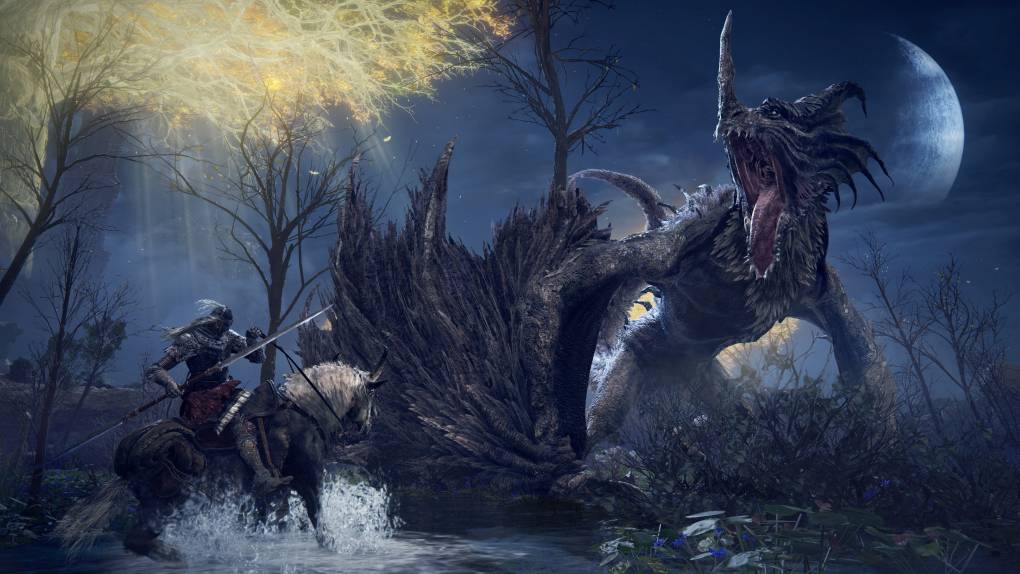
"caption": "A confrontation with a dragon in 'Elden Ring.'",
"description": null,
"title": "A confrontation with a dragon in 'Elden Ring.'",
"credit": "FromSoftware",
"status": "inherit",
"altTag": null,
"isLoading": false,
"fetchFailed": false
},
"arts_13900630": {
"type": "attachments",
"id": "arts_13900630",
"meta": {
"index": "attachments_1716263798",
"site": "arts",
"id": "13900630",
"found": true
},
"parent": 13900629,
"imgSizes": {
"twentyfourteen-full-width": {
"file": "https://ww2.kqed.org/app/uploads/sites/2/2021/08/fret_and_rindo_wide-10aca12758eb0368d08442413674365cb21c7406-1038x576.png",
"width": 1038,
"mimeType": "image/png",
"height": 576
},
"thumbnail": {
"file": "https://ww2.kqed.org/app/uploads/sites/2/2021/08/fret_and_rindo_wide-10aca12758eb0368d08442413674365cb21c7406-160x90.png",
"width": 160,
"mimeType": "image/png",
"height": 90
},
"post-thumbnail": {
"file": "https://ww2.kqed.org/app/uploads/sites/2/2021/08/fret_and_rindo_wide-10aca12758eb0368d08442413674365cb21c7406-672x372.png",
"width": 672,
"mimeType": "image/png",
"height": 372
},
"kqedFullSize": {
"file": "https://ww2.kqed.org/app/uploads/sites/2/2021/08/fret_and_rindo_wide-10aca12758eb0368d08442413674365cb21c7406.png",
"width": 1757,
"height": 988
},
"large": {
"file": "https://ww2.kqed.org/app/uploads/sites/2/2021/08/fret_and_rindo_wide-10aca12758eb0368d08442413674365cb21c7406-1020x574.png",
"width": 1020,
"mimeType": "image/png",
"height": 574
},
"1536x1536": {
"file": "https://ww2.kqed.org/app/uploads/sites/2/2021/08/fret_and_rindo_wide-10aca12758eb0368d08442413674365cb21c7406-1536x864.png",
"width": 1536,
"mimeType": "image/png",
"height": 864
},
"medium": {
"file": "https://ww2.kqed.org/app/uploads/sites/2/2021/08/fret_and_rindo_wide-10aca12758eb0368d08442413674365cb21c7406-800x450.png",
"width": 800,
"mimeType": "image/png",
"height": 450
},
"medium_large": {
"file": "https://ww2.kqed.org/app/uploads/sites/2/2021/08/fret_and_rindo_wide-10aca12758eb0368d08442413674365cb21c7406-768x432.png",
"width": 768,
"mimeType": "image/png",
"height": 432
}
},
"publishDate": 1628099305,
"modified": 1628100307,
"caption": "Buddies Rindo and Fret fight for their lives on the streets of a strange alternate Tokyo in 'NEO: The World Ends With You.'",
"description": "Buddies Rindo and Fret fight for their lives on the streets of a strange alternate Tokyo in 'NEO: The World Ends With You.'",
"title": "Buddies Rindo and Fret fight for their lives on the streets of a strange alternate Tokyo in 'NEO: The World Ends With You.'",
"credit": "Square Enix",
"status": "inherit",
"altTag": "Buddies Rindo and Fret fight for their lives on the streets of a strange alternate Tokyo in 'NEO: The World Ends With You.'",
"isLoading": false,
"fetchFailed": false
},
"arts_13893838": {
"type": "attachments",
"id": "arts_13893838",
"meta": {
"index": "attachments_1716263798",
"site": "arts",
"id": "13893838",
"found": true
},
"parent": 13893837,
"imgSizes": {
"twentyfourteen-full-width": {
"file": "https://ww2.kqed.org/app/uploads/sites/2/2021/03/ac-microtransactions_wide-0fafa13b098a6658facfb1b3ad972868609898a6-1038x576.png",
"width": 1038,
"mimeType": "image/png",
"height": 576
},
"thumbnail": {
"file": "https://ww2.kqed.org/app/uploads/sites/2/2021/03/ac-microtransactions_wide-0fafa13b098a6658facfb1b3ad972868609898a6-160x90.png",
"width": 160,
"mimeType": "image/png",
"height": 90
},
"post-thumbnail": {
"file": "https://ww2.kqed.org/app/uploads/sites/2/2021/03/ac-microtransactions_wide-0fafa13b098a6658facfb1b3ad972868609898a6-672x372.png",
"width": 672,
"mimeType": "image/png",
"height": 372
},
"kqedFullSize": {
"file": "https://ww2.kqed.org/app/uploads/sites/2/2021/03/ac-microtransactions_wide-0fafa13b098a6658facfb1b3ad972868609898a6.png",
"width": 1917,
"height": 1078
},
"large": {
"file": "https://ww2.kqed.org/app/uploads/sites/2/2021/03/ac-microtransactions_wide-0fafa13b098a6658facfb1b3ad972868609898a6-1020x574.png",
"width": 1020,
"mimeType": "image/png",
"height": 574
},
"1536x1536": {
"file": "https://ww2.kqed.org/app/uploads/sites/2/2021/03/ac-microtransactions_wide-0fafa13b098a6658facfb1b3ad972868609898a6-1536x864.png",
"width": 1536,
"mimeType": "image/png",
"height": 864
},
"medium": {
"file": "https://ww2.kqed.org/app/uploads/sites/2/2021/03/ac-microtransactions_wide-0fafa13b098a6658facfb1b3ad972868609898a6-800x450.png",
"width": 800,
"mimeType": "image/png",
"height": 450
},
"medium_large": {
"file": "https://ww2.kqed.org/app/uploads/sites/2/2021/03/ac-microtransactions_wide-0fafa13b098a6658facfb1b3ad972868609898a6-768x432.png",
"width": 768,
"mimeType": "image/png",
"height": 432
}
},
"publishDate": 1615486928,
"modified": 1615487811,
"caption": "One of the suits of armor available in 'Assassin's Creed: Valhalla'—if you're willing to pay real money.",
"description": "One of the suits of armor available in 'Assassin's Creed: Valhalla'—if you're willing to pay real money.",
"title": "One of the suits of armor available in 'Assassin's Creed: Valhalla'—if you're willing to pay real money.",
"credit": "Screenshot by Elijah Smith/Ubisoft",
"status": "inherit",
"altTag": "One of the suits of armor available in 'Assassin's Creed: Valhalla'—if you're willing to pay real money.",
"isLoading": false,
"fetchFailed": false
},
"arts_13891278": {
"type": "attachments",
"id": "arts_13891278",
"meta": {
"index": "attachments_1716263798",
"site": "arts",
"id": "13891278",
"found": true
},
"parent": 13891275,
"imgSizes": {
"twentyfourteen-full-width": {
"file": "https://ww2.kqed.org/app/uploads/sites/2/2021/01/samorost-3-bear_wide-d02c653ab5cd035724adab33af769050488aa66c-1038x576.jpg",
"width": 1038,
"mimeType": "image/jpeg",
"height": 576
},
"thumbnail": {
"file": "https://ww2.kqed.org/app/uploads/sites/2/2021/01/samorost-3-bear_wide-d02c653ab5cd035724adab33af769050488aa66c-160x90.jpg",
"width": 160,
"mimeType": "image/jpeg",
"height": 90
},
"post-thumbnail": {
"file": "https://ww2.kqed.org/app/uploads/sites/2/2021/01/samorost-3-bear_wide-d02c653ab5cd035724adab33af769050488aa66c-672x372.jpg",
"width": 672,
"mimeType": "image/jpeg",
"height": 372
},
"kqedFullSize": {
"file": "https://ww2.kqed.org/app/uploads/sites/2/2021/01/samorost-3-bear_wide-d02c653ab5cd035724adab33af769050488aa66c-e1610669974157.jpg",
"width": 1920,
"height": 1080
},
"2048x2048": {
"file": "https://ww2.kqed.org/app/uploads/sites/2/2021/01/samorost-3-bear_wide-d02c653ab5cd035724adab33af769050488aa66c-2048x1152.jpg",
"width": 2048,
"mimeType": "image/jpeg",
"height": 1152
},
"large": {
"file": "https://ww2.kqed.org/app/uploads/sites/2/2021/01/samorost-3-bear_wide-d02c653ab5cd035724adab33af769050488aa66c-1020x574.jpg",
"width": 1020,
"mimeType": "image/jpeg",
"height": 574
},
"1536x1536": {
"file": "https://ww2.kqed.org/app/uploads/sites/2/2021/01/samorost-3-bear_wide-d02c653ab5cd035724adab33af769050488aa66c-1536x864.jpg",
"width": 1536,
"mimeType": "image/jpeg",
"height": 864
},
"full-width": {
"file": "https://ww2.kqed.org/app/uploads/sites/2/2021/01/samorost-3-bear_wide-d02c653ab5cd035724adab33af769050488aa66c-1920x1080.jpg",
"width": 1920,
"mimeType": "image/jpeg",
"height": 1080
},
"medium": {
"file": "https://ww2.kqed.org/app/uploads/sites/2/2021/01/samorost-3-bear_wide-d02c653ab5cd035724adab33af769050488aa66c-800x450.jpg",
"width": 800,
"mimeType": "image/jpeg",
"height": 450
},
"medium_large": {
"file": "https://ww2.kqed.org/app/uploads/sites/2/2021/01/samorost-3-bear_wide-d02c653ab5cd035724adab33af769050488aa66c-768x432.jpg",
"width": 768,
"mimeType": "image/jpeg",
"height": 432
}
},
"publishDate": 1610669517,
"modified": 1610670005,
"caption": "In the Samorost series, everyday objects are transformed into alien landscapes.",
"description": "In the Samorost series, everyday objects are transformed into alien landscapes.",
"title": "In the Samorost series, everyday objects are transformed into alien landscapes.",
"credit": "Amanita Design",
"status": "inherit",
"altTag": "In the Samorost series, everyday objects are transformed into alien landscapes.",
"isLoading": false,
"fetchFailed": false
},
"arts_13889312": {
"type": "attachments",
"id": "arts_13889312",
"meta": {
"index": "attachments_1716263798",
"site": "arts",
"id": "13889312",
"found": true
},
"parent": 13889311,
"imgSizes": {
"twentyfourteen-full-width": {
"file": "https://ww2.kqed.org/app/uploads/sites/2/2020/11/amongus_custom-3f0de12495d0394e8672d470cd613b511b2cadc8-1038x576.png",
"width": 1038,
"mimeType": "image/png",
"height": 576
},
"thumbnail": {
"file": "https://ww2.kqed.org/app/uploads/sites/2/2020/11/amongus_custom-3f0de12495d0394e8672d470cd613b511b2cadc8-160x67.png",
"width": 160,
"mimeType": "image/png",
"height": 67
},
"post-thumbnail": {
"file": "https://ww2.kqed.org/app/uploads/sites/2/2020/11/amongus_custom-3f0de12495d0394e8672d470cd613b511b2cadc8-672x372.png",
"width": 672,
"mimeType": "image/png",
"height": 372
},
"kqedFullSize": {
"file": "https://ww2.kqed.org/app/uploads/sites/2/2020/11/amongus_custom-3f0de12495d0394e8672d470cd613b511b2cadc8.png",
"width": 2048,
"height": 854
},
"large": {
"file": "https://ww2.kqed.org/app/uploads/sites/2/2020/11/amongus_custom-3f0de12495d0394e8672d470cd613b511b2cadc8-1020x425.png",
"width": 1020,
"mimeType": "image/png",
"height": 425
},
"1536x1536": {
"file": "https://ww2.kqed.org/app/uploads/sites/2/2020/11/amongus_custom-3f0de12495d0394e8672d470cd613b511b2cadc8-1536x641.png",
"width": 1536,
"mimeType": "image/png",
"height": 641
},
"full-width": {
"file": "https://ww2.kqed.org/app/uploads/sites/2/2020/11/amongus_custom-3f0de12495d0394e8672d470cd613b511b2cadc8-1920x801.png",
"width": 1920,
"mimeType": "image/png",
"height": 801
},
"medium": {
"file": "https://ww2.kqed.org/app/uploads/sites/2/2020/11/amongus_custom-3f0de12495d0394e8672d470cd613b511b2cadc8-800x334.png",
"width": 800,
"mimeType": "image/png",
"height": 334
},
"medium_large": {
"file": "https://ww2.kqed.org/app/uploads/sites/2/2020/11/amongus_custom-3f0de12495d0394e8672d470cd613b511b2cadc8-768x320.png",
"width": 768,
"mimeType": "image/png",
"height": 320
}
},
"publishDate": 1605548877,
"modified": 1605548877,
"caption": null,
"description": null,
"title": "Among Us",
"credit": null,
"status": "inherit",
"isLoading": false,
"fetchFailed": false
},
"arts_13889243": {
"type": "attachments",
"id": "arts_13889243",
"meta": {
"index": "attachments_1716263798",
"site": "arts",
"id": "13889243",
"found": true
},
"parent": 13889242,
"imgSizes": {
"twentyfourteen-full-width": {
"file": "https://ww2.kqed.org/app/uploads/sites/2/2020/11/consoles-1_wide-29abcdf4c088f7c18460870dc8b2e2c8e8625d77-1038x576.jpg",
"width": 1038,
"mimeType": "image/jpeg",
"height": 576
},
"thumbnail": {
"file": "https://ww2.kqed.org/app/uploads/sites/2/2020/11/consoles-1_wide-29abcdf4c088f7c18460870dc8b2e2c8e8625d77-160x90.jpg",
"width": 160,
"mimeType": "image/jpeg",
"height": 90
},
"post-thumbnail": {
"file": "https://ww2.kqed.org/app/uploads/sites/2/2020/11/consoles-1_wide-29abcdf4c088f7c18460870dc8b2e2c8e8625d77-672x372.jpg",
"width": 672,
"mimeType": "image/jpeg",
"height": 372
},
"kqedFullSize": {
"file": "https://ww2.kqed.org/app/uploads/sites/2/2020/11/consoles-1_wide-29abcdf4c088f7c18460870dc8b2e2c8e8625d77.jpg",
"width": 1150,
"height": 647
},
"large": {
"file": "https://ww2.kqed.org/app/uploads/sites/2/2020/11/consoles-1_wide-29abcdf4c088f7c18460870dc8b2e2c8e8625d77-1020x574.jpg",
"width": 1020,
"mimeType": "image/jpeg",
"height": 574
},
"medium": {
"file": "https://ww2.kqed.org/app/uploads/sites/2/2020/11/consoles-1_wide-29abcdf4c088f7c18460870dc8b2e2c8e8625d77-800x450.jpg",
"width": 800,
"mimeType": "image/jpeg",
"height": 450
},
"medium_large": {
"file": "https://ww2.kqed.org/app/uploads/sites/2/2020/11/consoles-1_wide-29abcdf4c088f7c18460870dc8b2e2c8e8625d77-768x432.jpg",
"width": 768,
"mimeType": "image/jpeg",
"height": 432
}
},
"publishDate": 1605228217,
"modified": 1605228859,
"caption": "The Microsoft Xbox Series X and the Playstation 5.",
"description": "The Microsoft Xbox Series X and the Playstation 5.",
"title": "The Microsoft Xbox Series X and the Playstation 5.",
"credit": "Courtesy Microsoft and Sony Interactive Entertainment",
"status": "inherit",
"isLoading": false,
"fetchFailed": false
}
},
"audioPlayerReducer": {
"postId": "stream_live",
"isPaused": true,
"isPlaying": false,
"pfsActive": false,
"pledgeModalIsOpen": true,
"playerDrawerIsOpen": false,
"liveAudioPlayStartedAt": 0,
"liveAudioPlayContext": ""
},
"authorsReducer": {
"byline_arts_13940293": {
"type": "authors",
"id": "byline_arts_13940293",
"meta": {
"override": true
},
"slug": "byline_arts_13940293",
"name": "James Perkins Mastromarino",
"isLoading": false
},
"byline_arts_13932805": {
"type": "authors",
"id": "byline_arts_13932805",
"meta": {
"override": true
},
"slug": "byline_arts_13932805",
"name": "Lindsey Bahr",
"isLoading": false
},
"byline_arts_13927065": {
"type": "authors",
"id": "byline_arts_13927065",
"meta": {
"override": true
},
"slug": "byline_arts_13927065",
"name": "Jonathan Landrum Jr.",
"isLoading": false
},
"byline_arts_13909712": {
"type": "authors",
"id": "byline_arts_13909712",
"meta": {
"override": true
},
"slug": "byline_arts_13909712",
"name": "Keller Gordon",
"isLoading": false
},
"byline_arts_13900629": {
"type": "authors",
"id": "byline_arts_13900629",
"meta": {
"override": true
},
"slug": "byline_arts_13900629",
"name": "Keller Gordon",
"isLoading": false
},
"byline_arts_13893837": {
"type": "authors",
"id": "byline_arts_13893837",
"meta": {
"override": true
},
"slug": "byline_arts_13893837",
"name": "Keller Gordon",
"isLoading": false
},
"byline_arts_13891275": {
"type": "authors",
"id": "byline_arts_13891275",
"meta": {
"override": true
},
"slug": "byline_arts_13891275",
"name": "Ana Diaz",
"isLoading": false
},
"byline_arts_13889311": {
"type": "authors",
"id": "byline_arts_13889311",
"meta": {
"override": true
},
"slug": "byline_arts_13889311",
"name": "Jason Sheehan",
"isLoading": false
},
"byline_arts_13889242": {
"type": "authors",
"id": "byline_arts_13889242",
"meta": {
"override": true
},
"slug": "byline_arts_13889242",
"name": "Vincent Acovino",
"isLoading": false
},
"bshoot": {
"type": "authors",
"id": "11715",
"meta": {
"index": "authors_1716337520",
"id": "11715",
"found": true
},
"name": "Britta Shoot",
"firstName": "Britta",
"lastName": "Shoot",
"slug": "bshoot",
"email": "workywork@brittashoot.com",
"display_author_email": false,
"staff_mastheads": [],
"title": "KQED Contributor",
"bio": "Britta Shoot is a writer and editor in San Francisco.",
"avatar": "https://secure.gravatar.com/avatar/a5014572686e67b024406bf7aa9afebcff2ca8953c3a04fd312e42cc60d56b8c?s=600&d=blank&r=g",
"twitter": "brittashoot",
"bluesky": null,
"facebook": null,
"instagram": null,
"linkedin": null,
"sites": [
{
"site": "arts",
"roles": [
"contributor"
]
}
],
"headData": {
"title": "Britta Shoot | KQED",
"description": "KQED Contributor",
"ogImgSrc": "https://secure.gravatar.com/avatar/a5014572686e67b024406bf7aa9afebcff2ca8953c3a04fd312e42cc60d56b8c?s=600&d=blank&r=g",
"twImgSrc": "https://secure.gravatar.com/avatar/a5014572686e67b024406bf7aa9afebcff2ca8953c3a04fd312e42cc60d56b8c?s=600&d=blank&r=g"
},
"isLoading": false,
"link": "/author/bshoot"
},
"agonzalez": {
"type": "authors",
"id": "11724",
"meta": {
"index": "authors_1716337520",
"id": "11724",
"found": true
},
"name": "Alexander Gonzalez",
"firstName": "Alexander",
"lastName": "Gonzalez",
"slug": "agonzalez",
"email": "AlexanderGonzalez@KQED.org",
"display_author_email": false,
"staff_mastheads": [
"news"
],
"title": "KQED Contributor",
"bio": null,
"avatar": "https://secure.gravatar.com/avatar/9e291ed34e154df4c662edf858b641d70b4859939bfe40be478408f9dfd057d2?s=600&d=blank&r=g",
"twitter": null,
"bluesky": null,
"facebook": null,
"instagram": null,
"linkedin": null,
"sites": [
{
"site": "arts",
"roles": [
"editor"
]
},
{
"site": "news",
"roles": [
"editor"
]
},
{
"site": "science",
"roles": [
"editor"
]
}
],
"headData": {
"title": "Alexander Gonzalez | KQED",
"description": "KQED Contributor",
"ogImgSrc": "https://secure.gravatar.com/avatar/9e291ed34e154df4c662edf858b641d70b4859939bfe40be478408f9dfd057d2?s=600&d=blank&r=g",
"twImgSrc": "https://secure.gravatar.com/avatar/9e291ed34e154df4c662edf858b641d70b4859939bfe40be478408f9dfd057d2?s=600&d=blank&r=g"
},
"isLoading": false,
"link": "/author/agonzalez"
},
"ksong": {
"type": "authors",
"id": "11813",
"meta": {
"index": "authors_1716337520",
"id": "11813",
"found": true
},
"name": "Kristie Song",
"firstName": "Kristie",
"lastName": "Song",
"slug": "ksong",
"email": "ksong@kqed.org",
"display_author_email": false,
"staff_mastheads": [],
"title": "Editorial Intern ",
"bio": "Kristie Song is an Arts & Culture Intern at KQED. She is currently a graduate student at UC Berkeley, where she studies audio and multimedia journalism. Previously, she covered the local community for Oakland North, produced episodes for The Science of Happiness, and served as news director for KUCI, UC Irvine’s radio station. Outside of reporting, she likes drawing comics, listening to angsty rock, and practicing the guitar.",
"avatar": "https://secure.gravatar.com/avatar/c1149e78c3c44f92d4945a8ab0711af6?s=600&d=blank&r=g",
"twitter": null,
"facebook": null,
"instagram": null,
"linkedin": null,
"sites": [
{
"site": "arts",
"roles": [
"editor"
]
}
],
"headData": {
"title": "Kristie Song | KQED",
"description": "Editorial Intern ",
"ogImgSrc": "https://secure.gravatar.com/avatar/c1149e78c3c44f92d4945a8ab0711af6?s=600&d=blank&r=g",
"twImgSrc": "https://secure.gravatar.com/avatar/c1149e78c3c44f92d4945a8ab0711af6?s=600&d=blank&r=g"
},
"isLoading": false,
"link": "/author/ksong"
}
},
"pagesReducer": {
"arts_tag_video-games": {
"type": "terms",
"id": "arts_4149",
"meta": {
"index": "terms_1716263798",
"site": "arts",
"id": "4149",
"score": 8.795391
},
"featImg": null,
"name": "video games",
"description": null,
"taxonomy": "tag",
"headData": {
"twImgId": null,
"twTitle": null,
"ogTitle": null,
"ogImgId": null,
"twDescription": null,
"description": null,
"title": "video games Archives | KQED Arts",
"ogDescription": null
},
"ttid": 4161,
"slug": "video-games",
"isLoading": false,
"title": "video games",
"pageMeta": {
"site": "arts",
"WpPageTemplate": "page-topic-editorial",
"currentPage": 2
},
"blocks": [
{
"blockName": "kqed/post-list",
"attrs": {
"layout": "cardArticle2",
"query": "posts/arts?tag=video-games",
"seeMore": false,
"paginated": true,
"page": 2
}
},
{
"blockName": "kqed/ad"
}
]
}
},
"pfsSessionReducer": {},
"postsReducer": {
"stream_live": {
"type": "live",
"id": "stream_live",
"audioUrl": "https://streams.kqed.org/kqedradio",
"title": "Live Stream",
"excerpt": "Live Stream information currently unavailable.",
"link": "/radio",
"featImg": "",
"label": {
"name": "KQED Live",
"link": "/"
}
},
"stream_kqedNewscast": {
"type": "posts",
"id": "stream_kqedNewscast",
"audioUrl": "https://www.kqed.org/.stream/anon/radio/RDnews/newscast.mp3?_=1",
"title": "KQED Newscast",
"featImg": "",
"label": {
"name": "88.5 FM",
"link": "/"
}
},
"arts_13940293": {
"type": "posts",
"id": "arts_13940293",
"meta": {
"index": "posts_1716263798",
"site": "arts",
"id": "13940293",
"score": null,
"sort": [
1704918291000
]
},
"parent": 0,
"labelTerm": {
"site": "arts",
"term": 140
},
"blocks": [],
"publishDate": 1704918291,
"format": "standard",
"title": "NPR’s 24 Most Anticipated Video Games of 2024",
"headTitle": "NPR’s 24 Most Anticipated Video Games of 2024 | KQED",
"content": "\u003cp>It’d take more than a few surprises for the new year to match 2023’s deluge of \u003ca href=\"https://www.npr.org/2023/07/18/1187554727/best-new-video-games-xbox-ps5-nintendo-2023\">acclaimed games\u003c/a>. But while we don’t know the precise release date for many of its biggest titles, 2024 will soon grace us with the gargantuan \u003cem>Final Fantasy 7: Rebirth\u003c/em>, slated to come out on Leap Day, and it’ll \u003ca href=\"https://www.cnbc.com/2024/01/08/nintendo-switch-2-console-coming-in-2024-analysts-say.html\">likely draw to a close \u003c/a>with a console sequel to the Nintendo Switch. But there’s a lot to look forward to apart from those bookends — here’s what we at NPR have our eyes on this year.\u003c/p>\n\u003ch3>\u003cstrong>‘Persona 3 Reload,’ Feb. 2\u003c/strong>\u003c/h3>\n\u003cp>I fell hard for \u003cem>Personas 4\u003c/em> and \u003cem>5\u003c/em> but wasn’t hooked by \u003cem>3\u003c/em>. I recognize its importance: it set the current franchise template with its edgy teen aesthetic and weave of social simulation and RPG mechanics. Odd as it was in 2006, perhaps this slick new version will entice the part of me that wants to explore a ghoulish Tokyo with fashionable friends. \u003cem>— James Mastromarino, NPR Gaming lead and ‘Here & Now’ producer\u003c/em>\u003c/p>\n\u003ch3>\u003cstrong>‘Skull and Bones,’ Feb. 16 \u003c/strong>\u003c/h3>\n\u003cp>Swashbuckling piracy was the best part of \u003cem>Assassin’s Creed: Black Flag\u003c/em> and \u003cem>Skull and Bones\u003c/em> is bringing that action to a standalone game, shifted from the Caribbean to the Indian Ocean and African coasts. It also promises story-rich quests that give it an MMO vibe as you adventure on your ship. I look forward to seeing how it compares with the more cartoony \u003cem>Sea of Thieves\u003c/em>, which was fun to play with and against other players. \u003cem>— Daniel Morgan, systems engineer\u003c/em>\u003c/p>\n\u003cfigure id=\"attachment_13940295\" class=\"wp-caption aligncenter\" style=\"max-width: 2560px\">\u003cimg loading=\"lazy\" decoding=\"async\" class=\"size-full wp-image-13940295\" src=\"https://cdn.kqed.org/wp-content/uploads/sites/2/2024/01/ffjpg_wide-968e1c7fbec84f0c54b540630c5f21f4fd2e3b20-scaled.jpg\" alt=\"A computer graphic depicting a very large and muscular man wearing sunglasses and clutching a large gun. He is facing off with a woman in tactical gear.\" width=\"2560\" height=\"1440\" srcset=\"https://cdn.kqed.org/wp-content/uploads/sites/2/2024/01/ffjpg_wide-968e1c7fbec84f0c54b540630c5f21f4fd2e3b20-scaled.jpg 2560w, https://cdn.kqed.org/wp-content/uploads/sites/2/2024/01/ffjpg_wide-968e1c7fbec84f0c54b540630c5f21f4fd2e3b20-800x450.jpg 800w, https://cdn.kqed.org/wp-content/uploads/sites/2/2024/01/ffjpg_wide-968e1c7fbec84f0c54b540630c5f21f4fd2e3b20-1020x574.jpg 1020w, https://cdn.kqed.org/wp-content/uploads/sites/2/2024/01/ffjpg_wide-968e1c7fbec84f0c54b540630c5f21f4fd2e3b20-160x90.jpg 160w, https://cdn.kqed.org/wp-content/uploads/sites/2/2024/01/ffjpg_wide-968e1c7fbec84f0c54b540630c5f21f4fd2e3b20-768x432.jpg 768w, https://cdn.kqed.org/wp-content/uploads/sites/2/2024/01/ffjpg_wide-968e1c7fbec84f0c54b540630c5f21f4fd2e3b20-1536x864.jpg 1536w, https://cdn.kqed.org/wp-content/uploads/sites/2/2024/01/ffjpg_wide-968e1c7fbec84f0c54b540630c5f21f4fd2e3b20-2048x1152.jpg 2048w, https://cdn.kqed.org/wp-content/uploads/sites/2/2024/01/ffjpg_wide-968e1c7fbec84f0c54b540630c5f21f4fd2e3b20-1920x1080.jpg 1920w\" sizes=\"(max-width: 2560px) 100vw, 2560px\">\u003cfigcaption class=\"wp-caption-text\">‘Final Fantasy 7: Rebirth.’ \u003ccite>(Square Enix)\u003c/cite>\u003c/figcaption>\u003c/figure>\n\u003ch3>\u003cstrong>‘Final Fantasy 7: Rebirth,’ Feb. 29\u003c/strong>\u003c/h3>\n\u003cp>2020’s \u003cem>Final Fantasy 7: Remake\u003c/em> opened the door to a radically new retelling of the 1997 original. The sequel, \u003cem>Rebirth\u003c/em>, will likely depart even further, and I’m quivering to find out \u003ca href=\"https://gameswithjames.substack.com/p/questions-for-the-new-gaming-year\">who’ll live, who’ll die\u003c/a> and how I’ll take to its hybrid real-time/turn-based combat after growing fond of the fluid action of \u003cem>\u003ca href=\"https://www.npr.org/2023/06/21/1183279538/final-fantasy-xvi-16-review\">Final Fantasy 16\u003c/a>\u003c/em>. \u003cem>— James Mastromarino, NPR Gaming lead and\u003c/em> ‘\u003cem>Here & Now’\u003c/em> \u003cem>producer \u003c/em>\u003c/p>\n\u003ch3>\u003cstrong>‘Life By You Early Access,’ March 5\u003c/strong>\u003c/h3>\n\u003cp>In 2015, Paradox Interactive took a wild — but ultimately successful — swing at toppling Maxis’ famed city-building franchise \u003cem>SimCity\u003c/em> by launching \u003cem>Cities: Skylines\u003c/em>. This spring, the Swedish publisher wants to unseat another legendary Maxis franchise: \u003cem>The Sims\u003c/em>. Led by former \u003cem>Sims\u003c/em> head Rod Humble, Paradox’s \u003cem>Life By You\u003c/em> is also a social simulator focusing on hyper-customizability. Clothing, furniture, houses, businesses, towns, storylines, quests — seemingly nothing is locked away from players to make their own. Let’s hope Paradox’s bet on customization makes for engaging gameplay, not analysis paralysis. \u003cem>— Alex Curley, product manager, Distribution\u003c/em>\u003c/p>\n\u003cfigure id=\"attachment_13940296\" class=\"wp-caption aligncenter\" style=\"max-width: 1920px\">\u003cimg loading=\"lazy\" decoding=\"async\" class=\"size-full wp-image-13940296\" src=\"https://cdn.kqed.org/wp-content/uploads/sites/2/2024/01/homeworld-3_wide-1c1d20a408c04930cb67d33ce72760bc0d04b83e-scaled-e1704913895692.jpg\" alt=\"A computer graphic depicting a large disc-shaped space ship surrounded by a large number of much smaller crafts.\" width=\"1920\" height=\"1080\">\u003cfigcaption class=\"wp-caption-text\">‘Homeworld 3.’ \u003ccite>(Gearbox Publishing)\u003c/cite>\u003c/figcaption>\u003c/figure>\n\u003ch3>\u003cstrong>‘Homeworld 3,’ March 8\u003c/strong>\u003c/h3>\n\u003cp>Despite high-profile releases, 2023 didn’t satisfy my hunger for an all-consuming real-time strategy game. Enter a new 2024 challenger: \u003cem>Homeworld 3\u003c/em>, the space combat RTS from Blackbird Interactive. The first franchise title was revolutionary in 1999, and gameplay footage for this Spring’s sequel looks just as promising. Apart from battling for galactic dominance over a dozen or more hours in the main campaign, it allows you and up to two other friends to play roguelike missions in its new War Games mode. We’ll see how much Blackbird can appeal to less-experienced players while staying true to \u003cem>Homeworld’\u003c/em>s roots. \u003cem>— Alex Curley, product manager, Distribution\u003c/em>\u003c/p>\n\u003ch3>\u003cstrong>‘Unicorn Overlord,’ March 8\u003c/strong>\u003c/h3>\n\u003cp>While laden with anime tropes, the narrative ambition of Vanillaware’s \u003cem>13 Sentinels\u003c/em> blew me away. I hope their upcoming tactical RPG will do the same — and maybe scratch the \u003cem>Fire Emblem\u003c/em> itch, too. \u003cem>— James Mastromarino, NPR Gaming lead and\u003c/em> ‘\u003cem>Here & Now’ producer\u003c/em>\u003c/p>\n\u003ch3>\u003cstrong>‘Dragon’s Dogma 2,’ March 22\u003c/strong>\u003c/h3>\n\u003cp>2012’s \u003cem>Dragon’s Dogma\u003c/em> is one of the most unique action RPGs I’ve played. Often compared to \u003cem>Dark Souls\u003c/em>, which came out the year earlier, the game’s nearly as hardcore, with flashier class abilities and a unique pawn system that lets you recruit AI party members created by other players. The sequel will need to refine these mechanics to capture a wider audience, but Capcom’s been on such a hot streak that I’m optimistic they can pull it off. \u003cem>— James Mastromarino, NPR Gaming lead and\u003c/em> \u003cem>‘Here & Now’ producer\u003c/em>\u003c/p>\n\u003cfigure id=\"attachment_13940297\" class=\"wp-caption aligncenter\" style=\"max-width: 1662px\">\u003cimg loading=\"lazy\" decoding=\"async\" class=\"size-full wp-image-13940297\" src=\"https://cdn.kqed.org/wp-content/uploads/sites/2/2024/01/switch_princesspeachshowtime_scrn_02_wide-440bf57df4333c15a32842e7106fbd6f16055dd8.jpg\" alt=\"Computer graphics depict a colorful and cartoonish landscape with a princess at the center, wearing a pink gown.\" width=\"1662\" height=\"935\" srcset=\"https://cdn.kqed.org/wp-content/uploads/sites/2/2024/01/switch_princesspeachshowtime_scrn_02_wide-440bf57df4333c15a32842e7106fbd6f16055dd8.jpg 1662w, https://cdn.kqed.org/wp-content/uploads/sites/2/2024/01/switch_princesspeachshowtime_scrn_02_wide-440bf57df4333c15a32842e7106fbd6f16055dd8-800x450.jpg 800w, https://cdn.kqed.org/wp-content/uploads/sites/2/2024/01/switch_princesspeachshowtime_scrn_02_wide-440bf57df4333c15a32842e7106fbd6f16055dd8-1020x574.jpg 1020w, https://cdn.kqed.org/wp-content/uploads/sites/2/2024/01/switch_princesspeachshowtime_scrn_02_wide-440bf57df4333c15a32842e7106fbd6f16055dd8-160x90.jpg 160w, https://cdn.kqed.org/wp-content/uploads/sites/2/2024/01/switch_princesspeachshowtime_scrn_02_wide-440bf57df4333c15a32842e7106fbd6f16055dd8-768x432.jpg 768w, https://cdn.kqed.org/wp-content/uploads/sites/2/2024/01/switch_princesspeachshowtime_scrn_02_wide-440bf57df4333c15a32842e7106fbd6f16055dd8-1536x864.jpg 1536w\" sizes=\"(max-width: 1662px) 100vw, 1662px\">\u003cfigcaption class=\"wp-caption-text\">‘Princess Peach: Showtime!’ \u003ccite>(Nintendo)\u003c/cite>\u003c/figcaption>\u003c/figure>\n\u003ch3>\u003cstrong>‘Princess Peach: Showtime!,’ March 22\u003c/strong>\u003c/h3>\n\u003cp>The date 3/22/24 has been ingrained in my mind since Nintendo shared the trailer for \u003cem>Princess Peach: Showtime!\u003c/em> last year. While I know that this isn’t the first time she’s led her own game, this feels like the first time Peach is getting the full Mario treatment with fun transformations and powerups unique to her. Kung Fu Peach? Swordfighter Peach? I can’t wait! \u003cem>— Rakiesha Chase-Jackson, project manager, Member Partnership\u003c/em>\u003c/p>\n\u003ch3>‘Rise of the Rōnin,’ \u003cstrong>March 22\u003c/strong>\u003c/h3>\n\u003cp>Last year, Team Ninja took us to China’s Three Kingdoms-era with \u003cem>Wo Long: Fallen Dynasty\u003c/em> for an enjoyable adventure that struggled to stand out in a crowded field of excellent 2023 games. This year, with \u003cem>Rise of the Rōnin\u003c/em>, they’re taking us back to Japan and back to the team behind the excellent \u003cem>Nioh\u003c/em> and \u003cem>Nioh 2\u003c/em> games. \u003cem>Rise of the Rōnin\u003c/em> has reportedly been in development for seven years and \u003ca href=\"https://blog.playstation.com/2022/09/13/revealing-rise-of-the-ronin-a-new-action-rpg-from-team-ninja/\">the studio says\u003c/a> it’s their “most ambitious and challenging project” to date. If all that work marks a return to the quality of the \u003cem>Nioh\u003c/em> titles, this game will be worth exploring. \u003cem>— Justin Lucas, Senior Director, Communications\u003c/em>\u003c/p>\n\u003ch3>\u003cstrong>‘Manor Lords,’ April 26\u003c/strong>\u003c/h3>\n\u003cp>Developer Slavic Magic has been teasing a gorgeous and intriguing strategy game, \u003cem>Manor Lords\u003c/em>, for over three years. Set in medieval Europe, the game is at once a city-builder, tasking you with building up manorial villages from empty fields and a strategy sim, having you defend villages from plundering bandits in real-time battles. With a publish date finally set, I’m excited to don my crown as manor lord and see if the game truly lives up to the hype. \u003cem>— Alex Curley, product manager, Distribution\u003c/em>\u003c/p>\n\u003cfigure id=\"attachment_13940298\" class=\"wp-caption aligncenter\" style=\"max-width: 1917px\">\u003cimg loading=\"lazy\" decoding=\"async\" class=\"size-full wp-image-13940298\" src=\"https://cdn.kqed.org/wp-content/uploads/sites/2/2024/01/wukong_wide-b801f1d105cbe0153b0411b6eee74e0bd8b95ad1.jpg\" alt=\"Computer graphics depict a battle between two mythical creatures in the forest.\" width=\"1917\" height=\"1078\" srcset=\"https://cdn.kqed.org/wp-content/uploads/sites/2/2024/01/wukong_wide-b801f1d105cbe0153b0411b6eee74e0bd8b95ad1.jpg 1917w, https://cdn.kqed.org/wp-content/uploads/sites/2/2024/01/wukong_wide-b801f1d105cbe0153b0411b6eee74e0bd8b95ad1-800x450.jpg 800w, https://cdn.kqed.org/wp-content/uploads/sites/2/2024/01/wukong_wide-b801f1d105cbe0153b0411b6eee74e0bd8b95ad1-1020x574.jpg 1020w, https://cdn.kqed.org/wp-content/uploads/sites/2/2024/01/wukong_wide-b801f1d105cbe0153b0411b6eee74e0bd8b95ad1-160x90.jpg 160w, https://cdn.kqed.org/wp-content/uploads/sites/2/2024/01/wukong_wide-b801f1d105cbe0153b0411b6eee74e0bd8b95ad1-768x432.jpg 768w, https://cdn.kqed.org/wp-content/uploads/sites/2/2024/01/wukong_wide-b801f1d105cbe0153b0411b6eee74e0bd8b95ad1-1536x864.jpg 1536w\" sizes=\"(max-width: 1917px) 100vw, 1917px\">\u003cfigcaption class=\"wp-caption-text\">‘Black Myth: Wukong.’ \u003ccite>(Game Science)\u003c/cite>\u003c/figcaption>\u003c/figure>\n\u003ch3>\u003cstrong>‘Black Myth: Wukong,’ Aug. 20\u003c/strong>\u003c/h3>\n\u003cp>\u003cem>Black Myth: Wukong\u003c/em> looks like a AAA soulslike with slick action and terrifically bizarre character design. The game’s impressive trailers and gameplay videos generated a lot of buzz for its relatively unknown developer, Game Science. But it’s hard to know what to expect from a studio with no other major releases under its wing. If \u003cem>Wukong\u003c/em> lives up to its savvy marketing, it could be a breakout success. But it’s also possible that the game and the studio will end up standing out for other less favorable reasons, as \u003ca href=\"https://www.ign.com/articles/black-myth-wukong-has-a-release-date-but-still-no-reply-to-reports-of-sexism-the-game-awards-2023\">reports of a culture of sexism\u003c/a> at Game Science could sour many who might otherwise have been interested. \u003cem>— Justin Lucas, Senior Director, Communications\u003c/em>\u003c/p>\n\u003ch3>\u003cstrong>Undated 2024\u003c/strong>\u003c/h3>\n\u003ch3>\u003cstrong>‘Avowed’\u003c/strong>\u003c/h3>\n\u003cp>Obsidian Entertainment has commanded respect for RPGs like \u003cem>Fallout: New Vegas\u003c/em>, \u003cem>The Outer Worlds\u003c/em>, and \u003cem>Star Wars: Knights of the Old Republic 2\u003c/em>. Their upcoming first-person fantasy game set in the \u003cem>Pillars of Eternity\u003c/em> universe should be no exception. It wouldn’t be surprising if \u003cem>Avowed\u003c/em> not only provided a capable substitute to hold players over for the long-awaited \u003cem>Elder Scrolls 6\u003c/em> but also raised the bar for Bethesda as they worked on their follow-up to \u003cem>Skyrim\u003c/em>. — \u003cem>Corey Bridges, assistant producer, ‘The Indicator’\u003c/em>\u003c/p>\n\u003cfigure id=\"attachment_13940299\" class=\"wp-caption aligncenter\" style=\"max-width: 1920px\">\u003cimg loading=\"lazy\" decoding=\"async\" class=\"size-full wp-image-13940299\" src=\"https://cdn.kqed.org/wp-content/uploads/sites/2/2024/01/baby_wide-bd7358ce44f915a9166bc0c5528e279d9db4adba-scaled-e1704914581123.jpg\" alt=\"A computer graphic depicts a large man sleepwalking. He is approaching a man behind a table with shoes on it.\" width=\"1920\" height=\"1080\">\u003cfigcaption class=\"wp-caption-text\">‘Baby Steps.’ \u003ccite>(Devolver Digital)\u003c/cite>\u003c/figcaption>\u003c/figure>\n\u003ch3>‘Baby Steps’\u003c/h3>\n\u003cp>The ever-brilliant Bennett Foddy (of \u003cem>QWOP\u003c/em> and \u003cem>Getting Over it\u003c/em> fame) is back with another impish physics game. Billed as a “literal walking simulator,” \u003cem>Baby Steps\u003c/em> has you independently control each of the player character’s legs, forcing you to think through locomotion you’d normally take for granted — to what I’m sure will be hilarious results. \u003cem>— James Mastromarino, NPR Gaming lead and\u003c/em> ‘\u003cem>Here & Now’ producer\u003c/em>\u003c/p>\n\u003ch3>\u003cstrong>‘Camper Van: Make it Home’\u003c/strong>\u003c/h3>\n\u003cp>\u003cem>Camper Van: Make it Home\u003c/em> looks like the quintessential cozy game — chill music, a calming color scheme, and a simple premise that offers so much space for customization and control. I don’t know about you, but I’ve always dreamed of just unplugging and traveling the world in my own personal camper van, and soon, I will be able to do so from the comfort of my couch. \u003cem>— Rakiesha Chase-Jackson, project manager, Member Partnership\u003c/em>\u003c/p>\n\u003ch3>\u003cstrong>‘Elden Ring: Shadow of the Erdtree’\u003c/strong>\u003c/h3>\n\u003cp>[aside postid='arts_13909712']We’ve seen little about this upcoming expansion to 2022 masterpiece \u003cem>Elden Ring\u003c/em>, other than that it appears to feature Miquella, a character shrouded in mystery so deep it makes the game’s obtuse lore look transparent by comparison. But FromSoftware has a reputation for incomparable DLC, so I’m confident it’ll give me more than enough reason to return to the Lands Between. \u003cem>— James Mastromarino, NPR Gaming lead and\u003c/em> ‘\u003cem>Here & Now’ producer\u003c/em>\u003c/p>\n\u003ch3>\u003cstrong>‘Frostpunk 2’\u003c/strong>\u003c/h3>\n\u003cp>Developer 11 Bit Studios is upping the scale of their award-winning city-builder with \u003cem>Frostpunk 2\u003c/em>. Set 30 years after the apocalyptic events of \u003cem>Frostpunk\u003c/em>, the meager colony of the first game has grown into a full-blown metropolis, shifting the focus away from mere survival and ensuring its stability. It’s a change that will transform gameplay mechanics critics fell in love with to something more akin to \u003cem>Tropico 6\u003c/em> or \u003cem>Civilization 6\u003c/em> — a notable risk for a franchise with a winning formula. In any case, I’m excited to return to the outskirts of nuclear winter London to test my mettle again. \u003cem>— Alex Curley, product manager, Distribution\u003c/em>\u003c/p>\n\u003cfigure id=\"attachment_13940300\" class=\"wp-caption aligncenter\" style=\"max-width: 2065px\">\u003cimg loading=\"lazy\" decoding=\"async\" class=\"size-full wp-image-13940300\" src=\"https://cdn.kqed.org/wp-content/uploads/sites/2/2024/01/hades22_wide-a7da56f6879cdc1e8c1aacc6585da45d3ed5be9d.jpg\" alt=\"Computer graphics depict a swampy green landscape from above where several small figures are doing battle.\" width=\"2065\" height=\"1162\" srcset=\"https://cdn.kqed.org/wp-content/uploads/sites/2/2024/01/hades22_wide-a7da56f6879cdc1e8c1aacc6585da45d3ed5be9d.jpg 2065w, https://cdn.kqed.org/wp-content/uploads/sites/2/2024/01/hades22_wide-a7da56f6879cdc1e8c1aacc6585da45d3ed5be9d-800x450.jpg 800w, https://cdn.kqed.org/wp-content/uploads/sites/2/2024/01/hades22_wide-a7da56f6879cdc1e8c1aacc6585da45d3ed5be9d-1020x574.jpg 1020w, https://cdn.kqed.org/wp-content/uploads/sites/2/2024/01/hades22_wide-a7da56f6879cdc1e8c1aacc6585da45d3ed5be9d-160x90.jpg 160w, https://cdn.kqed.org/wp-content/uploads/sites/2/2024/01/hades22_wide-a7da56f6879cdc1e8c1aacc6585da45d3ed5be9d-768x432.jpg 768w, https://cdn.kqed.org/wp-content/uploads/sites/2/2024/01/hades22_wide-a7da56f6879cdc1e8c1aacc6585da45d3ed5be9d-1536x864.jpg 1536w, https://cdn.kqed.org/wp-content/uploads/sites/2/2024/01/hades22_wide-a7da56f6879cdc1e8c1aacc6585da45d3ed5be9d-2048x1152.jpg 2048w, https://cdn.kqed.org/wp-content/uploads/sites/2/2024/01/hades22_wide-a7da56f6879cdc1e8c1aacc6585da45d3ed5be9d-1920x1080.jpg 1920w\" sizes=\"(max-width: 2065px) 100vw, 2065px\">\u003cfigcaption class=\"wp-caption-text\">‘Hades 2.’ \u003ccite>(Supergiant Games)\u003c/cite>\u003c/figcaption>\u003c/figure>\n\u003ch3>\u003cstrong>‘Hades 2’\u003c/strong>\u003c/h3>\n\u003cp>Will 2024 be the year we actually get Early Access to \u003cem>Hades 2\u003c/em>? Supposedly! It’s hard not to be impatient as I write up my most anticipated games blurb for the same game two years running, but honestly, I’ll wait however long it takes. From indie studio Supergiant, \u003cem>Hades 2\u003c/em> promises to bring the same enthralling romance and combat as its 2020 predecessor, \u003cem>Hades\u003c/em>. This time, we’ll join a new hero in Melinoe, our de-facto princess of Hell, as she embarks on a mission to kill Chronos, who is technically her grandpa. But while I love some Greek mythology, what made me really fall in love with the series is Supergiant’s commitment to a gorgeous style that drips out of every conversation and combat arena. Early access release is set for Q2 2024, but whenever it drops, I’ll be here … waiting. \u003cem>— Megan Lim, ‘All Things Considered’ Producer\u003c/em>\u003c/p>\n\u003ch3>\u003cstrong>‘Hollow Knight: Silksong’\u003c/strong>\u003c/h3>\n\u003cp>There’s more discourse than news about this sequel to indie darling \u003cem>Hollow Knight\u003c/em>, which was also one of our most anticipated games of 2023. Team Cherry’s social media pages haven’t been updated in a long time, but I’m still hopeful. Game development is tough, and I’m content to wait while the studio takes its time to make \u003cem>Silksong\u003c/em> as beautiful and visceral as the first game. — \u003cem>River Williamson, Software Engineer\u003c/em>\u003c/p>\n\u003ch3>\u003cstrong>‘Last Time I Saw You’\u003c/strong>\u003c/h3>\n\u003cp>I’m a huge fan of publisher Chorus Worldwide. The trailer for \u003cem>Last Time I Saw You\u003c/em> brought back such fond memories of 2023’s \u003cem>\u003ca href=\"https://www.npr.org/2023/07/18/1187554727/best-new-video-games-xbox-ps5-nintendo-2023\">A Space for the Unbound\u003c/a>\u003c/em> that I immediately wishlisted it on Steam. I’m looking forward to gorgeous artwork, a mesmerizing soundtrack and an emotional rollercoaster of a story. \u003cem>— Rakiesha Chase-Jackson, project manager, Member Partnership\u003c/em>\u003c/p>\n\u003cfigure id=\"attachment_13940301\" class=\"wp-caption aligncenter\" style=\"max-width: 1920px\">\u003cimg loading=\"lazy\" decoding=\"async\" class=\"size-full wp-image-13940301\" src=\"https://cdn.kqed.org/wp-content/uploads/sites/2/2024/01/stalker2_wide-58f5a7799b5f621381ad819b6d0be866be988bde-scaled-e1704915061673.jpg\" alt=\"A computer graphic depicting five soldiers sitting around a campfire. One of them is playing a guitar.\" width=\"1920\" height=\"1080\">\u003cfigcaption class=\"wp-caption-text\">‘S.T.A.L.K.E.R. 2: Heart of Chornobyl.’ \u003ccite>(GSC Game World)\u003c/cite>\u003c/figcaption>\u003c/figure>\n\u003ch3>\u003cstrong>‘S.T.A.L.K.E.R. 2: Heart of Chernobyl’\u003c/strong>\u003c/h3>\n\u003cp>After many delays, the latest in this \u003ca href=\"https://kotaku.com/comparing-stalker-the-game-with-stalker-the-movie-its-5906876\">Tarkovsky-inspired\u003c/a> shooter series may arrive by the first quarter of this year. It is made by Ukrainian developers who have kept at it despite the encroachments of a very real war. \u003cem>— James Mastromarino, NPR Gaming lead and\u003c/em> ‘\u003cem>Here & Now’\u003c/em> \u003cem>producer\u003c/em>\u003c/p>\n\u003ch3>\u003cstrong>‘Star Wars Outlaws’\u003c/strong>\u003c/h3>\n\u003cp>While the\u003cem> Star Wars\u003c/em> brand is reaching the point of oversaturation, I’m admittedly excited about the prospect of a truly open-world \u003cem>Star Wars\u003c/em> game where I’m not playing as someone with force sensitivity (at least as far as I know). If Ubisoft can pull off what’s looking to be a grounded single-player adventure game and provide a captivating story, it has a chance of being one of my favorite pieces of \u003cem>Star Wars\u003c/em> media ever. That’s a big if, but I hope \u003cem>Star Wars: Outlaws\u003c/em> lives up to the hype. — \u003cem>Corey Bridges, assistant producer, ‘The Indicator’\u003c/em>\u003c/p>\n\u003ch3>\u003cstrong>‘Stormgate’\u003c/strong>\u003c/h3>\n\u003cp>[aside postid='arts_13927065']We already knew about \u003cem>Stormgate\u003c/em> before this winter’s Game Awards. But it felt much more real when actor Simu Liu appeared onstage on Dec. 7 to tease his role in Frost Giant’s upcoming competitive real-time strategy game. It’s obvious that \u003cem>Stormgate\u003c/em>‘s developers, which include \u003cem>StarCraft\u003c/em> veterans, are trying to position the game as the next big esports RTS in a market where decade-old titles have stagnated. With the promise of more responsive gameplay and modern netcode, I’m curious to see if they’ll actually succeed. \u003cem>— Alex Curley, product manager, Distribution\u003c/em>\u003c/p>\n\u003ch3>\u003cstrong>‘The Casting of Frank Stone’\u003c/strong>\u003c/h3>\n\u003cp>I’m a sucker for the kind of interactive horror movies that Supermassive Games makes in titles like \u003cem>The Quarry\u003c/em> and \u003cem>Until Dawn\u003c/em>. I was pleasantly surprised that they’re now teaming up with the studio behind \u003cem>Dead by Daylight\u003c/em> for a new horror mystery story. I’m looking forward to putting in multiple playthroughs and seeing how the story can play out. — \u003cem>Corey Bridges, assistant producer, ‘The Indicator’\u003c/em>\u003c/p>\n\u003ch3>\u003cstrong>‘The Wolf Among Us 2’\u003c/strong>\u003c/h3>\n\u003cp>\u003cem>The Wolf Among Us 2\u003c/em> was on my\u003ca href=\"https://www.npr.org/2023/01/13/1148436265/most-anticipated-games-2023\"> most anticipated games list for 2023\u003c/a>, and Telltale Games has indicated that they’re now targeting a 2024 release. Ten years is a long time to wait for a sequel, but I’m a huge fan of the \u003cem>Fables\u003c/em> comics and can’t wait to return to Fabletown.\u003cem> — Rakiesha Chase-Jackson, project manager, Member Partnership\u003c/em>\u003c/p>\n\u003cdiv class=\"fullattribution\">\u003cem>Copyright 2024 NPR. To see more, \u003ca href=\"https://www.npr.org\">visit NPR\u003c/a>.\u003cimg decoding=\"async\" src=\"https://www.google-analytics.com/__utm.gif?utmac=UA-5828686-4&utmdt=NPR%27s+24+most+anticipated+video+games+of+2024&utme=8(APIKey)9(MDAxOTAwOTE4MDEyMTkxMDAzNjczZDljZA004)\">\u003c/em>\u003c/div>\n\u003cp>[ad fullwidth]\u003c/p>\u003cp>[ad floatright]\u003c/p>\n",
"stats": {
"hasVideo": false,
"hasChartOrMap": false,
"hasAudio": false,
"hasPolis": false,
"wordCount": 2520,
"hasGoogleForm": false,
"hasGallery": false,
"hasHearkenModule": false,
"iframeSrcs": [],
"paragraphCount": 27
},
"modified": 1705002907,
"excerpt": "2024 may not have the stacked release calendar of 2023, but at least ‘Final Fantasy 7: Rebirth’ is right around the corner.",
"headData": {
"twImgId": "",
"twTitle": "NPR’s 24 Most Anticipated Video Games of 2024",
"socialTitle": "The Most Exciting Video Games of 2024, Chosen by NPR Staffers %%page%% %%sep%% KQED",
"ogTitle": "NPR’s 24 Most Anticipated Video Games of 2024",
"ogImgId": "",
"twDescription": "",
"description": "2024 may not have the stacked release calendar of 2023, but at least ‘Final Fantasy 7: Rebirth’ is right around the corner.",
"title": "The Most Exciting Video Games of 2024, Chosen by NPR Staffers | KQED",
"ogDescription": "",
"schema": {
"@context": "https://schema.org",
"@type": "Article",
"headline": "NPR’s 24 Most Anticipated Video Games of 2024",
"datePublished": "2024-01-10T12:24:51-08:00",
"dateModified": "2024-01-11T11:55:07-08:00",
"image": "https://cdn.kqed.org/wp-content/uploads/2020/02/KQED-OG-Image@1x.png"
}
},
"guestAuthors": [],
"slug": "nprs-24-most-anticipated-video-games-of-2024",
"status": "publish",
"nprApiLink": "http://api.npr.org/query?id=1223714413&apiKey=MDAxOTAwOTE4MDEyMTkxMDAzNjczZDljZA004",
"templateType": "standard",
"nprStoryDate": "Wed, 10 Jan 2024 05:00:50 -0500",
"excludeFromSiteSearch": "Include",
"nprLastModifiedDate": "Wed, 10 Jan 2024 09:36:12 -0500",
"featuredImageType": "standard",
"nprHtmlLink": "https://www.npr.org/2024/01/10/1223714413/new-games-2024?ft=nprml&f=1223714413",
"nprAudio": "https://play.podtrac.com/npr-191676894/ondemand.npr.org/anon.npr-mp3/npr/me/2024/01/20240102_me_2024_video_games.mp3?orgId=1&topicId=820266919&d=231&story=1223714413&ft=nprml&f=1223714413",
"nprAudioM3u": "http://api.npr.org/m3u/11223918643-cf98ba.m3u?orgId=1&topicId=820266919&d=231&story=1223714413&ft=nprml&f=1223714413",
"nprStoryId": "1223714413",
"nprByline": "James Perkins Mastromarino",
"sticky": false,
"showOnAuthorArchivePages": "No",
"articleAge": "0",
"nprRetrievedStory": "1",
"nprPubDate": "Wed, 10 Jan 2024 09:36:00 -0500",
"path": "/arts/13940293/nprs-24-most-anticipated-video-games-of-2024",
"audioUrl": "https://play.podtrac.com/npr-191676894/ondemand.npr.org/anon.npr-mp3/npr/me/2024/01/20240102_me_2024_video_games.mp3?orgId=1&topicId=820266919&d=231&story=1223714413&ft=nprml&f=1223714413",
"audioTrackLength": null,
"parsedContent": [
{
"type": "contentString",
"content": "\u003cdiv class=\"post-body\">\u003cp>\u003cp>It’d take more than a few surprises for the new year to match 2023’s deluge of \u003ca href=\"https://www.npr.org/2023/07/18/1187554727/best-new-video-games-xbox-ps5-nintendo-2023\">acclaimed games\u003c/a>. But while we don’t know the precise release date for many of its biggest titles, 2024 will soon grace us with the gargantuan \u003cem>Final Fantasy 7: Rebirth\u003c/em>, slated to come out on Leap Day, and it’ll \u003ca href=\"https://www.cnbc.com/2024/01/08/nintendo-switch-2-console-coming-in-2024-analysts-say.html\">likely draw to a close \u003c/a>with a console sequel to the Nintendo Switch. But there’s a lot to look forward to apart from those bookends — here’s what we at NPR have our eyes on this year.\u003c/p>\n\u003ch3>\u003cstrong>‘Persona 3 Reload,’ Feb. 2\u003c/strong>\u003c/h3>\n\u003cp>I fell hard for \u003cem>Personas 4\u003c/em> and \u003cem>5\u003c/em> but wasn’t hooked by \u003cem>3\u003c/em>. I recognize its importance: it set the current franchise template with its edgy teen aesthetic and weave of social simulation and RPG mechanics. Odd as it was in 2006, perhaps this slick new version will entice the part of me that wants to explore a ghoulish Tokyo with fashionable friends. \u003cem>— James Mastromarino, NPR Gaming lead and ‘Here & Now’ producer\u003c/em>\u003c/p>\n\u003ch3>\u003cstrong>‘Skull and Bones,’ Feb. 16 \u003c/strong>\u003c/h3>\n\u003cp>Swashbuckling piracy was the best part of \u003cem>Assassin’s Creed: Black Flag\u003c/em> and \u003cem>Skull and Bones\u003c/em> is bringing that action to a standalone game, shifted from the Caribbean to the Indian Ocean and African coasts. It also promises story-rich quests that give it an MMO vibe as you adventure on your ship. I look forward to seeing how it compares with the more cartoony \u003cem>Sea of Thieves\u003c/em>, which was fun to play with and against other players. \u003cem>— Daniel Morgan, systems engineer\u003c/em>\u003c/p>\n\u003cfigure id=\"attachment_13940295\" class=\"wp-caption aligncenter\" style=\"max-width: 2560px\">\u003cimg loading=\"lazy\" decoding=\"async\" class=\"size-full wp-image-13940295\" src=\"https://cdn.kqed.org/wp-content/uploads/sites/2/2024/01/ffjpg_wide-968e1c7fbec84f0c54b540630c5f21f4fd2e3b20-scaled.jpg\" alt=\"A computer graphic depicting a very large and muscular man wearing sunglasses and clutching a large gun. He is facing off with a woman in tactical gear.\" width=\"2560\" height=\"1440\" srcset=\"https://cdn.kqed.org/wp-content/uploads/sites/2/2024/01/ffjpg_wide-968e1c7fbec84f0c54b540630c5f21f4fd2e3b20-scaled.jpg 2560w, https://cdn.kqed.org/wp-content/uploads/sites/2/2024/01/ffjpg_wide-968e1c7fbec84f0c54b540630c5f21f4fd2e3b20-800x450.jpg 800w, https://cdn.kqed.org/wp-content/uploads/sites/2/2024/01/ffjpg_wide-968e1c7fbec84f0c54b540630c5f21f4fd2e3b20-1020x574.jpg 1020w, https://cdn.kqed.org/wp-content/uploads/sites/2/2024/01/ffjpg_wide-968e1c7fbec84f0c54b540630c5f21f4fd2e3b20-160x90.jpg 160w, https://cdn.kqed.org/wp-content/uploads/sites/2/2024/01/ffjpg_wide-968e1c7fbec84f0c54b540630c5f21f4fd2e3b20-768x432.jpg 768w, https://cdn.kqed.org/wp-content/uploads/sites/2/2024/01/ffjpg_wide-968e1c7fbec84f0c54b540630c5f21f4fd2e3b20-1536x864.jpg 1536w, https://cdn.kqed.org/wp-content/uploads/sites/2/2024/01/ffjpg_wide-968e1c7fbec84f0c54b540630c5f21f4fd2e3b20-2048x1152.jpg 2048w, https://cdn.kqed.org/wp-content/uploads/sites/2/2024/01/ffjpg_wide-968e1c7fbec84f0c54b540630c5f21f4fd2e3b20-1920x1080.jpg 1920w\" sizes=\"(max-width: 2560px) 100vw, 2560px\">\u003cfigcaption class=\"wp-caption-text\">‘Final Fantasy 7: Rebirth.’ \u003ccite>(Square Enix)\u003c/cite>\u003c/figcaption>\u003c/figure>\n\u003ch3>\u003cstrong>‘Final Fantasy 7: Rebirth,’ Feb. 29\u003c/strong>\u003c/h3>\n\u003cp>2020’s \u003cem>Final Fantasy 7: Remake\u003c/em> opened the door to a radically new retelling of the 1997 original. The sequel, \u003cem>Rebirth\u003c/em>, will likely depart even further, and I’m quivering to find out \u003ca href=\"https://gameswithjames.substack.com/p/questions-for-the-new-gaming-year\">who’ll live, who’ll die\u003c/a> and how I’ll take to its hybrid real-time/turn-based combat after growing fond of the fluid action of \u003cem>\u003ca href=\"https://www.npr.org/2023/06/21/1183279538/final-fantasy-xvi-16-review\">Final Fantasy 16\u003c/a>\u003c/em>. \u003cem>— James Mastromarino, NPR Gaming lead and\u003c/em> ‘\u003cem>Here & Now’\u003c/em> \u003cem>producer \u003c/em>\u003c/p>\n\u003ch3>\u003cstrong>‘Life By You Early Access,’ March 5\u003c/strong>\u003c/h3>\n\u003cp>In 2015, Paradox Interactive took a wild — but ultimately successful — swing at toppling Maxis’ famed city-building franchise \u003cem>SimCity\u003c/em> by launching \u003cem>Cities: Skylines\u003c/em>. This spring, the Swedish publisher wants to unseat another legendary Maxis franchise: \u003cem>The Sims\u003c/em>. Led by former \u003cem>Sims\u003c/em> head Rod Humble, Paradox’s \u003cem>Life By You\u003c/em> is also a social simulator focusing on hyper-customizability. Clothing, furniture, houses, businesses, towns, storylines, quests — seemingly nothing is locked away from players to make their own. Let’s hope Paradox’s bet on customization makes for engaging gameplay, not analysis paralysis. \u003cem>— Alex Curley, product manager, Distribution\u003c/em>\u003c/p>\n\u003cfigure id=\"attachment_13940296\" class=\"wp-caption aligncenter\" style=\"max-width: 1920px\">\u003cimg loading=\"lazy\" decoding=\"async\" class=\"size-full wp-image-13940296\" src=\"https://cdn.kqed.org/wp-content/uploads/sites/2/2024/01/homeworld-3_wide-1c1d20a408c04930cb67d33ce72760bc0d04b83e-scaled-e1704913895692.jpg\" alt=\"A computer graphic depicting a large disc-shaped space ship surrounded by a large number of much smaller crafts.\" width=\"1920\" height=\"1080\">\u003cfigcaption class=\"wp-caption-text\">‘Homeworld 3.’ \u003ccite>(Gearbox Publishing)\u003c/cite>\u003c/figcaption>\u003c/figure>\n\u003ch3>\u003cstrong>‘Homeworld 3,’ March 8\u003c/strong>\u003c/h3>\n\u003cp>Despite high-profile releases, 2023 didn’t satisfy my hunger for an all-consuming real-time strategy game. Enter a new 2024 challenger: \u003cem>Homeworld 3\u003c/em>, the space combat RTS from Blackbird Interactive. The first franchise title was revolutionary in 1999, and gameplay footage for this Spring’s sequel looks just as promising. Apart from battling for galactic dominance over a dozen or more hours in the main campaign, it allows you and up to two other friends to play roguelike missions in its new War Games mode. We’ll see how much Blackbird can appeal to less-experienced players while staying true to \u003cem>Homeworld’\u003c/em>s roots. \u003cem>— Alex Curley, product manager, Distribution\u003c/em>\u003c/p>\n\u003ch3>\u003cstrong>‘Unicorn Overlord,’ March 8\u003c/strong>\u003c/h3>\n\u003cp>While laden with anime tropes, the narrative ambition of Vanillaware’s \u003cem>13 Sentinels\u003c/em> blew me away. I hope their upcoming tactical RPG will do the same — and maybe scratch the \u003cem>Fire Emblem\u003c/em> itch, too. \u003cem>— James Mastromarino, NPR Gaming lead and\u003c/em> ‘\u003cem>Here & Now’ producer\u003c/em>\u003c/p>\n\u003ch3>\u003cstrong>‘Dragon’s Dogma 2,’ March 22\u003c/strong>\u003c/h3>\n\u003cp>2012’s \u003cem>Dragon’s Dogma\u003c/em> is one of the most unique action RPGs I’ve played. Often compared to \u003cem>Dark Souls\u003c/em>, which came out the year earlier, the game’s nearly as hardcore, with flashier class abilities and a unique pawn system that lets you recruit AI party members created by other players. The sequel will need to refine these mechanics to capture a wider audience, but Capcom’s been on such a hot streak that I’m optimistic they can pull it off. \u003cem>— James Mastromarino, NPR Gaming lead and\u003c/em> \u003cem>‘Here & Now’ producer\u003c/em>\u003c/p>\n\u003cfigure id=\"attachment_13940297\" class=\"wp-caption aligncenter\" style=\"max-width: 1662px\">\u003cimg loading=\"lazy\" decoding=\"async\" class=\"size-full wp-image-13940297\" src=\"https://cdn.kqed.org/wp-content/uploads/sites/2/2024/01/switch_princesspeachshowtime_scrn_02_wide-440bf57df4333c15a32842e7106fbd6f16055dd8.jpg\" alt=\"Computer graphics depict a colorful and cartoonish landscape with a princess at the center, wearing a pink gown.\" width=\"1662\" height=\"935\" srcset=\"https://cdn.kqed.org/wp-content/uploads/sites/2/2024/01/switch_princesspeachshowtime_scrn_02_wide-440bf57df4333c15a32842e7106fbd6f16055dd8.jpg 1662w, https://cdn.kqed.org/wp-content/uploads/sites/2/2024/01/switch_princesspeachshowtime_scrn_02_wide-440bf57df4333c15a32842e7106fbd6f16055dd8-800x450.jpg 800w, https://cdn.kqed.org/wp-content/uploads/sites/2/2024/01/switch_princesspeachshowtime_scrn_02_wide-440bf57df4333c15a32842e7106fbd6f16055dd8-1020x574.jpg 1020w, https://cdn.kqed.org/wp-content/uploads/sites/2/2024/01/switch_princesspeachshowtime_scrn_02_wide-440bf57df4333c15a32842e7106fbd6f16055dd8-160x90.jpg 160w, https://cdn.kqed.org/wp-content/uploads/sites/2/2024/01/switch_princesspeachshowtime_scrn_02_wide-440bf57df4333c15a32842e7106fbd6f16055dd8-768x432.jpg 768w, https://cdn.kqed.org/wp-content/uploads/sites/2/2024/01/switch_princesspeachshowtime_scrn_02_wide-440bf57df4333c15a32842e7106fbd6f16055dd8-1536x864.jpg 1536w\" sizes=\"(max-width: 1662px) 100vw, 1662px\">\u003cfigcaption class=\"wp-caption-text\">‘Princess Peach: Showtime!’ \u003ccite>(Nintendo)\u003c/cite>\u003c/figcaption>\u003c/figure>\n\u003ch3>\u003cstrong>‘Princess Peach: Showtime!,’ March 22\u003c/strong>\u003c/h3>\n\u003cp>The date 3/22/24 has been ingrained in my mind since Nintendo shared the trailer for \u003cem>Princess Peach: Showtime!\u003c/em> last year. While I know that this isn’t the first time she’s led her own game, this feels like the first time Peach is getting the full Mario treatment with fun transformations and powerups unique to her. Kung Fu Peach? Swordfighter Peach? I can’t wait! \u003cem>— Rakiesha Chase-Jackson, project manager, Member Partnership\u003c/em>\u003c/p>\n\u003ch3>‘Rise of the Rōnin,’ \u003cstrong>March 22\u003c/strong>\u003c/h3>\n\u003cp>Last year, Team Ninja took us to China’s Three Kingdoms-era with \u003cem>Wo Long: Fallen Dynasty\u003c/em> for an enjoyable adventure that struggled to stand out in a crowded field of excellent 2023 games. This year, with \u003cem>Rise of the Rōnin\u003c/em>, they’re taking us back to Japan and back to the team behind the excellent \u003cem>Nioh\u003c/em> and \u003cem>Nioh 2\u003c/em> games. \u003cem>Rise of the Rōnin\u003c/em> has reportedly been in development for seven years and \u003ca href=\"https://blog.playstation.com/2022/09/13/revealing-rise-of-the-ronin-a-new-action-rpg-from-team-ninja/\">the studio says\u003c/a> it’s their “most ambitious and challenging project” to date. If all that work marks a return to the quality of the \u003cem>Nioh\u003c/em> titles, this game will be worth exploring. \u003cem>— Justin Lucas, Senior Director, Communications\u003c/em>\u003c/p>\n\u003ch3>\u003cstrong>‘Manor Lords,’ April 26\u003c/strong>\u003c/h3>\n\u003cp>Developer Slavic Magic has been teasing a gorgeous and intriguing strategy game, \u003cem>Manor Lords\u003c/em>, for over three years. Set in medieval Europe, the game is at once a city-builder, tasking you with building up manorial villages from empty fields and a strategy sim, having you defend villages from plundering bandits in real-time battles. With a publish date finally set, I’m excited to don my crown as manor lord and see if the game truly lives up to the hype. \u003cem>— Alex Curley, product manager, Distribution\u003c/em>\u003c/p>\n\u003cfigure id=\"attachment_13940298\" class=\"wp-caption aligncenter\" style=\"max-width: 1917px\">\u003cimg loading=\"lazy\" decoding=\"async\" class=\"size-full wp-image-13940298\" src=\"https://cdn.kqed.org/wp-content/uploads/sites/2/2024/01/wukong_wide-b801f1d105cbe0153b0411b6eee74e0bd8b95ad1.jpg\" alt=\"Computer graphics depict a battle between two mythical creatures in the forest.\" width=\"1917\" height=\"1078\" srcset=\"https://cdn.kqed.org/wp-content/uploads/sites/2/2024/01/wukong_wide-b801f1d105cbe0153b0411b6eee74e0bd8b95ad1.jpg 1917w, https://cdn.kqed.org/wp-content/uploads/sites/2/2024/01/wukong_wide-b801f1d105cbe0153b0411b6eee74e0bd8b95ad1-800x450.jpg 800w, https://cdn.kqed.org/wp-content/uploads/sites/2/2024/01/wukong_wide-b801f1d105cbe0153b0411b6eee74e0bd8b95ad1-1020x574.jpg 1020w, https://cdn.kqed.org/wp-content/uploads/sites/2/2024/01/wukong_wide-b801f1d105cbe0153b0411b6eee74e0bd8b95ad1-160x90.jpg 160w, https://cdn.kqed.org/wp-content/uploads/sites/2/2024/01/wukong_wide-b801f1d105cbe0153b0411b6eee74e0bd8b95ad1-768x432.jpg 768w, https://cdn.kqed.org/wp-content/uploads/sites/2/2024/01/wukong_wide-b801f1d105cbe0153b0411b6eee74e0bd8b95ad1-1536x864.jpg 1536w\" sizes=\"(max-width: 1917px) 100vw, 1917px\">\u003cfigcaption class=\"wp-caption-text\">‘Black Myth: Wukong.’ \u003ccite>(Game Science)\u003c/cite>\u003c/figcaption>\u003c/figure>\n\u003ch3>\u003cstrong>‘Black Myth: Wukong,’ Aug. 20\u003c/strong>\u003c/h3>\n\u003cp>\u003cem>Black Myth: Wukong\u003c/em> looks like a AAA soulslike with slick action and terrifically bizarre character design. The game’s impressive trailers and gameplay videos generated a lot of buzz for its relatively unknown developer, Game Science. But it’s hard to know what to expect from a studio with no other major releases under its wing. If \u003cem>Wukong\u003c/em> lives up to its savvy marketing, it could be a breakout success. But it’s also possible that the game and the studio will end up standing out for other less favorable reasons, as \u003ca href=\"https://www.ign.com/articles/black-myth-wukong-has-a-release-date-but-still-no-reply-to-reports-of-sexism-the-game-awards-2023\">reports of a culture of sexism\u003c/a> at Game Science could sour many who might otherwise have been interested. \u003cem>— Justin Lucas, Senior Director, Communications\u003c/em>\u003c/p>\n\u003ch3>\u003cstrong>Undated 2024\u003c/strong>\u003c/h3>\n\u003ch3>\u003cstrong>‘Avowed’\u003c/strong>\u003c/h3>\n\u003cp>Obsidian Entertainment has commanded respect for RPGs like \u003cem>Fallout: New Vegas\u003c/em>, \u003cem>The Outer Worlds\u003c/em>, and \u003cem>Star Wars: Knights of the Old Republic 2\u003c/em>. Their upcoming first-person fantasy game set in the \u003cem>Pillars of Eternity\u003c/em> universe should be no exception. It wouldn’t be surprising if \u003cem>Avowed\u003c/em> not only provided a capable substitute to hold players over for the long-awaited \u003cem>Elder Scrolls 6\u003c/em> but also raised the bar for Bethesda as they worked on their follow-up to \u003cem>Skyrim\u003c/em>. — \u003cem>Corey Bridges, assistant producer, ‘The Indicator’\u003c/em>\u003c/p>\n\u003cfigure id=\"attachment_13940299\" class=\"wp-caption aligncenter\" style=\"max-width: 1920px\">\u003cimg loading=\"lazy\" decoding=\"async\" class=\"size-full wp-image-13940299\" src=\"https://cdn.kqed.org/wp-content/uploads/sites/2/2024/01/baby_wide-bd7358ce44f915a9166bc0c5528e279d9db4adba-scaled-e1704914581123.jpg\" alt=\"A computer graphic depicts a large man sleepwalking. He is approaching a man behind a table with shoes on it.\" width=\"1920\" height=\"1080\">\u003cfigcaption class=\"wp-caption-text\">‘Baby Steps.’ \u003ccite>(Devolver Digital)\u003c/cite>\u003c/figcaption>\u003c/figure>\n\u003ch3>‘Baby Steps’\u003c/h3>\n\u003cp>The ever-brilliant Bennett Foddy (of \u003cem>QWOP\u003c/em> and \u003cem>Getting Over it\u003c/em> fame) is back with another impish physics game. Billed as a “literal walking simulator,” \u003cem>Baby Steps\u003c/em> has you independently control each of the player character’s legs, forcing you to think through locomotion you’d normally take for granted — to what I’m sure will be hilarious results. \u003cem>— James Mastromarino, NPR Gaming lead and\u003c/em> ‘\u003cem>Here & Now’ producer\u003c/em>\u003c/p>\n\u003ch3>\u003cstrong>‘Camper Van: Make it Home’\u003c/strong>\u003c/h3>\n\u003cp>\u003cem>Camper Van: Make it Home\u003c/em> looks like the quintessential cozy game — chill music, a calming color scheme, and a simple premise that offers so much space for customization and control. I don’t know about you, but I’ve always dreamed of just unplugging and traveling the world in my own personal camper van, and soon, I will be able to do so from the comfort of my couch. \u003cem>— Rakiesha Chase-Jackson, project manager, Member Partnership\u003c/em>\u003c/p>\n\u003ch3>\u003cstrong>‘Elden Ring: Shadow of the Erdtree’\u003c/strong>\u003c/h3>\n\u003cp>\u003c/p>\u003c/div>",
"attributes": {
"named": {},
"numeric": []
}
},
{
"type": "component",
"content": "",
"name": "aside",
"attributes": {
"named": {
"postid": "arts_13909712",
"label": ""
},
"numeric": []
}
},
{
"type": "contentString",
"content": "\u003cdiv class=\"post-body\">\u003cp>We’ve seen little about this upcoming expansion to 2022 masterpiece \u003cem>Elden Ring\u003c/em>, other than that it appears to feature Miquella, a character shrouded in mystery so deep it makes the game’s obtuse lore look transparent by comparison. But FromSoftware has a reputation for incomparable DLC, so I’m confident it’ll give me more than enough reason to return to the Lands Between. \u003cem>— James Mastromarino, NPR Gaming lead and\u003c/em> ‘\u003cem>Here & Now’ producer\u003c/em>\u003c/p>\n\u003ch3>\u003cstrong>‘Frostpunk 2’\u003c/strong>\u003c/h3>\n\u003cp>Developer 11 Bit Studios is upping the scale of their award-winning city-builder with \u003cem>Frostpunk 2\u003c/em>. Set 30 years after the apocalyptic events of \u003cem>Frostpunk\u003c/em>, the meager colony of the first game has grown into a full-blown metropolis, shifting the focus away from mere survival and ensuring its stability. It’s a change that will transform gameplay mechanics critics fell in love with to something more akin to \u003cem>Tropico 6\u003c/em> or \u003cem>Civilization 6\u003c/em> — a notable risk for a franchise with a winning formula. In any case, I’m excited to return to the outskirts of nuclear winter London to test my mettle again. \u003cem>— Alex Curley, product manager, Distribution\u003c/em>\u003c/p>\n\u003cfigure id=\"attachment_13940300\" class=\"wp-caption aligncenter\" style=\"max-width: 2065px\">\u003cimg loading=\"lazy\" decoding=\"async\" class=\"size-full wp-image-13940300\" src=\"https://cdn.kqed.org/wp-content/uploads/sites/2/2024/01/hades22_wide-a7da56f6879cdc1e8c1aacc6585da45d3ed5be9d.jpg\" alt=\"Computer graphics depict a swampy green landscape from above where several small figures are doing battle.\" width=\"2065\" height=\"1162\" srcset=\"https://cdn.kqed.org/wp-content/uploads/sites/2/2024/01/hades22_wide-a7da56f6879cdc1e8c1aacc6585da45d3ed5be9d.jpg 2065w, https://cdn.kqed.org/wp-content/uploads/sites/2/2024/01/hades22_wide-a7da56f6879cdc1e8c1aacc6585da45d3ed5be9d-800x450.jpg 800w, https://cdn.kqed.org/wp-content/uploads/sites/2/2024/01/hades22_wide-a7da56f6879cdc1e8c1aacc6585da45d3ed5be9d-1020x574.jpg 1020w, https://cdn.kqed.org/wp-content/uploads/sites/2/2024/01/hades22_wide-a7da56f6879cdc1e8c1aacc6585da45d3ed5be9d-160x90.jpg 160w, https://cdn.kqed.org/wp-content/uploads/sites/2/2024/01/hades22_wide-a7da56f6879cdc1e8c1aacc6585da45d3ed5be9d-768x432.jpg 768w, https://cdn.kqed.org/wp-content/uploads/sites/2/2024/01/hades22_wide-a7da56f6879cdc1e8c1aacc6585da45d3ed5be9d-1536x864.jpg 1536w, https://cdn.kqed.org/wp-content/uploads/sites/2/2024/01/hades22_wide-a7da56f6879cdc1e8c1aacc6585da45d3ed5be9d-2048x1152.jpg 2048w, https://cdn.kqed.org/wp-content/uploads/sites/2/2024/01/hades22_wide-a7da56f6879cdc1e8c1aacc6585da45d3ed5be9d-1920x1080.jpg 1920w\" sizes=\"(max-width: 2065px) 100vw, 2065px\">\u003cfigcaption class=\"wp-caption-text\">‘Hades 2.’ \u003ccite>(Supergiant Games)\u003c/cite>\u003c/figcaption>\u003c/figure>\n\u003ch3>\u003cstrong>‘Hades 2’\u003c/strong>\u003c/h3>\n\u003cp>Will 2024 be the year we actually get Early Access to \u003cem>Hades 2\u003c/em>? Supposedly! It’s hard not to be impatient as I write up my most anticipated games blurb for the same game two years running, but honestly, I’ll wait however long it takes. From indie studio Supergiant, \u003cem>Hades 2\u003c/em> promises to bring the same enthralling romance and combat as its 2020 predecessor, \u003cem>Hades\u003c/em>. This time, we’ll join a new hero in Melinoe, our de-facto princess of Hell, as she embarks on a mission to kill Chronos, who is technically her grandpa. But while I love some Greek mythology, what made me really fall in love with the series is Supergiant’s commitment to a gorgeous style that drips out of every conversation and combat arena. Early access release is set for Q2 2024, but whenever it drops, I’ll be here … waiting. \u003cem>— Megan Lim, ‘All Things Considered’ Producer\u003c/em>\u003c/p>\n\u003ch3>\u003cstrong>‘Hollow Knight: Silksong’\u003c/strong>\u003c/h3>\n\u003cp>There’s more discourse than news about this sequel to indie darling \u003cem>Hollow Knight\u003c/em>, which was also one of our most anticipated games of 2023. Team Cherry’s social media pages haven’t been updated in a long time, but I’m still hopeful. Game development is tough, and I’m content to wait while the studio takes its time to make \u003cem>Silksong\u003c/em> as beautiful and visceral as the first game. — \u003cem>River Williamson, Software Engineer\u003c/em>\u003c/p>\n\u003ch3>\u003cstrong>‘Last Time I Saw You’\u003c/strong>\u003c/h3>\n\u003cp>I’m a huge fan of publisher Chorus Worldwide. The trailer for \u003cem>Last Time I Saw You\u003c/em> brought back such fond memories of 2023’s \u003cem>\u003ca href=\"https://www.npr.org/2023/07/18/1187554727/best-new-video-games-xbox-ps5-nintendo-2023\">A Space for the Unbound\u003c/a>\u003c/em> that I immediately wishlisted it on Steam. I’m looking forward to gorgeous artwork, a mesmerizing soundtrack and an emotional rollercoaster of a story. \u003cem>— Rakiesha Chase-Jackson, project manager, Member Partnership\u003c/em>\u003c/p>\n\u003cfigure id=\"attachment_13940301\" class=\"wp-caption aligncenter\" style=\"max-width: 1920px\">\u003cimg loading=\"lazy\" decoding=\"async\" class=\"size-full wp-image-13940301\" src=\"https://cdn.kqed.org/wp-content/uploads/sites/2/2024/01/stalker2_wide-58f5a7799b5f621381ad819b6d0be866be988bde-scaled-e1704915061673.jpg\" alt=\"A computer graphic depicting five soldiers sitting around a campfire. One of them is playing a guitar.\" width=\"1920\" height=\"1080\">\u003cfigcaption class=\"wp-caption-text\">‘S.T.A.L.K.E.R. 2: Heart of Chornobyl.’ \u003ccite>(GSC Game World)\u003c/cite>\u003c/figcaption>\u003c/figure>\n\u003ch3>\u003cstrong>‘S.T.A.L.K.E.R. 2: Heart of Chernobyl’\u003c/strong>\u003c/h3>\n\u003cp>After many delays, the latest in this \u003ca href=\"https://kotaku.com/comparing-stalker-the-game-with-stalker-the-movie-its-5906876\">Tarkovsky-inspired\u003c/a> shooter series may arrive by the first quarter of this year. It is made by Ukrainian developers who have kept at it despite the encroachments of a very real war. \u003cem>— James Mastromarino, NPR Gaming lead and\u003c/em> ‘\u003cem>Here & Now’\u003c/em> \u003cem>producer\u003c/em>\u003c/p>\n\u003ch3>\u003cstrong>‘Star Wars Outlaws’\u003c/strong>\u003c/h3>\n\u003cp>While the\u003cem> Star Wars\u003c/em> brand is reaching the point of oversaturation, I’m admittedly excited about the prospect of a truly open-world \u003cem>Star Wars\u003c/em> game where I’m not playing as someone with force sensitivity (at least as far as I know). If Ubisoft can pull off what’s looking to be a grounded single-player adventure game and provide a captivating story, it has a chance of being one of my favorite pieces of \u003cem>Star Wars\u003c/em> media ever. That’s a big if, but I hope \u003cem>Star Wars: Outlaws\u003c/em> lives up to the hype. — \u003cem>Corey Bridges, assistant producer, ‘The Indicator’\u003c/em>\u003c/p>\n\u003ch3>\u003cstrong>‘Stormgate’\u003c/strong>\u003c/h3>\n\u003cp>\u003c/p>\u003c/div>",
"attributes": {
"named": {},
"numeric": []
}
},
{
"type": "component",
"content": "",
"name": "aside",
"attributes": {
"named": {
"postid": "arts_13927065",
"label": ""
},
"numeric": []
}
},
{
"type": "contentString",
"content": "\u003cdiv class=\"post-body\">\u003cp>We already knew about \u003cem>Stormgate\u003c/em> before this winter’s Game Awards. But it felt much more real when actor Simu Liu appeared onstage on Dec. 7 to tease his role in Frost Giant’s upcoming competitive real-time strategy game. It’s obvious that \u003cem>Stormgate\u003c/em>‘s developers, which include \u003cem>StarCraft\u003c/em> veterans, are trying to position the game as the next big esports RTS in a market where decade-old titles have stagnated. With the promise of more responsive gameplay and modern netcode, I’m curious to see if they’ll actually succeed. \u003cem>— Alex Curley, product manager, Distribution\u003c/em>\u003c/p>\n\u003ch3>\u003cstrong>‘The Casting of Frank Stone’\u003c/strong>\u003c/h3>\n\u003cp>I’m a sucker for the kind of interactive horror movies that Supermassive Games makes in titles like \u003cem>The Quarry\u003c/em> and \u003cem>Until Dawn\u003c/em>. I was pleasantly surprised that they’re now teaming up with the studio behind \u003cem>Dead by Daylight\u003c/em> for a new horror mystery story. I’m looking forward to putting in multiple playthroughs and seeing how the story can play out. — \u003cem>Corey Bridges, assistant producer, ‘The Indicator’\u003c/em>\u003c/p>\n\u003ch3>\u003cstrong>‘The Wolf Among Us 2’\u003c/strong>\u003c/h3>\n\u003cp>\u003cem>The Wolf Among Us 2\u003c/em> was on my\u003ca href=\"https://www.npr.org/2023/01/13/1148436265/most-anticipated-games-2023\"> most anticipated games list for 2023\u003c/a>, and Telltale Games has indicated that they’re now targeting a 2024 release. Ten years is a long time to wait for a sequel, but I’m a huge fan of the \u003cem>Fables\u003c/em> comics and can’t wait to return to Fabletown.\u003cem> — Rakiesha Chase-Jackson, project manager, Member Partnership\u003c/em>\u003c/p>\n\u003cdiv class=\"fullattribution\">\u003cem>Copyright 2024 NPR. To see more, \u003ca href=\"https://www.npr.org\">visit NPR\u003c/a>.\u003cimg decoding=\"async\" src=\"https://www.google-analytics.com/__utm.gif?utmac=UA-5828686-4&utmdt=NPR%27s+24+most+anticipated+video+games+of+2024&utme=8(APIKey)9(MDAxOTAwOTE4MDEyMTkxMDAzNjczZDljZA004)\">\u003c/em>\u003c/div>\n\u003cp>\u003c/p>\u003c/div>",
"attributes": {
"named": {},
"numeric": []
}
},
{
"type": "component",
"content": "",
"name": "ad",
"attributes": {
"named": {
"label": "fullwidth"
},
"numeric": [
"fullwidth"
]
}
},
{
"type": "contentString",
"content": "\u003cdiv class=\"post-body\">\u003cp>\u003c/p>\u003cp>\u003c/p>\u003c/div>",
"attributes": {
"named": {},
"numeric": []
}
},
{
"type": "component",
"content": "",
"name": "ad",
"attributes": {
"named": {
"label": "floatright"
},
"numeric": [
"floatright"
]
}
},
{
"type": "contentString",
"content": "\u003cdiv class=\"post-body\">\u003cp>\u003c/p>\n\u003c/div>\u003c/p>",
"attributes": {
"named": {},
"numeric": []
}
}
],
"link": "/arts/13940293/nprs-24-most-anticipated-video-games-of-2024",
"authors": [
"byline_arts_13940293"
],
"programs": [
"arts_140"
],
"categories": [
"arts_1",
"arts_75"
],
"tags": [
"arts_5132",
"arts_585",
"arts_4149"
],
"affiliates": [
"arts_137"
],
"featImg": "arts_13940294",
"label": "arts_140"
},
"arts_13938398": {
"type": "posts",
"id": "arts_13938398",
"meta": {
"index": "posts_1716263798",
"site": "arts",
"id": "13938398",
"score": null,
"sort": [
1700680022000
]
},
"guestAuthors": [],
"slug": "arcade-stream-classical-california-video-game-music",
"title": "Video Game Music Finds a Home on Classical California",
"publishDate": 1700680022,
"format": "standard",
"headTitle": "Video Game Music Finds a Home on Classical California | KQED",
"labelTerm": {
"site": "arts"
},
"content": "\u003cp>Jennifer Miller Hammel’s musical tastes draw from classical maestros like Mozart to more recent ones, like Mario, the eponymous plumber of Nintendo’s flagship Super Mario franchise. \u003c/p>\n\u003cp>“I just thought about the games that have stuck with me since I was four or five years old that have affected me personally, since my earliest days playing Pac-Man on the Atari. So within an hour, I had put together 12 hours of music,” she says.\u003c/p>\n\u003cp>[aside postID='arts_13826120']Hammel, an opera expert who studied piano in college, curated the massive playlist to show proof of concept for a new streaming channel focused on video game music for \u003ca href=\"https://www.kdfc.com/\">Classical California\u003c/a>, a classical music radio network that includes KDFC in San Francisco and KUSC in Los Angeles. Hammel is the host and producer of the KUSC Morning Show and The Opera Show. \u003c/p>\n\u003cp>Hammel says she got the green light after her producers suggested that she add classical music to her video game-focused concept.\u003c/p>\n\u003cp>“There’s been so much classical music used in video games,” she says. Integrating those pieces into the program was a no-brainer, allowing her, as Hammel says, to show “how these incredibly important cornerstones of classical music have then served to heighten the experience for a gamer.”\u003c/p>\n\u003cp>[ad fullwidth]\u003c/p>\n\u003cp>The effort eventually led to \u003ca href=\"https://classicalcalifornia.org/kdfc/streams/arcade\">Arcade\u003c/a>, a free, 24-hour streaming channel, which launched around a month ago. Listeners tune in to Hammel hosting and curating a medley of video game music from the 1980s to the present — including marquee series like Final Fantasy and Fallout alongside lesser known indie darlings — interspersed with classical music featured in games.\u003c/p>\n\u003cfigure id=\"attachment_13938414\" class=\"wp-caption aligncenter\" style=\"max-width: 600px\">\u003cimg loading=\"lazy\" decoding=\"async\" src=\"https://ww2.kqed.org/app/uploads/sites/2/2023/11/ArcadeArt_1080.png\" alt=\"Magenta, navy and purple logo for Arcade, with graphic of sound bar and a neon-effect rainbow\" width=\"600\" height=\"600\" class=\"size-full wp-image-13938414\" srcset=\"https://cdn.kqed.org/wp-content/uploads/sites/2/2023/11/ArcadeArt_1080.png 600w, https://cdn.kqed.org/wp-content/uploads/sites/2/2023/11/ArcadeArt_1080-160x160.png 160w\" sizes=\"(max-width: 600px) 100vw, 600px\">\u003cfigcaption class=\"wp-caption-text\">Arcade streams 24/7 on Classical California, boasting ‘music that takes you from Mozart’s Vienna to The Mushroom Kingdom.’ \u003ccite>(Courtesy Classical California)\u003c/cite>\u003c/figcaption>\u003c/figure>\n\u003cp>The creation of this kind of program is a natural result of how entertainment and popular culture have evolved in recent years: Known IP reigns supreme, driving some of the biggest film and television releases in recent years — just look at the commercial and critical success of \u003ci>Barbie\u003c/i>.\u003c/p>\n\u003cp>There’s also a long track record of adapting video games into film and television. Earlier this year, HBO premiered the first season of \u003ci>The Last of Us\u003c/i>, which originated as a video game series created by Naughty Dog, about survival in a near-future post-apocalyptic Earth. Last year, \u003ci>Uncharted\u003c/i>, another video game franchise by the same producers, became a film starring Tom Holland and Mark Wahlberg.\u003c/p>\n\u003cp>We expect visual media to perform in this way. But classical music? There’s a lot of historical and classist baggage connected to the genre, some of it hundreds of years in the making. The difference now is that film and video game music has evolved beyond 8-bit soundtracks — and gotten the attention of the concert halls. So says Steve Horowitz, who’s composed for video games and teaches a class on game scoring at San Francisco State University.\u003c/p>\n\u003cp>“What’s happening with game music is just an extension of what happened with film music coming into the concert hall,” he says.\u003c/p>\n\u003cp>Events calendars for major concert halls, including the SF Symphony, Carnegie Hall and the Walt Disney Concert Hall in Los Angeles now feature live performances by groups like Video Games Live.\u003c/p>\n\u003cp>“For years and years, the symphonies, and especially the established large groups, have been looking for ways to tap into younger audiences, to bring more diverse audiences into their concerts,” Horowitz says.\u003c/p>\n\u003cp>Hammel points to what she describes as a watershed moment from just this summer, when the Hollywood Bowl celebrated the 10th anniversary of the Game Awards. After over a 15-year hiatus, \u003ca href=\"https://www.latimes.com/entertainment-arts/story/2023-04-20/hogwarts-legacy-last-of-us-among-those-to-be-highlighted-by-the-game-awards-at-hollywood-bowl-concert\">video game music returned to the storied venue\u003c/a>, led by composer Lorne Balfe. The concert included a \u003ca href=\"https://www.youtube.com/watch?v=poWhmUIwBmQ\">moving performance by Gustavo Santaolalla\u003c/a>, the acclaimed Argentine musician and composer who wrote the music for both the video game and television versions of The Last of Us.\u003c/p>\n\u003cp>https://youtu.be/poWhmUIwBmQ?feature=shared&t=87\u003c/p>\n\u003cp> \u003c/p>\n\u003cp>“It’s been really validating to see how this music is affecting people in the concert halls just as much as it’s affecting them when they’re sitting at home and they’re playing in front of their console,” Hammel says. She hopes Arcade reaches a variety of audiences: fans of classical music; fans of video games; and those who are new to both worlds. She said the response has been positive so far.\u003c/p>\n\u003cp>“We have a major donor at KDFC in San Francisco who’s in her 70s. She has just fallen in love with Arcade,” Hammel says. “She listens to it nonstop and she’s never picked up a video game in her life.”\u003c/p>\n\u003cp>Anthony Guarino, who runs the retro video game store \u003ca href=\"https://www.gameshopdownstairs.com/\">Gameshop Downstairs\u003c/a> in downtown San José, says he hasn’t heard of Arcade but he’s interested in checking out. At his store, he often puts on background music from older Donkey Kong and Bomberman titles.\u003c/p>\n\u003cp>Guarino, who describes himself a fan of Playstation One and other early console games from the ’90s and early 2000s, says he’d want to hear songs that capture that era. \u003c/p>\n\u003cp>“There’s just sort of an inherent quality in it,” he explains. “I think we’ve gotten to a point where we can sort of look at them as not old or obsolete technology but just sort of like a different flavor.”\u003c/p>\n\u003cp>Hammel said she has gotten music requests like these since Arcade launched. She has plenty of pieces that will make their way into future iterations of the streaming channel on a quarterly basis.\u003c/p>\n\u003cp>“I didn’t want to just pull music down from a certain generation of gamer,” she says. “This is all, in general, a test of getting people outside of their comfort zones.”\u003c/p>\n\u003cp>\u003c/p>\n\u003cp>\u003cimg loading=\"lazy\" decoding=\"async\" src=\"https://ww2.kqed.org/app/uploads/sites/2/2018/03/VideoGame.Break_.jpg\" alt=\"\" width=\"800\" height=\"43\" class=\"aligncenter size-full wp-image-13826333\" srcset=\"https://cdn.kqed.org/wp-content/uploads/sites/2/2018/03/VideoGame.Break_.jpg 800w, https://cdn.kqed.org/wp-content/uploads/sites/2/2018/03/VideoGame.Break_-160x9.jpg 160w, https://cdn.kqed.org/wp-content/uploads/sites/2/2018/03/VideoGame.Break_-768x41.jpg 768w, https://cdn.kqed.org/wp-content/uploads/sites/2/2018/03/VideoGame.Break_-240x13.jpg 240w, https://cdn.kqed.org/wp-content/uploads/sites/2/2018/03/VideoGame.Break_-375x20.jpg 375w, https://cdn.kqed.org/wp-content/uploads/sites/2/2018/03/VideoGame.Break_-520x28.jpg 520w\" sizes=\"(max-width: 800px) 100vw, 800px\">\u003c/p>\n\n",
"blocks": [],
"excerpt": "On Arcade, a new streaming channel hosted by Jennifer Miller Hammel, Mozart plays alongside Super Mario.\r\n",
"status": "publish",
"parent": 0,
"modified": 1726700224,
"stats": {
"hasAudio": false,
"hasVideo": false,
"hasChartOrMap": false,
"iframeSrcs": [],
"hasGoogleForm": false,
"hasGallery": false,
"hasHearkenModule": false,
"hasPolis": false,
"paragraphCount": 23,
"wordCount": 1015
},
"headData": {
"title": "Video Game Music Finds a Home on Classical California | KQED",
"description": "On Arcade, a new streaming channel hosted by Jennifer Miller Hammel, Mozart plays alongside Super Mario.\r\n",
"ogTitle": "",
"ogDescription": "",
"ogImgId": "",
"twTitle": "",
"twDescription": "",
"twImgId": "",
"schema": {
"@context": "https://schema.org",
"@type": "Article",
"headline": "Video Game Music Finds a Home on Classical California",
"datePublished": "2023-11-22T11:07:02-08:00",
"dateModified": "2024-09-18T15:57:04-07:00",
"image": "https://cdn.kqed.org/wp-content/uploads/2020/02/KQED-OG-Image@1x.png"
}
},
"audioUrl": "https://traffic.omny.fm/d/clips/0af137ef-751e-4b19-a055-aaef00d2d578/ffca7e9f-6831-41c5-bcaf-aaef00f5a073/5a67f9fe-acda-4464-84e9-b0c8011cc03f/audio.mp3",
"sticky": false,
"templateType": "standard",
"featuredImageType": "standard",
"excludeFromSiteSearch": "Include",
"articleAge": "0",
"path": "/arts/13938398/arcade-stream-classical-california-video-game-music",
"audioTrackLength": null,
"parsedContent": [
{
"type": "contentString",
"content": "\u003cdiv class=\"post-body\">\u003cp>\u003cp>Jennifer Miller Hammel’s musical tastes draw from classical maestros like Mozart to more recent ones, like Mario, the eponymous plumber of Nintendo’s flagship Super Mario franchise. \u003c/p>\n\u003cp>“I just thought about the games that have stuck with me since I was four or five years old that have affected me personally, since my earliest days playing Pac-Man on the Atari. So within an hour, I had put together 12 hours of music,” she says.\u003c/p>\n\u003cp>\u003c/p>\u003c/div>",
"attributes": {
"named": {},
"numeric": []
}
},
{
"type": "component",
"content": "",
"name": "aside",
"attributes": {
"named": {
"postid": "arts_13826120",
"label": ""
},
"numeric": []
}
},
{
"type": "contentString",
"content": "\u003cdiv class=\"post-body\">\u003cp>Hammel, an opera expert who studied piano in college, curated the massive playlist to show proof of concept for a new streaming channel focused on video game music for \u003ca href=\"https://www.kdfc.com/\">Classical California\u003c/a>, a classical music radio network that includes KDFC in San Francisco and KUSC in Los Angeles. Hammel is the host and producer of the KUSC Morning Show and The Opera Show. \u003c/p>\n\u003cp>Hammel says she got the green light after her producers suggested that she add classical music to her video game-focused concept.\u003c/p>\n\u003cp>“There’s been so much classical music used in video games,” she says. Integrating those pieces into the program was a no-brainer, allowing her, as Hammel says, to show “how these incredibly important cornerstones of classical music have then served to heighten the experience for a gamer.”\u003c/p>\n\u003cp>\u003c/p>\u003c/div>",
"attributes": {
"named": {},
"numeric": []
}
},
{
"type": "component",
"content": "",
"name": "ad",
"attributes": {
"named": {
"label": "fullwidth"
},
"numeric": [
"fullwidth"
]
}
},
{
"type": "contentString",
"content": "\u003cdiv class=\"post-body\">\u003cp>\u003c/p>\n\u003cp>The effort eventually led to \u003ca href=\"https://classicalcalifornia.org/kdfc/streams/arcade\">Arcade\u003c/a>, a free, 24-hour streaming channel, which launched around a month ago. Listeners tune in to Hammel hosting and curating a medley of video game music from the 1980s to the present — including marquee series like Final Fantasy and Fallout alongside lesser known indie darlings — interspersed with classical music featured in games.\u003c/p>\n\u003cfigure id=\"attachment_13938414\" class=\"wp-caption aligncenter\" style=\"max-width: 600px\">\u003cimg loading=\"lazy\" decoding=\"async\" src=\"https://ww2.kqed.org/app/uploads/sites/2/2023/11/ArcadeArt_1080.png\" alt=\"Magenta, navy and purple logo for Arcade, with graphic of sound bar and a neon-effect rainbow\" width=\"600\" height=\"600\" class=\"size-full wp-image-13938414\" srcset=\"https://cdn.kqed.org/wp-content/uploads/sites/2/2023/11/ArcadeArt_1080.png 600w, https://cdn.kqed.org/wp-content/uploads/sites/2/2023/11/ArcadeArt_1080-160x160.png 160w\" sizes=\"(max-width: 600px) 100vw, 600px\">\u003cfigcaption class=\"wp-caption-text\">Arcade streams 24/7 on Classical California, boasting ‘music that takes you from Mozart’s Vienna to The Mushroom Kingdom.’ \u003ccite>(Courtesy Classical California)\u003c/cite>\u003c/figcaption>\u003c/figure>\n\u003cp>The creation of this kind of program is a natural result of how entertainment and popular culture have evolved in recent years: Known IP reigns supreme, driving some of the biggest film and television releases in recent years — just look at the commercial and critical success of \u003ci>Barbie\u003c/i>.\u003c/p>\n\u003cp>There’s also a long track record of adapting video games into film and television. Earlier this year, HBO premiered the first season of \u003ci>The Last of Us\u003c/i>, which originated as a video game series created by Naughty Dog, about survival in a near-future post-apocalyptic Earth. Last year, \u003ci>Uncharted\u003c/i>, another video game franchise by the same producers, became a film starring Tom Holland and Mark Wahlberg.\u003c/p>\n\u003cp>We expect visual media to perform in this way. But classical music? There’s a lot of historical and classist baggage connected to the genre, some of it hundreds of years in the making. The difference now is that film and video game music has evolved beyond 8-bit soundtracks — and gotten the attention of the concert halls. So says Steve Horowitz, who’s composed for video games and teaches a class on game scoring at San Francisco State University.\u003c/p>\n\u003cp>“What’s happening with game music is just an extension of what happened with film music coming into the concert hall,” he says.\u003c/p>\n\u003cp>Events calendars for major concert halls, including the SF Symphony, Carnegie Hall and the Walt Disney Concert Hall in Los Angeles now feature live performances by groups like Video Games Live.\u003c/p>\n\u003cp>“For years and years, the symphonies, and especially the established large groups, have been looking for ways to tap into younger audiences, to bring more diverse audiences into their concerts,” Horowitz says.\u003c/p>\n\u003cp>Hammel points to what she describes as a watershed moment from just this summer, when the Hollywood Bowl celebrated the 10th anniversary of the Game Awards. After over a 15-year hiatus, \u003ca href=\"https://www.latimes.com/entertainment-arts/story/2023-04-20/hogwarts-legacy-last-of-us-among-those-to-be-highlighted-by-the-game-awards-at-hollywood-bowl-concert\">video game music returned to the storied venue\u003c/a>, led by composer Lorne Balfe. The concert included a \u003ca href=\"https://www.youtube.com/watch?v=poWhmUIwBmQ\">moving performance by Gustavo Santaolalla\u003c/a>, the acclaimed Argentine musician and composer who wrote the music for both the video game and television versions of The Last of Us.\u003c/p>\u003c/p>\u003cp>\u003cspan class='utils-parseShortcode-shortcodes-__youtubeShortcode__embedYoutube'>\n \u003cspan class='utils-parseShortcode-shortcodes-__youtubeShortcode__embedYoutubeInside'>\n \u003ciframe\n loading='lazy'\n class='utils-parseShortcode-shortcodes-__youtubeShortcode__youtubePlayer'\n type='text/html'\n src='//www.youtube.com/embed/poWhmUIwBmQ'\n title='//www.youtube.com/embed/poWhmUIwBmQ'\n allowfullscreen='true'\n style='border:0;'>\u003c/iframe>\n \u003c/span>\n \u003c/span>\u003c/p>\u003cp>\u003cp> \u003c/p>\n\u003cp>“It’s been really validating to see how this music is affecting people in the concert halls just as much as it’s affecting them when they’re sitting at home and they’re playing in front of their console,” Hammel says. She hopes Arcade reaches a variety of audiences: fans of classical music; fans of video games; and those who are new to both worlds. She said the response has been positive so far.\u003c/p>\n\u003cp>“We have a major donor at KDFC in San Francisco who’s in her 70s. She has just fallen in love with Arcade,” Hammel says. “She listens to it nonstop and she’s never picked up a video game in her life.”\u003c/p>\n\u003cp>Anthony Guarino, who runs the retro video game store \u003ca href=\"https://www.gameshopdownstairs.com/\">Gameshop Downstairs\u003c/a> in downtown San José, says he hasn’t heard of Arcade but he’s interested in checking out. At his store, he often puts on background music from older Donkey Kong and Bomberman titles.\u003c/p>\n\u003cp>Guarino, who describes himself a fan of Playstation One and other early console games from the ’90s and early 2000s, says he’d want to hear songs that capture that era. \u003c/p>\n\u003cp>“There’s just sort of an inherent quality in it,” he explains. “I think we’ve gotten to a point where we can sort of look at them as not old or obsolete technology but just sort of like a different flavor.”\u003c/p>\n\u003cp>Hammel said she has gotten music requests like these since Arcade launched. She has plenty of pieces that will make their way into future iterations of the streaming channel on a quarterly basis.\u003c/p>\n\u003cp>“I didn’t want to just pull music down from a certain generation of gamer,” she says. “This is all, in general, a test of getting people outside of their comfort zones.”\u003c/p>\n\u003cp>\u003c/p>\n\u003cp>\u003cimg loading=\"lazy\" decoding=\"async\" src=\"https://ww2.kqed.org/app/uploads/sites/2/2018/03/VideoGame.Break_.jpg\" alt=\"\" width=\"800\" height=\"43\" class=\"aligncenter size-full wp-image-13826333\" srcset=\"https://cdn.kqed.org/wp-content/uploads/sites/2/2018/03/VideoGame.Break_.jpg 800w, https://cdn.kqed.org/wp-content/uploads/sites/2/2018/03/VideoGame.Break_-160x9.jpg 160w, https://cdn.kqed.org/wp-content/uploads/sites/2/2018/03/VideoGame.Break_-768x41.jpg 768w, https://cdn.kqed.org/wp-content/uploads/sites/2/2018/03/VideoGame.Break_-240x13.jpg 240w, https://cdn.kqed.org/wp-content/uploads/sites/2/2018/03/VideoGame.Break_-375x20.jpg 375w, https://cdn.kqed.org/wp-content/uploads/sites/2/2018/03/VideoGame.Break_-520x28.jpg 520w\" sizes=\"(max-width: 800px) 100vw, 800px\">\u003c/p>\n\n\u003c/div>\u003c/p>",
"attributes": {
"named": {},
"numeric": []
}
}
],
"link": "/arts/13938398/arcade-stream-classical-california-video-game-music",
"authors": [
"11724"
],
"categories": [
"arts_1",
"arts_69"
],
"tags": [
"arts_1312",
"arts_10342",
"arts_4149"
],
"featImg": "arts_13938406",
"label": "arts"
},
"arts_13932805": {
"type": "posts",
"id": "arts_13932805",
"meta": {
"index": "posts_1716263798",
"site": "arts",
"id": "13932805",
"score": null,
"sort": [
1691530118000
]
},
"parent": 0,
"labelTerm": {
"site": "arts"
},
"blocks": [],
"publishDate": 1691530118,
"format": "standard",
"title": "‘Gran Turismo’ Movie Drifts Into Clichés and Video Game Aesthetics",
"headTitle": "‘Gran Turismo’ Movie Drifts Into Clichés and Video Game Aesthetics | KQED",
"content": "\u003cp>In 2006, a Nissan marketing executive had a truly insane idea to create a competition and an “academy” to turn gamers into race car drivers. Darren Cox saw an untapped market of potential car-buyers in Gran Turismo enthusiasts — the popular PlayStation racing simulator that first came on the market in 1997. And in the third year of the \u003cem>GT Academy\u003c/em>, an actual star emerged in a 19-year-old British kid named Jann Mardenborough, who would go on to become a professional driver, just like he dreamed.\u003c/p>\n\u003cp>It’s a fine and lucrative idea for a movie — an inspirational underdog story in which brands like Nissan and PlayStation, a Sony company which also owns the studio behind the movie, can take partial credit for and help underwrite. And it couldn’t come at a better time, when F1 is exploding in popularity in the United States thanks in part to the Netflix series\u003cem> Drive to Survive\u003c/em>. But \u003cem>Gran Turismo\u003c/em> has taken this opportunity and made the cliché version in this year of movies like \u003cem>Barbie\u003c/em> and \u003cem>Air\u003c/em>, which showed audiences that “brand” movies don’t have to be basic. They can be fresh, vibrant, funny and entertaining – even when literally focused on the corporate schlubs just trying to earn their keep.\u003c/p>\n\u003cp>[aside postid='arts_13932623']If you don’t know ins and outs of Mardenborough’s story, it’s best not to study up before \u003cem>Gran Turismo\u003c/em>. The movie, which has gone through several writers and directors over the years it’s been in development, takes immense liberties with its true story and cherry picks things from various points in Mardenborough’s career to make his debut year as dramatic as possible. The version coming to theaters is credited to screenwriters Jason Hall and Zach Baylin and director Neill Blomkamp (\u003cem>District 9\u003c/em>, \u003cem>Chappie\u003c/em>), who likes to amp up the excitement of a car going 200 miles an hour with lots of cuts and close-ups and aerial shots that would surely drive the down-and-out veteran enlisted to train these amateurs absolutely bonkers.\u003c/p>\n\u003cp>That veteran, named Jack Salter, is played by David Harbour, who is quite enjoyable in a pretty cliché “tough love mentor with a past” role. He brings life and energy and an amusing voice of reason to this unbelievable story which can’t seem to choose a lane.\u003c/p>\n\u003cp>https://www.youtube.com/watch?v=GgKmhDaVo48\u003c/p>\n\u003cp>[ad fullwidth]\u003c/p>\n\u003cp> \u003c/p>\n\u003cp>The first hour leans heavily into the brand mythologizing as it sets everything up and it is dreadful. It’s almost in spite of everything that the second half, which focuses on the actual racing, is more successful. How could it not be? It’s a very pleasing underdog-makes-good journey, with a very pleasant and empathetic lead actor in Archie Madekwe. His parents, played by Djimon Hounsou and former Spice Girl Geri Halliwell-Horner, are also appealing, if underused and trotted out only for maximum emotional impact. We could have used a little more of the Mardenborough clan and a little less of Jann’s love interest, Audrey (Maeve Courtier-Lilley) who is introduced to another peripheral female character in a 5-second scene that is so out of nowhere and random that I wondered if it was only there so that the very male film could technically pass the Bechdel Test.\u003c/p>\n\u003cp>[aside postid='arts_13932601']Poor Orlando Bloom gets a little lost in everything as the high-anxiety Nissan marketing executive Danny Moore, who is frustratingly underdrawn and who the movie goes through great pains to avoid making the enemy. That goes to the cocky, model-y young driver who is there to represent the big money side of European racing, in his gold car branded by Moët & Chandon. Instead, Bloom is kind of just a tour guide to the high life, uttering lines like “Ever been on a private jet before?” to the kid from Cardiff. But most egregious is the depiction of the Japanese Nissan executives, who are essentially nameless, characterless background actors in suits called on to either nod or look vaguely confused as Danny tries to reassure them that these amateur drivers won’t die.\u003c/p>\n\u003cp>\u003c/p>\n\u003cp>The movie on the page wants to romanticize the simple pleasures of race car driving outside of the glitz and glamour of the high-rolling industry, and has been directed by someone who doesn’t actually believe that the driving is enough and that it does need all the trimmings of a \u003cem>Fast and Furious\u003c/em> spinoff to make it exciting to an audience. It’s the MTV cut of Winona Ryder’s documentary from \u003cem>Reality Bites\u003c/em>, the one the slick marketing guy would make. And I think therein lies the essential incongruity of what amounts to a moderately entertaining, very long Super Bowl spot quality commercial for PlayStation and Nissan.\u003c/p>\n\n",
"stats": {
"hasVideo": true,
"hasChartOrMap": false,
"hasAudio": false,
"hasPolis": false,
"wordCount": 835,
"hasGoogleForm": false,
"hasGallery": false,
"hasHearkenModule": false,
"iframeSrcs": [],
"paragraphCount": 9
},
"modified": 1705005177,
"excerpt": "Remember the cut of Winona Ryder’s documentary in ‘Reality Bites’? The one the slick marketing guy made? This is like that.",
"headData": {
"twImgId": "",
"twTitle": "‘Gran Turismo’ Movie Drifts Into Clichés and Video Game Aesthetics",
"socialTitle": "‘Gran Turismo’ Movie Review: One Long Playstation Commercial %%page%% %%sep%% KQED",
"ogTitle": "‘Gran Turismo’ Movie Drifts Into Clichés and Video Game Aesthetics",
"ogImgId": "",
"twDescription": "",
"description": "Remember the cut of Winona Ryder’s documentary in ‘Reality Bites’? The one the slick marketing guy made? This is like that.",
"title": "‘Gran Turismo’ Movie Review: One Long Playstation Commercial | KQED",
"ogDescription": "",
"schema": {
"@context": "https://schema.org",
"@type": "Article",
"headline": "‘Gran Turismo’ Movie Drifts Into Clichés and Video Game Aesthetics",
"datePublished": "2023-08-08T14:28:38-07:00",
"dateModified": "2024-01-11T12:32:57-08:00",
"image": "https://cdn.kqed.org/wp-content/uploads/2020/02/KQED-OG-Image@1x.png"
}
},
"guestAuthors": [],
"slug": "gran-turismo-movie-drifts-into-cliches-and-video-game-aesthetics",
"status": "publish",
"templateType": "standard",
"nprByline": "Lindsey Bahr",
"excludeFromSiteSearch": "Include",
"featuredImageType": "standard",
"sticky": false,
"showOnAuthorArchivePages": "No",
"articleAge": "0",
"path": "/arts/13932805/gran-turismo-movie-drifts-into-cliches-and-video-game-aesthetics",
"audioTrackLength": null,
"parsedContent": [
{
"type": "contentString",
"content": "\u003cdiv class=\"post-body\">\u003cp>\u003cp>In 2006, a Nissan marketing executive had a truly insane idea to create a competition and an “academy” to turn gamers into race car drivers. Darren Cox saw an untapped market of potential car-buyers in Gran Turismo enthusiasts — the popular PlayStation racing simulator that first came on the market in 1997. And in the third year of the \u003cem>GT Academy\u003c/em>, an actual star emerged in a 19-year-old British kid named Jann Mardenborough, who would go on to become a professional driver, just like he dreamed.\u003c/p>\n\u003cp>It’s a fine and lucrative idea for a movie — an inspirational underdog story in which brands like Nissan and PlayStation, a Sony company which also owns the studio behind the movie, can take partial credit for and help underwrite. And it couldn’t come at a better time, when F1 is exploding in popularity in the United States thanks in part to the Netflix series\u003cem> Drive to Survive\u003c/em>. But \u003cem>Gran Turismo\u003c/em> has taken this opportunity and made the cliché version in this year of movies like \u003cem>Barbie\u003c/em> and \u003cem>Air\u003c/em>, which showed audiences that “brand” movies don’t have to be basic. They can be fresh, vibrant, funny and entertaining – even when literally focused on the corporate schlubs just trying to earn their keep.\u003c/p>\n\u003cp>\u003c/p>\u003c/div>",
"attributes": {
"named": {},
"numeric": []
}
},
{
"type": "component",
"content": "",
"name": "aside",
"attributes": {
"named": {
"postid": "arts_13932623",
"label": ""
},
"numeric": []
}
},
{
"type": "contentString",
"content": "\u003cdiv class=\"post-body\">\u003cp>If you don’t know ins and outs of Mardenborough’s story, it’s best not to study up before \u003cem>Gran Turismo\u003c/em>. The movie, which has gone through several writers and directors over the years it’s been in development, takes immense liberties with its true story and cherry picks things from various points in Mardenborough’s career to make his debut year as dramatic as possible. The version coming to theaters is credited to screenwriters Jason Hall and Zach Baylin and director Neill Blomkamp (\u003cem>District 9\u003c/em>, \u003cem>Chappie\u003c/em>), who likes to amp up the excitement of a car going 200 miles an hour with lots of cuts and close-ups and aerial shots that would surely drive the down-and-out veteran enlisted to train these amateurs absolutely bonkers.\u003c/p>\n\u003cp>That veteran, named Jack Salter, is played by David Harbour, who is quite enjoyable in a pretty cliché “tough love mentor with a past” role. He brings life and energy and an amusing voice of reason to this unbelievable story which can’t seem to choose a lane.\u003c/p>\u003c/p>\u003cp>\u003cspan class='utils-parseShortcode-shortcodes-__youtubeShortcode__embedYoutube'>\n \u003cspan class='utils-parseShortcode-shortcodes-__youtubeShortcode__embedYoutubeInside'>\n \u003ciframe\n loading='lazy'\n class='utils-parseShortcode-shortcodes-__youtubeShortcode__youtubePlayer'\n type='text/html'\n src='//www.youtube.com/embed/GgKmhDaVo48'\n title='//www.youtube.com/embed/GgKmhDaVo48'\n allowfullscreen='true'\n style='border:0;'>\u003c/iframe>\n \u003c/span>\n \u003c/span>\u003c/p>\u003cp>\u003cp>\u003c/p>\u003c/div>",
"attributes": {
"named": {},
"numeric": []
}
},
{
"type": "component",
"content": "",
"name": "ad",
"attributes": {
"named": {
"label": "fullwidth"
},
"numeric": [
"fullwidth"
]
}
},
{
"type": "contentString",
"content": "\u003cdiv class=\"post-body\">\u003cp>\u003c/p>\n\u003cp> \u003c/p>\n\u003cp>The first hour leans heavily into the brand mythologizing as it sets everything up and it is dreadful. It’s almost in spite of everything that the second half, which focuses on the actual racing, is more successful. How could it not be? It’s a very pleasing underdog-makes-good journey, with a very pleasant and empathetic lead actor in Archie Madekwe. His parents, played by Djimon Hounsou and former Spice Girl Geri Halliwell-Horner, are also appealing, if underused and trotted out only for maximum emotional impact. We could have used a little more of the Mardenborough clan and a little less of Jann’s love interest, Audrey (Maeve Courtier-Lilley) who is introduced to another peripheral female character in a 5-second scene that is so out of nowhere and random that I wondered if it was only there so that the very male film could technically pass the Bechdel Test.\u003c/p>\n\u003cp>\u003c/p>\u003c/div>",
"attributes": {
"named": {},
"numeric": []
}
},
{
"type": "component",
"content": "",
"name": "aside",
"attributes": {
"named": {
"postid": "arts_13932601",
"label": ""
},
"numeric": []
}
},
{
"type": "contentString",
"content": "\u003cdiv class=\"post-body\">\u003cp>Poor Orlando Bloom gets a little lost in everything as the high-anxiety Nissan marketing executive Danny Moore, who is frustratingly underdrawn and who the movie goes through great pains to avoid making the enemy. That goes to the cocky, model-y young driver who is there to represent the big money side of European racing, in his gold car branded by Moët & Chandon. Instead, Bloom is kind of just a tour guide to the high life, uttering lines like “Ever been on a private jet before?” to the kid from Cardiff. But most egregious is the depiction of the Japanese Nissan executives, who are essentially nameless, characterless background actors in suits called on to either nod or look vaguely confused as Danny tries to reassure them that these amateur drivers won’t die.\u003c/p>\n\u003cp>\u003c/p>\n\u003cp>The movie on the page wants to romanticize the simple pleasures of race car driving outside of the glitz and glamour of the high-rolling industry, and has been directed by someone who doesn’t actually believe that the driving is enough and that it does need all the trimmings of a \u003cem>Fast and Furious\u003c/em> spinoff to make it exciting to an audience. It’s the MTV cut of Winona Ryder’s documentary from \u003cem>Reality Bites\u003c/em>, the one the slick marketing guy would make. And I think therein lies the essential incongruity of what amounts to a moderately entertaining, very long Super Bowl spot quality commercial for PlayStation and Nissan.\u003c/p>\n\n\u003c/div>\u003c/p>",
"attributes": {
"named": {},
"numeric": []
}
}
],
"link": "/arts/13932805/gran-turismo-movie-drifts-into-cliches-and-video-game-aesthetics",
"authors": [
"byline_arts_13932805"
],
"categories": [
"arts_1",
"arts_74",
"arts_75"
],
"tags": [
"arts_15398",
"arts_15982",
"arts_4149"
],
"featImg": "arts_13932810",
"label": "arts"
},
"arts_13927028": {
"type": "posts",
"id": "arts_13927028",
"meta": {
"index": "posts_1716263798",
"site": "arts",
"id": "13927028",
"score": null,
"sort": [
1680105643000
]
},
"guestAuthors": [],
"slug": "reclaiming-the-technology-of-surveillance-and-deportation",
"title": "Reclaiming the Technology of Surveillance and Deportation",
"publishDate": 1680105643,
"format": "standard",
"headTitle": "Reclaiming the Technology of Surveillance and Deportation | KQED",
"labelTerm": {
"term": 140,
"site": "arts"
},
"content": "\u003cp>On a sunny afternoon, the Mission District’s colorful streets are even more vibrant than usual. Light reflects off of large-scale murals that bring to life the symbols and stories of the neighborhood’s history of Latinx migration and activism. But entering \u003ca href=\"https://grayarea.org/\">Gray Area\u003c/a> — a low-key and intimate art space on Mission at 23rd — can feel like wandering into a dark abyss, where the outside world has been brought to a halt.\u003c/p>\n\u003cp>[aside postID=\"arts_13912474\"]It’s an ideal environment for Mexican Canadian artist \u003ca href=\"https://www.instagram.com/lozanohemmer/\">Rafael Lozano-Hemmer\u003c/a>’s exhibition \u003ca href=\"https://grayarea.org/exhibitions/techs-mechs/\">\u003cem>TECHS-MECHS\u003c/em>\u003c/a>, where visitors are invited to interact with a number of immersive electronic art pieces that ponder human connection in an increasingly divisive and surveilled world.\u003c/p>\n\u003cp>\u003cem>TECHS-MECHS\u003c/em>, on view until May 31, is the first event in Gray Area’s \u003ca href=\"https://grayarea.org/visit/events/access-2023/\">ACCESS programming\u003c/a>, a three-part series that explores how technology is impacting artists and communities from varying cultural backgrounds and identities. With an emphasis on Latinx activism and politics, Lozano-Hemmer’s exhibition digs into how technology is part of Mexican history, and how tools have been used for understanding, progress and resistance. His pieces offer descriptions in both English and Spanish, and admission is free for Mission District residents — many of whom identify as Chicano or Mexican American.\u003c/p>\n\u003cfigure id=\"attachment_13927057\" class=\"wp-caption aligncenter\" style=\"max-width: 800px\">\u003ca href=\"https://ww2.kqed.org/app/uploads/sites/2/2023/03/TECHS-MECHS-4-scaled.jpg\">\u003cimg loading=\"lazy\" decoding=\"async\" class=\"size-medium wp-image-13927057\" src=\"https://ww2.kqed.org/app/uploads/sites/2/2023/03/TECHS-MECHS-4-800x600.jpg\" alt=\"empty large brown bottles are positioned on a table in an art exhibit\" width=\"800\" height=\"600\" srcset=\"https://cdn.kqed.org/wp-content/uploads/sites/2/2023/03/TECHS-MECHS-4-800x600.jpg 800w, https://cdn.kqed.org/wp-content/uploads/sites/2/2023/03/TECHS-MECHS-4-1020x765.jpg 1020w, https://cdn.kqed.org/wp-content/uploads/sites/2/2023/03/TECHS-MECHS-4-160x120.jpg 160w, https://cdn.kqed.org/wp-content/uploads/sites/2/2023/03/TECHS-MECHS-4-768x576.jpg 768w, https://cdn.kqed.org/wp-content/uploads/sites/2/2023/03/TECHS-MECHS-4-1536x1152.jpg 1536w, https://cdn.kqed.org/wp-content/uploads/sites/2/2023/03/TECHS-MECHS-4-2048x1536.jpg 2048w, https://cdn.kqed.org/wp-content/uploads/sites/2/2023/03/TECHS-MECHS-4-1920x1440.jpg 1920w\" sizes=\"(max-width: 800px) 100vw, 800px\">\u003c/a>\u003cfigcaption class=\"wp-caption-text\">‘Synaptic Caguamas,’ a moving installation of a Mexican cantina bar table with 30 beer bottles that spin according to algorithms that are reset every few minutes. \u003ccite>(Kristie Song/KQED)\u003c/cite>\u003c/figcaption>\u003c/figure>\n\u003cp>Powered by thermal cameras, computerized tracking systems, heart rate sensors and generative software, the exhibition reclaims technology that has been utilized to police migrants across the U.S.-Mexico border to instead create connections and raise awareness on the issue. “The idea is to use the language of technology and spectacle and scale to bring people into the area,” said Lozano-Hemmer, reflecting on his work in the 2020 documentary \u003cem>Borderlands\u003c/em>.\u003c/p>\n\u003cp>Each piece in \u003cem>TECHS-MECHS\u003c/em> consists of several complex mechanisms and unique algorithms where the main apparatus for activation is a participant’s touch. On its own, \u003cem>Pulse Topology\u003c/em> is a massive installation of 3,000 light bulbs that flickers and weaves its way across an otherwise vast and empty expanse. It is luminous but static until somebody reaches beneath one of its pulse sensors, holding still until the room begins to thrum with the sound of their heartbeat. For a few seconds, wrapped within this shimmering cocoon, people and time freeze as a new pulse courses through the space. Afterwards, the heartbeat is preserved into one of the bulbs, becoming a droplet in an ocean of blinking light.\u003c/p>\n\u003cfigure id=\"attachment_13927055\" class=\"wp-caption aligncenter\" style=\"max-width: 800px\">\u003ca href=\"https://ww2.kqed.org/app/uploads/sites/2/2023/03/TECHS-MECHS-3-scaled.jpg\">\u003cimg loading=\"lazy\" decoding=\"async\" class=\"size-medium wp-image-13927055\" src=\"https://ww2.kqed.org/app/uploads/sites/2/2023/03/TECHS-MECHS-3-800x600.jpg\" alt=\"a large screen shows hundreds of tiny colorful images of news reporters \" width=\"800\" height=\"600\" srcset=\"https://cdn.kqed.org/wp-content/uploads/sites/2/2023/03/TECHS-MECHS-3-800x600.jpg 800w, https://cdn.kqed.org/wp-content/uploads/sites/2/2023/03/TECHS-MECHS-3-1020x765.jpg 1020w, https://cdn.kqed.org/wp-content/uploads/sites/2/2023/03/TECHS-MECHS-3-160x120.jpg 160w, https://cdn.kqed.org/wp-content/uploads/sites/2/2023/03/TECHS-MECHS-3-768x576.jpg 768w, https://cdn.kqed.org/wp-content/uploads/sites/2/2023/03/TECHS-MECHS-3-1536x1152.jpg 1536w, https://cdn.kqed.org/wp-content/uploads/sites/2/2023/03/TECHS-MECHS-3-2048x1536.jpg 2048w, https://cdn.kqed.org/wp-content/uploads/sites/2/2023/03/TECHS-MECHS-3-1920x1440.jpg 1920w\" sizes=\"(max-width: 800px) 100vw, 800px\">\u003c/a>\u003cfigcaption class=\"wp-caption-text\">‘Reporters Without Borders,’ an interactive display at ‘TECHS-MECHS.’ \u003ccite>(Kristie Song/KQED)\u003c/cite>\u003c/figcaption>\u003c/figure>\n\u003cp>In adjoining rooms, other pieces sit and wait to be interacted with. \u003cem>Airborne Newscasts\u003c/em> features projections of real-time stories from Mexican newspapers like \u003cem>El Universal\u003c/em> and \u003cem>La Jornada\u003c/em> that evaporate and billow away when a visitor’s shadow comes into contact with them. As people flit across the screen, moving their arms and legs around, the once-prominent words disappear in an instance: fleeting and weightless.\u003c/p>\n\u003cp>[ad fullwidth]\u003c/p>\n\u003cp>The longer they spend in the show, the more the participants become aware of the effect they have on the art around them. Their presence is meaningful. By reaching out to touch a piece, they are able to alter its image permanently. From the moment they step inside and release their curiosity upon their surroundings, the small connections they make represent the myriad of ways people and space bleed into one another. “I learned that you can’t make an artwork impalpable,” said Lozano-Hemmer in \u003cem>Borderlands\u003c/em>. “To create an artwork for listening is really what the project became.”\u003c/p>\n\u003cp>\u003cimg loading=\"lazy\" decoding=\"async\" class=\"aligncenter size-full wp-image-12127869\" src=\"https://ww2.kqed.org/app/uploads/sites/2/2016/09/Q.Logo_.Break_.jpg\" alt=\"\" width=\"800\" height=\"78\" srcset=\"https://cdn.kqed.org/wp-content/uploads/sites/2/2016/09/Q.Logo_.Break_.jpg 800w, https://cdn.kqed.org/wp-content/uploads/sites/2/2016/09/Q.Logo_.Break_-400x39.jpg 400w, https://cdn.kqed.org/wp-content/uploads/sites/2/2016/09/Q.Logo_.Break_-768x75.jpg 768w\" sizes=\"(max-width: 800px) 100vw, 800px\">\u003c/p>\n\u003cp>\u003c/p>\n\u003cp>\u003cem>‘TECHS-MECHS’ is on view at Gray Area through May 31. Admission is free for Mission District residents. \u003ca href=\"https://grayarea.org/exhibitions/techs-mechs/\">Tickets and more information here\u003c/a>. \u003c/em>\u003c/p>\n\n",
"blocks": [],
"excerpt": "In the Mission, Rafael Lozano-Hemmer's 'TECHS-MECHS' includes works like a massive light installation activated by heartbeat.",
"status": "publish",
"parent": 0,
"modified": 1726758842,
"stats": {
"hasAudio": false,
"hasVideo": false,
"hasChartOrMap": false,
"iframeSrcs": [],
"hasGoogleForm": false,
"hasGallery": false,
"hasHearkenModule": false,
"hasPolis": false,
"paragraphCount": 11,
"wordCount": 660
},
"headData": {
"title": "Rafael Lozano-Hemmer's 'TECHS-MECHS' at Gray Area | KQED",
"description": "In the Mission, Rafael Lozano-Hemmer's 'TECHS-MECHS' includes works like a massive light installation activated by heartbeat.",
"ogTitle": "Reclaiming the Technology of Surveillance and Deportation",
"ogDescription": "",
"ogImgId": "",
"twTitle": "Reclaiming the Technology of Surveillance and Deportation",
"twDescription": "",
"twImgId": "",
"socialTitle": "Rafael Lozano-Hemmer's 'TECHS-MECHS' at Gray Area %%page%% %%sep%% KQED",
"schema": {
"@context": "https://schema.org",
"@type": "Article",
"headline": "Reclaiming the Technology of Surveillance and Deportation",
"datePublished": "2023-03-29T09:00:43-07:00",
"dateModified": "2024-09-19T08:14:02-07:00",
"image": "https://cdn.kqed.org/wp-content/uploads/2020/02/KQED-OG-Image@1x.png"
}
},
"sticky": false,
"templateType": "standard",
"featuredImageType": "standard",
"excludeFromSiteSearch": "Include",
"articleAge": "0",
"path": "/arts/13927028/reclaiming-the-technology-of-surveillance-and-deportation",
"audioTrackLength": null,
"parsedContent": [
{
"type": "contentString",
"content": "\u003cdiv class=\"post-body\">\u003cp>\u003cp>On a sunny afternoon, the Mission District’s colorful streets are even more vibrant than usual. Light reflects off of large-scale murals that bring to life the symbols and stories of the neighborhood’s history of Latinx migration and activism. But entering \u003ca href=\"https://grayarea.org/\">Gray Area\u003c/a> — a low-key and intimate art space on Mission at 23rd — can feel like wandering into a dark abyss, where the outside world has been brought to a halt.\u003c/p>\n\u003cp>\u003c/p>\u003c/div>",
"attributes": {
"named": {},
"numeric": []
}
},
{
"type": "component",
"content": "",
"name": "aside",
"attributes": {
"named": {
"postid": "arts_13912474",
"label": ""
},
"numeric": []
}
},
{
"type": "contentString",
"content": "\u003cdiv class=\"post-body\">\u003cp>It’s an ideal environment for Mexican Canadian artist \u003ca href=\"https://www.instagram.com/lozanohemmer/\">Rafael Lozano-Hemmer\u003c/a>’s exhibition \u003ca href=\"https://grayarea.org/exhibitions/techs-mechs/\">\u003cem>TECHS-MECHS\u003c/em>\u003c/a>, where visitors are invited to interact with a number of immersive electronic art pieces that ponder human connection in an increasingly divisive and surveilled world.\u003c/p>\n\u003cp>\u003cem>TECHS-MECHS\u003c/em>, on view until May 31, is the first event in Gray Area’s \u003ca href=\"https://grayarea.org/visit/events/access-2023/\">ACCESS programming\u003c/a>, a three-part series that explores how technology is impacting artists and communities from varying cultural backgrounds and identities. With an emphasis on Latinx activism and politics, Lozano-Hemmer’s exhibition digs into how technology is part of Mexican history, and how tools have been used for understanding, progress and resistance. His pieces offer descriptions in both English and Spanish, and admission is free for Mission District residents — many of whom identify as Chicano or Mexican American.\u003c/p>\n\u003cfigure id=\"attachment_13927057\" class=\"wp-caption aligncenter\" style=\"max-width: 800px\">\u003ca href=\"https://ww2.kqed.org/app/uploads/sites/2/2023/03/TECHS-MECHS-4-scaled.jpg\">\u003cimg loading=\"lazy\" decoding=\"async\" class=\"size-medium wp-image-13927057\" src=\"https://ww2.kqed.org/app/uploads/sites/2/2023/03/TECHS-MECHS-4-800x600.jpg\" alt=\"empty large brown bottles are positioned on a table in an art exhibit\" width=\"800\" height=\"600\" srcset=\"https://cdn.kqed.org/wp-content/uploads/sites/2/2023/03/TECHS-MECHS-4-800x600.jpg 800w, https://cdn.kqed.org/wp-content/uploads/sites/2/2023/03/TECHS-MECHS-4-1020x765.jpg 1020w, https://cdn.kqed.org/wp-content/uploads/sites/2/2023/03/TECHS-MECHS-4-160x120.jpg 160w, https://cdn.kqed.org/wp-content/uploads/sites/2/2023/03/TECHS-MECHS-4-768x576.jpg 768w, https://cdn.kqed.org/wp-content/uploads/sites/2/2023/03/TECHS-MECHS-4-1536x1152.jpg 1536w, https://cdn.kqed.org/wp-content/uploads/sites/2/2023/03/TECHS-MECHS-4-2048x1536.jpg 2048w, https://cdn.kqed.org/wp-content/uploads/sites/2/2023/03/TECHS-MECHS-4-1920x1440.jpg 1920w\" sizes=\"(max-width: 800px) 100vw, 800px\">\u003c/a>\u003cfigcaption class=\"wp-caption-text\">‘Synaptic Caguamas,’ a moving installation of a Mexican cantina bar table with 30 beer bottles that spin according to algorithms that are reset every few minutes. \u003ccite>(Kristie Song/KQED)\u003c/cite>\u003c/figcaption>\u003c/figure>\n\u003cp>Powered by thermal cameras, computerized tracking systems, heart rate sensors and generative software, the exhibition reclaims technology that has been utilized to police migrants across the U.S.-Mexico border to instead create connections and raise awareness on the issue. “The idea is to use the language of technology and spectacle and scale to bring people into the area,” said Lozano-Hemmer, reflecting on his work in the 2020 documentary \u003cem>Borderlands\u003c/em>.\u003c/p>\n\u003cp>Each piece in \u003cem>TECHS-MECHS\u003c/em> consists of several complex mechanisms and unique algorithms where the main apparatus for activation is a participant’s touch. On its own, \u003cem>Pulse Topology\u003c/em> is a massive installation of 3,000 light bulbs that flickers and weaves its way across an otherwise vast and empty expanse. It is luminous but static until somebody reaches beneath one of its pulse sensors, holding still until the room begins to thrum with the sound of their heartbeat. For a few seconds, wrapped within this shimmering cocoon, people and time freeze as a new pulse courses through the space. Afterwards, the heartbeat is preserved into one of the bulbs, becoming a droplet in an ocean of blinking light.\u003c/p>\n\u003cfigure id=\"attachment_13927055\" class=\"wp-caption aligncenter\" style=\"max-width: 800px\">\u003ca href=\"https://ww2.kqed.org/app/uploads/sites/2/2023/03/TECHS-MECHS-3-scaled.jpg\">\u003cimg loading=\"lazy\" decoding=\"async\" class=\"size-medium wp-image-13927055\" src=\"https://ww2.kqed.org/app/uploads/sites/2/2023/03/TECHS-MECHS-3-800x600.jpg\" alt=\"a large screen shows hundreds of tiny colorful images of news reporters \" width=\"800\" height=\"600\" srcset=\"https://cdn.kqed.org/wp-content/uploads/sites/2/2023/03/TECHS-MECHS-3-800x600.jpg 800w, https://cdn.kqed.org/wp-content/uploads/sites/2/2023/03/TECHS-MECHS-3-1020x765.jpg 1020w, https://cdn.kqed.org/wp-content/uploads/sites/2/2023/03/TECHS-MECHS-3-160x120.jpg 160w, https://cdn.kqed.org/wp-content/uploads/sites/2/2023/03/TECHS-MECHS-3-768x576.jpg 768w, https://cdn.kqed.org/wp-content/uploads/sites/2/2023/03/TECHS-MECHS-3-1536x1152.jpg 1536w, https://cdn.kqed.org/wp-content/uploads/sites/2/2023/03/TECHS-MECHS-3-2048x1536.jpg 2048w, https://cdn.kqed.org/wp-content/uploads/sites/2/2023/03/TECHS-MECHS-3-1920x1440.jpg 1920w\" sizes=\"(max-width: 800px) 100vw, 800px\">\u003c/a>\u003cfigcaption class=\"wp-caption-text\">‘Reporters Without Borders,’ an interactive display at ‘TECHS-MECHS.’ \u003ccite>(Kristie Song/KQED)\u003c/cite>\u003c/figcaption>\u003c/figure>\n\u003cp>In adjoining rooms, other pieces sit and wait to be interacted with. \u003cem>Airborne Newscasts\u003c/em> features projections of real-time stories from Mexican newspapers like \u003cem>El Universal\u003c/em> and \u003cem>La Jornada\u003c/em> that evaporate and billow away when a visitor’s shadow comes into contact with them. As people flit across the screen, moving their arms and legs around, the once-prominent words disappear in an instance: fleeting and weightless.\u003c/p>\n\u003cp>\u003c/p>\u003c/div>",
"attributes": {
"named": {},
"numeric": []
}
},
{
"type": "component",
"content": "",
"name": "ad",
"attributes": {
"named": {
"label": "fullwidth"
},
"numeric": [
"fullwidth"
]
}
},
{
"type": "contentString",
"content": "\u003cdiv class=\"post-body\">\u003cp>\u003c/p>\n\u003cp>The longer they spend in the show, the more the participants become aware of the effect they have on the art around them. Their presence is meaningful. By reaching out to touch a piece, they are able to alter its image permanently. From the moment they step inside and release their curiosity upon their surroundings, the small connections they make represent the myriad of ways people and space bleed into one another. “I learned that you can’t make an artwork impalpable,” said Lozano-Hemmer in \u003cem>Borderlands\u003c/em>. “To create an artwork for listening is really what the project became.”\u003c/p>\n\u003cp>\u003cimg loading=\"lazy\" decoding=\"async\" class=\"aligncenter size-full wp-image-12127869\" src=\"https://ww2.kqed.org/app/uploads/sites/2/2016/09/Q.Logo_.Break_.jpg\" alt=\"\" width=\"800\" height=\"78\" srcset=\"https://cdn.kqed.org/wp-content/uploads/sites/2/2016/09/Q.Logo_.Break_.jpg 800w, https://cdn.kqed.org/wp-content/uploads/sites/2/2016/09/Q.Logo_.Break_-400x39.jpg 400w, https://cdn.kqed.org/wp-content/uploads/sites/2/2016/09/Q.Logo_.Break_-768x75.jpg 768w\" sizes=\"(max-width: 800px) 100vw, 800px\">\u003c/p>\n\u003cp>\u003c/p>\n\u003cp>\u003cem>‘TECHS-MECHS’ is on view at Gray Area through May 31. Admission is free for Mission District residents. \u003ca href=\"https://grayarea.org/exhibitions/techs-mechs/\">Tickets and more information here\u003c/a>. \u003c/em>\u003c/p>\n\n\u003c/div>\u003c/p>",
"attributes": {
"named": {},
"numeric": []
}
}
],
"link": "/arts/13927028/reclaiming-the-technology-of-surveillance-and-deportation",
"authors": [
"11813"
],
"programs": [
"arts_140"
],
"categories": [
"arts_1",
"arts_70"
],
"tags": [
"arts_11374",
"arts_3419",
"arts_9111",
"arts_10278",
"arts_1766",
"arts_1257",
"arts_585",
"arts_4149",
"arts_901"
],
"featImg": "arts_13927052",
"label": "arts_140"
},
"arts_13927065": {
"type": "posts",
"id": "arts_13927065",
"meta": {
"index": "posts_1716263798",
"site": "arts",
"id": "13927065",
"score": null,
"sort": [
1680035413000
]
},
"parent": 0,
"labelTerm": {
"site": "arts",
"term": 140
},
"blocks": [],
"publishDate": 1680035413,
"format": "standard",
"title": "Video Game ‘MLB The Show’ Breaks Barrier With Negro League Players",
"headTitle": "Video Game ‘MLB The Show’ Breaks Barrier With Negro League Players | KQED",
"content": "\u003cp>\u003cem>MLB The Show\u003c/em> has broken a video game barrier: For the first time, the franchise will insert some of the greatest Negro League players — from Satchel Paige to Jackie Robinson — into the 2023 edition of the game as playable characters.\u003c/p>\n\u003cp>Video gamers are now able to venture into a storyline mode involving eight Negro League legends through \u003cem>MLB The Show 23\u003c/em>, which releases Tuesday. The narrative experience will feature short videos about the players along with gameplay focused on the epic moments of their careers.\u003c/p>\n\u003cp>[aside postid='arts_13914585']Along with Robinson and Paige, the game also features other players including Buck O’Neil, Rube Foster, Hilton Smith, John Donaldson, Hank Thompson and Martin Dihigo.\u003c/p>\n\u003cp>“This made sense on multiple levels,” said Bob Kendrick, the narrator of storyline experience and president of the Negro Leagues Baseball Museum, which is located in Kansas City, Missouri. Along with the museum, he partnered with Sony for the historic Black players’ insertion into the game.\u003c/p>\n\u003cp>“The way the Negro League players played, it fits perfectly for a video game,” he said. “There were so many gaming fans who have been clamoring for the inclusion of the Negro Leagues. People were popping into my timeline on social media. This has been stirring for several years.\u003c/p>\n\u003cp>[ad fullwidth]\u003c/p>\n\u003cp>“I never really dreamt this would become reality. And I didn’t really think it would happen with arguably the biggest baseball video game of them all. This is something we are inherently proud of.”\u003c/p>\n\u003cp>Kendrick said the multi-year partnership is a “gigantic step in keeping the legacy alive” for the Negro Leagues. The last time Negro League players were featured in a video game was on EA Sports MVP Baseball 2005 that included Robinson, Paige and Bob Gibson as legendary figures.\u003c/p>\n\u003cp>“For the Negro Leagues Baseball Museum, this is all about creating relevancy,” he said. “How do I establish a relevant connection with an ever-changing generation of young people? I can’t sit back and wait for them to come to me at the doors of the museum. I have got to them in the mode of which they are getting information. If it’s a video game, then so be it.”\u003c/p>\n\u003cp>https://www.youtube.com/watch?v=dlRQCkFbqw0\u003c/p>\n\u003cp>Ramone Russell was the first to pitch Sony executives the concept of breathing life into the Negro League players through the franchise’s popular video game. He’s been mulling over the idea for more than a decade as a mainstay for the development and marketing team for the \u003cem>MLB The Show\u003c/em> series.\u003c/p>\n\u003cp>[aside postid='arts_13911111']“This is a project I’ve always wanted to do,” said Russell, the product development communications and brand strategist for Sony Interactive Entertainment. He played a vital role in working across multiple teams who did a “tremendously smart job” in creating the mode.\u003c/p>\n\u003cp>“So many of our fans — even when they hear the word ‘Negro Leagues’ — they have no context of what the Negro League is and what it represents,” Russell continued. “I’ve been asked ‘Hey, when are you going to have the Negro Leagues?’ My answer would be, ‘As soon as we can find the right way to do it.’ As you know, perfection is the enemy of progress. But about two years ago, I felt like now is the time.”\u003c/p>\n\u003cp>Not a lot of game footage from the Negro Leagues exists, so game creators gathered archive video and photos from the museum and family members of the deceased players to collect as much as they could. That helped nail down the fine animation details for each player, jerseys and the stadiums where games were held.\u003c/p>\n\u003cp>Russell said the process was a tedious one, but it couldn’t have fully come together without the expertise of Kendrick — who he says knows the real history of the Negro Leagues and players “more than anyone else.” He said Kendrick was the perfect person to narrate the storyline mode, because of his well-rounded knowledge about players’ greatness.\u003c/p>\n\u003cp>Even though Jackie Robinson was the first African American player to play in a Major League Baseball game in 1947, Kendrick said during his narration in the mode that Robinson was not the best player from the Negro Leagues. He said the league had such a rich talent pool where players played with in a “bold, brash way” and was “fast and daring.”\u003c/p>\n\u003cp>“It’s not to disparage Jackie at all, but this is how great the talent was in the Negro Leagues,” Kendrick said. “I tell people all the time that the talent in the Negro Leagues would not take a backseat to any league. We’re talking about some of the greatest athletes to ever put on a baseball uniform. And unfortunately, the majority of the public, they don’t know these names. But they should, both from a baseball perspective as well as a historical perspective.”\u003c/p>\n\u003cp>[aside postid='arts_13925671']Sony’s San Diego Studio will donate $1 to the Negro Leagues Museum for every \u003cem>MLB The Show 23 Collector’s Edition\u003c/em> is sold.\u003c/p>\n\u003cp>Kendrick said having the Negro League storyline in the game will hopefully inspire young Black kids and others of color to learn more about their heritage. He wants the visibility of the video game to help bring more awareness to the museum.\u003c/p>\n\u003cp>“Through animation and a project like this, you can bring them to life,” he said. “It’s a beautiful way to convey everything the Negro Leagues represents. I was amazed by people who didn’t know night baseball originated from the Negro Leagues. They just didn’t get their just due. It’s not there in the pages of an American history book. … Now, we have a chance to let people know.”\u003c/p>\n\u003cp>\u003cimg loading=\"lazy\" decoding=\"async\" class=\"aligncenter size-medium wp-image-12127869\" src=\"https://ww2.kqed.org/arts/wp-content/uploads/sites/2/2016/09/Q.Logo_.Break_-800x78.jpg\" alt=\"\" width=\"800\" height=\"78\" srcset=\"https://cdn.kqed.org/wp-content/uploads/sites/2/2016/09/Q.Logo_.Break_.jpg 800w, https://cdn.kqed.org/wp-content/uploads/sites/2/2016/09/Q.Logo_.Break_-400x39.jpg 400w, https://cdn.kqed.org/wp-content/uploads/sites/2/2016/09/Q.Logo_.Break_-768x75.jpg 768w\" sizes=\"(max-width: 800px) 100vw, 800px\">\u003c/p>\n\u003cp>\u003cem>‘MLB The Show 23’ is out now. \u003c/em>\u003c/p>\n\u003cp>\u003c/p>\n\u003cp>\u003cem>Copyright 2023 Associated Press. To see more, \u003ca href=\"https://apnews.com/\" rel=\"noopener\">visit AP\u003c/a>.\u003c/em>\u003c/p>\n\n",
"stats": {
"hasVideo": true,
"hasChartOrMap": false,
"hasAudio": false,
"hasPolis": false,
"wordCount": 1043,
"hasGoogleForm": false,
"hasGallery": false,
"hasHearkenModule": false,
"iframeSrcs": [],
"paragraphCount": 23
},
"modified": 1705005690,
"excerpt": "The popular franchise has introduced Negro League players like Satchel Paige and Jackie Robinson into the 2023 game.",
"headData": {
"twImgId": "",
"twTitle": "Video Game ‘MLB The Show’ Breaks Barrier with Negro League Players",
"socialTitle": "‘MLB The Show 23’ Adds Negro League Players and Stories %%page%% %%sep%% KQED",
"ogTitle": "Video Game ‘MLB The Show’ Breaks Barrier with Negro League Players",
"ogImgId": "",
"twDescription": "",
"description": "The popular franchise has introduced Negro League players like Satchel Paige and Jackie Robinson into the 2023 game.",
"title": "‘MLB The Show 23’ Adds Negro League Players and Stories | KQED",
"ogDescription": "",
"schema": {
"@context": "https://schema.org",
"@type": "Article",
"headline": "Video Game ‘MLB The Show’ Breaks Barrier With Negro League Players",
"datePublished": "2023-03-28T13:30:13-07:00",
"dateModified": "2024-01-11T12:41:30-08:00",
"image": "https://cdn.kqed.org/wp-content/uploads/2020/02/KQED-OG-Image@1x.png"
}
},
"guestAuthors": [],
"slug": "video-game-mlb-the-show-breaks-barrier-with-negro-league-players",
"status": "publish",
"templateType": "standard",
"nprByline": "Jonathan Landrum Jr.",
"excludeFromSiteSearch": "Include",
"featuredImageType": "standard",
"sticky": false,
"showOnAuthorArchivePages": "No",
"articleAge": "0",
"path": "/arts/13927065/video-game-mlb-the-show-breaks-barrier-with-negro-league-players",
"audioTrackLength": null,
"parsedContent": [
{
"type": "contentString",
"content": "\u003cdiv class=\"post-body\">\u003cp>\u003cp>\u003cem>MLB The Show\u003c/em> has broken a video game barrier: For the first time, the franchise will insert some of the greatest Negro League players — from Satchel Paige to Jackie Robinson — into the 2023 edition of the game as playable characters.\u003c/p>\n\u003cp>Video gamers are now able to venture into a storyline mode involving eight Negro League legends through \u003cem>MLB The Show 23\u003c/em>, which releases Tuesday. The narrative experience will feature short videos about the players along with gameplay focused on the epic moments of their careers.\u003c/p>\n\u003cp>\u003c/p>\u003c/div>",
"attributes": {
"named": {},
"numeric": []
}
},
{
"type": "component",
"content": "",
"name": "aside",
"attributes": {
"named": {
"postid": "arts_13914585",
"label": ""
},
"numeric": []
}
},
{
"type": "contentString",
"content": "\u003cdiv class=\"post-body\">\u003cp>Along with Robinson and Paige, the game also features other players including Buck O’Neil, Rube Foster, Hilton Smith, John Donaldson, Hank Thompson and Martin Dihigo.\u003c/p>\n\u003cp>“This made sense on multiple levels,” said Bob Kendrick, the narrator of storyline experience and president of the Negro Leagues Baseball Museum, which is located in Kansas City, Missouri. Along with the museum, he partnered with Sony for the historic Black players’ insertion into the game.\u003c/p>\n\u003cp>“The way the Negro League players played, it fits perfectly for a video game,” he said. “There were so many gaming fans who have been clamoring for the inclusion of the Negro Leagues. People were popping into my timeline on social media. This has been stirring for several years.\u003c/p>\n\u003cp>\u003c/p>\u003c/div>",
"attributes": {
"named": {},
"numeric": []
}
},
{
"type": "component",
"content": "",
"name": "ad",
"attributes": {
"named": {
"label": "fullwidth"
},
"numeric": [
"fullwidth"
]
}
},
{
"type": "contentString",
"content": "\u003cdiv class=\"post-body\">\u003cp>\u003c/p>\n\u003cp>“I never really dreamt this would become reality. And I didn’t really think it would happen with arguably the biggest baseball video game of them all. This is something we are inherently proud of.”\u003c/p>\n\u003cp>Kendrick said the multi-year partnership is a “gigantic step in keeping the legacy alive” for the Negro Leagues. The last time Negro League players were featured in a video game was on EA Sports MVP Baseball 2005 that included Robinson, Paige and Bob Gibson as legendary figures.\u003c/p>\n\u003cp>“For the Negro Leagues Baseball Museum, this is all about creating relevancy,” he said. “How do I establish a relevant connection with an ever-changing generation of young people? I can’t sit back and wait for them to come to me at the doors of the museum. I have got to them in the mode of which they are getting information. If it’s a video game, then so be it.”\u003c/p>\u003c/p>\u003cp>\u003cspan class='utils-parseShortcode-shortcodes-__youtubeShortcode__embedYoutube'>\n \u003cspan class='utils-parseShortcode-shortcodes-__youtubeShortcode__embedYoutubeInside'>\n \u003ciframe\n loading='lazy'\n class='utils-parseShortcode-shortcodes-__youtubeShortcode__youtubePlayer'\n type='text/html'\n src='//www.youtube.com/embed/dlRQCkFbqw0'\n title='//www.youtube.com/embed/dlRQCkFbqw0'\n allowfullscreen='true'\n style='border:0;'>\u003c/iframe>\n \u003c/span>\n \u003c/span>\u003c/p>\u003cp>\u003cp>Ramone Russell was the first to pitch Sony executives the concept of breathing life into the Negro League players through the franchise’s popular video game. He’s been mulling over the idea for more than a decade as a mainstay for the development and marketing team for the \u003cem>MLB The Show\u003c/em> series.\u003c/p>\n\u003cp>\u003c/p>\u003c/div>",
"attributes": {
"named": {},
"numeric": []
}
},
{
"type": "component",
"content": "",
"name": "aside",
"attributes": {
"named": {
"postid": "arts_13911111",
"label": ""
},
"numeric": []
}
},
{
"type": "contentString",
"content": "\u003cdiv class=\"post-body\">\u003cp>“This is a project I’ve always wanted to do,” said Russell, the product development communications and brand strategist for Sony Interactive Entertainment. He played a vital role in working across multiple teams who did a “tremendously smart job” in creating the mode.\u003c/p>\n\u003cp>“So many of our fans — even when they hear the word ‘Negro Leagues’ — they have no context of what the Negro League is and what it represents,” Russell continued. “I’ve been asked ‘Hey, when are you going to have the Negro Leagues?’ My answer would be, ‘As soon as we can find the right way to do it.’ As you know, perfection is the enemy of progress. But about two years ago, I felt like now is the time.”\u003c/p>\n\u003cp>Not a lot of game footage from the Negro Leagues exists, so game creators gathered archive video and photos from the museum and family members of the deceased players to collect as much as they could. That helped nail down the fine animation details for each player, jerseys and the stadiums where games were held.\u003c/p>\n\u003cp>Russell said the process was a tedious one, but it couldn’t have fully come together without the expertise of Kendrick — who he says knows the real history of the Negro Leagues and players “more than anyone else.” He said Kendrick was the perfect person to narrate the storyline mode, because of his well-rounded knowledge about players’ greatness.\u003c/p>\n\u003cp>Even though Jackie Robinson was the first African American player to play in a Major League Baseball game in 1947, Kendrick said during his narration in the mode that Robinson was not the best player from the Negro Leagues. He said the league had such a rich talent pool where players played with in a “bold, brash way” and was “fast and daring.”\u003c/p>\n\u003cp>“It’s not to disparage Jackie at all, but this is how great the talent was in the Negro Leagues,” Kendrick said. “I tell people all the time that the talent in the Negro Leagues would not take a backseat to any league. We’re talking about some of the greatest athletes to ever put on a baseball uniform. And unfortunately, the majority of the public, they don’t know these names. But they should, both from a baseball perspective as well as a historical perspective.”\u003c/p>\n\u003cp>\u003c/p>\u003c/div>",
"attributes": {
"named": {},
"numeric": []
}
},
{
"type": "component",
"content": "",
"name": "aside",
"attributes": {
"named": {
"postid": "arts_13925671",
"label": ""
},
"numeric": []
}
},
{
"type": "contentString",
"content": "\u003cdiv class=\"post-body\">\u003cp>Sony’s San Diego Studio will donate $1 to the Negro Leagues Museum for every \u003cem>MLB The Show 23 Collector’s Edition\u003c/em> is sold.\u003c/p>\n\u003cp>Kendrick said having the Negro League storyline in the game will hopefully inspire young Black kids and others of color to learn more about their heritage. He wants the visibility of the video game to help bring more awareness to the museum.\u003c/p>\n\u003cp>“Through animation and a project like this, you can bring them to life,” he said. “It’s a beautiful way to convey everything the Negro Leagues represents. I was amazed by people who didn’t know night baseball originated from the Negro Leagues. They just didn’t get their just due. It’s not there in the pages of an American history book. … Now, we have a chance to let people know.”\u003c/p>\n\u003cp>\u003cimg loading=\"lazy\" decoding=\"async\" class=\"aligncenter size-medium wp-image-12127869\" src=\"https://ww2.kqed.org/arts/wp-content/uploads/sites/2/2016/09/Q.Logo_.Break_-800x78.jpg\" alt=\"\" width=\"800\" height=\"78\" srcset=\"https://cdn.kqed.org/wp-content/uploads/sites/2/2016/09/Q.Logo_.Break_.jpg 800w, https://cdn.kqed.org/wp-content/uploads/sites/2/2016/09/Q.Logo_.Break_-400x39.jpg 400w, https://cdn.kqed.org/wp-content/uploads/sites/2/2016/09/Q.Logo_.Break_-768x75.jpg 768w\" sizes=\"(max-width: 800px) 100vw, 800px\">\u003c/p>\n\u003cp>\u003cem>‘MLB The Show 23’ is out now. \u003c/em>\u003c/p>\n\u003cp>\u003c/p>\n\u003cp>\u003cem>Copyright 2023 Associated Press. To see more, \u003ca href=\"https://apnews.com/\" rel=\"noopener\">visit AP\u003c/a>.\u003c/em>\u003c/p>\n\n\u003c/div>\u003c/p>",
"attributes": {
"named": {},
"numeric": []
}
}
],
"link": "/arts/13927065/video-game-mlb-the-show-breaks-barrier-with-negro-league-players",
"authors": [
"byline_arts_13927065"
],
"programs": [
"arts_140"
],
"categories": [
"arts_1",
"arts_75",
"arts_13238"
],
"tags": [
"arts_10092",
"arts_5132",
"arts_20131",
"arts_4506",
"arts_585",
"arts_4149"
],
"featImg": "arts_13927068",
"label": "arts_140"
},
"arts_13911111": {
"type": "posts",
"id": "arts_13911111",
"meta": {
"index": "posts_1716263798",
"site": "arts",
"id": "13911111",
"score": null,
"sort": [
1648224046000
]
},
"parent": 0,
"labelTerm": {
"site": "arts"
},
"blocks": [],
"publishDate": 1648224046,
"format": "standard",
"title": "Game Not Over! An Oakland Archive Preserves Video Game History",
"headTitle": "Game Not Over! An Oakland Archive Preserves Video Game History | KQED",
"content": "\u003cp>Like many good ideas, Frank Cifaldi’s dream of a video game history archive came from an unlikely source. The game developer and editor floated the scheme during \u003ca href=\"https://www.youtube.com/watch?v=HLWY7fCXUwE\" rel=\"noopener noreferrer\" target=\"_blank\">his presentation\u003c/a> at the 2016 Game Developers Conference.\u003c/p>\n\u003cp>Six years later, the Oakland-based \u003ca href=\"https://gamehistory.org/\" rel=\"noopener noreferrer\" target=\"_blank\">Video Game History Foundation\u003c/a>, or VGHF, is the nation’s only library dedicated to the preservation and study of video game history. That includes physical gaming systems, press materials and consumer publications such as strategy guides, as well as source code that can be used to bring lost games back to life. The VGHF just celebrated five years of existence—and continues to level up on its mission in both the physical and digital realms.\u003c/p>\n\u003cp>In January, the foundation hired its first full-time librarian, Phil Salvador, a historian and librarian with expertise in audio-video preservation. That same month, the VGHF hosted a \u003ca href=\"https://gamehistory.org/watch-nintendo-power-reunion/\" rel=\"noopener noreferrer\" target=\"_blank\">virtual reunion\u003c/a> of original staffers at the iconic magazine \u003cem>Nintendo Power\u003c/em>. They’ve spent the past few weeks setting up the physical research library. \u003c/p>\n\u003cfigure id=\"attachment_13911122\" class=\"wp-caption aligncenter\" style=\"max-width: 1200px\">\u003cimg loading=\"lazy\" decoding=\"async\" src=\"https://ww2.kqed.org/app/uploads/sites/2/2022/03/office_1200.jpg\" alt=\"Man and woman in dark shirt look at pages of drawings\" width=\"1200\" height=\"827\" class=\"size-full wp-image-13911122\" srcset=\"https://cdn.kqed.org/wp-content/uploads/sites/2/2022/03/office_1200.jpg 1200w, https://cdn.kqed.org/wp-content/uploads/sites/2/2022/03/office_1200-800x551.jpg 800w, https://cdn.kqed.org/wp-content/uploads/sites/2/2022/03/office_1200-1020x703.jpg 1020w, https://cdn.kqed.org/wp-content/uploads/sites/2/2022/03/office_1200-160x110.jpg 160w, https://cdn.kqed.org/wp-content/uploads/sites/2/2022/03/office_1200-768x529.jpg 768w\" sizes=\"(max-width: 1200px) 100vw, 1200px\">\u003cfigcaption class=\"wp-caption-text\">Frank Cifaldi and Kelsey Lewin in the Video Game History Foundation offices. \u003ccite>(Courtesy VGHF)\u003c/cite>\u003c/figcaption>\u003c/figure>\n\u003cp>All of this recent activity builds on years of steady progression, bringing in materials dating back to the 1970s, as well as experts to manage the collection. In 2019, Cifaldi hired co-director Kelsey Lewin, a Seattle-based games historian and the co-owner of \u003ca href=\"https://pinkgorillagames.com/\" rel=\"noopener noreferrer\" target=\"_blank\">Pink Gorilla Games\u003c/a>, a retro video games and imports shop.\u003c/p>\n\u003cp>For Lewin, who produced video game history videos on YouTube in the mid-2010s, the VGHF’s inception coincided with a critical juncture in her research and fact-checking. She’d sometimes spend hours trying to verify a single quote. “Frank launched the foundation at the peak of my frustration,” she says. “I thought, here’s someone who understands that preserving doesn’t just mean collecting games and putting them on a shelf somewhere. We need context!”\u003c/p>\n\u003cp>[ad fullwidth]\u003c/p>\n\u003cp>In addition to running the oldest gaming store in the Pacific Northwest, Lewin volunteered as the VGHF’s press liaison and on large-scale archival projects, as well as helped with special events such as staging a pop-up museum showcasing the 35-year history of the Nintendo Entertainment System at the 2018 Portland Retro Gaming Expo.\u003c/p>\n\u003cp>https://www.youtube.com/watch?v=qBQY48Kx4N8\u003c/p>\n\u003cp>One such multiplayer preservation effort occurred during a frenetic week in 2019 when a devoted team—including newly hired librarian Salvador, then serving as a volunteer preservationist—archived 25 terabytes of \u003cem>Game Informer\u003c/em> magazine history dating back to 1991. “We were just trying to ingest data as fast as possible, and Phil was willing to be there for the entire week,” Lewin says.\u003c/p>\n\u003ch2>‘No one saved this stuff’\u003c/h2>\n\u003cp>Today, the physical space of the foundation has grown into a roughly 1,000-square-foot library that will eventually be open on a limited basis for researchers, though Cifaldi, Lewin and Salvador all stress that they’re big believers in remote research. Fittingly, the VGHF has many points of public education already available online, such as its podcast, \u003cem>\u003ca href=\"https://gamehistory.org/the-video-game-history-hour/\" rel=\"noopener noreferrer\" target=\"_blank\">The Video Game History Hour\u003c/a>\u003c/em>.\u003c/p>\n\u003cp>To get a sense of the challenges in preserving video games, the early film industry offers a powerful comparable example, when anything except the final cut was discarded and often destroyed. “Consumer video games are the equivalent of a film being on VHS only,” explains Cifaldi. “Without the raw material, there is no way to remaster the original to run on a modern platform, or to sharpen visuals.”\u003c/p>\n\u003cp>Lewin added, “Games were toys. No one saved this stuff because there wasn’t a notion of a secondary market.” A consumer product was released, and the story of a game’s development was often lost—unless a few meticulous people backed up their data.\u003c/p>\n\u003cfigure id=\"attachment_13911125\" class=\"wp-caption aligncenter\" style=\"max-width: 1551px\">\u003cimg loading=\"lazy\" decoding=\"async\" src=\"https://ww2.kqed.org/app/uploads/sites/2/2022/03/disk_pile.jpeg\" alt=\"A pile of white-paper wrapped floppy disks\" width=\"1551\" height=\"1163\" class=\"size-full wp-image-13911125\" srcset=\"https://cdn.kqed.org/wp-content/uploads/sites/2/2022/03/disk_pile.jpeg 1551w, https://cdn.kqed.org/wp-content/uploads/sites/2/2022/03/disk_pile-800x600.jpeg 800w, https://cdn.kqed.org/wp-content/uploads/sites/2/2022/03/disk_pile-1020x765.jpeg 1020w, https://cdn.kqed.org/wp-content/uploads/sites/2/2022/03/disk_pile-160x120.jpeg 160w, https://cdn.kqed.org/wp-content/uploads/sites/2/2022/03/disk_pile-768x576.jpeg 768w, https://cdn.kqed.org/wp-content/uploads/sites/2/2022/03/disk_pile-1536x1152.jpeg 1536w\" sizes=\"(max-width: 1551px) 100vw, 1551px\">\u003cfigcaption class=\"wp-caption-text\">Disks from the Video Game Source Project, the VGHF’s ongoing effort to preserve source code. \u003ccite>(Courtesy VGHF)\u003c/cite>\u003c/figcaption>\u003c/figure>\n\u003cp>That’s to say nothing of the dated format in which many early video games are preserved. “We get original game code that was kept on a floppy disk, and we have to determine which computer it ran on,” Cifaldi adds. Tape is even harder to process and back up, as most of it wasn’t compatible across platforms even when it was produced. \u003c/p>\n\u003cp>Original press materials can also look differently after time has passed, especially when certain developer-side details weren’t included in news stories. The same goes for game artwork both in the game and in original press kit materials. Images may have been cropped or compressed for publication, and to true gaming geeks, these details add another rich layer to the story behind the game that was eventually released to consumers.\u003c/p>\n\u003cp>\u003ca href=\"https://gamehistory.org/source/\" rel=\"noopener noreferrer\" target=\"_blank\">Source code preservation\u003c/a> remains a formidable challenge due not only to intellectual property issues but the fact that much of it remains a trade secret. Today, cloud storage enables sharing and preservation that wasn’t possible even a decade ago.\u003c/p>\n\u003ch2>‘A reciprocal relationship with the community’\u003c/h2>\n\u003cp>“Often we’re more surprised by what has survived than what hasn’t,” Cifaldi says. Sometimes, it comes down to luck, or someone stealing from work. Consider artwork saved by a \u003cem>GamePro\u003c/em> magazine art director, who wondered why no one was putting old disks in binders, and ended up single-handedly saving nearly 1,000 issues on their own. Tech enthusiasts recorded early trade show displays just for fun, without any intention of preserving highlights that might, say, one day be used as History Channel B-roll.\u003c/p>\n\u003cfigure id=\"attachment_13911127\" class=\"wp-caption aligncenter\" style=\"max-width: 1200px\">\u003cimg loading=\"lazy\" decoding=\"async\" src=\"https://ww2.kqed.org/app/uploads/sites/2/2022/03/gta2_film_02_1200.jpg\" alt=\"Older man in suit sits with cane in hands, in background, man holds bat in front of man in chair\" width=\"1200\" height=\"1468\" class=\"size-full wp-image-13911127\" srcset=\"https://cdn.kqed.org/wp-content/uploads/sites/2/2022/03/gta2_film_02_1200.jpg 1200w, https://cdn.kqed.org/wp-content/uploads/sites/2/2022/03/gta2_film_02_1200-800x979.jpg 800w, https://cdn.kqed.org/wp-content/uploads/sites/2/2022/03/gta2_film_02_1200-1020x1248.jpg 1020w, https://cdn.kqed.org/wp-content/uploads/sites/2/2022/03/gta2_film_02_1200-160x196.jpg 160w, https://cdn.kqed.org/wp-content/uploads/sites/2/2022/03/gta2_film_02_1200-768x940.jpg 768w\" sizes=\"(max-width: 1200px) 100vw, 1200px\">\u003cfigcaption class=\"wp-caption-text\">A photo from the set of the ‘Grand Theft Auto 2’ video shoot. \u003ccite>(Courtesy VGHF)\u003c/cite>\u003c/figcaption>\u003c/figure>\n\u003cp>What was treated as disposable at the time is now, with the advantage of hindsight, important ephemera that informs the larger story of a cultural phenomenon. “No one cared about the original \u003cem>Grand Theft Auto\u003c/em>” when it was released in 1997, Cifaldi notes as one significant example. “So little was published, and everything went into the trash.” This includes press releases and high-res images in media kits. \u003c/p>\n\u003cp>Now a few decades on, not only has the hit franchise become a remarkable success story; its history only exists due to some luck and a few hardcore fans who happened to hold onto early marketing materials. When Danny O’Dwyer of the video game documentary company \u003ca href=\"https://www.noclip.video/\" rel=\"noopener noreferrer\" target=\"_blank\">Noclip\u003c/a> was putting together a film on \u003cem>GTA\u003c/em>, he was able to rely on press kits preserved by the VGHF that contained character sketches and a photo of the whole development team posing together. Telling the story of video games creates a noble feedback loop, in which more individuals become interested in conserving. “This industry has always been treated as disposable,” Salvador says. “Now folks are realizing we can save this.”\u003c/p>\n\u003cp>Some of the rarer materials were first collated by fans who tirelessly collected and documented stats, stories, and historic images on personal blogs and player forums. Using the infrastructure and technology popular in research institutions, the VGHF is cataloging its holdings to make searchable what Salvador notes will be, “A better version of the loose confederation of PDFs that live tenuously all over the internet.” He adds, “I appreciate that we can have a reciprocal relationship with the community.”\u003c/p>\n\u003cfigure id=\"attachment_13911128\" class=\"wp-caption aligncenter\" style=\"max-width: 756px\">\u003cimg loading=\"lazy\" decoding=\"async\" src=\"https://ww2.kqed.org/app/uploads/sites/2/2022/03/gta1_team.jpeg\" alt=\"About a dozen people standing at the stop of stairs\" width=\"756\" height=\"504\" class=\"size-full wp-image-13911128\" srcset=\"https://cdn.kqed.org/wp-content/uploads/sites/2/2022/03/gta1_team.jpeg 756w, https://cdn.kqed.org/wp-content/uploads/sites/2/2022/03/gta1_team-160x107.jpeg 160w\" sizes=\"(max-width: 756px) 100vw, 756px\">\u003cfigcaption class=\"wp-caption-text\">A team photo from the original ‘Grand Theft Auto.’ \u003ccite>(Courtesy VGHF)\u003c/cite>\u003c/figcaption>\u003c/figure>\n\u003cp>Enthusiasts donate money but crucially, they also give their time and materials to build out the story of video games. “What we collect is information,” Cifaldi says. “It’s hard to tell people what we need,” he adds, because sometimes, it’s not even clear that something is missing until an expert or collector points it out. Fortunately, many industry veterans can assist. “This is still a young industry, and most of the pioneers are still around,” Lewin emphasizes.\u003c/p>\n\u003cp>[aside postID='arts_13906221']\u003ca href=\"https://gamehistory.org/donate-video-game-magazines/\" rel=\"noopener noreferrer\" target=\"_blank\">Donations\u003c/a> fuel more than the foundation’s collection. To scan a magazine, the publication’s spine has to be cut, so duplicate copies of magazines are scanned once the VGHF has a shelf copy. Further duplicates are used in \u003ca href=\"https://the-video-game-history-foundation.myshopify.com/collections/featured-products/products/blind-box-vintage-game-magazine-subscription\" rel=\"noopener noreferrer\" target=\"_blank\">monthly Mystery Box packages\u003c/a> sent to supporters, who currently number just over 400. (The program is so popular that the VHGF is no longer accepting new monthly subscribers; it’s unable to keep up with demand.) “All the money from that goes right back into starting the process over,” Cifaldi says, noting he just delivered 900 unscanned magazines to a San Jose digitizer, who would bill the foundation somewhere between $8,000 and $9,000 for that one project.\u003c/p>\n\u003cp>Going forward, the VGHF will continue to expand its library holdings, digitizing evermore print materials for faraway researchers, and possibly partnering with museums to facilitate exhibits and events. The foundation has the unique opportunity, Salvador notes, to be able to educate the public on what types of materials are valuable to historians and researchers. Acquiring collections held in people’s closets and garages is as much a conversation of methods as it is a pitch for the value of preservation.\u003c/p>\n\u003cp>[ad floatright]\u003c/p>\n\u003cp>“This isn’t a problem that we will ever solve—check! We saved video games!” Lewin says, emphasizing that history is never fully written, and archiving never ends. “There are always going to be more out there.”\u003c/p>\n\n",
"stats": {
"hasVideo": true,
"hasChartOrMap": false,
"hasAudio": false,
"hasPolis": false,
"wordCount": 1602,
"hasGoogleForm": false,
"hasGallery": false,
"hasHearkenModule": false,
"iframeSrcs": [],
"paragraphCount": 23
},
"modified": 1705007048,
"excerpt": "The Video Game History Foundation is engaged in a delightfully geeky, multiplayer task of archiving.",
"headData": {
"twImgId": "",
"twTitle": "Game Not Over! An Oakland Archive Preserves Video Game History",
"socialTitle": "Oakland’s Video Game History Foundation Keeps Leveling Up %%page%% %%sep%% KQED",
"ogTitle": "Game Not Over! An Oakland Archive Preserves Video Game History",
"ogImgId": "",
"twDescription": "",
"description": "The Video Game History Foundation is engaged in a delightfully geeky, multiplayer task of archiving.",
"title": "Oakland’s Video Game History Foundation Keeps Leveling Up | KQED",
"ogDescription": "",
"schema": {
"@context": "https://schema.org",
"@type": "Article",
"headline": "Game Not Over! An Oakland Archive Preserves Video Game History",
"datePublished": "2022-03-25T09:00:46-07:00",
"dateModified": "2024-01-11T13:04:08-08:00",
"image": "https://cdn.kqed.org/wp-content/uploads/2020/02/KQED-OG-Image@1x.png"
}
},
"guestAuthors": [],
"slug": "video-game-history-foundation-oakland-archive",
"status": "publish",
"templateType": "standard",
"excludeFromSiteSearch": "Include",
"featuredImageType": "standard",
"sticky": false,
"path": "/arts/13911111/video-game-history-foundation-oakland-archive",
"audioTrackLength": null,
"parsedContent": [
{
"type": "contentString",
"content": "\u003cdiv class=\"post-body\">\u003cp>\u003cp>Like many good ideas, Frank Cifaldi’s dream of a video game history archive came from an unlikely source. The game developer and editor floated the scheme during \u003ca href=\"https://www.youtube.com/watch?v=HLWY7fCXUwE\" rel=\"noopener noreferrer\" target=\"_blank\">his presentation\u003c/a> at the 2016 Game Developers Conference.\u003c/p>\n\u003cp>Six years later, the Oakland-based \u003ca href=\"https://gamehistory.org/\" rel=\"noopener noreferrer\" target=\"_blank\">Video Game History Foundation\u003c/a>, or VGHF, is the nation’s only library dedicated to the preservation and study of video game history. That includes physical gaming systems, press materials and consumer publications such as strategy guides, as well as source code that can be used to bring lost games back to life. The VGHF just celebrated five years of existence—and continues to level up on its mission in both the physical and digital realms.\u003c/p>\n\u003cp>In January, the foundation hired its first full-time librarian, Phil Salvador, a historian and librarian with expertise in audio-video preservation. That same month, the VGHF hosted a \u003ca href=\"https://gamehistory.org/watch-nintendo-power-reunion/\" rel=\"noopener noreferrer\" target=\"_blank\">virtual reunion\u003c/a> of original staffers at the iconic magazine \u003cem>Nintendo Power\u003c/em>. They’ve spent the past few weeks setting up the physical research library. \u003c/p>\n\u003cfigure id=\"attachment_13911122\" class=\"wp-caption aligncenter\" style=\"max-width: 1200px\">\u003cimg loading=\"lazy\" decoding=\"async\" src=\"https://ww2.kqed.org/app/uploads/sites/2/2022/03/office_1200.jpg\" alt=\"Man and woman in dark shirt look at pages of drawings\" width=\"1200\" height=\"827\" class=\"size-full wp-image-13911122\" srcset=\"https://cdn.kqed.org/wp-content/uploads/sites/2/2022/03/office_1200.jpg 1200w, https://cdn.kqed.org/wp-content/uploads/sites/2/2022/03/office_1200-800x551.jpg 800w, https://cdn.kqed.org/wp-content/uploads/sites/2/2022/03/office_1200-1020x703.jpg 1020w, https://cdn.kqed.org/wp-content/uploads/sites/2/2022/03/office_1200-160x110.jpg 160w, https://cdn.kqed.org/wp-content/uploads/sites/2/2022/03/office_1200-768x529.jpg 768w\" sizes=\"(max-width: 1200px) 100vw, 1200px\">\u003cfigcaption class=\"wp-caption-text\">Frank Cifaldi and Kelsey Lewin in the Video Game History Foundation offices. \u003ccite>(Courtesy VGHF)\u003c/cite>\u003c/figcaption>\u003c/figure>\n\u003cp>All of this recent activity builds on years of steady progression, bringing in materials dating back to the 1970s, as well as experts to manage the collection. In 2019, Cifaldi hired co-director Kelsey Lewin, a Seattle-based games historian and the co-owner of \u003ca href=\"https://pinkgorillagames.com/\" rel=\"noopener noreferrer\" target=\"_blank\">Pink Gorilla Games\u003c/a>, a retro video games and imports shop.\u003c/p>\n\u003cp>For Lewin, who produced video game history videos on YouTube in the mid-2010s, the VGHF’s inception coincided with a critical juncture in her research and fact-checking. She’d sometimes spend hours trying to verify a single quote. “Frank launched the foundation at the peak of my frustration,” she says. “I thought, here’s someone who understands that preserving doesn’t just mean collecting games and putting them on a shelf somewhere. We need context!”\u003c/p>\n\u003cp>\u003c/p>\u003c/div>",
"attributes": {
"named": {},
"numeric": []
}
},
{
"type": "component",
"content": "",
"name": "ad",
"attributes": {
"named": {
"label": "fullwidth"
},
"numeric": [
"fullwidth"
]
}
},
{
"type": "contentString",
"content": "\u003cdiv class=\"post-body\">\u003cp>\u003c/p>\n\u003cp>In addition to running the oldest gaming store in the Pacific Northwest, Lewin volunteered as the VGHF’s press liaison and on large-scale archival projects, as well as helped with special events such as staging a pop-up museum showcasing the 35-year history of the Nintendo Entertainment System at the 2018 Portland Retro Gaming Expo.\u003c/p>\u003c/p>\u003cp>\u003cspan class='utils-parseShortcode-shortcodes-__youtubeShortcode__embedYoutube'>\n \u003cspan class='utils-parseShortcode-shortcodes-__youtubeShortcode__embedYoutubeInside'>\n \u003ciframe\n loading='lazy'\n class='utils-parseShortcode-shortcodes-__youtubeShortcode__youtubePlayer'\n type='text/html'\n src='//www.youtube.com/embed/qBQY48Kx4N8'\n title='//www.youtube.com/embed/qBQY48Kx4N8'\n allowfullscreen='true'\n style='border:0;'>\u003c/iframe>\n \u003c/span>\n \u003c/span>\u003c/p>\u003cp>\u003cp>One such multiplayer preservation effort occurred during a frenetic week in 2019 when a devoted team—including newly hired librarian Salvador, then serving as a volunteer preservationist—archived 25 terabytes of \u003cem>Game Informer\u003c/em> magazine history dating back to 1991. “We were just trying to ingest data as fast as possible, and Phil was willing to be there for the entire week,” Lewin says.\u003c/p>\n\u003ch2>‘No one saved this stuff’\u003c/h2>\n\u003cp>Today, the physical space of the foundation has grown into a roughly 1,000-square-foot library that will eventually be open on a limited basis for researchers, though Cifaldi, Lewin and Salvador all stress that they’re big believers in remote research. Fittingly, the VGHF has many points of public education already available online, such as its podcast, \u003cem>\u003ca href=\"https://gamehistory.org/the-video-game-history-hour/\" rel=\"noopener noreferrer\" target=\"_blank\">The Video Game History Hour\u003c/a>\u003c/em>.\u003c/p>\n\u003cp>To get a sense of the challenges in preserving video games, the early film industry offers a powerful comparable example, when anything except the final cut was discarded and often destroyed. “Consumer video games are the equivalent of a film being on VHS only,” explains Cifaldi. “Without the raw material, there is no way to remaster the original to run on a modern platform, or to sharpen visuals.”\u003c/p>\n\u003cp>Lewin added, “Games were toys. No one saved this stuff because there wasn’t a notion of a secondary market.” A consumer product was released, and the story of a game’s development was often lost—unless a few meticulous people backed up their data.\u003c/p>\n\u003cfigure id=\"attachment_13911125\" class=\"wp-caption aligncenter\" style=\"max-width: 1551px\">\u003cimg loading=\"lazy\" decoding=\"async\" src=\"https://ww2.kqed.org/app/uploads/sites/2/2022/03/disk_pile.jpeg\" alt=\"A pile of white-paper wrapped floppy disks\" width=\"1551\" height=\"1163\" class=\"size-full wp-image-13911125\" srcset=\"https://cdn.kqed.org/wp-content/uploads/sites/2/2022/03/disk_pile.jpeg 1551w, https://cdn.kqed.org/wp-content/uploads/sites/2/2022/03/disk_pile-800x600.jpeg 800w, https://cdn.kqed.org/wp-content/uploads/sites/2/2022/03/disk_pile-1020x765.jpeg 1020w, https://cdn.kqed.org/wp-content/uploads/sites/2/2022/03/disk_pile-160x120.jpeg 160w, https://cdn.kqed.org/wp-content/uploads/sites/2/2022/03/disk_pile-768x576.jpeg 768w, https://cdn.kqed.org/wp-content/uploads/sites/2/2022/03/disk_pile-1536x1152.jpeg 1536w\" sizes=\"(max-width: 1551px) 100vw, 1551px\">\u003cfigcaption class=\"wp-caption-text\">Disks from the Video Game Source Project, the VGHF’s ongoing effort to preserve source code. \u003ccite>(Courtesy VGHF)\u003c/cite>\u003c/figcaption>\u003c/figure>\n\u003cp>That’s to say nothing of the dated format in which many early video games are preserved. “We get original game code that was kept on a floppy disk, and we have to determine which computer it ran on,” Cifaldi adds. Tape is even harder to process and back up, as most of it wasn’t compatible across platforms even when it was produced. \u003c/p>\n\u003cp>Original press materials can also look differently after time has passed, especially when certain developer-side details weren’t included in news stories. The same goes for game artwork both in the game and in original press kit materials. Images may have been cropped or compressed for publication, and to true gaming geeks, these details add another rich layer to the story behind the game that was eventually released to consumers.\u003c/p>\n\u003cp>\u003ca href=\"https://gamehistory.org/source/\" rel=\"noopener noreferrer\" target=\"_blank\">Source code preservation\u003c/a> remains a formidable challenge due not only to intellectual property issues but the fact that much of it remains a trade secret. Today, cloud storage enables sharing and preservation that wasn’t possible even a decade ago.\u003c/p>\n\u003ch2>‘A reciprocal relationship with the community’\u003c/h2>\n\u003cp>“Often we’re more surprised by what has survived than what hasn’t,” Cifaldi says. Sometimes, it comes down to luck, or someone stealing from work. Consider artwork saved by a \u003cem>GamePro\u003c/em> magazine art director, who wondered why no one was putting old disks in binders, and ended up single-handedly saving nearly 1,000 issues on their own. Tech enthusiasts recorded early trade show displays just for fun, without any intention of preserving highlights that might, say, one day be used as History Channel B-roll.\u003c/p>\n\u003cfigure id=\"attachment_13911127\" class=\"wp-caption aligncenter\" style=\"max-width: 1200px\">\u003cimg loading=\"lazy\" decoding=\"async\" src=\"https://ww2.kqed.org/app/uploads/sites/2/2022/03/gta2_film_02_1200.jpg\" alt=\"Older man in suit sits with cane in hands, in background, man holds bat in front of man in chair\" width=\"1200\" height=\"1468\" class=\"size-full wp-image-13911127\" srcset=\"https://cdn.kqed.org/wp-content/uploads/sites/2/2022/03/gta2_film_02_1200.jpg 1200w, https://cdn.kqed.org/wp-content/uploads/sites/2/2022/03/gta2_film_02_1200-800x979.jpg 800w, https://cdn.kqed.org/wp-content/uploads/sites/2/2022/03/gta2_film_02_1200-1020x1248.jpg 1020w, https://cdn.kqed.org/wp-content/uploads/sites/2/2022/03/gta2_film_02_1200-160x196.jpg 160w, https://cdn.kqed.org/wp-content/uploads/sites/2/2022/03/gta2_film_02_1200-768x940.jpg 768w\" sizes=\"(max-width: 1200px) 100vw, 1200px\">\u003cfigcaption class=\"wp-caption-text\">A photo from the set of the ‘Grand Theft Auto 2’ video shoot. \u003ccite>(Courtesy VGHF)\u003c/cite>\u003c/figcaption>\u003c/figure>\n\u003cp>What was treated as disposable at the time is now, with the advantage of hindsight, important ephemera that informs the larger story of a cultural phenomenon. “No one cared about the original \u003cem>Grand Theft Auto\u003c/em>” when it was released in 1997, Cifaldi notes as one significant example. “So little was published, and everything went into the trash.” This includes press releases and high-res images in media kits. \u003c/p>\n\u003cp>Now a few decades on, not only has the hit franchise become a remarkable success story; its history only exists due to some luck and a few hardcore fans who happened to hold onto early marketing materials. When Danny O’Dwyer of the video game documentary company \u003ca href=\"https://www.noclip.video/\" rel=\"noopener noreferrer\" target=\"_blank\">Noclip\u003c/a> was putting together a film on \u003cem>GTA\u003c/em>, he was able to rely on press kits preserved by the VGHF that contained character sketches and a photo of the whole development team posing together. Telling the story of video games creates a noble feedback loop, in which more individuals become interested in conserving. “This industry has always been treated as disposable,” Salvador says. “Now folks are realizing we can save this.”\u003c/p>\n\u003cp>Some of the rarer materials were first collated by fans who tirelessly collected and documented stats, stories, and historic images on personal blogs and player forums. Using the infrastructure and technology popular in research institutions, the VGHF is cataloging its holdings to make searchable what Salvador notes will be, “A better version of the loose confederation of PDFs that live tenuously all over the internet.” He adds, “I appreciate that we can have a reciprocal relationship with the community.”\u003c/p>\n\u003cfigure id=\"attachment_13911128\" class=\"wp-caption aligncenter\" style=\"max-width: 756px\">\u003cimg loading=\"lazy\" decoding=\"async\" src=\"https://ww2.kqed.org/app/uploads/sites/2/2022/03/gta1_team.jpeg\" alt=\"About a dozen people standing at the stop of stairs\" width=\"756\" height=\"504\" class=\"size-full wp-image-13911128\" srcset=\"https://cdn.kqed.org/wp-content/uploads/sites/2/2022/03/gta1_team.jpeg 756w, https://cdn.kqed.org/wp-content/uploads/sites/2/2022/03/gta1_team-160x107.jpeg 160w\" sizes=\"(max-width: 756px) 100vw, 756px\">\u003cfigcaption class=\"wp-caption-text\">A team photo from the original ‘Grand Theft Auto.’ \u003ccite>(Courtesy VGHF)\u003c/cite>\u003c/figcaption>\u003c/figure>\n\u003cp>Enthusiasts donate money but crucially, they also give their time and materials to build out the story of video games. “What we collect is information,” Cifaldi says. “It’s hard to tell people what we need,” he adds, because sometimes, it’s not even clear that something is missing until an expert or collector points it out. Fortunately, many industry veterans can assist. “This is still a young industry, and most of the pioneers are still around,” Lewin emphasizes.\u003c/p>\n\u003cp>\u003c/p>\u003c/div>",
"attributes": {
"named": {},
"numeric": []
}
},
{
"type": "component",
"content": "",
"name": "aside",
"attributes": {
"named": {
"postid": "arts_13906221",
"label": ""
},
"numeric": []
}
},
{
"type": "contentString",
"content": "\u003cdiv class=\"post-body\">\u003cp>\u003ca href=\"https://gamehistory.org/donate-video-game-magazines/\" rel=\"noopener noreferrer\" target=\"_blank\">Donations\u003c/a> fuel more than the foundation’s collection. To scan a magazine, the publication’s spine has to be cut, so duplicate copies of magazines are scanned once the VGHF has a shelf copy. Further duplicates are used in \u003ca href=\"https://the-video-game-history-foundation.myshopify.com/collections/featured-products/products/blind-box-vintage-game-magazine-subscription\" rel=\"noopener noreferrer\" target=\"_blank\">monthly Mystery Box packages\u003c/a> sent to supporters, who currently number just over 400. (The program is so popular that the VHGF is no longer accepting new monthly subscribers; it’s unable to keep up with demand.) “All the money from that goes right back into starting the process over,” Cifaldi says, noting he just delivered 900 unscanned magazines to a San Jose digitizer, who would bill the foundation somewhere between $8,000 and $9,000 for that one project.\u003c/p>\n\u003cp>Going forward, the VGHF will continue to expand its library holdings, digitizing evermore print materials for faraway researchers, and possibly partnering with museums to facilitate exhibits and events. The foundation has the unique opportunity, Salvador notes, to be able to educate the public on what types of materials are valuable to historians and researchers. Acquiring collections held in people’s closets and garages is as much a conversation of methods as it is a pitch for the value of preservation.\u003c/p>\n\u003cp>\u003c/p>\u003c/div>",
"attributes": {
"named": {},
"numeric": []
}
},
{
"type": "component",
"content": "",
"name": "ad",
"attributes": {
"named": {
"label": "floatright"
},
"numeric": [
"floatright"
]
}
},
{
"type": "contentString",
"content": "\u003cdiv class=\"post-body\">\u003cp>\u003c/p>\n\u003cp>“This isn’t a problem that we will ever solve—check! We saved video games!” Lewin says, emphasizing that history is never fully written, and archiving never ends. “There are always going to be more out there.”\u003c/p>\n\n\u003c/div>\u003c/p>",
"attributes": {
"named": {},
"numeric": []
}
}
],
"link": "/arts/13911111/video-game-history-foundation-oakland-archive",
"authors": [
"11715"
],
"categories": [
"arts_1"
],
"tags": [
"arts_10342",
"arts_10278",
"arts_2640",
"arts_4149"
],
"featImg": "arts_13911126",
"label": "arts"
},
"arts_13909712": {
"type": "posts",
"id": "arts_13909712",
"meta": {
"index": "posts_1716263798",
"site": "arts",
"id": "13909712",
"score": null,
"sort": [
1645665802000
]
},
"parent": 0,
"labelTerm": {
"site": "arts",
"term": 137
},
"blocks": [],
"publishDate": 1645665802,
"format": "standard",
"title": "'Elden Ring': How I Learned to Stop Worrying and Love its Deathly Delights",
"headTitle": "‘Elden Ring’: How I Learned to Stop Worrying and Love its Deathly Delights | KQED",
"content": "\u003cp>Looking back, I don’t know why I agreed to do this, why I submitted myself to video game masochism. I don’t know why I thought my first experience with a FromSoftware game would be like every other video game review: 30 hours gone, game finished, review written, thank you and goodnight.\u003c/p>\n\u003cp>And yet—30 hours into \u003cem>Elden Ring\u003c/em>, I’ve barely made a dent. I didn’t realize until now that I could have so much fun making myself so miserable.\u003c/p>\n\u003ch3>Beauty and brutality\u003c/h3>\n\u003cp>\u003cem>Elden Ring \u003c/em>is forbidding, majestic, and sick in every sense of the word. Its overarching story about a fallen kingdom is deliberately obtuse—an unspecified amount was written by \u003cem>Game of Thrones \u003c/em>author George R. R. Martin, the rest by \u003cem>Dark Souls \u003c/em>mastermind Hidetaka Miyazaki. Its setting, the Lands Between, is filled with countless little delights, like the roaming sheep that roll away armadillo style when you get too close. But they’re also home to countless nightmares, like giant dragonflies that harass you while you’re menaced by roving bands of desiccated peasants, towering knights, or flame-breathing dragons. These vast landscapes largely replace the dense, layered levels that \u003cem>Dark Souls \u003c/em>was famous for. In \u003cem>Elden Ring\u003c/em>, though, the opportunity to survey diverse terrain—whether a noxious swampland or gusty prairie—produces an injection of gaming dopamine (and some genuine fear, too).\u003c/p>\n\u003cfigure id=\"attachment_13909714\" class=\"wp-caption aligncenter\" style=\"max-width: 800px\">\u003cimg loading=\"lazy\" decoding=\"async\" class=\"size-medium wp-image-13909714\" src=\"https://ww2.kqed.org/app/uploads/sites/2/2022/02/eldenring_04_4k-15314260c26daa6b8358.17245322_wide-dcd6173b9ce241ff72a77dcadccca4f21b2b297d-800x450.jpg\" alt=\"\" width=\"800\" height=\"450\">\u003cfigcaption class=\"wp-caption-text\">Our hero squares off against a roving mounted adversary. \u003ccite>(FromSoftware)\u003c/cite>\u003c/figcaption>\u003c/figure>\n\u003cp>It’s made all the better by your trusty steed, Torrent—a beautiful creature resembling an elk. Whistle and he’ll materialize beneath you, ready to ride. While he’s inaccessible in the game’s many dungeons, Torrent also gives you an offensive edge, as you can cut down hordes from atop the saddle better than you could on foot. His best feature, however, is his double-jump. Yes, that’s right—\u003cem>Breath of the Wild \u003c/em>horses have nothing on him! Use Torrent to hop up cliffs or leap down ravines to mitigate fall damage that would normally kill you. But take care; while Torrent can make you feel invincible, great heights or particularly surly adversaries can still defeat you.\u003c/p>\n\u003cp>Yet despite these innovations in world design and traversal, FromSoftware remains true to their traditional boss formula, often throwing you—a comparatively puny warrior—into a dimly-lit colosseum to brawl with some gruesomely powerful cretin. But when this gruesomely powerful cretin’s health bar is \u003cem>finally\u003c/em> sliced down to zero, after quite literally 43 tries (yes, I counted for the first boss), that’s when the celebration ensues. It looks like this: a 24-year-old with sweaty palms and a sprinting heart rate jumps off his couch and screams, “F*** YES! FINALLY!” and hurriedly texts his roommate the news.\u003c/p>\n\u003cfigure id=\"attachment_13909715\" class=\"wp-caption aligncenter\" style=\"max-width: 800px\">\u003cimg loading=\"lazy\" decoding=\"async\" class=\"size-medium wp-image-13909715\" src=\"https://ww2.kqed.org/app/uploads/sites/2/2022/02/eldenring_12_4k-15314260c26db292d294.19097828_wide-161dfc66bc811e88068d50172fabcdd854b56778-800x450.jpg\" alt=\"\" width=\"800\" height=\"450\" srcset=\"https://cdn.kqed.org/wp-content/uploads/sites/2/2022/02/eldenring_12_4k-15314260c26db292d294.19097828_wide-161dfc66bc811e88068d50172fabcdd854b56778-800x450.jpg 800w, https://cdn.kqed.org/wp-content/uploads/sites/2/2022/02/eldenring_12_4k-15314260c26db292d294.19097828_wide-161dfc66bc811e88068d50172fabcdd854b56778-1020x574.jpg 1020w, https://cdn.kqed.org/wp-content/uploads/sites/2/2022/02/eldenring_12_4k-15314260c26db292d294.19097828_wide-161dfc66bc811e88068d50172fabcdd854b56778-160x90.jpg 160w, https://cdn.kqed.org/wp-content/uploads/sites/2/2022/02/eldenring_12_4k-15314260c26db292d294.19097828_wide-161dfc66bc811e88068d50172fabcdd854b56778-768x432.jpg 768w, https://cdn.kqed.org/wp-content/uploads/sites/2/2022/02/eldenring_12_4k-15314260c26db292d294.19097828_wide-161dfc66bc811e88068d50172fabcdd854b56778-1536x864.jpg 1536w, https://cdn.kqed.org/wp-content/uploads/sites/2/2022/02/eldenring_12_4k-15314260c26db292d294.19097828_wide-161dfc66bc811e88068d50172fabcdd854b56778-2048x1152.jpg 2048w, https://cdn.kqed.org/wp-content/uploads/sites/2/2022/02/eldenring_12_4k-15314260c26db292d294.19097828_wide-161dfc66bc811e88068d50172fabcdd854b56778-1920x1080.jpg 1920w\" sizes=\"(max-width: 800px) 100vw, 800px\">\u003cfigcaption class=\"wp-caption-text\">An early boss, Godrick the Grafted. \u003ccite>(FromSoftware)\u003c/cite>\u003c/figcaption>\u003c/figure>\n\u003ch3>A sparse, grim world\u003c/h3>\n\u003cp>\u003cem>Elden Ring’s \u003c/em>aesthetic also deserves recognition, even if it doesn’t match the glamor or realism of rival open world games. Instead, it goes out of its way to make you feel small. The Erdtree—gargantuan and golden—looms over the entire map, its flaxen, ethereal leaves falling slowly to the deathly ground beneath it. It’s a shining beacon in an otherwise dark, medieval world, seemingly always out of reach. While the terrain can be sparse, replete with interchangeable ruins, I find myself often retreating from the endless onslaught to take a screenshot of my surroundings. Stormveil Castle’s busted turrets or the murky waters of Liurnia of the Lakes provide a mystifying backdrop while you’re slowly poisoned, bloodied or ripped to shreds.\u003c/p>\n\u003cp>[ad fullwidth]\u003c/p>\n\u003cp>[aside postid='pop_98083']It’s during these moments of pain and suffering, however, where \u003cem>Elden Ring \u003c/em>paradoxically shines brightest. In other titles, death can feel cheap. Nintendo games, for instance, aren’t \u003cem>that\u003c/em> challenging, so combat can feel arbitrary; after internalizing an enemy’s simple attack pattern, most experienced gamers will win after a few tries.\u003c/p>\n\u003cp>\u003cem>Elden Ring\u003c/em>, by contrast, refuses to hold your hand. An enemy takes three massive swings, and before you can evade, a final anticipatory strike takes out the rest of your precious health bar. The game constantly backs you into a corner, forcing you to make snap decisions. You’ll dodge prematurely into an opponent’s ax. You’ll lunge only to misjudge the distance and end up exposed. In a desperate retreat, you’ll find yourself impaled on an unseen enemy’s blade. But practice does eventually make perfect. Besting a boss is a wave of pure relief and satisfaction unlike any I’ve felt in other video games.\u003c/p>\n\u003cfigure id=\"attachment_13909716\" class=\"wp-caption aligncenter\" style=\"max-width: 800px\">\u003cimg loading=\"lazy\" decoding=\"async\" class=\"size-medium wp-image-13909716\" src=\"https://ww2.kqed.org/app/uploads/sites/2/2022/02/keller-screenshot_wide-0f7968999cf0ea570071978d9925b02582b31171-800x450.jpg\" alt=\"\" width=\"800\" height=\"450\" srcset=\"https://cdn.kqed.org/wp-content/uploads/sites/2/2022/02/keller-screenshot_wide-0f7968999cf0ea570071978d9925b02582b31171-800x450.jpg 800w, https://cdn.kqed.org/wp-content/uploads/sites/2/2022/02/keller-screenshot_wide-0f7968999cf0ea570071978d9925b02582b31171-1020x574.jpg 1020w, https://cdn.kqed.org/wp-content/uploads/sites/2/2022/02/keller-screenshot_wide-0f7968999cf0ea570071978d9925b02582b31171-160x90.jpg 160w, https://cdn.kqed.org/wp-content/uploads/sites/2/2022/02/keller-screenshot_wide-0f7968999cf0ea570071978d9925b02582b31171-768x432.jpg 768w, https://cdn.kqed.org/wp-content/uploads/sites/2/2022/02/keller-screenshot_wide-0f7968999cf0ea570071978d9925b02582b31171-1536x864.jpg 1536w, https://cdn.kqed.org/wp-content/uploads/sites/2/2022/02/keller-screenshot_wide-0f7968999cf0ea570071978d9925b02582b31171-2048x1152.jpg 2048w, https://cdn.kqed.org/wp-content/uploads/sites/2/2022/02/keller-screenshot_wide-0f7968999cf0ea570071978d9925b02582b31171-1920x1080.jpg 1920w\" sizes=\"(max-width: 800px) 100vw, 800px\">\u003cfigcaption class=\"wp-caption-text\">Surveying the Lands Between. \u003ccite>(FromSoftware)\u003c/cite>\u003c/figcaption>\u003c/figure>\n\u003ch3>A little help from friends\u003c/h3>\n\u003cp>Thankfully, you’re not alone in the fight. \u003cem>Elden Ring\u003c/em> follows prior \u003cem>Souls \u003c/em>games in allowing you to summon other characters or players to help. But it also innovates with a system not unlike \u003cem>Pokemon.\u003c/em> You can collect Spirit Ashes of enemies, allowing you to occasionally beckon versions of them as allies. Even if the ghostly dogs, skeletons, or jellyfish aren’t great for dishing damage, they distract foes for long enough to help even the odds.\u003c/p>\n\u003cp>[aside postid='arts_13654506']What surprised me most about \u003cem>Elden Ring\u003c/em>, though, is how much I genuinely laughed out loud while playing. It’s astonishingly hard, but rather than mutter and groan, I was reassured to know that other players will experience the exact same trials and tribulations. At a time where lots of people, including myself, are anxious, I wasn’t sure I’d want to play something so punishing. It’s easy to pick up my staple games for Nintendo Switch and shut off my brain. But after realizing how exciting it was to conquer my fears, explore the Lands Between, and die over and over, \u003cem>Elden Ring \u003c/em>became a joy, especially as my roommate watched on and laughed at my inevitable destruction.\u003c/p>\n\u003cp>\u003cem>Keller Gordon is a columnist for Join The Game. Find him on Twitter: \u003ca href=\"https://twitter.com/kelbot_\" target=\"_blank\" rel=\"noopener noreferrer\">@kelbot_\u003c/a>\u003c/em>\u003c/p>\n\u003cp>\u003c/p>\n\u003cp>\u003cem>James Perkins Mastromarino contributed to this review.\u003c/em>\u003c/p>\n\u003cdiv class=\"fullattribution\">\u003cem>Copyright 2022 NPR. To see more, \u003ca href=\"https://www.npr.org\" target=\"_blank\" rel=\"noopener noreferrer\">visit NPR\u003c/a>.\u003cimg decoding=\"async\" src=\"https://www.google-analytics.com/__utm.gif?utmac=UA-5828686-4&utmdt=Review%3A+How+I+learned+to+stop+worrying+and+love+the+deathly+delights+of+%27Elden+Ring%27&utme=8(APIKey)9(MDAxOTAwOTE4MDEyMTkxMDAzNjczZDljZA004)\">\u003c/em>\u003c/div>\n\n",
"stats": {
"hasVideo": false,
"hasChartOrMap": false,
"hasAudio": false,
"hasPolis": false,
"wordCount": 1049,
"hasGoogleForm": false,
"hasGallery": false,
"hasHearkenModule": false,
"iframeSrcs": [],
"paragraphCount": 14
},
"modified": 1705007159,
"excerpt": "A game developer known for difficulty collaborated with 'Game of Thrones' author George R. R. Martin for its latest title. ",
"headData": {
"twImgId": "",
"twTitle": "",
"ogTitle": "",
"ogImgId": "",
"twDescription": "",
"description": "A game developer known for difficulty collaborated with 'Game of Thrones' author George R. R. Martin for its latest title. ",
"title": "'Elden Ring': How I Learned to Stop Worrying and Love its Deathly Delights | KQED",
"ogDescription": "",
"schema": {
"@context": "https://schema.org",
"@type": "Article",
"headline": "'Elden Ring': How I Learned to Stop Worrying and Love its Deathly Delights",
"datePublished": "2022-02-23T17:23:22-08:00",
"dateModified": "2024-01-11T13:05:59-08:00",
"image": "https://cdn.kqed.org/wp-content/uploads/2020/02/KQED-OG-Image@1x.png"
}
},
"guestAuthors": [],
"slug": "elden-ring-how-i-learned-to-stop-worrying-and-love-its-deathly-delights",
"status": "publish",
"nprApiLink": "http://api.npr.org/query?id=1082603088&apiKey=MDAxOTAwOTE4MDEyMTkxMDAzNjczZDljZA004",
"templateType": "standard",
"nprStoryDate": "Wed, 23 Feb 2022 17:00:48 -0500",
"excludeFromSiteSearch": "Include",
"nprLastModifiedDate": "Wed, 23 Feb 2022 17:00:48 -0500",
"featuredImageType": "standard",
"nprHtmlLink": "https://www.npr.org/2022/02/23/1082603088/elden-ring-review?ft=nprml&f=1082603088",
"nprImageAgency": "FromSoftware",
"nprStoryId": "1082603088",
"nprByline": "Keller Gordon",
"sticky": false,
"showOnAuthorArchivePages": "No",
"nprRetrievedStory": "1",
"nprPubDate": "Wed, 23 Feb 2022 17:00:00 -0500",
"path": "/arts/13909712/elden-ring-how-i-learned-to-stop-worrying-and-love-its-deathly-delights",
"audioTrackLength": null,
"parsedContent": [
{
"type": "contentString",
"content": "\u003cdiv class=\"post-body\">\u003cp>\u003cp>Looking back, I don’t know why I agreed to do this, why I submitted myself to video game masochism. I don’t know why I thought my first experience with a FromSoftware game would be like every other video game review: 30 hours gone, game finished, review written, thank you and goodnight.\u003c/p>\n\u003cp>And yet—30 hours into \u003cem>Elden Ring\u003c/em>, I’ve barely made a dent. I didn’t realize until now that I could have so much fun making myself so miserable.\u003c/p>\n\u003ch3>Beauty and brutality\u003c/h3>\n\u003cp>\u003cem>Elden Ring \u003c/em>is forbidding, majestic, and sick in every sense of the word. Its overarching story about a fallen kingdom is deliberately obtuse—an unspecified amount was written by \u003cem>Game of Thrones \u003c/em>author George R. R. Martin, the rest by \u003cem>Dark Souls \u003c/em>mastermind Hidetaka Miyazaki. Its setting, the Lands Between, is filled with countless little delights, like the roaming sheep that roll away armadillo style when you get too close. But they’re also home to countless nightmares, like giant dragonflies that harass you while you’re menaced by roving bands of desiccated peasants, towering knights, or flame-breathing dragons. These vast landscapes largely replace the dense, layered levels that \u003cem>Dark Souls \u003c/em>was famous for. In \u003cem>Elden Ring\u003c/em>, though, the opportunity to survey diverse terrain—whether a noxious swampland or gusty prairie—produces an injection of gaming dopamine (and some genuine fear, too).\u003c/p>\n\u003cfigure id=\"attachment_13909714\" class=\"wp-caption aligncenter\" style=\"max-width: 800px\">\u003cimg loading=\"lazy\" decoding=\"async\" class=\"size-medium wp-image-13909714\" src=\"https://ww2.kqed.org/app/uploads/sites/2/2022/02/eldenring_04_4k-15314260c26daa6b8358.17245322_wide-dcd6173b9ce241ff72a77dcadccca4f21b2b297d-800x450.jpg\" alt=\"\" width=\"800\" height=\"450\">\u003cfigcaption class=\"wp-caption-text\">Our hero squares off against a roving mounted adversary. \u003ccite>(FromSoftware)\u003c/cite>\u003c/figcaption>\u003c/figure>\n\u003cp>It’s made all the better by your trusty steed, Torrent—a beautiful creature resembling an elk. Whistle and he’ll materialize beneath you, ready to ride. While he’s inaccessible in the game’s many dungeons, Torrent also gives you an offensive edge, as you can cut down hordes from atop the saddle better than you could on foot. His best feature, however, is his double-jump. Yes, that’s right—\u003cem>Breath of the Wild \u003c/em>horses have nothing on him! Use Torrent to hop up cliffs or leap down ravines to mitigate fall damage that would normally kill you. But take care; while Torrent can make you feel invincible, great heights or particularly surly adversaries can still defeat you.\u003c/p>\n\u003cp>Yet despite these innovations in world design and traversal, FromSoftware remains true to their traditional boss formula, often throwing you—a comparatively puny warrior—into a dimly-lit colosseum to brawl with some gruesomely powerful cretin. But when this gruesomely powerful cretin’s health bar is \u003cem>finally\u003c/em> sliced down to zero, after quite literally 43 tries (yes, I counted for the first boss), that’s when the celebration ensues. It looks like this: a 24-year-old with sweaty palms and a sprinting heart rate jumps off his couch and screams, “F*** YES! FINALLY!” and hurriedly texts his roommate the news.\u003c/p>\n\u003cfigure id=\"attachment_13909715\" class=\"wp-caption aligncenter\" style=\"max-width: 800px\">\u003cimg loading=\"lazy\" decoding=\"async\" class=\"size-medium wp-image-13909715\" src=\"https://ww2.kqed.org/app/uploads/sites/2/2022/02/eldenring_12_4k-15314260c26db292d294.19097828_wide-161dfc66bc811e88068d50172fabcdd854b56778-800x450.jpg\" alt=\"\" width=\"800\" height=\"450\" srcset=\"https://cdn.kqed.org/wp-content/uploads/sites/2/2022/02/eldenring_12_4k-15314260c26db292d294.19097828_wide-161dfc66bc811e88068d50172fabcdd854b56778-800x450.jpg 800w, https://cdn.kqed.org/wp-content/uploads/sites/2/2022/02/eldenring_12_4k-15314260c26db292d294.19097828_wide-161dfc66bc811e88068d50172fabcdd854b56778-1020x574.jpg 1020w, https://cdn.kqed.org/wp-content/uploads/sites/2/2022/02/eldenring_12_4k-15314260c26db292d294.19097828_wide-161dfc66bc811e88068d50172fabcdd854b56778-160x90.jpg 160w, https://cdn.kqed.org/wp-content/uploads/sites/2/2022/02/eldenring_12_4k-15314260c26db292d294.19097828_wide-161dfc66bc811e88068d50172fabcdd854b56778-768x432.jpg 768w, https://cdn.kqed.org/wp-content/uploads/sites/2/2022/02/eldenring_12_4k-15314260c26db292d294.19097828_wide-161dfc66bc811e88068d50172fabcdd854b56778-1536x864.jpg 1536w, https://cdn.kqed.org/wp-content/uploads/sites/2/2022/02/eldenring_12_4k-15314260c26db292d294.19097828_wide-161dfc66bc811e88068d50172fabcdd854b56778-2048x1152.jpg 2048w, https://cdn.kqed.org/wp-content/uploads/sites/2/2022/02/eldenring_12_4k-15314260c26db292d294.19097828_wide-161dfc66bc811e88068d50172fabcdd854b56778-1920x1080.jpg 1920w\" sizes=\"(max-width: 800px) 100vw, 800px\">\u003cfigcaption class=\"wp-caption-text\">An early boss, Godrick the Grafted. \u003ccite>(FromSoftware)\u003c/cite>\u003c/figcaption>\u003c/figure>\n\u003ch3>A sparse, grim world\u003c/h3>\n\u003cp>\u003cem>Elden Ring’s \u003c/em>aesthetic also deserves recognition, even if it doesn’t match the glamor or realism of rival open world games. Instead, it goes out of its way to make you feel small. The Erdtree—gargantuan and golden—looms over the entire map, its flaxen, ethereal leaves falling slowly to the deathly ground beneath it. It’s a shining beacon in an otherwise dark, medieval world, seemingly always out of reach. While the terrain can be sparse, replete with interchangeable ruins, I find myself often retreating from the endless onslaught to take a screenshot of my surroundings. Stormveil Castle’s busted turrets or the murky waters of Liurnia of the Lakes provide a mystifying backdrop while you’re slowly poisoned, bloodied or ripped to shreds.\u003c/p>\n\u003cp>\u003c/p>\u003c/div>",
"attributes": {
"named": {},
"numeric": []
}
},
{
"type": "component",
"content": "",
"name": "ad",
"attributes": {
"named": {
"label": "fullwidth"
},
"numeric": [
"fullwidth"
]
}
},
{
"type": "contentString",
"content": "\u003cdiv class=\"post-body\">\u003cp>\u003c/p>\n\u003cp>\u003c/p>\u003c/div>",
"attributes": {
"named": {},
"numeric": []
}
},
{
"type": "component",
"content": "",
"name": "aside",
"attributes": {
"named": {
"postid": "pop_98083",
"label": ""
},
"numeric": []
}
},
{
"type": "contentString",
"content": "\u003cdiv class=\"post-body\">\u003cp>It’s during these moments of pain and suffering, however, where \u003cem>Elden Ring \u003c/em>paradoxically shines brightest. In other titles, death can feel cheap. Nintendo games, for instance, aren’t \u003cem>that\u003c/em> challenging, so combat can feel arbitrary; after internalizing an enemy’s simple attack pattern, most experienced gamers will win after a few tries.\u003c/p>\n\u003cp>\u003cem>Elden Ring\u003c/em>, by contrast, refuses to hold your hand. An enemy takes three massive swings, and before you can evade, a final anticipatory strike takes out the rest of your precious health bar. The game constantly backs you into a corner, forcing you to make snap decisions. You’ll dodge prematurely into an opponent’s ax. You’ll lunge only to misjudge the distance and end up exposed. In a desperate retreat, you’ll find yourself impaled on an unseen enemy’s blade. But practice does eventually make perfect. Besting a boss is a wave of pure relief and satisfaction unlike any I’ve felt in other video games.\u003c/p>\n\u003cfigure id=\"attachment_13909716\" class=\"wp-caption aligncenter\" style=\"max-width: 800px\">\u003cimg loading=\"lazy\" decoding=\"async\" class=\"size-medium wp-image-13909716\" src=\"https://ww2.kqed.org/app/uploads/sites/2/2022/02/keller-screenshot_wide-0f7968999cf0ea570071978d9925b02582b31171-800x450.jpg\" alt=\"\" width=\"800\" height=\"450\" srcset=\"https://cdn.kqed.org/wp-content/uploads/sites/2/2022/02/keller-screenshot_wide-0f7968999cf0ea570071978d9925b02582b31171-800x450.jpg 800w, https://cdn.kqed.org/wp-content/uploads/sites/2/2022/02/keller-screenshot_wide-0f7968999cf0ea570071978d9925b02582b31171-1020x574.jpg 1020w, https://cdn.kqed.org/wp-content/uploads/sites/2/2022/02/keller-screenshot_wide-0f7968999cf0ea570071978d9925b02582b31171-160x90.jpg 160w, https://cdn.kqed.org/wp-content/uploads/sites/2/2022/02/keller-screenshot_wide-0f7968999cf0ea570071978d9925b02582b31171-768x432.jpg 768w, https://cdn.kqed.org/wp-content/uploads/sites/2/2022/02/keller-screenshot_wide-0f7968999cf0ea570071978d9925b02582b31171-1536x864.jpg 1536w, https://cdn.kqed.org/wp-content/uploads/sites/2/2022/02/keller-screenshot_wide-0f7968999cf0ea570071978d9925b02582b31171-2048x1152.jpg 2048w, https://cdn.kqed.org/wp-content/uploads/sites/2/2022/02/keller-screenshot_wide-0f7968999cf0ea570071978d9925b02582b31171-1920x1080.jpg 1920w\" sizes=\"(max-width: 800px) 100vw, 800px\">\u003cfigcaption class=\"wp-caption-text\">Surveying the Lands Between. \u003ccite>(FromSoftware)\u003c/cite>\u003c/figcaption>\u003c/figure>\n\u003ch3>A little help from friends\u003c/h3>\n\u003cp>Thankfully, you’re not alone in the fight. \u003cem>Elden Ring\u003c/em> follows prior \u003cem>Souls \u003c/em>games in allowing you to summon other characters or players to help. But it also innovates with a system not unlike \u003cem>Pokemon.\u003c/em> You can collect Spirit Ashes of enemies, allowing you to occasionally beckon versions of them as allies. Even if the ghostly dogs, skeletons, or jellyfish aren’t great for dishing damage, they distract foes for long enough to help even the odds.\u003c/p>\n\u003cp>\u003c/p>\u003c/div>",
"attributes": {
"named": {},
"numeric": []
}
},
{
"type": "component",
"content": "",
"name": "aside",
"attributes": {
"named": {
"postid": "arts_13654506",
"label": ""
},
"numeric": []
}
},
{
"type": "contentString",
"content": "\u003cdiv class=\"post-body\">\u003cp>What surprised me most about \u003cem>Elden Ring\u003c/em>, though, is how much I genuinely laughed out loud while playing. It’s astonishingly hard, but rather than mutter and groan, I was reassured to know that other players will experience the exact same trials and tribulations. At a time where lots of people, including myself, are anxious, I wasn’t sure I’d want to play something so punishing. It’s easy to pick up my staple games for Nintendo Switch and shut off my brain. But after realizing how exciting it was to conquer my fears, explore the Lands Between, and die over and over, \u003cem>Elden Ring \u003c/em>became a joy, especially as my roommate watched on and laughed at my inevitable destruction.\u003c/p>\n\u003cp>\u003cem>Keller Gordon is a columnist for Join The Game. Find him on Twitter: \u003ca href=\"https://twitter.com/kelbot_\" target=\"_blank\" rel=\"noopener noreferrer\">@kelbot_\u003c/a>\u003c/em>\u003c/p>\n\u003cp>\u003c/p>\n\u003cp>\u003cem>James Perkins Mastromarino contributed to this review.\u003c/em>\u003c/p>\n\u003cdiv class=\"fullattribution\">\u003cem>Copyright 2022 NPR. To see more, \u003ca href=\"https://www.npr.org\" target=\"_blank\" rel=\"noopener noreferrer\">visit NPR\u003c/a>.\u003cimg decoding=\"async\" src=\"https://www.google-analytics.com/__utm.gif?utmac=UA-5828686-4&utmdt=Review%3A+How+I+learned+to+stop+worrying+and+love+the+deathly+delights+of+%27Elden+Ring%27&utme=8(APIKey)9(MDAxOTAwOTE4MDEyMTkxMDAzNjczZDljZA004)\">\u003c/em>\u003c/div>\n\n\u003c/div>\u003c/p>",
"attributes": {
"named": {},
"numeric": []
}
}
],
"link": "/arts/13909712/elden-ring-how-i-learned-to-stop-worrying-and-love-its-deathly-delights",
"authors": [
"byline_arts_13909712"
],
"categories": [
"arts_1",
"arts_75"
],
"tags": [
"arts_1945",
"arts_5132",
"arts_4149"
],
"affiliates": [
"arts_137"
],
"featImg": "arts_13909713",
"label": "arts_137"
},
"arts_13900629": {
"type": "posts",
"id": "arts_13900629",
"meta": {
"index": "posts_1716263798",
"site": "arts",
"id": "13900629",
"score": null,
"sort": [
1628108140000
]
},
"parent": 0,
"labelTerm": {
"site": "arts",
"term": 137
},
"blocks": [],
"publishDate": 1628108140,
"format": "standard",
"title": "This Sequel to a Beloved Game Has the Style—But 'NEO' Lacks a Little Substance",
"headTitle": "This Sequel to a Beloved Game Has the Style—But ‘NEO’ Lacks a Little Substance | KQED",
"content": "\u003cp>Just seconds ago, you were walking across the city street. You headed to the ramen shop for a quick bite. You open your eyes, delirious and confused, and find yourself collapsed in the middle of the crosswalk. People are walking right past you as you reach out for help. No one can see you. In your pocket you find a black pin with an ornate skull and crossbones design.\u003c/p>\n\u003cp>In 2007, co-developers Square Enix and Jupiter released \u003cem>The World Ends With You \u003c/em>for the Nintendo DS, an inventive Japanese role-playing game unlike anything that came before it. The story takes place in a sort of Limbo version of Shibuya, Japan, an alternate dimension in between life and death where you compete with other players in the Reaper’s Game—a chance at redemption, a second chance at life.\u003c/p>\n\u003cfigure id=\"attachment_13900631\" class=\"wp-caption aligncenter\" style=\"max-width: 800px\">\u003cimg loading=\"lazy\" decoding=\"async\" class=\"size-medium wp-image-13900631\" src=\"https://ww2.kqed.org/app/uploads/sites/2/2021/08/eventscene_wide-15dad0a1d2dcf4b46084dd013de59f74cfb29804-800x450.png\" alt=\"A moment of gameplay that asks: Just what is the "Reaper's Game"?\" width=\"800\" height=\"450\" srcset=\"https://cdn.kqed.org/wp-content/uploads/sites/2/2021/08/eventscene_wide-15dad0a1d2dcf4b46084dd013de59f74cfb29804-800x450.png 800w, https://cdn.kqed.org/wp-content/uploads/sites/2/2021/08/eventscene_wide-15dad0a1d2dcf4b46084dd013de59f74cfb29804-1020x574.png 1020w, https://cdn.kqed.org/wp-content/uploads/sites/2/2021/08/eventscene_wide-15dad0a1d2dcf4b46084dd013de59f74cfb29804-160x90.png 160w, https://cdn.kqed.org/wp-content/uploads/sites/2/2021/08/eventscene_wide-15dad0a1d2dcf4b46084dd013de59f74cfb29804-768x432.png 768w, https://cdn.kqed.org/wp-content/uploads/sites/2/2021/08/eventscene_wide-15dad0a1d2dcf4b46084dd013de59f74cfb29804-1536x864.png 1536w, https://cdn.kqed.org/wp-content/uploads/sites/2/2021/08/eventscene_wide-15dad0a1d2dcf4b46084dd013de59f74cfb29804.png 1920w\" sizes=\"(max-width: 800px) 100vw, 800px\">\u003cfigcaption class=\"wp-caption-text\">Just what is the “Reaper’s Game”? \u003ccite>(Square Enix)\u003c/cite>\u003c/figcaption>\u003c/figure>\n\u003ch3>A second chance, in the game and in the real world\u003c/h3>\n\u003cp>14 years later, Square Enix and new development partner, h.a.n.d., give gamers a second chance to enjoy the stylish, loud and ominous world of Shibuya in \u003cem>NEO: The World Ends With You\u003c/em>. The sequel to the 2007 masterpiece follows a new cast of manga-esque characters as they fight for their lives or face permanent erasure.\u003c/p>\n\u003cp>\u003cem>NEO\u003c/em> opens with our protagonists, best friends Rindo and Fret. The two find themselves in a Shibuya that feels… off. Their phones start sending them strange notifications about daily missions, and they meet eccentric characters that reveal sinister details about this alternate dimension. And perhaps the most bizarre are the monsters that roam this “other” Shibuya; animal-like creatures with limbs that resemble graffiti that’s been yanked out of the city’s dark alleys.\u003c/p>\n\u003cfigure id=\"attachment_13900632\" class=\"wp-caption aligncenter\" style=\"max-width: 800px\">\u003cimg loading=\"lazy\" decoding=\"async\" class=\"size-medium wp-image-13900632\" src=\"https://ww2.kqed.org/app/uploads/sites/2/2021/08/pignoise_wide-955d5522aa3d67a9a4e8ee81b226697943103790-800x450.png\" alt=\"Fighting the beasts known as Noise.\" width=\"800\" height=\"450\" srcset=\"https://cdn.kqed.org/wp-content/uploads/sites/2/2021/08/pignoise_wide-955d5522aa3d67a9a4e8ee81b226697943103790-800x450.png 800w, https://cdn.kqed.org/wp-content/uploads/sites/2/2021/08/pignoise_wide-955d5522aa3d67a9a4e8ee81b226697943103790-1020x574.png 1020w, https://cdn.kqed.org/wp-content/uploads/sites/2/2021/08/pignoise_wide-955d5522aa3d67a9a4e8ee81b226697943103790-160x90.png 160w, https://cdn.kqed.org/wp-content/uploads/sites/2/2021/08/pignoise_wide-955d5522aa3d67a9a4e8ee81b226697943103790-768x432.png 768w, https://cdn.kqed.org/wp-content/uploads/sites/2/2021/08/pignoise_wide-955d5522aa3d67a9a4e8ee81b226697943103790-1536x864.png 1536w, https://cdn.kqed.org/wp-content/uploads/sites/2/2021/08/pignoise_wide-955d5522aa3d67a9a4e8ee81b226697943103790.png 1920w\" sizes=\"(max-width: 800px) 100vw, 800px\">\u003cfigcaption class=\"wp-caption-text\">Fighting the beasts known as Noise. \u003ccite>(Square Enix)\u003c/cite>\u003c/figcaption>\u003c/figure>\n\u003cp>[aside postid='arts_13889311']These artistic beasts are called Noise, and it’s an ideal name considering that the game places a significant emphasis on music. Takeharu Ishimoto, the composer for both games, has expertly crafted a soundtrack unlike any I’ve heard in a video game. He blends elements of rock, pop, hip-hop, electronica and even metal to evoke the vibrations of Shibuya. \u003cem>The World Ends With You\u003c/em> punches you as you play; the hip-hop beats add a tangible energy and the rock has me tapping my feet as I fight Noise. Ishimoto also includes lyrics in his in-game masterpieces, and it’s a great choice; it forces players to focus on his creation while they play. Rather than tune out the music like you might in a game \u003cem>without \u003c/em>lyrics, it encourages you to listen and absorb as you slink through Shibuya’s corridors.\u003c/p>\n\u003ch3>Fashion plays a big role this time, too\u003c/h3>\n\u003cp>Beyond music, \u003cem>NEO \u003c/em>shares a lot with its predecessor, as you might expect from a sequel. Square Enix retained the incredibly detailed anime art style that \u003ca href=\"https://www.wired.com/story/the-world-ends-with-you-street-fashion-japan-harajuku/\" target=\"_blank\" rel=\"noopener noreferrer\">plants you directly into Japanese culture and fashion\u003c/a>. The main and supporting characters all have distinct looks, whether they’re sporting big belt buckles or brightly-colored hair.\u003c/p>\n\u003cfigure id=\"attachment_13900633\" class=\"wp-caption aligncenter\" style=\"max-width: 800px\">\u003cimg loading=\"lazy\" decoding=\"async\" class=\"size-medium wp-image-13900633\" src=\"https://ww2.kqed.org/app/uploads/sites/2/2021/08/threads_shop02_joli_becot_wide-342463daf4daf423ce40c40b58e7f472a344ccfe-800x450.png\" alt=\"The game has a vibrant economy of food and clothing shops where you can get items that change your stats.\" width=\"800\" height=\"450\" srcset=\"https://cdn.kqed.org/wp-content/uploads/sites/2/2021/08/threads_shop02_joli_becot_wide-342463daf4daf423ce40c40b58e7f472a344ccfe-800x450.png 800w, https://cdn.kqed.org/wp-content/uploads/sites/2/2021/08/threads_shop02_joli_becot_wide-342463daf4daf423ce40c40b58e7f472a344ccfe-1020x574.png 1020w, https://cdn.kqed.org/wp-content/uploads/sites/2/2021/08/threads_shop02_joli_becot_wide-342463daf4daf423ce40c40b58e7f472a344ccfe-160x90.png 160w, https://cdn.kqed.org/wp-content/uploads/sites/2/2021/08/threads_shop02_joli_becot_wide-342463daf4daf423ce40c40b58e7f472a344ccfe-768x432.png 768w, https://cdn.kqed.org/wp-content/uploads/sites/2/2021/08/threads_shop02_joli_becot_wide-342463daf4daf423ce40c40b58e7f472a344ccfe-1536x864.png 1536w, https://cdn.kqed.org/wp-content/uploads/sites/2/2021/08/threads_shop02_joli_becot_wide-342463daf4daf423ce40c40b58e7f472a344ccfe.png 1920w\" sizes=\"(max-width: 800px) 100vw, 800px\">\u003cfigcaption class=\"wp-caption-text\">The game has a vibrant economy of food and clothing shops where you can get items that change your stats. \u003ccite>(Square Enix)\u003c/cite>\u003c/figcaption>\u003c/figure>\n\u003cp>Fashion weaves its way into other aspects of the game, too. Similar to other RPGs, dressing your character often comes with stat boosts. Wearing a certain pin or hat or shirt may grant you different combat abilities, extra health points or attack power. But unlike more basic RPGs, clothing in \u003cem>The World Ends With You \u003c/em>is branded; you aren’t just wearing an “assassin’s cloak,” you’re wearing in-game brands like Joli bécot or ConyxCony. It makes the items you buy more memorable while still maintaining their normal video game function.\u003c/p>\n\u003cp>[ad fullwidth]\u003c/p>\n\u003cp>[aside postid='arts_13893837']\u003cem>The World Ends with You \u003c/em>got a major graphics upgrade in \u003cem>NEO\u003c/em>, which was to be expected on more powerful consoles (Switch and PS4) and 14 years of development. \u003cem>NEO\u003c/em>‘s Shibuya is far sharper than its predecessor, and the pixelated borders from before have been smoothed out. I played \u003cem>NEO \u003c/em>on the Switch, and it looks great, both when the Switch is docked and in handheld mode. At times, \u003cem>NEO\u003c/em> lagged a bit when the Switch was docked, but it didn’t bother me too much during my hours with the game.\u003c/p>\n\u003ch3>But the improved graphics don’t necessarily mean a better game\u003c/h3>\n\u003cp>The upgraded graphics really shine in \u003cem>NEO\u003c/em>‘s combat. It went from clunky and two-dimensional to 3D and dynamic. Using your psychokinetic abilities in a fight is a joy, especially when you find out how many synergies there are between your characters. When I first started playing \u003cem>NEO\u003c/em>, I thought the fights were a little repetitive, but as I learned how to time my attacks and use the correct abilities, it made fighting the same enemies entertaining.\u003c/p>\n\u003cfigure id=\"attachment_13900634\" class=\"wp-caption aligncenter\" style=\"max-width: 800px\">\u003cimg loading=\"lazy\" decoding=\"async\" class=\"size-medium wp-image-13900634\" src=\"https://ww2.kqed.org/app/uploads/sites/2/2021/08/p14_01_wide-e86e9270b181bcc70a54d7f263661a72e1656ca1-800x450.png\" alt=\"Improved graphics make the combat scenes really pop.\" width=\"800\" height=\"450\" srcset=\"https://cdn.kqed.org/wp-content/uploads/sites/2/2021/08/p14_01_wide-e86e9270b181bcc70a54d7f263661a72e1656ca1-800x450.png 800w, https://cdn.kqed.org/wp-content/uploads/sites/2/2021/08/p14_01_wide-e86e9270b181bcc70a54d7f263661a72e1656ca1-1020x574.png 1020w, https://cdn.kqed.org/wp-content/uploads/sites/2/2021/08/p14_01_wide-e86e9270b181bcc70a54d7f263661a72e1656ca1-160x90.png 160w, https://cdn.kqed.org/wp-content/uploads/sites/2/2021/08/p14_01_wide-e86e9270b181bcc70a54d7f263661a72e1656ca1-768x432.png 768w, https://cdn.kqed.org/wp-content/uploads/sites/2/2021/08/p14_01_wide-e86e9270b181bcc70a54d7f263661a72e1656ca1-1536x864.png 1536w, https://cdn.kqed.org/wp-content/uploads/sites/2/2021/08/p14_01_wide-e86e9270b181bcc70a54d7f263661a72e1656ca1.png 1920w\" sizes=\"(max-width: 800px) 100vw, 800px\">\u003cfigcaption class=\"wp-caption-text\">Improved graphics make the combat scenes really pop. \u003ccite>(Square Enix)\u003c/cite>\u003c/figcaption>\u003c/figure>\n\u003cp>Despite its graphic overhaul and combat improvements, \u003cem>NEO\u003c/em> doesn’t \u003cem>quite \u003c/em>capture me like the original \u003cem>The World Ends With You\u003c/em>. In the sequel, the main characters are cliche; Rindo is unconfident and indecisive, Fret is maybe a bit too happy-go-lucky, and Nagi (she joins the team later) adds the occasionally funny, but mostly annoying quip. In the original, Neku, the brooding, headphone-donning teen, learns compassion as he’s forced to forge relationships with other players or risk permanent death. It felt like the stakes were higher in the first installment, like you actually needed to complete your missions or meet your doom.\u003c/p>\n\u003cp>Sequels are better than remasters. I’m glad Square Enix and h.a.n.d. gave us this revival after 14 years—but at the same time, I wanted what the \u003cem>original\u003c/em> game gave us: memorable characters and a gripping story with twists and turns. I’m grateful for the improved graphics of \u003cem>NEO\u003c/em>, but if I had to take shoddier graphics with a better story, I would. I want to feel the way I did 14 years ago, and while I did like \u003cem>NEO\u003c/em>, it didn’t drag me into an ominous world filled with eccentric Reapers and deadly Noise as ruthlessly as the original did.\u003c/p>\n\u003cp>[ad floatright]\u003c/p>\n\u003cp>\u003cem>Keller Gordon is a columnist for \u003c/em>Join The Game\u003cem>\u003cem>. Find him on Twitter: \u003ca href=\"https://twitter.com/kelbot_\">@kelbot_\u003c/a>\u003c/em>\u003c/em>\u003c/p>\n\u003cdiv class=\"fullattribution\">\u003cem>Copyright 2021 NPR. To see more, visit \u003ca href=\"https://www.npr.org\" target=\"_blank\" rel=\"noopener noreferrer\">NPR\u003c/a>.\u003cimg decoding=\"async\" src=\"https://www.google-analytics.com/__utm.gif?utmac=UA-5828686-4&utmdt=This+Remake+Of+A+Beloved+Game+Has+The+Style+%E2%80%94+But+Lacks+A+Little+Substance&utme=8(APIKey)9(MDAxOTAwOTE4MDEyMTkxMDAzNjczZDljZA004)\">\u003c/em>\u003c/div>\n\n",
"stats": {
"hasVideo": false,
"hasChartOrMap": false,
"hasAudio": false,
"hasPolis": false,
"wordCount": 1093,
"hasGoogleForm": false,
"hasGallery": false,
"hasHearkenModule": false,
"iframeSrcs": [],
"paragraphCount": 14
},
"modified": 1705008025,
"excerpt": "'NEO' is the sequel to popular 2007 Japanese RPG, 'The World Ends with You'. The update looks great, but has lowered the stakes.",
"headData": {
"twImgId": "",
"twTitle": "",
"ogTitle": "",
"ogImgId": "",
"twDescription": "",
"description": "'NEO' is the sequel to popular 2007 Japanese RPG, 'The World Ends with You'. The update looks great, but has lowered the stakes.",
"title": "This Sequel to a Beloved Game Has the Style—But 'NEO' Lacks a Little Substance | KQED",
"ogDescription": "",
"schema": {
"@context": "https://schema.org",
"@type": "Article",
"headline": "This Sequel to a Beloved Game Has the Style—But 'NEO' Lacks a Little Substance",
"datePublished": "2021-08-04T13:15:40-07:00",
"dateModified": "2024-01-11T13:20:25-08:00",
"image": "https://cdn.kqed.org/wp-content/uploads/2020/02/KQED-OG-Image@1x.png"
}
},
"guestAuthors": [],
"slug": "this-sequel-to-a-beloved-game-has-the-style-but-neo-lacks-a-little-substance",
"status": "publish",
"nprApiLink": "http://api.npr.org/query?id=1024336757&apiKey=MDAxOTAwOTE4MDEyMTkxMDAzNjczZDljZA004",
"templateType": "standard",
"nprByline": "Keller Gordon",
"nprStoryDate": "Wed, 04 Aug 2021 07:00:24 -0400",
"nprLastModifiedDate": "Wed, 04 Aug 2021 07:00:24 -0400",
"featuredImageType": "standard",
"sticky": false,
"nprHtmlLink": "https://www.npr.org/2021/08/04/1024336757/this-remake-of-a-beloved-game-has-the-style-but-lacks-a-little-substance?ft=nprml&f=1024336757",
"nprImageAgency": "Square Enix",
"nprStoryId": "1024336757",
"nprRetrievedStory": "1",
"nprPubDate": "Wed, 04 Aug 2021 07:00:00 -0400",
"path": "/arts/13900629/this-sequel-to-a-beloved-game-has-the-style-but-neo-lacks-a-little-substance",
"audioTrackLength": null,
"parsedContent": [
{
"type": "contentString",
"content": "\u003cdiv class=\"post-body\">\u003cp>\u003cp>Just seconds ago, you were walking across the city street. You headed to the ramen shop for a quick bite. You open your eyes, delirious and confused, and find yourself collapsed in the middle of the crosswalk. People are walking right past you as you reach out for help. No one can see you. In your pocket you find a black pin with an ornate skull and crossbones design.\u003c/p>\n\u003cp>In 2007, co-developers Square Enix and Jupiter released \u003cem>The World Ends With You \u003c/em>for the Nintendo DS, an inventive Japanese role-playing game unlike anything that came before it. The story takes place in a sort of Limbo version of Shibuya, Japan, an alternate dimension in between life and death where you compete with other players in the Reaper’s Game—a chance at redemption, a second chance at life.\u003c/p>\n\u003cfigure id=\"attachment_13900631\" class=\"wp-caption aligncenter\" style=\"max-width: 800px\">\u003cimg loading=\"lazy\" decoding=\"async\" class=\"size-medium wp-image-13900631\" src=\"https://ww2.kqed.org/app/uploads/sites/2/2021/08/eventscene_wide-15dad0a1d2dcf4b46084dd013de59f74cfb29804-800x450.png\" alt=\"A moment of gameplay that asks: Just what is the "Reaper's Game"?\" width=\"800\" height=\"450\" srcset=\"https://cdn.kqed.org/wp-content/uploads/sites/2/2021/08/eventscene_wide-15dad0a1d2dcf4b46084dd013de59f74cfb29804-800x450.png 800w, https://cdn.kqed.org/wp-content/uploads/sites/2/2021/08/eventscene_wide-15dad0a1d2dcf4b46084dd013de59f74cfb29804-1020x574.png 1020w, https://cdn.kqed.org/wp-content/uploads/sites/2/2021/08/eventscene_wide-15dad0a1d2dcf4b46084dd013de59f74cfb29804-160x90.png 160w, https://cdn.kqed.org/wp-content/uploads/sites/2/2021/08/eventscene_wide-15dad0a1d2dcf4b46084dd013de59f74cfb29804-768x432.png 768w, https://cdn.kqed.org/wp-content/uploads/sites/2/2021/08/eventscene_wide-15dad0a1d2dcf4b46084dd013de59f74cfb29804-1536x864.png 1536w, https://cdn.kqed.org/wp-content/uploads/sites/2/2021/08/eventscene_wide-15dad0a1d2dcf4b46084dd013de59f74cfb29804.png 1920w\" sizes=\"(max-width: 800px) 100vw, 800px\">\u003cfigcaption class=\"wp-caption-text\">Just what is the “Reaper’s Game”? \u003ccite>(Square Enix)\u003c/cite>\u003c/figcaption>\u003c/figure>\n\u003ch3>A second chance, in the game and in the real world\u003c/h3>\n\u003cp>14 years later, Square Enix and new development partner, h.a.n.d., give gamers a second chance to enjoy the stylish, loud and ominous world of Shibuya in \u003cem>NEO: The World Ends With You\u003c/em>. The sequel to the 2007 masterpiece follows a new cast of manga-esque characters as they fight for their lives or face permanent erasure.\u003c/p>\n\u003cp>\u003cem>NEO\u003c/em> opens with our protagonists, best friends Rindo and Fret. The two find themselves in a Shibuya that feels… off. Their phones start sending them strange notifications about daily missions, and they meet eccentric characters that reveal sinister details about this alternate dimension. And perhaps the most bizarre are the monsters that roam this “other” Shibuya; animal-like creatures with limbs that resemble graffiti that’s been yanked out of the city’s dark alleys.\u003c/p>\n\u003cfigure id=\"attachment_13900632\" class=\"wp-caption aligncenter\" style=\"max-width: 800px\">\u003cimg loading=\"lazy\" decoding=\"async\" class=\"size-medium wp-image-13900632\" src=\"https://ww2.kqed.org/app/uploads/sites/2/2021/08/pignoise_wide-955d5522aa3d67a9a4e8ee81b226697943103790-800x450.png\" alt=\"Fighting the beasts known as Noise.\" width=\"800\" height=\"450\" srcset=\"https://cdn.kqed.org/wp-content/uploads/sites/2/2021/08/pignoise_wide-955d5522aa3d67a9a4e8ee81b226697943103790-800x450.png 800w, https://cdn.kqed.org/wp-content/uploads/sites/2/2021/08/pignoise_wide-955d5522aa3d67a9a4e8ee81b226697943103790-1020x574.png 1020w, https://cdn.kqed.org/wp-content/uploads/sites/2/2021/08/pignoise_wide-955d5522aa3d67a9a4e8ee81b226697943103790-160x90.png 160w, https://cdn.kqed.org/wp-content/uploads/sites/2/2021/08/pignoise_wide-955d5522aa3d67a9a4e8ee81b226697943103790-768x432.png 768w, https://cdn.kqed.org/wp-content/uploads/sites/2/2021/08/pignoise_wide-955d5522aa3d67a9a4e8ee81b226697943103790-1536x864.png 1536w, https://cdn.kqed.org/wp-content/uploads/sites/2/2021/08/pignoise_wide-955d5522aa3d67a9a4e8ee81b226697943103790.png 1920w\" sizes=\"(max-width: 800px) 100vw, 800px\">\u003cfigcaption class=\"wp-caption-text\">Fighting the beasts known as Noise. \u003ccite>(Square Enix)\u003c/cite>\u003c/figcaption>\u003c/figure>\n\u003cp>\u003c/p>\u003c/div>",
"attributes": {
"named": {},
"numeric": []
}
},
{
"type": "component",
"content": "",
"name": "aside",
"attributes": {
"named": {
"postid": "arts_13889311",
"label": ""
},
"numeric": []
}
},
{
"type": "contentString",
"content": "\u003cdiv class=\"post-body\">\u003cp>These artistic beasts are called Noise, and it’s an ideal name considering that the game places a significant emphasis on music. Takeharu Ishimoto, the composer for both games, has expertly crafted a soundtrack unlike any I’ve heard in a video game. He blends elements of rock, pop, hip-hop, electronica and even metal to evoke the vibrations of Shibuya. \u003cem>The World Ends With You\u003c/em> punches you as you play; the hip-hop beats add a tangible energy and the rock has me tapping my feet as I fight Noise. Ishimoto also includes lyrics in his in-game masterpieces, and it’s a great choice; it forces players to focus on his creation while they play. Rather than tune out the music like you might in a game \u003cem>without \u003c/em>lyrics, it encourages you to listen and absorb as you slink through Shibuya’s corridors.\u003c/p>\n\u003ch3>Fashion plays a big role this time, too\u003c/h3>\n\u003cp>Beyond music, \u003cem>NEO \u003c/em>shares a lot with its predecessor, as you might expect from a sequel. Square Enix retained the incredibly detailed anime art style that \u003ca href=\"https://www.wired.com/story/the-world-ends-with-you-street-fashion-japan-harajuku/\" target=\"_blank\" rel=\"noopener noreferrer\">plants you directly into Japanese culture and fashion\u003c/a>. The main and supporting characters all have distinct looks, whether they’re sporting big belt buckles or brightly-colored hair.\u003c/p>\n\u003cfigure id=\"attachment_13900633\" class=\"wp-caption aligncenter\" style=\"max-width: 800px\">\u003cimg loading=\"lazy\" decoding=\"async\" class=\"size-medium wp-image-13900633\" src=\"https://ww2.kqed.org/app/uploads/sites/2/2021/08/threads_shop02_joli_becot_wide-342463daf4daf423ce40c40b58e7f472a344ccfe-800x450.png\" alt=\"The game has a vibrant economy of food and clothing shops where you can get items that change your stats.\" width=\"800\" height=\"450\" srcset=\"https://cdn.kqed.org/wp-content/uploads/sites/2/2021/08/threads_shop02_joli_becot_wide-342463daf4daf423ce40c40b58e7f472a344ccfe-800x450.png 800w, https://cdn.kqed.org/wp-content/uploads/sites/2/2021/08/threads_shop02_joli_becot_wide-342463daf4daf423ce40c40b58e7f472a344ccfe-1020x574.png 1020w, https://cdn.kqed.org/wp-content/uploads/sites/2/2021/08/threads_shop02_joli_becot_wide-342463daf4daf423ce40c40b58e7f472a344ccfe-160x90.png 160w, https://cdn.kqed.org/wp-content/uploads/sites/2/2021/08/threads_shop02_joli_becot_wide-342463daf4daf423ce40c40b58e7f472a344ccfe-768x432.png 768w, https://cdn.kqed.org/wp-content/uploads/sites/2/2021/08/threads_shop02_joli_becot_wide-342463daf4daf423ce40c40b58e7f472a344ccfe-1536x864.png 1536w, https://cdn.kqed.org/wp-content/uploads/sites/2/2021/08/threads_shop02_joli_becot_wide-342463daf4daf423ce40c40b58e7f472a344ccfe.png 1920w\" sizes=\"(max-width: 800px) 100vw, 800px\">\u003cfigcaption class=\"wp-caption-text\">The game has a vibrant economy of food and clothing shops where you can get items that change your stats. \u003ccite>(Square Enix)\u003c/cite>\u003c/figcaption>\u003c/figure>\n\u003cp>Fashion weaves its way into other aspects of the game, too. Similar to other RPGs, dressing your character often comes with stat boosts. Wearing a certain pin or hat or shirt may grant you different combat abilities, extra health points or attack power. But unlike more basic RPGs, clothing in \u003cem>The World Ends With You \u003c/em>is branded; you aren’t just wearing an “assassin’s cloak,” you’re wearing in-game brands like Joli bécot or ConyxCony. It makes the items you buy more memorable while still maintaining their normal video game function.\u003c/p>\n\u003cp>\u003c/p>\u003c/div>",
"attributes": {
"named": {},
"numeric": []
}
},
{
"type": "component",
"content": "",
"name": "ad",
"attributes": {
"named": {
"label": "fullwidth"
},
"numeric": [
"fullwidth"
]
}
},
{
"type": "contentString",
"content": "\u003cdiv class=\"post-body\">\u003cp>\u003c/p>\n\u003cp>\u003c/p>\u003c/div>",
"attributes": {
"named": {},
"numeric": []
}
},
{
"type": "component",
"content": "",
"name": "aside",
"attributes": {
"named": {
"postid": "arts_13893837",
"label": ""
},
"numeric": []
}
},
{
"type": "contentString",
"content": "\u003cdiv class=\"post-body\">\u003cp>\u003cem>The World Ends with You \u003c/em>got a major graphics upgrade in \u003cem>NEO\u003c/em>, which was to be expected on more powerful consoles (Switch and PS4) and 14 years of development. \u003cem>NEO\u003c/em>‘s Shibuya is far sharper than its predecessor, and the pixelated borders from before have been smoothed out. I played \u003cem>NEO \u003c/em>on the Switch, and it looks great, both when the Switch is docked and in handheld mode. At times, \u003cem>NEO\u003c/em> lagged a bit when the Switch was docked, but it didn’t bother me too much during my hours with the game.\u003c/p>\n\u003ch3>But the improved graphics don’t necessarily mean a better game\u003c/h3>\n\u003cp>The upgraded graphics really shine in \u003cem>NEO\u003c/em>‘s combat. It went from clunky and two-dimensional to 3D and dynamic. Using your psychokinetic abilities in a fight is a joy, especially when you find out how many synergies there are between your characters. When I first started playing \u003cem>NEO\u003c/em>, I thought the fights were a little repetitive, but as I learned how to time my attacks and use the correct abilities, it made fighting the same enemies entertaining.\u003c/p>\n\u003cfigure id=\"attachment_13900634\" class=\"wp-caption aligncenter\" style=\"max-width: 800px\">\u003cimg loading=\"lazy\" decoding=\"async\" class=\"size-medium wp-image-13900634\" src=\"https://ww2.kqed.org/app/uploads/sites/2/2021/08/p14_01_wide-e86e9270b181bcc70a54d7f263661a72e1656ca1-800x450.png\" alt=\"Improved graphics make the combat scenes really pop.\" width=\"800\" height=\"450\" srcset=\"https://cdn.kqed.org/wp-content/uploads/sites/2/2021/08/p14_01_wide-e86e9270b181bcc70a54d7f263661a72e1656ca1-800x450.png 800w, https://cdn.kqed.org/wp-content/uploads/sites/2/2021/08/p14_01_wide-e86e9270b181bcc70a54d7f263661a72e1656ca1-1020x574.png 1020w, https://cdn.kqed.org/wp-content/uploads/sites/2/2021/08/p14_01_wide-e86e9270b181bcc70a54d7f263661a72e1656ca1-160x90.png 160w, https://cdn.kqed.org/wp-content/uploads/sites/2/2021/08/p14_01_wide-e86e9270b181bcc70a54d7f263661a72e1656ca1-768x432.png 768w, https://cdn.kqed.org/wp-content/uploads/sites/2/2021/08/p14_01_wide-e86e9270b181bcc70a54d7f263661a72e1656ca1-1536x864.png 1536w, https://cdn.kqed.org/wp-content/uploads/sites/2/2021/08/p14_01_wide-e86e9270b181bcc70a54d7f263661a72e1656ca1.png 1920w\" sizes=\"(max-width: 800px) 100vw, 800px\">\u003cfigcaption class=\"wp-caption-text\">Improved graphics make the combat scenes really pop. \u003ccite>(Square Enix)\u003c/cite>\u003c/figcaption>\u003c/figure>\n\u003cp>Despite its graphic overhaul and combat improvements, \u003cem>NEO\u003c/em> doesn’t \u003cem>quite \u003c/em>capture me like the original \u003cem>The World Ends With You\u003c/em>. In the sequel, the main characters are cliche; Rindo is unconfident and indecisive, Fret is maybe a bit too happy-go-lucky, and Nagi (she joins the team later) adds the occasionally funny, but mostly annoying quip. In the original, Neku, the brooding, headphone-donning teen, learns compassion as he’s forced to forge relationships with other players or risk permanent death. It felt like the stakes were higher in the first installment, like you actually needed to complete your missions or meet your doom.\u003c/p>\n\u003cp>Sequels are better than remasters. I’m glad Square Enix and h.a.n.d. gave us this revival after 14 years—but at the same time, I wanted what the \u003cem>original\u003c/em> game gave us: memorable characters and a gripping story with twists and turns. I’m grateful for the improved graphics of \u003cem>NEO\u003c/em>, but if I had to take shoddier graphics with a better story, I would. I want to feel the way I did 14 years ago, and while I did like \u003cem>NEO\u003c/em>, it didn’t drag me into an ominous world filled with eccentric Reapers and deadly Noise as ruthlessly as the original did.\u003c/p>\n\u003cp>\u003c/p>\u003c/div>",
"attributes": {
"named": {},
"numeric": []
}
},
{
"type": "component",
"content": "",
"name": "ad",
"attributes": {
"named": {
"label": "floatright"
},
"numeric": [
"floatright"
]
}
},
{
"type": "contentString",
"content": "\u003cdiv class=\"post-body\">\u003cp>\u003c/p>\n\u003cp>\u003cem>Keller Gordon is a columnist for \u003c/em>Join The Game\u003cem>\u003cem>. Find him on Twitter: \u003ca href=\"https://twitter.com/kelbot_\">@kelbot_\u003c/a>\u003c/em>\u003c/em>\u003c/p>\n\u003cdiv class=\"fullattribution\">\u003cem>Copyright 2021 NPR. To see more, visit \u003ca href=\"https://www.npr.org\" target=\"_blank\" rel=\"noopener noreferrer\">NPR\u003c/a>.\u003cimg decoding=\"async\" src=\"https://www.google-analytics.com/__utm.gif?utmac=UA-5828686-4&utmdt=This+Remake+Of+A+Beloved+Game+Has+The+Style+%E2%80%94+But+Lacks+A+Little+Substance&utme=8(APIKey)9(MDAxOTAwOTE4MDEyMTkxMDAzNjczZDljZA004)\">\u003c/em>\u003c/div>\n\n\u003c/div>\u003c/p>",
"attributes": {
"named": {},
"numeric": []
}
}
],
"link": "/arts/13900629/this-sequel-to-a-beloved-game-has-the-style-but-neo-lacks-a-little-substance",
"authors": [
"byline_arts_13900629"
],
"categories": [
"arts_1",
"arts_75"
],
"tags": [
"arts_5132",
"arts_4149"
],
"affiliates": [
"arts_137"
],
"featImg": "arts_13900630",
"label": "arts_137"
},
"arts_13893837": {
"type": "posts",
"id": "arts_13893837",
"meta": {
"index": "posts_1716263798",
"site": "arts",
"id": "13893837",
"score": null,
"sort": [
1615488219000
]
},
"parent": 0,
"labelTerm": {
"site": "arts",
"term": 137
},
"blocks": [],
"publishDate": 1615488219,
"format": "standard",
"title": "Microtransactions are Great For Game Companies, Costly For Players",
"headTitle": "Microtransactions are Great For Game Companies, Costly For Players | KQED",
"content": "\u003cp>\u003cem>Assassin’s Creed Valhalla\u003c/em>, the latest installment in Ubisoft’s \u003cem>Assassin’s Creed \u003c/em>franchise, came out in November 2020. Like most \u003cem>AC \u003c/em>games, it was highly anticipated; it sold more copies in its opening week than any other game in the series. Needless to say, fans were excited.\u003c/p>\n\u003cp>And yet, just over four months after its release, fans are castigating Ubisoft for including and leveraging overpriced, in-game purchases—more commonly called microtransactions.\u003c/p>\n\u003cp>You’ve probably heard of microtransactions before, even if you’re not a hardcore gamer. Take a look at your phone’s app store, and almost all the games in there will have a little textbox that says “In-App Purchases.” [aside postid='pop_104193']\u003c/p>\n\u003cp>Microtransactions come in all shapes and sizes. Most of the time they’re simply cosmetic, like buying a swanky set of rainbow armor for your avatar. Other times they affect actual gameplay; a player might buy an upgrade that puts them in a better position to beat an opponent online.\u003c/p>\n\u003cp>When it comes to cosmetic in-game purchases, most players don’t seem to mind. Spending money simply to change how your character looks doesn’t affect gameplay itself, so why should it matter?\u003c/p>\n\u003cp>[ad fullwidth]\u003c/p>\n\u003cp>It matters to gamers like Filip Eriksson—one of those flabbergasted \u003cem>Assassin’s Creed \u003c/em>fans—who recently went viral on Reddit for posting about his frustration with the new \u003cem>AC \u003c/em>game.\u003c/p>\n\u003cp>“There are now 9 armor sets in the microtransaction store—just as many as in the entire base game.” Eriksson said in his \u003ca href=\"https://www.reddit.com/r/assassinscreed/comments/lbsmi8/there_are_now_9_armor_sets_in_the/\" target=\"_blank\" rel=\"noopener noreferrer\">post\u003c/a>. “Are we just gonna let this slide?”\u003c/p>\n\u003cp>Visuals are important to players. When they buy a game, they expect an escape, a journey into some unknown world filled with action and adventure. And the scenic terrains aren’t the only visuals that matter.\u003c/p>\n\u003cp>“The cosmetic part, for me, is something that’s pretty important,” Eriksson tells me. “I like customizing my character. The customization was a bit lacking [in \u003cem>Assassin’s Creed Valhalla\u003c/em>] … which made it a bit sour when there was so much available in the microtransaction store.” [aside postid='pop_30073']\u003c/p>\n\u003cp>Eriksson’s concerns come down to the price tag: Do players really want to pay more money—in this case around $20 for a set of armor—for in-game content when they’ve already spent $60 on the game itself?\u003c/p>\n\u003cp>“Generally, in the past \u003cem>Assassin’s Creed \u003c/em>games, they drop a couple of expansions, too,” says Eriksson. “The last big season pass cost about $20. It included a new map, countless quests, and it costs around the same price” as just one of the new armor sets.\u003c/p>\n\u003cp>To go by the replies on Eriksson’s original Reddit post, a lot of \u003cem>AC \u003c/em>fans feel similarly about Ubisoft’s microtransactions in the new game. One reply stuck out in particular:\u003c/p>\n\u003cp>“This is why I wait a year or so until it’s dirt cheap on Steam,” wrote /u/NoHelp_HelpDesk. “I’ll pay what I feel is an honest price if they’re going to nickel and dime me at every turn.”\u003c/p>\n\u003cp>Players just want the chance to customize the main character, Eivor, without feeling like they have to empty their wallets to do so.\u003c/p>\n\u003cp>“In \u003cem>Assassin’s Creed Valhalla\u003c/em>, we are continuing to work hard to create the best possible experience for players,” Ubisoft said in a statement. “That includes offering a wide array of both free and paid content, which is regularly updated, with the goal of enabling players to make Eivor’s story their own through personalization.”\u003c/p>\n\u003cp>Microtransactions aren’t just about the cosmetic upgrades; often, they’re important to the actual gameplay. Dr. Ellen Evers, a marketing professor at the University of California, Berkeley who researches microtransactions, says that can take away a video game’s magic.\u003c/p>\n\u003cp>“Games in general, not just video games, have their own set of norms and rules that you’re supposed to follow,” says Evers. “It’s not against the law to steal money from the bank in \u003cem>Monopoly\u003c/em>, but clearly you’re violating the spirit of the game.”\u003c/p>\n\u003cp>According to Evers, when a player spends money on in-game purchases, they stray from the game’s original purpose.\u003c/p>\n\u003cp>“The implicit assumption is that by playing the game and building up your character, you’re supposed to get better,” says Evers. “Microtransactions basically make the game easier. They violate those rules and norms that are part of the game.”\u003c/p>\n\u003cp>Some games have even become infamous for their “pay-to-win” use of microtransactions, like \u003ca href=\"https://www.businessinsider.com/star-wars-battlefront-2-microtransactions-outrage-2017-11\" target=\"_blank\" rel=\"noopener noreferrer\">\u003cem>Star Wars Battlefront II\u003c/em>\u003c/a> or the mobile game \u003cem>Clash of Clans\u003c/em>, where players could simply buy the most powerful upgrades and easily defeat their online opponents.\u003c/p>\n\u003cp>Certain microtransactions fall somewhere in between cosmetic enhancements and pay-to-win. The well-known mobile game \u003cem>Candy Crush Saga \u003c/em>encourages purchasing what we’ll call “status boosting” microtransactions, where your online ranking may be influenced by how much you’ve spent on the game. While these in-game purchases can’t give you an edge against an opponent (\u003cem>Candy Crush\u003c/em> is a single player game), they affect where you fall in the rankings.\u003c/p>\n\u003cp>“If you play \u003cem>Candy Crush\u003c/em>, you can compare your ranking to other people,” says Evers. “And if your money gives you an edge [on the rankings] … that seems to be a situation where people get the most upset.” [aside postid='arts_13891275']\u003c/p>\n\u003cp>But not all in-game purchases are cause for concern. Downloadable content—or DLC for short—is a type of microtransaction that adds content to an existing game. A player can purchase new DLC to access more content after the game’s main story is complete, whether that’s a new storyline, map, characters or a mixture of all of it. “When you get DLC, you get something that’s more or less worth your money,” says Eriksson.\u003c/p>\n\u003cp>And that’s perhaps the most significant part. Too often major game developers overcharge for their extra content. Whether it’s a pay-to-win purchase or a basic cosmetic upgrade, a dedicated gamer could be throwing money into microtransactions that promise little in return.\u003c/p>\n\u003cp>It would be unfair to say that all game developers are only trying to snatch our wallets; many creators offer free DLC knowing that their fans will return the favor with positive reviews and free advertising. Take games like the magnificent \u003cem>Hollow Knight\u003c/em> or \u003cem>Stardew Valley\u003c/em>: They offer their players hours of extra content for very little, even adding more free DLC after the initial purchase.\u003c/p>\n\u003cp>But for the developers that may be hesitant to give away content for cheap or even for free, prepare for some backlash from the all-powerful internet.\u003c/p>\n\u003cp>[ad floatright]\u003c/p>\n\u003cp>\u003cem>Keller Gordon is a columnist for \u003c/em>Join The Game\u003cem>\u003cem>. Find him on Twitter: \u003ca href=\"https://twitter.com/kelbot_\">@kelbot_\u003c/a>\u003c/em>\u003c/em>\u003c/p>\n\u003cdiv class=\"fullattribution\">\u003cem>Copyright 2021 NPR. To see more, visit \u003ca href=\"https://www.npr.org\" target=\"_blank\" rel=\"noopener noreferrer\">NPR\u003c/a>.\u003cimg decoding=\"async\" src=\"https://www.google-analytics.com/__utm.gif?utmac=UA-5828686-4&utmdt=Microtransactions+Are+Great+For+Game+Companies%2C+Less+Fun+For+Players&utme=8(APIKey)9(MDAxOTAwOTE4MDEyMTkxMDAzNjczZDljZA004)\">\u003c/em>\u003c/div>\n\n",
"stats": {
"hasVideo": false,
"hasChartOrMap": false,
"hasAudio": false,
"hasPolis": false,
"wordCount": 1222,
"hasGoogleForm": false,
"hasGallery": false,
"hasHearkenModule": false,
"iframeSrcs": [],
"paragraphCount": 29
},
"modified": 1705019371,
"excerpt": "Gamers are hitting back against microtransactions in some of their favorite games, including 'Assassin's Creed Valhalla.'",
"headData": {
"twImgId": "",
"twTitle": "",
"ogTitle": "",
"ogImgId": "",
"twDescription": "",
"description": "Gamers are hitting back against microtransactions in some of their favorite games, including 'Assassin's Creed Valhalla.'",
"title": "Microtransactions are Great For Game Companies, Costly For Players | KQED",
"ogDescription": "",
"schema": {
"@context": "https://schema.org",
"@type": "Article",
"headline": "Microtransactions are Great For Game Companies, Costly For Players",
"datePublished": "2021-03-11T10:43:39-08:00",
"dateModified": "2024-01-11T16:29:31-08:00",
"image": "https://cdn.kqed.org/wp-content/uploads/2020/02/KQED-OG-Image@1x.png"
}
},
"guestAuthors": [],
"slug": "microtransactions-are-great-for-game-companies-costly-for-players",
"status": "publish",
"nprApiLink": "http://api.npr.org/query?id=975765363&apiKey=MDAxOTAwOTE4MDEyMTkxMDAzNjczZDljZA004",
"templateType": "standard",
"nprStoryDate": "Thu, 11 Mar 2021 07:00:00 -0500",
"nprLastModifiedDate": "Thu, 11 Mar 2021 11:02:41 -0500",
"featuredImageType": "standard",
"nprHtmlLink": "https://www.npr.org/2021/03/11/975765363/microtransactions-are-great-for-game-companies-less-fun-for-players?ft=nprml&f=975765363",
"nprImageAgency": "Ubisoft",
"nprStoryId": "975765363",
"nprByline": "Keller Gordon",
"sticky": false,
"nprImageCredit": "Screenshot by Elijah Smith",
"nprRetrievedStory": "1",
"nprPubDate": "Thu, 11 Mar 2021 11:02:00 -0500",
"path": "/arts/13893837/microtransactions-are-great-for-game-companies-costly-for-players",
"audioTrackLength": null,
"parsedContent": [
{
"type": "contentString",
"content": "\u003cdiv class=\"post-body\">\u003cp>\u003cp>\u003cem>Assassin’s Creed Valhalla\u003c/em>, the latest installment in Ubisoft’s \u003cem>Assassin’s Creed \u003c/em>franchise, came out in November 2020. Like most \u003cem>AC \u003c/em>games, it was highly anticipated; it sold more copies in its opening week than any other game in the series. Needless to say, fans were excited.\u003c/p>\n\u003cp>And yet, just over four months after its release, fans are castigating Ubisoft for including and leveraging overpriced, in-game purchases—more commonly called microtransactions.\u003c/p>\n\u003cp>You’ve probably heard of microtransactions before, even if you’re not a hardcore gamer. Take a look at your phone’s app store, and almost all the games in there will have a little textbox that says “In-App Purchases.” \u003c/p>\u003c/div>",
"attributes": {
"named": {},
"numeric": []
}
},
{
"type": "component",
"content": "",
"name": "aside",
"attributes": {
"named": {
"postid": "pop_104193",
"label": ""
},
"numeric": []
}
},
{
"type": "contentString",
"content": "\u003cdiv class=\"post-body\">\u003cp>\u003c/p>\n\u003cp>Microtransactions come in all shapes and sizes. Most of the time they’re simply cosmetic, like buying a swanky set of rainbow armor for your avatar. Other times they affect actual gameplay; a player might buy an upgrade that puts them in a better position to beat an opponent online.\u003c/p>\n\u003cp>When it comes to cosmetic in-game purchases, most players don’t seem to mind. Spending money simply to change how your character looks doesn’t affect gameplay itself, so why should it matter?\u003c/p>\n\u003cp>\u003c/p>\u003c/div>",
"attributes": {
"named": {},
"numeric": []
}
},
{
"type": "component",
"content": "",
"name": "ad",
"attributes": {
"named": {
"label": "fullwidth"
},
"numeric": [
"fullwidth"
]
}
},
{
"type": "contentString",
"content": "\u003cdiv class=\"post-body\">\u003cp>\u003c/p>\n\u003cp>It matters to gamers like Filip Eriksson—one of those flabbergasted \u003cem>Assassin’s Creed \u003c/em>fans—who recently went viral on Reddit for posting about his frustration with the new \u003cem>AC \u003c/em>game.\u003c/p>\n\u003cp>“There are now 9 armor sets in the microtransaction store—just as many as in the entire base game.” Eriksson said in his \u003ca href=\"https://www.reddit.com/r/assassinscreed/comments/lbsmi8/there_are_now_9_armor_sets_in_the/\" target=\"_blank\" rel=\"noopener noreferrer\">post\u003c/a>. “Are we just gonna let this slide?”\u003c/p>\n\u003cp>Visuals are important to players. When they buy a game, they expect an escape, a journey into some unknown world filled with action and adventure. And the scenic terrains aren’t the only visuals that matter.\u003c/p>\n\u003cp>“The cosmetic part, for me, is something that’s pretty important,” Eriksson tells me. “I like customizing my character. The customization was a bit lacking [in \u003cem>Assassin’s Creed Valhalla\u003c/em>] … which made it a bit sour when there was so much available in the microtransaction store.” \u003c/p>\u003c/div>",
"attributes": {
"named": {},
"numeric": []
}
},
{
"type": "component",
"content": "",
"name": "aside",
"attributes": {
"named": {
"postid": "pop_30073",
"label": ""
},
"numeric": []
}
},
{
"type": "contentString",
"content": "\u003cdiv class=\"post-body\">\u003cp>\u003c/p>\n\u003cp>Eriksson’s concerns come down to the price tag: Do players really want to pay more money—in this case around $20 for a set of armor—for in-game content when they’ve already spent $60 on the game itself?\u003c/p>\n\u003cp>“Generally, in the past \u003cem>Assassin’s Creed \u003c/em>games, they drop a couple of expansions, too,” says Eriksson. “The last big season pass cost about $20. It included a new map, countless quests, and it costs around the same price” as just one of the new armor sets.\u003c/p>\n\u003cp>To go by the replies on Eriksson’s original Reddit post, a lot of \u003cem>AC \u003c/em>fans feel similarly about Ubisoft’s microtransactions in the new game. One reply stuck out in particular:\u003c/p>\n\u003cp>“This is why I wait a year or so until it’s dirt cheap on Steam,” wrote /u/NoHelp_HelpDesk. “I’ll pay what I feel is an honest price if they’re going to nickel and dime me at every turn.”\u003c/p>\n\u003cp>Players just want the chance to customize the main character, Eivor, without feeling like they have to empty their wallets to do so.\u003c/p>\n\u003cp>“In \u003cem>Assassin’s Creed Valhalla\u003c/em>, we are continuing to work hard to create the best possible experience for players,” Ubisoft said in a statement. “That includes offering a wide array of both free and paid content, which is regularly updated, with the goal of enabling players to make Eivor’s story their own through personalization.”\u003c/p>\n\u003cp>Microtransactions aren’t just about the cosmetic upgrades; often, they’re important to the actual gameplay. Dr. Ellen Evers, a marketing professor at the University of California, Berkeley who researches microtransactions, says that can take away a video game’s magic.\u003c/p>\n\u003cp>“Games in general, not just video games, have their own set of norms and rules that you’re supposed to follow,” says Evers. “It’s not against the law to steal money from the bank in \u003cem>Monopoly\u003c/em>, but clearly you’re violating the spirit of the game.”\u003c/p>\n\u003cp>According to Evers, when a player spends money on in-game purchases, they stray from the game’s original purpose.\u003c/p>\n\u003cp>“The implicit assumption is that by playing the game and building up your character, you’re supposed to get better,” says Evers. “Microtransactions basically make the game easier. They violate those rules and norms that are part of the game.”\u003c/p>\n\u003cp>Some games have even become infamous for their “pay-to-win” use of microtransactions, like \u003ca href=\"https://www.businessinsider.com/star-wars-battlefront-2-microtransactions-outrage-2017-11\" target=\"_blank\" rel=\"noopener noreferrer\">\u003cem>Star Wars Battlefront II\u003c/em>\u003c/a> or the mobile game \u003cem>Clash of Clans\u003c/em>, where players could simply buy the most powerful upgrades and easily defeat their online opponents.\u003c/p>\n\u003cp>Certain microtransactions fall somewhere in between cosmetic enhancements and pay-to-win. The well-known mobile game \u003cem>Candy Crush Saga \u003c/em>encourages purchasing what we’ll call “status boosting” microtransactions, where your online ranking may be influenced by how much you’ve spent on the game. While these in-game purchases can’t give you an edge against an opponent (\u003cem>Candy Crush\u003c/em> is a single player game), they affect where you fall in the rankings.\u003c/p>\n\u003cp>“If you play \u003cem>Candy Crush\u003c/em>, you can compare your ranking to other people,” says Evers. “And if your money gives you an edge [on the rankings] … that seems to be a situation where people get the most upset.” \u003c/p>\u003c/div>",
"attributes": {
"named": {},
"numeric": []
}
},
{
"type": "component",
"content": "",
"name": "aside",
"attributes": {
"named": {
"postid": "arts_13891275",
"label": ""
},
"numeric": []
}
},
{
"type": "contentString",
"content": "\u003cdiv class=\"post-body\">\u003cp>\u003c/p>\n\u003cp>But not all in-game purchases are cause for concern. Downloadable content—or DLC for short—is a type of microtransaction that adds content to an existing game. A player can purchase new DLC to access more content after the game’s main story is complete, whether that’s a new storyline, map, characters or a mixture of all of it. “When you get DLC, you get something that’s more or less worth your money,” says Eriksson.\u003c/p>\n\u003cp>And that’s perhaps the most significant part. Too often major game developers overcharge for their extra content. Whether it’s a pay-to-win purchase or a basic cosmetic upgrade, a dedicated gamer could be throwing money into microtransactions that promise little in return.\u003c/p>\n\u003cp>It would be unfair to say that all game developers are only trying to snatch our wallets; many creators offer free DLC knowing that their fans will return the favor with positive reviews and free advertising. Take games like the magnificent \u003cem>Hollow Knight\u003c/em> or \u003cem>Stardew Valley\u003c/em>: They offer their players hours of extra content for very little, even adding more free DLC after the initial purchase.\u003c/p>\n\u003cp>But for the developers that may be hesitant to give away content for cheap or even for free, prepare for some backlash from the all-powerful internet.\u003c/p>\n\u003cp>\u003c/p>\u003c/div>",
"attributes": {
"named": {},
"numeric": []
}
},
{
"type": "component",
"content": "",
"name": "ad",
"attributes": {
"named": {
"label": "floatright"
},
"numeric": [
"floatright"
]
}
},
{
"type": "contentString",
"content": "\u003cdiv class=\"post-body\">\u003cp>\u003c/p>\n\u003cp>\u003cem>Keller Gordon is a columnist for \u003c/em>Join The Game\u003cem>\u003cem>. Find him on Twitter: \u003ca href=\"https://twitter.com/kelbot_\">@kelbot_\u003c/a>\u003c/em>\u003c/em>\u003c/p>\n\u003cdiv class=\"fullattribution\">\u003cem>Copyright 2021 NPR. To see more, visit \u003ca href=\"https://www.npr.org\" target=\"_blank\" rel=\"noopener noreferrer\">NPR\u003c/a>.\u003cimg decoding=\"async\" src=\"https://www.google-analytics.com/__utm.gif?utmac=UA-5828686-4&utmdt=Microtransactions+Are+Great+For+Game+Companies%2C+Less+Fun+For+Players&utme=8(APIKey)9(MDAxOTAwOTE4MDEyMTkxMDAzNjczZDljZA004)\">\u003c/em>\u003c/div>\n\n\u003c/div>\u003c/p>",
"attributes": {
"named": {},
"numeric": []
}
}
],
"link": "/arts/13893837/microtransactions-are-great-for-game-companies-costly-for-players",
"authors": [
"byline_arts_13893837"
],
"categories": [
"arts_1",
"arts_75"
],
"tags": [
"arts_1270",
"arts_5132",
"arts_2305",
"arts_4149"
],
"affiliates": [
"arts_137"
],
"featImg": "arts_13893838",
"label": "arts_137"
},
"arts_13891275": {
"type": "posts",
"id": "arts_13891275",
"meta": {
"index": "posts_1716263798",
"site": "arts",
"id": "13891275",
"score": null,
"sort": [
1610720838000
]
},
"parent": 0,
"labelTerm": {
"site": "arts",
"term": 137
},
"blocks": [],
"publishDate": 1610720838,
"format": "standard",
"title": "For The Kid in Your Life, 3 Video Games That Play Like Storybooks",
"headTitle": "For The Kid in Your Life, 3 Video Games That Play Like Storybooks | KQED",
"content": "\u003cp>Growing up, I always saw playing video games as a natural extension of my interest in reading. To me, the fantastical worlds I explored in games mirrored those of my favorite children’s books like \u003cem>Where the Wild Things Are\u003c/em> and \u003cem>The Lorax. \u003c/em>Many of the games I played and the stories I read shared a similar sense of whimsy and adventure, and piqued my interest with intriguing art styles.\u003c/p>\n\u003cp>And that makes sense, given that some video games evoke the feeling of reading a great piece of children’s literature. This is especially true for the point-and-click genre (named after the way you play), which can make you feel like you’re turning the pages in a book as you progress from scene to scene, moving your character across a static, 2D illustrated background. And just like a children’s book, these games encourage you to stop and take in the scene as a whole.\u003c/p>\n\u003cp>With that in mind, here are three great games to play alongside the kids in your life. While none of them are specifically marketed towards children, they’re each still compelling and appropriate for younger players—and they don’t require a fancy console or prior experience playing video games. Although some of the puzzles in these games will be too difficult for a kid to figure out alone, they make for a wonderful time that you can share together. Try them sitting side by side, and huddle over the screen together as you tinker through these worlds.\u003c/p>\n\u003cp>\u003cstrong>\u003cem>Röki\u003c/em>\u003c/strong>\u003c/p>\n\u003cfigure id=\"attachment_13891276\" class=\"wp-caption aligncenter\" style=\"max-width: 750px\">\u003cimg loading=\"lazy\" decoding=\"async\" class=\"size-full wp-image-13891276\" src=\"https://ww2.kqed.org/app/uploads/sites/2/2021/01/r-ki_keyart_1080p_nologo_wide-73eca5121e46cb314e875e9828f051e0ce7d1507.png\" alt=\"The Nordic forests (okay, and some monsters) of 'Röki.'\" width=\"750\" height=\"421\" srcset=\"https://cdn.kqed.org/wp-content/uploads/sites/2/2021/01/r-ki_keyart_1080p_nologo_wide-73eca5121e46cb314e875e9828f051e0ce7d1507.png 750w, https://cdn.kqed.org/wp-content/uploads/sites/2/2021/01/r-ki_keyart_1080p_nologo_wide-73eca5121e46cb314e875e9828f051e0ce7d1507-160x90.png 160w\" sizes=\"(max-width: 750px) 100vw, 750px\">\u003cfigcaption class=\"wp-caption-text\">Explore Nordic forests (okay, and some monsters) in ‘Röki.’ \u003ccite>(Polygon Treehouse)\u003c/cite>\u003c/figcaption>\u003c/figure>\n\u003cp>In an essay for the \u003cem>New York Times Book Review\u003c/em>, editor Pamela Paul \u003ca href=\"https://www.nytimes.com/2011/09/18/books/review/the-childrens-authors-who-broke-the-rules.html\" target=\"_blank\" rel=\"noopener noreferrer\">discussed the contributions of classic children’s authors\u003c/a> like Maurice Sendak, Shel Silverstein, and Dr. Seuss, saying they “brought a shock of subversion to the genre—defying the notion that children’s books shouldn’t be scary, silly or sophisticated.” While all the games on this list speak to this sentiment to varying degrees, reading Paul’s words made me particularly think of \u003cem>\u003ca href=\"https://www.polygon-treehouse.com/\" target=\"_blank\" rel=\"noopener noreferrer\">Röki\u003c/a>\u003c/em>.\u003c/p>\n\u003cp>[ad fullwidth]\u003c/p>\n\u003cp>Polygon Treehouse’s phenomenal debut title brings to life a dark, Scandinavian-inspired fairy tale through a contemporary retelling. \u003cem>Röki\u003c/em> follows Tove, a young girl, who is trying to save her family after they disappear. As she explores snow-covered Nordic forests, she encounters giant monsters and mystical talking trees with dozens of eyes and magical powers. It’s up to her to see if she can contact the spirits she needs to find her family. The characters in the game remind me of creatures from Hayao Miyazaki films like\u003cem> Princess Mononoke \u003c/em>or Sendak’s \u003cem>Where the Wild Things Are\u003c/em>.\u003c/p>\n\u003cp>\u003cem>Röki\u003c/em> switches up the classic point-and-click formula; you’ll move using arrow keys rather than the mouse. However, the gameplay mainly stays true to the genre by having you drag and drop items to solve puzzles. I will say, the changes made make the game more playable. I appreciated little features like a button that makes all items glow, because then it becomes pretty obvious what each next step is.\u003c/p>\n\u003cp>While I think \u003cem>Röki’s \u003c/em>story will interest kids and adults alike, it does start off on a dark note as Tove loses both her father and her brother. So maybe watch a gameplay video beforehand if you aren’t sure it’s a good fit for a child.\u003c/p>\n\u003cp>\u003cstrong>\u003cem>Old Man’s Journey\u003c/em>\u003c/strong>\u003c/p>\n\u003cfigure id=\"attachment_13891277\" class=\"wp-caption aligncenter\" style=\"max-width: 640px\">\u003cimg loading=\"lazy\" decoding=\"async\" class=\"size-full wp-image-13891277\" src=\"https://ww2.kqed.org/app/uploads/sites/2/2021/01/oldman_bench_wide-526f7a3dc386fd7fbccb6ae176b8484d83ca2104.jpg\" alt=\"The vibrant, pastel-inspired art of 'Old Man's Journey.'\" width=\"640\" height=\"360\" srcset=\"https://cdn.kqed.org/wp-content/uploads/sites/2/2021/01/oldman_bench_wide-526f7a3dc386fd7fbccb6ae176b8484d83ca2104.jpg 640w, https://cdn.kqed.org/wp-content/uploads/sites/2/2021/01/oldman_bench_wide-526f7a3dc386fd7fbccb6ae176b8484d83ca2104-160x90.jpg 160w\" sizes=\"(max-width: 640px) 100vw, 640px\">\u003cfigcaption class=\"wp-caption-text\">The vibrant, pastel-inspired art fits the story perfectly in ‘Old Man’s Journey.’ \u003ccite>(Broken Rules)\u003c/cite>\u003c/figcaption>\u003c/figure>\n\u003cp>\u003cem>\u003ca href=\"http://www.oldmansjourney.com/\" target=\"_blank\" rel=\"noopener noreferrer\">Old Man’s Journey\u003c/a> \u003c/em>by Broken Rules is a touching story about a father, his mistakes, and how love can stand the test of time and distance. It starts as the protagonist, an old man, receives a letter and sets off on a worldwide journey, and every piece of scenery he passes evokes a memory. A bell you click reminds him of his wedding, a wharf brings back a memory of sailing with his love, and so on. The pastel and gouache-inspired art is vibrant, colorful, and well suited to its various quaint European landscapes.\u003c/p>\n\u003cp>Point-and-clicks usually use the cursor to move the character through a puzzle. In\u003cem> Old Man’s Journey\u003c/em>, the landscape itself becomes a puzzle. You click and drag the hills in the background up and down to help the main character proceed from scene to scene. It’s also a fitting way to play, given that our main character is an old man, and he moves like one—Mario, he’s not.\u003c/p>\n\u003cp>This game will likely appeal to kids since there is so much to play with in each scene. You can click any animal in the game and it will make some sort of sound. Much of the environment reacts when you simply move the cursor over it—for example, if you move your cursor below waterfalls, the water will flow around it, and the cursor’s pointer-finger shape makes you feel like you are poking and prodding at the world.\u003c/p>\n\u003cp>\u003cstrong>The \u003cem>Samorost\u003c/em> series\u003c/strong>\u003c/p>\n\u003cp>Amanita Design—the studio behind \u003cem>Samorost\u003c/em>—consistently demonstrates a knack for creating intriguing and whimsical worlds. In the \u003cem>Samorost\u003c/em> series, their team designs dreamlike landscapes by combining 2D drawings and detailed close up photos of real-life objects. Their games take something familiar, like dandelions or the roots of a tree, and renders them strange by reworking them into an alien landscape. [aside postid='arts_13889311']\u003c/p>\n\u003cp>In all three titles—\u003cem>\u003ca href=\"https://amanita-design.net/games/samorost-1.html\" target=\"_blank\" rel=\"noopener noreferrer\">Samorost\u003c/a>, \u003ca href=\"https://amanita-design.net/games/samorost-2.html\" target=\"_blank\" rel=\"noopener noreferrer\">Samorost 2\u003c/a>\u003c/em>, and \u003cem>\u003ca href=\"https://amanita-design.net/games/samorost3.html\" target=\"_blank\" rel=\"noopener noreferrer\">Samorost 3\u003c/a>\u003c/em>—you play as a little gnome, and each game has its own story. \u003cem>Samorost \u003c/em>tasks you with saving the planet and home of the protagonist. \u003cem>Samorost 2 \u003c/em>sends you on a quest to save the gnome’s dog after it gets kidnapped by aliens. And \u003cem>Samorost 3 \u003c/em>follows the gnome as it investigates the origins of a magical flute that falls from the sky just outside its house.\u003c/p>\n\u003cp>Many of the scenes in these games look like they were ripped straight out of \u003cem>Alice in Wonderland \u003c/em>and are just as strange. Almost immediately after starting the first game, you will encounter a slug with a human face that uses the photo of one of the developers. The scenes and characters you encounter are a true delight.\u003c/p>\n\u003cp>Growing up, I remember a family friend telling me I would outgrow video games one day. That day never came, but I think that sentiment represents this prevalent idea that video games are childish—the same way that children’s books were once seen as immature or simple. These games challenge the idea that playfulness makes video games a lower art form, and instead shows us that today, video games today can be both silly \u003cem>and \u003c/em>sophisticated.\u003c/p>\n\u003cp>[ad floatright]\u003c/p>\n\u003cp>\u003cem>Ana Diaz is a freelance games writer and podcast host at MinnMax. She loves Pikachu and is based in Minneapolis, Minn.\u003c/em> \u003cem>She tweets at \u003ca href=\"https://twitter.com/pokachee\" target=\"_blank\" rel=\"noopener noreferrer\">@Pokachee\u003c/a>\u003c/em>\u003c/p>\n\u003cdiv class=\"fullattribution\">\u003cem>Copyright 2021 NPR. To see more, visit \u003ca href=\"https://www.npr.org\" target=\"_blank\" rel=\"noopener noreferrer\">NPR\u003c/a>.\u003cimg decoding=\"async\" src=\"https://www.google-analytics.com/__utm.gif?utmac=UA-5828686-4&utmdt=For+The+Kid+In+Your+Life%2C+3+Video+Games+That+Play+Like+Storybooks&utme=8(APIKey)9(MDAxOTAwOTE4MDEyMTkxMDAzNjczZDljZA004)\">\u003c/em>\u003c/div>\n\n",
"stats": {
"hasVideo": false,
"hasChartOrMap": false,
"hasAudio": false,
"hasPolis": false,
"wordCount": 1207,
"hasGoogleForm": false,
"hasGallery": false,
"hasHearkenModule": false,
"iframeSrcs": [],
"paragraphCount": 20
},
"modified": 1705019640,
"excerpt": "Explore alien worlds, Nordic forests, and European countrysides in these point-and-click games that will keep kids entertained.",
"headData": {
"twImgId": "",
"twTitle": "",
"ogTitle": "",
"ogImgId": "",
"twDescription": "",
"description": "Explore alien worlds, Nordic forests, and European countrysides in these point-and-click games that will keep kids entertained.",
"title": "For The Kid in Your Life, 3 Video Games That Play Like Storybooks | KQED",
"ogDescription": "",
"schema": {
"@context": "https://schema.org",
"@type": "Article",
"headline": "For The Kid in Your Life, 3 Video Games That Play Like Storybooks",
"datePublished": "2021-01-15T06:27:18-08:00",
"dateModified": "2024-01-11T16:34:00-08:00",
"image": "https://cdn.kqed.org/wp-content/uploads/2020/02/KQED-OG-Image@1x.png"
}
},
"guestAuthors": [],
"slug": "for-the-kid-in-your-life-3-video-games-that-play-like-storybooks",
"status": "publish",
"nprApiLink": "http://api.npr.org/query?id=956468497&apiKey=MDAxOTAwOTE4MDEyMTkxMDAzNjczZDljZA004",
"templateType": "standard",
"nprByline": "Ana Diaz",
"nprStoryDate": "Thu, 14 Jan 2021 07:00:30 -0500",
"nprLastModifiedDate": "Thu, 14 Jan 2021 07:00:30 -0500",
"featuredImageType": "standard",
"sticky": false,
"nprHtmlLink": "https://www.npr.org/2021/01/14/956468497/for-the-kid-in-your-life-3-video-games-that-play-like-storybooks?ft=nprml&f=956468497",
"nprImageAgency": "Polygon Treehouse",
"nprStoryId": "956468497",
"nprRetrievedStory": "1",
"nprPubDate": "Thu, 14 Jan 2021 07:00:00 -0500",
"path": "/arts/13891275/for-the-kid-in-your-life-3-video-games-that-play-like-storybooks",
"audioTrackLength": null,
"parsedContent": [
{
"type": "contentString",
"content": "\u003cdiv class=\"post-body\">\u003cp>\u003cp>Growing up, I always saw playing video games as a natural extension of my interest in reading. To me, the fantastical worlds I explored in games mirrored those of my favorite children’s books like \u003cem>Where the Wild Things Are\u003c/em> and \u003cem>The Lorax. \u003c/em>Many of the games I played and the stories I read shared a similar sense of whimsy and adventure, and piqued my interest with intriguing art styles.\u003c/p>\n\u003cp>And that makes sense, given that some video games evoke the feeling of reading a great piece of children’s literature. This is especially true for the point-and-click genre (named after the way you play), which can make you feel like you’re turning the pages in a book as you progress from scene to scene, moving your character across a static, 2D illustrated background. And just like a children’s book, these games encourage you to stop and take in the scene as a whole.\u003c/p>\n\u003cp>With that in mind, here are three great games to play alongside the kids in your life. While none of them are specifically marketed towards children, they’re each still compelling and appropriate for younger players—and they don’t require a fancy console or prior experience playing video games. Although some of the puzzles in these games will be too difficult for a kid to figure out alone, they make for a wonderful time that you can share together. Try them sitting side by side, and huddle over the screen together as you tinker through these worlds.\u003c/p>\n\u003cp>\u003cstrong>\u003cem>Röki\u003c/em>\u003c/strong>\u003c/p>\n\u003cfigure id=\"attachment_13891276\" class=\"wp-caption aligncenter\" style=\"max-width: 750px\">\u003cimg loading=\"lazy\" decoding=\"async\" class=\"size-full wp-image-13891276\" src=\"https://ww2.kqed.org/app/uploads/sites/2/2021/01/r-ki_keyart_1080p_nologo_wide-73eca5121e46cb314e875e9828f051e0ce7d1507.png\" alt=\"The Nordic forests (okay, and some monsters) of 'Röki.'\" width=\"750\" height=\"421\" srcset=\"https://cdn.kqed.org/wp-content/uploads/sites/2/2021/01/r-ki_keyart_1080p_nologo_wide-73eca5121e46cb314e875e9828f051e0ce7d1507.png 750w, https://cdn.kqed.org/wp-content/uploads/sites/2/2021/01/r-ki_keyart_1080p_nologo_wide-73eca5121e46cb314e875e9828f051e0ce7d1507-160x90.png 160w\" sizes=\"(max-width: 750px) 100vw, 750px\">\u003cfigcaption class=\"wp-caption-text\">Explore Nordic forests (okay, and some monsters) in ‘Röki.’ \u003ccite>(Polygon Treehouse)\u003c/cite>\u003c/figcaption>\u003c/figure>\n\u003cp>In an essay for the \u003cem>New York Times Book Review\u003c/em>, editor Pamela Paul \u003ca href=\"https://www.nytimes.com/2011/09/18/books/review/the-childrens-authors-who-broke-the-rules.html\" target=\"_blank\" rel=\"noopener noreferrer\">discussed the contributions of classic children’s authors\u003c/a> like Maurice Sendak, Shel Silverstein, and Dr. Seuss, saying they “brought a shock of subversion to the genre—defying the notion that children’s books shouldn’t be scary, silly or sophisticated.” While all the games on this list speak to this sentiment to varying degrees, reading Paul’s words made me particularly think of \u003cem>\u003ca href=\"https://www.polygon-treehouse.com/\" target=\"_blank\" rel=\"noopener noreferrer\">Röki\u003c/a>\u003c/em>.\u003c/p>\n\u003cp>\u003c/p>\u003c/div>",
"attributes": {
"named": {},
"numeric": []
}
},
{
"type": "component",
"content": "",
"name": "ad",
"attributes": {
"named": {
"label": "fullwidth"
},
"numeric": [
"fullwidth"
]
}
},
{
"type": "contentString",
"content": "\u003cdiv class=\"post-body\">\u003cp>\u003c/p>\n\u003cp>Polygon Treehouse’s phenomenal debut title brings to life a dark, Scandinavian-inspired fairy tale through a contemporary retelling. \u003cem>Röki\u003c/em> follows Tove, a young girl, who is trying to save her family after they disappear. As she explores snow-covered Nordic forests, she encounters giant monsters and mystical talking trees with dozens of eyes and magical powers. It’s up to her to see if she can contact the spirits she needs to find her family. The characters in the game remind me of creatures from Hayao Miyazaki films like\u003cem> Princess Mononoke \u003c/em>or Sendak’s \u003cem>Where the Wild Things Are\u003c/em>.\u003c/p>\n\u003cp>\u003cem>Röki\u003c/em> switches up the classic point-and-click formula; you’ll move using arrow keys rather than the mouse. However, the gameplay mainly stays true to the genre by having you drag and drop items to solve puzzles. I will say, the changes made make the game more playable. I appreciated little features like a button that makes all items glow, because then it becomes pretty obvious what each next step is.\u003c/p>\n\u003cp>While I think \u003cem>Röki’s \u003c/em>story will interest kids and adults alike, it does start off on a dark note as Tove loses both her father and her brother. So maybe watch a gameplay video beforehand if you aren’t sure it’s a good fit for a child.\u003c/p>\n\u003cp>\u003cstrong>\u003cem>Old Man’s Journey\u003c/em>\u003c/strong>\u003c/p>\n\u003cfigure id=\"attachment_13891277\" class=\"wp-caption aligncenter\" style=\"max-width: 640px\">\u003cimg loading=\"lazy\" decoding=\"async\" class=\"size-full wp-image-13891277\" src=\"https://ww2.kqed.org/app/uploads/sites/2/2021/01/oldman_bench_wide-526f7a3dc386fd7fbccb6ae176b8484d83ca2104.jpg\" alt=\"The vibrant, pastel-inspired art of 'Old Man's Journey.'\" width=\"640\" height=\"360\" srcset=\"https://cdn.kqed.org/wp-content/uploads/sites/2/2021/01/oldman_bench_wide-526f7a3dc386fd7fbccb6ae176b8484d83ca2104.jpg 640w, https://cdn.kqed.org/wp-content/uploads/sites/2/2021/01/oldman_bench_wide-526f7a3dc386fd7fbccb6ae176b8484d83ca2104-160x90.jpg 160w\" sizes=\"(max-width: 640px) 100vw, 640px\">\u003cfigcaption class=\"wp-caption-text\">The vibrant, pastel-inspired art fits the story perfectly in ‘Old Man’s Journey.’ \u003ccite>(Broken Rules)\u003c/cite>\u003c/figcaption>\u003c/figure>\n\u003cp>\u003cem>\u003ca href=\"http://www.oldmansjourney.com/\" target=\"_blank\" rel=\"noopener noreferrer\">Old Man’s Journey\u003c/a> \u003c/em>by Broken Rules is a touching story about a father, his mistakes, and how love can stand the test of time and distance. It starts as the protagonist, an old man, receives a letter and sets off on a worldwide journey, and every piece of scenery he passes evokes a memory. A bell you click reminds him of his wedding, a wharf brings back a memory of sailing with his love, and so on. The pastel and gouache-inspired art is vibrant, colorful, and well suited to its various quaint European landscapes.\u003c/p>\n\u003cp>Point-and-clicks usually use the cursor to move the character through a puzzle. In\u003cem> Old Man’s Journey\u003c/em>, the landscape itself becomes a puzzle. You click and drag the hills in the background up and down to help the main character proceed from scene to scene. It’s also a fitting way to play, given that our main character is an old man, and he moves like one—Mario, he’s not.\u003c/p>\n\u003cp>This game will likely appeal to kids since there is so much to play with in each scene. You can click any animal in the game and it will make some sort of sound. Much of the environment reacts when you simply move the cursor over it—for example, if you move your cursor below waterfalls, the water will flow around it, and the cursor’s pointer-finger shape makes you feel like you are poking and prodding at the world.\u003c/p>\n\u003cp>\u003cstrong>The \u003cem>Samorost\u003c/em> series\u003c/strong>\u003c/p>\n\u003cp>Amanita Design—the studio behind \u003cem>Samorost\u003c/em>—consistently demonstrates a knack for creating intriguing and whimsical worlds. In the \u003cem>Samorost\u003c/em> series, their team designs dreamlike landscapes by combining 2D drawings and detailed close up photos of real-life objects. Their games take something familiar, like dandelions or the roots of a tree, and renders them strange by reworking them into an alien landscape. \u003c/p>\u003c/div>",
"attributes": {
"named": {},
"numeric": []
}
},
{
"type": "component",
"content": "",
"name": "aside",
"attributes": {
"named": {
"postid": "arts_13889311",
"label": ""
},
"numeric": []
}
},
{
"type": "contentString",
"content": "\u003cdiv class=\"post-body\">\u003cp>\u003c/p>\n\u003cp>In all three titles—\u003cem>\u003ca href=\"https://amanita-design.net/games/samorost-1.html\" target=\"_blank\" rel=\"noopener noreferrer\">Samorost\u003c/a>, \u003ca href=\"https://amanita-design.net/games/samorost-2.html\" target=\"_blank\" rel=\"noopener noreferrer\">Samorost 2\u003c/a>\u003c/em>, and \u003cem>\u003ca href=\"https://amanita-design.net/games/samorost3.html\" target=\"_blank\" rel=\"noopener noreferrer\">Samorost 3\u003c/a>\u003c/em>—you play as a little gnome, and each game has its own story. \u003cem>Samorost \u003c/em>tasks you with saving the planet and home of the protagonist. \u003cem>Samorost 2 \u003c/em>sends you on a quest to save the gnome’s dog after it gets kidnapped by aliens. And \u003cem>Samorost 3 \u003c/em>follows the gnome as it investigates the origins of a magical flute that falls from the sky just outside its house.\u003c/p>\n\u003cp>Many of the scenes in these games look like they were ripped straight out of \u003cem>Alice in Wonderland \u003c/em>and are just as strange. Almost immediately after starting the first game, you will encounter a slug with a human face that uses the photo of one of the developers. The scenes and characters you encounter are a true delight.\u003c/p>\n\u003cp>Growing up, I remember a family friend telling me I would outgrow video games one day. That day never came, but I think that sentiment represents this prevalent idea that video games are childish—the same way that children’s books were once seen as immature or simple. These games challenge the idea that playfulness makes video games a lower art form, and instead shows us that today, video games today can be both silly \u003cem>and \u003c/em>sophisticated.\u003c/p>\n\u003cp>\u003c/p>\u003c/div>",
"attributes": {
"named": {},
"numeric": []
}
},
{
"type": "component",
"content": "",
"name": "ad",
"attributes": {
"named": {
"label": "floatright"
},
"numeric": [
"floatright"
]
}
},
{
"type": "contentString",
"content": "\u003cdiv class=\"post-body\">\u003cp>\u003c/p>\n\u003cp>\u003cem>Ana Diaz is a freelance games writer and podcast host at MinnMax. She loves Pikachu and is based in Minneapolis, Minn.\u003c/em> \u003cem>She tweets at \u003ca href=\"https://twitter.com/pokachee\" target=\"_blank\" rel=\"noopener noreferrer\">@Pokachee\u003c/a>\u003c/em>\u003c/p>\n\u003cdiv class=\"fullattribution\">\u003cem>Copyright 2021 NPR. To see more, visit \u003ca href=\"https://www.npr.org\" target=\"_blank\" rel=\"noopener noreferrer\">NPR\u003c/a>.\u003cimg decoding=\"async\" src=\"https://www.google-analytics.com/__utm.gif?utmac=UA-5828686-4&utmdt=For+The+Kid+In+Your+Life%2C+3+Video+Games+That+Play+Like+Storybooks&utme=8(APIKey)9(MDAxOTAwOTE4MDEyMTkxMDAzNjczZDljZA004)\">\u003c/em>\u003c/div>\n\n\u003c/div>\u003c/p>",
"attributes": {
"named": {},
"numeric": []
}
}
],
"link": "/arts/13891275/for-the-kid-in-your-life-3-video-games-that-play-like-storybooks",
"authors": [
"byline_arts_13891275"
],
"categories": [
"arts_1",
"arts_75"
],
"tags": [
"arts_930",
"arts_4149"
],
"affiliates": [
"arts_137"
],
"featImg": "arts_13891278",
"label": "arts_137"
},
"arts_13889311": {
"type": "posts",
"id": "arts_13889311",
"meta": {
"index": "posts_1716263798",
"site": "arts",
"id": "13889311",
"score": null,
"sort": [
1605549440000
]
},
"guestAuthors": [],
"slug": "among-us-its-every-little-space-sausage-for-themselves",
"title": "'Among Us,' It's Every Little Space Sausage For Themselves",
"publishDate": 1605549440,
"format": "standard",
"headTitle": "‘Among Us,’ It’s Every Little Space Sausage For Themselves | KQED",
"labelTerm": {
"site": "arts"
},
"content": "\u003cp>\u003cem>I was in Mira HQ and all the lights were out. The reactor was failing. No one was doing any tasks because the doors were on the fritz and there were only three of us left: Brown, Pink and me. We ran in tiny circles in the dark, rotating around each other in small, panicked orbits, waiting to see who would make the final move …\u003c/em>\u003c/p>\n\u003cp>So have you played \u003cem>Among Us \u003c/em>yet? Millions of you have. Millions of you sitting in dark rooms, on lazy afternoons, socially distanced, bored, frustrated, furious. It is a simple game that is deceptively complex. There are 10 players dressed as spacemen — colorful little sausages with funny hats and little pets — all running around a map, frantically trying to complete a bunch of make-work tasks. They’re emptying trash and calibrating the engines, blasting asteroids (almost certain death, in my experience) and fixing the wiring. And all the while, one or two or three of their fellow space-sausages are secretly aliens. impostors, who live only to murder.\u003c/p>\n\u003cp>\u003cem>… There was one impostor left. Two crewmates. It was three in the morning, my time, and I should’ve been asleep but instead, I was staring at the screen, waiting, while the klaxons blared and the emergency lights flashed …\u003c/em>\u003c/p>\n\u003cfigure id=\"attachment_13889313\" class=\"wp-caption alignright\" style=\"max-width: 200px\">\u003cimg loading=\"lazy\" decoding=\"async\" src=\"https://ww2.kqed.org/app/uploads/sites/2/2020/11/amongus-chat_custom-c762954c5729e8b51910b6fd691dd81665c08a7f.png\" alt=\"The chat function offers only limited communication in Among Us.\" width=\"200\" height=\"149\" class=\"size-full wp-image-13889313\" srcset=\"https://cdn.kqed.org/wp-content/uploads/sites/2/2020/11/amongus-chat_custom-c762954c5729e8b51910b6fd691dd81665c08a7f.png 200w, https://cdn.kqed.org/wp-content/uploads/sites/2/2020/11/amongus-chat_custom-c762954c5729e8b51910b6fd691dd81665c08a7f-160x119.png 160w\" sizes=\"(max-width: 200px) 100vw, 200px\">\u003cfigcaption class=\"wp-caption-text\">The chat function offers only limited communication in Among Us. \u003ccite>(InnerSloth)\u003c/cite>\u003c/figcaption>\u003c/figure>\n\u003cp>You’ve heard of this game before, even if not in this format. The game — the \u003cem>basics\u003c/em> of the game, its spine and format — has been around since 1986. Called \u003ca href=\"https://www.kqed.org/pop/10178/how-to-play-mafia-an-in-depth-guide-to-the-perfect-holiday-game\" rel=\"noopener noreferrer\" target=\"_blank\">Mafia\u003c/a> (or Werewolf, depending on the particular flavor), it was a party game invented by Dimitry Davidoff, a psychology student at Moscow University, as a way to mess with a bunch of high school students he was tutoring. You take a bunch of players and have them draw cards. Most of them will be peaceful townsfolk, but a couple will secretly be members of the mafia who can kill other players every night. At night, everyone puts their heads down while the mafia decide who to murder. In daylight, everyone is heads-up and arguing over who they believe are the killers. The townsfolk win if they can correctly identify the mafia. The mafia win when they finally kill everyone else.\u003c/p>\n\u003cp>It is a deduction game, a psychology game. You read the room, ask your questions, make your accusations and see how each player reacts. Only a majority vote of players can indict a murderer and, at least in the early going, most of those votes are wrong. \u003cem>Among Us\u003c/em> is the latest variant, launched to virtually no acclaim back in 2018 by an indie shop called InnerSloth with no particular talent for marketing, but a dogged determination to make this game work.[aside postID='pop_10178']\u003c/p>\n\u003cp>\u003cem>… 20 seconds left. \u003c/em>\u003cem>Then 15. Someone was going to have to do something soon…\u003c/em>\u003c/p>\n\u003cp>The mechanics are slight — you run around, do your tasks, try not to die. You stalk the players you think are suspicious, trying to stay in groups, in plain view. If you’re an impostor, you try to look innocent until the moment you find yourself alone with another player. Then, you stabby-stab and run away. Impostors can use vents on the map to jump from one section to another. They can sabotage vital ship systems, sealing the doors, killing the lights, turning off the oxygen. As the game goes on, these sabotages stack up. In a good game, \u003cem>everything\u003c/em> starts going wrong, and the bodies are everywhere. And the only time players are allowed to speak to each other — the only time they’re able to point the finger and accuse someone of being an impostor — is during emergency meetings. Text chat is not a great vehicle for psychological subtlety. But it is all the little sausages have. And even within the limited framework of chat, there are tricks, gimmicks, ways to deflect and manipulate.\u003c/p>\n\u003cp>[pullquote align='right']Most players don’t do much but accuse … The great ones roleplay. They overact like Brando chewing the scenery or act goofy or ally themselves with rando players, overwhelming the chat with detail.[/pullquote]\u003c/p>\n\u003cp>Most players don’t do much but accuse, shout “Sus!” over and over (meaning \u003cem>suspicious\u003c/em>) or say some version of “No way, bro! Wuz w/blue the whole time!!” And that’s fine. Sometimes that works. The good ones try to use math: Who was watching who, when, and who was unwatched long enough to do a murder? The great ones roleplay. They overact like Brando chewing the scenery or act goofy or ally themselves with rando players, overwhelming the chat with detail.\u003c/p>\n\u003cp>\u003cem>Not me, dud. Me an white an blue in lower engine watching red. He wuz gone for 2 secs, then meeting. Self report???\u003c/em>\u003c/p>\n\u003cp>\u003cem> \u003c/em>If you’re a crewmate, you win by identifying all the impostors and blowing them out the airlock before the various sabotages and murderers end up killing everyone. If you’re one of the impostors, you win when everyone else is dead. The voting can be cruel, capricious, reflexive. You’re choosing based on faulty, incomplete data. There’s an age-of-the-internet angle to it that makes people decide fast on the truth they want to believe and stick by it fiercely. That isn’t always great for the game, but these days it seems … apt.\u003c/p>\n\u003cp>\u003cem>…With 15 seconds before meltdown, Brown made a break for the reactor. Pink and I stood there, watching each other, waiting …\u003c/em>\u003c/p>\n\u003cp>[ad fullwidth]\u003c/p>\n\u003cp>Honestly, it kind of took the pandemic to make a game like \u003cem>Among Us\u003c/em> work. It took Twitch streamers (first Korean, then Brazilian and Mexican long before it caught fire in the U.S.) screaming and plotting their way through games watched by tens of thousands of stuck-at-home kids (and parents). It took a wild night where Rep. Alexandria Ocasio-Cortez went on Twitter and \u003ca href=\"https://www.npr.org/2020/10/21/926329321/alexandria-ocasio-cortez-and-ilhan-omar-play-on-twitch-to-engage-young-voters\" rel=\"noopener noreferrer\" target=\"_blank\">asked if anyone wanted to play\u003c/a>, then brought along Rep. Ilhan Omar and used the stream (watched by 439,000 people) to get out the vote. A game that, almost by definition, requires staring your opponents and fellows in the eye to decide who among them is lying seems a poor fit for small screens and fast fingers. And yet, there’s something undeniably fun in the free-for-all of accusation and defense that happens in the chat. There’s something weirdly engaging about the mechanics of the thing — the required tasks, the suspicious stalking, the little bits of help that exist for crewmates (like watching cams or tracking players on the map).\u003c/p>\n\u003cp>Yes, there are problems. \u003cem>Among Us\u003c/em> is a game with its own quirky rhythms that you have to settle into. It takes time to learn the basics of movement and the mini-game tasks. (I can’t tell you how long I stared at that stupid gas can in Supply, not able to figure out how to fill it, missing the giant button I had to push just to the right of the can.) You may have to go through a dozen failed games (ones that crash, ones that kick you out, ones that end suddenly for no good reason, ones where no one talks or where half the players leave before the first vote) before you find a good one with a good crew. Recently, there was a hacking problem that made the game essentially un-playable for a few days unless you were in a private game with a group of trusted friends, but that seems largely resolved.\u003c/p>\n\u003cp>Even with these issues, though, \u003cem>Among Us \u003c/em>is still the ideal pandemic pastime. The stakes are low. The games are fast. They’re frantic. They’re a perfect bite-sized distraction from, well, everything, really.\u003c/p>\n\u003cp>\u003cem>… I could afford to wait. The lights, the sirens, they meant nothing to me. With just a few seconds left, I made my move. Killed Pink.\u003c/em>\u003c/p>\n\u003cp>\u003cem>Game over.\u003c/em>\u003c/p>\n\u003cp>The impostors win again.\u003c/p>\n\u003cp> \u003c/p>\n\u003cp>\u003cem>Jason Sheehan knows stuff about food, video games, books and Starblazers\u003cem>. He is currently the restaurant critic at \u003c/em>\u003ca href=\"http://www.phillymag.com/\">Philadelphia\u003c/a> \u003cem>magazine, but when no one is looking, he spends his time writing books about giant robots and ray guns.\u003c/em> Tales From the Radiation Age\u003cem> is his latest book.\u003c/em>\u003c/em> \u003c/p>\n\u003cdiv class=\"fullattribution\">Copyright 2020 NPR. To see more, visit \u003ca href=\"https://www.npr.org\" rel=\"noopener noreferrer\" target=\"_blank\">NPR\u003c/a>.\u003cimg decoding=\"async\" src=\"https://www.google-analytics.com/__utm.gif?utmac=UA-5828686-4&utmdt=%27Among+Us%2C%27+It%27s+Every+Little+Space+Sausage+For+Themselves&utme=8(APIKey)9(MDAxOTAwOTE4MDEyMTkxMDAzNjczZDljZA004)\">\u003c/div>\n\u003cp>[ad floatright]\u003c/p>\n",
"blocks": [],
"excerpt": "The social deduction game, where you play a funny-shaped little spaceman trying to uncover murderous impostors, originally came out in 2018 — but it's having a moment now.",
"status": "publish",
"parent": 0,
"modified": 1726700230,
"stats": {
"hasAudio": false,
"hasVideo": false,
"hasChartOrMap": false,
"iframeSrcs": [],
"hasGoogleForm": false,
"hasGallery": false,
"hasHearkenModule": false,
"hasPolis": false,
"paragraphCount": 21,
"wordCount": 1421
},
"headData": {
"title": "'Among Us,' It's Every Little Space Sausage For Themselves | KQED",
"description": "The social deduction game, where you play a funny-shaped little spaceman trying to uncover murderous impostors, originally came out in 2018 — but it's having a moment now.",
"ogTitle": "",
"ogDescription": "",
"ogImgId": "",
"twTitle": "",
"twDescription": "",
"twImgId": "",
"schema": {
"@context": "https://schema.org",
"@type": "Article",
"headline": "'Among Us,' It's Every Little Space Sausage For Themselves",
"datePublished": "2020-11-16T09:57:20-08:00",
"dateModified": "2024-09-18T15:57:10-07:00",
"image": "https://cdn.kqed.org/wp-content/uploads/2020/02/KQED-OG-Image@1x.png"
}
},
"sticky": false,
"nprByline": "Jason Sheehan",
"nprImageAgency": "InnerSloth/screenshot by Jason Sheehan",
"nprStoryId": "931304349",
"nprApiLink": "http://api.npr.org/query?id=931304349&apiKey=MDAxOTAwOTE4MDEyMTkxMDAzNjczZDljZA004",
"nprHtmlLink": "https://www.npr.org/2020/11/12/931304349/among-us-its-every-little-space-sausage-for-themselves?ft=nprml&f=931304349",
"nprRetrievedStory": "1",
"nprPubDate": "Thu, 12 Nov 2020 10:00:00 -0500",
"nprStoryDate": "Thu, 12 Nov 2020 10:00:25 -0500",
"nprLastModifiedDate": "Thu, 12 Nov 2020 10:00:25 -0500",
"templateType": "standard",
"featuredImageType": "standard",
"path": "/arts/13889311/among-us-its-every-little-space-sausage-for-themselves",
"audioTrackLength": null,
"parsedContent": [
{
"type": "contentString",
"content": "\u003cdiv class=\"post-body\">\u003cp>\u003cp>\u003cem>I was in Mira HQ and all the lights were out. The reactor was failing. No one was doing any tasks because the doors were on the fritz and there were only three of us left: Brown, Pink and me. We ran in tiny circles in the dark, rotating around each other in small, panicked orbits, waiting to see who would make the final move …\u003c/em>\u003c/p>\n\u003cp>So have you played \u003cem>Among Us \u003c/em>yet? Millions of you have. Millions of you sitting in dark rooms, on lazy afternoons, socially distanced, bored, frustrated, furious. It is a simple game that is deceptively complex. There are 10 players dressed as spacemen — colorful little sausages with funny hats and little pets — all running around a map, frantically trying to complete a bunch of make-work tasks. They’re emptying trash and calibrating the engines, blasting asteroids (almost certain death, in my experience) and fixing the wiring. And all the while, one or two or three of their fellow space-sausages are secretly aliens. impostors, who live only to murder.\u003c/p>\n\u003cp>\u003cem>… There was one impostor left. Two crewmates. It was three in the morning, my time, and I should’ve been asleep but instead, I was staring at the screen, waiting, while the klaxons blared and the emergency lights flashed …\u003c/em>\u003c/p>\n\u003cfigure id=\"attachment_13889313\" class=\"wp-caption alignright\" style=\"max-width: 200px\">\u003cimg loading=\"lazy\" decoding=\"async\" src=\"https://ww2.kqed.org/app/uploads/sites/2/2020/11/amongus-chat_custom-c762954c5729e8b51910b6fd691dd81665c08a7f.png\" alt=\"The chat function offers only limited communication in Among Us.\" width=\"200\" height=\"149\" class=\"size-full wp-image-13889313\" srcset=\"https://cdn.kqed.org/wp-content/uploads/sites/2/2020/11/amongus-chat_custom-c762954c5729e8b51910b6fd691dd81665c08a7f.png 200w, https://cdn.kqed.org/wp-content/uploads/sites/2/2020/11/amongus-chat_custom-c762954c5729e8b51910b6fd691dd81665c08a7f-160x119.png 160w\" sizes=\"(max-width: 200px) 100vw, 200px\">\u003cfigcaption class=\"wp-caption-text\">The chat function offers only limited communication in Among Us. \u003ccite>(InnerSloth)\u003c/cite>\u003c/figcaption>\u003c/figure>\n\u003cp>You’ve heard of this game before, even if not in this format. The game — the \u003cem>basics\u003c/em> of the game, its spine and format — has been around since 1986. Called \u003ca href=\"https://www.kqed.org/pop/10178/how-to-play-mafia-an-in-depth-guide-to-the-perfect-holiday-game\" rel=\"noopener noreferrer\" target=\"_blank\">Mafia\u003c/a> (or Werewolf, depending on the particular flavor), it was a party game invented by Dimitry Davidoff, a psychology student at Moscow University, as a way to mess with a bunch of high school students he was tutoring. You take a bunch of players and have them draw cards. Most of them will be peaceful townsfolk, but a couple will secretly be members of the mafia who can kill other players every night. At night, everyone puts their heads down while the mafia decide who to murder. In daylight, everyone is heads-up and arguing over who they believe are the killers. The townsfolk win if they can correctly identify the mafia. The mafia win when they finally kill everyone else.\u003c/p>\n\u003cp>It is a deduction game, a psychology game. You read the room, ask your questions, make your accusations and see how each player reacts. Only a majority vote of players can indict a murderer and, at least in the early going, most of those votes are wrong. \u003cem>Among Us\u003c/em> is the latest variant, launched to virtually no acclaim back in 2018 by an indie shop called InnerSloth with no particular talent for marketing, but a dogged determination to make this game work.\u003c/p>\u003c/div>",
"attributes": {
"named": {},
"numeric": []
}
},
{
"type": "component",
"content": "",
"name": "aside",
"attributes": {
"named": {
"postid": "pop_10178",
"label": ""
},
"numeric": []
}
},
{
"type": "contentString",
"content": "\u003cdiv class=\"post-body\">\u003cp>\u003c/p>\n\u003cp>\u003cem>… 20 seconds left. \u003c/em>\u003cem>Then 15. Someone was going to have to do something soon…\u003c/em>\u003c/p>\n\u003cp>The mechanics are slight — you run around, do your tasks, try not to die. You stalk the players you think are suspicious, trying to stay in groups, in plain view. If you’re an impostor, you try to look innocent until the moment you find yourself alone with another player. Then, you stabby-stab and run away. Impostors can use vents on the map to jump from one section to another. They can sabotage vital ship systems, sealing the doors, killing the lights, turning off the oxygen. As the game goes on, these sabotages stack up. In a good game, \u003cem>everything\u003c/em> starts going wrong, and the bodies are everywhere. And the only time players are allowed to speak to each other — the only time they’re able to point the finger and accuse someone of being an impostor — is during emergency meetings. Text chat is not a great vehicle for psychological subtlety. But it is all the little sausages have. And even within the limited framework of chat, there are tricks, gimmicks, ways to deflect and manipulate.\u003c/p>\n\u003cp>\u003c/p>\u003c/div>",
"attributes": {
"named": {},
"numeric": []
}
},
{
"type": "component",
"content": "Most players don’t do much but accuse … The great ones roleplay. They overact like Brando chewing the scenery or act goofy or ally themselves with rando players, overwhelming the chat with detail.",
"name": "pullquote",
"attributes": {
"named": {
"align": "right",
"label": ""
},
"numeric": []
}
},
{
"type": "contentString",
"content": "\u003cdiv class=\"post-body\">\u003cp>\u003c/p>\n\u003cp>Most players don’t do much but accuse, shout “Sus!” over and over (meaning \u003cem>suspicious\u003c/em>) or say some version of “No way, bro! Wuz w/blue the whole time!!” And that’s fine. Sometimes that works. The good ones try to use math: Who was watching who, when, and who was unwatched long enough to do a murder? The great ones roleplay. They overact like Brando chewing the scenery or act goofy or ally themselves with rando players, overwhelming the chat with detail.\u003c/p>\n\u003cp>\u003cem>Not me, dud. Me an white an blue in lower engine watching red. He wuz gone for 2 secs, then meeting. Self report???\u003c/em>\u003c/p>\n\u003cp>\u003cem> \u003c/em>If you’re a crewmate, you win by identifying all the impostors and blowing them out the airlock before the various sabotages and murderers end up killing everyone. If you’re one of the impostors, you win when everyone else is dead. The voting can be cruel, capricious, reflexive. You’re choosing based on faulty, incomplete data. There’s an age-of-the-internet angle to it that makes people decide fast on the truth they want to believe and stick by it fiercely. That isn’t always great for the game, but these days it seems … apt.\u003c/p>\n\u003cp>\u003cem>…With 15 seconds before meltdown, Brown made a break for the reactor. Pink and I stood there, watching each other, waiting …\u003c/em>\u003c/p>\n\u003cp>\u003c/p>\u003c/div>",
"attributes": {
"named": {},
"numeric": []
}
},
{
"type": "component",
"content": "",
"name": "ad",
"attributes": {
"named": {
"label": "fullwidth"
},
"numeric": [
"fullwidth"
]
}
},
{
"type": "contentString",
"content": "\u003cdiv class=\"post-body\">\u003cp>\u003c/p>\n\u003cp>Honestly, it kind of took the pandemic to make a game like \u003cem>Among Us\u003c/em> work. It took Twitch streamers (first Korean, then Brazilian and Mexican long before it caught fire in the U.S.) screaming and plotting their way through games watched by tens of thousands of stuck-at-home kids (and parents). It took a wild night where Rep. Alexandria Ocasio-Cortez went on Twitter and \u003ca href=\"https://www.npr.org/2020/10/21/926329321/alexandria-ocasio-cortez-and-ilhan-omar-play-on-twitch-to-engage-young-voters\" rel=\"noopener noreferrer\" target=\"_blank\">asked if anyone wanted to play\u003c/a>, then brought along Rep. Ilhan Omar and used the stream (watched by 439,000 people) to get out the vote. A game that, almost by definition, requires staring your opponents and fellows in the eye to decide who among them is lying seems a poor fit for small screens and fast fingers. And yet, there’s something undeniably fun in the free-for-all of accusation and defense that happens in the chat. There’s something weirdly engaging about the mechanics of the thing — the required tasks, the suspicious stalking, the little bits of help that exist for crewmates (like watching cams or tracking players on the map).\u003c/p>\n\u003cp>Yes, there are problems. \u003cem>Among Us\u003c/em> is a game with its own quirky rhythms that you have to settle into. It takes time to learn the basics of movement and the mini-game tasks. (I can’t tell you how long I stared at that stupid gas can in Supply, not able to figure out how to fill it, missing the giant button I had to push just to the right of the can.) You may have to go through a dozen failed games (ones that crash, ones that kick you out, ones that end suddenly for no good reason, ones where no one talks or where half the players leave before the first vote) before you find a good one with a good crew. Recently, there was a hacking problem that made the game essentially un-playable for a few days unless you were in a private game with a group of trusted friends, but that seems largely resolved.\u003c/p>\n\u003cp>Even with these issues, though, \u003cem>Among Us \u003c/em>is still the ideal pandemic pastime. The stakes are low. The games are fast. They’re frantic. They’re a perfect bite-sized distraction from, well, everything, really.\u003c/p>\n\u003cp>\u003cem>… I could afford to wait. The lights, the sirens, they meant nothing to me. With just a few seconds left, I made my move. Killed Pink.\u003c/em>\u003c/p>\n\u003cp>\u003cem>Game over.\u003c/em>\u003c/p>\n\u003cp>The impostors win again.\u003c/p>\n\u003cp> \u003c/p>\n\u003cp>\u003cem>Jason Sheehan knows stuff about food, video games, books and Starblazers\u003cem>. He is currently the restaurant critic at \u003c/em>\u003ca href=\"http://www.phillymag.com/\">Philadelphia\u003c/a> \u003cem>magazine, but when no one is looking, he spends his time writing books about giant robots and ray guns.\u003c/em> Tales From the Radiation Age\u003cem> is his latest book.\u003c/em>\u003c/em> \u003c/p>\n\u003cdiv class=\"fullattribution\">Copyright 2020 NPR. To see more, visit \u003ca href=\"https://www.npr.org\" rel=\"noopener noreferrer\" target=\"_blank\">NPR\u003c/a>.\u003cimg decoding=\"async\" src=\"https://www.google-analytics.com/__utm.gif?utmac=UA-5828686-4&utmdt=%27Among+Us%2C%27+It%27s+Every+Little+Space+Sausage+For+Themselves&utme=8(APIKey)9(MDAxOTAwOTE4MDEyMTkxMDAzNjczZDljZA004)\">\u003c/div>\n\u003cp>\u003c/p>\u003c/div>",
"attributes": {
"named": {},
"numeric": []
}
},
{
"type": "component",
"content": "",
"name": "ad",
"attributes": {
"named": {
"label": "floatright"
},
"numeric": [
"floatright"
]
}
},
{
"type": "contentString",
"content": "\u003cdiv class=\"post-body\">\u003cp>\u003c/p>\n\u003c/div>\u003c/p>",
"attributes": {
"named": {},
"numeric": []
}
}
],
"link": "/arts/13889311/among-us-its-every-little-space-sausage-for-themselves",
"authors": [
"byline_arts_13889311"
],
"categories": [
"arts_1"
],
"tags": [
"arts_10278",
"arts_4149"
],
"featImg": "arts_13889312",
"label": "arts"
},
"arts_13889242": {
"type": "posts",
"id": "arts_13889242",
"meta": {
"index": "posts_1716263798",
"site": "arts",
"id": "13889242",
"score": null,
"sort": [
1605229677000
]
},
"parent": 0,
"labelTerm": {
"site": "arts",
"term": 137
},
"blocks": [],
"publishDate": 1605229677,
"format": "standard",
"title": "Playstation 5, Xbox Series X Bring Sony-Microsoft Rivalry to a New Generation",
"headTitle": "Playstation 5, Xbox Series X Bring Sony-Microsoft Rivalry to a New Generation | KQED",
"content": "\u003cp>The next generation of video game consoles is now here.\u003c/p>\n\u003cp>Both Microsoft’s Xbox Series X and Sony’s Playstation 5 hit stores this week—the newest chapter in an ongoing face-off between Microsoft and Sony.\u003c/p>\n\u003cp>At the start of the 21st century, Sony was in control of the video game market, with fans lining up in packed stores to buy the Playstation 2. But less than a year later, Microsoft would release its first ever video game console. The Xbox was big, ugly and powerful; the commercials advertised a new dimension to console gaming: An emphasis on online multi-player and connectivity.\u003c/p>\n\u003cp>None of this was enough to topple Sony’s reign at the time, but the Xbox did announce the arrival of a new competitor. And since then, the battle between Microsoft and Sony has been a hotly contested one.\u003c/p>\n\u003cp>This year, both corporate titans are releasing their new consoles at a strange time: during the COVID-19 pandemic.\u003c/p>\n\u003cp>[ad fullwidth]\u003c/p>\n\u003cp>“Gaming has really reached a lot of new audiences,” says Carter Rogers, an analyst at Nielsen’s SuperData. He adds that despite all the economic insecurity brought on by the pandemic, video games are just as popular as ever, and are facing less competition from other entertainment, like movies and live sports. Earlier this year, the Nintendo Switch console saw hardware shortages as games like \u003cem data-stringify-type=\"italic\">Animal Crossing: New Horizons \u003c/em>posted record sales numbers.\u003c/p>\n\u003cp>“For the next few months at least, it’s mostly a question of how many devices can be shipped out. Demand certainly won’t be an issue in the near future,” Rogers says.\u003c/p>\n\u003cp>Chris Plante \u003ca href=\"https://www.polygon.com/reviews/21547603/xbox-series-x-review-microsoft-next-gen\" target=\"_blank\" rel=\"noopener noreferrer\">reviewed Microsoft’s new Xbox Series X for the website Polygon\u003c/a>. He says that during the last console generation, Microsoft went all in on the Xbox being an all-in-one entertainment device: “Infamously, during their big reveal event, they spent the majority of an hour talking about everything but video games.”\u003c/p>\n\u003cp>But Microsoft’s tune has now changed. Central to the plan this time around are lots of games, presented at an affordable price.\u003c/p>\n\u003cp>“I think the biggest thing on Xbox right now is Game Pass. Which is their version of Netflix for video games, effectively,” Plante says.\u003c/p>\n\u003cp>For around ten dollars a month, Xbox offers access to a constantly updated library of over 100 games, including big name franchises like \u003cem>Halo\u003c/em> and \u003cem>Gears of War.\u003c/em>\u003c/p>\n\u003cp>However, there aren’t many new games to play—something that might change as the generation wears on. Microsoft recently acquired Bethesda Softworks, makers of the \u003cem>Fallout\u003c/em> series. They also acquired \u003cem data-stringify-type=\"italic\">Double Fine Productions, \u003c/em>Tim Schafer’s iconic development studio.\u003c/p>\n\u003cp>“They are just gobbling up studios,” Plante says. “People who like games like \u003cem>Fallout\u003c/em> or \u003cem>Elder Scrolls\u003c/em>, those games will be part of Game Pass moving forward.”\u003c/p>\n\u003cp>So while Microsoft’s strategy might feel less ambitious this time around, Sony is turning some heads with the Playstation 5.\u003c/p>\n\u003cp>That starts with the look of the console itself—it has a mostly-white exterior and is one of the heaviest game consoles ever, making it the subject of many a meme.\u003c/p>\n\u003cp>“There have been some funny comparisons online,” says Elise Favis, who \u003ca href=\"https://www.washingtonpost.com/video-games/reviews/ps5-review/\" target=\"_blank\" rel=\"noopener noreferrer\">reviewed the new Playstation for the \u003cem>Washington Post\u003c/em>\u003c/a>. “I think my favorite is comparing it to a storm trooper.”\u003c/p>\n\u003cp>Favis calls the console a “sensory experience.” That experience starts with its innovative new controller. “It has haptic feedback. Which is basically a more sophisticated range of vibrations and sensations that you will feel in the palm of your hand. So for example, you can feel the pitter patter of rain drops.”\u003c/p>\n\u003cp>The system also features an impressive line-up of new games, including \u003cem>Spider-Man: Miles Morales\u003c/em> and a remake of \u003cem>Demon Souls\u003c/em>.\u003c/p>\n\u003cp>But Chris Plante reminds us that if you can’t get your hands on a new console, you’re not necessarily missing out just yet.\u003c/p>\n\u003cp>“I think the marketing machine of video games has broken our brains. There are great games coming out this fall, they’re gonna look amazing on the new consoles. But you can play them on your older console too.”\u003c/p>\n\u003cp>\u003c/p>\n\u003cp>\u003cem>This story was edited for radio and adapted for the Web by Petra Mayer\u003c/em>\u003c/p>\n\u003cdiv class=\"fullattribution\">\u003cem>Copyright 2020 NPR. To see more, visit \u003ca href=\"https://www.npr.org\" target=\"_blank\" rel=\"noopener noreferrer\">NPR\u003c/a>.\u003cimg decoding=\"async\" src=\"https://www.google-analytics.com/__utm.gif?utmac=UA-5828686-4&utmdt=Playstation+5%2C+Xbox+Series+X+Bring+Sony-Microsoft+Rivalry+To+A+New+Generation&utme=8(APIKey)9(MDAxOTAwOTE4MDEyMTkxMDAzNjczZDljZA004)\">\u003c/em>\u003c/div>\n\n",
"stats": {
"hasVideo": false,
"hasChartOrMap": false,
"hasAudio": false,
"hasPolis": false,
"wordCount": 748,
"hasGoogleForm": false,
"hasGallery": false,
"hasHearkenModule": false,
"iframeSrcs": [],
"paragraphCount": 23
},
"modified": 1705019858,
"excerpt": "New game consoles from Microsoft and Sony are out this week—the latest in a long-running battle between the two companies.",
"headData": {
"twImgId": "",
"twTitle": "",
"ogTitle": "",
"ogImgId": "",
"twDescription": "",
"description": "New game consoles from Microsoft and Sony are out this week—the latest in a long-running battle between the two companies.",
"title": "Playstation 5, Xbox Series X Bring Sony-Microsoft Rivalry to a New Generation | KQED",
"ogDescription": "",
"schema": {
"@context": "https://schema.org",
"@type": "Article",
"headline": "Playstation 5, Xbox Series X Bring Sony-Microsoft Rivalry to a New Generation",
"datePublished": "2020-11-12T17:07:57-08:00",
"dateModified": "2024-01-11T16:37:38-08:00",
"image": "https://cdn.kqed.org/wp-content/uploads/2020/02/KQED-OG-Image@1x.png"
}
},
"guestAuthors": [],
"slug": "playstation-5-xbox-series-x-bring-sony-microsoft-rivalry-to-a-new-generation",
"status": "publish",
"nprApiLink": "http://api.npr.org/query?id=933951775&apiKey=MDAxOTAwOTE4MDEyMTkxMDAzNjczZDljZA004",
"templateType": "standard",
"nprStoryDate": "Thu, 12 Nov 2020 15:44:00 -0500",
"nprLastModifiedDate": "Thu, 12 Nov 2020 18:28:04 -0500",
"featuredImageType": "standard",
"nprHtmlLink": "https://www.npr.org/2020/11/12/933951775/playstation-5-xbox-series-x-bring-sony-microsoft-rivalry-to-a-new-generation?ft=nprml&f=933951775",
"nprAudio": "https://ondemand.npr.org/anon.npr-mp3/npr/atc/2020/11/20201112_atc_playstation_5_xbox_series_x_bring_sony-microsoft_rivalry_to_a_new_generation.mp3?orgId=1&topicId=820593993&d=258&p=2&story=933951775&ft=nprml&f=933951775",
"nprImageAgency": "Courtesy Microsoft and Sony Interactive Entertainment",
"nprAudioM3u": "http://api.npr.org/m3u/1934266591-d350c5.m3u?orgId=1&topicId=820593993&d=258&p=2&story=933951775&ft=nprml&f=933951775",
"nprStoryId": "933951775",
"nprByline": "Vincent Acovino",
"sticky": false,
"nprRetrievedStory": "1",
"nprPubDate": "Thu, 12 Nov 2020 18:28:00 -0500",
"path": "/arts/13889242/playstation-5-xbox-series-x-bring-sony-microsoft-rivalry-to-a-new-generation",
"audioUrl": "https://ondemand.npr.org/anon.npr-mp3/npr/atc/2020/11/20201112_atc_playstation_5_xbox_series_x_bring_sony-microsoft_rivalry_to_a_new_generation.mp3?orgId=1&topicId=820593993&d=258&p=2&story=933951775&ft=nprml&f=933951775",
"audioTrackLength": null,
"parsedContent": [
{
"type": "contentString",
"content": "\u003cdiv class=\"post-body\">\u003cp>\u003cp>The next generation of video game consoles is now here.\u003c/p>\n\u003cp>Both Microsoft’s Xbox Series X and Sony’s Playstation 5 hit stores this week—the newest chapter in an ongoing face-off between Microsoft and Sony.\u003c/p>\n\u003cp>At the start of the 21st century, Sony was in control of the video game market, with fans lining up in packed stores to buy the Playstation 2. But less than a year later, Microsoft would release its first ever video game console. The Xbox was big, ugly and powerful; the commercials advertised a new dimension to console gaming: An emphasis on online multi-player and connectivity.\u003c/p>\n\u003cp>None of this was enough to topple Sony’s reign at the time, but the Xbox did announce the arrival of a new competitor. And since then, the battle between Microsoft and Sony has been a hotly contested one.\u003c/p>\n\u003cp>This year, both corporate titans are releasing their new consoles at a strange time: during the COVID-19 pandemic.\u003c/p>\n\u003cp>\u003c/p>\u003c/div>",
"attributes": {
"named": {},
"numeric": []
}
},
{
"type": "component",
"content": "",
"name": "ad",
"attributes": {
"named": {
"label": "fullwidth"
},
"numeric": [
"fullwidth"
]
}
},
{
"type": "contentString",
"content": "\u003cdiv class=\"post-body\">\u003cp>\u003c/p>\n\u003cp>“Gaming has really reached a lot of new audiences,” says Carter Rogers, an analyst at Nielsen’s SuperData. He adds that despite all the economic insecurity brought on by the pandemic, video games are just as popular as ever, and are facing less competition from other entertainment, like movies and live sports. Earlier this year, the Nintendo Switch console saw hardware shortages as games like \u003cem data-stringify-type=\"italic\">Animal Crossing: New Horizons \u003c/em>posted record sales numbers.\u003c/p>\n\u003cp>“For the next few months at least, it’s mostly a question of how many devices can be shipped out. Demand certainly won’t be an issue in the near future,” Rogers says.\u003c/p>\n\u003cp>Chris Plante \u003ca href=\"https://www.polygon.com/reviews/21547603/xbox-series-x-review-microsoft-next-gen\" target=\"_blank\" rel=\"noopener noreferrer\">reviewed Microsoft’s new Xbox Series X for the website Polygon\u003c/a>. He says that during the last console generation, Microsoft went all in on the Xbox being an all-in-one entertainment device: “Infamously, during their big reveal event, they spent the majority of an hour talking about everything but video games.”\u003c/p>\n\u003cp>But Microsoft’s tune has now changed. Central to the plan this time around are lots of games, presented at an affordable price.\u003c/p>\n\u003cp>“I think the biggest thing on Xbox right now is Game Pass. Which is their version of Netflix for video games, effectively,” Plante says.\u003c/p>\n\u003cp>For around ten dollars a month, Xbox offers access to a constantly updated library of over 100 games, including big name franchises like \u003cem>Halo\u003c/em> and \u003cem>Gears of War.\u003c/em>\u003c/p>\n\u003cp>However, there aren’t many new games to play—something that might change as the generation wears on. Microsoft recently acquired Bethesda Softworks, makers of the \u003cem>Fallout\u003c/em> series. They also acquired \u003cem data-stringify-type=\"italic\">Double Fine Productions, \u003c/em>Tim Schafer’s iconic development studio.\u003c/p>\n\u003cp>“They are just gobbling up studios,” Plante says. “People who like games like \u003cem>Fallout\u003c/em> or \u003cem>Elder Scrolls\u003c/em>, those games will be part of Game Pass moving forward.”\u003c/p>\n\u003cp>So while Microsoft’s strategy might feel less ambitious this time around, Sony is turning some heads with the Playstation 5.\u003c/p>\n\u003cp>That starts with the look of the console itself—it has a mostly-white exterior and is one of the heaviest game consoles ever, making it the subject of many a meme.\u003c/p>\n\u003cp>“There have been some funny comparisons online,” says Elise Favis, who \u003ca href=\"https://www.washingtonpost.com/video-games/reviews/ps5-review/\" target=\"_blank\" rel=\"noopener noreferrer\">reviewed the new Playstation for the \u003cem>Washington Post\u003c/em>\u003c/a>. “I think my favorite is comparing it to a storm trooper.”\u003c/p>\n\u003cp>Favis calls the console a “sensory experience.” That experience starts with its innovative new controller. “It has haptic feedback. Which is basically a more sophisticated range of vibrations and sensations that you will feel in the palm of your hand. So for example, you can feel the pitter patter of rain drops.”\u003c/p>\n\u003cp>The system also features an impressive line-up of new games, including \u003cem>Spider-Man: Miles Morales\u003c/em> and a remake of \u003cem>Demon Souls\u003c/em>.\u003c/p>\n\u003cp>But Chris Plante reminds us that if you can’t get your hands on a new console, you’re not necessarily missing out just yet.\u003c/p>\n\u003cp>“I think the marketing machine of video games has broken our brains. There are great games coming out this fall, they’re gonna look amazing on the new consoles. But you can play them on your older console too.”\u003c/p>\n\u003cp>\u003c/p>\n\u003cp>\u003cem>This story was edited for radio and adapted for the Web by Petra Mayer\u003c/em>\u003c/p>\n\u003cdiv class=\"fullattribution\">\u003cem>Copyright 2020 NPR. To see more, visit \u003ca href=\"https://www.npr.org\" target=\"_blank\" rel=\"noopener noreferrer\">NPR\u003c/a>.\u003cimg decoding=\"async\" src=\"https://www.google-analytics.com/__utm.gif?utmac=UA-5828686-4&utmdt=Playstation+5%2C+Xbox+Series+X+Bring+Sony-Microsoft+Rivalry+To+A+New+Generation&utme=8(APIKey)9(MDAxOTAwOTE4MDEyMTkxMDAzNjczZDljZA004)\">\u003c/em>\u003c/div>\n\n\u003c/div>\u003c/p>",
"attributes": {
"named": {},
"numeric": []
}
}
],
"link": "/arts/13889242/playstation-5-xbox-series-x-bring-sony-microsoft-rivalry-to-a-new-generation",
"authors": [
"byline_arts_13889242"
],
"categories": [
"arts_1",
"arts_75"
],
"tags": [
"arts_5132",
"arts_1935",
"arts_4149"
],
"affiliates": [
"arts_137"
],
"featImg": "arts_13889243",
"label": "arts_137"
}
},
"podcastsReducer": {
"isFetching": false,
"fetchFailed": false,
"hasFetched": false,
"podcasts": {}
},
"radioProgramsReducer": {
"isFetching": false,
"fetchFailed": false,
"hasFetched": false,
"radioPrograms": {}
},
"radioSearchSegmentsReducer": {},
"programsReducer": {
"all-things-considered": {
"id": "all-things-considered",
"title": "All Things Considered",
"info": "Every weekday, \u003cem>All Things Considered\u003c/em> hosts Robert Siegel, Audie Cornish, Ari Shapiro, and Kelly McEvers present the program's trademark mix of news, interviews, commentaries, reviews, and offbeat features. Michel Martin hosts on the weekends.",
"airtime": "MON-FRI 1pm-2pm, 4:30pm-6:30pm\u003cbr />SAT-SUN 5pm-6pm",
"imageSrc": "https://cdn.kqed.org/wp-content/uploads/2024/04/All-Things-Considered-Podcast-Tile-360x360-1.jpg",
"officialWebsiteLink": "https://www.npr.org/programs/all-things-considered/",
"meta": {
"site": "news",
"source": "npr"
},
"link": "/radio/program/all-things-considered"
},
"american-suburb-podcast": {
"id": "american-suburb-podcast",
"title": "American Suburb: The Podcast",
"tagline": "The flip side of gentrification, told through one town",
"info": "Gentrification is changing cities across America, forcing people from neighborhoods they have long called home. Call them the displaced. Now those priced out of the Bay Area are looking for a better life in an unlikely place. American Suburb follows this migration to one California town along the Delta, 45 miles from San Francisco. But is this once sleepy suburb ready for them?",
"imageSrc": "https://cdn.kqed.org/wp-content/uploads/2024/04/American-Suburb-Podcast-Tile-703x703-1.jpg",
"officialWebsiteLink": "/news/series/american-suburb-podcast",
"meta": {
"site": "news",
"source": "kqed",
"order": 19
},
"link": "/news/series/american-suburb-podcast/",
"subscribe": {
"npr": "https://rpb3r.app.goo.gl/RBrW",
"apple": "https://itunes.apple.com/WebObjects/MZStore.woa/wa/viewPodcast?mt=2&id=1287748328",
"tuneIn": "https://tunein.com/radio/American-Suburb-p1086805/",
"rss": "https://ww2.kqed.org/news/series/american-suburb-podcast/feed/podcast",
"google": "https://podcasts.google.com/feed/aHR0cHM6Ly9mZWVkcy5tZWdhcGhvbmUuZm0vS1FJTkMzMDExODgxNjA5"
}
},
"baycurious": {
"id": "baycurious",
"title": "Bay Curious",
"tagline": "Exploring the Bay Area, one question at a time",
"info": "KQED’s new podcast, Bay Curious, gets to the bottom of the mysteries — both profound and peculiar — that give the Bay Area its unique identity. And we’ll do it with your help! You ask the questions. You decide what Bay Curious investigates. And you join us on the journey to find the answers.",
"imageSrc": "https://cdn.kqed.org/wp-content/uploads/2024/04/Bay-Curious-Podcast-Tile-703x703-1.jpg",
"imageAlt": "KQED Bay Curious",
"officialWebsiteLink": "/news/series/baycurious",
"meta": {
"site": "news",
"source": "kqed",
"order": 3
},
"link": "/podcasts/baycurious",
"subscribe": {
"apple": "https://podcasts.apple.com/us/podcast/bay-curious/id1172473406",
"npr": "https://www.npr.org/podcasts/500557090/bay-curious",
"rss": "https://ww2.kqed.org/news/category/bay-curious-podcast/feed/podcast",
"amazon": "https://music.amazon.com/podcasts/9a90d476-aa04-455d-9a4c-0871ed6216d4/bay-curious",
"stitcher": "https://www.stitcher.com/podcast/kqed/bay-curious",
"spotify": "https://open.spotify.com/show/6O76IdmhixfijmhTZLIJ8k"
}
},
"bbc-world-service": {
"id": "bbc-world-service",
"title": "BBC World Service",
"info": "The day's top stories from BBC News compiled twice daily in the week, once at weekends.",
"airtime": "MON-FRI 9pm-10pm, TUE-FRI 1am-2am",
"imageSrc": "https://cdn.kqed.org/wp-content/uploads/2024/04/BBC-World-Service-Podcast-Tile-360x360-1.jpg",
"officialWebsiteLink": "https://www.bbc.co.uk/sounds/play/live:bbc_world_service",
"meta": {
"site": "news",
"source": "BBC World Service"
},
"link": "/radio/program/bbc-world-service",
"subscribe": {
"apple": "https://itunes.apple.com/us/podcast/global-news-podcast/id135067274?mt=2",
"tuneIn": "https://tunein.com/radio/BBC-World-Service-p455581/",
"rss": "https://podcasts.files.bbci.co.uk/p02nq0gn.rss"
}
},
"californiareport": {
"id": "californiareport",
"title": "The California Report",
"tagline": "California, day by day",
"info": "KQED’s statewide radio news program providing daily coverage of issues, trends and public policy decisions.",
"imageSrc": "https://cdn.kqed.org/wp-content/uploads/2024/04/The-California-Report-Podcast-Tile-703x703-1.jpg",
"imageAlt": "KQED The California Report",
"officialWebsiteLink": "/californiareport",
"meta": {
"site": "news",
"source": "kqed",
"order": 8
},
"link": "/californiareport",
"subscribe": {
"apple": "https://podcasts.apple.com/us/podcast/kqeds-the-california-report/id79681292",
"amazon": "https://music.amazon.com/podcasts/26099305-72af-4542-9dde-ac1807fe36d5/kqed-s-the-california-report",
"npr": "https://www.npr.org/podcasts/432285393/the-california-report",
"stitcher": "https://www.stitcher.com/podcast/kqedfm-kqeds-the-california-report-podcast-8838",
"rss": "https://ww2.kqed.org/news/tag/tcram/feed/podcast"
}
},
"californiareportmagazine": {
"id": "californiareportmagazine",
"title": "The California Report Magazine",
"tagline": "Your state, your stories",
"info": "Every week, The California Report Magazine takes you on a road trip for the ears: to visit the places and meet the people who make California unique. The in-depth storytelling podcast from the California Report.",
"airtime": "FRI 4:30pm-5pm, 6:30pm-7pm, 11pm-11:30pm",
"imageSrc": "https://cdn.kqed.org/wp-content/uploads/2024/04/The-California-Report-Magazine-Podcast-Tile-703x703-1.jpg",
"imageAlt": "KQED The California Report Magazine",
"officialWebsiteLink": "/californiareportmagazine",
"meta": {
"site": "news",
"source": "kqed",
"order": 10
},
"link": "/californiareportmagazine",
"subscribe": {
"apple": "https://podcasts.apple.com/us/podcast/the-california-report-magazine/id1314750545",
"google": "https://podcasts.google.com/feed/aHR0cHM6Ly9mZWVkcy5tZWdhcGhvbmUuZm0vS1FJTkM3NjkwNjk1OTAz",
"npr": "https://www.npr.org/podcasts/564733126/the-california-report-magazine",
"stitcher": "https://www.stitcher.com/podcast/kqed/the-california-report-magazine",
"rss": "https://ww2.kqed.org/news/tag/tcrmag/feed/podcast"
}
},
"city-arts": {
"id": "city-arts",
"title": "City Arts & Lectures",
"info": "A one-hour radio program to hear celebrated writers, artists and thinkers address contemporary ideas and values, often discussing the creative process. Please note: tapes or transcripts are not available",
"imageSrc": "https://ww2.kqed.org/radio/wp-content/uploads/sites/50/2018/05/cityartsandlecture-300x300.jpg",
"officialWebsiteLink": "https://www.cityarts.net/",
"airtime": "SUN 1pm-2pm, TUE 10pm, WED 1am",
"meta": {
"site": "news",
"source": "City Arts & Lectures"
},
"link": "https://www.cityarts.net",
"subscribe": {
"tuneIn": "https://tunein.com/radio/City-Arts-and-Lectures-p692/",
"rss": "https://www.cityarts.net/feed/"
}
},
"closealltabs": {
"id": "closealltabs",
"title": "Close All Tabs",
"tagline": "Your irreverent guide to the trends redefining our world",
"info": "Close All Tabs breaks down how digital culture shapes our world through thoughtful insights and irreverent humor.",
"imageSrc": "https://cdn.kqed.org/wp-content/uploads/2025/02/CAT_2_Tile-scaled.jpg",
"imageAlt": "KQED Close All Tabs",
"officialWebsiteLink": "/podcasts/closealltabs",
"meta": {
"site": "news",
"source": "kqed",
"order": 1
},
"link": "/podcasts/closealltabs",
"subscribe": {
"apple": "https://podcasts.apple.com/us/podcast/close-all-tabs/id214663465",
"rss": "https://feeds.megaphone.fm/KQINC6993880386",
"amazon": "https://music.amazon.com/podcasts/92d9d4ac-67a3-4eed-b10a-fb45d45b1ef2/close-all-tabs",
"spotify": "https://open.spotify.com/show/6LAJFHnGK1pYXYzv6SIol6?si=deb0cae19813417c"
}
},
"code-switch-life-kit": {
"id": "code-switch-life-kit",
"title": "Code Switch / Life Kit",
"info": "\u003cem>Code Switch\u003c/em>, which listeners will hear in the first part of the hour, has fearless and much-needed conversations about race. Hosted by journalists of color, the show tackles the subject of race head-on, exploring how it impacts every part of society — from politics and pop culture to history, sports and more.\u003cbr />\u003cbr />\u003cem>Life Kit\u003c/em>, which will be in the second part of the hour, guides you through spaces and feelings no one prepares you for — from finances to mental health, from workplace microaggressions to imposter syndrome, from relationships to parenting. The show features experts with real world experience and shares their knowledge. Because everyone needs a little help being human.\u003cbr />\u003cbr />\u003ca href=\"https://www.npr.org/podcasts/510312/codeswitch\">\u003cem>Code Switch\u003c/em> offical site and podcast\u003c/a>\u003cbr />\u003ca href=\"https://www.npr.org/lifekit\">\u003cem>Life Kit\u003c/em> offical site and podcast\u003c/a>\u003cbr />",
"airtime": "SUN 9pm-10pm",
"imageSrc": "https://cdn.kqed.org/wp-content/uploads/2024/04/Code-Switch-Life-Kit-Podcast-Tile-360x360-1.jpg",
"meta": {
"site": "radio",
"source": "npr"
},
"link": "/radio/program/code-switch-life-kit",
"subscribe": {
"apple": "https://podcasts.apple.com/podcast/1112190608?mt=2&at=11l79Y&ct=nprdirectory",
"google": "https://podcasts.google.com/feed/aHR0cHM6Ly93d3cubnByLm9yZy9yc3MvcG9kY2FzdC5waHA_aWQ9NTEwMzEy",
"spotify": "https://open.spotify.com/show/3bExJ9JQpkwNhoHvaIIuyV",
"rss": "https://feeds.npr.org/510312/podcast.xml"
}
},
"commonwealth-club": {
"id": "commonwealth-club",
"title": "Commonwealth Club of California Podcast",
"info": "The Commonwealth Club of California is the nation's oldest and largest public affairs forum. As a non-partisan forum, The Club brings to the public airwaves diverse viewpoints on important topics. The Club's weekly radio broadcast - the oldest in the U.S., dating back to 1924 - is carried across the nation on public radio stations and is now podcasting. Our website archive features audio of our recent programs, as well as selected speeches from our long and distinguished history. This podcast feed is usually updated twice a week and is always un-edited.",
"airtime": "THU 10pm, FRI 1am",
"imageSrc": "https://cdn.kqed.org/wp-content/uploads/2024/04/Commonwealth-Club-Podcast-Tile-360x360-1.jpg",
"officialWebsiteLink": "https://www.commonwealthclub.org/podcasts",
"meta": {
"site": "news",
"source": "Commonwealth Club of California"
},
"link": "/radio/program/commonwealth-club",
"subscribe": {
"apple": "https://itunes.apple.com/us/podcast/commonwealth-club-of-california-podcast/id976334034?mt=2",
"google": "https://podcasts.google.com/feed/aHR0cDovL3d3dy5jb21tb253ZWFsdGhjbHViLm9yZy9hdWRpby9wb2RjYXN0L3dlZWtseS54bWw",
"tuneIn": "https://tunein.com/radio/Commonwealth-Club-of-California-p1060/"
}
},
"forum": {
"id": "forum",
"title": "Forum",
"tagline": "The conversation starts here",
"info": "KQED’s live call-in program discussing local, state, national and international issues, as well as in-depth interviews.",
"airtime": "MON-FRI 9am-11am, 10pm-11pm",
"imageSrc": "https://cdn.kqed.org/wp-content/uploads/2024/04/Forum-Podcast-Tile-703x703-1.jpg",
"imageAlt": "KQED Forum with Mina Kim and Alexis Madrigal",
"officialWebsiteLink": "/forum",
"meta": {
"site": "news",
"source": "kqed",
"order": 9
},
"link": "/forum",
"subscribe": {
"apple": "https://podcasts.apple.com/us/podcast/kqeds-forum/id73329719",
"google": "https://podcasts.google.com/feed/aHR0cHM6Ly9mZWVkcy5tZWdhcGhvbmUuZm0vS1FJTkM5NTU3MzgxNjMz",
"npr": "https://www.npr.org/podcasts/432307980/forum",
"stitcher": "https://www.stitcher.com/podcast/kqedfm-kqeds-forum-podcast",
"rss": "https://feeds.megaphone.fm/KQINC9557381633"
}
},
"freakonomics-radio": {
"id": "freakonomics-radio",
"title": "Freakonomics Radio",
"info": "Freakonomics Radio is a one-hour award-winning podcast and public-radio project hosted by Stephen Dubner, with co-author Steve Levitt as a regular guest. It is produced in partnership with WNYC.",
"imageSrc": "https://ww2.kqed.org/news/wp-content/uploads/sites/10/2018/05/freakonomicsRadio.png",
"officialWebsiteLink": "http://freakonomics.com/",
"airtime": "SUN 1am-2am, SAT 3pm-4pm",
"meta": {
"site": "radio",
"source": "WNYC"
},
"link": "/radio/program/freakonomics-radio",
"subscribe": {
"npr": "https://rpb3r.app.goo.gl/4s8b",
"apple": "https://itunes.apple.com/us/podcast/freakonomics-radio/id354668519",
"tuneIn": "https://tunein.com/podcasts/WNYC-Podcasts/Freakonomics-Radio-p272293/",
"rss": "https://feeds.feedburner.com/freakonomicsradio"
}
},
"fresh-air": {
"id": "fresh-air",
"title": "Fresh Air",
"info": "Hosted by Terry Gross, \u003cem>Fresh Air from WHYY\u003c/em> is the Peabody Award-winning weekday magazine of contemporary arts and issues. One of public radio's most popular programs, Fresh Air features intimate conversations with today's biggest luminaries.",
"airtime": "MON-FRI 7pm-8pm",
"imageSrc": "https://cdn.kqed.org/wp-content/uploads/2024/04/Fresh-Air-Podcast-Tile-360x360-1.jpg",
"officialWebsiteLink": "https://www.npr.org/programs/fresh-air/",
"meta": {
"site": "radio",
"source": "npr"
},
"link": "/radio/program/fresh-air",
"subscribe": {
"npr": "https://rpb3r.app.goo.gl/4s8b",
"apple": "https://itunes.apple.com/WebObjects/MZStore.woa/wa/viewPodcast?s=143441&mt=2&id=214089682&at=11l79Y&ct=nprdirectory",
"tuneIn": "https://tunein.com/radio/Fresh-Air-p17/",
"rss": "https://feeds.npr.org/381444908/podcast.xml"
}
},
"here-and-now": {
"id": "here-and-now",
"title": "Here & Now",
"info": "A live production of NPR and WBUR Boston, in collaboration with stations across the country, Here & Now reflects the fluid world of news as it's happening in the middle of the day, with timely, in-depth news, interviews and conversation. Hosted by Robin Young, Jeremy Hobson and Tonya Mosley.",
"airtime": "MON-THU 11am-12pm",
"imageSrc": "https://cdn.kqed.org/wp-content/uploads/2024/04/Here-And-Now-Podcast-Tile-360x360-1.jpg",
"officialWebsiteLink": "http://www.wbur.org/hereandnow",
"meta": {
"site": "news",
"source": "npr"
},
"link": "/radio/program/here-and-now",
"subsdcribe": {
"apple": "https://itunes.apple.com/WebObjects/MZStore.woa/wa/viewPodcast?mt=2&id=426698661",
"tuneIn": "https://tunein.com/radio/Here--Now-p211/",
"rss": "https://feeds.npr.org/510051/podcast.xml"
}
},
"hidden-brain": {
"id": "hidden-brain",
"title": "Hidden Brain",
"info": "Shankar Vedantam uses science and storytelling to reveal the unconscious patterns that drive human behavior, shape our choices and direct our relationships.",
"imageSrc": "https://ww2.kqed.org/radio/wp-content/uploads/sites/50/2018/05/hiddenbrain.jpg",
"officialWebsiteLink": "https://www.npr.org/series/423302056/hidden-brain",
"airtime": "SUN 7pm-8pm",
"meta": {
"site": "news",
"source": "NPR"
},
"link": "/radio/program/hidden-brain",
"subscribe": {
"apple": "https://itunes.apple.com/us/podcast/hidden-brain/id1028908750?mt=2",
"tuneIn": "https://tunein.com/podcasts/Science-Podcasts/Hidden-Brain-p787503/",
"rss": "https://feeds.npr.org/510308/podcast.xml"
}
},
"how-i-built-this": {
"id": "how-i-built-this",
"title": "How I Built This with Guy Raz",
"info": "Guy Raz dives into the stories behind some of the world's best known companies. How I Built This weaves a narrative journey about innovators, entrepreneurs and idealists—and the movements they built.",
"imageSrc": "https://ww2.kqed.org/news/wp-content/uploads/sites/10/2018/05/howIBuiltThis.png",
"officialWebsiteLink": "https://www.npr.org/podcasts/510313/how-i-built-this",
"airtime": "SUN 7:30pm-8pm",
"meta": {
"site": "news",
"source": "npr"
},
"link": "/radio/program/how-i-built-this",
"subscribe": {
"npr": "https://rpb3r.app.goo.gl/3zxy",
"apple": "https://itunes.apple.com/us/podcast/how-i-built-this-with-guy-raz/id1150510297?mt=2",
"tuneIn": "https://tunein.com/podcasts/Arts--Culture-Podcasts/How-I-Built-This-p910896/",
"rss": "https://feeds.npr.org/510313/podcast.xml"
}
},
"hyphenacion": {
"id": "hyphenacion",
"title": "Hyphenación",
"tagline": "Where conversation and cultura meet",
"info": "What kind of no sabo word is Hyphenación? For us, it’s about living within a hyphenation. Like being a third-gen Mexican-American from the Texas border now living that Bay Area Chicano life. Like Xorje! Each week we bring together a couple of hyphenated Latinos to talk all about personal life choices: family, careers, relationships, belonging … everything is on the table. ",
"imageSrc": "https://cdn.kqed.org/wp-content/uploads/2025/03/Hyphenacion_FinalAssets_PodcastTile.png",
"imageAlt": "KQED Hyphenación",
"officialWebsiteLink": "/podcasts/hyphenacion",
"meta": {
"site": "news",
"source": "kqed",
"order": 15
},
"link": "/podcasts/hyphenacion",
"subscribe": {
"apple": "https://podcasts.apple.com/us/podcast/hyphenaci%C3%B3n/id1191591838",
"spotify": "https://open.spotify.com/show/2p3Fifq96nw9BPcmFdIq0o?si=39209f7b25774f38",
"youtube": "https://www.youtube.com/c/kqedarts",
"amazon": "https://music.amazon.com/podcasts/6c3dd23c-93fb-4aab-97ba-1725fa6315f1/hyphenaci%C3%B3n",
"rss": "https://feeds.megaphone.fm/KQINC2275451163"
}
},
"jerrybrown": {
"id": "jerrybrown",
"title": "The Political Mind of Jerry Brown",
"tagline": "Lessons from a lifetime in politics",
"info": "The Political Mind of Jerry Brown brings listeners the wisdom of the former Governor, Mayor, and presidential candidate. Scott Shafer interviewed Brown for more than 40 hours, covering the former governor's life and half-century in the political game – and Brown has some lessons he'd like to share. ",
"imageSrc": "https://cdn.kqed.org/wp-content/uploads/2024/04/The-Political-Mind-of-Jerry-Brown-Podcast-Tile-703x703-1.jpg",
"imageAlt": "KQED The Political Mind of Jerry Brown",
"officialWebsiteLink": "/podcasts/jerrybrown",
"meta": {
"site": "news",
"source": "kqed",
"order": 18
},
"link": "/podcasts/jerrybrown",
"subscribe": {
"npr": "https://www.npr.org/podcasts/790253322/the-political-mind-of-jerry-brown",
"apple": "https://itunes.apple.com/us/podcast/id1492194549",
"rss": "https://ww2.kqed.org/news/series/jerrybrown/feed/podcast/",
"tuneIn": "http://tun.in/pjGcK",
"stitcher": "https://www.stitcher.com/podcast/kqed/the-political-mind-of-jerry-brown",
"spotify": "https://open.spotify.com/show/54C1dmuyFyKMFttY6X2j6r?si=K8SgRCoISNK6ZbjpXrX5-w",
"amazon": "https://music.amazon.com/podcasts/44420f75-3b0e-4301-ab3b-16da6b09e543/the-political-mind-of-jerry-brown"
}
},
"latino-usa": {
"id": "latino-usa",
"title": "Latino USA",
"airtime": "MON 1am-2am, SUN 6pm-7pm",
"info": "Latino USA, the radio journal of news and culture, is the only national, English-language radio program produced from a Latino perspective.",
"imageSrc": "https://ww2.kqed.org/radio/wp-content/uploads/sites/50/2018/04/latinoUsa.jpg",
"officialWebsiteLink": "http://latinousa.org/",
"meta": {
"site": "news",
"source": "npr"
},
"link": "/radio/program/latino-usa",
"subscribe": {
"npr": "https://rpb3r.app.goo.gl/xtTd",
"apple": "https://itunes.apple.com/WebObjects/MZStore.woa/wa/viewPodcast?s=143441&mt=2&id=79681317&at=11l79Y&ct=nprdirectory",
"tuneIn": "https://tunein.com/radio/Latino-USA-p621/",
"rss": "https://feeds.npr.org/510016/podcast.xml"
}
},
"marketplace": {
"id": "marketplace",
"title": "Marketplace",
"info": "Our flagship program, helmed by Kai Ryssdal, examines what the day in money delivered, through stories, conversations, newsworthy numbers and more. Updated Monday through Friday at about 3:30 p.m. PT.",
"airtime": "MON-FRI 4pm-4:30pm, MON-WED 6:30pm-7pm",
"imageSrc": "https://cdn.kqed.org/wp-content/uploads/2024/04/Marketplace-Podcast-Tile-360x360-1.jpg",
"officialWebsiteLink": "https://www.marketplace.org/",
"meta": {
"site": "news",
"source": "American Public Media"
},
"link": "/radio/program/marketplace",
"subscribe": {
"apple": "https://itunes.apple.com/WebObjects/MZStore.woa/wa/viewPodcast?s=143441&mt=2&id=201853034&at=11l79Y&ct=nprdirectory",
"tuneIn": "https://tunein.com/radio/APM-Marketplace-p88/",
"rss": "https://feeds.publicradio.org/public_feeds/marketplace-pm/rss/rss"
}
},
"masters-of-scale": {
"id": "masters-of-scale",
"title": "Masters of Scale",
"info": "Masters of Scale is an original podcast in which LinkedIn co-founder and Greylock Partner Reid Hoffman sets out to describe and prove theories that explain how great entrepreneurs take their companies from zero to a gazillion in ingenious fashion.",
"airtime": "Every other Wednesday June 12 through October 16 at 8pm (repeats Thursdays at 2am)",
"imageSrc": "https://cdn.kqed.org/wp-content/uploads/2024/04/Masters-of-Scale-Podcast-Tile-360x360-1.jpg",
"officialWebsiteLink": "https://mastersofscale.com/",
"meta": {
"site": "radio",
"source": "WaitWhat"
},
"link": "/radio/program/masters-of-scale",
"subscribe": {
"apple": "http://mastersofscale.app.link/",
"rss": "https://rss.art19.com/masters-of-scale"
}
},
"mindshift": {
"id": "mindshift",
"title": "MindShift",
"tagline": "A podcast about the future of learning and how we raise our kids",
"info": "The MindShift podcast explores the innovations in education that are shaping how kids learn. Hosts Ki Sung and Katrina Schwartz introduce listeners to educators, researchers, parents and students who are developing effective ways to improve how kids learn. We cover topics like how fed-up administrators are developing surprising tactics to deal with classroom disruptions; how listening to podcasts are helping kids develop reading skills; the consequences of overparenting; and why interdisciplinary learning can engage students on all ends of the traditional achievement spectrum. This podcast is part of the MindShift education site, a division of KQED News. KQED is an NPR/PBS member station based in San Francisco. You can also visit the MindShift website for episodes and supplemental blog posts or tweet us \u003ca href=\"https://twitter.com/MindShiftKQED\">@MindShiftKQED\u003c/a> or visit us at \u003ca href=\"/mindshift\">MindShift.KQED.org\u003c/a>",
"imageSrc": "https://cdn.kqed.org/wp-content/uploads/2024/04/Mindshift-Podcast-Tile-703x703-1.jpg",
"imageAlt": "KQED MindShift: How We Will Learn",
"officialWebsiteLink": "/mindshift/",
"meta": {
"site": "news",
"source": "kqed",
"order": 12
},
"link": "/podcasts/mindshift",
"subscribe": {
"apple": "https://podcasts.apple.com/us/podcast/mindshift-podcast/id1078765985",
"google": "https://podcasts.google.com/feed/aHR0cHM6Ly9mZWVkcy5tZWdhcGhvbmUuZm0vS1FJTkM1NzY0NjAwNDI5",
"npr": "https://www.npr.org/podcasts/464615685/mind-shift-podcast",
"stitcher": "https://www.stitcher.com/podcast/kqed/stories-teachers-share",
"spotify": "https://open.spotify.com/show/0MxSpNYZKNprFLCl7eEtyx"
}
},
"morning-edition": {
"id": "morning-edition",
"title": "Morning Edition",
"info": "\u003cem>Morning Edition\u003c/em> takes listeners around the country and the world with multi-faceted stories and commentaries every weekday. Hosts Steve Inskeep, David Greene and Rachel Martin bring you the latest breaking news and features to prepare you for the day.",
"airtime": "MON-FRI 3am-9am",
"imageSrc": "https://cdn.kqed.org/wp-content/uploads/2024/04/Morning-Edition-Podcast-Tile-360x360-1.jpg",
"officialWebsiteLink": "https://www.npr.org/programs/morning-edition/",
"meta": {
"site": "news",
"source": "npr"
},
"link": "/radio/program/morning-edition"
},
"onourwatch": {
"id": "onourwatch",
"title": "On Our Watch",
"tagline": "Deeply-reported investigative journalism",
"info": "For decades, the process for how police police themselves has been inconsistent – if not opaque. In some states, like California, these proceedings were completely hidden. After a new police transparency law unsealed scores of internal affairs files, our reporters set out to examine these cases and the shadow world of police discipline. On Our Watch brings listeners into the rooms where officers are questioned and witnesses are interrogated to find out who this system is really protecting. Is it the officers, or the public they've sworn to serve?",
"imageSrc": "https://cdn.kqed.org/wp-content/uploads/2024/04/On-Our-Watch-Podcast-Tile-703x703-1.jpg",
"imageAlt": "On Our Watch from NPR and KQED",
"officialWebsiteLink": "/podcasts/onourwatch",
"meta": {
"site": "news",
"source": "kqed",
"order": 11
},
"link": "/podcasts/onourwatch",
"subscribe": {
"apple": "https://podcasts.apple.com/podcast/id1567098962",
"google": "https://podcasts.google.com/feed/aHR0cHM6Ly9mZWVkcy5ucHIub3JnLzUxMDM2MC9wb2RjYXN0LnhtbD9zYz1nb29nbGVwb2RjYXN0cw",
"npr": "https://rpb3r.app.goo.gl/onourwatch",
"spotify": "https://open.spotify.com/show/0OLWoyizopu6tY1XiuX70x",
"tuneIn": "https://tunein.com/radio/On-Our-Watch-p1436229/",
"stitcher": "https://www.stitcher.com/show/on-our-watch",
"rss": "https://feeds.npr.org/510360/podcast.xml"
}
},
"on-the-media": {
"id": "on-the-media",
"title": "On The Media",
"info": "Our weekly podcast explores how the media 'sausage' is made, casts an incisive eye on fluctuations in the marketplace of ideas, and examines threats to the freedom of information and expression in America and abroad. For one hour a week, the show tries to lift the veil from the process of \"making media,\" especially news media, because it's through that lens that we see the world and the world sees us",
"airtime": "SUN 2pm-3pm, MON 12am-1am",
"imageSrc": "https://ww2.kqed.org/radio/wp-content/uploads/sites/50/2018/04/onTheMedia.png",
"officialWebsiteLink": "https://www.wnycstudios.org/shows/otm",
"meta": {
"site": "news",
"source": "wnyc"
},
"link": "/radio/program/on-the-media",
"subscribe": {
"apple": "https://itunes.apple.com/us/podcast/on-the-media/id73330715?mt=2",
"tuneIn": "https://tunein.com/radio/On-the-Media-p69/",
"rss": "http://feeds.wnyc.org/onthemedia"
}
},
"pbs-newshour": {
"id": "pbs-newshour",
"title": "PBS NewsHour",
"info": "Analysis, background reports and updates from the PBS NewsHour putting today's news in context.",
"airtime": "MON-FRI 3pm-4pm",
"imageSrc": "https://cdn.kqed.org/wp-content/uploads/2024/04/PBS-News-Hour-Podcast-Tile-360x360-1.jpg",
"officialWebsiteLink": "https://www.pbs.org/newshour/",
"meta": {
"site": "news",
"source": "pbs"
},
"link": "/radio/program/pbs-newshour",
"subscribe": {
"apple": "https://itunes.apple.com/us/podcast/pbs-newshour-full-show/id394432287?mt=2",
"tuneIn": "https://tunein.com/radio/PBS-NewsHour---Full-Show-p425698/",
"rss": "https://www.pbs.org/newshour/feeds/rss/podcasts/show"
}
},
"perspectives": {
"id": "perspectives",
"title": "Perspectives",
"tagline": "KQED's series of daily listener commentaries since 1991",
"info": "KQED's series of daily listener commentaries since 1991.",
"imageSrc": "https://cdn.kqed.org/wp-content/uploads/2025/01/Perspectives_Tile_Final.jpg",
"imageAlt": "KQED Perspectives",
"officialWebsiteLink": "/perspectives/",
"meta": {
"site": "radio",
"source": "kqed",
"order": 14
},
"link": "/perspectives",
"subscribe": {
"apple": "https://podcasts.apple.com/us/podcast/id73801135",
"npr": "https://www.npr.org/podcasts/432309616/perspectives",
"rss": "https://ww2.kqed.org/perspectives/category/perspectives/feed/",
"google": "https://podcasts.google.com/feed/aHR0cHM6Ly93dzIua3FlZC5vcmcvcGVyc3BlY3RpdmVzL2NhdGVnb3J5L3BlcnNwZWN0aXZlcy9mZWVkLw"
}
},
"planet-money": {
"id": "planet-money",
"title": "Planet Money",
"info": "The economy explained. Imagine you could call up a friend and say, Meet me at the bar and tell me what's going on with the economy. Now imagine that's actually a fun evening.",
"airtime": "SUN 3pm-4pm",
"imageSrc": "https://ww2.kqed.org/radio/wp-content/uploads/sites/50/2018/04/planetmoney.jpg",
"officialWebsiteLink": "https://www.npr.org/sections/money/",
"meta": {
"site": "news",
"source": "npr"
},
"link": "/radio/program/planet-money",
"subscribe": {
"npr": "https://rpb3r.app.goo.gl/M4f5",
"apple": "https://itunes.apple.com/us/podcast/planet-money/id290783428?mt=2",
"tuneIn": "https://tunein.com/podcasts/Business--Economics-Podcasts/Planet-Money-p164680/",
"rss": "https://feeds.npr.org/510289/podcast.xml"
}
},
"politicalbreakdown": {
"id": "politicalbreakdown",
"title": "Political Breakdown",
"tagline": "Politics from a personal perspective",
"info": "Political Breakdown is a new series that explores the political intersection of California and the nation. Each week hosts Scott Shafer and Marisa Lagos are joined with a new special guest to unpack politics -- with personality — and offer an insider’s glimpse at how politics happens.",
"airtime": "THU 6:30pm-7pm",
"imageSrc": "https://cdn.kqed.org/wp-content/uploads/2024/04/Political-Breakdown-2024-Podcast-Tile-703x703-1.jpg",
"imageAlt": "KQED Political Breakdown",
"officialWebsiteLink": "/podcasts/politicalbreakdown",
"meta": {
"site": "radio",
"source": "kqed",
"order": 5
},
"link": "/podcasts/politicalbreakdown",
"subscribe": {
"apple": "https://podcasts.apple.com/us/podcast/political-breakdown/id1327641087",
"amazon": "https://music.amazon.com/podcasts/e0c2d153-ad36-4c8d-901d-f1da6a724824/political-breakdown",
"npr": "https://www.npr.org/podcasts/572155894/political-breakdown",
"stitcher": "https://www.stitcher.com/podcast/kqed/political-breakdown",
"spotify": "https://open.spotify.com/show/07RVyIjIdk2WDuVehvBMoN",
"rss": "https://ww2.kqed.org/news/tag/political-breakdown/feed/podcast"
}
},
"possible": {
"id": "possible",
"title": "Possible",
"info": "Possible is hosted by entrepreneur Reid Hoffman and writer Aria Finger. Together in Possible, Hoffman and Finger lead enlightening discussions about building a brighter collective future. The show features interviews with visionary guests like Trevor Noah, Sam Altman and Janette Sadik-Khan. Possible paints an optimistic portrait of the world we can create through science, policy, business, art and our shared humanity. It asks: What if everything goes right for once? How can we get there? Each episode also includes a short fiction story generated by advanced AI GPT-4, serving as a thought-provoking springboard to speculate how humanity could leverage technology for good.",
"airtime": "SUN 2pm",
"imageSrc": "https://cdn.kqed.org/wp-content/uploads/2024/04/Possible-Podcast-Tile-360x360-1.jpg",
"officialWebsiteLink": "https://www.possible.fm/",
"meta": {
"site": "news",
"source": "Possible"
},
"link": "/radio/program/possible",
"subscribe": {
"apple": "https://podcasts.apple.com/us/podcast/possible/id1677184070",
"spotify": "https://open.spotify.com/show/730YpdUSNlMyPQwNnyjp4k"
}
},
"pri-the-world": {
"id": "pri-the-world",
"title": "PRI's The World: Latest Edition",
"info": "Each weekday, host Marco Werman and his team of producers bring you the world's most interesting stories in an hour of radio that reminds us just how small our planet really is.",
"airtime": "MON-FRI 2pm-3pm",
"imageSrc": "https://cdn.kqed.org/wp-content/uploads/2024/04/The-World-Podcast-Tile-360x360-1.jpg",
"officialWebsiteLink": "https://www.pri.org/programs/the-world",
"meta": {
"site": "news",
"source": "PRI"
},
"link": "/radio/program/pri-the-world",
"subscribe": {
"apple": "https://itunes.apple.com/us/podcast/pris-the-world-latest-edition/id278196007?mt=2",
"tuneIn": "https://tunein.com/podcasts/News--Politics-Podcasts/PRIs-The-World-p24/",
"rss": "http://feeds.feedburner.com/pri/theworld"
}
},
"radiolab": {
"id": "radiolab",
"title": "Radiolab",
"info": "A two-time Peabody Award-winner, Radiolab is an investigation told through sounds and stories, and centered around one big idea. In the Radiolab world, information sounds like music and science and culture collide. Hosted by Jad Abumrad and Robert Krulwich, the show is designed for listeners who demand skepticism, but appreciate wonder. WNYC Studios is the producer of other leading podcasts including Freakonomics Radio, Death, Sex & Money, On the Media and many more.",
"airtime": "SUN 12am-1am, SAT 2pm-3pm",
"imageSrc": "https://ww2.kqed.org/radio/wp-content/uploads/sites/50/2018/04/radiolab1400.png",
"officialWebsiteLink": "https://www.wnycstudios.org/shows/radiolab/",
"meta": {
"site": "science",
"source": "WNYC"
},
"link": "/radio/program/radiolab",
"subscribe": {
"apple": "https://itunes.apple.com/us/podcast/radiolab/id152249110?mt=2",
"tuneIn": "https://tunein.com/radio/RadioLab-p68032/",
"rss": "https://feeds.wnyc.org/radiolab"
}
},
"reveal": {
"id": "reveal",
"title": "Reveal",
"info": "Created by The Center for Investigative Reporting and PRX, Reveal is public radios first one-hour weekly radio show and podcast dedicated to investigative reporting. Credible, fact based and without a partisan agenda, Reveal combines the power and artistry of driveway moment storytelling with data-rich reporting on critically important issues. The result is stories that inform and inspire, arming our listeners with information to right injustices, hold the powerful accountable and improve lives.Reveal is hosted by Al Letson and showcases the award-winning work of CIR and newsrooms large and small across the nation. In a radio and podcast market crowded with choices, Reveal focuses on important and often surprising stories that illuminate the world for our listeners.",
"airtime": "SAT 4pm-5pm",
"imageSrc": "https://ww2.kqed.org/radio/wp-content/uploads/sites/50/2018/04/reveal300px.png",
"officialWebsiteLink": "https://www.revealnews.org/episodes/",
"meta": {
"site": "news",
"source": "npr"
},
"link": "/radio/program/reveal",
"subscribe": {
"apple": "https://itunes.apple.com/us/podcast/reveal/id886009669",
"tuneIn": "https://tunein.com/radio/Reveal-p679597/",
"rss": "http://feeds.revealradio.org/revealpodcast"
}
},
"rightnowish": {
"id": "rightnowish",
"title": "Rightnowish",
"tagline": "Art is where you find it",
"info": "Rightnowish digs into life in the Bay Area right now… ish. Journalist Pendarvis Harshaw takes us to galleries painted on the sides of liquor stores in West Oakland. We'll dance in warehouses in the Bayview, make smoothies with kids in South Berkeley, and listen to classical music in a 1984 Cutlass Supreme in Richmond. Every week, Pen talks to movers and shakers about how the Bay Area shapes what they create, and how they shape the place we call home.",
"imageSrc": "https://cdn.kqed.org/wp-content/uploads/2024/04/Rightnowish-Podcast-Tile-500x500-1.jpg",
"imageAlt": "KQED Rightnowish with Pendarvis Harshaw",
"officialWebsiteLink": "/podcasts/rightnowish",
"meta": {
"site": "arts",
"source": "kqed",
"order": 16
},
"link": "/podcasts/rightnowish",
"subscribe": {
"npr": "https://www.npr.org/podcasts/721590300/rightnowish",
"rss": "https://ww2.kqed.org/arts/programs/rightnowish/feed/podcast",
"apple": "https://podcasts.apple.com/us/podcast/rightnowish/id1482187648",
"stitcher": "https://www.stitcher.com/podcast/kqed/rightnowish",
"google": "https://podcasts.google.com/feed/aHR0cHM6Ly9mZWVkcy5tZWdhcGhvbmUuZm0vS1FJTkMxMjU5MTY3NDc4",
"spotify": "https://open.spotify.com/show/7kEJuafTzTVan7B78ttz1I"
}
},
"science-friday": {
"id": "science-friday",
"title": "Science Friday",
"info": "Science Friday is a weekly science talk show, broadcast live over public radio stations nationwide. Each week, the show focuses on science topics that are in the news and tries to bring an educated, balanced discussion to bear on the scientific issues at hand. Panels of expert guests join host Ira Flatow, a veteran science journalist, to discuss science and to take questions from listeners during the call-in portion of the program.",
"airtime": "FRI 11am-1pm",
"imageSrc": "https://cdn.kqed.org/wp-content/uploads/2024/04/Science-Friday-Podcast-Tile-360x360-1.jpg",
"officialWebsiteLink": "https://www.wnycstudios.org/shows/science-friday",
"meta": {
"site": "news",
"source": "npr"
},
"link": "/radio/program/science-friday",
"subscribe": {
"apple": "https://itunes.apple.com/WebObjects/MZStore.woa/wa/viewPodcast?s=143441&mt=2&id=73329284&at=11l79Y&ct=nprdirectory",
"tuneIn": "https://tunein.com/radio/Science-Friday-p394/",
"rss": "http://feeds.wnyc.org/science-friday"
}
},
"snap-judgment": {
"id": "snap-judgment",
"title": "Snap Judgment",
"tagline": "Real stories with killer beats",
"info": "The Snap Judgment radio show and podcast mixes real stories with killer beats to produce cinematic, dramatic radio. Snap's musical brand of storytelling dares listeners to see the world through the eyes of another. This is storytelling... with a BEAT!! Snap first aired on public radio stations nationwide in July 2010. Today, Snap Judgment airs on over 450 public radio stations and is brought to the airwaves by KQED & PRX.",
"airtime": "SAT 1pm-2pm, 9pm-10pm",
"imageSrc": "https://cdn.kqed.org/wp-content/uploads/2024/05/Snap-Judgment-Podcast-Tile-703x703-1.jpg",
"imageAlt": "KQED Snap Judgment",
"officialWebsiteLink": "https://snapjudgment.org",
"meta": {
"site": "arts",
"source": "kqed",
"order": 4
},
"link": "https://snapjudgment.org",
"subscribe": {
"apple": "https://podcasts.apple.com/us/podcast/snap-judgment/id283657561",
"npr": "https://www.npr.org/podcasts/449018144/snap-judgment",
"stitcher": "https://www.pandora.com/podcast/snap-judgment/PC:241?source=stitcher-sunset",
"spotify": "https://open.spotify.com/show/3Cct7ZWmxHNAtLgBTqjC5v",
"rss": "https://snap.feed.snapjudgment.org/"
}
},
"soldout": {
"id": "soldout",
"title": "SOLD OUT: Rethinking Housing in America",
"tagline": "A new future for housing",
"info": "Sold Out: Rethinking Housing in America",
"imageSrc": "https://cdn.kqed.org/wp-content/uploads/2024/04/Sold-Out-Podcast-Tile-703x703-1.jpg",
"imageAlt": "KQED Sold Out: Rethinking Housing in America",
"officialWebsiteLink": "/podcasts/soldout",
"meta": {
"site": "news",
"source": "kqed",
"order": 13
},
"link": "/podcasts/soldout",
"subscribe": {
"npr": "https://www.npr.org/podcasts/911586047/s-o-l-d-o-u-t-a-new-future-for-housing",
"apple": "https://podcasts.apple.com/us/podcast/introducing-sold-out-rethinking-housing-in-america/id1531354937",
"rss": "https://feeds.megaphone.fm/soldout",
"spotify": "https://open.spotify.com/show/38dTBSk2ISFoPiyYNoKn1X",
"stitcher": "https://www.stitcher.com/podcast/kqed/sold-out-rethinking-housing-in-america",
"tunein": "https://tunein.com/radio/SOLD-OUT-Rethinking-Housing-in-America-p1365871/"
}
},
"spooked": {
"id": "spooked",
"title": "Spooked",
"tagline": "True-life supernatural stories",
"info": "",
"imageSrc": "https://cdn.kqed.org/wp-content/uploads/2024/10/Spooked-Podcast-Tile-703x703-1.jpg",
"imageAlt": "KQED Spooked",
"officialWebsiteLink": "https://spookedpodcast.org/",
"meta": {
"site": "news",
"source": "kqed",
"order": 7
},
"link": "https://spookedpodcast.org/",
"subscribe": {
"apple": "https://podcasts.apple.com/us/podcast/spooked/id1279361017",
"npr": "https://www.npr.org/podcasts/549547848/snap-judgment-presents-spooked",
"spotify": "https://open.spotify.com/show/76571Rfl3m7PLJQZKQIGCT",
"rss": "https://feeds.simplecast.com/TBotaapn"
}
},
"tech-nation": {
"id": "tech-nation",
"title": "Tech Nation Radio Podcast",
"info": "Tech Nation is a weekly public radio program, hosted by Dr. Moira Gunn. Founded in 1993, it has grown from a simple interview show to a multi-faceted production, featuring conversations with noted technology and science leaders, and a weekly science and technology-related commentary.",
"airtime": "FRI 10pm",
"imageSrc": "https://cdn.kqed.org/wp-content/uploads/2024/04/Tech-Nation-Radio-Podcast-Tile-360x360-1.jpg",
"officialWebsiteLink": "http://technation.podomatic.com/",
"meta": {
"site": "science",
"source": "Tech Nation Media"
},
"link": "/radio/program/tech-nation",
"subscribe": {
"rss": "https://technation.podomatic.com/rss2.xml"
}
},
"ted-radio-hour": {
"id": "ted-radio-hour",
"title": "TED Radio Hour",
"info": "The TED Radio Hour is a journey through fascinating ideas, astonishing inventions, fresh approaches to old problems, and new ways to think and create.",
"airtime": "SUN 3pm-4pm, SAT 10pm-11pm",
"imageSrc": "https://ww2.kqed.org/radio/wp-content/uploads/sites/50/2018/04/tedRadioHour.jpg",
"officialWebsiteLink": "https://www.npr.org/programs/ted-radio-hour/?showDate=2018-06-22",
"meta": {
"site": "news",
"source": "npr"
},
"link": "/radio/program/ted-radio-hour",
"subscribe": {
"npr": "https://rpb3r.app.goo.gl/8vsS",
"apple": "https://itunes.apple.com/WebObjects/MZStore.woa/wa/viewPodcast?s=143441&mt=2&id=523121474&at=11l79Y&ct=nprdirectory",
"tuneIn": "https://tunein.com/radio/TED-Radio-Hour-p418021/",
"rss": "https://feeds.npr.org/510298/podcast.xml"
}
},
"thebay": {
"id": "thebay",
"title": "The Bay",
"tagline": "Local news to keep you rooted",
"info": "Host Devin Katayama walks you through the biggest story of the day with reporters and newsmakers.",
"imageSrc": "https://cdn.kqed.org/wp-content/uploads/2024/04/The-Bay-Podcast-Tile-703x703-1.jpg",
"imageAlt": "KQED The Bay",
"officialWebsiteLink": "/podcasts/thebay",
"meta": {
"site": "radio",
"source": "kqed",
"order": 2
},
"link": "/podcasts/thebay",
"subscribe": {
"apple": "https://podcasts.apple.com/us/podcast/the-bay/id1350043452",
"amazon": "https://music.amazon.com/podcasts/d800ea4c-7a2c-42f2-b861-edaf78a5db0b/the-bay",
"npr": "https://www.npr.org/podcasts/586725995/the-bay",
"stitcher": "https://www.stitcher.com/podcast/kqed/the-bay",
"spotify": "https://open.spotify.com/show/4BIKBKIujizLHlIlBNaAqQ",
"rss": "https://feeds.megaphone.fm/KQINC8259786327"
}
},
"thelatest": {
"id": "thelatest",
"title": "The Latest",
"tagline": "Trusted local news in real time",
"info": "",
"imageSrc": "https://cdn.kqed.org/wp-content/uploads/2025/05/The-Latest-2025-Podcast-Tile-703x703-1.jpg",
"imageAlt": "KQED The Latest",
"officialWebsiteLink": "/thelatest",
"meta": {
"site": "news",
"source": "kqed",
"order": 6
},
"link": "/thelatest",
"subscribe": {
"apple": "https://podcasts.apple.com/us/podcast/the-latest-from-kqed/id1197721799",
"npr": "https://www.npr.org/podcasts/1257949365/the-latest-from-k-q-e-d",
"spotify": "https://open.spotify.com/show/5KIIXMgM9GTi5AepwOYvIZ?si=bd3053fec7244dba",
"rss": "https://feeds.megaphone.fm/KQINC9137121918"
}
},
"theleap": {
"id": "theleap",
"title": "The Leap",
"tagline": "What if you closed your eyes, and jumped?",
"info": "Stories about people making dramatic, risky changes, told by award-winning public radio reporter Judy Campbell.",
"imageSrc": "https://cdn.kqed.org/wp-content/uploads/2024/04/The-Leap-Podcast-Tile-703x703-1.jpg",
"imageAlt": "KQED The Leap",
"officialWebsiteLink": "/podcasts/theleap",
"meta": {
"site": "news",
"source": "kqed",
"order": 17
},
"link": "/podcasts/theleap",
"subscribe": {
"apple": "https://podcasts.apple.com/us/podcast/the-leap/id1046668171",
"npr": "https://www.npr.org/podcasts/447248267/the-leap",
"stitcher": "https://www.stitcher.com/podcast/kqed/the-leap",
"spotify": "https://open.spotify.com/show/3sSlVHHzU0ytLwuGs1SD1U",
"rss": "https://ww2.kqed.org/news/programs/the-leap/feed/podcast"
}
},
"the-moth-radio-hour": {
"id": "the-moth-radio-hour",
"title": "The Moth Radio Hour",
"info": "Since its launch in 1997, The Moth has presented thousands of true stories, told live and without notes, to standing-room-only crowds worldwide. Moth storytellers stand alone, under a spotlight, with only a microphone and a roomful of strangers. The storyteller and the audience embark on a high-wire act of shared experience which is both terrifying and exhilarating. Since 2008, The Moth podcast has featured many of our favorite stories told live on Moth stages around the country. For information on all of our programs and live events, visit themoth.org.",
"airtime": "SAT 8pm-9pm and SUN 11am-12pm",
"imageSrc": "https://ww2.kqed.org/radio/wp-content/uploads/sites/50/2018/04/theMoth.jpg",
"officialWebsiteLink": "https://themoth.org/",
"meta": {
"site": "arts",
"source": "prx"
},
"link": "/radio/program/the-moth-radio-hour",
"subscribe": {
"apple": "https://itunes.apple.com/us/podcast/the-moth-podcast/id275699983?mt=2",
"tuneIn": "https://tunein.com/radio/The-Moth-p273888/",
"rss": "http://feeds.themoth.org/themothpodcast"
}
},
"the-new-yorker-radio-hour": {
"id": "the-new-yorker-radio-hour",
"title": "The New Yorker Radio Hour",
"info": "The New Yorker Radio Hour is a weekly program presented by the magazine's editor, David Remnick, and produced by WNYC Studios and The New Yorker. Each episode features a diverse mix of interviews, profiles, storytelling, and an occasional burst of humor inspired by the magazine, and shaped by its writers, artists, and editors. This isn't a radio version of a magazine, but something all its own, reflecting the rich possibilities of audio storytelling and conversation. Theme music for the show was composed and performed by Merrill Garbus of tUnE-YArDs.",
"airtime": "SAT 10am-11am",
"imageSrc": "https://cdn.kqed.org/wp-content/uploads/2024/04/The-New-Yorker-Podcast-Tile-360x360-1.jpg",
"officialWebsiteLink": "https://www.wnycstudios.org/shows/tnyradiohour",
"meta": {
"site": "arts",
"source": "WNYC"
},
"link": "/radio/program/the-new-yorker-radio-hour",
"subscribe": {
"apple": "https://itunes.apple.com/us/podcast/id1050430296",
"tuneIn": "https://tunein.com/podcasts/WNYC-Podcasts/New-Yorker-Radio-Hour-p803804/",
"rss": "https://feeds.feedburner.com/newyorkerradiohour"
}
},
"the-sam-sanders-show": {
"id": "the-sam-sanders-show",
"title": "The Sam Sanders Show",
"info": "One of public radio's most dynamic voices, Sam Sanders helped launch The NPR Politics Podcast and hosted NPR's hit show It's Been A Minute. Now, the award-winning host returns with something brand new, The Sam Sanders Show. Every week, Sam Sanders and friends dig into the culture that shapes our lives: what's driving the biggest trends, how artists really think, and even the memes you can't stop scrolling past. Sam is beloved for his way of unpacking the world and bringing you up close to fresh currents and engaging conversations. The Sam Sanders Show is smart, funny and always a good time.",
"airtime": "FRI 12-1pm AND SAT 11am-12pm",
"imageSrc": "https://cdn.kqed.org/wp-content/uploads/2025/11/The-Sam-Sanders-Show-Podcast-Tile-400x400-1.jpg",
"officialWebsiteLink": "https://www.kcrw.com/shows/the-sam-sanders-show/latest",
"meta": {
"site": "arts",
"source": "KCRW"
},
"link": "https://www.kcrw.com/shows/the-sam-sanders-show/latest",
"subscribe": {
"rss": "https://feed.cdnstream1.com/zjb/feed/download/ac/28/59/ac28594c-e1d0-4231-8728-61865cdc80e8.xml"
}
},
"the-splendid-table": {
"id": "the-splendid-table",
"title": "The Splendid Table",
"info": "\u003cem>The Splendid Table\u003c/em> hosts our nation's conversations about cooking, sustainability and food culture.",
"imageSrc": "https://cdn.kqed.org/wp-content/uploads/2024/04/The-Splendid-Table-Podcast-Tile-360x360-1.jpg",
"officialWebsiteLink": "https://www.splendidtable.org/",
"airtime": "SUN 10-11 pm",
"meta": {
"site": "radio",
"source": "npr"
},
"link": "/radio/program/the-splendid-table"
},
"this-american-life": {
"id": "this-american-life",
"title": "This American Life",
"info": "This American Life is a weekly public radio show, heard by 2.2 million people on more than 500 stations. Another 2.5 million people download the weekly podcast. It is hosted by Ira Glass, produced in collaboration with Chicago Public Media, delivered to stations by PRX The Public Radio Exchange, and has won all of the major broadcasting awards.",
"airtime": "SAT 12pm-1pm, 7pm-8pm",
"imageSrc": "https://ww2.kqed.org/radio/wp-content/uploads/sites/50/2018/04/thisAmericanLife.png",
"officialWebsiteLink": "https://www.thisamericanlife.org/",
"meta": {
"site": "news",
"source": "wbez"
},
"link": "/radio/program/this-american-life",
"subscribe": {
"apple": "https://itunes.apple.com/WebObjects/MZStore.woa/wa/viewPodcast?s=143441&mt=2&id=201671138&at=11l79Y&ct=nprdirectory",
"rss": "https://www.thisamericanlife.org/podcast/rss.xml"
}
},
"tinydeskradio": {
"id": "tinydeskradio",
"title": "Tiny Desk Radio",
"info": "We're bringing the best of Tiny Desk to the airwaves, only on public radio.",
"airtime": "SUN 8pm and SAT 9pm",
"imageSrc": "https://cdn.kqed.org/wp-content/uploads/2025/04/300x300-For-Member-Station-Logo-Tiny-Desk-Radio-@2x.png",
"officialWebsiteLink": "https://www.npr.org/series/g-s1-52030/tiny-desk-radio",
"meta": {
"site": "news",
"source": "npr"
},
"link": "/radio/program/tinydeskradio",
"subscribe": {
"rss": "https://feeds.npr.org/g-s1-52030/rss.xml"
}
},
"wait-wait-dont-tell-me": {
"id": "wait-wait-dont-tell-me",
"title": "Wait Wait... Don't Tell Me!",
"info": "Peter Sagal and Bill Kurtis host the weekly NPR News quiz show alongside some of the best and brightest news and entertainment personalities.",
"airtime": "SUN 10am-11am, SAT 11am-12pm, SAT 6pm-7pm",
"imageSrc": "https://cdn.kqed.org/wp-content/uploads/2024/04/Wait-Wait-Podcast-Tile-300x300-1.jpg",
"officialWebsiteLink": "https://www.npr.org/programs/wait-wait-dont-tell-me/",
"meta": {
"site": "news",
"source": "npr"
},
"link": "/radio/program/wait-wait-dont-tell-me",
"subscribe": {
"npr": "https://rpb3r.app.goo.gl/Xogv",
"apple": "https://itunes.apple.com/WebObjects/MZStore.woa/wa/viewPodcast?s=143441&mt=2&id=121493804&at=11l79Y&ct=nprdirectory",
"tuneIn": "https://tunein.com/radio/Wait-Wait-Dont-Tell-Me-p46/",
"rss": "https://feeds.npr.org/344098539/podcast.xml"
}
},
"weekend-edition-saturday": {
"id": "weekend-edition-saturday",
"title": "Weekend Edition Saturday",
"info": "Weekend Edition Saturday wraps up the week's news and offers a mix of analysis and features on a wide range of topics, including arts, sports, entertainment, and human interest stories. The two-hour program is hosted by NPR's Peabody Award-winning Scott Simon.",
"airtime": "SAT 5am-10am",
"imageSrc": "https://cdn.kqed.org/wp-content/uploads/2024/04/Weekend-Edition-Podcast-Tile-360x360-1.jpg",
"officialWebsiteLink": "https://www.npr.org/programs/weekend-edition-saturday/",
"meta": {
"site": "news",
"source": "npr"
},
"link": "/radio/program/weekend-edition-saturday"
},
"weekend-edition-sunday": {
"id": "weekend-edition-sunday",
"title": "Weekend Edition Sunday",
"info": "Weekend Edition Sunday features interviews with newsmakers, artists, scientists, politicians, musicians, writers, theologians and historians. The program has covered news events from Nelson Mandela's 1990 release from a South African prison to the capture of Saddam Hussein.",
"airtime": "SUN 5am-10am",
"imageSrc": "https://cdn.kqed.org/wp-content/uploads/2024/04/Weekend-Edition-Podcast-Tile-360x360-1.jpg",
"officialWebsiteLink": "https://www.npr.org/programs/weekend-edition-sunday/",
"meta": {
"site": "news",
"source": "npr"
},
"link": "/radio/program/weekend-edition-sunday"
}
},
"racesReducer": {},
"racesGenElectionReducer": {},
"racesGenElection2026Reducer": {},
"racesGenElection2026PresidentialReducer": {},
"radioSchedulesReducer": {},
"listsReducer": {
"posts/arts?tag=video-games": {
"isFetching": false,
"latestQuery": {
"from": 12,
"size": 12
},
"vitalsOnly": false,
"totalRequested": 12,
"isLoading": false,
"isLoadingMore": true,
"total": {
"value": 38,
"relation": "eq"
},
"items": [
"arts_13940293",
"arts_13938398",
"arts_13932805",
"arts_13927028",
"arts_13927065",
"arts_13911111",
"arts_13909712",
"arts_13900629",
"arts_13893837",
"arts_13891275",
"arts_13889311",
"arts_13889242"
],
"complete": true
}
},
"recallGuideReducer": {
"intros": {},
"policy": {},
"candidates": {}
},
"savedArticleReducer": {
"articles": [],
"status": {}
},
"newslettersReducer": {
"isFetching": false,
"fetchFailed": false,
"hasFetched": false,
"newsletters": {},
"isSubscribing": false,
"isUnsubscribing": false,
"subscribedNewsletters": {}
},
"termsReducer": {
"about": {
"name": "About",
"type": "terms",
"id": "about",
"slug": "about",
"link": "/about",
"taxonomy": "site"
},
"arts": {
"name": "Arts & Culture",
"grouping": [
"arts",
"pop",
"trulyca"
],
"description": "KQED Arts provides daily in-depth coverage of the Bay Area's music, art, film, performing arts, literature and arts news, as well as cultural commentary and criticism.",
"type": "terms",
"id": "arts",
"slug": "arts",
"link": "/arts",
"taxonomy": "site"
},
"artschool": {
"name": "Art School",
"parent": "arts",
"type": "terms",
"id": "artschool",
"slug": "artschool",
"link": "/artschool",
"taxonomy": "site"
},
"bayareabites": {
"name": "KQED food",
"grouping": [
"food",
"bayareabites",
"checkplease"
],
"parent": "food",
"type": "terms",
"id": "bayareabites",
"slug": "bayareabites",
"link": "/food",
"taxonomy": "site"
},
"bayareahiphop": {
"name": "Bay Area Hiphop",
"type": "terms",
"id": "bayareahiphop",
"slug": "bayareahiphop",
"link": "/bayareahiphop",
"taxonomy": "site"
},
"campaign21": {
"name": "Campaign 21",
"type": "terms",
"id": "campaign21",
"slug": "campaign21",
"link": "/campaign21",
"taxonomy": "site"
},
"careers": {
"name": "Careers",
"type": "terms",
"id": "careers",
"slug": "careers",
"link": "/careers",
"taxonomy": "site"
},
"checkplease": {
"name": "KQED food",
"grouping": [
"food",
"bayareabites",
"checkplease"
],
"parent": "food",
"type": "terms",
"id": "checkplease",
"slug": "checkplease",
"link": "/food",
"taxonomy": "site"
},
"education": {
"name": "Education",
"grouping": [
"education"
],
"type": "terms",
"id": "education",
"slug": "education",
"link": "/education",
"taxonomy": "site"
},
"elections": {
"name": "Elections",
"type": "terms",
"id": "elections",
"slug": "elections",
"link": "/elections",
"taxonomy": "site"
},
"events": {
"name": "Events",
"type": "terms",
"id": "events",
"slug": "events",
"link": "/events",
"taxonomy": "site"
},
"event": {
"name": "Event",
"alias": "events",
"type": "terms",
"id": "event",
"slug": "event",
"link": "/event",
"taxonomy": "site"
},
"filmschoolshorts": {
"name": "Film School Shorts",
"type": "terms",
"id": "filmschoolshorts",
"slug": "filmschoolshorts",
"link": "/filmschoolshorts",
"taxonomy": "site"
},
"food": {
"name": "KQED food",
"grouping": [
"food",
"bayareabites",
"checkplease"
],
"type": "terms",
"id": "food",
"slug": "food",
"link": "/food",
"taxonomy": "site"
},
"forum": {
"name": "Forum",
"relatedContentQuery": "posts/forum?",
"parent": "news",
"type": "terms",
"id": "forum",
"slug": "forum",
"link": "/forum",
"taxonomy": "site"
},
"futureofyou": {
"name": "Future of You",
"grouping": [
"science",
"futureofyou"
],
"parent": "science",
"type": "terms",
"id": "futureofyou",
"slug": "futureofyou",
"link": "/futureofyou",
"taxonomy": "site"
},
"jpepinheart": {
"name": "KQED food",
"relatedContentQuery": "posts/food,bayareabites,checkplease",
"parent": "food",
"type": "terms",
"id": "jpepinheart",
"slug": "jpepinheart",
"link": "/food",
"taxonomy": "site"
},
"liveblog": {
"name": "Live Blog",
"type": "terms",
"id": "liveblog",
"slug": "liveblog",
"link": "/liveblog",
"taxonomy": "site"
},
"livetv": {
"name": "Live TV",
"parent": "tv",
"type": "terms",
"id": "livetv",
"slug": "livetv",
"link": "/livetv",
"taxonomy": "site"
},
"lowdown": {
"name": "The Lowdown",
"relatedContentQuery": "posts/lowdown?",
"parent": "news",
"type": "terms",
"id": "lowdown",
"slug": "lowdown",
"link": "/lowdown",
"taxonomy": "site"
},
"mindshift": {
"name": "Mindshift",
"parent": "news",
"description": "MindShift explores the future of education by highlighting the innovative – and sometimes counterintuitive – ways educators and parents are helping all children succeed.",
"type": "terms",
"id": "mindshift",
"slug": "mindshift",
"link": "/mindshift",
"taxonomy": "site"
},
"news": {
"name": "News",
"grouping": [
"news",
"forum"
],
"type": "terms",
"id": "news",
"slug": "news",
"link": "/news",
"taxonomy": "site"
},
"newsletters": {
"name": "newsletters",
"type": "terms",
"id": "newsletters",
"slug": "newsletters",
"link": "/newsletters",
"taxonomy": "site"
},
"perspectives": {
"name": "Perspectives",
"parent": "radio",
"type": "terms",
"id": "perspectives",
"slug": "perspectives",
"link": "/perspectives",
"taxonomy": "site"
},
"podcasts": {
"name": "Podcasts",
"type": "terms",
"id": "podcasts",
"slug": "podcasts",
"link": "/podcasts",
"taxonomy": "site"
},
"pop": {
"name": "Pop",
"parent": "arts",
"type": "terms",
"id": "pop",
"slug": "pop",
"link": "/pop",
"taxonomy": "site"
},
"pressroom": {
"name": "Pressroom",
"type": "terms",
"id": "pressroom",
"slug": "pressroom",
"link": "/pressroom",
"taxonomy": "site"
},
"quest": {
"name": "Quest",
"parent": "science",
"type": "terms",
"id": "quest",
"slug": "quest",
"link": "/quest",
"taxonomy": "site"
},
"radio": {
"name": "Radio",
"grouping": [
"forum",
"perspectives"
],
"description": "Listen to KQED Public Radio – home of Forum and The California Report – on 88.5 FM in San Francisco, 89.3 FM in Sacramento, 88.3 FM in Santa Rosa and 88.1 FM in Martinez.",
"type": "terms",
"id": "radio",
"slug": "radio",
"link": "/radio",
"taxonomy": "site"
},
"root": {
"name": "KQED",
"image": "https://ww2.kqed.org/app/uploads/2020/02/KQED-OG-Image@1x.png",
"imageWidth": 1200,
"imageHeight": 630,
"headData": {
"title": "KQED | News, Radio, Podcasts, TV | Public Media for Northern California",
"description": "KQED provides public radio, television, and independent reporting on issues that matter to the Bay Area. We’re the NPR and PBS member station for Northern California."
},
"type": "terms",
"id": "root",
"slug": "root",
"link": "/root",
"taxonomy": "site"
},
"science": {
"name": "Science",
"grouping": [
"science",
"futureofyou"
],
"description": "KQED Science brings you award-winning science and environment coverage from the Bay Area and beyond.",
"type": "terms",
"id": "science",
"slug": "science",
"link": "/science",
"taxonomy": "site"
},
"stateofhealth": {
"name": "State of Health",
"parent": "science",
"type": "terms",
"id": "stateofhealth",
"slug": "stateofhealth",
"link": "/stateofhealth",
"taxonomy": "site"
},
"support": {
"name": "Support",
"type": "terms",
"id": "support",
"slug": "support",
"link": "/support",
"taxonomy": "site"
},
"thedolist": {
"name": "The Do List",
"parent": "arts",
"type": "terms",
"id": "thedolist",
"slug": "thedolist",
"link": "/thedolist",
"taxonomy": "site"
},
"trulyca": {
"name": "Truly CA",
"grouping": [
"arts",
"pop",
"trulyca"
],
"parent": "arts",
"type": "terms",
"id": "trulyca",
"slug": "trulyca",
"link": "/trulyca",
"taxonomy": "site"
},
"tv": {
"name": "TV",
"type": "terms",
"id": "tv",
"slug": "tv",
"link": "/tv",
"taxonomy": "site"
},
"voterguide": {
"name": "Voter Guide",
"parent": "elections",
"alias": "elections",
"type": "terms",
"id": "voterguide",
"slug": "voterguide",
"link": "/voterguide",
"taxonomy": "site"
},
"guiaelectoral": {
"name": "Guia Electoral",
"parent": "elections",
"alias": "elections",
"type": "terms",
"id": "guiaelectoral",
"slug": "guiaelectoral",
"link": "/guiaelectoral",
"taxonomy": "site"
},
"arts_tag_video-games": {
"isLoading": true
},
"arts_4149": {
"type": "terms",
"id": "arts_4149",
"meta": {
"index": "terms_1716263798",
"site": "arts",
"id": "4149",
"found": true
},
"relationships": {},
"featImg": null,
"name": "video games",
"description": null,
"taxonomy": "tag",
"headData": {
"twImgId": null,
"twTitle": null,
"ogTitle": null,
"ogImgId": null,
"twDescription": null,
"description": null,
"title": "video games Archives | KQED Arts",
"ogDescription": null
},
"ttid": 4161,
"slug": "video-games",
"isLoading": false,
"link": "/arts/tag/video-games"
},
"arts_140": {
"type": "terms",
"id": "arts_140",
"meta": {
"index": "terms_1716263798",
"site": "arts",
"id": "140",
"found": true
},
"relationships": {},
"name": "The Do List",
"slug": "the-do-list",
"taxonomy": "program",
"description": null,
"featImg": "https://cdn.kqed.org/wp-content/uploads/sites/2/2015/11/The-Do-LIst-logo-2014-horizontal-015.png",
"headData": {
"title": "The Do List Archives | KQED Arts",
"description": null,
"ogTitle": null,
"ogDescription": null,
"ogImgId": null,
"twTitle": null,
"twDescription": null,
"twImgId": null
},
"ttid": 141,
"isLoading": false,
"link": "/arts/program/the-do-list"
},
"arts_1": {
"type": "terms",
"id": "arts_1",
"meta": {
"index": "terms_1716263798",
"site": "arts",
"id": "1",
"found": true
},
"relationships": {},
"featImg": null,
"name": "Arts",
"description": null,
"taxonomy": "category",
"headData": {
"twImgId": null,
"twTitle": null,
"ogTitle": null,
"ogImgId": null,
"twDescription": null,
"description": null,
"title": "Arts Archives | KQED Arts",
"ogDescription": null
},
"ttid": 1,
"slug": "arts",
"isLoading": false,
"link": "/arts/category/arts"
},
"arts_75": {
"type": "terms",
"id": "arts_75",
"meta": {
"index": "terms_1716263798",
"site": "arts",
"id": "75",
"found": true
},
"relationships": {},
"featImg": null,
"name": "Pop Culture",
"description": null,
"taxonomy": "category",
"headData": {
"twImgId": null,
"twTitle": null,
"ogTitle": null,
"ogImgId": null,
"twDescription": null,
"description": null,
"title": "Pop Culture Archives | KQED Arts",
"ogDescription": null
},
"ttid": 76,
"slug": "popculture",
"isLoading": false,
"link": "/arts/category/popculture"
},
"arts_5132": {
"type": "terms",
"id": "arts_5132",
"meta": {
"index": "terms_1716263798",
"site": "arts",
"id": "5132",
"found": true
},
"relationships": {},
"featImg": null,
"name": "gaming",
"description": null,
"taxonomy": "tag",
"headData": {
"twImgId": null,
"twTitle": null,
"ogTitle": null,
"ogImgId": null,
"twDescription": null,
"description": null,
"title": "gaming Archives | KQED Arts",
"ogDescription": null
},
"ttid": 5144,
"slug": "gaming",
"isLoading": false,
"link": "/arts/tag/gaming"
},
"arts_585": {
"type": "terms",
"id": "arts_585",
"meta": {
"index": "terms_1716263798",
"site": "arts",
"id": "585",
"found": true
},
"relationships": {},
"featImg": null,
"name": "thedolist",
"description": null,
"taxonomy": "tag",
"headData": {
"twImgId": null,
"twTitle": null,
"ogTitle": null,
"ogImgId": null,
"twDescription": null,
"description": null,
"title": "thedolist Archives | KQED Arts",
"ogDescription": null
},
"ttid": 590,
"slug": "thedolist",
"isLoading": false,
"link": "/arts/tag/thedolist"
},
"arts_137": {
"type": "terms",
"id": "arts_137",
"meta": {
"index": "terms_1716263798",
"site": "arts",
"id": "137",
"found": true
},
"relationships": {},
"featImg": "https://ww2.kqed.org/app/uploads/sites/2/2014/04/logo-npr-lg1.png",
"name": "NPR",
"description": null,
"taxonomy": "affiliate",
"headData": {
"twImgId": null,
"twTitle": null,
"ogTitle": null,
"ogImgId": null,
"twDescription": null,
"description": null,
"title": "NPR Archives | KQED Arts",
"ogDescription": null
},
"ttid": 138,
"slug": "npr",
"isLoading": false,
"link": "/arts/affiliate/npr"
},
"arts_69": {
"type": "terms",
"id": "arts_69",
"meta": {
"index": "terms_1716263798",
"site": "arts",
"id": "69",
"found": true
},
"relationships": {},
"featImg": null,
"name": "Music",
"description": null,
"taxonomy": "category",
"headData": {
"twImgId": null,
"twTitle": null,
"ogTitle": null,
"ogImgId": null,
"twDescription": null,
"description": null,
"title": "Music Archives | KQED Arts",
"ogDescription": null
},
"ttid": 70,
"slug": "music",
"isLoading": false,
"link": "/arts/category/music"
},
"arts_1312": {
"type": "terms",
"id": "arts_1312",
"meta": {
"index": "terms_1716263798",
"site": "arts",
"id": "1312",
"found": true
},
"relationships": {},
"featImg": null,
"name": "classical music",
"description": null,
"taxonomy": "tag",
"headData": {
"twImgId": null,
"twTitle": null,
"socialTitle": "From Symphony Hall to Hidden Gems: Bay Area's Classical Music Stories",
"ogTitle": null,
"ogImgId": null,
"twDescription": null,
"description": "Immerse yourself in the Bay Area's rich classical music world! KQED brings you news, educational resources, and event listings.",
"metaRobotsNoIndex": "index",
"title": "From Symphony Hall to Hidden Gems: Bay Area's Classical Music Stories",
"ogDescription": null
},
"ttid": 1324,
"slug": "classical-music",
"isLoading": false,
"link": "/arts/tag/classical-music"
},
"arts_10342": {
"type": "terms",
"id": "arts_10342",
"meta": {
"index": "terms_1716263798",
"site": "arts",
"id": "10342",
"found": true
},
"relationships": {},
"featImg": null,
"name": "editorspick",
"description": null,
"taxonomy": "tag",
"headData": {
"twImgId": null,
"twTitle": null,
"ogTitle": null,
"ogImgId": null,
"twDescription": null,
"description": null,
"title": "editorspick Archives | KQED Arts",
"ogDescription": null
},
"ttid": 10354,
"slug": "editorspick",
"isLoading": false,
"link": "/arts/tag/editorspick"
},
"arts_74": {
"type": "terms",
"id": "arts_74",
"meta": {
"index": "terms_1716263798",
"site": "arts",
"id": "74",
"found": true
},
"relationships": {},
"featImg": null,
"name": "Movies",
"description": null,
"taxonomy": "category",
"headData": {
"twImgId": null,
"twTitle": null,
"ogTitle": null,
"ogImgId": null,
"twDescription": null,
"description": null,
"title": "Movies Archives | KQED Arts",
"ogDescription": null
},
"ttid": 75,
"slug": "movies",
"isLoading": false,
"link": "/arts/category/movies"
},
"arts_15398": {
"type": "terms",
"id": "arts_15398",
"meta": {
"index": "terms_1716263798",
"site": "arts",
"id": "15398",
"found": true
},
"relationships": {},
"featImg": null,
"name": "David Harbour",
"description": null,
"taxonomy": "tag",
"headData": {
"twImgId": null,
"twTitle": null,
"ogTitle": null,
"ogImgId": null,
"twDescription": null,
"description": null,
"title": "David Harbour Archives | KQED Arts",
"ogDescription": null
},
"ttid": 15410,
"slug": "david-harbour",
"isLoading": false,
"link": "/arts/tag/david-harbour"
},
"arts_15982": {
"type": "terms",
"id": "arts_15982",
"meta": {
"index": "terms_1716263798",
"site": "arts",
"id": "15982",
"found": true
},
"relationships": {},
"featImg": null,
"name": "Orlando Bloom",
"description": null,
"taxonomy": "tag",
"headData": {
"twImgId": null,
"twTitle": null,
"ogTitle": null,
"ogImgId": null,
"twDescription": null,
"description": null,
"title": "Orlando Bloom Archives | KQED Arts",
"ogDescription": null
},
"ttid": 15994,
"slug": "orlando-bloom",
"isLoading": false,
"link": "/arts/tag/orlando-bloom"
},
"arts_70": {
"type": "terms",
"id": "arts_70",
"meta": {
"index": "terms_1716263798",
"site": "arts",
"id": "70",
"found": true
},
"relationships": {},
"featImg": null,
"name": "Visual Arts",
"description": null,
"taxonomy": "category",
"headData": {
"twImgId": null,
"twTitle": null,
"ogTitle": null,
"ogImgId": null,
"twDescription": null,
"description": null,
"title": "Visual Arts Archives | KQED Arts",
"ogDescription": null
},
"ttid": 71,
"slug": "visualarts",
"isLoading": false,
"link": "/arts/category/visualarts"
},
"arts_11374": {
"type": "terms",
"id": "arts_11374",
"meta": {
"index": "terms_1716263798",
"site": "arts",
"id": "11374",
"found": true
},
"relationships": {},
"featImg": null,
"name": "arts-featured",
"description": null,
"taxonomy": "tag",
"headData": {
"twImgId": null,
"twTitle": null,
"ogTitle": null,
"ogImgId": null,
"twDescription": null,
"description": null,
"title": "arts-featured Archives | KQED Arts",
"ogDescription": null
},
"ttid": 11386,
"slug": "arts-featured",
"isLoading": false,
"link": "/arts/tag/arts-featured"
},
"arts_3419": {
"type": "terms",
"id": "arts_3419",
"meta": {
"index": "terms_1716263798",
"site": "arts",
"id": "3419",
"found": true
},
"relationships": {},
"featImg": null,
"name": "Chicano",
"description": null,
"taxonomy": "tag",
"headData": {
"twImgId": null,
"twTitle": null,
"ogTitle": null,
"ogImgId": null,
"twDescription": null,
"description": null,
"title": "Chicano Archives | KQED Arts",
"ogDescription": null
},
"ttid": 3431,
"slug": "chicano",
"isLoading": false,
"link": "/arts/tag/chicano"
},
"arts_9111": {
"type": "terms",
"id": "arts_9111",
"meta": {
"index": "terms_1716263798",
"site": "arts",
"id": "9111",
"found": true
},
"relationships": {},
"featImg": null,
"name": "chicano art",
"description": null,
"taxonomy": "tag",
"headData": {
"twImgId": null,
"twTitle": null,
"ogTitle": null,
"ogImgId": null,
"twDescription": null,
"description": null,
"title": "chicano art Archives | KQED Arts",
"ogDescription": null
},
"ttid": 9123,
"slug": "chicano-art",
"isLoading": false,
"link": "/arts/tag/chicano-art"
},
"arts_10278": {
"type": "terms",
"id": "arts_10278",
"meta": {
"index": "terms_1716263798",
"site": "arts",
"id": "10278",
"found": true
},
"relationships": {},
"featImg": null,
"name": "featured-arts",
"description": null,
"taxonomy": "tag",
"headData": {
"twImgId": null,
"twTitle": null,
"ogTitle": null,
"ogImgId": null,
"twDescription": null,
"description": null,
"title": "featured-arts Archives | KQED Arts",
"ogDescription": null
},
"ttid": 10290,
"slug": "featured-arts",
"isLoading": false,
"link": "/arts/tag/featured-arts"
},
"arts_1766": {
"type": "terms",
"id": "arts_1766",
"meta": {
"index": "terms_1716263798",
"site": "arts",
"id": "1766",
"found": true
},
"relationships": {},
"featImg": null,
"name": "gray area",
"description": null,
"taxonomy": "tag",
"headData": {
"twImgId": null,
"twTitle": null,
"ogTitle": null,
"ogImgId": null,
"twDescription": null,
"description": null,
"title": "gray area Archives | KQED Arts",
"ogDescription": null
},
"ttid": 1778,
"slug": "gray-area",
"isLoading": false,
"link": "/arts/tag/gray-area"
},
"arts_1257": {
"type": "terms",
"id": "arts_1257",
"meta": {
"index": "terms_1716263798",
"site": "arts",
"id": "1257",
"found": true
},
"relationships": {},
"featImg": null,
"name": "Mission District",
"description": null,
"taxonomy": "tag",
"headData": {
"twImgId": null,
"twTitle": null,
"ogTitle": null,
"ogImgId": null,
"twDescription": null,
"description": null,
"title": "Mission District Archives | KQED Arts",
"ogDescription": null
},
"ttid": 1269,
"slug": "mission-district",
"isLoading": false,
"link": "/arts/tag/mission-district"
},
"arts_901": {
"type": "terms",
"id": "arts_901",
"meta": {
"index": "terms_1716263798",
"site": "arts",
"id": "901",
"found": true
},
"relationships": {},
"featImg": null,
"name": "visual art",
"description": null,
"taxonomy": "tag",
"headData": {
"twImgId": null,
"twTitle": null,
"ogTitle": null,
"ogImgId": null,
"twDescription": null,
"description": null,
"title": "visual art Archives | KQED Arts",
"ogDescription": null
},
"ttid": 919,
"slug": "visual-art",
"isLoading": false,
"link": "/arts/tag/visual-art"
},
"arts_13238": {
"type": "terms",
"id": "arts_13238",
"meta": {
"index": "terms_1716263798",
"site": "arts",
"id": "13238",
"found": true
},
"relationships": {},
"featImg": null,
"name": "Sports",
"description": null,
"taxonomy": "category",
"headData": {
"twImgId": null,
"twTitle": null,
"ogTitle": null,
"ogImgId": null,
"twDescription": null,
"description": null,
"title": "Sports Archives | KQED Arts",
"ogDescription": null
},
"ttid": 13250,
"slug": "sports",
"isLoading": false,
"link": "/arts/category/sports"
},
"arts_10092": {
"type": "terms",
"id": "arts_10092",
"meta": {
"index": "terms_1716263798",
"site": "arts",
"id": "10092",
"found": true
},
"relationships": {},
"featImg": null,
"name": "Baseball",
"description": null,
"taxonomy": "tag",
"headData": {
"twImgId": null,
"twTitle": null,
"ogTitle": null,
"ogImgId": null,
"twDescription": null,
"description": null,
"title": "Baseball Archives | KQED Arts",
"ogDescription": null
},
"ttid": 10104,
"slug": "baseball",
"isLoading": false,
"link": "/arts/tag/baseball"
},
"arts_20131": {
"type": "terms",
"id": "arts_20131",
"meta": {
"index": "terms_1716263798",
"site": "arts",
"id": "20131",
"found": true
},
"relationships": {},
"featImg": null,
"name": "Jackie Robinson",
"description": null,
"taxonomy": "tag",
"headData": {
"twImgId": null,
"twTitle": null,
"ogTitle": null,
"ogImgId": null,
"twDescription": null,
"description": null,
"title": "Jackie Robinson Archives | KQED Arts",
"ogDescription": null
},
"ttid": 20143,
"slug": "jackie-robinson",
"isLoading": false,
"link": "/arts/tag/jackie-robinson"
},
"arts_4506": {
"type": "terms",
"id": "arts_4506",
"meta": {
"index": "terms_1716263798",
"site": "arts",
"id": "4506",
"found": true
},
"relationships": {},
"featImg": null,
"name": "Sports",
"description": null,
"taxonomy": "tag",
"headData": {
"twImgId": null,
"twTitle": null,
"ogTitle": null,
"ogImgId": null,
"twDescription": null,
"description": null,
"title": "Sports Archives | KQED Arts",
"ogDescription": null
},
"ttid": 4518,
"slug": "sports",
"isLoading": false,
"link": "/arts/tag/sports"
},
"arts_2640": {
"type": "terms",
"id": "arts_2640",
"meta": {
"index": "terms_1716263798",
"site": "arts",
"id": "2640",
"found": true
},
"relationships": {},
"featImg": null,
"name": "history",
"description": null,
"taxonomy": "tag",
"headData": {
"twImgId": null,
"twTitle": null,
"ogTitle": null,
"ogImgId": null,
"twDescription": null,
"description": null,
"title": "history Archives | KQED Arts",
"ogDescription": null
},
"ttid": 2652,
"slug": "history",
"isLoading": false,
"link": "/arts/tag/history"
},
"arts_1945": {
"type": "terms",
"id": "arts_1945",
"meta": {
"index": "terms_1716263798",
"site": "arts",
"id": "1945",
"found": true
},
"relationships": {},
"featImg": null,
"name": "Game of Thrones",
"description": null,
"taxonomy": "tag",
"headData": {
"twImgId": null,
"twTitle": null,
"ogTitle": null,
"ogImgId": null,
"twDescription": null,
"description": null,
"title": "Game of Thrones Archives | KQED Arts",
"ogDescription": null
},
"ttid": 1957,
"slug": "game-of-thrones",
"isLoading": false,
"link": "/arts/tag/game-of-thrones"
},
"arts_1270": {
"type": "terms",
"id": "arts_1270",
"meta": {
"index": "terms_1716263798",
"site": "arts",
"id": "1270",
"found": true
},
"relationships": {},
"featImg": null,
"name": "Berkeley",
"description": null,
"taxonomy": "tag",
"headData": {
"twImgId": null,
"twTitle": null,
"ogTitle": null,
"ogImgId": null,
"twDescription": null,
"description": null,
"title": "Berkeley Archives | KQED Arts",
"ogDescription": null
},
"ttid": 1282,
"slug": "berkeley",
"isLoading": false,
"link": "/arts/tag/berkeley"
},
"arts_2305": {
"type": "terms",
"id": "arts_2305",
"meta": {
"index": "terms_1716263798",
"site": "arts",
"id": "2305",
"found": true
},
"relationships": {},
"featImg": null,
"name": "internet",
"description": null,
"taxonomy": "tag",
"headData": {
"twImgId": null,
"twTitle": null,
"ogTitle": null,
"ogImgId": null,
"twDescription": null,
"description": null,
"title": "internet Archives | KQED Arts",
"ogDescription": null
},
"ttid": 2317,
"slug": "internet",
"isLoading": false,
"link": "/arts/tag/internet"
},
"arts_930": {
"type": "terms",
"id": "arts_930",
"meta": {
"index": "terms_1716263798",
"site": "arts",
"id": "930",
"found": true
},
"relationships": {},
"featImg": null,
"name": "kids",
"description": null,
"taxonomy": "tag",
"headData": {
"twImgId": null,
"twTitle": null,
"ogTitle": null,
"ogImgId": null,
"twDescription": null,
"description": null,
"title": "kids Archives | KQED Arts",
"ogDescription": null
},
"ttid": 948,
"slug": "kids",
"isLoading": false,
"link": "/arts/tag/kids"
},
"arts_1935": {
"type": "terms",
"id": "arts_1935",
"meta": {
"index": "terms_1716263798",
"site": "arts",
"id": "1935",
"found": true
},
"relationships": {},
"featImg": null,
"name": "tech",
"description": null,
"taxonomy": "tag",
"headData": {
"twImgId": null,
"twTitle": null,
"ogTitle": null,
"ogImgId": null,
"twDescription": null,
"description": null,
"title": "tech Archives | KQED Arts",
"ogDescription": null
},
"ttid": 1947,
"slug": "tech",
"isLoading": false,
"link": "/arts/tag/tech"
}
},
"userPermissionsReducer": {
"wpLoggedIn": false
},
"eventsReducer": {},
"fssReducer": {},
"tvDailyScheduleReducer": {},
"tvWeeklyScheduleReducer": {},
"tvPrimetimeScheduleReducer": {},
"tvMonthlyScheduleReducer": {},
"userAccountReducer": {
"user": {
"email": null,
"emailStatus": "EMAIL_UNVALIDATED",
"loggedStatus": "LOGGED_OUT",
"loggingChecked": false,
"articles": [],
"firstName": null,
"lastName": null,
"phoneNumber": null,
"fetchingMembership": false,
"membershipError": false,
"memberships": [
{
"id": null,
"startDate": null,
"firstName": null,
"lastName": null,
"familyNumber": null,
"memberNumber": null,
"memberSince": null,
"expirationDate": null,
"pfsEligible": false,
"isSustaining": false,
"membershipLevel": "Prospect",
"membershipStatus": "Non Member",
"lastGiftDate": null,
"renewalDate": null,
"lastDonationAmount": null
}
]
},
"authModal": {
"isOpen": false,
"view": "LANDING_VIEW"
},
"error": null
},
"youthMediaReducer": {},
"checkPleaseReducer": {
"filterData": {
"region": {
"key": "Restaurant Region",
"filters": [
"Any Region"
]
},
"cuisine": {
"key": "Restaurant Cuisine",
"filters": [
"Any Cuisine"
]
}
},
"restaurantDataById": {},
"restaurantIdsSorted": [],
"error": null
},
"userAgentReducer": {
"userAgent": "Mozilla/5.0 AppleWebKit/537.36 (KHTML, like Gecko; compatible; ClaudeBot/1.0; +claudebot@anthropic.com)",
"isBot": true
},
"requestOutcomesReducer": {
"notFound": []
}
}