window.__IS_SSR__=true
window.__INITIAL_STATE__={
"attachmentsReducer": {
"audio_0": {
"type": "attachments",
"id": "audio_0",
"imgSizes": {
"kqedFullSize": {
"file": "https://ww2.kqed.org/news/wp-content/themes/KQED-unified/img/audio_bgs/background0.jpg"
}
}
},
"audio_1": {
"type": "attachments",
"id": "audio_1",
"imgSizes": {
"kqedFullSize": {
"file": "https://ww2.kqed.org/news/wp-content/themes/KQED-unified/img/audio_bgs/background1.jpg"
}
}
},
"audio_2": {
"type": "attachments",
"id": "audio_2",
"imgSizes": {
"kqedFullSize": {
"file": "https://ww2.kqed.org/news/wp-content/themes/KQED-unified/img/audio_bgs/background2.jpg"
}
}
},
"audio_3": {
"type": "attachments",
"id": "audio_3",
"imgSizes": {
"kqedFullSize": {
"file": "https://ww2.kqed.org/news/wp-content/themes/KQED-unified/img/audio_bgs/background3.jpg"
}
}
},
"audio_4": {
"type": "attachments",
"id": "audio_4",
"imgSizes": {
"kqedFullSize": {
"file": "https://ww2.kqed.org/news/wp-content/themes/KQED-unified/img/audio_bgs/background4.jpg"
}
}
},
"placeholder": {
"type": "attachments",
"id": "placeholder",
"imgSizes": {
"thumbnail": {
"file": "https://cdn.kqed.org/wp-content/uploads/2024/12/KQED-Default-Image-816638274-2000x1333-1-160x107.jpg",
"width": 160,
"height": 107,
"mimeType": "image/jpeg"
},
"medium": {
"file": "https://cdn.kqed.org/wp-content/uploads/2024/12/KQED-Default-Image-816638274-2000x1333-1-800x533.jpg",
"width": 800,
"height": 533,
"mimeType": "image/jpeg"
},
"medium_large": {
"file": "https://cdn.kqed.org/wp-content/uploads/2024/12/KQED-Default-Image-816638274-2000x1333-1-768x512.jpg",
"width": 768,
"height": 512,
"mimeType": "image/jpeg"
},
"large": {
"file": "https://cdn.kqed.org/wp-content/uploads/2024/12/KQED-Default-Image-816638274-2000x1333-1-1020x680.jpg",
"width": 1020,
"height": 680,
"mimeType": "image/jpeg"
},
"1536x1536": {
"file": "https://cdn.kqed.org/wp-content/uploads/2024/12/KQED-Default-Image-816638274-2000x1333-1-1536x1024.jpg",
"width": 1536,
"height": 1024,
"mimeType": "image/jpeg"
},
"fd-lrg": {
"file": "https://cdn.kqed.org/wp-content/uploads/2024/12/KQED-Default-Image-816638274-2000x1333-1-1536x1024.jpg",
"width": 1536,
"height": 1024,
"mimeType": "image/jpeg"
},
"fd-med": {
"file": "https://cdn.kqed.org/wp-content/uploads/2024/12/KQED-Default-Image-816638274-2000x1333-1-1020x680.jpg",
"width": 1020,
"height": 680,
"mimeType": "image/jpeg"
},
"fd-sm": {
"file": "https://cdn.kqed.org/wp-content/uploads/2024/12/KQED-Default-Image-816638274-2000x1333-1-800x533.jpg",
"width": 800,
"height": 533,
"mimeType": "image/jpeg"
},
"post-thumbnail": {
"file": "https://cdn.kqed.org/wp-content/uploads/2024/12/KQED-Default-Image-816638274-2000x1333-1-672x372.jpg",
"width": 672,
"height": 372,
"mimeType": "image/jpeg"
},
"twentyfourteen-full-width": {
"file": "https://cdn.kqed.org/wp-content/uploads/2024/12/KQED-Default-Image-816638274-2000x1333-1-1038x576.jpg",
"width": 1038,
"height": 576,
"mimeType": "image/jpeg"
},
"xxsmall": {
"file": "https://cdn.kqed.org/wp-content/uploads/2024/12/KQED-Default-Image-816638274-2000x1333-1-160x107.jpg",
"width": 160,
"height": 107,
"mimeType": "image/jpeg"
},
"xsmall": {
"file": "https://cdn.kqed.org/wp-content/uploads/2024/12/KQED-Default-Image-816638274-2000x1333-1-672x372.jpg",
"width": 672,
"height": 372,
"mimeType": "image/jpeg"
},
"small": {
"file": "https://cdn.kqed.org/wp-content/uploads/2024/12/KQED-Default-Image-816638274-2000x1333-1-672x372.jpg",
"width": 672,
"height": 372,
"mimeType": "image/jpeg"
},
"xlarge": {
"file": "https://cdn.kqed.org/wp-content/uploads/2024/12/KQED-Default-Image-816638274-2000x1333-1-1020x680.jpg",
"width": 1020,
"height": 680,
"mimeType": "image/jpeg"
},
"full-width": {
"file": "https://cdn.kqed.org/wp-content/uploads/2024/12/KQED-Default-Image-816638274-2000x1333-1-1920x1280.jpg",
"width": 1920,
"height": 1280,
"mimeType": "image/jpeg"
},
"guest-author-32": {
"file": "https://cdn.kqed.org/wp-content/uploads/2025/01/KQED-Default-Image-816638274-1333x1333-1-160x160.jpg",
"width": 32,
"height": 32,
"mimeType": "image/jpeg"
},
"guest-author-50": {
"file": "https://cdn.kqed.org/wp-content/uploads/2025/01/KQED-Default-Image-816638274-1333x1333-1-160x160.jpg",
"width": 50,
"height": 50,
"mimeType": "image/jpeg"
},
"guest-author-64": {
"file": "https://cdn.kqed.org/wp-content/uploads/2025/01/KQED-Default-Image-816638274-1333x1333-1-160x160.jpg",
"width": 64,
"height": 64,
"mimeType": "image/jpeg"
},
"guest-author-96": {
"file": "https://cdn.kqed.org/wp-content/uploads/2025/01/KQED-Default-Image-816638274-1333x1333-1-160x160.jpg",
"width": 96,
"height": 96,
"mimeType": "image/jpeg"
},
"guest-author-128": {
"file": "https://cdn.kqed.org/wp-content/uploads/2025/01/KQED-Default-Image-816638274-1333x1333-1-160x160.jpg",
"width": 128,
"height": 128,
"mimeType": "image/jpeg"
},
"detail": {
"file": "https://cdn.kqed.org/wp-content/uploads/2025/01/KQED-Default-Image-816638274-1333x1333-1-160x160.jpg",
"width": 160,
"height": 160,
"mimeType": "image/jpeg"
},
"kqedFullSize": {
"file": "https://cdn.kqed.org/wp-content/uploads/2024/12/KQED-Default-Image-816638274-2000x1333-1.jpg",
"width": 2000,
"height": 1333
}
}
},
"arts_13979313": {
"type": "attachments",
"id": "arts_13979313",
"meta": {
"index": "attachments_1716263798",
"site": "arts",
"id": "13979313",
"found": true
},
"title": "Grateful Ded buses",
"publishDate": 1753903913,
"status": "inherit",
"parent": 13979310,
"modified": 1753904019,
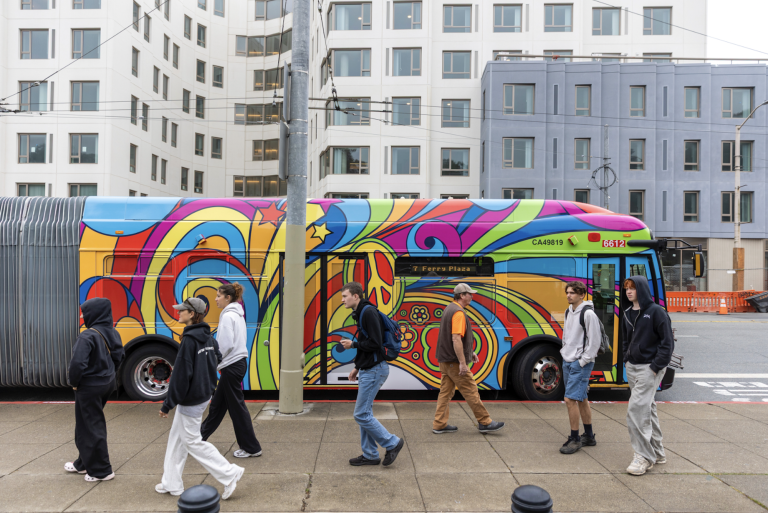
"caption": "Pedestrians walk past one of several tie-dye Muni buses, rolled out in celebration of the Dead & Company 60th anniversary concert.",
"credit": "Tâm Vũ/KQED",
"altTag": "A city street with a San Francisco Muni bus decorated with colorful 1970s psychedelic graphics.",
"description": null,
"imgSizes": {
"thumbnail": {
"file": "https://cdn.kqed.org/wp-content/uploads/sites/2/2025/07/Grateful-Ded-buses-160x107.png",
"width": 160,
"height": 107,
"mimeType": "image/png"
},
"medium_large": {
"file": "https://cdn.kqed.org/wp-content/uploads/sites/2/2025/07/Grateful-Ded-buses-768x513.png",
"width": 768,
"height": 513,
"mimeType": "image/png"
},
"1536x1536": {
"file": "https://cdn.kqed.org/wp-content/uploads/sites/2/2025/07/Grateful-Ded-buses-1536x1025.png",
"width": 1536,
"height": 1025,
"mimeType": "image/png"
},
"post-thumbnail": {
"file": "https://cdn.kqed.org/wp-content/uploads/sites/2/2025/07/Grateful-Ded-buses-672x372.png",
"width": 672,
"height": 372,
"mimeType": "image/png"
},
"twentyfourteen-full-width": {
"file": "https://cdn.kqed.org/wp-content/uploads/sites/2/2025/07/Grateful-Ded-buses-1038x576.png",
"width": 1038,
"height": 576,
"mimeType": "image/png"
},
"kqedFullSize": {
"file": "https://cdn.kqed.org/wp-content/uploads/sites/2/2025/07/Grateful-Ded-buses.png",
"width": 2000,
"height": 1335
}
},
"isLoading": false,
"fetchFailed": false
},
"arts_13951546": {
"type": "attachments",
"id": "arts_13951546",
"meta": {
"index": "attachments_1716263798",
"site": "arts",
"id": "13951546",
"found": true
},
"parent": 13951425,
"imgSizes": {
"twentyfourteen-full-width": {
"file": "https://cdn.kqed.org/wp-content/uploads/sites/2/2024/02/Screen-Shot-2024-02-04-at-6.30.48-PM-1038x576.png",
"width": 1038,
"mimeType": "image/png",
"height": 576
},
"thumbnail": {
"file": "https://cdn.kqed.org/wp-content/uploads/sites/2/2024/02/Screen-Shot-2024-02-04-at-6.30.48-PM-160x97.png",
"width": 160,
"mimeType": "image/png",
"height": 97
},
"post-thumbnail": {
"file": "https://cdn.kqed.org/wp-content/uploads/sites/2/2024/02/Screen-Shot-2024-02-04-at-6.30.48-PM-672x372.png",
"width": 672,
"mimeType": "image/png",
"height": 372
},
"kqedFullSize": {
"file": "https://cdn.kqed.org/wp-content/uploads/sites/2/2024/02/Screen-Shot-2024-02-04-at-6.30.48-PM.png",
"width": 1186,
"height": 718
},
"large": {
"file": "https://cdn.kqed.org/wp-content/uploads/sites/2/2024/02/Screen-Shot-2024-02-04-at-6.30.48-PM-1020x618.png",
"width": 1020,
"mimeType": "image/png",
"height": 618
},
"medium": {
"file": "https://cdn.kqed.org/wp-content/uploads/sites/2/2024/02/Screen-Shot-2024-02-04-at-6.30.48-PM-800x484.png",
"width": 800,
"mimeType": "image/png",
"height": 484
},
"medium_large": {
"file": "https://cdn.kqed.org/wp-content/uploads/sites/2/2024/02/Screen-Shot-2024-02-04-at-6.30.48-PM-768x465.png",
"width": 768,
"mimeType": "image/png",
"height": 465
}
},
"publishDate": 1707156539,
"modified": 1707156597,
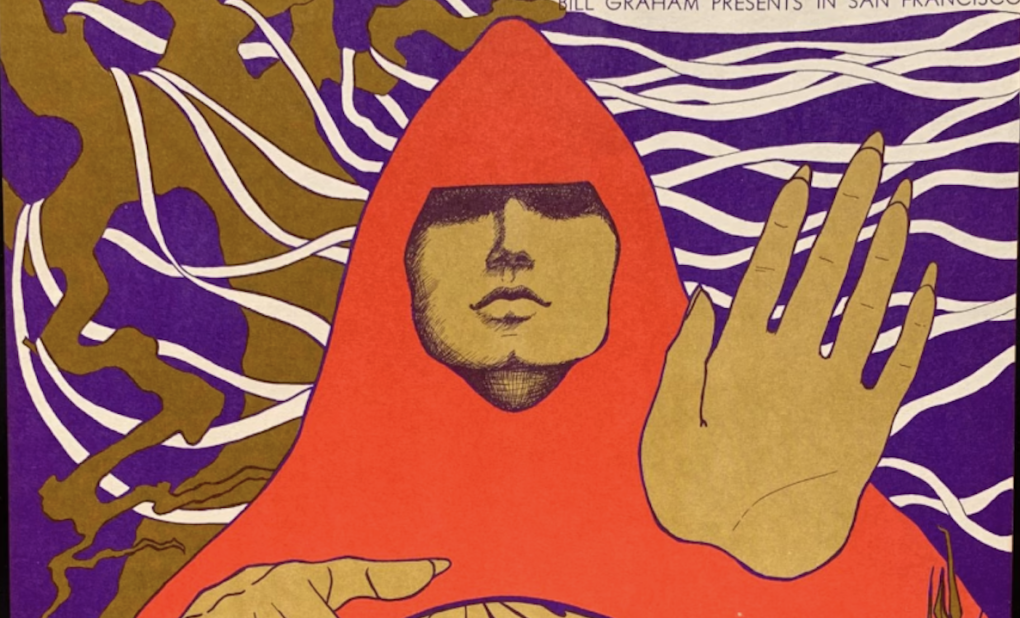
"caption": "A 1967 Bonnie MacLean design promoting Cream at the Fillmore.",
"description": null,
"title": "A 1967 Bonnie MacLean design promoting Cream at the Fillmore.",
"credit": "Courtesy of the Haight Street Art Center",
"status": "inherit",
"altTag": "A gold, purple and orange design showing a mystic and a crystal ball, one hand raised in wonder.",
"isLoading": false,
"fetchFailed": false
},
"arts_13933810": {
"type": "attachments",
"id": "arts_13933810",
"meta": {
"index": "attachments_1716263798",
"site": "arts",
"id": "13933810",
"found": true
},
"parent": 13933809,
"imgSizes": {
"twentyfourteen-full-width": {
"file": "https://ww2.kqed.org/app/uploads/sites/2/2023/08/Screen-Shot-2023-08-24-at-10.42.59-AM-1038x576.png",
"width": 1038,
"mimeType": "image/png",
"height": 576
},
"thumbnail": {
"file": "https://ww2.kqed.org/app/uploads/sites/2/2023/08/Screen-Shot-2023-08-24-at-10.42.59-AM-160x104.png",
"width": 160,
"mimeType": "image/png",
"height": 104
},
"post-thumbnail": {
"file": "https://ww2.kqed.org/app/uploads/sites/2/2023/08/Screen-Shot-2023-08-24-at-10.42.59-AM-672x372.png",
"width": 672,
"mimeType": "image/png",
"height": 372
},
"kqedFullSize": {
"file": "https://ww2.kqed.org/app/uploads/sites/2/2023/08/Screen-Shot-2023-08-24-at-10.42.59-AM.png",
"width": 1584,
"height": 1032
},
"large": {
"file": "https://ww2.kqed.org/app/uploads/sites/2/2023/08/Screen-Shot-2023-08-24-at-10.42.59-AM-1020x665.png",
"width": 1020,
"mimeType": "image/png",
"height": 665
},
"1536x1536": {
"file": "https://ww2.kqed.org/app/uploads/sites/2/2023/08/Screen-Shot-2023-08-24-at-10.42.59-AM-1536x1001.png",
"width": 1536,
"mimeType": "image/png",
"height": 1001
},
"medium": {
"file": "https://ww2.kqed.org/app/uploads/sites/2/2023/08/Screen-Shot-2023-08-24-at-10.42.59-AM-800x521.png",
"width": 800,
"mimeType": "image/png",
"height": 521
},
"medium_large": {
"file": "https://ww2.kqed.org/app/uploads/sites/2/2023/08/Screen-Shot-2023-08-24-at-10.42.59-AM-768x500.png",
"width": 768,
"mimeType": "image/png",
"height": 500
}
},
"publishDate": 1692899046,
"modified": 1692899186,
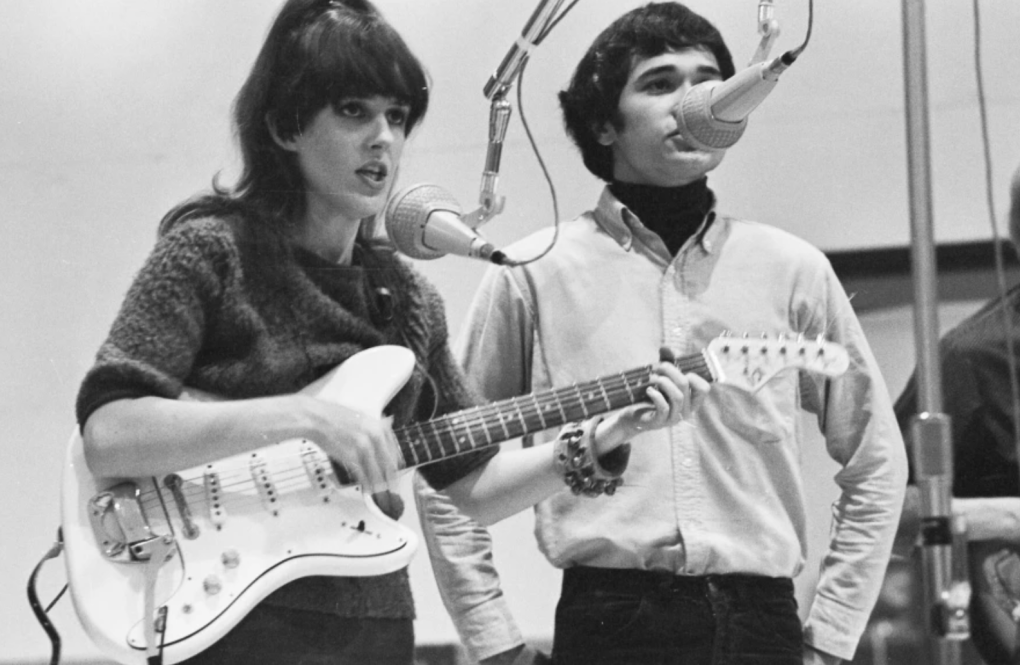
"caption": "Grace Slick recording with The Great Society at Autumn Records in San Francisco, from ‘San Francisco Sounds: A Place in Time.’",
"description": null,
"title": "Grace Slick recording with The Great Society at Autumn Records in San Francisco, from ‘San Francisco Sounds: A Place in Time.’",
"credit": "Sunny Andersen/ MGM+ via AP",
"status": "inherit",
"altTag": "A young woman with heavy brunette bangs and a high ponytail plays an electric guitar in a studio. She is singing into a mounted microphone next to a white man in a white shirt, who is also singing.",
"isLoading": false,
"fetchFailed": false
},
"arts_13925410": {
"type": "attachments",
"id": "arts_13925410",
"meta": {
"index": "attachments_1716263798",
"site": "arts",
"id": "13925410",
"found": true
},
"parent": 13925408,
"imgSizes": {
"twentyfourteen-full-width": {
"file": "https://ww2.kqed.org/app/uploads/sites/2/2023/02/Janis-Joplin-by-Herb-Greene_1920-1038x576.jpg",
"width": 1038,
"mimeType": "image/jpeg",
"height": 576
},
"thumbnail": {
"file": "https://ww2.kqed.org/app/uploads/sites/2/2023/02/Janis-Joplin-by-Herb-Greene_1920-160x111.jpg",
"width": 160,
"mimeType": "image/jpeg",
"height": 111
},
"post-thumbnail": {
"file": "https://ww2.kqed.org/app/uploads/sites/2/2023/02/Janis-Joplin-by-Herb-Greene_1920-672x372.jpg",
"width": 672,
"mimeType": "image/jpeg",
"height": 372
},
"kqedFullSize": {
"file": "https://ww2.kqed.org/app/uploads/sites/2/2023/02/Janis-Joplin-by-Herb-Greene_1920.jpg",
"width": 1657,
"height": 1147
},
"large": {
"file": "https://ww2.kqed.org/app/uploads/sites/2/2023/02/Janis-Joplin-by-Herb-Greene_1920-1020x706.jpg",
"width": 1020,
"mimeType": "image/jpeg",
"height": 706
},
"1536x1536": {
"file": "https://ww2.kqed.org/app/uploads/sites/2/2023/02/Janis-Joplin-by-Herb-Greene_1920-1536x1063.jpg",
"width": 1536,
"mimeType": "image/jpeg",
"height": 1063
},
"medium": {
"file": "https://ww2.kqed.org/app/uploads/sites/2/2023/02/Janis-Joplin-by-Herb-Greene_1920-800x554.jpg",
"width": 800,
"mimeType": "image/jpeg",
"height": 554
},
"medium_large": {
"file": "https://ww2.kqed.org/app/uploads/sites/2/2023/02/Janis-Joplin-by-Herb-Greene_1920-768x532.jpg",
"width": 768,
"mimeType": "image/jpeg",
"height": 532
}
},
"publishDate": 1677114572,
"modified": 1677115377,
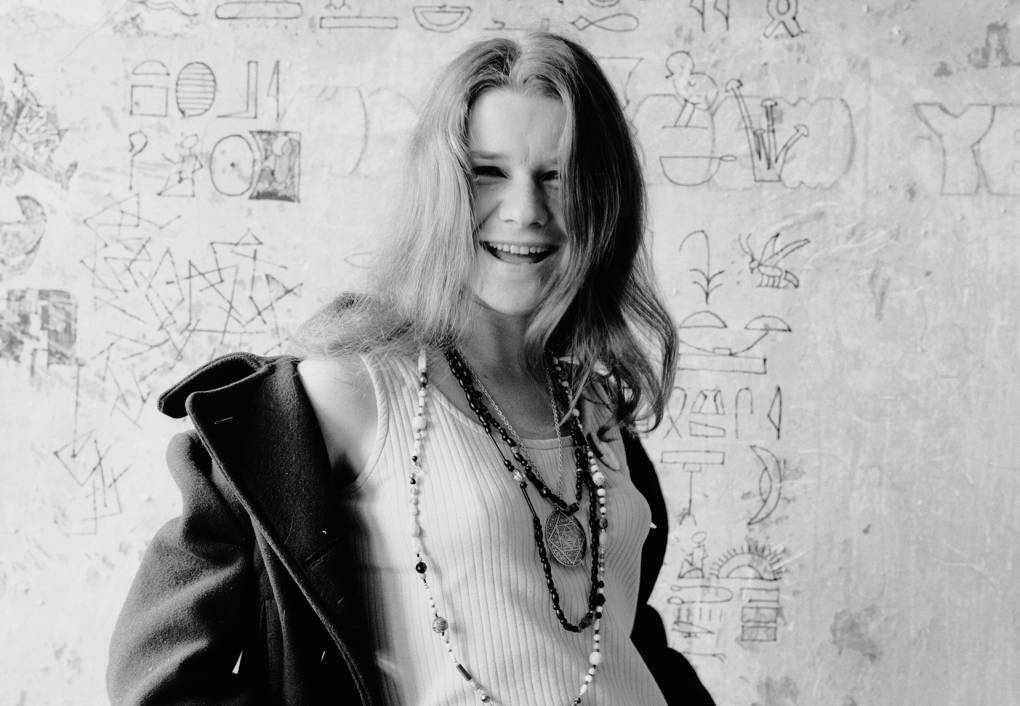
"caption": "Janis Joplin, as photographed by Herb Greene at his 66 Baker St. apartment in the Haight.",
"description": null,
"title": "Janis Joplin, as photographed by Herb Greene at his 66 Baker St. apartment in the Haight.",
"credit": "Herb Greene/ Courtesy of the Haight Street Art Center",
"status": "inherit",
"altTag": "A laughing woman with long brown hair stands before a white wall that's covered in scribbles and messages. She is wearing a simple tank, beaded necklaces and a winter coat that's falling from her shoulders.",
"isLoading": false,
"fetchFailed": false
},
"arts_13921043": {
"type": "attachments",
"id": "arts_13921043",
"meta": {
"index": "attachments_1716263798",
"site": "arts",
"id": "13921043",
"found": true
},
"parent": 13920973,
"imgSizes": {
"twentyfourteen-full-width": {
"file": "https://ww2.kqed.org/app/uploads/sites/2/2022/10/Dodger-and-Sparky-1038x576.jpg",
"width": 1038,
"mimeType": "image/jpeg",
"height": 576
},
"thumbnail": {
"file": "https://ww2.kqed.org/app/uploads/sites/2/2022/10/Dodger-and-Sparky-160x99.jpg",
"width": 160,
"mimeType": "image/jpeg",
"height": 99
},
"post-thumbnail": {
"file": "https://ww2.kqed.org/app/uploads/sites/2/2022/10/Dodger-and-Sparky-672x372.jpg",
"width": 672,
"mimeType": "image/jpeg",
"height": 372
},
"kqedFullSize": {
"file": "https://ww2.kqed.org/app/uploads/sites/2/2022/10/Dodger-and-Sparky-scaled-e1666981911444.jpg",
"width": 1920,
"height": 1188
},
"2048x2048": {
"file": "https://ww2.kqed.org/app/uploads/sites/2/2022/10/Dodger-and-Sparky-2048x1267.jpg",
"width": 2048,
"mimeType": "image/jpeg",
"height": 1267
},
"large": {
"file": "https://ww2.kqed.org/app/uploads/sites/2/2022/10/Dodger-and-Sparky-1020x631.jpg",
"width": 1020,
"mimeType": "image/jpeg",
"height": 631
},
"1536x1536": {
"file": "https://ww2.kqed.org/app/uploads/sites/2/2022/10/Dodger-and-Sparky-1536x951.jpg",
"width": 1536,
"mimeType": "image/jpeg",
"height": 951
},
"full-width": {
"file": "https://ww2.kqed.org/app/uploads/sites/2/2022/10/Dodger-and-Sparky-1920x1188.jpg",
"width": 1920,
"mimeType": "image/jpeg",
"height": 1188
},
"medium": {
"file": "https://ww2.kqed.org/app/uploads/sites/2/2022/10/Dodger-and-Sparky-800x495.jpg",
"width": 800,
"mimeType": "image/jpeg",
"height": 495
},
"medium_large": {
"file": "https://ww2.kqed.org/app/uploads/sites/2/2022/10/Dodger-and-Sparky-768x475.jpg",
"width": 768,
"mimeType": "image/jpeg",
"height": 475
}
},
"publishDate": 1666981697,
"modified": 1666981945,
"caption": "(L) 'Man Who is Avoiding the Draft'; (R) Marilee Trabioli, as seen in 'Haight Ashbury Portraits 1967-1968' ",
"description": null,
"title": "(L) 'Man Who is Avoiding the Draft'; (R) Marilee Trabioli, as seen in 'Haight Ashbury Portraits 1967-1968'",
"credit": "Elaine Mayes",
"status": "inherit",
"altTag": "A young man with chin length hair sits listlessly on a front stoop; a woman wearing jeans, a denim vest and a white shirt tied up to reveal her stomach stands in a doorway in a masculine stance.",
"isLoading": false,
"fetchFailed": false
},
"arts_13880166": {
"type": "attachments",
"id": "arts_13880166",
"meta": {
"index": "attachments_1716263798",
"site": "arts",
"id": "13880166",
"found": true
},
"parent": 13880005,
"imgSizes": {
"twentyfourteen-full-width": {
"file": "https://ww2.kqed.org/app/uploads/sites/2/2020/05/SPACESHIP-EARTH_Biosphere-2-Promo-Shot-2_Courtesy-of-NEON_COVER-1038x576.jpg",
"width": 1038,
"mimeType": "image/jpeg",
"height": 576
},
"thumbnail": {
"file": "https://ww2.kqed.org/app/uploads/sites/2/2020/05/SPACESHIP-EARTH_Biosphere-2-Promo-Shot-2_Courtesy-of-NEON_COVER-160x90.jpg",
"width": 160,
"mimeType": "image/jpeg",
"height": 90
},
"post-thumbnail": {
"file": "https://ww2.kqed.org/app/uploads/sites/2/2020/05/SPACESHIP-EARTH_Biosphere-2-Promo-Shot-2_Courtesy-of-NEON_COVER-672x372.jpg",
"width": 672,
"mimeType": "image/jpeg",
"height": 372
},
"kqedFullSize": {
"file": "https://ww2.kqed.org/app/uploads/sites/2/2020/05/SPACESHIP-EARTH_Biosphere-2-Promo-Shot-2_Courtesy-of-NEON_COVER.jpg",
"width": 1920,
"height": 1080
},
"large": {
"file": "https://ww2.kqed.org/app/uploads/sites/2/2020/05/SPACESHIP-EARTH_Biosphere-2-Promo-Shot-2_Courtesy-of-NEON_COVER-1020x574.jpg",
"width": 1020,
"mimeType": "image/jpeg",
"height": 574
},
"full-width": {
"file": "https://ww2.kqed.org/app/uploads/sites/2/2020/05/SPACESHIP-EARTH_Biosphere-2-Promo-Shot-2_Courtesy-of-NEON_COVER-1920x1080.jpg",
"width": 1920,
"mimeType": "image/jpeg",
"height": 1080
},
"medium": {
"file": "https://ww2.kqed.org/app/uploads/sites/2/2020/05/SPACESHIP-EARTH_Biosphere-2-Promo-Shot-2_Courtesy-of-NEON_COVER-800x450.jpg",
"width": 800,
"mimeType": "image/jpeg",
"height": 450
},
"medium_large": {
"file": "https://ww2.kqed.org/app/uploads/sites/2/2020/05/SPACESHIP-EARTH_Biosphere-2-Promo-Shot-2_Courtesy-of-NEON_COVER-768x432.jpg",
"width": 768,
"mimeType": "image/jpeg",
"height": 432
}
},
"publishDate": 1589224836,
"modified": 1589224970,
"caption": "Biospherians (L to R): Bernd Zabel, Linda Leigh, Taber MacMullen, Abigail Alling, Mark Van Thillo, Sally Silverstone, Roy Walford and Jane Poynter posing inside Biosphere 2 in 1990.",
"description": "Biospherians (L to R): Bernd Zabel, Linda Leigh, Taber MacMullen, Abigail Alling, Mark Van Thillo, Sally Silverstone, Roy Walford and Jane Poynter posing inside Biosphere 2 in 1990.",
"title": "SPACESHIP-EARTH_Biosphere-2-Promo-Shot-(2)_Courtesy-of-NEON_COVER",
"credit": "Courtesy of NEON",
"status": "inherit",
"isLoading": false,
"fetchFailed": false
},
"arts_13848490": {
"type": "attachments",
"id": "arts_13848490",
"meta": {
"index": "attachments_1716263798",
"site": "arts",
"id": "13848490",
"found": true
},
"parent": 13848489,
"imgSizes": {
"twentyfourteen-full-width": {
"file": "https://ww2.kqed.org/app/uploads/sites/2/2019/01/ace-cups-1_wide-28426a628f69204a5dc65ff91b222208cc651f4c-e1547141403459-1038x576.jpg",
"width": 1038,
"mimeType": "image/jpeg",
"height": 576
},
"thumbnail": {
"file": "https://ww2.kqed.org/app/uploads/sites/2/2019/01/ace-cups-1_wide-28426a628f69204a5dc65ff91b222208cc651f4c-e1547141403459-160x90.jpg",
"width": 160,
"mimeType": "image/jpeg",
"height": 90
},
"post-thumbnail": {
"file": "https://ww2.kqed.org/app/uploads/sites/2/2019/01/ace-cups-1_wide-28426a628f69204a5dc65ff91b222208cc651f4c-e1547141403459-672x372.jpg",
"width": 672,
"mimeType": "image/jpeg",
"height": 372
},
"kqedFullSize": {
"file": "https://ww2.kqed.org/app/uploads/sites/2/2019/01/ace-cups-1_wide-28426a628f69204a5dc65ff91b222208cc651f4c-e1547141403459.jpg",
"width": 1920,
"height": 1080
},
"large": {
"file": "https://ww2.kqed.org/app/uploads/sites/2/2019/01/ace-cups-1_wide-28426a628f69204a5dc65ff91b222208cc651f4c-e1547141403459-1020x574.jpg",
"width": 1020,
"mimeType": "image/jpeg",
"height": 574
},
"complete_open_graph": {
"file": "https://ww2.kqed.org/app/uploads/sites/2/2019/01/ace-cups-1_wide-28426a628f69204a5dc65ff91b222208cc651f4c-e1547141403459-1200x675.jpg",
"width": 1200,
"mimeType": "image/jpeg",
"height": 675
},
"guest-author-50": {
"file": "https://ww2.kqed.org/app/uploads/sites/2/2019/01/ace-cups-1_wide-28426a628f69204a5dc65ff91b222208cc651f4c-e1547141403459-50x50.jpg",
"width": 50,
"mimeType": "image/jpeg",
"height": 50
},
"guest-author-96": {
"file": "https://ww2.kqed.org/app/uploads/sites/2/2019/01/ace-cups-1_wide-28426a628f69204a5dc65ff91b222208cc651f4c-e1547141403459-96x96.jpg",
"width": 96,
"mimeType": "image/jpeg",
"height": 96
},
"medium": {
"file": "https://ww2.kqed.org/app/uploads/sites/2/2019/01/ace-cups-1_wide-28426a628f69204a5dc65ff91b222208cc651f4c-e1547141403459-800x450.jpg",
"width": 800,
"mimeType": "image/jpeg",
"height": 450
},
"guest-author-64": {
"file": "https://ww2.kqed.org/app/uploads/sites/2/2019/01/ace-cups-1_wide-28426a628f69204a5dc65ff91b222208cc651f4c-e1547141403459-64x64.jpg",
"width": 64,
"mimeType": "image/jpeg",
"height": 64
},
"guest-author-32": {
"file": "https://ww2.kqed.org/app/uploads/sites/2/2019/01/ace-cups-1_wide-28426a628f69204a5dc65ff91b222208cc651f4c-e1547141403459-32x32.jpg",
"width": 32,
"mimeType": "image/jpeg",
"height": 32
},
"full-width": {
"file": "https://ww2.kqed.org/app/uploads/sites/2/2019/01/ace-cups-1_wide-28426a628f69204a5dc65ff91b222208cc651f4c-e1547141403459-1920x1080.jpg",
"width": 1920,
"mimeType": "image/jpeg",
"height": 1080
},
"detail": {
"file": "https://ww2.kqed.org/app/uploads/sites/2/2019/01/ace-cups-1_wide-28426a628f69204a5dc65ff91b222208cc651f4c-e1547141403459-150x150.jpg",
"width": 150,
"mimeType": "image/jpeg",
"height": 150
},
"medium_large": {
"file": "https://ww2.kqed.org/app/uploads/sites/2/2019/01/ace-cups-1_wide-28426a628f69204a5dc65ff91b222208cc651f4c-e1547141403459-768x432.jpg",
"width": 768,
"mimeType": "image/jpeg",
"height": 432
},
"guest-author-128": {
"file": "https://ww2.kqed.org/app/uploads/sites/2/2019/01/ace-cups-1_wide-28426a628f69204a5dc65ff91b222208cc651f4c-e1547141403459-128x128.jpg",
"width": 128,
"mimeType": "image/jpeg",
"height": 128
}
},
"publishDate": 1547141119,
"modified": 1547141394,
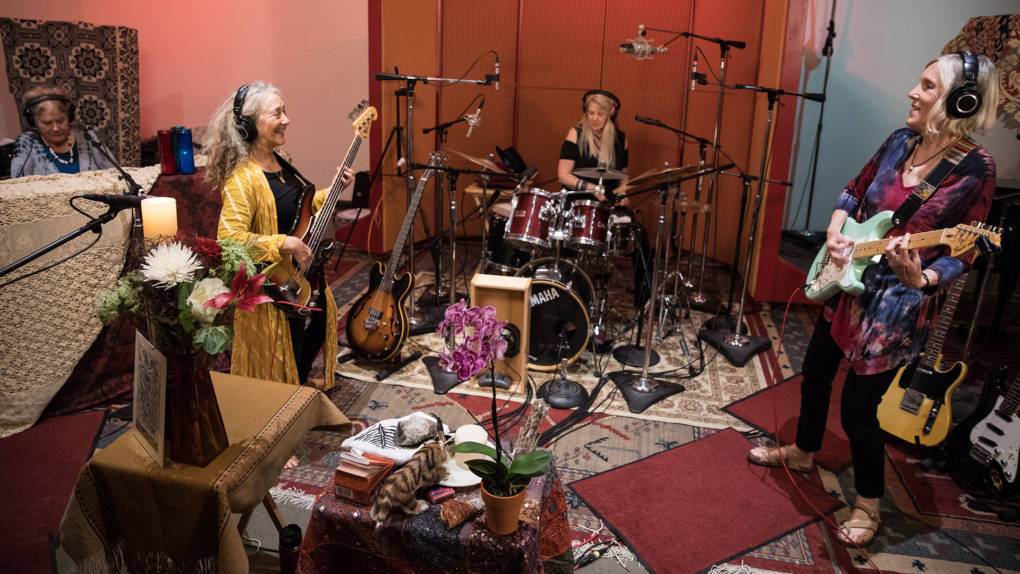
"caption": "Decades after their original run in 1960s San Francisco, the members of Ace of Cups have finally released their first album.",
"description": "Decades after their original run in 1960s San Francisco, the members of Ace of Cups have finally released their first album.",
"title": "Decades after their original run in 1960s San Francisco, the members of Ace of Cups have finally released their first album.",
"credit": "Rachel Wright/Courtesy of the artist",
"status": "inherit",
"isLoading": false,
"fetchFailed": false
},
"arts_13848432": {
"type": "attachments",
"id": "arts_13848432",
"meta": {
"index": "attachments_1716263798",
"site": "arts",
"id": "13848432",
"found": true
},
"parent": 13848416,
"imgSizes": {
"twentyfourteen-full-width": {
"file": "https://ww2.kqed.org/app/uploads/sites/2/2019/01/GettyImages-89790014-e1547065291882-1038x576.jpg",
"width": 1038,
"mimeType": "image/jpeg",
"height": 576
},
"thumbnail": {
"file": "https://ww2.kqed.org/app/uploads/sites/2/2019/01/GettyImages-89790014-e1547065291882-160x103.jpg",
"width": 160,
"mimeType": "image/jpeg",
"height": 103
},
"post-thumbnail": {
"file": "https://ww2.kqed.org/app/uploads/sites/2/2019/01/GettyImages-89790014-e1547065291882-672x372.jpg",
"width": 672,
"mimeType": "image/jpeg",
"height": 372
},
"kqedFullSize": {
"file": "https://ww2.kqed.org/app/uploads/sites/2/2019/01/GettyImages-89790014-e1547065291882.jpg",
"width": 1920,
"height": 1230
},
"large": {
"file": "https://ww2.kqed.org/app/uploads/sites/2/2019/01/GettyImages-89790014-e1547065291882-1020x653.jpg",
"width": 1020,
"mimeType": "image/jpeg",
"height": 653
},
"complete_open_graph": {
"file": "https://ww2.kqed.org/app/uploads/sites/2/2019/01/GettyImages-89790014-e1547065291882-1200x769.jpg",
"width": 1200,
"mimeType": "image/jpeg",
"height": 769
},
"guest-author-50": {
"file": "https://ww2.kqed.org/app/uploads/sites/2/2019/01/GettyImages-89790014-e1547065291882-50x50.jpg",
"width": 50,
"mimeType": "image/jpeg",
"height": 50
},
"guest-author-96": {
"file": "https://ww2.kqed.org/app/uploads/sites/2/2019/01/GettyImages-89790014-e1547065291882-96x96.jpg",
"width": 96,
"mimeType": "image/jpeg",
"height": 96
},
"medium": {
"file": "https://ww2.kqed.org/app/uploads/sites/2/2019/01/GettyImages-89790014-e1547065291882-800x513.jpg",
"width": 800,
"mimeType": "image/jpeg",
"height": 513
},
"guest-author-64": {
"file": "https://ww2.kqed.org/app/uploads/sites/2/2019/01/GettyImages-89790014-e1547065291882-64x64.jpg",
"width": 64,
"mimeType": "image/jpeg",
"height": 64
},
"guest-author-32": {
"file": "https://ww2.kqed.org/app/uploads/sites/2/2019/01/GettyImages-89790014-e1547065291882-32x32.jpg",
"width": 32,
"mimeType": "image/jpeg",
"height": 32
},
"full-width": {
"file": "https://ww2.kqed.org/app/uploads/sites/2/2019/01/GettyImages-89790014-e1547065291882-1920x1230.jpg",
"width": 1920,
"mimeType": "image/jpeg",
"height": 1230
},
"detail": {
"file": "https://ww2.kqed.org/app/uploads/sites/2/2019/01/GettyImages-89790014-e1547065291882-150x150.jpg",
"width": 150,
"mimeType": "image/jpeg",
"height": 150
},
"medium_large": {
"file": "https://ww2.kqed.org/app/uploads/sites/2/2019/01/GettyImages-89790014-e1547065291882-768x492.jpg",
"width": 768,
"mimeType": "image/jpeg",
"height": 492
},
"guest-author-128": {
"file": "https://ww2.kqed.org/app/uploads/sites/2/2019/01/GettyImages-89790014-e1547065291882-128x128.jpg",
"width": 128,
"mimeType": "image/jpeg",
"height": 128
}
},
"publishDate": 1547065235,
"modified": 1547066107,
"caption": "On August 15-17 in 1969 an estimated 400,000 music fans gathered on Max Yasgur's farm in Bethel, N.Y. for the most celebrated music festival ever.",
"description": ". On August 15-17 in 1969 an estimated 400,000 music fans gathered on Max Yasgur's farm in Bethel, N.Y. for the most celebrated music festival ever.",
"title": "Woodstock Celebrates 40th Anniversary Of Historic Countercultural Concert",
"credit": "Photo by Mario Tama/Getty Images",
"status": "inherit",
"isLoading": false,
"fetchFailed": false
},
"arts_13847950": {
"type": "attachments",
"id": "arts_13847950",
"meta": {
"index": "attachments_1716263798",
"site": "arts",
"id": "13847950",
"found": true
},
"parent": 13847949,
"imgSizes": {
"twentyfourteen-full-width": {
"file": "https://ww2.kqed.org/app/uploads/sites/2/2018/12/gettyimages-3438833_custom-a223d799ad94d7f740ceb802729a418c3deb1c1b-e1546455364712-1038x576.jpg",
"width": 1038,
"mimeType": "image/jpeg",
"height": 576
},
"thumbnail": {
"file": "https://ww2.kqed.org/app/uploads/sites/2/2018/12/gettyimages-3438833_custom-a223d799ad94d7f740ceb802729a418c3deb1c1b-e1546455364712-160x111.jpg",
"width": 160,
"mimeType": "image/jpeg",
"height": 111
},
"post-thumbnail": {
"file": "https://ww2.kqed.org/app/uploads/sites/2/2018/12/gettyimages-3438833_custom-a223d799ad94d7f740ceb802729a418c3deb1c1b-e1546455364712-672x372.jpg",
"width": 672,
"mimeType": "image/jpeg",
"height": 372
},
"kqedFullSize": {
"file": "https://ww2.kqed.org/app/uploads/sites/2/2018/12/gettyimages-3438833_custom-a223d799ad94d7f740ceb802729a418c3deb1c1b-e1546455364712.jpg",
"width": 1920,
"height": 1332
},
"large": {
"file": "https://ww2.kqed.org/app/uploads/sites/2/2018/12/gettyimages-3438833_custom-a223d799ad94d7f740ceb802729a418c3deb1c1b-e1546455364712-1020x708.jpg",
"width": 1020,
"mimeType": "image/jpeg",
"height": 708
},
"complete_open_graph": {
"file": "https://ww2.kqed.org/app/uploads/sites/2/2018/12/gettyimages-3438833_custom-a223d799ad94d7f740ceb802729a418c3deb1c1b-e1546455364712-1200x833.jpg",
"width": 1200,
"mimeType": "image/jpeg",
"height": 833
},
"guest-author-50": {
"file": "https://ww2.kqed.org/app/uploads/sites/2/2018/12/gettyimages-3438833_custom-a223d799ad94d7f740ceb802729a418c3deb1c1b-e1546455364712-50x50.jpg",
"width": 50,
"mimeType": "image/jpeg",
"height": 50
},
"guest-author-96": {
"file": "https://ww2.kqed.org/app/uploads/sites/2/2018/12/gettyimages-3438833_custom-a223d799ad94d7f740ceb802729a418c3deb1c1b-e1546455364712-96x96.jpg",
"width": 96,
"mimeType": "image/jpeg",
"height": 96
},
"medium": {
"file": "https://ww2.kqed.org/app/uploads/sites/2/2018/12/gettyimages-3438833_custom-a223d799ad94d7f740ceb802729a418c3deb1c1b-e1546455364712-800x555.jpg",
"width": 800,
"mimeType": "image/jpeg",
"height": 555
},
"guest-author-64": {
"file": "https://ww2.kqed.org/app/uploads/sites/2/2018/12/gettyimages-3438833_custom-a223d799ad94d7f740ceb802729a418c3deb1c1b-e1546455364712-64x64.jpg",
"width": 64,
"mimeType": "image/jpeg",
"height": 64
},
"guest-author-32": {
"file": "https://ww2.kqed.org/app/uploads/sites/2/2018/12/gettyimages-3438833_custom-a223d799ad94d7f740ceb802729a418c3deb1c1b-e1546455364712-32x32.jpg",
"width": 32,
"mimeType": "image/jpeg",
"height": 32
},
"full-width": {
"file": "https://ww2.kqed.org/app/uploads/sites/2/2018/12/gettyimages-3438833_custom-a223d799ad94d7f740ceb802729a418c3deb1c1b-e1546455364712-1920x1332.jpg",
"width": 1920,
"mimeType": "image/jpeg",
"height": 1332
},
"detail": {
"file": "https://ww2.kqed.org/app/uploads/sites/2/2018/12/gettyimages-3438833_custom-a223d799ad94d7f740ceb802729a418c3deb1c1b-e1546455364712-150x150.jpg",
"width": 150,
"mimeType": "image/jpeg",
"height": 150
},
"medium_large": {
"file": "https://ww2.kqed.org/app/uploads/sites/2/2018/12/gettyimages-3438833_custom-a223d799ad94d7f740ceb802729a418c3deb1c1b-e1546455364712-768x533.jpg",
"width": 768,
"mimeType": "image/jpeg",
"height": 533
},
"guest-author-128": {
"file": "https://ww2.kqed.org/app/uploads/sites/2/2018/12/gettyimages-3438833_custom-a223d799ad94d7f740ceb802729a418c3deb1c1b-e1546455364712-128x128.jpg",
"width": 128,
"mimeType": "image/jpeg",
"height": 128
}
},
"publishDate": 1546455276,
"modified": 1546455352,
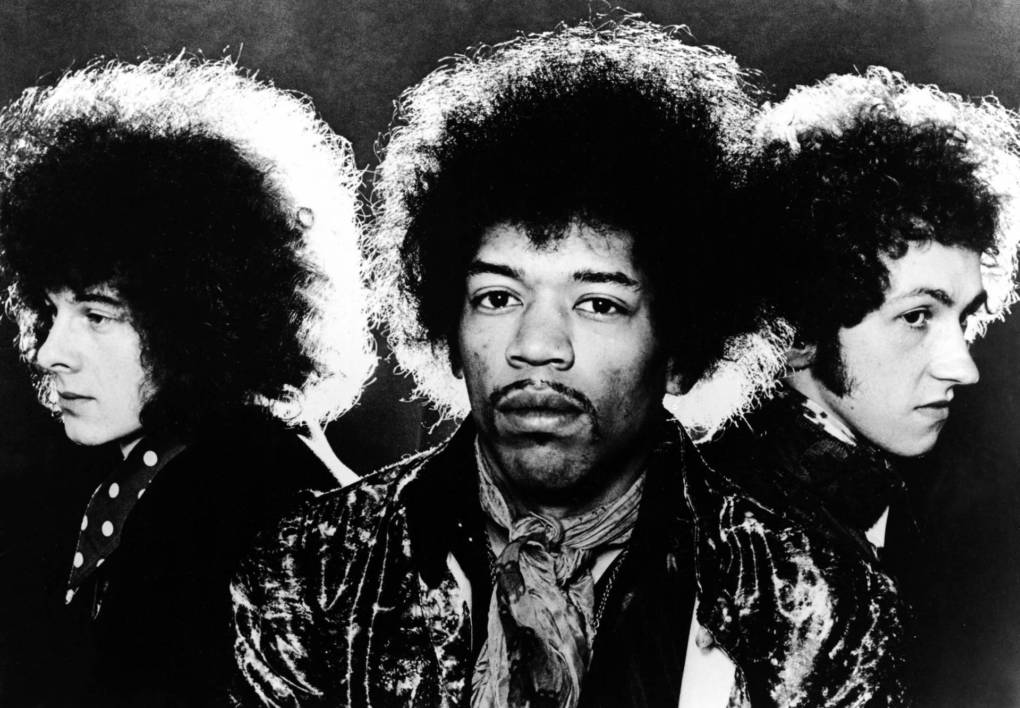
"caption": "The Jimi Hendrix Experience in the late 1960s. Left to right: Noel Redding, Jimi Hendrix, Mitch Mitchell.\n",
"description": "The Jimi Hendrix Experience in the late 1960s. Left to right: Noel Redding, Jimi Hendrix, Mitch Mitchell.",
"title": "JimiHendrixExperience",
"credit": "Hulton Archive/Getty Images",
"status": "inherit",
"isLoading": false,
"fetchFailed": false
},
"arts_13844550": {
"type": "attachments",
"id": "arts_13844550",
"meta": {
"index": "attachments_1716263798",
"site": "arts",
"id": "13844550",
"found": true
},
"parent": 13844548,
"imgSizes": {
"small": {
"file": "https://ww2.kqed.org/app/uploads/sites/2/2018/11/images_uploads_gallery_Copy-of-72_11-10_to_11_16_Ace_of_Cups_Photo_by_Jamie_Soja_Sojaphotography_dot_com_-520x293.jpg",
"width": 520,
"mimeType": "image/jpeg",
"height": 293
},
"twentyfourteen-full-width": {
"file": "https://ww2.kqed.org/app/uploads/sites/2/2018/11/images_uploads_gallery_Copy-of-72_11-10_to_11_16_Ace_of_Cups_Photo_by_Jamie_Soja_Sojaphotography_dot_com_-1038x576.jpg",
"width": 1038,
"mimeType": "image/jpeg",
"height": 576
},
"thumbnail": {
"file": "https://ww2.kqed.org/app/uploads/sites/2/2018/11/images_uploads_gallery_Copy-of-72_11-10_to_11_16_Ace_of_Cups_Photo_by_Jamie_Soja_Sojaphotography_dot_com_-160x90.jpg",
"width": 160,
"mimeType": "image/jpeg",
"height": 90
},
"fd-sm": {
"file": "https://ww2.kqed.org/app/uploads/sites/2/2018/11/images_uploads_gallery_Copy-of-72_11-10_to_11_16_Ace_of_Cups_Photo_by_Jamie_Soja_Sojaphotography_dot_com_-960x540.jpg",
"width": 960,
"mimeType": "image/jpeg",
"height": 540
},
"post-thumbnail": {
"file": "https://ww2.kqed.org/app/uploads/sites/2/2018/11/images_uploads_gallery_Copy-of-72_11-10_to_11_16_Ace_of_Cups_Photo_by_Jamie_Soja_Sojaphotography_dot_com_-672x372.jpg",
"width": 672,
"mimeType": "image/jpeg",
"height": 372
},
"xsmall": {
"file": "https://ww2.kqed.org/app/uploads/sites/2/2018/11/images_uploads_gallery_Copy-of-72_11-10_to_11_16_Ace_of_Cups_Photo_by_Jamie_Soja_Sojaphotography_dot_com_-375x211.jpg",
"width": 375,
"mimeType": "image/jpeg",
"height": 211
},
"kqedFullSize": {
"file": "https://ww2.kqed.org/app/uploads/sites/2/2018/11/images_uploads_gallery_Copy-of-72_11-10_to_11_16_Ace_of_Cups_Photo_by_Jamie_Soja_Sojaphotography_dot_com_.jpg",
"width": 1920,
"height": 1080
},
"large": {
"file": "https://ww2.kqed.org/app/uploads/sites/2/2018/11/images_uploads_gallery_Copy-of-72_11-10_to_11_16_Ace_of_Cups_Photo_by_Jamie_Soja_Sojaphotography_dot_com_-1020x574.jpg",
"width": 1020,
"mimeType": "image/jpeg",
"height": 574
},
"xlarge": {
"file": "https://ww2.kqed.org/app/uploads/sites/2/2018/11/images_uploads_gallery_Copy-of-72_11-10_to_11_16_Ace_of_Cups_Photo_by_Jamie_Soja_Sojaphotography_dot_com_-1180x664.jpg",
"width": 1180,
"mimeType": "image/jpeg",
"height": 664
},
"complete_open_graph": {
"file": "https://ww2.kqed.org/app/uploads/sites/2/2018/11/images_uploads_gallery_Copy-of-72_11-10_to_11_16_Ace_of_Cups_Photo_by_Jamie_Soja_Sojaphotography_dot_com_-1200x675.jpg",
"width": 1200,
"mimeType": "image/jpeg",
"height": 675
},
"guest-author-50": {
"file": "https://ww2.kqed.org/app/uploads/sites/2/2018/11/images_uploads_gallery_Copy-of-72_11-10_to_11_16_Ace_of_Cups_Photo_by_Jamie_Soja_Sojaphotography_dot_com_-50x50.jpg",
"width": 50,
"mimeType": "image/jpeg",
"height": 50
},
"guest-author-96": {
"file": "https://ww2.kqed.org/app/uploads/sites/2/2018/11/images_uploads_gallery_Copy-of-72_11-10_to_11_16_Ace_of_Cups_Photo_by_Jamie_Soja_Sojaphotography_dot_com_-96x96.jpg",
"width": 96,
"mimeType": "image/jpeg",
"height": 96
},
"medium": {
"file": "https://ww2.kqed.org/app/uploads/sites/2/2018/11/images_uploads_gallery_Copy-of-72_11-10_to_11_16_Ace_of_Cups_Photo_by_Jamie_Soja_Sojaphotography_dot_com_-800x450.jpg",
"width": 800,
"mimeType": "image/jpeg",
"height": 450
},
"guest-author-64": {
"file": "https://ww2.kqed.org/app/uploads/sites/2/2018/11/images_uploads_gallery_Copy-of-72_11-10_to_11_16_Ace_of_Cups_Photo_by_Jamie_Soja_Sojaphotography_dot_com_-64x64.jpg",
"width": 64,
"mimeType": "image/jpeg",
"height": 64
},
"guest-author-32": {
"file": "https://ww2.kqed.org/app/uploads/sites/2/2018/11/images_uploads_gallery_Copy-of-72_11-10_to_11_16_Ace_of_Cups_Photo_by_Jamie_Soja_Sojaphotography_dot_com_-32x32.jpg",
"width": 32,
"mimeType": "image/jpeg",
"height": 32
},
"fd-lrg": {
"file": "https://ww2.kqed.org/app/uploads/sites/2/2018/11/images_uploads_gallery_Copy-of-72_11-10_to_11_16_Ace_of_Cups_Photo_by_Jamie_Soja_Sojaphotography_dot_com_-1920x1080.jpg",
"width": 1920,
"mimeType": "image/jpeg",
"height": 1080
},
"fd-med": {
"file": "https://ww2.kqed.org/app/uploads/sites/2/2018/11/images_uploads_gallery_Copy-of-72_11-10_to_11_16_Ace_of_Cups_Photo_by_Jamie_Soja_Sojaphotography_dot_com_-1180x664.jpg",
"width": 1180,
"mimeType": "image/jpeg",
"height": 664
},
"full-width": {
"file": "https://ww2.kqed.org/app/uploads/sites/2/2018/11/images_uploads_gallery_Copy-of-72_11-10_to_11_16_Ace_of_Cups_Photo_by_Jamie_Soja_Sojaphotography_dot_com_-1920x1080.jpg",
"width": 1920,
"mimeType": "image/jpeg",
"height": 1080
},
"detail": {
"file": "https://ww2.kqed.org/app/uploads/sites/2/2018/11/images_uploads_gallery_Copy-of-72_11-10_to_11_16_Ace_of_Cups_Photo_by_Jamie_Soja_Sojaphotography_dot_com_-150x150.jpg",
"width": 150,
"mimeType": "image/jpeg",
"height": 150
},
"medium_large": {
"file": "https://ww2.kqed.org/app/uploads/sites/2/2018/11/images_uploads_gallery_Copy-of-72_11-10_to_11_16_Ace_of_Cups_Photo_by_Jamie_Soja_Sojaphotography_dot_com_-768x432.jpg",
"width": 768,
"mimeType": "image/jpeg",
"height": 432
},
"guest-author-128": {
"file": "https://ww2.kqed.org/app/uploads/sites/2/2018/11/images_uploads_gallery_Copy-of-72_11-10_to_11_16_Ace_of_Cups_Photo_by_Jamie_Soja_Sojaphotography_dot_com_-128x128.jpg",
"width": 128,
"mimeType": "image/jpeg",
"height": 128
},
"xxsmall": {
"file": "https://ww2.kqed.org/app/uploads/sites/2/2018/11/images_uploads_gallery_Copy-of-72_11-10_to_11_16_Ace_of_Cups_Photo_by_Jamie_Soja_Sojaphotography_dot_com_-240x135.jpg",
"width": 240,
"mimeType": "image/jpeg",
"height": 135
}
},
"publishDate": 1541704380,
"modified": 1541704453,
"caption": "Ace of Cups. ",
"description": "Ace of Cups. ",
"title": "_images_uploads_gallery_Copy-of-72_11-10_to_11_16_Ace_of_Cups_Photo_by_Jamie_Soja_Sojaphotography_dot_com_",
"credit": "Jamie Soja",
"status": "inherit",
"isLoading": false,
"fetchFailed": false
},
"arts_13838532": {
"type": "attachments",
"id": "arts_13838532",
"meta": {
"index": "attachments_1716263798",
"site": "arts",
"id": "13838532",
"found": true
},
"parent": 13838512,
"imgSizes": {
"small": {
"file": "https://ww2.kqed.org/app/uploads/sites/2/2018/08/Acepsychdelicshot-520x293.jpg",
"width": 520,
"mimeType": "image/jpeg",
"height": 293
},
"twentyfourteen-full-width": {
"file": "https://ww2.kqed.org/app/uploads/sites/2/2018/08/Acepsychdelicshot-1038x576.jpg",
"width": 1038,
"mimeType": "image/jpeg",
"height": 576
},
"thumbnail": {
"file": "https://ww2.kqed.org/app/uploads/sites/2/2018/08/Acepsychdelicshot-160x90.jpg",
"width": 160,
"mimeType": "image/jpeg",
"height": 90
},
"fd-sm": {
"file": "https://ww2.kqed.org/app/uploads/sites/2/2018/08/Acepsychdelicshot-960x540.jpg",
"width": 960,
"mimeType": "image/jpeg",
"height": 540
},
"post-thumbnail": {
"file": "https://ww2.kqed.org/app/uploads/sites/2/2018/08/Acepsychdelicshot-672x372.jpg",
"width": 672,
"mimeType": "image/jpeg",
"height": 372
},
"xsmall": {
"file": "https://ww2.kqed.org/app/uploads/sites/2/2018/08/Acepsychdelicshot-375x211.jpg",
"width": 375,
"mimeType": "image/jpeg",
"height": 211
},
"kqedFullSize": {
"file": "https://ww2.kqed.org/app/uploads/sites/2/2018/08/Acepsychdelicshot.jpg",
"width": 1829,
"height": 1029
},
"large": {
"file": "https://ww2.kqed.org/app/uploads/sites/2/2018/08/Acepsychdelicshot-1020x574.jpg",
"width": 1020,
"mimeType": "image/jpeg",
"height": 574
},
"xlarge": {
"file": "https://ww2.kqed.org/app/uploads/sites/2/2018/08/Acepsychdelicshot-1180x664.jpg",
"width": 1180,
"mimeType": "image/jpeg",
"height": 664
},
"complete_open_graph": {
"file": "https://ww2.kqed.org/app/uploads/sites/2/2018/08/Acepsychdelicshot-1200x675.jpg",
"width": 1200,
"mimeType": "image/jpeg",
"height": 675
},
"guest-author-50": {
"file": "https://ww2.kqed.org/app/uploads/sites/2/2018/08/Acepsychdelicshot-50x50.jpg",
"width": 50,
"mimeType": "image/jpeg",
"height": 50
},
"guest-author-96": {
"file": "https://ww2.kqed.org/app/uploads/sites/2/2018/08/Acepsychdelicshot-96x96.jpg",
"width": 96,
"mimeType": "image/jpeg",
"height": 96
},
"medium": {
"file": "https://ww2.kqed.org/app/uploads/sites/2/2018/08/Acepsychdelicshot-800x450.jpg",
"width": 800,
"mimeType": "image/jpeg",
"height": 450
},
"guest-author-64": {
"file": "https://ww2.kqed.org/app/uploads/sites/2/2018/08/Acepsychdelicshot-64x64.jpg",
"width": 64,
"mimeType": "image/jpeg",
"height": 64
},
"guest-author-32": {
"file": "https://ww2.kqed.org/app/uploads/sites/2/2018/08/Acepsychdelicshot-32x32.jpg",
"width": 32,
"mimeType": "image/jpeg",
"height": 32
},
"fd-med": {
"file": "https://ww2.kqed.org/app/uploads/sites/2/2018/08/Acepsychdelicshot-1180x664.jpg",
"width": 1180,
"mimeType": "image/jpeg",
"height": 664
},
"detail": {
"file": "https://ww2.kqed.org/app/uploads/sites/2/2018/08/Acepsychdelicshot-150x150.jpg",
"width": 150,
"mimeType": "image/jpeg",
"height": 150
},
"medium_large": {
"file": "https://ww2.kqed.org/app/uploads/sites/2/2018/08/Acepsychdelicshot-768x432.jpg",
"width": 768,
"mimeType": "image/jpeg",
"height": 432
},
"guest-author-128": {
"file": "https://ww2.kqed.org/app/uploads/sites/2/2018/08/Acepsychdelicshot-128x128.jpg",
"width": 128,
"mimeType": "image/jpeg",
"height": 128
},
"xxsmall": {
"file": "https://ww2.kqed.org/app/uploads/sites/2/2018/08/Acepsychdelicshot-240x135.jpg",
"width": 240,
"mimeType": "image/jpeg",
"height": 135
}
},
"publishDate": 1533776190,
"modified": 1533777057,
"caption": "Ace of Cups perform in the 1960s.",
"description": null,
"title": "Acepsychdelicshot",
"credit": "Courtesy of Ace of Cups",
"status": "inherit",
"isLoading": false,
"fetchFailed": false
},
"arts_13827623": {
"type": "attachments",
"id": "arts_13827623",
"meta": {
"index": "attachments_1716263798",
"site": "arts",
"id": "13827623",
"found": true
},
"parent": 13827622,
"imgSizes": {
"small": {
"file": "https://ww2.kqed.org/app/uploads/sites/2/2018/03/gd-gettyimages-453967204_wide-5c1bd95d5c06385ec379f0c082b10647232cd317-520x293.jpg",
"width": 520,
"mimeType": "image/jpeg",
"height": 293
},
"twentyfourteen-full-width": {
"file": "https://ww2.kqed.org/app/uploads/sites/2/2018/03/gd-gettyimages-453967204_wide-5c1bd95d5c06385ec379f0c082b10647232cd317-1038x576.jpg",
"width": 1038,
"mimeType": "image/jpeg",
"height": 576
},
"thumbnail": {
"file": "https://ww2.kqed.org/app/uploads/sites/2/2018/03/gd-gettyimages-453967204_wide-5c1bd95d5c06385ec379f0c082b10647232cd317-160x90.jpg",
"width": 160,
"mimeType": "image/jpeg",
"height": 90
},
"fd-sm": {
"file": "https://ww2.kqed.org/app/uploads/sites/2/2018/03/gd-gettyimages-453967204_wide-5c1bd95d5c06385ec379f0c082b10647232cd317-960x540.jpg",
"width": 960,
"mimeType": "image/jpeg",
"height": 540
},
"post-thumbnail": {
"file": "https://ww2.kqed.org/app/uploads/sites/2/2018/03/gd-gettyimages-453967204_wide-5c1bd95d5c06385ec379f0c082b10647232cd317-672x372.jpg",
"width": 672,
"mimeType": "image/jpeg",
"height": 372
},
"xsmall": {
"file": "https://ww2.kqed.org/app/uploads/sites/2/2018/03/gd-gettyimages-453967204_wide-5c1bd95d5c06385ec379f0c082b10647232cd317-375x211.jpg",
"width": 375,
"mimeType": "image/jpeg",
"height": 211
},
"kqedFullSize": {
"file": "https://ww2.kqed.org/app/uploads/sites/2/2018/03/gd-gettyimages-453967204_wide-5c1bd95d5c06385ec379f0c082b10647232cd317.jpg",
"width": 2048,
"height": 1152
},
"large": {
"file": "https://ww2.kqed.org/app/uploads/sites/2/2018/03/gd-gettyimages-453967204_wide-5c1bd95d5c06385ec379f0c082b10647232cd317-1020x574.jpg",
"width": 1020,
"mimeType": "image/jpeg",
"height": 574
},
"xlarge": {
"file": "https://ww2.kqed.org/app/uploads/sites/2/2018/03/gd-gettyimages-453967204_wide-5c1bd95d5c06385ec379f0c082b10647232cd317-1180x664.jpg",
"width": 1180,
"mimeType": "image/jpeg",
"height": 664
},
"guest-author-50": {
"file": "https://ww2.kqed.org/app/uploads/sites/2/2018/03/gd-gettyimages-453967204_wide-5c1bd95d5c06385ec379f0c082b10647232cd317-50x50.jpg",
"width": 50,
"mimeType": "image/jpeg",
"height": 50
},
"guest-author-96": {
"file": "https://ww2.kqed.org/app/uploads/sites/2/2018/03/gd-gettyimages-453967204_wide-5c1bd95d5c06385ec379f0c082b10647232cd317-96x96.jpg",
"width": 96,
"mimeType": "image/jpeg",
"height": 96
},
"medium": {
"file": "https://ww2.kqed.org/app/uploads/sites/2/2018/03/gd-gettyimages-453967204_wide-5c1bd95d5c06385ec379f0c082b10647232cd317-800x450.jpg",
"width": 800,
"mimeType": "image/jpeg",
"height": 450
},
"guest-author-64": {
"file": "https://ww2.kqed.org/app/uploads/sites/2/2018/03/gd-gettyimages-453967204_wide-5c1bd95d5c06385ec379f0c082b10647232cd317-64x64.jpg",
"width": 64,
"mimeType": "image/jpeg",
"height": 64
},
"guest-author-32": {
"file": "https://ww2.kqed.org/app/uploads/sites/2/2018/03/gd-gettyimages-453967204_wide-5c1bd95d5c06385ec379f0c082b10647232cd317-32x32.jpg",
"width": 32,
"mimeType": "image/jpeg",
"height": 32
},
"fd-lrg": {
"file": "https://ww2.kqed.org/app/uploads/sites/2/2018/03/gd-gettyimages-453967204_wide-5c1bd95d5c06385ec379f0c082b10647232cd317-1920x1080.jpg",
"width": 1920,
"mimeType": "image/jpeg",
"height": 1080
},
"fd-med": {
"file": "https://ww2.kqed.org/app/uploads/sites/2/2018/03/gd-gettyimages-453967204_wide-5c1bd95d5c06385ec379f0c082b10647232cd317-1180x664.jpg",
"width": 1180,
"mimeType": "image/jpeg",
"height": 664
},
"full-width": {
"file": "https://ww2.kqed.org/app/uploads/sites/2/2018/03/gd-gettyimages-453967204_wide-5c1bd95d5c06385ec379f0c082b10647232cd317-1920x1080.jpg",
"width": 1920,
"mimeType": "image/jpeg",
"height": 1080
},
"detail": {
"file": "https://ww2.kqed.org/app/uploads/sites/2/2018/03/gd-gettyimages-453967204_wide-5c1bd95d5c06385ec379f0c082b10647232cd317-150x150.jpg",
"width": 150,
"mimeType": "image/jpeg",
"height": 150
},
"medium_large": {
"file": "https://ww2.kqed.org/app/uploads/sites/2/2018/03/gd-gettyimages-453967204_wide-5c1bd95d5c06385ec379f0c082b10647232cd317-768x432.jpg",
"width": 768,
"mimeType": "image/jpeg",
"height": 432
},
"guest-author-128": {
"file": "https://ww2.kqed.org/app/uploads/sites/2/2018/03/gd-gettyimages-453967204_wide-5c1bd95d5c06385ec379f0c082b10647232cd317-128x128.jpg",
"width": 128,
"mimeType": "image/jpeg",
"height": 128
},
"xxsmall": {
"file": "https://ww2.kqed.org/app/uploads/sites/2/2018/03/gd-gettyimages-453967204_wide-5c1bd95d5c06385ec379f0c082b10647232cd317-240x135.jpg",
"width": 240,
"mimeType": "image/jpeg",
"height": 135
}
},
"publishDate": 1521593517,
"modified": 1521593517,
"caption": null,
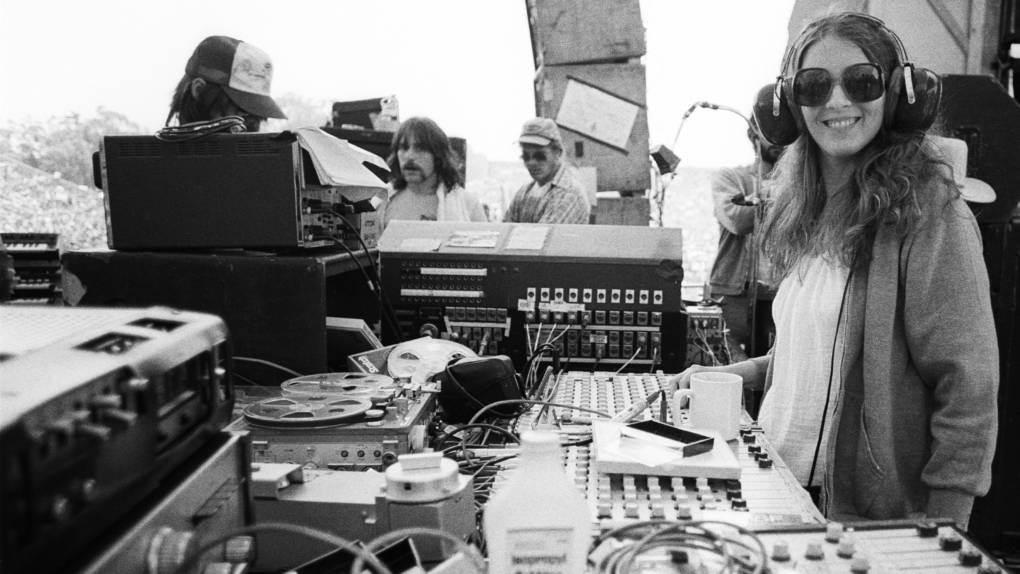
"description": "Betty Cantor-Jackson worked as the sound engineer for The Grateful Dead on official live and studio albums — and perhaps more importantly, recorded hundreds of reels of prized soundboard tap",
"title": "Betty Cantor-Jackson worked as the sound engineer for The Grateful Dead on official live and studio albums — and perhaps more importantly, recorded hundreds of reels of prized soundboard tape.",
"credit": null,
"status": "inherit",
"isLoading": false,
"fetchFailed": false
}
},
"audioPlayerReducer": {
"postId": "stream_live",
"isPaused": true,
"isPlaying": false,
"pfsActive": false,
"pledgeModalIsOpen": true,
"playerDrawerIsOpen": false,
"liveAudioPlayStartedAt": 0,
"liveAudioPlayContext": ""
},
"authorsReducer": {
"byline_arts_13979310": {
"type": "authors",
"id": "byline_arts_13979310",
"meta": {
"override": true
},
"slug": "byline_arts_13979310",
"name": "Janie Har, Associated Press",
"isLoading": false
},
"byline_arts_13933809": {
"type": "authors",
"id": "byline_arts_13933809",
"meta": {
"override": true
},
"slug": "byline_arts_13933809",
"name": "Mark Kennedy, Associated Press",
"isLoading": false
},
"byline_arts_13848489": {
"type": "authors",
"id": "byline_arts_13848489",
"meta": {
"override": true
},
"slug": "byline_arts_13848489",
"name": "Allyson McCabe",
"isLoading": false
},
"byline_arts_13848416": {
"type": "authors",
"id": "byline_arts_13848416",
"meta": {
"override": true
},
"slug": "byline_arts_13848416",
"name": "Anastasia Tsioulcas",
"isLoading": false
},
"byline_arts_13847949": {
"type": "authors",
"id": "byline_arts_13847949",
"meta": {
"override": true
},
"slug": "byline_arts_13847949",
"name": "Joel Rose",
"isLoading": false
},
"byline_arts_13827622": {
"type": "authors",
"id": "byline_arts_13827622",
"meta": {
"override": true
},
"slug": "byline_arts_13827622",
"name": "Alison Fensterstock",
"isLoading": false
},
"mfox": {
"type": "authors",
"id": "22",
"meta": {
"index": "authors_1716337520",
"id": "22",
"found": true
},
"name": "Michael Fox",
"firstName": "Michael",
"lastName": "Fox",
"slug": "mfox",
"email": "foxonfilm@yahoo.com",
"display_author_email": false,
"staff_mastheads": [],
"title": "KQED Contributor",
"bio": "Michael Fox has written about film for dozens of publications since 1987. He is a founding member of the San Francisco Bay Area Film Critics Circle.",
"avatar": "https://secure.gravatar.com/avatar/d9849d6c659c41414795c471d907bb97b396e2a32b88e20e6ff66f65fbdd6dcd?s=600&d=blank&r=g",
"twitter": null,
"bluesky": null,
"facebook": null,
"instagram": null,
"linkedin": null,
"sites": [
{
"site": "arts",
"roles": [
"Contributor",
"contributor"
]
}
],
"headData": {
"title": "Michael Fox | KQED",
"description": "KQED Contributor",
"ogImgSrc": "https://secure.gravatar.com/avatar/d9849d6c659c41414795c471d907bb97b396e2a32b88e20e6ff66f65fbdd6dcd?s=600&d=blank&r=g",
"twImgSrc": "https://secure.gravatar.com/avatar/d9849d6c659c41414795c471d907bb97b396e2a32b88e20e6ff66f65fbdd6dcd?s=600&d=blank&r=g"
},
"isLoading": false,
"link": "/author/mfox"
},
"slefebvre": {
"type": "authors",
"id": "11091",
"meta": {
"index": "authors_1716337520",
"id": "11091",
"found": true
},
"name": "Sam Lefebvre",
"firstName": "Sam",
"lastName": "Lefebvre",
"slug": "slefebvre",
"email": "sdlefebvre@gmail.com",
"display_author_email": false,
"staff_mastheads": [],
"title": "KQED Contributor",
"bio": "Sam Lefebvre is an award-winning reporter at KQED Arts. He has worked as an editor and columnist at the \u003cem>East Bay Express\u003c/em>, \u003cem>SF Weekly \u003c/em>and Impose Magazine, and his journalism and criticism has appeared in \u003cem>The New York Times\u003c/em>, the Guardian and Pitchfork.",
"avatar": "https://secure.gravatar.com/avatar/49d39b42930b77fb13784ddd9fa63fe780666b71bf289368509dba576b64e69b?s=600&d=blank&r=g",
"twitter": "Lefebvre_Sam",
"bluesky": null,
"facebook": null,
"instagram": null,
"linkedin": null,
"sites": [
{
"site": "arts",
"roles": [
"subscriber"
]
},
{
"site": "news",
"roles": [
"author"
]
}
],
"headData": {
"title": "Sam Lefebvre | KQED",
"description": "KQED Contributor",
"ogImgSrc": "https://secure.gravatar.com/avatar/49d39b42930b77fb13784ddd9fa63fe780666b71bf289368509dba576b64e69b?s=600&d=blank&r=g",
"twImgSrc": "https://secure.gravatar.com/avatar/49d39b42930b77fb13784ddd9fa63fe780666b71bf289368509dba576b64e69b?s=600&d=blank&r=g"
},
"isLoading": false,
"link": "/author/slefebvre"
},
"ralexandra": {
"type": "authors",
"id": "11242",
"meta": {
"index": "authors_1716337520",
"id": "11242",
"found": true
},
"name": "Rae Alexandra",
"firstName": "Rae",
"lastName": "Alexandra",
"slug": "ralexandra",
"email": "ralexandra@kqed.org",
"display_author_email": true,
"staff_mastheads": [],
"title": "Reporter/Producer",
"bio": "Rae Alexandra is a Reporter/Producer for KQED Arts & Culture, and the creator/author of the \u003ca href=\"https://www.kqed.org/arts/program/rebel-girls-from-bay-area-history\">Rebel Girls From Bay Area History\u003c/a> and \u003ca href=\"https://www.kqed.org/bizarrebayarea\">Bizarre Bay Area\u003c/a> series. Her debut book, \u003ca href=\"https://citylights.com/politics-current-events-history/unsung-heroines35-women-who-changed/\">Unsung Heroines: 35 Women Who Changed the Bay Area\u003c/a> was published by City Lights in March 2026. In 2023, Rae was awarded an SPJ Excellence in Journalism Award for Arts & Culture. Rae was born and raised in Wales and subsequently — even after two decades in Northern California — still uses phrases that regularly baffle her coworkers.",
"avatar": "https://secure.gravatar.com/avatar/edfee8176c80cc0a382b051190f5341997df378a934a5774dcb0977732dfd401?s=600&d=blank&r=g",
"twitter": null,
"bluesky": null,
"facebook": null,
"instagram": null,
"linkedin": null,
"sites": [
{
"site": "arts",
"roles": [
"subscriber"
]
},
{
"site": "news",
"roles": [
"subscriber"
]
},
{
"site": "pop",
"roles": [
"subscriber"
]
},
{
"site": "bayareabites",
"roles": [
"subscriber"
]
},
{
"site": "science",
"roles": [
"subscriber"
]
}
],
"headData": {
"title": "Rae Alexandra | KQED",
"description": "Reporter/Producer",
"ogImgSrc": "https://secure.gravatar.com/avatar/edfee8176c80cc0a382b051190f5341997df378a934a5774dcb0977732dfd401?s=600&d=blank&r=g",
"twImgSrc": "https://secure.gravatar.com/avatar/edfee8176c80cc0a382b051190f5341997df378a934a5774dcb0977732dfd401?s=600&d=blank&r=g"
},
"isLoading": false,
"link": "/author/ralexandra"
},
"nvoynovskaya": {
"type": "authors",
"id": "11387",
"meta": {
"index": "authors_1716337520",
"id": "11387",
"found": true
},
"name": "Nastia Voynovskaya",
"firstName": "Nastia",
"lastName": "Voynovskaya",
"slug": "nvoynovskaya",
"email": "nvoynovskaya@kqed.org",
"display_author_email": false,
"staff_mastheads": [
"arts"
],
"title": "Editor and reporter",
"bio": "Nastia Voynovskaya is a reporter, editor and host at KQED Arts & Culture. She's been covering the arts in the Bay Area for over a decade, with a focus on music, queer culture, labor issues and grassroots organizing. She has edited KQED story series such as Trans Bay: A History of San Francisco's Gender-Diverse Community, and co-created KQED's Bay Area hip-hop history project, That's My Word. Nastia's work has been recognized by the Society of Professional Journalists and San Francisco Press Club. She regularly appears on podcasts and radio programs, including NPR's All Songs Considered, and hosts live events where music, culture and conversation meet.",
"avatar": "https://secure.gravatar.com/avatar/5025ee460e5a85d69ca20ea6c6f2f80d7e17795c828f61ea3aecfcd924e9042e?s=600&d=blank&r=g",
"twitter": null,
"bluesky": null,
"facebook": null,
"instagram": "https://www.instagram.com/nananastia/",
"linkedin": null,
"sites": [
{
"site": "",
"roles": [
"editor"
]
},
{
"site": "arts",
"roles": [
"administrator"
]
},
{
"site": "news",
"roles": [
"editor"
]
},
{
"site": "pop",
"roles": [
"administrator"
]
},
{
"site": "bayareabites",
"roles": [
"editor"
]
},
{
"site": "podcasts",
"roles": [
"editor"
]
},
{
"site": "hiphop",
"roles": [
"editor"
]
}
],
"headData": {
"title": "Nastia Voynovskaya | KQED",
"description": "Editor and reporter",
"ogImgSrc": "https://secure.gravatar.com/avatar/5025ee460e5a85d69ca20ea6c6f2f80d7e17795c828f61ea3aecfcd924e9042e?s=600&d=blank&r=g",
"twImgSrc": "https://secure.gravatar.com/avatar/5025ee460e5a85d69ca20ea6c6f2f80d7e17795c828f61ea3aecfcd924e9042e?s=600&d=blank&r=g"
},
"isLoading": false,
"link": "/author/nvoynovskaya"
}
},
"pagesReducer": {
"arts_tag_summer-of-love": {
"type": "terms",
"id": "arts_1761",
"meta": {
"index": "terms_1716263798",
"site": "arts",
"id": "1761",
"score": 9.306035
},
"featImg": null,
"name": "summer of love",
"description": null,
"taxonomy": "tag",
"headData": {
"twImgId": null,
"twTitle": null,
"ogTitle": null,
"ogImgId": null,
"twDescription": null,
"description": null,
"title": "summer of love Archives | KQED Arts",
"ogDescription": null
},
"ttid": 1773,
"slug": "summer-of-love",
"isLoading": false,
"title": "summer of love",
"pageMeta": {
"site": "arts",
"WpPageTemplate": "page-topic-editorial",
"currentPage": 1
},
"blocks": [
{
"blockName": "kqed/post-list",
"attrs": {
"layout": "cardArticle2",
"query": "posts/arts?tag=summer-of-love",
"seeMore": false,
"paginated": true,
"page": 1
}
},
{
"blockName": "kqed/ad"
}
]
}
},
"pfsSessionReducer": {},
"postsReducer": {
"stream_live": {
"type": "live",
"id": "stream_live",
"audioUrl": "https://streams.kqed.org/kqedradio",
"title": "Live Stream",
"excerpt": "Live Stream information currently unavailable.",
"link": "/radio",
"featImg": "",
"label": {
"name": "KQED Live",
"link": "/"
}
},
"stream_kqedNewscast": {
"type": "posts",
"id": "stream_kqedNewscast",
"audioUrl": "https://www.kqed.org/.stream/anon/radio/RDnews/newscast.mp3?_=1",
"title": "KQED Newscast",
"featImg": "",
"label": {
"name": "88.5 FM",
"link": "/"
}
},
"arts_13979310": {
"type": "posts",
"id": "arts_13979310",
"meta": {
"index": "posts_1716263798",
"site": "arts",
"id": "13979310",
"score": null,
"sort": [
1753905096000
]
},
"guestAuthors": [],
"slug": "dead-and-company-san-francisco-concerts-golden-gate-park-summer-of-love-grateful-deads-60th",
"title": "Fans Pour Into SF for Grateful Dead’s 60th at Golden Gate Park",
"publishDate": 1753905096,
"format": "standard",
"headTitle": "Fans Pour Into SF for Grateful Dead’s 60th at Golden Gate Park | KQED",
"labelTerm": {},
"content": "\u003cp>Fans of the \u003ca href=\"https://www.kqed.org/arts/tag/grateful-dead\">Grateful Dead\u003c/a> are pouring into \u003ca href=\"https://www.kqed.org/arts/tag/san-francisco\">San Francisco\u003c/a> for three days of concerts and festivities marking the 60th anniversary of the scruffy jam band that came to embody a city where people once wore flowers in their hair and made love, not war.\u003c/p>\n\u003cp>Dead & Company, featuring original Grateful Dead members \u003ca href=\"https://www.kqed.org/arts/11682940/bob-weir-criticizes-politicians-on-stage-at-bonnaroo\">Bob Weir\u003c/a> and \u003ca href=\"https://www.kqed.org/forum/201206251000/mickey-hart\">Mickey Hart\u003c/a>, will play \u003ca href=\"https://www.kqed.org/news/tag/golden-gate-park\">Golden Gate Park\u003c/a>’s Polo Field starting Friday with an estimated 60,000 attendees each day. The last time the band played that part of the park was in 1991 — a free show following the death of concert promoter and longtime Deadhead \u003ca href=\"https://www.kqed.org/arts/11409279/bill-graham-the-personality-no-museum-could-possibly-contain\">Bill Graham\u003c/a>.\u003c/p>\n\u003cp>Certainly, times have changed.\u003c/p>\n\u003cp>A general admissions ticket for all three days is $635 — a shock for many longtime fans who remember when a joint cost more than a Dead concert ticket.\u003c/p>\n\u003cp>But Deadhead David Aberdeen is thrilled anyway.\u003c/p>\n\u003cp>[ad fullwidth]\u003c/p>\n\u003cp>“This is the spiritual home of the Grateful Dead,” said Aberdeen, who works at \u003ca href=\"https://www.kqed.org/news/25014/amoeba-music-named-best-record-store-in-u-s-by-rolling-stone\">Amoeba Music\u003c/a> in the Haight. “It seems very right to me that they celebrate it in this way.”\u003c/p>\n\u003cp>Formed in 1965, the Grateful Dead is synonymous with San Francisco and its counterculture. Members lived in a dirt-cheap Victorian in the Haight and later became a significant part of 1967’s \u003ca href=\"https://www.kqed.org/arts/tag/summer-of-love\">Summer of Love\u003c/a>.\u003c/p>\n\u003cp>[aside postid='arts_13925408']That summer eventually soured into bad acid trips and police raids, and prompted the band’s move to \u003ca href=\"https://www.kqed.org/arts/tag/marin-county\">Marin County\u003c/a> on the other end of the \u003ca href=\"https://www.kqed.org/arts/13913489\">Golden Gate Bridge\u003c/a>. But new Deadheads kept cropping up — even after iconic guitarist and singer \u003ca href=\"https://www.kqed.org/arts/13342850/jerry-garcias-guitar-heads-to-auction-could-fetch-1m\">Jerry Garcia\u003c/a>’s 1995 death — aided by cover bands and offshoots like Dead & Company.\u003c/p>\n\u003cp>“There are 18-year-olds who were obviously not even a twinkle in somebody’s eyes when Jerry died, and these 18-year-olds get the values of Deadheads,” said former Grateful Dead publicist and author Dennis McNally.\u003c/p>\n\u003cfigure id=\"attachment_13925413\" class=\"wp-caption aligncenter\" style=\"max-width: 1920px\">\u003cimg loading=\"lazy\" decoding=\"async\" class=\"size-full wp-image-13925413\" src=\"https://cdn.kqed.org/wp-content/uploads/sites/2/2023/02/Grateful-Dead-on-Haight-by-Herb-Greene_1920.jpg\" alt=\"Five young men with long hair gather around and pose next to a street sign at an intersection that reads Haight Ashbury.\" width=\"1920\" height=\"1949\" srcset=\"https://cdn.kqed.org/wp-content/uploads/sites/2/2023/02/Grateful-Dead-on-Haight-by-Herb-Greene_1920.jpg 1920w, https://cdn.kqed.org/wp-content/uploads/sites/2/2023/02/Grateful-Dead-on-Haight-by-Herb-Greene_1920-800x812.jpg 800w, https://cdn.kqed.org/wp-content/uploads/sites/2/2023/02/Grateful-Dead-on-Haight-by-Herb-Greene_1920-1020x1035.jpg 1020w, https://cdn.kqed.org/wp-content/uploads/sites/2/2023/02/Grateful-Dead-on-Haight-by-Herb-Greene_1920-160x162.jpg 160w, https://cdn.kqed.org/wp-content/uploads/sites/2/2023/02/Grateful-Dead-on-Haight-by-Herb-Greene_1920-768x780.jpg 768w, https://cdn.kqed.org/wp-content/uploads/sites/2/2023/02/Grateful-Dead-on-Haight-by-Herb-Greene_1920-1513x1536.jpg 1513w\" sizes=\"auto, (max-width: 1920px) 100vw, 1920px\">\u003cfigcaption class=\"wp-caption-text\">The Grateful Dead on the corner of Haight and Ashbury. \u003ccite>(Herb Greene/Courtesy of the Haight Street Art Center)\u003c/cite>\u003c/figcaption>\u003c/figure>\n\u003ch2>Fitting in, feeling at home\u003c/h2>\n\u003cp>Deadheads can reel off why and how, and the moment they fell in love with the music. Fans love that no two shows are the same; the band plays different songs each time. They also embrace the community that comes with a Dead show.\u003c/p>\n\u003cp>Sunshine Powers didn’t have friends until age 13, when she stepped off a city bus and into the Haight-Ashbury neighborhood.\u003c/p>\n\u003cp>[aside postid='arts_13853019']“I, all of a sudden, felt like I fit in. Or like I didn’t have to fit in,” says Powers, now 45 and the owner of tie-dye emporium \u003ca href=\"https://loveonhaightsf.com/\">Love on Haight\u003c/a>. “I don’t know which one it was, but I know it was like, OK.”\u003c/p>\n\u003cp>Similarly, her friend Taylor Swope, 47, survived a tough freshman year at a new school with the help of a Grateful Dead mixtape. The owner of the Little Hippie gift shop is driving from Brooklyn, New York, to sell merchandise, reconnect with friends and see the shows.\u003c/p>\n\u003cp>“The sense of, ‘I found my people, I didn’t fit in anywhere else and then I found this, and I felt at home.’ So that’s a big part of it,” she said of the allure.\u003c/p>\n\u003ch2>Magical live shows\u003c/h2>\n\u003cp>Sometimes, becoming a Deadhead is a process.\u003c/p>\n\u003cp>Thor Cromer, 60, had attended several Dead shows, but was ambivalent about the hippies. That changed on March 15, 1990, in Landover, Maryland.\u003c/p>\n\u003cp>“That show, whatever it was, whatever magic hit,” he said, “it was injected right into my brain.”\u003c/p>\n\u003cp>Cromer, who worked for the U.S. Senate then, eventually took time off to follow the band on tour and saw an estimated 400 shows from spring 1990 until \u003ca href=\"https://www.kqed.org/news/10630061/20-years-ago-today-captain-trips-died-and-the-dot-com-boom-took-off\">Garcia’s death\u003c/a>.\u003c/p>\n\u003cp>Cromer now works in technology and is flying in from Boston to join scores of fellow “rail riders” who dance in the rows closest to the stage.\u003c/p>\n\u003cp>[aside postid='arts_13967309']Aberdeen, 62, saw his first Dead show in 1984. As the only person in his college group with a driver’s license, he was tapped to drive a crowded VW Bug from Antioch College in Yellow Springs, Ohio, to Syracuse, New York.\u003c/p>\n\u003cp>“I thought it was pretty weird,” he said. “But I liked it.”\u003c/p>\n\u003cp>He fell in love the following summer, when the Dead played a venue near his college.\u003c/p>\n\u003cp>Aberdeen remembers rain pouring down in the middle of the show and a giant rainbow appearing over the band when they returned for their second act. They played “Comes a Time,” a rarely played Garcia ballad.\u003c/p>\n\u003cp>“There is a lot of excitement, and there will be a lot of people here,” Aberdeen said. “Who knows when we’ll have an opportunity to get together like this again?”\u003c/p>\n\u003cp>Fans were able to see Dead & Company in Las Vegas earlier this year, but no new dates have been announced. Guitarist Bob Weir is 77, and drummers Mickey Hart and Bill Kreutzmann are 81 and 79, respectively. Besides Garcia, founding members Ron “Pigpen” McKernan on keyboards died in 1973 and bassist \u003ca href=\"https://www.kqed.org/arts/13967309/the-grateful-dead-bassist-phil-lesh-dies-at-84\">Phil Lesh died\u003c/a> last year at age 84.\u003c/p>\n\u003cfigure id=\"attachment_13967310\" class=\"wp-caption aligncenter\" style=\"max-width: 1385px\">\u003cimg loading=\"lazy\" decoding=\"async\" class=\"size-full wp-image-13967310\" src=\"https://cdn.kqed.org/wp-content/uploads/sites/2/2024/10/gettyimages-52691498-scaled-e1753903266478.jpeg\" alt=\"An older white man with grey hair wearing a brown suede jacket holding up a book with the Grateful Dead logo on it.\" width=\"1385\" height=\"1920\">\u003cfigcaption class=\"wp-caption-text\">Phil Lesh of the Grateful Dead holds a copy of his book, ‘Searching for the Sound: My Life with the Grateful Dead’ at the Los Angeles Times Festival of Books on April 24, 2005. \u003ccite>(Michael Buckner/Getty Images)\u003c/cite>\u003c/figcaption>\u003c/figure>\n\u003ch2>Multiple events planned for Dead’s 60th\u003c/h2>\n\u003cp>Mayor \u003ca href=\"https://www.kqed.org/news/tag/daniel-lurie\">Daniel Lurie\u003c/a>, who is not a Deadhead but counts “Sugar Magnolia” as his favorite Dead song, is overjoyed at the economic boost as San Francisco recovers from pandemic-related hits to its tech and tourism sectors.\u003c/p>\n\u003cp>“They are the reason why so many people know and love San Francisco,” he said.\u003c/p>\n\u003cp>[aside postid='arts_13284583']The weekend features parties, shows and celebrations throughout the city. Grahame Lesh & Friends will perform three nights starting Thursday. Lesh is the son of Phil Lesh.\u003c/p>\n\u003cp>\u003c/p>\n\u003cp>On Friday, which would have been Garcia’s 83rd birthday, officials will rename a street after the San Francisco native. On Saturday, visitors can celebrate the city’s annual Jerry Day at the Jerry Garcia Amphitheater located in a park near Garcia’s childhood home.\u003c/p>\n\n",
"blocks": [],
"excerpt": "Deadheads are pouring into San Francisco to catch three days of Dead & Company festivities at Polo Field.",
"status": "publish",
"parent": 0,
"modified": 1753905585,
"stats": {
"hasAudio": false,
"hasVideo": false,
"hasChartOrMap": false,
"iframeSrcs": [],
"hasGoogleForm": false,
"hasGallery": false,
"hasHearkenModule": false,
"hasPolis": false,
"paragraphCount": 31,
"wordCount": 1075
},
"headData": {
"title": "Deadheads are Gearing Up for Grateful Dead's 60th in SF | KQED",
"description": "Deadheads are pouring into San Francisco to catch three days of Dead & Company festivities at Polo Field.",
"ogTitle": "Fans Pour Into SF for Grateful Dead’s 60th at Golden Gate Park",
"ogDescription": "",
"ogImgId": "",
"twTitle": "Fans Pour Into SF for Grateful Dead’s 60th at Golden Gate Park",
"twDescription": "",
"twImgId": "",
"socialTitle": "Deadheads are Gearing Up for Grateful Dead's 60th in SF %%page%% %%sep%% KQED",
"schema": {
"@context": "https://schema.org",
"@type": "Article",
"headline": "Fans Pour Into SF for Grateful Dead’s 60th at Golden Gate Park",
"datePublished": "2025-07-30T12:51:36-07:00",
"dateModified": "2025-07-30T12:59:45-07:00",
"image": "https://cdn.kqed.org/wp-content/uploads/2020/02/KQED-OG-Image@1x.png"
}
},
"primaryCategory": {
"termId": 69,
"slug": "music",
"name": "Music"
},
"source": "The Do List",
"sourceUrl": "https://www.kqed.org/thedolist",
"sticky": false,
"nprByline": "Janie Har, Associated Press",
"nprStoryId": "kqed-13979310",
"templateType": "standard",
"featuredImageType": "standard",
"excludeFromSiteSearch": "Include",
"showOnAuthorArchivePages": "No",
"articleAge": "0",
"path": "/arts/13979310/dead-and-company-san-francisco-concerts-golden-gate-park-summer-of-love-grateful-deads-60th",
"audioTrackLength": null,
"parsedContent": [
{
"type": "contentString",
"content": "\u003cdiv class=\"post-body\">\u003cp>\u003cp>Fans of the \u003ca href=\"https://www.kqed.org/arts/tag/grateful-dead\">Grateful Dead\u003c/a> are pouring into \u003ca href=\"https://www.kqed.org/arts/tag/san-francisco\">San Francisco\u003c/a> for three days of concerts and festivities marking the 60th anniversary of the scruffy jam band that came to embody a city where people once wore flowers in their hair and made love, not war.\u003c/p>\n\u003cp>Dead & Company, featuring original Grateful Dead members \u003ca href=\"https://www.kqed.org/arts/11682940/bob-weir-criticizes-politicians-on-stage-at-bonnaroo\">Bob Weir\u003c/a> and \u003ca href=\"https://www.kqed.org/forum/201206251000/mickey-hart\">Mickey Hart\u003c/a>, will play \u003ca href=\"https://www.kqed.org/news/tag/golden-gate-park\">Golden Gate Park\u003c/a>’s Polo Field starting Friday with an estimated 60,000 attendees each day. The last time the band played that part of the park was in 1991 — a free show following the death of concert promoter and longtime Deadhead \u003ca href=\"https://www.kqed.org/arts/11409279/bill-graham-the-personality-no-museum-could-possibly-contain\">Bill Graham\u003c/a>.\u003c/p>\n\u003cp>Certainly, times have changed.\u003c/p>\n\u003cp>A general admissions ticket for all three days is $635 — a shock for many longtime fans who remember when a joint cost more than a Dead concert ticket.\u003c/p>\n\u003cp>But Deadhead David Aberdeen is thrilled anyway.\u003c/p>\n\u003cp>\u003c/p>\u003c/div>",
"attributes": {
"named": {},
"numeric": []
}
},
{
"type": "component",
"content": "",
"name": "ad",
"attributes": {
"named": {
"label": "fullwidth"
},
"numeric": [
"fullwidth"
]
}
},
{
"type": "contentString",
"content": "\u003cdiv class=\"post-body\">\u003cp>\u003c/p>\n\u003cp>“This is the spiritual home of the Grateful Dead,” said Aberdeen, who works at \u003ca href=\"https://www.kqed.org/news/25014/amoeba-music-named-best-record-store-in-u-s-by-rolling-stone\">Amoeba Music\u003c/a> in the Haight. “It seems very right to me that they celebrate it in this way.”\u003c/p>\n\u003cp>Formed in 1965, the Grateful Dead is synonymous with San Francisco and its counterculture. Members lived in a dirt-cheap Victorian in the Haight and later became a significant part of 1967’s \u003ca href=\"https://www.kqed.org/arts/tag/summer-of-love\">Summer of Love\u003c/a>.\u003c/p>\n\u003cp>\u003c/p>\u003c/div>",
"attributes": {
"named": {},
"numeric": []
}
},
{
"type": "component",
"content": "",
"name": "aside",
"attributes": {
"named": {
"postid": "arts_13925408",
"label": ""
},
"numeric": []
}
},
{
"type": "contentString",
"content": "\u003cdiv class=\"post-body\">\u003cp>That summer eventually soured into bad acid trips and police raids, and prompted the band’s move to \u003ca href=\"https://www.kqed.org/arts/tag/marin-county\">Marin County\u003c/a> on the other end of the \u003ca href=\"https://www.kqed.org/arts/13913489\">Golden Gate Bridge\u003c/a>. But new Deadheads kept cropping up — even after iconic guitarist and singer \u003ca href=\"https://www.kqed.org/arts/13342850/jerry-garcias-guitar-heads-to-auction-could-fetch-1m\">Jerry Garcia\u003c/a>’s 1995 death — aided by cover bands and offshoots like Dead & Company.\u003c/p>\n\u003cp>“There are 18-year-olds who were obviously not even a twinkle in somebody’s eyes when Jerry died, and these 18-year-olds get the values of Deadheads,” said former Grateful Dead publicist and author Dennis McNally.\u003c/p>\n\u003cfigure id=\"attachment_13925413\" class=\"wp-caption aligncenter\" style=\"max-width: 1920px\">\u003cimg loading=\"lazy\" decoding=\"async\" class=\"size-full wp-image-13925413\" src=\"https://cdn.kqed.org/wp-content/uploads/sites/2/2023/02/Grateful-Dead-on-Haight-by-Herb-Greene_1920.jpg\" alt=\"Five young men with long hair gather around and pose next to a street sign at an intersection that reads Haight Ashbury.\" width=\"1920\" height=\"1949\" srcset=\"https://cdn.kqed.org/wp-content/uploads/sites/2/2023/02/Grateful-Dead-on-Haight-by-Herb-Greene_1920.jpg 1920w, https://cdn.kqed.org/wp-content/uploads/sites/2/2023/02/Grateful-Dead-on-Haight-by-Herb-Greene_1920-800x812.jpg 800w, https://cdn.kqed.org/wp-content/uploads/sites/2/2023/02/Grateful-Dead-on-Haight-by-Herb-Greene_1920-1020x1035.jpg 1020w, https://cdn.kqed.org/wp-content/uploads/sites/2/2023/02/Grateful-Dead-on-Haight-by-Herb-Greene_1920-160x162.jpg 160w, https://cdn.kqed.org/wp-content/uploads/sites/2/2023/02/Grateful-Dead-on-Haight-by-Herb-Greene_1920-768x780.jpg 768w, https://cdn.kqed.org/wp-content/uploads/sites/2/2023/02/Grateful-Dead-on-Haight-by-Herb-Greene_1920-1513x1536.jpg 1513w\" sizes=\"auto, (max-width: 1920px) 100vw, 1920px\">\u003cfigcaption class=\"wp-caption-text\">The Grateful Dead on the corner of Haight and Ashbury. \u003ccite>(Herb Greene/Courtesy of the Haight Street Art Center)\u003c/cite>\u003c/figcaption>\u003c/figure>\n\u003ch2>Fitting in, feeling at home\u003c/h2>\n\u003cp>Deadheads can reel off why and how, and the moment they fell in love with the music. Fans love that no two shows are the same; the band plays different songs each time. They also embrace the community that comes with a Dead show.\u003c/p>\n\u003cp>Sunshine Powers didn’t have friends until age 13, when she stepped off a city bus and into the Haight-Ashbury neighborhood.\u003c/p>\n\u003cp>\u003c/p>\u003c/div>",
"attributes": {
"named": {},
"numeric": []
}
},
{
"type": "component",
"content": "",
"name": "aside",
"attributes": {
"named": {
"postid": "arts_13853019",
"label": ""
},
"numeric": []
}
},
{
"type": "contentString",
"content": "\u003cdiv class=\"post-body\">\u003cp>“I, all of a sudden, felt like I fit in. Or like I didn’t have to fit in,” says Powers, now 45 and the owner of tie-dye emporium \u003ca href=\"https://loveonhaightsf.com/\">Love on Haight\u003c/a>. “I don’t know which one it was, but I know it was like, OK.”\u003c/p>\n\u003cp>Similarly, her friend Taylor Swope, 47, survived a tough freshman year at a new school with the help of a Grateful Dead mixtape. The owner of the Little Hippie gift shop is driving from Brooklyn, New York, to sell merchandise, reconnect with friends and see the shows.\u003c/p>\n\u003cp>“The sense of, ‘I found my people, I didn’t fit in anywhere else and then I found this, and I felt at home.’ So that’s a big part of it,” she said of the allure.\u003c/p>\n\u003ch2>Magical live shows\u003c/h2>\n\u003cp>Sometimes, becoming a Deadhead is a process.\u003c/p>\n\u003cp>Thor Cromer, 60, had attended several Dead shows, but was ambivalent about the hippies. That changed on March 15, 1990, in Landover, Maryland.\u003c/p>\n\u003cp>“That show, whatever it was, whatever magic hit,” he said, “it was injected right into my brain.”\u003c/p>\n\u003cp>Cromer, who worked for the U.S. Senate then, eventually took time off to follow the band on tour and saw an estimated 400 shows from spring 1990 until \u003ca href=\"https://www.kqed.org/news/10630061/20-years-ago-today-captain-trips-died-and-the-dot-com-boom-took-off\">Garcia’s death\u003c/a>.\u003c/p>\n\u003cp>Cromer now works in technology and is flying in from Boston to join scores of fellow “rail riders” who dance in the rows closest to the stage.\u003c/p>\n\u003cp>\u003c/p>\u003c/div>",
"attributes": {
"named": {},
"numeric": []
}
},
{
"type": "component",
"content": "",
"name": "aside",
"attributes": {
"named": {
"postid": "arts_13967309",
"label": ""
},
"numeric": []
}
},
{
"type": "contentString",
"content": "\u003cdiv class=\"post-body\">\u003cp>Aberdeen, 62, saw his first Dead show in 1984. As the only person in his college group with a driver’s license, he was tapped to drive a crowded VW Bug from Antioch College in Yellow Springs, Ohio, to Syracuse, New York.\u003c/p>\n\u003cp>“I thought it was pretty weird,” he said. “But I liked it.”\u003c/p>\n\u003cp>He fell in love the following summer, when the Dead played a venue near his college.\u003c/p>\n\u003cp>Aberdeen remembers rain pouring down in the middle of the show and a giant rainbow appearing over the band when they returned for their second act. They played “Comes a Time,” a rarely played Garcia ballad.\u003c/p>\n\u003cp>“There is a lot of excitement, and there will be a lot of people here,” Aberdeen said. “Who knows when we’ll have an opportunity to get together like this again?”\u003c/p>\n\u003cp>Fans were able to see Dead & Company in Las Vegas earlier this year, but no new dates have been announced. Guitarist Bob Weir is 77, and drummers Mickey Hart and Bill Kreutzmann are 81 and 79, respectively. Besides Garcia, founding members Ron “Pigpen” McKernan on keyboards died in 1973 and bassist \u003ca href=\"https://www.kqed.org/arts/13967309/the-grateful-dead-bassist-phil-lesh-dies-at-84\">Phil Lesh died\u003c/a> last year at age 84.\u003c/p>\n\u003cfigure id=\"attachment_13967310\" class=\"wp-caption aligncenter\" style=\"max-width: 1385px\">\u003cimg loading=\"lazy\" decoding=\"async\" class=\"size-full wp-image-13967310\" src=\"https://cdn.kqed.org/wp-content/uploads/sites/2/2024/10/gettyimages-52691498-scaled-e1753903266478.jpeg\" alt=\"An older white man with grey hair wearing a brown suede jacket holding up a book with the Grateful Dead logo on it.\" width=\"1385\" height=\"1920\">\u003cfigcaption class=\"wp-caption-text\">Phil Lesh of the Grateful Dead holds a copy of his book, ‘Searching for the Sound: My Life with the Grateful Dead’ at the Los Angeles Times Festival of Books on April 24, 2005. \u003ccite>(Michael Buckner/Getty Images)\u003c/cite>\u003c/figcaption>\u003c/figure>\n\u003ch2>Multiple events planned for Dead’s 60th\u003c/h2>\n\u003cp>Mayor \u003ca href=\"https://www.kqed.org/news/tag/daniel-lurie\">Daniel Lurie\u003c/a>, who is not a Deadhead but counts “Sugar Magnolia” as his favorite Dead song, is overjoyed at the economic boost as San Francisco recovers from pandemic-related hits to its tech and tourism sectors.\u003c/p>\n\u003cp>“They are the reason why so many people know and love San Francisco,” he said.\u003c/p>\n\u003cp>\u003c/p>\u003c/div>",
"attributes": {
"named": {},
"numeric": []
}
},
{
"type": "component",
"content": "",
"name": "aside",
"attributes": {
"named": {
"postid": "arts_13284583",
"label": ""
},
"numeric": []
}
},
{
"type": "contentString",
"content": "\u003cdiv class=\"post-body\">\u003cp>The weekend features parties, shows and celebrations throughout the city. Grahame Lesh & Friends will perform three nights starting Thursday. Lesh is the son of Phil Lesh.\u003c/p>\n\u003cp>\u003c/p>\n\u003cp>On Friday, which would have been Garcia’s 83rd birthday, officials will rename a street after the San Francisco native. On Saturday, visitors can celebrate the city’s annual Jerry Day at the Jerry Garcia Amphitheater located in a park near Garcia’s childhood home.\u003c/p>\n\n\u003c/div>\u003c/p>",
"attributes": {
"named": {},
"numeric": []
}
}
],
"link": "/arts/13979310/dead-and-company-san-francisco-concerts-golden-gate-park-summer-of-love-grateful-deads-60th",
"authors": [
"byline_arts_13979310"
],
"programs": [
"arts_140"
],
"categories": [
"arts_1",
"arts_7862",
"arts_69",
"arts_75",
"arts_22313"
],
"tags": [
"arts_1845",
"arts_1761",
"arts_585"
],
"featImg": "arts_13979313",
"label": "source_arts_13979310"
},
"arts_13951425": {
"type": "posts",
"id": "arts_13951425",
"meta": {
"index": "posts_1716263798",
"site": "arts",
"id": "13951425",
"score": null,
"sort": [
1707169802000
]
},
"parent": 0,
"labelTerm": {
"site": "arts",
"term": 140
},
"blocks": [],
"publishDate": 1707169802,
"format": "aside",
"title": "A Striking New Exhibit Celebrates 50 Years of ‘Women of Rock Art’",
"headTitle": "A Striking New Exhibit Celebrates 50 Years of ‘Women of Rock Art’ | KQED",
"content": "\u003cfigure id=\"attachment_13951426\" class=\"wp-caption aligncenter\" style=\"max-width: 812px\">\u003cimg loading=\"lazy\" decoding=\"async\" class=\"size-full wp-image-13951426\" src=\"https://cdn.kqed.org/wp-content/uploads/sites/2/2024/02/Screen-Shot-2024-02-02-at-1.17.53-AM.png\" alt=\"A gold, purple and orange design showing a mystic and a crystal ball, one hand raised in wonder.\" width=\"812\" height=\"1186\" srcset=\"https://cdn.kqed.org/wp-content/uploads/sites/2/2024/02/Screen-Shot-2024-02-02-at-1.17.53-AM.png 812w, https://cdn.kqed.org/wp-content/uploads/sites/2/2024/02/Screen-Shot-2024-02-02-at-1.17.53-AM-800x1168.png 800w, https://cdn.kqed.org/wp-content/uploads/sites/2/2024/02/Screen-Shot-2024-02-02-at-1.17.53-AM-160x234.png 160w, https://cdn.kqed.org/wp-content/uploads/sites/2/2024/02/Screen-Shot-2024-02-02-at-1.17.53-AM-768x1122.png 768w\" sizes=\"(max-width: 812px) 100vw, 812px\">\u003cfigcaption class=\"wp-caption-text\">A 1967 Bonnie MacLean design promoting Cream at the Fillmore. \u003ccite>(Courtesy of the Haight Street Art Center)\u003c/cite>\u003c/figcaption>\u003c/figure>\n\u003cp>On Feb. 4, 2020, the world lost Bonnie MacLean — an artist whose work adorned \u003ca href=\"https://www.kqed.org/arts/13414955/without-charles-sullivan-thered-be-no-fillmore-as-we-know-it\">Fillmore\u003c/a> music posters throughout the Summer of Love. MacLean’s images encompassed elements of art nouveau, psychedelia and hippie culture. They used high contrast colors for maximum impact. And they advertised concerts for the likes of Jefferson Airplane, The Who, Chuck Berry, The Doors, Donovan and Pink Floyd.\u003c/p>\n\u003cp>[aside postid='arts_13950359']During her time making the Fillmore — and San Francisco — a more beautiful place, MacClean designed just 32 posters. Nine of those collectors’ items are currently on display as part of \u003ca href=\"https://haightstreetart.org/pages/women-of-rock-art\">\u003cem>Women of Rock Art: 1965-2023\u003c/em>\u003c/a>, a new exhibit at the Haight Street Art Center curated by Ben Marks. The show focuses exclusively on female poster artists, many of whom hail from the Bay Area or lived here at some point. (They may not have local links, but the striking work of \u003ca href=\"https://www.taramcpherson.com/\">Tara McPherson\u003c/a>, \u003ca href=\"https://isadorabullock.art/\">Isadora Bullock\u003c/a>, \u003ca href=\"https://www.housandarts.com/\">Chelsea Housand\u003c/a>, \u003ca href=\"https://www.sadiemaysart.com/about\">Sadie May\u003c/a> and \u003ca href=\"https://mishkawestell.com/posters/\">Mishka Westell\u003c/a> feels perfectly at home in this show.)\u003c/p>\n\u003cp>The exhibit is a jaunt through this particular brand of rock ‘n’ roll artwork through the decades — almost all of which reflects its era and the influences of the women making it. Two hundred pieces by 55 artists are included, starting with hand-drawn hallucinogen-inspired experiments of the 1960s. That style was perfected by Berkeley-born \u003ca href=\"https://www.johnmccarty.org/sam-sirdofsky/\">Samantha Sirdofsky\u003c/a>, but lovingly and more loosely played with by others, including a mysterious artist known only as Marjorie. The screen-printed work of Coralie Russo carries similar silhouettes to her peers but a simpler, bolder color palette — a product of her tool of choice.\u003c/p>\n\u003cfigure id=\"attachment_13951568\" class=\"wp-caption aligncenter\" style=\"max-width: 552px\">\u003cimg loading=\"lazy\" decoding=\"async\" class=\"size-full wp-image-13951568\" src=\"https://cdn.kqed.org/wp-content/uploads/sites/2/2024/02/420398214_1130167161752507_5972252161436470687_n.jpg\" alt=\"Illustration of a woman's face, facing forward, wearing a winged helmet with a peace sign on it.\" width=\"552\" height=\"736\" srcset=\"https://cdn.kqed.org/wp-content/uploads/sites/2/2024/02/420398214_1130167161752507_5972252161436470687_n.jpg 552w, https://cdn.kqed.org/wp-content/uploads/sites/2/2024/02/420398214_1130167161752507_5972252161436470687_n-160x213.jpg 160w\" sizes=\"(max-width: 552px) 100vw, 552px\">\u003cfigcaption class=\"wp-caption-text\">A 1967 anti-draft benefit poster by Coralie Russo. \u003ccite>(Rae Alexandra)\u003c/cite>\u003c/figcaption>\u003c/figure>\n\u003cp>The posters from this period aren’t just for live shows. Some promote anti-draft benefits, children’s events and one Grateful Dead concert that also featured “mime troupe puppets.” Given the limited opportunities available for female artists of the period, it’s no wonder they were advertising some of the more fringe gatherings.\u003c/p>\n\u003cp>[aside postid='arts_13950886']It’s well established that the art of San Francisco’s 1960s music scene was dominated by the so-called “Big Five”: Stanley Mouse, Alton Kelley, Victor Moscoco, Rick Griffin and Wes Wilson. Bonnie MacLean was only granted more opportunities at the Fillmore after Bill Graham and Wes Wilson had a difference of opinion and Wilson quit. MacLean was readily available — she was married to Graham at the time. Even so, before Wilson left she had been relegated to painting noticeboards within the venue.\u003c/p>\n\u003cp>[ad fullwidth]\u003c/p>\n\u003cp>Most of the exhibit is presented without comment and that’s no accident either. Curator Ben Marks explained to KQED that despite his best efforts, little is known today about some of the earliest women featured. Thankfully, the exhibit’s introductory statement acknowledges just what these women were up against at the dawn of the artform.\u003c/p>\n\u003cfigure id=\"attachment_13951587\" class=\"wp-caption aligncenter\" style=\"max-width: 1660px\">\u003cimg loading=\"lazy\" decoding=\"async\" class=\"size-full wp-image-13951587\" src=\"https://cdn.kqed.org/wp-content/uploads/sites/2/2024/02/Screen-Shot-2024-02-05-at-1.27.07-PM.png\" alt=\"A wall of scrappy multicolored flyers advertising concerts.\" width=\"1660\" height=\"1080\" srcset=\"https://cdn.kqed.org/wp-content/uploads/sites/2/2024/02/Screen-Shot-2024-02-05-at-1.27.07-PM.png 1660w, https://cdn.kqed.org/wp-content/uploads/sites/2/2024/02/Screen-Shot-2024-02-05-at-1.27.07-PM-800x520.png 800w, https://cdn.kqed.org/wp-content/uploads/sites/2/2024/02/Screen-Shot-2024-02-05-at-1.27.07-PM-1020x664.png 1020w, https://cdn.kqed.org/wp-content/uploads/sites/2/2024/02/Screen-Shot-2024-02-05-at-1.27.07-PM-160x104.png 160w, https://cdn.kqed.org/wp-content/uploads/sites/2/2024/02/Screen-Shot-2024-02-05-at-1.27.07-PM-768x500.png 768w, https://cdn.kqed.org/wp-content/uploads/sites/2/2024/02/Screen-Shot-2024-02-05-at-1.27.07-PM-1536x999.png 1536w\" sizes=\"(max-width: 1660px) 100vw, 1660px\">\u003cfigcaption class=\"wp-caption-text\">‘Women of Rock Art’ also features a wall of 1980s flyers donated by Seattle punk band, Student Nurse. \u003ccite>(Rae Alexandra)\u003c/cite>\u003c/figcaption>\u003c/figure>\n\u003cp>Post-1960s, \u003cem>Women of Rock Art\u003c/em> rather starkly leaps straight into the 1980s — a jump made all the more jarring by that decade’s shift away from paint to photography. That style is best embodied here by \u003ca href=\"https://www.kqed.org/news/11966749/meet-the-woman-behind-the-fillmores-famous-posters\">the work of Arlene Owseichik\u003c/a>, but feels a touch impersonal by comparison to everything around it. No fault of the artist: The work embodies that decade’s hard lean away from the crowded, swirling aesthetics of the 1970s and into a new, cleaner, MTV-infused modernity.\u003c/p>\n\u003cp>[aside postid='news_11966749']Work on display here from the ’90s demonstrates valiant attempts at combining photos and screen-printing on the same poster. That method was sadly short-lived, and dynamic posters here for Throwing Muses, Big Star and Lush will make you wonder why we gave up on it altogether.\u003c/p>\n\u003cp>The new millennium brought with it a return to hyper-detailed and hand-drawn pieces, like that of Bay Area artists \u003ca href=\"https://www.laurenyurkovich.com/\">Lauren Yurkovich\u003c/a> and \u003ca href=\"https://alexandrafischerstudio.com/\">Alexandra Fischer\u003c/a>. There have been few obvious trend shifts in the last 20 years either — a post-modern reflection of the ways in which music culture has become more egalitarian since the dawn of the internet.\u003c/p>\n\u003cp>It is, however, impossible to ignore the sense of full circularity when looking at some of the newest posters on display. One 2022 Soul Asylum promo by \u003ca href=\"https://www.carolynferris.com/\">Carolyn Ferris\u003c/a> — featuring a woman’s face in side profile with band names unfurling in front of her in waves — appears to be a direct homage to a 1967 Bonnie MacLean piece elsewhere in the exhibit. And Oakland-based artist \u003ca href=\"https://caitlinmattisson.com/\">Caitlin Mattison\u003c/a> combines hyper-detailed modern techniques with aesthetics that clearly hark back to the work of the women that came before her.\u003c/p>\n\u003cfigure id=\"attachment_13951554\" class=\"wp-caption aligncenter\" style=\"max-width: 1995px\">\u003cimg loading=\"lazy\" decoding=\"async\" class=\"size-full wp-image-13951554\" src=\"https://cdn.kqed.org/wp-content/uploads/sites/2/2024/02/20240201_163620-scaled.jpg\" alt=\"Illustration featuring a bohemian looking woman sitting on a horseshoe and surrounded by wilderness.\" width=\"1995\" height=\"2560\" srcset=\"https://cdn.kqed.org/wp-content/uploads/sites/2/2024/02/20240201_163620-scaled.jpg 1995w, https://cdn.kqed.org/wp-content/uploads/sites/2/2024/02/20240201_163620-800x1026.jpg 800w, https://cdn.kqed.org/wp-content/uploads/sites/2/2024/02/20240201_163620-1020x1309.jpg 1020w, https://cdn.kqed.org/wp-content/uploads/sites/2/2024/02/20240201_163620-160x205.jpg 160w, https://cdn.kqed.org/wp-content/uploads/sites/2/2024/02/20240201_163620-768x985.jpg 768w, https://cdn.kqed.org/wp-content/uploads/sites/2/2024/02/20240201_163620-1197x1536.jpg 1197w, https://cdn.kqed.org/wp-content/uploads/sites/2/2024/02/20240201_163620-1596x2048.jpg 1596w, https://cdn.kqed.org/wp-content/uploads/sites/2/2024/02/20240201_163620-1920x2463.jpg 1920w\" sizes=\"(max-width: 1995px) 100vw, 1995px\">\u003cfigcaption class=\"wp-caption-text\">Caitlin Mattison’s poster for last year’s Hardly Strictly Bluegrass festival. \u003ccite>(Rae Alexandra)\u003c/cite>\u003c/figcaption>\u003c/figure>\n\u003cp>All of which would no doubt thrill Bonnie MacLean. In one interview a few years before her death, MacLean noted: “I think handwork needs to be kept alive. It’s something people are inclined to do naturally. It’s something we have a human built-in desire to do. It always has been. It still is.”\u003c/p>\n\u003cp>\u003cimg loading=\"lazy\" decoding=\"async\" class=\"aligncenter size-medium wp-image-12127869\" src=\"https://ww2.kqed.org/arts/wp-content/uploads/sites/2/2016/09/Q.Logo_.Break_-800x78.jpg\" alt=\"\" width=\"800\" height=\"78\" srcset=\"https://cdn.kqed.org/wp-content/uploads/sites/2/2016/09/Q.Logo_.Break_.jpg 800w, https://cdn.kqed.org/wp-content/uploads/sites/2/2016/09/Q.Logo_.Break_-400x39.jpg 400w, https://cdn.kqed.org/wp-content/uploads/sites/2/2016/09/Q.Logo_.Break_-768x75.jpg 768w\" sizes=\"(max-width: 800px) 100vw, 800px\">\u003c/p>\n\u003cp>\u003c/p>\n\u003cp>\u003cem>‘Women of Rock Art: 1965-2023’ is on display now through April 14, 2024. Artist and photographer Arlene Owseichik will appear for a Q&A on Feb. 9 at 6 p.m. An official opening party will take place on Feb. 16 at 6 p.m. Visit the \u003ca href=\"https://haightstreetart.org/\">Haight Street Art Center website\u003c/a> for details.\u003c/em>\u003c/p>\n\n",
"stats": {
"hasVideo": false,
"hasChartOrMap": false,
"hasAudio": false,
"hasPolis": false,
"wordCount": 963,
"hasGoogleForm": false,
"hasGallery": false,
"hasHearkenModule": false,
"iframeSrcs": [],
"paragraphCount": 15
},
"modified": 1709667632,
"excerpt": "The new Haight St. Art Center show displays the work of female poster artists dating back to the Summer of Love.",
"headData": {
"twImgId": "",
"twTitle": "A Striking New Exhibit Celebrates 50 Years of ‘Women of Rock Art’",
"socialTitle": "Review: Rock ‘N’ Roll Poster Art at the Haight St. Art Center %%page%% %%sep%% KQED",
"ogTitle": "A Striking New Exhibit Celebrates 50 Years of ‘Women of Rock Art’",
"ogImgId": "",
"twDescription": "",
"description": "The new Haight St. Art Center show displays the work of female poster artists dating back to the Summer of Love.",
"title": "Review: Rock ‘N’ Roll Poster Art at the Haight St. Art Center | KQED",
"ogDescription": "",
"schema": {
"@context": "https://schema.org",
"@type": "Article",
"headline": "A Striking New Exhibit Celebrates 50 Years of ‘Women of Rock Art’",
"datePublished": "2024-02-05T13:50:02-08:00",
"dateModified": "2024-03-05T11:40:32-08:00",
"image": "https://cdn.kqed.org/wp-content/uploads/2020/02/KQED-OG-Image@1x.png"
}
},
"guestAuthors": [],
"slug": "women-of-rock-art-haight-st-center-bonnie-maclean-tara-mcpherson",
"status": "publish",
"templateType": "standard",
"audioUrl": "https://traffic.omny.fm/d/clips/0af137ef-751e-4b19-a055-aaef00d2d578/ffca7e9f-6831-4[…]f-aaef00f5a073/53db4b91-18ac-4c8c-820f-b1240148344c/audio.mp3",
"excludeFromSiteSearch": "Include",
"featuredImageType": "standard",
"sticky": false,
"articleAge": "0",
"path": "/arts/13951425/women-of-rock-art-haight-st-center-bonnie-maclean-tara-mcpherson",
"audioTrackLength": null,
"parsedContent": [
{
"type": "contentString",
"content": "\u003cdiv class=\"post-body\">\u003cp>\u003cfigure id=\"attachment_13951426\" class=\"wp-caption aligncenter\" style=\"max-width: 812px\">\u003cimg loading=\"lazy\" decoding=\"async\" class=\"size-full wp-image-13951426\" src=\"https://cdn.kqed.org/wp-content/uploads/sites/2/2024/02/Screen-Shot-2024-02-02-at-1.17.53-AM.png\" alt=\"A gold, purple and orange design showing a mystic and a crystal ball, one hand raised in wonder.\" width=\"812\" height=\"1186\" srcset=\"https://cdn.kqed.org/wp-content/uploads/sites/2/2024/02/Screen-Shot-2024-02-02-at-1.17.53-AM.png 812w, https://cdn.kqed.org/wp-content/uploads/sites/2/2024/02/Screen-Shot-2024-02-02-at-1.17.53-AM-800x1168.png 800w, https://cdn.kqed.org/wp-content/uploads/sites/2/2024/02/Screen-Shot-2024-02-02-at-1.17.53-AM-160x234.png 160w, https://cdn.kqed.org/wp-content/uploads/sites/2/2024/02/Screen-Shot-2024-02-02-at-1.17.53-AM-768x1122.png 768w\" sizes=\"(max-width: 812px) 100vw, 812px\">\u003cfigcaption class=\"wp-caption-text\">A 1967 Bonnie MacLean design promoting Cream at the Fillmore. \u003ccite>(Courtesy of the Haight Street Art Center)\u003c/cite>\u003c/figcaption>\u003c/figure>\n\u003cp>On Feb. 4, 2020, the world lost Bonnie MacLean — an artist whose work adorned \u003ca href=\"https://www.kqed.org/arts/13414955/without-charles-sullivan-thered-be-no-fillmore-as-we-know-it\">Fillmore\u003c/a> music posters throughout the Summer of Love. MacLean’s images encompassed elements of art nouveau, psychedelia and hippie culture. They used high contrast colors for maximum impact. And they advertised concerts for the likes of Jefferson Airplane, The Who, Chuck Berry, The Doors, Donovan and Pink Floyd.\u003c/p>\n\u003cp>\u003c/p>\u003c/div>",
"attributes": {
"named": {},
"numeric": []
}
},
{
"type": "component",
"content": "",
"name": "aside",
"attributes": {
"named": {
"postid": "arts_13950359",
"label": ""
},
"numeric": []
}
},
{
"type": "contentString",
"content": "\u003cdiv class=\"post-body\">\u003cp>During her time making the Fillmore — and San Francisco — a more beautiful place, MacClean designed just 32 posters. Nine of those collectors’ items are currently on display as part of \u003ca href=\"https://haightstreetart.org/pages/women-of-rock-art\">\u003cem>Women of Rock Art: 1965-2023\u003c/em>\u003c/a>, a new exhibit at the Haight Street Art Center curated by Ben Marks. The show focuses exclusively on female poster artists, many of whom hail from the Bay Area or lived here at some point. (They may not have local links, but the striking work of \u003ca href=\"https://www.taramcpherson.com/\">Tara McPherson\u003c/a>, \u003ca href=\"https://isadorabullock.art/\">Isadora Bullock\u003c/a>, \u003ca href=\"https://www.housandarts.com/\">Chelsea Housand\u003c/a>, \u003ca href=\"https://www.sadiemaysart.com/about\">Sadie May\u003c/a> and \u003ca href=\"https://mishkawestell.com/posters/\">Mishka Westell\u003c/a> feels perfectly at home in this show.)\u003c/p>\n\u003cp>The exhibit is a jaunt through this particular brand of rock ‘n’ roll artwork through the decades — almost all of which reflects its era and the influences of the women making it. Two hundred pieces by 55 artists are included, starting with hand-drawn hallucinogen-inspired experiments of the 1960s. That style was perfected by Berkeley-born \u003ca href=\"https://www.johnmccarty.org/sam-sirdofsky/\">Samantha Sirdofsky\u003c/a>, but lovingly and more loosely played with by others, including a mysterious artist known only as Marjorie. The screen-printed work of Coralie Russo carries similar silhouettes to her peers but a simpler, bolder color palette — a product of her tool of choice.\u003c/p>\n\u003cfigure id=\"attachment_13951568\" class=\"wp-caption aligncenter\" style=\"max-width: 552px\">\u003cimg loading=\"lazy\" decoding=\"async\" class=\"size-full wp-image-13951568\" src=\"https://cdn.kqed.org/wp-content/uploads/sites/2/2024/02/420398214_1130167161752507_5972252161436470687_n.jpg\" alt=\"Illustration of a woman's face, facing forward, wearing a winged helmet with a peace sign on it.\" width=\"552\" height=\"736\" srcset=\"https://cdn.kqed.org/wp-content/uploads/sites/2/2024/02/420398214_1130167161752507_5972252161436470687_n.jpg 552w, https://cdn.kqed.org/wp-content/uploads/sites/2/2024/02/420398214_1130167161752507_5972252161436470687_n-160x213.jpg 160w\" sizes=\"(max-width: 552px) 100vw, 552px\">\u003cfigcaption class=\"wp-caption-text\">A 1967 anti-draft benefit poster by Coralie Russo. \u003ccite>(Rae Alexandra)\u003c/cite>\u003c/figcaption>\u003c/figure>\n\u003cp>The posters from this period aren’t just for live shows. Some promote anti-draft benefits, children’s events and one Grateful Dead concert that also featured “mime troupe puppets.” Given the limited opportunities available for female artists of the period, it’s no wonder they were advertising some of the more fringe gatherings.\u003c/p>\n\u003cp>\u003c/p>\u003c/div>",
"attributes": {
"named": {},
"numeric": []
}
},
{
"type": "component",
"content": "",
"name": "aside",
"attributes": {
"named": {
"postid": "arts_13950886",
"label": ""
},
"numeric": []
}
},
{
"type": "contentString",
"content": "\u003cdiv class=\"post-body\">\u003cp>It’s well established that the art of San Francisco’s 1960s music scene was dominated by the so-called “Big Five”: Stanley Mouse, Alton Kelley, Victor Moscoco, Rick Griffin and Wes Wilson. Bonnie MacLean was only granted more opportunities at the Fillmore after Bill Graham and Wes Wilson had a difference of opinion and Wilson quit. MacLean was readily available — she was married to Graham at the time. Even so, before Wilson left she had been relegated to painting noticeboards within the venue.\u003c/p>\n\u003cp>\u003c/p>\u003c/div>",
"attributes": {
"named": {},
"numeric": []
}
},
{
"type": "component",
"content": "",
"name": "ad",
"attributes": {
"named": {
"label": "fullwidth"
},
"numeric": [
"fullwidth"
]
}
},
{
"type": "contentString",
"content": "\u003cdiv class=\"post-body\">\u003cp>\u003c/p>\n\u003cp>Most of the exhibit is presented without comment and that’s no accident either. Curator Ben Marks explained to KQED that despite his best efforts, little is known today about some of the earliest women featured. Thankfully, the exhibit’s introductory statement acknowledges just what these women were up against at the dawn of the artform.\u003c/p>\n\u003cfigure id=\"attachment_13951587\" class=\"wp-caption aligncenter\" style=\"max-width: 1660px\">\u003cimg loading=\"lazy\" decoding=\"async\" class=\"size-full wp-image-13951587\" src=\"https://cdn.kqed.org/wp-content/uploads/sites/2/2024/02/Screen-Shot-2024-02-05-at-1.27.07-PM.png\" alt=\"A wall of scrappy multicolored flyers advertising concerts.\" width=\"1660\" height=\"1080\" srcset=\"https://cdn.kqed.org/wp-content/uploads/sites/2/2024/02/Screen-Shot-2024-02-05-at-1.27.07-PM.png 1660w, https://cdn.kqed.org/wp-content/uploads/sites/2/2024/02/Screen-Shot-2024-02-05-at-1.27.07-PM-800x520.png 800w, https://cdn.kqed.org/wp-content/uploads/sites/2/2024/02/Screen-Shot-2024-02-05-at-1.27.07-PM-1020x664.png 1020w, https://cdn.kqed.org/wp-content/uploads/sites/2/2024/02/Screen-Shot-2024-02-05-at-1.27.07-PM-160x104.png 160w, https://cdn.kqed.org/wp-content/uploads/sites/2/2024/02/Screen-Shot-2024-02-05-at-1.27.07-PM-768x500.png 768w, https://cdn.kqed.org/wp-content/uploads/sites/2/2024/02/Screen-Shot-2024-02-05-at-1.27.07-PM-1536x999.png 1536w\" sizes=\"(max-width: 1660px) 100vw, 1660px\">\u003cfigcaption class=\"wp-caption-text\">‘Women of Rock Art’ also features a wall of 1980s flyers donated by Seattle punk band, Student Nurse. \u003ccite>(Rae Alexandra)\u003c/cite>\u003c/figcaption>\u003c/figure>\n\u003cp>Post-1960s, \u003cem>Women of Rock Art\u003c/em> rather starkly leaps straight into the 1980s — a jump made all the more jarring by that decade’s shift away from paint to photography. That style is best embodied here by \u003ca href=\"https://www.kqed.org/news/11966749/meet-the-woman-behind-the-fillmores-famous-posters\">the work of Arlene Owseichik\u003c/a>, but feels a touch impersonal by comparison to everything around it. No fault of the artist: The work embodies that decade’s hard lean away from the crowded, swirling aesthetics of the 1970s and into a new, cleaner, MTV-infused modernity.\u003c/p>\n\u003cp>\u003c/p>\u003c/div>",
"attributes": {
"named": {},
"numeric": []
}
},
{
"type": "component",
"content": "",
"name": "aside",
"attributes": {
"named": {
"postid": "news_11966749",
"label": ""
},
"numeric": []
}
},
{
"type": "contentString",
"content": "\u003cdiv class=\"post-body\">\u003cp>Work on display here from the ’90s demonstrates valiant attempts at combining photos and screen-printing on the same poster. That method was sadly short-lived, and dynamic posters here for Throwing Muses, Big Star and Lush will make you wonder why we gave up on it altogether.\u003c/p>\n\u003cp>The new millennium brought with it a return to hyper-detailed and hand-drawn pieces, like that of Bay Area artists \u003ca href=\"https://www.laurenyurkovich.com/\">Lauren Yurkovich\u003c/a> and \u003ca href=\"https://alexandrafischerstudio.com/\">Alexandra Fischer\u003c/a>. There have been few obvious trend shifts in the last 20 years either — a post-modern reflection of the ways in which music culture has become more egalitarian since the dawn of the internet.\u003c/p>\n\u003cp>It is, however, impossible to ignore the sense of full circularity when looking at some of the newest posters on display. One 2022 Soul Asylum promo by \u003ca href=\"https://www.carolynferris.com/\">Carolyn Ferris\u003c/a> — featuring a woman’s face in side profile with band names unfurling in front of her in waves — appears to be a direct homage to a 1967 Bonnie MacLean piece elsewhere in the exhibit. And Oakland-based artist \u003ca href=\"https://caitlinmattisson.com/\">Caitlin Mattison\u003c/a> combines hyper-detailed modern techniques with aesthetics that clearly hark back to the work of the women that came before her.\u003c/p>\n\u003cfigure id=\"attachment_13951554\" class=\"wp-caption aligncenter\" style=\"max-width: 1995px\">\u003cimg loading=\"lazy\" decoding=\"async\" class=\"size-full wp-image-13951554\" src=\"https://cdn.kqed.org/wp-content/uploads/sites/2/2024/02/20240201_163620-scaled.jpg\" alt=\"Illustration featuring a bohemian looking woman sitting on a horseshoe and surrounded by wilderness.\" width=\"1995\" height=\"2560\" srcset=\"https://cdn.kqed.org/wp-content/uploads/sites/2/2024/02/20240201_163620-scaled.jpg 1995w, https://cdn.kqed.org/wp-content/uploads/sites/2/2024/02/20240201_163620-800x1026.jpg 800w, https://cdn.kqed.org/wp-content/uploads/sites/2/2024/02/20240201_163620-1020x1309.jpg 1020w, https://cdn.kqed.org/wp-content/uploads/sites/2/2024/02/20240201_163620-160x205.jpg 160w, https://cdn.kqed.org/wp-content/uploads/sites/2/2024/02/20240201_163620-768x985.jpg 768w, https://cdn.kqed.org/wp-content/uploads/sites/2/2024/02/20240201_163620-1197x1536.jpg 1197w, https://cdn.kqed.org/wp-content/uploads/sites/2/2024/02/20240201_163620-1596x2048.jpg 1596w, https://cdn.kqed.org/wp-content/uploads/sites/2/2024/02/20240201_163620-1920x2463.jpg 1920w\" sizes=\"(max-width: 1995px) 100vw, 1995px\">\u003cfigcaption class=\"wp-caption-text\">Caitlin Mattison’s poster for last year’s Hardly Strictly Bluegrass festival. \u003ccite>(Rae Alexandra)\u003c/cite>\u003c/figcaption>\u003c/figure>\n\u003cp>All of which would no doubt thrill Bonnie MacLean. In one interview a few years before her death, MacLean noted: “I think handwork needs to be kept alive. It’s something people are inclined to do naturally. It’s something we have a human built-in desire to do. It always has been. It still is.”\u003c/p>\n\u003cp>\u003cimg loading=\"lazy\" decoding=\"async\" class=\"aligncenter size-medium wp-image-12127869\" src=\"https://ww2.kqed.org/arts/wp-content/uploads/sites/2/2016/09/Q.Logo_.Break_-800x78.jpg\" alt=\"\" width=\"800\" height=\"78\" srcset=\"https://cdn.kqed.org/wp-content/uploads/sites/2/2016/09/Q.Logo_.Break_.jpg 800w, https://cdn.kqed.org/wp-content/uploads/sites/2/2016/09/Q.Logo_.Break_-400x39.jpg 400w, https://cdn.kqed.org/wp-content/uploads/sites/2/2016/09/Q.Logo_.Break_-768x75.jpg 768w\" sizes=\"(max-width: 800px) 100vw, 800px\">\u003c/p>\n\u003cp>\u003c/p>\n\u003cp>\u003cem>‘Women of Rock Art: 1965-2023’ is on display now through April 14, 2024. Artist and photographer Arlene Owseichik will appear for a Q&A on Feb. 9 at 6 p.m. An official opening party will take place on Feb. 16 at 6 p.m. Visit the \u003ca href=\"https://haightstreetart.org/\">Haight Street Art Center website\u003c/a> for details.\u003c/em>\u003c/p>\n\n\u003c/div>\u003c/p>",
"attributes": {
"named": {},
"numeric": []
}
}
],
"link": "/arts/13951425/women-of-rock-art-haight-st-center-bonnie-maclean-tara-mcpherson",
"authors": [
"11242"
],
"programs": [
"arts_140"
],
"categories": [
"arts_1",
"arts_69",
"arts_75"
],
"tags": [
"arts_10342",
"arts_10278",
"arts_1806",
"arts_1761",
"arts_585"
],
"featImg": "arts_13951546",
"label": "arts_140"
},
"arts_13933809": {
"type": "posts",
"id": "arts_13933809",
"meta": {
"index": "posts_1716263798",
"site": "arts",
"id": "13933809",
"score": null,
"sort": [
1692900434000
]
},
"parent": 0,
"labelTerm": {
"site": "arts",
"term": 140
},
"blocks": [],
"publishDate": 1692900434,
"format": "standard",
"title": "San Francisco’s 1960s and ’70s Music Scene Takes Center Stage in New Docuseries",
"headTitle": "San Francisco’s 1960s and ’70s Music Scene Takes Center Stage in New Docuseries | KQED",
"content": "\u003cp>Janis Joplin’s first rehearsal with the rock band Big Brother & The Holding Company was apparently a loud affair. So loud it was alarming.\u003c/p>\n\u003cp>Bassist Peter Albin recalls the band raising the roof off one day in the 1960s when their playing was interrupted by a knock at the door. Two San Francisco police officers were investigating reports of a woman screaming.\u003c/p>\n\u003cp>[aside postid='arts_13925408']“Oh, that’s just Janis. It’s OK,” came the reply.\u003c/p>\n\u003cp>That fun nugget — as well as rare footage of the actual rehearsal — enliven \u003cem>San Francisco Sounds: A Place in Time\u003c/em>, a two-part documentary on MGM+ that concludes Sunday. The first part dropped Aug. 20.\u003c/p>\n\u003cp>The late Joplin is joined by an astonishing number of great artists who came to define the city — the Grateful Dead, Jefferson Airplane, Sly and the Family Stone, The Great Society, Steve Miller, Carlos Santana, Moby Grape, and Country Joe & The Fish, all mixing rock, folk and the blues.\u003c/p>\n\u003cp>[ad fullwidth]\u003c/p>\n\u003cp>Viewers get a street-level view of the rise of the San Francisco dream — artistic freedom, community and authenticity — and its fall, thanks to hard drugs, commercialism and increasingly hard edges. The time period is 1965 to 1975, short but sweet.\u003c/p>\n\u003cp>https://www.youtube.com/watch?v=-LTD7C-oFhc\u003c/p>\n\u003cp>“It’s not just the music,” says co-director Anoosh Tertzakian. “Everybody was trying to break the rules of whatever their medium was, and I think it’s in that breaking the rules that they found something new. The music was what was keeping the pulse together.”\u003c/p>\n\u003cp>The docuseries explores how the Grateful Dead got some of their iconic logos, how city music venues Avalon Ballroom and The Fillmore began, how the seminal Jefferson Airplane song “White Rabbit” came about and how the deaths at the Altamont show soured the hippie mood.\u003c/p>\n\u003cp>[aside postid='arts_13039627']Tertzakian and filmmaker Alison Ellwood, who last teamed up to capture the music of the Los Angeles neighborhood Laurel Canyon, turned their attention north and found a place “on the edge of the Earth.”\u003c/p>\n\u003cp>“It was like every misfit from anywhere in this country who rattled loose, ended up in San Francisco,” the series quotes Bob Weir of the Grateful Dead as saying.\u003c/p>\n\u003cp>The main guides are disc jockey Dusty Street, poster artist Victor Moscoso, light show artist Bill Ham and \u003cem>Rolling Stone\u003c/em> magazine journalist Ben Fong-Torres. The musicians are captured in audio interviews that play over archival footage — a technique Ellwood and Tertzakian used in \u003cem>Laurel Canyon: A Place in Time\u003c/em>, in 2020.\u003c/p>\n\u003cp>“It’s obviously a place that so many people have focused on and they really focus on the star quality of the musicians,” says Tertzakian. “And I think that was something that we really wanted to minimize in order to bring it back to the source.”\u003c/p>\n\u003cp>That technique both captures the spark of creativity and bypasses the grave. “We can’t set Grace Slick down and then counter it with Janis Joplin sitting down and doing an interview. So that’s another reason, just to keep everyone young, of the time of the moment,” says Ellwood.\u003c/p>\n\u003cp>An astonishing amount of footage and interviews were used, borrowed from reporters, universities, archive houses and personal collections. Susan Joy Balin, wife of Jefferson Airplane’s Marty Balin, handed over her own footage of the time, as did Jerry Slick, Grace’s ex-husband.\u003c/p>\n\u003cp>“We were saying, ‘Just give us whatever you have and let’s play around with it,’” says Tertzakian. “That was both super fun and also a challenge because the amount of material we had, we had to really pick and choose how to use it and in a relatively short time frame.”\u003c/p>\n\u003cp>[aside postid='arts_13920973']The hippie decline — charted in the second half — is heartbreaking, as record companies start flooding the music scene with money, and heroin starts to displace psychedelics, with disastrous consequences.\u003c/p>\n\u003cp>“Hordes of people invaded without the artistic vision and plan to come there in the first place. They just showed up with no plan and the city couldn’t sustain it,” says Ellwood.\u003c/p>\n\u003cp>But Tertzakian believes the San Francisco dream lives on. “For every one of these people, they lost something, but they kept it with them and they continued as they did their own art or lived their lives,” she says. “I feel like to a certain degree it trickled out.”\u003c/p>\n\u003cp>After Laurel Canyon and San Francisco, the filmmakers have yet to decide on the subject of their third music-related docuseries. Perhaps Greenwich Village or Nashville or the grunge scene.\u003c/p>\n\u003cp>\u003c/p>\n\u003cp>“We’ve been talking about lots of different things, but we’ll see,” says Ellwood.\u003c/p>\n\n",
"stats": {
"hasVideo": true,
"hasChartOrMap": false,
"hasAudio": false,
"hasPolis": false,
"wordCount": 828,
"hasGoogleForm": false,
"hasGallery": false,
"hasHearkenModule": false,
"iframeSrcs": [],
"paragraphCount": 22
},
"modified": 1705005107,
"excerpt": "The two-part MGM+ project includes unseen home videos from those in the middle of the movement.",
"headData": {
"twImgId": "",
"twTitle": "San Francisco’s 1960s and ’70s Music Scene Takes Center Stage in New Docuseries",
"socialTitle": "Behind MGM+’s ‘San Francisco Sounds: A Place in Time’ %%page%% %%sep%% KQED",
"ogTitle": "San Francisco’s 1960s and ’70s Music Scene Takes Center Stage in New Docuseries",
"ogImgId": "",
"twDescription": "",
"description": "The two-part MGM+ project includes unseen home videos from those in the middle of the movement.",
"title": "Behind MGM+’s ‘San Francisco Sounds: A Place in Time’ | KQED",
"ogDescription": "",
"schema": {
"@context": "https://schema.org",
"@type": "Article",
"headline": "San Francisco’s 1960s and ’70s Music Scene Takes Center Stage in New Docuseries",
"datePublished": "2023-08-24T11:07:14-07:00",
"dateModified": "2024-01-11T12:31:47-08:00",
"image": "https://cdn.kqed.org/wp-content/uploads/2020/02/KQED-OG-Image@1x.png"
}
},
"guestAuthors": [],
"slug": "san-franciscos-1960s-and-70s-music-scene-takes-center-stage-in-new-docuseries",
"status": "publish",
"templateType": "standard",
"nprByline": "Mark Kennedy, Associated Press",
"excludeFromSiteSearch": "Include",
"featuredImageType": "standard",
"sticky": false,
"showOnAuthorArchivePages": "No",
"articleAge": "0",
"path": "/arts/13933809/san-franciscos-1960s-and-70s-music-scene-takes-center-stage-in-new-docuseries",
"audioTrackLength": null,
"parsedContent": [
{
"type": "contentString",
"content": "\u003cdiv class=\"post-body\">\u003cp>\u003cp>Janis Joplin’s first rehearsal with the rock band Big Brother & The Holding Company was apparently a loud affair. So loud it was alarming.\u003c/p>\n\u003cp>Bassist Peter Albin recalls the band raising the roof off one day in the 1960s when their playing was interrupted by a knock at the door. Two San Francisco police officers were investigating reports of a woman screaming.\u003c/p>\n\u003cp>\u003c/p>\u003c/div>",
"attributes": {
"named": {},
"numeric": []
}
},
{
"type": "component",
"content": "",
"name": "aside",
"attributes": {
"named": {
"postid": "arts_13925408",
"label": ""
},
"numeric": []
}
},
{
"type": "contentString",
"content": "\u003cdiv class=\"post-body\">\u003cp>“Oh, that’s just Janis. It’s OK,” came the reply.\u003c/p>\n\u003cp>That fun nugget — as well as rare footage of the actual rehearsal — enliven \u003cem>San Francisco Sounds: A Place in Time\u003c/em>, a two-part documentary on MGM+ that concludes Sunday. The first part dropped Aug. 20.\u003c/p>\n\u003cp>The late Joplin is joined by an astonishing number of great artists who came to define the city — the Grateful Dead, Jefferson Airplane, Sly and the Family Stone, The Great Society, Steve Miller, Carlos Santana, Moby Grape, and Country Joe & The Fish, all mixing rock, folk and the blues.\u003c/p>\n\u003cp>\u003c/p>\u003c/div>",
"attributes": {
"named": {},
"numeric": []
}
},
{
"type": "component",
"content": "",
"name": "ad",
"attributes": {
"named": {
"label": "fullwidth"
},
"numeric": [
"fullwidth"
]
}
},
{
"type": "contentString",
"content": "\u003cdiv class=\"post-body\">\u003cp>\u003c/p>\n\u003cp>Viewers get a street-level view of the rise of the San Francisco dream — artistic freedom, community and authenticity — and its fall, thanks to hard drugs, commercialism and increasingly hard edges. The time period is 1965 to 1975, short but sweet.\u003c/p>\u003c/p>\u003cp>\u003cspan class='utils-parseShortcode-shortcodes-__youtubeShortcode__embedYoutube'>\n \u003cspan class='utils-parseShortcode-shortcodes-__youtubeShortcode__embedYoutubeInside'>\n \u003ciframe\n loading='lazy'\n class='utils-parseShortcode-shortcodes-__youtubeShortcode__youtubePlayer'\n type='text/html'\n src='//www.youtube.com/embed/-LTD7C-oFhc'\n title='//www.youtube.com/embed/-LTD7C-oFhc'\n allowfullscreen='true'\n style='border:0;'>\u003c/iframe>\n \u003c/span>\n \u003c/span>\u003c/p>\u003cp>\u003cp>“It’s not just the music,” says co-director Anoosh Tertzakian. “Everybody was trying to break the rules of whatever their medium was, and I think it’s in that breaking the rules that they found something new. The music was what was keeping the pulse together.”\u003c/p>\n\u003cp>The docuseries explores how the Grateful Dead got some of their iconic logos, how city music venues Avalon Ballroom and The Fillmore began, how the seminal Jefferson Airplane song “White Rabbit” came about and how the deaths at the Altamont show soured the hippie mood.\u003c/p>\n\u003cp>\u003c/p>\u003c/div>",
"attributes": {
"named": {},
"numeric": []
}
},
{
"type": "component",
"content": "",
"name": "aside",
"attributes": {
"named": {
"postid": "arts_13039627",
"label": ""
},
"numeric": []
}
},
{
"type": "contentString",
"content": "\u003cdiv class=\"post-body\">\u003cp>Tertzakian and filmmaker Alison Ellwood, who last teamed up to capture the music of the Los Angeles neighborhood Laurel Canyon, turned their attention north and found a place “on the edge of the Earth.”\u003c/p>\n\u003cp>“It was like every misfit from anywhere in this country who rattled loose, ended up in San Francisco,” the series quotes Bob Weir of the Grateful Dead as saying.\u003c/p>\n\u003cp>The main guides are disc jockey Dusty Street, poster artist Victor Moscoso, light show artist Bill Ham and \u003cem>Rolling Stone\u003c/em> magazine journalist Ben Fong-Torres. The musicians are captured in audio interviews that play over archival footage — a technique Ellwood and Tertzakian used in \u003cem>Laurel Canyon: A Place in Time\u003c/em>, in 2020.\u003c/p>\n\u003cp>“It’s obviously a place that so many people have focused on and they really focus on the star quality of the musicians,” says Tertzakian. “And I think that was something that we really wanted to minimize in order to bring it back to the source.”\u003c/p>\n\u003cp>That technique both captures the spark of creativity and bypasses the grave. “We can’t set Grace Slick down and then counter it with Janis Joplin sitting down and doing an interview. So that’s another reason, just to keep everyone young, of the time of the moment,” says Ellwood.\u003c/p>\n\u003cp>An astonishing amount of footage and interviews were used, borrowed from reporters, universities, archive houses and personal collections. Susan Joy Balin, wife of Jefferson Airplane’s Marty Balin, handed over her own footage of the time, as did Jerry Slick, Grace’s ex-husband.\u003c/p>\n\u003cp>“We were saying, ‘Just give us whatever you have and let’s play around with it,’” says Tertzakian. “That was both super fun and also a challenge because the amount of material we had, we had to really pick and choose how to use it and in a relatively short time frame.”\u003c/p>\n\u003cp>\u003c/p>\u003c/div>",
"attributes": {
"named": {},
"numeric": []
}
},
{
"type": "component",
"content": "",
"name": "aside",
"attributes": {
"named": {
"postid": "arts_13920973",
"label": ""
},
"numeric": []
}
},
{
"type": "contentString",
"content": "\u003cdiv class=\"post-body\">\u003cp>The hippie decline — charted in the second half — is heartbreaking, as record companies start flooding the music scene with money, and heroin starts to displace psychedelics, with disastrous consequences.\u003c/p>\n\u003cp>“Hordes of people invaded without the artistic vision and plan to come there in the first place. They just showed up with no plan and the city couldn’t sustain it,” says Ellwood.\u003c/p>\n\u003cp>But Tertzakian believes the San Francisco dream lives on. “For every one of these people, they lost something, but they kept it with them and they continued as they did their own art or lived their lives,” she says. “I feel like to a certain degree it trickled out.”\u003c/p>\n\u003cp>After Laurel Canyon and San Francisco, the filmmakers have yet to decide on the subject of their third music-related docuseries. Perhaps Greenwich Village or Nashville or the grunge scene.\u003c/p>\n\u003cp>\u003c/p>\n\u003cp>“We’ve been talking about lots of different things, but we’ll see,” says Ellwood.\u003c/p>\n\n\u003c/div>\u003c/p>",
"attributes": {
"named": {},
"numeric": []
}
}
],
"link": "/arts/13933809/san-franciscos-1960s-and-70s-music-scene-takes-center-stage-in-new-docuseries",
"authors": [
"byline_arts_13933809"
],
"programs": [
"arts_140"
],
"categories": [
"arts_1",
"arts_7862",
"arts_69",
"arts_75",
"arts_990"
],
"tags": [
"arts_13672",
"arts_1761",
"arts_585"
],
"featImg": "arts_13933810",
"label": "arts_140"
},
"arts_13925408": {
"type": "posts",
"id": "arts_13925408",
"meta": {
"index": "posts_1716263798",
"site": "arts",
"id": "13925408",
"score": null,
"sort": [
1677531052000
]
},
"guestAuthors": [],
"slug": "herb-greene-haight-ashbury-experience-photography-review",
"title": "Herb Greene’s Photography Offers Much More Than Music Icons",
"publishDate": 1677531052,
"format": "standard",
"headTitle": "Herb Greene’s Photography Offers Much More Than Music Icons | KQED",
"labelTerm": {
"term": 140,
"site": "arts"
},
"content": "\u003cp>I couldn’t give a tiny rat’s ass about the Grateful Dead. There. I said it. Ordinarily, I’d shy away from announcing such a thing publicly, at the risk of awakening an army of pitchfork-wielding Deadheads. (Not the most measured of fanbases.) However, it would be wrong not to mention it before I start talking about a new exhibit of photography by Herb Greene given that Herb Greene is primarily remembered for his Grateful Dead portraits.\u003c/p>\n\u003cp>If you are indeed a Deadhead, or someone who is still reveling in a musical moment that existed over half a century ago, you don’t need me to explain the selling points of \u003cem>The Haight-Ashbury Experience and the Pursuit of Happiness: The Photography of Herb Greene\u003c/em>. You will go for the perfectly lovely photographs of the Grateful Dead, their former outfit The Warlocks and Janis Joplin. You might also go for the expertly composed portraits of Jefferson Airplane, Led Zeppelin, The Jeff Beck Group and The Charlatans.\u003c/p>\n\u003cfigure id=\"attachment_13925411\" class=\"wp-caption aligncenter\" style=\"max-width: 800px\">\u003cimg loading=\"lazy\" decoding=\"async\" class=\"size-medium wp-image-13925411\" src=\"https://ww2.kqed.org/app/uploads/sites/2/2023/02/Grace-Slick-by-Herb-Greene_1920-1-800x800.jpg\" alt=\"A pretty young woman kneels on a green and purple couch, twisting her head up towards the camera.\" width=\"800\" height=\"800\" srcset=\"https://cdn.kqed.org/wp-content/uploads/sites/2/2023/02/Grace-Slick-by-Herb-Greene_1920-1-800x800.jpg 800w, https://cdn.kqed.org/wp-content/uploads/sites/2/2023/02/Grace-Slick-by-Herb-Greene_1920-1-1020x1020.jpg 1020w, https://cdn.kqed.org/wp-content/uploads/sites/2/2023/02/Grace-Slick-by-Herb-Greene_1920-1-160x160.jpg 160w, https://cdn.kqed.org/wp-content/uploads/sites/2/2023/02/Grace-Slick-by-Herb-Greene_1920-1-768x768.jpg 768w, https://cdn.kqed.org/wp-content/uploads/sites/2/2023/02/Grace-Slick-by-Herb-Greene_1920-1-1536x1536.jpg 1536w, https://cdn.kqed.org/wp-content/uploads/sites/2/2023/02/Grace-Slick-by-Herb-Greene_1920-1.jpg 1920w\" sizes=\"(max-width: 800px) 100vw, 800px\">\u003cfigcaption class=\"wp-caption-text\">Grace Slick in her Jefferson Airplane heyday. \u003ccite>(Herb Greene/ Courtesy of the Haight Street Art Center)\u003c/cite>\u003c/figcaption>\u003c/figure>\n\u003cp>If you are under the age of 60 or wondering why on God’s green earth San Francisco needs \u003ca href=\"https://www.kqed.org/arts/13039627/de-young-summer-of-love-50th-anniversary\">yet another exhibition glorifying the Summer of Love\u003c/a>, I have some news that might pleasantly surprise you.\u003c/p>\n\u003cp>[aside postid='arts_13039627']First and foremost, in addition to his rock photography, Greene also made a habit of immortalizing the street life in the Haight when it was just another San Francisco neighborhood. He photographed the small businesses, local children, families and elderly residents already there when the hippie invasion first began.\u003c/p>\n\u003cp>These images present the neighborhood before it was a tie-dye-soaked tourist attraction and, crucially, capture the exact moment the first wave of disaffected youth arrived and changed the area forever. Though there is an entire wall of this kind of street photography at \u003cem>The Photography of Herb Greene\u003c/em>, I found myself wishing they inhabited the whole space.\u003c/p>\n\u003cfigure id=\"attachment_13925638\" class=\"wp-caption aligncenter\" style=\"max-width: 800px\">\u003cimg loading=\"lazy\" decoding=\"async\" class=\"size-medium wp-image-13925638\" src=\"https://ww2.kqed.org/app/uploads/sites/2/2023/02/H1_Ohio_to_SF-Haight07-1-800x808.jpeg\" alt=\"A flute-playing hippie and a bohemian friend, both male, walk along a tree lined street. Behind them a man in a suit and hat walks under a sign that reads 'Sher Real Estate INCOME TAX.’\" width=\"800\" height=\"808\" srcset=\"https://cdn.kqed.org/wp-content/uploads/sites/2/2023/02/H1_Ohio_to_SF-Haight07-1-800x808.jpeg 800w, https://cdn.kqed.org/wp-content/uploads/sites/2/2023/02/H1_Ohio_to_SF-Haight07-1-160x162.jpeg 160w, https://cdn.kqed.org/wp-content/uploads/sites/2/2023/02/H1_Ohio_to_SF-Haight07-1-768x775.jpeg 768w, https://cdn.kqed.org/wp-content/uploads/sites/2/2023/02/H1_Ohio_to_SF-Haight07-1.jpeg 960w\" sizes=\"(max-width: 800px) 100vw, 800px\">\u003cfigcaption class=\"wp-caption-text\">Income tax with a side of street flautist. Haight Street in the ’60s. \u003ccite>(Herb Greene/ Courtesy of Haight Street Art Center)\u003c/cite>\u003c/figcaption>\u003c/figure>\n\u003cp>This exhibit also deserves kudos for painting a picture of the bohemian community of kids who were hanging around the Haight at the time. Yes, there are the requisite shots here of naked young people dancing and children clutching flowers at The Human Be-In. But Greene’s photographs also introduce us to the hitchhikers, street musicians and young optimists who migrated to San Francisco in the late 1960s and reveled in the new freedoms it offered. I am indefatigable when it comes to looking at subculture-immersed young people, no matter what era they’re from, and Greene’s photos more than do the Summer of Love kids justice.\u003c/p>\n\u003cfigure id=\"attachment_13925639\" class=\"wp-caption aligncenter\" style=\"max-width: 800px\">\u003cimg loading=\"lazy\" decoding=\"async\" class=\"size-medium wp-image-13925639\" src=\"https://ww2.kqed.org/app/uploads/sites/2/2023/02/82548-4-800x822.jpeg\" alt=\"Three teenagers, two females wearing embroidered shawls and long dresses and one young man wearing slacks and a jacket stand on a street corner huddled together. The word ASHBURY is carved into the sidewalk.\" width=\"800\" height=\"822\" srcset=\"https://cdn.kqed.org/wp-content/uploads/sites/2/2023/02/82548-4-800x822.jpeg 800w, https://cdn.kqed.org/wp-content/uploads/sites/2/2023/02/82548-4-160x164.jpeg 160w, https://cdn.kqed.org/wp-content/uploads/sites/2/2023/02/82548-4-768x789.jpeg 768w, https://cdn.kqed.org/wp-content/uploads/sites/2/2023/02/82548-4.jpeg 961w\" sizes=\"(max-width: 800px) 100vw, 800px\">\u003cfigcaption class=\"wp-caption-text\">Three teens hanging in the Haight, 1960s. \u003ccite>(Herb Greene/ Courtesy of Haight Street Art Center)\u003c/cite>\u003c/figcaption>\u003c/figure>\n\u003cp>One of Greene’s favorite places to photograph these young people was in front of the distinctive hieroglyph-covered wall in his studio, where he also shot famous musicians. \u003cem>The Photography of Herb Greene\u003c/em> condenses many of these portraits down onto a single collage board of images. The format hammers home that the hieroglyph wall itself was a great leveler. Famous or not, Greene treated all of his subjects the same in front of it — they became individual characters, each as important as the last.\u003c/p>\n\u003cp>[ad fullwidth]\u003c/p>\n\u003cp>[aside postID='arts_13920973']Viewed as a collection now, it also reflects the monoculture of that scene. Though Greene himself was Chicano, every single person featured in the wall collage appears to be white.\u003c/p>\n\u003cp>That lack of diversity runs through much of Greene’s 1960s photography, a reflection of the Bay Area rock ’n’ roll scene of the time. (A portrait of Taj Mahal and his dog offers a particularly beautiful exception.) As such, Greene’s 1970s-era portraits of Sly and the Family Stone and the Pointer Sisters reflect how the mainstream music world began to open up once the Summer of Love ended. These images, shot in color, inject some vibrancy into \u003cem>The Photography of Herb Greene\u003c/em>. The original photo that Sly Stone used for the cover of 1975’s \u003ca href=\"https://www.discogs.com/release/1071382-Sly-Stone-High-On-You\" target=\"_blank\" rel=\"noopener\">\u003cem>High on You\u003c/em>\u003c/a> is a genuine joy to behold in real life.\u003c/p>\n\u003cfigure id=\"attachment_13925643\" class=\"wp-caption aligncenter\" style=\"max-width: 496px\">\u003cimg loading=\"lazy\" decoding=\"async\" class=\"size-full wp-image-13925643\" src=\"https://ww2.kqed.org/app/uploads/sites/2/2023/02/Taj-Majal.jpg\" alt=\"A Black man with cornrows sits in a wooden chair wearing a tie-dye shirt and slacks. He is leaning forward as if in conversation. At his side is a shaggy white dog.\" width=\"496\" height=\"492\" srcset=\"https://cdn.kqed.org/wp-content/uploads/sites/2/2023/02/Taj-Majal.jpg 496w, https://cdn.kqed.org/wp-content/uploads/sites/2/2023/02/Taj-Majal-160x159.jpg 160w\" sizes=\"(max-width: 496px) 100vw, 496px\">\u003cfigcaption class=\"wp-caption-text\">Taj Majal and his dog. \u003ccite>(Herb Greene/ Courtesy of Haight Street Art Center)\u003c/cite>\u003c/figcaption>\u003c/figure>\n\u003cp>Greene also documented the artists (including Rick Griffin, Stanley Mouse, Victor Moscoso and Alton Kelley), writers (like Neal Cassady), concert promoters (Bill Graham and Chet Helms) and roadies who helped turn what was going on in the Haight into a national moment. Their inclusion here offers a glimpse behind the scenes — and an essential reminder that the bands didn’t do it all on their own.\u003c/p>\n\u003cp>\u003cem>The Photography of Herb Greene\u003c/em>, then, is about much more than the musicians still eulogized on Haight Street today. It’s about the larger community that made the scene what it was. It’s about how music changes and evolves over time. And it’s about a neighborhood of regular people who inadvertently got caught up in a movement. \u003ci>That’s\u003c/i> worth giving a rat’s ass about, even if you don’t care for the Grateful Dead.\u003c/p>\n\u003cp>\u003cimg loading=\"lazy\" decoding=\"async\" class=\"aligncenter size-medium wp-image-12127869\" src=\"https://ww2.kqed.org/arts/wp-content/uploads/sites/2/2016/09/Q.Logo_.Break_-800x78.jpg\" alt=\"\" width=\"800\" height=\"78\" srcset=\"https://cdn.kqed.org/wp-content/uploads/sites/2/2016/09/Q.Logo_.Break_.jpg 800w, https://cdn.kqed.org/wp-content/uploads/sites/2/2016/09/Q.Logo_.Break_-400x39.jpg 400w, https://cdn.kqed.org/wp-content/uploads/sites/2/2016/09/Q.Logo_.Break_-768x75.jpg 768w\" sizes=\"(max-width: 800px) 100vw, 800px\">\u003c/p>\n\u003cp>\u003c/p>\n\u003cp>\u003cem>‘The Haight-Ashbury Experience and the Pursuit of Happiness: The Photography of Herb Greene’ is on view at the Haight Street Art Center (215 Haight St.) through May 29, 2023. \u003ca href=\"https://haightstreetart.org/pages/the-haight-ashbury-experience-and-the-pursuit-of-happiness-the-photography-of-herb-greene\">Exhibition details here\u003c/a>.\u003c/em>\u003c/p>\n\n",
"blocks": [],
"excerpt": "A new Haight Street Art Center exhibit captures the neighborhood as it transitioned into the stuff of legend. ",
"status": "publish",
"parent": 0,
"modified": 1726771139,
"stats": {
"hasAudio": false,
"hasVideo": false,
"hasChartOrMap": false,
"iframeSrcs": [],
"hasGoogleForm": false,
"hasGallery": false,
"hasHearkenModule": false,
"hasPolis": false,
"paragraphCount": 15,
"wordCount": 923
},
"headData": {
"title": "Herb Greene’s Haight-Ashbury Photographs: More Than Musicians | KQED",
"description": "A new Haight Street Art Center exhibit captures the neighborhood as it transitioned into the stuff of legend. ",
"ogTitle": "Herb Greene’s Photography Offers Much More Than Music Legends",
"ogDescription": "",
"ogImgId": "",
"twTitle": "Herb Greene’s Photography Offers Much More Than Music Legends",
"twDescription": "",
"twImgId": "",
"socialTitle": "Herb Greene’s Haight-Ashbury Photographs: More Than Musicians %%page%% %%sep%% KQED",
"schema": {
"@context": "https://schema.org",
"@type": "Article",
"headline": "Herb Greene’s Photography Offers Much More Than Music Icons",
"datePublished": "2023-02-27T12:50:52-08:00",
"dateModified": "2024-09-19T11:38:59-07:00",
"image": "https://cdn.kqed.org/wp-content/uploads/2020/02/KQED-OG-Image@1x.png"
}
},
"sticky": false,
"templateType": "standard",
"featuredImageType": "standard",
"excludeFromSiteSearch": "Include",
"articleAge": "0",
"path": "/arts/13925408/herb-greene-haight-ashbury-experience-photography-review",
"audioTrackLength": null,
"parsedContent": [
{
"type": "contentString",
"content": "\u003cdiv class=\"post-body\">\u003cp>\u003cp>I couldn’t give a tiny rat’s ass about the Grateful Dead. There. I said it. Ordinarily, I’d shy away from announcing such a thing publicly, at the risk of awakening an army of pitchfork-wielding Deadheads. (Not the most measured of fanbases.) However, it would be wrong not to mention it before I start talking about a new exhibit of photography by Herb Greene given that Herb Greene is primarily remembered for his Grateful Dead portraits.\u003c/p>\n\u003cp>If you are indeed a Deadhead, or someone who is still reveling in a musical moment that existed over half a century ago, you don’t need me to explain the selling points of \u003cem>The Haight-Ashbury Experience and the Pursuit of Happiness: The Photography of Herb Greene\u003c/em>. You will go for the perfectly lovely photographs of the Grateful Dead, their former outfit The Warlocks and Janis Joplin. You might also go for the expertly composed portraits of Jefferson Airplane, Led Zeppelin, The Jeff Beck Group and The Charlatans.\u003c/p>\n\u003cfigure id=\"attachment_13925411\" class=\"wp-caption aligncenter\" style=\"max-width: 800px\">\u003cimg loading=\"lazy\" decoding=\"async\" class=\"size-medium wp-image-13925411\" src=\"https://ww2.kqed.org/app/uploads/sites/2/2023/02/Grace-Slick-by-Herb-Greene_1920-1-800x800.jpg\" alt=\"A pretty young woman kneels on a green and purple couch, twisting her head up towards the camera.\" width=\"800\" height=\"800\" srcset=\"https://cdn.kqed.org/wp-content/uploads/sites/2/2023/02/Grace-Slick-by-Herb-Greene_1920-1-800x800.jpg 800w, https://cdn.kqed.org/wp-content/uploads/sites/2/2023/02/Grace-Slick-by-Herb-Greene_1920-1-1020x1020.jpg 1020w, https://cdn.kqed.org/wp-content/uploads/sites/2/2023/02/Grace-Slick-by-Herb-Greene_1920-1-160x160.jpg 160w, https://cdn.kqed.org/wp-content/uploads/sites/2/2023/02/Grace-Slick-by-Herb-Greene_1920-1-768x768.jpg 768w, https://cdn.kqed.org/wp-content/uploads/sites/2/2023/02/Grace-Slick-by-Herb-Greene_1920-1-1536x1536.jpg 1536w, https://cdn.kqed.org/wp-content/uploads/sites/2/2023/02/Grace-Slick-by-Herb-Greene_1920-1.jpg 1920w\" sizes=\"(max-width: 800px) 100vw, 800px\">\u003cfigcaption class=\"wp-caption-text\">Grace Slick in her Jefferson Airplane heyday. \u003ccite>(Herb Greene/ Courtesy of the Haight Street Art Center)\u003c/cite>\u003c/figcaption>\u003c/figure>\n\u003cp>If you are under the age of 60 or wondering why on God’s green earth San Francisco needs \u003ca href=\"https://www.kqed.org/arts/13039627/de-young-summer-of-love-50th-anniversary\">yet another exhibition glorifying the Summer of Love\u003c/a>, I have some news that might pleasantly surprise you.\u003c/p>\n\u003cp>\u003c/p>\u003c/div>",
"attributes": {
"named": {},
"numeric": []
}
},
{
"type": "component",
"content": "",
"name": "aside",
"attributes": {
"named": {
"postid": "arts_13039627",
"label": ""
},
"numeric": []
}
},
{
"type": "contentString",
"content": "\u003cdiv class=\"post-body\">\u003cp>First and foremost, in addition to his rock photography, Greene also made a habit of immortalizing the street life in the Haight when it was just another San Francisco neighborhood. He photographed the small businesses, local children, families and elderly residents already there when the hippie invasion first began.\u003c/p>\n\u003cp>These images present the neighborhood before it was a tie-dye-soaked tourist attraction and, crucially, capture the exact moment the first wave of disaffected youth arrived and changed the area forever. Though there is an entire wall of this kind of street photography at \u003cem>The Photography of Herb Greene\u003c/em>, I found myself wishing they inhabited the whole space.\u003c/p>\n\u003cfigure id=\"attachment_13925638\" class=\"wp-caption aligncenter\" style=\"max-width: 800px\">\u003cimg loading=\"lazy\" decoding=\"async\" class=\"size-medium wp-image-13925638\" src=\"https://ww2.kqed.org/app/uploads/sites/2/2023/02/H1_Ohio_to_SF-Haight07-1-800x808.jpeg\" alt=\"A flute-playing hippie and a bohemian friend, both male, walk along a tree lined street. Behind them a man in a suit and hat walks under a sign that reads 'Sher Real Estate INCOME TAX.’\" width=\"800\" height=\"808\" srcset=\"https://cdn.kqed.org/wp-content/uploads/sites/2/2023/02/H1_Ohio_to_SF-Haight07-1-800x808.jpeg 800w, https://cdn.kqed.org/wp-content/uploads/sites/2/2023/02/H1_Ohio_to_SF-Haight07-1-160x162.jpeg 160w, https://cdn.kqed.org/wp-content/uploads/sites/2/2023/02/H1_Ohio_to_SF-Haight07-1-768x775.jpeg 768w, https://cdn.kqed.org/wp-content/uploads/sites/2/2023/02/H1_Ohio_to_SF-Haight07-1.jpeg 960w\" sizes=\"(max-width: 800px) 100vw, 800px\">\u003cfigcaption class=\"wp-caption-text\">Income tax with a side of street flautist. Haight Street in the ’60s. \u003ccite>(Herb Greene/ Courtesy of Haight Street Art Center)\u003c/cite>\u003c/figcaption>\u003c/figure>\n\u003cp>This exhibit also deserves kudos for painting a picture of the bohemian community of kids who were hanging around the Haight at the time. Yes, there are the requisite shots here of naked young people dancing and children clutching flowers at The Human Be-In. But Greene’s photographs also introduce us to the hitchhikers, street musicians and young optimists who migrated to San Francisco in the late 1960s and reveled in the new freedoms it offered. I am indefatigable when it comes to looking at subculture-immersed young people, no matter what era they’re from, and Greene’s photos more than do the Summer of Love kids justice.\u003c/p>\n\u003cfigure id=\"attachment_13925639\" class=\"wp-caption aligncenter\" style=\"max-width: 800px\">\u003cimg loading=\"lazy\" decoding=\"async\" class=\"size-medium wp-image-13925639\" src=\"https://ww2.kqed.org/app/uploads/sites/2/2023/02/82548-4-800x822.jpeg\" alt=\"Three teenagers, two females wearing embroidered shawls and long dresses and one young man wearing slacks and a jacket stand on a street corner huddled together. The word ASHBURY is carved into the sidewalk.\" width=\"800\" height=\"822\" srcset=\"https://cdn.kqed.org/wp-content/uploads/sites/2/2023/02/82548-4-800x822.jpeg 800w, https://cdn.kqed.org/wp-content/uploads/sites/2/2023/02/82548-4-160x164.jpeg 160w, https://cdn.kqed.org/wp-content/uploads/sites/2/2023/02/82548-4-768x789.jpeg 768w, https://cdn.kqed.org/wp-content/uploads/sites/2/2023/02/82548-4.jpeg 961w\" sizes=\"(max-width: 800px) 100vw, 800px\">\u003cfigcaption class=\"wp-caption-text\">Three teens hanging in the Haight, 1960s. \u003ccite>(Herb Greene/ Courtesy of Haight Street Art Center)\u003c/cite>\u003c/figcaption>\u003c/figure>\n\u003cp>One of Greene’s favorite places to photograph these young people was in front of the distinctive hieroglyph-covered wall in his studio, where he also shot famous musicians. \u003cem>The Photography of Herb Greene\u003c/em> condenses many of these portraits down onto a single collage board of images. The format hammers home that the hieroglyph wall itself was a great leveler. Famous or not, Greene treated all of his subjects the same in front of it — they became individual characters, each as important as the last.\u003c/p>\n\u003cp>\u003c/p>\u003c/div>",
"attributes": {
"named": {},
"numeric": []
}
},
{
"type": "component",
"content": "",
"name": "ad",
"attributes": {
"named": {
"label": "fullwidth"
},
"numeric": [
"fullwidth"
]
}
},
{
"type": "contentString",
"content": "\u003cdiv class=\"post-body\">\u003cp>\u003c/p>\n\u003cp>\u003c/p>\u003c/div>",
"attributes": {
"named": {},
"numeric": []
}
},
{
"type": "component",
"content": "",
"name": "aside",
"attributes": {
"named": {
"postid": "arts_13920973",
"label": ""
},
"numeric": []
}
},
{
"type": "contentString",
"content": "\u003cdiv class=\"post-body\">\u003cp>Viewed as a collection now, it also reflects the monoculture of that scene. Though Greene himself was Chicano, every single person featured in the wall collage appears to be white.\u003c/p>\n\u003cp>That lack of diversity runs through much of Greene’s 1960s photography, a reflection of the Bay Area rock ’n’ roll scene of the time. (A portrait of Taj Mahal and his dog offers a particularly beautiful exception.) As such, Greene’s 1970s-era portraits of Sly and the Family Stone and the Pointer Sisters reflect how the mainstream music world began to open up once the Summer of Love ended. These images, shot in color, inject some vibrancy into \u003cem>The Photography of Herb Greene\u003c/em>. The original photo that Sly Stone used for the cover of 1975’s \u003ca href=\"https://www.discogs.com/release/1071382-Sly-Stone-High-On-You\" target=\"_blank\" rel=\"noopener\">\u003cem>High on You\u003c/em>\u003c/a> is a genuine joy to behold in real life.\u003c/p>\n\u003cfigure id=\"attachment_13925643\" class=\"wp-caption aligncenter\" style=\"max-width: 496px\">\u003cimg loading=\"lazy\" decoding=\"async\" class=\"size-full wp-image-13925643\" src=\"https://ww2.kqed.org/app/uploads/sites/2/2023/02/Taj-Majal.jpg\" alt=\"A Black man with cornrows sits in a wooden chair wearing a tie-dye shirt and slacks. He is leaning forward as if in conversation. At his side is a shaggy white dog.\" width=\"496\" height=\"492\" srcset=\"https://cdn.kqed.org/wp-content/uploads/sites/2/2023/02/Taj-Majal.jpg 496w, https://cdn.kqed.org/wp-content/uploads/sites/2/2023/02/Taj-Majal-160x159.jpg 160w\" sizes=\"(max-width: 496px) 100vw, 496px\">\u003cfigcaption class=\"wp-caption-text\">Taj Majal and his dog. \u003ccite>(Herb Greene/ Courtesy of Haight Street Art Center)\u003c/cite>\u003c/figcaption>\u003c/figure>\n\u003cp>Greene also documented the artists (including Rick Griffin, Stanley Mouse, Victor Moscoso and Alton Kelley), writers (like Neal Cassady), concert promoters (Bill Graham and Chet Helms) and roadies who helped turn what was going on in the Haight into a national moment. Their inclusion here offers a glimpse behind the scenes — and an essential reminder that the bands didn’t do it all on their own.\u003c/p>\n\u003cp>\u003cem>The Photography of Herb Greene\u003c/em>, then, is about much more than the musicians still eulogized on Haight Street today. It’s about the larger community that made the scene what it was. It’s about how music changes and evolves over time. And it’s about a neighborhood of regular people who inadvertently got caught up in a movement. \u003ci>That’s\u003c/i> worth giving a rat’s ass about, even if you don’t care for the Grateful Dead.\u003c/p>\n\u003cp>\u003cimg loading=\"lazy\" decoding=\"async\" class=\"aligncenter size-medium wp-image-12127869\" src=\"https://ww2.kqed.org/arts/wp-content/uploads/sites/2/2016/09/Q.Logo_.Break_-800x78.jpg\" alt=\"\" width=\"800\" height=\"78\" srcset=\"https://cdn.kqed.org/wp-content/uploads/sites/2/2016/09/Q.Logo_.Break_.jpg 800w, https://cdn.kqed.org/wp-content/uploads/sites/2/2016/09/Q.Logo_.Break_-400x39.jpg 400w, https://cdn.kqed.org/wp-content/uploads/sites/2/2016/09/Q.Logo_.Break_-768x75.jpg 768w\" sizes=\"(max-width: 800px) 100vw, 800px\">\u003c/p>\n\u003cp>\u003c/p>\n\u003cp>\u003cem>‘The Haight-Ashbury Experience and the Pursuit of Happiness: The Photography of Herb Greene’ is on view at the Haight Street Art Center (215 Haight St.) through May 29, 2023. \u003ca href=\"https://haightstreetart.org/pages/the-haight-ashbury-experience-and-the-pursuit-of-happiness-the-photography-of-herb-greene\">Exhibition details here\u003c/a>.\u003c/em>\u003c/p>\n\n\u003c/div>\u003c/p>",
"attributes": {
"named": {},
"numeric": []
}
}
],
"link": "/arts/13925408/herb-greene-haight-ashbury-experience-photography-review",
"authors": [
"11242"
],
"programs": [
"arts_140"
],
"categories": [
"arts_1",
"arts_7862"
],
"tags": [
"arts_5426",
"arts_10278",
"arts_3649",
"arts_1845",
"arts_1846",
"arts_6387",
"arts_822",
"arts_905",
"arts_1761",
"arts_585"
],
"featImg": "arts_13925410",
"label": "arts_140"
},
"arts_13920973": {
"type": "posts",
"id": "arts_13920973",
"meta": {
"index": "posts_1716263798",
"site": "arts",
"id": "13920973",
"score": null,
"sort": [
1667315098000
]
},
"guestAuthors": [],
"slug": "haight-ashbury-photography-elaine-mayes-summer-of-love-san-francisco",
"title": "Elaine Mayes’ Portraits Offer a Starker View of the Haight’s Summer of Love",
"publishDate": 1667315098,
"format": "standard",
"headTitle": "Elaine Mayes’ Portraits Offer a Starker View of the Haight’s Summer of Love | KQED",
"labelTerm": {
"site": "arts"
},
"content": "\u003cp>A pretty young woman, age 18, sits cross-legged on a pillow-strewn nook. Her long blonde hair is parted in the center, her slender arms are neatly arranged in her lap, but her facial expression is forlorn.\u003c/p>\n\u003cp>Another young woman sits cross-legged on the grass in Golden Gate Park. Her curly hair is parted in the middle and her wrists decorated with beads, but her face is downbeat.\u003c/p>\n\u003cp>A 16-year-old boy, shirtless underneath a velvet jacket, leans against a tree, arms folded defensively in front of him, looking cynical and serious.\u003c/p>\n\u003cfigure id=\"attachment_13921000\" class=\"wp-caption aligncenter\" style=\"max-width: 800px\">\u003cimg loading=\"lazy\" decoding=\"async\" class=\"size-medium wp-image-13921000\" src=\"https://ww2.kqed.org/app/uploads/sites/2/2022/10/Frank-and-Ruth-800x400.jpg\" alt=\"\" width=\"800\" height=\"400\" srcset=\"https://cdn.kqed.org/wp-content/uploads/sites/2/2022/10/Frank-and-Ruth-800x400.jpg 800w, https://cdn.kqed.org/wp-content/uploads/sites/2/2022/10/Frank-and-Ruth-1020x510.jpg 1020w, https://cdn.kqed.org/wp-content/uploads/sites/2/2022/10/Frank-and-Ruth-160x80.jpg 160w, https://cdn.kqed.org/wp-content/uploads/sites/2/2022/10/Frank-and-Ruth-768x384.jpg 768w, https://cdn.kqed.org/wp-content/uploads/sites/2/2022/10/Frank-and-Ruth-1536x768.jpg 1536w, https://cdn.kqed.org/wp-content/uploads/sites/2/2022/10/Frank-and-Ruth-2048x1024.jpg 2048w, https://cdn.kqed.org/wp-content/uploads/sites/2/2022/10/Frank-and-Ruth-1920x960.jpg 1920w\" sizes=\"(max-width: 800px) 100vw, 800px\">\u003cfigcaption class=\"wp-caption-text\">Frank French (L) and Ruth Murphy (R), two of the young subjects of Elaine Mayes’ new book, ‘Haight Ashbury Portraits 1967-1968’. \u003ccite>(Elaine Mayes)\u003c/cite>\u003c/figcaption>\u003c/figure>\n\u003cp>\u003ca href=\"https://www.elainemayesphoto.com/\" target=\"_blank\" rel=\"noopener noreferrer\">Elaine Mayes\u003c/a>’ new book, \u003ca href=\"https://www.damianieditore.com/en-US/product/836\" target=\"_blank\" rel=\"noopener noreferrer\">\u003cem>Haight Ashbury Portraits 1967-1968\u003c/em>\u003c/a>, is full of photographs like these. They are of young people caught in an historic moment. Teenagers in the midst of rebelling against the status quo while also being simultaneously crushed by it. There are a few exceptions to the rule, but the vast majority of Mayes’ subjects carry an air of concern that belies their youthful features.\u003c/p>\n\u003cp>Mayes’ images offer a more measured depiction of the Summer of Love than is typically presented in these kinds of retrospectives. In her introduction to the 43 images collected here, the photographer explains that she simply asked her subjects “to pose or sit naturally, to look into the camera and project their image onto the film.” The results speak volumes about the stress placed on young people in the era of the draft.\u003c/p>\n\u003cfigure id=\"attachment_13921005\" class=\"wp-caption aligncenter\" style=\"max-width: 800px\">\u003cimg loading=\"lazy\" decoding=\"async\" class=\"size-medium wp-image-13921005\" src=\"https://ww2.kqed.org/app/uploads/sites/2/2022/10/Rebel-and-Cathleen-800x400.jpg\" alt=\"A Black man wearing denim jeans and jacket standing in a wooded area; a teenage girl sitting on a leather couch in a simple white robe.\" width=\"800\" height=\"400\">\u003cfigcaption class=\"wp-caption-text\">Rebel (L) and Cathleen (R), two young people living in the Haight in 1968. \u003ccite>(Elaine Mayes)\u003c/cite>\u003c/figcaption>\u003c/figure>\n\u003cp>Mayes’ Haight Ashbury photography isn’t concerned with directly documenting the hedonism of the period. There is no carefree dancing in the park here, no nudity and — despite \u003ca href=\"https://www.kqed.org/arts/13310178/she-photographed-jimi-hendrix-without-knowing-his-name\" target=\"_blank\" rel=\"noopener noreferrer\">Mayes also being known for her Monterey Pop photos\u003c/a> — no live music.\u003c/p>\n\u003cp>[ad fullwidth]\u003c/p>\n\u003cp>Instead, Mayes catches the individuals at the center of a whirlwind in quiet, contemplative repose, after the music, the party, the protest has stopped. The aura of the time is captured in the small details — peace signs hanging around necks, messages scrawled on walls about love and war and religion. Subjects sit in rooms decorated with rock ‘n’ roll posters, with guitars, empty cups and dirty ashtrays strewn around them. A few of Mayes’ male subjects remain nameless because they were avoiding the draft at the time she took the picture.\u003c/p>\n\u003cfigure id=\"attachment_13921001\" class=\"wp-caption aligncenter\" style=\"max-width: 800px\">\u003cimg loading=\"lazy\" decoding=\"async\" class=\"size-medium wp-image-13921001\" src=\"https://ww2.kqed.org/app/uploads/sites/2/2022/10/Screen-Shot-2022-10-27-at-2.01.26-PM-800x568.png\" alt=\"\" width=\"800\" height=\"568\" srcset=\"https://cdn.kqed.org/wp-content/uploads/sites/2/2022/10/Screen-Shot-2022-10-27-at-2.01.26-PM-800x568.png 800w, https://cdn.kqed.org/wp-content/uploads/sites/2/2022/10/Screen-Shot-2022-10-27-at-2.01.26-PM-1020x724.png 1020w, https://cdn.kqed.org/wp-content/uploads/sites/2/2022/10/Screen-Shot-2022-10-27-at-2.01.26-PM-160x114.png 160w, https://cdn.kqed.org/wp-content/uploads/sites/2/2022/10/Screen-Shot-2022-10-27-at-2.01.26-PM-768x545.png 768w, https://cdn.kqed.org/wp-content/uploads/sites/2/2022/10/Screen-Shot-2022-10-27-at-2.01.26-PM-1536x1090.png 1536w, https://cdn.kqed.org/wp-content/uploads/sites/2/2022/10/Screen-Shot-2022-10-27-at-2.01.26-PM.png 1620w\" sizes=\"(max-width: 800px) 100vw, 800px\">\u003cfigcaption class=\"wp-caption-text\">(L-R) Shari Maynard 19, Red Pappas 18, Stefanie Wyatt 17, Michael 20, and Sean Herrick 18, gather on Haight Street front steps in August 1968. \u003ccite>(Elaine Mayes)\u003c/cite>\u003c/figcaption>\u003c/figure>\n\u003cp>[aside postid='arts_13310178']Mayes’ work doesn’t offer the broad overview or the depth that Jim Marshall’s collection of photos did in his excellent 2014 book,\u003cem> \u003ca href=\"https://www.jimmarshallphotographyllc.com/haight-love-rock-and-revolution\">The Haight: Love, Rock and Revolution\u003c/a>\u003c/em>. But it does offer a quieter, more introspective view of the kids who were there. Kids that — as \u003cem>Haight Ashbury Portraits 1967-1968\u003c/em> so brilliantly encapsulates — were often lost and simply trying to find their place in a world that was pushing down hard on their young shoulders.\u003c/p>\n\u003cp>\u003cimg loading=\"lazy\" decoding=\"async\" class=\"aligncenter size-medium wp-image-12127869\" src=\"https://ww2.kqed.org/arts/wp-content/uploads/sites/2/2016/09/Q.Logo_.Break_-800x78.jpg\" alt=\"\" width=\"800\" height=\"78\" srcset=\"https://cdn.kqed.org/wp-content/uploads/sites/2/2016/09/Q.Logo_.Break_.jpg 800w, https://cdn.kqed.org/wp-content/uploads/sites/2/2016/09/Q.Logo_.Break_-400x39.jpg 400w, https://cdn.kqed.org/wp-content/uploads/sites/2/2016/09/Q.Logo_.Break_-768x75.jpg 768w\" sizes=\"(max-width: 800px) 100vw, 800px\">\u003c/p>\n\u003cp>\u003c/p>\n\u003cp>\u003cem>‘Haight Ashbury Portraits 1967-1968’ by Elaine Mayes is out Nov. 8, 2022, published by Damiani.\u003c/em>\u003c/p>\n\n",
"blocks": [],
"excerpt": "Mayes' new book looks beyond peace and love, documenting the stress of young people in the Vietnam War era.",
"status": "publish",
"parent": 0,
"modified": 1726771169,
"stats": {
"hasAudio": false,
"hasVideo": false,
"hasChartOrMap": false,
"iframeSrcs": [],
"hasGoogleForm": false,
"hasGallery": false,
"hasHearkenModule": false,
"hasPolis": false,
"paragraphCount": 12,
"wordCount": 557
},
"headData": {
"title": "Review: 'Haight Ashbury Portraits 1967-1968' by Elaine Mayes | KQED",
"description": "Mayes' new book looks beyond peace and love, documenting the stress of young people in the Vietnam War era.",
"ogTitle": "Elaine Mayes’ Portraits Offer a Starker View of the Haight’s Summer of Love",
"ogDescription": "",
"ogImgId": "",
"twTitle": "Elaine Mayes’ Portraits Offer a Starker View of the Haight’s Summer of Love",
"twDescription": "",
"twImgId": "",
"socialTitle": "Review: 'Haight Ashbury Portraits 1967-1968' by Elaine Mayes %%page%% %%sep%% KQED",
"schema": {
"@context": "https://schema.org",
"@type": "Article",
"headline": "Elaine Mayes’ Portraits Offer a Starker View of the Haight’s Summer of Love",
"datePublished": "2022-11-01T08:04:58-07:00",
"dateModified": "2024-09-19T11:39:29-07:00",
"image": "https://cdn.kqed.org/wp-content/uploads/2020/02/KQED-OG-Image@1x.png"
}
},
"sticky": false,
"templateType": "standard",
"featuredImageType": "standard",
"excludeFromSiteSearch": "Include",
"articleAge": "0",
"path": "/arts/13920973/haight-ashbury-photography-elaine-mayes-summer-of-love-san-francisco",
"audioTrackLength": null,
"parsedContent": [
{
"type": "contentString",
"content": "\u003cdiv class=\"post-body\">\u003cp>\u003cp>A pretty young woman, age 18, sits cross-legged on a pillow-strewn nook. Her long blonde hair is parted in the center, her slender arms are neatly arranged in her lap, but her facial expression is forlorn.\u003c/p>\n\u003cp>Another young woman sits cross-legged on the grass in Golden Gate Park. Her curly hair is parted in the middle and her wrists decorated with beads, but her face is downbeat.\u003c/p>\n\u003cp>A 16-year-old boy, shirtless underneath a velvet jacket, leans against a tree, arms folded defensively in front of him, looking cynical and serious.\u003c/p>\n\u003cfigure id=\"attachment_13921000\" class=\"wp-caption aligncenter\" style=\"max-width: 800px\">\u003cimg loading=\"lazy\" decoding=\"async\" class=\"size-medium wp-image-13921000\" src=\"https://ww2.kqed.org/app/uploads/sites/2/2022/10/Frank-and-Ruth-800x400.jpg\" alt=\"\" width=\"800\" height=\"400\" srcset=\"https://cdn.kqed.org/wp-content/uploads/sites/2/2022/10/Frank-and-Ruth-800x400.jpg 800w, https://cdn.kqed.org/wp-content/uploads/sites/2/2022/10/Frank-and-Ruth-1020x510.jpg 1020w, https://cdn.kqed.org/wp-content/uploads/sites/2/2022/10/Frank-and-Ruth-160x80.jpg 160w, https://cdn.kqed.org/wp-content/uploads/sites/2/2022/10/Frank-and-Ruth-768x384.jpg 768w, https://cdn.kqed.org/wp-content/uploads/sites/2/2022/10/Frank-and-Ruth-1536x768.jpg 1536w, https://cdn.kqed.org/wp-content/uploads/sites/2/2022/10/Frank-and-Ruth-2048x1024.jpg 2048w, https://cdn.kqed.org/wp-content/uploads/sites/2/2022/10/Frank-and-Ruth-1920x960.jpg 1920w\" sizes=\"(max-width: 800px) 100vw, 800px\">\u003cfigcaption class=\"wp-caption-text\">Frank French (L) and Ruth Murphy (R), two of the young subjects of Elaine Mayes’ new book, ‘Haight Ashbury Portraits 1967-1968’. \u003ccite>(Elaine Mayes)\u003c/cite>\u003c/figcaption>\u003c/figure>\n\u003cp>\u003ca href=\"https://www.elainemayesphoto.com/\" target=\"_blank\" rel=\"noopener noreferrer\">Elaine Mayes\u003c/a>’ new book, \u003ca href=\"https://www.damianieditore.com/en-US/product/836\" target=\"_blank\" rel=\"noopener noreferrer\">\u003cem>Haight Ashbury Portraits 1967-1968\u003c/em>\u003c/a>, is full of photographs like these. They are of young people caught in an historic moment. Teenagers in the midst of rebelling against the status quo while also being simultaneously crushed by it. There are a few exceptions to the rule, but the vast majority of Mayes’ subjects carry an air of concern that belies their youthful features.\u003c/p>\n\u003cp>Mayes’ images offer a more measured depiction of the Summer of Love than is typically presented in these kinds of retrospectives. In her introduction to the 43 images collected here, the photographer explains that she simply asked her subjects “to pose or sit naturally, to look into the camera and project their image onto the film.” The results speak volumes about the stress placed on young people in the era of the draft.\u003c/p>\n\u003cfigure id=\"attachment_13921005\" class=\"wp-caption aligncenter\" style=\"max-width: 800px\">\u003cimg loading=\"lazy\" decoding=\"async\" class=\"size-medium wp-image-13921005\" src=\"https://ww2.kqed.org/app/uploads/sites/2/2022/10/Rebel-and-Cathleen-800x400.jpg\" alt=\"A Black man wearing denim jeans and jacket standing in a wooded area; a teenage girl sitting on a leather couch in a simple white robe.\" width=\"800\" height=\"400\">\u003cfigcaption class=\"wp-caption-text\">Rebel (L) and Cathleen (R), two young people living in the Haight in 1968. \u003ccite>(Elaine Mayes)\u003c/cite>\u003c/figcaption>\u003c/figure>\n\u003cp>Mayes’ Haight Ashbury photography isn’t concerned with directly documenting the hedonism of the period. There is no carefree dancing in the park here, no nudity and — despite \u003ca href=\"https://www.kqed.org/arts/13310178/she-photographed-jimi-hendrix-without-knowing-his-name\" target=\"_blank\" rel=\"noopener noreferrer\">Mayes also being known for her Monterey Pop photos\u003c/a> — no live music.\u003c/p>\n\u003cp>\u003c/p>\u003c/div>",
"attributes": {
"named": {},
"numeric": []
}
},
{
"type": "component",
"content": "",
"name": "ad",
"attributes": {
"named": {
"label": "fullwidth"
},
"numeric": [
"fullwidth"
]
}
},
{
"type": "contentString",
"content": "\u003cdiv class=\"post-body\">\u003cp>\u003c/p>\n\u003cp>Instead, Mayes catches the individuals at the center of a whirlwind in quiet, contemplative repose, after the music, the party, the protest has stopped. The aura of the time is captured in the small details — peace signs hanging around necks, messages scrawled on walls about love and war and religion. Subjects sit in rooms decorated with rock ‘n’ roll posters, with guitars, empty cups and dirty ashtrays strewn around them. A few of Mayes’ male subjects remain nameless because they were avoiding the draft at the time she took the picture.\u003c/p>\n\u003cfigure id=\"attachment_13921001\" class=\"wp-caption aligncenter\" style=\"max-width: 800px\">\u003cimg loading=\"lazy\" decoding=\"async\" class=\"size-medium wp-image-13921001\" src=\"https://ww2.kqed.org/app/uploads/sites/2/2022/10/Screen-Shot-2022-10-27-at-2.01.26-PM-800x568.png\" alt=\"\" width=\"800\" height=\"568\" srcset=\"https://cdn.kqed.org/wp-content/uploads/sites/2/2022/10/Screen-Shot-2022-10-27-at-2.01.26-PM-800x568.png 800w, https://cdn.kqed.org/wp-content/uploads/sites/2/2022/10/Screen-Shot-2022-10-27-at-2.01.26-PM-1020x724.png 1020w, https://cdn.kqed.org/wp-content/uploads/sites/2/2022/10/Screen-Shot-2022-10-27-at-2.01.26-PM-160x114.png 160w, https://cdn.kqed.org/wp-content/uploads/sites/2/2022/10/Screen-Shot-2022-10-27-at-2.01.26-PM-768x545.png 768w, https://cdn.kqed.org/wp-content/uploads/sites/2/2022/10/Screen-Shot-2022-10-27-at-2.01.26-PM-1536x1090.png 1536w, https://cdn.kqed.org/wp-content/uploads/sites/2/2022/10/Screen-Shot-2022-10-27-at-2.01.26-PM.png 1620w\" sizes=\"(max-width: 800px) 100vw, 800px\">\u003cfigcaption class=\"wp-caption-text\">(L-R) Shari Maynard 19, Red Pappas 18, Stefanie Wyatt 17, Michael 20, and Sean Herrick 18, gather on Haight Street front steps in August 1968. \u003ccite>(Elaine Mayes)\u003c/cite>\u003c/figcaption>\u003c/figure>\n\u003cp>\u003c/p>\u003c/div>",
"attributes": {
"named": {},
"numeric": []
}
},
{
"type": "component",
"content": "",
"name": "aside",
"attributes": {
"named": {
"postid": "arts_13310178",
"label": ""
},
"numeric": []
}
},
{
"type": "contentString",
"content": "\u003cdiv class=\"post-body\">\u003cp>Mayes’ work doesn’t offer the broad overview or the depth that Jim Marshall’s collection of photos did in his excellent 2014 book,\u003cem> \u003ca href=\"https://www.jimmarshallphotographyllc.com/haight-love-rock-and-revolution\">The Haight: Love, Rock and Revolution\u003c/a>\u003c/em>. But it does offer a quieter, more introspective view of the kids who were there. Kids that — as \u003cem>Haight Ashbury Portraits 1967-1968\u003c/em> so brilliantly encapsulates — were often lost and simply trying to find their place in a world that was pushing down hard on their young shoulders.\u003c/p>\n\u003cp>\u003cimg loading=\"lazy\" decoding=\"async\" class=\"aligncenter size-medium wp-image-12127869\" src=\"https://ww2.kqed.org/arts/wp-content/uploads/sites/2/2016/09/Q.Logo_.Break_-800x78.jpg\" alt=\"\" width=\"800\" height=\"78\" srcset=\"https://cdn.kqed.org/wp-content/uploads/sites/2/2016/09/Q.Logo_.Break_.jpg 800w, https://cdn.kqed.org/wp-content/uploads/sites/2/2016/09/Q.Logo_.Break_-400x39.jpg 400w, https://cdn.kqed.org/wp-content/uploads/sites/2/2016/09/Q.Logo_.Break_-768x75.jpg 768w\" sizes=\"(max-width: 800px) 100vw, 800px\">\u003c/p>\n\u003cp>\u003c/p>\n\u003cp>\u003cem>‘Haight Ashbury Portraits 1967-1968’ by Elaine Mayes is out Nov. 8, 2022, published by Damiani.\u003c/em>\u003c/p>\n\n\u003c/div>\u003c/p>",
"attributes": {
"named": {},
"numeric": []
}
}
],
"link": "/arts/13920973/haight-ashbury-photography-elaine-mayes-summer-of-love-san-francisco",
"authors": [
"11242"
],
"categories": [
"arts_1",
"arts_73",
"arts_7862",
"arts_75"
],
"tags": [
"arts_5426",
"arts_10278",
"arts_822",
"arts_1146",
"arts_1761",
"arts_901"
],
"featImg": "arts_13921043",
"label": "arts"
},
"arts_13880005": {
"type": "posts",
"id": "arts_13880005",
"meta": {
"index": "posts_1716263798",
"site": "arts",
"id": "13880005",
"score": null,
"sort": [
1589226787000
]
},
"parent": 0,
"labelTerm": {
"site": "arts",
"term": 140
},
"blocks": [],
"publishDate": 1589226787,
"format": "standard",
"title": "‘Spaceship Earth’ Excavates the Experimental Underpinnings of Biosphere 2",
"headTitle": "‘Spaceship Earth’ Excavates the Experimental Underpinnings of Biosphere 2 | KQED",
"content": "\u003cp>You won’t hear the word “utopia” in \u003cem>Spaceship Earth\u003c/em>, Matt Wolf’s fascinating documentary about the Biosphere 2 experiment that sprang up in the Arizona desert in the late 1980s. That may seem like an odd omission for a film about a communal group of ’60s iconoclasts who bonded through theater, adventure, physical labor and nature.\u003c/p>\n\u003cp>Except that we are told, in a variety of ways and settings, that this particular collection of outsiders, dropouts, savants, scientists and artists valued pragmatism more than idealism. To pick a key example, their definition of sustainability put financial viability on par with environmental success.\u003c/p>\n\u003cp>If you’re getting a sense that \u003cem>Spaceship Earth\u003c/em> has more to say to the start-up generation, puffed-up libertarians and early-career techies than to Summer of Love survivors, you’re right. To put it another way, the ’60s gave birth to more 21st century ideas than outdoor music festivals and legal cannabis.\u003c/p>\n\u003cp>\u003cem>Spaceship Earth\u003c/em> is now streaming via the \u003ca href=\"https://neonrated.vhx.tv/checkout/roxie-theater-presents-spaceship-earth/purchase\" target=\"_blank\" rel=\"noopener noreferrer\">Roxie Virtual Cinema\u003c/a>, \u003ca href=\"https://neonrated.vhx.tv/checkout/rialto-cinemas-presents-spaceship-earth/purchase\" target=\"_blank\" rel=\"noopener noreferrer\">Rialto Theaters\u003c/a> and \u003ca href=\"https://bampfa.org/event/spaceship-earth\" rel=\"noopener noreferrer\" target=\"_blank\">BAMPFA\u003c/a>.\u003c/p>\n\u003cp>[ad fullwidth]\u003c/p>\n\u003cp>For those who weren’t old enough to follow the news in the ’80s, Biosphere 2 was intended as a prototype for a space colony. Eight men and women were sealed inside an enormous, high-tech terrarium—encompassing wilderness, desert and marine areas–with the aim of surviving two full years on the crops they grew, the animals they tended and the oxygen the environment produced. Their job included the collection of massive amounts of data.\u003c/p>\n\u003cp>Following a quick montage about Biosphere 2 to begin the film, \u003cem>Spaceship Earth\u003c/em> doesn’t return to its high-profile central event for some 50 minutes. We’re taken back to the group’s beginnings in San Francisco in the mid-’60s, where so many footloose, creative souls crossed synapses and embarked on life paths rather than career paths.\u003c/p>\n\u003cfigure id=\"attachment_13880167\" class=\"wp-caption aligncenter\" style=\"max-width: 1200px\">\u003cimg loading=\"lazy\" decoding=\"async\" src=\"https://ww2.kqed.org/app/uploads/sites/2/2020/05/SPACESHIP-EARTH_John-Allen_Courtesy-of-NEON_1200.jpg\" alt=\"\" width=\"1200\" height=\"837\" class=\"size-full wp-image-13880167\" srcset=\"https://cdn.kqed.org/wp-content/uploads/sites/2/2020/05/SPACESHIP-EARTH_John-Allen_Courtesy-of-NEON_1200.jpg 1200w, https://cdn.kqed.org/wp-content/uploads/sites/2/2020/05/SPACESHIP-EARTH_John-Allen_Courtesy-of-NEON_1200-160x112.jpg 160w, https://cdn.kqed.org/wp-content/uploads/sites/2/2020/05/SPACESHIP-EARTH_John-Allen_Courtesy-of-NEON_1200-800x558.jpg 800w, https://cdn.kqed.org/wp-content/uploads/sites/2/2020/05/SPACESHIP-EARTH_John-Allen_Courtesy-of-NEON_1200-768x536.jpg 768w, https://cdn.kqed.org/wp-content/uploads/sites/2/2020/05/SPACESHIP-EARTH_John-Allen_Courtesy-of-NEON_1200-1020x711.jpg 1020w\" sizes=\"(max-width: 1200px) 100vw, 1200px\">\u003cfigcaption class=\"wp-caption-text\">John Allen \u003ccite>(Courtesy of NEON)\u003c/cite>\u003c/figcaption>\u003c/figure>\n\u003cp>John Allen, a.k.a. Johnny Dolphin, an Oklahoman with hands-on, real-world experience and a Harvard MBA, was the catalyst, ringleader and magnet for an array of talented younger people. They formed the Theater of All Possibilities, sans drugs, and imbued everything they did thereafter with elements of spontaneity and improvisation.\u003c/p>\n\u003cp>One of those first collaborators, Marie Harding, taught herself 16mm filmmaking and steadily documented the next two and a half decades. This remarkable archive provides the wealth of candid images that editor David Teague pairs with contemporary interviews to tell a dynamic, nigh-irresistible story.\u003c/p>\n\u003cp>The merry band decamped to New Mexico in 1969 to start an expansive ranch named Synerga. (They called themselves synergists.) Their influences included R. Buckminster Fuller, and their constructions included one of his oversize geodesic domes.\u003c/p>\n\u003cp>“The magic of the entire enterprise was to always increase the challenge,” recounts one of the half-dozen people from those early days who narrate the film. In that spirit, once the ranch was humming along Allen led the group back to the Bay Area to build an ocean-going ship on the Oakland waterfront.\u003c/p>\n\u003cp>The Heraclitus, as it was christened, sailed around the world throughout the ’70s. (Owen Pallett’s score soars symphonically when the ship takes to San Francisco Bay, and at other high points in the troupe’s journey.) Allen enlisted Fort Worth billionaire and quasi-enlightened environmentalist Ed Bass to invest a chunk of his fossil-fuel fortune in various long-term sustainable ventures—a Kathmandu hotel, a London art gallery, a swath of land in the Australian outback—that the group members built and maintained.\u003c/p>\n\u003cp>The most prominent offspring of this marriage of collaborative expedition, personal exploration and long-term capitalism was Biosphere 2. (Intuitively, Biosphere 1 is Earth.)\u003c/p>\n\u003cfigure id=\"attachment_13880168\" class=\"wp-caption aligncenter\" style=\"max-width: 1200px\">\u003cimg loading=\"lazy\" decoding=\"async\" src=\"https://ww2.kqed.org/app/uploads/sites/2/2020/05/SPACESHIP-EARTH_Biospherian-Linda-Leigh-and-tourists_Courtesy-of-NEON_1200.jpg\" alt=\"\" width=\"1200\" height=\"807\" class=\"size-full wp-image-13880168\" srcset=\"https://cdn.kqed.org/wp-content/uploads/sites/2/2020/05/SPACESHIP-EARTH_Biospherian-Linda-Leigh-and-tourists_Courtesy-of-NEON_1200.jpg 1200w, https://cdn.kqed.org/wp-content/uploads/sites/2/2020/05/SPACESHIP-EARTH_Biospherian-Linda-Leigh-and-tourists_Courtesy-of-NEON_1200-160x108.jpg 160w, https://cdn.kqed.org/wp-content/uploads/sites/2/2020/05/SPACESHIP-EARTH_Biospherian-Linda-Leigh-and-tourists_Courtesy-of-NEON_1200-800x538.jpg 800w, https://cdn.kqed.org/wp-content/uploads/sites/2/2020/05/SPACESHIP-EARTH_Biospherian-Linda-Leigh-and-tourists_Courtesy-of-NEON_1200-768x516.jpg 768w, https://cdn.kqed.org/wp-content/uploads/sites/2/2020/05/SPACESHIP-EARTH_Biospherian-Linda-Leigh-and-tourists_Courtesy-of-NEON_1200-1020x686.jpg 1020w\" sizes=\"(max-width: 1200px) 100vw, 1200px\">\u003cfigcaption class=\"wp-caption-text\">Biospherian Linda Leigh and tourists. \u003ccite>(Courtesy of NEON)\u003c/cite>\u003c/figcaption>\u003c/figure>\n\u003cp>One of the great (and disturbing) things about historical documentaries, particularly those that delve into the recent past, is they reveal how inaccurately we remember—and how little we actually knew at the time—about events that are fixed in our memories. I vaguely recollect the media coverage as a great big smirk about eight people cohabiting (as if Biosphere 2 was MTV’s \u003ci>Real World\u003c/i>) with a hand wave toward the environmental problems (on Earth and, in the near future, in space) that the project was grappling with.\u003c/p>\n\u003cp>Because the documentary devotes its first hour to providing the insider perspective on Allen and company’s various endeavors, we perceive the mainstream media perspective—which arrives just before Biosphere 2’s launch in the form of a tsunami of television segments—as shallow, superficial and sensationalist. Our sympathies aside, the TV coverage is not appreciably different from today’s infotainment recipe.\u003c/p>\n\u003cp>As much time as the film devotes to life inside Biosphere 2, I would have happily spent another 20 minutes under the dome. The chosen eight made a once-in-a-lifetime commitment and sacrifice, at least before the International Space Station began launching in stages later in the 1990s, and there’s lots of vicarious pleasure to be had watching them. And yes, I say that in the midst of a pandemic that has compelled us to seal ourselves in our homes with our families.\u003c/p>\n\u003cfigure id=\"attachment_13880165\" class=\"wp-caption aligncenter\" style=\"max-width: 1200px\">\u003cimg loading=\"lazy\" decoding=\"async\" src=\"https://ww2.kqed.org/app/uploads/sites/2/2020/05/SPACESHIP-EARTH_Biosphere-2-Exteriors_Courtesy-of-NEON_1200.jpg\" alt=\"\" width=\"1200\" height=\"1044\" class=\"size-full wp-image-13880165\" srcset=\"https://cdn.kqed.org/wp-content/uploads/sites/2/2020/05/SPACESHIP-EARTH_Biosphere-2-Exteriors_Courtesy-of-NEON_1200.jpg 1200w, https://cdn.kqed.org/wp-content/uploads/sites/2/2020/05/SPACESHIP-EARTH_Biosphere-2-Exteriors_Courtesy-of-NEON_1200-160x139.jpg 160w, https://cdn.kqed.org/wp-content/uploads/sites/2/2020/05/SPACESHIP-EARTH_Biosphere-2-Exteriors_Courtesy-of-NEON_1200-800x696.jpg 800w, https://cdn.kqed.org/wp-content/uploads/sites/2/2020/05/SPACESHIP-EARTH_Biosphere-2-Exteriors_Courtesy-of-NEON_1200-768x668.jpg 768w, https://cdn.kqed.org/wp-content/uploads/sites/2/2020/05/SPACESHIP-EARTH_Biosphere-2-Exteriors_Courtesy-of-NEON_1200-1020x887.jpg 1020w\" sizes=\"(max-width: 1200px) 100vw, 1200px\">\u003cfigcaption class=\"wp-caption-text\">Exteriors of Biosphere 2. \u003ccite>(Courtesy of NEON)\u003c/cite>\u003c/figcaption>\u003c/figure>\n\u003cp>\u003cem>Spaceship Earth\u003c/em> suggests that the media-generated pressure and expectations on Allen and CEO Margaret Augustine led the duo to be overly secretive in their handling of missteps. It’s never made clear, however, what demands their major investor, Bass, may have had as the months ticked by.\u003c/p>\n\u003cp>Shortly after the eight residents emerged from their two-year shelter in place, Bass booted the top management and brought in a smart, ruthless investment banker. This jarring late-game appearance by Steve Bannon, one of the many disreputable thugs who’s circulated through the White House in the past three years, gives the film a regrettable and irrelevant political association that contributes to the film’s inability to stick the ending.\u003c/p>\n\u003cp>We’re left with a sense of failure and finality centered around Biosphere 2 that is both emotionally and thematically unsatisfying. Allen and his compatriots committed themselves to the possibilities available through mass, unselfish collaboration and viable leaps into the unknown. \u003cem>Spaceship Earth\u003c/em> is a film about the impulse to create openings, for oneself and one’s cohorts, and to embrace whatever risks and rewards result.\u003c/p>\n\u003cp>In an increasingly buttoned-down world, having the guts to seize that kind of freedom is rare and astonishing. And inspiring.\u003c/p>\n\u003cp>[ad floatright]\u003c/p>\n",
"stats": {
"hasVideo": false,
"hasChartOrMap": false,
"hasAudio": false,
"hasPolis": false,
"wordCount": 1109,
"hasGoogleForm": false,
"hasGallery": false,
"hasHearkenModule": false,
"iframeSrcs": [],
"paragraphCount": 21
},
"modified": 1705020773,
"excerpt": "The ’60s-informed documentary speaks more to start-up fans, libertarians and techies than to Summer of Love survivors.",
"headData": {
"twImgId": "",
"twTitle": "",
"ogTitle": "",
"ogImgId": "",
"twDescription": "",
"description": "The ’60s-informed documentary speaks more to start-up fans, libertarians and techies than to Summer of Love survivors.",
"title": "‘Spaceship Earth’ Excavates the Experimental Underpinnings of Biosphere 2 | KQED",
"ogDescription": "",
"schema": {
"@context": "https://schema.org",
"@type": "Article",
"headline": "‘Spaceship Earth’ Excavates the Experimental Underpinnings of Biosphere 2",
"datePublished": "2020-05-11T12:53:07-07:00",
"dateModified": "2024-01-11T16:52:53-08:00",
"image": "https://cdn.kqed.org/wp-content/uploads/2020/02/KQED-OG-Image@1x.png"
}
},
"guestAuthors": [],
"slug": "spaceship-earth-excavates-the-experimental-underpinnings-of-biosphere-2",
"status": "publish",
"templateType": "standard",
"featuredImageType": "standard",
"sticky": false,
"path": "/arts/13880005/spaceship-earth-excavates-the-experimental-underpinnings-of-biosphere-2",
"audioTrackLength": null,
"parsedContent": [
{
"type": "contentString",
"content": "\u003cdiv class=\"post-body\">\u003cp>\u003cp>You won’t hear the word “utopia” in \u003cem>Spaceship Earth\u003c/em>, Matt Wolf’s fascinating documentary about the Biosphere 2 experiment that sprang up in the Arizona desert in the late 1980s. That may seem like an odd omission for a film about a communal group of ’60s iconoclasts who bonded through theater, adventure, physical labor and nature.\u003c/p>\n\u003cp>Except that we are told, in a variety of ways and settings, that this particular collection of outsiders, dropouts, savants, scientists and artists valued pragmatism more than idealism. To pick a key example, their definition of sustainability put financial viability on par with environmental success.\u003c/p>\n\u003cp>If you’re getting a sense that \u003cem>Spaceship Earth\u003c/em> has more to say to the start-up generation, puffed-up libertarians and early-career techies than to Summer of Love survivors, you’re right. To put it another way, the ’60s gave birth to more 21st century ideas than outdoor music festivals and legal cannabis.\u003c/p>\n\u003cp>\u003cem>Spaceship Earth\u003c/em> is now streaming via the \u003ca href=\"https://neonrated.vhx.tv/checkout/roxie-theater-presents-spaceship-earth/purchase\" target=\"_blank\" rel=\"noopener noreferrer\">Roxie Virtual Cinema\u003c/a>, \u003ca href=\"https://neonrated.vhx.tv/checkout/rialto-cinemas-presents-spaceship-earth/purchase\" target=\"_blank\" rel=\"noopener noreferrer\">Rialto Theaters\u003c/a> and \u003ca href=\"https://bampfa.org/event/spaceship-earth\" rel=\"noopener noreferrer\" target=\"_blank\">BAMPFA\u003c/a>.\u003c/p>\n\u003cp>\u003c/p>\u003c/div>",
"attributes": {
"named": {},
"numeric": []
}
},
{
"type": "component",
"content": "",
"name": "ad",
"attributes": {
"named": {
"label": "fullwidth"
},
"numeric": [
"fullwidth"
]
}
},
{
"type": "contentString",
"content": "\u003cdiv class=\"post-body\">\u003cp>\u003c/p>\n\u003cp>For those who weren’t old enough to follow the news in the ’80s, Biosphere 2 was intended as a prototype for a space colony. Eight men and women were sealed inside an enormous, high-tech terrarium—encompassing wilderness, desert and marine areas–with the aim of surviving two full years on the crops they grew, the animals they tended and the oxygen the environment produced. Their job included the collection of massive amounts of data.\u003c/p>\n\u003cp>Following a quick montage about Biosphere 2 to begin the film, \u003cem>Spaceship Earth\u003c/em> doesn’t return to its high-profile central event for some 50 minutes. We’re taken back to the group’s beginnings in San Francisco in the mid-’60s, where so many footloose, creative souls crossed synapses and embarked on life paths rather than career paths.\u003c/p>\n\u003cfigure id=\"attachment_13880167\" class=\"wp-caption aligncenter\" style=\"max-width: 1200px\">\u003cimg loading=\"lazy\" decoding=\"async\" src=\"https://ww2.kqed.org/app/uploads/sites/2/2020/05/SPACESHIP-EARTH_John-Allen_Courtesy-of-NEON_1200.jpg\" alt=\"\" width=\"1200\" height=\"837\" class=\"size-full wp-image-13880167\" srcset=\"https://cdn.kqed.org/wp-content/uploads/sites/2/2020/05/SPACESHIP-EARTH_John-Allen_Courtesy-of-NEON_1200.jpg 1200w, https://cdn.kqed.org/wp-content/uploads/sites/2/2020/05/SPACESHIP-EARTH_John-Allen_Courtesy-of-NEON_1200-160x112.jpg 160w, https://cdn.kqed.org/wp-content/uploads/sites/2/2020/05/SPACESHIP-EARTH_John-Allen_Courtesy-of-NEON_1200-800x558.jpg 800w, https://cdn.kqed.org/wp-content/uploads/sites/2/2020/05/SPACESHIP-EARTH_John-Allen_Courtesy-of-NEON_1200-768x536.jpg 768w, https://cdn.kqed.org/wp-content/uploads/sites/2/2020/05/SPACESHIP-EARTH_John-Allen_Courtesy-of-NEON_1200-1020x711.jpg 1020w\" sizes=\"(max-width: 1200px) 100vw, 1200px\">\u003cfigcaption class=\"wp-caption-text\">John Allen \u003ccite>(Courtesy of NEON)\u003c/cite>\u003c/figcaption>\u003c/figure>\n\u003cp>John Allen, a.k.a. Johnny Dolphin, an Oklahoman with hands-on, real-world experience and a Harvard MBA, was the catalyst, ringleader and magnet for an array of talented younger people. They formed the Theater of All Possibilities, sans drugs, and imbued everything they did thereafter with elements of spontaneity and improvisation.\u003c/p>\n\u003cp>One of those first collaborators, Marie Harding, taught herself 16mm filmmaking and steadily documented the next two and a half decades. This remarkable archive provides the wealth of candid images that editor David Teague pairs with contemporary interviews to tell a dynamic, nigh-irresistible story.\u003c/p>\n\u003cp>The merry band decamped to New Mexico in 1969 to start an expansive ranch named Synerga. (They called themselves synergists.) Their influences included R. Buckminster Fuller, and their constructions included one of his oversize geodesic domes.\u003c/p>\n\u003cp>“The magic of the entire enterprise was to always increase the challenge,” recounts one of the half-dozen people from those early days who narrate the film. In that spirit, once the ranch was humming along Allen led the group back to the Bay Area to build an ocean-going ship on the Oakland waterfront.\u003c/p>\n\u003cp>The Heraclitus, as it was christened, sailed around the world throughout the ’70s. (Owen Pallett’s score soars symphonically when the ship takes to San Francisco Bay, and at other high points in the troupe’s journey.) Allen enlisted Fort Worth billionaire and quasi-enlightened environmentalist Ed Bass to invest a chunk of his fossil-fuel fortune in various long-term sustainable ventures—a Kathmandu hotel, a London art gallery, a swath of land in the Australian outback—that the group members built and maintained.\u003c/p>\n\u003cp>The most prominent offspring of this marriage of collaborative expedition, personal exploration and long-term capitalism was Biosphere 2. (Intuitively, Biosphere 1 is Earth.)\u003c/p>\n\u003cfigure id=\"attachment_13880168\" class=\"wp-caption aligncenter\" style=\"max-width: 1200px\">\u003cimg loading=\"lazy\" decoding=\"async\" src=\"https://ww2.kqed.org/app/uploads/sites/2/2020/05/SPACESHIP-EARTH_Biospherian-Linda-Leigh-and-tourists_Courtesy-of-NEON_1200.jpg\" alt=\"\" width=\"1200\" height=\"807\" class=\"size-full wp-image-13880168\" srcset=\"https://cdn.kqed.org/wp-content/uploads/sites/2/2020/05/SPACESHIP-EARTH_Biospherian-Linda-Leigh-and-tourists_Courtesy-of-NEON_1200.jpg 1200w, https://cdn.kqed.org/wp-content/uploads/sites/2/2020/05/SPACESHIP-EARTH_Biospherian-Linda-Leigh-and-tourists_Courtesy-of-NEON_1200-160x108.jpg 160w, https://cdn.kqed.org/wp-content/uploads/sites/2/2020/05/SPACESHIP-EARTH_Biospherian-Linda-Leigh-and-tourists_Courtesy-of-NEON_1200-800x538.jpg 800w, https://cdn.kqed.org/wp-content/uploads/sites/2/2020/05/SPACESHIP-EARTH_Biospherian-Linda-Leigh-and-tourists_Courtesy-of-NEON_1200-768x516.jpg 768w, https://cdn.kqed.org/wp-content/uploads/sites/2/2020/05/SPACESHIP-EARTH_Biospherian-Linda-Leigh-and-tourists_Courtesy-of-NEON_1200-1020x686.jpg 1020w\" sizes=\"(max-width: 1200px) 100vw, 1200px\">\u003cfigcaption class=\"wp-caption-text\">Biospherian Linda Leigh and tourists. \u003ccite>(Courtesy of NEON)\u003c/cite>\u003c/figcaption>\u003c/figure>\n\u003cp>One of the great (and disturbing) things about historical documentaries, particularly those that delve into the recent past, is they reveal how inaccurately we remember—and how little we actually knew at the time—about events that are fixed in our memories. I vaguely recollect the media coverage as a great big smirk about eight people cohabiting (as if Biosphere 2 was MTV’s \u003ci>Real World\u003c/i>) with a hand wave toward the environmental problems (on Earth and, in the near future, in space) that the project was grappling with.\u003c/p>\n\u003cp>Because the documentary devotes its first hour to providing the insider perspective on Allen and company’s various endeavors, we perceive the mainstream media perspective—which arrives just before Biosphere 2’s launch in the form of a tsunami of television segments—as shallow, superficial and sensationalist. Our sympathies aside, the TV coverage is not appreciably different from today’s infotainment recipe.\u003c/p>\n\u003cp>As much time as the film devotes to life inside Biosphere 2, I would have happily spent another 20 minutes under the dome. The chosen eight made a once-in-a-lifetime commitment and sacrifice, at least before the International Space Station began launching in stages later in the 1990s, and there’s lots of vicarious pleasure to be had watching them. And yes, I say that in the midst of a pandemic that has compelled us to seal ourselves in our homes with our families.\u003c/p>\n\u003cfigure id=\"attachment_13880165\" class=\"wp-caption aligncenter\" style=\"max-width: 1200px\">\u003cimg loading=\"lazy\" decoding=\"async\" src=\"https://ww2.kqed.org/app/uploads/sites/2/2020/05/SPACESHIP-EARTH_Biosphere-2-Exteriors_Courtesy-of-NEON_1200.jpg\" alt=\"\" width=\"1200\" height=\"1044\" class=\"size-full wp-image-13880165\" srcset=\"https://cdn.kqed.org/wp-content/uploads/sites/2/2020/05/SPACESHIP-EARTH_Biosphere-2-Exteriors_Courtesy-of-NEON_1200.jpg 1200w, https://cdn.kqed.org/wp-content/uploads/sites/2/2020/05/SPACESHIP-EARTH_Biosphere-2-Exteriors_Courtesy-of-NEON_1200-160x139.jpg 160w, https://cdn.kqed.org/wp-content/uploads/sites/2/2020/05/SPACESHIP-EARTH_Biosphere-2-Exteriors_Courtesy-of-NEON_1200-800x696.jpg 800w, https://cdn.kqed.org/wp-content/uploads/sites/2/2020/05/SPACESHIP-EARTH_Biosphere-2-Exteriors_Courtesy-of-NEON_1200-768x668.jpg 768w, https://cdn.kqed.org/wp-content/uploads/sites/2/2020/05/SPACESHIP-EARTH_Biosphere-2-Exteriors_Courtesy-of-NEON_1200-1020x887.jpg 1020w\" sizes=\"(max-width: 1200px) 100vw, 1200px\">\u003cfigcaption class=\"wp-caption-text\">Exteriors of Biosphere 2. \u003ccite>(Courtesy of NEON)\u003c/cite>\u003c/figcaption>\u003c/figure>\n\u003cp>\u003cem>Spaceship Earth\u003c/em> suggests that the media-generated pressure and expectations on Allen and CEO Margaret Augustine led the duo to be overly secretive in their handling of missteps. It’s never made clear, however, what demands their major investor, Bass, may have had as the months ticked by.\u003c/p>\n\u003cp>Shortly after the eight residents emerged from their two-year shelter in place, Bass booted the top management and brought in a smart, ruthless investment banker. This jarring late-game appearance by Steve Bannon, one of the many disreputable thugs who’s circulated through the White House in the past three years, gives the film a regrettable and irrelevant political association that contributes to the film’s inability to stick the ending.\u003c/p>\n\u003cp>We’re left with a sense of failure and finality centered around Biosphere 2 that is both emotionally and thematically unsatisfying. Allen and his compatriots committed themselves to the possibilities available through mass, unselfish collaboration and viable leaps into the unknown. \u003cem>Spaceship Earth\u003c/em> is a film about the impulse to create openings, for oneself and one’s cohorts, and to embrace whatever risks and rewards result.\u003c/p>\n\u003cp>In an increasingly buttoned-down world, having the guts to seize that kind of freedom is rare and astonishing. And inspiring.\u003c/p>\n\u003cp>\u003c/p>\u003c/div>",
"attributes": {
"named": {},
"numeric": []
}
},
{
"type": "component",
"content": "",
"name": "ad",
"attributes": {
"named": {
"label": "floatright"
},
"numeric": [
"floatright"
]
}
},
{
"type": "contentString",
"content": "\u003cdiv class=\"post-body\">\u003cp>\u003c/p>\n\u003c/div>\u003c/p>",
"attributes": {
"named": {},
"numeric": []
}
}
],
"link": "/arts/13880005/spaceship-earth-excavates-the-experimental-underpinnings-of-biosphere-2",
"authors": [
"22"
],
"programs": [
"arts_140"
],
"categories": [
"arts_1",
"arts_74"
],
"tags": [
"arts_10278",
"arts_769",
"arts_1761",
"arts_585"
],
"featImg": "arts_13880166",
"label": "arts_140"
},
"arts_13848489": {
"type": "posts",
"id": "arts_13848489",
"meta": {
"index": "posts_1716263798",
"site": "arts",
"id": "13848489",
"score": null,
"sort": [
1547141950000
]
},
"parent": 0,
"labelTerm": {
"site": "arts",
"term": 137
},
"blocks": [],
"publishDate": 1547141950,
"format": "standard",
"title": "Ace Of Cups Gets A First Chance At An Overdue Debut",
"headTitle": "Ace Of Cups Gets A First Chance At An Overdue Debut | KQED",
"content": "\u003cp>Joel Selvin remembers the San Francisco music scene of the late 1960s as an especially fertile time for experimentation. “There was tremendous hunger and openness for musical influences,” the music journalist and author says. “World Music, Indian music, rhythm and blues, jazz … and that was all new in the world of popular music.”\u003c/p>\n\u003cp>At the time, Selvin says, one band stood out for its talent and its unusual lineup. Ace of Cups didn’t just feature a powerhouse female vocalist in the mold of Janis Joplin, but five women who sang, played their own instruments and wrote their own music.\u003c/p>\n\u003cp>[contextly_sidebar id=”3Fw7KUTU4i0QBAYDCzhpGEXlArXjWYHG”]\u003c/p>\n\u003cp>“Ace of Cups played their instruments with the same kind of accomplishment that the male musicians did,” he says. “They were on so many bills starting in the summer of ’67, but they were a complete anomaly in the San Francisco hippie world.”\u003c/p>\n\u003cp>Mary Gannon, Marla Hunt, Denise Kaufman, Mary Ellen Simpson and Diane Vitalich met in the Haight-Ashbury district. They had all been in other bands, but Gannon, who plays bass, says they weren’t always treated as equals.\u003c/p>\n\u003cp>[ad fullwidth]\u003c/p>\n\u003cp>“I had been in a band called The Demon Lover and, like, I was supposed to be a backup singer and play the tambourine, Gannon says. “It was like it was ‘the man band.’ ”\u003c/p>\n\u003cp>Gannon knew right away that Ace of Cups was going to be different.\u003c/p>\n\u003cfigure id=\"attachment_13848491\" class=\"wp-caption aligncenter\" style=\"max-width: 800px\">\u003cimg loading=\"lazy\" decoding=\"async\" class=\"size-medium wp-image-13848491\" src=\"https://ww2.kqed.org/arts/wp-content/uploads/sites/2/2019/01/ace-of-cups-young_wide-61f6708364673791750daaf3508ee2d602e89b9c-800x450.jpg\" alt=\"Ace of Cups during the band's original run, which lasted just a few years during the late 1960s and early '70s.\" width=\"800\" height=\"450\" srcset=\"https://cdn.kqed.org/wp-content/uploads/sites/2/2019/01/ace-of-cups-young_wide-61f6708364673791750daaf3508ee2d602e89b9c-800x450.jpg 800w, https://cdn.kqed.org/wp-content/uploads/sites/2/2019/01/ace-of-cups-young_wide-61f6708364673791750daaf3508ee2d602e89b9c-160x90.jpg 160w, https://cdn.kqed.org/wp-content/uploads/sites/2/2019/01/ace-of-cups-young_wide-61f6708364673791750daaf3508ee2d602e89b9c-768x432.jpg 768w, https://cdn.kqed.org/wp-content/uploads/sites/2/2019/01/ace-of-cups-young_wide-61f6708364673791750daaf3508ee2d602e89b9c-1020x574.jpg 1020w, https://cdn.kqed.org/wp-content/uploads/sites/2/2019/01/ace-of-cups-young_wide-61f6708364673791750daaf3508ee2d602e89b9c-1200x675.jpg 1200w, https://cdn.kqed.org/wp-content/uploads/sites/2/2019/01/ace-of-cups-young_wide-61f6708364673791750daaf3508ee2d602e89b9c.jpg 1851w\" sizes=\"(max-width: 800px) 100vw, 800px\">\u003cfigcaption class=\"wp-caption-text\">Ace of Cups during the band’s original run, which lasted just a few years during the late 1960s and early ’70s.\u003c/figcaption>\u003c/figure>\n\u003cp>“We approached songs differently,” Gannon says. “I can remember the first day that Denise showed up and played a song. Like, she was already a songwriter. And I just think the fact that we were girls and she was a girl [meant] we weren’t going to step on her music.”\u003c/p>\n\u003cp>The band informally recorded its rehearsals and shows. Ace of Cups built a considerable following in the 1960s playing high-profile venues in town, such as The Fillmore, the Avalon Ballroom and Winterland. Several labels expressed interest, but nothing ever happened.\u003c/p>\n\u003cp>After a few years, Ace of Cups called it quits. The members certainly never expected to reach faraway fans. But they did.\u003c/p>\n\u003cp>“Growing up in the late ’70s and early ’80s, I got fascinated with the San Francisco sound,” says Alec Palao, an Englishman. “So I scoured every book I could find about Jefferson Airplane and The Great Society and Grateful Dead and, you know, I keep seeing this name mentioned, this all-women band that played under the name Ace of Cups.”\u003c/p>\n\u003cp>\u003ciframe loading=\"lazy\" title=\"San Francisco's (Almost) Forgotten All-Girl Band: The Ace of Cups | KQED Arts\" width=\"500\" height=\"281\" src=\"https://www.youtube.com/embed/XP3uMR1CEeY?feature=oembed\" frameborder=\"0\" allow=\"accelerometer; autoplay; clipboard-write; encrypted-media; gyroscope; picture-in-picture; web-share\" allowfullscreen>\u003c/iframe>\u003c/p>\n\u003cp>Palao eventually got his hands on a few bootleg tapes and he became smitten. “They had a sense of poetry,” he recalls.\u003c/p>\n\u003cp>When Palao became a scout for a UK-based reissue label, coincidentally called Ace Records, he collaborated with Ace of Cups to release the band’s rehearsals and live recordings. Those recordings caught the ear of New Yorker George Wallace.\u003c/p>\n\u003cp>“They were definitely unafraid to go into different directions and to have soul mixed with psychedelia mixed with a capella, often packed with, you know, really beautifully arranged harmony. And it was all live, too,” Wallace says.\u003c/p>\n\u003cp>When Wallace started his own reissue label, High Moon Records, in 2008, he reached out to Ace of Cups in search of more archival material. There wasn’t any, but the band still played from time to time, so Wallace flew out to hear them. He offered them a chance to record a new album — a first for the band.\u003c/p>\n\u003cp>“Because we never got to go into the studio … he decided he wanted to give us that gift,” guitarist Denise Kaufman says.\u003c/p>\n\u003cp>\u003ciframe loading=\"lazy\" title=\"Ace of Cups – Feel Good [Official Video]\" width=\"500\" height=\"281\" src=\"https://www.youtube.com/embed/6KqPCFw-VHQ?feature=oembed\" frameborder=\"0\" allow=\"accelerometer; autoplay; clipboard-write; encrypted-media; gyroscope; picture-in-picture; web-share\" allowfullscreen>\u003c/iframe>\u003c/p>\n\u003cp>Ace of Cups’ self-titled debut, which came out in Nov. 2018, is a double album featuring four of the band’s original members plus contributions from longtime friends including \u003ca href=\"https://www.npr.org/artists/122805557/buffy-sainte-marie\">Buffy Sainte-Marie\u003c/a> and the Grateful Dead’s \u003ca href=\"https://www.npr.org/2016/10/06/496841893/grateful-dead-founding-member-bob-weir-draws-inspiration-from-old-cowboy-songs\">Bob Weir\u003c/a>.\u003c/p>\n\u003cp>Joel Selvin says the talent and energy that set the band apart 50 years ago still shines through. “Ace of Cups today are this vibrant, exciting time capsule that lives in the contemporary world” he says\u003c/p>\n\u003cp>\u003c/p>\n\u003cp>And for Gannon, the debut album is a full-circle moment to where Ace of Cups began: “We just happened to be girls playing music, having fun.”\u003c/p>\n\u003cdiv class=\"fullattribution\">Copyright 2019 NPR. To see more, visit https://www.npr.org.\u003cimg decoding=\"async\" src=\"https://www.google-analytics.com/__utm.gif?utmac=UA-5828686-4&utmdt=Ace+Of+Cups+Gets+A+First+Chance+At+An+Overdue+Debut&utme=8(APIKey)9(MDAxOTAwOTE4MDEyMTkxMDAzNjczZDljZA004)\">\u003c/div>\n\n",
"stats": {
"hasVideo": true,
"hasChartOrMap": false,
"hasAudio": false,
"hasPolis": false,
"wordCount": 774,
"hasGoogleForm": false,
"hasGallery": false,
"hasHearkenModule": false,
"iframeSrcs": [],
"paragraphCount": 23
},
"modified": 1705026768,
"excerpt": "An all-women rock band before Fanny or The Runaways, Ace of Cups shared the same San Francisco stages as Jefferson Airplane and the Grateful Dead, but never made an album — until now.",
"headData": {
"twImgId": "",
"twTitle": "",
"ogTitle": "",
"ogImgId": "",
"twDescription": "",
"description": "An all-women rock band before Fanny or The Runaways, Ace of Cups shared the same San Francisco stages as Jefferson Airplane and the Grateful Dead, but never made an album — until now.",
"title": "Ace Of Cups Gets A First Chance At An Overdue Debut | KQED",
"ogDescription": "",
"schema": {
"@context": "https://schema.org",
"@type": "Article",
"headline": "Ace Of Cups Gets A First Chance At An Overdue Debut",
"datePublished": "2019-01-10T09:39:10-08:00",
"dateModified": "2024-01-11T18:32:48-08:00",
"image": "https://cdn.kqed.org/wp-content/uploads/2020/02/KQED-OG-Image@1x.png"
}
},
"guestAuthors": [],
"slug": "ace-of-cups-gets-a-first-chance-at-an-overdue-debut",
"status": "publish",
"nprApiLink": "http://api.npr.org/query?id=683670180&apiKey=MDAxOTAwOTE4MDEyMTkxMDAzNjczZDljZA004",
"nprStoryDate": "Wed, 09 Jan 2019 16:24:00 -0500",
"nprLastModifiedDate": "Wed, 09 Jan 2019 18:13:25 -0500",
"nprHtmlLink": "https://www.npr.org/2019/01/09/683670180/ace-of-cups-gets-a-first-chance-at-an-overdue-debut?ft=nprml&f=683670180",
"nprAudio": "https://ondemand.npr.org/anon.npr-mp3/npr/atc/2019/01/20190109_atc_ace_of_cups_gets_a_first_chance_at_an_overdue_debut.mp3?orgId=1&topicId=1106&d=342&p=2&story=683670180&ft=nprml&f=683670180",
"nprImageAgency": "Courtesy of the artist",
"nprAudioM3u": "http://api.npr.org/m3u/1683732156-1c0e0e.m3u?orgId=1&topicId=1106&d=342&p=2&story=683670180&ft=nprml&f=683670180",
"nprStoryId": "683670180",
"nprByline": "Allyson McCabe",
"sticky": false,
"audioTrackLength": 343,
"nprImageCredit": "Rachel Wright",
"nprRetrievedStory": "1",
"nprPubDate": "Wed, 09 Jan 2019 18:32:00 -0500",
"path": "/arts/13848489/ace-of-cups-gets-a-first-chance-at-an-overdue-debut",
"audioUrl": "https://ondemand.npr.org/anon.npr-mp3/npr/atc/2019/01/20190109_atc_ace_of_cups_gets_a_first_chance_at_an_overdue_debut.mp3?orgId=1&topicId=1106&d=342&p=2&story=683670180&ft=nprml&f=683670180",
"parsedContent": [
{
"type": "contentString",
"content": "\u003cdiv class=\"post-body\">\u003cp>\u003cp>Joel Selvin remembers the San Francisco music scene of the late 1960s as an especially fertile time for experimentation. “There was tremendous hunger and openness for musical influences,” the music journalist and author says. “World Music, Indian music, rhythm and blues, jazz … and that was all new in the world of popular music.”\u003c/p>\n\u003cp>At the time, Selvin says, one band stood out for its talent and its unusual lineup. Ace of Cups didn’t just feature a powerhouse female vocalist in the mold of Janis Joplin, but five women who sang, played their own instruments and wrote their own music.\u003c/p>\n\u003cp>\u003c/p>\u003cp>\u003c/p>\u003cp>\u003c/p>\n\u003cp>“Ace of Cups played their instruments with the same kind of accomplishment that the male musicians did,” he says. “They were on so many bills starting in the summer of ’67, but they were a complete anomaly in the San Francisco hippie world.”\u003c/p>\n\u003cp>Mary Gannon, Marla Hunt, Denise Kaufman, Mary Ellen Simpson and Diane Vitalich met in the Haight-Ashbury district. They had all been in other bands, but Gannon, who plays bass, says they weren’t always treated as equals.\u003c/p>\n\u003cp>\u003c/p>\u003c/div>",
"attributes": {
"named": {},
"numeric": []
}
},
{
"type": "component",
"content": "",
"name": "ad",
"attributes": {
"named": {
"label": "fullwidth"
},
"numeric": [
"fullwidth"
]
}
},
{
"type": "contentString",
"content": "\u003cdiv class=\"post-body\">\u003cp>\u003c/p>\n\u003cp>“I had been in a band called The Demon Lover and, like, I was supposed to be a backup singer and play the tambourine, Gannon says. “It was like it was ‘the man band.’ ”\u003c/p>\n\u003cp>Gannon knew right away that Ace of Cups was going to be different.\u003c/p>\n\u003cfigure id=\"attachment_13848491\" class=\"wp-caption aligncenter\" style=\"max-width: 800px\">\u003cimg loading=\"lazy\" decoding=\"async\" class=\"size-medium wp-image-13848491\" src=\"https://ww2.kqed.org/arts/wp-content/uploads/sites/2/2019/01/ace-of-cups-young_wide-61f6708364673791750daaf3508ee2d602e89b9c-800x450.jpg\" alt=\"Ace of Cups during the band's original run, which lasted just a few years during the late 1960s and early '70s.\" width=\"800\" height=\"450\" srcset=\"https://cdn.kqed.org/wp-content/uploads/sites/2/2019/01/ace-of-cups-young_wide-61f6708364673791750daaf3508ee2d602e89b9c-800x450.jpg 800w, https://cdn.kqed.org/wp-content/uploads/sites/2/2019/01/ace-of-cups-young_wide-61f6708364673791750daaf3508ee2d602e89b9c-160x90.jpg 160w, https://cdn.kqed.org/wp-content/uploads/sites/2/2019/01/ace-of-cups-young_wide-61f6708364673791750daaf3508ee2d602e89b9c-768x432.jpg 768w, https://cdn.kqed.org/wp-content/uploads/sites/2/2019/01/ace-of-cups-young_wide-61f6708364673791750daaf3508ee2d602e89b9c-1020x574.jpg 1020w, https://cdn.kqed.org/wp-content/uploads/sites/2/2019/01/ace-of-cups-young_wide-61f6708364673791750daaf3508ee2d602e89b9c-1200x675.jpg 1200w, https://cdn.kqed.org/wp-content/uploads/sites/2/2019/01/ace-of-cups-young_wide-61f6708364673791750daaf3508ee2d602e89b9c.jpg 1851w\" sizes=\"(max-width: 800px) 100vw, 800px\">\u003cfigcaption class=\"wp-caption-text\">Ace of Cups during the band’s original run, which lasted just a few years during the late 1960s and early ’70s.\u003c/figcaption>\u003c/figure>\n\u003cp>“We approached songs differently,” Gannon says. “I can remember the first day that Denise showed up and played a song. Like, she was already a songwriter. And I just think the fact that we were girls and she was a girl [meant] we weren’t going to step on her music.”\u003c/p>\n\u003cp>The band informally recorded its rehearsals and shows. Ace of Cups built a considerable following in the 1960s playing high-profile venues in town, such as The Fillmore, the Avalon Ballroom and Winterland. Several labels expressed interest, but nothing ever happened.\u003c/p>\n\u003cp>After a few years, Ace of Cups called it quits. The members certainly never expected to reach faraway fans. But they did.\u003c/p>\n\u003cp>“Growing up in the late ’70s and early ’80s, I got fascinated with the San Francisco sound,” says Alec Palao, an Englishman. “So I scoured every book I could find about Jefferson Airplane and The Great Society and Grateful Dead and, you know, I keep seeing this name mentioned, this all-women band that played under the name Ace of Cups.”\u003c/p>\n\u003cp>\u003ciframe loading=\"lazy\" title=\"San Francisco's (Almost) Forgotten All-Girl Band: The Ace of Cups | KQED Arts\" width=\"500\" height=\"281\" src=\"https://www.youtube.com/embed/XP3uMR1CEeY?feature=oembed\" frameborder=\"0\" allow=\"accelerometer; autoplay; clipboard-write; encrypted-media; gyroscope; picture-in-picture; web-share\" allowfullscreen>\u003c/iframe>\u003c/p>\n\u003cp>Palao eventually got his hands on a few bootleg tapes and he became smitten. “They had a sense of poetry,” he recalls.\u003c/p>\n\u003cp>When Palao became a scout for a UK-based reissue label, coincidentally called Ace Records, he collaborated with Ace of Cups to release the band’s rehearsals and live recordings. Those recordings caught the ear of New Yorker George Wallace.\u003c/p>\n\u003cp>“They were definitely unafraid to go into different directions and to have soul mixed with psychedelia mixed with a capella, often packed with, you know, really beautifully arranged harmony. And it was all live, too,” Wallace says.\u003c/p>\n\u003cp>When Wallace started his own reissue label, High Moon Records, in 2008, he reached out to Ace of Cups in search of more archival material. There wasn’t any, but the band still played from time to time, so Wallace flew out to hear them. He offered them a chance to record a new album — a first for the band.\u003c/p>\n\u003cp>“Because we never got to go into the studio … he decided he wanted to give us that gift,” guitarist Denise Kaufman says.\u003c/p>\n\u003cp>\u003ciframe loading=\"lazy\" title=\"Ace of Cups – Feel Good [Official Video]\" width=\"500\" height=\"281\" src=\"https://www.youtube.com/embed/6KqPCFw-VHQ?feature=oembed\" frameborder=\"0\" allow=\"accelerometer; autoplay; clipboard-write; encrypted-media; gyroscope; picture-in-picture; web-share\" allowfullscreen>\u003c/iframe>\u003c/p>\n\u003cp>Ace of Cups’ self-titled debut, which came out in Nov. 2018, is a double album featuring four of the band’s original members plus contributions from longtime friends including \u003ca href=\"https://www.npr.org/artists/122805557/buffy-sainte-marie\">Buffy Sainte-Marie\u003c/a> and the Grateful Dead’s \u003ca href=\"https://www.npr.org/2016/10/06/496841893/grateful-dead-founding-member-bob-weir-draws-inspiration-from-old-cowboy-songs\">Bob Weir\u003c/a>.\u003c/p>\n\u003cp>Joel Selvin says the talent and energy that set the band apart 50 years ago still shines through. “Ace of Cups today are this vibrant, exciting time capsule that lives in the contemporary world” he says\u003c/p>\n\u003cp>\u003c/p>\n\u003cp>And for Gannon, the debut album is a full-circle moment to where Ace of Cups began: “We just happened to be girls playing music, having fun.”\u003c/p>\n\u003cdiv class=\"fullattribution\">Copyright 2019 NPR. To see more, visit https://www.npr.org.\u003cimg decoding=\"async\" src=\"https://www.google-analytics.com/__utm.gif?utmac=UA-5828686-4&utmdt=Ace+Of+Cups+Gets+A+First+Chance+At+An+Overdue+Debut&utme=8(APIKey)9(MDAxOTAwOTE4MDEyMTkxMDAzNjczZDljZA004)\">\u003c/div>\n\n\u003c/div>\u003c/p>",
"attributes": {
"named": {},
"numeric": []
}
}
],
"link": "/arts/13848489/ace-of-cups-gets-a-first-chance-at-an-overdue-debut",
"authors": [
"byline_arts_13848489"
],
"categories": [
"arts_69",
"arts_235"
],
"tags": [
"arts_5426",
"arts_596",
"arts_1761"
],
"affiliates": [
"arts_137"
],
"featImg": "arts_13848490",
"label": "arts_137"
},
"arts_13848416": {
"type": "posts",
"id": "arts_13848416",
"meta": {
"index": "posts_1716263798",
"site": "arts",
"id": "13848416",
"score": null,
"sort": [
1547065369000
]
},
"guestAuthors": [],
"slug": "woodstock-will-return-this-summer-for-its-50th-anniversary",
"title": "Woodstock Will Return This Summer, For Its 50th Anniversary",
"publishDate": 1547065369,
"format": "standard",
"headTitle": "Woodstock Will Return This Summer, For Its 50th Anniversary | KQED",
"labelTerm": {
"term": 137,
"site": "arts"
},
"content": "\u003cp>Fifty years after the original Woodstock Music & Art Fair promised “three days of peace and music,” one of its original organizers announced Wednesday that he is putting together Woodstock 50 for this summer. The event will be held over three days — Aug. 16 to 18 — on a 1,000-acre green space in Watkins Glen in upstate New York, near the Finger Lakes.\u003c/p>\n\u003cp>While the artist lineup will not be announced until next month, when tickets go on sale to the general public, \u003ca href=\"https://www.nytimes.com/2019/01/09/arts/music/woodstock-50th-anniversary-festival.html\">\u003cem>The New York Times\u003c/em>\u003c/a> reported Wednesday that organizer Michael Lang is planning to book “a mixture of legacy bands, current pop and rap stars and, possibly, some news-making combinations.”\u003c/p>\n\u003cp>[contextly_sidebar id=”7EWp1mj8i823Hkkm76z2gTB6IwN3tUtX”]\u003c/p>\n\u003cp>To encourage younger attendees, the festival will offer a limited number of discounted passes for college students aged 18 to 25, which will go on sale by the end of January.\u003c/p>\n\u003cp>According to a interview with Lang published Wednesday in \u003ca href=\"https://www.rollingstone.com/music/music-news/woodstock-50th-anniversary-michael-lang-775588/\">\u003cem>Rolling Stone\u003c/em>\u003c/a>, the 2019 team has already booked more than 40 acts to appear at the event. Lang suggested to the magazine that there would be tributes honoring some of the original Woodstock festival artists, including Janis Joplin, Jefferson Airplane, The Band and Joe Cocker.\u003c/p>\n\u003cp>[ad fullwidth]\u003c/p>\n\u003cp>[contextly_sidebar id=”hDhkDBEhbwVoaPdVpgoJGIa5E5Nm3eY9″]\u003c/p>\n\u003cp>There will be three main stages at Woodstock 50, plus three festival “neighborhoods,” each of which will offer its own programming of music, comedy, spoken word, film and food.\u003c/p>\n\u003cp>In a press release published Wednesday, the organizers say they hope to call back to the spirit that animated the iconic 1969 event — during another tumultuous epoch in American history. The mission of Woodstock 50, they say, is “to unite people in a shared experience with great artists, and encourage active support of equality, inclusion and a shared sustainable future.”\u003c/p>\n\u003cp>According to the \u003cem>Times\u003c/em> interview, Lang and his colleagues plan to sell about 100,000 three-day passes to the festival and they expect most attendees to camp at the festival grounds.\u003c/p>\n\u003cp>\u003c/p>\n\u003cp>And in an apparent nod to festivalgoers’ expectations in 2019, the 50th anniversary edition will offer “glamping” tents and other amenities. Such services might also help the 2019 festival distance itself from the \u003ca href=\"https://www.huffingtonpost.com/2014/07/23/woodstock-99_n_5610534.html\">dire problems\u003c/a> that plagued a 1999 edition of Woodstock — an event that ended in fires, rioting and a number of lawsuits — which, like the chaotic \u003ca href=\"https://www.nytimes.com/1994/08/15/nyregion/woodstock-94-the-overview-woodstock-music-fades-and-muddy-trek-begins.html\">1994 Woodstock festival\u003c/a>, Lang was also involved in organizing.\u003c/p>\n\u003cdiv class=\"fullattribution\">Copyright 2019 NPR. To see more, visit https://www.npr.org.\u003cimg decoding=\"async\" src=\"https://www.google-analytics.com/__utm.gif?utmac=UA-5828686-4&utmdt=Woodstock+Will+Return+This+Summer%2C+For+Its+50th+Anniversary&utme=8(APIKey)9(MDAxOTAwOTE4MDEyMTkxMDAzNjczZDljZA004)\">\u003c/div>\n\n",
"blocks": [],
"excerpt": "Will peace, love and music be back? One of the original organizers of the iconic 1969 event is putting together a new three-day festival, which will take place in August in upstate New York.",
"status": "publish",
"parent": 0,
"modified": 1726770849,
"stats": {
"hasAudio": false,
"hasVideo": false,
"hasChartOrMap": false,
"iframeSrcs": [],
"hasGoogleForm": false,
"hasGallery": false,
"hasHearkenModule": false,
"hasPolis": false,
"paragraphCount": 12,
"wordCount": 426
},
"headData": {
"title": "Woodstock Will Return This Summer, For Its 50th Anniversary | KQED",
"description": "Will peace, love and music be back? One of the original organizers of the iconic 1969 event is putting together a new three-day festival, which will take place in August in upstate New York.",
"ogTitle": "",
"ogDescription": "",
"ogImgId": "",
"twTitle": "",
"twDescription": "",
"twImgId": "",
"schema": {
"@context": "https://schema.org",
"@type": "Article",
"headline": "Woodstock Will Return This Summer, For Its 50th Anniversary",
"datePublished": "2019-01-09T12:22:49-08:00",
"dateModified": "2024-09-19T11:34:09-07:00",
"image": "https://cdn.kqed.org/wp-content/uploads/2020/02/KQED-OG-Image@1x.png"
}
},
"sticky": false,
"nprImageCredit": "Mario Tama",
"nprByline": "Anastasia Tsioulcas",
"nprImageAgency": "Getty Images",
"nprStoryId": "683575133",
"nprApiLink": "http://api.npr.org/query?id=683575133&apiKey=MDAxOTAwOTE4MDEyMTkxMDAzNjczZDljZA004",
"nprHtmlLink": "https://www.npr.org/2019/01/09/683575133/woodstock-will-return-this-summer-for-its-50th-anniversary?ft=nprml&f=683575133",
"nprRetrievedStory": "1",
"nprPubDate": "Wed, 09 Jan 2019 13:18:00 -0500",
"nprStoryDate": "Wed, 09 Jan 2019 11:55:40 -0500",
"nprLastModifiedDate": "Wed, 09 Jan 2019 13:18:26 -0500",
"path": "/arts/13848416/woodstock-will-return-this-summer-for-its-50th-anniversary",
"audioTrackLength": null,
"parsedContent": [
{
"type": "contentString",
"content": "\u003cdiv class=\"post-body\">\u003cp>\u003cp>Fifty years after the original Woodstock Music & Art Fair promised “three days of peace and music,” one of its original organizers announced Wednesday that he is putting together Woodstock 50 for this summer. The event will be held over three days — Aug. 16 to 18 — on a 1,000-acre green space in Watkins Glen in upstate New York, near the Finger Lakes.\u003c/p>\n\u003cp>While the artist lineup will not be announced until next month, when tickets go on sale to the general public, \u003ca href=\"https://www.nytimes.com/2019/01/09/arts/music/woodstock-50th-anniversary-festival.html\">\u003cem>The New York Times\u003c/em>\u003c/a> reported Wednesday that organizer Michael Lang is planning to book “a mixture of legacy bands, current pop and rap stars and, possibly, some news-making combinations.”\u003c/p>\n\u003cp>\u003c/p>\u003cp>\u003c/p>\u003cp>\u003c/p>\n\u003cp>To encourage younger attendees, the festival will offer a limited number of discounted passes for college students aged 18 to 25, which will go on sale by the end of January.\u003c/p>\n\u003cp>According to a interview with Lang published Wednesday in \u003ca href=\"https://www.rollingstone.com/music/music-news/woodstock-50th-anniversary-michael-lang-775588/\">\u003cem>Rolling Stone\u003c/em>\u003c/a>, the 2019 team has already booked more than 40 acts to appear at the event. Lang suggested to the magazine that there would be tributes honoring some of the original Woodstock festival artists, including Janis Joplin, Jefferson Airplane, The Band and Joe Cocker.\u003c/p>\n\u003cp>\u003c/p>\u003c/div>",
"attributes": {
"named": {},
"numeric": []
}
},
{
"type": "component",
"content": "",
"name": "ad",
"attributes": {
"named": {
"label": "fullwidth"
},
"numeric": [
"fullwidth"
]
}
},
{
"type": "contentString",
"content": "\u003cdiv class=\"post-body\">\u003cp>\u003c/p>\n\u003cp>\u003c/p>\u003cp>\u003c/p>\u003cp>\u003c/p>\n\u003cp>There will be three main stages at Woodstock 50, plus three festival “neighborhoods,” each of which will offer its own programming of music, comedy, spoken word, film and food.\u003c/p>\n\u003cp>In a press release published Wednesday, the organizers say they hope to call back to the spirit that animated the iconic 1969 event — during another tumultuous epoch in American history. The mission of Woodstock 50, they say, is “to unite people in a shared experience with great artists, and encourage active support of equality, inclusion and a shared sustainable future.”\u003c/p>\n\u003cp>According to the \u003cem>Times\u003c/em> interview, Lang and his colleagues plan to sell about 100,000 three-day passes to the festival and they expect most attendees to camp at the festival grounds.\u003c/p>\n\u003cp>\u003c/p>\n\u003cp>And in an apparent nod to festivalgoers’ expectations in 2019, the 50th anniversary edition will offer “glamping” tents and other amenities. Such services might also help the 2019 festival distance itself from the \u003ca href=\"https://www.huffingtonpost.com/2014/07/23/woodstock-99_n_5610534.html\">dire problems\u003c/a> that plagued a 1999 edition of Woodstock — an event that ended in fires, rioting and a number of lawsuits — which, like the chaotic \u003ca href=\"https://www.nytimes.com/1994/08/15/nyregion/woodstock-94-the-overview-woodstock-music-fades-and-muddy-trek-begins.html\">1994 Woodstock festival\u003c/a>, Lang was also involved in organizing.\u003c/p>\n\u003cdiv class=\"fullattribution\">Copyright 2019 NPR. To see more, visit https://www.npr.org.\u003cimg decoding=\"async\" src=\"https://www.google-analytics.com/__utm.gif?utmac=UA-5828686-4&utmdt=Woodstock+Will+Return+This+Summer%2C+For+Its+50th+Anniversary&utme=8(APIKey)9(MDAxOTAwOTE4MDEyMTkxMDAzNjczZDljZA004)\">\u003c/div>\n\n\u003c/div>\u003c/p>",
"attributes": {
"named": {},
"numeric": []
}
}
],
"link": "/arts/13848416/woodstock-will-return-this-summer-for-its-50th-anniversary",
"authors": [
"byline_arts_13848416"
],
"categories": [
"arts_69"
],
"tags": [
"arts_596",
"arts_1761"
],
"affiliates": [
"arts_137"
],
"featImg": "arts_13848432",
"label": "arts_137"
},
"arts_13847949": {
"type": "posts",
"id": "arts_13847949",
"meta": {
"index": "posts_1716263798",
"site": "arts",
"id": "13847949",
"score": null,
"sort": [
1546458854000
]
},
"guestAuthors": [],
"slug": "why-is-the-music-of-1968-so-enduring-it-was-allowed-to-be-art",
"title": "Why Is The Music Of 1968 So Enduring? 'It Was Allowed To Be Art'",
"publishDate": 1546458854,
"format": "image",
"headTitle": "Why Is The Music Of 1968 So Enduring? ‘It Was Allowed To Be Art’ | KQED",
"labelTerm": {
"term": 137,
"site": "arts"
},
"content": "\u003cp>In 1968, \u003ca href=\"https://www.npr.org/artists/15229570/the-beatles\">The Beatles\u003c/a> and \u003ca href=\"https://www.npr.org/artists/15403019/the-rolling-stones\">The Rolling Stones \u003c/a>were at the top of their game. Aretha Franklin released two great records. \u003ca href=\"https://www.npr.org/artists/15420606/the-kinks\">The Kinks\u003c/a>, \u003ca href=\"https://www.npr.org/artists/15786738/the-byrds\">The Byrds\u003c/a> and \u003ca href=\"https://www.npr.org/artists/15396571/van-morrison\">Van Morrison\u003c/a> put out some of their best work, too.\u003c/p>\n\u003cp>One of the most tumultuous years of the 20th century also produced some of its greatest popular music. And it’s not just baby boomers who are nostalgic for the sounds of their youth: Even to people born decades later, the music of 1968 stands out.\u003c/p>\n\u003cp>\u003c!-- iframe plugin v.4.3 wordpress.org/plugins/iframe/ -->\u003cbr>\n\u003ciframe loading=\"lazy\" src=\"https://www.npr.org/player/embed/681227625/681287015\" width=\"100%\" height=\"290\" frameborder=\"0\" scrolling=\"no\" class=\"iframe-class\">\u003c/iframe>\u003c/p>\n\u003cp>“There’s this kind of blossoming in what was possible,” says \u003ca href=\"https://www.npr.org/artists/128065995/meg-baird\">Meg Baird\u003c/a>, a singer and musician who performs under her own name and in the band \u003ca href=\"https://www.npr.org/artists/467690865/heron-oblivion\">Heron Oblivion\u003c/a>. She lives in San Francisco, the city that nurtured a flowering of psychedelic rock bands half a century ago, including Quicksilver Messenger Service, \u003ca href=\"https://www.npr.org/artists/16318788/jefferson-airplane\">Jefferson Airplane\u003c/a> and the \u003ca href=\"https://www.npr.org/artists/15440218/grateful-dead\">Grateful Dead\u003c/a>.\u003c/p>\n\u003cp>[contextly_sidebar id=”hi7lYwEpOEAdzR2MqfAMR6P1QQ9qOKRv”]\u003c/p>\n\u003cp>“I really don’t know what was the magic formula,” Baird says. But she’s not the only who’d like to recapture it. “I think everybody is always trying to go back there, to be honest.”\u003c/p>\n\u003cp>[ad fullwidth]\u003c/p>\n\u003cp>Maybe part of the fascination is hearing musicians trying to break free from the industry’s formulas. “There was a cookie-cutter aspect to most pop music at the time,” says John Simon, an in-demand producer during the 1960s and author of the 2018 book \u003cem>Truth, Lies & Hearsay: A Memoir of a Musical Life In & Out Of Rock and Roll\u003c/em>. “People wanted to make hits,” he says.\u003c/p>\n\u003cp>[contextly_sidebar id=”nnyx0Rrk26ilOHaBEmZXUwU64Zk7yxkL”]\u003c/p>\n\u003cp>By 1968, that was changing. The world outside of the recording studio was in upheaval. And musicians wanted to capture of the spirit of what was going on.\u003c/p>\n\u003cp>“I realized that I was part of the rebellion, and not part of the establishment,” says Simon, who earned a degree in music from Princeton University before getting a staff job at Columbia Records. “Part of being the rebellion is, you could rebel musically in the studio. You didn’t have to be as formulaic as in the past.”\u003c/p>\n\u003cp>John Simon worked on some of the most acclaimed albums of 1968, including \u003cem>Bookends\u003c/em> by \u003ca href=\"https://www.npr.org/artists/98847896/simon-garfunkel\">Simon & Garfunkel\u003c/a>. He produced \u003cem>Cheap Thrills\u003c/em> by Big Brother & the Holding Company — the record that introduced \u003ca href=\"https://www.npr.org/artists/15394826/janis-joplin\">Janis Joplin\u003c/a> to a wide audience.\u003c/p>\n\u003cp>[contextly_sidebar id=”TQWMJtTK2qs5Bu4tjU8iXIGckkWRfoCM”]\u003c/p>\n\u003cp>And he produced the first record by a group of musicians who were best known for backing up \u003ca href=\"https://www.npr.org/artists/15193203/bob-dylan\">Bob Dylan\u003c/a>. He remembers the first time he heard the demos that became \u003cem>Music from Big Pink\u003c/em> by The Band.\u003c/p>\n\u003cp>“What I heard was just great. It was just so different,” Simon says. “The forms were different, the instrumentation was different, the attitudes. And so I said, yeah, count me in.”\u003c/p>\n\u003cp>The Band recorded live in the center of the studio, trying to recreate the magic of the basement of “Big Pink,” the house in the Hudson Valley where they’d spent much of the last year honing their material. They knocked out almost half of the album in a day, while other bands spent hours obsessing over a single track.\u003c/p>\n\u003cp>But no one pushed the recording studio — or the electric guitar — further than \u003ca href=\"https://www.npr.org/artists/15696782/jimi-hendrix\">Jimi Hendrix\u003c/a>.\u003c/p>\n\u003cp>[contextly_sidebar id=”Z1UPm5PLzDNyQbToK3tY0vKpIc5nsp3Y”]\u003c/p>\n\u003cp>“Nobody had recorded guitar sounds like that,” says \u003ca href=\"https://www.npr.org/artists/17089989/vernon-reid/about-npr/183726490/awards\">Vernon Reid\u003c/a>, founder and guitarist of the band \u003ca href=\"https://www.npr.org/artists/15680696/living-colour\">Living Colour\u003c/a>. “No one had made sounds like that in the studio.”\u003c/p>\n\u003cp>When Hendrix started out, he was a sideman who was supposed to play second fiddle to others. “He played in rock and roll and R&B bands where the lead singer was the was the king,” Reid says. “He got fired all the time.”\u003c/p>\n\u003cp>But Hendrix’s very first album of his own was a Top 10 hit. So in 1968, he was free to pursue the sounds in his head on a groundbreaking double album called \u003cem>Electric Ladyland\u003c/em> that brought together blues and R&B with jazz and space rock.\u003c/p>\n\u003cp>“He took this notion of freedom seriously,” Reid says. “He was one of the great musical liberators.”\u003c/p>\n\u003cp>Sometimes the musical rebellion of 1968 was about sonic abstraction. Sometimes, it was more direct.\u003c/p>\n\u003cp>[contextly_sidebar id=”pO3kTlIFvu3TygHfg5oU8avvn02oiTsi”]\u003c/p>\n\u003cp>\u003ca href=\"https://www.npr.org/artists/15316566/james-brown\">James Brown\u003c/a> recorded the song “Say It Loud — I’m Black and I’m Proud” in August of 1968. Saxophone player and bandleader Pee Wee Ellis co-wrote the song. He says it was Brown’s idea to bring in a bunch of neighborhood kids to sing the chorus.\u003c/p>\n\u003cp>“Their part was very simple,” Ellis recalls. “All they had to say was, ‘I’m black and I’m proud.’ It was done in one take.”\u003c/p>\n\u003cp>Ellis says audiences across the country learned their part quickly, too. The band recorded the song in Los Angeles, and played a gig at New York’s Apollo Theater a few weeks later.\u003c/p>\n\u003cp>“James Brown came on stage and said, ‘Say it loud!’ And the whole entire audience said, ‘I’m black and I’m proud,’ ” Ellis says. “That gave me goosebumps.”\u003c/p>\n\u003cp>So why does the music of 1968 still give audiences goosebumps half a century later?\u003c/p>\n\u003cp>[contextly_sidebar id=”wVi9mCobBvKoU5HhG7X0SmfiZXXMCRub”]\u003c/p>\n\u003cp>“People were making music they wanted to be make,” says Meg Baird. One of her favorite records of 1968 is not on many top-10 lists from that year. It’s a double album — half live, half studio — by the British folk-jazz band Pentangle, called \u003cem>Sweet Child\u003c/em>.\u003c/p>\n\u003cp>\u003c/p>\n\u003cp>“You can feel how fun it must be to be in that band,” Baird says. “They’re so good, and the way they’re playing together, it gets shared with the listener and the audience. This is music that was meant to be heard in a hall. It’s not meant to be in a rock club, or a folk club. It was allowed to be art.”\u003c/p>\n\u003cdiv class=\"fullattribution\">Copyright 2019 NPR. To see more, visit https://www.npr.org.\u003cimg decoding=\"async\" src=\"https://www.google-analytics.com/__utm.gif?utmac=UA-5828686-4&utmdt=Why+Is+The+Music+Of+1968+So+Enduring%3F+%27It+Was+Allowed+To+Be+Art%27&utme=8(APIKey)9(MDAxOTAwOTE4MDEyMTkxMDAzNjczZDljZA004)\">\u003c/div>\n\n",
"blocks": [],
"excerpt": "Half a century later, 1968 continues to resonate as a landmark year for rock, pop and soul — in part, say musicians who were there in the studio, because artists were trying things no one had before.",
"status": "publish",
"parent": 0,
"modified": 1726770863,
"stats": {
"hasAudio": false,
"hasVideo": false,
"hasChartOrMap": false,
"iframeSrcs": [],
"hasGoogleForm": false,
"hasGallery": false,
"hasHearkenModule": false,
"hasPolis": false,
"paragraphCount": 33,
"wordCount": 1061
},
"headData": {
"title": "Why Is The Music Of 1968 So Enduring? 'It Was Allowed To Be Art' | KQED",
"description": "Half a century later, 1968 continues to resonate as a landmark year for rock, pop and soul — in part, say musicians who were there in the studio, because artists were trying things no one had before.",
"ogTitle": "",
"ogDescription": "",
"ogImgId": "",
"twTitle": "",
"twDescription": "",
"twImgId": "",
"schema": {
"@context": "https://schema.org",
"@type": "Article",
"headline": "Why Is The Music Of 1968 So Enduring? 'It Was Allowed To Be Art'",
"datePublished": "2019-01-02T11:54:14-08:00",
"dateModified": "2024-09-19T11:34:23-07:00",
"image": "https://cdn.kqed.org/wp-content/uploads/2020/02/KQED-OG-Image@1x.png"
}
},
"sticky": false,
"nprImageCredit": "Hulton Archive",
"nprByline": "Joel Rose",
"nprImageAgency": "Getty Images",
"nprStoryId": "681227625",
"nprApiLink": "http://api.npr.org/query?id=681227625&apiKey=MDAxOTAwOTE4MDEyMTkxMDAzNjczZDljZA004",
"nprHtmlLink": "https://www.npr.org/2018/12/31/681227625/why-is-the-music-of-1968-so-enduring-it-was-allowed-to-be-art?ft=nprml&f=681227625",
"nprRetrievedStory": "1",
"nprPubDate": "Wed, 02 Jan 2019 11:01:00 -0500",
"nprStoryDate": "Mon, 31 Dec 2018 16:32:00 -0500",
"nprLastModifiedDate": "Wed, 02 Jan 2019 11:01:52 -0500",
"nprAudio": "https://ondemand.npr.org/anon.npr-mp3/npr/atc/2018/12/20181231_atc_why_is_the_music_of_1968_so_enduring_it_was_allowed_to_be_art.mp3?orgId=1&topicId=1106&aggIds=576782307&d=454&p=2&story=681227625&ft=nprml&f=681227625",
"nprAudioM3u": "http://api.npr.org/m3u/1681287015-a5ec78.m3u?orgId=1&topicId=1106&aggIds=576782307&d=454&p=2&story=681227625&ft=nprml&f=681227625",
"audioTrackLength": 454,
"path": "/arts/13847949/why-is-the-music-of-1968-so-enduring-it-was-allowed-to-be-art",
"audioUrl": "https://ondemand.npr.org/anon.npr-mp3/npr/atc/2018/12/20181231_atc_why_is_the_music_of_1968_so_enduring_it_was_allowed_to_be_art.mp3?orgId=1&topicId=1106&aggIds=576782307&d=454&p=2&story=681227625&ft=nprml&f=681227625",
"parsedContent": [
{
"type": "contentString",
"content": "\u003cdiv class=\"post-body\">\u003cp>\u003cp>In 1968, \u003ca href=\"https://www.npr.org/artists/15229570/the-beatles\">The Beatles\u003c/a> and \u003ca href=\"https://www.npr.org/artists/15403019/the-rolling-stones\">The Rolling Stones \u003c/a>were at the top of their game. Aretha Franklin released two great records. \u003ca href=\"https://www.npr.org/artists/15420606/the-kinks\">The Kinks\u003c/a>, \u003ca href=\"https://www.npr.org/artists/15786738/the-byrds\">The Byrds\u003c/a> and \u003ca href=\"https://www.npr.org/artists/15396571/van-morrison\">Van Morrison\u003c/a> put out some of their best work, too.\u003c/p>\n\u003cp>One of the most tumultuous years of the 20th century also produced some of its greatest popular music. And it’s not just baby boomers who are nostalgic for the sounds of their youth: Even to people born decades later, the music of 1968 stands out.\u003c/p>\n\u003cp>\u003c!-- iframe plugin v.4.3 wordpress.org/plugins/iframe/ -->\u003cbr>\n\u003ciframe loading=\"lazy\" src=\"https://www.npr.org/player/embed/681227625/681287015\" width=\"100%\" height=\"290\" frameborder=\"0\" scrolling=\"no\" class=\"iframe-class\">\u003c/iframe>\u003c/p>\n\u003cp>“There’s this kind of blossoming in what was possible,” says \u003ca href=\"https://www.npr.org/artists/128065995/meg-baird\">Meg Baird\u003c/a>, a singer and musician who performs under her own name and in the band \u003ca href=\"https://www.npr.org/artists/467690865/heron-oblivion\">Heron Oblivion\u003c/a>. She lives in San Francisco, the city that nurtured a flowering of psychedelic rock bands half a century ago, including Quicksilver Messenger Service, \u003ca href=\"https://www.npr.org/artists/16318788/jefferson-airplane\">Jefferson Airplane\u003c/a> and the \u003ca href=\"https://www.npr.org/artists/15440218/grateful-dead\">Grateful Dead\u003c/a>.\u003c/p>\n\u003cp>\u003c/p>\u003cp>\u003c/p>\u003cp>\u003c/p>\n\u003cp>“I really don’t know what was the magic formula,” Baird says. But she’s not the only who’d like to recapture it. “I think everybody is always trying to go back there, to be honest.”\u003c/p>\n\u003cp>\u003c/p>\u003c/div>",
"attributes": {
"named": {},
"numeric": []
}
},
{
"type": "component",
"content": "",
"name": "ad",
"attributes": {
"named": {
"label": "fullwidth"
},
"numeric": [
"fullwidth"
]
}
},
{
"type": "contentString",
"content": "\u003cdiv class=\"post-body\">\u003cp>\u003c/p>\n\u003cp>Maybe part of the fascination is hearing musicians trying to break free from the industry’s formulas. “There was a cookie-cutter aspect to most pop music at the time,” says John Simon, an in-demand producer during the 1960s and author of the 2018 book \u003cem>Truth, Lies & Hearsay: A Memoir of a Musical Life In & Out Of Rock and Roll\u003c/em>. “People wanted to make hits,” he says.\u003c/p>\n\u003cp>\u003c/p>\u003cp>\u003c/p>\u003cp>\u003c/p>\n\u003cp>By 1968, that was changing. The world outside of the recording studio was in upheaval. And musicians wanted to capture of the spirit of what was going on.\u003c/p>\n\u003cp>“I realized that I was part of the rebellion, and not part of the establishment,” says Simon, who earned a degree in music from Princeton University before getting a staff job at Columbia Records. “Part of being the rebellion is, you could rebel musically in the studio. You didn’t have to be as formulaic as in the past.”\u003c/p>\n\u003cp>John Simon worked on some of the most acclaimed albums of 1968, including \u003cem>Bookends\u003c/em> by \u003ca href=\"https://www.npr.org/artists/98847896/simon-garfunkel\">Simon & Garfunkel\u003c/a>. He produced \u003cem>Cheap Thrills\u003c/em> by Big Brother & the Holding Company — the record that introduced \u003ca href=\"https://www.npr.org/artists/15394826/janis-joplin\">Janis Joplin\u003c/a> to a wide audience.\u003c/p>\n\u003cp>\u003c/p>\u003cp>\u003c/p>\u003cp>\u003c/p>\n\u003cp>And he produced the first record by a group of musicians who were best known for backing up \u003ca href=\"https://www.npr.org/artists/15193203/bob-dylan\">Bob Dylan\u003c/a>. He remembers the first time he heard the demos that became \u003cem>Music from Big Pink\u003c/em> by The Band.\u003c/p>\n\u003cp>“What I heard was just great. It was just so different,” Simon says. “The forms were different, the instrumentation was different, the attitudes. And so I said, yeah, count me in.”\u003c/p>\n\u003cp>The Band recorded live in the center of the studio, trying to recreate the magic of the basement of “Big Pink,” the house in the Hudson Valley where they’d spent much of the last year honing their material. They knocked out almost half of the album in a day, while other bands spent hours obsessing over a single track.\u003c/p>\n\u003cp>But no one pushed the recording studio — or the electric guitar — further than \u003ca href=\"https://www.npr.org/artists/15696782/jimi-hendrix\">Jimi Hendrix\u003c/a>.\u003c/p>\n\u003cp>\u003c/p>\u003cp>\u003c/p>\u003cp>\u003c/p>\n\u003cp>“Nobody had recorded guitar sounds like that,” says \u003ca href=\"https://www.npr.org/artists/17089989/vernon-reid/about-npr/183726490/awards\">Vernon Reid\u003c/a>, founder and guitarist of the band \u003ca href=\"https://www.npr.org/artists/15680696/living-colour\">Living Colour\u003c/a>. “No one had made sounds like that in the studio.”\u003c/p>\n\u003cp>When Hendrix started out, he was a sideman who was supposed to play second fiddle to others. “He played in rock and roll and R&B bands where the lead singer was the was the king,” Reid says. “He got fired all the time.”\u003c/p>\n\u003cp>But Hendrix’s very first album of his own was a Top 10 hit. So in 1968, he was free to pursue the sounds in his head on a groundbreaking double album called \u003cem>Electric Ladyland\u003c/em> that brought together blues and R&B with jazz and space rock.\u003c/p>\n\u003cp>“He took this notion of freedom seriously,” Reid says. “He was one of the great musical liberators.”\u003c/p>\n\u003cp>Sometimes the musical rebellion of 1968 was about sonic abstraction. Sometimes, it was more direct.\u003c/p>\n\u003cp>\u003c/p>\u003cp>\u003c/p>\u003cp>\u003c/p>\n\u003cp>\u003ca href=\"https://www.npr.org/artists/15316566/james-brown\">James Brown\u003c/a> recorded the song “Say It Loud — I’m Black and I’m Proud” in August of 1968. Saxophone player and bandleader Pee Wee Ellis co-wrote the song. He says it was Brown’s idea to bring in a bunch of neighborhood kids to sing the chorus.\u003c/p>\n\u003cp>“Their part was very simple,” Ellis recalls. “All they had to say was, ‘I’m black and I’m proud.’ It was done in one take.”\u003c/p>\n\u003cp>Ellis says audiences across the country learned their part quickly, too. The band recorded the song in Los Angeles, and played a gig at New York’s Apollo Theater a few weeks later.\u003c/p>\n\u003cp>“James Brown came on stage and said, ‘Say it loud!’ And the whole entire audience said, ‘I’m black and I’m proud,’ ” Ellis says. “That gave me goosebumps.”\u003c/p>\n\u003cp>So why does the music of 1968 still give audiences goosebumps half a century later?\u003c/p>\n\u003cp>\u003c/p>\u003cp>\u003c/p>\u003cp>\u003c/p>\n\u003cp>“People were making music they wanted to be make,” says Meg Baird. One of her favorite records of 1968 is not on many top-10 lists from that year. It’s a double album — half live, half studio — by the British folk-jazz band Pentangle, called \u003cem>Sweet Child\u003c/em>.\u003c/p>\n\u003cp>\u003c/p>\n\u003cp>“You can feel how fun it must be to be in that band,” Baird says. “They’re so good, and the way they’re playing together, it gets shared with the listener and the audience. This is music that was meant to be heard in a hall. It’s not meant to be in a rock club, or a folk club. It was allowed to be art.”\u003c/p>\n\u003cdiv class=\"fullattribution\">Copyright 2019 NPR. To see more, visit https://www.npr.org.\u003cimg decoding=\"async\" src=\"https://www.google-analytics.com/__utm.gif?utmac=UA-5828686-4&utmdt=Why+Is+The+Music+Of+1968+So+Enduring%3F+%27It+Was+Allowed+To+Be+Art%27&utme=8(APIKey)9(MDAxOTAwOTE4MDEyMTkxMDAzNjczZDljZA004)\">\u003c/div>\n\n\u003c/div>\u003c/p>",
"attributes": {
"named": {},
"numeric": []
}
}
],
"link": "/arts/13847949/why-is-the-music-of-1968-so-enduring-it-was-allowed-to-be-art",
"authors": [
"byline_arts_13847949"
],
"categories": [
"arts_69",
"arts_235"
],
"tags": [
"arts_5426",
"arts_596",
"arts_1146",
"arts_1761"
],
"affiliates": [
"arts_137"
],
"featImg": "arts_13847950",
"label": "arts_137"
},
"arts_13844548": {
"type": "posts",
"id": "arts_13844548",
"meta": {
"index": "posts_1716263798",
"site": "arts",
"id": "13844548",
"score": null,
"sort": [
1541708528000
]
},
"parent": 0,
"labelTerm": {
"site": "arts",
"term": 140
},
"blocks": [],
"publishDate": 1541708528,
"format": "standard",
"title": "Ace of Cups' Debut Album Comes 51 Years After Summer of Love",
"headTitle": "Ace of Cups’ Debut Album Comes 51 Years After Summer of Love | KQED",
"content": "\u003cp>In the late ’60s, an all-woman rock band called \u003ca href=\"https://www.kqed.org/arts/13806888/meet-the-ace-of-cups-the-haights-almost-forgotten-all-girl-band\" target=\"_blank\" rel=\"noopener\">Ace of Cups\u003c/a> took the San Francisco psychedelic scene by storm. They opened for Jimi Hendrix and Jefferson Airplane; counted the Grateful Dead among their fans; and regularly performed at protests and benefits for the anti-Vietnam War movement. Unfortunately, Ace of Cups were never signed to a record label, and disbanded in 1972—in part due to a lack of support for women in the music industry.\u003c/p>\n\u003cp>“When we split up it was a lot related to the fact that we were having children,” guitarist Denise Kaufman told KQED last year. “Our brother bands, they were having children too, but they had wives and girlfriends.”\u003c/p>\n\u003cp>https://vimeo.com/231941695\u003c/p>\n\u003cp>Fortunately, Ace of Cups have enjoyed an unexpected comeback. After George Wallace of High Moon Records reached out to them for archival material, the band members decided to get back together. In 2017, KQED Arts filmed the band as they began recording their long-overdue debut album, \u003cem>Ace of Cups\u003c/em>, out on High Moon on Nov. 9. Ace of Cups celebrates with a \u003ca href=\"https://www.amoeba.com/live-shows/upcoming/detail-4578/\" target=\"_blank\" rel=\"noopener\">live performance\u003c/a> at Amoeba Music in San Francisco on Nov. 15. \u003ca href=\"https://www.amoeba.com/live-shows/upcoming/detail-4578/\" rel=\"noopener\" target=\"_blank\">Details here\u003c/a>.\u003c/p>\n\u003cp>[soundcloud url=”https://api.soundcloud.com/tracks/511486452″ params=”color=#ff5500&auto_play=false&hide_related=false&show_comments=true&show_user=true&show_reposts=false&show_teaser=true” width=”100%” height=”166″ iframe=”true” /]\u003c/p>\n\u003cp>[ad fullwidth]\u003c/p>\u003cp>\u003c/p>\n",
"stats": {
"hasVideo": false,
"hasChartOrMap": false,
"hasAudio": false,
"hasPolis": false,
"wordCount": 249,
"hasGoogleForm": false,
"hasGallery": false,
"hasHearkenModule": false,
"iframeSrcs": [],
"paragraphCount": 6
},
"modified": 1705027039,
"excerpt": "The all-woman San Francisco rock band is enjoying a renaissance after nearly fading into obscurity.",
"headData": {
"twImgId": "",
"twTitle": "",
"ogTitle": "",
"ogImgId": "",
"twDescription": "",
"description": "The all-woman San Francisco rock band is enjoying a renaissance after nearly fading into obscurity.",
"title": "Ace of Cups' Debut Album Comes 51 Years After Summer of Love | KQED",
"ogDescription": "",
"schema": {
"@context": "https://schema.org",
"@type": "Article",
"headline": "Ace of Cups' Debut Album Comes 51 Years After Summer of Love",
"datePublished": "2018-11-08T12:22:08-08:00",
"dateModified": "2024-01-11T18:37:19-08:00",
"image": "https://cdn.kqed.org/wp-content/uploads/2020/02/KQED-OG-Image@1x.png"
}
},
"guestAuthors": [],
"slug": "ace-of-cups-debut-album-comes-51-years-after-summer-of-love",
"status": "publish",
"sticky": false,
"path": "/arts/13844548/ace-of-cups-debut-album-comes-51-years-after-summer-of-love",
"audioTrackLength": null,
"parsedContent": [
{
"type": "contentString",
"content": "\u003cdiv class=\"post-body\">\u003cp>\u003cp>In the late ’60s, an all-woman rock band called \u003ca href=\"https://www.kqed.org/arts/13806888/meet-the-ace-of-cups-the-haights-almost-forgotten-all-girl-band\" target=\"_blank\" rel=\"noopener\">Ace of Cups\u003c/a> took the San Francisco psychedelic scene by storm. They opened for Jimi Hendrix and Jefferson Airplane; counted the Grateful Dead among their fans; and regularly performed at protests and benefits for the anti-Vietnam War movement. Unfortunately, Ace of Cups were never signed to a record label, and disbanded in 1972—in part due to a lack of support for women in the music industry.\u003c/p>\n\u003cp>“When we split up it was a lot related to the fact that we were having children,” guitarist Denise Kaufman told KQED last year. “Our brother bands, they were having children too, but they had wives and girlfriends.”\u003c/p>\u003c/p>\u003c/div>",
"attributes": {
"named": {},
"numeric": []
}
},
{
"type": "component",
"content": "",
"name": "vimeoLink",
"attributes": {
"named": {
"vimeoId": "231941695"
},
"numeric": []
}
},
{
"type": "contentString",
"content": "\u003cdiv class=\"post-body\">\u003cp>\u003cp>Fortunately, Ace of Cups have enjoyed an unexpected comeback. After George Wallace of High Moon Records reached out to them for archival material, the band members decided to get back together. In 2017, KQED Arts filmed the band as they began recording their long-overdue debut album, \u003cem>Ace of Cups\u003c/em>, out on High Moon on Nov. 9. Ace of Cups celebrates with a \u003ca href=\"https://www.amoeba.com/live-shows/upcoming/detail-4578/\" target=\"_blank\" rel=\"noopener\">live performance\u003c/a> at Amoeba Music in San Francisco on Nov. 15. \u003ca href=\"https://www.amoeba.com/live-shows/upcoming/detail-4578/\" rel=\"noopener\" target=\"_blank\">Details here\u003c/a>.\u003c/p>\n\u003cp>\u003c/p>\u003cp>\u003cdiv class='utils-parseShortcode-shortcodes-__shortcodes__shortcodeWrapper'>\n \u003ciframe width='”100%”' height='”166″'\n scrolling='no' frameborder='no'\n src='https://w.soundcloud.com/player/?url=”https://api.soundcloud.com/tracks/511486452″&visual=true&”color=#ff5500&auto_play=false&hide_related=false&show_comments=true&show_user=true&show_reposts=false&show_teaser=true”'\n title='”https://api.soundcloud.com/tracks/511486452″'>\n \u003c/iframe>\n \u003c/div>\u003c/p>\u003cp>\u003c/p>\n\u003cp>\u003c/p>\u003c/div>",
"attributes": {
"named": {},
"numeric": []
}
},
{
"type": "component",
"content": "",
"name": "ad",
"attributes": {
"named": {
"label": "fullwidth"
},
"numeric": [
"fullwidth"
]
}
},
{
"type": "contentString",
"content": "\u003cdiv class=\"post-body\">\u003cp>\u003c/p>\u003cp>\u003c/p>\n\u003c/div>\u003c/p>",
"attributes": {
"named": {},
"numeric": []
}
}
],
"link": "/arts/13844548/ace-of-cups-debut-album-comes-51-years-after-summer-of-love",
"authors": [
"11387"
],
"programs": [
"arts_140"
],
"categories": [
"arts_69"
],
"tags": [
"arts_5426",
"arts_596",
"arts_905",
"arts_1761"
],
"featImg": "arts_13844550",
"label": "arts_140"
},
"arts_13838512": {
"type": "posts",
"id": "arts_13838512",
"meta": {
"index": "posts_1716263798",
"site": "arts",
"id": "13838512",
"score": null,
"sort": [
1533826841000
]
},
"guestAuthors": [],
"slug": "ace-of-cups-the-long-lost-all-woman-band-release-first-single-since-1967",
"title": "Ace of Cups, the Long-Lost All-Woman Band, Release First Single Since 1967",
"publishDate": 1533826841,
"format": "standard",
"headTitle": "Ace of Cups, the Long-Lost All-Woman Band, Release First Single Since 1967 | KQED",
"labelTerm": {
"site": "arts"
},
"content": "\u003cp>Ace of Cups’ overdue return from obscurity continued yesterday with the release of “\u003ca href=\"https://www.billboard.com/articles/columns/rock/8469266/the-ace-of-cups\" target=\"_blank\" rel=\"noopener\">Feel Good\u003c/a>,” the all-woman rock group’s first single since forming more than 50 years ago in San Francisco.\u003c/p>\n\u003cp>The \u003ca href=\"https://www.billboard.com/articles/columns/rock/8469266/the-ace-of-cups\" target=\"_blank\" rel=\"noopener\">Billboard-premiered single\u003c/a>, a choppy rock song with 1960s-style organ and tambourine flourishes, appears on Ace of Cups’ first-ever album, an eponymous release due November 9 on High Moon Records.\u003c/p>\n\u003cp>As described in a KQED video last year (below), Ace of Cups were fixtures of the psychedelic rock scene centered in the Haight-Ashbury, performing alongside stars such as Jefferson Airplane and Jimi Hendrix. Despite garnering regional notoriety, they never signed to a record label and disbanded in 1972.\u003c/p>\n\u003cp>https://vimeo.com/231941695\u003c/p>\n\u003cp>“When we split up it was a lot related to the fact that we were having children,” guitarist Denise Kaufman says in the video, noting the way gender roles shaped the music scene. “Our brother bands, they were having children too, but they had wives and girlfriends.”\u003c/p>\n\u003cp>[ad fullwidth]\u003c/p>\n\u003cp>Gradually, though, Ace of Cups were rediscovered, prompting the release of the 2003 compilation \u003cem>It’s Bad For You But Buy It!\u003c/em> According to Billboard, High Moon Records operator George Wallace initially contacted the band in search of more unreleased archival material.\u003c/p>\n\u003cp>\u003c/p>\n\u003cp>Instead, the group reformed to record \u003cem>Ace of Cups\u003c/em>. “When we got the chance to record through High Moon Records, it started out being 12 songs and now it’s 36,” Kaufman says in the video. “So it’s three records we never got to make.”\u003c/p>\n\n",
"blocks": [],
"excerpt": "\"Feel Good\" appears on the nearly forgotten all-woman rock groups' first-ever album. ",
"status": "publish",
"parent": 0,
"modified": 1726704918,
"stats": {
"hasAudio": false,
"hasVideo": false,
"hasChartOrMap": false,
"iframeSrcs": [],
"hasGoogleForm": false,
"hasGallery": false,
"hasHearkenModule": false,
"hasPolis": false,
"paragraphCount": 8,
"wordCount": 276
},
"headData": {
"title": "Ace of Cups, the Long-Lost All-Woman Band, Release First Single Since 1967 | KQED",
"description": ""Feel Good" appears on the nearly forgotten all-woman rock groups' first-ever album. ",
"ogTitle": "",
"ogDescription": "",
"ogImgId": "",
"twTitle": "",
"twDescription": "",
"twImgId": "",
"schema": {
"@context": "https://schema.org",
"@type": "Article",
"headline": "Ace of Cups, the Long-Lost All-Woman Band, Release First Single Since 1967",
"datePublished": "2018-08-09T08:00:41-07:00",
"dateModified": "2024-09-18T17:15:18-07:00",
"image": "https://cdn.kqed.org/wp-content/uploads/2020/02/KQED-OG-Image@1x.png"
}
},
"sticky": false,
"path": "/arts/13838512/ace-of-cups-the-long-lost-all-woman-band-release-first-single-since-1967",
"audioTrackLength": null,
"parsedContent": [
{
"type": "contentString",
"content": "\u003cdiv class=\"post-body\">\u003cp>\u003cp>Ace of Cups’ overdue return from obscurity continued yesterday with the release of “\u003ca href=\"https://www.billboard.com/articles/columns/rock/8469266/the-ace-of-cups\" target=\"_blank\" rel=\"noopener\">Feel Good\u003c/a>,” the all-woman rock group’s first single since forming more than 50 years ago in San Francisco.\u003c/p>\n\u003cp>The \u003ca href=\"https://www.billboard.com/articles/columns/rock/8469266/the-ace-of-cups\" target=\"_blank\" rel=\"noopener\">Billboard-premiered single\u003c/a>, a choppy rock song with 1960s-style organ and tambourine flourishes, appears on Ace of Cups’ first-ever album, an eponymous release due November 9 on High Moon Records.\u003c/p>\n\u003cp>As described in a KQED video last year (below), Ace of Cups were fixtures of the psychedelic rock scene centered in the Haight-Ashbury, performing alongside stars such as Jefferson Airplane and Jimi Hendrix. Despite garnering regional notoriety, they never signed to a record label and disbanded in 1972.\u003c/p>\u003c/p>\u003c/div>",
"attributes": {
"named": {},
"numeric": []
}
},
{
"type": "component",
"content": "",
"name": "vimeoLink",
"attributes": {
"named": {
"vimeoId": "231941695"
},
"numeric": []
}
},
{
"type": "contentString",
"content": "\u003cdiv class=\"post-body\">\u003cp>\u003cp>“When we split up it was a lot related to the fact that we were having children,” guitarist Denise Kaufman says in the video, noting the way gender roles shaped the music scene. “Our brother bands, they were having children too, but they had wives and girlfriends.”\u003c/p>\n\u003cp>\u003c/p>\u003c/div>",
"attributes": {
"named": {},
"numeric": []
}
},
{
"type": "component",
"content": "",
"name": "ad",
"attributes": {
"named": {
"label": "fullwidth"
},
"numeric": [
"fullwidth"
]
}
},
{
"type": "contentString",
"content": "\u003cdiv class=\"post-body\">\u003cp>\u003c/p>\n\u003cp>Gradually, though, Ace of Cups were rediscovered, prompting the release of the 2003 compilation \u003cem>It’s Bad For You But Buy It!\u003c/em> According to Billboard, High Moon Records operator George Wallace initially contacted the band in search of more unreleased archival material.\u003c/p>\n\u003cp>\u003c/p>\n\u003cp>Instead, the group reformed to record \u003cem>Ace of Cups\u003c/em>. “When we got the chance to record through High Moon Records, it started out being 12 songs and now it’s 36,” Kaufman says in the video. “So it’s three records we never got to make.”\u003c/p>\n\n\u003c/div>\u003c/p>",
"attributes": {
"named": {},
"numeric": []
}
}
],
"link": "/arts/13838512/ace-of-cups-the-long-lost-all-woman-band-release-first-single-since-1967",
"authors": [
"11091"
],
"categories": [
"arts_1",
"arts_69",
"arts_235"
],
"tags": [
"arts_5426",
"arts_1118",
"arts_596",
"arts_1761"
],
"featImg": "arts_13838532",
"label": "arts"
},
"arts_13827622": {
"type": "posts",
"id": "arts_13827622",
"meta": {
"index": "posts_1716263798",
"site": "arts",
"id": "13827622",
"score": null,
"sort": [
1521594045000
]
},
"parent": 0,
"labelTerm": {
"site": "arts",
"term": 137
},
"blocks": [],
"publishDate": 1521594045,
"format": "standard",
"title": "'Do You Want To Talk To The Man-In-Charge, Or The Woman Who Knows What's Going On?'",
"headTitle": "‘Do You Want To Talk To The Man-In-Charge, Or The Woman Who Knows What’s Going On?’ | KQED",
"content": "\u003cp>Growing up in the late 1950s and early ’60s, Betty Cantor developed an early talent for tinkering. “I used to take things like radios, other little electronic devices if they didn’t work, open them up, mess with them, put them back together and they worked,” she remembers during a recent phone call. “I could fix watches that wouldn’t work for anybody else.” Her fascination with how things worked helped her breeze through the available math and science classes at her Martinez, Calif. high school to the point that, she said, “they ran out of things for me to do, so they let me go over to the college to play at the lab.”\u003c/p>\n\u003cp>“Math was fun, I enjoyed it, and science was discovery,” she says. “The universe is math, right? Just how it all fits together.” She began traveling regularly, sitting in on seminars about chemistry and metallurgy in Berkeley and San Francisco in the ’60s — a place where lots of other young people were also investigating, in lots of different ways, how the universe fit together. That’s where she met the \u003ca href=\"https://www.npr.org/artists/15440218/grateful-dead\">Grateful Dead\u003c/a>, with whom she’d eventually travel thousands of miles over close to 20 years, recording hundreds of hours of tape and becoming one of the many female workers, supporters and associates who shaped the story of America’s most weird, colorful, \u003cem>sui generis \u003c/em>rock and roll band.\u003c/p>\n\u003cp>[contextly_sidebar id=”oh1P5RN0B0Ewenz1DrgoySrRlDcLsAM2″]\u003c/p>\n\u003cp>During her junior year, Cantor had written a term paper on the history of psychedelic drugs. LSD, which had first been synthesized about 25 years earlier, had enjoyed a short period of favor in the U.S. as a potentially salubrious psychotherapeutic aid. By the time Cantor was researching it, the pendulum of official opinion was already starting its swing backward; in 1966, California and Nevada became the first states to criminalize possession of the drug, and a federal ban would follow two years later. The budding teen scientist wanted to draw her own conclusions, though, and for reasons that crossed over into the personal.\u003c/p>\n\u003cp>“I read everything back to 1943 on [psychedelics] basically, and decided maybe there was an answer to why I felt like an alien where I lived,” she says. “I decided I was going to see colors and tastes and I wasn’t going to go crazy. I had made that decision.”\u003c/p>\n\u003cp>[ad fullwidth]\u003c/p>\n\u003cp>At some point during her senior year, Cantor went to San Francisco and took her first acid trip. “And I ended up at 710 Ashbury Street,” she says — the Victorian house where members of the Grateful Dead and associates lived together, like turned-on, tuned-in fraternity brothers, in 1966 and ’67.\u003c/p>\n\u003cp>“Bobby [Weir] opened it up, he had his guitar on him, and he just ushered me in,” she remembers. “He bowed and said ‘Come on in.’ That was that.”\u003c/p>\n\u003cp>Cantor’s inaugural dose of LSD-25 might easily have come via the efforts of another couple of young women in the Dead orbit: Melissa Cargill and Rhoney Gissen, two Berkeley undergrads who shared a boyfriend named Augustus Owsley Stanley III, or Bear for short. Gissen was a Berkeley transfer student, a former Mount Holyoke lit major attracted to the wild scene burgeoning on the opposite coast. She and Cargill became lab assistants for their partner, helping to synthesize a pure and potent LSD that has been lovingly memorialized in media ranging from Jefferson Airplane song lyrics to official biographies. They also became experts in setting up and taking down the huge Wall of Sound PA system Bear — a Renaissance man of the hippie era, who was also an early adopter of the high-protein low-carb diet and believer in global climate change — invented, revolutionizing concert sound.\u003c/p>\n\u003cp>In her 2012 book \u003cem>Owsley and Me: My LSD Family\u003c/em>, Gissen (now known as Rhoney Gissen Stanley after taking on Bear’s last name, though the two never married) writes about how the Dead provided a backdrop and a context for her own personal awakening: expanding her mind, questioning her assumptions and becoming confident in making her own choices — including the choice to leave the group’s immediate orbit in the early 1970s, once she had a young son to care for.\u003c/p>\n\u003cp>“One of the reasons I left was that I wanted to forge my own path,” she says. “Other women felt the same; we didn’t want to raise our kids around a drug-taking, rock and roll environment.”\u003c/p>\n\u003cp>“A lot of women were unable to come into their own until they actually left the scene,” she continues, although many formed what she called “cottage industries” that orbited the band: travel agencies, fashion design, poster art, ticketing, newsletters — and many also stayed in touch, even after leaving the active scene.\u003c/p>\n\u003cp>“I still talk to women I met in 1968 [through the Grateful Dead]” she says. “The women formed a community, and that community still exists. Our children had children, and the grandchildren are friendly.”\u003c/p>\n\u003cp>Meanwhile, back in the ’60s, Cantor didn’t run away with the Grateful Dead circus immediately. She had some experience booking bands for events at her high school back across the bay, so here in her new cosmic counterculture world, it made sense to get a job at the Avalon Ballroom, the historic venue on Sutter and Van Ness where promoters like Chet Helms and Bill Graham booked acid-friendly groups like the Dead, the 13th Floor Elevators and \u003ca href=\"https://www.npr.org/artists/16318788/jefferson-airplane\">Jefferson Airplane\u003c/a>. Cantor started out putting up posters around town for the Avalon, then moved, in swift order, to running concessions, running the box office and finally, traveling to Denver in late 1967 to help the Helms’ Family Dog collective set up an outpost.\u003c/p>\n\u003cp>The Denver project was short-lived, and Cantor was back in San Francisco by 1968, working at the Carousel Ballroom and learning sound engineering at an underground FM station, thinking she might want to be a DJ. That led to an apprenticeship with Dead recording tech Bob Matthews, who she met (and briefly dated) while handling concessions at the Carousel. “Their subsequent romance,” longtime band publicist and historian Dennis McNally writes, “did not obscure the fact that she turned into a good engineer as well as an ace hot-dog salesperson.”\u003c/p>\n\u003cp>In the end, Cantor chose mics and tape over hot dogs, though, working as an engineer and producer on official live and studio albums from 1968’s \u003cem>Anthem of the Sun\u003c/em> through 1981’s \u003cem>Dead Set — \u003c/em>and perhaps more importantly, recording hundreds of reels of soundboard tape. In a community of fans that prizes each live document of the band for its own special \u003cem>terroir\u003c/em>, its unique setlist and vibe, Betty Boards became some of the most celebrated; it was a Betty Board that the Library of Congress, in 2011, inducted into its National Recording Registry to commemorate the particularly legendary May 1977 concert at Cornell University’s Barton Hall.\u003c/p>\n\u003cp>Cantor had been solidly ensconced in the Dead camp — which was expanding as colorfully as the images in a liquid light show at the Avalon — for several years when Candace Brightman signed on for her own long, strange, multi-decade trip. Raised in the Chicago suburbs, Brightman had studied set design at St. John’s College in Annapolis, Md. and then made her way to New York City, a childhood dream. When she applied for a cashier’s job at the Anderson Theater on Second Avenue — a forerunner to Bill Graham’s Fillmore East and later, a very brief expansion of CBGB — she was turned down, but sent backstage to see if they had anything for her. They told her to come back on Friday.\u003c/p>\n\u003cp>“So I came back Friday, but there was nobody there to teach me,” she tells me on the phone from her home in Hawaii. “It’s clear they’re about to start the show… The band came onstage, and I hit a circuit breaker. Everybody seemed pleased… I thought, ‘Oh, okay. That’s not too hard.'”\u003c/p>\n\u003cp>“Scrabbling around lower Manhattan with weird jobs was a big adventure,” she says. “I was born in ’44. I was supposed to grow up and marry some rich guy. That whole thing never took with me at all. I was always getting sent to detention study hall in high school, and getting in trouble with the police and everything — I mean, not getting in trouble with them, but I liked to run away from them when they were trying to catch me. I just liked to have a lot of fun, and I didn’t like people who took themselves too seriously… and the Dead were so into absurdity, which is one of my favorite things in the world.”\u003c/p>\n\u003cp>Among the theater people and the hippies and rockers in the East Village, she’d found her tribe. There was an overlap between the staff of the more loosely managed neighborhood rock venues and nearby NYU’s technical theater department so, serendipitously, Brightman picked up formal skills on the job. She lit the Grateful Dead at the Anderson and the Fillmore East, as well as during their famous 1971 run at the Capitol Theatre in Port Chester, N.Y., a little ways outside the city. That was where Jerry Garcia, after a gig opening for the Mahavishnu Orchestra with keyboard player Howard Wales, invited her to join the gang.\u003c/p>\n\u003cp>[contextly_sidebar id=”8qrA8mtFF4M2EHo4Tjj3w5fUZvjIWfk0″]\u003c/p>\n\u003cp>It felt like the perfect job for a designer who had always felt creatively in tune with light (“I don’t like certain times of day,” she answers when I ask if she feels like a visually-oriented person, “I could never have worked in an office because of fluorescent lighting”) and who gravitated toward the eccentric and the unpredictable. Brightman became the Grateful Dead’s first touring lighting designer, hitting the road with them (and Betty Cantor) for the Europe ’72 tour that would become an iconic live triple album of the same name.\u003c/p>\n\u003cp>A 1973 \u003cem>Rolling Stone\u003c/em> article about the burgeoning Grateful Dead business empire reveals the beginnings of the patchwork quilt of band-related cottage industries Rhoney Gissen Stanley remembered. Frankie Weir, Bob’s then-partner, ran a travel agency called Fly By Night that handled tour details for the Dead and other bands. Eileen Law managed the office and the growing fan mailing list (which introduced the phrase \u003cem>Deadheads \u003c/em>into the lexicon) which she continued to do well into the 21st century. Betty Cantor was a cofounder of Alembic, the Dead-associated gear workshop and studio established in 1968; Phil Lesh’s ex Rosie McGee, who had changed her name from Florence Nathan, worked there and at Fly By Night well after the breakup. Drummer Bill Kreutzmann’s wife Susila, who also owned a boutique, made T-shirts — an enterprise that Dennis McNally, author of the epic 2002 band history \u003cem>Long Strange Trip: The Inside History of the Grateful Dead\u003c/em>, theorizes could well have been the dawn of the rock and roll shirts as concert merch.\u003c/p>\n\u003cp>“They basically only trusted women with their office and their money, from 1970 on,” McNally tells me — after the famous financial debacle in which drummer Mickey Hart’s father Lenny managed to embezzle more than $100,000 from band accounts during a stint as manager. That’s corroborated by the detailed 1994 reference text \u003cem>Skeleton Key: A Dictionary for Deadheads\u003c/em>. It sets the scene in its entry for “Office” with the description of a sign there that read: “Do you want to talk to the man-in-charge, or to the woman who knows what’s going on?” The office, the entry goes on to say, was “primarily the domain of strong, unpretentious women,” represented heavily in accounting, fan relations, licensing and publishing and other roles.\u003c/p>\n\u003cp>Cantor was on the board, Brightman directed the lights, Cargill and Gissen had made the dope and set up the revolutionary sound system (under Owsley’s stewardship) and back at the office, several departments boasted reasonable gender parity. So was the Grateful Dead a precociously woke organization, a paragon of women in psychedelic STEM? In \u003cem>Long Strange Trip\u003c/em>, McNally answers bluntly in the negative: “It would be ridiculous to suggest that the Dead is a bastion of feminist liberation.”\u003c/p>\n\u003cp>His observation comes in a mini-chapter titled “Interlude/Intermission: ‘Waits Backstage While I Sing to You,'” a reference to the \u003cem>American Beauty \u003c/em>track “Sugar Magnolia,” that ode to the capable and patient band girlfriend (“takes the wheel when I’m seeing double / pays my ticket when I speed”) usually assumed to have been inspired by Frankie Weir. McNally’s interlude covers much of the same ground as \u003cem>Skeleton Key\u003c/em>‘s peek inside the Dead offices, although perhaps with more emphasis on the relationships between the extended family of employees, colleagues, friends and lovers that turned on the band’s axis, with the lines between identities often blurred. The \u003cem>Rolling Stone \u003c/em>piece describes that community with the term \u003cem>karass\u003c/em>, a Kurt Vonnegut coinage from his 1963 sci-fi novel \u003cem>Cat’s Cradle\u003c/em> — from which the band got the name of its music-publishing company, Ice-Nine — meaning a group of otherwise-unrelated people who are destined to go through life linked to one another. (Considering how connected so many old-school affiliates seem to remain today, the term seems presciently accurate.) Women, the gist of the chapter seems to be, were full-fledged \u003cem>karass \u003c/em>members on their own Grateful Dead path — divorces, breakups and job changes notwithstanding.\u003c/p>\n\u003cp>Still, McNally makes clear, it was no gender-neutral utopia. The same chapter, set in the ’80s, quotes a roadie overheard saying “I love the sight of spandex in the morning.”\u003c/p>\n\u003cp>“The Grateful Dead were, absolutely, sexist,” McNally tells me. “They were the victims of stock mid-century American male privilege and attitude. No question. But at the same time, they had … very strong, interesting and creative women who weren’t shy about their opinions… So they weren’t dumb and they weren’t Neanderthals and they learned things.”\u003c/p>\n\u003cp>Stanley, who is at work on her own history of women in the sprawling Grateful Dead scene, tells me that the de facto sexism of the rock world was actually a bit of a blessing for her and Cargill during their time with Owsley. “When we traveled, like to Monterey Pop, and we were at the airport – to just be a girlfriend sitting on the trunk looking pretty was a way of protecting the fact that we had all these chemicals with us,” she says.\u003c/p>\n\u003cp>Amir Bar-Lev, who directed the 2017 Grateful Dead documentary \u003cem>Long Strange Trip: The Untold Story of the Grateful Dead\u003c/em>, agreed with McNally that the band’s culture included a “misogynistic streak” – he said that to a \u003cem>Billboard\u003c/em> journalist who asked him why the ambitious, four-hour film included so few interviews with women. Spouses and ex-spouses, and children – like Jerry Garcia’s daughter Trixie – make up most of the female representation in the movie. Gissen, Brightman and Cantor don’t appear; neither does Eileen Law or key early associate Carolyn “Mountain Girl” Adams Garcia, both of whom, Bar-Lev told \u003cem>Billboard,\u003c/em> declined to participate.\u003c/p>\n\u003cp>The omissions seem notable, especially considering that for those fans who might be listening for a mention of Law or Brightman or Cantor or accountant Nancy Mallonee or Ice-Nine Publishing administrator Annette Flowers or even the iconic hippie queen Mountain Girl — a member of Ken Kesey’s band of psychedelic cosmonauts, the Merry Pranksters, who turns up in Tom Wolfe’s \u003cem>Electric Kool-Aid Acid Test\u003c/em> – the mentions don’t come. (Annabelle Garcia, Mountain Girl’s daughter with Jerry, joined the director and band members at the Sundance Film Festival.)\u003c/p>\n\u003cp>Donna Jean Godchaux — who was invited to and did agree to be interviewed for \u003cem>A Long Strange Trip — \u003c/em>holds the distinction of being the only female member of the Grateful Dead. She sang in the band for almost all of the 1970s, while her husband Keith was taking his turn in the ever-shifting Dead keyboardist’s chair (the perpetual morbid joke being that to play keys for the Dead is like taking on the drummer’s job in Spinal Tap.) It’s probably also fair to say that Donna wins the prize for most-criticized former band member. A Rolling Stone feature on her from 2014 begins with this apologetic lede: “Donna Jean Godchaux knows what you’re thinking, especially if you’re a Deadhead: That her voice wasn’t always spot-on.”\u003c/p>\n\u003cp>Donna, who grew up near Florence, Ala. (the site of the Alabama Music Hall of Fame, of which she is an inductee) worked as a teen backup vocalist on sessions in Muscle Shoals, recording behind \u003ca href=\"https://www.npr.org/artists/15406033/percy-sledge\">Percy Sledge\u003c/a>, \u003ca href=\"https://www.npr.org/artists/15624007/elvis-presley\">Elvis \u003c/a>and Cher, among others, at the famed studio there before falling in with the Dead — to whose fans she would eventually become a topic of endless argument. McNally offered some perspective in defense of the singer. Her sense of showmanship, for one, he says, offended fans who liked to think of their band as virtuously free from such razzle-dazzle and flash.\u003c/p>\n\u003cp>“She had certain stage tricks, as it were, that violated the aesthetics of the Grateful Dead,” he says, “which was no theatrics, no smoke bombs… There was a very puritanical streak to Deadheads that held great pride in the fact that they didn’t wear costumes; it was all about the music.” As for complaints about the recordings on which Donna appeared in the ’70s: “It had a great deal more to do with the flaws of the albums,” he says. “They did \u003cem>Shakedown Street \u003c/em>coked out. It’s a mediocre album. Plus, they just didn’t like being in the studio. They did not make good studio albums. And ‘Terrapin [Station]'” – the title track from the 1977 album that was the Godchauxs’ second-to-last as band members – “was a masterpiece, as a song.” Still, Donna Godchaux has so far gone down in history, in part, as the sort of Skyler White of Dead fandom: a female flashpoint of complaints.\u003c/p>\n\u003cp>The \u003cem>Rolling Stone \u003c/em>report from ’73 — the year after Donna joined up — runs down the many departments buzzing away in the band’s business hive. It refers to the crew’s space in the office as the “boys’ room,” never mind that newly-hired Brightman appears briefly in the piece running lights and directing a union crew — and that surely, as Cantor was a member of the sound team, the room would have been her domain, too. But rock and roll production was — surprise of surprises — itself a boys’ room, and Brightman and Cantor (who would soon marry road manager Rex Jackson) faced their share of challenges.\u003c/p>\n\u003cp>“Imagine a venue in Texas in 1972,” says Brightman. “‘Who’s this pretty lady?’ And in France! Forget it. They hated having women do anything.” Once, a company in Atlanta refused to rent gear to her. She remembers sometimes pretending not to be in charge, in order to make her job go more smoothly with venue staff – although still, her tools might get stolen or her ladder moved when she was hanging lights, sometimes by her own team. (Which, admittedly, Brightman — who still sounds actively mischievous, close to 50 years after taking a job, in part, because of its potential for absurdity — thinks was kind of funny: “Actually, I think that’s hilarious,” she says. “There was one time when I got down off the ladder and went over and tried to beat [stage manager and guitar tech] Steve Parish up. He’s about 6’3″, and I beat him up – I was just so mad I was pounding on him. Then we fell over into Billy Kreutzmann’s drum kit.”)\u003c/p>\n\u003cp>Betty Cantor-Jackson also recalls having to do a certain level of social acrobatics just to get her job done right: “The only way I could get things done was to ask stupid questions that actually weren’t stupid – they were questions designed to get them to understand what they were working with. I couldn’t \u003cem>tell \u003c/em>him, because that would not go, because I was a girl… [I would] play a dumb blonde and ask stupid questions and get them to understand their own self.” Cantor-Jackson took the extra time to convince venue sound engineers that her ideas were their own, and in that way, she recorded an increasingly celebrated body of work, including tapes from Radio City Music Hall, \u003cem>Saturday Night Live\u003c/em> and the now-enshrined Cornell ’77 show.\u003c/p>\n\u003cp>“I hated it, but there were times I had to do it,” she says. “If I wanted to hear them play loud on TV, then I better make sure it works.”\u003c/p>\n\u003cp>Brightman and Cantor-Jackson traveled together on tour for years and were friends, though the nature of their different jobs meant their work didn’t overlap very much. Still, as two women in a tech crew where women were scarce, they had to come up with a solution to cut down on the frequency with which they were mistaken for one another. People tended to look for Cantor-Jackson more often, so when they had the T-shirts made with her face on them, she says, “Candace’s said ‘No I’m Not,’ and mine said ‘Yes I Am.'”\u003c/p>\n\u003cp>Brightman left the Dead and returned to the group several times over the years, sometimes quitting over bad behavior in her traveling workplace.\u003c/p>\n\u003cp>“We were all big dogs, kind of daring each other to do things,” she says. She enjoyed a lot of it. The band had the right level of weirdness to keep her entertained — and she figures she had whatever strangely calibrated formula of personality it took to thrive in their singular company. One thing Brightman couldn’t abide, though, was when the big dogs picked on the little dogs — and that was the crew, she says, not the band. She had her own team on the road – which often included other women – but other tech staff were definitely of the “spandex in the morning” variety, and it pissed her off. “That was really hard,” she admits. “I wish to God they didn’t have that crew. We could have had so much fun.”\u003c/p>\n\u003cp>“They talked so badly,” she says. “Like, someone would say [about a female crew member] ‘If she wasn’t so ugly, I’d f*** her brains out.’ I’d get in there and say ‘Don’t you ever talk like that around my crew.’ That’s where I put my foot down, when I see someone else getting abused.”\u003c/p>\n\u003cp>Cantor-Jackson left the band caravan in the ’80s and never really returned. Her husband Rex had been killed in a car wreck in 1976, and at some point after that, she dated Dead keyboardist Brent Mydland. When they split, she felt alienated and frozen out, as an “ex-old lady.” The ties of the \u003cem>karass\u003c/em> weren’t working for her, and financial problems snowballed. In the mid-’80s, she lost her house to foreclosure and put most of her possessions — including more than a thousand reels of tape, from the Dead and other groups — in a storage unit. But when she found herself unable to keep current on the fees, her things were auctioned off, \u003cem>Storage Wars\u003c/em>-style. The lengthy saga — moldy or damaged tapes, buyers who figured out what they were, archivists who restored them and fans who eagerly welcomed them back into circulation — helped create one of the more dramatic narratives within the Grateful Dead storybook. Arguably, when the tale was reported in multiple publications, including \u003cem>Relix \u003c/em>and the \u003cem>New Yorker\u003c/em>, it also (deservedly) helped revive the sparkle on her image in the scene and beyond.\u003c/p>\n\u003cp>In the early 1970s, Stanley took Starfinder, her toddler son with Bear, back to the East Coast where she became (like her father) a dentist.\u003c/p>\n\u003cp>“There was so much voodoo going on with the flower children, ‘What sign are you’ or, ‘Let’s throw the I Ching,'” she tells me. “I decided I needed to balance that by studying science.” Today, she runs a holistic orthodontia practice in Saugerties, NY. The soldering skills she learned on Owsley’s sound crew, she says, come in handy in her practice.\u003c/p>\n\u003cp>Brightman continued to work in lighting design for Dead-related projects and, between 2004-2008, for the jamband Widespread Panic. In 2015, she came out of retirement in Hawaii to direct lighting for the Grateful Dead’s 50th-anniversary Fare Thee Well shows at Chicago’s Soldiers Field and Levis Stadium in Santa Clara, Calif. In a particularly bitter twist of irony, it was announced in early 2018 that Brightman — who had carefully, delightedly crafted the way bands were seen for more than 40 years — is losing her vision to age-related macular degeneration. Fans have set up a crowdfunding account for her treatment.\u003c/p>\n\u003cp>Cantor-Jackson is the production manager, engineer and road manager for Glide Memorial, an inclusive Methodist congregation in San Francisco with an eight-piece band and up to 110 people in its choir. She also has an ongoing gig with the Chris Robinson Brotherhood and its associated projects, whose jam/Americana fandom overlaps heavily with Deadheads, recording their live shows as “Betty’s Blends.” For the 50th anniversary Grateful Dead celebration in 2015, Betty went to the shows in Santa Clara, instead of trekking to Chicago for the more-heralded Fourth of July weekend run.\u003c/p>\n\u003cp>[ad floatright]\u003c/p>\n\u003cp>“I’m sure I could’ve gotten tickets, though,” she says.\u003c/p>\n\u003cdiv class=\"fullattribution\">Copyright 2018 NPR. To see more, visit http://www.npr.org/.\u003cimg decoding=\"async\" src=\"https://www.google-analytics.com/__utm.gif?utmac=UA-5828686-4&utmdt=%27Do+You+Want+To+Talk+To+The+Man-In-Charge%2C+Or+The+Woman+Who+Knows+What%27s+Going+On%3F%27&utme=8(APIKey)9(MDAxOTAwOTE4MDEyMTkxMDAzNjczZDljZA004)\">\u003c/div>\n\n",
"stats": {
"hasVideo": false,
"hasChartOrMap": false,
"hasAudio": false,
"hasPolis": false,
"wordCount": 4572,
"hasGoogleForm": false,
"hasGallery": false,
"hasHearkenModule": false,
"iframeSrcs": [],
"paragraphCount": 49
},
"modified": 1705028229,
"excerpt": "Across several decades (and despite widespread sexism) women workers, supporters and associates shaped the story of America's most weird, colorful, \u003cem>sui generis \u003c/em>rock and roll band.",
"headData": {
"twImgId": "",
"twTitle": "",
"ogTitle": "",
"ogImgId": "",
"twDescription": "",
"description": "Across several decades (and despite widespread sexism) women workers, supporters and associates shaped the story of America's most weird, colorful, sui generis rock and roll band.",
"title": "'Do You Want To Talk To The Man-In-Charge, Or The Woman Who Knows What's Going On?' | KQED",
"ogDescription": "",
"schema": {
"@context": "https://schema.org",
"@type": "Article",
"headline": "'Do You Want To Talk To The Man-In-Charge, Or The Woman Who Knows What's Going On?'",
"datePublished": "2018-03-20T18:00:45-07:00",
"dateModified": "2024-01-11T18:57:09-08:00",
"image": "https://cdn.kqed.org/wp-content/uploads/2020/02/KQED-OG-Image@1x.png"
}
},
"guestAuthors": [],
"slug": "do-you-want-to-talk-to-the-man-in-charge-or-the-woman-who-knows-whats-going-on",
"status": "publish",
"nprApiLink": "http://api.npr.org/query?id=593958534&apiKey=MDAxOTAwOTE4MDEyMTkxMDAzNjczZDljZA004",
"nprByline": "Alison Fensterstock",
"nprStoryDate": "Tue, 20 Mar 2018 10:01:12 -0400",
"nprLastModifiedDate": "Tue, 20 Mar 2018 10:01:12 -0400",
"sticky": false,
"nprHtmlLink": "https://www.npr.org/2018/03/20/593958534/do-you-want-to-talk-to-the-man-in-charge-or-the-woman-who-knows-what-s-going-on?ft=nprml&f=593958534",
"nprImageAgency": "Redferns",
"nprImageCredit": "Ed Perlstein",
"nprStoryId": "593958534",
"nprRetrievedStory": "1",
"nprPubDate": "Tue, 20 Mar 2018 10:01:00 -0400",
"path": "/arts/13827622/do-you-want-to-talk-to-the-man-in-charge-or-the-woman-who-knows-whats-going-on",
"audioTrackLength": null,
"parsedContent": [
{
"type": "contentString",
"content": "\u003cdiv class=\"post-body\">\u003cp>\u003cp>Growing up in the late 1950s and early ’60s, Betty Cantor developed an early talent for tinkering. “I used to take things like radios, other little electronic devices if they didn’t work, open them up, mess with them, put them back together and they worked,” she remembers during a recent phone call. “I could fix watches that wouldn’t work for anybody else.” Her fascination with how things worked helped her breeze through the available math and science classes at her Martinez, Calif. high school to the point that, she said, “they ran out of things for me to do, so they let me go over to the college to play at the lab.”\u003c/p>\n\u003cp>“Math was fun, I enjoyed it, and science was discovery,” she says. “The universe is math, right? Just how it all fits together.” She began traveling regularly, sitting in on seminars about chemistry and metallurgy in Berkeley and San Francisco in the ’60s — a place where lots of other young people were also investigating, in lots of different ways, how the universe fit together. That’s where she met the \u003ca href=\"https://www.npr.org/artists/15440218/grateful-dead\">Grateful Dead\u003c/a>, with whom she’d eventually travel thousands of miles over close to 20 years, recording hundreds of hours of tape and becoming one of the many female workers, supporters and associates who shaped the story of America’s most weird, colorful, \u003cem>sui generis \u003c/em>rock and roll band.\u003c/p>\n\u003cp>\u003c/p>\u003cp>\u003c/p>\u003cp>\u003c/p>\n\u003cp>During her junior year, Cantor had written a term paper on the history of psychedelic drugs. LSD, which had first been synthesized about 25 years earlier, had enjoyed a short period of favor in the U.S. as a potentially salubrious psychotherapeutic aid. By the time Cantor was researching it, the pendulum of official opinion was already starting its swing backward; in 1966, California and Nevada became the first states to criminalize possession of the drug, and a federal ban would follow two years later. The budding teen scientist wanted to draw her own conclusions, though, and for reasons that crossed over into the personal.\u003c/p>\n\u003cp>“I read everything back to 1943 on [psychedelics] basically, and decided maybe there was an answer to why I felt like an alien where I lived,” she says. “I decided I was going to see colors and tastes and I wasn’t going to go crazy. I had made that decision.”\u003c/p>\n\u003cp>\u003c/p>\u003c/div>",
"attributes": {
"named": {},
"numeric": []
}
},
{
"type": "component",
"content": "",
"name": "ad",
"attributes": {
"named": {
"label": "fullwidth"
},
"numeric": [
"fullwidth"
]
}
},
{
"type": "contentString",
"content": "\u003cdiv class=\"post-body\">\u003cp>\u003c/p>\n\u003cp>At some point during her senior year, Cantor went to San Francisco and took her first acid trip. “And I ended up at 710 Ashbury Street,” she says — the Victorian house where members of the Grateful Dead and associates lived together, like turned-on, tuned-in fraternity brothers, in 1966 and ’67.\u003c/p>\n\u003cp>“Bobby [Weir] opened it up, he had his guitar on him, and he just ushered me in,” she remembers. “He bowed and said ‘Come on in.’ That was that.”\u003c/p>\n\u003cp>Cantor’s inaugural dose of LSD-25 might easily have come via the efforts of another couple of young women in the Dead orbit: Melissa Cargill and Rhoney Gissen, two Berkeley undergrads who shared a boyfriend named Augustus Owsley Stanley III, or Bear for short. Gissen was a Berkeley transfer student, a former Mount Holyoke lit major attracted to the wild scene burgeoning on the opposite coast. She and Cargill became lab assistants for their partner, helping to synthesize a pure and potent LSD that has been lovingly memorialized in media ranging from Jefferson Airplane song lyrics to official biographies. They also became experts in setting up and taking down the huge Wall of Sound PA system Bear — a Renaissance man of the hippie era, who was also an early adopter of the high-protein low-carb diet and believer in global climate change — invented, revolutionizing concert sound.\u003c/p>\n\u003cp>In her 2012 book \u003cem>Owsley and Me: My LSD Family\u003c/em>, Gissen (now known as Rhoney Gissen Stanley after taking on Bear’s last name, though the two never married) writes about how the Dead provided a backdrop and a context for her own personal awakening: expanding her mind, questioning her assumptions and becoming confident in making her own choices — including the choice to leave the group’s immediate orbit in the early 1970s, once she had a young son to care for.\u003c/p>\n\u003cp>“One of the reasons I left was that I wanted to forge my own path,” she says. “Other women felt the same; we didn’t want to raise our kids around a drug-taking, rock and roll environment.”\u003c/p>\n\u003cp>“A lot of women were unable to come into their own until they actually left the scene,” she continues, although many formed what she called “cottage industries” that orbited the band: travel agencies, fashion design, poster art, ticketing, newsletters — and many also stayed in touch, even after leaving the active scene.\u003c/p>\n\u003cp>“I still talk to women I met in 1968 [through the Grateful Dead]” she says. “The women formed a community, and that community still exists. Our children had children, and the grandchildren are friendly.”\u003c/p>\n\u003cp>Meanwhile, back in the ’60s, Cantor didn’t run away with the Grateful Dead circus immediately. She had some experience booking bands for events at her high school back across the bay, so here in her new cosmic counterculture world, it made sense to get a job at the Avalon Ballroom, the historic venue on Sutter and Van Ness where promoters like Chet Helms and Bill Graham booked acid-friendly groups like the Dead, the 13th Floor Elevators and \u003ca href=\"https://www.npr.org/artists/16318788/jefferson-airplane\">Jefferson Airplane\u003c/a>. Cantor started out putting up posters around town for the Avalon, then moved, in swift order, to running concessions, running the box office and finally, traveling to Denver in late 1967 to help the Helms’ Family Dog collective set up an outpost.\u003c/p>\n\u003cp>The Denver project was short-lived, and Cantor was back in San Francisco by 1968, working at the Carousel Ballroom and learning sound engineering at an underground FM station, thinking she might want to be a DJ. That led to an apprenticeship with Dead recording tech Bob Matthews, who she met (and briefly dated) while handling concessions at the Carousel. “Their subsequent romance,” longtime band publicist and historian Dennis McNally writes, “did not obscure the fact that she turned into a good engineer as well as an ace hot-dog salesperson.”\u003c/p>\n\u003cp>In the end, Cantor chose mics and tape over hot dogs, though, working as an engineer and producer on official live and studio albums from 1968’s \u003cem>Anthem of the Sun\u003c/em> through 1981’s \u003cem>Dead Set — \u003c/em>and perhaps more importantly, recording hundreds of reels of soundboard tape. In a community of fans that prizes each live document of the band for its own special \u003cem>terroir\u003c/em>, its unique setlist and vibe, Betty Boards became some of the most celebrated; it was a Betty Board that the Library of Congress, in 2011, inducted into its National Recording Registry to commemorate the particularly legendary May 1977 concert at Cornell University’s Barton Hall.\u003c/p>\n\u003cp>Cantor had been solidly ensconced in the Dead camp — which was expanding as colorfully as the images in a liquid light show at the Avalon — for several years when Candace Brightman signed on for her own long, strange, multi-decade trip. Raised in the Chicago suburbs, Brightman had studied set design at St. John’s College in Annapolis, Md. and then made her way to New York City, a childhood dream. When she applied for a cashier’s job at the Anderson Theater on Second Avenue — a forerunner to Bill Graham’s Fillmore East and later, a very brief expansion of CBGB — she was turned down, but sent backstage to see if they had anything for her. They told her to come back on Friday.\u003c/p>\n\u003cp>“So I came back Friday, but there was nobody there to teach me,” she tells me on the phone from her home in Hawaii. “It’s clear they’re about to start the show… The band came onstage, and I hit a circuit breaker. Everybody seemed pleased… I thought, ‘Oh, okay. That’s not too hard.'”\u003c/p>\n\u003cp>“Scrabbling around lower Manhattan with weird jobs was a big adventure,” she says. “I was born in ’44. I was supposed to grow up and marry some rich guy. That whole thing never took with me at all. I was always getting sent to detention study hall in high school, and getting in trouble with the police and everything — I mean, not getting in trouble with them, but I liked to run away from them when they were trying to catch me. I just liked to have a lot of fun, and I didn’t like people who took themselves too seriously… and the Dead were so into absurdity, which is one of my favorite things in the world.”\u003c/p>\n\u003cp>Among the theater people and the hippies and rockers in the East Village, she’d found her tribe. There was an overlap between the staff of the more loosely managed neighborhood rock venues and nearby NYU’s technical theater department so, serendipitously, Brightman picked up formal skills on the job. She lit the Grateful Dead at the Anderson and the Fillmore East, as well as during their famous 1971 run at the Capitol Theatre in Port Chester, N.Y., a little ways outside the city. That was where Jerry Garcia, after a gig opening for the Mahavishnu Orchestra with keyboard player Howard Wales, invited her to join the gang.\u003c/p>\n\u003cp>\u003c/p>\u003cp>\u003c/p>\u003cp>\u003c/p>\n\u003cp>It felt like the perfect job for a designer who had always felt creatively in tune with light (“I don’t like certain times of day,” she answers when I ask if she feels like a visually-oriented person, “I could never have worked in an office because of fluorescent lighting”) and who gravitated toward the eccentric and the unpredictable. Brightman became the Grateful Dead’s first touring lighting designer, hitting the road with them (and Betty Cantor) for the Europe ’72 tour that would become an iconic live triple album of the same name.\u003c/p>\n\u003cp>A 1973 \u003cem>Rolling Stone\u003c/em> article about the burgeoning Grateful Dead business empire reveals the beginnings of the patchwork quilt of band-related cottage industries Rhoney Gissen Stanley remembered. Frankie Weir, Bob’s then-partner, ran a travel agency called Fly By Night that handled tour details for the Dead and other bands. Eileen Law managed the office and the growing fan mailing list (which introduced the phrase \u003cem>Deadheads \u003c/em>into the lexicon) which she continued to do well into the 21st century. Betty Cantor was a cofounder of Alembic, the Dead-associated gear workshop and studio established in 1968; Phil Lesh’s ex Rosie McGee, who had changed her name from Florence Nathan, worked there and at Fly By Night well after the breakup. Drummer Bill Kreutzmann’s wife Susila, who also owned a boutique, made T-shirts — an enterprise that Dennis McNally, author of the epic 2002 band history \u003cem>Long Strange Trip: The Inside History of the Grateful Dead\u003c/em>, theorizes could well have been the dawn of the rock and roll shirts as concert merch.\u003c/p>\n\u003cp>“They basically only trusted women with their office and their money, from 1970 on,” McNally tells me — after the famous financial debacle in which drummer Mickey Hart’s father Lenny managed to embezzle more than $100,000 from band accounts during a stint as manager. That’s corroborated by the detailed 1994 reference text \u003cem>Skeleton Key: A Dictionary for Deadheads\u003c/em>. It sets the scene in its entry for “Office” with the description of a sign there that read: “Do you want to talk to the man-in-charge, or to the woman who knows what’s going on?” The office, the entry goes on to say, was “primarily the domain of strong, unpretentious women,” represented heavily in accounting, fan relations, licensing and publishing and other roles.\u003c/p>\n\u003cp>Cantor was on the board, Brightman directed the lights, Cargill and Gissen had made the dope and set up the revolutionary sound system (under Owsley’s stewardship) and back at the office, several departments boasted reasonable gender parity. So was the Grateful Dead a precociously woke organization, a paragon of women in psychedelic STEM? In \u003cem>Long Strange Trip\u003c/em>, McNally answers bluntly in the negative: “It would be ridiculous to suggest that the Dead is a bastion of feminist liberation.”\u003c/p>\n\u003cp>His observation comes in a mini-chapter titled “Interlude/Intermission: ‘Waits Backstage While I Sing to You,'” a reference to the \u003cem>American Beauty \u003c/em>track “Sugar Magnolia,” that ode to the capable and patient band girlfriend (“takes the wheel when I’m seeing double / pays my ticket when I speed”) usually assumed to have been inspired by Frankie Weir. McNally’s interlude covers much of the same ground as \u003cem>Skeleton Key\u003c/em>‘s peek inside the Dead offices, although perhaps with more emphasis on the relationships between the extended family of employees, colleagues, friends and lovers that turned on the band’s axis, with the lines between identities often blurred. The \u003cem>Rolling Stone \u003c/em>piece describes that community with the term \u003cem>karass\u003c/em>, a Kurt Vonnegut coinage from his 1963 sci-fi novel \u003cem>Cat’s Cradle\u003c/em> — from which the band got the name of its music-publishing company, Ice-Nine — meaning a group of otherwise-unrelated people who are destined to go through life linked to one another. (Considering how connected so many old-school affiliates seem to remain today, the term seems presciently accurate.) Women, the gist of the chapter seems to be, were full-fledged \u003cem>karass \u003c/em>members on their own Grateful Dead path — divorces, breakups and job changes notwithstanding.\u003c/p>\n\u003cp>Still, McNally makes clear, it was no gender-neutral utopia. The same chapter, set in the ’80s, quotes a roadie overheard saying “I love the sight of spandex in the morning.”\u003c/p>\n\u003cp>“The Grateful Dead were, absolutely, sexist,” McNally tells me. “They were the victims of stock mid-century American male privilege and attitude. No question. But at the same time, they had … very strong, interesting and creative women who weren’t shy about their opinions… So they weren’t dumb and they weren’t Neanderthals and they learned things.”\u003c/p>\n\u003cp>Stanley, who is at work on her own history of women in the sprawling Grateful Dead scene, tells me that the de facto sexism of the rock world was actually a bit of a blessing for her and Cargill during their time with Owsley. “When we traveled, like to Monterey Pop, and we were at the airport – to just be a girlfriend sitting on the trunk looking pretty was a way of protecting the fact that we had all these chemicals with us,” she says.\u003c/p>\n\u003cp>Amir Bar-Lev, who directed the 2017 Grateful Dead documentary \u003cem>Long Strange Trip: The Untold Story of the Grateful Dead\u003c/em>, agreed with McNally that the band’s culture included a “misogynistic streak” – he said that to a \u003cem>Billboard\u003c/em> journalist who asked him why the ambitious, four-hour film included so few interviews with women. Spouses and ex-spouses, and children – like Jerry Garcia’s daughter Trixie – make up most of the female representation in the movie. Gissen, Brightman and Cantor don’t appear; neither does Eileen Law or key early associate Carolyn “Mountain Girl” Adams Garcia, both of whom, Bar-Lev told \u003cem>Billboard,\u003c/em> declined to participate.\u003c/p>\n\u003cp>The omissions seem notable, especially considering that for those fans who might be listening for a mention of Law or Brightman or Cantor or accountant Nancy Mallonee or Ice-Nine Publishing administrator Annette Flowers or even the iconic hippie queen Mountain Girl — a member of Ken Kesey’s band of psychedelic cosmonauts, the Merry Pranksters, who turns up in Tom Wolfe’s \u003cem>Electric Kool-Aid Acid Test\u003c/em> – the mentions don’t come. (Annabelle Garcia, Mountain Girl’s daughter with Jerry, joined the director and band members at the Sundance Film Festival.)\u003c/p>\n\u003cp>Donna Jean Godchaux — who was invited to and did agree to be interviewed for \u003cem>A Long Strange Trip — \u003c/em>holds the distinction of being the only female member of the Grateful Dead. She sang in the band for almost all of the 1970s, while her husband Keith was taking his turn in the ever-shifting Dead keyboardist’s chair (the perpetual morbid joke being that to play keys for the Dead is like taking on the drummer’s job in Spinal Tap.) It’s probably also fair to say that Donna wins the prize for most-criticized former band member. A Rolling Stone feature on her from 2014 begins with this apologetic lede: “Donna Jean Godchaux knows what you’re thinking, especially if you’re a Deadhead: That her voice wasn’t always spot-on.”\u003c/p>\n\u003cp>Donna, who grew up near Florence, Ala. (the site of the Alabama Music Hall of Fame, of which she is an inductee) worked as a teen backup vocalist on sessions in Muscle Shoals, recording behind \u003ca href=\"https://www.npr.org/artists/15406033/percy-sledge\">Percy Sledge\u003c/a>, \u003ca href=\"https://www.npr.org/artists/15624007/elvis-presley\">Elvis \u003c/a>and Cher, among others, at the famed studio there before falling in with the Dead — to whose fans she would eventually become a topic of endless argument. McNally offered some perspective in defense of the singer. Her sense of showmanship, for one, he says, offended fans who liked to think of their band as virtuously free from such razzle-dazzle and flash.\u003c/p>\n\u003cp>“She had certain stage tricks, as it were, that violated the aesthetics of the Grateful Dead,” he says, “which was no theatrics, no smoke bombs… There was a very puritanical streak to Deadheads that held great pride in the fact that they didn’t wear costumes; it was all about the music.” As for complaints about the recordings on which Donna appeared in the ’70s: “It had a great deal more to do with the flaws of the albums,” he says. “They did \u003cem>Shakedown Street \u003c/em>coked out. It’s a mediocre album. Plus, they just didn’t like being in the studio. They did not make good studio albums. And ‘Terrapin [Station]'” – the title track from the 1977 album that was the Godchauxs’ second-to-last as band members – “was a masterpiece, as a song.” Still, Donna Godchaux has so far gone down in history, in part, as the sort of Skyler White of Dead fandom: a female flashpoint of complaints.\u003c/p>\n\u003cp>The \u003cem>Rolling Stone \u003c/em>report from ’73 — the year after Donna joined up — runs down the many departments buzzing away in the band’s business hive. It refers to the crew’s space in the office as the “boys’ room,” never mind that newly-hired Brightman appears briefly in the piece running lights and directing a union crew — and that surely, as Cantor was a member of the sound team, the room would have been her domain, too. But rock and roll production was — surprise of surprises — itself a boys’ room, and Brightman and Cantor (who would soon marry road manager Rex Jackson) faced their share of challenges.\u003c/p>\n\u003cp>“Imagine a venue in Texas in 1972,” says Brightman. “‘Who’s this pretty lady?’ And in France! Forget it. They hated having women do anything.” Once, a company in Atlanta refused to rent gear to her. She remembers sometimes pretending not to be in charge, in order to make her job go more smoothly with venue staff – although still, her tools might get stolen or her ladder moved when she was hanging lights, sometimes by her own team. (Which, admittedly, Brightman — who still sounds actively mischievous, close to 50 years after taking a job, in part, because of its potential for absurdity — thinks was kind of funny: “Actually, I think that’s hilarious,” she says. “There was one time when I got down off the ladder and went over and tried to beat [stage manager and guitar tech] Steve Parish up. He’s about 6’3″, and I beat him up – I was just so mad I was pounding on him. Then we fell over into Billy Kreutzmann’s drum kit.”)\u003c/p>\n\u003cp>Betty Cantor-Jackson also recalls having to do a certain level of social acrobatics just to get her job done right: “The only way I could get things done was to ask stupid questions that actually weren’t stupid – they were questions designed to get them to understand what they were working with. I couldn’t \u003cem>tell \u003c/em>him, because that would not go, because I was a girl… [I would] play a dumb blonde and ask stupid questions and get them to understand their own self.” Cantor-Jackson took the extra time to convince venue sound engineers that her ideas were their own, and in that way, she recorded an increasingly celebrated body of work, including tapes from Radio City Music Hall, \u003cem>Saturday Night Live\u003c/em> and the now-enshrined Cornell ’77 show.\u003c/p>\n\u003cp>“I hated it, but there were times I had to do it,” she says. “If I wanted to hear them play loud on TV, then I better make sure it works.”\u003c/p>\n\u003cp>Brightman and Cantor-Jackson traveled together on tour for years and were friends, though the nature of their different jobs meant their work didn’t overlap very much. Still, as two women in a tech crew where women were scarce, they had to come up with a solution to cut down on the frequency with which they were mistaken for one another. People tended to look for Cantor-Jackson more often, so when they had the T-shirts made with her face on them, she says, “Candace’s said ‘No I’m Not,’ and mine said ‘Yes I Am.'”\u003c/p>\n\u003cp>Brightman left the Dead and returned to the group several times over the years, sometimes quitting over bad behavior in her traveling workplace.\u003c/p>\n\u003cp>“We were all big dogs, kind of daring each other to do things,” she says. She enjoyed a lot of it. The band had the right level of weirdness to keep her entertained — and she figures she had whatever strangely calibrated formula of personality it took to thrive in their singular company. One thing Brightman couldn’t abide, though, was when the big dogs picked on the little dogs — and that was the crew, she says, not the band. She had her own team on the road – which often included other women – but other tech staff were definitely of the “spandex in the morning” variety, and it pissed her off. “That was really hard,” she admits. “I wish to God they didn’t have that crew. We could have had so much fun.”\u003c/p>\n\u003cp>“They talked so badly,” she says. “Like, someone would say [about a female crew member] ‘If she wasn’t so ugly, I’d f*** her brains out.’ I’d get in there and say ‘Don’t you ever talk like that around my crew.’ That’s where I put my foot down, when I see someone else getting abused.”\u003c/p>\n\u003cp>Cantor-Jackson left the band caravan in the ’80s and never really returned. Her husband Rex had been killed in a car wreck in 1976, and at some point after that, she dated Dead keyboardist Brent Mydland. When they split, she felt alienated and frozen out, as an “ex-old lady.” The ties of the \u003cem>karass\u003c/em> weren’t working for her, and financial problems snowballed. In the mid-’80s, she lost her house to foreclosure and put most of her possessions — including more than a thousand reels of tape, from the Dead and other groups — in a storage unit. But when she found herself unable to keep current on the fees, her things were auctioned off, \u003cem>Storage Wars\u003c/em>-style. The lengthy saga — moldy or damaged tapes, buyers who figured out what they were, archivists who restored them and fans who eagerly welcomed them back into circulation — helped create one of the more dramatic narratives within the Grateful Dead storybook. Arguably, when the tale was reported in multiple publications, including \u003cem>Relix \u003c/em>and the \u003cem>New Yorker\u003c/em>, it also (deservedly) helped revive the sparkle on her image in the scene and beyond.\u003c/p>\n\u003cp>In the early 1970s, Stanley took Starfinder, her toddler son with Bear, back to the East Coast where she became (like her father) a dentist.\u003c/p>\n\u003cp>“There was so much voodoo going on with the flower children, ‘What sign are you’ or, ‘Let’s throw the I Ching,'” she tells me. “I decided I needed to balance that by studying science.” Today, she runs a holistic orthodontia practice in Saugerties, NY. The soldering skills she learned on Owsley’s sound crew, she says, come in handy in her practice.\u003c/p>\n\u003cp>Brightman continued to work in lighting design for Dead-related projects and, between 2004-2008, for the jamband Widespread Panic. In 2015, she came out of retirement in Hawaii to direct lighting for the Grateful Dead’s 50th-anniversary Fare Thee Well shows at Chicago’s Soldiers Field and Levis Stadium in Santa Clara, Calif. In a particularly bitter twist of irony, it was announced in early 2018 that Brightman — who had carefully, delightedly crafted the way bands were seen for more than 40 years — is losing her vision to age-related macular degeneration. Fans have set up a crowdfunding account for her treatment.\u003c/p>\n\u003cp>Cantor-Jackson is the production manager, engineer and road manager for Glide Memorial, an inclusive Methodist congregation in San Francisco with an eight-piece band and up to 110 people in its choir. She also has an ongoing gig with the Chris Robinson Brotherhood and its associated projects, whose jam/Americana fandom overlaps heavily with Deadheads, recording their live shows as “Betty’s Blends.” For the 50th anniversary Grateful Dead celebration in 2015, Betty went to the shows in Santa Clara, instead of trekking to Chicago for the more-heralded Fourth of July weekend run.\u003c/p>\n\u003cp>\u003c/p>\u003c/div>",
"attributes": {
"named": {},
"numeric": []
}
},
{
"type": "component",
"content": "",
"name": "ad",
"attributes": {
"named": {
"label": "floatright"
},
"numeric": [
"floatright"
]
}
},
{
"type": "contentString",
"content": "\u003cdiv class=\"post-body\">\u003cp>\u003c/p>\n\u003cp>“I’m sure I could’ve gotten tickets, though,” she says.\u003c/p>\n\u003cdiv class=\"fullattribution\">Copyright 2018 NPR. To see more, visit http://www.npr.org/.\u003cimg decoding=\"async\" src=\"https://www.google-analytics.com/__utm.gif?utmac=UA-5828686-4&utmdt=%27Do+You+Want+To+Talk+To+The+Man-In-Charge%2C+Or+The+Woman+Who+Knows+What%27s+Going+On%3F%27&utme=8(APIKey)9(MDAxOTAwOTE4MDEyMTkxMDAzNjczZDljZA004)\">\u003c/div>\n\n\u003c/div>\u003c/p>",
"attributes": {
"named": {},
"numeric": []
}
}
],
"link": "/arts/13827622/do-you-want-to-talk-to-the-man-in-charge-or-the-woman-who-knows-whats-going-on",
"authors": [
"byline_arts_13827622"
],
"categories": [
"arts_69"
],
"tags": [
"arts_820",
"arts_1845",
"arts_596",
"arts_1761"
],
"affiliates": [
"arts_137"
],
"featImg": "arts_13827623",
"label": "arts_137"
}
},
"podcastsReducer": {
"isFetching": false,
"fetchFailed": false,
"hasFetched": false,
"podcasts": {}
},
"radioProgramsReducer": {
"isFetching": false,
"fetchFailed": false,
"hasFetched": false,
"radioPrograms": {}
},
"radioSearchSegmentsReducer": {},
"programsReducer": {
"all-things-considered": {
"id": "all-things-considered",
"title": "All Things Considered",
"info": "Every weekday, \u003cem>All Things Considered\u003c/em> hosts Robert Siegel, Audie Cornish, Ari Shapiro, and Kelly McEvers present the program's trademark mix of news, interviews, commentaries, reviews, and offbeat features. Michel Martin hosts on the weekends.",
"airtime": "MON-FRI 1pm-2pm, 4:30pm-6:30pm\u003cbr />SAT-SUN 5pm-6pm",
"imageSrc": "https://cdn.kqed.org/wp-content/uploads/2024/04/All-Things-Considered-Podcast-Tile-360x360-1.jpg",
"officialWebsiteLink": "https://www.npr.org/programs/all-things-considered/",
"meta": {
"site": "news",
"source": "npr"
},
"link": "/radio/program/all-things-considered"
},
"american-suburb-podcast": {
"id": "american-suburb-podcast",
"title": "American Suburb: The Podcast",
"tagline": "The flip side of gentrification, told through one town",
"info": "Gentrification is changing cities across America, forcing people from neighborhoods they have long called home. Call them the displaced. Now those priced out of the Bay Area are looking for a better life in an unlikely place. American Suburb follows this migration to one California town along the Delta, 45 miles from San Francisco. But is this once sleepy suburb ready for them?",
"imageSrc": "https://cdn.kqed.org/wp-content/uploads/2024/04/American-Suburb-Podcast-Tile-703x703-1.jpg",
"officialWebsiteLink": "/news/series/american-suburb-podcast",
"meta": {
"site": "news",
"source": "kqed",
"order": 19
},
"link": "/news/series/american-suburb-podcast/",
"subscribe": {
"npr": "https://rpb3r.app.goo.gl/RBrW",
"apple": "https://itunes.apple.com/WebObjects/MZStore.woa/wa/viewPodcast?mt=2&id=1287748328",
"tuneIn": "https://tunein.com/radio/American-Suburb-p1086805/",
"rss": "https://ww2.kqed.org/news/series/american-suburb-podcast/feed/podcast",
"google": "https://podcasts.google.com/feed/aHR0cHM6Ly9mZWVkcy5tZWdhcGhvbmUuZm0vS1FJTkMzMDExODgxNjA5"
}
},
"baycurious": {
"id": "baycurious",
"title": "Bay Curious",
"tagline": "Exploring the Bay Area, one question at a time",
"info": "KQED’s new podcast, Bay Curious, gets to the bottom of the mysteries — both profound and peculiar — that give the Bay Area its unique identity. And we’ll do it with your help! You ask the questions. You decide what Bay Curious investigates. And you join us on the journey to find the answers.",
"imageSrc": "https://cdn.kqed.org/wp-content/uploads/2024/04/Bay-Curious-Podcast-Tile-703x703-1.jpg",
"imageAlt": "KQED Bay Curious",
"officialWebsiteLink": "/news/series/baycurious",
"meta": {
"site": "news",
"source": "kqed",
"order": 3
},
"link": "/podcasts/baycurious",
"subscribe": {
"apple": "https://podcasts.apple.com/us/podcast/bay-curious/id1172473406",
"npr": "https://www.npr.org/podcasts/500557090/bay-curious",
"rss": "https://ww2.kqed.org/news/category/bay-curious-podcast/feed/podcast",
"amazon": "https://music.amazon.com/podcasts/9a90d476-aa04-455d-9a4c-0871ed6216d4/bay-curious",
"stitcher": "https://www.stitcher.com/podcast/kqed/bay-curious",
"spotify": "https://open.spotify.com/show/6O76IdmhixfijmhTZLIJ8k"
}
},
"bbc-world-service": {
"id": "bbc-world-service",
"title": "BBC World Service",
"info": "The day's top stories from BBC News compiled twice daily in the week, once at weekends.",
"airtime": "MON-FRI 9pm-10pm, TUE-FRI 1am-2am",
"imageSrc": "https://cdn.kqed.org/wp-content/uploads/2024/04/BBC-World-Service-Podcast-Tile-360x360-1.jpg",
"officialWebsiteLink": "https://www.bbc.co.uk/sounds/play/live:bbc_world_service",
"meta": {
"site": "news",
"source": "BBC World Service"
},
"link": "/radio/program/bbc-world-service",
"subscribe": {
"apple": "https://itunes.apple.com/us/podcast/global-news-podcast/id135067274?mt=2",
"tuneIn": "https://tunein.com/radio/BBC-World-Service-p455581/",
"rss": "https://podcasts.files.bbci.co.uk/p02nq0gn.rss"
}
},
"californiareport": {
"id": "californiareport",
"title": "The California Report",
"tagline": "California, day by day",
"info": "KQED’s statewide radio news program providing daily coverage of issues, trends and public policy decisions.",
"imageSrc": "https://cdn.kqed.org/wp-content/uploads/2024/04/The-California-Report-Podcast-Tile-703x703-1.jpg",
"imageAlt": "KQED The California Report",
"officialWebsiteLink": "/californiareport",
"meta": {
"site": "news",
"source": "kqed",
"order": 8
},
"link": "/californiareport",
"subscribe": {
"apple": "https://podcasts.apple.com/us/podcast/kqeds-the-california-report/id79681292",
"amazon": "https://music.amazon.com/podcasts/26099305-72af-4542-9dde-ac1807fe36d5/kqed-s-the-california-report",
"npr": "https://www.npr.org/podcasts/432285393/the-california-report",
"stitcher": "https://www.stitcher.com/podcast/kqedfm-kqeds-the-california-report-podcast-8838",
"rss": "https://ww2.kqed.org/news/tag/tcram/feed/podcast"
}
},
"californiareportmagazine": {
"id": "californiareportmagazine",
"title": "The California Report Magazine",
"tagline": "Your state, your stories",
"info": "Every week, The California Report Magazine takes you on a road trip for the ears: to visit the places and meet the people who make California unique. The in-depth storytelling podcast from the California Report.",
"airtime": "FRI 4:30pm-5pm, 6:30pm-7pm, 11pm-11:30pm",
"imageSrc": "https://cdn.kqed.org/wp-content/uploads/2024/04/The-California-Report-Magazine-Podcast-Tile-703x703-1.jpg",
"imageAlt": "KQED The California Report Magazine",
"officialWebsiteLink": "/californiareportmagazine",
"meta": {
"site": "news",
"source": "kqed",
"order": 10
},
"link": "/californiareportmagazine",
"subscribe": {
"apple": "https://podcasts.apple.com/us/podcast/the-california-report-magazine/id1314750545",
"google": "https://podcasts.google.com/feed/aHR0cHM6Ly9mZWVkcy5tZWdhcGhvbmUuZm0vS1FJTkM3NjkwNjk1OTAz",
"npr": "https://www.npr.org/podcasts/564733126/the-california-report-magazine",
"stitcher": "https://www.stitcher.com/podcast/kqed/the-california-report-magazine",
"rss": "https://ww2.kqed.org/news/tag/tcrmag/feed/podcast"
}
},
"city-arts": {
"id": "city-arts",
"title": "City Arts & Lectures",
"info": "A one-hour radio program to hear celebrated writers, artists and thinkers address contemporary ideas and values, often discussing the creative process. Please note: tapes or transcripts are not available",
"imageSrc": "https://ww2.kqed.org/radio/wp-content/uploads/sites/50/2018/05/cityartsandlecture-300x300.jpg",
"officialWebsiteLink": "https://www.cityarts.net/",
"airtime": "SUN 1pm-2pm, TUE 10pm, WED 1am",
"meta": {
"site": "news",
"source": "City Arts & Lectures"
},
"link": "https://www.cityarts.net",
"subscribe": {
"tuneIn": "https://tunein.com/radio/City-Arts-and-Lectures-p692/",
"rss": "https://www.cityarts.net/feed/"
}
},
"closealltabs": {
"id": "closealltabs",
"title": "Close All Tabs",
"tagline": "Your irreverent guide to the trends redefining our world",
"info": "Close All Tabs breaks down how digital culture shapes our world through thoughtful insights and irreverent humor.",
"imageSrc": "https://cdn.kqed.org/wp-content/uploads/2025/02/CAT_2_Tile-scaled.jpg",
"imageAlt": "KQED Close All Tabs",
"officialWebsiteLink": "/podcasts/closealltabs",
"meta": {
"site": "news",
"source": "kqed",
"order": 1
},
"link": "/podcasts/closealltabs",
"subscribe": {
"apple": "https://podcasts.apple.com/us/podcast/close-all-tabs/id214663465",
"rss": "https://feeds.megaphone.fm/KQINC6993880386",
"amazon": "https://music.amazon.com/podcasts/92d9d4ac-67a3-4eed-b10a-fb45d45b1ef2/close-all-tabs",
"spotify": "https://open.spotify.com/show/6LAJFHnGK1pYXYzv6SIol6?si=deb0cae19813417c"
}
},
"code-switch-life-kit": {
"id": "code-switch-life-kit",
"title": "Code Switch / Life Kit",
"info": "\u003cem>Code Switch\u003c/em>, which listeners will hear in the first part of the hour, has fearless and much-needed conversations about race. Hosted by journalists of color, the show tackles the subject of race head-on, exploring how it impacts every part of society — from politics and pop culture to history, sports and more.\u003cbr />\u003cbr />\u003cem>Life Kit\u003c/em>, which will be in the second part of the hour, guides you through spaces and feelings no one prepares you for — from finances to mental health, from workplace microaggressions to imposter syndrome, from relationships to parenting. The show features experts with real world experience and shares their knowledge. Because everyone needs a little help being human.\u003cbr />\u003cbr />\u003ca href=\"https://www.npr.org/podcasts/510312/codeswitch\">\u003cem>Code Switch\u003c/em> offical site and podcast\u003c/a>\u003cbr />\u003ca href=\"https://www.npr.org/lifekit\">\u003cem>Life Kit\u003c/em> offical site and podcast\u003c/a>\u003cbr />",
"airtime": "SUN 9pm-10pm",
"imageSrc": "https://cdn.kqed.org/wp-content/uploads/2024/04/Code-Switch-Life-Kit-Podcast-Tile-360x360-1.jpg",
"meta": {
"site": "radio",
"source": "npr"
},
"link": "/radio/program/code-switch-life-kit",
"subscribe": {
"apple": "https://podcasts.apple.com/podcast/1112190608?mt=2&at=11l79Y&ct=nprdirectory",
"google": "https://podcasts.google.com/feed/aHR0cHM6Ly93d3cubnByLm9yZy9yc3MvcG9kY2FzdC5waHA_aWQ9NTEwMzEy",
"spotify": "https://open.spotify.com/show/3bExJ9JQpkwNhoHvaIIuyV",
"rss": "https://feeds.npr.org/510312/podcast.xml"
}
},
"commonwealth-club": {
"id": "commonwealth-club",
"title": "Commonwealth Club of California Podcast",
"info": "The Commonwealth Club of California is the nation's oldest and largest public affairs forum. As a non-partisan forum, The Club brings to the public airwaves diverse viewpoints on important topics. The Club's weekly radio broadcast - the oldest in the U.S., dating back to 1924 - is carried across the nation on public radio stations and is now podcasting. Our website archive features audio of our recent programs, as well as selected speeches from our long and distinguished history. This podcast feed is usually updated twice a week and is always un-edited.",
"airtime": "THU 10pm, FRI 1am",
"imageSrc": "https://cdn.kqed.org/wp-content/uploads/2024/04/Commonwealth-Club-Podcast-Tile-360x360-1.jpg",
"officialWebsiteLink": "https://www.commonwealthclub.org/podcasts",
"meta": {
"site": "news",
"source": "Commonwealth Club of California"
},
"link": "/radio/program/commonwealth-club",
"subscribe": {
"apple": "https://itunes.apple.com/us/podcast/commonwealth-club-of-california-podcast/id976334034?mt=2",
"google": "https://podcasts.google.com/feed/aHR0cDovL3d3dy5jb21tb253ZWFsdGhjbHViLm9yZy9hdWRpby9wb2RjYXN0L3dlZWtseS54bWw",
"tuneIn": "https://tunein.com/radio/Commonwealth-Club-of-California-p1060/"
}
},
"forum": {
"id": "forum",
"title": "Forum",
"tagline": "The conversation starts here",
"info": "KQED’s live call-in program discussing local, state, national and international issues, as well as in-depth interviews.",
"airtime": "MON-FRI 9am-11am, 10pm-11pm",
"imageSrc": "https://cdn.kqed.org/wp-content/uploads/2024/04/Forum-Podcast-Tile-703x703-1.jpg",
"imageAlt": "KQED Forum with Mina Kim and Alexis Madrigal",
"officialWebsiteLink": "/forum",
"meta": {
"site": "news",
"source": "kqed",
"order": 9
},
"link": "/forum",
"subscribe": {
"apple": "https://podcasts.apple.com/us/podcast/kqeds-forum/id73329719",
"google": "https://podcasts.google.com/feed/aHR0cHM6Ly9mZWVkcy5tZWdhcGhvbmUuZm0vS1FJTkM5NTU3MzgxNjMz",
"npr": "https://www.npr.org/podcasts/432307980/forum",
"stitcher": "https://www.stitcher.com/podcast/kqedfm-kqeds-forum-podcast",
"rss": "https://feeds.megaphone.fm/KQINC9557381633"
}
},
"freakonomics-radio": {
"id": "freakonomics-radio",
"title": "Freakonomics Radio",
"info": "Freakonomics Radio is a one-hour award-winning podcast and public-radio project hosted by Stephen Dubner, with co-author Steve Levitt as a regular guest. It is produced in partnership with WNYC.",
"imageSrc": "https://ww2.kqed.org/news/wp-content/uploads/sites/10/2018/05/freakonomicsRadio.png",
"officialWebsiteLink": "http://freakonomics.com/",
"airtime": "SUN 1am-2am, SAT 3pm-4pm",
"meta": {
"site": "radio",
"source": "WNYC"
},
"link": "/radio/program/freakonomics-radio",
"subscribe": {
"npr": "https://rpb3r.app.goo.gl/4s8b",
"apple": "https://itunes.apple.com/us/podcast/freakonomics-radio/id354668519",
"tuneIn": "https://tunein.com/podcasts/WNYC-Podcasts/Freakonomics-Radio-p272293/",
"rss": "https://feeds.feedburner.com/freakonomicsradio"
}
},
"fresh-air": {
"id": "fresh-air",
"title": "Fresh Air",
"info": "Hosted by Terry Gross, \u003cem>Fresh Air from WHYY\u003c/em> is the Peabody Award-winning weekday magazine of contemporary arts and issues. One of public radio's most popular programs, Fresh Air features intimate conversations with today's biggest luminaries.",
"airtime": "MON-FRI 7pm-8pm",
"imageSrc": "https://cdn.kqed.org/wp-content/uploads/2024/04/Fresh-Air-Podcast-Tile-360x360-1.jpg",
"officialWebsiteLink": "https://www.npr.org/programs/fresh-air/",
"meta": {
"site": "radio",
"source": "npr"
},
"link": "/radio/program/fresh-air",
"subscribe": {
"npr": "https://rpb3r.app.goo.gl/4s8b",
"apple": "https://itunes.apple.com/WebObjects/MZStore.woa/wa/viewPodcast?s=143441&mt=2&id=214089682&at=11l79Y&ct=nprdirectory",
"tuneIn": "https://tunein.com/radio/Fresh-Air-p17/",
"rss": "https://feeds.npr.org/381444908/podcast.xml"
}
},
"here-and-now": {
"id": "here-and-now",
"title": "Here & Now",
"info": "A live production of NPR and WBUR Boston, in collaboration with stations across the country, Here & Now reflects the fluid world of news as it's happening in the middle of the day, with timely, in-depth news, interviews and conversation. Hosted by Robin Young, Jeremy Hobson and Tonya Mosley.",
"airtime": "MON-THU 11am-12pm",
"imageSrc": "https://cdn.kqed.org/wp-content/uploads/2024/04/Here-And-Now-Podcast-Tile-360x360-1.jpg",
"officialWebsiteLink": "http://www.wbur.org/hereandnow",
"meta": {
"site": "news",
"source": "npr"
},
"link": "/radio/program/here-and-now",
"subsdcribe": {
"apple": "https://itunes.apple.com/WebObjects/MZStore.woa/wa/viewPodcast?mt=2&id=426698661",
"tuneIn": "https://tunein.com/radio/Here--Now-p211/",
"rss": "https://feeds.npr.org/510051/podcast.xml"
}
},
"hidden-brain": {
"id": "hidden-brain",
"title": "Hidden Brain",
"info": "Shankar Vedantam uses science and storytelling to reveal the unconscious patterns that drive human behavior, shape our choices and direct our relationships.",
"imageSrc": "https://ww2.kqed.org/radio/wp-content/uploads/sites/50/2018/05/hiddenbrain.jpg",
"officialWebsiteLink": "https://www.npr.org/series/423302056/hidden-brain",
"airtime": "SUN 7pm-8pm",
"meta": {
"site": "news",
"source": "NPR"
},
"link": "/radio/program/hidden-brain",
"subscribe": {
"apple": "https://itunes.apple.com/us/podcast/hidden-brain/id1028908750?mt=2",
"tuneIn": "https://tunein.com/podcasts/Science-Podcasts/Hidden-Brain-p787503/",
"rss": "https://feeds.npr.org/510308/podcast.xml"
}
},
"how-i-built-this": {
"id": "how-i-built-this",
"title": "How I Built This with Guy Raz",
"info": "Guy Raz dives into the stories behind some of the world's best known companies. How I Built This weaves a narrative journey about innovators, entrepreneurs and idealists—and the movements they built.",
"imageSrc": "https://ww2.kqed.org/news/wp-content/uploads/sites/10/2018/05/howIBuiltThis.png",
"officialWebsiteLink": "https://www.npr.org/podcasts/510313/how-i-built-this",
"airtime": "SUN 7:30pm-8pm",
"meta": {
"site": "news",
"source": "npr"
},
"link": "/radio/program/how-i-built-this",
"subscribe": {
"npr": "https://rpb3r.app.goo.gl/3zxy",
"apple": "https://itunes.apple.com/us/podcast/how-i-built-this-with-guy-raz/id1150510297?mt=2",
"tuneIn": "https://tunein.com/podcasts/Arts--Culture-Podcasts/How-I-Built-This-p910896/",
"rss": "https://feeds.npr.org/510313/podcast.xml"
}
},
"hyphenacion": {
"id": "hyphenacion",
"title": "Hyphenación",
"tagline": "Where conversation and cultura meet",
"info": "What kind of no sabo word is Hyphenación? For us, it’s about living within a hyphenation. Like being a third-gen Mexican-American from the Texas border now living that Bay Area Chicano life. Like Xorje! Each week we bring together a couple of hyphenated Latinos to talk all about personal life choices: family, careers, relationships, belonging … everything is on the table. ",
"imageSrc": "https://cdn.kqed.org/wp-content/uploads/2025/03/Hyphenacion_FinalAssets_PodcastTile.png",
"imageAlt": "KQED Hyphenación",
"officialWebsiteLink": "/podcasts/hyphenacion",
"meta": {
"site": "news",
"source": "kqed",
"order": 15
},
"link": "/podcasts/hyphenacion",
"subscribe": {
"apple": "https://podcasts.apple.com/us/podcast/hyphenaci%C3%B3n/id1191591838",
"spotify": "https://open.spotify.com/show/2p3Fifq96nw9BPcmFdIq0o?si=39209f7b25774f38",
"youtube": "https://www.youtube.com/c/kqedarts",
"amazon": "https://music.amazon.com/podcasts/6c3dd23c-93fb-4aab-97ba-1725fa6315f1/hyphenaci%C3%B3n",
"rss": "https://feeds.megaphone.fm/KQINC2275451163"
}
},
"jerrybrown": {
"id": "jerrybrown",
"title": "The Political Mind of Jerry Brown",
"tagline": "Lessons from a lifetime in politics",
"info": "The Political Mind of Jerry Brown brings listeners the wisdom of the former Governor, Mayor, and presidential candidate. Scott Shafer interviewed Brown for more than 40 hours, covering the former governor's life and half-century in the political game – and Brown has some lessons he'd like to share. ",
"imageSrc": "https://cdn.kqed.org/wp-content/uploads/2024/04/The-Political-Mind-of-Jerry-Brown-Podcast-Tile-703x703-1.jpg",
"imageAlt": "KQED The Political Mind of Jerry Brown",
"officialWebsiteLink": "/podcasts/jerrybrown",
"meta": {
"site": "news",
"source": "kqed",
"order": 18
},
"link": "/podcasts/jerrybrown",
"subscribe": {
"npr": "https://www.npr.org/podcasts/790253322/the-political-mind-of-jerry-brown",
"apple": "https://itunes.apple.com/us/podcast/id1492194549",
"rss": "https://ww2.kqed.org/news/series/jerrybrown/feed/podcast/",
"tuneIn": "http://tun.in/pjGcK",
"stitcher": "https://www.stitcher.com/podcast/kqed/the-political-mind-of-jerry-brown",
"spotify": "https://open.spotify.com/show/54C1dmuyFyKMFttY6X2j6r?si=K8SgRCoISNK6ZbjpXrX5-w",
"amazon": "https://music.amazon.com/podcasts/44420f75-3b0e-4301-ab3b-16da6b09e543/the-political-mind-of-jerry-brown"
}
},
"latino-usa": {
"id": "latino-usa",
"title": "Latino USA",
"airtime": "MON 1am-2am, SUN 6pm-7pm",
"info": "Latino USA, the radio journal of news and culture, is the only national, English-language radio program produced from a Latino perspective.",
"imageSrc": "https://ww2.kqed.org/radio/wp-content/uploads/sites/50/2018/04/latinoUsa.jpg",
"officialWebsiteLink": "http://latinousa.org/",
"meta": {
"site": "news",
"source": "npr"
},
"link": "/radio/program/latino-usa",
"subscribe": {
"npr": "https://rpb3r.app.goo.gl/xtTd",
"apple": "https://itunes.apple.com/WebObjects/MZStore.woa/wa/viewPodcast?s=143441&mt=2&id=79681317&at=11l79Y&ct=nprdirectory",
"tuneIn": "https://tunein.com/radio/Latino-USA-p621/",
"rss": "https://feeds.npr.org/510016/podcast.xml"
}
},
"marketplace": {
"id": "marketplace",
"title": "Marketplace",
"info": "Our flagship program, helmed by Kai Ryssdal, examines what the day in money delivered, through stories, conversations, newsworthy numbers and more. Updated Monday through Friday at about 3:30 p.m. PT.",
"airtime": "MON-FRI 4pm-4:30pm, MON-WED 6:30pm-7pm",
"imageSrc": "https://cdn.kqed.org/wp-content/uploads/2024/04/Marketplace-Podcast-Tile-360x360-1.jpg",
"officialWebsiteLink": "https://www.marketplace.org/",
"meta": {
"site": "news",
"source": "American Public Media"
},
"link": "/radio/program/marketplace",
"subscribe": {
"apple": "https://itunes.apple.com/WebObjects/MZStore.woa/wa/viewPodcast?s=143441&mt=2&id=201853034&at=11l79Y&ct=nprdirectory",
"tuneIn": "https://tunein.com/radio/APM-Marketplace-p88/",
"rss": "https://feeds.publicradio.org/public_feeds/marketplace-pm/rss/rss"
}
},
"masters-of-scale": {
"id": "masters-of-scale",
"title": "Masters of Scale",
"info": "Masters of Scale is an original podcast in which LinkedIn co-founder and Greylock Partner Reid Hoffman sets out to describe and prove theories that explain how great entrepreneurs take their companies from zero to a gazillion in ingenious fashion.",
"airtime": "Every other Wednesday June 12 through October 16 at 8pm (repeats Thursdays at 2am)",
"imageSrc": "https://cdn.kqed.org/wp-content/uploads/2024/04/Masters-of-Scale-Podcast-Tile-360x360-1.jpg",
"officialWebsiteLink": "https://mastersofscale.com/",
"meta": {
"site": "radio",
"source": "WaitWhat"
},
"link": "/radio/program/masters-of-scale",
"subscribe": {
"apple": "http://mastersofscale.app.link/",
"rss": "https://rss.art19.com/masters-of-scale"
}
},
"mindshift": {
"id": "mindshift",
"title": "MindShift",
"tagline": "A podcast about the future of learning and how we raise our kids",
"info": "The MindShift podcast explores the innovations in education that are shaping how kids learn. Hosts Ki Sung and Katrina Schwartz introduce listeners to educators, researchers, parents and students who are developing effective ways to improve how kids learn. We cover topics like how fed-up administrators are developing surprising tactics to deal with classroom disruptions; how listening to podcasts are helping kids develop reading skills; the consequences of overparenting; and why interdisciplinary learning can engage students on all ends of the traditional achievement spectrum. This podcast is part of the MindShift education site, a division of KQED News. KQED is an NPR/PBS member station based in San Francisco. You can also visit the MindShift website for episodes and supplemental blog posts or tweet us \u003ca href=\"https://twitter.com/MindShiftKQED\">@MindShiftKQED\u003c/a> or visit us at \u003ca href=\"/mindshift\">MindShift.KQED.org\u003c/a>",
"imageSrc": "https://cdn.kqed.org/wp-content/uploads/2024/04/Mindshift-Podcast-Tile-703x703-1.jpg",
"imageAlt": "KQED MindShift: How We Will Learn",
"officialWebsiteLink": "/mindshift/",
"meta": {
"site": "news",
"source": "kqed",
"order": 12
},
"link": "/podcasts/mindshift",
"subscribe": {
"apple": "https://podcasts.apple.com/us/podcast/mindshift-podcast/id1078765985",
"google": "https://podcasts.google.com/feed/aHR0cHM6Ly9mZWVkcy5tZWdhcGhvbmUuZm0vS1FJTkM1NzY0NjAwNDI5",
"npr": "https://www.npr.org/podcasts/464615685/mind-shift-podcast",
"stitcher": "https://www.stitcher.com/podcast/kqed/stories-teachers-share",
"spotify": "https://open.spotify.com/show/0MxSpNYZKNprFLCl7eEtyx"
}
},
"morning-edition": {
"id": "morning-edition",
"title": "Morning Edition",
"info": "\u003cem>Morning Edition\u003c/em> takes listeners around the country and the world with multi-faceted stories and commentaries every weekday. Hosts Steve Inskeep, David Greene and Rachel Martin bring you the latest breaking news and features to prepare you for the day.",
"airtime": "MON-FRI 3am-9am",
"imageSrc": "https://cdn.kqed.org/wp-content/uploads/2024/04/Morning-Edition-Podcast-Tile-360x360-1.jpg",
"officialWebsiteLink": "https://www.npr.org/programs/morning-edition/",
"meta": {
"site": "news",
"source": "npr"
},
"link": "/radio/program/morning-edition"
},
"onourwatch": {
"id": "onourwatch",
"title": "On Our Watch",
"tagline": "Deeply-reported investigative journalism",
"info": "For decades, the process for how police police themselves has been inconsistent – if not opaque. In some states, like California, these proceedings were completely hidden. After a new police transparency law unsealed scores of internal affairs files, our reporters set out to examine these cases and the shadow world of police discipline. On Our Watch brings listeners into the rooms where officers are questioned and witnesses are interrogated to find out who this system is really protecting. Is it the officers, or the public they've sworn to serve?",
"imageSrc": "https://cdn.kqed.org/wp-content/uploads/2024/04/On-Our-Watch-Podcast-Tile-703x703-1.jpg",
"imageAlt": "On Our Watch from NPR and KQED",
"officialWebsiteLink": "/podcasts/onourwatch",
"meta": {
"site": "news",
"source": "kqed",
"order": 11
},
"link": "/podcasts/onourwatch",
"subscribe": {
"apple": "https://podcasts.apple.com/podcast/id1567098962",
"google": "https://podcasts.google.com/feed/aHR0cHM6Ly9mZWVkcy5ucHIub3JnLzUxMDM2MC9wb2RjYXN0LnhtbD9zYz1nb29nbGVwb2RjYXN0cw",
"npr": "https://rpb3r.app.goo.gl/onourwatch",
"spotify": "https://open.spotify.com/show/0OLWoyizopu6tY1XiuX70x",
"tuneIn": "https://tunein.com/radio/On-Our-Watch-p1436229/",
"stitcher": "https://www.stitcher.com/show/on-our-watch",
"rss": "https://feeds.npr.org/510360/podcast.xml"
}
},
"on-the-media": {
"id": "on-the-media",
"title": "On The Media",
"info": "Our weekly podcast explores how the media 'sausage' is made, casts an incisive eye on fluctuations in the marketplace of ideas, and examines threats to the freedom of information and expression in America and abroad. For one hour a week, the show tries to lift the veil from the process of \"making media,\" especially news media, because it's through that lens that we see the world and the world sees us",
"airtime": "SUN 2pm-3pm, MON 12am-1am",
"imageSrc": "https://ww2.kqed.org/radio/wp-content/uploads/sites/50/2018/04/onTheMedia.png",
"officialWebsiteLink": "https://www.wnycstudios.org/shows/otm",
"meta": {
"site": "news",
"source": "wnyc"
},
"link": "/radio/program/on-the-media",
"subscribe": {
"apple": "https://itunes.apple.com/us/podcast/on-the-media/id73330715?mt=2",
"tuneIn": "https://tunein.com/radio/On-the-Media-p69/",
"rss": "http://feeds.wnyc.org/onthemedia"
}
},
"pbs-newshour": {
"id": "pbs-newshour",
"title": "PBS NewsHour",
"info": "Analysis, background reports and updates from the PBS NewsHour putting today's news in context.",
"airtime": "MON-FRI 3pm-4pm",
"imageSrc": "https://cdn.kqed.org/wp-content/uploads/2024/04/PBS-News-Hour-Podcast-Tile-360x360-1.jpg",
"officialWebsiteLink": "https://www.pbs.org/newshour/",
"meta": {
"site": "news",
"source": "pbs"
},
"link": "/radio/program/pbs-newshour",
"subscribe": {
"apple": "https://itunes.apple.com/us/podcast/pbs-newshour-full-show/id394432287?mt=2",
"tuneIn": "https://tunein.com/radio/PBS-NewsHour---Full-Show-p425698/",
"rss": "https://www.pbs.org/newshour/feeds/rss/podcasts/show"
}
},
"perspectives": {
"id": "perspectives",
"title": "Perspectives",
"tagline": "KQED's series of daily listener commentaries since 1991",
"info": "KQED's series of daily listener commentaries since 1991.",
"imageSrc": "https://cdn.kqed.org/wp-content/uploads/2025/01/Perspectives_Tile_Final.jpg",
"imageAlt": "KQED Perspectives",
"officialWebsiteLink": "/perspectives/",
"meta": {
"site": "radio",
"source": "kqed",
"order": 14
},
"link": "/perspectives",
"subscribe": {
"apple": "https://podcasts.apple.com/us/podcast/id73801135",
"npr": "https://www.npr.org/podcasts/432309616/perspectives",
"rss": "https://ww2.kqed.org/perspectives/category/perspectives/feed/",
"google": "https://podcasts.google.com/feed/aHR0cHM6Ly93dzIua3FlZC5vcmcvcGVyc3BlY3RpdmVzL2NhdGVnb3J5L3BlcnNwZWN0aXZlcy9mZWVkLw"
}
},
"planet-money": {
"id": "planet-money",
"title": "Planet Money",
"info": "The economy explained. Imagine you could call up a friend and say, Meet me at the bar and tell me what's going on with the economy. Now imagine that's actually a fun evening.",
"airtime": "SUN 3pm-4pm",
"imageSrc": "https://ww2.kqed.org/radio/wp-content/uploads/sites/50/2018/04/planetmoney.jpg",
"officialWebsiteLink": "https://www.npr.org/sections/money/",
"meta": {
"site": "news",
"source": "npr"
},
"link": "/radio/program/planet-money",
"subscribe": {
"npr": "https://rpb3r.app.goo.gl/M4f5",
"apple": "https://itunes.apple.com/us/podcast/planet-money/id290783428?mt=2",
"tuneIn": "https://tunein.com/podcasts/Business--Economics-Podcasts/Planet-Money-p164680/",
"rss": "https://feeds.npr.org/510289/podcast.xml"
}
},
"politicalbreakdown": {
"id": "politicalbreakdown",
"title": "Political Breakdown",
"tagline": "Politics from a personal perspective",
"info": "Political Breakdown is a new series that explores the political intersection of California and the nation. Each week hosts Scott Shafer and Marisa Lagos are joined with a new special guest to unpack politics -- with personality — and offer an insider’s glimpse at how politics happens.",
"airtime": "THU 6:30pm-7pm",
"imageSrc": "https://cdn.kqed.org/wp-content/uploads/2024/04/Political-Breakdown-2024-Podcast-Tile-703x703-1.jpg",
"imageAlt": "KQED Political Breakdown",
"officialWebsiteLink": "/podcasts/politicalbreakdown",
"meta": {
"site": "radio",
"source": "kqed",
"order": 5
},
"link": "/podcasts/politicalbreakdown",
"subscribe": {
"apple": "https://podcasts.apple.com/us/podcast/political-breakdown/id1327641087",
"amazon": "https://music.amazon.com/podcasts/e0c2d153-ad36-4c8d-901d-f1da6a724824/political-breakdown",
"npr": "https://www.npr.org/podcasts/572155894/political-breakdown",
"stitcher": "https://www.stitcher.com/podcast/kqed/political-breakdown",
"spotify": "https://open.spotify.com/show/07RVyIjIdk2WDuVehvBMoN",
"rss": "https://ww2.kqed.org/news/tag/political-breakdown/feed/podcast"
}
},
"possible": {
"id": "possible",
"title": "Possible",
"info": "Possible is hosted by entrepreneur Reid Hoffman and writer Aria Finger. Together in Possible, Hoffman and Finger lead enlightening discussions about building a brighter collective future. The show features interviews with visionary guests like Trevor Noah, Sam Altman and Janette Sadik-Khan. Possible paints an optimistic portrait of the world we can create through science, policy, business, art and our shared humanity. It asks: What if everything goes right for once? How can we get there? Each episode also includes a short fiction story generated by advanced AI GPT-4, serving as a thought-provoking springboard to speculate how humanity could leverage technology for good.",
"airtime": "SUN 2pm",
"imageSrc": "https://cdn.kqed.org/wp-content/uploads/2024/04/Possible-Podcast-Tile-360x360-1.jpg",
"officialWebsiteLink": "https://www.possible.fm/",
"meta": {
"site": "news",
"source": "Possible"
},
"link": "/radio/program/possible",
"subscribe": {
"apple": "https://podcasts.apple.com/us/podcast/possible/id1677184070",
"spotify": "https://open.spotify.com/show/730YpdUSNlMyPQwNnyjp4k"
}
},
"pri-the-world": {
"id": "pri-the-world",
"title": "PRI's The World: Latest Edition",
"info": "Each weekday, host Marco Werman and his team of producers bring you the world's most interesting stories in an hour of radio that reminds us just how small our planet really is.",
"airtime": "MON-FRI 2pm-3pm",
"imageSrc": "https://cdn.kqed.org/wp-content/uploads/2024/04/The-World-Podcast-Tile-360x360-1.jpg",
"officialWebsiteLink": "https://www.pri.org/programs/the-world",
"meta": {
"site": "news",
"source": "PRI"
},
"link": "/radio/program/pri-the-world",
"subscribe": {
"apple": "https://itunes.apple.com/us/podcast/pris-the-world-latest-edition/id278196007?mt=2",
"tuneIn": "https://tunein.com/podcasts/News--Politics-Podcasts/PRIs-The-World-p24/",
"rss": "http://feeds.feedburner.com/pri/theworld"
}
},
"radiolab": {
"id": "radiolab",
"title": "Radiolab",
"info": "A two-time Peabody Award-winner, Radiolab is an investigation told through sounds and stories, and centered around one big idea. In the Radiolab world, information sounds like music and science and culture collide. Hosted by Jad Abumrad and Robert Krulwich, the show is designed for listeners who demand skepticism, but appreciate wonder. WNYC Studios is the producer of other leading podcasts including Freakonomics Radio, Death, Sex & Money, On the Media and many more.",
"airtime": "SUN 12am-1am, SAT 2pm-3pm",
"imageSrc": "https://ww2.kqed.org/radio/wp-content/uploads/sites/50/2018/04/radiolab1400.png",
"officialWebsiteLink": "https://www.wnycstudios.org/shows/radiolab/",
"meta": {
"site": "science",
"source": "WNYC"
},
"link": "/radio/program/radiolab",
"subscribe": {
"apple": "https://itunes.apple.com/us/podcast/radiolab/id152249110?mt=2",
"tuneIn": "https://tunein.com/radio/RadioLab-p68032/",
"rss": "https://feeds.wnyc.org/radiolab"
}
},
"reveal": {
"id": "reveal",
"title": "Reveal",
"info": "Created by The Center for Investigative Reporting and PRX, Reveal is public radios first one-hour weekly radio show and podcast dedicated to investigative reporting. Credible, fact based and without a partisan agenda, Reveal combines the power and artistry of driveway moment storytelling with data-rich reporting on critically important issues. The result is stories that inform and inspire, arming our listeners with information to right injustices, hold the powerful accountable and improve lives.Reveal is hosted by Al Letson and showcases the award-winning work of CIR and newsrooms large and small across the nation. In a radio and podcast market crowded with choices, Reveal focuses on important and often surprising stories that illuminate the world for our listeners.",
"airtime": "SAT 4pm-5pm",
"imageSrc": "https://ww2.kqed.org/radio/wp-content/uploads/sites/50/2018/04/reveal300px.png",
"officialWebsiteLink": "https://www.revealnews.org/episodes/",
"meta": {
"site": "news",
"source": "npr"
},
"link": "/radio/program/reveal",
"subscribe": {
"apple": "https://itunes.apple.com/us/podcast/reveal/id886009669",
"tuneIn": "https://tunein.com/radio/Reveal-p679597/",
"rss": "http://feeds.revealradio.org/revealpodcast"
}
},
"rightnowish": {
"id": "rightnowish",
"title": "Rightnowish",
"tagline": "Art is where you find it",
"info": "Rightnowish digs into life in the Bay Area right now… ish. Journalist Pendarvis Harshaw takes us to galleries painted on the sides of liquor stores in West Oakland. We'll dance in warehouses in the Bayview, make smoothies with kids in South Berkeley, and listen to classical music in a 1984 Cutlass Supreme in Richmond. Every week, Pen talks to movers and shakers about how the Bay Area shapes what they create, and how they shape the place we call home.",
"imageSrc": "https://cdn.kqed.org/wp-content/uploads/2024/04/Rightnowish-Podcast-Tile-500x500-1.jpg",
"imageAlt": "KQED Rightnowish with Pendarvis Harshaw",
"officialWebsiteLink": "/podcasts/rightnowish",
"meta": {
"site": "arts",
"source": "kqed",
"order": 16
},
"link": "/podcasts/rightnowish",
"subscribe": {
"npr": "https://www.npr.org/podcasts/721590300/rightnowish",
"rss": "https://ww2.kqed.org/arts/programs/rightnowish/feed/podcast",
"apple": "https://podcasts.apple.com/us/podcast/rightnowish/id1482187648",
"stitcher": "https://www.stitcher.com/podcast/kqed/rightnowish",
"google": "https://podcasts.google.com/feed/aHR0cHM6Ly9mZWVkcy5tZWdhcGhvbmUuZm0vS1FJTkMxMjU5MTY3NDc4",
"spotify": "https://open.spotify.com/show/7kEJuafTzTVan7B78ttz1I"
}
},
"science-friday": {
"id": "science-friday",
"title": "Science Friday",
"info": "Science Friday is a weekly science talk show, broadcast live over public radio stations nationwide. Each week, the show focuses on science topics that are in the news and tries to bring an educated, balanced discussion to bear on the scientific issues at hand. Panels of expert guests join host Ira Flatow, a veteran science journalist, to discuss science and to take questions from listeners during the call-in portion of the program.",
"airtime": "FRI 11am-1pm",
"imageSrc": "https://cdn.kqed.org/wp-content/uploads/2024/04/Science-Friday-Podcast-Tile-360x360-1.jpg",
"officialWebsiteLink": "https://www.wnycstudios.org/shows/science-friday",
"meta": {
"site": "news",
"source": "npr"
},
"link": "/radio/program/science-friday",
"subscribe": {
"apple": "https://itunes.apple.com/WebObjects/MZStore.woa/wa/viewPodcast?s=143441&mt=2&id=73329284&at=11l79Y&ct=nprdirectory",
"tuneIn": "https://tunein.com/radio/Science-Friday-p394/",
"rss": "http://feeds.wnyc.org/science-friday"
}
},
"snap-judgment": {
"id": "snap-judgment",
"title": "Snap Judgment",
"tagline": "Real stories with killer beats",
"info": "The Snap Judgment radio show and podcast mixes real stories with killer beats to produce cinematic, dramatic radio. Snap's musical brand of storytelling dares listeners to see the world through the eyes of another. This is storytelling... with a BEAT!! Snap first aired on public radio stations nationwide in July 2010. Today, Snap Judgment airs on over 450 public radio stations and is brought to the airwaves by KQED & PRX.",
"airtime": "SAT 1pm-2pm, 9pm-10pm",
"imageSrc": "https://cdn.kqed.org/wp-content/uploads/2024/05/Snap-Judgment-Podcast-Tile-703x703-1.jpg",
"imageAlt": "KQED Snap Judgment",
"officialWebsiteLink": "https://snapjudgment.org",
"meta": {
"site": "arts",
"source": "kqed",
"order": 4
},
"link": "https://snapjudgment.org",
"subscribe": {
"apple": "https://podcasts.apple.com/us/podcast/snap-judgment/id283657561",
"npr": "https://www.npr.org/podcasts/449018144/snap-judgment",
"stitcher": "https://www.pandora.com/podcast/snap-judgment/PC:241?source=stitcher-sunset",
"spotify": "https://open.spotify.com/show/3Cct7ZWmxHNAtLgBTqjC5v",
"rss": "https://snap.feed.snapjudgment.org/"
}
},
"soldout": {
"id": "soldout",
"title": "SOLD OUT: Rethinking Housing in America",
"tagline": "A new future for housing",
"info": "Sold Out: Rethinking Housing in America",
"imageSrc": "https://cdn.kqed.org/wp-content/uploads/2024/04/Sold-Out-Podcast-Tile-703x703-1.jpg",
"imageAlt": "KQED Sold Out: Rethinking Housing in America",
"officialWebsiteLink": "/podcasts/soldout",
"meta": {
"site": "news",
"source": "kqed",
"order": 13
},
"link": "/podcasts/soldout",
"subscribe": {
"npr": "https://www.npr.org/podcasts/911586047/s-o-l-d-o-u-t-a-new-future-for-housing",
"apple": "https://podcasts.apple.com/us/podcast/introducing-sold-out-rethinking-housing-in-america/id1531354937",
"rss": "https://feeds.megaphone.fm/soldout",
"spotify": "https://open.spotify.com/show/38dTBSk2ISFoPiyYNoKn1X",
"stitcher": "https://www.stitcher.com/podcast/kqed/sold-out-rethinking-housing-in-america",
"tunein": "https://tunein.com/radio/SOLD-OUT-Rethinking-Housing-in-America-p1365871/"
}
},
"spooked": {
"id": "spooked",
"title": "Spooked",
"tagline": "True-life supernatural stories",
"info": "",
"imageSrc": "https://cdn.kqed.org/wp-content/uploads/2024/10/Spooked-Podcast-Tile-703x703-1.jpg",
"imageAlt": "KQED Spooked",
"officialWebsiteLink": "https://spookedpodcast.org/",
"meta": {
"site": "news",
"source": "kqed",
"order": 7
},
"link": "https://spookedpodcast.org/",
"subscribe": {
"apple": "https://podcasts.apple.com/us/podcast/spooked/id1279361017",
"npr": "https://www.npr.org/podcasts/549547848/snap-judgment-presents-spooked",
"spotify": "https://open.spotify.com/show/76571Rfl3m7PLJQZKQIGCT",
"rss": "https://feeds.simplecast.com/TBotaapn"
}
},
"tech-nation": {
"id": "tech-nation",
"title": "Tech Nation Radio Podcast",
"info": "Tech Nation is a weekly public radio program, hosted by Dr. Moira Gunn. Founded in 1993, it has grown from a simple interview show to a multi-faceted production, featuring conversations with noted technology and science leaders, and a weekly science and technology-related commentary.",
"airtime": "FRI 10pm",
"imageSrc": "https://cdn.kqed.org/wp-content/uploads/2024/04/Tech-Nation-Radio-Podcast-Tile-360x360-1.jpg",
"officialWebsiteLink": "http://technation.podomatic.com/",
"meta": {
"site": "science",
"source": "Tech Nation Media"
},
"link": "/radio/program/tech-nation",
"subscribe": {
"rss": "https://technation.podomatic.com/rss2.xml"
}
},
"ted-radio-hour": {
"id": "ted-radio-hour",
"title": "TED Radio Hour",
"info": "The TED Radio Hour is a journey through fascinating ideas, astonishing inventions, fresh approaches to old problems, and new ways to think and create.",
"airtime": "SUN 3pm-4pm, SAT 10pm-11pm",
"imageSrc": "https://ww2.kqed.org/radio/wp-content/uploads/sites/50/2018/04/tedRadioHour.jpg",
"officialWebsiteLink": "https://www.npr.org/programs/ted-radio-hour/?showDate=2018-06-22",
"meta": {
"site": "news",
"source": "npr"
},
"link": "/radio/program/ted-radio-hour",
"subscribe": {
"npr": "https://rpb3r.app.goo.gl/8vsS",
"apple": "https://itunes.apple.com/WebObjects/MZStore.woa/wa/viewPodcast?s=143441&mt=2&id=523121474&at=11l79Y&ct=nprdirectory",
"tuneIn": "https://tunein.com/radio/TED-Radio-Hour-p418021/",
"rss": "https://feeds.npr.org/510298/podcast.xml"
}
},
"thebay": {
"id": "thebay",
"title": "The Bay",
"tagline": "Local news to keep you rooted",
"info": "Host Devin Katayama walks you through the biggest story of the day with reporters and newsmakers.",
"imageSrc": "https://cdn.kqed.org/wp-content/uploads/2024/04/The-Bay-Podcast-Tile-703x703-1.jpg",
"imageAlt": "KQED The Bay",
"officialWebsiteLink": "/podcasts/thebay",
"meta": {
"site": "radio",
"source": "kqed",
"order": 2
},
"link": "/podcasts/thebay",
"subscribe": {
"apple": "https://podcasts.apple.com/us/podcast/the-bay/id1350043452",
"amazon": "https://music.amazon.com/podcasts/d800ea4c-7a2c-42f2-b861-edaf78a5db0b/the-bay",
"npr": "https://www.npr.org/podcasts/586725995/the-bay",
"stitcher": "https://www.stitcher.com/podcast/kqed/the-bay",
"spotify": "https://open.spotify.com/show/4BIKBKIujizLHlIlBNaAqQ",
"rss": "https://feeds.megaphone.fm/KQINC8259786327"
}
},
"thelatest": {
"id": "thelatest",
"title": "The Latest",
"tagline": "Trusted local news in real time",
"info": "",
"imageSrc": "https://cdn.kqed.org/wp-content/uploads/2025/05/The-Latest-2025-Podcast-Tile-703x703-1.jpg",
"imageAlt": "KQED The Latest",
"officialWebsiteLink": "/thelatest",
"meta": {
"site": "news",
"source": "kqed",
"order": 6
},
"link": "/thelatest",
"subscribe": {
"apple": "https://podcasts.apple.com/us/podcast/the-latest-from-kqed/id1197721799",
"npr": "https://www.npr.org/podcasts/1257949365/the-latest-from-k-q-e-d",
"spotify": "https://open.spotify.com/show/5KIIXMgM9GTi5AepwOYvIZ?si=bd3053fec7244dba",
"rss": "https://feeds.megaphone.fm/KQINC9137121918"
}
},
"theleap": {
"id": "theleap",
"title": "The Leap",
"tagline": "What if you closed your eyes, and jumped?",
"info": "Stories about people making dramatic, risky changes, told by award-winning public radio reporter Judy Campbell.",
"imageSrc": "https://cdn.kqed.org/wp-content/uploads/2024/04/The-Leap-Podcast-Tile-703x703-1.jpg",
"imageAlt": "KQED The Leap",
"officialWebsiteLink": "/podcasts/theleap",
"meta": {
"site": "news",
"source": "kqed",
"order": 17
},
"link": "/podcasts/theleap",
"subscribe": {
"apple": "https://podcasts.apple.com/us/podcast/the-leap/id1046668171",
"npr": "https://www.npr.org/podcasts/447248267/the-leap",
"stitcher": "https://www.stitcher.com/podcast/kqed/the-leap",
"spotify": "https://open.spotify.com/show/3sSlVHHzU0ytLwuGs1SD1U",
"rss": "https://ww2.kqed.org/news/programs/the-leap/feed/podcast"
}
},
"the-moth-radio-hour": {
"id": "the-moth-radio-hour",
"title": "The Moth Radio Hour",
"info": "Since its launch in 1997, The Moth has presented thousands of true stories, told live and without notes, to standing-room-only crowds worldwide. Moth storytellers stand alone, under a spotlight, with only a microphone and a roomful of strangers. The storyteller and the audience embark on a high-wire act of shared experience which is both terrifying and exhilarating. Since 2008, The Moth podcast has featured many of our favorite stories told live on Moth stages around the country. For information on all of our programs and live events, visit themoth.org.",
"airtime": "SAT 8pm-9pm and SUN 11am-12pm",
"imageSrc": "https://ww2.kqed.org/radio/wp-content/uploads/sites/50/2018/04/theMoth.jpg",
"officialWebsiteLink": "https://themoth.org/",
"meta": {
"site": "arts",
"source": "prx"
},
"link": "/radio/program/the-moth-radio-hour",
"subscribe": {
"apple": "https://itunes.apple.com/us/podcast/the-moth-podcast/id275699983?mt=2",
"tuneIn": "https://tunein.com/radio/The-Moth-p273888/",
"rss": "http://feeds.themoth.org/themothpodcast"
}
},
"the-new-yorker-radio-hour": {
"id": "the-new-yorker-radio-hour",
"title": "The New Yorker Radio Hour",
"info": "The New Yorker Radio Hour is a weekly program presented by the magazine's editor, David Remnick, and produced by WNYC Studios and The New Yorker. Each episode features a diverse mix of interviews, profiles, storytelling, and an occasional burst of humor inspired by the magazine, and shaped by its writers, artists, and editors. This isn't a radio version of a magazine, but something all its own, reflecting the rich possibilities of audio storytelling and conversation. Theme music for the show was composed and performed by Merrill Garbus of tUnE-YArDs.",
"airtime": "SAT 10am-11am",
"imageSrc": "https://cdn.kqed.org/wp-content/uploads/2024/04/The-New-Yorker-Podcast-Tile-360x360-1.jpg",
"officialWebsiteLink": "https://www.wnycstudios.org/shows/tnyradiohour",
"meta": {
"site": "arts",
"source": "WNYC"
},
"link": "/radio/program/the-new-yorker-radio-hour",
"subscribe": {
"apple": "https://itunes.apple.com/us/podcast/id1050430296",
"tuneIn": "https://tunein.com/podcasts/WNYC-Podcasts/New-Yorker-Radio-Hour-p803804/",
"rss": "https://feeds.feedburner.com/newyorkerradiohour"
}
},
"the-sam-sanders-show": {
"id": "the-sam-sanders-show",
"title": "The Sam Sanders Show",
"info": "One of public radio's most dynamic voices, Sam Sanders helped launch The NPR Politics Podcast and hosted NPR's hit show It's Been A Minute. Now, the award-winning host returns with something brand new, The Sam Sanders Show. Every week, Sam Sanders and friends dig into the culture that shapes our lives: what's driving the biggest trends, how artists really think, and even the memes you can't stop scrolling past. Sam is beloved for his way of unpacking the world and bringing you up close to fresh currents and engaging conversations. The Sam Sanders Show is smart, funny and always a good time.",
"airtime": "FRI 12-1pm AND SAT 11am-12pm",
"imageSrc": "https://cdn.kqed.org/wp-content/uploads/2025/11/The-Sam-Sanders-Show-Podcast-Tile-400x400-1.jpg",
"officialWebsiteLink": "https://www.kcrw.com/shows/the-sam-sanders-show/latest",
"meta": {
"site": "arts",
"source": "KCRW"
},
"link": "https://www.kcrw.com/shows/the-sam-sanders-show/latest",
"subscribe": {
"rss": "https://feed.cdnstream1.com/zjb/feed/download/ac/28/59/ac28594c-e1d0-4231-8728-61865cdc80e8.xml"
}
},
"the-splendid-table": {
"id": "the-splendid-table",
"title": "The Splendid Table",
"info": "\u003cem>The Splendid Table\u003c/em> hosts our nation's conversations about cooking, sustainability and food culture.",
"imageSrc": "https://cdn.kqed.org/wp-content/uploads/2024/04/The-Splendid-Table-Podcast-Tile-360x360-1.jpg",
"officialWebsiteLink": "https://www.splendidtable.org/",
"airtime": "SUN 10-11 pm",
"meta": {
"site": "radio",
"source": "npr"
},
"link": "/radio/program/the-splendid-table"
},
"this-american-life": {
"id": "this-american-life",
"title": "This American Life",
"info": "This American Life is a weekly public radio show, heard by 2.2 million people on more than 500 stations. Another 2.5 million people download the weekly podcast. It is hosted by Ira Glass, produced in collaboration with Chicago Public Media, delivered to stations by PRX The Public Radio Exchange, and has won all of the major broadcasting awards.",
"airtime": "SAT 12pm-1pm, 7pm-8pm",
"imageSrc": "https://ww2.kqed.org/radio/wp-content/uploads/sites/50/2018/04/thisAmericanLife.png",
"officialWebsiteLink": "https://www.thisamericanlife.org/",
"meta": {
"site": "news",
"source": "wbez"
},
"link": "/radio/program/this-american-life",
"subscribe": {
"apple": "https://itunes.apple.com/WebObjects/MZStore.woa/wa/viewPodcast?s=143441&mt=2&id=201671138&at=11l79Y&ct=nprdirectory",
"rss": "https://www.thisamericanlife.org/podcast/rss.xml"
}
},
"tinydeskradio": {
"id": "tinydeskradio",
"title": "Tiny Desk Radio",
"info": "We're bringing the best of Tiny Desk to the airwaves, only on public radio.",
"airtime": "SUN 8pm and SAT 9pm",
"imageSrc": "https://cdn.kqed.org/wp-content/uploads/2025/04/300x300-For-Member-Station-Logo-Tiny-Desk-Radio-@2x.png",
"officialWebsiteLink": "https://www.npr.org/series/g-s1-52030/tiny-desk-radio",
"meta": {
"site": "news",
"source": "npr"
},
"link": "/radio/program/tinydeskradio",
"subscribe": {
"rss": "https://feeds.npr.org/g-s1-52030/rss.xml"
}
},
"wait-wait-dont-tell-me": {
"id": "wait-wait-dont-tell-me",
"title": "Wait Wait... Don't Tell Me!",
"info": "Peter Sagal and Bill Kurtis host the weekly NPR News quiz show alongside some of the best and brightest news and entertainment personalities.",
"airtime": "SUN 10am-11am, SAT 11am-12pm, SAT 6pm-7pm",
"imageSrc": "https://cdn.kqed.org/wp-content/uploads/2024/04/Wait-Wait-Podcast-Tile-300x300-1.jpg",
"officialWebsiteLink": "https://www.npr.org/programs/wait-wait-dont-tell-me/",
"meta": {
"site": "news",
"source": "npr"
},
"link": "/radio/program/wait-wait-dont-tell-me",
"subscribe": {
"npr": "https://rpb3r.app.goo.gl/Xogv",
"apple": "https://itunes.apple.com/WebObjects/MZStore.woa/wa/viewPodcast?s=143441&mt=2&id=121493804&at=11l79Y&ct=nprdirectory",
"tuneIn": "https://tunein.com/radio/Wait-Wait-Dont-Tell-Me-p46/",
"rss": "https://feeds.npr.org/344098539/podcast.xml"
}
},
"weekend-edition-saturday": {
"id": "weekend-edition-saturday",
"title": "Weekend Edition Saturday",
"info": "Weekend Edition Saturday wraps up the week's news and offers a mix of analysis and features on a wide range of topics, including arts, sports, entertainment, and human interest stories. The two-hour program is hosted by NPR's Peabody Award-winning Scott Simon.",
"airtime": "SAT 5am-10am",
"imageSrc": "https://cdn.kqed.org/wp-content/uploads/2024/04/Weekend-Edition-Podcast-Tile-360x360-1.jpg",
"officialWebsiteLink": "https://www.npr.org/programs/weekend-edition-saturday/",
"meta": {
"site": "news",
"source": "npr"
},
"link": "/radio/program/weekend-edition-saturday"
},
"weekend-edition-sunday": {
"id": "weekend-edition-sunday",
"title": "Weekend Edition Sunday",
"info": "Weekend Edition Sunday features interviews with newsmakers, artists, scientists, politicians, musicians, writers, theologians and historians. The program has covered news events from Nelson Mandela's 1990 release from a South African prison to the capture of Saddam Hussein.",
"airtime": "SUN 5am-10am",
"imageSrc": "https://cdn.kqed.org/wp-content/uploads/2024/04/Weekend-Edition-Podcast-Tile-360x360-1.jpg",
"officialWebsiteLink": "https://www.npr.org/programs/weekend-edition-sunday/",
"meta": {
"site": "news",
"source": "npr"
},
"link": "/radio/program/weekend-edition-sunday"
}
},
"racesReducer": {},
"racesGenElectionReducer": {},
"racesGenElection2026Reducer": {},
"racesGenElection2026PresidentialReducer": {},
"radioSchedulesReducer": {},
"listsReducer": {
"posts/arts?tag=summer-of-love": {
"isFetching": false,
"latestQuery": {
"from": 0,
"size": 12
},
"vitalsOnly": false,
"totalRequested": 12,
"isLoading": false,
"isLoadingMore": true,
"total": {
"value": 25,
"relation": "eq"
},
"items": [
"arts_13979310",
"arts_13951425",
"arts_13933809",
"arts_13925408",
"arts_13920973",
"arts_13880005",
"arts_13848489",
"arts_13848416",
"arts_13847949",
"arts_13844548",
"arts_13838512",
"arts_13827622"
],
"complete": true
}
},
"recallGuideReducer": {
"intros": {},
"policy": {},
"candidates": {}
},
"savedArticleReducer": {
"articles": [],
"status": {}
},
"newslettersReducer": {
"isFetching": false,
"fetchFailed": false,
"hasFetched": false,
"newsletters": {},
"isSubscribing": false,
"isUnsubscribing": false,
"subscribedNewsletters": {}
},
"termsReducer": {
"about": {
"name": "About",
"type": "terms",
"id": "about",
"slug": "about",
"link": "/about",
"taxonomy": "site"
},
"arts": {
"name": "Arts & Culture",
"grouping": [
"arts",
"pop",
"trulyca"
],
"description": "KQED Arts provides daily in-depth coverage of the Bay Area's music, art, film, performing arts, literature and arts news, as well as cultural commentary and criticism.",
"type": "terms",
"id": "arts",
"slug": "arts",
"link": "/arts",
"taxonomy": "site"
},
"artschool": {
"name": "Art School",
"parent": "arts",
"type": "terms",
"id": "artschool",
"slug": "artschool",
"link": "/artschool",
"taxonomy": "site"
},
"bayareabites": {
"name": "KQED food",
"grouping": [
"food",
"bayareabites",
"checkplease"
],
"parent": "food",
"type": "terms",
"id": "bayareabites",
"slug": "bayareabites",
"link": "/food",
"taxonomy": "site"
},
"bayareahiphop": {
"name": "Bay Area Hiphop",
"type": "terms",
"id": "bayareahiphop",
"slug": "bayareahiphop",
"link": "/bayareahiphop",
"taxonomy": "site"
},
"campaign21": {
"name": "Campaign 21",
"type": "terms",
"id": "campaign21",
"slug": "campaign21",
"link": "/campaign21",
"taxonomy": "site"
},
"careers": {
"name": "Careers",
"type": "terms",
"id": "careers",
"slug": "careers",
"link": "/careers",
"taxonomy": "site"
},
"checkplease": {
"name": "KQED food",
"grouping": [
"food",
"bayareabites",
"checkplease"
],
"parent": "food",
"type": "terms",
"id": "checkplease",
"slug": "checkplease",
"link": "/food",
"taxonomy": "site"
},
"education": {
"name": "Education",
"grouping": [
"education"
],
"type": "terms",
"id": "education",
"slug": "education",
"link": "/education",
"taxonomy": "site"
},
"elections": {
"name": "Elections",
"type": "terms",
"id": "elections",
"slug": "elections",
"link": "/elections",
"taxonomy": "site"
},
"events": {
"name": "Events",
"type": "terms",
"id": "events",
"slug": "events",
"link": "/events",
"taxonomy": "site"
},
"event": {
"name": "Event",
"alias": "events",
"type": "terms",
"id": "event",
"slug": "event",
"link": "/event",
"taxonomy": "site"
},
"filmschoolshorts": {
"name": "Film School Shorts",
"type": "terms",
"id": "filmschoolshorts",
"slug": "filmschoolshorts",
"link": "/filmschoolshorts",
"taxonomy": "site"
},
"food": {
"name": "KQED food",
"grouping": [
"food",
"bayareabites",
"checkplease"
],
"type": "terms",
"id": "food",
"slug": "food",
"link": "/food",
"taxonomy": "site"
},
"forum": {
"name": "Forum",
"relatedContentQuery": "posts/forum?",
"parent": "news",
"type": "terms",
"id": "forum",
"slug": "forum",
"link": "/forum",
"taxonomy": "site"
},
"futureofyou": {
"name": "Future of You",
"grouping": [
"science",
"futureofyou"
],
"parent": "science",
"type": "terms",
"id": "futureofyou",
"slug": "futureofyou",
"link": "/futureofyou",
"taxonomy": "site"
},
"jpepinheart": {
"name": "KQED food",
"relatedContentQuery": "posts/food,bayareabites,checkplease",
"parent": "food",
"type": "terms",
"id": "jpepinheart",
"slug": "jpepinheart",
"link": "/food",
"taxonomy": "site"
},
"liveblog": {
"name": "Live Blog",
"type": "terms",
"id": "liveblog",
"slug": "liveblog",
"link": "/liveblog",
"taxonomy": "site"
},
"livetv": {
"name": "Live TV",
"parent": "tv",
"type": "terms",
"id": "livetv",
"slug": "livetv",
"link": "/livetv",
"taxonomy": "site"
},
"lowdown": {
"name": "The Lowdown",
"relatedContentQuery": "posts/lowdown?",
"parent": "news",
"type": "terms",
"id": "lowdown",
"slug": "lowdown",
"link": "/lowdown",
"taxonomy": "site"
},
"mindshift": {
"name": "Mindshift",
"parent": "news",
"description": "MindShift explores the future of education by highlighting the innovative – and sometimes counterintuitive – ways educators and parents are helping all children succeed.",
"type": "terms",
"id": "mindshift",
"slug": "mindshift",
"link": "/mindshift",
"taxonomy": "site"
},
"news": {
"name": "News",
"grouping": [
"news",
"forum"
],
"type": "terms",
"id": "news",
"slug": "news",
"link": "/news",
"taxonomy": "site"
},
"newsletters": {
"name": "newsletters",
"type": "terms",
"id": "newsletters",
"slug": "newsletters",
"link": "/newsletters",
"taxonomy": "site"
},
"perspectives": {
"name": "Perspectives",
"parent": "radio",
"type": "terms",
"id": "perspectives",
"slug": "perspectives",
"link": "/perspectives",
"taxonomy": "site"
},
"podcasts": {
"name": "Podcasts",
"type": "terms",
"id": "podcasts",
"slug": "podcasts",
"link": "/podcasts",
"taxonomy": "site"
},
"pop": {
"name": "Pop",
"parent": "arts",
"type": "terms",
"id": "pop",
"slug": "pop",
"link": "/pop",
"taxonomy": "site"
},
"pressroom": {
"name": "Pressroom",
"type": "terms",
"id": "pressroom",
"slug": "pressroom",
"link": "/pressroom",
"taxonomy": "site"
},
"quest": {
"name": "Quest",
"parent": "science",
"type": "terms",
"id": "quest",
"slug": "quest",
"link": "/quest",
"taxonomy": "site"
},
"radio": {
"name": "Radio",
"grouping": [
"forum",
"perspectives"
],
"description": "Listen to KQED Public Radio – home of Forum and The California Report – on 88.5 FM in San Francisco, 89.3 FM in Sacramento, 88.3 FM in Santa Rosa and 88.1 FM in Martinez.",
"type": "terms",
"id": "radio",
"slug": "radio",
"link": "/radio",
"taxonomy": "site"
},
"root": {
"name": "KQED",
"image": "https://ww2.kqed.org/app/uploads/2020/02/KQED-OG-Image@1x.png",
"imageWidth": 1200,
"imageHeight": 630,
"headData": {
"title": "KQED | News, Radio, Podcasts, TV | Public Media for Northern California",
"description": "KQED provides public radio, television, and independent reporting on issues that matter to the Bay Area. We’re the NPR and PBS member station for Northern California."
},
"type": "terms",
"id": "root",
"slug": "root",
"link": "/root",
"taxonomy": "site"
},
"science": {
"name": "Science",
"grouping": [
"science",
"futureofyou"
],
"description": "KQED Science brings you award-winning science and environment coverage from the Bay Area and beyond.",
"type": "terms",
"id": "science",
"slug": "science",
"link": "/science",
"taxonomy": "site"
},
"stateofhealth": {
"name": "State of Health",
"parent": "science",
"type": "terms",
"id": "stateofhealth",
"slug": "stateofhealth",
"link": "/stateofhealth",
"taxonomy": "site"
},
"support": {
"name": "Support",
"type": "terms",
"id": "support",
"slug": "support",
"link": "/support",
"taxonomy": "site"
},
"thedolist": {
"name": "The Do List",
"parent": "arts",
"type": "terms",
"id": "thedolist",
"slug": "thedolist",
"link": "/thedolist",
"taxonomy": "site"
},
"trulyca": {
"name": "Truly CA",
"grouping": [
"arts",
"pop",
"trulyca"
],
"parent": "arts",
"type": "terms",
"id": "trulyca",
"slug": "trulyca",
"link": "/trulyca",
"taxonomy": "site"
},
"tv": {
"name": "TV",
"type": "terms",
"id": "tv",
"slug": "tv",
"link": "/tv",
"taxonomy": "site"
},
"voterguide": {
"name": "Voter Guide",
"parent": "elections",
"alias": "elections",
"type": "terms",
"id": "voterguide",
"slug": "voterguide",
"link": "/voterguide",
"taxonomy": "site"
},
"guiaelectoral": {
"name": "Guia Electoral",
"parent": "elections",
"alias": "elections",
"type": "terms",
"id": "guiaelectoral",
"slug": "guiaelectoral",
"link": "/guiaelectoral",
"taxonomy": "site"
},
"arts_tag_summer-of-love": {
"isLoading": true
},
"arts_1761": {
"type": "terms",
"id": "arts_1761",
"meta": {
"index": "terms_1716263798",
"site": "arts",
"id": "1761",
"found": true
},
"relationships": {},
"featImg": null,
"name": "summer of love",
"description": null,
"taxonomy": "tag",
"headData": {
"twImgId": null,
"twTitle": null,
"ogTitle": null,
"ogImgId": null,
"twDescription": null,
"description": null,
"title": "summer of love Archives | KQED Arts",
"ogDescription": null
},
"ttid": 1773,
"slug": "summer-of-love",
"isLoading": false,
"link": "/arts/tag/summer-of-love"
},
"source_arts_13979310": {
"type": "terms",
"id": "source_arts_13979310",
"meta": {
"override": true
},
"name": "The Do List",
"link": "https://www.kqed.org/thedolist",
"isLoading": false
},
"arts_140": {
"type": "terms",
"id": "arts_140",
"meta": {
"index": "terms_1716263798",
"site": "arts",
"id": "140",
"found": true
},
"relationships": {},
"name": "The Do List",
"slug": "the-do-list",
"taxonomy": "program",
"description": null,
"featImg": "https://cdn.kqed.org/wp-content/uploads/sites/2/2015/11/The-Do-LIst-logo-2014-horizontal-015.png",
"headData": {
"title": "The Do List Archives | KQED Arts",
"description": null,
"ogTitle": null,
"ogDescription": null,
"ogImgId": null,
"twTitle": null,
"twDescription": null,
"twImgId": null
},
"ttid": 141,
"isLoading": false,
"link": "/arts/program/the-do-list"
},
"arts_1": {
"type": "terms",
"id": "arts_1",
"meta": {
"index": "terms_1716263798",
"site": "arts",
"id": "1",
"found": true
},
"relationships": {},
"featImg": null,
"name": "Arts",
"description": null,
"taxonomy": "category",
"headData": {
"twImgId": null,
"twTitle": null,
"ogTitle": null,
"ogImgId": null,
"twDescription": null,
"description": null,
"title": "Arts Archives | KQED Arts",
"ogDescription": null
},
"ttid": 1,
"slug": "arts",
"isLoading": false,
"link": "/arts/category/arts"
},
"arts_7862": {
"type": "terms",
"id": "arts_7862",
"meta": {
"index": "terms_1716263798",
"site": "arts",
"id": "7862",
"found": true
},
"relationships": {},
"featImg": null,
"name": "History",
"description": null,
"taxonomy": "category",
"headData": {
"twImgId": null,
"twTitle": null,
"ogTitle": null,
"ogImgId": null,
"twDescription": null,
"description": null,
"title": "History Archives | KQED Arts",
"ogDescription": null
},
"ttid": 7874,
"slug": "history",
"isLoading": false,
"link": "/arts/category/history"
},
"arts_69": {
"type": "terms",
"id": "arts_69",
"meta": {
"index": "terms_1716263798",
"site": "arts",
"id": "69",
"found": true
},
"relationships": {},
"featImg": null,
"name": "Music",
"description": null,
"taxonomy": "category",
"headData": {
"twImgId": null,
"twTitle": null,
"ogTitle": null,
"ogImgId": null,
"twDescription": null,
"description": null,
"title": "Music Archives | KQED Arts",
"ogDescription": null
},
"ttid": 70,
"slug": "music",
"isLoading": false,
"link": "/arts/category/music"
},
"arts_75": {
"type": "terms",
"id": "arts_75",
"meta": {
"index": "terms_1716263798",
"site": "arts",
"id": "75",
"found": true
},
"relationships": {},
"featImg": null,
"name": "Pop Culture",
"description": null,
"taxonomy": "category",
"headData": {
"twImgId": null,
"twTitle": null,
"ogTitle": null,
"ogImgId": null,
"twDescription": null,
"description": null,
"title": "Pop Culture Archives | KQED Arts",
"ogDescription": null
},
"ttid": 76,
"slug": "popculture",
"isLoading": false,
"link": "/arts/category/popculture"
},
"arts_22313": {
"type": "terms",
"id": "arts_22313",
"meta": {
"index": "terms_1716263798",
"site": "arts",
"id": "22313",
"found": true
},
"relationships": {},
"name": "The Do List",
"slug": "the-do-list",
"taxonomy": "category",
"description": null,
"featImg": null,
"headData": {
"title": "The Do List | KQED Arts",
"description": null,
"ogTitle": null,
"ogDescription": null,
"ogImgId": null,
"twTitle": null,
"twDescription": null,
"twImgId": null
},
"ttid": 22325,
"isLoading": false,
"link": "/arts/category/the-do-list"
},
"arts_1845": {
"type": "terms",
"id": "arts_1845",
"meta": {
"index": "terms_1716263798",
"site": "arts",
"id": "1845",
"found": true
},
"relationships": {},
"featImg": null,
"name": "Grateful Dead",
"description": null,
"taxonomy": "tag",
"headData": {
"twImgId": null,
"twTitle": null,
"ogTitle": null,
"ogImgId": null,
"twDescription": null,
"description": null,
"title": "Grateful Dead Archives | KQED Arts",
"ogDescription": null
},
"ttid": 1857,
"slug": "grateful-dead",
"isLoading": false,
"link": "/arts/tag/grateful-dead"
},
"arts_585": {
"type": "terms",
"id": "arts_585",
"meta": {
"index": "terms_1716263798",
"site": "arts",
"id": "585",
"found": true
},
"relationships": {},
"featImg": null,
"name": "thedolist",
"description": null,
"taxonomy": "tag",
"headData": {
"twImgId": null,
"twTitle": null,
"ogTitle": null,
"ogImgId": null,
"twDescription": null,
"description": null,
"title": "thedolist Archives | KQED Arts",
"ogDescription": null
},
"ttid": 590,
"slug": "thedolist",
"isLoading": false,
"link": "/arts/tag/thedolist"
},
"arts_21866": {
"type": "terms",
"id": "arts_21866",
"meta": {
"index": "terms_1716263798",
"site": "arts",
"id": "21866",
"found": true
},
"relationships": {},
"featImg": null,
"name": "Arts and Culture",
"description": null,
"taxonomy": "interest",
"headData": {
"twImgId": null,
"twTitle": null,
"ogTitle": null,
"ogImgId": null,
"twDescription": null,
"description": null,
"title": "Arts and Culture Archives | KQED Arts",
"ogDescription": null
},
"ttid": 21878,
"slug": "arts-and-culture",
"isLoading": false,
"link": "/arts/interest/arts-and-culture"
},
"arts_21879": {
"type": "terms",
"id": "arts_21879",
"meta": {
"index": "terms_1716263798",
"site": "arts",
"id": "21879",
"found": true
},
"relationships": {},
"featImg": null,
"name": "Entertainment",
"description": null,
"taxonomy": "interest",
"headData": {
"twImgId": null,
"twTitle": null,
"ogTitle": null,
"ogImgId": null,
"twDescription": null,
"description": null,
"title": "Entertainment Archives | KQED Arts",
"ogDescription": null
},
"ttid": 21891,
"slug": "entertainment",
"isLoading": false,
"link": "/arts/interest/entertainment"
},
"arts_21870": {
"type": "terms",
"id": "arts_21870",
"meta": {
"index": "terms_1716263798",
"site": "arts",
"id": "21870",
"found": true
},
"relationships": {},
"featImg": null,
"name": "Events",
"description": null,
"taxonomy": "interest",
"headData": {
"twImgId": null,
"twTitle": null,
"ogTitle": null,
"ogImgId": null,
"twDescription": null,
"description": null,
"title": "Events Archives | KQED Arts",
"ogDescription": null
},
"ttid": 21882,
"slug": "events",
"isLoading": false,
"link": "/arts/interest/events"
},
"arts_21859": {
"type": "terms",
"id": "arts_21859",
"meta": {
"index": "terms_1716263798",
"site": "arts",
"id": "21859",
"found": true
},
"relationships": {},
"featImg": null,
"name": "San Francisco",
"description": null,
"taxonomy": "interest",
"headData": {
"twImgId": null,
"twTitle": null,
"ogTitle": null,
"ogImgId": null,
"twDescription": null,
"description": null,
"title": "San Francisco Archives | KQED Arts",
"ogDescription": null
},
"ttid": 21871,
"slug": "san-francisco",
"isLoading": false,
"link": "/arts/interest/san-francisco"
},
"arts_10342": {
"type": "terms",
"id": "arts_10342",
"meta": {
"index": "terms_1716263798",
"site": "arts",
"id": "10342",
"found": true
},
"relationships": {},
"featImg": null,
"name": "editorspick",
"description": null,
"taxonomy": "tag",
"headData": {
"twImgId": null,
"twTitle": null,
"ogTitle": null,
"ogImgId": null,
"twDescription": null,
"description": null,
"title": "editorspick Archives | KQED Arts",
"ogDescription": null
},
"ttid": 10354,
"slug": "editorspick",
"isLoading": false,
"link": "/arts/tag/editorspick"
},
"arts_10278": {
"type": "terms",
"id": "arts_10278",
"meta": {
"index": "terms_1716263798",
"site": "arts",
"id": "10278",
"found": true
},
"relationships": {},
"featImg": null,
"name": "featured-arts",
"description": null,
"taxonomy": "tag",
"headData": {
"twImgId": null,
"twTitle": null,
"ogTitle": null,
"ogImgId": null,
"twDescription": null,
"description": null,
"title": "featured-arts Archives | KQED Arts",
"ogDescription": null
},
"ttid": 10290,
"slug": "featured-arts",
"isLoading": false,
"link": "/arts/tag/featured-arts"
},
"arts_1806": {
"type": "terms",
"id": "arts_1806",
"meta": {
"index": "terms_1716263798",
"site": "arts",
"id": "1806",
"found": true
},
"relationships": {},
"featImg": null,
"name": "fillmore",
"description": null,
"taxonomy": "tag",
"headData": {
"twImgId": null,
"twTitle": null,
"ogTitle": null,
"ogImgId": null,
"twDescription": null,
"description": null,
"title": "fillmore Archives | KQED Arts",
"ogDescription": null
},
"ttid": 1818,
"slug": "fillmore",
"isLoading": false,
"link": "/arts/tag/fillmore"
},
"arts_990": {
"type": "terms",
"id": "arts_990",
"meta": {
"index": "terms_1716263798",
"site": "arts",
"id": "990",
"found": true
},
"relationships": {},
"featImg": null,
"name": "TV",
"description": null,
"taxonomy": "category",
"headData": {
"twImgId": null,
"twTitle": null,
"ogTitle": null,
"ogImgId": null,
"twDescription": null,
"description": null,
"title": "TV Archives | KQED Arts",
"ogDescription": null
},
"ttid": 1008,
"slug": "tv",
"isLoading": false,
"link": "/arts/category/tv"
},
"arts_13672": {
"type": "terms",
"id": "arts_13672",
"meta": {
"index": "terms_1716263798",
"site": "arts",
"id": "13672",
"found": true
},
"relationships": {},
"name": "Documentaries",
"slug": "documentaries",
"taxonomy": "tag",
"description": null,
"featImg": null,
"headData": {
"title": "Documentaries | KQED Arts",
"description": null,
"ogTitle": null,
"ogDescription": null,
"ogImgId": null,
"twTitle": null,
"twDescription": null,
"twImgId": null
},
"ttid": 13684,
"isLoading": false,
"link": "/arts/tag/documentaries"
},
"arts_5426": {
"type": "terms",
"id": "arts_5426",
"meta": {
"index": "terms_1716263798",
"site": "arts",
"id": "5426",
"found": true
},
"relationships": {},
"name": "1960s",
"slug": "1960s",
"taxonomy": "tag",
"description": null,
"featImg": null,
"headData": {
"title": "1960s | KQED Arts",
"description": null,
"ogTitle": null,
"ogDescription": null,
"ogImgId": null,
"twTitle": null,
"twDescription": null,
"twImgId": null
},
"ttid": 5438,
"isLoading": false,
"link": "/arts/tag/1960s"
},
"arts_3649": {
"type": "terms",
"id": "arts_3649",
"meta": {
"index": "terms_1716263798",
"site": "arts",
"id": "3649",
"found": true
},
"relationships": {},
"featImg": null,
"name": "galleries",
"description": null,
"taxonomy": "tag",
"headData": {
"twImgId": null,
"twTitle": null,
"ogTitle": null,
"ogImgId": null,
"twDescription": null,
"description": null,
"title": "galleries Archives | KQED Arts",
"ogDescription": null
},
"ttid": 3661,
"slug": "galleries",
"isLoading": false,
"link": "/arts/tag/galleries"
},
"arts_1846": {
"type": "terms",
"id": "arts_1846",
"meta": {
"index": "terms_1716263798",
"site": "arts",
"id": "1846",
"found": true
},
"relationships": {},
"featImg": null,
"name": "Janis Joplin",
"description": null,
"taxonomy": "tag",
"headData": {
"twImgId": null,
"twTitle": null,
"ogTitle": null,
"ogImgId": null,
"twDescription": null,
"description": null,
"title": "Janis Joplin Archives | KQED Arts",
"ogDescription": null
},
"ttid": 1858,
"slug": "janis-joplin",
"isLoading": false,
"link": "/arts/tag/janis-joplin"
},
"arts_6387": {
"type": "terms",
"id": "arts_6387",
"meta": {
"index": "terms_1716263798",
"site": "arts",
"id": "6387",
"found": true
},
"relationships": {},
"featImg": null,
"name": "music venues",
"description": null,
"taxonomy": "tag",
"headData": {
"twImgId": null,
"twTitle": null,
"ogTitle": null,
"ogImgId": null,
"twDescription": null,
"description": null,
"title": "music venues Archives | KQED Arts",
"ogDescription": null
},
"ttid": 6399,
"slug": "music-venues",
"isLoading": false,
"link": "/arts/tag/music-venues"
},
"arts_822": {
"type": "terms",
"id": "arts_822",
"meta": {
"index": "terms_1716263798",
"site": "arts",
"id": "822",
"found": true
},
"relationships": {},
"featImg": null,
"name": "photography",
"description": null,
"taxonomy": "tag",
"headData": {
"twImgId": null,
"twTitle": null,
"ogTitle": null,
"ogImgId": null,
"twDescription": null,
"description": null,
"title": "photography Archives | KQED Arts",
"ogDescription": null
},
"ttid": 840,
"slug": "photography",
"isLoading": false,
"link": "/arts/tag/photography"
},
"arts_905": {
"type": "terms",
"id": "arts_905",
"meta": {
"index": "terms_1716263798",
"site": "arts",
"id": "905",
"found": true
},
"relationships": {},
"featImg": null,
"name": "rock",
"description": null,
"taxonomy": "tag",
"headData": {
"twImgId": null,
"twTitle": null,
"ogTitle": null,
"ogImgId": null,
"twDescription": null,
"description": null,
"title": "rock Archives | KQED Arts",
"ogDescription": null
},
"ttid": 923,
"slug": "rock",
"isLoading": false,
"link": "/arts/tag/rock"
},
"arts_73": {
"type": "terms",
"id": "arts_73",
"meta": {
"index": "terms_1716263798",
"site": "arts",
"id": "73",
"found": true
},
"relationships": {},
"featImg": null,
"name": "Books",
"description": null,
"taxonomy": "category",
"headData": {
"twImgId": null,
"twTitle": null,
"ogTitle": null,
"ogImgId": null,
"twDescription": null,
"description": null,
"title": "Books Archives | KQED Arts",
"ogDescription": null
},
"ttid": 74,
"slug": "literature",
"isLoading": false,
"link": "/arts/category/literature"
},
"arts_1146": {
"type": "terms",
"id": "arts_1146",
"meta": {
"index": "terms_1716263798",
"site": "arts",
"id": "1146",
"found": true
},
"relationships": {},
"featImg": null,
"name": "San Francisco",
"description": null,
"taxonomy": "tag",
"headData": {
"twImgId": null,
"twTitle": null,
"ogTitle": null,
"ogImgId": null,
"twDescription": null,
"description": null,
"title": "San Francisco Archives | KQED Arts",
"ogDescription": null
},
"ttid": 701,
"slug": "san-francisco",
"isLoading": false,
"link": "/arts/tag/san-francisco"
},
"arts_901": {
"type": "terms",
"id": "arts_901",
"meta": {
"index": "terms_1716263798",
"site": "arts",
"id": "901",
"found": true
},
"relationships": {},
"featImg": null,
"name": "visual art",
"description": null,
"taxonomy": "tag",
"headData": {
"twImgId": null,
"twTitle": null,
"ogTitle": null,
"ogImgId": null,
"twDescription": null,
"description": null,
"title": "visual art Archives | KQED Arts",
"ogDescription": null
},
"ttid": 919,
"slug": "visual-art",
"isLoading": false,
"link": "/arts/tag/visual-art"
},
"arts_74": {
"type": "terms",
"id": "arts_74",
"meta": {
"index": "terms_1716263798",
"site": "arts",
"id": "74",
"found": true
},
"relationships": {},
"featImg": null,
"name": "Movies",
"description": null,
"taxonomy": "category",
"headData": {
"twImgId": null,
"twTitle": null,
"ogTitle": null,
"ogImgId": null,
"twDescription": null,
"description": null,
"title": "Movies Archives | KQED Arts",
"ogDescription": null
},
"ttid": 75,
"slug": "movies",
"isLoading": false,
"link": "/arts/category/movies"
},
"arts_769": {
"type": "terms",
"id": "arts_769",
"meta": {
"index": "terms_1716263798",
"site": "arts",
"id": "769",
"found": true
},
"relationships": {},
"featImg": null,
"name": "review",
"description": null,
"taxonomy": "tag",
"headData": {
"twImgId": null,
"twTitle": null,
"ogTitle": null,
"ogImgId": null,
"twDescription": null,
"description": null,
"title": "review Archives | KQED Arts",
"ogDescription": null
},
"ttid": 787,
"slug": "review",
"isLoading": false,
"link": "/arts/tag/review"
},
"arts_235": {
"type": "terms",
"id": "arts_235",
"meta": {
"index": "terms_1716263798",
"site": "arts",
"id": "235",
"found": true
},
"relationships": {},
"featImg": null,
"name": "News",
"description": null,
"taxonomy": "category",
"headData": {
"twImgId": null,
"twTitle": null,
"ogTitle": null,
"ogImgId": null,
"twDescription": null,
"description": null,
"title": "News Archives | KQED Arts",
"ogDescription": null
},
"ttid": 236,
"slug": "news",
"isLoading": false,
"link": "/arts/category/news"
},
"arts_596": {
"type": "terms",
"id": "arts_596",
"meta": {
"index": "terms_1716263798",
"site": "arts",
"id": "596",
"found": true
},
"relationships": {},
"featImg": null,
"name": "ntv",
"description": null,
"taxonomy": "tag",
"headData": {
"twImgId": null,
"twTitle": null,
"ogTitle": null,
"ogImgId": null,
"twDescription": null,
"description": null,
"title": "ntv Archives | KQED Arts",
"ogDescription": null
},
"ttid": 602,
"slug": "ntv",
"isLoading": false,
"link": "/arts/tag/ntv"
},
"arts_137": {
"type": "terms",
"id": "arts_137",
"meta": {
"index": "terms_1716263798",
"site": "arts",
"id": "137",
"found": true
},
"relationships": {},
"featImg": "https://ww2.kqed.org/app/uploads/sites/2/2014/04/logo-npr-lg1.png",
"name": "NPR",
"description": null,
"taxonomy": "affiliate",
"headData": {
"twImgId": null,
"twTitle": null,
"ogTitle": null,
"ogImgId": null,
"twDescription": null,
"description": null,
"title": "NPR Archives | KQED Arts",
"ogDescription": null
},
"ttid": 138,
"slug": "npr",
"isLoading": false,
"link": "/arts/affiliate/npr"
},
"arts_1118": {
"type": "terms",
"id": "arts_1118",
"meta": {
"index": "terms_1716263798",
"site": "arts",
"id": "1118",
"found": true
},
"relationships": {},
"featImg": null,
"name": "featured",
"description": null,
"taxonomy": "tag",
"headData": {
"twImgId": null,
"twTitle": null,
"ogTitle": null,
"ogImgId": null,
"twDescription": null,
"description": null,
"title": "featured Archives | KQED Arts",
"ogDescription": null
},
"ttid": 1135,
"slug": "featured",
"isLoading": false,
"link": "/arts/tag/featured"
},
"arts_820": {
"type": "terms",
"id": "arts_820",
"meta": {
"index": "terms_1716263798",
"site": "arts",
"id": "820",
"found": true
},
"relationships": {},
"featImg": null,
"name": "art",
"description": null,
"taxonomy": "tag",
"headData": {
"twImgId": null,
"twTitle": null,
"ogTitle": null,
"ogImgId": null,
"twDescription": null,
"description": null,
"title": "art Archives | KQED Arts",
"ogDescription": null
},
"ttid": 838,
"slug": "art",
"isLoading": false,
"link": "/arts/tag/art"
}
},
"userPermissionsReducer": {
"wpLoggedIn": false
},
"eventsReducer": {},
"fssReducer": {},
"tvDailyScheduleReducer": {},
"tvWeeklyScheduleReducer": {},
"tvPrimetimeScheduleReducer": {},
"tvMonthlyScheduleReducer": {},
"userAccountReducer": {
"user": {
"email": null,
"emailStatus": "EMAIL_UNVALIDATED",
"loggedStatus": "LOGGED_OUT",
"loggingChecked": false,
"articles": [],
"firstName": null,
"lastName": null,
"phoneNumber": null,
"fetchingMembership": false,
"membershipError": false,
"memberships": [
{
"id": null,
"startDate": null,
"firstName": null,
"lastName": null,
"familyNumber": null,
"memberNumber": null,
"memberSince": null,
"expirationDate": null,
"pfsEligible": false,
"isSustaining": false,
"membershipLevel": "Prospect",
"membershipStatus": "Non Member",
"lastGiftDate": null,
"renewalDate": null,
"lastDonationAmount": null
}
]
},
"authModal": {
"isOpen": false,
"view": "LANDING_VIEW"
},
"error": null
},
"youthMediaReducer": {},
"checkPleaseReducer": {
"filterData": {
"region": {
"key": "Restaurant Region",
"filters": [
"Any Region"
]
},
"cuisine": {
"key": "Restaurant Cuisine",
"filters": [
"Any Cuisine"
]
}
},
"restaurantDataById": {},
"restaurantIdsSorted": [],
"error": null
},
"userAgentReducer": {
"userAgent": "Mozilla/5.0 AppleWebKit/537.36 (KHTML, like Gecko; compatible; ClaudeBot/1.0; +claudebot@anthropic.com)",
"isBot": true
},
"requestOutcomesReducer": {
"notFound": []
}
}