window.__IS_SSR__=true
window.__INITIAL_STATE__={
"attachmentsReducer": {
"audio_0": {
"type": "attachments",
"id": "audio_0",
"imgSizes": {
"kqedFullSize": {
"file": "https://ww2.kqed.org/news/wp-content/themes/KQED-unified/img/audio_bgs/background0.jpg"
}
}
},
"audio_1": {
"type": "attachments",
"id": "audio_1",
"imgSizes": {
"kqedFullSize": {
"file": "https://ww2.kqed.org/news/wp-content/themes/KQED-unified/img/audio_bgs/background1.jpg"
}
}
},
"audio_2": {
"type": "attachments",
"id": "audio_2",
"imgSizes": {
"kqedFullSize": {
"file": "https://ww2.kqed.org/news/wp-content/themes/KQED-unified/img/audio_bgs/background2.jpg"
}
}
},
"audio_3": {
"type": "attachments",
"id": "audio_3",
"imgSizes": {
"kqedFullSize": {
"file": "https://ww2.kqed.org/news/wp-content/themes/KQED-unified/img/audio_bgs/background3.jpg"
}
}
},
"audio_4": {
"type": "attachments",
"id": "audio_4",
"imgSizes": {
"kqedFullSize": {
"file": "https://ww2.kqed.org/news/wp-content/themes/KQED-unified/img/audio_bgs/background4.jpg"
}
}
},
"placeholder": {
"type": "attachments",
"id": "placeholder",
"imgSizes": {
"thumbnail": {
"file": "https://cdn.kqed.org/wp-content/uploads/2024/12/KQED-Default-Image-816638274-2000x1333-1-160x107.jpg",
"width": 160,
"height": 107,
"mimeType": "image/jpeg"
},
"medium": {
"file": "https://cdn.kqed.org/wp-content/uploads/2024/12/KQED-Default-Image-816638274-2000x1333-1-800x533.jpg",
"width": 800,
"height": 533,
"mimeType": "image/jpeg"
},
"medium_large": {
"file": "https://cdn.kqed.org/wp-content/uploads/2024/12/KQED-Default-Image-816638274-2000x1333-1-768x512.jpg",
"width": 768,
"height": 512,
"mimeType": "image/jpeg"
},
"large": {
"file": "https://cdn.kqed.org/wp-content/uploads/2024/12/KQED-Default-Image-816638274-2000x1333-1-1020x680.jpg",
"width": 1020,
"height": 680,
"mimeType": "image/jpeg"
},
"1536x1536": {
"file": "https://cdn.kqed.org/wp-content/uploads/2024/12/KQED-Default-Image-816638274-2000x1333-1-1536x1024.jpg",
"width": 1536,
"height": 1024,
"mimeType": "image/jpeg"
},
"fd-lrg": {
"file": "https://cdn.kqed.org/wp-content/uploads/2024/12/KQED-Default-Image-816638274-2000x1333-1-1536x1024.jpg",
"width": 1536,
"height": 1024,
"mimeType": "image/jpeg"
},
"fd-med": {
"file": "https://cdn.kqed.org/wp-content/uploads/2024/12/KQED-Default-Image-816638274-2000x1333-1-1020x680.jpg",
"width": 1020,
"height": 680,
"mimeType": "image/jpeg"
},
"fd-sm": {
"file": "https://cdn.kqed.org/wp-content/uploads/2024/12/KQED-Default-Image-816638274-2000x1333-1-800x533.jpg",
"width": 800,
"height": 533,
"mimeType": "image/jpeg"
},
"post-thumbnail": {
"file": "https://cdn.kqed.org/wp-content/uploads/2024/12/KQED-Default-Image-816638274-2000x1333-1-672x372.jpg",
"width": 672,
"height": 372,
"mimeType": "image/jpeg"
},
"twentyfourteen-full-width": {
"file": "https://cdn.kqed.org/wp-content/uploads/2024/12/KQED-Default-Image-816638274-2000x1333-1-1038x576.jpg",
"width": 1038,
"height": 576,
"mimeType": "image/jpeg"
},
"xxsmall": {
"file": "https://cdn.kqed.org/wp-content/uploads/2024/12/KQED-Default-Image-816638274-2000x1333-1-160x107.jpg",
"width": 160,
"height": 107,
"mimeType": "image/jpeg"
},
"xsmall": {
"file": "https://cdn.kqed.org/wp-content/uploads/2024/12/KQED-Default-Image-816638274-2000x1333-1-672x372.jpg",
"width": 672,
"height": 372,
"mimeType": "image/jpeg"
},
"small": {
"file": "https://cdn.kqed.org/wp-content/uploads/2024/12/KQED-Default-Image-816638274-2000x1333-1-672x372.jpg",
"width": 672,
"height": 372,
"mimeType": "image/jpeg"
},
"xlarge": {
"file": "https://cdn.kqed.org/wp-content/uploads/2024/12/KQED-Default-Image-816638274-2000x1333-1-1020x680.jpg",
"width": 1020,
"height": 680,
"mimeType": "image/jpeg"
},
"full-width": {
"file": "https://cdn.kqed.org/wp-content/uploads/2024/12/KQED-Default-Image-816638274-2000x1333-1-1920x1280.jpg",
"width": 1920,
"height": 1280,
"mimeType": "image/jpeg"
},
"guest-author-32": {
"file": "https://cdn.kqed.org/wp-content/uploads/2025/01/KQED-Default-Image-816638274-1333x1333-1-160x160.jpg",
"width": 32,
"height": 32,
"mimeType": "image/jpeg"
},
"guest-author-50": {
"file": "https://cdn.kqed.org/wp-content/uploads/2025/01/KQED-Default-Image-816638274-1333x1333-1-160x160.jpg",
"width": 50,
"height": 50,
"mimeType": "image/jpeg"
},
"guest-author-64": {
"file": "https://cdn.kqed.org/wp-content/uploads/2025/01/KQED-Default-Image-816638274-1333x1333-1-160x160.jpg",
"width": 64,
"height": 64,
"mimeType": "image/jpeg"
},
"guest-author-96": {
"file": "https://cdn.kqed.org/wp-content/uploads/2025/01/KQED-Default-Image-816638274-1333x1333-1-160x160.jpg",
"width": 96,
"height": 96,
"mimeType": "image/jpeg"
},
"guest-author-128": {
"file": "https://cdn.kqed.org/wp-content/uploads/2025/01/KQED-Default-Image-816638274-1333x1333-1-160x160.jpg",
"width": 128,
"height": 128,
"mimeType": "image/jpeg"
},
"detail": {
"file": "https://cdn.kqed.org/wp-content/uploads/2025/01/KQED-Default-Image-816638274-1333x1333-1-160x160.jpg",
"width": 160,
"height": 160,
"mimeType": "image/jpeg"
},
"kqedFullSize": {
"file": "https://cdn.kqed.org/wp-content/uploads/2024/12/KQED-Default-Image-816638274-2000x1333-1.jpg",
"width": 2000,
"height": 1333
}
}
},
"arts_13809044": {
"type": "attachments",
"id": "arts_13809044",
"meta": {
"index": "attachments_1716263798",
"site": "arts",
"id": "13809044",
"found": true
},
"parent": 13809038,
"imgSizes": {
"small": {
"file": "https://ww2.kqed.org/app/uploads/sites/2/2017/09/ZenWolfSmile-520x293.jpeg",
"width": 520,
"mimeType": "image/jpeg",
"height": 293
},
"twentyfourteen-full-width": {
"file": "https://ww2.kqed.org/app/uploads/sites/2/2017/09/ZenWolfSmile-1038x576.jpeg",
"width": 1038,
"mimeType": "image/jpeg",
"height": 576
},
"thumbnail": {
"file": "https://ww2.kqed.org/app/uploads/sites/2/2017/09/ZenWolfSmile-160x90.jpeg",
"width": 160,
"mimeType": "image/jpeg",
"height": 90
},
"fd-sm": {
"file": "https://ww2.kqed.org/app/uploads/sites/2/2017/09/ZenWolfSmile-960x540.jpeg",
"width": 960,
"mimeType": "image/jpeg",
"height": 540
},
"post-thumbnail": {
"file": "https://ww2.kqed.org/app/uploads/sites/2/2017/09/ZenWolfSmile-672x372.jpeg",
"width": 672,
"mimeType": "image/jpeg",
"height": 372
},
"xsmall": {
"file": "https://ww2.kqed.org/app/uploads/sites/2/2017/09/ZenWolfSmile-375x211.jpeg",
"width": 375,
"mimeType": "image/jpeg",
"height": 211
},
"kqedFullSize": {
"file": "https://ww2.kqed.org/app/uploads/sites/2/2017/09/ZenWolfSmile.jpeg",
"width": 1920,
"height": 1080
},
"large": {
"file": "https://ww2.kqed.org/app/uploads/sites/2/2017/09/ZenWolfSmile-1020x574.jpeg",
"width": 1020,
"mimeType": "image/jpeg",
"height": 574
},
"xlarge": {
"file": "https://ww2.kqed.org/app/uploads/sites/2/2017/09/ZenWolfSmile-1180x664.jpeg",
"width": 1180,
"mimeType": "image/jpeg",
"height": 664
},
"guest-author-50": {
"file": "https://ww2.kqed.org/app/uploads/sites/2/2017/09/ZenWolfSmile-50x50.jpeg",
"width": 50,
"mimeType": "image/jpeg",
"height": 50
},
"guest-author-96": {
"file": "https://ww2.kqed.org/app/uploads/sites/2/2017/09/ZenWolfSmile-96x96.jpeg",
"width": 96,
"mimeType": "image/jpeg",
"height": 96
},
"medium": {
"file": "https://ww2.kqed.org/app/uploads/sites/2/2017/09/ZenWolfSmile-800x450.jpeg",
"width": 800,
"mimeType": "image/jpeg",
"height": 450
},
"guest-author-64": {
"file": "https://ww2.kqed.org/app/uploads/sites/2/2017/09/ZenWolfSmile-64x64.jpeg",
"width": 64,
"mimeType": "image/jpeg",
"height": 64
},
"guest-author-32": {
"file": "https://ww2.kqed.org/app/uploads/sites/2/2017/09/ZenWolfSmile-32x32.jpeg",
"width": 32,
"mimeType": "image/jpeg",
"height": 32
},
"fd-lrg": {
"file": "https://ww2.kqed.org/app/uploads/sites/2/2017/09/ZenWolfSmile-1920x1080.jpeg",
"width": 1920,
"mimeType": "image/jpeg",
"height": 1080
},
"fd-med": {
"file": "https://ww2.kqed.org/app/uploads/sites/2/2017/09/ZenWolfSmile-1180x664.jpeg",
"width": 1180,
"mimeType": "image/jpeg",
"height": 664
},
"full-width": {
"file": "https://ww2.kqed.org/app/uploads/sites/2/2017/09/ZenWolfSmile-1920x1080.jpeg",
"width": 1920,
"mimeType": "image/jpeg",
"height": 1080
},
"detail": {
"file": "https://ww2.kqed.org/app/uploads/sites/2/2017/09/ZenWolfSmile-150x150.jpeg",
"width": 150,
"mimeType": "image/jpeg",
"height": 150
},
"medium_large": {
"file": "https://ww2.kqed.org/app/uploads/sites/2/2017/09/ZenWolfSmile-768x432.jpeg",
"width": 768,
"mimeType": "image/jpeg",
"height": 432
},
"guest-author-128": {
"file": "https://ww2.kqed.org/app/uploads/sites/2/2017/09/ZenWolfSmile-128x128.jpeg",
"width": 128,
"mimeType": "image/jpeg",
"height": 128
},
"xxsmall": {
"file": "https://ww2.kqed.org/app/uploads/sites/2/2017/09/ZenWolfSmile-240x135.jpeg",
"width": 240,
"mimeType": "image/jpeg",
"height": 135
}
},
"publishDate": 1505934133,
"modified": 1505934171,
"caption": "Peter Coyote ",
"description": "Peter Coyote ",
"title": "ZenWolfSmile",
"credit": "Courtesy of Peter Coyote",
"status": "inherit",
"isLoading": false,
"fetchFailed": false
},
"arts_13806930": {
"type": "attachments",
"id": "arts_13806930",
"meta": {
"index": "attachments_1716263798",
"site": "arts",
"id": "13806930",
"found": true
},
"parent": 13806888,
"imgSizes": {
"small": {
"file": "https://ww2.kqed.org/app/uploads/sites/2/2017/08/AceofCups_KQEDthumb-520x293.jpg",
"width": 520,
"mimeType": "image/jpeg",
"height": 293
},
"twentyfourteen-full-width": {
"file": "https://ww2.kqed.org/app/uploads/sites/2/2017/08/AceofCups_KQEDthumb-1038x576.jpg",
"width": 1038,
"mimeType": "image/jpeg",
"height": 576
},
"thumbnail": {
"file": "https://ww2.kqed.org/app/uploads/sites/2/2017/08/AceofCups_KQEDthumb-160x90.jpg",
"width": 160,
"mimeType": "image/jpeg",
"height": 90
},
"fd-sm": {
"file": "https://ww2.kqed.org/app/uploads/sites/2/2017/08/AceofCups_KQEDthumb-960x540.jpg",
"width": 960,
"mimeType": "image/jpeg",
"height": 540
},
"post-thumbnail": {
"file": "https://ww2.kqed.org/app/uploads/sites/2/2017/08/AceofCups_KQEDthumb-672x372.jpg",
"width": 672,
"mimeType": "image/jpeg",
"height": 372
},
"xsmall": {
"file": "https://ww2.kqed.org/app/uploads/sites/2/2017/08/AceofCups_KQEDthumb-375x211.jpg",
"width": 375,
"mimeType": "image/jpeg",
"height": 211
},
"kqedFullSize": {
"file": "https://ww2.kqed.org/app/uploads/sites/2/2017/08/AceofCups_KQEDthumb.jpg",
"width": 1920,
"height": 1080
},
"large": {
"file": "https://ww2.kqed.org/app/uploads/sites/2/2017/08/AceofCups_KQEDthumb-1020x574.jpg",
"width": 1020,
"mimeType": "image/jpeg",
"height": 574
},
"xlarge": {
"file": "https://ww2.kqed.org/app/uploads/sites/2/2017/08/AceofCups_KQEDthumb-1180x664.jpg",
"width": 1180,
"mimeType": "image/jpeg",
"height": 664
},
"guest-author-50": {
"file": "https://ww2.kqed.org/app/uploads/sites/2/2017/08/AceofCups_KQEDthumb-50x50.jpg",
"width": 50,
"mimeType": "image/jpeg",
"height": 50
},
"guest-author-96": {
"file": "https://ww2.kqed.org/app/uploads/sites/2/2017/08/AceofCups_KQEDthumb-96x96.jpg",
"width": 96,
"mimeType": "image/jpeg",
"height": 96
},
"medium": {
"file": "https://ww2.kqed.org/app/uploads/sites/2/2017/08/AceofCups_KQEDthumb-800x450.jpg",
"width": 800,
"mimeType": "image/jpeg",
"height": 450
},
"guest-author-64": {
"file": "https://ww2.kqed.org/app/uploads/sites/2/2017/08/AceofCups_KQEDthumb-64x64.jpg",
"width": 64,
"mimeType": "image/jpeg",
"height": 64
},
"guest-author-32": {
"file": "https://ww2.kqed.org/app/uploads/sites/2/2017/08/AceofCups_KQEDthumb-32x32.jpg",
"width": 32,
"mimeType": "image/jpeg",
"height": 32
},
"fd-lrg": {
"file": "https://ww2.kqed.org/app/uploads/sites/2/2017/08/AceofCups_KQEDthumb-1920x1080.jpg",
"width": 1920,
"mimeType": "image/jpeg",
"height": 1080
},
"fd-med": {
"file": "https://ww2.kqed.org/app/uploads/sites/2/2017/08/AceofCups_KQEDthumb-1180x664.jpg",
"width": 1180,
"mimeType": "image/jpeg",
"height": 664
},
"full-width": {
"file": "https://ww2.kqed.org/app/uploads/sites/2/2017/08/AceofCups_KQEDthumb-1920x1080.jpg",
"width": 1920,
"mimeType": "image/jpeg",
"height": 1080
},
"detail": {
"file": "https://ww2.kqed.org/app/uploads/sites/2/2017/08/AceofCups_KQEDthumb-150x150.jpg",
"width": 150,
"mimeType": "image/jpeg",
"height": 150
},
"medium_large": {
"file": "https://ww2.kqed.org/app/uploads/sites/2/2017/08/AceofCups_KQEDthumb-768x432.jpg",
"width": 768,
"mimeType": "image/jpeg",
"height": 432
},
"guest-author-128": {
"file": "https://ww2.kqed.org/app/uploads/sites/2/2017/08/AceofCups_KQEDthumb-128x128.jpg",
"width": 128,
"mimeType": "image/jpeg",
"height": 128
},
"xxsmall": {
"file": "https://ww2.kqed.org/app/uploads/sites/2/2017/08/AceofCups_KQEDthumb-240x135.jpg",
"width": 240,
"mimeType": "image/jpeg",
"height": 135
}
},
"publishDate": 1504130269,
"modified": 1504130295,
"caption": null,
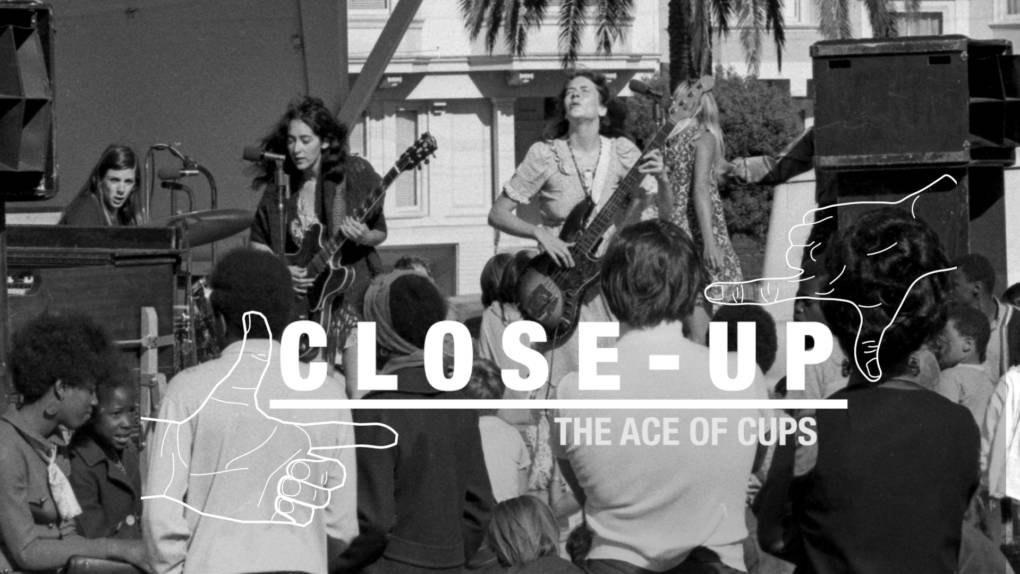
"description": "The Ace of Cups rock band",
"title": "AceofCups_KQEDthumb",
"credit": null,
"status": "inherit",
"isLoading": false,
"fetchFailed": false
},
"arts_13620275": {
"type": "attachments",
"id": "arts_13620275",
"meta": {
"index": "attachments_1716263798",
"site": "arts",
"id": "13620275",
"found": true
},
"parent": 13620067,
"imgSizes": {
"small": {
"file": "https://ww2.kqed.org/app/uploads/sites/2/2017/07/Litquake.Gabe_.MAIN_-520x293.jpg",
"width": 520,
"mimeType": "image/jpeg",
"height": 293
},
"twentyfourteen-full-width": {
"file": "https://ww2.kqed.org/app/uploads/sites/2/2017/07/Litquake.Gabe_.MAIN_-1038x576.jpg",
"width": 1038,
"mimeType": "image/jpeg",
"height": 576
},
"thumbnail": {
"file": "https://ww2.kqed.org/app/uploads/sites/2/2017/07/Litquake.Gabe_.MAIN_-160x90.jpg",
"width": 160,
"mimeType": "image/jpeg",
"height": 90
},
"fd-sm": {
"file": "https://ww2.kqed.org/app/uploads/sites/2/2017/07/Litquake.Gabe_.MAIN_-960x540.jpg",
"width": 960,
"mimeType": "image/jpeg",
"height": 540
},
"post-thumbnail": {
"file": "https://ww2.kqed.org/app/uploads/sites/2/2017/07/Litquake.Gabe_.MAIN_-672x372.jpg",
"width": 672,
"mimeType": "image/jpeg",
"height": 372
},
"xsmall": {
"file": "https://ww2.kqed.org/app/uploads/sites/2/2017/07/Litquake.Gabe_.MAIN_-375x211.jpg",
"width": 375,
"mimeType": "image/jpeg",
"height": 211
},
"kqedFullSize": {
"file": "https://ww2.kqed.org/app/uploads/sites/2/2017/07/Litquake.Gabe_.MAIN_.jpg",
"width": 1920,
"height": 1080
},
"large": {
"file": "https://ww2.kqed.org/app/uploads/sites/2/2017/07/Litquake.Gabe_.MAIN_-1020x574.jpg",
"width": 1020,
"mimeType": "image/jpeg",
"height": 574
},
"xlarge": {
"file": "https://ww2.kqed.org/app/uploads/sites/2/2017/07/Litquake.Gabe_.MAIN_-1180x664.jpg",
"width": 1180,
"mimeType": "image/jpeg",
"height": 664
},
"guest-author-50": {
"file": "https://ww2.kqed.org/app/uploads/sites/2/2017/07/Litquake.Gabe_.MAIN_-50x50.jpg",
"width": 50,
"mimeType": "image/jpeg",
"height": 50
},
"guest-author-96": {
"file": "https://ww2.kqed.org/app/uploads/sites/2/2017/07/Litquake.Gabe_.MAIN_-96x96.jpg",
"width": 96,
"mimeType": "image/jpeg",
"height": 96
},
"medium": {
"file": "https://ww2.kqed.org/app/uploads/sites/2/2017/07/Litquake.Gabe_.MAIN_-800x450.jpg",
"width": 800,
"mimeType": "image/jpeg",
"height": 450
},
"guest-author-64": {
"file": "https://ww2.kqed.org/app/uploads/sites/2/2017/07/Litquake.Gabe_.MAIN_-64x64.jpg",
"width": 64,
"mimeType": "image/jpeg",
"height": 64
},
"guest-author-32": {
"file": "https://ww2.kqed.org/app/uploads/sites/2/2017/07/Litquake.Gabe_.MAIN_-32x32.jpg",
"width": 32,
"mimeType": "image/jpeg",
"height": 32
},
"fd-lrg": {
"file": "https://ww2.kqed.org/app/uploads/sites/2/2017/07/Litquake.Gabe_.MAIN_-1920x1080.jpg",
"width": 1920,
"mimeType": "image/jpeg",
"height": 1080
},
"fd-med": {
"file": "https://ww2.kqed.org/app/uploads/sites/2/2017/07/Litquake.Gabe_.MAIN_-1180x664.jpg",
"width": 1180,
"mimeType": "image/jpeg",
"height": 664
},
"full-width": {
"file": "https://ww2.kqed.org/app/uploads/sites/2/2017/07/Litquake.Gabe_.MAIN_-1920x1080.jpg",
"width": 1920,
"mimeType": "image/jpeg",
"height": 1080
},
"detail": {
"file": "https://ww2.kqed.org/app/uploads/sites/2/2017/07/Litquake.Gabe_.MAIN_-150x150.jpg",
"width": 150,
"mimeType": "image/jpeg",
"height": 150
},
"medium_large": {
"file": "https://ww2.kqed.org/app/uploads/sites/2/2017/07/Litquake.Gabe_.MAIN_-768x432.jpg",
"width": 768,
"mimeType": "image/jpeg",
"height": 432
},
"guest-author-128": {
"file": "https://ww2.kqed.org/app/uploads/sites/2/2017/07/Litquake.Gabe_.MAIN_-128x128.jpg",
"width": 128,
"mimeType": "image/jpeg",
"height": 128
},
"xxsmall": {
"file": "https://ww2.kqed.org/app/uploads/sites/2/2017/07/Litquake.Gabe_.MAIN_-240x135.jpg",
"width": 240,
"mimeType": "image/jpeg",
"height": 135
}
},
"publishDate": 1499582686,
"modified": 1499582761,
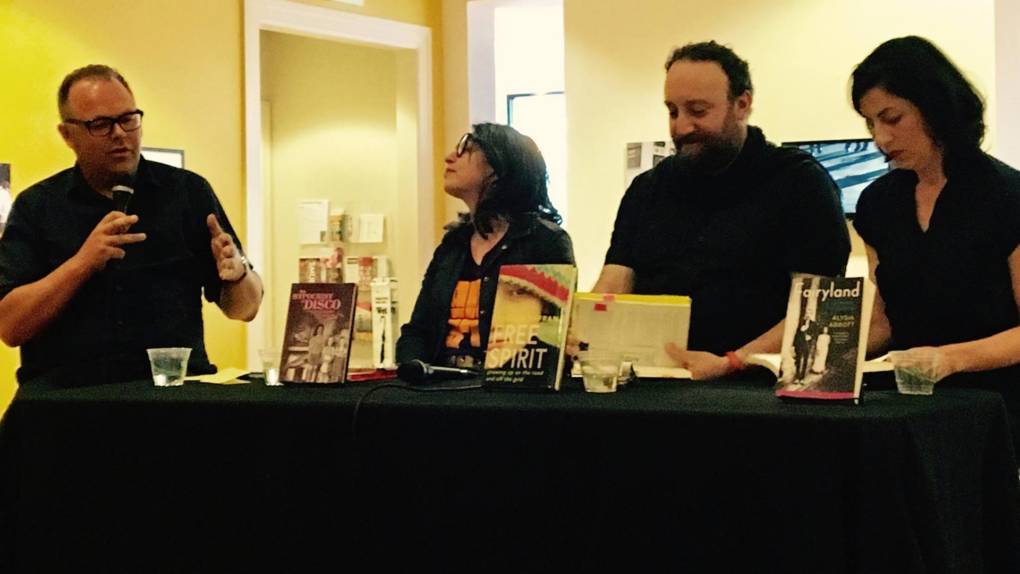
"caption": "At Litquake (L–R), Gabe Meline, Clane Hayward, Joshua Safran and Alysia Abbott. ",
"description": "At Litquake (L–R), Gabe Meline, Clane Hayward, Joshua Safran and Alysia Abbott. ",
"title": "Litquake.Gabe.MAIN",
"credit": "Litquake",
"status": "inherit",
"isLoading": false,
"fetchFailed": false
},
"arts_13445524": {
"type": "attachments",
"id": "arts_13445524",
"meta": {
"index": "attachments_1716263798",
"site": "arts",
"id": "13445524",
"found": true
},
"parent": 13444149,
"imgSizes": {
"small": {
"file": "https://ww2.kqed.org/app/uploads/sites/2/2017/06/920x920-001-520x308.jpg",
"width": 520,
"mimeType": "image/jpeg",
"height": 308
},
"thumbnail": {
"file": "https://ww2.kqed.org/app/uploads/sites/2/2017/06/920x920-001-160x95.jpg",
"width": 160,
"mimeType": "image/jpeg",
"height": 95
},
"post-thumbnail": {
"file": "https://ww2.kqed.org/app/uploads/sites/2/2017/06/920x920-001-644x372.jpg",
"width": 644,
"mimeType": "image/jpeg",
"height": 372
},
"xsmall": {
"file": "https://ww2.kqed.org/app/uploads/sites/2/2017/06/920x920-001-375x222.jpg",
"width": 375,
"mimeType": "image/jpeg",
"height": 222
},
"kqedFullSize": {
"file": "https://ww2.kqed.org/app/uploads/sites/2/2017/06/920x920-001.jpg",
"width": 644,
"height": 381
},
"guest-author-50": {
"file": "https://ww2.kqed.org/app/uploads/sites/2/2017/06/920x920-001-50x50.jpg",
"width": 50,
"mimeType": "image/jpeg",
"height": 50
},
"guest-author-96": {
"file": "https://ww2.kqed.org/app/uploads/sites/2/2017/06/920x920-001-96x96.jpg",
"width": 96,
"mimeType": "image/jpeg",
"height": 96
},
"guest-author-64": {
"file": "https://ww2.kqed.org/app/uploads/sites/2/2017/06/920x920-001-64x64.jpg",
"width": 64,
"mimeType": "image/jpeg",
"height": 64
},
"detail": {
"file": "https://ww2.kqed.org/app/uploads/sites/2/2017/06/920x920-001-150x150.jpg",
"width": 150,
"mimeType": "image/jpeg",
"height": 150
},
"guest-author-32": {
"file": "https://ww2.kqed.org/app/uploads/sites/2/2017/06/920x920-001-32x32.jpg",
"width": 32,
"mimeType": "image/jpeg",
"height": 32
},
"guest-author-128": {
"file": "https://ww2.kqed.org/app/uploads/sites/2/2017/06/920x920-001-128x128.jpg",
"width": 128,
"mimeType": "image/jpeg",
"height": 128
},
"xxsmall": {
"file": "https://ww2.kqed.org/app/uploads/sites/2/2017/06/920x920-001-240x142.jpg",
"width": 240,
"mimeType": "image/jpeg",
"height": 142
}
},
"publishDate": 1497569081,
"modified": 1497569724,
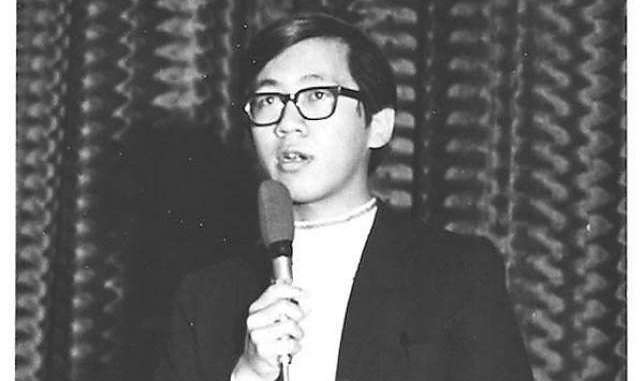
"caption": "A very young Ben Fong-Torres",
"description": "A very young Ben Fong-Torres",
"title": "920x920-001",
"credit": "Photo: Courtesy of Ben Fong-Torres",
"status": "inherit",
"isLoading": false,
"fetchFailed": false
},
"arts_13480044": {
"type": "attachments",
"id": "arts_13480044",
"meta": {
"index": "attachments_1716263798",
"site": "arts",
"id": "13480044",
"found": true
},
"parent": 0,
"imgSizes": {
"small": {
"file": "https://ww2.kqed.org/app/uploads/sites/2/2017/06/LGBTCover-520x293.jpg",
"width": 520,
"mimeType": "image/jpeg",
"height": 293
},
"twentyfourteen-full-width": {
"file": "https://ww2.kqed.org/app/uploads/sites/2/2017/06/LGBTCover-1038x576.jpg",
"width": 1038,
"mimeType": "image/jpeg",
"height": 576
},
"thumbnail": {
"file": "https://ww2.kqed.org/app/uploads/sites/2/2017/06/LGBTCover-160x90.jpg",
"width": 160,
"mimeType": "image/jpeg",
"height": 90
},
"fd-sm": {
"file": "https://ww2.kqed.org/app/uploads/sites/2/2017/06/LGBTCover-960x540.jpg",
"width": 960,
"mimeType": "image/jpeg",
"height": 540
},
"post-thumbnail": {
"file": "https://ww2.kqed.org/app/uploads/sites/2/2017/06/LGBTCover-672x372.jpg",
"width": 672,
"mimeType": "image/jpeg",
"height": 372
},
"xsmall": {
"file": "https://ww2.kqed.org/app/uploads/sites/2/2017/06/LGBTCover-375x211.jpg",
"width": 375,
"mimeType": "image/jpeg",
"height": 211
},
"kqedFullSize": {
"file": "https://ww2.kqed.org/app/uploads/sites/2/2017/06/LGBTCover.jpg",
"width": 1920,
"height": 1080
},
"large": {
"file": "https://ww2.kqed.org/app/uploads/sites/2/2017/06/LGBTCover-1020x574.jpg",
"width": 1020,
"mimeType": "image/jpeg",
"height": 574
},
"xlarge": {
"file": "https://ww2.kqed.org/app/uploads/sites/2/2017/06/LGBTCover-1180x664.jpg",
"width": 1180,
"mimeType": "image/jpeg",
"height": 664
},
"guest-author-50": {
"file": "https://ww2.kqed.org/app/uploads/sites/2/2017/06/LGBTCover-50x50.jpg",
"width": 50,
"mimeType": "image/jpeg",
"height": 50
},
"guest-author-96": {
"file": "https://ww2.kqed.org/app/uploads/sites/2/2017/06/LGBTCover-96x96.jpg",
"width": 96,
"mimeType": "image/jpeg",
"height": 96
},
"medium": {
"file": "https://ww2.kqed.org/app/uploads/sites/2/2017/06/LGBTCover-800x450.jpg",
"width": 800,
"mimeType": "image/jpeg",
"height": 450
},
"guest-author-64": {
"file": "https://ww2.kqed.org/app/uploads/sites/2/2017/06/LGBTCover-64x64.jpg",
"width": 64,
"mimeType": "image/jpeg",
"height": 64
},
"guest-author-32": {
"file": "https://ww2.kqed.org/app/uploads/sites/2/2017/06/LGBTCover-32x32.jpg",
"width": 32,
"mimeType": "image/jpeg",
"height": 32
},
"fd-lrg": {
"file": "https://ww2.kqed.org/app/uploads/sites/2/2017/06/LGBTCover-1920x1080.jpg",
"width": 1920,
"mimeType": "image/jpeg",
"height": 1080
},
"fd-med": {
"file": "https://ww2.kqed.org/app/uploads/sites/2/2017/06/LGBTCover-1180x664.jpg",
"width": 1180,
"mimeType": "image/jpeg",
"height": 664
},
"full-width": {
"file": "https://ww2.kqed.org/app/uploads/sites/2/2017/06/LGBTCover-1920x1080.jpg",
"width": 1920,
"mimeType": "image/jpeg",
"height": 1080
},
"detail": {
"file": "https://ww2.kqed.org/app/uploads/sites/2/2017/06/LGBTCover-150x150.jpg",
"width": 150,
"mimeType": "image/jpeg",
"height": 150
},
"medium_large": {
"file": "https://ww2.kqed.org/app/uploads/sites/2/2017/06/LGBTCover-768x432.jpg",
"width": 768,
"mimeType": "image/jpeg",
"height": 432
},
"guest-author-128": {
"file": "https://ww2.kqed.org/app/uploads/sites/2/2017/06/LGBTCover-128x128.jpg",
"width": 128,
"mimeType": "image/jpeg",
"height": 128
},
"xxsmall": {
"file": "https://ww2.kqed.org/app/uploads/sites/2/2017/06/LGBTCover-240x135.jpg",
"width": 240,
"mimeType": "image/jpeg",
"height": 135
}
},
"publishDate": 1498000117,
"modified": 1498004459,
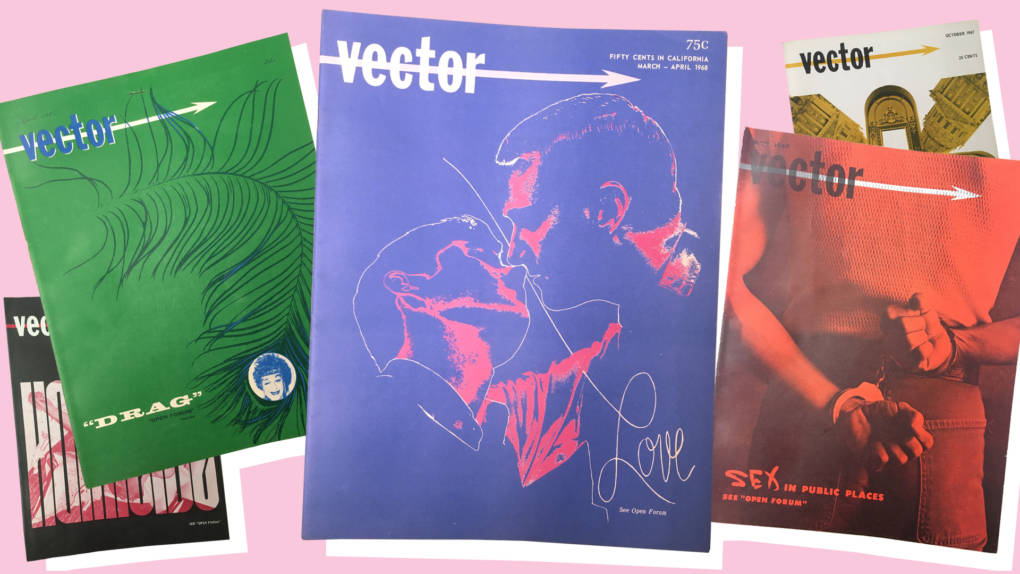
"caption": "Covers from 1967 and 1968 issues of 'Vector' magazine, published by the Society for Individual Rights, San Francisco.",
"description": "Covers from 1967 and 1968 issues of 'Vector' magazine, published by the Society for Individual Rights, San Francisco.",
"title": "LGBTCover",
"credit": "Courtesy of the GLBT Historical Center ",
"status": "inherit",
"isLoading": false,
"fetchFailed": false
},
"arts_13421892": {
"type": "attachments",
"id": "arts_13421892",
"meta": {
"index": "attachments_1716263798",
"site": "arts",
"id": "13421892",
"found": true
},
"parent": 13414955,
"imgSizes": {
"small": {
"file": "https://ww2.kqed.org/app/uploads/sites/2/2017/06/Sullivan.MAIN_-520x325.jpg",
"width": 520,
"mimeType": "image/jpeg",
"height": 325
},
"twentyfourteen-full-width": {
"file": "https://ww2.kqed.org/app/uploads/sites/2/2017/06/Sullivan.MAIN_-1000x576.jpg",
"width": 1000,
"mimeType": "image/jpeg",
"height": 576
},
"thumbnail": {
"file": "https://ww2.kqed.org/app/uploads/sites/2/2017/06/Sullivan.MAIN_-160x100.jpg",
"width": 160,
"mimeType": "image/jpeg",
"height": 100
},
"fd-sm": {
"file": "https://ww2.kqed.org/app/uploads/sites/2/2017/06/Sullivan.MAIN_-960x600.jpg",
"width": 960,
"mimeType": "image/jpeg",
"height": 600
},
"post-thumbnail": {
"file": "https://ww2.kqed.org/app/uploads/sites/2/2017/06/Sullivan.MAIN_-672x372.jpg",
"width": 672,
"mimeType": "image/jpeg",
"height": 372
},
"xsmall": {
"file": "https://ww2.kqed.org/app/uploads/sites/2/2017/06/Sullivan.MAIN_-375x234.jpg",
"width": 375,
"mimeType": "image/jpeg",
"height": 234
},
"kqedFullSize": {
"file": "https://ww2.kqed.org/app/uploads/sites/2/2017/06/Sullivan.MAIN_.jpg",
"width": 1000,
"height": 625
},
"guest-author-50": {
"file": "https://ww2.kqed.org/app/uploads/sites/2/2017/06/Sullivan.MAIN_-50x50.jpg",
"width": 50,
"mimeType": "image/jpeg",
"height": 50
},
"guest-author-96": {
"file": "https://ww2.kqed.org/app/uploads/sites/2/2017/06/Sullivan.MAIN_-96x96.jpg",
"width": 96,
"mimeType": "image/jpeg",
"height": 96
},
"medium": {
"file": "https://ww2.kqed.org/app/uploads/sites/2/2017/06/Sullivan.MAIN_-800x500.jpg",
"width": 800,
"mimeType": "image/jpeg",
"height": 500
},
"guest-author-64": {
"file": "https://ww2.kqed.org/app/uploads/sites/2/2017/06/Sullivan.MAIN_-64x64.jpg",
"width": 64,
"mimeType": "image/jpeg",
"height": 64
},
"guest-author-32": {
"file": "https://ww2.kqed.org/app/uploads/sites/2/2017/06/Sullivan.MAIN_-32x32.jpg",
"width": 32,
"mimeType": "image/jpeg",
"height": 32
},
"detail": {
"file": "https://ww2.kqed.org/app/uploads/sites/2/2017/06/Sullivan.MAIN_-150x150.jpg",
"width": 150,
"mimeType": "image/jpeg",
"height": 150
},
"medium_large": {
"file": "https://ww2.kqed.org/app/uploads/sites/2/2017/06/Sullivan.MAIN_-768x480.jpg",
"width": 768,
"mimeType": "image/jpeg",
"height": 480
},
"guest-author-128": {
"file": "https://ww2.kqed.org/app/uploads/sites/2/2017/06/Sullivan.MAIN_-128x128.jpg",
"width": 128,
"mimeType": "image/jpeg",
"height": 128
},
"xxsmall": {
"file": "https://ww2.kqed.org/app/uploads/sites/2/2017/06/Sullivan.MAIN_-240x150.jpg",
"width": 240,
"mimeType": "image/jpeg",
"height": 150
}
},
"publishDate": 1497303828,
"modified": 1497304024,
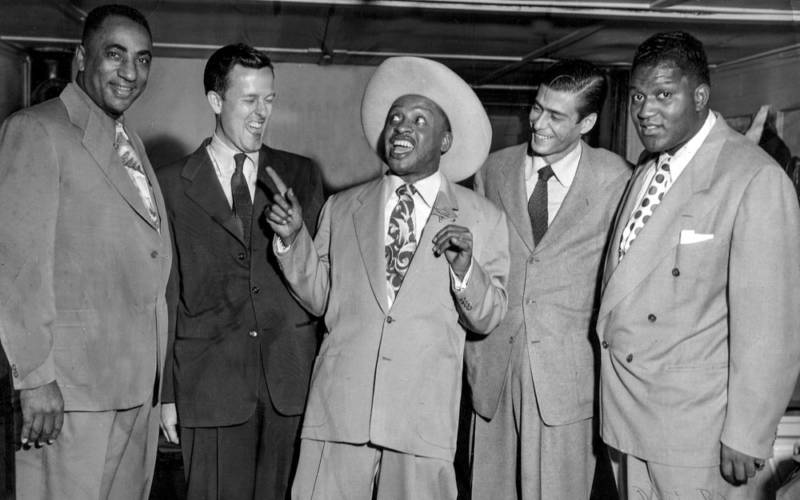
"caption": "Charles Sullivan (at left) with Ralph Gleason, Lionel Hampton and others in the Fillmore, circa early 1960s.",
"description": "Charles Sullivan (at left) with Ralph Gleason, Lionel Hampton and others in the Fillmore, circa early 1960s.",
"title": "Sullivan.MAIN",
"credit": "From 'Harlem of the West'/Wesley Johnson Collection",
"status": "inherit",
"isLoading": false,
"fetchFailed": false
},
"arts_13424065": {
"type": "attachments",
"id": "arts_13424065",
"meta": {
"index": "attachments_1716263798",
"site": "arts",
"id": "13424065",
"found": true
},
"parent": 13401706,
"imgSizes": {
"small": {
"file": "https://ww2.kqed.org/app/uploads/sites/2/2017/06/CannibalSoup.MAIN_-1-520x325.jpg",
"width": 520,
"mimeType": "image/jpeg",
"height": 325
},
"thumbnail": {
"file": "https://ww2.kqed.org/app/uploads/sites/2/2017/06/CannibalSoup.MAIN_-1-160x100.jpg",
"width": 160,
"mimeType": "image/jpeg",
"height": 100
},
"post-thumbnail": {
"file": "https://ww2.kqed.org/app/uploads/sites/2/2017/06/CannibalSoup.MAIN_-1-672x372.jpg",
"width": 672,
"mimeType": "image/jpeg",
"height": 372
},
"xsmall": {
"file": "https://ww2.kqed.org/app/uploads/sites/2/2017/06/CannibalSoup.MAIN_-1-375x234.jpg",
"width": 375,
"mimeType": "image/jpeg",
"height": 234
},
"kqedFullSize": {
"file": "https://ww2.kqed.org/app/uploads/sites/2/2017/06/CannibalSoup.MAIN_-1.jpg",
"width": 800,
"height": 500
},
"guest-author-50": {
"file": "https://ww2.kqed.org/app/uploads/sites/2/2017/06/CannibalSoup.MAIN_-1-50x50.jpg",
"width": 50,
"mimeType": "image/jpeg",
"height": 50
},
"guest-author-96": {
"file": "https://ww2.kqed.org/app/uploads/sites/2/2017/06/CannibalSoup.MAIN_-1-96x96.jpg",
"width": 96,
"mimeType": "image/jpeg",
"height": 96
},
"medium": {
"file": "https://ww2.kqed.org/app/uploads/sites/2/2017/06/CannibalSoup.MAIN_-1-800x500.jpg",
"width": 800,
"mimeType": "image/jpeg",
"height": 500
},
"guest-author-64": {
"file": "https://ww2.kqed.org/app/uploads/sites/2/2017/06/CannibalSoup.MAIN_-1-64x64.jpg",
"width": 64,
"mimeType": "image/jpeg",
"height": 64
},
"guest-author-32": {
"file": "https://ww2.kqed.org/app/uploads/sites/2/2017/06/CannibalSoup.MAIN_-1-32x32.jpg",
"width": 32,
"mimeType": "image/jpeg",
"height": 32
},
"detail": {
"file": "https://ww2.kqed.org/app/uploads/sites/2/2017/06/CannibalSoup.MAIN_-1-150x150.jpg",
"width": 150,
"mimeType": "image/jpeg",
"height": 150
},
"medium_large": {
"file": "https://ww2.kqed.org/app/uploads/sites/2/2017/06/CannibalSoup.MAIN_-1-768x480.jpg",
"width": 768,
"mimeType": "image/jpeg",
"height": 480
},
"guest-author-128": {
"file": "https://ww2.kqed.org/app/uploads/sites/2/2017/06/CannibalSoup.MAIN_-1-128x128.jpg",
"width": 128,
"mimeType": "image/jpeg",
"height": 128
},
"xxsmall": {
"file": "https://ww2.kqed.org/app/uploads/sites/2/2017/06/CannibalSoup.MAIN_-1-240x150.jpg",
"width": 240,
"mimeType": "image/jpeg",
"height": 150
}
},
"publishDate": 1497328975,
"modified": 1497329196,
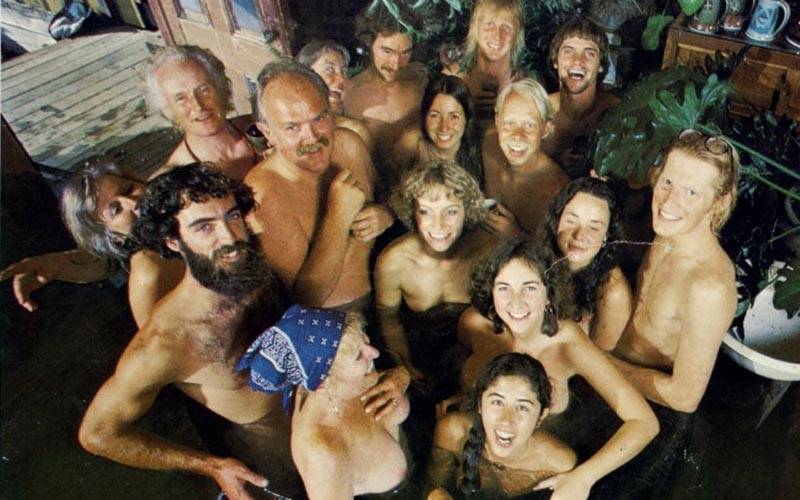
"caption": "Lifestyle books make up 18 percent of Chronicle Books' publishing, but 40 years ago the lifestyles were much different: ‘Cannibal Soup’ celebrated the groovy hot-tub culture of the 1970s.",
"description": "Lifestyle books make up 18 percent of Chronicle Books' publishing, but 40 years ago the lifestyles were much different: ‘Cannibal Soup’ celebrated the groovy hot-tub culture of the 1970s.",
"title": "CannibalSoup.MAIN",
"credit": "Chronicle Books",
"status": "inherit",
"isLoading": false,
"fetchFailed": false
},
"arts_13387906": {
"type": "attachments",
"id": "arts_13387906",
"meta": {
"index": "attachments_1716263798",
"site": "arts",
"id": "13387906",
"found": true
},
"parent": 13310178,
"imgSizes": {
"small": {
"file": "https://ww2.kqed.org/app/uploads/sites/2/2017/06/Summer-of-Love_Hendrix-520x293.jpg",
"width": 520,
"mimeType": "image/jpeg",
"height": 293
},
"twentyfourteen-full-width": {
"file": "https://ww2.kqed.org/app/uploads/sites/2/2017/06/Summer-of-Love_Hendrix-1038x576.jpg",
"width": 1038,
"mimeType": "image/jpeg",
"height": 576
},
"thumbnail": {
"file": "https://ww2.kqed.org/app/uploads/sites/2/2017/06/Summer-of-Love_Hendrix-160x90.jpg",
"width": 160,
"mimeType": "image/jpeg",
"height": 90
},
"fd-sm": {
"file": "https://ww2.kqed.org/app/uploads/sites/2/2017/06/Summer-of-Love_Hendrix-960x540.jpg",
"width": 960,
"mimeType": "image/jpeg",
"height": 540
},
"post-thumbnail": {
"file": "https://ww2.kqed.org/app/uploads/sites/2/2017/06/Summer-of-Love_Hendrix-672x372.jpg",
"width": 672,
"mimeType": "image/jpeg",
"height": 372
},
"xsmall": {
"file": "https://ww2.kqed.org/app/uploads/sites/2/2017/06/Summer-of-Love_Hendrix-375x211.jpg",
"width": 375,
"mimeType": "image/jpeg",
"height": 211
},
"kqedFullSize": {
"file": "https://ww2.kqed.org/app/uploads/sites/2/2017/06/Summer-of-Love_Hendrix.jpg",
"width": 1920,
"height": 1080
},
"large": {
"file": "https://ww2.kqed.org/app/uploads/sites/2/2017/06/Summer-of-Love_Hendrix-1020x574.jpg",
"width": 1020,
"mimeType": "image/jpeg",
"height": 574
},
"xlarge": {
"file": "https://ww2.kqed.org/app/uploads/sites/2/2017/06/Summer-of-Love_Hendrix-1180x664.jpg",
"width": 1180,
"mimeType": "image/jpeg",
"height": 664
},
"guest-author-50": {
"file": "https://ww2.kqed.org/app/uploads/sites/2/2017/06/Summer-of-Love_Hendrix-50x50.jpg",
"width": 50,
"mimeType": "image/jpeg",
"height": 50
},
"guest-author-96": {
"file": "https://ww2.kqed.org/app/uploads/sites/2/2017/06/Summer-of-Love_Hendrix-96x96.jpg",
"width": 96,
"mimeType": "image/jpeg",
"height": 96
},
"medium": {
"file": "https://ww2.kqed.org/app/uploads/sites/2/2017/06/Summer-of-Love_Hendrix-800x450.jpg",
"width": 800,
"mimeType": "image/jpeg",
"height": 450
},
"guest-author-64": {
"file": "https://ww2.kqed.org/app/uploads/sites/2/2017/06/Summer-of-Love_Hendrix-64x64.jpg",
"width": 64,
"mimeType": "image/jpeg",
"height": 64
},
"guest-author-32": {
"file": "https://ww2.kqed.org/app/uploads/sites/2/2017/06/Summer-of-Love_Hendrix-32x32.jpg",
"width": 32,
"mimeType": "image/jpeg",
"height": 32
},
"fd-lrg": {
"file": "https://ww2.kqed.org/app/uploads/sites/2/2017/06/Summer-of-Love_Hendrix-1920x1080.jpg",
"width": 1920,
"mimeType": "image/jpeg",
"height": 1080
},
"fd-med": {
"file": "https://ww2.kqed.org/app/uploads/sites/2/2017/06/Summer-of-Love_Hendrix-1180x664.jpg",
"width": 1180,
"mimeType": "image/jpeg",
"height": 664
},
"full-width": {
"file": "https://ww2.kqed.org/app/uploads/sites/2/2017/06/Summer-of-Love_Hendrix-1920x1080.jpg",
"width": 1920,
"mimeType": "image/jpeg",
"height": 1080
},
"detail": {
"file": "https://ww2.kqed.org/app/uploads/sites/2/2017/06/Summer-of-Love_Hendrix-150x150.jpg",
"width": 150,
"mimeType": "image/jpeg",
"height": 150
},
"medium_large": {
"file": "https://ww2.kqed.org/app/uploads/sites/2/2017/06/Summer-of-Love_Hendrix-768x432.jpg",
"width": 768,
"mimeType": "image/jpeg",
"height": 432
},
"guest-author-128": {
"file": "https://ww2.kqed.org/app/uploads/sites/2/2017/06/Summer-of-Love_Hendrix-128x128.jpg",
"width": 128,
"mimeType": "image/jpeg",
"height": 128
},
"xxsmall": {
"file": "https://ww2.kqed.org/app/uploads/sites/2/2017/06/Summer-of-Love_Hendrix-240x135.jpg",
"width": 240,
"mimeType": "image/jpeg",
"height": 135
}
},
"publishDate": 1496859502,
"modified": 1496859846,
"caption": "Elaine Mayes, 'Jimi Hendrix with Feathers, Monterey, CA,' 1967. ",
"description": "Elaine Mayes, 'Jimi Hendrix with Feathers, Monterey, CA,' 1967. ",
"title": "Summer of Love_02",
"credit": "Photo: Elaine Mays",
"status": "inherit",
"isLoading": false,
"fetchFailed": false
},
"arts_13337830": {
"type": "attachments",
"id": "arts_13337830",
"meta": {
"index": "attachments_1716263798",
"site": "arts",
"id": "13337830",
"found": true
},
"parent": 13284583,
"imgSizes": {
"small": {
"file": "https://ww2.kqed.org/app/uploads/sites/2/2017/05/AvalonBallroom.MAIN_-520x293.jpg",
"width": 520,
"mimeType": "image/jpeg",
"height": 293
},
"twentyfourteen-full-width": {
"file": "https://ww2.kqed.org/app/uploads/sites/2/2017/05/AvalonBallroom.MAIN_-1038x576.jpg",
"width": 1038,
"mimeType": "image/jpeg",
"height": 576
},
"thumbnail": {
"file": "https://ww2.kqed.org/app/uploads/sites/2/2017/05/AvalonBallroom.MAIN_-160x90.jpg",
"width": 160,
"mimeType": "image/jpeg",
"height": 90
},
"fd-sm": {
"file": "https://ww2.kqed.org/app/uploads/sites/2/2017/05/AvalonBallroom.MAIN_-960x540.jpg",
"width": 960,
"mimeType": "image/jpeg",
"height": 540
},
"post-thumbnail": {
"file": "https://ww2.kqed.org/app/uploads/sites/2/2017/05/AvalonBallroom.MAIN_-672x372.jpg",
"width": 672,
"mimeType": "image/jpeg",
"height": 372
},
"xsmall": {
"file": "https://ww2.kqed.org/app/uploads/sites/2/2017/05/AvalonBallroom.MAIN_-375x211.jpg",
"width": 375,
"mimeType": "image/jpeg",
"height": 211
},
"kqedFullSize": {
"file": "https://ww2.kqed.org/app/uploads/sites/2/2017/05/AvalonBallroom.MAIN_.jpg",
"width": 1920,
"height": 1080
},
"large": {
"file": "https://ww2.kqed.org/app/uploads/sites/2/2017/05/AvalonBallroom.MAIN_-1020x574.jpg",
"width": 1020,
"mimeType": "image/jpeg",
"height": 574
},
"xlarge": {
"file": "https://ww2.kqed.org/app/uploads/sites/2/2017/05/AvalonBallroom.MAIN_-1180x664.jpg",
"width": 1180,
"mimeType": "image/jpeg",
"height": 664
},
"guest-author-50": {
"file": "https://ww2.kqed.org/app/uploads/sites/2/2017/05/AvalonBallroom.MAIN_-50x50.jpg",
"width": 50,
"mimeType": "image/jpeg",
"height": 50
},
"guest-author-96": {
"file": "https://ww2.kqed.org/app/uploads/sites/2/2017/05/AvalonBallroom.MAIN_-96x96.jpg",
"width": 96,
"mimeType": "image/jpeg",
"height": 96
},
"medium": {
"file": "https://ww2.kqed.org/app/uploads/sites/2/2017/05/AvalonBallroom.MAIN_-800x450.jpg",
"width": 800,
"mimeType": "image/jpeg",
"height": 450
},
"guest-author-64": {
"file": "https://ww2.kqed.org/app/uploads/sites/2/2017/05/AvalonBallroom.MAIN_-64x64.jpg",
"width": 64,
"mimeType": "image/jpeg",
"height": 64
},
"guest-author-32": {
"file": "https://ww2.kqed.org/app/uploads/sites/2/2017/05/AvalonBallroom.MAIN_-32x32.jpg",
"width": 32,
"mimeType": "image/jpeg",
"height": 32
},
"fd-lrg": {
"file": "https://ww2.kqed.org/app/uploads/sites/2/2017/05/AvalonBallroom.MAIN_-1920x1080.jpg",
"width": 1920,
"mimeType": "image/jpeg",
"height": 1080
},
"fd-med": {
"file": "https://ww2.kqed.org/app/uploads/sites/2/2017/05/AvalonBallroom.MAIN_-1180x664.jpg",
"width": 1180,
"mimeType": "image/jpeg",
"height": 664
},
"full-width": {
"file": "https://ww2.kqed.org/app/uploads/sites/2/2017/05/AvalonBallroom.MAIN_-1920x1080.jpg",
"width": 1920,
"mimeType": "image/jpeg",
"height": 1080
},
"detail": {
"file": "https://ww2.kqed.org/app/uploads/sites/2/2017/05/AvalonBallroom.MAIN_-150x150.jpg",
"width": 150,
"mimeType": "image/jpeg",
"height": 150
},
"medium_large": {
"file": "https://ww2.kqed.org/app/uploads/sites/2/2017/05/AvalonBallroom.MAIN_-768x432.jpg",
"width": 768,
"mimeType": "image/jpeg",
"height": 432
},
"guest-author-128": {
"file": "https://ww2.kqed.org/app/uploads/sites/2/2017/05/AvalonBallroom.MAIN_-128x128.jpg",
"width": 128,
"mimeType": "image/jpeg",
"height": 128
},
"xxsmall": {
"file": "https://ww2.kqed.org/app/uploads/sites/2/2017/05/AvalonBallroom.MAIN_-240x135.jpg",
"width": 240,
"mimeType": "image/jpeg",
"height": 135
}
},
"publishDate": 1496182124,
"modified": 1496182532,
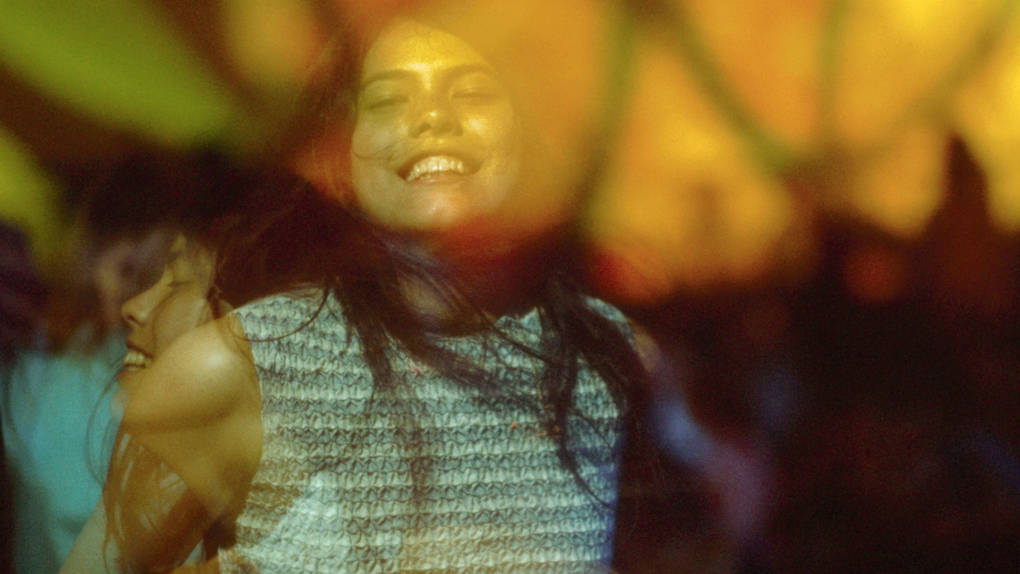
"caption": "A woman dances in the glow of psychedelic light at the Avalon Ballroom in San Francisco. ",
"description": "A woman dances in the glow of psychedelic light at the Avalon Ballroom in San Francisco. ",
"title": "AvalonBallroom.MAIN",
"credit": "Photo by Ted Streshinsky/CORBIS/Corbis via Getty Images",
"status": "inherit",
"isLoading": false,
"fetchFailed": false
},
"arts_13246668": {
"type": "attachments",
"id": "arts_13246668",
"meta": {
"index": "attachments_1716263798",
"site": "arts",
"id": "13246668",
"found": true
},
"parent": 13224067,
"imgSizes": {
"small": {
"file": "https://ww2.kqed.org/app/uploads/sites/2/2017/05/Women.Countercultue.MAIN_-520x355.jpg",
"width": 520,
"mimeType": "image/jpeg",
"height": 355
},
"twentyfourteen-full-width": {
"file": "https://ww2.kqed.org/app/uploads/sites/2/2017/05/Women.Countercultue.MAIN_-1038x576.jpg",
"width": 1038,
"mimeType": "image/jpeg",
"height": 576
},
"thumbnail": {
"file": "https://ww2.kqed.org/app/uploads/sites/2/2017/05/Women.Countercultue.MAIN_-160x109.jpg",
"width": 160,
"mimeType": "image/jpeg",
"height": 109
},
"fd-sm": {
"file": "https://ww2.kqed.org/app/uploads/sites/2/2017/05/Women.Countercultue.MAIN_-960x656.jpg",
"width": 960,
"mimeType": "image/jpeg",
"height": 656
},
"post-thumbnail": {
"file": "https://ww2.kqed.org/app/uploads/sites/2/2017/05/Women.Countercultue.MAIN_-672x372.jpg",
"width": 672,
"mimeType": "image/jpeg",
"height": 372
},
"xsmall": {
"file": "https://ww2.kqed.org/app/uploads/sites/2/2017/05/Women.Countercultue.MAIN_-375x256.jpg",
"width": 375,
"mimeType": "image/jpeg",
"height": 256
},
"kqedFullSize": {
"file": "https://ww2.kqed.org/app/uploads/sites/2/2017/05/Women.Countercultue.MAIN_.jpg",
"width": 1920,
"height": 1312
},
"large": {
"file": "https://ww2.kqed.org/app/uploads/sites/2/2017/05/Women.Countercultue.MAIN_-1020x697.jpg",
"width": 1020,
"mimeType": "image/jpeg",
"height": 697
},
"xlarge": {
"file": "https://ww2.kqed.org/app/uploads/sites/2/2017/05/Women.Countercultue.MAIN_-1180x806.jpg",
"width": 1180,
"mimeType": "image/jpeg",
"height": 806
},
"guest-author-50": {
"file": "https://ww2.kqed.org/app/uploads/sites/2/2017/05/Women.Countercultue.MAIN_-50x50.jpg",
"width": 50,
"mimeType": "image/jpeg",
"height": 50
},
"guest-author-96": {
"file": "https://ww2.kqed.org/app/uploads/sites/2/2017/05/Women.Countercultue.MAIN_-96x96.jpg",
"width": 96,
"mimeType": "image/jpeg",
"height": 96
},
"medium": {
"file": "https://ww2.kqed.org/app/uploads/sites/2/2017/05/Women.Countercultue.MAIN_-800x547.jpg",
"width": 800,
"mimeType": "image/jpeg",
"height": 547
},
"guest-author-64": {
"file": "https://ww2.kqed.org/app/uploads/sites/2/2017/05/Women.Countercultue.MAIN_-64x64.jpg",
"width": 64,
"mimeType": "image/jpeg",
"height": 64
},
"guest-author-32": {
"file": "https://ww2.kqed.org/app/uploads/sites/2/2017/05/Women.Countercultue.MAIN_-32x32.jpg",
"width": 32,
"mimeType": "image/jpeg",
"height": 32
},
"fd-lrg": {
"file": "https://ww2.kqed.org/app/uploads/sites/2/2017/05/Women.Countercultue.MAIN_-1920x1312.jpg",
"width": 1920,
"mimeType": "image/jpeg",
"height": 1312
},
"fd-med": {
"file": "https://ww2.kqed.org/app/uploads/sites/2/2017/05/Women.Countercultue.MAIN_-1180x806.jpg",
"width": 1180,
"mimeType": "image/jpeg",
"height": 806
},
"full-width": {
"file": "https://ww2.kqed.org/app/uploads/sites/2/2017/05/Women.Countercultue.MAIN_-1920x1312.jpg",
"width": 1920,
"mimeType": "image/jpeg",
"height": 1312
},
"detail": {
"file": "https://ww2.kqed.org/app/uploads/sites/2/2017/05/Women.Countercultue.MAIN_-150x150.jpg",
"width": 150,
"mimeType": "image/jpeg",
"height": 150
},
"medium_large": {
"file": "https://ww2.kqed.org/app/uploads/sites/2/2017/05/Women.Countercultue.MAIN_-768x525.jpg",
"width": 768,
"mimeType": "image/jpeg",
"height": 525
},
"guest-author-128": {
"file": "https://ww2.kqed.org/app/uploads/sites/2/2017/05/Women.Countercultue.MAIN_-128x128.jpg",
"width": 128,
"mimeType": "image/jpeg",
"height": 128
},
"xxsmall": {
"file": "https://ww2.kqed.org/app/uploads/sites/2/2017/05/Women.Countercultue.MAIN_-240x164.jpg",
"width": 240,
"mimeType": "image/jpeg",
"height": 164
}
},
"publishDate": 1495002468,
"modified": 1495044744,
"caption": "Salli Rasberry and Delia Moon with others at a party. An upcoming panel at the Main San Francisco Library explores the unsung contributions of women during the 1960s counterculture.",
"description": "Salli Rasberry and Delia Moon with others at a party. An upcoming panel at the Main San Francisco Library explores the unsung contributions of women during the 1960s counterculture.",
"title": "Women.Countercultue.MAIN",
"credit": "Courtesy Salli Rasberry",
"status": "inherit",
"isLoading": false,
"fetchFailed": false
},
"arts_13388208": {
"type": "attachments",
"id": "arts_13388208",
"meta": {
"index": "attachments_1716263798",
"site": "arts",
"id": "13388208",
"found": true
},
"parent": 13215329,
"imgSizes": {
"small": {
"file": "https://ww2.kqed.org/app/uploads/sites/2/2017/05/Summer-of-Love_Concert-520x293.jpg",
"width": 520,
"mimeType": "image/jpeg",
"height": 293
},
"twentyfourteen-full-width": {
"file": "https://ww2.kqed.org/app/uploads/sites/2/2017/05/Summer-of-Love_Concert-1038x576.jpg",
"width": 1038,
"mimeType": "image/jpeg",
"height": 576
},
"thumbnail": {
"file": "https://ww2.kqed.org/app/uploads/sites/2/2017/05/Summer-of-Love_Concert-160x90.jpg",
"width": 160,
"mimeType": "image/jpeg",
"height": 90
},
"fd-sm": {
"file": "https://ww2.kqed.org/app/uploads/sites/2/2017/05/Summer-of-Love_Concert-960x540.jpg",
"width": 960,
"mimeType": "image/jpeg",
"height": 540
},
"post-thumbnail": {
"file": "https://ww2.kqed.org/app/uploads/sites/2/2017/05/Summer-of-Love_Concert-672x372.jpg",
"width": 672,
"mimeType": "image/jpeg",
"height": 372
},
"xsmall": {
"file": "https://ww2.kqed.org/app/uploads/sites/2/2017/05/Summer-of-Love_Concert-375x211.jpg",
"width": 375,
"mimeType": "image/jpeg",
"height": 211
},
"kqedFullSize": {
"file": "https://ww2.kqed.org/app/uploads/sites/2/2017/05/Summer-of-Love_Concert.jpg",
"width": 1920,
"height": 1080
},
"large": {
"file": "https://ww2.kqed.org/app/uploads/sites/2/2017/05/Summer-of-Love_Concert-1020x574.jpg",
"width": 1020,
"mimeType": "image/jpeg",
"height": 574
},
"xlarge": {
"file": "https://ww2.kqed.org/app/uploads/sites/2/2017/05/Summer-of-Love_Concert-1180x664.jpg",
"width": 1180,
"mimeType": "image/jpeg",
"height": 664
},
"guest-author-50": {
"file": "https://ww2.kqed.org/app/uploads/sites/2/2017/05/Summer-of-Love_Concert-50x50.jpg",
"width": 50,
"mimeType": "image/jpeg",
"height": 50
},
"guest-author-96": {
"file": "https://ww2.kqed.org/app/uploads/sites/2/2017/05/Summer-of-Love_Concert-96x96.jpg",
"width": 96,
"mimeType": "image/jpeg",
"height": 96
},
"medium": {
"file": "https://ww2.kqed.org/app/uploads/sites/2/2017/05/Summer-of-Love_Concert-800x450.jpg",
"width": 800,
"mimeType": "image/jpeg",
"height": 450
},
"guest-author-64": {
"file": "https://ww2.kqed.org/app/uploads/sites/2/2017/05/Summer-of-Love_Concert-64x64.jpg",
"width": 64,
"mimeType": "image/jpeg",
"height": 64
},
"guest-author-32": {
"file": "https://ww2.kqed.org/app/uploads/sites/2/2017/05/Summer-of-Love_Concert-32x32.jpg",
"width": 32,
"mimeType": "image/jpeg",
"height": 32
},
"fd-lrg": {
"file": "https://ww2.kqed.org/app/uploads/sites/2/2017/05/Summer-of-Love_Concert-1920x1080.jpg",
"width": 1920,
"mimeType": "image/jpeg",
"height": 1080
},
"fd-med": {
"file": "https://ww2.kqed.org/app/uploads/sites/2/2017/05/Summer-of-Love_Concert-1180x664.jpg",
"width": 1180,
"mimeType": "image/jpeg",
"height": 664
},
"full-width": {
"file": "https://ww2.kqed.org/app/uploads/sites/2/2017/05/Summer-of-Love_Concert-1920x1080.jpg",
"width": 1920,
"mimeType": "image/jpeg",
"height": 1080
},
"detail": {
"file": "https://ww2.kqed.org/app/uploads/sites/2/2017/05/Summer-of-Love_Concert-150x150.jpg",
"width": 150,
"mimeType": "image/jpeg",
"height": 150
},
"medium_large": {
"file": "https://ww2.kqed.org/app/uploads/sites/2/2017/05/Summer-of-Love_Concert-768x432.jpg",
"width": 768,
"mimeType": "image/jpeg",
"height": 432
},
"guest-author-128": {
"file": "https://ww2.kqed.org/app/uploads/sites/2/2017/05/Summer-of-Love_Concert-128x128.jpg",
"width": 128,
"mimeType": "image/jpeg",
"height": 128
},
"xxsmall": {
"file": "https://ww2.kqed.org/app/uploads/sites/2/2017/05/Summer-of-Love_Concert-240x135.jpg",
"width": 240,
"mimeType": "image/jpeg",
"height": 135
}
},
"publishDate": 1496860719,
"modified": 1496860853,
"caption": "An attendee dances at the Fantasy Fair and Magic Mountain Music Festival, held June 1967 at the Cushing Memorial Amphitheatre on Mount Tamalpais, Mill Valley",
"description": "An attendee dances at the Fantasy Fair and Magic Mountain Music Festival, held June 1967 at the Cushing Memorial Amphitheatre on Mount Tamalpais, Mill Valley",
"title": "Summer of Love_02",
"credit": "Photo: Elaine Mayes",
"status": "inherit",
"isLoading": false,
"fetchFailed": false
},
"arts_13067709": {
"type": "attachments",
"id": "arts_13067709",
"meta": {
"index": "attachments_1716263798",
"site": "arts",
"id": "13067709",
"found": true
},
"parent": 13067279,
"imgSizes": {
"small": {
"file": "https://ww2.kqed.org/app/uploads/sites/2/2017/04/2bc150884ee191271b87d37fd62406fa-e1492456047853-520x299.jpg",
"width": 520,
"mimeType": "image/jpeg",
"height": 299
},
"twentyfourteen-full-width": {
"file": "https://ww2.kqed.org/app/uploads/sites/2/2017/04/2bc150884ee191271b87d37fd62406fa-e1492456047853-1038x576.jpg",
"width": 1038,
"mimeType": "image/jpeg",
"height": 576
},
"thumbnail": {
"file": "https://ww2.kqed.org/app/uploads/sites/2/2017/04/2bc150884ee191271b87d37fd62406fa-e1492456047853-160x92.jpg",
"width": 160,
"mimeType": "image/jpeg",
"height": 92
},
"fd-sm": {
"file": "https://ww2.kqed.org/app/uploads/sites/2/2017/04/2bc150884ee191271b87d37fd62406fa-e1492456047853-960x552.jpg",
"width": 960,
"mimeType": "image/jpeg",
"height": 552
},
"post-thumbnail": {
"file": "https://ww2.kqed.org/app/uploads/sites/2/2017/04/2bc150884ee191271b87d37fd62406fa-e1492456047853-672x372.jpg",
"width": 672,
"mimeType": "image/jpeg",
"height": 372
},
"xsmall": {
"file": "https://ww2.kqed.org/app/uploads/sites/2/2017/04/2bc150884ee191271b87d37fd62406fa-e1492456047853-375x216.jpg",
"width": 375,
"mimeType": "image/jpeg",
"height": 216
},
"kqedFullSize": {
"file": "https://ww2.kqed.org/app/uploads/sites/2/2017/04/2bc150884ee191271b87d37fd62406fa-e1492456047853.jpg",
"width": 1200,
"height": 690
},
"large": {
"file": "https://ww2.kqed.org/app/uploads/sites/2/2017/04/2bc150884ee191271b87d37fd62406fa-e1492456047853-1020x587.jpg",
"width": 1020,
"mimeType": "image/jpeg",
"height": 587
},
"xlarge": {
"file": "https://ww2.kqed.org/app/uploads/sites/2/2017/04/2bc150884ee191271b87d37fd62406fa-e1492456047853-1180x679.jpg",
"width": 1180,
"mimeType": "image/jpeg",
"height": 679
},
"guest-author-50": {
"file": "https://ww2.kqed.org/app/uploads/sites/2/2017/04/2bc150884ee191271b87d37fd62406fa-e1492456047853-50x50.jpg",
"width": 50,
"mimeType": "image/jpeg",
"height": 50
},
"guest-author-96": {
"file": "https://ww2.kqed.org/app/uploads/sites/2/2017/04/2bc150884ee191271b87d37fd62406fa-e1492456047853-96x96.jpg",
"width": 96,
"mimeType": "image/jpeg",
"height": 96
},
"medium": {
"file": "https://ww2.kqed.org/app/uploads/sites/2/2017/04/2bc150884ee191271b87d37fd62406fa-e1492456047853-800x460.jpg",
"width": 800,
"mimeType": "image/jpeg",
"height": 460
},
"guest-author-64": {
"file": "https://ww2.kqed.org/app/uploads/sites/2/2017/04/2bc150884ee191271b87d37fd62406fa-e1492456047853-64x64.jpg",
"width": 64,
"mimeType": "image/jpeg",
"height": 64
},
"guest-author-32": {
"file": "https://ww2.kqed.org/app/uploads/sites/2/2017/04/2bc150884ee191271b87d37fd62406fa-e1492456047853-32x32.jpg",
"width": 32,
"mimeType": "image/jpeg",
"height": 32
},
"fd-med": {
"file": "https://ww2.kqed.org/app/uploads/sites/2/2017/04/2bc150884ee191271b87d37fd62406fa-e1492456047853-1180x679.jpg",
"width": 1180,
"mimeType": "image/jpeg",
"height": 679
},
"detail": {
"file": "https://ww2.kqed.org/app/uploads/sites/2/2017/04/2bc150884ee191271b87d37fd62406fa-e1492456047853-150x150.jpg",
"width": 150,
"mimeType": "image/jpeg",
"height": 150
},
"medium_large": {
"file": "https://ww2.kqed.org/app/uploads/sites/2/2017/04/2bc150884ee191271b87d37fd62406fa-e1492456047853-768x442.jpg",
"width": 768,
"mimeType": "image/jpeg",
"height": 442
},
"guest-author-128": {
"file": "https://ww2.kqed.org/app/uploads/sites/2/2017/04/2bc150884ee191271b87d37fd62406fa-e1492456047853-128x128.jpg",
"width": 128,
"mimeType": "image/jpeg",
"height": 128
},
"xxsmall": {
"file": "https://ww2.kqed.org/app/uploads/sites/2/2017/04/2bc150884ee191271b87d37fd62406fa-e1492456047853-240x138.jpg",
"width": 240,
"mimeType": "image/jpeg",
"height": 138
}
},
"publishDate": 1492455465,
"modified": 1492455961,
"caption": "Norah Jones performs at Austin City Limits in 2008.",
"description": null,
"title": "2bc150884ee191271b87d37fd62406fa",
"credit": "PBS",
"status": "inherit",
"isLoading": false,
"fetchFailed": false
}
},
"audioPlayerReducer": {
"postId": "stream_live",
"isPaused": true,
"isPlaying": false,
"pfsActive": false,
"pledgeModalIsOpen": true,
"playerDrawerIsOpen": false,
"liveAudioPlayStartedAt": 0,
"liveAudioPlayContext": ""
},
"authorsReducer": {
"shotchkiss": {
"type": "authors",
"id": "61",
"meta": {
"index": "authors_1716337520",
"id": "61",
"found": true
},
"name": "Sarah Hotchkiss",
"firstName": "Sarah",
"lastName": "Hotchkiss",
"slug": "shotchkiss",
"email": "shotchkiss@kqed.org",
"display_author_email": true,
"staff_mastheads": [
"arts"
],
"title": "Senior Editor",
"bio": "Sarah Hotchkiss is a San Francisco \u003ca href=\"http://www.sarahhotchkiss.com\">artist\u003c/a> and arts writer. In 2019, she received the Dorothea & Leo Rabkin Foundation grant for visual art journalism and in 2020 she received a Society of Professional Journalists, Northern California award for excellence in arts and culture reporting.",
"avatar": "https://secure.gravatar.com/avatar/bc662df144b3d27fd8b1b6f1c2a420d34e91e53154d411bb7ad353cc8b6cea8d?s=600&d=blank&r=g",
"twitter": null,
"bluesky": null,
"facebook": null,
"instagram": null,
"linkedin": null,
"sites": [
{
"site": "",
"roles": [
"editor"
]
},
{
"site": "arts",
"roles": [
"Contributor",
"administrator"
]
},
{
"site": "artschool",
"roles": [
"administrator"
]
},
{
"site": "news",
"roles": [
"editor"
]
},
{
"site": "pop",
"roles": [
"administrator"
]
},
{
"site": "bayareabites",
"roles": [
"editor"
]
},
{
"site": "spark",
"roles": [
"editor"
]
},
{
"site": "checkplease",
"roles": [
"editor"
]
}
],
"headData": {
"title": "Sarah Hotchkiss | KQED",
"description": "Senior Editor",
"ogImgSrc": "https://secure.gravatar.com/avatar/bc662df144b3d27fd8b1b6f1c2a420d34e91e53154d411bb7ad353cc8b6cea8d?s=600&d=blank&r=g",
"twImgSrc": "https://secure.gravatar.com/avatar/bc662df144b3d27fd8b1b6f1c2a420d34e91e53154d411bb7ad353cc8b6cea8d?s=600&d=blank&r=g"
},
"isLoading": false,
"link": "/author/shotchkiss"
},
"kjones": {
"type": "authors",
"id": "93",
"meta": {
"index": "authors_1716337520",
"id": "93",
"found": true
},
"name": "Kevin L. Jones",
"firstName": "Kevin",
"lastName": "Jones",
"slug": "kjones",
"email": "kjones@kqed.org",
"display_author_email": false,
"staff_mastheads": [],
"title": null,
"bio": null,
"avatar": "https://secure.gravatar.com/avatar/12c65b5633ed39d0a59bb7f497eff645?s=600&d=blank&r=g",
"twitter": null,
"facebook": null,
"instagram": null,
"linkedin": null,
"sites": [
{
"site": "arts",
"roles": [
"subscriber"
]
},
{
"site": "styleguide",
"roles": [
"contributor"
]
},
{
"site": "artschool",
"roles": [
"subscriber"
]
},
{
"site": "news",
"roles": [
"subscriber"
]
},
{
"site": "pop",
"roles": [
"subscriber"
]
}
],
"headData": {
"title": "Kevin L. Jones | KQED",
"description": null,
"ogImgSrc": "https://secure.gravatar.com/avatar/12c65b5633ed39d0a59bb7f497eff645?s=600&d=blank&r=g",
"twImgSrc": "https://secure.gravatar.com/avatar/12c65b5633ed39d0a59bb7f497eff645?s=600&d=blank&r=g"
},
"isLoading": false,
"link": "/author/kjones"
},
"gmeline": {
"type": "authors",
"id": "185",
"meta": {
"index": "authors_1716337520",
"id": "185",
"found": true
},
"name": "Gabe Meline",
"firstName": "Gabe",
"lastName": "Meline",
"slug": "gmeline",
"email": "gmeline@kqed.org",
"display_author_email": true,
"staff_mastheads": [
"arts"
],
"title": "Senior Editor, KQED Arts & Culture",
"bio": "Gabe Meline entered journalism at age 15 making photocopied zines, and has since earned awards from the Edward R. Murrow Awards, the Society for Professional Journalists, the Online Journalism Awards, the Association of Alternative Newsweeklies and the California Newspaper Publishers Association. Prior to KQED, he was the editor of the \u003cem>North Bay Bohemian\u003c/em> and a touring musician. He lives with his wife and daughter in his hometown of Santa Rosa, CA.",
"avatar": "https://secure.gravatar.com/avatar/5bebe57be0d8bc2dd318934feb47299e2d2d10cba28d09d8d7afb389a2ce2bdd?s=600&d=blank&r=g",
"twitter": null,
"bluesky": null,
"facebook": null,
"instagram": null,
"linkedin": null,
"sites": [
{
"site": "",
"roles": [
"editor"
]
},
{
"site": "arts",
"roles": [
"administrator"
]
},
{
"site": "artschool",
"roles": [
"editor"
]
},
{
"site": "news",
"roles": [
"author"
]
},
{
"site": "pop",
"roles": [
"editor"
]
},
{
"site": "bayareabites",
"roles": [
"editor"
]
},
{
"site": "food",
"roles": [
"editor"
]
},
{
"site": "liveblog",
"roles": [
"editor"
]
},
{
"site": "hiphop",
"roles": [
"editor"
]
}
],
"headData": {
"title": "Gabe Meline | KQED",
"description": "Senior Editor, KQED Arts & Culture",
"ogImgSrc": "https://secure.gravatar.com/avatar/5bebe57be0d8bc2dd318934feb47299e2d2d10cba28d09d8d7afb389a2ce2bdd?s=600&d=blank&r=g",
"twImgSrc": "https://secure.gravatar.com/avatar/5bebe57be0d8bc2dd318934feb47299e2d2d10cba28d09d8d7afb389a2ce2bdd?s=600&d=blank&r=g"
},
"isLoading": false,
"link": "/author/gmeline"
},
"rachael-myrow": {
"type": "authors",
"id": "251",
"meta": {
"index": "authors_1716337520",
"id": "251",
"found": true
},
"name": "Rachael Myrow",
"firstName": "Rachael",
"lastName": "Myrow",
"slug": "rachael-myrow",
"email": "rmyrow@kqed.org",
"display_author_email": true,
"staff_mastheads": [
"news"
],
"title": "Senior Editor of KQED's Silicon Valley News Desk",
"bio": "• I write and edit stories about how Silicon Valley power and policies shape everyday life in California. I’m also passionate about making Bay Area history and culture more accessible to a broad public. • I’ve been a journalist for most of my life, starting in high school with The Franklin Press in Los Angeles, where I grew up. While earning my first degree in English at UC Berkeley, I got my start in public radio at KALX-FM. After completing a second degree in journalism at Cal, I landed my first professional job at Marketplace, then moved on to KPCC (now LAist), and then KQED, where I hosted The California Report for more than seven years. • My reporting has appeared on NPR, The World, WBUR’s \u003ci>Here & Now\u003c/i>, and the BBC. I also guest host for KQED’s \u003ci>Forum\u003c/i>, as well as the Commonwealth Club in San Francisco. • I speak periodically on media, democracy and technology issues, and do voiceover work for documentaries and educational video projects. • Outside of the studio, you'll find me hiking Bay Area trails and whipping up Insta-ready meals in my kitchen. • I do not accept gifts, money, or favors from anyone connected to my reporting, I don't pay people for information, and I do not support or donate to political causes. • I strive to treat the people I report on with fairness, honesty, and respect. I also recognize there are often multiple sides to a story and work to verify information through multiple sources and documentation. If I get something wrong, I correct it.",
"avatar": "https://secure.gravatar.com/avatar/87bf8cb5874e045cdff430523a6d48b1?s=600&d=blank&r=g",
"twitter": "rachaelmyrow",
"facebook": null,
"instagram": null,
"linkedin": "https://www.linkedin.com/in/rachaelmyrow/",
"sites": [
{
"site": "arts",
"roles": [
"administrator"
]
},
{
"site": "news",
"roles": [
"edit_others_posts",
"editor"
]
},
{
"site": "futureofyou",
"roles": [
"editor"
]
},
{
"site": "bayareabites",
"roles": [
"editor"
]
},
{
"site": "stateofhealth",
"roles": [
"editor"
]
},
{
"site": "science",
"roles": [
"editor"
]
},
{
"site": "food",
"roles": [
"editor"
]
},
{
"site": "forum",
"roles": [
"editor"
]
},
{
"site": "liveblog",
"roles": [
"author"
]
}
],
"headData": {
"title": "Rachael Myrow | KQED",
"description": "Senior Editor of KQED's Silicon Valley News Desk",
"ogImgSrc": "https://secure.gravatar.com/avatar/87bf8cb5874e045cdff430523a6d48b1?s=600&d=blank&r=g",
"twImgSrc": "https://secure.gravatar.com/avatar/87bf8cb5874e045cdff430523a6d48b1?s=600&d=blank&r=g"
},
"isLoading": false,
"link": "/author/rachael-myrow"
},
"dburlison": {
"type": "authors",
"id": "3216",
"meta": {
"index": "authors_1716337520",
"id": "3216",
"found": true
},
"name": "Dani Burlison",
"firstName": "Dani",
"lastName": "Burlison",
"slug": "dburlison",
"email": "danisavestheworld@yahoo.com",
"display_author_email": false,
"staff_mastheads": [],
"title": null,
"bio": "\u003cb id=\"yui_3_16_0_1_1416414652499_5365\" class=\"yiv3033141065\">Dani Burlison\u003c/b> is an award-winning writer, teacher and North Bay resident with a special interest in California's fascinating subcultures. You can find her commentary on writing, feminism, social justice and life with two teen daughters on Twitter at @DaniBurlison.",
"avatar": "https://secure.gravatar.com/avatar/c0b371463a220978c947a5c4ce2da294?s=600&d=blank&r=g",
"twitter": null,
"facebook": null,
"instagram": null,
"linkedin": null,
"sites": [
{
"site": "arts",
"roles": [
"contributor"
]
}
],
"headData": {
"title": "Dani Burlison | KQED",
"description": null,
"ogImgSrc": "https://secure.gravatar.com/avatar/c0b371463a220978c947a5c4ce2da294?s=600&d=blank&r=g",
"twImgSrc": "https://secure.gravatar.com/avatar/c0b371463a220978c947a5c4ce2da294?s=600&d=blank&r=g"
},
"isLoading": false,
"link": "/author/dburlison"
},
"kwhalen": {
"type": "authors",
"id": "3248",
"meta": {
"index": "authors_1716337520",
"id": "3248",
"found": true
},
"name": "Kelly Whalen",
"firstName": "Kelly",
"lastName": "Whalen",
"slug": "kwhalen",
"email": "kwhalen@kqed.org",
"display_author_email": false,
"staff_mastheads": [],
"title": "Senior Video Producer",
"bio": "Kelly Whalen is a filmmaker and educator who directs and produces social justice documentaries and award-winning arts and culture web series. She is the creator of KQED Arts’ three-time Webby Award-winning YouTube series \u003cem>If Cities Could Dance\u003c/em>, featuring dancers across the country representing their cities’ signature moves, and the director of \u003cem>When the Waters Get Deep\u003c/em>, a documentary about Oakland-based artists SOL Development and their work toward healing their communities’ trauma from gun violence.",
"avatar": "https://secure.gravatar.com/avatar/1a2b57e8a13abdcfc3d4966d9c0e1512?s=600&d=blank&r=g",
"twitter": "kellyfilmmaker",
"facebook": null,
"instagram": null,
"linkedin": null,
"sites": [
{
"site": "arts",
"roles": [
"subscriber"
]
}
],
"headData": {
"title": "Kelly Whalen | KQED",
"description": "Senior Video Producer",
"ogImgSrc": "https://secure.gravatar.com/avatar/1a2b57e8a13abdcfc3d4966d9c0e1512?s=600&d=blank&r=g",
"twImgSrc": "https://secure.gravatar.com/avatar/1a2b57e8a13abdcfc3d4966d9c0e1512?s=600&d=blank&r=g"
},
"isLoading": false,
"link": "/author/kwhalen"
},
"esilvers": {
"type": "authors",
"id": "7237",
"meta": {
"index": "authors_1716337520",
"id": "7237",
"found": true
},
"name": "Emma Silvers",
"firstName": "Emma",
"lastName": "Silvers",
"slug": "esilvers",
"email": "esilvers@kqed.org",
"display_author_email": false,
"staff_mastheads": [],
"title": "KQED Contributor",
"bio": "Emma Silvers is an editor at KQED Arts and a former digital producer at KQED News. Born and raised in the Bay Area, she has previously been an arts and entertainment editor at the \u003cem>San Francisco Chronicle\u003c/em>, \u003cem>SF Weekly\u003c/em> and the \u003cem>San Francisco Bay Guardian.\u003c/em> \u003ca href=\"https://www.emmasilvers.com\">Her work\u003c/a> has also appeared in \u003cem>Rolling Stone\u003c/em>, Pitchfork and \u003cem>Mother Jones\u003c/em>. In 2017 she was the recipient of the Society of Professional Journalists-Northern California's award for arts and culture reporting. In 1993 she \u003ca href=\"https://www.kqed.org/pop/16759/wait-what-my-coworker-was-a-voice-over-hyperventilator-for-jurassic-park\">hyperventilated in \u003cem>Jurassic Park\u003c/em>\u003c/a>.",
"avatar": "https://secure.gravatar.com/avatar/247beada39b88ea5759db1f51dba05cf?s=600&d=blank&r=g",
"twitter": "emmaruthless",
"facebook": null,
"instagram": null,
"linkedin": null,
"sites": [
{
"site": "arts",
"roles": [
"editor"
]
},
{
"site": "news",
"roles": [
"editor"
]
},
{
"site": "pop",
"roles": [
"contributor"
]
},
{
"site": "bayareabites",
"roles": [
"editor"
]
},
{
"site": "food",
"roles": [
"contributor"
]
},
{
"site": "liveblog",
"roles": [
"editor"
]
}
],
"headData": {
"title": "Emma Silvers | KQED",
"description": "KQED Contributor",
"ogImgSrc": "https://secure.gravatar.com/avatar/247beada39b88ea5759db1f51dba05cf?s=600&d=blank&r=g",
"twImgSrc": "https://secure.gravatar.com/avatar/247beada39b88ea5759db1f51dba05cf?s=600&d=blank&r=g"
},
"isLoading": false,
"link": "/author/esilvers"
},
"slefebvre": {
"type": "authors",
"id": "11091",
"meta": {
"index": "authors_1716337520",
"id": "11091",
"found": true
},
"name": "Sam Lefebvre",
"firstName": "Sam",
"lastName": "Lefebvre",
"slug": "slefebvre",
"email": "sdlefebvre@gmail.com",
"display_author_email": false,
"staff_mastheads": [],
"title": null,
"bio": "Sam Lefebvre is an award-winning reporter at KQED Arts. He has worked as an editor and columnist at the \u003cem>East Bay Express\u003c/em>, \u003cem>SF Weekly \u003c/em>and Impose Magazine, and his journalism and criticism has appeared in \u003cem>The New York Times\u003c/em>, the Guardian and Pitchfork.",
"avatar": "https://secure.gravatar.com/avatar/143b570c3dec13ae74c6aa2369b04fc8?s=600&d=blank&r=g",
"twitter": "Lefebvre_Sam",
"facebook": null,
"instagram": null,
"linkedin": null,
"sites": [
{
"site": "arts",
"roles": [
"editor"
]
},
{
"site": "news",
"roles": [
"author"
]
}
],
"headData": {
"title": "Sam Lefebvre | KQED",
"description": null,
"ogImgSrc": "https://secure.gravatar.com/avatar/143b570c3dec13ae74c6aa2369b04fc8?s=600&d=blank&r=g",
"twImgSrc": "https://secure.gravatar.com/avatar/143b570c3dec13ae74c6aa2369b04fc8?s=600&d=blank&r=g"
},
"isLoading": false,
"link": "/author/slefebvre"
},
"runterberger": {
"type": "authors",
"id": "11302",
"meta": {
"index": "authors_1716337520",
"id": "11302",
"found": true
},
"name": "Richie Unterberger",
"firstName": "Richie",
"lastName": "Unterberger",
"slug": "runterberger",
"email": "richie@richieunterberger.com",
"display_author_email": false,
"staff_mastheads": [],
"title": null,
"bio": "Richie Unterberger has written a dozen rock history books, including volumes on the Velvet Underground, the Who, and the Beatles. He teaches community education rock history courses at the College of Marin and the Fromm Institute in San Francisco. Read more of his work at www.richieunterberger.com/wordpress.",
"avatar": "https://secure.gravatar.com/avatar/a39c81cd6643bc782cfa0bf46a2a5a4c?s=600&d=blank&r=g",
"twitter": null,
"facebook": null,
"instagram": null,
"linkedin": null,
"sites": [
{
"site": "arts",
"roles": [
"author"
]
}
],
"headData": {
"title": "Richie Unterberger | KQED",
"description": null,
"ogImgSrc": "https://secure.gravatar.com/avatar/a39c81cd6643bc782cfa0bf46a2a5a4c?s=600&d=blank&r=g",
"twImgSrc": "https://secure.gravatar.com/avatar/a39c81cd6643bc782cfa0bf46a2a5a4c?s=600&d=blank&r=g"
},
"isLoading": false,
"link": "/author/runterberger"
}
},
"pagesReducer": {
"arts_tag_summer-of-love": {
"type": "terms",
"id": "arts_1761",
"meta": {
"index": "terms_1716263798",
"site": "arts",
"id": "1761",
"score": 9.302406
},
"featImg": null,
"name": "summer of love",
"description": null,
"taxonomy": "tag",
"headData": {
"twImgId": null,
"twTitle": null,
"ogTitle": null,
"ogImgId": null,
"twDescription": null,
"description": null,
"title": "summer of love Archives | KQED Arts",
"ogDescription": null
},
"ttid": 1773,
"slug": "summer-of-love",
"isLoading": false,
"title": "summer of love",
"pageMeta": {
"site": "arts",
"WpPageTemplate": "page-topic-editorial",
"currentPage": 2
},
"blocks": [
{
"blockName": "kqed/post-list",
"attrs": {
"layout": "cardArticle2",
"query": "posts/arts?tag=summer-of-love",
"seeMore": false,
"paginated": true,
"page": 2
}
},
{
"blockName": "kqed/ad"
}
]
}
},
"pfsSessionReducer": {},
"postsReducer": {
"stream_live": {
"type": "live",
"id": "stream_live",
"audioUrl": "https://streams.kqed.org/kqedradio",
"title": "Live Stream",
"excerpt": "Live Stream information currently unavailable.",
"link": "/radio",
"featImg": "",
"label": {
"name": "KQED Live",
"link": "/"
}
},
"stream_kqedNewscast": {
"type": "posts",
"id": "stream_kqedNewscast",
"audioUrl": "https://www.kqed.org/.stream/anon/radio/RDnews/newscast.mp3?_=1",
"title": "KQED Newscast",
"featImg": "",
"label": {
"name": "88.5 FM",
"link": "/"
}
},
"arts_13809038": {
"type": "posts",
"id": "arts_13809038",
"meta": {
"index": "posts_1716263798",
"site": "arts",
"id": "13809038",
"score": null,
"sort": [
1505941221000
]
},
"guestAuthors": [],
"slug": "the-summer-of-crap-peter-coyote-on-vietnam-and-life-in-the-60s",
"title": "'The Summer of Crap': Peter Coyote on Vietnam and Life in the '60s",
"publishDate": 1505941221,
"format": "image",
"headTitle": "‘The Summer of Crap’: Peter Coyote on Vietnam and Life in the ’60s | KQED",
"labelTerm": {
"site": "arts"
},
"content": "\u003cp>After 50 years, Peter Coyote still hasn’t changed his opinion on the Summer of Love. \u003c/p>\n\u003cp>“It was crap,” the 75-year-old Coyote says. “Who cares?”\u003c/p>\n\u003cp>Coyote’s talked a lot about the ’60s this past year — in case you hadn’t heard, it’s the \u003ca href=\"https://ww2.kqed.org/arts/programs/summer-of-love/\" target=\"_blank\" rel=\"noopener\">Summer of Love’s 50th anniversary\u003c/a> — and to hear Coyote tell it, the experience has been miserable. Cable news channels and other organizations have “dragged” Coyote “out of the old hippie diorama to talk,” and they rarely discuss the revolutionary ideas he helped germinate with the \u003ca href=\"http://www.diggers.org/\" target=\"_blank\" rel=\"noopener\">radical theater group the Diggers\u003c/a>. Instead, “all they wanted was the fashions, the rock and roll posters, and the music,” he says.\u003c/p>\n\u003cp>“I went to \u003ca href=\"https://ww2.kqed.org/arts/2017/04/12/de-young-summer-of-love-50th-anniversary/\" target=\"_blank\" rel=\"noopener\">the deYoung show\u003c/a>, which I narrated, and it was an embarrassment,” Coyote adds. “There were a lot of people who were putting their lives on the line to make change, and you would think everyone was just going to rock and roll shows and wearing bellbottom pants.”\u003c/p>\n\u003cp>But at least one project this year focuses on what was “really important” to Coyote in the 1960s: Ken Burns’ \u003ci>The Vietnam War.\u003c/i> The 18-hour long documentary series, which Coyote narrates, examines in detail the history of the conflict, its causes, and its impact on both Americans and the Vietnamese. And when Coyote looks back at his work with the Diggers, fighting the causes of the Vietnam War was at the heart of it.\u003c/p>\n\u003cp>[ad fullwidth]\u003c/p>\n\u003cp>\u003ca href=\"https://ww2.kqed.org/arts/programs/vietnamwar/\">\u003cimg loading=\"lazy\" decoding=\"async\" src=\"https://ww2.kqed.org/arts/wp-content/uploads/sites/2/2017/09/TheVietnamWar_web_banners-1180x177-Ver_2-e1505759581455.png\" alt=\"\" width=\"401\" height=\"401\" class=\"alignright size-full wp-image-13808862\">\u003c/a>\u003c/p>\n\u003cp>“It wasn’t trying to be ‘radical,'” Coyote says today. “It was trying to get people to understand that the core organizing principle of American culture was profit and private property, and that led directly to the war in Vietnam.”\u003c/p>\n\u003ch3>Confronting the War\u003c/h3>\n\u003cp>In 1961, Coyote — then a student at Grinnell College — joined 11 other classmates on a trip to Washington D.C., where they held a three-day hunger strike against the continued testing of nuclear weapons. The protest caught the attention of then-President John F. Kennedy, who invited the group to visit the White House — the first time a picketing group received such an invitation from a president, according to Coyote.\u003c/p>\n\u003cp>At the time, Kennedy was in Arizona, so they met with McGeorge Bundy, a special advisor to the president.\u003c/p>\n\u003cp>“We had gone to Washington thinking we had brought information from the field to the White House. We were going to tell them what young people were thinking,” Coyote said. “I’m sitting in front of Bundy, and I realize that we are nothing to him. We are a problem for his president, and we needed to be solved.”\u003c/p>\n\u003cp>Coyote adds, “I realized the only way I was going to get this guy’s attention was to come back with an army. Two years later, I thought the counterculture was going to be that army.”\u003c/p>\n\u003cfigure id=\"attachment_13809051\" class=\"wp-caption alignright\" style=\"max-width: 800px\">\u003cimg loading=\"lazy\" decoding=\"async\" src=\"https://ww2.kqed.org/arts/wp-content/uploads/sites/2/2017/09/Mime-Troupe-800x1120.jpg\" alt=\"San Francisco Mime Troupe, c. 1966. Photo by Gene Anthony; Collection of the California Historical Society.\" width=\"800\" height=\"1120\" class=\"size-medium wp-image-13809051\" srcset=\"https://cdn.kqed.org/wp-content/uploads/sites/2/2017/09/Mime-Troupe.jpg 800w, https://cdn.kqed.org/wp-content/uploads/sites/2/2017/09/Mime-Troupe-160x224.jpg 160w, https://cdn.kqed.org/wp-content/uploads/sites/2/2017/09/Mime-Troupe-768x1075.jpg 768w, https://cdn.kqed.org/wp-content/uploads/sites/2/2017/09/Mime-Troupe-240x336.jpg 240w, https://cdn.kqed.org/wp-content/uploads/sites/2/2017/09/Mime-Troupe-375x525.jpg 375w, https://cdn.kqed.org/wp-content/uploads/sites/2/2017/09/Mime-Troupe-520x728.jpg 520w\" sizes=\"(max-width: 800px) 100vw, 800px\">\u003cfigcaption class=\"wp-caption-text\">San Francisco Mime Troupe, c. 1966. Photo by Gene Anthony; Collection of the California Historical Society. \u003ccite>(Gene Anthony/Collection of the California Historical Society. )\u003c/cite>\u003c/figcaption>\u003c/figure>\n\u003cp>After graduating from Grinnell, Coyote moved to San Francisco to study under the poet Robert Duncan at San Francisco State University. But he didn’t stay in school for long, as the counterculture and his acting with the guerilla theater group the San Francisco Mime Troupe became his focus. \u003c/p>\n\u003cp>No longer a student, Coyote was called in for a military service exam in order to be drafted for Vietnam. He had applied for conscientious objector status, and even offered to be a medic, but those appeals were rejected. It looked like Coyote was going to war. \u003c/p>\n\u003cp>Except that by then, Coyote was an experienced actor. \u003c/p>\n\u003cp>“I actually pretended I was completely sane,” Coyote says. “I insisted that I would do whatever they wanted — rape, looting, killing — but I would keep what I caught.”\u003c/p>\n\u003cp>His performance convinced the military service examiners that he was unfit for duty, and so Coyote went back to theater in the park instead of war in a far-off land. Today, Coyote says he would’ve fought for his country, but only if it was the one being invaded.\u003c/p>\n\u003cp>“We invaded Vietnam. People forget that,” Coyote said.\u003c/p>\n\u003ch3>Getting Revolutionary\u003c/h3>\n\u003cp>During the late ’60s, Coyote traveled all over the nation causing a ruckus with the San Francisco Mime Troupe’s brand of free, outdoor “guerilla theater.” In 1967, still using the last name Cohon (he adopted the name Coyote after peyote trip), he co-wrote and starred in a short play called \u003ci>Olive Pits\u003c/i>, based on a 16th-century commedia that Coyote updated to reflect the Vietnam War and other current events. The play was a hit, receiving rave reviews and winning the troupe its first OBIE Award from the \u003ci>Village Voice\u003c/i>.\u003c/p>\n\u003cp>[contextly_sidebar id=”A4jOe4ynIVAy29Hb1MT3rqBetuePb6i7″]\u003c/p>\n\u003cp>But Coyote became dissatisfied with theater, even with the guerrilla theater the San Francisco Mime Troupe staged.\u003c/p>\n\u003cp>“It felt too safe to be on a stage where you can control everything,“ Coyote said.\u003c/p>\n\u003cp>Coyote and six others splintered off and formed the Diggers, an anarchist collective determined to incite change through theater. But instead of staging plays, the Diggers hosted events with subliminal messages. For example, they gave away free food, but in order to be fed, one had to walk through a large yellow square called “Free Frame of Reference.” \u003c/p>\n\u003cfigure id=\"attachment_13809052\" class=\"wp-caption alignright\" style=\"max-width: 800px\">\u003cimg loading=\"lazy\" decoding=\"async\" src=\"https://ww2.kqed.org/arts/wp-content/uploads/sites/2/2017/09/Diggers-meal-800x1133.jpg\" alt=\"Digger Free Meal in the Panhandle, c. 1966.\" width=\"800\" height=\"1133\" class=\"size-medium wp-image-13809052\" srcset=\"https://cdn.kqed.org/wp-content/uploads/sites/2/2017/09/Diggers-meal.jpg 800w, https://cdn.kqed.org/wp-content/uploads/sites/2/2017/09/Diggers-meal-160x227.jpg 160w, https://cdn.kqed.org/wp-content/uploads/sites/2/2017/09/Diggers-meal-768x1088.jpg 768w, https://cdn.kqed.org/wp-content/uploads/sites/2/2017/09/Diggers-meal-240x340.jpg 240w, https://cdn.kqed.org/wp-content/uploads/sites/2/2017/09/Diggers-meal-375x531.jpg 375w, https://cdn.kqed.org/wp-content/uploads/sites/2/2017/09/Diggers-meal-520x736.jpg 520w\" sizes=\"(max-width: 800px) 100vw, 800px\">\u003cfigcaption class=\"wp-caption-text\">Digger Free Meal in the Panhandle, c. 1966. \u003ccite>(Photo by Gene Anthony; Collection of the California Historical Society.)\u003c/cite>\u003c/figcaption>\u003c/figure>\n\u003cp>“It was like a ceremony. You stepped through it and imagined yourself in a world with free food,” Coyote said.\u003c/p>\n\u003cp>The point of the Free Frame of Reference and later, the Free Store, was to show others what the world could be like if everything was free. Such experiments saw the Diggers not only rebelling against capitalism, but the political tactics of the established left wing.\u003c/p>\n\u003cp>“We challenged ourselves and others to imagine a world that we’d like to live in, and then make it real,” Coyote said. “We felt that if people had a life that they liked, they might be willing to defend it. They were not going to throw themselves on the barricades because they read Mao’s little red book.”\u003c/p>\n\u003cp>The Diggers evolved into the Free Family, which established a series of communes that reached from Northern California to the Pacific Northwest, and throughout the Southwest. Coyote says he loved those days, even though they subsisted on little — he averaged about $2,500 a year, and much of the commune’s funds came from welfare. But everyone seemed to do their part in terms of chores and other responsibilities, the entertainment came from board games and being with each other, and the group learned it didn’t need much to be happy. For Coyote, it was “a wonderful life.”\u003c/p>\n\u003cp>“It was the perfect confluence of living the life your art described,” Coyote said. “If I didn’t need health insurance, I would still be living on a commune.”\u003c/p>\n\u003cp>But it couldn’t last, especially after commune members began having children. Coyote says that those with families came to resent the free spirits who wanted to hang around getting high all day. And when conflicts arose, those in the commune didn’t have the tools to resolve them. In the end, members began separating themselves from the rest of the group.\u003c/p>\n\u003cp>“What we learned is that we are the problem. We grew up in this culture, with bad habits, impulses, egoism, selfishness and everything else. We could pretend we didn’t but it wasn’t actually true,” Coyote said. “We were so intent on building a new world, we didn’t concentrate as fully as we should’ve on building our lives.”\u003c/p>\n\u003cfigure id=\"attachment_13809057\" class=\"wp-caption aligncenter\" style=\"max-width: 800px\">\u003cimg loading=\"lazy\" decoding=\"async\" src=\"https://ww2.kqed.org/arts/wp-content/uploads/sites/2/2017/09/Coyote-and-Parks-800x534.jpg\" alt=\" (L-R) Park Rangers Gerard Baker, Shelton Johnson, director Ken Burns, writer Dayton Duncan, Lee Stetson, and actor Peter Coyote attend a National Parks celebration hosted by the National Parks Conservation Association and PBS at Central Park on September 23, 2009 in New York City. \" width=\"800\" height=\"534\" class=\"size-medium wp-image-13809057\" srcset=\"https://cdn.kqed.org/wp-content/uploads/sites/2/2017/09/Coyote-and-Parks-800x534.jpg 800w, https://cdn.kqed.org/wp-content/uploads/sites/2/2017/09/Coyote-and-Parks-160x107.jpg 160w, https://cdn.kqed.org/wp-content/uploads/sites/2/2017/09/Coyote-and-Parks-768x513.jpg 768w, https://cdn.kqed.org/wp-content/uploads/sites/2/2017/09/Coyote-and-Parks-1020x681.jpg 1020w, https://cdn.kqed.org/wp-content/uploads/sites/2/2017/09/Coyote-and-Parks.jpg 1920w, https://cdn.kqed.org/wp-content/uploads/sites/2/2017/09/Coyote-and-Parks-1180x788.jpg 1180w, https://cdn.kqed.org/wp-content/uploads/sites/2/2017/09/Coyote-and-Parks-960x641.jpg 960w, https://cdn.kqed.org/wp-content/uploads/sites/2/2017/09/Coyote-and-Parks-240x160.jpg 240w, https://cdn.kqed.org/wp-content/uploads/sites/2/2017/09/Coyote-and-Parks-375x250.jpg 375w, https://cdn.kqed.org/wp-content/uploads/sites/2/2017/09/Coyote-and-Parks-520x347.jpg 520w\" sizes=\"(max-width: 800px) 100vw, 800px\">\u003cfigcaption class=\"wp-caption-text\">(L-R) Park Rangers Gerard Baker, Shelton Johnson, director Ken Burns, writer Dayton Duncan, Lee Stetson, and actor Peter Coyote attend a National Parks celebration hosted by the National Parks Conservation Association and PBS at Central Park on September 23, 2009 in New York City. \u003ccite>(Thos Robinson/Getty Images for NPCA)\u003c/cite>\u003c/figcaption>\u003c/figure>\n\u003ch3>Looking Back\u003c/h3>\n\u003cp>In 1978, Coyote returned to theater, which led to a successful acting career — he’s since been in over 70 films, including blockbusters like \u003ci>E.T. the Extra-Terrestrial\u003c/i> and \u003ci>Erin Brockovich\u003c/i>.\u003c/p>\n\u003cp>He also began a fruitful career in voice work, which has led him to become the go-to voice for documentarians such as Alex Gibney and Ken Burns. Burns and Coyote started worked together in 1992 on the documentary \u003ci>The West,\u003c/i> which Burns produced. Coyote has gone on to narrate nine of Burns’ documentaries.\u003c/p>\n\u003cp>\u003ci>The Vietnam War,\u003c/i> Burns’ newest series, is already being \u003ca href=\"https://ww2.kqed.org/arts/2017/08/02/the-vietnam-war-a-harrowing-look-back-for-viewers-and-filmmakers-alike/\" target=\"_blank\" rel=\"noopener\">hailed as his best yet\u003c/a>. Coyote narrated all 18 hours of the documentary, and he says that while working on it, “there was a lot of re-living.” \u003c/p>\n\u003cp>“I was amazed how passionately my memories and feelings about the war came up,” Coyote said. \u003c/p>\n\u003cp>He also had a major discovery from the series: that the North Vietnamese weren’t the good guys Coyote assumed they were back when he was protesting the war.\u003c/p>\n\u003cp>“People had all these romantic ideas about the VietCong and the Viet Minh. Well, those guys were just as bad as our guys,” Coyote said. “They were murdering civilians over ideological disputes, and burying them alive because they didn’t want to waste bullets.” \u003c/p>\n\u003cp>Even though Coyote can admit that he was wrong in some ways, he remains angry that the work of the counterculture was later portrayed in the media as a failure. He blames Reagan-era conservatives for shutting down surpluses and doing all they could to ensure that a left-wing counterculture never saw prominence again.\u003c/p>\n\u003cp>“It’s true that the free lifestyle is unsustainable, but it doesn’t mean you have to give up your values. Most of our kids became nurses, healers, doctors, and environmentalists, and I’m really proud of them,” Coyote says. \u003c/p>\n\u003cp>\u003cimg loading=\"lazy\" decoding=\"async\" src=\"https://ww2.kqed.org/arts/wp-content/uploads/sites/2/2016/09/Q.Logo_.Break_-800x78.jpg\" alt=\"\" width=\"800\" height=\"78\" class=\"aligncenter size-medium wp-image-12127869\" srcset=\"https://cdn.kqed.org/wp-content/uploads/sites/2/2016/09/Q.Logo_.Break_.jpg 800w, https://cdn.kqed.org/wp-content/uploads/sites/2/2016/09/Q.Logo_.Break_-400x39.jpg 400w, https://cdn.kqed.org/wp-content/uploads/sites/2/2016/09/Q.Logo_.Break_-768x75.jpg 768w\" sizes=\"(max-width: 800px) 100vw, 800px\">\u003c/p>\n\u003cp>[ad floatright]\u003c/p>\n\u003cp>\u003cem>To see more stories and photographs from KQED’s series about the impact of the Vietnam War on the Bay Area and other communities in California, visit \u003ca href=\"https://ww2.kqed.org/arts/programs/vietnamwar/\" target=\"_blank\" rel=\"noopener noreferrer\">kqed.org/vietnamwar\u003c/a>. \u003c/em>\u003c/p>\n\n",
"blocks": [],
"excerpt": "The narrator of Ken Burns' 'The Vietnam War' discusses the war, the 1960s counterculture, and what he's learned in the past 50 years.",
"status": "publish",
"parent": 0,
"modified": 1726782048,
"stats": {
"hasAudio": false,
"hasVideo": false,
"hasChartOrMap": false,
"iframeSrcs": [],
"hasGoogleForm": false,
"hasGallery": false,
"hasHearkenModule": false,
"hasPolis": false,
"paragraphCount": 41,
"wordCount": 1772
},
"headData": {
"title": "'The Summer of Crap': Peter Coyote on Vietnam and Life in the '60s | KQED",
"description": "The narrator of Ken Burns' 'The Vietnam War' discusses the war, the 1960s counterculture, and what he's learned in the past 50 years.",
"ogTitle": "",
"ogDescription": "",
"ogImgId": "",
"twTitle": "",
"twDescription": "",
"twImgId": "",
"schema": {
"@context": "https://schema.org",
"@type": "Article",
"headline": "'The Summer of Crap': Peter Coyote on Vietnam and Life in the '60s",
"datePublished": "2017-09-20T14:00:21-07:00",
"dateModified": "2024-09-19T14:40:48-07:00",
"image": "https://cdn.kqed.org/wp-content/uploads/2020/02/KQED-OG-Image@1x.png"
}
},
"sticky": false,
"path": "/arts/13809038/the-summer-of-crap-peter-coyote-on-vietnam-and-life-in-the-60s",
"audioTrackLength": null,
"parsedContent": [
{
"type": "contentString",
"content": "\u003cdiv class=\"post-body\">\u003cp>\u003cp>After 50 years, Peter Coyote still hasn’t changed his opinion on the Summer of Love. \u003c/p>\n\u003cp>“It was crap,” the 75-year-old Coyote says. “Who cares?”\u003c/p>\n\u003cp>Coyote’s talked a lot about the ’60s this past year — in case you hadn’t heard, it’s the \u003ca href=\"https://ww2.kqed.org/arts/programs/summer-of-love/\" target=\"_blank\" rel=\"noopener\">Summer of Love’s 50th anniversary\u003c/a> — and to hear Coyote tell it, the experience has been miserable. Cable news channels and other organizations have “dragged” Coyote “out of the old hippie diorama to talk,” and they rarely discuss the revolutionary ideas he helped germinate with the \u003ca href=\"http://www.diggers.org/\" target=\"_blank\" rel=\"noopener\">radical theater group the Diggers\u003c/a>. Instead, “all they wanted was the fashions, the rock and roll posters, and the music,” he says.\u003c/p>\n\u003cp>“I went to \u003ca href=\"https://ww2.kqed.org/arts/2017/04/12/de-young-summer-of-love-50th-anniversary/\" target=\"_blank\" rel=\"noopener\">the deYoung show\u003c/a>, which I narrated, and it was an embarrassment,” Coyote adds. “There were a lot of people who were putting their lives on the line to make change, and you would think everyone was just going to rock and roll shows and wearing bellbottom pants.”\u003c/p>\n\u003cp>But at least one project this year focuses on what was “really important” to Coyote in the 1960s: Ken Burns’ \u003ci>The Vietnam War.\u003c/i> The 18-hour long documentary series, which Coyote narrates, examines in detail the history of the conflict, its causes, and its impact on both Americans and the Vietnamese. And when Coyote looks back at his work with the Diggers, fighting the causes of the Vietnam War was at the heart of it.\u003c/p>\n\u003cp>\u003c/p>\u003c/div>",
"attributes": {
"named": {},
"numeric": []
}
},
{
"type": "component",
"content": "",
"name": "ad",
"attributes": {
"named": {
"label": "fullwidth"
},
"numeric": [
"fullwidth"
]
}
},
{
"type": "contentString",
"content": "\u003cdiv class=\"post-body\">\u003cp>\u003c/p>\n\u003cp>\u003ca href=\"https://ww2.kqed.org/arts/programs/vietnamwar/\">\u003cimg loading=\"lazy\" decoding=\"async\" src=\"https://ww2.kqed.org/arts/wp-content/uploads/sites/2/2017/09/TheVietnamWar_web_banners-1180x177-Ver_2-e1505759581455.png\" alt=\"\" width=\"401\" height=\"401\" class=\"alignright size-full wp-image-13808862\">\u003c/a>\u003c/p>\n\u003cp>“It wasn’t trying to be ‘radical,'” Coyote says today. “It was trying to get people to understand that the core organizing principle of American culture was profit and private property, and that led directly to the war in Vietnam.”\u003c/p>\n\u003ch3>Confronting the War\u003c/h3>\n\u003cp>In 1961, Coyote — then a student at Grinnell College — joined 11 other classmates on a trip to Washington D.C., where they held a three-day hunger strike against the continued testing of nuclear weapons. The protest caught the attention of then-President John F. Kennedy, who invited the group to visit the White House — the first time a picketing group received such an invitation from a president, according to Coyote.\u003c/p>\n\u003cp>At the time, Kennedy was in Arizona, so they met with McGeorge Bundy, a special advisor to the president.\u003c/p>\n\u003cp>“We had gone to Washington thinking we had brought information from the field to the White House. We were going to tell them what young people were thinking,” Coyote said. “I’m sitting in front of Bundy, and I realize that we are nothing to him. We are a problem for his president, and we needed to be solved.”\u003c/p>\n\u003cp>Coyote adds, “I realized the only way I was going to get this guy’s attention was to come back with an army. Two years later, I thought the counterculture was going to be that army.”\u003c/p>\n\u003cfigure id=\"attachment_13809051\" class=\"wp-caption alignright\" style=\"max-width: 800px\">\u003cimg loading=\"lazy\" decoding=\"async\" src=\"https://ww2.kqed.org/arts/wp-content/uploads/sites/2/2017/09/Mime-Troupe-800x1120.jpg\" alt=\"San Francisco Mime Troupe, c. 1966. Photo by Gene Anthony; Collection of the California Historical Society.\" width=\"800\" height=\"1120\" class=\"size-medium wp-image-13809051\" srcset=\"https://cdn.kqed.org/wp-content/uploads/sites/2/2017/09/Mime-Troupe.jpg 800w, https://cdn.kqed.org/wp-content/uploads/sites/2/2017/09/Mime-Troupe-160x224.jpg 160w, https://cdn.kqed.org/wp-content/uploads/sites/2/2017/09/Mime-Troupe-768x1075.jpg 768w, https://cdn.kqed.org/wp-content/uploads/sites/2/2017/09/Mime-Troupe-240x336.jpg 240w, https://cdn.kqed.org/wp-content/uploads/sites/2/2017/09/Mime-Troupe-375x525.jpg 375w, https://cdn.kqed.org/wp-content/uploads/sites/2/2017/09/Mime-Troupe-520x728.jpg 520w\" sizes=\"(max-width: 800px) 100vw, 800px\">\u003cfigcaption class=\"wp-caption-text\">San Francisco Mime Troupe, c. 1966. Photo by Gene Anthony; Collection of the California Historical Society. \u003ccite>(Gene Anthony/Collection of the California Historical Society. )\u003c/cite>\u003c/figcaption>\u003c/figure>\n\u003cp>After graduating from Grinnell, Coyote moved to San Francisco to study under the poet Robert Duncan at San Francisco State University. But he didn’t stay in school for long, as the counterculture and his acting with the guerilla theater group the San Francisco Mime Troupe became his focus. \u003c/p>\n\u003cp>No longer a student, Coyote was called in for a military service exam in order to be drafted for Vietnam. He had applied for conscientious objector status, and even offered to be a medic, but those appeals were rejected. It looked like Coyote was going to war. \u003c/p>\n\u003cp>Except that by then, Coyote was an experienced actor. \u003c/p>\n\u003cp>“I actually pretended I was completely sane,” Coyote says. “I insisted that I would do whatever they wanted — rape, looting, killing — but I would keep what I caught.”\u003c/p>\n\u003cp>His performance convinced the military service examiners that he was unfit for duty, and so Coyote went back to theater in the park instead of war in a far-off land. Today, Coyote says he would’ve fought for his country, but only if it was the one being invaded.\u003c/p>\n\u003cp>“We invaded Vietnam. People forget that,” Coyote said.\u003c/p>\n\u003ch3>Getting Revolutionary\u003c/h3>\n\u003cp>During the late ’60s, Coyote traveled all over the nation causing a ruckus with the San Francisco Mime Troupe’s brand of free, outdoor “guerilla theater.” In 1967, still using the last name Cohon (he adopted the name Coyote after peyote trip), he co-wrote and starred in a short play called \u003ci>Olive Pits\u003c/i>, based on a 16th-century commedia that Coyote updated to reflect the Vietnam War and other current events. The play was a hit, receiving rave reviews and winning the troupe its first OBIE Award from the \u003ci>Village Voice\u003c/i>.\u003c/p>\n\u003cp>\u003c/p>\u003cp>\u003c/p>\u003cp>\u003c/p>\n\u003cp>But Coyote became dissatisfied with theater, even with the guerrilla theater the San Francisco Mime Troupe staged.\u003c/p>\n\u003cp>“It felt too safe to be on a stage where you can control everything,“ Coyote said.\u003c/p>\n\u003cp>Coyote and six others splintered off and formed the Diggers, an anarchist collective determined to incite change through theater. But instead of staging plays, the Diggers hosted events with subliminal messages. For example, they gave away free food, but in order to be fed, one had to walk through a large yellow square called “Free Frame of Reference.” \u003c/p>\n\u003cfigure id=\"attachment_13809052\" class=\"wp-caption alignright\" style=\"max-width: 800px\">\u003cimg loading=\"lazy\" decoding=\"async\" src=\"https://ww2.kqed.org/arts/wp-content/uploads/sites/2/2017/09/Diggers-meal-800x1133.jpg\" alt=\"Digger Free Meal in the Panhandle, c. 1966.\" width=\"800\" height=\"1133\" class=\"size-medium wp-image-13809052\" srcset=\"https://cdn.kqed.org/wp-content/uploads/sites/2/2017/09/Diggers-meal.jpg 800w, https://cdn.kqed.org/wp-content/uploads/sites/2/2017/09/Diggers-meal-160x227.jpg 160w, https://cdn.kqed.org/wp-content/uploads/sites/2/2017/09/Diggers-meal-768x1088.jpg 768w, https://cdn.kqed.org/wp-content/uploads/sites/2/2017/09/Diggers-meal-240x340.jpg 240w, https://cdn.kqed.org/wp-content/uploads/sites/2/2017/09/Diggers-meal-375x531.jpg 375w, https://cdn.kqed.org/wp-content/uploads/sites/2/2017/09/Diggers-meal-520x736.jpg 520w\" sizes=\"(max-width: 800px) 100vw, 800px\">\u003cfigcaption class=\"wp-caption-text\">Digger Free Meal in the Panhandle, c. 1966. \u003ccite>(Photo by Gene Anthony; Collection of the California Historical Society.)\u003c/cite>\u003c/figcaption>\u003c/figure>\n\u003cp>“It was like a ceremony. You stepped through it and imagined yourself in a world with free food,” Coyote said.\u003c/p>\n\u003cp>The point of the Free Frame of Reference and later, the Free Store, was to show others what the world could be like if everything was free. Such experiments saw the Diggers not only rebelling against capitalism, but the political tactics of the established left wing.\u003c/p>\n\u003cp>“We challenged ourselves and others to imagine a world that we’d like to live in, and then make it real,” Coyote said. “We felt that if people had a life that they liked, they might be willing to defend it. They were not going to throw themselves on the barricades because they read Mao’s little red book.”\u003c/p>\n\u003cp>The Diggers evolved into the Free Family, which established a series of communes that reached from Northern California to the Pacific Northwest, and throughout the Southwest. Coyote says he loved those days, even though they subsisted on little — he averaged about $2,500 a year, and much of the commune’s funds came from welfare. But everyone seemed to do their part in terms of chores and other responsibilities, the entertainment came from board games and being with each other, and the group learned it didn’t need much to be happy. For Coyote, it was “a wonderful life.”\u003c/p>\n\u003cp>“It was the perfect confluence of living the life your art described,” Coyote said. “If I didn’t need health insurance, I would still be living on a commune.”\u003c/p>\n\u003cp>But it couldn’t last, especially after commune members began having children. Coyote says that those with families came to resent the free spirits who wanted to hang around getting high all day. And when conflicts arose, those in the commune didn’t have the tools to resolve them. In the end, members began separating themselves from the rest of the group.\u003c/p>\n\u003cp>“What we learned is that we are the problem. We grew up in this culture, with bad habits, impulses, egoism, selfishness and everything else. We could pretend we didn’t but it wasn’t actually true,” Coyote said. “We were so intent on building a new world, we didn’t concentrate as fully as we should’ve on building our lives.”\u003c/p>\n\u003cfigure id=\"attachment_13809057\" class=\"wp-caption aligncenter\" style=\"max-width: 800px\">\u003cimg loading=\"lazy\" decoding=\"async\" src=\"https://ww2.kqed.org/arts/wp-content/uploads/sites/2/2017/09/Coyote-and-Parks-800x534.jpg\" alt=\" (L-R) Park Rangers Gerard Baker, Shelton Johnson, director Ken Burns, writer Dayton Duncan, Lee Stetson, and actor Peter Coyote attend a National Parks celebration hosted by the National Parks Conservation Association and PBS at Central Park on September 23, 2009 in New York City. \" width=\"800\" height=\"534\" class=\"size-medium wp-image-13809057\" srcset=\"https://cdn.kqed.org/wp-content/uploads/sites/2/2017/09/Coyote-and-Parks-800x534.jpg 800w, https://cdn.kqed.org/wp-content/uploads/sites/2/2017/09/Coyote-and-Parks-160x107.jpg 160w, https://cdn.kqed.org/wp-content/uploads/sites/2/2017/09/Coyote-and-Parks-768x513.jpg 768w, https://cdn.kqed.org/wp-content/uploads/sites/2/2017/09/Coyote-and-Parks-1020x681.jpg 1020w, https://cdn.kqed.org/wp-content/uploads/sites/2/2017/09/Coyote-and-Parks.jpg 1920w, https://cdn.kqed.org/wp-content/uploads/sites/2/2017/09/Coyote-and-Parks-1180x788.jpg 1180w, https://cdn.kqed.org/wp-content/uploads/sites/2/2017/09/Coyote-and-Parks-960x641.jpg 960w, https://cdn.kqed.org/wp-content/uploads/sites/2/2017/09/Coyote-and-Parks-240x160.jpg 240w, https://cdn.kqed.org/wp-content/uploads/sites/2/2017/09/Coyote-and-Parks-375x250.jpg 375w, https://cdn.kqed.org/wp-content/uploads/sites/2/2017/09/Coyote-and-Parks-520x347.jpg 520w\" sizes=\"(max-width: 800px) 100vw, 800px\">\u003cfigcaption class=\"wp-caption-text\">(L-R) Park Rangers Gerard Baker, Shelton Johnson, director Ken Burns, writer Dayton Duncan, Lee Stetson, and actor Peter Coyote attend a National Parks celebration hosted by the National Parks Conservation Association and PBS at Central Park on September 23, 2009 in New York City. \u003ccite>(Thos Robinson/Getty Images for NPCA)\u003c/cite>\u003c/figcaption>\u003c/figure>\n\u003ch3>Looking Back\u003c/h3>\n\u003cp>In 1978, Coyote returned to theater, which led to a successful acting career — he’s since been in over 70 films, including blockbusters like \u003ci>E.T. the Extra-Terrestrial\u003c/i> and \u003ci>Erin Brockovich\u003c/i>.\u003c/p>\n\u003cp>He also began a fruitful career in voice work, which has led him to become the go-to voice for documentarians such as Alex Gibney and Ken Burns. Burns and Coyote started worked together in 1992 on the documentary \u003ci>The West,\u003c/i> which Burns produced. Coyote has gone on to narrate nine of Burns’ documentaries.\u003c/p>\n\u003cp>\u003ci>The Vietnam War,\u003c/i> Burns’ newest series, is already being \u003ca href=\"https://ww2.kqed.org/arts/2017/08/02/the-vietnam-war-a-harrowing-look-back-for-viewers-and-filmmakers-alike/\" target=\"_blank\" rel=\"noopener\">hailed as his best yet\u003c/a>. Coyote narrated all 18 hours of the documentary, and he says that while working on it, “there was a lot of re-living.” \u003c/p>\n\u003cp>“I was amazed how passionately my memories and feelings about the war came up,” Coyote said. \u003c/p>\n\u003cp>He also had a major discovery from the series: that the North Vietnamese weren’t the good guys Coyote assumed they were back when he was protesting the war.\u003c/p>\n\u003cp>“People had all these romantic ideas about the VietCong and the Viet Minh. Well, those guys were just as bad as our guys,” Coyote said. “They were murdering civilians over ideological disputes, and burying them alive because they didn’t want to waste bullets.” \u003c/p>\n\u003cp>Even though Coyote can admit that he was wrong in some ways, he remains angry that the work of the counterculture was later portrayed in the media as a failure. He blames Reagan-era conservatives for shutting down surpluses and doing all they could to ensure that a left-wing counterculture never saw prominence again.\u003c/p>\n\u003cp>“It’s true that the free lifestyle is unsustainable, but it doesn’t mean you have to give up your values. Most of our kids became nurses, healers, doctors, and environmentalists, and I’m really proud of them,” Coyote says. \u003c/p>\n\u003cp>\u003cimg loading=\"lazy\" decoding=\"async\" src=\"https://ww2.kqed.org/arts/wp-content/uploads/sites/2/2016/09/Q.Logo_.Break_-800x78.jpg\" alt=\"\" width=\"800\" height=\"78\" class=\"aligncenter size-medium wp-image-12127869\" srcset=\"https://cdn.kqed.org/wp-content/uploads/sites/2/2016/09/Q.Logo_.Break_.jpg 800w, https://cdn.kqed.org/wp-content/uploads/sites/2/2016/09/Q.Logo_.Break_-400x39.jpg 400w, https://cdn.kqed.org/wp-content/uploads/sites/2/2016/09/Q.Logo_.Break_-768x75.jpg 768w\" sizes=\"(max-width: 800px) 100vw, 800px\">\u003c/p>\n\u003cp>\u003c/p>\u003c/div>",
"attributes": {
"named": {},
"numeric": []
}
},
{
"type": "component",
"content": "",
"name": "ad",
"attributes": {
"named": {
"label": "floatright"
},
"numeric": [
"floatright"
]
}
},
{
"type": "contentString",
"content": "\u003cdiv class=\"post-body\">\u003cp>\u003c/p>\n\u003cp>\u003cem>To see more stories and photographs from KQED’s series about the impact of the Vietnam War on the Bay Area and other communities in California, visit \u003ca href=\"https://ww2.kqed.org/arts/programs/vietnamwar/\" target=\"_blank\" rel=\"noopener noreferrer\">kqed.org/vietnamwar\u003c/a>. \u003c/em>\u003c/p>\n\n\u003c/div>\u003c/p>",
"attributes": {
"named": {},
"numeric": []
}
}
],
"link": "/arts/13809038/the-summer-of-crap-peter-coyote-on-vietnam-and-life-in-the-60s",
"authors": [
"93"
],
"categories": [
"arts_74",
"arts_235"
],
"tags": [
"arts_1118",
"arts_596",
"arts_1761",
"arts_2473"
],
"featImg": "arts_13809044",
"label": "arts"
},
"arts_13806888": {
"type": "posts",
"id": "arts_13806888",
"meta": {
"index": "posts_1716263798",
"site": "arts",
"id": "13806888",
"score": null,
"sort": [
1504131014000
]
},
"guestAuthors": [],
"slug": "meet-the-ace-of-cups-the-haights-almost-forgotten-all-girl-band",
"title": "Meet the Ace of Cups, the Haight's (Almost) Forgotten All-Girl Band",
"publishDate": 1504131014,
"format": "video",
"headTitle": "Meet the Ace of Cups, the Haight’s (Almost) Forgotten All-Girl Band | KQED",
"labelTerm": {
"site": "arts"
},
"content": "\u003cp>The Haight-Ashbury of 1967 was a place of endless possibility: new ways of living, an influx of ideas, and political and cultural revolution were in the air. And yet amidst this “anything goes” scene, one band still stuck out as an anomaly.\u003c/p>\n\u003cp>The Ace of Cups didn’t set out to be an all-girl band. The group’s original five members — Mary Gannon, Marla Hunt, Denise Kaufman, Mary Ellen Simpson and Diane Vitalich — came together guided by the communal spirit that blanketed Summer of Love-era San Francisco. Up to that point, most all-female bands had worn matching outfits and played cover songs. But with original songs that reflected their circumstances, the Ace of Cups played with groups like The Band, Jefferson Airplane, and even Jimi Hendrix, an avowed fan.\u003c/p>\n\u003cp>Despite their impact in San Francisco, in the intervening years the Ace of Cups were relegated to footnote status, all but written out of history books. But now, having kept in touch,\u003ca href=\"https://www.aceofcupsofficial.com/\" target=\"_blank\" rel=\"noopener noreferrer\"> four of the five original band members\u003c/a> are about to enter a new chapter. Watch above to follow their journey. \u003cem>– Kevin L. Jones\u003c/em>\u003c/p>\n\u003cp>[ad fullwidth]\u003c/p>\u003cp>\u003c/p>\n",
"blocks": [],
"excerpt": "Amidst the cultural revolution of late-'60s San Francisco, five women reimagined the “girl band” in drastic fashion — which might be why you haven't heard of them.",
"status": "publish",
"parent": 0,
"modified": 1726785541,
"stats": {
"hasAudio": false,
"hasVideo": false,
"hasChartOrMap": false,
"iframeSrcs": [],
"hasGoogleForm": false,
"hasGallery": false,
"hasHearkenModule": false,
"hasPolis": false,
"paragraphCount": 5,
"wordCount": 198
},
"headData": {
"title": "Meet the Ace of Cups, the Haight's (Almost) Forgotten All-Girl Band | KQED",
"description": "Amidst the cultural revolution of late-'60s San Francisco, five women reimagined the “girl band” in drastic fashion — which might be why you haven't heard of them.",
"ogTitle": "",
"ogDescription": "",
"ogImgId": "",
"twTitle": "",
"twDescription": "",
"twImgId": "",
"schema": {
"@context": "https://schema.org",
"@type": "Article",
"headline": "Meet the Ace of Cups, the Haight's (Almost) Forgotten All-Girl Band",
"datePublished": "2017-08-30T15:10:14-07:00",
"dateModified": "2024-09-19T15:39:01-07:00",
"image": "https://cdn.kqed.org/wp-content/uploads/2020/02/KQED-OG-Image@1x.png"
}
},
"videoEmbed": "https://vimeo.com/231941695",
"sticky": false,
"path": "/arts/13806888/meet-the-ace-of-cups-the-haights-almost-forgotten-all-girl-band",
"audioTrackLength": null,
"parsedContent": [
{
"type": "contentString",
"content": "\u003cdiv class=\"post-body\">\u003cp>\u003cp>The Haight-Ashbury of 1967 was a place of endless possibility: new ways of living, an influx of ideas, and political and cultural revolution were in the air. And yet amidst this “anything goes” scene, one band still stuck out as an anomaly.\u003c/p>\n\u003cp>The Ace of Cups didn’t set out to be an all-girl band. The group’s original five members — Mary Gannon, Marla Hunt, Denise Kaufman, Mary Ellen Simpson and Diane Vitalich — came together guided by the communal spirit that blanketed Summer of Love-era San Francisco. Up to that point, most all-female bands had worn matching outfits and played cover songs. But with original songs that reflected their circumstances, the Ace of Cups played with groups like The Band, Jefferson Airplane, and even Jimi Hendrix, an avowed fan.\u003c/p>\n\u003cp>Despite their impact in San Francisco, in the intervening years the Ace of Cups were relegated to footnote status, all but written out of history books. But now, having kept in touch,\u003ca href=\"https://www.aceofcupsofficial.com/\" target=\"_blank\" rel=\"noopener noreferrer\"> four of the five original band members\u003c/a> are about to enter a new chapter. Watch above to follow their journey. \u003cem>– Kevin L. Jones\u003c/em>\u003c/p>\n\u003cp>\u003c/p>\u003c/div>",
"attributes": {
"named": {},
"numeric": []
}
},
{
"type": "component",
"content": "",
"name": "ad",
"attributes": {
"named": {
"label": "fullwidth"
},
"numeric": [
"fullwidth"
]
}
},
{
"type": "contentString",
"content": "\u003cdiv class=\"post-body\">\u003cp>\u003c/p>\u003cp>\u003c/p>\n\u003c/div>\u003c/p>",
"attributes": {
"named": {},
"numeric": []
}
}
],
"link": "/arts/13806888/meet-the-ace-of-cups-the-haights-almost-forgotten-all-girl-band",
"authors": [
"3248"
],
"categories": [
"arts_69"
],
"tags": [
"arts_10589",
"arts_5426",
"arts_1118",
"arts_596",
"arts_1761",
"arts_1007"
],
"featImg": "arts_13806930",
"label": "arts"
},
"arts_13620067": {
"type": "posts",
"id": "arts_13620067",
"meta": {
"index": "posts_1716263798",
"site": "arts",
"id": "13620067",
"score": null,
"sort": [
1499605248000
]
},
"guestAuthors": [],
"slug": "children-of-the-summer-of-love-discuss-their-unconventional-upbringings",
"title": "Children of the Summer of Love Discuss Their Unconventional Upbringings",
"publishDate": 1499605248,
"format": "audio",
"headTitle": "Children of the Summer of Love Discuss Their Unconventional Upbringings | KQED",
"labelTerm": {
"site": "arts"
},
"content": "\u003cp>During this year’s citywide 50th anniversary festivities for the Summer of Love, those who lived the events of 1967 have had ample opportunity to romanticize their stories of social change, altered consciousness and free love.\u003c/p>\n\u003cp>But what about the products of all that free love? Where are the stories of those children born to hippies, raised on communes, fed a diet of unusual foods and even more unusual philosophies?\u003c/p>\n\u003cp>In June, Litquake filled that void by hosting a panel discussion with three authors, all of whom penned memoirs about being raised in the shadow of the Summer of Love. Their accounts of growing up with parents who’d rejected the status quo are sometimes funny, sometimes sad, and oftentimes harrowing. Ultimately, they represent the counterculture’s most important legacy of all: its own kids.\u003c/p>\n\u003cp>Listen above to the panel discussion and Q&A, moderated by KQED’s own Gabe Meline. Authors include:\u003c/p>\n\u003cp>\u003cstrong>Clane Hayward\u003c/strong>, author of \u003cem>The Hypocrisy of Disco: A Memoir\u003c/em>\u003c/p>\n\u003cp>[ad fullwidth]\u003c/p>\n\u003cp>\u003cstrong>Joshua Safran\u003c/strong>, author of \u003cem>Free Spirit: Growing Up On the Road and Off the Grid\u003c/em>\u003c/p>\n\u003cp>\u003c/p>\n\u003cp>\u003cstrong>Alysia Abbott\u003c/strong>, author of \u003cem>Fairyland: A Memoir of My Father\u003c/em>\u003c/p>\n\n",
"blocks": [],
"excerpt": "Listen to a Litquake panel discussion featuring Clane Hayward, Joshua Safran, Alysia Abbott and KQED's own Gabe Meline.",
"status": "publish",
"parent": 0,
"modified": 1726704311,
"stats": {
"hasAudio": false,
"hasVideo": false,
"hasChartOrMap": false,
"iframeSrcs": [],
"hasGoogleForm": false,
"hasGallery": false,
"hasHearkenModule": false,
"hasPolis": false,
"paragraphCount": 9,
"wordCount": 195
},
"headData": {
"title": "Children of the Summer of Love Discuss Their Unconventional Upbringings | KQED",
"description": "Listen to a Litquake panel discussion featuring Clane Hayward, Joshua Safran, Alysia Abbott and KQED's own Gabe Meline.",
"ogTitle": "",
"ogDescription": "",
"ogImgId": "",
"twTitle": "",
"twDescription": "",
"twImgId": "",
"schema": {
"@context": "https://schema.org",
"@type": "Article",
"headline": "Children of the Summer of Love Discuss Their Unconventional Upbringings",
"datePublished": "2017-07-09T06:00:48-07:00",
"dateModified": "2024-09-18T17:05:11-07:00",
"image": "https://cdn.kqed.org/wp-content/uploads/2020/02/KQED-OG-Image@1x.png"
}
},
"audioUrl": "http://media.libsyn.com/media/litquake/Lit_Cast_Children_of_Love.mp3",
"guestFields": "0",
"sticky": false,
"path": "/arts/13620067/children-of-the-summer-of-love-discuss-their-unconventional-upbringings",
"audioTrackLength": null,
"parsedContent": [
{
"type": "contentString",
"content": "\u003cdiv class=\"post-body\">\u003cp>\u003cp>During this year’s citywide 50th anniversary festivities for the Summer of Love, those who lived the events of 1967 have had ample opportunity to romanticize their stories of social change, altered consciousness and free love.\u003c/p>\n\u003cp>But what about the products of all that free love? Where are the stories of those children born to hippies, raised on communes, fed a diet of unusual foods and even more unusual philosophies?\u003c/p>\n\u003cp>In June, Litquake filled that void by hosting a panel discussion with three authors, all of whom penned memoirs about being raised in the shadow of the Summer of Love. Their accounts of growing up with parents who’d rejected the status quo are sometimes funny, sometimes sad, and oftentimes harrowing. Ultimately, they represent the counterculture’s most important legacy of all: its own kids.\u003c/p>\n\u003cp>Listen above to the panel discussion and Q&A, moderated by KQED’s own Gabe Meline. Authors include:\u003c/p>\n\u003cp>\u003cstrong>Clane Hayward\u003c/strong>, author of \u003cem>The Hypocrisy of Disco: A Memoir\u003c/em>\u003c/p>\n\u003cp>\u003c/p>\u003c/div>",
"attributes": {
"named": {},
"numeric": []
}
},
{
"type": "component",
"content": "",
"name": "ad",
"attributes": {
"named": {
"label": "fullwidth"
},
"numeric": [
"fullwidth"
]
}
},
{
"type": "contentString",
"content": "\u003cdiv class=\"post-body\">\u003cp>\u003c/p>\n\u003cp>\u003cstrong>Joshua Safran\u003c/strong>, author of \u003cem>Free Spirit: Growing Up On the Road and Off the Grid\u003c/em>\u003c/p>\n\u003cp>\u003c/p>\n\u003cp>\u003cstrong>Alysia Abbott\u003c/strong>, author of \u003cem>Fairyland: A Memoir of My Father\u003c/em>\u003c/p>\n\n\u003c/div>\u003c/p>",
"attributes": {
"named": {},
"numeric": []
}
}
],
"link": "/arts/13620067/children-of-the-summer-of-love-discuss-their-unconventional-upbringings",
"authors": [
"185"
],
"categories": [
"arts_73"
],
"tags": [
"arts_1118",
"arts_1194",
"arts_596",
"arts_1761"
],
"featImg": "arts_13620275",
"label": "arts"
},
"arts_13444149": {
"type": "posts",
"id": "arts_13444149",
"meta": {
"index": "posts_1716263798",
"site": "arts",
"id": "13444149",
"score": null,
"sort": [
1499439605000
]
},
"guestAuthors": [],
"slug": "ben-fong-torres-remembers-his-summer-of-love-in-san-francisco",
"title": "Ben Fong-Torres Remembers His Summer of Love in San Francisco",
"publishDate": 1499439605,
"format": "audio",
"headTitle": "Ben Fong-Torres Remembers His Summer of Love in San Francisco | KQED",
"labelTerm": {
"site": "arts"
},
"content": "\u003cp>Ben Fong-Torres may be best known for chronicling rock music’s glory decades with \u003cem>Rolling Stone \u003c/em>magazine, even \u003ca href=\"https://www.youtube.com/watch?v=nPms9Lmi4LU\" target=\"_blank\" rel=\"noopener noreferrer\">turning up as a character\u003c/a> in the Oscar-winning film \u003cem>Almost Famous\u003c/em>. But that storied career was still to come in 1967, when he was just 22 years old. During the Summer of Love, Fong-Torres was a DJ in San Francisco, spinning \u003cem>really\u003c/em> golden oldies.\u003c/p>\n\u003cp>\u003ci>(Interview edited for length and clarity.)\u003c/i>\u003c/p>\n\u003cp>\u003cstrong>Where were you in the fabled ‘Summer of Love’?\u003c/strong>\u003c/p>\n\u003cp>I was on the radio. I had studied broadcasting at SF State, and journalism, and the first thing I got out of school was this weird gig on KFOG, which [today] is a rock station. But back in 1967 and before that, it was what was called a “good music” station, or “beautiful music.” So they played Henry Mancini, 101 Strings, musicals. But the weird thing was, of course, the fact that I was playing music I would never listen to.\u003c/p>\n\u003cp>The rest of the time, I was living this existence with these guys who were all into rock, the culture that was building all around us, in and around the Haight-Ashbury. So we would go to these concerts at the Matrix, or at the Avalon, or the Fillmore and out in the parks, out in the streets.\u003c/p>\n\u003cp>[ad fullwidth]\u003c/p>\n\u003cp>\u003cstrong>So you’re listening to some of the most exciting bands at the time, rock bands, and then going to work and spinning Henry Mancini?\u003c/strong>\u003c/p>\n\u003cp>Exactly. But you know, at the Fillmore and the Avalon, when Janis [Joplin] or Big Brother and the Holding Company with Janis were playing, I was always humming Mancini in my head. It was odd. I would imagine songs like “Down On Me” in an orchestral style.\u003c/p>\n\u003cp>\u003cstrong>Just trying to imagine that! I mean, you know, Mancini had talent, too.\u003c/strong>\u003c/p>\n\u003cp>Well, yeah. That’s why it was called good music!\u003c/p>\n\u003cfigure id=\"attachment_11536817\" class=\"wp-caption aligncenter\" style=\"max-width: 800px\">\u003cimg loading=\"lazy\" decoding=\"async\" class=\"wp-image-11536817 size-medium\" src=\"https://ww2.kqed.org/arts/wp-content/uploads/sites/2/2016/04/BenFongTorres-800x450.jpg\" alt=\"Ben Fong-Torres, after he began working for Rolling Stone magazine. \" width=\"800\" height=\"450\" srcset=\"https://cdn.kqed.org/wp-content/uploads/sites/2/2016/04/BenFongTorres-800x450.jpg 800w, https://cdn.kqed.org/wp-content/uploads/sites/2/2016/04/BenFongTorres-400x225.jpg 400w, https://cdn.kqed.org/wp-content/uploads/sites/2/2016/04/BenFongTorres-768x432.jpg 768w, https://cdn.kqed.org/wp-content/uploads/sites/2/2016/04/BenFongTorres.jpg 882w\" sizes=\"(max-width: 800px) 100vw, 800px\">\u003cfigcaption class=\"wp-caption-text\">Ben Fong-Torres, after he began working for Rolling Stone magazine. \u003ccite>(Photo: \u003ca href=\"http://www.rickgilbert.net\" target=\"_blank\">Rick Gilbert\u003c/a>)\u003c/cite>\u003c/figcaption>\u003c/figure>\n\u003cp>\u003cstrong>What was it about the music — the Grateful Dead, Big Brother and the Holding Company, Jefferson Airplane — that was so appealing?\u003c/strong>\u003c/p>\n\u003cp>Sometimes, it wasn’t the music. Sometimes, it was the sense of community that the bands were the epicenters of. It wasn’t as if there was a San Francisco sound, or psychedelic rock. Each band had various members who came from their own musical bands and interests. So it could be folk or classical. It could be jazz or blues. It could be country. All of it was welcomed into whatever the repertoire was of the band, as long as the other people dug it and could play it. Even if they couldn’t, they would learn how to do it. A lot of bands were formed for the fun of it, including people who hadn’t played those instruments.\u003c/p>\n\u003cp>\u003cstrong>Were there people who believed at that time that rock music would save the world?\u003c/strong>\u003c/p>\n\u003cp>By then, because of Bob Dylan and other folk musicians, we were hearing messages in music. Sometimes, of course, music can be a gel. It can be a binding force, a rallying cry. “We shall overcome.”\u003c/p>\n\u003cp>I think more and more young people began to see music and hear music as something more than pop songs on the radio. They became, really, a soundtrack to this emerging counterculture: not just a culture, but specifically, a counterculture.\u003c/p>\n\u003cp>\u003c/p>\n\u003cp>\u003cimg loading=\"lazy\" decoding=\"async\" class=\"aligncenter size-medium wp-image-12127869\" src=\"https://ww2.kqed.org/arts/wp-content/uploads/sites/2/2016/09/Q.Logo_.Break_-800x78.jpg\" alt=\"\" width=\"800\" height=\"78\" srcset=\"https://cdn.kqed.org/wp-content/uploads/sites/2/2016/09/Q.Logo_.Break_.jpg 800w, https://cdn.kqed.org/wp-content/uploads/sites/2/2016/09/Q.Logo_.Break_-400x39.jpg 400w, https://cdn.kqed.org/wp-content/uploads/sites/2/2016/09/Q.Logo_.Break_-768x75.jpg 768w\" sizes=\"(max-width: 800px) 100vw, 800px\">\u003c/p>\n\n",
"blocks": [],
"excerpt": "In 1967, a then-budding rock journalist named Ben Fong-Torres hosted a radio show on KFOG — but he wasn't allowed to play the Grateful Dead or Jefferson Airplane.",
"status": "publish",
"parent": 0,
"modified": 1726785595,
"stats": {
"hasAudio": false,
"hasVideo": false,
"hasChartOrMap": false,
"iframeSrcs": [],
"hasGoogleForm": false,
"hasGallery": false,
"hasHearkenModule": false,
"hasPolis": false,
"paragraphCount": 17,
"wordCount": 586
},
"headData": {
"title": "Ben Fong-Torres Remembers His Summer of Love in San Francisco | KQED",
"description": "In 1967, a then-budding rock journalist named Ben Fong-Torres hosted a radio show on KFOG — but he wasn't allowed to play the Grateful Dead or Jefferson Airplane.",
"ogTitle": "",
"ogDescription": "",
"ogImgId": "",
"twTitle": "",
"twDescription": "",
"twImgId": "",
"schema": {
"@context": "https://schema.org",
"@type": "Article",
"headline": "Ben Fong-Torres Remembers His Summer of Love in San Francisco",
"datePublished": "2017-07-07T08:00:05-07:00",
"dateModified": "2024-09-19T15:39:55-07:00",
"image": "https://cdn.kqed.org/wp-content/uploads/2020/02/KQED-OG-Image@1x.png"
}
},
"audioUrl": "http://www.kqed.org/.stream/anon/radio/tcr/2017/06/BenFongTorresQAmixdown.mp3",
"guestFields": "0",
"sticky": false,
"path": "/arts/13444149/ben-fong-torres-remembers-his-summer-of-love-in-san-francisco",
"audioTrackLength": null,
"parsedContent": [
{
"type": "contentString",
"content": "\u003cdiv class=\"post-body\">\u003cp>\u003cp>Ben Fong-Torres may be best known for chronicling rock music’s glory decades with \u003cem>Rolling Stone \u003c/em>magazine, even \u003ca href=\"https://www.youtube.com/watch?v=nPms9Lmi4LU\" target=\"_blank\" rel=\"noopener noreferrer\">turning up as a character\u003c/a> in the Oscar-winning film \u003cem>Almost Famous\u003c/em>. But that storied career was still to come in 1967, when he was just 22 years old. During the Summer of Love, Fong-Torres was a DJ in San Francisco, spinning \u003cem>really\u003c/em> golden oldies.\u003c/p>\n\u003cp>\u003ci>(Interview edited for length and clarity.)\u003c/i>\u003c/p>\n\u003cp>\u003cstrong>Where were you in the fabled ‘Summer of Love’?\u003c/strong>\u003c/p>\n\u003cp>I was on the radio. I had studied broadcasting at SF State, and journalism, and the first thing I got out of school was this weird gig on KFOG, which [today] is a rock station. But back in 1967 and before that, it was what was called a “good music” station, or “beautiful music.” So they played Henry Mancini, 101 Strings, musicals. But the weird thing was, of course, the fact that I was playing music I would never listen to.\u003c/p>\n\u003cp>The rest of the time, I was living this existence with these guys who were all into rock, the culture that was building all around us, in and around the Haight-Ashbury. So we would go to these concerts at the Matrix, or at the Avalon, or the Fillmore and out in the parks, out in the streets.\u003c/p>\n\u003cp>\u003c/p>\u003c/div>",
"attributes": {
"named": {},
"numeric": []
}
},
{
"type": "component",
"content": "",
"name": "ad",
"attributes": {
"named": {
"label": "fullwidth"
},
"numeric": [
"fullwidth"
]
}
},
{
"type": "contentString",
"content": "\u003cdiv class=\"post-body\">\u003cp>\u003c/p>\n\u003cp>\u003cstrong>So you’re listening to some of the most exciting bands at the time, rock bands, and then going to work and spinning Henry Mancini?\u003c/strong>\u003c/p>\n\u003cp>Exactly. But you know, at the Fillmore and the Avalon, when Janis [Joplin] or Big Brother and the Holding Company with Janis were playing, I was always humming Mancini in my head. It was odd. I would imagine songs like “Down On Me” in an orchestral style.\u003c/p>\n\u003cp>\u003cstrong>Just trying to imagine that! I mean, you know, Mancini had talent, too.\u003c/strong>\u003c/p>\n\u003cp>Well, yeah. That’s why it was called good music!\u003c/p>\n\u003cfigure id=\"attachment_11536817\" class=\"wp-caption aligncenter\" style=\"max-width: 800px\">\u003cimg loading=\"lazy\" decoding=\"async\" class=\"wp-image-11536817 size-medium\" src=\"https://ww2.kqed.org/arts/wp-content/uploads/sites/2/2016/04/BenFongTorres-800x450.jpg\" alt=\"Ben Fong-Torres, after he began working for Rolling Stone magazine. \" width=\"800\" height=\"450\" srcset=\"https://cdn.kqed.org/wp-content/uploads/sites/2/2016/04/BenFongTorres-800x450.jpg 800w, https://cdn.kqed.org/wp-content/uploads/sites/2/2016/04/BenFongTorres-400x225.jpg 400w, https://cdn.kqed.org/wp-content/uploads/sites/2/2016/04/BenFongTorres-768x432.jpg 768w, https://cdn.kqed.org/wp-content/uploads/sites/2/2016/04/BenFongTorres.jpg 882w\" sizes=\"(max-width: 800px) 100vw, 800px\">\u003cfigcaption class=\"wp-caption-text\">Ben Fong-Torres, after he began working for Rolling Stone magazine. \u003ccite>(Photo: \u003ca href=\"http://www.rickgilbert.net\" target=\"_blank\">Rick Gilbert\u003c/a>)\u003c/cite>\u003c/figcaption>\u003c/figure>\n\u003cp>\u003cstrong>What was it about the music — the Grateful Dead, Big Brother and the Holding Company, Jefferson Airplane — that was so appealing?\u003c/strong>\u003c/p>\n\u003cp>Sometimes, it wasn’t the music. Sometimes, it was the sense of community that the bands were the epicenters of. It wasn’t as if there was a San Francisco sound, or psychedelic rock. Each band had various members who came from their own musical bands and interests. So it could be folk or classical. It could be jazz or blues. It could be country. All of it was welcomed into whatever the repertoire was of the band, as long as the other people dug it and could play it. Even if they couldn’t, they would learn how to do it. A lot of bands were formed for the fun of it, including people who hadn’t played those instruments.\u003c/p>\n\u003cp>\u003cstrong>Were there people who believed at that time that rock music would save the world?\u003c/strong>\u003c/p>\n\u003cp>By then, because of Bob Dylan and other folk musicians, we were hearing messages in music. Sometimes, of course, music can be a gel. It can be a binding force, a rallying cry. “We shall overcome.”\u003c/p>\n\u003cp>I think more and more young people began to see music and hear music as something more than pop songs on the radio. They became, really, a soundtrack to this emerging counterculture: not just a culture, but specifically, a counterculture.\u003c/p>\n\u003cp>\u003c/p>\n\u003cp>\u003cimg loading=\"lazy\" decoding=\"async\" class=\"aligncenter size-medium wp-image-12127869\" src=\"https://ww2.kqed.org/arts/wp-content/uploads/sites/2/2016/09/Q.Logo_.Break_-800x78.jpg\" alt=\"\" width=\"800\" height=\"78\" srcset=\"https://cdn.kqed.org/wp-content/uploads/sites/2/2016/09/Q.Logo_.Break_.jpg 800w, https://cdn.kqed.org/wp-content/uploads/sites/2/2016/09/Q.Logo_.Break_-400x39.jpg 400w, https://cdn.kqed.org/wp-content/uploads/sites/2/2016/09/Q.Logo_.Break_-768x75.jpg 768w\" sizes=\"(max-width: 800px) 100vw, 800px\">\u003c/p>\n\n\u003c/div>\u003c/p>",
"attributes": {
"named": {},
"numeric": []
}
}
],
"link": "/arts/13444149/ben-fong-torres-remembers-his-summer-of-love-in-san-francisco",
"authors": [
"251"
],
"categories": [
"arts_69",
"arts_235"
],
"tags": [
"arts_1118",
"arts_596",
"arts_1761"
],
"featImg": "arts_13445524",
"label": "arts"
},
"arts_13478809": {
"type": "posts",
"id": "arts_13478809",
"meta": {
"index": "posts_1716263798",
"site": "arts",
"id": "13478809",
"score": null,
"sort": [
1498071636000
]
},
"guestAuthors": [],
"slug": "free-love-for-some-in-the-lgbt-underground-newspapers-of-1967",
"title": "Free Love, for Some, in the LGBT Underground Magazines of 1967",
"publishDate": 1498071636,
"format": "image",
"headTitle": "Free Love, for Some, in the LGBT Underground Magazines of 1967 | KQED",
"labelTerm": {
"site": "arts"
},
"content": "\u003cp>The thing about the Summer of Love is that it was also, simply, 1967 in San Francisco. It’s true that hordes of hippies heeded Timothy Leary’s call to turn on, tune in and drop out, and that less rigorous rebels followed Scott McKenzie’s gentle urge to show up with flowers in their hair. But for many of the city’s residents, life continued relatively undisturbed.\u003c/p>\n\u003cp>It’s hard to imagine this now, 50 years after the Summer of Love, when the hippie looms large in San Francisco’s self-perpetuated origin story. According to that mythology, 1967 was all about a specific set of rebellions: longhairs against squares, children against parents, radical social experiments against conservative family values. And yet, it couldn’t be so binary at the time, could it?\u003c/p>\n\u003cfigure id=\"attachment_13480317\" class=\"wp-caption aligncenter\" style=\"max-width: 1200px\">\u003cimg loading=\"lazy\" decoding=\"async\" class=\"size-full wp-image-13480317\" src=\"https://ww2.kqed.org/arts/wp-content/uploads/sites/2/2017/06/Ladder_StatusQuo_Feb67.png\" alt=\"A headline in the February 1967 issue of 'The Ladder.'\" width=\"1200\" height=\"550\" srcset=\"https://cdn.kqed.org/wp-content/uploads/sites/2/2017/06/Ladder_StatusQuo_Feb67.png 1200w, https://cdn.kqed.org/wp-content/uploads/sites/2/2017/06/Ladder_StatusQuo_Feb67-160x73.png 160w, https://cdn.kqed.org/wp-content/uploads/sites/2/2017/06/Ladder_StatusQuo_Feb67-800x367.png 800w, https://cdn.kqed.org/wp-content/uploads/sites/2/2017/06/Ladder_StatusQuo_Feb67-768x352.png 768w, https://cdn.kqed.org/wp-content/uploads/sites/2/2017/06/Ladder_StatusQuo_Feb67-1020x468.png 1020w, https://cdn.kqed.org/wp-content/uploads/sites/2/2017/06/Ladder_StatusQuo_Feb67-1180x541.png 1180w, https://cdn.kqed.org/wp-content/uploads/sites/2/2017/06/Ladder_StatusQuo_Feb67-960x440.png 960w, https://cdn.kqed.org/wp-content/uploads/sites/2/2017/06/Ladder_StatusQuo_Feb67-240x110.png 240w, https://cdn.kqed.org/wp-content/uploads/sites/2/2017/06/Ladder_StatusQuo_Feb67-375x172.png 375w, https://cdn.kqed.org/wp-content/uploads/sites/2/2017/06/Ladder_StatusQuo_Feb67-520x238.png 520w\" sizes=\"(max-width: 1200px) 100vw, 1200px\">\u003cfigcaption class=\"wp-caption-text\">A headline in the February 1967 issue of ‘The Ladder.’ \u003ccite>(Courtesy of the GLBT Historical Society)\u003c/cite>\u003c/figcaption>\u003c/figure>\n\u003cp>This is the question that propelled me into windowless rooms, to bypass the pie-eyed story that gets told in 2017 and study the actual newspapers and publications produced and disseminated during the summer of 1967.\u003c/p>\n\u003cp>In my first visits to the city’s archives, I found exactly what I expected to find. The underground papers peddled on the streets of Haight-Ashbury—the \u003ci>S.F. Oracle\u003c/i>, \u003ci>The Maverick\u003c/i>, \u003ci>Haight Ashbury Free Press\u003c/i> and \u003ci>Sunday Ramparts\u003c/i>—circulated the good news of head shops, free Dead concerts and the Diggers’ latest shenanigans. Between their groovy lettering and rainbow gradient covers, these publications capture the aesthetics associated with the Summer of Love almost too perfectly.\u003c/p>\n\u003cfigure id=\"attachment_13480322\" class=\"wp-caption aligncenter\" style=\"max-width: 1920px\">\u003cimg loading=\"lazy\" decoding=\"async\" class=\"size-full wp-image-13480322\" src=\"https://ww2.kqed.org/arts/wp-content/uploads/sites/2/2017/06/MaverickCovers.jpg\" alt=\"Covers of the 'Haight-Ashbury Maverick,' published by Guy Strait, San Francisco.\" width=\"1920\" height=\"1080\" srcset=\"https://cdn.kqed.org/wp-content/uploads/sites/2/2017/06/MaverickCovers.jpg 1920w, https://cdn.kqed.org/wp-content/uploads/sites/2/2017/06/MaverickCovers-160x90.jpg 160w, https://cdn.kqed.org/wp-content/uploads/sites/2/2017/06/MaverickCovers-800x450.jpg 800w, https://cdn.kqed.org/wp-content/uploads/sites/2/2017/06/MaverickCovers-768x432.jpg 768w, https://cdn.kqed.org/wp-content/uploads/sites/2/2017/06/MaverickCovers-1020x574.jpg 1020w, https://cdn.kqed.org/wp-content/uploads/sites/2/2017/06/MaverickCovers-1180x664.jpg 1180w, https://cdn.kqed.org/wp-content/uploads/sites/2/2017/06/MaverickCovers-960x540.jpg 960w, https://cdn.kqed.org/wp-content/uploads/sites/2/2017/06/MaverickCovers-240x135.jpg 240w, https://cdn.kqed.org/wp-content/uploads/sites/2/2017/06/MaverickCovers-375x211.jpg 375w, https://cdn.kqed.org/wp-content/uploads/sites/2/2017/06/MaverickCovers-520x293.jpg 520w\" sizes=\"(max-width: 1920px) 100vw, 1920px\">\u003cfigcaption class=\"wp-caption-text\">1967 covers of the ‘Haight-Ashbury Maverick,’ published by Guy Strait, San Francisco. \u003ccite>(Courtesy of the GLBT Historical Society)\u003c/cite>\u003c/figcaption>\u003c/figure>\n\u003cp>Only in the margins of these papers does an inkling of a world outside of the hippie scene emerge: an event listing for weekly gay dances, an ad for male models, a heartfelt same sex personal. I dug deeper, putting in requests for more and more archival boxes. And then, in the basement rooms of the \u003ca href=\"http://www.glbthistory.org/\" target=\"_blank\" rel=\"noopener noreferrer\">GLBT Historical Society\u003c/a>’s archives, I hit the jackpot.\u003c/p>\n\u003cp>[ad fullwidth]\u003c/p>\n\u003cp>In 1967, \u003ci>Vector\u003c/i>, a monthly magazine published by San Francisco’s largest homophile society, ran cover stories like “Drag,” “Sex in Public Places” and “God and the Gay.” \u003ci>Vector\u003c/i>’s analog was \u003ci>The Ladder\u003c/i> (subtitled “A Lesbian Review”), a less graphically ambitious but equally niche publication. It featured reviews of lesbian films and literature, news clippings, profiles of accomplished women, reports on national studies related to homosexuality, erotic fiction and sappy love poems. It even had a column narrated posthumously by a pet cat.\u003c/p>\n\u003cfigure id=\"attachment_13480319\" class=\"wp-caption aligncenter\" style=\"max-width: 1920px\">\u003cimg loading=\"lazy\" decoding=\"async\" class=\"size-full wp-image-13480319\" src=\"https://ww2.kqed.org/arts/wp-content/uploads/sites/2/2017/06/Ladders.jpg\" alt=\"Covers from the September and November 1967 issues of 'The Ladder,' published by the Daughters of Bilitis, San Francisco.\" width=\"1920\" height=\"1080\" srcset=\"https://cdn.kqed.org/wp-content/uploads/sites/2/2017/06/Ladders.jpg 1920w, https://cdn.kqed.org/wp-content/uploads/sites/2/2017/06/Ladders-160x90.jpg 160w, https://cdn.kqed.org/wp-content/uploads/sites/2/2017/06/Ladders-800x450.jpg 800w, https://cdn.kqed.org/wp-content/uploads/sites/2/2017/06/Ladders-768x432.jpg 768w, https://cdn.kqed.org/wp-content/uploads/sites/2/2017/06/Ladders-1020x574.jpg 1020w, https://cdn.kqed.org/wp-content/uploads/sites/2/2017/06/Ladders-1180x664.jpg 1180w, https://cdn.kqed.org/wp-content/uploads/sites/2/2017/06/Ladders-960x540.jpg 960w, https://cdn.kqed.org/wp-content/uploads/sites/2/2017/06/Ladders-240x135.jpg 240w, https://cdn.kqed.org/wp-content/uploads/sites/2/2017/06/Ladders-375x211.jpg 375w, https://cdn.kqed.org/wp-content/uploads/sites/2/2017/06/Ladders-520x293.jpg 520w\" sizes=\"(max-width: 1920px) 100vw, 1920px\">\u003cfigcaption class=\"wp-caption-text\">Covers from the September and November 1967 issues of ‘The Ladder,’ published by the Daughters of Bilitis, San Francisco. \u003ccite>(Courtesy of the GLBT Historical Society)\u003c/cite>\u003c/figcaption>\u003c/figure>\n\u003cp>But before I get too far ahead of myself, let me set the stage for these magazines. The city wasn’t unfurling rainbow flags quite yet, but in 1967, the LGBT community of San Francisco was coalescing into what would become the foundations of the Gay Liberation movement. These were hard-won foundations.\u003c/p>\n\u003cp>Declared the “gay capital of America” in a 1964 \u003cem>LIFE\u003c/em> magazine cover story, San Francisco’s permissive attitude didn’t guarantee equal rights for its gay population. The Twin Peaks Tavern still had blacked-out windows (those wouldn’t come off until 1972). Police raids on bars were a real and constant threat. Both men and women could be arrested for wearing clothing “not belonging to his or her sex” (a law that stayed on the books until 1974). And the Consenting Adult Sex Bill, repealing the state’s sodomy law, wouldn’t pass until 1975.\u003c/p>\n\u003cfigure id=\"attachment_13480331\" class=\"wp-caption aligncenter\" style=\"max-width: 1200px\">\u003cimg loading=\"lazy\" decoding=\"async\" class=\"size-full wp-image-13480331\" src=\"https://ww2.kqed.org/arts/wp-content/uploads/sites/2/2017/06/Vector_TavernGuild_May66.png\" alt=\"An ad for the Tavern Guild in the May 1966 issue of 'Vector.'\" width=\"1200\" height=\"403\" srcset=\"https://cdn.kqed.org/wp-content/uploads/sites/2/2017/06/Vector_TavernGuild_May66.png 1200w, https://cdn.kqed.org/wp-content/uploads/sites/2/2017/06/Vector_TavernGuild_May66-160x54.png 160w, https://cdn.kqed.org/wp-content/uploads/sites/2/2017/06/Vector_TavernGuild_May66-800x269.png 800w, https://cdn.kqed.org/wp-content/uploads/sites/2/2017/06/Vector_TavernGuild_May66-768x258.png 768w, https://cdn.kqed.org/wp-content/uploads/sites/2/2017/06/Vector_TavernGuild_May66-1020x343.png 1020w, https://cdn.kqed.org/wp-content/uploads/sites/2/2017/06/Vector_TavernGuild_May66-1180x396.png 1180w, https://cdn.kqed.org/wp-content/uploads/sites/2/2017/06/Vector_TavernGuild_May66-960x322.png 960w, https://cdn.kqed.org/wp-content/uploads/sites/2/2017/06/Vector_TavernGuild_May66-240x81.png 240w, https://cdn.kqed.org/wp-content/uploads/sites/2/2017/06/Vector_TavernGuild_May66-375x126.png 375w, https://cdn.kqed.org/wp-content/uploads/sites/2/2017/06/Vector_TavernGuild_May66-520x175.png 520w\" sizes=\"(max-width: 1200px) 100vw, 1200px\">\u003cfigcaption class=\"wp-caption-text\">An ad for the Tavern Guild in the May 1966 issue of ‘Vector.’ \u003ccite>(Courtesy of the GLBT Historical Society)\u003c/cite>\u003c/figcaption>\u003c/figure>\n\u003cp>Against those odds, San Francisco was home to the Daughters of Bilitis, the first lesbian civil and political rights organization in the United States, founded in 1955 and responsible for publishing the first issue of \u003ci>The Ladder\u003c/i> the following year. In 1962, a coalition of bar owners and liquor wholesalers formed the Tavern Guild, the first LGBT business association in the country. The Society for Individual Rights (wonderfully acronymed SIR), the homophile group behind \u003ci>Vector\u003c/i>, was founded in 1964. And in August 1966, the Tenderloin’s transgender community fought back against police harassment in Compton’s Cafeteria riot, paving the way for the Stonewall Riots three years later.\u003c/p>\n\u003cfigure id=\"attachment_13480329\" class=\"wp-caption aligncenter\" style=\"max-width: 1200px\">\u003cimg loading=\"lazy\" decoding=\"async\" class=\"size-full wp-image-13480329\" src=\"https://ww2.kqed.org/arts/wp-content/uploads/sites/2/2017/06/Vector_Myself_Jan66.png\" alt=\"A headline from the January 1966 issue of 'Vector.'\" width=\"1200\" height=\"588\" srcset=\"https://cdn.kqed.org/wp-content/uploads/sites/2/2017/06/Vector_Myself_Jan66.png 1200w, https://cdn.kqed.org/wp-content/uploads/sites/2/2017/06/Vector_Myself_Jan66-160x78.png 160w, https://cdn.kqed.org/wp-content/uploads/sites/2/2017/06/Vector_Myself_Jan66-800x392.png 800w, https://cdn.kqed.org/wp-content/uploads/sites/2/2017/06/Vector_Myself_Jan66-768x376.png 768w, https://cdn.kqed.org/wp-content/uploads/sites/2/2017/06/Vector_Myself_Jan66-1020x500.png 1020w, https://cdn.kqed.org/wp-content/uploads/sites/2/2017/06/Vector_Myself_Jan66-1180x578.png 1180w, https://cdn.kqed.org/wp-content/uploads/sites/2/2017/06/Vector_Myself_Jan66-960x470.png 960w, https://cdn.kqed.org/wp-content/uploads/sites/2/2017/06/Vector_Myself_Jan66-240x118.png 240w, https://cdn.kqed.org/wp-content/uploads/sites/2/2017/06/Vector_Myself_Jan66-375x184.png 375w, https://cdn.kqed.org/wp-content/uploads/sites/2/2017/06/Vector_Myself_Jan66-520x255.png 520w\" sizes=\"(max-width: 1200px) 100vw, 1200px\">\u003cfigcaption class=\"wp-caption-text\">A headline from the January 1966 issue of ‘Vector.’ \u003ccite>(Courtesy of the GLBT Historical Society)\u003c/cite>\u003c/figcaption>\u003c/figure>\n\u003cp>While the \u003ci>San Francisco Chronicle\u003c/i> and \u003ci>The San Francisco Examiner\u003c/i>, the city’s mainstream newspapers, offered stuffy, tweedy takes on the Haight St. scene (a favorite headline from the former: “Rhododendron Victims: Hippies Loving Flowers to Death”), little to no mention was made of the city’s LGBT population outside of arrest reports. Even the Compton’s Cafeteria riot didn’t warrant an article.\u003c/p>\n\u003cp>So, like the Black Panthers across the Bay, it was up to the city’s gay and lesbian population, through the DOB and SIR, to create their own news services. Reading through copies of \u003ci>The Ladder\u003c/i> and \u003ci>Vector\u003c/i>, carefully preserved by the GLBT Historical Society, paints a picture of organizations much like any other: members don’t show up to meetings, readers complain about too much of this, not enough of that, and other readers soundly contradict them. But between the gripes, the papers helped organize a staggering amount of social events, conferences and ways to represent their communities to the people of San Francisco at large, often through meetings with religious leaders and public forums.\u003c/p>\n\u003cfigure id=\"attachment_13480321\" class=\"wp-caption aligncenter\" style=\"max-width: 1200px\">\u003cimg loading=\"lazy\" decoding=\"async\" class=\"size-full wp-image-13480321\" src=\"https://ww2.kqed.org/arts/wp-content/uploads/sites/2/2017/06/LadderVector_Readers.jpg\" alt=\"Headings for the "letters to the editor" sections of 'The Ladder' and 'Vector.'\" width=\"1200\" height=\"550\" srcset=\"https://cdn.kqed.org/wp-content/uploads/sites/2/2017/06/LadderVector_Readers.jpg 1200w, https://cdn.kqed.org/wp-content/uploads/sites/2/2017/06/LadderVector_Readers-160x73.jpg 160w, https://cdn.kqed.org/wp-content/uploads/sites/2/2017/06/LadderVector_Readers-800x367.jpg 800w, https://cdn.kqed.org/wp-content/uploads/sites/2/2017/06/LadderVector_Readers-768x352.jpg 768w, https://cdn.kqed.org/wp-content/uploads/sites/2/2017/06/LadderVector_Readers-1020x468.jpg 1020w, https://cdn.kqed.org/wp-content/uploads/sites/2/2017/06/LadderVector_Readers-1180x541.jpg 1180w, https://cdn.kqed.org/wp-content/uploads/sites/2/2017/06/LadderVector_Readers-960x440.jpg 960w, https://cdn.kqed.org/wp-content/uploads/sites/2/2017/06/LadderVector_Readers-240x110.jpg 240w, https://cdn.kqed.org/wp-content/uploads/sites/2/2017/06/LadderVector_Readers-375x172.jpg 375w, https://cdn.kqed.org/wp-content/uploads/sites/2/2017/06/LadderVector_Readers-520x238.jpg 520w\" sizes=\"(max-width: 1200px) 100vw, 1200px\">\u003cfigcaption class=\"wp-caption-text\">Headings for the “letters to the editor” sections of ‘The Ladder’ and ‘Vector.’ \u003ccite>(Courtesy of the GLBT Historical Society)\u003c/cite>\u003c/figcaption>\u003c/figure>\n\u003cp>It’s not surprising then, that I found scant references to the Haight-Ashbury scene in the 1967 issues of \u003ci>Vector\u003c/i> and \u003ci>The Ladder\u003c/i>. But when they did turn their attention to the “love generation,” \u003cem>Vector\u003c/em> and \u003cem>The Ladder\u003c/em> were generally sympathetic and often concerned for the hippies’ well-being.\u003c/p>\n\u003cp>In an August 1967 letter to the editor, a “T. M. Edwards” rails against \u003cem>Vector\u003c/em>’s efforts to compare the city’s homosexual population with the hippie population, who Edwards believes have contributed nothing but damage to the image of San Francisco. \u003ci>Vector\u003c/i>’s even response? “We do agree, homosexuals and hippies are not the same, but they are what is happening.”\u003c/p>\n\u003cfigure id=\"attachment_13480324\" class=\"wp-caption alignright\" style=\"max-width: 450px\">\u003cimg loading=\"lazy\" decoding=\"async\" class=\"wp-image-13480324\" src=\"https://ww2.kqed.org/arts/wp-content/uploads/sites/2/2017/06/Vector_AnsweringService_Apr66.png\" alt=\"An ad in the April 1966 issue of 'Vector.'\" width=\"450\" height=\"619\" srcset=\"https://cdn.kqed.org/wp-content/uploads/sites/2/2017/06/Vector_AnsweringService_Apr66.png 640w, https://cdn.kqed.org/wp-content/uploads/sites/2/2017/06/Vector_AnsweringService_Apr66-160x220.png 160w, https://cdn.kqed.org/wp-content/uploads/sites/2/2017/06/Vector_AnsweringService_Apr66-240x330.png 240w, https://cdn.kqed.org/wp-content/uploads/sites/2/2017/06/Vector_AnsweringService_Apr66-375x516.png 375w, https://cdn.kqed.org/wp-content/uploads/sites/2/2017/06/Vector_AnsweringService_Apr66-520x716.png 520w\" sizes=\"(max-width: 450px) 100vw, 450px\">\u003cfigcaption class=\"wp-caption-text\">An ad in the April 1966 issue of ‘Vector.’ \u003ccite>(Courtesy of the GLBT Historical Center )\u003c/cite>\u003c/figcaption>\u003c/figure>\n\u003cp>For the most part, the pages of \u003ci>Vector\u003c/i> and \u003ci>The Ladder\u003c/i> document communities seeking to gather—for bowling, dances, drag performances, Esperanto classes, book clubs and holiday celebrations—and support each other. Like the hippie newspapers, the most revealing and personal moments in \u003ci>Ladder\u003c/i> and \u003ci>Vector\u003c/i> come from classifieds and letters to the editors. In the June 1966 \u003ci>Vector\u003c/i>, the wonderfully idiosyncratic “FOR SALE. Beautiful artificial palm plant in pot. Also antique geisha wig. Call MI 8-5694 eves.” The ads set the scene for the readers’ social gatherings. Businesses range from “private” to “very private.” “Traveling North?” reads an ad. “Visit Dave’s Steam Baths—for younger men exclusively.”\u003c/p>\n\u003cp>In many respects, \u003ci>Vector\u003c/i> and \u003ci>The Ladder\u003c/i> aren’t so different from their Haight-Ashbury contemporaries. They speak to their readership about the specific issues that concern their communities. They map networks of friendly businesses and specialized services. They provide news briefings, cultural recommendations and forums for debate.\u003c/p>\n\u003cp>But here the similarities end, because one of these histories dominates the other. The hippies were media darlings. They lounged on street corners and ate the Diggers’ free food and wove daisy chains in Golden Gate Park. Their often performative social politics made them targets of harassment and the \u003cem>Chronicle\u003c/em>’s scorn. But ultimately, their form of love was not illegal.\u003c/p>\n\u003cfigure id=\"attachment_13480330\" class=\"wp-caption aligncenter\" style=\"max-width: 1200px\">\u003cimg loading=\"lazy\" decoding=\"async\" class=\"size-full wp-image-13480330\" src=\"https://ww2.kqed.org/arts/wp-content/uploads/sites/2/2017/06/Vector_PolarBear_May66.png\" alt=\"From the classified section of the May 1966 issue of 'Vector.'\" width=\"1200\" height=\"588\" srcset=\"https://cdn.kqed.org/wp-content/uploads/sites/2/2017/06/Vector_PolarBear_May66.png 1200w, https://cdn.kqed.org/wp-content/uploads/sites/2/2017/06/Vector_PolarBear_May66-160x78.png 160w, https://cdn.kqed.org/wp-content/uploads/sites/2/2017/06/Vector_PolarBear_May66-800x392.png 800w, https://cdn.kqed.org/wp-content/uploads/sites/2/2017/06/Vector_PolarBear_May66-768x376.png 768w, https://cdn.kqed.org/wp-content/uploads/sites/2/2017/06/Vector_PolarBear_May66-1020x500.png 1020w, https://cdn.kqed.org/wp-content/uploads/sites/2/2017/06/Vector_PolarBear_May66-1180x578.png 1180w, https://cdn.kqed.org/wp-content/uploads/sites/2/2017/06/Vector_PolarBear_May66-960x470.png 960w, https://cdn.kqed.org/wp-content/uploads/sites/2/2017/06/Vector_PolarBear_May66-240x118.png 240w, https://cdn.kqed.org/wp-content/uploads/sites/2/2017/06/Vector_PolarBear_May66-375x184.png 375w, https://cdn.kqed.org/wp-content/uploads/sites/2/2017/06/Vector_PolarBear_May66-520x255.png 520w\" sizes=\"(max-width: 1200px) 100vw, 1200px\">\u003cfigcaption class=\"wp-caption-text\">From the classified section of the May 1966 issue of ‘Vector.’ \u003ccite>(Courtesy of the GLBT Historical Society)\u003c/cite>\u003c/figcaption>\u003c/figure>\n\u003cp>For subscribers to \u003ci>Vector\u003c/i> and \u003ci>The Ladder\u003c/i>, theirs was a very different kind of underground—a space created by physical and emotional necessity. Their underground was outside the establishment, but invisibly so. And the dominance of the false binary at the heart of today’s Summer of Love narrative reinforces that invisibility, erasing the far-from-over self-organizing of the city’s LGBT population.\u003c/p>\n\u003cp>What’s needed is a more nuanced timeline, then. For subscribers to \u003ci>Vector\u003c/i> and \u003ci>The Ladder\u003c/i>, 1967 was the year their magazines continued to arrive inside plain sealed envelopes, their covers and contents hidden from view.\u003c/p>\n\u003cp>\u003cimg loading=\"lazy\" decoding=\"async\" class=\"aligncenter size-medium wp-image-12127869\" src=\"https://ww2.kqed.org/arts/wp-content/uploads/sites/2/2016/09/Q.Logo_.Break_-800x78.jpg\" alt=\"\" width=\"800\" height=\"78\" srcset=\"https://cdn.kqed.org/wp-content/uploads/sites/2/2016/09/Q.Logo_.Break_.jpg 800w, https://cdn.kqed.org/wp-content/uploads/sites/2/2016/09/Q.Logo_.Break_-400x39.jpg 400w, https://cdn.kqed.org/wp-content/uploads/sites/2/2016/09/Q.Logo_.Break_-768x75.jpg 768w\" sizes=\"(max-width: 800px) 100vw, 800px\">\u003c/p>\n\u003cp>[ad floatright]\u003c/p>\n\u003cp>\u003ci>A huge thanks to Joanna Black and Ramon Silvestre at the \u003ca href=\"http://www.glbthistory.org/\" target=\"_blank\" rel=\"noopener noreferrer\">GLBT Historical Society\u003c/a> for their help in researching this article.\u003c/i>\u003c/p>\n\n",
"blocks": [],
"excerpt": "Long before the Summer of Love, SF’s gay and lesbian communities created publications documenting their struggle to live and love freely.",
"status": "publish",
"parent": 0,
"modified": 1726785611,
"stats": {
"hasAudio": false,
"hasVideo": false,
"hasChartOrMap": false,
"iframeSrcs": [],
"hasGoogleForm": false,
"hasGallery": false,
"hasHearkenModule": false,
"hasPolis": false,
"paragraphCount": 22,
"wordCount": 1530
},
"headData": {
"title": "Free Love, for Some, in the LGBT Underground Magazines of 1967 | KQED",
"description": "Long before the Summer of Love, SF’s gay and lesbian communities created publications documenting their struggle to live and love freely.",
"ogTitle": "",
"ogDescription": "",
"ogImgId": "",
"twTitle": "",
"twDescription": "",
"twImgId": "",
"schema": {
"@context": "https://schema.org",
"@type": "Article",
"headline": "Free Love, for Some, in the LGBT Underground Magazines of 1967",
"datePublished": "2017-06-21T12:00:36-07:00",
"dateModified": "2024-09-19T15:40:11-07:00",
"image": "https://cdn.kqed.org/wp-content/uploads/2020/02/KQED-OG-Image@1x.png"
}
},
"sticky": false,
"templateType": "standard",
"featuredImageType": "standard",
"excludeFromSiteSearch": "Include",
"path": "/arts/13478809/free-love-for-some-in-the-lgbt-underground-newspapers-of-1967",
"audioTrackLength": null,
"parsedContent": [
{
"type": "contentString",
"content": "\u003cdiv class=\"post-body\">\u003cp>\u003cp>The thing about the Summer of Love is that it was also, simply, 1967 in San Francisco. It’s true that hordes of hippies heeded Timothy Leary’s call to turn on, tune in and drop out, and that less rigorous rebels followed Scott McKenzie’s gentle urge to show up with flowers in their hair. But for many of the city’s residents, life continued relatively undisturbed.\u003c/p>\n\u003cp>It’s hard to imagine this now, 50 years after the Summer of Love, when the hippie looms large in San Francisco’s self-perpetuated origin story. According to that mythology, 1967 was all about a specific set of rebellions: longhairs against squares, children against parents, radical social experiments against conservative family values. And yet, it couldn’t be so binary at the time, could it?\u003c/p>\n\u003cfigure id=\"attachment_13480317\" class=\"wp-caption aligncenter\" style=\"max-width: 1200px\">\u003cimg loading=\"lazy\" decoding=\"async\" class=\"size-full wp-image-13480317\" src=\"https://ww2.kqed.org/arts/wp-content/uploads/sites/2/2017/06/Ladder_StatusQuo_Feb67.png\" alt=\"A headline in the February 1967 issue of 'The Ladder.'\" width=\"1200\" height=\"550\" srcset=\"https://cdn.kqed.org/wp-content/uploads/sites/2/2017/06/Ladder_StatusQuo_Feb67.png 1200w, https://cdn.kqed.org/wp-content/uploads/sites/2/2017/06/Ladder_StatusQuo_Feb67-160x73.png 160w, https://cdn.kqed.org/wp-content/uploads/sites/2/2017/06/Ladder_StatusQuo_Feb67-800x367.png 800w, https://cdn.kqed.org/wp-content/uploads/sites/2/2017/06/Ladder_StatusQuo_Feb67-768x352.png 768w, https://cdn.kqed.org/wp-content/uploads/sites/2/2017/06/Ladder_StatusQuo_Feb67-1020x468.png 1020w, https://cdn.kqed.org/wp-content/uploads/sites/2/2017/06/Ladder_StatusQuo_Feb67-1180x541.png 1180w, https://cdn.kqed.org/wp-content/uploads/sites/2/2017/06/Ladder_StatusQuo_Feb67-960x440.png 960w, https://cdn.kqed.org/wp-content/uploads/sites/2/2017/06/Ladder_StatusQuo_Feb67-240x110.png 240w, https://cdn.kqed.org/wp-content/uploads/sites/2/2017/06/Ladder_StatusQuo_Feb67-375x172.png 375w, https://cdn.kqed.org/wp-content/uploads/sites/2/2017/06/Ladder_StatusQuo_Feb67-520x238.png 520w\" sizes=\"(max-width: 1200px) 100vw, 1200px\">\u003cfigcaption class=\"wp-caption-text\">A headline in the February 1967 issue of ‘The Ladder.’ \u003ccite>(Courtesy of the GLBT Historical Society)\u003c/cite>\u003c/figcaption>\u003c/figure>\n\u003cp>This is the question that propelled me into windowless rooms, to bypass the pie-eyed story that gets told in 2017 and study the actual newspapers and publications produced and disseminated during the summer of 1967.\u003c/p>\n\u003cp>In my first visits to the city’s archives, I found exactly what I expected to find. The underground papers peddled on the streets of Haight-Ashbury—the \u003ci>S.F. Oracle\u003c/i>, \u003ci>The Maverick\u003c/i>, \u003ci>Haight Ashbury Free Press\u003c/i> and \u003ci>Sunday Ramparts\u003c/i>—circulated the good news of head shops, free Dead concerts and the Diggers’ latest shenanigans. Between their groovy lettering and rainbow gradient covers, these publications capture the aesthetics associated with the Summer of Love almost too perfectly.\u003c/p>\n\u003cfigure id=\"attachment_13480322\" class=\"wp-caption aligncenter\" style=\"max-width: 1920px\">\u003cimg loading=\"lazy\" decoding=\"async\" class=\"size-full wp-image-13480322\" src=\"https://ww2.kqed.org/arts/wp-content/uploads/sites/2/2017/06/MaverickCovers.jpg\" alt=\"Covers of the 'Haight-Ashbury Maverick,' published by Guy Strait, San Francisco.\" width=\"1920\" height=\"1080\" srcset=\"https://cdn.kqed.org/wp-content/uploads/sites/2/2017/06/MaverickCovers.jpg 1920w, https://cdn.kqed.org/wp-content/uploads/sites/2/2017/06/MaverickCovers-160x90.jpg 160w, https://cdn.kqed.org/wp-content/uploads/sites/2/2017/06/MaverickCovers-800x450.jpg 800w, https://cdn.kqed.org/wp-content/uploads/sites/2/2017/06/MaverickCovers-768x432.jpg 768w, https://cdn.kqed.org/wp-content/uploads/sites/2/2017/06/MaverickCovers-1020x574.jpg 1020w, https://cdn.kqed.org/wp-content/uploads/sites/2/2017/06/MaverickCovers-1180x664.jpg 1180w, https://cdn.kqed.org/wp-content/uploads/sites/2/2017/06/MaverickCovers-960x540.jpg 960w, https://cdn.kqed.org/wp-content/uploads/sites/2/2017/06/MaverickCovers-240x135.jpg 240w, https://cdn.kqed.org/wp-content/uploads/sites/2/2017/06/MaverickCovers-375x211.jpg 375w, https://cdn.kqed.org/wp-content/uploads/sites/2/2017/06/MaverickCovers-520x293.jpg 520w\" sizes=\"(max-width: 1920px) 100vw, 1920px\">\u003cfigcaption class=\"wp-caption-text\">1967 covers of the ‘Haight-Ashbury Maverick,’ published by Guy Strait, San Francisco. \u003ccite>(Courtesy of the GLBT Historical Society)\u003c/cite>\u003c/figcaption>\u003c/figure>\n\u003cp>Only in the margins of these papers does an inkling of a world outside of the hippie scene emerge: an event listing for weekly gay dances, an ad for male models, a heartfelt same sex personal. I dug deeper, putting in requests for more and more archival boxes. And then, in the basement rooms of the \u003ca href=\"http://www.glbthistory.org/\" target=\"_blank\" rel=\"noopener noreferrer\">GLBT Historical Society\u003c/a>’s archives, I hit the jackpot.\u003c/p>\n\u003cp>\u003c/p>\u003c/div>",
"attributes": {
"named": {},
"numeric": []
}
},
{
"type": "component",
"content": "",
"name": "ad",
"attributes": {
"named": {
"label": "fullwidth"
},
"numeric": [
"fullwidth"
]
}
},
{
"type": "contentString",
"content": "\u003cdiv class=\"post-body\">\u003cp>\u003c/p>\n\u003cp>In 1967, \u003ci>Vector\u003c/i>, a monthly magazine published by San Francisco’s largest homophile society, ran cover stories like “Drag,” “Sex in Public Places” and “God and the Gay.” \u003ci>Vector\u003c/i>’s analog was \u003ci>The Ladder\u003c/i> (subtitled “A Lesbian Review”), a less graphically ambitious but equally niche publication. It featured reviews of lesbian films and literature, news clippings, profiles of accomplished women, reports on national studies related to homosexuality, erotic fiction and sappy love poems. It even had a column narrated posthumously by a pet cat.\u003c/p>\n\u003cfigure id=\"attachment_13480319\" class=\"wp-caption aligncenter\" style=\"max-width: 1920px\">\u003cimg loading=\"lazy\" decoding=\"async\" class=\"size-full wp-image-13480319\" src=\"https://ww2.kqed.org/arts/wp-content/uploads/sites/2/2017/06/Ladders.jpg\" alt=\"Covers from the September and November 1967 issues of 'The Ladder,' published by the Daughters of Bilitis, San Francisco.\" width=\"1920\" height=\"1080\" srcset=\"https://cdn.kqed.org/wp-content/uploads/sites/2/2017/06/Ladders.jpg 1920w, https://cdn.kqed.org/wp-content/uploads/sites/2/2017/06/Ladders-160x90.jpg 160w, https://cdn.kqed.org/wp-content/uploads/sites/2/2017/06/Ladders-800x450.jpg 800w, https://cdn.kqed.org/wp-content/uploads/sites/2/2017/06/Ladders-768x432.jpg 768w, https://cdn.kqed.org/wp-content/uploads/sites/2/2017/06/Ladders-1020x574.jpg 1020w, https://cdn.kqed.org/wp-content/uploads/sites/2/2017/06/Ladders-1180x664.jpg 1180w, https://cdn.kqed.org/wp-content/uploads/sites/2/2017/06/Ladders-960x540.jpg 960w, https://cdn.kqed.org/wp-content/uploads/sites/2/2017/06/Ladders-240x135.jpg 240w, https://cdn.kqed.org/wp-content/uploads/sites/2/2017/06/Ladders-375x211.jpg 375w, https://cdn.kqed.org/wp-content/uploads/sites/2/2017/06/Ladders-520x293.jpg 520w\" sizes=\"(max-width: 1920px) 100vw, 1920px\">\u003cfigcaption class=\"wp-caption-text\">Covers from the September and November 1967 issues of ‘The Ladder,’ published by the Daughters of Bilitis, San Francisco. \u003ccite>(Courtesy of the GLBT Historical Society)\u003c/cite>\u003c/figcaption>\u003c/figure>\n\u003cp>But before I get too far ahead of myself, let me set the stage for these magazines. The city wasn’t unfurling rainbow flags quite yet, but in 1967, the LGBT community of San Francisco was coalescing into what would become the foundations of the Gay Liberation movement. These were hard-won foundations.\u003c/p>\n\u003cp>Declared the “gay capital of America” in a 1964 \u003cem>LIFE\u003c/em> magazine cover story, San Francisco’s permissive attitude didn’t guarantee equal rights for its gay population. The Twin Peaks Tavern still had blacked-out windows (those wouldn’t come off until 1972). Police raids on bars were a real and constant threat. Both men and women could be arrested for wearing clothing “not belonging to his or her sex” (a law that stayed on the books until 1974). And the Consenting Adult Sex Bill, repealing the state’s sodomy law, wouldn’t pass until 1975.\u003c/p>\n\u003cfigure id=\"attachment_13480331\" class=\"wp-caption aligncenter\" style=\"max-width: 1200px\">\u003cimg loading=\"lazy\" decoding=\"async\" class=\"size-full wp-image-13480331\" src=\"https://ww2.kqed.org/arts/wp-content/uploads/sites/2/2017/06/Vector_TavernGuild_May66.png\" alt=\"An ad for the Tavern Guild in the May 1966 issue of 'Vector.'\" width=\"1200\" height=\"403\" srcset=\"https://cdn.kqed.org/wp-content/uploads/sites/2/2017/06/Vector_TavernGuild_May66.png 1200w, https://cdn.kqed.org/wp-content/uploads/sites/2/2017/06/Vector_TavernGuild_May66-160x54.png 160w, https://cdn.kqed.org/wp-content/uploads/sites/2/2017/06/Vector_TavernGuild_May66-800x269.png 800w, https://cdn.kqed.org/wp-content/uploads/sites/2/2017/06/Vector_TavernGuild_May66-768x258.png 768w, https://cdn.kqed.org/wp-content/uploads/sites/2/2017/06/Vector_TavernGuild_May66-1020x343.png 1020w, https://cdn.kqed.org/wp-content/uploads/sites/2/2017/06/Vector_TavernGuild_May66-1180x396.png 1180w, https://cdn.kqed.org/wp-content/uploads/sites/2/2017/06/Vector_TavernGuild_May66-960x322.png 960w, https://cdn.kqed.org/wp-content/uploads/sites/2/2017/06/Vector_TavernGuild_May66-240x81.png 240w, https://cdn.kqed.org/wp-content/uploads/sites/2/2017/06/Vector_TavernGuild_May66-375x126.png 375w, https://cdn.kqed.org/wp-content/uploads/sites/2/2017/06/Vector_TavernGuild_May66-520x175.png 520w\" sizes=\"(max-width: 1200px) 100vw, 1200px\">\u003cfigcaption class=\"wp-caption-text\">An ad for the Tavern Guild in the May 1966 issue of ‘Vector.’ \u003ccite>(Courtesy of the GLBT Historical Society)\u003c/cite>\u003c/figcaption>\u003c/figure>\n\u003cp>Against those odds, San Francisco was home to the Daughters of Bilitis, the first lesbian civil and political rights organization in the United States, founded in 1955 and responsible for publishing the first issue of \u003ci>The Ladder\u003c/i> the following year. In 1962, a coalition of bar owners and liquor wholesalers formed the Tavern Guild, the first LGBT business association in the country. The Society for Individual Rights (wonderfully acronymed SIR), the homophile group behind \u003ci>Vector\u003c/i>, was founded in 1964. And in August 1966, the Tenderloin’s transgender community fought back against police harassment in Compton’s Cafeteria riot, paving the way for the Stonewall Riots three years later.\u003c/p>\n\u003cfigure id=\"attachment_13480329\" class=\"wp-caption aligncenter\" style=\"max-width: 1200px\">\u003cimg loading=\"lazy\" decoding=\"async\" class=\"size-full wp-image-13480329\" src=\"https://ww2.kqed.org/arts/wp-content/uploads/sites/2/2017/06/Vector_Myself_Jan66.png\" alt=\"A headline from the January 1966 issue of 'Vector.'\" width=\"1200\" height=\"588\" srcset=\"https://cdn.kqed.org/wp-content/uploads/sites/2/2017/06/Vector_Myself_Jan66.png 1200w, https://cdn.kqed.org/wp-content/uploads/sites/2/2017/06/Vector_Myself_Jan66-160x78.png 160w, https://cdn.kqed.org/wp-content/uploads/sites/2/2017/06/Vector_Myself_Jan66-800x392.png 800w, https://cdn.kqed.org/wp-content/uploads/sites/2/2017/06/Vector_Myself_Jan66-768x376.png 768w, https://cdn.kqed.org/wp-content/uploads/sites/2/2017/06/Vector_Myself_Jan66-1020x500.png 1020w, https://cdn.kqed.org/wp-content/uploads/sites/2/2017/06/Vector_Myself_Jan66-1180x578.png 1180w, https://cdn.kqed.org/wp-content/uploads/sites/2/2017/06/Vector_Myself_Jan66-960x470.png 960w, https://cdn.kqed.org/wp-content/uploads/sites/2/2017/06/Vector_Myself_Jan66-240x118.png 240w, https://cdn.kqed.org/wp-content/uploads/sites/2/2017/06/Vector_Myself_Jan66-375x184.png 375w, https://cdn.kqed.org/wp-content/uploads/sites/2/2017/06/Vector_Myself_Jan66-520x255.png 520w\" sizes=\"(max-width: 1200px) 100vw, 1200px\">\u003cfigcaption class=\"wp-caption-text\">A headline from the January 1966 issue of ‘Vector.’ \u003ccite>(Courtesy of the GLBT Historical Society)\u003c/cite>\u003c/figcaption>\u003c/figure>\n\u003cp>While the \u003ci>San Francisco Chronicle\u003c/i> and \u003ci>The San Francisco Examiner\u003c/i>, the city’s mainstream newspapers, offered stuffy, tweedy takes on the Haight St. scene (a favorite headline from the former: “Rhododendron Victims: Hippies Loving Flowers to Death”), little to no mention was made of the city’s LGBT population outside of arrest reports. Even the Compton’s Cafeteria riot didn’t warrant an article.\u003c/p>\n\u003cp>So, like the Black Panthers across the Bay, it was up to the city’s gay and lesbian population, through the DOB and SIR, to create their own news services. Reading through copies of \u003ci>The Ladder\u003c/i> and \u003ci>Vector\u003c/i>, carefully preserved by the GLBT Historical Society, paints a picture of organizations much like any other: members don’t show up to meetings, readers complain about too much of this, not enough of that, and other readers soundly contradict them. But between the gripes, the papers helped organize a staggering amount of social events, conferences and ways to represent their communities to the people of San Francisco at large, often through meetings with religious leaders and public forums.\u003c/p>\n\u003cfigure id=\"attachment_13480321\" class=\"wp-caption aligncenter\" style=\"max-width: 1200px\">\u003cimg loading=\"lazy\" decoding=\"async\" class=\"size-full wp-image-13480321\" src=\"https://ww2.kqed.org/arts/wp-content/uploads/sites/2/2017/06/LadderVector_Readers.jpg\" alt=\"Headings for the "letters to the editor" sections of 'The Ladder' and 'Vector.'\" width=\"1200\" height=\"550\" srcset=\"https://cdn.kqed.org/wp-content/uploads/sites/2/2017/06/LadderVector_Readers.jpg 1200w, https://cdn.kqed.org/wp-content/uploads/sites/2/2017/06/LadderVector_Readers-160x73.jpg 160w, https://cdn.kqed.org/wp-content/uploads/sites/2/2017/06/LadderVector_Readers-800x367.jpg 800w, https://cdn.kqed.org/wp-content/uploads/sites/2/2017/06/LadderVector_Readers-768x352.jpg 768w, https://cdn.kqed.org/wp-content/uploads/sites/2/2017/06/LadderVector_Readers-1020x468.jpg 1020w, https://cdn.kqed.org/wp-content/uploads/sites/2/2017/06/LadderVector_Readers-1180x541.jpg 1180w, https://cdn.kqed.org/wp-content/uploads/sites/2/2017/06/LadderVector_Readers-960x440.jpg 960w, https://cdn.kqed.org/wp-content/uploads/sites/2/2017/06/LadderVector_Readers-240x110.jpg 240w, https://cdn.kqed.org/wp-content/uploads/sites/2/2017/06/LadderVector_Readers-375x172.jpg 375w, https://cdn.kqed.org/wp-content/uploads/sites/2/2017/06/LadderVector_Readers-520x238.jpg 520w\" sizes=\"(max-width: 1200px) 100vw, 1200px\">\u003cfigcaption class=\"wp-caption-text\">Headings for the “letters to the editor” sections of ‘The Ladder’ and ‘Vector.’ \u003ccite>(Courtesy of the GLBT Historical Society)\u003c/cite>\u003c/figcaption>\u003c/figure>\n\u003cp>It’s not surprising then, that I found scant references to the Haight-Ashbury scene in the 1967 issues of \u003ci>Vector\u003c/i> and \u003ci>The Ladder\u003c/i>. But when they did turn their attention to the “love generation,” \u003cem>Vector\u003c/em> and \u003cem>The Ladder\u003c/em> were generally sympathetic and often concerned for the hippies’ well-being.\u003c/p>\n\u003cp>In an August 1967 letter to the editor, a “T. M. Edwards” rails against \u003cem>Vector\u003c/em>’s efforts to compare the city’s homosexual population with the hippie population, who Edwards believes have contributed nothing but damage to the image of San Francisco. \u003ci>Vector\u003c/i>’s even response? “We do agree, homosexuals and hippies are not the same, but they are what is happening.”\u003c/p>\n\u003cfigure id=\"attachment_13480324\" class=\"wp-caption alignright\" style=\"max-width: 450px\">\u003cimg loading=\"lazy\" decoding=\"async\" class=\"wp-image-13480324\" src=\"https://ww2.kqed.org/arts/wp-content/uploads/sites/2/2017/06/Vector_AnsweringService_Apr66.png\" alt=\"An ad in the April 1966 issue of 'Vector.'\" width=\"450\" height=\"619\" srcset=\"https://cdn.kqed.org/wp-content/uploads/sites/2/2017/06/Vector_AnsweringService_Apr66.png 640w, https://cdn.kqed.org/wp-content/uploads/sites/2/2017/06/Vector_AnsweringService_Apr66-160x220.png 160w, https://cdn.kqed.org/wp-content/uploads/sites/2/2017/06/Vector_AnsweringService_Apr66-240x330.png 240w, https://cdn.kqed.org/wp-content/uploads/sites/2/2017/06/Vector_AnsweringService_Apr66-375x516.png 375w, https://cdn.kqed.org/wp-content/uploads/sites/2/2017/06/Vector_AnsweringService_Apr66-520x716.png 520w\" sizes=\"(max-width: 450px) 100vw, 450px\">\u003cfigcaption class=\"wp-caption-text\">An ad in the April 1966 issue of ‘Vector.’ \u003ccite>(Courtesy of the GLBT Historical Center )\u003c/cite>\u003c/figcaption>\u003c/figure>\n\u003cp>For the most part, the pages of \u003ci>Vector\u003c/i> and \u003ci>The Ladder\u003c/i> document communities seeking to gather—for bowling, dances, drag performances, Esperanto classes, book clubs and holiday celebrations—and support each other. Like the hippie newspapers, the most revealing and personal moments in \u003ci>Ladder\u003c/i> and \u003ci>Vector\u003c/i> come from classifieds and letters to the editors. In the June 1966 \u003ci>Vector\u003c/i>, the wonderfully idiosyncratic “FOR SALE. Beautiful artificial palm plant in pot. Also antique geisha wig. Call MI 8-5694 eves.” The ads set the scene for the readers’ social gatherings. Businesses range from “private” to “very private.” “Traveling North?” reads an ad. “Visit Dave’s Steam Baths—for younger men exclusively.”\u003c/p>\n\u003cp>In many respects, \u003ci>Vector\u003c/i> and \u003ci>The Ladder\u003c/i> aren’t so different from their Haight-Ashbury contemporaries. They speak to their readership about the specific issues that concern their communities. They map networks of friendly businesses and specialized services. They provide news briefings, cultural recommendations and forums for debate.\u003c/p>\n\u003cp>But here the similarities end, because one of these histories dominates the other. The hippies were media darlings. They lounged on street corners and ate the Diggers’ free food and wove daisy chains in Golden Gate Park. Their often performative social politics made them targets of harassment and the \u003cem>Chronicle\u003c/em>’s scorn. But ultimately, their form of love was not illegal.\u003c/p>\n\u003cfigure id=\"attachment_13480330\" class=\"wp-caption aligncenter\" style=\"max-width: 1200px\">\u003cimg loading=\"lazy\" decoding=\"async\" class=\"size-full wp-image-13480330\" src=\"https://ww2.kqed.org/arts/wp-content/uploads/sites/2/2017/06/Vector_PolarBear_May66.png\" alt=\"From the classified section of the May 1966 issue of 'Vector.'\" width=\"1200\" height=\"588\" srcset=\"https://cdn.kqed.org/wp-content/uploads/sites/2/2017/06/Vector_PolarBear_May66.png 1200w, https://cdn.kqed.org/wp-content/uploads/sites/2/2017/06/Vector_PolarBear_May66-160x78.png 160w, https://cdn.kqed.org/wp-content/uploads/sites/2/2017/06/Vector_PolarBear_May66-800x392.png 800w, https://cdn.kqed.org/wp-content/uploads/sites/2/2017/06/Vector_PolarBear_May66-768x376.png 768w, https://cdn.kqed.org/wp-content/uploads/sites/2/2017/06/Vector_PolarBear_May66-1020x500.png 1020w, https://cdn.kqed.org/wp-content/uploads/sites/2/2017/06/Vector_PolarBear_May66-1180x578.png 1180w, https://cdn.kqed.org/wp-content/uploads/sites/2/2017/06/Vector_PolarBear_May66-960x470.png 960w, https://cdn.kqed.org/wp-content/uploads/sites/2/2017/06/Vector_PolarBear_May66-240x118.png 240w, https://cdn.kqed.org/wp-content/uploads/sites/2/2017/06/Vector_PolarBear_May66-375x184.png 375w, https://cdn.kqed.org/wp-content/uploads/sites/2/2017/06/Vector_PolarBear_May66-520x255.png 520w\" sizes=\"(max-width: 1200px) 100vw, 1200px\">\u003cfigcaption class=\"wp-caption-text\">From the classified section of the May 1966 issue of ‘Vector.’ \u003ccite>(Courtesy of the GLBT Historical Society)\u003c/cite>\u003c/figcaption>\u003c/figure>\n\u003cp>For subscribers to \u003ci>Vector\u003c/i> and \u003ci>The Ladder\u003c/i>, theirs was a very different kind of underground—a space created by physical and emotional necessity. Their underground was outside the establishment, but invisibly so. And the dominance of the false binary at the heart of today’s Summer of Love narrative reinforces that invisibility, erasing the far-from-over self-organizing of the city’s LGBT population.\u003c/p>\n\u003cp>What’s needed is a more nuanced timeline, then. For subscribers to \u003ci>Vector\u003c/i> and \u003ci>The Ladder\u003c/i>, 1967 was the year their magazines continued to arrive inside plain sealed envelopes, their covers and contents hidden from view.\u003c/p>\n\u003cp>\u003cimg loading=\"lazy\" decoding=\"async\" class=\"aligncenter size-medium wp-image-12127869\" src=\"https://ww2.kqed.org/arts/wp-content/uploads/sites/2/2016/09/Q.Logo_.Break_-800x78.jpg\" alt=\"\" width=\"800\" height=\"78\" srcset=\"https://cdn.kqed.org/wp-content/uploads/sites/2/2016/09/Q.Logo_.Break_.jpg 800w, https://cdn.kqed.org/wp-content/uploads/sites/2/2016/09/Q.Logo_.Break_-400x39.jpg 400w, https://cdn.kqed.org/wp-content/uploads/sites/2/2016/09/Q.Logo_.Break_-768x75.jpg 768w\" sizes=\"(max-width: 800px) 100vw, 800px\">\u003c/p>\n\u003cp>\u003c/p>\u003c/div>",
"attributes": {
"named": {},
"numeric": []
}
},
{
"type": "component",
"content": "",
"name": "ad",
"attributes": {
"named": {
"label": "floatright"
},
"numeric": [
"floatright"
]
}
},
{
"type": "contentString",
"content": "\u003cdiv class=\"post-body\">\u003cp>\u003c/p>\n\u003cp>\u003ci>A huge thanks to Joanna Black and Ramon Silvestre at the \u003ca href=\"http://www.glbthistory.org/\" target=\"_blank\" rel=\"noopener noreferrer\">GLBT Historical Society\u003c/a> for their help in researching this article.\u003c/i>\u003c/p>\n\n\u003c/div>\u003c/p>",
"attributes": {
"named": {},
"numeric": []
}
}
],
"link": "/arts/13478809/free-love-for-some-in-the-lgbt-underground-newspapers-of-1967",
"authors": [
"61"
],
"categories": [
"arts_1"
],
"tags": [
"arts_1118",
"arts_3226",
"arts_596",
"arts_1761"
],
"featImg": "arts_13480044",
"label": "arts"
},
"arts_13414955": {
"type": "posts",
"id": "arts_13414955",
"meta": {
"index": "posts_1716263798",
"site": "arts",
"id": "13414955",
"score": null,
"sort": [
1497452424000
]
},
"guestAuthors": [],
"slug": "without-charles-sullivan-thered-be-no-fillmore-as-we-know-it",
"title": "Without Charles Sullivan, There'd Be No Fillmore As We Know It",
"publishDate": 1497452424,
"format": "standard",
"headTitle": "Without Charles Sullivan, There’d Be No Fillmore As We Know It | KQED",
"labelTerm": {
"site": "arts"
},
"content": "\u003cp>On Aug. 10, 1966, as the black community in San Francisco reeled from the sudden death days prior of the Fillmore District’s Charles Sullivan, a different crowd — young, mostly white — convened in the neighborhood. Their purpose? To see Sam the Sham & the Pharaohs perform at the venue Sullivan had once operated, the Fillmore Auditorium.\u003c/p>\n\u003cp>The show was promoted by an upstart rock impresario whose name is now virtually synonymous with the Fillmore and the ’60s rock scene in San Francisco: Bill Graham. It marked not just a turning point for the storied venue, now recognized as the center of the psychedelic era, but a microcosm for the transformation of the Fillmore district, over which Sullivan had presided for years with widespread respect and influence.\u003c/p>\n\u003cp>\u003ca href=\"https://ww2.kqed.org/arts/programs/summer-of-love/\">\u003cimg loading=\"lazy\" decoding=\"async\" src=\"https://ww2.kqed.org/arts/wp-content/uploads/sites/2/2017/05/Summer-of-Love-300x300JPG.jpg\" alt=\"\" width=\"300\" height=\"300\" class=\"alignright size-full wp-image-13338499\" srcset=\"https://cdn.kqed.org/wp-content/uploads/sites/2/2017/05/Summer-of-Love-300x300JPG.jpg 300w, https://cdn.kqed.org/wp-content/uploads/sites/2/2017/05/Summer-of-Love-300x300JPG-160x160.jpg 160w, https://cdn.kqed.org/wp-content/uploads/sites/2/2017/05/Summer-of-Love-300x300JPG-240x240.jpg 240w, https://cdn.kqed.org/wp-content/uploads/sites/2/2017/05/Summer-of-Love-300x300JPG-32x32.jpg 32w, https://cdn.kqed.org/wp-content/uploads/sites/2/2017/05/Summer-of-Love-300x300JPG-50x50.jpg 50w, https://cdn.kqed.org/wp-content/uploads/sites/2/2017/05/Summer-of-Love-300x300JPG-64x64.jpg 64w, https://cdn.kqed.org/wp-content/uploads/sites/2/2017/05/Summer-of-Love-300x300JPG-96x96.jpg 96w, https://cdn.kqed.org/wp-content/uploads/sites/2/2017/05/Summer-of-Love-300x300JPG-128x128.jpg 128w, https://cdn.kqed.org/wp-content/uploads/sites/2/2017/05/Summer-of-Love-300x300JPG-150x150.jpg 150w\" sizes=\"(max-width: 300px) 100vw, 300px\">\u003c/a>\u003c/p>\n\u003cp>A concert mogul with a nightlife empire in the Fillmore district, Sullivan was busy arranging massive shows for artists such as the Temptations just days before he was found dead from a point-blank gunshot wound to the heart in 1966. Newspapers reported on the neighborhood memorial service that August, when hundreds gathered to eulogize who reports called one of the wealthiest black men in the west. \u003c/p>\n\u003cp>“A civic and cultural leader is killed and it sends shockwaves throughout the community,” says historian and radio host Rickey Vincent, of the timing of Sullivan’s death. “But that becomes a silent narrative, because it coincides with this explosion of countercultural activity.”\u003c/p>\n\u003ch3>A not-so-peaceful transition\u003c/h3>\n\u003cp>Bill Graham, of course, would go on to turn that explosion of countercultural activity into a career. A Capricorn with a clipboard, Graham beckoned the 1960s youth culture upstairs to the Fillmore Auditorium in all its extravagance: dissociative drugs, newfangled lightshows, and a lot of white guitarists enamored of a kaleidoscopic blues. But the liberationist riot of sight and sound arrived amid gathering nastiness for residents of the neighborhood below, a black cultural center embattled by the bulldozers of redevelopment.\u003c/p>\n\u003cfigure id=\"attachment_13429603\" class=\"wp-caption alignright\" style=\"max-width: 664px\">\u003cimg loading=\"lazy\" decoding=\"async\" src=\"https://ww2.kqed.org/arts/wp-content/uploads/sites/2/2017/06/Fillmore-Posters-3.jpeg\" alt=\"A poster for a show with the Temptations arranged by Charles Sullivan at his Fillmore Ballroom.\" width=\"664\" height=\"980\" class=\"size-full wp-image-13429603\" srcset=\"https://cdn.kqed.org/wp-content/uploads/sites/2/2017/06/Fillmore-Posters-3.jpeg 664w, https://cdn.kqed.org/wp-content/uploads/sites/2/2017/06/Fillmore-Posters-3-160x236.jpeg 160w, https://cdn.kqed.org/wp-content/uploads/sites/2/2017/06/Fillmore-Posters-3-240x354.jpeg 240w, https://cdn.kqed.org/wp-content/uploads/sites/2/2017/06/Fillmore-Posters-3-375x553.jpeg 375w, https://cdn.kqed.org/wp-content/uploads/sites/2/2017/06/Fillmore-Posters-3-520x767.jpeg 520w\" sizes=\"(max-width: 664px) 100vw, 664px\">\u003cfigcaption class=\"wp-caption-text\">A poster for a show with the Temptations arranged by Charles Sullivan at his Fillmore Ballroom. \u003ccite>(Courtesy 'Harlem of the West')\u003c/cite>\u003c/figcaption>\u003c/figure>\n\u003cp>Sullivan’s death and Graham’s ascent meant outgoing jobs and black entertainers, and incoming hippies. The swift violence that felled the powerful figure — coupled with the police’s contentedness with their unlikely suicide theory — sowed more sadness and fear in a neighborhood that already appeared besieged. Rumors even emerged that Graham was somehow involved in the death of Sullivan, whose murderers remain unknown. \u003c/p>\n\u003cp>Graham’s autobiography \u003cem>Bill Graham Presents: My Life Inside Rock and Out\u003c/em> admiringly remembers Sullivan, yet Graham has also said that he “discovered” the Fillmore. The \u003cem>Los Angeles Times\u003c/em> reports that Graham “refurbished” the Fillmore. And the venue’s website credits Graham with instigating a “musical and cultural Renaissance” at the Fillmore. Summer of love literature often omits that, as longtime neighborhood resident Danny Duncan has said, “African Americans — we used the Fillmore Auditorium before Bill Graham took it.”\u003c/p>\n\u003cp>Graham operated the Fillmore Auditorium for two and a half years, and later opened the Fillmore West and Fillmore East. “The Fillmore Sound” became synonymous with the “San Francisco Sound,” referring to the inception of psychedelic rock. Graham died in a helicopter crash before the venue reopened in 1994, and the Fillmore today heavily honors the famed rock impresario (and his apple giveaways for concertgoers).\u003c/p>\n\u003cp>“You can go to the Fillmore now and see fanciful posters of rock shows from back in the day, and they give a sense of history that’s joyful and fun and irreverent and that begins in 1966,” says Vincent, who moderates a panel series this month on the “black psychedelic impulse” at the California Historical Society. “If you walk in the building, that’s what you get, the impression that the Fillmore began with Bill Graham.”\u003c/p>\n\u003ch3>‘Wall-to-wall people’\u003c/h3>\n\u003cp>But in the black community, the Fillmore had been bustling for many years. “From Hayes to Post, it’d be wall-to-wall people on weekends,” recalls Lewis Watts, co-author with Elizabeth Pepin-Silva of the recently republished book about the Fillmore, titled \u003cem>Harlem of the West\u003c/em>. “People would come Friday afternoon and stay until Sunday night.” \u003c/p>\n\u003cp>This was partially a result of the black population in San Francisco ballooning during World War II, when jobs in the local defense industries lured workers from the South. Housing discrimination restricted the newcomers predominantly to the Fillmore district and surrounding Western Addition, where the wartime internment of a robust Japanese community left vacant storefronts and Victorians. Black San Franciscans, few before the war, numbered more than 42,000 by 1950.\u003c/p>\n\u003cfigure id=\"attachment_13429604\" class=\"wp-caption aligncenter\" style=\"max-width: 777px\">\u003cimg loading=\"lazy\" decoding=\"async\" src=\"https://ww2.kqed.org/arts/wp-content/uploads/sites/2/2017/06/Fillmore-Street-and-Post-David-Johnson-6.jpeg\" alt=\"Fillmore and Post Streets, pictured during the Fillmore's jazz era.\" width=\"777\" height=\"1000\" class=\"size-full wp-image-13429604\" srcset=\"https://cdn.kqed.org/wp-content/uploads/sites/2/2017/06/Fillmore-Street-and-Post-David-Johnson-6.jpeg 777w, https://cdn.kqed.org/wp-content/uploads/sites/2/2017/06/Fillmore-Street-and-Post-David-Johnson-6-160x206.jpeg 160w, https://cdn.kqed.org/wp-content/uploads/sites/2/2017/06/Fillmore-Street-and-Post-David-Johnson-6-768x988.jpeg 768w, https://cdn.kqed.org/wp-content/uploads/sites/2/2017/06/Fillmore-Street-and-Post-David-Johnson-6-240x309.jpeg 240w, https://cdn.kqed.org/wp-content/uploads/sites/2/2017/06/Fillmore-Street-and-Post-David-Johnson-6-375x483.jpeg 375w, https://cdn.kqed.org/wp-content/uploads/sites/2/2017/06/Fillmore-Street-and-Post-David-Johnson-6-520x669.jpeg 520w\" sizes=\"(max-width: 777px) 100vw, 777px\">\u003cfigcaption class=\"wp-caption-text\">Fillmore and Post Streets, pictured during the Fillmore’s jazz era. \u003ccite>(David Johnson / Courtesy 'Harlem of the West')\u003c/cite>\u003c/figcaption>\u003c/figure>\n\u003cp>This new population transformed the Fillmore into a cultural center remembered as “Harlem of the West,” with more than two dozen nightclubs in a square mile: the Champagne Supper Club hosted Billie Holiday’s San Francisco stage debut; the back room at creole restaurant Jackson’s Nook accommodated the spillover from nearby Jimbo’s Bop City; and the basement spot known as Estelle’s After Hours Place let people party until Jack’s of Sutter opened for its 6am Sunrise Jazz Session. \u003c/p>\n\u003cp>As described in \u003cem>Harlem of the West\u003c/em>, much of the area’s nightlife was presided over by Sullivan, an entrepreneur known for sharp suits and a loose billfold. His empire encompassed liquor, jukeboxes, and vending machines. He bankrolled Jimbo’s Bop City, renowned for lively jam sessions, and operated the lounge of the Booker T. Washington Hotel, choice residence for visiting black celebrities. And in 1952, Sullivan snagged the lease of a segregated roller-skating rink at the neighborhood’s center and rechristened it the Fillmore Auditorium, presenting artists such as Duke Ellington and Count Basie. \u003c/p>\n\u003ch3>From slavery to ‘The Mayor of the Fillmore’\u003c/h3>\n\u003cp>Humble does not begin to describe Charles Sullivan’s origins. “It was 48 years after the emancipation proclamation when Robert Sullivan, an Alabama farmer, got himself a slave,” reported the late Warren Hinckle in a page-one \u003cem>San Francisco Chronicle\u003c/em> story from 1963. “A young mother scrawled her ‘X’ on the indenture agreement that gave [Robert] ‘complete control and possession’ of her two-year-old.” \u003c/p>\n\u003cfigure id=\"attachment_13429607\" class=\"wp-caption alignright\" style=\"max-width: 600px\">\u003cimg loading=\"lazy\" decoding=\"async\" src=\"https://ww2.kqed.org/arts/wp-content/uploads/sites/2/2017/06/oct-17-1963.jpg\" alt=\"A 1963 story by Warren Hinckle about Charles Sullivan's upbringing.\" width=\"600\" height=\"818\" class=\"size-full wp-image-13429607\" srcset=\"https://cdn.kqed.org/wp-content/uploads/sites/2/2017/06/oct-17-1963.jpg 600w, https://cdn.kqed.org/wp-content/uploads/sites/2/2017/06/oct-17-1963-160x218.jpg 160w, https://cdn.kqed.org/wp-content/uploads/sites/2/2017/06/oct-17-1963-240x327.jpg 240w, https://cdn.kqed.org/wp-content/uploads/sites/2/2017/06/oct-17-1963-375x511.jpg 375w, https://cdn.kqed.org/wp-content/uploads/sites/2/2017/06/oct-17-1963-520x709.jpg 520w\" sizes=\"(max-width: 600px) 100vw, 600px\">\u003cfigcaption class=\"wp-caption-text\">A 1963 story by Warren Hinckle about Charles Sullivan’s upbringing. \u003ccite>(San Francisco Chronicle archives)\u003c/cite>\u003c/figcaption>\u003c/figure>\n\u003cp>The two-year-old was Charles, whose history came to light in a legal dispute after Robert, elderly and living in San Francisco, attempted to invoke parental rights. Charles had come to the west coast in search of work as a machinist. When union racism blocked him from the industry, he chauffeured on the Peninsula, and eventually opened a bar and restaurant in San Mateo. As the Western Addition filled with black workers, Sullivan eyed opportunity. Fillmore Street was known as Swing Street, and the once-indentured man set out to become the people’s mayor. \u003c/p>\n\u003cp>“He was culturally seeding the black identity into San Francisco like few other people,” says local artist Harry Hall, whose research on Sullivan culminated in a one-man play, \u003cem>Blues for Charles\u003c/em>, which premiered in 2014. “For those years the Fillmore was a mecca. I mean, before Charles we [black people] weren’t even allowed inside.”\u003c/p>\n\u003ch3>A neighborhood decimated\u003c/h3>\n\u003cp>Yet for almost the entire lifespan of the Fillmore as a bustling hub of blues and jazz, new trends in urban planning conspired with racism to end the music. The San Francisco Redevelopment Agency was empowered to acquire properties on the promise that, through razing and rezoning to increase density, they’d improve quality-of-life and reduce housing costs. \u003c/p>\n\u003cp>One of the first determinations of the agency was that huge swathes of the Fillmore and Western Addition were hopelessly “blighted,” and slated for demolition. As a 1999 KQED documentary on the Fillmore points out, official documents of the time included “non-white population” as one condition of blight.\u003c/p>\n\u003cfigure id=\"attachment_13429605\" class=\"wp-caption alignright\" style=\"max-width: 600px\">\u003cimg loading=\"lazy\" decoding=\"async\" src=\"https://ww2.kqed.org/arts/wp-content/uploads/sites/2/2017/06/HOTWFrontCover.jpg\" alt=\"'Harlem of the West,' by Elizabeth Pepin Silva and Lewis Watts.\" width=\"600\" height=\"603\" class=\"size-full wp-image-13429605\" srcset=\"https://cdn.kqed.org/wp-content/uploads/sites/2/2017/06/HOTWFrontCover.jpg 600w, https://cdn.kqed.org/wp-content/uploads/sites/2/2017/06/HOTWFrontCover-160x161.jpg 160w, https://cdn.kqed.org/wp-content/uploads/sites/2/2017/06/HOTWFrontCover-240x241.jpg 240w, https://cdn.kqed.org/wp-content/uploads/sites/2/2017/06/HOTWFrontCover-375x377.jpg 375w, https://cdn.kqed.org/wp-content/uploads/sites/2/2017/06/HOTWFrontCover-520x523.jpg 520w, https://cdn.kqed.org/wp-content/uploads/sites/2/2017/06/HOTWFrontCover-32x32.jpg 32w, https://cdn.kqed.org/wp-content/uploads/sites/2/2017/06/HOTWFrontCover-50x50.jpg 50w, https://cdn.kqed.org/wp-content/uploads/sites/2/2017/06/HOTWFrontCover-64x64.jpg 64w, https://cdn.kqed.org/wp-content/uploads/sites/2/2017/06/HOTWFrontCover-96x96.jpg 96w, https://cdn.kqed.org/wp-content/uploads/sites/2/2017/06/HOTWFrontCover-128x128.jpg 128w, https://cdn.kqed.org/wp-content/uploads/sites/2/2017/06/HOTWFrontCover-150x150.jpg 150w\" sizes=\"(max-width: 600px) 100vw, 600px\">\u003cfigcaption class=\"wp-caption-text\">‘Harlem of the West,’ by Elizabeth Pepin Silva and Lewis Watts.\u003c/figcaption>\u003c/figure>\n\u003cp>Much of the neighborhood was earlier “red-lined” on maps issued by the government to banks, meaning creditors were advised not to issue home loans. This produced a population of predominantly renters. Agency officials promised them that, if they left, they could return later to better, cheaper homes. But that didn’t happen. Agency certificates professing a right-to-return, issued in thousands by agency, remain useless. \u003c/p>\n\u003cp>The neighborhood lost 883 businesses and 4,729 households, according to the agency’s own figures. Within the redevelopment zone was nearly every nightclub, juke joint, and bar. Much of them perished to accommodate a sleek new Geary Boulevard, widened so that residents of western neighborhoods could swiftly commute to work downtown. \u003c/p>\n\u003cp>Among other landmarks, the Booker T. Washington Hotel was bought and destroyed by the agency; the lot remained empty for decades, until the construction of a large Safeway store. Bobbie Webb recalls in \u003cem>Harlem of the West\u003c/em> that his band, Bobbie Webb and Company, played the last show there in the Sullivan-operated lounge. “We played a great gig that night, and the very next day they began demolishing the hotel,” he recalls. “It was so sad because it wasn’t falling apart. I guess it was just in the way.” \u003c/p>\n\u003ch3>A ‘shining light for every black artist’\u003c/h3>\n\u003cp>Sullivan was one of few black businessmen who weathered the storm of redevelopment. “He was one of the top promoters of African-American artists in the area,” reckons Hall. “And he seemed to really be crossing over.”\u003c/p>\n\u003cfigure id=\"attachment_13429602\" class=\"wp-caption alignright\" style=\"max-width: 647px\">\u003cimg loading=\"lazy\" decoding=\"async\" src=\"https://ww2.kqed.org/arts/wp-content/uploads/sites/2/2017/06/Fillmore-Posters-2.jpeg\" alt=\"A poster for a show with Ike & Tina Turner arranged by Charles Sullivan at his Fillmore Ballroom.\" width=\"647\" height=\"980\" class=\"size-full wp-image-13429602\" srcset=\"https://cdn.kqed.org/wp-content/uploads/sites/2/2017/06/Fillmore-Posters-2.jpeg 647w, https://cdn.kqed.org/wp-content/uploads/sites/2/2017/06/Fillmore-Posters-2-160x242.jpeg 160w, https://cdn.kqed.org/wp-content/uploads/sites/2/2017/06/Fillmore-Posters-2-240x364.jpeg 240w, https://cdn.kqed.org/wp-content/uploads/sites/2/2017/06/Fillmore-Posters-2-375x568.jpeg 375w, https://cdn.kqed.org/wp-content/uploads/sites/2/2017/06/Fillmore-Posters-2-520x788.jpeg 520w\" sizes=\"(max-width: 647px) 100vw, 647px\">\u003cfigcaption class=\"wp-caption-text\">A poster for a show with Ike & Tina Turner arranged by Charles Sullivan at his Fillmore Ballroom. \u003ccite>(Courtesy 'Harlem of the West')\u003c/cite>\u003c/figcaption>\u003c/figure>\n\u003cp>By the time he encountered Bill Graham in 1965, Sullivan was organizing entire coastal tour-routes for icons of the day. Some of his bookings, such as James Brown, were too big for the Fillmore, so he’d book at the 12,000-capacity Cow Palace arena in Daly City. In other words, he was already doing in the mid-’60s what Graham would become famous for in the next two decades. \u003c/p>\n\u003cp>The scope of Sullivan’s business, coupled with the declining black population in the Fillmore, perhaps helps explain why he allowed Bill Graham to throw a benefit gig for the provocative San Francisco Mime Troupe, then battling obscenity charges, on December 10, 1965. Headlining above a newly named Grateful Dead was Jefferson Airplane. Graham, who’d been suggested the venue by \u003cem>Chronicle\u003c/em> critic Ralph Gleason, says in his autobiography that he’d never been to the venue: “I knew nothing about it.” \u003c/p>\n\u003cp>Graham struck a deal with Sullivan for off-nights. Eventually, according to Graham’s autobiography, the police pressured Sullivan to stop lending his coveted dance permit to the upstart promoter, who’d been repeatedly denied one of his own at City Hall. “No, no, no. I just ain’t going to let this happen now,” Graham recalls Sullivan saying one day. “You just go back downtown, man. And you beat those white motherfuckers.”\u003c/p>\n\u003cp>Graham marshaled support from business owners, attorneys, and various city power brokers for his bid to acquire a dance permit, and, after a crucial push from the \u003cem>Chronicle\u003c/em>’s editorial board, prevailed in June of 1966. “A few months later, Charles Sullivan got himself killed. He had a bad habit of always carrying a roll of money with him,” Graham says in his book. “Had that not happened, I think I would have done anything Charles wanted. Just out of gratitude.” \u003c/p>\n\u003cp>What followed is familiar, especially amid this year’s rosy retrospectives of the Summer of Love. So what else should we remember about the Fillmore Auditorium? “That it was a shining light for every black artist who dreamed of making it in the music business in San Francisco,” says Hall.\u003c/p>\n\u003cp>“If you feel soul in there today it’s because of Charles, and if Bill Graham was alive I bet he’d tell you the same thing.”\u003c/p>\n\u003cp>\u003cimg loading=\"lazy\" decoding=\"async\" src=\"https://ww2.kqed.org/arts/wp-content/uploads/sites/2/2016/09/Q.Logo_.Break_-800x78.jpg\" alt=\"\" width=\"800\" height=\"78\" class=\"aligncenter size-medium wp-image-12127869\" srcset=\"https://cdn.kqed.org/wp-content/uploads/sites/2/2016/09/Q.Logo_.Break_.jpg 800w, https://cdn.kqed.org/wp-content/uploads/sites/2/2016/09/Q.Logo_.Break_-400x39.jpg 400w, https://cdn.kqed.org/wp-content/uploads/sites/2/2016/09/Q.Logo_.Break_-768x75.jpg 768w\" sizes=\"(max-width: 800px) 100vw, 800px\">\u003c/p>\n\u003cp>\u003cem>All images courtesy of ‘Harlem of the West,’ by Elizabeth Pepin Silva and Lewis Watts. A new, updated edition of ‘Harlem of the West’ is available in hardcover ($60) and softcover ($35), plus $5 postage, by ordering via Paypal or emailing otwfront@gmail.com. \u003c/em>\u003c/p>\n\u003cp>[ad fullwidth]\u003c/p>\n\u003cp>[ad floatright]\u003c/p>\n",
"blocks": [],
"excerpt": "Today, Bill Graham's name is synonymous with the Fillmore, but it's important to remember the man — and the once-vibrant neighborhood — that paved the way.",
"status": "publish",
"parent": 0,
"modified": 1726704352,
"stats": {
"hasAudio": false,
"hasVideo": false,
"hasChartOrMap": false,
"iframeSrcs": [],
"hasGoogleForm": false,
"hasGallery": false,
"hasHearkenModule": false,
"hasPolis": false,
"paragraphCount": 33,
"wordCount": 2155
},
"headData": {
"title": "Without Charles Sullivan, There'd Be No Fillmore As We Know It | KQED",
"description": "Today, Bill Graham's name is synonymous with the Fillmore, but it's important to remember the man — and the once-vibrant neighborhood — that paved the way.",
"ogTitle": "",
"ogDescription": "",
"ogImgId": "",
"twTitle": "",
"twDescription": "",
"twImgId": "",
"schema": {
"@context": "https://schema.org",
"@type": "Article",
"headline": "Without Charles Sullivan, There'd Be No Fillmore As We Know It",
"datePublished": "2017-06-14T08:00:24-07:00",
"dateModified": "2024-09-18T17:05:52-07:00",
"image": "https://cdn.kqed.org/wp-content/uploads/2020/02/KQED-OG-Image@1x.png"
}
},
"sticky": false,
"path": "/arts/13414955/without-charles-sullivan-thered-be-no-fillmore-as-we-know-it",
"audioTrackLength": null,
"parsedContent": [
{
"type": "contentString",
"content": "\u003cdiv class=\"post-body\">\u003cp>\u003cp>On Aug. 10, 1966, as the black community in San Francisco reeled from the sudden death days prior of the Fillmore District’s Charles Sullivan, a different crowd — young, mostly white — convened in the neighborhood. Their purpose? To see Sam the Sham & the Pharaohs perform at the venue Sullivan had once operated, the Fillmore Auditorium.\u003c/p>\n\u003cp>The show was promoted by an upstart rock impresario whose name is now virtually synonymous with the Fillmore and the ’60s rock scene in San Francisco: Bill Graham. It marked not just a turning point for the storied venue, now recognized as the center of the psychedelic era, but a microcosm for the transformation of the Fillmore district, over which Sullivan had presided for years with widespread respect and influence.\u003c/p>\n\u003cp>\u003ca href=\"https://ww2.kqed.org/arts/programs/summer-of-love/\">\u003cimg loading=\"lazy\" decoding=\"async\" src=\"https://ww2.kqed.org/arts/wp-content/uploads/sites/2/2017/05/Summer-of-Love-300x300JPG.jpg\" alt=\"\" width=\"300\" height=\"300\" class=\"alignright size-full wp-image-13338499\" srcset=\"https://cdn.kqed.org/wp-content/uploads/sites/2/2017/05/Summer-of-Love-300x300JPG.jpg 300w, https://cdn.kqed.org/wp-content/uploads/sites/2/2017/05/Summer-of-Love-300x300JPG-160x160.jpg 160w, https://cdn.kqed.org/wp-content/uploads/sites/2/2017/05/Summer-of-Love-300x300JPG-240x240.jpg 240w, https://cdn.kqed.org/wp-content/uploads/sites/2/2017/05/Summer-of-Love-300x300JPG-32x32.jpg 32w, https://cdn.kqed.org/wp-content/uploads/sites/2/2017/05/Summer-of-Love-300x300JPG-50x50.jpg 50w, https://cdn.kqed.org/wp-content/uploads/sites/2/2017/05/Summer-of-Love-300x300JPG-64x64.jpg 64w, https://cdn.kqed.org/wp-content/uploads/sites/2/2017/05/Summer-of-Love-300x300JPG-96x96.jpg 96w, https://cdn.kqed.org/wp-content/uploads/sites/2/2017/05/Summer-of-Love-300x300JPG-128x128.jpg 128w, https://cdn.kqed.org/wp-content/uploads/sites/2/2017/05/Summer-of-Love-300x300JPG-150x150.jpg 150w\" sizes=\"(max-width: 300px) 100vw, 300px\">\u003c/a>\u003c/p>\n\u003cp>A concert mogul with a nightlife empire in the Fillmore district, Sullivan was busy arranging massive shows for artists such as the Temptations just days before he was found dead from a point-blank gunshot wound to the heart in 1966. Newspapers reported on the neighborhood memorial service that August, when hundreds gathered to eulogize who reports called one of the wealthiest black men in the west. \u003c/p>\n\u003cp>“A civic and cultural leader is killed and it sends shockwaves throughout the community,” says historian and radio host Rickey Vincent, of the timing of Sullivan’s death. “But that becomes a silent narrative, because it coincides with this explosion of countercultural activity.”\u003c/p>\n\u003ch3>A not-so-peaceful transition\u003c/h3>\n\u003cp>Bill Graham, of course, would go on to turn that explosion of countercultural activity into a career. A Capricorn with a clipboard, Graham beckoned the 1960s youth culture upstairs to the Fillmore Auditorium in all its extravagance: dissociative drugs, newfangled lightshows, and a lot of white guitarists enamored of a kaleidoscopic blues. But the liberationist riot of sight and sound arrived amid gathering nastiness for residents of the neighborhood below, a black cultural center embattled by the bulldozers of redevelopment.\u003c/p>\n\u003cfigure id=\"attachment_13429603\" class=\"wp-caption alignright\" style=\"max-width: 664px\">\u003cimg loading=\"lazy\" decoding=\"async\" src=\"https://ww2.kqed.org/arts/wp-content/uploads/sites/2/2017/06/Fillmore-Posters-3.jpeg\" alt=\"A poster for a show with the Temptations arranged by Charles Sullivan at his Fillmore Ballroom.\" width=\"664\" height=\"980\" class=\"size-full wp-image-13429603\" srcset=\"https://cdn.kqed.org/wp-content/uploads/sites/2/2017/06/Fillmore-Posters-3.jpeg 664w, https://cdn.kqed.org/wp-content/uploads/sites/2/2017/06/Fillmore-Posters-3-160x236.jpeg 160w, https://cdn.kqed.org/wp-content/uploads/sites/2/2017/06/Fillmore-Posters-3-240x354.jpeg 240w, https://cdn.kqed.org/wp-content/uploads/sites/2/2017/06/Fillmore-Posters-3-375x553.jpeg 375w, https://cdn.kqed.org/wp-content/uploads/sites/2/2017/06/Fillmore-Posters-3-520x767.jpeg 520w\" sizes=\"(max-width: 664px) 100vw, 664px\">\u003cfigcaption class=\"wp-caption-text\">A poster for a show with the Temptations arranged by Charles Sullivan at his Fillmore Ballroom. \u003ccite>(Courtesy 'Harlem of the West')\u003c/cite>\u003c/figcaption>\u003c/figure>\n\u003cp>Sullivan’s death and Graham’s ascent meant outgoing jobs and black entertainers, and incoming hippies. The swift violence that felled the powerful figure — coupled with the police’s contentedness with their unlikely suicide theory — sowed more sadness and fear in a neighborhood that already appeared besieged. Rumors even emerged that Graham was somehow involved in the death of Sullivan, whose murderers remain unknown. \u003c/p>\n\u003cp>Graham’s autobiography \u003cem>Bill Graham Presents: My Life Inside Rock and Out\u003c/em> admiringly remembers Sullivan, yet Graham has also said that he “discovered” the Fillmore. The \u003cem>Los Angeles Times\u003c/em> reports that Graham “refurbished” the Fillmore. And the venue’s website credits Graham with instigating a “musical and cultural Renaissance” at the Fillmore. Summer of love literature often omits that, as longtime neighborhood resident Danny Duncan has said, “African Americans — we used the Fillmore Auditorium before Bill Graham took it.”\u003c/p>\n\u003cp>Graham operated the Fillmore Auditorium for two and a half years, and later opened the Fillmore West and Fillmore East. “The Fillmore Sound” became synonymous with the “San Francisco Sound,” referring to the inception of psychedelic rock. Graham died in a helicopter crash before the venue reopened in 1994, and the Fillmore today heavily honors the famed rock impresario (and his apple giveaways for concertgoers).\u003c/p>\n\u003cp>“You can go to the Fillmore now and see fanciful posters of rock shows from back in the day, and they give a sense of history that’s joyful and fun and irreverent and that begins in 1966,” says Vincent, who moderates a panel series this month on the “black psychedelic impulse” at the California Historical Society. “If you walk in the building, that’s what you get, the impression that the Fillmore began with Bill Graham.”\u003c/p>\n\u003ch3>‘Wall-to-wall people’\u003c/h3>\n\u003cp>But in the black community, the Fillmore had been bustling for many years. “From Hayes to Post, it’d be wall-to-wall people on weekends,” recalls Lewis Watts, co-author with Elizabeth Pepin-Silva of the recently republished book about the Fillmore, titled \u003cem>Harlem of the West\u003c/em>. “People would come Friday afternoon and stay until Sunday night.” \u003c/p>\n\u003cp>This was partially a result of the black population in San Francisco ballooning during World War II, when jobs in the local defense industries lured workers from the South. Housing discrimination restricted the newcomers predominantly to the Fillmore district and surrounding Western Addition, where the wartime internment of a robust Japanese community left vacant storefronts and Victorians. Black San Franciscans, few before the war, numbered more than 42,000 by 1950.\u003c/p>\n\u003cfigure id=\"attachment_13429604\" class=\"wp-caption aligncenter\" style=\"max-width: 777px\">\u003cimg loading=\"lazy\" decoding=\"async\" src=\"https://ww2.kqed.org/arts/wp-content/uploads/sites/2/2017/06/Fillmore-Street-and-Post-David-Johnson-6.jpeg\" alt=\"Fillmore and Post Streets, pictured during the Fillmore's jazz era.\" width=\"777\" height=\"1000\" class=\"size-full wp-image-13429604\" srcset=\"https://cdn.kqed.org/wp-content/uploads/sites/2/2017/06/Fillmore-Street-and-Post-David-Johnson-6.jpeg 777w, https://cdn.kqed.org/wp-content/uploads/sites/2/2017/06/Fillmore-Street-and-Post-David-Johnson-6-160x206.jpeg 160w, https://cdn.kqed.org/wp-content/uploads/sites/2/2017/06/Fillmore-Street-and-Post-David-Johnson-6-768x988.jpeg 768w, https://cdn.kqed.org/wp-content/uploads/sites/2/2017/06/Fillmore-Street-and-Post-David-Johnson-6-240x309.jpeg 240w, https://cdn.kqed.org/wp-content/uploads/sites/2/2017/06/Fillmore-Street-and-Post-David-Johnson-6-375x483.jpeg 375w, https://cdn.kqed.org/wp-content/uploads/sites/2/2017/06/Fillmore-Street-and-Post-David-Johnson-6-520x669.jpeg 520w\" sizes=\"(max-width: 777px) 100vw, 777px\">\u003cfigcaption class=\"wp-caption-text\">Fillmore and Post Streets, pictured during the Fillmore’s jazz era. \u003ccite>(David Johnson / Courtesy 'Harlem of the West')\u003c/cite>\u003c/figcaption>\u003c/figure>\n\u003cp>This new population transformed the Fillmore into a cultural center remembered as “Harlem of the West,” with more than two dozen nightclubs in a square mile: the Champagne Supper Club hosted Billie Holiday’s San Francisco stage debut; the back room at creole restaurant Jackson’s Nook accommodated the spillover from nearby Jimbo’s Bop City; and the basement spot known as Estelle’s After Hours Place let people party until Jack’s of Sutter opened for its 6am Sunrise Jazz Session. \u003c/p>\n\u003cp>As described in \u003cem>Harlem of the West\u003c/em>, much of the area’s nightlife was presided over by Sullivan, an entrepreneur known for sharp suits and a loose billfold. His empire encompassed liquor, jukeboxes, and vending machines. He bankrolled Jimbo’s Bop City, renowned for lively jam sessions, and operated the lounge of the Booker T. Washington Hotel, choice residence for visiting black celebrities. And in 1952, Sullivan snagged the lease of a segregated roller-skating rink at the neighborhood’s center and rechristened it the Fillmore Auditorium, presenting artists such as Duke Ellington and Count Basie. \u003c/p>\n\u003ch3>From slavery to ‘The Mayor of the Fillmore’\u003c/h3>\n\u003cp>Humble does not begin to describe Charles Sullivan’s origins. “It was 48 years after the emancipation proclamation when Robert Sullivan, an Alabama farmer, got himself a slave,” reported the late Warren Hinckle in a page-one \u003cem>San Francisco Chronicle\u003c/em> story from 1963. “A young mother scrawled her ‘X’ on the indenture agreement that gave [Robert] ‘complete control and possession’ of her two-year-old.” \u003c/p>\n\u003cfigure id=\"attachment_13429607\" class=\"wp-caption alignright\" style=\"max-width: 600px\">\u003cimg loading=\"lazy\" decoding=\"async\" src=\"https://ww2.kqed.org/arts/wp-content/uploads/sites/2/2017/06/oct-17-1963.jpg\" alt=\"A 1963 story by Warren Hinckle about Charles Sullivan's upbringing.\" width=\"600\" height=\"818\" class=\"size-full wp-image-13429607\" srcset=\"https://cdn.kqed.org/wp-content/uploads/sites/2/2017/06/oct-17-1963.jpg 600w, https://cdn.kqed.org/wp-content/uploads/sites/2/2017/06/oct-17-1963-160x218.jpg 160w, https://cdn.kqed.org/wp-content/uploads/sites/2/2017/06/oct-17-1963-240x327.jpg 240w, https://cdn.kqed.org/wp-content/uploads/sites/2/2017/06/oct-17-1963-375x511.jpg 375w, https://cdn.kqed.org/wp-content/uploads/sites/2/2017/06/oct-17-1963-520x709.jpg 520w\" sizes=\"(max-width: 600px) 100vw, 600px\">\u003cfigcaption class=\"wp-caption-text\">A 1963 story by Warren Hinckle about Charles Sullivan’s upbringing. \u003ccite>(San Francisco Chronicle archives)\u003c/cite>\u003c/figcaption>\u003c/figure>\n\u003cp>The two-year-old was Charles, whose history came to light in a legal dispute after Robert, elderly and living in San Francisco, attempted to invoke parental rights. Charles had come to the west coast in search of work as a machinist. When union racism blocked him from the industry, he chauffeured on the Peninsula, and eventually opened a bar and restaurant in San Mateo. As the Western Addition filled with black workers, Sullivan eyed opportunity. Fillmore Street was known as Swing Street, and the once-indentured man set out to become the people’s mayor. \u003c/p>\n\u003cp>“He was culturally seeding the black identity into San Francisco like few other people,” says local artist Harry Hall, whose research on Sullivan culminated in a one-man play, \u003cem>Blues for Charles\u003c/em>, which premiered in 2014. “For those years the Fillmore was a mecca. I mean, before Charles we [black people] weren’t even allowed inside.”\u003c/p>\n\u003ch3>A neighborhood decimated\u003c/h3>\n\u003cp>Yet for almost the entire lifespan of the Fillmore as a bustling hub of blues and jazz, new trends in urban planning conspired with racism to end the music. The San Francisco Redevelopment Agency was empowered to acquire properties on the promise that, through razing and rezoning to increase density, they’d improve quality-of-life and reduce housing costs. \u003c/p>\n\u003cp>One of the first determinations of the agency was that huge swathes of the Fillmore and Western Addition were hopelessly “blighted,” and slated for demolition. As a 1999 KQED documentary on the Fillmore points out, official documents of the time included “non-white population” as one condition of blight.\u003c/p>\n\u003cfigure id=\"attachment_13429605\" class=\"wp-caption alignright\" style=\"max-width: 600px\">\u003cimg loading=\"lazy\" decoding=\"async\" src=\"https://ww2.kqed.org/arts/wp-content/uploads/sites/2/2017/06/HOTWFrontCover.jpg\" alt=\"'Harlem of the West,' by Elizabeth Pepin Silva and Lewis Watts.\" width=\"600\" height=\"603\" class=\"size-full wp-image-13429605\" srcset=\"https://cdn.kqed.org/wp-content/uploads/sites/2/2017/06/HOTWFrontCover.jpg 600w, https://cdn.kqed.org/wp-content/uploads/sites/2/2017/06/HOTWFrontCover-160x161.jpg 160w, https://cdn.kqed.org/wp-content/uploads/sites/2/2017/06/HOTWFrontCover-240x241.jpg 240w, https://cdn.kqed.org/wp-content/uploads/sites/2/2017/06/HOTWFrontCover-375x377.jpg 375w, https://cdn.kqed.org/wp-content/uploads/sites/2/2017/06/HOTWFrontCover-520x523.jpg 520w, https://cdn.kqed.org/wp-content/uploads/sites/2/2017/06/HOTWFrontCover-32x32.jpg 32w, https://cdn.kqed.org/wp-content/uploads/sites/2/2017/06/HOTWFrontCover-50x50.jpg 50w, https://cdn.kqed.org/wp-content/uploads/sites/2/2017/06/HOTWFrontCover-64x64.jpg 64w, https://cdn.kqed.org/wp-content/uploads/sites/2/2017/06/HOTWFrontCover-96x96.jpg 96w, https://cdn.kqed.org/wp-content/uploads/sites/2/2017/06/HOTWFrontCover-128x128.jpg 128w, https://cdn.kqed.org/wp-content/uploads/sites/2/2017/06/HOTWFrontCover-150x150.jpg 150w\" sizes=\"(max-width: 600px) 100vw, 600px\">\u003cfigcaption class=\"wp-caption-text\">‘Harlem of the West,’ by Elizabeth Pepin Silva and Lewis Watts.\u003c/figcaption>\u003c/figure>\n\u003cp>Much of the neighborhood was earlier “red-lined” on maps issued by the government to banks, meaning creditors were advised not to issue home loans. This produced a population of predominantly renters. Agency officials promised them that, if they left, they could return later to better, cheaper homes. But that didn’t happen. Agency certificates professing a right-to-return, issued in thousands by agency, remain useless. \u003c/p>\n\u003cp>The neighborhood lost 883 businesses and 4,729 households, according to the agency’s own figures. Within the redevelopment zone was nearly every nightclub, juke joint, and bar. Much of them perished to accommodate a sleek new Geary Boulevard, widened so that residents of western neighborhoods could swiftly commute to work downtown. \u003c/p>\n\u003cp>Among other landmarks, the Booker T. Washington Hotel was bought and destroyed by the agency; the lot remained empty for decades, until the construction of a large Safeway store. Bobbie Webb recalls in \u003cem>Harlem of the West\u003c/em> that his band, Bobbie Webb and Company, played the last show there in the Sullivan-operated lounge. “We played a great gig that night, and the very next day they began demolishing the hotel,” he recalls. “It was so sad because it wasn’t falling apart. I guess it was just in the way.” \u003c/p>\n\u003ch3>A ‘shining light for every black artist’\u003c/h3>\n\u003cp>Sullivan was one of few black businessmen who weathered the storm of redevelopment. “He was one of the top promoters of African-American artists in the area,” reckons Hall. “And he seemed to really be crossing over.”\u003c/p>\n\u003cfigure id=\"attachment_13429602\" class=\"wp-caption alignright\" style=\"max-width: 647px\">\u003cimg loading=\"lazy\" decoding=\"async\" src=\"https://ww2.kqed.org/arts/wp-content/uploads/sites/2/2017/06/Fillmore-Posters-2.jpeg\" alt=\"A poster for a show with Ike & Tina Turner arranged by Charles Sullivan at his Fillmore Ballroom.\" width=\"647\" height=\"980\" class=\"size-full wp-image-13429602\" srcset=\"https://cdn.kqed.org/wp-content/uploads/sites/2/2017/06/Fillmore-Posters-2.jpeg 647w, https://cdn.kqed.org/wp-content/uploads/sites/2/2017/06/Fillmore-Posters-2-160x242.jpeg 160w, https://cdn.kqed.org/wp-content/uploads/sites/2/2017/06/Fillmore-Posters-2-240x364.jpeg 240w, https://cdn.kqed.org/wp-content/uploads/sites/2/2017/06/Fillmore-Posters-2-375x568.jpeg 375w, https://cdn.kqed.org/wp-content/uploads/sites/2/2017/06/Fillmore-Posters-2-520x788.jpeg 520w\" sizes=\"(max-width: 647px) 100vw, 647px\">\u003cfigcaption class=\"wp-caption-text\">A poster for a show with Ike & Tina Turner arranged by Charles Sullivan at his Fillmore Ballroom. \u003ccite>(Courtesy 'Harlem of the West')\u003c/cite>\u003c/figcaption>\u003c/figure>\n\u003cp>By the time he encountered Bill Graham in 1965, Sullivan was organizing entire coastal tour-routes for icons of the day. Some of his bookings, such as James Brown, were too big for the Fillmore, so he’d book at the 12,000-capacity Cow Palace arena in Daly City. In other words, he was already doing in the mid-’60s what Graham would become famous for in the next two decades. \u003c/p>\n\u003cp>The scope of Sullivan’s business, coupled with the declining black population in the Fillmore, perhaps helps explain why he allowed Bill Graham to throw a benefit gig for the provocative San Francisco Mime Troupe, then battling obscenity charges, on December 10, 1965. Headlining above a newly named Grateful Dead was Jefferson Airplane. Graham, who’d been suggested the venue by \u003cem>Chronicle\u003c/em> critic Ralph Gleason, says in his autobiography that he’d never been to the venue: “I knew nothing about it.” \u003c/p>\n\u003cp>Graham struck a deal with Sullivan for off-nights. Eventually, according to Graham’s autobiography, the police pressured Sullivan to stop lending his coveted dance permit to the upstart promoter, who’d been repeatedly denied one of his own at City Hall. “No, no, no. I just ain’t going to let this happen now,” Graham recalls Sullivan saying one day. “You just go back downtown, man. And you beat those white motherfuckers.”\u003c/p>\n\u003cp>Graham marshaled support from business owners, attorneys, and various city power brokers for his bid to acquire a dance permit, and, after a crucial push from the \u003cem>Chronicle\u003c/em>’s editorial board, prevailed in June of 1966. “A few months later, Charles Sullivan got himself killed. He had a bad habit of always carrying a roll of money with him,” Graham says in his book. “Had that not happened, I think I would have done anything Charles wanted. Just out of gratitude.” \u003c/p>\n\u003cp>What followed is familiar, especially amid this year’s rosy retrospectives of the Summer of Love. So what else should we remember about the Fillmore Auditorium? “That it was a shining light for every black artist who dreamed of making it in the music business in San Francisco,” says Hall.\u003c/p>\n\u003cp>“If you feel soul in there today it’s because of Charles, and if Bill Graham was alive I bet he’d tell you the same thing.”\u003c/p>\n\u003cp>\u003cimg loading=\"lazy\" decoding=\"async\" src=\"https://ww2.kqed.org/arts/wp-content/uploads/sites/2/2016/09/Q.Logo_.Break_-800x78.jpg\" alt=\"\" width=\"800\" height=\"78\" class=\"aligncenter size-medium wp-image-12127869\" srcset=\"https://cdn.kqed.org/wp-content/uploads/sites/2/2016/09/Q.Logo_.Break_.jpg 800w, https://cdn.kqed.org/wp-content/uploads/sites/2/2016/09/Q.Logo_.Break_-400x39.jpg 400w, https://cdn.kqed.org/wp-content/uploads/sites/2/2016/09/Q.Logo_.Break_-768x75.jpg 768w\" sizes=\"(max-width: 800px) 100vw, 800px\">\u003c/p>\n\u003cp>\u003cem>All images courtesy of ‘Harlem of the West,’ by Elizabeth Pepin Silva and Lewis Watts. A new, updated edition of ‘Harlem of the West’ is available in hardcover ($60) and softcover ($35), plus $5 postage, by ordering via Paypal or emailing otwfront@gmail.com. \u003c/em>\u003c/p>\n\u003cp>\u003c/p>\u003c/div>",
"attributes": {
"named": {},
"numeric": []
}
},
{
"type": "component",
"content": "",
"name": "ad",
"attributes": {
"named": {
"label": "fullwidth"
},
"numeric": [
"fullwidth"
]
}
},
{
"type": "contentString",
"content": "\u003cdiv class=\"post-body\">\u003cp>\u003c/p>\n\u003cp>\u003c/p>\u003c/div>",
"attributes": {
"named": {},
"numeric": []
}
},
{
"type": "component",
"content": "",
"name": "ad",
"attributes": {
"named": {
"label": "floatright"
},
"numeric": [
"floatright"
]
}
},
{
"type": "contentString",
"content": "\u003cdiv class=\"post-body\">\u003cp>\u003c/p>\n\u003c/div>\u003c/p>",
"attributes": {
"named": {},
"numeric": []
}
}
],
"link": "/arts/13414955/without-charles-sullivan-thered-be-no-fillmore-as-we-know-it",
"authors": [
"11091"
],
"categories": [
"arts_69"
],
"tags": [
"arts_1118",
"arts_1806",
"arts_6387",
"arts_596",
"arts_1761",
"arts_1864"
],
"featImg": "arts_13421892",
"label": "arts"
},
"arts_13401706": {
"type": "posts",
"id": "arts_13401706",
"meta": {
"index": "posts_1716263798",
"site": "arts",
"id": "13401706",
"score": null,
"sort": [
1497366026000
]
},
"guestAuthors": [],
"slug": "born-in-the-summer-of-love-chronicle-books-celebrates-50-years",
"title": "Born in the Summer of Love, Chronicle Books Celebrates 50 Years",
"publishDate": 1497366026,
"format": "standard",
"headTitle": "Born in the Summer of Love, Chronicle Books Celebrates 50 Years | KQED",
"labelTerm": {
"site": "arts"
},
"content": "\u003cp>To a certain generation, it sometimes seems like everything started in the Summer of Love, when droves of long-haired, freedom-seeking flower children flocked to the Haight-Ashbury with dreams of evoking a new and exciting counterculture. \u003c/p>\n\u003cp>Meanwhile, as the hippies created their dizzying utopia of sex, drugs and psychedelic rock, in that very same summer in 1967 and just a few miles away in Downtown San Francisco’s historic \u003ca href=\"http://www.floodbuilding.com/\">Flood Building\u003c/a>, a smaller group was initiating something innovative and long-lasting. \u003ca href=\"http://www.chroniclebooks.com/\">Chronicle Books\u003c/a> might, like the activity in the Haight at the time, have been little more than a good idea. But it eventually grew into San Francisco’s largest and most cherished independent trade publishing company, celebrating its 50th anniversary this year.\u003c/p>\n\u003cp>The roots of Chronicle Books reach back even further into San Francisco’s history, though. The book publisher was originally an offshoot of the \u003ca href=\"http://www.sfchronicle.com/\">San Francisco Chronicle\u003c/a>, which printed its first newspaper in 1865. A century later — in the haze of San Francisco’s hippie boom — Chronicle Books launched with the intent of publishing collections of the City’s most beloved \u003cem>Chronicle\u003c/em> newspaper columnists: \u003ca href=\"http://www.sfgate.com/entertainment/article/Joe-Carcione-the-Green-Grocer-of-media-fame-4686711.php\">Joe Carcione\u003c/a> (\u003cem>The Green Grocer\u003c/em>), \u003ca href=\"https://www.youtube.com/watch?v=pauUwtnYeMU\">Merle Ellis\u003c/a>, \u003ca href=\"http://www.sfgate.com/bayarea/article/SAN-FRANCISCO-Delaplane-honored-where-he-ate-2557750.php\">Stan Delaplane\u003c/a>, and of course the beloved \u003ca href=\"http://www.sfgate.com/herbcaen/\">Herb Caen\u003c/a>.\u003c/p>\n\u003cfigure id=\"attachment_13402051\" class=\"wp-caption alignright\" style=\"max-width: 378px\">\u003cimg loading=\"lazy\" decoding=\"async\" class=\"size-full wp-image-13402051\" src=\"https://ww2.kqed.org/arts/wp-content/uploads/sites/2/2017/06/hills-of-san-francisco.jpg\" alt=\"\" width=\"378\" height=\"500\" srcset=\"https://cdn.kqed.org/wp-content/uploads/sites/2/2017/06/hills-of-san-francisco.jpg 378w, https://cdn.kqed.org/wp-content/uploads/sites/2/2017/06/hills-of-san-francisco-160x212.jpg 160w, https://cdn.kqed.org/wp-content/uploads/sites/2/2017/06/hills-of-san-francisco-240x317.jpg 240w, https://cdn.kqed.org/wp-content/uploads/sites/2/2017/06/hills-of-san-francisco-375x496.jpg 375w\" sizes=\"(max-width: 378px) 100vw, 378px\">\u003cfigcaption class=\"wp-caption-text\">‘The Hills of San Francisco’ was originally published as a subscription incentive for the \u003cem>San Francisco Chronicle\u003c/em>.\u003c/figcaption>\u003c/figure>\n\u003cp>“It actually started because [the \u003cem>Chronicle\u003c/em>] had initially created a book called \u003cem>The Hills of San Francisco\u003c/em> as a subscription incentive, and it was fabulously successful,” says Chronicle Books president Jack Jensen. “There were calls from the retail book [sellers] to be able to sell the book, so they published it, and they distributed it to the bookstores. And a year and a half later, that led to a more full-blown list of books.”\u003c/p>\n\u003cp>Jensen says that roughly 75 to 80 percent of the content in the small handful of books Chronicle published in each of those first several years came directly from the newspaper, and each publication shared a unique perspective on San Francisco’s culture and history. One of the earliest — on a lovely but rather “square” topic, considering the era of tie-dye, Vietnam War protests and marijuana — was \u003cem>Here Today\u003c/em>, a celebration of San Francisco’s Victorian architecture published in 1968 in conjunction with the \u003ca href=\"https://www.jlsf.org/\">Junior League of San Francisco\u003c/a>. (A few years later, in 1972, Chronicle published Chuck Crandall’s \u003cem>They Chose to be Different: Unusual California Homes\u003c/em>, among many others focusing on homes and architecture of the time.)\u003c/p>\n\u003cfigure id=\"attachment_13402052\" class=\"wp-caption alignright\" style=\"max-width: 400px\">\u003cimg loading=\"lazy\" decoding=\"async\" src=\"https://ww2.kqed.org/arts/wp-content/uploads/sites/2/2017/06/1968-Here-Today-800x1105.jpg\" alt=\"'Here Today' was published in conjunction with the Junior League of San Francisco.\" width=\"400\" height=\"550\" class=\"size-medium wp-image-13402052\" srcset=\"https://cdn.kqed.org/wp-content/uploads/sites/2/2017/06/1968-Here-Today-160x221.jpg 160w, https://cdn.kqed.org/wp-content/uploads/sites/2/2017/06/1968-Here-Today-240x331.jpg 240w\" sizes=\"(max-width: 400px) 100vw, 400px\">\u003cfigcaption class=\"wp-caption-text\">‘Here Today’ was published in conjunction with the Junior League of San Francisco.\u003c/figcaption>\u003c/figure>\n\u003cp>Jensen joined Chronicle Books a decade after the chaos of the Summer of Love drifted away, in 1977. Initially the Western States sales rep, he proceeded to wear a variety of hats (sales and marketing director, general manager, publisher) before becoming the current president of the \u003ca href=\"http://mcevoygroup.com/\">McEvoy Group\u003c/a>, the holding company that owns Chronicle Books. He says that in his early years with the company, when the staff consisted of a mere six people, the editorial department began expanding its topical reach out and beyond the city. No longer strictly spotlighting San Francisco and Northern California-themed books, they began publishing books that drew a broader, international following. Chronicle managed to remain faithful to and influenced by San Francisco’s culture, however, with their signature art books celebrating the grooviness of 1970’s Bay Area happenings.\u003c/p>\n\u003cfigure id=\"attachment_13402053\" class=\"wp-caption alignright\" style=\"max-width: 367px\">\u003cimg loading=\"lazy\" decoding=\"async\" src=\"https://ww2.kqed.org/arts/wp-content/uploads/sites/2/2017/06/wizards-eye-2edited.jpg\" alt=\"'The Wizard's Eye' celebrated the Bay Area creative recycling movement.\" width=\"367\" height=\"482\" class=\"size-full wp-image-13402053\" srcset=\"https://cdn.kqed.org/wp-content/uploads/sites/2/2017/06/wizards-eye-2edited.jpg 490w, https://cdn.kqed.org/wp-content/uploads/sites/2/2017/06/wizards-eye-2edited-160x210.jpg 160w, https://cdn.kqed.org/wp-content/uploads/sites/2/2017/06/wizards-eye-2edited-240x314.jpg 240w, https://cdn.kqed.org/wp-content/uploads/sites/2/2017/06/wizards-eye-2edited-375x491.jpg 375w\" sizes=\"(max-width: 367px) 100vw, 367px\">\u003cfigcaption class=\"wp-caption-text\">‘The Wizard’s Eye’ celebrated the Bay Area creative recycling movement.\u003c/figcaption>\u003c/figure>\n\u003cp>“One of the first books we did was called \u003cem>The Wizard’s Eye \u003c/em>[By Charles Milligan and Jim Higgs] and it was inspired by the move towards all kinds of interesting recycling; it was a visual book and it was inspired by that movement in the Bay Area,” says Jensen. “Another early book was called \u003cem>Woven Works\u003c/em> [John and Susan Hamamur], where weaving had become literally a fine art rather than a craft.”\u003c/p>\n\u003cp>[ad fullwidth]\u003c/p>\n\u003cp>Another classic (and personal favorite of this writer) is \u003cem>Cannibal Soup: Tubbing with the Thompsons\u003c/em>. The book elaborates on the history and joys of communal hot-tubbing, and true to Chronicle Books style, it includes fantastic photographs of bearded and shaggy-haired dudes and foxy bathing beauties enjoying the ultimate in 1970s Bay Area lifestyle relaxation.\u003c/p>\n\u003cfigure id=\"attachment_13402055\" class=\"wp-caption aligncenter\" style=\"max-width: 432px\">\u003cimg loading=\"lazy\" decoding=\"async\" class=\"size-full wp-image-13402055\" src=\"https://ww2.kqed.org/arts/wp-content/uploads/sites/2/2017/06/hot-tub-soup-bw.jpg\" alt=\"\" width=\"432\" height=\"305\" srcset=\"https://cdn.kqed.org/wp-content/uploads/sites/2/2017/06/hot-tub-soup-bw.jpg 432w, https://cdn.kqed.org/wp-content/uploads/sites/2/2017/06/hot-tub-soup-bw-160x113.jpg 160w, https://cdn.kqed.org/wp-content/uploads/sites/2/2017/06/hot-tub-soup-bw-240x169.jpg 240w, https://cdn.kqed.org/wp-content/uploads/sites/2/2017/06/hot-tub-soup-bw-375x265.jpg 375w\" sizes=\"(max-width: 432px) 100vw, 432px\">\u003cfigcaption class=\"wp-caption-text\">Some people enjoying an amazing hot tub in ‘Cannibal Soup.’\u003c/figcaption>\u003c/figure>\n\u003cp>“From early in the company’s history, we’ve been challenging and changing publishing expectations because of [our] ‘see things differently’ attitude,” says Publisher Christine Carswell, who joined Chronicle Books in 1994 after leaving \u003ca href=\"http://crownpublishing.com/archives/imprint/hogarth\">The Hogarth Press \u003c/a> in her native UK. “Seeing things differently means that when we encounter an author or artist’s work, we immediately ask ourselves how we can bring it to a wider audience in the most distinctive way.”\u003c/p>\n\u003cfigure id=\"attachment_13402057\" class=\"wp-caption alignleft\" style=\"max-width: 350px\">\u003cimg loading=\"lazy\" decoding=\"async\" class=\"size-full wp-image-13402057\" src=\"https://ww2.kqed.org/arts/wp-content/uploads/sites/2/2017/06/1982-Sushi.jpg\" alt=\"\" width=\"350\" height=\"320\" srcset=\"https://cdn.kqed.org/wp-content/uploads/sites/2/2017/06/1982-Sushi.jpg 350w, https://cdn.kqed.org/wp-content/uploads/sites/2/2017/06/1982-Sushi-160x146.jpg 160w, https://cdn.kqed.org/wp-content/uploads/sites/2/2017/06/1982-Sushi-240x219.jpg 240w\" sizes=\"(max-width: 350px) 100vw, 350px\">\u003cfigcaption class=\"wp-caption-text\">‘Sushi’ launched a new decade and a new interest in cookbooks in the early 1980s.\u003c/figcaption>\u003c/figure>\n\u003cp>Of course, as San Francisco and the world continued to change, Chronicle evolved with it. The 1980s were met with the introduction of photo-heavy culinary books, launching the new genre with \u003cem>Sushi\u003c/em> and following with an entire range of cookbooks by James McNair (\u003cem>Rice, Pie, Salmon, Vegetarian Pizza,\u003c/em> and so forth) from the mid-’80s through the ’90s. Chronicle also launched a children’s book line in 1987, followed by Nick Bantock’s notable \u003cem>Griffin and Sabine\u003c/em> epistolary novel in 1991, which in turn led to their subsequent launch of the gift books and products that many cherish Chronicle for today. One of their most popular and lucrative books, which harkens back to its Summer of Love beginnings, was the 368-page, $60 \u003cem>\u003ca href=\"http://www.chroniclebooks.com/titles/the-beatles-anthology-1.html\">Beatles Anthology\u003c/a>\u003c/em> in 2000.\u003c/p>\n\u003cp>Chronicle has widened its scope since those first days near the cable-car turnstile on Market Street, and now has over 300 employees in offices and partnership companies based in San Francisco, Tokyo and London. They’re opening a new office in New York this August. The number of books they publish has grown from 2-3 annually to nearly 300 new titles per year.\u003c/p>\n\u003cfigure id=\"attachment_13402058\" class=\"wp-caption alignright\" style=\"max-width: 354px\">\u003cimg loading=\"lazy\" decoding=\"async\" class=\"size-full wp-image-13402058\" src=\"https://ww2.kqed.org/arts/wp-content/uploads/sites/2/2017/06/beatles-anthology.jpg\" alt=\"\" width=\"354\" height=\"475\" srcset=\"https://cdn.kqed.org/wp-content/uploads/sites/2/2017/06/beatles-anthology.jpg 354w, https://cdn.kqed.org/wp-content/uploads/sites/2/2017/06/beatles-anthology-160x215.jpg 160w, https://cdn.kqed.org/wp-content/uploads/sites/2/2017/06/beatles-anthology-240x322.jpg 240w\" sizes=\"(max-width: 354px) 100vw, 354px\">\u003cfigcaption class=\"wp-caption-text\">‘The Beatles Anthology,’ one of Chronicle’s most successful publications.\u003c/figcaption>\u003c/figure>\n\u003cp>“One of my favorite things is spotting our publishing all around the world. I’ve seen it everywhere from Chang Mai to a wee gift shop in the Scottish Borders,” says Carswell. “But though we’ve certainly grown what we publish, how we publish it, and where we publish it, we stay true to our early mission.”\u003c/p>\n\u003cp>So how, exactly, does this homegrown publisher with such a broad and growing reach hold onto the spirit and love of San Francisco that sparked its early mission in the ever-changing City by the Bay?\u003c/p>\n\u003cp>One link is that former editor-in-chief Nion McEvoy purchased Chronicle Books in 1999 to ensure it remained an independent publishing house. And though Chronicle is no longer linked to the \u003cem>San Francisco Chronicle\u003c/em>, its roots were re-established with the purchase, so to speak; McEvoy is the great-grandson M.H. de Young, one of the original founders of the newspaper in 1865.\u003c/p>\n\u003cp>Carswell points to an array of contemporary books and gift items Chronicle has published that continue to highlight the creative heart of San Francisco, including Wendy McNaughton’s \u003cem>Meanwhile in San Francisco\u003c/em>, Kit Hinrichs and Delphine Hirasuna’s \u003cem>Build-Your-Own Cable Car\u003c/em> and \u003cem>O Glorious City: A Love Letter to San Francisco\u003c/em> by Jeremy Fish, among many others.\u003c/p>\n\u003cp>She also credits the staff’s Bay Area frame of mind for keeping the company connected to its mission of the early years.\u003c/p>\n\u003cfigure id=\"attachment_13402060\" class=\"wp-caption aligncenter\" style=\"max-width: 800px\">\u003cimg loading=\"lazy\" decoding=\"async\" class=\"size-medium wp-image-13402060\" src=\"https://ww2.kqed.org/arts/wp-content/uploads/sites/2/2017/06/Chronicle-Building-680-Second-St-with-cars-800x600.jpg\" alt=\"\" width=\"800\" height=\"600\" srcset=\"https://cdn.kqed.org/wp-content/uploads/sites/2/2017/06/Chronicle-Building-680-Second-St-with-cars-800x600.jpg 800w, https://cdn.kqed.org/wp-content/uploads/sites/2/2017/06/Chronicle-Building-680-Second-St-with-cars-160x120.jpg 160w, https://cdn.kqed.org/wp-content/uploads/sites/2/2017/06/Chronicle-Building-680-Second-St-with-cars-768x576.jpg 768w, https://cdn.kqed.org/wp-content/uploads/sites/2/2017/06/Chronicle-Building-680-Second-St-with-cars-1020x765.jpg 1020w, https://cdn.kqed.org/wp-content/uploads/sites/2/2017/06/Chronicle-Building-680-Second-St-with-cars-1180x885.jpg 1180w, https://cdn.kqed.org/wp-content/uploads/sites/2/2017/06/Chronicle-Building-680-Second-St-with-cars-960x720.jpg 960w, https://cdn.kqed.org/wp-content/uploads/sites/2/2017/06/Chronicle-Building-680-Second-St-with-cars-240x180.jpg 240w, https://cdn.kqed.org/wp-content/uploads/sites/2/2017/06/Chronicle-Building-680-Second-St-with-cars-375x281.jpg 375w, https://cdn.kqed.org/wp-content/uploads/sites/2/2017/06/Chronicle-Building-680-Second-St-with-cars-520x390.jpg 520w, https://cdn.kqed.org/wp-content/uploads/sites/2/2017/06/Chronicle-Building-680-Second-St-with-cars.jpg 1296w\" sizes=\"(max-width: 800px) 100vw, 800px\">\u003cfigcaption class=\"wp-caption-text\">Today: Chronicle Books’ office at 680 2nd Street, San Francisco.\u003c/figcaption>\u003c/figure>\n\u003cp>“Just like the city itself, Chronicle Books has changed and grown since we were founded 50 years ago. But I don’t think our shared spirit has changed,” says Carswell. “Something that’s inherent to the Bay Area is its enterprise. It’s a place where ambitious, forward-looking people have flocked for centuries, to explore, to innovate, to build, to raise their own. And that spirit is inherent to Chronicle Books, too.”\u003c/p>\n\u003cp>“San Francisco people call San Francisco provincial, but in fact, I think it’s always welcoming of new ideas and different ways of approaching things,” adds Jensen. “And so as a consequence, I think living in a culture that is as open as this is, and being immersed in this culture rather than the New York publishing culture — which is really where the book business is centralized — has given us the opportunity to see things differently. It’s given us the opportunity to play by our own rules. The upstart nature of San Francisco has always been an inspiration to us.”\u003c/p>\n\u003cp>\u003cimg loading=\"lazy\" decoding=\"async\" src=\"https://ww2.kqed.org/arts/wp-content/uploads/sites/2/2016/09/Q.Logo_.Break_-800x78.jpg\" alt=\"\" width=\"800\" height=\"78\" class=\"aligncenter size-medium wp-image-12127869\" srcset=\"https://cdn.kqed.org/wp-content/uploads/sites/2/2016/09/Q.Logo_.Break_.jpg 800w, https://cdn.kqed.org/wp-content/uploads/sites/2/2016/09/Q.Logo_.Break_-400x39.jpg 400w, https://cdn.kqed.org/wp-content/uploads/sites/2/2016/09/Q.Logo_.Break_-768x75.jpg 768w\" sizes=\"(max-width: 800px) 100vw, 800px\">\u003c/p>\n\u003cp>[ad floatright]\u003c/p>\n\u003cp>\u003cem>The \u003ca href=\"https://www.sfcb.org/\">San Francisco Center for the Book\u003c/a> hosts an exhibit of 50 Chronicle books (one for each of its 50 years) with a reception at 7pm on Friday, June 23rd. The exhibit runs through Sept, 24. A company retrospective, \u003cstrong>Chronicle Books: The First 50 Years\u003c/strong>, will be available for a $20 donation to the San Francisco Center for the Book.\u003c/em>\u003c/p>\n\n",
"blocks": [],
"excerpt": "From Herb Caen to hot tubbing, San Francisco-based publisher Chronicle Books has covered Northern California's best and weirdest — and is still going strong after 50 years.",
"status": "publish",
"parent": 0,
"modified": 1726704363,
"stats": {
"hasAudio": false,
"hasVideo": false,
"hasChartOrMap": false,
"iframeSrcs": [],
"hasGoogleForm": false,
"hasGallery": false,
"hasHearkenModule": false,
"hasPolis": false,
"paragraphCount": 22,
"wordCount": 1577
},
"headData": {
"title": "Born in the Summer of Love, Chronicle Books Celebrates 50 Years | KQED",
"description": "From Herb Caen to hot tubbing, San Francisco-based publisher Chronicle Books has covered Northern California's best and weirdest — and is still going strong after 50 years.",
"ogTitle": "",
"ogDescription": "",
"ogImgId": "",
"twTitle": "",
"twDescription": "",
"twImgId": "",
"schema": {
"@context": "https://schema.org",
"@type": "Article",
"headline": "Born in the Summer of Love, Chronicle Books Celebrates 50 Years",
"datePublished": "2017-06-13T08:00:26-07:00",
"dateModified": "2024-09-18T17:06:03-07:00",
"image": "https://cdn.kqed.org/wp-content/uploads/2020/02/KQED-OG-Image@1x.png"
}
},
"sticky": false,
"path": "/arts/13401706/born-in-the-summer-of-love-chronicle-books-celebrates-50-years",
"audioTrackLength": null,
"parsedContent": [
{
"type": "contentString",
"content": "\u003cdiv class=\"post-body\">\u003cp>\u003cp>To a certain generation, it sometimes seems like everything started in the Summer of Love, when droves of long-haired, freedom-seeking flower children flocked to the Haight-Ashbury with dreams of evoking a new and exciting counterculture. \u003c/p>\n\u003cp>Meanwhile, as the hippies created their dizzying utopia of sex, drugs and psychedelic rock, in that very same summer in 1967 and just a few miles away in Downtown San Francisco’s historic \u003ca href=\"http://www.floodbuilding.com/\">Flood Building\u003c/a>, a smaller group was initiating something innovative and long-lasting. \u003ca href=\"http://www.chroniclebooks.com/\">Chronicle Books\u003c/a> might, like the activity in the Haight at the time, have been little more than a good idea. But it eventually grew into San Francisco’s largest and most cherished independent trade publishing company, celebrating its 50th anniversary this year.\u003c/p>\n\u003cp>The roots of Chronicle Books reach back even further into San Francisco’s history, though. The book publisher was originally an offshoot of the \u003ca href=\"http://www.sfchronicle.com/\">San Francisco Chronicle\u003c/a>, which printed its first newspaper in 1865. A century later — in the haze of San Francisco’s hippie boom — Chronicle Books launched with the intent of publishing collections of the City’s most beloved \u003cem>Chronicle\u003c/em> newspaper columnists: \u003ca href=\"http://www.sfgate.com/entertainment/article/Joe-Carcione-the-Green-Grocer-of-media-fame-4686711.php\">Joe Carcione\u003c/a> (\u003cem>The Green Grocer\u003c/em>), \u003ca href=\"https://www.youtube.com/watch?v=pauUwtnYeMU\">Merle Ellis\u003c/a>, \u003ca href=\"http://www.sfgate.com/bayarea/article/SAN-FRANCISCO-Delaplane-honored-where-he-ate-2557750.php\">Stan Delaplane\u003c/a>, and of course the beloved \u003ca href=\"http://www.sfgate.com/herbcaen/\">Herb Caen\u003c/a>.\u003c/p>\n\u003cfigure id=\"attachment_13402051\" class=\"wp-caption alignright\" style=\"max-width: 378px\">\u003cimg loading=\"lazy\" decoding=\"async\" class=\"size-full wp-image-13402051\" src=\"https://ww2.kqed.org/arts/wp-content/uploads/sites/2/2017/06/hills-of-san-francisco.jpg\" alt=\"\" width=\"378\" height=\"500\" srcset=\"https://cdn.kqed.org/wp-content/uploads/sites/2/2017/06/hills-of-san-francisco.jpg 378w, https://cdn.kqed.org/wp-content/uploads/sites/2/2017/06/hills-of-san-francisco-160x212.jpg 160w, https://cdn.kqed.org/wp-content/uploads/sites/2/2017/06/hills-of-san-francisco-240x317.jpg 240w, https://cdn.kqed.org/wp-content/uploads/sites/2/2017/06/hills-of-san-francisco-375x496.jpg 375w\" sizes=\"(max-width: 378px) 100vw, 378px\">\u003cfigcaption class=\"wp-caption-text\">‘The Hills of San Francisco’ was originally published as a subscription incentive for the \u003cem>San Francisco Chronicle\u003c/em>.\u003c/figcaption>\u003c/figure>\n\u003cp>“It actually started because [the \u003cem>Chronicle\u003c/em>] had initially created a book called \u003cem>The Hills of San Francisco\u003c/em> as a subscription incentive, and it was fabulously successful,” says Chronicle Books president Jack Jensen. “There were calls from the retail book [sellers] to be able to sell the book, so they published it, and they distributed it to the bookstores. And a year and a half later, that led to a more full-blown list of books.”\u003c/p>\n\u003cp>Jensen says that roughly 75 to 80 percent of the content in the small handful of books Chronicle published in each of those first several years came directly from the newspaper, and each publication shared a unique perspective on San Francisco’s culture and history. One of the earliest — on a lovely but rather “square” topic, considering the era of tie-dye, Vietnam War protests and marijuana — was \u003cem>Here Today\u003c/em>, a celebration of San Francisco’s Victorian architecture published in 1968 in conjunction with the \u003ca href=\"https://www.jlsf.org/\">Junior League of San Francisco\u003c/a>. (A few years later, in 1972, Chronicle published Chuck Crandall’s \u003cem>They Chose to be Different: Unusual California Homes\u003c/em>, among many others focusing on homes and architecture of the time.)\u003c/p>\n\u003cfigure id=\"attachment_13402052\" class=\"wp-caption alignright\" style=\"max-width: 400px\">\u003cimg loading=\"lazy\" decoding=\"async\" src=\"https://ww2.kqed.org/arts/wp-content/uploads/sites/2/2017/06/1968-Here-Today-800x1105.jpg\" alt=\"'Here Today' was published in conjunction with the Junior League of San Francisco.\" width=\"400\" height=\"550\" class=\"size-medium wp-image-13402052\" srcset=\"https://cdn.kqed.org/wp-content/uploads/sites/2/2017/06/1968-Here-Today-160x221.jpg 160w, https://cdn.kqed.org/wp-content/uploads/sites/2/2017/06/1968-Here-Today-240x331.jpg 240w\" sizes=\"(max-width: 400px) 100vw, 400px\">\u003cfigcaption class=\"wp-caption-text\">‘Here Today’ was published in conjunction with the Junior League of San Francisco.\u003c/figcaption>\u003c/figure>\n\u003cp>Jensen joined Chronicle Books a decade after the chaos of the Summer of Love drifted away, in 1977. Initially the Western States sales rep, he proceeded to wear a variety of hats (sales and marketing director, general manager, publisher) before becoming the current president of the \u003ca href=\"http://mcevoygroup.com/\">McEvoy Group\u003c/a>, the holding company that owns Chronicle Books. He says that in his early years with the company, when the staff consisted of a mere six people, the editorial department began expanding its topical reach out and beyond the city. No longer strictly spotlighting San Francisco and Northern California-themed books, they began publishing books that drew a broader, international following. Chronicle managed to remain faithful to and influenced by San Francisco’s culture, however, with their signature art books celebrating the grooviness of 1970’s Bay Area happenings.\u003c/p>\n\u003cfigure id=\"attachment_13402053\" class=\"wp-caption alignright\" style=\"max-width: 367px\">\u003cimg loading=\"lazy\" decoding=\"async\" src=\"https://ww2.kqed.org/arts/wp-content/uploads/sites/2/2017/06/wizards-eye-2edited.jpg\" alt=\"'The Wizard's Eye' celebrated the Bay Area creative recycling movement.\" width=\"367\" height=\"482\" class=\"size-full wp-image-13402053\" srcset=\"https://cdn.kqed.org/wp-content/uploads/sites/2/2017/06/wizards-eye-2edited.jpg 490w, https://cdn.kqed.org/wp-content/uploads/sites/2/2017/06/wizards-eye-2edited-160x210.jpg 160w, https://cdn.kqed.org/wp-content/uploads/sites/2/2017/06/wizards-eye-2edited-240x314.jpg 240w, https://cdn.kqed.org/wp-content/uploads/sites/2/2017/06/wizards-eye-2edited-375x491.jpg 375w\" sizes=\"(max-width: 367px) 100vw, 367px\">\u003cfigcaption class=\"wp-caption-text\">‘The Wizard’s Eye’ celebrated the Bay Area creative recycling movement.\u003c/figcaption>\u003c/figure>\n\u003cp>“One of the first books we did was called \u003cem>The Wizard’s Eye \u003c/em>[By Charles Milligan and Jim Higgs] and it was inspired by the move towards all kinds of interesting recycling; it was a visual book and it was inspired by that movement in the Bay Area,” says Jensen. “Another early book was called \u003cem>Woven Works\u003c/em> [John and Susan Hamamur], where weaving had become literally a fine art rather than a craft.”\u003c/p>\n\u003cp>\u003c/p>\u003c/div>",
"attributes": {
"named": {},
"numeric": []
}
},
{
"type": "component",
"content": "",
"name": "ad",
"attributes": {
"named": {
"label": "fullwidth"
},
"numeric": [
"fullwidth"
]
}
},
{
"type": "contentString",
"content": "\u003cdiv class=\"post-body\">\u003cp>\u003c/p>\n\u003cp>Another classic (and personal favorite of this writer) is \u003cem>Cannibal Soup: Tubbing with the Thompsons\u003c/em>. The book elaborates on the history and joys of communal hot-tubbing, and true to Chronicle Books style, it includes fantastic photographs of bearded and shaggy-haired dudes and foxy bathing beauties enjoying the ultimate in 1970s Bay Area lifestyle relaxation.\u003c/p>\n\u003cfigure id=\"attachment_13402055\" class=\"wp-caption aligncenter\" style=\"max-width: 432px\">\u003cimg loading=\"lazy\" decoding=\"async\" class=\"size-full wp-image-13402055\" src=\"https://ww2.kqed.org/arts/wp-content/uploads/sites/2/2017/06/hot-tub-soup-bw.jpg\" alt=\"\" width=\"432\" height=\"305\" srcset=\"https://cdn.kqed.org/wp-content/uploads/sites/2/2017/06/hot-tub-soup-bw.jpg 432w, https://cdn.kqed.org/wp-content/uploads/sites/2/2017/06/hot-tub-soup-bw-160x113.jpg 160w, https://cdn.kqed.org/wp-content/uploads/sites/2/2017/06/hot-tub-soup-bw-240x169.jpg 240w, https://cdn.kqed.org/wp-content/uploads/sites/2/2017/06/hot-tub-soup-bw-375x265.jpg 375w\" sizes=\"(max-width: 432px) 100vw, 432px\">\u003cfigcaption class=\"wp-caption-text\">Some people enjoying an amazing hot tub in ‘Cannibal Soup.’\u003c/figcaption>\u003c/figure>\n\u003cp>“From early in the company’s history, we’ve been challenging and changing publishing expectations because of [our] ‘see things differently’ attitude,” says Publisher Christine Carswell, who joined Chronicle Books in 1994 after leaving \u003ca href=\"http://crownpublishing.com/archives/imprint/hogarth\">The Hogarth Press \u003c/a> in her native UK. “Seeing things differently means that when we encounter an author or artist’s work, we immediately ask ourselves how we can bring it to a wider audience in the most distinctive way.”\u003c/p>\n\u003cfigure id=\"attachment_13402057\" class=\"wp-caption alignleft\" style=\"max-width: 350px\">\u003cimg loading=\"lazy\" decoding=\"async\" class=\"size-full wp-image-13402057\" src=\"https://ww2.kqed.org/arts/wp-content/uploads/sites/2/2017/06/1982-Sushi.jpg\" alt=\"\" width=\"350\" height=\"320\" srcset=\"https://cdn.kqed.org/wp-content/uploads/sites/2/2017/06/1982-Sushi.jpg 350w, https://cdn.kqed.org/wp-content/uploads/sites/2/2017/06/1982-Sushi-160x146.jpg 160w, https://cdn.kqed.org/wp-content/uploads/sites/2/2017/06/1982-Sushi-240x219.jpg 240w\" sizes=\"(max-width: 350px) 100vw, 350px\">\u003cfigcaption class=\"wp-caption-text\">‘Sushi’ launched a new decade and a new interest in cookbooks in the early 1980s.\u003c/figcaption>\u003c/figure>\n\u003cp>Of course, as San Francisco and the world continued to change, Chronicle evolved with it. The 1980s were met with the introduction of photo-heavy culinary books, launching the new genre with \u003cem>Sushi\u003c/em> and following with an entire range of cookbooks by James McNair (\u003cem>Rice, Pie, Salmon, Vegetarian Pizza,\u003c/em> and so forth) from the mid-’80s through the ’90s. Chronicle also launched a children’s book line in 1987, followed by Nick Bantock’s notable \u003cem>Griffin and Sabine\u003c/em> epistolary novel in 1991, which in turn led to their subsequent launch of the gift books and products that many cherish Chronicle for today. One of their most popular and lucrative books, which harkens back to its Summer of Love beginnings, was the 368-page, $60 \u003cem>\u003ca href=\"http://www.chroniclebooks.com/titles/the-beatles-anthology-1.html\">Beatles Anthology\u003c/a>\u003c/em> in 2000.\u003c/p>\n\u003cp>Chronicle has widened its scope since those first days near the cable-car turnstile on Market Street, and now has over 300 employees in offices and partnership companies based in San Francisco, Tokyo and London. They’re opening a new office in New York this August. The number of books they publish has grown from 2-3 annually to nearly 300 new titles per year.\u003c/p>\n\u003cfigure id=\"attachment_13402058\" class=\"wp-caption alignright\" style=\"max-width: 354px\">\u003cimg loading=\"lazy\" decoding=\"async\" class=\"size-full wp-image-13402058\" src=\"https://ww2.kqed.org/arts/wp-content/uploads/sites/2/2017/06/beatles-anthology.jpg\" alt=\"\" width=\"354\" height=\"475\" srcset=\"https://cdn.kqed.org/wp-content/uploads/sites/2/2017/06/beatles-anthology.jpg 354w, https://cdn.kqed.org/wp-content/uploads/sites/2/2017/06/beatles-anthology-160x215.jpg 160w, https://cdn.kqed.org/wp-content/uploads/sites/2/2017/06/beatles-anthology-240x322.jpg 240w\" sizes=\"(max-width: 354px) 100vw, 354px\">\u003cfigcaption class=\"wp-caption-text\">‘The Beatles Anthology,’ one of Chronicle’s most successful publications.\u003c/figcaption>\u003c/figure>\n\u003cp>“One of my favorite things is spotting our publishing all around the world. I’ve seen it everywhere from Chang Mai to a wee gift shop in the Scottish Borders,” says Carswell. “But though we’ve certainly grown what we publish, how we publish it, and where we publish it, we stay true to our early mission.”\u003c/p>\n\u003cp>So how, exactly, does this homegrown publisher with such a broad and growing reach hold onto the spirit and love of San Francisco that sparked its early mission in the ever-changing City by the Bay?\u003c/p>\n\u003cp>One link is that former editor-in-chief Nion McEvoy purchased Chronicle Books in 1999 to ensure it remained an independent publishing house. And though Chronicle is no longer linked to the \u003cem>San Francisco Chronicle\u003c/em>, its roots were re-established with the purchase, so to speak; McEvoy is the great-grandson M.H. de Young, one of the original founders of the newspaper in 1865.\u003c/p>\n\u003cp>Carswell points to an array of contemporary books and gift items Chronicle has published that continue to highlight the creative heart of San Francisco, including Wendy McNaughton’s \u003cem>Meanwhile in San Francisco\u003c/em>, Kit Hinrichs and Delphine Hirasuna’s \u003cem>Build-Your-Own Cable Car\u003c/em> and \u003cem>O Glorious City: A Love Letter to San Francisco\u003c/em> by Jeremy Fish, among many others.\u003c/p>\n\u003cp>She also credits the staff’s Bay Area frame of mind for keeping the company connected to its mission of the early years.\u003c/p>\n\u003cfigure id=\"attachment_13402060\" class=\"wp-caption aligncenter\" style=\"max-width: 800px\">\u003cimg loading=\"lazy\" decoding=\"async\" class=\"size-medium wp-image-13402060\" src=\"https://ww2.kqed.org/arts/wp-content/uploads/sites/2/2017/06/Chronicle-Building-680-Second-St-with-cars-800x600.jpg\" alt=\"\" width=\"800\" height=\"600\" srcset=\"https://cdn.kqed.org/wp-content/uploads/sites/2/2017/06/Chronicle-Building-680-Second-St-with-cars-800x600.jpg 800w, https://cdn.kqed.org/wp-content/uploads/sites/2/2017/06/Chronicle-Building-680-Second-St-with-cars-160x120.jpg 160w, https://cdn.kqed.org/wp-content/uploads/sites/2/2017/06/Chronicle-Building-680-Second-St-with-cars-768x576.jpg 768w, https://cdn.kqed.org/wp-content/uploads/sites/2/2017/06/Chronicle-Building-680-Second-St-with-cars-1020x765.jpg 1020w, https://cdn.kqed.org/wp-content/uploads/sites/2/2017/06/Chronicle-Building-680-Second-St-with-cars-1180x885.jpg 1180w, https://cdn.kqed.org/wp-content/uploads/sites/2/2017/06/Chronicle-Building-680-Second-St-with-cars-960x720.jpg 960w, https://cdn.kqed.org/wp-content/uploads/sites/2/2017/06/Chronicle-Building-680-Second-St-with-cars-240x180.jpg 240w, https://cdn.kqed.org/wp-content/uploads/sites/2/2017/06/Chronicle-Building-680-Second-St-with-cars-375x281.jpg 375w, https://cdn.kqed.org/wp-content/uploads/sites/2/2017/06/Chronicle-Building-680-Second-St-with-cars-520x390.jpg 520w, https://cdn.kqed.org/wp-content/uploads/sites/2/2017/06/Chronicle-Building-680-Second-St-with-cars.jpg 1296w\" sizes=\"(max-width: 800px) 100vw, 800px\">\u003cfigcaption class=\"wp-caption-text\">Today: Chronicle Books’ office at 680 2nd Street, San Francisco.\u003c/figcaption>\u003c/figure>\n\u003cp>“Just like the city itself, Chronicle Books has changed and grown since we were founded 50 years ago. But I don’t think our shared spirit has changed,” says Carswell. “Something that’s inherent to the Bay Area is its enterprise. It’s a place where ambitious, forward-looking people have flocked for centuries, to explore, to innovate, to build, to raise their own. And that spirit is inherent to Chronicle Books, too.”\u003c/p>\n\u003cp>“San Francisco people call San Francisco provincial, but in fact, I think it’s always welcoming of new ideas and different ways of approaching things,” adds Jensen. “And so as a consequence, I think living in a culture that is as open as this is, and being immersed in this culture rather than the New York publishing culture — which is really where the book business is centralized — has given us the opportunity to see things differently. It’s given us the opportunity to play by our own rules. The upstart nature of San Francisco has always been an inspiration to us.”\u003c/p>\n\u003cp>\u003cimg loading=\"lazy\" decoding=\"async\" src=\"https://ww2.kqed.org/arts/wp-content/uploads/sites/2/2016/09/Q.Logo_.Break_-800x78.jpg\" alt=\"\" width=\"800\" height=\"78\" class=\"aligncenter size-medium wp-image-12127869\" srcset=\"https://cdn.kqed.org/wp-content/uploads/sites/2/2016/09/Q.Logo_.Break_.jpg 800w, https://cdn.kqed.org/wp-content/uploads/sites/2/2016/09/Q.Logo_.Break_-400x39.jpg 400w, https://cdn.kqed.org/wp-content/uploads/sites/2/2016/09/Q.Logo_.Break_-768x75.jpg 768w\" sizes=\"(max-width: 800px) 100vw, 800px\">\u003c/p>\n\u003cp>\u003c/p>\u003c/div>",
"attributes": {
"named": {},
"numeric": []
}
},
{
"type": "component",
"content": "",
"name": "ad",
"attributes": {
"named": {
"label": "floatright"
},
"numeric": [
"floatright"
]
}
},
{
"type": "contentString",
"content": "\u003cdiv class=\"post-body\">\u003cp>\u003c/p>\n\u003cp>\u003cem>The \u003ca href=\"https://www.sfcb.org/\">San Francisco Center for the Book\u003c/a> hosts an exhibit of 50 Chronicle books (one for each of its 50 years) with a reception at 7pm on Friday, June 23rd. The exhibit runs through Sept, 24. A company retrospective, \u003cstrong>Chronicle Books: The First 50 Years\u003c/strong>, will be available for a $20 donation to the San Francisco Center for the Book.\u003c/em>\u003c/p>\n\n\u003c/div>\u003c/p>",
"attributes": {
"named": {},
"numeric": []
}
}
],
"link": "/arts/13401706/born-in-the-summer-of-love-chronicle-books-celebrates-50-years",
"authors": [
"3216"
],
"categories": [
"arts_73"
],
"tags": [
"arts_928",
"arts_1118",
"arts_596",
"arts_1761"
],
"featImg": "arts_13424065",
"label": "arts"
},
"arts_13310178": {
"type": "posts",
"id": "arts_13310178",
"meta": {
"index": "posts_1716263798",
"site": "arts",
"id": "13310178",
"score": null,
"sort": [
1496692986000
]
},
"guestAuthors": [],
"slug": "she-photographed-jimi-hendrix-without-knowing-his-name",
"title": "She Photographed Jimi Hendrix Without Knowing His Name",
"publishDate": 1496692986,
"format": "image",
"headTitle": "She Photographed Jimi Hendrix Without Knowing His Name | KQED",
"labelTerm": {
"site": "arts"
},
"content": "\u003cp>In 1967, \u003ca href=\"http://www.elainemayesphoto.com/index.html\" target=\"_blank\" rel=\"noopener noreferrer\">Elaine Mayes\u003c/a> was living in a Haight-Ashbury commune and piecing together work as a photojournalist. With national media swarming the neighborhood, she saw firsthand, at 30, just how carelessly the press represented and, in a way, created the chaos of the Haight.\u003c/p>\n\u003cp>“I wanted to make something that I thought might be more truthful and accurate about the situation,” she says. So in ’67 and ’68, in the months before she left San Francisco to take a teaching position at the University of Minnesota, she approached people on the street and in Golden Gate Park, asking if they’d like to have their portraits taken. Not one of them said no. \u003c/p>\n\u003cp>The result is a series of formal portraits that capture young Haight-Ashbury denizens unguarded, in their poster-covered rooms, or on stoops and motorcycles, as they gaze directly into Mayes’ lens. “I was picking people who interested me,” she says. “I had no interest in if they were famous or not.”\u003c/p>\n\u003cfigure id=\"attachment_13351207\" class=\"wp-caption aligncenter\" style=\"max-width: 960px\">\u003cimg loading=\"lazy\" decoding=\"async\" class=\"size-full wp-image-13351207\" src=\"https://ww2.kqed.org/arts/wp-content/uploads/sites/2/2017/06/Couple.jpg\" alt=\"Elaine Mayes, 'Couple with Child, Golden Gate Park, San Francisco,' 1968.\" width=\"960\" height=\"983\" srcset=\"https://cdn.kqed.org/wp-content/uploads/sites/2/2017/06/Couple.jpg 960w, https://cdn.kqed.org/wp-content/uploads/sites/2/2017/06/Couple-160x164.jpg 160w, https://cdn.kqed.org/wp-content/uploads/sites/2/2017/06/Couple-800x819.jpg 800w, https://cdn.kqed.org/wp-content/uploads/sites/2/2017/06/Couple-768x786.jpg 768w, https://cdn.kqed.org/wp-content/uploads/sites/2/2017/06/Couple-240x246.jpg 240w, https://cdn.kqed.org/wp-content/uploads/sites/2/2017/06/Couple-375x384.jpg 375w, https://cdn.kqed.org/wp-content/uploads/sites/2/2017/06/Couple-520x532.jpg 520w, https://cdn.kqed.org/wp-content/uploads/sites/2/2017/06/Couple-32x32.jpg 32w, https://cdn.kqed.org/wp-content/uploads/sites/2/2017/06/Couple-50x50.jpg 50w\" sizes=\"(max-width: 960px) 100vw, 960px\">\u003cfigcaption class=\"wp-caption-text\">Elaine Mayes, ‘Couple with Child, Golden Gate Park, San Francisco,’ 1968. \u003ccite>(Courtesy of the artist)\u003c/cite>\u003c/figcaption>\u003c/figure>\n\u003cp>Mayes’ isn’t being coy, she’s just stating facts. She wasn’t interested in fame in 1967 — as neither a subject matter nor a personal goal — when she photographed Jimi Hendrix, Jim Morrison, Jerry Garcia, Otis Redding and others. And she isn’t interested in fame now, to the detriment of her name recognition. A recent article on \u003ca href=\"http://time.com/3800356/autolandscapes-of-the-american-road/\" target=\"_blank\" rel=\"noopener noreferrer\">TIME.com\u003c/a> called her “the most accomplished photographer and photography educator that many passionate photography aficionados have never heard of.”\u003c/p>\n\u003cp>It’s hard to believe, considering her huge body of work. And if passionate photography aficionados haven’t heard of Elaine Mayes, ordinary folks \u003cem>definitely\u003c/em> haven’t heard of Elaine Mayes. \u003c/p>\n\u003cfigure id=\"attachment_13375617\" class=\"wp-caption aligncenter\" style=\"max-width: 1101px\">\u003cimg loading=\"lazy\" decoding=\"async\" src=\"https://ww2.kqed.org/arts/wp-content/uploads/sites/2/2017/06/EM.Triptych.jpg\" alt=\"Elaine Mayes' camera captured stars like the Grateful Dead's Jerry Garcia, the Doors' Jim Morrison and soul singer Otis Redding (L–R).\" width=\"1101\" height=\"388\" class=\"size-full wp-image-13375617\" srcset=\"https://cdn.kqed.org/wp-content/uploads/sites/2/2017/06/EM.Triptych.jpg 1101w, https://cdn.kqed.org/wp-content/uploads/sites/2/2017/06/EM.Triptych-160x56.jpg 160w, https://cdn.kqed.org/wp-content/uploads/sites/2/2017/06/EM.Triptych-800x282.jpg 800w, https://cdn.kqed.org/wp-content/uploads/sites/2/2017/06/EM.Triptych-768x271.jpg 768w, https://cdn.kqed.org/wp-content/uploads/sites/2/2017/06/EM.Triptych-1020x359.jpg 1020w, https://cdn.kqed.org/wp-content/uploads/sites/2/2017/06/EM.Triptych-960x338.jpg 960w, https://cdn.kqed.org/wp-content/uploads/sites/2/2017/06/EM.Triptych-240x85.jpg 240w, https://cdn.kqed.org/wp-content/uploads/sites/2/2017/06/EM.Triptych-375x132.jpg 375w, https://cdn.kqed.org/wp-content/uploads/sites/2/2017/06/EM.Triptych-520x183.jpg 520w\" sizes=\"(max-width: 1101px) 100vw, 1101px\">\u003cfigcaption class=\"wp-caption-text\">Elaine Mayes’ camera captured stars like the Grateful Dead’s Jerry Garcia, the Doors’ Jim Morrison and soul singer Otis Redding (L–R). \u003ccite>(Elaine Mayes)\u003c/cite>\u003c/figcaption>\u003c/figure>\n\u003cp>With front-row shots from legendary Summer of Love moments — including the Fantasy Fair and Magic Mountain Music Festival at Mount Tam, the Monterey Pop Festival and the Haight-Ashbury scene — Mayes could have parlayed just a few years of work into a career like those of Jim Marshall or Baron Wolman, two photographers who became famous from, and inextricably linked with, the hippie rock era.\u003c/p>\n\u003cp>[ad fullwidth]\u003c/p>\n\u003cp>But besides an affordably priced \u003ca href=\"http://www.elainemayesphoto.com/contact.html\" target=\"_blank\" rel=\"noopener noreferrer\">self-published collection\u003c/a> of her Monterey Pop photographs, Mayes — unlike so many others — has done little to capitalize on the fact that she was in the right place at the right time.\u003c/p>\n\u003cfigure id=\"attachment_13351250\" class=\"wp-caption aligncenter\" style=\"max-width: 1280px\">\u003cimg loading=\"lazy\" decoding=\"async\" src=\"https://ww2.kqed.org/arts/wp-content/uploads/sites/2/2017/06/Elaine.jpg\" alt=\"A portrait of Elaine Mayes by Suki Hill, circa 1968.\" width=\"1280\" height=\"846\" class=\"size-full wp-image-13351250\" srcset=\"https://cdn.kqed.org/wp-content/uploads/sites/2/2017/06/Elaine.jpg 1280w, https://cdn.kqed.org/wp-content/uploads/sites/2/2017/06/Elaine-160x106.jpg 160w, https://cdn.kqed.org/wp-content/uploads/sites/2/2017/06/Elaine-800x529.jpg 800w, https://cdn.kqed.org/wp-content/uploads/sites/2/2017/06/Elaine-768x508.jpg 768w, https://cdn.kqed.org/wp-content/uploads/sites/2/2017/06/Elaine-1020x674.jpg 1020w, https://cdn.kqed.org/wp-content/uploads/sites/2/2017/06/Elaine-1180x780.jpg 1180w, https://cdn.kqed.org/wp-content/uploads/sites/2/2017/06/Elaine-960x635.jpg 960w, https://cdn.kqed.org/wp-content/uploads/sites/2/2017/06/Elaine-240x159.jpg 240w, https://cdn.kqed.org/wp-content/uploads/sites/2/2017/06/Elaine-375x248.jpg 375w, https://cdn.kqed.org/wp-content/uploads/sites/2/2017/06/Elaine-520x344.jpg 520w\" sizes=\"(max-width: 1280px) 100vw, 1280px\">\u003cfigcaption class=\"wp-caption-text\">A portrait of Elaine Mayes by Suki Hill, circa 1967. \u003ccite>(Courtesy of the artist)\u003c/cite>\u003c/figcaption>\u003c/figure>\n\u003cp>It’s a result of her tendency to keep moving forward — from location to location and job to job — and, she admits, her poor business acumen.\u003c/p>\n\u003cp>“I never thought about career, and I still don’t think about career,” says Mayes, now 80, when I call her at her home in the Catskills. “I just want my work to be saved. If there’s any value in any of the work I’ve done, it must be some kind of historical purpose.”\u003c/p>\n\u003cp>For the moment, that historical purpose is determined by a widespread institutional desire to recognize the 50th anniversary of the Summer of Love. Locally, Mayes’ indelible images currently appear in exhibitions at the \u003ca href=\"https://deyoung.famsf.org/summer-love-art-fashion-and-rock-roll\" target=\"_blank\" rel=\"noopener noreferrer\">de Young\u003c/a>, the \u003ca href=\"https://californiahistoricalsociety.org/exhibitions/current_exhibitions/\" target=\"_blank\" rel=\"noopener noreferrer\">California Historical Society\u003c/a>, the \u003ca href=\"https://www.flysfo.com/museum/exhibitions/elaine-mayes-it-happened-monterey\" target=\"_blank\" rel=\"noopener noreferrer\">San Francisco International Airport\u003c/a> and the \u003ca href=\"http://www.montereyart.org/upcoming-exhibitions/who-shot-monterey-pop-photographs-from-the-1967-music-festival/\" target=\"_blank\" rel=\"noopener noreferrer\">Monterey Museum of Art\u003c/a>.\u003c/p>\n\u003cfigure id=\"attachment_13351251\" class=\"wp-caption aligncenter\" style=\"max-width: 960px\">\u003cimg loading=\"lazy\" decoding=\"async\" class=\"size-full wp-image-13351251\" src=\"https://ww2.kqed.org/arts/wp-content/uploads/sites/2/2017/06/Women-on-steps.jpg\" alt=\"Elaine Mayes, from the series 'Haight-Ashbury Portraits,' 1968.\" width=\"960\" height=\"969\" srcset=\"https://cdn.kqed.org/wp-content/uploads/sites/2/2017/06/Women-on-steps.jpg 960w, https://cdn.kqed.org/wp-content/uploads/sites/2/2017/06/Women-on-steps-160x162.jpg 160w, https://cdn.kqed.org/wp-content/uploads/sites/2/2017/06/Women-on-steps-800x808.jpg 800w, https://cdn.kqed.org/wp-content/uploads/sites/2/2017/06/Women-on-steps-768x775.jpg 768w, https://cdn.kqed.org/wp-content/uploads/sites/2/2017/06/Women-on-steps-240x242.jpg 240w, https://cdn.kqed.org/wp-content/uploads/sites/2/2017/06/Women-on-steps-375x379.jpg 375w, https://cdn.kqed.org/wp-content/uploads/sites/2/2017/06/Women-on-steps-520x525.jpg 520w, https://cdn.kqed.org/wp-content/uploads/sites/2/2017/06/Women-on-steps-32x32.jpg 32w, https://cdn.kqed.org/wp-content/uploads/sites/2/2017/06/Women-on-steps-50x50.jpg 50w, https://cdn.kqed.org/wp-content/uploads/sites/2/2017/06/Women-on-steps-64x64.jpg 64w, https://cdn.kqed.org/wp-content/uploads/sites/2/2017/06/Women-on-steps-96x96.jpg 96w, https://cdn.kqed.org/wp-content/uploads/sites/2/2017/06/Women-on-steps-128x128.jpg 128w, https://cdn.kqed.org/wp-content/uploads/sites/2/2017/06/Women-on-steps-150x150.jpg 150w\" sizes=\"(max-width: 960px) 100vw, 960px\">\u003cfigcaption class=\"wp-caption-text\">Elaine Mayes, from the series ‘Haight-Ashbury Portraits,’ 1967-68. \u003ccite>(Courtesy of the artist)\u003c/cite>\u003c/figcaption>\u003c/figure>\n\u003cp>Back in the Haight of 1967, Mayes couldn’t imagine she’d have a lifelong career as a fine arts photographer because such a thing simply didn’t exist. There was commercial work — freelance gigs from magazines and newspapers, product photography for advertisements — and there were personal projects, but no one paid their bills with personal projects.\u003c/p>\n\u003cp>“There was no expectation of making a living doing photography unless it was from doing assignments,” Mayes says. “Even Ansel Adams did commercial work!”\u003c/p>\n\u003cp>That Mayes now has \u003ca href=\"http://www.elainemayesphoto.com/\" target=\"_blank\" rel=\"noopener\">six decades of personal projects\u003c/a> under her belt, with three of those decades spent teaching countless film and photography students, is a testament to her essential role in the field of fine art photography — a field once defined by its nonexistence.\u003c/p>\n\u003cp>\u003cimg loading=\"lazy\" decoding=\"async\" class=\"aligncenter size-full wp-image-13343400\" src=\"https://ww2.kqed.org/arts/wp-content/uploads/sites/2/2017/05/Camera_Break.jpg\" alt=\"\" width=\"800\" height=\"78\" srcset=\"https://cdn.kqed.org/wp-content/uploads/sites/2/2017/05/Camera_Break.jpg 800w, https://cdn.kqed.org/wp-content/uploads/sites/2/2017/05/Camera_Break-160x16.jpg 160w, https://cdn.kqed.org/wp-content/uploads/sites/2/2017/05/Camera_Break-768x75.jpg 768w, https://cdn.kqed.org/wp-content/uploads/sites/2/2017/05/Camera_Break-240x23.jpg 240w, https://cdn.kqed.org/wp-content/uploads/sites/2/2017/05/Camera_Break-375x37.jpg 375w, https://cdn.kqed.org/wp-content/uploads/sites/2/2017/05/Camera_Break-520x51.jpg 520w\" sizes=\"(max-width: 800px) 100vw, 800px\">\u003c/p>\n\u003cp>Born in Berkeley in 1936, Mayes’ first artistic pursuit was music, which she studied until her sophomore year at Stanford University. “I wasn’t the most outgoing person, so the idea of performing made no sense,” she says. “And I didn’t like to practice.”\u003c/p>\n\u003cp>But she got two As in art, so after graduating with her bachelor’s degree in 1958, she continued straight on to what was then the California School of Fine Arts (later known as the\u003ca href=\"http://www.sfai.edu/\" target=\"_blank\" rel=\"noopener noreferrer\"> San Francisco Art Institute\u003c/a>), studying painting under Richard Diebenkorn (“not a verbal man,” she says) and Nathan Oliveira.\u003c/p>\n\u003cfigure id=\"attachment_13351667\" class=\"wp-caption aligncenter\" style=\"max-width: 1200px\">\u003cimg loading=\"lazy\" decoding=\"async\" class=\"size-full wp-image-13351667\" src=\"https://ww2.kqed.org/arts/wp-content/uploads/sites/2/2017/06/67-Womandancing-FFlayers-flat.jpg\" alt=\"Elaine Mayes, 'Fantasy Fair, Mill Valley,' 1967.\" width=\"1200\" height=\"819\" srcset=\"https://cdn.kqed.org/wp-content/uploads/sites/2/2017/06/67-Womandancing-FFlayers-flat.jpg 1200w, https://cdn.kqed.org/wp-content/uploads/sites/2/2017/06/67-Womandancing-FFlayers-flat-160x109.jpg 160w, https://cdn.kqed.org/wp-content/uploads/sites/2/2017/06/67-Womandancing-FFlayers-flat-800x546.jpg 800w, https://cdn.kqed.org/wp-content/uploads/sites/2/2017/06/67-Womandancing-FFlayers-flat-768x524.jpg 768w, https://cdn.kqed.org/wp-content/uploads/sites/2/2017/06/67-Womandancing-FFlayers-flat-1020x696.jpg 1020w, https://cdn.kqed.org/wp-content/uploads/sites/2/2017/06/67-Womandancing-FFlayers-flat-1180x805.jpg 1180w, https://cdn.kqed.org/wp-content/uploads/sites/2/2017/06/67-Womandancing-FFlayers-flat-960x655.jpg 960w, https://cdn.kqed.org/wp-content/uploads/sites/2/2017/06/67-Womandancing-FFlayers-flat-240x164.jpg 240w, https://cdn.kqed.org/wp-content/uploads/sites/2/2017/06/67-Womandancing-FFlayers-flat-375x256.jpg 375w, https://cdn.kqed.org/wp-content/uploads/sites/2/2017/06/67-Womandancing-FFlayers-flat-520x355.jpg 520w\" sizes=\"(max-width: 1200px) 100vw, 1200px\">\u003cfigcaption class=\"wp-caption-text\">Elaine Mayes, ‘Fantasy Fair, Mill Valley,’ 1967. \u003ccite>(Courtesy of the artist)\u003c/cite>\u003c/figcaption>\u003c/figure>\n\u003cp>Painting, she realized, had a slow learning curve. “I took up photography because it put me in the world and it was hard,” she says. “I thought it was good for me to go out the door instead of staying in the studio. It allowed me to go places I wouldn’t have access to otherwise.”\u003c/p>\n\u003cp>To support herself, she “went commercial,” taking assignments from magazines and designers, advertising agencies and Stanford’s medical school. For a time she was a regular photographer at San Francisco’s jazz nightclubs. Then, one day, she got an assignment to cover the three-day Monterey Pop Festival for a music magazine called \u003ci>Hullabaloo\u003c/i> (later known as \u003ca href=\"https://en.wikipedia.org/wiki/Circus_(magazine)\" target=\"_blank\" rel=\"noopener noreferrer\">\u003ci>Circus\u003c/i>\u003c/a>).\u003c/p>\n\u003cp>\u003ca href=\"https://ww2.kqed.org/arts/programs/summer-of-love/\">\u003cimg loading=\"lazy\" decoding=\"async\" src=\"https://ww2.kqed.org/arts/wp-content/uploads/sites/2/2017/05/Summer-of-Love-300x300JPG.jpg\" alt=\"\" width=\"300\" height=\"300\" class=\"alignright size-full wp-image-13338499\" srcset=\"https://cdn.kqed.org/wp-content/uploads/sites/2/2017/05/Summer-of-Love-300x300JPG.jpg 300w, https://cdn.kqed.org/wp-content/uploads/sites/2/2017/05/Summer-of-Love-300x300JPG-160x160.jpg 160w, https://cdn.kqed.org/wp-content/uploads/sites/2/2017/05/Summer-of-Love-300x300JPG-240x240.jpg 240w, https://cdn.kqed.org/wp-content/uploads/sites/2/2017/05/Summer-of-Love-300x300JPG-32x32.jpg 32w, https://cdn.kqed.org/wp-content/uploads/sites/2/2017/05/Summer-of-Love-300x300JPG-50x50.jpg 50w, https://cdn.kqed.org/wp-content/uploads/sites/2/2017/05/Summer-of-Love-300x300JPG-64x64.jpg 64w, https://cdn.kqed.org/wp-content/uploads/sites/2/2017/05/Summer-of-Love-300x300JPG-96x96.jpg 96w, https://cdn.kqed.org/wp-content/uploads/sites/2/2017/05/Summer-of-Love-300x300JPG-128x128.jpg 128w, https://cdn.kqed.org/wp-content/uploads/sites/2/2017/05/Summer-of-Love-300x300JPG-150x150.jpg 150w\" sizes=\"(max-width: 300px) 100vw, 300px\">\u003c/a>\u003c/p>\n\u003cp>“They didn’t tell me what to do, so I decided to photograph every person in every band,” Mayes remembers. “I shot more pictures at Monterey Pop than I’d ever shot anywhere before: 50 rolls of film with 36 exposures each.”\u003c/p>\n\u003cp>Her camera wasn’t always focused on the stage. She captured Nico and Brian Jones, who didn’t perform at the festival, milling through the crowds. In one particularly lucky instant she photographed Jimi Hendrix outside the festival grounds, \u003ca href=\"http://www.elainemayesphoto.com/rockandrolla04.html\" target=\"_blank\" rel=\"noopener\">casually browsing a flower stand in a brocade vest, patterned jacket and a big floppy hat\u003c/a>.\u003c/p>\n\u003cp>“I didn’t know that I’d photographed Jimi Hendrix, because I didn’t even know who he was,” she says. (Later, when Hendrix performed — \u003ca href=\"https://www.youtube.com/watch?v=3U5dvC5qr6Y\" target=\"_blank\" rel=\"noopener\">burning guitar\u003c/a> and all — Mayes recalls that “the place went wild, and so did he.”)\u003c/p>\n\u003cfigure id=\"attachment_13356237\" class=\"wp-caption aligncenter\" style=\"max-width: 1280px\">\u003cimg loading=\"lazy\" decoding=\"async\" class=\"size-full wp-image-13356237\" src=\"https://ww2.kqed.org/arts/wp-content/uploads/sites/2/2017/06/Haight-guy.jpg\" alt=\"Elaine Mayes, from the series 'Haight-Ashbury Portraits,' 1968.\" width=\"1280\" height=\"871\" srcset=\"https://cdn.kqed.org/wp-content/uploads/sites/2/2017/06/Haight-guy.jpg 1280w, https://cdn.kqed.org/wp-content/uploads/sites/2/2017/06/Haight-guy-160x109.jpg 160w, https://cdn.kqed.org/wp-content/uploads/sites/2/2017/06/Haight-guy-800x544.jpg 800w, https://cdn.kqed.org/wp-content/uploads/sites/2/2017/06/Haight-guy-768x523.jpg 768w, https://cdn.kqed.org/wp-content/uploads/sites/2/2017/06/Haight-guy-1020x694.jpg 1020w, https://cdn.kqed.org/wp-content/uploads/sites/2/2017/06/Haight-guy-1180x803.jpg 1180w, https://cdn.kqed.org/wp-content/uploads/sites/2/2017/06/Haight-guy-960x653.jpg 960w, https://cdn.kqed.org/wp-content/uploads/sites/2/2017/06/Haight-guy-240x163.jpg 240w, https://cdn.kqed.org/wp-content/uploads/sites/2/2017/06/Haight-guy-375x255.jpg 375w, https://cdn.kqed.org/wp-content/uploads/sites/2/2017/06/Haight-guy-520x354.jpg 520w\" sizes=\"(max-width: 1280px) 100vw, 1280px\">\u003cfigcaption class=\"wp-caption-text\">Elaine Mayes, from the series ‘Haight-Ashbury Portraits,’ 1967. \u003ccite>(Courtesy of the artist)\u003c/cite>\u003c/figcaption>\u003c/figure>\n\u003cp>She loved the music, she loved parts of the scene — she even left a Mt. Tam cabin to move into a Haight-Ashbury commune — but Mayes doesn’t go so far as to describe her 1967 self as a hippie. “I was well aware there was no structure there for survival,” she says. “And I could never figure out how you could just get free food forever. There was a luxury in being a hippie.”\u003c/p>\n\u003cp>Other elements kept Mayes at a distance, too. “Hippie culture was very misogynistic,” she adds. “Though I wouldn’t have used that word then.” The Grateful Dead house was a block away from Mayes’ apartment, but she didn’t go there alone — it just didn’t feel safe.\u003c/p>\n\u003cp>Mayes doesn’t make a big deal out of being a female photojournalist. “At the time I never thought about it,” she says. “There were always women photographers around. But it was the first time women could even \u003cem>do\u003c/em> work like that — so I was a pioneer in that regard.”\u003c/p>\n\u003cp>\u003cimg loading=\"lazy\" decoding=\"async\" class=\"aligncenter size-full wp-image-13343400\" src=\"https://ww2.kqed.org/arts/wp-content/uploads/sites/2/2017/05/Camera_Break.jpg\" alt=\"\" width=\"800\" height=\"78\" srcset=\"https://cdn.kqed.org/wp-content/uploads/sites/2/2017/05/Camera_Break.jpg 800w, https://cdn.kqed.org/wp-content/uploads/sites/2/2017/05/Camera_Break-160x16.jpg 160w, https://cdn.kqed.org/wp-content/uploads/sites/2/2017/05/Camera_Break-768x75.jpg 768w, https://cdn.kqed.org/wp-content/uploads/sites/2/2017/05/Camera_Break-240x23.jpg 240w, https://cdn.kqed.org/wp-content/uploads/sites/2/2017/05/Camera_Break-375x37.jpg 375w, https://cdn.kqed.org/wp-content/uploads/sites/2/2017/05/Camera_Break-520x51.jpg 520w\" sizes=\"(max-width: 800px) 100vw, 800px\">\u003c/p>\n\u003cp>Here, again, she’s being way too humble. When Mayes left San Francisco for the University of Minnesota, she was the first woman to teach photography and film at a university in the United States. \u003c/p>\n\u003cp>As art programs were just starting to appear on liberal arts campuses, she went on to become a founding faculty member at Hampshire College, where one of her first students might be familiar to public media audiences: the documentary filmmaker Ken Burns. \u003c/p>\n\u003cfigure id=\"attachment_13356238\" class=\"wp-caption aligncenter\" style=\"max-width: 1280px\">\u003cimg loading=\"lazy\" decoding=\"async\" class=\"size-full wp-image-13356238\" src=\"https://ww2.kqed.org/arts/wp-content/uploads/sites/2/2017/06/Car-icicles.jpg\" alt=\"Elaine Mayes, from the series 'Teaching Years,' 1968-2001.\" width=\"1280\" height=\"848\" srcset=\"https://cdn.kqed.org/wp-content/uploads/sites/2/2017/06/Car-icicles.jpg 1280w, https://cdn.kqed.org/wp-content/uploads/sites/2/2017/06/Car-icicles-160x106.jpg 160w, https://cdn.kqed.org/wp-content/uploads/sites/2/2017/06/Car-icicles-800x530.jpg 800w, https://cdn.kqed.org/wp-content/uploads/sites/2/2017/06/Car-icicles-768x509.jpg 768w, https://cdn.kqed.org/wp-content/uploads/sites/2/2017/06/Car-icicles-1020x676.jpg 1020w, https://cdn.kqed.org/wp-content/uploads/sites/2/2017/06/Car-icicles-1180x782.jpg 1180w, https://cdn.kqed.org/wp-content/uploads/sites/2/2017/06/Car-icicles-960x636.jpg 960w, https://cdn.kqed.org/wp-content/uploads/sites/2/2017/06/Car-icicles-240x159.jpg 240w, https://cdn.kqed.org/wp-content/uploads/sites/2/2017/06/Car-icicles-375x248.jpg 375w, https://cdn.kqed.org/wp-content/uploads/sites/2/2017/06/Car-icicles-520x345.jpg 520w\" sizes=\"(max-width: 1280px) 100vw, 1280px\">\u003cfigcaption class=\"wp-caption-text\">Elaine Mayes, from the series ‘Teaching Years,’ 1968-2001. \u003ccite>(Courtesy of the artist)\u003c/cite>\u003c/figcaption>\u003c/figure>\n\u003cp>Amidst teaching, Mayes tried (admittedly, not that hard) to get her work out into the world. The Haight-Ashbury portraits were exhibited at the Minneapolis Museum of Art in 1969, and about 20 of them were published in a 1970-71 issue of the photography magazine \u003cem>Aperture\u003c/em>, but that was their last public appearance for decades to come.\u003c/p>\n\u003cp>Meanwhile, her practice shifted from photojournalism and portraiture to something she might call “conceptual documentary.” “I started shooting candidly, almost at random,” she says. “I was trying to take pictures that had more psychological content.”\u003c/p>\n\u003cp>In 1971 she received an NEA grant (one third of what she asked for) for \u003ci>Autolandscapes\u003c/i>, and drove across the newly formed interstate highway system with her then-husband and four cats, chronicling the cars, factory towns, roadside signs and blurry foregrounds from her passenger-side window.\u003c/p>\n\u003cfigure id=\"attachment_13356239\" class=\"wp-caption aligncenter\" style=\"max-width: 1280px\">\u003cimg loading=\"lazy\" decoding=\"async\" class=\"size-full wp-image-13356239\" src=\"https://ww2.kqed.org/arts/wp-content/uploads/sites/2/2017/06/Greyhound.jpg\" alt=\"Elaine Mayes, from the series 'Autolandscapes,' 1971.\" width=\"1280\" height=\"849\" srcset=\"https://cdn.kqed.org/wp-content/uploads/sites/2/2017/06/Greyhound.jpg 1280w, https://cdn.kqed.org/wp-content/uploads/sites/2/2017/06/Greyhound-160x106.jpg 160w, https://cdn.kqed.org/wp-content/uploads/sites/2/2017/06/Greyhound-800x531.jpg 800w, https://cdn.kqed.org/wp-content/uploads/sites/2/2017/06/Greyhound-768x509.jpg 768w, https://cdn.kqed.org/wp-content/uploads/sites/2/2017/06/Greyhound-1020x677.jpg 1020w, https://cdn.kqed.org/wp-content/uploads/sites/2/2017/06/Greyhound-1180x783.jpg 1180w, https://cdn.kqed.org/wp-content/uploads/sites/2/2017/06/Greyhound-960x637.jpg 960w, https://cdn.kqed.org/wp-content/uploads/sites/2/2017/06/Greyhound-240x159.jpg 240w, https://cdn.kqed.org/wp-content/uploads/sites/2/2017/06/Greyhound-375x249.jpg 375w, https://cdn.kqed.org/wp-content/uploads/sites/2/2017/06/Greyhound-520x345.jpg 520w\" sizes=\"(max-width: 1280px) 100vw, 1280px\">\u003cfigcaption class=\"wp-caption-text\">Elaine Mayes, from the series ‘Autolandscapes,’ 1971. \u003ccite>(Courtesy of the artist)\u003c/cite>\u003c/figcaption>\u003c/figure>\n\u003cp>One photo in the series she remembers as “just magic” — a Greyhound bus captured in the middle of the frame, its double appearing below it in the pond beside the road. It’s melancholy and immediately familiar, the perfect evocation of the loneliness of bus travel across the vast and often desolate American landscape.\u003c/p>\n\u003cp>Later, she narrowed in on an even more specific geography, with the same incisive eye that makes her Haight-Ashbury portraits so emotionally direct. In \u003cem>Ki‘i No Hawai‘i\u003c/em>, a series nearly 20 years in the making (subtitled “Photographs from/of/about Hawai‘i”) Mayes documented, obliquely, poetically, the people and culture of Hawai‘i with funds from a 1991 Guggenheim fellowship.\u003c/p>\n\u003cp>In one photograph from the series, a crowd of tourists lounges on the deck of a sailboat, part of a snorkel cruise as a precursor to a real-estate sales pitch. Over years of visits from New York (where she was a professor in and later chair of the photography department at NYU’s Tisch School of the Arts), Mayes’ photographs capture, through subtle visual cues, the economic shift in the state from agriculture to snorkel-cruise timeshare tourism.\u003c/p>\n\u003cfigure id=\"attachment_13351256\" class=\"wp-caption aligncenter\" style=\"max-width: 1068px\">\u003cimg loading=\"lazy\" decoding=\"async\" class=\"size-full wp-image-13351256\" src=\"https://ww2.kqed.org/arts/wp-content/uploads/sites/2/2017/06/Hawaii.jpg\" alt=\"Elaine Mayes, from the series 'Ki‘i No Hawai‘i,' 1989-2006.\" width=\"1068\" height=\"720\" srcset=\"https://cdn.kqed.org/wp-content/uploads/sites/2/2017/06/Hawaii.jpg 1068w, https://cdn.kqed.org/wp-content/uploads/sites/2/2017/06/Hawaii-160x108.jpg 160w, https://cdn.kqed.org/wp-content/uploads/sites/2/2017/06/Hawaii-800x539.jpg 800w, https://cdn.kqed.org/wp-content/uploads/sites/2/2017/06/Hawaii-768x518.jpg 768w, https://cdn.kqed.org/wp-content/uploads/sites/2/2017/06/Hawaii-1020x688.jpg 1020w, https://cdn.kqed.org/wp-content/uploads/sites/2/2017/06/Hawaii-960x647.jpg 960w, https://cdn.kqed.org/wp-content/uploads/sites/2/2017/06/Hawaii-240x162.jpg 240w, https://cdn.kqed.org/wp-content/uploads/sites/2/2017/06/Hawaii-375x253.jpg 375w, https://cdn.kqed.org/wp-content/uploads/sites/2/2017/06/Hawaii-520x351.jpg 520w\" sizes=\"(max-width: 1068px) 100vw, 1068px\">\u003cfigcaption class=\"wp-caption-text\">Elaine Mayes, from the series ‘Ki‘i No Hawai‘i,’ 1989-2006. \u003ccite>(Courtesy of the artist)\u003c/cite>\u003c/figcaption>\u003c/figure>\n\u003cp>Once again, Mayes’ years of work didn’t reach the wider audience she hoped for. “I made a book,” she says, “but nobody wanted the book because it was too ambitious. It wasn’t about selling Hawai‘i and it wasn’t about Hawai‘i’s past.”\u003c/p>\n\u003cp>The color negatives live in two refrigerators in her Catskills home.\u003c/p>\n\u003cp>\u003cimg loading=\"lazy\" decoding=\"async\" class=\"aligncenter size-full wp-image-13343400\" src=\"https://ww2.kqed.org/arts/wp-content/uploads/sites/2/2017/05/Camera_Break.jpg\" alt=\"\" width=\"800\" height=\"78\" srcset=\"https://cdn.kqed.org/wp-content/uploads/sites/2/2017/05/Camera_Break.jpg 800w, https://cdn.kqed.org/wp-content/uploads/sites/2/2017/05/Camera_Break-160x16.jpg 160w, https://cdn.kqed.org/wp-content/uploads/sites/2/2017/05/Camera_Break-768x75.jpg 768w, https://cdn.kqed.org/wp-content/uploads/sites/2/2017/05/Camera_Break-240x23.jpg 240w, https://cdn.kqed.org/wp-content/uploads/sites/2/2017/05/Camera_Break-375x37.jpg 375w, https://cdn.kqed.org/wp-content/uploads/sites/2/2017/05/Camera_Break-520x51.jpg 520w\" sizes=\"(max-width: 800px) 100vw, 800px\">\u003c/p>\n\u003cp>As much as Mayes’ career is shaped by her ability to keep moving forward, it’s others’ insistence on looking back that brings her the greatest possibility of broader recognition. It worked on me: Without her participation in the Bay Area’s Summer of Love bonanza, I might never have learned about the 80-year-old photographer who vacationed yearly with Helen Levitt, rubbed elbows with Diane Arbus and shaped the academic structure of fine arts education.\u003c/p>\n\u003cp>“I’ve been working on this since November,” she says of the 50th anniversary shows. “What will I do when this is all over? Probably take a nap.”\u003c/p>\n\u003cp>But just a brief one. Mayes has plans for six books she’d like to make in the time she has left (“I could make more, but that’s a good arbitrary number”), and she still carries a camera with her everywhere, because you never know when Bing Crosby might sing at your friend’s wedding (true story).\u003c/p>\n\u003cfigure id=\"attachment_13356241\" class=\"wp-caption aligncenter\" style=\"max-width: 638px\">\u003cimg loading=\"lazy\" decoding=\"async\" src=\"https://ww2.kqed.org/arts/wp-content/uploads/sites/2/2017/06/26176.jpg.preset.square.jpeg\" alt='A self portrait from 2015: \"I have been photographing myself since 1971,\" says Mayes. \"In the last couple of years I do all the photos in public bathrooms while looking in a mirror.\"' width=\"638\" height=\"638\" class=\"size-full wp-image-13356241\" srcset=\"https://cdn.kqed.org/wp-content/uploads/sites/2/2017/06/26176.jpg.preset.square.jpeg 638w, https://cdn.kqed.org/wp-content/uploads/sites/2/2017/06/26176.jpg.preset.square-160x160.jpeg 160w, https://cdn.kqed.org/wp-content/uploads/sites/2/2017/06/26176.jpg.preset.square-240x240.jpeg 240w, https://cdn.kqed.org/wp-content/uploads/sites/2/2017/06/26176.jpg.preset.square-375x375.jpeg 375w, https://cdn.kqed.org/wp-content/uploads/sites/2/2017/06/26176.jpg.preset.square-520x520.jpeg 520w, https://cdn.kqed.org/wp-content/uploads/sites/2/2017/06/26176.jpg.preset.square-32x32.jpeg 32w, https://cdn.kqed.org/wp-content/uploads/sites/2/2017/06/26176.jpg.preset.square-50x50.jpeg 50w, https://cdn.kqed.org/wp-content/uploads/sites/2/2017/06/26176.jpg.preset.square-64x64.jpeg 64w, https://cdn.kqed.org/wp-content/uploads/sites/2/2017/06/26176.jpg.preset.square-96x96.jpeg 96w, https://cdn.kqed.org/wp-content/uploads/sites/2/2017/06/26176.jpg.preset.square-128x128.jpeg 128w, https://cdn.kqed.org/wp-content/uploads/sites/2/2017/06/26176.jpg.preset.square-150x150.jpeg 150w\" sizes=\"(max-width: 638px) 100vw, 638px\">\u003cfigcaption class=\"wp-caption-text\">A self portrait from 2015: “I have been photographing myself since 1971,” says Mayes. “In the last couple of years I do all the photos in public bathrooms while looking in a mirror.” \u003ccite>(Courtesy of the artist)\u003c/cite>\u003c/figcaption>\u003c/figure>\n\u003cp>For someone whose off-and-on gallery representation rarely included involvement with museums, curators or historians, who promptly answers all her own emails and gathered the materials necessary for her involvement in a cavalcade of this summer’s museum exhibitions without the help of an assistant, being at this stage in her photography career is about finally learning how to present herself and her work in a field she indisputably helped create.\u003c/p>\n\u003cp>Elaine Mayes is up for it. “I’m a student forever,” she says. “I think learning new things is maybe the most interesting thing a person can do in life.” \u003c/p>\n\u003cp>\u003cimg loading=\"lazy\" decoding=\"async\" class=\"aligncenter size-full wp-image-12127869\" src=\"https://ww2.kqed.org/arts/wp-content/uploads/sites/2/2016/09/Q.Logo_.Break_.jpg\" alt=\"\" width=\"800\" height=\"78\" srcset=\"https://cdn.kqed.org/wp-content/uploads/sites/2/2016/09/Q.Logo_.Break_.jpg 800w, https://cdn.kqed.org/wp-content/uploads/sites/2/2016/09/Q.Logo_.Break_-400x39.jpg 400w, https://cdn.kqed.org/wp-content/uploads/sites/2/2016/09/Q.Logo_.Break_-768x75.jpg 768w\" sizes=\"(max-width: 800px) 100vw, 800px\">\u003c/p>\n\u003cp>[ad floatright]\u003c/p>\n\u003cp>\u003cem>More of Elaine Mayes’ work can be found on \u003ca href=\"http://www.elainemayesphoto.com/\" target=\"_blank\" rel=\"noopener\">her photography site\u003c/a>.\u003c/em>\u003c/p>\n\n",
"blocks": [],
"excerpt": "Elaine Mayes was there for pivotal moments during the Summer of Love, captured the street scene in the Haight-Ashbury, and has six decades of brilliant work in her portfolio. So why isn't she more well-known?",
"status": "publish",
"parent": 0,
"modified": 1726704379,
"stats": {
"hasAudio": false,
"hasVideo": false,
"hasChartOrMap": false,
"iframeSrcs": [],
"hasGoogleForm": false,
"hasGallery": false,
"hasHearkenModule": false,
"hasPolis": false,
"paragraphCount": 46,
"wordCount": 2283
},
"headData": {
"title": "She Photographed Jimi Hendrix Without Knowing His Name | KQED",
"description": "Elaine Mayes was there for pivotal moments during the Summer of Love, captured the street scene in the Haight-Ashbury, and has six decades of brilliant work in her portfolio. So why isn't she more well-known?",
"ogTitle": "",
"ogDescription": "",
"ogImgId": "",
"twTitle": "",
"twDescription": "",
"twImgId": "",
"schema": {
"@context": "https://schema.org",
"@type": "Article",
"headline": "She Photographed Jimi Hendrix Without Knowing His Name",
"datePublished": "2017-06-05T13:03:06-07:00",
"dateModified": "2024-09-18T17:06:19-07:00",
"image": "https://cdn.kqed.org/wp-content/uploads/2020/02/KQED-OG-Image@1x.png"
}
},
"sticky": false,
"path": "/arts/13310178/she-photographed-jimi-hendrix-without-knowing-his-name",
"audioTrackLength": null,
"parsedContent": [
{
"type": "contentString",
"content": "\u003cdiv class=\"post-body\">\u003cp>\u003cp>In 1967, \u003ca href=\"http://www.elainemayesphoto.com/index.html\" target=\"_blank\" rel=\"noopener noreferrer\">Elaine Mayes\u003c/a> was living in a Haight-Ashbury commune and piecing together work as a photojournalist. With national media swarming the neighborhood, she saw firsthand, at 30, just how carelessly the press represented and, in a way, created the chaos of the Haight.\u003c/p>\n\u003cp>“I wanted to make something that I thought might be more truthful and accurate about the situation,” she says. So in ’67 and ’68, in the months before she left San Francisco to take a teaching position at the University of Minnesota, she approached people on the street and in Golden Gate Park, asking if they’d like to have their portraits taken. Not one of them said no. \u003c/p>\n\u003cp>The result is a series of formal portraits that capture young Haight-Ashbury denizens unguarded, in their poster-covered rooms, or on stoops and motorcycles, as they gaze directly into Mayes’ lens. “I was picking people who interested me,” she says. “I had no interest in if they were famous or not.”\u003c/p>\n\u003cfigure id=\"attachment_13351207\" class=\"wp-caption aligncenter\" style=\"max-width: 960px\">\u003cimg loading=\"lazy\" decoding=\"async\" class=\"size-full wp-image-13351207\" src=\"https://ww2.kqed.org/arts/wp-content/uploads/sites/2/2017/06/Couple.jpg\" alt=\"Elaine Mayes, 'Couple with Child, Golden Gate Park, San Francisco,' 1968.\" width=\"960\" height=\"983\" srcset=\"https://cdn.kqed.org/wp-content/uploads/sites/2/2017/06/Couple.jpg 960w, https://cdn.kqed.org/wp-content/uploads/sites/2/2017/06/Couple-160x164.jpg 160w, https://cdn.kqed.org/wp-content/uploads/sites/2/2017/06/Couple-800x819.jpg 800w, https://cdn.kqed.org/wp-content/uploads/sites/2/2017/06/Couple-768x786.jpg 768w, https://cdn.kqed.org/wp-content/uploads/sites/2/2017/06/Couple-240x246.jpg 240w, https://cdn.kqed.org/wp-content/uploads/sites/2/2017/06/Couple-375x384.jpg 375w, https://cdn.kqed.org/wp-content/uploads/sites/2/2017/06/Couple-520x532.jpg 520w, https://cdn.kqed.org/wp-content/uploads/sites/2/2017/06/Couple-32x32.jpg 32w, https://cdn.kqed.org/wp-content/uploads/sites/2/2017/06/Couple-50x50.jpg 50w\" sizes=\"(max-width: 960px) 100vw, 960px\">\u003cfigcaption class=\"wp-caption-text\">Elaine Mayes, ‘Couple with Child, Golden Gate Park, San Francisco,’ 1968. \u003ccite>(Courtesy of the artist)\u003c/cite>\u003c/figcaption>\u003c/figure>\n\u003cp>Mayes’ isn’t being coy, she’s just stating facts. She wasn’t interested in fame in 1967 — as neither a subject matter nor a personal goal — when she photographed Jimi Hendrix, Jim Morrison, Jerry Garcia, Otis Redding and others. And she isn’t interested in fame now, to the detriment of her name recognition. A recent article on \u003ca href=\"http://time.com/3800356/autolandscapes-of-the-american-road/\" target=\"_blank\" rel=\"noopener noreferrer\">TIME.com\u003c/a> called her “the most accomplished photographer and photography educator that many passionate photography aficionados have never heard of.”\u003c/p>\n\u003cp>It’s hard to believe, considering her huge body of work. And if passionate photography aficionados haven’t heard of Elaine Mayes, ordinary folks \u003cem>definitely\u003c/em> haven’t heard of Elaine Mayes. \u003c/p>\n\u003cfigure id=\"attachment_13375617\" class=\"wp-caption aligncenter\" style=\"max-width: 1101px\">\u003cimg loading=\"lazy\" decoding=\"async\" src=\"https://ww2.kqed.org/arts/wp-content/uploads/sites/2/2017/06/EM.Triptych.jpg\" alt=\"Elaine Mayes' camera captured stars like the Grateful Dead's Jerry Garcia, the Doors' Jim Morrison and soul singer Otis Redding (L–R).\" width=\"1101\" height=\"388\" class=\"size-full wp-image-13375617\" srcset=\"https://cdn.kqed.org/wp-content/uploads/sites/2/2017/06/EM.Triptych.jpg 1101w, https://cdn.kqed.org/wp-content/uploads/sites/2/2017/06/EM.Triptych-160x56.jpg 160w, https://cdn.kqed.org/wp-content/uploads/sites/2/2017/06/EM.Triptych-800x282.jpg 800w, https://cdn.kqed.org/wp-content/uploads/sites/2/2017/06/EM.Triptych-768x271.jpg 768w, https://cdn.kqed.org/wp-content/uploads/sites/2/2017/06/EM.Triptych-1020x359.jpg 1020w, https://cdn.kqed.org/wp-content/uploads/sites/2/2017/06/EM.Triptych-960x338.jpg 960w, https://cdn.kqed.org/wp-content/uploads/sites/2/2017/06/EM.Triptych-240x85.jpg 240w, https://cdn.kqed.org/wp-content/uploads/sites/2/2017/06/EM.Triptych-375x132.jpg 375w, https://cdn.kqed.org/wp-content/uploads/sites/2/2017/06/EM.Triptych-520x183.jpg 520w\" sizes=\"(max-width: 1101px) 100vw, 1101px\">\u003cfigcaption class=\"wp-caption-text\">Elaine Mayes’ camera captured stars like the Grateful Dead’s Jerry Garcia, the Doors’ Jim Morrison and soul singer Otis Redding (L–R). \u003ccite>(Elaine Mayes)\u003c/cite>\u003c/figcaption>\u003c/figure>\n\u003cp>With front-row shots from legendary Summer of Love moments — including the Fantasy Fair and Magic Mountain Music Festival at Mount Tam, the Monterey Pop Festival and the Haight-Ashbury scene — Mayes could have parlayed just a few years of work into a career like those of Jim Marshall or Baron Wolman, two photographers who became famous from, and inextricably linked with, the hippie rock era.\u003c/p>\n\u003cp>\u003c/p>\u003c/div>",
"attributes": {
"named": {},
"numeric": []
}
},
{
"type": "component",
"content": "",
"name": "ad",
"attributes": {
"named": {
"label": "fullwidth"
},
"numeric": [
"fullwidth"
]
}
},
{
"type": "contentString",
"content": "\u003cdiv class=\"post-body\">\u003cp>\u003c/p>\n\u003cp>But besides an affordably priced \u003ca href=\"http://www.elainemayesphoto.com/contact.html\" target=\"_blank\" rel=\"noopener noreferrer\">self-published collection\u003c/a> of her Monterey Pop photographs, Mayes — unlike so many others — has done little to capitalize on the fact that she was in the right place at the right time.\u003c/p>\n\u003cfigure id=\"attachment_13351250\" class=\"wp-caption aligncenter\" style=\"max-width: 1280px\">\u003cimg loading=\"lazy\" decoding=\"async\" src=\"https://ww2.kqed.org/arts/wp-content/uploads/sites/2/2017/06/Elaine.jpg\" alt=\"A portrait of Elaine Mayes by Suki Hill, circa 1968.\" width=\"1280\" height=\"846\" class=\"size-full wp-image-13351250\" srcset=\"https://cdn.kqed.org/wp-content/uploads/sites/2/2017/06/Elaine.jpg 1280w, https://cdn.kqed.org/wp-content/uploads/sites/2/2017/06/Elaine-160x106.jpg 160w, https://cdn.kqed.org/wp-content/uploads/sites/2/2017/06/Elaine-800x529.jpg 800w, https://cdn.kqed.org/wp-content/uploads/sites/2/2017/06/Elaine-768x508.jpg 768w, https://cdn.kqed.org/wp-content/uploads/sites/2/2017/06/Elaine-1020x674.jpg 1020w, https://cdn.kqed.org/wp-content/uploads/sites/2/2017/06/Elaine-1180x780.jpg 1180w, https://cdn.kqed.org/wp-content/uploads/sites/2/2017/06/Elaine-960x635.jpg 960w, https://cdn.kqed.org/wp-content/uploads/sites/2/2017/06/Elaine-240x159.jpg 240w, https://cdn.kqed.org/wp-content/uploads/sites/2/2017/06/Elaine-375x248.jpg 375w, https://cdn.kqed.org/wp-content/uploads/sites/2/2017/06/Elaine-520x344.jpg 520w\" sizes=\"(max-width: 1280px) 100vw, 1280px\">\u003cfigcaption class=\"wp-caption-text\">A portrait of Elaine Mayes by Suki Hill, circa 1967. \u003ccite>(Courtesy of the artist)\u003c/cite>\u003c/figcaption>\u003c/figure>\n\u003cp>It’s a result of her tendency to keep moving forward — from location to location and job to job — and, she admits, her poor business acumen.\u003c/p>\n\u003cp>“I never thought about career, and I still don’t think about career,” says Mayes, now 80, when I call her at her home in the Catskills. “I just want my work to be saved. If there’s any value in any of the work I’ve done, it must be some kind of historical purpose.”\u003c/p>\n\u003cp>For the moment, that historical purpose is determined by a widespread institutional desire to recognize the 50th anniversary of the Summer of Love. Locally, Mayes’ indelible images currently appear in exhibitions at the \u003ca href=\"https://deyoung.famsf.org/summer-love-art-fashion-and-rock-roll\" target=\"_blank\" rel=\"noopener noreferrer\">de Young\u003c/a>, the \u003ca href=\"https://californiahistoricalsociety.org/exhibitions/current_exhibitions/\" target=\"_blank\" rel=\"noopener noreferrer\">California Historical Society\u003c/a>, the \u003ca href=\"https://www.flysfo.com/museum/exhibitions/elaine-mayes-it-happened-monterey\" target=\"_blank\" rel=\"noopener noreferrer\">San Francisco International Airport\u003c/a> and the \u003ca href=\"http://www.montereyart.org/upcoming-exhibitions/who-shot-monterey-pop-photographs-from-the-1967-music-festival/\" target=\"_blank\" rel=\"noopener noreferrer\">Monterey Museum of Art\u003c/a>.\u003c/p>\n\u003cfigure id=\"attachment_13351251\" class=\"wp-caption aligncenter\" style=\"max-width: 960px\">\u003cimg loading=\"lazy\" decoding=\"async\" class=\"size-full wp-image-13351251\" src=\"https://ww2.kqed.org/arts/wp-content/uploads/sites/2/2017/06/Women-on-steps.jpg\" alt=\"Elaine Mayes, from the series 'Haight-Ashbury Portraits,' 1968.\" width=\"960\" height=\"969\" srcset=\"https://cdn.kqed.org/wp-content/uploads/sites/2/2017/06/Women-on-steps.jpg 960w, https://cdn.kqed.org/wp-content/uploads/sites/2/2017/06/Women-on-steps-160x162.jpg 160w, https://cdn.kqed.org/wp-content/uploads/sites/2/2017/06/Women-on-steps-800x808.jpg 800w, https://cdn.kqed.org/wp-content/uploads/sites/2/2017/06/Women-on-steps-768x775.jpg 768w, https://cdn.kqed.org/wp-content/uploads/sites/2/2017/06/Women-on-steps-240x242.jpg 240w, https://cdn.kqed.org/wp-content/uploads/sites/2/2017/06/Women-on-steps-375x379.jpg 375w, https://cdn.kqed.org/wp-content/uploads/sites/2/2017/06/Women-on-steps-520x525.jpg 520w, https://cdn.kqed.org/wp-content/uploads/sites/2/2017/06/Women-on-steps-32x32.jpg 32w, https://cdn.kqed.org/wp-content/uploads/sites/2/2017/06/Women-on-steps-50x50.jpg 50w, https://cdn.kqed.org/wp-content/uploads/sites/2/2017/06/Women-on-steps-64x64.jpg 64w, https://cdn.kqed.org/wp-content/uploads/sites/2/2017/06/Women-on-steps-96x96.jpg 96w, https://cdn.kqed.org/wp-content/uploads/sites/2/2017/06/Women-on-steps-128x128.jpg 128w, https://cdn.kqed.org/wp-content/uploads/sites/2/2017/06/Women-on-steps-150x150.jpg 150w\" sizes=\"(max-width: 960px) 100vw, 960px\">\u003cfigcaption class=\"wp-caption-text\">Elaine Mayes, from the series ‘Haight-Ashbury Portraits,’ 1967-68. \u003ccite>(Courtesy of the artist)\u003c/cite>\u003c/figcaption>\u003c/figure>\n\u003cp>Back in the Haight of 1967, Mayes couldn’t imagine she’d have a lifelong career as a fine arts photographer because such a thing simply didn’t exist. There was commercial work — freelance gigs from magazines and newspapers, product photography for advertisements — and there were personal projects, but no one paid their bills with personal projects.\u003c/p>\n\u003cp>“There was no expectation of making a living doing photography unless it was from doing assignments,” Mayes says. “Even Ansel Adams did commercial work!”\u003c/p>\n\u003cp>That Mayes now has \u003ca href=\"http://www.elainemayesphoto.com/\" target=\"_blank\" rel=\"noopener\">six decades of personal projects\u003c/a> under her belt, with three of those decades spent teaching countless film and photography students, is a testament to her essential role in the field of fine art photography — a field once defined by its nonexistence.\u003c/p>\n\u003cp>\u003cimg loading=\"lazy\" decoding=\"async\" class=\"aligncenter size-full wp-image-13343400\" src=\"https://ww2.kqed.org/arts/wp-content/uploads/sites/2/2017/05/Camera_Break.jpg\" alt=\"\" width=\"800\" height=\"78\" srcset=\"https://cdn.kqed.org/wp-content/uploads/sites/2/2017/05/Camera_Break.jpg 800w, https://cdn.kqed.org/wp-content/uploads/sites/2/2017/05/Camera_Break-160x16.jpg 160w, https://cdn.kqed.org/wp-content/uploads/sites/2/2017/05/Camera_Break-768x75.jpg 768w, https://cdn.kqed.org/wp-content/uploads/sites/2/2017/05/Camera_Break-240x23.jpg 240w, https://cdn.kqed.org/wp-content/uploads/sites/2/2017/05/Camera_Break-375x37.jpg 375w, https://cdn.kqed.org/wp-content/uploads/sites/2/2017/05/Camera_Break-520x51.jpg 520w\" sizes=\"(max-width: 800px) 100vw, 800px\">\u003c/p>\n\u003cp>Born in Berkeley in 1936, Mayes’ first artistic pursuit was music, which she studied until her sophomore year at Stanford University. “I wasn’t the most outgoing person, so the idea of performing made no sense,” she says. “And I didn’t like to practice.”\u003c/p>\n\u003cp>But she got two As in art, so after graduating with her bachelor’s degree in 1958, she continued straight on to what was then the California School of Fine Arts (later known as the\u003ca href=\"http://www.sfai.edu/\" target=\"_blank\" rel=\"noopener noreferrer\"> San Francisco Art Institute\u003c/a>), studying painting under Richard Diebenkorn (“not a verbal man,” she says) and Nathan Oliveira.\u003c/p>\n\u003cfigure id=\"attachment_13351667\" class=\"wp-caption aligncenter\" style=\"max-width: 1200px\">\u003cimg loading=\"lazy\" decoding=\"async\" class=\"size-full wp-image-13351667\" src=\"https://ww2.kqed.org/arts/wp-content/uploads/sites/2/2017/06/67-Womandancing-FFlayers-flat.jpg\" alt=\"Elaine Mayes, 'Fantasy Fair, Mill Valley,' 1967.\" width=\"1200\" height=\"819\" srcset=\"https://cdn.kqed.org/wp-content/uploads/sites/2/2017/06/67-Womandancing-FFlayers-flat.jpg 1200w, https://cdn.kqed.org/wp-content/uploads/sites/2/2017/06/67-Womandancing-FFlayers-flat-160x109.jpg 160w, https://cdn.kqed.org/wp-content/uploads/sites/2/2017/06/67-Womandancing-FFlayers-flat-800x546.jpg 800w, https://cdn.kqed.org/wp-content/uploads/sites/2/2017/06/67-Womandancing-FFlayers-flat-768x524.jpg 768w, https://cdn.kqed.org/wp-content/uploads/sites/2/2017/06/67-Womandancing-FFlayers-flat-1020x696.jpg 1020w, https://cdn.kqed.org/wp-content/uploads/sites/2/2017/06/67-Womandancing-FFlayers-flat-1180x805.jpg 1180w, https://cdn.kqed.org/wp-content/uploads/sites/2/2017/06/67-Womandancing-FFlayers-flat-960x655.jpg 960w, https://cdn.kqed.org/wp-content/uploads/sites/2/2017/06/67-Womandancing-FFlayers-flat-240x164.jpg 240w, https://cdn.kqed.org/wp-content/uploads/sites/2/2017/06/67-Womandancing-FFlayers-flat-375x256.jpg 375w, https://cdn.kqed.org/wp-content/uploads/sites/2/2017/06/67-Womandancing-FFlayers-flat-520x355.jpg 520w\" sizes=\"(max-width: 1200px) 100vw, 1200px\">\u003cfigcaption class=\"wp-caption-text\">Elaine Mayes, ‘Fantasy Fair, Mill Valley,’ 1967. \u003ccite>(Courtesy of the artist)\u003c/cite>\u003c/figcaption>\u003c/figure>\n\u003cp>Painting, she realized, had a slow learning curve. “I took up photography because it put me in the world and it was hard,” she says. “I thought it was good for me to go out the door instead of staying in the studio. It allowed me to go places I wouldn’t have access to otherwise.”\u003c/p>\n\u003cp>To support herself, she “went commercial,” taking assignments from magazines and designers, advertising agencies and Stanford’s medical school. For a time she was a regular photographer at San Francisco’s jazz nightclubs. Then, one day, she got an assignment to cover the three-day Monterey Pop Festival for a music magazine called \u003ci>Hullabaloo\u003c/i> (later known as \u003ca href=\"https://en.wikipedia.org/wiki/Circus_(magazine)\" target=\"_blank\" rel=\"noopener noreferrer\">\u003ci>Circus\u003c/i>\u003c/a>).\u003c/p>\n\u003cp>\u003ca href=\"https://ww2.kqed.org/arts/programs/summer-of-love/\">\u003cimg loading=\"lazy\" decoding=\"async\" src=\"https://ww2.kqed.org/arts/wp-content/uploads/sites/2/2017/05/Summer-of-Love-300x300JPG.jpg\" alt=\"\" width=\"300\" height=\"300\" class=\"alignright size-full wp-image-13338499\" srcset=\"https://cdn.kqed.org/wp-content/uploads/sites/2/2017/05/Summer-of-Love-300x300JPG.jpg 300w, https://cdn.kqed.org/wp-content/uploads/sites/2/2017/05/Summer-of-Love-300x300JPG-160x160.jpg 160w, https://cdn.kqed.org/wp-content/uploads/sites/2/2017/05/Summer-of-Love-300x300JPG-240x240.jpg 240w, https://cdn.kqed.org/wp-content/uploads/sites/2/2017/05/Summer-of-Love-300x300JPG-32x32.jpg 32w, https://cdn.kqed.org/wp-content/uploads/sites/2/2017/05/Summer-of-Love-300x300JPG-50x50.jpg 50w, https://cdn.kqed.org/wp-content/uploads/sites/2/2017/05/Summer-of-Love-300x300JPG-64x64.jpg 64w, https://cdn.kqed.org/wp-content/uploads/sites/2/2017/05/Summer-of-Love-300x300JPG-96x96.jpg 96w, https://cdn.kqed.org/wp-content/uploads/sites/2/2017/05/Summer-of-Love-300x300JPG-128x128.jpg 128w, https://cdn.kqed.org/wp-content/uploads/sites/2/2017/05/Summer-of-Love-300x300JPG-150x150.jpg 150w\" sizes=\"(max-width: 300px) 100vw, 300px\">\u003c/a>\u003c/p>\n\u003cp>“They didn’t tell me what to do, so I decided to photograph every person in every band,” Mayes remembers. “I shot more pictures at Monterey Pop than I’d ever shot anywhere before: 50 rolls of film with 36 exposures each.”\u003c/p>\n\u003cp>Her camera wasn’t always focused on the stage. She captured Nico and Brian Jones, who didn’t perform at the festival, milling through the crowds. In one particularly lucky instant she photographed Jimi Hendrix outside the festival grounds, \u003ca href=\"http://www.elainemayesphoto.com/rockandrolla04.html\" target=\"_blank\" rel=\"noopener\">casually browsing a flower stand in a brocade vest, patterned jacket and a big floppy hat\u003c/a>.\u003c/p>\n\u003cp>“I didn’t know that I’d photographed Jimi Hendrix, because I didn’t even know who he was,” she says. (Later, when Hendrix performed — \u003ca href=\"https://www.youtube.com/watch?v=3U5dvC5qr6Y\" target=\"_blank\" rel=\"noopener\">burning guitar\u003c/a> and all — Mayes recalls that “the place went wild, and so did he.”)\u003c/p>\n\u003cfigure id=\"attachment_13356237\" class=\"wp-caption aligncenter\" style=\"max-width: 1280px\">\u003cimg loading=\"lazy\" decoding=\"async\" class=\"size-full wp-image-13356237\" src=\"https://ww2.kqed.org/arts/wp-content/uploads/sites/2/2017/06/Haight-guy.jpg\" alt=\"Elaine Mayes, from the series 'Haight-Ashbury Portraits,' 1968.\" width=\"1280\" height=\"871\" srcset=\"https://cdn.kqed.org/wp-content/uploads/sites/2/2017/06/Haight-guy.jpg 1280w, https://cdn.kqed.org/wp-content/uploads/sites/2/2017/06/Haight-guy-160x109.jpg 160w, https://cdn.kqed.org/wp-content/uploads/sites/2/2017/06/Haight-guy-800x544.jpg 800w, https://cdn.kqed.org/wp-content/uploads/sites/2/2017/06/Haight-guy-768x523.jpg 768w, https://cdn.kqed.org/wp-content/uploads/sites/2/2017/06/Haight-guy-1020x694.jpg 1020w, https://cdn.kqed.org/wp-content/uploads/sites/2/2017/06/Haight-guy-1180x803.jpg 1180w, https://cdn.kqed.org/wp-content/uploads/sites/2/2017/06/Haight-guy-960x653.jpg 960w, https://cdn.kqed.org/wp-content/uploads/sites/2/2017/06/Haight-guy-240x163.jpg 240w, https://cdn.kqed.org/wp-content/uploads/sites/2/2017/06/Haight-guy-375x255.jpg 375w, https://cdn.kqed.org/wp-content/uploads/sites/2/2017/06/Haight-guy-520x354.jpg 520w\" sizes=\"(max-width: 1280px) 100vw, 1280px\">\u003cfigcaption class=\"wp-caption-text\">Elaine Mayes, from the series ‘Haight-Ashbury Portraits,’ 1967. \u003ccite>(Courtesy of the artist)\u003c/cite>\u003c/figcaption>\u003c/figure>\n\u003cp>She loved the music, she loved parts of the scene — she even left a Mt. Tam cabin to move into a Haight-Ashbury commune — but Mayes doesn’t go so far as to describe her 1967 self as a hippie. “I was well aware there was no structure there for survival,” she says. “And I could never figure out how you could just get free food forever. There was a luxury in being a hippie.”\u003c/p>\n\u003cp>Other elements kept Mayes at a distance, too. “Hippie culture was very misogynistic,” she adds. “Though I wouldn’t have used that word then.” The Grateful Dead house was a block away from Mayes’ apartment, but she didn’t go there alone — it just didn’t feel safe.\u003c/p>\n\u003cp>Mayes doesn’t make a big deal out of being a female photojournalist. “At the time I never thought about it,” she says. “There were always women photographers around. But it was the first time women could even \u003cem>do\u003c/em> work like that — so I was a pioneer in that regard.”\u003c/p>\n\u003cp>\u003cimg loading=\"lazy\" decoding=\"async\" class=\"aligncenter size-full wp-image-13343400\" src=\"https://ww2.kqed.org/arts/wp-content/uploads/sites/2/2017/05/Camera_Break.jpg\" alt=\"\" width=\"800\" height=\"78\" srcset=\"https://cdn.kqed.org/wp-content/uploads/sites/2/2017/05/Camera_Break.jpg 800w, https://cdn.kqed.org/wp-content/uploads/sites/2/2017/05/Camera_Break-160x16.jpg 160w, https://cdn.kqed.org/wp-content/uploads/sites/2/2017/05/Camera_Break-768x75.jpg 768w, https://cdn.kqed.org/wp-content/uploads/sites/2/2017/05/Camera_Break-240x23.jpg 240w, https://cdn.kqed.org/wp-content/uploads/sites/2/2017/05/Camera_Break-375x37.jpg 375w, https://cdn.kqed.org/wp-content/uploads/sites/2/2017/05/Camera_Break-520x51.jpg 520w\" sizes=\"(max-width: 800px) 100vw, 800px\">\u003c/p>\n\u003cp>Here, again, she’s being way too humble. When Mayes left San Francisco for the University of Minnesota, she was the first woman to teach photography and film at a university in the United States. \u003c/p>\n\u003cp>As art programs were just starting to appear on liberal arts campuses, she went on to become a founding faculty member at Hampshire College, where one of her first students might be familiar to public media audiences: the documentary filmmaker Ken Burns. \u003c/p>\n\u003cfigure id=\"attachment_13356238\" class=\"wp-caption aligncenter\" style=\"max-width: 1280px\">\u003cimg loading=\"lazy\" decoding=\"async\" class=\"size-full wp-image-13356238\" src=\"https://ww2.kqed.org/arts/wp-content/uploads/sites/2/2017/06/Car-icicles.jpg\" alt=\"Elaine Mayes, from the series 'Teaching Years,' 1968-2001.\" width=\"1280\" height=\"848\" srcset=\"https://cdn.kqed.org/wp-content/uploads/sites/2/2017/06/Car-icicles.jpg 1280w, https://cdn.kqed.org/wp-content/uploads/sites/2/2017/06/Car-icicles-160x106.jpg 160w, https://cdn.kqed.org/wp-content/uploads/sites/2/2017/06/Car-icicles-800x530.jpg 800w, https://cdn.kqed.org/wp-content/uploads/sites/2/2017/06/Car-icicles-768x509.jpg 768w, https://cdn.kqed.org/wp-content/uploads/sites/2/2017/06/Car-icicles-1020x676.jpg 1020w, https://cdn.kqed.org/wp-content/uploads/sites/2/2017/06/Car-icicles-1180x782.jpg 1180w, https://cdn.kqed.org/wp-content/uploads/sites/2/2017/06/Car-icicles-960x636.jpg 960w, https://cdn.kqed.org/wp-content/uploads/sites/2/2017/06/Car-icicles-240x159.jpg 240w, https://cdn.kqed.org/wp-content/uploads/sites/2/2017/06/Car-icicles-375x248.jpg 375w, https://cdn.kqed.org/wp-content/uploads/sites/2/2017/06/Car-icicles-520x345.jpg 520w\" sizes=\"(max-width: 1280px) 100vw, 1280px\">\u003cfigcaption class=\"wp-caption-text\">Elaine Mayes, from the series ‘Teaching Years,’ 1968-2001. \u003ccite>(Courtesy of the artist)\u003c/cite>\u003c/figcaption>\u003c/figure>\n\u003cp>Amidst teaching, Mayes tried (admittedly, not that hard) to get her work out into the world. The Haight-Ashbury portraits were exhibited at the Minneapolis Museum of Art in 1969, and about 20 of them were published in a 1970-71 issue of the photography magazine \u003cem>Aperture\u003c/em>, but that was their last public appearance for decades to come.\u003c/p>\n\u003cp>Meanwhile, her practice shifted from photojournalism and portraiture to something she might call “conceptual documentary.” “I started shooting candidly, almost at random,” she says. “I was trying to take pictures that had more psychological content.”\u003c/p>\n\u003cp>In 1971 she received an NEA grant (one third of what she asked for) for \u003ci>Autolandscapes\u003c/i>, and drove across the newly formed interstate highway system with her then-husband and four cats, chronicling the cars, factory towns, roadside signs and blurry foregrounds from her passenger-side window.\u003c/p>\n\u003cfigure id=\"attachment_13356239\" class=\"wp-caption aligncenter\" style=\"max-width: 1280px\">\u003cimg loading=\"lazy\" decoding=\"async\" class=\"size-full wp-image-13356239\" src=\"https://ww2.kqed.org/arts/wp-content/uploads/sites/2/2017/06/Greyhound.jpg\" alt=\"Elaine Mayes, from the series 'Autolandscapes,' 1971.\" width=\"1280\" height=\"849\" srcset=\"https://cdn.kqed.org/wp-content/uploads/sites/2/2017/06/Greyhound.jpg 1280w, https://cdn.kqed.org/wp-content/uploads/sites/2/2017/06/Greyhound-160x106.jpg 160w, https://cdn.kqed.org/wp-content/uploads/sites/2/2017/06/Greyhound-800x531.jpg 800w, https://cdn.kqed.org/wp-content/uploads/sites/2/2017/06/Greyhound-768x509.jpg 768w, https://cdn.kqed.org/wp-content/uploads/sites/2/2017/06/Greyhound-1020x677.jpg 1020w, https://cdn.kqed.org/wp-content/uploads/sites/2/2017/06/Greyhound-1180x783.jpg 1180w, https://cdn.kqed.org/wp-content/uploads/sites/2/2017/06/Greyhound-960x637.jpg 960w, https://cdn.kqed.org/wp-content/uploads/sites/2/2017/06/Greyhound-240x159.jpg 240w, https://cdn.kqed.org/wp-content/uploads/sites/2/2017/06/Greyhound-375x249.jpg 375w, https://cdn.kqed.org/wp-content/uploads/sites/2/2017/06/Greyhound-520x345.jpg 520w\" sizes=\"(max-width: 1280px) 100vw, 1280px\">\u003cfigcaption class=\"wp-caption-text\">Elaine Mayes, from the series ‘Autolandscapes,’ 1971. \u003ccite>(Courtesy of the artist)\u003c/cite>\u003c/figcaption>\u003c/figure>\n\u003cp>One photo in the series she remembers as “just magic” — a Greyhound bus captured in the middle of the frame, its double appearing below it in the pond beside the road. It’s melancholy and immediately familiar, the perfect evocation of the loneliness of bus travel across the vast and often desolate American landscape.\u003c/p>\n\u003cp>Later, she narrowed in on an even more specific geography, with the same incisive eye that makes her Haight-Ashbury portraits so emotionally direct. In \u003cem>Ki‘i No Hawai‘i\u003c/em>, a series nearly 20 years in the making (subtitled “Photographs from/of/about Hawai‘i”) Mayes documented, obliquely, poetically, the people and culture of Hawai‘i with funds from a 1991 Guggenheim fellowship.\u003c/p>\n\u003cp>In one photograph from the series, a crowd of tourists lounges on the deck of a sailboat, part of a snorkel cruise as a precursor to a real-estate sales pitch. Over years of visits from New York (where she was a professor in and later chair of the photography department at NYU’s Tisch School of the Arts), Mayes’ photographs capture, through subtle visual cues, the economic shift in the state from agriculture to snorkel-cruise timeshare tourism.\u003c/p>\n\u003cfigure id=\"attachment_13351256\" class=\"wp-caption aligncenter\" style=\"max-width: 1068px\">\u003cimg loading=\"lazy\" decoding=\"async\" class=\"size-full wp-image-13351256\" src=\"https://ww2.kqed.org/arts/wp-content/uploads/sites/2/2017/06/Hawaii.jpg\" alt=\"Elaine Mayes, from the series 'Ki‘i No Hawai‘i,' 1989-2006.\" width=\"1068\" height=\"720\" srcset=\"https://cdn.kqed.org/wp-content/uploads/sites/2/2017/06/Hawaii.jpg 1068w, https://cdn.kqed.org/wp-content/uploads/sites/2/2017/06/Hawaii-160x108.jpg 160w, https://cdn.kqed.org/wp-content/uploads/sites/2/2017/06/Hawaii-800x539.jpg 800w, https://cdn.kqed.org/wp-content/uploads/sites/2/2017/06/Hawaii-768x518.jpg 768w, https://cdn.kqed.org/wp-content/uploads/sites/2/2017/06/Hawaii-1020x688.jpg 1020w, https://cdn.kqed.org/wp-content/uploads/sites/2/2017/06/Hawaii-960x647.jpg 960w, https://cdn.kqed.org/wp-content/uploads/sites/2/2017/06/Hawaii-240x162.jpg 240w, https://cdn.kqed.org/wp-content/uploads/sites/2/2017/06/Hawaii-375x253.jpg 375w, https://cdn.kqed.org/wp-content/uploads/sites/2/2017/06/Hawaii-520x351.jpg 520w\" sizes=\"(max-width: 1068px) 100vw, 1068px\">\u003cfigcaption class=\"wp-caption-text\">Elaine Mayes, from the series ‘Ki‘i No Hawai‘i,’ 1989-2006. \u003ccite>(Courtesy of the artist)\u003c/cite>\u003c/figcaption>\u003c/figure>\n\u003cp>Once again, Mayes’ years of work didn’t reach the wider audience she hoped for. “I made a book,” she says, “but nobody wanted the book because it was too ambitious. It wasn’t about selling Hawai‘i and it wasn’t about Hawai‘i’s past.”\u003c/p>\n\u003cp>The color negatives live in two refrigerators in her Catskills home.\u003c/p>\n\u003cp>\u003cimg loading=\"lazy\" decoding=\"async\" class=\"aligncenter size-full wp-image-13343400\" src=\"https://ww2.kqed.org/arts/wp-content/uploads/sites/2/2017/05/Camera_Break.jpg\" alt=\"\" width=\"800\" height=\"78\" srcset=\"https://cdn.kqed.org/wp-content/uploads/sites/2/2017/05/Camera_Break.jpg 800w, https://cdn.kqed.org/wp-content/uploads/sites/2/2017/05/Camera_Break-160x16.jpg 160w, https://cdn.kqed.org/wp-content/uploads/sites/2/2017/05/Camera_Break-768x75.jpg 768w, https://cdn.kqed.org/wp-content/uploads/sites/2/2017/05/Camera_Break-240x23.jpg 240w, https://cdn.kqed.org/wp-content/uploads/sites/2/2017/05/Camera_Break-375x37.jpg 375w, https://cdn.kqed.org/wp-content/uploads/sites/2/2017/05/Camera_Break-520x51.jpg 520w\" sizes=\"(max-width: 800px) 100vw, 800px\">\u003c/p>\n\u003cp>As much as Mayes’ career is shaped by her ability to keep moving forward, it’s others’ insistence on looking back that brings her the greatest possibility of broader recognition. It worked on me: Without her participation in the Bay Area’s Summer of Love bonanza, I might never have learned about the 80-year-old photographer who vacationed yearly with Helen Levitt, rubbed elbows with Diane Arbus and shaped the academic structure of fine arts education.\u003c/p>\n\u003cp>“I’ve been working on this since November,” she says of the 50th anniversary shows. “What will I do when this is all over? Probably take a nap.”\u003c/p>\n\u003cp>But just a brief one. Mayes has plans for six books she’d like to make in the time she has left (“I could make more, but that’s a good arbitrary number”), and she still carries a camera with her everywhere, because you never know when Bing Crosby might sing at your friend’s wedding (true story).\u003c/p>\n\u003cfigure id=\"attachment_13356241\" class=\"wp-caption aligncenter\" style=\"max-width: 638px\">\u003cimg loading=\"lazy\" decoding=\"async\" src=\"https://ww2.kqed.org/arts/wp-content/uploads/sites/2/2017/06/26176.jpg.preset.square.jpeg\" alt='A self portrait from 2015: \"I have been photographing myself since 1971,\" says Mayes. \"In the last couple of years I do all the photos in public bathrooms while looking in a mirror.\"' width=\"638\" height=\"638\" class=\"size-full wp-image-13356241\" srcset=\"https://cdn.kqed.org/wp-content/uploads/sites/2/2017/06/26176.jpg.preset.square.jpeg 638w, https://cdn.kqed.org/wp-content/uploads/sites/2/2017/06/26176.jpg.preset.square-160x160.jpeg 160w, https://cdn.kqed.org/wp-content/uploads/sites/2/2017/06/26176.jpg.preset.square-240x240.jpeg 240w, https://cdn.kqed.org/wp-content/uploads/sites/2/2017/06/26176.jpg.preset.square-375x375.jpeg 375w, https://cdn.kqed.org/wp-content/uploads/sites/2/2017/06/26176.jpg.preset.square-520x520.jpeg 520w, https://cdn.kqed.org/wp-content/uploads/sites/2/2017/06/26176.jpg.preset.square-32x32.jpeg 32w, https://cdn.kqed.org/wp-content/uploads/sites/2/2017/06/26176.jpg.preset.square-50x50.jpeg 50w, https://cdn.kqed.org/wp-content/uploads/sites/2/2017/06/26176.jpg.preset.square-64x64.jpeg 64w, https://cdn.kqed.org/wp-content/uploads/sites/2/2017/06/26176.jpg.preset.square-96x96.jpeg 96w, https://cdn.kqed.org/wp-content/uploads/sites/2/2017/06/26176.jpg.preset.square-128x128.jpeg 128w, https://cdn.kqed.org/wp-content/uploads/sites/2/2017/06/26176.jpg.preset.square-150x150.jpeg 150w\" sizes=\"(max-width: 638px) 100vw, 638px\">\u003cfigcaption class=\"wp-caption-text\">A self portrait from 2015: “I have been photographing myself since 1971,” says Mayes. “In the last couple of years I do all the photos in public bathrooms while looking in a mirror.” \u003ccite>(Courtesy of the artist)\u003c/cite>\u003c/figcaption>\u003c/figure>\n\u003cp>For someone whose off-and-on gallery representation rarely included involvement with museums, curators or historians, who promptly answers all her own emails and gathered the materials necessary for her involvement in a cavalcade of this summer’s museum exhibitions without the help of an assistant, being at this stage in her photography career is about finally learning how to present herself and her work in a field she indisputably helped create.\u003c/p>\n\u003cp>Elaine Mayes is up for it. “I’m a student forever,” she says. “I think learning new things is maybe the most interesting thing a person can do in life.” \u003c/p>\n\u003cp>\u003cimg loading=\"lazy\" decoding=\"async\" class=\"aligncenter size-full wp-image-12127869\" src=\"https://ww2.kqed.org/arts/wp-content/uploads/sites/2/2016/09/Q.Logo_.Break_.jpg\" alt=\"\" width=\"800\" height=\"78\" srcset=\"https://cdn.kqed.org/wp-content/uploads/sites/2/2016/09/Q.Logo_.Break_.jpg 800w, https://cdn.kqed.org/wp-content/uploads/sites/2/2016/09/Q.Logo_.Break_-400x39.jpg 400w, https://cdn.kqed.org/wp-content/uploads/sites/2/2016/09/Q.Logo_.Break_-768x75.jpg 768w\" sizes=\"(max-width: 800px) 100vw, 800px\">\u003c/p>\n\u003cp>\u003c/p>\u003c/div>",
"attributes": {
"named": {},
"numeric": []
}
},
{
"type": "component",
"content": "",
"name": "ad",
"attributes": {
"named": {
"label": "floatright"
},
"numeric": [
"floatright"
]
}
},
{
"type": "contentString",
"content": "\u003cdiv class=\"post-body\">\u003cp>\u003c/p>\n\u003cp>\u003cem>More of Elaine Mayes’ work can be found on \u003ca href=\"http://www.elainemayesphoto.com/\" target=\"_blank\" rel=\"noopener\">her photography site\u003c/a>.\u003c/em>\u003c/p>\n\n\u003c/div>\u003c/p>",
"attributes": {
"named": {},
"numeric": []
}
}
],
"link": "/arts/13310178/she-photographed-jimi-hendrix-without-knowing-his-name",
"authors": [
"61"
],
"categories": [
"arts_70"
],
"tags": [
"arts_1119",
"arts_1118",
"arts_596",
"arts_1761",
"arts_1864",
"arts_901"
],
"featImg": "arts_13387906",
"label": "arts"
},
"arts_13284583": {
"type": "posts",
"id": "arts_13284583",
"meta": {
"index": "posts_1716263798",
"site": "arts",
"id": "13284583",
"score": null,
"sort": [
1496184596000
]
},
"guestAuthors": [],
"slug": "six-historic-venues-from-1967-that-werent-the-fillmore",
"title": "Six Historic Venues from 1967 That Weren't the Fillmore",
"publishDate": 1496184596,
"format": "image",
"headTitle": "Six Historic Venues from 1967 That Weren’t the Fillmore | KQED",
"labelTerm": {
"site": "arts"
},
"content": "\u003cp>When people talk about San Francisco as the epicenter of hippie culture in 1967, Bill Graham’s Fillmore Auditorium is invariably mentioned as the scene’s musical focal point. A 1,000-capacity hall that was once a roller-skating rink, the Fillmore served as training grounds for bands like Jefferson Airplane, the Grateful Dead, and Big Brother and the Holding Company. By many accounts, the “San Francisco Sound” came from the Fillmore’s stage — and as young people came to San Francisco in droves, Graham’s shows were practically tourist attractions.\u003c/p>\n\u003cp>\u003ca href=\"https://ww2.kqed.org/arts/programs/summer-of-love/\">\u003cimg loading=\"lazy\" decoding=\"async\" class=\"alignright size-full wp-image-13338499\" src=\"https://ww2.kqed.org/arts/wp-content/uploads/sites/2/2017/05/Summer-of-Love-300x300JPG.jpg\" alt=\"\" width=\"300\" height=\"300\" srcset=\"https://cdn.kqed.org/wp-content/uploads/sites/2/2017/05/Summer-of-Love-300x300JPG.jpg 300w, https://cdn.kqed.org/wp-content/uploads/sites/2/2017/05/Summer-of-Love-300x300JPG-160x160.jpg 160w, https://cdn.kqed.org/wp-content/uploads/sites/2/2017/05/Summer-of-Love-300x300JPG-240x240.jpg 240w, https://cdn.kqed.org/wp-content/uploads/sites/2/2017/05/Summer-of-Love-300x300JPG-32x32.jpg 32w, https://cdn.kqed.org/wp-content/uploads/sites/2/2017/05/Summer-of-Love-300x300JPG-50x50.jpg 50w, https://cdn.kqed.org/wp-content/uploads/sites/2/2017/05/Summer-of-Love-300x300JPG-64x64.jpg 64w, https://cdn.kqed.org/wp-content/uploads/sites/2/2017/05/Summer-of-Love-300x300JPG-96x96.jpg 96w, https://cdn.kqed.org/wp-content/uploads/sites/2/2017/05/Summer-of-Love-300x300JPG-128x128.jpg 128w, https://cdn.kqed.org/wp-content/uploads/sites/2/2017/05/Summer-of-Love-300x300JPG-150x150.jpg 150w\" sizes=\"(max-width: 300px) 100vw, 300px\">\u003c/a>\u003c/p>\n\u003cp>But the Fillmore wasn’t the only stage during the Summer of Love. Once the San Francisco Sound became mainstream, all kinds of new clubs popped up, providing gigs for groups who weren’t on that week’s bill at the Fillmore.\u003c/p>\n\u003cp>“There were so many dives that popped up out of nowhere, and because the [Grateful] Dead had done one show there, they were the new club on the map,” Flamin’ Groovies guitarist Cyril Jordan said.\u003c/p>\n\u003cp>Not all those places had an impact on the music, but the ones that did have stories worth telling. Here’s just a few.\u003c/p>\n\u003cfigure id=\"attachment_13333481\" class=\"wp-caption aligncenter\" style=\"max-width: 800px\">\u003cimg loading=\"lazy\" decoding=\"async\" class=\"size-medium wp-image-13333481\" src=\"https://ww2.kqed.org/arts/wp-content/uploads/sites/2/2017/05/The-Avalon-Ballroom-by-Estefany-Gonzalez-800x533.jpg\" alt=\"The entrance to the former Avalon Ballroom\" width=\"800\" height=\"533\" srcset=\"https://cdn.kqed.org/wp-content/uploads/sites/2/2017/05/The-Avalon-Ballroom-by-Estefany-Gonzalez-800x533.jpg 800w, https://cdn.kqed.org/wp-content/uploads/sites/2/2017/05/The-Avalon-Ballroom-by-Estefany-Gonzalez-160x107.jpg 160w, https://cdn.kqed.org/wp-content/uploads/sites/2/2017/05/The-Avalon-Ballroom-by-Estefany-Gonzalez-768x512.jpg 768w, https://cdn.kqed.org/wp-content/uploads/sites/2/2017/05/The-Avalon-Ballroom-by-Estefany-Gonzalez-1020x680.jpg 1020w, https://cdn.kqed.org/wp-content/uploads/sites/2/2017/05/The-Avalon-Ballroom-by-Estefany-Gonzalez.jpg 1920w, https://cdn.kqed.org/wp-content/uploads/sites/2/2017/05/The-Avalon-Ballroom-by-Estefany-Gonzalez-1180x787.jpg 1180w, https://cdn.kqed.org/wp-content/uploads/sites/2/2017/05/The-Avalon-Ballroom-by-Estefany-Gonzalez-960x640.jpg 960w, https://cdn.kqed.org/wp-content/uploads/sites/2/2017/05/The-Avalon-Ballroom-by-Estefany-Gonzalez-240x160.jpg 240w, https://cdn.kqed.org/wp-content/uploads/sites/2/2017/05/The-Avalon-Ballroom-by-Estefany-Gonzalez-375x250.jpg 375w, https://cdn.kqed.org/wp-content/uploads/sites/2/2017/05/The-Avalon-Ballroom-by-Estefany-Gonzalez-520x347.jpg 520w\" sizes=\"(max-width: 800px) 100vw, 800px\">\u003cfigcaption class=\"wp-caption-text\">The entrance to the former Avalon Ballroom. \u003ccite>(Estefany Gonzalez)\u003c/cite>\u003c/figcaption>\u003c/figure>\n\u003ch2>The Avalon Ballroom\u003c/h2>\n\u003cp>In 1966, when asked by the \u003ca href=\"http://www.rockmine.com/Archive/Library/MojoNav/Mojo08.pdf\" target=\"_blank\" rel=\"noopener\">Mojo Navigator\u003c/a> where would she would rather play — the Fillmore or the Avalon — Janis Joplin said the acoustics at the Avalon were better, and that the last time her band played the Fillmore, the audience members “weren’t really into the music” and “would walk around trying to pick each other up, sailors and all that…”\u003c/p>\n\u003cp>[ad fullwidth]\u003c/p>\n\u003cp>Those comments led to Joplin and Big Brother And The Holding Company being unofficially banned from Graham’s stage for about seven months. It didn’t matter — they were managed by Chet Helms, who also ran the Avalon, the hall with the better sound.\u003c/p>\n\u003cp>Tall, bearded, and with hair to his shoulders before it was a hippie standard, Helms was a messiah-like figure with a religious view of music that he was hell-bent on preaching. Helms was also Joplin’s earliest supporter, and he believed in her so much that he drove to Texas to bring her back with him to San Francisco — twice.\u003c/p>\n\u003cp>https://www.youtube.com/watch?v=yxdTnLL2fec\u003c/p>\n\u003cp>After putting on a few shows with a little help from Bill Graham, Helms broke out on his own and, while working with a local commune called the Family Dog, secured permits to rent the Avalon Ballroom, a former dance hall on Sutter. Helms had the phrase “May the baby Jesus shut your mouth and open your mind” painted above the entrance, and went on to book a series of concerts that focused not just on music but an entire experience.\u003c/p>\n\u003cp>“When you come to the Avalon, some of the time, you just get entertainment, but very often, you get a connection with people. In a sense, an oceanic experience of being unified with something larger than yourself, that is essentially ultimately regenerating and renewing and is what the word recreation means in its true sense,” Helms said \u003ca href=\"https://ww2.kqed.org/arts/2016/04/28/chet-helms-on-bringing-janis-to-s-f-starting-music-scene-1998-qa/\" target=\"_blank\" rel=\"noopener\">during a 1998 interview\u003c/a>.\u003c/p>\n\u003cp>From \u003ca href=\"http://www.chickenonaunicycle.com/FD%20Shows.htm\" target=\"_blank\" rel=\"noopener\">January 1966 to March of ’69\u003c/a>, Helms booked bands of all stripes at the Avalon, including psychedelic rock pioneers like the 13th Floor Elevators and Captain Beefheart and almost-forgotten-by-then blues musicians like Bo Diddley and Buddy Guy. He gave Moby Grape and the Steve Miller Band their first big breaks, and — like the Fillmore — every show was advertised with eye-catching, multi-colored psychedelic posters that now go for hundreds of dollars. Ask anybody who was alive back then and they’ll tell you the Avalon wasn’t appropriating the hippie culture — it was the real deal. It’s why many call Helms the “father of the Summer of Love.”\u003c/p>\n\u003cp>https://www.youtube.com/watch?v=iC8tlP4N6uc\u003c/p>\n\u003cp>But noise complaints brought the Avalon’s fun times to an end. Helms relocated Family Dog Productions to a space on the Great Highway, and other promoters who tried to book the hall afterward could never recreate the same vibe.\u003c/p>\n\u003cp>Today, the Regency Ballroom, a live music venue right next door, is often mistaken for the Avalon. In actuality, the old Avalon is now an office space — and, for a brief time, the shell of the Avalon \u003ca href=\"http://www.sfgate.com/homeandgarden/slideshow/S-F-Real-World-house-in-old-Avalon-Ballroom-75179.php\" target=\"_blank\" rel=\"noopener\">served as living quarters\u003c/a> for the cast of MTV’s \u003cem>The Real World\u003c/em>.\u003c/p>\n\u003cfigure id=\"attachment_13333482\" class=\"wp-caption aligncenter\" style=\"max-width: 800px\">\u003cimg loading=\"lazy\" decoding=\"async\" class=\"size-medium wp-image-13333482\" src=\"https://ww2.kqed.org/arts/wp-content/uploads/sites/2/2017/05/The-Matrix-by-Estefany-Gonzalez-800x533.jpg\" alt=\"The Matrix \" width=\"800\" height=\"533\" srcset=\"https://cdn.kqed.org/wp-content/uploads/sites/2/2017/05/The-Matrix-by-Estefany-Gonzalez-800x533.jpg 800w, https://cdn.kqed.org/wp-content/uploads/sites/2/2017/05/The-Matrix-by-Estefany-Gonzalez-160x107.jpg 160w, https://cdn.kqed.org/wp-content/uploads/sites/2/2017/05/The-Matrix-by-Estefany-Gonzalez-768x512.jpg 768w, https://cdn.kqed.org/wp-content/uploads/sites/2/2017/05/The-Matrix-by-Estefany-Gonzalez-1020x680.jpg 1020w, https://cdn.kqed.org/wp-content/uploads/sites/2/2017/05/The-Matrix-by-Estefany-Gonzalez.jpg 1920w, https://cdn.kqed.org/wp-content/uploads/sites/2/2017/05/The-Matrix-by-Estefany-Gonzalez-1180x787.jpg 1180w, https://cdn.kqed.org/wp-content/uploads/sites/2/2017/05/The-Matrix-by-Estefany-Gonzalez-960x640.jpg 960w, https://cdn.kqed.org/wp-content/uploads/sites/2/2017/05/The-Matrix-by-Estefany-Gonzalez-240x160.jpg 240w, https://cdn.kqed.org/wp-content/uploads/sites/2/2017/05/The-Matrix-by-Estefany-Gonzalez-375x250.jpg 375w, https://cdn.kqed.org/wp-content/uploads/sites/2/2017/05/The-Matrix-by-Estefany-Gonzalez-520x347.jpg 520w\" sizes=\"(max-width: 800px) 100vw, 800px\">\u003cfigcaption class=\"wp-caption-text\">The Matrix. \u003ccite>(Estefany Gonzalez)\u003c/cite>\u003c/figcaption>\u003c/figure>\n\u003ch2>The Matrix\u003c/h2>\n\u003cp>The Matrix came to be after \u003ca href=\"http://web.archive.org/web/20050222091301/http://www.geocities.com/balinmiracles/hightimesart.html\" target=\"_blank\" rel=\"noopener\">Marty Balin convinced three guys\u003c/a> he met randomly at a bar to put up $3,000 each for a club he wanted to start. He then found a former pizza place in the Marina, signed a lease, and, before opening, enlisted some friends to paint a gigantic mural of the four horsemen on the wall.\u003c/p>\n\u003cp>Balin later said he opened the Matrix so he could start a band and have a place to play. That band turned out to be the Jefferson Airplane, and they were the first group to play the club. On opening night, a publicist convinced local jazz critic Ralph Gleason to come to the show. Gleason fell in love with the band that night, and not only did he dedicate an entire column in the \u003cem>San Francisco Chronicle\u003c/em> to them, he would go onto be the group’s biggest cheerleader.\u003c/p>\n\u003cp>It wasn’t long before the place started packing in all the local eccentrics, who would be treated to early performances from the Doors, Grateful Dead and the Steve Miller Blues Band in an intimate setting (the club sat about 100 people). An early Matrix regular was gonzo journalist Hunter S. Thompson, who immortalized the club in his book, \u003ci>Fear And Loathing in Las Vegas\u003c/i>.\u003c/p>\n\u003cp>https://www.youtube.com/watch?v=QkaJzNwQUTM\u003c/p>\n\u003cp>One huge bonus for bands playing the Matrix was the high-quality recording setup used to capture performances. Almost every group’s set was put to tape, and recordings of Steppenwolf, Santana, the Great Society (Grace Slick’s first band) and the Velvet Underground were later released as live albums. But many tapes never saw the light of day, like the recording of fuzz-rock legends Blue Cheer, who played the club once as a six-piece. According to the band’s Leigh Stephens, the Matrix recording convinced the group that they needed to pare down to a trio.\u003c/p>\n\u003cp>“We listened to [our recording] back and three guys were playing the songs one way and the other three were somewhere else,” Stephens said.\u003c/p>\n\u003cp>https://www.youtube.com/watch?v=Tx9f0IAKYYI\u003c/p>\n\u003cp>Balin’s share was eventually bought out by two of the other partners, and after a few different bookers, the club closed in 1972. Now, the building is an “ultralounge” concept, still called the Matrix, which is owned by Lt. Gov. Gavin Newsom’s company, the Plumpjack Group. For a short time it hosted live bands, but now only DJs provide the tunes.\u003c/p>\n\u003cp>\u003ci>(Bonus link: An interview with the singers of The Only Alternative and His Other Possibilities on the \u003ca href=\"https://diva.sfsu.edu/collections/sfbatv/bundles/210748\" target=\"_blank\" rel=\"noopener\">San Francisco Bay Area Television Archive\u003c/a>.)\u003c/i>\u003c/p>\n\u003cfigure id=\"attachment_13333479\" class=\"wp-caption aligncenter\" style=\"max-width: 800px\">\u003cimg loading=\"lazy\" decoding=\"async\" class=\"size-medium wp-image-13333479\" src=\"https://ww2.kqed.org/arts/wp-content/uploads/sites/2/2017/05/California-Hall-by-Estefany-Gonzalez-800x533.jpg\" alt=\"California Hall\" width=\"800\" height=\"533\" srcset=\"https://cdn.kqed.org/wp-content/uploads/sites/2/2017/05/California-Hall-by-Estefany-Gonzalez-800x533.jpg 800w, https://cdn.kqed.org/wp-content/uploads/sites/2/2017/05/California-Hall-by-Estefany-Gonzalez-160x107.jpg 160w, https://cdn.kqed.org/wp-content/uploads/sites/2/2017/05/California-Hall-by-Estefany-Gonzalez-768x512.jpg 768w, https://cdn.kqed.org/wp-content/uploads/sites/2/2017/05/California-Hall-by-Estefany-Gonzalez-1020x680.jpg 1020w, https://cdn.kqed.org/wp-content/uploads/sites/2/2017/05/California-Hall-by-Estefany-Gonzalez.jpg 1920w, https://cdn.kqed.org/wp-content/uploads/sites/2/2017/05/California-Hall-by-Estefany-Gonzalez-1180x787.jpg 1180w, https://cdn.kqed.org/wp-content/uploads/sites/2/2017/05/California-Hall-by-Estefany-Gonzalez-960x640.jpg 960w, https://cdn.kqed.org/wp-content/uploads/sites/2/2017/05/California-Hall-by-Estefany-Gonzalez-240x160.jpg 240w, https://cdn.kqed.org/wp-content/uploads/sites/2/2017/05/California-Hall-by-Estefany-Gonzalez-375x250.jpg 375w, https://cdn.kqed.org/wp-content/uploads/sites/2/2017/05/California-Hall-by-Estefany-Gonzalez-520x347.jpg 520w\" sizes=\"(max-width: 800px) 100vw, 800px\">\u003cfigcaption class=\"wp-caption-text\">California Hall \u003ccite>(Estefany Gonzalez)\u003c/cite>\u003c/figcaption>\u003c/figure>\n\u003ch2>California Hall\u003c/h2>\n\u003cp>Chet Helms used this large rental hall for a few shows, as did many activists raising funds for various causes — the end of marijuana prohibition, for instance, or sexual liberation. The Hells Angels also once held a party there, and Blue Cheer played “A Tribute to J. Edgar Hoover” (not a genuine celebration of the former head of the F.B.I.).\u003c/p>\n\u003cfigure id=\"attachment_13333872\" class=\"wp-caption alignright\" style=\"max-width: 538px\">\u003cimg loading=\"lazy\" decoding=\"async\" class=\"size-full wp-image-13333872\" src=\"https://ww2.kqed.org/arts/wp-content/uploads/sites/2/2017/05/Cal-Hall-19670210-2.jpg\" alt='Flyer from \"A Tribute to J. Edgar Hoover\"' width=\"538\" height=\"757\" srcset=\"https://cdn.kqed.org/wp-content/uploads/sites/2/2017/05/Cal-Hall-19670210-2.jpg 538w, https://cdn.kqed.org/wp-content/uploads/sites/2/2017/05/Cal-Hall-19670210-2-160x225.jpg 160w, https://cdn.kqed.org/wp-content/uploads/sites/2/2017/05/Cal-Hall-19670210-2-240x338.jpg 240w, https://cdn.kqed.org/wp-content/uploads/sites/2/2017/05/Cal-Hall-19670210-2-375x528.jpg 375w, https://cdn.kqed.org/wp-content/uploads/sites/2/2017/05/Cal-Hall-19670210-2-520x732.jpg 520w\" sizes=\"(max-width: 538px) 100vw, 538px\">\u003cfigcaption class=\"wp-caption-text\">Flyer from “A Tribute to J. Edgar Hoover.” \u003ccite>(Courtesy of Chicken on a Unicycle)\u003c/cite>\u003c/figcaption>\u003c/figure>\n\u003cp>There are some heaven-sent lineups that happened at the California Hall — a fundraiser for the Sexual Freedom League is a standout, which featured the Doors, Captain Beefheart and the 13th Floor Elevators. But you won’t hear much about California Hall from those in the scene, as it simply wasn’t a great place to see shows. Housed inside a 1912 building, the hall itself didn’t have great acoustics. Its lack of soundproofing made it sound “boomy,” which you can hear in a live recording of Big Brother and the Holding Company.\u003c/p>\n\u003cp>“That was the worst gig in town,” Jordan said. “Everybody who played there sounded like shit. I remember bands playing their first show there and breaking up afterward.”\u003c/p>\n\u003cp>What the hall is remembered more for are non-musical activities. In 1965, the “\u003ca href=\"https://www.lgbtran.org/Exhibits/CRH/Room.aspx?RID=3\" target=\"_blank\" rel=\"noopener\">Council on Religion and the Homosexual\u003c/a>,” which brought together gay men and religious leaders, tried to host a Mardi Gras-themed drag party at the hall to raise funds. When police caught wind of the plans, they attempted to force the hall’s owners to shut it down. When that failed, officers stood outside the hall and took pictures of attendees in an attempt to intimidate them. Some of the ministers from the event held a press conference the next day and described the police as being like the Gestapo.\u003c/p>\n\u003cp>https://www.youtube.com/watch?v=RScBsb0vYOc\u003c/p>\n\u003cp>San Francisco Police attracted more bad press at California Hall decades later in 1984, when they held a graduation party for new recruits at the Rathskeller, a restaurant in the basement. During the party, a shy recruit was \u003ca href=\"http://articles.latimes.com/1985-04-15/news/mn-13956_1_police-department\" target=\"_blank\" rel=\"noopener\">handcuffed to a chair and made to receive a blowjob\u003c/a> from a prostitute.\u003c/p>\n\u003cp>Still, whenever a new music scene popped up in the city, as punk did in the ’80s, its bands would hold shows at the California Hall. U2 played there in 1981. The hall now houses fashion classes for the Academy of Art.\u003c/p>\n\u003cfigure id=\"attachment_13333480\" class=\"wp-caption aligncenter\" style=\"max-width: 800px\">\u003cimg loading=\"lazy\" decoding=\"async\" class=\"size-medium wp-image-13333480\" src=\"https://ww2.kqed.org/arts/wp-content/uploads/sites/2/2017/05/Straight-Theater-by-Estefany-Gonzalez-800x533.jpg\" alt=\"The Goodwill where the Straight Theater once stood\" width=\"800\" height=\"533\" srcset=\"https://cdn.kqed.org/wp-content/uploads/sites/2/2017/05/Straight-Theater-by-Estefany-Gonzalez-800x533.jpg 800w, https://cdn.kqed.org/wp-content/uploads/sites/2/2017/05/Straight-Theater-by-Estefany-Gonzalez-160x107.jpg 160w, https://cdn.kqed.org/wp-content/uploads/sites/2/2017/05/Straight-Theater-by-Estefany-Gonzalez-768x512.jpg 768w, https://cdn.kqed.org/wp-content/uploads/sites/2/2017/05/Straight-Theater-by-Estefany-Gonzalez-1020x680.jpg 1020w, https://cdn.kqed.org/wp-content/uploads/sites/2/2017/05/Straight-Theater-by-Estefany-Gonzalez.jpg 1920w, https://cdn.kqed.org/wp-content/uploads/sites/2/2017/05/Straight-Theater-by-Estefany-Gonzalez-1180x787.jpg 1180w, https://cdn.kqed.org/wp-content/uploads/sites/2/2017/05/Straight-Theater-by-Estefany-Gonzalez-960x640.jpg 960w, https://cdn.kqed.org/wp-content/uploads/sites/2/2017/05/Straight-Theater-by-Estefany-Gonzalez-240x160.jpg 240w, https://cdn.kqed.org/wp-content/uploads/sites/2/2017/05/Straight-Theater-by-Estefany-Gonzalez-375x250.jpg 375w, https://cdn.kqed.org/wp-content/uploads/sites/2/2017/05/Straight-Theater-by-Estefany-Gonzalez-520x347.jpg 520w\" sizes=\"(max-width: 800px) 100vw, 800px\">\u003cfigcaption class=\"wp-caption-text\">The Goodwill where the Straight Theater once stood \u003ccite>(Estefany Gonzalez )\u003c/cite>\u003c/figcaption>\u003c/figure>\n\u003ch2>The Straight Theater\u003c/h2>\n\u003cp>The Straight Theater holds the honor of being the only live venue actually located in the Haight-Ashbury during the neighborhood’s hippie heydays. Opened as the Haight Theater in 1910, it operated as the ‘hood’s main movie house until it closed in 1964, after two of its owners turned it into an experimental gay theater. For the crime of risqué decor and showing movies like Ed Wood’s \u003ca href=\"http://hoodline.com/2015/07/from-haight-theater-to-goodwill-the-history-of-1700-haight-street\" target=\"_blank\" rel=\"noopener\">\u003ci>Glen or Glenda\u003c/i>, the owners were run out of town by locals in a matter of weeks\u003c/a>.\u003c/p>\n\u003cp>https://www.youtube.com/watch?v=taoDcurT738\u003c/p>\n\u003cp>Two years later, in 1966, five hippie artists had the idea to buy the theater and turn it into a performing arts space. The Grateful Dead and Country Joe played fundraising concerts at the Avalon, and as many as 20 people supposedly invested in the theater.\u003c/p>\n\u003cp>But the neighborhood didn’t take kindly to the idea. It hadn’t been long since locals ran out the owners who’d showed a movie about a crossdresser, and now they had a hippie problem on their hands. A place for lovey-dovey hippie music was expected to make the neighborhood’s “problems” worse, and the San Francisco Police Department denied the Straight’s application for performance permits.\u003c/p>\n\u003cp>The buyers kept fighting. At a Permit Appeals board hearing, Dame Judith Anderson, considered one of the greatest classical stage actors of the 20th century, testified in support of the club. As the stepmom of one of the five buyers, Anderson told the board that there would be nothing wrong with hippies coming to the theater for rock ‘n’ roll, since they would be exposed to culture in the process — the owners had planned to host poetry readings and even Shakespeare. (Anderson was also clear that she wasn’t a fan of the “hippie cult,” citing their “sick faces and hideous behavior.”)\u003c/p>\n\u003cp>https://www.youtube.com/watch?v=rx9Gz34BFMQ\u003c/p>\n\u003cp>The owners won their permit, and by June of ’67, the Straight hosted shows for the Steve Miller Band, Clover (pre-Huey Lewis and the News) and the Grateful Dead, who in the beginning had to bill their concerts as “dancing lessons” because the owners didn’t yet have the proper permits.\u003c/p>\n\u003cp>True to Anderson’s testimony, the hall hosted a wide variety of entertainment, including film screenings like the 5am premiere of the Beatles’ \u003ci>Magical Mystery Tour\u003c/i>. It’s also where Kenneth Anger had 1,500-feet of his famous film \u003ci>Lucifer Rising\u003c/i> stolen after a multimedia event called “Equinox of the Gods.” The theft left \u003ca href=\"http://www.independent.co.uk/arts-entertainment/music/features/kenneth-anger-no-rest-for-the-wicked-9185690.html\" target=\"_blank\" rel=\"noopener\">Anger so distraught \u003c/a>that he announced he was dead in the pages of the \u003cem>Village Voice\u003c/em>.\u003c/p>\n\u003cp>The Straight also hosted quite a few “nude theater” events, one of which took place in the middle of a conference on runaway children. According to reports, with over 400 juveniles in attendance during a discussion on why teens run away from home, members of the Jane Lapiner Dance Group came on stage and began doing their thing, naked. Two officers accosted the performers but were stopped by the crowd. Other audience members then surrounded the dancers and escorted them off stage.\u003c/p>\n\u003cp>Though the theater held memorable shows, it always struggled for money. Within a year, it turned to fundraising concerts to keep the doors open. It shut down in 1969 and sat empty for over a decade before it was torn down. A Goodwill is now on Haight St. where the 1,400-seat Straight once stood.\u003c/p>\n\u003cfigure id=\"attachment_13333483\" class=\"wp-caption aligncenter\" style=\"max-width: 800px\">\u003cimg loading=\"lazy\" decoding=\"async\" class=\"size-medium wp-image-13333483\" src=\"https://ww2.kqed.org/arts/wp-content/uploads/sites/2/2017/05/The-Ark-photo-project-by-Estefany-Gonzalez-800x533.jpg\" alt=\"The lot where the Ark once stood\" width=\"800\" height=\"533\" srcset=\"https://cdn.kqed.org/wp-content/uploads/sites/2/2017/05/The-Ark-photo-project-by-Estefany-Gonzalez-800x533.jpg 800w, https://cdn.kqed.org/wp-content/uploads/sites/2/2017/05/The-Ark-photo-project-by-Estefany-Gonzalez-160x107.jpg 160w, https://cdn.kqed.org/wp-content/uploads/sites/2/2017/05/The-Ark-photo-project-by-Estefany-Gonzalez-768x512.jpg 768w, https://cdn.kqed.org/wp-content/uploads/sites/2/2017/05/The-Ark-photo-project-by-Estefany-Gonzalez-1020x680.jpg 1020w, https://cdn.kqed.org/wp-content/uploads/sites/2/2017/05/The-Ark-photo-project-by-Estefany-Gonzalez.jpg 1920w, https://cdn.kqed.org/wp-content/uploads/sites/2/2017/05/The-Ark-photo-project-by-Estefany-Gonzalez-1180x787.jpg 1180w, https://cdn.kqed.org/wp-content/uploads/sites/2/2017/05/The-Ark-photo-project-by-Estefany-Gonzalez-960x640.jpg 960w, https://cdn.kqed.org/wp-content/uploads/sites/2/2017/05/The-Ark-photo-project-by-Estefany-Gonzalez-240x160.jpg 240w, https://cdn.kqed.org/wp-content/uploads/sites/2/2017/05/The-Ark-photo-project-by-Estefany-Gonzalez-375x250.jpg 375w, https://cdn.kqed.org/wp-content/uploads/sites/2/2017/05/The-Ark-photo-project-by-Estefany-Gonzalez-520x347.jpg 520w\" sizes=\"(max-width: 800px) 100vw, 800px\">\u003cfigcaption class=\"wp-caption-text\">The lot where the Ark once stood \u003ccite>(Estefany Gonzalez)\u003c/cite>\u003c/figcaption>\u003c/figure>\n\u003ch2>The Ark\u003c/h2>\n\u003cp>Built in 1916, the Charles Van Damme was a steamboat that shuttled commuters from Richmond to San Rafael for over 20 years. After being decommissioned and stripped of its parts, the old ferry sat landlocked on Sausalito’s waterfront, in the middle of the town’s thriving houseboat community, still sporting its paddlewheel.\u003c/p>\n\u003cp>Infamous \u003ca href=\"http://www.pressdemocrat.com/csp/mediapool/sites/PressDemocrat/News/story.csp?cid=2291971&sid=555&fid=181\" target=\"_blank\" rel=\"noopener\">North Bay restaurateur Juanita Musson\u003c/a> housed her late-night diner Juanita’s Galley there for three years before taking her famous clientele and irreverent hijinks to Sonoma Valley. Fred “Marti” Martinez and Frank McGinnis then bought the Van Damme, cleaned up the boat’s interior, and by 1965 they had turned it into a plush after-hours nightclub. The Ark was born.\u003c/p>\n\u003cp>Despite never charging a cover and paying the bands with food — breakfast, usually, since the shows either started or ended at 2am — many seminal groups came to play the Ark. Big Brother and the Holding Company, the Charlatans, and the West Coast Pop Experimental Band played there often, and in attendance would sometimes be stars like David Crosby, Bob Dylan and Jimi Hendrix. Even Otis Redding came down to the club when he was living in a Sausalito houseboat and writing his hit, “(Sittin’ On) The Dock of the Bay.”\u003c/p>\n\u003cp>But the Ark’s biggest contribution to Bay Area music was serving as the incubator for Moby Grape, the band that could’ve ruled the world were it not for bad luck and a host of issues, drugs among them. Moby Grape played their first shows at the Ark and used the boat as a rehearsal space in the daytime. Neil Young and Stephen Stills occasionally jammed with the band on stage, and Young would later say that his song “Mr. Soul” was simply a melding of two Moby Grape tracks.\u003c/p>\n\u003cp>https://www.youtube.com/watch?v=ffDNfpn7b4Y\u003c/p>\n\u003cp>Another band that became an Ark favorite was the Sparrow, a Canadian band featuring a singer named John Kay. After the Sparrow broke up, Kay moved to Los Angeles and started Steppenwolf, the riff-tastic rockers behind the rebel anthem “Born to Be Wild.”\u003c/p>\n\u003cp>In 1968, during one of its 2-6am weekend shows, someone set fire to the Ark. Subsequent repairs forced the club to shut down for a little while, but the owners tried to keep it going for a few months more until closing it for good. When asked why decades later, \u003ca href=\"http://www.marinij.com/general-news/20060410/famed-ferrys-final-voyage\" target=\"_blank\" rel=\"noopener\">Martinez said\u003c/a> that the muddy lot where the Ark sat clashed with the club’s fancier vibe, keeping it from fulfilling its potential, so they moved on. (Martinez then started the classy waterfront restaurant Ondine.)\u003c/p>\n\u003cp>For years after its time as the Ark, the Charles Van Damme would serve as a center for the local houseboat community. Bands like the Redlegs would play and use the cover charges to help keep up the deteriorating boat. In the early ’80s it was condemned by local authorities, and after an unsuccessful attempt to raise hundreds of thousands of dollars for restoration, it was bulldozed. Locals didn’t make the demolition easy, as dozens laid in front of the bulldozers and were arrested.\u003c/p>\n\u003cp>The site where the Ark once stood is now just a dirt lot, and \u003ca href=\"http://www.charlesvandammeferry.org/\" target=\"_blank\" rel=\"noopener\">local houseboat activists \u003c/a>continue to care for its paddlewheel.\u003c/p>\n\u003cfigure id=\"attachment_13333484\" class=\"wp-caption aligncenter\" style=\"max-width: 800px\">\u003cimg loading=\"lazy\" decoding=\"async\" class=\"size-medium wp-image-13333484\" src=\"https://ww2.kqed.org/arts/wp-content/uploads/sites/2/2017/05/The-Jabberwock-by-Estefany-Gonzalez-800x533.jpg\" alt=\"The corner where the Jabberwock used to be\" width=\"800\" height=\"533\" srcset=\"https://cdn.kqed.org/wp-content/uploads/sites/2/2017/05/The-Jabberwock-by-Estefany-Gonzalez-800x533.jpg 800w, https://cdn.kqed.org/wp-content/uploads/sites/2/2017/05/The-Jabberwock-by-Estefany-Gonzalez-160x107.jpg 160w, https://cdn.kqed.org/wp-content/uploads/sites/2/2017/05/The-Jabberwock-by-Estefany-Gonzalez-768x512.jpg 768w, https://cdn.kqed.org/wp-content/uploads/sites/2/2017/05/The-Jabberwock-by-Estefany-Gonzalez-1020x680.jpg 1020w, https://cdn.kqed.org/wp-content/uploads/sites/2/2017/05/The-Jabberwock-by-Estefany-Gonzalez.jpg 1920w, https://cdn.kqed.org/wp-content/uploads/sites/2/2017/05/The-Jabberwock-by-Estefany-Gonzalez-1180x787.jpg 1180w, https://cdn.kqed.org/wp-content/uploads/sites/2/2017/05/The-Jabberwock-by-Estefany-Gonzalez-960x640.jpg 960w, https://cdn.kqed.org/wp-content/uploads/sites/2/2017/05/The-Jabberwock-by-Estefany-Gonzalez-240x160.jpg 240w, https://cdn.kqed.org/wp-content/uploads/sites/2/2017/05/The-Jabberwock-by-Estefany-Gonzalez-375x250.jpg 375w, https://cdn.kqed.org/wp-content/uploads/sites/2/2017/05/The-Jabberwock-by-Estefany-Gonzalez-520x347.jpg 520w\" sizes=\"(max-width: 800px) 100vw, 800px\">\u003cfigcaption class=\"wp-caption-text\">The corner where the Jabberwock used to be. \u003ccite>(Estefany Gonzalez)\u003c/cite>\u003c/figcaption>\u003c/figure>\n\u003ch2>The Jabberwock\u003c/h2>\n\u003cp>As San Francisco was becoming a breeding ground for psychedelic rock, Berkeley was still enjoying its reputation as \u003ca href=\"http://www.chickenonaunicycle.com/Berkeley%20Art.htm\" target=\"_blank\" rel=\"noopener\">part of the folk circuit\u003c/a>. Throughout the ’60s, folk musicians flocked to Berkeley from around the country to clubs like the Blind Lemon, Steppenwolf and the Cabale, and for over a decade it hosted the Berkeley Folk Music Festival, a major event for the genre.\u003c/p>\n\u003cp>Many of Berkeley’s folk venues were short-lived. Among the shortest-lived but most beloved was the Jabberwock, a former jazz club on Telegraph Avenue. Bill Ehlert, a.k.a. the “Jolly Blue Giant,” bought the place in 1965, and Cal students and local musicians regularly packed the place for bills that read today like a Roots Music Hall of Fame; John Fahey, Doc Watson, Skip James and Ramblin’ Jack Elliott are just a few legends that graced its stage.\u003c/p>\n\u003cp>A roots-music aficionado from Los Angeles named Joe McDonald lived next to the Jabberwock and was a regular, playing in the house “pickup” group, the Instant Action Jug Band, with a guitarist named Barry Melton. McDonald, Melton and a few others would end up recording a song McDonald wrote in a matter of minutes called “I-Feel-Like-I’m-Fixin’-to-Die Rag.” Released on an EP, the song — a satire-laden protest of the Vietnam War — became a regional hit, so McDonald and Melton began playing at the Jabberwock as Country Joe McDonald and the Fish. Three years later, they’d play “Fixin’-To-Die” at Woodstock, with a \u003ca href=\"http://www.countryjoe.com/cheer.htm\" target=\"_blank\" rel=\"noopener\">cheer heard ’round the world\u003c/a>.\u003c/p>\n\u003cp>https://www.youtube.com/watch?v=oyr7P8VCPDg\u003c/p>\n\u003cp>The bands that developed in the Jabberwock seemed to embrace a dark sense of humor with their Americana. Another notable song from the Jabberwock’s scene was “Friendly Neighborhood Narco Agent” by \u003cem>Berkeley Barb\u003c/em> writer Jef Jaison. \u003ca href=\"http://www.eljefe.net/fnnafaq.html\" target=\"_blank\" rel=\"noopener\">Inspired by a pot dealer\u003c/a> who ripped off some undercover police officers at a Berkeley pizza shop by selling them a large quantity of Jasmine tea for hundreds of dollars, it became of a staple on Dr. Demento’s legendary comedy music show.\u003c/p>\n\u003cp>https://www.youtube.com/watch?v=zqjSG4YPIG0\u003c/p>\n\u003cp>The Jabberwock closed in 1967 when Ehlert couldn’t afford to bring the club up to code. Doc Watson played its final show, and the club was immortalized by Jaison in the \u003cem>Berkeley Barb\u003c/em>. By 1969, the corner of Telegraph and Russell where the Jabberwock once stood was a barren lot.\u003c/p>\n\u003cp>\u003cimg loading=\"lazy\" decoding=\"async\" class=\"aligncenter size-medium wp-image-12127869\" src=\"https://ww2.kqed.org/arts/wp-content/uploads/sites/2/2016/09/Q.Logo_.Break_-800x78.jpg\" alt=\"\" width=\"800\" height=\"78\" srcset=\"https://cdn.kqed.org/wp-content/uploads/sites/2/2016/09/Q.Logo_.Break_.jpg 800w, https://cdn.kqed.org/wp-content/uploads/sites/2/2016/09/Q.Logo_.Break_-400x39.jpg 400w, https://cdn.kqed.org/wp-content/uploads/sites/2/2016/09/Q.Logo_.Break_-768x75.jpg 768w\" sizes=\"(max-width: 800px) 100vw, 800px\">\u003c/p>\n\u003cp>[ad floatright]\u003c/p>\n\u003cp>\u003ci>Special thanks to Ross Hannan for expertise and connections. Hannan and Corry Arnold created the \u003ca href=\"http://www.chickenonaunicycle.com/\" target=\"_blank\" rel=\"noopener\">Chicken on a Unicycle website\u003c/a>, a one-stop source for information on the Bay Area’s live music scene during the ’60s.\u003c/i>\u003c/p>\n\n",
"blocks": [],
"excerpt": "Everyone knows about the Fillmore Auditorium — but what about the smaller clubs crucial to San Francisco's music scene in the Summer of Love?",
"status": "publish",
"parent": 0,
"modified": 1726704395,
"stats": {
"hasAudio": false,
"hasVideo": true,
"hasChartOrMap": false,
"iframeSrcs": [],
"hasGoogleForm": false,
"hasGallery": false,
"hasHearkenModule": false,
"hasPolis": false,
"paragraphCount": 51,
"wordCount": 3338
},
"headData": {
"title": "Six Historic Venues from 1967 That Weren't the Fillmore | KQED",
"description": "Everyone knows about the Fillmore Auditorium — but what about the smaller clubs crucial to San Francisco's music scene in the Summer of Love?",
"ogTitle": "",
"ogDescription": "",
"ogImgId": "",
"twTitle": "",
"twDescription": "",
"twImgId": "",
"schema": {
"@context": "https://schema.org",
"@type": "Article",
"headline": "Six Historic Venues from 1967 That Weren't the Fillmore",
"datePublished": "2017-05-30T15:49:56-07:00",
"dateModified": "2024-09-18T17:06:35-07:00",
"image": "https://cdn.kqed.org/wp-content/uploads/2020/02/KQED-OG-Image@1x.png"
}
},
"sticky": false,
"path": "/arts/13284583/six-historic-venues-from-1967-that-werent-the-fillmore",
"audioTrackLength": null,
"parsedContent": [
{
"type": "contentString",
"content": "\u003cdiv class=\"post-body\">\u003cp>\u003cp>When people talk about San Francisco as the epicenter of hippie culture in 1967, Bill Graham’s Fillmore Auditorium is invariably mentioned as the scene’s musical focal point. A 1,000-capacity hall that was once a roller-skating rink, the Fillmore served as training grounds for bands like Jefferson Airplane, the Grateful Dead, and Big Brother and the Holding Company. By many accounts, the “San Francisco Sound” came from the Fillmore’s stage — and as young people came to San Francisco in droves, Graham’s shows were practically tourist attractions.\u003c/p>\n\u003cp>\u003ca href=\"https://ww2.kqed.org/arts/programs/summer-of-love/\">\u003cimg loading=\"lazy\" decoding=\"async\" class=\"alignright size-full wp-image-13338499\" src=\"https://ww2.kqed.org/arts/wp-content/uploads/sites/2/2017/05/Summer-of-Love-300x300JPG.jpg\" alt=\"\" width=\"300\" height=\"300\" srcset=\"https://cdn.kqed.org/wp-content/uploads/sites/2/2017/05/Summer-of-Love-300x300JPG.jpg 300w, https://cdn.kqed.org/wp-content/uploads/sites/2/2017/05/Summer-of-Love-300x300JPG-160x160.jpg 160w, https://cdn.kqed.org/wp-content/uploads/sites/2/2017/05/Summer-of-Love-300x300JPG-240x240.jpg 240w, https://cdn.kqed.org/wp-content/uploads/sites/2/2017/05/Summer-of-Love-300x300JPG-32x32.jpg 32w, https://cdn.kqed.org/wp-content/uploads/sites/2/2017/05/Summer-of-Love-300x300JPG-50x50.jpg 50w, https://cdn.kqed.org/wp-content/uploads/sites/2/2017/05/Summer-of-Love-300x300JPG-64x64.jpg 64w, https://cdn.kqed.org/wp-content/uploads/sites/2/2017/05/Summer-of-Love-300x300JPG-96x96.jpg 96w, https://cdn.kqed.org/wp-content/uploads/sites/2/2017/05/Summer-of-Love-300x300JPG-128x128.jpg 128w, https://cdn.kqed.org/wp-content/uploads/sites/2/2017/05/Summer-of-Love-300x300JPG-150x150.jpg 150w\" sizes=\"(max-width: 300px) 100vw, 300px\">\u003c/a>\u003c/p>\n\u003cp>But the Fillmore wasn’t the only stage during the Summer of Love. Once the San Francisco Sound became mainstream, all kinds of new clubs popped up, providing gigs for groups who weren’t on that week’s bill at the Fillmore.\u003c/p>\n\u003cp>“There were so many dives that popped up out of nowhere, and because the [Grateful] Dead had done one show there, they were the new club on the map,” Flamin’ Groovies guitarist Cyril Jordan said.\u003c/p>\n\u003cp>Not all those places had an impact on the music, but the ones that did have stories worth telling. Here’s just a few.\u003c/p>\n\u003cfigure id=\"attachment_13333481\" class=\"wp-caption aligncenter\" style=\"max-width: 800px\">\u003cimg loading=\"lazy\" decoding=\"async\" class=\"size-medium wp-image-13333481\" src=\"https://ww2.kqed.org/arts/wp-content/uploads/sites/2/2017/05/The-Avalon-Ballroom-by-Estefany-Gonzalez-800x533.jpg\" alt=\"The entrance to the former Avalon Ballroom\" width=\"800\" height=\"533\" srcset=\"https://cdn.kqed.org/wp-content/uploads/sites/2/2017/05/The-Avalon-Ballroom-by-Estefany-Gonzalez-800x533.jpg 800w, https://cdn.kqed.org/wp-content/uploads/sites/2/2017/05/The-Avalon-Ballroom-by-Estefany-Gonzalez-160x107.jpg 160w, https://cdn.kqed.org/wp-content/uploads/sites/2/2017/05/The-Avalon-Ballroom-by-Estefany-Gonzalez-768x512.jpg 768w, https://cdn.kqed.org/wp-content/uploads/sites/2/2017/05/The-Avalon-Ballroom-by-Estefany-Gonzalez-1020x680.jpg 1020w, https://cdn.kqed.org/wp-content/uploads/sites/2/2017/05/The-Avalon-Ballroom-by-Estefany-Gonzalez.jpg 1920w, https://cdn.kqed.org/wp-content/uploads/sites/2/2017/05/The-Avalon-Ballroom-by-Estefany-Gonzalez-1180x787.jpg 1180w, https://cdn.kqed.org/wp-content/uploads/sites/2/2017/05/The-Avalon-Ballroom-by-Estefany-Gonzalez-960x640.jpg 960w, https://cdn.kqed.org/wp-content/uploads/sites/2/2017/05/The-Avalon-Ballroom-by-Estefany-Gonzalez-240x160.jpg 240w, https://cdn.kqed.org/wp-content/uploads/sites/2/2017/05/The-Avalon-Ballroom-by-Estefany-Gonzalez-375x250.jpg 375w, https://cdn.kqed.org/wp-content/uploads/sites/2/2017/05/The-Avalon-Ballroom-by-Estefany-Gonzalez-520x347.jpg 520w\" sizes=\"(max-width: 800px) 100vw, 800px\">\u003cfigcaption class=\"wp-caption-text\">The entrance to the former Avalon Ballroom. \u003ccite>(Estefany Gonzalez)\u003c/cite>\u003c/figcaption>\u003c/figure>\n\u003ch2>The Avalon Ballroom\u003c/h2>\n\u003cp>In 1966, when asked by the \u003ca href=\"http://www.rockmine.com/Archive/Library/MojoNav/Mojo08.pdf\" target=\"_blank\" rel=\"noopener\">Mojo Navigator\u003c/a> where would she would rather play — the Fillmore or the Avalon — Janis Joplin said the acoustics at the Avalon were better, and that the last time her band played the Fillmore, the audience members “weren’t really into the music” and “would walk around trying to pick each other up, sailors and all that…”\u003c/p>\n\u003cp>\u003c/p>\u003c/div>",
"attributes": {
"named": {},
"numeric": []
}
},
{
"type": "component",
"content": "",
"name": "ad",
"attributes": {
"named": {
"label": "fullwidth"
},
"numeric": [
"fullwidth"
]
}
},
{
"type": "contentString",
"content": "\u003cdiv class=\"post-body\">\u003cp>\u003c/p>\n\u003cp>Those comments led to Joplin and Big Brother And The Holding Company being unofficially banned from Graham’s stage for about seven months. It didn’t matter — they were managed by Chet Helms, who also ran the Avalon, the hall with the better sound.\u003c/p>\n\u003cp>Tall, bearded, and with hair to his shoulders before it was a hippie standard, Helms was a messiah-like figure with a religious view of music that he was hell-bent on preaching. Helms was also Joplin’s earliest supporter, and he believed in her so much that he drove to Texas to bring her back with him to San Francisco — twice.\u003c/p>\u003c/p>\u003cp>\u003cspan class='utils-parseShortcode-shortcodes-__youtubeShortcode__embedYoutube'>\n \u003cspan class='utils-parseShortcode-shortcodes-__youtubeShortcode__embedYoutubeInside'>\n \u003ciframe\n loading='lazy'\n class='utils-parseShortcode-shortcodes-__youtubeShortcode__youtubePlayer'\n type='text/html'\n src='//www.youtube.com/embed/yxdTnLL2fec'\n title='//www.youtube.com/embed/yxdTnLL2fec'\n allowfullscreen='true'\n style='border:0;'>\u003c/iframe>\n \u003c/span>\n \u003c/span>\u003c/p>\u003cp>\u003cp>After putting on a few shows with a little help from Bill Graham, Helms broke out on his own and, while working with a local commune called the Family Dog, secured permits to rent the Avalon Ballroom, a former dance hall on Sutter. Helms had the phrase “May the baby Jesus shut your mouth and open your mind” painted above the entrance, and went on to book a series of concerts that focused not just on music but an entire experience.\u003c/p>\n\u003cp>“When you come to the Avalon, some of the time, you just get entertainment, but very often, you get a connection with people. In a sense, an oceanic experience of being unified with something larger than yourself, that is essentially ultimately regenerating and renewing and is what the word recreation means in its true sense,” Helms said \u003ca href=\"https://ww2.kqed.org/arts/2016/04/28/chet-helms-on-bringing-janis-to-s-f-starting-music-scene-1998-qa/\" target=\"_blank\" rel=\"noopener\">during a 1998 interview\u003c/a>.\u003c/p>\n\u003cp>From \u003ca href=\"http://www.chickenonaunicycle.com/FD%20Shows.htm\" target=\"_blank\" rel=\"noopener\">January 1966 to March of ’69\u003c/a>, Helms booked bands of all stripes at the Avalon, including psychedelic rock pioneers like the 13th Floor Elevators and Captain Beefheart and almost-forgotten-by-then blues musicians like Bo Diddley and Buddy Guy. He gave Moby Grape and the Steve Miller Band their first big breaks, and — like the Fillmore — every show was advertised with eye-catching, multi-colored psychedelic posters that now go for hundreds of dollars. Ask anybody who was alive back then and they’ll tell you the Avalon wasn’t appropriating the hippie culture — it was the real deal. It’s why many call Helms the “father of the Summer of Love.”\u003c/p>\u003c/p>\u003cp>\u003cspan class='utils-parseShortcode-shortcodes-__youtubeShortcode__embedYoutube'>\n \u003cspan class='utils-parseShortcode-shortcodes-__youtubeShortcode__embedYoutubeInside'>\n \u003ciframe\n loading='lazy'\n class='utils-parseShortcode-shortcodes-__youtubeShortcode__youtubePlayer'\n type='text/html'\n src='//www.youtube.com/embed/iC8tlP4N6uc'\n title='//www.youtube.com/embed/iC8tlP4N6uc'\n allowfullscreen='true'\n style='border:0;'>\u003c/iframe>\n \u003c/span>\n \u003c/span>\u003c/p>\u003cp>\u003cp>But noise complaints brought the Avalon’s fun times to an end. Helms relocated Family Dog Productions to a space on the Great Highway, and other promoters who tried to book the hall afterward could never recreate the same vibe.\u003c/p>\n\u003cp>Today, the Regency Ballroom, a live music venue right next door, is often mistaken for the Avalon. In actuality, the old Avalon is now an office space — and, for a brief time, the shell of the Avalon \u003ca href=\"http://www.sfgate.com/homeandgarden/slideshow/S-F-Real-World-house-in-old-Avalon-Ballroom-75179.php\" target=\"_blank\" rel=\"noopener\">served as living quarters\u003c/a> for the cast of MTV’s \u003cem>The Real World\u003c/em>.\u003c/p>\n\u003cfigure id=\"attachment_13333482\" class=\"wp-caption aligncenter\" style=\"max-width: 800px\">\u003cimg loading=\"lazy\" decoding=\"async\" class=\"size-medium wp-image-13333482\" src=\"https://ww2.kqed.org/arts/wp-content/uploads/sites/2/2017/05/The-Matrix-by-Estefany-Gonzalez-800x533.jpg\" alt=\"The Matrix \" width=\"800\" height=\"533\" srcset=\"https://cdn.kqed.org/wp-content/uploads/sites/2/2017/05/The-Matrix-by-Estefany-Gonzalez-800x533.jpg 800w, https://cdn.kqed.org/wp-content/uploads/sites/2/2017/05/The-Matrix-by-Estefany-Gonzalez-160x107.jpg 160w, https://cdn.kqed.org/wp-content/uploads/sites/2/2017/05/The-Matrix-by-Estefany-Gonzalez-768x512.jpg 768w, https://cdn.kqed.org/wp-content/uploads/sites/2/2017/05/The-Matrix-by-Estefany-Gonzalez-1020x680.jpg 1020w, https://cdn.kqed.org/wp-content/uploads/sites/2/2017/05/The-Matrix-by-Estefany-Gonzalez.jpg 1920w, https://cdn.kqed.org/wp-content/uploads/sites/2/2017/05/The-Matrix-by-Estefany-Gonzalez-1180x787.jpg 1180w, https://cdn.kqed.org/wp-content/uploads/sites/2/2017/05/The-Matrix-by-Estefany-Gonzalez-960x640.jpg 960w, https://cdn.kqed.org/wp-content/uploads/sites/2/2017/05/The-Matrix-by-Estefany-Gonzalez-240x160.jpg 240w, https://cdn.kqed.org/wp-content/uploads/sites/2/2017/05/The-Matrix-by-Estefany-Gonzalez-375x250.jpg 375w, https://cdn.kqed.org/wp-content/uploads/sites/2/2017/05/The-Matrix-by-Estefany-Gonzalez-520x347.jpg 520w\" sizes=\"(max-width: 800px) 100vw, 800px\">\u003cfigcaption class=\"wp-caption-text\">The Matrix. \u003ccite>(Estefany Gonzalez)\u003c/cite>\u003c/figcaption>\u003c/figure>\n\u003ch2>The Matrix\u003c/h2>\n\u003cp>The Matrix came to be after \u003ca href=\"http://web.archive.org/web/20050222091301/http://www.geocities.com/balinmiracles/hightimesart.html\" target=\"_blank\" rel=\"noopener\">Marty Balin convinced three guys\u003c/a> he met randomly at a bar to put up $3,000 each for a club he wanted to start. He then found a former pizza place in the Marina, signed a lease, and, before opening, enlisted some friends to paint a gigantic mural of the four horsemen on the wall.\u003c/p>\n\u003cp>Balin later said he opened the Matrix so he could start a band and have a place to play. That band turned out to be the Jefferson Airplane, and they were the first group to play the club. On opening night, a publicist convinced local jazz critic Ralph Gleason to come to the show. Gleason fell in love with the band that night, and not only did he dedicate an entire column in the \u003cem>San Francisco Chronicle\u003c/em> to them, he would go onto be the group’s biggest cheerleader.\u003c/p>\n\u003cp>It wasn’t long before the place started packing in all the local eccentrics, who would be treated to early performances from the Doors, Grateful Dead and the Steve Miller Blues Band in an intimate setting (the club sat about 100 people). An early Matrix regular was gonzo journalist Hunter S. Thompson, who immortalized the club in his book, \u003ci>Fear And Loathing in Las Vegas\u003c/i>.\u003c/p>\u003c/p>\u003cp>\u003cspan class='utils-parseShortcode-shortcodes-__youtubeShortcode__embedYoutube'>\n \u003cspan class='utils-parseShortcode-shortcodes-__youtubeShortcode__embedYoutubeInside'>\n \u003ciframe\n loading='lazy'\n class='utils-parseShortcode-shortcodes-__youtubeShortcode__youtubePlayer'\n type='text/html'\n src='//www.youtube.com/embed/QkaJzNwQUTM'\n title='//www.youtube.com/embed/QkaJzNwQUTM'\n allowfullscreen='true'\n style='border:0;'>\u003c/iframe>\n \u003c/span>\n \u003c/span>\u003c/p>\u003cp>\u003cp>One huge bonus for bands playing the Matrix was the high-quality recording setup used to capture performances. Almost every group’s set was put to tape, and recordings of Steppenwolf, Santana, the Great Society (Grace Slick’s first band) and the Velvet Underground were later released as live albums. But many tapes never saw the light of day, like the recording of fuzz-rock legends Blue Cheer, who played the club once as a six-piece. According to the band’s Leigh Stephens, the Matrix recording convinced the group that they needed to pare down to a trio.\u003c/p>\n\u003cp>“We listened to [our recording] back and three guys were playing the songs one way and the other three were somewhere else,” Stephens said.\u003c/p>\u003c/p>\u003cp>\u003cspan class='utils-parseShortcode-shortcodes-__youtubeShortcode__embedYoutube'>\n \u003cspan class='utils-parseShortcode-shortcodes-__youtubeShortcode__embedYoutubeInside'>\n \u003ciframe\n loading='lazy'\n class='utils-parseShortcode-shortcodes-__youtubeShortcode__youtubePlayer'\n type='text/html'\n src='//www.youtube.com/embed/Tx9f0IAKYYI'\n title='//www.youtube.com/embed/Tx9f0IAKYYI'\n allowfullscreen='true'\n style='border:0;'>\u003c/iframe>\n \u003c/span>\n \u003c/span>\u003c/p>\u003cp>\u003cp>Balin’s share was eventually bought out by two of the other partners, and after a few different bookers, the club closed in 1972. Now, the building is an “ultralounge” concept, still called the Matrix, which is owned by Lt. Gov. Gavin Newsom’s company, the Plumpjack Group. For a short time it hosted live bands, but now only DJs provide the tunes.\u003c/p>\n\u003cp>\u003ci>(Bonus link: An interview with the singers of The Only Alternative and His Other Possibilities on the \u003ca href=\"https://diva.sfsu.edu/collections/sfbatv/bundles/210748\" target=\"_blank\" rel=\"noopener\">San Francisco Bay Area Television Archive\u003c/a>.)\u003c/i>\u003c/p>\n\u003cfigure id=\"attachment_13333479\" class=\"wp-caption aligncenter\" style=\"max-width: 800px\">\u003cimg loading=\"lazy\" decoding=\"async\" class=\"size-medium wp-image-13333479\" src=\"https://ww2.kqed.org/arts/wp-content/uploads/sites/2/2017/05/California-Hall-by-Estefany-Gonzalez-800x533.jpg\" alt=\"California Hall\" width=\"800\" height=\"533\" srcset=\"https://cdn.kqed.org/wp-content/uploads/sites/2/2017/05/California-Hall-by-Estefany-Gonzalez-800x533.jpg 800w, https://cdn.kqed.org/wp-content/uploads/sites/2/2017/05/California-Hall-by-Estefany-Gonzalez-160x107.jpg 160w, https://cdn.kqed.org/wp-content/uploads/sites/2/2017/05/California-Hall-by-Estefany-Gonzalez-768x512.jpg 768w, https://cdn.kqed.org/wp-content/uploads/sites/2/2017/05/California-Hall-by-Estefany-Gonzalez-1020x680.jpg 1020w, https://cdn.kqed.org/wp-content/uploads/sites/2/2017/05/California-Hall-by-Estefany-Gonzalez.jpg 1920w, https://cdn.kqed.org/wp-content/uploads/sites/2/2017/05/California-Hall-by-Estefany-Gonzalez-1180x787.jpg 1180w, https://cdn.kqed.org/wp-content/uploads/sites/2/2017/05/California-Hall-by-Estefany-Gonzalez-960x640.jpg 960w, https://cdn.kqed.org/wp-content/uploads/sites/2/2017/05/California-Hall-by-Estefany-Gonzalez-240x160.jpg 240w, https://cdn.kqed.org/wp-content/uploads/sites/2/2017/05/California-Hall-by-Estefany-Gonzalez-375x250.jpg 375w, https://cdn.kqed.org/wp-content/uploads/sites/2/2017/05/California-Hall-by-Estefany-Gonzalez-520x347.jpg 520w\" sizes=\"(max-width: 800px) 100vw, 800px\">\u003cfigcaption class=\"wp-caption-text\">California Hall \u003ccite>(Estefany Gonzalez)\u003c/cite>\u003c/figcaption>\u003c/figure>\n\u003ch2>California Hall\u003c/h2>\n\u003cp>Chet Helms used this large rental hall for a few shows, as did many activists raising funds for various causes — the end of marijuana prohibition, for instance, or sexual liberation. The Hells Angels also once held a party there, and Blue Cheer played “A Tribute to J. Edgar Hoover” (not a genuine celebration of the former head of the F.B.I.).\u003c/p>\n\u003cfigure id=\"attachment_13333872\" class=\"wp-caption alignright\" style=\"max-width: 538px\">\u003cimg loading=\"lazy\" decoding=\"async\" class=\"size-full wp-image-13333872\" src=\"https://ww2.kqed.org/arts/wp-content/uploads/sites/2/2017/05/Cal-Hall-19670210-2.jpg\" alt='Flyer from \"A Tribute to J. Edgar Hoover\"' width=\"538\" height=\"757\" srcset=\"https://cdn.kqed.org/wp-content/uploads/sites/2/2017/05/Cal-Hall-19670210-2.jpg 538w, https://cdn.kqed.org/wp-content/uploads/sites/2/2017/05/Cal-Hall-19670210-2-160x225.jpg 160w, https://cdn.kqed.org/wp-content/uploads/sites/2/2017/05/Cal-Hall-19670210-2-240x338.jpg 240w, https://cdn.kqed.org/wp-content/uploads/sites/2/2017/05/Cal-Hall-19670210-2-375x528.jpg 375w, https://cdn.kqed.org/wp-content/uploads/sites/2/2017/05/Cal-Hall-19670210-2-520x732.jpg 520w\" sizes=\"(max-width: 538px) 100vw, 538px\">\u003cfigcaption class=\"wp-caption-text\">Flyer from “A Tribute to J. Edgar Hoover.” \u003ccite>(Courtesy of Chicken on a Unicycle)\u003c/cite>\u003c/figcaption>\u003c/figure>\n\u003cp>There are some heaven-sent lineups that happened at the California Hall — a fundraiser for the Sexual Freedom League is a standout, which featured the Doors, Captain Beefheart and the 13th Floor Elevators. But you won’t hear much about California Hall from those in the scene, as it simply wasn’t a great place to see shows. Housed inside a 1912 building, the hall itself didn’t have great acoustics. Its lack of soundproofing made it sound “boomy,” which you can hear in a live recording of Big Brother and the Holding Company.\u003c/p>\n\u003cp>“That was the worst gig in town,” Jordan said. “Everybody who played there sounded like shit. I remember bands playing their first show there and breaking up afterward.”\u003c/p>\n\u003cp>What the hall is remembered more for are non-musical activities. In 1965, the “\u003ca href=\"https://www.lgbtran.org/Exhibits/CRH/Room.aspx?RID=3\" target=\"_blank\" rel=\"noopener\">Council on Religion and the Homosexual\u003c/a>,” which brought together gay men and religious leaders, tried to host a Mardi Gras-themed drag party at the hall to raise funds. When police caught wind of the plans, they attempted to force the hall’s owners to shut it down. When that failed, officers stood outside the hall and took pictures of attendees in an attempt to intimidate them. Some of the ministers from the event held a press conference the next day and described the police as being like the Gestapo.\u003c/p>\u003c/p>\u003cp>\u003cspan class='utils-parseShortcode-shortcodes-__youtubeShortcode__embedYoutube'>\n \u003cspan class='utils-parseShortcode-shortcodes-__youtubeShortcode__embedYoutubeInside'>\n \u003ciframe\n loading='lazy'\n class='utils-parseShortcode-shortcodes-__youtubeShortcode__youtubePlayer'\n type='text/html'\n src='//www.youtube.com/embed/RScBsb0vYOc'\n title='//www.youtube.com/embed/RScBsb0vYOc'\n allowfullscreen='true'\n style='border:0;'>\u003c/iframe>\n \u003c/span>\n \u003c/span>\u003c/p>\u003cp>\u003cp>San Francisco Police attracted more bad press at California Hall decades later in 1984, when they held a graduation party for new recruits at the Rathskeller, a restaurant in the basement. During the party, a shy recruit was \u003ca href=\"http://articles.latimes.com/1985-04-15/news/mn-13956_1_police-department\" target=\"_blank\" rel=\"noopener\">handcuffed to a chair and made to receive a blowjob\u003c/a> from a prostitute.\u003c/p>\n\u003cp>Still, whenever a new music scene popped up in the city, as punk did in the ’80s, its bands would hold shows at the California Hall. U2 played there in 1981. The hall now houses fashion classes for the Academy of Art.\u003c/p>\n\u003cfigure id=\"attachment_13333480\" class=\"wp-caption aligncenter\" style=\"max-width: 800px\">\u003cimg loading=\"lazy\" decoding=\"async\" class=\"size-medium wp-image-13333480\" src=\"https://ww2.kqed.org/arts/wp-content/uploads/sites/2/2017/05/Straight-Theater-by-Estefany-Gonzalez-800x533.jpg\" alt=\"The Goodwill where the Straight Theater once stood\" width=\"800\" height=\"533\" srcset=\"https://cdn.kqed.org/wp-content/uploads/sites/2/2017/05/Straight-Theater-by-Estefany-Gonzalez-800x533.jpg 800w, https://cdn.kqed.org/wp-content/uploads/sites/2/2017/05/Straight-Theater-by-Estefany-Gonzalez-160x107.jpg 160w, https://cdn.kqed.org/wp-content/uploads/sites/2/2017/05/Straight-Theater-by-Estefany-Gonzalez-768x512.jpg 768w, https://cdn.kqed.org/wp-content/uploads/sites/2/2017/05/Straight-Theater-by-Estefany-Gonzalez-1020x680.jpg 1020w, https://cdn.kqed.org/wp-content/uploads/sites/2/2017/05/Straight-Theater-by-Estefany-Gonzalez.jpg 1920w, https://cdn.kqed.org/wp-content/uploads/sites/2/2017/05/Straight-Theater-by-Estefany-Gonzalez-1180x787.jpg 1180w, https://cdn.kqed.org/wp-content/uploads/sites/2/2017/05/Straight-Theater-by-Estefany-Gonzalez-960x640.jpg 960w, https://cdn.kqed.org/wp-content/uploads/sites/2/2017/05/Straight-Theater-by-Estefany-Gonzalez-240x160.jpg 240w, https://cdn.kqed.org/wp-content/uploads/sites/2/2017/05/Straight-Theater-by-Estefany-Gonzalez-375x250.jpg 375w, https://cdn.kqed.org/wp-content/uploads/sites/2/2017/05/Straight-Theater-by-Estefany-Gonzalez-520x347.jpg 520w\" sizes=\"(max-width: 800px) 100vw, 800px\">\u003cfigcaption class=\"wp-caption-text\">The Goodwill where the Straight Theater once stood \u003ccite>(Estefany Gonzalez )\u003c/cite>\u003c/figcaption>\u003c/figure>\n\u003ch2>The Straight Theater\u003c/h2>\n\u003cp>The Straight Theater holds the honor of being the only live venue actually located in the Haight-Ashbury during the neighborhood’s hippie heydays. Opened as the Haight Theater in 1910, it operated as the ‘hood’s main movie house until it closed in 1964, after two of its owners turned it into an experimental gay theater. For the crime of risqué decor and showing movies like Ed Wood’s \u003ca href=\"http://hoodline.com/2015/07/from-haight-theater-to-goodwill-the-history-of-1700-haight-street\" target=\"_blank\" rel=\"noopener\">\u003ci>Glen or Glenda\u003c/i>, the owners were run out of town by locals in a matter of weeks\u003c/a>.\u003c/p>\u003c/p>\u003cp>\u003cspan class='utils-parseShortcode-shortcodes-__youtubeShortcode__embedYoutube'>\n \u003cspan class='utils-parseShortcode-shortcodes-__youtubeShortcode__embedYoutubeInside'>\n \u003ciframe\n loading='lazy'\n class='utils-parseShortcode-shortcodes-__youtubeShortcode__youtubePlayer'\n type='text/html'\n src='//www.youtube.com/embed/taoDcurT738'\n title='//www.youtube.com/embed/taoDcurT738'\n allowfullscreen='true'\n style='border:0;'>\u003c/iframe>\n \u003c/span>\n \u003c/span>\u003c/p>\u003cp>\u003cp>Two years later, in 1966, five hippie artists had the idea to buy the theater and turn it into a performing arts space. The Grateful Dead and Country Joe played fundraising concerts at the Avalon, and as many as 20 people supposedly invested in the theater.\u003c/p>\n\u003cp>But the neighborhood didn’t take kindly to the idea. It hadn’t been long since locals ran out the owners who’d showed a movie about a crossdresser, and now they had a hippie problem on their hands. A place for lovey-dovey hippie music was expected to make the neighborhood’s “problems” worse, and the San Francisco Police Department denied the Straight’s application for performance permits.\u003c/p>\n\u003cp>The buyers kept fighting. At a Permit Appeals board hearing, Dame Judith Anderson, considered one of the greatest classical stage actors of the 20th century, testified in support of the club. As the stepmom of one of the five buyers, Anderson told the board that there would be nothing wrong with hippies coming to the theater for rock ‘n’ roll, since they would be exposed to culture in the process — the owners had planned to host poetry readings and even Shakespeare. (Anderson was also clear that she wasn’t a fan of the “hippie cult,” citing their “sick faces and hideous behavior.”)\u003c/p>\u003c/p>\u003cp>\u003cspan class='utils-parseShortcode-shortcodes-__youtubeShortcode__embedYoutube'>\n \u003cspan class='utils-parseShortcode-shortcodes-__youtubeShortcode__embedYoutubeInside'>\n \u003ciframe\n loading='lazy'\n class='utils-parseShortcode-shortcodes-__youtubeShortcode__youtubePlayer'\n type='text/html'\n src='//www.youtube.com/embed/rx9Gz34BFMQ'\n title='//www.youtube.com/embed/rx9Gz34BFMQ'\n allowfullscreen='true'\n style='border:0;'>\u003c/iframe>\n \u003c/span>\n \u003c/span>\u003c/p>\u003cp>\u003cp>The owners won their permit, and by June of ’67, the Straight hosted shows for the Steve Miller Band, Clover (pre-Huey Lewis and the News) and the Grateful Dead, who in the beginning had to bill their concerts as “dancing lessons” because the owners didn’t yet have the proper permits.\u003c/p>\n\u003cp>True to Anderson’s testimony, the hall hosted a wide variety of entertainment, including film screenings like the 5am premiere of the Beatles’ \u003ci>Magical Mystery Tour\u003c/i>. It’s also where Kenneth Anger had 1,500-feet of his famous film \u003ci>Lucifer Rising\u003c/i> stolen after a multimedia event called “Equinox of the Gods.” The theft left \u003ca href=\"http://www.independent.co.uk/arts-entertainment/music/features/kenneth-anger-no-rest-for-the-wicked-9185690.html\" target=\"_blank\" rel=\"noopener\">Anger so distraught \u003c/a>that he announced he was dead in the pages of the \u003cem>Village Voice\u003c/em>.\u003c/p>\n\u003cp>The Straight also hosted quite a few “nude theater” events, one of which took place in the middle of a conference on runaway children. According to reports, with over 400 juveniles in attendance during a discussion on why teens run away from home, members of the Jane Lapiner Dance Group came on stage and began doing their thing, naked. Two officers accosted the performers but were stopped by the crowd. Other audience members then surrounded the dancers and escorted them off stage.\u003c/p>\n\u003cp>Though the theater held memorable shows, it always struggled for money. Within a year, it turned to fundraising concerts to keep the doors open. It shut down in 1969 and sat empty for over a decade before it was torn down. A Goodwill is now on Haight St. where the 1,400-seat Straight once stood.\u003c/p>\n\u003cfigure id=\"attachment_13333483\" class=\"wp-caption aligncenter\" style=\"max-width: 800px\">\u003cimg loading=\"lazy\" decoding=\"async\" class=\"size-medium wp-image-13333483\" src=\"https://ww2.kqed.org/arts/wp-content/uploads/sites/2/2017/05/The-Ark-photo-project-by-Estefany-Gonzalez-800x533.jpg\" alt=\"The lot where the Ark once stood\" width=\"800\" height=\"533\" srcset=\"https://cdn.kqed.org/wp-content/uploads/sites/2/2017/05/The-Ark-photo-project-by-Estefany-Gonzalez-800x533.jpg 800w, https://cdn.kqed.org/wp-content/uploads/sites/2/2017/05/The-Ark-photo-project-by-Estefany-Gonzalez-160x107.jpg 160w, https://cdn.kqed.org/wp-content/uploads/sites/2/2017/05/The-Ark-photo-project-by-Estefany-Gonzalez-768x512.jpg 768w, https://cdn.kqed.org/wp-content/uploads/sites/2/2017/05/The-Ark-photo-project-by-Estefany-Gonzalez-1020x680.jpg 1020w, https://cdn.kqed.org/wp-content/uploads/sites/2/2017/05/The-Ark-photo-project-by-Estefany-Gonzalez.jpg 1920w, https://cdn.kqed.org/wp-content/uploads/sites/2/2017/05/The-Ark-photo-project-by-Estefany-Gonzalez-1180x787.jpg 1180w, https://cdn.kqed.org/wp-content/uploads/sites/2/2017/05/The-Ark-photo-project-by-Estefany-Gonzalez-960x640.jpg 960w, https://cdn.kqed.org/wp-content/uploads/sites/2/2017/05/The-Ark-photo-project-by-Estefany-Gonzalez-240x160.jpg 240w, https://cdn.kqed.org/wp-content/uploads/sites/2/2017/05/The-Ark-photo-project-by-Estefany-Gonzalez-375x250.jpg 375w, https://cdn.kqed.org/wp-content/uploads/sites/2/2017/05/The-Ark-photo-project-by-Estefany-Gonzalez-520x347.jpg 520w\" sizes=\"(max-width: 800px) 100vw, 800px\">\u003cfigcaption class=\"wp-caption-text\">The lot where the Ark once stood \u003ccite>(Estefany Gonzalez)\u003c/cite>\u003c/figcaption>\u003c/figure>\n\u003ch2>The Ark\u003c/h2>\n\u003cp>Built in 1916, the Charles Van Damme was a steamboat that shuttled commuters from Richmond to San Rafael for over 20 years. After being decommissioned and stripped of its parts, the old ferry sat landlocked on Sausalito’s waterfront, in the middle of the town’s thriving houseboat community, still sporting its paddlewheel.\u003c/p>\n\u003cp>Infamous \u003ca href=\"http://www.pressdemocrat.com/csp/mediapool/sites/PressDemocrat/News/story.csp?cid=2291971&sid=555&fid=181\" target=\"_blank\" rel=\"noopener\">North Bay restaurateur Juanita Musson\u003c/a> housed her late-night diner Juanita’s Galley there for three years before taking her famous clientele and irreverent hijinks to Sonoma Valley. Fred “Marti” Martinez and Frank McGinnis then bought the Van Damme, cleaned up the boat’s interior, and by 1965 they had turned it into a plush after-hours nightclub. The Ark was born.\u003c/p>\n\u003cp>Despite never charging a cover and paying the bands with food — breakfast, usually, since the shows either started or ended at 2am — many seminal groups came to play the Ark. Big Brother and the Holding Company, the Charlatans, and the West Coast Pop Experimental Band played there often, and in attendance would sometimes be stars like David Crosby, Bob Dylan and Jimi Hendrix. Even Otis Redding came down to the club when he was living in a Sausalito houseboat and writing his hit, “(Sittin’ On) The Dock of the Bay.”\u003c/p>\n\u003cp>But the Ark’s biggest contribution to Bay Area music was serving as the incubator for Moby Grape, the band that could’ve ruled the world were it not for bad luck and a host of issues, drugs among them. Moby Grape played their first shows at the Ark and used the boat as a rehearsal space in the daytime. Neil Young and Stephen Stills occasionally jammed with the band on stage, and Young would later say that his song “Mr. Soul” was simply a melding of two Moby Grape tracks.\u003c/p>\u003c/p>\u003cp>\u003cspan class='utils-parseShortcode-shortcodes-__youtubeShortcode__embedYoutube'>\n \u003cspan class='utils-parseShortcode-shortcodes-__youtubeShortcode__embedYoutubeInside'>\n \u003ciframe\n loading='lazy'\n class='utils-parseShortcode-shortcodes-__youtubeShortcode__youtubePlayer'\n type='text/html'\n src='//www.youtube.com/embed/ffDNfpn7b4Y'\n title='//www.youtube.com/embed/ffDNfpn7b4Y'\n allowfullscreen='true'\n style='border:0;'>\u003c/iframe>\n \u003c/span>\n \u003c/span>\u003c/p>\u003cp>\u003cp>Another band that became an Ark favorite was the Sparrow, a Canadian band featuring a singer named John Kay. After the Sparrow broke up, Kay moved to Los Angeles and started Steppenwolf, the riff-tastic rockers behind the rebel anthem “Born to Be Wild.”\u003c/p>\n\u003cp>In 1968, during one of its 2-6am weekend shows, someone set fire to the Ark. Subsequent repairs forced the club to shut down for a little while, but the owners tried to keep it going for a few months more until closing it for good. When asked why decades later, \u003ca href=\"http://www.marinij.com/general-news/20060410/famed-ferrys-final-voyage\" target=\"_blank\" rel=\"noopener\">Martinez said\u003c/a> that the muddy lot where the Ark sat clashed with the club’s fancier vibe, keeping it from fulfilling its potential, so they moved on. (Martinez then started the classy waterfront restaurant Ondine.)\u003c/p>\n\u003cp>For years after its time as the Ark, the Charles Van Damme would serve as a center for the local houseboat community. Bands like the Redlegs would play and use the cover charges to help keep up the deteriorating boat. In the early ’80s it was condemned by local authorities, and after an unsuccessful attempt to raise hundreds of thousands of dollars for restoration, it was bulldozed. Locals didn’t make the demolition easy, as dozens laid in front of the bulldozers and were arrested.\u003c/p>\n\u003cp>The site where the Ark once stood is now just a dirt lot, and \u003ca href=\"http://www.charlesvandammeferry.org/\" target=\"_blank\" rel=\"noopener\">local houseboat activists \u003c/a>continue to care for its paddlewheel.\u003c/p>\n\u003cfigure id=\"attachment_13333484\" class=\"wp-caption aligncenter\" style=\"max-width: 800px\">\u003cimg loading=\"lazy\" decoding=\"async\" class=\"size-medium wp-image-13333484\" src=\"https://ww2.kqed.org/arts/wp-content/uploads/sites/2/2017/05/The-Jabberwock-by-Estefany-Gonzalez-800x533.jpg\" alt=\"The corner where the Jabberwock used to be\" width=\"800\" height=\"533\" srcset=\"https://cdn.kqed.org/wp-content/uploads/sites/2/2017/05/The-Jabberwock-by-Estefany-Gonzalez-800x533.jpg 800w, https://cdn.kqed.org/wp-content/uploads/sites/2/2017/05/The-Jabberwock-by-Estefany-Gonzalez-160x107.jpg 160w, https://cdn.kqed.org/wp-content/uploads/sites/2/2017/05/The-Jabberwock-by-Estefany-Gonzalez-768x512.jpg 768w, https://cdn.kqed.org/wp-content/uploads/sites/2/2017/05/The-Jabberwock-by-Estefany-Gonzalez-1020x680.jpg 1020w, https://cdn.kqed.org/wp-content/uploads/sites/2/2017/05/The-Jabberwock-by-Estefany-Gonzalez.jpg 1920w, https://cdn.kqed.org/wp-content/uploads/sites/2/2017/05/The-Jabberwock-by-Estefany-Gonzalez-1180x787.jpg 1180w, https://cdn.kqed.org/wp-content/uploads/sites/2/2017/05/The-Jabberwock-by-Estefany-Gonzalez-960x640.jpg 960w, https://cdn.kqed.org/wp-content/uploads/sites/2/2017/05/The-Jabberwock-by-Estefany-Gonzalez-240x160.jpg 240w, https://cdn.kqed.org/wp-content/uploads/sites/2/2017/05/The-Jabberwock-by-Estefany-Gonzalez-375x250.jpg 375w, https://cdn.kqed.org/wp-content/uploads/sites/2/2017/05/The-Jabberwock-by-Estefany-Gonzalez-520x347.jpg 520w\" sizes=\"(max-width: 800px) 100vw, 800px\">\u003cfigcaption class=\"wp-caption-text\">The corner where the Jabberwock used to be. \u003ccite>(Estefany Gonzalez)\u003c/cite>\u003c/figcaption>\u003c/figure>\n\u003ch2>The Jabberwock\u003c/h2>\n\u003cp>As San Francisco was becoming a breeding ground for psychedelic rock, Berkeley was still enjoying its reputation as \u003ca href=\"http://www.chickenonaunicycle.com/Berkeley%20Art.htm\" target=\"_blank\" rel=\"noopener\">part of the folk circuit\u003c/a>. Throughout the ’60s, folk musicians flocked to Berkeley from around the country to clubs like the Blind Lemon, Steppenwolf and the Cabale, and for over a decade it hosted the Berkeley Folk Music Festival, a major event for the genre.\u003c/p>\n\u003cp>Many of Berkeley’s folk venues were short-lived. Among the shortest-lived but most beloved was the Jabberwock, a former jazz club on Telegraph Avenue. Bill Ehlert, a.k.a. the “Jolly Blue Giant,” bought the place in 1965, and Cal students and local musicians regularly packed the place for bills that read today like a Roots Music Hall of Fame; John Fahey, Doc Watson, Skip James and Ramblin’ Jack Elliott are just a few legends that graced its stage.\u003c/p>\n\u003cp>A roots-music aficionado from Los Angeles named Joe McDonald lived next to the Jabberwock and was a regular, playing in the house “pickup” group, the Instant Action Jug Band, with a guitarist named Barry Melton. McDonald, Melton and a few others would end up recording a song McDonald wrote in a matter of minutes called “I-Feel-Like-I’m-Fixin’-to-Die Rag.” Released on an EP, the song — a satire-laden protest of the Vietnam War — became a regional hit, so McDonald and Melton began playing at the Jabberwock as Country Joe McDonald and the Fish. Three years later, they’d play “Fixin’-To-Die” at Woodstock, with a \u003ca href=\"http://www.countryjoe.com/cheer.htm\" target=\"_blank\" rel=\"noopener\">cheer heard ’round the world\u003c/a>.\u003c/p>\u003c/p>\u003cp>\u003cspan class='utils-parseShortcode-shortcodes-__youtubeShortcode__embedYoutube'>\n \u003cspan class='utils-parseShortcode-shortcodes-__youtubeShortcode__embedYoutubeInside'>\n \u003ciframe\n loading='lazy'\n class='utils-parseShortcode-shortcodes-__youtubeShortcode__youtubePlayer'\n type='text/html'\n src='//www.youtube.com/embed/oyr7P8VCPDg'\n title='//www.youtube.com/embed/oyr7P8VCPDg'\n allowfullscreen='true'\n style='border:0;'>\u003c/iframe>\n \u003c/span>\n \u003c/span>\u003c/p>\u003cp>\u003cp>The bands that developed in the Jabberwock seemed to embrace a dark sense of humor with their Americana. Another notable song from the Jabberwock’s scene was “Friendly Neighborhood Narco Agent” by \u003cem>Berkeley Barb\u003c/em> writer Jef Jaison. \u003ca href=\"http://www.eljefe.net/fnnafaq.html\" target=\"_blank\" rel=\"noopener\">Inspired by a pot dealer\u003c/a> who ripped off some undercover police officers at a Berkeley pizza shop by selling them a large quantity of Jasmine tea for hundreds of dollars, it became of a staple on Dr. Demento’s legendary comedy music show.\u003c/p>\u003c/p>\u003cp>\u003cspan class='utils-parseShortcode-shortcodes-__youtubeShortcode__embedYoutube'>\n \u003cspan class='utils-parseShortcode-shortcodes-__youtubeShortcode__embedYoutubeInside'>\n \u003ciframe\n loading='lazy'\n class='utils-parseShortcode-shortcodes-__youtubeShortcode__youtubePlayer'\n type='text/html'\n src='//www.youtube.com/embed/zqjSG4YPIG0'\n title='//www.youtube.com/embed/zqjSG4YPIG0'\n allowfullscreen='true'\n style='border:0;'>\u003c/iframe>\n \u003c/span>\n \u003c/span>\u003c/p>\u003cp>\u003cp>The Jabberwock closed in 1967 when Ehlert couldn’t afford to bring the club up to code. Doc Watson played its final show, and the club was immortalized by Jaison in the \u003cem>Berkeley Barb\u003c/em>. By 1969, the corner of Telegraph and Russell where the Jabberwock once stood was a barren lot.\u003c/p>\n\u003cp>\u003cimg loading=\"lazy\" decoding=\"async\" class=\"aligncenter size-medium wp-image-12127869\" src=\"https://ww2.kqed.org/arts/wp-content/uploads/sites/2/2016/09/Q.Logo_.Break_-800x78.jpg\" alt=\"\" width=\"800\" height=\"78\" srcset=\"https://cdn.kqed.org/wp-content/uploads/sites/2/2016/09/Q.Logo_.Break_.jpg 800w, https://cdn.kqed.org/wp-content/uploads/sites/2/2016/09/Q.Logo_.Break_-400x39.jpg 400w, https://cdn.kqed.org/wp-content/uploads/sites/2/2016/09/Q.Logo_.Break_-768x75.jpg 768w\" sizes=\"(max-width: 800px) 100vw, 800px\">\u003c/p>\n\u003cp>\u003c/p>\u003c/div>",
"attributes": {
"named": {},
"numeric": []
}
},
{
"type": "component",
"content": "",
"name": "ad",
"attributes": {
"named": {
"label": "floatright"
},
"numeric": [
"floatright"
]
}
},
{
"type": "contentString",
"content": "\u003cdiv class=\"post-body\">\u003cp>\u003c/p>\n\u003cp>\u003ci>Special thanks to Ross Hannan for expertise and connections. Hannan and Corry Arnold created the \u003ca href=\"http://www.chickenonaunicycle.com/\" target=\"_blank\" rel=\"noopener\">Chicken on a Unicycle website\u003c/a>, a one-stop source for information on the Bay Area’s live music scene during the ’60s.\u003c/i>\u003c/p>\n\n\u003c/div>\u003c/p>",
"attributes": {
"named": {},
"numeric": []
}
}
],
"link": "/arts/13284583/six-historic-venues-from-1967-that-werent-the-fillmore",
"authors": [
"93"
],
"categories": [
"arts_69"
],
"tags": [
"arts_1119",
"arts_1118",
"arts_977",
"arts_1845",
"arts_1846",
"arts_596",
"arts_1761",
"arts_1864",
"arts_1072"
],
"featImg": "arts_13337830",
"label": "arts"
},
"arts_13224067": {
"type": "posts",
"id": "arts_13224067",
"meta": {
"index": "posts_1716263798",
"site": "arts",
"id": "13224067",
"score": null,
"sort": [
1495026057000
]
},
"guestAuthors": [],
"slug": "peace-love-and-credit-where-its-due-women-of-the-counterculture",
"title": "Peace, Love, and Credit Where It's Due: Women of the Counterculture",
"publishDate": 1495026057,
"format": "image",
"headTitle": "Peace, Love, and Credit Where It’s Due: Women of the Counterculture | KQED",
"labelTerm": {
"site": "arts"
},
"content": "\u003cp>Alexandra Jacopetti Hart remembers the moment she realized the ’60s counterculture was bigger than just her and her friends. Alongside Ken Kesey, Bill Graham, and a handful of other hippie household names, Hart, then 25, had helped to organize the 1966 \u003ca href=\"https://ww2.kqed.org/arts/2016/01/21/qa-stewart-brand-revisits-the-trips-festival-50-years-later/\" target=\"_blank\" rel=\"noopener noreferrer\">Trips Festival\u003c/a> — the three-day music-and-LSD gathering that’s widely regarded as the kickoff to the Haight-Ashbury’s heyday.\u003c/p>\n\u003cp>“It was about an hour before the opening, and we were all standing around [Longshoremen’s] Hall, and Bill Graham said, ‘I think I’ll go outside and see if anybody’s in line to get tickets,’” remembers Hart, now 78 and living in Sebastopol. “So he went outside and came back with his eyes as big as saucers, and said, ‘They’re lined up around the block!’”\u003c/p>\n\u003cp>“We’d all been meeting in small groups, but nobody knew about the others,” she says. “That was the first time any of us knew how big this movement might be.”\u003c/p>\n\u003cfigure id=\"attachment_13237421\" class=\"wp-caption aligncenter\" style=\"max-width: 765px\">\u003ca href=\"https://ww2.kqed.org/arts/wp-content/uploads/sites/2/2017/05/Photo-by-Jerry-Wainwright2c-courtesy-of-Alexandra-Jacopetti-Hart.jpg\">\u003cimg loading=\"lazy\" decoding=\"async\" class=\"size-full wp-image-13237421\" src=\"https://ww2.kqed.org/arts/wp-content/uploads/sites/2/2017/05/Photo-by-Jerry-Wainwright2c-courtesy-of-Alexandra-Jacopetti-Hart.jpg\" alt=\"\" width=\"765\" height=\"1170\" srcset=\"https://cdn.kqed.org/wp-content/uploads/sites/2/2017/05/Photo-by-Jerry-Wainwright2c-courtesy-of-Alexandra-Jacopetti-Hart.jpg 765w, https://cdn.kqed.org/wp-content/uploads/sites/2/2017/05/Photo-by-Jerry-Wainwright2c-courtesy-of-Alexandra-Jacopetti-Hart-160x245.jpg 160w, https://cdn.kqed.org/wp-content/uploads/sites/2/2017/05/Photo-by-Jerry-Wainwright2c-courtesy-of-Alexandra-Jacopetti-Hart-240x367.jpg 240w, https://cdn.kqed.org/wp-content/uploads/sites/2/2017/05/Photo-by-Jerry-Wainwright2c-courtesy-of-Alexandra-Jacopetti-Hart-375x574.jpg 375w, https://cdn.kqed.org/wp-content/uploads/sites/2/2017/05/Photo-by-Jerry-Wainwright2c-courtesy-of-Alexandra-Jacopetti-Hart-520x795.jpg 520w\" sizes=\"(max-width: 765px) 100vw, 765px\">\u003c/a>\u003cfigcaption class=\"wp-caption-text\">Alexandra Jacopetti Hart wearing one of her designs in 1974. \u003ccite>(Jerry Wainwright)\u003c/cite>\u003c/figcaption>\u003c/figure>\n\u003cp>Hart is a textile artist whose work has been recognized in galleries, design courses and museum exhibits over the course of her more than 50-year career. Her 1974 book\u003cem> Native Funk & Flash\u003c/em> is considered a classic in the folk art world. But the fact that her name isn’t as well-known as her male contemporaries’ isn’t surprising, according to Gretchen Lemke-Santangelo, a historian and the author of the book \u003cem>Daughters of Aquarius: Women of the Sixties Counterculture.\u003c/em>\u003c/p>\n\u003cp>“There’s this huge gap in the literature about women’s roles [in the counterculture], the activities women actually engaged in, and the values that formed their work,” says the professor, who teaches at St. Mary’s College. In studying for her PhD in 20th century history, she found that often, women weren’t present in important stories about ’60s counterculture — and when they were, they were cartoonish stereotypes.\u003c/p>\n\u003cp>[ad fullwidth]\u003c/p>\n\u003cp>“There’s the naive, innocent victim who’s exploited by the predatory male. The earth mother. The love goddess. The hairbrained, sexually promiscuous hippie chick. And the domestic drudge, the woman who does all the hard domestic labor to sustain her family,” she says. “It was inaccurate, a complete distortion.”\u003c/p>\n\u003cfigure id=\"attachment_13243809\" class=\"wp-caption aligncenter\" style=\"max-width: 800px\">\u003ca href=\"https://ww2.kqed.org/arts/wp-content/uploads/sites/2/2017/05/Chuck-Gould-Photo-Judy-Tye-Dying-1-1.jpg\">\u003cimg loading=\"lazy\" decoding=\"async\" class=\"size-medium wp-image-13243809\" src=\"https://ww2.kqed.org/arts/wp-content/uploads/sites/2/2017/05/Chuck-Gould-Photo-Judy-Tye-Dying-1-1-800x1020.jpg\" alt=\"\" width=\"800\" height=\"1020\" srcset=\"https://cdn.kqed.org/wp-content/uploads/sites/2/2017/05/Chuck-Gould-Photo-Judy-Tye-Dying-1-1-800x1020.jpg 800w, https://cdn.kqed.org/wp-content/uploads/sites/2/2017/05/Chuck-Gould-Photo-Judy-Tye-Dying-1-1-160x204.jpg 160w, https://cdn.kqed.org/wp-content/uploads/sites/2/2017/05/Chuck-Gould-Photo-Judy-Tye-Dying-1-1-768x979.jpg 768w, https://cdn.kqed.org/wp-content/uploads/sites/2/2017/05/Chuck-Gould-Photo-Judy-Tye-Dying-1-1-1020x1301.jpg 1020w, https://cdn.kqed.org/wp-content/uploads/sites/2/2017/05/Chuck-Gould-Photo-Judy-Tye-Dying-1-1-1180x1505.jpg 1180w, https://cdn.kqed.org/wp-content/uploads/sites/2/2017/05/Chuck-Gould-Photo-Judy-Tye-Dying-1-1-960x1224.jpg 960w, https://cdn.kqed.org/wp-content/uploads/sites/2/2017/05/Chuck-Gould-Photo-Judy-Tye-Dying-1-1-240x306.jpg 240w, https://cdn.kqed.org/wp-content/uploads/sites/2/2017/05/Chuck-Gould-Photo-Judy-Tye-Dying-1-1-375x478.jpg 375w, https://cdn.kqed.org/wp-content/uploads/sites/2/2017/05/Chuck-Gould-Photo-Judy-Tye-Dying-1-1-520x663.jpg 520w, https://cdn.kqed.org/wp-content/uploads/sites/2/2017/05/Chuck-Gould-Photo-Judy-Tye-Dying-1-1.jpg 1268w\" sizes=\"(max-width: 800px) 100vw, 800px\">\u003c/a>\u003cfigcaption class=\"wp-caption-text\">Judy Goldhaft, one of the original Diggers, tie-dyeing. \u003ccite>(Chuck Gould)\u003c/cite>\u003c/figcaption>\u003c/figure>\n\u003cp>On May 24, as part of San Francisco’s ongoing celebration of the 50th anniversary of the Summer of Love, Lemke-Santangelo moderates a panel at the California Historical Society called “\u003ca href=\"https://my.californiahistoricalsociety.org/single/eventDetail.aspx?p=442\" target=\"_blank\" rel=\"noopener noreferrer\">Women of the ‘60s Counterculture: Planting the Seeds of Liberation.\u003c/a>”\u003c/p>\n\u003cp>Alongside Hart, the panel includes Denise Kaufman, a musician and one of Ken Kesey’s original “Merry Pranksters”; Delia Moon, an author and pioneer of the commune and back-to-the-land movements; Judy Goldhaft, one of the original Diggers and an ecological activist who went on to found the Planet Drum Foundation; and Salli Rasberry, an educator, editor and renowned sex-positive literary figure.\u003c/p>\n\u003cfigure id=\"attachment_13243275\" class=\"wp-caption aligncenter\" style=\"max-width: 800px\">\u003ca href=\"https://ww2.kqed.org/arts/wp-content/uploads/sites/2/2017/05/Raz-Sasha.jpg\">\u003cimg loading=\"lazy\" decoding=\"async\" class=\"size-medium wp-image-13243275\" src=\"https://ww2.kqed.org/arts/wp-content/uploads/sites/2/2017/05/Raz-Sasha-800x793.jpg\" alt=\"\" width=\"800\" height=\"793\" srcset=\"https://cdn.kqed.org/wp-content/uploads/sites/2/2017/05/Raz-Sasha-800x793.jpg 800w, https://cdn.kqed.org/wp-content/uploads/sites/2/2017/05/Raz-Sasha-160x159.jpg 160w, https://cdn.kqed.org/wp-content/uploads/sites/2/2017/05/Raz-Sasha-768x761.jpg 768w, https://cdn.kqed.org/wp-content/uploads/sites/2/2017/05/Raz-Sasha-1020x1011.jpg 1020w, https://cdn.kqed.org/wp-content/uploads/sites/2/2017/05/Raz-Sasha-1180x1170.jpg 1180w, https://cdn.kqed.org/wp-content/uploads/sites/2/2017/05/Raz-Sasha-960x952.jpg 960w, https://cdn.kqed.org/wp-content/uploads/sites/2/2017/05/Raz-Sasha-240x238.jpg 240w, https://cdn.kqed.org/wp-content/uploads/sites/2/2017/05/Raz-Sasha-375x372.jpg 375w, https://cdn.kqed.org/wp-content/uploads/sites/2/2017/05/Raz-Sasha-520x515.jpg 520w, https://cdn.kqed.org/wp-content/uploads/sites/2/2017/05/Raz-Sasha-32x32.jpg 32w, https://cdn.kqed.org/wp-content/uploads/sites/2/2017/05/Raz-Sasha-50x50.jpg 50w, https://cdn.kqed.org/wp-content/uploads/sites/2/2017/05/Raz-Sasha-64x64.jpg 64w, https://cdn.kqed.org/wp-content/uploads/sites/2/2017/05/Raz-Sasha-96x96.jpg 96w, https://cdn.kqed.org/wp-content/uploads/sites/2/2017/05/Raz-Sasha-128x128.jpg 128w, https://cdn.kqed.org/wp-content/uploads/sites/2/2017/05/Raz-Sasha-150x150.jpg 150w, https://cdn.kqed.org/wp-content/uploads/sites/2/2017/05/Raz-Sasha.jpg 1825w\" sizes=\"(max-width: 800px) 100vw, 800px\">\u003c/a>\u003cfigcaption class=\"wp-caption-text\">Salli Rasberry and her daughter Sasha. \u003ccite>(courtesy Sally Rasberry)\u003c/cite>\u003c/figcaption>\u003c/figure>\n\u003cp>The aim, as it were, is to correct the record: to provide a fuller picture of what women contributed to this celebrated movement, and to highlight what their legacy means going forward, and where it can still be seen today — which is, as it turns out, pretty much everywhere.\u003c/p>\n\u003cp>The concept of intersectional feminism — that is, the understanding that women experience oppression in varying ways and degrees based on race, class, ethnicity, physical ability and so on — was far from the buzzword that it is in 2017. Lemke-Santangelo allows that the women she’s researched having shaped art, domestic life, medicine and more in the ’60s counterculture are largely white and middle-class.\u003c/p>\n\u003cp>That, in turn, shaped their values, and the values against which they rebelled. “In addition to wanting to create an alternative to mainstream society and culture, they were seeking to escape the confines of suburban domesticity, the kinds of structures that had governed their mothers’ lives,” says Lemke-Santangelo.\u003c/p>\n\u003cp>What that meant in practice was not disavowing domestic tasks but reinventing them: the back-to-the-land movement and creation of communes saw women learning how to mix cement and frame roofs; they grew their own food, raised farm animals, made raw cheese. Women also led the way in environmentalist movements like bioregionalism, and holistic healthcare fields like midwifery and alternative medicine. They built free schools, food distribution programs, youth shelters and co-ops; and brought Eastern spiritual practices like yoga and meditation into the mainstream. In a lot of ways, says Lemke-Santangelo, “They were kind of the forerunners.”\u003c/p>\n\u003cfigure id=\"attachment_13243279\" class=\"wp-caption aligncenter\" style=\"max-width: 480px\">\u003ca href=\"https://ww2.kqed.org/arts/wp-content/uploads/sites/2/2017/05/024.jpg\">\u003cimg loading=\"lazy\" decoding=\"async\" class=\"size-full wp-image-13243279\" src=\"https://ww2.kqed.org/arts/wp-content/uploads/sites/2/2017/05/024.jpg\" alt=\"\" width=\"480\" height=\"360\" srcset=\"https://cdn.kqed.org/wp-content/uploads/sites/2/2017/05/024.jpg 480w, https://cdn.kqed.org/wp-content/uploads/sites/2/2017/05/024-160x120.jpg 160w, https://cdn.kqed.org/wp-content/uploads/sites/2/2017/05/024-240x180.jpg 240w, https://cdn.kqed.org/wp-content/uploads/sites/2/2017/05/024-375x281.jpg 375w\" sizes=\"(max-width: 480px) 100vw, 480px\">\u003c/a>\u003cfigcaption class=\"wp-caption-text\">Gretchen Lemke-Santangelo. \u003ccite>(Courtesy St. Mary's College)\u003c/cite>\u003c/figcaption>\u003c/figure>\n\u003cp>Care for the earth is one largely female-led tenet of the counterculture that is, of course, now utterly mainstream, visible in everything from the rise of vegetarianism to organics to fashion. Hart’s textile designs, inspired by nature and in some cases by Native American patterns, are now immediately recognizable from their nearly ubiquitous typical “flower child” clothing. But at the time, the artist says she was letting function dictate form.\u003c/p>\n\u003cfigure id=\"attachment_13243290\" class=\"wp-caption aligncenter\" style=\"max-width: 771px\">\u003ca href=\"https://ww2.kqed.org/arts/wp-content/uploads/sites/2/2017/05/YOUNGER-ME.jpg\">\u003cimg loading=\"lazy\" decoding=\"async\" class=\"size-full wp-image-13243290\" src=\"https://ww2.kqed.org/arts/wp-content/uploads/sites/2/2017/05/YOUNGER-ME.jpg\" alt=\"\" width=\"771\" height=\"1124\" srcset=\"https://cdn.kqed.org/wp-content/uploads/sites/2/2017/05/YOUNGER-ME.jpg 771w, https://cdn.kqed.org/wp-content/uploads/sites/2/2017/05/YOUNGER-ME-160x233.jpg 160w, https://cdn.kqed.org/wp-content/uploads/sites/2/2017/05/YOUNGER-ME-768x1120.jpg 768w, https://cdn.kqed.org/wp-content/uploads/sites/2/2017/05/YOUNGER-ME-240x350.jpg 240w, https://cdn.kqed.org/wp-content/uploads/sites/2/2017/05/YOUNGER-ME-375x547.jpg 375w, https://cdn.kqed.org/wp-content/uploads/sites/2/2017/05/YOUNGER-ME-520x758.jpg 520w\" sizes=\"(max-width: 771px) 100vw, 771px\">\u003c/a>\u003cfigcaption class=\"wp-caption-text\">Alexandra Jacopetti Hart in black and white (photo by Jerry Wainwright) and in color (photo by Roland Jacopetti) with daughter Tali, dressed in a ruana the artist wove herself.\u003c/figcaption>\u003c/figure>\n\u003cp>“Before 1967, you needed to wear your skirts at a certain length; there were rules about the shape, the style… and we wanted to make everything as close to free and as sustainable as possible,” she says. “We didn’t want to throw away the jeans that had become comfortable just because of a hole in the knee, so we started patching and embroidering to increase the length of wear. It was practical! But we were also interested in self-expression… and of course when you expressed yourself a certain way — say, if a guy wore his hair long — we found it was useful for recognizing one another.”\u003c/p>\n\u003cfigure id=\"attachment_13243283\" class=\"wp-caption aligncenter\" style=\"max-width: 500px\">\u003ca href=\"https://ww2.kqed.org/arts/wp-content/uploads/sites/2/2017/05/51WOMZ4d7nL.jpg\">\u003cimg loading=\"lazy\" decoding=\"async\" class=\"size-full wp-image-13243283\" src=\"https://ww2.kqed.org/arts/wp-content/uploads/sites/2/2017/05/51WOMZ4d7nL.jpg\" alt=\"\" width=\"500\" height=\"416\" srcset=\"https://cdn.kqed.org/wp-content/uploads/sites/2/2017/05/51WOMZ4d7nL.jpg 500w, https://cdn.kqed.org/wp-content/uploads/sites/2/2017/05/51WOMZ4d7nL-160x133.jpg 160w, https://cdn.kqed.org/wp-content/uploads/sites/2/2017/05/51WOMZ4d7nL-240x200.jpg 240w, https://cdn.kqed.org/wp-content/uploads/sites/2/2017/05/51WOMZ4d7nL-375x312.jpg 375w\" sizes=\"(max-width: 500px) 100vw, 500px\">\u003c/a>\u003cfigcaption class=\"wp-caption-text\">Alexandra Jacopetti Hart’s now-classic folk art book ‘Native Funk & Flash’ (1974) with photos by Jerry Wainwright.\u003c/figcaption>\u003c/figure>\n\u003cp>Of course, life wasn’t 100 percent idyllic for women of the counterculture: while men of the ’60s committed themselves to upsetting societal norms, it turns out that misogyny and deeply ingrained gender roles are a little harder to expunge from a culture than rules about haircuts. Need proof? Look no further than the iconic work of R. Crumb, whose irreverent drawings cemented the Bay Area as a center for underground comics in the ’60s: his female characters appeared most often as oversexualized objects of lust or oppressive harpies — sometimes both at the same time.\u003c/p>\n\u003cfigure id=\"attachment_13243281\" class=\"wp-caption aligncenter\" style=\"max-width: 736px\">\u003ca href=\"https://ww2.kqed.org/arts/wp-content/uploads/sites/2/2017/05/0ec01f38f3fe9b85162fa53e3510660f.jpg\">\u003cimg loading=\"lazy\" decoding=\"async\" class=\"size-full wp-image-13243281\" src=\"https://ww2.kqed.org/arts/wp-content/uploads/sites/2/2017/05/0ec01f38f3fe9b85162fa53e3510660f.jpg\" alt=\"\" width=\"736\" height=\"912\" srcset=\"https://cdn.kqed.org/wp-content/uploads/sites/2/2017/05/0ec01f38f3fe9b85162fa53e3510660f.jpg 736w, https://cdn.kqed.org/wp-content/uploads/sites/2/2017/05/0ec01f38f3fe9b85162fa53e3510660f-160x198.jpg 160w, https://cdn.kqed.org/wp-content/uploads/sites/2/2017/05/0ec01f38f3fe9b85162fa53e3510660f-240x297.jpg 240w, https://cdn.kqed.org/wp-content/uploads/sites/2/2017/05/0ec01f38f3fe9b85162fa53e3510660f-375x465.jpg 375w, https://cdn.kqed.org/wp-content/uploads/sites/2/2017/05/0ec01f38f3fe9b85162fa53e3510660f-520x644.jpg 520w\" sizes=\"(max-width: 736px) 100vw, 736px\">\u003c/a>\u003cfigcaption class=\"wp-caption-text\">A sketch from Robert Crumb’s ‘Sketchbook 10.’ (Fantagraphics)\u003c/figcaption>\u003c/figure>\n\u003cp>Women who defied gender expectations in the ’60s faced no small amount of sexism from within their communities — and were fairly used to not getting credit for their work.\u003c/p>\n\u003cp>“I always knew I was an equal, but the only people who got any notice were always the guys, the husbands,” says Hart with a tone of resignation. When the documentary \u003cem>The Trips Festival\u003c/em> was released in 2007, she says, she wasn’t surprised to find that the filmmakers “didn’t pay any attention to the women either.”\u003c/p>\n\u003cp>“Countercultural men were sexist, and were perfectly comfortable with relegating women to subordinate and subservient roles,” says Lemke-Santangelo. “So countercultural women became feminists and resisted. And part of that resistance came out of the recognition that they were indeed performing the majority of labor that was sustaining their families and communities.” In some instances, such as women-only cooperative housing, women began “kicking the men out of their communities entirely, and claiming leadership roles.”\u003c/p>\n\u003cfigure id=\"attachment_13243205\" class=\"wp-caption aligncenter\" style=\"max-width: 800px\">\u003ca href=\"https://ww2.kqed.org/arts/wp-content/uploads/sites/2/2017/05/Photo-Scan-1-6.jpg\">\u003cimg loading=\"lazy\" decoding=\"async\" class=\"size-medium wp-image-13243205\" src=\"https://ww2.kqed.org/arts/wp-content/uploads/sites/2/2017/05/Photo-Scan-1-6-800x643.jpg\" alt=\"\" width=\"800\" height=\"643\" srcset=\"https://cdn.kqed.org/wp-content/uploads/sites/2/2017/05/Photo-Scan-1-6-800x643.jpg 800w, https://cdn.kqed.org/wp-content/uploads/sites/2/2017/05/Photo-Scan-1-6-160x129.jpg 160w, https://cdn.kqed.org/wp-content/uploads/sites/2/2017/05/Photo-Scan-1-6-768x617.jpg 768w, https://cdn.kqed.org/wp-content/uploads/sites/2/2017/05/Photo-Scan-1-6-240x193.jpg 240w, https://cdn.kqed.org/wp-content/uploads/sites/2/2017/05/Photo-Scan-1-6-375x301.jpg 375w, https://cdn.kqed.org/wp-content/uploads/sites/2/2017/05/Photo-Scan-1-6-520x418.jpg 520w, https://cdn.kqed.org/wp-content/uploads/sites/2/2017/05/Photo-Scan-1-6.jpg 811w\" sizes=\"(max-width: 800px) 100vw, 800px\">\u003c/a>\u003cfigcaption class=\"wp-caption-text\">Laird Sutton, Salli Rasberry, Delia Moon & Moses Moon at Delia and Moses’ wedding. \u003ccite>(Courtesy Salli Rasberry)\u003c/cite>\u003c/figcaption>\u003c/figure>\n\u003cp>It’s no coincidence that this realization occurred among the first women to reap the benefits of the birth control pill, which was approved for use in the United States in 1960; by 1965, more than 6.5 million women were using it. \u003cem>Roe v. Wade\u003c/em>, which further asserted women’s control over their own sexuality, passed in 1973.\u003c/p>\n\u003cp>Asked what she might have thought in the ’70s, if someone had told her the legislation would still be under threat in 2017, Alexandra Hart says: “Unbelievable.” When it comes to women’s rights in the United States, she says, “Obviously progress has been made, but there’s a lot of work to do until we have equality.”\u003c/p>\n\u003cp>Still, Lemke-Santangelo sees the results of counterculture women’s work everywhere — especially in her young students. “This is a generation that faces unprecedented environmental change, and I’ve noticed a deep interest in sustainability, environmental history, food politics, green housing. That’s the counterculture’s legacy as we move forward into the future.”\u003c/p>\n\u003cp>Hart, for her part, doesn’t sound as starry-eyed as she might once have been. But she rejects the notion of this time period as a failed experiment: “We thought we were going to change the world, we really believed that was happening,” she says.\u003c/p>\n\u003cp>“And the truth is, we changed the world more than we maybe thought we had, judging by the popularity of it now. I see lots of millennials looking to the counterculture for information and advice about resistance.”\u003c/p>\n\u003cfigure id=\"attachment_13243300\" class=\"wp-caption aligncenter\" style=\"max-width: 800px\">\u003ca href=\"https://ww2.kqed.org/arts/wp-content/uploads/sites/2/2017/05/Me-2016.jpg\">\u003cimg loading=\"lazy\" decoding=\"async\" class=\"size-medium wp-image-13243300\" src=\"https://ww2.kqed.org/arts/wp-content/uploads/sites/2/2017/05/Me-2016-800x676.jpg\" alt=\"\" width=\"800\" height=\"676\" srcset=\"https://cdn.kqed.org/wp-content/uploads/sites/2/2017/05/Me-2016-800x676.jpg 800w, https://cdn.kqed.org/wp-content/uploads/sites/2/2017/05/Me-2016-160x135.jpg 160w, https://cdn.kqed.org/wp-content/uploads/sites/2/2017/05/Me-2016-768x649.jpg 768w, https://cdn.kqed.org/wp-content/uploads/sites/2/2017/05/Me-2016-1020x862.jpg 1020w, https://cdn.kqed.org/wp-content/uploads/sites/2/2017/05/Me-2016-1180x997.jpg 1180w, https://cdn.kqed.org/wp-content/uploads/sites/2/2017/05/Me-2016-960x811.jpg 960w, https://cdn.kqed.org/wp-content/uploads/sites/2/2017/05/Me-2016-240x203.jpg 240w, https://cdn.kqed.org/wp-content/uploads/sites/2/2017/05/Me-2016-375x317.jpg 375w, https://cdn.kqed.org/wp-content/uploads/sites/2/2017/05/Me-2016-520x439.jpg 520w, https://cdn.kqed.org/wp-content/uploads/sites/2/2017/05/Me-2016.jpg 1560w\" sizes=\"(max-width: 800px) 100vw, 800px\">\u003c/a>\u003cfigcaption class=\"wp-caption-text\">Alexandra Jacopetti Hart, who still lives and works in Sonoma County. \u003ccite>(Courtesy of the artist)\u003c/cite>\u003c/figcaption>\u003c/figure>\n\u003cp>And what does she tell younger people when they ask for that advice?\u003c/p>\n\u003cp>“You have to make it a lifestyle, and you have to make it fun,” she says. “Otherwise, you’ll burn out.”\u003c/p>\n\u003cp>\u003cimg loading=\"lazy\" decoding=\"async\" class=\"aligncenter size-full wp-image-12127869\" src=\"https://ww2.kqed.org/arts/wp-content/uploads/sites/2/2016/09/Q.Logo_.Break_.jpg\" alt=\"\" width=\"800\" height=\"78\" srcset=\"https://cdn.kqed.org/wp-content/uploads/sites/2/2016/09/Q.Logo_.Break_.jpg 800w, https://cdn.kqed.org/wp-content/uploads/sites/2/2016/09/Q.Logo_.Break_-400x39.jpg 400w, https://cdn.kqed.org/wp-content/uploads/sites/2/2016/09/Q.Logo_.Break_-768x75.jpg 768w\" sizes=\"(max-width: 800px) 100vw, 800px\">\u003c/p>\n\u003cp>[ad floatright]\u003c/p>\n\u003cp>\u003cem>The ‘Women of the ’60s Counterculture: Planting the Seeds of Liberation’ panel and Q&A starts at 5:30pm on Wednesday, May 24, at the Main Public Library’s Koret Auditorium in San Francisco. \u003ca href=\"https://my.californiahistoricalsociety.org/single/eventDetail.aspx?p=442\" target=\"_blank\" rel=\"noopener noreferrer\">Free; more details here\u003c/a>. \u003c/em>\u003c/p>\n\n",
"blocks": [],
"excerpt": "Women of the '60s counterculture paved the way for fields like alternative medicine, organic farming, and green architecture. So why aren't their names as familiar as Jerry Garcia's or Ken Kesey's?",
"status": "publish",
"parent": 0,
"modified": 1726785639,
"stats": {
"hasAudio": false,
"hasVideo": false,
"hasChartOrMap": false,
"iframeSrcs": [],
"hasGoogleForm": false,
"hasGallery": false,
"hasHearkenModule": false,
"hasPolis": false,
"paragraphCount": 29,
"wordCount": 1759
},
"headData": {
"title": "Peace, Love, and Credit Where It's Due: Women of the Counterculture | KQED",
"description": "Women of the '60s counterculture paved the way for fields like alternative medicine, organic farming, and green architecture. So why aren't their names as familiar as Jerry Garcia's or Ken Kesey's?",
"ogTitle": "",
"ogDescription": "",
"ogImgId": "",
"twTitle": "",
"twDescription": "",
"twImgId": "",
"schema": {
"@context": "https://schema.org",
"@type": "Article",
"headline": "Peace, Love, and Credit Where It's Due: Women of the Counterculture",
"datePublished": "2017-05-17T06:00:57-07:00",
"dateModified": "2024-09-19T15:40:39-07:00",
"image": "https://cdn.kqed.org/wp-content/uploads/2020/02/KQED-OG-Image@1x.png"
}
},
"sticky": false,
"path": "/arts/13224067/peace-love-and-credit-where-its-due-women-of-the-counterculture",
"audioTrackLength": null,
"parsedContent": [
{
"type": "contentString",
"content": "\u003cdiv class=\"post-body\">\u003cp>\u003cp>Alexandra Jacopetti Hart remembers the moment she realized the ’60s counterculture was bigger than just her and her friends. Alongside Ken Kesey, Bill Graham, and a handful of other hippie household names, Hart, then 25, had helped to organize the 1966 \u003ca href=\"https://ww2.kqed.org/arts/2016/01/21/qa-stewart-brand-revisits-the-trips-festival-50-years-later/\" target=\"_blank\" rel=\"noopener noreferrer\">Trips Festival\u003c/a> — the three-day music-and-LSD gathering that’s widely regarded as the kickoff to the Haight-Ashbury’s heyday.\u003c/p>\n\u003cp>“It was about an hour before the opening, and we were all standing around [Longshoremen’s] Hall, and Bill Graham said, ‘I think I’ll go outside and see if anybody’s in line to get tickets,’” remembers Hart, now 78 and living in Sebastopol. “So he went outside and came back with his eyes as big as saucers, and said, ‘They’re lined up around the block!’”\u003c/p>\n\u003cp>“We’d all been meeting in small groups, but nobody knew about the others,” she says. “That was the first time any of us knew how big this movement might be.”\u003c/p>\n\u003cfigure id=\"attachment_13237421\" class=\"wp-caption aligncenter\" style=\"max-width: 765px\">\u003ca href=\"https://ww2.kqed.org/arts/wp-content/uploads/sites/2/2017/05/Photo-by-Jerry-Wainwright2c-courtesy-of-Alexandra-Jacopetti-Hart.jpg\">\u003cimg loading=\"lazy\" decoding=\"async\" class=\"size-full wp-image-13237421\" src=\"https://ww2.kqed.org/arts/wp-content/uploads/sites/2/2017/05/Photo-by-Jerry-Wainwright2c-courtesy-of-Alexandra-Jacopetti-Hart.jpg\" alt=\"\" width=\"765\" height=\"1170\" srcset=\"https://cdn.kqed.org/wp-content/uploads/sites/2/2017/05/Photo-by-Jerry-Wainwright2c-courtesy-of-Alexandra-Jacopetti-Hart.jpg 765w, https://cdn.kqed.org/wp-content/uploads/sites/2/2017/05/Photo-by-Jerry-Wainwright2c-courtesy-of-Alexandra-Jacopetti-Hart-160x245.jpg 160w, https://cdn.kqed.org/wp-content/uploads/sites/2/2017/05/Photo-by-Jerry-Wainwright2c-courtesy-of-Alexandra-Jacopetti-Hart-240x367.jpg 240w, https://cdn.kqed.org/wp-content/uploads/sites/2/2017/05/Photo-by-Jerry-Wainwright2c-courtesy-of-Alexandra-Jacopetti-Hart-375x574.jpg 375w, https://cdn.kqed.org/wp-content/uploads/sites/2/2017/05/Photo-by-Jerry-Wainwright2c-courtesy-of-Alexandra-Jacopetti-Hart-520x795.jpg 520w\" sizes=\"(max-width: 765px) 100vw, 765px\">\u003c/a>\u003cfigcaption class=\"wp-caption-text\">Alexandra Jacopetti Hart wearing one of her designs in 1974. \u003ccite>(Jerry Wainwright)\u003c/cite>\u003c/figcaption>\u003c/figure>\n\u003cp>Hart is a textile artist whose work has been recognized in galleries, design courses and museum exhibits over the course of her more than 50-year career. Her 1974 book\u003cem> Native Funk & Flash\u003c/em> is considered a classic in the folk art world. But the fact that her name isn’t as well-known as her male contemporaries’ isn’t surprising, according to Gretchen Lemke-Santangelo, a historian and the author of the book \u003cem>Daughters of Aquarius: Women of the Sixties Counterculture.\u003c/em>\u003c/p>\n\u003cp>“There’s this huge gap in the literature about women’s roles [in the counterculture], the activities women actually engaged in, and the values that formed their work,” says the professor, who teaches at St. Mary’s College. In studying for her PhD in 20th century history, she found that often, women weren’t present in important stories about ’60s counterculture — and when they were, they were cartoonish stereotypes.\u003c/p>\n\u003cp>\u003c/p>\u003c/div>",
"attributes": {
"named": {},
"numeric": []
}
},
{
"type": "component",
"content": "",
"name": "ad",
"attributes": {
"named": {
"label": "fullwidth"
},
"numeric": [
"fullwidth"
]
}
},
{
"type": "contentString",
"content": "\u003cdiv class=\"post-body\">\u003cp>\u003c/p>\n\u003cp>“There’s the naive, innocent victim who’s exploited by the predatory male. The earth mother. The love goddess. The hairbrained, sexually promiscuous hippie chick. And the domestic drudge, the woman who does all the hard domestic labor to sustain her family,” she says. “It was inaccurate, a complete distortion.”\u003c/p>\n\u003cfigure id=\"attachment_13243809\" class=\"wp-caption aligncenter\" style=\"max-width: 800px\">\u003ca href=\"https://ww2.kqed.org/arts/wp-content/uploads/sites/2/2017/05/Chuck-Gould-Photo-Judy-Tye-Dying-1-1.jpg\">\u003cimg loading=\"lazy\" decoding=\"async\" class=\"size-medium wp-image-13243809\" src=\"https://ww2.kqed.org/arts/wp-content/uploads/sites/2/2017/05/Chuck-Gould-Photo-Judy-Tye-Dying-1-1-800x1020.jpg\" alt=\"\" width=\"800\" height=\"1020\" srcset=\"https://cdn.kqed.org/wp-content/uploads/sites/2/2017/05/Chuck-Gould-Photo-Judy-Tye-Dying-1-1-800x1020.jpg 800w, https://cdn.kqed.org/wp-content/uploads/sites/2/2017/05/Chuck-Gould-Photo-Judy-Tye-Dying-1-1-160x204.jpg 160w, https://cdn.kqed.org/wp-content/uploads/sites/2/2017/05/Chuck-Gould-Photo-Judy-Tye-Dying-1-1-768x979.jpg 768w, https://cdn.kqed.org/wp-content/uploads/sites/2/2017/05/Chuck-Gould-Photo-Judy-Tye-Dying-1-1-1020x1301.jpg 1020w, https://cdn.kqed.org/wp-content/uploads/sites/2/2017/05/Chuck-Gould-Photo-Judy-Tye-Dying-1-1-1180x1505.jpg 1180w, https://cdn.kqed.org/wp-content/uploads/sites/2/2017/05/Chuck-Gould-Photo-Judy-Tye-Dying-1-1-960x1224.jpg 960w, https://cdn.kqed.org/wp-content/uploads/sites/2/2017/05/Chuck-Gould-Photo-Judy-Tye-Dying-1-1-240x306.jpg 240w, https://cdn.kqed.org/wp-content/uploads/sites/2/2017/05/Chuck-Gould-Photo-Judy-Tye-Dying-1-1-375x478.jpg 375w, https://cdn.kqed.org/wp-content/uploads/sites/2/2017/05/Chuck-Gould-Photo-Judy-Tye-Dying-1-1-520x663.jpg 520w, https://cdn.kqed.org/wp-content/uploads/sites/2/2017/05/Chuck-Gould-Photo-Judy-Tye-Dying-1-1.jpg 1268w\" sizes=\"(max-width: 800px) 100vw, 800px\">\u003c/a>\u003cfigcaption class=\"wp-caption-text\">Judy Goldhaft, one of the original Diggers, tie-dyeing. \u003ccite>(Chuck Gould)\u003c/cite>\u003c/figcaption>\u003c/figure>\n\u003cp>On May 24, as part of San Francisco’s ongoing celebration of the 50th anniversary of the Summer of Love, Lemke-Santangelo moderates a panel at the California Historical Society called “\u003ca href=\"https://my.californiahistoricalsociety.org/single/eventDetail.aspx?p=442\" target=\"_blank\" rel=\"noopener noreferrer\">Women of the ‘60s Counterculture: Planting the Seeds of Liberation.\u003c/a>”\u003c/p>\n\u003cp>Alongside Hart, the panel includes Denise Kaufman, a musician and one of Ken Kesey’s original “Merry Pranksters”; Delia Moon, an author and pioneer of the commune and back-to-the-land movements; Judy Goldhaft, one of the original Diggers and an ecological activist who went on to found the Planet Drum Foundation; and Salli Rasberry, an educator, editor and renowned sex-positive literary figure.\u003c/p>\n\u003cfigure id=\"attachment_13243275\" class=\"wp-caption aligncenter\" style=\"max-width: 800px\">\u003ca href=\"https://ww2.kqed.org/arts/wp-content/uploads/sites/2/2017/05/Raz-Sasha.jpg\">\u003cimg loading=\"lazy\" decoding=\"async\" class=\"size-medium wp-image-13243275\" src=\"https://ww2.kqed.org/arts/wp-content/uploads/sites/2/2017/05/Raz-Sasha-800x793.jpg\" alt=\"\" width=\"800\" height=\"793\" srcset=\"https://cdn.kqed.org/wp-content/uploads/sites/2/2017/05/Raz-Sasha-800x793.jpg 800w, https://cdn.kqed.org/wp-content/uploads/sites/2/2017/05/Raz-Sasha-160x159.jpg 160w, https://cdn.kqed.org/wp-content/uploads/sites/2/2017/05/Raz-Sasha-768x761.jpg 768w, https://cdn.kqed.org/wp-content/uploads/sites/2/2017/05/Raz-Sasha-1020x1011.jpg 1020w, https://cdn.kqed.org/wp-content/uploads/sites/2/2017/05/Raz-Sasha-1180x1170.jpg 1180w, https://cdn.kqed.org/wp-content/uploads/sites/2/2017/05/Raz-Sasha-960x952.jpg 960w, https://cdn.kqed.org/wp-content/uploads/sites/2/2017/05/Raz-Sasha-240x238.jpg 240w, https://cdn.kqed.org/wp-content/uploads/sites/2/2017/05/Raz-Sasha-375x372.jpg 375w, https://cdn.kqed.org/wp-content/uploads/sites/2/2017/05/Raz-Sasha-520x515.jpg 520w, https://cdn.kqed.org/wp-content/uploads/sites/2/2017/05/Raz-Sasha-32x32.jpg 32w, https://cdn.kqed.org/wp-content/uploads/sites/2/2017/05/Raz-Sasha-50x50.jpg 50w, https://cdn.kqed.org/wp-content/uploads/sites/2/2017/05/Raz-Sasha-64x64.jpg 64w, https://cdn.kqed.org/wp-content/uploads/sites/2/2017/05/Raz-Sasha-96x96.jpg 96w, https://cdn.kqed.org/wp-content/uploads/sites/2/2017/05/Raz-Sasha-128x128.jpg 128w, https://cdn.kqed.org/wp-content/uploads/sites/2/2017/05/Raz-Sasha-150x150.jpg 150w, https://cdn.kqed.org/wp-content/uploads/sites/2/2017/05/Raz-Sasha.jpg 1825w\" sizes=\"(max-width: 800px) 100vw, 800px\">\u003c/a>\u003cfigcaption class=\"wp-caption-text\">Salli Rasberry and her daughter Sasha. \u003ccite>(courtesy Sally Rasberry)\u003c/cite>\u003c/figcaption>\u003c/figure>\n\u003cp>The aim, as it were, is to correct the record: to provide a fuller picture of what women contributed to this celebrated movement, and to highlight what their legacy means going forward, and where it can still be seen today — which is, as it turns out, pretty much everywhere.\u003c/p>\n\u003cp>The concept of intersectional feminism — that is, the understanding that women experience oppression in varying ways and degrees based on race, class, ethnicity, physical ability and so on — was far from the buzzword that it is in 2017. Lemke-Santangelo allows that the women she’s researched having shaped art, domestic life, medicine and more in the ’60s counterculture are largely white and middle-class.\u003c/p>\n\u003cp>That, in turn, shaped their values, and the values against which they rebelled. “In addition to wanting to create an alternative to mainstream society and culture, they were seeking to escape the confines of suburban domesticity, the kinds of structures that had governed their mothers’ lives,” says Lemke-Santangelo.\u003c/p>\n\u003cp>What that meant in practice was not disavowing domestic tasks but reinventing them: the back-to-the-land movement and creation of communes saw women learning how to mix cement and frame roofs; they grew their own food, raised farm animals, made raw cheese. Women also led the way in environmentalist movements like bioregionalism, and holistic healthcare fields like midwifery and alternative medicine. They built free schools, food distribution programs, youth shelters and co-ops; and brought Eastern spiritual practices like yoga and meditation into the mainstream. In a lot of ways, says Lemke-Santangelo, “They were kind of the forerunners.”\u003c/p>\n\u003cfigure id=\"attachment_13243279\" class=\"wp-caption aligncenter\" style=\"max-width: 480px\">\u003ca href=\"https://ww2.kqed.org/arts/wp-content/uploads/sites/2/2017/05/024.jpg\">\u003cimg loading=\"lazy\" decoding=\"async\" class=\"size-full wp-image-13243279\" src=\"https://ww2.kqed.org/arts/wp-content/uploads/sites/2/2017/05/024.jpg\" alt=\"\" width=\"480\" height=\"360\" srcset=\"https://cdn.kqed.org/wp-content/uploads/sites/2/2017/05/024.jpg 480w, https://cdn.kqed.org/wp-content/uploads/sites/2/2017/05/024-160x120.jpg 160w, https://cdn.kqed.org/wp-content/uploads/sites/2/2017/05/024-240x180.jpg 240w, https://cdn.kqed.org/wp-content/uploads/sites/2/2017/05/024-375x281.jpg 375w\" sizes=\"(max-width: 480px) 100vw, 480px\">\u003c/a>\u003cfigcaption class=\"wp-caption-text\">Gretchen Lemke-Santangelo. \u003ccite>(Courtesy St. Mary's College)\u003c/cite>\u003c/figcaption>\u003c/figure>\n\u003cp>Care for the earth is one largely female-led tenet of the counterculture that is, of course, now utterly mainstream, visible in everything from the rise of vegetarianism to organics to fashion. Hart’s textile designs, inspired by nature and in some cases by Native American patterns, are now immediately recognizable from their nearly ubiquitous typical “flower child” clothing. But at the time, the artist says she was letting function dictate form.\u003c/p>\n\u003cfigure id=\"attachment_13243290\" class=\"wp-caption aligncenter\" style=\"max-width: 771px\">\u003ca href=\"https://ww2.kqed.org/arts/wp-content/uploads/sites/2/2017/05/YOUNGER-ME.jpg\">\u003cimg loading=\"lazy\" decoding=\"async\" class=\"size-full wp-image-13243290\" src=\"https://ww2.kqed.org/arts/wp-content/uploads/sites/2/2017/05/YOUNGER-ME.jpg\" alt=\"\" width=\"771\" height=\"1124\" srcset=\"https://cdn.kqed.org/wp-content/uploads/sites/2/2017/05/YOUNGER-ME.jpg 771w, https://cdn.kqed.org/wp-content/uploads/sites/2/2017/05/YOUNGER-ME-160x233.jpg 160w, https://cdn.kqed.org/wp-content/uploads/sites/2/2017/05/YOUNGER-ME-768x1120.jpg 768w, https://cdn.kqed.org/wp-content/uploads/sites/2/2017/05/YOUNGER-ME-240x350.jpg 240w, https://cdn.kqed.org/wp-content/uploads/sites/2/2017/05/YOUNGER-ME-375x547.jpg 375w, https://cdn.kqed.org/wp-content/uploads/sites/2/2017/05/YOUNGER-ME-520x758.jpg 520w\" sizes=\"(max-width: 771px) 100vw, 771px\">\u003c/a>\u003cfigcaption class=\"wp-caption-text\">Alexandra Jacopetti Hart in black and white (photo by Jerry Wainwright) and in color (photo by Roland Jacopetti) with daughter Tali, dressed in a ruana the artist wove herself.\u003c/figcaption>\u003c/figure>\n\u003cp>“Before 1967, you needed to wear your skirts at a certain length; there were rules about the shape, the style… and we wanted to make everything as close to free and as sustainable as possible,” she says. “We didn’t want to throw away the jeans that had become comfortable just because of a hole in the knee, so we started patching and embroidering to increase the length of wear. It was practical! But we were also interested in self-expression… and of course when you expressed yourself a certain way — say, if a guy wore his hair long — we found it was useful for recognizing one another.”\u003c/p>\n\u003cfigure id=\"attachment_13243283\" class=\"wp-caption aligncenter\" style=\"max-width: 500px\">\u003ca href=\"https://ww2.kqed.org/arts/wp-content/uploads/sites/2/2017/05/51WOMZ4d7nL.jpg\">\u003cimg loading=\"lazy\" decoding=\"async\" class=\"size-full wp-image-13243283\" src=\"https://ww2.kqed.org/arts/wp-content/uploads/sites/2/2017/05/51WOMZ4d7nL.jpg\" alt=\"\" width=\"500\" height=\"416\" srcset=\"https://cdn.kqed.org/wp-content/uploads/sites/2/2017/05/51WOMZ4d7nL.jpg 500w, https://cdn.kqed.org/wp-content/uploads/sites/2/2017/05/51WOMZ4d7nL-160x133.jpg 160w, https://cdn.kqed.org/wp-content/uploads/sites/2/2017/05/51WOMZ4d7nL-240x200.jpg 240w, https://cdn.kqed.org/wp-content/uploads/sites/2/2017/05/51WOMZ4d7nL-375x312.jpg 375w\" sizes=\"(max-width: 500px) 100vw, 500px\">\u003c/a>\u003cfigcaption class=\"wp-caption-text\">Alexandra Jacopetti Hart’s now-classic folk art book ‘Native Funk & Flash’ (1974) with photos by Jerry Wainwright.\u003c/figcaption>\u003c/figure>\n\u003cp>Of course, life wasn’t 100 percent idyllic for women of the counterculture: while men of the ’60s committed themselves to upsetting societal norms, it turns out that misogyny and deeply ingrained gender roles are a little harder to expunge from a culture than rules about haircuts. Need proof? Look no further than the iconic work of R. Crumb, whose irreverent drawings cemented the Bay Area as a center for underground comics in the ’60s: his female characters appeared most often as oversexualized objects of lust or oppressive harpies — sometimes both at the same time.\u003c/p>\n\u003cfigure id=\"attachment_13243281\" class=\"wp-caption aligncenter\" style=\"max-width: 736px\">\u003ca href=\"https://ww2.kqed.org/arts/wp-content/uploads/sites/2/2017/05/0ec01f38f3fe9b85162fa53e3510660f.jpg\">\u003cimg loading=\"lazy\" decoding=\"async\" class=\"size-full wp-image-13243281\" src=\"https://ww2.kqed.org/arts/wp-content/uploads/sites/2/2017/05/0ec01f38f3fe9b85162fa53e3510660f.jpg\" alt=\"\" width=\"736\" height=\"912\" srcset=\"https://cdn.kqed.org/wp-content/uploads/sites/2/2017/05/0ec01f38f3fe9b85162fa53e3510660f.jpg 736w, https://cdn.kqed.org/wp-content/uploads/sites/2/2017/05/0ec01f38f3fe9b85162fa53e3510660f-160x198.jpg 160w, https://cdn.kqed.org/wp-content/uploads/sites/2/2017/05/0ec01f38f3fe9b85162fa53e3510660f-240x297.jpg 240w, https://cdn.kqed.org/wp-content/uploads/sites/2/2017/05/0ec01f38f3fe9b85162fa53e3510660f-375x465.jpg 375w, https://cdn.kqed.org/wp-content/uploads/sites/2/2017/05/0ec01f38f3fe9b85162fa53e3510660f-520x644.jpg 520w\" sizes=\"(max-width: 736px) 100vw, 736px\">\u003c/a>\u003cfigcaption class=\"wp-caption-text\">A sketch from Robert Crumb’s ‘Sketchbook 10.’ (Fantagraphics)\u003c/figcaption>\u003c/figure>\n\u003cp>Women who defied gender expectations in the ’60s faced no small amount of sexism from within their communities — and were fairly used to not getting credit for their work.\u003c/p>\n\u003cp>“I always knew I was an equal, but the only people who got any notice were always the guys, the husbands,” says Hart with a tone of resignation. When the documentary \u003cem>The Trips Festival\u003c/em> was released in 2007, she says, she wasn’t surprised to find that the filmmakers “didn’t pay any attention to the women either.”\u003c/p>\n\u003cp>“Countercultural men were sexist, and were perfectly comfortable with relegating women to subordinate and subservient roles,” says Lemke-Santangelo. “So countercultural women became feminists and resisted. And part of that resistance came out of the recognition that they were indeed performing the majority of labor that was sustaining their families and communities.” In some instances, such as women-only cooperative housing, women began “kicking the men out of their communities entirely, and claiming leadership roles.”\u003c/p>\n\u003cfigure id=\"attachment_13243205\" class=\"wp-caption aligncenter\" style=\"max-width: 800px\">\u003ca href=\"https://ww2.kqed.org/arts/wp-content/uploads/sites/2/2017/05/Photo-Scan-1-6.jpg\">\u003cimg loading=\"lazy\" decoding=\"async\" class=\"size-medium wp-image-13243205\" src=\"https://ww2.kqed.org/arts/wp-content/uploads/sites/2/2017/05/Photo-Scan-1-6-800x643.jpg\" alt=\"\" width=\"800\" height=\"643\" srcset=\"https://cdn.kqed.org/wp-content/uploads/sites/2/2017/05/Photo-Scan-1-6-800x643.jpg 800w, https://cdn.kqed.org/wp-content/uploads/sites/2/2017/05/Photo-Scan-1-6-160x129.jpg 160w, https://cdn.kqed.org/wp-content/uploads/sites/2/2017/05/Photo-Scan-1-6-768x617.jpg 768w, https://cdn.kqed.org/wp-content/uploads/sites/2/2017/05/Photo-Scan-1-6-240x193.jpg 240w, https://cdn.kqed.org/wp-content/uploads/sites/2/2017/05/Photo-Scan-1-6-375x301.jpg 375w, https://cdn.kqed.org/wp-content/uploads/sites/2/2017/05/Photo-Scan-1-6-520x418.jpg 520w, https://cdn.kqed.org/wp-content/uploads/sites/2/2017/05/Photo-Scan-1-6.jpg 811w\" sizes=\"(max-width: 800px) 100vw, 800px\">\u003c/a>\u003cfigcaption class=\"wp-caption-text\">Laird Sutton, Salli Rasberry, Delia Moon & Moses Moon at Delia and Moses’ wedding. \u003ccite>(Courtesy Salli Rasberry)\u003c/cite>\u003c/figcaption>\u003c/figure>\n\u003cp>It’s no coincidence that this realization occurred among the first women to reap the benefits of the birth control pill, which was approved for use in the United States in 1960; by 1965, more than 6.5 million women were using it. \u003cem>Roe v. Wade\u003c/em>, which further asserted women’s control over their own sexuality, passed in 1973.\u003c/p>\n\u003cp>Asked what she might have thought in the ’70s, if someone had told her the legislation would still be under threat in 2017, Alexandra Hart says: “Unbelievable.” When it comes to women’s rights in the United States, she says, “Obviously progress has been made, but there’s a lot of work to do until we have equality.”\u003c/p>\n\u003cp>Still, Lemke-Santangelo sees the results of counterculture women’s work everywhere — especially in her young students. “This is a generation that faces unprecedented environmental change, and I’ve noticed a deep interest in sustainability, environmental history, food politics, green housing. That’s the counterculture’s legacy as we move forward into the future.”\u003c/p>\n\u003cp>Hart, for her part, doesn’t sound as starry-eyed as she might once have been. But she rejects the notion of this time period as a failed experiment: “We thought we were going to change the world, we really believed that was happening,” she says.\u003c/p>\n\u003cp>“And the truth is, we changed the world more than we maybe thought we had, judging by the popularity of it now. I see lots of millennials looking to the counterculture for information and advice about resistance.”\u003c/p>\n\u003cfigure id=\"attachment_13243300\" class=\"wp-caption aligncenter\" style=\"max-width: 800px\">\u003ca href=\"https://ww2.kqed.org/arts/wp-content/uploads/sites/2/2017/05/Me-2016.jpg\">\u003cimg loading=\"lazy\" decoding=\"async\" class=\"size-medium wp-image-13243300\" src=\"https://ww2.kqed.org/arts/wp-content/uploads/sites/2/2017/05/Me-2016-800x676.jpg\" alt=\"\" width=\"800\" height=\"676\" srcset=\"https://cdn.kqed.org/wp-content/uploads/sites/2/2017/05/Me-2016-800x676.jpg 800w, https://cdn.kqed.org/wp-content/uploads/sites/2/2017/05/Me-2016-160x135.jpg 160w, https://cdn.kqed.org/wp-content/uploads/sites/2/2017/05/Me-2016-768x649.jpg 768w, https://cdn.kqed.org/wp-content/uploads/sites/2/2017/05/Me-2016-1020x862.jpg 1020w, https://cdn.kqed.org/wp-content/uploads/sites/2/2017/05/Me-2016-1180x997.jpg 1180w, https://cdn.kqed.org/wp-content/uploads/sites/2/2017/05/Me-2016-960x811.jpg 960w, https://cdn.kqed.org/wp-content/uploads/sites/2/2017/05/Me-2016-240x203.jpg 240w, https://cdn.kqed.org/wp-content/uploads/sites/2/2017/05/Me-2016-375x317.jpg 375w, https://cdn.kqed.org/wp-content/uploads/sites/2/2017/05/Me-2016-520x439.jpg 520w, https://cdn.kqed.org/wp-content/uploads/sites/2/2017/05/Me-2016.jpg 1560w\" sizes=\"(max-width: 800px) 100vw, 800px\">\u003c/a>\u003cfigcaption class=\"wp-caption-text\">Alexandra Jacopetti Hart, who still lives and works in Sonoma County. \u003ccite>(Courtesy of the artist)\u003c/cite>\u003c/figcaption>\u003c/figure>\n\u003cp>And what does she tell younger people when they ask for that advice?\u003c/p>\n\u003cp>“You have to make it a lifestyle, and you have to make it fun,” she says. “Otherwise, you’ll burn out.”\u003c/p>\n\u003cp>\u003cimg loading=\"lazy\" decoding=\"async\" class=\"aligncenter size-full wp-image-12127869\" src=\"https://ww2.kqed.org/arts/wp-content/uploads/sites/2/2016/09/Q.Logo_.Break_.jpg\" alt=\"\" width=\"800\" height=\"78\" srcset=\"https://cdn.kqed.org/wp-content/uploads/sites/2/2016/09/Q.Logo_.Break_.jpg 800w, https://cdn.kqed.org/wp-content/uploads/sites/2/2016/09/Q.Logo_.Break_-400x39.jpg 400w, https://cdn.kqed.org/wp-content/uploads/sites/2/2016/09/Q.Logo_.Break_-768x75.jpg 768w\" sizes=\"(max-width: 800px) 100vw, 800px\">\u003c/p>\n\u003cp>\u003c/p>\u003c/div>",
"attributes": {
"named": {},
"numeric": []
}
},
{
"type": "component",
"content": "",
"name": "ad",
"attributes": {
"named": {
"label": "floatright"
},
"numeric": [
"floatright"
]
}
},
{
"type": "contentString",
"content": "\u003cdiv class=\"post-body\">\u003cp>\u003c/p>\n\u003cp>\u003cem>The ‘Women of the ’60s Counterculture: Planting the Seeds of Liberation’ panel and Q&A starts at 5:30pm on Wednesday, May 24, at the Main Public Library’s Koret Auditorium in San Francisco. \u003ca href=\"https://my.californiahistoricalsociety.org/single/eventDetail.aspx?p=442\" target=\"_blank\" rel=\"noopener noreferrer\">Free; more details here\u003c/a>. \u003c/em>\u003c/p>\n\n\u003c/div>\u003c/p>",
"attributes": {
"named": {},
"numeric": []
}
}
],
"link": "/arts/13224067/peace-love-and-credit-where-its-due-women-of-the-counterculture",
"authors": [
"7237"
],
"categories": [
"arts_1"
],
"tags": [
"arts_1119",
"arts_1118",
"arts_596",
"arts_1761"
],
"featImg": "arts_13246668",
"label": "arts"
},
"arts_13215329": {
"type": "posts",
"id": "arts_13215329",
"meta": {
"index": "posts_1716263798",
"site": "arts",
"id": "13215329",
"score": null,
"sort": [
1494680411000
]
},
"guestAuthors": [],
"slug": "road-to-the-summer-of-love-a-snapshot-of-sweet-60s-madness",
"title": "'Road to the Summer of Love' a Snapshot of Sweet '60s Madness",
"publishDate": 1494680411,
"format": "image",
"headTitle": "‘Road to the Summer of Love’ a Snapshot of Sweet ’60s Madness | KQED",
"labelTerm": {
"site": "arts"
},
"content": "\u003cp>Back in the late ’80s, I found Ralph J. Gleason’s paperback \u003cem>The Jefferson Airplane and the San Francisco Sound \u003c/em>for $3 at Green Apple Books. I never thought the next copy I’d see would be in a glass case in a Summer of Love exhibit at the California Historical Society — a testament not only to the book’s rarity, but to the sky-high esteem in which the era is now held as it marks its 50th anniversary.\u003c/p>\n\u003cp>Although more modest in scale than the \u003ca href=\"https://ww2.kqed.org/arts/2017/04/12/de-young-summer-of-love-50th-anniversary/\" target=\"_blank\" rel=\"noopener\">de Young’s current Summer of Love extravaganza\u003c/a>, the California Historical Society’s current exhibition \u003cem>\u003ca href=\"https://www.californiahistoricalsociety.org/exhibitions/summer_of_love/\" target=\"_blank\" rel=\"noopener\">On the Road to the Summer of Love\u003c/a>\u003c/em>, running through Sept. 10, offers important context through photos, memorabilia, and audiovisuals. (And at $5, the price is right.) Rooms on the Beats and the Free Speech Movement trace the Bay Area’s proudly rebellious bohemianism back to the late 1950s and early 1960s. The folk revival (check the pictures of a pre-rock Janis Joplin and short-haired Jerry Garcia and Jorma Kaukonen), the San Francisco Mime Troupe, and the experimental music of the San Francisco Tape Music Center all get their due as vital forces in the city’s simmering volcano.\u003c/p>\n\u003cfigure id=\"attachment_13215536\" class=\"wp-caption aligncenter\" style=\"max-width: 800px\">\u003cimg loading=\"lazy\" decoding=\"async\" src=\"https://ww2.kqed.org/arts/wp-content/uploads/sites/2/2017/05/SOL2-800x558.jpg\" alt=\"Death of Money Parade, Haight Street, 1967. \" width=\"800\" height=\"558\" class=\"size-medium wp-image-13215536\" srcset=\"https://cdn.kqed.org/wp-content/uploads/sites/2/2017/05/SOL2-800x558.jpg 800w, https://cdn.kqed.org/wp-content/uploads/sites/2/2017/05/SOL2-160x112.jpg 160w, https://cdn.kqed.org/wp-content/uploads/sites/2/2017/05/SOL2-768x535.jpg 768w, https://cdn.kqed.org/wp-content/uploads/sites/2/2017/05/SOL2-1020x711.jpg 1020w, https://cdn.kqed.org/wp-content/uploads/sites/2/2017/05/SOL2.jpg 1920w, https://cdn.kqed.org/wp-content/uploads/sites/2/2017/05/SOL2-1180x822.jpg 1180w, https://cdn.kqed.org/wp-content/uploads/sites/2/2017/05/SOL2-960x669.jpg 960w, https://cdn.kqed.org/wp-content/uploads/sites/2/2017/05/SOL2-240x167.jpg 240w, https://cdn.kqed.org/wp-content/uploads/sites/2/2017/05/SOL2-375x261.jpg 375w, https://cdn.kqed.org/wp-content/uploads/sites/2/2017/05/SOL2-520x362.jpg 520w\" sizes=\"(max-width: 800px) 100vw, 800px\">\u003cfigcaption class=\"wp-caption-text\">The ‘Death of Money’ parade, Haight Street, 1967. \u003ccite>(Photo: Gene Anthony; Collection of the California Historical Society)\u003c/cite>\u003c/figcaption>\u003c/figure>\n\u003cp>Yet the heart of the displays focus on that brief time from around late 1965 to late 1967, when psychedelic rock and the counterculture made San Francisco \u003cem>the\u003c/em> place to be. Smack in the middle of those two years, the Grateful Dead played a “Love Pageant Rally” in Golden Gate Park’s panhandle, held on the very day (October 6, 1966) LSD became illegal, as captured in one particularly vivid color shot. As Jefferson Airplane’s Paul Kantner remembers in one of the interviews visitors can hear at audio stations, “It was just Halloween all the time.”\u003c/p>\n\u003cfigure id=\"attachment_13215537\" class=\"wp-caption alignright\" style=\"max-width: 788px\">\u003cimg loading=\"lazy\" decoding=\"async\" src=\"https://ww2.kqed.org/arts/wp-content/uploads/sites/2/2017/05/SOL3.jpg\" alt=\"San Francisco Mime Troupe, c. 1966.\" width=\"788\" height=\"1002\" class=\"size-full wp-image-13215537\">\u003cfigcaption class=\"wp-caption-text\">San Francisco Mime Troupe, c. 1966. \u003ccite>(Gene Anthony; Collection of the California Historical Society)\u003c/cite>\u003c/figcaption>\u003c/figure>\n\u003cp>Some of the images will be familiar to visitors well-versed in the time and place, whether it’s Joplin at the Monterey Pop Festival or the “Death of Hippie” procession down Haight Street in fall 1967. However, many pictures are uncommon, even some of the ones that are focused on celebrities. For instance, major collectors might not have seen the poster for a pre-Janis Big Brother & the Holding Company benefit show for Berkeley’s Open Theater, or an ad for the “Jefferson Airplane Loves You” fan club (housed at “Jefferson Airport” in Millbrae, $1 entitling members to a “Far-Out” Flight Card, among other goodies). The Free Speech section features not just the expected shot of Joan Baez, but also a couple shots of folkie Barbara Dane, who was probably even further to the left of Baez.\u003c/p>\n\u003cp>Both the Airplane and Big Brother made big splashes at the Monterey Pop Festival, and photographs of them and others in action at the event make their expected presence. But so do color shots from the Fantasy Fair and Magic Mountain Music Festival, a much smaller yet almost equally vibrant festival on Mount Tamalpais held the weekend before Monterey. Other artifacts remind us the new dawn was far from universally welcomed, whether it’s a somber Lawrence Ferlinghetti standing in front of a “Banned Books” window display at City Lights in 1958, or an issue of \u003cem>Record\u003c/em>, the neighborhood Haight-Ashbury paper, headlined “SUPERVISORS FACE HIPPIE AVALANCHE” nearly a decade later.\u003c/p>\n\u003cp>[ad fullwidth]\u003c/p>\n\u003cp>If you have ample time on your visit, one screen shows the full-length documentary \u003cem>The Life and Times of the Red Dog Saloon\u003c/em>, spotlighting the Virginia City venue that hosted a lengthy residency by one of San Francisco’s first psychedelic bands, the Charlatans. As a shorter audio soundbite, there’s a five-minute recording of the Grateful Dead jamming with jazz flutist Charles Lloyd on “Good Morning Little Schoolgirl” at the January 1967 Human Be-In at Golden Gate Park’s Polo Fields. Paul Kantner’s seven-minute history of the launch of the Airplane is quite entertaining, too, revealing how the band considered naming themselves the Other Side before settling on “Jefferson Airplane, [which] was the name of somebody’s dog.”\u003c/p>\n\u003cfigure id=\"attachment_13215534\" class=\"wp-caption aligncenter\" style=\"max-width: 800px\">\u003cimg loading=\"lazy\" decoding=\"async\" src=\"https://ww2.kqed.org/arts/wp-content/uploads/sites/2/2017/05/Revelations2X-800x549.jpg\" alt=\"Revelations 2, 1965\" width=\"800\" height=\"549\" class=\"size-medium wp-image-13215534\" srcset=\"https://cdn.kqed.org/wp-content/uploads/sites/2/2017/05/Revelations2X-800x549.jpg 800w, https://cdn.kqed.org/wp-content/uploads/sites/2/2017/05/Revelations2X-160x110.jpg 160w, https://cdn.kqed.org/wp-content/uploads/sites/2/2017/05/Revelations2X-768x527.jpg 768w, https://cdn.kqed.org/wp-content/uploads/sites/2/2017/05/Revelations2X-1020x700.jpg 1020w, https://cdn.kqed.org/wp-content/uploads/sites/2/2017/05/Revelations2X.jpg 1920w, https://cdn.kqed.org/wp-content/uploads/sites/2/2017/05/Revelations2X-1180x809.jpg 1180w, https://cdn.kqed.org/wp-content/uploads/sites/2/2017/05/Revelations2X-960x659.jpg 960w, https://cdn.kqed.org/wp-content/uploads/sites/2/2017/05/Revelations2X-240x165.jpg 240w, https://cdn.kqed.org/wp-content/uploads/sites/2/2017/05/Revelations2X-375x257.jpg 375w, https://cdn.kqed.org/wp-content/uploads/sites/2/2017/05/Revelations2X-520x357.jpg 520w\" sizes=\"(max-width: 800px) 100vw, 800px\">\u003cfigcaption class=\"wp-caption-text\">Revelations 2, 1965. \u003ccite>(Kelly Hart)\u003c/cite>\u003c/figcaption>\u003c/figure>\n\u003cp>For all the great music and charismatic figures around which the Summer of Love revolved, some of the most affecting relics remind us that many of the hundreds of thousands flocking to the Haight were ordinary, sometimes struggling youngsters. One shows a group of anonymous young guys – all with backs turned to the camera – looking over the city from a rooftop, some perhaps to make a big impression on the community, like the longhair on the left with a guitar. Others, perhaps, became some of the runaways who ended up on the streets, relying on free food giveaways by the Diggers to survive. A contact sheet of pedestrian traffic on Haight Street shows a mixture of such street kids and hippies, as well as the odd pair of straight businessmen in suits somehow caught in the sweet madness that this exhibit revives.\u003c/p>\n\u003cp>\u003cimg loading=\"lazy\" decoding=\"async\" src=\"https://ww2.kqed.org/arts/wp-content/uploads/sites/2/2016/09/Q.Logo_.Break_-800x78.jpg\" alt=\"\" width=\"800\" height=\"78\" class=\"aligncenter size-medium wp-image-12127869\" srcset=\"https://cdn.kqed.org/wp-content/uploads/sites/2/2016/09/Q.Logo_.Break_.jpg 800w, https://cdn.kqed.org/wp-content/uploads/sites/2/2016/09/Q.Logo_.Break_-400x39.jpg 400w, https://cdn.kqed.org/wp-content/uploads/sites/2/2016/09/Q.Logo_.Break_-768x75.jpg 768w\" sizes=\"(max-width: 800px) 100vw, 800px\">\u003c/p>\n\u003cp>\u003c/p>\n\u003cp>\u003cem>‘On the Road to the Summer of Love’ runs through Sept. 10, 2017, at the California Historical Society. In a joint event, the Contemporary Jewish Museum hosts a conversation with Lou Adler, co-producer of the Monterey Pop Festival, on Saturday, May 13, at 3:30pm. For more details about the exhibit and corresponding events, see \u003ca href=\"http://californiahistoricalsociety.org\" target=\"_blank\" rel=\"noopener\">here\u003c/a>.\u003c/em>\u003c/p>\n\n",
"blocks": [],
"excerpt": "The California Historical Society's current exhibition offers important context through photos, memorabilia, and audiovisuals of late-1960s artists and radicals in San Francisco.",
"status": "publish",
"parent": 0,
"modified": 1726785642,
"stats": {
"hasAudio": false,
"hasVideo": false,
"hasChartOrMap": false,
"iframeSrcs": [],
"hasGoogleForm": false,
"hasGallery": false,
"hasHearkenModule": false,
"hasPolis": false,
"paragraphCount": 11,
"wordCount": 957
},
"headData": {
"title": "'Road to the Summer of Love' a Snapshot of Sweet '60s Madness | KQED",
"description": "The California Historical Society's current exhibition offers important context through photos, memorabilia, and audiovisuals of late-1960s artists and radicals in San Francisco.",
"ogTitle": "",
"ogDescription": "",
"ogImgId": "",
"twTitle": "",
"twDescription": "",
"twImgId": "",
"schema": {
"@context": "https://schema.org",
"@type": "Article",
"headline": "'Road to the Summer of Love' a Snapshot of Sweet '60s Madness",
"datePublished": "2017-05-13T06:00:11-07:00",
"dateModified": "2024-09-19T15:40:42-07:00",
"image": "https://cdn.kqed.org/wp-content/uploads/2020/02/KQED-OG-Image@1x.png"
}
},
"sticky": false,
"path": "/arts/13215329/road-to-the-summer-of-love-a-snapshot-of-sweet-60s-madness",
"audioTrackLength": null,
"parsedContent": [
{
"type": "contentString",
"content": "\u003cdiv class=\"post-body\">\u003cp>\u003cp>Back in the late ’80s, I found Ralph J. Gleason’s paperback \u003cem>The Jefferson Airplane and the San Francisco Sound \u003c/em>for $3 at Green Apple Books. I never thought the next copy I’d see would be in a glass case in a Summer of Love exhibit at the California Historical Society — a testament not only to the book’s rarity, but to the sky-high esteem in which the era is now held as it marks its 50th anniversary.\u003c/p>\n\u003cp>Although more modest in scale than the \u003ca href=\"https://ww2.kqed.org/arts/2017/04/12/de-young-summer-of-love-50th-anniversary/\" target=\"_blank\" rel=\"noopener\">de Young’s current Summer of Love extravaganza\u003c/a>, the California Historical Society’s current exhibition \u003cem>\u003ca href=\"https://www.californiahistoricalsociety.org/exhibitions/summer_of_love/\" target=\"_blank\" rel=\"noopener\">On the Road to the Summer of Love\u003c/a>\u003c/em>, running through Sept. 10, offers important context through photos, memorabilia, and audiovisuals. (And at $5, the price is right.) Rooms on the Beats and the Free Speech Movement trace the Bay Area’s proudly rebellious bohemianism back to the late 1950s and early 1960s. The folk revival (check the pictures of a pre-rock Janis Joplin and short-haired Jerry Garcia and Jorma Kaukonen), the San Francisco Mime Troupe, and the experimental music of the San Francisco Tape Music Center all get their due as vital forces in the city’s simmering volcano.\u003c/p>\n\u003cfigure id=\"attachment_13215536\" class=\"wp-caption aligncenter\" style=\"max-width: 800px\">\u003cimg loading=\"lazy\" decoding=\"async\" src=\"https://ww2.kqed.org/arts/wp-content/uploads/sites/2/2017/05/SOL2-800x558.jpg\" alt=\"Death of Money Parade, Haight Street, 1967. \" width=\"800\" height=\"558\" class=\"size-medium wp-image-13215536\" srcset=\"https://cdn.kqed.org/wp-content/uploads/sites/2/2017/05/SOL2-800x558.jpg 800w, https://cdn.kqed.org/wp-content/uploads/sites/2/2017/05/SOL2-160x112.jpg 160w, https://cdn.kqed.org/wp-content/uploads/sites/2/2017/05/SOL2-768x535.jpg 768w, https://cdn.kqed.org/wp-content/uploads/sites/2/2017/05/SOL2-1020x711.jpg 1020w, https://cdn.kqed.org/wp-content/uploads/sites/2/2017/05/SOL2.jpg 1920w, https://cdn.kqed.org/wp-content/uploads/sites/2/2017/05/SOL2-1180x822.jpg 1180w, https://cdn.kqed.org/wp-content/uploads/sites/2/2017/05/SOL2-960x669.jpg 960w, https://cdn.kqed.org/wp-content/uploads/sites/2/2017/05/SOL2-240x167.jpg 240w, https://cdn.kqed.org/wp-content/uploads/sites/2/2017/05/SOL2-375x261.jpg 375w, https://cdn.kqed.org/wp-content/uploads/sites/2/2017/05/SOL2-520x362.jpg 520w\" sizes=\"(max-width: 800px) 100vw, 800px\">\u003cfigcaption class=\"wp-caption-text\">The ‘Death of Money’ parade, Haight Street, 1967. \u003ccite>(Photo: Gene Anthony; Collection of the California Historical Society)\u003c/cite>\u003c/figcaption>\u003c/figure>\n\u003cp>Yet the heart of the displays focus on that brief time from around late 1965 to late 1967, when psychedelic rock and the counterculture made San Francisco \u003cem>the\u003c/em> place to be. Smack in the middle of those two years, the Grateful Dead played a “Love Pageant Rally” in Golden Gate Park’s panhandle, held on the very day (October 6, 1966) LSD became illegal, as captured in one particularly vivid color shot. As Jefferson Airplane’s Paul Kantner remembers in one of the interviews visitors can hear at audio stations, “It was just Halloween all the time.”\u003c/p>\n\u003cfigure id=\"attachment_13215537\" class=\"wp-caption alignright\" style=\"max-width: 788px\">\u003cimg loading=\"lazy\" decoding=\"async\" src=\"https://ww2.kqed.org/arts/wp-content/uploads/sites/2/2017/05/SOL3.jpg\" alt=\"San Francisco Mime Troupe, c. 1966.\" width=\"788\" height=\"1002\" class=\"size-full wp-image-13215537\">\u003cfigcaption class=\"wp-caption-text\">San Francisco Mime Troupe, c. 1966. \u003ccite>(Gene Anthony; Collection of the California Historical Society)\u003c/cite>\u003c/figcaption>\u003c/figure>\n\u003cp>Some of the images will be familiar to visitors well-versed in the time and place, whether it’s Joplin at the Monterey Pop Festival or the “Death of Hippie” procession down Haight Street in fall 1967. However, many pictures are uncommon, even some of the ones that are focused on celebrities. For instance, major collectors might not have seen the poster for a pre-Janis Big Brother & the Holding Company benefit show for Berkeley’s Open Theater, or an ad for the “Jefferson Airplane Loves You” fan club (housed at “Jefferson Airport” in Millbrae, $1 entitling members to a “Far-Out” Flight Card, among other goodies). The Free Speech section features not just the expected shot of Joan Baez, but also a couple shots of folkie Barbara Dane, who was probably even further to the left of Baez.\u003c/p>\n\u003cp>Both the Airplane and Big Brother made big splashes at the Monterey Pop Festival, and photographs of them and others in action at the event make their expected presence. But so do color shots from the Fantasy Fair and Magic Mountain Music Festival, a much smaller yet almost equally vibrant festival on Mount Tamalpais held the weekend before Monterey. Other artifacts remind us the new dawn was far from universally welcomed, whether it’s a somber Lawrence Ferlinghetti standing in front of a “Banned Books” window display at City Lights in 1958, or an issue of \u003cem>Record\u003c/em>, the neighborhood Haight-Ashbury paper, headlined “SUPERVISORS FACE HIPPIE AVALANCHE” nearly a decade later.\u003c/p>\n\u003cp>\u003c/p>\u003c/div>",
"attributes": {
"named": {},
"numeric": []
}
},
{
"type": "component",
"content": "",
"name": "ad",
"attributes": {
"named": {
"label": "fullwidth"
},
"numeric": [
"fullwidth"
]
}
},
{
"type": "contentString",
"content": "\u003cdiv class=\"post-body\">\u003cp>\u003c/p>\n\u003cp>If you have ample time on your visit, one screen shows the full-length documentary \u003cem>The Life and Times of the Red Dog Saloon\u003c/em>, spotlighting the Virginia City venue that hosted a lengthy residency by one of San Francisco’s first psychedelic bands, the Charlatans. As a shorter audio soundbite, there’s a five-minute recording of the Grateful Dead jamming with jazz flutist Charles Lloyd on “Good Morning Little Schoolgirl” at the January 1967 Human Be-In at Golden Gate Park’s Polo Fields. Paul Kantner’s seven-minute history of the launch of the Airplane is quite entertaining, too, revealing how the band considered naming themselves the Other Side before settling on “Jefferson Airplane, [which] was the name of somebody’s dog.”\u003c/p>\n\u003cfigure id=\"attachment_13215534\" class=\"wp-caption aligncenter\" style=\"max-width: 800px\">\u003cimg loading=\"lazy\" decoding=\"async\" src=\"https://ww2.kqed.org/arts/wp-content/uploads/sites/2/2017/05/Revelations2X-800x549.jpg\" alt=\"Revelations 2, 1965\" width=\"800\" height=\"549\" class=\"size-medium wp-image-13215534\" srcset=\"https://cdn.kqed.org/wp-content/uploads/sites/2/2017/05/Revelations2X-800x549.jpg 800w, https://cdn.kqed.org/wp-content/uploads/sites/2/2017/05/Revelations2X-160x110.jpg 160w, https://cdn.kqed.org/wp-content/uploads/sites/2/2017/05/Revelations2X-768x527.jpg 768w, https://cdn.kqed.org/wp-content/uploads/sites/2/2017/05/Revelations2X-1020x700.jpg 1020w, https://cdn.kqed.org/wp-content/uploads/sites/2/2017/05/Revelations2X.jpg 1920w, https://cdn.kqed.org/wp-content/uploads/sites/2/2017/05/Revelations2X-1180x809.jpg 1180w, https://cdn.kqed.org/wp-content/uploads/sites/2/2017/05/Revelations2X-960x659.jpg 960w, https://cdn.kqed.org/wp-content/uploads/sites/2/2017/05/Revelations2X-240x165.jpg 240w, https://cdn.kqed.org/wp-content/uploads/sites/2/2017/05/Revelations2X-375x257.jpg 375w, https://cdn.kqed.org/wp-content/uploads/sites/2/2017/05/Revelations2X-520x357.jpg 520w\" sizes=\"(max-width: 800px) 100vw, 800px\">\u003cfigcaption class=\"wp-caption-text\">Revelations 2, 1965. \u003ccite>(Kelly Hart)\u003c/cite>\u003c/figcaption>\u003c/figure>\n\u003cp>For all the great music and charismatic figures around which the Summer of Love revolved, some of the most affecting relics remind us that many of the hundreds of thousands flocking to the Haight were ordinary, sometimes struggling youngsters. One shows a group of anonymous young guys – all with backs turned to the camera – looking over the city from a rooftop, some perhaps to make a big impression on the community, like the longhair on the left with a guitar. Others, perhaps, became some of the runaways who ended up on the streets, relying on free food giveaways by the Diggers to survive. A contact sheet of pedestrian traffic on Haight Street shows a mixture of such street kids and hippies, as well as the odd pair of straight businessmen in suits somehow caught in the sweet madness that this exhibit revives.\u003c/p>\n\u003cp>\u003cimg loading=\"lazy\" decoding=\"async\" src=\"https://ww2.kqed.org/arts/wp-content/uploads/sites/2/2016/09/Q.Logo_.Break_-800x78.jpg\" alt=\"\" width=\"800\" height=\"78\" class=\"aligncenter size-medium wp-image-12127869\" srcset=\"https://cdn.kqed.org/wp-content/uploads/sites/2/2016/09/Q.Logo_.Break_.jpg 800w, https://cdn.kqed.org/wp-content/uploads/sites/2/2016/09/Q.Logo_.Break_-400x39.jpg 400w, https://cdn.kqed.org/wp-content/uploads/sites/2/2016/09/Q.Logo_.Break_-768x75.jpg 768w\" sizes=\"(max-width: 800px) 100vw, 800px\">\u003c/p>\n\u003cp>\u003c/p>\n\u003cp>\u003cem>‘On the Road to the Summer of Love’ runs through Sept. 10, 2017, at the California Historical Society. In a joint event, the Contemporary Jewish Museum hosts a conversation with Lou Adler, co-producer of the Monterey Pop Festival, on Saturday, May 13, at 3:30pm. For more details about the exhibit and corresponding events, see \u003ca href=\"http://californiahistoricalsociety.org\" target=\"_blank\" rel=\"noopener\">here\u003c/a>.\u003c/em>\u003c/p>\n\n\u003c/div>\u003c/p>",
"attributes": {
"named": {},
"numeric": []
}
}
],
"link": "/arts/13215329/road-to-the-summer-of-love-a-snapshot-of-sweet-60s-madness",
"authors": [
"11302"
],
"categories": [
"arts_69",
"arts_70"
],
"tags": [
"arts_1118",
"arts_596",
"arts_769",
"arts_1761",
"arts_1864"
],
"featImg": "arts_13388208",
"label": "arts"
},
"arts_13067279": {
"type": "posts",
"id": "arts_13067279",
"meta": {
"index": "posts_1716263798",
"site": "arts",
"id": "13067279",
"score": null,
"sort": [
1492455728000
]
},
"parent": 0,
"labelTerm": {
"site": "arts"
},
"blocks": [],
"publishDate": 1492455728,
"format": "standard",
"title": "Monterey Pop At 50: Norah Jones, Phil Lesh, Jack Johnson, Father John Misty Top Anniversary Show Lineup",
"headTitle": "Monterey Pop At 50: Norah Jones, Phil Lesh, Jack Johnson, Father John Misty Top Anniversary Show Lineup | KQED",
"content": "\u003cp>In June of 1967, a music festival was held at the Monterey County Fairgrounds that would later come to be seen as a pivotal moment in rock ‘n’ roll. Everyone was there: Jimi Hendrix, Janis Joplin, The Who, The Grateful Dead, Otis Redding. Drawing attendees from all over the country, the Monterey International Pop Festival was emblematic of the Summer of Love, and its influence was lasting — music historians would later describe the impact it had not only on the festivals that followed, namely Woodstock two summers later, but on the music business at large.\u003c/p>\n\u003cp>Fifty years later, the Bay Area is gearing up to fete that fateful summer in ways large and small. (\u003ca href=\"https://ww2.kqed.org/arts/2017/04/12/de-young-summer-of-love-50th-anniversary/\" target=\"_blank\" rel=\"noopener\">Read our review of the de Young’s offering\u003c/a>\u003ca href=\"https://ww2.kqed.org/arts/2017/04/12/de-young-summer-of-love-50th-anniversary/\" target=\"_blank\" rel=\"noopener\">, which mostly brought up new questions for us, here.\u003c/a>) But as \u003ca href=\"https://ww2.kqed.org/arts/2017/02/17/san-franciscos-summer-of-love-concert-hits-major-hurdle/\" target=\"_blank\" rel=\"noopener\">plans to hold a free concert in Golden Gate Park have hit administrative hurdles,\u003c/a> a new musical centerpiece for the summer of 2017 may have emerged: \u003ca href=\"https://montereypopfestival50.com/\" target=\"_blank\" rel=\"noopener\">Monterey Pop 50\u003c/a>. Check out the full lineup below.\u003c/p>\n\u003cp>\u003ca href=\"https://ww2.kqed.org/arts/wp-content/uploads/sites/2/2017/04/unnamed-1.jpg\">\u003cimg loading=\"lazy\" decoding=\"async\" class=\"aligncenter size-full wp-image-13067490\" src=\"https://ww2.kqed.org/arts/wp-content/uploads/sites/2/2017/04/unnamed-1.jpg\" alt=\"unnamed-1\" width=\"600\" height=\"800\" srcset=\"https://cdn.kqed.org/wp-content/uploads/sites/2/2017/04/unnamed-1.jpg 600w, https://cdn.kqed.org/wp-content/uploads/sites/2/2017/04/unnamed-1-160x213.jpg 160w, https://cdn.kqed.org/wp-content/uploads/sites/2/2017/04/unnamed-1-240x320.jpg 240w, https://cdn.kqed.org/wp-content/uploads/sites/2/2017/04/unnamed-1-375x500.jpg 375w, https://cdn.kqed.org/wp-content/uploads/sites/2/2017/04/unnamed-1-520x693.jpg 520w\" sizes=\"(max-width: 600px) 100vw, 600px\">\u003c/a>\u003c/p>\n\u003cp>The festival, organized by Another Planet Entertainment and Goldenvoice, will take place from June 16 through 18 at the Monterey County Fairgrounds. The lineup includes both veterans (like your cool uncle who runs a music venue up in Marin, Phil Lesh) and younger performers (like Nicki Bluhm, a musical descendant of all things Joni and Janis) who have “taken inspiration from talent and performances from the original version in 1967,” according to a press release. “Some performers will pay homage to those who came before them with a set of their own songs, as well as a nod to the artists from the original lineup.” The inclusion of Norah Jones, whose dad Ravi Shankar performed at the original, is a nice touch indeed.\u003c/p>\n\u003cp>Lou Adler, one of the organizers of the 1967 festival, had this to say: “The Monterey International Pop Festival cannot be duplicated but can be celebrated and will be, by the performers and the attendees at the 50th Anniversary festival.”\u003c/p>\n\u003cp>[ad fullwidth]\u003c/p>\n\u003cp>You heard the man: Never duplicated, often celebrated. \u003ca href=\"https://montereypopfestival50.com/tickets/\" target=\"_blank\" rel=\"noopener\">Tickets, price TBA, go on sale Friday, April 21 right here\u003c/a>.\u003c/p>\n\u003cp>\u003cspan style=\"text-decoration: underline\">\u003cstrong>Monterey Pop Festival 50\u003c/strong>\u003c/span>\u003c/p>\n\u003cp>\u003c/p>\n\u003cp>\u003cb>Booker T. Stax Revue\u003cbr>\nCharles Bradley & His Extraordinaires\u003cbr>\nDr. Dog\u003cbr>\nEric Burdon & The Animals\u003cbr>\nFather John Misty\u003cbr>\nGary Clark Jr.\u003cbr>\nHiss Golden Messenger\u003cbr>\nJack Johnson\u003cbr>\nJackie Greene\u003cbr>\nJacob Banks\u003cbr>\nJamtown feat. Cisco Adler\u003cbr>\nDonavon Frankenreiter and G. Love\u003cbr>\nJim James\u003cbr>\nKurt Vile & The Violators\u003cbr>\nLanghorne Slim & The Law\u003cbr>\nLeon Bridges\u003cbr>\nNicki Bluhm & Dirty Dozen Brass Band\u003cbr>\nNorah Jones\u003cbr>\nNorth Mississippi Allstars\u003cbr>\nPhil Lesh & The Terrapin Family Band\u003cbr>\nRegina Spektor\u003cbr>\nSara Watkins\u003cbr>\nThe Head and the Heart\u003c/b>\u003c/p>\n\n",
"stats": {
"hasVideo": false,
"hasChartOrMap": false,
"hasAudio": false,
"hasPolis": false,
"wordCount": 463,
"hasGoogleForm": false,
"hasGallery": false,
"hasHearkenModule": false,
"iframeSrcs": [],
"paragraphCount": 10
},
"modified": 1705030932,
"excerpt": "It's been 50 years since Jimi Hendrix lit his guitar on fire in Monterey . Maybe Father John Misty will figure out a way to do it ironically?!",
"headData": {
"twImgId": "",
"twTitle": "",
"ogTitle": "",
"ogImgId": "",
"twDescription": "",
"description": "It's been 50 years since Jimi Hendrix lit his guitar on fire in Monterey . Maybe Father John Misty will figure out a way to do it ironically?!",
"title": "Monterey Pop At 50: Norah Jones, Phil Lesh, Jack Johnson, Father John Misty Top Anniversary Show Lineup | KQED",
"ogDescription": "",
"schema": {
"@context": "https://schema.org",
"@type": "Article",
"headline": "Monterey Pop At 50: Norah Jones, Phil Lesh, Jack Johnson, Father John Misty Top Anniversary Show Lineup",
"datePublished": "2017-04-17T12:02:08-07:00",
"dateModified": "2024-01-11T19:42:12-08:00",
"image": "https://cdn.kqed.org/wp-content/uploads/2020/02/KQED-OG-Image@1x.png"
}
},
"guestAuthors": [],
"slug": "monterey-pop-at-50-norah-jones-phil-lesh-jack-johnson-father-john-misty-top-anniversary-show-lineup",
"status": "publish",
"sticky": false,
"path": "/arts/13067279/monterey-pop-at-50-norah-jones-phil-lesh-jack-johnson-father-john-misty-top-anniversary-show-lineup",
"audioTrackLength": null,
"parsedContent": [
{
"type": "contentString",
"content": "\u003cdiv class=\"post-body\">\u003cp>\u003cp>In June of 1967, a music festival was held at the Monterey County Fairgrounds that would later come to be seen as a pivotal moment in rock ‘n’ roll. Everyone was there: Jimi Hendrix, Janis Joplin, The Who, The Grateful Dead, Otis Redding. Drawing attendees from all over the country, the Monterey International Pop Festival was emblematic of the Summer of Love, and its influence was lasting — music historians would later describe the impact it had not only on the festivals that followed, namely Woodstock two summers later, but on the music business at large.\u003c/p>\n\u003cp>Fifty years later, the Bay Area is gearing up to fete that fateful summer in ways large and small. (\u003ca href=\"https://ww2.kqed.org/arts/2017/04/12/de-young-summer-of-love-50th-anniversary/\" target=\"_blank\" rel=\"noopener\">Read our review of the de Young’s offering\u003c/a>\u003ca href=\"https://ww2.kqed.org/arts/2017/04/12/de-young-summer-of-love-50th-anniversary/\" target=\"_blank\" rel=\"noopener\">, which mostly brought up new questions for us, here.\u003c/a>) But as \u003ca href=\"https://ww2.kqed.org/arts/2017/02/17/san-franciscos-summer-of-love-concert-hits-major-hurdle/\" target=\"_blank\" rel=\"noopener\">plans to hold a free concert in Golden Gate Park have hit administrative hurdles,\u003c/a> a new musical centerpiece for the summer of 2017 may have emerged: \u003ca href=\"https://montereypopfestival50.com/\" target=\"_blank\" rel=\"noopener\">Monterey Pop 50\u003c/a>. Check out the full lineup below.\u003c/p>\n\u003cp>\u003ca href=\"https://ww2.kqed.org/arts/wp-content/uploads/sites/2/2017/04/unnamed-1.jpg\">\u003cimg loading=\"lazy\" decoding=\"async\" class=\"aligncenter size-full wp-image-13067490\" src=\"https://ww2.kqed.org/arts/wp-content/uploads/sites/2/2017/04/unnamed-1.jpg\" alt=\"unnamed-1\" width=\"600\" height=\"800\" srcset=\"https://cdn.kqed.org/wp-content/uploads/sites/2/2017/04/unnamed-1.jpg 600w, https://cdn.kqed.org/wp-content/uploads/sites/2/2017/04/unnamed-1-160x213.jpg 160w, https://cdn.kqed.org/wp-content/uploads/sites/2/2017/04/unnamed-1-240x320.jpg 240w, https://cdn.kqed.org/wp-content/uploads/sites/2/2017/04/unnamed-1-375x500.jpg 375w, https://cdn.kqed.org/wp-content/uploads/sites/2/2017/04/unnamed-1-520x693.jpg 520w\" sizes=\"(max-width: 600px) 100vw, 600px\">\u003c/a>\u003c/p>\n\u003cp>The festival, organized by Another Planet Entertainment and Goldenvoice, will take place from June 16 through 18 at the Monterey County Fairgrounds. The lineup includes both veterans (like your cool uncle who runs a music venue up in Marin, Phil Lesh) and younger performers (like Nicki Bluhm, a musical descendant of all things Joni and Janis) who have “taken inspiration from talent and performances from the original version in 1967,” according to a press release. “Some performers will pay homage to those who came before them with a set of their own songs, as well as a nod to the artists from the original lineup.” The inclusion of Norah Jones, whose dad Ravi Shankar performed at the original, is a nice touch indeed.\u003c/p>\n\u003cp>Lou Adler, one of the organizers of the 1967 festival, had this to say: “The Monterey International Pop Festival cannot be duplicated but can be celebrated and will be, by the performers and the attendees at the 50th Anniversary festival.”\u003c/p>\n\u003cp>\u003c/p>\u003c/div>",
"attributes": {
"named": {},
"numeric": []
}
},
{
"type": "component",
"content": "",
"name": "ad",
"attributes": {
"named": {
"label": "fullwidth"
},
"numeric": [
"fullwidth"
]
}
},
{
"type": "contentString",
"content": "\u003cdiv class=\"post-body\">\u003cp>\u003c/p>\n\u003cp>You heard the man: Never duplicated, often celebrated. \u003ca href=\"https://montereypopfestival50.com/tickets/\" target=\"_blank\" rel=\"noopener\">Tickets, price TBA, go on sale Friday, April 21 right here\u003c/a>.\u003c/p>\n\u003cp>\u003cspan style=\"text-decoration: underline\">\u003cstrong>Monterey Pop Festival 50\u003c/strong>\u003c/span>\u003c/p>\n\u003cp>\u003c/p>\n\u003cp>\u003cb>Booker T. Stax Revue\u003cbr>\nCharles Bradley & His Extraordinaires\u003cbr>\nDr. Dog\u003cbr>\nEric Burdon & The Animals\u003cbr>\nFather John Misty\u003cbr>\nGary Clark Jr.\u003cbr>\nHiss Golden Messenger\u003cbr>\nJack Johnson\u003cbr>\nJackie Greene\u003cbr>\nJacob Banks\u003cbr>\nJamtown feat. Cisco Adler\u003cbr>\nDonavon Frankenreiter and G. Love\u003cbr>\nJim James\u003cbr>\nKurt Vile & The Violators\u003cbr>\nLanghorne Slim & The Law\u003cbr>\nLeon Bridges\u003cbr>\nNicki Bluhm & Dirty Dozen Brass Band\u003cbr>\nNorah Jones\u003cbr>\nNorth Mississippi Allstars\u003cbr>\nPhil Lesh & The Terrapin Family Band\u003cbr>\nRegina Spektor\u003cbr>\nSara Watkins\u003cbr>\nThe Head and the Heart\u003c/b>\u003c/p>\n\n\u003c/div>\u003c/p>",
"attributes": {
"named": {},
"numeric": []
}
}
],
"link": "/arts/13067279/monterey-pop-at-50-norah-jones-phil-lesh-jack-johnson-father-john-misty-top-anniversary-show-lineup",
"authors": [
"7237"
],
"categories": [
"arts_69",
"arts_235"
],
"tags": [
"arts_10589",
"arts_1694",
"arts_596",
"arts_1761"
],
"featImg": "arts_13067709",
"label": "arts"
}
},
"podcastsReducer": {
"isFetching": false,
"fetchFailed": false,
"hasFetched": false,
"podcasts": {}
},
"radioProgramsReducer": {
"isFetching": false,
"fetchFailed": false,
"hasFetched": false,
"radioPrograms": {}
},
"programsReducer": {
"all-things-considered": {
"id": "all-things-considered",
"title": "All Things Considered",
"info": "Every weekday, \u003cem>All Things Considered\u003c/em> hosts Robert Siegel, Audie Cornish, Ari Shapiro, and Kelly McEvers present the program's trademark mix of news, interviews, commentaries, reviews, and offbeat features. Michel Martin hosts on the weekends.",
"airtime": "MON-FRI 1pm-2pm, 4:30pm-6:30pm\u003cbr />SAT-SUN 5pm-6pm",
"imageSrc": "https://cdn.kqed.org/wp-content/uploads/2024/04/All-Things-Considered-Podcast-Tile-360x360-1.jpg",
"officialWebsiteLink": "https://www.npr.org/programs/all-things-considered/",
"meta": {
"site": "news",
"source": "npr"
},
"link": "/radio/program/all-things-considered"
},
"american-suburb-podcast": {
"id": "american-suburb-podcast",
"title": "American Suburb: The Podcast",
"tagline": "The flip side of gentrification, told through one town",
"info": "Gentrification is changing cities across America, forcing people from neighborhoods they have long called home. Call them the displaced. Now those priced out of the Bay Area are looking for a better life in an unlikely place. American Suburb follows this migration to one California town along the Delta, 45 miles from San Francisco. But is this once sleepy suburb ready for them?",
"imageSrc": "https://cdn.kqed.org/wp-content/uploads/2024/04/American-Suburb-Podcast-Tile-703x703-1.jpg",
"officialWebsiteLink": "/news/series/american-suburb-podcast",
"meta": {
"site": "news",
"source": "kqed",
"order": 19
},
"link": "/news/series/american-suburb-podcast/",
"subscribe": {
"npr": "https://rpb3r.app.goo.gl/RBrW",
"apple": "https://itunes.apple.com/WebObjects/MZStore.woa/wa/viewPodcast?mt=2&id=1287748328",
"tuneIn": "https://tunein.com/radio/American-Suburb-p1086805/",
"rss": "https://ww2.kqed.org/news/series/american-suburb-podcast/feed/podcast",
"google": "https://podcasts.google.com/feed/aHR0cHM6Ly9mZWVkcy5tZWdhcGhvbmUuZm0vS1FJTkMzMDExODgxNjA5"
}
},
"baycurious": {
"id": "baycurious",
"title": "Bay Curious",
"tagline": "Exploring the Bay Area, one question at a time",
"info": "KQED’s new podcast, Bay Curious, gets to the bottom of the mysteries — both profound and peculiar — that give the Bay Area its unique identity. And we’ll do it with your help! You ask the questions. You decide what Bay Curious investigates. And you join us on the journey to find the answers.",
"imageSrc": "https://cdn.kqed.org/wp-content/uploads/2024/04/Bay-Curious-Podcast-Tile-703x703-1.jpg",
"imageAlt": "KQED Bay Curious",
"officialWebsiteLink": "/news/series/baycurious",
"meta": {
"site": "news",
"source": "kqed",
"order": 3
},
"link": "/podcasts/baycurious",
"subscribe": {
"apple": "https://podcasts.apple.com/us/podcast/bay-curious/id1172473406",
"npr": "https://www.npr.org/podcasts/500557090/bay-curious",
"rss": "https://ww2.kqed.org/news/category/bay-curious-podcast/feed/podcast",
"amazon": "https://music.amazon.com/podcasts/9a90d476-aa04-455d-9a4c-0871ed6216d4/bay-curious",
"stitcher": "https://www.stitcher.com/podcast/kqed/bay-curious",
"spotify": "https://open.spotify.com/show/6O76IdmhixfijmhTZLIJ8k"
}
},
"bbc-world-service": {
"id": "bbc-world-service",
"title": "BBC World Service",
"info": "The day's top stories from BBC News compiled twice daily in the week, once at weekends.",
"airtime": "MON-FRI 9pm-10pm, TUE-FRI 1am-2am",
"imageSrc": "https://cdn.kqed.org/wp-content/uploads/2024/04/BBC-World-Service-Podcast-Tile-360x360-1.jpg",
"officialWebsiteLink": "https://www.bbc.co.uk/sounds/play/live:bbc_world_service",
"meta": {
"site": "news",
"source": "BBC World Service"
},
"link": "/radio/program/bbc-world-service",
"subscribe": {
"apple": "https://itunes.apple.com/us/podcast/global-news-podcast/id135067274?mt=2",
"tuneIn": "https://tunein.com/radio/BBC-World-Service-p455581/",
"rss": "https://podcasts.files.bbci.co.uk/p02nq0gn.rss"
}
},
"californiareport": {
"id": "californiareport",
"title": "The California Report",
"tagline": "California, day by day",
"info": "KQED’s statewide radio news program providing daily coverage of issues, trends and public policy decisions.",
"imageSrc": "https://cdn.kqed.org/wp-content/uploads/2024/04/The-California-Report-Podcast-Tile-703x703-1.jpg",
"imageAlt": "KQED The California Report",
"officialWebsiteLink": "/californiareport",
"meta": {
"site": "news",
"source": "kqed",
"order": 8
},
"link": "/californiareport",
"subscribe": {
"apple": "https://podcasts.apple.com/us/podcast/kqeds-the-california-report/id79681292",
"amazon": "https://music.amazon.com/podcasts/26099305-72af-4542-9dde-ac1807fe36d5/kqed-s-the-california-report",
"npr": "https://www.npr.org/podcasts/432285393/the-california-report",
"stitcher": "https://www.stitcher.com/podcast/kqedfm-kqeds-the-california-report-podcast-8838",
"rss": "https://ww2.kqed.org/news/tag/tcram/feed/podcast"
}
},
"californiareportmagazine": {
"id": "californiareportmagazine",
"title": "The California Report Magazine",
"tagline": "Your state, your stories",
"info": "Every week, The California Report Magazine takes you on a road trip for the ears: to visit the places and meet the people who make California unique. The in-depth storytelling podcast from the California Report.",
"airtime": "FRI 4:30pm-5pm, 6:30pm-7pm, 11pm-11:30pm",
"imageSrc": "https://cdn.kqed.org/wp-content/uploads/2024/04/The-California-Report-Magazine-Podcast-Tile-703x703-1.jpg",
"imageAlt": "KQED The California Report Magazine",
"officialWebsiteLink": "/californiareportmagazine",
"meta": {
"site": "news",
"source": "kqed",
"order": 10
},
"link": "/californiareportmagazine",
"subscribe": {
"apple": "https://podcasts.apple.com/us/podcast/the-california-report-magazine/id1314750545",
"google": "https://podcasts.google.com/feed/aHR0cHM6Ly9mZWVkcy5tZWdhcGhvbmUuZm0vS1FJTkM3NjkwNjk1OTAz",
"npr": "https://www.npr.org/podcasts/564733126/the-california-report-magazine",
"stitcher": "https://www.stitcher.com/podcast/kqed/the-california-report-magazine",
"rss": "https://ww2.kqed.org/news/tag/tcrmag/feed/podcast"
}
},
"city-arts": {
"id": "city-arts",
"title": "City Arts & Lectures",
"info": "A one-hour radio program to hear celebrated writers, artists and thinkers address contemporary ideas and values, often discussing the creative process. Please note: tapes or transcripts are not available",
"imageSrc": "https://ww2.kqed.org/radio/wp-content/uploads/sites/50/2018/05/cityartsandlecture-300x300.jpg",
"officialWebsiteLink": "https://www.cityarts.net/",
"airtime": "SUN 1pm-2pm, TUE 10pm, WED 1am",
"meta": {
"site": "news",
"source": "City Arts & Lectures"
},
"link": "https://www.cityarts.net",
"subscribe": {
"tuneIn": "https://tunein.com/radio/City-Arts-and-Lectures-p692/",
"rss": "https://www.cityarts.net/feed/"
}
},
"closealltabs": {
"id": "closealltabs",
"title": "Close All Tabs",
"tagline": "Your irreverent guide to the trends redefining our world",
"info": "Close All Tabs breaks down how digital culture shapes our world through thoughtful insights and irreverent humor.",
"imageSrc": "https://cdn.kqed.org/wp-content/uploads/2025/02/CAT_2_Tile-scaled.jpg",
"imageAlt": "KQED Close All Tabs",
"officialWebsiteLink": "/podcasts/closealltabs",
"meta": {
"site": "news",
"source": "kqed",
"order": 1
},
"link": "/podcasts/closealltabs",
"subscribe": {
"apple": "https://podcasts.apple.com/us/podcast/close-all-tabs/id214663465",
"rss": "https://feeds.megaphone.fm/KQINC6993880386",
"amazon": "https://music.amazon.com/podcasts/92d9d4ac-67a3-4eed-b10a-fb45d45b1ef2/close-all-tabs",
"spotify": "https://open.spotify.com/show/6LAJFHnGK1pYXYzv6SIol6?si=deb0cae19813417c"
}
},
"code-switch-life-kit": {
"id": "code-switch-life-kit",
"title": "Code Switch / Life Kit",
"info": "\u003cem>Code Switch\u003c/em>, which listeners will hear in the first part of the hour, has fearless and much-needed conversations about race. Hosted by journalists of color, the show tackles the subject of race head-on, exploring how it impacts every part of society — from politics and pop culture to history, sports and more.\u003cbr />\u003cbr />\u003cem>Life Kit\u003c/em>, which will be in the second part of the hour, guides you through spaces and feelings no one prepares you for — from finances to mental health, from workplace microaggressions to imposter syndrome, from relationships to parenting. The show features experts with real world experience and shares their knowledge. Because everyone needs a little help being human.\u003cbr />\u003cbr />\u003ca href=\"https://www.npr.org/podcasts/510312/codeswitch\">\u003cem>Code Switch\u003c/em> offical site and podcast\u003c/a>\u003cbr />\u003ca href=\"https://www.npr.org/lifekit\">\u003cem>Life Kit\u003c/em> offical site and podcast\u003c/a>\u003cbr />",
"airtime": "SUN 9pm-10pm",
"imageSrc": "https://cdn.kqed.org/wp-content/uploads/2024/04/Code-Switch-Life-Kit-Podcast-Tile-360x360-1.jpg",
"meta": {
"site": "radio",
"source": "npr"
},
"link": "/radio/program/code-switch-life-kit",
"subscribe": {
"apple": "https://podcasts.apple.com/podcast/1112190608?mt=2&at=11l79Y&ct=nprdirectory",
"google": "https://podcasts.google.com/feed/aHR0cHM6Ly93d3cubnByLm9yZy9yc3MvcG9kY2FzdC5waHA_aWQ9NTEwMzEy",
"spotify": "https://open.spotify.com/show/3bExJ9JQpkwNhoHvaIIuyV",
"rss": "https://feeds.npr.org/510312/podcast.xml"
}
},
"commonwealth-club": {
"id": "commonwealth-club",
"title": "Commonwealth Club of California Podcast",
"info": "The Commonwealth Club of California is the nation's oldest and largest public affairs forum. As a non-partisan forum, The Club brings to the public airwaves diverse viewpoints on important topics. The Club's weekly radio broadcast - the oldest in the U.S., dating back to 1924 - is carried across the nation on public radio stations and is now podcasting. Our website archive features audio of our recent programs, as well as selected speeches from our long and distinguished history. This podcast feed is usually updated twice a week and is always un-edited.",
"airtime": "THU 10pm, FRI 1am",
"imageSrc": "https://cdn.kqed.org/wp-content/uploads/2024/04/Commonwealth-Club-Podcast-Tile-360x360-1.jpg",
"officialWebsiteLink": "https://www.commonwealthclub.org/podcasts",
"meta": {
"site": "news",
"source": "Commonwealth Club of California"
},
"link": "/radio/program/commonwealth-club",
"subscribe": {
"apple": "https://itunes.apple.com/us/podcast/commonwealth-club-of-california-podcast/id976334034?mt=2",
"google": "https://podcasts.google.com/feed/aHR0cDovL3d3dy5jb21tb253ZWFsdGhjbHViLm9yZy9hdWRpby9wb2RjYXN0L3dlZWtseS54bWw",
"tuneIn": "https://tunein.com/radio/Commonwealth-Club-of-California-p1060/"
}
},
"forum": {
"id": "forum",
"title": "Forum",
"tagline": "The conversation starts here",
"info": "KQED’s live call-in program discussing local, state, national and international issues, as well as in-depth interviews.",
"airtime": "MON-FRI 9am-11am, 10pm-11pm",
"imageSrc": "https://cdn.kqed.org/wp-content/uploads/2024/04/Forum-Podcast-Tile-703x703-1.jpg",
"imageAlt": "KQED Forum with Mina Kim and Alexis Madrigal",
"officialWebsiteLink": "/forum",
"meta": {
"site": "news",
"source": "kqed",
"order": 9
},
"link": "/forum",
"subscribe": {
"apple": "https://podcasts.apple.com/us/podcast/kqeds-forum/id73329719",
"google": "https://podcasts.google.com/feed/aHR0cHM6Ly9mZWVkcy5tZWdhcGhvbmUuZm0vS1FJTkM5NTU3MzgxNjMz",
"npr": "https://www.npr.org/podcasts/432307980/forum",
"stitcher": "https://www.stitcher.com/podcast/kqedfm-kqeds-forum-podcast",
"rss": "https://feeds.megaphone.fm/KQINC9557381633"
}
},
"freakonomics-radio": {
"id": "freakonomics-radio",
"title": "Freakonomics Radio",
"info": "Freakonomics Radio is a one-hour award-winning podcast and public-radio project hosted by Stephen Dubner, with co-author Steve Levitt as a regular guest. It is produced in partnership with WNYC.",
"imageSrc": "https://ww2.kqed.org/news/wp-content/uploads/sites/10/2018/05/freakonomicsRadio.png",
"officialWebsiteLink": "http://freakonomics.com/",
"airtime": "SUN 1am-2am, SAT 3pm-4pm",
"meta": {
"site": "radio",
"source": "WNYC"
},
"link": "/radio/program/freakonomics-radio",
"subscribe": {
"npr": "https://rpb3r.app.goo.gl/4s8b",
"apple": "https://itunes.apple.com/us/podcast/freakonomics-radio/id354668519",
"tuneIn": "https://tunein.com/podcasts/WNYC-Podcasts/Freakonomics-Radio-p272293/",
"rss": "https://feeds.feedburner.com/freakonomicsradio"
}
},
"fresh-air": {
"id": "fresh-air",
"title": "Fresh Air",
"info": "Hosted by Terry Gross, \u003cem>Fresh Air from WHYY\u003c/em> is the Peabody Award-winning weekday magazine of contemporary arts and issues. One of public radio's most popular programs, Fresh Air features intimate conversations with today's biggest luminaries.",
"airtime": "MON-FRI 7pm-8pm",
"imageSrc": "https://cdn.kqed.org/wp-content/uploads/2024/04/Fresh-Air-Podcast-Tile-360x360-1.jpg",
"officialWebsiteLink": "https://www.npr.org/programs/fresh-air/",
"meta": {
"site": "radio",
"source": "npr"
},
"link": "/radio/program/fresh-air",
"subscribe": {
"npr": "https://rpb3r.app.goo.gl/4s8b",
"apple": "https://itunes.apple.com/WebObjects/MZStore.woa/wa/viewPodcast?s=143441&mt=2&id=214089682&at=11l79Y&ct=nprdirectory",
"tuneIn": "https://tunein.com/radio/Fresh-Air-p17/",
"rss": "https://feeds.npr.org/381444908/podcast.xml"
}
},
"here-and-now": {
"id": "here-and-now",
"title": "Here & Now",
"info": "A live production of NPR and WBUR Boston, in collaboration with stations across the country, Here & Now reflects the fluid world of news as it's happening in the middle of the day, with timely, in-depth news, interviews and conversation. Hosted by Robin Young, Jeremy Hobson and Tonya Mosley.",
"airtime": "MON-THU 11am-12pm",
"imageSrc": "https://cdn.kqed.org/wp-content/uploads/2024/04/Here-And-Now-Podcast-Tile-360x360-1.jpg",
"officialWebsiteLink": "http://www.wbur.org/hereandnow",
"meta": {
"site": "news",
"source": "npr"
},
"link": "/radio/program/here-and-now",
"subsdcribe": {
"apple": "https://itunes.apple.com/WebObjects/MZStore.woa/wa/viewPodcast?mt=2&id=426698661",
"tuneIn": "https://tunein.com/radio/Here--Now-p211/",
"rss": "https://feeds.npr.org/510051/podcast.xml"
}
},
"hidden-brain": {
"id": "hidden-brain",
"title": "Hidden Brain",
"info": "Shankar Vedantam uses science and storytelling to reveal the unconscious patterns that drive human behavior, shape our choices and direct our relationships.",
"imageSrc": "https://ww2.kqed.org/radio/wp-content/uploads/sites/50/2018/05/hiddenbrain.jpg",
"officialWebsiteLink": "https://www.npr.org/series/423302056/hidden-brain",
"airtime": "SUN 7pm-8pm",
"meta": {
"site": "news",
"source": "NPR"
},
"link": "/radio/program/hidden-brain",
"subscribe": {
"apple": "https://itunes.apple.com/us/podcast/hidden-brain/id1028908750?mt=2",
"tuneIn": "https://tunein.com/podcasts/Science-Podcasts/Hidden-Brain-p787503/",
"rss": "https://feeds.npr.org/510308/podcast.xml"
}
},
"how-i-built-this": {
"id": "how-i-built-this",
"title": "How I Built This with Guy Raz",
"info": "Guy Raz dives into the stories behind some of the world's best known companies. How I Built This weaves a narrative journey about innovators, entrepreneurs and idealists—and the movements they built.",
"imageSrc": "https://ww2.kqed.org/news/wp-content/uploads/sites/10/2018/05/howIBuiltThis.png",
"officialWebsiteLink": "https://www.npr.org/podcasts/510313/how-i-built-this",
"airtime": "SUN 7:30pm-8pm",
"meta": {
"site": "news",
"source": "npr"
},
"link": "/radio/program/how-i-built-this",
"subscribe": {
"npr": "https://rpb3r.app.goo.gl/3zxy",
"apple": "https://itunes.apple.com/us/podcast/how-i-built-this-with-guy-raz/id1150510297?mt=2",
"tuneIn": "https://tunein.com/podcasts/Arts--Culture-Podcasts/How-I-Built-This-p910896/",
"rss": "https://feeds.npr.org/510313/podcast.xml"
}
},
"hyphenacion": {
"id": "hyphenacion",
"title": "Hyphenación",
"tagline": "Where conversation and cultura meet",
"info": "What kind of no sabo word is Hyphenación? For us, it’s about living within a hyphenation. Like being a third-gen Mexican-American from the Texas border now living that Bay Area Chicano life. Like Xorje! Each week we bring together a couple of hyphenated Latinos to talk all about personal life choices: family, careers, relationships, belonging … everything is on the table. ",
"imageSrc": "https://cdn.kqed.org/wp-content/uploads/2025/03/Hyphenacion_FinalAssets_PodcastTile.png",
"imageAlt": "KQED Hyphenación",
"officialWebsiteLink": "/podcasts/hyphenacion",
"meta": {
"site": "news",
"source": "kqed",
"order": 15
},
"link": "/podcasts/hyphenacion",
"subscribe": {
"apple": "https://podcasts.apple.com/us/podcast/hyphenaci%C3%B3n/id1191591838",
"spotify": "https://open.spotify.com/show/2p3Fifq96nw9BPcmFdIq0o?si=39209f7b25774f38",
"youtube": "https://www.youtube.com/c/kqedarts",
"amazon": "https://music.amazon.com/podcasts/6c3dd23c-93fb-4aab-97ba-1725fa6315f1/hyphenaci%C3%B3n",
"rss": "https://feeds.megaphone.fm/KQINC2275451163"
}
},
"jerrybrown": {
"id": "jerrybrown",
"title": "The Political Mind of Jerry Brown",
"tagline": "Lessons from a lifetime in politics",
"info": "The Political Mind of Jerry Brown brings listeners the wisdom of the former Governor, Mayor, and presidential candidate. Scott Shafer interviewed Brown for more than 40 hours, covering the former governor's life and half-century in the political game – and Brown has some lessons he'd like to share. ",
"imageSrc": "https://cdn.kqed.org/wp-content/uploads/2024/04/The-Political-Mind-of-Jerry-Brown-Podcast-Tile-703x703-1.jpg",
"imageAlt": "KQED The Political Mind of Jerry Brown",
"officialWebsiteLink": "/podcasts/jerrybrown",
"meta": {
"site": "news",
"source": "kqed",
"order": 18
},
"link": "/podcasts/jerrybrown",
"subscribe": {
"npr": "https://www.npr.org/podcasts/790253322/the-political-mind-of-jerry-brown",
"apple": "https://itunes.apple.com/us/podcast/id1492194549",
"rss": "https://ww2.kqed.org/news/series/jerrybrown/feed/podcast/",
"tuneIn": "http://tun.in/pjGcK",
"stitcher": "https://www.stitcher.com/podcast/kqed/the-political-mind-of-jerry-brown",
"spotify": "https://open.spotify.com/show/54C1dmuyFyKMFttY6X2j6r?si=K8SgRCoISNK6ZbjpXrX5-w",
"amazon": "https://music.amazon.com/podcasts/44420f75-3b0e-4301-ab3b-16da6b09e543/the-political-mind-of-jerry-brown"
}
},
"latino-usa": {
"id": "latino-usa",
"title": "Latino USA",
"airtime": "MON 1am-2am, SUN 6pm-7pm",
"info": "Latino USA, the radio journal of news and culture, is the only national, English-language radio program produced from a Latino perspective.",
"imageSrc": "https://ww2.kqed.org/radio/wp-content/uploads/sites/50/2018/04/latinoUsa.jpg",
"officialWebsiteLink": "http://latinousa.org/",
"meta": {
"site": "news",
"source": "npr"
},
"link": "/radio/program/latino-usa",
"subscribe": {
"npr": "https://rpb3r.app.goo.gl/xtTd",
"apple": "https://itunes.apple.com/WebObjects/MZStore.woa/wa/viewPodcast?s=143441&mt=2&id=79681317&at=11l79Y&ct=nprdirectory",
"tuneIn": "https://tunein.com/radio/Latino-USA-p621/",
"rss": "https://feeds.npr.org/510016/podcast.xml"
}
},
"marketplace": {
"id": "marketplace",
"title": "Marketplace",
"info": "Our flagship program, helmed by Kai Ryssdal, examines what the day in money delivered, through stories, conversations, newsworthy numbers and more. Updated Monday through Friday at about 3:30 p.m. PT.",
"airtime": "MON-FRI 4pm-4:30pm, MON-WED 6:30pm-7pm",
"imageSrc": "https://cdn.kqed.org/wp-content/uploads/2024/04/Marketplace-Podcast-Tile-360x360-1.jpg",
"officialWebsiteLink": "https://www.marketplace.org/",
"meta": {
"site": "news",
"source": "American Public Media"
},
"link": "/radio/program/marketplace",
"subscribe": {
"apple": "https://itunes.apple.com/WebObjects/MZStore.woa/wa/viewPodcast?s=143441&mt=2&id=201853034&at=11l79Y&ct=nprdirectory",
"tuneIn": "https://tunein.com/radio/APM-Marketplace-p88/",
"rss": "https://feeds.publicradio.org/public_feeds/marketplace-pm/rss/rss"
}
},
"masters-of-scale": {
"id": "masters-of-scale",
"title": "Masters of Scale",
"info": "Masters of Scale is an original podcast in which LinkedIn co-founder and Greylock Partner Reid Hoffman sets out to describe and prove theories that explain how great entrepreneurs take their companies from zero to a gazillion in ingenious fashion.",
"airtime": "Every other Wednesday June 12 through October 16 at 8pm (repeats Thursdays at 2am)",
"imageSrc": "https://cdn.kqed.org/wp-content/uploads/2024/04/Masters-of-Scale-Podcast-Tile-360x360-1.jpg",
"officialWebsiteLink": "https://mastersofscale.com/",
"meta": {
"site": "radio",
"source": "WaitWhat"
},
"link": "/radio/program/masters-of-scale",
"subscribe": {
"apple": "http://mastersofscale.app.link/",
"rss": "https://rss.art19.com/masters-of-scale"
}
},
"mindshift": {
"id": "mindshift",
"title": "MindShift",
"tagline": "A podcast about the future of learning and how we raise our kids",
"info": "The MindShift podcast explores the innovations in education that are shaping how kids learn. Hosts Ki Sung and Katrina Schwartz introduce listeners to educators, researchers, parents and students who are developing effective ways to improve how kids learn. We cover topics like how fed-up administrators are developing surprising tactics to deal with classroom disruptions; how listening to podcasts are helping kids develop reading skills; the consequences of overparenting; and why interdisciplinary learning can engage students on all ends of the traditional achievement spectrum. This podcast is part of the MindShift education site, a division of KQED News. KQED is an NPR/PBS member station based in San Francisco. You can also visit the MindShift website for episodes and supplemental blog posts or tweet us \u003ca href=\"https://twitter.com/MindShiftKQED\">@MindShiftKQED\u003c/a> or visit us at \u003ca href=\"/mindshift\">MindShift.KQED.org\u003c/a>",
"imageSrc": "https://cdn.kqed.org/wp-content/uploads/2024/04/Mindshift-Podcast-Tile-703x703-1.jpg",
"imageAlt": "KQED MindShift: How We Will Learn",
"officialWebsiteLink": "/mindshift/",
"meta": {
"site": "news",
"source": "kqed",
"order": 12
},
"link": "/podcasts/mindshift",
"subscribe": {
"apple": "https://podcasts.apple.com/us/podcast/mindshift-podcast/id1078765985",
"google": "https://podcasts.google.com/feed/aHR0cHM6Ly9mZWVkcy5tZWdhcGhvbmUuZm0vS1FJTkM1NzY0NjAwNDI5",
"npr": "https://www.npr.org/podcasts/464615685/mind-shift-podcast",
"stitcher": "https://www.stitcher.com/podcast/kqed/stories-teachers-share",
"spotify": "https://open.spotify.com/show/0MxSpNYZKNprFLCl7eEtyx"
}
},
"morning-edition": {
"id": "morning-edition",
"title": "Morning Edition",
"info": "\u003cem>Morning Edition\u003c/em> takes listeners around the country and the world with multi-faceted stories and commentaries every weekday. Hosts Steve Inskeep, David Greene and Rachel Martin bring you the latest breaking news and features to prepare you for the day.",
"airtime": "MON-FRI 3am-9am",
"imageSrc": "https://cdn.kqed.org/wp-content/uploads/2024/04/Morning-Edition-Podcast-Tile-360x360-1.jpg",
"officialWebsiteLink": "https://www.npr.org/programs/morning-edition/",
"meta": {
"site": "news",
"source": "npr"
},
"link": "/radio/program/morning-edition"
},
"onourwatch": {
"id": "onourwatch",
"title": "On Our Watch",
"tagline": "Deeply-reported investigative journalism",
"info": "For decades, the process for how police police themselves has been inconsistent – if not opaque. In some states, like California, these proceedings were completely hidden. After a new police transparency law unsealed scores of internal affairs files, our reporters set out to examine these cases and the shadow world of police discipline. On Our Watch brings listeners into the rooms where officers are questioned and witnesses are interrogated to find out who this system is really protecting. Is it the officers, or the public they've sworn to serve?",
"imageSrc": "https://cdn.kqed.org/wp-content/uploads/2024/04/On-Our-Watch-Podcast-Tile-703x703-1.jpg",
"imageAlt": "On Our Watch from NPR and KQED",
"officialWebsiteLink": "/podcasts/onourwatch",
"meta": {
"site": "news",
"source": "kqed",
"order": 11
},
"link": "/podcasts/onourwatch",
"subscribe": {
"apple": "https://podcasts.apple.com/podcast/id1567098962",
"google": "https://podcasts.google.com/feed/aHR0cHM6Ly9mZWVkcy5ucHIub3JnLzUxMDM2MC9wb2RjYXN0LnhtbD9zYz1nb29nbGVwb2RjYXN0cw",
"npr": "https://rpb3r.app.goo.gl/onourwatch",
"spotify": "https://open.spotify.com/show/0OLWoyizopu6tY1XiuX70x",
"tuneIn": "https://tunein.com/radio/On-Our-Watch-p1436229/",
"stitcher": "https://www.stitcher.com/show/on-our-watch",
"rss": "https://feeds.npr.org/510360/podcast.xml"
}
},
"on-the-media": {
"id": "on-the-media",
"title": "On The Media",
"info": "Our weekly podcast explores how the media 'sausage' is made, casts an incisive eye on fluctuations in the marketplace of ideas, and examines threats to the freedom of information and expression in America and abroad. For one hour a week, the show tries to lift the veil from the process of \"making media,\" especially news media, because it's through that lens that we see the world and the world sees us",
"airtime": "SUN 2pm-3pm, MON 12am-1am",
"imageSrc": "https://ww2.kqed.org/radio/wp-content/uploads/sites/50/2018/04/onTheMedia.png",
"officialWebsiteLink": "https://www.wnycstudios.org/shows/otm",
"meta": {
"site": "news",
"source": "wnyc"
},
"link": "/radio/program/on-the-media",
"subscribe": {
"apple": "https://itunes.apple.com/us/podcast/on-the-media/id73330715?mt=2",
"tuneIn": "https://tunein.com/radio/On-the-Media-p69/",
"rss": "http://feeds.wnyc.org/onthemedia"
}
},
"pbs-newshour": {
"id": "pbs-newshour",
"title": "PBS NewsHour",
"info": "Analysis, background reports and updates from the PBS NewsHour putting today's news in context.",
"airtime": "MON-FRI 3pm-4pm",
"imageSrc": "https://cdn.kqed.org/wp-content/uploads/2024/04/PBS-News-Hour-Podcast-Tile-360x360-1.jpg",
"officialWebsiteLink": "https://www.pbs.org/newshour/",
"meta": {
"site": "news",
"source": "pbs"
},
"link": "/radio/program/pbs-newshour",
"subscribe": {
"apple": "https://itunes.apple.com/us/podcast/pbs-newshour-full-show/id394432287?mt=2",
"tuneIn": "https://tunein.com/radio/PBS-NewsHour---Full-Show-p425698/",
"rss": "https://www.pbs.org/newshour/feeds/rss/podcasts/show"
}
},
"perspectives": {
"id": "perspectives",
"title": "Perspectives",
"tagline": "KQED's series of daily listener commentaries since 1991",
"info": "KQED's series of daily listener commentaries since 1991.",
"imageSrc": "https://cdn.kqed.org/wp-content/uploads/2025/01/Perspectives_Tile_Final.jpg",
"imageAlt": "KQED Perspectives",
"officialWebsiteLink": "/perspectives/",
"meta": {
"site": "radio",
"source": "kqed",
"order": 14
},
"link": "/perspectives",
"subscribe": {
"apple": "https://podcasts.apple.com/us/podcast/id73801135",
"npr": "https://www.npr.org/podcasts/432309616/perspectives",
"rss": "https://ww2.kqed.org/perspectives/category/perspectives/feed/",
"google": "https://podcasts.google.com/feed/aHR0cHM6Ly93dzIua3FlZC5vcmcvcGVyc3BlY3RpdmVzL2NhdGVnb3J5L3BlcnNwZWN0aXZlcy9mZWVkLw"
}
},
"planet-money": {
"id": "planet-money",
"title": "Planet Money",
"info": "The economy explained. Imagine you could call up a friend and say, Meet me at the bar and tell me what's going on with the economy. Now imagine that's actually a fun evening.",
"airtime": "SUN 3pm-4pm",
"imageSrc": "https://ww2.kqed.org/radio/wp-content/uploads/sites/50/2018/04/planetmoney.jpg",
"officialWebsiteLink": "https://www.npr.org/sections/money/",
"meta": {
"site": "news",
"source": "npr"
},
"link": "/radio/program/planet-money",
"subscribe": {
"npr": "https://rpb3r.app.goo.gl/M4f5",
"apple": "https://itunes.apple.com/us/podcast/planet-money/id290783428?mt=2",
"tuneIn": "https://tunein.com/podcasts/Business--Economics-Podcasts/Planet-Money-p164680/",
"rss": "https://feeds.npr.org/510289/podcast.xml"
}
},
"politicalbreakdown": {
"id": "politicalbreakdown",
"title": "Political Breakdown",
"tagline": "Politics from a personal perspective",
"info": "Political Breakdown is a new series that explores the political intersection of California and the nation. Each week hosts Scott Shafer and Marisa Lagos are joined with a new special guest to unpack politics -- with personality — and offer an insider’s glimpse at how politics happens.",
"airtime": "THU 6:30pm-7pm",
"imageSrc": "https://cdn.kqed.org/wp-content/uploads/2024/04/Political-Breakdown-2024-Podcast-Tile-703x703-1.jpg",
"imageAlt": "KQED Political Breakdown",
"officialWebsiteLink": "/podcasts/politicalbreakdown",
"meta": {
"site": "radio",
"source": "kqed",
"order": 5
},
"link": "/podcasts/politicalbreakdown",
"subscribe": {
"apple": "https://podcasts.apple.com/us/podcast/political-breakdown/id1327641087",
"amazon": "https://music.amazon.com/podcasts/e0c2d153-ad36-4c8d-901d-f1da6a724824/political-breakdown",
"npr": "https://www.npr.org/podcasts/572155894/political-breakdown",
"stitcher": "https://www.stitcher.com/podcast/kqed/political-breakdown",
"spotify": "https://open.spotify.com/show/07RVyIjIdk2WDuVehvBMoN",
"rss": "https://ww2.kqed.org/news/tag/political-breakdown/feed/podcast"
}
},
"possible": {
"id": "possible",
"title": "Possible",
"info": "Possible is hosted by entrepreneur Reid Hoffman and writer Aria Finger. Together in Possible, Hoffman and Finger lead enlightening discussions about building a brighter collective future. The show features interviews with visionary guests like Trevor Noah, Sam Altman and Janette Sadik-Khan. Possible paints an optimistic portrait of the world we can create through science, policy, business, art and our shared humanity. It asks: What if everything goes right for once? How can we get there? Each episode also includes a short fiction story generated by advanced AI GPT-4, serving as a thought-provoking springboard to speculate how humanity could leverage technology for good.",
"airtime": "SUN 2pm",
"imageSrc": "https://cdn.kqed.org/wp-content/uploads/2024/04/Possible-Podcast-Tile-360x360-1.jpg",
"officialWebsiteLink": "https://www.possible.fm/",
"meta": {
"site": "news",
"source": "Possible"
},
"link": "/radio/program/possible",
"subscribe": {
"apple": "https://podcasts.apple.com/us/podcast/possible/id1677184070",
"spotify": "https://open.spotify.com/show/730YpdUSNlMyPQwNnyjp4k"
}
},
"pri-the-world": {
"id": "pri-the-world",
"title": "PRI's The World: Latest Edition",
"info": "Each weekday, host Marco Werman and his team of producers bring you the world's most interesting stories in an hour of radio that reminds us just how small our planet really is.",
"airtime": "MON-FRI 2pm-3pm",
"imageSrc": "https://cdn.kqed.org/wp-content/uploads/2024/04/The-World-Podcast-Tile-360x360-1.jpg",
"officialWebsiteLink": "https://www.pri.org/programs/the-world",
"meta": {
"site": "news",
"source": "PRI"
},
"link": "/radio/program/pri-the-world",
"subscribe": {
"apple": "https://itunes.apple.com/us/podcast/pris-the-world-latest-edition/id278196007?mt=2",
"tuneIn": "https://tunein.com/podcasts/News--Politics-Podcasts/PRIs-The-World-p24/",
"rss": "http://feeds.feedburner.com/pri/theworld"
}
},
"radiolab": {
"id": "radiolab",
"title": "Radiolab",
"info": "A two-time Peabody Award-winner, Radiolab is an investigation told through sounds and stories, and centered around one big idea. In the Radiolab world, information sounds like music and science and culture collide. Hosted by Jad Abumrad and Robert Krulwich, the show is designed for listeners who demand skepticism, but appreciate wonder. WNYC Studios is the producer of other leading podcasts including Freakonomics Radio, Death, Sex & Money, On the Media and many more.",
"airtime": "SUN 12am-1am, SAT 2pm-3pm",
"imageSrc": "https://ww2.kqed.org/radio/wp-content/uploads/sites/50/2018/04/radiolab1400.png",
"officialWebsiteLink": "https://www.wnycstudios.org/shows/radiolab/",
"meta": {
"site": "science",
"source": "WNYC"
},
"link": "/radio/program/radiolab",
"subscribe": {
"apple": "https://itunes.apple.com/us/podcast/radiolab/id152249110?mt=2",
"tuneIn": "https://tunein.com/radio/RadioLab-p68032/",
"rss": "https://feeds.wnyc.org/radiolab"
}
},
"reveal": {
"id": "reveal",
"title": "Reveal",
"info": "Created by The Center for Investigative Reporting and PRX, Reveal is public radios first one-hour weekly radio show and podcast dedicated to investigative reporting. Credible, fact based and without a partisan agenda, Reveal combines the power and artistry of driveway moment storytelling with data-rich reporting on critically important issues. The result is stories that inform and inspire, arming our listeners with information to right injustices, hold the powerful accountable and improve lives.Reveal is hosted by Al Letson and showcases the award-winning work of CIR and newsrooms large and small across the nation. In a radio and podcast market crowded with choices, Reveal focuses on important and often surprising stories that illuminate the world for our listeners.",
"airtime": "SAT 4pm-5pm",
"imageSrc": "https://ww2.kqed.org/radio/wp-content/uploads/sites/50/2018/04/reveal300px.png",
"officialWebsiteLink": "https://www.revealnews.org/episodes/",
"meta": {
"site": "news",
"source": "npr"
},
"link": "/radio/program/reveal",
"subscribe": {
"apple": "https://itunes.apple.com/us/podcast/reveal/id886009669",
"tuneIn": "https://tunein.com/radio/Reveal-p679597/",
"rss": "http://feeds.revealradio.org/revealpodcast"
}
},
"rightnowish": {
"id": "rightnowish",
"title": "Rightnowish",
"tagline": "Art is where you find it",
"info": "Rightnowish digs into life in the Bay Area right now… ish. Journalist Pendarvis Harshaw takes us to galleries painted on the sides of liquor stores in West Oakland. We'll dance in warehouses in the Bayview, make smoothies with kids in South Berkeley, and listen to classical music in a 1984 Cutlass Supreme in Richmond. Every week, Pen talks to movers and shakers about how the Bay Area shapes what they create, and how they shape the place we call home.",
"imageSrc": "https://cdn.kqed.org/wp-content/uploads/2024/04/Rightnowish-Podcast-Tile-500x500-1.jpg",
"imageAlt": "KQED Rightnowish with Pendarvis Harshaw",
"officialWebsiteLink": "/podcasts/rightnowish",
"meta": {
"site": "arts",
"source": "kqed",
"order": 16
},
"link": "/podcasts/rightnowish",
"subscribe": {
"npr": "https://www.npr.org/podcasts/721590300/rightnowish",
"rss": "https://ww2.kqed.org/arts/programs/rightnowish/feed/podcast",
"apple": "https://podcasts.apple.com/us/podcast/rightnowish/id1482187648",
"stitcher": "https://www.stitcher.com/podcast/kqed/rightnowish",
"google": "https://podcasts.google.com/feed/aHR0cHM6Ly9mZWVkcy5tZWdhcGhvbmUuZm0vS1FJTkMxMjU5MTY3NDc4",
"spotify": "https://open.spotify.com/show/7kEJuafTzTVan7B78ttz1I"
}
},
"science-friday": {
"id": "science-friday",
"title": "Science Friday",
"info": "Science Friday is a weekly science talk show, broadcast live over public radio stations nationwide. Each week, the show focuses on science topics that are in the news and tries to bring an educated, balanced discussion to bear on the scientific issues at hand. Panels of expert guests join host Ira Flatow, a veteran science journalist, to discuss science and to take questions from listeners during the call-in portion of the program.",
"airtime": "FRI 11am-1pm",
"imageSrc": "https://cdn.kqed.org/wp-content/uploads/2024/04/Science-Friday-Podcast-Tile-360x360-1.jpg",
"officialWebsiteLink": "https://www.wnycstudios.org/shows/science-friday",
"meta": {
"site": "news",
"source": "npr"
},
"link": "/radio/program/science-friday",
"subscribe": {
"apple": "https://itunes.apple.com/WebObjects/MZStore.woa/wa/viewPodcast?s=143441&mt=2&id=73329284&at=11l79Y&ct=nprdirectory",
"tuneIn": "https://tunein.com/radio/Science-Friday-p394/",
"rss": "http://feeds.wnyc.org/science-friday"
}
},
"snap-judgment": {
"id": "snap-judgment",
"title": "Snap Judgment",
"tagline": "Real stories with killer beats",
"info": "The Snap Judgment radio show and podcast mixes real stories with killer beats to produce cinematic, dramatic radio. Snap's musical brand of storytelling dares listeners to see the world through the eyes of another. This is storytelling... with a BEAT!! Snap first aired on public radio stations nationwide in July 2010. Today, Snap Judgment airs on over 450 public radio stations and is brought to the airwaves by KQED & PRX.",
"airtime": "SAT 1pm-2pm, 9pm-10pm",
"imageSrc": "https://cdn.kqed.org/wp-content/uploads/2024/05/Snap-Judgment-Podcast-Tile-703x703-1.jpg",
"imageAlt": "KQED Snap Judgment",
"officialWebsiteLink": "https://snapjudgment.org",
"meta": {
"site": "arts",
"source": "kqed",
"order": 4
},
"link": "https://snapjudgment.org",
"subscribe": {
"apple": "https://podcasts.apple.com/us/podcast/snap-judgment/id283657561",
"npr": "https://www.npr.org/podcasts/449018144/snap-judgment",
"stitcher": "https://www.pandora.com/podcast/snap-judgment/PC:241?source=stitcher-sunset",
"spotify": "https://open.spotify.com/show/3Cct7ZWmxHNAtLgBTqjC5v",
"rss": "https://snap.feed.snapjudgment.org/"
}
},
"soldout": {
"id": "soldout",
"title": "SOLD OUT: Rethinking Housing in America",
"tagline": "A new future for housing",
"info": "Sold Out: Rethinking Housing in America",
"imageSrc": "https://cdn.kqed.org/wp-content/uploads/2024/04/Sold-Out-Podcast-Tile-703x703-1.jpg",
"imageAlt": "KQED Sold Out: Rethinking Housing in America",
"officialWebsiteLink": "/podcasts/soldout",
"meta": {
"site": "news",
"source": "kqed",
"order": 13
},
"link": "/podcasts/soldout",
"subscribe": {
"npr": "https://www.npr.org/podcasts/911586047/s-o-l-d-o-u-t-a-new-future-for-housing",
"apple": "https://podcasts.apple.com/us/podcast/introducing-sold-out-rethinking-housing-in-america/id1531354937",
"rss": "https://feeds.megaphone.fm/soldout",
"spotify": "https://open.spotify.com/show/38dTBSk2ISFoPiyYNoKn1X",
"stitcher": "https://www.stitcher.com/podcast/kqed/sold-out-rethinking-housing-in-america",
"tunein": "https://tunein.com/radio/SOLD-OUT-Rethinking-Housing-in-America-p1365871/"
}
},
"spooked": {
"id": "spooked",
"title": "Spooked",
"tagline": "True-life supernatural stories",
"info": "",
"imageSrc": "https://cdn.kqed.org/wp-content/uploads/2024/10/Spooked-Podcast-Tile-703x703-1.jpg",
"imageAlt": "KQED Spooked",
"officialWebsiteLink": "https://spookedpodcast.org/",
"meta": {
"site": "news",
"source": "kqed",
"order": 7
},
"link": "https://spookedpodcast.org/",
"subscribe": {
"apple": "https://podcasts.apple.com/us/podcast/spooked/id1279361017",
"npr": "https://www.npr.org/podcasts/549547848/snap-judgment-presents-spooked",
"spotify": "https://open.spotify.com/show/76571Rfl3m7PLJQZKQIGCT",
"rss": "https://feeds.simplecast.com/TBotaapn"
}
},
"tech-nation": {
"id": "tech-nation",
"title": "Tech Nation Radio Podcast",
"info": "Tech Nation is a weekly public radio program, hosted by Dr. Moira Gunn. Founded in 1993, it has grown from a simple interview show to a multi-faceted production, featuring conversations with noted technology and science leaders, and a weekly science and technology-related commentary.",
"airtime": "FRI 10pm",
"imageSrc": "https://cdn.kqed.org/wp-content/uploads/2024/04/Tech-Nation-Radio-Podcast-Tile-360x360-1.jpg",
"officialWebsiteLink": "http://technation.podomatic.com/",
"meta": {
"site": "science",
"source": "Tech Nation Media"
},
"link": "/radio/program/tech-nation",
"subscribe": {
"rss": "https://technation.podomatic.com/rss2.xml"
}
},
"ted-radio-hour": {
"id": "ted-radio-hour",
"title": "TED Radio Hour",
"info": "The TED Radio Hour is a journey through fascinating ideas, astonishing inventions, fresh approaches to old problems, and new ways to think and create.",
"airtime": "SUN 3pm-4pm, SAT 10pm-11pm",
"imageSrc": "https://ww2.kqed.org/radio/wp-content/uploads/sites/50/2018/04/tedRadioHour.jpg",
"officialWebsiteLink": "https://www.npr.org/programs/ted-radio-hour/?showDate=2018-06-22",
"meta": {
"site": "news",
"source": "npr"
},
"link": "/radio/program/ted-radio-hour",
"subscribe": {
"npr": "https://rpb3r.app.goo.gl/8vsS",
"apple": "https://itunes.apple.com/WebObjects/MZStore.woa/wa/viewPodcast?s=143441&mt=2&id=523121474&at=11l79Y&ct=nprdirectory",
"tuneIn": "https://tunein.com/radio/TED-Radio-Hour-p418021/",
"rss": "https://feeds.npr.org/510298/podcast.xml"
}
},
"thebay": {
"id": "thebay",
"title": "The Bay",
"tagline": "Local news to keep you rooted",
"info": "Host Devin Katayama walks you through the biggest story of the day with reporters and newsmakers.",
"imageSrc": "https://cdn.kqed.org/wp-content/uploads/2024/04/The-Bay-Podcast-Tile-703x703-1.jpg",
"imageAlt": "KQED The Bay",
"officialWebsiteLink": "/podcasts/thebay",
"meta": {
"site": "radio",
"source": "kqed",
"order": 2
},
"link": "/podcasts/thebay",
"subscribe": {
"apple": "https://podcasts.apple.com/us/podcast/the-bay/id1350043452",
"amazon": "https://music.amazon.com/podcasts/d800ea4c-7a2c-42f2-b861-edaf78a5db0b/the-bay",
"npr": "https://www.npr.org/podcasts/586725995/the-bay",
"stitcher": "https://www.stitcher.com/podcast/kqed/the-bay",
"spotify": "https://open.spotify.com/show/4BIKBKIujizLHlIlBNaAqQ",
"rss": "https://feeds.megaphone.fm/KQINC8259786327"
}
},
"thelatest": {
"id": "thelatest",
"title": "The Latest",
"tagline": "Trusted local news in real time",
"info": "",
"imageSrc": "https://cdn.kqed.org/wp-content/uploads/2025/05/The-Latest-2025-Podcast-Tile-703x703-1.jpg",
"imageAlt": "KQED The Latest",
"officialWebsiteLink": "/thelatest",
"meta": {
"site": "news",
"source": "kqed",
"order": 6
},
"link": "/thelatest",
"subscribe": {
"apple": "https://podcasts.apple.com/us/podcast/the-latest-from-kqed/id1197721799",
"npr": "https://www.npr.org/podcasts/1257949365/the-latest-from-k-q-e-d",
"spotify": "https://open.spotify.com/show/5KIIXMgM9GTi5AepwOYvIZ?si=bd3053fec7244dba",
"rss": "https://feeds.megaphone.fm/KQINC9137121918"
}
},
"theleap": {
"id": "theleap",
"title": "The Leap",
"tagline": "What if you closed your eyes, and jumped?",
"info": "Stories about people making dramatic, risky changes, told by award-winning public radio reporter Judy Campbell.",
"imageSrc": "https://cdn.kqed.org/wp-content/uploads/2024/04/The-Leap-Podcast-Tile-703x703-1.jpg",
"imageAlt": "KQED The Leap",
"officialWebsiteLink": "/podcasts/theleap",
"meta": {
"site": "news",
"source": "kqed",
"order": 17
},
"link": "/podcasts/theleap",
"subscribe": {
"apple": "https://podcasts.apple.com/us/podcast/the-leap/id1046668171",
"npr": "https://www.npr.org/podcasts/447248267/the-leap",
"stitcher": "https://www.stitcher.com/podcast/kqed/the-leap",
"spotify": "https://open.spotify.com/show/3sSlVHHzU0ytLwuGs1SD1U",
"rss": "https://ww2.kqed.org/news/programs/the-leap/feed/podcast"
}
},
"the-moth-radio-hour": {
"id": "the-moth-radio-hour",
"title": "The Moth Radio Hour",
"info": "Since its launch in 1997, The Moth has presented thousands of true stories, told live and without notes, to standing-room-only crowds worldwide. Moth storytellers stand alone, under a spotlight, with only a microphone and a roomful of strangers. The storyteller and the audience embark on a high-wire act of shared experience which is both terrifying and exhilarating. Since 2008, The Moth podcast has featured many of our favorite stories told live on Moth stages around the country. For information on all of our programs and live events, visit themoth.org.",
"airtime": "SAT 8pm-9pm and SUN 11am-12pm",
"imageSrc": "https://ww2.kqed.org/radio/wp-content/uploads/sites/50/2018/04/theMoth.jpg",
"officialWebsiteLink": "https://themoth.org/",
"meta": {
"site": "arts",
"source": "prx"
},
"link": "/radio/program/the-moth-radio-hour",
"subscribe": {
"apple": "https://itunes.apple.com/us/podcast/the-moth-podcast/id275699983?mt=2",
"tuneIn": "https://tunein.com/radio/The-Moth-p273888/",
"rss": "http://feeds.themoth.org/themothpodcast"
}
},
"the-new-yorker-radio-hour": {
"id": "the-new-yorker-radio-hour",
"title": "The New Yorker Radio Hour",
"info": "The New Yorker Radio Hour is a weekly program presented by the magazine's editor, David Remnick, and produced by WNYC Studios and The New Yorker. Each episode features a diverse mix of interviews, profiles, storytelling, and an occasional burst of humor inspired by the magazine, and shaped by its writers, artists, and editors. This isn't a radio version of a magazine, but something all its own, reflecting the rich possibilities of audio storytelling and conversation. Theme music for the show was composed and performed by Merrill Garbus of tUnE-YArDs.",
"airtime": "SAT 10am-11am",
"imageSrc": "https://cdn.kqed.org/wp-content/uploads/2024/04/The-New-Yorker-Podcast-Tile-360x360-1.jpg",
"officialWebsiteLink": "https://www.wnycstudios.org/shows/tnyradiohour",
"meta": {
"site": "arts",
"source": "WNYC"
},
"link": "/radio/program/the-new-yorker-radio-hour",
"subscribe": {
"apple": "https://itunes.apple.com/us/podcast/id1050430296",
"tuneIn": "https://tunein.com/podcasts/WNYC-Podcasts/New-Yorker-Radio-Hour-p803804/",
"rss": "https://feeds.feedburner.com/newyorkerradiohour"
}
},
"the-sam-sanders-show": {
"id": "the-sam-sanders-show",
"title": "The Sam Sanders Show",
"info": "One of public radio's most dynamic voices, Sam Sanders helped launch The NPR Politics Podcast and hosted NPR's hit show It's Been A Minute. Now, the award-winning host returns with something brand new, The Sam Sanders Show. Every week, Sam Sanders and friends dig into the culture that shapes our lives: what's driving the biggest trends, how artists really think, and even the memes you can't stop scrolling past. Sam is beloved for his way of unpacking the world and bringing you up close to fresh currents and engaging conversations. The Sam Sanders Show is smart, funny and always a good time.",
"airtime": "FRI 12-1pm AND SAT 11am-12pm",
"imageSrc": "https://cdn.kqed.org/wp-content/uploads/2025/11/The-Sam-Sanders-Show-Podcast-Tile-400x400-1.jpg",
"officialWebsiteLink": "https://www.kcrw.com/shows/the-sam-sanders-show/latest",
"meta": {
"site": "arts",
"source": "KCRW"
},
"link": "https://www.kcrw.com/shows/the-sam-sanders-show/latest",
"subscribe": {
"rss": "https://feed.cdnstream1.com/zjb/feed/download/ac/28/59/ac28594c-e1d0-4231-8728-61865cdc80e8.xml"
}
},
"the-splendid-table": {
"id": "the-splendid-table",
"title": "The Splendid Table",
"info": "\u003cem>The Splendid Table\u003c/em> hosts our nation's conversations about cooking, sustainability and food culture.",
"imageSrc": "https://cdn.kqed.org/wp-content/uploads/2024/04/The-Splendid-Table-Podcast-Tile-360x360-1.jpg",
"officialWebsiteLink": "https://www.splendidtable.org/",
"airtime": "SUN 10-11 pm",
"meta": {
"site": "radio",
"source": "npr"
},
"link": "/radio/program/the-splendid-table"
},
"this-american-life": {
"id": "this-american-life",
"title": "This American Life",
"info": "This American Life is a weekly public radio show, heard by 2.2 million people on more than 500 stations. Another 2.5 million people download the weekly podcast. It is hosted by Ira Glass, produced in collaboration with Chicago Public Media, delivered to stations by PRX The Public Radio Exchange, and has won all of the major broadcasting awards.",
"airtime": "SAT 12pm-1pm, 7pm-8pm",
"imageSrc": "https://ww2.kqed.org/radio/wp-content/uploads/sites/50/2018/04/thisAmericanLife.png",
"officialWebsiteLink": "https://www.thisamericanlife.org/",
"meta": {
"site": "news",
"source": "wbez"
},
"link": "/radio/program/this-american-life",
"subscribe": {
"apple": "https://itunes.apple.com/WebObjects/MZStore.woa/wa/viewPodcast?s=143441&mt=2&id=201671138&at=11l79Y&ct=nprdirectory",
"rss": "https://www.thisamericanlife.org/podcast/rss.xml"
}
},
"tinydeskradio": {
"id": "tinydeskradio",
"title": "Tiny Desk Radio",
"info": "We're bringing the best of Tiny Desk to the airwaves, only on public radio.",
"airtime": "SUN 8pm and SAT 9pm",
"imageSrc": "https://cdn.kqed.org/wp-content/uploads/2025/04/300x300-For-Member-Station-Logo-Tiny-Desk-Radio-@2x.png",
"officialWebsiteLink": "https://www.npr.org/series/g-s1-52030/tiny-desk-radio",
"meta": {
"site": "news",
"source": "npr"
},
"link": "/radio/program/tinydeskradio",
"subscribe": {
"rss": "https://feeds.npr.org/g-s1-52030/rss.xml"
}
},
"wait-wait-dont-tell-me": {
"id": "wait-wait-dont-tell-me",
"title": "Wait Wait... Don't Tell Me!",
"info": "Peter Sagal and Bill Kurtis host the weekly NPR News quiz show alongside some of the best and brightest news and entertainment personalities.",
"airtime": "SUN 10am-11am, SAT 11am-12pm, SAT 6pm-7pm",
"imageSrc": "https://cdn.kqed.org/wp-content/uploads/2024/04/Wait-Wait-Podcast-Tile-300x300-1.jpg",
"officialWebsiteLink": "https://www.npr.org/programs/wait-wait-dont-tell-me/",
"meta": {
"site": "news",
"source": "npr"
},
"link": "/radio/program/wait-wait-dont-tell-me",
"subscribe": {
"npr": "https://rpb3r.app.goo.gl/Xogv",
"apple": "https://itunes.apple.com/WebObjects/MZStore.woa/wa/viewPodcast?s=143441&mt=2&id=121493804&at=11l79Y&ct=nprdirectory",
"tuneIn": "https://tunein.com/radio/Wait-Wait-Dont-Tell-Me-p46/",
"rss": "https://feeds.npr.org/344098539/podcast.xml"
}
},
"weekend-edition-saturday": {
"id": "weekend-edition-saturday",
"title": "Weekend Edition Saturday",
"info": "Weekend Edition Saturday wraps up the week's news and offers a mix of analysis and features on a wide range of topics, including arts, sports, entertainment, and human interest stories. The two-hour program is hosted by NPR's Peabody Award-winning Scott Simon.",
"airtime": "SAT 5am-10am",
"imageSrc": "https://cdn.kqed.org/wp-content/uploads/2024/04/Weekend-Edition-Podcast-Tile-360x360-1.jpg",
"officialWebsiteLink": "https://www.npr.org/programs/weekend-edition-saturday/",
"meta": {
"site": "news",
"source": "npr"
},
"link": "/radio/program/weekend-edition-saturday"
},
"weekend-edition-sunday": {
"id": "weekend-edition-sunday",
"title": "Weekend Edition Sunday",
"info": "Weekend Edition Sunday features interviews with newsmakers, artists, scientists, politicians, musicians, writers, theologians and historians. The program has covered news events from Nelson Mandela's 1990 release from a South African prison to the capture of Saddam Hussein.",
"airtime": "SUN 5am-10am",
"imageSrc": "https://cdn.kqed.org/wp-content/uploads/2024/04/Weekend-Edition-Podcast-Tile-360x360-1.jpg",
"officialWebsiteLink": "https://www.npr.org/programs/weekend-edition-sunday/",
"meta": {
"site": "news",
"source": "npr"
},
"link": "/radio/program/weekend-edition-sunday"
}
},
"racesReducer": {},
"racesGenElectionReducer": {},
"racesGenElection2026Reducer": {},
"radioSchedulesReducer": {},
"listsReducer": {
"posts/arts?tag=summer-of-love": {
"isFetching": false,
"latestQuery": {
"from": 12,
"size": 12
},
"vitalsOnly": false,
"totalRequested": 12,
"isLoading": false,
"isLoadingMore": true,
"total": {
"value": 25,
"relation": "eq"
},
"items": [
"arts_13809038",
"arts_13806888",
"arts_13620067",
"arts_13444149",
"arts_13478809",
"arts_13414955",
"arts_13401706",
"arts_13310178",
"arts_13284583",
"arts_13224067",
"arts_13215329",
"arts_13067279"
],
"complete": true
}
},
"recallGuideReducer": {
"intros": {},
"policy": {},
"candidates": {}
},
"savedArticleReducer": {
"articles": [],
"status": {}
},
"newslettersReducer": {
"isFetching": false,
"fetchFailed": false,
"hasFetched": false,
"newsletters": {},
"isSubscribing": false,
"isUnsubscribing": false,
"subscribedNewsletters": {}
},
"termsReducer": {
"about": {
"name": "About",
"type": "terms",
"id": "about",
"slug": "about",
"link": "/about",
"taxonomy": "site"
},
"arts": {
"name": "Arts & Culture",
"grouping": [
"arts",
"pop",
"trulyca"
],
"description": "KQED Arts provides daily in-depth coverage of the Bay Area's music, art, film, performing arts, literature and arts news, as well as cultural commentary and criticism.",
"type": "terms",
"id": "arts",
"slug": "arts",
"link": "/arts",
"taxonomy": "site"
},
"artschool": {
"name": "Art School",
"parent": "arts",
"type": "terms",
"id": "artschool",
"slug": "artschool",
"link": "/artschool",
"taxonomy": "site"
},
"bayareabites": {
"name": "KQED food",
"grouping": [
"food",
"bayareabites",
"checkplease"
],
"parent": "food",
"type": "terms",
"id": "bayareabites",
"slug": "bayareabites",
"link": "/food",
"taxonomy": "site"
},
"bayareahiphop": {
"name": "Bay Area Hiphop",
"type": "terms",
"id": "bayareahiphop",
"slug": "bayareahiphop",
"link": "/bayareahiphop",
"taxonomy": "site"
},
"campaign21": {
"name": "Campaign 21",
"type": "terms",
"id": "campaign21",
"slug": "campaign21",
"link": "/campaign21",
"taxonomy": "site"
},
"careers": {
"name": "Careers",
"type": "terms",
"id": "careers",
"slug": "careers",
"link": "/careers",
"taxonomy": "site"
},
"checkplease": {
"name": "KQED food",
"grouping": [
"food",
"bayareabites",
"checkplease"
],
"parent": "food",
"type": "terms",
"id": "checkplease",
"slug": "checkplease",
"link": "/food",
"taxonomy": "site"
},
"education": {
"name": "Education",
"grouping": [
"education"
],
"type": "terms",
"id": "education",
"slug": "education",
"link": "/education",
"taxonomy": "site"
},
"elections": {
"name": "Elections",
"type": "terms",
"id": "elections",
"slug": "elections",
"link": "/elections",
"taxonomy": "site"
},
"events": {
"name": "Events",
"type": "terms",
"id": "events",
"slug": "events",
"link": "/events",
"taxonomy": "site"
},
"event": {
"name": "Event",
"alias": "events",
"type": "terms",
"id": "event",
"slug": "event",
"link": "/event",
"taxonomy": "site"
},
"filmschoolshorts": {
"name": "Film School Shorts",
"type": "terms",
"id": "filmschoolshorts",
"slug": "filmschoolshorts",
"link": "/filmschoolshorts",
"taxonomy": "site"
},
"food": {
"name": "KQED food",
"grouping": [
"food",
"bayareabites",
"checkplease"
],
"type": "terms",
"id": "food",
"slug": "food",
"link": "/food",
"taxonomy": "site"
},
"forum": {
"name": "Forum",
"relatedContentQuery": "posts/forum?",
"parent": "news",
"type": "terms",
"id": "forum",
"slug": "forum",
"link": "/forum",
"taxonomy": "site"
},
"futureofyou": {
"name": "Future of You",
"grouping": [
"science",
"futureofyou"
],
"parent": "science",
"type": "terms",
"id": "futureofyou",
"slug": "futureofyou",
"link": "/futureofyou",
"taxonomy": "site"
},
"jpepinheart": {
"name": "KQED food",
"relatedContentQuery": "posts/food,bayareabites,checkplease",
"parent": "food",
"type": "terms",
"id": "jpepinheart",
"slug": "jpepinheart",
"link": "/food",
"taxonomy": "site"
},
"liveblog": {
"name": "Live Blog",
"type": "terms",
"id": "liveblog",
"slug": "liveblog",
"link": "/liveblog",
"taxonomy": "site"
},
"livetv": {
"name": "Live TV",
"parent": "tv",
"type": "terms",
"id": "livetv",
"slug": "livetv",
"link": "/livetv",
"taxonomy": "site"
},
"lowdown": {
"name": "The Lowdown",
"relatedContentQuery": "posts/lowdown?",
"parent": "news",
"type": "terms",
"id": "lowdown",
"slug": "lowdown",
"link": "/lowdown",
"taxonomy": "site"
},
"mindshift": {
"name": "Mindshift",
"parent": "news",
"description": "MindShift explores the future of education by highlighting the innovative – and sometimes counterintuitive – ways educators and parents are helping all children succeed.",
"type": "terms",
"id": "mindshift",
"slug": "mindshift",
"link": "/mindshift",
"taxonomy": "site"
},
"news": {
"name": "News",
"grouping": [
"news",
"forum"
],
"type": "terms",
"id": "news",
"slug": "news",
"link": "/news",
"taxonomy": "site"
},
"newsletters": {
"name": "newsletters",
"type": "terms",
"id": "newsletters",
"slug": "newsletters",
"link": "/newsletters",
"taxonomy": "site"
},
"perspectives": {
"name": "Perspectives",
"parent": "radio",
"type": "terms",
"id": "perspectives",
"slug": "perspectives",
"link": "/perspectives",
"taxonomy": "site"
},
"podcasts": {
"name": "Podcasts",
"type": "terms",
"id": "podcasts",
"slug": "podcasts",
"link": "/podcasts",
"taxonomy": "site"
},
"pop": {
"name": "Pop",
"parent": "arts",
"type": "terms",
"id": "pop",
"slug": "pop",
"link": "/pop",
"taxonomy": "site"
},
"pressroom": {
"name": "Pressroom",
"type": "terms",
"id": "pressroom",
"slug": "pressroom",
"link": "/pressroom",
"taxonomy": "site"
},
"quest": {
"name": "Quest",
"parent": "science",
"type": "terms",
"id": "quest",
"slug": "quest",
"link": "/quest",
"taxonomy": "site"
},
"radio": {
"name": "Radio",
"grouping": [
"forum",
"perspectives"
],
"description": "Listen to KQED Public Radio – home of Forum and The California Report – on 88.5 FM in San Francisco, 89.3 FM in Sacramento, 88.3 FM in Santa Rosa and 88.1 FM in Martinez.",
"type": "terms",
"id": "radio",
"slug": "radio",
"link": "/radio",
"taxonomy": "site"
},
"root": {
"name": "KQED",
"image": "https://ww2.kqed.org/app/uploads/2020/02/KQED-OG-Image@1x.png",
"imageWidth": 1200,
"imageHeight": 630,
"headData": {
"title": "KQED | News, Radio, Podcasts, TV | Public Media for Northern California",
"description": "KQED provides public radio, television, and independent reporting on issues that matter to the Bay Area. We’re the NPR and PBS member station for Northern California."
},
"type": "terms",
"id": "root",
"slug": "root",
"link": "/root",
"taxonomy": "site"
},
"science": {
"name": "Science",
"grouping": [
"science",
"futureofyou"
],
"description": "KQED Science brings you award-winning science and environment coverage from the Bay Area and beyond.",
"type": "terms",
"id": "science",
"slug": "science",
"link": "/science",
"taxonomy": "site"
},
"stateofhealth": {
"name": "State of Health",
"parent": "science",
"type": "terms",
"id": "stateofhealth",
"slug": "stateofhealth",
"link": "/stateofhealth",
"taxonomy": "site"
},
"support": {
"name": "Support",
"type": "terms",
"id": "support",
"slug": "support",
"link": "/support",
"taxonomy": "site"
},
"thedolist": {
"name": "The Do List",
"parent": "arts",
"type": "terms",
"id": "thedolist",
"slug": "thedolist",
"link": "/thedolist",
"taxonomy": "site"
},
"trulyca": {
"name": "Truly CA",
"grouping": [
"arts",
"pop",
"trulyca"
],
"parent": "arts",
"type": "terms",
"id": "trulyca",
"slug": "trulyca",
"link": "/trulyca",
"taxonomy": "site"
},
"tv": {
"name": "TV",
"type": "terms",
"id": "tv",
"slug": "tv",
"link": "/tv",
"taxonomy": "site"
},
"voterguide": {
"name": "Voter Guide",
"parent": "elections",
"alias": "elections",
"type": "terms",
"id": "voterguide",
"slug": "voterguide",
"link": "/voterguide",
"taxonomy": "site"
},
"guiaelectoral": {
"name": "Guia Electoral",
"parent": "elections",
"alias": "elections",
"type": "terms",
"id": "guiaelectoral",
"slug": "guiaelectoral",
"link": "/guiaelectoral",
"taxonomy": "site"
},
"arts_tag_summer-of-love": {
"isLoading": true
},
"arts_1761": {
"type": "terms",
"id": "arts_1761",
"meta": {
"index": "terms_1716263798",
"site": "arts",
"id": "1761",
"found": true
},
"relationships": {},
"featImg": null,
"name": "summer of love",
"description": null,
"taxonomy": "tag",
"headData": {
"twImgId": null,
"twTitle": null,
"ogTitle": null,
"ogImgId": null,
"twDescription": null,
"description": null,
"title": "summer of love Archives | KQED Arts",
"ogDescription": null
},
"ttid": 1773,
"slug": "summer-of-love",
"isLoading": false,
"link": "/arts/tag/summer-of-love"
},
"arts_74": {
"type": "terms",
"id": "arts_74",
"meta": {
"index": "terms_1716263798",
"site": "arts",
"id": "74",
"found": true
},
"relationships": {},
"featImg": null,
"name": "Movies",
"description": null,
"taxonomy": "category",
"headData": {
"twImgId": null,
"twTitle": null,
"ogTitle": null,
"ogImgId": null,
"twDescription": null,
"description": null,
"title": "Movies Archives | KQED Arts",
"ogDescription": null
},
"ttid": 75,
"slug": "movies",
"isLoading": false,
"link": "/arts/category/movies"
},
"arts_235": {
"type": "terms",
"id": "arts_235",
"meta": {
"index": "terms_1716263798",
"site": "arts",
"id": "235",
"found": true
},
"relationships": {},
"featImg": null,
"name": "News",
"description": null,
"taxonomy": "category",
"headData": {
"twImgId": null,
"twTitle": null,
"ogTitle": null,
"ogImgId": null,
"twDescription": null,
"description": null,
"title": "News Archives | KQED Arts",
"ogDescription": null
},
"ttid": 236,
"slug": "news",
"isLoading": false,
"link": "/arts/category/news"
},
"arts_1118": {
"type": "terms",
"id": "arts_1118",
"meta": {
"index": "terms_1716263798",
"site": "arts",
"id": "1118",
"found": true
},
"relationships": {},
"featImg": null,
"name": "featured",
"description": null,
"taxonomy": "tag",
"headData": {
"twImgId": null,
"twTitle": null,
"ogTitle": null,
"ogImgId": null,
"twDescription": null,
"description": null,
"title": "featured Archives | KQED Arts",
"ogDescription": null
},
"ttid": 1135,
"slug": "featured",
"isLoading": false,
"link": "/arts/tag/featured"
},
"arts_596": {
"type": "terms",
"id": "arts_596",
"meta": {
"index": "terms_1716263798",
"site": "arts",
"id": "596",
"found": true
},
"relationships": {},
"featImg": null,
"name": "ntv",
"description": null,
"taxonomy": "tag",
"headData": {
"twImgId": null,
"twTitle": null,
"ogTitle": null,
"ogImgId": null,
"twDescription": null,
"description": null,
"title": "ntv Archives | KQED Arts",
"ogDescription": null
},
"ttid": 602,
"slug": "ntv",
"isLoading": false,
"link": "/arts/tag/ntv"
},
"arts_2473": {
"type": "terms",
"id": "arts_2473",
"meta": {
"index": "terms_1716263798",
"site": "arts",
"id": "2473",
"found": true
},
"relationships": {},
"featImg": null,
"name": "Vietnam",
"description": null,
"taxonomy": "tag",
"headData": {
"twImgId": null,
"twTitle": null,
"ogTitle": null,
"ogImgId": null,
"twDescription": null,
"description": null,
"title": "Vietnam Archives | KQED Arts",
"ogDescription": null
},
"ttid": 2485,
"slug": "vietnam",
"isLoading": false,
"link": "/arts/tag/vietnam"
},
"arts_69": {
"type": "terms",
"id": "arts_69",
"meta": {
"index": "terms_1716263798",
"site": "arts",
"id": "69",
"found": true
},
"relationships": {},
"featImg": null,
"name": "Music",
"description": null,
"taxonomy": "category",
"headData": {
"twImgId": null,
"twTitle": null,
"ogTitle": null,
"ogImgId": null,
"twDescription": null,
"description": null,
"title": "Music Archives | KQED Arts",
"ogDescription": null
},
"ttid": 70,
"slug": "music",
"isLoading": false,
"link": "/arts/category/music"
},
"arts_10589": {
"type": "terms",
"id": "arts_10589",
"meta": {
"index": "terms_1716263798",
"site": "arts",
"id": "10589",
"found": true
},
"relationships": {},
"featImg": null,
"name": "&Music",
"description": null,
"taxonomy": "tag",
"headData": {
"twImgId": null,
"twTitle": null,
"ogTitle": null,
"ogImgId": null,
"twDescription": null,
"description": null,
"title": "&Music Archives | KQED Arts",
"ogDescription": null
},
"ttid": 10601,
"slug": "music",
"isLoading": false,
"link": "/arts/tag/music"
},
"arts_5426": {
"type": "terms",
"id": "arts_5426",
"meta": {
"index": "terms_1716263798",
"site": "arts",
"id": "5426",
"found": true
},
"relationships": {},
"name": "1960s",
"slug": "1960s",
"taxonomy": "tag",
"description": null,
"featImg": null,
"headData": {
"title": "1960s | KQED Arts",
"description": null,
"ogTitle": null,
"ogDescription": null,
"ogImgId": null,
"twTitle": null,
"twDescription": null,
"twImgId": null
},
"ttid": 5438,
"isLoading": false,
"link": "/arts/tag/1960s"
},
"arts_1007": {
"type": "terms",
"id": "arts_1007",
"meta": {
"index": "terms_1716263798",
"site": "arts",
"id": "1007",
"found": true
},
"relationships": {},
"featImg": null,
"name": "video",
"description": null,
"taxonomy": "tag",
"headData": {
"twImgId": null,
"twTitle": null,
"ogTitle": null,
"ogImgId": null,
"twDescription": null,
"description": null,
"title": "video Archives | KQED Arts",
"ogDescription": null
},
"ttid": 1024,
"slug": "video",
"isLoading": false,
"link": "/arts/tag/video"
},
"arts_73": {
"type": "terms",
"id": "arts_73",
"meta": {
"index": "terms_1716263798",
"site": "arts",
"id": "73",
"found": true
},
"relationships": {},
"featImg": null,
"name": "Books",
"description": null,
"taxonomy": "category",
"headData": {
"twImgId": null,
"twTitle": null,
"ogTitle": null,
"ogImgId": null,
"twDescription": null,
"description": null,
"title": "Books Archives | KQED Arts",
"ogDescription": null
},
"ttid": 74,
"slug": "literature",
"isLoading": false,
"link": "/arts/category/literature"
},
"arts_1194": {
"type": "terms",
"id": "arts_1194",
"meta": {
"index": "terms_1716263798",
"site": "arts",
"id": "1194",
"found": true
},
"relationships": {},
"featImg": null,
"name": "litquake",
"description": null,
"taxonomy": "tag",
"headData": {
"twImgId": null,
"twTitle": null,
"ogTitle": null,
"ogImgId": null,
"twDescription": null,
"description": null,
"title": "litquake Archives | KQED Arts",
"ogDescription": null
},
"ttid": 1206,
"slug": "litquake",
"isLoading": false,
"link": "/arts/tag/litquake"
},
"arts_1": {
"type": "terms",
"id": "arts_1",
"meta": {
"index": "terms_1716263798",
"site": "arts",
"id": "1",
"found": true
},
"relationships": {},
"featImg": null,
"name": "Arts",
"description": null,
"taxonomy": "category",
"headData": {
"twImgId": null,
"twTitle": null,
"ogTitle": null,
"ogImgId": null,
"twDescription": null,
"description": null,
"title": "Arts Archives | KQED Arts",
"ogDescription": null
},
"ttid": 1,
"slug": "arts",
"isLoading": false,
"link": "/arts/category/arts"
},
"arts_3226": {
"type": "terms",
"id": "arts_3226",
"meta": {
"index": "terms_1716263798",
"site": "arts",
"id": "3226",
"found": true
},
"relationships": {},
"name": "LGBTQ+",
"slug": "lgbtq",
"taxonomy": "tag",
"description": null,
"featImg": null,
"headData": {
"title": "LGBTQ+ | KQED Arts",
"description": null,
"ogTitle": null,
"ogDescription": null,
"ogImgId": null,
"twTitle": null,
"twDescription": null,
"twImgId": null
},
"ttid": 3238,
"isLoading": false,
"link": "/arts/tag/lgbtq"
},
"arts_1806": {
"type": "terms",
"id": "arts_1806",
"meta": {
"index": "terms_1716263798",
"site": "arts",
"id": "1806",
"found": true
},
"relationships": {},
"featImg": null,
"name": "fillmore",
"description": null,
"taxonomy": "tag",
"headData": {
"twImgId": null,
"twTitle": null,
"ogTitle": null,
"ogImgId": null,
"twDescription": null,
"description": null,
"title": "fillmore Archives | KQED Arts",
"ogDescription": null
},
"ttid": 1818,
"slug": "fillmore",
"isLoading": false,
"link": "/arts/tag/fillmore"
},
"arts_6387": {
"type": "terms",
"id": "arts_6387",
"meta": {
"index": "terms_1716263798",
"site": "arts",
"id": "6387",
"found": true
},
"relationships": {},
"featImg": null,
"name": "music venues",
"description": null,
"taxonomy": "tag",
"headData": {
"twImgId": null,
"twTitle": null,
"ogTitle": null,
"ogImgId": null,
"twDescription": null,
"description": null,
"title": "music venues Archives | KQED Arts",
"ogDescription": null
},
"ttid": 6399,
"slug": "music-venues",
"isLoading": false,
"link": "/arts/tag/music-venues"
},
"arts_1864": {
"type": "terms",
"id": "arts_1864",
"meta": {
"index": "terms_1716263798",
"site": "arts",
"id": "1864",
"found": true
},
"relationships": {},
"featImg": null,
"name": "summer-of-love-featured",
"description": null,
"taxonomy": "tag",
"headData": {
"twImgId": null,
"twTitle": null,
"ogTitle": null,
"ogImgId": null,
"twDescription": null,
"description": null,
"title": "summer-of-love-featured Archives | KQED Arts",
"ogDescription": null
},
"ttid": 1876,
"slug": "summer-of-love-featured",
"isLoading": false,
"link": "/arts/tag/summer-of-love-featured"
},
"arts_928": {
"type": "terms",
"id": "arts_928",
"meta": {
"index": "terms_1716263798",
"site": "arts",
"id": "928",
"found": true
},
"relationships": {},
"featImg": null,
"name": "books",
"description": null,
"taxonomy": "tag",
"headData": {
"twImgId": null,
"twTitle": null,
"ogTitle": null,
"ogImgId": null,
"twDescription": null,
"description": null,
"title": "books Archives | KQED Arts",
"ogDescription": null
},
"ttid": 946,
"slug": "books",
"isLoading": false,
"link": "/arts/tag/books"
},
"arts_70": {
"type": "terms",
"id": "arts_70",
"meta": {
"index": "terms_1716263798",
"site": "arts",
"id": "70",
"found": true
},
"relationships": {},
"featImg": null,
"name": "Visual Arts",
"description": null,
"taxonomy": "category",
"headData": {
"twImgId": null,
"twTitle": null,
"ogTitle": null,
"ogImgId": null,
"twDescription": null,
"description": null,
"title": "Visual Arts Archives | KQED Arts",
"ogDescription": null
},
"ttid": 71,
"slug": "visualarts",
"isLoading": false,
"link": "/arts/category/visualarts"
},
"arts_1119": {
"type": "terms",
"id": "arts_1119",
"meta": {
"index": "terms_1716263798",
"site": "arts",
"id": "1119",
"found": true
},
"relationships": {},
"featImg": null,
"name": "feature",
"description": null,
"taxonomy": "tag",
"headData": {
"twImgId": null,
"twTitle": null,
"ogTitle": null,
"ogImgId": null,
"twDescription": null,
"description": null,
"title": "feature Archives | KQED Arts",
"ogDescription": null
},
"ttid": 1136,
"slug": "feature",
"isLoading": false,
"link": "/arts/tag/feature"
},
"arts_901": {
"type": "terms",
"id": "arts_901",
"meta": {
"index": "terms_1716263798",
"site": "arts",
"id": "901",
"found": true
},
"relationships": {},
"featImg": null,
"name": "visual art",
"description": null,
"taxonomy": "tag",
"headData": {
"twImgId": null,
"twTitle": null,
"ogTitle": null,
"ogImgId": null,
"twDescription": null,
"description": null,
"title": "visual art Archives | KQED Arts",
"ogDescription": null
},
"ttid": 919,
"slug": "visual-art",
"isLoading": false,
"link": "/arts/tag/visual-art"
},
"arts_977": {
"type": "terms",
"id": "arts_977",
"meta": {
"index": "terms_1716263798",
"site": "arts",
"id": "977",
"found": true
},
"relationships": {},
"name": "Film",
"slug": "film",
"taxonomy": "tag",
"description": null,
"featImg": null,
"headData": {
"title": "Film Archives | KQED Arts",
"description": null,
"ogTitle": null,
"ogDescription": null,
"ogImgId": null,
"twTitle": null,
"twDescription": null,
"twImgId": null
},
"ttid": 995,
"isLoading": false,
"link": "/arts/tag/film"
},
"arts_1845": {
"type": "terms",
"id": "arts_1845",
"meta": {
"index": "terms_1716263798",
"site": "arts",
"id": "1845",
"found": true
},
"relationships": {},
"featImg": null,
"name": "Grateful Dead",
"description": null,
"taxonomy": "tag",
"headData": {
"twImgId": null,
"twTitle": null,
"ogTitle": null,
"ogImgId": null,
"twDescription": null,
"description": null,
"title": "Grateful Dead Archives | KQED Arts",
"ogDescription": null
},
"ttid": 1857,
"slug": "grateful-dead",
"isLoading": false,
"link": "/arts/tag/grateful-dead"
},
"arts_1846": {
"type": "terms",
"id": "arts_1846",
"meta": {
"index": "terms_1716263798",
"site": "arts",
"id": "1846",
"found": true
},
"relationships": {},
"featImg": null,
"name": "Janis Joplin",
"description": null,
"taxonomy": "tag",
"headData": {
"twImgId": null,
"twTitle": null,
"ogTitle": null,
"ogImgId": null,
"twDescription": null,
"description": null,
"title": "Janis Joplin Archives | KQED Arts",
"ogDescription": null
},
"ttid": 1858,
"slug": "janis-joplin",
"isLoading": false,
"link": "/arts/tag/janis-joplin"
},
"arts_1072": {
"type": "terms",
"id": "arts_1072",
"meta": {
"index": "terms_1716263798",
"site": "arts",
"id": "1072",
"found": true
},
"relationships": {},
"featImg": null,
"name": "theater",
"description": null,
"taxonomy": "tag",
"headData": {
"twImgId": null,
"twTitle": null,
"ogTitle": null,
"ogImgId": null,
"twDescription": null,
"description": null,
"title": "theater Archives | KQED Arts",
"ogDescription": null
},
"ttid": 1089,
"slug": "theater",
"isLoading": false,
"link": "/arts/tag/theater"
},
"arts_769": {
"type": "terms",
"id": "arts_769",
"meta": {
"index": "terms_1716263798",
"site": "arts",
"id": "769",
"found": true
},
"relationships": {},
"featImg": null,
"name": "review",
"description": null,
"taxonomy": "tag",
"headData": {
"twImgId": null,
"twTitle": null,
"ogTitle": null,
"ogImgId": null,
"twDescription": null,
"description": null,
"title": "review Archives | KQED Arts",
"ogDescription": null
},
"ttid": 787,
"slug": "review",
"isLoading": false,
"link": "/arts/tag/review"
},
"arts_1694": {
"type": "terms",
"id": "arts_1694",
"meta": {
"index": "terms_1716263798",
"site": "arts",
"id": "1694",
"found": true
},
"relationships": {},
"featImg": null,
"name": "music festivals",
"description": null,
"taxonomy": "tag",
"headData": {
"twImgId": null,
"twTitle": null,
"ogTitle": null,
"ogImgId": null,
"twDescription": null,
"description": null,
"title": "music festivals Archives | KQED Arts",
"ogDescription": null
},
"ttid": 1706,
"slug": "music-festivals",
"isLoading": false,
"link": "/arts/tag/music-festivals"
}
},
"userPermissionsReducer": {
"wpLoggedIn": false
},
"eventsReducer": {},
"fssReducer": {},
"tvDailyScheduleReducer": {},
"tvWeeklyScheduleReducer": {},
"tvPrimetimeScheduleReducer": {},
"tvMonthlyScheduleReducer": {},
"userAccountReducer": {
"user": {
"email": null,
"emailStatus": "EMAIL_UNVALIDATED",
"loggedStatus": "LOGGED_OUT",
"loggingChecked": false,
"articles": [],
"firstName": null,
"lastName": null,
"phoneNumber": null,
"fetchingMembership": false,
"membershipError": false,
"memberships": [
{
"id": null,
"startDate": null,
"firstName": null,
"lastName": null,
"familyNumber": null,
"memberNumber": null,
"memberSince": null,
"expirationDate": null,
"pfsEligible": false,
"isSustaining": false,
"membershipLevel": "Prospect",
"membershipStatus": "Non Member",
"lastGiftDate": null,
"renewalDate": null,
"lastDonationAmount": null
}
]
},
"authModal": {
"isOpen": false,
"view": "LANDING_VIEW"
},
"error": null
},
"youthMediaReducer": {},
"checkPleaseReducer": {
"filterData": {
"region": {
"key": "Restaurant Region",
"filters": [
"Any Region"
]
},
"cuisine": {
"key": "Restaurant Cuisine",
"filters": [
"Any Cuisine"
]
}
},
"restaurantDataById": {},
"restaurantIdsSorted": [],
"error": null
},
"userAgentReducer": {
"userAgent": "Mozilla/5.0 AppleWebKit/537.36 (KHTML, like Gecko; compatible; ClaudeBot/1.0; +claudebot@anthropic.com)",
"isBot": true
}
}