window.__IS_SSR__=true
window.__INITIAL_STATE__={
"attachmentsReducer": {
"audio_0": {
"type": "attachments",
"id": "audio_0",
"imgSizes": {
"kqedFullSize": {
"file": "https://ww2.kqed.org/news/wp-content/themes/KQED-unified/img/audio_bgs/background0.jpg"
}
}
},
"audio_1": {
"type": "attachments",
"id": "audio_1",
"imgSizes": {
"kqedFullSize": {
"file": "https://ww2.kqed.org/news/wp-content/themes/KQED-unified/img/audio_bgs/background1.jpg"
}
}
},
"audio_2": {
"type": "attachments",
"id": "audio_2",
"imgSizes": {
"kqedFullSize": {
"file": "https://ww2.kqed.org/news/wp-content/themes/KQED-unified/img/audio_bgs/background2.jpg"
}
}
},
"audio_3": {
"type": "attachments",
"id": "audio_3",
"imgSizes": {
"kqedFullSize": {
"file": "https://ww2.kqed.org/news/wp-content/themes/KQED-unified/img/audio_bgs/background3.jpg"
}
}
},
"audio_4": {
"type": "attachments",
"id": "audio_4",
"imgSizes": {
"kqedFullSize": {
"file": "https://ww2.kqed.org/news/wp-content/themes/KQED-unified/img/audio_bgs/background4.jpg"
}
}
},
"placeholder": {
"type": "attachments",
"id": "placeholder",
"imgSizes": {
"thumbnail": {
"file": "https://cdn.kqed.org/wp-content/uploads/2024/12/KQED-Default-Image-816638274-2000x1333-1-160x107.jpg",
"width": 160,
"height": 107,
"mimeType": "image/jpeg"
},
"medium": {
"file": "https://cdn.kqed.org/wp-content/uploads/2024/12/KQED-Default-Image-816638274-2000x1333-1-800x533.jpg",
"width": 800,
"height": 533,
"mimeType": "image/jpeg"
},
"medium_large": {
"file": "https://cdn.kqed.org/wp-content/uploads/2024/12/KQED-Default-Image-816638274-2000x1333-1-768x512.jpg",
"width": 768,
"height": 512,
"mimeType": "image/jpeg"
},
"large": {
"file": "https://cdn.kqed.org/wp-content/uploads/2024/12/KQED-Default-Image-816638274-2000x1333-1-1020x680.jpg",
"width": 1020,
"height": 680,
"mimeType": "image/jpeg"
},
"1536x1536": {
"file": "https://cdn.kqed.org/wp-content/uploads/2024/12/KQED-Default-Image-816638274-2000x1333-1-1536x1024.jpg",
"width": 1536,
"height": 1024,
"mimeType": "image/jpeg"
},
"fd-lrg": {
"file": "https://cdn.kqed.org/wp-content/uploads/2024/12/KQED-Default-Image-816638274-2000x1333-1-1536x1024.jpg",
"width": 1536,
"height": 1024,
"mimeType": "image/jpeg"
},
"fd-med": {
"file": "https://cdn.kqed.org/wp-content/uploads/2024/12/KQED-Default-Image-816638274-2000x1333-1-1020x680.jpg",
"width": 1020,
"height": 680,
"mimeType": "image/jpeg"
},
"fd-sm": {
"file": "https://cdn.kqed.org/wp-content/uploads/2024/12/KQED-Default-Image-816638274-2000x1333-1-800x533.jpg",
"width": 800,
"height": 533,
"mimeType": "image/jpeg"
},
"post-thumbnail": {
"file": "https://cdn.kqed.org/wp-content/uploads/2024/12/KQED-Default-Image-816638274-2000x1333-1-672x372.jpg",
"width": 672,
"height": 372,
"mimeType": "image/jpeg"
},
"twentyfourteen-full-width": {
"file": "https://cdn.kqed.org/wp-content/uploads/2024/12/KQED-Default-Image-816638274-2000x1333-1-1038x576.jpg",
"width": 1038,
"height": 576,
"mimeType": "image/jpeg"
},
"xxsmall": {
"file": "https://cdn.kqed.org/wp-content/uploads/2024/12/KQED-Default-Image-816638274-2000x1333-1-160x107.jpg",
"width": 160,
"height": 107,
"mimeType": "image/jpeg"
},
"xsmall": {
"file": "https://cdn.kqed.org/wp-content/uploads/2024/12/KQED-Default-Image-816638274-2000x1333-1-672x372.jpg",
"width": 672,
"height": 372,
"mimeType": "image/jpeg"
},
"small": {
"file": "https://cdn.kqed.org/wp-content/uploads/2024/12/KQED-Default-Image-816638274-2000x1333-1-672x372.jpg",
"width": 672,
"height": 372,
"mimeType": "image/jpeg"
},
"xlarge": {
"file": "https://cdn.kqed.org/wp-content/uploads/2024/12/KQED-Default-Image-816638274-2000x1333-1-1020x680.jpg",
"width": 1020,
"height": 680,
"mimeType": "image/jpeg"
},
"full-width": {
"file": "https://cdn.kqed.org/wp-content/uploads/2024/12/KQED-Default-Image-816638274-2000x1333-1-1920x1280.jpg",
"width": 1920,
"height": 1280,
"mimeType": "image/jpeg"
},
"guest-author-32": {
"file": "https://cdn.kqed.org/wp-content/uploads/2025/01/KQED-Default-Image-816638274-1333x1333-1-160x160.jpg",
"width": 32,
"height": 32,
"mimeType": "image/jpeg"
},
"guest-author-50": {
"file": "https://cdn.kqed.org/wp-content/uploads/2025/01/KQED-Default-Image-816638274-1333x1333-1-160x160.jpg",
"width": 50,
"height": 50,
"mimeType": "image/jpeg"
},
"guest-author-64": {
"file": "https://cdn.kqed.org/wp-content/uploads/2025/01/KQED-Default-Image-816638274-1333x1333-1-160x160.jpg",
"width": 64,
"height": 64,
"mimeType": "image/jpeg"
},
"guest-author-96": {
"file": "https://cdn.kqed.org/wp-content/uploads/2025/01/KQED-Default-Image-816638274-1333x1333-1-160x160.jpg",
"width": 96,
"height": 96,
"mimeType": "image/jpeg"
},
"guest-author-128": {
"file": "https://cdn.kqed.org/wp-content/uploads/2025/01/KQED-Default-Image-816638274-1333x1333-1-160x160.jpg",
"width": 128,
"height": 128,
"mimeType": "image/jpeg"
},
"detail": {
"file": "https://cdn.kqed.org/wp-content/uploads/2025/01/KQED-Default-Image-816638274-1333x1333-1-160x160.jpg",
"width": 160,
"height": 160,
"mimeType": "image/jpeg"
},
"kqedFullSize": {
"file": "https://cdn.kqed.org/wp-content/uploads/2024/12/KQED-Default-Image-816638274-2000x1333-1.jpg",
"width": 2000,
"height": 1333
}
}
},
"arts_13991525": {
"type": "attachments",
"id": "arts_13991525",
"meta": {
"index": "attachments_1716263798",
"site": "arts",
"id": "13991525",
"found": true
},
"title": "ParamountTheatre.Oakland",
"publishDate": 1783709016,
"status": "inherit",
"parent": 0,
"modified": 1783710146,
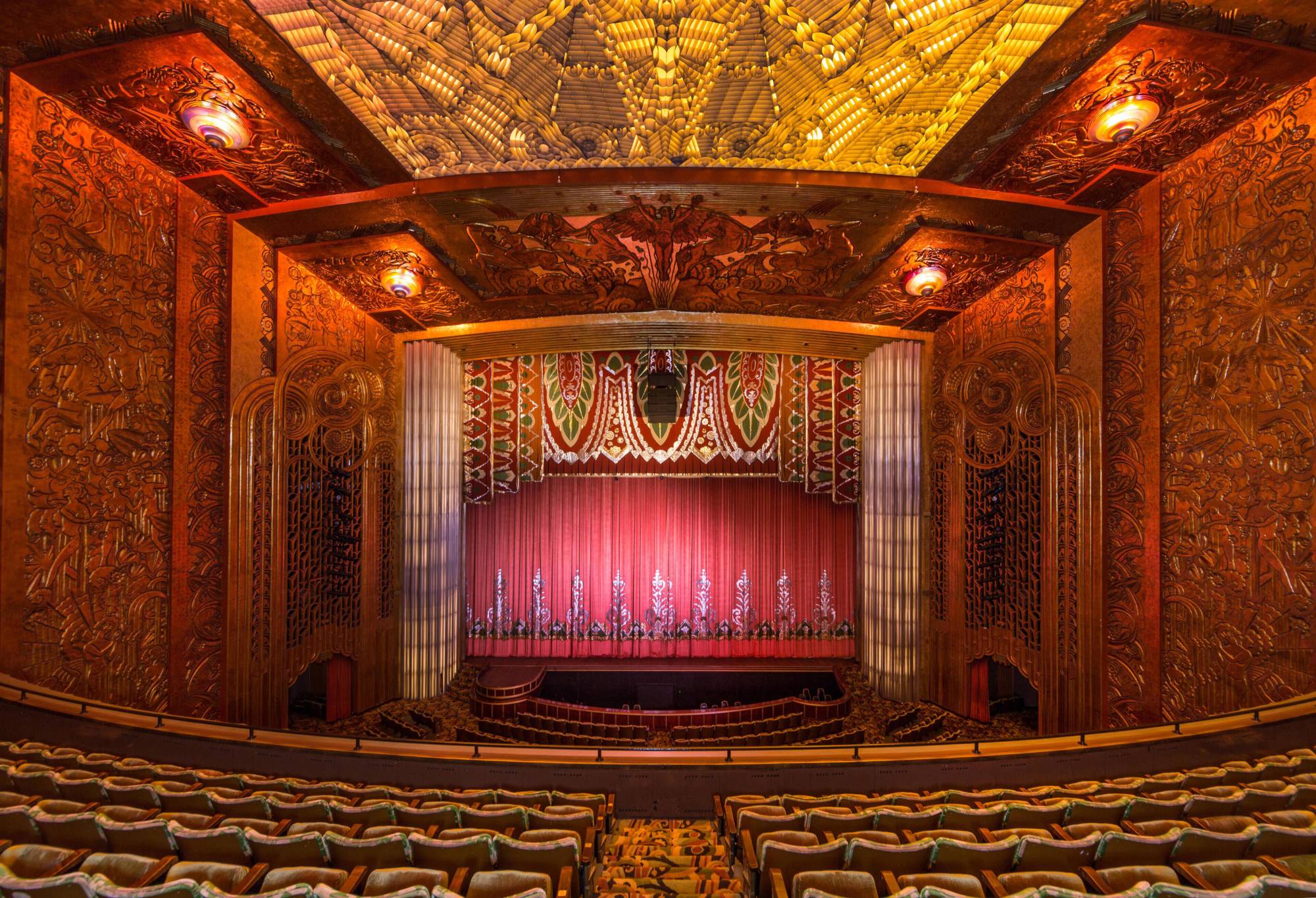
"caption": "The Paramount Theatre is a fully restored Art Deco theater in Oakland, designed by San Francisco architect Timothy Pflueger and opened in 1931.",
"credit": "Courtesy Paramount Theatre",
"altTag": "The inside of an ornate movie theater, shown from the balcony, with a large red curtain and seats",
"description": null,
"imgSizes": {
"medium": {
"file": "https://cdn.kqed.org/wp-content/uploads/sites/2/2026/07/ParamountTheatre.Oakland-2000x1364.jpg",
"width": 2000,
"height": 1364,
"mimeType": "image/jpeg"
},
"large": {
"file": "https://cdn.kqed.org/wp-content/uploads/sites/2/2026/07/ParamountTheatre.Oakland-2000x1364.jpg",
"width": 2000,
"height": 1364,
"mimeType": "image/jpeg"
},
"thumbnail": {
"file": "https://cdn.kqed.org/wp-content/uploads/sites/2/2026/07/ParamountTheatre.Oakland-160x109.jpg",
"width": 160,
"height": 109,
"mimeType": "image/jpeg"
},
"medium_large": {
"file": "https://cdn.kqed.org/wp-content/uploads/sites/2/2026/07/ParamountTheatre.Oakland-768x524.jpg",
"width": 768,
"height": 524,
"mimeType": "image/jpeg"
},
"1536x1536": {
"file": "https://cdn.kqed.org/wp-content/uploads/sites/2/2026/07/ParamountTheatre.Oakland-1536x1047.jpg",
"width": 1536,
"height": 1047,
"mimeType": "image/jpeg"
},
"2048x2048": {
"file": "https://cdn.kqed.org/wp-content/uploads/sites/2/2026/07/ParamountTheatre.Oakland-2048x1396.jpg",
"width": 2048,
"height": 1396,
"mimeType": "image/jpeg"
},
"post-thumbnail": {
"file": "https://cdn.kqed.org/wp-content/uploads/sites/2/2026/07/ParamountTheatre.Oakland-672x372.jpg",
"width": 672,
"height": 372,
"mimeType": "image/jpeg"
},
"twentyfourteen-full-width": {
"file": "https://cdn.kqed.org/wp-content/uploads/sites/2/2026/07/ParamountTheatre.Oakland-1038x576.jpg",
"width": 1038,
"height": 576,
"mimeType": "image/jpeg"
},
"full-width": {
"file": "https://cdn.kqed.org/wp-content/uploads/sites/2/2026/07/ParamountTheatre.Oakland-2000x1364.jpg",
"width": 2000,
"height": 1364,
"mimeType": "image/jpeg"
},
"npr-cds-wide": {
"file": "https://cdn.kqed.org/wp-content/uploads/sites/2/2026/07/ParamountTheatre.Oakland-1200x675.jpg",
"width": 1200,
"height": 675,
"mimeType": "image/jpeg"
},
"npr-cds-square": {
"file": "https://cdn.kqed.org/wp-content/uploads/sites/2/2026/07/ParamountTheatre.Oakland-600x600.jpg",
"width": 600,
"height": 600,
"mimeType": "image/jpeg"
},
"kqedFullSize": {
"file": "https://cdn.kqed.org/wp-content/uploads/sites/2/2026/07/ParamountTheatre.Oakland-scaled.jpg",
"width": 2560,
"height": 1745
}
},
"isLoading": false,
"fetchFailed": false
},
"arts_13991455": {
"type": "attachments",
"id": "arts_13991455",
"meta": {
"index": "attachments_1716263798",
"site": "arts",
"id": "13991455",
"found": true
},
"title": "Fillmore Heritage Center",
"publishDate": 1783547688,
"status": "inherit",
"parent": 13991451,
"modified": 1783619203,
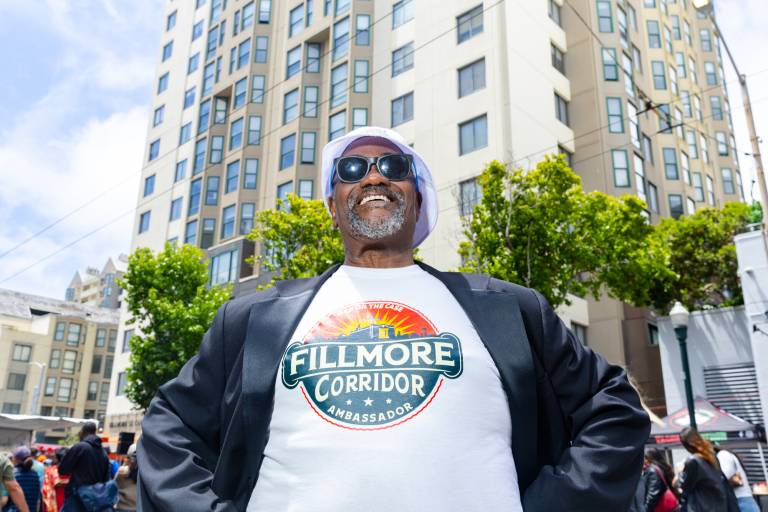
"caption": "Ace Washington, Fillmore Corridor Ambassador, poses for a portrait outside of the Fillmore Heritage Center in San Francisco on Saturday, July 4, 2026. He hopes the center's return to public programming signals “a new era” for the neighborhood: “We have no time for errors.”",
"credit": "Estefany Gonzalez for KQED",
"altTag": null,
"description": null,
"imgSizes": {
"thumbnail": {
"file": "https://cdn.kqed.org/wp-content/uploads/sites/2/2026/07/20260704_FillmoreHC_EG_06_qed-160x107.jpg",
"width": 160,
"height": 107,
"mimeType": "image/jpeg"
},
"medium_large": {
"file": "https://cdn.kqed.org/wp-content/uploads/sites/2/2026/07/20260704_FillmoreHC_EG_06_qed-768x512.jpg",
"width": 768,
"height": 512,
"mimeType": "image/jpeg"
},
"1536x1536": {
"file": "https://cdn.kqed.org/wp-content/uploads/sites/2/2026/07/20260704_FillmoreHC_EG_06_qed-1536x1024.jpg",
"width": 1536,
"height": 1024,
"mimeType": "image/jpeg"
},
"post-thumbnail": {
"file": "https://cdn.kqed.org/wp-content/uploads/sites/2/2026/07/20260704_FillmoreHC_EG_06_qed-672x372.jpg",
"width": 672,
"height": 372,
"mimeType": "image/jpeg"
},
"twentyfourteen-full-width": {
"file": "https://cdn.kqed.org/wp-content/uploads/sites/2/2026/07/20260704_FillmoreHC_EG_06_qed-1038x576.jpg",
"width": 1038,
"height": 576,
"mimeType": "image/jpeg"
},
"npr-cds-wide": {
"file": "https://cdn.kqed.org/wp-content/uploads/sites/2/2026/07/20260704_FillmoreHC_EG_06_qed-1200x675.jpg",
"width": 1200,
"height": 675,
"mimeType": "image/jpeg"
},
"npr-cds-square": {
"file": "https://cdn.kqed.org/wp-content/uploads/sites/2/2026/07/20260704_FillmoreHC_EG_06_qed-600x600.jpg",
"width": 600,
"height": 600,
"mimeType": "image/jpeg"
},
"kqedFullSize": {
"file": "https://cdn.kqed.org/wp-content/uploads/sites/2/2026/07/20260704_FillmoreHC_EG_06_qed.jpg",
"width": 2000,
"height": 1333
}
},
"isLoading": false,
"fetchFailed": false
},
"arts_13991405": {
"type": "attachments",
"id": "arts_13991405",
"meta": {
"index": "attachments_1716263798",
"site": "arts",
"id": "13991405",
"found": true
},
"title": "260706-StatuesinSFToppled-05-BL",
"publishDate": 1783471288,
"status": "inherit",
"parent": 0,
"modified": 1783484944,
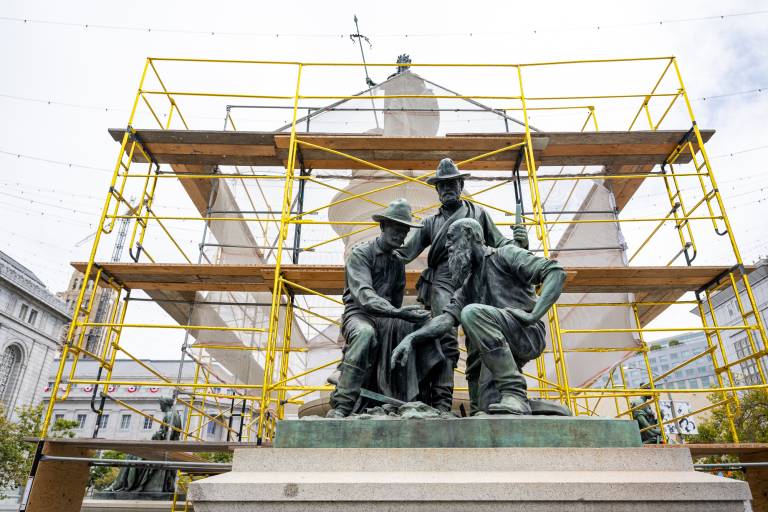
"caption": "Kaleb Duarte's 'Embassy of the Refugee' surrounds the 'Pioneer Monument' in San Francisco's Civic Center on July 6, 2026. The artwork uses scaffolding, plywood, netting and performance to highlight the experiences of undocumented migrants.",
"credit": "Beth LaBerge/KQED",
"altTag": "gold-covered scaffolding behind bronze statue of three miners",
"description": null,
"imgSizes": {
"thumbnail": {
"file": "https://cdn.kqed.org/wp-content/uploads/sites/2/2026/07/260706-StatuesinSFToppled-05-BL-160x107.jpg",
"width": 160,
"height": 107,
"mimeType": "image/jpeg"
},
"medium_large": {
"file": "https://cdn.kqed.org/wp-content/uploads/sites/2/2026/07/260706-StatuesinSFToppled-05-BL-768x512.jpg",
"width": 768,
"height": 512,
"mimeType": "image/jpeg"
},
"1536x1536": {
"file": "https://cdn.kqed.org/wp-content/uploads/sites/2/2026/07/260706-StatuesinSFToppled-05-BL-1536x1024.jpg",
"width": 1536,
"height": 1024,
"mimeType": "image/jpeg"
},
"post-thumbnail": {
"file": "https://cdn.kqed.org/wp-content/uploads/sites/2/2026/07/260706-StatuesinSFToppled-05-BL-672x372.jpg",
"width": 672,
"height": 372,
"mimeType": "image/jpeg"
},
"twentyfourteen-full-width": {
"file": "https://cdn.kqed.org/wp-content/uploads/sites/2/2026/07/260706-StatuesinSFToppled-05-BL-1038x576.jpg",
"width": 1038,
"height": 576,
"mimeType": "image/jpeg"
},
"npr-cds-wide": {
"file": "https://cdn.kqed.org/wp-content/uploads/sites/2/2026/07/260706-StatuesinSFToppled-05-BL-1200x675.jpg",
"width": 1200,
"height": 675,
"mimeType": "image/jpeg"
},
"npr-cds-square": {
"file": "https://cdn.kqed.org/wp-content/uploads/sites/2/2026/07/260706-StatuesinSFToppled-05-BL-600x600.jpg",
"width": 600,
"height": 600,
"mimeType": "image/jpeg"
},
"kqedFullSize": {
"file": "https://cdn.kqed.org/wp-content/uploads/sites/2/2026/07/260706-StatuesinSFToppled-05-BL.jpg",
"width": 2000,
"height": 1333
}
},
"isLoading": false,
"fetchFailed": false
},
"arts_13934882": {
"type": "attachments",
"id": "arts_13934882",
"meta": {
"index": "attachments_1716263798",
"site": "arts",
"id": "13934882",
"found": true
},
"parent": 13934324,
"imgSizes": {
"twentyfourteen-full-width": {
"file": "https://ww2.kqed.org/app/uploads/sites/2/2023/09/Hiero.Group_.2023-1038x576.jpg",
"width": 1038,
"mimeType": "image/jpeg",
"height": 576
},
"thumbnail": {
"file": "https://ww2.kqed.org/app/uploads/sites/2/2023/09/Hiero.Group_.2023-160x120.jpg",
"width": 160,
"mimeType": "image/jpeg",
"height": 120
},
"post-thumbnail": {
"file": "https://ww2.kqed.org/app/uploads/sites/2/2023/09/Hiero.Group_.2023-672x372.jpg",
"width": 672,
"mimeType": "image/jpeg",
"height": 372
},
"kqedFullSize": {
"file": "https://ww2.kqed.org/app/uploads/sites/2/2023/09/Hiero.Group_.2023-scaled.jpg",
"width": 2560,
"height": 1920
},
"2048x2048": {
"file": "https://ww2.kqed.org/app/uploads/sites/2/2023/09/Hiero.Group_.2023-2048x1536.jpg",
"width": 2048,
"mimeType": "image/jpeg",
"height": 1536
},
"large": {
"file": "https://ww2.kqed.org/app/uploads/sites/2/2023/09/Hiero.Group_.2023-1020x765.jpg",
"width": 1020,
"mimeType": "image/jpeg",
"height": 765
},
"1536x1536": {
"file": "https://ww2.kqed.org/app/uploads/sites/2/2023/09/Hiero.Group_.2023-1536x1152.jpg",
"width": 1536,
"mimeType": "image/jpeg",
"height": 1152
},
"full-width": {
"file": "https://ww2.kqed.org/app/uploads/sites/2/2023/09/Hiero.Group_.2023-1920x1440.jpg",
"width": 1920,
"mimeType": "image/jpeg",
"height": 1440
},
"medium": {
"file": "https://ww2.kqed.org/app/uploads/sites/2/2023/09/Hiero.Group_.2023-800x600.jpg",
"width": 800,
"mimeType": "image/jpeg",
"height": 600
},
"medium_large": {
"file": "https://ww2.kqed.org/app/uploads/sites/2/2023/09/Hiero.Group_.2023-768x576.jpg",
"width": 768,
"mimeType": "image/jpeg",
"height": 576
}
},
"publishDate": 1695055392,
"modified": 1695055418,
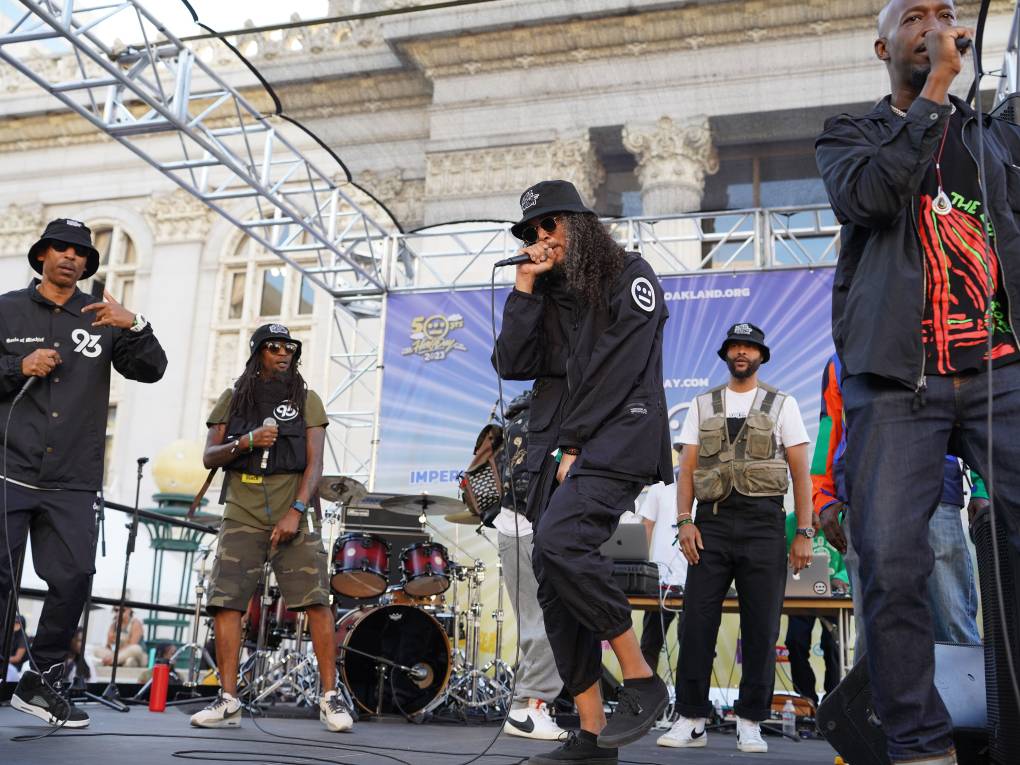
"caption": "Hieroglyphics on stage at Hiero Day in Frank Ogawa Plaza, Oakland, Sept. 4, 2023.",
"description": null,
"title": "Hiero.Group.2023",
"credit": "Eric Arnold/KQED",
"status": "inherit",
"altTag": null,
"isLoading": false,
"fetchFailed": false
},
"arts_13991258": {
"type": "attachments",
"id": "arts_13991258",
"meta": {
"index": "attachments_1716263798",
"site": "arts",
"id": "13991258",
"found": true
},
"title": "The Plenary_Illuminations_Credit_ Kathleen Sheffer_5",
"publishDate": 1782934483,
"status": "inherit",
"parent": 13991246,
"modified": 1782934616,
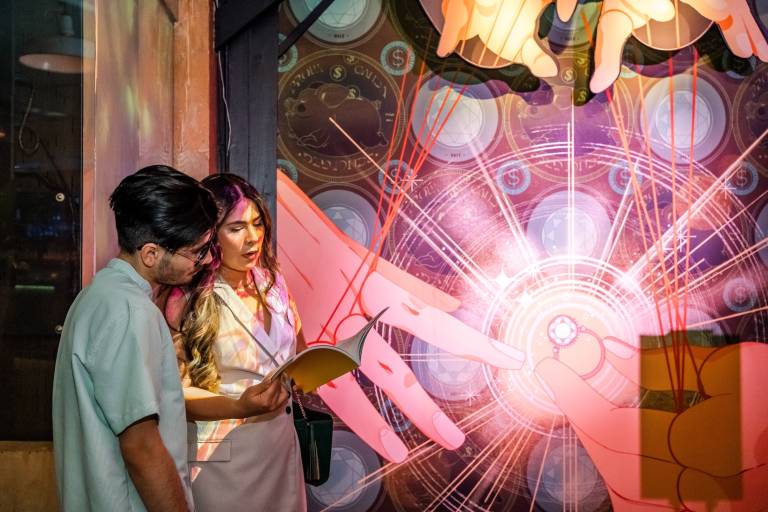
"caption": "The Plenary, Co., a nonprofit that uses art and science to inspire people to get involved in their communities, organized Future of Us Festival with a crew of interdisciplinary collaborators.",
"credit": "Kathleen Sheffer",
"altTag": null,
"description": null,
"imgSizes": {
"thumbnail": {
"file": "https://cdn.kqed.org/wp-content/uploads/sites/2/2026/07/The-Plenary_Illuminations_Credit_-Kathleen-Sheffer_5-160x107.jpg",
"width": 160,
"height": 107,
"mimeType": "image/jpeg"
},
"medium_large": {
"file": "https://cdn.kqed.org/wp-content/uploads/sites/2/2026/07/The-Plenary_Illuminations_Credit_-Kathleen-Sheffer_5-768x512.jpg",
"width": 768,
"height": 512,
"mimeType": "image/jpeg"
},
"1536x1536": {
"file": "https://cdn.kqed.org/wp-content/uploads/sites/2/2026/07/The-Plenary_Illuminations_Credit_-Kathleen-Sheffer_5-1536x1024.jpg",
"width": 1536,
"height": 1024,
"mimeType": "image/jpeg"
},
"post-thumbnail": {
"file": "https://cdn.kqed.org/wp-content/uploads/sites/2/2026/07/The-Plenary_Illuminations_Credit_-Kathleen-Sheffer_5-672x372.jpg",
"width": 672,
"height": 372,
"mimeType": "image/jpeg"
},
"twentyfourteen-full-width": {
"file": "https://cdn.kqed.org/wp-content/uploads/sites/2/2026/07/The-Plenary_Illuminations_Credit_-Kathleen-Sheffer_5-1038x576.jpg",
"width": 1038,
"height": 576,
"mimeType": "image/jpeg"
},
"npr-cds-wide": {
"file": "https://cdn.kqed.org/wp-content/uploads/sites/2/2026/07/The-Plenary_Illuminations_Credit_-Kathleen-Sheffer_5-1200x675.jpg",
"width": 1200,
"height": 675,
"mimeType": "image/jpeg"
},
"npr-cds-square": {
"file": "https://cdn.kqed.org/wp-content/uploads/sites/2/2026/07/The-Plenary_Illuminations_Credit_-Kathleen-Sheffer_5-600x600.jpg",
"width": 600,
"height": 600,
"mimeType": "image/jpeg"
},
"kqedFullSize": {
"file": "https://cdn.kqed.org/wp-content/uploads/sites/2/2026/07/The-Plenary_Illuminations_Credit_-Kathleen-Sheffer_5.jpg",
"width": 2000,
"height": 1333
}
},
"isLoading": false,
"fetchFailed": false
},
"arts_13991185": {
"type": "attachments",
"id": "arts_13991185",
"meta": {
"index": "attachments_1716263798",
"site": "arts",
"id": "13991185",
"found": true
},
"title": "Shotwell-1_BART-Show_Karoline-Hanson-Collins",
"publishDate": 1782835382,
"status": "inherit",
"parent": 0,
"modified": 1782837092,
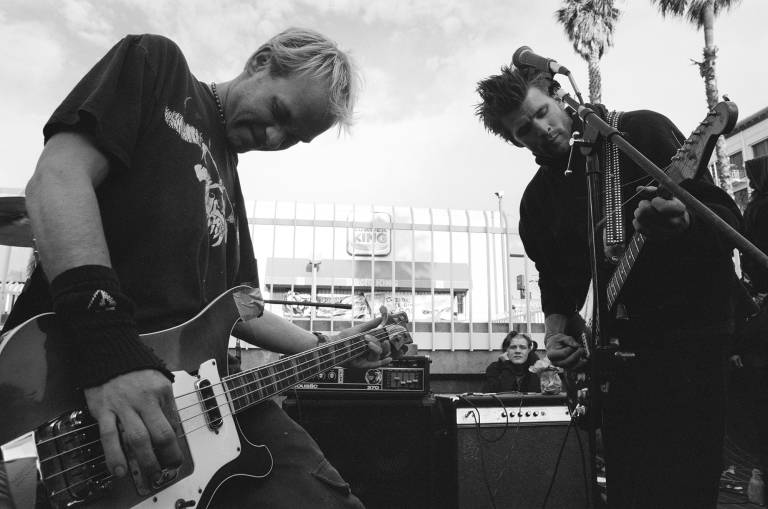
"caption": "Mission District band Shotwell plays a generator show at the 16th and Mission BART plaza, circa late 1990s. ",
"credit": "Karoline Collins",
"altTag": "Two young men play electric bass and guitar against a backdrop of iron fencing and a Burger King",
"description": null,
"imgSizes": {
"thumbnail": {
"file": "https://cdn.kqed.org/wp-content/uploads/sites/2/2026/06/Shotwell-1_BART-Show_Karoline-Hanson-Collins-160x106.jpg",
"width": 160,
"height": 106,
"mimeType": "image/jpeg"
},
"medium_large": {
"file": "https://cdn.kqed.org/wp-content/uploads/sites/2/2026/06/Shotwell-1_BART-Show_Karoline-Hanson-Collins-768x509.jpg",
"width": 768,
"height": 509,
"mimeType": "image/jpeg"
},
"1536x1536": {
"file": "https://cdn.kqed.org/wp-content/uploads/sites/2/2026/06/Shotwell-1_BART-Show_Karoline-Hanson-Collins-1536x1018.jpg",
"width": 1536,
"height": 1018,
"mimeType": "image/jpeg"
},
"post-thumbnail": {
"file": "https://cdn.kqed.org/wp-content/uploads/sites/2/2026/06/Shotwell-1_BART-Show_Karoline-Hanson-Collins-672x372.jpg",
"width": 672,
"height": 372,
"mimeType": "image/jpeg"
},
"twentyfourteen-full-width": {
"file": "https://cdn.kqed.org/wp-content/uploads/sites/2/2026/06/Shotwell-1_BART-Show_Karoline-Hanson-Collins-1038x576.jpg",
"width": 1038,
"height": 576,
"mimeType": "image/jpeg"
},
"npr-cds-wide": {
"file": "https://cdn.kqed.org/wp-content/uploads/sites/2/2026/06/Shotwell-1_BART-Show_Karoline-Hanson-Collins-1200x675.jpg",
"width": 1200,
"height": 675,
"mimeType": "image/jpeg"
},
"npr-cds-square": {
"file": "https://cdn.kqed.org/wp-content/uploads/sites/2/2026/06/Shotwell-1_BART-Show_Karoline-Hanson-Collins-600x600.jpg",
"width": 600,
"height": 600,
"mimeType": "image/jpeg"
},
"kqedFullSize": {
"file": "https://cdn.kqed.org/wp-content/uploads/sites/2/2026/06/Shotwell-1_BART-Show_Karoline-Hanson-Collins.jpg",
"width": 2000,
"height": 1326
}
},
"isLoading": false,
"fetchFailed": false
},
"arts_13991106": {
"type": "attachments",
"id": "arts_13991106",
"meta": {
"index": "attachments_1716263798",
"site": "arts",
"id": "13991106",
"found": true
},
"title": "Arab-Spring---Press-02-(Photo-by-Jared-Randolph)",
"publishDate": 1782412138,
"status": "inherit",
"parent": 0,
"modified": 1782412315,
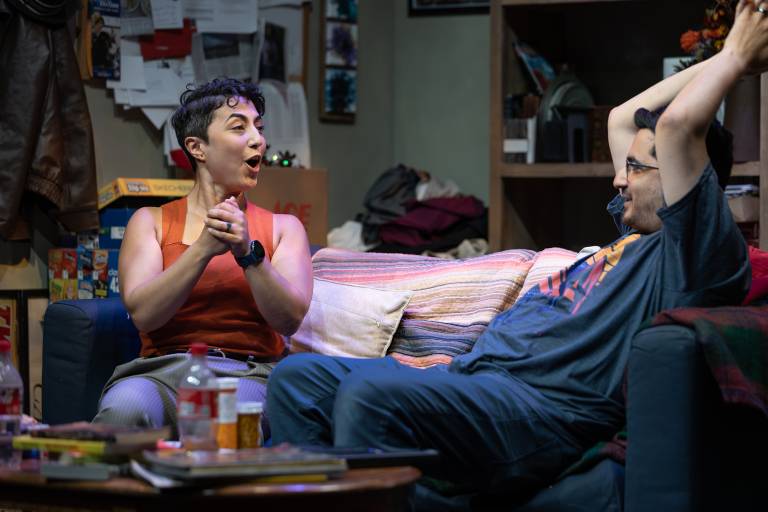
"caption": "Egyptian-American siblings Yusef (Salim Razawi) and Dina (Arti Ishak) take a moment to connect as they prepare for their estranged father’s funeral in the world premiere of ‘Arab Spring’ by Denmo Ibrahim.",
"credit": "Jared Randolph",
"altTag": "A woman and man sit on a couch, amid a very cluttered room, actively in conversation",
"description": null,
"imgSizes": {
"thumbnail": {
"file": "https://cdn.kqed.org/wp-content/uploads/sites/2/2026/06/Arab-Spring-Press-02-Photo-by-Jared-Randolph-160x107.jpg",
"width": 160,
"height": 107,
"mimeType": "image/jpeg"
},
"medium_large": {
"file": "https://cdn.kqed.org/wp-content/uploads/sites/2/2026/06/Arab-Spring-Press-02-Photo-by-Jared-Randolph-768x512.jpg",
"width": 768,
"height": 512,
"mimeType": "image/jpeg"
},
"1536x1536": {
"file": "https://cdn.kqed.org/wp-content/uploads/sites/2/2026/06/Arab-Spring-Press-02-Photo-by-Jared-Randolph-1536x1024.jpg",
"width": 1536,
"height": 1024,
"mimeType": "image/jpeg"
},
"post-thumbnail": {
"file": "https://cdn.kqed.org/wp-content/uploads/sites/2/2026/06/Arab-Spring-Press-02-Photo-by-Jared-Randolph-672x372.jpg",
"width": 672,
"height": 372,
"mimeType": "image/jpeg"
},
"twentyfourteen-full-width": {
"file": "https://cdn.kqed.org/wp-content/uploads/sites/2/2026/06/Arab-Spring-Press-02-Photo-by-Jared-Randolph-1038x576.jpg",
"width": 1038,
"height": 576,
"mimeType": "image/jpeg"
},
"npr-cds-wide": {
"file": "https://cdn.kqed.org/wp-content/uploads/sites/2/2026/06/Arab-Spring-Press-02-Photo-by-Jared-Randolph-1200x675.jpg",
"width": 1200,
"height": 675,
"mimeType": "image/jpeg"
},
"npr-cds-square": {
"file": "https://cdn.kqed.org/wp-content/uploads/sites/2/2026/06/Arab-Spring-Press-02-Photo-by-Jared-Randolph-600x600.jpg",
"width": 600,
"height": 600,
"mimeType": "image/jpeg"
},
"kqedFullSize": {
"file": "https://cdn.kqed.org/wp-content/uploads/sites/2/2026/06/Arab-Spring-Press-02-Photo-by-Jared-Randolph.jpg",
"width": 2000,
"height": 1333
}
},
"isLoading": false,
"fetchFailed": false
},
"arts_13991091": {
"type": "attachments",
"id": "arts_13991091",
"meta": {
"index": "attachments_1716263798",
"site": "arts",
"id": "13991091",
"found": true
},
"title": "Ask E. Jean 3",
"publishDate": 1782408775,
"status": "inherit",
"parent": 13991081,
"modified": 1782408847,
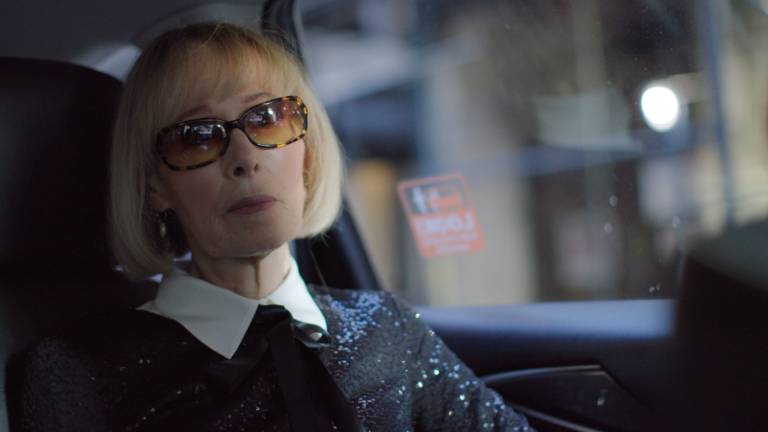
"caption": "A still from Ivy Meeropol's 'Ask E. Jean,' opening June 26 at the Roxie.",
"credit": "Roxie Theater",
"altTag": "older white woman with blonde bob and sunglasses in car",
"description": null,
"imgSizes": {
"thumbnail": {
"file": "https://cdn.kqed.org/wp-content/uploads/sites/2/2026/06/Ask-E.-Jean-3-160x90.jpeg",
"width": 160,
"height": 90,
"mimeType": "image/jpeg"
},
"medium_large": {
"file": "https://cdn.kqed.org/wp-content/uploads/sites/2/2026/06/Ask-E.-Jean-3-768x432.jpeg",
"width": 768,
"height": 432,
"mimeType": "image/jpeg"
},
"1536x1536": {
"file": "https://cdn.kqed.org/wp-content/uploads/sites/2/2026/06/Ask-E.-Jean-3-1536x864.jpeg",
"width": 1536,
"height": 864,
"mimeType": "image/jpeg"
},
"post-thumbnail": {
"file": "https://cdn.kqed.org/wp-content/uploads/sites/2/2026/06/Ask-E.-Jean-3-672x372.jpeg",
"width": 672,
"height": 372,
"mimeType": "image/jpeg"
},
"twentyfourteen-full-width": {
"file": "https://cdn.kqed.org/wp-content/uploads/sites/2/2026/06/Ask-E.-Jean-3-1038x576.jpeg",
"width": 1038,
"height": 576,
"mimeType": "image/jpeg"
},
"npr-cds-wide": {
"file": "https://cdn.kqed.org/wp-content/uploads/sites/2/2026/06/Ask-E.-Jean-3-1200x675.jpeg",
"width": 1200,
"height": 675,
"mimeType": "image/jpeg"
},
"npr-cds-square": {
"file": "https://cdn.kqed.org/wp-content/uploads/sites/2/2026/06/Ask-E.-Jean-3-600x600.jpeg",
"width": 600,
"height": 600,
"mimeType": "image/jpeg"
},
"kqedFullSize": {
"file": "https://cdn.kqed.org/wp-content/uploads/sites/2/2026/06/Ask-E.-Jean-3.jpeg",
"width": 1920,
"height": 1080
}
},
"isLoading": false,
"fetchFailed": false
},
"arts_13990858": {
"type": "attachments",
"id": "arts_13990858",
"meta": {
"index": "attachments_1716263798",
"site": "arts",
"id": "13990858",
"found": true
},
"title": "dr bowers",
"publishDate": 1781732264,
"status": "inherit",
"parent": 13990798,
"modified": 1782149858,
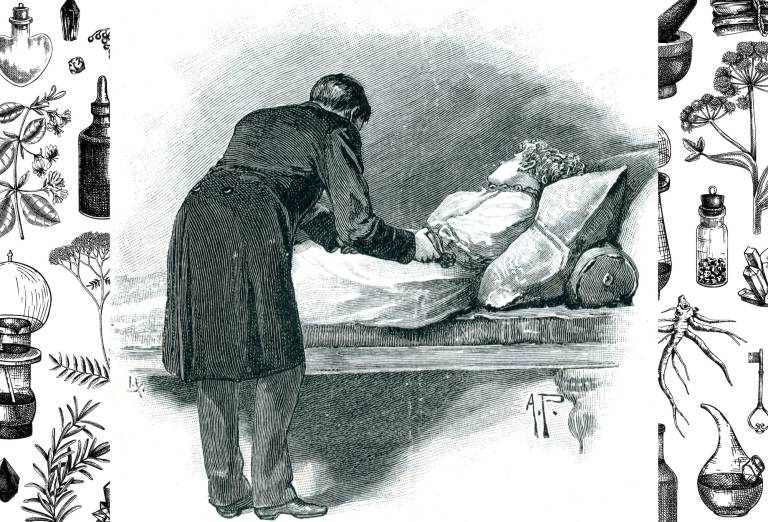
"caption": "Dr. J. Milton Bowers stood trial for the poisoning death of his third wife, Cecelia Benhayon. His first two wives also died in bizarre circumstances.",
"credit": "RockingStock/Levgeniia Lytvynovych/Getty Images",
"altTag": "Black and white illustration of a Victorian doctor at a sick woman's bedside.",
"description": null,
"imgSizes": {
"thumbnail": {
"file": "https://cdn.kqed.org/wp-content/uploads/sites/2/2026/06/dr-bowers-160x109.jpg",
"width": 160,
"height": 109,
"mimeType": "image/jpeg"
},
"medium_large": {
"file": "https://cdn.kqed.org/wp-content/uploads/sites/2/2026/06/dr-bowers-768x522.jpg",
"width": 768,
"height": 522,
"mimeType": "image/jpeg"
},
"1536x1536": {
"file": "https://cdn.kqed.org/wp-content/uploads/sites/2/2026/06/dr-bowers-1536x1044.jpg",
"width": 1536,
"height": 1044,
"mimeType": "image/jpeg"
},
"post-thumbnail": {
"file": "https://cdn.kqed.org/wp-content/uploads/sites/2/2026/06/dr-bowers-672x372.jpg",
"width": 672,
"height": 372,
"mimeType": "image/jpeg"
},
"twentyfourteen-full-width": {
"file": "https://cdn.kqed.org/wp-content/uploads/sites/2/2026/06/dr-bowers-1038x576.jpg",
"width": 1038,
"height": 576,
"mimeType": "image/jpeg"
},
"npr-cds-wide": {
"file": "https://cdn.kqed.org/wp-content/uploads/sites/2/2026/06/dr-bowers-1200x675.jpg",
"width": 1200,
"height": 675,
"mimeType": "image/jpeg"
},
"npr-cds-square": {
"file": "https://cdn.kqed.org/wp-content/uploads/sites/2/2026/06/dr-bowers-600x600.jpg",
"width": 600,
"height": 600,
"mimeType": "image/jpeg"
},
"kqedFullSize": {
"file": "https://cdn.kqed.org/wp-content/uploads/sites/2/2026/06/dr-bowers.jpg",
"width": 2000,
"height": 1359
}
},
"isLoading": false,
"fetchFailed": false
},
"arts_13990886": {
"type": "attachments",
"id": "arts_13990886",
"meta": {
"index": "attachments_1716263798",
"site": "arts",
"id": "13990886",
"found": true
},
"title": "260617-LADYPINKCLARIONALLEY00318_TV-KQED",
"publishDate": 1781812645,
"status": "inherit",
"parent": 0,
"modified": 1781812705,
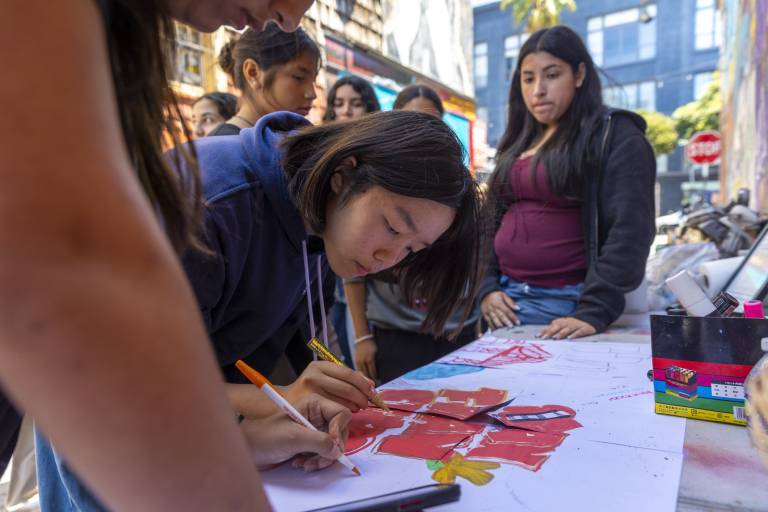
"caption": "Carey Deeter from the Graffiti Camp for Girls collaborates on a sketch design for a graffiti art piece on Clarion Alley in San Francisco on June 17, 2026.",
"credit": "Tâm Vũ/KQED",
"altTag": null,
"description": null,
"imgSizes": {
"thumbnail": {
"file": "https://cdn.kqed.org/wp-content/uploads/sites/2/2026/06/260617-LADYPINKCLARIONALLEY00318_TV-KQED-160x107.jpg",
"width": 160,
"height": 107,
"mimeType": "image/jpeg"
},
"medium_large": {
"file": "https://cdn.kqed.org/wp-content/uploads/sites/2/2026/06/260617-LADYPINKCLARIONALLEY00318_TV-KQED-768x512.jpg",
"width": 768,
"height": 512,
"mimeType": "image/jpeg"
},
"1536x1536": {
"file": "https://cdn.kqed.org/wp-content/uploads/sites/2/2026/06/260617-LADYPINKCLARIONALLEY00318_TV-KQED-1536x1024.jpg",
"width": 1536,
"height": 1024,
"mimeType": "image/jpeg"
},
"post-thumbnail": {
"file": "https://cdn.kqed.org/wp-content/uploads/sites/2/2026/06/260617-LADYPINKCLARIONALLEY00318_TV-KQED-672x372.jpg",
"width": 672,
"height": 372,
"mimeType": "image/jpeg"
},
"twentyfourteen-full-width": {
"file": "https://cdn.kqed.org/wp-content/uploads/sites/2/2026/06/260617-LADYPINKCLARIONALLEY00318_TV-KQED-1038x576.jpg",
"width": 1038,
"height": 576,
"mimeType": "image/jpeg"
},
"npr-cds-wide": {
"file": "https://cdn.kqed.org/wp-content/uploads/sites/2/2026/06/260617-LADYPINKCLARIONALLEY00318_TV-KQED-1200x675.jpg",
"width": 1200,
"height": 675,
"mimeType": "image/jpeg"
},
"npr-cds-square": {
"file": "https://cdn.kqed.org/wp-content/uploads/sites/2/2026/06/260617-LADYPINKCLARIONALLEY00318_TV-KQED-600x600.jpg",
"width": 600,
"height": 600,
"mimeType": "image/jpeg"
},
"kqedFullSize": {
"file": "https://cdn.kqed.org/wp-content/uploads/sites/2/2026/06/260617-LADYPINKCLARIONALLEY00318_TV-KQED.jpg",
"width": 2000,
"height": 1333
}
},
"isLoading": false,
"fetchFailed": false
},
"arts_13990832": {
"type": "attachments",
"id": "arts_13990832",
"meta": {
"index": "attachments_1716263798",
"site": "arts",
"id": "13990832",
"found": true
},
"title": "DELUXE VENUE 1",
"publishDate": 1781653841,
"status": "inherit",
"parent": 13990771,
"modified": 1781653923,
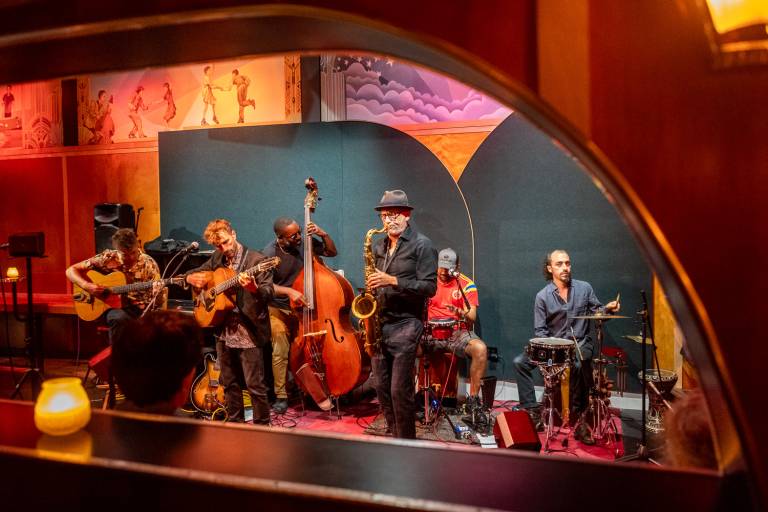
"caption": "Barrio Manouche performs at The Deluxe on June 13, 2026.",
"credit": "Dennis Hearne",
"altTag": "jazz band performs on Art Deco stage with murals behind",
"description": null,
"imgSizes": {
"thumbnail": {
"file": "https://cdn.kqed.org/wp-content/uploads/sites/2/2026/06/DELUXE-VENUE-1-160x107.jpeg",
"width": 160,
"height": 107,
"mimeType": "image/jpeg"
},
"medium_large": {
"file": "https://cdn.kqed.org/wp-content/uploads/sites/2/2026/06/DELUXE-VENUE-1-768x512.jpeg",
"width": 768,
"height": 512,
"mimeType": "image/jpeg"
},
"post-thumbnail": {
"file": "https://cdn.kqed.org/wp-content/uploads/sites/2/2026/06/DELUXE-VENUE-1-672x372.jpeg",
"width": 672,
"height": 372,
"mimeType": "image/jpeg"
},
"twentyfourteen-full-width": {
"file": "https://cdn.kqed.org/wp-content/uploads/sites/2/2026/06/DELUXE-VENUE-1-1038x576.jpeg",
"width": 1038,
"height": 576,
"mimeType": "image/jpeg"
},
"npr-cds-wide": {
"file": "https://cdn.kqed.org/wp-content/uploads/sites/2/2026/06/DELUXE-VENUE-1-1200x675.jpeg",
"width": 1200,
"height": 675,
"mimeType": "image/jpeg"
},
"npr-cds-square": {
"file": "https://cdn.kqed.org/wp-content/uploads/sites/2/2026/06/DELUXE-VENUE-1-600x600.jpeg",
"width": 600,
"height": 600,
"mimeType": "image/jpeg"
},
"kqedFullSize": {
"file": "https://cdn.kqed.org/wp-content/uploads/sites/2/2026/06/DELUXE-VENUE-1.jpeg",
"width": 1500,
"height": 1000
}
},
"isLoading": false,
"fetchFailed": false
},
"arts_13990822": {
"type": "attachments",
"id": "arts_13990822",
"meta": {
"index": "attachments_1716263798",
"site": "arts",
"id": "13990822",
"found": true
},
"title": "SFNF-The-Blackest-Wrench-29",
"publishDate": 1781652062,
"status": "inherit",
"parent": 0,
"modified": 1781652331,
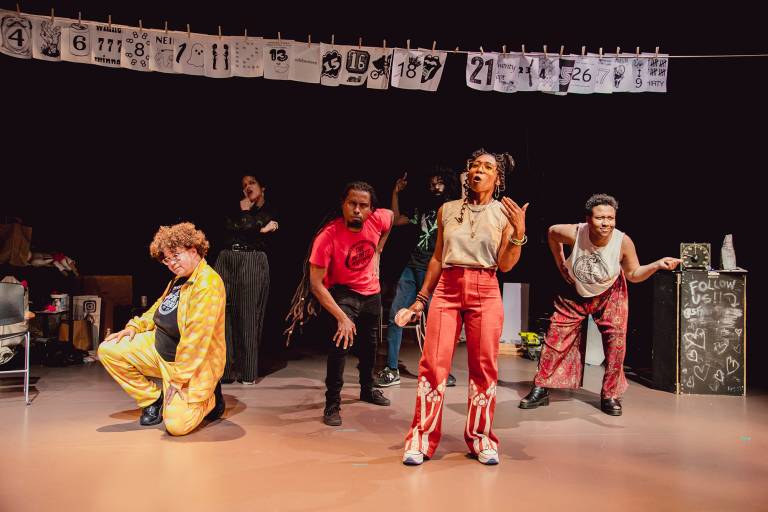
"caption": "A scene from the 2025 edition of the SF Neo-Futurists’ ‘The Blackest Wrench.’ ",
"credit": "Kayleigh Shawn",
"altTag": "A group of Black actors on a beige wooden stage with a black background",
"description": null,
"imgSizes": {
"thumbnail": {
"file": "https://cdn.kqed.org/wp-content/uploads/sites/2/2026/06/SFNF-The-Blackest-Wrench-29-160x107.jpg",
"width": 160,
"height": 107,
"mimeType": "image/jpeg"
},
"medium_large": {
"file": "https://cdn.kqed.org/wp-content/uploads/sites/2/2026/06/SFNF-The-Blackest-Wrench-29-768x512.jpg",
"width": 768,
"height": 512,
"mimeType": "image/jpeg"
},
"1536x1536": {
"file": "https://cdn.kqed.org/wp-content/uploads/sites/2/2026/06/SFNF-The-Blackest-Wrench-29-1536x1024.jpg",
"width": 1536,
"height": 1024,
"mimeType": "image/jpeg"
},
"post-thumbnail": {
"file": "https://cdn.kqed.org/wp-content/uploads/sites/2/2026/06/SFNF-The-Blackest-Wrench-29-672x372.jpg",
"width": 672,
"height": 372,
"mimeType": "image/jpeg"
},
"twentyfourteen-full-width": {
"file": "https://cdn.kqed.org/wp-content/uploads/sites/2/2026/06/SFNF-The-Blackest-Wrench-29-1038x576.jpg",
"width": 1038,
"height": 576,
"mimeType": "image/jpeg"
},
"npr-cds-wide": {
"file": "https://cdn.kqed.org/wp-content/uploads/sites/2/2026/06/SFNF-The-Blackest-Wrench-29-1200x675.jpg",
"width": 1200,
"height": 675,
"mimeType": "image/jpeg"
},
"npr-cds-square": {
"file": "https://cdn.kqed.org/wp-content/uploads/sites/2/2026/06/SFNF-The-Blackest-Wrench-29-600x600.jpg",
"width": 600,
"height": 600,
"mimeType": "image/jpeg"
},
"kqedFullSize": {
"file": "https://cdn.kqed.org/wp-content/uploads/sites/2/2026/06/SFNF-The-Blackest-Wrench-29.jpg",
"width": 2000,
"height": 1333
}
},
"isLoading": false,
"fetchFailed": false
}
},
"audioPlayerReducer": {
"postId": "stream_live",
"isPaused": true,
"isPlaying": false,
"pfsActive": false,
"pledgeModalIsOpen": true,
"playerDrawerIsOpen": false,
"liveAudioPlayStartedAt": 0,
"liveAudioPlayContext": ""
},
"authorsReducer": {
"byline_arts_13991166": {
"type": "authors",
"id": "byline_arts_13991166",
"meta": {
"override": true
},
"slug": "byline_arts_13991166",
"name": "Trevor Schock",
"isLoading": false
},
"byline_arts_13990818": {
"type": "authors",
"id": "byline_arts_13990818",
"meta": {
"override": true
},
"slug": "byline_arts_13990818",
"name": "Charles Lewis III",
"isLoading": false
},
"mfox": {
"type": "authors",
"id": "22",
"meta": {
"index": "authors_1716337520",
"id": "22",
"found": true
},
"name": "Michael Fox",
"firstName": "Michael",
"lastName": "Fox",
"slug": "mfox",
"email": "foxonfilm@yahoo.com",
"display_author_email": false,
"staff_mastheads": [],
"title": "KQED Contributor",
"bio": "Michael Fox has written about film for dozens of publications since 1987. He is a founding member of the San Francisco Bay Area Film Critics Circle.",
"avatar": "https://secure.gravatar.com/avatar/d9849d6c659c41414795c471d907bb97b396e2a32b88e20e6ff66f65fbdd6dcd?s=600&d=blank&r=g",
"twitter": null,
"bluesky": null,
"facebook": null,
"instagram": null,
"linkedin": null,
"sites": [
{
"site": "arts",
"roles": [
"Contributor",
"contributor"
]
}
],
"headData": {
"title": "Michael Fox | KQED",
"description": "KQED Contributor",
"ogImgSrc": "https://secure.gravatar.com/avatar/d9849d6c659c41414795c471d907bb97b396e2a32b88e20e6ff66f65fbdd6dcd?s=600&d=blank&r=g",
"twImgSrc": "https://secure.gravatar.com/avatar/d9849d6c659c41414795c471d907bb97b396e2a32b88e20e6ff66f65fbdd6dcd?s=600&d=blank&r=g"
},
"isLoading": false,
"link": "/author/mfox"
},
"shotchkiss": {
"type": "authors",
"id": "61",
"meta": {
"index": "authors_1716337520",
"id": "61",
"found": true
},
"name": "Sarah Hotchkiss",
"firstName": "Sarah",
"lastName": "Hotchkiss",
"slug": "shotchkiss",
"email": "shotchkiss@kqed.org",
"display_author_email": true,
"staff_mastheads": [
"arts"
],
"title": "Senior Editor",
"bio": "Sarah Hotchkiss is a San Francisco \u003ca href=\"http://www.sarahhotchkiss.com\">artist\u003c/a> and arts writer. In 2019, she received the Dorothea & Leo Rabkin Foundation grant for visual art journalism and in 2020 she received a Society of Professional Journalists, Northern California award for excellence in arts and culture reporting.",
"avatar": "https://secure.gravatar.com/avatar/bc662df144b3d27fd8b1b6f1c2a420d34e91e53154d411bb7ad353cc8b6cea8d?s=600&d=blank&r=g",
"twitter": null,
"bluesky": null,
"facebook": null,
"instagram": null,
"linkedin": null,
"sites": [
{
"site": "",
"roles": [
"editor"
]
},
{
"site": "arts",
"roles": [
"Contributor",
"administrator"
]
},
{
"site": "artschool",
"roles": [
"administrator"
]
},
{
"site": "news",
"roles": [
"editor"
]
},
{
"site": "pop",
"roles": [
"administrator"
]
},
{
"site": "bayareabites",
"roles": [
"editor"
]
},
{
"site": "spark",
"roles": [
"editor"
]
},
{
"site": "checkplease",
"roles": [
"editor"
]
}
],
"headData": {
"title": "Sarah Hotchkiss | KQED",
"description": "Senior Editor",
"ogImgSrc": "https://secure.gravatar.com/avatar/bc662df144b3d27fd8b1b6f1c2a420d34e91e53154d411bb7ad353cc8b6cea8d?s=600&d=blank&r=g",
"twImgSrc": "https://secure.gravatar.com/avatar/bc662df144b3d27fd8b1b6f1c2a420d34e91e53154d411bb7ad353cc8b6cea8d?s=600&d=blank&r=g"
},
"isLoading": false,
"link": "/author/shotchkiss"
},
"agilbert": {
"type": "authors",
"id": "86",
"meta": {
"index": "authors_1716337520",
"id": "86",
"found": true
},
"name": "Andrew Gilbert",
"firstName": "Andrew",
"lastName": "Gilbert",
"slug": "agilbert",
"email": "jazzscribe@aol.com",
"display_author_email": false,
"staff_mastheads": [],
"title": "KQED Contributor",
"bio": "A Los Angeles native based in the Berkeley area since 1996, Andrew Gilbert covers jazz, international music and dance for KQED's \u003ci>California Report, \u003c/i>the\u003ci> Mercury News\u003c/i>, \u003ci>San Francisco Chronicle\u003c/i>, \u003ci>Berkeleyside.com\u003c/i>, and other publications. He is available for weddings and bar and bat mitzvahs. #jazzscribe",
"avatar": "https://secure.gravatar.com/avatar/d7bcafdbefdd39e9a68f88724ca616eb4e7a5a6bff9cdfb62de652a1e1751471?s=600&d=blank&r=g",
"twitter": null,
"bluesky": null,
"facebook": null,
"instagram": null,
"linkedin": null,
"sites": [
{
"site": "arts",
"roles": [
"Contributor",
"author"
]
},
{
"site": "news",
"roles": [
"author"
]
}
],
"headData": {
"title": "Andrew Gilbert | KQED",
"description": "KQED Contributor",
"ogImgSrc": "https://secure.gravatar.com/avatar/d7bcafdbefdd39e9a68f88724ca616eb4e7a5a6bff9cdfb62de652a1e1751471?s=600&d=blank&r=g",
"twImgSrc": "https://secure.gravatar.com/avatar/d7bcafdbefdd39e9a68f88724ca616eb4e7a5a6bff9cdfb62de652a1e1751471?s=600&d=blank&r=g"
},
"isLoading": false,
"link": "/author/agilbert"
},
"gmeline": {
"type": "authors",
"id": "185",
"meta": {
"index": "authors_1716337520",
"id": "185",
"found": true
},
"name": "Gabe Meline",
"firstName": "Gabe",
"lastName": "Meline",
"slug": "gmeline",
"email": "gmeline@kqed.org",
"display_author_email": true,
"staff_mastheads": [
"arts"
],
"title": "Senior Editor, KQED Arts & Culture",
"bio": "Gabe Meline entered journalism at age 15 making photocopied zines, and has since earned awards from the Edward R. Murrow Awards, the Society for Professional Journalists, the Online Journalism Awards, the Association of Alternative Newsweeklies and the California Newspaper Publishers Association. Prior to KQED, he was the editor of the \u003cem>North Bay Bohemian\u003c/em> and a touring musician. He lives with his wife and daughter in his hometown of Santa Rosa, CA.",
"avatar": "https://secure.gravatar.com/avatar/5bebe57be0d8bc2dd318934feb47299e2d2d10cba28d09d8d7afb389a2ce2bdd?s=600&d=blank&r=g",
"twitter": null,
"bluesky": null,
"facebook": null,
"instagram": null,
"linkedin": null,
"sites": [
{
"site": "",
"roles": [
"editor"
]
},
{
"site": "arts",
"roles": [
"administrator"
]
},
{
"site": "artschool",
"roles": [
"editor"
]
},
{
"site": "news",
"roles": [
"author"
]
},
{
"site": "pop",
"roles": [
"editor"
]
},
{
"site": "bayareabites",
"roles": [
"editor"
]
},
{
"site": "food",
"roles": [
"editor"
]
},
{
"site": "forum",
"roles": [
"administrator"
]
},
{
"site": "liveblog",
"roles": [
"editor"
]
},
{
"site": "hiphop",
"roles": [
"editor"
]
}
],
"headData": {
"title": "Gabe Meline | KQED",
"description": "Senior Editor, KQED Arts & Culture",
"ogImgSrc": "https://secure.gravatar.com/avatar/5bebe57be0d8bc2dd318934feb47299e2d2d10cba28d09d8d7afb389a2ce2bdd?s=600&d=blank&r=g",
"twImgSrc": "https://secure.gravatar.com/avatar/5bebe57be0d8bc2dd318934feb47299e2d2d10cba28d09d8d7afb389a2ce2bdd?s=600&d=blank&r=g"
},
"isLoading": false,
"link": "/author/gmeline"
},
"ralexandra": {
"type": "authors",
"id": "11242",
"meta": {
"index": "authors_1716337520",
"id": "11242",
"found": true
},
"name": "Rae Alexandra",
"firstName": "Rae",
"lastName": "Alexandra",
"slug": "ralexandra",
"email": "ralexandra@kqed.org",
"display_author_email": true,
"staff_mastheads": [],
"title": "Reporter/Producer",
"bio": "Rae Alexandra is a Reporter/Producer for KQED Arts & Culture, and the creator/author of the \u003ca href=\"https://www.kqed.org/arts/program/rebel-girls-from-bay-area-history\">Rebel Girls From Bay Area History\u003c/a> and \u003ca href=\"https://www.kqed.org/bizarrebayarea\">Bizarre Bay Area\u003c/a> series. Her debut book, \u003ca href=\"https://citylights.com/politics-current-events-history/unsung-heroines35-women-who-changed/\">Unsung Heroines: 35 Women Who Changed the Bay Area\u003c/a> was published by City Lights in March 2026. In 2023, Rae was awarded an SPJ Excellence in Journalism Award for Arts & Culture. Rae was born and raised in Wales and subsequently — even after two decades in Northern California — still uses phrases that regularly baffle her coworkers.",
"avatar": "https://secure.gravatar.com/avatar/edfee8176c80cc0a382b051190f5341997df378a934a5774dcb0977732dfd401?s=600&d=blank&r=g",
"twitter": null,
"bluesky": null,
"facebook": null,
"instagram": null,
"linkedin": null,
"sites": [
{
"site": "arts",
"roles": [
"subscriber"
]
},
{
"site": "news",
"roles": [
"subscriber"
]
},
{
"site": "pop",
"roles": [
"subscriber"
]
},
{
"site": "bayareabites",
"roles": [
"subscriber"
]
},
{
"site": "science",
"roles": [
"subscriber"
]
}
],
"headData": {
"title": "Rae Alexandra | KQED",
"description": "Reporter/Producer",
"ogImgSrc": "https://secure.gravatar.com/avatar/edfee8176c80cc0a382b051190f5341997df378a934a5774dcb0977732dfd401?s=600&d=blank&r=g",
"twImgSrc": "https://secure.gravatar.com/avatar/edfee8176c80cc0a382b051190f5341997df378a934a5774dcb0977732dfd401?s=600&d=blank&r=g"
},
"isLoading": false,
"link": "/author/ralexandra"
},
"nvoynovskaya": {
"type": "authors",
"id": "11387",
"meta": {
"index": "authors_1716337520",
"id": "11387",
"found": true
},
"name": "Nastia Voynovskaya",
"firstName": "Nastia",
"lastName": "Voynovskaya",
"slug": "nvoynovskaya",
"email": "nvoynovskaya@kqed.org",
"display_author_email": false,
"staff_mastheads": [
"arts"
],
"title": "Editor and reporter",
"bio": "Nastia Voynovskaya is a reporter, editor and host at KQED Arts & Culture. She's been covering the arts in the Bay Area for over a decade, with a focus on music, queer culture, labor issues and grassroots organizing. She has edited KQED story series such as Trans Bay: A History of San Francisco's Gender-Diverse Community, and co-created KQED's Bay Area hip-hop history project, That's My Word. Nastia's work has been recognized by the Society of Professional Journalists and San Francisco Press Club. She regularly appears on podcasts and radio programs, including NPR's All Songs Considered, and hosts live events where music, culture and conversation meet.",
"avatar": "https://secure.gravatar.com/avatar/5025ee460e5a85d69ca20ea6c6f2f80d7e17795c828f61ea3aecfcd924e9042e?s=600&d=blank&r=g",
"twitter": null,
"bluesky": null,
"facebook": null,
"instagram": "https://www.instagram.com/nananastia/",
"linkedin": null,
"sites": [
{
"site": "",
"roles": [
"editor"
]
},
{
"site": "arts",
"roles": [
"administrator"
]
},
{
"site": "news",
"roles": [
"editor"
]
},
{
"site": "pop",
"roles": [
"administrator"
]
},
{
"site": "bayareabites",
"roles": [
"editor"
]
},
{
"site": "podcasts",
"roles": [
"editor"
]
},
{
"site": "hiphop",
"roles": [
"editor"
]
}
],
"headData": {
"title": "Nastia Voynovskaya | KQED",
"description": "Editor and reporter",
"ogImgSrc": "https://secure.gravatar.com/avatar/5025ee460e5a85d69ca20ea6c6f2f80d7e17795c828f61ea3aecfcd924e9042e?s=600&d=blank&r=g",
"twImgSrc": "https://secure.gravatar.com/avatar/5025ee460e5a85d69ca20ea6c6f2f80d7e17795c828f61ea3aecfcd924e9042e?s=600&d=blank&r=g"
},
"isLoading": false,
"link": "/author/nvoynovskaya"
},
"djchavez": {
"type": "authors",
"id": "11905",
"meta": {
"index": "authors_1716337520",
"id": "11905",
"found": true
},
"name": "David John Chávez",
"firstName": "David John",
"lastName": "Chávez",
"slug": "djchavez",
"email": "theatrechavez@gmail.com",
"display_author_email": false,
"staff_mastheads": [],
"title": "KQED Contributor",
"bio": "Based in San José, David is a theater critic and reporter who who served as Executive Chair of the American Theatre Critics/Journalists Association (’22-’25), as well as a regular theater contributor to The Mercury News, San Francisco Chronicle, American Theatre Magazine and KQED, among other publications. He is a two-time juror for the Pulitzer Prize for Drama (’22-’23) and a 2020 fellow of the Eugene O'Neill National Critics Institute.",
"avatar": "https://secure.gravatar.com/avatar/5eaa3ce994228213820907c390795c28f7b97165c2b575f46d15fc9273a132b7?s=600&d=blank&r=g",
"twitter": null,
"bluesky": null,
"facebook": "https://www.facebook.com/bydavidjchavez",
"instagram": "https://www.instagram.com/davidjchavez/",
"linkedin": null,
"sites": [
{
"site": "arts",
"roles": [
"contributor"
]
}
],
"headData": {
"title": "David John Chávez | KQED",
"description": "KQED Contributor",
"ogImgSrc": "https://secure.gravatar.com/avatar/5eaa3ce994228213820907c390795c28f7b97165c2b575f46d15fc9273a132b7?s=600&d=blank&r=g",
"twImgSrc": "https://secure.gravatar.com/avatar/5eaa3ce994228213820907c390795c28f7b97165c2b575f46d15fc9273a132b7?s=600&d=blank&r=g"
},
"isLoading": false,
"link": "/author/djchavez"
},
"jmelido": {
"type": "authors",
"id": "11972",
"meta": {
"index": "authors_1716337520",
"id": "11972",
"found": true
},
"name": "Janea Melido",
"firstName": "Janea",
"lastName": "Melido",
"slug": "jmelido",
"email": "jmelido@kqed.org",
"display_author_email": true,
"staff_mastheads": [
"arts"
],
"title": "Contributor, KQED Arts & Culture",
"bio": "Janea Melido holds a Bachelor of Arts in English and minor in Ethnic Studies from the University of Portland. She's drawn to the quiet power of everyday stories, especially ones that often go overlooked. When she's not reporting, she enjoys cutting up her old print stories and making collages out of them. She served as an intern for KQED Arts & Culture in 2025–26.",
"avatar": "https://secure.gravatar.com/avatar/a29821c5951064ade16b01245ce4604a599e1d4609df1ff590a8de6c7728826a?s=600&d=blank&r=g",
"twitter": null,
"bluesky": null,
"facebook": null,
"instagram": null,
"linkedin": null,
"sites": [
{
"site": "arts",
"roles": [
"contributor"
]
}
],
"headData": {
"title": "Janea Melido | KQED",
"description": "Contributor, KQED Arts & Culture",
"ogImgSrc": "https://secure.gravatar.com/avatar/a29821c5951064ade16b01245ce4604a599e1d4609df1ff590a8de6c7728826a?s=600&d=blank&r=g",
"twImgSrc": "https://secure.gravatar.com/avatar/a29821c5951064ade16b01245ce4604a599e1d4609df1ff590a8de6c7728826a?s=600&d=blank&r=g"
},
"isLoading": false,
"link": "/author/jmelido"
},
"mmitchell": {
"type": "authors",
"id": "12012",
"meta": {
"index": "authors_1716337520",
"id": "12012",
"found": true
},
"name": "Meaghan Mitchell",
"firstName": "Meaghan",
"lastName": "Mitchell",
"slug": "mmitchell",
"email": "meaghanmitchell@gmail.com",
"display_author_email": false,
"staff_mastheads": [],
"title": "KQED Contributor",
"bio": null,
"avatar": "https://secure.gravatar.com/avatar/f5382d86673790e07dd22c71f8411f7ee82a8c4cd863732b646b3fc5cbb5894d?s=600&d=blank&r=g",
"twitter": null,
"bluesky": null,
"facebook": null,
"instagram": null,
"linkedin": null,
"sites": [
{
"site": "arts",
"roles": [
"contributor"
]
}
],
"headData": {
"title": "Meaghan Mitchell | KQED",
"description": "KQED Contributor",
"ogImgSrc": "https://secure.gravatar.com/avatar/f5382d86673790e07dd22c71f8411f7ee82a8c4cd863732b646b3fc5cbb5894d?s=600&d=blank&r=g",
"twImgSrc": "https://secure.gravatar.com/avatar/f5382d86673790e07dd22c71f8411f7ee82a8c4cd863732b646b3fc5cbb5894d?s=600&d=blank&r=g"
},
"isLoading": false,
"link": "/author/mmitchell"
}
},
"pagesReducer": {
"arts_tag_san-francisco": {
"type": "terms",
"id": "arts_1146",
"meta": {
"index": "terms_1716263798",
"site": "arts",
"id": "1146",
"score": 6.7228413
},
"featImg": null,
"name": "San Francisco",
"description": null,
"taxonomy": "tag",
"headData": {
"twImgId": null,
"twTitle": null,
"ogTitle": null,
"ogImgId": null,
"twDescription": null,
"description": null,
"title": "San Francisco Archives | KQED Arts",
"ogDescription": null
},
"ttid": 701,
"slug": "san-francisco",
"isLoading": false,
"title": "San Francisco",
"pageMeta": {
"site": "arts",
"WpPageTemplate": "page-topic-editorial",
"currentPage": 4
},
"blocks": [
{
"blockName": "kqed/post-list",
"attrs": {
"layout": "cardArticle2",
"query": "posts/arts?tag=san-francisco",
"seeMore": false,
"paginated": true,
"page": 4
}
},
{
"blockName": "kqed/ad"
}
]
}
},
"pfsSessionReducer": {},
"postsReducer": {
"stream_live": {
"type": "live",
"id": "stream_live",
"audioUrl": "https://streams.kqed.org/kqedradio",
"title": "Live Stream",
"excerpt": "Live Stream information currently unavailable.",
"link": "/radio",
"featImg": "",
"label": {
"name": "KQED Live",
"link": "/"
}
},
"stream_kqedNewscast": {
"type": "posts",
"id": "stream_kqedNewscast",
"audioUrl": "https://www.kqed.org/.stream/anon/radio/RDnews/newscast.mp3?_=1",
"title": "KQED Newscast",
"featImg": "",
"label": {
"name": "88.5 FM",
"link": "/"
}
},
"arts_13991526": {
"type": "posts",
"id": "arts_13991526",
"meta": {
"index": "posts_1716263798",
"site": "arts",
"id": "13991526",
"score": null,
"sort": [
1783710939000
]
},
"guestAuthors": [],
"slug": "paramount-theatre-movie-classics-oakland-roxie-fraenkel-film-festival",
"title": "A Golden Age of Moviegoing Returns at Oakland’s Paramount Theatre",
"publishDate": 1783710939,
"format": "standard",
"headTitle": "A Golden Age of Moviegoing Returns at Oakland’s Paramount Theatre | KQED",
"labelTerm": {},
"content": "\u003cp>Two different film series on opposite sides of the Bay are partway through their runs, and both are can’t-miss affairs for different reasons.\u003c/p>\n\n\n\n\u003cp>At the Paramount Theatre in Oakland, it’s all about the atmosphere. For the first time since 2018, \u003ca href=\"https://www.paramountoakland.org/events/movie-classics\">Paramount Movie Classics\u003c/a> are back at the beautifully restored 1930s movie palace.\u003c/p>\n\n\n\n\n\n\u003cp>The series, dedicated to 35 millimeter film, leans into the auditorium’s time-travel ambiance with movies from the past 100 years of film. Before a recent screening of \u003cem>Purple Rain\u003c/em>, starring Prince, a pipe organist played standards like “Something’s Gotta Give,” and the screen showed trailers for films like \u003cem>Casablanca\u003c/em> and \u003cem>Rear Window\u003c/em>.\u003c/p>\n\n\n\n\u003cp>In a further throwback to the golden age of Hollywood, the theater also hosted a round of “Dec-O-Win,” a spin-the-wheel game that awarded prizes from Oakland businesses to the audience, replete with a carnival-barker host and his assistants.\u003c/p>\n\n\n\n\u003cp>Prince \u003ca href=\"https://www.kqed.org/arts/11368285/live-review-prince-alone-with-a-piano-at-the-paramount-theatre-in-oakland\">performed at the Paramount\u003c/a> just months before his death in 2016, and the sizable crowd, many dressed in purple, appeared eager resurrected his spirit. During the live performances in the film, they sang along and cheered just as if he were on the Paramount stage.\u003c/p>\n\n\n\n\u003cfigure class=\"wp-block-image size-full\">\u003cimg loading=\"lazy\" decoding=\"async\" width=\"2000\" height=\"1124\" src=\"https://cdn.kqed.org/wp-content/uploads/sites/2/2026/07/13b669_b315bda779a54943a214a15c6ae99a89mv2.jpg\" alt=\"\" class=\"wp-image-13991529\" srcset=\"https://cdn.kqed.org/wp-content/uploads/sites/2/2026/07/13b669_b315bda779a54943a214a15c6ae99a89mv2.jpg 2000w, https://cdn.kqed.org/wp-content/uploads/sites/2/2026/07/13b669_b315bda779a54943a214a15c6ae99a89mv2-160x90.jpg 160w, https://cdn.kqed.org/wp-content/uploads/sites/2/2026/07/13b669_b315bda779a54943a214a15c6ae99a89mv2-768x432.jpg 768w, https://cdn.kqed.org/wp-content/uploads/sites/2/2026/07/13b669_b315bda779a54943a214a15c6ae99a89mv2-1536x863.jpg 1536w, https://cdn.kqed.org/wp-content/uploads/sites/2/2026/07/13b669_b315bda779a54943a214a15c6ae99a89mv2-1200x675.jpg 1200w\" sizes=\"auto, (max-width: 2000px) 100vw, 2000px\">\u003cfigcaption class=\"wp-element-caption\">A scene from ‘The Maltese Falcon’ (1941), with Peter Lorre, Humphrey Bogart and Sydney Greenstreet (clockwise from top left). (Warner Bros. Pictures)\u003c/figcaption>\u003c/figure>\n\n\n\n\u003cp>Jason Blackwell, general manager of the Paramount, \u003ca href=\"https://oaklandside.org/2026/05/08/oakland-paramount-movie-classics-relaunch/\">told Oaklandside in May\u003c/a> that this year’s relaunch will serve as a test to “gauge audience interest.” Paramount Movie Classics continue through the end of the month, with \u003cem>Mrs. Doubtfire\u003c/em> (July 10), \u003cem>The Mark of Zorro\u003c/em> (July 17) and \u003cem>The Maltese Falcon\u003c/em> (July 24).\u003c/p>\n\n\n\n\u003cp>[ad fullwidth]\u003c/p>\n\u003cp>Meanwhile, at the Roxie Theater in San Francisco, it’s all about cross-pollination. The \u003ca href=\"https://fraenkelgallery.com/exhibitions/fraenkel-film-festival-2026\">Fraenkel Film Festival\u003c/a>, running through July 18, screens movies picked by visual artists associated with Fraenkel Gallery.\u003c/p>\n\n\n\n\u003cp>Now in its third year, the festival so far has featured films like the neo-horror \u003cem>Get Out\u003c/em>, chosen by interdisciplinary artist Carrie Mae Weems, and the 1950s film noir \u003cem>Pickup on South Street\u003c/em>, chosen by photographer and activist Nan Goldin.\u003c/p>\n\n\n\n\u003cfigure class=\"wp-block-image size-full\">\u003cimg loading=\"lazy\" decoding=\"async\" width=\"2000\" height=\"843\" src=\"https://cdn.kqed.org/wp-content/uploads/sites/2/2026/07/solaris-1972-featured-1400x590-1.jpg\" alt=\"\" class=\"wp-image-13991530\" srcset=\"https://cdn.kqed.org/wp-content/uploads/sites/2/2026/07/solaris-1972-featured-1400x590-1.jpg 2000w, https://cdn.kqed.org/wp-content/uploads/sites/2/2026/07/solaris-1972-featured-1400x590-1-160x67.jpg 160w, https://cdn.kqed.org/wp-content/uploads/sites/2/2026/07/solaris-1972-featured-1400x590-1-768x324.jpg 768w, https://cdn.kqed.org/wp-content/uploads/sites/2/2026/07/solaris-1972-featured-1400x590-1-1536x647.jpg 1536w\" sizes=\"auto, (max-width: 2000px) 100vw, 2000px\">\u003cfigcaption class=\"wp-element-caption\">A scene from ‘Solaris’ (1972), with (L–R) Natalya Bondarchuk and Donatas Banionis. (Mosfilm)\u003c/figcaption>\u003c/figure>\n\n\n\n\u003cp>For those familiar with each artists’ work, the program invites deeper viewing through their eyes. What does photographer Lee Friedlander see in Hitchcock’s \u003cem>North By Northwest \u003c/em>(July 11)? Why does \u003cem>Grey Gardens\u003c/em> (July 18) resonate with artist Sophie Calle?\u003c/p>\n\n\n\n\u003cp>The upcoming lineup includes films like \u003cem>Solaris\u003c/em>, \u003cem>Klute\u003c/em> and \u003cem>Mystery Train\u003c/em>, worthy of seeing in any context. But for a film like \u003cem>Princess Mononoke \u003c/em>(July 10), one can’t help but think of the artist and actress Martine Gutierrez’s remarks that “the ethereal realm is what matters, and every day we are convinced otherwise.”\u003c/p>\n\n\n\n\u003chr class=\"wp-block-separator has-alpha-channel-opacity\">\n\n\n\n\u003cp>\u003c/p>\n\u003cp>\u003ca href=\"https://www.paramountoakland.org/events/movie-classics\">\u003cem>Paramount Movie Classics\u003c/em>\u003c/a>\u003cem> run Fridays through July 24 at the Paramount Theatre (2025 Broadway, Oakland); \u003c/em>\u003ca href=\"https://www.paramountoakland.org/events/movie-classics\">\u003cem>program and details here\u003c/em>\u003c/a>\u003cem>. The \u003c/em>\u003ca href=\"https://roxie.com/series/fraenkel-film-festival-2026/\">\u003cem>Fraenkel Film Festival\u003c/em>\u003c/a>\u003cem> runs through Saturday, July 18 at the Roxie Theater (3125 16th Street, San Francisco); \u003c/em>\u003ca href=\"https://roxie.com/series/fraenkel-film-festival-2026/\">\u003cem>program and details here\u003c/em>\u003c/a>\u003cem>. \u003c/em>\u003c/p>\n\n",
"blocks": [
{
"blockName": "core/paragraph",
"attrs": [],
"innerHTML": "\n\u003cp>Two different film series on opposite sides of the Bay are partway through their runs, and both are can’t-miss affairs for different reasons.\u003c/p>\n",
"innerContent": [
"\n\u003cp>Two different film series on opposite sides of the Bay are partway through their runs, and both are can’t-miss affairs for different reasons.\u003c/p>\n"
],
"innerBlocks": []
},
{
"blockName": "core/paragraph",
"attrs": [],
"innerHTML": "\n\u003cp>At the Paramount Theatre in Oakland, it’s all about the atmosphere. For the first time since 2018, \u003ca href=\"https://www.paramountoakland.org/events/movie-classics\">Paramount Movie Classics\u003c/a> are back at the beautifully restored 1930s movie palace.\u003c/p>\n",
"innerContent": [
"\n\u003cp>At the Paramount Theatre in Oakland, it’s all about the atmosphere. For the first time since 2018, \u003ca href=\"https://www.paramountoakland.org/events/movie-classics\">Paramount Movie Classics\u003c/a> are back at the beautifully restored 1930s movie palace.\u003c/p>\n"
],
"innerBlocks": []
},
{
"blockName": "kqed-v2/related-articles",
"attrs": {
"postIds": [
"arts_13989211"
],
"labelWasCleared": true,
"maxPosts": 1
},
"innerHTML": "",
"innerContent": [],
"innerBlocks": []
},
{
"blockName": "core/paragraph",
"attrs": [],
"innerHTML": "\n\u003cp>The series, dedicated to 35 millimeter film, leans into the auditorium’s time-travel ambiance with movies from the past 100 years of film. Before a recent screening of \u003cem>Purple Rain\u003c/em>, starring Prince, a pipe organist played standards like “Something’s Gotta Give,” and the screen showed trailers for films like \u003cem>Casablanca\u003c/em> and \u003cem>Rear Window\u003c/em>.\u003c/p>\n",
"innerContent": [
"\n\u003cp>The series, dedicated to 35 millimeter film, leans into the auditorium’s time-travel ambiance with movies from the past 100 years of film. Before a recent screening of \u003cem>Purple Rain\u003c/em>, starring Prince, a pipe organist played standards like “Something’s Gotta Give,” and the screen showed trailers for films like \u003cem>Casablanca\u003c/em> and \u003cem>Rear Window\u003c/em>.\u003c/p>\n"
],
"innerBlocks": []
},
{
"blockName": "core/paragraph",
"attrs": [],
"innerHTML": "\n\u003cp>In a further throwback to the golden age of Hollywood, the theater also hosted a round of “Dec-O-Win,” a spin-the-wheel game that awarded prizes from Oakland businesses to the audience, replete with a carnival-barker host and his assistants.\u003c/p>\n",
"innerContent": [
"\n\u003cp>In a further throwback to the golden age of Hollywood, the theater also hosted a round of “Dec-O-Win,” a spin-the-wheel game that awarded prizes from Oakland businesses to the audience, replete with a carnival-barker host and his assistants.\u003c/p>\n"
],
"innerBlocks": []
},
{
"blockName": "core/paragraph",
"attrs": [],
"innerHTML": "\n\u003cp>Prince \u003ca href=\"https://www.kqed.org/arts/11368285/live-review-prince-alone-with-a-piano-at-the-paramount-theatre-in-oakland\">performed at the Paramount\u003c/a> just months before his death in 2016, and the sizable crowd, many dressed in purple, appeared eager resurrected his spirit. During the live performances in the film, they sang along and cheered just as if he were on the Paramount stage.\u003c/p>\n",
"innerContent": [
"\n\u003cp>Prince \u003ca href=\"https://www.kqed.org/arts/11368285/live-review-prince-alone-with-a-piano-at-the-paramount-theatre-in-oakland\">performed at the Paramount\u003c/a> just months before his death in 2016, and the sizable crowd, many dressed in purple, appeared eager resurrected his spirit. During the live performances in the film, they sang along and cheered just as if he were on the Paramount stage.\u003c/p>\n"
],
"innerBlocks": []
},
{
"blockName": "core/image",
"attrs": {
"id": 13991529,
"sizeSlug": "full",
"linkDestination": "none",
"imageCredit": "Warner Bros. Pictures",
"srcset": "https://cdn.kqed.org/wp-content/uploads/sites/2/2026/07/13b669_b315bda779a54943a214a15c6ae99a89mv2.jpg 2000w, https://cdn.kqed.org/wp-content/uploads/sites/2/2026/07/13b669_b315bda779a54943a214a15c6ae99a89mv2-160x90.jpg 160w, https://cdn.kqed.org/wp-content/uploads/sites/2/2026/07/13b669_b315bda779a54943a214a15c6ae99a89mv2-768x432.jpg 768w, https://cdn.kqed.org/wp-content/uploads/sites/2/2026/07/13b669_b315bda779a54943a214a15c6ae99a89mv2-1536x863.jpg 1536w, https://cdn.kqed.org/wp-content/uploads/sites/2/2026/07/13b669_b315bda779a54943a214a15c6ae99a89mv2-1200x675.jpg 1200w",
"sizes": "(min-width: 992px) min(100vw, 1536px), (min-width: 768px) min(100vw, 1280px), min(100vw, 1020px)"
},
"innerHTML": "\n\u003cfigure class=\"wp-block-image size-full\">\u003cimg src=\"https://cdn.kqed.org/wp-content/uploads/sites/2/2026/07/13b669_b315bda779a54943a214a15c6ae99a89mv2.jpg\" alt=\"\" class=\"wp-image-13991529\" srcset=\"https://cdn.kqed.org/wp-content/uploads/sites/2/2026/07/13b669_b315bda779a54943a214a15c6ae99a89mv2.jpg 2000w, https://cdn.kqed.org/wp-content/uploads/sites/2/2026/07/13b669_b315bda779a54943a214a15c6ae99a89mv2-160x90.jpg 160w, https://cdn.kqed.org/wp-content/uploads/sites/2/2026/07/13b669_b315bda779a54943a214a15c6ae99a89mv2-768x432.jpg 768w, https://cdn.kqed.org/wp-content/uploads/sites/2/2026/07/13b669_b315bda779a54943a214a15c6ae99a89mv2-1536x863.jpg 1536w, https://cdn.kqed.org/wp-content/uploads/sites/2/2026/07/13b669_b315bda779a54943a214a15c6ae99a89mv2-1200x675.jpg 1200w\" sizes=\"(min-width: 992px) min(100vw, 1536px), (min-width: 768px) min(100vw, 1280px), min(100vw, 1020px)\"/>\u003cfigcaption class=\"wp-element-caption\">A scene from ‘The Maltese Falcon’ (1941), with Peter Lorre, Humphrey Bogart and Sydney Greenstreet (clockwise from top left).\u003c/figcaption>\u003c/figure>\n",
"innerContent": [
"\n\u003cfigure class=\"wp-block-image size-full\">\u003cimg src=\"https://cdn.kqed.org/wp-content/uploads/sites/2/2026/07/13b669_b315bda779a54943a214a15c6ae99a89mv2.jpg\" alt=\"\" class=\"wp-image-13991529\"/>\u003cfigcaption class=\"wp-element-caption\">A scene from ‘The Maltese Falcon’ (1941), with Peter Lorre, Humphrey Bogart and Sydney Greenstreet (clockwise from top left).\u003c/figcaption>\u003c/figure>\n"
],
"innerBlocks": []
},
{
"blockName": "core/paragraph",
"attrs": [],
"innerHTML": "\n\u003cp>Jason Blackwell, general manager of the Paramount, \u003ca href=\"https://oaklandside.org/2026/05/08/oakland-paramount-movie-classics-relaunch/\">told Oaklandside in May\u003c/a> that this year’s relaunch will serve as a test to “gauge audience interest.” Paramount Movie Classics continue through the end of the month, with \u003cem>Mrs. Doubtfire\u003c/em> (July 10), \u003cem>The Mark of Zorro\u003c/em> (July 17) and \u003cem>The Maltese Falcon\u003c/em> (July 24).\u003c/p>\n",
"innerContent": [
"\n\u003cp>Jason Blackwell, general manager of the Paramount, \u003ca href=\"https://oaklandside.org/2026/05/08/oakland-paramount-movie-classics-relaunch/\">told Oaklandside in May\u003c/a> that this year’s relaunch will serve as a test to “gauge audience interest.” Paramount Movie Classics continue through the end of the month, with \u003cem>Mrs. Doubtfire\u003c/em> (July 10), \u003cem>The Mark of Zorro\u003c/em> (July 17) and \u003cem>The Maltese Falcon\u003c/em> (July 24).\u003c/p>\n"
],
"innerBlocks": []
},
{
"blockName": "kqed/ad",
"attrs": {
"format": "fullwidth"
},
"innerBlocks": [],
"innerHTML": "",
"innerContent": []
},
{
"blockName": "core/paragraph",
"attrs": [],
"innerHTML": "\n\u003cp>Meanwhile, at the Roxie Theater in San Francisco, it’s all about cross-pollination. The \u003ca href=\"https://fraenkelgallery.com/exhibitions/fraenkel-film-festival-2026\">Fraenkel Film Festival\u003c/a>, running through July 18, screens movies picked by visual artists associated with Fraenkel Gallery.\u003c/p>\n",
"innerContent": [
"\n\u003cp>Meanwhile, at the Roxie Theater in San Francisco, it’s all about cross-pollination. The \u003ca href=\"https://fraenkelgallery.com/exhibitions/fraenkel-film-festival-2026\">Fraenkel Film Festival\u003c/a>, running through July 18, screens movies picked by visual artists associated with Fraenkel Gallery.\u003c/p>\n"
],
"innerBlocks": []
},
{
"blockName": "core/paragraph",
"attrs": [],
"innerHTML": "\n\u003cp>Now in its third year, the festival so far has featured films like the neo-horror \u003cem>Get Out\u003c/em>, chosen by interdisciplinary artist Carrie Mae Weems, and the 1950s film noir \u003cem>Pickup on South Street\u003c/em>, chosen by photographer and activist Nan Goldin.\u003c/p>\n",
"innerContent": [
"\n\u003cp>Now in its third year, the festival so far has featured films like the neo-horror \u003cem>Get Out\u003c/em>, chosen by interdisciplinary artist Carrie Mae Weems, and the 1950s film noir \u003cem>Pickup on South Street\u003c/em>, chosen by photographer and activist Nan Goldin.\u003c/p>\n"
],
"innerBlocks": []
},
{
"blockName": "core/image",
"attrs": {
"id": 13991530,
"sizeSlug": "full",
"linkDestination": "none",
"imageCredit": "Mosfilm",
"srcset": "https://cdn.kqed.org/wp-content/uploads/sites/2/2026/07/solaris-1972-featured-1400x590-1.jpg 2000w, https://cdn.kqed.org/wp-content/uploads/sites/2/2026/07/solaris-1972-featured-1400x590-1-160x67.jpg 160w, https://cdn.kqed.org/wp-content/uploads/sites/2/2026/07/solaris-1972-featured-1400x590-1-768x324.jpg 768w, https://cdn.kqed.org/wp-content/uploads/sites/2/2026/07/solaris-1972-featured-1400x590-1-1536x647.jpg 1536w",
"sizes": "(min-width: 992px) min(100vw, 1536px), (min-width: 768px) min(100vw, 1280px), min(100vw, 1020px)"
},
"innerHTML": "\n\u003cfigure class=\"wp-block-image size-full\">\u003cimg src=\"https://cdn.kqed.org/wp-content/uploads/sites/2/2026/07/solaris-1972-featured-1400x590-1.jpg\" alt=\"\" class=\"wp-image-13991530\" srcset=\"https://cdn.kqed.org/wp-content/uploads/sites/2/2026/07/solaris-1972-featured-1400x590-1.jpg 2000w, https://cdn.kqed.org/wp-content/uploads/sites/2/2026/07/solaris-1972-featured-1400x590-1-160x67.jpg 160w, https://cdn.kqed.org/wp-content/uploads/sites/2/2026/07/solaris-1972-featured-1400x590-1-768x324.jpg 768w, https://cdn.kqed.org/wp-content/uploads/sites/2/2026/07/solaris-1972-featured-1400x590-1-1536x647.jpg 1536w\" sizes=\"(min-width: 992px) min(100vw, 1536px), (min-width: 768px) min(100vw, 1280px), min(100vw, 1020px)\"/>\u003cfigcaption class=\"wp-element-caption\">A scene from ‘Solaris’ (1972), with (L–R) Natalya Bondarchuk and Donatas Banionis.\u003c/figcaption>\u003c/figure>\n",
"innerContent": [
"\n\u003cfigure class=\"wp-block-image size-full\">\u003cimg src=\"https://cdn.kqed.org/wp-content/uploads/sites/2/2026/07/solaris-1972-featured-1400x590-1.jpg\" alt=\"\" class=\"wp-image-13991530\"/>\u003cfigcaption class=\"wp-element-caption\">A scene from ‘Solaris’ (1972), with (L–R) Natalya Bondarchuk and Donatas Banionis.\u003c/figcaption>\u003c/figure>\n"
],
"innerBlocks": []
},
{
"blockName": "core/paragraph",
"attrs": [],
"innerHTML": "\n\u003cp>For those familiar with each artists’ work, the program invites deeper viewing through their eyes. What does photographer Lee Friedlander see in Hitchcock’s \u003cem>North By Northwest \u003c/em>(July 11)? Why does \u003cem>Grey Gardens\u003c/em> (July 18) resonate with artist Sophie Calle?\u003c/p>\n",
"innerContent": [
"\n\u003cp>For those familiar with each artists’ work, the program invites deeper viewing through their eyes. What does photographer Lee Friedlander see in Hitchcock’s \u003cem>North By Northwest \u003c/em>(July 11)? Why does \u003cem>Grey Gardens\u003c/em> (July 18) resonate with artist Sophie Calle?\u003c/p>\n"
],
"innerBlocks": []
},
{
"blockName": "core/paragraph",
"attrs": [],
"innerHTML": "\n\u003cp>The upcoming lineup includes films like \u003cem>Solaris\u003c/em>, \u003cem>Klute\u003c/em> and \u003cem>Mystery Train\u003c/em>, worthy of seeing in any context. But for a film like \u003cem>Princess Mononoke \u003c/em>(July 10), one can’t help but think of the artist and actress Martine Gutierrez’s remarks that “the ethereal realm is what matters, and every day we are convinced otherwise.”\u003c/p>\n",
"innerContent": [
"\n\u003cp>The upcoming lineup includes films like \u003cem>Solaris\u003c/em>, \u003cem>Klute\u003c/em> and \u003cem>Mystery Train\u003c/em>, worthy of seeing in any context. But for a film like \u003cem>Princess Mononoke \u003c/em>(July 10), one can’t help but think of the artist and actress Martine Gutierrez’s remarks that “the ethereal realm is what matters, and every day we are convinced otherwise.”\u003c/p>\n"
],
"innerBlocks": []
},
{
"blockName": "core/separator",
"attrs": [],
"innerHTML": "\n\u003chr class=\"wp-block-separator has-alpha-channel-opacity\"/>\n",
"innerContent": [
"\n\u003chr class=\"wp-block-separator has-alpha-channel-opacity\"/>\n"
],
"innerBlocks": []
},
{
"blockName": "core/paragraph",
"attrs": [],
"innerHTML": "\n\u003cp>\u003ca href=\"https://www.paramountoakland.org/events/movie-classics\">\u003cem>Paramount Movie Classics\u003c/em>\u003c/a>\u003cem> run Fridays through July 24 at the Paramount Theatre (2025 Broadway, Oakland); \u003c/em>\u003ca href=\"https://www.paramountoakland.org/events/movie-classics\">\u003cem>program and details here\u003c/em>\u003c/a>\u003cem>. The \u003c/em>\u003ca href=\"https://roxie.com/series/fraenkel-film-festival-2026/\">\u003cem>Fraenkel Film Festival\u003c/em>\u003c/a>\u003cem> runs through Saturday, July 18 at the Roxie Theater (3125 16th Street, San Francisco); \u003c/em>\u003ca href=\"https://roxie.com/series/fraenkel-film-festival-2026/\">\u003cem>program and details here\u003c/em>\u003c/a>\u003cem>. \u003c/em>\u003c/p>\n",
"innerContent": [
"\n\u003cp>\u003ca href=\"https://www.paramountoakland.org/events/movie-classics\">\u003cem>Paramount Movie Classics\u003c/em>\u003c/a>\u003cem> run Fridays through July 24 at the Paramount Theatre (2025 Broadway, Oakland); \u003c/em>\u003ca href=\"https://www.paramountoakland.org/events/movie-classics\">\u003cem>program and details here\u003c/em>\u003c/a>\u003cem>. The \u003c/em>\u003ca href=\"https://roxie.com/series/fraenkel-film-festival-2026/\">\u003cem>Fraenkel Film Festival\u003c/em>\u003c/a>\u003cem> runs through Saturday, July 18 at the Roxie Theater (3125 16th Street, San Francisco); \u003c/em>\u003ca href=\"https://roxie.com/series/fraenkel-film-festival-2026/\">\u003cem>program and details here\u003c/em>\u003c/a>\u003cem>. \u003c/em>\u003c/p>\n"
],
"innerBlocks": []
}
],
"excerpt": "Paramount Movie Classics are back; also, artists choose the films at the Roxie's Fraenkel Film Festival.",
"status": "publish",
"parent": 0,
"modified": 1783710948,
"stats": {
"hasAudio": false,
"hasVideo": false,
"hasChartOrMap": false,
"iframeSrcs": [],
"hasGoogleForm": false,
"hasGallery": false,
"hasHearkenModule": false,
"hasPolis": false,
"paragraphCount": 13,
"wordCount": 522
},
"headData": {
"title": "A Golden Age of Moviegoing Returns at Oakland’s Paramount Theatre | KQED",
"description": "Paramount Movie Classics are back; also, artists choose the films at the Roxie's Fraenkel Film Festival.",
"ogTitle": "",
"ogDescription": "",
"ogImgId": "",
"twTitle": "",
"twDescription": "",
"twImgId": "",
"schema": {
"@context": "https://schema.org",
"@type": "Article",
"headline": "A Golden Age of Moviegoing Returns at Oakland’s Paramount Theatre",
"datePublished": "2026-07-10T12:15:39-07:00",
"dateModified": "2026-07-10T12:15:48-07:00",
"image": "https://cdn.kqed.org/wp-content/uploads/2020/02/KQED-OG-Image@1x.png"
}
},
"primaryCategory": {
"termId": 1,
"slug": "arts",
"name": "Arts"
},
"source": "The Do List",
"sourceUrl": "https://www.kqed.org/thedolist",
"sticky": false,
"nprStoryId": "kqed-13991526",
"templateType": "standard",
"featuredImageType": "standard",
"excludeFromSiteSearch": "Include",
"articleAge": "0",
"path": "/arts/13991526/paramount-theatre-movie-classics-oakland-roxie-fraenkel-film-festival",
"audioTrackLength": null,
"parsedContent": [
{
"type": "contentString",
"content": "\u003cdiv class=\"post-body\">\u003cp>\u003cp>Two different film series on opposite sides of the Bay are partway through their runs, and both are can’t-miss affairs for different reasons.\u003c/p>\n\n\n\n\u003cp>At the Paramount Theatre in Oakland, it’s all about the atmosphere. For the first time since 2018, \u003ca href=\"https://www.paramountoakland.org/events/movie-classics\">Paramount Movie Classics\u003c/a> are back at the beautifully restored 1930s movie palace.\u003c/p>\n\n\n\n\n\n\u003cp>The series, dedicated to 35 millimeter film, leans into the auditorium’s time-travel ambiance with movies from the past 100 years of film. Before a recent screening of \u003cem>Purple Rain\u003c/em>, starring Prince, a pipe organist played standards like “Something’s Gotta Give,” and the screen showed trailers for films like \u003cem>Casablanca\u003c/em> and \u003cem>Rear Window\u003c/em>.\u003c/p>\n\n\n\n\u003cp>In a further throwback to the golden age of Hollywood, the theater also hosted a round of “Dec-O-Win,” a spin-the-wheel game that awarded prizes from Oakland businesses to the audience, replete with a carnival-barker host and his assistants.\u003c/p>\n\n\n\n\u003cp>Prince \u003ca href=\"https://www.kqed.org/arts/11368285/live-review-prince-alone-with-a-piano-at-the-paramount-theatre-in-oakland\">performed at the Paramount\u003c/a> just months before his death in 2016, and the sizable crowd, many dressed in purple, appeared eager resurrected his spirit. During the live performances in the film, they sang along and cheered just as if he were on the Paramount stage.\u003c/p>\n\n\n\n\u003cfigure class=\"wp-block-image size-full\">\u003cimg loading=\"lazy\" decoding=\"async\" width=\"2000\" height=\"1124\" src=\"https://cdn.kqed.org/wp-content/uploads/sites/2/2026/07/13b669_b315bda779a54943a214a15c6ae99a89mv2.jpg\" alt=\"\" class=\"wp-image-13991529\" srcset=\"https://cdn.kqed.org/wp-content/uploads/sites/2/2026/07/13b669_b315bda779a54943a214a15c6ae99a89mv2.jpg 2000w, https://cdn.kqed.org/wp-content/uploads/sites/2/2026/07/13b669_b315bda779a54943a214a15c6ae99a89mv2-160x90.jpg 160w, https://cdn.kqed.org/wp-content/uploads/sites/2/2026/07/13b669_b315bda779a54943a214a15c6ae99a89mv2-768x432.jpg 768w, https://cdn.kqed.org/wp-content/uploads/sites/2/2026/07/13b669_b315bda779a54943a214a15c6ae99a89mv2-1536x863.jpg 1536w, https://cdn.kqed.org/wp-content/uploads/sites/2/2026/07/13b669_b315bda779a54943a214a15c6ae99a89mv2-1200x675.jpg 1200w\" sizes=\"auto, (max-width: 2000px) 100vw, 2000px\">\u003cfigcaption class=\"wp-element-caption\">A scene from ‘The Maltese Falcon’ (1941), with Peter Lorre, Humphrey Bogart and Sydney Greenstreet (clockwise from top left). (Warner Bros. Pictures)\u003c/figcaption>\u003c/figure>\n\n\n\n\u003cp>Jason Blackwell, general manager of the Paramount, \u003ca href=\"https://oaklandside.org/2026/05/08/oakland-paramount-movie-classics-relaunch/\">told Oaklandside in May\u003c/a> that this year’s relaunch will serve as a test to “gauge audience interest.” Paramount Movie Classics continue through the end of the month, with \u003cem>Mrs. Doubtfire\u003c/em> (July 10), \u003cem>The Mark of Zorro\u003c/em> (July 17) and \u003cem>The Maltese Falcon\u003c/em> (July 24).\u003c/p>\n\n\n\n\u003cp>\u003c/p>\u003c/div>",
"attributes": {
"named": {},
"numeric": []
}
},
{
"type": "component",
"content": "",
"name": "ad",
"attributes": {
"named": {
"label": "fullwidth"
},
"numeric": [
"fullwidth"
]
}
},
{
"type": "contentString",
"content": "\u003cdiv class=\"post-body\">\u003cp>\u003c/p>\n\u003cp>Meanwhile, at the Roxie Theater in San Francisco, it’s all about cross-pollination. The \u003ca href=\"https://fraenkelgallery.com/exhibitions/fraenkel-film-festival-2026\">Fraenkel Film Festival\u003c/a>, running through July 18, screens movies picked by visual artists associated with Fraenkel Gallery.\u003c/p>\n\n\n\n\u003cp>Now in its third year, the festival so far has featured films like the neo-horror \u003cem>Get Out\u003c/em>, chosen by interdisciplinary artist Carrie Mae Weems, and the 1950s film noir \u003cem>Pickup on South Street\u003c/em>, chosen by photographer and activist Nan Goldin.\u003c/p>\n\n\n\n\u003cfigure class=\"wp-block-image size-full\">\u003cimg loading=\"lazy\" decoding=\"async\" width=\"2000\" height=\"843\" src=\"https://cdn.kqed.org/wp-content/uploads/sites/2/2026/07/solaris-1972-featured-1400x590-1.jpg\" alt=\"\" class=\"wp-image-13991530\" srcset=\"https://cdn.kqed.org/wp-content/uploads/sites/2/2026/07/solaris-1972-featured-1400x590-1.jpg 2000w, https://cdn.kqed.org/wp-content/uploads/sites/2/2026/07/solaris-1972-featured-1400x590-1-160x67.jpg 160w, https://cdn.kqed.org/wp-content/uploads/sites/2/2026/07/solaris-1972-featured-1400x590-1-768x324.jpg 768w, https://cdn.kqed.org/wp-content/uploads/sites/2/2026/07/solaris-1972-featured-1400x590-1-1536x647.jpg 1536w\" sizes=\"auto, (max-width: 2000px) 100vw, 2000px\">\u003cfigcaption class=\"wp-element-caption\">A scene from ‘Solaris’ (1972), with (L–R) Natalya Bondarchuk and Donatas Banionis. (Mosfilm)\u003c/figcaption>\u003c/figure>\n\n\n\n\u003cp>For those familiar with each artists’ work, the program invites deeper viewing through their eyes. What does photographer Lee Friedlander see in Hitchcock’s \u003cem>North By Northwest \u003c/em>(July 11)? Why does \u003cem>Grey Gardens\u003c/em> (July 18) resonate with artist Sophie Calle?\u003c/p>\n\n\n\n\u003cp>The upcoming lineup includes films like \u003cem>Solaris\u003c/em>, \u003cem>Klute\u003c/em> and \u003cem>Mystery Train\u003c/em>, worthy of seeing in any context. But for a film like \u003cem>Princess Mononoke \u003c/em>(July 10), one can’t help but think of the artist and actress Martine Gutierrez’s remarks that “the ethereal realm is what matters, and every day we are convinced otherwise.”\u003c/p>\n\n\n\n\u003chr class=\"wp-block-separator has-alpha-channel-opacity\">\n\n\n\n\u003cp>\u003c/p>\n\u003cp>\u003ca href=\"https://www.paramountoakland.org/events/movie-classics\">\u003cem>Paramount Movie Classics\u003c/em>\u003c/a>\u003cem> run Fridays through July 24 at the Paramount Theatre (2025 Broadway, Oakland); \u003c/em>\u003ca href=\"https://www.paramountoakland.org/events/movie-classics\">\u003cem>program and details here\u003c/em>\u003c/a>\u003cem>. The \u003c/em>\u003ca href=\"https://roxie.com/series/fraenkel-film-festival-2026/\">\u003cem>Fraenkel Film Festival\u003c/em>\u003c/a>\u003cem> runs through Saturday, July 18 at the Roxie Theater (3125 16th Street, San Francisco); \u003c/em>\u003ca href=\"https://roxie.com/series/fraenkel-film-festival-2026/\">\u003cem>program and details here\u003c/em>\u003c/a>\u003cem>. \u003c/em>\u003c/p>\n\n\u003c/div>\u003c/p>",
"attributes": {
"named": {},
"numeric": []
}
}
],
"link": "/arts/13991526/paramount-theatre-movie-classics-oakland-roxie-fraenkel-film-festival",
"authors": [
"185"
],
"programs": [
"arts_140"
],
"categories": [
"arts_1",
"arts_74",
"arts_22313"
],
"tags": [
"arts_3740",
"arts_1257",
"arts_1143",
"arts_21734",
"arts_3163",
"arts_1146",
"arts_585"
],
"featImg": "arts_13991525",
"label": "source_arts_13991526"
},
"arts_13991451": {
"type": "posts",
"id": "arts_13991451",
"meta": {
"index": "posts_1716263798",
"site": "arts",
"id": "13991451",
"score": null,
"sort": [
1783620892000
]
},
"guestAuthors": [],
"slug": "san-francisco-fillmore-district-heritage-center-reopening",
"title": "San Francisco’s Fillmore District Looks Toward Its Next Heyday",
"publishDate": 1783620892,
"format": "standard",
"headTitle": "San Francisco’s Fillmore District Looks Toward Its Next Heyday | KQED",
"labelTerm": {
"site": "arts"
},
"content": "\u003cp>The sun was out in San Francisco on the Fourth of July, and the corner of Fillmore and Eddy was alive. People danced in the street as DJs spun; the Church of St. John Coltrane Band filled the air with spiritual jazz; and vendors lined the block.\u003c/p>\n\n\n\n\u003cp>Inside the \u003ca href=\"https://sfplanning.org/fillmore-community-action-plan\">Fillmore Heritage Center\u003c/a>, a sound healing session, film screening and a fireside chat about building bridges across race unfolded simultaneously. Volunteers kept everything moving. Ace Washington, the Fillmore’s longtime corridor ambassador, worked the crowd, moving between the street and the building. Entrepreneur and community organizer Linda Parker Pennington greeted guests as they arrived. It felt less like a reopening and more like a family reunion.\u003c/p>\n\n\n\n\u003cfigure class=\"wp-block-image size-full\">\u003cimg loading=\"lazy\" decoding=\"async\" width=\"2000\" height=\"1333\" src=\"https://cdn.kqed.org/wp-content/uploads/sites/2/2026/07/20260704_FillmoreHC_EG_49_qed.jpg\" alt=\"\" class=\"wp-image-13991352\" srcset=\"https://cdn.kqed.org/wp-content/uploads/sites/2/2026/07/20260704_FillmoreHC_EG_49_qed.jpg 2000w, https://cdn.kqed.org/wp-content/uploads/sites/2/2026/07/20260704_FillmoreHC_EG_49_qed-160x107.jpg 160w, https://cdn.kqed.org/wp-content/uploads/sites/2/2026/07/20260704_FillmoreHC_EG_49_qed-768x512.jpg 768w, https://cdn.kqed.org/wp-content/uploads/sites/2/2026/07/20260704_FillmoreHC_EG_49_qed-1536x1024.jpg 1536w\" sizes=\"auto, (max-width: 2000px) 100vw, 2000px\">\u003cfigcaption class=\"wp-element-caption\">Austyn Johnson, 20, right, and brother Ashton Johnson, 15, do the Cupid Shuffle during the Fillmore Jazz Festival in San Francisco on Saturday, July 4, 2026. The pair flew in from Tennessee with their family for the festival. (Estefany Gonzalez for KQED)\u003c/figcaption>\u003c/figure>\n\n\n\n\u003cp>Some people brought lawn chairs, and you don’t bring a lawn chair to a ribbon-cutting. You bring one to a place you intend to stay a while. For the first time in years, the Fillmore Heritage Center wasn’t simply open. It seemed to belong to the neighborhood again, if only for an afternoon. On a corridor where so much has been lost, the Fillmore’s Black community was unmistakably still present.\u003c/p>\n\n\n\n\u003cp>The weekend marked a new phase in the Heritage Center’s reactivation. The July 4 programming was not a one-off, nor was it a permanent reopening. It was part of a temporary activation period: Through December, community organizations and artists will be invited to propose public-facing events as the city assesses the building and develops options for its long-term future. What remains unsettled is who will shape what comes next.\u003c/p>\n\n\n\n\u003ch2 class=\"wp-block-heading\">The Fillmore’s deep cultural legacy\u003c/h2>\n\n\n\n\u003cp>The Fillmore has had an outsized impact on San Francisco’s culture, but the neighborhood has also faced major challenges. \u003c/p>\n\n\n\n\u003cp>[ad fullwidth]\u003c/p>\n\u003cp>Ask anyone who has loved the Fillmore long enough, and they’ll name a different heyday: the \u003ca href=\"https://www.kqed.org/news/11957757/why-san-franciscos-fillmore-district-is-no-longer-the-harlem-of-the-west\">Harlem of the West years\u003c/a>, when Billie Holiday and John Coltrane performed in its jazz clubs; the 1990s, when \u003ca href=\"https://www.sfgate.com/crime/article/for-s-f-rappers-another-dream-deferred-2560404.php\">“Fillmoe” artists\u003c/a> like San Quinn, JT the Bigga Figga and Rappin’ 4-Tay \u003ca href=\"https://www.kqed.org/arts/13895586/a-salute-to-san-francisco-rap\">built a hip-hop legacy\u003c/a>; or the 2000s, when Yoshi’s and 1300 on Fillmore made the corridor buzz with concert- and restaurant-goers.\u003c/p>\n\n\n\n\u003cp>The danger is letting those memories become a ceiling, turning a neighborhood into a museum instead of a community. The advocates working to bring the Heritage Center back aren’t trying to recreate 1958, 1998 or 2008. They’re trying to build a version of the Fillmore that they hope will one day become someone else’s favorite era.\u003c/p>\n\n\n\n\u003cfigure class=\"wp-block-image size-full\">\u003cimg loading=\"lazy\" decoding=\"async\" width=\"2000\" height=\"1333\" src=\"https://cdn.kqed.org/wp-content/uploads/sites/2/2026/07/20260704_FillmoreHC_EG_13_qed.jpg\" alt=\"\" class=\"wp-image-13991372\" srcset=\"https://cdn.kqed.org/wp-content/uploads/sites/2/2026/07/20260704_FillmoreHC_EG_13_qed.jpg 2000w, https://cdn.kqed.org/wp-content/uploads/sites/2/2026/07/20260704_FillmoreHC_EG_13_qed-160x107.jpg 160w, https://cdn.kqed.org/wp-content/uploads/sites/2/2026/07/20260704_FillmoreHC_EG_13_qed-768x512.jpg 768w, https://cdn.kqed.org/wp-content/uploads/sites/2/2026/07/20260704_FillmoreHC_EG_13_qed-1536x1024.jpg 1536w\" sizes=\"auto, (max-width: 2000px) 100vw, 2000px\">\u003cfigcaption class=\"wp-element-caption\">Fernay McPherson, chef and owner of Minnie Bell’s Soul Movement, said she wants to see the city implement community input for the Fillmore Heritage Center “so that residents … don’t feel let down.”\u003c/figcaption>\u003c/figure>\n\n\n\n\u003cp>Chef and business owner Fernay McPherson, who runs Minnie Bell’s Soul Movement and serves on the \u003ca href=\"https://sfplanning.org/fillmore-community-action-plan\">Fillmore Community Action Plan committee\u003c/a>, sees that future already taking shape. “We are definitely working on the new heyday, and it will happen,” she said. “I’m not going to say what was here, because we’re still here. We’re just fighting to make our presence known.”\u003c/p>\n\n\n\n\u003cp>The Fillmore Heritage Center opened in 2007 as an attempt at restitution in concrete and steel. The complex, which cost more than $80 million, was built on land shaped by urban renewal, which displaced thousands of Black residents and hundreds of businesses beginning in the 1960s.\u003c/p>\n\n\n\n\u003cfigure class=\"wp-block-image size-full\">\u003cimg loading=\"lazy\" decoding=\"async\" width=\"2000\" height=\"1333\" src=\"https://cdn.kqed.org/wp-content/uploads/sites/2/2026/07/20260704_FillmoreHC_EG_04_qed.jpg\" alt=\"\" class=\"wp-image-13991343\" srcset=\"https://cdn.kqed.org/wp-content/uploads/sites/2/2026/07/20260704_FillmoreHC_EG_04_qed.jpg 2000w, https://cdn.kqed.org/wp-content/uploads/sites/2/2026/07/20260704_FillmoreHC_EG_04_qed-160x107.jpg 160w, https://cdn.kqed.org/wp-content/uploads/sites/2/2026/07/20260704_FillmoreHC_EG_04_qed-768x512.jpg 768w, https://cdn.kqed.org/wp-content/uploads/sites/2/2026/07/20260704_FillmoreHC_EG_04_qed-1536x1024.jpg 1536w\" sizes=\"auto, (max-width: 2000px) 100vw, 2000px\">\u003cfigcaption class=\"wp-element-caption\">People walk past the Fillmore Heritage Center on Fillmore Street in San Francisco on Saturday, July 4, 2026. (Estefany Gonzalez for KQED)\u003c/figcaption>\u003c/figure>\n\n\n\n\u003cp>For a moment, it was the cultural and economic anchor the neighborhood had been promised. Then the unraveling came in stages: Yoshi’s San Francisco filed for bankruptcy reorganization in 2012 and closed in 2014. Its replacement, The Addition, closed within months of opening — and the city took over the building’s commercial spaces in 2015, after developer \u003ca href=\"https://www.kqed.org/arts/13973221/fillmore-heritage-center-michael-johnson-settlement\">Michael Johnson\u003c/a> defaulted on a $5.5 million city loan. By 2017, 1300 on Fillmore, the last holdout, was gone too — tenants worn down by the building’s high operating costs and the weight of a neighborhood’s expectations.\u003c/p>\n\n\n\n\u003cp>For years afterward, the building sat at the center of a long, unresolved dispute. A 2017 attempt to sell it collapsed when \u003ca href=\"https://www.sfgate.com/bayarea/article/Panel-unimpressed-by-visions-rejects-bidders-12328294.php\">no bidder met the community standards\u003c/a> attached to the sale. Proposals came and went, and COVID consumed what remained of the momentum.\u003c/p>\n\n\n\n\u003ch2 class=\"wp-block-heading\">\u003cstrong>Bringing life back to the Fillmore Heritage Center\u003c/strong>\u003c/h2>\n\n\n\n\u003cp>This June, the Heritage Center’s doors began to crack open during Juneteenth celebrations, offering festival support space and a venue for the Wesley Johnson White Horse Awards honoring Black community leaders. Then, over the Fourth of July weekend, came the Dream Center — the first full weekend of public-facing programming in the building’s current activation period.\u003c/p>\n\n\n\n\u003cp>Organized by Linda Parker Pennington, an early investor in Yoshi’s and former board chair of the Jazz Heritage Center nonprofit, the weekend brought together wellness workshops, art, youth media, a reparations panel, a genealogy workshop and a screening of filmmaker Jalila Bell’s documentary \u003cem>Culture Connects Us\u003c/em>. “I want people to walk in and feel like they’ve arrived at an oasis,” she said. “Regardless of their background. Regardless of their age.”\u003c/p>\n\n\n\n\u003cfigure class=\"wp-block-image size-full\">\u003cimg loading=\"lazy\" decoding=\"async\" width=\"2000\" height=\"1333\" src=\"https://cdn.kqed.org/wp-content/uploads/sites/2/2026/07/20260704_FillmoreHC_EG_27_qed.jpg\" alt=\"\" class=\"wp-image-13991374\" srcset=\"https://cdn.kqed.org/wp-content/uploads/sites/2/2026/07/20260704_FillmoreHC_EG_27_qed.jpg 2000w, https://cdn.kqed.org/wp-content/uploads/sites/2/2026/07/20260704_FillmoreHC_EG_27_qed-160x107.jpg 160w, https://cdn.kqed.org/wp-content/uploads/sites/2/2026/07/20260704_FillmoreHC_EG_27_qed-768x512.jpg 768w, https://cdn.kqed.org/wp-content/uploads/sites/2/2026/07/20260704_FillmoreHC_EG_27_qed-1536x1024.jpg 1536w\" sizes=\"auto, (max-width: 2000px) 100vw, 2000px\">\u003cfigcaption class=\"wp-element-caption\">Linda Parker Pennington speaks during the Power of Interracial Sisterhood workshop at the Fillmore Heritage Center in San Francisco on Saturday, July 4, 2026. (Estefany Gonzalez for KQED)\u003c/figcaption>\u003c/figure>\n\n\n\n\u003cp>Among the community stakeholders who have consistently stepped up to steward the building’s future is Fillmore Rising, a collective co-led by Majeid Crawford, executive director of the New Community Leadership Foundation, and Ericka Scott, the founder of Honey Art Studio who grew up in the community. \u003c/p>\n\n\n\n\u003cp>The group’s vision wasn’t drafted in a city office. It grew out of weekly community mapping sessions at Third Baptist Church, where local leaders dreamt up ideas for the space: a curated gallery, an African diaspora restaurant, a 39-seat screening room for independent film and youth programming and a sliding-scale rental model designed to give local event organizers a real path into the building for the first time.\u003c/p>\n\n\n\n\u003cp>“This is an opportunity for us to see this space again, filled with life,” Scott said.\u003c/p>\n\n\n\n\u003cp>Crawford has spent years working to bring vibrancy back to the building. After watching proposal after proposal fall apart, he said he has been explicit with the city about what community stewardship requires: a transparent, open application process, not one where proximity to power determines who gets through the door first.\u003c/p>\n\n\n\n\u003cp>“If a fair, open process cannot be established for all,” Crawford said, “then no one should have access to avoid the appearance of favoritism.”\u003c/p>\n\n\n\n\u003cp>City leaders have said they are listening. On May 28, Mayor Daniel Lurie joined Supervisor Bilal Mahmood and community leaders at the Heritage Center to announce a package of new investments in the Fillmore, including $230,000 in SF Thrives grants for 23 small businesses in the area. The ribbon-cutting came days after the launch of \u003ca href=\"https://www.eventbrite.com/e/fillmore-after-dark-night-market-sf-bites-blues-bingo-rsvp-for-free-tickets-1988574870970\">Fillmore After Dark\u003c/a>, a new yearlong night market series. And over Fourth of July weekend, the new \u003ca href=\"https://sfist.com/2025/11/18/now-the-fillmore-has-its-own-boozy-entertainment-zone-where-to-go-cocktails-are-good-to-go/\">Lower Fillmore Entertainment Zone\u003c/a> allowed participating businesses to sell alcoholic beverages to-go during the Fillmore Jazz Festival.\u003c/p>\n\n\n\n\u003cfigure class=\"wp-block-image size-full\">\u003cimg loading=\"lazy\" decoding=\"async\" width=\"2000\" height=\"1333\" src=\"https://cdn.kqed.org/wp-content/uploads/sites/2/2026/07/20260704_FillmoreHC_EG_37_qed.jpg\" alt=\"\" class=\"wp-image-13991349\" srcset=\"https://cdn.kqed.org/wp-content/uploads/sites/2/2026/07/20260704_FillmoreHC_EG_37_qed.jpg 2000w, https://cdn.kqed.org/wp-content/uploads/sites/2/2026/07/20260704_FillmoreHC_EG_37_qed-160x107.jpg 160w, https://cdn.kqed.org/wp-content/uploads/sites/2/2026/07/20260704_FillmoreHC_EG_37_qed-768x512.jpg 768w, https://cdn.kqed.org/wp-content/uploads/sites/2/2026/07/20260704_FillmoreHC_EG_37_qed-1536x1024.jpg 1536w\" sizes=\"auto, (max-width: 2000px) 100vw, 2000px\">\u003cfigcaption class=\"wp-element-caption\">Niecey Livingsingle performs on the John Coltrane Stage located next to the Fillmore Heritage Center during the Fillmore Jazz Festival in San Francisco on Saturday, July 4, 2026. (Estefany Gonzalez for KQED)\u003c/figcaption>\u003c/figure>\n\n\n\n\u003cp>Diana Ponce de León, acting director of workforce development at the Office of Economic and Workforce Development (OEWD), acknowledged in an interview that many residents remain skeptical after decades of stalled promises.\u003c/p>\n\n\n\n\u003cp>“The desire has always been there,” she said. “We are just restarting that process again.”\u003c/p>\n\n\n\n\u003cp>She was equally clear about where the current momentum originated.\u003c/p>\n\n\n\n\u003cp>“We didn’t come up with these at all,” she said of the first activations. “The community did, and they’re leveraging their partnerships.”\u003c/p>\n\n\n\n\u003cp>OEWD is preparing a formal application process for public-facing, one-day events, with availability for up to eight activations a month through December. For now, programming is limited to the lobby, screening room and gallery while the city assesses the building’s condition, needed repairs and possible future uses. By the end of the calendar year, staff will use that work and ongoing community input to develop options for the Fillmore Heritage Center’s next steps.\u003c/p>\n\n\n\n\u003cfigure class=\"wp-block-image size-full\">\u003cimg loading=\"lazy\" decoding=\"async\" width=\"2000\" height=\"1333\" src=\"https://cdn.kqed.org/wp-content/uploads/sites/2/2026/07/20260704_FillmoreHC_EG_48_qed.jpg\" alt=\"\" class=\"wp-image-13991375\" srcset=\"https://cdn.kqed.org/wp-content/uploads/sites/2/2026/07/20260704_FillmoreHC_EG_48_qed.jpg 2000w, https://cdn.kqed.org/wp-content/uploads/sites/2/2026/07/20260704_FillmoreHC_EG_48_qed-160x107.jpg 160w, https://cdn.kqed.org/wp-content/uploads/sites/2/2026/07/20260704_FillmoreHC_EG_48_qed-768x512.jpg 768w, https://cdn.kqed.org/wp-content/uploads/sites/2/2026/07/20260704_FillmoreHC_EG_48_qed-1536x1024.jpg 1536w\" sizes=\"auto, (max-width: 2000px) 100vw, 2000px\">\u003cfigcaption class=\"wp-element-caption\">Thousands of people line the streets during the Fillmore Jazz Festival in San Francisco on Saturday, July 4, 2026. (Estefany Gonzalez for KQED)\u003c/figcaption>\u003c/figure>\n\n\n\n\u003ch2 class=\"wp-block-heading\">\u003cstrong>A community that refuses to give up\u003c/strong>\u003c/h2>\n\n\n\n\u003cp>The question of who shapes what comes next surfaced in nearly every conversation on the corridor. Not everyone is ready to call this a resurgence, including some of the people doing the work.\u003c/p>\n\n\n\n\u003cp>Ashley Smiley, senior programs coordinator at the African American Art & Culture Complex, sees the Fillmore Heritage Center’s reopening with both optimism and caution. As one Black cultural institution begins a new chapter, another is preparing to pause its own. The African American Art & Culture Complex is expected to suspend programming this fall while its building undergoes a seismic retrofit, and Smiley still doesn’t know where the organization will land in the meantime.\u003c/p>\n\n\n\n\u003cp>“Black spaces are very fractured right now,” she said. “I’m 100% optimistic that it can be done. But in that optimism, I also want to acknowledge the things that can be adjusted, because we want sustainability.”\u003c/p>\n\n\n\n\u003cfigure class=\"wp-block-image size-full\">\u003cimg loading=\"lazy\" decoding=\"async\" width=\"2000\" height=\"1333\" src=\"https://cdn.kqed.org/wp-content/uploads/sites/2/2026/07/20260704_FillmoreHC_EG_20_qed.jpg\" alt=\"\" class=\"wp-image-13991373\" srcset=\"https://cdn.kqed.org/wp-content/uploads/sites/2/2026/07/20260704_FillmoreHC_EG_20_qed.jpg 2000w, https://cdn.kqed.org/wp-content/uploads/sites/2/2026/07/20260704_FillmoreHC_EG_20_qed-160x107.jpg 160w, https://cdn.kqed.org/wp-content/uploads/sites/2/2026/07/20260704_FillmoreHC_EG_20_qed-768x512.jpg 768w, https://cdn.kqed.org/wp-content/uploads/sites/2/2026/07/20260704_FillmoreHC_EG_20_qed-1536x1024.jpg 1536w\" sizes=\"auto, (max-width: 2000px) 100vw, 2000px\">\u003cfigcaption class=\"wp-element-caption\">Ashley Smiley poses for a portrait outside of the Fillmore Heritage Center during the Fillmore Jazz Festival in San Francisco on Saturday, July 4, 2026. (Estefany Gonzalez for KQED)\u003c/figcaption>\u003c/figure>\n\n\n\n\u003cp>For Smiley, the Heritage Center’s reopening matters because it represents more than a single building. San Francisco’s future, she argues, depends on investing in the neighborhoods where culture is created, not simply where it is presented.\u003c/p>\n\n\n\n\u003cp>“The art and culture of the city that makes it important isn’t just downtown,” she said. “It grows here. It grows in the Fillmore, it grows in the Bayview, it grows in the Mission.”\u003c/p>\n\n\n\n\u003cp>The stakes beneath her warning are demographic as much as cultural. San Francisco’s Black population has declined from 13.5% in 1970 to roughly 5% today, according to census data. Yet in interviews, many residents reached instinctively for an even smaller number: “3%.” It wasn’t a statistic so much as a feeling, shorthand for what many believe the neighborhood has lost.\u003c/p>\n\n\n\n\u003cfigure class=\"wp-block-image size-full\">\u003cimg loading=\"lazy\" decoding=\"async\" width=\"2000\" height=\"1333\" src=\"https://cdn.kqed.org/wp-content/uploads/sites/2/2026/07/20260704_FillmoreHC_EG_22_qed.jpg\" alt=\"\" class=\"wp-image-13991344\" srcset=\"https://cdn.kqed.org/wp-content/uploads/sites/2/2026/07/20260704_FillmoreHC_EG_22_qed.jpg 2000w, https://cdn.kqed.org/wp-content/uploads/sites/2/2026/07/20260704_FillmoreHC_EG_22_qed-160x107.jpg 160w, https://cdn.kqed.org/wp-content/uploads/sites/2/2026/07/20260704_FillmoreHC_EG_22_qed-768x512.jpg 768w, https://cdn.kqed.org/wp-content/uploads/sites/2/2026/07/20260704_FillmoreHC_EG_22_qed-1536x1024.jpg 1536w\" sizes=\"auto, (max-width: 2000px) 100vw, 2000px\">\u003cfigcaption class=\"wp-element-caption\">Cherronda G performs on the John Coltrane Stage located next to the Fillmore Heritage Center during the Fillmore Jazz Festival in San Francisco on Saturday, July 4, 2026. (Estefany Gonzalez for KQED)\u003c/figcaption>\u003c/figure>\n\n\n\n\u003cp>Paulette Brown has spent years advocating for families affected by violence, work shaped by the loss of her son, Aubrey Abrakasa Jr., in 2006. On Saturday, she was back at 1330 Fillmore, still showing up for the community.\u003c/p>\n\n\n\n\u003cp>“Look at the Heritage Center,” she said. “It’s open. People are having hope again. We’re coming together and sticking together.”\u003c/p>\n\n\n\n\u003cp>Asked why she keeps showing up, she answered simply.\u003c/p>\n\n\n\n\u003cp>“I believe hope will prevail,” she said. “And we will all come together as one, and help each other and love on each other.”\u003c/p>\n\n\n\n\u003cp>The people who filled this building in its first life built a neighborhood.\u003c/p>\n\n\n\n\u003cp>The people filling it now are building one too.\u003c/p>\n\n\n\n\u003chr class=\"wp-block-separator has-alpha-channel-opacity\">\n\n\n\n\u003cp>\u003cem>For updates on the Fillmore Heritage Center, visit the \u003ca href=\"https://sfplanning.org/fillmore-community-action-plan\">Fillmore Community Action Plan website\u003c/a>.\u003c/em> \u003cem>The next \u003ca href=\"https://www.eventbrite.com/e/hot-august-nights-fillmore-carshow-blues-bingo-casino-rsvp-for-free-tickets-1988574870970\">Fillmore After Dark \u003c/a>night market takes place Aug. 14.\u003c/em>\u003c/p>\n\n\n\n\u003cp>[ad floatright]\u003c/p>\n\u003cp>\u003c/p>\n\n",
"blocks": [
{
"blockName": "core/paragraph",
"attrs": [],
"innerHTML": "\n\u003cp>The sun was out in San Francisco on the Fourth of July, and the corner of Fillmore and Eddy was alive. People danced in the street as DJs spun; the Church of St. John Coltrane Band filled the air with spiritual jazz; and vendors lined the block.\u003c/p>\n",
"innerContent": [
"\n\u003cp>The sun was out in San Francisco on the Fourth of July, and the corner of Fillmore and Eddy was alive. People danced in the street as DJs spun; the Church of St. John Coltrane Band filled the air with spiritual jazz; and vendors lined the block.\u003c/p>\n"
],
"innerBlocks": []
},
{
"blockName": "core/paragraph",
"attrs": [],
"innerHTML": "\n\u003cp>Inside the \u003ca href=\"https://sfplanning.org/fillmore-community-action-plan\">Fillmore Heritage Center\u003c/a>, a sound healing session, film screening and a fireside chat about building bridges across race unfolded simultaneously. Volunteers kept everything moving. Ace Washington, the Fillmore’s longtime corridor ambassador, worked the crowd, moving between the street and the building. Entrepreneur and community organizer Linda Parker Pennington greeted guests as they arrived. It felt less like a reopening and more like a family reunion.\u003c/p>\n",
"innerContent": [
"\n\u003cp>Inside the \u003ca href=\"https://sfplanning.org/fillmore-community-action-plan\">Fillmore Heritage Center\u003c/a>, a sound healing session, film screening and a fireside chat about building bridges across race unfolded simultaneously. Volunteers kept everything moving. Ace Washington, the Fillmore’s longtime corridor ambassador, worked the crowd, moving between the street and the building. Entrepreneur and community organizer Linda Parker Pennington greeted guests as they arrived. It felt less like a reopening and more like a family reunion.\u003c/p>\n"
],
"innerBlocks": []
},
{
"blockName": "core/image",
"attrs": {
"id": 13991352,
"sizeSlug": "full",
"linkDestination": "none",
"imageCredit": "Estefany Gonzalez for KQED",
"srcset": "https://cdn.kqed.org/wp-content/uploads/sites/2/2026/07/20260704_FillmoreHC_EG_49_qed.jpg 2000w, https://cdn.kqed.org/wp-content/uploads/sites/2/2026/07/20260704_FillmoreHC_EG_49_qed-160x107.jpg 160w, https://cdn.kqed.org/wp-content/uploads/sites/2/2026/07/20260704_FillmoreHC_EG_49_qed-768x512.jpg 768w, https://cdn.kqed.org/wp-content/uploads/sites/2/2026/07/20260704_FillmoreHC_EG_49_qed-1536x1024.jpg 1536w",
"sizes": "(min-width: 992px) min(100vw, 1536px), (min-width: 768px) min(100vw, 1280px), min(100vw, 1020px)"
},
"innerHTML": "\n\u003cfigure class=\"wp-block-image size-full\">\u003cimg src=\"https://cdn.kqed.org/wp-content/uploads/sites/2/2026/07/20260704_FillmoreHC_EG_49_qed.jpg\" alt=\"\" class=\"wp-image-13991352\" srcset=\"https://cdn.kqed.org/wp-content/uploads/sites/2/2026/07/20260704_FillmoreHC_EG_49_qed.jpg 2000w, https://cdn.kqed.org/wp-content/uploads/sites/2/2026/07/20260704_FillmoreHC_EG_49_qed-160x107.jpg 160w, https://cdn.kqed.org/wp-content/uploads/sites/2/2026/07/20260704_FillmoreHC_EG_49_qed-768x512.jpg 768w, https://cdn.kqed.org/wp-content/uploads/sites/2/2026/07/20260704_FillmoreHC_EG_49_qed-1536x1024.jpg 1536w\" sizes=\"(min-width: 992px) min(100vw, 1536px), (min-width: 768px) min(100vw, 1280px), min(100vw, 1020px)\" />\u003cfigcaption class=\"wp-element-caption\">Austyn Johnson, 20, right, and brother Ashton Johnson, 15, do the Cupid Shuffle during the Fillmore Jazz Festival in San Francisco on Saturday, July 4, 2026. The pair flew in from Tennessee with their family for the festival.\u003c/figcaption>\u003c/figure>\n",
"innerContent": [
"\n\u003cfigure class=\"wp-block-image size-full\">\u003cimg src=\"https://cdn.kqed.org/wp-content/uploads/sites/2/2026/07/20260704_FillmoreHC_EG_49_qed.jpg\" alt=\"\" class=\"wp-image-13991352\" />\u003cfigcaption class=\"wp-element-caption\">Austyn Johnson, 20, right, and brother Ashton Johnson, 15, do the Cupid Shuffle during the Fillmore Jazz Festival in San Francisco on Saturday, July 4, 2026. The pair flew in from Tennessee with their family for the festival.\u003c/figcaption>\u003c/figure>\n"
],
"innerBlocks": []
},
{
"blockName": "core/paragraph",
"attrs": [],
"innerHTML": "\n\u003cp>Some people brought lawn chairs, and you don’t bring a lawn chair to a ribbon-cutting. You bring one to a place you intend to stay a while. For the first time in years, the Fillmore Heritage Center wasn’t simply open. It seemed to belong to the neighborhood again, if only for an afternoon. On a corridor where so much has been lost, the Fillmore’s Black community was unmistakably still present.\u003c/p>\n",
"innerContent": [
"\n\u003cp>Some people brought lawn chairs, and you don’t bring a lawn chair to a ribbon-cutting. You bring one to a place you intend to stay a while. For the first time in years, the Fillmore Heritage Center wasn’t simply open. It seemed to belong to the neighborhood again, if only for an afternoon. On a corridor where so much has been lost, the Fillmore’s Black community was unmistakably still present.\u003c/p>\n"
],
"innerBlocks": []
},
{
"blockName": "core/paragraph",
"attrs": [],
"innerHTML": "\n\u003cp>The weekend marked a new phase in the Heritage Center’s reactivation. The July 4 programming was not a one-off, nor was it a permanent reopening. It was part of a temporary activation period: Through December, community organizations and artists will be invited to propose public-facing events as the city assesses the building and develops options for its long-term future. What remains unsettled is who will shape what comes next.\u003c/p>\n",
"innerContent": [
"\n\u003cp>The weekend marked a new phase in the Heritage Center’s reactivation. The July 4 programming was not a one-off, nor was it a permanent reopening. It was part of a temporary activation period: Through December, community organizations and artists will be invited to propose public-facing events as the city assesses the building and develops options for its long-term future. What remains unsettled is who will shape what comes next.\u003c/p>\n"
],
"innerBlocks": []
},
{
"blockName": "core/heading",
"attrs": {
"text": "The Fillmore’s deep cultural legacy",
"level": 2
},
"innerHTML": "\n\u003ch2 class=\"wp-block-heading\">The Fillmore’s deep cultural legacy\u003c/h2>\n",
"innerContent": [
"\n\u003ch2 class=\"wp-block-heading\">The Fillmore’s deep cultural legacy\u003c/h2>\n"
],
"innerBlocks": []
},
{
"blockName": "core/paragraph",
"attrs": [],
"innerHTML": "\n\u003cp>The Fillmore has had an outsized impact on San Francisco’s culture, but the neighborhood has also faced major challenges. \u003c/p>\n",
"innerContent": [
"\n\u003cp>The Fillmore has had an outsized impact on San Francisco’s culture, but the neighborhood has also faced major challenges. \u003c/p>\n"
],
"innerBlocks": []
},
{
"blockName": "kqed/ad",
"attrs": {
"format": "fullwidth"
},
"innerBlocks": [],
"innerHTML": "",
"innerContent": []
},
{
"blockName": "core/paragraph",
"attrs": [],
"innerHTML": "\n\u003cp>Ask anyone who has loved the Fillmore long enough, and they’ll name a different heyday: the \u003ca href=\"https://www.kqed.org/news/11957757/why-san-franciscos-fillmore-district-is-no-longer-the-harlem-of-the-west\">Harlem of the West years\u003c/a>, when Billie Holiday and John Coltrane performed in its jazz clubs; the 1990s, when \u003ca href=\"https://www.sfgate.com/crime/article/for-s-f-rappers-another-dream-deferred-2560404.php\">“Fillmoe” artists\u003c/a> like San Quinn, JT the Bigga Figga and Rappin’ 4-Tay \u003ca href=\"https://www.kqed.org/arts/13895586/a-salute-to-san-francisco-rap\">built a hip-hop legacy\u003c/a>; or the 2000s, when Yoshi’s and 1300 on Fillmore made the corridor buzz with concert- and restaurant-goers.\u003c/p>\n",
"innerContent": [
"\n\u003cp>Ask anyone who has loved the Fillmore long enough, and they’ll name a different heyday: the \u003ca href=\"https://www.kqed.org/news/11957757/why-san-franciscos-fillmore-district-is-no-longer-the-harlem-of-the-west\">Harlem of the West years\u003c/a>, when Billie Holiday and John Coltrane performed in its jazz clubs; the 1990s, when \u003ca href=\"https://www.sfgate.com/crime/article/for-s-f-rappers-another-dream-deferred-2560404.php\">“Fillmoe” artists\u003c/a> like San Quinn, JT the Bigga Figga and Rappin’ 4-Tay \u003ca href=\"https://www.kqed.org/arts/13895586/a-salute-to-san-francisco-rap\">built a hip-hop legacy\u003c/a>; or the 2000s, when Yoshi’s and 1300 on Fillmore made the corridor buzz with concert- and restaurant-goers.\u003c/p>\n"
],
"innerBlocks": []
},
{
"blockName": "core/paragraph",
"attrs": [],
"innerHTML": "\n\u003cp>The danger is letting those memories become a ceiling, turning a neighborhood into a museum instead of a community. The advocates working to bring the Heritage Center back aren’t trying to recreate 1958, 1998 or 2008. They’re trying to build a version of the Fillmore that they hope will one day become someone else’s favorite era.\u003c/p>\n",
"innerContent": [
"\n\u003cp>The danger is letting those memories become a ceiling, turning a neighborhood into a museum instead of a community. The advocates working to bring the Heritage Center back aren’t trying to recreate 1958, 1998 or 2008. They’re trying to build a version of the Fillmore that they hope will one day become someone else’s favorite era.\u003c/p>\n"
],
"innerBlocks": []
},
{
"blockName": "core/image",
"attrs": {
"id": 13991372,
"sizeSlug": "full",
"linkDestination": "none",
"srcset": "https://cdn.kqed.org/wp-content/uploads/sites/2/2026/07/20260704_FillmoreHC_EG_13_qed.jpg 2000w, https://cdn.kqed.org/wp-content/uploads/sites/2/2026/07/20260704_FillmoreHC_EG_13_qed-160x107.jpg 160w, https://cdn.kqed.org/wp-content/uploads/sites/2/2026/07/20260704_FillmoreHC_EG_13_qed-768x512.jpg 768w, https://cdn.kqed.org/wp-content/uploads/sites/2/2026/07/20260704_FillmoreHC_EG_13_qed-1536x1024.jpg 1536w",
"sizes": "(min-width: 992px) min(100vw, 1536px), (min-width: 768px) min(100vw, 1280px), min(100vw, 1020px)"
},
"innerHTML": "\n\u003cfigure class=\"wp-block-image size-full\">\u003cimg src=\"https://cdn.kqed.org/wp-content/uploads/sites/2/2026/07/20260704_FillmoreHC_EG_13_qed.jpg\" alt=\"\" class=\"wp-image-13991372\" srcset=\"https://cdn.kqed.org/wp-content/uploads/sites/2/2026/07/20260704_FillmoreHC_EG_13_qed.jpg 2000w, https://cdn.kqed.org/wp-content/uploads/sites/2/2026/07/20260704_FillmoreHC_EG_13_qed-160x107.jpg 160w, https://cdn.kqed.org/wp-content/uploads/sites/2/2026/07/20260704_FillmoreHC_EG_13_qed-768x512.jpg 768w, https://cdn.kqed.org/wp-content/uploads/sites/2/2026/07/20260704_FillmoreHC_EG_13_qed-1536x1024.jpg 1536w\" sizes=\"(min-width: 992px) min(100vw, 1536px), (min-width: 768px) min(100vw, 1280px), min(100vw, 1020px)\" />\u003cfigcaption class=\"wp-element-caption\">Fernay McPherson, chef and owner of Minnie Bell’s Soul Movement, said she wants to see the city implement community input for the Fillmore Heritage Center “so that residents … don’t feel let down.”\u003c/figcaption>\u003c/figure>\n",
"innerContent": [
"\n\u003cfigure class=\"wp-block-image size-full\">\u003cimg src=\"https://cdn.kqed.org/wp-content/uploads/sites/2/2026/07/20260704_FillmoreHC_EG_13_qed.jpg\" alt=\"\" class=\"wp-image-13991372\" />\u003cfigcaption class=\"wp-element-caption\">Fernay McPherson, chef and owner of Minnie Bell’s Soul Movement, said she wants to see the city implement community input for the Fillmore Heritage Center “so that residents … don’t feel let down.”\u003c/figcaption>\u003c/figure>\n"
],
"innerBlocks": []
},
{
"blockName": "core/paragraph",
"attrs": [],
"innerHTML": "\n\u003cp>Chef and business owner Fernay McPherson, who runs Minnie Bell’s Soul Movement and serves on the \u003ca href=\"https://sfplanning.org/fillmore-community-action-plan\">Fillmore Community Action Plan committee\u003c/a>, sees that future already taking shape. “We are definitely working on the new heyday, and it will happen,” she said. “I’m not going to say what was here, because we’re still here. We’re just fighting to make our presence known.”\u003c/p>\n",
"innerContent": [
"\n\u003cp>Chef and business owner Fernay McPherson, who runs Minnie Bell’s Soul Movement and serves on the \u003ca href=\"https://sfplanning.org/fillmore-community-action-plan\">Fillmore Community Action Plan committee\u003c/a>, sees that future already taking shape. “We are definitely working on the new heyday, and it will happen,” she said. “I’m not going to say what was here, because we’re still here. We’re just fighting to make our presence known.”\u003c/p>\n"
],
"innerBlocks": []
},
{
"blockName": "core/paragraph",
"attrs": [],
"innerHTML": "\n\u003cp>The Fillmore Heritage Center opened in 2007 as an attempt at restitution in concrete and steel. The complex, which cost more than $80 million, was built on land shaped by urban renewal, which displaced thousands of Black residents and hundreds of businesses beginning in the 1960s.\u003c/p>\n",
"innerContent": [
"\n\u003cp>The Fillmore Heritage Center opened in 2007 as an attempt at restitution in concrete and steel. The complex, which cost more than $80 million, was built on land shaped by urban renewal, which displaced thousands of Black residents and hundreds of businesses beginning in the 1960s.\u003c/p>\n"
],
"innerBlocks": []
},
{
"blockName": "core/image",
"attrs": {
"id": 13991343,
"sizeSlug": "full",
"linkDestination": "none",
"imageCredit": "Estefany Gonzalez for KQED",
"srcset": "https://cdn.kqed.org/wp-content/uploads/sites/2/2026/07/20260704_FillmoreHC_EG_04_qed.jpg 2000w, https://cdn.kqed.org/wp-content/uploads/sites/2/2026/07/20260704_FillmoreHC_EG_04_qed-160x107.jpg 160w, https://cdn.kqed.org/wp-content/uploads/sites/2/2026/07/20260704_FillmoreHC_EG_04_qed-768x512.jpg 768w, https://cdn.kqed.org/wp-content/uploads/sites/2/2026/07/20260704_FillmoreHC_EG_04_qed-1536x1024.jpg 1536w",
"sizes": "(min-width: 992px) min(100vw, 1536px), (min-width: 768px) min(100vw, 1280px), min(100vw, 1020px)"
},
"innerHTML": "\n\u003cfigure class=\"wp-block-image size-full\">\u003cimg src=\"https://cdn.kqed.org/wp-content/uploads/sites/2/2026/07/20260704_FillmoreHC_EG_04_qed.jpg\" alt=\"\" class=\"wp-image-13991343\" srcset=\"https://cdn.kqed.org/wp-content/uploads/sites/2/2026/07/20260704_FillmoreHC_EG_04_qed.jpg 2000w, https://cdn.kqed.org/wp-content/uploads/sites/2/2026/07/20260704_FillmoreHC_EG_04_qed-160x107.jpg 160w, https://cdn.kqed.org/wp-content/uploads/sites/2/2026/07/20260704_FillmoreHC_EG_04_qed-768x512.jpg 768w, https://cdn.kqed.org/wp-content/uploads/sites/2/2026/07/20260704_FillmoreHC_EG_04_qed-1536x1024.jpg 1536w\" sizes=\"(min-width: 992px) min(100vw, 1536px), (min-width: 768px) min(100vw, 1280px), min(100vw, 1020px)\" />\u003cfigcaption class=\"wp-element-caption\">People walk past the Fillmore Heritage Center on Fillmore Street in San Francisco on Saturday, July 4, 2026.\u003c/figcaption>\u003c/figure>\n",
"innerContent": [
"\n\u003cfigure class=\"wp-block-image size-full\">\u003cimg src=\"https://cdn.kqed.org/wp-content/uploads/sites/2/2026/07/20260704_FillmoreHC_EG_04_qed.jpg\" alt=\"\" class=\"wp-image-13991343\" />\u003cfigcaption class=\"wp-element-caption\">People walk past the Fillmore Heritage Center on Fillmore Street in San Francisco on Saturday, July 4, 2026.\u003c/figcaption>\u003c/figure>\n"
],
"innerBlocks": []
},
{
"blockName": "core/paragraph",
"attrs": [],
"innerHTML": "\n\u003cp>For a moment, it was the cultural and economic anchor the neighborhood had been promised. Then the unraveling came in stages: Yoshi’s San Francisco filed for bankruptcy reorganization in 2012 and closed in 2014. Its replacement, The Addition, closed within months of opening — and the city took over the building’s commercial spaces in 2015, after developer \u003ca href=\"https://www.kqed.org/arts/13973221/fillmore-heritage-center-michael-johnson-settlement\">Michael Johnson\u003c/a> defaulted on a $5.5 million city loan. By 2017, 1300 on Fillmore, the last holdout, was gone too — tenants worn down by the building’s high operating costs and the weight of a neighborhood’s expectations.\u003c/p>\n",
"innerContent": [
"\n\u003cp>For a moment, it was the cultural and economic anchor the neighborhood had been promised. Then the unraveling came in stages: Yoshi’s San Francisco filed for bankruptcy reorganization in 2012 and closed in 2014. Its replacement, The Addition, closed within months of opening — and the city took over the building’s commercial spaces in 2015, after developer \u003ca href=\"https://www.kqed.org/arts/13973221/fillmore-heritage-center-michael-johnson-settlement\">Michael Johnson\u003c/a> defaulted on a $5.5 million city loan. By 2017, 1300 on Fillmore, the last holdout, was gone too — tenants worn down by the building’s high operating costs and the weight of a neighborhood’s expectations.\u003c/p>\n"
],
"innerBlocks": []
},
{
"blockName": "core/paragraph",
"attrs": [],
"innerHTML": "\n\u003cp>For years afterward, the building sat at the center of a long, unresolved dispute. A 2017 attempt to sell it collapsed when \u003ca href=\"https://www.sfgate.com/bayarea/article/Panel-unimpressed-by-visions-rejects-bidders-12328294.php\">no bidder met the community standards\u003c/a> attached to the sale. Proposals came and went, and COVID consumed what remained of the momentum.\u003c/p>\n",
"innerContent": [
"\n\u003cp>For years afterward, the building sat at the center of a long, unresolved dispute. A 2017 attempt to sell it collapsed when \u003ca href=\"https://www.sfgate.com/bayarea/article/Panel-unimpressed-by-visions-rejects-bidders-12328294.php\">no bidder met the community standards\u003c/a> attached to the sale. Proposals came and went, and COVID consumed what remained of the momentum.\u003c/p>\n"
],
"innerBlocks": []
},
{
"blockName": "core/heading",
"attrs": {
"text": "Bringing life back to the Fillmore Heritage Center",
"level": 2
},
"innerHTML": "\n\u003ch2 class=\"wp-block-heading\">\u003cstrong>Bringing life back to the Fillmore Heritage Center\u003c/strong>\u003c/h2>\n",
"innerContent": [
"\n\u003ch2 class=\"wp-block-heading\">\u003cstrong>Bringing life back to the Fillmore Heritage Center\u003c/strong>\u003c/h2>\n"
],
"innerBlocks": []
},
{
"blockName": "core/paragraph",
"attrs": [],
"innerHTML": "\n\u003cp>This June, the Heritage Center’s doors began to crack open during Juneteenth celebrations, offering festival support space and a venue for the Wesley Johnson White Horse Awards honoring Black community leaders. Then, over the Fourth of July weekend, came the Dream Center — the first full weekend of public-facing programming in the building’s current activation period.\u003c/p>\n",
"innerContent": [
"\n\u003cp>This June, the Heritage Center’s doors began to crack open during Juneteenth celebrations, offering festival support space and a venue for the Wesley Johnson White Horse Awards honoring Black community leaders. Then, over the Fourth of July weekend, came the Dream Center — the first full weekend of public-facing programming in the building’s current activation period.\u003c/p>\n"
],
"innerBlocks": []
},
{
"blockName": "core/paragraph",
"attrs": [],
"innerHTML": "\n\u003cp>Organized by Linda Parker Pennington, an early investor in Yoshi’s and former board chair of the Jazz Heritage Center nonprofit, the weekend brought together wellness workshops, art, youth media, a reparations panel, a genealogy workshop and a screening of filmmaker Jalila Bell’s documentary \u003cem>Culture Connects Us\u003c/em>. “I want people to walk in and feel like they’ve arrived at an oasis,” she said. “Regardless of their background. Regardless of their age.”\u003c/p>\n",
"innerContent": [
"\n\u003cp>Organized by Linda Parker Pennington, an early investor in Yoshi’s and former board chair of the Jazz Heritage Center nonprofit, the weekend brought together wellness workshops, art, youth media, a reparations panel, a genealogy workshop and a screening of filmmaker Jalila Bell’s documentary \u003cem>Culture Connects Us\u003c/em>. “I want people to walk in and feel like they’ve arrived at an oasis,” she said. “Regardless of their background. Regardless of their age.”\u003c/p>\n"
],
"innerBlocks": []
},
{
"blockName": "core/image",
"attrs": {
"id": 13991374,
"sizeSlug": "full",
"linkDestination": "none",
"imageCredit": "Estefany Gonzalez for KQED",
"srcset": "https://cdn.kqed.org/wp-content/uploads/sites/2/2026/07/20260704_FillmoreHC_EG_27_qed.jpg 2000w, https://cdn.kqed.org/wp-content/uploads/sites/2/2026/07/20260704_FillmoreHC_EG_27_qed-160x107.jpg 160w, https://cdn.kqed.org/wp-content/uploads/sites/2/2026/07/20260704_FillmoreHC_EG_27_qed-768x512.jpg 768w, https://cdn.kqed.org/wp-content/uploads/sites/2/2026/07/20260704_FillmoreHC_EG_27_qed-1536x1024.jpg 1536w",
"sizes": "(min-width: 992px) min(100vw, 1536px), (min-width: 768px) min(100vw, 1280px), min(100vw, 1020px)"
},
"innerHTML": "\n\u003cfigure class=\"wp-block-image size-full\">\u003cimg src=\"https://cdn.kqed.org/wp-content/uploads/sites/2/2026/07/20260704_FillmoreHC_EG_27_qed.jpg\" alt=\"\" class=\"wp-image-13991374\" srcset=\"https://cdn.kqed.org/wp-content/uploads/sites/2/2026/07/20260704_FillmoreHC_EG_27_qed.jpg 2000w, https://cdn.kqed.org/wp-content/uploads/sites/2/2026/07/20260704_FillmoreHC_EG_27_qed-160x107.jpg 160w, https://cdn.kqed.org/wp-content/uploads/sites/2/2026/07/20260704_FillmoreHC_EG_27_qed-768x512.jpg 768w, https://cdn.kqed.org/wp-content/uploads/sites/2/2026/07/20260704_FillmoreHC_EG_27_qed-1536x1024.jpg 1536w\" sizes=\"(min-width: 992px) min(100vw, 1536px), (min-width: 768px) min(100vw, 1280px), min(100vw, 1020px)\" />\u003cfigcaption class=\"wp-element-caption\">Linda Parker Pennington speaks during the Power of Interracial Sisterhood workshop at the Fillmore Heritage Center in San Francisco on Saturday, July 4, 2026.\u003c/figcaption>\u003c/figure>\n",
"innerContent": [
"\n\u003cfigure class=\"wp-block-image size-full\">\u003cimg src=\"https://cdn.kqed.org/wp-content/uploads/sites/2/2026/07/20260704_FillmoreHC_EG_27_qed.jpg\" alt=\"\" class=\"wp-image-13991374\" />\u003cfigcaption class=\"wp-element-caption\">Linda Parker Pennington speaks during the Power of Interracial Sisterhood workshop at the Fillmore Heritage Center in San Francisco on Saturday, July 4, 2026.\u003c/figcaption>\u003c/figure>\n"
],
"innerBlocks": []
},
{
"blockName": "core/paragraph",
"attrs": [],
"innerHTML": "\n\u003cp>Among the community stakeholders who have consistently stepped up to steward the building’s future is Fillmore Rising, a collective co-led by Majeid Crawford, executive director of the New Community Leadership Foundation, and Ericka Scott, the founder of Honey Art Studio who grew up in the community. \u003c/p>\n",
"innerContent": [
"\n\u003cp>Among the community stakeholders who have consistently stepped up to steward the building’s future is Fillmore Rising, a collective co-led by Majeid Crawford, executive director of the New Community Leadership Foundation, and Ericka Scott, the founder of Honey Art Studio who grew up in the community. \u003c/p>\n"
],
"innerBlocks": []
},
{
"blockName": "core/paragraph",
"attrs": [],
"innerHTML": "\n\u003cp>The group’s vision wasn’t drafted in a city office. It grew out of weekly community mapping sessions at Third Baptist Church, where local leaders dreamt up ideas for the space: a curated gallery, an African diaspora restaurant, a 39-seat screening room for independent film and youth programming and a sliding-scale rental model designed to give local event organizers a real path into the building for the first time.\u003c/p>\n",
"innerContent": [
"\n\u003cp>The group’s vision wasn’t drafted in a city office. It grew out of weekly community mapping sessions at Third Baptist Church, where local leaders dreamt up ideas for the space: a curated gallery, an African diaspora restaurant, a 39-seat screening room for independent film and youth programming and a sliding-scale rental model designed to give local event organizers a real path into the building for the first time.\u003c/p>\n"
],
"innerBlocks": []
},
{
"blockName": "core/paragraph",
"attrs": [],
"innerHTML": "\n\u003cp>“This is an opportunity for us to see this space again, filled with life,” Scott said.\u003c/p>\n",
"innerContent": [
"\n\u003cp>“This is an opportunity for us to see this space again, filled with life,” Scott said.\u003c/p>\n"
],
"innerBlocks": []
},
{
"blockName": "core/paragraph",
"attrs": [],
"innerHTML": "\n\u003cp>Crawford has spent years working to bring vibrancy back to the building. After watching proposal after proposal fall apart, he said he has been explicit with the city about what community stewardship requires: a transparent, open application process, not one where proximity to power determines who gets through the door first.\u003c/p>\n",
"innerContent": [
"\n\u003cp>Crawford has spent years working to bring vibrancy back to the building. After watching proposal after proposal fall apart, he said he has been explicit with the city about what community stewardship requires: a transparent, open application process, not one where proximity to power determines who gets through the door first.\u003c/p>\n"
],
"innerBlocks": []
},
{
"blockName": "core/paragraph",
"attrs": [],
"innerHTML": "\n\u003cp>“If a fair, open process cannot be established for all,” Crawford said, “then no one should have access to avoid the appearance of favoritism.”\u003c/p>\n",
"innerContent": [
"\n\u003cp>“If a fair, open process cannot be established for all,” Crawford said, “then no one should have access to avoid the appearance of favoritism.”\u003c/p>\n"
],
"innerBlocks": []
},
{
"blockName": "core/paragraph",
"attrs": [],
"innerHTML": "\n\u003cp>City leaders have said they are listening. On May 28, Mayor Daniel Lurie joined Supervisor Bilal Mahmood and community leaders at the Heritage Center to announce a package of new investments in the Fillmore, including $230,000 in SF Thrives grants for 23 small businesses in the area. The ribbon-cutting came days after the launch of \u003ca href=\"https://www.eventbrite.com/e/fillmore-after-dark-night-market-sf-bites-blues-bingo-rsvp-for-free-tickets-1988574870970\">Fillmore After Dark\u003c/a>, a new yearlong night market series. And over Fourth of July weekend, the new \u003ca href=\"https://sfist.com/2025/11/18/now-the-fillmore-has-its-own-boozy-entertainment-zone-where-to-go-cocktails-are-good-to-go/\">Lower Fillmore Entertainment Zone\u003c/a> allowed participating businesses to sell alcoholic beverages to-go during the Fillmore Jazz Festival.\u003c/p>\n",
"innerContent": [
"\n\u003cp>City leaders have said they are listening. On May 28, Mayor Daniel Lurie joined Supervisor Bilal Mahmood and community leaders at the Heritage Center to announce a package of new investments in the Fillmore, including $230,000 in SF Thrives grants for 23 small businesses in the area. The ribbon-cutting came days after the launch of \u003ca href=\"https://www.eventbrite.com/e/fillmore-after-dark-night-market-sf-bites-blues-bingo-rsvp-for-free-tickets-1988574870970\">Fillmore After Dark\u003c/a>, a new yearlong night market series. And over Fourth of July weekend, the new \u003ca href=\"https://sfist.com/2025/11/18/now-the-fillmore-has-its-own-boozy-entertainment-zone-where-to-go-cocktails-are-good-to-go/\">Lower Fillmore Entertainment Zone\u003c/a> allowed participating businesses to sell alcoholic beverages to-go during the Fillmore Jazz Festival.\u003c/p>\n"
],
"innerBlocks": []
},
{
"blockName": "core/image",
"attrs": {
"id": 13991349,
"sizeSlug": "full",
"linkDestination": "none",
"imageCredit": "Estefany Gonzalez for KQED",
"srcset": "https://cdn.kqed.org/wp-content/uploads/sites/2/2026/07/20260704_FillmoreHC_EG_37_qed.jpg 2000w, https://cdn.kqed.org/wp-content/uploads/sites/2/2026/07/20260704_FillmoreHC_EG_37_qed-160x107.jpg 160w, https://cdn.kqed.org/wp-content/uploads/sites/2/2026/07/20260704_FillmoreHC_EG_37_qed-768x512.jpg 768w, https://cdn.kqed.org/wp-content/uploads/sites/2/2026/07/20260704_FillmoreHC_EG_37_qed-1536x1024.jpg 1536w",
"sizes": "(min-width: 992px) min(100vw, 1536px), (min-width: 768px) min(100vw, 1280px), min(100vw, 1020px)"
},
"innerHTML": "\n\u003cfigure class=\"wp-block-image size-full\">\u003cimg src=\"https://cdn.kqed.org/wp-content/uploads/sites/2/2026/07/20260704_FillmoreHC_EG_37_qed.jpg\" alt=\"\" class=\"wp-image-13991349\" srcset=\"https://cdn.kqed.org/wp-content/uploads/sites/2/2026/07/20260704_FillmoreHC_EG_37_qed.jpg 2000w, https://cdn.kqed.org/wp-content/uploads/sites/2/2026/07/20260704_FillmoreHC_EG_37_qed-160x107.jpg 160w, https://cdn.kqed.org/wp-content/uploads/sites/2/2026/07/20260704_FillmoreHC_EG_37_qed-768x512.jpg 768w, https://cdn.kqed.org/wp-content/uploads/sites/2/2026/07/20260704_FillmoreHC_EG_37_qed-1536x1024.jpg 1536w\" sizes=\"(min-width: 992px) min(100vw, 1536px), (min-width: 768px) min(100vw, 1280px), min(100vw, 1020px)\" />\u003cfigcaption class=\"wp-element-caption\">Niecey Livingsingle performs on the John Coltrane Stage located next to the Fillmore Heritage Center during the Fillmore Jazz Festival in San Francisco on Saturday, July 4, 2026.\u003c/figcaption>\u003c/figure>\n",
"innerContent": [
"\n\u003cfigure class=\"wp-block-image size-full\">\u003cimg src=\"https://cdn.kqed.org/wp-content/uploads/sites/2/2026/07/20260704_FillmoreHC_EG_37_qed.jpg\" alt=\"\" class=\"wp-image-13991349\" />\u003cfigcaption class=\"wp-element-caption\">Niecey Livingsingle performs on the John Coltrane Stage located next to the Fillmore Heritage Center during the Fillmore Jazz Festival in San Francisco on Saturday, July 4, 2026.\u003c/figcaption>\u003c/figure>\n"
],
"innerBlocks": []
},
{
"blockName": "core/paragraph",
"attrs": [],
"innerHTML": "\n\u003cp>Diana Ponce de León, acting director of workforce development at the Office of Economic and Workforce Development (OEWD), acknowledged in an interview that many residents remain skeptical after decades of stalled promises.\u003c/p>\n",
"innerContent": [
"\n\u003cp>Diana Ponce de León, acting director of workforce development at the Office of Economic and Workforce Development (OEWD), acknowledged in an interview that many residents remain skeptical after decades of stalled promises.\u003c/p>\n"
],
"innerBlocks": []
},
{
"blockName": "core/paragraph",
"attrs": [],
"innerHTML": "\n\u003cp>“The desire has always been there,” she said. “We are just restarting that process again.”\u003c/p>\n",
"innerContent": [
"\n\u003cp>“The desire has always been there,” she said. “We are just restarting that process again.”\u003c/p>\n"
],
"innerBlocks": []
},
{
"blockName": "core/paragraph",
"attrs": [],
"innerHTML": "\n\u003cp>She was equally clear about where the current momentum originated.\u003c/p>\n",
"innerContent": [
"\n\u003cp>She was equally clear about where the current momentum originated.\u003c/p>\n"
],
"innerBlocks": []
},
{
"blockName": "core/paragraph",
"attrs": [],
"innerHTML": "\n\u003cp>“We didn’t come up with these at all,” she said of the first activations. “The community did, and they’re leveraging their partnerships.”\u003c/p>\n",
"innerContent": [
"\n\u003cp>“We didn’t come up with these at all,” she said of the first activations. “The community did, and they’re leveraging their partnerships.”\u003c/p>\n"
],
"innerBlocks": []
},
{
"blockName": "core/paragraph",
"attrs": [],
"innerHTML": "\n\u003cp>OEWD is preparing a formal application process for public-facing, one-day events, with availability for up to eight activations a month through December. For now, programming is limited to the lobby, screening room and gallery while the city assesses the building’s condition, needed repairs and possible future uses. By the end of the calendar year, staff will use that work and ongoing community input to develop options for the Fillmore Heritage Center’s next steps.\u003c/p>\n",
"innerContent": [
"\n\u003cp>OEWD is preparing a formal application process for public-facing, one-day events, with availability for up to eight activations a month through December. For now, programming is limited to the lobby, screening room and gallery while the city assesses the building’s condition, needed repairs and possible future uses. By the end of the calendar year, staff will use that work and ongoing community input to develop options for the Fillmore Heritage Center’s next steps.\u003c/p>\n"
],
"innerBlocks": []
},
{
"blockName": "core/image",
"attrs": {
"id": 13991375,
"sizeSlug": "full",
"linkDestination": "none",
"imageCredit": "Estefany Gonzalez for KQED",
"srcset": "https://cdn.kqed.org/wp-content/uploads/sites/2/2026/07/20260704_FillmoreHC_EG_48_qed.jpg 2000w, https://cdn.kqed.org/wp-content/uploads/sites/2/2026/07/20260704_FillmoreHC_EG_48_qed-160x107.jpg 160w, https://cdn.kqed.org/wp-content/uploads/sites/2/2026/07/20260704_FillmoreHC_EG_48_qed-768x512.jpg 768w, https://cdn.kqed.org/wp-content/uploads/sites/2/2026/07/20260704_FillmoreHC_EG_48_qed-1536x1024.jpg 1536w",
"sizes": "(min-width: 992px) min(100vw, 1536px), (min-width: 768px) min(100vw, 1280px), min(100vw, 1020px)"
},
"innerHTML": "\n\u003cfigure class=\"wp-block-image size-full\">\u003cimg src=\"https://cdn.kqed.org/wp-content/uploads/sites/2/2026/07/20260704_FillmoreHC_EG_48_qed.jpg\" alt=\"\" class=\"wp-image-13991375\" srcset=\"https://cdn.kqed.org/wp-content/uploads/sites/2/2026/07/20260704_FillmoreHC_EG_48_qed.jpg 2000w, https://cdn.kqed.org/wp-content/uploads/sites/2/2026/07/20260704_FillmoreHC_EG_48_qed-160x107.jpg 160w, https://cdn.kqed.org/wp-content/uploads/sites/2/2026/07/20260704_FillmoreHC_EG_48_qed-768x512.jpg 768w, https://cdn.kqed.org/wp-content/uploads/sites/2/2026/07/20260704_FillmoreHC_EG_48_qed-1536x1024.jpg 1536w\" sizes=\"(min-width: 992px) min(100vw, 1536px), (min-width: 768px) min(100vw, 1280px), min(100vw, 1020px)\" />\u003cfigcaption class=\"wp-element-caption\">Thousands of people line the streets during the Fillmore Jazz Festival in San Francisco on Saturday, July 4, 2026.\u003c/figcaption>\u003c/figure>\n",
"innerContent": [
"\n\u003cfigure class=\"wp-block-image size-full\">\u003cimg src=\"https://cdn.kqed.org/wp-content/uploads/sites/2/2026/07/20260704_FillmoreHC_EG_48_qed.jpg\" alt=\"\" class=\"wp-image-13991375\" />\u003cfigcaption class=\"wp-element-caption\">Thousands of people line the streets during the Fillmore Jazz Festival in San Francisco on Saturday, July 4, 2026.\u003c/figcaption>\u003c/figure>\n"
],
"innerBlocks": []
},
{
"blockName": "core/heading",
"attrs": {
"text": "A community that refuses to give up",
"level": 2
},
"innerHTML": "\n\u003ch2 class=\"wp-block-heading\">\u003cstrong>A community that refuses to give up\u003c/strong>\u003c/h2>\n",
"innerContent": [
"\n\u003ch2 class=\"wp-block-heading\">\u003cstrong>A community that refuses to give up\u003c/strong>\u003c/h2>\n"
],
"innerBlocks": []
},
{
"blockName": "core/paragraph",
"attrs": [],
"innerHTML": "\n\u003cp>The question of who shapes what comes next surfaced in nearly every conversation on the corridor. Not everyone is ready to call this a resurgence, including some of the people doing the work.\u003c/p>\n",
"innerContent": [
"\n\u003cp>The question of who shapes what comes next surfaced in nearly every conversation on the corridor. Not everyone is ready to call this a resurgence, including some of the people doing the work.\u003c/p>\n"
],
"innerBlocks": []
},
{
"blockName": "core/paragraph",
"attrs": [],
"innerHTML": "\n\u003cp>Ashley Smiley, senior programs coordinator at the African American Art & Culture Complex, sees the Fillmore Heritage Center’s reopening with both optimism and caution. As one Black cultural institution begins a new chapter, another is preparing to pause its own. The African American Art & Culture Complex is expected to suspend programming this fall while its building undergoes a seismic retrofit, and Smiley still doesn’t know where the organization will land in the meantime.\u003c/p>\n",
"innerContent": [
"\n\u003cp>Ashley Smiley, senior programs coordinator at the African American Art & Culture Complex, sees the Fillmore Heritage Center’s reopening with both optimism and caution. As one Black cultural institution begins a new chapter, another is preparing to pause its own. The African American Art & Culture Complex is expected to suspend programming this fall while its building undergoes a seismic retrofit, and Smiley still doesn’t know where the organization will land in the meantime.\u003c/p>\n"
],
"innerBlocks": []
},
{
"blockName": "core/paragraph",
"attrs": [],
"innerHTML": "\n\u003cp>“Black spaces are very fractured right now,” she said. “I’m 100% optimistic that it can be done. But in that optimism, I also want to acknowledge the things that can be adjusted, because we want sustainability.”\u003c/p>\n",
"innerContent": [
"\n\u003cp>“Black spaces are very fractured right now,” she said. “I’m 100% optimistic that it can be done. But in that optimism, I also want to acknowledge the things that can be adjusted, because we want sustainability.”\u003c/p>\n"
],
"innerBlocks": []
},
{
"blockName": "core/image",
"attrs": {
"id": 13991373,
"sizeSlug": "full",
"linkDestination": "none",
"imageCredit": "Estefany Gonzalez for KQED",
"srcset": "https://cdn.kqed.org/wp-content/uploads/sites/2/2026/07/20260704_FillmoreHC_EG_20_qed.jpg 2000w, https://cdn.kqed.org/wp-content/uploads/sites/2/2026/07/20260704_FillmoreHC_EG_20_qed-160x107.jpg 160w, https://cdn.kqed.org/wp-content/uploads/sites/2/2026/07/20260704_FillmoreHC_EG_20_qed-768x512.jpg 768w, https://cdn.kqed.org/wp-content/uploads/sites/2/2026/07/20260704_FillmoreHC_EG_20_qed-1536x1024.jpg 1536w",
"sizes": "(min-width: 992px) min(100vw, 1536px), (min-width: 768px) min(100vw, 1280px), min(100vw, 1020px)"
},
"innerHTML": "\n\u003cfigure class=\"wp-block-image size-full\">\u003cimg src=\"https://cdn.kqed.org/wp-content/uploads/sites/2/2026/07/20260704_FillmoreHC_EG_20_qed.jpg\" alt=\"\" class=\"wp-image-13991373\" srcset=\"https://cdn.kqed.org/wp-content/uploads/sites/2/2026/07/20260704_FillmoreHC_EG_20_qed.jpg 2000w, https://cdn.kqed.org/wp-content/uploads/sites/2/2026/07/20260704_FillmoreHC_EG_20_qed-160x107.jpg 160w, https://cdn.kqed.org/wp-content/uploads/sites/2/2026/07/20260704_FillmoreHC_EG_20_qed-768x512.jpg 768w, https://cdn.kqed.org/wp-content/uploads/sites/2/2026/07/20260704_FillmoreHC_EG_20_qed-1536x1024.jpg 1536w\" sizes=\"(min-width: 992px) min(100vw, 1536px), (min-width: 768px) min(100vw, 1280px), min(100vw, 1020px)\" />\u003cfigcaption class=\"wp-element-caption\">Ashley Smiley poses for a portrait outside of the Fillmore Heritage Center during the Fillmore Jazz Festival in San Francisco on Saturday, July 4, 2026.\u003c/figcaption>\u003c/figure>\n",
"innerContent": [
"\n\u003cfigure class=\"wp-block-image size-full\">\u003cimg src=\"https://cdn.kqed.org/wp-content/uploads/sites/2/2026/07/20260704_FillmoreHC_EG_20_qed.jpg\" alt=\"\" class=\"wp-image-13991373\" />\u003cfigcaption class=\"wp-element-caption\">Ashley Smiley poses for a portrait outside of the Fillmore Heritage Center during the Fillmore Jazz Festival in San Francisco on Saturday, July 4, 2026.\u003c/figcaption>\u003c/figure>\n"
],
"innerBlocks": []
},
{
"blockName": "core/paragraph",
"attrs": [],
"innerHTML": "\n\u003cp>For Smiley, the Heritage Center’s reopening matters because it represents more than a single building. San Francisco’s future, she argues, depends on investing in the neighborhoods where culture is created, not simply where it is presented.\u003c/p>\n",
"innerContent": [
"\n\u003cp>For Smiley, the Heritage Center’s reopening matters because it represents more than a single building. San Francisco’s future, she argues, depends on investing in the neighborhoods where culture is created, not simply where it is presented.\u003c/p>\n"
],
"innerBlocks": []
},
{
"blockName": "core/paragraph",
"attrs": [],
"innerHTML": "\n\u003cp>“The art and culture of the city that makes it important isn’t just downtown,” she said. “It grows here. It grows in the Fillmore, it grows in the Bayview, it grows in the Mission.”\u003c/p>\n",
"innerContent": [
"\n\u003cp>“The art and culture of the city that makes it important isn’t just downtown,” she said. “It grows here. It grows in the Fillmore, it grows in the Bayview, it grows in the Mission.”\u003c/p>\n"
],
"innerBlocks": []
},
{
"blockName": "core/paragraph",
"attrs": [],
"innerHTML": "\n\u003cp>The stakes beneath her warning are demographic as much as cultural. San Francisco’s Black population has declined from 13.5% in 1970 to roughly 5% today, according to census data. Yet in interviews, many residents reached instinctively for an even smaller number: “3%.” It wasn’t a statistic so much as a feeling, shorthand for what many believe the neighborhood has lost.\u003c/p>\n",
"innerContent": [
"\n\u003cp>The stakes beneath her warning are demographic as much as cultural. San Francisco’s Black population has declined from 13.5% in 1970 to roughly 5% today, according to census data. Yet in interviews, many residents reached instinctively for an even smaller number: “3%.” It wasn’t a statistic so much as a feeling, shorthand for what many believe the neighborhood has lost.\u003c/p>\n"
],
"innerBlocks": []
},
{
"blockName": "core/image",
"attrs": {
"id": 13991344,
"sizeSlug": "full",
"linkDestination": "none",
"imageCredit": "Estefany Gonzalez for KQED",
"srcset": "https://cdn.kqed.org/wp-content/uploads/sites/2/2026/07/20260704_FillmoreHC_EG_22_qed.jpg 2000w, https://cdn.kqed.org/wp-content/uploads/sites/2/2026/07/20260704_FillmoreHC_EG_22_qed-160x107.jpg 160w, https://cdn.kqed.org/wp-content/uploads/sites/2/2026/07/20260704_FillmoreHC_EG_22_qed-768x512.jpg 768w, https://cdn.kqed.org/wp-content/uploads/sites/2/2026/07/20260704_FillmoreHC_EG_22_qed-1536x1024.jpg 1536w",
"sizes": "(min-width: 992px) min(100vw, 1536px), (min-width: 768px) min(100vw, 1280px), min(100vw, 1020px)"
},
"innerHTML": "\n\u003cfigure class=\"wp-block-image size-full\">\u003cimg src=\"https://cdn.kqed.org/wp-content/uploads/sites/2/2026/07/20260704_FillmoreHC_EG_22_qed.jpg\" alt=\"\" class=\"wp-image-13991344\" srcset=\"https://cdn.kqed.org/wp-content/uploads/sites/2/2026/07/20260704_FillmoreHC_EG_22_qed.jpg 2000w, https://cdn.kqed.org/wp-content/uploads/sites/2/2026/07/20260704_FillmoreHC_EG_22_qed-160x107.jpg 160w, https://cdn.kqed.org/wp-content/uploads/sites/2/2026/07/20260704_FillmoreHC_EG_22_qed-768x512.jpg 768w, https://cdn.kqed.org/wp-content/uploads/sites/2/2026/07/20260704_FillmoreHC_EG_22_qed-1536x1024.jpg 1536w\" sizes=\"(min-width: 992px) min(100vw, 1536px), (min-width: 768px) min(100vw, 1280px), min(100vw, 1020px)\" />\u003cfigcaption class=\"wp-element-caption\">Cherronda G performs on the John Coltrane Stage located next to the Fillmore Heritage Center during the Fillmore Jazz Festival in San Francisco on Saturday, July 4, 2026.\u003c/figcaption>\u003c/figure>\n",
"innerContent": [
"\n\u003cfigure class=\"wp-block-image size-full\">\u003cimg src=\"https://cdn.kqed.org/wp-content/uploads/sites/2/2026/07/20260704_FillmoreHC_EG_22_qed.jpg\" alt=\"\" class=\"wp-image-13991344\" />\u003cfigcaption class=\"wp-element-caption\">Cherronda G performs on the John Coltrane Stage located next to the Fillmore Heritage Center during the Fillmore Jazz Festival in San Francisco on Saturday, July 4, 2026.\u003c/figcaption>\u003c/figure>\n"
],
"innerBlocks": []
},
{
"blockName": "core/paragraph",
"attrs": [],
"innerHTML": "\n\u003cp>Paulette Brown has spent years advocating for families affected by violence, work shaped by the loss of her son, Aubrey Abrakasa Jr., in 2006. On Saturday, she was back at 1330 Fillmore, still showing up for the community.\u003c/p>\n",
"innerContent": [
"\n\u003cp>Paulette Brown has spent years advocating for families affected by violence, work shaped by the loss of her son, Aubrey Abrakasa Jr., in 2006. On Saturday, she was back at 1330 Fillmore, still showing up for the community.\u003c/p>\n"
],
"innerBlocks": []
},
{
"blockName": "core/paragraph",
"attrs": [],
"innerHTML": "\n\u003cp>“Look at the Heritage Center,” she said. “It’s open. People are having hope again. We’re coming together and sticking together.”\u003c/p>\n",
"innerContent": [
"\n\u003cp>“Look at the Heritage Center,” she said. “It’s open. People are having hope again. We’re coming together and sticking together.”\u003c/p>\n"
],
"innerBlocks": []
},
{
"blockName": "core/paragraph",
"attrs": [],
"innerHTML": "\n\u003cp>Asked why she keeps showing up, she answered simply.\u003c/p>\n",
"innerContent": [
"\n\u003cp>Asked why she keeps showing up, she answered simply.\u003c/p>\n"
],
"innerBlocks": []
},
{
"blockName": "core/paragraph",
"attrs": [],
"innerHTML": "\n\u003cp>“I believe hope will prevail,” she said. “And we will all come together as one, and help each other and love on each other.”\u003c/p>\n",
"innerContent": [
"\n\u003cp>“I believe hope will prevail,” she said. “And we will all come together as one, and help each other and love on each other.”\u003c/p>\n"
],
"innerBlocks": []
},
{
"blockName": "core/paragraph",
"attrs": [],
"innerHTML": "\n\u003cp>The people who filled this building in its first life built a neighborhood.\u003c/p>\n",
"innerContent": [
"\n\u003cp>The people who filled this building in its first life built a neighborhood.\u003c/p>\n"
],
"innerBlocks": []
},
{
"blockName": "core/paragraph",
"attrs": [],
"innerHTML": "\n\u003cp>The people filling it now are building one too.\u003c/p>\n",
"innerContent": [
"\n\u003cp>The people filling it now are building one too.\u003c/p>\n"
],
"innerBlocks": []
},
{
"blockName": "core/separator",
"attrs": [],
"innerHTML": "\n\u003chr class=\"wp-block-separator has-alpha-channel-opacity\" />\n",
"innerContent": [
"\n\u003chr class=\"wp-block-separator has-alpha-channel-opacity\" />\n"
],
"innerBlocks": []
},
{
"blockName": "core/paragraph",
"attrs": [],
"innerHTML": "\n\u003cp>\u003cem>For updates on the Fillmore Heritage Center, visit the \u003ca href=\"https://sfplanning.org/fillmore-community-action-plan\">Fillmore Community Action Plan website\u003c/a>.\u003c/em> \u003cem>The next \u003ca href=\"https://www.eventbrite.com/e/hot-august-nights-fillmore-carshow-blues-bingo-casino-rsvp-for-free-tickets-1988574870970\">Fillmore After Dark \u003c/a>night market takes place Aug. 14.\u003c/em>\u003c/p>\n",
"innerContent": [
"\n\u003cp>\u003cem>For updates on the Fillmore Heritage Center, visit the \u003ca href=\"https://sfplanning.org/fillmore-community-action-plan\">Fillmore Community Action Plan website\u003c/a>.\u003c/em> \u003cem>The next \u003ca href=\"https://www.eventbrite.com/e/hot-august-nights-fillmore-carshow-blues-bingo-casino-rsvp-for-free-tickets-1988574870970\">Fillmore After Dark \u003c/a>night market takes place Aug. 14.\u003c/em>\u003c/p>\n"
],
"innerBlocks": []
},
{
"blockName": "kqed/ad",
"attrs": {
"format": "floatright"
},
"innerBlocks": [],
"innerHTML": "",
"innerContent": []
},
{
"blockName": "core/paragraph",
"attrs": [],
"innerHTML": "\n\u003cp>\u003c/p>\n",
"innerContent": [
"\n\u003cp>\u003c/p>\n"
],
"innerBlocks": []
}
],
"excerpt": "The Fillmore Heritage Center sat mostly dark for years. Its return to public use belongs to a community that refused to walk away.",
"status": "publish",
"parent": 0,
"modified": 1784161641,
"stats": {
"hasAudio": false,
"hasVideo": false,
"hasChartOrMap": false,
"iframeSrcs": [],
"hasGoogleForm": false,
"hasGallery": false,
"hasHearkenModule": false,
"hasPolis": false,
"paragraphCount": 40,
"wordCount": 2044
},
"headData": {
"title": "San Francisco’s Fillmore District Looks Toward Its Next Heyday | KQED",
"description": "The Fillmore Heritage Center sat mostly dark for years. Its return to public use belongs to a community that refused to walk away.",
"ogTitle": "",
"ogDescription": "",
"ogImgId": "",
"twTitle": "",
"twDescription": "",
"twImgId": "",
"schema": {
"@context": "https://schema.org",
"@type": "Article",
"headline": "San Francisco’s Fillmore District Looks Toward Its Next Heyday",
"datePublished": "2026-07-09T11:14:52-07:00",
"dateModified": "2026-07-15T17:27:21-07:00",
"image": "https://cdn.kqed.org/wp-content/uploads/2020/02/KQED-OG-Image@1x.png"
}
},
"primaryCategory": {
"termId": 1,
"slug": "arts",
"name": "Arts"
},
"sticky": false,
"nprStoryId": "kqed-13991451",
"templateType": "standard",
"featuredImageType": "standard",
"excludeFromSiteSearch": "Include",
"showOnAuthorArchivePages": "No",
"articleAge": "0",
"path": "/arts/13991451/san-francisco-fillmore-district-heritage-center-reopening",
"audioTrackLength": null,
"parsedContent": [
{
"type": "contentString",
"content": "\u003cdiv class=\"post-body\">\u003cp>\u003cp>The sun was out in San Francisco on the Fourth of July, and the corner of Fillmore and Eddy was alive. People danced in the street as DJs spun; the Church of St. John Coltrane Band filled the air with spiritual jazz; and vendors lined the block.\u003c/p>\n\n\n\n\u003cp>Inside the \u003ca href=\"https://sfplanning.org/fillmore-community-action-plan\">Fillmore Heritage Center\u003c/a>, a sound healing session, film screening and a fireside chat about building bridges across race unfolded simultaneously. Volunteers kept everything moving. Ace Washington, the Fillmore’s longtime corridor ambassador, worked the crowd, moving between the street and the building. Entrepreneur and community organizer Linda Parker Pennington greeted guests as they arrived. It felt less like a reopening and more like a family reunion.\u003c/p>\n\n\n\n\u003cfigure class=\"wp-block-image size-full\">\u003cimg loading=\"lazy\" decoding=\"async\" width=\"2000\" height=\"1333\" src=\"https://cdn.kqed.org/wp-content/uploads/sites/2/2026/07/20260704_FillmoreHC_EG_49_qed.jpg\" alt=\"\" class=\"wp-image-13991352\" srcset=\"https://cdn.kqed.org/wp-content/uploads/sites/2/2026/07/20260704_FillmoreHC_EG_49_qed.jpg 2000w, https://cdn.kqed.org/wp-content/uploads/sites/2/2026/07/20260704_FillmoreHC_EG_49_qed-160x107.jpg 160w, https://cdn.kqed.org/wp-content/uploads/sites/2/2026/07/20260704_FillmoreHC_EG_49_qed-768x512.jpg 768w, https://cdn.kqed.org/wp-content/uploads/sites/2/2026/07/20260704_FillmoreHC_EG_49_qed-1536x1024.jpg 1536w\" sizes=\"auto, (max-width: 2000px) 100vw, 2000px\">\u003cfigcaption class=\"wp-element-caption\">Austyn Johnson, 20, right, and brother Ashton Johnson, 15, do the Cupid Shuffle during the Fillmore Jazz Festival in San Francisco on Saturday, July 4, 2026. The pair flew in from Tennessee with their family for the festival. (Estefany Gonzalez for KQED)\u003c/figcaption>\u003c/figure>\n\n\n\n\u003cp>Some people brought lawn chairs, and you don’t bring a lawn chair to a ribbon-cutting. You bring one to a place you intend to stay a while. For the first time in years, the Fillmore Heritage Center wasn’t simply open. It seemed to belong to the neighborhood again, if only for an afternoon. On a corridor where so much has been lost, the Fillmore’s Black community was unmistakably still present.\u003c/p>\n\n\n\n\u003cp>The weekend marked a new phase in the Heritage Center’s reactivation. The July 4 programming was not a one-off, nor was it a permanent reopening. It was part of a temporary activation period: Through December, community organizations and artists will be invited to propose public-facing events as the city assesses the building and develops options for its long-term future. What remains unsettled is who will shape what comes next.\u003c/p>\n\n\n\n\u003ch2 class=\"wp-block-heading\">The Fillmore’s deep cultural legacy\u003c/h2>\n\n\n\n\u003cp>The Fillmore has had an outsized impact on San Francisco’s culture, but the neighborhood has also faced major challenges. \u003c/p>\n\n\n\n\u003cp>\u003c/p>\u003c/div>",
"attributes": {
"named": {},
"numeric": []
}
},
{
"type": "component",
"content": "",
"name": "ad",
"attributes": {
"named": {
"label": "fullwidth"
},
"numeric": [
"fullwidth"
]
}
},
{
"type": "contentString",
"content": "\u003cdiv class=\"post-body\">\u003cp>\u003c/p>\n\u003cp>Ask anyone who has loved the Fillmore long enough, and they’ll name a different heyday: the \u003ca href=\"https://www.kqed.org/news/11957757/why-san-franciscos-fillmore-district-is-no-longer-the-harlem-of-the-west\">Harlem of the West years\u003c/a>, when Billie Holiday and John Coltrane performed in its jazz clubs; the 1990s, when \u003ca href=\"https://www.sfgate.com/crime/article/for-s-f-rappers-another-dream-deferred-2560404.php\">“Fillmoe” artists\u003c/a> like San Quinn, JT the Bigga Figga and Rappin’ 4-Tay \u003ca href=\"https://www.kqed.org/arts/13895586/a-salute-to-san-francisco-rap\">built a hip-hop legacy\u003c/a>; or the 2000s, when Yoshi’s and 1300 on Fillmore made the corridor buzz with concert- and restaurant-goers.\u003c/p>\n\n\n\n\u003cp>The danger is letting those memories become a ceiling, turning a neighborhood into a museum instead of a community. The advocates working to bring the Heritage Center back aren’t trying to recreate 1958, 1998 or 2008. They’re trying to build a version of the Fillmore that they hope will one day become someone else’s favorite era.\u003c/p>\n\n\n\n\u003cfigure class=\"wp-block-image size-full\">\u003cimg loading=\"lazy\" decoding=\"async\" width=\"2000\" height=\"1333\" src=\"https://cdn.kqed.org/wp-content/uploads/sites/2/2026/07/20260704_FillmoreHC_EG_13_qed.jpg\" alt=\"\" class=\"wp-image-13991372\" srcset=\"https://cdn.kqed.org/wp-content/uploads/sites/2/2026/07/20260704_FillmoreHC_EG_13_qed.jpg 2000w, https://cdn.kqed.org/wp-content/uploads/sites/2/2026/07/20260704_FillmoreHC_EG_13_qed-160x107.jpg 160w, https://cdn.kqed.org/wp-content/uploads/sites/2/2026/07/20260704_FillmoreHC_EG_13_qed-768x512.jpg 768w, https://cdn.kqed.org/wp-content/uploads/sites/2/2026/07/20260704_FillmoreHC_EG_13_qed-1536x1024.jpg 1536w\" sizes=\"auto, (max-width: 2000px) 100vw, 2000px\">\u003cfigcaption class=\"wp-element-caption\">Fernay McPherson, chef and owner of Minnie Bell’s Soul Movement, said she wants to see the city implement community input for the Fillmore Heritage Center “so that residents … don’t feel let down.”\u003c/figcaption>\u003c/figure>\n\n\n\n\u003cp>Chef and business owner Fernay McPherson, who runs Minnie Bell’s Soul Movement and serves on the \u003ca href=\"https://sfplanning.org/fillmore-community-action-plan\">Fillmore Community Action Plan committee\u003c/a>, sees that future already taking shape. “We are definitely working on the new heyday, and it will happen,” she said. “I’m not going to say what was here, because we’re still here. We’re just fighting to make our presence known.”\u003c/p>\n\n\n\n\u003cp>The Fillmore Heritage Center opened in 2007 as an attempt at restitution in concrete and steel. The complex, which cost more than $80 million, was built on land shaped by urban renewal, which displaced thousands of Black residents and hundreds of businesses beginning in the 1960s.\u003c/p>\n\n\n\n\u003cfigure class=\"wp-block-image size-full\">\u003cimg loading=\"lazy\" decoding=\"async\" width=\"2000\" height=\"1333\" src=\"https://cdn.kqed.org/wp-content/uploads/sites/2/2026/07/20260704_FillmoreHC_EG_04_qed.jpg\" alt=\"\" class=\"wp-image-13991343\" srcset=\"https://cdn.kqed.org/wp-content/uploads/sites/2/2026/07/20260704_FillmoreHC_EG_04_qed.jpg 2000w, https://cdn.kqed.org/wp-content/uploads/sites/2/2026/07/20260704_FillmoreHC_EG_04_qed-160x107.jpg 160w, https://cdn.kqed.org/wp-content/uploads/sites/2/2026/07/20260704_FillmoreHC_EG_04_qed-768x512.jpg 768w, https://cdn.kqed.org/wp-content/uploads/sites/2/2026/07/20260704_FillmoreHC_EG_04_qed-1536x1024.jpg 1536w\" sizes=\"auto, (max-width: 2000px) 100vw, 2000px\">\u003cfigcaption class=\"wp-element-caption\">People walk past the Fillmore Heritage Center on Fillmore Street in San Francisco on Saturday, July 4, 2026. (Estefany Gonzalez for KQED)\u003c/figcaption>\u003c/figure>\n\n\n\n\u003cp>For a moment, it was the cultural and economic anchor the neighborhood had been promised. Then the unraveling came in stages: Yoshi’s San Francisco filed for bankruptcy reorganization in 2012 and closed in 2014. Its replacement, The Addition, closed within months of opening — and the city took over the building’s commercial spaces in 2015, after developer \u003ca href=\"https://www.kqed.org/arts/13973221/fillmore-heritage-center-michael-johnson-settlement\">Michael Johnson\u003c/a> defaulted on a $5.5 million city loan. By 2017, 1300 on Fillmore, the last holdout, was gone too — tenants worn down by the building’s high operating costs and the weight of a neighborhood’s expectations.\u003c/p>\n\n\n\n\u003cp>For years afterward, the building sat at the center of a long, unresolved dispute. A 2017 attempt to sell it collapsed when \u003ca href=\"https://www.sfgate.com/bayarea/article/Panel-unimpressed-by-visions-rejects-bidders-12328294.php\">no bidder met the community standards\u003c/a> attached to the sale. Proposals came and went, and COVID consumed what remained of the momentum.\u003c/p>\n\n\n\n\u003ch2 class=\"wp-block-heading\">\u003cstrong>Bringing life back to the Fillmore Heritage Center\u003c/strong>\u003c/h2>\n\n\n\n\u003cp>This June, the Heritage Center’s doors began to crack open during Juneteenth celebrations, offering festival support space and a venue for the Wesley Johnson White Horse Awards honoring Black community leaders. Then, over the Fourth of July weekend, came the Dream Center — the first full weekend of public-facing programming in the building’s current activation period.\u003c/p>\n\n\n\n\u003cp>Organized by Linda Parker Pennington, an early investor in Yoshi’s and former board chair of the Jazz Heritage Center nonprofit, the weekend brought together wellness workshops, art, youth media, a reparations panel, a genealogy workshop and a screening of filmmaker Jalila Bell’s documentary \u003cem>Culture Connects Us\u003c/em>. “I want people to walk in and feel like they’ve arrived at an oasis,” she said. “Regardless of their background. Regardless of their age.”\u003c/p>\n\n\n\n\u003cfigure class=\"wp-block-image size-full\">\u003cimg loading=\"lazy\" decoding=\"async\" width=\"2000\" height=\"1333\" src=\"https://cdn.kqed.org/wp-content/uploads/sites/2/2026/07/20260704_FillmoreHC_EG_27_qed.jpg\" alt=\"\" class=\"wp-image-13991374\" srcset=\"https://cdn.kqed.org/wp-content/uploads/sites/2/2026/07/20260704_FillmoreHC_EG_27_qed.jpg 2000w, https://cdn.kqed.org/wp-content/uploads/sites/2/2026/07/20260704_FillmoreHC_EG_27_qed-160x107.jpg 160w, https://cdn.kqed.org/wp-content/uploads/sites/2/2026/07/20260704_FillmoreHC_EG_27_qed-768x512.jpg 768w, https://cdn.kqed.org/wp-content/uploads/sites/2/2026/07/20260704_FillmoreHC_EG_27_qed-1536x1024.jpg 1536w\" sizes=\"auto, (max-width: 2000px) 100vw, 2000px\">\u003cfigcaption class=\"wp-element-caption\">Linda Parker Pennington speaks during the Power of Interracial Sisterhood workshop at the Fillmore Heritage Center in San Francisco on Saturday, July 4, 2026. (Estefany Gonzalez for KQED)\u003c/figcaption>\u003c/figure>\n\n\n\n\u003cp>Among the community stakeholders who have consistently stepped up to steward the building’s future is Fillmore Rising, a collective co-led by Majeid Crawford, executive director of the New Community Leadership Foundation, and Ericka Scott, the founder of Honey Art Studio who grew up in the community. \u003c/p>\n\n\n\n\u003cp>The group’s vision wasn’t drafted in a city office. It grew out of weekly community mapping sessions at Third Baptist Church, where local leaders dreamt up ideas for the space: a curated gallery, an African diaspora restaurant, a 39-seat screening room for independent film and youth programming and a sliding-scale rental model designed to give local event organizers a real path into the building for the first time.\u003c/p>\n\n\n\n\u003cp>“This is an opportunity for us to see this space again, filled with life,” Scott said.\u003c/p>\n\n\n\n\u003cp>Crawford has spent years working to bring vibrancy back to the building. After watching proposal after proposal fall apart, he said he has been explicit with the city about what community stewardship requires: a transparent, open application process, not one where proximity to power determines who gets through the door first.\u003c/p>\n\n\n\n\u003cp>“If a fair, open process cannot be established for all,” Crawford said, “then no one should have access to avoid the appearance of favoritism.”\u003c/p>\n\n\n\n\u003cp>City leaders have said they are listening. On May 28, Mayor Daniel Lurie joined Supervisor Bilal Mahmood and community leaders at the Heritage Center to announce a package of new investments in the Fillmore, including $230,000 in SF Thrives grants for 23 small businesses in the area. The ribbon-cutting came days after the launch of \u003ca href=\"https://www.eventbrite.com/e/fillmore-after-dark-night-market-sf-bites-blues-bingo-rsvp-for-free-tickets-1988574870970\">Fillmore After Dark\u003c/a>, a new yearlong night market series. And over Fourth of July weekend, the new \u003ca href=\"https://sfist.com/2025/11/18/now-the-fillmore-has-its-own-boozy-entertainment-zone-where-to-go-cocktails-are-good-to-go/\">Lower Fillmore Entertainment Zone\u003c/a> allowed participating businesses to sell alcoholic beverages to-go during the Fillmore Jazz Festival.\u003c/p>\n\n\n\n\u003cfigure class=\"wp-block-image size-full\">\u003cimg loading=\"lazy\" decoding=\"async\" width=\"2000\" height=\"1333\" src=\"https://cdn.kqed.org/wp-content/uploads/sites/2/2026/07/20260704_FillmoreHC_EG_37_qed.jpg\" alt=\"\" class=\"wp-image-13991349\" srcset=\"https://cdn.kqed.org/wp-content/uploads/sites/2/2026/07/20260704_FillmoreHC_EG_37_qed.jpg 2000w, https://cdn.kqed.org/wp-content/uploads/sites/2/2026/07/20260704_FillmoreHC_EG_37_qed-160x107.jpg 160w, https://cdn.kqed.org/wp-content/uploads/sites/2/2026/07/20260704_FillmoreHC_EG_37_qed-768x512.jpg 768w, https://cdn.kqed.org/wp-content/uploads/sites/2/2026/07/20260704_FillmoreHC_EG_37_qed-1536x1024.jpg 1536w\" sizes=\"auto, (max-width: 2000px) 100vw, 2000px\">\u003cfigcaption class=\"wp-element-caption\">Niecey Livingsingle performs on the John Coltrane Stage located next to the Fillmore Heritage Center during the Fillmore Jazz Festival in San Francisco on Saturday, July 4, 2026. (Estefany Gonzalez for KQED)\u003c/figcaption>\u003c/figure>\n\n\n\n\u003cp>Diana Ponce de León, acting director of workforce development at the Office of Economic and Workforce Development (OEWD), acknowledged in an interview that many residents remain skeptical after decades of stalled promises.\u003c/p>\n\n\n\n\u003cp>“The desire has always been there,” she said. “We are just restarting that process again.”\u003c/p>\n\n\n\n\u003cp>She was equally clear about where the current momentum originated.\u003c/p>\n\n\n\n\u003cp>“We didn’t come up with these at all,” she said of the first activations. “The community did, and they’re leveraging their partnerships.”\u003c/p>\n\n\n\n\u003cp>OEWD is preparing a formal application process for public-facing, one-day events, with availability for up to eight activations a month through December. For now, programming is limited to the lobby, screening room and gallery while the city assesses the building’s condition, needed repairs and possible future uses. By the end of the calendar year, staff will use that work and ongoing community input to develop options for the Fillmore Heritage Center’s next steps.\u003c/p>\n\n\n\n\u003cfigure class=\"wp-block-image size-full\">\u003cimg loading=\"lazy\" decoding=\"async\" width=\"2000\" height=\"1333\" src=\"https://cdn.kqed.org/wp-content/uploads/sites/2/2026/07/20260704_FillmoreHC_EG_48_qed.jpg\" alt=\"\" class=\"wp-image-13991375\" srcset=\"https://cdn.kqed.org/wp-content/uploads/sites/2/2026/07/20260704_FillmoreHC_EG_48_qed.jpg 2000w, https://cdn.kqed.org/wp-content/uploads/sites/2/2026/07/20260704_FillmoreHC_EG_48_qed-160x107.jpg 160w, https://cdn.kqed.org/wp-content/uploads/sites/2/2026/07/20260704_FillmoreHC_EG_48_qed-768x512.jpg 768w, https://cdn.kqed.org/wp-content/uploads/sites/2/2026/07/20260704_FillmoreHC_EG_48_qed-1536x1024.jpg 1536w\" sizes=\"auto, (max-width: 2000px) 100vw, 2000px\">\u003cfigcaption class=\"wp-element-caption\">Thousands of people line the streets during the Fillmore Jazz Festival in San Francisco on Saturday, July 4, 2026. (Estefany Gonzalez for KQED)\u003c/figcaption>\u003c/figure>\n\n\n\n\u003ch2 class=\"wp-block-heading\">\u003cstrong>A community that refuses to give up\u003c/strong>\u003c/h2>\n\n\n\n\u003cp>The question of who shapes what comes next surfaced in nearly every conversation on the corridor. Not everyone is ready to call this a resurgence, including some of the people doing the work.\u003c/p>\n\n\n\n\u003cp>Ashley Smiley, senior programs coordinator at the African American Art & Culture Complex, sees the Fillmore Heritage Center’s reopening with both optimism and caution. As one Black cultural institution begins a new chapter, another is preparing to pause its own. The African American Art & Culture Complex is expected to suspend programming this fall while its building undergoes a seismic retrofit, and Smiley still doesn’t know where the organization will land in the meantime.\u003c/p>\n\n\n\n\u003cp>“Black spaces are very fractured right now,” she said. “I’m 100% optimistic that it can be done. But in that optimism, I also want to acknowledge the things that can be adjusted, because we want sustainability.”\u003c/p>\n\n\n\n\u003cfigure class=\"wp-block-image size-full\">\u003cimg loading=\"lazy\" decoding=\"async\" width=\"2000\" height=\"1333\" src=\"https://cdn.kqed.org/wp-content/uploads/sites/2/2026/07/20260704_FillmoreHC_EG_20_qed.jpg\" alt=\"\" class=\"wp-image-13991373\" srcset=\"https://cdn.kqed.org/wp-content/uploads/sites/2/2026/07/20260704_FillmoreHC_EG_20_qed.jpg 2000w, https://cdn.kqed.org/wp-content/uploads/sites/2/2026/07/20260704_FillmoreHC_EG_20_qed-160x107.jpg 160w, https://cdn.kqed.org/wp-content/uploads/sites/2/2026/07/20260704_FillmoreHC_EG_20_qed-768x512.jpg 768w, https://cdn.kqed.org/wp-content/uploads/sites/2/2026/07/20260704_FillmoreHC_EG_20_qed-1536x1024.jpg 1536w\" sizes=\"auto, (max-width: 2000px) 100vw, 2000px\">\u003cfigcaption class=\"wp-element-caption\">Ashley Smiley poses for a portrait outside of the Fillmore Heritage Center during the Fillmore Jazz Festival in San Francisco on Saturday, July 4, 2026. (Estefany Gonzalez for KQED)\u003c/figcaption>\u003c/figure>\n\n\n\n\u003cp>For Smiley, the Heritage Center’s reopening matters because it represents more than a single building. San Francisco’s future, she argues, depends on investing in the neighborhoods where culture is created, not simply where it is presented.\u003c/p>\n\n\n\n\u003cp>“The art and culture of the city that makes it important isn’t just downtown,” she said. “It grows here. It grows in the Fillmore, it grows in the Bayview, it grows in the Mission.”\u003c/p>\n\n\n\n\u003cp>The stakes beneath her warning are demographic as much as cultural. San Francisco’s Black population has declined from 13.5% in 1970 to roughly 5% today, according to census data. Yet in interviews, many residents reached instinctively for an even smaller number: “3%.” It wasn’t a statistic so much as a feeling, shorthand for what many believe the neighborhood has lost.\u003c/p>\n\n\n\n\u003cfigure class=\"wp-block-image size-full\">\u003cimg loading=\"lazy\" decoding=\"async\" width=\"2000\" height=\"1333\" src=\"https://cdn.kqed.org/wp-content/uploads/sites/2/2026/07/20260704_FillmoreHC_EG_22_qed.jpg\" alt=\"\" class=\"wp-image-13991344\" srcset=\"https://cdn.kqed.org/wp-content/uploads/sites/2/2026/07/20260704_FillmoreHC_EG_22_qed.jpg 2000w, https://cdn.kqed.org/wp-content/uploads/sites/2/2026/07/20260704_FillmoreHC_EG_22_qed-160x107.jpg 160w, https://cdn.kqed.org/wp-content/uploads/sites/2/2026/07/20260704_FillmoreHC_EG_22_qed-768x512.jpg 768w, https://cdn.kqed.org/wp-content/uploads/sites/2/2026/07/20260704_FillmoreHC_EG_22_qed-1536x1024.jpg 1536w\" sizes=\"auto, (max-width: 2000px) 100vw, 2000px\">\u003cfigcaption class=\"wp-element-caption\">Cherronda G performs on the John Coltrane Stage located next to the Fillmore Heritage Center during the Fillmore Jazz Festival in San Francisco on Saturday, July 4, 2026. (Estefany Gonzalez for KQED)\u003c/figcaption>\u003c/figure>\n\n\n\n\u003cp>Paulette Brown has spent years advocating for families affected by violence, work shaped by the loss of her son, Aubrey Abrakasa Jr., in 2006. On Saturday, she was back at 1330 Fillmore, still showing up for the community.\u003c/p>\n\n\n\n\u003cp>“Look at the Heritage Center,” she said. “It’s open. People are having hope again. We’re coming together and sticking together.”\u003c/p>\n\n\n\n\u003cp>Asked why she keeps showing up, she answered simply.\u003c/p>\n\n\n\n\u003cp>“I believe hope will prevail,” she said. “And we will all come together as one, and help each other and love on each other.”\u003c/p>\n\n\n\n\u003cp>The people who filled this building in its first life built a neighborhood.\u003c/p>\n\n\n\n\u003cp>The people filling it now are building one too.\u003c/p>\n\n\n\n\u003chr class=\"wp-block-separator has-alpha-channel-opacity\">\n\n\n\n\u003cp>\u003cem>For updates on the Fillmore Heritage Center, visit the \u003ca href=\"https://sfplanning.org/fillmore-community-action-plan\">Fillmore Community Action Plan website\u003c/a>.\u003c/em> \u003cem>The next \u003ca href=\"https://www.eventbrite.com/e/hot-august-nights-fillmore-carshow-blues-bingo-casino-rsvp-for-free-tickets-1988574870970\">Fillmore After Dark \u003c/a>night market takes place Aug. 14.\u003c/em>\u003c/p>\n\n\n\n\u003cp>\u003c/p>\u003c/div>",
"attributes": {
"named": {},
"numeric": []
}
},
{
"type": "component",
"content": "",
"name": "ad",
"attributes": {
"named": {
"label": "floatright"
},
"numeric": [
"floatright"
]
}
},
{
"type": "contentString",
"content": "\u003cdiv class=\"post-body\">\u003cp>\u003c/p>\n\u003cp>\u003c/p>\n\n\u003c/div>\u003c/p>",
"attributes": {
"named": {},
"numeric": []
}
}
],
"link": "/arts/13991451/san-francisco-fillmore-district-heritage-center-reopening",
"authors": [
"12012"
],
"categories": [
"arts_1",
"arts_235"
],
"tags": [
"arts_10278",
"arts_1806",
"arts_1146",
"arts_2996"
],
"featImg": "arts_13991455",
"label": "arts"
},
"arts_13991360": {
"type": "posts",
"id": "arts_13991360",
"meta": {
"index": "posts_1716263798",
"site": "arts",
"id": "13991360",
"score": null,
"sort": [
1783515600000
]
},
"guestAuthors": [],
"slug": "new-monuments-san-francisco-shaping-legacy-sfac",
"title": "In San Francisco, a Reckoning With Toppled Statues Gives Rise to New Monuments",
"publishDate": 1783515600,
"format": "standard",
"headTitle": "In San Francisco, a Reckoning With Toppled Statues Gives Rise to New Monuments | KQED",
"labelTerm": {
"site": "arts"
},
"content": "\u003cp>In the weeks of protests following the murder of George Floyd, monuments across the country became the focus of intense, righteous energy. For too long, the demonstrators argued, these representations of oppression and violence — sometimes, of outright sedition — had presided over public spaces, warping our understanding of America’s past.\u003c/p>\n\n\n\n\u003cp>In some instances, the statues had been the subject of years of organizing and petitions for removal, to no avail. So in 2020, people \u003ca href=\"https://www.kqed.org/news/11824381/historical-figures-reassessed-after-george-floyds-death\">took matters into their own hands\u003c/a>, either tagging the monuments’ pedestals, pouring red paint on them or toppling the statues altogether. \u003c/p>\n\n\n\n\n\n\u003cp>It was these actions — and the physical danger to those doing the toppling — that led the San Francisco Arts Commission (SFAC) to preemptively remove the \u003ca href=\"https://www.kqed.org/news/11825103/san-francisco-removes-controversial-christopher-columbus-statue-on-telegraph-hill\">Christopher Columbus statue\u003c/a> from the base of Coit Tower on June 18, 2020. The following day, \u003ca href=\"https://www.kqed.org/news/11826151/how-do-we-heal-toppling-the-myth-of-junipero-serra\">protesters pulled down three statues\u003c/a> in Golden Gate Park’s Music Concourse: monuments to Francis Scott Key, Junípero Serra and Ulysses S. Grant.\u003c/p>\n\n\n\n\u003cp>While the plinths have stood empty, the SFAC has engaged in an unprecedented effort to truly reckon with the city’s monuments. Over the past six years, the agency has deeply researched all 105 monuments in San Francisco’s Civic Art Collection, holding community meetings and soliciting feedback. In 2025, the SFAC released a \u003ca href=\"https://media.api.sf.gov/documents/SL_Audit_Final_Report_Tear_Sheets_Web_05052025.pdf\">521-page audit report\u003c/a>.\u003cbr>\u003cbr>Now, as its final act, the \u003ca href=\"https://www.sf.gov/shaping-legacy\">Shaping Legacy project\u003c/a> has commissioned five artists and collaboratives to create temporary monuments to subjects of their choice.\u003c/p>\n\n\n\n\u003cp>Instead of nativist leaders or military victories, these artworks celebrate refugees, paleteros, garment and shipyard workers, and families of the Great Migration. Currently playing out as installations and events, and spreading from Civic Center to Hunters Point, these pieces of public art challenge the very notion of what San Francisco’s future monuments can be. \u003c/p>\n\n\n\n\u003cfigure class=\"wp-block-image size-full\">\u003cimg loading=\"lazy\" decoding=\"async\" width=\"2560\" height=\"1176\" src=\"https://cdn.kqed.org/wp-content/uploads/sites/2/2026/07/KalebDuarte_CourtesyPhotos_Diptych-scaled.jpg\" alt=\"man wraps metal scaffolding in gold mylar, group poses on scaffolding\" class=\"wp-image-13991396\" srcset=\"https://cdn.kqed.org/wp-content/uploads/sites/2/2026/07/KalebDuarte_CourtesyPhotos_Diptych-scaled.jpg 2560w, https://cdn.kqed.org/wp-content/uploads/sites/2/2026/07/KalebDuarte_CourtesyPhotos_Diptych-2000x919.jpg 2000w, https://cdn.kqed.org/wp-content/uploads/sites/2/2026/07/KalebDuarte_CourtesyPhotos_Diptych-160x73.jpg 160w, https://cdn.kqed.org/wp-content/uploads/sites/2/2026/07/KalebDuarte_CourtesyPhotos_Diptych-768x353.jpg 768w, https://cdn.kqed.org/wp-content/uploads/sites/2/2026/07/KalebDuarte_CourtesyPhotos_Diptych-1536x706.jpg 1536w, https://cdn.kqed.org/wp-content/uploads/sites/2/2026/07/KalebDuarte_CourtesyPhotos_Diptych-2048x941.jpg 2048w\" sizes=\"auto, (max-width: 2560px) 100vw, 2560px\">\u003cfigcaption class=\"wp-element-caption\">A team of artist ambassadors works on ‘Embassy of the Refugee’ in San Francisco’s Fulton Plaza. (Courtesy of Kaleb Duarte)\u003c/figcaption>\u003c/figure>\n\n\n\n\u003ch2 class=\"wp-block-heading\">\u003cstrong>A monument to invisible labor\u003c/strong>\u003c/h2>\n\n\n\n\u003cp>The Civic Center is home to nearly a quarter of the city’s monuments, the most prominent of which sits between the main library and the Asian Art Museum. Created in 1894 by sculptor Frank Happersberger, the \u003cem>Pioneer Monument\u003c/em> tells a selective and glorified story of California’s founding, illustrated by the white Americans (plus a few Spanish and Mexican leaders) who conquered the land and its Indigenous people. \u003c/p>\n\n\n\n\u003cp>[ad fullwidth]\u003c/p>\n\u003cp>For decades, Native American activists called for the removal of one especially offensive component of the monument. \u003cem>Early Days\u003c/em> depicted Junípero Serra “converting” a supine Indigenous man (depicted as a Plains Indian). A triumphant vaquero stood by with his arm raised.\u003cem> \u003c/em>\u003c/p>\n\n\n\n\u003cp>In 2018, after successful lobbying, \u003ca href=\"https://www.kqed.org/arts/13840748/early-days-statue-in-sf-deemed-racist-will-be-removed-following-re-vote\">\u003cem>Early Days\u003c/em> was removed\u003c/a>. Even so, according to a 2023 community survey by the Monuments and Memorials Advisory Committee (MMAC, a precursor to the Shaping Legacy project), the \u003cem>Pioneer Monument\u003c/em> remains one of the city’s least-liked monuments.\u003c/p>\n\n\n\n\u003cp>The site’s contentious history provides a rare opportunity for an artist to confront such historical symbols of power. And \u003ca href=\"https://www.calebduarte.org/\">Kaleb Duarte\u003c/a> is up to the task.\u003c/p>\n\n\n\n\u003cp>Currently, a delicate scaffolding and scrim sits around the center of the \u003cem>Pioneer Monument\u003c/em>, obscuring the view of its bronze reliefs. Since early June, Duarte and a team of “artist ambassadors” have been working on site, covering the metal poles of the scaffolding with strips of gold mylar. They are, in effect, gilding the structure. The piece, titled \u003cem>Embassy of the Refuge\u003c/em>e, is part of an ongoing series.\u003c/p>\n\n\n\n\u003cp>“The scaffold is an ugly thing that you try to not look at when you’re looking at architecture,” Duarte says on a windy farmers market day, “but I think it represents the worker and the forgotten.” Duarte’s collaborators are from Guatemala, Honduras, El Salvador and Mexico; the participants have been in the United States anywhere from two to 15 years. \u003c/p>\n\n\n\n\u003cfigure class=\"wp-block-image size-full\">\u003cimg loading=\"lazy\" decoding=\"async\" width=\"2000\" height=\"1333\" src=\"https://cdn.kqed.org/wp-content/uploads/sites/2/2026/07/KalebDuarte_CourtesyPhotos_5.jpg\" alt=\"two people stand on scaffolding beside bronze statue\" class=\"wp-image-13991394\" srcset=\"https://cdn.kqed.org/wp-content/uploads/sites/2/2026/07/KalebDuarte_CourtesyPhotos_5.jpg 2000w, https://cdn.kqed.org/wp-content/uploads/sites/2/2026/07/KalebDuarte_CourtesyPhotos_5-160x107.jpg 160w, https://cdn.kqed.org/wp-content/uploads/sites/2/2026/07/KalebDuarte_CourtesyPhotos_5-768x512.jpg 768w, https://cdn.kqed.org/wp-content/uploads/sites/2/2026/07/KalebDuarte_CourtesyPhotos_5-1536x1024.jpg 1536w\" sizes=\"auto, (max-width: 2000px) 100vw, 2000px\">\u003cfigcaption class=\"wp-element-caption\">Artist ambassadors work on ‘Embassy of the Refugee’ in Fulton Plaza. (Courtesy of Kaleb Duarte)\u003c/figcaption>\u003c/figure>\n\n\n\n\u003cp>In outdoor workshops, the group has discussed memories of home next to the installation, recording these histories as a way of documenting the Bay Area’s larger immigrant and refugee networks. The gold mylar, which flutters in the plaza’s always-present breeze, references the emergency blankets used at detention centers. Turning “a symbol of potential trauma into something beautiful,” as Duarte says, is one of the piece’s many acts of transformation.\u003c/p>\n\n\n\n\u003cp>In keeping with the idea of a living, active monument, \u003cem>Embassy of the Refugee\u003c/em> will host performances on July 25 by Guatemala-based artists Regina José Galindo and Marilyn Boror Bor (Maya-Kaqchikel), along with Duarte’s frequent collaborator Mia Eve Rollow.\u003c/p>\n\n\n\n\u003cp>Within the scaffolding, a ghostly mesh tent echoes both refugee tents and the pediment of City Hall. “The idea of home and house is carried by the body and by memory, not by architecture,” Duarte says, gesturing at the \u003cem>Pioneer Monument\u003c/em>. “Memory is always in movement, rather than these solid structures that force us to remember certain things. They don’t really engage us.”\u003c/p>\n\n\n\n\u003ch2 class=\"wp-block-heading\">\u003cstrong>‘More work to be done’\u003c/strong>\u003c/h2>\n\n\n\n\u003cp>By design, most monuments are built to withstand the ravages of time, even as the world shifts radically around them. It takes events like the 2020 topplings to shift a city’s inertia into action. \u003c/p>\n\n\n\n\u003cp>Shortly after the removal of the Golden Gate Park statues, Mayor London Breed called on the SFAC and other city agencies to change the guidelines around monuments “to reflect the values of the city.” In May 2023, the MMAC’s \u003ca href=\"https://media.api.sf.gov/documents/SF_MMAC_Final_Report_2023.pdf\">final report\u003c/a> made recommendations for evaluating the collection further, while noting, hopefully, that “this is the beginning phase of a larger process; there is more work to be done.”\u003c/p>\n\n\n\n\u003cp>“The city loves reports,” says Angela Carrier, Shaping Legacy’s senior project manager. Normally, she explains, that MMAC report might have just sat there, inert. But a $3 million \u003ca href=\"https://www.mellon.org/news/monuments-project-giving-exceeds-150-million\">Mellon Foundation grant\u003c/a> meant the city could actually implement some of the MMAC recommendations. \u003c/p>\n\n\n\n\u003cfigure class=\"wp-block-image size-full\">\u003cimg loading=\"lazy\" decoding=\"async\" width=\"2000\" height=\"1333\" src=\"https://cdn.kqed.org/wp-content/uploads/sites/2/2026/07/260706-StatuesinSFToppled-10-BL.jpg\" alt=\"gold covered metal posts of scaffolding in front of a stone plinth\" class=\"wp-image-13991401\" srcset=\"https://cdn.kqed.org/wp-content/uploads/sites/2/2026/07/260706-StatuesinSFToppled-10-BL.jpg 2000w, https://cdn.kqed.org/wp-content/uploads/sites/2/2026/07/260706-StatuesinSFToppled-10-BL-160x107.jpg 160w, https://cdn.kqed.org/wp-content/uploads/sites/2/2026/07/260706-StatuesinSFToppled-10-BL-768x512.jpg 768w, https://cdn.kqed.org/wp-content/uploads/sites/2/2026/07/260706-StatuesinSFToppled-10-BL-1536x1024.jpg 1536w\" sizes=\"auto, (max-width: 2000px) 100vw, 2000px\">\u003cfigcaption class=\"wp-element-caption\">‘Embassy of the Refugee’ sits around the ‘Pioneer Monument,’ created in 1894 by sculptor Frank Happersberger and funded by James Lick. (Beth LaBerge/KQED)\u003c/figcaption>\u003c/figure>\n\n\n\n\u003cp>Shaping Legacy’s first step was to truly audit the San Francisco’s 105 monuments: what do they commemorate, who paid for their construction, what was the context of their creation? “‘We don’t know what we don’t know,’ is what my colleague Allison Cummings says often,” Carrier says.\u003c/p>\n\n\n\n\u003cp>The audit found that 41 of the city’s monuments pre-dated the SFAC, which was established by city charter in 1932. Another 46 entered the Civic Art Collection as gifts from wealthy donors or organized civic groups. Only 18 monuments were explicitly commissioned or acquired by the city. A whopping 77% of the city’s monuments were made by male artists.\u003c/p>\n\n\n\n\u003cp>Then, the work shifted to the present: “Who’s here now? What’s our new understanding of these monuments and the power and public memory at play?” Carrier says. Partnering with the community organizations Gray Area, 500 Capp Street, the Samoan Community Development Center and the Tenderloin Museum, Shaping Legacy funded artist-led film screenings, walking tours, discussions and performances across the city. \u003c/p>\n\n\n\n\u003cp>This year, further collaborations with SOMA Pilipinas, the California Migration Museum and Shaping San Francisco have addressed some of the city’s most contentious sites: the Dewey Monument in Union Square, the now-empty plinth of Christopher Columbus, and the trio of sculptures toppled in Golden Gate Park.\u003c/p>\n\n\n\n\u003cp>Ultimately, the SFAC will make recommendations about the future of these sites, and how the city should consider the removal, relocation or destruction of monuments moving forward. One of the crucial findings from the Shaping Legacy audit is that the public is far more interested in the creation of new work than the removal of existing statues. \u003c/p>\n\n\n\n\u003cp>“New monuments have the opportunity to tell the complete story of San Francisco by memorializing stories previously untold and marginalized,” the report states. “New monuments can also be an opportunity for community empowerment, celebration and joy.”\u003c/p>\n\n\n\n\u003cfigure class=\"wp-block-image size-full\">\u003cimg loading=\"lazy\" decoding=\"async\" width=\"2000\" height=\"1333\" src=\"https://cdn.kqed.org/wp-content/uploads/sites/2/2026/07/070726-StatuesinSFToppled-01-BL.jpg\" alt=\"man in glasses on stool in painting studio with artworks behind him\" class=\"wp-image-13991399\" srcset=\"https://cdn.kqed.org/wp-content/uploads/sites/2/2026/07/070726-StatuesinSFToppled-01-BL.jpg 2000w, https://cdn.kqed.org/wp-content/uploads/sites/2/2026/07/070726-StatuesinSFToppled-01-BL-160x107.jpg 160w, https://cdn.kqed.org/wp-content/uploads/sites/2/2026/07/070726-StatuesinSFToppled-01-BL-768x512.jpg 768w, https://cdn.kqed.org/wp-content/uploads/sites/2/2026/07/070726-StatuesinSFToppled-01-BL-1536x1024.jpg 1536w\" sizes=\"auto, (max-width: 2000px) 100vw, 2000px\">\u003cfigcaption class=\"wp-element-caption\">Adrián Arias sits in his studio in Oakland on July 7, 2026. (Beth LaBerge/KQED)\u003c/figcaption>\u003c/figure>\n\n\n\n\u003ch2 class=\"wp-block-heading\">\u003cstrong>Memorializing the everyday\u003c/strong>\u003c/h2>\n\n\n\n\u003cp>It’s difficult to find something more joyful than \u003ca href=\"https://adrianarias.com/\">Adrián Arias\u003c/a>’ enthusiasm for paletas. The Shaping Legacy grantee has built a roving, multifaceted homage to the paleteros and paleteras who trace a “sweet route” through the Mission District.\u003c/p>\n\n\n\n\u003cp>\u003cem>A Sweet Route\u003c/em> kicked off during Carnaval with a small army of paleteros handing out free treats, as they rolled down the parade route. At their center was Arias’ sculpture of eight-foot-tall vibrantly painted paleta. “It was a very happy moment for everybody,” he says. “And a very special recognition for immigrant workers.”\u003c/p>\n\n\n\n\u003cp>The celebrations continued on June 20 with a music- and dance-fueled walk from the 24th Street BART Plaza to Parque Niños Unidos, where the Oakland band LoCura and Anaís Azul performed the specially commissioned (and very catchy) song “\u003ca href=\"https://locuramusica.bandcamp.com/track/paleter\">Paleter@\u003c/a>.” A painted wooden monument to two local paleteros now stands in the park, watching over playing children. On Aug. 2, the project will move, with equal fanfare, to Potrero del Sol.\u003c/p>\n\n\n\n\u003cfigure class=\"wp-block-image size-full\">\u003cimg loading=\"lazy\" decoding=\"async\" width=\"2560\" height=\"1132\" src=\"https://cdn.kqed.org/wp-content/uploads/sites/2/2026/07/AdrianArias_CourtesyPhotos_A-Sweet-Route-part1-Paleta-at-carnaval-Diptych-scaled.jpg\" alt=\"\" class=\"wp-image-13991397\" srcset=\"https://cdn.kqed.org/wp-content/uploads/sites/2/2026/07/AdrianArias_CourtesyPhotos_A-Sweet-Route-part1-Paleta-at-carnaval-Diptych-scaled.jpg 2560w, https://cdn.kqed.org/wp-content/uploads/sites/2/2026/07/AdrianArias_CourtesyPhotos_A-Sweet-Route-part1-Paleta-at-carnaval-Diptych-2000x885.jpg 2000w, https://cdn.kqed.org/wp-content/uploads/sites/2/2026/07/AdrianArias_CourtesyPhotos_A-Sweet-Route-part1-Paleta-at-carnaval-Diptych-160x71.jpg 160w, https://cdn.kqed.org/wp-content/uploads/sites/2/2026/07/AdrianArias_CourtesyPhotos_A-Sweet-Route-part1-Paleta-at-carnaval-Diptych-768x340.jpg 768w, https://cdn.kqed.org/wp-content/uploads/sites/2/2026/07/AdrianArias_CourtesyPhotos_A-Sweet-Route-part1-Paleta-at-carnaval-Diptych-1536x679.jpg 1536w, https://cdn.kqed.org/wp-content/uploads/sites/2/2026/07/AdrianArias_CourtesyPhotos_A-Sweet-Route-part1-Paleta-at-carnaval-Diptych-2048x906.jpg 2048w\" sizes=\"auto, (max-width: 2560px) 100vw, 2560px\">\u003cfigcaption class=\"wp-element-caption\">Left: Artist Adrián Arias works on a ‘A Sweet Route: Tribute to Paleteros.’ Right: ‘A Sweet Route’ at the Carnaval parade in San Francisco on May 24, 2026. (Courtesy of Adrián Arias)\u003c/figcaption>\u003c/figure>\n\n\n\n\u003cp>Arias is brimming with ideas for even more temporary monuments, particularly for the Mission, which has no permanent city monuments. “I really like the idea of the ephemeral thing that is a temporary monument moving around,” Arias says. He believes ardently in “recognizing our own heroes in our own neighborhoods.”\u003c/p>\n\n\n\n\u003cp>A hallmark of the five Shaping Legacy artists is a drive toward dispersal — to share their own enthusiasm for their chosen subject with as many members of the public and in as many formats as possible. \u003c/p>\n\n\n\n\u003cp>\u003ca href=\"https://www.instagram.com/sew_frisco/\">Ariana Martinez-Cruz\u003c/a> is currently hard at work on \u003cem>Threaded Histories\u003c/em>, a monument to San Francisco’s garment workers, which will connect the city’s Latino and Chinese immigrant communities through a July 11 mending workshop, a Chinatown-Rose Pak Station information kiosk, a large-scale textile sculpture and the distribution of custom-made patches (among other manifestations).\u003c/p>\n\n\n\n\u003cp>For Martinez-Cruz, a big part of her work is empowering others to see the monumental in their own ordinary actions. \u003c/p>\n\n\n\n\u003cp>“When I do community workshops, at least three if not more people will come to me and say ‘I remember when my mom sewed like this,’” she says. “And then I’m listening to their stories of their loved things that were mended or made for a special occasion. It’s helping people connect to what they didn’t realize was living history in front of them.”\u003c/p>\n\n\n\n\u003cfigure class=\"wp-block-image size-full\">\u003cimg loading=\"lazy\" decoding=\"async\" width=\"2000\" height=\"1333\" src=\"https://cdn.kqed.org/wp-content/uploads/sites/2/2026/07/260706-StatuesinSFToppled-12-BL.jpg\" alt=\"brightly painted wooden monument in park with playground behind\" class=\"wp-image-13991403\" srcset=\"https://cdn.kqed.org/wp-content/uploads/sites/2/2026/07/260706-StatuesinSFToppled-12-BL.jpg 2000w, https://cdn.kqed.org/wp-content/uploads/sites/2/2026/07/260706-StatuesinSFToppled-12-BL-160x107.jpg 160w, https://cdn.kqed.org/wp-content/uploads/sites/2/2026/07/260706-StatuesinSFToppled-12-BL-768x512.jpg 768w, https://cdn.kqed.org/wp-content/uploads/sites/2/2026/07/260706-StatuesinSFToppled-12-BL-1536x1024.jpg 1536w\" sizes=\"auto, (max-width: 2000px) 100vw, 2000px\">\u003cfigcaption class=\"wp-element-caption\">Adrián Arias’ ‘A Sweet Route: Tribute to Paleteros’ at Parque Niños Unidos in the Mission District of San Francisco on July 6, 2026, honors and celebrates immigrant ice cream vendors. (Beth LaBerge/KQED)\u003c/figcaption>\u003c/figure>\n\n\n\n\u003ch2 class=\"wp-block-heading\">\u003cstrong>Monuments to the future\u003c/strong>\u003c/h2>\n\n\n\n\u003cp>The many aspects of the Shaping Legacy commissions fill a timeline that stretches well into October, including forthcoming temporary monuments by \u003ca href=\"https://afatasi.com/\">Afatasi the Artist\u003c/a> and \u003ca href=\"http://www.staceycarter.net/home.html\">Stacey Carter\u003c/a> and a team of collaborators, both in Bayview-Hunters Point. \u003c/p>\n\n\n\n\u003cp>The grant period comes to a close at the end of 2026. Carrier says the project aims to leave the city with real recommendations about the future of its monuments, especially the ones that have been removed from view in recent years. \u003c/p>\n\n\n\n\u003cp>There will be no one-size-fits-all solution, she emphasizes. But so far, public feedback and the current commissions make a very good case for the power of adding even temporary artwork to the city’s so-called “commemorative landscape.” \u003c/p>\n\n\n\n\u003cp>It may take another infusion of non-taxpayer money like the Mellon grant, however, for Shaping Legacy’s final recommendations to be turned into action. The SFAC has limited staffing and funding to continue commissioning temporary artworks.\u003c/p>\n\n\n\n\u003cp>Meanwhile, the desire for more monuments to everyday life and ordinary people is palpable. Arias recalls, “Installing the other day at Parque Niños Unidos, a group of nannies came to me and said, ‘Where will be the monument for nannies?’”\u003c/p>\n\n\n\n\u003chr class=\"wp-block-separator has-alpha-channel-opacity\">\n\n\n\n\u003cp>\u003cem>For the most up-to-date list of Shaping Legacy artworks and events, \u003c/em>\u003ca href=\"https://www.sf.gov/shaping-legacy\">\u003cem>click here\u003c/em>\u003c/a>\u003cem>. \u003c/em>\u003c/p>\n\n\n\n\u003cp>\u003cem>Upcoming events include Ariana Martinez-Cruz’s ‘Threaded Histories’ Community Mending Circle at Cultura y Arte Nativa de las Americas (683 Florida St., San Francisco), on July 11, 12–4 p.m. and a ‘Threaded Histories’ Monument patch distribution and celebration at CANA on July 25, 12–4 p.m.\u003c/em>\u003c/p>\n\n\n\n\u003cp>\u003cem>Kaleb Duarte’s ‘Embassy of the Refugee’ will host performances on July 25 at Fulton Plaza. \u003c/em>\u003c/p>\n\n\n\n\u003cp>\u003cem>Adrián Arias’ ‘A Sweet Route’ will be on view at Parque Niños Unidos (23rd and Treat Streets) through July 20 and will move to Potrero del Sol (Potrero Avenue and 25th Street) for a celebration on Aug. 2.\u003c/em>\u003c/p>\n\n\n\n\u003cp>[ad floatright]\u003c/p>\n\u003cp>\u003cem>Stacey Carter’s ‘CRANE project’ will illuminate the Hunters Point Shipyard Gantry Crane Oct. 9–11 and 16–18.\u003c/em>\u003c/p>\n\n",
"blocks": [
{
"blockName": "core/paragraph",
"attrs": [],
"innerHTML": "\n\u003cp>In the weeks of protests following the murder of George Floyd, monuments across the country became the focus of intense, righteous energy. For too long, the demonstrators argued, these representations of oppression and violence — sometimes, of outright sedition — had presided over public spaces, warping our understanding of America’s past.\u003c/p>\n",
"innerContent": [
"\n\u003cp>In the weeks of protests following the murder of George Floyd, monuments across the country became the focus of intense, righteous energy. For too long, the demonstrators argued, these representations of oppression and violence — sometimes, of outright sedition — had presided over public spaces, warping our understanding of America’s past.\u003c/p>\n"
],
"innerBlocks": []
},
{
"blockName": "core/paragraph",
"attrs": [],
"innerHTML": "\n\u003cp>In some instances, the statues had been the subject of years of organizing and petitions for removal, to no avail. So in 2020, people \u003ca href=\"https://www.kqed.org/news/11824381/historical-figures-reassessed-after-george-floyds-death\">took matters into their own hands\u003c/a>, either tagging the monuments’ pedestals, pouring red paint on them or toppling the statues altogether. \u003c/p>\n",
"innerContent": [
"\n\u003cp>In some instances, the statues had been the subject of years of organizing and petitions for removal, to no avail. So in 2020, people \u003ca href=\"https://www.kqed.org/news/11824381/historical-figures-reassessed-after-george-floyds-death\">took matters into their own hands\u003c/a>, either tagging the monuments’ pedestals, pouring red paint on them or toppling the statues altogether. \u003c/p>\n"
],
"innerBlocks": []
},
{
"blockName": "kqed-v2/related-articles",
"attrs": {
"postIds": [
"news_11825103"
],
"labelWasCleared": true
},
"innerHTML": "",
"innerContent": [],
"innerBlocks": []
},
{
"blockName": "core/paragraph",
"attrs": [],
"innerHTML": "\n\u003cp>It was these actions — and the physical danger to those doing the toppling — that led the San Francisco Arts Commission (SFAC) to preemptively remove the \u003ca href=\"https://www.kqed.org/news/11825103/san-francisco-removes-controversial-christopher-columbus-statue-on-telegraph-hill\">Christopher Columbus statue\u003c/a> from the base of Coit Tower on June 18, 2020. The following day, \u003ca href=\"https://www.kqed.org/news/11826151/how-do-we-heal-toppling-the-myth-of-junipero-serra\">protesters pulled down three statues\u003c/a> in Golden Gate Park’s Music Concourse: monuments to Francis Scott Key, Junípero Serra and Ulysses S. Grant.\u003c/p>\n",
"innerContent": [
"\n\u003cp>It was these actions — and the physical danger to those doing the toppling — that led the San Francisco Arts Commission (SFAC) to preemptively remove the \u003ca href=\"https://www.kqed.org/news/11825103/san-francisco-removes-controversial-christopher-columbus-statue-on-telegraph-hill\">Christopher Columbus statue\u003c/a> from the base of Coit Tower on June 18, 2020. The following day, \u003ca href=\"https://www.kqed.org/news/11826151/how-do-we-heal-toppling-the-myth-of-junipero-serra\">protesters pulled down three statues\u003c/a> in Golden Gate Park’s Music Concourse: monuments to Francis Scott Key, Junípero Serra and Ulysses S. Grant.\u003c/p>\n"
],
"innerBlocks": []
},
{
"blockName": "core/paragraph",
"attrs": [],
"innerHTML": "\n\u003cp>While the plinths have stood empty, the SFAC has engaged in an unprecedented effort to truly reckon with the city’s monuments. Over the past six years, the agency has deeply researched all 105 monuments in San Francisco’s Civic Art Collection, holding community meetings and soliciting feedback. In 2025, the SFAC released a \u003ca href=\"https://media.api.sf.gov/documents/SL_Audit_Final_Report_Tear_Sheets_Web_05052025.pdf\">521-page audit report\u003c/a>.\u003cbr>\u003cbr>Now, as its final act, the \u003ca href=\"https://www.sf.gov/shaping-legacy\">Shaping Legacy project\u003c/a> has commissioned five artists and collaboratives to create temporary monuments to subjects of their choice.\u003c/p>\n",
"innerContent": [
"\n\u003cp>While the plinths have stood empty, the SFAC has engaged in an unprecedented effort to truly reckon with the city’s monuments. Over the past six years, the agency has deeply researched all 105 monuments in San Francisco’s Civic Art Collection, holding community meetings and soliciting feedback. In 2025, the SFAC released a \u003ca href=\"https://media.api.sf.gov/documents/SL_Audit_Final_Report_Tear_Sheets_Web_05052025.pdf\">521-page audit report\u003c/a>.\u003cbr>\u003cbr>Now, as its final act, the \u003ca href=\"https://www.sf.gov/shaping-legacy\">Shaping Legacy project\u003c/a> has commissioned five artists and collaboratives to create temporary monuments to subjects of their choice.\u003c/p>\n"
],
"innerBlocks": []
},
{
"blockName": "core/paragraph",
"attrs": [],
"innerHTML": "\n\u003cp>Instead of nativist leaders or military victories, these artworks celebrate refugees, paleteros, garment and shipyard workers, and families of the Great Migration. Currently playing out as installations and events, and spreading from Civic Center to Hunters Point, these pieces of public art challenge the very notion of what San Francisco’s future monuments can be. \u003c/p>\n",
"innerContent": [
"\n\u003cp>Instead of nativist leaders or military victories, these artworks celebrate refugees, paleteros, garment and shipyard workers, and families of the Great Migration. Currently playing out as installations and events, and spreading from Civic Center to Hunters Point, these pieces of public art challenge the very notion of what San Francisco’s future monuments can be. \u003c/p>\n"
],
"innerBlocks": []
},
{
"blockName": "core/image",
"attrs": {
"id": 13991396,
"sizeSlug": "full",
"linkDestination": "none",
"imageCredit": "Courtesy of Kaleb Duarte",
"srcset": "https://cdn.kqed.org/wp-content/uploads/sites/2/2026/07/KalebDuarte_CourtesyPhotos_Diptych-scaled.jpg 2560w, https://cdn.kqed.org/wp-content/uploads/sites/2/2026/07/KalebDuarte_CourtesyPhotos_Diptych-2000x919.jpg 2000w, https://cdn.kqed.org/wp-content/uploads/sites/2/2026/07/KalebDuarte_CourtesyPhotos_Diptych-160x73.jpg 160w, https://cdn.kqed.org/wp-content/uploads/sites/2/2026/07/KalebDuarte_CourtesyPhotos_Diptych-768x353.jpg 768w, https://cdn.kqed.org/wp-content/uploads/sites/2/2026/07/KalebDuarte_CourtesyPhotos_Diptych-1536x706.jpg 1536w, https://cdn.kqed.org/wp-content/uploads/sites/2/2026/07/KalebDuarte_CourtesyPhotos_Diptych-2048x941.jpg 2048w",
"sizes": "(min-width: 992px) min(100vw, 1536px), (min-width: 768px) min(100vw, 1280px), min(100vw, 1020px)"
},
"innerHTML": "\n\u003cfigure class=\"wp-block-image size-full\">\u003cimg src=\"https://cdn.kqed.org/wp-content/uploads/sites/2/2026/07/KalebDuarte_CourtesyPhotos_Diptych-scaled.jpg\" alt=\"man wraps metal scaffolding in gold mylar, group poses on scaffolding\" class=\"wp-image-13991396\" srcset=\"https://cdn.kqed.org/wp-content/uploads/sites/2/2026/07/KalebDuarte_CourtesyPhotos_Diptych-scaled.jpg 2560w, https://cdn.kqed.org/wp-content/uploads/sites/2/2026/07/KalebDuarte_CourtesyPhotos_Diptych-2000x919.jpg 2000w, https://cdn.kqed.org/wp-content/uploads/sites/2/2026/07/KalebDuarte_CourtesyPhotos_Diptych-160x73.jpg 160w, https://cdn.kqed.org/wp-content/uploads/sites/2/2026/07/KalebDuarte_CourtesyPhotos_Diptych-768x353.jpg 768w, https://cdn.kqed.org/wp-content/uploads/sites/2/2026/07/KalebDuarte_CourtesyPhotos_Diptych-1536x706.jpg 1536w, https://cdn.kqed.org/wp-content/uploads/sites/2/2026/07/KalebDuarte_CourtesyPhotos_Diptych-2048x941.jpg 2048w\" sizes=\"(min-width: 992px) min(100vw, 1536px), (min-width: 768px) min(100vw, 1280px), min(100vw, 1020px)\"/>\u003cfigcaption class=\"wp-element-caption\">A team of artist ambassadors works on ‘Embassy of the Refugee’ in San Francisco’s Fulton Plaza.\u003c/figcaption>\u003c/figure>\n",
"innerContent": [
"\n\u003cfigure class=\"wp-block-image size-full\">\u003cimg src=\"https://cdn.kqed.org/wp-content/uploads/sites/2/2026/07/KalebDuarte_CourtesyPhotos_Diptych-scaled.jpg\" alt=\"man wraps metal scaffolding in gold mylar, group poses on scaffolding\" class=\"wp-image-13991396\"/>\u003cfigcaption class=\"wp-element-caption\">A team of artist ambassadors works on ‘Embassy of the Refugee’ in San Francisco’s Fulton Plaza.\u003c/figcaption>\u003c/figure>\n"
],
"innerBlocks": []
},
{
"blockName": "core/heading",
"attrs": {
"text": "A monument to invisible labor",
"level": 2
},
"innerHTML": "\n\u003ch2 class=\"wp-block-heading\">\u003cstrong>A monument to invisible labor\u003c/strong>\u003c/h2>\n",
"innerContent": [
"\n\u003ch2 class=\"wp-block-heading\">\u003cstrong>A monument to invisible labor\u003c/strong>\u003c/h2>\n"
],
"innerBlocks": []
},
{
"blockName": "core/paragraph",
"attrs": [],
"innerHTML": "\n\u003cp>The Civic Center is home to nearly a quarter of the city’s monuments, the most prominent of which sits between the main library and the Asian Art Museum. Created in 1894 by sculptor Frank Happersberger, the \u003cem>Pioneer Monument\u003c/em> tells a selective and glorified story of California’s founding, illustrated by the white Americans (plus a few Spanish and Mexican leaders) who conquered the land and its Indigenous people. \u003c/p>\n",
"innerContent": [
"\n\u003cp>The Civic Center is home to nearly a quarter of the city’s monuments, the most prominent of which sits between the main library and the Asian Art Museum. Created in 1894 by sculptor Frank Happersberger, the \u003cem>Pioneer Monument\u003c/em> tells a selective and glorified story of California’s founding, illustrated by the white Americans (plus a few Spanish and Mexican leaders) who conquered the land and its Indigenous people. \u003c/p>\n"
],
"innerBlocks": []
},
{
"blockName": "kqed/ad",
"attrs": {
"format": "fullwidth"
},
"innerBlocks": [],
"innerHTML": "",
"innerContent": []
},
{
"blockName": "core/paragraph",
"attrs": [],
"innerHTML": "\n\u003cp>For decades, Native American activists called for the removal of one especially offensive component of the monument. \u003cem>Early Days\u003c/em> depicted Junípero Serra “converting” a supine Indigenous man (depicted as a Plains Indian). A triumphant vaquero stood by with his arm raised.\u003cem> \u003c/em>\u003c/p>\n",
"innerContent": [
"\n\u003cp>For decades, Native American activists called for the removal of one especially offensive component of the monument. \u003cem>Early Days\u003c/em> depicted Junípero Serra “converting” a supine Indigenous man (depicted as a Plains Indian). A triumphant vaquero stood by with his arm raised.\u003cem> \u003c/em>\u003c/p>\n"
],
"innerBlocks": []
},
{
"blockName": "core/paragraph",
"attrs": [],
"innerHTML": "\n\u003cp>In 2018, after successful lobbying, \u003ca href=\"https://www.kqed.org/arts/13840748/early-days-statue-in-sf-deemed-racist-will-be-removed-following-re-vote\">\u003cem>Early Days\u003c/em> was removed\u003c/a>. Even so, according to a 2023 community survey by the Monuments and Memorials Advisory Committee (MMAC, a precursor to the Shaping Legacy project), the \u003cem>Pioneer Monument\u003c/em> remains one of the city’s least-liked monuments.\u003c/p>\n",
"innerContent": [
"\n\u003cp>In 2018, after successful lobbying, \u003ca href=\"https://www.kqed.org/arts/13840748/early-days-statue-in-sf-deemed-racist-will-be-removed-following-re-vote\">\u003cem>Early Days\u003c/em> was removed\u003c/a>. Even so, according to a 2023 community survey by the Monuments and Memorials Advisory Committee (MMAC, a precursor to the Shaping Legacy project), the \u003cem>Pioneer Monument\u003c/em> remains one of the city’s least-liked monuments.\u003c/p>\n"
],
"innerBlocks": []
},
{
"blockName": "core/paragraph",
"attrs": [],
"innerHTML": "\n\u003cp>The site’s contentious history provides a rare opportunity for an artist to confront such historical symbols of power. And \u003ca href=\"https://www.calebduarte.org/\">Kaleb Duarte\u003c/a> is up to the task.\u003c/p>\n",
"innerContent": [
"\n\u003cp>The site’s contentious history provides a rare opportunity for an artist to confront such historical symbols of power. And \u003ca href=\"https://www.calebduarte.org/\">Kaleb Duarte\u003c/a> is up to the task.\u003c/p>\n"
],
"innerBlocks": []
},
{
"blockName": "core/paragraph",
"attrs": [],
"innerHTML": "\n\u003cp>Currently, a delicate scaffolding and scrim sits around the center of the \u003cem>Pioneer Monument\u003c/em>, obscuring the view of its bronze reliefs. Since early June, Duarte and a team of “artist ambassadors” have been working on site, covering the metal poles of the scaffolding with strips of gold mylar. They are, in effect, gilding the structure. The piece, titled \u003cem>Embassy of the Refuge\u003c/em>e, is part of an ongoing series.\u003c/p>\n",
"innerContent": [
"\n\u003cp>Currently, a delicate scaffolding and scrim sits around the center of the \u003cem>Pioneer Monument\u003c/em>, obscuring the view of its bronze reliefs. Since early June, Duarte and a team of “artist ambassadors” have been working on site, covering the metal poles of the scaffolding with strips of gold mylar. They are, in effect, gilding the structure. The piece, titled \u003cem>Embassy of the Refuge\u003c/em>e, is part of an ongoing series.\u003c/p>\n"
],
"innerBlocks": []
},
{
"blockName": "core/paragraph",
"attrs": [],
"innerHTML": "\n\u003cp>“The scaffold is an ugly thing that you try to not look at when you’re looking at architecture,” Duarte says on a windy farmers market day, “but I think it represents the worker and the forgotten.” Duarte’s collaborators are from Guatemala, Honduras, El Salvador and Mexico; the participants have been in the United States anywhere from two to 15 years. \u003c/p>\n",
"innerContent": [
"\n\u003cp>“The scaffold is an ugly thing that you try to not look at when you’re looking at architecture,” Duarte says on a windy farmers market day, “but I think it represents the worker and the forgotten.” Duarte’s collaborators are from Guatemala, Honduras, El Salvador and Mexico; the participants have been in the United States anywhere from two to 15 years. \u003c/p>\n"
],
"innerBlocks": []
},
{
"blockName": "core/image",
"attrs": {
"id": 13991394,
"sizeSlug": "full",
"linkDestination": "none",
"imageCredit": "Courtesy of Kaleb Duarte",
"srcset": "https://cdn.kqed.org/wp-content/uploads/sites/2/2026/07/KalebDuarte_CourtesyPhotos_5.jpg 2000w, https://cdn.kqed.org/wp-content/uploads/sites/2/2026/07/KalebDuarte_CourtesyPhotos_5-160x107.jpg 160w, https://cdn.kqed.org/wp-content/uploads/sites/2/2026/07/KalebDuarte_CourtesyPhotos_5-768x512.jpg 768w, https://cdn.kqed.org/wp-content/uploads/sites/2/2026/07/KalebDuarte_CourtesyPhotos_5-1536x1024.jpg 1536w",
"sizes": "(min-width: 992px) min(100vw, 1536px), (min-width: 768px) min(100vw, 1280px), min(100vw, 1020px)"
},
"innerHTML": "\n\u003cfigure class=\"wp-block-image size-full\">\u003cimg src=\"https://cdn.kqed.org/wp-content/uploads/sites/2/2026/07/KalebDuarte_CourtesyPhotos_5.jpg\" alt=\"two people stand on scaffolding beside bronze statue\" class=\"wp-image-13991394\" srcset=\"https://cdn.kqed.org/wp-content/uploads/sites/2/2026/07/KalebDuarte_CourtesyPhotos_5.jpg 2000w, https://cdn.kqed.org/wp-content/uploads/sites/2/2026/07/KalebDuarte_CourtesyPhotos_5-160x107.jpg 160w, https://cdn.kqed.org/wp-content/uploads/sites/2/2026/07/KalebDuarte_CourtesyPhotos_5-768x512.jpg 768w, https://cdn.kqed.org/wp-content/uploads/sites/2/2026/07/KalebDuarte_CourtesyPhotos_5-1536x1024.jpg 1536w\" sizes=\"(min-width: 992px) min(100vw, 1536px), (min-width: 768px) min(100vw, 1280px), min(100vw, 1020px)\"/>\u003cfigcaption class=\"wp-element-caption\">Artist ambassadors work on ‘Embassy of the Refugee’ in Fulton Plaza.\u003c/figcaption>\u003c/figure>\n",
"innerContent": [
"\n\u003cfigure class=\"wp-block-image size-full\">\u003cimg src=\"https://cdn.kqed.org/wp-content/uploads/sites/2/2026/07/KalebDuarte_CourtesyPhotos_5.jpg\" alt=\"two people stand on scaffolding beside bronze statue\" class=\"wp-image-13991394\"/>\u003cfigcaption class=\"wp-element-caption\">Artist ambassadors work on ‘Embassy of the Refugee’ in Fulton Plaza.\u003c/figcaption>\u003c/figure>\n"
],
"innerBlocks": []
},
{
"blockName": "core/paragraph",
"attrs": [],
"innerHTML": "\n\u003cp>In outdoor workshops, the group has discussed memories of home next to the installation, recording these histories as a way of documenting the Bay Area’s larger immigrant and refugee networks. The gold mylar, which flutters in the plaza’s always-present breeze, references the emergency blankets used at detention centers. Turning “a symbol of potential trauma into something beautiful,” as Duarte says, is one of the piece’s many acts of transformation.\u003c/p>\n",
"innerContent": [
"\n\u003cp>In outdoor workshops, the group has discussed memories of home next to the installation, recording these histories as a way of documenting the Bay Area’s larger immigrant and refugee networks. The gold mylar, which flutters in the plaza’s always-present breeze, references the emergency blankets used at detention centers. Turning “a symbol of potential trauma into something beautiful,” as Duarte says, is one of the piece’s many acts of transformation.\u003c/p>\n"
],
"innerBlocks": []
},
{
"blockName": "core/paragraph",
"attrs": [],
"innerHTML": "\n\u003cp>In keeping with the idea of a living, active monument, \u003cem>Embassy of the Refugee\u003c/em> will host performances on July 25 by Guatemala-based artists Regina José Galindo and Marilyn Boror Bor (Maya-Kaqchikel), along with Duarte’s frequent collaborator Mia Eve Rollow.\u003c/p>\n",
"innerContent": [
"\n\u003cp>In keeping with the idea of a living, active monument, \u003cem>Embassy of the Refugee\u003c/em> will host performances on July 25 by Guatemala-based artists Regina José Galindo and Marilyn Boror Bor (Maya-Kaqchikel), along with Duarte’s frequent collaborator Mia Eve Rollow.\u003c/p>\n"
],
"innerBlocks": []
},
{
"blockName": "core/paragraph",
"attrs": [],
"innerHTML": "\n\u003cp>Within the scaffolding, a ghostly mesh tent echoes both refugee tents and the pediment of City Hall. “The idea of home and house is carried by the body and by memory, not by architecture,” Duarte says, gesturing at the \u003cem>Pioneer Monument\u003c/em>. “Memory is always in movement, rather than these solid structures that force us to remember certain things. They don’t really engage us.”\u003c/p>\n",
"innerContent": [
"\n\u003cp>Within the scaffolding, a ghostly mesh tent echoes both refugee tents and the pediment of City Hall. “The idea of home and house is carried by the body and by memory, not by architecture,” Duarte says, gesturing at the \u003cem>Pioneer Monument\u003c/em>. “Memory is always in movement, rather than these solid structures that force us to remember certain things. They don’t really engage us.”\u003c/p>\n"
],
"innerBlocks": []
},
{
"blockName": "core/heading",
"attrs": {
"text": "‘More work to be done’",
"level": 2
},
"innerHTML": "\n\u003ch2 class=\"wp-block-heading\">\u003cstrong>‘More work to be done’\u003c/strong>\u003c/h2>\n",
"innerContent": [
"\n\u003ch2 class=\"wp-block-heading\">\u003cstrong>‘More work to be done’\u003c/strong>\u003c/h2>\n"
],
"innerBlocks": []
},
{
"blockName": "core/paragraph",
"attrs": [],
"innerHTML": "\n\u003cp>By design, most monuments are built to withstand the ravages of time, even as the world shifts radically around them. It takes events like the 2020 topplings to shift a city’s inertia into action. \u003c/p>\n",
"innerContent": [
"\n\u003cp>By design, most monuments are built to withstand the ravages of time, even as the world shifts radically around them. It takes events like the 2020 topplings to shift a city’s inertia into action. \u003c/p>\n"
],
"innerBlocks": []
},
{
"blockName": "core/paragraph",
"attrs": [],
"innerHTML": "\n\u003cp>Shortly after the removal of the Golden Gate Park statues, Mayor London Breed called on the SFAC and other city agencies to change the guidelines around monuments “to reflect the values of the city.” In May 2023, the MMAC’s \u003ca href=\"https://media.api.sf.gov/documents/SF_MMAC_Final_Report_2023.pdf\">final report\u003c/a> made recommendations for evaluating the collection further, while noting, hopefully, that “this is the beginning phase of a larger process; there is more work to be done.”\u003c/p>\n",
"innerContent": [
"\n\u003cp>Shortly after the removal of the Golden Gate Park statues, Mayor London Breed called on the SFAC and other city agencies to change the guidelines around monuments “to reflect the values of the city.” In May 2023, the MMAC’s \u003ca href=\"https://media.api.sf.gov/documents/SF_MMAC_Final_Report_2023.pdf\">final report\u003c/a> made recommendations for evaluating the collection further, while noting, hopefully, that “this is the beginning phase of a larger process; there is more work to be done.”\u003c/p>\n"
],
"innerBlocks": []
},
{
"blockName": "core/paragraph",
"attrs": [],
"innerHTML": "\n\u003cp>“The city loves reports,” says Angela Carrier, Shaping Legacy’s senior project manager. Normally, she explains, that MMAC report might have just sat there, inert. But a $3 million \u003ca href=\"https://www.mellon.org/news/monuments-project-giving-exceeds-150-million\">Mellon Foundation grant\u003c/a> meant the city could actually implement some of the MMAC recommendations. \u003c/p>\n",
"innerContent": [
"\n\u003cp>“The city loves reports,” says Angela Carrier, Shaping Legacy’s senior project manager. Normally, she explains, that MMAC report might have just sat there, inert. But a $3 million \u003ca href=\"https://www.mellon.org/news/monuments-project-giving-exceeds-150-million\">Mellon Foundation grant\u003c/a> meant the city could actually implement some of the MMAC recommendations. \u003c/p>\n"
],
"innerBlocks": []
},
{
"blockName": "core/image",
"attrs": {
"id": 13991401,
"sizeSlug": "full",
"linkDestination": "none",
"imageCredit": "Beth LaBerge/KQED",
"srcset": "https://cdn.kqed.org/wp-content/uploads/sites/2/2026/07/260706-StatuesinSFToppled-10-BL.jpg 2000w, https://cdn.kqed.org/wp-content/uploads/sites/2/2026/07/260706-StatuesinSFToppled-10-BL-160x107.jpg 160w, https://cdn.kqed.org/wp-content/uploads/sites/2/2026/07/260706-StatuesinSFToppled-10-BL-768x512.jpg 768w, https://cdn.kqed.org/wp-content/uploads/sites/2/2026/07/260706-StatuesinSFToppled-10-BL-1536x1024.jpg 1536w",
"sizes": "(min-width: 992px) min(100vw, 1536px), (min-width: 768px) min(100vw, 1280px), min(100vw, 1020px)"
},
"innerHTML": "\n\u003cfigure class=\"wp-block-image size-full\">\u003cimg src=\"https://cdn.kqed.org/wp-content/uploads/sites/2/2026/07/260706-StatuesinSFToppled-10-BL.jpg\" alt=\"gold covered metal posts of scaffolding in front of a stone plinth\" class=\"wp-image-13991401\" srcset=\"https://cdn.kqed.org/wp-content/uploads/sites/2/2026/07/260706-StatuesinSFToppled-10-BL.jpg 2000w, https://cdn.kqed.org/wp-content/uploads/sites/2/2026/07/260706-StatuesinSFToppled-10-BL-160x107.jpg 160w, https://cdn.kqed.org/wp-content/uploads/sites/2/2026/07/260706-StatuesinSFToppled-10-BL-768x512.jpg 768w, https://cdn.kqed.org/wp-content/uploads/sites/2/2026/07/260706-StatuesinSFToppled-10-BL-1536x1024.jpg 1536w\" sizes=\"(min-width: 992px) min(100vw, 1536px), (min-width: 768px) min(100vw, 1280px), min(100vw, 1020px)\"/>\u003cfigcaption class=\"wp-element-caption\">‘Embassy of the Refugee’ sits around the ‘Pioneer Monument,’ created in 1894 by sculptor Frank Happersberger and funded by James Lick.\u003c/figcaption>\u003c/figure>\n",
"innerContent": [
"\n\u003cfigure class=\"wp-block-image size-full\">\u003cimg src=\"https://cdn.kqed.org/wp-content/uploads/sites/2/2026/07/260706-StatuesinSFToppled-10-BL.jpg\" alt=\"gold covered metal posts of scaffolding in front of a stone plinth\" class=\"wp-image-13991401\"/>\u003cfigcaption class=\"wp-element-caption\">‘Embassy of the Refugee’ sits around the ‘Pioneer Monument,’ created in 1894 by sculptor Frank Happersberger and funded by James Lick.\u003c/figcaption>\u003c/figure>\n"
],
"innerBlocks": []
},
{
"blockName": "core/paragraph",
"attrs": [],
"innerHTML": "\n\u003cp>Shaping Legacy’s first step was to truly audit the San Francisco’s 105 monuments: what do they commemorate, who paid for their construction, what was the context of their creation? “‘We don’t know what we don’t know,’ is what my colleague Allison Cummings says often,” Carrier says.\u003c/p>\n",
"innerContent": [
"\n\u003cp>Shaping Legacy’s first step was to truly audit the San Francisco’s 105 monuments: what do they commemorate, who paid for their construction, what was the context of their creation? “‘We don’t know what we don’t know,’ is what my colleague Allison Cummings says often,” Carrier says.\u003c/p>\n"
],
"innerBlocks": []
},
{
"blockName": "core/paragraph",
"attrs": [],
"innerHTML": "\n\u003cp>The audit found that 41 of the city’s monuments pre-dated the SFAC, which was established by city charter in 1932. Another 46 entered the Civic Art Collection as gifts from wealthy donors or organized civic groups. Only 18 monuments were explicitly commissioned or acquired by the city. A whopping 77% of the city’s monuments were made by male artists.\u003c/p>\n",
"innerContent": [
"\n\u003cp>The audit found that 41 of the city’s monuments pre-dated the SFAC, which was established by city charter in 1932. Another 46 entered the Civic Art Collection as gifts from wealthy donors or organized civic groups. Only 18 monuments were explicitly commissioned or acquired by the city. A whopping 77% of the city’s monuments were made by male artists.\u003c/p>\n"
],
"innerBlocks": []
},
{
"blockName": "core/paragraph",
"attrs": [],
"innerHTML": "\n\u003cp>Then, the work shifted to the present: “Who’s here now? What’s our new understanding of these monuments and the power and public memory at play?” Carrier says. Partnering with the community organizations Gray Area, 500 Capp Street, the Samoan Community Development Center and the Tenderloin Museum, Shaping Legacy funded artist-led film screenings, walking tours, discussions and performances across the city. \u003c/p>\n",
"innerContent": [
"\n\u003cp>Then, the work shifted to the present: “Who’s here now? What’s our new understanding of these monuments and the power and public memory at play?” Carrier says. Partnering with the community organizations Gray Area, 500 Capp Street, the Samoan Community Development Center and the Tenderloin Museum, Shaping Legacy funded artist-led film screenings, walking tours, discussions and performances across the city. \u003c/p>\n"
],
"innerBlocks": []
},
{
"blockName": "core/paragraph",
"attrs": [],
"innerHTML": "\n\u003cp>This year, further collaborations with SOMA Pilipinas, the California Migration Museum and Shaping San Francisco have addressed some of the city’s most contentious sites: the Dewey Monument in Union Square, the now-empty plinth of Christopher Columbus, and the trio of sculptures toppled in Golden Gate Park.\u003c/p>\n",
"innerContent": [
"\n\u003cp>This year, further collaborations with SOMA Pilipinas, the California Migration Museum and Shaping San Francisco have addressed some of the city’s most contentious sites: the Dewey Monument in Union Square, the now-empty plinth of Christopher Columbus, and the trio of sculptures toppled in Golden Gate Park.\u003c/p>\n"
],
"innerBlocks": []
},
{
"blockName": "core/paragraph",
"attrs": [],
"innerHTML": "\n\u003cp>Ultimately, the SFAC will make recommendations about the future of these sites, and how the city should consider the removal, relocation or destruction of monuments moving forward. One of the crucial findings from the Shaping Legacy audit is that the public is far more interested in the creation of new work than the removal of existing statues. \u003c/p>\n",
"innerContent": [
"\n\u003cp>Ultimately, the SFAC will make recommendations about the future of these sites, and how the city should consider the removal, relocation or destruction of monuments moving forward. One of the crucial findings from the Shaping Legacy audit is that the public is far more interested in the creation of new work than the removal of existing statues. \u003c/p>\n"
],
"innerBlocks": []
},
{
"blockName": "core/paragraph",
"attrs": [],
"innerHTML": "\n\u003cp>“New monuments have the opportunity to tell the complete story of San Francisco by memorializing stories previously untold and marginalized,” the report states. “New monuments can also be an opportunity for community empowerment, celebration and joy.”\u003c/p>\n",
"innerContent": [
"\n\u003cp>“New monuments have the opportunity to tell the complete story of San Francisco by memorializing stories previously untold and marginalized,” the report states. “New monuments can also be an opportunity for community empowerment, celebration and joy.”\u003c/p>\n"
],
"innerBlocks": []
},
{
"blockName": "core/image",
"attrs": {
"id": 13991399,
"sizeSlug": "full",
"linkDestination": "none",
"imageCredit": "Beth LaBerge/KQED",
"srcset": "https://cdn.kqed.org/wp-content/uploads/sites/2/2026/07/070726-StatuesinSFToppled-01-BL.jpg 2000w, https://cdn.kqed.org/wp-content/uploads/sites/2/2026/07/070726-StatuesinSFToppled-01-BL-160x107.jpg 160w, https://cdn.kqed.org/wp-content/uploads/sites/2/2026/07/070726-StatuesinSFToppled-01-BL-768x512.jpg 768w, https://cdn.kqed.org/wp-content/uploads/sites/2/2026/07/070726-StatuesinSFToppled-01-BL-1536x1024.jpg 1536w",
"sizes": "(min-width: 992px) min(100vw, 1536px), (min-width: 768px) min(100vw, 1280px), min(100vw, 1020px)"
},
"innerHTML": "\n\u003cfigure class=\"wp-block-image size-full\">\u003cimg src=\"https://cdn.kqed.org/wp-content/uploads/sites/2/2026/07/070726-StatuesinSFToppled-01-BL.jpg\" alt=\"man in glasses on stool in painting studio with artworks behind him\" class=\"wp-image-13991399\" srcset=\"https://cdn.kqed.org/wp-content/uploads/sites/2/2026/07/070726-StatuesinSFToppled-01-BL.jpg 2000w, https://cdn.kqed.org/wp-content/uploads/sites/2/2026/07/070726-StatuesinSFToppled-01-BL-160x107.jpg 160w, https://cdn.kqed.org/wp-content/uploads/sites/2/2026/07/070726-StatuesinSFToppled-01-BL-768x512.jpg 768w, https://cdn.kqed.org/wp-content/uploads/sites/2/2026/07/070726-StatuesinSFToppled-01-BL-1536x1024.jpg 1536w\" sizes=\"(min-width: 992px) min(100vw, 1536px), (min-width: 768px) min(100vw, 1280px), min(100vw, 1020px)\"/>\u003cfigcaption class=\"wp-element-caption\">Adrián Arias sits in his studio in Oakland on July 7, 2026.\u003c/figcaption>\u003c/figure>\n",
"innerContent": [
"\n\u003cfigure class=\"wp-block-image size-full\">\u003cimg src=\"https://cdn.kqed.org/wp-content/uploads/sites/2/2026/07/070726-StatuesinSFToppled-01-BL.jpg\" alt=\"man in glasses on stool in painting studio with artworks behind him\" class=\"wp-image-13991399\"/>\u003cfigcaption class=\"wp-element-caption\">Adrián Arias sits in his studio in Oakland on July 7, 2026.\u003c/figcaption>\u003c/figure>\n"
],
"innerBlocks": []
},
{
"blockName": "core/heading",
"attrs": {
"text": "Memorializing the everyday",
"level": 2
},
"innerHTML": "\n\u003ch2 class=\"wp-block-heading\">\u003cstrong>Memorializing the everyday\u003c/strong>\u003c/h2>\n",
"innerContent": [
"\n\u003ch2 class=\"wp-block-heading\">\u003cstrong>Memorializing the everyday\u003c/strong>\u003c/h2>\n"
],
"innerBlocks": []
},
{
"blockName": "core/paragraph",
"attrs": [],
"innerHTML": "\n\u003cp>It’s difficult to find something more joyful than \u003ca href=\"https://adrianarias.com/\">Adrián Arias\u003c/a>’ enthusiasm for paletas. The Shaping Legacy grantee has built a roving, multifaceted homage to the paleteros and paleteras who trace a “sweet route” through the Mission District.\u003c/p>\n",
"innerContent": [
"\n\u003cp>It’s difficult to find something more joyful than \u003ca href=\"https://adrianarias.com/\">Adrián Arias\u003c/a>’ enthusiasm for paletas. The Shaping Legacy grantee has built a roving, multifaceted homage to the paleteros and paleteras who trace a “sweet route” through the Mission District.\u003c/p>\n"
],
"innerBlocks": []
},
{
"blockName": "core/paragraph",
"attrs": [],
"innerHTML": "\n\u003cp>\u003cem>A Sweet Route\u003c/em> kicked off during Carnaval with a small army of paleteros handing out free treats, as they rolled down the parade route. At their center was Arias’ sculpture of eight-foot-tall vibrantly painted paleta. “It was a very happy moment for everybody,” he says. “And a very special recognition for immigrant workers.”\u003c/p>\n",
"innerContent": [
"\n\u003cp>\u003cem>A Sweet Route\u003c/em> kicked off during Carnaval with a small army of paleteros handing out free treats, as they rolled down the parade route. At their center was Arias’ sculpture of eight-foot-tall vibrantly painted paleta. “It was a very happy moment for everybody,” he says. “And a very special recognition for immigrant workers.”\u003c/p>\n"
],
"innerBlocks": []
},
{
"blockName": "core/paragraph",
"attrs": [],
"innerHTML": "\n\u003cp>The celebrations continued on June 20 with a music- and dance-fueled walk from the 24th Street BART Plaza to Parque Niños Unidos, where the Oakland band LoCura and Anaís Azul performed the specially commissioned (and very catchy) song “\u003ca href=\"https://locuramusica.bandcamp.com/track/paleter\">Paleter@\u003c/a>.” A painted wooden monument to two local paleteros now stands in the park, watching over playing children. On Aug. 2, the project will move, with equal fanfare, to Potrero del Sol.\u003c/p>\n",
"innerContent": [
"\n\u003cp>The celebrations continued on June 20 with a music- and dance-fueled walk from the 24th Street BART Plaza to Parque Niños Unidos, where the Oakland band LoCura and Anaís Azul performed the specially commissioned (and very catchy) song “\u003ca href=\"https://locuramusica.bandcamp.com/track/paleter\">Paleter@\u003c/a>.” A painted wooden monument to two local paleteros now stands in the park, watching over playing children. On Aug. 2, the project will move, with equal fanfare, to Potrero del Sol.\u003c/p>\n"
],
"innerBlocks": []
},
{
"blockName": "core/image",
"attrs": {
"id": 13991397,
"sizeSlug": "full",
"linkDestination": "none",
"imageCredit": "Courtesy of Adrián Arias",
"srcset": "https://cdn.kqed.org/wp-content/uploads/sites/2/2026/07/AdrianArias_CourtesyPhotos_A-Sweet-Route-part1-Paleta-at-carnaval-Diptych-scaled.jpg 2560w, https://cdn.kqed.org/wp-content/uploads/sites/2/2026/07/AdrianArias_CourtesyPhotos_A-Sweet-Route-part1-Paleta-at-carnaval-Diptych-2000x885.jpg 2000w, https://cdn.kqed.org/wp-content/uploads/sites/2/2026/07/AdrianArias_CourtesyPhotos_A-Sweet-Route-part1-Paleta-at-carnaval-Diptych-160x71.jpg 160w, https://cdn.kqed.org/wp-content/uploads/sites/2/2026/07/AdrianArias_CourtesyPhotos_A-Sweet-Route-part1-Paleta-at-carnaval-Diptych-768x340.jpg 768w, https://cdn.kqed.org/wp-content/uploads/sites/2/2026/07/AdrianArias_CourtesyPhotos_A-Sweet-Route-part1-Paleta-at-carnaval-Diptych-1536x679.jpg 1536w, https://cdn.kqed.org/wp-content/uploads/sites/2/2026/07/AdrianArias_CourtesyPhotos_A-Sweet-Route-part1-Paleta-at-carnaval-Diptych-2048x906.jpg 2048w",
"sizes": "(min-width: 992px) min(100vw, 1536px), (min-width: 768px) min(100vw, 1280px), min(100vw, 1020px)"
},
"innerHTML": "\n\u003cfigure class=\"wp-block-image size-full\">\u003cimg src=\"https://cdn.kqed.org/wp-content/uploads/sites/2/2026/07/AdrianArias_CourtesyPhotos_A-Sweet-Route-part1-Paleta-at-carnaval-Diptych-scaled.jpg\" alt=\"\" class=\"wp-image-13991397\" srcset=\"https://cdn.kqed.org/wp-content/uploads/sites/2/2026/07/AdrianArias_CourtesyPhotos_A-Sweet-Route-part1-Paleta-at-carnaval-Diptych-scaled.jpg 2560w, https://cdn.kqed.org/wp-content/uploads/sites/2/2026/07/AdrianArias_CourtesyPhotos_A-Sweet-Route-part1-Paleta-at-carnaval-Diptych-2000x885.jpg 2000w, https://cdn.kqed.org/wp-content/uploads/sites/2/2026/07/AdrianArias_CourtesyPhotos_A-Sweet-Route-part1-Paleta-at-carnaval-Diptych-160x71.jpg 160w, https://cdn.kqed.org/wp-content/uploads/sites/2/2026/07/AdrianArias_CourtesyPhotos_A-Sweet-Route-part1-Paleta-at-carnaval-Diptych-768x340.jpg 768w, https://cdn.kqed.org/wp-content/uploads/sites/2/2026/07/AdrianArias_CourtesyPhotos_A-Sweet-Route-part1-Paleta-at-carnaval-Diptych-1536x679.jpg 1536w, https://cdn.kqed.org/wp-content/uploads/sites/2/2026/07/AdrianArias_CourtesyPhotos_A-Sweet-Route-part1-Paleta-at-carnaval-Diptych-2048x906.jpg 2048w\" sizes=\"(min-width: 992px) min(100vw, 1536px), (min-width: 768px) min(100vw, 1280px), min(100vw, 1020px)\"/>\u003cfigcaption class=\"wp-element-caption\">Left: Artist Adrián Arias works on a ‘A Sweet Route: Tribute to Paleteros.’ Right: ‘A Sweet Route’ at the Carnaval parade in San Francisco on May 24, 2026.\u003c/figcaption>\u003c/figure>\n",
"innerContent": [
"\n\u003cfigure class=\"wp-block-image size-full\">\u003cimg src=\"https://cdn.kqed.org/wp-content/uploads/sites/2/2026/07/AdrianArias_CourtesyPhotos_A-Sweet-Route-part1-Paleta-at-carnaval-Diptych-scaled.jpg\" alt=\"\" class=\"wp-image-13991397\"/>\u003cfigcaption class=\"wp-element-caption\">Left: Artist Adrián Arias works on a ‘A Sweet Route: Tribute to Paleteros.’ Right: ‘A Sweet Route’ at the Carnaval parade in San Francisco on May 24, 2026.\u003c/figcaption>\u003c/figure>\n"
],
"innerBlocks": []
},
{
"blockName": "core/paragraph",
"attrs": [],
"innerHTML": "\n\u003cp>Arias is brimming with ideas for even more temporary monuments, particularly for the Mission, which has no permanent city monuments. “I really like the idea of the ephemeral thing that is a temporary monument moving around,” Arias says. He believes ardently in “recognizing our own heroes in our own neighborhoods.”\u003c/p>\n",
"innerContent": [
"\n\u003cp>Arias is brimming with ideas for even more temporary monuments, particularly for the Mission, which has no permanent city monuments. “I really like the idea of the ephemeral thing that is a temporary monument moving around,” Arias says. He believes ardently in “recognizing our own heroes in our own neighborhoods.”\u003c/p>\n"
],
"innerBlocks": []
},
{
"blockName": "core/paragraph",
"attrs": [],
"innerHTML": "\n\u003cp>A hallmark of the five Shaping Legacy artists is a drive toward dispersal — to share their own enthusiasm for their chosen subject with as many members of the public and in as many formats as possible. \u003c/p>\n",
"innerContent": [
"\n\u003cp>A hallmark of the five Shaping Legacy artists is a drive toward dispersal — to share their own enthusiasm for their chosen subject with as many members of the public and in as many formats as possible. \u003c/p>\n"
],
"innerBlocks": []
},
{
"blockName": "core/paragraph",
"attrs": [],
"innerHTML": "\n\u003cp>\u003ca href=\"https://www.instagram.com/sew_frisco/\">Ariana Martinez-Cruz\u003c/a> is currently hard at work on \u003cem>Threaded Histories\u003c/em>, a monument to San Francisco’s garment workers, which will connect the city’s Latino and Chinese immigrant communities through a July 11 mending workshop, a Chinatown-Rose Pak Station information kiosk, a large-scale textile sculpture and the distribution of custom-made patches (among other manifestations).\u003c/p>\n",
"innerContent": [
"\n\u003cp>\u003ca href=\"https://www.instagram.com/sew_frisco/\">Ariana Martinez-Cruz\u003c/a> is currently hard at work on \u003cem>Threaded Histories\u003c/em>, a monument to San Francisco’s garment workers, which will connect the city’s Latino and Chinese immigrant communities through a July 11 mending workshop, a Chinatown-Rose Pak Station information kiosk, a large-scale textile sculpture and the distribution of custom-made patches (among other manifestations).\u003c/p>\n"
],
"innerBlocks": []
},
{
"blockName": "core/paragraph",
"attrs": [],
"innerHTML": "\n\u003cp>For Martinez-Cruz, a big part of her work is empowering others to see the monumental in their own ordinary actions. \u003c/p>\n",
"innerContent": [
"\n\u003cp>For Martinez-Cruz, a big part of her work is empowering others to see the monumental in their own ordinary actions. \u003c/p>\n"
],
"innerBlocks": []
},
{
"blockName": "core/paragraph",
"attrs": [],
"innerHTML": "\n\u003cp>“When I do community workshops, at least three if not more people will come to me and say ‘I remember when my mom sewed like this,’” she says. “And then I’m listening to their stories of their loved things that were mended or made for a special occasion. It’s helping people connect to what they didn’t realize was living history in front of them.”\u003c/p>\n",
"innerContent": [
"\n\u003cp>“When I do community workshops, at least three if not more people will come to me and say ‘I remember when my mom sewed like this,’” she says. “And then I’m listening to their stories of their loved things that were mended or made for a special occasion. It’s helping people connect to what they didn’t realize was living history in front of them.”\u003c/p>\n"
],
"innerBlocks": []
},
{
"blockName": "core/image",
"attrs": {
"id": 13991403,
"sizeSlug": "full",
"linkDestination": "none",
"imageCredit": "Beth LaBerge/KQED",
"srcset": "https://cdn.kqed.org/wp-content/uploads/sites/2/2026/07/260706-StatuesinSFToppled-12-BL.jpg 2000w, https://cdn.kqed.org/wp-content/uploads/sites/2/2026/07/260706-StatuesinSFToppled-12-BL-160x107.jpg 160w, https://cdn.kqed.org/wp-content/uploads/sites/2/2026/07/260706-StatuesinSFToppled-12-BL-768x512.jpg 768w, https://cdn.kqed.org/wp-content/uploads/sites/2/2026/07/260706-StatuesinSFToppled-12-BL-1536x1024.jpg 1536w",
"sizes": "(min-width: 992px) min(100vw, 1536px), (min-width: 768px) min(100vw, 1280px), min(100vw, 1020px)"
},
"innerHTML": "\n\u003cfigure class=\"wp-block-image size-full\">\u003cimg src=\"https://cdn.kqed.org/wp-content/uploads/sites/2/2026/07/260706-StatuesinSFToppled-12-BL.jpg\" alt=\"brightly painted wooden monument in park with playground behind\" class=\"wp-image-13991403\" srcset=\"https://cdn.kqed.org/wp-content/uploads/sites/2/2026/07/260706-StatuesinSFToppled-12-BL.jpg 2000w, https://cdn.kqed.org/wp-content/uploads/sites/2/2026/07/260706-StatuesinSFToppled-12-BL-160x107.jpg 160w, https://cdn.kqed.org/wp-content/uploads/sites/2/2026/07/260706-StatuesinSFToppled-12-BL-768x512.jpg 768w, https://cdn.kqed.org/wp-content/uploads/sites/2/2026/07/260706-StatuesinSFToppled-12-BL-1536x1024.jpg 1536w\" sizes=\"(min-width: 992px) min(100vw, 1536px), (min-width: 768px) min(100vw, 1280px), min(100vw, 1020px)\"/>\u003cfigcaption class=\"wp-element-caption\">Adrián Arias’ ‘A Sweet Route: Tribute to Paleteros’ at Parque Niños Unidos in the Mission District of San Francisco on July 6, 2026, honors and celebrates immigrant ice cream vendors.\u003c/figcaption>\u003c/figure>\n",
"innerContent": [
"\n\u003cfigure class=\"wp-block-image size-full\">\u003cimg src=\"https://cdn.kqed.org/wp-content/uploads/sites/2/2026/07/260706-StatuesinSFToppled-12-BL.jpg\" alt=\"brightly painted wooden monument in park with playground behind\" class=\"wp-image-13991403\"/>\u003cfigcaption class=\"wp-element-caption\">Adrián Arias’ ‘A Sweet Route: Tribute to Paleteros’ at Parque Niños Unidos in the Mission District of San Francisco on July 6, 2026, honors and celebrates immigrant ice cream vendors.\u003c/figcaption>\u003c/figure>\n"
],
"innerBlocks": []
},
{
"blockName": "core/heading",
"attrs": {
"text": "Monuments to the future",
"level": 2
},
"innerHTML": "\n\u003ch2 class=\"wp-block-heading\">\u003cstrong>Monuments to the future\u003c/strong>\u003c/h2>\n",
"innerContent": [
"\n\u003ch2 class=\"wp-block-heading\">\u003cstrong>Monuments to the future\u003c/strong>\u003c/h2>\n"
],
"innerBlocks": []
},
{
"blockName": "core/paragraph",
"attrs": [],
"innerHTML": "\n\u003cp>The many aspects of the Shaping Legacy commissions fill a timeline that stretches well into October, including forthcoming temporary monuments by \u003ca href=\"https://afatasi.com/\">Afatasi the Artist\u003c/a> and \u003ca href=\"http://www.staceycarter.net/home.html\">Stacey Carter\u003c/a> and a team of collaborators, both in Bayview-Hunters Point. \u003c/p>\n",
"innerContent": [
"\n\u003cp>The many aspects of the Shaping Legacy commissions fill a timeline that stretches well into October, including forthcoming temporary monuments by \u003ca href=\"https://afatasi.com/\">Afatasi the Artist\u003c/a> and \u003ca href=\"http://www.staceycarter.net/home.html\">Stacey Carter\u003c/a> and a team of collaborators, both in Bayview-Hunters Point. \u003c/p>\n"
],
"innerBlocks": []
},
{
"blockName": "core/paragraph",
"attrs": [],
"innerHTML": "\n\u003cp>The grant period comes to a close at the end of 2026. Carrier says the project aims to leave the city with real recommendations about the future of its monuments, especially the ones that have been removed from view in recent years. \u003c/p>\n",
"innerContent": [
"\n\u003cp>The grant period comes to a close at the end of 2026. Carrier says the project aims to leave the city with real recommendations about the future of its monuments, especially the ones that have been removed from view in recent years. \u003c/p>\n"
],
"innerBlocks": []
},
{
"blockName": "core/paragraph",
"attrs": [],
"innerHTML": "\n\u003cp>There will be no one-size-fits-all solution, she emphasizes. But so far, public feedback and the current commissions make a very good case for the power of adding even temporary artwork to the city’s so-called “commemorative landscape.” \u003c/p>\n",
"innerContent": [
"\n\u003cp>There will be no one-size-fits-all solution, she emphasizes. But so far, public feedback and the current commissions make a very good case for the power of adding even temporary artwork to the city’s so-called “commemorative landscape.” \u003c/p>\n"
],
"innerBlocks": []
},
{
"blockName": "core/paragraph",
"attrs": [],
"innerHTML": "\n\u003cp>It may take another infusion of non-taxpayer money like the Mellon grant, however, for Shaping Legacy’s final recommendations to be turned into action. The SFAC has limited staffing and funding to continue commissioning temporary artworks.\u003c/p>\n",
"innerContent": [
"\n\u003cp>It may take another infusion of non-taxpayer money like the Mellon grant, however, for Shaping Legacy’s final recommendations to be turned into action. The SFAC has limited staffing and funding to continue commissioning temporary artworks.\u003c/p>\n"
],
"innerBlocks": []
},
{
"blockName": "core/paragraph",
"attrs": [],
"innerHTML": "\n\u003cp>Meanwhile, the desire for more monuments to everyday life and ordinary people is palpable. Arias recalls, “Installing the other day at Parque Niños Unidos, a group of nannies came to me and said, ‘Where will be the monument for nannies?’”\u003c/p>\n",
"innerContent": [
"\n\u003cp>Meanwhile, the desire for more monuments to everyday life and ordinary people is palpable. Arias recalls, “Installing the other day at Parque Niños Unidos, a group of nannies came to me and said, ‘Where will be the monument for nannies?’”\u003c/p>\n"
],
"innerBlocks": []
},
{
"blockName": "core/separator",
"attrs": [],
"innerHTML": "\n\u003chr class=\"wp-block-separator has-alpha-channel-opacity\"/>\n",
"innerContent": [
"\n\u003chr class=\"wp-block-separator has-alpha-channel-opacity\"/>\n"
],
"innerBlocks": []
},
{
"blockName": "core/paragraph",
"attrs": [],
"innerHTML": "\n\u003cp>\u003cem>For the most up-to-date list of Shaping Legacy artworks and events, \u003c/em>\u003ca href=\"https://www.sf.gov/shaping-legacy\">\u003cem>click here\u003c/em>\u003c/a>\u003cem>. \u003c/em>\u003c/p>\n",
"innerContent": [
"\n\u003cp>\u003cem>For the most up-to-date list of Shaping Legacy artworks and events, \u003c/em>\u003ca href=\"https://www.sf.gov/shaping-legacy\">\u003cem>click here\u003c/em>\u003c/a>\u003cem>. \u003c/em>\u003c/p>\n"
],
"innerBlocks": []
},
{
"blockName": "core/paragraph",
"attrs": [],
"innerHTML": "\n\u003cp>\u003cem>Upcoming events include Ariana Martinez-Cruz’s ‘Threaded Histories’ Community Mending Circle at Cultura y Arte Nativa de las Americas (683 Florida St., San Francisco), on July 11, 12–4 p.m. and a ‘Threaded Histories’ Monument patch distribution and celebration at CANA on July 25, 12–4 p.m.\u003c/em>\u003c/p>\n",
"innerContent": [
"\n\u003cp>\u003cem>Upcoming events include Ariana Martinez-Cruz’s ‘Threaded Histories’ Community Mending Circle at Cultura y Arte Nativa de las Americas (683 Florida St., San Francisco), on July 11, 12–4 p.m. and a ‘Threaded Histories’ Monument patch distribution and celebration at CANA on July 25, 12–4 p.m.\u003c/em>\u003c/p>\n"
],
"innerBlocks": []
},
{
"blockName": "core/paragraph",
"attrs": [],
"innerHTML": "\n\u003cp>\u003cem>Kaleb Duarte’s ‘Embassy of the Refugee’ will host performances on July 25 at Fulton Plaza. \u003c/em>\u003c/p>\n",
"innerContent": [
"\n\u003cp>\u003cem>Kaleb Duarte’s ‘Embassy of the Refugee’ will host performances on July 25 at Fulton Plaza. \u003c/em>\u003c/p>\n"
],
"innerBlocks": []
},
{
"blockName": "core/paragraph",
"attrs": [],
"innerHTML": "\n\u003cp>\u003cem>Adrián Arias’ ‘A Sweet Route’ will be on view at Parque Niños Unidos (23rd and Treat Streets) through July 20 and will move to Potrero del Sol (Potrero Avenue and 25th Street) for a celebration on Aug. 2.\u003c/em>\u003c/p>\n",
"innerContent": [
"\n\u003cp>\u003cem>Adrián Arias’ ‘A Sweet Route’ will be on view at Parque Niños Unidos (23rd and Treat Streets) through July 20 and will move to Potrero del Sol (Potrero Avenue and 25th Street) for a celebration on Aug. 2.\u003c/em>\u003c/p>\n"
],
"innerBlocks": []
},
{
"blockName": "kqed/ad",
"attrs": {
"format": "floatright"
},
"innerBlocks": [],
"innerHTML": "",
"innerContent": []
},
{
"blockName": "core/paragraph",
"attrs": [],
"innerHTML": "\n\u003cp>\u003cem>Stacey Carter’s ‘CRANE project’ will illuminate the Hunters Point Shipyard Gantry Crane Oct. 9–11 and 16–18.\u003c/em>\u003c/p>\n",
"innerContent": [
"\n\u003cp>\u003cem>Stacey Carter’s ‘CRANE project’ will illuminate the Hunters Point Shipyard Gantry Crane Oct. 9–11 and 16–18.\u003c/em>\u003c/p>\n"
],
"innerBlocks": []
}
],
"excerpt": "Artists are creating temporary monuments to ordinary people as part of the Shaping Legacy project.",
"status": "publish",
"parent": 0,
"modified": 1784051715,
"stats": {
"hasAudio": false,
"hasVideo": false,
"hasChartOrMap": false,
"iframeSrcs": [],
"hasGoogleForm": false,
"hasGallery": false,
"hasHearkenModule": false,
"hasPolis": false,
"paragraphCount": 43,
"wordCount": 2319
},
"headData": {
"title": "Artists Are Filling SF With Monuments to Ordinary People | KQED",
"description": "Artists are creating temporary monuments to ordinary people as part of the Shaping Legacy project.",
"ogTitle": "In San Francisco, a Reckoning With Toppled Statues Gives Rise to New Monuments",
"ogDescription": "",
"ogImgId": "",
"twTitle": "In San Francisco, a Reckoning With Toppled Statues Gives Rise to New Monuments",
"twDescription": "",
"twImgId": "",
"socialTitle": "Artists Are Filling SF With Monuments to Ordinary People %%page%% %%sep%% KQED",
"schema": {
"@context": "https://schema.org",
"@type": "Article",
"headline": "In San Francisco, a Reckoning With Toppled Statues Gives Rise to New Monuments",
"datePublished": "2026-07-08T06:00:00-07:00",
"dateModified": "2026-07-14T10:55:15-07:00",
"image": "https://cdn.kqed.org/wp-content/uploads/2020/02/KQED-OG-Image@1x.png"
}
},
"primaryCategory": {
"termId": 1,
"slug": "arts",
"name": "Arts"
},
"audioUrl": "https://traffic.omny.fm/d/clips/0af137ef-751e-4b19-a055-aaef00d2d578/87fdd794-f90e-4280-920f-ab89016e8062/d045e490-bcef-49fd-8f6c-b481016ed17e/audio.mp3",
"sticky": false,
"nprStoryId": "kqed-13991360",
"templateType": "standard",
"featuredImageType": "standard",
"excludeFromSiteSearch": "Include",
"articleAge": "0",
"path": "/arts/13991360/new-monuments-san-francisco-shaping-legacy-sfac",
"audioTrackLength": null,
"parsedContent": [
{
"type": "contentString",
"content": "\u003cdiv class=\"post-body\">\u003cp>\u003cp>In the weeks of protests following the murder of George Floyd, monuments across the country became the focus of intense, righteous energy. For too long, the demonstrators argued, these representations of oppression and violence — sometimes, of outright sedition — had presided over public spaces, warping our understanding of America’s past.\u003c/p>\n\n\n\n\u003cp>In some instances, the statues had been the subject of years of organizing and petitions for removal, to no avail. So in 2020, people \u003ca href=\"https://www.kqed.org/news/11824381/historical-figures-reassessed-after-george-floyds-death\">took matters into their own hands\u003c/a>, either tagging the monuments’ pedestals, pouring red paint on them or toppling the statues altogether. \u003c/p>\n\n\n\n\n\n\u003cp>It was these actions — and the physical danger to those doing the toppling — that led the San Francisco Arts Commission (SFAC) to preemptively remove the \u003ca href=\"https://www.kqed.org/news/11825103/san-francisco-removes-controversial-christopher-columbus-statue-on-telegraph-hill\">Christopher Columbus statue\u003c/a> from the base of Coit Tower on June 18, 2020. The following day, \u003ca href=\"https://www.kqed.org/news/11826151/how-do-we-heal-toppling-the-myth-of-junipero-serra\">protesters pulled down three statues\u003c/a> in Golden Gate Park’s Music Concourse: monuments to Francis Scott Key, Junípero Serra and Ulysses S. Grant.\u003c/p>\n\n\n\n\u003cp>While the plinths have stood empty, the SFAC has engaged in an unprecedented effort to truly reckon with the city’s monuments. Over the past six years, the agency has deeply researched all 105 monuments in San Francisco’s Civic Art Collection, holding community meetings and soliciting feedback. In 2025, the SFAC released a \u003ca href=\"https://media.api.sf.gov/documents/SL_Audit_Final_Report_Tear_Sheets_Web_05052025.pdf\">521-page audit report\u003c/a>.\u003cbr>\u003cbr>Now, as its final act, the \u003ca href=\"https://www.sf.gov/shaping-legacy\">Shaping Legacy project\u003c/a> has commissioned five artists and collaboratives to create temporary monuments to subjects of their choice.\u003c/p>\n\n\n\n\u003cp>Instead of nativist leaders or military victories, these artworks celebrate refugees, paleteros, garment and shipyard workers, and families of the Great Migration. Currently playing out as installations and events, and spreading from Civic Center to Hunters Point, these pieces of public art challenge the very notion of what San Francisco’s future monuments can be. \u003c/p>\n\n\n\n\u003cfigure class=\"wp-block-image size-full\">\u003cimg loading=\"lazy\" decoding=\"async\" width=\"2560\" height=\"1176\" src=\"https://cdn.kqed.org/wp-content/uploads/sites/2/2026/07/KalebDuarte_CourtesyPhotos_Diptych-scaled.jpg\" alt=\"man wraps metal scaffolding in gold mylar, group poses on scaffolding\" class=\"wp-image-13991396\" srcset=\"https://cdn.kqed.org/wp-content/uploads/sites/2/2026/07/KalebDuarte_CourtesyPhotos_Diptych-scaled.jpg 2560w, https://cdn.kqed.org/wp-content/uploads/sites/2/2026/07/KalebDuarte_CourtesyPhotos_Diptych-2000x919.jpg 2000w, https://cdn.kqed.org/wp-content/uploads/sites/2/2026/07/KalebDuarte_CourtesyPhotos_Diptych-160x73.jpg 160w, https://cdn.kqed.org/wp-content/uploads/sites/2/2026/07/KalebDuarte_CourtesyPhotos_Diptych-768x353.jpg 768w, https://cdn.kqed.org/wp-content/uploads/sites/2/2026/07/KalebDuarte_CourtesyPhotos_Diptych-1536x706.jpg 1536w, https://cdn.kqed.org/wp-content/uploads/sites/2/2026/07/KalebDuarte_CourtesyPhotos_Diptych-2048x941.jpg 2048w\" sizes=\"auto, (max-width: 2560px) 100vw, 2560px\">\u003cfigcaption class=\"wp-element-caption\">A team of artist ambassadors works on ‘Embassy of the Refugee’ in San Francisco’s Fulton Plaza. (Courtesy of Kaleb Duarte)\u003c/figcaption>\u003c/figure>\n\n\n\n\u003ch2 class=\"wp-block-heading\">\u003cstrong>A monument to invisible labor\u003c/strong>\u003c/h2>\n\n\n\n\u003cp>The Civic Center is home to nearly a quarter of the city’s monuments, the most prominent of which sits between the main library and the Asian Art Museum. Created in 1894 by sculptor Frank Happersberger, the \u003cem>Pioneer Monument\u003c/em> tells a selective and glorified story of California’s founding, illustrated by the white Americans (plus a few Spanish and Mexican leaders) who conquered the land and its Indigenous people. \u003c/p>\n\n\n\n\u003cp>\u003c/p>\u003c/div>",
"attributes": {
"named": {},
"numeric": []
}
},
{
"type": "component",
"content": "",
"name": "ad",
"attributes": {
"named": {
"label": "fullwidth"
},
"numeric": [
"fullwidth"
]
}
},
{
"type": "contentString",
"content": "\u003cdiv class=\"post-body\">\u003cp>\u003c/p>\n\u003cp>For decades, Native American activists called for the removal of one especially offensive component of the monument. \u003cem>Early Days\u003c/em> depicted Junípero Serra “converting” a supine Indigenous man (depicted as a Plains Indian). A triumphant vaquero stood by with his arm raised.\u003cem> \u003c/em>\u003c/p>\n\n\n\n\u003cp>In 2018, after successful lobbying, \u003ca href=\"https://www.kqed.org/arts/13840748/early-days-statue-in-sf-deemed-racist-will-be-removed-following-re-vote\">\u003cem>Early Days\u003c/em> was removed\u003c/a>. Even so, according to a 2023 community survey by the Monuments and Memorials Advisory Committee (MMAC, a precursor to the Shaping Legacy project), the \u003cem>Pioneer Monument\u003c/em> remains one of the city’s least-liked monuments.\u003c/p>\n\n\n\n\u003cp>The site’s contentious history provides a rare opportunity for an artist to confront such historical symbols of power. And \u003ca href=\"https://www.calebduarte.org/\">Kaleb Duarte\u003c/a> is up to the task.\u003c/p>\n\n\n\n\u003cp>Currently, a delicate scaffolding and scrim sits around the center of the \u003cem>Pioneer Monument\u003c/em>, obscuring the view of its bronze reliefs. Since early June, Duarte and a team of “artist ambassadors” have been working on site, covering the metal poles of the scaffolding with strips of gold mylar. They are, in effect, gilding the structure. The piece, titled \u003cem>Embassy of the Refuge\u003c/em>e, is part of an ongoing series.\u003c/p>\n\n\n\n\u003cp>“The scaffold is an ugly thing that you try to not look at when you’re looking at architecture,” Duarte says on a windy farmers market day, “but I think it represents the worker and the forgotten.” Duarte’s collaborators are from Guatemala, Honduras, El Salvador and Mexico; the participants have been in the United States anywhere from two to 15 years. \u003c/p>\n\n\n\n\u003cfigure class=\"wp-block-image size-full\">\u003cimg loading=\"lazy\" decoding=\"async\" width=\"2000\" height=\"1333\" src=\"https://cdn.kqed.org/wp-content/uploads/sites/2/2026/07/KalebDuarte_CourtesyPhotos_5.jpg\" alt=\"two people stand on scaffolding beside bronze statue\" class=\"wp-image-13991394\" srcset=\"https://cdn.kqed.org/wp-content/uploads/sites/2/2026/07/KalebDuarte_CourtesyPhotos_5.jpg 2000w, https://cdn.kqed.org/wp-content/uploads/sites/2/2026/07/KalebDuarte_CourtesyPhotos_5-160x107.jpg 160w, https://cdn.kqed.org/wp-content/uploads/sites/2/2026/07/KalebDuarte_CourtesyPhotos_5-768x512.jpg 768w, https://cdn.kqed.org/wp-content/uploads/sites/2/2026/07/KalebDuarte_CourtesyPhotos_5-1536x1024.jpg 1536w\" sizes=\"auto, (max-width: 2000px) 100vw, 2000px\">\u003cfigcaption class=\"wp-element-caption\">Artist ambassadors work on ‘Embassy of the Refugee’ in Fulton Plaza. (Courtesy of Kaleb Duarte)\u003c/figcaption>\u003c/figure>\n\n\n\n\u003cp>In outdoor workshops, the group has discussed memories of home next to the installation, recording these histories as a way of documenting the Bay Area’s larger immigrant and refugee networks. The gold mylar, which flutters in the plaza’s always-present breeze, references the emergency blankets used at detention centers. Turning “a symbol of potential trauma into something beautiful,” as Duarte says, is one of the piece’s many acts of transformation.\u003c/p>\n\n\n\n\u003cp>In keeping with the idea of a living, active monument, \u003cem>Embassy of the Refugee\u003c/em> will host performances on July 25 by Guatemala-based artists Regina José Galindo and Marilyn Boror Bor (Maya-Kaqchikel), along with Duarte’s frequent collaborator Mia Eve Rollow.\u003c/p>\n\n\n\n\u003cp>Within the scaffolding, a ghostly mesh tent echoes both refugee tents and the pediment of City Hall. “The idea of home and house is carried by the body and by memory, not by architecture,” Duarte says, gesturing at the \u003cem>Pioneer Monument\u003c/em>. “Memory is always in movement, rather than these solid structures that force us to remember certain things. They don’t really engage us.”\u003c/p>\n\n\n\n\u003ch2 class=\"wp-block-heading\">\u003cstrong>‘More work to be done’\u003c/strong>\u003c/h2>\n\n\n\n\u003cp>By design, most monuments are built to withstand the ravages of time, even as the world shifts radically around them. It takes events like the 2020 topplings to shift a city’s inertia into action. \u003c/p>\n\n\n\n\u003cp>Shortly after the removal of the Golden Gate Park statues, Mayor London Breed called on the SFAC and other city agencies to change the guidelines around monuments “to reflect the values of the city.” In May 2023, the MMAC’s \u003ca href=\"https://media.api.sf.gov/documents/SF_MMAC_Final_Report_2023.pdf\">final report\u003c/a> made recommendations for evaluating the collection further, while noting, hopefully, that “this is the beginning phase of a larger process; there is more work to be done.”\u003c/p>\n\n\n\n\u003cp>“The city loves reports,” says Angela Carrier, Shaping Legacy’s senior project manager. Normally, she explains, that MMAC report might have just sat there, inert. But a $3 million \u003ca href=\"https://www.mellon.org/news/monuments-project-giving-exceeds-150-million\">Mellon Foundation grant\u003c/a> meant the city could actually implement some of the MMAC recommendations. \u003c/p>\n\n\n\n\u003cfigure class=\"wp-block-image size-full\">\u003cimg loading=\"lazy\" decoding=\"async\" width=\"2000\" height=\"1333\" src=\"https://cdn.kqed.org/wp-content/uploads/sites/2/2026/07/260706-StatuesinSFToppled-10-BL.jpg\" alt=\"gold covered metal posts of scaffolding in front of a stone plinth\" class=\"wp-image-13991401\" srcset=\"https://cdn.kqed.org/wp-content/uploads/sites/2/2026/07/260706-StatuesinSFToppled-10-BL.jpg 2000w, https://cdn.kqed.org/wp-content/uploads/sites/2/2026/07/260706-StatuesinSFToppled-10-BL-160x107.jpg 160w, https://cdn.kqed.org/wp-content/uploads/sites/2/2026/07/260706-StatuesinSFToppled-10-BL-768x512.jpg 768w, https://cdn.kqed.org/wp-content/uploads/sites/2/2026/07/260706-StatuesinSFToppled-10-BL-1536x1024.jpg 1536w\" sizes=\"auto, (max-width: 2000px) 100vw, 2000px\">\u003cfigcaption class=\"wp-element-caption\">‘Embassy of the Refugee’ sits around the ‘Pioneer Monument,’ created in 1894 by sculptor Frank Happersberger and funded by James Lick. (Beth LaBerge/KQED)\u003c/figcaption>\u003c/figure>\n\n\n\n\u003cp>Shaping Legacy’s first step was to truly audit the San Francisco’s 105 monuments: what do they commemorate, who paid for their construction, what was the context of their creation? “‘We don’t know what we don’t know,’ is what my colleague Allison Cummings says often,” Carrier says.\u003c/p>\n\n\n\n\u003cp>The audit found that 41 of the city’s monuments pre-dated the SFAC, which was established by city charter in 1932. Another 46 entered the Civic Art Collection as gifts from wealthy donors or organized civic groups. Only 18 monuments were explicitly commissioned or acquired by the city. A whopping 77% of the city’s monuments were made by male artists.\u003c/p>\n\n\n\n\u003cp>Then, the work shifted to the present: “Who’s here now? What’s our new understanding of these monuments and the power and public memory at play?” Carrier says. Partnering with the community organizations Gray Area, 500 Capp Street, the Samoan Community Development Center and the Tenderloin Museum, Shaping Legacy funded artist-led film screenings, walking tours, discussions and performances across the city. \u003c/p>\n\n\n\n\u003cp>This year, further collaborations with SOMA Pilipinas, the California Migration Museum and Shaping San Francisco have addressed some of the city’s most contentious sites: the Dewey Monument in Union Square, the now-empty plinth of Christopher Columbus, and the trio of sculptures toppled in Golden Gate Park.\u003c/p>\n\n\n\n\u003cp>Ultimately, the SFAC will make recommendations about the future of these sites, and how the city should consider the removal, relocation or destruction of monuments moving forward. One of the crucial findings from the Shaping Legacy audit is that the public is far more interested in the creation of new work than the removal of existing statues. \u003c/p>\n\n\n\n\u003cp>“New monuments have the opportunity to tell the complete story of San Francisco by memorializing stories previously untold and marginalized,” the report states. “New monuments can also be an opportunity for community empowerment, celebration and joy.”\u003c/p>\n\n\n\n\u003cfigure class=\"wp-block-image size-full\">\u003cimg loading=\"lazy\" decoding=\"async\" width=\"2000\" height=\"1333\" src=\"https://cdn.kqed.org/wp-content/uploads/sites/2/2026/07/070726-StatuesinSFToppled-01-BL.jpg\" alt=\"man in glasses on stool in painting studio with artworks behind him\" class=\"wp-image-13991399\" srcset=\"https://cdn.kqed.org/wp-content/uploads/sites/2/2026/07/070726-StatuesinSFToppled-01-BL.jpg 2000w, https://cdn.kqed.org/wp-content/uploads/sites/2/2026/07/070726-StatuesinSFToppled-01-BL-160x107.jpg 160w, https://cdn.kqed.org/wp-content/uploads/sites/2/2026/07/070726-StatuesinSFToppled-01-BL-768x512.jpg 768w, https://cdn.kqed.org/wp-content/uploads/sites/2/2026/07/070726-StatuesinSFToppled-01-BL-1536x1024.jpg 1536w\" sizes=\"auto, (max-width: 2000px) 100vw, 2000px\">\u003cfigcaption class=\"wp-element-caption\">Adrián Arias sits in his studio in Oakland on July 7, 2026. (Beth LaBerge/KQED)\u003c/figcaption>\u003c/figure>\n\n\n\n\u003ch2 class=\"wp-block-heading\">\u003cstrong>Memorializing the everyday\u003c/strong>\u003c/h2>\n\n\n\n\u003cp>It’s difficult to find something more joyful than \u003ca href=\"https://adrianarias.com/\">Adrián Arias\u003c/a>’ enthusiasm for paletas. The Shaping Legacy grantee has built a roving, multifaceted homage to the paleteros and paleteras who trace a “sweet route” through the Mission District.\u003c/p>\n\n\n\n\u003cp>\u003cem>A Sweet Route\u003c/em> kicked off during Carnaval with a small army of paleteros handing out free treats, as they rolled down the parade route. At their center was Arias’ sculpture of eight-foot-tall vibrantly painted paleta. “It was a very happy moment for everybody,” he says. “And a very special recognition for immigrant workers.”\u003c/p>\n\n\n\n\u003cp>The celebrations continued on June 20 with a music- and dance-fueled walk from the 24th Street BART Plaza to Parque Niños Unidos, where the Oakland band LoCura and Anaís Azul performed the specially commissioned (and very catchy) song “\u003ca href=\"https://locuramusica.bandcamp.com/track/paleter\">Paleter@\u003c/a>.” A painted wooden monument to two local paleteros now stands in the park, watching over playing children. On Aug. 2, the project will move, with equal fanfare, to Potrero del Sol.\u003c/p>\n\n\n\n\u003cfigure class=\"wp-block-image size-full\">\u003cimg loading=\"lazy\" decoding=\"async\" width=\"2560\" height=\"1132\" src=\"https://cdn.kqed.org/wp-content/uploads/sites/2/2026/07/AdrianArias_CourtesyPhotos_A-Sweet-Route-part1-Paleta-at-carnaval-Diptych-scaled.jpg\" alt=\"\" class=\"wp-image-13991397\" srcset=\"https://cdn.kqed.org/wp-content/uploads/sites/2/2026/07/AdrianArias_CourtesyPhotos_A-Sweet-Route-part1-Paleta-at-carnaval-Diptych-scaled.jpg 2560w, https://cdn.kqed.org/wp-content/uploads/sites/2/2026/07/AdrianArias_CourtesyPhotos_A-Sweet-Route-part1-Paleta-at-carnaval-Diptych-2000x885.jpg 2000w, https://cdn.kqed.org/wp-content/uploads/sites/2/2026/07/AdrianArias_CourtesyPhotos_A-Sweet-Route-part1-Paleta-at-carnaval-Diptych-160x71.jpg 160w, https://cdn.kqed.org/wp-content/uploads/sites/2/2026/07/AdrianArias_CourtesyPhotos_A-Sweet-Route-part1-Paleta-at-carnaval-Diptych-768x340.jpg 768w, https://cdn.kqed.org/wp-content/uploads/sites/2/2026/07/AdrianArias_CourtesyPhotos_A-Sweet-Route-part1-Paleta-at-carnaval-Diptych-1536x679.jpg 1536w, https://cdn.kqed.org/wp-content/uploads/sites/2/2026/07/AdrianArias_CourtesyPhotos_A-Sweet-Route-part1-Paleta-at-carnaval-Diptych-2048x906.jpg 2048w\" sizes=\"auto, (max-width: 2560px) 100vw, 2560px\">\u003cfigcaption class=\"wp-element-caption\">Left: Artist Adrián Arias works on a ‘A Sweet Route: Tribute to Paleteros.’ Right: ‘A Sweet Route’ at the Carnaval parade in San Francisco on May 24, 2026. (Courtesy of Adrián Arias)\u003c/figcaption>\u003c/figure>\n\n\n\n\u003cp>Arias is brimming with ideas for even more temporary monuments, particularly for the Mission, which has no permanent city monuments. “I really like the idea of the ephemeral thing that is a temporary monument moving around,” Arias says. He believes ardently in “recognizing our own heroes in our own neighborhoods.”\u003c/p>\n\n\n\n\u003cp>A hallmark of the five Shaping Legacy artists is a drive toward dispersal — to share their own enthusiasm for their chosen subject with as many members of the public and in as many formats as possible. \u003c/p>\n\n\n\n\u003cp>\u003ca href=\"https://www.instagram.com/sew_frisco/\">Ariana Martinez-Cruz\u003c/a> is currently hard at work on \u003cem>Threaded Histories\u003c/em>, a monument to San Francisco’s garment workers, which will connect the city’s Latino and Chinese immigrant communities through a July 11 mending workshop, a Chinatown-Rose Pak Station information kiosk, a large-scale textile sculpture and the distribution of custom-made patches (among other manifestations).\u003c/p>\n\n\n\n\u003cp>For Martinez-Cruz, a big part of her work is empowering others to see the monumental in their own ordinary actions. \u003c/p>\n\n\n\n\u003cp>“When I do community workshops, at least three if not more people will come to me and say ‘I remember when my mom sewed like this,’” she says. “And then I’m listening to their stories of their loved things that were mended or made for a special occasion. It’s helping people connect to what they didn’t realize was living history in front of them.”\u003c/p>\n\n\n\n\u003cfigure class=\"wp-block-image size-full\">\u003cimg loading=\"lazy\" decoding=\"async\" width=\"2000\" height=\"1333\" src=\"https://cdn.kqed.org/wp-content/uploads/sites/2/2026/07/260706-StatuesinSFToppled-12-BL.jpg\" alt=\"brightly painted wooden monument in park with playground behind\" class=\"wp-image-13991403\" srcset=\"https://cdn.kqed.org/wp-content/uploads/sites/2/2026/07/260706-StatuesinSFToppled-12-BL.jpg 2000w, https://cdn.kqed.org/wp-content/uploads/sites/2/2026/07/260706-StatuesinSFToppled-12-BL-160x107.jpg 160w, https://cdn.kqed.org/wp-content/uploads/sites/2/2026/07/260706-StatuesinSFToppled-12-BL-768x512.jpg 768w, https://cdn.kqed.org/wp-content/uploads/sites/2/2026/07/260706-StatuesinSFToppled-12-BL-1536x1024.jpg 1536w\" sizes=\"auto, (max-width: 2000px) 100vw, 2000px\">\u003cfigcaption class=\"wp-element-caption\">Adrián Arias’ ‘A Sweet Route: Tribute to Paleteros’ at Parque Niños Unidos in the Mission District of San Francisco on July 6, 2026, honors and celebrates immigrant ice cream vendors. (Beth LaBerge/KQED)\u003c/figcaption>\u003c/figure>\n\n\n\n\u003ch2 class=\"wp-block-heading\">\u003cstrong>Monuments to the future\u003c/strong>\u003c/h2>\n\n\n\n\u003cp>The many aspects of the Shaping Legacy commissions fill a timeline that stretches well into October, including forthcoming temporary monuments by \u003ca href=\"https://afatasi.com/\">Afatasi the Artist\u003c/a> and \u003ca href=\"http://www.staceycarter.net/home.html\">Stacey Carter\u003c/a> and a team of collaborators, both in Bayview-Hunters Point. \u003c/p>\n\n\n\n\u003cp>The grant period comes to a close at the end of 2026. Carrier says the project aims to leave the city with real recommendations about the future of its monuments, especially the ones that have been removed from view in recent years. \u003c/p>\n\n\n\n\u003cp>There will be no one-size-fits-all solution, she emphasizes. But so far, public feedback and the current commissions make a very good case for the power of adding even temporary artwork to the city’s so-called “commemorative landscape.” \u003c/p>\n\n\n\n\u003cp>It may take another infusion of non-taxpayer money like the Mellon grant, however, for Shaping Legacy’s final recommendations to be turned into action. The SFAC has limited staffing and funding to continue commissioning temporary artworks.\u003c/p>\n\n\n\n\u003cp>Meanwhile, the desire for more monuments to everyday life and ordinary people is palpable. Arias recalls, “Installing the other day at Parque Niños Unidos, a group of nannies came to me and said, ‘Where will be the monument for nannies?’”\u003c/p>\n\n\n\n\u003chr class=\"wp-block-separator has-alpha-channel-opacity\">\n\n\n\n\u003cp>\u003cem>For the most up-to-date list of Shaping Legacy artworks and events, \u003c/em>\u003ca href=\"https://www.sf.gov/shaping-legacy\">\u003cem>click here\u003c/em>\u003c/a>\u003cem>. \u003c/em>\u003c/p>\n\n\n\n\u003cp>\u003cem>Upcoming events include Ariana Martinez-Cruz’s ‘Threaded Histories’ Community Mending Circle at Cultura y Arte Nativa de las Americas (683 Florida St., San Francisco), on July 11, 12–4 p.m. and a ‘Threaded Histories’ Monument patch distribution and celebration at CANA on July 25, 12–4 p.m.\u003c/em>\u003c/p>\n\n\n\n\u003cp>\u003cem>Kaleb Duarte’s ‘Embassy of the Refugee’ will host performances on July 25 at Fulton Plaza. \u003c/em>\u003c/p>\n\n\n\n\u003cp>\u003cem>Adrián Arias’ ‘A Sweet Route’ will be on view at Parque Niños Unidos (23rd and Treat Streets) through July 20 and will move to Potrero del Sol (Potrero Avenue and 25th Street) for a celebration on Aug. 2.\u003c/em>\u003c/p>\n\n\n\n\u003cp>\u003c/p>\u003c/div>",
"attributes": {
"named": {},
"numeric": []
}
},
{
"type": "component",
"content": "",
"name": "ad",
"attributes": {
"named": {
"label": "floatright"
},
"numeric": [
"floatright"
]
}
},
{
"type": "contentString",
"content": "\u003cdiv class=\"post-body\">\u003cp>\u003c/p>\n\u003cp>\u003cem>Stacey Carter’s ‘CRANE project’ will illuminate the Hunters Point Shipyard Gantry Crane Oct. 9–11 and 16–18.\u003c/em>\u003c/p>\n\n\u003c/div>\u003c/p>",
"attributes": {
"named": {},
"numeric": []
}
}
],
"link": "/arts/13991360/new-monuments-san-francisco-shaping-legacy-sfac",
"authors": [
"61"
],
"categories": [
"arts_1",
"arts_7862",
"arts_235",
"arts_70"
],
"tags": [
"arts_10342",
"arts_10278",
"arts_10422",
"arts_3934",
"arts_2628",
"arts_1146",
"arts_1300"
],
"featImg": "arts_13991405",
"label": "arts"
},
"arts_13991284": {
"type": "posts",
"id": "arts_13991284",
"meta": {
"index": "posts_1716263798",
"site": "arts",
"id": "13991284",
"score": null,
"sort": [
1783022092000
]
},
"guestAuthors": [],
"slug": "hiero-day-2026-san-francisco-lineup-expansion-la-canada",
"title": "Hiero Day Announces San Francisco Lineup, Expansion to LA and Canada",
"publishDate": 1783022092,
"format": "standard",
"headTitle": "Hiero Day Announces San Francisco Lineup, Expansion to LA and Canada | KQED",
"labelTerm": {},
"content": "\u003cp>It’s a big year for \u003ca href=\"https://www.kqed.org/arts/tag/hieroglyphics\">Hieroglyphics\u003c/a>. The Oakland hip-hop crew announced this week that they’re returning to \u003ca href=\"https://www.tixr.com/groups/midwaysf/events/hiero-day-189661\">San Francisco’s Midway\u003c/a> for Hiero Day 2026, which they’re headlining with Killer Mike, DJ Jazzy Jeff and Mereba on Sept. 7. And they’re expanding their homegrown festival to \u003ca href=\"https://www.ticketmaster.com/hiero-day-l-a-2026-hollywood-08-30-2026/event/090064A946777FF1\">Los Angeles \u003c/a>and \u003ca href=\"https://www.hieroday.com/hiero-day-canada-2026\">British Columbia, Canada\u003c/a>. \u003c/p>\n\n\n\n\u003cp>The LA stop brings Hieroglyphics, Lupe Fiasco, Coast Contra and Lxgit to the Hollywood Palladium on Aug. 30. On Sept. 11–13 at the Salmo River Ranch campground in southern British Columbia, Hieroglyphics takes the stage once again along with Chali 2na, Cut Chemist, Abstract Rude and more. \u003c/p>\n\n\n\n\u003cp>Hiero Day began as a free Oakland block party in 2012 and continued in the Town until last year, when Hieroglyphics moved it to San Francisco for the first time. Tajai Massey, a festival organizer and Hieroglyphics MC, told KQED that once the event moved across the bridge, promoters from other cities started calling. He says Hiero Day could be hitting more stops across the country soon.\u003c/p>\n\n\n\n\u003cp>“We got calls from New York. We’ve had calls from Denver, Seattle and also I think Albuquerque,” Massey says. “So you might be seeing the Hiero Day tour.”\u003c/p>\n\n\n\n\u003cfigure class=\"wp-block-image size-large\">\u003cimg loading=\"lazy\" decoding=\"async\" width=\"1020\" height=\"574\" src=\"https://cdn.kqed.org/wp-content/uploads/sites/2/2018/03/gettyimages-632359900_wide-75cfc86b44dfbaea982eba0457af104c57871411-1020x574.jpg\" alt=\"\" class=\"wp-image-13828022\" srcset=\"https://cdn.kqed.org/wp-content/uploads/sites/2/2018/03/gettyimages-632359900_wide-75cfc86b44dfbaea982eba0457af104c57871411-1020x574.jpg 1020w, https://cdn.kqed.org/wp-content/uploads/sites/2/2018/03/gettyimages-632359900_wide-75cfc86b44dfbaea982eba0457af104c57871411-160x90.jpg 160w, https://cdn.kqed.org/wp-content/uploads/sites/2/2018/03/gettyimages-632359900_wide-75cfc86b44dfbaea982eba0457af104c57871411-800x450.jpg 800w, https://cdn.kqed.org/wp-content/uploads/sites/2/2018/03/gettyimages-632359900_wide-75cfc86b44dfbaea982eba0457af104c57871411-768x432.jpg 768w, https://cdn.kqed.org/wp-content/uploads/sites/2/2018/03/gettyimages-632359900_wide-75cfc86b44dfbaea982eba0457af104c57871411-1920x1080.jpg 1920w, https://cdn.kqed.org/wp-content/uploads/sites/2/2018/03/gettyimages-632359900_wide-75cfc86b44dfbaea982eba0457af104c57871411-1180x664.jpg 1180w, https://cdn.kqed.org/wp-content/uploads/sites/2/2018/03/gettyimages-632359900_wide-75cfc86b44dfbaea982eba0457af104c57871411-960x540.jpg 960w, https://cdn.kqed.org/wp-content/uploads/sites/2/2018/03/gettyimages-632359900_wide-75cfc86b44dfbaea982eba0457af104c57871411-240x135.jpg 240w, https://cdn.kqed.org/wp-content/uploads/sites/2/2018/03/gettyimages-632359900_wide-75cfc86b44dfbaea982eba0457af104c57871411-375x211.jpg 375w, https://cdn.kqed.org/wp-content/uploads/sites/2/2018/03/gettyimages-632359900_wide-75cfc86b44dfbaea982eba0457af104c57871411-520x293.jpg 520w, https://cdn.kqed.org/wp-content/uploads/sites/2/2018/03/gettyimages-632359900_wide-75cfc86b44dfbaea982eba0457af104c57871411.jpg 2048w\" sizes=\"auto, (max-width: 1020px) 100vw, 1020px\">\u003cfigcaption class=\"wp-element-caption\">Killer Mike performing in Atlanta in 2017. (David A. Smith/Getty Images)\u003c/figcaption>\u003c/figure>\n\n\n\n\u003cp>But even as he sets his sights on expansion, Massey, who is currently living abroad in Panama, says the Bay Area hip-hop scene is on an upswing. Hieroglyphics is getting ready to put out their first album in over a decade, \u003cem>All Said and Done\u003c/em>, which the nine-person collective recorded together in their Oakland studio. (\u003ca href=\"https://www.shophiero.com/products/the-new-hieroglyphics-album-chief-supporters-campaign?srsltid=AfmBOorz1JRDp1nTqQ5jvU7SoNs5SMU36hQqn5X805-56nvCrATGBrCR\">The record\u003c/a> is already available for purchase, and hits streaming platforms Sept. 3.) \u003c/p>\n\n\n\n\u003cp>[ad fullwidth]\u003c/p>\n\u003cp>Massey says he’s grateful that the group, which has remained close throughout the 33 years since their first hit — “’93 Til Infinity” by Hiero offshoot Souls of Mischief — continues to work together and push each other as artists. “I’m feeling good that we’ve had such a long, illustrious career, and it continues, and that we’re doing new things,” he says.\u003c/p>\n\n\n\n\u003cp>The Hiero Day San Francisco lineup features Bay Area artists \u003ca href=\"https://www.kqed.org/arts/13985660/frak-four-square-mixtape\">Frak\u003c/a> and \u003ca href=\"https://www.kqed.org/arts/13976039/ruby-ibarra-npr-tiny-desk-contest-winner-bay-area\">Ruby Ibarra\u003c/a>, both of whom have risen to national prominence recently. Shady Nate, Young Bari, Boss Life Big Spence, DJ BlackWoman and DJ Kurren$i are just a few of the other homegrown artists on the bill. \u003c/p>\n\n\n\n\u003cp>Massey says he’s happy to see more cross-pollination and mutual support from all corners of the Bay Area hip-hop scene, a trend he hopes the festival can help continue. “I don’t think it’s out of survival,” he adds. “It’s out of mutual respect.”\u003c/p>\n\n\n\n\u003chr class=\"wp-block-separator has-alpha-channel-opacity\">\n\n\n\n\u003cp>\u003c/p>\n\u003cp>\u003cem>Hiero Day returns to the Midway (900 Marin St., San Francisco) on Sept. 7. \u003ca href=\"https://www.tixr.com/groups/midwaysf/events/hiero-day-189661\">Full lineup and details here\u003c/a>. \u003c/em>\u003c/p>\n\n",
"blocks": [
{
"blockName": "core/paragraph",
"attrs": [],
"innerHTML": "\n\u003cp>It’s a big year for \u003ca href=\"https://www.kqed.org/arts/tag/hieroglyphics\">Hieroglyphics\u003c/a>. The Oakland hip-hop crew announced this week that they’re returning to \u003ca href=\"https://www.tixr.com/groups/midwaysf/events/hiero-day-189661\">San Francisco’s Midway\u003c/a> for Hiero Day 2026, which they’re headlining with Killer Mike, DJ Jazzy Jeff and Mereba on Sept. 7. And they’re expanding their homegrown festival to \u003ca href=\"https://www.ticketmaster.com/hiero-day-l-a-2026-hollywood-08-30-2026/event/090064A946777FF1\">Los Angeles \u003c/a>and \u003ca href=\"https://www.hieroday.com/hiero-day-canada-2026\">British Columbia, Canada\u003c/a>. \u003c/p>\n",
"innerContent": [
"\n\u003cp>It’s a big year for \u003ca href=\"https://www.kqed.org/arts/tag/hieroglyphics\">Hieroglyphics\u003c/a>. The Oakland hip-hop crew announced this week that they’re returning to \u003ca href=\"https://www.tixr.com/groups/midwaysf/events/hiero-day-189661\">San Francisco’s Midway\u003c/a> for Hiero Day 2026, which they’re headlining with Killer Mike, DJ Jazzy Jeff and Mereba on Sept. 7. And they’re expanding their homegrown festival to \u003ca href=\"https://www.ticketmaster.com/hiero-day-l-a-2026-hollywood-08-30-2026/event/090064A946777FF1\">Los Angeles \u003c/a>and \u003ca href=\"https://www.hieroday.com/hiero-day-canada-2026\">British Columbia, Canada\u003c/a>. \u003c/p>\n"
],
"innerBlocks": []
},
{
"blockName": "core/paragraph",
"attrs": [],
"innerHTML": "\n\u003cp>The LA stop brings Hieroglyphics, Lupe Fiasco, Coast Contra and Lxgit to the Hollywood Palladium on Aug. 30. On Sept. 11–13 at the Salmo River Ranch campground in southern British Columbia, Hieroglyphics takes the stage once again along with Chali 2na, Cut Chemist, Abstract Rude and more. \u003c/p>\n",
"innerContent": [
"\n\u003cp>The LA stop brings Hieroglyphics, Lupe Fiasco, Coast Contra and Lxgit to the Hollywood Palladium on Aug. 30. On Sept. 11–13 at the Salmo River Ranch campground in southern British Columbia, Hieroglyphics takes the stage once again along with Chali 2na, Cut Chemist, Abstract Rude and more. \u003c/p>\n"
],
"innerBlocks": []
},
{
"blockName": "core/paragraph",
"attrs": [],
"innerHTML": "\n\u003cp>Hiero Day began as a free Oakland block party in 2012 and continued in the Town until last year, when Hieroglyphics moved it to San Francisco for the first time. Tajai Massey, a festival organizer and Hieroglyphics MC, told KQED that once the event moved across the bridge, promoters from other cities started calling. He says Hiero Day could be hitting more stops across the country soon.\u003c/p>\n",
"innerContent": [
"\n\u003cp>Hiero Day began as a free Oakland block party in 2012 and continued in the Town until last year, when Hieroglyphics moved it to San Francisco for the first time. Tajai Massey, a festival organizer and Hieroglyphics MC, told KQED that once the event moved across the bridge, promoters from other cities started calling. He says Hiero Day could be hitting more stops across the country soon.\u003c/p>\n"
],
"innerBlocks": []
},
{
"blockName": "core/paragraph",
"attrs": [],
"innerHTML": "\n\u003cp>“We got calls from New York. We’ve had calls from Denver, Seattle and also I think Albuquerque,” Massey says. “So you might be seeing the Hiero Day tour.”\u003c/p>\n",
"innerContent": [
"\n\u003cp>“We got calls from New York. We’ve had calls from Denver, Seattle and also I think Albuquerque,” Massey says. “So you might be seeing the Hiero Day tour.”\u003c/p>\n"
],
"innerBlocks": []
},
{
"blockName": "core/image",
"attrs": {
"id": 13828022,
"sizeSlug": "large",
"linkDestination": "none",
"imageCredit": "David A. Smith/Getty Images",
"srcset": "https://cdn.kqed.org/wp-content/uploads/sites/2/2018/03/gettyimages-632359900_wide-75cfc86b44dfbaea982eba0457af104c57871411-1020x574.jpg 1020w, https://cdn.kqed.org/wp-content/uploads/sites/2/2018/03/gettyimages-632359900_wide-75cfc86b44dfbaea982eba0457af104c57871411-160x90.jpg 160w, https://cdn.kqed.org/wp-content/uploads/sites/2/2018/03/gettyimages-632359900_wide-75cfc86b44dfbaea982eba0457af104c57871411-800x450.jpg 800w, https://cdn.kqed.org/wp-content/uploads/sites/2/2018/03/gettyimages-632359900_wide-75cfc86b44dfbaea982eba0457af104c57871411-768x432.jpg 768w, https://cdn.kqed.org/wp-content/uploads/sites/2/2018/03/gettyimages-632359900_wide-75cfc86b44dfbaea982eba0457af104c57871411-1920x1080.jpg 1920w, https://cdn.kqed.org/wp-content/uploads/sites/2/2018/03/gettyimages-632359900_wide-75cfc86b44dfbaea982eba0457af104c57871411-1180x664.jpg 1180w, https://cdn.kqed.org/wp-content/uploads/sites/2/2018/03/gettyimages-632359900_wide-75cfc86b44dfbaea982eba0457af104c57871411-960x540.jpg 960w, https://cdn.kqed.org/wp-content/uploads/sites/2/2018/03/gettyimages-632359900_wide-75cfc86b44dfbaea982eba0457af104c57871411-240x135.jpg 240w, https://cdn.kqed.org/wp-content/uploads/sites/2/2018/03/gettyimages-632359900_wide-75cfc86b44dfbaea982eba0457af104c57871411-375x211.jpg 375w, https://cdn.kqed.org/wp-content/uploads/sites/2/2018/03/gettyimages-632359900_wide-75cfc86b44dfbaea982eba0457af104c57871411-520x293.jpg 520w, https://cdn.kqed.org/wp-content/uploads/sites/2/2018/03/gettyimages-632359900_wide-75cfc86b44dfbaea982eba0457af104c57871411.jpg 2048w",
"sizes": "(min-width: 992px) min(100vw, 1536px), (min-width: 768px) min(100vw, 1280px), min(100vw, 1020px)"
},
"innerHTML": "\n\u003cfigure class=\"wp-block-image size-large\">\u003cimg src=\"https://cdn.kqed.org/wp-content/uploads/sites/2/2018/03/gettyimages-632359900_wide-75cfc86b44dfbaea982eba0457af104c57871411-1020x574.jpg\" alt=\"\" class=\"wp-image-13828022\" srcset=\"https://cdn.kqed.org/wp-content/uploads/sites/2/2018/03/gettyimages-632359900_wide-75cfc86b44dfbaea982eba0457af104c57871411-1020x574.jpg 1020w, https://cdn.kqed.org/wp-content/uploads/sites/2/2018/03/gettyimages-632359900_wide-75cfc86b44dfbaea982eba0457af104c57871411-160x90.jpg 160w, https://cdn.kqed.org/wp-content/uploads/sites/2/2018/03/gettyimages-632359900_wide-75cfc86b44dfbaea982eba0457af104c57871411-800x450.jpg 800w, https://cdn.kqed.org/wp-content/uploads/sites/2/2018/03/gettyimages-632359900_wide-75cfc86b44dfbaea982eba0457af104c57871411-768x432.jpg 768w, https://cdn.kqed.org/wp-content/uploads/sites/2/2018/03/gettyimages-632359900_wide-75cfc86b44dfbaea982eba0457af104c57871411-1920x1080.jpg 1920w, https://cdn.kqed.org/wp-content/uploads/sites/2/2018/03/gettyimages-632359900_wide-75cfc86b44dfbaea982eba0457af104c57871411-1180x664.jpg 1180w, https://cdn.kqed.org/wp-content/uploads/sites/2/2018/03/gettyimages-632359900_wide-75cfc86b44dfbaea982eba0457af104c57871411-960x540.jpg 960w, https://cdn.kqed.org/wp-content/uploads/sites/2/2018/03/gettyimages-632359900_wide-75cfc86b44dfbaea982eba0457af104c57871411-240x135.jpg 240w, https://cdn.kqed.org/wp-content/uploads/sites/2/2018/03/gettyimages-632359900_wide-75cfc86b44dfbaea982eba0457af104c57871411-375x211.jpg 375w, https://cdn.kqed.org/wp-content/uploads/sites/2/2018/03/gettyimages-632359900_wide-75cfc86b44dfbaea982eba0457af104c57871411-520x293.jpg 520w, https://cdn.kqed.org/wp-content/uploads/sites/2/2018/03/gettyimages-632359900_wide-75cfc86b44dfbaea982eba0457af104c57871411.jpg 2048w\" sizes=\"(min-width: 992px) min(100vw, 1536px), (min-width: 768px) min(100vw, 1280px), min(100vw, 1020px)\"/>\u003cfigcaption class=\"wp-element-caption\">Killer Mike performing in Atlanta in 2017.\u003c/figcaption>\u003c/figure>\n",
"innerContent": [
"\n\u003cfigure class=\"wp-block-image size-large\">\u003cimg src=\"https://cdn.kqed.org/wp-content/uploads/sites/2/2018/03/gettyimages-632359900_wide-75cfc86b44dfbaea982eba0457af104c57871411-1020x574.jpg\" alt=\"\" class=\"wp-image-13828022\"/>\u003cfigcaption class=\"wp-element-caption\">Killer Mike performing in Atlanta in 2017.\u003c/figcaption>\u003c/figure>\n"
],
"innerBlocks": []
},
{
"blockName": "core/paragraph",
"attrs": [],
"innerHTML": "\n\u003cp>But even as he sets his sights on expansion, Massey, who is currently living abroad in Panama, says the Bay Area hip-hop scene is on an upswing. Hieroglyphics is getting ready to put out their first album in over a decade, \u003cem>All Said and Done\u003c/em>, which the nine-person collective recorded together in their Oakland studio. (\u003ca href=\"https://www.shophiero.com/products/the-new-hieroglyphics-album-chief-supporters-campaign?srsltid=AfmBOorz1JRDp1nTqQ5jvU7SoNs5SMU36hQqn5X805-56nvCrATGBrCR\">The record\u003c/a> is already available for purchase, and hits streaming platforms Sept. 3.) \u003c/p>\n",
"innerContent": [
"\n\u003cp>But even as he sets his sights on expansion, Massey, who is currently living abroad in Panama, says the Bay Area hip-hop scene is on an upswing. Hieroglyphics is getting ready to put out their first album in over a decade, \u003cem>All Said and Done\u003c/em>, which the nine-person collective recorded together in their Oakland studio. (\u003ca href=\"https://www.shophiero.com/products/the-new-hieroglyphics-album-chief-supporters-campaign?srsltid=AfmBOorz1JRDp1nTqQ5jvU7SoNs5SMU36hQqn5X805-56nvCrATGBrCR\">The record\u003c/a> is already available for purchase, and hits streaming platforms Sept. 3.) \u003c/p>\n"
],
"innerBlocks": []
},
{
"blockName": "kqed/ad",
"attrs": {
"format": "fullwidth"
},
"innerBlocks": [],
"innerHTML": "",
"innerContent": []
},
{
"blockName": "core/paragraph",
"attrs": [],
"innerHTML": "\n\u003cp>Massey says he’s grateful that the group, which has remained close throughout the 33 years since their first hit — “’93 Til Infinity” by Hiero offshoot Souls of Mischief — continues to work together and push each other as artists. “I’m feeling good that we’ve had such a long, illustrious career, and it continues, and that we’re doing new things,” he says.\u003c/p>\n",
"innerContent": [
"\n\u003cp>Massey says he’s grateful that the group, which has remained close throughout the 33 years since their first hit — “’93 Til Infinity” by Hiero offshoot Souls of Mischief — continues to work together and push each other as artists. “I’m feeling good that we’ve had such a long, illustrious career, and it continues, and that we’re doing new things,” he says.\u003c/p>\n"
],
"innerBlocks": []
},
{
"blockName": "core/paragraph",
"attrs": [],
"innerHTML": "\n\u003cp>The Hiero Day San Francisco lineup features Bay Area artists \u003ca href=\"https://www.kqed.org/arts/13985660/frak-four-square-mixtape\">Frak\u003c/a> and \u003ca href=\"https://www.kqed.org/arts/13976039/ruby-ibarra-npr-tiny-desk-contest-winner-bay-area\">Ruby Ibarra\u003c/a>, both of whom have risen to national prominence recently. Shady Nate, Young Bari, Boss Life Big Spence, DJ BlackWoman and DJ Kurren$i are just a few of the other homegrown artists on the bill. \u003c/p>\n",
"innerContent": [
"\n\u003cp>The Hiero Day San Francisco lineup features Bay Area artists \u003ca href=\"https://www.kqed.org/arts/13985660/frak-four-square-mixtape\">Frak\u003c/a> and \u003ca href=\"https://www.kqed.org/arts/13976039/ruby-ibarra-npr-tiny-desk-contest-winner-bay-area\">Ruby Ibarra\u003c/a>, both of whom have risen to national prominence recently. Shady Nate, Young Bari, Boss Life Big Spence, DJ BlackWoman and DJ Kurren$i are just a few of the other homegrown artists on the bill. \u003c/p>\n"
],
"innerBlocks": []
},
{
"blockName": "core/paragraph",
"attrs": [],
"innerHTML": "\n\u003cp>Massey says he’s happy to see more cross-pollination and mutual support from all corners of the Bay Area hip-hop scene, a trend he hopes the festival can help continue. “I don’t think it’s out of survival,” he adds. “It’s out of mutual respect.”\u003c/p>\n",
"innerContent": [
"\n\u003cp>Massey says he’s happy to see more cross-pollination and mutual support from all corners of the Bay Area hip-hop scene, a trend he hopes the festival can help continue. “I don’t think it’s out of survival,” he adds. “It’s out of mutual respect.”\u003c/p>\n"
],
"innerBlocks": []
},
{
"blockName": "core/separator",
"attrs": [],
"innerHTML": "\n\u003chr class=\"wp-block-separator has-alpha-channel-opacity\"/>\n",
"innerContent": [
"\n\u003chr class=\"wp-block-separator has-alpha-channel-opacity\"/>\n"
],
"innerBlocks": []
},
{
"blockName": "core/paragraph",
"attrs": [],
"innerHTML": "\n\u003cp>\u003cem>Hiero Day returns to the Midway (900 Marin St., San Francisco) on Sept. 7. \u003ca href=\"https://www.tixr.com/groups/midwaysf/events/hiero-day-189661\">Full lineup and details here\u003c/a>. \u003c/em>\u003c/p>\n",
"innerContent": [
"\n\u003cp>\u003cem>Hiero Day returns to the Midway (900 Marin St., San Francisco) on Sept. 7. \u003ca href=\"https://www.tixr.com/groups/midwaysf/events/hiero-day-189661\">Full lineup and details here\u003c/a>. \u003c/em>\u003c/p>\n"
],
"innerBlocks": []
}
],
"excerpt": "Killer Mike, Mereba, DJ Jazzy Jeff and Hieroglyphics co-headline the Midway on Sept. 7.",
"status": "publish",
"parent": 0,
"modified": 1783022100,
"stats": {
"hasAudio": false,
"hasVideo": false,
"hasChartOrMap": false,
"iframeSrcs": [],
"hasGoogleForm": false,
"hasGallery": false,
"hasHearkenModule": false,
"hasPolis": false,
"paragraphCount": 11,
"wordCount": 501
},
"headData": {
"title": "Hiero Day Announces SF Lineup, Expands to LA and Canada | KQED",
"description": "Killer Mike, Mereba, DJ Jazzy Jeff and Hieroglyphics co-headline the Midway on Sept. 7.",
"ogTitle": "Hiero Day Announces San Francisco Lineup, Expansion to LA and Canada",
"ogDescription": "",
"ogImgId": "",
"twTitle": "Hiero Day Announces San Francisco Lineup, Expansion to LA and Canada",
"twDescription": "",
"twImgId": "",
"socialTitle": "Hiero Day Announces SF Lineup, Expands to LA and Canada %%page%% %%sep%% KQED",
"schema": {
"@context": "https://schema.org",
"@type": "Article",
"headline": "Hiero Day Announces San Francisco Lineup, Expansion to LA and Canada",
"datePublished": "2026-07-02T12:54:52-07:00",
"dateModified": "2026-07-02T12:55:00-07:00",
"image": "https://cdn.kqed.org/wp-content/uploads/2020/02/KQED-OG-Image@1x.png"
}
},
"primaryCategory": {
"termId": 1,
"slug": "arts",
"name": "Arts"
},
"source": "The Do List",
"sourceUrl": "https://www.kqed.org/thedolist",
"sticky": false,
"nprStoryId": "kqed-13991284",
"templateType": "standard",
"featuredImageType": "standard",
"excludeFromSiteSearch": "Include",
"articleAge": "0",
"path": "/arts/13991284/hiero-day-2026-san-francisco-lineup-expansion-la-canada",
"audioTrackLength": null,
"parsedContent": [
{
"type": "contentString",
"content": "\u003cdiv class=\"post-body\">\u003cp>\u003cp>It’s a big year for \u003ca href=\"https://www.kqed.org/arts/tag/hieroglyphics\">Hieroglyphics\u003c/a>. The Oakland hip-hop crew announced this week that they’re returning to \u003ca href=\"https://www.tixr.com/groups/midwaysf/events/hiero-day-189661\">San Francisco’s Midway\u003c/a> for Hiero Day 2026, which they’re headlining with Killer Mike, DJ Jazzy Jeff and Mereba on Sept. 7. And they’re expanding their homegrown festival to \u003ca href=\"https://www.ticketmaster.com/hiero-day-l-a-2026-hollywood-08-30-2026/event/090064A946777FF1\">Los Angeles \u003c/a>and \u003ca href=\"https://www.hieroday.com/hiero-day-canada-2026\">British Columbia, Canada\u003c/a>. \u003c/p>\n\n\n\n\u003cp>The LA stop brings Hieroglyphics, Lupe Fiasco, Coast Contra and Lxgit to the Hollywood Palladium on Aug. 30. On Sept. 11–13 at the Salmo River Ranch campground in southern British Columbia, Hieroglyphics takes the stage once again along with Chali 2na, Cut Chemist, Abstract Rude and more. \u003c/p>\n\n\n\n\u003cp>Hiero Day began as a free Oakland block party in 2012 and continued in the Town until last year, when Hieroglyphics moved it to San Francisco for the first time. Tajai Massey, a festival organizer and Hieroglyphics MC, told KQED that once the event moved across the bridge, promoters from other cities started calling. He says Hiero Day could be hitting more stops across the country soon.\u003c/p>\n\n\n\n\u003cp>“We got calls from New York. We’ve had calls from Denver, Seattle and also I think Albuquerque,” Massey says. “So you might be seeing the Hiero Day tour.”\u003c/p>\n\n\n\n\u003cfigure class=\"wp-block-image size-large\">\u003cimg loading=\"lazy\" decoding=\"async\" width=\"1020\" height=\"574\" src=\"https://cdn.kqed.org/wp-content/uploads/sites/2/2018/03/gettyimages-632359900_wide-75cfc86b44dfbaea982eba0457af104c57871411-1020x574.jpg\" alt=\"\" class=\"wp-image-13828022\" srcset=\"https://cdn.kqed.org/wp-content/uploads/sites/2/2018/03/gettyimages-632359900_wide-75cfc86b44dfbaea982eba0457af104c57871411-1020x574.jpg 1020w, https://cdn.kqed.org/wp-content/uploads/sites/2/2018/03/gettyimages-632359900_wide-75cfc86b44dfbaea982eba0457af104c57871411-160x90.jpg 160w, https://cdn.kqed.org/wp-content/uploads/sites/2/2018/03/gettyimages-632359900_wide-75cfc86b44dfbaea982eba0457af104c57871411-800x450.jpg 800w, https://cdn.kqed.org/wp-content/uploads/sites/2/2018/03/gettyimages-632359900_wide-75cfc86b44dfbaea982eba0457af104c57871411-768x432.jpg 768w, https://cdn.kqed.org/wp-content/uploads/sites/2/2018/03/gettyimages-632359900_wide-75cfc86b44dfbaea982eba0457af104c57871411-1920x1080.jpg 1920w, https://cdn.kqed.org/wp-content/uploads/sites/2/2018/03/gettyimages-632359900_wide-75cfc86b44dfbaea982eba0457af104c57871411-1180x664.jpg 1180w, https://cdn.kqed.org/wp-content/uploads/sites/2/2018/03/gettyimages-632359900_wide-75cfc86b44dfbaea982eba0457af104c57871411-960x540.jpg 960w, https://cdn.kqed.org/wp-content/uploads/sites/2/2018/03/gettyimages-632359900_wide-75cfc86b44dfbaea982eba0457af104c57871411-240x135.jpg 240w, https://cdn.kqed.org/wp-content/uploads/sites/2/2018/03/gettyimages-632359900_wide-75cfc86b44dfbaea982eba0457af104c57871411-375x211.jpg 375w, https://cdn.kqed.org/wp-content/uploads/sites/2/2018/03/gettyimages-632359900_wide-75cfc86b44dfbaea982eba0457af104c57871411-520x293.jpg 520w, https://cdn.kqed.org/wp-content/uploads/sites/2/2018/03/gettyimages-632359900_wide-75cfc86b44dfbaea982eba0457af104c57871411.jpg 2048w\" sizes=\"auto, (max-width: 1020px) 100vw, 1020px\">\u003cfigcaption class=\"wp-element-caption\">Killer Mike performing in Atlanta in 2017. (David A. Smith/Getty Images)\u003c/figcaption>\u003c/figure>\n\n\n\n\u003cp>But even as he sets his sights on expansion, Massey, who is currently living abroad in Panama, says the Bay Area hip-hop scene is on an upswing. Hieroglyphics is getting ready to put out their first album in over a decade, \u003cem>All Said and Done\u003c/em>, which the nine-person collective recorded together in their Oakland studio. (\u003ca href=\"https://www.shophiero.com/products/the-new-hieroglyphics-album-chief-supporters-campaign?srsltid=AfmBOorz1JRDp1nTqQ5jvU7SoNs5SMU36hQqn5X805-56nvCrATGBrCR\">The record\u003c/a> is already available for purchase, and hits streaming platforms Sept. 3.) \u003c/p>\n\n\n\n\u003cp>\u003c/p>\u003c/div>",
"attributes": {
"named": {},
"numeric": []
}
},
{
"type": "component",
"content": "",
"name": "ad",
"attributes": {
"named": {
"label": "fullwidth"
},
"numeric": [
"fullwidth"
]
}
},
{
"type": "contentString",
"content": "\u003cdiv class=\"post-body\">\u003cp>\u003c/p>\n\u003cp>Massey says he’s grateful that the group, which has remained close throughout the 33 years since their first hit — “’93 Til Infinity” by Hiero offshoot Souls of Mischief — continues to work together and push each other as artists. “I’m feeling good that we’ve had such a long, illustrious career, and it continues, and that we’re doing new things,” he says.\u003c/p>\n\n\n\n\u003cp>The Hiero Day San Francisco lineup features Bay Area artists \u003ca href=\"https://www.kqed.org/arts/13985660/frak-four-square-mixtape\">Frak\u003c/a> and \u003ca href=\"https://www.kqed.org/arts/13976039/ruby-ibarra-npr-tiny-desk-contest-winner-bay-area\">Ruby Ibarra\u003c/a>, both of whom have risen to national prominence recently. Shady Nate, Young Bari, Boss Life Big Spence, DJ BlackWoman and DJ Kurren$i are just a few of the other homegrown artists on the bill. \u003c/p>\n\n\n\n\u003cp>Massey says he’s happy to see more cross-pollination and mutual support from all corners of the Bay Area hip-hop scene, a trend he hopes the festival can help continue. “I don’t think it’s out of survival,” he adds. “It’s out of mutual respect.”\u003c/p>\n\n\n\n\u003chr class=\"wp-block-separator has-alpha-channel-opacity\">\n\n\n\n\u003cp>\u003c/p>\n\u003cp>\u003cem>Hiero Day returns to the Midway (900 Marin St., San Francisco) on Sept. 7. \u003ca href=\"https://www.tixr.com/groups/midwaysf/events/hiero-day-189661\">Full lineup and details here\u003c/a>. \u003c/em>\u003c/p>\n\n\u003c/div>\u003c/p>",
"attributes": {
"named": {},
"numeric": []
}
}
],
"link": "/arts/13991284/hiero-day-2026-san-francisco-lineup-expansion-la-canada",
"authors": [
"11387"
],
"programs": [
"arts_140"
],
"categories": [
"arts_1",
"arts_69",
"arts_22313"
],
"tags": [
"arts_10278",
"arts_1088",
"arts_2284",
"arts_1146",
"arts_585"
],
"featImg": "arts_13934882",
"label": "source_arts_13991284"
},
"arts_13991246": {
"type": "posts",
"id": "arts_13991246",
"meta": {
"index": "posts_1716263798",
"site": "arts",
"id": "13991246",
"score": null,
"sort": [
1782938257000
]
},
"guestAuthors": [],
"slug": "future-of-us-festival-4th-july-free-events-san-francisco",
"title": "A Huge, Free ‘Future of Us’ Fest Wants to Spark San Francisco’s Imagination",
"publishDate": 1782938257,
"format": "standard",
"headTitle": "A Huge, Free ‘Future of Us’ Fest Wants to Spark San Francisco’s Imagination | KQED",
"labelTerm": {},
"content": "\u003cp>July 4 will mark 250 years since the United States declared independence from the British crown. But for many Americans facing \u003ca href=\"https://www.kqed.org/news/12078615/how-skyrocketing-housing-costs-and-policy-choices-reshaped-the-bay-area\">widening inequality\u003c/a>, intensified \u003ca href=\"https://www.kqed.org/immigration\">immigration crackdowns\u003c/a> and \u003ca href=\"https://www.theguardian.com/us-news/2026/jun/26/texas-protesters-anti-ice-convictions\">persecution of protesters\u003c/a>, the country’s milestone birthday doesn’t feel like a time for celebration. \u003c/p>\n\n\n\n\u003cp>In San Francisco, a group of artists, scientists and culture workers are launching a festival they hope will inspire everyday people to imagine a better future. On July 4–12, the \u003ca href=\"https://www.future-of-us.com/events\">Future of Us Festival\u003c/a> will bring over 50 interactive, free events — block parties, scavenger hunts, art-making sessions and environmental discussions — to neighborhoods from Bayview to the Richmond District. \u003c/p>\n\n\n\n\u003cp>\u003cstrong>“\u003c/strong>A lot of people in the U.S. aren’t really happy with what’s going on … yet there’s so many incredible people that are here,” says \u003ca href=\"https://www.instagram.com/therealbpatt/\">B Patt\u003c/a>, a musician and founder of the creative agency Nothin But Hits. “What would the future of us look like if the artists, the creative entrepreneurs, the scientists, the people building community — all those who should really be leading the way — were the ones driving?\u003cem>”\u003c/em>\u003c/p>\n\n\n\n\u003cfigure class=\"wp-block-image size-full\">\u003cimg loading=\"lazy\" decoding=\"async\" width=\"2000\" height=\"1333\" src=\"https://cdn.kqed.org/wp-content/uploads/sites/2/2026/07/Copy-of-2026_0303_FutureOfUs_Team_1358.jpg\" alt=\"\" class=\"wp-image-13991249\" srcset=\"https://cdn.kqed.org/wp-content/uploads/sites/2/2026/07/Copy-of-2026_0303_FutureOfUs_Team_1358.jpg 2000w, https://cdn.kqed.org/wp-content/uploads/sites/2/2026/07/Copy-of-2026_0303_FutureOfUs_Team_1358-160x107.jpg 160w, https://cdn.kqed.org/wp-content/uploads/sites/2/2026/07/Copy-of-2026_0303_FutureOfUs_Team_1358-768x512.jpg 768w, https://cdn.kqed.org/wp-content/uploads/sites/2/2026/07/Copy-of-2026_0303_FutureOfUs_Team_1358-1536x1024.jpg 1536w\" sizes=\"auto, (max-width: 2000px) 100vw, 2000px\">\u003cfigcaption class=\"wp-element-caption\">B Patt, Alisa Ahmadian, Louise Wo, Jasmine Hiroko McAdams and Stephanie Fine Sasse (left to right) are some of the organizers of Future of Us Festival. (Courtesy of Future of Us Festival)\u003c/figcaption>\u003c/figure>\n\n\n\n\u003cp>Neuroscientist and experience designer \u003ca href=\"https://stephaniefinesasse.info/about\">Stephanie Fine Sasse\u003c/a>, whose civic engagement nonprofit \u003ca href=\"https://theplenary.co/\">The Plenary, Co.\u003c/a> is the driving force behind Future of Us, teamed up with B Patt and a crew of interdisciplinary collaborators to produce the festival. The organizers also assembled an inaugural cohort of \u003ca href=\"https://www.future-of-us.com/collective\">Future Culture\u003c/a> fellows who’ve spent the past six months strategizing for social change through a variety of fields, including housing, tech and the arts. \u003c/p>\n\n\n\n\u003cp>“We don’t have a lot of opportunities to come together and explore ideas together,” Fine Sasse says. “And we certainly don’t have a lot of opportunities to do that creatively and in community and in multi-sensory ways.”\u003c/p>\n\n\n\n\u003cp>[ad fullwidth]\u003c/p>\n\u003cp>The festival kicks off \u003ca href=\"https://luma.com/future-of-us-250\">July 4 with an all-day block party\u003c/a> at the Pearl, a waterfront venue in the Dogpatch, which includes rooftop concerts from Tiny Desk-winning rapper \u003ca href=\"https://www.kqed.org/arts/tag/ruby-ibarra\">Ruby Ibarra\u003c/a>, hip-hop artist Ian Kelly and violinist Alexandra Santon. The \u003ca href=\"https://luma.com/future-sex-1\">Future of Sex\u003c/a> on July 7 and 8 at the Tenderloin Museum invites attendees to imagine they’re at a meeting of a San Francisco Sex Commission in the 22nd century.\u003c/p>\n\n\n\n\u003cp>On July 7, \u003ca href=\"https://luma.com/dateline\">Dateline 2046\u003c/a> offers interactive activities for youth to imagine their ideal third spaces where they can hang out and build community outside of school. And on July 8, \u003ca href=\"https://luma.com/bay-2051\">Bay City 2051\u003c/a> invites residents of \u003ca href=\"https://www.kqed.org/news/12088662/toxic-land-protest-targets-sf-housing-plans-at-contaminated-hunters-point-naval-shipyard\">Bayview-Hunters Point\u003c/a>, a neighborhood historically plagued by radioactive pollution and racist policies, to imagine what environmental justice would look like 25 years from now. \u003c/p>\n\n\n\n\n\n\u003cp>For her July 9 event \u003ca href=\"https://luma.com/futuretables-sf\">Future Tables\u003c/a>, Future Culture fellow and visual artist Dzigbodi Djugba has designed a ticketed dinner at the San Francisco Museum of Modern Art where 10 artists and culture workers will mingle with 10 people from the tech sector. The idea, through interactive activities and prompts, is to inspire greater understanding of one another. \u003c/p>\n\n\n\n\u003cp>“Let’s go ahead and sit down and talk, all right? Give your perspective, and it’s not meant to be anything argumentative,” says Djugba. “It really is meant to be very imaginative, which is why we put the element of food. I’m Ghanaian, so in my culture, food is a gathering place. It’s where you sit at the table, you just commune and you have sort of a family vibe.”\u003c/p>\n\n\n\n\u003cp>That collaborative spirit — of coming together, engaging in dialogue and envisioning new ways of doing things — runs through the festival’s omnivorous programming. David Dawkins, a visual designer and illustrator who worked on a \u003cem>Hall of Anythings\u003c/em> art exhibit for the July 4 event, hopes the reverberations will last for years to come. For all the talk of San Francisco as a city of innovation and disruption, one that always chases the next Gold Rush, he wants Future of Us to inspire more emphasis on togetherness, mutual respect and care. \u003c/p>\n\n\n\n\u003cp>“The 250 — like, let’s reclaim it,” Dawkins says. “We built this country. Let us rediscover what it means to care for our neighbors and our people and just show up for one another.”\u003c/p>\n\n\n\n\u003chr class=\"wp-block-separator has-alpha-channel-opacity\">\n\n\n\n\u003cp>\u003c/p>\n\u003cp>\u003cem>The Future of Us Festival takes place in San Francisco from July 4–12. \u003ca href=\"https://www.future-of-us.com/events\">Full schedule here\u003c/a>.\u003c/em>\u003c/p>\n\n",
"blocks": [
{
"blockName": "core/paragraph",
"attrs": [],
"innerHTML": "\n\u003cp>July 4 will mark 250 years since the United States declared independence from the British crown. But for many Americans facing \u003ca href=\"https://www.kqed.org/news/12078615/how-skyrocketing-housing-costs-and-policy-choices-reshaped-the-bay-area\">widening inequality\u003c/a>, intensified \u003ca href=\"https://www.kqed.org/immigration\">immigration crackdowns\u003c/a> and \u003ca href=\"https://www.theguardian.com/us-news/2026/jun/26/texas-protesters-anti-ice-convictions\">persecution of protesters\u003c/a>, the country’s milestone birthday doesn’t feel like a time for celebration. \u003c/p>\n",
"innerContent": [
"\n\u003cp>July 4 will mark 250 years since the United States declared independence from the British crown. But for many Americans facing \u003ca href=\"https://www.kqed.org/news/12078615/how-skyrocketing-housing-costs-and-policy-choices-reshaped-the-bay-area\">widening inequality\u003c/a>, intensified \u003ca href=\"https://www.kqed.org/immigration\">immigration crackdowns\u003c/a> and \u003ca href=\"https://www.theguardian.com/us-news/2026/jun/26/texas-protesters-anti-ice-convictions\">persecution of protesters\u003c/a>, the country’s milestone birthday doesn’t feel like a time for celebration. \u003c/p>\n"
],
"innerBlocks": []
},
{
"blockName": "core/paragraph",
"attrs": [],
"innerHTML": "\n\u003cp>In San Francisco, a group of artists, scientists and culture workers are launching a festival they hope will inspire everyday people to imagine a better future. On July 4–12, the \u003ca href=\"https://www.future-of-us.com/events\">Future of Us Festival\u003c/a> will bring over 50 interactive, free events — block parties, scavenger hunts, art-making sessions and environmental discussions — to neighborhoods from Bayview to the Richmond District. \u003c/p>\n",
"innerContent": [
"\n\u003cp>In San Francisco, a group of artists, scientists and culture workers are launching a festival they hope will inspire everyday people to imagine a better future. On July 4–12, the \u003ca href=\"https://www.future-of-us.com/events\">Future of Us Festival\u003c/a> will bring over 50 interactive, free events — block parties, scavenger hunts, art-making sessions and environmental discussions — to neighborhoods from Bayview to the Richmond District. \u003c/p>\n"
],
"innerBlocks": []
},
{
"blockName": "core/paragraph",
"attrs": [],
"innerHTML": "\n\u003cp>\u003cstrong>“\u003c/strong>A lot of people in the U.S. aren’t really happy with what’s going on … yet there’s so many incredible people that are here,” says \u003ca href=\"https://www.instagram.com/therealbpatt/\">B Patt\u003c/a>, a musician and founder of the creative agency Nothin But Hits. “What would the future of us look like if the artists, the creative entrepreneurs, the scientists, the people building community — all those who should really be leading the way — were the ones driving?\u003cem>”\u003c/em>\u003c/p>\n",
"innerContent": [
"\n\u003cp>\u003cstrong>“\u003c/strong>A lot of people in the U.S. aren’t really happy with what’s going on … yet there’s so many incredible people that are here,” says \u003ca href=\"https://www.instagram.com/therealbpatt/\">B Patt\u003c/a>, a musician and founder of the creative agency Nothin But Hits. “What would the future of us look like if the artists, the creative entrepreneurs, the scientists, the people building community — all those who should really be leading the way — were the ones driving?\u003cem>”\u003c/em>\u003c/p>\n"
],
"innerBlocks": []
},
{
"blockName": "core/image",
"attrs": {
"id": 13991249,
"sizeSlug": "full",
"linkDestination": "none",
"imageCredit": "Courtesy of Future of Us Festival",
"srcset": "https://cdn.kqed.org/wp-content/uploads/sites/2/2026/07/Copy-of-2026_0303_FutureOfUs_Team_1358.jpg 2000w, https://cdn.kqed.org/wp-content/uploads/sites/2/2026/07/Copy-of-2026_0303_FutureOfUs_Team_1358-160x107.jpg 160w, https://cdn.kqed.org/wp-content/uploads/sites/2/2026/07/Copy-of-2026_0303_FutureOfUs_Team_1358-768x512.jpg 768w, https://cdn.kqed.org/wp-content/uploads/sites/2/2026/07/Copy-of-2026_0303_FutureOfUs_Team_1358-1536x1024.jpg 1536w",
"sizes": "(min-width: 992px) min(100vw, 1536px), (min-width: 768px) min(100vw, 1280px), min(100vw, 1020px)"
},
"innerHTML": "\n\u003cfigure class=\"wp-block-image size-full\">\u003cimg src=\"https://cdn.kqed.org/wp-content/uploads/sites/2/2026/07/Copy-of-2026_0303_FutureOfUs_Team_1358.jpg\" alt=\"\" class=\"wp-image-13991249\" srcset=\"https://cdn.kqed.org/wp-content/uploads/sites/2/2026/07/Copy-of-2026_0303_FutureOfUs_Team_1358.jpg 2000w, https://cdn.kqed.org/wp-content/uploads/sites/2/2026/07/Copy-of-2026_0303_FutureOfUs_Team_1358-160x107.jpg 160w, https://cdn.kqed.org/wp-content/uploads/sites/2/2026/07/Copy-of-2026_0303_FutureOfUs_Team_1358-768x512.jpg 768w, https://cdn.kqed.org/wp-content/uploads/sites/2/2026/07/Copy-of-2026_0303_FutureOfUs_Team_1358-1536x1024.jpg 1536w\" sizes=\"(min-width: 992px) min(100vw, 1536px), (min-width: 768px) min(100vw, 1280px), min(100vw, 1020px)\" />\u003cfigcaption class=\"wp-element-caption\">B Patt, Alisa Ahmadian, Louise Wo, Jasmine Hiroko McAdams and Stephanie Fine Sasse (left to right) are some of the organizers of Future of Us Festival.\u003c/figcaption>\u003c/figure>\n",
"innerContent": [
"\n\u003cfigure class=\"wp-block-image size-full\">\u003cimg src=\"https://cdn.kqed.org/wp-content/uploads/sites/2/2026/07/Copy-of-2026_0303_FutureOfUs_Team_1358.jpg\" alt=\"\" class=\"wp-image-13991249\" />\u003cfigcaption class=\"wp-element-caption\">B Patt, Alisa Ahmadian, Louise Wo, Jasmine Hiroko McAdams and Stephanie Fine Sasse (left to right) are some of the organizers of Future of Us Festival.\u003c/figcaption>\u003c/figure>\n"
],
"innerBlocks": []
},
{
"blockName": "core/paragraph",
"attrs": [],
"innerHTML": "\n\u003cp>Neuroscientist and experience designer \u003ca href=\"https://stephaniefinesasse.info/about\">Stephanie Fine Sasse\u003c/a>, whose civic engagement nonprofit \u003ca href=\"https://theplenary.co/\">The Plenary, Co.\u003c/a> is the driving force behind Future of Us, teamed up with B Patt and a crew of interdisciplinary collaborators to produce the festival. The organizers also assembled an inaugural cohort of \u003ca href=\"https://www.future-of-us.com/collective\">Future Culture\u003c/a> fellows who’ve spent the past six months strategizing for social change through a variety of fields, including housing, tech and the arts. \u003c/p>\n",
"innerContent": [
"\n\u003cp>Neuroscientist and experience designer \u003ca href=\"https://stephaniefinesasse.info/about\">Stephanie Fine Sasse\u003c/a>, whose civic engagement nonprofit \u003ca href=\"https://theplenary.co/\">The Plenary, Co.\u003c/a> is the driving force behind Future of Us, teamed up with B Patt and a crew of interdisciplinary collaborators to produce the festival. The organizers also assembled an inaugural cohort of \u003ca href=\"https://www.future-of-us.com/collective\">Future Culture\u003c/a> fellows who’ve spent the past six months strategizing for social change through a variety of fields, including housing, tech and the arts. \u003c/p>\n"
],
"innerBlocks": []
},
{
"blockName": "core/paragraph",
"attrs": [],
"innerHTML": "\n\u003cp>“We don’t have a lot of opportunities to come together and explore ideas together,” Fine Sasse says. “And we certainly don’t have a lot of opportunities to do that creatively and in community and in multi-sensory ways.”\u003c/p>\n",
"innerContent": [
"\n\u003cp>“We don’t have a lot of opportunities to come together and explore ideas together,” Fine Sasse says. “And we certainly don’t have a lot of opportunities to do that creatively and in community and in multi-sensory ways.”\u003c/p>\n"
],
"innerBlocks": []
},
{
"blockName": "kqed/ad",
"attrs": {
"format": "fullwidth"
},
"innerBlocks": [],
"innerHTML": "",
"innerContent": []
},
{
"blockName": "core/paragraph",
"attrs": [],
"innerHTML": "\n\u003cp>The festival kicks off \u003ca href=\"https://luma.com/future-of-us-250\">July 4 with an all-day block party\u003c/a> at the Pearl, a waterfront venue in the Dogpatch, which includes rooftop concerts from Tiny Desk-winning rapper \u003ca href=\"https://www.kqed.org/arts/tag/ruby-ibarra\">Ruby Ibarra\u003c/a>, hip-hop artist Ian Kelly and violinist Alexandra Santon. The \u003ca href=\"https://luma.com/future-sex-1\">Future of Sex\u003c/a> on July 7 and 8 at the Tenderloin Museum invites attendees to imagine they’re at a meeting of a San Francisco Sex Commission in the 22nd century.\u003c/p>\n",
"innerContent": [
"\n\u003cp>The festival kicks off \u003ca href=\"https://luma.com/future-of-us-250\">July 4 with an all-day block party\u003c/a> at the Pearl, a waterfront venue in the Dogpatch, which includes rooftop concerts from Tiny Desk-winning rapper \u003ca href=\"https://www.kqed.org/arts/tag/ruby-ibarra\">Ruby Ibarra\u003c/a>, hip-hop artist Ian Kelly and violinist Alexandra Santon. The \u003ca href=\"https://luma.com/future-sex-1\">Future of Sex\u003c/a> on July 7 and 8 at the Tenderloin Museum invites attendees to imagine they’re at a meeting of a San Francisco Sex Commission in the 22nd century.\u003c/p>\n"
],
"innerBlocks": []
},
{
"blockName": "core/paragraph",
"attrs": [],
"innerHTML": "\n\u003cp>On July 7, \u003ca href=\"https://luma.com/dateline\">Dateline 2046\u003c/a> offers interactive activities for youth to imagine their ideal third spaces where they can hang out and build community outside of school. And on July 8, \u003ca href=\"https://luma.com/bay-2051\">Bay City 2051\u003c/a> invites residents of \u003ca href=\"https://www.kqed.org/news/12088662/toxic-land-protest-targets-sf-housing-plans-at-contaminated-hunters-point-naval-shipyard\">Bayview-Hunters Point\u003c/a>, a neighborhood historically plagued by radioactive pollution and racist policies, to imagine what environmental justice would look like 25 years from now. \u003c/p>\n",
"innerContent": [
"\n\u003cp>On July 7, \u003ca href=\"https://luma.com/dateline\">Dateline 2046\u003c/a> offers interactive activities for youth to imagine their ideal third spaces where they can hang out and build community outside of school. And on July 8, \u003ca href=\"https://luma.com/bay-2051\">Bay City 2051\u003c/a> invites residents of \u003ca href=\"https://www.kqed.org/news/12088662/toxic-land-protest-targets-sf-housing-plans-at-contaminated-hunters-point-naval-shipyard\">Bayview-Hunters Point\u003c/a>, a neighborhood historically plagued by radioactive pollution and racist policies, to imagine what environmental justice would look like 25 years from now. \u003c/p>\n"
],
"innerBlocks": []
},
{
"blockName": "kqed-v2/related-articles",
"attrs": {
"postIds": [
"arts_13991214",
"arts_13990563",
"arts_13991136"
],
"label": "More Arts Coverage"
},
"innerHTML": "",
"innerContent": [],
"innerBlocks": []
},
{
"blockName": "core/paragraph",
"attrs": [],
"innerHTML": "\n\u003cp>For her July 9 event \u003ca href=\"https://luma.com/futuretables-sf\">Future Tables\u003c/a>, Future Culture fellow and visual artist Dzigbodi Djugba has designed a ticketed dinner at the San Francisco Museum of Modern Art where 10 artists and culture workers will mingle with 10 people from the tech sector. The idea, through interactive activities and prompts, is to inspire greater understanding of one another. \u003c/p>\n",
"innerContent": [
"\n\u003cp>For her July 9 event \u003ca href=\"https://luma.com/futuretables-sf\">Future Tables\u003c/a>, Future Culture fellow and visual artist Dzigbodi Djugba has designed a ticketed dinner at the San Francisco Museum of Modern Art where 10 artists and culture workers will mingle with 10 people from the tech sector. The idea, through interactive activities and prompts, is to inspire greater understanding of one another. \u003c/p>\n"
],
"innerBlocks": []
},
{
"blockName": "core/paragraph",
"attrs": [],
"innerHTML": "\n\u003cp>“Let’s go ahead and sit down and talk, all right? Give your perspective, and it’s not meant to be anything argumentative,” says Djugba. “It really is meant to be very imaginative, which is why we put the element of food. I’m Ghanaian, so in my culture, food is a gathering place. It’s where you sit at the table, you just commune and you have sort of a family vibe.”\u003c/p>\n",
"innerContent": [
"\n\u003cp>“Let’s go ahead and sit down and talk, all right? Give your perspective, and it’s not meant to be anything argumentative,” says Djugba. “It really is meant to be very imaginative, which is why we put the element of food. I’m Ghanaian, so in my culture, food is a gathering place. It’s where you sit at the table, you just commune and you have sort of a family vibe.”\u003c/p>\n"
],
"innerBlocks": []
},
{
"blockName": "core/paragraph",
"attrs": [],
"innerHTML": "\n\u003cp>That collaborative spirit — of coming together, engaging in dialogue and envisioning new ways of doing things — runs through the festival’s omnivorous programming. David Dawkins, a visual designer and illustrator who worked on a \u003cem>Hall of Anythings\u003c/em> art exhibit for the July 4 event, hopes the reverberations will last for years to come. For all the talk of San Francisco as a city of innovation and disruption, one that always chases the next Gold Rush, he wants Future of Us to inspire more emphasis on togetherness, mutual respect and care. \u003c/p>\n",
"innerContent": [
"\n\u003cp>That collaborative spirit — of coming together, engaging in dialogue and envisioning new ways of doing things — runs through the festival’s omnivorous programming. David Dawkins, a visual designer and illustrator who worked on a \u003cem>Hall of Anythings\u003c/em> art exhibit for the July 4 event, hopes the reverberations will last for years to come. For all the talk of San Francisco as a city of innovation and disruption, one that always chases the next Gold Rush, he wants Future of Us to inspire more emphasis on togetherness, mutual respect and care. \u003c/p>\n"
],
"innerBlocks": []
},
{
"blockName": "core/paragraph",
"attrs": [],
"innerHTML": "\n\u003cp>“The 250 — like, let’s reclaim it,” Dawkins says. “We built this country. Let us rediscover what it means to care for our neighbors and our people and just show up for one another.”\u003c/p>\n",
"innerContent": [
"\n\u003cp>“The 250 — like, let’s reclaim it,” Dawkins says. “We built this country. Let us rediscover what it means to care for our neighbors and our people and just show up for one another.”\u003c/p>\n"
],
"innerBlocks": []
},
{
"blockName": "core/separator",
"attrs": [],
"innerHTML": "\n\u003chr class=\"wp-block-separator has-alpha-channel-opacity\" />\n",
"innerContent": [
"\n\u003chr class=\"wp-block-separator has-alpha-channel-opacity\" />\n"
],
"innerBlocks": []
},
{
"blockName": "kqed/ad",
"attrs": {
"format": "floatright"
},
"innerBlocks": [],
"innerHTML": "",
"innerContent": []
},
{
"blockName": "core/paragraph",
"attrs": [],
"innerHTML": "\n\u003cp>\u003cem>The Future of Us Festival takes place in San Francisco from July 4–12. \u003ca href=\"https://www.future-of-us.com/events\">Full schedule here\u003c/a>.\u003c/em>\u003c/p>\n",
"innerContent": [
"\n\u003cp>\u003cem>The Future of Us Festival takes place in San Francisco from July 4–12. \u003ca href=\"https://www.future-of-us.com/events\">Full schedule here\u003c/a>.\u003c/em>\u003c/p>\n"
],
"innerBlocks": []
}
],
"excerpt": "Quirky, interactive events are meant to bring artists, scientists and everyday people together to dream and play.",
"status": "publish",
"parent": 0,
"modified": 1783008900,
"stats": {
"hasAudio": false,
"hasVideo": false,
"hasChartOrMap": false,
"iframeSrcs": [],
"hasGoogleForm": false,
"hasGallery": false,
"hasHearkenModule": false,
"hasPolis": false,
"paragraphCount": 14,
"wordCount": 776
},
"headData": {
"title": "‘Future of Us’ Brings 60 Free Events to San Francisco | KQED",
"description": "Quirky, interactive events are meant to bring artists, scientists and everyday people together to dream and play.",
"ogTitle": "A Huge, Free ‘Future of Us’ Fest Wants to Spark San Francisco’s Imagination",
"ogDescription": "",
"ogImgId": "",
"twTitle": "A Huge, Free ‘Future of Us’ Fest Wants to Spark San Francisco’s Imagination",
"twDescription": "",
"twImgId": "",
"socialTitle": "‘Future of Us’ Brings 60 Free Events to San Francisco %%page%% %%sep%% KQED",
"schema": {
"@context": "https://schema.org",
"@type": "Article",
"headline": "A Huge, Free ‘Future of Us’ Fest Wants to Spark San Francisco’s Imagination",
"datePublished": "2026-07-01T13:37:37-07:00",
"dateModified": "2026-07-02T09:15:00-07:00",
"image": "https://cdn.kqed.org/wp-content/uploads/2020/02/KQED-OG-Image@1x.png"
}
},
"primaryCategory": {
"termId": 1,
"slug": "arts",
"name": "Arts"
},
"source": "The Do List",
"sourceUrl": "https://www.kqed.org/thedolist",
"sticky": false,
"nprStoryId": "kqed-13991246",
"templateType": "standard",
"featuredImageType": "standard",
"excludeFromSiteSearch": "Include",
"articleAge": "0",
"path": "/arts/13991246/future-of-us-festival-4th-july-free-events-san-francisco",
"audioTrackLength": null,
"parsedContent": [
{
"type": "contentString",
"content": "\u003cdiv class=\"post-body\">\u003cp>\u003cp>July 4 will mark 250 years since the United States declared independence from the British crown. But for many Americans facing \u003ca href=\"https://www.kqed.org/news/12078615/how-skyrocketing-housing-costs-and-policy-choices-reshaped-the-bay-area\">widening inequality\u003c/a>, intensified \u003ca href=\"https://www.kqed.org/immigration\">immigration crackdowns\u003c/a> and \u003ca href=\"https://www.theguardian.com/us-news/2026/jun/26/texas-protesters-anti-ice-convictions\">persecution of protesters\u003c/a>, the country’s milestone birthday doesn’t feel like a time for celebration. \u003c/p>\n\n\n\n\u003cp>In San Francisco, a group of artists, scientists and culture workers are launching a festival they hope will inspire everyday people to imagine a better future. On July 4–12, the \u003ca href=\"https://www.future-of-us.com/events\">Future of Us Festival\u003c/a> will bring over 50 interactive, free events — block parties, scavenger hunts, art-making sessions and environmental discussions — to neighborhoods from Bayview to the Richmond District. \u003c/p>\n\n\n\n\u003cp>\u003cstrong>“\u003c/strong>A lot of people in the U.S. aren’t really happy with what’s going on … yet there’s so many incredible people that are here,” says \u003ca href=\"https://www.instagram.com/therealbpatt/\">B Patt\u003c/a>, a musician and founder of the creative agency Nothin But Hits. “What would the future of us look like if the artists, the creative entrepreneurs, the scientists, the people building community — all those who should really be leading the way — were the ones driving?\u003cem>”\u003c/em>\u003c/p>\n\n\n\n\u003cfigure class=\"wp-block-image size-full\">\u003cimg loading=\"lazy\" decoding=\"async\" width=\"2000\" height=\"1333\" src=\"https://cdn.kqed.org/wp-content/uploads/sites/2/2026/07/Copy-of-2026_0303_FutureOfUs_Team_1358.jpg\" alt=\"\" class=\"wp-image-13991249\" srcset=\"https://cdn.kqed.org/wp-content/uploads/sites/2/2026/07/Copy-of-2026_0303_FutureOfUs_Team_1358.jpg 2000w, https://cdn.kqed.org/wp-content/uploads/sites/2/2026/07/Copy-of-2026_0303_FutureOfUs_Team_1358-160x107.jpg 160w, https://cdn.kqed.org/wp-content/uploads/sites/2/2026/07/Copy-of-2026_0303_FutureOfUs_Team_1358-768x512.jpg 768w, https://cdn.kqed.org/wp-content/uploads/sites/2/2026/07/Copy-of-2026_0303_FutureOfUs_Team_1358-1536x1024.jpg 1536w\" sizes=\"auto, (max-width: 2000px) 100vw, 2000px\">\u003cfigcaption class=\"wp-element-caption\">B Patt, Alisa Ahmadian, Louise Wo, Jasmine Hiroko McAdams and Stephanie Fine Sasse (left to right) are some of the organizers of Future of Us Festival. (Courtesy of Future of Us Festival)\u003c/figcaption>\u003c/figure>\n\n\n\n\u003cp>Neuroscientist and experience designer \u003ca href=\"https://stephaniefinesasse.info/about\">Stephanie Fine Sasse\u003c/a>, whose civic engagement nonprofit \u003ca href=\"https://theplenary.co/\">The Plenary, Co.\u003c/a> is the driving force behind Future of Us, teamed up with B Patt and a crew of interdisciplinary collaborators to produce the festival. The organizers also assembled an inaugural cohort of \u003ca href=\"https://www.future-of-us.com/collective\">Future Culture\u003c/a> fellows who’ve spent the past six months strategizing for social change through a variety of fields, including housing, tech and the arts. \u003c/p>\n\n\n\n\u003cp>“We don’t have a lot of opportunities to come together and explore ideas together,” Fine Sasse says. “And we certainly don’t have a lot of opportunities to do that creatively and in community and in multi-sensory ways.”\u003c/p>\n\n\n\n\u003cp>\u003c/p>\u003c/div>",
"attributes": {
"named": {},
"numeric": []
}
},
{
"type": "component",
"content": "",
"name": "ad",
"attributes": {
"named": {
"label": "fullwidth"
},
"numeric": [
"fullwidth"
]
}
},
{
"type": "contentString",
"content": "\u003cdiv class=\"post-body\">\u003cp>\u003c/p>\n\u003cp>The festival kicks off \u003ca href=\"https://luma.com/future-of-us-250\">July 4 with an all-day block party\u003c/a> at the Pearl, a waterfront venue in the Dogpatch, which includes rooftop concerts from Tiny Desk-winning rapper \u003ca href=\"https://www.kqed.org/arts/tag/ruby-ibarra\">Ruby Ibarra\u003c/a>, hip-hop artist Ian Kelly and violinist Alexandra Santon. The \u003ca href=\"https://luma.com/future-sex-1\">Future of Sex\u003c/a> on July 7 and 8 at the Tenderloin Museum invites attendees to imagine they’re at a meeting of a San Francisco Sex Commission in the 22nd century.\u003c/p>\n\n\n\n\u003cp>On July 7, \u003ca href=\"https://luma.com/dateline\">Dateline 2046\u003c/a> offers interactive activities for youth to imagine their ideal third spaces where they can hang out and build community outside of school. And on July 8, \u003ca href=\"https://luma.com/bay-2051\">Bay City 2051\u003c/a> invites residents of \u003ca href=\"https://www.kqed.org/news/12088662/toxic-land-protest-targets-sf-housing-plans-at-contaminated-hunters-point-naval-shipyard\">Bayview-Hunters Point\u003c/a>, a neighborhood historically plagued by radioactive pollution and racist policies, to imagine what environmental justice would look like 25 years from now. \u003c/p>\n\n\n\n\n\n\u003cp>For her July 9 event \u003ca href=\"https://luma.com/futuretables-sf\">Future Tables\u003c/a>, Future Culture fellow and visual artist Dzigbodi Djugba has designed a ticketed dinner at the San Francisco Museum of Modern Art where 10 artists and culture workers will mingle with 10 people from the tech sector. The idea, through interactive activities and prompts, is to inspire greater understanding of one another. \u003c/p>\n\n\n\n\u003cp>“Let’s go ahead and sit down and talk, all right? Give your perspective, and it’s not meant to be anything argumentative,” says Djugba. “It really is meant to be very imaginative, which is why we put the element of food. I’m Ghanaian, so in my culture, food is a gathering place. It’s where you sit at the table, you just commune and you have sort of a family vibe.”\u003c/p>\n\n\n\n\u003cp>That collaborative spirit — of coming together, engaging in dialogue and envisioning new ways of doing things — runs through the festival’s omnivorous programming. David Dawkins, a visual designer and illustrator who worked on a \u003cem>Hall of Anythings\u003c/em> art exhibit for the July 4 event, hopes the reverberations will last for years to come. For all the talk of San Francisco as a city of innovation and disruption, one that always chases the next Gold Rush, he wants Future of Us to inspire more emphasis on togetherness, mutual respect and care. \u003c/p>\n\n\n\n\u003cp>“The 250 — like, let’s reclaim it,” Dawkins says. “We built this country. Let us rediscover what it means to care for our neighbors and our people and just show up for one another.”\u003c/p>\n\n\n\n\u003chr class=\"wp-block-separator has-alpha-channel-opacity\">\n\n\n\n\u003cp>\u003c/p>\n\u003cp>\u003cem>The Future of Us Festival takes place in San Francisco from July 4–12. \u003ca href=\"https://www.future-of-us.com/events\">Full schedule here\u003c/a>.\u003c/em>\u003c/p>\n\n\u003c/div>\u003c/p>",
"attributes": {
"named": {},
"numeric": []
}
}
],
"link": "/arts/13991246/future-of-us-festival-4th-july-free-events-san-francisco",
"authors": [
"11387"
],
"programs": [
"arts_140"
],
"categories": [
"arts_1",
"arts_69",
"arts_22313",
"arts_70"
],
"tags": [
"arts_4018",
"arts_22068",
"arts_659",
"arts_1146",
"arts_973",
"arts_585"
],
"featImg": "arts_13991258",
"label": "source_arts_13991246"
},
"arts_13991166": {
"type": "posts",
"id": "arts_13991166",
"meta": {
"index": "posts_1716263798",
"site": "arts",
"id": "13991166",
"score": null,
"sort": [
1782842101000
]
},
"guestAuthors": [],
"slug": "mission-district-punk-generator-shows-san-francisco",
"title": "When Generator Punk Shows Ruled the Mission District",
"publishDate": 1782842101,
"format": "standard",
"headTitle": "When Generator Punk Shows Ruled the Mission District | KQED",
"labelTerm": {
"site": "arts"
},
"content": "\u003cp>The scene: 16th and Mission BART in \u003ca href=\"https://www.kqed.org/arts/tag/san-francisco\">San Francisco\u003c/a>, 1998. Trains careen underground, while above, another kind of noise is happening.\u003c/p>\n\n\n\n\u003cp>Ivy Jeanne’s raspy, blues-inflected voice screams out of PAs borrowed from friends, powered by a generator borrowed from other friends. Erica Lyle’s guitar wails into the ether, making its way to Capp Street. Young punks dance, free of harassment. The show is over before anyone really knows it.\u003c/p>\n\n\n\n\u003cp>Miami and Shotwell have just played an illegal show at BART.\u003c/p>\n\n\n\n\u003cp>“You’d roll up. Sometimes I was with whoever had the PA. You would just see punks on the periphery. Nobody was assembled in the plaza exactly. You could just see people around, and as soon as the gear started coming out, everyone would just descend,” said Karoline Collins, a local photographer and roadie for the band \u003ca href=\"https://mattyluv.com/\">Hickey\u003c/a>.\u003c/p>\n\n\n\n\u003cfigure class=\"wp-block-image size-full\">\u003cimg loading=\"lazy\" decoding=\"async\" width=\"1326\" height=\"2000\" src=\"https://cdn.kqed.org/wp-content/uploads/sites/2/2026/06/Miami-9-Ivy-Pointing_BART-Show_Karoline-Hanson-Collins.jpg\" alt=\"\" class=\"wp-image-13991192\" srcset=\"https://cdn.kqed.org/wp-content/uploads/sites/2/2026/06/Miami-9-Ivy-Pointing_BART-Show_Karoline-Hanson-Collins.jpg 1326w, https://cdn.kqed.org/wp-content/uploads/sites/2/2026/06/Miami-9-Ivy-Pointing_BART-Show_Karoline-Hanson-Collins-160x241.jpg 160w, https://cdn.kqed.org/wp-content/uploads/sites/2/2026/06/Miami-9-Ivy-Pointing_BART-Show_Karoline-Hanson-Collins-768x1158.jpg 768w, https://cdn.kqed.org/wp-content/uploads/sites/2/2026/06/Miami-9-Ivy-Pointing_BART-Show_Karoline-Hanson-Collins-1018x1536.jpg 1018w\" sizes=\"auto, (max-width: 1326px) 100vw, 1326px\">\u003cfigcaption class=\"wp-element-caption\">Ivy McClelland sings with the Mission District punk band Miami at 16th and Mission BART plaza, circa 2000. (Karoline Collins)\u003c/figcaption>\u003c/figure>\n\n\n\n\u003cp>This would be one of many illegal generator-powered \u003ca href=\"https://www.kqed.org/arts/tag/punk\">punk\u003c/a> shows happening on Mission Street, a tradition that would carry into San Francisco’s present day. While San Francisco’s punk shows of the ’70s and ’80s had taken place in unlikely settings — a \u003ca href=\"https://www.kqed.org/arts/13980619/mabuhay-gardens-reopening-sf-punk-club-north-beach\">Filipino restaurant\u003c/a>, a \u003ca href=\"https://www.kqed.org/arts/13938024/old-san-francisco-punk-venues-deaf-club-farm-sound-music-tool-die\">social club for the deaf\u003c/a>, literal \u003ca href=\"https://www.kqed.org/arts/13902953/alternative-voices-1980s-san-francisco-punk-jeanne-hansen-photography-jonah-raskin\">beer vats\u003c/a> — the tradition of guerilla generator shows that flourished in Mission District’s ragged and dedicated punk scene of the ’90s \u003ca href=\"https://www.kqed.org/arts/13923420/punk-show-on-bart\">continues today with bands like False Flag, Surprise Privilege and WIFE\u003c/a>. \u003c/p>\n\n\n\n\u003cp>[ad fullwidth]\u003c/p>\n\u003cp>The \u003ca href=\"https://www.kqed.org/arts/tag/mission-district\">Mission District\u003c/a>’s punk history runs deep, boasting bands like MDC and Jawbreaker, and venues like Tool & Die, Kommotion and Epicenter. But in the late ’90s, something shifted. A new wave of punks dedicated to cheap living, harm reduction and the DIY ethos took over the streets. From 1994 through 2002, bands like Hickey, Shotwell, 50 Million and the aforementioned Miami would creatively resist San Francisco’s then-Mayor \u003ca href=\"https://www.kqed.org/news/tag/willie-brown\">Willie Brown\u003c/a> and the powers that be with both music and action.\u003cbr>\u003cbr>Their headquarters would become Mission Records, and later 16th and Mission BART Plaza, for amplifying their frustrations with gentrification, war and the police.\u003c/p>\n\n\n\n\u003cp>\u003cstrong>The City That Never Sleeps\u003c/strong>\u003c/p>\n\n\n\n\u003cp>Ivy Jeanne McClelland moved to San Francisco in 1997 after years of moving back and forth, sometimes by hopping trains, between her hometown of Miami and the East Bay as a teenage runaway. Though she’d crossed paths with Bay Area bands like Rancid, Green Day and Blatz, she decided to make San Francisco home thanks to Hickey. That year, McClelland hopped in the band’s van on their final tour, and moved into the band’s squalid apartment, the Hickey Hotel, on 24th Street.\u003c/p>\n\n\n\n\u003cfigure class=\"wp-block-image size-full\">\u003cimg loading=\"lazy\" decoding=\"async\" width=\"2000\" height=\"1326\" src=\"https://cdn.kqed.org/wp-content/uploads/sites/2/2026/06/Aesop-Kitchen-Patches_1996_Karoline-Hanson-Collins.jpg\" alt=\"\" class=\"wp-image-13991186\" srcset=\"https://cdn.kqed.org/wp-content/uploads/sites/2/2026/06/Aesop-Kitchen-Patches_1996_Karoline-Hanson-Collins.jpg 2000w, https://cdn.kqed.org/wp-content/uploads/sites/2/2026/06/Aesop-Kitchen-Patches_1996_Karoline-Hanson-Collins-160x106.jpg 160w, https://cdn.kqed.org/wp-content/uploads/sites/2/2026/06/Aesop-Kitchen-Patches_1996_Karoline-Hanson-Collins-768x509.jpg 768w, https://cdn.kqed.org/wp-content/uploads/sites/2/2026/06/Aesop-Kitchen-Patches_1996_Karoline-Hanson-Collins-1536x1018.jpg 1536w\" sizes=\"auto, (max-width: 2000px) 100vw, 2000px\">\u003cfigcaption class=\"wp-element-caption\">Aesop Dekker screenprints Hickey patches in the kitchen at the Hickey Hotel, circa mid-1990s. (Karoline Collins)\u003c/figcaption>\u003c/figure>\n\n\n\n\u003cp>McClelland had played in bands like the Tri-Rails and Los Canadians, but when she made it to San Francisco, she teamed up with best friend and fellow Floridian Erica Dawn Lyle to start a new band called Miami, bolstered by Dekker and Luv from Hickey.\u003c/p>\n\n\n\n\u003cp>With more and more local venues like Klub Kommotion, Starcleaners Warehouse and Epicenter Records winding down operations, Miami and their longtime friends in the band Shotwell colluded to create a new commotion down Mission Street. Lyle and Broutis decided to host an illegal pop-up show, powered by generators, in front of the defunct Leed’s Shoes building at 22nd and Mission. Borrowing the idea from a band of buskers known as Rube Waddell, the two fueled their iteration with political angst.\u003c/p>\n\n\n\n\u003cp>“The generator shows were a product of when gentrification really ramped up in the Mission,” said McClelland. “There was already this feeling of frustration and upset about all of these DIY show spaces that were targeted and shut down, and in our grumblings, we decided to have generator shows in response to them.”\u003c/p>\n\n\n\n\u003cfigure class=\"wp-block-image size-full\">\u003cimg loading=\"lazy\" decoding=\"async\" width=\"1326\" height=\"2000\" src=\"https://cdn.kqed.org/wp-content/uploads/sites/2/2026/06/Miami-7-Matty_BART-Show_Karoline-Hanson-Collins.jpg\" alt=\"\" class=\"wp-image-13991194\" srcset=\"https://cdn.kqed.org/wp-content/uploads/sites/2/2026/06/Miami-7-Matty_BART-Show_Karoline-Hanson-Collins.jpg 1326w, https://cdn.kqed.org/wp-content/uploads/sites/2/2026/06/Miami-7-Matty_BART-Show_Karoline-Hanson-Collins-160x241.jpg 160w, https://cdn.kqed.org/wp-content/uploads/sites/2/2026/06/Miami-7-Matty_BART-Show_Karoline-Hanson-Collins-768x1158.jpg 768w, https://cdn.kqed.org/wp-content/uploads/sites/2/2026/06/Miami-7-Matty_BART-Show_Karoline-Hanson-Collins-1018x1536.jpg 1018w\" sizes=\"auto, (max-width: 1326px) 100vw, 1326px\">\u003cfigcaption class=\"wp-element-caption\">Matty Luv plays with Mission District punk band Miami at 16th and Mission BART Plaza, circa 2000. (Karoline Collins)\u003c/figcaption>\u003c/figure>\n\n\n\n\u003cp>Miami didn’t last long, breaking up around 2001. Luv’s addiction to heroin had gotten more serious. He’d moved back to Florida for a time before being convinced to come back to San Francisco. Luv helped operate Mission Records in its near-final days, and played music with friends, but the scene was on its last legs.\u003c/p>\n\n\n\n\u003cp>Miami and its generator shows, to be clear, came from a lineage of Mission punks before them. Half of Miami, after all, had roots in a band that had started four years prior. \u003c/p>\n\n\n\n\u003cp>\u003cstrong>The Naked Cult of Hickey\u003c/strong>\u003c/p>\n\n\n\n\u003cp>Led by \u003ca href=\"https://www.mattyluv.com/\">Matty Luv\u003c/a>, a charismatic, manic frontman dedicated to a DIY anticapitalist interpretation of punk rock, Hickey was the band often called The Naked Cult of Hickey. With best friend Aesop Dekker behind the drum kit, the two produced a controlled chaos that would come to define the band. Originally accompanied by friend Chubby on bass, Hickey became known for confrontational antics and a prolific catalog of music, fueled by members’ use of both methamphetamine and heroin. \u003c/p>\n\n\n\n\n\n\u003cp>Hickey burned bright and fast, touring constantly. Their song titles included “Hickey Is About Long Hair and Getting High” and “Everything I Know About Sex I Learned From KISS.” Live shows would often devolve into standoffs with the crowd, where the band might play one or two songs and then rant at the audience.\u003c/p>\n\n\n\n\u003cp>“We would show up with the intention of being a band and playing our fucking songs as good as we could for an adoring crowd,” said Dekker. “A lot of times that would go fucky because the promoter was a dick, or, before we even played, would express how they weren’t going to pay us. Or the bands we were playing with were dicks.”\u003c/p>\n\n\n\n\u003cp>The band’s live sets amplified their view on how punk rock should operate, with the members dedicated to an ethic that rebelled against the intrusion of money and power into their scene.\u003c/p>\n\n\n\n\u003cfigure class=\"wp-block-image size-full\">\u003cimg loading=\"lazy\" decoding=\"async\" width=\"1600\" height=\"766\" src=\"https://cdn.kqed.org/wp-content/uploads/sites/2/2026/06/HickeyLPs.jpg\" alt=\"\" class=\"wp-image-13991199\" srcset=\"https://cdn.kqed.org/wp-content/uploads/sites/2/2026/06/HickeyLPs.jpg 1600w, https://cdn.kqed.org/wp-content/uploads/sites/2/2026/06/HickeyLPs-160x77.jpg 160w, https://cdn.kqed.org/wp-content/uploads/sites/2/2026/06/HickeyLPs-768x368.jpg 768w, https://cdn.kqed.org/wp-content/uploads/sites/2/2026/06/HickeyLPs-1536x735.jpg 1536w\" sizes=\"auto, (max-width: 1600px) 100vw, 1600px\">\u003cfigcaption class=\"wp-element-caption\">(L–R) Hickey’s full-length self-titled LP, and ‘Various States of Disrepair,’ a compilation of songs released posthumously. (Probe Records / Poverty Records)\u003c/figcaption>\u003c/figure>\n\n\n\n\u003cp>“We hated the fucking corporatization of punk, and we hated people making money off of this. And we were at war with people that didn’t care about this shit,” said Dekker.\u003c/p>\n\n\n\n\u003cp>The chaos that famously propelled the band eventually led to their downfall. During a 1997 U.S. tour, the band decided to break up. The three members had a fight in Tuscon, Arizona, and realized that none of them wanted to continue with the project. After that decision, they felt a shift amongst themselves.\u003c/p>\n\n\n\n\u003cp>“A weird curse had been lifted, because we went back to our friend’s house and sat under the fire, drank and talked,” said Dekker. “We were friends again, like, this fucking weight had been lifted.”\u003c/p>\n\n\n\n\u003cfigure class=\"wp-block-image size-full\">\u003cimg loading=\"lazy\" decoding=\"async\" width=\"1326\" height=\"2000\" src=\"https://cdn.kqed.org/wp-content/uploads/sites/2/2026/06/Ivy-in-Crowd-cool-hands_BART-Show_Karoline-Hanson-Collins.jpg\" alt=\"\" class=\"wp-image-13991187\" srcset=\"https://cdn.kqed.org/wp-content/uploads/sites/2/2026/06/Ivy-in-Crowd-cool-hands_BART-Show_Karoline-Hanson-Collins.jpg 1326w, https://cdn.kqed.org/wp-content/uploads/sites/2/2026/06/Ivy-in-Crowd-cool-hands_BART-Show_Karoline-Hanson-Collins-160x241.jpg 160w, https://cdn.kqed.org/wp-content/uploads/sites/2/2026/06/Ivy-in-Crowd-cool-hands_BART-Show_Karoline-Hanson-Collins-768x1158.jpg 768w, https://cdn.kqed.org/wp-content/uploads/sites/2/2026/06/Ivy-in-Crowd-cool-hands_BART-Show_Karoline-Hanson-Collins-1018x1536.jpg 1018w\" sizes=\"auto, (max-width: 1326px) 100vw, 1326px\">\u003cfigcaption class=\"wp-element-caption\">Ivy McClelland (center) during a show at 16th and Mission BART plaza, circa 2000. (Karoline Collins)\u003c/figcaption>\u003c/figure>\n\n\n\n\u003cp>\u003cstrong>Mission Records \u003c/strong>\u003c/p>\n\n\n\n\u003cp>After opening its doors in 1997, Mission Records, run by Adam White and Chris Myers, quickly became a place of refuge. Located at 2548 Mission Street, the shop soon had to move to its more permanent location across the street, on the corner of Mission and 19th, and gradually shifted to exist less as a record store and more as a living space and venue for shows.\u003c/p>\n\n\n\n\u003cp>“It started off as a straight-up business proposition,” said White. “I got a bunch of credit cards. We both borrowed as much money as we could from whoever, and fucking went for it. And then, right away, we started getting decimated as a record store. It was the worst time. CDs were at their peak, and the internet was just starting to take the whole thing and destroy it. And we also didn’t know what the fuck we were doing.”\u003c/p>\n\n\n\n\u003cp>As time went on, members of several bands lived at Mission Records, helping volunteer and put on shows. \u003c/p>\n\n\n\n\u003cfigure class=\"wp-block-image size-full\">\u003cimg loading=\"lazy\" decoding=\"async\" width=\"2000\" height=\"1535\" src=\"https://cdn.kqed.org/wp-content/uploads/sites/2/2026/06/liveatleedsflier.jpg\" alt=\"\" class=\"wp-image-13991188\" srcset=\"https://cdn.kqed.org/wp-content/uploads/sites/2/2026/06/liveatleedsflier.jpg 2000w, https://cdn.kqed.org/wp-content/uploads/sites/2/2026/06/liveatleedsflier-160x123.jpg 160w, https://cdn.kqed.org/wp-content/uploads/sites/2/2026/06/liveatleedsflier-768x589.jpg 768w, https://cdn.kqed.org/wp-content/uploads/sites/2/2026/06/liveatleedsflier-1536x1179.jpg 1536w\" sizes=\"auto, (max-width: 2000px) 100vw, 2000px\">\u003cfigcaption class=\"wp-element-caption\">‘The cops can shut down Mission punk clubs, but not Mission Street’: A flyer for a ‘short, illegal show’ on 22nd and Mission. (Erica Dawn Lyle)\u003c/figcaption>\u003c/figure>\n\n\n\n\u003cp>Across the Bay, another wave of bands was gaining traction. Green Day had already signed to a major label and released their massive record \u003cem>Dookie\u003c/em>, and Rancid was taking off. The East Bay and San Francisco punk scenes weren’t completely isolated, and Mission District bands still made their way across the bridge. But in San Francisco, there was a different energy emanating. \u003c/p>\n\n\n\n\u003cp>Maybe they played faster, maybe they were more confrontational. And maybe it was the drugs.\u003c/p>\n\n\n\n\u003cp>“It was all benzos,” said Broustis. “You go to Mission Records, and there’d be a band rehearsing there at two in the morning while people are trying to sleep.”\u003c/p>\n\n\n\n\u003cp>Band members got drugs from local corner stores, and used that to fuel their productivity.\u003c/p>\n\n\n\n\u003cp>“We did so much crystal meth in the fucking ’90s, and then it was heroin, and we were also eating lots of pills and drinking a lot — all the things that go with doing tons of crystal meth,” said Dekker. “That’s why we did so much in three years. Because we didn’t fucking sleep.”\u003c/p>\n\n\n\n\u003cfigure class=\"wp-block-image size-full\">\u003cimg loading=\"lazy\" decoding=\"async\" width=\"1319\" height=\"2000\" src=\"https://cdn.kqed.org/wp-content/uploads/sites/2/2026/06/LOW-RES-Matty_Broken-Tub_Hickey-Hotel_KHC.jpg\" alt=\"\" class=\"wp-image-13991189\" srcset=\"https://cdn.kqed.org/wp-content/uploads/sites/2/2026/06/LOW-RES-Matty_Broken-Tub_Hickey-Hotel_KHC.jpg 1319w, https://cdn.kqed.org/wp-content/uploads/sites/2/2026/06/LOW-RES-Matty_Broken-Tub_Hickey-Hotel_KHC-160x243.jpg 160w, https://cdn.kqed.org/wp-content/uploads/sites/2/2026/06/LOW-RES-Matty_Broken-Tub_Hickey-Hotel_KHC-768x1165.jpg 768w, https://cdn.kqed.org/wp-content/uploads/sites/2/2026/06/LOW-RES-Matty_Broken-Tub_Hickey-Hotel_KHC-1013x1536.jpg 1013w\" sizes=\"auto, (max-width: 1319px) 100vw, 1319px\">\u003cfigcaption class=\"wp-element-caption\">Matty Luv, and a broken bathtub, at the Hickey Hotel, circa mid-1990s. (Karoline Collins)\u003c/figcaption>\u003c/figure>\n\n\n\n\u003cp>\u003cstrong>A sudden shock \u003c/strong>\u003c/p>\n\n\n\n\u003cp>As the drugs took their toll, elements of the scene wound down. Miami broke up, White left Mission Records, and increasingly, cops harassed local punks. \u003c/p>\n\n\n\n\u003cp>On Oct. 5, 2002, Matty Luv, 34, was found dead of a heroin overdose at the Hickey Hotel. He had spent the day helping out at Mission Records, while McClelland and other friends went to a protest against the Iraq war. The group of friends had crossed paths on the way to the protest, and Luv waved hi. It would be the last time many of them would see him. \u003c/p>\n\n\n\n\u003cp>The next day, a show at Mission Records was turned into a wake. Later, a number of his friends gathered at Dolores Park for his funeral, where \u003ca href=\"https://web.archive.org/web/20180107014931/https://archives.sfweekly.com/sanfrancisco/make-sure-there-arent-any-squares-at-my-funeral/Content?oid=2146143\">zines and Hickey records were handed out\u003c/a>, and where Luv was remembered by his friends as funny, prolific and intense.\u003c/p>\n\n\n\n\n\n\u003cp>“Learning how to take better care of each other. I think that’s the lesson. And the wisdom of losing him was about really changing. It changed my relationship to what it meant to show up for people in need or in crisis,” said McClelland.\u003c/p>\n\n\n\n\u003cp>“He was the funniest person I’ve ever met, and I think I was the funniest person he ever met. And when we met, that was our bond, is that we felt the same way ideologically about everything, and we were both funny,” said Dekker.\u003c/p>\n\n\n\n\u003cp>Shortly after Luv’s death, Mission Records closed. White attempted to pass the business on to Buzz Lee, but the finances weren’t there. Dekker had recently found sobriety and become a father. McClelland continued to play in bands, and remains active in activism and harm reduction to this day.\u003c/p>\n\n\n\n\u003cfigure class=\"wp-block-image size-full\">\u003cimg loading=\"lazy\" decoding=\"async\" width=\"2000\" height=\"1326\" src=\"https://cdn.kqed.org/wp-content/uploads/sites/2/2026/06/Erica-Aesop_BART-Show_Karoline-Hanson-Collins.jpg\" alt=\"\" class=\"wp-image-13991191\" srcset=\"https://cdn.kqed.org/wp-content/uploads/sites/2/2026/06/Erica-Aesop_BART-Show_Karoline-Hanson-Collins.jpg 2000w, https://cdn.kqed.org/wp-content/uploads/sites/2/2026/06/Erica-Aesop_BART-Show_Karoline-Hanson-Collins-160x106.jpg 160w, https://cdn.kqed.org/wp-content/uploads/sites/2/2026/06/Erica-Aesop_BART-Show_Karoline-Hanson-Collins-768x509.jpg 768w, https://cdn.kqed.org/wp-content/uploads/sites/2/2026/06/Erica-Aesop_BART-Show_Karoline-Hanson-Collins-1536x1018.jpg 1536w\" sizes=\"auto, (max-width: 2000px) 100vw, 2000px\">\u003cfigcaption class=\"wp-element-caption\">(L–R) Erica Dawn Lyle and Aesop Dekker of the punk band Miami play a generator show at 16th and Mission BART plaza, circa 2000. (Karoline Collins)\u003c/figcaption>\u003c/figure>\n\n\n\n\u003cp>Today, a new generation is picking up the torch. San Francisco bands False Flag and Surprise Privilege have played generator shows on the sidewalks in front of \u003ca href=\"https://www.facebook.com/groups/228217405293069/posts/1372002734247858/\">the Warfield \u003c/a>\u003ca href=\"https://www.kqed.org/arts/13984468/best-concerts-2025-bay-area-live-music\">and the Castro Theatre\u003c/a>, and \u003ca href=\"https://www.kqed.org/arts/13923420/punk-show-on-bart\">on a moving BART train\u003c/a>. (Their store \u003ca href=\"https://ihaterecords.com/pages/about-us\">I Hate Records\u003c/a>, in the Lower Haight, carries echoes of Mission Records.) A group known as the \u003ca href=\"https://www.instagram.com/outhouse_sf/?hl=en\">Outhouse Collective\u003c/a> puts on their own generator shows, and have been taken under the wing by McClelland.\u003c/p>\n\n\n\n\u003cp>Last year saw the return of the \u003ca href=\"https://clarionalleymuralproject.org/clarion-alley-block-party/\">Clarion Alley Block Party\u003c/a>, which has largely been organized by McClelland since 1998. In its most recent installment, McClelland brought on members of Outhouse Collective to help organize the day’s live music. The combining of these two forces hints at an intergenerational cross-pollination which McClelland sees as essential for the continuation of the punk community into the future.\u003c/p>\n\n\n\n\u003cp>[ad floatright]\u003c/p>\n\u003cp>“We have shared visions, we have shared values. We have shared connection through these rad creative and rad political movements,” said McClelland. “When we are able to embrace people across community lines, build solidarity across race, gender, ability, mental health — finding those connections is really, really sacred.”\u003c/p>\n\n",
"blocks": [
{
"blockName": "core/paragraph",
"attrs": [],
"innerHTML": "\n\u003cp>The scene: 16th and Mission BART in \u003ca href=\"https://www.kqed.org/arts/tag/san-francisco\">San Francisco\u003c/a>, 1998. Trains careen underground, while above, another kind of noise is happening.\u003c/p>\n",
"innerContent": [
"\n\u003cp>The scene: 16th and Mission BART in \u003ca href=\"https://www.kqed.org/arts/tag/san-francisco\">San Francisco\u003c/a>, 1998. Trains careen underground, while above, another kind of noise is happening.\u003c/p>\n"
],
"innerBlocks": []
},
{
"blockName": "core/paragraph",
"attrs": [],
"innerHTML": "\n\u003cp>Ivy Jeanne’s raspy, blues-inflected voice screams out of PAs borrowed from friends, powered by a generator borrowed from other friends. Erica Lyle’s guitar wails into the ether, making its way to Capp Street. Young punks dance, free of harassment. The show is over before anyone really knows it.\u003c/p>\n",
"innerContent": [
"\n\u003cp>Ivy Jeanne’s raspy, blues-inflected voice screams out of PAs borrowed from friends, powered by a generator borrowed from other friends. Erica Lyle’s guitar wails into the ether, making its way to Capp Street. Young punks dance, free of harassment. The show is over before anyone really knows it.\u003c/p>\n"
],
"innerBlocks": []
},
{
"blockName": "core/paragraph",
"attrs": [],
"innerHTML": "\n\u003cp>Miami and Shotwell have just played an illegal show at BART.\u003c/p>\n",
"innerContent": [
"\n\u003cp>Miami and Shotwell have just played an illegal show at BART.\u003c/p>\n"
],
"innerBlocks": []
},
{
"blockName": "core/paragraph",
"attrs": [],
"innerHTML": "\n\u003cp>“You’d roll up. Sometimes I was with whoever had the PA. You would just see punks on the periphery. Nobody was assembled in the plaza exactly. You could just see people around, and as soon as the gear started coming out, everyone would just descend,” said Karoline Collins, a local photographer and roadie for the band \u003ca href=\"https://mattyluv.com/\">Hickey\u003c/a>.\u003c/p>\n",
"innerContent": [
"\n\u003cp>“You’d roll up. Sometimes I was with whoever had the PA. You would just see punks on the periphery. Nobody was assembled in the plaza exactly. You could just see people around, and as soon as the gear started coming out, everyone would just descend,” said Karoline Collins, a local photographer and roadie for the band \u003ca href=\"https://mattyluv.com/\">Hickey\u003c/a>.\u003c/p>\n"
],
"innerBlocks": []
},
{
"blockName": "core/image",
"attrs": {
"id": 13991192,
"sizeSlug": "full",
"linkDestination": "none",
"imageCredit": "Karoline Collins",
"srcset": "https://cdn.kqed.org/wp-content/uploads/sites/2/2026/06/Miami-9-Ivy-Pointing_BART-Show_Karoline-Hanson-Collins.jpg 1326w, https://cdn.kqed.org/wp-content/uploads/sites/2/2026/06/Miami-9-Ivy-Pointing_BART-Show_Karoline-Hanson-Collins-160x241.jpg 160w, https://cdn.kqed.org/wp-content/uploads/sites/2/2026/06/Miami-9-Ivy-Pointing_BART-Show_Karoline-Hanson-Collins-768x1158.jpg 768w, https://cdn.kqed.org/wp-content/uploads/sites/2/2026/06/Miami-9-Ivy-Pointing_BART-Show_Karoline-Hanson-Collins-1018x1536.jpg 1018w",
"sizes": "(min-width: 992px) min(100vw, 1536px), (min-width: 768px) min(100vw, 1280px), min(100vw, 1020px)"
},
"innerHTML": "\n\u003cfigure class=\"wp-block-image size-full\">\u003cimg src=\"https://cdn.kqed.org/wp-content/uploads/sites/2/2026/06/Miami-9-Ivy-Pointing_BART-Show_Karoline-Hanson-Collins.jpg\" alt=\"\" class=\"wp-image-13991192\" srcset=\"https://cdn.kqed.org/wp-content/uploads/sites/2/2026/06/Miami-9-Ivy-Pointing_BART-Show_Karoline-Hanson-Collins.jpg 1326w, https://cdn.kqed.org/wp-content/uploads/sites/2/2026/06/Miami-9-Ivy-Pointing_BART-Show_Karoline-Hanson-Collins-160x241.jpg 160w, https://cdn.kqed.org/wp-content/uploads/sites/2/2026/06/Miami-9-Ivy-Pointing_BART-Show_Karoline-Hanson-Collins-768x1158.jpg 768w, https://cdn.kqed.org/wp-content/uploads/sites/2/2026/06/Miami-9-Ivy-Pointing_BART-Show_Karoline-Hanson-Collins-1018x1536.jpg 1018w\" sizes=\"(min-width: 992px) min(100vw, 1536px), (min-width: 768px) min(100vw, 1280px), min(100vw, 1020px)\"/>\u003cfigcaption class=\"wp-element-caption\">Ivy McClelland sings with the Mission District punk band Miami at 16th and Mission BART plaza, circa 2000.\u003c/figcaption>\u003c/figure>\n",
"innerContent": [
"\n\u003cfigure class=\"wp-block-image size-full\">\u003cimg src=\"https://cdn.kqed.org/wp-content/uploads/sites/2/2026/06/Miami-9-Ivy-Pointing_BART-Show_Karoline-Hanson-Collins.jpg\" alt=\"\" class=\"wp-image-13991192\"/>\u003cfigcaption class=\"wp-element-caption\">Ivy McClelland sings with the Mission District punk band Miami at 16th and Mission BART plaza, circa 2000.\u003c/figcaption>\u003c/figure>\n"
],
"innerBlocks": []
},
{
"blockName": "core/paragraph",
"attrs": [],
"innerHTML": "\n\u003cp>This would be one of many illegal generator-powered \u003ca href=\"https://www.kqed.org/arts/tag/punk\">punk\u003c/a> shows happening on Mission Street, a tradition that would carry into San Francisco’s present day. While San Francisco’s punk shows of the ’70s and ’80s had taken place in unlikely settings — a \u003ca href=\"https://www.kqed.org/arts/13980619/mabuhay-gardens-reopening-sf-punk-club-north-beach\">Filipino restaurant\u003c/a>, a \u003ca href=\"https://www.kqed.org/arts/13938024/old-san-francisco-punk-venues-deaf-club-farm-sound-music-tool-die\">social club for the deaf\u003c/a>, literal \u003ca href=\"https://www.kqed.org/arts/13902953/alternative-voices-1980s-san-francisco-punk-jeanne-hansen-photography-jonah-raskin\">beer vats\u003c/a> — the tradition of guerilla generator shows that flourished in Mission District’s ragged and dedicated punk scene of the ’90s \u003ca href=\"https://www.kqed.org/arts/13923420/punk-show-on-bart\">continues today with bands like False Flag, Surprise Privilege and WIFE\u003c/a>. \u003c/p>\n",
"innerContent": [
"\n\u003cp>This would be one of many illegal generator-powered \u003ca href=\"https://www.kqed.org/arts/tag/punk\">punk\u003c/a> shows happening on Mission Street, a tradition that would carry into San Francisco’s present day. While San Francisco’s punk shows of the ’70s and ’80s had taken place in unlikely settings — a \u003ca href=\"https://www.kqed.org/arts/13980619/mabuhay-gardens-reopening-sf-punk-club-north-beach\">Filipino restaurant\u003c/a>, a \u003ca href=\"https://www.kqed.org/arts/13938024/old-san-francisco-punk-venues-deaf-club-farm-sound-music-tool-die\">social club for the deaf\u003c/a>, literal \u003ca href=\"https://www.kqed.org/arts/13902953/alternative-voices-1980s-san-francisco-punk-jeanne-hansen-photography-jonah-raskin\">beer vats\u003c/a> — the tradition of guerilla generator shows that flourished in Mission District’s ragged and dedicated punk scene of the ’90s \u003ca href=\"https://www.kqed.org/arts/13923420/punk-show-on-bart\">continues today with bands like False Flag, Surprise Privilege and WIFE\u003c/a>. \u003c/p>\n"
],
"innerBlocks": []
},
{
"blockName": "kqed/ad",
"attrs": {
"format": "fullwidth"
},
"innerBlocks": [],
"innerHTML": "",
"innerContent": []
},
{
"blockName": "core/paragraph",
"attrs": [],
"innerHTML": "\n\u003cp>The \u003ca href=\"https://www.kqed.org/arts/tag/mission-district\">Mission District\u003c/a>’s punk history runs deep, boasting bands like MDC and Jawbreaker, and venues like Tool & Die, Kommotion and Epicenter. But in the late ’90s, something shifted. A new wave of punks dedicated to cheap living, harm reduction and the DIY ethos took over the streets. From 1994 through 2002, bands like Hickey, Shotwell, 50 Million and the aforementioned Miami would creatively resist San Francisco’s then-Mayor \u003ca href=\"https://www.kqed.org/news/tag/willie-brown\">Willie Brown\u003c/a> and the powers that be with both music and action.\u003cbr>\u003cbr>Their headquarters would become Mission Records, and later 16th and Mission BART Plaza, for amplifying their frustrations with gentrification, war and the police.\u003c/p>\n",
"innerContent": [
"\n\u003cp>The \u003ca href=\"https://www.kqed.org/arts/tag/mission-district\">Mission District\u003c/a>’s punk history runs deep, boasting bands like MDC and Jawbreaker, and venues like Tool & Die, Kommotion and Epicenter. But in the late ’90s, something shifted. A new wave of punks dedicated to cheap living, harm reduction and the DIY ethos took over the streets. From 1994 through 2002, bands like Hickey, Shotwell, 50 Million and the aforementioned Miami would creatively resist San Francisco’s then-Mayor \u003ca href=\"https://www.kqed.org/news/tag/willie-brown\">Willie Brown\u003c/a> and the powers that be with both music and action.\u003cbr>\u003cbr>Their headquarters would become Mission Records, and later 16th and Mission BART Plaza, for amplifying their frustrations with gentrification, war and the police.\u003c/p>\n"
],
"innerBlocks": []
},
{
"blockName": "core/paragraph",
"attrs": [],
"innerHTML": "\n\u003cp>\u003cstrong>The City That Never Sleeps\u003c/strong>\u003c/p>\n",
"innerContent": [
"\n\u003cp>\u003cstrong>The City That Never Sleeps\u003c/strong>\u003c/p>\n"
],
"innerBlocks": []
},
{
"blockName": "core/paragraph",
"attrs": [],
"innerHTML": "\n\u003cp>Ivy Jeanne McClelland moved to San Francisco in 1997 after years of moving back and forth, sometimes by hopping trains, between her hometown of Miami and the East Bay as a teenage runaway. Though she’d crossed paths with Bay Area bands like Rancid, Green Day and Blatz, she decided to make San Francisco home thanks to Hickey. That year, McClelland hopped in the band’s van on their final tour, and moved into the band’s squalid apartment, the Hickey Hotel, on 24th Street.\u003c/p>\n",
"innerContent": [
"\n\u003cp>Ivy Jeanne McClelland moved to San Francisco in 1997 after years of moving back and forth, sometimes by hopping trains, between her hometown of Miami and the East Bay as a teenage runaway. Though she’d crossed paths with Bay Area bands like Rancid, Green Day and Blatz, she decided to make San Francisco home thanks to Hickey. That year, McClelland hopped in the band’s van on their final tour, and moved into the band’s squalid apartment, the Hickey Hotel, on 24th Street.\u003c/p>\n"
],
"innerBlocks": []
},
{
"blockName": "core/image",
"attrs": {
"id": 13991186,
"sizeSlug": "full",
"linkDestination": "none",
"imageCredit": "Karoline Collins",
"srcset": "https://cdn.kqed.org/wp-content/uploads/sites/2/2026/06/Aesop-Kitchen-Patches_1996_Karoline-Hanson-Collins.jpg 2000w, https://cdn.kqed.org/wp-content/uploads/sites/2/2026/06/Aesop-Kitchen-Patches_1996_Karoline-Hanson-Collins-160x106.jpg 160w, https://cdn.kqed.org/wp-content/uploads/sites/2/2026/06/Aesop-Kitchen-Patches_1996_Karoline-Hanson-Collins-768x509.jpg 768w, https://cdn.kqed.org/wp-content/uploads/sites/2/2026/06/Aesop-Kitchen-Patches_1996_Karoline-Hanson-Collins-1536x1018.jpg 1536w",
"sizes": "(min-width: 992px) min(100vw, 1536px), (min-width: 768px) min(100vw, 1280px), min(100vw, 1020px)"
},
"innerHTML": "\n\u003cfigure class=\"wp-block-image size-full\">\u003cimg src=\"https://cdn.kqed.org/wp-content/uploads/sites/2/2026/06/Aesop-Kitchen-Patches_1996_Karoline-Hanson-Collins.jpg\" alt=\"\" class=\"wp-image-13991186\" srcset=\"https://cdn.kqed.org/wp-content/uploads/sites/2/2026/06/Aesop-Kitchen-Patches_1996_Karoline-Hanson-Collins.jpg 2000w, https://cdn.kqed.org/wp-content/uploads/sites/2/2026/06/Aesop-Kitchen-Patches_1996_Karoline-Hanson-Collins-160x106.jpg 160w, https://cdn.kqed.org/wp-content/uploads/sites/2/2026/06/Aesop-Kitchen-Patches_1996_Karoline-Hanson-Collins-768x509.jpg 768w, https://cdn.kqed.org/wp-content/uploads/sites/2/2026/06/Aesop-Kitchen-Patches_1996_Karoline-Hanson-Collins-1536x1018.jpg 1536w\" sizes=\"(min-width: 992px) min(100vw, 1536px), (min-width: 768px) min(100vw, 1280px), min(100vw, 1020px)\"/>\u003cfigcaption class=\"wp-element-caption\">Aesop Dekker screenprints Hickey patches in the kitchen at the Hickey Hotel, circa mid-1990s. \u003c/figcaption>\u003c/figure>\n",
"innerContent": [
"\n\u003cfigure class=\"wp-block-image size-full\">\u003cimg src=\"https://cdn.kqed.org/wp-content/uploads/sites/2/2026/06/Aesop-Kitchen-Patches_1996_Karoline-Hanson-Collins.jpg\" alt=\"\" class=\"wp-image-13991186\"/>\u003cfigcaption class=\"wp-element-caption\">Aesop Dekker screenprints Hickey patches in the kitchen at the Hickey Hotel, circa mid-1990s. \u003c/figcaption>\u003c/figure>\n"
],
"innerBlocks": []
},
{
"blockName": "core/paragraph",
"attrs": [],
"innerHTML": "\n\u003cp>McClelland had played in bands like the Tri-Rails and Los Canadians, but when she made it to San Francisco, she teamed up with best friend and fellow Floridian Erica Dawn Lyle to start a new band called Miami, bolstered by Dekker and Luv from Hickey.\u003c/p>\n",
"innerContent": [
"\n\u003cp>McClelland had played in bands like the Tri-Rails and Los Canadians, but when she made it to San Francisco, she teamed up with best friend and fellow Floridian Erica Dawn Lyle to start a new band called Miami, bolstered by Dekker and Luv from Hickey.\u003c/p>\n"
],
"innerBlocks": []
},
{
"blockName": "core/paragraph",
"attrs": [],
"innerHTML": "\n\u003cp>With more and more local venues like Klub Kommotion, Starcleaners Warehouse and Epicenter Records winding down operations, Miami and their longtime friends in the band Shotwell colluded to create a new commotion down Mission Street. Lyle and Broutis decided to host an illegal pop-up show, powered by generators, in front of the defunct Leed’s Shoes building at 22nd and Mission. Borrowing the idea from a band of buskers known as Rube Waddell, the two fueled their iteration with political angst.\u003c/p>\n",
"innerContent": [
"\n\u003cp>With more and more local venues like Klub Kommotion, Starcleaners Warehouse and Epicenter Records winding down operations, Miami and their longtime friends in the band Shotwell colluded to create a new commotion down Mission Street. Lyle and Broutis decided to host an illegal pop-up show, powered by generators, in front of the defunct Leed’s Shoes building at 22nd and Mission. Borrowing the idea from a band of buskers known as Rube Waddell, the two fueled their iteration with political angst.\u003c/p>\n"
],
"innerBlocks": []
},
{
"blockName": "core/paragraph",
"attrs": [],
"innerHTML": "\n\u003cp>“The generator shows were a product of when gentrification really ramped up in the Mission,” said McClelland. “There was already this feeling of frustration and upset about all of these DIY show spaces that were targeted and shut down, and in our grumblings, we decided to have generator shows in response to them.”\u003c/p>\n",
"innerContent": [
"\n\u003cp>“The generator shows were a product of when gentrification really ramped up in the Mission,” said McClelland. “There was already this feeling of frustration and upset about all of these DIY show spaces that were targeted and shut down, and in our grumblings, we decided to have generator shows in response to them.”\u003c/p>\n"
],
"innerBlocks": []
},
{
"blockName": "core/image",
"attrs": {
"id": 13991194,
"sizeSlug": "full",
"linkDestination": "none",
"imageCredit": "Karoline Collins",
"srcset": "https://cdn.kqed.org/wp-content/uploads/sites/2/2026/06/Miami-7-Matty_BART-Show_Karoline-Hanson-Collins.jpg 1326w, https://cdn.kqed.org/wp-content/uploads/sites/2/2026/06/Miami-7-Matty_BART-Show_Karoline-Hanson-Collins-160x241.jpg 160w, https://cdn.kqed.org/wp-content/uploads/sites/2/2026/06/Miami-7-Matty_BART-Show_Karoline-Hanson-Collins-768x1158.jpg 768w, https://cdn.kqed.org/wp-content/uploads/sites/2/2026/06/Miami-7-Matty_BART-Show_Karoline-Hanson-Collins-1018x1536.jpg 1018w",
"sizes": "(min-width: 992px) min(100vw, 1536px), (min-width: 768px) min(100vw, 1280px), min(100vw, 1020px)"
},
"innerHTML": "\n\u003cfigure class=\"wp-block-image size-full\">\u003cimg src=\"https://cdn.kqed.org/wp-content/uploads/sites/2/2026/06/Miami-7-Matty_BART-Show_Karoline-Hanson-Collins.jpg\" alt=\"\" class=\"wp-image-13991194\" srcset=\"https://cdn.kqed.org/wp-content/uploads/sites/2/2026/06/Miami-7-Matty_BART-Show_Karoline-Hanson-Collins.jpg 1326w, https://cdn.kqed.org/wp-content/uploads/sites/2/2026/06/Miami-7-Matty_BART-Show_Karoline-Hanson-Collins-160x241.jpg 160w, https://cdn.kqed.org/wp-content/uploads/sites/2/2026/06/Miami-7-Matty_BART-Show_Karoline-Hanson-Collins-768x1158.jpg 768w, https://cdn.kqed.org/wp-content/uploads/sites/2/2026/06/Miami-7-Matty_BART-Show_Karoline-Hanson-Collins-1018x1536.jpg 1018w\" sizes=\"(min-width: 992px) min(100vw, 1536px), (min-width: 768px) min(100vw, 1280px), min(100vw, 1020px)\"/>\u003cfigcaption class=\"wp-element-caption\">Matty Luv plays with Mission District punk band Miami at 16th and Mission BART Plaza, circa 2000.\u003c/figcaption>\u003c/figure>\n",
"innerContent": [
"\n\u003cfigure class=\"wp-block-image size-full\">\u003cimg src=\"https://cdn.kqed.org/wp-content/uploads/sites/2/2026/06/Miami-7-Matty_BART-Show_Karoline-Hanson-Collins.jpg\" alt=\"\" class=\"wp-image-13991194\"/>\u003cfigcaption class=\"wp-element-caption\">Matty Luv plays with Mission District punk band Miami at 16th and Mission BART Plaza, circa 2000.\u003c/figcaption>\u003c/figure>\n"
],
"innerBlocks": []
},
{
"blockName": "core/paragraph",
"attrs": [],
"innerHTML": "\n\u003cp>Miami didn’t last long, breaking up around 2001. Luv’s addiction to heroin had gotten more serious. He’d moved back to Florida for a time before being convinced to come back to San Francisco. Luv helped operate Mission Records in its near-final days, and played music with friends, but the scene was on its last legs.\u003c/p>\n",
"innerContent": [
"\n\u003cp>Miami didn’t last long, breaking up around 2001. Luv’s addiction to heroin had gotten more serious. He’d moved back to Florida for a time before being convinced to come back to San Francisco. Luv helped operate Mission Records in its near-final days, and played music with friends, but the scene was on its last legs.\u003c/p>\n"
],
"innerBlocks": []
},
{
"blockName": "core/paragraph",
"attrs": [],
"innerHTML": "\n\u003cp>Miami and its generator shows, to be clear, came from a lineage of Mission punks before them. Half of Miami, after all, had roots in a band that had started four years prior. \u003c/p>\n",
"innerContent": [
"\n\u003cp>Miami and its generator shows, to be clear, came from a lineage of Mission punks before them. Half of Miami, after all, had roots in a band that had started four years prior. \u003c/p>\n"
],
"innerBlocks": []
},
{
"blockName": "core/paragraph",
"attrs": [],
"innerHTML": "\n\u003cp>\u003cstrong>The Naked Cult of Hickey\u003c/strong>\u003c/p>\n",
"innerContent": [
"\n\u003cp>\u003cstrong>The Naked Cult of Hickey\u003c/strong>\u003c/p>\n"
],
"innerBlocks": []
},
{
"blockName": "core/paragraph",
"attrs": [],
"innerHTML": "\n\u003cp>Led by \u003ca href=\"https://www.mattyluv.com/\">Matty Luv\u003c/a>, a charismatic, manic frontman dedicated to a DIY anticapitalist interpretation of punk rock, Hickey was the band often called The Naked Cult of Hickey. With best friend Aesop Dekker behind the drum kit, the two produced a controlled chaos that would come to define the band. Originally accompanied by friend Chubby on bass, Hickey became known for confrontational antics and a prolific catalog of music, fueled by members’ use of both methamphetamine and heroin. \u003c/p>\n",
"innerContent": [
"\n\u003cp>Led by \u003ca href=\"https://www.mattyluv.com/\">Matty Luv\u003c/a>, a charismatic, manic frontman dedicated to a DIY anticapitalist interpretation of punk rock, Hickey was the band often called The Naked Cult of Hickey. With best friend Aesop Dekker behind the drum kit, the two produced a controlled chaos that would come to define the band. Originally accompanied by friend Chubby on bass, Hickey became known for confrontational antics and a prolific catalog of music, fueled by members’ use of both methamphetamine and heroin. \u003c/p>\n"
],
"innerBlocks": []
},
{
"blockName": "kqed-v2/related-articles",
"attrs": {
"postIds": [
"arts_13988656"
],
"labelWasCleared": true,
"maxPosts": 1,
"showImages": false
},
"innerHTML": "",
"innerContent": [],
"innerBlocks": []
},
{
"blockName": "core/paragraph",
"attrs": [],
"innerHTML": "\n\u003cp>Hickey burned bright and fast, touring constantly. Their song titles included “Hickey Is About Long Hair and Getting High” and “Everything I Know About Sex I Learned From KISS.” Live shows would often devolve into standoffs with the crowd, where the band might play one or two songs and then rant at the audience.\u003c/p>\n",
"innerContent": [
"\n\u003cp>Hickey burned bright and fast, touring constantly. Their song titles included “Hickey Is About Long Hair and Getting High” and “Everything I Know About Sex I Learned From KISS.” Live shows would often devolve into standoffs with the crowd, where the band might play one or two songs and then rant at the audience.\u003c/p>\n"
],
"innerBlocks": []
},
{
"blockName": "core/paragraph",
"attrs": [],
"innerHTML": "\n\u003cp>“We would show up with the intention of being a band and playing our fucking songs as good as we could for an adoring crowd,” said Dekker. “A lot of times that would go fucky because the promoter was a dick, or, before we even played, would express how they weren’t going to pay us. Or the bands we were playing with were dicks.”\u003c/p>\n",
"innerContent": [
"\n\u003cp>“We would show up with the intention of being a band and playing our fucking songs as good as we could for an adoring crowd,” said Dekker. “A lot of times that would go fucky because the promoter was a dick, or, before we even played, would express how they weren’t going to pay us. Or the bands we were playing with were dicks.”\u003c/p>\n"
],
"innerBlocks": []
},
{
"blockName": "core/paragraph",
"attrs": [],
"innerHTML": "\n\u003cp>The band’s live sets amplified their view on how punk rock should operate, with the members dedicated to an ethic that rebelled against the intrusion of money and power into their scene.\u003c/p>\n",
"innerContent": [
"\n\u003cp>The band’s live sets amplified their view on how punk rock should operate, with the members dedicated to an ethic that rebelled against the intrusion of money and power into their scene.\u003c/p>\n"
],
"innerBlocks": []
},
{
"blockName": "core/image",
"attrs": {
"id": 13991199,
"sizeSlug": "full",
"linkDestination": "none",
"imageCredit": "Probe Records / Poverty Records",
"srcset": "https://cdn.kqed.org/wp-content/uploads/sites/2/2026/06/HickeyLPs.jpg 1600w, https://cdn.kqed.org/wp-content/uploads/sites/2/2026/06/HickeyLPs-160x77.jpg 160w, https://cdn.kqed.org/wp-content/uploads/sites/2/2026/06/HickeyLPs-768x368.jpg 768w, https://cdn.kqed.org/wp-content/uploads/sites/2/2026/06/HickeyLPs-1536x735.jpg 1536w",
"sizes": "(min-width: 992px) min(100vw, 1536px), (min-width: 768px) min(100vw, 1280px), min(100vw, 1020px)"
},
"innerHTML": "\n\u003cfigure class=\"wp-block-image size-full\">\u003cimg src=\"https://cdn.kqed.org/wp-content/uploads/sites/2/2026/06/HickeyLPs.jpg\" alt=\"\" class=\"wp-image-13991199\" srcset=\"https://cdn.kqed.org/wp-content/uploads/sites/2/2026/06/HickeyLPs.jpg 1600w, https://cdn.kqed.org/wp-content/uploads/sites/2/2026/06/HickeyLPs-160x77.jpg 160w, https://cdn.kqed.org/wp-content/uploads/sites/2/2026/06/HickeyLPs-768x368.jpg 768w, https://cdn.kqed.org/wp-content/uploads/sites/2/2026/06/HickeyLPs-1536x735.jpg 1536w\" sizes=\"(min-width: 992px) min(100vw, 1536px), (min-width: 768px) min(100vw, 1280px), min(100vw, 1020px)\"/>\u003cfigcaption class=\"wp-element-caption\">(L–R) Hickey’s full-length self-titled LP, and ‘Various States of Disrepair,’ a compilation of songs released posthumously. \u003c/figcaption>\u003c/figure>\n",
"innerContent": [
"\n\u003cfigure class=\"wp-block-image size-full\">\u003cimg src=\"https://cdn.kqed.org/wp-content/uploads/sites/2/2026/06/HickeyLPs.jpg\" alt=\"\" class=\"wp-image-13991199\"/>\u003cfigcaption class=\"wp-element-caption\">(L–R) Hickey’s full-length self-titled LP, and ‘Various States of Disrepair,’ a compilation of songs released posthumously. \u003c/figcaption>\u003c/figure>\n"
],
"innerBlocks": []
},
{
"blockName": "core/paragraph",
"attrs": [],
"innerHTML": "\n\u003cp>“We hated the fucking corporatization of punk, and we hated people making money off of this. And we were at war with people that didn’t care about this shit,” said Dekker.\u003c/p>\n",
"innerContent": [
"\n\u003cp>“We hated the fucking corporatization of punk, and we hated people making money off of this. And we were at war with people that didn’t care about this shit,” said Dekker.\u003c/p>\n"
],
"innerBlocks": []
},
{
"blockName": "core/paragraph",
"attrs": [],
"innerHTML": "\n\u003cp>The chaos that famously propelled the band eventually led to their downfall. During a 1997 U.S. tour, the band decided to break up. The three members had a fight in Tuscon, Arizona, and realized that none of them wanted to continue with the project. After that decision, they felt a shift amongst themselves.\u003c/p>\n",
"innerContent": [
"\n\u003cp>The chaos that famously propelled the band eventually led to their downfall. During a 1997 U.S. tour, the band decided to break up. The three members had a fight in Tuscon, Arizona, and realized that none of them wanted to continue with the project. After that decision, they felt a shift amongst themselves.\u003c/p>\n"
],
"innerBlocks": []
},
{
"blockName": "core/paragraph",
"attrs": [],
"innerHTML": "\n\u003cp>“A weird curse had been lifted, because we went back to our friend’s house and sat under the fire, drank and talked,” said Dekker. “We were friends again, like, this fucking weight had been lifted.”\u003c/p>\n",
"innerContent": [
"\n\u003cp>“A weird curse had been lifted, because we went back to our friend’s house and sat under the fire, drank and talked,” said Dekker. “We were friends again, like, this fucking weight had been lifted.”\u003c/p>\n"
],
"innerBlocks": []
},
{
"blockName": "core/image",
"attrs": {
"id": 13991187,
"sizeSlug": "full",
"linkDestination": "none",
"imageCredit": "Karoline Collins",
"srcset": "https://cdn.kqed.org/wp-content/uploads/sites/2/2026/06/Ivy-in-Crowd-cool-hands_BART-Show_Karoline-Hanson-Collins.jpg 1326w, https://cdn.kqed.org/wp-content/uploads/sites/2/2026/06/Ivy-in-Crowd-cool-hands_BART-Show_Karoline-Hanson-Collins-160x241.jpg 160w, https://cdn.kqed.org/wp-content/uploads/sites/2/2026/06/Ivy-in-Crowd-cool-hands_BART-Show_Karoline-Hanson-Collins-768x1158.jpg 768w, https://cdn.kqed.org/wp-content/uploads/sites/2/2026/06/Ivy-in-Crowd-cool-hands_BART-Show_Karoline-Hanson-Collins-1018x1536.jpg 1018w",
"sizes": "(min-width: 992px) min(100vw, 1536px), (min-width: 768px) min(100vw, 1280px), min(100vw, 1020px)"
},
"innerHTML": "\n\u003cfigure class=\"wp-block-image size-full\">\u003cimg src=\"https://cdn.kqed.org/wp-content/uploads/sites/2/2026/06/Ivy-in-Crowd-cool-hands_BART-Show_Karoline-Hanson-Collins.jpg\" alt=\"\" class=\"wp-image-13991187\" srcset=\"https://cdn.kqed.org/wp-content/uploads/sites/2/2026/06/Ivy-in-Crowd-cool-hands_BART-Show_Karoline-Hanson-Collins.jpg 1326w, https://cdn.kqed.org/wp-content/uploads/sites/2/2026/06/Ivy-in-Crowd-cool-hands_BART-Show_Karoline-Hanson-Collins-160x241.jpg 160w, https://cdn.kqed.org/wp-content/uploads/sites/2/2026/06/Ivy-in-Crowd-cool-hands_BART-Show_Karoline-Hanson-Collins-768x1158.jpg 768w, https://cdn.kqed.org/wp-content/uploads/sites/2/2026/06/Ivy-in-Crowd-cool-hands_BART-Show_Karoline-Hanson-Collins-1018x1536.jpg 1018w\" sizes=\"(min-width: 992px) min(100vw, 1536px), (min-width: 768px) min(100vw, 1280px), min(100vw, 1020px)\"/>\u003cfigcaption class=\"wp-element-caption\">Ivy McClelland (center) during a show at 16th and Mission BART plaza, circa 2000.\u003c/figcaption>\u003c/figure>\n",
"innerContent": [
"\n\u003cfigure class=\"wp-block-image size-full\">\u003cimg src=\"https://cdn.kqed.org/wp-content/uploads/sites/2/2026/06/Ivy-in-Crowd-cool-hands_BART-Show_Karoline-Hanson-Collins.jpg\" alt=\"\" class=\"wp-image-13991187\"/>\u003cfigcaption class=\"wp-element-caption\">Ivy McClelland (center) during a show at 16th and Mission BART plaza, circa 2000.\u003c/figcaption>\u003c/figure>\n"
],
"innerBlocks": []
},
{
"blockName": "core/paragraph",
"attrs": [],
"innerHTML": "\n\u003cp>\u003cstrong>Mission Records \u003c/strong>\u003c/p>\n",
"innerContent": [
"\n\u003cp>\u003cstrong>Mission Records \u003c/strong>\u003c/p>\n"
],
"innerBlocks": []
},
{
"blockName": "core/paragraph",
"attrs": [],
"innerHTML": "\n\u003cp>After opening its doors in 1997, Mission Records, run by Adam White and Chris Myers, quickly became a place of refuge. Located at 2548 Mission Street, the shop soon had to move to its more permanent location across the street, on the corner of Mission and 19th, and gradually shifted to exist less as a record store and more as a living space and venue for shows.\u003c/p>\n",
"innerContent": [
"\n\u003cp>After opening its doors in 1997, Mission Records, run by Adam White and Chris Myers, quickly became a place of refuge. Located at 2548 Mission Street, the shop soon had to move to its more permanent location across the street, on the corner of Mission and 19th, and gradually shifted to exist less as a record store and more as a living space and venue for shows.\u003c/p>\n"
],
"innerBlocks": []
},
{
"blockName": "core/paragraph",
"attrs": [],
"innerHTML": "\n\u003cp>“It started off as a straight-up business proposition,” said White. “I got a bunch of credit cards. We both borrowed as much money as we could from whoever, and fucking went for it. And then, right away, we started getting decimated as a record store. It was the worst time. CDs were at their peak, and the internet was just starting to take the whole thing and destroy it. And we also didn’t know what the fuck we were doing.”\u003c/p>\n",
"innerContent": [
"\n\u003cp>“It started off as a straight-up business proposition,” said White. “I got a bunch of credit cards. We both borrowed as much money as we could from whoever, and fucking went for it. And then, right away, we started getting decimated as a record store. It was the worst time. CDs were at their peak, and the internet was just starting to take the whole thing and destroy it. And we also didn’t know what the fuck we were doing.”\u003c/p>\n"
],
"innerBlocks": []
},
{
"blockName": "core/paragraph",
"attrs": [],
"innerHTML": "\n\u003cp>As time went on, members of several bands lived at Mission Records, helping volunteer and put on shows. \u003c/p>\n",
"innerContent": [
"\n\u003cp>As time went on, members of several bands lived at Mission Records, helping volunteer and put on shows. \u003c/p>\n"
],
"innerBlocks": []
},
{
"blockName": "core/image",
"attrs": {
"id": 13991188,
"sizeSlug": "full",
"linkDestination": "none",
"imageCredit": "Erica Dawn Lyle",
"srcset": "https://cdn.kqed.org/wp-content/uploads/sites/2/2026/06/liveatleedsflier.jpg 2000w, https://cdn.kqed.org/wp-content/uploads/sites/2/2026/06/liveatleedsflier-160x123.jpg 160w, https://cdn.kqed.org/wp-content/uploads/sites/2/2026/06/liveatleedsflier-768x589.jpg 768w, https://cdn.kqed.org/wp-content/uploads/sites/2/2026/06/liveatleedsflier-1536x1179.jpg 1536w",
"sizes": "(min-width: 992px) min(100vw, 1536px), (min-width: 768px) min(100vw, 1280px), min(100vw, 1020px)"
},
"innerHTML": "\n\u003cfigure class=\"wp-block-image size-full\">\u003cimg src=\"https://cdn.kqed.org/wp-content/uploads/sites/2/2026/06/liveatleedsflier.jpg\" alt=\"\" class=\"wp-image-13991188\" srcset=\"https://cdn.kqed.org/wp-content/uploads/sites/2/2026/06/liveatleedsflier.jpg 2000w, https://cdn.kqed.org/wp-content/uploads/sites/2/2026/06/liveatleedsflier-160x123.jpg 160w, https://cdn.kqed.org/wp-content/uploads/sites/2/2026/06/liveatleedsflier-768x589.jpg 768w, https://cdn.kqed.org/wp-content/uploads/sites/2/2026/06/liveatleedsflier-1536x1179.jpg 1536w\" sizes=\"(min-width: 992px) min(100vw, 1536px), (min-width: 768px) min(100vw, 1280px), min(100vw, 1020px)\"/>\u003cfigcaption class=\"wp-element-caption\">‘The cops can shut down Mission punk clubs, but not Mission Street’: A flyer for a ‘short, illegal show’ on 22nd and Mission. \u003c/figcaption>\u003c/figure>\n",
"innerContent": [
"\n\u003cfigure class=\"wp-block-image size-full\">\u003cimg src=\"https://cdn.kqed.org/wp-content/uploads/sites/2/2026/06/liveatleedsflier.jpg\" alt=\"\" class=\"wp-image-13991188\"/>\u003cfigcaption class=\"wp-element-caption\">‘The cops can shut down Mission punk clubs, but not Mission Street’: A flyer for a ‘short, illegal show’ on 22nd and Mission. \u003c/figcaption>\u003c/figure>\n"
],
"innerBlocks": []
},
{
"blockName": "core/paragraph",
"attrs": [],
"innerHTML": "\n\u003cp>Across the Bay, another wave of bands was gaining traction. Green Day had already signed to a major label and released their massive record \u003cem>Dookie\u003c/em>, and Rancid was taking off. The East Bay and San Francisco punk scenes weren’t completely isolated, and Mission District bands still made their way across the bridge. But in San Francisco, there was a different energy emanating. \u003c/p>\n",
"innerContent": [
"\n\u003cp>Across the Bay, another wave of bands was gaining traction. Green Day had already signed to a major label and released their massive record \u003cem>Dookie\u003c/em>, and Rancid was taking off. The East Bay and San Francisco punk scenes weren’t completely isolated, and Mission District bands still made their way across the bridge. But in San Francisco, there was a different energy emanating. \u003c/p>\n"
],
"innerBlocks": []
},
{
"blockName": "core/paragraph",
"attrs": [],
"innerHTML": "\n\u003cp>Maybe they played faster, maybe they were more confrontational. And maybe it was the drugs.\u003c/p>\n",
"innerContent": [
"\n\u003cp>Maybe they played faster, maybe they were more confrontational. And maybe it was the drugs.\u003c/p>\n"
],
"innerBlocks": []
},
{
"blockName": "core/paragraph",
"attrs": [],
"innerHTML": "\n\u003cp>“It was all benzos,” said Broustis. “You go to Mission Records, and there’d be a band rehearsing there at two in the morning while people are trying to sleep.”\u003c/p>\n",
"innerContent": [
"\n\u003cp>“It was all benzos,” said Broustis. “You go to Mission Records, and there’d be a band rehearsing there at two in the morning while people are trying to sleep.”\u003c/p>\n"
],
"innerBlocks": []
},
{
"blockName": "core/paragraph",
"attrs": [],
"innerHTML": "\n\u003cp>Band members got drugs from local corner stores, and used that to fuel their productivity.\u003c/p>\n",
"innerContent": [
"\n\u003cp>Band members got drugs from local corner stores, and used that to fuel their productivity.\u003c/p>\n"
],
"innerBlocks": []
},
{
"blockName": "core/paragraph",
"attrs": [],
"innerHTML": "\n\u003cp>“We did so much crystal meth in the fucking ’90s, and then it was heroin, and we were also eating lots of pills and drinking a lot — all the things that go with doing tons of crystal meth,” said Dekker. “That’s why we did so much in three years. Because we didn’t fucking sleep.”\u003c/p>\n",
"innerContent": [
"\n\u003cp>“We did so much crystal meth in the fucking ’90s, and then it was heroin, and we were also eating lots of pills and drinking a lot — all the things that go with doing tons of crystal meth,” said Dekker. “That’s why we did so much in three years. Because we didn’t fucking sleep.”\u003c/p>\n"
],
"innerBlocks": []
},
{
"blockName": "core/image",
"attrs": {
"id": 13991189,
"sizeSlug": "full",
"linkDestination": "none",
"imageCredit": "Karoline Collins",
"srcset": "https://cdn.kqed.org/wp-content/uploads/sites/2/2026/06/LOW-RES-Matty_Broken-Tub_Hickey-Hotel_KHC.jpg 1319w, https://cdn.kqed.org/wp-content/uploads/sites/2/2026/06/LOW-RES-Matty_Broken-Tub_Hickey-Hotel_KHC-160x243.jpg 160w, https://cdn.kqed.org/wp-content/uploads/sites/2/2026/06/LOW-RES-Matty_Broken-Tub_Hickey-Hotel_KHC-768x1165.jpg 768w, https://cdn.kqed.org/wp-content/uploads/sites/2/2026/06/LOW-RES-Matty_Broken-Tub_Hickey-Hotel_KHC-1013x1536.jpg 1013w",
"sizes": "(min-width: 992px) min(100vw, 1536px), (min-width: 768px) min(100vw, 1280px), min(100vw, 1020px)"
},
"innerHTML": "\n\u003cfigure class=\"wp-block-image size-full\">\u003cimg src=\"https://cdn.kqed.org/wp-content/uploads/sites/2/2026/06/LOW-RES-Matty_Broken-Tub_Hickey-Hotel_KHC.jpg\" alt=\"\" class=\"wp-image-13991189\" srcset=\"https://cdn.kqed.org/wp-content/uploads/sites/2/2026/06/LOW-RES-Matty_Broken-Tub_Hickey-Hotel_KHC.jpg 1319w, https://cdn.kqed.org/wp-content/uploads/sites/2/2026/06/LOW-RES-Matty_Broken-Tub_Hickey-Hotel_KHC-160x243.jpg 160w, https://cdn.kqed.org/wp-content/uploads/sites/2/2026/06/LOW-RES-Matty_Broken-Tub_Hickey-Hotel_KHC-768x1165.jpg 768w, https://cdn.kqed.org/wp-content/uploads/sites/2/2026/06/LOW-RES-Matty_Broken-Tub_Hickey-Hotel_KHC-1013x1536.jpg 1013w\" sizes=\"(min-width: 992px) min(100vw, 1536px), (min-width: 768px) min(100vw, 1280px), min(100vw, 1020px)\"/>\u003cfigcaption class=\"wp-element-caption\">Matty Luv, and a broken bathtub, at the Hickey Hotel, circa mid-1990s. \u003c/figcaption>\u003c/figure>\n",
"innerContent": [
"\n\u003cfigure class=\"wp-block-image size-full\">\u003cimg src=\"https://cdn.kqed.org/wp-content/uploads/sites/2/2026/06/LOW-RES-Matty_Broken-Tub_Hickey-Hotel_KHC.jpg\" alt=\"\" class=\"wp-image-13991189\"/>\u003cfigcaption class=\"wp-element-caption\">Matty Luv, and a broken bathtub, at the Hickey Hotel, circa mid-1990s. \u003c/figcaption>\u003c/figure>\n"
],
"innerBlocks": []
},
{
"blockName": "core/paragraph",
"attrs": [],
"innerHTML": "\n\u003cp>\u003cstrong>A sudden shock \u003c/strong>\u003c/p>\n",
"innerContent": [
"\n\u003cp>\u003cstrong>A sudden shock \u003c/strong>\u003c/p>\n"
],
"innerBlocks": []
},
{
"blockName": "core/paragraph",
"attrs": [],
"innerHTML": "\n\u003cp>As the drugs took their toll, elements of the scene wound down. Miami broke up, White left Mission Records, and increasingly, cops harassed local punks. \u003c/p>\n",
"innerContent": [
"\n\u003cp>As the drugs took their toll, elements of the scene wound down. Miami broke up, White left Mission Records, and increasingly, cops harassed local punks. \u003c/p>\n"
],
"innerBlocks": []
},
{
"blockName": "core/paragraph",
"attrs": [],
"innerHTML": "\n\u003cp>On Oct. 5, 2002, Matty Luv, 34, was found dead of a heroin overdose at the Hickey Hotel. He had spent the day helping out at Mission Records, while McClelland and other friends went to a protest against the Iraq war. The group of friends had crossed paths on the way to the protest, and Luv waved hi. It would be the last time many of them would see him. \u003c/p>\n",
"innerContent": [
"\n\u003cp>On Oct. 5, 2002, Matty Luv, 34, was found dead of a heroin overdose at the Hickey Hotel. He had spent the day helping out at Mission Records, while McClelland and other friends went to a protest against the Iraq war. The group of friends had crossed paths on the way to the protest, and Luv waved hi. It would be the last time many of them would see him. \u003c/p>\n"
],
"innerBlocks": []
},
{
"blockName": "core/paragraph",
"attrs": [],
"innerHTML": "\n\u003cp>The next day, a show at Mission Records was turned into a wake. Later, a number of his friends gathered at Dolores Park for his funeral, where \u003ca href=\"https://web.archive.org/web/20180107014931/https://archives.sfweekly.com/sanfrancisco/make-sure-there-arent-any-squares-at-my-funeral/Content?oid=2146143\">zines and Hickey records were handed out\u003c/a>, and where Luv was remembered by his friends as funny, prolific and intense.\u003c/p>\n",
"innerContent": [
"\n\u003cp>The next day, a show at Mission Records was turned into a wake. Later, a number of his friends gathered at Dolores Park for his funeral, where \u003ca href=\"https://web.archive.org/web/20180107014931/https://archives.sfweekly.com/sanfrancisco/make-sure-there-arent-any-squares-at-my-funeral/Content?oid=2146143\">zines and Hickey records were handed out\u003c/a>, and where Luv was remembered by his friends as funny, prolific and intense.\u003c/p>\n"
],
"innerBlocks": []
},
{
"blockName": "kqed-v2/related-articles",
"attrs": {
"postIds": [
"arts_13979518"
],
"labelWasCleared": true,
"maxPosts": 1,
"showImages": false
},
"innerHTML": "",
"innerContent": [],
"innerBlocks": []
},
{
"blockName": "core/paragraph",
"attrs": [],
"innerHTML": "\n\u003cp>“Learning how to take better care of each other. I think that’s the lesson. And the wisdom of losing him was about really changing. It changed my relationship to what it meant to show up for people in need or in crisis,” said McClelland.\u003c/p>\n",
"innerContent": [
"\n\u003cp>“Learning how to take better care of each other. I think that’s the lesson. And the wisdom of losing him was about really changing. It changed my relationship to what it meant to show up for people in need or in crisis,” said McClelland.\u003c/p>\n"
],
"innerBlocks": []
},
{
"blockName": "core/paragraph",
"attrs": [],
"innerHTML": "\n\u003cp>“He was the funniest person I’ve ever met, and I think I was the funniest person he ever met. And when we met, that was our bond, is that we felt the same way ideologically about everything, and we were both funny,” said Dekker.\u003c/p>\n",
"innerContent": [
"\n\u003cp>“He was the funniest person I’ve ever met, and I think I was the funniest person he ever met. And when we met, that was our bond, is that we felt the same way ideologically about everything, and we were both funny,” said Dekker.\u003c/p>\n"
],
"innerBlocks": []
},
{
"blockName": "core/paragraph",
"attrs": [],
"innerHTML": "\n\u003cp>Shortly after Luv’s death, Mission Records closed. White attempted to pass the business on to Buzz Lee, but the finances weren’t there. Dekker had recently found sobriety and become a father. McClelland continued to play in bands, and remains active in activism and harm reduction to this day.\u003c/p>\n",
"innerContent": [
"\n\u003cp>Shortly after Luv’s death, Mission Records closed. White attempted to pass the business on to Buzz Lee, but the finances weren’t there. Dekker had recently found sobriety and become a father. McClelland continued to play in bands, and remains active in activism and harm reduction to this day.\u003c/p>\n"
],
"innerBlocks": []
},
{
"blockName": "core/image",
"attrs": {
"id": 13991191,
"sizeSlug": "full",
"linkDestination": "none",
"imageCredit": "Karoline Collins",
"srcset": "https://cdn.kqed.org/wp-content/uploads/sites/2/2026/06/Erica-Aesop_BART-Show_Karoline-Hanson-Collins.jpg 2000w, https://cdn.kqed.org/wp-content/uploads/sites/2/2026/06/Erica-Aesop_BART-Show_Karoline-Hanson-Collins-160x106.jpg 160w, https://cdn.kqed.org/wp-content/uploads/sites/2/2026/06/Erica-Aesop_BART-Show_Karoline-Hanson-Collins-768x509.jpg 768w, https://cdn.kqed.org/wp-content/uploads/sites/2/2026/06/Erica-Aesop_BART-Show_Karoline-Hanson-Collins-1536x1018.jpg 1536w",
"sizes": "(min-width: 992px) min(100vw, 1536px), (min-width: 768px) min(100vw, 1280px), min(100vw, 1020px)"
},
"innerHTML": "\n\u003cfigure class=\"wp-block-image size-full\">\u003cimg src=\"https://cdn.kqed.org/wp-content/uploads/sites/2/2026/06/Erica-Aesop_BART-Show_Karoline-Hanson-Collins.jpg\" alt=\"\" class=\"wp-image-13991191\" srcset=\"https://cdn.kqed.org/wp-content/uploads/sites/2/2026/06/Erica-Aesop_BART-Show_Karoline-Hanson-Collins.jpg 2000w, https://cdn.kqed.org/wp-content/uploads/sites/2/2026/06/Erica-Aesop_BART-Show_Karoline-Hanson-Collins-160x106.jpg 160w, https://cdn.kqed.org/wp-content/uploads/sites/2/2026/06/Erica-Aesop_BART-Show_Karoline-Hanson-Collins-768x509.jpg 768w, https://cdn.kqed.org/wp-content/uploads/sites/2/2026/06/Erica-Aesop_BART-Show_Karoline-Hanson-Collins-1536x1018.jpg 1536w\" sizes=\"(min-width: 992px) min(100vw, 1536px), (min-width: 768px) min(100vw, 1280px), min(100vw, 1020px)\"/>\u003cfigcaption class=\"wp-element-caption\">(L–R) Erica Dawn Lyle and Aesop Dekker of the punk band Miami play a generator show at 16th and Mission BART plaza, circa 2000.\u003c/figcaption>\u003c/figure>\n",
"innerContent": [
"\n\u003cfigure class=\"wp-block-image size-full\">\u003cimg src=\"https://cdn.kqed.org/wp-content/uploads/sites/2/2026/06/Erica-Aesop_BART-Show_Karoline-Hanson-Collins.jpg\" alt=\"\" class=\"wp-image-13991191\"/>\u003cfigcaption class=\"wp-element-caption\">(L–R) Erica Dawn Lyle and Aesop Dekker of the punk band Miami play a generator show at 16th and Mission BART plaza, circa 2000.\u003c/figcaption>\u003c/figure>\n"
],
"innerBlocks": []
},
{
"blockName": "core/paragraph",
"attrs": [],
"innerHTML": "\n\u003cp>Today, a new generation is picking up the torch. San Francisco bands False Flag and Surprise Privilege have played generator shows on the sidewalks in front of \u003ca href=\"https://www.facebook.com/groups/228217405293069/posts/1372002734247858/\">the Warfield \u003c/a>\u003ca href=\"https://www.kqed.org/arts/13984468/best-concerts-2025-bay-area-live-music\">and the Castro Theatre\u003c/a>, and \u003ca href=\"https://www.kqed.org/arts/13923420/punk-show-on-bart\">on a moving BART train\u003c/a>. (Their store \u003ca href=\"https://ihaterecords.com/pages/about-us\">I Hate Records\u003c/a>, in the Lower Haight, carries echoes of Mission Records.) A group known as the \u003ca href=\"https://www.instagram.com/outhouse_sf/?hl=en\">Outhouse Collective\u003c/a> puts on their own generator shows, and have been taken under the wing by McClelland.\u003c/p>\n",
"innerContent": [
"\n\u003cp>Today, a new generation is picking up the torch. San Francisco bands False Flag and Surprise Privilege have played generator shows on the sidewalks in front of \u003ca href=\"https://www.facebook.com/groups/228217405293069/posts/1372002734247858/\">the Warfield \u003c/a>\u003ca href=\"https://www.kqed.org/arts/13984468/best-concerts-2025-bay-area-live-music\">and the Castro Theatre\u003c/a>, and \u003ca href=\"https://www.kqed.org/arts/13923420/punk-show-on-bart\">on a moving BART train\u003c/a>. (Their store \u003ca href=\"https://ihaterecords.com/pages/about-us\">I Hate Records\u003c/a>, in the Lower Haight, carries echoes of Mission Records.) A group known as the \u003ca href=\"https://www.instagram.com/outhouse_sf/?hl=en\">Outhouse Collective\u003c/a> puts on their own generator shows, and have been taken under the wing by McClelland.\u003c/p>\n"
],
"innerBlocks": []
},
{
"blockName": "core/paragraph",
"attrs": [],
"innerHTML": "\n\u003cp>Last year saw the return of the \u003ca href=\"https://clarionalleymuralproject.org/clarion-alley-block-party/\">Clarion Alley Block Party\u003c/a>, which has largely been organized by McClelland since 1998. In its most recent installment, McClelland brought on members of Outhouse Collective to help organize the day’s live music. The combining of these two forces hints at an intergenerational cross-pollination which McClelland sees as essential for the continuation of the punk community into the future.\u003c/p>\n",
"innerContent": [
"\n\u003cp>Last year saw the return of the \u003ca href=\"https://clarionalleymuralproject.org/clarion-alley-block-party/\">Clarion Alley Block Party\u003c/a>, which has largely been organized by McClelland since 1998. In its most recent installment, McClelland brought on members of Outhouse Collective to help organize the day’s live music. The combining of these two forces hints at an intergenerational cross-pollination which McClelland sees as essential for the continuation of the punk community into the future.\u003c/p>\n"
],
"innerBlocks": []
},
{
"blockName": "kqed/ad",
"attrs": {
"format": "floatright"
},
"innerBlocks": [],
"innerHTML": "",
"innerContent": []
},
{
"blockName": "core/paragraph",
"attrs": [],
"innerHTML": "\n\u003cp>“We have shared visions, we have shared values. We have shared connection through these rad creative and rad political movements,” said McClelland. “When we are able to embrace people across community lines, build solidarity across race, gender, ability, mental health — finding those connections is really, really sacred.”\u003c/p>\n",
"innerContent": [
"\n\u003cp>“We have shared visions, we have shared values. We have shared connection through these rad creative and rad political movements,” said McClelland. “When we are able to embrace people across community lines, build solidarity across race, gender, ability, mental health — finding those connections is really, really sacred.”\u003c/p>\n"
],
"innerBlocks": []
}
],
"excerpt": "From 1994–2002, a group of scrappy punks forged a template for today's guerrilla shows in San Francisco.",
"status": "publish",
"parent": 0,
"modified": 1783440944,
"stats": {
"hasAudio": false,
"hasVideo": false,
"hasChartOrMap": false,
"iframeSrcs": [],
"hasGoogleForm": false,
"hasGallery": false,
"hasHearkenModule": false,
"hasPolis": false,
"paragraphCount": 42,
"wordCount": 2141
},
"headData": {
"title": "When Generator Punk Shows Ruled the Mission District | KQED",
"description": "From 1994–2002, a group of scrappy punks forged a template for today's guerrilla shows in San Francisco.",
"ogTitle": "",
"ogDescription": "",
"ogImgId": "",
"twTitle": "",
"twDescription": "",
"twImgId": "",
"schema": {
"@context": "https://schema.org",
"@type": "Article",
"headline": "When Generator Punk Shows Ruled the Mission District",
"datePublished": "2026-06-30T10:55:01-07:00",
"dateModified": "2026-07-07T09:15:44-07:00",
"image": "https://cdn.kqed.org/wp-content/uploads/2020/02/KQED-OG-Image@1x.png"
}
},
"primaryCategory": {
"termId": 1,
"slug": "arts",
"name": "Arts"
},
"sticky": false,
"nprByline": "Trevor Schock",
"nprStoryId": "kqed-13991166",
"templateType": "standard",
"featuredImageType": "standard",
"excludeFromSiteSearch": "Include",
"showOnAuthorArchivePages": "No",
"articleAge": "0",
"path": "/arts/13991166/mission-district-punk-generator-shows-san-francisco",
"audioTrackLength": null,
"parsedContent": [
{
"type": "contentString",
"content": "\u003cdiv class=\"post-body\">\u003cp>\u003cp>The scene: 16th and Mission BART in \u003ca href=\"https://www.kqed.org/arts/tag/san-francisco\">San Francisco\u003c/a>, 1998. Trains careen underground, while above, another kind of noise is happening.\u003c/p>\n\n\n\n\u003cp>Ivy Jeanne’s raspy, blues-inflected voice screams out of PAs borrowed from friends, powered by a generator borrowed from other friends. Erica Lyle’s guitar wails into the ether, making its way to Capp Street. Young punks dance, free of harassment. The show is over before anyone really knows it.\u003c/p>\n\n\n\n\u003cp>Miami and Shotwell have just played an illegal show at BART.\u003c/p>\n\n\n\n\u003cp>“You’d roll up. Sometimes I was with whoever had the PA. You would just see punks on the periphery. Nobody was assembled in the plaza exactly. You could just see people around, and as soon as the gear started coming out, everyone would just descend,” said Karoline Collins, a local photographer and roadie for the band \u003ca href=\"https://mattyluv.com/\">Hickey\u003c/a>.\u003c/p>\n\n\n\n\u003cfigure class=\"wp-block-image size-full\">\u003cimg loading=\"lazy\" decoding=\"async\" width=\"1326\" height=\"2000\" src=\"https://cdn.kqed.org/wp-content/uploads/sites/2/2026/06/Miami-9-Ivy-Pointing_BART-Show_Karoline-Hanson-Collins.jpg\" alt=\"\" class=\"wp-image-13991192\" srcset=\"https://cdn.kqed.org/wp-content/uploads/sites/2/2026/06/Miami-9-Ivy-Pointing_BART-Show_Karoline-Hanson-Collins.jpg 1326w, https://cdn.kqed.org/wp-content/uploads/sites/2/2026/06/Miami-9-Ivy-Pointing_BART-Show_Karoline-Hanson-Collins-160x241.jpg 160w, https://cdn.kqed.org/wp-content/uploads/sites/2/2026/06/Miami-9-Ivy-Pointing_BART-Show_Karoline-Hanson-Collins-768x1158.jpg 768w, https://cdn.kqed.org/wp-content/uploads/sites/2/2026/06/Miami-9-Ivy-Pointing_BART-Show_Karoline-Hanson-Collins-1018x1536.jpg 1018w\" sizes=\"auto, (max-width: 1326px) 100vw, 1326px\">\u003cfigcaption class=\"wp-element-caption\">Ivy McClelland sings with the Mission District punk band Miami at 16th and Mission BART plaza, circa 2000. (Karoline Collins)\u003c/figcaption>\u003c/figure>\n\n\n\n\u003cp>This would be one of many illegal generator-powered \u003ca href=\"https://www.kqed.org/arts/tag/punk\">punk\u003c/a> shows happening on Mission Street, a tradition that would carry into San Francisco’s present day. While San Francisco’s punk shows of the ’70s and ’80s had taken place in unlikely settings — a \u003ca href=\"https://www.kqed.org/arts/13980619/mabuhay-gardens-reopening-sf-punk-club-north-beach\">Filipino restaurant\u003c/a>, a \u003ca href=\"https://www.kqed.org/arts/13938024/old-san-francisco-punk-venues-deaf-club-farm-sound-music-tool-die\">social club for the deaf\u003c/a>, literal \u003ca href=\"https://www.kqed.org/arts/13902953/alternative-voices-1980s-san-francisco-punk-jeanne-hansen-photography-jonah-raskin\">beer vats\u003c/a> — the tradition of guerilla generator shows that flourished in Mission District’s ragged and dedicated punk scene of the ’90s \u003ca href=\"https://www.kqed.org/arts/13923420/punk-show-on-bart\">continues today with bands like False Flag, Surprise Privilege and WIFE\u003c/a>. \u003c/p>\n\n\n\n\u003cp>\u003c/p>\u003c/div>",
"attributes": {
"named": {},
"numeric": []
}
},
{
"type": "component",
"content": "",
"name": "ad",
"attributes": {
"named": {
"label": "fullwidth"
},
"numeric": [
"fullwidth"
]
}
},
{
"type": "contentString",
"content": "\u003cdiv class=\"post-body\">\u003cp>\u003c/p>\n\u003cp>The \u003ca href=\"https://www.kqed.org/arts/tag/mission-district\">Mission District\u003c/a>’s punk history runs deep, boasting bands like MDC and Jawbreaker, and venues like Tool & Die, Kommotion and Epicenter. But in the late ’90s, something shifted. A new wave of punks dedicated to cheap living, harm reduction and the DIY ethos took over the streets. From 1994 through 2002, bands like Hickey, Shotwell, 50 Million and the aforementioned Miami would creatively resist San Francisco’s then-Mayor \u003ca href=\"https://www.kqed.org/news/tag/willie-brown\">Willie Brown\u003c/a> and the powers that be with both music and action.\u003cbr>\u003cbr>Their headquarters would become Mission Records, and later 16th and Mission BART Plaza, for amplifying their frustrations with gentrification, war and the police.\u003c/p>\n\n\n\n\u003cp>\u003cstrong>The City That Never Sleeps\u003c/strong>\u003c/p>\n\n\n\n\u003cp>Ivy Jeanne McClelland moved to San Francisco in 1997 after years of moving back and forth, sometimes by hopping trains, between her hometown of Miami and the East Bay as a teenage runaway. Though she’d crossed paths with Bay Area bands like Rancid, Green Day and Blatz, she decided to make San Francisco home thanks to Hickey. That year, McClelland hopped in the band’s van on their final tour, and moved into the band’s squalid apartment, the Hickey Hotel, on 24th Street.\u003c/p>\n\n\n\n\u003cfigure class=\"wp-block-image size-full\">\u003cimg loading=\"lazy\" decoding=\"async\" width=\"2000\" height=\"1326\" src=\"https://cdn.kqed.org/wp-content/uploads/sites/2/2026/06/Aesop-Kitchen-Patches_1996_Karoline-Hanson-Collins.jpg\" alt=\"\" class=\"wp-image-13991186\" srcset=\"https://cdn.kqed.org/wp-content/uploads/sites/2/2026/06/Aesop-Kitchen-Patches_1996_Karoline-Hanson-Collins.jpg 2000w, https://cdn.kqed.org/wp-content/uploads/sites/2/2026/06/Aesop-Kitchen-Patches_1996_Karoline-Hanson-Collins-160x106.jpg 160w, https://cdn.kqed.org/wp-content/uploads/sites/2/2026/06/Aesop-Kitchen-Patches_1996_Karoline-Hanson-Collins-768x509.jpg 768w, https://cdn.kqed.org/wp-content/uploads/sites/2/2026/06/Aesop-Kitchen-Patches_1996_Karoline-Hanson-Collins-1536x1018.jpg 1536w\" sizes=\"auto, (max-width: 2000px) 100vw, 2000px\">\u003cfigcaption class=\"wp-element-caption\">Aesop Dekker screenprints Hickey patches in the kitchen at the Hickey Hotel, circa mid-1990s. (Karoline Collins)\u003c/figcaption>\u003c/figure>\n\n\n\n\u003cp>McClelland had played in bands like the Tri-Rails and Los Canadians, but when she made it to San Francisco, she teamed up with best friend and fellow Floridian Erica Dawn Lyle to start a new band called Miami, bolstered by Dekker and Luv from Hickey.\u003c/p>\n\n\n\n\u003cp>With more and more local venues like Klub Kommotion, Starcleaners Warehouse and Epicenter Records winding down operations, Miami and their longtime friends in the band Shotwell colluded to create a new commotion down Mission Street. Lyle and Broutis decided to host an illegal pop-up show, powered by generators, in front of the defunct Leed’s Shoes building at 22nd and Mission. Borrowing the idea from a band of buskers known as Rube Waddell, the two fueled their iteration with political angst.\u003c/p>\n\n\n\n\u003cp>“The generator shows were a product of when gentrification really ramped up in the Mission,” said McClelland. “There was already this feeling of frustration and upset about all of these DIY show spaces that were targeted and shut down, and in our grumblings, we decided to have generator shows in response to them.”\u003c/p>\n\n\n\n\u003cfigure class=\"wp-block-image size-full\">\u003cimg loading=\"lazy\" decoding=\"async\" width=\"1326\" height=\"2000\" src=\"https://cdn.kqed.org/wp-content/uploads/sites/2/2026/06/Miami-7-Matty_BART-Show_Karoline-Hanson-Collins.jpg\" alt=\"\" class=\"wp-image-13991194\" srcset=\"https://cdn.kqed.org/wp-content/uploads/sites/2/2026/06/Miami-7-Matty_BART-Show_Karoline-Hanson-Collins.jpg 1326w, https://cdn.kqed.org/wp-content/uploads/sites/2/2026/06/Miami-7-Matty_BART-Show_Karoline-Hanson-Collins-160x241.jpg 160w, https://cdn.kqed.org/wp-content/uploads/sites/2/2026/06/Miami-7-Matty_BART-Show_Karoline-Hanson-Collins-768x1158.jpg 768w, https://cdn.kqed.org/wp-content/uploads/sites/2/2026/06/Miami-7-Matty_BART-Show_Karoline-Hanson-Collins-1018x1536.jpg 1018w\" sizes=\"auto, (max-width: 1326px) 100vw, 1326px\">\u003cfigcaption class=\"wp-element-caption\">Matty Luv plays with Mission District punk band Miami at 16th and Mission BART Plaza, circa 2000. (Karoline Collins)\u003c/figcaption>\u003c/figure>\n\n\n\n\u003cp>Miami didn’t last long, breaking up around 2001. Luv’s addiction to heroin had gotten more serious. He’d moved back to Florida for a time before being convinced to come back to San Francisco. Luv helped operate Mission Records in its near-final days, and played music with friends, but the scene was on its last legs.\u003c/p>\n\n\n\n\u003cp>Miami and its generator shows, to be clear, came from a lineage of Mission punks before them. Half of Miami, after all, had roots in a band that had started four years prior. \u003c/p>\n\n\n\n\u003cp>\u003cstrong>The Naked Cult of Hickey\u003c/strong>\u003c/p>\n\n\n\n\u003cp>Led by \u003ca href=\"https://www.mattyluv.com/\">Matty Luv\u003c/a>, a charismatic, manic frontman dedicated to a DIY anticapitalist interpretation of punk rock, Hickey was the band often called The Naked Cult of Hickey. With best friend Aesop Dekker behind the drum kit, the two produced a controlled chaos that would come to define the band. Originally accompanied by friend Chubby on bass, Hickey became known for confrontational antics and a prolific catalog of music, fueled by members’ use of both methamphetamine and heroin. \u003c/p>\n\n\n\n\n\n\u003cp>Hickey burned bright and fast, touring constantly. Their song titles included “Hickey Is About Long Hair and Getting High” and “Everything I Know About Sex I Learned From KISS.” Live shows would often devolve into standoffs with the crowd, where the band might play one or two songs and then rant at the audience.\u003c/p>\n\n\n\n\u003cp>“We would show up with the intention of being a band and playing our fucking songs as good as we could for an adoring crowd,” said Dekker. “A lot of times that would go fucky because the promoter was a dick, or, before we even played, would express how they weren’t going to pay us. Or the bands we were playing with were dicks.”\u003c/p>\n\n\n\n\u003cp>The band’s live sets amplified their view on how punk rock should operate, with the members dedicated to an ethic that rebelled against the intrusion of money and power into their scene.\u003c/p>\n\n\n\n\u003cfigure class=\"wp-block-image size-full\">\u003cimg loading=\"lazy\" decoding=\"async\" width=\"1600\" height=\"766\" src=\"https://cdn.kqed.org/wp-content/uploads/sites/2/2026/06/HickeyLPs.jpg\" alt=\"\" class=\"wp-image-13991199\" srcset=\"https://cdn.kqed.org/wp-content/uploads/sites/2/2026/06/HickeyLPs.jpg 1600w, https://cdn.kqed.org/wp-content/uploads/sites/2/2026/06/HickeyLPs-160x77.jpg 160w, https://cdn.kqed.org/wp-content/uploads/sites/2/2026/06/HickeyLPs-768x368.jpg 768w, https://cdn.kqed.org/wp-content/uploads/sites/2/2026/06/HickeyLPs-1536x735.jpg 1536w\" sizes=\"auto, (max-width: 1600px) 100vw, 1600px\">\u003cfigcaption class=\"wp-element-caption\">(L–R) Hickey’s full-length self-titled LP, and ‘Various States of Disrepair,’ a compilation of songs released posthumously. (Probe Records / Poverty Records)\u003c/figcaption>\u003c/figure>\n\n\n\n\u003cp>“We hated the fucking corporatization of punk, and we hated people making money off of this. And we were at war with people that didn’t care about this shit,” said Dekker.\u003c/p>\n\n\n\n\u003cp>The chaos that famously propelled the band eventually led to their downfall. During a 1997 U.S. tour, the band decided to break up. The three members had a fight in Tuscon, Arizona, and realized that none of them wanted to continue with the project. After that decision, they felt a shift amongst themselves.\u003c/p>\n\n\n\n\u003cp>“A weird curse had been lifted, because we went back to our friend’s house and sat under the fire, drank and talked,” said Dekker. “We were friends again, like, this fucking weight had been lifted.”\u003c/p>\n\n\n\n\u003cfigure class=\"wp-block-image size-full\">\u003cimg loading=\"lazy\" decoding=\"async\" width=\"1326\" height=\"2000\" src=\"https://cdn.kqed.org/wp-content/uploads/sites/2/2026/06/Ivy-in-Crowd-cool-hands_BART-Show_Karoline-Hanson-Collins.jpg\" alt=\"\" class=\"wp-image-13991187\" srcset=\"https://cdn.kqed.org/wp-content/uploads/sites/2/2026/06/Ivy-in-Crowd-cool-hands_BART-Show_Karoline-Hanson-Collins.jpg 1326w, https://cdn.kqed.org/wp-content/uploads/sites/2/2026/06/Ivy-in-Crowd-cool-hands_BART-Show_Karoline-Hanson-Collins-160x241.jpg 160w, https://cdn.kqed.org/wp-content/uploads/sites/2/2026/06/Ivy-in-Crowd-cool-hands_BART-Show_Karoline-Hanson-Collins-768x1158.jpg 768w, https://cdn.kqed.org/wp-content/uploads/sites/2/2026/06/Ivy-in-Crowd-cool-hands_BART-Show_Karoline-Hanson-Collins-1018x1536.jpg 1018w\" sizes=\"auto, (max-width: 1326px) 100vw, 1326px\">\u003cfigcaption class=\"wp-element-caption\">Ivy McClelland (center) during a show at 16th and Mission BART plaza, circa 2000. (Karoline Collins)\u003c/figcaption>\u003c/figure>\n\n\n\n\u003cp>\u003cstrong>Mission Records \u003c/strong>\u003c/p>\n\n\n\n\u003cp>After opening its doors in 1997, Mission Records, run by Adam White and Chris Myers, quickly became a place of refuge. Located at 2548 Mission Street, the shop soon had to move to its more permanent location across the street, on the corner of Mission and 19th, and gradually shifted to exist less as a record store and more as a living space and venue for shows.\u003c/p>\n\n\n\n\u003cp>“It started off as a straight-up business proposition,” said White. “I got a bunch of credit cards. We both borrowed as much money as we could from whoever, and fucking went for it. And then, right away, we started getting decimated as a record store. It was the worst time. CDs were at their peak, and the internet was just starting to take the whole thing and destroy it. And we also didn’t know what the fuck we were doing.”\u003c/p>\n\n\n\n\u003cp>As time went on, members of several bands lived at Mission Records, helping volunteer and put on shows. \u003c/p>\n\n\n\n\u003cfigure class=\"wp-block-image size-full\">\u003cimg loading=\"lazy\" decoding=\"async\" width=\"2000\" height=\"1535\" src=\"https://cdn.kqed.org/wp-content/uploads/sites/2/2026/06/liveatleedsflier.jpg\" alt=\"\" class=\"wp-image-13991188\" srcset=\"https://cdn.kqed.org/wp-content/uploads/sites/2/2026/06/liveatleedsflier.jpg 2000w, https://cdn.kqed.org/wp-content/uploads/sites/2/2026/06/liveatleedsflier-160x123.jpg 160w, https://cdn.kqed.org/wp-content/uploads/sites/2/2026/06/liveatleedsflier-768x589.jpg 768w, https://cdn.kqed.org/wp-content/uploads/sites/2/2026/06/liveatleedsflier-1536x1179.jpg 1536w\" sizes=\"auto, (max-width: 2000px) 100vw, 2000px\">\u003cfigcaption class=\"wp-element-caption\">‘The cops can shut down Mission punk clubs, but not Mission Street’: A flyer for a ‘short, illegal show’ on 22nd and Mission. (Erica Dawn Lyle)\u003c/figcaption>\u003c/figure>\n\n\n\n\u003cp>Across the Bay, another wave of bands was gaining traction. Green Day had already signed to a major label and released their massive record \u003cem>Dookie\u003c/em>, and Rancid was taking off. The East Bay and San Francisco punk scenes weren’t completely isolated, and Mission District bands still made their way across the bridge. But in San Francisco, there was a different energy emanating. \u003c/p>\n\n\n\n\u003cp>Maybe they played faster, maybe they were more confrontational. And maybe it was the drugs.\u003c/p>\n\n\n\n\u003cp>“It was all benzos,” said Broustis. “You go to Mission Records, and there’d be a band rehearsing there at two in the morning while people are trying to sleep.”\u003c/p>\n\n\n\n\u003cp>Band members got drugs from local corner stores, and used that to fuel their productivity.\u003c/p>\n\n\n\n\u003cp>“We did so much crystal meth in the fucking ’90s, and then it was heroin, and we were also eating lots of pills and drinking a lot — all the things that go with doing tons of crystal meth,” said Dekker. “That’s why we did so much in three years. Because we didn’t fucking sleep.”\u003c/p>\n\n\n\n\u003cfigure class=\"wp-block-image size-full\">\u003cimg loading=\"lazy\" decoding=\"async\" width=\"1319\" height=\"2000\" src=\"https://cdn.kqed.org/wp-content/uploads/sites/2/2026/06/LOW-RES-Matty_Broken-Tub_Hickey-Hotel_KHC.jpg\" alt=\"\" class=\"wp-image-13991189\" srcset=\"https://cdn.kqed.org/wp-content/uploads/sites/2/2026/06/LOW-RES-Matty_Broken-Tub_Hickey-Hotel_KHC.jpg 1319w, https://cdn.kqed.org/wp-content/uploads/sites/2/2026/06/LOW-RES-Matty_Broken-Tub_Hickey-Hotel_KHC-160x243.jpg 160w, https://cdn.kqed.org/wp-content/uploads/sites/2/2026/06/LOW-RES-Matty_Broken-Tub_Hickey-Hotel_KHC-768x1165.jpg 768w, https://cdn.kqed.org/wp-content/uploads/sites/2/2026/06/LOW-RES-Matty_Broken-Tub_Hickey-Hotel_KHC-1013x1536.jpg 1013w\" sizes=\"auto, (max-width: 1319px) 100vw, 1319px\">\u003cfigcaption class=\"wp-element-caption\">Matty Luv, and a broken bathtub, at the Hickey Hotel, circa mid-1990s. (Karoline Collins)\u003c/figcaption>\u003c/figure>\n\n\n\n\u003cp>\u003cstrong>A sudden shock \u003c/strong>\u003c/p>\n\n\n\n\u003cp>As the drugs took their toll, elements of the scene wound down. Miami broke up, White left Mission Records, and increasingly, cops harassed local punks. \u003c/p>\n\n\n\n\u003cp>On Oct. 5, 2002, Matty Luv, 34, was found dead of a heroin overdose at the Hickey Hotel. He had spent the day helping out at Mission Records, while McClelland and other friends went to a protest against the Iraq war. The group of friends had crossed paths on the way to the protest, and Luv waved hi. It would be the last time many of them would see him. \u003c/p>\n\n\n\n\u003cp>The next day, a show at Mission Records was turned into a wake. Later, a number of his friends gathered at Dolores Park for his funeral, where \u003ca href=\"https://web.archive.org/web/20180107014931/https://archives.sfweekly.com/sanfrancisco/make-sure-there-arent-any-squares-at-my-funeral/Content?oid=2146143\">zines and Hickey records were handed out\u003c/a>, and where Luv was remembered by his friends as funny, prolific and intense.\u003c/p>\n\n\n\n\n\n\u003cp>“Learning how to take better care of each other. I think that’s the lesson. And the wisdom of losing him was about really changing. It changed my relationship to what it meant to show up for people in need or in crisis,” said McClelland.\u003c/p>\n\n\n\n\u003cp>“He was the funniest person I’ve ever met, and I think I was the funniest person he ever met. And when we met, that was our bond, is that we felt the same way ideologically about everything, and we were both funny,” said Dekker.\u003c/p>\n\n\n\n\u003cp>Shortly after Luv’s death, Mission Records closed. White attempted to pass the business on to Buzz Lee, but the finances weren’t there. Dekker had recently found sobriety and become a father. McClelland continued to play in bands, and remains active in activism and harm reduction to this day.\u003c/p>\n\n\n\n\u003cfigure class=\"wp-block-image size-full\">\u003cimg loading=\"lazy\" decoding=\"async\" width=\"2000\" height=\"1326\" src=\"https://cdn.kqed.org/wp-content/uploads/sites/2/2026/06/Erica-Aesop_BART-Show_Karoline-Hanson-Collins.jpg\" alt=\"\" class=\"wp-image-13991191\" srcset=\"https://cdn.kqed.org/wp-content/uploads/sites/2/2026/06/Erica-Aesop_BART-Show_Karoline-Hanson-Collins.jpg 2000w, https://cdn.kqed.org/wp-content/uploads/sites/2/2026/06/Erica-Aesop_BART-Show_Karoline-Hanson-Collins-160x106.jpg 160w, https://cdn.kqed.org/wp-content/uploads/sites/2/2026/06/Erica-Aesop_BART-Show_Karoline-Hanson-Collins-768x509.jpg 768w, https://cdn.kqed.org/wp-content/uploads/sites/2/2026/06/Erica-Aesop_BART-Show_Karoline-Hanson-Collins-1536x1018.jpg 1536w\" sizes=\"auto, (max-width: 2000px) 100vw, 2000px\">\u003cfigcaption class=\"wp-element-caption\">(L–R) Erica Dawn Lyle and Aesop Dekker of the punk band Miami play a generator show at 16th and Mission BART plaza, circa 2000. (Karoline Collins)\u003c/figcaption>\u003c/figure>\n\n\n\n\u003cp>Today, a new generation is picking up the torch. San Francisco bands False Flag and Surprise Privilege have played generator shows on the sidewalks in front of \u003ca href=\"https://www.facebook.com/groups/228217405293069/posts/1372002734247858/\">the Warfield \u003c/a>\u003ca href=\"https://www.kqed.org/arts/13984468/best-concerts-2025-bay-area-live-music\">and the Castro Theatre\u003c/a>, and \u003ca href=\"https://www.kqed.org/arts/13923420/punk-show-on-bart\">on a moving BART train\u003c/a>. (Their store \u003ca href=\"https://ihaterecords.com/pages/about-us\">I Hate Records\u003c/a>, in the Lower Haight, carries echoes of Mission Records.) A group known as the \u003ca href=\"https://www.instagram.com/outhouse_sf/?hl=en\">Outhouse Collective\u003c/a> puts on their own generator shows, and have been taken under the wing by McClelland.\u003c/p>\n\n\n\n\u003cp>Last year saw the return of the \u003ca href=\"https://clarionalleymuralproject.org/clarion-alley-block-party/\">Clarion Alley Block Party\u003c/a>, which has largely been organized by McClelland since 1998. In its most recent installment, McClelland brought on members of Outhouse Collective to help organize the day’s live music. The combining of these two forces hints at an intergenerational cross-pollination which McClelland sees as essential for the continuation of the punk community into the future.\u003c/p>\n\n\n\n\u003cp>\u003c/p>\u003c/div>",
"attributes": {
"named": {},
"numeric": []
}
},
{
"type": "component",
"content": "",
"name": "ad",
"attributes": {
"named": {
"label": "floatright"
},
"numeric": [
"floatright"
]
}
},
{
"type": "contentString",
"content": "\u003cdiv class=\"post-body\">\u003cp>\u003c/p>\n\u003cp>“We have shared visions, we have shared values. We have shared connection through these rad creative and rad political movements,” said McClelland. “When we are able to embrace people across community lines, build solidarity across race, gender, ability, mental health — finding those connections is really, really sacred.”\u003c/p>\n\n\u003c/div>\u003c/p>",
"attributes": {
"named": {},
"numeric": []
}
}
],
"link": "/arts/13991166/mission-district-punk-generator-shows-san-francisco",
"authors": [
"byline_arts_13991166"
],
"categories": [
"arts_1",
"arts_7862",
"arts_69",
"arts_235"
],
"tags": [
"arts_9964",
"arts_10342",
"arts_10278",
"arts_1257",
"arts_913",
"arts_1146"
],
"featImg": "arts_13991185",
"label": "arts"
},
"arts_13991099": {
"type": "posts",
"id": "arts_13991099",
"meta": {
"index": "posts_1716263798",
"site": "arts",
"id": "13991099",
"score": null,
"sort": [
1782412658000
]
},
"guestAuthors": [],
"slug": "arab-spring-play-review-san-francisco-sf-sfbatco-golden-thread",
"title": "Sorting Through the Wreckage of an Immigrant Father’s Death",
"publishDate": 1782412658,
"format": "standard",
"headTitle": "Sorting Through the Wreckage of an Immigrant Father’s Death | KQED",
"labelTerm": {},
"content": "\u003cp>Yusuf is a recovering addict who presents as a lovable yet unserious schlub. Warm and playful, he’s always ready to chop it up with his more stoic big sister, Dina. Their playfulness extends even to hair noogies and wet willies while wrasslin’ on the floor of their late, estranged dad’s house in Houston.\u003c/p>\n\n\n\n\u003cp>Amid all this is the question: How are they going to plan a traditional Islamic burial that they barely understand — and for a man they hardly knew? \u003c/p>\n\n\n\n\u003cp>This quandary forms the core of Denmo Ibrahim’s world premiere, \u003cem>Arab Spring\u003c/em>, a co-production between Golden Thread Productions and SFBATCO. Set on the eve of the Fourth of July, the show ponders legacy, and how to focus a parent’s loss, offering answers while giving space to the audience for their own hypotheses. \u003c/p>\n\n\n\n\u003cfigure class=\"wp-block-image size-full\">\u003cimg loading=\"lazy\" decoding=\"async\" width=\"2000\" height=\"1333\" src=\"https://cdn.kqed.org/wp-content/uploads/sites/2/2026/06/Arab-Spring-Press-01-Photo-by-Jared-Randolph.jpg\" alt=\"\" class=\"wp-image-13991104\" srcset=\"https://cdn.kqed.org/wp-content/uploads/sites/2/2026/06/Arab-Spring-Press-01-Photo-by-Jared-Randolph.jpg 2000w, https://cdn.kqed.org/wp-content/uploads/sites/2/2026/06/Arab-Spring-Press-01-Photo-by-Jared-Randolph-160x107.jpg 160w, https://cdn.kqed.org/wp-content/uploads/sites/2/2026/06/Arab-Spring-Press-01-Photo-by-Jared-Randolph-768x512.jpg 768w, https://cdn.kqed.org/wp-content/uploads/sites/2/2026/06/Arab-Spring-Press-01-Photo-by-Jared-Randolph-1536x1024.jpg 1536w\" sizes=\"auto, (max-width: 2000px) 100vw, 2000px\">\u003cfigcaption class=\"wp-element-caption\">Yusef (Salim Razawi) and Dina (Arti Ishak) roughhouse in their late father’s home in ‘Arab Spring.’ (Jared Randolph)\u003c/figcaption>\u003c/figure>\n\n\n\n\u003cp>Yusuf (Salim Razawi) is introduced standing in front of the house of his father, Samir, asking facile questions to Siri regarding the anxiety-healing powers of gum. Soon, Dina (Arti Ishak) approaches the house, a total professional, highly educated and serious. Their odd-couple nature manifests in some strained dialogue between the siblings, these two Egyptian American children of immigrants who know they have to get this right, with few avenues as to how.\u003c/p>\n\n\n\n\u003cp>Their dad’s small, semi-hoarding habitat is a time capsule for 1980s technology and pop culture. (The fabulous scenic design is by Mikiko Uesugi.) Entire box sets of \u003cem>Star Wars\u003c/em> rest in the corner. A large silver boombox awaits a cassette and D batteries. Clothes are strewn everywhere. \u003c/p>\n\n\n\n\u003cp>[ad fullwidth]\u003c/p>\n\u003cp>Each sibling gets swallowed by memories inside this tightly inhabited wasteland. Strawberry Shortcake radios are a direct link for Dina to her dad, and cassette tapes contain the recorded voice of the man the siblings must now live without (with Khaled Abol Naga providing the beautiful voiceovers of Samir). \u003c/p>\n\n\n\n\u003cfigure class=\"wp-block-image size-full\">\u003cimg loading=\"lazy\" decoding=\"async\" width=\"2000\" height=\"1333\" src=\"https://cdn.kqed.org/wp-content/uploads/sites/2/2026/06/Arab-Spring-Press-05-Photo-by-Jared-Randolph.jpg\" alt=\"\" class=\"wp-image-13991102\" srcset=\"https://cdn.kqed.org/wp-content/uploads/sites/2/2026/06/Arab-Spring-Press-05-Photo-by-Jared-Randolph.jpg 2000w, https://cdn.kqed.org/wp-content/uploads/sites/2/2026/06/Arab-Spring-Press-05-Photo-by-Jared-Randolph-160x107.jpg 160w, https://cdn.kqed.org/wp-content/uploads/sites/2/2026/06/Arab-Spring-Press-05-Photo-by-Jared-Randolph-768x512.jpg 768w, https://cdn.kqed.org/wp-content/uploads/sites/2/2026/06/Arab-Spring-Press-05-Photo-by-Jared-Randolph-1536x1024.jpg 1536w\" sizes=\"auto, (max-width: 2000px) 100vw, 2000px\">\u003cfigcaption class=\"wp-element-caption\">Dina (Arti Ishak) listens to cassette tapes of her estranged father’s voice (Khaled Abol Naga, in voiceover) before his funeral in the world premiere of ‘Arab Spring.’ (Jared Randolph)\u003c/figcaption>\u003c/figure>\n\n\n\n\u003cp>The power of Ibrahim’s play is in the richness of her dialogue, staged with strong and pensive strokes by director Nailah Unole Didanas’ea Harper-Malveaux. Ibrahim’s words carry weight. Natural and flowing, they’re snappy when necessary, and thoughtful, when not leaning into unnecessary schtick. \u003c/p>\n\n\n\n\u003cp>Any two-hander structure relies on a close connection between the talent, which Razawi and Ishak often find. They share absurdly delightful explanations for why their Arab-American family celebrates Easter; the hilarious chaos of their last Eid as a family before their parents split; and their clunky abilities, in both a logistical and spiritual sense, to plan their dad’s funeral. \u003c/p>\n\n\n\n\u003cp>Other aspects are simply stunning. That starts with Lev Collins’ technical direction; small televisions screen opaque home movies that were the benchmark of 1980s memory-capturing. Michael Kelly’s sound design is fantastic, namely when Samir’s decadent and regal voice appears, forcing both Yusuf and Dina to stare down the barrel of time. \u003c/p>\n\n\n\n\u003cfigure class=\"wp-block-image size-full\">\u003cimg loading=\"lazy\" decoding=\"async\" width=\"2000\" height=\"1333\" src=\"https://cdn.kqed.org/wp-content/uploads/sites/2/2026/06/Arab-Spring-Press-07-Photo-by-Jared-Randolph.jpg\" alt=\"\" class=\"wp-image-13991103\" srcset=\"https://cdn.kqed.org/wp-content/uploads/sites/2/2026/06/Arab-Spring-Press-07-Photo-by-Jared-Randolph.jpg 2000w, https://cdn.kqed.org/wp-content/uploads/sites/2/2026/06/Arab-Spring-Press-07-Photo-by-Jared-Randolph-160x107.jpg 160w, https://cdn.kqed.org/wp-content/uploads/sites/2/2026/06/Arab-Spring-Press-07-Photo-by-Jared-Randolph-768x512.jpg 768w, https://cdn.kqed.org/wp-content/uploads/sites/2/2026/06/Arab-Spring-Press-07-Photo-by-Jared-Randolph-1536x1024.jpg 1536w\" sizes=\"auto, (max-width: 2000px) 100vw, 2000px\">\u003cfigcaption class=\"wp-element-caption\">Yusef (Salim Razawi) in the world premiere of ‘Arab Spring’ by Denmo Ibrahim. (Jared Randolph)\u003c/figcaption>\u003c/figure>\n\n\n\n\u003cp>Family secrets arise, forcing questions about where Samir’s loyalties were placed. It’s one of several nuances in Ibrahim’s script, exploring the familiar dynamic of a family unit that, after a parent’s death, becomes a rudderless ship lacking parental structure. In this, a eulogy for this father immediately becomes the most daunting essay in Yusuf’s life. \u003c/p>\n\n\n\n\u003cp>On the downside, the writing doesn’t always steward a consistent flow. Instead, it acts as a series of vignettes, each asking its characters to lock into heavy emotional demands, only to dismiss those demands and reset on a dime. This deprives the audience of processing the gravity of any situation.\u003c/p>\n\n\n\n\u003cp>When brutal discoveries are made, forcing both Yusuf and Dina to expel so much emotional capital, how does it affect them moving forward? Rapid shifts in the storytelling mean that the payoffs in certain moments (the cliched slow hug after heapings of shared trauma, for example) don’t always feel earned. \u003c/p>\n\n\n\n\u003cfigure class=\"wp-block-image size-full\">\u003cimg loading=\"lazy\" decoding=\"async\" width=\"2000\" height=\"1333\" src=\"https://cdn.kqed.org/wp-content/uploads/sites/2/2026/06/Arab-Spring-Press-03-Photo-by-Jared-Randolph.jpg\" alt=\"\" class=\"wp-image-13991105\" srcset=\"https://cdn.kqed.org/wp-content/uploads/sites/2/2026/06/Arab-Spring-Press-03-Photo-by-Jared-Randolph.jpg 2000w, https://cdn.kqed.org/wp-content/uploads/sites/2/2026/06/Arab-Spring-Press-03-Photo-by-Jared-Randolph-160x107.jpg 160w, https://cdn.kqed.org/wp-content/uploads/sites/2/2026/06/Arab-Spring-Press-03-Photo-by-Jared-Randolph-768x512.jpg 768w, https://cdn.kqed.org/wp-content/uploads/sites/2/2026/06/Arab-Spring-Press-03-Photo-by-Jared-Randolph-1536x1024.jpg 1536w\" sizes=\"auto, (max-width: 2000px) 100vw, 2000px\">\u003cfigcaption class=\"wp-element-caption\">Yusef (Salim Razawi) and Dina (Arti Ishak) in ‘Arab Spring.’ (Jared Randolph)\u003c/figcaption>\u003c/figure>\n\n\n\n\u003cp>But the structural challenges here don’t diminish the fact that Ibrahim is a writer with oodles of talent, and a knack for understanding how tension can fill a room. Her writing feels personal, with strong fingerprints, allowing those of any culture to see themselves and their family in this story. That’s all the more reason to narrow the scope of the story, and tightly focus on fewer issues, with deeper and fuller interrogation.\u003c/p>\n\n\n\n\u003cp>\u003cem>Arab Spring\u003c/em> is a fierce reminder that our parents, and whatever legacy they may be building, will not physically be with us forever. The messiness of their imperfections, however, aren’t going anywhere, forcing those of us left behind to try and figure out our next move.\u003c/p>\n\n\n\n\u003chr class=\"wp-block-separator has-alpha-channel-opacity\">\n\n\n\n\u003cp>\u003c/p>\n\u003cp>\u003cem>‘Arab Spring’ runs through Sunday, July 12 at Potrero Stage in San Francisco. \u003c/em>\u003ca href=\"https://goldenthread.org/productions/arab-spring/\">\u003cem>Tickets and more information here\u003c/em>\u003c/a>\u003cem>.\u003c/em>\u003c/p>\n\n",
"blocks": [
{
"blockName": "core/paragraph",
"attrs": [],
"innerHTML": "\n\u003cp>Yusuf is a recovering addict who presents as a lovable yet unserious schlub. Warm and playful, he’s always ready to chop it up with his more stoic big sister, Dina. Their playfulness extends even to hair noogies and wet willies while wrasslin’ on the floor of their late, estranged dad’s house in Houston.\u003c/p>\n",
"innerContent": [
"\n\u003cp>Yusuf is a recovering addict who presents as a lovable yet unserious schlub. Warm and playful, he’s always ready to chop it up with his more stoic big sister, Dina. Their playfulness extends even to hair noogies and wet willies while wrasslin’ on the floor of their late, estranged dad’s house in Houston.\u003c/p>\n"
],
"innerBlocks": []
},
{
"blockName": "core/paragraph",
"attrs": [],
"innerHTML": "\n\u003cp>Amid all this is the question: How are they going to plan a traditional Islamic burial that they barely understand — and for a man they hardly knew? \u003c/p>\n",
"innerContent": [
"\n\u003cp>Amid all this is the question: How are they going to plan a traditional Islamic burial that they barely understand — and for a man they hardly knew? \u003c/p>\n"
],
"innerBlocks": []
},
{
"blockName": "core/paragraph",
"attrs": [],
"innerHTML": "\n\u003cp>This quandary forms the core of Denmo Ibrahim’s world premiere, \u003cem>Arab Spring\u003c/em>, a co-production between Golden Thread Productions and SFBATCO. Set on the eve of the Fourth of July, the show ponders legacy, and how to focus a parent’s loss, offering answers while giving space to the audience for their own hypotheses. \u003c/p>\n",
"innerContent": [
"\n\u003cp>This quandary forms the core of Denmo Ibrahim’s world premiere, \u003cem>Arab Spring\u003c/em>, a co-production between Golden Thread Productions and SFBATCO. Set on the eve of the Fourth of July, the show ponders legacy, and how to focus a parent’s loss, offering answers while giving space to the audience for their own hypotheses. \u003c/p>\n"
],
"innerBlocks": []
},
{
"blockName": "core/image",
"attrs": {
"id": 13991104,
"sizeSlug": "full",
"linkDestination": "none",
"imageCredit": "Jared Randolph",
"srcset": "https://cdn.kqed.org/wp-content/uploads/sites/2/2026/06/Arab-Spring-Press-01-Photo-by-Jared-Randolph.jpg 2000w, https://cdn.kqed.org/wp-content/uploads/sites/2/2026/06/Arab-Spring-Press-01-Photo-by-Jared-Randolph-160x107.jpg 160w, https://cdn.kqed.org/wp-content/uploads/sites/2/2026/06/Arab-Spring-Press-01-Photo-by-Jared-Randolph-768x512.jpg 768w, https://cdn.kqed.org/wp-content/uploads/sites/2/2026/06/Arab-Spring-Press-01-Photo-by-Jared-Randolph-1536x1024.jpg 1536w",
"sizes": "(min-width: 992px) min(100vw, 1536px), (min-width: 768px) min(100vw, 1280px), min(100vw, 1020px)"
},
"innerHTML": "\n\u003cfigure class=\"wp-block-image size-full\">\u003cimg src=\"https://cdn.kqed.org/wp-content/uploads/sites/2/2026/06/Arab-Spring-Press-01-Photo-by-Jared-Randolph.jpg\" alt=\"\" class=\"wp-image-13991104\" srcset=\"https://cdn.kqed.org/wp-content/uploads/sites/2/2026/06/Arab-Spring-Press-01-Photo-by-Jared-Randolph.jpg 2000w, https://cdn.kqed.org/wp-content/uploads/sites/2/2026/06/Arab-Spring-Press-01-Photo-by-Jared-Randolph-160x107.jpg 160w, https://cdn.kqed.org/wp-content/uploads/sites/2/2026/06/Arab-Spring-Press-01-Photo-by-Jared-Randolph-768x512.jpg 768w, https://cdn.kqed.org/wp-content/uploads/sites/2/2026/06/Arab-Spring-Press-01-Photo-by-Jared-Randolph-1536x1024.jpg 1536w\" sizes=\"(min-width: 992px) min(100vw, 1536px), (min-width: 768px) min(100vw, 1280px), min(100vw, 1020px)\"/>\u003cfigcaption class=\"wp-element-caption\">Yusef (Salim Razawi) and Dina (Arti Ishak) roughhouse in their late father’s home in ‘Arab Spring.’\u003c/figcaption>\u003c/figure>\n",
"innerContent": [
"\n\u003cfigure class=\"wp-block-image size-full\">\u003cimg src=\"https://cdn.kqed.org/wp-content/uploads/sites/2/2026/06/Arab-Spring-Press-01-Photo-by-Jared-Randolph.jpg\" alt=\"\" class=\"wp-image-13991104\"/>\u003cfigcaption class=\"wp-element-caption\">Yusef (Salim Razawi) and Dina (Arti Ishak) roughhouse in their late father’s home in ‘Arab Spring.’\u003c/figcaption>\u003c/figure>\n"
],
"innerBlocks": []
},
{
"blockName": "core/paragraph",
"attrs": [],
"innerHTML": "\n\u003cp>Yusuf (Salim Razawi) is introduced standing in front of the house of his father, Samir, asking facile questions to Siri regarding the anxiety-healing powers of gum. Soon, Dina (Arti Ishak) approaches the house, a total professional, highly educated and serious. Their odd-couple nature manifests in some strained dialogue between the siblings, these two Egyptian American children of immigrants who know they have to get this right, with few avenues as to how.\u003c/p>\n",
"innerContent": [
"\n\u003cp>Yusuf (Salim Razawi) is introduced standing in front of the house of his father, Samir, asking facile questions to Siri regarding the anxiety-healing powers of gum. Soon, Dina (Arti Ishak) approaches the house, a total professional, highly educated and serious. Their odd-couple nature manifests in some strained dialogue between the siblings, these two Egyptian American children of immigrants who know they have to get this right, with few avenues as to how.\u003c/p>\n"
],
"innerBlocks": []
},
{
"blockName": "core/paragraph",
"attrs": [],
"innerHTML": "\n\u003cp>Their dad’s small, semi-hoarding habitat is a time capsule for 1980s technology and pop culture. (The fabulous scenic design is by Mikiko Uesugi.) Entire box sets of \u003cem>Star Wars\u003c/em> rest in the corner. A large silver boombox awaits a cassette and D batteries. Clothes are strewn everywhere. \u003c/p>\n",
"innerContent": [
"\n\u003cp>Their dad’s small, semi-hoarding habitat is a time capsule for 1980s technology and pop culture. (The fabulous scenic design is by Mikiko Uesugi.) Entire box sets of \u003cem>Star Wars\u003c/em> rest in the corner. A large silver boombox awaits a cassette and D batteries. Clothes are strewn everywhere. \u003c/p>\n"
],
"innerBlocks": []
},
{
"blockName": "kqed/ad",
"attrs": {
"format": "fullwidth"
},
"innerBlocks": [],
"innerHTML": "",
"innerContent": []
},
{
"blockName": "core/paragraph",
"attrs": [],
"innerHTML": "\n\u003cp>Each sibling gets swallowed by memories inside this tightly inhabited wasteland. Strawberry Shortcake radios are a direct link for Dina to her dad, and cassette tapes contain the recorded voice of the man the siblings must now live without (with Khaled Abol Naga providing the beautiful voiceovers of Samir). \u003c/p>\n",
"innerContent": [
"\n\u003cp>Each sibling gets swallowed by memories inside this tightly inhabited wasteland. Strawberry Shortcake radios are a direct link for Dina to her dad, and cassette tapes contain the recorded voice of the man the siblings must now live without (with Khaled Abol Naga providing the beautiful voiceovers of Samir). \u003c/p>\n"
],
"innerBlocks": []
},
{
"blockName": "core/image",
"attrs": {
"id": 13991102,
"sizeSlug": "full",
"linkDestination": "none",
"imageCredit": "Jared Randolph",
"srcset": "https://cdn.kqed.org/wp-content/uploads/sites/2/2026/06/Arab-Spring-Press-05-Photo-by-Jared-Randolph.jpg 2000w, https://cdn.kqed.org/wp-content/uploads/sites/2/2026/06/Arab-Spring-Press-05-Photo-by-Jared-Randolph-160x107.jpg 160w, https://cdn.kqed.org/wp-content/uploads/sites/2/2026/06/Arab-Spring-Press-05-Photo-by-Jared-Randolph-768x512.jpg 768w, https://cdn.kqed.org/wp-content/uploads/sites/2/2026/06/Arab-Spring-Press-05-Photo-by-Jared-Randolph-1536x1024.jpg 1536w",
"sizes": "(min-width: 992px) min(100vw, 1536px), (min-width: 768px) min(100vw, 1280px), min(100vw, 1020px)"
},
"innerHTML": "\n\u003cfigure class=\"wp-block-image size-full\">\u003cimg src=\"https://cdn.kqed.org/wp-content/uploads/sites/2/2026/06/Arab-Spring-Press-05-Photo-by-Jared-Randolph.jpg\" alt=\"\" class=\"wp-image-13991102\" srcset=\"https://cdn.kqed.org/wp-content/uploads/sites/2/2026/06/Arab-Spring-Press-05-Photo-by-Jared-Randolph.jpg 2000w, https://cdn.kqed.org/wp-content/uploads/sites/2/2026/06/Arab-Spring-Press-05-Photo-by-Jared-Randolph-160x107.jpg 160w, https://cdn.kqed.org/wp-content/uploads/sites/2/2026/06/Arab-Spring-Press-05-Photo-by-Jared-Randolph-768x512.jpg 768w, https://cdn.kqed.org/wp-content/uploads/sites/2/2026/06/Arab-Spring-Press-05-Photo-by-Jared-Randolph-1536x1024.jpg 1536w\" sizes=\"(min-width: 992px) min(100vw, 1536px), (min-width: 768px) min(100vw, 1280px), min(100vw, 1020px)\"/>\u003cfigcaption class=\"wp-element-caption\">Dina (Arti Ishak) listens to cassette tapes of her estranged father’s voice (Khaled Abol Naga, in voiceover) before his funeral in the world premiere of ‘Arab Spring.’\u003c/figcaption>\u003c/figure>\n",
"innerContent": [
"\n\u003cfigure class=\"wp-block-image size-full\">\u003cimg src=\"https://cdn.kqed.org/wp-content/uploads/sites/2/2026/06/Arab-Spring-Press-05-Photo-by-Jared-Randolph.jpg\" alt=\"\" class=\"wp-image-13991102\"/>\u003cfigcaption class=\"wp-element-caption\">Dina (Arti Ishak) listens to cassette tapes of her estranged father’s voice (Khaled Abol Naga, in voiceover) before his funeral in the world premiere of ‘Arab Spring.’\u003c/figcaption>\u003c/figure>\n"
],
"innerBlocks": []
},
{
"blockName": "core/paragraph",
"attrs": [],
"innerHTML": "\n\u003cp>The power of Ibrahim’s play is in the richness of her dialogue, staged with strong and pensive strokes by director Nailah Unole Didanas’ea Harper-Malveaux. Ibrahim’s words carry weight. Natural and flowing, they’re snappy when necessary, and thoughtful, when not leaning into unnecessary schtick. \u003c/p>\n",
"innerContent": [
"\n\u003cp>The power of Ibrahim’s play is in the richness of her dialogue, staged with strong and pensive strokes by director Nailah Unole Didanas’ea Harper-Malveaux. Ibrahim’s words carry weight. Natural and flowing, they’re snappy when necessary, and thoughtful, when not leaning into unnecessary schtick. \u003c/p>\n"
],
"innerBlocks": []
},
{
"blockName": "core/paragraph",
"attrs": [],
"innerHTML": "\n\u003cp>Any two-hander structure relies on a close connection between the talent, which Razawi and Ishak often find. They share absurdly delightful explanations for why their Arab-American family celebrates Easter; the hilarious chaos of their last Eid as a family before their parents split; and their clunky abilities, in both a logistical and spiritual sense, to plan their dad’s funeral. \u003c/p>\n",
"innerContent": [
"\n\u003cp>Any two-hander structure relies on a close connection between the talent, which Razawi and Ishak often find. They share absurdly delightful explanations for why their Arab-American family celebrates Easter; the hilarious chaos of their last Eid as a family before their parents split; and their clunky abilities, in both a logistical and spiritual sense, to plan their dad’s funeral. \u003c/p>\n"
],
"innerBlocks": []
},
{
"blockName": "core/paragraph",
"attrs": [],
"innerHTML": "\n\u003cp>Other aspects are simply stunning. That starts with Lev Collins’ technical direction; small televisions screen opaque home movies that were the benchmark of 1980s memory-capturing. Michael Kelly’s sound design is fantastic, namely when Samir’s decadent and regal voice appears, forcing both Yusuf and Dina to stare down the barrel of time. \u003c/p>\n",
"innerContent": [
"\n\u003cp>Other aspects are simply stunning. That starts with Lev Collins’ technical direction; small televisions screen opaque home movies that were the benchmark of 1980s memory-capturing. Michael Kelly’s sound design is fantastic, namely when Samir’s decadent and regal voice appears, forcing both Yusuf and Dina to stare down the barrel of time. \u003c/p>\n"
],
"innerBlocks": []
},
{
"blockName": "core/image",
"attrs": {
"id": 13991103,
"sizeSlug": "full",
"linkDestination": "none",
"imageCredit": "Jared Randolph",
"srcset": "https://cdn.kqed.org/wp-content/uploads/sites/2/2026/06/Arab-Spring-Press-07-Photo-by-Jared-Randolph.jpg 2000w, https://cdn.kqed.org/wp-content/uploads/sites/2/2026/06/Arab-Spring-Press-07-Photo-by-Jared-Randolph-160x107.jpg 160w, https://cdn.kqed.org/wp-content/uploads/sites/2/2026/06/Arab-Spring-Press-07-Photo-by-Jared-Randolph-768x512.jpg 768w, https://cdn.kqed.org/wp-content/uploads/sites/2/2026/06/Arab-Spring-Press-07-Photo-by-Jared-Randolph-1536x1024.jpg 1536w",
"sizes": "(min-width: 992px) min(100vw, 1536px), (min-width: 768px) min(100vw, 1280px), min(100vw, 1020px)"
},
"innerHTML": "\n\u003cfigure class=\"wp-block-image size-full\">\u003cimg src=\"https://cdn.kqed.org/wp-content/uploads/sites/2/2026/06/Arab-Spring-Press-07-Photo-by-Jared-Randolph.jpg\" alt=\"\" class=\"wp-image-13991103\" srcset=\"https://cdn.kqed.org/wp-content/uploads/sites/2/2026/06/Arab-Spring-Press-07-Photo-by-Jared-Randolph.jpg 2000w, https://cdn.kqed.org/wp-content/uploads/sites/2/2026/06/Arab-Spring-Press-07-Photo-by-Jared-Randolph-160x107.jpg 160w, https://cdn.kqed.org/wp-content/uploads/sites/2/2026/06/Arab-Spring-Press-07-Photo-by-Jared-Randolph-768x512.jpg 768w, https://cdn.kqed.org/wp-content/uploads/sites/2/2026/06/Arab-Spring-Press-07-Photo-by-Jared-Randolph-1536x1024.jpg 1536w\" sizes=\"(min-width: 992px) min(100vw, 1536px), (min-width: 768px) min(100vw, 1280px), min(100vw, 1020px)\"/>\u003cfigcaption class=\"wp-element-caption\">Yusef (Salim Razawi) in the world premiere of ‘Arab Spring’ by Denmo Ibrahim.\u003c/figcaption>\u003c/figure>\n",
"innerContent": [
"\n\u003cfigure class=\"wp-block-image size-full\">\u003cimg src=\"https://cdn.kqed.org/wp-content/uploads/sites/2/2026/06/Arab-Spring-Press-07-Photo-by-Jared-Randolph.jpg\" alt=\"\" class=\"wp-image-13991103\"/>\u003cfigcaption class=\"wp-element-caption\">Yusef (Salim Razawi) in the world premiere of ‘Arab Spring’ by Denmo Ibrahim.\u003c/figcaption>\u003c/figure>\n"
],
"innerBlocks": []
},
{
"blockName": "core/paragraph",
"attrs": [],
"innerHTML": "\n\u003cp>Family secrets arise, forcing questions about where Samir’s loyalties were placed. It’s one of several nuances in Ibrahim’s script, exploring the familiar dynamic of a family unit that, after a parent’s death, becomes a rudderless ship lacking parental structure. In this, a eulogy for this father immediately becomes the most daunting essay in Yusuf’s life. \u003c/p>\n",
"innerContent": [
"\n\u003cp>Family secrets arise, forcing questions about where Samir’s loyalties were placed. It’s one of several nuances in Ibrahim’s script, exploring the familiar dynamic of a family unit that, after a parent’s death, becomes a rudderless ship lacking parental structure. In this, a eulogy for this father immediately becomes the most daunting essay in Yusuf’s life. \u003c/p>\n"
],
"innerBlocks": []
},
{
"blockName": "core/paragraph",
"attrs": [],
"innerHTML": "\n\u003cp>On the downside, the writing doesn’t always steward a consistent flow. Instead, it acts as a series of vignettes, each asking its characters to lock into heavy emotional demands, only to dismiss those demands and reset on a dime. This deprives the audience of processing the gravity of any situation.\u003c/p>\n",
"innerContent": [
"\n\u003cp>On the downside, the writing doesn’t always steward a consistent flow. Instead, it acts as a series of vignettes, each asking its characters to lock into heavy emotional demands, only to dismiss those demands and reset on a dime. This deprives the audience of processing the gravity of any situation.\u003c/p>\n"
],
"innerBlocks": []
},
{
"blockName": "core/paragraph",
"attrs": [],
"innerHTML": "\n\u003cp>When brutal discoveries are made, forcing both Yusuf and Dina to expel so much emotional capital, how does it affect them moving forward? Rapid shifts in the storytelling mean that the payoffs in certain moments (the cliched slow hug after heapings of shared trauma, for example) don’t always feel earned. \u003c/p>\n",
"innerContent": [
"\n\u003cp>When brutal discoveries are made, forcing both Yusuf and Dina to expel so much emotional capital, how does it affect them moving forward? Rapid shifts in the storytelling mean that the payoffs in certain moments (the cliched slow hug after heapings of shared trauma, for example) don’t always feel earned. \u003c/p>\n"
],
"innerBlocks": []
},
{
"blockName": "core/image",
"attrs": {
"id": 13991105,
"sizeSlug": "full",
"linkDestination": "none",
"imageCredit": "Jared Randolph",
"srcset": "https://cdn.kqed.org/wp-content/uploads/sites/2/2026/06/Arab-Spring-Press-03-Photo-by-Jared-Randolph.jpg 2000w, https://cdn.kqed.org/wp-content/uploads/sites/2/2026/06/Arab-Spring-Press-03-Photo-by-Jared-Randolph-160x107.jpg 160w, https://cdn.kqed.org/wp-content/uploads/sites/2/2026/06/Arab-Spring-Press-03-Photo-by-Jared-Randolph-768x512.jpg 768w, https://cdn.kqed.org/wp-content/uploads/sites/2/2026/06/Arab-Spring-Press-03-Photo-by-Jared-Randolph-1536x1024.jpg 1536w",
"sizes": "(min-width: 992px) min(100vw, 1536px), (min-width: 768px) min(100vw, 1280px), min(100vw, 1020px)"
},
"innerHTML": "\n\u003cfigure class=\"wp-block-image size-full\">\u003cimg src=\"https://cdn.kqed.org/wp-content/uploads/sites/2/2026/06/Arab-Spring-Press-03-Photo-by-Jared-Randolph.jpg\" alt=\"\" class=\"wp-image-13991105\" srcset=\"https://cdn.kqed.org/wp-content/uploads/sites/2/2026/06/Arab-Spring-Press-03-Photo-by-Jared-Randolph.jpg 2000w, https://cdn.kqed.org/wp-content/uploads/sites/2/2026/06/Arab-Spring-Press-03-Photo-by-Jared-Randolph-160x107.jpg 160w, https://cdn.kqed.org/wp-content/uploads/sites/2/2026/06/Arab-Spring-Press-03-Photo-by-Jared-Randolph-768x512.jpg 768w, https://cdn.kqed.org/wp-content/uploads/sites/2/2026/06/Arab-Spring-Press-03-Photo-by-Jared-Randolph-1536x1024.jpg 1536w\" sizes=\"(min-width: 992px) min(100vw, 1536px), (min-width: 768px) min(100vw, 1280px), min(100vw, 1020px)\"/>\u003cfigcaption class=\"wp-element-caption\">Yusef (Salim Razawi) and Dina (Arti Ishak) in ‘Arab Spring.’\u003c/figcaption>\u003c/figure>\n",
"innerContent": [
"\n\u003cfigure class=\"wp-block-image size-full\">\u003cimg src=\"https://cdn.kqed.org/wp-content/uploads/sites/2/2026/06/Arab-Spring-Press-03-Photo-by-Jared-Randolph.jpg\" alt=\"\" class=\"wp-image-13991105\"/>\u003cfigcaption class=\"wp-element-caption\">Yusef (Salim Razawi) and Dina (Arti Ishak) in ‘Arab Spring.’\u003c/figcaption>\u003c/figure>\n"
],
"innerBlocks": []
},
{
"blockName": "core/paragraph",
"attrs": [],
"innerHTML": "\n\u003cp>But the structural challenges here don’t diminish the fact that Ibrahim is a writer with oodles of talent, and a knack for understanding how tension can fill a room. Her writing feels personal, with strong fingerprints, allowing those of any culture to see themselves and their family in this story. That’s all the more reason to narrow the scope of the story, and tightly focus on fewer issues, with deeper and fuller interrogation.\u003c/p>\n",
"innerContent": [
"\n\u003cp>But the structural challenges here don’t diminish the fact that Ibrahim is a writer with oodles of talent, and a knack for understanding how tension can fill a room. Her writing feels personal, with strong fingerprints, allowing those of any culture to see themselves and their family in this story. That’s all the more reason to narrow the scope of the story, and tightly focus on fewer issues, with deeper and fuller interrogation.\u003c/p>\n"
],
"innerBlocks": []
},
{
"blockName": "core/paragraph",
"attrs": [],
"innerHTML": "\n\u003cp>\u003cem>Arab Spring\u003c/em> is a fierce reminder that our parents, and whatever legacy they may be building, will not physically be with us forever. The messiness of their imperfections, however, aren’t going anywhere, forcing those of us left behind to try and figure out our next move.\u003c/p>\n",
"innerContent": [
"\n\u003cp>\u003cem>Arab Spring\u003c/em> is a fierce reminder that our parents, and whatever legacy they may be building, will not physically be with us forever. The messiness of their imperfections, however, aren’t going anywhere, forcing those of us left behind to try and figure out our next move.\u003c/p>\n"
],
"innerBlocks": []
},
{
"blockName": "core/separator",
"attrs": [],
"innerHTML": "\n\u003chr class=\"wp-block-separator has-alpha-channel-opacity\"/>\n",
"innerContent": [
"\n\u003chr class=\"wp-block-separator has-alpha-channel-opacity\"/>\n"
],
"innerBlocks": []
},
{
"blockName": "kqed/ad",
"attrs": {
"format": "floatright"
},
"innerBlocks": [],
"innerHTML": "",
"innerContent": []
},
{
"blockName": "core/paragraph",
"attrs": [],
"innerHTML": "\n\u003cp>\u003cem>‘Arab Spring’ runs through Sunday, July 12 at Potrero Stage in San Francisco. \u003c/em>\u003ca href=\"https://goldenthread.org/productions/arab-spring/\">\u003cem>Tickets and more information here\u003c/em>\u003c/a>\u003cem>.\u003c/em>\u003c/p>\n",
"innerContent": [
"\n\u003cp>\u003cem>‘Arab Spring’ runs through Sunday, July 12 at Potrero Stage in San Francisco. \u003c/em>\u003ca href=\"https://goldenthread.org/productions/arab-spring/\">\u003cem>Tickets and more information here\u003c/em>\u003c/a>\u003cem>.\u003c/em>\u003c/p>\n"
],
"innerBlocks": []
}
],
"excerpt": "In San Francisco, the new play ‘Arab Spring’ explores family tension and Muslim tradition. ",
"status": "publish",
"parent": 0,
"modified": 1782412668,
"stats": {
"hasAudio": false,
"hasVideo": false,
"hasChartOrMap": false,
"iframeSrcs": [],
"hasGoogleForm": false,
"hasGallery": false,
"hasHearkenModule": false,
"hasPolis": false,
"paragraphCount": 17,
"wordCount": 899
},
"headData": {
"title": "Review: ‘Arab Spring’ and the Tumult of an Immigrant Parent's Death | KQED",
"description": "The world-premiere play in San Francisco explores family tension and Muslim tradition.",
"ogTitle": "Sorting Through the Wreckage of an Immigrant Father’s Death",
"ogDescription": "In San Francisco, the new play ‘Arab Spring’ explores family tension and Muslim tradition.",
"ogImgId": "",
"twTitle": "Sorting Through the Wreckage of an Immigrant Father’s Death",
"twDescription": "In San Francisco, the new play ‘Arab Spring’ explores family tension and Muslim tradition.",
"twImgId": "",
"socialTitle": "Review: ‘Arab Spring’ and the Tumult of an Immigrant Parent's Death %%page%% %%sep%% KQED",
"socialDescription": "The world-premiere play in San Francisco explores family tension and Muslim tradition.",
"schema": {
"@context": "https://schema.org",
"@type": "Article",
"headline": "Sorting Through the Wreckage of an Immigrant Father’s Death",
"datePublished": "2026-06-25T11:37:38-07:00",
"dateModified": "2026-06-25T11:37:48-07:00",
"image": "https://cdn.kqed.org/wp-content/uploads/2020/02/KQED-OG-Image@1x.png"
}
},
"primaryCategory": {
"termId": 1,
"slug": "arts",
"name": "Arts"
},
"source": "The Do List",
"sourceUrl": "https://www.kqed.org/thedolist",
"sticky": false,
"nprStoryId": "kqed-13991099",
"templateType": "standard",
"featuredImageType": "standard",
"excludeFromSiteSearch": "Include",
"articleAge": "0",
"path": "/arts/13991099/arab-spring-play-review-san-francisco-sf-sfbatco-golden-thread",
"audioTrackLength": null,
"parsedContent": [
{
"type": "contentString",
"content": "\u003cdiv class=\"post-body\">\u003cp>\u003cp>Yusuf is a recovering addict who presents as a lovable yet unserious schlub. Warm and playful, he’s always ready to chop it up with his more stoic big sister, Dina. Their playfulness extends even to hair noogies and wet willies while wrasslin’ on the floor of their late, estranged dad’s house in Houston.\u003c/p>\n\n\n\n\u003cp>Amid all this is the question: How are they going to plan a traditional Islamic burial that they barely understand — and for a man they hardly knew? \u003c/p>\n\n\n\n\u003cp>This quandary forms the core of Denmo Ibrahim’s world premiere, \u003cem>Arab Spring\u003c/em>, a co-production between Golden Thread Productions and SFBATCO. Set on the eve of the Fourth of July, the show ponders legacy, and how to focus a parent’s loss, offering answers while giving space to the audience for their own hypotheses. \u003c/p>\n\n\n\n\u003cfigure class=\"wp-block-image size-full\">\u003cimg loading=\"lazy\" decoding=\"async\" width=\"2000\" height=\"1333\" src=\"https://cdn.kqed.org/wp-content/uploads/sites/2/2026/06/Arab-Spring-Press-01-Photo-by-Jared-Randolph.jpg\" alt=\"\" class=\"wp-image-13991104\" srcset=\"https://cdn.kqed.org/wp-content/uploads/sites/2/2026/06/Arab-Spring-Press-01-Photo-by-Jared-Randolph.jpg 2000w, https://cdn.kqed.org/wp-content/uploads/sites/2/2026/06/Arab-Spring-Press-01-Photo-by-Jared-Randolph-160x107.jpg 160w, https://cdn.kqed.org/wp-content/uploads/sites/2/2026/06/Arab-Spring-Press-01-Photo-by-Jared-Randolph-768x512.jpg 768w, https://cdn.kqed.org/wp-content/uploads/sites/2/2026/06/Arab-Spring-Press-01-Photo-by-Jared-Randolph-1536x1024.jpg 1536w\" sizes=\"auto, (max-width: 2000px) 100vw, 2000px\">\u003cfigcaption class=\"wp-element-caption\">Yusef (Salim Razawi) and Dina (Arti Ishak) roughhouse in their late father’s home in ‘Arab Spring.’ (Jared Randolph)\u003c/figcaption>\u003c/figure>\n\n\n\n\u003cp>Yusuf (Salim Razawi) is introduced standing in front of the house of his father, Samir, asking facile questions to Siri regarding the anxiety-healing powers of gum. Soon, Dina (Arti Ishak) approaches the house, a total professional, highly educated and serious. Their odd-couple nature manifests in some strained dialogue between the siblings, these two Egyptian American children of immigrants who know they have to get this right, with few avenues as to how.\u003c/p>\n\n\n\n\u003cp>Their dad’s small, semi-hoarding habitat is a time capsule for 1980s technology and pop culture. (The fabulous scenic design is by Mikiko Uesugi.) Entire box sets of \u003cem>Star Wars\u003c/em> rest in the corner. A large silver boombox awaits a cassette and D batteries. Clothes are strewn everywhere. \u003c/p>\n\n\n\n\u003cp>\u003c/p>\u003c/div>",
"attributes": {
"named": {},
"numeric": []
}
},
{
"type": "component",
"content": "",
"name": "ad",
"attributes": {
"named": {
"label": "fullwidth"
},
"numeric": [
"fullwidth"
]
}
},
{
"type": "contentString",
"content": "\u003cdiv class=\"post-body\">\u003cp>\u003c/p>\n\u003cp>Each sibling gets swallowed by memories inside this tightly inhabited wasteland. Strawberry Shortcake radios are a direct link for Dina to her dad, and cassette tapes contain the recorded voice of the man the siblings must now live without (with Khaled Abol Naga providing the beautiful voiceovers of Samir). \u003c/p>\n\n\n\n\u003cfigure class=\"wp-block-image size-full\">\u003cimg loading=\"lazy\" decoding=\"async\" width=\"2000\" height=\"1333\" src=\"https://cdn.kqed.org/wp-content/uploads/sites/2/2026/06/Arab-Spring-Press-05-Photo-by-Jared-Randolph.jpg\" alt=\"\" class=\"wp-image-13991102\" srcset=\"https://cdn.kqed.org/wp-content/uploads/sites/2/2026/06/Arab-Spring-Press-05-Photo-by-Jared-Randolph.jpg 2000w, https://cdn.kqed.org/wp-content/uploads/sites/2/2026/06/Arab-Spring-Press-05-Photo-by-Jared-Randolph-160x107.jpg 160w, https://cdn.kqed.org/wp-content/uploads/sites/2/2026/06/Arab-Spring-Press-05-Photo-by-Jared-Randolph-768x512.jpg 768w, https://cdn.kqed.org/wp-content/uploads/sites/2/2026/06/Arab-Spring-Press-05-Photo-by-Jared-Randolph-1536x1024.jpg 1536w\" sizes=\"auto, (max-width: 2000px) 100vw, 2000px\">\u003cfigcaption class=\"wp-element-caption\">Dina (Arti Ishak) listens to cassette tapes of her estranged father’s voice (Khaled Abol Naga, in voiceover) before his funeral in the world premiere of ‘Arab Spring.’ (Jared Randolph)\u003c/figcaption>\u003c/figure>\n\n\n\n\u003cp>The power of Ibrahim’s play is in the richness of her dialogue, staged with strong and pensive strokes by director Nailah Unole Didanas’ea Harper-Malveaux. Ibrahim’s words carry weight. Natural and flowing, they’re snappy when necessary, and thoughtful, when not leaning into unnecessary schtick. \u003c/p>\n\n\n\n\u003cp>Any two-hander structure relies on a close connection between the talent, which Razawi and Ishak often find. They share absurdly delightful explanations for why their Arab-American family celebrates Easter; the hilarious chaos of their last Eid as a family before their parents split; and their clunky abilities, in both a logistical and spiritual sense, to plan their dad’s funeral. \u003c/p>\n\n\n\n\u003cp>Other aspects are simply stunning. That starts with Lev Collins’ technical direction; small televisions screen opaque home movies that were the benchmark of 1980s memory-capturing. Michael Kelly’s sound design is fantastic, namely when Samir’s decadent and regal voice appears, forcing both Yusuf and Dina to stare down the barrel of time. \u003c/p>\n\n\n\n\u003cfigure class=\"wp-block-image size-full\">\u003cimg loading=\"lazy\" decoding=\"async\" width=\"2000\" height=\"1333\" src=\"https://cdn.kqed.org/wp-content/uploads/sites/2/2026/06/Arab-Spring-Press-07-Photo-by-Jared-Randolph.jpg\" alt=\"\" class=\"wp-image-13991103\" srcset=\"https://cdn.kqed.org/wp-content/uploads/sites/2/2026/06/Arab-Spring-Press-07-Photo-by-Jared-Randolph.jpg 2000w, https://cdn.kqed.org/wp-content/uploads/sites/2/2026/06/Arab-Spring-Press-07-Photo-by-Jared-Randolph-160x107.jpg 160w, https://cdn.kqed.org/wp-content/uploads/sites/2/2026/06/Arab-Spring-Press-07-Photo-by-Jared-Randolph-768x512.jpg 768w, https://cdn.kqed.org/wp-content/uploads/sites/2/2026/06/Arab-Spring-Press-07-Photo-by-Jared-Randolph-1536x1024.jpg 1536w\" sizes=\"auto, (max-width: 2000px) 100vw, 2000px\">\u003cfigcaption class=\"wp-element-caption\">Yusef (Salim Razawi) in the world premiere of ‘Arab Spring’ by Denmo Ibrahim. (Jared Randolph)\u003c/figcaption>\u003c/figure>\n\n\n\n\u003cp>Family secrets arise, forcing questions about where Samir’s loyalties were placed. It’s one of several nuances in Ibrahim’s script, exploring the familiar dynamic of a family unit that, after a parent’s death, becomes a rudderless ship lacking parental structure. In this, a eulogy for this father immediately becomes the most daunting essay in Yusuf’s life. \u003c/p>\n\n\n\n\u003cp>On the downside, the writing doesn’t always steward a consistent flow. Instead, it acts as a series of vignettes, each asking its characters to lock into heavy emotional demands, only to dismiss those demands and reset on a dime. This deprives the audience of processing the gravity of any situation.\u003c/p>\n\n\n\n\u003cp>When brutal discoveries are made, forcing both Yusuf and Dina to expel so much emotional capital, how does it affect them moving forward? Rapid shifts in the storytelling mean that the payoffs in certain moments (the cliched slow hug after heapings of shared trauma, for example) don’t always feel earned. \u003c/p>\n\n\n\n\u003cfigure class=\"wp-block-image size-full\">\u003cimg loading=\"lazy\" decoding=\"async\" width=\"2000\" height=\"1333\" src=\"https://cdn.kqed.org/wp-content/uploads/sites/2/2026/06/Arab-Spring-Press-03-Photo-by-Jared-Randolph.jpg\" alt=\"\" class=\"wp-image-13991105\" srcset=\"https://cdn.kqed.org/wp-content/uploads/sites/2/2026/06/Arab-Spring-Press-03-Photo-by-Jared-Randolph.jpg 2000w, https://cdn.kqed.org/wp-content/uploads/sites/2/2026/06/Arab-Spring-Press-03-Photo-by-Jared-Randolph-160x107.jpg 160w, https://cdn.kqed.org/wp-content/uploads/sites/2/2026/06/Arab-Spring-Press-03-Photo-by-Jared-Randolph-768x512.jpg 768w, https://cdn.kqed.org/wp-content/uploads/sites/2/2026/06/Arab-Spring-Press-03-Photo-by-Jared-Randolph-1536x1024.jpg 1536w\" sizes=\"auto, (max-width: 2000px) 100vw, 2000px\">\u003cfigcaption class=\"wp-element-caption\">Yusef (Salim Razawi) and Dina (Arti Ishak) in ‘Arab Spring.’ (Jared Randolph)\u003c/figcaption>\u003c/figure>\n\n\n\n\u003cp>But the structural challenges here don’t diminish the fact that Ibrahim is a writer with oodles of talent, and a knack for understanding how tension can fill a room. Her writing feels personal, with strong fingerprints, allowing those of any culture to see themselves and their family in this story. That’s all the more reason to narrow the scope of the story, and tightly focus on fewer issues, with deeper and fuller interrogation.\u003c/p>\n\n\n\n\u003cp>\u003cem>Arab Spring\u003c/em> is a fierce reminder that our parents, and whatever legacy they may be building, will not physically be with us forever. The messiness of their imperfections, however, aren’t going anywhere, forcing those of us left behind to try and figure out our next move.\u003c/p>\n\n\n\n\u003chr class=\"wp-block-separator has-alpha-channel-opacity\">\n\n\n\n\u003cp>\u003c/p>\n\u003cp>\u003cem>‘Arab Spring’ runs through Sunday, July 12 at Potrero Stage in San Francisco. \u003c/em>\u003ca href=\"https://goldenthread.org/productions/arab-spring/\">\u003cem>Tickets and more information here\u003c/em>\u003c/a>\u003cem>.\u003c/em>\u003c/p>\n\n\u003c/div>\u003c/p>",
"attributes": {
"named": {},
"numeric": []
}
}
],
"link": "/arts/13991099/arab-spring-play-review-san-francisco-sf-sfbatco-golden-thread",
"authors": [
"11905"
],
"programs": [
"arts_140"
],
"categories": [
"arts_1",
"arts_22313",
"arts_967"
],
"tags": [
"arts_21783",
"arts_1773",
"arts_21762",
"arts_1146",
"arts_22052",
"arts_585"
],
"featImg": "arts_13991106",
"label": "source_arts_13991099"
},
"arts_13991081": {
"type": "posts",
"id": "arts_13991081",
"meta": {
"index": "posts_1716263798",
"site": "arts",
"id": "13991081",
"score": null,
"sort": [
1782409729000
]
},
"guestAuthors": [],
"slug": "ask-e-jean-documentary-review-roxie-theater",
"title": "‘Ask E. Jean’ Reframes a Tabloid Figure in Feminist History",
"publishDate": 1782409729,
"format": "standard",
"headTitle": "‘Ask E. Jean’ Reframes a Tabloid Figure in Feminist History | KQED",
"labelTerm": {},
"content": "\u003cp>The name E. Jean Carroll may ring a faint bell, a snowflake in the blizzard of offensive behavior that has comprised the “news” in the last decade. The protagonist and focus of the involving documentary \u003cem>\u003ca href=\"https://www.askejeanfilm.com/\">Ask E. Jean\u003c/a>\u003c/em>, however, is neither an offender nor a snowflake.\u003c/p>\n\n\n\n\u003cp>Carroll is the New York journalist and longtime \u003cem>Elle\u003c/em> advice columnist who, inspired by the women who spoke up during the \u003ca href=\"https://www.kqed.org/arts/tag/metoo\">#MeToo movement\u003c/a>, accused Donald Trump in 2019 of sexually assaulting her in a Manhattan department store more than 20 years earlier. Carroll won a civil suit and, after Trump called her a liar on CNN and on social media, sued him for defamation and prevailed a second time, with the jury awarding damages of $83.3 million.\u003c/p>\n\n\n\n\u003cp>\u003cem>Ask E. Jean\u003c/em> devotes ample time to the trials, but don’t be distracted by their innate political and sensationalist allure. America’s most popular 34-time felon is a minor figure in Carroll’s saga.\u003c/p>\n\n\n\n\u003cp>Ivy Meeropol (\u003cem>\u003ca href=\"https://www.hbomax.com/movies/bully-coward-victim-the-story-of-roy-cohn/ed29cd0a-819e-4af9-aa88-c2b7dd71e23a\">Bully. Coward. Victim. The Story of Roy Cohn\u003c/a>\u003c/em>), greatly assisted by Ferne Pearlstein, another veteran documentary maker credited here as editor and story producer, has fashioned a later-in-life coming-of-age story that simultaneously plays as a pop-culture social history of feminism. \u003cem>Ask E. Jean\u003c/em> fits nicely on the shelf with the recent post-sexual revolution docs \u003cem>The Disappearance of Shere Hite\u003c/em> and \u003cem>\u003ca href=\"https://www.kqed.org/arts/13953248/topless-at-the-condor-movie-review-carol-doda-documentary-north-beach-history\">Carol Doda Topless at the Condor\u003c/a>\u003c/em>, alongside the DVD box set of \u003cem>Sex and the City\u003c/em>.\u003c/p>\n\n\n\n\u003cfigure class=\"wp-block-image size-full\">\u003cimg loading=\"lazy\" decoding=\"async\" width=\"1920\" height=\"1080\" src=\"https://cdn.kqed.org/wp-content/uploads/sites/2/2026/06/Ask-E.-Jean-2.jpeg\" alt=\"white woman with blonde bob leans forward in magazine image\" class=\"wp-image-13991090\" srcset=\"https://cdn.kqed.org/wp-content/uploads/sites/2/2026/06/Ask-E.-Jean-2.jpeg 1920w, https://cdn.kqed.org/wp-content/uploads/sites/2/2026/06/Ask-E.-Jean-2-160x90.jpeg 160w, https://cdn.kqed.org/wp-content/uploads/sites/2/2026/06/Ask-E.-Jean-2-768x432.jpeg 768w, https://cdn.kqed.org/wp-content/uploads/sites/2/2026/06/Ask-E.-Jean-2-1536x864.jpeg 1536w, https://cdn.kqed.org/wp-content/uploads/sites/2/2026/06/Ask-E.-Jean-2-1200x675.jpeg 1200w\" sizes=\"auto, (max-width: 1920px) 100vw, 1920px\">\u003cfigcaption class=\"wp-element-caption\">A young E. Jean Carroll. (Roxie Theater)\u003c/figcaption>\u003c/figure>\n\n\n\n\u003cp>A Midwestern girl who parlayed the personality and panache that earned her Miss Cheerleader USA of 1964, Carroll moved to New York some years later, after she started writing for major magazines and her first marriage ended. Amusingly, her assignments included a camping trip with urban icon Fran Lebowitz.\u003c/p>\n\n\n\n\u003cp>[ad fullwidth]\u003c/p>\n\u003cp>Carroll had the confidence and talent not only to assert her distinctive voice in print, but to insert herself in her stories. Ambitious and driven, she was in prime position to witness and applaud the generation of women breaking into the corporate ranks in the ’80s and competing with men. Carroll became the trusted confidant for many of them in the 1990s, with her “Ask E. Jean” sex-and-advice column in \u003cem>Elle\u003c/em> and a short-lived cable TV call-in show with the same name.\u003c/p>\n\n\n\n\u003cp>The documentary uses clips from the television show as a throughline, and throwback, in a kind of call-and-response to the contemporary court proceedings. Carroll’s screen persona is flirty, dishy and inviting, like the big-city older sister you wished you had. But her empathy for her guests’ and callers’ plights is limited — she’s adamant that they stop wasting time, pursue their goals and get out of unhelpful relationships.\u003c/p>\n\n\n\n\u003cp>It’s standard modern romance fare, but not all of Carroll’s female-empowerment gospel has aged well. There’s a remarkable clip of Carroll on Geraldo Rivera’s show discussing Anita Hill and Paula Jones, who had accused Supreme Court nominee Clarence Thomas and President Bill Clinton, respectively, of sexual harassment. Carroll lambastes the women for being “wimps,” for not standing up for themselves and simply telling the men to shut up and scram.\u003c/p>\n\n\n\n\u003cp>These vintage clips erase some of Carroll’s halo accrued from bravely speaking the truth about a powerful man (who was re-elected President of the United States, can you believe) and wrench the film from the clutches of hagiography. More importantly, they convey the evolution of Carroll’s thinking about the ways our society treats women.\u003c/p>\n\n\n\n\u003cp>At the height of her success, Carroll embodied the old Virginia Slims slogan, “You’ve come a long way, baby!” She was, after all, the first female contributing editor of \u003cem>Playboy\u003c/em>. If a woman had the ability, she could succeed on her own terms. The playing field was level, and nothing was stopping her. Equality between the sexes had been achieved.\u003c/p>\n\n\n\n\u003cfigure class=\"wp-block-image size-full\">\u003cimg loading=\"lazy\" decoding=\"async\" width=\"1920\" height=\"1080\" src=\"https://cdn.kqed.org/wp-content/uploads/sites/2/2026/06/Ask-E.-Jean-1.jpeg\" alt=\"older white woman in suit jacket and string tie\" class=\"wp-image-13991089\" srcset=\"https://cdn.kqed.org/wp-content/uploads/sites/2/2026/06/Ask-E.-Jean-1.jpeg 1920w, https://cdn.kqed.org/wp-content/uploads/sites/2/2026/06/Ask-E.-Jean-1-160x90.jpeg 160w, https://cdn.kqed.org/wp-content/uploads/sites/2/2026/06/Ask-E.-Jean-1-768x432.jpeg 768w, https://cdn.kqed.org/wp-content/uploads/sites/2/2026/06/Ask-E.-Jean-1-1536x864.jpeg 1536w, https://cdn.kqed.org/wp-content/uploads/sites/2/2026/06/Ask-E.-Jean-1-1200x675.jpeg 1200w\" sizes=\"auto, (max-width: 1920px) 100vw, 1920px\">\u003cfigcaption class=\"wp-element-caption\">A still from ‘Ask E. Jean.’ (Roxie Theater)\u003c/figcaption>\u003c/figure>\n\n\n\n\u003cp>The day Trump assaulted Carroll in 1996, she was a savvy woman who thought she knew it all, and was victimized anyway. And she blamed herself, like many people who’ve been sexually assaulted. As Carroll relates in a recorded deposition, she changed afterward. (\u003cem>Ask E. Jean\u003c/em> notes that most sexually assaulted women don’t come forward because they are “rewarded” with intrusive, insulting interrogations, a miniscule conviction rate for rape, and hate mail.)\u003c/p>\n\n\n\n\u003cp>\u003cem>Ask E. Jean\u003c/em> concludes by holding up Carroll as a heroine, and a role model. That’s a strategy for delivering a satisfying movie experience and generating good word of mouth, but I think most viewers will see past it. Particularly since the issues raised by the film are independent from, and not dependent on, whether you like or agree with or empathize with its protagonist.\u003c/p>\n\n\n\n\u003cp>\u003cem>Ask E. Jean\u003c/em>’s contribution is that it naturally provokes the viewer into surfacing and revisiting their own experiences — including the forgotten and suppressed ones — and attitudes. From a big-picture standpoint, the film invites a deep discussion of the historical and current benefits of feminism. And, just maybe, the costs of our society’s limitations on women.\u003c/p>\n\n\n\n\u003chr class=\"wp-block-separator has-alpha-channel-opacity\">\n\n\n\n\u003cp>\u003c/p>\n\u003cp>\u003cem>‘\u003ca href=\"https://roxie.com/film/ask-e-jean/\">Ask E. Jean\u003c/a>’ screens June 26–29, 2026 at the Roxie Theater (3125 16th St., San Francisco). Filmmaker Ivy Meeropol appears in person after the Saturday, June 27 show.\u003c/em>\u003c/p>\n\n",
"blocks": [
{
"blockName": "core/paragraph",
"attrs": [],
"innerHTML": "\n\u003cp>The name E. Jean Carroll may ring a faint bell, a snowflake in the blizzard of offensive behavior that has comprised the “news” in the last decade. The protagonist and focus of the involving documentary \u003cem>\u003ca href=\"https://www.askejeanfilm.com/\">Ask E. Jean\u003c/a>\u003c/em>, however, is neither an offender nor a snowflake.\u003c/p>\n",
"innerContent": [
"\n\u003cp>The name E. Jean Carroll may ring a faint bell, a snowflake in the blizzard of offensive behavior that has comprised the “news” in the last decade. The protagonist and focus of the involving documentary \u003cem>\u003ca href=\"https://www.askejeanfilm.com/\">Ask E. Jean\u003c/a>\u003c/em>, however, is neither an offender nor a snowflake.\u003c/p>\n"
],
"innerBlocks": []
},
{
"blockName": "core/paragraph",
"attrs": [],
"innerHTML": "\n\u003cp>Carroll is the New York journalist and longtime \u003cem>Elle\u003c/em> advice columnist who, inspired by the women who spoke up during the \u003ca href=\"https://www.kqed.org/arts/tag/metoo\">#MeToo movement\u003c/a>, accused Donald Trump in 2019 of sexually assaulting her in a Manhattan department store more than 20 years earlier. Carroll won a civil suit and, after Trump called her a liar on CNN and on social media, sued him for defamation and prevailed a second time, with the jury awarding damages of $83.3 million.\u003c/p>\n",
"innerContent": [
"\n\u003cp>Carroll is the New York journalist and longtime \u003cem>Elle\u003c/em> advice columnist who, inspired by the women who spoke up during the \u003ca href=\"https://www.kqed.org/arts/tag/metoo\">#MeToo movement\u003c/a>, accused Donald Trump in 2019 of sexually assaulting her in a Manhattan department store more than 20 years earlier. Carroll won a civil suit and, after Trump called her a liar on CNN and on social media, sued him for defamation and prevailed a second time, with the jury awarding damages of $83.3 million.\u003c/p>\n"
],
"innerBlocks": []
},
{
"blockName": "core/paragraph",
"attrs": [],
"innerHTML": "\n\u003cp>\u003cem>Ask E. Jean\u003c/em> devotes ample time to the trials, but don’t be distracted by their innate political and sensationalist allure. America’s most popular 34-time felon is a minor figure in Carroll’s saga.\u003c/p>\n",
"innerContent": [
"\n\u003cp>\u003cem>Ask E. Jean\u003c/em> devotes ample time to the trials, but don’t be distracted by their innate political and sensationalist allure. America’s most popular 34-time felon is a minor figure in Carroll’s saga.\u003c/p>\n"
],
"innerBlocks": []
},
{
"blockName": "core/paragraph",
"attrs": [],
"innerHTML": "\n\u003cp>Ivy Meeropol (\u003cem>\u003ca href=\"https://www.hbomax.com/movies/bully-coward-victim-the-story-of-roy-cohn/ed29cd0a-819e-4af9-aa88-c2b7dd71e23a\">Bully. Coward. Victim. The Story of Roy Cohn\u003c/a>\u003c/em>), greatly assisted by Ferne Pearlstein, another veteran documentary maker credited here as editor and story producer, has fashioned a later-in-life coming-of-age story that simultaneously plays as a pop-culture social history of feminism. \u003cem>Ask E. Jean\u003c/em> fits nicely on the shelf with the recent post-sexual revolution docs \u003cem>The Disappearance of Shere Hite\u003c/em> and \u003cem>\u003ca href=\"https://www.kqed.org/arts/13953248/topless-at-the-condor-movie-review-carol-doda-documentary-north-beach-history\">Carol Doda Topless at the Condor\u003c/a>\u003c/em>, alongside the DVD box set of \u003cem>Sex and the City\u003c/em>.\u003c/p>\n",
"innerContent": [
"\n\u003cp>Ivy Meeropol (\u003cem>\u003ca href=\"https://www.hbomax.com/movies/bully-coward-victim-the-story-of-roy-cohn/ed29cd0a-819e-4af9-aa88-c2b7dd71e23a\">Bully. Coward. Victim. The Story of Roy Cohn\u003c/a>\u003c/em>), greatly assisted by Ferne Pearlstein, another veteran documentary maker credited here as editor and story producer, has fashioned a later-in-life coming-of-age story that simultaneously plays as a pop-culture social history of feminism. \u003cem>Ask E. Jean\u003c/em> fits nicely on the shelf with the recent post-sexual revolution docs \u003cem>The Disappearance of Shere Hite\u003c/em> and \u003cem>\u003ca href=\"https://www.kqed.org/arts/13953248/topless-at-the-condor-movie-review-carol-doda-documentary-north-beach-history\">Carol Doda Topless at the Condor\u003c/a>\u003c/em>, alongside the DVD box set of \u003cem>Sex and the City\u003c/em>.\u003c/p>\n"
],
"innerBlocks": []
},
{
"blockName": "core/image",
"attrs": {
"id": 13991090,
"sizeSlug": "full",
"linkDestination": "none",
"imageCredit": "Roxie Theater",
"srcset": "https://cdn.kqed.org/wp-content/uploads/sites/2/2026/06/Ask-E.-Jean-2.jpeg 1920w, https://cdn.kqed.org/wp-content/uploads/sites/2/2026/06/Ask-E.-Jean-2-160x90.jpeg 160w, https://cdn.kqed.org/wp-content/uploads/sites/2/2026/06/Ask-E.-Jean-2-768x432.jpeg 768w, https://cdn.kqed.org/wp-content/uploads/sites/2/2026/06/Ask-E.-Jean-2-1536x864.jpeg 1536w, https://cdn.kqed.org/wp-content/uploads/sites/2/2026/06/Ask-E.-Jean-2-1200x675.jpeg 1200w",
"sizes": "(min-width: 992px) min(100vw, 1536px), (min-width: 768px) min(100vw, 1280px), min(100vw, 1020px)"
},
"innerHTML": "\n\u003cfigure class=\"wp-block-image size-full\">\u003cimg src=\"https://cdn.kqed.org/wp-content/uploads/sites/2/2026/06/Ask-E.-Jean-2.jpeg\" alt=\"white woman with blonde bob leans forward in magazine image\" class=\"wp-image-13991090\" srcset=\"https://cdn.kqed.org/wp-content/uploads/sites/2/2026/06/Ask-E.-Jean-2.jpeg 1920w, https://cdn.kqed.org/wp-content/uploads/sites/2/2026/06/Ask-E.-Jean-2-160x90.jpeg 160w, https://cdn.kqed.org/wp-content/uploads/sites/2/2026/06/Ask-E.-Jean-2-768x432.jpeg 768w, https://cdn.kqed.org/wp-content/uploads/sites/2/2026/06/Ask-E.-Jean-2-1536x864.jpeg 1536w, https://cdn.kqed.org/wp-content/uploads/sites/2/2026/06/Ask-E.-Jean-2-1200x675.jpeg 1200w\" sizes=\"(min-width: 992px) min(100vw, 1536px), (min-width: 768px) min(100vw, 1280px), min(100vw, 1020px)\"/>\u003cfigcaption class=\"wp-element-caption\">A young E. Jean Carroll.\u003c/figcaption>\u003c/figure>\n",
"innerContent": [
"\n\u003cfigure class=\"wp-block-image size-full\">\u003cimg src=\"https://cdn.kqed.org/wp-content/uploads/sites/2/2026/06/Ask-E.-Jean-2.jpeg\" alt=\"white woman with blonde bob leans forward in magazine image\" class=\"wp-image-13991090\"/>\u003cfigcaption class=\"wp-element-caption\">A young E. Jean Carroll.\u003c/figcaption>\u003c/figure>\n"
],
"innerBlocks": []
},
{
"blockName": "core/paragraph",
"attrs": [],
"innerHTML": "\n\u003cp>A Midwestern girl who parlayed the personality and panache that earned her Miss Cheerleader USA of 1964, Carroll moved to New York some years later, after she started writing for major magazines and her first marriage ended. Amusingly, her assignments included a camping trip with urban icon Fran Lebowitz.\u003c/p>\n",
"innerContent": [
"\n\u003cp>A Midwestern girl who parlayed the personality and panache that earned her Miss Cheerleader USA of 1964, Carroll moved to New York some years later, after she started writing for major magazines and her first marriage ended. Amusingly, her assignments included a camping trip with urban icon Fran Lebowitz.\u003c/p>\n"
],
"innerBlocks": []
},
{
"blockName": "kqed/ad",
"attrs": {
"format": "fullwidth"
},
"innerBlocks": [],
"innerHTML": "",
"innerContent": []
},
{
"blockName": "core/paragraph",
"attrs": [],
"innerHTML": "\n\u003cp>Carroll had the confidence and talent not only to assert her distinctive voice in print, but to insert herself in her stories. Ambitious and driven, she was in prime position to witness and applaud the generation of women breaking into the corporate ranks in the ’80s and competing with men. Carroll became the trusted confidant for many of them in the 1990s, with her “Ask E. Jean” sex-and-advice column in \u003cem>Elle\u003c/em> and a short-lived cable TV call-in show with the same name.\u003c/p>\n",
"innerContent": [
"\n\u003cp>Carroll had the confidence and talent not only to assert her distinctive voice in print, but to insert herself in her stories. Ambitious and driven, she was in prime position to witness and applaud the generation of women breaking into the corporate ranks in the ’80s and competing with men. Carroll became the trusted confidant for many of them in the 1990s, with her “Ask E. Jean” sex-and-advice column in \u003cem>Elle\u003c/em> and a short-lived cable TV call-in show with the same name.\u003c/p>\n"
],
"innerBlocks": []
},
{
"blockName": "core/paragraph",
"attrs": [],
"innerHTML": "\n\u003cp>The documentary uses clips from the television show as a throughline, and throwback, in a kind of call-and-response to the contemporary court proceedings. Carroll’s screen persona is flirty, dishy and inviting, like the big-city older sister you wished you had. But her empathy for her guests’ and callers’ plights is limited — she’s adamant that they stop wasting time, pursue their goals and get out of unhelpful relationships.\u003c/p>\n",
"innerContent": [
"\n\u003cp>The documentary uses clips from the television show as a throughline, and throwback, in a kind of call-and-response to the contemporary court proceedings. Carroll’s screen persona is flirty, dishy and inviting, like the big-city older sister you wished you had. But her empathy for her guests’ and callers’ plights is limited — she’s adamant that they stop wasting time, pursue their goals and get out of unhelpful relationships.\u003c/p>\n"
],
"innerBlocks": []
},
{
"blockName": "core/paragraph",
"attrs": [],
"innerHTML": "\n\u003cp>It’s standard modern romance fare, but not all of Carroll’s female-empowerment gospel has aged well. There’s a remarkable clip of Carroll on Geraldo Rivera’s show discussing Anita Hill and Paula Jones, who had accused Supreme Court nominee Clarence Thomas and President Bill Clinton, respectively, of sexual harassment. Carroll lambastes the women for being “wimps,” for not standing up for themselves and simply telling the men to shut up and scram.\u003c/p>\n",
"innerContent": [
"\n\u003cp>It’s standard modern romance fare, but not all of Carroll’s female-empowerment gospel has aged well. There’s a remarkable clip of Carroll on Geraldo Rivera’s show discussing Anita Hill and Paula Jones, who had accused Supreme Court nominee Clarence Thomas and President Bill Clinton, respectively, of sexual harassment. Carroll lambastes the women for being “wimps,” for not standing up for themselves and simply telling the men to shut up and scram.\u003c/p>\n"
],
"innerBlocks": []
},
{
"blockName": "core/paragraph",
"attrs": [],
"innerHTML": "\n\u003cp>These vintage clips erase some of Carroll’s halo accrued from bravely speaking the truth about a powerful man (who was re-elected President of the United States, can you believe) and wrench the film from the clutches of hagiography. More importantly, they convey the evolution of Carroll’s thinking about the ways our society treats women.\u003c/p>\n",
"innerContent": [
"\n\u003cp>These vintage clips erase some of Carroll’s halo accrued from bravely speaking the truth about a powerful man (who was re-elected President of the United States, can you believe) and wrench the film from the clutches of hagiography. More importantly, they convey the evolution of Carroll’s thinking about the ways our society treats women.\u003c/p>\n"
],
"innerBlocks": []
},
{
"blockName": "core/paragraph",
"attrs": [],
"innerHTML": "\n\u003cp>At the height of her success, Carroll embodied the old Virginia Slims slogan, “You’ve come a long way, baby!” She was, after all, the first female contributing editor of \u003cem>Playboy\u003c/em>. If a woman had the ability, she could succeed on her own terms. The playing field was level, and nothing was stopping her. Equality between the sexes had been achieved.\u003c/p>\n",
"innerContent": [
"\n\u003cp>At the height of her success, Carroll embodied the old Virginia Slims slogan, “You’ve come a long way, baby!” She was, after all, the first female contributing editor of \u003cem>Playboy\u003c/em>. If a woman had the ability, she could succeed on her own terms. The playing field was level, and nothing was stopping her. Equality between the sexes had been achieved.\u003c/p>\n"
],
"innerBlocks": []
},
{
"blockName": "core/image",
"attrs": {
"id": 13991089,
"sizeSlug": "full",
"linkDestination": "none",
"imageCredit": "Roxie Theater",
"srcset": "https://cdn.kqed.org/wp-content/uploads/sites/2/2026/06/Ask-E.-Jean-1.jpeg 1920w, https://cdn.kqed.org/wp-content/uploads/sites/2/2026/06/Ask-E.-Jean-1-160x90.jpeg 160w, https://cdn.kqed.org/wp-content/uploads/sites/2/2026/06/Ask-E.-Jean-1-768x432.jpeg 768w, https://cdn.kqed.org/wp-content/uploads/sites/2/2026/06/Ask-E.-Jean-1-1536x864.jpeg 1536w, https://cdn.kqed.org/wp-content/uploads/sites/2/2026/06/Ask-E.-Jean-1-1200x675.jpeg 1200w",
"sizes": "(min-width: 992px) min(100vw, 1536px), (min-width: 768px) min(100vw, 1280px), min(100vw, 1020px)"
},
"innerHTML": "\n\u003cfigure class=\"wp-block-image size-full\">\u003cimg src=\"https://cdn.kqed.org/wp-content/uploads/sites/2/2026/06/Ask-E.-Jean-1.jpeg\" alt=\"older white woman in suit jacket and string tie\" class=\"wp-image-13991089\" srcset=\"https://cdn.kqed.org/wp-content/uploads/sites/2/2026/06/Ask-E.-Jean-1.jpeg 1920w, https://cdn.kqed.org/wp-content/uploads/sites/2/2026/06/Ask-E.-Jean-1-160x90.jpeg 160w, https://cdn.kqed.org/wp-content/uploads/sites/2/2026/06/Ask-E.-Jean-1-768x432.jpeg 768w, https://cdn.kqed.org/wp-content/uploads/sites/2/2026/06/Ask-E.-Jean-1-1536x864.jpeg 1536w, https://cdn.kqed.org/wp-content/uploads/sites/2/2026/06/Ask-E.-Jean-1-1200x675.jpeg 1200w\" sizes=\"(min-width: 992px) min(100vw, 1536px), (min-width: 768px) min(100vw, 1280px), min(100vw, 1020px)\"/>\u003cfigcaption class=\"wp-element-caption\">A still from ‘Ask E. Jean.’\u003c/figcaption>\u003c/figure>\n",
"innerContent": [
"\n\u003cfigure class=\"wp-block-image size-full\">\u003cimg src=\"https://cdn.kqed.org/wp-content/uploads/sites/2/2026/06/Ask-E.-Jean-1.jpeg\" alt=\"older white woman in suit jacket and string tie\" class=\"wp-image-13991089\"/>\u003cfigcaption class=\"wp-element-caption\">A still from ‘Ask E. Jean.’\u003c/figcaption>\u003c/figure>\n"
],
"innerBlocks": []
},
{
"blockName": "core/paragraph",
"attrs": [],
"innerHTML": "\n\u003cp>The day Trump assaulted Carroll in 1996, she was a savvy woman who thought she knew it all, and was victimized anyway. And she blamed herself, like many people who’ve been sexually assaulted. As Carroll relates in a recorded deposition, she changed afterward. (\u003cem>Ask E. Jean\u003c/em> notes that most sexually assaulted women don’t come forward because they are “rewarded” with intrusive, insulting interrogations, a miniscule conviction rate for rape, and hate mail.)\u003c/p>\n",
"innerContent": [
"\n\u003cp>The day Trump assaulted Carroll in 1996, she was a savvy woman who thought she knew it all, and was victimized anyway. And she blamed herself, like many people who’ve been sexually assaulted. As Carroll relates in a recorded deposition, she changed afterward. (\u003cem>Ask E. Jean\u003c/em> notes that most sexually assaulted women don’t come forward because they are “rewarded” with intrusive, insulting interrogations, a miniscule conviction rate for rape, and hate mail.)\u003c/p>\n"
],
"innerBlocks": []
},
{
"blockName": "core/paragraph",
"attrs": [],
"innerHTML": "\n\u003cp>\u003cem>Ask E. Jean\u003c/em> concludes by holding up Carroll as a heroine, and a role model. That’s a strategy for delivering a satisfying movie experience and generating good word of mouth, but I think most viewers will see past it. Particularly since the issues raised by the film are independent from, and not dependent on, whether you like or agree with or empathize with its protagonist.\u003c/p>\n",
"innerContent": [
"\n\u003cp>\u003cem>Ask E. Jean\u003c/em> concludes by holding up Carroll as a heroine, and a role model. That’s a strategy for delivering a satisfying movie experience and generating good word of mouth, but I think most viewers will see past it. Particularly since the issues raised by the film are independent from, and not dependent on, whether you like or agree with or empathize with its protagonist.\u003c/p>\n"
],
"innerBlocks": []
},
{
"blockName": "core/paragraph",
"attrs": [],
"innerHTML": "\n\u003cp>\u003cem>Ask E. Jean\u003c/em>’s contribution is that it naturally provokes the viewer into surfacing and revisiting their own experiences — including the forgotten and suppressed ones — and attitudes. From a big-picture standpoint, the film invites a deep discussion of the historical and current benefits of feminism. And, just maybe, the costs of our society’s limitations on women.\u003c/p>\n",
"innerContent": [
"\n\u003cp>\u003cem>Ask E. Jean\u003c/em>’s contribution is that it naturally provokes the viewer into surfacing and revisiting their own experiences — including the forgotten and suppressed ones — and attitudes. From a big-picture standpoint, the film invites a deep discussion of the historical and current benefits of feminism. And, just maybe, the costs of our society’s limitations on women.\u003c/p>\n"
],
"innerBlocks": []
},
{
"blockName": "core/separator",
"attrs": [],
"innerHTML": "\n\u003chr class=\"wp-block-separator has-alpha-channel-opacity\"/>\n",
"innerContent": [
"\n\u003chr class=\"wp-block-separator has-alpha-channel-opacity\"/>\n"
],
"innerBlocks": []
},
{
"blockName": "kqed/ad",
"attrs": {
"format": "floatright"
},
"innerBlocks": [],
"innerHTML": "",
"innerContent": []
},
{
"blockName": "core/paragraph",
"attrs": [],
"innerHTML": "\n\u003cp>\u003cem>‘\u003ca href=\"https://roxie.com/film/ask-e-jean/\">Ask E. Jean\u003c/a>’ screens June 26–29, 2026 at the Roxie Theater (3125 16th St., San Francisco). Filmmaker Ivy Meeropol appears in person after the Saturday, June 27 show.\u003c/em>\u003c/p>\n",
"innerContent": [
"\n\u003cp>\u003cem>‘\u003ca href=\"https://roxie.com/film/ask-e-jean/\">Ask E. Jean\u003c/a>’ screens June 26–29, 2026 at the Roxie Theater (3125 16th St., San Francisco). Filmmaker Ivy Meeropol appears in person after the Saturday, June 27 show.\u003c/em>\u003c/p>\n"
],
"innerBlocks": []
}
],
"excerpt": "Ivy Meeropol’s documentary tells the story of the journalist who won two cases against Donald Trump.",
"status": "publish",
"parent": 0,
"modified": 1782409737,
"stats": {
"hasAudio": false,
"hasVideo": false,
"hasChartOrMap": false,
"iframeSrcs": [],
"hasGoogleForm": false,
"hasGallery": false,
"hasHearkenModule": false,
"hasPolis": false,
"paragraphCount": 16,
"wordCount": 926
},
"headData": {
"title": "‘Ask E. Jean’ Reframes a Tabloid Figure in Feminist History | KQED",
"description": "Ivy Meeropol’s documentary tells the story of the journalist who won two cases against Donald Trump.",
"ogTitle": "",
"ogDescription": "",
"ogImgId": "",
"twTitle": "",
"twDescription": "",
"twImgId": "",
"schema": {
"@context": "https://schema.org",
"@type": "Article",
"headline": "‘Ask E. Jean’ Reframes a Tabloid Figure in Feminist History",
"datePublished": "2026-06-25T10:48:49-07:00",
"dateModified": "2026-06-25T10:48:57-07:00",
"image": "https://cdn.kqed.org/wp-content/uploads/2020/02/KQED-OG-Image@1x.png"
}
},
"primaryCategory": {
"termId": 1,
"slug": "arts",
"name": "Arts"
},
"source": "The Do List",
"sourceUrl": "https://www.kqed.org/thedolist",
"sticky": false,
"nprStoryId": "kqed-13991081",
"templateType": "standard",
"featuredImageType": "standard",
"subhead": "Ivy Meeropol's portrait of NYC writer E. Jean Carroll goes beyond sexual assault.",
"excludeFromSiteSearch": "Include",
"articleAge": "0",
"path": "/arts/13991081/ask-e-jean-documentary-review-roxie-theater",
"audioTrackLength": null,
"parsedContent": [
{
"type": "contentString",
"content": "\u003cdiv class=\"post-body\">\u003cp>\u003cp>The name E. Jean Carroll may ring a faint bell, a snowflake in the blizzard of offensive behavior that has comprised the “news” in the last decade. The protagonist and focus of the involving documentary \u003cem>\u003ca href=\"https://www.askejeanfilm.com/\">Ask E. Jean\u003c/a>\u003c/em>, however, is neither an offender nor a snowflake.\u003c/p>\n\n\n\n\u003cp>Carroll is the New York journalist and longtime \u003cem>Elle\u003c/em> advice columnist who, inspired by the women who spoke up during the \u003ca href=\"https://www.kqed.org/arts/tag/metoo\">#MeToo movement\u003c/a>, accused Donald Trump in 2019 of sexually assaulting her in a Manhattan department store more than 20 years earlier. Carroll won a civil suit and, after Trump called her a liar on CNN and on social media, sued him for defamation and prevailed a second time, with the jury awarding damages of $83.3 million.\u003c/p>\n\n\n\n\u003cp>\u003cem>Ask E. Jean\u003c/em> devotes ample time to the trials, but don’t be distracted by their innate political and sensationalist allure. America’s most popular 34-time felon is a minor figure in Carroll’s saga.\u003c/p>\n\n\n\n\u003cp>Ivy Meeropol (\u003cem>\u003ca href=\"https://www.hbomax.com/movies/bully-coward-victim-the-story-of-roy-cohn/ed29cd0a-819e-4af9-aa88-c2b7dd71e23a\">Bully. Coward. Victim. The Story of Roy Cohn\u003c/a>\u003c/em>), greatly assisted by Ferne Pearlstein, another veteran documentary maker credited here as editor and story producer, has fashioned a later-in-life coming-of-age story that simultaneously plays as a pop-culture social history of feminism. \u003cem>Ask E. Jean\u003c/em> fits nicely on the shelf with the recent post-sexual revolution docs \u003cem>The Disappearance of Shere Hite\u003c/em> and \u003cem>\u003ca href=\"https://www.kqed.org/arts/13953248/topless-at-the-condor-movie-review-carol-doda-documentary-north-beach-history\">Carol Doda Topless at the Condor\u003c/a>\u003c/em>, alongside the DVD box set of \u003cem>Sex and the City\u003c/em>.\u003c/p>\n\n\n\n\u003cfigure class=\"wp-block-image size-full\">\u003cimg loading=\"lazy\" decoding=\"async\" width=\"1920\" height=\"1080\" src=\"https://cdn.kqed.org/wp-content/uploads/sites/2/2026/06/Ask-E.-Jean-2.jpeg\" alt=\"white woman with blonde bob leans forward in magazine image\" class=\"wp-image-13991090\" srcset=\"https://cdn.kqed.org/wp-content/uploads/sites/2/2026/06/Ask-E.-Jean-2.jpeg 1920w, https://cdn.kqed.org/wp-content/uploads/sites/2/2026/06/Ask-E.-Jean-2-160x90.jpeg 160w, https://cdn.kqed.org/wp-content/uploads/sites/2/2026/06/Ask-E.-Jean-2-768x432.jpeg 768w, https://cdn.kqed.org/wp-content/uploads/sites/2/2026/06/Ask-E.-Jean-2-1536x864.jpeg 1536w, https://cdn.kqed.org/wp-content/uploads/sites/2/2026/06/Ask-E.-Jean-2-1200x675.jpeg 1200w\" sizes=\"auto, (max-width: 1920px) 100vw, 1920px\">\u003cfigcaption class=\"wp-element-caption\">A young E. Jean Carroll. (Roxie Theater)\u003c/figcaption>\u003c/figure>\n\n\n\n\u003cp>A Midwestern girl who parlayed the personality and panache that earned her Miss Cheerleader USA of 1964, Carroll moved to New York some years later, after she started writing for major magazines and her first marriage ended. Amusingly, her assignments included a camping trip with urban icon Fran Lebowitz.\u003c/p>\n\n\n\n\u003cp>\u003c/p>\u003c/div>",
"attributes": {
"named": {},
"numeric": []
}
},
{
"type": "component",
"content": "",
"name": "ad",
"attributes": {
"named": {
"label": "fullwidth"
},
"numeric": [
"fullwidth"
]
}
},
{
"type": "contentString",
"content": "\u003cdiv class=\"post-body\">\u003cp>\u003c/p>\n\u003cp>Carroll had the confidence and talent not only to assert her distinctive voice in print, but to insert herself in her stories. Ambitious and driven, she was in prime position to witness and applaud the generation of women breaking into the corporate ranks in the ’80s and competing with men. Carroll became the trusted confidant for many of them in the 1990s, with her “Ask E. Jean” sex-and-advice column in \u003cem>Elle\u003c/em> and a short-lived cable TV call-in show with the same name.\u003c/p>\n\n\n\n\u003cp>The documentary uses clips from the television show as a throughline, and throwback, in a kind of call-and-response to the contemporary court proceedings. Carroll’s screen persona is flirty, dishy and inviting, like the big-city older sister you wished you had. But her empathy for her guests’ and callers’ plights is limited — she’s adamant that they stop wasting time, pursue their goals and get out of unhelpful relationships.\u003c/p>\n\n\n\n\u003cp>It’s standard modern romance fare, but not all of Carroll’s female-empowerment gospel has aged well. There’s a remarkable clip of Carroll on Geraldo Rivera’s show discussing Anita Hill and Paula Jones, who had accused Supreme Court nominee Clarence Thomas and President Bill Clinton, respectively, of sexual harassment. Carroll lambastes the women for being “wimps,” for not standing up for themselves and simply telling the men to shut up and scram.\u003c/p>\n\n\n\n\u003cp>These vintage clips erase some of Carroll’s halo accrued from bravely speaking the truth about a powerful man (who was re-elected President of the United States, can you believe) and wrench the film from the clutches of hagiography. More importantly, they convey the evolution of Carroll’s thinking about the ways our society treats women.\u003c/p>\n\n\n\n\u003cp>At the height of her success, Carroll embodied the old Virginia Slims slogan, “You’ve come a long way, baby!” She was, after all, the first female contributing editor of \u003cem>Playboy\u003c/em>. If a woman had the ability, she could succeed on her own terms. The playing field was level, and nothing was stopping her. Equality between the sexes had been achieved.\u003c/p>\n\n\n\n\u003cfigure class=\"wp-block-image size-full\">\u003cimg loading=\"lazy\" decoding=\"async\" width=\"1920\" height=\"1080\" src=\"https://cdn.kqed.org/wp-content/uploads/sites/2/2026/06/Ask-E.-Jean-1.jpeg\" alt=\"older white woman in suit jacket and string tie\" class=\"wp-image-13991089\" srcset=\"https://cdn.kqed.org/wp-content/uploads/sites/2/2026/06/Ask-E.-Jean-1.jpeg 1920w, https://cdn.kqed.org/wp-content/uploads/sites/2/2026/06/Ask-E.-Jean-1-160x90.jpeg 160w, https://cdn.kqed.org/wp-content/uploads/sites/2/2026/06/Ask-E.-Jean-1-768x432.jpeg 768w, https://cdn.kqed.org/wp-content/uploads/sites/2/2026/06/Ask-E.-Jean-1-1536x864.jpeg 1536w, https://cdn.kqed.org/wp-content/uploads/sites/2/2026/06/Ask-E.-Jean-1-1200x675.jpeg 1200w\" sizes=\"auto, (max-width: 1920px) 100vw, 1920px\">\u003cfigcaption class=\"wp-element-caption\">A still from ‘Ask E. Jean.’ (Roxie Theater)\u003c/figcaption>\u003c/figure>\n\n\n\n\u003cp>The day Trump assaulted Carroll in 1996, she was a savvy woman who thought she knew it all, and was victimized anyway. And she blamed herself, like many people who’ve been sexually assaulted. As Carroll relates in a recorded deposition, she changed afterward. (\u003cem>Ask E. Jean\u003c/em> notes that most sexually assaulted women don’t come forward because they are “rewarded” with intrusive, insulting interrogations, a miniscule conviction rate for rape, and hate mail.)\u003c/p>\n\n\n\n\u003cp>\u003cem>Ask E. Jean\u003c/em> concludes by holding up Carroll as a heroine, and a role model. That’s a strategy for delivering a satisfying movie experience and generating good word of mouth, but I think most viewers will see past it. Particularly since the issues raised by the film are independent from, and not dependent on, whether you like or agree with or empathize with its protagonist.\u003c/p>\n\n\n\n\u003cp>\u003cem>Ask E. Jean\u003c/em>’s contribution is that it naturally provokes the viewer into surfacing and revisiting their own experiences — including the forgotten and suppressed ones — and attitudes. From a big-picture standpoint, the film invites a deep discussion of the historical and current benefits of feminism. And, just maybe, the costs of our society’s limitations on women.\u003c/p>\n\n\n\n\u003chr class=\"wp-block-separator has-alpha-channel-opacity\">\n\n\n\n\u003cp>\u003c/p>\n\u003cp>\u003cem>‘\u003ca href=\"https://roxie.com/film/ask-e-jean/\">Ask E. Jean\u003c/a>’ screens June 26–29, 2026 at the Roxie Theater (3125 16th St., San Francisco). Filmmaker Ivy Meeropol appears in person after the Saturday, June 27 show.\u003c/em>\u003c/p>\n\n\u003c/div>\u003c/p>",
"attributes": {
"named": {},
"numeric": []
}
}
],
"link": "/arts/13991081/ask-e-jean-documentary-review-roxie-theater",
"authors": [
"22"
],
"programs": [
"arts_140"
],
"categories": [
"arts_1",
"arts_74",
"arts_22313"
],
"tags": [
"arts_10278",
"arts_769",
"arts_1146",
"arts_585"
],
"featImg": "arts_13991091",
"label": "source_arts_13991081"
},
"arts_13990798": {
"type": "posts",
"id": "arts_13990798",
"meta": {
"index": "posts_1716263798",
"site": "arts",
"id": "13990798",
"score": null,
"sort": [
1782150261000
]
},
"guestAuthors": [],
"slug": "san-francisco-first-serial-killer-doctor-j-milton-bowers-uxoricide",
"title": "San Francisco’s First Serial Killer Was a Doctor Named J. Milton Bowers ... Probably",
"publishDate": 1782150261,
"format": "standard",
"headTitle": "San Francisco’s First Serial Killer Was a Doctor Named J. Milton Bowers … Probably | KQED",
"labelTerm": {
"site": "arts"
},
"content": "\u003cp>If you’re a Bay Area true crime nerd with an extensive knowledge of the region’s most notorious serial killers, you might be wondering why you’ve never heard of San Francisco’s very first serial killer, Dr. J. Milton Bowers. The answer is that nobody ever conclusively proved it. (Okay, fine, then: \u003cem>alleged\u003c/em> serial killer.) If you were a San Franciscan in the 1880s, however, you’d know all about Dr. Bowers. You’d certainly know enough not to marry the bearded weirdo.\u003c/p>\n\n\n\n\u003cp>Bowers was a physician whose medical specialty was, according to newspaper ads of the era, “diseases of women and children.” Which is unfortunate given that his first three wives ended up dead under suspicious circumstances while under his care. The first, Fannie Hammond, died in 1874 of “undetermined causes” and the couple’s Chicago home burned down shortly after her death. Not suspicious at all!\u003c/p>\n\n\n\n\u003cp>Bowers immediately moved to New York and married a popular actress and writer named Theresa Sherek, who was 15 years his junior. Together, the couple relocated to San Francisco, but marital bliss was short-lived. Sherek died on Jan. 28, 1881, aged 24, and was buried the very same day. The presumed cause of death was an abscess of the liver.\u003c/p>\n\n\n\n\n\n\u003cp>Within a year, Bowers was married yet again. This time to 29-year-old Cecelia Benhayon, who was a beloved San Francisco socialite. After a sudden and excruciating illness, Cecelia died on Nov. 3, 1885. And — wouldn’t you know it? — her initial death certificate suggested the cause was an abscess of the liver, just like the second Mrs. Bowers.\u003c/p>\n\n\n\n\u003cp>After Cecelia’s death, San Francisco coroner C. C. O’Donnell was quickly tipped off, via anonymous note, that there was cause to perform an autopsy. When O’Donnell rushed to the Bowers home on Market Street and demanded one, Bowers did everything in his power to prevent the procedure. This included burying Cecelia’s body before the city physician, Dr. Black, could get to it. After some legal wrangling, O’Donnell managed to get poor Cecelia disinterred. One of his arguments for it: Bowers had recently taken out a $17,000 life insurance policy on his wife.\u003c/p>\n\n\n\n\u003cp>[ad fullwidth]\u003c/p>\n\u003cp>When Dr. Black finally got his scalpel on Cecelia’s remains, lo and behold he found zero evidence of a liver abscess. What he \u003cem>did\u003c/em> find was an abnormal-looking stomach, which he promptly placed in a jar and sent to a chemist named Dr. William Johnson. (Pity the delivery boy…) Johnson later testified that he could smell phosphorus on the organ before he’d even tested it for chemicals. His findings were backed by several other doctors and they were conclusive: Cecelia had been poisoned.\u003c/p>\n\n\n\n\u003cp>At the Nov. 10 inquest, when Bowers was asked to account for the phosphorus in Cecelia’s stomach, he stumbled incredulously for a while, before stating: “I did not give it to her. She must have taken it herself!” When the inquest also raised the fact that the coroner had found evidence of a recent abortion, Bowers replied, “Yes [but] I did not perform it. She did it herself!”\u003c/p>\n\n\n\n\u003cp>Faced with this level of buffoonery, nine inquest jurors decided that Bowers needed to be placed under arrest immediately. Once in the county jail, Bowers talked to the local press at every opportunity. He complained to the \u003cem>San Francisco Call\u003c/em> that he was “unused to close confinement,” but found the strength to insist that if was going to poison his wife, he would have used something less traceable than phosphorus.\u003c/p>\n\n\n\u003cdiv class=\"wp-block-image\">\n\u003cfigure class=\"aligncenter size-full\">\u003cimg loading=\"lazy\" decoding=\"async\" width=\"650\" height=\"950\" src=\"https://cdn.kqed.org/wp-content/uploads/sites/2/2026/06/Chron-mar-8-1904.png\" alt=\"A grainy black and white portrait of a white man with coiffed hair and a long white beard, accompanied by two courtroom illustrations.\" class=\"wp-image-13990863\" srcset=\"https://cdn.kqed.org/wp-content/uploads/sites/2/2026/06/Chron-mar-8-1904.png 650w, https://cdn.kqed.org/wp-content/uploads/sites/2/2026/06/Chron-mar-8-1904-160x234.png 160w\" sizes=\"auto, (max-width: 650px) 100vw, 650px\">\u003cfigcaption class=\"wp-element-caption\">Dr. J. Milton Bower as depicted in the San Francisco Chronicle on March 8, 1904. (Archival image)\u003c/figcaption>\u003c/figure>\n\u003c/div>\n\n\n\u003cp>Bowers’ six-week trial — the longest in San Francisco history at the time — began on March 9, 1886 and saw 130 witnesses testify. Cecelia’s loved ones said they had been denied access to her in her final days, and claimed repeatedly that Bowers was a chronically unfaithful man who treated his wife terribly. Cecelia’s brother Henry Benhayon said Bowers once forced Cecelia to share a bed with one of Bowers’ mistresses. More explicit details were shared in court that the \u003cem>San Francisco Chronicle\u003c/em> deemed “unfit for publication, even in technical terms.”\u003c/p>\n\n\n\n\u003cp>Additionally, Henry testified that he found two pills in Cecelia’s deathbed that contained phosphorus. He also said he’d witnessed Cecelia sobbing to Bowers, “You are torturing me to death with medicine.”\u003c/p>\n\n\n\n\u003cp>In contrast, Bowers’ associates testified that the marriage had been a happy one, and Bowers himself denied all accusations in a day-long testimony. It didn’t work. After a 35-minute deliberation, the jury found Bowers guilty of murder in the first degree. He was sentenced to death by hanging.\u003c/p>\n\n\n\n\u003cp>All’s well that ends well, right? Well, no. This is actually where things get even stranger…\u003c/p>\n\n\n\n\u003cp>Eighteen months after the end of Bowers’ trial, Henry Benhayon (yes, Cecelia’s brother again) was found dead in a Geary Street rooming house that was next door to Bowers’ former medical office. Near Henry’s lifeless body (which was found in an odd, face-down position) were three bottles: whiskey, chloroform and a tightly capped bottle of cyanide. Close to those were three letters signed with Henry’s name, one of which stated that he’d planned to murder both his sister and Bowers so he could become guardian to his niece and inherit the insurance money. The letter also stated that Henry had bought the phosphorus used to kill his sister from a unnamed man who had later committed suicide. (How convenient!)\u003c/p>\n\n\n\n\u003cp>When reporters told Bowers about the confession letter, the doctor said, rather smugly, “Strange that with all my watchfulness, and despite the fact that I was continually at her bedside, that [Henry] should be able to get in and poison her in such a mysterious manner.”\u003c/p>\n\n\n\n\n\n\u003cp>Now, if you’re thinking, “Sounds like Dr. Bowers had his brother-in-law murdered,” you’re not the first. Investigators quickly jumped on the case, and after following some boulder-sized breadcrumbs, arrested a friend of Bowers’ named John Dimmig. Not only was Dimmig a frequent visitor to Bowers in prison, he’d also recently rented the room that Henry’s body was found in. (Dimmig claimed that Henry must have stolen his key.)\u003c/p>\n\n\n\n\u003cp>Despite Dimmig making several preposterous assertions (like admitting he’d recently bought cyanide, yes, but that it was just for a doctor friend), Dimmig’s murder trial was complicated by confusing witness testimony and conflicting handwriting analysis. (One expert said the confession letter was definitely fake, the other said it absolutely matched Henry’s penmanship.) The trial ended in a hung jury. A second trial six months later also resulted in a deadlock, but this time the judge refused to let the jury give up and go home. The end result? Dimmig was found not guilty.\u003c/p>\n\n\n\n\u003cp>As a result of Dimmig being acquitted — and brace yourself for this nonsense — the California Supreme Court decided that the confession letter with Henry’s name on it was enough grounds for Bowers to be released. The doctor got out after just four years in the clink. He quickly opened a medical practice in San Francisco that no one wanted to go to. Then he tried again in Oakland, another location where he was a pariah. Finally, he limped on down to San José, where he was less well-known, and opened an office there.\u003c/p>\n\n\n\n\u003cp>Dr. Bowers died of a stroke in 1904, after battling health problems for two years. The \u003cem>San Francisco\u003c/em> \u003cem>Call\u003c/em>’s report of his death kindly noted that his fourth wife — a schoolteacher named Mary Bird who married him in 1895 — “fortunately survives him.” The article also quoted one detective, Robert Hogan, who had never forgotten the details of Cecelia Benhayon’s agonizing death. \u003c/p>\n\n\n\n\u003cp>[ad floatright]\u003c/p>\n\u003cp>“Dr. Bowers should have broken his neck from a trap,” Hogan asserted, “instead of dying peaceably from paralysis.”\u003c/p>\n\n",
"blocks": [
{
"blockName": "core/paragraph",
"attrs": [],
"innerHTML": "\n\u003cp>If you’re a Bay Area true crime nerd with an extensive knowledge of the region’s most notorious serial killers, you might be wondering why you’ve never heard of San Francisco’s very first serial killer, Dr. J. Milton Bowers. The answer is that nobody ever conclusively proved it. (Okay, fine, then: \u003cem>alleged\u003c/em> serial killer.) If you were a San Franciscan in the 1880s, however, you’d know all about Dr. Bowers. You’d certainly know enough not to marry the bearded weirdo.\u003c/p>\n",
"innerContent": [
"\n\u003cp>If you’re a Bay Area true crime nerd with an extensive knowledge of the region’s most notorious serial killers, you might be wondering why you’ve never heard of San Francisco’s very first serial killer, Dr. J. Milton Bowers. The answer is that nobody ever conclusively proved it. (Okay, fine, then: \u003cem>alleged\u003c/em> serial killer.) If you were a San Franciscan in the 1880s, however, you’d know all about Dr. Bowers. You’d certainly know enough not to marry the bearded weirdo.\u003c/p>\n"
],
"innerBlocks": []
},
{
"blockName": "core/paragraph",
"attrs": [],
"innerHTML": "\n\u003cp>Bowers was a physician whose medical specialty was, according to newspaper ads of the era, “diseases of women and children.” Which is unfortunate given that his first three wives ended up dead under suspicious circumstances while under his care. The first, Fannie Hammond, died in 1874 of “undetermined causes” and the couple’s Chicago home burned down shortly after her death. Not suspicious at all!\u003c/p>\n",
"innerContent": [
"\n\u003cp>Bowers was a physician whose medical specialty was, according to newspaper ads of the era, “diseases of women and children.” Which is unfortunate given that his first three wives ended up dead under suspicious circumstances while under his care. The first, Fannie Hammond, died in 1874 of “undetermined causes” and the couple’s Chicago home burned down shortly after her death. Not suspicious at all!\u003c/p>\n"
],
"innerBlocks": []
},
{
"blockName": "core/paragraph",
"attrs": [],
"innerHTML": "\n\u003cp>Bowers immediately moved to New York and married a popular actress and writer named Theresa Sherek, who was 15 years his junior. Together, the couple relocated to San Francisco, but marital bliss was short-lived. Sherek died on Jan. 28, 1881, aged 24, and was buried the very same day. The presumed cause of death was an abscess of the liver.\u003c/p>\n",
"innerContent": [
"\n\u003cp>Bowers immediately moved to New York and married a popular actress and writer named Theresa Sherek, who was 15 years his junior. Together, the couple relocated to San Francisco, but marital bliss was short-lived. Sherek died on Jan. 28, 1881, aged 24, and was buried the very same day. The presumed cause of death was an abscess of the liver.\u003c/p>\n"
],
"innerBlocks": []
},
{
"blockName": "kqed-v2/related-articles",
"attrs": {
"postIds": [
"arts_13926069",
"arts_13959986",
"arts_13931210"
],
"labelWasCleared": true
},
"innerHTML": "",
"innerContent": [],
"innerBlocks": []
},
{
"blockName": "core/paragraph",
"attrs": [],
"innerHTML": "\n\u003cp>Within a year, Bowers was married yet again. This time to 29-year-old Cecelia Benhayon, who was a beloved San Francisco socialite. After a sudden and excruciating illness, Cecelia died on Nov. 3, 1885. And — wouldn’t you know it? — her initial death certificate suggested the cause was an abscess of the liver, just like the second Mrs. Bowers.\u003c/p>\n",
"innerContent": [
"\n\u003cp>Within a year, Bowers was married yet again. This time to 29-year-old Cecelia Benhayon, who was a beloved San Francisco socialite. After a sudden and excruciating illness, Cecelia died on Nov. 3, 1885. And — wouldn’t you know it? — her initial death certificate suggested the cause was an abscess of the liver, just like the second Mrs. Bowers.\u003c/p>\n"
],
"innerBlocks": []
},
{
"blockName": "core/paragraph",
"attrs": [],
"innerHTML": "\n\u003cp>After Cecelia’s death, San Francisco coroner C. C. O’Donnell was quickly tipped off, via anonymous note, that there was cause to perform an autopsy. When O’Donnell rushed to the Bowers home on Market Street and demanded one, Bowers did everything in his power to prevent the procedure. This included burying Cecelia’s body before the city physician, Dr. Black, could get to it. After some legal wrangling, O’Donnell managed to get poor Cecelia disinterred. One of his arguments for it: Bowers had recently taken out a $17,000 life insurance policy on his wife.\u003c/p>\n",
"innerContent": [
"\n\u003cp>After Cecelia’s death, San Francisco coroner C. C. O’Donnell was quickly tipped off, via anonymous note, that there was cause to perform an autopsy. When O’Donnell rushed to the Bowers home on Market Street and demanded one, Bowers did everything in his power to prevent the procedure. This included burying Cecelia’s body before the city physician, Dr. Black, could get to it. After some legal wrangling, O’Donnell managed to get poor Cecelia disinterred. One of his arguments for it: Bowers had recently taken out a $17,000 life insurance policy on his wife.\u003c/p>\n"
],
"innerBlocks": []
},
{
"blockName": "kqed/ad",
"attrs": {
"format": "fullwidth"
},
"innerBlocks": [],
"innerHTML": "",
"innerContent": []
},
{
"blockName": "core/paragraph",
"attrs": [],
"innerHTML": "\n\u003cp>When Dr. Black finally got his scalpel on Cecelia’s remains, lo and behold he found zero evidence of a liver abscess. What he \u003cem>did\u003c/em> find was an abnormal-looking stomach, which he promptly placed in a jar and sent to a chemist named Dr. William Johnson. (Pity the delivery boy…) Johnson later testified that he could smell phosphorus on the organ before he’d even tested it for chemicals. His findings were backed by several other doctors and they were conclusive: Cecelia had been poisoned.\u003c/p>\n",
"innerContent": [
"\n\u003cp>When Dr. Black finally got his scalpel on Cecelia’s remains, lo and behold he found zero evidence of a liver abscess. What he \u003cem>did\u003c/em> find was an abnormal-looking stomach, which he promptly placed in a jar and sent to a chemist named Dr. William Johnson. (Pity the delivery boy…) Johnson later testified that he could smell phosphorus on the organ before he’d even tested it for chemicals. His findings were backed by several other doctors and they were conclusive: Cecelia had been poisoned.\u003c/p>\n"
],
"innerBlocks": []
},
{
"blockName": "core/paragraph",
"attrs": [],
"innerHTML": "\n\u003cp>At the Nov. 10 inquest, when Bowers was asked to account for the phosphorus in Cecelia’s stomach, he stumbled incredulously for a while, before stating: “I did not give it to her. She must have taken it herself!” When the inquest also raised the fact that the coroner had found evidence of a recent abortion, Bowers replied, “Yes [but] I did not perform it. She did it herself!”\u003c/p>\n",
"innerContent": [
"\n\u003cp>At the Nov. 10 inquest, when Bowers was asked to account for the phosphorus in Cecelia’s stomach, he stumbled incredulously for a while, before stating: “I did not give it to her. She must have taken it herself!” When the inquest also raised the fact that the coroner had found evidence of a recent abortion, Bowers replied, “Yes [but] I did not perform it. She did it herself!”\u003c/p>\n"
],
"innerBlocks": []
},
{
"blockName": "core/paragraph",
"attrs": [],
"innerHTML": "\n\u003cp>Faced with this level of buffoonery, nine inquest jurors decided that Bowers needed to be placed under arrest immediately. Once in the county jail, Bowers talked to the local press at every opportunity. He complained to the \u003cem>San Francisco Call\u003c/em> that he was “unused to close confinement,” but found the strength to insist that if was going to poison his wife, he would have used something less traceable than phosphorus.\u003c/p>\n",
"innerContent": [
"\n\u003cp>Faced with this level of buffoonery, nine inquest jurors decided that Bowers needed to be placed under arrest immediately. Once in the county jail, Bowers talked to the local press at every opportunity. He complained to the \u003cem>San Francisco Call\u003c/em> that he was “unused to close confinement,” but found the strength to insist that if was going to poison his wife, he would have used something less traceable than phosphorus.\u003c/p>\n"
],
"innerBlocks": []
},
{
"blockName": "core/image",
"attrs": {
"id": 13990863,
"sizeSlug": "full",
"linkDestination": "none",
"align": "center",
"imageCredit": "Archival image",
"srcset": "https://cdn.kqed.org/wp-content/uploads/sites/2/2026/06/Chron-mar-8-1904.png 650w, https://cdn.kqed.org/wp-content/uploads/sites/2/2026/06/Chron-mar-8-1904-160x234.png 160w",
"sizes": "(min-width: 992px) min(100vw, 1536px), (min-width: 768px) min(100vw, 1280px), min(100vw, 1020px)"
},
"innerHTML": "\n\u003cfigure class=\"wp-block-image aligncenter size-full\">\u003cimg src=\"https://cdn.kqed.org/wp-content/uploads/sites/2/2026/06/Chron-mar-8-1904.png\" alt=\"A grainy black and white portrait of a white man with coiffed hair and a long white beard, accompanied by two courtroom illustrations.\" class=\"wp-image-13990863\" srcset=\"https://cdn.kqed.org/wp-content/uploads/sites/2/2026/06/Chron-mar-8-1904.png 650w, https://cdn.kqed.org/wp-content/uploads/sites/2/2026/06/Chron-mar-8-1904-160x234.png 160w\" sizes=\"(min-width: 992px) min(100vw, 1536px), (min-width: 768px) min(100vw, 1280px), min(100vw, 1020px)\"/>\u003cfigcaption class=\"wp-element-caption\">Dr. J. Milton Bower as depicted in the San Francisco Chronicle on March 8, 1904.\u003c/figcaption>\u003c/figure>\n",
"innerContent": [
"\n\u003cfigure class=\"wp-block-image aligncenter size-full\">\u003cimg src=\"https://cdn.kqed.org/wp-content/uploads/sites/2/2026/06/Chron-mar-8-1904.png\" alt=\"A grainy black and white portrait of a white man with coiffed hair and a long white beard, accompanied by two courtroom illustrations.\" class=\"wp-image-13990863\"/>\u003cfigcaption class=\"wp-element-caption\">Dr. J. Milton Bower as depicted in the San Francisco Chronicle on March 8, 1904.\u003c/figcaption>\u003c/figure>\n"
],
"innerBlocks": []
},
{
"blockName": "core/paragraph",
"attrs": [],
"innerHTML": "\n\u003cp>Bowers’ six-week trial — the longest in San Francisco history at the time — began on March 9, 1886 and saw 130 witnesses testify. Cecelia’s loved ones said they had been denied access to her in her final days, and claimed repeatedly that Bowers was a chronically unfaithful man who treated his wife terribly. Cecelia’s brother Henry Benhayon said Bowers once forced Cecelia to share a bed with one of Bowers’ mistresses. More explicit details were shared in court that the \u003cem>San Francisco Chronicle\u003c/em> deemed “unfit for publication, even in technical terms.”\u003c/p>\n",
"innerContent": [
"\n\u003cp>Bowers’ six-week trial — the longest in San Francisco history at the time — began on March 9, 1886 and saw 130 witnesses testify. Cecelia’s loved ones said they had been denied access to her in her final days, and claimed repeatedly that Bowers was a chronically unfaithful man who treated his wife terribly. Cecelia’s brother Henry Benhayon said Bowers once forced Cecelia to share a bed with one of Bowers’ mistresses. More explicit details were shared in court that the \u003cem>San Francisco Chronicle\u003c/em> deemed “unfit for publication, even in technical terms.”\u003c/p>\n"
],
"innerBlocks": []
},
{
"blockName": "core/paragraph",
"attrs": [],
"innerHTML": "\n\u003cp>Additionally, Henry testified that he found two pills in Cecelia’s deathbed that contained phosphorus. He also said he’d witnessed Cecelia sobbing to Bowers, “You are torturing me to death with medicine.”\u003c/p>\n",
"innerContent": [
"\n\u003cp>Additionally, Henry testified that he found two pills in Cecelia’s deathbed that contained phosphorus. He also said he’d witnessed Cecelia sobbing to Bowers, “You are torturing me to death with medicine.”\u003c/p>\n"
],
"innerBlocks": []
},
{
"blockName": "core/paragraph",
"attrs": [],
"innerHTML": "\n\u003cp>In contrast, Bowers’ associates testified that the marriage had been a happy one, and Bowers himself denied all accusations in a day-long testimony. It didn’t work. After a 35-minute deliberation, the jury found Bowers guilty of murder in the first degree. He was sentenced to death by hanging.\u003c/p>\n",
"innerContent": [
"\n\u003cp>In contrast, Bowers’ associates testified that the marriage had been a happy one, and Bowers himself denied all accusations in a day-long testimony. It didn’t work. After a 35-minute deliberation, the jury found Bowers guilty of murder in the first degree. He was sentenced to death by hanging.\u003c/p>\n"
],
"innerBlocks": []
},
{
"blockName": "core/paragraph",
"attrs": [],
"innerHTML": "\n\u003cp>All’s well that ends well, right? Well, no. This is actually where things get even stranger…\u003c/p>\n",
"innerContent": [
"\n\u003cp>All’s well that ends well, right? Well, no. This is actually where things get even stranger…\u003c/p>\n"
],
"innerBlocks": []
},
{
"blockName": "core/paragraph",
"attrs": [],
"innerHTML": "\n\u003cp>Eighteen months after the end of Bowers’ trial, Henry Benhayon (yes, Cecelia’s brother again) was found dead in a Geary Street rooming house that was next door to Bowers’ former medical office. Near Henry’s lifeless body (which was found in an odd, face-down position) were three bottles: whiskey, chloroform and a tightly capped bottle of cyanide. Close to those were three letters signed with Henry’s name, one of which stated that he’d planned to murder both his sister and Bowers so he could become guardian to his niece and inherit the insurance money. The letter also stated that Henry had bought the phosphorus used to kill his sister from a unnamed man who had later committed suicide. (How convenient!)\u003c/p>\n",
"innerContent": [
"\n\u003cp>Eighteen months after the end of Bowers’ trial, Henry Benhayon (yes, Cecelia’s brother again) was found dead in a Geary Street rooming house that was next door to Bowers’ former medical office. Near Henry’s lifeless body (which was found in an odd, face-down position) were three bottles: whiskey, chloroform and a tightly capped bottle of cyanide. Close to those were three letters signed with Henry’s name, one of which stated that he’d planned to murder both his sister and Bowers so he could become guardian to his niece and inherit the insurance money. The letter also stated that Henry had bought the phosphorus used to kill his sister from a unnamed man who had later committed suicide. (How convenient!)\u003c/p>\n"
],
"innerBlocks": []
},
{
"blockName": "core/paragraph",
"attrs": [],
"innerHTML": "\n\u003cp>When reporters told Bowers about the confession letter, the doctor said, rather smugly, “Strange that with all my watchfulness, and despite the fact that I was continually at her bedside, that [Henry] should be able to get in and poison her in such a mysterious manner.”\u003c/p>\n",
"innerContent": [
"\n\u003cp>When reporters told Bowers about the confession letter, the doctor said, rather smugly, “Strange that with all my watchfulness, and despite the fact that I was continually at her bedside, that [Henry] should be able to get in and poison her in such a mysterious manner.”\u003c/p>\n"
],
"innerBlocks": []
},
{
"blockName": "kqed-v2/related-articles",
"attrs": {
"postIds": [
"arts_13966297",
"arts_13959142"
],
"labelWasCleared": true
},
"innerHTML": "",
"innerContent": [],
"innerBlocks": []
},
{
"blockName": "core/paragraph",
"attrs": [],
"innerHTML": "\n\u003cp>Now, if you’re thinking, “Sounds like Dr. Bowers had his brother-in-law murdered,” you’re not the first. Investigators quickly jumped on the case, and after following some boulder-sized breadcrumbs, arrested a friend of Bowers’ named John Dimmig. Not only was Dimmig a frequent visitor to Bowers in prison, he’d also recently rented the room that Henry’s body was found in. (Dimmig claimed that Henry must have stolen his key.)\u003c/p>\n",
"innerContent": [
"\n\u003cp>Now, if you’re thinking, “Sounds like Dr. Bowers had his brother-in-law murdered,” you’re not the first. Investigators quickly jumped on the case, and after following some boulder-sized breadcrumbs, arrested a friend of Bowers’ named John Dimmig. Not only was Dimmig a frequent visitor to Bowers in prison, he’d also recently rented the room that Henry’s body was found in. (Dimmig claimed that Henry must have stolen his key.)\u003c/p>\n"
],
"innerBlocks": []
},
{
"blockName": "core/paragraph",
"attrs": [],
"innerHTML": "\n\u003cp>Despite Dimmig making several preposterous assertions (like admitting he’d recently bought cyanide, yes, but that it was just for a doctor friend), Dimmig’s murder trial was complicated by confusing witness testimony and conflicting handwriting analysis. (One expert said the confession letter was definitely fake, the other said it absolutely matched Henry’s penmanship.) The trial ended in a hung jury. A second trial six months later also resulted in a deadlock, but this time the judge refused to let the jury give up and go home. The end result? Dimmig was found not guilty.\u003c/p>\n",
"innerContent": [
"\n\u003cp>Despite Dimmig making several preposterous assertions (like admitting he’d recently bought cyanide, yes, but that it was just for a doctor friend), Dimmig’s murder trial was complicated by confusing witness testimony and conflicting handwriting analysis. (One expert said the confession letter was definitely fake, the other said it absolutely matched Henry’s penmanship.) The trial ended in a hung jury. A second trial six months later also resulted in a deadlock, but this time the judge refused to let the jury give up and go home. The end result? Dimmig was found not guilty.\u003c/p>\n"
],
"innerBlocks": []
},
{
"blockName": "core/paragraph",
"attrs": [],
"innerHTML": "\n\u003cp>As a result of Dimmig being acquitted — and brace yourself for this nonsense — the California Supreme Court decided that the confession letter with Henry’s name on it was enough grounds for Bowers to be released. The doctor got out after just four years in the clink. He quickly opened a medical practice in San Francisco that no one wanted to go to. Then he tried again in Oakland, another location where he was a pariah. Finally, he limped on down to San José, where he was less well-known, and opened an office there.\u003c/p>\n",
"innerContent": [
"\n\u003cp>As a result of Dimmig being acquitted — and brace yourself for this nonsense — the California Supreme Court decided that the confession letter with Henry’s name on it was enough grounds for Bowers to be released. The doctor got out after just four years in the clink. He quickly opened a medical practice in San Francisco that no one wanted to go to. Then he tried again in Oakland, another location where he was a pariah. Finally, he limped on down to San José, where he was less well-known, and opened an office there.\u003c/p>\n"
],
"innerBlocks": []
},
{
"blockName": "core/paragraph",
"attrs": [],
"innerHTML": "\n\u003cp>Dr. Bowers died of a stroke in 1904, after battling health problems for two years. The \u003cem>San Francisco\u003c/em> \u003cem>Call\u003c/em>’s report of his death kindly noted that his fourth wife — a schoolteacher named Mary Bird who married him in 1895 — “fortunately survives him.” The article also quoted one detective, Robert Hogan, who had never forgotten the details of Cecelia Benhayon’s agonizing death. \u003c/p>\n",
"innerContent": [
"\n\u003cp>Dr. Bowers died of a stroke in 1904, after battling health problems for two years. The \u003cem>San Francisco\u003c/em> \u003cem>Call\u003c/em>’s report of his death kindly noted that his fourth wife — a schoolteacher named Mary Bird who married him in 1895 — “fortunately survives him.” The article also quoted one detective, Robert Hogan, who had never forgotten the details of Cecelia Benhayon’s agonizing death. \u003c/p>\n"
],
"innerBlocks": []
},
{
"blockName": "kqed/ad",
"attrs": {
"format": "floatright"
},
"innerBlocks": [],
"innerHTML": "",
"innerContent": []
},
{
"blockName": "core/paragraph",
"attrs": [],
"innerHTML": "\n\u003cp>“Dr. Bowers should have broken his neck from a trap,” Hogan asserted, “instead of dying peaceably from paralysis.”\u003c/p>\n",
"innerContent": [
"\n\u003cp>“Dr. Bowers should have broken his neck from a trap,” Hogan asserted, “instead of dying peaceably from paralysis.”\u003c/p>\n"
],
"innerBlocks": []
}
],
"excerpt": "Bowers’ first three wives died in very suspicious circumstances, as did a key witness in the doctor’s trial.",
"status": "publish",
"parent": 0,
"modified": 1782150270,
"stats": {
"hasAudio": false,
"hasVideo": false,
"hasChartOrMap": false,
"iframeSrcs": [],
"hasGoogleForm": false,
"hasGallery": false,
"hasHearkenModule": false,
"hasPolis": false,
"paragraphCount": 21,
"wordCount": 1403
},
"headData": {
"title": "Was Dr. J. Milton Bowers San Francisco’s First Serial Killer? | KQED",
"description": "Bowers’ first three wives died in very suspicious circumstances, as did a key witness in the doctor’s trial.",
"ogTitle": "SF’s First Serial Killer Was a Doctor Named J. Milton Bowers ... Probably",
"ogDescription": "",
"ogImgId": "",
"twTitle": "SF’s First Serial Killer Was a Doctor Named J. Milton Bowers ... Probably",
"twDescription": "",
"twImgId": "",
"socialTitle": "Was Dr. J. Milton Bowers San Francisco’s First Serial Killer? %%page%% %%sep%% KQED",
"schema": {
"@context": "https://schema.org",
"@type": "Article",
"headline": "San Francisco’s First Serial Killer Was a Doctor Named J. Milton Bowers ... Probably",
"datePublished": "2026-06-22T10:44:21-07:00",
"dateModified": "2026-06-22T10:44:30-07:00",
"image": "https://cdn.kqed.org/wp-content/uploads/2020/02/KQED-OG-Image@1x.png"
}
},
"primaryCategory": {
"termId": 7862,
"slug": "history",
"name": "History"
},
"sticky": false,
"nprStoryId": "kqed-13990798",
"templateType": "standard",
"featuredImageType": "standard",
"excludeFromSiteSearch": "Include",
"articleAge": "0",
"path": "/arts/13990798/san-francisco-first-serial-killer-doctor-j-milton-bowers-uxoricide",
"audioTrackLength": null,
"parsedContent": [
{
"type": "contentString",
"content": "\u003cdiv class=\"post-body\">\u003cp>\u003cp>If you’re a Bay Area true crime nerd with an extensive knowledge of the region’s most notorious serial killers, you might be wondering why you’ve never heard of San Francisco’s very first serial killer, Dr. J. Milton Bowers. The answer is that nobody ever conclusively proved it. (Okay, fine, then: \u003cem>alleged\u003c/em> serial killer.) If you were a San Franciscan in the 1880s, however, you’d know all about Dr. Bowers. You’d certainly know enough not to marry the bearded weirdo.\u003c/p>\n\n\n\n\u003cp>Bowers was a physician whose medical specialty was, according to newspaper ads of the era, “diseases of women and children.” Which is unfortunate given that his first three wives ended up dead under suspicious circumstances while under his care. The first, Fannie Hammond, died in 1874 of “undetermined causes” and the couple’s Chicago home burned down shortly after her death. Not suspicious at all!\u003c/p>\n\n\n\n\u003cp>Bowers immediately moved to New York and married a popular actress and writer named Theresa Sherek, who was 15 years his junior. Together, the couple relocated to San Francisco, but marital bliss was short-lived. Sherek died on Jan. 28, 1881, aged 24, and was buried the very same day. The presumed cause of death was an abscess of the liver.\u003c/p>\n\n\n\n\n\n\u003cp>Within a year, Bowers was married yet again. This time to 29-year-old Cecelia Benhayon, who was a beloved San Francisco socialite. After a sudden and excruciating illness, Cecelia died on Nov. 3, 1885. And — wouldn’t you know it? — her initial death certificate suggested the cause was an abscess of the liver, just like the second Mrs. Bowers.\u003c/p>\n\n\n\n\u003cp>After Cecelia’s death, San Francisco coroner C. C. O’Donnell was quickly tipped off, via anonymous note, that there was cause to perform an autopsy. When O’Donnell rushed to the Bowers home on Market Street and demanded one, Bowers did everything in his power to prevent the procedure. This included burying Cecelia’s body before the city physician, Dr. Black, could get to it. After some legal wrangling, O’Donnell managed to get poor Cecelia disinterred. One of his arguments for it: Bowers had recently taken out a $17,000 life insurance policy on his wife.\u003c/p>\n\n\n\n\u003cp>\u003c/p>\u003c/div>",
"attributes": {
"named": {},
"numeric": []
}
},
{
"type": "component",
"content": "",
"name": "ad",
"attributes": {
"named": {
"label": "fullwidth"
},
"numeric": [
"fullwidth"
]
}
},
{
"type": "contentString",
"content": "\u003cdiv class=\"post-body\">\u003cp>\u003c/p>\n\u003cp>When Dr. Black finally got his scalpel on Cecelia’s remains, lo and behold he found zero evidence of a liver abscess. What he \u003cem>did\u003c/em> find was an abnormal-looking stomach, which he promptly placed in a jar and sent to a chemist named Dr. William Johnson. (Pity the delivery boy…) Johnson later testified that he could smell phosphorus on the organ before he’d even tested it for chemicals. His findings were backed by several other doctors and they were conclusive: Cecelia had been poisoned.\u003c/p>\n\n\n\n\u003cp>At the Nov. 10 inquest, when Bowers was asked to account for the phosphorus in Cecelia’s stomach, he stumbled incredulously for a while, before stating: “I did not give it to her. She must have taken it herself!” When the inquest also raised the fact that the coroner had found evidence of a recent abortion, Bowers replied, “Yes [but] I did not perform it. She did it herself!”\u003c/p>\n\n\n\n\u003cp>Faced with this level of buffoonery, nine inquest jurors decided that Bowers needed to be placed under arrest immediately. Once in the county jail, Bowers talked to the local press at every opportunity. He complained to the \u003cem>San Francisco Call\u003c/em> that he was “unused to close confinement,” but found the strength to insist that if was going to poison his wife, he would have used something less traceable than phosphorus.\u003c/p>\n\n\n\u003cdiv class=\"wp-block-image\">\n\u003cfigure class=\"aligncenter size-full\">\u003cimg loading=\"lazy\" decoding=\"async\" width=\"650\" height=\"950\" src=\"https://cdn.kqed.org/wp-content/uploads/sites/2/2026/06/Chron-mar-8-1904.png\" alt=\"A grainy black and white portrait of a white man with coiffed hair and a long white beard, accompanied by two courtroom illustrations.\" class=\"wp-image-13990863\" srcset=\"https://cdn.kqed.org/wp-content/uploads/sites/2/2026/06/Chron-mar-8-1904.png 650w, https://cdn.kqed.org/wp-content/uploads/sites/2/2026/06/Chron-mar-8-1904-160x234.png 160w\" sizes=\"auto, (max-width: 650px) 100vw, 650px\">\u003cfigcaption class=\"wp-element-caption\">Dr. J. Milton Bower as depicted in the San Francisco Chronicle on March 8, 1904. (Archival image)\u003c/figcaption>\u003c/figure>\n\u003c/div>\n\n\n\u003cp>Bowers’ six-week trial — the longest in San Francisco history at the time — began on March 9, 1886 and saw 130 witnesses testify. Cecelia’s loved ones said they had been denied access to her in her final days, and claimed repeatedly that Bowers was a chronically unfaithful man who treated his wife terribly. Cecelia’s brother Henry Benhayon said Bowers once forced Cecelia to share a bed with one of Bowers’ mistresses. More explicit details were shared in court that the \u003cem>San Francisco Chronicle\u003c/em> deemed “unfit for publication, even in technical terms.”\u003c/p>\n\n\n\n\u003cp>Additionally, Henry testified that he found two pills in Cecelia’s deathbed that contained phosphorus. He also said he’d witnessed Cecelia sobbing to Bowers, “You are torturing me to death with medicine.”\u003c/p>\n\n\n\n\u003cp>In contrast, Bowers’ associates testified that the marriage had been a happy one, and Bowers himself denied all accusations in a day-long testimony. It didn’t work. After a 35-minute deliberation, the jury found Bowers guilty of murder in the first degree. He was sentenced to death by hanging.\u003c/p>\n\n\n\n\u003cp>All’s well that ends well, right? Well, no. This is actually where things get even stranger…\u003c/p>\n\n\n\n\u003cp>Eighteen months after the end of Bowers’ trial, Henry Benhayon (yes, Cecelia’s brother again) was found dead in a Geary Street rooming house that was next door to Bowers’ former medical office. Near Henry’s lifeless body (which was found in an odd, face-down position) were three bottles: whiskey, chloroform and a tightly capped bottle of cyanide. Close to those were three letters signed with Henry’s name, one of which stated that he’d planned to murder both his sister and Bowers so he could become guardian to his niece and inherit the insurance money. The letter also stated that Henry had bought the phosphorus used to kill his sister from a unnamed man who had later committed suicide. (How convenient!)\u003c/p>\n\n\n\n\u003cp>When reporters told Bowers about the confession letter, the doctor said, rather smugly, “Strange that with all my watchfulness, and despite the fact that I was continually at her bedside, that [Henry] should be able to get in and poison her in such a mysterious manner.”\u003c/p>\n\n\n\n\n\n\u003cp>Now, if you’re thinking, “Sounds like Dr. Bowers had his brother-in-law murdered,” you’re not the first. Investigators quickly jumped on the case, and after following some boulder-sized breadcrumbs, arrested a friend of Bowers’ named John Dimmig. Not only was Dimmig a frequent visitor to Bowers in prison, he’d also recently rented the room that Henry’s body was found in. (Dimmig claimed that Henry must have stolen his key.)\u003c/p>\n\n\n\n\u003cp>Despite Dimmig making several preposterous assertions (like admitting he’d recently bought cyanide, yes, but that it was just for a doctor friend), Dimmig’s murder trial was complicated by confusing witness testimony and conflicting handwriting analysis. (One expert said the confession letter was definitely fake, the other said it absolutely matched Henry’s penmanship.) The trial ended in a hung jury. A second trial six months later also resulted in a deadlock, but this time the judge refused to let the jury give up and go home. The end result? Dimmig was found not guilty.\u003c/p>\n\n\n\n\u003cp>As a result of Dimmig being acquitted — and brace yourself for this nonsense — the California Supreme Court decided that the confession letter with Henry’s name on it was enough grounds for Bowers to be released. The doctor got out after just four years in the clink. He quickly opened a medical practice in San Francisco that no one wanted to go to. Then he tried again in Oakland, another location where he was a pariah. Finally, he limped on down to San José, where he was less well-known, and opened an office there.\u003c/p>\n\n\n\n\u003cp>Dr. Bowers died of a stroke in 1904, after battling health problems for two years. The \u003cem>San Francisco\u003c/em> \u003cem>Call\u003c/em>’s report of his death kindly noted that his fourth wife — a schoolteacher named Mary Bird who married him in 1895 — “fortunately survives him.” The article also quoted one detective, Robert Hogan, who had never forgotten the details of Cecelia Benhayon’s agonizing death. \u003c/p>\n\n\n\n\u003cp>\u003c/p>\u003c/div>",
"attributes": {
"named": {},
"numeric": []
}
},
{
"type": "component",
"content": "",
"name": "ad",
"attributes": {
"named": {
"label": "floatright"
},
"numeric": [
"floatright"
]
}
},
{
"type": "contentString",
"content": "\u003cdiv class=\"post-body\">\u003cp>\u003c/p>\n\u003cp>“Dr. Bowers should have broken his neck from a trap,” Hogan asserted, “instead of dying peaceably from paralysis.”\u003c/p>\n\n\u003c/div>\u003c/p>",
"attributes": {
"named": {},
"numeric": []
}
}
],
"link": "/arts/13990798/san-francisco-first-serial-killer-doctor-j-milton-bowers-uxoricide",
"authors": [
"11242"
],
"categories": [
"arts_1",
"arts_7862"
],
"tags": [
"arts_14353",
"arts_10278",
"arts_2640",
"arts_1146",
"arts_8366"
],
"featImg": "arts_13990858",
"label": "arts"
},
"arts_13990890": {
"type": "posts",
"id": "arts_13990890",
"meta": {
"index": "posts_1716263798",
"site": "arts",
"id": "13990890",
"score": null,
"sort": [
1781814380000
]
},
"guestAuthors": [],
"slug": "lady-pink-clarion-alley-graffiti-camp-for-girls-san-francisco",
"title": "A New York Graffiti Legend Is in Clarion Alley This Week",
"publishDate": 1781814380,
"format": "standard",
"headTitle": "A New York Graffiti Legend Is in Clarion Alley This Week | KQED",
"labelTerm": {
"site": "arts"
},
"content": "\u003cp>It’s Wednesday afternoon in \u003ca href=\"https://www.kqed.org/arts/tag/san-francisco\">San Francisco\u003c/a>’s Clarion Alley, and eight girls are hovering over a folding table scattered with paint pens. Discussing a mural design for an adjacent wall, they hatch a plan to paint “San Francisco,” surrounded by symbols that represent the city.\u003c/p>\n\n\n\n\u003cp>Nearby stands Lady Pink, a legend in the New York \u003ca href=\"https://www.kqed.org/arts/tag/graffiti\">graffiti\u003c/a> and street art scene, who’s here to mentor the young girls on the mural. In the 1970s and 1980s, Lady Pink was the first woman in graffiti to make a national name for herself, and in the process carved out space for other women in the male-dominated field.\u003c/p>\n\n\n\n\u003cp>Today, she’s lending her skills and expertise to the students of \u003ca href=\"https://www.instagram.com/graffiticampforgirls/?hl=en\">Graffiti Camp for Girls\u003c/a> as they take on their first mural-sized project.\u003c/p>\n\n\n\n\u003cfigure class=\"wp-block-image size-full\">\u003cimg loading=\"lazy\" decoding=\"async\" width=\"2000\" height=\"1333\" src=\"https://cdn.kqed.org/wp-content/uploads/sites/2/2026/06/260617-LADYPINKCLARIONALLEY00582_TV-KQED.jpg\" alt=\"\" class=\"wp-image-13990889\" srcset=\"https://cdn.kqed.org/wp-content/uploads/sites/2/2026/06/260617-LADYPINKCLARIONALLEY00582_TV-KQED.jpg 2000w, https://cdn.kqed.org/wp-content/uploads/sites/2/2026/06/260617-LADYPINKCLARIONALLEY00582_TV-KQED-160x107.jpg 160w, https://cdn.kqed.org/wp-content/uploads/sites/2/2026/06/260617-LADYPINKCLARIONALLEY00582_TV-KQED-768x512.jpg 768w, https://cdn.kqed.org/wp-content/uploads/sites/2/2026/06/260617-LADYPINKCLARIONALLEY00582_TV-KQED-1536x1024.jpg 1536w\" sizes=\"auto, (max-width: 2000px) 100vw, 2000px\">\u003cfigcaption class=\"wp-element-caption\">Graffiti artist Lady Pink poses for a portrait on Clarion Alley in San Francisco on June 17, 2026. (Tâm Vũ/KQED)\u003c/figcaption>\u003c/figure>\n\n\n\n\u003cp>“It’s important to hand down our craft to the youth,” Lady Pink tells KQED in the alley, during a break “They don’t teach mural painting in schools so much. They teach painting, but they don’t teach mural painting. So, we’ll get a big wall and we’ll let the kids express themselves in a giant size.”\u003c/p>\n\n\n\n\u003cp>Once the mural is completed, it will be unveiled at an event on Friday, June 19, from 4–5 p.m. in Clarion Alley. Lady Pink, who starred in the groundbreaking 1982 hip-hop film \u003cem>Wild Style\u003c/em>, will be present for a meet and greet.\u003c/p>\n\n\n\n\u003cp>[ad fullwidth]\u003c/p>\n\u003cp>Now in its 10th year, Graffiti Camp for Girls is led and founded by Nina Wright, known as local artist \u003ca href=\"https://www.instagram.com/girlmobb/?hl=en\">Girl Mobb\u003c/a>. Her goal is to equip young girls with street art skills and the basics of spray painting safely, with respirator masks, while giving them the space to create public art.\u003c/p>\n\n\n\n\u003cfigure class=\"wp-block-image size-full\">\u003cimg loading=\"lazy\" decoding=\"async\" width=\"2000\" height=\"1333\" src=\"https://cdn.kqed.org/wp-content/uploads/sites/2/2026/06/260617-LADYPINKCLARIONALLEY00545_TV-KQED.jpg\" alt=\"\" class=\"wp-image-13990888\" srcset=\"https://cdn.kqed.org/wp-content/uploads/sites/2/2026/06/260617-LADYPINKCLARIONALLEY00545_TV-KQED.jpg 2000w, https://cdn.kqed.org/wp-content/uploads/sites/2/2026/06/260617-LADYPINKCLARIONALLEY00545_TV-KQED-160x107.jpg 160w, https://cdn.kqed.org/wp-content/uploads/sites/2/2026/06/260617-LADYPINKCLARIONALLEY00545_TV-KQED-768x512.jpg 768w, https://cdn.kqed.org/wp-content/uploads/sites/2/2026/06/260617-LADYPINKCLARIONALLEY00545_TV-KQED-1536x1024.jpg 1536w\" sizes=\"auto, (max-width: 2000px) 100vw, 2000px\">\u003cfigcaption class=\"wp-element-caption\">Nina Wright (center) laughs with the students from the Graffiti Camp for Girls on Clarion Alley in San Francisco on June 17, 2026. (Tâm Vũ/KQED)\u003c/figcaption>\u003c/figure>\n\n\n\n\u003cp>For 16-year-old participant Aaliyah Garcia, the camp offers her a crucial outlet as she continues to “expand her creativity.” Though she has been drawing and painting for as long as she can remember, she had no experience with spray painting prior to this week’s session.\u003c/p>\n\n\n\n\u003cp>“I’m excited to have my art up in the world for everyone to see,” Garcia says. (The mural is scheduled to stay up in Clarion Alley for at least five years.)\u003c/p>\n\n\n\n\n\n\u003cp>After a few days of participants getting the hang of graffiti basics and learning new skills with lettering, Lady Pink arrived Wednesday to offer insight on large-scale painting. Her role, she emphasizes, is to push young people in the right direction rather than influencing their art. \u003c/p>\n\n\n\n\u003cp>“Kids love to paint big, they love to paint in the street,” Lady Pink says. “They don’t like to run from the police nearly as much as we did.”\u003cbr>\u003cbr>While Lady Pink came up in an outlaw era of unsanctioned graffiti, the opportunity for today’s youth to utilize “permission walls” and learn to express themselves is “absolutely priceless,” she says.\u003c/p>\n\n\n\n\u003cp>“I love to see the confidence and the growth in the kids when they do something,” she adds.\u003c/p>\n\n\n\n\u003cfigure class=\"wp-block-image size-full\">\u003cimg loading=\"lazy\" decoding=\"async\" width=\"2000\" height=\"1333\" src=\"https://cdn.kqed.org/wp-content/uploads/sites/2/2026/06/260617-LADYPINKCLARIONALLEY00487_TV-KQED.jpg\" alt=\"\" class=\"wp-image-13990887\" srcset=\"https://cdn.kqed.org/wp-content/uploads/sites/2/2026/06/260617-LADYPINKCLARIONALLEY00487_TV-KQED.jpg 2000w, https://cdn.kqed.org/wp-content/uploads/sites/2/2026/06/260617-LADYPINKCLARIONALLEY00487_TV-KQED-160x107.jpg 160w, https://cdn.kqed.org/wp-content/uploads/sites/2/2026/06/260617-LADYPINKCLARIONALLEY00487_TV-KQED-768x512.jpg 768w, https://cdn.kqed.org/wp-content/uploads/sites/2/2026/06/260617-LADYPINKCLARIONALLEY00487_TV-KQED-1536x1024.jpg 1536w\" sizes=\"auto, (max-width: 2000px) 100vw, 2000px\">\u003cfigcaption class=\"wp-element-caption\">Lady Pink, a graffiti artist, helps young girls develop their mural design at the Graffiti Camp for Girls on Clarion Alley in San Francisco on June 17, 2026. (Tâm Vũ/KQED)\u003c/figcaption>\u003c/figure>\n\n\n\n\u003cp>After just a few hours under Lady Pink’s guidance, 13-year-old Carey Deeter felt that confidence developing.\u003c/p>\n\n\n\n\u003cp>Deeter had joined the camp because of her admiration for street art across the city, and while at first she’d been slower and more controlled with the spray paint, she learned to follow Lady Pink’s advice to “just get it done, don’t overthink it.”\u003c/p>\n\n\n\n\u003cp>“Once you get the hang of it, you can basically do whatever you want,” Deeter says. “It’s very easy to control and stuff. It’s very freeing.”\u003c/p>\n\n\n\n\u003chr class=\"wp-block-separator has-alpha-channel-opacity\">\n\n\n\n\u003cp>\u003c/p>\n\u003cp>\u003cem>A mural unveiling and meet-and-greet with Lady Pink takes place on Friday, June 19, from 4-5 p.m. in Clarion Alley in San Francisco. \u003c/em>\u003ca href=\"https://www.instagram.com/p/DZGj4OLTPB6/?hl=en\">\u003cem>Details and more information here\u003c/em>\u003c/a>\u003cem>. \u003c/em>\u003c/p>\n\n",
"blocks": [
{
"blockName": "core/paragraph",
"attrs": [],
"innerHTML": "\n\u003cp>It’s Wednesday afternoon in \u003ca href=\"https://www.kqed.org/arts/tag/san-francisco\">San Francisco\u003c/a>’s Clarion Alley, and eight girls are hovering over a folding table scattered with paint pens. Discussing a mural design for an adjacent wall, they hatch a plan to paint “San Francisco,” surrounded by symbols that represent the city.\u003c/p>\n",
"innerContent": [
"\n\u003cp>It’s Wednesday afternoon in \u003ca href=\"https://www.kqed.org/arts/tag/san-francisco\">San Francisco\u003c/a>’s Clarion Alley, and eight girls are hovering over a folding table scattered with paint pens. Discussing a mural design for an adjacent wall, they hatch a plan to paint “San Francisco,” surrounded by symbols that represent the city.\u003c/p>\n"
],
"innerBlocks": []
},
{
"blockName": "core/paragraph",
"attrs": [],
"innerHTML": "\n\u003cp>Nearby stands Lady Pink, a legend in the New York \u003ca href=\"https://www.kqed.org/arts/tag/graffiti\">graffiti\u003c/a> and street art scene, who’s here to mentor the young girls on the mural. In the 1970s and 1980s, Lady Pink was the first woman in graffiti to make a national name for herself, and in the process carved out space for other women in the male-dominated field.\u003c/p>\n",
"innerContent": [
"\n\u003cp>Nearby stands Lady Pink, a legend in the New York \u003ca href=\"https://www.kqed.org/arts/tag/graffiti\">graffiti\u003c/a> and street art scene, who’s here to mentor the young girls on the mural. In the 1970s and 1980s, Lady Pink was the first woman in graffiti to make a national name for herself, and in the process carved out space for other women in the male-dominated field.\u003c/p>\n"
],
"innerBlocks": []
},
{
"blockName": "core/paragraph",
"attrs": [],
"innerHTML": "\n\u003cp>Today, she’s lending her skills and expertise to the students of \u003ca href=\"https://www.instagram.com/graffiticampforgirls/?hl=en\">Graffiti Camp for Girls\u003c/a> as they take on their first mural-sized project.\u003c/p>\n",
"innerContent": [
"\n\u003cp>Today, she’s lending her skills and expertise to the students of \u003ca href=\"https://www.instagram.com/graffiticampforgirls/?hl=en\">Graffiti Camp for Girls\u003c/a> as they take on their first mural-sized project.\u003c/p>\n"
],
"innerBlocks": []
},
{
"blockName": "core/image",
"attrs": {
"id": 13990889,
"sizeSlug": "full",
"linkDestination": "none",
"imageCredit": "Tâm Vũ/KQED",
"srcset": "https://cdn.kqed.org/wp-content/uploads/sites/2/2026/06/260617-LADYPINKCLARIONALLEY00582_TV-KQED.jpg 2000w, https://cdn.kqed.org/wp-content/uploads/sites/2/2026/06/260617-LADYPINKCLARIONALLEY00582_TV-KQED-160x107.jpg 160w, https://cdn.kqed.org/wp-content/uploads/sites/2/2026/06/260617-LADYPINKCLARIONALLEY00582_TV-KQED-768x512.jpg 768w, https://cdn.kqed.org/wp-content/uploads/sites/2/2026/06/260617-LADYPINKCLARIONALLEY00582_TV-KQED-1536x1024.jpg 1536w",
"sizes": "(min-width: 992px) min(100vw, 1536px), (min-width: 768px) min(100vw, 1280px), min(100vw, 1020px)"
},
"innerHTML": "\n\u003cfigure class=\"wp-block-image size-full\">\u003cimg src=\"https://cdn.kqed.org/wp-content/uploads/sites/2/2026/06/260617-LADYPINKCLARIONALLEY00582_TV-KQED.jpg\" alt=\"\" class=\"wp-image-13990889\" srcset=\"https://cdn.kqed.org/wp-content/uploads/sites/2/2026/06/260617-LADYPINKCLARIONALLEY00582_TV-KQED.jpg 2000w, https://cdn.kqed.org/wp-content/uploads/sites/2/2026/06/260617-LADYPINKCLARIONALLEY00582_TV-KQED-160x107.jpg 160w, https://cdn.kqed.org/wp-content/uploads/sites/2/2026/06/260617-LADYPINKCLARIONALLEY00582_TV-KQED-768x512.jpg 768w, https://cdn.kqed.org/wp-content/uploads/sites/2/2026/06/260617-LADYPINKCLARIONALLEY00582_TV-KQED-1536x1024.jpg 1536w\" sizes=\"(min-width: 992px) min(100vw, 1536px), (min-width: 768px) min(100vw, 1280px), min(100vw, 1020px)\"/>\u003cfigcaption class=\"wp-element-caption\">Graffiti artist Lady Pink poses for a portrait on Clarion Alley in San Francisco on June 17, 2026.\u003c/figcaption>\u003c/figure>\n",
"innerContent": [
"\n\u003cfigure class=\"wp-block-image size-full\">\u003cimg src=\"https://cdn.kqed.org/wp-content/uploads/sites/2/2026/06/260617-LADYPINKCLARIONALLEY00582_TV-KQED.jpg\" alt=\"\" class=\"wp-image-13990889\"/>\u003cfigcaption class=\"wp-element-caption\">Graffiti artist Lady Pink poses for a portrait on Clarion Alley in San Francisco on June 17, 2026.\u003c/figcaption>\u003c/figure>\n"
],
"innerBlocks": []
},
{
"blockName": "core/paragraph",
"attrs": [],
"innerHTML": "\n\u003cp>“It’s important to hand down our craft to the youth,” Lady Pink tells KQED in the alley, during a break “They don’t teach mural painting in schools so much. They teach painting, but they don’t teach mural painting. So, we’ll get a big wall and we’ll let the kids express themselves in a giant size.”\u003c/p>\n",
"innerContent": [
"\n\u003cp>“It’s important to hand down our craft to the youth,” Lady Pink tells KQED in the alley, during a break “They don’t teach mural painting in schools so much. They teach painting, but they don’t teach mural painting. So, we’ll get a big wall and we’ll let the kids express themselves in a giant size.”\u003c/p>\n"
],
"innerBlocks": []
},
{
"blockName": "core/paragraph",
"attrs": [],
"innerHTML": "\n\u003cp>Once the mural is completed, it will be unveiled at an event on Friday, June 19, from 4–5 p.m. in Clarion Alley. Lady Pink, who starred in the groundbreaking 1982 hip-hop film \u003cem>Wild Style\u003c/em>, will be present for a meet and greet.\u003c/p>\n",
"innerContent": [
"\n\u003cp>Once the mural is completed, it will be unveiled at an event on Friday, June 19, from 4–5 p.m. in Clarion Alley. Lady Pink, who starred in the groundbreaking 1982 hip-hop film \u003cem>Wild Style\u003c/em>, will be present for a meet and greet.\u003c/p>\n"
],
"innerBlocks": []
},
{
"blockName": "kqed/ad",
"attrs": {
"format": "fullwidth"
},
"innerBlocks": [],
"innerHTML": "",
"innerContent": []
},
{
"blockName": "core/paragraph",
"attrs": [],
"innerHTML": "\n\u003cp>Now in its 10th year, Graffiti Camp for Girls is led and founded by Nina Wright, known as local artist \u003ca href=\"https://www.instagram.com/girlmobb/?hl=en\">Girl Mobb\u003c/a>. Her goal is to equip young girls with street art skills and the basics of spray painting safely, with respirator masks, while giving them the space to create public art.\u003c/p>\n",
"innerContent": [
"\n\u003cp>Now in its 10th year, Graffiti Camp for Girls is led and founded by Nina Wright, known as local artist \u003ca href=\"https://www.instagram.com/girlmobb/?hl=en\">Girl Mobb\u003c/a>. Her goal is to equip young girls with street art skills and the basics of spray painting safely, with respirator masks, while giving them the space to create public art.\u003c/p>\n"
],
"innerBlocks": []
},
{
"blockName": "core/image",
"attrs": {
"id": 13990888,
"sizeSlug": "full",
"linkDestination": "none",
"imageCredit": "Tâm Vũ/KQED",
"srcset": "https://cdn.kqed.org/wp-content/uploads/sites/2/2026/06/260617-LADYPINKCLARIONALLEY00545_TV-KQED.jpg 2000w, https://cdn.kqed.org/wp-content/uploads/sites/2/2026/06/260617-LADYPINKCLARIONALLEY00545_TV-KQED-160x107.jpg 160w, https://cdn.kqed.org/wp-content/uploads/sites/2/2026/06/260617-LADYPINKCLARIONALLEY00545_TV-KQED-768x512.jpg 768w, https://cdn.kqed.org/wp-content/uploads/sites/2/2026/06/260617-LADYPINKCLARIONALLEY00545_TV-KQED-1536x1024.jpg 1536w",
"sizes": "(min-width: 992px) min(100vw, 1536px), (min-width: 768px) min(100vw, 1280px), min(100vw, 1020px)"
},
"innerHTML": "\n\u003cfigure class=\"wp-block-image size-full\">\u003cimg src=\"https://cdn.kqed.org/wp-content/uploads/sites/2/2026/06/260617-LADYPINKCLARIONALLEY00545_TV-KQED.jpg\" alt=\"\" class=\"wp-image-13990888\" srcset=\"https://cdn.kqed.org/wp-content/uploads/sites/2/2026/06/260617-LADYPINKCLARIONALLEY00545_TV-KQED.jpg 2000w, https://cdn.kqed.org/wp-content/uploads/sites/2/2026/06/260617-LADYPINKCLARIONALLEY00545_TV-KQED-160x107.jpg 160w, https://cdn.kqed.org/wp-content/uploads/sites/2/2026/06/260617-LADYPINKCLARIONALLEY00545_TV-KQED-768x512.jpg 768w, https://cdn.kqed.org/wp-content/uploads/sites/2/2026/06/260617-LADYPINKCLARIONALLEY00545_TV-KQED-1536x1024.jpg 1536w\" sizes=\"(min-width: 992px) min(100vw, 1536px), (min-width: 768px) min(100vw, 1280px), min(100vw, 1020px)\"/>\u003cfigcaption class=\"wp-element-caption\">Nina Wright (center) laughs with the students from the Graffiti Camp for Girls on Clarion Alley in San Francisco on June 17, 2026.\u003c/figcaption>\u003c/figure>\n",
"innerContent": [
"\n\u003cfigure class=\"wp-block-image size-full\">\u003cimg src=\"https://cdn.kqed.org/wp-content/uploads/sites/2/2026/06/260617-LADYPINKCLARIONALLEY00545_TV-KQED.jpg\" alt=\"\" class=\"wp-image-13990888\"/>\u003cfigcaption class=\"wp-element-caption\">Nina Wright (center) laughs with the students from the Graffiti Camp for Girls on Clarion Alley in San Francisco on June 17, 2026.\u003c/figcaption>\u003c/figure>\n"
],
"innerBlocks": []
},
{
"blockName": "core/paragraph",
"attrs": [],
"innerHTML": "\n\u003cp>For 16-year-old participant Aaliyah Garcia, the camp offers her a crucial outlet as she continues to “expand her creativity.” Though she has been drawing and painting for as long as she can remember, she had no experience with spray painting prior to this week’s session.\u003c/p>\n",
"innerContent": [
"\n\u003cp>For 16-year-old participant Aaliyah Garcia, the camp offers her a crucial outlet as she continues to “expand her creativity.” Though she has been drawing and painting for as long as she can remember, she had no experience with spray painting prior to this week’s session.\u003c/p>\n"
],
"innerBlocks": []
},
{
"blockName": "core/paragraph",
"attrs": [],
"innerHTML": "\n\u003cp>“I’m excited to have my art up in the world for everyone to see,” Garcia says. (The mural is scheduled to stay up in Clarion Alley for at least five years.)\u003c/p>\n",
"innerContent": [
"\n\u003cp>“I’m excited to have my art up in the world for everyone to see,” Garcia says. (The mural is scheduled to stay up in Clarion Alley for at least five years.)\u003c/p>\n"
],
"innerBlocks": []
},
{
"blockName": "kqed-v2/related-articles",
"attrs": {
"postIds": [
"arts_13983670"
],
"labelWasCleared": true,
"maxPosts": 1,
"showImages": false
},
"innerHTML": "",
"innerContent": [],
"innerBlocks": []
},
{
"blockName": "core/paragraph",
"attrs": [],
"innerHTML": "\n\u003cp>After a few days of participants getting the hang of graffiti basics and learning new skills with lettering, Lady Pink arrived Wednesday to offer insight on large-scale painting. Her role, she emphasizes, is to push young people in the right direction rather than influencing their art. \u003c/p>\n",
"innerContent": [
"\n\u003cp>After a few days of participants getting the hang of graffiti basics and learning new skills with lettering, Lady Pink arrived Wednesday to offer insight on large-scale painting. Her role, she emphasizes, is to push young people in the right direction rather than influencing their art. \u003c/p>\n"
],
"innerBlocks": []
},
{
"blockName": "core/paragraph",
"attrs": [],
"innerHTML": "\n\u003cp>“Kids love to paint big, they love to paint in the street,” Lady Pink says. “They don’t like to run from the police nearly as much as we did.”\u003cbr>\u003cbr>While Lady Pink came up in an outlaw era of unsanctioned graffiti, the opportunity for today’s youth to utilize “permission walls” and learn to express themselves is “absolutely priceless,” she says.\u003c/p>\n",
"innerContent": [
"\n\u003cp>“Kids love to paint big, they love to paint in the street,” Lady Pink says. “They don’t like to run from the police nearly as much as we did.”\u003cbr>\u003cbr>While Lady Pink came up in an outlaw era of unsanctioned graffiti, the opportunity for today’s youth to utilize “permission walls” and learn to express themselves is “absolutely priceless,” she says.\u003c/p>\n"
],
"innerBlocks": []
},
{
"blockName": "core/paragraph",
"attrs": [],
"innerHTML": "\n\u003cp>“I love to see the confidence and the growth in the kids when they do something,” she adds.\u003c/p>\n",
"innerContent": [
"\n\u003cp>“I love to see the confidence and the growth in the kids when they do something,” she adds.\u003c/p>\n"
],
"innerBlocks": []
},
{
"blockName": "core/image",
"attrs": {
"id": 13990887,
"sizeSlug": "full",
"linkDestination": "none",
"imageCredit": "Tâm Vũ/KQED",
"srcset": "https://cdn.kqed.org/wp-content/uploads/sites/2/2026/06/260617-LADYPINKCLARIONALLEY00487_TV-KQED.jpg 2000w, https://cdn.kqed.org/wp-content/uploads/sites/2/2026/06/260617-LADYPINKCLARIONALLEY00487_TV-KQED-160x107.jpg 160w, https://cdn.kqed.org/wp-content/uploads/sites/2/2026/06/260617-LADYPINKCLARIONALLEY00487_TV-KQED-768x512.jpg 768w, https://cdn.kqed.org/wp-content/uploads/sites/2/2026/06/260617-LADYPINKCLARIONALLEY00487_TV-KQED-1536x1024.jpg 1536w",
"sizes": "(min-width: 992px) min(100vw, 1536px), (min-width: 768px) min(100vw, 1280px), min(100vw, 1020px)"
},
"innerHTML": "\n\u003cfigure class=\"wp-block-image size-full\">\u003cimg src=\"https://cdn.kqed.org/wp-content/uploads/sites/2/2026/06/260617-LADYPINKCLARIONALLEY00487_TV-KQED.jpg\" alt=\"\" class=\"wp-image-13990887\" srcset=\"https://cdn.kqed.org/wp-content/uploads/sites/2/2026/06/260617-LADYPINKCLARIONALLEY00487_TV-KQED.jpg 2000w, https://cdn.kqed.org/wp-content/uploads/sites/2/2026/06/260617-LADYPINKCLARIONALLEY00487_TV-KQED-160x107.jpg 160w, https://cdn.kqed.org/wp-content/uploads/sites/2/2026/06/260617-LADYPINKCLARIONALLEY00487_TV-KQED-768x512.jpg 768w, https://cdn.kqed.org/wp-content/uploads/sites/2/2026/06/260617-LADYPINKCLARIONALLEY00487_TV-KQED-1536x1024.jpg 1536w\" sizes=\"(min-width: 992px) min(100vw, 1536px), (min-width: 768px) min(100vw, 1280px), min(100vw, 1020px)\"/>\u003cfigcaption class=\"wp-element-caption\">Lady Pink, a graffiti artist, helps young girls develop their mural design at the Graffiti Camp for Girls on Clarion Alley in San Francisco on June 17, 2026.\u003c/figcaption>\u003c/figure>\n",
"innerContent": [
"\n\u003cfigure class=\"wp-block-image size-full\">\u003cimg src=\"https://cdn.kqed.org/wp-content/uploads/sites/2/2026/06/260617-LADYPINKCLARIONALLEY00487_TV-KQED.jpg\" alt=\"\" class=\"wp-image-13990887\"/>\u003cfigcaption class=\"wp-element-caption\">Lady Pink, a graffiti artist, helps young girls develop their mural design at the Graffiti Camp for Girls on Clarion Alley in San Francisco on June 17, 2026.\u003c/figcaption>\u003c/figure>\n"
],
"innerBlocks": []
},
{
"blockName": "core/paragraph",
"attrs": [],
"innerHTML": "\n\u003cp>After just a few hours under Lady Pink’s guidance, 13-year-old Carey Deeter felt that confidence developing.\u003c/p>\n",
"innerContent": [
"\n\u003cp>After just a few hours under Lady Pink’s guidance, 13-year-old Carey Deeter felt that confidence developing.\u003c/p>\n"
],
"innerBlocks": []
},
{
"blockName": "core/paragraph",
"attrs": [],
"innerHTML": "\n\u003cp>Deeter had joined the camp because of her admiration for street art across the city, and while at first she’d been slower and more controlled with the spray paint, she learned to follow Lady Pink’s advice to “just get it done, don’t overthink it.”\u003c/p>\n",
"innerContent": [
"\n\u003cp>Deeter had joined the camp because of her admiration for street art across the city, and while at first she’d been slower and more controlled with the spray paint, she learned to follow Lady Pink’s advice to “just get it done, don’t overthink it.”\u003c/p>\n"
],
"innerBlocks": []
},
{
"blockName": "core/paragraph",
"attrs": [],
"innerHTML": "\n\u003cp>“Once you get the hang of it, you can basically do whatever you want,” Deeter says. “It’s very easy to control and stuff. It’s very freeing.”\u003c/p>\n",
"innerContent": [
"\n\u003cp>“Once you get the hang of it, you can basically do whatever you want,” Deeter says. “It’s very easy to control and stuff. It’s very freeing.”\u003c/p>\n"
],
"innerBlocks": []
},
{
"blockName": "core/separator",
"attrs": [],
"innerHTML": "\n\u003chr class=\"wp-block-separator has-alpha-channel-opacity\"/>\n",
"innerContent": [
"\n\u003chr class=\"wp-block-separator has-alpha-channel-opacity\"/>\n"
],
"innerBlocks": []
},
{
"blockName": "kqed/ad",
"attrs": {
"format": "floatright"
},
"innerBlocks": [],
"innerHTML": "",
"innerContent": []
},
{
"blockName": "core/paragraph",
"attrs": [],
"innerHTML": "\n\u003cp>\u003cem>A mural unveiling and meet-and-greet with Lady Pink takes place on Friday, June 19, from 4-5 p.m. in Clarion Alley in San Francisco. \u003c/em>\u003ca href=\"https://www.instagram.com/p/DZGj4OLTPB6/?hl=en\">\u003cem>Details and more information here\u003c/em>\u003c/a>\u003cem>. \u003c/em>\u003c/p>\n",
"innerContent": [
"\n\u003cp>\u003cem>A mural unveiling and meet-and-greet with Lady Pink takes place on Friday, June 19, from 4-5 p.m. in Clarion Alley in San Francisco. \u003c/em>\u003ca href=\"https://www.instagram.com/p/DZGj4OLTPB6/?hl=en\">\u003cem>Details and more information here\u003c/em>\u003c/a>\u003cem>. \u003c/em>\u003c/p>\n"
],
"innerBlocks": []
}
],
"excerpt": "Lady Pink arrived in San Francisco to mentor today’s young girls on a new mural.",
"status": "publish",
"parent": 0,
"modified": 1781816135,
"stats": {
"hasAudio": false,
"hasVideo": false,
"hasChartOrMap": false,
"iframeSrcs": [],
"hasGoogleForm": false,
"hasGallery": false,
"hasHearkenModule": false,
"hasPolis": false,
"paragraphCount": 17,
"wordCount": 759
},
"headData": {
"title": "Lady Pink, Legend of NYC Graffiti, Visits San Francisco | KQED",
"description": "The star of ‘Wild Style’ arrived in San Francisco to mentor today’s young girls on a new mural.",
"ogTitle": "A New York Graffiti Legend Is in Clarion Alley This Week",
"ogDescription": "Lady Pink arrived in San Francisco to mentor today’s young girls on a new mural.",
"ogImgId": "",
"twTitle": "A New York Graffiti Legend Is in Clarion Alley This Week",
"twDescription": "Lady Pink arrived in San Francisco to mentor today’s young girls on a new mural.",
"twImgId": "",
"socialTitle": "Lady Pink, Legend of NYC Graffiti, Visits San Francisco %%page%% %%sep%% KQED",
"socialDescription": "The star of ‘Wild Style’ arrived in San Francisco to mentor today’s young girls on a new mural.",
"schema": {
"@context": "https://schema.org",
"@type": "Article",
"headline": "A New York Graffiti Legend Is in Clarion Alley This Week",
"datePublished": "2026-06-18T13:26:20-07:00",
"dateModified": "2026-06-18T13:55:35-07:00",
"image": "https://cdn.kqed.org/wp-content/uploads/2020/02/KQED-OG-Image@1x.png"
}
},
"primaryCategory": {
"termId": 1,
"slug": "arts",
"name": "Arts"
},
"sticky": false,
"nprStoryId": "kqed-13990890",
"templateType": "standard",
"featuredImageType": "standard",
"excludeFromSiteSearch": "Include",
"articleAge": "0",
"path": "/arts/13990890/lady-pink-clarion-alley-graffiti-camp-for-girls-san-francisco",
"audioTrackLength": null,
"parsedContent": [
{
"type": "contentString",
"content": "\u003cdiv class=\"post-body\">\u003cp>\u003cp>It’s Wednesday afternoon in \u003ca href=\"https://www.kqed.org/arts/tag/san-francisco\">San Francisco\u003c/a>’s Clarion Alley, and eight girls are hovering over a folding table scattered with paint pens. Discussing a mural design for an adjacent wall, they hatch a plan to paint “San Francisco,” surrounded by symbols that represent the city.\u003c/p>\n\n\n\n\u003cp>Nearby stands Lady Pink, a legend in the New York \u003ca href=\"https://www.kqed.org/arts/tag/graffiti\">graffiti\u003c/a> and street art scene, who’s here to mentor the young girls on the mural. In the 1970s and 1980s, Lady Pink was the first woman in graffiti to make a national name for herself, and in the process carved out space for other women in the male-dominated field.\u003c/p>\n\n\n\n\u003cp>Today, she’s lending her skills and expertise to the students of \u003ca href=\"https://www.instagram.com/graffiticampforgirls/?hl=en\">Graffiti Camp for Girls\u003c/a> as they take on their first mural-sized project.\u003c/p>\n\n\n\n\u003cfigure class=\"wp-block-image size-full\">\u003cimg loading=\"lazy\" decoding=\"async\" width=\"2000\" height=\"1333\" src=\"https://cdn.kqed.org/wp-content/uploads/sites/2/2026/06/260617-LADYPINKCLARIONALLEY00582_TV-KQED.jpg\" alt=\"\" class=\"wp-image-13990889\" srcset=\"https://cdn.kqed.org/wp-content/uploads/sites/2/2026/06/260617-LADYPINKCLARIONALLEY00582_TV-KQED.jpg 2000w, https://cdn.kqed.org/wp-content/uploads/sites/2/2026/06/260617-LADYPINKCLARIONALLEY00582_TV-KQED-160x107.jpg 160w, https://cdn.kqed.org/wp-content/uploads/sites/2/2026/06/260617-LADYPINKCLARIONALLEY00582_TV-KQED-768x512.jpg 768w, https://cdn.kqed.org/wp-content/uploads/sites/2/2026/06/260617-LADYPINKCLARIONALLEY00582_TV-KQED-1536x1024.jpg 1536w\" sizes=\"auto, (max-width: 2000px) 100vw, 2000px\">\u003cfigcaption class=\"wp-element-caption\">Graffiti artist Lady Pink poses for a portrait on Clarion Alley in San Francisco on June 17, 2026. (Tâm Vũ/KQED)\u003c/figcaption>\u003c/figure>\n\n\n\n\u003cp>“It’s important to hand down our craft to the youth,” Lady Pink tells KQED in the alley, during a break “They don’t teach mural painting in schools so much. They teach painting, but they don’t teach mural painting. So, we’ll get a big wall and we’ll let the kids express themselves in a giant size.”\u003c/p>\n\n\n\n\u003cp>Once the mural is completed, it will be unveiled at an event on Friday, June 19, from 4–5 p.m. in Clarion Alley. Lady Pink, who starred in the groundbreaking 1982 hip-hop film \u003cem>Wild Style\u003c/em>, will be present for a meet and greet.\u003c/p>\n\n\n\n\u003cp>\u003c/p>\u003c/div>",
"attributes": {
"named": {},
"numeric": []
}
},
{
"type": "component",
"content": "",
"name": "ad",
"attributes": {
"named": {
"label": "fullwidth"
},
"numeric": [
"fullwidth"
]
}
},
{
"type": "contentString",
"content": "\u003cdiv class=\"post-body\">\u003cp>\u003c/p>\n\u003cp>Now in its 10th year, Graffiti Camp for Girls is led and founded by Nina Wright, known as local artist \u003ca href=\"https://www.instagram.com/girlmobb/?hl=en\">Girl Mobb\u003c/a>. Her goal is to equip young girls with street art skills and the basics of spray painting safely, with respirator masks, while giving them the space to create public art.\u003c/p>\n\n\n\n\u003cfigure class=\"wp-block-image size-full\">\u003cimg loading=\"lazy\" decoding=\"async\" width=\"2000\" height=\"1333\" src=\"https://cdn.kqed.org/wp-content/uploads/sites/2/2026/06/260617-LADYPINKCLARIONALLEY00545_TV-KQED.jpg\" alt=\"\" class=\"wp-image-13990888\" srcset=\"https://cdn.kqed.org/wp-content/uploads/sites/2/2026/06/260617-LADYPINKCLARIONALLEY00545_TV-KQED.jpg 2000w, https://cdn.kqed.org/wp-content/uploads/sites/2/2026/06/260617-LADYPINKCLARIONALLEY00545_TV-KQED-160x107.jpg 160w, https://cdn.kqed.org/wp-content/uploads/sites/2/2026/06/260617-LADYPINKCLARIONALLEY00545_TV-KQED-768x512.jpg 768w, https://cdn.kqed.org/wp-content/uploads/sites/2/2026/06/260617-LADYPINKCLARIONALLEY00545_TV-KQED-1536x1024.jpg 1536w\" sizes=\"auto, (max-width: 2000px) 100vw, 2000px\">\u003cfigcaption class=\"wp-element-caption\">Nina Wright (center) laughs with the students from the Graffiti Camp for Girls on Clarion Alley in San Francisco on June 17, 2026. (Tâm Vũ/KQED)\u003c/figcaption>\u003c/figure>\n\n\n\n\u003cp>For 16-year-old participant Aaliyah Garcia, the camp offers her a crucial outlet as she continues to “expand her creativity.” Though she has been drawing and painting for as long as she can remember, she had no experience with spray painting prior to this week’s session.\u003c/p>\n\n\n\n\u003cp>“I’m excited to have my art up in the world for everyone to see,” Garcia says. (The mural is scheduled to stay up in Clarion Alley for at least five years.)\u003c/p>\n\n\n\n\n\n\u003cp>After a few days of participants getting the hang of graffiti basics and learning new skills with lettering, Lady Pink arrived Wednesday to offer insight on large-scale painting. Her role, she emphasizes, is to push young people in the right direction rather than influencing their art. \u003c/p>\n\n\n\n\u003cp>“Kids love to paint big, they love to paint in the street,” Lady Pink says. “They don’t like to run from the police nearly as much as we did.”\u003cbr>\u003cbr>While Lady Pink came up in an outlaw era of unsanctioned graffiti, the opportunity for today’s youth to utilize “permission walls” and learn to express themselves is “absolutely priceless,” she says.\u003c/p>\n\n\n\n\u003cp>“I love to see the confidence and the growth in the kids when they do something,” she adds.\u003c/p>\n\n\n\n\u003cfigure class=\"wp-block-image size-full\">\u003cimg loading=\"lazy\" decoding=\"async\" width=\"2000\" height=\"1333\" src=\"https://cdn.kqed.org/wp-content/uploads/sites/2/2026/06/260617-LADYPINKCLARIONALLEY00487_TV-KQED.jpg\" alt=\"\" class=\"wp-image-13990887\" srcset=\"https://cdn.kqed.org/wp-content/uploads/sites/2/2026/06/260617-LADYPINKCLARIONALLEY00487_TV-KQED.jpg 2000w, https://cdn.kqed.org/wp-content/uploads/sites/2/2026/06/260617-LADYPINKCLARIONALLEY00487_TV-KQED-160x107.jpg 160w, https://cdn.kqed.org/wp-content/uploads/sites/2/2026/06/260617-LADYPINKCLARIONALLEY00487_TV-KQED-768x512.jpg 768w, https://cdn.kqed.org/wp-content/uploads/sites/2/2026/06/260617-LADYPINKCLARIONALLEY00487_TV-KQED-1536x1024.jpg 1536w\" sizes=\"auto, (max-width: 2000px) 100vw, 2000px\">\u003cfigcaption class=\"wp-element-caption\">Lady Pink, a graffiti artist, helps young girls develop their mural design at the Graffiti Camp for Girls on Clarion Alley in San Francisco on June 17, 2026. (Tâm Vũ/KQED)\u003c/figcaption>\u003c/figure>\n\n\n\n\u003cp>After just a few hours under Lady Pink’s guidance, 13-year-old Carey Deeter felt that confidence developing.\u003c/p>\n\n\n\n\u003cp>Deeter had joined the camp because of her admiration for street art across the city, and while at first she’d been slower and more controlled with the spray paint, she learned to follow Lady Pink’s advice to “just get it done, don’t overthink it.”\u003c/p>\n\n\n\n\u003cp>“Once you get the hang of it, you can basically do whatever you want,” Deeter says. “It’s very easy to control and stuff. It’s very freeing.”\u003c/p>\n\n\n\n\u003chr class=\"wp-block-separator has-alpha-channel-opacity\">\n\n\n\n\u003cp>\u003c/p>\n\u003cp>\u003cem>A mural unveiling and meet-and-greet with Lady Pink takes place on Friday, June 19, from 4-5 p.m. in Clarion Alley in San Francisco. \u003c/em>\u003ca href=\"https://www.instagram.com/p/DZGj4OLTPB6/?hl=en\">\u003cem>Details and more information here\u003c/em>\u003c/a>\u003cem>. \u003c/em>\u003c/p>\n\n\u003c/div>\u003c/p>",
"attributes": {
"named": {},
"numeric": []
}
}
],
"link": "/arts/13990890/lady-pink-clarion-alley-graffiti-camp-for-girls-san-francisco",
"authors": [
"11972"
],
"categories": [
"arts_1",
"arts_69",
"arts_70"
],
"tags": [
"arts_10278",
"arts_903",
"arts_22664",
"arts_1257",
"arts_1737",
"arts_1146"
],
"featImg": "arts_13990886",
"label": "arts"
},
"arts_13990771": {
"type": "posts",
"id": "arts_13990771",
"meta": {
"index": "posts_1716263798",
"site": "arts",
"id": "13990771",
"score": null,
"sort": [
1781712185000
]
},
"guestAuthors": [],
"slug": "club-deluxe-jazz-mr-tipples-san-francisco-haight-street",
"title": "The Deluxe Brings Jazz Back to San Francisco’s Haight Street",
"publishDate": 1781712185,
"format": "standard",
"headTitle": "The Deluxe Brings Jazz Back to San Francisco’s Haight Street | KQED",
"labelTerm": {
"site": "arts"
},
"content": "\u003cp>As Jay Bordeleau tells the story, the resurrection of Club Deluxe was more than kismet. It was an act of will by the jazz scene itself that paved the way to the venue’s official reopening Thursday, June 18, rechristened as \u003ca href=\"https://thedeluxesf.com/\">The Deluxe\u003c/a>.\u003c/p>\n\n\n\n\u003cp>For more than three decades, the Haight-Ashbury club thrived as one of the city’s most welcoming jazz spots. It provided regular gigs for a disparate roster of hot-club and jump-blues bands, hard-bop outfits, swing combos and sultry singers. A messy public dispute between the landlord and Deluxe proprietor Sarah Wilde eventually led to its closure in April 2023, a loss that many musicians refused to accept.\u003c/p>\n\n\n\n\u003cp>Within months, persistent efforts by Deluxe regulars connected Bordeleau, who owns the Hayes Valley jazz supper club Mr. Tipple’s, with Christian Beaulieu, a musician and Deluxe bartender who was one of the venue’s presiding spirits during its last incarnation. After several musicians implored him to meet with Beaulieu, Bordeleau relented.\u003c/p>\n\n\n\n\u003cp>“OK, jeez, I guess I’ve got to have coffee with this guy,” he said. “These were all musicians I trusted to take care of me, so it wasn’t so much a business referral as it felt like, this might be your soulmate.”\u003c/p>\n\n\n\n\u003cfigure class=\"wp-block-image size-full\">\u003cimg loading=\"lazy\" decoding=\"async\" width=\"1500\" height=\"1000\" src=\"https://cdn.kqed.org/wp-content/uploads/sites/2/2026/06/L1350458.jpeg\" alt=\"man with shaved sides of head bartends beside coworker in cozy bar\" class=\"wp-image-13990831\" srcset=\"https://cdn.kqed.org/wp-content/uploads/sites/2/2026/06/L1350458.jpeg 1500w, https://cdn.kqed.org/wp-content/uploads/sites/2/2026/06/L1350458-160x107.jpeg 160w, https://cdn.kqed.org/wp-content/uploads/sites/2/2026/06/L1350458-768x512.jpeg 768w\" sizes=\"auto, (max-width: 1500px) 100vw, 1500px\">\u003cfigcaption class=\"wp-element-caption\">Christian Beaulieu bartends at The Deluxe on June 13, 2026. (Dennis Hearne)\u003c/figcaption>\u003c/figure>\n\n\n\n\u003cp>The first date went well, followed by further discussions and more lobbying by musicians. As so often happens in San Francisco, the path to reviving Deluxe was strewn with obstacles. The reopening date was pushed back several times as they refurbished the Art Deco interior, maintaining its intimate speakeasy vibe. Beaulieu ended up managing Mr. Tipple’s for about two years, a working courtship that confirmed they were ready to take the plunge together.\u003c/p>\n\n\n\n\u003cp>[ad fullwidth]\u003c/p>\n\u003cp>Many of the musicians who perform at Mr. Tipple’s will be in the Deluxe mix, but Beaulieu wants to make sure that the former Haight cast is also well represented. He hasn’t shed his identity as a musician known for his work in raucous bands like Triclops! (“I’m writing a book about my experiences, a self-help book for artists who have lost their way,” he said), but he found that Deluxe seemed to follow him wherever he went.\u003c/p>\n\n\n\n\u003cp>“I was bartending at a few different places and I couldn’t stop hearing about Deluxe,” Beaulieu said. “Half the time people who had no idea I’d worked there brought it up randomly. Every shift I worked someone would mention that place. We all felt a profound loss when it closed but I had no way to gauge how special it was until I was working around the city.”\u003c/p>\n\n\n\n\u003cfigure class=\"wp-block-image size-full\">\u003cimg loading=\"lazy\" decoding=\"async\" width=\"1500\" height=\"1000\" src=\"https://cdn.kqed.org/wp-content/uploads/sites/2/2026/06/L1350446.jpeg\" alt=\"four people face each other over bar, chatting, happy\" class=\"wp-image-13990834\" srcset=\"https://cdn.kqed.org/wp-content/uploads/sites/2/2026/06/L1350446.jpeg 1500w, https://cdn.kqed.org/wp-content/uploads/sites/2/2026/06/L1350446-160x107.jpeg 160w, https://cdn.kqed.org/wp-content/uploads/sites/2/2026/06/L1350446-768x512.jpeg 768w\" sizes=\"auto, (max-width: 1500px) 100vw, 1500px\">\u003cfigcaption class=\"wp-element-caption\">Christian Beaulieu chats with The Deluxe patrons Steve Heilig, Oran Scott and Aimee Duddridge-Picard. (Dennis Hearne)\u003c/figcaption>\u003c/figure>\n\n\n\n\u003cp>For at least two generations of jazz musicians, coming of age in the Bay Area meant landing a gig at Deluxe. Multi-reed player Steven Lugerner, whose band JACKNIFE plays the club June 20, was the first musician to connect Bordeleau with Beaulieu. Growing up on the Peninsula, he’d made numerous forays into the Haight and ended up loitering near to door, listening to music pouring out of the club.\u003c/p>\n\n\n\n\u003cp>He started frequenting Deluxe on trips home while studying jazz in New York City, and when he moved back to the Bay Area it was one of the first places he looked for work.\u003c/p>\n\n\n\n\u003cp>“I sent an email to Sarah and she offered me the first Wednesday of every month,” he recalled. “I immediately pitched her on the JACKNIFE band,” which focuses on music by alto sax great Jackie McLean. It was a perch that helped Lugerner become a widely influential force who launched a popular weekly jam session at \u003ca href=\"https://www.stookeysblueroom.com/musicandevents\">Stookey’s Blue Room\u003c/a> and helps run the Stanford Jazz Workshop as director of educational and festival programming.\u003c/p>\n\n\n\n\u003cp>Vocalist Emily Day can’t remember exactly when she made the transition from ardent patron to Deluxe headliner, but she treasured both sides of the finely calibrated equation. “As a patron, there was something transformative when you’d enter the space,” she says. “You didn’t have to look up who was playing there. No matter the type of music, the crowd was all for it.”\u003c/p>\n\n\n\n\u003cfigure class=\"wp-block-image size-full\">\u003cimg loading=\"lazy\" decoding=\"async\" width=\"1500\" height=\"1000\" src=\"https://cdn.kqed.org/wp-content/uploads/sites/2/2026/06/DELUXE-VENUE-2.jpeg\" alt=\"jazz band in small venue with seated audience under Art Deco murals\" class=\"wp-image-13990835\" srcset=\"https://cdn.kqed.org/wp-content/uploads/sites/2/2026/06/DELUXE-VENUE-2.jpeg 1500w, https://cdn.kqed.org/wp-content/uploads/sites/2/2026/06/DELUXE-VENUE-2-160x107.jpeg 160w, https://cdn.kqed.org/wp-content/uploads/sites/2/2026/06/DELUXE-VENUE-2-768x512.jpeg 768w\" sizes=\"auto, (max-width: 1500px) 100vw, 1500px\">\u003cfigcaption class=\"wp-element-caption\">Barrio Manouche performs for an audience at The Deluxe on June 13, 2026. (Dennis Hearne)\u003c/figcaption>\u003c/figure>\n\n\n\n\u003cp>Bordeleau and Beaulieu have maintained the essential geography that sparks the room’s center-of-the-action feel, which contains a side for engaged, interactive listening and a convivial bar-top environment for socializing. Emily Day and the Cosmo Alleycats started playing at Deluxe around 2018, filling in at first for Lavay Smith & Her Red Hot Skillet Lickers.\u003c/p>\n\n\n\n\u003cp>“When we finally did land a regular gig, third Fridays, it quickly became our favorite,” Day said. “Not to say we made a lot of money, but we’d turn away private performances for those gigs. As a performer, one of the greatest things was the blur between the band and audience. It felt like the most amazing house party and you’re all on the same team. You want everything about this night to be a success.”\u003c/p>\n\n\n\n\u003cp>Coming amid news that some of San Francisco’s beloved venues and dive bars are closing or up for sale, including the \u003ca href=\"https://www.sfgate.com/sf-culture/article/sf-dive-bars-sale-22299738.php\">Make Out Room and the Latin American Club\u003c/a>, the Deluxe revival is a welcome sign that that the city hasn’t lost all its swing.\u003c/p>\n\n\n\n\u003cp>“I would not be doing it if I was not confident in the scene,” Bordeleau said. “Intimate live music with a community audience is really special and valued, and people didn’t want to let it go.”\u003c/p>\n\n\n\n\u003chr class=\"wp-block-separator has-alpha-channel-opacity\">\n\n\n\n\u003cp>\u003c/p>\n\u003cp>\u003cem>The Deluxe’s (1511 Haight St., San Francisco) soft opening takes place June 18 with a performance by string player and vocalist Mitch Polzak. On Friday, June 19, saxophonist James Mahone performs at 6 p.m., followed by drummer Miles Turk at 8 p.m\u003c/em>.\u003c/p>\n\n",
"blocks": [
{
"blockName": "core/paragraph",
"attrs": [],
"innerHTML": "\n\u003cp>As Jay Bordeleau tells the story, the resurrection of Club Deluxe was more than kismet. It was an act of will by the jazz scene itself that paved the way to the venue’s official reopening Thursday, June 18, rechristened as \u003ca href=\"https://thedeluxesf.com/\">The Deluxe\u003c/a>.\u003c/p>\n",
"innerContent": [
"\n\u003cp>As Jay Bordeleau tells the story, the resurrection of Club Deluxe was more than kismet. It was an act of will by the jazz scene itself that paved the way to the venue’s official reopening Thursday, June 18, rechristened as \u003ca href=\"https://thedeluxesf.com/\">The Deluxe\u003c/a>.\u003c/p>\n"
],
"innerBlocks": []
},
{
"blockName": "core/paragraph",
"attrs": [],
"innerHTML": "\n\u003cp>For more than three decades, the Haight-Ashbury club thrived as one of the city’s most welcoming jazz spots. It provided regular gigs for a disparate roster of hot-club and jump-blues bands, hard-bop outfits, swing combos and sultry singers. A messy public dispute between the landlord and Deluxe proprietor Sarah Wilde eventually led to its closure in April 2023, a loss that many musicians refused to accept.\u003c/p>\n",
"innerContent": [
"\n\u003cp>For more than three decades, the Haight-Ashbury club thrived as one of the city’s most welcoming jazz spots. It provided regular gigs for a disparate roster of hot-club and jump-blues bands, hard-bop outfits, swing combos and sultry singers. A messy public dispute between the landlord and Deluxe proprietor Sarah Wilde eventually led to its closure in April 2023, a loss that many musicians refused to accept.\u003c/p>\n"
],
"innerBlocks": []
},
{
"blockName": "core/paragraph",
"attrs": [],
"innerHTML": "\n\u003cp>Within months, persistent efforts by Deluxe regulars connected Bordeleau, who owns the Hayes Valley jazz supper club Mr. Tipple’s, with Christian Beaulieu, a musician and Deluxe bartender who was one of the venue’s presiding spirits during its last incarnation. After several musicians implored him to meet with Beaulieu, Bordeleau relented.\u003c/p>\n",
"innerContent": [
"\n\u003cp>Within months, persistent efforts by Deluxe regulars connected Bordeleau, who owns the Hayes Valley jazz supper club Mr. Tipple’s, with Christian Beaulieu, a musician and Deluxe bartender who was one of the venue’s presiding spirits during its last incarnation. After several musicians implored him to meet with Beaulieu, Bordeleau relented.\u003c/p>\n"
],
"innerBlocks": []
},
{
"blockName": "core/paragraph",
"attrs": [],
"innerHTML": "\n\u003cp>“OK, jeez, I guess I’ve got to have coffee with this guy,” he said. “These were all musicians I trusted to take care of me, so it wasn’t so much a business referral as it felt like, this might be your soulmate.”\u003c/p>\n",
"innerContent": [
"\n\u003cp>“OK, jeez, I guess I’ve got to have coffee with this guy,” he said. “These were all musicians I trusted to take care of me, so it wasn’t so much a business referral as it felt like, this might be your soulmate.”\u003c/p>\n"
],
"innerBlocks": []
},
{
"blockName": "core/image",
"attrs": {
"id": 13990831,
"sizeSlug": "full",
"linkDestination": "none",
"imageCredit": "Dennis Hearne",
"srcset": "https://cdn.kqed.org/wp-content/uploads/sites/2/2026/06/L1350458.jpeg 1500w, https://cdn.kqed.org/wp-content/uploads/sites/2/2026/06/L1350458-160x107.jpeg 160w, https://cdn.kqed.org/wp-content/uploads/sites/2/2026/06/L1350458-768x512.jpeg 768w",
"sizes": "(min-width: 992px) min(100vw, 1536px), (min-width: 768px) min(100vw, 1280px), min(100vw, 1020px)"
},
"innerHTML": "\n\u003cfigure class=\"wp-block-image size-full\">\u003cimg src=\"https://cdn.kqed.org/wp-content/uploads/sites/2/2026/06/L1350458.jpeg\" alt=\"man with shaved sides of head bartends beside coworker in cozy bar\" class=\"wp-image-13990831\" srcset=\"https://cdn.kqed.org/wp-content/uploads/sites/2/2026/06/L1350458.jpeg 1500w, https://cdn.kqed.org/wp-content/uploads/sites/2/2026/06/L1350458-160x107.jpeg 160w, https://cdn.kqed.org/wp-content/uploads/sites/2/2026/06/L1350458-768x512.jpeg 768w\" sizes=\"(min-width: 992px) min(100vw, 1536px), (min-width: 768px) min(100vw, 1280px), min(100vw, 1020px)\"/>\u003cfigcaption class=\"wp-element-caption\">Christian Beaulieu bartends at The Deluxe on June 13, 2026.\u003c/figcaption>\u003c/figure>\n",
"innerContent": [
"\n\u003cfigure class=\"wp-block-image size-full\">\u003cimg src=\"https://cdn.kqed.org/wp-content/uploads/sites/2/2026/06/L1350458.jpeg\" alt=\"man with shaved sides of head bartends beside coworker in cozy bar\" class=\"wp-image-13990831\"/>\u003cfigcaption class=\"wp-element-caption\">Christian Beaulieu bartends at The Deluxe on June 13, 2026.\u003c/figcaption>\u003c/figure>\n"
],
"innerBlocks": []
},
{
"blockName": "core/paragraph",
"attrs": [],
"innerHTML": "\n\u003cp>The first date went well, followed by further discussions and more lobbying by musicians. As so often happens in San Francisco, the path to reviving Deluxe was strewn with obstacles. The reopening date was pushed back several times as they refurbished the Art Deco interior, maintaining its intimate speakeasy vibe. Beaulieu ended up managing Mr. Tipple’s for about two years, a working courtship that confirmed they were ready to take the plunge together.\u003c/p>\n",
"innerContent": [
"\n\u003cp>The first date went well, followed by further discussions and more lobbying by musicians. As so often happens in San Francisco, the path to reviving Deluxe was strewn with obstacles. The reopening date was pushed back several times as they refurbished the Art Deco interior, maintaining its intimate speakeasy vibe. Beaulieu ended up managing Mr. Tipple’s for about two years, a working courtship that confirmed they were ready to take the plunge together.\u003c/p>\n"
],
"innerBlocks": []
},
{
"blockName": "kqed/ad",
"attrs": {
"format": "fullwidth"
},
"innerBlocks": [],
"innerHTML": "",
"innerContent": []
},
{
"blockName": "core/paragraph",
"attrs": [],
"innerHTML": "\n\u003cp>Many of the musicians who perform at Mr. Tipple’s will be in the Deluxe mix, but Beaulieu wants to make sure that the former Haight cast is also well represented. He hasn’t shed his identity as a musician known for his work in raucous bands like Triclops! (“I’m writing a book about my experiences, a self-help book for artists who have lost their way,” he said), but he found that Deluxe seemed to follow him wherever he went.\u003c/p>\n",
"innerContent": [
"\n\u003cp>Many of the musicians who perform at Mr. Tipple’s will be in the Deluxe mix, but Beaulieu wants to make sure that the former Haight cast is also well represented. He hasn’t shed his identity as a musician known for his work in raucous bands like Triclops! (“I’m writing a book about my experiences, a self-help book for artists who have lost their way,” he said), but he found that Deluxe seemed to follow him wherever he went.\u003c/p>\n"
],
"innerBlocks": []
},
{
"blockName": "core/paragraph",
"attrs": [],
"innerHTML": "\n\u003cp>“I was bartending at a few different places and I couldn’t stop hearing about Deluxe,” Beaulieu said. “Half the time people who had no idea I’d worked there brought it up randomly. Every shift I worked someone would mention that place. We all felt a profound loss when it closed but I had no way to gauge how special it was until I was working around the city.”\u003c/p>\n",
"innerContent": [
"\n\u003cp>“I was bartending at a few different places and I couldn’t stop hearing about Deluxe,” Beaulieu said. “Half the time people who had no idea I’d worked there brought it up randomly. Every shift I worked someone would mention that place. We all felt a profound loss when it closed but I had no way to gauge how special it was until I was working around the city.”\u003c/p>\n"
],
"innerBlocks": []
},
{
"blockName": "core/image",
"attrs": {
"id": 13990834,
"sizeSlug": "full",
"linkDestination": "none",
"imageCredit": "Dennis Hearne",
"srcset": "https://cdn.kqed.org/wp-content/uploads/sites/2/2026/06/L1350446.jpeg 1500w, https://cdn.kqed.org/wp-content/uploads/sites/2/2026/06/L1350446-160x107.jpeg 160w, https://cdn.kqed.org/wp-content/uploads/sites/2/2026/06/L1350446-768x512.jpeg 768w",
"sizes": "(min-width: 992px) min(100vw, 1536px), (min-width: 768px) min(100vw, 1280px), min(100vw, 1020px)"
},
"innerHTML": "\n\u003cfigure class=\"wp-block-image size-full\">\u003cimg src=\"https://cdn.kqed.org/wp-content/uploads/sites/2/2026/06/L1350446.jpeg\" alt=\"four people face each other over bar, chatting, happy\" class=\"wp-image-13990834\" srcset=\"https://cdn.kqed.org/wp-content/uploads/sites/2/2026/06/L1350446.jpeg 1500w, https://cdn.kqed.org/wp-content/uploads/sites/2/2026/06/L1350446-160x107.jpeg 160w, https://cdn.kqed.org/wp-content/uploads/sites/2/2026/06/L1350446-768x512.jpeg 768w\" sizes=\"(min-width: 992px) min(100vw, 1536px), (min-width: 768px) min(100vw, 1280px), min(100vw, 1020px)\"/>\u003cfigcaption class=\"wp-element-caption\">Christian Beaulieu chats with The Deluxe patrons Steve Heilig, Oran Scott and Aimee Duddridge-Picard.\u003c/figcaption>\u003c/figure>\n",
"innerContent": [
"\n\u003cfigure class=\"wp-block-image size-full\">\u003cimg src=\"https://cdn.kqed.org/wp-content/uploads/sites/2/2026/06/L1350446.jpeg\" alt=\"four people face each other over bar, chatting, happy\" class=\"wp-image-13990834\"/>\u003cfigcaption class=\"wp-element-caption\">Christian Beaulieu chats with The Deluxe patrons Steve Heilig, Oran Scott and Aimee Duddridge-Picard.\u003c/figcaption>\u003c/figure>\n"
],
"innerBlocks": []
},
{
"blockName": "core/paragraph",
"attrs": [],
"innerHTML": "\n\u003cp>For at least two generations of jazz musicians, coming of age in the Bay Area meant landing a gig at Deluxe. Multi-reed player Steven Lugerner, whose band JACKNIFE plays the club June 20, was the first musician to connect Bordeleau with Beaulieu. Growing up on the Peninsula, he’d made numerous forays into the Haight and ended up loitering near to door, listening to music pouring out of the club.\u003c/p>\n",
"innerContent": [
"\n\u003cp>For at least two generations of jazz musicians, coming of age in the Bay Area meant landing a gig at Deluxe. Multi-reed player Steven Lugerner, whose band JACKNIFE plays the club June 20, was the first musician to connect Bordeleau with Beaulieu. Growing up on the Peninsula, he’d made numerous forays into the Haight and ended up loitering near to door, listening to music pouring out of the club.\u003c/p>\n"
],
"innerBlocks": []
},
{
"blockName": "core/paragraph",
"attrs": [],
"innerHTML": "\n\u003cp>He started frequenting Deluxe on trips home while studying jazz in New York City, and when he moved back to the Bay Area it was one of the first places he looked for work.\u003c/p>\n",
"innerContent": [
"\n\u003cp>He started frequenting Deluxe on trips home while studying jazz in New York City, and when he moved back to the Bay Area it was one of the first places he looked for work.\u003c/p>\n"
],
"innerBlocks": []
},
{
"blockName": "core/paragraph",
"attrs": [],
"innerHTML": "\n\u003cp>“I sent an email to Sarah and she offered me the first Wednesday of every month,” he recalled. “I immediately pitched her on the JACKNIFE band,” which focuses on music by alto sax great Jackie McLean. It was a perch that helped Lugerner become a widely influential force who launched a popular weekly jam session at \u003ca href=\"https://www.stookeysblueroom.com/musicandevents\">Stookey’s Blue Room\u003c/a> and helps run the Stanford Jazz Workshop as director of educational and festival programming.\u003c/p>\n",
"innerContent": [
"\n\u003cp>“I sent an email to Sarah and she offered me the first Wednesday of every month,” he recalled. “I immediately pitched her on the JACKNIFE band,” which focuses on music by alto sax great Jackie McLean. It was a perch that helped Lugerner become a widely influential force who launched a popular weekly jam session at \u003ca href=\"https://www.stookeysblueroom.com/musicandevents\">Stookey’s Blue Room\u003c/a> and helps run the Stanford Jazz Workshop as director of educational and festival programming.\u003c/p>\n"
],
"innerBlocks": []
},
{
"blockName": "core/paragraph",
"attrs": [],
"innerHTML": "\n\u003cp>Vocalist Emily Day can’t remember exactly when she made the transition from ardent patron to Deluxe headliner, but she treasured both sides of the finely calibrated equation. “As a patron, there was something transformative when you’d enter the space,” she says. “You didn’t have to look up who was playing there. No matter the type of music, the crowd was all for it.”\u003c/p>\n",
"innerContent": [
"\n\u003cp>Vocalist Emily Day can’t remember exactly when she made the transition from ardent patron to Deluxe headliner, but she treasured both sides of the finely calibrated equation. “As a patron, there was something transformative when you’d enter the space,” she says. “You didn’t have to look up who was playing there. No matter the type of music, the crowd was all for it.”\u003c/p>\n"
],
"innerBlocks": []
},
{
"blockName": "core/image",
"attrs": {
"id": 13990835,
"sizeSlug": "full",
"linkDestination": "none",
"imageCredit": "Dennis Hearne",
"srcset": "https://cdn.kqed.org/wp-content/uploads/sites/2/2026/06/DELUXE-VENUE-2.jpeg 1500w, https://cdn.kqed.org/wp-content/uploads/sites/2/2026/06/DELUXE-VENUE-2-160x107.jpeg 160w, https://cdn.kqed.org/wp-content/uploads/sites/2/2026/06/DELUXE-VENUE-2-768x512.jpeg 768w",
"sizes": "(min-width: 992px) min(100vw, 1536px), (min-width: 768px) min(100vw, 1280px), min(100vw, 1020px)"
},
"innerHTML": "\n\u003cfigure class=\"wp-block-image size-full\">\u003cimg src=\"https://cdn.kqed.org/wp-content/uploads/sites/2/2026/06/DELUXE-VENUE-2.jpeg\" alt=\"jazz band in small venue with seated audience under Art Deco murals\" class=\"wp-image-13990835\" srcset=\"https://cdn.kqed.org/wp-content/uploads/sites/2/2026/06/DELUXE-VENUE-2.jpeg 1500w, https://cdn.kqed.org/wp-content/uploads/sites/2/2026/06/DELUXE-VENUE-2-160x107.jpeg 160w, https://cdn.kqed.org/wp-content/uploads/sites/2/2026/06/DELUXE-VENUE-2-768x512.jpeg 768w\" sizes=\"(min-width: 992px) min(100vw, 1536px), (min-width: 768px) min(100vw, 1280px), min(100vw, 1020px)\"/>\u003cfigcaption class=\"wp-element-caption\">Barrio Manouche performs for an audience at The Deluxe on June 13, 2026.\u003c/figcaption>\u003c/figure>\n",
"innerContent": [
"\n\u003cfigure class=\"wp-block-image size-full\">\u003cimg src=\"https://cdn.kqed.org/wp-content/uploads/sites/2/2026/06/DELUXE-VENUE-2.jpeg\" alt=\"jazz band in small venue with seated audience under Art Deco murals\" class=\"wp-image-13990835\"/>\u003cfigcaption class=\"wp-element-caption\">Barrio Manouche performs for an audience at The Deluxe on June 13, 2026.\u003c/figcaption>\u003c/figure>\n"
],
"innerBlocks": []
},
{
"blockName": "core/paragraph",
"attrs": [],
"innerHTML": "\n\u003cp>Bordeleau and Beaulieu have maintained the essential geography that sparks the room’s center-of-the-action feel, which contains a side for engaged, interactive listening and a convivial bar-top environment for socializing. Emily Day and the Cosmo Alleycats started playing at Deluxe around 2018, filling in at first for Lavay Smith & Her Red Hot Skillet Lickers.\u003c/p>\n",
"innerContent": [
"\n\u003cp>Bordeleau and Beaulieu have maintained the essential geography that sparks the room’s center-of-the-action feel, which contains a side for engaged, interactive listening and a convivial bar-top environment for socializing. Emily Day and the Cosmo Alleycats started playing at Deluxe around 2018, filling in at first for Lavay Smith & Her Red Hot Skillet Lickers.\u003c/p>\n"
],
"innerBlocks": []
},
{
"blockName": "core/paragraph",
"attrs": [],
"innerHTML": "\n\u003cp>“When we finally did land a regular gig, third Fridays, it quickly became our favorite,” Day said. “Not to say we made a lot of money, but we’d turn away private performances for those gigs. As a performer, one of the greatest things was the blur between the band and audience. It felt like the most amazing house party and you’re all on the same team. You want everything about this night to be a success.”\u003c/p>\n",
"innerContent": [
"\n\u003cp>“When we finally did land a regular gig, third Fridays, it quickly became our favorite,” Day said. “Not to say we made a lot of money, but we’d turn away private performances for those gigs. As a performer, one of the greatest things was the blur between the band and audience. It felt like the most amazing house party and you’re all on the same team. You want everything about this night to be a success.”\u003c/p>\n"
],
"innerBlocks": []
},
{
"blockName": "core/paragraph",
"attrs": [],
"innerHTML": "\n\u003cp>Coming amid news that some of San Francisco’s beloved venues and dive bars are closing or up for sale, including the \u003ca href=\"https://www.sfgate.com/sf-culture/article/sf-dive-bars-sale-22299738.php\">Make Out Room and the Latin American Club\u003c/a>, the Deluxe revival is a welcome sign that that the city hasn’t lost all its swing.\u003c/p>\n",
"innerContent": [
"\n\u003cp>Coming amid news that some of San Francisco’s beloved venues and dive bars are closing or up for sale, including the \u003ca href=\"https://www.sfgate.com/sf-culture/article/sf-dive-bars-sale-22299738.php\">Make Out Room and the Latin American Club\u003c/a>, the Deluxe revival is a welcome sign that that the city hasn’t lost all its swing.\u003c/p>\n"
],
"innerBlocks": []
},
{
"blockName": "core/paragraph",
"attrs": [],
"innerHTML": "\n\u003cp>“I would not be doing it if I was not confident in the scene,” Bordeleau said. “Intimate live music with a community audience is really special and valued, and people didn’t want to let it go.”\u003c/p>\n",
"innerContent": [
"\n\u003cp>“I would not be doing it if I was not confident in the scene,” Bordeleau said. “Intimate live music with a community audience is really special and valued, and people didn’t want to let it go.”\u003c/p>\n"
],
"innerBlocks": []
},
{
"blockName": "core/separator",
"attrs": [],
"innerHTML": "\n\u003chr class=\"wp-block-separator has-alpha-channel-opacity\"/>\n",
"innerContent": [
"\n\u003chr class=\"wp-block-separator has-alpha-channel-opacity\"/>\n"
],
"innerBlocks": []
},
{
"blockName": "kqed/ad",
"attrs": {
"format": "floatright"
},
"innerBlocks": [],
"innerHTML": "",
"innerContent": []
},
{
"blockName": "core/paragraph",
"attrs": [],
"innerHTML": "\n\u003cp>\u003cem>The Deluxe’s (1511 Haight St., San Francisco) soft opening takes place June 18 with a performance by string player and vocalist Mitch Polzak. On Friday, June 19, saxophonist James Mahone performs at 6 p.m., followed by drummer Miles Turk at 8 p.m\u003c/em>.\u003c/p>\n",
"innerContent": [
"\n\u003cp>\u003cem>The Deluxe’s (1511 Haight St., San Francisco) soft opening takes place June 18 with a performance by string player and vocalist Mitch Polzak. On Friday, June 19, saxophonist James Mahone performs at 6 p.m., followed by drummer Miles Turk at 8 p.m\u003c/em>.\u003c/p>\n"
],
"innerBlocks": []
}
],
"excerpt": "The owner of Mr. Tipple’s and a beloved musician teamed up to revive the local hot spot.",
"status": "publish",
"parent": 0,
"modified": 1781712194,
"stats": {
"hasAudio": false,
"hasVideo": false,
"hasChartOrMap": false,
"iframeSrcs": [],
"hasGoogleForm": false,
"hasGallery": false,
"hasHearkenModule": false,
"hasPolis": false,
"paragraphCount": 18,
"wordCount": 1045
},
"headData": {
"title": "The Deluxe Brings Jazz Back to San Francisco’s Haight Street | KQED",
"description": "The owner of Mr. Tipple’s and a beloved musician teamed up to revive the local hot spot.",
"ogTitle": "",
"ogDescription": "",
"ogImgId": "",
"twTitle": "",
"twDescription": "",
"twImgId": "",
"schema": {
"@context": "https://schema.org",
"@type": "Article",
"headline": "The Deluxe Brings Jazz Back to San Francisco’s Haight Street",
"datePublished": "2026-06-17T09:03:05-07:00",
"dateModified": "2026-06-17T09:03:14-07:00",
"image": "https://cdn.kqed.org/wp-content/uploads/2020/02/KQED-OG-Image@1x.png"
}
},
"primaryCategory": {
"termId": 1,
"slug": "arts",
"name": "Arts"
},
"sticky": false,
"nprStoryId": "kqed-13990771",
"templateType": "standard",
"featuredImageType": "standard",
"excludeFromSiteSearch": "Include",
"articleAge": "0",
"path": "/arts/13990771/club-deluxe-jazz-mr-tipples-san-francisco-haight-street",
"audioTrackLength": null,
"parsedContent": [
{
"type": "contentString",
"content": "\u003cdiv class=\"post-body\">\u003cp>\u003cp>As Jay Bordeleau tells the story, the resurrection of Club Deluxe was more than kismet. It was an act of will by the jazz scene itself that paved the way to the venue’s official reopening Thursday, June 18, rechristened as \u003ca href=\"https://thedeluxesf.com/\">The Deluxe\u003c/a>.\u003c/p>\n\n\n\n\u003cp>For more than three decades, the Haight-Ashbury club thrived as one of the city’s most welcoming jazz spots. It provided regular gigs for a disparate roster of hot-club and jump-blues bands, hard-bop outfits, swing combos and sultry singers. A messy public dispute between the landlord and Deluxe proprietor Sarah Wilde eventually led to its closure in April 2023, a loss that many musicians refused to accept.\u003c/p>\n\n\n\n\u003cp>Within months, persistent efforts by Deluxe regulars connected Bordeleau, who owns the Hayes Valley jazz supper club Mr. Tipple’s, with Christian Beaulieu, a musician and Deluxe bartender who was one of the venue’s presiding spirits during its last incarnation. After several musicians implored him to meet with Beaulieu, Bordeleau relented.\u003c/p>\n\n\n\n\u003cp>“OK, jeez, I guess I’ve got to have coffee with this guy,” he said. “These were all musicians I trusted to take care of me, so it wasn’t so much a business referral as it felt like, this might be your soulmate.”\u003c/p>\n\n\n\n\u003cfigure class=\"wp-block-image size-full\">\u003cimg loading=\"lazy\" decoding=\"async\" width=\"1500\" height=\"1000\" src=\"https://cdn.kqed.org/wp-content/uploads/sites/2/2026/06/L1350458.jpeg\" alt=\"man with shaved sides of head bartends beside coworker in cozy bar\" class=\"wp-image-13990831\" srcset=\"https://cdn.kqed.org/wp-content/uploads/sites/2/2026/06/L1350458.jpeg 1500w, https://cdn.kqed.org/wp-content/uploads/sites/2/2026/06/L1350458-160x107.jpeg 160w, https://cdn.kqed.org/wp-content/uploads/sites/2/2026/06/L1350458-768x512.jpeg 768w\" sizes=\"auto, (max-width: 1500px) 100vw, 1500px\">\u003cfigcaption class=\"wp-element-caption\">Christian Beaulieu bartends at The Deluxe on June 13, 2026. (Dennis Hearne)\u003c/figcaption>\u003c/figure>\n\n\n\n\u003cp>The first date went well, followed by further discussions and more lobbying by musicians. As so often happens in San Francisco, the path to reviving Deluxe was strewn with obstacles. The reopening date was pushed back several times as they refurbished the Art Deco interior, maintaining its intimate speakeasy vibe. Beaulieu ended up managing Mr. Tipple’s for about two years, a working courtship that confirmed they were ready to take the plunge together.\u003c/p>\n\n\n\n\u003cp>\u003c/p>\u003c/div>",
"attributes": {
"named": {},
"numeric": []
}
},
{
"type": "component",
"content": "",
"name": "ad",
"attributes": {
"named": {
"label": "fullwidth"
},
"numeric": [
"fullwidth"
]
}
},
{
"type": "contentString",
"content": "\u003cdiv class=\"post-body\">\u003cp>\u003c/p>\n\u003cp>Many of the musicians who perform at Mr. Tipple’s will be in the Deluxe mix, but Beaulieu wants to make sure that the former Haight cast is also well represented. He hasn’t shed his identity as a musician known for his work in raucous bands like Triclops! (“I’m writing a book about my experiences, a self-help book for artists who have lost their way,” he said), but he found that Deluxe seemed to follow him wherever he went.\u003c/p>\n\n\n\n\u003cp>“I was bartending at a few different places and I couldn’t stop hearing about Deluxe,” Beaulieu said. “Half the time people who had no idea I’d worked there brought it up randomly. Every shift I worked someone would mention that place. We all felt a profound loss when it closed but I had no way to gauge how special it was until I was working around the city.”\u003c/p>\n\n\n\n\u003cfigure class=\"wp-block-image size-full\">\u003cimg loading=\"lazy\" decoding=\"async\" width=\"1500\" height=\"1000\" src=\"https://cdn.kqed.org/wp-content/uploads/sites/2/2026/06/L1350446.jpeg\" alt=\"four people face each other over bar, chatting, happy\" class=\"wp-image-13990834\" srcset=\"https://cdn.kqed.org/wp-content/uploads/sites/2/2026/06/L1350446.jpeg 1500w, https://cdn.kqed.org/wp-content/uploads/sites/2/2026/06/L1350446-160x107.jpeg 160w, https://cdn.kqed.org/wp-content/uploads/sites/2/2026/06/L1350446-768x512.jpeg 768w\" sizes=\"auto, (max-width: 1500px) 100vw, 1500px\">\u003cfigcaption class=\"wp-element-caption\">Christian Beaulieu chats with The Deluxe patrons Steve Heilig, Oran Scott and Aimee Duddridge-Picard. (Dennis Hearne)\u003c/figcaption>\u003c/figure>\n\n\n\n\u003cp>For at least two generations of jazz musicians, coming of age in the Bay Area meant landing a gig at Deluxe. Multi-reed player Steven Lugerner, whose band JACKNIFE plays the club June 20, was the first musician to connect Bordeleau with Beaulieu. Growing up on the Peninsula, he’d made numerous forays into the Haight and ended up loitering near to door, listening to music pouring out of the club.\u003c/p>\n\n\n\n\u003cp>He started frequenting Deluxe on trips home while studying jazz in New York City, and when he moved back to the Bay Area it was one of the first places he looked for work.\u003c/p>\n\n\n\n\u003cp>“I sent an email to Sarah and she offered me the first Wednesday of every month,” he recalled. “I immediately pitched her on the JACKNIFE band,” which focuses on music by alto sax great Jackie McLean. It was a perch that helped Lugerner become a widely influential force who launched a popular weekly jam session at \u003ca href=\"https://www.stookeysblueroom.com/musicandevents\">Stookey’s Blue Room\u003c/a> and helps run the Stanford Jazz Workshop as director of educational and festival programming.\u003c/p>\n\n\n\n\u003cp>Vocalist Emily Day can’t remember exactly when she made the transition from ardent patron to Deluxe headliner, but she treasured both sides of the finely calibrated equation. “As a patron, there was something transformative when you’d enter the space,” she says. “You didn’t have to look up who was playing there. No matter the type of music, the crowd was all for it.”\u003c/p>\n\n\n\n\u003cfigure class=\"wp-block-image size-full\">\u003cimg loading=\"lazy\" decoding=\"async\" width=\"1500\" height=\"1000\" src=\"https://cdn.kqed.org/wp-content/uploads/sites/2/2026/06/DELUXE-VENUE-2.jpeg\" alt=\"jazz band in small venue with seated audience under Art Deco murals\" class=\"wp-image-13990835\" srcset=\"https://cdn.kqed.org/wp-content/uploads/sites/2/2026/06/DELUXE-VENUE-2.jpeg 1500w, https://cdn.kqed.org/wp-content/uploads/sites/2/2026/06/DELUXE-VENUE-2-160x107.jpeg 160w, https://cdn.kqed.org/wp-content/uploads/sites/2/2026/06/DELUXE-VENUE-2-768x512.jpeg 768w\" sizes=\"auto, (max-width: 1500px) 100vw, 1500px\">\u003cfigcaption class=\"wp-element-caption\">Barrio Manouche performs for an audience at The Deluxe on June 13, 2026. (Dennis Hearne)\u003c/figcaption>\u003c/figure>\n\n\n\n\u003cp>Bordeleau and Beaulieu have maintained the essential geography that sparks the room’s center-of-the-action feel, which contains a side for engaged, interactive listening and a convivial bar-top environment for socializing. Emily Day and the Cosmo Alleycats started playing at Deluxe around 2018, filling in at first for Lavay Smith & Her Red Hot Skillet Lickers.\u003c/p>\n\n\n\n\u003cp>“When we finally did land a regular gig, third Fridays, it quickly became our favorite,” Day said. “Not to say we made a lot of money, but we’d turn away private performances for those gigs. As a performer, one of the greatest things was the blur between the band and audience. It felt like the most amazing house party and you’re all on the same team. You want everything about this night to be a success.”\u003c/p>\n\n\n\n\u003cp>Coming amid news that some of San Francisco’s beloved venues and dive bars are closing or up for sale, including the \u003ca href=\"https://www.sfgate.com/sf-culture/article/sf-dive-bars-sale-22299738.php\">Make Out Room and the Latin American Club\u003c/a>, the Deluxe revival is a welcome sign that that the city hasn’t lost all its swing.\u003c/p>\n\n\n\n\u003cp>“I would not be doing it if I was not confident in the scene,” Bordeleau said. “Intimate live music with a community audience is really special and valued, and people didn’t want to let it go.”\u003c/p>\n\n\n\n\u003chr class=\"wp-block-separator has-alpha-channel-opacity\">\n\n\n\n\u003cp>\u003c/p>\n\u003cp>\u003cem>The Deluxe’s (1511 Haight St., San Francisco) soft opening takes place June 18 with a performance by string player and vocalist Mitch Polzak. On Friday, June 19, saxophonist James Mahone performs at 6 p.m., followed by drummer Miles Turk at 8 p.m\u003c/em>.\u003c/p>\n\n\u003c/div>\u003c/p>",
"attributes": {
"named": {},
"numeric": []
}
}
],
"link": "/arts/13990771/club-deluxe-jazz-mr-tipples-san-francisco-haight-street",
"authors": [
"86"
],
"categories": [
"arts_1",
"arts_69",
"arts_235"
],
"tags": [
"arts_10278",
"arts_1420",
"arts_1146"
],
"featImg": "arts_13990832",
"label": "arts"
},
"arts_13990818": {
"type": "posts",
"id": "arts_13990818",
"meta": {
"index": "posts_1716263798",
"site": "arts",
"id": "13990818",
"score": null,
"sort": [
1781652566000
]
},
"guestAuthors": [],
"slug": "sf-neo-futurists-theater-infinite-wrench",
"title": "SF Theater Troupe Faces Reality of City’s New Demographics",
"publishDate": 1781652566,
"format": "standard",
"headTitle": "SF Theater Troupe Faces Reality of City’s New Demographics | KQED",
"labelTerm": {},
"content": "\u003cp>Even by the eccentric standards of Bay Area theatre, the San Francisco Neo-Futurists are a sight to behold. The local chapter of the Chicago experimental troupe has built a loyal following by taking the original troupe’s format – a weekly anthology show that attempts to stage 30 performance-art shorts in under 60 minutes – and injecting it with a uniquely Bay Area perspective.\u003c/p>\n\n\n\n\u003cp>That perspective was important when casting their two special-themed June editions of their weekly show \u003cem>The Infinite Wrench\u003c/em>. While searching for actors to perform the Juneteenth-themed \u003cem>The Blackest Wrench\u003c/em> and the LGBTQIA+ show \u003cem>Infinite Pride\u003c/em>, the reality of the Bay Area’s new demographics were made manifest, and the company had to bring in cast members from outside chapters of the Neo-Futurists.\u003c/p>\n\n\n\n\u003cp>Because the New York and Chicago chapters have larger ensembles, “we don’t tend to go out there for their specialty shows,” says co-artistic director Jeb Lehrman. “Generally, though, San Francisco sees a few more visitors and transfers than the other companies.”\u003c/p>\n\n\n\n\u003cfigure class=\"wp-block-image size-full\">\u003cimg loading=\"lazy\" decoding=\"async\" width=\"2000\" height=\"1333\" src=\"https://cdn.kqed.org/wp-content/uploads/sites/2/2026/06/SFNF-2025-Infinite-Pride-El-Rio-84.jpg\" alt=\"\" class=\"wp-image-13990824\" srcset=\"https://cdn.kqed.org/wp-content/uploads/sites/2/2026/06/SFNF-2025-Infinite-Pride-El-Rio-84.jpg 2000w, https://cdn.kqed.org/wp-content/uploads/sites/2/2026/06/SFNF-2025-Infinite-Pride-El-Rio-84-160x107.jpg 160w, https://cdn.kqed.org/wp-content/uploads/sites/2/2026/06/SFNF-2025-Infinite-Pride-El-Rio-84-768x512.jpg 768w, https://cdn.kqed.org/wp-content/uploads/sites/2/2026/06/SFNF-2025-Infinite-Pride-El-Rio-84-1536x1024.jpg 1536w\" sizes=\"auto, (max-width: 2000px) 100vw, 2000px\">\u003cfigcaption class=\"wp-element-caption\">A scene from the 2025 edition of the SF Neo-Futurists’ ‘Infinite Pride’ at El Rio in San Francisco. (Kayleigh Shawn)\u003c/figcaption>\u003c/figure>\n\n\n\n\u003cp>As with the regular weekly shows, \u003cem>Blackest Wrench\u003c/em> and \u003cem>Infinite Pride\u003c/em> will ask audiences to select from a menu of 30 short plays, with its writer-performers attempting to work their way through the entire list before the always-on-display clock buzzes at the end of an hour.\u003c/p>\n\n\n\n\u003cp>Topics run the gamut, from hilarious observances of life, painful confessions to the audience and even the cast holding still until an audience member interacts with a set piece. By the troupe’s own estimation, the San Francisco chapter has “premiered some 4,000 plays over the last 13 years.”\u003c/p>\n\n\n\n\u003cp>[ad fullwidth]\u003c/p>\n\u003cp>It also produces five or six special shows per year, with \u003cem>Infinite Pride\u003c/em> (boasting an all-queer ensemble) having been staged annually since 2014. This year’s edition will be a two-night event, performed at legendary San Francisco queer bars El Rio and The Stud.\u003c/p>\n\n\n\n\u003cp>“I think it’s generally a little easier to sell a specialty show,” says \u003cem>Infinite Pride\u003c/em> cast member Aster Light. “The regular show happens every weekend, so it’s less of an event, and because all my friends are queer, they tend to be drawn in to see an all-queer cast sharing our stories and our culture.”\u003c/p>\n\n\n\n\u003cfigure class=\"wp-block-image size-full\">\u003cimg loading=\"lazy\" decoding=\"async\" width=\"2000\" height=\"1333\" src=\"https://cdn.kqed.org/wp-content/uploads/sites/2/2026/06/SFNF-The-Blackest-Wrench-125.jpg\" alt=\"\" class=\"wp-image-13990821\" srcset=\"https://cdn.kqed.org/wp-content/uploads/sites/2/2026/06/SFNF-The-Blackest-Wrench-125.jpg 2000w, https://cdn.kqed.org/wp-content/uploads/sites/2/2026/06/SFNF-The-Blackest-Wrench-125-160x107.jpg 160w, https://cdn.kqed.org/wp-content/uploads/sites/2/2026/06/SFNF-The-Blackest-Wrench-125-768x512.jpg 768w, https://cdn.kqed.org/wp-content/uploads/sites/2/2026/06/SFNF-The-Blackest-Wrench-125-1536x1024.jpg 1536w\" sizes=\"auto, (max-width: 2000px) 100vw, 2000px\">\u003cfigcaption class=\"wp-element-caption\">A scene from the 2025 edition of the SF Neo-Futurists’ ‘The Blackest Wrench.’ (Kayleigh Shawn)\u003c/figcaption>\u003c/figure>\n\n\n\n\u003cp>Meanwhile, the second annual \u003cem>Blackest Wrench\u003c/em> has been a tougher sell. The one-night show will be performed in Oakland, as if reflecting the mass migration of Black artists away from San Francisco. It’s also the show that required bringing in the most out-of-towners to fill an ensemble of just a half-dozen performers.\u003cbr>\u003cbr>The parallels aren’t lost on Ray Ray Young, a San Francisco Neo-Futurist since 2023, and one whose Black and queer identities reflect the intersection between the two casts. (Of the two shows, Young is only in \u003cem>Blackest Wrench\u003c/em>.)\u003c/p>\n\n\n\n\u003cp>“Honestly, this has been a multiyear effort in the making,” says Young, who’s led efforts to diversify the troupe, and has been instrumental in the production of \u003cem>Blackest Wrench\u003c/em>.\u003cbr>\u003cbr>“Even with all of that effort, we still unfortunately don’t quite have enough Black Neo-Futurists in the Bay Area to fill a show like this.”\u003cbr>\u003cbr>With one member from Chicago and one from New York, “[It’s] been really exciting to work with them,” Young says. “And it strengthens our Neo-Futurist practice to get to collaborate with members of different ensembles.”\u003c/p>\n\n\n\n\u003cfigure class=\"wp-block-image size-full\">\u003cimg loading=\"lazy\" decoding=\"async\" width=\"2000\" height=\"1333\" src=\"https://cdn.kqed.org/wp-content/uploads/sites/2/2026/06/SFNF-The-Blackest-Wrench-34.jpg\" alt=\"\" class=\"wp-image-13990823\" srcset=\"https://cdn.kqed.org/wp-content/uploads/sites/2/2026/06/SFNF-The-Blackest-Wrench-34.jpg 2000w, https://cdn.kqed.org/wp-content/uploads/sites/2/2026/06/SFNF-The-Blackest-Wrench-34-160x107.jpg 160w, https://cdn.kqed.org/wp-content/uploads/sites/2/2026/06/SFNF-The-Blackest-Wrench-34-768x512.jpg 768w, https://cdn.kqed.org/wp-content/uploads/sites/2/2026/06/SFNF-The-Blackest-Wrench-34-1536x1024.jpg 1536w\" sizes=\"auto, (max-width: 2000px) 100vw, 2000px\">\u003cfigcaption class=\"wp-element-caption\">A scene from the 2025 edition of the SF Neo-Futurists’ ‘The Blackest Wrench.’ (Kayleigh Shawn)\u003c/figcaption>\u003c/figure>\n\n\n\n\u003cp>Though some cast members were facetious about what audiences could expect in the two shows (one \u003cem>Pride\u003c/em> cast member celebrated “[feeling] so represented by gorilla masks and basketballs and arm-heavy choreography in this particular show”), all involved agree that their shows represent activism in the face of nationwide hatred against both Black and queer Americans.\u003c/p>\n\n\n\n\u003cp>When asked whom they’d like most to see their show, Light is direct and uncompromising: “I hope the ghost of Charlie Kirk is forced to watch it on repeat in hell.”\u003c/p>\n\n\n\n\u003chr class=\"wp-block-separator has-alpha-channel-opacity\">\n\n\n\n\u003cp>\u003c/p>\n\u003cp>\u003cem>‘\u003c/em>\u003ca href=\"https://www.onthestage.tickets/show/the-lower-bottom-playaz/69f135bd4462ee1056dde748/\">\u003cem>The Blackest Wrench\u003c/em>\u003c/a>\u003cem>’ takes place Friday, June 19, at BAM House (540 Broadway, Oakland).\u003c/em> \u003ca href=\"https://www.sfneofuturists.org/pride\">\u003cem>‘Infinite Pride 2026\u003c/em>\u003c/a>\u003cem>’ runs Monday, June 22, at El Rio (3158 Mission St., San Francisco) and Tuesday, June 23, at The Stud (1123 Folsom St., San Francisco).\u003c/em>\u003c/p>\n\n",
"blocks": [
{
"blockName": "core/paragraph",
"attrs": [],
"innerHTML": "\n\u003cp>Even by the eccentric standards of Bay Area theatre, the San Francisco Neo-Futurists are a sight to behold. The local chapter of the Chicago experimental troupe has built a loyal following by taking the original troupe’s format – a weekly anthology show that attempts to stage 30 performance-art shorts in under 60 minutes – and injecting it with a uniquely Bay Area perspective.\u003c/p>\n",
"innerContent": [
"\n\u003cp>Even by the eccentric standards of Bay Area theatre, the San Francisco Neo-Futurists are a sight to behold. The local chapter of the Chicago experimental troupe has built a loyal following by taking the original troupe’s format – a weekly anthology show that attempts to stage 30 performance-art shorts in under 60 minutes – and injecting it with a uniquely Bay Area perspective.\u003c/p>\n"
],
"innerBlocks": []
},
{
"blockName": "core/paragraph",
"attrs": [],
"innerHTML": "\n\u003cp>That perspective was important when casting their two special-themed June editions of their weekly show \u003cem>The Infinite Wrench\u003c/em>. While searching for actors to perform the Juneteenth-themed \u003cem>The Blackest Wrench\u003c/em> and the LGBTQIA+ show \u003cem>Infinite Pride\u003c/em>, the reality of the Bay Area’s new demographics were made manifest, and the company had to bring in cast members from outside chapters of the Neo-Futurists.\u003c/p>\n",
"innerContent": [
"\n\u003cp>That perspective was important when casting their two special-themed June editions of their weekly show \u003cem>The Infinite Wrench\u003c/em>. While searching for actors to perform the Juneteenth-themed \u003cem>The Blackest Wrench\u003c/em> and the LGBTQIA+ show \u003cem>Infinite Pride\u003c/em>, the reality of the Bay Area’s new demographics were made manifest, and the company had to bring in cast members from outside chapters of the Neo-Futurists.\u003c/p>\n"
],
"innerBlocks": []
},
{
"blockName": "core/paragraph",
"attrs": [],
"innerHTML": "\n\u003cp>Because the New York and Chicago chapters have larger ensembles, “we don’t tend to go out there for their specialty shows,” says co-artistic director Jeb Lehrman. “Generally, though, San Francisco sees a few more visitors and transfers than the other companies.”\u003c/p>\n",
"innerContent": [
"\n\u003cp>Because the New York and Chicago chapters have larger ensembles, “we don’t tend to go out there for their specialty shows,” says co-artistic director Jeb Lehrman. “Generally, though, San Francisco sees a few more visitors and transfers than the other companies.”\u003c/p>\n"
],
"innerBlocks": []
},
{
"blockName": "core/image",
"attrs": {
"id": 13990824,
"sizeSlug": "full",
"linkDestination": "none",
"imageCredit": "Kayleigh Shawn",
"srcset": "https://cdn.kqed.org/wp-content/uploads/sites/2/2026/06/SFNF-2025-Infinite-Pride-El-Rio-84.jpg 2000w, https://cdn.kqed.org/wp-content/uploads/sites/2/2026/06/SFNF-2025-Infinite-Pride-El-Rio-84-160x107.jpg 160w, https://cdn.kqed.org/wp-content/uploads/sites/2/2026/06/SFNF-2025-Infinite-Pride-El-Rio-84-768x512.jpg 768w, https://cdn.kqed.org/wp-content/uploads/sites/2/2026/06/SFNF-2025-Infinite-Pride-El-Rio-84-1536x1024.jpg 1536w",
"sizes": "(min-width: 992px) min(100vw, 1536px), (min-width: 768px) min(100vw, 1280px), min(100vw, 1020px)"
},
"innerHTML": "\n\u003cfigure class=\"wp-block-image size-full\">\u003cimg src=\"https://cdn.kqed.org/wp-content/uploads/sites/2/2026/06/SFNF-2025-Infinite-Pride-El-Rio-84.jpg\" alt=\"\" class=\"wp-image-13990824\" srcset=\"https://cdn.kqed.org/wp-content/uploads/sites/2/2026/06/SFNF-2025-Infinite-Pride-El-Rio-84.jpg 2000w, https://cdn.kqed.org/wp-content/uploads/sites/2/2026/06/SFNF-2025-Infinite-Pride-El-Rio-84-160x107.jpg 160w, https://cdn.kqed.org/wp-content/uploads/sites/2/2026/06/SFNF-2025-Infinite-Pride-El-Rio-84-768x512.jpg 768w, https://cdn.kqed.org/wp-content/uploads/sites/2/2026/06/SFNF-2025-Infinite-Pride-El-Rio-84-1536x1024.jpg 1536w\" sizes=\"(min-width: 992px) min(100vw, 1536px), (min-width: 768px) min(100vw, 1280px), min(100vw, 1020px)\"/>\u003cfigcaption class=\"wp-element-caption\">A scene from the 2025 edition of the SF Neo-Futurists’ ‘Infinite Pride’ at El Rio in San Francisco. \u003c/figcaption>\u003c/figure>\n",
"innerContent": [
"\n\u003cfigure class=\"wp-block-image size-full\">\u003cimg src=\"https://cdn.kqed.org/wp-content/uploads/sites/2/2026/06/SFNF-2025-Infinite-Pride-El-Rio-84.jpg\" alt=\"\" class=\"wp-image-13990824\"/>\u003cfigcaption class=\"wp-element-caption\">A scene from the 2025 edition of the SF Neo-Futurists’ ‘Infinite Pride’ at El Rio in San Francisco. \u003c/figcaption>\u003c/figure>\n"
],
"innerBlocks": []
},
{
"blockName": "core/paragraph",
"attrs": [],
"innerHTML": "\n\u003cp>As with the regular weekly shows, \u003cem>Blackest Wrench\u003c/em> and \u003cem>Infinite Pride\u003c/em> will ask audiences to select from a menu of 30 short plays, with its writer-performers attempting to work their way through the entire list before the always-on-display clock buzzes at the end of an hour.\u003c/p>\n",
"innerContent": [
"\n\u003cp>As with the regular weekly shows, \u003cem>Blackest Wrench\u003c/em> and \u003cem>Infinite Pride\u003c/em> will ask audiences to select from a menu of 30 short plays, with its writer-performers attempting to work their way through the entire list before the always-on-display clock buzzes at the end of an hour.\u003c/p>\n"
],
"innerBlocks": []
},
{
"blockName": "core/paragraph",
"attrs": [],
"innerHTML": "\n\u003cp>Topics run the gamut, from hilarious observances of life, painful confessions to the audience and even the cast holding still until an audience member interacts with a set piece. By the troupe’s own estimation, the San Francisco chapter has “premiered some 4,000 plays over the last 13 years.”\u003c/p>\n",
"innerContent": [
"\n\u003cp>Topics run the gamut, from hilarious observances of life, painful confessions to the audience and even the cast holding still until an audience member interacts with a set piece. By the troupe’s own estimation, the San Francisco chapter has “premiered some 4,000 plays over the last 13 years.”\u003c/p>\n"
],
"innerBlocks": []
},
{
"blockName": "kqed/ad",
"attrs": {
"format": "fullwidth"
},
"innerBlocks": [],
"innerHTML": "",
"innerContent": []
},
{
"blockName": "core/paragraph",
"attrs": [],
"innerHTML": "\n\u003cp>It also produces five or six special shows per year, with \u003cem>Infinite Pride\u003c/em> (boasting an all-queer ensemble) having been staged annually since 2014. This year’s edition will be a two-night event, performed at legendary San Francisco queer bars El Rio and The Stud.\u003c/p>\n",
"innerContent": [
"\n\u003cp>It also produces five or six special shows per year, with \u003cem>Infinite Pride\u003c/em> (boasting an all-queer ensemble) having been staged annually since 2014. This year’s edition will be a two-night event, performed at legendary San Francisco queer bars El Rio and The Stud.\u003c/p>\n"
],
"innerBlocks": []
},
{
"blockName": "core/paragraph",
"attrs": [],
"innerHTML": "\n\u003cp>“I think it’s generally a little easier to sell a specialty show,” says \u003cem>Infinite Pride\u003c/em> cast member Aster Light. “The regular show happens every weekend, so it’s less of an event, and because all my friends are queer, they tend to be drawn in to see an all-queer cast sharing our stories and our culture.”\u003c/p>\n",
"innerContent": [
"\n\u003cp>“I think it’s generally a little easier to sell a specialty show,” says \u003cem>Infinite Pride\u003c/em> cast member Aster Light. “The regular show happens every weekend, so it’s less of an event, and because all my friends are queer, they tend to be drawn in to see an all-queer cast sharing our stories and our culture.”\u003c/p>\n"
],
"innerBlocks": []
},
{
"blockName": "core/image",
"attrs": {
"id": 13990821,
"sizeSlug": "full",
"linkDestination": "none",
"imageCredit": "Kayleigh Shawn",
"srcset": "https://cdn.kqed.org/wp-content/uploads/sites/2/2026/06/SFNF-The-Blackest-Wrench-125.jpg 2000w, https://cdn.kqed.org/wp-content/uploads/sites/2/2026/06/SFNF-The-Blackest-Wrench-125-160x107.jpg 160w, https://cdn.kqed.org/wp-content/uploads/sites/2/2026/06/SFNF-The-Blackest-Wrench-125-768x512.jpg 768w, https://cdn.kqed.org/wp-content/uploads/sites/2/2026/06/SFNF-The-Blackest-Wrench-125-1536x1024.jpg 1536w",
"sizes": "(min-width: 992px) min(100vw, 1536px), (min-width: 768px) min(100vw, 1280px), min(100vw, 1020px)"
},
"innerHTML": "\n\u003cfigure class=\"wp-block-image size-full\">\u003cimg src=\"https://cdn.kqed.org/wp-content/uploads/sites/2/2026/06/SFNF-The-Blackest-Wrench-125.jpg\" alt=\"\" class=\"wp-image-13990821\" srcset=\"https://cdn.kqed.org/wp-content/uploads/sites/2/2026/06/SFNF-The-Blackest-Wrench-125.jpg 2000w, https://cdn.kqed.org/wp-content/uploads/sites/2/2026/06/SFNF-The-Blackest-Wrench-125-160x107.jpg 160w, https://cdn.kqed.org/wp-content/uploads/sites/2/2026/06/SFNF-The-Blackest-Wrench-125-768x512.jpg 768w, https://cdn.kqed.org/wp-content/uploads/sites/2/2026/06/SFNF-The-Blackest-Wrench-125-1536x1024.jpg 1536w\" sizes=\"(min-width: 992px) min(100vw, 1536px), (min-width: 768px) min(100vw, 1280px), min(100vw, 1020px)\"/>\u003cfigcaption class=\"wp-element-caption\">A scene from the 2025 edition of the SF Neo-Futurists’ ‘The Blackest Wrench.’ \u003c/figcaption>\u003c/figure>\n",
"innerContent": [
"\n\u003cfigure class=\"wp-block-image size-full\">\u003cimg src=\"https://cdn.kqed.org/wp-content/uploads/sites/2/2026/06/SFNF-The-Blackest-Wrench-125.jpg\" alt=\"\" class=\"wp-image-13990821\"/>\u003cfigcaption class=\"wp-element-caption\">A scene from the 2025 edition of the SF Neo-Futurists’ ‘The Blackest Wrench.’ \u003c/figcaption>\u003c/figure>\n"
],
"innerBlocks": []
},
{
"blockName": "core/paragraph",
"attrs": [],
"innerHTML": "\n\u003cp>Meanwhile, the second annual \u003cem>Blackest Wrench\u003c/em> has been a tougher sell. The one-night show will be performed in Oakland, as if reflecting the mass migration of Black artists away from San Francisco. It’s also the show that required bringing in the most out-of-towners to fill an ensemble of just a half-dozen performers.\u003cbr>\u003cbr>The parallels aren’t lost on Ray Ray Young, a San Francisco Neo-Futurist since 2023, and one whose Black and queer identities reflect the intersection between the two casts. (Of the two shows, Young is only in \u003cem>Blackest Wrench\u003c/em>.)\u003c/p>\n",
"innerContent": [
"\n\u003cp>Meanwhile, the second annual \u003cem>Blackest Wrench\u003c/em> has been a tougher sell. The one-night show will be performed in Oakland, as if reflecting the mass migration of Black artists away from San Francisco. It’s also the show that required bringing in the most out-of-towners to fill an ensemble of just a half-dozen performers.\u003cbr>\u003cbr>The parallels aren’t lost on Ray Ray Young, a San Francisco Neo-Futurist since 2023, and one whose Black and queer identities reflect the intersection between the two casts. (Of the two shows, Young is only in \u003cem>Blackest Wrench\u003c/em>.)\u003c/p>\n"
],
"innerBlocks": []
},
{
"blockName": "core/paragraph",
"attrs": [],
"innerHTML": "\n\u003cp>“Honestly, this has been a multiyear effort in the making,” says Young, who’s led efforts to diversify the troupe, and has been instrumental in the production of \u003cem>Blackest Wrench\u003c/em>.\u003cbr>\u003cbr>“Even with all of that effort, we still unfortunately don’t quite have enough Black Neo-Futurists in the Bay Area to fill a show like this.”\u003cbr>\u003cbr>With one member from Chicago and one from New York, “[It’s] been really exciting to work with them,” Young says. “And it strengthens our Neo-Futurist practice to get to collaborate with members of different ensembles.”\u003c/p>\n",
"innerContent": [
"\n\u003cp>“Honestly, this has been a multiyear effort in the making,” says Young, who’s led efforts to diversify the troupe, and has been instrumental in the production of \u003cem>Blackest Wrench\u003c/em>.\u003cbr>\u003cbr>“Even with all of that effort, we still unfortunately don’t quite have enough Black Neo-Futurists in the Bay Area to fill a show like this.”\u003cbr>\u003cbr>With one member from Chicago and one from New York, “[It’s] been really exciting to work with them,” Young says. “And it strengthens our Neo-Futurist practice to get to collaborate with members of different ensembles.”\u003c/p>\n"
],
"innerBlocks": []
},
{
"blockName": "core/image",
"attrs": {
"id": 13990823,
"sizeSlug": "full",
"linkDestination": "none",
"imageCredit": "Kayleigh Shawn",
"srcset": "https://cdn.kqed.org/wp-content/uploads/sites/2/2026/06/SFNF-The-Blackest-Wrench-34.jpg 2000w, https://cdn.kqed.org/wp-content/uploads/sites/2/2026/06/SFNF-The-Blackest-Wrench-34-160x107.jpg 160w, https://cdn.kqed.org/wp-content/uploads/sites/2/2026/06/SFNF-The-Blackest-Wrench-34-768x512.jpg 768w, https://cdn.kqed.org/wp-content/uploads/sites/2/2026/06/SFNF-The-Blackest-Wrench-34-1536x1024.jpg 1536w",
"sizes": "(min-width: 992px) min(100vw, 1536px), (min-width: 768px) min(100vw, 1280px), min(100vw, 1020px)"
},
"innerHTML": "\n\u003cfigure class=\"wp-block-image size-full\">\u003cimg src=\"https://cdn.kqed.org/wp-content/uploads/sites/2/2026/06/SFNF-The-Blackest-Wrench-34.jpg\" alt=\"\" class=\"wp-image-13990823\" srcset=\"https://cdn.kqed.org/wp-content/uploads/sites/2/2026/06/SFNF-The-Blackest-Wrench-34.jpg 2000w, https://cdn.kqed.org/wp-content/uploads/sites/2/2026/06/SFNF-The-Blackest-Wrench-34-160x107.jpg 160w, https://cdn.kqed.org/wp-content/uploads/sites/2/2026/06/SFNF-The-Blackest-Wrench-34-768x512.jpg 768w, https://cdn.kqed.org/wp-content/uploads/sites/2/2026/06/SFNF-The-Blackest-Wrench-34-1536x1024.jpg 1536w\" sizes=\"(min-width: 992px) min(100vw, 1536px), (min-width: 768px) min(100vw, 1280px), min(100vw, 1020px)\"/>\u003cfigcaption class=\"wp-element-caption\">A scene from the 2025 edition of the SF Neo-Futurists’ ‘The Blackest Wrench.’ \u003c/figcaption>\u003c/figure>\n",
"innerContent": [
"\n\u003cfigure class=\"wp-block-image size-full\">\u003cimg src=\"https://cdn.kqed.org/wp-content/uploads/sites/2/2026/06/SFNF-The-Blackest-Wrench-34.jpg\" alt=\"\" class=\"wp-image-13990823\"/>\u003cfigcaption class=\"wp-element-caption\">A scene from the 2025 edition of the SF Neo-Futurists’ ‘The Blackest Wrench.’ \u003c/figcaption>\u003c/figure>\n"
],
"innerBlocks": []
},
{
"blockName": "core/paragraph",
"attrs": [],
"innerHTML": "\n\u003cp>Though some cast members were facetious about what audiences could expect in the two shows (one \u003cem>Pride\u003c/em> cast member celebrated “[feeling] so represented by gorilla masks and basketballs and arm-heavy choreography in this particular show”), all involved agree that their shows represent activism in the face of nationwide hatred against both Black and queer Americans.\u003c/p>\n",
"innerContent": [
"\n\u003cp>Though some cast members were facetious about what audiences could expect in the two shows (one \u003cem>Pride\u003c/em> cast member celebrated “[feeling] so represented by gorilla masks and basketballs and arm-heavy choreography in this particular show”), all involved agree that their shows represent activism in the face of nationwide hatred against both Black and queer Americans.\u003c/p>\n"
],
"innerBlocks": []
},
{
"blockName": "core/paragraph",
"attrs": [],
"innerHTML": "\n\u003cp>When asked whom they’d like most to see their show, Light is direct and uncompromising: “I hope the ghost of Charlie Kirk is forced to watch it on repeat in hell.”\u003c/p>\n",
"innerContent": [
"\n\u003cp>When asked whom they’d like most to see their show, Light is direct and uncompromising: “I hope the ghost of Charlie Kirk is forced to watch it on repeat in hell.”\u003c/p>\n"
],
"innerBlocks": []
},
{
"blockName": "core/separator",
"attrs": [],
"innerHTML": "\n\u003chr class=\"wp-block-separator has-alpha-channel-opacity\"/>\n",
"innerContent": [
"\n\u003chr class=\"wp-block-separator has-alpha-channel-opacity\"/>\n"
],
"innerBlocks": []
},
{
"blockName": "kqed/ad",
"attrs": {
"format": "floatright"
},
"innerBlocks": [],
"innerHTML": "",
"innerContent": []
},
{
"blockName": "core/paragraph",
"attrs": [],
"innerHTML": "\n\u003cp>\u003cem>‘\u003c/em>\u003ca href=\"https://www.onthestage.tickets/show/the-lower-bottom-playaz/69f135bd4462ee1056dde748/\">\u003cem>The Blackest Wrench\u003c/em>\u003c/a>\u003cem>’ takes place Friday, June 19, at BAM House (540 Broadway, Oakland).\u003c/em> \u003ca href=\"https://www.sfneofuturists.org/pride\">\u003cem>‘Infinite Pride 2026\u003c/em>\u003c/a>\u003cem>’ runs Monday, June 22, at El Rio (3158 Mission St., San Francisco) and Tuesday, June 23, at The Stud (1123 Folsom St., San Francisco).\u003c/em>\u003c/p>\n",
"innerContent": [
"\n\u003cp>\u003cem>‘\u003c/em>\u003ca href=\"https://www.onthestage.tickets/show/the-lower-bottom-playaz/69f135bd4462ee1056dde748/\">\u003cem>The Blackest Wrench\u003c/em>\u003c/a>\u003cem>’ takes place Friday, June 19, at BAM House (540 Broadway, Oakland).\u003c/em> \u003ca href=\"https://www.sfneofuturists.org/pride\">\u003cem>‘Infinite Pride 2026\u003c/em>\u003c/a>\u003cem>’ runs Monday, June 22, at El Rio (3158 Mission St., San Francisco) and Tuesday, June 23, at The Stud (1123 Folsom St., San Francisco).\u003c/em>\u003c/p>\n"
],
"innerBlocks": []
}
],
"excerpt": "For a special all-Black show, the San Francisco Neo-Futurists have imported actors from outside the region.",
"status": "publish",
"parent": 0,
"modified": 1781725213,
"stats": {
"hasAudio": false,
"hasVideo": false,
"hasChartOrMap": false,
"iframeSrcs": [],
"hasGoogleForm": false,
"hasGallery": false,
"hasHearkenModule": false,
"hasPolis": false,
"paragraphCount": 14,
"wordCount": 801
},
"headData": {
"title": "SF Theater Troupe Faces Reality of City’s New Demographics | KQED",
"description": "For a special all-Black show, the San Francisco Neo-Futurists have imported actors from outside the region.",
"ogTitle": "",
"ogDescription": "",
"ogImgId": "",
"twTitle": "",
"twDescription": "",
"twImgId": "",
"schema": {
"@context": "https://schema.org",
"@type": "Article",
"headline": "SF Theater Troupe Faces Reality of City’s New Demographics",
"datePublished": "2026-06-16T16:29:26-07:00",
"dateModified": "2026-06-17T12:40:13-07:00",
"image": "https://cdn.kqed.org/wp-content/uploads/2020/02/KQED-OG-Image@1x.png"
}
},
"primaryCategory": {
"termId": 1,
"slug": "arts",
"name": "Arts"
},
"source": "The Do List",
"sourceUrl": "https://www.kqed.org/thedolist",
"sticky": false,
"nprByline": "Charles Lewis III",
"nprStoryId": "kqed-13990818",
"templateType": "standard",
"featuredImageType": "standard",
"excludeFromSiteSearch": "Include",
"showOnAuthorArchivePages": "No",
"articleAge": "0",
"path": "/arts/13990818/sf-neo-futurists-theater-infinite-wrench",
"audioTrackLength": null,
"parsedContent": [
{
"type": "contentString",
"content": "\u003cdiv class=\"post-body\">\u003cp>\u003cp>Even by the eccentric standards of Bay Area theatre, the San Francisco Neo-Futurists are a sight to behold. The local chapter of the Chicago experimental troupe has built a loyal following by taking the original troupe’s format – a weekly anthology show that attempts to stage 30 performance-art shorts in under 60 minutes – and injecting it with a uniquely Bay Area perspective.\u003c/p>\n\n\n\n\u003cp>That perspective was important when casting their two special-themed June editions of their weekly show \u003cem>The Infinite Wrench\u003c/em>. While searching for actors to perform the Juneteenth-themed \u003cem>The Blackest Wrench\u003c/em> and the LGBTQIA+ show \u003cem>Infinite Pride\u003c/em>, the reality of the Bay Area’s new demographics were made manifest, and the company had to bring in cast members from outside chapters of the Neo-Futurists.\u003c/p>\n\n\n\n\u003cp>Because the New York and Chicago chapters have larger ensembles, “we don’t tend to go out there for their specialty shows,” says co-artistic director Jeb Lehrman. “Generally, though, San Francisco sees a few more visitors and transfers than the other companies.”\u003c/p>\n\n\n\n\u003cfigure class=\"wp-block-image size-full\">\u003cimg loading=\"lazy\" decoding=\"async\" width=\"2000\" height=\"1333\" src=\"https://cdn.kqed.org/wp-content/uploads/sites/2/2026/06/SFNF-2025-Infinite-Pride-El-Rio-84.jpg\" alt=\"\" class=\"wp-image-13990824\" srcset=\"https://cdn.kqed.org/wp-content/uploads/sites/2/2026/06/SFNF-2025-Infinite-Pride-El-Rio-84.jpg 2000w, https://cdn.kqed.org/wp-content/uploads/sites/2/2026/06/SFNF-2025-Infinite-Pride-El-Rio-84-160x107.jpg 160w, https://cdn.kqed.org/wp-content/uploads/sites/2/2026/06/SFNF-2025-Infinite-Pride-El-Rio-84-768x512.jpg 768w, https://cdn.kqed.org/wp-content/uploads/sites/2/2026/06/SFNF-2025-Infinite-Pride-El-Rio-84-1536x1024.jpg 1536w\" sizes=\"auto, (max-width: 2000px) 100vw, 2000px\">\u003cfigcaption class=\"wp-element-caption\">A scene from the 2025 edition of the SF Neo-Futurists’ ‘Infinite Pride’ at El Rio in San Francisco. (Kayleigh Shawn)\u003c/figcaption>\u003c/figure>\n\n\n\n\u003cp>As with the regular weekly shows, \u003cem>Blackest Wrench\u003c/em> and \u003cem>Infinite Pride\u003c/em> will ask audiences to select from a menu of 30 short plays, with its writer-performers attempting to work their way through the entire list before the always-on-display clock buzzes at the end of an hour.\u003c/p>\n\n\n\n\u003cp>Topics run the gamut, from hilarious observances of life, painful confessions to the audience and even the cast holding still until an audience member interacts with a set piece. By the troupe’s own estimation, the San Francisco chapter has “premiered some 4,000 plays over the last 13 years.”\u003c/p>\n\n\n\n\u003cp>\u003c/p>\u003c/div>",
"attributes": {
"named": {},
"numeric": []
}
},
{
"type": "component",
"content": "",
"name": "ad",
"attributes": {
"named": {
"label": "fullwidth"
},
"numeric": [
"fullwidth"
]
}
},
{
"type": "contentString",
"content": "\u003cdiv class=\"post-body\">\u003cp>\u003c/p>\n\u003cp>It also produces five or six special shows per year, with \u003cem>Infinite Pride\u003c/em> (boasting an all-queer ensemble) having been staged annually since 2014. This year’s edition will be a two-night event, performed at legendary San Francisco queer bars El Rio and The Stud.\u003c/p>\n\n\n\n\u003cp>“I think it’s generally a little easier to sell a specialty show,” says \u003cem>Infinite Pride\u003c/em> cast member Aster Light. “The regular show happens every weekend, so it’s less of an event, and because all my friends are queer, they tend to be drawn in to see an all-queer cast sharing our stories and our culture.”\u003c/p>\n\n\n\n\u003cfigure class=\"wp-block-image size-full\">\u003cimg loading=\"lazy\" decoding=\"async\" width=\"2000\" height=\"1333\" src=\"https://cdn.kqed.org/wp-content/uploads/sites/2/2026/06/SFNF-The-Blackest-Wrench-125.jpg\" alt=\"\" class=\"wp-image-13990821\" srcset=\"https://cdn.kqed.org/wp-content/uploads/sites/2/2026/06/SFNF-The-Blackest-Wrench-125.jpg 2000w, https://cdn.kqed.org/wp-content/uploads/sites/2/2026/06/SFNF-The-Blackest-Wrench-125-160x107.jpg 160w, https://cdn.kqed.org/wp-content/uploads/sites/2/2026/06/SFNF-The-Blackest-Wrench-125-768x512.jpg 768w, https://cdn.kqed.org/wp-content/uploads/sites/2/2026/06/SFNF-The-Blackest-Wrench-125-1536x1024.jpg 1536w\" sizes=\"auto, (max-width: 2000px) 100vw, 2000px\">\u003cfigcaption class=\"wp-element-caption\">A scene from the 2025 edition of the SF Neo-Futurists’ ‘The Blackest Wrench.’ (Kayleigh Shawn)\u003c/figcaption>\u003c/figure>\n\n\n\n\u003cp>Meanwhile, the second annual \u003cem>Blackest Wrench\u003c/em> has been a tougher sell. The one-night show will be performed in Oakland, as if reflecting the mass migration of Black artists away from San Francisco. It’s also the show that required bringing in the most out-of-towners to fill an ensemble of just a half-dozen performers.\u003cbr>\u003cbr>The parallels aren’t lost on Ray Ray Young, a San Francisco Neo-Futurist since 2023, and one whose Black and queer identities reflect the intersection between the two casts. (Of the two shows, Young is only in \u003cem>Blackest Wrench\u003c/em>.)\u003c/p>\n\n\n\n\u003cp>“Honestly, this has been a multiyear effort in the making,” says Young, who’s led efforts to diversify the troupe, and has been instrumental in the production of \u003cem>Blackest Wrench\u003c/em>.\u003cbr>\u003cbr>“Even with all of that effort, we still unfortunately don’t quite have enough Black Neo-Futurists in the Bay Area to fill a show like this.”\u003cbr>\u003cbr>With one member from Chicago and one from New York, “[It’s] been really exciting to work with them,” Young says. “And it strengthens our Neo-Futurist practice to get to collaborate with members of different ensembles.”\u003c/p>\n\n\n\n\u003cfigure class=\"wp-block-image size-full\">\u003cimg loading=\"lazy\" decoding=\"async\" width=\"2000\" height=\"1333\" src=\"https://cdn.kqed.org/wp-content/uploads/sites/2/2026/06/SFNF-The-Blackest-Wrench-34.jpg\" alt=\"\" class=\"wp-image-13990823\" srcset=\"https://cdn.kqed.org/wp-content/uploads/sites/2/2026/06/SFNF-The-Blackest-Wrench-34.jpg 2000w, https://cdn.kqed.org/wp-content/uploads/sites/2/2026/06/SFNF-The-Blackest-Wrench-34-160x107.jpg 160w, https://cdn.kqed.org/wp-content/uploads/sites/2/2026/06/SFNF-The-Blackest-Wrench-34-768x512.jpg 768w, https://cdn.kqed.org/wp-content/uploads/sites/2/2026/06/SFNF-The-Blackest-Wrench-34-1536x1024.jpg 1536w\" sizes=\"auto, (max-width: 2000px) 100vw, 2000px\">\u003cfigcaption class=\"wp-element-caption\">A scene from the 2025 edition of the SF Neo-Futurists’ ‘The Blackest Wrench.’ (Kayleigh Shawn)\u003c/figcaption>\u003c/figure>\n\n\n\n\u003cp>Though some cast members were facetious about what audiences could expect in the two shows (one \u003cem>Pride\u003c/em> cast member celebrated “[feeling] so represented by gorilla masks and basketballs and arm-heavy choreography in this particular show”), all involved agree that their shows represent activism in the face of nationwide hatred against both Black and queer Americans.\u003c/p>\n\n\n\n\u003cp>When asked whom they’d like most to see their show, Light is direct and uncompromising: “I hope the ghost of Charlie Kirk is forced to watch it on repeat in hell.”\u003c/p>\n\n\n\n\u003chr class=\"wp-block-separator has-alpha-channel-opacity\">\n\n\n\n\u003cp>\u003c/p>\n\u003cp>\u003cem>‘\u003c/em>\u003ca href=\"https://www.onthestage.tickets/show/the-lower-bottom-playaz/69f135bd4462ee1056dde748/\">\u003cem>The Blackest Wrench\u003c/em>\u003c/a>\u003cem>’ takes place Friday, June 19, at BAM House (540 Broadway, Oakland).\u003c/em> \u003ca href=\"https://www.sfneofuturists.org/pride\">\u003cem>‘Infinite Pride 2026\u003c/em>\u003c/a>\u003cem>’ runs Monday, June 22, at El Rio (3158 Mission St., San Francisco) and Tuesday, June 23, at The Stud (1123 Folsom St., San Francisco).\u003c/em>\u003c/p>\n\n\u003c/div>\u003c/p>",
"attributes": {
"named": {},
"numeric": []
}
}
],
"link": "/arts/13990818/sf-neo-futurists-theater-infinite-wrench",
"authors": [
"byline_arts_13990818"
],
"programs": [
"arts_140"
],
"categories": [
"arts_1",
"arts_22313",
"arts_967"
],
"tags": [
"arts_3226",
"arts_5158",
"arts_1146",
"arts_585"
],
"featImg": "arts_13990822",
"label": "source_arts_13990818"
}
},
"podcastsReducer": {
"isFetching": false,
"fetchFailed": false,
"hasFetched": false,
"podcasts": {}
},
"radioProgramsReducer": {
"isFetching": false,
"fetchFailed": false,
"hasFetched": false,
"radioPrograms": {}
},
"radioSearchSegmentsReducer": {},
"programsReducer": {
"all-things-considered": {
"id": "all-things-considered",
"title": "All Things Considered",
"info": "Every weekday, \u003cem>All Things Considered\u003c/em> hosts Robert Siegel, Audie Cornish, Ari Shapiro, and Kelly McEvers present the program's trademark mix of news, interviews, commentaries, reviews, and offbeat features. Michel Martin hosts on the weekends.",
"airtime": "MON-FRI 1pm-2pm, 4:30pm-6:30pm\u003cbr />SAT-SUN 5pm-6pm",
"imageSrc": "https://cdn.kqed.org/wp-content/uploads/2024/04/All-Things-Considered-Podcast-Tile-360x360-1.jpg",
"officialWebsiteLink": "https://www.npr.org/programs/all-things-considered/",
"meta": {
"site": "news",
"source": "npr"
},
"link": "/radio/program/all-things-considered"
},
"american-suburb-podcast": {
"id": "american-suburb-podcast",
"title": "American Suburb: The Podcast",
"tagline": "The flip side of gentrification, told through one town",
"info": "Gentrification is changing cities across America, forcing people from neighborhoods they have long called home. Call them the displaced. Now those priced out of the Bay Area are looking for a better life in an unlikely place. American Suburb follows this migration to one California town along the Delta, 45 miles from San Francisco. But is this once sleepy suburb ready for them?",
"imageSrc": "https://cdn.kqed.org/wp-content/uploads/2024/04/American-Suburb-Podcast-Tile-703x703-1.jpg",
"officialWebsiteLink": "/news/series/american-suburb-podcast",
"meta": {
"site": "news",
"source": "kqed",
"order": 19
},
"link": "/news/series/american-suburb-podcast/",
"subscribe": {
"npr": "https://rpb3r.app.goo.gl/RBrW",
"apple": "https://itunes.apple.com/WebObjects/MZStore.woa/wa/viewPodcast?mt=2&id=1287748328",
"tuneIn": "https://tunein.com/radio/American-Suburb-p1086805/",
"rss": "https://ww2.kqed.org/news/series/american-suburb-podcast/feed/podcast",
"google": "https://podcasts.google.com/feed/aHR0cHM6Ly9mZWVkcy5tZWdhcGhvbmUuZm0vS1FJTkMzMDExODgxNjA5"
}
},
"baycurious": {
"id": "baycurious",
"title": "Bay Curious",
"tagline": "Exploring the Bay Area, one question at a time",
"info": "KQED’s new podcast, Bay Curious, gets to the bottom of the mysteries — both profound and peculiar — that give the Bay Area its unique identity. And we’ll do it with your help! You ask the questions. You decide what Bay Curious investigates. And you join us on the journey to find the answers.",
"imageSrc": "https://cdn.kqed.org/wp-content/uploads/2024/04/Bay-Curious-Podcast-Tile-703x703-1.jpg",
"imageAlt": "KQED Bay Curious",
"officialWebsiteLink": "/news/series/baycurious",
"meta": {
"site": "news",
"source": "kqed",
"order": 3
},
"link": "/podcasts/baycurious",
"subscribe": {
"apple": "https://podcasts.apple.com/us/podcast/bay-curious/id1172473406",
"npr": "https://www.npr.org/podcasts/500557090/bay-curious",
"rss": "https://ww2.kqed.org/news/category/bay-curious-podcast/feed/podcast",
"amazon": "https://music.amazon.com/podcasts/9a90d476-aa04-455d-9a4c-0871ed6216d4/bay-curious",
"stitcher": "https://www.stitcher.com/podcast/kqed/bay-curious",
"spotify": "https://open.spotify.com/show/6O76IdmhixfijmhTZLIJ8k"
}
},
"bbc-world-service": {
"id": "bbc-world-service",
"title": "BBC World Service",
"info": "The day's top stories from BBC News compiled twice daily in the week, once at weekends.",
"airtime": "MON-FRI 9pm-10pm, TUE-FRI 1am-2am",
"imageSrc": "https://cdn.kqed.org/wp-content/uploads/2024/04/BBC-World-Service-Podcast-Tile-360x360-1.jpg",
"officialWebsiteLink": "https://www.bbc.co.uk/sounds/play/live:bbc_world_service",
"meta": {
"site": "news",
"source": "BBC World Service"
},
"link": "/radio/program/bbc-world-service",
"subscribe": {
"apple": "https://itunes.apple.com/us/podcast/global-news-podcast/id135067274?mt=2",
"tuneIn": "https://tunein.com/radio/BBC-World-Service-p455581/",
"rss": "https://podcasts.files.bbci.co.uk/p02nq0gn.rss"
}
},
"californiareport": {
"id": "californiareport",
"title": "The California Report",
"tagline": "California, day by day",
"info": "KQED’s statewide radio news program providing daily coverage of issues, trends and public policy decisions.",
"imageSrc": "https://cdn.kqed.org/wp-content/uploads/2024/04/The-California-Report-Podcast-Tile-703x703-1.jpg",
"imageAlt": "KQED The California Report",
"officialWebsiteLink": "/californiareport",
"meta": {
"site": "news",
"source": "kqed",
"order": 8
},
"link": "/californiareport",
"subscribe": {
"apple": "https://podcasts.apple.com/us/podcast/kqeds-the-california-report/id79681292",
"amazon": "https://music.amazon.com/podcasts/26099305-72af-4542-9dde-ac1807fe36d5/kqed-s-the-california-report",
"npr": "https://www.npr.org/podcasts/432285393/the-california-report",
"stitcher": "https://www.stitcher.com/podcast/kqedfm-kqeds-the-california-report-podcast-8838",
"rss": "https://ww2.kqed.org/news/tag/tcram/feed/podcast"
}
},
"californiareportmagazine": {
"id": "californiareportmagazine",
"title": "The California Report Magazine",
"tagline": "Your state, your stories",
"info": "Every week, The California Report Magazine takes you on a road trip for the ears: to visit the places and meet the people who make California unique. The in-depth storytelling podcast from the California Report.",
"airtime": "FRI 4:30pm-5pm, 6:30pm-7pm, 11pm-11:30pm",
"imageSrc": "https://cdn.kqed.org/wp-content/uploads/2024/04/The-California-Report-Magazine-Podcast-Tile-703x703-1.jpg",
"imageAlt": "KQED The California Report Magazine",
"officialWebsiteLink": "/californiareportmagazine",
"meta": {
"site": "news",
"source": "kqed",
"order": 10
},
"link": "/californiareportmagazine",
"subscribe": {
"apple": "https://podcasts.apple.com/us/podcast/the-california-report-magazine/id1314750545",
"google": "https://podcasts.google.com/feed/aHR0cHM6Ly9mZWVkcy5tZWdhcGhvbmUuZm0vS1FJTkM3NjkwNjk1OTAz",
"npr": "https://www.npr.org/podcasts/564733126/the-california-report-magazine",
"stitcher": "https://www.stitcher.com/podcast/kqed/the-california-report-magazine",
"rss": "https://ww2.kqed.org/news/tag/tcrmag/feed/podcast"
}
},
"city-arts": {
"id": "city-arts",
"title": "City Arts & Lectures",
"info": "A one-hour radio program to hear celebrated writers, artists and thinkers address contemporary ideas and values, often discussing the creative process. Please note: tapes or transcripts are not available",
"imageSrc": "https://ww2.kqed.org/radio/wp-content/uploads/sites/50/2018/05/cityartsandlecture-300x300.jpg",
"officialWebsiteLink": "https://www.cityarts.net/",
"airtime": "SUN 1pm-2pm, TUE 10pm, WED 1am",
"meta": {
"site": "news",
"source": "City Arts & Lectures"
},
"link": "https://www.cityarts.net",
"subscribe": {
"tuneIn": "https://tunein.com/radio/City-Arts-and-Lectures-p692/",
"rss": "https://www.cityarts.net/feed/"
}
},
"closealltabs": {
"id": "closealltabs",
"title": "Close All Tabs",
"tagline": "Your irreverent guide to the trends redefining our world",
"info": "Close All Tabs breaks down how digital culture shapes our world through thoughtful insights and irreverent humor.",
"imageSrc": "https://cdn.kqed.org/wp-content/uploads/2025/02/CAT_2_Tile-scaled.jpg",
"imageAlt": "KQED Close All Tabs",
"officialWebsiteLink": "/podcasts/closealltabs",
"meta": {
"site": "news",
"source": "kqed",
"order": 1
},
"link": "/podcasts/closealltabs",
"subscribe": {
"apple": "https://podcasts.apple.com/us/podcast/close-all-tabs/id214663465",
"rss": "https://feeds.megaphone.fm/KQINC6993880386",
"amazon": "https://music.amazon.com/podcasts/92d9d4ac-67a3-4eed-b10a-fb45d45b1ef2/close-all-tabs",
"spotify": "https://open.spotify.com/show/6LAJFHnGK1pYXYzv6SIol6?si=deb0cae19813417c"
}
},
"code-switch-life-kit": {
"id": "code-switch-life-kit",
"title": "Code Switch / Life Kit",
"info": "\u003cem>Code Switch\u003c/em>, which listeners will hear in the first part of the hour, has fearless and much-needed conversations about race. Hosted by journalists of color, the show tackles the subject of race head-on, exploring how it impacts every part of society — from politics and pop culture to history, sports and more.\u003cbr />\u003cbr />\u003cem>Life Kit\u003c/em>, which will be in the second part of the hour, guides you through spaces and feelings no one prepares you for — from finances to mental health, from workplace microaggressions to imposter syndrome, from relationships to parenting. The show features experts with real world experience and shares their knowledge. Because everyone needs a little help being human.\u003cbr />\u003cbr />\u003ca href=\"https://www.npr.org/podcasts/510312/codeswitch\">\u003cem>Code Switch\u003c/em> offical site and podcast\u003c/a>\u003cbr />\u003ca href=\"https://www.npr.org/lifekit\">\u003cem>Life Kit\u003c/em> offical site and podcast\u003c/a>\u003cbr />",
"airtime": "SUN 9pm-10pm",
"imageSrc": "https://cdn.kqed.org/wp-content/uploads/2024/04/Code-Switch-Life-Kit-Podcast-Tile-360x360-1.jpg",
"meta": {
"site": "radio",
"source": "npr"
},
"link": "/radio/program/code-switch-life-kit",
"subscribe": {
"apple": "https://podcasts.apple.com/podcast/1112190608?mt=2&at=11l79Y&ct=nprdirectory",
"google": "https://podcasts.google.com/feed/aHR0cHM6Ly93d3cubnByLm9yZy9yc3MvcG9kY2FzdC5waHA_aWQ9NTEwMzEy",
"spotify": "https://open.spotify.com/show/3bExJ9JQpkwNhoHvaIIuyV",
"rss": "https://feeds.npr.org/510312/podcast.xml"
}
},
"commonwealth-club": {
"id": "commonwealth-club",
"title": "Commonwealth Club of California Podcast",
"info": "The Commonwealth Club of California is the nation's oldest and largest public affairs forum. As a non-partisan forum, The Club brings to the public airwaves diverse viewpoints on important topics. The Club's weekly radio broadcast - the oldest in the U.S., dating back to 1924 - is carried across the nation on public radio stations and is now podcasting. Our website archive features audio of our recent programs, as well as selected speeches from our long and distinguished history. This podcast feed is usually updated twice a week and is always un-edited.",
"airtime": "THU 10pm, FRI 1am",
"imageSrc": "https://cdn.kqed.org/wp-content/uploads/2024/04/Commonwealth-Club-Podcast-Tile-360x360-1.jpg",
"officialWebsiteLink": "https://www.commonwealthclub.org/podcasts",
"meta": {
"site": "news",
"source": "Commonwealth Club of California"
},
"link": "/radio/program/commonwealth-club",
"subscribe": {
"apple": "https://itunes.apple.com/us/podcast/commonwealth-club-of-california-podcast/id976334034?mt=2",
"google": "https://podcasts.google.com/feed/aHR0cDovL3d3dy5jb21tb253ZWFsdGhjbHViLm9yZy9hdWRpby9wb2RjYXN0L3dlZWtseS54bWw",
"tuneIn": "https://tunein.com/radio/Commonwealth-Club-of-California-p1060/"
}
},
"forum": {
"id": "forum",
"title": "Forum",
"tagline": "The conversation starts here",
"info": "KQED’s live call-in program discussing local, state, national and international issues, as well as in-depth interviews.",
"airtime": "MON-FRI 9am-11am, 10pm-11pm",
"imageSrc": "https://cdn.kqed.org/wp-content/uploads/2024/04/Forum-Podcast-Tile-703x703-1.jpg",
"imageAlt": "KQED Forum with Mina Kim and Alexis Madrigal",
"officialWebsiteLink": "/forum",
"meta": {
"site": "news",
"source": "kqed",
"order": 9
},
"link": "/forum",
"subscribe": {
"apple": "https://podcasts.apple.com/us/podcast/kqeds-forum/id73329719",
"google": "https://podcasts.google.com/feed/aHR0cHM6Ly9mZWVkcy5tZWdhcGhvbmUuZm0vS1FJTkM5NTU3MzgxNjMz",
"npr": "https://www.npr.org/podcasts/432307980/forum",
"stitcher": "https://www.stitcher.com/podcast/kqedfm-kqeds-forum-podcast",
"rss": "https://feeds.megaphone.fm/KQINC9557381633"
}
},
"freakonomics-radio": {
"id": "freakonomics-radio",
"title": "Freakonomics Radio",
"info": "Freakonomics Radio is a one-hour award-winning podcast and public-radio project hosted by Stephen Dubner, with co-author Steve Levitt as a regular guest. It is produced in partnership with WNYC.",
"imageSrc": "https://ww2.kqed.org/news/wp-content/uploads/sites/10/2018/05/freakonomicsRadio.png",
"officialWebsiteLink": "http://freakonomics.com/",
"airtime": "SUN 1am-2am, SAT 3pm-4pm",
"meta": {
"site": "radio",
"source": "WNYC"
},
"link": "/radio/program/freakonomics-radio",
"subscribe": {
"npr": "https://rpb3r.app.goo.gl/4s8b",
"apple": "https://itunes.apple.com/us/podcast/freakonomics-radio/id354668519",
"tuneIn": "https://tunein.com/podcasts/WNYC-Podcasts/Freakonomics-Radio-p272293/",
"rss": "https://feeds.feedburner.com/freakonomicsradio"
}
},
"fresh-air": {
"id": "fresh-air",
"title": "Fresh Air",
"info": "Hosted by Terry Gross, \u003cem>Fresh Air from WHYY\u003c/em> is the Peabody Award-winning weekday magazine of contemporary arts and issues. One of public radio's most popular programs, Fresh Air features intimate conversations with today's biggest luminaries.",
"airtime": "MON-FRI 7pm-8pm",
"imageSrc": "https://cdn.kqed.org/wp-content/uploads/2024/04/Fresh-Air-Podcast-Tile-360x360-1.jpg",
"officialWebsiteLink": "https://www.npr.org/programs/fresh-air/",
"meta": {
"site": "radio",
"source": "npr"
},
"link": "/radio/program/fresh-air",
"subscribe": {
"npr": "https://rpb3r.app.goo.gl/4s8b",
"apple": "https://itunes.apple.com/WebObjects/MZStore.woa/wa/viewPodcast?s=143441&mt=2&id=214089682&at=11l79Y&ct=nprdirectory",
"tuneIn": "https://tunein.com/radio/Fresh-Air-p17/",
"rss": "https://feeds.npr.org/381444908/podcast.xml"
}
},
"here-and-now": {
"id": "here-and-now",
"title": "Here & Now",
"info": "A live production of NPR and WBUR Boston, in collaboration with stations across the country, Here & Now reflects the fluid world of news as it's happening in the middle of the day, with timely, in-depth news, interviews and conversation. Hosted by Robin Young, Jeremy Hobson and Tonya Mosley.",
"airtime": "MON-THU 11am-12pm",
"imageSrc": "https://cdn.kqed.org/wp-content/uploads/2024/04/Here-And-Now-Podcast-Tile-360x360-1.jpg",
"officialWebsiteLink": "http://www.wbur.org/hereandnow",
"meta": {
"site": "news",
"source": "npr"
},
"link": "/radio/program/here-and-now",
"subsdcribe": {
"apple": "https://itunes.apple.com/WebObjects/MZStore.woa/wa/viewPodcast?mt=2&id=426698661",
"tuneIn": "https://tunein.com/radio/Here--Now-p211/",
"rss": "https://feeds.npr.org/510051/podcast.xml"
}
},
"hidden-brain": {
"id": "hidden-brain",
"title": "Hidden Brain",
"info": "Shankar Vedantam uses science and storytelling to reveal the unconscious patterns that drive human behavior, shape our choices and direct our relationships.",
"imageSrc": "https://ww2.kqed.org/radio/wp-content/uploads/sites/50/2018/05/hiddenbrain.jpg",
"officialWebsiteLink": "https://www.npr.org/series/423302056/hidden-brain",
"airtime": "SUN 7pm-8pm",
"meta": {
"site": "news",
"source": "NPR"
},
"link": "/radio/program/hidden-brain",
"subscribe": {
"apple": "https://itunes.apple.com/us/podcast/hidden-brain/id1028908750?mt=2",
"tuneIn": "https://tunein.com/podcasts/Science-Podcasts/Hidden-Brain-p787503/",
"rss": "https://feeds.npr.org/510308/podcast.xml"
}
},
"how-i-built-this": {
"id": "how-i-built-this",
"title": "How I Built This with Guy Raz",
"info": "Guy Raz dives into the stories behind some of the world's best known companies. How I Built This weaves a narrative journey about innovators, entrepreneurs and idealists—and the movements they built.",
"imageSrc": "https://ww2.kqed.org/news/wp-content/uploads/sites/10/2018/05/howIBuiltThis.png",
"officialWebsiteLink": "https://www.npr.org/podcasts/510313/how-i-built-this",
"airtime": "SUN 7:30pm-8pm",
"meta": {
"site": "news",
"source": "npr"
},
"link": "/radio/program/how-i-built-this",
"subscribe": {
"npr": "https://rpb3r.app.goo.gl/3zxy",
"apple": "https://itunes.apple.com/us/podcast/how-i-built-this-with-guy-raz/id1150510297?mt=2",
"tuneIn": "https://tunein.com/podcasts/Arts--Culture-Podcasts/How-I-Built-This-p910896/",
"rss": "https://feeds.npr.org/510313/podcast.xml"
}
},
"hyphenacion": {
"id": "hyphenacion",
"title": "Hyphenación",
"tagline": "Where conversation and cultura meet",
"info": "What kind of no sabo word is Hyphenación? For us, it’s about living within a hyphenation. Like being a third-gen Mexican-American from the Texas border now living that Bay Area Chicano life. Like Xorje! Each week we bring together a couple of hyphenated Latinos to talk all about personal life choices: family, careers, relationships, belonging … everything is on the table. ",
"imageSrc": "https://cdn.kqed.org/wp-content/uploads/2025/03/Hyphenacion_FinalAssets_PodcastTile.png",
"imageAlt": "KQED Hyphenación",
"officialWebsiteLink": "/podcasts/hyphenacion",
"meta": {
"site": "news",
"source": "kqed",
"order": 15
},
"link": "/podcasts/hyphenacion",
"subscribe": {
"apple": "https://podcasts.apple.com/us/podcast/hyphenaci%C3%B3n/id1191591838",
"spotify": "https://open.spotify.com/show/2p3Fifq96nw9BPcmFdIq0o?si=39209f7b25774f38",
"youtube": "https://www.youtube.com/c/kqedarts",
"amazon": "https://music.amazon.com/podcasts/6c3dd23c-93fb-4aab-97ba-1725fa6315f1/hyphenaci%C3%B3n",
"rss": "https://feeds.megaphone.fm/KQINC2275451163"
}
},
"jerrybrown": {
"id": "jerrybrown",
"title": "The Political Mind of Jerry Brown",
"tagline": "Lessons from a lifetime in politics",
"info": "The Political Mind of Jerry Brown brings listeners the wisdom of the former Governor, Mayor, and presidential candidate. Scott Shafer interviewed Brown for more than 40 hours, covering the former governor's life and half-century in the political game – and Brown has some lessons he'd like to share. ",
"imageSrc": "https://cdn.kqed.org/wp-content/uploads/2024/04/The-Political-Mind-of-Jerry-Brown-Podcast-Tile-703x703-1.jpg",
"imageAlt": "KQED The Political Mind of Jerry Brown",
"officialWebsiteLink": "/podcasts/jerrybrown",
"meta": {
"site": "news",
"source": "kqed",
"order": 18
},
"link": "/podcasts/jerrybrown",
"subscribe": {
"npr": "https://www.npr.org/podcasts/790253322/the-political-mind-of-jerry-brown",
"apple": "https://itunes.apple.com/us/podcast/id1492194549",
"rss": "https://ww2.kqed.org/news/series/jerrybrown/feed/podcast/",
"tuneIn": "http://tun.in/pjGcK",
"stitcher": "https://www.stitcher.com/podcast/kqed/the-political-mind-of-jerry-brown",
"spotify": "https://open.spotify.com/show/54C1dmuyFyKMFttY6X2j6r?si=K8SgRCoISNK6ZbjpXrX5-w",
"amazon": "https://music.amazon.com/podcasts/44420f75-3b0e-4301-ab3b-16da6b09e543/the-political-mind-of-jerry-brown"
}
},
"latino-usa": {
"id": "latino-usa",
"title": "Latino USA",
"airtime": "MON 1am-2am, SUN 6pm-7pm",
"info": "Latino USA, the radio journal of news and culture, is the only national, English-language radio program produced from a Latino perspective.",
"imageSrc": "https://ww2.kqed.org/radio/wp-content/uploads/sites/50/2018/04/latinoUsa.jpg",
"officialWebsiteLink": "http://latinousa.org/",
"meta": {
"site": "news",
"source": "npr"
},
"link": "/radio/program/latino-usa",
"subscribe": {
"npr": "https://rpb3r.app.goo.gl/xtTd",
"apple": "https://itunes.apple.com/WebObjects/MZStore.woa/wa/viewPodcast?s=143441&mt=2&id=79681317&at=11l79Y&ct=nprdirectory",
"tuneIn": "https://tunein.com/radio/Latino-USA-p621/",
"rss": "https://feeds.npr.org/510016/podcast.xml"
}
},
"marketplace": {
"id": "marketplace",
"title": "Marketplace",
"info": "Our flagship program, helmed by Kai Ryssdal, examines what the day in money delivered, through stories, conversations, newsworthy numbers and more. Updated Monday through Friday at about 3:30 p.m. PT.",
"airtime": "MON-FRI 4pm-4:30pm, MON-WED 6:30pm-7pm",
"imageSrc": "https://cdn.kqed.org/wp-content/uploads/2024/04/Marketplace-Podcast-Tile-360x360-1.jpg",
"officialWebsiteLink": "https://www.marketplace.org/",
"meta": {
"site": "news",
"source": "American Public Media"
},
"link": "/radio/program/marketplace",
"subscribe": {
"apple": "https://itunes.apple.com/WebObjects/MZStore.woa/wa/viewPodcast?s=143441&mt=2&id=201853034&at=11l79Y&ct=nprdirectory",
"tuneIn": "https://tunein.com/radio/APM-Marketplace-p88/",
"rss": "https://feeds.publicradio.org/public_feeds/marketplace-pm/rss/rss"
}
},
"masters-of-scale": {
"id": "masters-of-scale",
"title": "Masters of Scale",
"info": "Masters of Scale is an original podcast in which LinkedIn co-founder and Greylock Partner Reid Hoffman sets out to describe and prove theories that explain how great entrepreneurs take their companies from zero to a gazillion in ingenious fashion.",
"airtime": "Every other Wednesday June 12 through October 16 at 8pm (repeats Thursdays at 2am)",
"imageSrc": "https://cdn.kqed.org/wp-content/uploads/2024/04/Masters-of-Scale-Podcast-Tile-360x360-1.jpg",
"officialWebsiteLink": "https://mastersofscale.com/",
"meta": {
"site": "radio",
"source": "WaitWhat"
},
"link": "/radio/program/masters-of-scale",
"subscribe": {
"apple": "http://mastersofscale.app.link/",
"rss": "https://rss.art19.com/masters-of-scale"
}
},
"mindshift": {
"id": "mindshift",
"title": "MindShift",
"tagline": "A podcast about the future of learning and how we raise our kids",
"info": "The MindShift podcast explores the innovations in education that are shaping how kids learn. Hosts Ki Sung and Katrina Schwartz introduce listeners to educators, researchers, parents and students who are developing effective ways to improve how kids learn. We cover topics like how fed-up administrators are developing surprising tactics to deal with classroom disruptions; how listening to podcasts are helping kids develop reading skills; the consequences of overparenting; and why interdisciplinary learning can engage students on all ends of the traditional achievement spectrum. This podcast is part of the MindShift education site, a division of KQED News. KQED is an NPR/PBS member station based in San Francisco. You can also visit the MindShift website for episodes and supplemental blog posts or tweet us \u003ca href=\"https://twitter.com/MindShiftKQED\">@MindShiftKQED\u003c/a> or visit us at \u003ca href=\"/mindshift\">MindShift.KQED.org\u003c/a>",
"imageSrc": "https://cdn.kqed.org/wp-content/uploads/2024/04/Mindshift-Podcast-Tile-703x703-1.jpg",
"imageAlt": "KQED MindShift: How We Will Learn",
"officialWebsiteLink": "/mindshift/",
"meta": {
"site": "news",
"source": "kqed",
"order": 12
},
"link": "/podcasts/mindshift",
"subscribe": {
"apple": "https://podcasts.apple.com/us/podcast/mindshift-podcast/id1078765985",
"google": "https://podcasts.google.com/feed/aHR0cHM6Ly9mZWVkcy5tZWdhcGhvbmUuZm0vS1FJTkM1NzY0NjAwNDI5",
"npr": "https://www.npr.org/podcasts/464615685/mind-shift-podcast",
"stitcher": "https://www.stitcher.com/podcast/kqed/stories-teachers-share",
"spotify": "https://open.spotify.com/show/0MxSpNYZKNprFLCl7eEtyx"
}
},
"morning-edition": {
"id": "morning-edition",
"title": "Morning Edition",
"info": "\u003cem>Morning Edition\u003c/em> takes listeners around the country and the world with multi-faceted stories and commentaries every weekday. Hosts Steve Inskeep, David Greene and Rachel Martin bring you the latest breaking news and features to prepare you for the day.",
"airtime": "MON-FRI 3am-9am",
"imageSrc": "https://cdn.kqed.org/wp-content/uploads/2024/04/Morning-Edition-Podcast-Tile-360x360-1.jpg",
"officialWebsiteLink": "https://www.npr.org/programs/morning-edition/",
"meta": {
"site": "news",
"source": "npr"
},
"link": "/radio/program/morning-edition"
},
"onourwatch": {
"id": "onourwatch",
"title": "On Our Watch",
"tagline": "Deeply-reported investigative journalism",
"info": "For decades, the process for how police police themselves has been inconsistent – if not opaque. In some states, like California, these proceedings were completely hidden. After a new police transparency law unsealed scores of internal affairs files, our reporters set out to examine these cases and the shadow world of police discipline. On Our Watch brings listeners into the rooms where officers are questioned and witnesses are interrogated to find out who this system is really protecting. Is it the officers, or the public they've sworn to serve?",
"imageSrc": "https://cdn.kqed.org/wp-content/uploads/2024/04/On-Our-Watch-Podcast-Tile-703x703-1.jpg",
"imageAlt": "On Our Watch from NPR and KQED",
"officialWebsiteLink": "/podcasts/onourwatch",
"meta": {
"site": "news",
"source": "kqed",
"order": 11
},
"link": "/podcasts/onourwatch",
"subscribe": {
"apple": "https://podcasts.apple.com/podcast/id1567098962",
"google": "https://podcasts.google.com/feed/aHR0cHM6Ly9mZWVkcy5ucHIub3JnLzUxMDM2MC9wb2RjYXN0LnhtbD9zYz1nb29nbGVwb2RjYXN0cw",
"npr": "https://rpb3r.app.goo.gl/onourwatch",
"spotify": "https://open.spotify.com/show/0OLWoyizopu6tY1XiuX70x",
"tuneIn": "https://tunein.com/radio/On-Our-Watch-p1436229/",
"stitcher": "https://www.stitcher.com/show/on-our-watch",
"rss": "https://feeds.npr.org/510360/podcast.xml"
}
},
"on-the-media": {
"id": "on-the-media",
"title": "On The Media",
"info": "Our weekly podcast explores how the media 'sausage' is made, casts an incisive eye on fluctuations in the marketplace of ideas, and examines threats to the freedom of information and expression in America and abroad. For one hour a week, the show tries to lift the veil from the process of \"making media,\" especially news media, because it's through that lens that we see the world and the world sees us",
"airtime": "SUN 2pm-3pm, MON 12am-1am",
"imageSrc": "https://ww2.kqed.org/radio/wp-content/uploads/sites/50/2018/04/onTheMedia.png",
"officialWebsiteLink": "https://www.wnycstudios.org/shows/otm",
"meta": {
"site": "news",
"source": "wnyc"
},
"link": "/radio/program/on-the-media",
"subscribe": {
"apple": "https://itunes.apple.com/us/podcast/on-the-media/id73330715?mt=2",
"tuneIn": "https://tunein.com/radio/On-the-Media-p69/",
"rss": "http://feeds.wnyc.org/onthemedia"
}
},
"pbs-newshour": {
"id": "pbs-newshour",
"title": "PBS NewsHour",
"info": "Analysis, background reports and updates from the PBS NewsHour putting today's news in context.",
"airtime": "MON-FRI 3pm-4pm",
"imageSrc": "https://cdn.kqed.org/wp-content/uploads/2024/04/PBS-News-Hour-Podcast-Tile-360x360-1.jpg",
"officialWebsiteLink": "https://www.pbs.org/newshour/",
"meta": {
"site": "news",
"source": "pbs"
},
"link": "/radio/program/pbs-newshour",
"subscribe": {
"apple": "https://itunes.apple.com/us/podcast/pbs-newshour-full-show/id394432287?mt=2",
"tuneIn": "https://tunein.com/radio/PBS-NewsHour---Full-Show-p425698/",
"rss": "https://www.pbs.org/newshour/feeds/rss/podcasts/show"
}
},
"perspectives": {
"id": "perspectives",
"title": "Perspectives",
"tagline": "KQED's series of daily listener commentaries since 1991",
"info": "KQED's series of daily listener commentaries since 1991.",
"imageSrc": "https://cdn.kqed.org/wp-content/uploads/2025/01/Perspectives_Tile_Final.jpg",
"imageAlt": "KQED Perspectives",
"officialWebsiteLink": "/perspectives/",
"meta": {
"site": "radio",
"source": "kqed",
"order": 14
},
"link": "/perspectives",
"subscribe": {
"apple": "https://podcasts.apple.com/us/podcast/id73801135",
"npr": "https://www.npr.org/podcasts/432309616/perspectives",
"rss": "https://ww2.kqed.org/perspectives/category/perspectives/feed/",
"google": "https://podcasts.google.com/feed/aHR0cHM6Ly93dzIua3FlZC5vcmcvcGVyc3BlY3RpdmVzL2NhdGVnb3J5L3BlcnNwZWN0aXZlcy9mZWVkLw"
}
},
"planet-money": {
"id": "planet-money",
"title": "Planet Money",
"info": "The economy explained. Imagine you could call up a friend and say, Meet me at the bar and tell me what's going on with the economy. Now imagine that's actually a fun evening.",
"airtime": "SUN 3pm-4pm",
"imageSrc": "https://ww2.kqed.org/radio/wp-content/uploads/sites/50/2018/04/planetmoney.jpg",
"officialWebsiteLink": "https://www.npr.org/sections/money/",
"meta": {
"site": "news",
"source": "npr"
},
"link": "/radio/program/planet-money",
"subscribe": {
"npr": "https://rpb3r.app.goo.gl/M4f5",
"apple": "https://itunes.apple.com/us/podcast/planet-money/id290783428?mt=2",
"tuneIn": "https://tunein.com/podcasts/Business--Economics-Podcasts/Planet-Money-p164680/",
"rss": "https://feeds.npr.org/510289/podcast.xml"
}
},
"politicalbreakdown": {
"id": "politicalbreakdown",
"title": "Political Breakdown",
"tagline": "Politics from a personal perspective",
"info": "Political Breakdown is a new series that explores the political intersection of California and the nation. Each week hosts Scott Shafer and Marisa Lagos are joined with a new special guest to unpack politics -- with personality — and offer an insider’s glimpse at how politics happens.",
"airtime": "THU 6:30pm-7pm",
"imageSrc": "https://cdn.kqed.org/wp-content/uploads/2024/04/Political-Breakdown-2024-Podcast-Tile-703x703-1.jpg",
"imageAlt": "KQED Political Breakdown",
"officialWebsiteLink": "/podcasts/politicalbreakdown",
"meta": {
"site": "radio",
"source": "kqed",
"order": 5
},
"link": "/podcasts/politicalbreakdown",
"subscribe": {
"apple": "https://podcasts.apple.com/us/podcast/political-breakdown/id1327641087",
"amazon": "https://music.amazon.com/podcasts/e0c2d153-ad36-4c8d-901d-f1da6a724824/political-breakdown",
"npr": "https://www.npr.org/podcasts/572155894/political-breakdown",
"stitcher": "https://www.stitcher.com/podcast/kqed/political-breakdown",
"spotify": "https://open.spotify.com/show/07RVyIjIdk2WDuVehvBMoN",
"rss": "https://ww2.kqed.org/news/tag/political-breakdown/feed/podcast"
}
},
"possible": {
"id": "possible",
"title": "Possible",
"info": "Possible is hosted by entrepreneur Reid Hoffman and writer Aria Finger. Together in Possible, Hoffman and Finger lead enlightening discussions about building a brighter collective future. The show features interviews with visionary guests like Trevor Noah, Sam Altman and Janette Sadik-Khan. Possible paints an optimistic portrait of the world we can create through science, policy, business, art and our shared humanity. It asks: What if everything goes right for once? How can we get there? Each episode also includes a short fiction story generated by advanced AI GPT-4, serving as a thought-provoking springboard to speculate how humanity could leverage technology for good.",
"airtime": "SUN 2pm",
"imageSrc": "https://cdn.kqed.org/wp-content/uploads/2024/04/Possible-Podcast-Tile-360x360-1.jpg",
"officialWebsiteLink": "https://www.possible.fm/",
"meta": {
"site": "news",
"source": "Possible"
},
"link": "/radio/program/possible",
"subscribe": {
"apple": "https://podcasts.apple.com/us/podcast/possible/id1677184070",
"spotify": "https://open.spotify.com/show/730YpdUSNlMyPQwNnyjp4k"
}
},
"pri-the-world": {
"id": "pri-the-world",
"title": "PRI's The World: Latest Edition",
"info": "Each weekday, host Marco Werman and his team of producers bring you the world's most interesting stories in an hour of radio that reminds us just how small our planet really is.",
"airtime": "MON-FRI 2pm-3pm",
"imageSrc": "https://cdn.kqed.org/wp-content/uploads/2024/04/The-World-Podcast-Tile-360x360-1.jpg",
"officialWebsiteLink": "https://www.pri.org/programs/the-world",
"meta": {
"site": "news",
"source": "PRI"
},
"link": "/radio/program/pri-the-world",
"subscribe": {
"apple": "https://itunes.apple.com/us/podcast/pris-the-world-latest-edition/id278196007?mt=2",
"tuneIn": "https://tunein.com/podcasts/News--Politics-Podcasts/PRIs-The-World-p24/",
"rss": "http://feeds.feedburner.com/pri/theworld"
}
},
"radiolab": {
"id": "radiolab",
"title": "Radiolab",
"info": "A two-time Peabody Award-winner, Radiolab is an investigation told through sounds and stories, and centered around one big idea. In the Radiolab world, information sounds like music and science and culture collide. Hosted by Jad Abumrad and Robert Krulwich, the show is designed for listeners who demand skepticism, but appreciate wonder. WNYC Studios is the producer of other leading podcasts including Freakonomics Radio, Death, Sex & Money, On the Media and many more.",
"airtime": "SUN 12am-1am, SAT 2pm-3pm",
"imageSrc": "https://ww2.kqed.org/radio/wp-content/uploads/sites/50/2018/04/radiolab1400.png",
"officialWebsiteLink": "https://www.wnycstudios.org/shows/radiolab/",
"meta": {
"site": "science",
"source": "WNYC"
},
"link": "/radio/program/radiolab",
"subscribe": {
"apple": "https://itunes.apple.com/us/podcast/radiolab/id152249110?mt=2",
"tuneIn": "https://tunein.com/radio/RadioLab-p68032/",
"rss": "https://feeds.wnyc.org/radiolab"
}
},
"reveal": {
"id": "reveal",
"title": "Reveal",
"info": "Created by The Center for Investigative Reporting and PRX, Reveal is public radios first one-hour weekly radio show and podcast dedicated to investigative reporting. Credible, fact based and without a partisan agenda, Reveal combines the power and artistry of driveway moment storytelling with data-rich reporting on critically important issues. The result is stories that inform and inspire, arming our listeners with information to right injustices, hold the powerful accountable and improve lives.Reveal is hosted by Al Letson and showcases the award-winning work of CIR and newsrooms large and small across the nation. In a radio and podcast market crowded with choices, Reveal focuses on important and often surprising stories that illuminate the world for our listeners.",
"airtime": "SAT 4pm-5pm",
"imageSrc": "https://ww2.kqed.org/radio/wp-content/uploads/sites/50/2018/04/reveal300px.png",
"officialWebsiteLink": "https://www.revealnews.org/episodes/",
"meta": {
"site": "news",
"source": "npr"
},
"link": "/radio/program/reveal",
"subscribe": {
"apple": "https://itunes.apple.com/us/podcast/reveal/id886009669",
"tuneIn": "https://tunein.com/radio/Reveal-p679597/",
"rss": "http://feeds.revealradio.org/revealpodcast"
}
},
"rightnowish": {
"id": "rightnowish",
"title": "Rightnowish",
"tagline": "Art is where you find it",
"info": "Rightnowish digs into life in the Bay Area right now… ish. Journalist Pendarvis Harshaw takes us to galleries painted on the sides of liquor stores in West Oakland. We'll dance in warehouses in the Bayview, make smoothies with kids in South Berkeley, and listen to classical music in a 1984 Cutlass Supreme in Richmond. Every week, Pen talks to movers and shakers about how the Bay Area shapes what they create, and how they shape the place we call home.",
"imageSrc": "https://cdn.kqed.org/wp-content/uploads/2024/04/Rightnowish-Podcast-Tile-500x500-1.jpg",
"imageAlt": "KQED Rightnowish with Pendarvis Harshaw",
"officialWebsiteLink": "/podcasts/rightnowish",
"meta": {
"site": "arts",
"source": "kqed",
"order": 16
},
"link": "/podcasts/rightnowish",
"subscribe": {
"npr": "https://www.npr.org/podcasts/721590300/rightnowish",
"rss": "https://ww2.kqed.org/arts/programs/rightnowish/feed/podcast",
"apple": "https://podcasts.apple.com/us/podcast/rightnowish/id1482187648",
"stitcher": "https://www.stitcher.com/podcast/kqed/rightnowish",
"google": "https://podcasts.google.com/feed/aHR0cHM6Ly9mZWVkcy5tZWdhcGhvbmUuZm0vS1FJTkMxMjU5MTY3NDc4",
"spotify": "https://open.spotify.com/show/7kEJuafTzTVan7B78ttz1I"
}
},
"science-friday": {
"id": "science-friday",
"title": "Science Friday",
"info": "Science Friday is a weekly science talk show, broadcast live over public radio stations nationwide. Each week, the show focuses on science topics that are in the news and tries to bring an educated, balanced discussion to bear on the scientific issues at hand. Panels of expert guests join host Ira Flatow, a veteran science journalist, to discuss science and to take questions from listeners during the call-in portion of the program.",
"airtime": "FRI 11am-1pm",
"imageSrc": "https://cdn.kqed.org/wp-content/uploads/2024/04/Science-Friday-Podcast-Tile-360x360-1.jpg",
"officialWebsiteLink": "https://www.wnycstudios.org/shows/science-friday",
"meta": {
"site": "news",
"source": "npr"
},
"link": "/radio/program/science-friday",
"subscribe": {
"apple": "https://itunes.apple.com/WebObjects/MZStore.woa/wa/viewPodcast?s=143441&mt=2&id=73329284&at=11l79Y&ct=nprdirectory",
"tuneIn": "https://tunein.com/radio/Science-Friday-p394/",
"rss": "http://feeds.wnyc.org/science-friday"
}
},
"snap-judgment": {
"id": "snap-judgment",
"title": "Snap Judgment",
"tagline": "Real stories with killer beats",
"info": "The Snap Judgment radio show and podcast mixes real stories with killer beats to produce cinematic, dramatic radio. Snap's musical brand of storytelling dares listeners to see the world through the eyes of another. This is storytelling... with a BEAT!! Snap first aired on public radio stations nationwide in July 2010. Today, Snap Judgment airs on over 450 public radio stations and is brought to the airwaves by KQED & PRX.",
"airtime": "SAT 1pm-2pm, 9pm-10pm",
"imageSrc": "https://cdn.kqed.org/wp-content/uploads/2024/05/Snap-Judgment-Podcast-Tile-703x703-1.jpg",
"imageAlt": "KQED Snap Judgment",
"officialWebsiteLink": "https://snapjudgment.org",
"meta": {
"site": "arts",
"source": "kqed",
"order": 4
},
"link": "https://snapjudgment.org",
"subscribe": {
"apple": "https://podcasts.apple.com/us/podcast/snap-judgment/id283657561",
"npr": "https://www.npr.org/podcasts/449018144/snap-judgment",
"stitcher": "https://www.pandora.com/podcast/snap-judgment/PC:241?source=stitcher-sunset",
"spotify": "https://open.spotify.com/show/3Cct7ZWmxHNAtLgBTqjC5v",
"rss": "https://snap.feed.snapjudgment.org/"
}
},
"soldout": {
"id": "soldout",
"title": "SOLD OUT: Rethinking Housing in America",
"tagline": "A new future for housing",
"info": "Sold Out: Rethinking Housing in America",
"imageSrc": "https://cdn.kqed.org/wp-content/uploads/2024/04/Sold-Out-Podcast-Tile-703x703-1.jpg",
"imageAlt": "KQED Sold Out: Rethinking Housing in America",
"officialWebsiteLink": "/podcasts/soldout",
"meta": {
"site": "news",
"source": "kqed",
"order": 13
},
"link": "/podcasts/soldout",
"subscribe": {
"npr": "https://www.npr.org/podcasts/911586047/s-o-l-d-o-u-t-a-new-future-for-housing",
"apple": "https://podcasts.apple.com/us/podcast/introducing-sold-out-rethinking-housing-in-america/id1531354937",
"rss": "https://feeds.megaphone.fm/soldout",
"spotify": "https://open.spotify.com/show/38dTBSk2ISFoPiyYNoKn1X",
"stitcher": "https://www.stitcher.com/podcast/kqed/sold-out-rethinking-housing-in-america",
"tunein": "https://tunein.com/radio/SOLD-OUT-Rethinking-Housing-in-America-p1365871/"
}
},
"spooked": {
"id": "spooked",
"title": "Spooked",
"tagline": "True-life supernatural stories",
"info": "",
"imageSrc": "https://cdn.kqed.org/wp-content/uploads/2024/10/Spooked-Podcast-Tile-703x703-1.jpg",
"imageAlt": "KQED Spooked",
"officialWebsiteLink": "https://spookedpodcast.org/",
"meta": {
"site": "news",
"source": "kqed",
"order": 7
},
"link": "https://spookedpodcast.org/",
"subscribe": {
"apple": "https://podcasts.apple.com/us/podcast/spooked/id1279361017",
"npr": "https://www.npr.org/podcasts/549547848/snap-judgment-presents-spooked",
"spotify": "https://open.spotify.com/show/76571Rfl3m7PLJQZKQIGCT",
"rss": "https://feeds.simplecast.com/TBotaapn"
}
},
"tech-nation": {
"id": "tech-nation",
"title": "Tech Nation Radio Podcast",
"info": "Tech Nation is a weekly public radio program, hosted by Dr. Moira Gunn. Founded in 1993, it has grown from a simple interview show to a multi-faceted production, featuring conversations with noted technology and science leaders, and a weekly science and technology-related commentary.",
"airtime": "FRI 10pm",
"imageSrc": "https://cdn.kqed.org/wp-content/uploads/2024/04/Tech-Nation-Radio-Podcast-Tile-360x360-1.jpg",
"officialWebsiteLink": "http://technation.podomatic.com/",
"meta": {
"site": "science",
"source": "Tech Nation Media"
},
"link": "/radio/program/tech-nation",
"subscribe": {
"rss": "https://technation.podomatic.com/rss2.xml"
}
},
"ted-radio-hour": {
"id": "ted-radio-hour",
"title": "TED Radio Hour",
"info": "The TED Radio Hour is a journey through fascinating ideas, astonishing inventions, fresh approaches to old problems, and new ways to think and create.",
"airtime": "SUN 3pm-4pm, SAT 10pm-11pm",
"imageSrc": "https://ww2.kqed.org/radio/wp-content/uploads/sites/50/2018/04/tedRadioHour.jpg",
"officialWebsiteLink": "https://www.npr.org/programs/ted-radio-hour/?showDate=2018-06-22",
"meta": {
"site": "news",
"source": "npr"
},
"link": "/radio/program/ted-radio-hour",
"subscribe": {
"npr": "https://rpb3r.app.goo.gl/8vsS",
"apple": "https://itunes.apple.com/WebObjects/MZStore.woa/wa/viewPodcast?s=143441&mt=2&id=523121474&at=11l79Y&ct=nprdirectory",
"tuneIn": "https://tunein.com/radio/TED-Radio-Hour-p418021/",
"rss": "https://feeds.npr.org/510298/podcast.xml"
}
},
"thebay": {
"id": "thebay",
"title": "The Bay",
"tagline": "Local news to keep you rooted",
"info": "Host Devin Katayama walks you through the biggest story of the day with reporters and newsmakers.",
"imageSrc": "https://cdn.kqed.org/wp-content/uploads/2024/04/The-Bay-Podcast-Tile-703x703-1.jpg",
"imageAlt": "KQED The Bay",
"officialWebsiteLink": "/podcasts/thebay",
"meta": {
"site": "radio",
"source": "kqed",
"order": 2
},
"link": "/podcasts/thebay",
"subscribe": {
"apple": "https://podcasts.apple.com/us/podcast/the-bay/id1350043452",
"amazon": "https://music.amazon.com/podcasts/d800ea4c-7a2c-42f2-b861-edaf78a5db0b/the-bay",
"npr": "https://www.npr.org/podcasts/586725995/the-bay",
"stitcher": "https://www.stitcher.com/podcast/kqed/the-bay",
"spotify": "https://open.spotify.com/show/4BIKBKIujizLHlIlBNaAqQ",
"rss": "https://feeds.megaphone.fm/KQINC8259786327"
}
},
"thelatest": {
"id": "thelatest",
"title": "The Latest",
"tagline": "Trusted local news in real time",
"info": "",
"imageSrc": "https://cdn.kqed.org/wp-content/uploads/2025/05/The-Latest-2025-Podcast-Tile-703x703-1.jpg",
"imageAlt": "KQED The Latest",
"officialWebsiteLink": "/thelatest",
"meta": {
"site": "news",
"source": "kqed",
"order": 6
},
"link": "/thelatest",
"subscribe": {
"apple": "https://podcasts.apple.com/us/podcast/the-latest-from-kqed/id1197721799",
"npr": "https://www.npr.org/podcasts/1257949365/the-latest-from-k-q-e-d",
"spotify": "https://open.spotify.com/show/5KIIXMgM9GTi5AepwOYvIZ?si=bd3053fec7244dba",
"rss": "https://feeds.megaphone.fm/KQINC9137121918"
}
},
"theleap": {
"id": "theleap",
"title": "The Leap",
"tagline": "What if you closed your eyes, and jumped?",
"info": "Stories about people making dramatic, risky changes, told by award-winning public radio reporter Judy Campbell.",
"imageSrc": "https://cdn.kqed.org/wp-content/uploads/2024/04/The-Leap-Podcast-Tile-703x703-1.jpg",
"imageAlt": "KQED The Leap",
"officialWebsiteLink": "/podcasts/theleap",
"meta": {
"site": "news",
"source": "kqed",
"order": 17
},
"link": "/podcasts/theleap",
"subscribe": {
"apple": "https://podcasts.apple.com/us/podcast/the-leap/id1046668171",
"npr": "https://www.npr.org/podcasts/447248267/the-leap",
"stitcher": "https://www.stitcher.com/podcast/kqed/the-leap",
"spotify": "https://open.spotify.com/show/3sSlVHHzU0ytLwuGs1SD1U",
"rss": "https://ww2.kqed.org/news/programs/the-leap/feed/podcast"
}
},
"the-moth-radio-hour": {
"id": "the-moth-radio-hour",
"title": "The Moth Radio Hour",
"info": "Since its launch in 1997, The Moth has presented thousands of true stories, told live and without notes, to standing-room-only crowds worldwide. Moth storytellers stand alone, under a spotlight, with only a microphone and a roomful of strangers. The storyteller and the audience embark on a high-wire act of shared experience which is both terrifying and exhilarating. Since 2008, The Moth podcast has featured many of our favorite stories told live on Moth stages around the country. For information on all of our programs and live events, visit themoth.org.",
"airtime": "SAT 8pm-9pm and SUN 11am-12pm",
"imageSrc": "https://ww2.kqed.org/radio/wp-content/uploads/sites/50/2018/04/theMoth.jpg",
"officialWebsiteLink": "https://themoth.org/",
"meta": {
"site": "arts",
"source": "prx"
},
"link": "/radio/program/the-moth-radio-hour",
"subscribe": {
"apple": "https://itunes.apple.com/us/podcast/the-moth-podcast/id275699983?mt=2",
"tuneIn": "https://tunein.com/radio/The-Moth-p273888/",
"rss": "http://feeds.themoth.org/themothpodcast"
}
},
"the-new-yorker-radio-hour": {
"id": "the-new-yorker-radio-hour",
"title": "The New Yorker Radio Hour",
"info": "The New Yorker Radio Hour is a weekly program presented by the magazine's editor, David Remnick, and produced by WNYC Studios and The New Yorker. Each episode features a diverse mix of interviews, profiles, storytelling, and an occasional burst of humor inspired by the magazine, and shaped by its writers, artists, and editors. This isn't a radio version of a magazine, but something all its own, reflecting the rich possibilities of audio storytelling and conversation. Theme music for the show was composed and performed by Merrill Garbus of tUnE-YArDs.",
"airtime": "SAT 10am-11am",
"imageSrc": "https://cdn.kqed.org/wp-content/uploads/2024/04/The-New-Yorker-Podcast-Tile-360x360-1.jpg",
"officialWebsiteLink": "https://www.wnycstudios.org/shows/tnyradiohour",
"meta": {
"site": "arts",
"source": "WNYC"
},
"link": "/radio/program/the-new-yorker-radio-hour",
"subscribe": {
"apple": "https://itunes.apple.com/us/podcast/id1050430296",
"tuneIn": "https://tunein.com/podcasts/WNYC-Podcasts/New-Yorker-Radio-Hour-p803804/",
"rss": "https://feeds.feedburner.com/newyorkerradiohour"
}
},
"the-sam-sanders-show": {
"id": "the-sam-sanders-show",
"title": "The Sam Sanders Show",
"info": "One of public radio's most dynamic voices, Sam Sanders helped launch The NPR Politics Podcast and hosted NPR's hit show It's Been A Minute. Now, the award-winning host returns with something brand new, The Sam Sanders Show. Every week, Sam Sanders and friends dig into the culture that shapes our lives: what's driving the biggest trends, how artists really think, and even the memes you can't stop scrolling past. Sam is beloved for his way of unpacking the world and bringing you up close to fresh currents and engaging conversations. The Sam Sanders Show is smart, funny and always a good time.",
"airtime": "FRI 12-1pm AND SAT 11am-12pm",
"imageSrc": "https://cdn.kqed.org/wp-content/uploads/2025/11/The-Sam-Sanders-Show-Podcast-Tile-400x400-1.jpg",
"officialWebsiteLink": "https://www.kcrw.com/shows/the-sam-sanders-show/latest",
"meta": {
"site": "arts",
"source": "KCRW"
},
"link": "https://www.kcrw.com/shows/the-sam-sanders-show/latest",
"subscribe": {
"rss": "https://feed.cdnstream1.com/zjb/feed/download/ac/28/59/ac28594c-e1d0-4231-8728-61865cdc80e8.xml"
}
},
"the-splendid-table": {
"id": "the-splendid-table",
"title": "The Splendid Table",
"info": "\u003cem>The Splendid Table\u003c/em> hosts our nation's conversations about cooking, sustainability and food culture.",
"imageSrc": "https://cdn.kqed.org/wp-content/uploads/2024/04/The-Splendid-Table-Podcast-Tile-360x360-1.jpg",
"officialWebsiteLink": "https://www.splendidtable.org/",
"airtime": "SUN 10-11 pm",
"meta": {
"site": "radio",
"source": "npr"
},
"link": "/radio/program/the-splendid-table"
},
"this-american-life": {
"id": "this-american-life",
"title": "This American Life",
"info": "This American Life is a weekly public radio show, heard by 2.2 million people on more than 500 stations. Another 2.5 million people download the weekly podcast. It is hosted by Ira Glass, produced in collaboration with Chicago Public Media, delivered to stations by PRX The Public Radio Exchange, and has won all of the major broadcasting awards.",
"airtime": "SAT 12pm-1pm, 7pm-8pm",
"imageSrc": "https://ww2.kqed.org/radio/wp-content/uploads/sites/50/2018/04/thisAmericanLife.png",
"officialWebsiteLink": "https://www.thisamericanlife.org/",
"meta": {
"site": "news",
"source": "wbez"
},
"link": "/radio/program/this-american-life",
"subscribe": {
"apple": "https://itunes.apple.com/WebObjects/MZStore.woa/wa/viewPodcast?s=143441&mt=2&id=201671138&at=11l79Y&ct=nprdirectory",
"rss": "https://www.thisamericanlife.org/podcast/rss.xml"
}
},
"tinydeskradio": {
"id": "tinydeskradio",
"title": "Tiny Desk Radio",
"info": "We're bringing the best of Tiny Desk to the airwaves, only on public radio.",
"airtime": "SUN 8pm and SAT 9pm",
"imageSrc": "https://cdn.kqed.org/wp-content/uploads/2025/04/300x300-For-Member-Station-Logo-Tiny-Desk-Radio-@2x.png",
"officialWebsiteLink": "https://www.npr.org/series/g-s1-52030/tiny-desk-radio",
"meta": {
"site": "news",
"source": "npr"
},
"link": "/radio/program/tinydeskradio",
"subscribe": {
"rss": "https://feeds.npr.org/g-s1-52030/rss.xml"
}
},
"wait-wait-dont-tell-me": {
"id": "wait-wait-dont-tell-me",
"title": "Wait Wait... Don't Tell Me!",
"info": "Peter Sagal and Bill Kurtis host the weekly NPR News quiz show alongside some of the best and brightest news and entertainment personalities.",
"airtime": "SUN 10am-11am, SAT 11am-12pm, SAT 6pm-7pm",
"imageSrc": "https://cdn.kqed.org/wp-content/uploads/2024/04/Wait-Wait-Podcast-Tile-300x300-1.jpg",
"officialWebsiteLink": "https://www.npr.org/programs/wait-wait-dont-tell-me/",
"meta": {
"site": "news",
"source": "npr"
},
"link": "/radio/program/wait-wait-dont-tell-me",
"subscribe": {
"npr": "https://rpb3r.app.goo.gl/Xogv",
"apple": "https://itunes.apple.com/WebObjects/MZStore.woa/wa/viewPodcast?s=143441&mt=2&id=121493804&at=11l79Y&ct=nprdirectory",
"tuneIn": "https://tunein.com/radio/Wait-Wait-Dont-Tell-Me-p46/",
"rss": "https://feeds.npr.org/344098539/podcast.xml"
}
},
"weekend-edition-saturday": {
"id": "weekend-edition-saturday",
"title": "Weekend Edition Saturday",
"info": "Weekend Edition Saturday wraps up the week's news and offers a mix of analysis and features on a wide range of topics, including arts, sports, entertainment, and human interest stories. The two-hour program is hosted by NPR's Peabody Award-winning Scott Simon.",
"airtime": "SAT 5am-10am",
"imageSrc": "https://cdn.kqed.org/wp-content/uploads/2024/04/Weekend-Edition-Podcast-Tile-360x360-1.jpg",
"officialWebsiteLink": "https://www.npr.org/programs/weekend-edition-saturday/",
"meta": {
"site": "news",
"source": "npr"
},
"link": "/radio/program/weekend-edition-saturday"
},
"weekend-edition-sunday": {
"id": "weekend-edition-sunday",
"title": "Weekend Edition Sunday",
"info": "Weekend Edition Sunday features interviews with newsmakers, artists, scientists, politicians, musicians, writers, theologians and historians. The program has covered news events from Nelson Mandela's 1990 release from a South African prison to the capture of Saddam Hussein.",
"airtime": "SUN 5am-10am",
"imageSrc": "https://cdn.kqed.org/wp-content/uploads/2024/04/Weekend-Edition-Podcast-Tile-360x360-1.jpg",
"officialWebsiteLink": "https://www.npr.org/programs/weekend-edition-sunday/",
"meta": {
"site": "news",
"source": "npr"
},
"link": "/radio/program/weekend-edition-sunday"
}
},
"racesReducer": {},
"racesGenElectionReducer": {},
"racesGenElection2026Reducer": {},
"radioSchedulesReducer": {},
"listsReducer": {
"posts/arts?tag=san-francisco": {
"isFetching": false,
"latestQuery": {
"from": 36,
"size": 12
},
"vitalsOnly": false,
"totalRequested": 12,
"isLoading": false,
"isLoadingMore": true,
"total": {
"value": 616,
"relation": "eq"
},
"items": [
"arts_13991526",
"arts_13991451",
"arts_13991360",
"arts_13991284",
"arts_13991246",
"arts_13991166",
"arts_13991099",
"arts_13991081",
"arts_13990798",
"arts_13990890",
"arts_13990771",
"arts_13990818"
],
"complete": true
}
},
"recallGuideReducer": {
"intros": {},
"policy": {},
"candidates": {}
},
"savedArticleReducer": {
"articles": [],
"status": {}
},
"newslettersReducer": {
"isFetching": false,
"fetchFailed": false,
"hasFetched": false,
"newsletters": {},
"isSubscribing": false,
"isUnsubscribing": false,
"subscribedNewsletters": {}
},
"termsReducer": {
"about": {
"name": "About",
"type": "terms",
"id": "about",
"slug": "about",
"link": "/about",
"taxonomy": "site"
},
"arts": {
"name": "Arts & Culture",
"grouping": [
"arts",
"pop",
"trulyca"
],
"description": "KQED Arts provides daily in-depth coverage of the Bay Area's music, art, film, performing arts, literature and arts news, as well as cultural commentary and criticism.",
"type": "terms",
"id": "arts",
"slug": "arts",
"link": "/arts",
"taxonomy": "site"
},
"artschool": {
"name": "Art School",
"parent": "arts",
"type": "terms",
"id": "artschool",
"slug": "artschool",
"link": "/artschool",
"taxonomy": "site"
},
"bayareabites": {
"name": "KQED food",
"grouping": [
"food",
"bayareabites",
"checkplease"
],
"parent": "food",
"type": "terms",
"id": "bayareabites",
"slug": "bayareabites",
"link": "/food",
"taxonomy": "site"
},
"bayareahiphop": {
"name": "Bay Area Hiphop",
"type": "terms",
"id": "bayareahiphop",
"slug": "bayareahiphop",
"link": "/bayareahiphop",
"taxonomy": "site"
},
"campaign21": {
"name": "Campaign 21",
"type": "terms",
"id": "campaign21",
"slug": "campaign21",
"link": "/campaign21",
"taxonomy": "site"
},
"careers": {
"name": "Careers",
"type": "terms",
"id": "careers",
"slug": "careers",
"link": "/careers",
"taxonomy": "site"
},
"checkplease": {
"name": "KQED food",
"grouping": [
"food",
"bayareabites",
"checkplease"
],
"parent": "food",
"type": "terms",
"id": "checkplease",
"slug": "checkplease",
"link": "/food",
"taxonomy": "site"
},
"education": {
"name": "Education",
"grouping": [
"education"
],
"type": "terms",
"id": "education",
"slug": "education",
"link": "/education",
"taxonomy": "site"
},
"elections": {
"name": "Elections",
"type": "terms",
"id": "elections",
"slug": "elections",
"link": "/elections",
"taxonomy": "site"
},
"events": {
"name": "Events",
"type": "terms",
"id": "events",
"slug": "events",
"link": "/events",
"taxonomy": "site"
},
"event": {
"name": "Event",
"alias": "events",
"type": "terms",
"id": "event",
"slug": "event",
"link": "/event",
"taxonomy": "site"
},
"filmschoolshorts": {
"name": "Film School Shorts",
"type": "terms",
"id": "filmschoolshorts",
"slug": "filmschoolshorts",
"link": "/filmschoolshorts",
"taxonomy": "site"
},
"food": {
"name": "KQED food",
"grouping": [
"food",
"bayareabites",
"checkplease"
],
"type": "terms",
"id": "food",
"slug": "food",
"link": "/food",
"taxonomy": "site"
},
"forum": {
"name": "Forum",
"relatedContentQuery": "posts/forum?",
"parent": "news",
"type": "terms",
"id": "forum",
"slug": "forum",
"link": "/forum",
"taxonomy": "site"
},
"futureofyou": {
"name": "Future of You",
"grouping": [
"science",
"futureofyou"
],
"parent": "science",
"type": "terms",
"id": "futureofyou",
"slug": "futureofyou",
"link": "/futureofyou",
"taxonomy": "site"
},
"jpepinheart": {
"name": "KQED food",
"relatedContentQuery": "posts/food,bayareabites,checkplease",
"parent": "food",
"type": "terms",
"id": "jpepinheart",
"slug": "jpepinheart",
"link": "/food",
"taxonomy": "site"
},
"liveblog": {
"name": "Live Blog",
"type": "terms",
"id": "liveblog",
"slug": "liveblog",
"link": "/liveblog",
"taxonomy": "site"
},
"livetv": {
"name": "Live TV",
"parent": "tv",
"type": "terms",
"id": "livetv",
"slug": "livetv",
"link": "/livetv",
"taxonomy": "site"
},
"lowdown": {
"name": "The Lowdown",
"relatedContentQuery": "posts/lowdown?",
"parent": "news",
"type": "terms",
"id": "lowdown",
"slug": "lowdown",
"link": "/lowdown",
"taxonomy": "site"
},
"mindshift": {
"name": "Mindshift",
"parent": "news",
"description": "MindShift explores the future of education by highlighting the innovative – and sometimes counterintuitive – ways educators and parents are helping all children succeed.",
"type": "terms",
"id": "mindshift",
"slug": "mindshift",
"link": "/mindshift",
"taxonomy": "site"
},
"news": {
"name": "News",
"grouping": [
"news",
"forum"
],
"type": "terms",
"id": "news",
"slug": "news",
"link": "/news",
"taxonomy": "site"
},
"newsletters": {
"name": "newsletters",
"type": "terms",
"id": "newsletters",
"slug": "newsletters",
"link": "/newsletters",
"taxonomy": "site"
},
"perspectives": {
"name": "Perspectives",
"parent": "radio",
"type": "terms",
"id": "perspectives",
"slug": "perspectives",
"link": "/perspectives",
"taxonomy": "site"
},
"podcasts": {
"name": "Podcasts",
"type": "terms",
"id": "podcasts",
"slug": "podcasts",
"link": "/podcasts",
"taxonomy": "site"
},
"pop": {
"name": "Pop",
"parent": "arts",
"type": "terms",
"id": "pop",
"slug": "pop",
"link": "/pop",
"taxonomy": "site"
},
"pressroom": {
"name": "Pressroom",
"type": "terms",
"id": "pressroom",
"slug": "pressroom",
"link": "/pressroom",
"taxonomy": "site"
},
"quest": {
"name": "Quest",
"parent": "science",
"type": "terms",
"id": "quest",
"slug": "quest",
"link": "/quest",
"taxonomy": "site"
},
"radio": {
"name": "Radio",
"grouping": [
"forum",
"perspectives"
],
"description": "Listen to KQED Public Radio – home of Forum and The California Report – on 88.5 FM in San Francisco, 89.3 FM in Sacramento, 88.3 FM in Santa Rosa and 88.1 FM in Martinez.",
"type": "terms",
"id": "radio",
"slug": "radio",
"link": "/radio",
"taxonomy": "site"
},
"root": {
"name": "KQED",
"image": "https://ww2.kqed.org/app/uploads/2020/02/KQED-OG-Image@1x.png",
"imageWidth": 1200,
"imageHeight": 630,
"headData": {
"title": "KQED | News, Radio, Podcasts, TV | Public Media for Northern California",
"description": "KQED provides public radio, television, and independent reporting on issues that matter to the Bay Area. We’re the NPR and PBS member station for Northern California."
},
"type": "terms",
"id": "root",
"slug": "root",
"link": "/root",
"taxonomy": "site"
},
"science": {
"name": "Science",
"grouping": [
"science",
"futureofyou"
],
"description": "KQED Science brings you award-winning science and environment coverage from the Bay Area and beyond.",
"type": "terms",
"id": "science",
"slug": "science",
"link": "/science",
"taxonomy": "site"
},
"stateofhealth": {
"name": "State of Health",
"parent": "science",
"type": "terms",
"id": "stateofhealth",
"slug": "stateofhealth",
"link": "/stateofhealth",
"taxonomy": "site"
},
"support": {
"name": "Support",
"type": "terms",
"id": "support",
"slug": "support",
"link": "/support",
"taxonomy": "site"
},
"thedolist": {
"name": "The Do List",
"parent": "arts",
"type": "terms",
"id": "thedolist",
"slug": "thedolist",
"link": "/thedolist",
"taxonomy": "site"
},
"trulyca": {
"name": "Truly CA",
"grouping": [
"arts",
"pop",
"trulyca"
],
"parent": "arts",
"type": "terms",
"id": "trulyca",
"slug": "trulyca",
"link": "/trulyca",
"taxonomy": "site"
},
"tv": {
"name": "TV",
"type": "terms",
"id": "tv",
"slug": "tv",
"link": "/tv",
"taxonomy": "site"
},
"voterguide": {
"name": "Voter Guide",
"parent": "elections",
"alias": "elections",
"type": "terms",
"id": "voterguide",
"slug": "voterguide",
"link": "/voterguide",
"taxonomy": "site"
},
"guiaelectoral": {
"name": "Guia Electoral",
"parent": "elections",
"alias": "elections",
"type": "terms",
"id": "guiaelectoral",
"slug": "guiaelectoral",
"link": "/guiaelectoral",
"taxonomy": "site"
},
"arts_tag_san-francisco": {
"isLoading": true
},
"arts_1146": {
"type": "terms",
"id": "arts_1146",
"meta": {
"index": "terms_1716263798",
"site": "arts",
"id": "1146",
"found": true
},
"relationships": {},
"featImg": null,
"name": "San Francisco",
"description": null,
"taxonomy": "tag",
"headData": {
"twImgId": null,
"twTitle": null,
"ogTitle": null,
"ogImgId": null,
"twDescription": null,
"description": null,
"title": "San Francisco Archives | KQED Arts",
"ogDescription": null
},
"ttid": 701,
"slug": "san-francisco",
"isLoading": false,
"link": "/arts/tag/san-francisco"
},
"source_arts_13991526": {
"type": "terms",
"id": "source_arts_13991526",
"meta": {
"override": true
},
"name": "The Do List",
"link": "https://www.kqed.org/thedolist",
"isLoading": false
},
"source_arts_13991284": {
"type": "terms",
"id": "source_arts_13991284",
"meta": {
"override": true
},
"name": "The Do List",
"link": "https://www.kqed.org/thedolist",
"isLoading": false
},
"source_arts_13991246": {
"type": "terms",
"id": "source_arts_13991246",
"meta": {
"override": true
},
"name": "The Do List",
"link": "https://www.kqed.org/thedolist",
"isLoading": false
},
"source_arts_13991099": {
"type": "terms",
"id": "source_arts_13991099",
"meta": {
"override": true
},
"name": "The Do List",
"link": "https://www.kqed.org/thedolist",
"isLoading": false
},
"source_arts_13991081": {
"type": "terms",
"id": "source_arts_13991081",
"meta": {
"override": true
},
"name": "The Do List",
"link": "https://www.kqed.org/thedolist",
"isLoading": false
},
"source_arts_13990818": {
"type": "terms",
"id": "source_arts_13990818",
"meta": {
"override": true
},
"name": "The Do List",
"link": "https://www.kqed.org/thedolist",
"isLoading": false
},
"arts_140": {
"type": "terms",
"id": "arts_140",
"meta": {
"index": "terms_1716263798",
"site": "arts",
"id": "140",
"found": true
},
"relationships": {},
"name": "The Do List",
"slug": "the-do-list",
"taxonomy": "program",
"description": null,
"featImg": "https://cdn.kqed.org/wp-content/uploads/sites/2/2015/11/The-Do-LIst-logo-2014-horizontal-015.png",
"headData": {
"title": "The Do List Archives | KQED Arts",
"description": null,
"ogTitle": null,
"ogDescription": null,
"ogImgId": null,
"twTitle": null,
"twDescription": null,
"twImgId": null
},
"ttid": 141,
"isLoading": false,
"link": "/arts/program/the-do-list"
},
"arts_1": {
"type": "terms",
"id": "arts_1",
"meta": {
"index": "terms_1716263798",
"site": "arts",
"id": "1",
"found": true
},
"relationships": {},
"featImg": null,
"name": "Arts",
"description": null,
"taxonomy": "category",
"headData": {
"twImgId": null,
"twTitle": null,
"ogTitle": null,
"ogImgId": null,
"twDescription": null,
"description": null,
"title": "Arts Archives | KQED Arts",
"ogDescription": null
},
"ttid": 1,
"slug": "arts",
"isLoading": false,
"link": "/arts/category/arts"
},
"arts_74": {
"type": "terms",
"id": "arts_74",
"meta": {
"index": "terms_1716263798",
"site": "arts",
"id": "74",
"found": true
},
"relationships": {},
"featImg": null,
"name": "Movies",
"description": null,
"taxonomy": "category",
"headData": {
"twImgId": null,
"twTitle": null,
"ogTitle": null,
"ogImgId": null,
"twDescription": null,
"description": null,
"title": "Movies Archives | KQED Arts",
"ogDescription": null
},
"ttid": 75,
"slug": "movies",
"isLoading": false,
"link": "/arts/category/movies"
},
"arts_22313": {
"type": "terms",
"id": "arts_22313",
"meta": {
"index": "terms_1716263798",
"site": "arts",
"id": "22313",
"found": true
},
"relationships": {},
"name": "The Do List",
"slug": "the-do-list",
"taxonomy": "category",
"description": null,
"featImg": null,
"headData": {
"title": "The Do List | KQED Arts",
"description": null,
"ogTitle": null,
"ogDescription": null,
"ogImgId": null,
"twTitle": null,
"twDescription": null,
"twImgId": null
},
"ttid": 22325,
"isLoading": false,
"link": "/arts/category/the-do-list"
},
"arts_3740": {
"type": "terms",
"id": "arts_3740",
"meta": {
"index": "terms_1716263798",
"site": "arts",
"id": "3740",
"found": true
},
"relationships": {},
"featImg": null,
"name": "Fraenkel Gallery",
"description": null,
"taxonomy": "tag",
"headData": {
"twImgId": null,
"twTitle": null,
"ogTitle": null,
"ogImgId": null,
"twDescription": null,
"description": null,
"title": "Fraenkel Gallery Archives | KQED Arts",
"ogDescription": null
},
"ttid": 3752,
"slug": "fraenkel-gallery",
"isLoading": false,
"link": "/arts/tag/fraenkel-gallery"
},
"arts_1257": {
"type": "terms",
"id": "arts_1257",
"meta": {
"index": "terms_1716263798",
"site": "arts",
"id": "1257",
"found": true
},
"relationships": {},
"featImg": null,
"name": "Mission District",
"description": null,
"taxonomy": "tag",
"headData": {
"twImgId": null,
"twTitle": null,
"ogTitle": null,
"ogImgId": null,
"twDescription": null,
"description": null,
"title": "Mission District Archives | KQED Arts",
"ogDescription": null
},
"ttid": 1269,
"slug": "mission-district",
"isLoading": false,
"link": "/arts/tag/mission-district"
},
"arts_1143": {
"type": "terms",
"id": "arts_1143",
"meta": {
"index": "terms_1716263798",
"site": "arts",
"id": "1143",
"found": true
},
"relationships": {},
"featImg": null,
"name": "Oakland",
"description": null,
"taxonomy": "tag",
"headData": {
"twImgId": null,
"twTitle": null,
"ogTitle": null,
"ogImgId": null,
"twDescription": null,
"description": null,
"title": "Oakland Archives | KQED Arts",
"ogDescription": null
},
"ttid": 692,
"slug": "oakland",
"isLoading": false,
"link": "/arts/tag/oakland"
},
"arts_21734": {
"type": "terms",
"id": "arts_21734",
"meta": {
"index": "terms_1716263798",
"site": "arts",
"id": "21734",
"found": true
},
"relationships": {},
"featImg": null,
"name": "paramount theatre",
"description": null,
"taxonomy": "tag",
"headData": {
"twImgId": null,
"twTitle": null,
"ogTitle": null,
"ogImgId": null,
"twDescription": null,
"description": null,
"title": "paramount theatre Archives | KQED Arts",
"ogDescription": null
},
"ttid": 21746,
"slug": "paramount-theatre",
"isLoading": false,
"link": "/arts/tag/paramount-theatre"
},
"arts_3163": {
"type": "terms",
"id": "arts_3163",
"meta": {
"index": "terms_1716263798",
"site": "arts",
"id": "3163",
"found": true
},
"relationships": {},
"featImg": null,
"name": "Roxie Theater",
"description": null,
"taxonomy": "tag",
"headData": {
"twImgId": null,
"twTitle": null,
"ogTitle": null,
"ogImgId": null,
"twDescription": null,
"description": null,
"title": "Roxie Theater Archives | KQED Arts",
"ogDescription": null
},
"ttid": 3175,
"slug": "roxie-theater",
"isLoading": false,
"link": "/arts/tag/roxie-theater"
},
"arts_585": {
"type": "terms",
"id": "arts_585",
"meta": {
"index": "terms_1716263798",
"site": "arts",
"id": "585",
"found": true
},
"relationships": {},
"featImg": null,
"name": "thedolist",
"description": null,
"taxonomy": "tag",
"headData": {
"twImgId": null,
"twTitle": null,
"ogTitle": null,
"ogImgId": null,
"twDescription": null,
"description": null,
"title": "thedolist Archives | KQED Arts",
"ogDescription": null
},
"ttid": 590,
"slug": "thedolist",
"isLoading": false,
"link": "/arts/tag/thedolist"
},
"arts_21866": {
"type": "terms",
"id": "arts_21866",
"meta": {
"index": "terms_1716263798",
"site": "arts",
"id": "21866",
"found": true
},
"relationships": {},
"featImg": null,
"name": "Arts and Culture",
"description": null,
"taxonomy": "interest",
"headData": {
"twImgId": null,
"twTitle": null,
"ogTitle": null,
"ogImgId": null,
"twDescription": null,
"description": null,
"title": "Arts and Culture Archives | KQED Arts",
"ogDescription": null
},
"ttid": 21878,
"slug": "arts-and-culture",
"isLoading": false,
"link": "/arts/interest/arts-and-culture"
},
"arts_21879": {
"type": "terms",
"id": "arts_21879",
"meta": {
"index": "terms_1716263798",
"site": "arts",
"id": "21879",
"found": true
},
"relationships": {},
"featImg": null,
"name": "Entertainment",
"description": null,
"taxonomy": "interest",
"headData": {
"twImgId": null,
"twTitle": null,
"ogTitle": null,
"ogImgId": null,
"twDescription": null,
"description": null,
"title": "Entertainment Archives | KQED Arts",
"ogDescription": null
},
"ttid": 21891,
"slug": "entertainment",
"isLoading": false,
"link": "/arts/interest/entertainment"
},
"arts_21870": {
"type": "terms",
"id": "arts_21870",
"meta": {
"index": "terms_1716263798",
"site": "arts",
"id": "21870",
"found": true
},
"relationships": {},
"featImg": null,
"name": "Events",
"description": null,
"taxonomy": "interest",
"headData": {
"twImgId": null,
"twTitle": null,
"ogTitle": null,
"ogImgId": null,
"twDescription": null,
"description": null,
"title": "Events Archives | KQED Arts",
"ogDescription": null
},
"ttid": 21882,
"slug": "events",
"isLoading": false,
"link": "/arts/interest/events"
},
"arts_235": {
"type": "terms",
"id": "arts_235",
"meta": {
"index": "terms_1716263798",
"site": "arts",
"id": "235",
"found": true
},
"relationships": {},
"featImg": null,
"name": "News",
"description": null,
"taxonomy": "category",
"headData": {
"twImgId": null,
"twTitle": null,
"ogTitle": null,
"ogImgId": null,
"twDescription": null,
"description": null,
"title": "News Archives | KQED Arts",
"ogDescription": null
},
"ttid": 236,
"slug": "news",
"isLoading": false,
"link": "/arts/category/news"
},
"arts_10278": {
"type": "terms",
"id": "arts_10278",
"meta": {
"index": "terms_1716263798",
"site": "arts",
"id": "10278",
"found": true
},
"relationships": {},
"featImg": null,
"name": "featured-arts",
"description": null,
"taxonomy": "tag",
"headData": {
"twImgId": null,
"twTitle": null,
"ogTitle": null,
"ogImgId": null,
"twDescription": null,
"description": null,
"title": "featured-arts Archives | KQED Arts",
"ogDescription": null
},
"ttid": 10290,
"slug": "featured-arts",
"isLoading": false,
"link": "/arts/tag/featured-arts"
},
"arts_1806": {
"type": "terms",
"id": "arts_1806",
"meta": {
"index": "terms_1716263798",
"site": "arts",
"id": "1806",
"found": true
},
"relationships": {},
"featImg": null,
"name": "fillmore",
"description": null,
"taxonomy": "tag",
"headData": {
"twImgId": null,
"twTitle": null,
"ogTitle": null,
"ogImgId": null,
"twDescription": null,
"description": null,
"title": "fillmore Archives | KQED Arts",
"ogDescription": null
},
"ttid": 1818,
"slug": "fillmore",
"isLoading": false,
"link": "/arts/tag/fillmore"
},
"arts_2996": {
"type": "terms",
"id": "arts_2996",
"meta": {
"index": "terms_1716263798",
"site": "arts",
"id": "2996",
"found": true
},
"relationships": {},
"featImg": null,
"name": "the fillmore",
"description": null,
"taxonomy": "tag",
"headData": {
"twImgId": null,
"twTitle": null,
"ogTitle": null,
"ogImgId": null,
"twDescription": null,
"description": null,
"title": "the fillmore Archives | KQED Arts",
"ogDescription": null
},
"ttid": 3008,
"slug": "the-fillmore",
"isLoading": false,
"link": "/arts/tag/the-fillmore"
},
"arts_21859": {
"type": "terms",
"id": "arts_21859",
"meta": {
"index": "terms_1716263798",
"site": "arts",
"id": "21859",
"found": true
},
"relationships": {},
"featImg": null,
"name": "San Francisco",
"description": null,
"taxonomy": "interest",
"headData": {
"twImgId": null,
"twTitle": null,
"ogTitle": null,
"ogImgId": null,
"twDescription": null,
"description": null,
"title": "San Francisco Archives | KQED Arts",
"ogDescription": null
},
"ttid": 21871,
"slug": "san-francisco",
"isLoading": false,
"link": "/arts/interest/san-francisco"
},
"arts_7862": {
"type": "terms",
"id": "arts_7862",
"meta": {
"index": "terms_1716263798",
"site": "arts",
"id": "7862",
"found": true
},
"relationships": {},
"featImg": null,
"name": "History",
"description": null,
"taxonomy": "category",
"headData": {
"twImgId": null,
"twTitle": null,
"ogTitle": null,
"ogImgId": null,
"twDescription": null,
"description": null,
"title": "History Archives | KQED Arts",
"ogDescription": null
},
"ttid": 7874,
"slug": "history",
"isLoading": false,
"link": "/arts/category/history"
},
"arts_70": {
"type": "terms",
"id": "arts_70",
"meta": {
"index": "terms_1716263798",
"site": "arts",
"id": "70",
"found": true
},
"relationships": {},
"featImg": null,
"name": "Visual Arts",
"description": null,
"taxonomy": "category",
"headData": {
"twImgId": null,
"twTitle": null,
"ogTitle": null,
"ogImgId": null,
"twDescription": null,
"description": null,
"title": "Visual Arts Archives | KQED Arts",
"ogDescription": null
},
"ttid": 71,
"slug": "visualarts",
"isLoading": false,
"link": "/arts/category/visualarts"
},
"arts_10342": {
"type": "terms",
"id": "arts_10342",
"meta": {
"index": "terms_1716263798",
"site": "arts",
"id": "10342",
"found": true
},
"relationships": {},
"featImg": null,
"name": "editorspick",
"description": null,
"taxonomy": "tag",
"headData": {
"twImgId": null,
"twTitle": null,
"ogTitle": null,
"ogImgId": null,
"twDescription": null,
"description": null,
"title": "editorspick Archives | KQED Arts",
"ogDescription": null
},
"ttid": 10354,
"slug": "editorspick",
"isLoading": false,
"link": "/arts/tag/editorspick"
},
"arts_10422": {
"type": "terms",
"id": "arts_10422",
"meta": {
"index": "terms_1716263798",
"site": "arts",
"id": "10422",
"found": true
},
"relationships": {},
"featImg": null,
"name": "featured-news",
"description": null,
"taxonomy": "tag",
"headData": {
"twImgId": null,
"twTitle": null,
"ogTitle": null,
"ogImgId": null,
"twDescription": null,
"description": null,
"title": "featured-news Archives | KQED Arts",
"ogDescription": null
},
"ttid": 10434,
"slug": "featured-news",
"isLoading": false,
"link": "/arts/tag/featured-news"
},
"arts_3934": {
"type": "terms",
"id": "arts_3934",
"meta": {
"index": "terms_1716263798",
"site": "arts",
"id": "3934",
"found": true
},
"relationships": {},
"featImg": null,
"name": "monuments",
"description": null,
"taxonomy": "tag",
"headData": {
"twImgId": null,
"twTitle": null,
"ogTitle": null,
"ogImgId": null,
"twDescription": null,
"description": null,
"title": "monuments Archives | KQED Arts",
"ogDescription": null
},
"ttid": 3946,
"slug": "monuments",
"isLoading": false,
"link": "/arts/tag/monuments"
},
"arts_2628": {
"type": "terms",
"id": "arts_2628",
"meta": {
"index": "terms_1716263798",
"site": "arts",
"id": "2628",
"found": true
},
"relationships": {},
"name": "Public Art",
"slug": "public-art",
"taxonomy": "tag",
"description": null,
"featImg": null,
"headData": {
"title": "Public Art | KQED Arts",
"description": null,
"ogTitle": null,
"ogDescription": null,
"ogImgId": null,
"twTitle": null,
"twDescription": null,
"twImgId": null
},
"ttid": 2640,
"isLoading": false,
"link": "/arts/tag/public-art"
},
"arts_1300": {
"type": "terms",
"id": "arts_1300",
"meta": {
"index": "terms_1716263798",
"site": "arts",
"id": "1300",
"found": true
},
"relationships": {},
"featImg": null,
"name": "San Francisco Arts Commission",
"description": null,
"taxonomy": "tag",
"headData": {
"twImgId": null,
"twTitle": null,
"ogTitle": null,
"ogImgId": null,
"twDescription": null,
"description": null,
"title": "San Francisco Arts Commission Archives | KQED Arts",
"ogDescription": null
},
"ttid": 1312,
"slug": "san-francisco-arts-commission",
"isLoading": false,
"link": "/arts/tag/san-francisco-arts-commission"
},
"arts_21863": {
"type": "terms",
"id": "arts_21863",
"meta": {
"index": "terms_1716263798",
"site": "arts",
"id": "21863",
"found": true
},
"relationships": {},
"featImg": null,
"name": "News",
"description": null,
"taxonomy": "interest",
"headData": {
"twImgId": null,
"twTitle": null,
"ogTitle": null,
"ogImgId": null,
"twDescription": null,
"description": null,
"title": "News Archives | KQED Arts",
"ogDescription": null
},
"ttid": 21875,
"slug": "news",
"isLoading": false,
"link": "/arts/interest/news"
},
"arts_69": {
"type": "terms",
"id": "arts_69",
"meta": {
"index": "terms_1716263798",
"site": "arts",
"id": "69",
"found": true
},
"relationships": {},
"featImg": null,
"name": "Music",
"description": null,
"taxonomy": "category",
"headData": {
"twImgId": null,
"twTitle": null,
"ogTitle": null,
"ogImgId": null,
"twDescription": null,
"description": null,
"title": "Music Archives | KQED Arts",
"ogDescription": null
},
"ttid": 70,
"slug": "music",
"isLoading": false,
"link": "/arts/category/music"
},
"arts_1088": {
"type": "terms",
"id": "arts_1088",
"meta": {
"index": "terms_1716263798",
"site": "arts",
"id": "1088",
"found": true
},
"relationships": {},
"featImg": null,
"name": "Hiero Day",
"description": null,
"taxonomy": "tag",
"headData": {
"twImgId": null,
"twTitle": null,
"ogTitle": null,
"ogImgId": null,
"twDescription": null,
"description": null,
"title": "Hiero Day Archives | KQED Arts",
"ogDescription": null
},
"ttid": 1105,
"slug": "hiero-day",
"isLoading": false,
"link": "/arts/tag/hiero-day"
},
"arts_2284": {
"type": "terms",
"id": "arts_2284",
"meta": {
"index": "terms_1716263798",
"site": "arts",
"id": "2284",
"found": true
},
"relationships": {},
"featImg": null,
"name": "Hieroglyphics",
"description": null,
"taxonomy": "tag",
"headData": {
"twImgId": null,
"twTitle": null,
"ogTitle": null,
"ogImgId": null,
"twDescription": null,
"description": null,
"title": "Hieroglyphics Archives | KQED Arts",
"ogDescription": null
},
"ttid": 2296,
"slug": "hieroglyphics",
"isLoading": false,
"link": "/arts/tag/hieroglyphics"
},
"arts_4018": {
"type": "terms",
"id": "arts_4018",
"meta": {
"index": "terms_1716263798",
"site": "arts",
"id": "4018",
"found": true
},
"relationships": {},
"featImg": null,
"name": "bayview",
"description": null,
"taxonomy": "tag",
"headData": {
"twImgId": null,
"twTitle": null,
"ogTitle": null,
"ogImgId": null,
"twDescription": null,
"description": null,
"title": "bayview Archives | KQED Arts",
"ogDescription": null
},
"ttid": 4030,
"slug": "bayview",
"isLoading": false,
"link": "/arts/tag/bayview"
},
"arts_22068": {
"type": "terms",
"id": "arts_22068",
"meta": {
"index": "terms_1716263798",
"site": "arts",
"id": "22068",
"found": true
},
"relationships": {},
"featImg": null,
"name": "festivals",
"description": null,
"taxonomy": "tag",
"headData": {
"twImgId": null,
"twTitle": null,
"ogTitle": null,
"ogImgId": null,
"twDescription": null,
"description": null,
"title": "festivals Archives | KQED Arts",
"ogDescription": null
},
"ttid": 22080,
"slug": "festivals",
"isLoading": false,
"link": "/arts/tag/festivals"
},
"arts_659": {
"type": "terms",
"id": "arts_659",
"meta": {
"index": "terms_1716263798",
"site": "arts",
"id": "659",
"found": true
},
"relationships": {},
"featImg": null,
"name": "free",
"description": null,
"taxonomy": "tag",
"headData": {
"twImgId": null,
"twTitle": null,
"ogTitle": null,
"ogImgId": null,
"twDescription": null,
"description": null,
"title": "free Archives | KQED Arts",
"ogDescription": null
},
"ttid": 668,
"slug": "free",
"isLoading": false,
"link": "/arts/tag/free"
},
"arts_973": {
"type": "terms",
"id": "arts_973",
"meta": {
"index": "terms_1716263798",
"site": "arts",
"id": "973",
"found": true
},
"relationships": {},
"featImg": null,
"name": "science",
"description": null,
"taxonomy": "tag",
"headData": {
"twImgId": null,
"twTitle": null,
"ogTitle": null,
"ogImgId": null,
"twDescription": null,
"description": null,
"title": "science Archives | KQED Arts",
"ogDescription": null
},
"ttid": 991,
"slug": "science",
"isLoading": false,
"link": "/arts/tag/science"
},
"arts_21867": {
"type": "terms",
"id": "arts_21867",
"meta": {
"index": "terms_1716263798",
"site": "arts",
"id": "21867",
"found": true
},
"relationships": {},
"featImg": null,
"name": "Science",
"description": null,
"taxonomy": "interest",
"headData": {
"twImgId": null,
"twTitle": null,
"ogTitle": null,
"ogImgId": null,
"twDescription": null,
"description": null,
"title": "Science Archives | KQED Arts",
"ogDescription": null
},
"ttid": 21879,
"slug": "science",
"isLoading": false,
"link": "/arts/interest/science"
},
"arts_9964": {
"type": "terms",
"id": "arts_9964",
"meta": {
"index": "terms_1716263798",
"site": "arts",
"id": "9964",
"found": true
},
"relationships": {},
"featImg": null,
"name": "bay area punk",
"description": null,
"taxonomy": "tag",
"headData": {
"twImgId": null,
"twTitle": null,
"ogTitle": null,
"ogImgId": null,
"twDescription": null,
"description": null,
"title": "bay area punk Archives | KQED Arts",
"ogDescription": null
},
"ttid": 9976,
"slug": "bay-area-punk",
"isLoading": false,
"link": "/arts/tag/bay-area-punk"
},
"arts_913": {
"type": "terms",
"id": "arts_913",
"meta": {
"index": "terms_1716263798",
"site": "arts",
"id": "913",
"found": true
},
"relationships": {},
"featImg": null,
"name": "punk",
"description": null,
"taxonomy": "tag",
"headData": {
"twImgId": null,
"twTitle": null,
"ogTitle": null,
"ogImgId": null,
"twDescription": null,
"description": null,
"title": "punk Archives | KQED Arts",
"ogDescription": null
},
"ttid": 931,
"slug": "punk",
"isLoading": false,
"link": "/arts/tag/punk"
},
"arts_22662": {
"type": "terms",
"id": "arts_22662",
"meta": {
"index": "terms_1716263798",
"site": "arts",
"id": "22662",
"found": true
},
"relationships": {},
"name": "Music",
"slug": "music",
"taxonomy": "interest",
"description": null,
"featImg": null,
"headData": {
"title": "Music | KQED Arts",
"description": null,
"ogTitle": null,
"ogDescription": null,
"ogImgId": null,
"twTitle": null,
"twDescription": null,
"twImgId": null
},
"ttid": 22674,
"isLoading": false,
"link": "/arts/interest/music"
},
"arts_967": {
"type": "terms",
"id": "arts_967",
"meta": {
"index": "terms_1716263798",
"site": "arts",
"id": "967",
"found": true
},
"relationships": {},
"featImg": null,
"name": "Theater",
"description": null,
"taxonomy": "category",
"headData": {
"twImgId": null,
"twTitle": null,
"ogTitle": null,
"ogImgId": null,
"twDescription": null,
"description": null,
"title": "Theater Archives | KQED Arts",
"ogDescription": null
},
"ttid": 985,
"slug": "theater",
"isLoading": false,
"link": "/arts/category/theater"
},
"arts_21783": {
"type": "terms",
"id": "arts_21783",
"meta": {
"index": "terms_1716263798",
"site": "arts",
"id": "21783",
"found": true
},
"relationships": {},
"name": "Golden Thread Productions",
"slug": "golden-thread-productions",
"taxonomy": "tag",
"description": null,
"featImg": null,
"headData": {
"title": "Golden Thread Productions | KQED Arts",
"description": null,
"ogTitle": null,
"ogDescription": null,
"ogImgId": null,
"twTitle": null,
"twDescription": null,
"twImgId": null
},
"ttid": 21795,
"isLoading": false,
"link": "/arts/tag/golden-thread-productions"
},
"arts_1773": {
"type": "terms",
"id": "arts_1773",
"meta": {
"index": "terms_1716263798",
"site": "arts",
"id": "1773",
"found": true
},
"relationships": {},
"featImg": null,
"name": "immigration",
"description": null,
"taxonomy": "tag",
"headData": {
"twImgId": null,
"twTitle": null,
"ogTitle": null,
"ogImgId": null,
"twDescription": null,
"description": null,
"title": "immigration Archives | KQED Arts",
"ogDescription": null
},
"ttid": 1785,
"slug": "immigration",
"isLoading": false,
"link": "/arts/tag/immigration"
},
"arts_21762": {
"type": "terms",
"id": "arts_21762",
"meta": {
"index": "terms_1716263798",
"site": "arts",
"id": "21762",
"found": true
},
"relationships": {},
"featImg": null,
"name": "Islam",
"description": null,
"taxonomy": "tag",
"headData": {
"twImgId": null,
"twTitle": null,
"ogTitle": null,
"ogImgId": null,
"twDescription": null,
"description": null,
"title": "Islam Archives | KQED Arts",
"ogDescription": null
},
"ttid": 21774,
"slug": "islam",
"isLoading": false,
"link": "/arts/tag/islam"
},
"arts_22052": {
"type": "terms",
"id": "arts_22052",
"meta": {
"index": "terms_1716263798",
"site": "arts",
"id": "22052",
"found": true
},
"relationships": {},
"featImg": null,
"name": "sfbatco",
"description": null,
"taxonomy": "tag",
"headData": {
"twImgId": null,
"twTitle": null,
"ogTitle": null,
"ogImgId": null,
"twDescription": null,
"description": null,
"title": "sfbatco Archives | KQED Arts",
"ogDescription": null
},
"ttid": 22064,
"slug": "sfbatco",
"isLoading": false,
"link": "/arts/tag/sfbatco"
},
"arts_769": {
"type": "terms",
"id": "arts_769",
"meta": {
"index": "terms_1716263798",
"site": "arts",
"id": "769",
"found": true
},
"relationships": {},
"featImg": null,
"name": "review",
"description": null,
"taxonomy": "tag",
"headData": {
"twImgId": null,
"twTitle": null,
"ogTitle": null,
"ogImgId": null,
"twDescription": null,
"description": null,
"title": "review Archives | KQED Arts",
"ogDescription": null
},
"ttid": 787,
"slug": "review",
"isLoading": false,
"link": "/arts/tag/review"
},
"arts_14353": {
"type": "terms",
"id": "arts_14353",
"meta": {
"index": "terms_1716263798",
"site": "arts",
"id": "14353",
"found": true
},
"relationships": {},
"featImg": null,
"name": "bizarrebayarea",
"description": null,
"taxonomy": "tag",
"headData": {
"twImgId": null,
"twTitle": null,
"ogTitle": null,
"ogImgId": null,
"twDescription": null,
"description": null,
"title": "bizarrebayarea Archives | KQED Arts",
"ogDescription": null
},
"ttid": 14365,
"slug": "bizarrebayarea",
"isLoading": false,
"link": "/arts/tag/bizarrebayarea"
},
"arts_2640": {
"type": "terms",
"id": "arts_2640",
"meta": {
"index": "terms_1716263798",
"site": "arts",
"id": "2640",
"found": true
},
"relationships": {},
"featImg": null,
"name": "history",
"description": null,
"taxonomy": "tag",
"headData": {
"twImgId": null,
"twTitle": null,
"ogTitle": null,
"ogImgId": null,
"twDescription": null,
"description": null,
"title": "history Archives | KQED Arts",
"ogDescription": null
},
"ttid": 2652,
"slug": "history",
"isLoading": false,
"link": "/arts/tag/history"
},
"arts_8366": {
"type": "terms",
"id": "arts_8366",
"meta": {
"index": "terms_1716263798",
"site": "arts",
"id": "8366",
"found": true
},
"relationships": {},
"featImg": null,
"name": "true crime",
"description": null,
"taxonomy": "tag",
"headData": {
"twImgId": null,
"twTitle": null,
"ogTitle": null,
"ogImgId": null,
"twDescription": null,
"description": null,
"title": "true crime Archives | KQED Arts",
"ogDescription": null
},
"ttid": 8378,
"slug": "true-crime",
"isLoading": false,
"link": "/arts/tag/true-crime"
},
"arts_21875": {
"type": "terms",
"id": "arts_21875",
"meta": {
"index": "terms_1716263798",
"site": "arts",
"id": "21875",
"found": true
},
"relationships": {},
"featImg": null,
"name": "Criminal Justice",
"description": null,
"taxonomy": "interest",
"headData": {
"twImgId": null,
"twTitle": null,
"ogTitle": null,
"ogImgId": null,
"twDescription": null,
"description": null,
"title": "Criminal Justice Archives | KQED Arts",
"ogDescription": null
},
"ttid": 21887,
"slug": "criminal-justice",
"isLoading": false,
"link": "/arts/interest/criminal-justice"
},
"arts_903": {
"type": "terms",
"id": "arts_903",
"meta": {
"index": "terms_1716263798",
"site": "arts",
"id": "903",
"found": true
},
"relationships": {},
"featImg": null,
"name": "graffiti",
"description": null,
"taxonomy": "tag",
"headData": {
"twImgId": null,
"twTitle": null,
"ogTitle": null,
"ogImgId": null,
"twDescription": null,
"description": null,
"title": "graffiti Archives | KQED Arts",
"ogDescription": null
},
"ttid": 921,
"slug": "graffiti",
"isLoading": false,
"link": "/arts/tag/graffiti"
},
"arts_22664": {
"type": "terms",
"id": "arts_22664",
"meta": {
"index": "terms_1716263798",
"site": "arts",
"id": "22664",
"found": true
},
"relationships": {},
"name": "hip-hop",
"slug": "hip-hop-2",
"taxonomy": "tag",
"description": null,
"featImg": null,
"headData": {
"title": "hip-hop | KQED Arts",
"description": null,
"ogTitle": null,
"ogDescription": null,
"ogImgId": null,
"twTitle": null,
"twDescription": null,
"twImgId": null
},
"ttid": 22676,
"isLoading": false,
"link": "/arts/tag/hip-hop-2"
},
"arts_1737": {
"type": "terms",
"id": "arts_1737",
"meta": {
"index": "terms_1716263798",
"site": "arts",
"id": "1737",
"found": true
},
"relationships": {},
"featImg": null,
"name": "murals",
"description": null,
"taxonomy": "tag",
"headData": {
"twImgId": null,
"twTitle": null,
"ogTitle": null,
"ogImgId": null,
"twDescription": null,
"description": null,
"title": "murals Archives | KQED Arts",
"ogDescription": null
},
"ttid": 1749,
"slug": "murals",
"isLoading": false,
"link": "/arts/tag/murals"
},
"arts_1420": {
"type": "terms",
"id": "arts_1420",
"meta": {
"index": "terms_1716263798",
"site": "arts",
"id": "1420",
"found": true
},
"relationships": {},
"featImg": null,
"name": "jazz",
"description": null,
"taxonomy": "tag",
"headData": {
"twImgId": null,
"twTitle": null,
"ogTitle": null,
"ogImgId": null,
"twDescription": null,
"description": null,
"title": "jazz Archives | KQED Arts",
"ogDescription": null
},
"ttid": 1432,
"slug": "jazz",
"isLoading": false,
"link": "/arts/tag/jazz"
},
"arts_3226": {
"type": "terms",
"id": "arts_3226",
"meta": {
"index": "terms_1716263798",
"site": "arts",
"id": "3226",
"found": true
},
"relationships": {},
"name": "LGBTQ+",
"slug": "lgbtq",
"taxonomy": "tag",
"description": null,
"featImg": null,
"headData": {
"title": "LGBTQ+ | KQED Arts",
"description": null,
"ogTitle": null,
"ogDescription": null,
"ogImgId": null,
"twTitle": null,
"twDescription": null,
"twImgId": null
},
"ttid": 3238,
"isLoading": false,
"link": "/arts/tag/lgbtq"
},
"arts_5158": {
"type": "terms",
"id": "arts_5158",
"meta": {
"index": "terms_1716263798",
"site": "arts",
"id": "5158",
"found": true
},
"relationships": {},
"name": "Pride",
"slug": "pride",
"taxonomy": "tag",
"description": null,
"featImg": null,
"headData": {
"title": "Pride | KQED Arts",
"description": null,
"ogTitle": null,
"ogDescription": null,
"ogImgId": null,
"twTitle": null,
"twDescription": null,
"twImgId": null
},
"ttid": 5170,
"isLoading": false,
"link": "/arts/tag/pride"
}
},
"userPermissionsReducer": {
"wpLoggedIn": false
},
"eventsReducer": {},
"fssReducer": {},
"tvDailyScheduleReducer": {},
"tvWeeklyScheduleReducer": {},
"tvPrimetimeScheduleReducer": {},
"tvMonthlyScheduleReducer": {},
"userAccountReducer": {
"user": {
"email": null,
"emailStatus": "EMAIL_UNVALIDATED",
"loggedStatus": "LOGGED_OUT",
"loggingChecked": false,
"articles": [],
"firstName": null,
"lastName": null,
"phoneNumber": null,
"fetchingMembership": false,
"membershipError": false,
"memberships": [
{
"id": null,
"startDate": null,
"firstName": null,
"lastName": null,
"familyNumber": null,
"memberNumber": null,
"memberSince": null,
"expirationDate": null,
"pfsEligible": false,
"isSustaining": false,
"membershipLevel": "Prospect",
"membershipStatus": "Non Member",
"lastGiftDate": null,
"renewalDate": null,
"lastDonationAmount": null
}
]
},
"authModal": {
"isOpen": false,
"view": "LANDING_VIEW"
},
"error": null
},
"youthMediaReducer": {},
"checkPleaseReducer": {
"filterData": {
"region": {
"key": "Restaurant Region",
"filters": [
"Any Region"
]
},
"cuisine": {
"key": "Restaurant Cuisine",
"filters": [
"Any Cuisine"
]
}
},
"restaurantDataById": {},
"restaurantIdsSorted": [],
"error": null
},
"userAgentReducer": {
"userAgent": "Mozilla/5.0 AppleWebKit/537.36 (KHTML, like Gecko; compatible; ClaudeBot/1.0; +claudebot@anthropic.com)",
"isBot": true
},
"requestOutcomesReducer": {
"notFound": []
}
}