Artists Craft Sacred Objects in a Tech-Driven World
Sometimes, exhibitions with a curatorial conceit of juxtaposition — AI vs. human, art vs. technology — can fall flat, not because the artwork itself is bad, but because the juxtaposition trades nuance for shock value. Thankfully, Casemore Gallery’s Automata Sigils, on view through Aug. 29, escapes this trap.
The group show, co-curated by Janie Perez-Radler, presents six women artists who explore contrasts between machines and organic, embodied or sacred material. These works, though provocative, leave room for uncertainty and exploration.
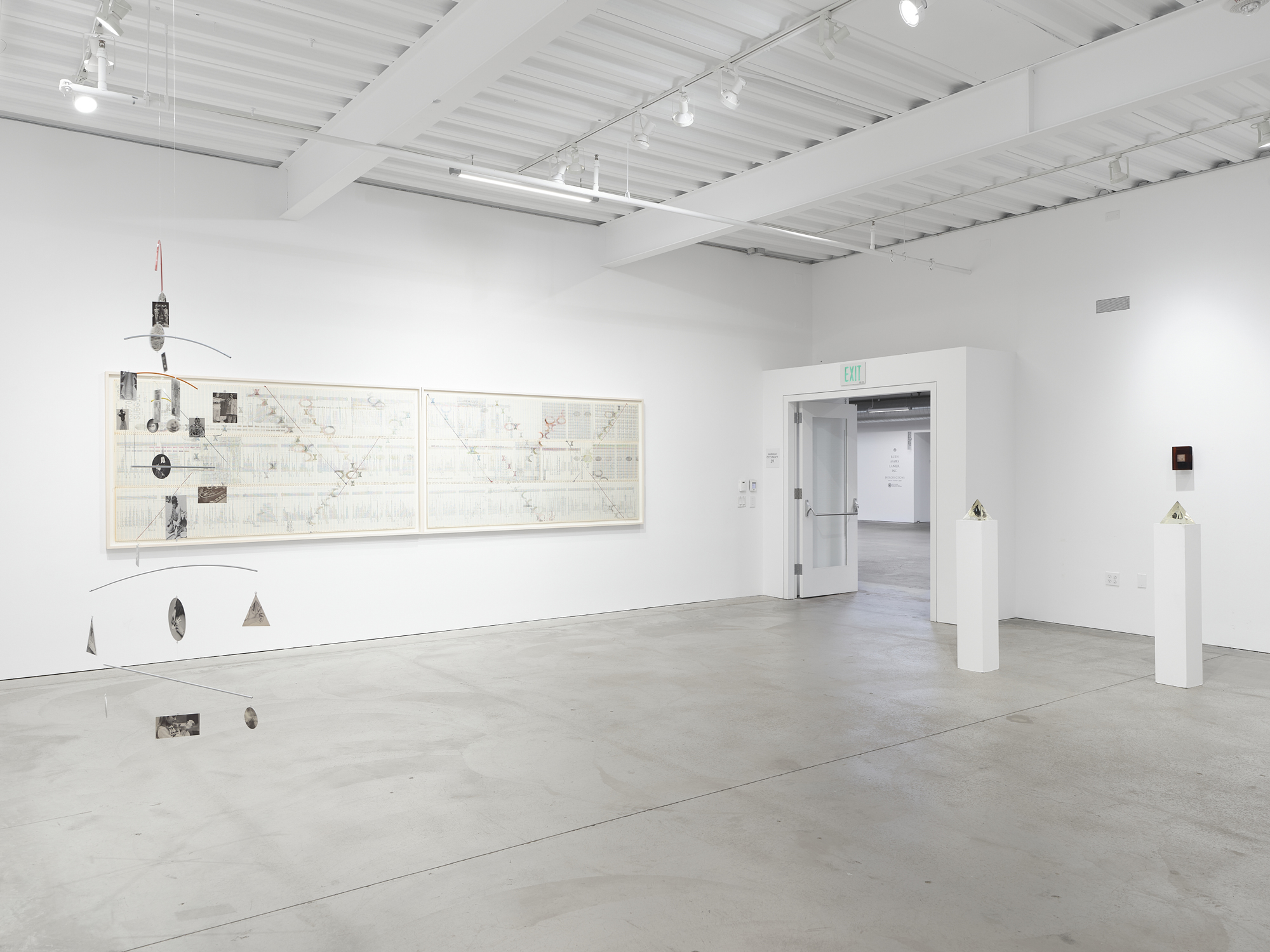
The standout piece in the show, Journey (1976), by Sonya Rapoport, is also the linchpin of the exhibition. Over nearly 15 feet of computer printouts, Rapoport drew crosses and circles (her own opaque language) atop the hard-to-parse computing language. She was at once bothered and intrigued by the specialized language of science, parodying its rigidity while also collaborating with scientists and academics in the creation of her work. This somewhat absurd but generative pushback against convention repeats across the work throughout the show.
In one corner of the gallery, a comically large cardboard box, over six feet tall, stands on a crate. Phrases are written on its sides, their meaning lying between practical and incantatory. “Have you spotted your 2 butterfliers?” one marker scrawl says. Another reads, “Heavy.” Get closer and a noise can be heard from the package. This is BUBBLE WRAP ME AND HANDLE WITH CARE (2026) by Billie Ocean.
Inside the box, a missing back side reveals a blue bubble-wrapped room and a flatscreen, where a video announces that you are commencing a journey into the future. The narrator warns that it’s not so easy to time travel, later asking if you have ever bubble wrapped your heart. Overall, the experience is playful, and yet that playfulness is exactly where the darker, or heavier, bits of Ocean’s work thrive.
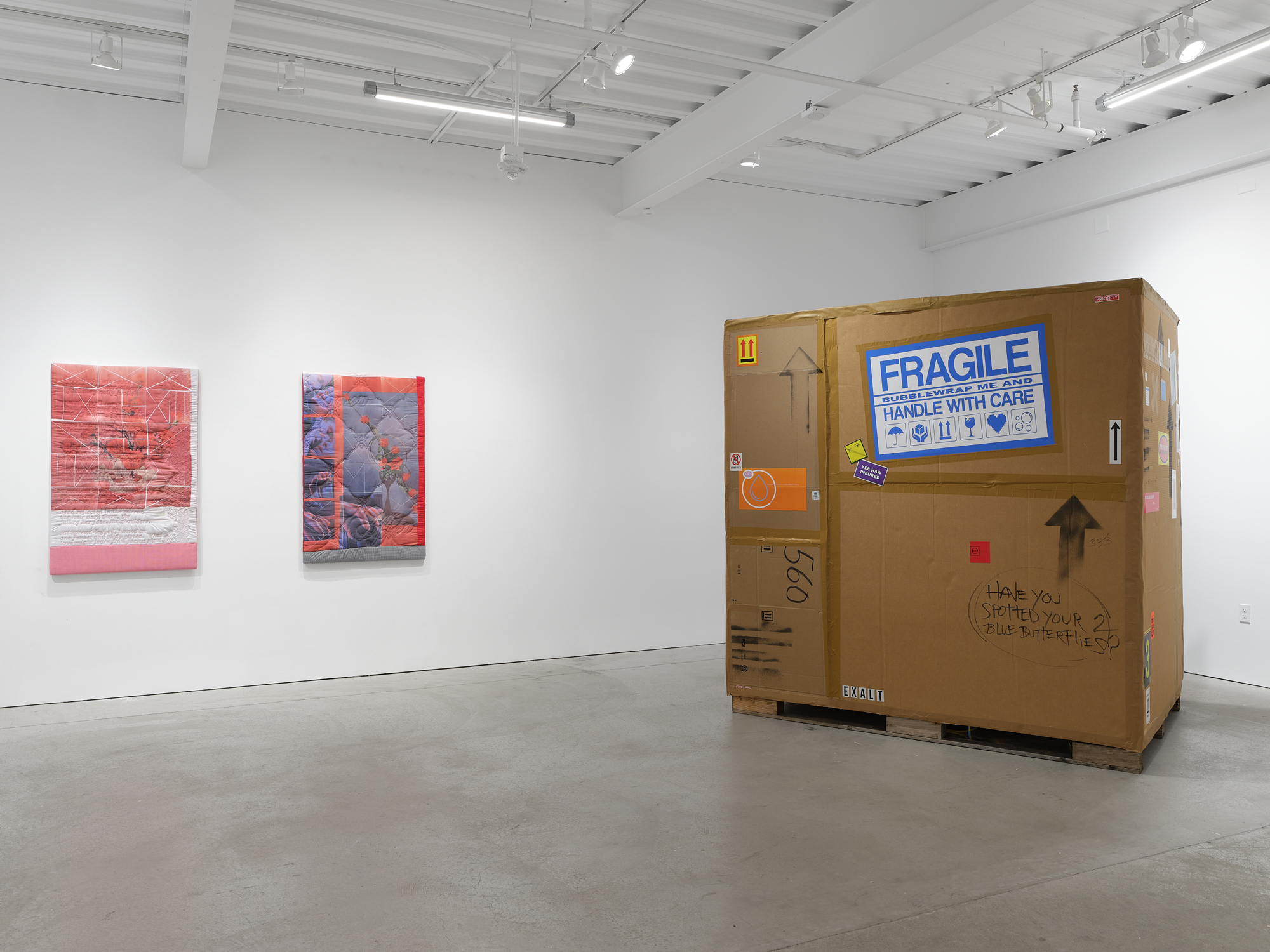
A similar kind of uncertainty and tension exists in Ariella Robinson’s pink-hued textile work Aphorism and Seashell VII (Something) (2026). Depicting a bouquet of red flowers, the entire work is covered in stitches, like a lavish blanket. Upon closer inspection, some of the stitching resolves into words: a recollection of a moment when a partner was too timid to pee in front of the narrator, even though they had just slept together. Reading the text creates a sense of imbalance — between an explicit, awkward love scene and an inviting, quilt-like textile. Bringing viewers into cozy proximity, Robinson wields power dynamics like another material in her arsenal.
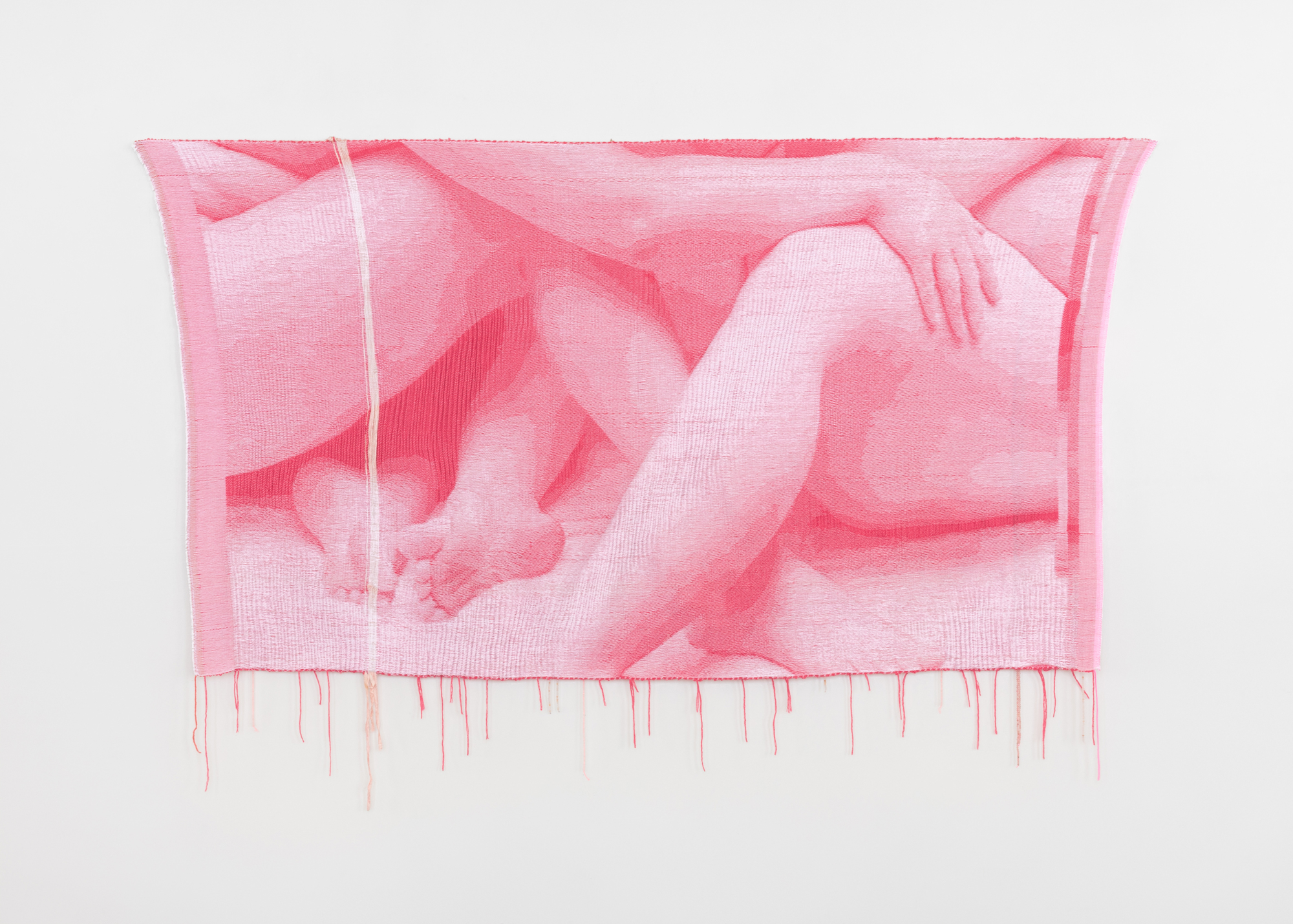
Sharing a visual vibrancy with Robinson’s work are Mia Weiner’s handwoven Jacquard tapestries, based on photographs that depict the entangled, bare legs of bodies at ease. Up close, the images lose their form and become abstracted; the weavings distort, withholding clarity the closer we get to them.
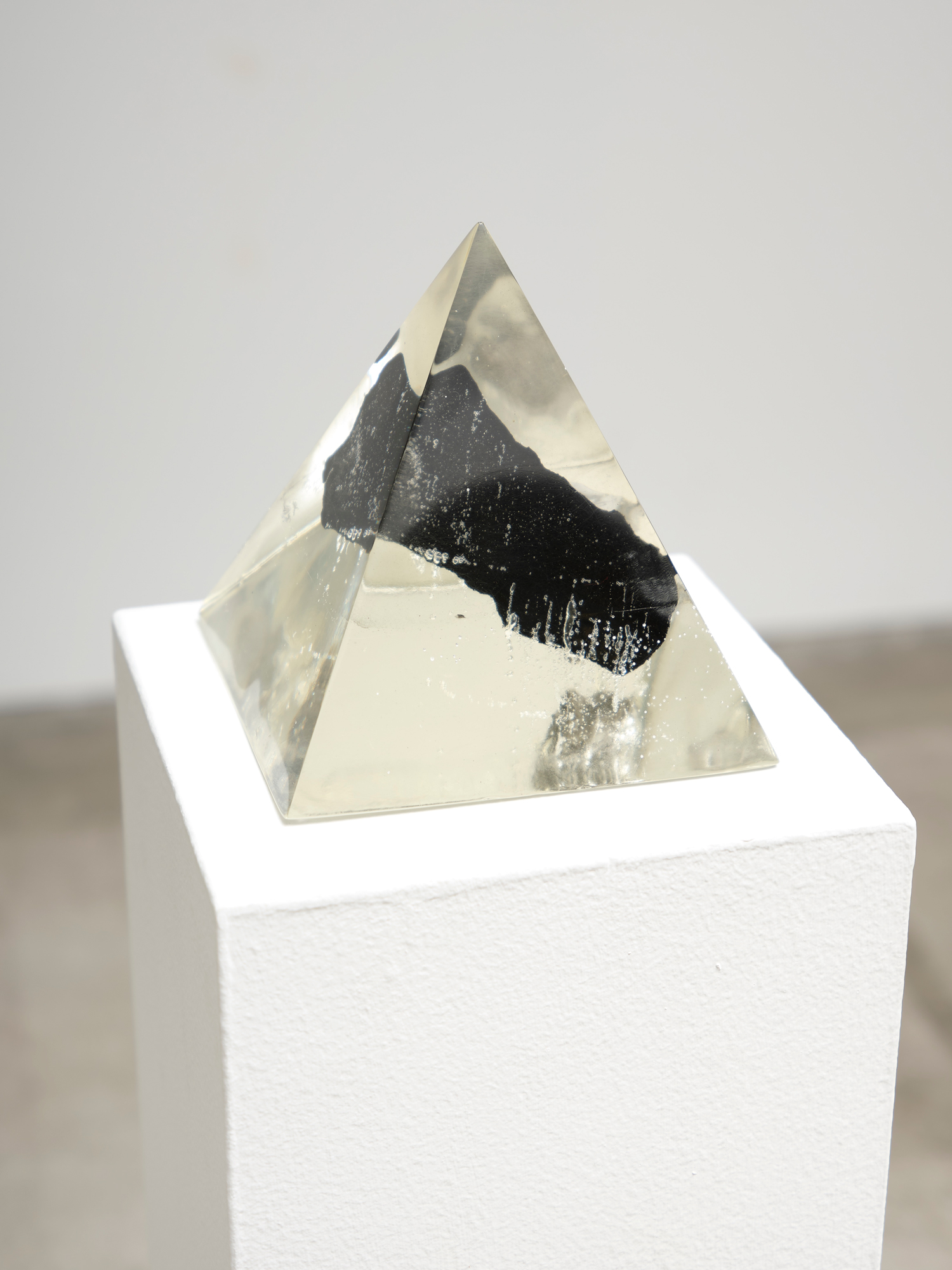
Meanwhile, Kelley O’Leary’s resin works are meant to flummox from any distance. Each resin piece contains either ulexite (according to the show press release a “mineral whose optical properties resemble those of fiber-optic transmission”) or fallen bits of a Space X test rocket. Preserved like rare or precious gems, the sculptures resemble objects from some futuristic, techno-romantic world.
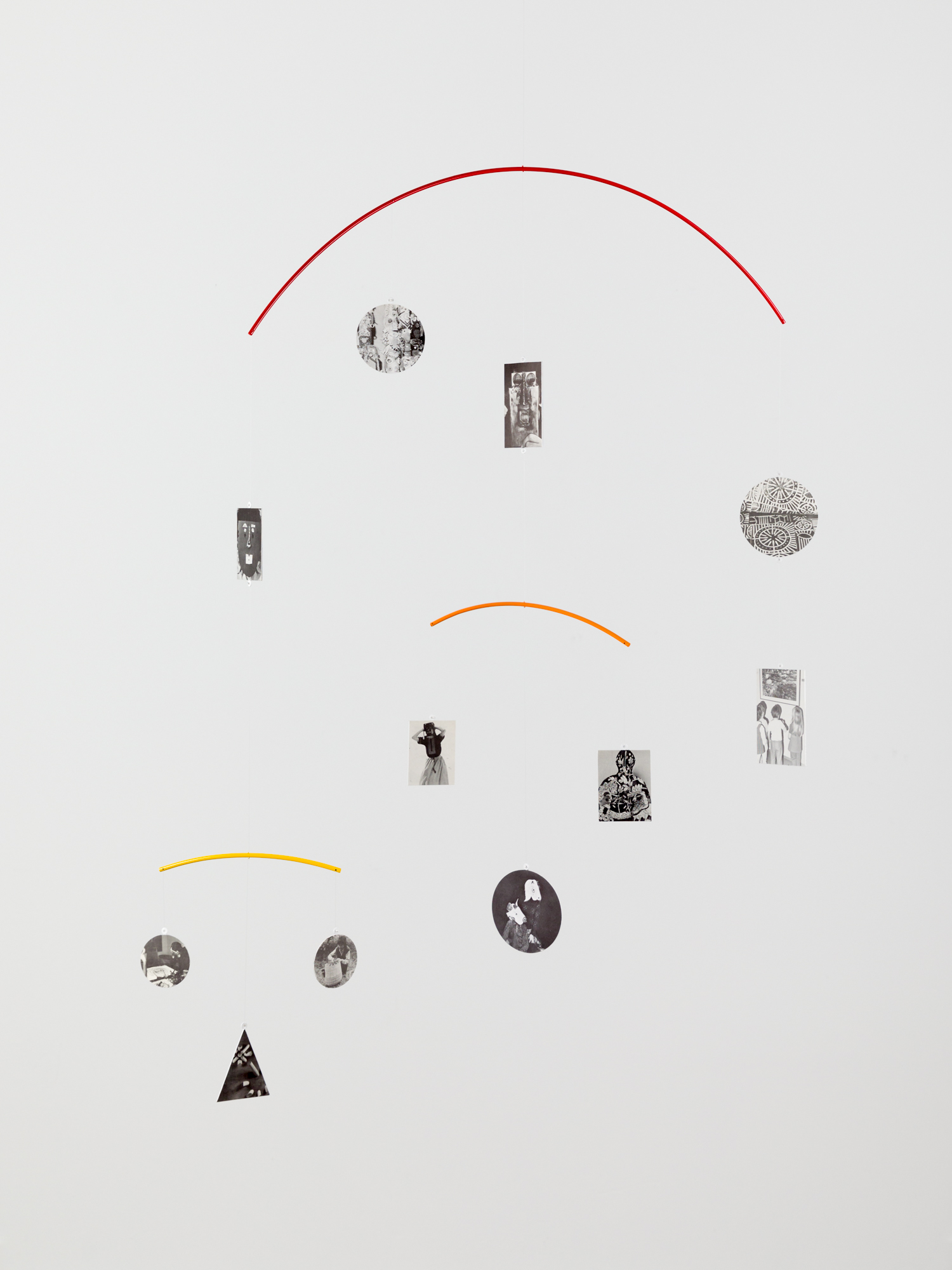
The final works in the show, Carmen Winant’s large steel mobiles, look back rather than forward, sourcing images from 1970s instruction manuals. Images replace each other as the mobiles slowly turn, creating a moving archive of crafts made largely by women. Winant’s materials are important here: images that were once as ephemeral as the crafts they were designed to teach are now fixed to steel, giving the practices (and people pictured) permanence.
Today we use technology as a distraction, allowing its allure and usefulness to separate us from our bodily experience. The smartphone, especially, is an isolating kind of tool, however useful it may be. But at Casemore Gallery, until the end of the month, Automata Sigils offers a reminder that sacred objects and our impermanent bodies still very much exist, even in our tech-driven world.
‘Automata Sigils’ is on view at Casemore Gallery (1275 Minnesota St., San Francisco) through Aug. 29, 2026.