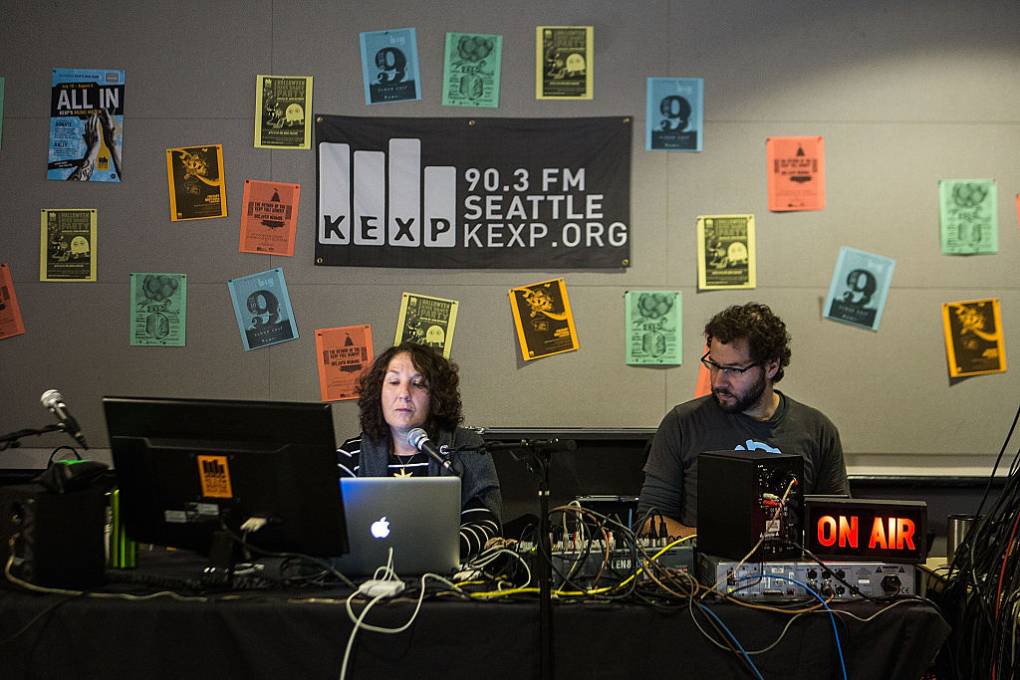
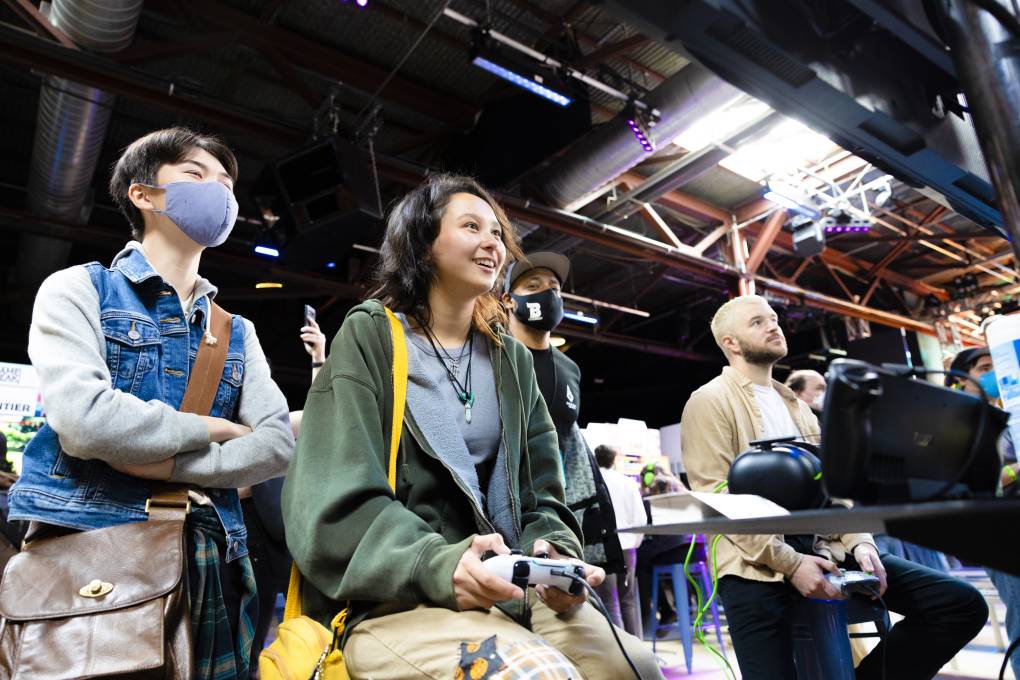
window.__IS_SSR__=true
window.__INITIAL_STATE__={
"attachmentsReducer": {
"audio_0": {
"type": "attachments",
"id": "audio_0",
"imgSizes": {
"kqedFullSize": {
"file": "https://ww2.kqed.org/news/wp-content/themes/KQED-unified/img/audio_bgs/background0.jpg"
}
}
},
"audio_1": {
"type": "attachments",
"id": "audio_1",
"imgSizes": {
"kqedFullSize": {
"file": "https://ww2.kqed.org/news/wp-content/themes/KQED-unified/img/audio_bgs/background1.jpg"
}
}
},
"audio_2": {
"type": "attachments",
"id": "audio_2",
"imgSizes": {
"kqedFullSize": {
"file": "https://ww2.kqed.org/news/wp-content/themes/KQED-unified/img/audio_bgs/background2.jpg"
}
}
},
"audio_3": {
"type": "attachments",
"id": "audio_3",
"imgSizes": {
"kqedFullSize": {
"file": "https://ww2.kqed.org/news/wp-content/themes/KQED-unified/img/audio_bgs/background3.jpg"
}
}
},
"audio_4": {
"type": "attachments",
"id": "audio_4",
"imgSizes": {
"kqedFullSize": {
"file": "https://ww2.kqed.org/news/wp-content/themes/KQED-unified/img/audio_bgs/background4.jpg"
}
}
},
"placeholder": {
"type": "attachments",
"id": "placeholder",
"imgSizes": {
"thumbnail": {
"file": "https://cdn.kqed.org/wp-content/uploads/2024/12/KQED-Default-Image-816638274-2000x1333-1-160x107.jpg",
"width": 160,
"height": 107,
"mimeType": "image/jpeg"
},
"medium": {
"file": "https://cdn.kqed.org/wp-content/uploads/2024/12/KQED-Default-Image-816638274-2000x1333-1-800x533.jpg",
"width": 800,
"height": 533,
"mimeType": "image/jpeg"
},
"medium_large": {
"file": "https://cdn.kqed.org/wp-content/uploads/2024/12/KQED-Default-Image-816638274-2000x1333-1-768x512.jpg",
"width": 768,
"height": 512,
"mimeType": "image/jpeg"
},
"large": {
"file": "https://cdn.kqed.org/wp-content/uploads/2024/12/KQED-Default-Image-816638274-2000x1333-1-1020x680.jpg",
"width": 1020,
"height": 680,
"mimeType": "image/jpeg"
},
"1536x1536": {
"file": "https://cdn.kqed.org/wp-content/uploads/2024/12/KQED-Default-Image-816638274-2000x1333-1-1536x1024.jpg",
"width": 1536,
"height": 1024,
"mimeType": "image/jpeg"
},
"fd-lrg": {
"file": "https://cdn.kqed.org/wp-content/uploads/2024/12/KQED-Default-Image-816638274-2000x1333-1-1536x1024.jpg",
"width": 1536,
"height": 1024,
"mimeType": "image/jpeg"
},
"fd-med": {
"file": "https://cdn.kqed.org/wp-content/uploads/2024/12/KQED-Default-Image-816638274-2000x1333-1-1020x680.jpg",
"width": 1020,
"height": 680,
"mimeType": "image/jpeg"
},
"fd-sm": {
"file": "https://cdn.kqed.org/wp-content/uploads/2024/12/KQED-Default-Image-816638274-2000x1333-1-800x533.jpg",
"width": 800,
"height": 533,
"mimeType": "image/jpeg"
},
"post-thumbnail": {
"file": "https://cdn.kqed.org/wp-content/uploads/2024/12/KQED-Default-Image-816638274-2000x1333-1-672x372.jpg",
"width": 672,
"height": 372,
"mimeType": "image/jpeg"
},
"twentyfourteen-full-width": {
"file": "https://cdn.kqed.org/wp-content/uploads/2024/12/KQED-Default-Image-816638274-2000x1333-1-1038x576.jpg",
"width": 1038,
"height": 576,
"mimeType": "image/jpeg"
},
"xxsmall": {
"file": "https://cdn.kqed.org/wp-content/uploads/2024/12/KQED-Default-Image-816638274-2000x1333-1-160x107.jpg",
"width": 160,
"height": 107,
"mimeType": "image/jpeg"
},
"xsmall": {
"file": "https://cdn.kqed.org/wp-content/uploads/2024/12/KQED-Default-Image-816638274-2000x1333-1-672x372.jpg",
"width": 672,
"height": 372,
"mimeType": "image/jpeg"
},
"small": {
"file": "https://cdn.kqed.org/wp-content/uploads/2024/12/KQED-Default-Image-816638274-2000x1333-1-672x372.jpg",
"width": 672,
"height": 372,
"mimeType": "image/jpeg"
},
"xlarge": {
"file": "https://cdn.kqed.org/wp-content/uploads/2024/12/KQED-Default-Image-816638274-2000x1333-1-1020x680.jpg",
"width": 1020,
"height": 680,
"mimeType": "image/jpeg"
},
"full-width": {
"file": "https://cdn.kqed.org/wp-content/uploads/2024/12/KQED-Default-Image-816638274-2000x1333-1-1920x1280.jpg",
"width": 1920,
"height": 1280,
"mimeType": "image/jpeg"
},
"guest-author-32": {
"file": "https://cdn.kqed.org/wp-content/uploads/2025/01/KQED-Default-Image-816638274-1333x1333-1-160x160.jpg",
"width": 32,
"height": 32,
"mimeType": "image/jpeg"
},
"guest-author-50": {
"file": "https://cdn.kqed.org/wp-content/uploads/2025/01/KQED-Default-Image-816638274-1333x1333-1-160x160.jpg",
"width": 50,
"height": 50,
"mimeType": "image/jpeg"
},
"guest-author-64": {
"file": "https://cdn.kqed.org/wp-content/uploads/2025/01/KQED-Default-Image-816638274-1333x1333-1-160x160.jpg",
"width": 64,
"height": 64,
"mimeType": "image/jpeg"
},
"guest-author-96": {
"file": "https://cdn.kqed.org/wp-content/uploads/2025/01/KQED-Default-Image-816638274-1333x1333-1-160x160.jpg",
"width": 96,
"height": 96,
"mimeType": "image/jpeg"
},
"guest-author-128": {
"file": "https://cdn.kqed.org/wp-content/uploads/2025/01/KQED-Default-Image-816638274-1333x1333-1-160x160.jpg",
"width": 128,
"height": 128,
"mimeType": "image/jpeg"
},
"detail": {
"file": "https://cdn.kqed.org/wp-content/uploads/2025/01/KQED-Default-Image-816638274-1333x1333-1-160x160.jpg",
"width": 160,
"height": 160,
"mimeType": "image/jpeg"
},
"kqedFullSize": {
"file": "https://cdn.kqed.org/wp-content/uploads/2024/12/KQED-Default-Image-816638274-2000x1333-1.jpg",
"width": 2000,
"height": 1333
}
}
},
"arts_13954041": {
"type": "attachments",
"id": "arts_13954041",
"meta": {
"index": "attachments_1716263798",
"site": "arts",
"id": "13954041",
"found": true
},
"parent": 13954030,
"imgSizes": {
"twentyfourteen-full-width": {
"file": "https://cdn.kqed.org/wp-content/uploads/sites/2/2024/03/GettyImages-462428552-1024x576.jpg",
"width": 1024,
"mimeType": "image/jpeg",
"height": 576
},
"thumbnail": {
"file": "https://cdn.kqed.org/wp-content/uploads/sites/2/2024/03/GettyImages-462428552-160x107.jpg",
"width": 160,
"mimeType": "image/jpeg",
"height": 107
},
"post-thumbnail": {
"file": "https://cdn.kqed.org/wp-content/uploads/sites/2/2024/03/GettyImages-462428552-672x372.jpg",
"width": 672,
"mimeType": "image/jpeg",
"height": 372
},
"kqedFullSize": {
"file": "https://cdn.kqed.org/wp-content/uploads/sites/2/2024/03/GettyImages-462428552.jpg",
"width": 1024,
"height": 683
},
"large": {
"file": "https://cdn.kqed.org/wp-content/uploads/sites/2/2024/03/GettyImages-462428552-1020x680.jpg",
"width": 1020,
"mimeType": "image/jpeg",
"height": 680
},
"medium": {
"file": "https://cdn.kqed.org/wp-content/uploads/sites/2/2024/03/GettyImages-462428552-800x534.jpg",
"width": 800,
"mimeType": "image/jpeg",
"height": 534
},
"medium_large": {
"file": "https://cdn.kqed.org/wp-content/uploads/sites/2/2024/03/GettyImages-462428552-768x512.jpg",
"width": 768,
"mimeType": "image/jpeg",
"height": 512
}
},
"publishDate": 1710366394,
"modified": 1710370970,
"caption": "KEXP DJ Cheryl Waters broadcasts out of the Seattle Center on January 28, 2015 in Seattle, Washington.",
"description": null,
"title": "KEXP Ground Breaking Open House",
"credit": "Suzi Pratt/Getty Images",
"status": "inherit",
"altTag": "A radio host and engineer sit in a studio in front of a sign that reads \"KEXP Seattle.\"",
"isLoading": false,
"fetchFailed": false
},
"arts_13953943": {
"type": "attachments",
"id": "arts_13953943",
"meta": {
"index": "attachments_1716263798",
"site": "arts",
"id": "13953943",
"found": true
},
"parent": 13953925,
"imgSizes": {
"twentyfourteen-full-width": {
"file": "https://cdn.kqed.org/wp-content/uploads/sites/2/2024/03/DOTD_2022_00021-1038x576.jpg",
"width": 1038,
"mimeType": "image/jpeg",
"height": 576
},
"thumbnail": {
"file": "https://cdn.kqed.org/wp-content/uploads/sites/2/2024/03/DOTD_2022_00021-160x107.jpg",
"width": 160,
"mimeType": "image/jpeg",
"height": 107
},
"post-thumbnail": {
"file": "https://cdn.kqed.org/wp-content/uploads/sites/2/2024/03/DOTD_2022_00021-672x372.jpg",
"width": 672,
"mimeType": "image/jpeg",
"height": 372
},
"kqedFullSize": {
"file": "https://cdn.kqed.org/wp-content/uploads/sites/2/2024/03/DOTD_2022_00021-scaled.jpg",
"width": 2560,
"height": 1707
},
"2048x2048": {
"file": "https://cdn.kqed.org/wp-content/uploads/sites/2/2024/03/DOTD_2022_00021-2048x1365.jpg",
"width": 2048,
"mimeType": "image/jpeg",
"height": 1365
},
"large": {
"file": "https://cdn.kqed.org/wp-content/uploads/sites/2/2024/03/DOTD_2022_00021-1020x680.jpg",
"width": 1020,
"mimeType": "image/jpeg",
"height": 680
},
"1536x1536": {
"file": "https://cdn.kqed.org/wp-content/uploads/sites/2/2024/03/DOTD_2022_00021-1536x1024.jpg",
"width": 1536,
"mimeType": "image/jpeg",
"height": 1024
},
"full-width": {
"file": "https://cdn.kqed.org/wp-content/uploads/sites/2/2024/03/DOTD_2022_00021-1920x1280.jpg",
"width": 1920,
"mimeType": "image/jpeg",
"height": 1280
},
"medium": {
"file": "https://cdn.kqed.org/wp-content/uploads/sites/2/2024/03/DOTD_2022_00021-800x533.jpg",
"width": 800,
"mimeType": "image/jpeg",
"height": 533
},
"medium_large": {
"file": "https://cdn.kqed.org/wp-content/uploads/sites/2/2024/03/DOTD_2022_00021-768x512.jpg",
"width": 768,
"mimeType": "image/jpeg",
"height": 512
}
},
"publishDate": 1710271172,
"modified": 1710271211,
"caption": "Attendees play a video game at Day of the Devs in 2022. ",
"description": null,
"title": "DOTD_2022_00021",
"credit": "Courtesy of Day of the Devs",
"status": "inherit",
"altTag": null,
"isLoading": false,
"fetchFailed": false
},
"arts_13953841": {
"type": "attachments",
"id": "arts_13953841",
"meta": {
"index": "attachments_1716263798",
"site": "arts",
"id": "13953841",
"found": true
},
"parent": 0,
"imgSizes": {
"twentyfourteen-full-width": {
"file": "https://cdn.kqed.org/wp-content/uploads/sites/2/2024/03/Brandee-Younger-SFJAZZ.Mar_.9.photo-Jack-Brown.16x9-1038x576.jpg",
"width": 1038,
"mimeType": "image/jpeg",
"height": 576
},
"thumbnail": {
"file": "https://cdn.kqed.org/wp-content/uploads/sites/2/2024/03/Brandee-Younger-SFJAZZ.Mar_.9.photo-Jack-Brown.16x9-160x90.jpg",
"width": 160,
"mimeType": "image/jpeg",
"height": 90
},
"post-thumbnail": {
"file": "https://cdn.kqed.org/wp-content/uploads/sites/2/2024/03/Brandee-Younger-SFJAZZ.Mar_.9.photo-Jack-Brown.16x9-672x372.jpg",
"width": 672,
"mimeType": "image/jpeg",
"height": 372
},
"kqedFullSize": {
"file": "https://cdn.kqed.org/wp-content/uploads/sites/2/2024/03/Brandee-Younger-SFJAZZ.Mar_.9.photo-Jack-Brown.16x9.jpg",
"width": 1920,
"height": 1080
},
"large": {
"file": "https://cdn.kqed.org/wp-content/uploads/sites/2/2024/03/Brandee-Younger-SFJAZZ.Mar_.9.photo-Jack-Brown.16x9-1020x574.jpg",
"width": 1020,
"mimeType": "image/jpeg",
"height": 574
},
"1536x1536": {
"file": "https://cdn.kqed.org/wp-content/uploads/sites/2/2024/03/Brandee-Younger-SFJAZZ.Mar_.9.photo-Jack-Brown.16x9-1536x864.jpg",
"width": 1536,
"mimeType": "image/jpeg",
"height": 864
},
"medium": {
"file": "https://cdn.kqed.org/wp-content/uploads/sites/2/2024/03/Brandee-Younger-SFJAZZ.Mar_.9.photo-Jack-Brown.16x9-800x450.jpg",
"width": 800,
"mimeType": "image/jpeg",
"height": 450
},
"medium_large": {
"file": "https://cdn.kqed.org/wp-content/uploads/sites/2/2024/03/Brandee-Younger-SFJAZZ.Mar_.9.photo-Jack-Brown.16x9-768x432.jpg",
"width": 768,
"mimeType": "image/jpeg",
"height": 432
}
},
"publishDate": 1710171979,
"modified": 1710172092,
"caption": "Brandee Younger performs the music of Alice Coltrane at the SFJAZZ Center in San Francisco on Saturday, March 9, 2024. ",
"description": null,
"title": "Brandee-Younger,-SFJAZZ.Mar.9.photo-Jack-Brown.16x9",
"credit": "Jack Brown/SFJAZZ",
"status": "inherit",
"altTag": "A Black woman sitting in white dress plays the harp with musical equipment and a potted plant nearby",
"isLoading": false,
"fetchFailed": false
},
"arts_13953390": {
"type": "attachments",
"id": "arts_13953390",
"meta": {
"index": "attachments_1716263798",
"site": "arts",
"id": "13953390",
"found": true
},
"parent": 13953389,
"imgSizes": {
"twentyfourteen-full-width": {
"file": "https://cdn.kqed.org/wp-content/uploads/sites/2/2024/03/10.-New-Meklit-EP-LexMexArt-9-1038x576.jpg",
"width": 1038,
"mimeType": "image/jpeg",
"height": 576
},
"thumbnail": {
"file": "https://cdn.kqed.org/wp-content/uploads/sites/2/2024/03/10.-New-Meklit-EP-LexMexArt-9-160x107.jpg",
"width": 160,
"mimeType": "image/jpeg",
"height": 107
},
"post-thumbnail": {
"file": "https://cdn.kqed.org/wp-content/uploads/sites/2/2024/03/10.-New-Meklit-EP-LexMexArt-9-672x372.jpg",
"width": 672,
"mimeType": "image/jpeg",
"height": 372
},
"kqedFullSize": {
"file": "https://cdn.kqed.org/wp-content/uploads/sites/2/2024/03/10.-New-Meklit-EP-LexMexArt-9-scaled.jpg",
"width": 2560,
"height": 1707
},
"2048x2048": {
"file": "https://cdn.kqed.org/wp-content/uploads/sites/2/2024/03/10.-New-Meklit-EP-LexMexArt-9-2048x1365.jpg",
"width": 2048,
"mimeType": "image/jpeg",
"height": 1365
},
"large": {
"file": "https://cdn.kqed.org/wp-content/uploads/sites/2/2024/03/10.-New-Meklit-EP-LexMexArt-9-1020x680.jpg",
"width": 1020,
"mimeType": "image/jpeg",
"height": 680
},
"1536x1536": {
"file": "https://cdn.kqed.org/wp-content/uploads/sites/2/2024/03/10.-New-Meklit-EP-LexMexArt-9-1536x1024.jpg",
"width": 1536,
"mimeType": "image/jpeg",
"height": 1024
},
"full-width": {
"file": "https://cdn.kqed.org/wp-content/uploads/sites/2/2024/03/10.-New-Meklit-EP-LexMexArt-9-1920x1280.jpg",
"width": 1920,
"mimeType": "image/jpeg",
"height": 1280
},
"medium": {
"file": "https://cdn.kqed.org/wp-content/uploads/sites/2/2024/03/10.-New-Meklit-EP-LexMexArt-9-800x533.jpg",
"width": 800,
"mimeType": "image/jpeg",
"height": 533
},
"medium_large": {
"file": "https://cdn.kqed.org/wp-content/uploads/sites/2/2024/03/10.-New-Meklit-EP-LexMexArt-9-768x512.jpg",
"width": 768,
"mimeType": "image/jpeg",
"height": 512
}
},
"publishDate": 1709666723,
"modified": 1709666911,
"caption": "Meklit performs an album release show for her new EP, 'Ethio-Blue,' at Brava Theater in San Francisco on March 9, 2024. ",
"description": null,
"title": "10. New - Meklit-EP-LexMexArt-9",
"credit": "Alexa Trevino",
"status": "inherit",
"altTag": "a Black woman in a silvery dress poses lying on a mirrored floor, propped up against one arm, looking at the camera",
"isLoading": false,
"fetchFailed": false
},
"arts_13953362": {
"type": "attachments",
"id": "arts_13953362",
"meta": {
"index": "attachments_1716263798",
"site": "arts",
"id": "13953362",
"found": true
},
"parent": 13953326,
"imgSizes": {
"twentyfourteen-full-width": {
"file": "https://cdn.kqed.org/wp-content/uploads/sites/2/2024/03/Screenshot-2024-03-04-at-2.48.07-PM-1038x576.png",
"width": 1038,
"mimeType": "image/png",
"height": 576
},
"thumbnail": {
"file": "https://cdn.kqed.org/wp-content/uploads/sites/2/2024/03/Screenshot-2024-03-04-at-2.48.07-PM-160x156.png",
"width": 160,
"mimeType": "image/png",
"height": 156
},
"post-thumbnail": {
"file": "https://cdn.kqed.org/wp-content/uploads/sites/2/2024/03/Screenshot-2024-03-04-at-2.48.07-PM-672x372.png",
"width": 672,
"mimeType": "image/png",
"height": 372
},
"kqedFullSize": {
"file": "https://cdn.kqed.org/wp-content/uploads/sites/2/2024/03/Screenshot-2024-03-04-at-2.48.07-PM.png",
"width": 1684,
"height": 1646
},
"large": {
"file": "https://cdn.kqed.org/wp-content/uploads/sites/2/2024/03/Screenshot-2024-03-04-at-2.48.07-PM-1020x997.png",
"width": 1020,
"mimeType": "image/png",
"height": 997
},
"1536x1536": {
"file": "https://cdn.kqed.org/wp-content/uploads/sites/2/2024/03/Screenshot-2024-03-04-at-2.48.07-PM-1536x1501.png",
"width": 1536,
"mimeType": "image/png",
"height": 1501
},
"medium": {
"file": "https://cdn.kqed.org/wp-content/uploads/sites/2/2024/03/Screenshot-2024-03-04-at-2.48.07-PM-800x782.png",
"width": 800,
"mimeType": "image/png",
"height": 782
},
"medium_large": {
"file": "https://cdn.kqed.org/wp-content/uploads/sites/2/2024/03/Screenshot-2024-03-04-at-2.48.07-PM-768x751.png",
"width": 768,
"mimeType": "image/png",
"height": 751
}
},
"publishDate": 1709593826,
"modified": 1709678638,
"caption": "'Re-Entrification' director Fego Navarro and director of photography/editor Desire Lacap (left to right). ",
"description": null,
"title": null,
"credit": "Aaron Garrette",
"status": "inherit",
"altTag": "Two filmmakers pose in front of a theater marquee.",
"isLoading": false,
"fetchFailed": false
},
"arts_13953337": {
"type": "attachments",
"id": "arts_13953337",
"meta": {
"index": "attachments_1716263798",
"site": "arts",
"id": "13953337",
"found": true
},
"parent": 13953312,
"imgSizes": {
"twentyfourteen-full-width": {
"file": "https://cdn.kqed.org/wp-content/uploads/sites/2/2024/03/2324-Concerts-Prometheus-Bluebeard-Brandon-Patoc_0028-1038x576.jpg",
"width": 1038,
"mimeType": "image/jpeg",
"height": 576
},
"thumbnail": {
"file": "https://cdn.kqed.org/wp-content/uploads/sites/2/2024/03/2324-Concerts-Prometheus-Bluebeard-Brandon-Patoc_0028-160x107.jpg",
"width": 160,
"mimeType": "image/jpeg",
"height": 107
},
"post-thumbnail": {
"file": "https://cdn.kqed.org/wp-content/uploads/sites/2/2024/03/2324-Concerts-Prometheus-Bluebeard-Brandon-Patoc_0028-672x372.jpg",
"width": 672,
"mimeType": "image/jpeg",
"height": 372
},
"kqedFullSize": {
"file": "https://cdn.kqed.org/wp-content/uploads/sites/2/2024/03/2324-Concerts-Prometheus-Bluebeard-Brandon-Patoc_0028.jpg",
"width": 1920,
"height": 1280
},
"large": {
"file": "https://cdn.kqed.org/wp-content/uploads/sites/2/2024/03/2324-Concerts-Prometheus-Bluebeard-Brandon-Patoc_0028-1020x680.jpg",
"width": 1020,
"mimeType": "image/jpeg",
"height": 680
},
"1536x1536": {
"file": "https://cdn.kqed.org/wp-content/uploads/sites/2/2024/03/2324-Concerts-Prometheus-Bluebeard-Brandon-Patoc_0028-1536x1024.jpg",
"width": 1536,
"mimeType": "image/jpeg",
"height": 1024
},
"medium": {
"file": "https://cdn.kqed.org/wp-content/uploads/sites/2/2024/03/2324-Concerts-Prometheus-Bluebeard-Brandon-Patoc_0028-800x533.jpg",
"width": 800,
"mimeType": "image/jpeg",
"height": 533
},
"medium_large": {
"file": "https://cdn.kqed.org/wp-content/uploads/sites/2/2024/03/2324-Concerts-Prometheus-Bluebeard-Brandon-Patoc_0028-768x512.jpg",
"width": 768,
"mimeType": "image/jpeg",
"height": 512
}
},
"publishDate": 1709579203,
"modified": 1709579569,
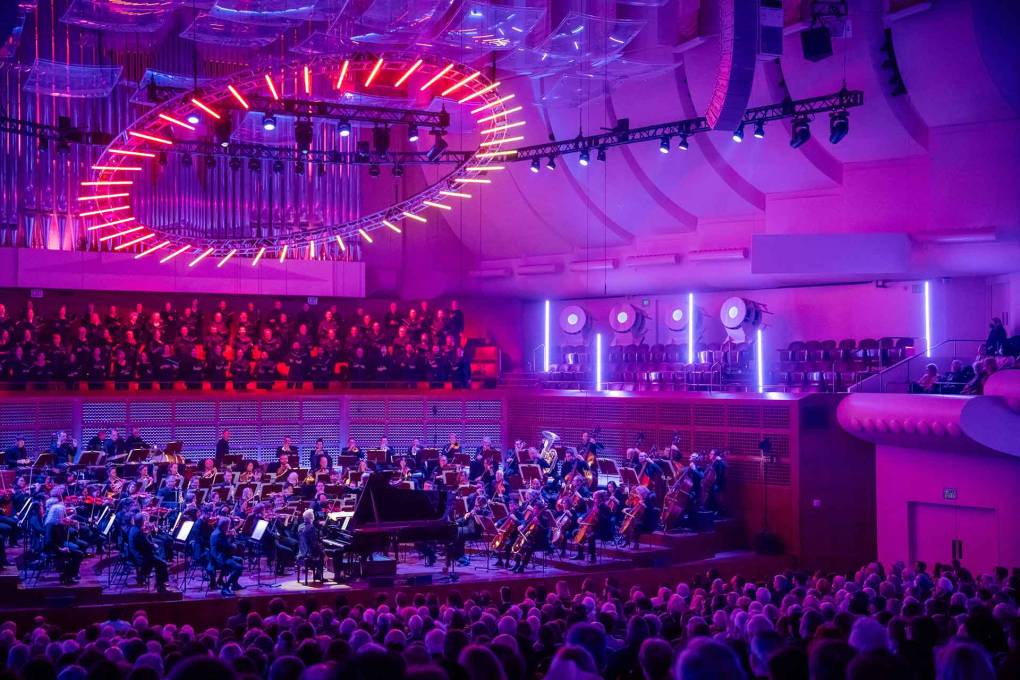
"caption": "The San Francisco Symphony performs Alexander Scriabin's 'Prometheus, The Poem of Fire' at Davies Symphony Hall on March 1, 2024.",
"description": null,
"title": "2324-Concerts-Prometheus-Bluebeard-Brandon-Patoc_0028",
"credit": "Brandon Patoc",
"status": "inherit",
"altTag": "A circle of red lights hovers above a symphony orchestra, bathed in indigo hues, inside a concert hall",
"isLoading": false,
"fetchFailed": false
},
"arts_13953307": {
"type": "attachments",
"id": "arts_13953307",
"meta": {
"index": "attachments_1716263798",
"site": "arts",
"id": "13953307",
"found": true
},
"parent": 0,
"imgSizes": {
"twentyfourteen-full-width": {
"file": "https://cdn.kqed.org/wp-content/uploads/sites/2/2024/03/Bad-Bunny-34_qut-1038x576.jpg",
"width": 1038,
"mimeType": "image/jpeg",
"height": 576
},
"thumbnail": {
"file": "https://cdn.kqed.org/wp-content/uploads/sites/2/2024/03/Bad-Bunny-34_qut-160x107.jpg",
"width": 160,
"mimeType": "image/jpeg",
"height": 107
},
"post-thumbnail": {
"file": "https://cdn.kqed.org/wp-content/uploads/sites/2/2024/03/Bad-Bunny-34_qut-672x372.jpg",
"width": 672,
"mimeType": "image/jpeg",
"height": 372
},
"kqedFullSize": {
"file": "https://cdn.kqed.org/wp-content/uploads/sites/2/2024/03/Bad-Bunny-34_qut.jpg",
"width": 1920,
"height": 1280
},
"large": {
"file": "https://cdn.kqed.org/wp-content/uploads/sites/2/2024/03/Bad-Bunny-34_qut-1020x680.jpg",
"width": 1020,
"mimeType": "image/jpeg",
"height": 680
},
"1536x1536": {
"file": "https://cdn.kqed.org/wp-content/uploads/sites/2/2024/03/Bad-Bunny-34_qut-1536x1024.jpg",
"width": 1536,
"mimeType": "image/jpeg",
"height": 1024
},
"medium": {
"file": "https://cdn.kqed.org/wp-content/uploads/sites/2/2024/03/Bad-Bunny-34_qut-800x533.jpg",
"width": 800,
"mimeType": "image/jpeg",
"height": 533
},
"medium_large": {
"file": "https://cdn.kqed.org/wp-content/uploads/sites/2/2024/03/Bad-Bunny-34_qut-768x512.jpg",
"width": 768,
"mimeType": "image/jpeg",
"height": 512
}
},
"publishDate": 1709484911,
"modified": 1709485235,
"caption": "Bad Bunny performs at the Chase Center in San Francisco on Saturday, March 2, 2024.",
"description": null,
"title": "Bad Bunny-34_qut",
"credit": "Michaela Vatcheva for KQED",
"status": "inherit",
"altTag": null,
"isLoading": false,
"fetchFailed": false
},
"arts_13953120": {
"type": "attachments",
"id": "arts_13953120",
"meta": {
"index": "attachments_1716263798",
"site": "arts",
"id": "13953120",
"found": true
},
"parent": 13953119,
"imgSizes": {
"twentyfourteen-full-width": {
"file": "https://cdn.kqed.org/wp-content/uploads/sites/2/2024/02/231128-GeorgeCramptonGlassanos-16-BL-qut-1038x576.jpg",
"width": 1038,
"mimeType": "image/jpeg",
"height": 576
},
"thumbnail": {
"file": "https://cdn.kqed.org/wp-content/uploads/sites/2/2024/02/231128-GeorgeCramptonGlassanos-16-BL-qut-160x107.jpg",
"width": 160,
"mimeType": "image/jpeg",
"height": 107
},
"post-thumbnail": {
"file": "https://cdn.kqed.org/wp-content/uploads/sites/2/2024/02/231128-GeorgeCramptonGlassanos-16-BL-qut-672x372.jpg",
"width": 672,
"mimeType": "image/jpeg",
"height": 372
},
"kqedFullSize": {
"file": "https://cdn.kqed.org/wp-content/uploads/sites/2/2024/02/231128-GeorgeCramptonGlassanos-16-BL-qut.jpg",
"width": 1920,
"height": 1280
},
"large": {
"file": "https://cdn.kqed.org/wp-content/uploads/sites/2/2024/02/231128-GeorgeCramptonGlassanos-16-BL-qut-1020x680.jpg",
"width": 1020,
"mimeType": "image/jpeg",
"height": 680
},
"1536x1536": {
"file": "https://cdn.kqed.org/wp-content/uploads/sites/2/2024/02/231128-GeorgeCramptonGlassanos-16-BL-qut-1536x1024.jpg",
"width": 1536,
"mimeType": "image/jpeg",
"height": 1024
},
"medium": {
"file": "https://cdn.kqed.org/wp-content/uploads/sites/2/2024/02/231128-GeorgeCramptonGlassanos-16-BL-qut-800x533.jpg",
"width": 800,
"mimeType": "image/jpeg",
"height": 533
},
"medium_large": {
"file": "https://cdn.kqed.org/wp-content/uploads/sites/2/2024/02/231128-GeorgeCramptonGlassanos-16-BL-qut-768x512.jpg",
"width": 768,
"mimeType": "image/jpeg",
"height": 512
}
},
"publishDate": 1709134205,
"modified": 1709164019,
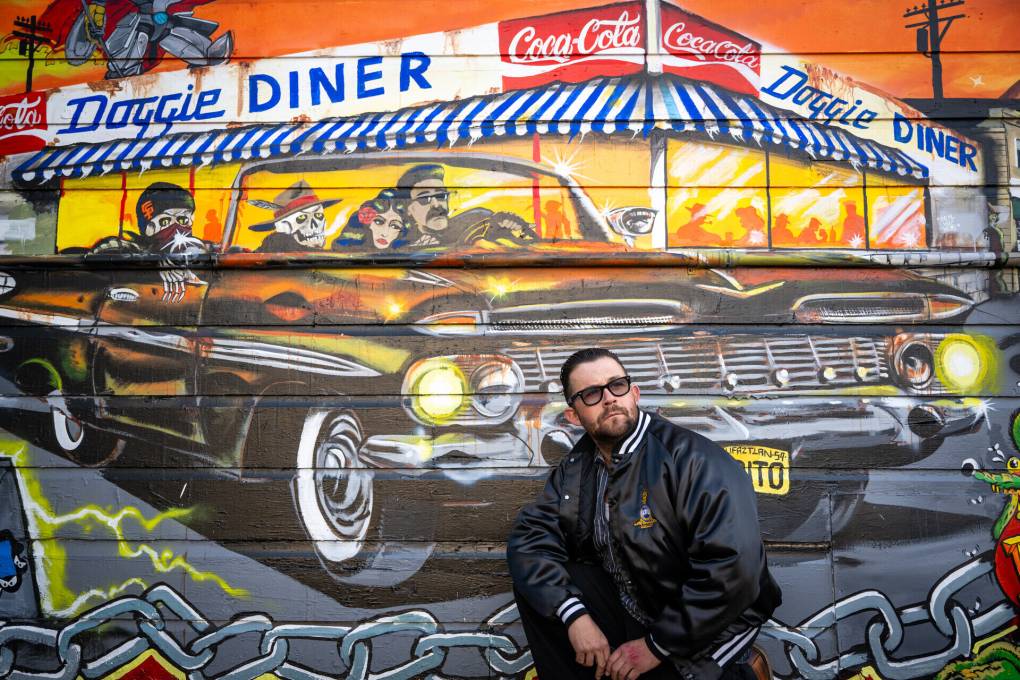
"caption": "George Crampton Glassanos posing in front of his mural of a black droptop lowrider and the Mission staple, Doggie Diner.",
"description": null,
"title": "George Crampton Glassanos posing in front of his mural of a black droptop lowrider and the Mission staple, Doggie Diner.",
"credit": "Beth LaBerge/KQED",
"status": "inherit",
"altTag": "George Crampton Glassanos posing in front of his mural of a black droptop lowrider and the Mission staple, Doggie Diner.",
"isLoading": false,
"fetchFailed": false
},
"arts_13953125": {
"type": "attachments",
"id": "arts_13953125",
"meta": {
"index": "attachments_1716263798",
"site": "arts",
"id": "13953125",
"found": true
},
"parent": 0,
"imgSizes": {
"twentyfourteen-full-width": {
"file": "https://cdn.kqed.org/wp-content/uploads/sites/2/2024/02/Daisy.Nam_.Wattis-840x576.jpg",
"width": 840,
"mimeType": "image/jpeg",
"height": 576
},
"thumbnail": {
"file": "https://cdn.kqed.org/wp-content/uploads/sites/2/2024/02/Daisy.Nam_.Wattis-160x120.jpg",
"width": 160,
"mimeType": "image/jpeg",
"height": 120
},
"post-thumbnail": {
"file": "https://cdn.kqed.org/wp-content/uploads/sites/2/2024/02/Daisy.Nam_.Wattis-672x372.jpg",
"width": 672,
"mimeType": "image/jpeg",
"height": 372
},
"kqedFullSize": {
"file": "https://cdn.kqed.org/wp-content/uploads/sites/2/2024/02/Daisy.Nam_.Wattis.jpg",
"width": 840,
"height": 629
},
"medium": {
"file": "https://cdn.kqed.org/wp-content/uploads/sites/2/2024/02/Daisy.Nam_.Wattis-800x599.jpg",
"width": 800,
"mimeType": "image/jpeg",
"height": 599
},
"medium_large": {
"file": "https://cdn.kqed.org/wp-content/uploads/sites/2/2024/02/Daisy.Nam_.Wattis-768x575.jpg",
"width": 768,
"mimeType": "image/jpeg",
"height": 575
}
},
"publishDate": 1709144061,
"modified": 1709144215,
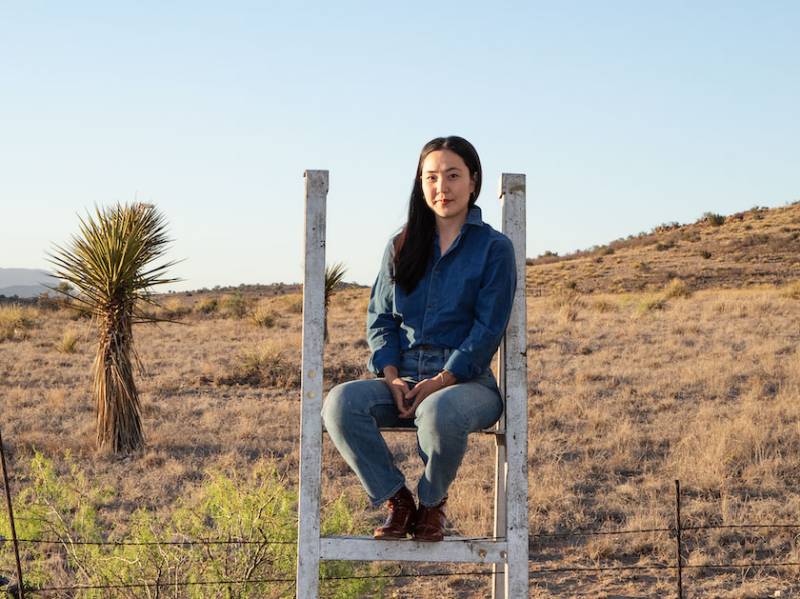
"caption": "Daisy Nam, currently the curator and director at Ballroom Marfa, has been hired to lead California College of the Arts' Wattis Institute.",
"description": null,
"title": "Daisy.Nam.Wattis",
"credit": "Makenzie Goodman",
"status": "inherit",
"altTag": "A Korean woman in denim with long hair sits on a structure in a desert landscape.",
"isLoading": false,
"fetchFailed": false
},
"arts_13953097": {
"type": "attachments",
"id": "arts_13953097",
"meta": {
"index": "attachments_1716263798",
"site": "arts",
"id": "13953097",
"found": true
},
"parent": 13953095,
"imgSizes": {
"twentyfourteen-full-width": {
"file": "https://cdn.kqed.org/wp-content/uploads/sites/2/2024/02/JohnWaters.AubreyPlaza-1038x576.jpg",
"width": 1038,
"mimeType": "image/jpeg",
"height": 576
},
"thumbnail": {
"file": "https://cdn.kqed.org/wp-content/uploads/sites/2/2024/02/JohnWaters.AubreyPlaza-160x90.jpg",
"width": 160,
"mimeType": "image/jpeg",
"height": 90
},
"post-thumbnail": {
"file": "https://cdn.kqed.org/wp-content/uploads/sites/2/2024/02/JohnWaters.AubreyPlaza-672x372.jpg",
"width": 672,
"mimeType": "image/jpeg",
"height": 372
},
"kqedFullSize": {
"file": "https://cdn.kqed.org/wp-content/uploads/sites/2/2024/02/JohnWaters.AubreyPlaza.jpg",
"width": 1820,
"height": 1024
},
"large": {
"file": "https://cdn.kqed.org/wp-content/uploads/sites/2/2024/02/JohnWaters.AubreyPlaza-1020x574.jpg",
"width": 1020,
"mimeType": "image/jpeg",
"height": 574
},
"1536x1536": {
"file": "https://cdn.kqed.org/wp-content/uploads/sites/2/2024/02/JohnWaters.AubreyPlaza-1536x864.jpg",
"width": 1536,
"mimeType": "image/jpeg",
"height": 864
},
"medium": {
"file": "https://cdn.kqed.org/wp-content/uploads/sites/2/2024/02/JohnWaters.AubreyPlaza-800x450.jpg",
"width": 800,
"mimeType": "image/jpeg",
"height": 450
},
"medium_large": {
"file": "https://cdn.kqed.org/wp-content/uploads/sites/2/2024/02/JohnWaters.AubreyPlaza-768x432.jpg",
"width": 768,
"mimeType": "image/jpeg",
"height": 432
}
},
"publishDate": 1709066836,
"modified": 1709066940,
"caption": "(L–R) John Waters at Mosswood Meltdown in 2022; Aubrey Plaza at a 2022 'White Lotus' premiere in Los Angeles. Plaza is reported to star in Waters' upcoming film, 'Liarmouth.' ",
"description": null,
"title": "JohnWaters.AubreyPlaza",
"credit": "Estefany Gonzalez for KQED / Christopher Polk/Variety via Getty Images",
"status": "inherit",
"altTag": null,
"isLoading": false,
"fetchFailed": false
},
"arts_13953086": {
"type": "attachments",
"id": "arts_13953086",
"meta": {
"index": "attachments_1716263798",
"site": "arts",
"id": "13953086",
"found": true
},
"parent": 13953078,
"imgSizes": {
"twentyfourteen-full-width": {
"file": "https://cdn.kqed.org/wp-content/uploads/sites/2/2024/02/currypuff-lead-1038x576.jpg",
"width": 1038,
"mimeType": "image/jpeg",
"height": 576
},
"thumbnail": {
"file": "https://cdn.kqed.org/wp-content/uploads/sites/2/2024/02/currypuff-lead-160x90.jpg",
"width": 160,
"mimeType": "image/jpeg",
"height": 90
},
"post-thumbnail": {
"file": "https://cdn.kqed.org/wp-content/uploads/sites/2/2024/02/currypuff-lead-672x372.jpg",
"width": 672,
"mimeType": "image/jpeg",
"height": 372
},
"kqedFullSize": {
"file": "https://cdn.kqed.org/wp-content/uploads/sites/2/2024/02/currypuff-lead.jpg",
"width": 2000,
"height": 1125
},
"large": {
"file": "https://cdn.kqed.org/wp-content/uploads/sites/2/2024/02/currypuff-lead-1020x574.jpg",
"width": 1020,
"mimeType": "image/jpeg",
"height": 574
},
"1536x1536": {
"file": "https://cdn.kqed.org/wp-content/uploads/sites/2/2024/02/currypuff-lead-1536x864.jpg",
"width": 1536,
"mimeType": "image/jpeg",
"height": 864
},
"full-width": {
"file": "https://cdn.kqed.org/wp-content/uploads/sites/2/2024/02/currypuff-lead-1920x1080.jpg",
"width": 1920,
"mimeType": "image/jpeg",
"height": 1080
},
"medium": {
"file": "https://cdn.kqed.org/wp-content/uploads/sites/2/2024/02/currypuff-lead-800x450.jpg",
"width": 800,
"mimeType": "image/jpeg",
"height": 450
},
"medium_large": {
"file": "https://cdn.kqed.org/wp-content/uploads/sites/2/2024/02/currypuff-lead-768x432.jpg",
"width": 768,
"mimeType": "image/jpeg",
"height": 432
}
},
"publishDate": 1709062519,
"modified": 1709062757,
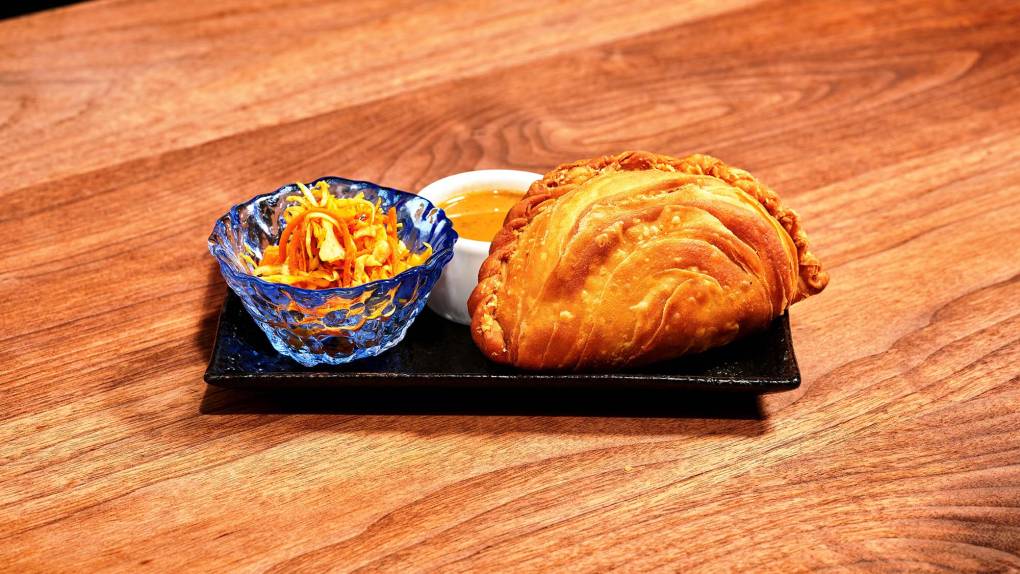
"caption": "Spiral curry puffs were Damansara chef Tracy Goh's favorite tea-time snack when she lived in Malaysia. Now, she's brought her own version to her Noe Valley restaurant.",
"description": null,
"title": "currypuff lead",
"credit": "Aron Pruiett/Limitless Media, Inc.",
"status": "inherit",
"altTag": "Curry puff on a plate with curry dipping sauce.",
"isLoading": false,
"fetchFailed": false
},
"arts_13952978": {
"type": "attachments",
"id": "arts_13952978",
"meta": {
"index": "attachments_1716263798",
"site": "arts",
"id": "13952978",
"found": true
},
"parent": 0,
"imgSizes": {
"twentyfourteen-full-width": {
"file": "https://cdn.kqed.org/wp-content/uploads/sites/2/2024/02/240224-SUZANNE-CIANI-AT-GRACE-CATHEDRAL-MD-11-KQED-2-1038x576.jpg",
"width": 1038,
"mimeType": "image/jpeg",
"height": 576
},
"thumbnail": {
"file": "https://cdn.kqed.org/wp-content/uploads/sites/2/2024/02/240224-SUZANNE-CIANI-AT-GRACE-CATHEDRAL-MD-11-KQED-2-160x107.jpg",
"width": 160,
"mimeType": "image/jpeg",
"height": 107
},
"post-thumbnail": {
"file": "https://cdn.kqed.org/wp-content/uploads/sites/2/2024/02/240224-SUZANNE-CIANI-AT-GRACE-CATHEDRAL-MD-11-KQED-2-672x372.jpg",
"width": 672,
"mimeType": "image/jpeg",
"height": 372
},
"kqedFullSize": {
"file": "https://cdn.kqed.org/wp-content/uploads/sites/2/2024/02/240224-SUZANNE-CIANI-AT-GRACE-CATHEDRAL-MD-11-KQED-2.jpg",
"width": 2000,
"height": 1333
},
"large": {
"file": "https://cdn.kqed.org/wp-content/uploads/sites/2/2024/02/240224-SUZANNE-CIANI-AT-GRACE-CATHEDRAL-MD-11-KQED-2-1020x680.jpg",
"width": 1020,
"mimeType": "image/jpeg",
"height": 680
},
"1536x1536": {
"file": "https://cdn.kqed.org/wp-content/uploads/sites/2/2024/02/240224-SUZANNE-CIANI-AT-GRACE-CATHEDRAL-MD-11-KQED-2-1536x1024.jpg",
"width": 1536,
"mimeType": "image/jpeg",
"height": 1024
},
"full-width": {
"file": "https://cdn.kqed.org/wp-content/uploads/sites/2/2024/02/240224-SUZANNE-CIANI-AT-GRACE-CATHEDRAL-MD-11-KQED-2-1920x1280.jpg",
"width": 1920,
"mimeType": "image/jpeg",
"height": 1280
},
"medium": {
"file": "https://cdn.kqed.org/wp-content/uploads/sites/2/2024/02/240224-SUZANNE-CIANI-AT-GRACE-CATHEDRAL-MD-11-KQED-2-800x533.jpg",
"width": 800,
"mimeType": "image/jpeg",
"height": 533
},
"medium_large": {
"file": "https://cdn.kqed.org/wp-content/uploads/sites/2/2024/02/240224-SUZANNE-CIANI-AT-GRACE-CATHEDRAL-MD-11-KQED-2-768x512.jpg",
"width": 768,
"mimeType": "image/jpeg",
"height": 512
}
},
"publishDate": 1708907129,
"modified": 1708968577,
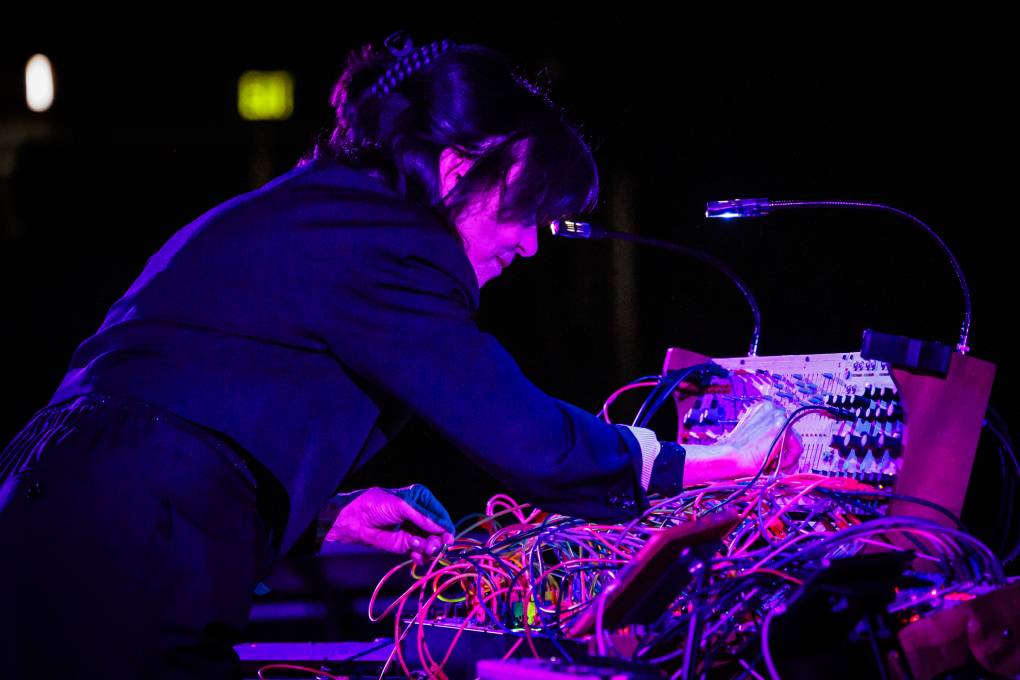
"caption": "Suzanne Ciani performs on her Buchla 200e at Grace Cathedral in San Francisco on Feb. 24, 2024.",
"description": null,
"title": "240224-SUZANNE CIANI AT GRACE CATHEDRAL-MD-11-KQED-2",
"credit": "Martin do Nascimento/KQED",
"status": "inherit",
"altTag": null,
"isLoading": false,
"fetchFailed": false
}
},
"audioPlayerReducer": {
"postId": "stream_live",
"isPaused": true,
"isPlaying": false,
"pfsActive": false,
"pledgeModalIsOpen": true,
"playerDrawerIsOpen": false,
"liveAudioPlayStartedAt": 0,
"liveAudioPlayContext": ""
},
"authorsReducer": {
"gmeline": {
"type": "authors",
"id": "185",
"meta": {
"index": "authors_1716337520",
"id": "185",
"found": true
},
"name": "Gabe Meline",
"firstName": "Gabe",
"lastName": "Meline",
"slug": "gmeline",
"email": "gmeline@kqed.org",
"display_author_email": true,
"staff_mastheads": [
"arts"
],
"title": "Senior Editor, KQED Arts & Culture",
"bio": "Gabe Meline entered journalism at age 15 making photocopied zines, and has since earned awards from the Edward R. Murrow Awards, the Society for Professional Journalists, the Online Journalism Awards, the Association of Alternative Newsweeklies and the California Newspaper Publishers Association. Prior to KQED, he was the editor of the \u003cem>North Bay Bohemian\u003c/em> and a touring musician. He lives with his wife and daughter in his hometown of Santa Rosa, CA.",
"avatar": "https://secure.gravatar.com/avatar/5bebe57be0d8bc2dd318934feb47299e2d2d10cba28d09d8d7afb389a2ce2bdd?s=600&d=blank&r=g",
"twitter": null,
"bluesky": null,
"facebook": null,
"instagram": null,
"linkedin": null,
"sites": [
{
"site": "",
"roles": [
"editor"
]
},
{
"site": "arts",
"roles": [
"administrator"
]
},
{
"site": "artschool",
"roles": [
"editor"
]
},
{
"site": "news",
"roles": [
"author"
]
},
{
"site": "pop",
"roles": [
"editor"
]
},
{
"site": "bayareabites",
"roles": [
"editor"
]
},
{
"site": "food",
"roles": [
"editor"
]
},
{
"site": "forum",
"roles": [
"administrator"
]
},
{
"site": "liveblog",
"roles": [
"editor"
]
},
{
"site": "hiphop",
"roles": [
"editor"
]
}
],
"headData": {
"title": "Gabe Meline | KQED",
"description": "Senior Editor, KQED Arts & Culture",
"ogImgSrc": "https://secure.gravatar.com/avatar/5bebe57be0d8bc2dd318934feb47299e2d2d10cba28d09d8d7afb389a2ce2bdd?s=600&d=blank&r=g",
"twImgSrc": "https://secure.gravatar.com/avatar/5bebe57be0d8bc2dd318934feb47299e2d2d10cba28d09d8d7afb389a2ce2bdd?s=600&d=blank&r=g"
},
"isLoading": false,
"link": "/author/gmeline"
},
"esilvers": {
"type": "authors",
"id": "7237",
"meta": {
"index": "authors_1716337520",
"id": "7237",
"found": true
},
"name": "Emma Silvers",
"firstName": "Emma",
"lastName": "Silvers",
"slug": "esilvers",
"email": "esilvers@kqed.org",
"display_author_email": false,
"staff_mastheads": [],
"title": "KQED Contributor",
"bio": "Emma Silvers is an editor at KQED Arts and a former digital producer at KQED News. Born and raised in the Bay Area, she has previously been an arts and entertainment editor at the \u003cem>San Francisco Chronicle\u003c/em>, \u003cem>SF Weekly\u003c/em> and the \u003cem>San Francisco Bay Guardian.\u003c/em> \u003ca href=\"https://www.emmasilvers.com\">Her work\u003c/a> has also appeared in \u003cem>Rolling Stone\u003c/em>, Pitchfork and \u003cem>Mother Jones\u003c/em>. In 2017 she was the recipient of the Society of Professional Journalists-Northern California's award for arts and culture reporting. In 1993 she \u003ca href=\"https://www.kqed.org/pop/16759/wait-what-my-coworker-was-a-voice-over-hyperventilator-for-jurassic-park\">hyperventilated in \u003cem>Jurassic Park\u003c/em>\u003c/a>.",
"avatar": "https://secure.gravatar.com/avatar/247beada39b88ea5759db1f51dba05cf?s=600&d=blank&r=g",
"twitter": "emmaruthless",
"facebook": null,
"instagram": null,
"linkedin": null,
"sites": [
{
"site": "arts",
"roles": [
"editor"
]
},
{
"site": "news",
"roles": [
"editor"
]
},
{
"site": "pop",
"roles": [
"contributor"
]
},
{
"site": "bayareabites",
"roles": [
"editor"
]
},
{
"site": "food",
"roles": [
"contributor"
]
},
{
"site": "liveblog",
"roles": [
"editor"
]
}
],
"headData": {
"title": "Emma Silvers | KQED",
"description": "KQED Contributor",
"ogImgSrc": "https://secure.gravatar.com/avatar/247beada39b88ea5759db1f51dba05cf?s=600&d=blank&r=g",
"twImgSrc": "https://secure.gravatar.com/avatar/247beada39b88ea5759db1f51dba05cf?s=600&d=blank&r=g"
},
"isLoading": false,
"link": "/author/esilvers"
},
"nvoynovskaya": {
"type": "authors",
"id": "11387",
"meta": {
"index": "authors_1716337520",
"id": "11387",
"found": true
},
"name": "Nastia Voynovskaya",
"firstName": "Nastia",
"lastName": "Voynovskaya",
"slug": "nvoynovskaya",
"email": "nvoynovskaya@kqed.org",
"display_author_email": false,
"staff_mastheads": [
"arts"
],
"title": "Editor and reporter",
"bio": "Nastia Voynovskaya is a reporter, editor and host at KQED Arts & Culture. She's been covering the arts in the Bay Area for over a decade, with a focus on music, queer culture, labor issues and grassroots organizing. She has edited KQED story series such as Trans Bay: A History of San Francisco's Gender-Diverse Community, and co-created KQED's Bay Area hip-hop history project, That's My Word. Nastia's work has been recognized by the Society of Professional Journalists and San Francisco Press Club. She regularly appears on podcasts and radio programs, including NPR's All Songs Considered, and hosts live events where music, culture and conversation meet.",
"avatar": "https://secure.gravatar.com/avatar/5025ee460e5a85d69ca20ea6c6f2f80d7e17795c828f61ea3aecfcd924e9042e?s=600&d=blank&r=g",
"twitter": null,
"bluesky": null,
"facebook": null,
"instagram": "https://www.instagram.com/nananastia/",
"linkedin": null,
"sites": [
{
"site": "",
"roles": [
"editor"
]
},
{
"site": "arts",
"roles": [
"administrator"
]
},
{
"site": "news",
"roles": [
"editor"
]
},
{
"site": "pop",
"roles": [
"administrator"
]
},
{
"site": "bayareabites",
"roles": [
"editor"
]
},
{
"site": "podcasts",
"roles": [
"editor"
]
},
{
"site": "hiphop",
"roles": [
"editor"
]
}
],
"headData": {
"title": "Nastia Voynovskaya | KQED",
"description": "Editor and reporter",
"ogImgSrc": "https://secure.gravatar.com/avatar/5025ee460e5a85d69ca20ea6c6f2f80d7e17795c828f61ea3aecfcd924e9042e?s=600&d=blank&r=g",
"twImgSrc": "https://secure.gravatar.com/avatar/5025ee460e5a85d69ca20ea6c6f2f80d7e17795c828f61ea3aecfcd924e9042e?s=600&d=blank&r=g"
},
"isLoading": false,
"link": "/author/nvoynovskaya"
},
"ogpenn": {
"type": "authors",
"id": "11491",
"meta": {
"index": "authors_1716337520",
"id": "11491",
"found": true
},
"name": "Pendarvis Harshaw",
"firstName": "Pendarvis",
"lastName": "Harshaw",
"slug": "ogpenn",
"email": "ogpenn@gmail.com",
"display_author_email": false,
"staff_mastheads": [
"arts"
],
"title": "Community Engagement Reporter",
"bio": "Pendarvis Harshaw is an educator, host and writer with KQED Arts.",
"avatar": "https://secure.gravatar.com/avatar/972b77ee8e3f346ae2b00622661187fbfabd059b5693bbdc1475ea7a722fd4cd?s=600&d=blank&r=g",
"twitter": null,
"bluesky": null,
"facebook": null,
"instagram": "ogpenn",
"linkedin": null,
"sites": [
{
"site": "arts",
"roles": [
"administrator"
]
},
{
"site": "news",
"roles": [
"editor"
]
},
{
"site": "bayareabites",
"roles": [
"author"
]
},
{
"site": "hiphop",
"roles": [
"editor"
]
}
],
"headData": {
"title": "Pendarvis Harshaw | KQED",
"description": "Community Engagement Reporter",
"ogImgSrc": "https://secure.gravatar.com/avatar/972b77ee8e3f346ae2b00622661187fbfabd059b5693bbdc1475ea7a722fd4cd?s=600&d=blank&r=g",
"twImgSrc": "https://secure.gravatar.com/avatar/972b77ee8e3f346ae2b00622661187fbfabd059b5693bbdc1475ea7a722fd4cd?s=600&d=blank&r=g"
},
"isLoading": false,
"link": "/author/ogpenn"
},
"mmedina": {
"type": "authors",
"id": "11528",
"meta": {
"index": "authors_1716337520",
"id": "11528",
"found": true
},
"name": "Marisol Medina-Cadena",
"firstName": "Marisol",
"lastName": "Medina-Cadena",
"slug": "mmedina",
"email": "mmedina@KQED.org",
"display_author_email": true,
"staff_mastheads": [],
"title": "Producer, Rightnowish Podcast",
"bio": "Marisol Medina-Cadena is a radio reporter and podcast producer. Before working at KQED, she produced for PBS member station, KCET, in Los Angeles. In 2017, Marisol won an Emmy Award for her work on the televised documentary, \u003cem>City Rising\u003c/em>, examining California's affordable housing crisis and the historical roots of gentrification.",
"avatar": "https://secure.gravatar.com/avatar/6c3db46a1cabb5e1fe9a365b5f4e681e?s=600&d=blank&r=g",
"twitter": "marisolreports",
"facebook": null,
"instagram": null,
"linkedin": null,
"sites": [
{
"site": "arts",
"roles": []
},
{
"site": "news",
"roles": [
"edit_others_posts"
]
}
],
"headData": {
"title": "Marisol Medina-Cadena | KQED",
"description": "Producer, Rightnowish Podcast",
"ogImgSrc": "https://secure.gravatar.com/avatar/6c3db46a1cabb5e1fe9a365b5f4e681e?s=600&d=blank&r=g",
"twImgSrc": "https://secure.gravatar.com/avatar/6c3db46a1cabb5e1fe9a365b5f4e681e?s=600&d=blank&r=g"
},
"isLoading": false,
"link": "/author/mmedina"
},
"ccabreralomeli": {
"type": "authors",
"id": "11708",
"meta": {
"index": "authors_1716337520",
"id": "11708",
"found": true
},
"name": "Carlos Cabrera-Lomelí",
"firstName": "Carlos",
"lastName": "Cabrera-Lomelí",
"slug": "ccabreralomeli",
"email": "ccabreralomeli@KQED.org",
"display_author_email": true,
"staff_mastheads": [
"news"
],
"title": "Community Reporter",
"bio": "Carlos Cabrera-Lomelí is a community reporter with KQED's digital engagement team. He also reports and co-produces for KQED's bilingual news hub KQED en Español. He grew up in San Francisco's Mission District and has previously worked with Univision, 48 Hills and REFORMA in Mexico City.",
"avatar": "https://secure.gravatar.com/avatar/c309be9665e484f887b818c89e273ecc673004f426f36b24d00a4d813a2e0518?s=600&d=blank&r=g",
"twitter": "@LomeliCabrera",
"bluesky": null,
"facebook": null,
"instagram": null,
"linkedin": null,
"sites": [
{
"site": "arts",
"roles": [
"editor"
]
},
{
"site": "news",
"roles": [
"editor"
]
},
{
"site": "about",
"roles": [
"editor"
]
},
{
"site": "science",
"roles": [
"editor"
]
},
{
"site": "perspectives",
"roles": [
"editor"
]
},
{
"site": "elections",
"roles": [
"editor"
]
},
{
"site": "liveblog",
"roles": [
"contributor"
]
}
],
"headData": {
"title": "Carlos Cabrera-Lomelí | KQED",
"description": "Community Reporter",
"ogImgSrc": "https://secure.gravatar.com/avatar/c309be9665e484f887b818c89e273ecc673004f426f36b24d00a4d813a2e0518?s=600&d=blank&r=g",
"twImgSrc": "https://secure.gravatar.com/avatar/c309be9665e484f887b818c89e273ecc673004f426f36b24d00a4d813a2e0518?s=600&d=blank&r=g"
},
"isLoading": false,
"link": "/author/ccabreralomeli"
},
"bduffett": {
"type": "authors",
"id": "11902",
"meta": {
"index": "authors_1716337520",
"id": "11902",
"found": true
},
"name": "Becky Duffett",
"firstName": "Becky",
"lastName": "Duffett",
"slug": "bduffett",
"email": "duffettr@gmail.com",
"display_author_email": false,
"staff_mastheads": [],
"title": "KQED Contributor",
"bio": null,
"avatar": "https://secure.gravatar.com/avatar/e5baf1733e81ecc5f55104a3c095028c?s=600&d=blank&r=g",
"twitter": null,
"facebook": null,
"instagram": null,
"linkedin": null,
"sites": [
{
"site": "arts",
"roles": [
"contributor"
]
}
],
"headData": {
"title": "Becky Duffett | KQED",
"description": "KQED Contributor",
"ogImgSrc": "https://secure.gravatar.com/avatar/e5baf1733e81ecc5f55104a3c095028c?s=600&d=blank&r=g",
"twImgSrc": "https://secure.gravatar.com/avatar/e5baf1733e81ecc5f55104a3c095028c?s=600&d=blank&r=g"
},
"isLoading": false,
"link": "/author/bduffett"
}
},
"pagesReducer": {
"arts_tag_san-francisco": {
"type": "terms",
"id": "arts_1146",
"meta": {
"index": "terms_1716263798",
"site": "arts",
"id": "1146",
"score": 6.7228813
},
"featImg": null,
"name": "San Francisco",
"description": null,
"taxonomy": "tag",
"headData": {
"twImgId": null,
"twTitle": null,
"ogTitle": null,
"ogImgId": null,
"twDescription": null,
"description": null,
"title": "San Francisco Archives | KQED Arts",
"ogDescription": null
},
"ttid": 701,
"slug": "san-francisco",
"isLoading": false,
"title": "San Francisco",
"pageMeta": {
"site": "arts",
"WpPageTemplate": "page-topic-editorial",
"currentPage": 30
},
"blocks": [
{
"blockName": "kqed/post-list",
"attrs": {
"layout": "cardArticle2",
"query": "posts/arts?tag=san-francisco",
"seeMore": false,
"paginated": true,
"page": 30
}
},
{
"blockName": "kqed/ad"
}
]
}
},
"pfsSessionReducer": {},
"postsReducer": {
"stream_live": {
"type": "live",
"id": "stream_live",
"audioUrl": "https://streams.kqed.org/kqedradio",
"title": "Live Stream",
"excerpt": "Live Stream information currently unavailable.",
"link": "/radio",
"featImg": "",
"label": {
"name": "KQED Live",
"link": "/"
}
},
"stream_kqedNewscast": {
"type": "posts",
"id": "stream_kqedNewscast",
"audioUrl": "https://www.kqed.org/.stream/anon/radio/RDnews/newscast.mp3?_=1",
"title": "KQED Newscast",
"featImg": "",
"label": {
"name": "88.5 FM",
"link": "/"
}
},
"arts_13954030": {
"type": "posts",
"id": "arts_13954030",
"meta": {
"index": "posts_1716263798",
"site": "arts",
"id": "13954030",
"score": null,
"sort": [
1710371075000
]
},
"guestAuthors": [],
"slug": "kexp-san-francisco-bay-area-expansion-92-7-fm",
"title": "Seattle’s Independent Music Station KEXP Hits Bay Area Airwaves",
"publishDate": 1710371075,
"format": "standard",
"headTitle": "Seattle’s Independent Music Station KEXP Hits Bay Area Airwaves | KQED",
"labelTerm": {
"site": "arts"
},
"content": "\u003cp>If you’re a fan of acts like Japanese pop-funk band \u003ca href=\"https://www.youtube.com/watch?v=vQ4r1Wf75Jk\">CHAI\u003c/a>, Amsterdam Turkish psych rockers \u003ca href=\"https://www.youtube.com/watch?v=uLayWDyFrAo\">Altin Gün\u003c/a> or Colombian electro-pop band \u003ca href=\"https://www.youtube.com/watch?v=qU50MDtbkEk\">Bomba Estéreo\u003c/a>, there’s a chance that you’ve heard \u003ca href=\"https://www.kexp.org/\">KEXP\u003c/a>. The Seattle public radio station has 3.2 million subscribers on YouTube, where its in-studio concerts regularly garner tens of thousands of views. In fact, a large portion KEXP’s fanbase resides in the Bay Area — making the region well suited for KEXP’s expansion, which hits local airwaves March 19 on 92.7 FM.\u003c/p>\n\u003cp>[aside postID='arts_13926316']“We hope that we can add value to the local ecosystem. And in that, one of our focuses has been to connect with and to build relationships with the other stations out there, both terrestrial and online,” said Chief Programming Officer Chris Kellogg in a recent interview.\u003c/p>\n\u003cp>Those other like-minded stations include San Francisco’s KALW, which features DJs active in the Bay Area’s live music and nightlife scenes, UC Berkeley’s KALX and BFF.FM, which streams an eclectic array of DIY programing out of San Francisco’s Mission District.\u003c/p>\n\u003cp>“We really think that there is space for all of us and that we can and look forward to opportunities for us to uplift each other,” Kellogg added.\u003c/p>\n\u003cp>KEXP emerged out of University of Washington in 1972, and established itself as a tastemaker in the late 1980s, when Nirvana and Soundgarden put the spotlight on Seattle.\u003c/p>\n\u003cp>[ad fullwidth]\u003c/p>\n\u003cp>Its Bay Area expansion materialized in October 2023, when it won an auction to purchase KREV 92.7 FM Alameda/San Francisco, which most recently operated as a hip-hop station. KEXP sources about half its budget from listener pledges, and funded the acquisition thanks to a $10 million bequest in a donor’s will, which the station has strategically invested.\u003c/p>\n\u003cp>Programming on KEXP Bay Area will mirror the DJ-driven, genre-less array of shows on KEXP Seattle, and the station will soon begin recruiting a host for a Bay Area music show it plans to launch, tentatively, in August. Already, KEXP Seattle boasts the longest running local music show in the Northwest, \u003ca href=\"https://www.kexp.org/shows/Audioasis/\">\u003cem>Audioasis\u003c/em>\u003c/a>. [aside postid='arts_13953497']\u003c/p>\n\u003cp>“My hope — and what success will look like — is that over time, we’re able to develop that same sort of trust that we have with a lot of local folks here [in Seattle], as a destination to tap into what’s happening currently in the Bay Area musically across many, many genres,” Kellogg said. “When you tune in to 92.7 FM on Saturday nights when we launch the local music show, you’re going to likely hear something that you haven’t heard before, and you’re going to hear it alongside something that you do know, and that’s going to be exciting.”\u003c/p>\n\u003cp>\u003c/p>\n\u003cp>In the meantime, KEXP’s CEO Ethan Raup is \u003ca href=\"https://www.kexp.org/about/kexp-bay-area-radio/\">soliciting feedback\u003c/a> from Bay Area music lovers and artists.\u003c/p>\n\n",
"blocks": [],
"excerpt": "The station brings its eclectic musical programming to 92.7 FM San Francisco. ",
"status": "publish",
"parent": 0,
"modified": 1723836774,
"stats": {
"hasAudio": false,
"hasVideo": false,
"hasChartOrMap": false,
"iframeSrcs": [],
"hasGoogleForm": false,
"hasGallery": false,
"hasHearkenModule": false,
"hasPolis": false,
"paragraphCount": 11,
"wordCount": 519
},
"headData": {
"title": "Seattle Music Station KEXP Hits Bay Area Airwaves Next Week | KQED",
"description": "The station brings its eclectic musical programming to 92.7 FM San Francisco. ",
"ogTitle": "",
"ogDescription": "",
"ogImgId": "",
"twTitle": "",
"twDescription": "",
"twImgId": "",
"socialTitle": "Seattle Music Station KEXP Hits Bay Area Airwaves Next Week %%page%% %%sep%% KQED",
"schema": {
"@context": "https://schema.org",
"@type": "Article",
"headline": "Seattle’s Independent Music Station KEXP Hits Bay Area Airwaves",
"datePublished": "2024-03-13T16:04:35-07:00",
"dateModified": "2024-08-16T12:32:54-07:00",
"image": "https://cdn.kqed.org/wp-content/uploads/2020/02/KQED-OG-Image@1x.png"
}
},
"sticky": false,
"templateType": "standard",
"featuredImageType": "standard",
"excludeFromSiteSearch": "Include",
"articleAge": "0",
"path": "/arts/13954030/kexp-san-francisco-bay-area-expansion-92-7-fm",
"audioTrackLength": null,
"parsedContent": [
{
"type": "contentString",
"content": "\u003cdiv class=\"post-body\">\u003cp>\u003cp>If you’re a fan of acts like Japanese pop-funk band \u003ca href=\"https://www.youtube.com/watch?v=vQ4r1Wf75Jk\">CHAI\u003c/a>, Amsterdam Turkish psych rockers \u003ca href=\"https://www.youtube.com/watch?v=uLayWDyFrAo\">Altin Gün\u003c/a> or Colombian electro-pop band \u003ca href=\"https://www.youtube.com/watch?v=qU50MDtbkEk\">Bomba Estéreo\u003c/a>, there’s a chance that you’ve heard \u003ca href=\"https://www.kexp.org/\">KEXP\u003c/a>. The Seattle public radio station has 3.2 million subscribers on YouTube, where its in-studio concerts regularly garner tens of thousands of views. In fact, a large portion KEXP’s fanbase resides in the Bay Area — making the region well suited for KEXP’s expansion, which hits local airwaves March 19 on 92.7 FM.\u003c/p>\n\u003cp>\u003c/p>\u003c/div>",
"attributes": {
"named": {},
"numeric": []
}
},
{
"type": "component",
"content": "",
"name": "aside",
"attributes": {
"named": {
"postid": "arts_13926316",
"label": ""
},
"numeric": []
}
},
{
"type": "contentString",
"content": "\u003cdiv class=\"post-body\">\u003cp>“We hope that we can add value to the local ecosystem. And in that, one of our focuses has been to connect with and to build relationships with the other stations out there, both terrestrial and online,” said Chief Programming Officer Chris Kellogg in a recent interview.\u003c/p>\n\u003cp>Those other like-minded stations include San Francisco’s KALW, which features DJs active in the Bay Area’s live music and nightlife scenes, UC Berkeley’s KALX and BFF.FM, which streams an eclectic array of DIY programing out of San Francisco’s Mission District.\u003c/p>\n\u003cp>“We really think that there is space for all of us and that we can and look forward to opportunities for us to uplift each other,” Kellogg added.\u003c/p>\n\u003cp>KEXP emerged out of University of Washington in 1972, and established itself as a tastemaker in the late 1980s, when Nirvana and Soundgarden put the spotlight on Seattle.\u003c/p>\n\u003cp>\u003c/p>\u003c/div>",
"attributes": {
"named": {},
"numeric": []
}
},
{
"type": "component",
"content": "",
"name": "ad",
"attributes": {
"named": {
"label": "fullwidth"
},
"numeric": [
"fullwidth"
]
}
},
{
"type": "contentString",
"content": "\u003cdiv class=\"post-body\">\u003cp>\u003c/p>\n\u003cp>Its Bay Area expansion materialized in October 2023, when it won an auction to purchase KREV 92.7 FM Alameda/San Francisco, which most recently operated as a hip-hop station. KEXP sources about half its budget from listener pledges, and funded the acquisition thanks to a $10 million bequest in a donor’s will, which the station has strategically invested.\u003c/p>\n\u003cp>Programming on KEXP Bay Area will mirror the DJ-driven, genre-less array of shows on KEXP Seattle, and the station will soon begin recruiting a host for a Bay Area music show it plans to launch, tentatively, in August. Already, KEXP Seattle boasts the longest running local music show in the Northwest, \u003ca href=\"https://www.kexp.org/shows/Audioasis/\">\u003cem>Audioasis\u003c/em>\u003c/a>. \u003c/p>\u003c/div>",
"attributes": {
"named": {},
"numeric": []
}
},
{
"type": "component",
"content": "",
"name": "aside",
"attributes": {
"named": {
"postid": "arts_13953497",
"label": ""
},
"numeric": []
}
},
{
"type": "contentString",
"content": "\u003cdiv class=\"post-body\">\u003cp>\u003c/p>\n\u003cp>“My hope — and what success will look like — is that over time, we’re able to develop that same sort of trust that we have with a lot of local folks here [in Seattle], as a destination to tap into what’s happening currently in the Bay Area musically across many, many genres,” Kellogg said. “When you tune in to 92.7 FM on Saturday nights when we launch the local music show, you’re going to likely hear something that you haven’t heard before, and you’re going to hear it alongside something that you do know, and that’s going to be exciting.”\u003c/p>\n\u003cp>\u003c/p>\n\u003cp>In the meantime, KEXP’s CEO Ethan Raup is \u003ca href=\"https://www.kexp.org/about/kexp-bay-area-radio/\">soliciting feedback\u003c/a> from Bay Area music lovers and artists.\u003c/p>\n\n\u003c/div>\u003c/p>",
"attributes": {
"named": {},
"numeric": []
}
}
],
"link": "/arts/13954030/kexp-san-francisco-bay-area-expansion-92-7-fm",
"authors": [
"11387"
],
"categories": [
"arts_1",
"arts_69",
"arts_235"
],
"tags": [
"arts_10278",
"arts_12987",
"arts_1146"
],
"featImg": "arts_13954041",
"label": "arts"
},
"arts_13953925": {
"type": "posts",
"id": "arts_13953925",
"meta": {
"index": "posts_1716263798",
"site": "arts",
"id": "13953925",
"score": null,
"sort": [
1710281458000
]
},
"guestAuthors": [],
"slug": "day-of-the-devs-indie-video-games-san-francisco",
"title": "50 Indie Video Games Are Free to Play at SF’s Day of the Devs",
"publishDate": 1710281458,
"format": "standard",
"headTitle": "50 Indie Video Games Are Free to Play at SF’s Day of the Devs | KQED",
"labelTerm": {
"term": 140,
"site": "arts"
},
"content": "\u003cp>There’s a plethora of quirky, artistic and alternative video games to play at Day of the Devs, a free event celebrating indie games at the Midway on Sunday, March 17. From 3 to 8 p.m., the San Francisco venue will be outfitted with rows of different types of consoles, and attendees are invited to roll up any time to get in on the action.\u003c/p>\n\u003cp>Some of the games at Day of the Devs haven’t been released yet, and the event is a prime opportunity to find your next favorite before it becomes an indie darling. Highlights include Amanita Design’s \u003ca href=\"https://amanita-design.net/games/phonopolis.html\">\u003cem>Phonopolis\u003c/em>\u003c/a>, a puzzle game where the objective is to thwart an authoritarian ruler who exercises mind control over the townsfolk, rendered in 2D, steam punk-inspired animation. From a very different aesthetic universe, Blue Manchu’s \u003ca href=\"https://store.steampowered.com/app/1660840/Wild_Bastards/\">\u003cem>Wild Bastards\u003c/em>\u003c/a>, a technicolor first-person shooter set in a world of intergalactic outlaws, promises “heart-pounding” combat.\u003c/p>\n\u003cp>While some games test players’ strategy and speed, others like \u003ca href=\"https://store.steampowered.com/app/1685740/Surf_Club/\">\u003cem>Surf Club\u003c/em>\u003c/a> are more about the emotional journey. The adorably animated (think Sanrio meets \u003cem>Animal Crossing\u003c/em>), nostalgia-fueled game follows Holly, who moves back to her hometown of Olive Bay to try to reconnect with her former partner and best friend while catching waves in an idyllic seaside setting.\u003c/p>\n\u003cp>While not all recent video game news has been positive, with \u003ca href=\"https://www.polygon.com/gaming/24074767/video-game-industry-layoffs-explainer\">layoffs sweeping the industry\u003c/a>, Day of the Devs offers a space for small developers to connect IRL with their most passionate players, and for casual gamers to get to know new studios and platforms. There will be 50 games in total at the event, and many of the creators will be in attendance and available to answer questions. A selection of food trucks will be on hand so players can refuel during screen breaks, and DJ Doseone will provide a soundtrack while folks mingle.\u003c/p>\n\u003cp>\u003cimg loading=\"lazy\" decoding=\"async\" class=\"aligncenter size-medium wp-image-12127869\" src=\"https://cdn.kqed.org/wp-content/uploads/sites/2/2016/09/Q.Logo_.Break_-800x78.jpg\" alt=\"\" width=\"800\" height=\"78\" srcset=\"https://cdn.kqed.org/wp-content/uploads/sites/2/2016/09/Q.Logo_.Break_.jpg 800w, https://cdn.kqed.org/wp-content/uploads/sites/2/2016/09/Q.Logo_.Break_-400x39.jpg 400w, https://cdn.kqed.org/wp-content/uploads/sites/2/2016/09/Q.Logo_.Break_-768x75.jpg 768w\" sizes=\"(max-width: 800px) 100vw, 800px\">\u003c/p>\n\u003cp>[ad fullwidth]\u003c/p>\n\u003cp>\u003c/p>\n\u003cp>\u003ca href=\"https://www.eventbrite.com/e/day-of-the-devs-2024-san-francisco-edition-in-person-celebration-tickets-797078512287?aff=oddtdtcreator\">\u003cem>Day of the Devs is free with RSVP\u003c/em>\u003c/a>.\u003c/p>\n\n",
"blocks": [],
"excerpt": "The Midway will showcase artistic, quirky and alternative video games on March 17.",
"status": "publish",
"parent": 0,
"modified": 1726700219,
"stats": {
"hasAudio": false,
"hasVideo": false,
"hasChartOrMap": false,
"iframeSrcs": [],
"hasGoogleForm": false,
"hasGallery": false,
"hasHearkenModule": false,
"hasPolis": false,
"paragraphCount": 8,
"wordCount": 328
},
"headData": {
"title": "50 Indie Video Games Are Free to Play at SF’s Day of the Devs | KQED",
"description": "The Midway will showcase artistic, quirky and alternative video games on March 17.",
"ogTitle": "",
"ogDescription": "",
"ogImgId": "",
"twTitle": "",
"twDescription": "",
"twImgId": "",
"schema": {
"@context": "https://schema.org",
"@type": "Article",
"headline": "50 Indie Video Games Are Free to Play at SF’s Day of the Devs",
"datePublished": "2024-03-12T15:10:58-07:00",
"dateModified": "2024-09-18T15:56:59-07:00",
"image": "https://cdn.kqed.org/wp-content/uploads/2020/02/KQED-OG-Image@1x.png"
}
},
"sticky": false,
"templateType": "standard",
"featuredImageType": "standard",
"excludeFromSiteSearch": "Include",
"articleAge": "0",
"path": "/arts/13953925/day-of-the-devs-indie-video-games-san-francisco",
"audioTrackLength": null,
"parsedContent": [
{
"type": "contentString",
"content": "\u003cdiv class=\"post-body\">\u003cp>\u003cp>There’s a plethora of quirky, artistic and alternative video games to play at Day of the Devs, a free event celebrating indie games at the Midway on Sunday, March 17. From 3 to 8 p.m., the San Francisco venue will be outfitted with rows of different types of consoles, and attendees are invited to roll up any time to get in on the action.\u003c/p>\n\u003cp>Some of the games at Day of the Devs haven’t been released yet, and the event is a prime opportunity to find your next favorite before it becomes an indie darling. Highlights include Amanita Design’s \u003ca href=\"https://amanita-design.net/games/phonopolis.html\">\u003cem>Phonopolis\u003c/em>\u003c/a>, a puzzle game where the objective is to thwart an authoritarian ruler who exercises mind control over the townsfolk, rendered in 2D, steam punk-inspired animation. From a very different aesthetic universe, Blue Manchu’s \u003ca href=\"https://store.steampowered.com/app/1660840/Wild_Bastards/\">\u003cem>Wild Bastards\u003c/em>\u003c/a>, a technicolor first-person shooter set in a world of intergalactic outlaws, promises “heart-pounding” combat.\u003c/p>\n\u003cp>While some games test players’ strategy and speed, others like \u003ca href=\"https://store.steampowered.com/app/1685740/Surf_Club/\">\u003cem>Surf Club\u003c/em>\u003c/a> are more about the emotional journey. The adorably animated (think Sanrio meets \u003cem>Animal Crossing\u003c/em>), nostalgia-fueled game follows Holly, who moves back to her hometown of Olive Bay to try to reconnect with her former partner and best friend while catching waves in an idyllic seaside setting.\u003c/p>\n\u003cp>While not all recent video game news has been positive, with \u003ca href=\"https://www.polygon.com/gaming/24074767/video-game-industry-layoffs-explainer\">layoffs sweeping the industry\u003c/a>, Day of the Devs offers a space for small developers to connect IRL with their most passionate players, and for casual gamers to get to know new studios and platforms. There will be 50 games in total at the event, and many of the creators will be in attendance and available to answer questions. A selection of food trucks will be on hand so players can refuel during screen breaks, and DJ Doseone will provide a soundtrack while folks mingle.\u003c/p>\n\u003cp>\u003cimg loading=\"lazy\" decoding=\"async\" class=\"aligncenter size-medium wp-image-12127869\" src=\"https://cdn.kqed.org/wp-content/uploads/sites/2/2016/09/Q.Logo_.Break_-800x78.jpg\" alt=\"\" width=\"800\" height=\"78\" srcset=\"https://cdn.kqed.org/wp-content/uploads/sites/2/2016/09/Q.Logo_.Break_.jpg 800w, https://cdn.kqed.org/wp-content/uploads/sites/2/2016/09/Q.Logo_.Break_-400x39.jpg 400w, https://cdn.kqed.org/wp-content/uploads/sites/2/2016/09/Q.Logo_.Break_-768x75.jpg 768w\" sizes=\"(max-width: 800px) 100vw, 800px\">\u003c/p>\n\u003cp>\u003c/p>\u003c/div>",
"attributes": {
"named": {},
"numeric": []
}
},
{
"type": "component",
"content": "",
"name": "ad",
"attributes": {
"named": {
"label": "fullwidth"
},
"numeric": [
"fullwidth"
]
}
},
{
"type": "contentString",
"content": "\u003cdiv class=\"post-body\">\u003cp>\u003c/p>\n\u003cp>\u003c/p>\n\u003cp>\u003ca href=\"https://www.eventbrite.com/e/day-of-the-devs-2024-san-francisco-edition-in-person-celebration-tickets-797078512287?aff=oddtdtcreator\">\u003cem>Day of the Devs is free with RSVP\u003c/em>\u003c/a>.\u003c/p>\n\n\u003c/div>\u003c/p>",
"attributes": {
"named": {},
"numeric": []
}
}
],
"link": "/arts/13953925/day-of-the-devs-indie-video-games-san-francisco",
"authors": [
"11387"
],
"programs": [
"arts_140"
],
"categories": [
"arts_1",
"arts_70"
],
"tags": [
"arts_10278",
"arts_1146",
"arts_585",
"arts_4149"
],
"featImg": "arts_13953943",
"label": "arts_140"
},
"arts_13953845": {
"type": "posts",
"id": "arts_13953845",
"meta": {
"index": "posts_1716263798",
"site": "arts",
"id": "13953845",
"score": null,
"sort": [
1710184551000
]
},
"parent": 0,
"labelTerm": {
"site": "arts"
},
"blocks": [],
"publishDate": 1710184551,
"format": "aside",
"title": "Review: Brandee Younger Honors the Music — and Spirit — of Alice Coltrane at SFJAZZ",
"headTitle": "Review: Brandee Younger Honors the Music — and Spirit — of Alice Coltrane at SFJAZZ | KQED",
"content": "\u003cfigure id=\"attachment_13953842\" class=\"wp-caption aligncenter\" style=\"max-width: 800px\">\u003cimg loading=\"lazy\" decoding=\"async\" src=\"https://cdn.kqed.org/wp-content/uploads/sites/2/2024/03/Brandee-Younger-SFJAZZ-Center-March-9-2024-photo-Jack-Brown-800x533.jpg\" alt=\"A Black woman sitting in white dress plays the harp with musical equipment and a potted plant nearby\" width=\"800\" height=\"533\" class=\"size-medium wp-image-13953842\" srcset=\"https://cdn.kqed.org/wp-content/uploads/sites/2/2024/03/Brandee-Younger-SFJAZZ-Center-March-9-2024-photo-Jack-Brown-800x533.jpg 800w, https://cdn.kqed.org/wp-content/uploads/sites/2/2024/03/Brandee-Younger-SFJAZZ-Center-March-9-2024-photo-Jack-Brown-1020x680.jpg 1020w, https://cdn.kqed.org/wp-content/uploads/sites/2/2024/03/Brandee-Younger-SFJAZZ-Center-March-9-2024-photo-Jack-Brown-160x107.jpg 160w, https://cdn.kqed.org/wp-content/uploads/sites/2/2024/03/Brandee-Younger-SFJAZZ-Center-March-9-2024-photo-Jack-Brown-768x512.jpg 768w, https://cdn.kqed.org/wp-content/uploads/sites/2/2024/03/Brandee-Younger-SFJAZZ-Center-March-9-2024-photo-Jack-Brown-1536x1024.jpg 1536w, https://cdn.kqed.org/wp-content/uploads/sites/2/2024/03/Brandee-Younger-SFJAZZ-Center-March-9-2024-photo-Jack-Brown.jpg 1920w\" sizes=\"(max-width: 800px) 100vw, 800px\">\u003cfigcaption class=\"wp-caption-text\">Brandee Younger performs the music of Alice Coltrane at the SFJAZZ Center in San Francisco on Saturday, March 9, 2024. \u003ccite>(Jack Brown/SFJAZZ)\u003c/cite>\u003c/figcaption>\u003c/figure>\n\u003cp>I had started to worry about the term “spiritual jazz.” \u003c/p>\n\u003cp>For the past six or seven years, it has become divorced from its radical roots to become the new \u003ca href=\"https://putumayo.bandcamp.com/\">Putumayo Music\u003c/a> — a hip, vaguely “exotic” sound for well-to-do middle-aged white people to dabble in its aesthetics in order to feel sophisticated. It is no longer the social and political undercurrent of “\u003ca href=\"https://www.youtube.com/watch?v=OQ3vbrwabuM\">Alabama\u003c/a>,” “\u003ca href=\"https://www.youtube.com/watch?v=dokLwszdUgY\">Space is the Place\u003c/a>” or “\u003ca href=\"https://www.youtube.com/watch?v=FkDvkR5l1eg\">Colors\u003c/a>,” but playlist wallpaper. A few years ago, when I was in one of those lifestyle boutiques on Valencia Street — you know the kind, with candles, bespoke jewelry and a single rack of long dresses — and heard Alice Coltrane’s \u003cem>Journey in Satchidananda\u003c/em>, I knew something was amiss culturally, like something reverent was being stolen.\u003c/p>\n\u003cp>Thankfully, Brandee Younger came to the SFJAZZ Center this past weekend to take it back. \u003c/p>\n\u003cfigure id=\"attachment_13953843\" class=\"wp-caption aligncenter\" style=\"max-width: 800px\">\u003cimg loading=\"lazy\" decoding=\"async\" src=\"https://cdn.kqed.org/wp-content/uploads/sites/2/2024/03/Branddee-Younger-at-SFJAZZ-Center-March-9-2024-credit-Jack-Brown-800x533.jpg\" alt=\"\" width=\"800\" height=\"533\" class=\"size-medium wp-image-13953843\" srcset=\"https://cdn.kqed.org/wp-content/uploads/sites/2/2024/03/Branddee-Younger-at-SFJAZZ-Center-March-9-2024-credit-Jack-Brown-800x533.jpg 800w, https://cdn.kqed.org/wp-content/uploads/sites/2/2024/03/Branddee-Younger-at-SFJAZZ-Center-March-9-2024-credit-Jack-Brown-1020x680.jpg 1020w, https://cdn.kqed.org/wp-content/uploads/sites/2/2024/03/Branddee-Younger-at-SFJAZZ-Center-March-9-2024-credit-Jack-Brown-160x107.jpg 160w, https://cdn.kqed.org/wp-content/uploads/sites/2/2024/03/Branddee-Younger-at-SFJAZZ-Center-March-9-2024-credit-Jack-Brown-768x512.jpg 768w, https://cdn.kqed.org/wp-content/uploads/sites/2/2024/03/Branddee-Younger-at-SFJAZZ-Center-March-9-2024-credit-Jack-Brown-1536x1024.jpg 1536w, https://cdn.kqed.org/wp-content/uploads/sites/2/2024/03/Branddee-Younger-at-SFJAZZ-Center-March-9-2024-credit-Jack-Brown.jpg 1920w\" sizes=\"(max-width: 800px) 100vw, 800px\">\u003cfigcaption class=\"wp-caption-text\">Brandee Younger, second from right, performs the music of Alice Coltrane at the SFJAZZ Center in San Francisco on Saturday, March 9, 2024 with her ensemble. Left to right: string ensemble conducted by De’Sean Jones, drummer Makaya McCraven, flautist Nicole Mitchell, bassist Rashaan Carter, saxophonist Ravi Coltrane, harpist Younger, and pianist/ keyboardist Marc Cary. \u003ccite>(Jack Brown/SFJAZZ)\u003c/cite>\u003c/figcaption>\u003c/figure>\n\u003cp>For her program dedicated to the music of Alice Coltrane, Younger brought players closely connected to the music’s lineage. Nicole Mitchell, founder of the \u003ca href=\"https://www.youtube.com/watch?v=ZbCd6iPoQCA\">Black Earth Ensemble\u003c/a> and former chair of the \u003ca href=\"https://www.youtube.com/watch?v=c5CTjuCYOTw\">Association for the Advancement of Creative Musicians\u003c/a>, played flute. On drums was Makaya McCraven, whose father played with \u003ca href=\"https://www.youtube.com/watch?v=75MCN2k1tQw\">Archie Shepp\u003c/a>. On saxophone, well, you can’t do much better than Ravi Coltrane, the son of John and Alice Coltrane.\u003c/p>\n\u003cp>But it was Younger’s total immersion in the music, and commitment to honoring it deeply and properly, that elevated the program from surface-level tribute to sacred ritual. From lesser-known songs like set opener “Rama Rama” to eternal compositions like “Turiya & Ramakrishna,” Younger played solos that dug probingly into Coltrane’s modal chord figures and prodded the band to moments of transcendental alchemy. \u003c/p>\n\u003cp>[ad fullwidth]\u003c/p>\n\u003cp>That Alice Coltrane was overlooked in her time is no secret; plainly sexist notions, of her as mere wife of one of jazz’s most prominent musicians, kept the world from recognizing her genius. Shattered by her husband’s untimely death at the tail end of the civil rights era, she turned to religious education, founded Sai Anantam Ashram in Southern California and recorded privately pressed cassettes of Hindu devotional songs.\u003c/p>\n\u003cp>In other words, she lived with intention — and the group on Saturday night matched it. There were quite simply no weak links on stage. Credit must go to De’Sean Jones, who conducted a string sextet with a keen ear for dynamics, especially on the delicate “Pranadhana,” played by just harp, soprano sax and strings. Bassist Rashaan Carter anchored the group (the bass line for “Journey in Satchidananda” was one of the first he ever learned, remarked Younger after the song) and included a few brilliant solos of hammer-ons and pull-offs that never got too flashy for their own good. \u003c/p>\n\u003cp>[aside postID='news_11693821']Mitchell traded fours with Coltrane on the perpetually accelerating “Los Caballos,” which gave McCraven a chance to break out of his support role and play the disassembled beats he’s known for. On “Blue Nile” — a song that Alice Coltrane performed at her \u003ca href=\"https://www.eastbaytimes.com/2006/11/07/fans-share-a-love-supreme-with-alice-coltrane-and-son/\">last-ever concert\u003c/a>, at San Francisco’s Masonic Auditorium in 2006 — Mitchell infused her invigorating alto flute solo with a bluesy, human cry of experience. (\u003ca href=\"https://www.kqed.org/arts/13950805/andre-3000-tickets-san-francisco-bimbos-the-independent\">Andre 3000\u003c/a>, take notes.)\u003c/p>\n\u003cp>Ravi Coltrane, who just gets more revelatory every year, propelled the uptempo “Affinity” with a thrilling solo that maneuvered inside and out of the music. As for Marc Cary, who played piano and synthesizer? At the end of “Prema,” he soloed so bracingly up the piano keys that his fingers kept right on playing, off the right edge of the piano, into the air. \u003c/p>\n\u003cp>\u003c/p>\n\u003cp>Younger’s high regard for Alice Coltrane is more than evident; she introduced three different songs as “my favorite Alice Coltrane composition.” What she \u003cem>did\u003c/em> with that esteem at SFJAZZ on Saturday night, though? You won’t get it in a spiritual jazz playlist piped through Sonos speakers at a Thai fusion restaurant in Napa. You just had to be there, and let it wash over you.\u003c/p>\n\n",
"stats": {
"hasVideo": false,
"hasChartOrMap": false,
"hasAudio": false,
"hasPolis": false,
"wordCount": 787,
"hasGoogleForm": false,
"hasGallery": false,
"hasHearkenModule": false,
"iframeSrcs": [],
"paragraphCount": 12
},
"modified": 1710203624,
"excerpt": "With an ensemble connected to the roots of Coltrane's music, the harpist created sheer transcendence.",
"headData": {
"twImgId": "",
"twTitle": "",
"ogTitle": "",
"ogImgId": "",
"twDescription": "",
"description": "With an ensemble connected to the roots of Coltrane's music, the harpist created sheer transcendence.",
"title": "Review: Brandee Younger Honors the Music — and Spirit — of Alice Coltrane at SFJAZZ | KQED",
"ogDescription": "",
"schema": {
"@context": "https://schema.org",
"@type": "Article",
"headline": "Review: Brandee Younger Honors the Music — and Spirit — of Alice Coltrane at SFJAZZ",
"datePublished": "2024-03-11T12:15:51-07:00",
"dateModified": "2024-03-11T17:33:44-07:00",
"image": "https://cdn.kqed.org/wp-content/uploads/2020/02/KQED-OG-Image@1x.png"
}
},
"guestAuthors": [],
"slug": "review-brandee-younger-alice-coltrane-san-francisco-sfjazz",
"status": "publish",
"templateType": "standard",
"excludeFromSiteSearch": "Include",
"featuredImageType": "standard",
"sticky": false,
"WpOldSlug": "review-brandee-younger-honors-the-music-and-spirit-of-alice-coltrane-at-sfjazz",
"articleAge": "0",
"path": "/arts/13953845/review-brandee-younger-alice-coltrane-san-francisco-sfjazz",
"audioTrackLength": null,
"parsedContent": [
{
"type": "contentString",
"content": "\u003cdiv class=\"post-body\">\u003cp>\u003cfigure id=\"attachment_13953842\" class=\"wp-caption aligncenter\" style=\"max-width: 800px\">\u003cimg loading=\"lazy\" decoding=\"async\" src=\"https://cdn.kqed.org/wp-content/uploads/sites/2/2024/03/Brandee-Younger-SFJAZZ-Center-March-9-2024-photo-Jack-Brown-800x533.jpg\" alt=\"A Black woman sitting in white dress plays the harp with musical equipment and a potted plant nearby\" width=\"800\" height=\"533\" class=\"size-medium wp-image-13953842\" srcset=\"https://cdn.kqed.org/wp-content/uploads/sites/2/2024/03/Brandee-Younger-SFJAZZ-Center-March-9-2024-photo-Jack-Brown-800x533.jpg 800w, https://cdn.kqed.org/wp-content/uploads/sites/2/2024/03/Brandee-Younger-SFJAZZ-Center-March-9-2024-photo-Jack-Brown-1020x680.jpg 1020w, https://cdn.kqed.org/wp-content/uploads/sites/2/2024/03/Brandee-Younger-SFJAZZ-Center-March-9-2024-photo-Jack-Brown-160x107.jpg 160w, https://cdn.kqed.org/wp-content/uploads/sites/2/2024/03/Brandee-Younger-SFJAZZ-Center-March-9-2024-photo-Jack-Brown-768x512.jpg 768w, https://cdn.kqed.org/wp-content/uploads/sites/2/2024/03/Brandee-Younger-SFJAZZ-Center-March-9-2024-photo-Jack-Brown-1536x1024.jpg 1536w, https://cdn.kqed.org/wp-content/uploads/sites/2/2024/03/Brandee-Younger-SFJAZZ-Center-March-9-2024-photo-Jack-Brown.jpg 1920w\" sizes=\"(max-width: 800px) 100vw, 800px\">\u003cfigcaption class=\"wp-caption-text\">Brandee Younger performs the music of Alice Coltrane at the SFJAZZ Center in San Francisco on Saturday, March 9, 2024. \u003ccite>(Jack Brown/SFJAZZ)\u003c/cite>\u003c/figcaption>\u003c/figure>\n\u003cp>I had started to worry about the term “spiritual jazz.” \u003c/p>\n\u003cp>For the past six or seven years, it has become divorced from its radical roots to become the new \u003ca href=\"https://putumayo.bandcamp.com/\">Putumayo Music\u003c/a> — a hip, vaguely “exotic” sound for well-to-do middle-aged white people to dabble in its aesthetics in order to feel sophisticated. It is no longer the social and political undercurrent of “\u003ca href=\"https://www.youtube.com/watch?v=OQ3vbrwabuM\">Alabama\u003c/a>,” “\u003ca href=\"https://www.youtube.com/watch?v=dokLwszdUgY\">Space is the Place\u003c/a>” or “\u003ca href=\"https://www.youtube.com/watch?v=FkDvkR5l1eg\">Colors\u003c/a>,” but playlist wallpaper. A few years ago, when I was in one of those lifestyle boutiques on Valencia Street — you know the kind, with candles, bespoke jewelry and a single rack of long dresses — and heard Alice Coltrane’s \u003cem>Journey in Satchidananda\u003c/em>, I knew something was amiss culturally, like something reverent was being stolen.\u003c/p>\n\u003cp>Thankfully, Brandee Younger came to the SFJAZZ Center this past weekend to take it back. \u003c/p>\n\u003cfigure id=\"attachment_13953843\" class=\"wp-caption aligncenter\" style=\"max-width: 800px\">\u003cimg loading=\"lazy\" decoding=\"async\" src=\"https://cdn.kqed.org/wp-content/uploads/sites/2/2024/03/Branddee-Younger-at-SFJAZZ-Center-March-9-2024-credit-Jack-Brown-800x533.jpg\" alt=\"\" width=\"800\" height=\"533\" class=\"size-medium wp-image-13953843\" srcset=\"https://cdn.kqed.org/wp-content/uploads/sites/2/2024/03/Branddee-Younger-at-SFJAZZ-Center-March-9-2024-credit-Jack-Brown-800x533.jpg 800w, https://cdn.kqed.org/wp-content/uploads/sites/2/2024/03/Branddee-Younger-at-SFJAZZ-Center-March-9-2024-credit-Jack-Brown-1020x680.jpg 1020w, https://cdn.kqed.org/wp-content/uploads/sites/2/2024/03/Branddee-Younger-at-SFJAZZ-Center-March-9-2024-credit-Jack-Brown-160x107.jpg 160w, https://cdn.kqed.org/wp-content/uploads/sites/2/2024/03/Branddee-Younger-at-SFJAZZ-Center-March-9-2024-credit-Jack-Brown-768x512.jpg 768w, https://cdn.kqed.org/wp-content/uploads/sites/2/2024/03/Branddee-Younger-at-SFJAZZ-Center-March-9-2024-credit-Jack-Brown-1536x1024.jpg 1536w, https://cdn.kqed.org/wp-content/uploads/sites/2/2024/03/Branddee-Younger-at-SFJAZZ-Center-March-9-2024-credit-Jack-Brown.jpg 1920w\" sizes=\"(max-width: 800px) 100vw, 800px\">\u003cfigcaption class=\"wp-caption-text\">Brandee Younger, second from right, performs the music of Alice Coltrane at the SFJAZZ Center in San Francisco on Saturday, March 9, 2024 with her ensemble. Left to right: string ensemble conducted by De’Sean Jones, drummer Makaya McCraven, flautist Nicole Mitchell, bassist Rashaan Carter, saxophonist Ravi Coltrane, harpist Younger, and pianist/ keyboardist Marc Cary. \u003ccite>(Jack Brown/SFJAZZ)\u003c/cite>\u003c/figcaption>\u003c/figure>\n\u003cp>For her program dedicated to the music of Alice Coltrane, Younger brought players closely connected to the music’s lineage. Nicole Mitchell, founder of the \u003ca href=\"https://www.youtube.com/watch?v=ZbCd6iPoQCA\">Black Earth Ensemble\u003c/a> and former chair of the \u003ca href=\"https://www.youtube.com/watch?v=c5CTjuCYOTw\">Association for the Advancement of Creative Musicians\u003c/a>, played flute. On drums was Makaya McCraven, whose father played with \u003ca href=\"https://www.youtube.com/watch?v=75MCN2k1tQw\">Archie Shepp\u003c/a>. On saxophone, well, you can’t do much better than Ravi Coltrane, the son of John and Alice Coltrane.\u003c/p>\n\u003cp>But it was Younger’s total immersion in the music, and commitment to honoring it deeply and properly, that elevated the program from surface-level tribute to sacred ritual. From lesser-known songs like set opener “Rama Rama” to eternal compositions like “Turiya & Ramakrishna,” Younger played solos that dug probingly into Coltrane’s modal chord figures and prodded the band to moments of transcendental alchemy. \u003c/p>\n\u003cp>\u003c/p>\u003c/div>",
"attributes": {
"named": {},
"numeric": []
}
},
{
"type": "component",
"content": "",
"name": "ad",
"attributes": {
"named": {
"label": "fullwidth"
},
"numeric": [
"fullwidth"
]
}
},
{
"type": "contentString",
"content": "\u003cdiv class=\"post-body\">\u003cp>\u003c/p>\n\u003cp>That Alice Coltrane was overlooked in her time is no secret; plainly sexist notions, of her as mere wife of one of jazz’s most prominent musicians, kept the world from recognizing her genius. Shattered by her husband’s untimely death at the tail end of the civil rights era, she turned to religious education, founded Sai Anantam Ashram in Southern California and recorded privately pressed cassettes of Hindu devotional songs.\u003c/p>\n\u003cp>In other words, she lived with intention — and the group on Saturday night matched it. There were quite simply no weak links on stage. Credit must go to De’Sean Jones, who conducted a string sextet with a keen ear for dynamics, especially on the delicate “Pranadhana,” played by just harp, soprano sax and strings. Bassist Rashaan Carter anchored the group (the bass line for “Journey in Satchidananda” was one of the first he ever learned, remarked Younger after the song) and included a few brilliant solos of hammer-ons and pull-offs that never got too flashy for their own good. \u003c/p>\n\u003cp>\u003c/p>\u003c/div>",
"attributes": {
"named": {},
"numeric": []
}
},
{
"type": "component",
"content": "",
"name": "aside",
"attributes": {
"named": {
"postid": "news_11693821",
"label": ""
},
"numeric": []
}
},
{
"type": "contentString",
"content": "\u003cdiv class=\"post-body\">\u003cp>Mitchell traded fours with Coltrane on the perpetually accelerating “Los Caballos,” which gave McCraven a chance to break out of his support role and play the disassembled beats he’s known for. On “Blue Nile” — a song that Alice Coltrane performed at her \u003ca href=\"https://www.eastbaytimes.com/2006/11/07/fans-share-a-love-supreme-with-alice-coltrane-and-son/\">last-ever concert\u003c/a>, at San Francisco’s Masonic Auditorium in 2006 — Mitchell infused her invigorating alto flute solo with a bluesy, human cry of experience. (\u003ca href=\"https://www.kqed.org/arts/13950805/andre-3000-tickets-san-francisco-bimbos-the-independent\">Andre 3000\u003c/a>, take notes.)\u003c/p>\n\u003cp>Ravi Coltrane, who just gets more revelatory every year, propelled the uptempo “Affinity” with a thrilling solo that maneuvered inside and out of the music. As for Marc Cary, who played piano and synthesizer? At the end of “Prema,” he soloed so bracingly up the piano keys that his fingers kept right on playing, off the right edge of the piano, into the air. \u003c/p>\n\u003cp>\u003c/p>\n\u003cp>Younger’s high regard for Alice Coltrane is more than evident; she introduced three different songs as “my favorite Alice Coltrane composition.” What she \u003cem>did\u003c/em> with that esteem at SFJAZZ on Saturday night, though? You won’t get it in a spiritual jazz playlist piped through Sonos speakers at a Thai fusion restaurant in Napa. You just had to be there, and let it wash over you.\u003c/p>\n\n\u003c/div>\u003c/p>",
"attributes": {
"named": {},
"numeric": []
}
}
],
"link": "/arts/13953845/review-brandee-younger-alice-coltrane-san-francisco-sfjazz",
"authors": [
"185"
],
"categories": [
"arts_1",
"arts_69"
],
"tags": [
"arts_22002",
"arts_10278",
"arts_1420",
"arts_2269",
"arts_769",
"arts_1146",
"arts_2048"
],
"featImg": "arts_13953841",
"label": "arts"
},
"arts_13953389": {
"type": "posts",
"id": "arts_13953389",
"meta": {
"index": "posts_1716263798",
"site": "arts",
"id": "13953389",
"score": null,
"sort": [
1709764454000
]
},
"parent": 0,
"labelTerm": {
"site": "arts",
"term": 140
},
"blocks": [],
"publishDate": 1709764454,
"format": "standard",
"title": "‘Nourished and Replenished’: Meklit’s New EP Delivers an Antidote for Uncertain Times",
"headTitle": "‘Nourished and Replenished’: Meklit’s New EP Delivers an Antidote for Uncertain Times | KQED",
"content": "\u003cp>“Everyday dreaming, everyday songs / Everyday pushing, we keep keeping on,” sings \u003ca href=\"https://www.meklitmusic.com/\">Meklit\u003c/a> on “Antidote,” the first track on the San Francisco musician’s new EP, as a hopeful saxophone line from \u003ca href=\"https://www.kqed.org/arts/tag/howard-wiley\">Howard Wiley\u003c/a> rises up behind her. “Everyday passage, everyday bread / You yourself are an offer, turn the world on its head.”\u003c/p>\n\u003cp>[aside postID='arts_13817300']It’s classic Meklit, finding beauty in the mundane — a thread that runs through most of her work. The Ethiopian-American singer-songwriter, who’s earned critical acclaim for her inventive blend of jazz, folk and East African music, is a true Bay Area multihyphenate. A speaker, scholar and organizer, she’s been a TED Senior Fellow, founded the nonprofit \u003ca href=\"https://www.bu.edu/arts/nile-project/\">Nile Project\u003c/a> and held a programming role at Yerba Buena Center for the Arts until 2022. Her podcast and performance series \u003cem>\u003ca href=\"https://movementstories.com/\">Movement\u003c/a>\u003c/em>, which debuted in 2020 nationwide on PRX’s The World, explores stories of migration and the malleable concept of home.\u003c/p>\n\u003cp>But, man, does it feel like an extra special gift when she decides to release new music. \u003ca href=\"https://meklitsings.bandcamp.com/album/ethio-blue\">\u003cem>Ethio Blue\u003c/em>\u003c/a>, out Friday, March 8, is Meklit’s first release in seven years. She’ll celebrate it with \u003ca href=\"https://www.brava.org/all-events/ethio-blue\">a full-band live show at San Francisco’s Brava theater\u003c/a> on Saturday, March 9.\u003c/p>\n\u003cp>\u003c!-- iframe plugin v.4.3 wordpress.org/plugins/iframe/ -->\u003cbr>\n\u003ciframe loading=\"lazy\" style=\"border: 0; width: 100%; height: 120px;\" src=\"https://bandcamp.com/EmbeddedPlayer/track=1122803803/size=large/bgcol=ffffff/linkcol=0687f5/tracklist=false/artwork=small/transparent=true/\" width=\"100%\" height=\"500\" scrolling=\"yes\" class=\"iframe-class\" frameborder=\"0\">\u003c/iframe>\u003c/p>\n\u003cp>On first listen, one might assume the collection of six songs is a pandemic album. These songs play with grief and hope; they’re unmistakably intimate, introspective and tender, even as funk grooves lock into place, percussion builds to epic proportions and Meklit’s vocal power fills the room.\u003c/p>\n\u003cp>That assumption would be wrong: Meklit wrote and recorded most of these songs in 2019, while on the verge of becoming a first-time mother, and trying to process the daily horrors of the Trump Administration.\u003c/p>\n\u003cp>“I was thinking about what kind of world I wanted this child to be in,” recalls the songwriter of that tumultuous time. “And then every other week there would be a new way of assaulting immigrants, or assaulting women, and everyone just seemed so worn down … I wanted to write healing songs, to help people feel nourished and replenished, remind people of their strengths and capacities and power.”\u003c/p>\n\u003cfigure id=\"attachment_13953527\" class=\"wp-caption aligncenter\" style=\"max-width: 2560px\">\u003ca href=\"https://cdn.kqed.org/wp-content/uploads/sites/2/2024/03/Meklit-at-Helsinki-Festival-by-Petri_Anttila-smaller-scaled.jpg\">\u003cimg loading=\"lazy\" decoding=\"async\" class=\"size-full wp-image-13953527\" src=\"https://cdn.kqed.org/wp-content/uploads/sites/2/2024/03/Meklit-at-Helsinki-Festival-by-Petri_Anttila-smaller-scaled.jpg\" alt=\"a smiling woman performs at a microphone on stage\" width=\"2560\" height=\"1707\" srcset=\"https://cdn.kqed.org/wp-content/uploads/sites/2/2024/03/Meklit-at-Helsinki-Festival-by-Petri_Anttila-smaller-scaled.jpg 2560w, https://cdn.kqed.org/wp-content/uploads/sites/2/2024/03/Meklit-at-Helsinki-Festival-by-Petri_Anttila-smaller-800x533.jpg 800w, https://cdn.kqed.org/wp-content/uploads/sites/2/2024/03/Meklit-at-Helsinki-Festival-by-Petri_Anttila-smaller-1020x680.jpg 1020w, https://cdn.kqed.org/wp-content/uploads/sites/2/2024/03/Meklit-at-Helsinki-Festival-by-Petri_Anttila-smaller-160x107.jpg 160w, https://cdn.kqed.org/wp-content/uploads/sites/2/2024/03/Meklit-at-Helsinki-Festival-by-Petri_Anttila-smaller-768x512.jpg 768w, https://cdn.kqed.org/wp-content/uploads/sites/2/2024/03/Meklit-at-Helsinki-Festival-by-Petri_Anttila-smaller-1536x1024.jpg 1536w, https://cdn.kqed.org/wp-content/uploads/sites/2/2024/03/Meklit-at-Helsinki-Festival-by-Petri_Anttila-smaller-2048x1365.jpg 2048w, https://cdn.kqed.org/wp-content/uploads/sites/2/2024/03/Meklit-at-Helsinki-Festival-by-Petri_Anttila-smaller-1920x1280.jpg 1920w\" sizes=\"(max-width: 2560px) 100vw, 2560px\">\u003c/a>\u003cfigcaption class=\"wp-caption-text\">Meklit performs at a festival in Helsinki. \u003ccite>(Petri Anttila)\u003c/cite>\u003c/figcaption>\u003c/figure>\n\u003cp>To that end, she sought out sounds and words that made \u003cem>her\u003c/em> feel nourished. The track “Hagere Ethiopia,” which she sings in Amharic, was born of a lyrical collaboration with \u003ca href=\"https://www.tayitu.org/copy-of-history\">Alemtsehay Wedajo\u003c/a>, a longtime poet, theater actress and activist whom Meklit describes as a giant in contemporary Ethiopian art and culture.\u003c/p>\n\u003cp>“She was so openhearted and excited about it,” says Meklit. The upbeat song, adapted from a poem of Wedajo’s, names rivers, caves and other ecological features of Ethiopia, describing them as precious heirlooms. “She’s so powerful, and in Ethiopia she’s a legend, but because she’s not writing in English she’s not really known here. I wanted to acknowledge her … and honor our women heroes, who often don’t get acknowledged while they’re still alive.”\u003c/p>\n\u003cp>Elsewhere, Meklit drew inspiration from right outside her window: “Birdsong” pulls its melody and feel from, yes, a bird the singer recorded one morning; there’s also a stunning clarinet part from Ismail Lumanovski that sounds like a flight path. The production, from Dan Wilson (Jon Batiste, Leon Bridges, John Legend), is somehow both earthy and pristine.\u003c/p>\n\u003cp>\u003c!-- iframe plugin v.4.3 wordpress.org/plugins/iframe/ -->\u003cbr>\n\u003ciframe loading=\"lazy\" style=\"border: 0; width: 100%; height: 120px;\" src=\"https://bandcamp.com/EmbeddedPlayer/track=2988072889/size=large/bgcol=ffffff/linkcol=0687f5/tracklist=false/artwork=small/transparent=true/\" width=\"100%\" height=\"500\" scrolling=\"yes\" class=\"iframe-class\" frameborder=\"0\">\u003c/iframe>\u003c/p>\n\u003cp>Five years after she wrote these songs, some things have changed: the quietude of pregnancy has been replaced by the joyful cacophony of a 4-year-old, who often accompanies his parents — Meklit and her partner, percussionist Marco Peris Coppola — on the road. But \u003cem>Ethio Blue\u003c/em>’s determined hope in the face of uncertainty has persisted, and, in these songs, aged quite well.\u003c/p>\n\u003cp>[aside postID='arts_13951290']“We have all kinds of reasons to feel terrified,” acknowledges Meklit, noting that the specter of Trump once again hangs over the national mood. And yet “there’s also never been more space for me in the public sphere, as an African woman, as a Black woman, as an immigrant woman. … For me, it’s thinking about places where our power is expanding, our abilities to shape worlds for ourselves.”\u003c/p>\n\u003cp>Music helps, she says, by forcing her to stay present — and she hopes to offer the same to people who come to her shows.\u003c/p>\n\u003cp>“Look at the neuroscience of what’s happening at a show: our brains are doing entrainment, syncing up with the rhythm, so our brain waves are moving together. We’re singing, so our breath is moving together,” says the artist.\u003c/p>\n\u003cp>“We have the things we need to make us feel connected in our own well-being, and our own sense of possibility,” she adds. “We just have to remember them.”\u003c/p>\n\u003cp>\u003cimg loading=\"lazy\" decoding=\"async\" class=\"aligncenter size-full wp-image-12127869\" src=\"https://ww2.kqed.org/app/uploads/sites/2/2016/09/Q.Logo_.Break_.jpg\" alt=\"\" width=\"800\" height=\"78\" srcset=\"https://cdn.kqed.org/wp-content/uploads/sites/2/2016/09/Q.Logo_.Break_.jpg 800w, https://cdn.kqed.org/wp-content/uploads/sites/2/2016/09/Q.Logo_.Break_-400x39.jpg 400w, https://cdn.kqed.org/wp-content/uploads/sites/2/2016/09/Q.Logo_.Break_-768x75.jpg 768w\" sizes=\"(max-width: 800px) 100vw, 800px\">\u003c/p>\n\u003cp>\u003cem>Meklit performs her EP release show at 8 p.m. on Saturday, March 9, at Brava Theater (2789 24th St.) in San Francisco. Oakland’s LoCura opens. \u003ca href=\"https://www.brava.org/all-events/ethio-blue\">Tickets ($25 and up) and more info here\u003c/a>. \u003c/em>\u003c/p>\n\u003cp>[ad fullwidth]\u003c/p>\n\u003cp>\u003c/p>\n",
"stats": {
"hasVideo": false,
"hasChartOrMap": true,
"hasAudio": false,
"hasPolis": false,
"wordCount": 885,
"hasGoogleForm": false,
"hasGallery": false,
"hasHearkenModule": false,
"iframeSrcs": [
"https://bandcamp.com/EmbeddedPlayer/track=1122803803/size=large/bgcol=ffffff/linkcol=0687f5/tracklist=false/artwork=small/transparent=true/",
"https://bandcamp.com/EmbeddedPlayer/track=2988072889/size=large/bgcol=ffffff/linkcol=0687f5/tracklist=false/artwork=small/transparent=true/"
],
"paragraphCount": 20
},
"modified": 1710020280,
"excerpt": "The San Francisco artist’s ‘Ethio Blue’ is a meditation on inner strength — and music as a powerful medicine.",
"headData": {
"twImgId": "",
"twTitle": "",
"ogTitle": "",
"ogImgId": "",
"twDescription": "",
"description": "The San Francisco artist’s ‘Ethio Blue’ is a meditation on inner strength — and music as a powerful medicine.",
"title": "‘Nourished and Replenished’: Meklit’s New EP Delivers an Antidote for Uncertain Times | KQED",
"ogDescription": "",
"schema": {
"@context": "https://schema.org",
"@type": "Article",
"headline": "‘Nourished and Replenished’: Meklit’s New EP Delivers an Antidote for Uncertain Times",
"datePublished": "2024-03-06T14:34:14-08:00",
"dateModified": "2024-03-09T13:38:00-08:00",
"image": "https://cdn.kqed.org/wp-content/uploads/2020/02/KQED-OG-Image@1x.png"
}
},
"guestAuthors": [],
"slug": "meklit-new-ep-ethio-blue-movement-brava",
"status": "publish",
"templateType": "standard",
"excludeFromSiteSearch": "Include",
"featuredImageType": "standard",
"sticky": false,
"WpOldSlug": "nourished-and-replenished-meklits-new-ep-delivers-an-antidote-for-uncertain-times",
"articleAge": "0",
"path": "/arts/13953389/meklit-new-ep-ethio-blue-movement-brava",
"audioTrackLength": null,
"parsedContent": [
{
"type": "contentString",
"content": "\u003cdiv class=\"post-body\">\u003cp>\u003cp>“Everyday dreaming, everyday songs / Everyday pushing, we keep keeping on,” sings \u003ca href=\"https://www.meklitmusic.com/\">Meklit\u003c/a> on “Antidote,” the first track on the San Francisco musician’s new EP, as a hopeful saxophone line from \u003ca href=\"https://www.kqed.org/arts/tag/howard-wiley\">Howard Wiley\u003c/a> rises up behind her. “Everyday passage, everyday bread / You yourself are an offer, turn the world on its head.”\u003c/p>\n\u003cp>\u003c/p>\u003c/div>",
"attributes": {
"named": {},
"numeric": []
}
},
{
"type": "component",
"content": "",
"name": "aside",
"attributes": {
"named": {
"postid": "arts_13817300",
"label": ""
},
"numeric": []
}
},
{
"type": "contentString",
"content": "\u003cdiv class=\"post-body\">\u003cp>It’s classic Meklit, finding beauty in the mundane — a thread that runs through most of her work. The Ethiopian-American singer-songwriter, who’s earned critical acclaim for her inventive blend of jazz, folk and East African music, is a true Bay Area multihyphenate. A speaker, scholar and organizer, she’s been a TED Senior Fellow, founded the nonprofit \u003ca href=\"https://www.bu.edu/arts/nile-project/\">Nile Project\u003c/a> and held a programming role at Yerba Buena Center for the Arts until 2022. Her podcast and performance series \u003cem>\u003ca href=\"https://movementstories.com/\">Movement\u003c/a>\u003c/em>, which debuted in 2020 nationwide on PRX’s The World, explores stories of migration and the malleable concept of home.\u003c/p>\n\u003cp>But, man, does it feel like an extra special gift when she decides to release new music. \u003ca href=\"https://meklitsings.bandcamp.com/album/ethio-blue\">\u003cem>Ethio Blue\u003c/em>\u003c/a>, out Friday, March 8, is Meklit’s first release in seven years. She’ll celebrate it with \u003ca href=\"https://www.brava.org/all-events/ethio-blue\">a full-band live show at San Francisco’s Brava theater\u003c/a> on Saturday, March 9.\u003c/p>\n\u003cp>\u003c!-- iframe plugin v.4.3 wordpress.org/plugins/iframe/ -->\u003cbr>\n\u003ciframe loading=\"lazy\" style=\"border: 0; width: 100%; height: 120px;\" src=\"https://bandcamp.com/EmbeddedPlayer/track=1122803803/size=large/bgcol=ffffff/linkcol=0687f5/tracklist=false/artwork=small/transparent=true/\" width=\"100%\" height=\"500\" scrolling=\"yes\" class=\"iframe-class\" frameborder=\"0\">\u003c/iframe>\u003c/p>\n\u003cp>On first listen, one might assume the collection of six songs is a pandemic album. These songs play with grief and hope; they’re unmistakably intimate, introspective and tender, even as funk grooves lock into place, percussion builds to epic proportions and Meklit’s vocal power fills the room.\u003c/p>\n\u003cp>That assumption would be wrong: Meklit wrote and recorded most of these songs in 2019, while on the verge of becoming a first-time mother, and trying to process the daily horrors of the Trump Administration.\u003c/p>\n\u003cp>“I was thinking about what kind of world I wanted this child to be in,” recalls the songwriter of that tumultuous time. “And then every other week there would be a new way of assaulting immigrants, or assaulting women, and everyone just seemed so worn down … I wanted to write healing songs, to help people feel nourished and replenished, remind people of their strengths and capacities and power.”\u003c/p>\n\u003cfigure id=\"attachment_13953527\" class=\"wp-caption aligncenter\" style=\"max-width: 2560px\">\u003ca href=\"https://cdn.kqed.org/wp-content/uploads/sites/2/2024/03/Meklit-at-Helsinki-Festival-by-Petri_Anttila-smaller-scaled.jpg\">\u003cimg loading=\"lazy\" decoding=\"async\" class=\"size-full wp-image-13953527\" src=\"https://cdn.kqed.org/wp-content/uploads/sites/2/2024/03/Meklit-at-Helsinki-Festival-by-Petri_Anttila-smaller-scaled.jpg\" alt=\"a smiling woman performs at a microphone on stage\" width=\"2560\" height=\"1707\" srcset=\"https://cdn.kqed.org/wp-content/uploads/sites/2/2024/03/Meklit-at-Helsinki-Festival-by-Petri_Anttila-smaller-scaled.jpg 2560w, https://cdn.kqed.org/wp-content/uploads/sites/2/2024/03/Meklit-at-Helsinki-Festival-by-Petri_Anttila-smaller-800x533.jpg 800w, https://cdn.kqed.org/wp-content/uploads/sites/2/2024/03/Meklit-at-Helsinki-Festival-by-Petri_Anttila-smaller-1020x680.jpg 1020w, https://cdn.kqed.org/wp-content/uploads/sites/2/2024/03/Meklit-at-Helsinki-Festival-by-Petri_Anttila-smaller-160x107.jpg 160w, https://cdn.kqed.org/wp-content/uploads/sites/2/2024/03/Meklit-at-Helsinki-Festival-by-Petri_Anttila-smaller-768x512.jpg 768w, https://cdn.kqed.org/wp-content/uploads/sites/2/2024/03/Meklit-at-Helsinki-Festival-by-Petri_Anttila-smaller-1536x1024.jpg 1536w, https://cdn.kqed.org/wp-content/uploads/sites/2/2024/03/Meklit-at-Helsinki-Festival-by-Petri_Anttila-smaller-2048x1365.jpg 2048w, https://cdn.kqed.org/wp-content/uploads/sites/2/2024/03/Meklit-at-Helsinki-Festival-by-Petri_Anttila-smaller-1920x1280.jpg 1920w\" sizes=\"(max-width: 2560px) 100vw, 2560px\">\u003c/a>\u003cfigcaption class=\"wp-caption-text\">Meklit performs at a festival in Helsinki. \u003ccite>(Petri Anttila)\u003c/cite>\u003c/figcaption>\u003c/figure>\n\u003cp>To that end, she sought out sounds and words that made \u003cem>her\u003c/em> feel nourished. The track “Hagere Ethiopia,” which she sings in Amharic, was born of a lyrical collaboration with \u003ca href=\"https://www.tayitu.org/copy-of-history\">Alemtsehay Wedajo\u003c/a>, a longtime poet, theater actress and activist whom Meklit describes as a giant in contemporary Ethiopian art and culture.\u003c/p>\n\u003cp>“She was so openhearted and excited about it,” says Meklit. The upbeat song, adapted from a poem of Wedajo’s, names rivers, caves and other ecological features of Ethiopia, describing them as precious heirlooms. “She’s so powerful, and in Ethiopia she’s a legend, but because she’s not writing in English she’s not really known here. I wanted to acknowledge her … and honor our women heroes, who often don’t get acknowledged while they’re still alive.”\u003c/p>\n\u003cp>Elsewhere, Meklit drew inspiration from right outside her window: “Birdsong” pulls its melody and feel from, yes, a bird the singer recorded one morning; there’s also a stunning clarinet part from Ismail Lumanovski that sounds like a flight path. The production, from Dan Wilson (Jon Batiste, Leon Bridges, John Legend), is somehow both earthy and pristine.\u003c/p>\n\u003cp>\u003c!-- iframe plugin v.4.3 wordpress.org/plugins/iframe/ -->\u003cbr>\n\u003ciframe loading=\"lazy\" style=\"border: 0; width: 100%; height: 120px;\" src=\"https://bandcamp.com/EmbeddedPlayer/track=2988072889/size=large/bgcol=ffffff/linkcol=0687f5/tracklist=false/artwork=small/transparent=true/\" width=\"100%\" height=\"500\" scrolling=\"yes\" class=\"iframe-class\" frameborder=\"0\">\u003c/iframe>\u003c/p>\n\u003cp>Five years after she wrote these songs, some things have changed: the quietude of pregnancy has been replaced by the joyful cacophony of a 4-year-old, who often accompanies his parents — Meklit and her partner, percussionist Marco Peris Coppola — on the road. But \u003cem>Ethio Blue\u003c/em>’s determined hope in the face of uncertainty has persisted, and, in these songs, aged quite well.\u003c/p>\n\u003cp>\u003c/p>\u003c/div>",
"attributes": {
"named": {},
"numeric": []
}
},
{
"type": "component",
"content": "",
"name": "aside",
"attributes": {
"named": {
"postid": "arts_13951290",
"label": ""
},
"numeric": []
}
},
{
"type": "contentString",
"content": "\u003cdiv class=\"post-body\">\u003cp>“We have all kinds of reasons to feel terrified,” acknowledges Meklit, noting that the specter of Trump once again hangs over the national mood. And yet “there’s also never been more space for me in the public sphere, as an African woman, as a Black woman, as an immigrant woman. … For me, it’s thinking about places where our power is expanding, our abilities to shape worlds for ourselves.”\u003c/p>\n\u003cp>Music helps, she says, by forcing her to stay present — and she hopes to offer the same to people who come to her shows.\u003c/p>\n\u003cp>“Look at the neuroscience of what’s happening at a show: our brains are doing entrainment, syncing up with the rhythm, so our brain waves are moving together. We’re singing, so our breath is moving together,” says the artist.\u003c/p>\n\u003cp>“We have the things we need to make us feel connected in our own well-being, and our own sense of possibility,” she adds. “We just have to remember them.”\u003c/p>\n\u003cp>\u003cimg loading=\"lazy\" decoding=\"async\" class=\"aligncenter size-full wp-image-12127869\" src=\"https://ww2.kqed.org/app/uploads/sites/2/2016/09/Q.Logo_.Break_.jpg\" alt=\"\" width=\"800\" height=\"78\" srcset=\"https://cdn.kqed.org/wp-content/uploads/sites/2/2016/09/Q.Logo_.Break_.jpg 800w, https://cdn.kqed.org/wp-content/uploads/sites/2/2016/09/Q.Logo_.Break_-400x39.jpg 400w, https://cdn.kqed.org/wp-content/uploads/sites/2/2016/09/Q.Logo_.Break_-768x75.jpg 768w\" sizes=\"(max-width: 800px) 100vw, 800px\">\u003c/p>\n\u003cp>\u003cem>Meklit performs her EP release show at 8 p.m. on Saturday, March 9, at Brava Theater (2789 24th St.) in San Francisco. Oakland’s LoCura opens. \u003ca href=\"https://www.brava.org/all-events/ethio-blue\">Tickets ($25 and up) and more info here\u003c/a>. \u003c/em>\u003c/p>\n\u003cp>\u003c/p>\u003c/div>",
"attributes": {
"named": {},
"numeric": []
}
},
{
"type": "component",
"content": "",
"name": "ad",
"attributes": {
"named": {
"label": "fullwidth"
},
"numeric": [
"fullwidth"
]
}
},
{
"type": "contentString",
"content": "\u003cdiv class=\"post-body\">\u003cp>\u003c/p>\n\u003cp>\u003c/p>\n\u003c/div>\u003c/p>",
"attributes": {
"named": {},
"numeric": []
}
}
],
"link": "/arts/13953389/meklit-new-ep-ethio-blue-movement-brava",
"authors": [
"7237"
],
"programs": [
"arts_140"
],
"categories": [
"arts_1",
"arts_69"
],
"tags": [
"arts_1252",
"arts_10278",
"arts_21990",
"arts_1146",
"arts_585"
],
"featImg": "arts_13953390",
"label": "arts_140"
},
"arts_13953326": {
"type": "posts",
"id": "arts_13953326",
"meta": {
"index": "posts_1716263798",
"site": "arts",
"id": "13953326",
"score": null,
"sort": [
1709676656000
]
},
"parent": 0,
"labelTerm": {
"site": "arts"
},
"blocks": [],
"publishDate": 1709676656,
"format": "standard",
"title": "‘Re-Entrification’ Documentary Propels Vital Housing Conversations in SF",
"headTitle": "‘Re-Entrification’ Documentary Propels Vital Housing Conversations in SF | KQED",
"content": "\u003cp>Right now, we’re all thinking about the cost of living. The groceries and the gas. The sun-eclipsing luxury apartments and the people living without shelter in their shadows. Staying in the Bay and fighting for some concept of “home,” or relocating to a remote, more affordable region.\u003c/p>\n\u003cp>It’s a lot to hold, especially when you consider that the current housing situation is just another layer on top of a heinous history of redlining, land grabs and colonization \u003cspan style=\"font-weight: 400\">— \u003c/span>which needs to be addressed so we can actually change course.\u003c/p>\n\u003cp>This is weighty discourse, and art can open conversations to help us parse through it in community. One such work is \u003cem>Re-Entrification\u003c/em>, a 65-minute documentary that turns to the people most impacted by the housing crisis to seek solutions. Helmed by director Fego Navarro and director of photography/editor Desire Lacap, the 2022 film screens \u003ca href=\"https://www.eventbrite.com/e/re-entrification-a-documentary-film-screening-presented-by-bravemaker-tickets-818841144907?utm_experiment=test_share_listing&aff=ebdsshios\" target=\"_blank\" rel=\"noopener\">March 9 in Redwood City\u003c/a> as a part of an event organized by BraveMaker, and then it will be shown again on \u003ca href=\"https://mtc.ca.gov/meetings-events/metro-talk-re-entrification-documentary-film-screening-discussion-2024-03-14t230000\" target=\"_blank\" rel=\"noopener\">March 14 at the Yerba Buena Conference Room\u003c/a>, as a part of an gathering supported by the Metropolitan Transportation Commission.\u003c/p>\n\u003cfigure id=\"attachment_13953386\" class=\"wp-caption aligncenter\" style=\"max-width: 800px\">\u003cimg loading=\"lazy\" decoding=\"async\" class=\"size-medium wp-image-13953386\" src=\"https://cdn.kqed.org/wp-content/uploads/sites/2/2024/03/Screenshot-2024-03-05-at-10.16.58-AM-800x562.png\" alt=\"A filmmaker addresses a small crowd. \" width=\"800\" height=\"562\" srcset=\"https://cdn.kqed.org/wp-content/uploads/sites/2/2024/03/Screenshot-2024-03-05-at-10.16.58-AM-800x562.png 800w, https://cdn.kqed.org/wp-content/uploads/sites/2/2024/03/Screenshot-2024-03-05-at-10.16.58-AM-1020x716.png 1020w, https://cdn.kqed.org/wp-content/uploads/sites/2/2024/03/Screenshot-2024-03-05-at-10.16.58-AM-160x112.png 160w, https://cdn.kqed.org/wp-content/uploads/sites/2/2024/03/Screenshot-2024-03-05-at-10.16.58-AM-768x539.png 768w, https://cdn.kqed.org/wp-content/uploads/sites/2/2024/03/Screenshot-2024-03-05-at-10.16.58-AM-1536x1079.png 1536w, https://cdn.kqed.org/wp-content/uploads/sites/2/2024/03/Screenshot-2024-03-05-at-10.16.58-AM-2048x1438.png 2048w, https://cdn.kqed.org/wp-content/uploads/sites/2/2024/03/Screenshot-2024-03-05-at-10.16.58-AM-1920x1348.png 1920w\" sizes=\"(max-width: 800px) 100vw, 800px\">\u003cfigcaption class=\"wp-caption-text\">Desire Lacap speaks to an audience at the Chabot Movie Theater in Castro Valley during a recent screening of ‘Re-Entrification.’ \u003ccite>(Aaron Garrette )\u003c/cite>\u003c/figcaption>\u003c/figure>\n\u003cp>\u003cem>Re-Entrification\u003c/em> features insightful interviews with people who’ve lived through evictions and periods of housing insecurity. There’s a candid interview with \u003cspan style=\"font-weight: 400\">\u003ca href=\"https://www.instagram.com/jimmiefailsiv/?hl=en\" target=\"_blank\" rel=\"noopener\">Jimmie Fails\u003c/a>, the star and real-life inspiration for \u003cem>The Last Black Man in San Francisco,\u003c/em> the most lauded narrative film about gentrification in the City. \u003c/span>\u003c/p>\n\u003cp>The documentary also features folks who’ve overcome mental health issues and drug addictions, as well as people working on the frontlines to create change and advocate for alternative approaches to housing. One suggestion readily referenced in the film, \u003ca href=\"https://calmatters.org/housing/homelessness/2023/10/california-tiny-homes/\" target=\"_blank\" rel=\"noopener\">the tiny home idea\u003c/a>, has faced its share of criticism from housing advocates. Whether you agree with it or not, the main thing to take away is the momentum behind rethinking how we house people. That’s where we should invest our energy.\u003c/p>\n\u003cp>[ad fullwidth]\u003c/p>\n\u003cp>The film’s interviews are coupled with beautiful b-roll footage \u003cspan style=\"font-weight: 400\">— \u003c/span>as well as some video that just shouldn’t have been shot. There are glorious images of the City wrapped in fog, showcasing signature San Francisco. And there’s footage of people presumably living on the street. It’s duly sad because of their situation and the fact the scene was shot from a moving car. Although they’re quick clips, people’s faces are shown in safari-like footage. It feels like a contradiction to the film’s mission to humanize people most impacted.\u003c/p>\n\u003cp>To this point, Navarro says, “We were in \u003cspan style=\"font-weight: 400\">the [Tenderloin], driving around with no [filming] permits. Shooting guerrilla style.” He started his filmmaking endeavors while navigating distancing in the early days of the pandemic, and the first-time director admits it wasn’t a perfect process. It’s something he’s looking to make right by working with on-the-ground organizations in a forthcoming series on the same topic. \u003c/span>\u003c/p>\n\u003cfigure id=\"attachment_13953387\" class=\"wp-caption aligncenter\" style=\"max-width: 800px\">\u003cimg loading=\"lazy\" decoding=\"async\" class=\"size-medium wp-image-13953387\" src=\"https://cdn.kqed.org/wp-content/uploads/sites/2/2024/03/Screenshot-2024-03-04-at-2.49.58-PM-800x447.png\" alt='A frame of poet Aleja (\"Aleja Ajela\") Cobarruviaz during a recorded performance featured in the film Re-Entrification. ' width=\"800\" height=\"447\" srcset=\"https://cdn.kqed.org/wp-content/uploads/sites/2/2024/03/Screenshot-2024-03-04-at-2.49.58-PM-800x447.png 800w, https://cdn.kqed.org/wp-content/uploads/sites/2/2024/03/Screenshot-2024-03-04-at-2.49.58-PM-1020x570.png 1020w, https://cdn.kqed.org/wp-content/uploads/sites/2/2024/03/Screenshot-2024-03-04-at-2.49.58-PM-160x89.png 160w, https://cdn.kqed.org/wp-content/uploads/sites/2/2024/03/Screenshot-2024-03-04-at-2.49.58-PM-768x429.png 768w, https://cdn.kqed.org/wp-content/uploads/sites/2/2024/03/Screenshot-2024-03-04-at-2.49.58-PM-1536x859.png 1536w, https://cdn.kqed.org/wp-content/uploads/sites/2/2024/03/Screenshot-2024-03-04-at-2.49.58-PM.png 1900w\" sizes=\"(max-width: 800px) 100vw, 800px\">\u003cfigcaption class=\"wp-caption-text\">A frame of poet Aleja (“Aleja Ajela”) Cobarruviaz during a recorded performance featured in the film ‘Re-Entrification.’ \u003ccite>(Desire Lacap)\u003c/cite>\u003c/figcaption>\u003c/figure>\n\u003cp>A saving grace for \u003cem>Re-Entrification\u003c/em> is the chorus of homegrown poets who all share messages of local pride, critiques of housing policies and a clear demand for land. The list of lyrical leaders includes \u003ca href=\"https://sfranco510.squarespace.com/about\" target=\"_blank\" rel=\"noopener\">Stephanie Franco\u003c/a>, \u003ca href=\"https://www.thepoeticactivist.com/aboutme\" target=\"_blank\" rel=\"noopener\">Porsche Veu\u003c/a>, \u003ca href=\"https://www.lyricalopposition.org/team\" target=\"_blank\" rel=\"noopener\">Lacy Nguyen\u003c/a>, \u003ca href=\"https://www.instagram.com/ajelazw0rld/\" target=\"_blank\" rel=\"noopener\">Aleja (“Aleja Ajela”) Cobarruviaz\u003c/a> and even a few frames of \u003cspan style=\"font-weight: 400\">San Francisco Poet Laureate \u003c/span>\u003ca href=\"https://www.instagram.com/_tongogara_/\" target=\"_blank\" rel=\"noopener\">Tongo Eisen-Martin\u003c/a>.\u003c/p>\n\u003cp>When the poetic verses mix with the experiences of the interviewees, the film grows from a simple documentary to a vital push forward in the ongoing discussion. You know, the discussion that everyone is thinking about. [aside postid='news_11977258']\u003c/p>\n\u003cp>This week, California voters weigh in on \u003ca href=\"https://www.kqed.org/voterguide/california/proposition-1\">Prop 1\u003c/a>, which would allocate $6.4 billion dollars to fund the construction of new treatment beds and housing units for those living with mental health issues. It would also give the state further control over how resources for unhoused people are managed on a local level.\u003c/p>\n\u003cp>Last week, in an interview with\u003ca href=\"https://www.kqed.org/news/11977451/newsom-sees-prop-1-as-a-chance-to-finally-meet-the-needs-of-mentally-ill-californians\" target=\"_blank\" rel=\"noopener\"> KQED’s \u003cem>Political Breakdown\u003c/em>\u003c/a>, Governor Gavin Newsom said this bill is the state’s attempt to make up for years of lackluster resources for Californians battling mental health issues and housing insecurities.\u003c/p>\n\u003cp>While the issue moving up the political ladder is important, so is hearing from the folks on the grassroots level. \u003cem>Re-Entrification’\u003c/em>s director, Navarro, says that’s why his team is doing community screenings.\u003c/p>\n\u003cp>“I can’t say that I have a solution, but I would like to have a platform for the people who’ve been doing the work \u003cspan style=\"font-weight: 400\">—\u003c/span> who are in the community trying to make a change,” says Navarro.\u003c/p>\n\u003cp>\u003ciframe loading=\"lazy\" title=\"Re-Entrification: Oakland\" src=\"https://player.vimeo.com/video/720862684?dnt=1&app_id=122963\" width=\"640\" height=\"360\" frameborder=\"0\" allow=\"autoplay; fullscreen; picture-in-picture; clipboard-write\">\u003c/iframe>\u003c/p>\n\u003cp>Since the film’s release, they’ve held a dozen screenings, each one with a conversation to boot. Navarro points to a recent screening at the Brava Theater, where activist and former Board of Supervisors candidate Roberto Hernandez, former Malo band member Leopoldo Rosales and \u003cspan style=\"font-weight: 400\">Ohlone Tribal Monitor\u003c/span> Desiree Dolores Vigil (who also appears in the film) sat on a panel. “They’re the elders,” says Navarro. “They’ve seen the change and the evolution.”\u003c/p>\n\u003cp>Even with the insights from the elders and the fiery lyrics from Gen Z, a clear solution to the issue hasn’t shown its face. Navarro, a Salvadorian American born and raised in San Francisco, says, “At every screening, that’s the thing that comes up. People asking: How do we find a solution?” [aside postid='news_11976472']\u003c/p>\n\u003cp>\u003cspan style=\"font-weight: 400\">An MC and creative director of the \u003ca href=\"https://www.instagram.com/lyricalopposition/\" target=\"_blank\" rel=\"noopener\">Lyrical Opposition collective\u003c/a>, Navarro made this film on the back of grants from the San Francisco Foundation and the San Francisco Arts Commission. And now that it’s out there, he believes that this is a step toward finding the answer to thing that everyone is thinking about. The key, he says, lies in being in community, getting resources to the people and getting the information out to the masses. \u003c/span>\u003c/p>\n\u003cp>It’s a lofty goal for a problem that has existed since the creation of this country. But even with that starkness of this task, there’s optimism in the film. \u003cspan style=\"font-weight: 400\">At the end of the movie, the narrator, \u003ca href=\"https://www.instagram.com/sin.sineo/?hl=en\" target=\"_blank\" rel=\"noopener\">Sineo\u003c/a>, says the goal is this: “At the most, change the world. At the least, change how we treat each other.” \u003c/span>\u003c/p>\n\u003cp>\u003cimg loading=\"lazy\" decoding=\"async\" class=\"alignright size-medium wp-image-12127869\" src=\"https://cdn.kqed.org/wp-content/uploads/sites/2/2016/09/Q.Logo_.Break_-800x78.jpg\" alt=\"\" width=\"800\" height=\"78\" srcset=\"https://cdn.kqed.org/wp-content/uploads/sites/2/2016/09/Q.Logo_.Break_.jpg 800w, https://cdn.kqed.org/wp-content/uploads/sites/2/2016/09/Q.Logo_.Break_-400x39.jpg 400w, https://cdn.kqed.org/wp-content/uploads/sites/2/2016/09/Q.Logo_.Break_-768x75.jpg 768w\" sizes=\"(max-width: 800px) 100vw, 800px\">\u003c/p>\n\u003cp>[ad floatright]\u003c/p>\n\u003cp>\u003cem>‘Re-Entrification’ will screen Saturday, \u003ca href=\"https://www.eventbrite.com/e/re-entrification-a-documentary-film-screening-presented-by-bravemaker-tickets-818841144907?utm_experiment=test_share_listing&aff=ebdsshios\" target=\"_blank\" rel=\"noopener\">March 9 at 1840 Harding Avenue, Redwood City,\u003c/a> and again on Thursday, \u003ca href=\"https://mtc.ca.gov/meetings-events/metro-talk-re-entrification-documentary-film-screening-discussion-2024-03-14t230000\" target=\"_blank\" rel=\"noopener\">March 14, at the Yerba Buena Conference Room\u003c/a>.\u003c/em>\u003c/p>\n\n",
"stats": {
"hasVideo": true,
"hasChartOrMap": false,
"hasAudio": false,
"hasPolis": false,
"wordCount": 1156,
"hasGoogleForm": false,
"hasGallery": false,
"hasHearkenModule": false,
"iframeSrcs": [],
"paragraphCount": 22
},
"modified": 1709679981,
"excerpt": "The film, screening in Redwood City this week, spotlights people most impacted by the housing crisis. ",
"headData": {
"twImgId": "",
"twTitle": "",
"ogTitle": "",
"ogImgId": "",
"twDescription": "",
"description": "The film, screening in Redwood City this week, spotlights people most impacted by the housing crisis. ",
"title": "‘Re-Entrification’ Documentary Propels Vital Housing Conversations in SF | KQED",
"ogDescription": "",
"schema": {
"@context": "https://schema.org",
"@type": "Article",
"headline": "‘Re-Entrification’ Documentary Propels Vital Housing Conversations in SF",
"datePublished": "2024-03-05T14:10:56-08:00",
"dateModified": "2024-03-05T15:06:21-08:00",
"image": "https://cdn.kqed.org/wp-content/uploads/2020/02/KQED-OG-Image@1x.png"
}
},
"guestAuthors": [],
"slug": "re-entrification-documentary-san-francisco-housing-crisis",
"status": "publish",
"templateType": "standard",
"excludeFromSiteSearch": "Include",
"featuredImageType": "standard",
"sticky": false,
"articleAge": "0",
"path": "/arts/13953326/re-entrification-documentary-san-francisco-housing-crisis",
"audioTrackLength": null,
"parsedContent": [
{
"type": "contentString",
"content": "\u003cdiv class=\"post-body\">\u003cp>\u003cp>Right now, we’re all thinking about the cost of living. The groceries and the gas. The sun-eclipsing luxury apartments and the people living without shelter in their shadows. Staying in the Bay and fighting for some concept of “home,” or relocating to a remote, more affordable region.\u003c/p>\n\u003cp>It’s a lot to hold, especially when you consider that the current housing situation is just another layer on top of a heinous history of redlining, land grabs and colonization \u003cspan style=\"font-weight: 400\">— \u003c/span>which needs to be addressed so we can actually change course.\u003c/p>\n\u003cp>This is weighty discourse, and art can open conversations to help us parse through it in community. One such work is \u003cem>Re-Entrification\u003c/em>, a 65-minute documentary that turns to the people most impacted by the housing crisis to seek solutions. Helmed by director Fego Navarro and director of photography/editor Desire Lacap, the 2022 film screens \u003ca href=\"https://www.eventbrite.com/e/re-entrification-a-documentary-film-screening-presented-by-bravemaker-tickets-818841144907?utm_experiment=test_share_listing&aff=ebdsshios\" target=\"_blank\" rel=\"noopener\">March 9 in Redwood City\u003c/a> as a part of an event organized by BraveMaker, and then it will be shown again on \u003ca href=\"https://mtc.ca.gov/meetings-events/metro-talk-re-entrification-documentary-film-screening-discussion-2024-03-14t230000\" target=\"_blank\" rel=\"noopener\">March 14 at the Yerba Buena Conference Room\u003c/a>, as a part of an gathering supported by the Metropolitan Transportation Commission.\u003c/p>\n\u003cfigure id=\"attachment_13953386\" class=\"wp-caption aligncenter\" style=\"max-width: 800px\">\u003cimg loading=\"lazy\" decoding=\"async\" class=\"size-medium wp-image-13953386\" src=\"https://cdn.kqed.org/wp-content/uploads/sites/2/2024/03/Screenshot-2024-03-05-at-10.16.58-AM-800x562.png\" alt=\"A filmmaker addresses a small crowd. \" width=\"800\" height=\"562\" srcset=\"https://cdn.kqed.org/wp-content/uploads/sites/2/2024/03/Screenshot-2024-03-05-at-10.16.58-AM-800x562.png 800w, https://cdn.kqed.org/wp-content/uploads/sites/2/2024/03/Screenshot-2024-03-05-at-10.16.58-AM-1020x716.png 1020w, https://cdn.kqed.org/wp-content/uploads/sites/2/2024/03/Screenshot-2024-03-05-at-10.16.58-AM-160x112.png 160w, https://cdn.kqed.org/wp-content/uploads/sites/2/2024/03/Screenshot-2024-03-05-at-10.16.58-AM-768x539.png 768w, https://cdn.kqed.org/wp-content/uploads/sites/2/2024/03/Screenshot-2024-03-05-at-10.16.58-AM-1536x1079.png 1536w, https://cdn.kqed.org/wp-content/uploads/sites/2/2024/03/Screenshot-2024-03-05-at-10.16.58-AM-2048x1438.png 2048w, https://cdn.kqed.org/wp-content/uploads/sites/2/2024/03/Screenshot-2024-03-05-at-10.16.58-AM-1920x1348.png 1920w\" sizes=\"(max-width: 800px) 100vw, 800px\">\u003cfigcaption class=\"wp-caption-text\">Desire Lacap speaks to an audience at the Chabot Movie Theater in Castro Valley during a recent screening of ‘Re-Entrification.’ \u003ccite>(Aaron Garrette )\u003c/cite>\u003c/figcaption>\u003c/figure>\n\u003cp>\u003cem>Re-Entrification\u003c/em> features insightful interviews with people who’ve lived through evictions and periods of housing insecurity. There’s a candid interview with \u003cspan style=\"font-weight: 400\">\u003ca href=\"https://www.instagram.com/jimmiefailsiv/?hl=en\" target=\"_blank\" rel=\"noopener\">Jimmie Fails\u003c/a>, the star and real-life inspiration for \u003cem>The Last Black Man in San Francisco,\u003c/em> the most lauded narrative film about gentrification in the City. \u003c/span>\u003c/p>\n\u003cp>The documentary also features folks who’ve overcome mental health issues and drug addictions, as well as people working on the frontlines to create change and advocate for alternative approaches to housing. One suggestion readily referenced in the film, \u003ca href=\"https://calmatters.org/housing/homelessness/2023/10/california-tiny-homes/\" target=\"_blank\" rel=\"noopener\">the tiny home idea\u003c/a>, has faced its share of criticism from housing advocates. Whether you agree with it or not, the main thing to take away is the momentum behind rethinking how we house people. That’s where we should invest our energy.\u003c/p>\n\u003cp>\u003c/p>\u003c/div>",
"attributes": {
"named": {},
"numeric": []
}
},
{
"type": "component",
"content": "",
"name": "ad",
"attributes": {
"named": {
"label": "fullwidth"
},
"numeric": [
"fullwidth"
]
}
},
{
"type": "contentString",
"content": "\u003cdiv class=\"post-body\">\u003cp>\u003c/p>\n\u003cp>The film’s interviews are coupled with beautiful b-roll footage \u003cspan style=\"font-weight: 400\">— \u003c/span>as well as some video that just shouldn’t have been shot. There are glorious images of the City wrapped in fog, showcasing signature San Francisco. And there’s footage of people presumably living on the street. It’s duly sad because of their situation and the fact the scene was shot from a moving car. Although they’re quick clips, people’s faces are shown in safari-like footage. It feels like a contradiction to the film’s mission to humanize people most impacted.\u003c/p>\n\u003cp>To this point, Navarro says, “We were in \u003cspan style=\"font-weight: 400\">the [Tenderloin], driving around with no [filming] permits. Shooting guerrilla style.” He started his filmmaking endeavors while navigating distancing in the early days of the pandemic, and the first-time director admits it wasn’t a perfect process. It’s something he’s looking to make right by working with on-the-ground organizations in a forthcoming series on the same topic. \u003c/span>\u003c/p>\n\u003cfigure id=\"attachment_13953387\" class=\"wp-caption aligncenter\" style=\"max-width: 800px\">\u003cimg loading=\"lazy\" decoding=\"async\" class=\"size-medium wp-image-13953387\" src=\"https://cdn.kqed.org/wp-content/uploads/sites/2/2024/03/Screenshot-2024-03-04-at-2.49.58-PM-800x447.png\" alt='A frame of poet Aleja (\"Aleja Ajela\") Cobarruviaz during a recorded performance featured in the film Re-Entrification. ' width=\"800\" height=\"447\" srcset=\"https://cdn.kqed.org/wp-content/uploads/sites/2/2024/03/Screenshot-2024-03-04-at-2.49.58-PM-800x447.png 800w, https://cdn.kqed.org/wp-content/uploads/sites/2/2024/03/Screenshot-2024-03-04-at-2.49.58-PM-1020x570.png 1020w, https://cdn.kqed.org/wp-content/uploads/sites/2/2024/03/Screenshot-2024-03-04-at-2.49.58-PM-160x89.png 160w, https://cdn.kqed.org/wp-content/uploads/sites/2/2024/03/Screenshot-2024-03-04-at-2.49.58-PM-768x429.png 768w, https://cdn.kqed.org/wp-content/uploads/sites/2/2024/03/Screenshot-2024-03-04-at-2.49.58-PM-1536x859.png 1536w, https://cdn.kqed.org/wp-content/uploads/sites/2/2024/03/Screenshot-2024-03-04-at-2.49.58-PM.png 1900w\" sizes=\"(max-width: 800px) 100vw, 800px\">\u003cfigcaption class=\"wp-caption-text\">A frame of poet Aleja (“Aleja Ajela”) Cobarruviaz during a recorded performance featured in the film ‘Re-Entrification.’ \u003ccite>(Desire Lacap)\u003c/cite>\u003c/figcaption>\u003c/figure>\n\u003cp>A saving grace for \u003cem>Re-Entrification\u003c/em> is the chorus of homegrown poets who all share messages of local pride, critiques of housing policies and a clear demand for land. The list of lyrical leaders includes \u003ca href=\"https://sfranco510.squarespace.com/about\" target=\"_blank\" rel=\"noopener\">Stephanie Franco\u003c/a>, \u003ca href=\"https://www.thepoeticactivist.com/aboutme\" target=\"_blank\" rel=\"noopener\">Porsche Veu\u003c/a>, \u003ca href=\"https://www.lyricalopposition.org/team\" target=\"_blank\" rel=\"noopener\">Lacy Nguyen\u003c/a>, \u003ca href=\"https://www.instagram.com/ajelazw0rld/\" target=\"_blank\" rel=\"noopener\">Aleja (“Aleja Ajela”) Cobarruviaz\u003c/a> and even a few frames of \u003cspan style=\"font-weight: 400\">San Francisco Poet Laureate \u003c/span>\u003ca href=\"https://www.instagram.com/_tongogara_/\" target=\"_blank\" rel=\"noopener\">Tongo Eisen-Martin\u003c/a>.\u003c/p>\n\u003cp>When the poetic verses mix with the experiences of the interviewees, the film grows from a simple documentary to a vital push forward in the ongoing discussion. You know, the discussion that everyone is thinking about. \u003c/p>\u003c/div>",
"attributes": {
"named": {},
"numeric": []
}
},
{
"type": "component",
"content": "",
"name": "aside",
"attributes": {
"named": {
"postid": "news_11977258",
"label": ""
},
"numeric": []
}
},
{
"type": "contentString",
"content": "\u003cdiv class=\"post-body\">\u003cp>\u003c/p>\n\u003cp>This week, California voters weigh in on \u003ca href=\"https://www.kqed.org/voterguide/california/proposition-1\">Prop 1\u003c/a>, which would allocate $6.4 billion dollars to fund the construction of new treatment beds and housing units for those living with mental health issues. It would also give the state further control over how resources for unhoused people are managed on a local level.\u003c/p>\n\u003cp>Last week, in an interview with\u003ca href=\"https://www.kqed.org/news/11977451/newsom-sees-prop-1-as-a-chance-to-finally-meet-the-needs-of-mentally-ill-californians\" target=\"_blank\" rel=\"noopener\"> KQED’s \u003cem>Political Breakdown\u003c/em>\u003c/a>, Governor Gavin Newsom said this bill is the state’s attempt to make up for years of lackluster resources for Californians battling mental health issues and housing insecurities.\u003c/p>\n\u003cp>While the issue moving up the political ladder is important, so is hearing from the folks on the grassroots level. \u003cem>Re-Entrification’\u003c/em>s director, Navarro, says that’s why his team is doing community screenings.\u003c/p>\n\u003cp>“I can’t say that I have a solution, but I would like to have a platform for the people who’ve been doing the work \u003cspan style=\"font-weight: 400\">—\u003c/span> who are in the community trying to make a change,” says Navarro.\u003c/p>\n\u003cp>\u003ciframe loading=\"lazy\" title=\"Re-Entrification: Oakland\" src=\"https://player.vimeo.com/video/720862684?dnt=1&app_id=122963\" width=\"640\" height=\"360\" frameborder=\"0\" allow=\"autoplay; fullscreen; picture-in-picture; clipboard-write\">\u003c/iframe>\u003c/p>\n\u003cp>Since the film’s release, they’ve held a dozen screenings, each one with a conversation to boot. Navarro points to a recent screening at the Brava Theater, where activist and former Board of Supervisors candidate Roberto Hernandez, former Malo band member Leopoldo Rosales and \u003cspan style=\"font-weight: 400\">Ohlone Tribal Monitor\u003c/span> Desiree Dolores Vigil (who also appears in the film) sat on a panel. “They’re the elders,” says Navarro. “They’ve seen the change and the evolution.”\u003c/p>\n\u003cp>Even with the insights from the elders and the fiery lyrics from Gen Z, a clear solution to the issue hasn’t shown its face. Navarro, a Salvadorian American born and raised in San Francisco, says, “At every screening, that’s the thing that comes up. People asking: How do we find a solution?” \u003c/p>\u003c/div>",
"attributes": {
"named": {},
"numeric": []
}
},
{
"type": "component",
"content": "",
"name": "aside",
"attributes": {
"named": {
"postid": "news_11976472",
"label": ""
},
"numeric": []
}
},
{
"type": "contentString",
"content": "\u003cdiv class=\"post-body\">\u003cp>\u003c/p>\n\u003cp>\u003cspan style=\"font-weight: 400\">An MC and creative director of the \u003ca href=\"https://www.instagram.com/lyricalopposition/\" target=\"_blank\" rel=\"noopener\">Lyrical Opposition collective\u003c/a>, Navarro made this film on the back of grants from the San Francisco Foundation and the San Francisco Arts Commission. And now that it’s out there, he believes that this is a step toward finding the answer to thing that everyone is thinking about. The key, he says, lies in being in community, getting resources to the people and getting the information out to the masses. \u003c/span>\u003c/p>\n\u003cp>It’s a lofty goal for a problem that has existed since the creation of this country. But even with that starkness of this task, there’s optimism in the film. \u003cspan style=\"font-weight: 400\">At the end of the movie, the narrator, \u003ca href=\"https://www.instagram.com/sin.sineo/?hl=en\" target=\"_blank\" rel=\"noopener\">Sineo\u003c/a>, says the goal is this: “At the most, change the world. At the least, change how we treat each other.” \u003c/span>\u003c/p>\n\u003cp>\u003cimg loading=\"lazy\" decoding=\"async\" class=\"alignright size-medium wp-image-12127869\" src=\"https://cdn.kqed.org/wp-content/uploads/sites/2/2016/09/Q.Logo_.Break_-800x78.jpg\" alt=\"\" width=\"800\" height=\"78\" srcset=\"https://cdn.kqed.org/wp-content/uploads/sites/2/2016/09/Q.Logo_.Break_.jpg 800w, https://cdn.kqed.org/wp-content/uploads/sites/2/2016/09/Q.Logo_.Break_-400x39.jpg 400w, https://cdn.kqed.org/wp-content/uploads/sites/2/2016/09/Q.Logo_.Break_-768x75.jpg 768w\" sizes=\"(max-width: 800px) 100vw, 800px\">\u003c/p>\n\u003cp>\u003c/p>\u003c/div>",
"attributes": {
"named": {},
"numeric": []
}
},
{
"type": "component",
"content": "",
"name": "ad",
"attributes": {
"named": {
"label": "floatright"
},
"numeric": [
"floatright"
]
}
},
{
"type": "contentString",
"content": "\u003cdiv class=\"post-body\">\u003cp>\u003c/p>\n\u003cp>\u003cem>‘Re-Entrification’ will screen Saturday, \u003ca href=\"https://www.eventbrite.com/e/re-entrification-a-documentary-film-screening-presented-by-bravemaker-tickets-818841144907?utm_experiment=test_share_listing&aff=ebdsshios\" target=\"_blank\" rel=\"noopener\">March 9 at 1840 Harding Avenue, Redwood City,\u003c/a> and again on Thursday, \u003ca href=\"https://mtc.ca.gov/meetings-events/metro-talk-re-entrification-documentary-film-screening-discussion-2024-03-14t230000\" target=\"_blank\" rel=\"noopener\">March 14, at the Yerba Buena Conference Room\u003c/a>.\u003c/em>\u003c/p>\n\n\u003c/div>\u003c/p>",
"attributes": {
"named": {},
"numeric": []
}
}
],
"link": "/arts/13953326/re-entrification-documentary-san-francisco-housing-crisis",
"authors": [
"11491"
],
"categories": [
"arts_1"
],
"tags": [
"arts_14452",
"arts_10278",
"arts_1332",
"arts_4544",
"arts_769",
"arts_1146",
"arts_585"
],
"featImg": "arts_13953362",
"label": "arts"
},
"arts_13953312": {
"type": "posts",
"id": "arts_13953312",
"meta": {
"index": "posts_1716263798",
"site": "arts",
"id": "13953312",
"score": null,
"sort": [
1709584511000
]
},
"parent": 0,
"labelTerm": {
"site": "arts"
},
"blocks": [],
"publishDate": 1709584511,
"format": "standard",
"title": "Smelling Music? A Multisensory ‘Prometheus’ Delights at the SF Symphony",
"headTitle": "Smelling Music? A Multisensory ‘Prometheus’ Delights at the SF Symphony | KQED",
"content": "\u003cp>So here’s the challenge: How does one present a 114-year-old piece of music by a composer said to be afflicted with \u003ca href=\"https://www.psychologytoday.com/us/basics/synesthesia\">synesthesia\u003c/a> who, in the score, calls for a “\u003ca href=\"https://en.wikipedia.org/wiki/Clavier_%C3%A0_lumi%C3%A8res\">color organ\u003c/a>” — an instrument that does not exist?\u003c/p>\n\u003cp>Furthermore, how does one interpret this composer’s mysticism and artistic philosophy of merging the senses? How does one weave together so many intangibles and unknowns in a way that says, “Yes, yes, this is the way he would want it performed” — even though it involves significant labor and cost, and, oh right, only lasts 20 minutes?\u003c/p>\n\u003cp>[aside postID='arts_13951043']That’s the challenge Esa-Pekka Salonen and the San Francisco Symphony faced when deciding to undertake Alexander Scriabin’s \u003cem>Prometheus, The Poem of Fire\u003c/em>, a piece rarely performed due to risks both aesthetic and logistic. (It’s not exactly an easy commercial sell, either.)\u003c/p>\n\u003cp>And yet on Sunday, with colorful light splashed around the inside of Davies Symphony Hall, and special scents piped throughout the audience, \u003cem>Prometheus\u003c/em> was a dazzling success.\u003c/p>\n\u003cfigure id=\"attachment_13953338\" class=\"wp-caption aligncenter\" style=\"max-width: 1920px\">\u003cimg loading=\"lazy\" decoding=\"async\" class=\"size-full wp-image-13953338\" src=\"https://cdn.kqed.org/wp-content/uploads/sites/2/2024/03/2324-Concerts-Prometheus-Bluebeard-Brandon-Patoc_0005.jpg\" alt=\"\" width=\"1920\" height=\"1280\" srcset=\"https://cdn.kqed.org/wp-content/uploads/sites/2/2024/03/2324-Concerts-Prometheus-Bluebeard-Brandon-Patoc_0005.jpg 1920w, https://cdn.kqed.org/wp-content/uploads/sites/2/2024/03/2324-Concerts-Prometheus-Bluebeard-Brandon-Patoc_0005-800x533.jpg 800w, https://cdn.kqed.org/wp-content/uploads/sites/2/2024/03/2324-Concerts-Prometheus-Bluebeard-Brandon-Patoc_0005-1020x680.jpg 1020w, https://cdn.kqed.org/wp-content/uploads/sites/2/2024/03/2324-Concerts-Prometheus-Bluebeard-Brandon-Patoc_0005-160x107.jpg 160w, https://cdn.kqed.org/wp-content/uploads/sites/2/2024/03/2324-Concerts-Prometheus-Bluebeard-Brandon-Patoc_0005-768x512.jpg 768w, https://cdn.kqed.org/wp-content/uploads/sites/2/2024/03/2324-Concerts-Prometheus-Bluebeard-Brandon-Patoc_0005-1536x1024.jpg 1536w\" sizes=\"(max-width: 1920px) 100vw, 1920px\">\u003cfigcaption class=\"wp-caption-text\">Esa-Pekka Salonen conducts the orchestra with pianist Jean-Yves Thibaudet as the San Francisco Symphony performs Alexander Scriabin’s ‘Prometheus, The Poem of Fire’ at Davies Symphony Hall on March 1, 2024. \u003ccite>(Brandon Patoc)\u003c/cite>\u003c/figcaption>\u003c/figure>\n\u003cp>Before the orchestra played a single note, Davies resembled elements from the film \u003cem>2001\u003c/em>; bathed in red light, the sound baffling conjured \u003ca href=\"https://www.kqed.org/pop/102906/50-years-later-2001-a-space-odyssey-is-still-a-cinematic-landmark\">David Bowman’s spherical helmet\u003c/a>, and the grid of square holes in the stage wall recalled \u003ca href=\"https://www.kinolab.org/FilmClip.php?id=790\">HAL’s central circuit boards\u003c/a>. A giant circular lighting rig hovered over the stage. Around the side terraces and floor were situated 12 \u003ca href=\"https://www.nytimes.com/2024/02/23/arts/music/scriabin-prometheus-san-francisco-perfume-cartier.html\">wooden contraptions looking like space pods\u003c/a>.\u003c/p>\n\u003cp>[ad fullwidth]\u003c/p>\n\u003cp>And then? The piece started in complete darkness. A faint spotlight appeared on conductor Esa-Pekka Salonen, then vertical lights down the orchestra floor turned indigo. Overhead, the circle glowed green, illuminating pianist Jean-Yves Thibaudet.\u003c/p>\n\u003cp>Three minutes in, I could smell the aroma developed by Mathilde Laurent from Cartier. I’d figured it’d resemble women’s perfume, but no — this was a complex, earthy scent. The lights changed colors corresponding to the music. A dextrous solo passage by Thibaudet was bathed in deep purple, and during one loud portion, what I thought was someone opening the concert hall’s doors to the bright afternoon sun turned out to be the side lighting burning bright white.\u003c/p>\n\u003cp>The scent got stronger — I thought of fern, madrone and damp bay leaves — and the music more swirling and intense. Swelling brass played against full-fingered piano runs as Scriabin’s score approached the moment, in the Greek myth of Prometheus (and, coincidentally, the beginning of \u003cem>2001\u003c/em>), when humankind is gifted with the power of harnessing fire.\u003c/p>\n\u003cfigure id=\"attachment_13953336\" class=\"wp-caption aligncenter\" style=\"max-width: 1920px\">\u003cimg loading=\"lazy\" decoding=\"async\" class=\"size-full wp-image-13953336\" src=\"https://cdn.kqed.org/wp-content/uploads/sites/2/2024/03/2324-Concerts-Prometheus-Bluebeard-Brandon-Patoc_0021.jpg\" alt=\"\" width=\"1920\" height=\"1280\" srcset=\"https://cdn.kqed.org/wp-content/uploads/sites/2/2024/03/2324-Concerts-Prometheus-Bluebeard-Brandon-Patoc_0021.jpg 1920w, https://cdn.kqed.org/wp-content/uploads/sites/2/2024/03/2324-Concerts-Prometheus-Bluebeard-Brandon-Patoc_0021-800x533.jpg 800w, https://cdn.kqed.org/wp-content/uploads/sites/2/2024/03/2324-Concerts-Prometheus-Bluebeard-Brandon-Patoc_0021-1020x680.jpg 1020w, https://cdn.kqed.org/wp-content/uploads/sites/2/2024/03/2324-Concerts-Prometheus-Bluebeard-Brandon-Patoc_0021-160x107.jpg 160w, https://cdn.kqed.org/wp-content/uploads/sites/2/2024/03/2324-Concerts-Prometheus-Bluebeard-Brandon-Patoc_0021-768x512.jpg 768w, https://cdn.kqed.org/wp-content/uploads/sites/2/2024/03/2324-Concerts-Prometheus-Bluebeard-Brandon-Patoc_0021-1536x1024.jpg 1536w\" sizes=\"(max-width: 1920px) 100vw, 1920px\">\u003cfigcaption class=\"wp-caption-text\">The San Francisco Symphony performs Alexander Scriabin’s ‘Prometheus, The Poem of Fire’ at Davies Symphony Hall, outfitted with special lighting and smoke cannons, on March 1, 2024. \u003ccite>(Brandon Patoc)\u003c/cite>\u003c/figcaption>\u003c/figure>\n\u003cp>That arrived at the 13-minute mark, when the round doors of the space pods slowly opened, emanating wisps of mist. As the orchestra crescendoed to a climax, \u003cem>boom!\u003c/em> — the space pod cannons launched smoke rings across the hall, zig-zagging over the audience in vibrant red and yellow light. The scent suddenly changed, lighter and less musky, to what seemed like citrus and lychee. I may or may not have whispered, “Oh my God.”\u003c/p>\n\u003cp>Did I say that was the climax? Alas, the joke was on me, because a 77-piece choir started filing into the center terrace to sing thunderously as the music intensified and the scent changed yet again, this time to a sweet herbal note reminiscent of Fernet Branca being poured in a houseplant boutique.\u003c/p>\n\u003cp>What followed in the final six minutes was pure wonderment at the scope of it all, and the capacity of humans to undertake such a vigorous challenge. At the gigantic fortississimo ending, Davies shimmered with red and yellow until a full blackout after the final thrilling chord.\u003c/p>\n\u003cfigure id=\"attachment_13953335\" class=\"wp-caption aligncenter\" style=\"max-width: 1920px\">\u003cimg loading=\"lazy\" decoding=\"async\" class=\"size-full wp-image-13953335\" src=\"https://cdn.kqed.org/wp-content/uploads/sites/2/2024/03/2324-Concerts-Prometheus-Bluebeard-Brandon-Patoc_0035.jpg\" alt=\"\" width=\"1920\" height=\"1280\" srcset=\"https://cdn.kqed.org/wp-content/uploads/sites/2/2024/03/2324-Concerts-Prometheus-Bluebeard-Brandon-Patoc_0035.jpg 1920w, https://cdn.kqed.org/wp-content/uploads/sites/2/2024/03/2324-Concerts-Prometheus-Bluebeard-Brandon-Patoc_0035-800x533.jpg 800w, https://cdn.kqed.org/wp-content/uploads/sites/2/2024/03/2324-Concerts-Prometheus-Bluebeard-Brandon-Patoc_0035-1020x680.jpg 1020w, https://cdn.kqed.org/wp-content/uploads/sites/2/2024/03/2324-Concerts-Prometheus-Bluebeard-Brandon-Patoc_0035-160x107.jpg 160w, https://cdn.kqed.org/wp-content/uploads/sites/2/2024/03/2324-Concerts-Prometheus-Bluebeard-Brandon-Patoc_0035-768x512.jpg 768w, https://cdn.kqed.org/wp-content/uploads/sites/2/2024/03/2324-Concerts-Prometheus-Bluebeard-Brandon-Patoc_0035-1536x1024.jpg 1536w\" sizes=\"(max-width: 1920px) 100vw, 1920px\">\u003cfigcaption class=\"wp-caption-text\">A curtain call for the San Francisco Symphony performance of Alexander Scriabin’s ‘Prometheus, The Poem of Fire’ at Davies Symphony Hall on March 1, 2024. Left to right: Music Director Esa-Pekka Salonen, Chorus Director Jenny Wong, lighting designer Luke Kritzeck, pianist Jean-Yves Thibaudet and Cartier’s in-house perfumer Mathilde Laurent. \u003ccite>(Brandon Patoc)\u003c/cite>\u003c/figcaption>\u003c/figure>\n\u003cp>After the intermission, Béla Bartók’s \u003cem>Duke Bluebeard’s Castle\u003c/em> felt a bit like Carly Rae Jepsen having to follow Beyoncé. Gerald Finley and Michelle DeYoung were in fine form singing the tale of a doomed wife exploring a blood-stained castle, and the special lighting was used intermittently. But it was no match for the first half.\u003c/p>\n\u003cp>Scriabin is a composer with a diehard fanbase. During a 2015 performance of Scriabin’s piano sonatas at SFJAZZ by Garrick Ohlsson, some audience members had sheet music in their laps to follow along. Their passion comes from those moments when his singular, strange vision of music is beautifully realized.\u003c/p>\n\u003cp>\u003c/p>\n\u003cp>It doesn’t happen often. Leave it up to San Francisco to pull it off.\u003c/p>\n\n",
"stats": {
"hasVideo": false,
"hasChartOrMap": false,
"hasAudio": false,
"hasPolis": false,
"wordCount": 878,
"hasGoogleForm": false,
"hasGallery": false,
"hasHearkenModule": false,
"iframeSrcs": [],
"paragraphCount": 16
},
"modified": 1709586547,
"excerpt": "Alexander Scriabin's mystical work soared with radiant lighting and immersive scents at Davis Symphony Hall. ",
"headData": {
"twImgId": "",
"twTitle": "",
"socialTitle": "Smelling Music? A Multisensory ‘Prometheus’ at SF Symphony %%page%% %%sep%% KQED",
"ogTitle": "",
"ogImgId": "",
"twDescription": "",
"description": "Alexander Scriabin's mystical work soared with radiant lighting and immersive scents at Davis Symphony Hall. ",
"title": "Smelling Music? A Multisensory ‘Prometheus’ at SF Symphony | KQED",
"ogDescription": "",
"schema": {
"@context": "https://schema.org",
"@type": "Article",
"headline": "Smelling Music? A Multisensory ‘Prometheus’ Delights at the SF Symphony",
"datePublished": "2024-03-04T12:35:11-08:00",
"dateModified": "2024-03-04T13:09:07-08:00",
"image": "https://cdn.kqed.org/wp-content/uploads/2020/02/KQED-OG-Image@1x.png"
}
},
"guestAuthors": [],
"slug": "scriabin-prometheus-san-francisco-symphony-review",
"status": "publish",
"templateType": "standard",
"excludeFromSiteSearch": "Include",
"featuredImageType": "standard",
"sticky": false,
"articleAge": "0",
"path": "/arts/13953312/scriabin-prometheus-san-francisco-symphony-review",
"audioTrackLength": null,
"parsedContent": [
{
"type": "contentString",
"content": "\u003cdiv class=\"post-body\">\u003cp>\u003cp>So here’s the challenge: How does one present a 114-year-old piece of music by a composer said to be afflicted with \u003ca href=\"https://www.psychologytoday.com/us/basics/synesthesia\">synesthesia\u003c/a> who, in the score, calls for a “\u003ca href=\"https://en.wikipedia.org/wiki/Clavier_%C3%A0_lumi%C3%A8res\">color organ\u003c/a>” — an instrument that does not exist?\u003c/p>\n\u003cp>Furthermore, how does one interpret this composer’s mysticism and artistic philosophy of merging the senses? How does one weave together so many intangibles and unknowns in a way that says, “Yes, yes, this is the way he would want it performed” — even though it involves significant labor and cost, and, oh right, only lasts 20 minutes?\u003c/p>\n\u003cp>\u003c/p>\u003c/div>",
"attributes": {
"named": {},
"numeric": []
}
},
{
"type": "component",
"content": "",
"name": "aside",
"attributes": {
"named": {
"postid": "arts_13951043",
"label": ""
},
"numeric": []
}
},
{
"type": "contentString",
"content": "\u003cdiv class=\"post-body\">\u003cp>That’s the challenge Esa-Pekka Salonen and the San Francisco Symphony faced when deciding to undertake Alexander Scriabin’s \u003cem>Prometheus, The Poem of Fire\u003c/em>, a piece rarely performed due to risks both aesthetic and logistic. (It’s not exactly an easy commercial sell, either.)\u003c/p>\n\u003cp>And yet on Sunday, with colorful light splashed around the inside of Davies Symphony Hall, and special scents piped throughout the audience, \u003cem>Prometheus\u003c/em> was a dazzling success.\u003c/p>\n\u003cfigure id=\"attachment_13953338\" class=\"wp-caption aligncenter\" style=\"max-width: 1920px\">\u003cimg loading=\"lazy\" decoding=\"async\" class=\"size-full wp-image-13953338\" src=\"https://cdn.kqed.org/wp-content/uploads/sites/2/2024/03/2324-Concerts-Prometheus-Bluebeard-Brandon-Patoc_0005.jpg\" alt=\"\" width=\"1920\" height=\"1280\" srcset=\"https://cdn.kqed.org/wp-content/uploads/sites/2/2024/03/2324-Concerts-Prometheus-Bluebeard-Brandon-Patoc_0005.jpg 1920w, https://cdn.kqed.org/wp-content/uploads/sites/2/2024/03/2324-Concerts-Prometheus-Bluebeard-Brandon-Patoc_0005-800x533.jpg 800w, https://cdn.kqed.org/wp-content/uploads/sites/2/2024/03/2324-Concerts-Prometheus-Bluebeard-Brandon-Patoc_0005-1020x680.jpg 1020w, https://cdn.kqed.org/wp-content/uploads/sites/2/2024/03/2324-Concerts-Prometheus-Bluebeard-Brandon-Patoc_0005-160x107.jpg 160w, https://cdn.kqed.org/wp-content/uploads/sites/2/2024/03/2324-Concerts-Prometheus-Bluebeard-Brandon-Patoc_0005-768x512.jpg 768w, https://cdn.kqed.org/wp-content/uploads/sites/2/2024/03/2324-Concerts-Prometheus-Bluebeard-Brandon-Patoc_0005-1536x1024.jpg 1536w\" sizes=\"(max-width: 1920px) 100vw, 1920px\">\u003cfigcaption class=\"wp-caption-text\">Esa-Pekka Salonen conducts the orchestra with pianist Jean-Yves Thibaudet as the San Francisco Symphony performs Alexander Scriabin’s ‘Prometheus, The Poem of Fire’ at Davies Symphony Hall on March 1, 2024. \u003ccite>(Brandon Patoc)\u003c/cite>\u003c/figcaption>\u003c/figure>\n\u003cp>Before the orchestra played a single note, Davies resembled elements from the film \u003cem>2001\u003c/em>; bathed in red light, the sound baffling conjured \u003ca href=\"https://www.kqed.org/pop/102906/50-years-later-2001-a-space-odyssey-is-still-a-cinematic-landmark\">David Bowman’s spherical helmet\u003c/a>, and the grid of square holes in the stage wall recalled \u003ca href=\"https://www.kinolab.org/FilmClip.php?id=790\">HAL’s central circuit boards\u003c/a>. A giant circular lighting rig hovered over the stage. Around the side terraces and floor were situated 12 \u003ca href=\"https://www.nytimes.com/2024/02/23/arts/music/scriabin-prometheus-san-francisco-perfume-cartier.html\">wooden contraptions looking like space pods\u003c/a>.\u003c/p>\n\u003cp>\u003c/p>\u003c/div>",
"attributes": {
"named": {},
"numeric": []
}
},
{
"type": "component",
"content": "",
"name": "ad",
"attributes": {
"named": {
"label": "fullwidth"
},
"numeric": [
"fullwidth"
]
}
},
{
"type": "contentString",
"content": "\u003cdiv class=\"post-body\">\u003cp>\u003c/p>\n\u003cp>And then? The piece started in complete darkness. A faint spotlight appeared on conductor Esa-Pekka Salonen, then vertical lights down the orchestra floor turned indigo. Overhead, the circle glowed green, illuminating pianist Jean-Yves Thibaudet.\u003c/p>\n\u003cp>Three minutes in, I could smell the aroma developed by Mathilde Laurent from Cartier. I’d figured it’d resemble women’s perfume, but no — this was a complex, earthy scent. The lights changed colors corresponding to the music. A dextrous solo passage by Thibaudet was bathed in deep purple, and during one loud portion, what I thought was someone opening the concert hall’s doors to the bright afternoon sun turned out to be the side lighting burning bright white.\u003c/p>\n\u003cp>The scent got stronger — I thought of fern, madrone and damp bay leaves — and the music more swirling and intense. Swelling brass played against full-fingered piano runs as Scriabin’s score approached the moment, in the Greek myth of Prometheus (and, coincidentally, the beginning of \u003cem>2001\u003c/em>), when humankind is gifted with the power of harnessing fire.\u003c/p>\n\u003cfigure id=\"attachment_13953336\" class=\"wp-caption aligncenter\" style=\"max-width: 1920px\">\u003cimg loading=\"lazy\" decoding=\"async\" class=\"size-full wp-image-13953336\" src=\"https://cdn.kqed.org/wp-content/uploads/sites/2/2024/03/2324-Concerts-Prometheus-Bluebeard-Brandon-Patoc_0021.jpg\" alt=\"\" width=\"1920\" height=\"1280\" srcset=\"https://cdn.kqed.org/wp-content/uploads/sites/2/2024/03/2324-Concerts-Prometheus-Bluebeard-Brandon-Patoc_0021.jpg 1920w, https://cdn.kqed.org/wp-content/uploads/sites/2/2024/03/2324-Concerts-Prometheus-Bluebeard-Brandon-Patoc_0021-800x533.jpg 800w, https://cdn.kqed.org/wp-content/uploads/sites/2/2024/03/2324-Concerts-Prometheus-Bluebeard-Brandon-Patoc_0021-1020x680.jpg 1020w, https://cdn.kqed.org/wp-content/uploads/sites/2/2024/03/2324-Concerts-Prometheus-Bluebeard-Brandon-Patoc_0021-160x107.jpg 160w, https://cdn.kqed.org/wp-content/uploads/sites/2/2024/03/2324-Concerts-Prometheus-Bluebeard-Brandon-Patoc_0021-768x512.jpg 768w, https://cdn.kqed.org/wp-content/uploads/sites/2/2024/03/2324-Concerts-Prometheus-Bluebeard-Brandon-Patoc_0021-1536x1024.jpg 1536w\" sizes=\"(max-width: 1920px) 100vw, 1920px\">\u003cfigcaption class=\"wp-caption-text\">The San Francisco Symphony performs Alexander Scriabin’s ‘Prometheus, The Poem of Fire’ at Davies Symphony Hall, outfitted with special lighting and smoke cannons, on March 1, 2024. \u003ccite>(Brandon Patoc)\u003c/cite>\u003c/figcaption>\u003c/figure>\n\u003cp>That arrived at the 13-minute mark, when the round doors of the space pods slowly opened, emanating wisps of mist. As the orchestra crescendoed to a climax, \u003cem>boom!\u003c/em> — the space pod cannons launched smoke rings across the hall, zig-zagging over the audience in vibrant red and yellow light. The scent suddenly changed, lighter and less musky, to what seemed like citrus and lychee. I may or may not have whispered, “Oh my God.”\u003c/p>\n\u003cp>Did I say that was the climax? Alas, the joke was on me, because a 77-piece choir started filing into the center terrace to sing thunderously as the music intensified and the scent changed yet again, this time to a sweet herbal note reminiscent of Fernet Branca being poured in a houseplant boutique.\u003c/p>\n\u003cp>What followed in the final six minutes was pure wonderment at the scope of it all, and the capacity of humans to undertake such a vigorous challenge. At the gigantic fortississimo ending, Davies shimmered with red and yellow until a full blackout after the final thrilling chord.\u003c/p>\n\u003cfigure id=\"attachment_13953335\" class=\"wp-caption aligncenter\" style=\"max-width: 1920px\">\u003cimg loading=\"lazy\" decoding=\"async\" class=\"size-full wp-image-13953335\" src=\"https://cdn.kqed.org/wp-content/uploads/sites/2/2024/03/2324-Concerts-Prometheus-Bluebeard-Brandon-Patoc_0035.jpg\" alt=\"\" width=\"1920\" height=\"1280\" srcset=\"https://cdn.kqed.org/wp-content/uploads/sites/2/2024/03/2324-Concerts-Prometheus-Bluebeard-Brandon-Patoc_0035.jpg 1920w, https://cdn.kqed.org/wp-content/uploads/sites/2/2024/03/2324-Concerts-Prometheus-Bluebeard-Brandon-Patoc_0035-800x533.jpg 800w, https://cdn.kqed.org/wp-content/uploads/sites/2/2024/03/2324-Concerts-Prometheus-Bluebeard-Brandon-Patoc_0035-1020x680.jpg 1020w, https://cdn.kqed.org/wp-content/uploads/sites/2/2024/03/2324-Concerts-Prometheus-Bluebeard-Brandon-Patoc_0035-160x107.jpg 160w, https://cdn.kqed.org/wp-content/uploads/sites/2/2024/03/2324-Concerts-Prometheus-Bluebeard-Brandon-Patoc_0035-768x512.jpg 768w, https://cdn.kqed.org/wp-content/uploads/sites/2/2024/03/2324-Concerts-Prometheus-Bluebeard-Brandon-Patoc_0035-1536x1024.jpg 1536w\" sizes=\"(max-width: 1920px) 100vw, 1920px\">\u003cfigcaption class=\"wp-caption-text\">A curtain call for the San Francisco Symphony performance of Alexander Scriabin’s ‘Prometheus, The Poem of Fire’ at Davies Symphony Hall on March 1, 2024. Left to right: Music Director Esa-Pekka Salonen, Chorus Director Jenny Wong, lighting designer Luke Kritzeck, pianist Jean-Yves Thibaudet and Cartier’s in-house perfumer Mathilde Laurent. \u003ccite>(Brandon Patoc)\u003c/cite>\u003c/figcaption>\u003c/figure>\n\u003cp>After the intermission, Béla Bartók’s \u003cem>Duke Bluebeard’s Castle\u003c/em> felt a bit like Carly Rae Jepsen having to follow Beyoncé. Gerald Finley and Michelle DeYoung were in fine form singing the tale of a doomed wife exploring a blood-stained castle, and the special lighting was used intermittently. But it was no match for the first half.\u003c/p>\n\u003cp>Scriabin is a composer with a diehard fanbase. During a 2015 performance of Scriabin’s piano sonatas at SFJAZZ by Garrick Ohlsson, some audience members had sheet music in their laps to follow along. Their passion comes from those moments when his singular, strange vision of music is beautifully realized.\u003c/p>\n\u003cp>\u003c/p>\n\u003cp>It doesn’t happen often. Leave it up to San Francisco to pull it off.\u003c/p>\n\n\u003c/div>\u003c/p>",
"attributes": {
"named": {},
"numeric": []
}
}
],
"link": "/arts/13953312/scriabin-prometheus-san-francisco-symphony-review",
"authors": [
"185"
],
"categories": [
"arts_1",
"arts_69",
"arts_235"
],
"tags": [
"arts_1312",
"arts_4058",
"arts_6180",
"arts_10278",
"arts_769",
"arts_1146",
"arts_1367"
],
"featImg": "arts_13953337",
"label": "arts"
},
"arts_13953317": {
"type": "posts",
"id": "arts_13953317",
"meta": {
"index": "posts_1716263798",
"site": "arts",
"id": "13953317",
"score": null,
"sort": [
1709526213000
]
},
"parent": 0,
"labelTerm": {
"site": "arts"
},
"blocks": [],
"publishDate": 1709526213,
"format": "standard",
"title": "Live Review: Bad Bunny Gets in His Feels at San Francisco’s Chase Center",
"headTitle": "Live Review: Bad Bunny Gets in His Feels at San Francisco’s Chase Center | KQED",
"content": "\u003cp>If I hadn’t known Bad Bunny was headlining at the Chase Center on Saturday night, I would have sworn, judging by the fans heading inside, that I was at an Eslabon Armado or Grupo Firme show. In force were thick jean jackets, cowboy hats, cowboy boots — and I’m not talking about just any boots, but \u003cem>botas\u003c/em> with full embroidery and bling.\u003c/p>\n\u003cp>I’d never seen a ranchero aesthetic showing up so strongly for a reggaeton artist. It proved that Bad Bunny has fulfilled the promise of his latest album, \u003cem>Nadie Sabe Lo Que Va a Pasar Mañana\u003c/em>, by seamlessly bringing together a multiplicity of genres — banda, trap, dembow, Jersey club — with his irresistible looks and style.\u003c/p>\n\u003cfigure id=\"attachment_13953309\" class=\"wp-caption aligncenter\" style=\"max-width: 1920px\">\u003cimg loading=\"lazy\" decoding=\"async\" src=\"https://cdn.kqed.org/wp-content/uploads/sites/2/2024/03/Bad-Bunny-46_qut.jpg\" alt=\"\" width=\"1920\" height=\"1281\" class=\"size-full wp-image-13953309\" srcset=\"https://cdn.kqed.org/wp-content/uploads/sites/2/2024/03/Bad-Bunny-46_qut.jpg 1920w, https://cdn.kqed.org/wp-content/uploads/sites/2/2024/03/Bad-Bunny-46_qut-800x534.jpg 800w, https://cdn.kqed.org/wp-content/uploads/sites/2/2024/03/Bad-Bunny-46_qut-1020x681.jpg 1020w, https://cdn.kqed.org/wp-content/uploads/sites/2/2024/03/Bad-Bunny-46_qut-160x107.jpg 160w, https://cdn.kqed.org/wp-content/uploads/sites/2/2024/03/Bad-Bunny-46_qut-768x512.jpg 768w, https://cdn.kqed.org/wp-content/uploads/sites/2/2024/03/Bad-Bunny-46_qut-1536x1025.jpg 1536w\" sizes=\"(max-width: 1920px) 100vw, 1920px\">\u003cfigcaption class=\"wp-caption-text\">A group of friends show off their hats outside the Chase Center before Bad Bunny’s concert in San Francisco on Saturday, March 2, 2024. \u003ccite>(Michaela Vatcheva for KQED)\u003c/cite>\u003c/figcaption>\u003c/figure>\n\u003cp>After an intro by a live orchestra (violins, cellos, brass and all), Benito rose from the floor on a second stage, hidden in a cloud of smoke. Opening with the somber new track “Nadie Sabe,” he leaned on the mic in a dark jacket and black Dodgers cap, with no backup dancers — just the man and the stage. (Regardless of how many chart-breaking summer anthems he cranks out year after year, El Conejo Malo keeps true to his sadboy side.)\u003c/p>\n\u003cp>It wasn’t until the second song, “Monaco,” that backup dancers arrived. But just like Bad Bunny, they wore simple black clothing, and kept their choreography low-key. In contrast with his previous tour, which was all about having a big, colorful summer party on the beach (oh, to be back in May 2022 and hear \u003cem>Un Verano Sin Ti\u003c/em> for the first time again), the Benito on this year’s Most Wanted Tour is a whole different person: serious, mature, grounded. I’ll add mysterious, too; for much of the show, Benito kept his face obscured, at one point donning a ski mask and sunglasses.\u003c/p>\n\u003cfigure id=\"attachment_13953305\" class=\"wp-caption aligncenter\" style=\"max-width: 1920px\">\u003cimg loading=\"lazy\" decoding=\"async\" src=\"https://cdn.kqed.org/wp-content/uploads/sites/2/2024/03/Bad-Bunny-7_qut.jpg\" alt=\"\" width=\"1920\" height=\"1280\" class=\"size-full wp-image-13953305\" srcset=\"https://cdn.kqed.org/wp-content/uploads/sites/2/2024/03/Bad-Bunny-7_qut.jpg 1920w, https://cdn.kqed.org/wp-content/uploads/sites/2/2024/03/Bad-Bunny-7_qut-800x533.jpg 800w, https://cdn.kqed.org/wp-content/uploads/sites/2/2024/03/Bad-Bunny-7_qut-1020x680.jpg 1020w, https://cdn.kqed.org/wp-content/uploads/sites/2/2024/03/Bad-Bunny-7_qut-160x107.jpg 160w, https://cdn.kqed.org/wp-content/uploads/sites/2/2024/03/Bad-Bunny-7_qut-768x512.jpg 768w, https://cdn.kqed.org/wp-content/uploads/sites/2/2024/03/Bad-Bunny-7_qut-1536x1024.jpg 1536w\" sizes=\"(max-width: 1920px) 100vw, 1920px\">\u003cfigcaption class=\"wp-caption-text\">Bad Bunny performs at the Chase Center in San Francisco on Saturday, March 2, 2024. \u003ccite>(Michaela Vatcheva for KQED)\u003c/cite>\u003c/figcaption>\u003c/figure>\n\u003cp>Most of the show was dedicated to tracks from \u003cem>Nadie Sabe Lo Que Va a Pasar Mañana\u003c/em>, like “Fina” and “Where She Goes.” (Unfortunately for the fans in their ranchero fits, only a snippet appeared of “un x100to,” which features Mexican regional band Grupo Frontera.) Benito’s love for trap had the spotlight, and it wasn’t until the second half of the show that he performed the perreo anthems of years past. As “La Santa” and “Me Porto Bonito” came paired with fireworks, lasers, fog machines and thousands of LED lights from necklaces distributed to fans before the show, the stage became the center of what felt like the biggest club in the world — think Coco Bongo Cancún.\u003c/p>\n\u003cp>[ad fullwidth]\u003c/p>\n\u003cp>[aside postID='arts_13953284']Mind you, it was still a club with \u003cem>showmanship\u003c/em>. To open the second act of his set, Benito entered the stage on a horse. It was the first time I’d ever seen a reggaetonero perform with a horse, and brought me flashbacks to \u003ca href=\"https://www.youtube.com/watch?v=pXRYAp00yhw\">Joan Sebastian singing on a horse in his jaripeos\u003c/a>. This aligns with the idea of the tour: that Benito is a lone horseman on the run, “most wanted” after breaking the law.\u003c/p>\n\u003cp>But I couldn’t help but ask myself: \u003cem>What is he on the run from? What force is threatening this man?\u003c/em> After all, Benito is no longer the up-and-coming rookie teased by other reggaetoneros for his painted nails and earrings — Bad Bunny \u003cem>is\u003c/em> the face of reggaeton now to a global audience. His market success and impact on younger artists stands on par with legends of the genre like Ivy Queen and Plan B.\u003c/p>\n\u003cfigure id=\"attachment_13953306\" class=\"wp-caption aligncenter\" style=\"max-width: 1920px\">\u003cimg loading=\"lazy\" decoding=\"async\" src=\"https://cdn.kqed.org/wp-content/uploads/sites/2/2024/03/Bad-Bunny-27_qut.jpg\" alt=\"\" width=\"1920\" height=\"1280\" class=\"size-full wp-image-13953306\" srcset=\"https://cdn.kqed.org/wp-content/uploads/sites/2/2024/03/Bad-Bunny-27_qut.jpg 1920w, https://cdn.kqed.org/wp-content/uploads/sites/2/2024/03/Bad-Bunny-27_qut-800x533.jpg 800w, https://cdn.kqed.org/wp-content/uploads/sites/2/2024/03/Bad-Bunny-27_qut-1020x680.jpg 1020w, https://cdn.kqed.org/wp-content/uploads/sites/2/2024/03/Bad-Bunny-27_qut-160x107.jpg 160w, https://cdn.kqed.org/wp-content/uploads/sites/2/2024/03/Bad-Bunny-27_qut-768x512.jpg 768w, https://cdn.kqed.org/wp-content/uploads/sites/2/2024/03/Bad-Bunny-27_qut-1536x1024.jpg 1536w\" sizes=\"(max-width: 1920px) 100vw, 1920px\">\u003cfigcaption class=\"wp-caption-text\">Bad Bunny performs at the Chase Center in San Francisco on Saturday, March 2, 2024. \u003ccite>(Michaela Vatcheva for KQED)\u003c/cite>\u003c/figcaption>\u003c/figure>\n\u003cp>Benito, however, gave several interpretations of what it means to be “Most Wanted.” When he reached “Baticano,” he paused to talk to the audience. “Es imposible creer que este lugar se llenó con tanta gente,” he said — “It’s impossible to believe that this whole place is filled up with so many people.”\u003c/p>\n\u003cp>With just a few lights on stage, Benito started reflecting out loud: “Yo estoy siempre seguro que quizás muchos de ustedes aquí en esta noche están pasando por una situación sufrida, una situación un poco difícil … pero aun así vinieron aquí y dejaron los problemas afuera un poco para estar conmigo,” he said, nearly drowned out by the sound of thousands of fans cheering. “I am always sure that many of you here tonight are going through tough, difficult situations … but despite that, you came here, left your problems for a bit, to come here and be with me.”\u003c/p>\n\u003cp>“Yo se los agradezco mucho … ustedes también me hacen sentir mejor,” he added. “I deeply thank you … all of you make me feel better as well.”\u003c/p>\n\u003cfigure id=\"attachment_13953308\" class=\"wp-caption aligncenter\" style=\"max-width: 1920px\">\u003cimg loading=\"lazy\" decoding=\"async\" src=\"https://cdn.kqed.org/wp-content/uploads/sites/2/2024/03/Bad-Bunny-35_qut.jpg\" alt=\"\" width=\"1920\" height=\"1280\" class=\"size-full wp-image-13953308\" srcset=\"https://cdn.kqed.org/wp-content/uploads/sites/2/2024/03/Bad-Bunny-35_qut.jpg 1920w, https://cdn.kqed.org/wp-content/uploads/sites/2/2024/03/Bad-Bunny-35_qut-800x533.jpg 800w, https://cdn.kqed.org/wp-content/uploads/sites/2/2024/03/Bad-Bunny-35_qut-1020x680.jpg 1020w, https://cdn.kqed.org/wp-content/uploads/sites/2/2024/03/Bad-Bunny-35_qut-160x107.jpg 160w, https://cdn.kqed.org/wp-content/uploads/sites/2/2024/03/Bad-Bunny-35_qut-768x512.jpg 768w, https://cdn.kqed.org/wp-content/uploads/sites/2/2024/03/Bad-Bunny-35_qut-1536x1024.jpg 1536w\" sizes=\"(max-width: 1920px) 100vw, 1920px\">\u003cfigcaption class=\"wp-caption-text\">Bad Bunny performs at the Chase Center in San Francisco on Saturday, March 2, 2024. \u003ccite>(Michaela Vatcheva for KQED)\u003c/cite>\u003c/figcaption>\u003c/figure>\n\u003cp>Important to remember is that this tour comes after Bad Bunny shared that he was “\u003ca href=\"https://www.billboard.com/video/bad-bunny-talks-about-touring-taking-a-break-reflects-on-his-journey-to-the-top-and-more-billboard-cover/\">taking a break\u003c/a>” to focus on himself at the end of 2022. In 2023, he came under scrutiny after a video went viral that showed him \u003ca href=\"https://www.rollingstone.com/music/music-latin/bad-bunny-response-throwing-fan-phone-1234655208/\">grabbing and tossing away a fan’s phone\u003c/a>. And last December, he and Kendall Jenner \u003ca href=\"https://people.com/bad-bunny-kendall-jenner-split-source-8402569\">ended their relationship\u003c/a> — a union that was \u003ca href=\"https://www.vanityfair.com/style/2023/09/bad-bunny-on-sex-social-media-and-kendall-jenner\">criticized by fans\u003c/a> who felt it was “a form of cultural betrayal.” All told, 2023 was the year \u003cem>everyone\u003c/em> had an opinion on \u003cem>everything\u003c/em> Bad Bunny said and did.\u003c/p>\n\u003cp>“Most Wanted” could also represent the pressure that comes with being a global icon, when everyone, fans and haters alike, feel like they know who you are. As if to answer to this, in a clip shown on massive screens between songs, Benito’s voice intones: “Yo sé quién soy.” “I know who I am.”\u003c/p>\n\u003cfigure id=\"attachment_13953310\" class=\"wp-caption aligncenter\" style=\"max-width: 1920px\">\u003cimg loading=\"lazy\" decoding=\"async\" src=\"https://cdn.kqed.org/wp-content/uploads/sites/2/2024/03/Bad-Bunny-53_qut.jpg\" alt=\"\" width=\"1920\" height=\"1281\" class=\"size-full wp-image-13953310\" srcset=\"https://cdn.kqed.org/wp-content/uploads/sites/2/2024/03/Bad-Bunny-53_qut.jpg 1920w, https://cdn.kqed.org/wp-content/uploads/sites/2/2024/03/Bad-Bunny-53_qut-800x534.jpg 800w, https://cdn.kqed.org/wp-content/uploads/sites/2/2024/03/Bad-Bunny-53_qut-1020x681.jpg 1020w, https://cdn.kqed.org/wp-content/uploads/sites/2/2024/03/Bad-Bunny-53_qut-160x107.jpg 160w, https://cdn.kqed.org/wp-content/uploads/sites/2/2024/03/Bad-Bunny-53_qut-768x512.jpg 768w, https://cdn.kqed.org/wp-content/uploads/sites/2/2024/03/Bad-Bunny-53_qut-1536x1025.jpg 1536w\" sizes=\"(max-width: 1920px) 100vw, 1920px\">\u003cfigcaption class=\"wp-caption-text\">An orchestra plays during Bad Bunny’s performance at the Chase Center in San Francisco on Saturday, March 2, 2024. \u003ccite>(Michaela Vatcheva for KQED)\u003c/cite>\u003c/figcaption>\u003c/figure>\n\u003cp>The fans I met loved seeing Bad Bunny fully claim himself. Karla de la Fuente came all the way from Texas to see the show with Bay Area friends, and despite being a longtime fan, she confessed that she felt a bit unsure about Benito this time around, citing the fan cell phone incident and the Kendall Jenner relationship. After the show, she said that Benito won her heart once more.\u003c/p>\n\u003cp>“When he spoke to the crowd that we are all going through difficult moments but can pause to be together and dance,” she said, “he struck a chord.”\u003c/p>\n\u003cfigure id=\"attachment_13953324\" class=\"wp-caption aligncenter\" style=\"max-width: 1920px\">\u003cimg loading=\"lazy\" decoding=\"async\" src=\"https://cdn.kqed.org/wp-content/uploads/sites/2/2024/03/Bad-Bunny-45_qut.jpg\" alt=\"\" width=\"1920\" height=\"1281\" class=\"size-full wp-image-13953324\" srcset=\"https://cdn.kqed.org/wp-content/uploads/sites/2/2024/03/Bad-Bunny-45_qut.jpg 1920w, https://cdn.kqed.org/wp-content/uploads/sites/2/2024/03/Bad-Bunny-45_qut-800x534.jpg 800w, https://cdn.kqed.org/wp-content/uploads/sites/2/2024/03/Bad-Bunny-45_qut-1020x681.jpg 1020w, https://cdn.kqed.org/wp-content/uploads/sites/2/2024/03/Bad-Bunny-45_qut-160x107.jpg 160w, https://cdn.kqed.org/wp-content/uploads/sites/2/2024/03/Bad-Bunny-45_qut-768x512.jpg 768w, https://cdn.kqed.org/wp-content/uploads/sites/2/2024/03/Bad-Bunny-45_qut-1536x1025.jpg 1536w\" sizes=\"(max-width: 1920px) 100vw, 1920px\">\u003cfigcaption class=\"wp-caption-text\">A group of friends show off their boots outside Bad Bunny’s concert at the Chase Center in San Francisco on Saturday, March 2, 2024. \u003ccite>(Michaela Vatcheva for KQED)\u003c/cite>\u003c/figcaption>\u003c/figure>\n\u003cp>Regardless of whichever new genre Bad Bunny dabbles in, whether he dresses up as a ranchero one day and a tropical cyberpunk the day after, he brings a characteristic sense of vulnerability. It’s what marks his contribution to the genre: being a baddie but openly expressing his emotions, be it heartbreak, anger, joy or loneliness. The man is eternally in his feels.\u003c/p>\n\u003cp>“I always appreciate that aspect of him,” said Vannesa Gurrola, who came to the show from East Palo Alto, “because I’m someone who is learning to express their feelings and have always used music to try to figure that out.”\u003c/p>\n\u003cp>[ad floatright]\u003c/p>\n\u003cp>As long as Bad Bunny keeps wearing his heart on his sleeve, fans will keep coming back.\u003c/p>\n\n",
"stats": {
"hasVideo": false,
"hasChartOrMap": false,
"hasAudio": false,
"hasPolis": false,
"wordCount": 1372,
"hasGoogleForm": false,
"hasGallery": false,
"hasHearkenModule": false,
"iframeSrcs": [],
"paragraphCount": 19
},
"modified": 1709528040,
"excerpt": "In a more introverted show, the hugely popular reggaeton star connected on a personal level with fans. \r\n",
"headData": {
"twImgId": "",
"twTitle": "",
"ogTitle": "",
"ogImgId": "",
"twDescription": "",
"description": "In a more introverted show, the hugely popular reggaeton star connected on a personal level with fans. \r\n",
"title": "Live Review: Bad Bunny Gets in His Feels at San Francisco’s Chase Center | KQED",
"ogDescription": "",
"schema": {
"@context": "https://schema.org",
"@type": "Article",
"headline": "Live Review: Bad Bunny Gets in His Feels at San Francisco’s Chase Center",
"datePublished": "2024-03-03T20:23:33-08:00",
"dateModified": "2024-03-03T20:54:00-08:00",
"image": "https://cdn.kqed.org/wp-content/uploads/2020/02/KQED-OG-Image@1x.png"
}
},
"guestAuthors": [],
"slug": "live-review-bad-bunny-gets-in-his-feels-at-san-franciscos-chase-center",
"status": "publish",
"templateType": "standard",
"excludeFromSiteSearch": "Include",
"featuredImageType": "standard",
"sticky": false,
"articleAge": "0",
"path": "/arts/13953317/live-review-bad-bunny-gets-in-his-feels-at-san-franciscos-chase-center",
"audioTrackLength": null,
"parsedContent": [
{
"type": "contentString",
"content": "\u003cdiv class=\"post-body\">\u003cp>\u003cp>If I hadn’t known Bad Bunny was headlining at the Chase Center on Saturday night, I would have sworn, judging by the fans heading inside, that I was at an Eslabon Armado or Grupo Firme show. In force were thick jean jackets, cowboy hats, cowboy boots — and I’m not talking about just any boots, but \u003cem>botas\u003c/em> with full embroidery and bling.\u003c/p>\n\u003cp>I’d never seen a ranchero aesthetic showing up so strongly for a reggaeton artist. It proved that Bad Bunny has fulfilled the promise of his latest album, \u003cem>Nadie Sabe Lo Que Va a Pasar Mañana\u003c/em>, by seamlessly bringing together a multiplicity of genres — banda, trap, dembow, Jersey club — with his irresistible looks and style.\u003c/p>\n\u003cfigure id=\"attachment_13953309\" class=\"wp-caption aligncenter\" style=\"max-width: 1920px\">\u003cimg loading=\"lazy\" decoding=\"async\" src=\"https://cdn.kqed.org/wp-content/uploads/sites/2/2024/03/Bad-Bunny-46_qut.jpg\" alt=\"\" width=\"1920\" height=\"1281\" class=\"size-full wp-image-13953309\" srcset=\"https://cdn.kqed.org/wp-content/uploads/sites/2/2024/03/Bad-Bunny-46_qut.jpg 1920w, https://cdn.kqed.org/wp-content/uploads/sites/2/2024/03/Bad-Bunny-46_qut-800x534.jpg 800w, https://cdn.kqed.org/wp-content/uploads/sites/2/2024/03/Bad-Bunny-46_qut-1020x681.jpg 1020w, https://cdn.kqed.org/wp-content/uploads/sites/2/2024/03/Bad-Bunny-46_qut-160x107.jpg 160w, https://cdn.kqed.org/wp-content/uploads/sites/2/2024/03/Bad-Bunny-46_qut-768x512.jpg 768w, https://cdn.kqed.org/wp-content/uploads/sites/2/2024/03/Bad-Bunny-46_qut-1536x1025.jpg 1536w\" sizes=\"(max-width: 1920px) 100vw, 1920px\">\u003cfigcaption class=\"wp-caption-text\">A group of friends show off their hats outside the Chase Center before Bad Bunny’s concert in San Francisco on Saturday, March 2, 2024. \u003ccite>(Michaela Vatcheva for KQED)\u003c/cite>\u003c/figcaption>\u003c/figure>\n\u003cp>After an intro by a live orchestra (violins, cellos, brass and all), Benito rose from the floor on a second stage, hidden in a cloud of smoke. Opening with the somber new track “Nadie Sabe,” he leaned on the mic in a dark jacket and black Dodgers cap, with no backup dancers — just the man and the stage. (Regardless of how many chart-breaking summer anthems he cranks out year after year, El Conejo Malo keeps true to his sadboy side.)\u003c/p>\n\u003cp>It wasn’t until the second song, “Monaco,” that backup dancers arrived. But just like Bad Bunny, they wore simple black clothing, and kept their choreography low-key. In contrast with his previous tour, which was all about having a big, colorful summer party on the beach (oh, to be back in May 2022 and hear \u003cem>Un Verano Sin Ti\u003c/em> for the first time again), the Benito on this year’s Most Wanted Tour is a whole different person: serious, mature, grounded. I’ll add mysterious, too; for much of the show, Benito kept his face obscured, at one point donning a ski mask and sunglasses.\u003c/p>\n\u003cfigure id=\"attachment_13953305\" class=\"wp-caption aligncenter\" style=\"max-width: 1920px\">\u003cimg loading=\"lazy\" decoding=\"async\" src=\"https://cdn.kqed.org/wp-content/uploads/sites/2/2024/03/Bad-Bunny-7_qut.jpg\" alt=\"\" width=\"1920\" height=\"1280\" class=\"size-full wp-image-13953305\" srcset=\"https://cdn.kqed.org/wp-content/uploads/sites/2/2024/03/Bad-Bunny-7_qut.jpg 1920w, https://cdn.kqed.org/wp-content/uploads/sites/2/2024/03/Bad-Bunny-7_qut-800x533.jpg 800w, https://cdn.kqed.org/wp-content/uploads/sites/2/2024/03/Bad-Bunny-7_qut-1020x680.jpg 1020w, https://cdn.kqed.org/wp-content/uploads/sites/2/2024/03/Bad-Bunny-7_qut-160x107.jpg 160w, https://cdn.kqed.org/wp-content/uploads/sites/2/2024/03/Bad-Bunny-7_qut-768x512.jpg 768w, https://cdn.kqed.org/wp-content/uploads/sites/2/2024/03/Bad-Bunny-7_qut-1536x1024.jpg 1536w\" sizes=\"(max-width: 1920px) 100vw, 1920px\">\u003cfigcaption class=\"wp-caption-text\">Bad Bunny performs at the Chase Center in San Francisco on Saturday, March 2, 2024. \u003ccite>(Michaela Vatcheva for KQED)\u003c/cite>\u003c/figcaption>\u003c/figure>\n\u003cp>Most of the show was dedicated to tracks from \u003cem>Nadie Sabe Lo Que Va a Pasar Mañana\u003c/em>, like “Fina” and “Where She Goes.” (Unfortunately for the fans in their ranchero fits, only a snippet appeared of “un x100to,” which features Mexican regional band Grupo Frontera.) Benito’s love for trap had the spotlight, and it wasn’t until the second half of the show that he performed the perreo anthems of years past. As “La Santa” and “Me Porto Bonito” came paired with fireworks, lasers, fog machines and thousands of LED lights from necklaces distributed to fans before the show, the stage became the center of what felt like the biggest club in the world — think Coco Bongo Cancún.\u003c/p>\n\u003cp>\u003c/p>\u003c/div>",
"attributes": {
"named": {},
"numeric": []
}
},
{
"type": "component",
"content": "",
"name": "ad",
"attributes": {
"named": {
"label": "fullwidth"
},
"numeric": [
"fullwidth"
]
}
},
{
"type": "contentString",
"content": "\u003cdiv class=\"post-body\">\u003cp>\u003c/p>\n\u003cp>\u003c/p>\u003c/div>",
"attributes": {
"named": {},
"numeric": []
}
},
{
"type": "component",
"content": "",
"name": "aside",
"attributes": {
"named": {
"postid": "arts_13953284",
"label": ""
},
"numeric": []
}
},
{
"type": "contentString",
"content": "\u003cdiv class=\"post-body\">\u003cp>Mind you, it was still a club with \u003cem>showmanship\u003c/em>. To open the second act of his set, Benito entered the stage on a horse. It was the first time I’d ever seen a reggaetonero perform with a horse, and brought me flashbacks to \u003ca href=\"https://www.youtube.com/watch?v=pXRYAp00yhw\">Joan Sebastian singing on a horse in his jaripeos\u003c/a>. This aligns with the idea of the tour: that Benito is a lone horseman on the run, “most wanted” after breaking the law.\u003c/p>\n\u003cp>But I couldn’t help but ask myself: \u003cem>What is he on the run from? What force is threatening this man?\u003c/em> After all, Benito is no longer the up-and-coming rookie teased by other reggaetoneros for his painted nails and earrings — Bad Bunny \u003cem>is\u003c/em> the face of reggaeton now to a global audience. His market success and impact on younger artists stands on par with legends of the genre like Ivy Queen and Plan B.\u003c/p>\n\u003cfigure id=\"attachment_13953306\" class=\"wp-caption aligncenter\" style=\"max-width: 1920px\">\u003cimg loading=\"lazy\" decoding=\"async\" src=\"https://cdn.kqed.org/wp-content/uploads/sites/2/2024/03/Bad-Bunny-27_qut.jpg\" alt=\"\" width=\"1920\" height=\"1280\" class=\"size-full wp-image-13953306\" srcset=\"https://cdn.kqed.org/wp-content/uploads/sites/2/2024/03/Bad-Bunny-27_qut.jpg 1920w, https://cdn.kqed.org/wp-content/uploads/sites/2/2024/03/Bad-Bunny-27_qut-800x533.jpg 800w, https://cdn.kqed.org/wp-content/uploads/sites/2/2024/03/Bad-Bunny-27_qut-1020x680.jpg 1020w, https://cdn.kqed.org/wp-content/uploads/sites/2/2024/03/Bad-Bunny-27_qut-160x107.jpg 160w, https://cdn.kqed.org/wp-content/uploads/sites/2/2024/03/Bad-Bunny-27_qut-768x512.jpg 768w, https://cdn.kqed.org/wp-content/uploads/sites/2/2024/03/Bad-Bunny-27_qut-1536x1024.jpg 1536w\" sizes=\"(max-width: 1920px) 100vw, 1920px\">\u003cfigcaption class=\"wp-caption-text\">Bad Bunny performs at the Chase Center in San Francisco on Saturday, March 2, 2024. \u003ccite>(Michaela Vatcheva for KQED)\u003c/cite>\u003c/figcaption>\u003c/figure>\n\u003cp>Benito, however, gave several interpretations of what it means to be “Most Wanted.” When he reached “Baticano,” he paused to talk to the audience. “Es imposible creer que este lugar se llenó con tanta gente,” he said — “It’s impossible to believe that this whole place is filled up with so many people.”\u003c/p>\n\u003cp>With just a few lights on stage, Benito started reflecting out loud: “Yo estoy siempre seguro que quizás muchos de ustedes aquí en esta noche están pasando por una situación sufrida, una situación un poco difícil … pero aun así vinieron aquí y dejaron los problemas afuera un poco para estar conmigo,” he said, nearly drowned out by the sound of thousands of fans cheering. “I am always sure that many of you here tonight are going through tough, difficult situations … but despite that, you came here, left your problems for a bit, to come here and be with me.”\u003c/p>\n\u003cp>“Yo se los agradezco mucho … ustedes también me hacen sentir mejor,” he added. “I deeply thank you … all of you make me feel better as well.”\u003c/p>\n\u003cfigure id=\"attachment_13953308\" class=\"wp-caption aligncenter\" style=\"max-width: 1920px\">\u003cimg loading=\"lazy\" decoding=\"async\" src=\"https://cdn.kqed.org/wp-content/uploads/sites/2/2024/03/Bad-Bunny-35_qut.jpg\" alt=\"\" width=\"1920\" height=\"1280\" class=\"size-full wp-image-13953308\" srcset=\"https://cdn.kqed.org/wp-content/uploads/sites/2/2024/03/Bad-Bunny-35_qut.jpg 1920w, https://cdn.kqed.org/wp-content/uploads/sites/2/2024/03/Bad-Bunny-35_qut-800x533.jpg 800w, https://cdn.kqed.org/wp-content/uploads/sites/2/2024/03/Bad-Bunny-35_qut-1020x680.jpg 1020w, https://cdn.kqed.org/wp-content/uploads/sites/2/2024/03/Bad-Bunny-35_qut-160x107.jpg 160w, https://cdn.kqed.org/wp-content/uploads/sites/2/2024/03/Bad-Bunny-35_qut-768x512.jpg 768w, https://cdn.kqed.org/wp-content/uploads/sites/2/2024/03/Bad-Bunny-35_qut-1536x1024.jpg 1536w\" sizes=\"(max-width: 1920px) 100vw, 1920px\">\u003cfigcaption class=\"wp-caption-text\">Bad Bunny performs at the Chase Center in San Francisco on Saturday, March 2, 2024. \u003ccite>(Michaela Vatcheva for KQED)\u003c/cite>\u003c/figcaption>\u003c/figure>\n\u003cp>Important to remember is that this tour comes after Bad Bunny shared that he was “\u003ca href=\"https://www.billboard.com/video/bad-bunny-talks-about-touring-taking-a-break-reflects-on-his-journey-to-the-top-and-more-billboard-cover/\">taking a break\u003c/a>” to focus on himself at the end of 2022. In 2023, he came under scrutiny after a video went viral that showed him \u003ca href=\"https://www.rollingstone.com/music/music-latin/bad-bunny-response-throwing-fan-phone-1234655208/\">grabbing and tossing away a fan’s phone\u003c/a>. And last December, he and Kendall Jenner \u003ca href=\"https://people.com/bad-bunny-kendall-jenner-split-source-8402569\">ended their relationship\u003c/a> — a union that was \u003ca href=\"https://www.vanityfair.com/style/2023/09/bad-bunny-on-sex-social-media-and-kendall-jenner\">criticized by fans\u003c/a> who felt it was “a form of cultural betrayal.” All told, 2023 was the year \u003cem>everyone\u003c/em> had an opinion on \u003cem>everything\u003c/em> Bad Bunny said and did.\u003c/p>\n\u003cp>“Most Wanted” could also represent the pressure that comes with being a global icon, when everyone, fans and haters alike, feel like they know who you are. As if to answer to this, in a clip shown on massive screens between songs, Benito’s voice intones: “Yo sé quién soy.” “I know who I am.”\u003c/p>\n\u003cfigure id=\"attachment_13953310\" class=\"wp-caption aligncenter\" style=\"max-width: 1920px\">\u003cimg loading=\"lazy\" decoding=\"async\" src=\"https://cdn.kqed.org/wp-content/uploads/sites/2/2024/03/Bad-Bunny-53_qut.jpg\" alt=\"\" width=\"1920\" height=\"1281\" class=\"size-full wp-image-13953310\" srcset=\"https://cdn.kqed.org/wp-content/uploads/sites/2/2024/03/Bad-Bunny-53_qut.jpg 1920w, https://cdn.kqed.org/wp-content/uploads/sites/2/2024/03/Bad-Bunny-53_qut-800x534.jpg 800w, https://cdn.kqed.org/wp-content/uploads/sites/2/2024/03/Bad-Bunny-53_qut-1020x681.jpg 1020w, https://cdn.kqed.org/wp-content/uploads/sites/2/2024/03/Bad-Bunny-53_qut-160x107.jpg 160w, https://cdn.kqed.org/wp-content/uploads/sites/2/2024/03/Bad-Bunny-53_qut-768x512.jpg 768w, https://cdn.kqed.org/wp-content/uploads/sites/2/2024/03/Bad-Bunny-53_qut-1536x1025.jpg 1536w\" sizes=\"(max-width: 1920px) 100vw, 1920px\">\u003cfigcaption class=\"wp-caption-text\">An orchestra plays during Bad Bunny’s performance at the Chase Center in San Francisco on Saturday, March 2, 2024. \u003ccite>(Michaela Vatcheva for KQED)\u003c/cite>\u003c/figcaption>\u003c/figure>\n\u003cp>The fans I met loved seeing Bad Bunny fully claim himself. Karla de la Fuente came all the way from Texas to see the show with Bay Area friends, and despite being a longtime fan, she confessed that she felt a bit unsure about Benito this time around, citing the fan cell phone incident and the Kendall Jenner relationship. After the show, she said that Benito won her heart once more.\u003c/p>\n\u003cp>“When he spoke to the crowd that we are all going through difficult moments but can pause to be together and dance,” she said, “he struck a chord.”\u003c/p>\n\u003cfigure id=\"attachment_13953324\" class=\"wp-caption aligncenter\" style=\"max-width: 1920px\">\u003cimg loading=\"lazy\" decoding=\"async\" src=\"https://cdn.kqed.org/wp-content/uploads/sites/2/2024/03/Bad-Bunny-45_qut.jpg\" alt=\"\" width=\"1920\" height=\"1281\" class=\"size-full wp-image-13953324\" srcset=\"https://cdn.kqed.org/wp-content/uploads/sites/2/2024/03/Bad-Bunny-45_qut.jpg 1920w, https://cdn.kqed.org/wp-content/uploads/sites/2/2024/03/Bad-Bunny-45_qut-800x534.jpg 800w, https://cdn.kqed.org/wp-content/uploads/sites/2/2024/03/Bad-Bunny-45_qut-1020x681.jpg 1020w, https://cdn.kqed.org/wp-content/uploads/sites/2/2024/03/Bad-Bunny-45_qut-160x107.jpg 160w, https://cdn.kqed.org/wp-content/uploads/sites/2/2024/03/Bad-Bunny-45_qut-768x512.jpg 768w, https://cdn.kqed.org/wp-content/uploads/sites/2/2024/03/Bad-Bunny-45_qut-1536x1025.jpg 1536w\" sizes=\"(max-width: 1920px) 100vw, 1920px\">\u003cfigcaption class=\"wp-caption-text\">A group of friends show off their boots outside Bad Bunny’s concert at the Chase Center in San Francisco on Saturday, March 2, 2024. \u003ccite>(Michaela Vatcheva for KQED)\u003c/cite>\u003c/figcaption>\u003c/figure>\n\u003cp>Regardless of whichever new genre Bad Bunny dabbles in, whether he dresses up as a ranchero one day and a tropical cyberpunk the day after, he brings a characteristic sense of vulnerability. It’s what marks his contribution to the genre: being a baddie but openly expressing his emotions, be it heartbreak, anger, joy or loneliness. The man is eternally in his feels.\u003c/p>\n\u003cp>“I always appreciate that aspect of him,” said Vannesa Gurrola, who came to the show from East Palo Alto, “because I’m someone who is learning to express their feelings and have always used music to try to figure that out.”\u003c/p>\n\u003cp>\u003c/p>\u003c/div>",
"attributes": {
"named": {},
"numeric": []
}
},
{
"type": "component",
"content": "",
"name": "ad",
"attributes": {
"named": {
"label": "floatright"
},
"numeric": [
"floatright"
]
}
},
{
"type": "contentString",
"content": "\u003cdiv class=\"post-body\">\u003cp>\u003c/p>\n\u003cp>As long as Bad Bunny keeps wearing his heart on his sleeve, fans will keep coming back.\u003c/p>\n\n\u003c/div>\u003c/p>",
"attributes": {
"named": {},
"numeric": []
}
}
],
"link": "/arts/13953317/live-review-bad-bunny-gets-in-his-feels-at-san-franciscos-chase-center",
"authors": [
"11708"
],
"categories": [
"arts_1",
"arts_69",
"arts_235"
],
"tags": [
"arts_21989",
"arts_6926",
"arts_10278",
"arts_2519",
"arts_769",
"arts_1146"
],
"featImg": "arts_13953307",
"label": "arts"
},
"arts_13953119": {
"type": "posts",
"id": "arts_13953119",
"meta": {
"index": "posts_1716263798",
"site": "arts",
"id": "13953119",
"score": null,
"sort": [
1709204438000
]
},
"guestAuthors": [],
"slug": "george-crampton-glassanos-has-pendletons-paint-and-passion",
"title": "George Crampton Glassanos has Pendletons, Paint and Passion",
"publishDate": 1709204438,
"format": "audio",
"headTitle": "George Crampton Glassanos has Pendletons, Paint and Passion | KQED",
"labelTerm": {
"term": 8720,
"site": "arts"
},
"content": "\u003cp>\u003ca href=\"#episode-transcript\">\u003ci>\u003cspan style=\"font-weight: 400\">View the full episode transcript.\u003c/span>\u003c/i>\u003c/a>\u003c/p>\n\u003cp>Let \u003ca href=\"https://www.instagram.com/paintergeorge415/\" target=\"_blank\" rel=\"noopener\">George Crampton Glassanos\u003c/a> tell it, he isn’t an artist.\u003c/p>\n\u003cp>Despite this, he’s painted numerous signs and murals throughout San Francisco’s Mission district— including one depicting a fly, black, droptop lowrider in front of the once beloved eatery, \u003ca href=\"https://www.doggiediner.info/\">Doggie Diner\u003c/a> and another of the legendary, charismatic gorilla logo of union-made work clothing company, Ben Davis.\u003c/p>\n\u003cp>George is firm on this: he isn’t an artist, he’s a painter.\u003c/p>\n\u003cfigure id=\"attachment_13953121\" class=\"wp-caption aligncenter\" style=\"max-width: 800px\">\u003cimg loading=\"lazy\" decoding=\"async\" class=\"wp-image-13953121 size-medium\" src=\"https://cdn.kqed.org/wp-content/uploads/sites/2/2024/02/GeorgeCramptonGlassanos_PhotosByPendarvisH_3-800x600.jpg\" alt=\"Person in plaid button-up shirt standing in front of the Ben Davis sign, where the iconic logo of a yellow gorilla with a charismatic smile serves as the main image, and the words "World's Toughest Work Clothing" sits atop the sign. \" width=\"800\" height=\"600\" srcset=\"https://cdn.kqed.org/wp-content/uploads/sites/2/2024/02/GeorgeCramptonGlassanos_PhotosByPendarvisH_3-800x600.jpg 800w, https://cdn.kqed.org/wp-content/uploads/sites/2/2024/02/GeorgeCramptonGlassanos_PhotosByPendarvisH_3-1020x765.jpg 1020w, https://cdn.kqed.org/wp-content/uploads/sites/2/2024/02/GeorgeCramptonGlassanos_PhotosByPendarvisH_3-160x120.jpg 160w, https://cdn.kqed.org/wp-content/uploads/sites/2/2024/02/GeorgeCramptonGlassanos_PhotosByPendarvisH_3-768x576.jpg 768w, https://cdn.kqed.org/wp-content/uploads/sites/2/2024/02/GeorgeCramptonGlassanos_PhotosByPendarvisH_3-1536x1152.jpg 1536w, https://cdn.kqed.org/wp-content/uploads/sites/2/2024/02/GeorgeCramptonGlassanos_PhotosByPendarvisH_3-2048x1536.jpg 2048w, https://cdn.kqed.org/wp-content/uploads/sites/2/2024/02/GeorgeCramptonGlassanos_PhotosByPendarvisH_3-1920x1440.jpg 1920w\" sizes=\"(max-width: 800px) 100vw, 800px\">\u003cfigcaption class=\"wp-caption-text\">George Harry Crampton Glassanos standing in front of the Ben Davis sign he restored. (Pendarvis Harshaw/KQED)\u003c/figcaption>\u003c/figure>\n\u003cp>His work, full of eye-catching colors and symbols representative of the Mission’s culture, is utilitarian in nature. It’s born out of both a need to serve others, and George’s personal urge to create.\u003c/p>\n\u003cp>Raised on Lexington and San Carlos streets, George was an imaginative kid. His parents introduced him to the creative process and gave him basic art tools and a foundation to express himself (including comic books like \u003ca href=\"https://www.youtube.com/watch?v=lTYzqHRqRQU\">Love and Rockets\u003c/a>). That coupled with his memories of frequenting eateries and hanging out with friends, serves as the backdrop to his work.\u003c/p>\n\u003cp>Even when he wasn’t outside, George’s unique perspective on his neighborhood was further tailored by watching the world through a window overlooking 18th and Valencia streets. From that perch he began to create.\u003c/p>\n\u003cfigure id=\"attachment_13953179\" class=\"wp-caption aligncenter\" style=\"max-width: 800px\">\u003cimg loading=\"lazy\" decoding=\"async\" class=\"size-medium wp-image-13953179\" src=\"https://cdn.kqed.org/wp-content/uploads/sites/2/2024/02/231128-GeorgeCramptonGlassanos-09-BL-qut-800x533.jpg\" alt=\"A person wearing sunglasses holds up a jacket with "International Longshoremen's Warehousemen's Union" written on it.\" width=\"800\" height=\"533\" srcset=\"https://cdn.kqed.org/wp-content/uploads/sites/2/2024/02/231128-GeorgeCramptonGlassanos-09-BL-qut-800x533.jpg 800w, https://cdn.kqed.org/wp-content/uploads/sites/2/2024/02/231128-GeorgeCramptonGlassanos-09-BL-qut-1020x680.jpg 1020w, https://cdn.kqed.org/wp-content/uploads/sites/2/2024/02/231128-GeorgeCramptonGlassanos-09-BL-qut-160x107.jpg 160w, https://cdn.kqed.org/wp-content/uploads/sites/2/2024/02/231128-GeorgeCramptonGlassanos-09-BL-qut-768x512.jpg 768w, https://cdn.kqed.org/wp-content/uploads/sites/2/2024/02/231128-GeorgeCramptonGlassanos-09-BL-qut-1536x1024.jpg 1536w, https://cdn.kqed.org/wp-content/uploads/sites/2/2024/02/231128-GeorgeCramptonGlassanos-09-BL-qut.jpg 1920w\" sizes=\"(max-width: 800px) 100vw, 800px\">\u003cfigcaption class=\"wp-caption-text\">George Harry Crampton Glassanos holds up his International Longshoremen’s and Warehouse’s Union (ILWU) jacket in front of a mural he painted in Clarion Alley in San Francisco’s Mission District on Nov. 28, 2023. \u003ccite>(Beth LaBerge/KQED)\u003c/cite>\u003c/figcaption>\u003c/figure>\n\u003cp>Years later, George is a proud member of \u003ca href=\"https://www.ilwu.org/\" target=\"_blank\" rel=\"noopener\">The International Longshoremen’s and Warehousemen’s Union (ILWU).\u003c/a> He gets creative inspiration from getting up early to take in the sunrise and listen to the birds. He’s also driven by the need to advocate for the rights of working class people, locally and abroad. This all adds to his paintings and drawings, but don’t call it artwork.\u003c/p>\n\u003cp>He recently stopped by KQED’s headquarters to share a bit of his story, then he took us on a short ride to see a few of his hand painted signs and murals— his work.\u003c/p>\n\u003cp>\u003c!-- iframe plugin v.4.3 wordpress.org/plugins/iframe/ -->\u003cbr>\n\u003ciframe loading=\"lazy\" frameborder=\"0\" height=\"200\" scrolling=\"no\" src=\"https://playlist.megaphone.fm/?e=KQINC8150831467\" width=\"100%\" class=\"iframe-class\">\u003c/iframe>\u003c/p>\n\u003ch2 id=\"episode-transcript\">Episode Transcript\u003c/h2>\n\u003cp> \u003c/p>\n\u003cp>\u003cb>Pendarvis Harshaw, host: \u003c/b>\u003cspan style=\"font-weight: 400\">Hey, what’s up Rightnowish listeners. It’s the dream team Pendarvis Harshaw\u003c/span>\u003c/p>\n\u003cp>\u003cb>Marisol Medina-Cadena, host: \u003c/b>\u003cspan style=\"font-weight: 400\">and Marisol Medina-Cadena!\u003c/span>\u003c/p>\n\u003cp>\u003cb>Pendarvis Harshaw: \u003c/b>\u003cspan style=\"font-weight: 400\">Today’s episode has us locked in The Mission, starting at a parking lot off 18th and Valencia. \u003c/span>\u003c/p>\n\u003cp>\u003cb>Marisol Medina-Cadena: \u003c/b>\u003cspan style=\"font-weight: 400\">That’s where I caught up with painter\u003c/span> \u003cspan style=\"font-weight: 400\">George Crampton Glassanos putting the final touches on his latest mural. \u003c/span>\u003c/p>\n\u003cp>\u003cb>Pendarvis Harshaw:\u003c/b>\u003cspan style=\"font-weight: 400\"> That parking lot is near and dear to George because it’s the main intersection where he grew up \u003c/span>\u003c/p>\n\u003cp>\u003cb>George Crampton Glassanos, guest: \u003c/b>\u003cspan style=\"font-weight: 400\">This street’s completely changed. You know, it’s like you’re in the Marina now or something. It’s completely wacky. I don’t think anyone ever thought it was going to be like this when I was a kid, you know? Growing up right here, Valencia Street was no man’s land, given the few auto body shops. But it was like a lot of gas stations, auto, uh, used car lots, a lot of appliance stores. Which is cool that we’re painting this mural on, on the Cherin’s, in the Cherin’s parking lot. Cherin’s has been here since 1892. They sell refrigerators and washing machines and stuff. \u003c/span>\u003c/p>\n\u003cp>\u003cspan style=\"font-weight: 400\">I remember this whole street just being like, a crazy mix of working class people, you know, different families. There was a guy next door to us that lived on the ground floor, corner apartment, right there on Lexington. And his family came up from the South during World War II to work in the shipyards. We had all different types of neighbors from different countries, you know. It wasn’t just Latinos. There’s a lot of Asian folks and I do remember Eastern Europeans in the neighborhood. \u003c/span>\u003c/p>\n\u003cp>\u003cb>Marisol Medina-Cadena: \u003c/b>\u003cspan style=\"font-weight: 400\">George’s memories of the way the neighborhood was back iin the 90s, find their way into his work. Living in the bay, where murals are a-plenty, I think we residents take these large scale works of art for granted. They become like wallpaper. But when you stop to really look at the stories these walls tell, you can learn a lot about a place, its history and the people who came before us.\u003c/span>\u003c/p>\n\u003cp>\u003cb>George Crampton Glassnos:\u003c/b> \u003cspan style=\"font-weight: 400\">To be able to paint right here on this corner has been a real treat, completely different from painting at home, you know. Painting outside, you you’re on a ladder and there’s cars flying by and people walking by, and it’s a whole other experience than painting on a canvas at home. \u003c/span>\u003c/p>\n\u003cp>\u003ci>\u003cspan style=\"font-weight: 400\">[Music]\u003c/span>\u003c/i>\u003c/p>\n\u003cp>\u003cb>Marisol Medina-Cadena: \u003c/b>\u003cspan style=\"font-weight: 400\">George and his friend named the mural the “Four-Fifteenth Dimension.” It portrays a night out at a drive-in movie theater. Parked lowriders face a projection screen. And in each corner is a depiction of different Mission institutions like Doggie Diner, Hunt’s Donuts, and the 500 Club. It looks like a scene straight out of a comic book.\u003c/span>\u003c/p>\n\u003cp>\u003cb>George Crampton Glassanos:\u003c/b> \u003cspan style=\"font-weight: 400\">I wanted to stick with, like, the theme of, like, new and old and, like, ancient civilizations fitting in with, like, modern or, you know, 1980’s burger stand. So I put the pyramid in just to kind of pay respects to, you know, the people that were here before us. \u003c/span>\u003c/p>\n\u003cp>\u003cb>Pendarvis Harshaw: \u003c/b>\u003cspan style=\"font-weight: 400\">We’ll hear more about George Crampton Glassanos’ work and the message of caretaking that he’s spreading, right after this message.\u003c/span>\u003c/p>\n\u003cp>\u003cb>Marisol Medina-Cadena:\u003c/b>\u003cspan style=\"font-weight: 400\"> I thought we could start by just talking about your… your threads. \u003c/span>\u003ci>\u003cspan style=\"font-weight: 400\">[Laughs] \u003c/span>\u003c/i>\u003cspan style=\"font-weight: 400\">Because every time I see you in the mission, you’re always wearing really cool outfits. Like jackets. \u003c/span>\u003c/p>\n\u003cp>\u003cb>George Crampton Glassanos: \u003c/b>\u003cspan style=\"font-weight: 400\">Oh, yeah. \u003c/span>\u003c/p>\n\u003cp>\u003cb>Marisol Medina-Cadena:\u003c/b>\u003cspan style=\"font-weight: 400\"> So what are you wearing today? \u003c/span>\u003c/p>\n\u003cp>\u003cb>George Crampton Glassanos: \u003c/b>\u003cspan style=\"font-weight: 400\">I wore a Pendleton. I dressed up because I wear my work clothes all week long, so when the weekend rolls around, I like to put on a nice outfit. It’s also the, you know, it’s that time of year it’s cold out, and Pendleton keeps you warm. \u003c/span>\u003c/p>\n\u003cp>\u003cb>Marisol Medina-Cadena: \u003c/b>\u003cspan style=\"font-weight: 400\">Well, back in November, when we first started talking to you, I caught up with you and your friend, 18th and Valencia. \u003c/span>\u003c/p>\n\u003cp>\u003cb>George Crampton Glassanos: \u003c/b>\u003cspan style=\"font-weight: 400\">Yeah. \u003c/span>\u003c/p>\n\u003cp>\u003cb>Marisol Medina-Cadena: \u003c/b>\u003cspan style=\"font-weight: 400\">Painting that mural. It’s finished now. So what’s the reception been like?\u003c/span>\u003c/p>\n\u003cp>\u003cb>George Crampton Glassanos: \u003c/b>\u003cspan style=\"font-weight: 400\">The other day I drove by it after high school got out, up at Mission High school. And there’s a big group of kids in there, you know, with their backpacks and skateboards, and they were all checking it out, so that makes me feel good, driving by and seeing the youth checking it out. That’s who it’s for: it’s for the kids. And, you know, my neighbors that are still there on that street that I grew up on a lot of… a lot of people left. A lot of people got pushed out. \u003c/span>\u003c/p>\n\u003cp>\u003cb>Marisol Medina-Cadena: \u003c/b>\u003cspan style=\"font-weight: 400\"> Why is that street corner significant to you? \u003c/span>\u003c/p>\n\u003cp>\u003cb>George Crampton Glassanos:\u003c/b>\u003cspan style=\"font-weight: 400\"> I have memories of standing in the window as a kid, and I came up to, like, right at right to, like, the window sill when I was a kid. So I’d sit there in that fucking window for hours, and I’d look at cars driving by on the street, and my mom was like, “I couldn’t figure out what your obsession was with cars.”\u003c/span>\u003c/p>\n\u003cp>\u003cspan style=\"font-weight: 400\">And we chewed on the window sill and, you know, this, like, lead paint, okay?And so, I just sit up there in that window, chewing on the window sill, and I could see that parking lot from my window. And across from the parking lot there was another, empty lot. It’s a condo now, but that was a used car dealership.\u003c/span>\u003c/p>\n\u003cp>\u003cspan style=\"font-weight: 400\">So I had a whole view of that street, and there was a puddle that would form across the street from my house. And this was back in the day, so they had rush hour. They make you move your car at a certain time in the afternoon. It was like commute hours, so there’d be no cars on 18th. It was like four lanes, two lanes going down and two lanes going up. And you’d watch cars come tearing down the street and hit this puddle and it would soak people on the sidewalk. So that was our entertainment, you know, we’d sit up there and we’d laugh at people getting splashed. \u003c/span>\u003c/p>\n\u003cp>\u003cb>Marisol Medina-Cadena: \u003c/b>\u003cspan style=\"font-weight: 400\"> That’s very Looney Tunes behavior. \u003c/span>\u003c/p>\n\u003cp>\u003cb>George Crampton Glassanos: \u003c/b>\u003cspan style=\"font-weight: 400\">Looney, looney. Yeah, Looney Tune behavior. \u003c/span>\u003c/p>\n\u003cp>\u003cb>Marisol Medina-Cadena: \u003c/b>\u003cspan style=\"font-weight: 400\"> \u003c/span>\u003ci>\u003cspan style=\"font-weight: 400\">[Laughs]\u003c/span>\u003c/i>\u003c/p>\n\u003cp>\u003cb>George Crampton Glassanos: \u003c/b>\u003cspan style=\"font-weight: 400\">All of those memories hold significance to me. And part of growing up in the neighborhood and, being able to paint in that parking lot, it’s crazy. We were evicted out of that apartment at a certain point, but 18th Street was a big part of my upbringing, and it was such a beautiful community. All different kinds of people from every walk of life living around us really embodied what the mission used to be, you know. \u003c/span>\u003c/p>\n\u003cp>\u003cb>Marisol Medina-Cadena: \u003c/b>\u003cspan style=\"font-weight: 400\">This was the 90s? \u003c/span>\u003c/p>\n\u003cp>\u003cb>George Crampton Glassanos: \u003c/b>\u003cspan style=\"font-weight: 400\">This was the 90s. \u003c/span>\u003c/p>\n\u003cp>\u003cb>Pendarvis Harshaw:\u003c/b>\u003cspan style=\"font-weight: 400\"> Thank you for sharing that. That’s beautiful. Paint that picture for us, everything from the window sill to the interactions in the community.\u003c/span>\u003c/p>\n\u003cp>\u003cb>George Crampton Glassanos: \u003c/b>\u003cspan style=\"font-weight: 400\">Man… \u003c/span>\u003c/p>\n\u003cp>\u003cb>Pendarvis Harshaw: \u003c/b>\u003cspan style=\"font-weight: 400\">And you mentioned your mother and as I understand that both of your parents are artists. \u003c/span>\u003c/p>\n\u003cp>\u003cb>George Crampton Glassanos: \u003c/b>\u003cspan style=\"font-weight: 400\">They are, yeah. \u003c/span>\u003c/p>\n\u003cp>\u003cb>Pendarvis Harshaw:\u003c/b>\u003cspan style=\"font-weight: 400\"> Yeah. And I’m wondering, what role did they play in shaping you as an artist? \u003c/span>\u003c/p>\n\u003cp>\u003cb>George Crampton Glassanos: \u003c/b>\u003cspan style=\"font-weight: 400\">My dad would get off of work and he’d come home and draw with us, or on the weekends we’d draw together. And, you know, my mom always encouraged art in the house. We always had art materials laying around. They didn’t stick me in front of the TV, they stuck me in front of a drawing pad. Which I hated, you know, because I, you know, you’d go to school and I would be talking about TV and stuff, but now I’m very grateful for it. \u003c/span>\u003c/p>\n\u003cp>\u003cb>Pendarvis Harshaw: \u003c/b>\u003cspan style=\"font-weight: 400\">You hear that, parents?\u003c/span>\u003ci>\u003cspan style=\"font-weight: 400\"> [Laughs]\u003c/span>\u003c/i>\u003cspan style=\"font-weight: 400\"> And then on top of providing the resources, were there any specific techniques that they showed you? \u003c/span>\u003c/p>\n\u003cp>\u003cb>George Crampton Glassanos: \u003c/b>\u003cspan style=\"font-weight: 400\">You know, my dad would sit down with me and show me how to, like, crosshatch and shade. And, I remember my mom showing me, shad— like, how to shadow, like, “look a lamp is pointed at this, uh, cylinder. Your shadow is going to come off this side.” So they taught me stuff like that. \u003c/span>\u003c/p>\n\u003cp> \u003c/p>\n\u003cp>\u003cspan style=\"font-weight: 400\">My father had a huge comic book collection when I was a kid. Every Friday after work, he’d come home, we’d walk up Mission from 18th Street to 23rd. There’s a comic book shop on 23rd and Bartlett. He’d grab a stack of comic books, and that’s where I got a lot of inspiration from to, you know, like, underground comics and Spain Rodriguez, R. Crumb. My mom had a big collection of the Hernandez brothers comics called \u003c/span>\u003ci>\u003cspan style=\"font-weight: 400\">Love and Rockets\u003c/span>\u003c/i>\u003cspan style=\"font-weight: 400\">. \u003c/span>\u003c/p>\n\u003cp> \u003c/p>\n\u003cp>\u003cspan style=\"font-weight: 400\">When they were like, doing something in the other room, I’d get, I’d grab the ladder and go up to the shelf and pull down on R. Crumb book and run off into my room. \u003c/span>\u003c/p>\n\u003cp> \u003c/p>\n\u003cp>\u003cspan style=\"font-weight: 400\">I like that whole, that whole underground comic scene, but then combining that with, like, everyday life in the neighborhood, you know, like cars cruising on Mission, Muni busses. That’s when it, like, it clicked for me and I was like, this is what I want to draw and paint. And then from then on, I was like, you know, coming up with wacky scenarios in my head, probably all that lead paint I chewed. \u003c/span>\u003c/p>\n\u003cp> \u003c/p>\n\u003cp>\u003cb>Pendarvis Harshaw:\u003c/b>\u003cspan style=\"font-weight: 400\"> I was, it goes back to the window. I was, I promise you, I was thinking that it goes back to the kid in the window, you know? \u003c/span>\u003c/p>\n\u003cp> \u003c/p>\n\u003cp>\u003cb>George Crampton Glassanos:\u003c/b>\u003cspan style=\"font-weight: 400\"> It does, you know? Yeah, I like having a good time with it. Like painting that mural on 18th Street. We were just joking with each other all day long, coming up with crazy scenarios and then painting them. We didn’t map anything out. We kind of just showed up there and started painting, and that’s what we came up with. \u003c/span>\u003c/p>\n\u003cp> \u003c/p>\n\u003cp>\u003cspan style=\"font-weight: 400\">I got to give my high school teachers a lot of credit too, because, they played, I went to School of the Arts here in San Francisco, and they played a huge role in, you know, kind of shaping me and teaching me.\u003c/span>\u003c/p>\n\u003cp> \u003c/p>\n\u003cp>\u003cspan style=\"font-weight: 400\">I was stuck in a rut, you know, this was like ninth grade. I didn’t, I had all these fucking teachers telling me to do these, like, still lifes of fruit, like a vase with flowers and I hated it. And I had this one teacher tell me, “Just draw what you want to draw.” So I did, like, a popsicle man pushing a cart, but he’s a skeleton, you know. I put him in front of, like, a produce market on 23rd and Mission and that’s when my creativity flourished. \u003c/span>\u003c/p>\n\u003cp> \u003c/p>\n\u003cp>\u003cb>Pendarvis Harshaw: \u003c/b>\u003cspan style=\"font-weight: 400\">At what point did young George, who used to draw and then eventually went to high school, when did he claim the title of an artist? When did you see yourself as such? \u003c/span>\u003c/p>\n\u003cp> \u003c/p>\n\u003cp>\u003cb>George Crampton Glassanos: \u003c/b>\u003cspan style=\"font-weight: 400\">I still don’t like considering myself an artist. I just consider myself a painter. It’s fine to be called an artist, but I feel weird about, like, giving yourself that title. \u003c/span>\u003c/p>\n\u003cp> \u003c/p>\n\u003cp>\u003cb>Pendarvis Harshaw:\u003c/b>\u003cspan style=\"font-weight: 400\"> So you not an artist, a painter, and and you walked in today with this beautiful piece that you did with a ballpoint pen. It’s beautiful, black and white, a 1937 Chevy bomber.\u003c/span>\u003c/p>\n\u003cp> \u003c/p>\n\u003cp>\u003cb>George Crampton Glassanos:\u003c/b>\u003cspan style=\"font-weight: 400\"> yeah, yeah, \u003c/span>\u003c/p>\n\u003cp> \u003c/p>\n\u003cp>\u003cb>Pendarvis Harshaw:\u003c/b>\u003cspan style=\"font-weight: 400\">..in front of a panaderia. This piece, that’s not painting, and so you’re still not an artist?\u003c/span>\u003c/p>\n\u003cp> \u003c/p>\n\u003cp>\u003cb>George Crampton Glassanos:\u003c/b>\u003cspan style=\"font-weight: 400\"> It’s a drawing. \u003c/span>\u003c/p>\n\u003cp> \u003c/p>\n\u003cp>\u003cb>Pendarvis Harshaw:\u003c/b>\u003cspan style=\"font-weight: 400\"> It’s a drawing?! \u003c/span>\u003ci>\u003cspan style=\"font-weight: 400\">[Laughs]\u003c/span>\u003c/i>\u003cspan style=\"font-weight: 400\"> Come on! \u003c/span>\u003c/p>\n\u003cp> \u003c/p>\n\u003cp>\u003cb>George Crampton Glassanos: \u003c/b>\u003cspan style=\"font-weight: 400\">A ballpoint pen drawing. \u003c/span>\u003c/p>\n\u003cp> \u003c/p>\n\u003cp>\u003cb>Pendarvis Harshaw:\u003c/b>\u003cspan style=\"font-weight: 400\"> You went through two ballpoint pens in making this drawing? \u003c/span>\u003c/p>\n\u003cp> \u003c/p>\n\u003cp>\u003cb>George Crampton Glassanos: \u003c/b>\u003cspan style=\"font-weight: 400\">Yeah, I did, yeah. I like to just work with whatever I got laying around, you know, and I think that’s important for a lot of people that create. You don’t need a $50 set of acrylic paint. You don’t need a canvas. Pick up a piece of cardboard or a piece of plywood off the street and just draw on it, or pick up a Sharpie and draw something on a wall. I think once people break through that boundary of being like, oh you know, I don’t have the right supplies or this or that, you can start rolling from there, you know. \u003c/span>\u003c/p>\n\u003cp> \u003c/p>\n\u003cp>\u003cb>Pendarvis Harshaw:\u003c/b>\u003cspan style=\"font-weight: 400\"> I love it. I was going to ask for some words of wisdom for the creatives out there, but that’s it: just create. \u003c/span>\u003c/p>\n\u003cp> \u003c/p>\n\u003cp>\u003ci>\u003cspan style=\"font-weight: 400\">[Music]\u003c/span>\u003c/i>\u003c/p>\n\u003cp> \u003c/p>\n\u003cp>\u003cb>Marisol Medina-Cadena:\u003c/b>\u003cspan style=\"font-weight: 400\"> So you’re a member of the ILWU, the International Longshore Workers Union. Talk to us about how that influences your creative practice. \u003c/span>\u003c/p>\n\u003cp> \u003c/p>\n\u003cp>\u003cb>George Crampton Glassanos:\u003c/b>\u003cspan style=\"font-weight: 400\"> Being right on the waterfront under these huge cranes and trucks and machines and all of that’s super inspirational to me. Also, being up at like 4 or 5 in the morning, you see all different kinds of crazy shit on your way to work. And all of that plays a role in inspiration, you know, crazy sunrises and trains and freeways. And I take parts from my day to day surroundings and put them into my paintings at the end of the day. \u003c/span>\u003c/p>\n\u003cp> \u003c/p>\n\u003cp>\u003cb>Marisol Medina-Cadena: \u003c/b>\u003cspan style=\"font-weight: 400\">Was it a big deal to get into the ILWU because from what I understood, like you can only get in if you have a relative in. \u003c/span>\u003c/p>\n\u003cp> \u003c/p>\n\u003cp>\u003cb>George Crampton Glassanos: \u003c/b>\u003cspan style=\"font-weight: 400\">Well my dad’s right hand man for a long time, for a number of years, worked with my father. He put his name on the list in ‘99. They did uh… off-the-street hires, and he didn’t get a call until mid 2000, like ‘12, ‘10. When he became registered he got an interest card and he passed that along to me. So that was how I got in there. You know it’s been a, it’s a blessing. You know, have the benefits and the security. It’s a good gig. I feel lucky to be down there. \u003c/span>\u003c/p>\n\u003cp> \u003c/p>\n\u003cp>\u003cb>Marisol Medina-Cadena: \u003c/b>\u003cspan style=\"font-weight: 400\">You posted on Instagram about the the local chapter passing a resolution calling for a cease fire in Gaza?\u003c/span>\u003c/p>\n\u003cp> \u003c/p>\n\u003cp>\u003cb>George Crampton Glassanos: \u003c/b>\u003cspan style=\"font-weight: 400\">Yeah, yeah. \u003c/span>\u003c/p>\n\u003cp> \u003c/p>\n\u003cp>\u003cb>Marisol Medina-Cadena:\u003c/b>\u003cspan style=\"font-weight: 400\"> Can you talk about how organizing that came to be? \u003c/span>\u003c/p>\n\u003cp> \u003c/p>\n\u003cp>\u003cb>George Crampton Glassanos: \u003c/b>\u003cspan style=\"font-weight: 400\">You know, it’s long overdue. In the past, our union has stood steadfast with dismantling apartheid in South Africa. And, we always stick up for, you know, the workers that get the lower end of the stick and the people that- oppressed people around the world. \u003c/span>\u003c/p>\n\u003cp> \u003c/p>\n\u003cp>\u003cspan style=\"font-weight: 400\">Our chairman of the Young Workers Committee, Bo Logo, you need to be at a certain level of seniority within the union to push forward a resolution, and he has that position. So he drafted up the resolution and pushed it forward, and it passed unanimously. \u003c/span>\u003c/p>\n\u003cp> \u003c/p>\n\u003cp>\u003cb>Marisol Medina-Cadena:\u003c/b>\u003cspan style=\"font-weight: 400\"> That’s a big deal! \u003c/span>\u003c/p>\n\u003cp> \u003c/p>\n\u003cp>\u003cb>George Crampton Glassanos: \u003c/b>\u003cspan style=\"font-weight: 400\">And we, to my knowledge, are the only local that pushed forward a resolution for the ceasefire. And we’ve always been kind of more the-we’ve been more militant and radical here in the Bay area. And this is where, this is where the longshoremen started, you know. \u003c/span>\u003c/p>\n\u003cp> \u003c/p>\n\u003cp>\u003cb>Marisol Medina-Cadena: \u003c/b>\u003cspan style=\"font-weight: 400\">During the general strike. \u003c/span>\u003c/p>\n\u003cp> \u003c/p>\n\u003cp>\u003cb>George Crampton Glassanos:\u003c/b>\u003cspan style=\"font-weight: 400\"> General strike, a number of ports along the West Coast, you know, went on strike. And we… we were founded in ‘37. \u003c/span>\u003c/p>\n\u003cp> \u003c/p>\n\u003cp>\u003cb>Marisol Medina-Cadena:\u003c/b>\u003cspan style=\"font-weight: 400\"> It makes sense that the I-W-L-U… Sorry.\u003c/span>\u003c/p>\n\u003cp> \u003c/p>\n\u003cp>\u003cb>George Crampton Glassanos: \u003c/b>\u003cspan style=\"font-weight: 400\">Yeah, ILWU, yeah.\u003c/span>\u003c/p>\n\u003cp> \u003c/p>\n\u003cp>\u003cb>Marisol Medina-Cadena:\u003c/b>\u003cspan style=\"font-weight: 400\"> it’s hard to roll off the tongue. \u003c/span>\u003c/p>\n\u003cp> \u003c/p>\n\u003cp>\u003cb>George Crampton Glassanos: \u003c/b>\u003cspan style=\"font-weight: 400\">Yeah, yeah. \u003c/span>\u003c/p>\n\u003cp> \u003c/p>\n\u003cp>\u003cb>Marisol Medina-Cadena: \u003c/b>\u003cspan style=\"font-weight: 400\">But, yeah. You know, they were so staunchly opposed to South African apartheid because in the 30s, not staunchly, it was a battle, but they were about integration when a lot of other unions weren’t. \u003c/span>\u003c/p>\n\u003cp> \u003c/p>\n\u003cp>\u003cb>George Crampton Glassanos: \u003c/b>\u003cspan style=\"font-weight: 400\">Yeah and a lot of the African Americans, you know, were brought in to scab, scab and to take the work over. And, Harry bridges said, look, if if we all come together, we’re all going to work together. We’re all workers, and, we’re going to get benefits and we’re going to get what we want. His promise was at the end of the day, there’d be a Black guy and a white guy on the dock together. And that’s what, you know, that was the start of the integration. And, today, my union’s 85% African-American. Yeah, we got a rich history. \u003c/span>\u003c/p>\n\u003cp> \u003c/p>\n\u003cp>\u003cspan style=\"font-weight: 400\">We did a march on Market Street with the farm workers during the grape strike. \u003c/span>\u003c/p>\n\u003cp> \u003c/p>\n\u003cp>\u003cb>Marisol Medina-Cadena:\u003c/b>\u003cspan style=\"font-weight: 400\"> In the 60s? \u003c/span>\u003c/p>\n\u003cp> \u003c/p>\n\u003cp>\u003cb>George Crampton Glassanos: \u003c/b>\u003cspan style=\"font-weight: 400\">Yeah, in the 60s, our drill team met Martin Luther King at the airport and provided a security for him when he came to visit. We are super involved with the Black Panthers and um…\u003c/span>\u003c/p>\n\u003cp> \u003c/p>\n\u003cp>\u003cb>Marisol Medina-Cadena: \u003c/b>\u003cspan style=\"font-weight: 400\">A couple of years ago, you guys gave Angela Davis, like, honorary status. \u003c/span>\u003c/p>\n\u003cp> \u003c/p>\n\u003cp>\u003cb>George Crampton Glassanos:\u003c/b>\u003cspan style=\"font-weight: 400\"> Yeah, yeah, yeah, our sister, Angela Davis, she’s an honorary member. Danny Glover was inducted recently. So there’s all this history within the union. And, when I got my letter in the mail for my safety training and my drug test and everything it was like a dream come true. I couldn’t think of a better union to be part of. \u003c/span>\u003c/p>\n\u003cp> \u003c/p>\n\u003cp>\u003cb>Marisol Medina-Cadena: \u003c/b>\u003cspan style=\"font-weight: 400\">Also sounds like you have this like deep responsibility to others and to the city, in the land and the people. And I feel like that kind of shows up in the work you do to restore, like classic signs in the mission, like I’m thinking about the iconic Ben Davis mural, by Arik’s, or it was that Arik’s Supply Co before, they had an electrical fire and burned down. Can you talk about what led you to restore that mural? \u003c/span>\u003c/p>\n\u003cp> \u003c/p>\n\u003cp>\u003cb>George Crampton Glassanos: \u003c/b>\u003cspan style=\"font-weight: 400\">I don’t think we’re the first to restore it. I restored it with a friend of mine, Charlie. But it’s kind of our civic duty, you know. We think of it as, like, community service. So, you know, driving by it and seeing that, how it was, it needed to be fixed. And it’s been holding up pretty good. We’ve done it twice. \u003c/span>\u003c/p>\n\u003cp> \u003c/p>\n\u003cp>\u003cb>Marisol Medina-Cadena: \u003c/b>\u003cspan style=\"font-weight: 400\">When did you first do it, in 2016?\u003c/span>\u003c/p>\n\u003cp> \u003c/p>\n\u003cp>\u003cb>George Crampton Glassanos:\u003c/b>\u003cspan style=\"font-weight: 400\"> Sometime around then. I can’t remember the exact year, but we went down there early in the morning with a drop cloth and a ladder, and we didn’t want an audience. We wanted to get in and out as fast as possible. So we started early, but we had people thanking us and offering to buy us beer and whatever. And it felt good, you know, doing something like that for the neighborhood. And we didn’t expect anything in return from it. We just love that sign. We’ve seen it for so long that… It almost felt like it was… It was like a mandatory thing for us to do. \u003c/span>\u003c/p>\n\u003cp> \u003c/p>\n\u003cp>\u003cb>Pendarvis Harshaw:\u003c/b>\u003cspan style=\"font-weight: 400\"> You mentioned folks were hitting the horn and offering to buy you beer. Like for folks who don’t know, why is this sign so significant to Frisco kids? \u003c/span>\u003c/p>\n\u003cp> \u003c/p>\n\u003cp>\u003cb>George Crampton Glassanos:\u003c/b>\u003cspan style=\"font-weight: 400\"> It’s on the corner of Mission and Valencia, right where Mission and Valencia butt into each other. But that gorilla has been there ever, you know, it’s been there as long as I’ve been alive. And he’s grinning at you, and, it’s a symbol of resilience and resistance and in my opinion, you know, like a fading image of the working class here in San Francisco. And, it’s a killer sign. Glad that it’s still there. It’s a church now, I think. Did you see that? \u003c/span>\u003c/p>\n\u003cp> \u003c/p>\n\u003cp>\u003cb>Marisol Medina-Cadena:\u003c/b>\u003cspan style=\"font-weight: 400\"> I don’t know if you know this, but the church owners said to the bar, bar owners next door that they will keep the mural\u003c/span>\u003c/p>\n\u003cp> \u003c/p>\n\u003cp>\u003cb>George Crampton Glassanos: \u003c/b>\u003cspan style=\"font-weight: 400\">Cool. \u003c/span>\u003c/p>\n\u003cp> \u003c/p>\n\u003cp>\u003cb>Marisol Medina-Cadena:\u003c/b>\u003cspan style=\"font-weight: 400\"> They’re not going to touch it because they understand it has important value. \u003c/span>\u003c/p>\n\u003cp> \u003c/p>\n\u003cp>\u003cb>George Crampton Glassanos: \u003c/b>\u003cspan style=\"font-weight: 400\">Yeah, it’s our savior, Ben Davis. Right? \u003c/span>\u003c/p>\n\u003cp> \u003c/p>\n\u003cp>\u003cb>Marisol Medina-Cadena:\u003c/b>\u003cspan style=\"font-weight: 400\"> Yeah. \u003c/span>\u003c/p>\n\u003cp> \u003c/p>\n\u003cp>\u003cb>George Crampton Glassanos: \u003c/b>\u003cspan style=\"font-weight: 400\">Our Lord and Savior. \u003c/span>\u003ci>\u003cspan style=\"font-weight: 400\">[Laughs]\u003c/span>\u003c/i>\u003c/p>\n\u003cp> \u003c/p>\n\u003cp>\u003cb>Pendarvis Harshaw: \u003c/b>\u003cspan style=\"font-weight: 400\">What was your relationship like with the, with the brand? When did you start rocking the gear? \u003c/span>\u003c/p>\n\u003cp> \u003c/p>\n\u003cp>\u003cb>George Crampton Glassanos:\u003c/b>\u003cspan style=\"font-weight: 400\"> We went out and bought Ben Davis shirts and like fifth or sixth grade, like me and a group of my friends because, my, my older, my friend’s older brother would wear it and we thought it was so cool. You know, we love striped Ben Davis shirts with the… the little zipper that came down on the, you know, with the collar. We all would wear Ben Davis to school. The school decided we can’t wear it, you can’t wear your Ben Davis no more because it’s, uh, street gang clothing.\u003c/span>\u003c/p>\n\u003cp> \u003c/p>\n\u003cp>\u003cspan style=\"font-weight: 400\">If I can remember correctly, a group of our dads went, went down there and talked to school and said, there’s no way you guys make them… can’t make them wear it. Where? Like, my friend’s dad was a muffler guy and he wore it. And my other friend’s dad was the janitor at the school and he wore it. So it was like, this has nothing to do with that, you know? So we won. We won our right to wear Ben Davis. \u003c/span>\u003c/p>\n\u003cp> \u003c/p>\n\u003cp>\u003cb>Pendarvis Harshaw:\u003c/b>\u003cspan style=\"font-weight: 400\"> That’s beautiful. That’s what my, you know, fighting the system at a young age. \u003c/span>\u003c/p>\n\u003cp> \u003c/p>\n\u003cp>\u003cb>George Crampton Glassanos:\u003c/b>\u003cspan style=\"font-weight: 400\"> I’ve been wearing it ever since. \u003c/span>\u003c/p>\n\u003cp> \u003c/p>\n\u003cp>\u003ci>\u003cspan style=\"font-weight: 400\">[Music]\u003c/span>\u003c/i>\u003c/p>\n\u003cp> \u003c/p>\n\u003cp>\u003cb>Pendarvis Harshaw: \u003c/b>\u003cspan style=\"font-weight: 400\">The process of hand painting something. Why is that important to you? \u003c/span>\u003c/p>\n\u003cp> \u003c/p>\n\u003cp>\u003cb>George Crampton Glassanos:\u003c/b>\u003cspan style=\"font-weight: 400\"> It’s not cookie cutter, printed out on a printer or vinyl banner and you see so much of that now. Everything’s so digitalized now. So the importance of a hand-painted sign is it has character. You know, lines aren’t perfect. There’s drips. There’s paint on the sidewalk, You know.\u003c/span>\u003c/p>\n\u003cp> \u003c/p>\n\u003cp>\u003cb>Marisol Medina-Cadena:\u003c/b>\u003cspan style=\"font-weight: 400\"> The texture!\u003c/span>\u003c/p>\n\u003cp> \u003c/p>\n\u003cp>\u003cb>George Crampton Glassanos: \u003c/b>\u003cspan style=\"font-weight: 400\">There’s texture. There’s years of, you know, oh there’s been someone leaning against it in this corner so there’s a mark on it now. And you don’t get that with a vinyl banner. The sun, the sun will end up destroying it, and then it’ll be flapping there and…the signs really hold a lot of value, you know. \u003c/span>\u003c/p>\n\u003cp> \u003c/p>\n\u003cp>\u003cb>Marisol Medina-Cadena: \u003c/b>\u003cspan style=\"font-weight: 400\"> You pay a lot of attention to preserving technique, preserving culture through signs, iconography. I’m wondering, is there someone or a group of people you’re trying to pass your skills onto? \u003c/span>\u003c/p>\n\u003cp> \u003c/p>\n\u003cp>\u003cb>George Crampton Glassanos:\u003c/b>\u003cspan style=\"font-weight: 400\"> It’s just part of being from the city and growing up here. And, anyone that wants to pick up a brush and learn and, you know, just do it. I’m happy to teach you. I’ll show you as much as I know, you know. \u003c/span>\u003c/p>\n\u003cp> \u003c/p>\n\u003cp>\u003cb>Marisol Medina-Cadena:\u003c/b>\u003cspan style=\"font-weight: 400\"> But I guess it’s not only just like the technique. It’s like you’re… maybe you’re teaching people like, a perspective, like a way to go about your business. \u003c/span>\u003c/p>\n\u003cp> \u003c/p>\n\u003cp>\u003cb>George Crampton Glassanos: \u003c/b>\u003cspan style=\"font-weight: 400\">Yeah, yeah. And I just kind of try to show, this sign’s been around since the 40s or the 50. So let’s preserve it. But I also don’t, you know, I’m not, I’m not here to tell people what to do either so… \u003c/span>\u003c/p>\n\u003cp> \u003c/p>\n\u003cp>\u003cb>Marisol Medina-Cadena: \u003c/b>\u003cspan style=\"font-weight: 400\"> I get that. Yeah, yeah. Do you have your eyes set on another sign? I mean, I know you also take care of the Lucca’s Ravioli one. \u003c/span>\u003c/p>\n\u003cp> \u003c/p>\n\u003cp>\u003cb>George Crampton Glassanos: \u003c/b>\u003cspan style=\"font-weight: 400\">Yeah, it got graffitied on, so we touch that up. All these places were like places that I’d go and walk to with my mom when I was a little kid. You know, my brother in the stroller. And I’d be walking along, and I just like keeping an eye on things. \u003c/span>\u003c/p>\n\u003cp> \u003c/p>\n\u003cp>\u003cb>Marisol Medina-Cadena:\u003c/b>\u003cspan style=\"font-weight: 400\"> What about, I guess, can I volunteer you one, put it on your radar? It’s that burger joint on mission, but over in the Excelsior, like on Silver. \u003c/span>\u003c/p>\n\u003cp> \u003c/p>\n\u003cp>\u003cb>George Crampton Glassanos: \u003c/b>\u003cspan style=\"font-weight: 400\">Oh, you’re talking about “Joe Grinds His Fresh Chuck Daily.” Cable Car Joe’s? \u003c/span>\u003c/p>\n\u003cp> \u003c/p>\n\u003cp>\u003cb>Marisol Medina-Cadena: \u003c/b>\u003cspan style=\"font-weight: 400\">Yes. Like that needs some love. \u003c/span>\u003c/p>\n\u003cp> \u003c/p>\n\u003cp>\u003cb>George Crampton-Glassanos: \u003c/b>\u003cspan style=\"font-weight: 400\">Yeah, that sign was too cool. Yeah. I never even ate a burger in there because we were when we were kids. They’re like, oh, those burgers are like 15 bucks. You know, when you’re young, you want to, like, buy some weed and like a 40, and you’d probably going to end up, like, splitting a burrito with three other people or something. \u003c/span>\u003c/p>\n\u003cp> \u003c/p>\n\u003cp>\u003cb>Marisol Medina-Cadena: \u003c/b>\u003cspan style=\"font-weight: 400\">Yeah, you got to maximize.\u003c/span>\u003c/p>\n\u003cp> \u003c/p>\n\u003cp>\u003cb>Pendarvis Harshaw: \u003c/b>\u003cspan style=\"font-weight: 400\">Priorities. \u003c/span>\u003c/p>\n\u003cp> \u003c/p>\n\u003cp>\u003cb>George Crampton Glassanos:\u003c/b>\u003cspan style=\"font-weight: 400\"> Yeah, yeah.\u003c/span>\u003c/p>\n\u003cp> \u003c/p>\n\u003cp>\u003cb>Pendarvis Harshaw: \u003c/b>\u003cspan style=\"font-weight: 400\">Thank you for sharing that. \u003c/span>\u003c/p>\n\u003cp> \u003c/p>\n\u003cp>\u003cb>Marisol Medina-Cadena: \u003c/b>\u003cspan style=\"font-weight: 400\">Thank you. \u003c/span>\u003c/p>\n\u003cp> \u003c/p>\n\u003cp>\u003cb>George Crampton Glassanos: \u003c/b>\u003cspan style=\"font-weight: 400\">Yeah. Thank you. \u003c/span>\u003c/p>\n\u003cp> \u003c/p>\n\u003cp>\u003ci>\u003cspan style=\"font-weight: 400\">[Music]\u003c/span>\u003c/i>\u003c/p>\n\u003cp>\u003cb>Marisol Medina-Cadena: \u003c/b>\u003cspan style=\"font-weight: 400\">Much appreciation to George Crampton Glassanos for bringing us into your world. For real tho! You drove us around in your truck and gave us a tour of basically your hall of fame… of murals. \u003c/span>\u003c/p>\n\u003cp>\u003cspan style=\"font-weight: 400\">If you’re itching to see George’s work in person, I highly recommend you get yourself to 24th street or Mission & 18th. He’s got a bunch of pieces up on the walls. \u003c/span>\u003c/p>\n\u003cp>\u003cspan style=\"font-weight: 400\">And to keep up with him online, his Instagram handle is @paintergeorge415\u003c/span>\u003c/p>\n\u003cp>\u003cb>Pendarvis Harshaw: \u003c/b>\u003cspan style=\"font-weight: 400\">This episode was hosted by Marisol Medina-Cadena and myself, Pendarvis Harshaw. It was produced by Marisol Medina-Cadena. Chris Hambrick is our fierce editor. Christopher Beale is our wizard of an engineer. Sheree Bishop is the Rightnowish production intern. Additional support provided by Jen Chien, Katie Sprenger, Cesar Saldaña, Ugur Dursun and Holly Kernan.\u003c/span>\u003c/p>\n\u003cp> \u003c/p>\n\u003cp>\u003cspan style=\"font-weight: 400\">Get out and see some art, hit the streets y’all. \u003c/span>\u003c/p>\n\u003cp> \u003c/p>\n\u003cp>\u003cspan style=\"font-weight: 400\">Rightnowish is a KQED Production.\u003c/span>\u003c/p>\n\u003cp> \u003c/p>\n\u003cp>\u003cspan style=\"font-weight: 400\">Peace.\u003c/span>\u003c/p>\n\u003cp>\u003cimg loading=\"lazy\" decoding=\"async\" class=\"aligncenter size-full wp-image-12127869\" src=\"https://ww2.kqed.org/app/uploads/sites/2/2016/09/Q.Logo_.Break_.jpg\" alt=\"\" width=\"800\" height=\"78\" srcset=\"https://cdn.kqed.org/wp-content/uploads/sites/2/2016/09/Q.Logo_.Break_.jpg 800w, https://cdn.kqed.org/wp-content/uploads/sites/2/2016/09/Q.Logo_.Break_-400x39.jpg 400w, https://cdn.kqed.org/wp-content/uploads/sites/2/2016/09/Q.Logo_.Break_-768x75.jpg 768w\" sizes=\"(max-width: 800px) 100vw, 800px\">\u003c/p>\n\u003cp>\u003cstrong>\u003cem>Rightnowish is an arts and culture podcast produced at KQED. Listen to it wherever you get your podcasts or click the play button at the top of this page and subscribe to the show on \u003ca href=\"https://www.npr.org/podcasts/721590300/rightnowish\">NPR One\u003c/a>, \u003ca href=\"https://open.spotify.com/show/7kEJuafTzTVan7B78ttz1I\">Spotify\u003c/a>, \u003ca href=\"https://podcasts.apple.com/us/podcast/rightnowish/id1482187648\">Apple Podcasts\u003c/a>, \u003ca href=\"https://tunein.com/podcasts/Arts--Culture-Podcasts/Rightnowish-p1258245/\">TuneIn\u003c/a>, \u003ca href=\"https://www.stitcher.com/podcast/kqed/rightnowish\">Stitcher\u003c/a> or wherever you get your podcasts. \u003c/em>\u003c/strong>\u003c/p>\n\u003cp>[ad fullwidth]=\u003c/p>\n\u003cp>[ad floatright]\u003c/p>\n",
"blocks": [],
"excerpt": "Let George Crampton Glassanos tell it, he isn't an artist. He's a painter.",
"status": "publish",
"parent": 0,
"modified": 1726875413,
"stats": {
"hasAudio": true,
"hasVideo": false,
"hasChartOrMap": false,
"iframeSrcs": [],
"hasGoogleForm": false,
"hasGallery": false,
"hasHearkenModule": false,
"hasPolis": false,
"paragraphCount": 142,
"wordCount": 5293
},
"headData": {
"title": "George Crampton Glassanos has Pendletons, Paint and Passion | KQED",
"description": "George Crampton Glassanos says he isn't an artist, he's a painter. Despite this assertion, his work is full of eye-catching colors and symbols representative of San Francisco's Mission district culture. It's born out of both a need to serve others, and George's personal urge to create. He's also driven by the need to advocate for the rights of working class people locally and abroad. This all adds to his paintings and drawings, but don't call it artwork. He recently stopped by KQED's headquarters to share a bit of his story, then he took us on a short ride to see a few of his hand painted signs and murals.",
"ogTitle": "",
"ogDescription": "",
"ogImgId": "",
"twTitle": "",
"twDescription": "",
"twImgId": "",
"socialDescription": "George Crampton Glassanos says he isn't an artist, he's a painter. Despite this assertion, his work is full of eye-catching colors and symbols representative of San Francisco's Mission district culture. It's born out of both a need to serve others, and George's personal urge to create. He's also driven by the need to advocate for the rights of working class people locally and abroad. This all adds to his paintings and drawings, but don't call it artwork. He recently stopped by KQED's headquarters to share a bit of his story, then he took us on a short ride to see a few of his hand painted signs and murals.",
"schema": {
"@context": "https://schema.org",
"@type": "Article",
"headline": "George Crampton Glassanos has Pendletons, Paint and Passion",
"datePublished": "2024-02-29T03:00:38-08:00",
"dateModified": "2024-09-20T16:36:53-07:00",
"image": "https://cdn.kqed.org/wp-content/uploads/2020/02/KQED-OG-Image@1x.png"
}
},
"audioUrl": "https://www.podtrac.com/pts/redirect.mp3/chrt.fm/track/G6C7C3/traffic.megaphone.fm/KQINC8150831467.mp3?updated=1709173069",
"sticky": false,
"excludeFromSiteSearch": "Include",
"articleAge": "0",
"path": "/arts/13953119/george-crampton-glassanos-has-pendletons-paint-and-passion",
"audioTrackLength": null,
"parsedContent": [
{
"type": "contentString",
"content": "\u003cdiv class=\"post-body\">\u003cp>\u003cp>\u003ca href=\"#episode-transcript\">\u003ci>\u003cspan style=\"font-weight: 400\">View the full episode transcript.\u003c/span>\u003c/i>\u003c/a>\u003c/p>\n\u003cp>Let \u003ca href=\"https://www.instagram.com/paintergeorge415/\" target=\"_blank\" rel=\"noopener\">George Crampton Glassanos\u003c/a> tell it, he isn’t an artist.\u003c/p>\n\u003cp>Despite this, he’s painted numerous signs and murals throughout San Francisco’s Mission district— including one depicting a fly, black, droptop lowrider in front of the once beloved eatery, \u003ca href=\"https://www.doggiediner.info/\">Doggie Diner\u003c/a> and another of the legendary, charismatic gorilla logo of union-made work clothing company, Ben Davis.\u003c/p>\n\u003cp>George is firm on this: he isn’t an artist, he’s a painter.\u003c/p>\n\u003cfigure id=\"attachment_13953121\" class=\"wp-caption aligncenter\" style=\"max-width: 800px\">\u003cimg loading=\"lazy\" decoding=\"async\" class=\"wp-image-13953121 size-medium\" src=\"https://cdn.kqed.org/wp-content/uploads/sites/2/2024/02/GeorgeCramptonGlassanos_PhotosByPendarvisH_3-800x600.jpg\" alt=\"Person in plaid button-up shirt standing in front of the Ben Davis sign, where the iconic logo of a yellow gorilla with a charismatic smile serves as the main image, and the words "World's Toughest Work Clothing" sits atop the sign. \" width=\"800\" height=\"600\" srcset=\"https://cdn.kqed.org/wp-content/uploads/sites/2/2024/02/GeorgeCramptonGlassanos_PhotosByPendarvisH_3-800x600.jpg 800w, https://cdn.kqed.org/wp-content/uploads/sites/2/2024/02/GeorgeCramptonGlassanos_PhotosByPendarvisH_3-1020x765.jpg 1020w, https://cdn.kqed.org/wp-content/uploads/sites/2/2024/02/GeorgeCramptonGlassanos_PhotosByPendarvisH_3-160x120.jpg 160w, https://cdn.kqed.org/wp-content/uploads/sites/2/2024/02/GeorgeCramptonGlassanos_PhotosByPendarvisH_3-768x576.jpg 768w, https://cdn.kqed.org/wp-content/uploads/sites/2/2024/02/GeorgeCramptonGlassanos_PhotosByPendarvisH_3-1536x1152.jpg 1536w, https://cdn.kqed.org/wp-content/uploads/sites/2/2024/02/GeorgeCramptonGlassanos_PhotosByPendarvisH_3-2048x1536.jpg 2048w, https://cdn.kqed.org/wp-content/uploads/sites/2/2024/02/GeorgeCramptonGlassanos_PhotosByPendarvisH_3-1920x1440.jpg 1920w\" sizes=\"(max-width: 800px) 100vw, 800px\">\u003cfigcaption class=\"wp-caption-text\">George Harry Crampton Glassanos standing in front of the Ben Davis sign he restored. (Pendarvis Harshaw/KQED)\u003c/figcaption>\u003c/figure>\n\u003cp>His work, full of eye-catching colors and symbols representative of the Mission’s culture, is utilitarian in nature. It’s born out of both a need to serve others, and George’s personal urge to create.\u003c/p>\n\u003cp>Raised on Lexington and San Carlos streets, George was an imaginative kid. His parents introduced him to the creative process and gave him basic art tools and a foundation to express himself (including comic books like \u003ca href=\"https://www.youtube.com/watch?v=lTYzqHRqRQU\">Love and Rockets\u003c/a>). That coupled with his memories of frequenting eateries and hanging out with friends, serves as the backdrop to his work.\u003c/p>\n\u003cp>Even when he wasn’t outside, George’s unique perspective on his neighborhood was further tailored by watching the world through a window overlooking 18th and Valencia streets. From that perch he began to create.\u003c/p>\n\u003cfigure id=\"attachment_13953179\" class=\"wp-caption aligncenter\" style=\"max-width: 800px\">\u003cimg loading=\"lazy\" decoding=\"async\" class=\"size-medium wp-image-13953179\" src=\"https://cdn.kqed.org/wp-content/uploads/sites/2/2024/02/231128-GeorgeCramptonGlassanos-09-BL-qut-800x533.jpg\" alt=\"A person wearing sunglasses holds up a jacket with "International Longshoremen's Warehousemen's Union" written on it.\" width=\"800\" height=\"533\" srcset=\"https://cdn.kqed.org/wp-content/uploads/sites/2/2024/02/231128-GeorgeCramptonGlassanos-09-BL-qut-800x533.jpg 800w, https://cdn.kqed.org/wp-content/uploads/sites/2/2024/02/231128-GeorgeCramptonGlassanos-09-BL-qut-1020x680.jpg 1020w, https://cdn.kqed.org/wp-content/uploads/sites/2/2024/02/231128-GeorgeCramptonGlassanos-09-BL-qut-160x107.jpg 160w, https://cdn.kqed.org/wp-content/uploads/sites/2/2024/02/231128-GeorgeCramptonGlassanos-09-BL-qut-768x512.jpg 768w, https://cdn.kqed.org/wp-content/uploads/sites/2/2024/02/231128-GeorgeCramptonGlassanos-09-BL-qut-1536x1024.jpg 1536w, https://cdn.kqed.org/wp-content/uploads/sites/2/2024/02/231128-GeorgeCramptonGlassanos-09-BL-qut.jpg 1920w\" sizes=\"(max-width: 800px) 100vw, 800px\">\u003cfigcaption class=\"wp-caption-text\">George Harry Crampton Glassanos holds up his International Longshoremen’s and Warehouse’s Union (ILWU) jacket in front of a mural he painted in Clarion Alley in San Francisco’s Mission District on Nov. 28, 2023. \u003ccite>(Beth LaBerge/KQED)\u003c/cite>\u003c/figcaption>\u003c/figure>\n\u003cp>Years later, George is a proud member of \u003ca href=\"https://www.ilwu.org/\" target=\"_blank\" rel=\"noopener\">The International Longshoremen’s and Warehousemen’s Union (ILWU).\u003c/a> He gets creative inspiration from getting up early to take in the sunrise and listen to the birds. He’s also driven by the need to advocate for the rights of working class people, locally and abroad. This all adds to his paintings and drawings, but don’t call it artwork.\u003c/p>\n\u003cp>He recently stopped by KQED’s headquarters to share a bit of his story, then he took us on a short ride to see a few of his hand painted signs and murals— his work.\u003c/p>\n\u003cp>\u003c!-- iframe plugin v.4.3 wordpress.org/plugins/iframe/ -->\u003cbr>\n\u003ciframe loading=\"lazy\" frameborder=\"0\" height=\"200\" scrolling=\"no\" src=\"https://playlist.megaphone.fm/?e=KQINC8150831467\" width=\"100%\" class=\"iframe-class\">\u003c/iframe>\u003c/div>",
"attributes": {
"named": {},
"numeric": []
}
},
{
"type": "contentString",
"content": "\u003cdiv class=\"post-content post-body\">\u003ch2 id=\"episode-transcript\">Episode Transcript\u003c/h2>\n\u003cp> \u003c/p>\n\u003cp>\u003cb>Pendarvis Harshaw, host: \u003c/b>\u003cspan style=\"font-weight: 400\">Hey, what’s up Rightnowish listeners. It’s the dream team Pendarvis Harshaw\u003c/span>\u003c/p>\n\u003cp>\u003cb>Marisol Medina-Cadena, host: \u003c/b>\u003cspan style=\"font-weight: 400\">and Marisol Medina-Cadena!\u003c/span>\u003c/p>\n\u003cp>\u003cb>Pendarvis Harshaw: \u003c/b>\u003cspan style=\"font-weight: 400\">Today’s episode has us locked in The Mission, starting at a parking lot off 18th and Valencia. \u003c/span>\u003c/p>\n\u003cp>\u003cb>Marisol Medina-Cadena: \u003c/b>\u003cspan style=\"font-weight: 400\">That’s where I caught up with painter\u003c/span> \u003cspan style=\"font-weight: 400\">George Crampton Glassanos putting the final touches on his latest mural. \u003c/span>\u003c/p>\n\u003cp>\u003cb>Pendarvis Harshaw:\u003c/b>\u003cspan style=\"font-weight: 400\"> That parking lot is near and dear to George because it’s the main intersection where he grew up \u003c/span>\u003c/p>\n\u003cp>\u003cb>George Crampton Glassanos, guest: \u003c/b>\u003cspan style=\"font-weight: 400\">This street’s completely changed. You know, it’s like you’re in the Marina now or something. It’s completely wacky. I don’t think anyone ever thought it was going to be like this when I was a kid, you know? Growing up right here, Valencia Street was no man’s land, given the few auto body shops. But it was like a lot of gas stations, auto, uh, used car lots, a lot of appliance stores. Which is cool that we’re painting this mural on, on the Cherin’s, in the Cherin’s parking lot. Cherin’s has been here since 1892. They sell refrigerators and washing machines and stuff. \u003c/span>\u003c/p>\n\u003cp>\u003cspan style=\"font-weight: 400\">I remember this whole street just being like, a crazy mix of working class people, you know, different families. There was a guy next door to us that lived on the ground floor, corner apartment, right there on Lexington. And his family came up from the South during World War II to work in the shipyards. We had all different types of neighbors from different countries, you know. It wasn’t just Latinos. There’s a lot of Asian folks and I do remember Eastern Europeans in the neighborhood. \u003c/span>\u003c/p>\n\u003cp>\u003cb>Marisol Medina-Cadena: \u003c/b>\u003cspan style=\"font-weight: 400\">George’s memories of the way the neighborhood was back iin the 90s, find their way into his work. Living in the bay, where murals are a-plenty, I think we residents take these large scale works of art for granted. They become like wallpaper. But when you stop to really look at the stories these walls tell, you can learn a lot about a place, its history and the people who came before us.\u003c/span>\u003c/p>\n\u003cp>\u003cb>George Crampton Glassnos:\u003c/b> \u003cspan style=\"font-weight: 400\">To be able to paint right here on this corner has been a real treat, completely different from painting at home, you know. Painting outside, you you’re on a ladder and there’s cars flying by and people walking by, and it’s a whole other experience than painting on a canvas at home. \u003c/span>\u003c/p>\n\u003cp>\u003ci>\u003cspan style=\"font-weight: 400\">[Music]\u003c/span>\u003c/i>\u003c/p>\n\u003cp>\u003cb>Marisol Medina-Cadena: \u003c/b>\u003cspan style=\"font-weight: 400\">George and his friend named the mural the “Four-Fifteenth Dimension.” It portrays a night out at a drive-in movie theater. Parked lowriders face a projection screen. And in each corner is a depiction of different Mission institutions like Doggie Diner, Hunt’s Donuts, and the 500 Club. It looks like a scene straight out of a comic book.\u003c/span>\u003c/p>\n\u003cp>\u003cb>George Crampton Glassanos:\u003c/b> \u003cspan style=\"font-weight: 400\">I wanted to stick with, like, the theme of, like, new and old and, like, ancient civilizations fitting in with, like, modern or, you know, 1980’s burger stand. So I put the pyramid in just to kind of pay respects to, you know, the people that were here before us. \u003c/span>\u003c/p>\n\u003cp>\u003cb>Pendarvis Harshaw: \u003c/b>\u003cspan style=\"font-weight: 400\">We’ll hear more about George Crampton Glassanos’ work and the message of caretaking that he’s spreading, right after this message.\u003c/span>\u003c/p>\n\u003cp>\u003cb>Marisol Medina-Cadena:\u003c/b>\u003cspan style=\"font-weight: 400\"> I thought we could start by just talking about your… your threads. \u003c/span>\u003ci>\u003cspan style=\"font-weight: 400\">[Laughs] \u003c/span>\u003c/i>\u003cspan style=\"font-weight: 400\">Because every time I see you in the mission, you’re always wearing really cool outfits. Like jackets. \u003c/span>\u003c/p>\n\u003cp>\u003cb>George Crampton Glassanos: \u003c/b>\u003cspan style=\"font-weight: 400\">Oh, yeah. \u003c/span>\u003c/p>\n\u003cp>\u003cb>Marisol Medina-Cadena:\u003c/b>\u003cspan style=\"font-weight: 400\"> So what are you wearing today? \u003c/span>\u003c/p>\n\u003cp>\u003cb>George Crampton Glassanos: \u003c/b>\u003cspan style=\"font-weight: 400\">I wore a Pendleton. I dressed up because I wear my work clothes all week long, so when the weekend rolls around, I like to put on a nice outfit. It’s also the, you know, it’s that time of year it’s cold out, and Pendleton keeps you warm. \u003c/span>\u003c/p>\n\u003cp>\u003cb>Marisol Medina-Cadena: \u003c/b>\u003cspan style=\"font-weight: 400\">Well, back in November, when we first started talking to you, I caught up with you and your friend, 18th and Valencia. \u003c/span>\u003c/p>\n\u003cp>\u003cb>George Crampton Glassanos: \u003c/b>\u003cspan style=\"font-weight: 400\">Yeah. \u003c/span>\u003c/p>\n\u003cp>\u003cb>Marisol Medina-Cadena: \u003c/b>\u003cspan style=\"font-weight: 400\">Painting that mural. It’s finished now. So what’s the reception been like?\u003c/span>\u003c/p>\n\u003cp>\u003cb>George Crampton Glassanos: \u003c/b>\u003cspan style=\"font-weight: 400\">The other day I drove by it after high school got out, up at Mission High school. And there’s a big group of kids in there, you know, with their backpacks and skateboards, and they were all checking it out, so that makes me feel good, driving by and seeing the youth checking it out. That’s who it’s for: it’s for the kids. And, you know, my neighbors that are still there on that street that I grew up on a lot of… a lot of people left. A lot of people got pushed out. \u003c/span>\u003c/p>\n\u003cp>\u003cb>Marisol Medina-Cadena: \u003c/b>\u003cspan style=\"font-weight: 400\"> Why is that street corner significant to you? \u003c/span>\u003c/p>\n\u003cp>\u003cb>George Crampton Glassanos:\u003c/b>\u003cspan style=\"font-weight: 400\"> I have memories of standing in the window as a kid, and I came up to, like, right at right to, like, the window sill when I was a kid. So I’d sit there in that fucking window for hours, and I’d look at cars driving by on the street, and my mom was like, “I couldn’t figure out what your obsession was with cars.”\u003c/span>\u003c/p>\n\u003cp>\u003cspan style=\"font-weight: 400\">And we chewed on the window sill and, you know, this, like, lead paint, okay?And so, I just sit up there in that window, chewing on the window sill, and I could see that parking lot from my window. And across from the parking lot there was another, empty lot. It’s a condo now, but that was a used car dealership.\u003c/span>\u003c/p>\n\u003cp>\u003cspan style=\"font-weight: 400\">So I had a whole view of that street, and there was a puddle that would form across the street from my house. And this was back in the day, so they had rush hour. They make you move your car at a certain time in the afternoon. It was like commute hours, so there’d be no cars on 18th. It was like four lanes, two lanes going down and two lanes going up. And you’d watch cars come tearing down the street and hit this puddle and it would soak people on the sidewalk. So that was our entertainment, you know, we’d sit up there and we’d laugh at people getting splashed. \u003c/span>\u003c/p>\n\u003cp>\u003cb>Marisol Medina-Cadena: \u003c/b>\u003cspan style=\"font-weight: 400\"> That’s very Looney Tunes behavior. \u003c/span>\u003c/p>\n\u003cp>\u003cb>George Crampton Glassanos: \u003c/b>\u003cspan style=\"font-weight: 400\">Looney, looney. Yeah, Looney Tune behavior. \u003c/span>\u003c/p>\n\u003cp>\u003cb>Marisol Medina-Cadena: \u003c/b>\u003cspan style=\"font-weight: 400\"> \u003c/span>\u003ci>\u003cspan style=\"font-weight: 400\">[Laughs]\u003c/span>\u003c/i>\u003c/p>\n\u003cp>\u003cb>George Crampton Glassanos: \u003c/b>\u003cspan style=\"font-weight: 400\">All of those memories hold significance to me. And part of growing up in the neighborhood and, being able to paint in that parking lot, it’s crazy. We were evicted out of that apartment at a certain point, but 18th Street was a big part of my upbringing, and it was such a beautiful community. All different kinds of people from every walk of life living around us really embodied what the mission used to be, you know. \u003c/span>\u003c/p>\n\u003cp>\u003cb>Marisol Medina-Cadena: \u003c/b>\u003cspan style=\"font-weight: 400\">This was the 90s? \u003c/span>\u003c/p>\n\u003cp>\u003cb>George Crampton Glassanos: \u003c/b>\u003cspan style=\"font-weight: 400\">This was the 90s. \u003c/span>\u003c/p>\n\u003cp>\u003cb>Pendarvis Harshaw:\u003c/b>\u003cspan style=\"font-weight: 400\"> Thank you for sharing that. That’s beautiful. Paint that picture for us, everything from the window sill to the interactions in the community.\u003c/span>\u003c/p>\n\u003cp>\u003cb>George Crampton Glassanos: \u003c/b>\u003cspan style=\"font-weight: 400\">Man… \u003c/span>\u003c/p>\n\u003cp>\u003cb>Pendarvis Harshaw: \u003c/b>\u003cspan style=\"font-weight: 400\">And you mentioned your mother and as I understand that both of your parents are artists. \u003c/span>\u003c/p>\n\u003cp>\u003cb>George Crampton Glassanos: \u003c/b>\u003cspan style=\"font-weight: 400\">They are, yeah. \u003c/span>\u003c/p>\n\u003cp>\u003cb>Pendarvis Harshaw:\u003c/b>\u003cspan style=\"font-weight: 400\"> Yeah. And I’m wondering, what role did they play in shaping you as an artist? \u003c/span>\u003c/p>\n\u003cp>\u003cb>George Crampton Glassanos: \u003c/b>\u003cspan style=\"font-weight: 400\">My dad would get off of work and he’d come home and draw with us, or on the weekends we’d draw together. And, you know, my mom always encouraged art in the house. We always had art materials laying around. They didn’t stick me in front of the TV, they stuck me in front of a drawing pad. Which I hated, you know, because I, you know, you’d go to school and I would be talking about TV and stuff, but now I’m very grateful for it. \u003c/span>\u003c/p>\n\u003cp>\u003cb>Pendarvis Harshaw: \u003c/b>\u003cspan style=\"font-weight: 400\">You hear that, parents?\u003c/span>\u003ci>\u003cspan style=\"font-weight: 400\"> [Laughs]\u003c/span>\u003c/i>\u003cspan style=\"font-weight: 400\"> And then on top of providing the resources, were there any specific techniques that they showed you? \u003c/span>\u003c/p>\n\u003cp>\u003cb>George Crampton Glassanos: \u003c/b>\u003cspan style=\"font-weight: 400\">You know, my dad would sit down with me and show me how to, like, crosshatch and shade. And, I remember my mom showing me, shad— like, how to shadow, like, “look a lamp is pointed at this, uh, cylinder. Your shadow is going to come off this side.” So they taught me stuff like that. \u003c/span>\u003c/p>\n\u003cp> \u003c/p>\n\u003cp>\u003cspan style=\"font-weight: 400\">My father had a huge comic book collection when I was a kid. Every Friday after work, he’d come home, we’d walk up Mission from 18th Street to 23rd. There’s a comic book shop on 23rd and Bartlett. He’d grab a stack of comic books, and that’s where I got a lot of inspiration from to, you know, like, underground comics and Spain Rodriguez, R. Crumb. My mom had a big collection of the Hernandez brothers comics called \u003c/span>\u003ci>\u003cspan style=\"font-weight: 400\">Love and Rockets\u003c/span>\u003c/i>\u003cspan style=\"font-weight: 400\">. \u003c/span>\u003c/p>\n\u003cp> \u003c/p>\n\u003cp>\u003cspan style=\"font-weight: 400\">When they were like, doing something in the other room, I’d get, I’d grab the ladder and go up to the shelf and pull down on R. Crumb book and run off into my room. \u003c/span>\u003c/p>\n\u003cp> \u003c/p>\n\u003cp>\u003cspan style=\"font-weight: 400\">I like that whole, that whole underground comic scene, but then combining that with, like, everyday life in the neighborhood, you know, like cars cruising on Mission, Muni busses. That’s when it, like, it clicked for me and I was like, this is what I want to draw and paint. And then from then on, I was like, you know, coming up with wacky scenarios in my head, probably all that lead paint I chewed. \u003c/span>\u003c/p>\n\u003cp> \u003c/p>\n\u003cp>\u003cb>Pendarvis Harshaw:\u003c/b>\u003cspan style=\"font-weight: 400\"> I was, it goes back to the window. I was, I promise you, I was thinking that it goes back to the kid in the window, you know? \u003c/span>\u003c/p>\n\u003cp> \u003c/p>\n\u003cp>\u003cb>George Crampton Glassanos:\u003c/b>\u003cspan style=\"font-weight: 400\"> It does, you know? Yeah, I like having a good time with it. Like painting that mural on 18th Street. We were just joking with each other all day long, coming up with crazy scenarios and then painting them. We didn’t map anything out. We kind of just showed up there and started painting, and that’s what we came up with. \u003c/span>\u003c/p>\n\u003cp> \u003c/p>\n\u003cp>\u003cspan style=\"font-weight: 400\">I got to give my high school teachers a lot of credit too, because, they played, I went to School of the Arts here in San Francisco, and they played a huge role in, you know, kind of shaping me and teaching me.\u003c/span>\u003c/p>\n\u003cp> \u003c/p>\n\u003cp>\u003cspan style=\"font-weight: 400\">I was stuck in a rut, you know, this was like ninth grade. I didn’t, I had all these fucking teachers telling me to do these, like, still lifes of fruit, like a vase with flowers and I hated it. And I had this one teacher tell me, “Just draw what you want to draw.” So I did, like, a popsicle man pushing a cart, but he’s a skeleton, you know. I put him in front of, like, a produce market on 23rd and Mission and that’s when my creativity flourished. \u003c/span>\u003c/p>\n\u003cp> \u003c/p>\n\u003cp>\u003cb>Pendarvis Harshaw: \u003c/b>\u003cspan style=\"font-weight: 400\">At what point did young George, who used to draw and then eventually went to high school, when did he claim the title of an artist? When did you see yourself as such? \u003c/span>\u003c/p>\n\u003cp> \u003c/p>\n\u003cp>\u003cb>George Crampton Glassanos: \u003c/b>\u003cspan style=\"font-weight: 400\">I still don’t like considering myself an artist. I just consider myself a painter. It’s fine to be called an artist, but I feel weird about, like, giving yourself that title. \u003c/span>\u003c/p>\n\u003cp> \u003c/p>\n\u003cp>\u003cb>Pendarvis Harshaw:\u003c/b>\u003cspan style=\"font-weight: 400\"> So you not an artist, a painter, and and you walked in today with this beautiful piece that you did with a ballpoint pen. It’s beautiful, black and white, a 1937 Chevy bomber.\u003c/span>\u003c/p>\n\u003cp> \u003c/p>\n\u003cp>\u003cb>George Crampton Glassanos:\u003c/b>\u003cspan style=\"font-weight: 400\"> yeah, yeah, \u003c/span>\u003c/p>\n\u003cp> \u003c/p>\n\u003cp>\u003cb>Pendarvis Harshaw:\u003c/b>\u003cspan style=\"font-weight: 400\">..in front of a panaderia. This piece, that’s not painting, and so you’re still not an artist?\u003c/span>\u003c/p>\n\u003cp> \u003c/p>\n\u003cp>\u003cb>George Crampton Glassanos:\u003c/b>\u003cspan style=\"font-weight: 400\"> It’s a drawing. \u003c/span>\u003c/p>\n\u003cp> \u003c/p>\n\u003cp>\u003cb>Pendarvis Harshaw:\u003c/b>\u003cspan style=\"font-weight: 400\"> It’s a drawing?! \u003c/span>\u003ci>\u003cspan style=\"font-weight: 400\">[Laughs]\u003c/span>\u003c/i>\u003cspan style=\"font-weight: 400\"> Come on! \u003c/span>\u003c/p>\n\u003cp> \u003c/p>\n\u003cp>\u003cb>George Crampton Glassanos: \u003c/b>\u003cspan style=\"font-weight: 400\">A ballpoint pen drawing. \u003c/span>\u003c/p>\n\u003cp> \u003c/p>\n\u003cp>\u003cb>Pendarvis Harshaw:\u003c/b>\u003cspan style=\"font-weight: 400\"> You went through two ballpoint pens in making this drawing? \u003c/span>\u003c/p>\n\u003cp> \u003c/p>\n\u003cp>\u003cb>George Crampton Glassanos: \u003c/b>\u003cspan style=\"font-weight: 400\">Yeah, I did, yeah. I like to just work with whatever I got laying around, you know, and I think that’s important for a lot of people that create. You don’t need a $50 set of acrylic paint. You don’t need a canvas. Pick up a piece of cardboard or a piece of plywood off the street and just draw on it, or pick up a Sharpie and draw something on a wall. I think once people break through that boundary of being like, oh you know, I don’t have the right supplies or this or that, you can start rolling from there, you know. \u003c/span>\u003c/p>\n\u003cp> \u003c/p>\n\u003cp>\u003cb>Pendarvis Harshaw:\u003c/b>\u003cspan style=\"font-weight: 400\"> I love it. I was going to ask for some words of wisdom for the creatives out there, but that’s it: just create. \u003c/span>\u003c/p>\n\u003cp> \u003c/p>\n\u003cp>\u003ci>\u003cspan style=\"font-weight: 400\">[Music]\u003c/span>\u003c/i>\u003c/p>\n\u003cp> \u003c/p>\n\u003cp>\u003cb>Marisol Medina-Cadena:\u003c/b>\u003cspan style=\"font-weight: 400\"> So you’re a member of the ILWU, the International Longshore Workers Union. Talk to us about how that influences your creative practice. \u003c/span>\u003c/p>\n\u003cp> \u003c/p>\n\u003cp>\u003cb>George Crampton Glassanos:\u003c/b>\u003cspan style=\"font-weight: 400\"> Being right on the waterfront under these huge cranes and trucks and machines and all of that’s super inspirational to me. Also, being up at like 4 or 5 in the morning, you see all different kinds of crazy shit on your way to work. And all of that plays a role in inspiration, you know, crazy sunrises and trains and freeways. And I take parts from my day to day surroundings and put them into my paintings at the end of the day. \u003c/span>\u003c/p>\n\u003cp> \u003c/p>\n\u003cp>\u003cb>Marisol Medina-Cadena: \u003c/b>\u003cspan style=\"font-weight: 400\">Was it a big deal to get into the ILWU because from what I understood, like you can only get in if you have a relative in. \u003c/span>\u003c/p>\n\u003cp> \u003c/p>\n\u003cp>\u003cb>George Crampton Glassanos: \u003c/b>\u003cspan style=\"font-weight: 400\">Well my dad’s right hand man for a long time, for a number of years, worked with my father. He put his name on the list in ‘99. They did uh… off-the-street hires, and he didn’t get a call until mid 2000, like ‘12, ‘10. When he became registered he got an interest card and he passed that along to me. So that was how I got in there. You know it’s been a, it’s a blessing. You know, have the benefits and the security. It’s a good gig. I feel lucky to be down there. \u003c/span>\u003c/p>\n\u003cp> \u003c/p>\n\u003cp>\u003cb>Marisol Medina-Cadena: \u003c/b>\u003cspan style=\"font-weight: 400\">You posted on Instagram about the the local chapter passing a resolution calling for a cease fire in Gaza?\u003c/span>\u003c/p>\n\u003cp> \u003c/p>\n\u003cp>\u003cb>George Crampton Glassanos: \u003c/b>\u003cspan style=\"font-weight: 400\">Yeah, yeah. \u003c/span>\u003c/p>\n\u003cp> \u003c/p>\n\u003cp>\u003cb>Marisol Medina-Cadena:\u003c/b>\u003cspan style=\"font-weight: 400\"> Can you talk about how organizing that came to be? \u003c/span>\u003c/p>\n\u003cp> \u003c/p>\n\u003cp>\u003cb>George Crampton Glassanos: \u003c/b>\u003cspan style=\"font-weight: 400\">You know, it’s long overdue. In the past, our union has stood steadfast with dismantling apartheid in South Africa. And, we always stick up for, you know, the workers that get the lower end of the stick and the people that- oppressed people around the world. \u003c/span>\u003c/p>\n\u003cp> \u003c/p>\n\u003cp>\u003cspan style=\"font-weight: 400\">Our chairman of the Young Workers Committee, Bo Logo, you need to be at a certain level of seniority within the union to push forward a resolution, and he has that position. So he drafted up the resolution and pushed it forward, and it passed unanimously. \u003c/span>\u003c/p>\n\u003cp> \u003c/p>\n\u003cp>\u003cb>Marisol Medina-Cadena:\u003c/b>\u003cspan style=\"font-weight: 400\"> That’s a big deal! \u003c/span>\u003c/p>\n\u003cp> \u003c/p>\n\u003cp>\u003cb>George Crampton Glassanos: \u003c/b>\u003cspan style=\"font-weight: 400\">And we, to my knowledge, are the only local that pushed forward a resolution for the ceasefire. And we’ve always been kind of more the-we’ve been more militant and radical here in the Bay area. And this is where, this is where the longshoremen started, you know. \u003c/span>\u003c/p>\n\u003cp> \u003c/p>\n\u003cp>\u003cb>Marisol Medina-Cadena: \u003c/b>\u003cspan style=\"font-weight: 400\">During the general strike. \u003c/span>\u003c/p>\n\u003cp> \u003c/p>\n\u003cp>\u003cb>George Crampton Glassanos:\u003c/b>\u003cspan style=\"font-weight: 400\"> General strike, a number of ports along the West Coast, you know, went on strike. And we… we were founded in ‘37. \u003c/span>\u003c/p>\n\u003cp> \u003c/p>\n\u003cp>\u003cb>Marisol Medina-Cadena:\u003c/b>\u003cspan style=\"font-weight: 400\"> It makes sense that the I-W-L-U… Sorry.\u003c/span>\u003c/p>\n\u003cp> \u003c/p>\n\u003cp>\u003cb>George Crampton Glassanos: \u003c/b>\u003cspan style=\"font-weight: 400\">Yeah, ILWU, yeah.\u003c/span>\u003c/p>\n\u003cp> \u003c/p>\n\u003cp>\u003cb>Marisol Medina-Cadena:\u003c/b>\u003cspan style=\"font-weight: 400\"> it’s hard to roll off the tongue. \u003c/span>\u003c/p>\n\u003cp> \u003c/p>\n\u003cp>\u003cb>George Crampton Glassanos: \u003c/b>\u003cspan style=\"font-weight: 400\">Yeah, yeah. \u003c/span>\u003c/p>\n\u003cp> \u003c/p>\n\u003cp>\u003cb>Marisol Medina-Cadena: \u003c/b>\u003cspan style=\"font-weight: 400\">But, yeah. You know, they were so staunchly opposed to South African apartheid because in the 30s, not staunchly, it was a battle, but they were about integration when a lot of other unions weren’t. \u003c/span>\u003c/p>\n\u003cp> \u003c/p>\n\u003cp>\u003cb>George Crampton Glassanos: \u003c/b>\u003cspan style=\"font-weight: 400\">Yeah and a lot of the African Americans, you know, were brought in to scab, scab and to take the work over. And, Harry bridges said, look, if if we all come together, we’re all going to work together. We’re all workers, and, we’re going to get benefits and we’re going to get what we want. His promise was at the end of the day, there’d be a Black guy and a white guy on the dock together. And that’s what, you know, that was the start of the integration. And, today, my union’s 85% African-American. Yeah, we got a rich history. \u003c/span>\u003c/p>\n\u003cp> \u003c/p>\n\u003cp>\u003cspan style=\"font-weight: 400\">We did a march on Market Street with the farm workers during the grape strike. \u003c/span>\u003c/p>\n\u003cp> \u003c/p>\n\u003cp>\u003cb>Marisol Medina-Cadena:\u003c/b>\u003cspan style=\"font-weight: 400\"> In the 60s? \u003c/span>\u003c/p>\n\u003cp> \u003c/p>\n\u003cp>\u003cb>George Crampton Glassanos: \u003c/b>\u003cspan style=\"font-weight: 400\">Yeah, in the 60s, our drill team met Martin Luther King at the airport and provided a security for him when he came to visit. We are super involved with the Black Panthers and um…\u003c/span>\u003c/p>\n\u003cp> \u003c/p>\n\u003cp>\u003cb>Marisol Medina-Cadena: \u003c/b>\u003cspan style=\"font-weight: 400\">A couple of years ago, you guys gave Angela Davis, like, honorary status. \u003c/span>\u003c/p>\n\u003cp> \u003c/p>\n\u003cp>\u003cb>George Crampton Glassanos:\u003c/b>\u003cspan style=\"font-weight: 400\"> Yeah, yeah, yeah, our sister, Angela Davis, she’s an honorary member. Danny Glover was inducted recently. So there’s all this history within the union. And, when I got my letter in the mail for my safety training and my drug test and everything it was like a dream come true. I couldn’t think of a better union to be part of. \u003c/span>\u003c/p>\n\u003cp> \u003c/p>\n\u003cp>\u003cb>Marisol Medina-Cadena: \u003c/b>\u003cspan style=\"font-weight: 400\">Also sounds like you have this like deep responsibility to others and to the city, in the land and the people. And I feel like that kind of shows up in the work you do to restore, like classic signs in the mission, like I’m thinking about the iconic Ben Davis mural, by Arik’s, or it was that Arik’s Supply Co before, they had an electrical fire and burned down. Can you talk about what led you to restore that mural? \u003c/span>\u003c/p>\n\u003cp> \u003c/p>\n\u003cp>\u003cb>George Crampton Glassanos: \u003c/b>\u003cspan style=\"font-weight: 400\">I don’t think we’re the first to restore it. I restored it with a friend of mine, Charlie. But it’s kind of our civic duty, you know. We think of it as, like, community service. So, you know, driving by it and seeing that, how it was, it needed to be fixed. And it’s been holding up pretty good. We’ve done it twice. \u003c/span>\u003c/p>\n\u003cp> \u003c/p>\n\u003cp>\u003cb>Marisol Medina-Cadena: \u003c/b>\u003cspan style=\"font-weight: 400\">When did you first do it, in 2016?\u003c/span>\u003c/p>\n\u003cp> \u003c/p>\n\u003cp>\u003cb>George Crampton Glassanos:\u003c/b>\u003cspan style=\"font-weight: 400\"> Sometime around then. I can’t remember the exact year, but we went down there early in the morning with a drop cloth and a ladder, and we didn’t want an audience. We wanted to get in and out as fast as possible. So we started early, but we had people thanking us and offering to buy us beer and whatever. And it felt good, you know, doing something like that for the neighborhood. And we didn’t expect anything in return from it. We just love that sign. We’ve seen it for so long that… It almost felt like it was… It was like a mandatory thing for us to do. \u003c/span>\u003c/p>\n\u003cp> \u003c/p>\n\u003cp>\u003cb>Pendarvis Harshaw:\u003c/b>\u003cspan style=\"font-weight: 400\"> You mentioned folks were hitting the horn and offering to buy you beer. Like for folks who don’t know, why is this sign so significant to Frisco kids? \u003c/span>\u003c/p>\n\u003cp> \u003c/p>\n\u003cp>\u003cb>George Crampton Glassanos:\u003c/b>\u003cspan style=\"font-weight: 400\"> It’s on the corner of Mission and Valencia, right where Mission and Valencia butt into each other. But that gorilla has been there ever, you know, it’s been there as long as I’ve been alive. And he’s grinning at you, and, it’s a symbol of resilience and resistance and in my opinion, you know, like a fading image of the working class here in San Francisco. And, it’s a killer sign. Glad that it’s still there. It’s a church now, I think. Did you see that? \u003c/span>\u003c/p>\n\u003cp> \u003c/p>\n\u003cp>\u003cb>Marisol Medina-Cadena:\u003c/b>\u003cspan style=\"font-weight: 400\"> I don’t know if you know this, but the church owners said to the bar, bar owners next door that they will keep the mural\u003c/span>\u003c/p>\n\u003cp> \u003c/p>\n\u003cp>\u003cb>George Crampton Glassanos: \u003c/b>\u003cspan style=\"font-weight: 400\">Cool. \u003c/span>\u003c/p>\n\u003cp> \u003c/p>\n\u003cp>\u003cb>Marisol Medina-Cadena:\u003c/b>\u003cspan style=\"font-weight: 400\"> They’re not going to touch it because they understand it has important value. \u003c/span>\u003c/p>\n\u003cp> \u003c/p>\n\u003cp>\u003cb>George Crampton Glassanos: \u003c/b>\u003cspan style=\"font-weight: 400\">Yeah, it’s our savior, Ben Davis. Right? \u003c/span>\u003c/p>\n\u003cp> \u003c/p>\n\u003cp>\u003cb>Marisol Medina-Cadena:\u003c/b>\u003cspan style=\"font-weight: 400\"> Yeah. \u003c/span>\u003c/p>\n\u003cp> \u003c/p>\n\u003cp>\u003cb>George Crampton Glassanos: \u003c/b>\u003cspan style=\"font-weight: 400\">Our Lord and Savior. \u003c/span>\u003ci>\u003cspan style=\"font-weight: 400\">[Laughs]\u003c/span>\u003c/i>\u003c/p>\n\u003cp> \u003c/p>\n\u003cp>\u003cb>Pendarvis Harshaw: \u003c/b>\u003cspan style=\"font-weight: 400\">What was your relationship like with the, with the brand? When did you start rocking the gear? \u003c/span>\u003c/p>\n\u003cp> \u003c/p>\n\u003cp>\u003cb>George Crampton Glassanos:\u003c/b>\u003cspan style=\"font-weight: 400\"> We went out and bought Ben Davis shirts and like fifth or sixth grade, like me and a group of my friends because, my, my older, my friend’s older brother would wear it and we thought it was so cool. You know, we love striped Ben Davis shirts with the… the little zipper that came down on the, you know, with the collar. We all would wear Ben Davis to school. The school decided we can’t wear it, you can’t wear your Ben Davis no more because it’s, uh, street gang clothing.\u003c/span>\u003c/p>\n\u003cp> \u003c/p>\n\u003cp>\u003cspan style=\"font-weight: 400\">If I can remember correctly, a group of our dads went, went down there and talked to school and said, there’s no way you guys make them… can’t make them wear it. Where? Like, my friend’s dad was a muffler guy and he wore it. And my other friend’s dad was the janitor at the school and he wore it. So it was like, this has nothing to do with that, you know? So we won. We won our right to wear Ben Davis. \u003c/span>\u003c/p>\n\u003cp> \u003c/p>\n\u003cp>\u003cb>Pendarvis Harshaw:\u003c/b>\u003cspan style=\"font-weight: 400\"> That’s beautiful. That’s what my, you know, fighting the system at a young age. \u003c/span>\u003c/p>\n\u003cp> \u003c/p>\n\u003cp>\u003cb>George Crampton Glassanos:\u003c/b>\u003cspan style=\"font-weight: 400\"> I’ve been wearing it ever since. \u003c/span>\u003c/p>\n\u003cp> \u003c/p>\n\u003cp>\u003ci>\u003cspan style=\"font-weight: 400\">[Music]\u003c/span>\u003c/i>\u003c/p>\n\u003cp> \u003c/p>\n\u003cp>\u003cb>Pendarvis Harshaw: \u003c/b>\u003cspan style=\"font-weight: 400\">The process of hand painting something. Why is that important to you? \u003c/span>\u003c/p>\n\u003cp> \u003c/p>\n\u003cp>\u003cb>George Crampton Glassanos:\u003c/b>\u003cspan style=\"font-weight: 400\"> It’s not cookie cutter, printed out on a printer or vinyl banner and you see so much of that now. Everything’s so digitalized now. So the importance of a hand-painted sign is it has character. You know, lines aren’t perfect. There’s drips. There’s paint on the sidewalk, You know.\u003c/span>\u003c/p>\n\u003cp> \u003c/p>\n\u003cp>\u003cb>Marisol Medina-Cadena:\u003c/b>\u003cspan style=\"font-weight: 400\"> The texture!\u003c/span>\u003c/p>\n\u003cp> \u003c/p>\n\u003cp>\u003cb>George Crampton Glassanos: \u003c/b>\u003cspan style=\"font-weight: 400\">There’s texture. There’s years of, you know, oh there’s been someone leaning against it in this corner so there’s a mark on it now. And you don’t get that with a vinyl banner. The sun, the sun will end up destroying it, and then it’ll be flapping there and…the signs really hold a lot of value, you know. \u003c/span>\u003c/p>\n\u003cp> \u003c/p>\n\u003cp>\u003cb>Marisol Medina-Cadena: \u003c/b>\u003cspan style=\"font-weight: 400\"> You pay a lot of attention to preserving technique, preserving culture through signs, iconography. I’m wondering, is there someone or a group of people you’re trying to pass your skills onto? \u003c/span>\u003c/p>\n\u003cp> \u003c/p>\n\u003cp>\u003cb>George Crampton Glassanos:\u003c/b>\u003cspan style=\"font-weight: 400\"> It’s just part of being from the city and growing up here. And, anyone that wants to pick up a brush and learn and, you know, just do it. I’m happy to teach you. I’ll show you as much as I know, you know. \u003c/span>\u003c/p>\n\u003cp> \u003c/p>\n\u003cp>\u003cb>Marisol Medina-Cadena:\u003c/b>\u003cspan style=\"font-weight: 400\"> But I guess it’s not only just like the technique. It’s like you’re… maybe you’re teaching people like, a perspective, like a way to go about your business. \u003c/span>\u003c/p>\n\u003cp> \u003c/p>\n\u003cp>\u003cb>George Crampton Glassanos: \u003c/b>\u003cspan style=\"font-weight: 400\">Yeah, yeah. And I just kind of try to show, this sign’s been around since the 40s or the 50. So let’s preserve it. But I also don’t, you know, I’m not, I’m not here to tell people what to do either so… \u003c/span>\u003c/p>\n\u003cp> \u003c/p>\n\u003cp>\u003cb>Marisol Medina-Cadena: \u003c/b>\u003cspan style=\"font-weight: 400\"> I get that. Yeah, yeah. Do you have your eyes set on another sign? I mean, I know you also take care of the Lucca’s Ravioli one. \u003c/span>\u003c/p>\n\u003cp> \u003c/p>\n\u003cp>\u003cb>George Crampton Glassanos: \u003c/b>\u003cspan style=\"font-weight: 400\">Yeah, it got graffitied on, so we touch that up. All these places were like places that I’d go and walk to with my mom when I was a little kid. You know, my brother in the stroller. And I’d be walking along, and I just like keeping an eye on things. \u003c/span>\u003c/p>\n\u003cp> \u003c/p>\n\u003cp>\u003cb>Marisol Medina-Cadena:\u003c/b>\u003cspan style=\"font-weight: 400\"> What about, I guess, can I volunteer you one, put it on your radar? It’s that burger joint on mission, but over in the Excelsior, like on Silver. \u003c/span>\u003c/p>\n\u003cp> \u003c/p>\n\u003cp>\u003cb>George Crampton Glassanos: \u003c/b>\u003cspan style=\"font-weight: 400\">Oh, you’re talking about “Joe Grinds His Fresh Chuck Daily.” Cable Car Joe’s? \u003c/span>\u003c/p>\n\u003cp> \u003c/p>\n\u003cp>\u003cb>Marisol Medina-Cadena: \u003c/b>\u003cspan style=\"font-weight: 400\">Yes. Like that needs some love. \u003c/span>\u003c/p>\n\u003cp> \u003c/p>\n\u003cp>\u003cb>George Crampton-Glassanos: \u003c/b>\u003cspan style=\"font-weight: 400\">Yeah, that sign was too cool. Yeah. I never even ate a burger in there because we were when we were kids. They’re like, oh, those burgers are like 15 bucks. You know, when you’re young, you want to, like, buy some weed and like a 40, and you’d probably going to end up, like, splitting a burrito with three other people or something. \u003c/span>\u003c/p>\n\u003cp> \u003c/p>\n\u003cp>\u003cb>Marisol Medina-Cadena: \u003c/b>\u003cspan style=\"font-weight: 400\">Yeah, you got to maximize.\u003c/span>\u003c/p>\n\u003cp> \u003c/p>\n\u003cp>\u003cb>Pendarvis Harshaw: \u003c/b>\u003cspan style=\"font-weight: 400\">Priorities. \u003c/span>\u003c/p>\n\u003cp> \u003c/p>\n\u003cp>\u003cb>George Crampton Glassanos:\u003c/b>\u003cspan style=\"font-weight: 400\"> Yeah, yeah.\u003c/span>\u003c/p>\n\u003cp> \u003c/p>\n\u003cp>\u003cb>Pendarvis Harshaw: \u003c/b>\u003cspan style=\"font-weight: 400\">Thank you for sharing that. \u003c/span>\u003c/p>\n\u003cp> \u003c/p>\n\u003cp>\u003cb>Marisol Medina-Cadena: \u003c/b>\u003cspan style=\"font-weight: 400\">Thank you. \u003c/span>\u003c/p>\n\u003cp> \u003c/p>\n\u003cp>\u003cb>George Crampton Glassanos: \u003c/b>\u003cspan style=\"font-weight: 400\">Yeah. Thank you. \u003c/span>\u003c/p>\n\u003cp> \u003c/p>\n\u003cp>\u003ci>\u003cspan style=\"font-weight: 400\">[Music]\u003c/span>\u003c/i>\u003c/p>\n\u003cp>\u003cb>Marisol Medina-Cadena: \u003c/b>\u003cspan style=\"font-weight: 400\">Much appreciation to George Crampton Glassanos for bringing us into your world. For real tho! You drove us around in your truck and gave us a tour of basically your hall of fame… of murals. \u003c/span>\u003c/p>\n\u003cp>\u003cspan style=\"font-weight: 400\">If you’re itching to see George’s work in person, I highly recommend you get yourself to 24th street or Mission & 18th. He’s got a bunch of pieces up on the walls. \u003c/span>\u003c/p>\n\u003cp>\u003cspan style=\"font-weight: 400\">And to keep up with him online, his Instagram handle is @paintergeorge415\u003c/span>\u003c/p>\n\u003cp>\u003cb>Pendarvis Harshaw: \u003c/b>\u003cspan style=\"font-weight: 400\">This episode was hosted by Marisol Medina-Cadena and myself, Pendarvis Harshaw. It was produced by Marisol Medina-Cadena. Chris Hambrick is our fierce editor. Christopher Beale is our wizard of an engineer. Sheree Bishop is the Rightnowish production intern. Additional support provided by Jen Chien, Katie Sprenger, Cesar Saldaña, Ugur Dursun and Holly Kernan.\u003c/span>\u003c/p>\n\u003cp> \u003c/p>\n\u003cp>\u003cspan style=\"font-weight: 400\">Get out and see some art, hit the streets y’all. \u003c/span>\u003c/p>\n\u003cp> \u003c/p>\n\u003cp>\u003cspan style=\"font-weight: 400\">Rightnowish is a KQED Production.\u003c/span>\u003c/p>\n\u003cp> \u003c/p>\n\u003cp>\u003cspan style=\"font-weight: 400\">Peace.\u003c/span>\u003c/p>\n\u003cp>\u003cimg loading=\"lazy\" decoding=\"async\" class=\"aligncenter size-full wp-image-12127869\" src=\"https://ww2.kqed.org/app/uploads/sites/2/2016/09/Q.Logo_.Break_.jpg\" alt=\"\" width=\"800\" height=\"78\" srcset=\"https://cdn.kqed.org/wp-content/uploads/sites/2/2016/09/Q.Logo_.Break_.jpg 800w, https://cdn.kqed.org/wp-content/uploads/sites/2/2016/09/Q.Logo_.Break_-400x39.jpg 400w, https://cdn.kqed.org/wp-content/uploads/sites/2/2016/09/Q.Logo_.Break_-768x75.jpg 768w\" sizes=\"(max-width: 800px) 100vw, 800px\">\u003c/p>\n\u003cp>\u003cstrong>\u003cem>Rightnowish is an arts and culture podcast produced at KQED. Listen to it wherever you get your podcasts or click the play button at the top of this page and subscribe to the show on \u003ca href=\"https://www.npr.org/podcasts/721590300/rightnowish\">NPR One\u003c/a>, \u003ca href=\"https://open.spotify.com/show/7kEJuafTzTVan7B78ttz1I\">Spotify\u003c/a>, \u003ca href=\"https://podcasts.apple.com/us/podcast/rightnowish/id1482187648\">Apple Podcasts\u003c/a>, \u003ca href=\"https://tunein.com/podcasts/Arts--Culture-Podcasts/Rightnowish-p1258245/\">TuneIn\u003c/a>, \u003ca href=\"https://www.stitcher.com/podcast/kqed/rightnowish\">Stitcher\u003c/a> or wherever you get your podcasts. \u003c/em>\u003c/strong>\u003c/p>\n\u003cp>=\u003c/p>\n\u003cp>\u003c/p>\n\u003c/div>"
}
],
"link": "/arts/13953119/george-crampton-glassanos-has-pendletons-paint-and-passion",
"authors": [
"11491",
"11528"
],
"programs": [
"arts_8720"
],
"categories": [
"arts_1",
"arts_21759"
],
"tags": [
"arts_21983",
"arts_21982",
"arts_1257",
"arts_1737",
"arts_1146",
"arts_21264",
"arts_21984"
],
"featImg": "arts_13953120",
"label": "arts_8720"
},
"arts_13953171": {
"type": "posts",
"id": "arts_13953171",
"meta": {
"index": "posts_1716263798",
"site": "arts",
"id": "13953171",
"score": null,
"sort": [
1709166385000
]
},
"parent": 0,
"labelTerm": {
"site": "arts"
},
"blocks": [],
"publishDate": 1709166385,
"format": "standard",
"title": "The Wattis Institute Hires Ballroom Marfa's Daisy Nam as Director",
"headTitle": "The Wattis Institute Hires Ballroom Marfa’s Daisy Nam as Director | KQED",
"content": "\u003cp>Daisy Nam, the current director of Ballroom Marfa in Texas, has been hired as the new director and chief curator of the Wattis Institute for Contemporary Arts at \u003ca href=\"https://www.kqed.org/arts/tag/california-college-of-the-arts\">California College of the Arts\u003c/a> (CCA) in San Francisco.\u003c/p>\n\u003cp>Since 2020, Nam has served at the nationally renowned \u003ca href=\"https://www.ballroommarfa.org/\">Ballroom Marfa\u003c/a>, in Marfa, Tex., first as a curator and, in 2022, as its director. She replaces the Wattis’ interim director Jeanne Gerrity, who stepped in after last year’s departure of longtime director Anthony Huberman.\u003c/p>\n\u003cp>[aside postID='arts_13953032']As for the leap from a small town in Texas with a population of 1,788 to a large city over 400 times the size, Nam — who previously held arts positions at Harvard, Columbia University and the Guggenheim Museum in New York — isn’t too worried. \u003c/p>\n\u003cp>“One thing that’s really special about being in such a remote place is sharing that landscape with artists and seeing them respond to what they’re maybe not used to,” she says. “So many artists live in big cities, but it reminds me that artists respond to many different contexts. I’m sure that the artists I work with will want to respond to the city of San Francisco as well.”\u003c/p>\n\u003cp>In a statement, recently appointed CCA president David Howse said that Nam’s “impressive track record, deep understanding of contemporary art and commitment to artistic innovation align perfectly with the Institute’s mission. I am confident that under her guidance, the Wattis will continue to be a pivotal space for artistic exploration and discourse. \u003c/p>\n\u003cfigure id=\"attachment_13877081\" class=\"wp-caption aligncenter\" style=\"max-width: 1000px\">\u003cimg loading=\"lazy\" decoding=\"async\" src=\"https://cdn.kqed.org/wp-content/uploads/sites/2/2020/03/CCA-Montgomery-Campus-Entrance.jpg\" alt=\"As classes move online, college students are questioning the value of their education.\" width=\"1000\" height=\"664\" class=\"size-full wp-image-13877081\" srcset=\"https://cdn.kqed.org/wp-content/uploads/sites/2/2020/03/CCA-Montgomery-Campus-Entrance.jpg 1000w, https://cdn.kqed.org/wp-content/uploads/sites/2/2020/03/CCA-Montgomery-Campus-Entrance-160x106.jpg 160w, https://cdn.kqed.org/wp-content/uploads/sites/2/2020/03/CCA-Montgomery-Campus-Entrance-800x531.jpg 800w, https://cdn.kqed.org/wp-content/uploads/sites/2/2020/03/CCA-Montgomery-Campus-Entrance-768x510.jpg 768w\" sizes=\"(max-width: 1000px) 100vw, 1000px\">\u003cfigcaption class=\"wp-caption-text\">California College of the Arts will expand in 2024, leading to a relocation of its Wattis Institute. \u003ccite>(Courtesy CCA)\u003c/cite>\u003c/figcaption>\u003c/figure>\n\u003cp>Nam comes to the Wattis during a time of transition. Later this year, the space will open in a new location as part of a CCA expansion project led by the local architecture firm Studio Gang.\u003c/p>\n\u003cp>[ad fullwidth]\u003c/p>\n\u003cp>The new Wattis’ size will be “clearly much smaller, footprint-wise,” than the current Wattis, which is situated blocks away from campus, Nam says. But she expects new energy to the space once it’s “in the center of art-making,” citing its new proximity to students and their studios. \u003c/p>\n\u003cp>As for any changes the general public can expect from Wattis’ programming under her leadership, Nam offers that the Wattis has sometimes been more conceptual than she herself will likely be once she enters the role. \u003c/p>\n\u003cp>[aside postID='arts_13925875']“I think there’s a time and a place for that type of work. For me, though, I tend to work with artists who are more connected to the world in many ways, responding to what’s happening in the world right now,” she says. As an example, she mentions that at Ballroom Marfa currently is an installation by Guadalupe Maravilla, “and he’s working with ideas around migration in Texas.” Nam plans to continue to engage with immigration in upcoming exhibitions at the Wattis. \u003c/p>\n\u003cp>As for the greater Bay Area art scene, Nam is excited to join what she calls “a new chapter” in Bay Area art, with new curators, like her, who’ve moved to San Francisco. Having grown up in Los Angeles, and with a sister who went to UC Berkeley, she names the Cantor Arts Center at Stanford, KADIST in San Francisco, the small Chinatown gallery Micki Meng and others as examples of the vibrant scene here. \u003c/p>\n\u003cp>CCA was founded in the East Bay in 1907; its alumni include Robert Arneson, Robert Bechtle, Susan O’Malley and David Ireland. It enrolls approximately 1,500 students in San Francisco’s Design District, between Potrero Hill and Mission Bay. \u003c/p>\n\u003cp>\u003c/p>\n\u003cp>Nam’s first day at Wattis is April 1. \u003c/p>\n\n",
"stats": {
"hasVideo": false,
"hasChartOrMap": false,
"hasAudio": false,
"hasPolis": false,
"wordCount": 648,
"hasGoogleForm": false,
"hasGallery": false,
"hasHearkenModule": false,
"iframeSrcs": [],
"paragraphCount": 14
},
"modified": 1709166385,
"excerpt": "The director of the famed art gallery in Texas will join California College of the Arts in April.",
"headData": {
"twImgId": "",
"twTitle": "",
"socialTitle": "Ballroom Marfa Director Daisy Nam Hired to Lead CCA's Wattis Institute %%page%% %%sep%% KQED",
"ogTitle": "",
"ogImgId": "",
"twDescription": "",
"description": "The director of the famed art gallery in Texas will join California College of the Arts in April.",
"title": "Ballroom Marfa Director Daisy Nam Hired to Lead CCA's Wattis Institute | KQED",
"ogDescription": "",
"schema": {
"@context": "https://schema.org",
"@type": "Article",
"headline": "The Wattis Institute Hires Ballroom Marfa's Daisy Nam as Director",
"datePublished": "2024-02-28T16:26:25-08:00",
"dateModified": "2024-02-28T16:26:25-08:00",
"image": "https://cdn.kqed.org/wp-content/uploads/2020/02/KQED-OG-Image@1x.png"
}
},
"guestAuthors": [],
"slug": "daisy-nam-wattis-institute-cca",
"status": "publish",
"templateType": "standard",
"excludeFromSiteSearch": "Include",
"featuredImageType": "standard",
"sticky": false,
"articleAge": "0",
"path": "/arts/13953171/daisy-nam-wattis-institute-cca",
"audioTrackLength": null,
"parsedContent": [
{
"type": "contentString",
"content": "\u003cdiv class=\"post-body\">\u003cp>\u003cp>Daisy Nam, the current director of Ballroom Marfa in Texas, has been hired as the new director and chief curator of the Wattis Institute for Contemporary Arts at \u003ca href=\"https://www.kqed.org/arts/tag/california-college-of-the-arts\">California College of the Arts\u003c/a> (CCA) in San Francisco.\u003c/p>\n\u003cp>Since 2020, Nam has served at the nationally renowned \u003ca href=\"https://www.ballroommarfa.org/\">Ballroom Marfa\u003c/a>, in Marfa, Tex., first as a curator and, in 2022, as its director. She replaces the Wattis’ interim director Jeanne Gerrity, who stepped in after last year’s departure of longtime director Anthony Huberman.\u003c/p>\n\u003cp>\u003c/p>\u003c/div>",
"attributes": {
"named": {},
"numeric": []
}
},
{
"type": "component",
"content": "",
"name": "aside",
"attributes": {
"named": {
"postid": "arts_13953032",
"label": ""
},
"numeric": []
}
},
{
"type": "contentString",
"content": "\u003cdiv class=\"post-body\">\u003cp>As for the leap from a small town in Texas with a population of 1,788 to a large city over 400 times the size, Nam — who previously held arts positions at Harvard, Columbia University and the Guggenheim Museum in New York — isn’t too worried. \u003c/p>\n\u003cp>“One thing that’s really special about being in such a remote place is sharing that landscape with artists and seeing them respond to what they’re maybe not used to,” she says. “So many artists live in big cities, but it reminds me that artists respond to many different contexts. I’m sure that the artists I work with will want to respond to the city of San Francisco as well.”\u003c/p>\n\u003cp>In a statement, recently appointed CCA president David Howse said that Nam’s “impressive track record, deep understanding of contemporary art and commitment to artistic innovation align perfectly with the Institute’s mission. I am confident that under her guidance, the Wattis will continue to be a pivotal space for artistic exploration and discourse. \u003c/p>\n\u003cfigure id=\"attachment_13877081\" class=\"wp-caption aligncenter\" style=\"max-width: 1000px\">\u003cimg loading=\"lazy\" decoding=\"async\" src=\"https://cdn.kqed.org/wp-content/uploads/sites/2/2020/03/CCA-Montgomery-Campus-Entrance.jpg\" alt=\"As classes move online, college students are questioning the value of their education.\" width=\"1000\" height=\"664\" class=\"size-full wp-image-13877081\" srcset=\"https://cdn.kqed.org/wp-content/uploads/sites/2/2020/03/CCA-Montgomery-Campus-Entrance.jpg 1000w, https://cdn.kqed.org/wp-content/uploads/sites/2/2020/03/CCA-Montgomery-Campus-Entrance-160x106.jpg 160w, https://cdn.kqed.org/wp-content/uploads/sites/2/2020/03/CCA-Montgomery-Campus-Entrance-800x531.jpg 800w, https://cdn.kqed.org/wp-content/uploads/sites/2/2020/03/CCA-Montgomery-Campus-Entrance-768x510.jpg 768w\" sizes=\"(max-width: 1000px) 100vw, 1000px\">\u003cfigcaption class=\"wp-caption-text\">California College of the Arts will expand in 2024, leading to a relocation of its Wattis Institute. \u003ccite>(Courtesy CCA)\u003c/cite>\u003c/figcaption>\u003c/figure>\n\u003cp>Nam comes to the Wattis during a time of transition. Later this year, the space will open in a new location as part of a CCA expansion project led by the local architecture firm Studio Gang.\u003c/p>\n\u003cp>\u003c/p>\u003c/div>",
"attributes": {
"named": {},
"numeric": []
}
},
{
"type": "component",
"content": "",
"name": "ad",
"attributes": {
"named": {
"label": "fullwidth"
},
"numeric": [
"fullwidth"
]
}
},
{
"type": "contentString",
"content": "\u003cdiv class=\"post-body\">\u003cp>\u003c/p>\n\u003cp>The new Wattis’ size will be “clearly much smaller, footprint-wise,” than the current Wattis, which is situated blocks away from campus, Nam says. But she expects new energy to the space once it’s “in the center of art-making,” citing its new proximity to students and their studios. \u003c/p>\n\u003cp>As for any changes the general public can expect from Wattis’ programming under her leadership, Nam offers that the Wattis has sometimes been more conceptual than she herself will likely be once she enters the role. \u003c/p>\n\u003cp>\u003c/p>\u003c/div>",
"attributes": {
"named": {},
"numeric": []
}
},
{
"type": "component",
"content": "",
"name": "aside",
"attributes": {
"named": {
"postid": "arts_13925875",
"label": ""
},
"numeric": []
}
},
{
"type": "contentString",
"content": "\u003cdiv class=\"post-body\">\u003cp>“I think there’s a time and a place for that type of work. For me, though, I tend to work with artists who are more connected to the world in many ways, responding to what’s happening in the world right now,” she says. As an example, she mentions that at Ballroom Marfa currently is an installation by Guadalupe Maravilla, “and he’s working with ideas around migration in Texas.” Nam plans to continue to engage with immigration in upcoming exhibitions at the Wattis. \u003c/p>\n\u003cp>As for the greater Bay Area art scene, Nam is excited to join what she calls “a new chapter” in Bay Area art, with new curators, like her, who’ve moved to San Francisco. Having grown up in Los Angeles, and with a sister who went to UC Berkeley, she names the Cantor Arts Center at Stanford, KADIST in San Francisco, the small Chinatown gallery Micki Meng and others as examples of the vibrant scene here. \u003c/p>\n\u003cp>CCA was founded in the East Bay in 1907; its alumni include Robert Arneson, Robert Bechtle, Susan O’Malley and David Ireland. It enrolls approximately 1,500 students in San Francisco’s Design District, between Potrero Hill and Mission Bay. \u003c/p>\n\u003cp>\u003c/p>\n\u003cp>Nam’s first day at Wattis is April 1. \u003c/p>\n\n\u003c/div>\u003c/p>",
"attributes": {
"named": {},
"numeric": []
}
}
],
"link": "/arts/13953171/daisy-nam-wattis-institute-cca",
"authors": [
"185"
],
"categories": [
"arts_1",
"arts_70"
],
"tags": [
"arts_5936",
"arts_1146",
"arts_6487"
],
"featImg": "arts_13953125",
"label": "arts"
},
"arts_13953095": {
"type": "posts",
"id": "arts_13953095",
"meta": {
"index": "posts_1716263798",
"site": "arts",
"id": "13953095",
"score": null,
"sort": [
1709068438000
]
},
"parent": 0,
"labelTerm": {
"site": "arts"
},
"blocks": [],
"publishDate": 1709068438,
"format": "standard",
"title": "John Waters Is Making His First Film in 20 Years; Aubrey Plaza to Star",
"headTitle": "John Waters Is Making His First Film in 20 Years; Aubrey Plaza to Star | KQED",
"content": "\u003cp>San Francisco resident and \u003ca href=\"https://www.kpbs.org/news/arts-culture/2007/07/21/john-waters-the-sultan-of-sleaze-speaks\">sultan of sleaze\u003c/a> John Waters is \u003ca href=\"https://www.worldofreel.com/blog/2024/2/26/aubrey-plaza-set-to-star-in-john-waters-liarmouth\">reported\u003c/a> to soon begin production on his first feature film in 20 years — with Aubrey Plaza in the lead role.\u003c/p>\n\u003cp>\u003cem>Liarmouth\u003c/em>, based on Waters’ 2022 “feel-bad romance” novel of the same name, follows a duplicitous scammer, Marsha Sprinkle, who alienates her boyfriend and immediate family through awful, criminal behavior.\u003c/p>\n\u003cp>Plaza told \u003cem>Dazed\u003c/em> in 2022 that she was \u003ca href=\"https://www.dazeddigital.com/film-tv/article/57276/1/aubrey-plaza-emily-the-criminal-interview\">throwing herself at Waters’ feet to play Marsha\u003c/a>: “I emailed him immediately and said, ‘You better let me audition for you. I even look like the girl on the cover,’” she said. “I’ll do anything to get the part. And I mean \u003cem>anything\u003c/em>.”\u003c/p>\n\u003cp>[aside postID='arts_13951325']Filming for \u003cem>Liarmouth\u003c/em> will begin later this year in Waters’ hometown of Baltimore.\u003c/p>\n\u003cp>Waters, a \u003ca href=\"https://oaklandside.org/2022/10/07/thee-stork-club-new-bar-opening-oakland/\">spiritual godfather to Thee Stork Club\u003c/a> and annual \u003ca href=\"https://www.kqed.org/arts/13915779/mosswood-meltdown-2022-bikini-kill-kim-gordon\">emcee at the Mosswood Meltdown music festival\u003c/a> in Oakland, had planned to begin filming in 2022 before the Hollywood strikes by actors and screenwriters.\u003c/p>\n\u003cp>[ad fullwidth]\u003c/p>\n\u003cp>\u003c/p>\n\u003cp>Known for films like \u003cem>Pink Flamingos\u003c/em>, \u003cem>Polyester\u003c/em> and \u003cem>Crybaby\u003c/em>, Waters last directed a film, the Tracey Ullman-starring \u003cem>A Dirty Shame\u003c/em>, in 2004.\u003c/p>\n\n",
"stats": {
"hasVideo": false,
"hasChartOrMap": false,
"hasAudio": false,
"hasPolis": false,
"wordCount": 200,
"hasGoogleForm": false,
"hasGallery": false,
"hasHearkenModule": false,
"iframeSrcs": [],
"paragraphCount": 8
},
"modified": 1709068438,
"excerpt": "'Liarmouth,' a 'feel-bad-romance,' is about a duplicitous scammer who alienates her boyfriend and family.",
"headData": {
"twImgId": "",
"twTitle": "",
"ogTitle": "",
"ogImgId": "",
"twDescription": "",
"description": "'Liarmouth,' a 'feel-bad-romance,' is about a duplicitous scammer who alienates her boyfriend and family.",
"title": "John Waters Is Making His First Film in 20 Years; Aubrey Plaza to Star | KQED",
"ogDescription": "",
"schema": {
"@context": "https://schema.org",
"@type": "Article",
"headline": "John Waters Is Making His First Film in 20 Years; Aubrey Plaza to Star",
"datePublished": "2024-02-27T13:13:58-08:00",
"dateModified": "2024-02-27T13:13:58-08:00",
"image": "https://cdn.kqed.org/wp-content/uploads/2020/02/KQED-OG-Image@1x.png"
}
},
"guestAuthors": [],
"slug": "john-waters-aubrey-plaza-liarmouth",
"status": "publish",
"templateType": "standard",
"excludeFromSiteSearch": "Include",
"featuredImageType": "standard",
"sticky": false,
"articleAge": "0",
"path": "/arts/13953095/john-waters-aubrey-plaza-liarmouth",
"audioTrackLength": null,
"parsedContent": [
{
"type": "contentString",
"content": "\u003cdiv class=\"post-body\">\u003cp>\u003cp>San Francisco resident and \u003ca href=\"https://www.kpbs.org/news/arts-culture/2007/07/21/john-waters-the-sultan-of-sleaze-speaks\">sultan of sleaze\u003c/a> John Waters is \u003ca href=\"https://www.worldofreel.com/blog/2024/2/26/aubrey-plaza-set-to-star-in-john-waters-liarmouth\">reported\u003c/a> to soon begin production on his first feature film in 20 years — with Aubrey Plaza in the lead role.\u003c/p>\n\u003cp>\u003cem>Liarmouth\u003c/em>, based on Waters’ 2022 “feel-bad romance” novel of the same name, follows a duplicitous scammer, Marsha Sprinkle, who alienates her boyfriend and immediate family through awful, criminal behavior.\u003c/p>\n\u003cp>Plaza told \u003cem>Dazed\u003c/em> in 2022 that she was \u003ca href=\"https://www.dazeddigital.com/film-tv/article/57276/1/aubrey-plaza-emily-the-criminal-interview\">throwing herself at Waters’ feet to play Marsha\u003c/a>: “I emailed him immediately and said, ‘You better let me audition for you. I even look like the girl on the cover,’” she said. “I’ll do anything to get the part. And I mean \u003cem>anything\u003c/em>.”\u003c/p>\n\u003cp>\u003c/p>\u003c/div>",
"attributes": {
"named": {},
"numeric": []
}
},
{
"type": "component",
"content": "",
"name": "aside",
"attributes": {
"named": {
"postid": "arts_13951325",
"label": ""
},
"numeric": []
}
},
{
"type": "contentString",
"content": "\u003cdiv class=\"post-body\">\u003cp>Filming for \u003cem>Liarmouth\u003c/em> will begin later this year in Waters’ hometown of Baltimore.\u003c/p>\n\u003cp>Waters, a \u003ca href=\"https://oaklandside.org/2022/10/07/thee-stork-club-new-bar-opening-oakland/\">spiritual godfather to Thee Stork Club\u003c/a> and annual \u003ca href=\"https://www.kqed.org/arts/13915779/mosswood-meltdown-2022-bikini-kill-kim-gordon\">emcee at the Mosswood Meltdown music festival\u003c/a> in Oakland, had planned to begin filming in 2022 before the Hollywood strikes by actors and screenwriters.\u003c/p>\n\u003cp>\u003c/p>\u003c/div>",
"attributes": {
"named": {},
"numeric": []
}
},
{
"type": "component",
"content": "",
"name": "ad",
"attributes": {
"named": {
"label": "fullwidth"
},
"numeric": [
"fullwidth"
]
}
},
{
"type": "contentString",
"content": "\u003cdiv class=\"post-body\">\u003cp>\u003c/p>\n\u003cp>\u003c/p>\n\u003cp>Known for films like \u003cem>Pink Flamingos\u003c/em>, \u003cem>Polyester\u003c/em> and \u003cem>Crybaby\u003c/em>, Waters last directed a film, the Tracey Ullman-starring \u003cem>A Dirty Shame\u003c/em>, in 2004.\u003c/p>\n\n\u003c/div>\u003c/p>",
"attributes": {
"named": {},
"numeric": []
}
}
],
"link": "/arts/13953095/john-waters-aubrey-plaza-liarmouth",
"authors": [
"185"
],
"categories": [
"arts_1",
"arts_74",
"arts_235"
],
"tags": [
"arts_21911",
"arts_21910",
"arts_1143",
"arts_1146"
],
"featImg": "arts_13953097",
"label": "arts"
},
"arts_13953078": {
"type": "posts",
"id": "arts_13953078",
"meta": {
"index": "posts_1716263798",
"site": "arts",
"id": "13953078",
"score": null,
"sort": [
1709063742000
]
},
"guestAuthors": [],
"slug": "curry-puff-malaysian-damansara-sf-noe-valley",
"title": "The Curry Puff of Spiral Dreams, From Malaysia to SF With Love",
"publishDate": 1709063742,
"format": "standard",
"headTitle": "The Curry Puff of Spiral Dreams, From Malaysia to SF With Love | KQED",
"labelTerm": {},
"content": "\u003cp>At one-year-old \u003ca href=\"https://www.instagram.com/damansarasf/\">Damansara\u003c/a> in Noe Valley, it’s tough to choose between the Central Malaysian regional specialties on the menu, including laksa noodle soup, nasi lemak coconut rice with crispy chicken, or Dungeness crab slicked in chili sauce. But pastry obsessives will spot a special treat buried in the small plates section, simply called a curry puff. Upon closer scrutiny, there’s a note: only two per table. Never allowed for takeout. So you’ll have to come in and sit down to appreciate the details of this pastry, which features a spiralized dough, prettily crimped edge and belly full of emphatically seasoned potato.\u003c/p>\n\u003cp>Some people mistakenly call them samosas or empanadas, which annoys \u003ca href=\"https://www.kqed.org/arts/13871153/the-hustle-tracy-goh-damansara-malasian-food\">chef Tracy Goh\u003c/a>. These are curry puffs, or karipap, and “back in Malaysia, it was my favorite tea-time snack,” she says. Her family would enjoy the puffs in the late afternoon with a cup of tea, coffee or Milo chocolate malt after picking them up from local street vendors that specialized in deep-frying these crisp, golden morsels. They could be deceptively skimpy on the filling — sometimes Goh would buy what appeared to be a nice puff, then bite into mostly air.\u003c/p>\n\u003cp>Goh had never made curry puffs until after moving to San Francisco, when she missed them so desperately, she attempted to learn the “intimidating” dough. Today she makes them true to the snacks she grew up with in Malaysia, with a specific spice profile and flaky crust. But she includes a couple of concessions to San Franciscans, specifically a bigger size and a dipping sauce. She estimates hers are triple the size and stuffed to the seams. “It’s an American size and weight version of what I would like back in Malaysia,” Goh says.\u003c/p>\n\u003cfigure id=\"attachment_13953089\" class=\"wp-caption alignnone\" style=\"max-width: 2000px\">\u003cimg loading=\"lazy\" decoding=\"async\" class=\"size-full wp-image-13953089\" src=\"https://cdn.kqed.org/wp-content/uploads/sites/2/2024/02/currypuff-hands.jpg\" alt=\"Two hands break apart a curry puff.\" width=\"2000\" height=\"1333\" srcset=\"https://cdn.kqed.org/wp-content/uploads/sites/2/2024/02/currypuff-hands.jpg 2000w, https://cdn.kqed.org/wp-content/uploads/sites/2/2024/02/currypuff-hands-800x533.jpg 800w, https://cdn.kqed.org/wp-content/uploads/sites/2/2024/02/currypuff-hands-1020x680.jpg 1020w, https://cdn.kqed.org/wp-content/uploads/sites/2/2024/02/currypuff-hands-160x107.jpg 160w, https://cdn.kqed.org/wp-content/uploads/sites/2/2024/02/currypuff-hands-768x512.jpg 768w, https://cdn.kqed.org/wp-content/uploads/sites/2/2024/02/currypuff-hands-1536x1024.jpg 1536w, https://cdn.kqed.org/wp-content/uploads/sites/2/2024/02/currypuff-hands-1920x1280.jpg 1920w\" sizes=\"(max-width: 2000px) 100vw, 2000px\">\u003cfigcaption class=\"wp-caption-text\">One adjustment to the traditional Malaysian recipe: These puffs are bigger and have more filling. \u003ccite>(Aron Pruiett/Limitless Media, Inc.)\u003c/cite>\u003c/figcaption>\u003c/figure>\n\u003cp>Goh toasts and grinds her own Malaysian curry blend, a long list of about 10 spices and aromatics, including tangy fenugreek and bright coriander. Along with aromatic curry leaves, those spices season a simple potato filling. Sometimes she mixes in chicken and tucks in a wedge of hard-boiled egg, but the filling should be starchy to hold in juices. (There is another version called epok epok with spicy sardines, but despite the tinned fish trend, Goh is not convinced that Noe Valley is ready yet.) The dough is typically made with margarine in Malaysia, but she prefers vegetable shortening, which keeps the fryer clean.\u003c/p>\n\u003cp>It’s the layering of the dough and the hand shaping of the pastries that make it a labor of love. Goh actually starts with two different doughs, an oil-based dough and a hot water dough, wrapping the former inside the latter, which creates the lamination or layers. Then she flattens it into a rectangle, “rolls it up like a carpet” and repeats several times, to get that spiral pattern. Finally she slices the “carpet” into round cross sections, flips each piece cut-side down and rolls them to less than 2 millimeters thick. Then you have to crimp it around the filling firm and tight, like you mean it — people who are good at pinching dumplings understand. Lightly pressing with a fork won’t work, she says. “The idea is to lock the pastry.”\u003c/p>\n\u003cp>[ad fullwidth]\u003c/p>\n\u003cp>\u003cspan style=\"font-weight: 400\">[aside postID='arts_13916794,arts_13871153']\u003c/span>Goh has tried training her team, but it’s a heartbreak when a curry puff splits open in the deep fryer. So she does all of the laminating and shaping personally, and it takes about three hours to stuff a batch of 24 curry puffs. So that’s why it’s a limited menu item, exclusively sold in house, even though guests get salty when they sell out on a busy Saturday night.\u003c/p>\n\u003cp>Finally, yes, okay, it comes with a curry sauce for dunking. Back home, Goh would snack on curry puffs simply the way they are, well seasoned and dry. But in San Francisco, she got tired of diners asking, “‘Is this supposed to come with a sauce?’” She blames the samosa confusion, which leaves them reaching for a chutney. So she hands them the same spice blend whisked into coconut milk.\u003c/p>\n\u003cp>But whether or not you choose to dunk, each puff is a small revelation: You get to crunch down through the crisp edge that’s twisted like a rope, rip into the spiralized crust that breaks into flakes and sink into the well seasoned potato with warm curry spices.\u003c/p>\n\u003cfigure id=\"attachment_13953091\" class=\"wp-caption alignnone\" style=\"max-width: 2000px\">\u003cimg loading=\"lazy\" decoding=\"async\" class=\"size-full wp-image-13953091\" src=\"https://cdn.kqed.org/wp-content/uploads/sites/2/2024/02/currypuff-overhead.jpg\" alt=\"Overhead view of a curry puff shows its distinctive spiral pattern.\" width=\"2000\" height=\"1333\" srcset=\"https://cdn.kqed.org/wp-content/uploads/sites/2/2024/02/currypuff-overhead.jpg 2000w, https://cdn.kqed.org/wp-content/uploads/sites/2/2024/02/currypuff-overhead-800x533.jpg 800w, https://cdn.kqed.org/wp-content/uploads/sites/2/2024/02/currypuff-overhead-1020x680.jpg 1020w, https://cdn.kqed.org/wp-content/uploads/sites/2/2024/02/currypuff-overhead-160x107.jpg 160w, https://cdn.kqed.org/wp-content/uploads/sites/2/2024/02/currypuff-overhead-768x512.jpg 768w, https://cdn.kqed.org/wp-content/uploads/sites/2/2024/02/currypuff-overhead-1536x1024.jpg 1536w, https://cdn.kqed.org/wp-content/uploads/sites/2/2024/02/currypuff-overhead-1920x1280.jpg 1920w\" sizes=\"(max-width: 2000px) 100vw, 2000px\">\u003cfigcaption class=\"wp-caption-text\">There’s a limit of two curry puffs per table, dine-in only. \u003ccite>(Aron Pruiett/Limitless Media, Inc.)\u003c/cite>\u003c/figcaption>\u003c/figure>\n\u003cp>Curry puffs cross cultures in Southeast Asia, and you can spot different versions on other menus around San Francisco. \u003ca href=\"https://www.instagram.com/p/CzCGvfivWcd/\">Dabao Singapore\u003c/a> sometimes makes a buttery baked triangle. Many Thai restaurants make sweeter versions, like the curry puffs at \u003ca href=\"http://lersros.com/wp-content/uploads/2023/05/LERS_ROS_Dinner_Menu.pdf\">Ler Ros\u003c/a> or so-called samosas at \u003ca href=\"https://www.farmhousetogo.com/product/samosa/89\">Farmhouse Thai\u003c/a>, and \u003ca href=\"https://www.instagram.com/nari_sf/p/CrtGpcpLS53/\">Nari\u003c/a> serves a fancy puff with duck confit. They’ve even traveled to Hong Kong, where they take the form of curry pies like the tender and crumbly version you can find at \u003ca href=\"https://www.yelp.com/biz_photos/lung-fung-bakery-san-francisco?select=ZS18ukKlojooP4t8bvZqSg\">Lung Fung Bakery\u003c/a>.\u003c/p>\n\u003cp>And there are plenty of shortcuts. Curry puffs can be made with purchased curry powders, curry pastes and frozen dough, ditching the spiral, and streamlined for takeout. But they’re not so often done well and in this specific Malaysian style. “When people see the pastry, they say it’s beautiful,” Goh says. “Then they taste it, and they start coming back.”\u003c/p>\n\u003cp>\u003c/p>\n\u003cp>\u003cimg loading=\"lazy\" decoding=\"async\" class=\"alignnone size-full wp-image-12127869\" src=\"https://cdn.kqed.org/wp-content/uploads/sites/2/2016/09/Q.Logo_.Break_.jpg\" alt=\"\" width=\"800\" height=\"78\" srcset=\"https://cdn.kqed.org/wp-content/uploads/sites/2/2016/09/Q.Logo_.Break_.jpg 800w, https://cdn.kqed.org/wp-content/uploads/sites/2/2016/09/Q.Logo_.Break_-400x39.jpg 400w, https://cdn.kqed.org/wp-content/uploads/sites/2/2016/09/Q.Logo_.Break_-768x75.jpg 768w\" sizes=\"(max-width: 800px) 100vw, 800px\">\u003cbr>\n\u003cem>\u003ca href=\"https://damansarasf.com/\">Damansara\u003c/a> is open Wednesday through Sunday, 5 to 9 p.m., at 1781 Church St. in San Francisco\u003c/em>\u003c/p>\n\n",
"blocks": [],
"excerpt": "At Damansara in Noe Valley, there’s a special pastry hiding on the menu. ",
"status": "publish",
"parent": 0,
"modified": 1720643986,
"stats": {
"hasAudio": false,
"hasVideo": false,
"hasChartOrMap": false,
"iframeSrcs": [],
"hasGoogleForm": false,
"hasGallery": false,
"hasHearkenModule": false,
"hasPolis": false,
"paragraphCount": 13,
"wordCount": 971
},
"headData": {
"title": "The Best Malaysian Curry Puffs Are at Damansara in SF | KQED",
"description": "At Damansara in Noe Valley, there’s a special pastry hiding on the menu. ",
"ogTitle": "The Curry Puff of Spiral Dreams, From Malaysia to SF With Love",
"ogDescription": "",
"ogImgId": "",
"twTitle": "The Curry Puff of Spiral Dreams, From Malaysia to SF With Love",
"twDescription": "",
"twImgId": "",
"socialTitle": "The Best Malaysian Curry Puffs Are at Damansara in SF %%page%% %%sep%% KQED",
"schema": {
"@context": "https://schema.org",
"@type": "Article",
"headline": "The Curry Puff of Spiral Dreams, From Malaysia to SF With Love",
"datePublished": "2024-02-27T11:55:42-08:00",
"dateModified": "2024-07-10T13:39:46-07:00",
"image": "https://cdn.kqed.org/wp-content/uploads/2020/02/KQED-OG-Image@1x.png"
}
},
"source": "Food",
"sourceUrl": "https://www.kqed.org/food",
"sticky": false,
"excludeFromSiteSearch": "Include",
"showOnAuthorArchivePages": "No",
"articleAge": "0",
"path": "/arts/13953078/curry-puff-malaysian-damansara-sf-noe-valley",
"audioTrackLength": null,
"parsedContent": [
{
"type": "contentString",
"content": "\u003cdiv class=\"post-body\">\u003cp>\u003cp>At one-year-old \u003ca href=\"https://www.instagram.com/damansarasf/\">Damansara\u003c/a> in Noe Valley, it’s tough to choose between the Central Malaysian regional specialties on the menu, including laksa noodle soup, nasi lemak coconut rice with crispy chicken, or Dungeness crab slicked in chili sauce. But pastry obsessives will spot a special treat buried in the small plates section, simply called a curry puff. Upon closer scrutiny, there’s a note: only two per table. Never allowed for takeout. So you’ll have to come in and sit down to appreciate the details of this pastry, which features a spiralized dough, prettily crimped edge and belly full of emphatically seasoned potato.\u003c/p>\n\u003cp>Some people mistakenly call them samosas or empanadas, which annoys \u003ca href=\"https://www.kqed.org/arts/13871153/the-hustle-tracy-goh-damansara-malasian-food\">chef Tracy Goh\u003c/a>. These are curry puffs, or karipap, and “back in Malaysia, it was my favorite tea-time snack,” she says. Her family would enjoy the puffs in the late afternoon with a cup of tea, coffee or Milo chocolate malt after picking them up from local street vendors that specialized in deep-frying these crisp, golden morsels. They could be deceptively skimpy on the filling — sometimes Goh would buy what appeared to be a nice puff, then bite into mostly air.\u003c/p>\n\u003cp>Goh had never made curry puffs until after moving to San Francisco, when she missed them so desperately, she attempted to learn the “intimidating” dough. Today she makes them true to the snacks she grew up with in Malaysia, with a specific spice profile and flaky crust. But she includes a couple of concessions to San Franciscans, specifically a bigger size and a dipping sauce. She estimates hers are triple the size and stuffed to the seams. “It’s an American size and weight version of what I would like back in Malaysia,” Goh says.\u003c/p>\n\u003cfigure id=\"attachment_13953089\" class=\"wp-caption alignnone\" style=\"max-width: 2000px\">\u003cimg loading=\"lazy\" decoding=\"async\" class=\"size-full wp-image-13953089\" src=\"https://cdn.kqed.org/wp-content/uploads/sites/2/2024/02/currypuff-hands.jpg\" alt=\"Two hands break apart a curry puff.\" width=\"2000\" height=\"1333\" srcset=\"https://cdn.kqed.org/wp-content/uploads/sites/2/2024/02/currypuff-hands.jpg 2000w, https://cdn.kqed.org/wp-content/uploads/sites/2/2024/02/currypuff-hands-800x533.jpg 800w, https://cdn.kqed.org/wp-content/uploads/sites/2/2024/02/currypuff-hands-1020x680.jpg 1020w, https://cdn.kqed.org/wp-content/uploads/sites/2/2024/02/currypuff-hands-160x107.jpg 160w, https://cdn.kqed.org/wp-content/uploads/sites/2/2024/02/currypuff-hands-768x512.jpg 768w, https://cdn.kqed.org/wp-content/uploads/sites/2/2024/02/currypuff-hands-1536x1024.jpg 1536w, https://cdn.kqed.org/wp-content/uploads/sites/2/2024/02/currypuff-hands-1920x1280.jpg 1920w\" sizes=\"(max-width: 2000px) 100vw, 2000px\">\u003cfigcaption class=\"wp-caption-text\">One adjustment to the traditional Malaysian recipe: These puffs are bigger and have more filling. \u003ccite>(Aron Pruiett/Limitless Media, Inc.)\u003c/cite>\u003c/figcaption>\u003c/figure>\n\u003cp>Goh toasts and grinds her own Malaysian curry blend, a long list of about 10 spices and aromatics, including tangy fenugreek and bright coriander. Along with aromatic curry leaves, those spices season a simple potato filling. Sometimes she mixes in chicken and tucks in a wedge of hard-boiled egg, but the filling should be starchy to hold in juices. (There is another version called epok epok with spicy sardines, but despite the tinned fish trend, Goh is not convinced that Noe Valley is ready yet.) The dough is typically made with margarine in Malaysia, but she prefers vegetable shortening, which keeps the fryer clean.\u003c/p>\n\u003cp>It’s the layering of the dough and the hand shaping of the pastries that make it a labor of love. Goh actually starts with two different doughs, an oil-based dough and a hot water dough, wrapping the former inside the latter, which creates the lamination or layers. Then she flattens it into a rectangle, “rolls it up like a carpet” and repeats several times, to get that spiral pattern. Finally she slices the “carpet” into round cross sections, flips each piece cut-side down and rolls them to less than 2 millimeters thick. Then you have to crimp it around the filling firm and tight, like you mean it — people who are good at pinching dumplings understand. Lightly pressing with a fork won’t work, she says. “The idea is to lock the pastry.”\u003c/p>\n\u003cp>\u003c/p>\u003c/div>",
"attributes": {
"named": {},
"numeric": []
}
},
{
"type": "component",
"content": "",
"name": "ad",
"attributes": {
"named": {
"label": "fullwidth"
},
"numeric": [
"fullwidth"
]
}
},
{
"type": "contentString",
"content": "\u003cdiv class=\"post-body\">\u003cp>\u003c/p>\n\u003cp>\u003cspan style=\"font-weight: 400\">\u003c/p>\u003c/div>",
"attributes": {
"named": {},
"numeric": []
}
},
{
"type": "component",
"content": "",
"name": "aside",
"attributes": {
"named": {
"postid": "arts_13916794,arts_13871153",
"label": ""
},
"numeric": []
}
},
{
"type": "contentString",
"content": "\u003cdiv class=\"post-body\">\u003cp>\u003c/span>Goh has tried training her team, but it’s a heartbreak when a curry puff splits open in the deep fryer. So she does all of the laminating and shaping personally, and it takes about three hours to stuff a batch of 24 curry puffs. So that’s why it’s a limited menu item, exclusively sold in house, even though guests get salty when they sell out on a busy Saturday night.\u003c/p>\n\u003cp>Finally, yes, okay, it comes with a curry sauce for dunking. Back home, Goh would snack on curry puffs simply the way they are, well seasoned and dry. But in San Francisco, she got tired of diners asking, “‘Is this supposed to come with a sauce?’” She blames the samosa confusion, which leaves them reaching for a chutney. So she hands them the same spice blend whisked into coconut milk.\u003c/p>\n\u003cp>But whether or not you choose to dunk, each puff is a small revelation: You get to crunch down through the crisp edge that’s twisted like a rope, rip into the spiralized crust that breaks into flakes and sink into the well seasoned potato with warm curry spices.\u003c/p>\n\u003cfigure id=\"attachment_13953091\" class=\"wp-caption alignnone\" style=\"max-width: 2000px\">\u003cimg loading=\"lazy\" decoding=\"async\" class=\"size-full wp-image-13953091\" src=\"https://cdn.kqed.org/wp-content/uploads/sites/2/2024/02/currypuff-overhead.jpg\" alt=\"Overhead view of a curry puff shows its distinctive spiral pattern.\" width=\"2000\" height=\"1333\" srcset=\"https://cdn.kqed.org/wp-content/uploads/sites/2/2024/02/currypuff-overhead.jpg 2000w, https://cdn.kqed.org/wp-content/uploads/sites/2/2024/02/currypuff-overhead-800x533.jpg 800w, https://cdn.kqed.org/wp-content/uploads/sites/2/2024/02/currypuff-overhead-1020x680.jpg 1020w, https://cdn.kqed.org/wp-content/uploads/sites/2/2024/02/currypuff-overhead-160x107.jpg 160w, https://cdn.kqed.org/wp-content/uploads/sites/2/2024/02/currypuff-overhead-768x512.jpg 768w, https://cdn.kqed.org/wp-content/uploads/sites/2/2024/02/currypuff-overhead-1536x1024.jpg 1536w, https://cdn.kqed.org/wp-content/uploads/sites/2/2024/02/currypuff-overhead-1920x1280.jpg 1920w\" sizes=\"(max-width: 2000px) 100vw, 2000px\">\u003cfigcaption class=\"wp-caption-text\">There’s a limit of two curry puffs per table, dine-in only. \u003ccite>(Aron Pruiett/Limitless Media, Inc.)\u003c/cite>\u003c/figcaption>\u003c/figure>\n\u003cp>Curry puffs cross cultures in Southeast Asia, and you can spot different versions on other menus around San Francisco. \u003ca href=\"https://www.instagram.com/p/CzCGvfivWcd/\">Dabao Singapore\u003c/a> sometimes makes a buttery baked triangle. Many Thai restaurants make sweeter versions, like the curry puffs at \u003ca href=\"http://lersros.com/wp-content/uploads/2023/05/LERS_ROS_Dinner_Menu.pdf\">Ler Ros\u003c/a> or so-called samosas at \u003ca href=\"https://www.farmhousetogo.com/product/samosa/89\">Farmhouse Thai\u003c/a>, and \u003ca href=\"https://www.instagram.com/nari_sf/p/CrtGpcpLS53/\">Nari\u003c/a> serves a fancy puff with duck confit. They’ve even traveled to Hong Kong, where they take the form of curry pies like the tender and crumbly version you can find at \u003ca href=\"https://www.yelp.com/biz_photos/lung-fung-bakery-san-francisco?select=ZS18ukKlojooP4t8bvZqSg\">Lung Fung Bakery\u003c/a>.\u003c/p>\n\u003cp>And there are plenty of shortcuts. Curry puffs can be made with purchased curry powders, curry pastes and frozen dough, ditching the spiral, and streamlined for takeout. But they’re not so often done well and in this specific Malaysian style. “When people see the pastry, they say it’s beautiful,” Goh says. “Then they taste it, and they start coming back.”\u003c/p>\n\u003cp>\u003c/p>\n\u003cp>\u003cimg loading=\"lazy\" decoding=\"async\" class=\"alignnone size-full wp-image-12127869\" src=\"https://cdn.kqed.org/wp-content/uploads/sites/2/2016/09/Q.Logo_.Break_.jpg\" alt=\"\" width=\"800\" height=\"78\" srcset=\"https://cdn.kqed.org/wp-content/uploads/sites/2/2016/09/Q.Logo_.Break_.jpg 800w, https://cdn.kqed.org/wp-content/uploads/sites/2/2016/09/Q.Logo_.Break_-400x39.jpg 400w, https://cdn.kqed.org/wp-content/uploads/sites/2/2016/09/Q.Logo_.Break_-768x75.jpg 768w\" sizes=\"(max-width: 800px) 100vw, 800px\">\u003cbr>\n\u003cem>\u003ca href=\"https://damansarasf.com/\">Damansara\u003c/a> is open Wednesday through Sunday, 5 to 9 p.m., at 1781 Church St. in San Francisco\u003c/em>\u003c/p>\n\n\u003c/div>\u003c/p>",
"attributes": {
"named": {},
"numeric": []
}
}
],
"link": "/arts/13953078/curry-puff-malaysian-damansara-sf-noe-valley",
"authors": [
"11902"
],
"categories": [
"arts_1",
"arts_12276"
],
"tags": [
"arts_10278",
"arts_1297",
"arts_1146"
],
"featImg": "arts_13953086",
"label": "source_arts_13953078"
},
"arts_13952983": {
"type": "posts",
"id": "arts_13952983",
"meta": {
"index": "posts_1716263798",
"site": "arts",
"id": "13952983",
"score": null,
"sort": [
1708971236000
]
},
"parent": 0,
"labelTerm": {
"site": "arts"
},
"blocks": [],
"publishDate": 1708971236,
"format": "standard",
"title": "Suzanne Ciani Turns Grace Cathedral Into an Otherworldly House of Worship",
"headTitle": "Suzanne Ciani Turns Grace Cathedral Into an Otherworldly House of Worship | KQED",
"content": "\u003cp>Even before \u003ca href=\"https://www.kqed.org/forum/2010101904787/electronic-music-composer-suzanne-ciani-celebrates-groundbreaking-career\">Suzanne Ciani\u003c/a> played one note inside \u003ca href=\"https://www.kqed.org/arts/tag/grace-cathedral\">Grace Cathedral\u003c/a>, her headlining show on Saturday night felt like an \u003cem>event\u003c/em>. Outside, the full moon glistened behind the Top of the Mark, explosions of Lunar New Year fireworks reverberated from Chinatown below and a long line for her concert snaked down California Street on Nob Hill.\u003c/p>\n\u003cp>Ciani, the \u003ca href=\"https://www.kqed.org/forum/2010101904787/electronic-music-composer-suzanne-ciani-celebrates-groundbreaking-career\">groundbreaking analog synth composer\u003c/a> and Bay Area treasure, was here to celebrate the 40th anniversary of her debut studio album \u003cem>\u003ca href=\"https://www.youtube.com/watch?v=RusmM57kAJ4&list=PLJPztq7aAo9yis1OnYgI04ex2WVp0zBWo\">Seven Waves\u003c/a>\u003c/em>. As the sold-out crowd made of mostly 30- and 40-somethings filed into the cathedral — outfitted with quadraphonic speakers for the occasion — dozens took photos of the high ceilings, Ciani’s synthesizer and even the tech specs on the back of the speakers themselves.\u003c/p>\n\u003cfigure id=\"attachment_13952973\" class=\"wp-caption aligncenter\" style=\"max-width: 2000px\">\u003cimg loading=\"lazy\" decoding=\"async\" class=\"size-full wp-image-13952973\" src=\"https://cdn.kqed.org/wp-content/uploads/sites/2/2024/02/240224-SUZANNE-CIANI-AT-GRACE-CATHEDRAL-MD-07-KQED.jpg\" alt=\"\" width=\"2000\" height=\"1333\" srcset=\"https://cdn.kqed.org/wp-content/uploads/sites/2/2024/02/240224-SUZANNE-CIANI-AT-GRACE-CATHEDRAL-MD-07-KQED.jpg 2000w, https://cdn.kqed.org/wp-content/uploads/sites/2/2024/02/240224-SUZANNE-CIANI-AT-GRACE-CATHEDRAL-MD-07-KQED-800x533.jpg 800w, https://cdn.kqed.org/wp-content/uploads/sites/2/2024/02/240224-SUZANNE-CIANI-AT-GRACE-CATHEDRAL-MD-07-KQED-1020x680.jpg 1020w, https://cdn.kqed.org/wp-content/uploads/sites/2/2024/02/240224-SUZANNE-CIANI-AT-GRACE-CATHEDRAL-MD-07-KQED-160x107.jpg 160w, https://cdn.kqed.org/wp-content/uploads/sites/2/2024/02/240224-SUZANNE-CIANI-AT-GRACE-CATHEDRAL-MD-07-KQED-768x512.jpg 768w, https://cdn.kqed.org/wp-content/uploads/sites/2/2024/02/240224-SUZANNE-CIANI-AT-GRACE-CATHEDRAL-MD-07-KQED-1536x1024.jpg 1536w, https://cdn.kqed.org/wp-content/uploads/sites/2/2024/02/240224-SUZANNE-CIANI-AT-GRACE-CATHEDRAL-MD-07-KQED-1920x1280.jpg 1920w\" sizes=\"(max-width: 2000px) 100vw, 2000px\">\u003cfigcaption class=\"wp-caption-text\">Suzanne Ciani speaks prior to her performance of ‘Seven Waves’ at Grace Cathedral in San Francisco on Feb. 24, 2024. \u003ccite>(Martin do Nascimento/KQED)\u003c/cite>\u003c/figcaption>\u003c/figure>\n\u003cp>Ciani, who lives in Bolinas, welcomed her many friends in attendance, and introduced her Buchla 200e as “this instrument I’ve been playing for the past millions of years.” Then the 77-year-old icon sat down, started sending \u003cem>Seven Waves\u003c/em>’ distinct ocean wave sounds across the cathedral walls — bathed in light patterns — and took the audience on a journey.\u003c/p>\n\u003cp>Instead of performing a straight re-creation of the album, Ciani introduced an array of themes from \u003cem>Seven Waves\u003c/em>’ original multitracks, and over them hatched spontaneous compositions. Released in 1984, \u003cem>Seven Waves\u003c/em> is full of wondrous melodies, deep bass often in counterpoint and arpeggios typical of the New Age era. (I hesitate to say it, but in my brain, it’s filed next to \u003ca href=\"https://youtu.be/SCJKdajjYYM?si=qwv0KbyzMjaSWgdN\">Ray Lynch’s \u003cem>Deep Breakfast\u003c/em>\u003c/a>.) On Saturday night, however, her improvised deconstructions turned it into an entirely new, eerie, invigorating work for 2024.\u003c/p>\n\u003cfigure id=\"attachment_13952981\" class=\"wp-caption aligncenter\" style=\"max-width: 2000px\">\u003cimg loading=\"lazy\" decoding=\"async\" class=\"size-full wp-image-13952981\" src=\"https://cdn.kqed.org/wp-content/uploads/sites/2/2024/02/240224-SUZANNE-CIANI-AT-GRACE-CATHEDRAL-LIGHTS-GIF-MD-KQED.gif\" alt=\"\" width=\"2000\" height=\"1333\">\u003cfigcaption class=\"wp-caption-text\">A light projection show on the vaulted ceiling of Grace Cathedral in San Francisco as Suzanne Ciani performs on Feb. 24, 2024. \u003ccite>(Martin do Nascimento/KQED)\u003c/cite>\u003c/figcaption>\u003c/figure>\n\u003cp>Immediately it became clear just how much Ciani is an influence on modern film composers like Atticus Ross and Cliff Martinez, as well as recent darkwave bands like Kavinsky or Com Truise. Even more in focus was Ciani’s command of dynamics. Soft passages stayed soft; no small feat considering Grace Cathedral’s famous seven-second delay, and she knew just when to drop a sharp bass stab to rattle the pews.\u003c/p>\n\u003cp>[ad fullwidth]\u003c/p>\n\u003cp>After a while, the music worked its magic on the audience’s various mindstates (the announcer had acknowledged that “ushers are here to make sure you have the best trip possible”). A series of tones in 6/8 time evoked seagulls flying over the ocean; a syncopated, fuzzy bass provided the foundation for what sounded like disembodied human voices humorously trying to hold a conversation.\u003c/p>\n\u003cfigure id=\"attachment_13952970\" class=\"wp-caption aligncenter\" style=\"max-width: 2000px\">\u003cimg loading=\"lazy\" decoding=\"async\" class=\"size-full wp-image-13952970\" src=\"https://cdn.kqed.org/wp-content/uploads/sites/2/2024/02/240224-SUZANNE-CIANI-AT-GRACE-CATHEDRAL-MD-03-KQED.jpg\" alt=\"\" width=\"2000\" height=\"1333\" srcset=\"https://cdn.kqed.org/wp-content/uploads/sites/2/2024/02/240224-SUZANNE-CIANI-AT-GRACE-CATHEDRAL-MD-03-KQED.jpg 2000w, https://cdn.kqed.org/wp-content/uploads/sites/2/2024/02/240224-SUZANNE-CIANI-AT-GRACE-CATHEDRAL-MD-03-KQED-800x533.jpg 800w, https://cdn.kqed.org/wp-content/uploads/sites/2/2024/02/240224-SUZANNE-CIANI-AT-GRACE-CATHEDRAL-MD-03-KQED-1020x680.jpg 1020w, https://cdn.kqed.org/wp-content/uploads/sites/2/2024/02/240224-SUZANNE-CIANI-AT-GRACE-CATHEDRAL-MD-03-KQED-160x107.jpg 160w, https://cdn.kqed.org/wp-content/uploads/sites/2/2024/02/240224-SUZANNE-CIANI-AT-GRACE-CATHEDRAL-MD-03-KQED-768x512.jpg 768w, https://cdn.kqed.org/wp-content/uploads/sites/2/2024/02/240224-SUZANNE-CIANI-AT-GRACE-CATHEDRAL-MD-03-KQED-1536x1024.jpg 1536w, https://cdn.kqed.org/wp-content/uploads/sites/2/2024/02/240224-SUZANNE-CIANI-AT-GRACE-CATHEDRAL-MD-03-KQED-1920x1280.jpg 1920w\" sizes=\"(max-width: 2000px) 100vw, 2000px\">\u003cfigcaption class=\"wp-caption-text\">People file into Grace Cathedral in San Francisco to watch Suzanne Ciani perform Particles & Waves on Feb. 24, 2024. \u003ccite>(Martin do Nascimento/KQED)\u003c/cite>\u003c/figcaption>\u003c/figure>\n\u003cp>Finally, Ciani whittled her music down to pure percussive elements. Mixed with white noise, these transformed into near-gunshot sounds. As they fired out of successive speakers on either side of the nave, it felt for several minutes like being in the middle of a battlefield.\u003c/p>\n\u003cp>What came next? Peace, of course. Waves, waves and more waves, taking on new life with each audio ripple across the tall walls.\u003c/p>\n\u003cfigure id=\"attachment_13952971\" class=\"wp-caption aligncenter\" style=\"max-width: 2000px\">\u003cimg loading=\"lazy\" decoding=\"async\" class=\"size-full wp-image-13952971\" src=\"https://cdn.kqed.org/wp-content/uploads/sites/2/2024/02/240224-SUZANNE-CIANI-AT-GRACE-CATHEDRAL-MD-05-KQED.jpg\" alt=\"\" width=\"2000\" height=\"1333\" srcset=\"https://cdn.kqed.org/wp-content/uploads/sites/2/2024/02/240224-SUZANNE-CIANI-AT-GRACE-CATHEDRAL-MD-05-KQED.jpg 2000w, https://cdn.kqed.org/wp-content/uploads/sites/2/2024/02/240224-SUZANNE-CIANI-AT-GRACE-CATHEDRAL-MD-05-KQED-800x533.jpg 800w, https://cdn.kqed.org/wp-content/uploads/sites/2/2024/02/240224-SUZANNE-CIANI-AT-GRACE-CATHEDRAL-MD-05-KQED-1020x680.jpg 1020w, https://cdn.kqed.org/wp-content/uploads/sites/2/2024/02/240224-SUZANNE-CIANI-AT-GRACE-CATHEDRAL-MD-05-KQED-160x107.jpg 160w, https://cdn.kqed.org/wp-content/uploads/sites/2/2024/02/240224-SUZANNE-CIANI-AT-GRACE-CATHEDRAL-MD-05-KQED-768x512.jpg 768w, https://cdn.kqed.org/wp-content/uploads/sites/2/2024/02/240224-SUZANNE-CIANI-AT-GRACE-CATHEDRAL-MD-05-KQED-1536x1024.jpg 1536w, https://cdn.kqed.org/wp-content/uploads/sites/2/2024/02/240224-SUZANNE-CIANI-AT-GRACE-CATHEDRAL-MD-05-KQED-1920x1280.jpg 1920w\" sizes=\"(max-width: 2000px) 100vw, 2000px\">\u003cfigcaption class=\"wp-caption-text\">Fans make photos of Suzanne Ciani’s Buchla 200e at Grace Cathedral in San Francisco on Feb. 24, 2024. \u003ccite>(Martin do Nascimento/KQED)\u003c/cite>\u003c/figcaption>\u003c/figure>\n\u003cp>The cathedral is a haven for the spiritual. The synthesizer is a box for the mechanical. But with someone like Ciani in charge, mixing the two proved powerful, nearly human, as if the French Gothic building itself were speaking.\u003c/p>\n\u003cp>It even proved romantic. By the concert’s end, in the back, I counted five couples sitting with their arm around each other, head rested on the other’s shoulders, gazing into the sound and dreaming about forever.\u003c/p>\n\u003cp>\u003cimg loading=\"lazy\" decoding=\"async\" class=\"aligncenter size-full wp-image-12127869\" src=\"https://cdn.kqed.org/wp-content/uploads/sites/2/2016/09/Q.Logo_.Break_.jpg\" alt=\"\" width=\"800\" height=\"78\" srcset=\"https://cdn.kqed.org/wp-content/uploads/sites/2/2016/09/Q.Logo_.Break_.jpg 800w, https://cdn.kqed.org/wp-content/uploads/sites/2/2016/09/Q.Logo_.Break_-400x39.jpg 400w, https://cdn.kqed.org/wp-content/uploads/sites/2/2016/09/Q.Logo_.Break_-768x75.jpg 768w\" sizes=\"(max-width: 800px) 100vw, 800px\">\u003c/p>\n\u003cp>\u003c/p>\n\u003cp>\u003cem>Suzanne Ciani performed as part of the Noise Pop Festival, which continues through March 3; \u003ca href=\"https://noisepopfest.com/\">details here\u003c/a>. Ambient synth composer Steve Roach revisits his 1984 album ‘Structures From Silence’ at Grace Cathedral on April 6; \u003ca href=\"https://ageofreflections.com/Calendar\">details here\u003c/a>. \u003c/em>\u003c/p>\n\n",
"stats": {
"hasVideo": false,
"hasChartOrMap": false,
"hasAudio": false,
"hasPolis": false,
"wordCount": 714,
"hasGoogleForm": false,
"hasGallery": false,
"hasHearkenModule": false,
"iframeSrcs": [],
"paragraphCount": 14
},
"modified": 1708971322,
"excerpt": "On her Buchla 200e synthesizer, the 77-year-old icon took the audience on a journey into sound and light.",
"headData": {
"twImgId": "",
"twTitle": "Live Review: Suzanne Ciani Revisits ‘Seven Waves’ at Grace Cathedral",
"socialTitle": "Live Review: Suzanne Ciani Revisits ‘Seven Waves’ at Grace Cathedral in San Francisco %%page%% %%sep%% KQED",
"ogTitle": "Live Review: Suzanne Ciani Revisits ‘Seven Waves’ at Grace Cathedral",
"ogImgId": "",
"twDescription": "",
"description": "On her Buchla 200e synthesizer, the 77-year-old icon took the audience on a journey into sound and light.",
"title": "Live Review: Suzanne Ciani Revisits ‘Seven Waves’ at Grace Cathedral in San Francisco | KQED",
"ogDescription": "",
"schema": {
"@context": "https://schema.org",
"@type": "Article",
"headline": "Suzanne Ciani Turns Grace Cathedral Into an Otherworldly House of Worship",
"datePublished": "2024-02-26T10:13:56-08:00",
"dateModified": "2024-02-26T10:15:22-08:00",
"image": "https://cdn.kqed.org/wp-content/uploads/2020/02/KQED-OG-Image@1x.png"
}
},
"guestAuthors": [],
"slug": "suzanne-ciani-grace-cathedral-san-francisco-review",
"status": "publish",
"templateType": "standard",
"excludeFromSiteSearch": "Include",
"featuredImageType": "standard",
"sticky": false,
"WpOldSlug": "suzanne-ciani-turns-grace-cathedral-into-an-otherworldly-house-of-worship",
"articleAge": "0",
"path": "/arts/13952983/suzanne-ciani-grace-cathedral-san-francisco-review",
"audioTrackLength": null,
"parsedContent": [
{
"type": "contentString",
"content": "\u003cdiv class=\"post-body\">\u003cp>\u003cp>Even before \u003ca href=\"https://www.kqed.org/forum/2010101904787/electronic-music-composer-suzanne-ciani-celebrates-groundbreaking-career\">Suzanne Ciani\u003c/a> played one note inside \u003ca href=\"https://www.kqed.org/arts/tag/grace-cathedral\">Grace Cathedral\u003c/a>, her headlining show on Saturday night felt like an \u003cem>event\u003c/em>. Outside, the full moon glistened behind the Top of the Mark, explosions of Lunar New Year fireworks reverberated from Chinatown below and a long line for her concert snaked down California Street on Nob Hill.\u003c/p>\n\u003cp>Ciani, the \u003ca href=\"https://www.kqed.org/forum/2010101904787/electronic-music-composer-suzanne-ciani-celebrates-groundbreaking-career\">groundbreaking analog synth composer\u003c/a> and Bay Area treasure, was here to celebrate the 40th anniversary of her debut studio album \u003cem>\u003ca href=\"https://www.youtube.com/watch?v=RusmM57kAJ4&list=PLJPztq7aAo9yis1OnYgI04ex2WVp0zBWo\">Seven Waves\u003c/a>\u003c/em>. As the sold-out crowd made of mostly 30- and 40-somethings filed into the cathedral — outfitted with quadraphonic speakers for the occasion — dozens took photos of the high ceilings, Ciani’s synthesizer and even the tech specs on the back of the speakers themselves.\u003c/p>\n\u003cfigure id=\"attachment_13952973\" class=\"wp-caption aligncenter\" style=\"max-width: 2000px\">\u003cimg loading=\"lazy\" decoding=\"async\" class=\"size-full wp-image-13952973\" src=\"https://cdn.kqed.org/wp-content/uploads/sites/2/2024/02/240224-SUZANNE-CIANI-AT-GRACE-CATHEDRAL-MD-07-KQED.jpg\" alt=\"\" width=\"2000\" height=\"1333\" srcset=\"https://cdn.kqed.org/wp-content/uploads/sites/2/2024/02/240224-SUZANNE-CIANI-AT-GRACE-CATHEDRAL-MD-07-KQED.jpg 2000w, https://cdn.kqed.org/wp-content/uploads/sites/2/2024/02/240224-SUZANNE-CIANI-AT-GRACE-CATHEDRAL-MD-07-KQED-800x533.jpg 800w, https://cdn.kqed.org/wp-content/uploads/sites/2/2024/02/240224-SUZANNE-CIANI-AT-GRACE-CATHEDRAL-MD-07-KQED-1020x680.jpg 1020w, https://cdn.kqed.org/wp-content/uploads/sites/2/2024/02/240224-SUZANNE-CIANI-AT-GRACE-CATHEDRAL-MD-07-KQED-160x107.jpg 160w, https://cdn.kqed.org/wp-content/uploads/sites/2/2024/02/240224-SUZANNE-CIANI-AT-GRACE-CATHEDRAL-MD-07-KQED-768x512.jpg 768w, https://cdn.kqed.org/wp-content/uploads/sites/2/2024/02/240224-SUZANNE-CIANI-AT-GRACE-CATHEDRAL-MD-07-KQED-1536x1024.jpg 1536w, https://cdn.kqed.org/wp-content/uploads/sites/2/2024/02/240224-SUZANNE-CIANI-AT-GRACE-CATHEDRAL-MD-07-KQED-1920x1280.jpg 1920w\" sizes=\"(max-width: 2000px) 100vw, 2000px\">\u003cfigcaption class=\"wp-caption-text\">Suzanne Ciani speaks prior to her performance of ‘Seven Waves’ at Grace Cathedral in San Francisco on Feb. 24, 2024. \u003ccite>(Martin do Nascimento/KQED)\u003c/cite>\u003c/figcaption>\u003c/figure>\n\u003cp>Ciani, who lives in Bolinas, welcomed her many friends in attendance, and introduced her Buchla 200e as “this instrument I’ve been playing for the past millions of years.” Then the 77-year-old icon sat down, started sending \u003cem>Seven Waves\u003c/em>’ distinct ocean wave sounds across the cathedral walls — bathed in light patterns — and took the audience on a journey.\u003c/p>\n\u003cp>Instead of performing a straight re-creation of the album, Ciani introduced an array of themes from \u003cem>Seven Waves\u003c/em>’ original multitracks, and over them hatched spontaneous compositions. Released in 1984, \u003cem>Seven Waves\u003c/em> is full of wondrous melodies, deep bass often in counterpoint and arpeggios typical of the New Age era. (I hesitate to say it, but in my brain, it’s filed next to \u003ca href=\"https://youtu.be/SCJKdajjYYM?si=qwv0KbyzMjaSWgdN\">Ray Lynch’s \u003cem>Deep Breakfast\u003c/em>\u003c/a>.) On Saturday night, however, her improvised deconstructions turned it into an entirely new, eerie, invigorating work for 2024.\u003c/p>\n\u003cfigure id=\"attachment_13952981\" class=\"wp-caption aligncenter\" style=\"max-width: 2000px\">\u003cimg loading=\"lazy\" decoding=\"async\" class=\"size-full wp-image-13952981\" src=\"https://cdn.kqed.org/wp-content/uploads/sites/2/2024/02/240224-SUZANNE-CIANI-AT-GRACE-CATHEDRAL-LIGHTS-GIF-MD-KQED.gif\" alt=\"\" width=\"2000\" height=\"1333\">\u003cfigcaption class=\"wp-caption-text\">A light projection show on the vaulted ceiling of Grace Cathedral in San Francisco as Suzanne Ciani performs on Feb. 24, 2024. \u003ccite>(Martin do Nascimento/KQED)\u003c/cite>\u003c/figcaption>\u003c/figure>\n\u003cp>Immediately it became clear just how much Ciani is an influence on modern film composers like Atticus Ross and Cliff Martinez, as well as recent darkwave bands like Kavinsky or Com Truise. Even more in focus was Ciani’s command of dynamics. Soft passages stayed soft; no small feat considering Grace Cathedral’s famous seven-second delay, and she knew just when to drop a sharp bass stab to rattle the pews.\u003c/p>\n\u003cp>\u003c/p>\u003c/div>",
"attributes": {
"named": {},
"numeric": []
}
},
{
"type": "component",
"content": "",
"name": "ad",
"attributes": {
"named": {
"label": "fullwidth"
},
"numeric": [
"fullwidth"
]
}
},
{
"type": "contentString",
"content": "\u003cdiv class=\"post-body\">\u003cp>\u003c/p>\n\u003cp>After a while, the music worked its magic on the audience’s various mindstates (the announcer had acknowledged that “ushers are here to make sure you have the best trip possible”). A series of tones in 6/8 time evoked seagulls flying over the ocean; a syncopated, fuzzy bass provided the foundation for what sounded like disembodied human voices humorously trying to hold a conversation.\u003c/p>\n\u003cfigure id=\"attachment_13952970\" class=\"wp-caption aligncenter\" style=\"max-width: 2000px\">\u003cimg loading=\"lazy\" decoding=\"async\" class=\"size-full wp-image-13952970\" src=\"https://cdn.kqed.org/wp-content/uploads/sites/2/2024/02/240224-SUZANNE-CIANI-AT-GRACE-CATHEDRAL-MD-03-KQED.jpg\" alt=\"\" width=\"2000\" height=\"1333\" srcset=\"https://cdn.kqed.org/wp-content/uploads/sites/2/2024/02/240224-SUZANNE-CIANI-AT-GRACE-CATHEDRAL-MD-03-KQED.jpg 2000w, https://cdn.kqed.org/wp-content/uploads/sites/2/2024/02/240224-SUZANNE-CIANI-AT-GRACE-CATHEDRAL-MD-03-KQED-800x533.jpg 800w, https://cdn.kqed.org/wp-content/uploads/sites/2/2024/02/240224-SUZANNE-CIANI-AT-GRACE-CATHEDRAL-MD-03-KQED-1020x680.jpg 1020w, https://cdn.kqed.org/wp-content/uploads/sites/2/2024/02/240224-SUZANNE-CIANI-AT-GRACE-CATHEDRAL-MD-03-KQED-160x107.jpg 160w, https://cdn.kqed.org/wp-content/uploads/sites/2/2024/02/240224-SUZANNE-CIANI-AT-GRACE-CATHEDRAL-MD-03-KQED-768x512.jpg 768w, https://cdn.kqed.org/wp-content/uploads/sites/2/2024/02/240224-SUZANNE-CIANI-AT-GRACE-CATHEDRAL-MD-03-KQED-1536x1024.jpg 1536w, https://cdn.kqed.org/wp-content/uploads/sites/2/2024/02/240224-SUZANNE-CIANI-AT-GRACE-CATHEDRAL-MD-03-KQED-1920x1280.jpg 1920w\" sizes=\"(max-width: 2000px) 100vw, 2000px\">\u003cfigcaption class=\"wp-caption-text\">People file into Grace Cathedral in San Francisco to watch Suzanne Ciani perform Particles & Waves on Feb. 24, 2024. \u003ccite>(Martin do Nascimento/KQED)\u003c/cite>\u003c/figcaption>\u003c/figure>\n\u003cp>Finally, Ciani whittled her music down to pure percussive elements. Mixed with white noise, these transformed into near-gunshot sounds. As they fired out of successive speakers on either side of the nave, it felt for several minutes like being in the middle of a battlefield.\u003c/p>\n\u003cp>What came next? Peace, of course. Waves, waves and more waves, taking on new life with each audio ripple across the tall walls.\u003c/p>\n\u003cfigure id=\"attachment_13952971\" class=\"wp-caption aligncenter\" style=\"max-width: 2000px\">\u003cimg loading=\"lazy\" decoding=\"async\" class=\"size-full wp-image-13952971\" src=\"https://cdn.kqed.org/wp-content/uploads/sites/2/2024/02/240224-SUZANNE-CIANI-AT-GRACE-CATHEDRAL-MD-05-KQED.jpg\" alt=\"\" width=\"2000\" height=\"1333\" srcset=\"https://cdn.kqed.org/wp-content/uploads/sites/2/2024/02/240224-SUZANNE-CIANI-AT-GRACE-CATHEDRAL-MD-05-KQED.jpg 2000w, https://cdn.kqed.org/wp-content/uploads/sites/2/2024/02/240224-SUZANNE-CIANI-AT-GRACE-CATHEDRAL-MD-05-KQED-800x533.jpg 800w, https://cdn.kqed.org/wp-content/uploads/sites/2/2024/02/240224-SUZANNE-CIANI-AT-GRACE-CATHEDRAL-MD-05-KQED-1020x680.jpg 1020w, https://cdn.kqed.org/wp-content/uploads/sites/2/2024/02/240224-SUZANNE-CIANI-AT-GRACE-CATHEDRAL-MD-05-KQED-160x107.jpg 160w, https://cdn.kqed.org/wp-content/uploads/sites/2/2024/02/240224-SUZANNE-CIANI-AT-GRACE-CATHEDRAL-MD-05-KQED-768x512.jpg 768w, https://cdn.kqed.org/wp-content/uploads/sites/2/2024/02/240224-SUZANNE-CIANI-AT-GRACE-CATHEDRAL-MD-05-KQED-1536x1024.jpg 1536w, https://cdn.kqed.org/wp-content/uploads/sites/2/2024/02/240224-SUZANNE-CIANI-AT-GRACE-CATHEDRAL-MD-05-KQED-1920x1280.jpg 1920w\" sizes=\"(max-width: 2000px) 100vw, 2000px\">\u003cfigcaption class=\"wp-caption-text\">Fans make photos of Suzanne Ciani’s Buchla 200e at Grace Cathedral in San Francisco on Feb. 24, 2024. \u003ccite>(Martin do Nascimento/KQED)\u003c/cite>\u003c/figcaption>\u003c/figure>\n\u003cp>The cathedral is a haven for the spiritual. The synthesizer is a box for the mechanical. But with someone like Ciani in charge, mixing the two proved powerful, nearly human, as if the French Gothic building itself were speaking.\u003c/p>\n\u003cp>It even proved romantic. By the concert’s end, in the back, I counted five couples sitting with their arm around each other, head rested on the other’s shoulders, gazing into the sound and dreaming about forever.\u003c/p>\n\u003cp>\u003cimg loading=\"lazy\" decoding=\"async\" class=\"aligncenter size-full wp-image-12127869\" src=\"https://cdn.kqed.org/wp-content/uploads/sites/2/2016/09/Q.Logo_.Break_.jpg\" alt=\"\" width=\"800\" height=\"78\" srcset=\"https://cdn.kqed.org/wp-content/uploads/sites/2/2016/09/Q.Logo_.Break_.jpg 800w, https://cdn.kqed.org/wp-content/uploads/sites/2/2016/09/Q.Logo_.Break_-400x39.jpg 400w, https://cdn.kqed.org/wp-content/uploads/sites/2/2016/09/Q.Logo_.Break_-768x75.jpg 768w\" sizes=\"(max-width: 800px) 100vw, 800px\">\u003c/p>\n\u003cp>\u003c/p>\n\u003cp>\u003cem>Suzanne Ciani performed as part of the Noise Pop Festival, which continues through March 3; \u003ca href=\"https://noisepopfest.com/\">details here\u003c/a>. Ambient synth composer Steve Roach revisits his 1984 album ‘Structures From Silence’ at Grace Cathedral on April 6; \u003ca href=\"https://ageofreflections.com/Calendar\">details here\u003c/a>. \u003c/em>\u003c/p>\n\n\u003c/div>\u003c/p>",
"attributes": {
"named": {},
"numeric": []
}
}
],
"link": "/arts/13952983/suzanne-ciani-grace-cathedral-san-francisco-review",
"authors": [
"185"
],
"categories": [
"arts_1",
"arts_69"
],
"tags": [
"arts_10278",
"arts_1626",
"arts_21976",
"arts_769",
"arts_1146",
"arts_21974",
"arts_21975"
],
"featImg": "arts_13952978",
"label": "arts"
}
},
"podcastsReducer": {
"isFetching": false,
"fetchFailed": false,
"hasFetched": false,
"podcasts": {}
},
"radioProgramsReducer": {
"isFetching": false,
"fetchFailed": false,
"hasFetched": false,
"radioPrograms": {}
},
"radioSearchSegmentsReducer": {},
"programsReducer": {
"all-things-considered": {
"id": "all-things-considered",
"title": "All Things Considered",
"info": "Every weekday, \u003cem>All Things Considered\u003c/em> hosts Robert Siegel, Audie Cornish, Ari Shapiro, and Kelly McEvers present the program's trademark mix of news, interviews, commentaries, reviews, and offbeat features. Michel Martin hosts on the weekends.",
"airtime": "MON-FRI 1pm-2pm, 4:30pm-6:30pm\u003cbr />SAT-SUN 5pm-6pm",
"imageSrc": "https://cdn.kqed.org/wp-content/uploads/2024/04/All-Things-Considered-Podcast-Tile-360x360-1.jpg",
"officialWebsiteLink": "https://www.npr.org/programs/all-things-considered/",
"meta": {
"site": "news",
"source": "npr"
},
"link": "/radio/program/all-things-considered"
},
"american-suburb-podcast": {
"id": "american-suburb-podcast",
"title": "American Suburb: The Podcast",
"tagline": "The flip side of gentrification, told through one town",
"info": "Gentrification is changing cities across America, forcing people from neighborhoods they have long called home. Call them the displaced. Now those priced out of the Bay Area are looking for a better life in an unlikely place. American Suburb follows this migration to one California town along the Delta, 45 miles from San Francisco. But is this once sleepy suburb ready for them?",
"imageSrc": "https://cdn.kqed.org/wp-content/uploads/2024/04/American-Suburb-Podcast-Tile-703x703-1.jpg",
"officialWebsiteLink": "/news/series/american-suburb-podcast",
"meta": {
"site": "news",
"source": "kqed",
"order": 19
},
"link": "/news/series/american-suburb-podcast/",
"subscribe": {
"npr": "https://rpb3r.app.goo.gl/RBrW",
"apple": "https://itunes.apple.com/WebObjects/MZStore.woa/wa/viewPodcast?mt=2&id=1287748328",
"tuneIn": "https://tunein.com/radio/American-Suburb-p1086805/",
"rss": "https://ww2.kqed.org/news/series/american-suburb-podcast/feed/podcast",
"google": "https://podcasts.google.com/feed/aHR0cHM6Ly9mZWVkcy5tZWdhcGhvbmUuZm0vS1FJTkMzMDExODgxNjA5"
}
},
"baycurious": {
"id": "baycurious",
"title": "Bay Curious",
"tagline": "Exploring the Bay Area, one question at a time",
"info": "KQED’s new podcast, Bay Curious, gets to the bottom of the mysteries — both profound and peculiar — that give the Bay Area its unique identity. And we’ll do it with your help! You ask the questions. You decide what Bay Curious investigates. And you join us on the journey to find the answers.",
"imageSrc": "https://cdn.kqed.org/wp-content/uploads/2024/04/Bay-Curious-Podcast-Tile-703x703-1.jpg",
"imageAlt": "KQED Bay Curious",
"officialWebsiteLink": "/news/series/baycurious",
"meta": {
"site": "news",
"source": "kqed",
"order": 3
},
"link": "/podcasts/baycurious",
"subscribe": {
"apple": "https://podcasts.apple.com/us/podcast/bay-curious/id1172473406",
"npr": "https://www.npr.org/podcasts/500557090/bay-curious",
"rss": "https://ww2.kqed.org/news/category/bay-curious-podcast/feed/podcast",
"amazon": "https://music.amazon.com/podcasts/9a90d476-aa04-455d-9a4c-0871ed6216d4/bay-curious",
"stitcher": "https://www.stitcher.com/podcast/kqed/bay-curious",
"spotify": "https://open.spotify.com/show/6O76IdmhixfijmhTZLIJ8k"
}
},
"bbc-world-service": {
"id": "bbc-world-service",
"title": "BBC World Service",
"info": "The day's top stories from BBC News compiled twice daily in the week, once at weekends.",
"airtime": "MON-FRI 9pm-10pm, TUE-FRI 1am-2am",
"imageSrc": "https://cdn.kqed.org/wp-content/uploads/2024/04/BBC-World-Service-Podcast-Tile-360x360-1.jpg",
"officialWebsiteLink": "https://www.bbc.co.uk/sounds/play/live:bbc_world_service",
"meta": {
"site": "news",
"source": "BBC World Service"
},
"link": "/radio/program/bbc-world-service",
"subscribe": {
"apple": "https://itunes.apple.com/us/podcast/global-news-podcast/id135067274?mt=2",
"tuneIn": "https://tunein.com/radio/BBC-World-Service-p455581/",
"rss": "https://podcasts.files.bbci.co.uk/p02nq0gn.rss"
}
},
"californiareport": {
"id": "californiareport",
"title": "The California Report",
"tagline": "California, day by day",
"info": "KQED’s statewide radio news program providing daily coverage of issues, trends and public policy decisions.",
"imageSrc": "https://cdn.kqed.org/wp-content/uploads/2024/04/The-California-Report-Podcast-Tile-703x703-1.jpg",
"imageAlt": "KQED The California Report",
"officialWebsiteLink": "/californiareport",
"meta": {
"site": "news",
"source": "kqed",
"order": 8
},
"link": "/californiareport",
"subscribe": {
"apple": "https://podcasts.apple.com/us/podcast/kqeds-the-california-report/id79681292",
"amazon": "https://music.amazon.com/podcasts/26099305-72af-4542-9dde-ac1807fe36d5/kqed-s-the-california-report",
"npr": "https://www.npr.org/podcasts/432285393/the-california-report",
"stitcher": "https://www.stitcher.com/podcast/kqedfm-kqeds-the-california-report-podcast-8838",
"rss": "https://ww2.kqed.org/news/tag/tcram/feed/podcast"
}
},
"californiareportmagazine": {
"id": "californiareportmagazine",
"title": "The California Report Magazine",
"tagline": "Your state, your stories",
"info": "Every week, The California Report Magazine takes you on a road trip for the ears: to visit the places and meet the people who make California unique. The in-depth storytelling podcast from the California Report.",
"airtime": "FRI 4:30pm-5pm, 6:30pm-7pm, 11pm-11:30pm",
"imageSrc": "https://cdn.kqed.org/wp-content/uploads/2024/04/The-California-Report-Magazine-Podcast-Tile-703x703-1.jpg",
"imageAlt": "KQED The California Report Magazine",
"officialWebsiteLink": "/californiareportmagazine",
"meta": {
"site": "news",
"source": "kqed",
"order": 10
},
"link": "/californiareportmagazine",
"subscribe": {
"apple": "https://podcasts.apple.com/us/podcast/the-california-report-magazine/id1314750545",
"google": "https://podcasts.google.com/feed/aHR0cHM6Ly9mZWVkcy5tZWdhcGhvbmUuZm0vS1FJTkM3NjkwNjk1OTAz",
"npr": "https://www.npr.org/podcasts/564733126/the-california-report-magazine",
"stitcher": "https://www.stitcher.com/podcast/kqed/the-california-report-magazine",
"rss": "https://ww2.kqed.org/news/tag/tcrmag/feed/podcast"
}
},
"city-arts": {
"id": "city-arts",
"title": "City Arts & Lectures",
"info": "A one-hour radio program to hear celebrated writers, artists and thinkers address contemporary ideas and values, often discussing the creative process. Please note: tapes or transcripts are not available",
"imageSrc": "https://ww2.kqed.org/radio/wp-content/uploads/sites/50/2018/05/cityartsandlecture-300x300.jpg",
"officialWebsiteLink": "https://www.cityarts.net/",
"airtime": "SUN 1pm-2pm, TUE 10pm, WED 1am",
"meta": {
"site": "news",
"source": "City Arts & Lectures"
},
"link": "https://www.cityarts.net",
"subscribe": {
"tuneIn": "https://tunein.com/radio/City-Arts-and-Lectures-p692/",
"rss": "https://www.cityarts.net/feed/"
}
},
"closealltabs": {
"id": "closealltabs",
"title": "Close All Tabs",
"tagline": "Your irreverent guide to the trends redefining our world",
"info": "Close All Tabs breaks down how digital culture shapes our world through thoughtful insights and irreverent humor.",
"imageSrc": "https://cdn.kqed.org/wp-content/uploads/2025/02/CAT_2_Tile-scaled.jpg",
"imageAlt": "KQED Close All Tabs",
"officialWebsiteLink": "/podcasts/closealltabs",
"meta": {
"site": "news",
"source": "kqed",
"order": 1
},
"link": "/podcasts/closealltabs",
"subscribe": {
"apple": "https://podcasts.apple.com/us/podcast/close-all-tabs/id214663465",
"rss": "https://feeds.megaphone.fm/KQINC6993880386",
"amazon": "https://music.amazon.com/podcasts/92d9d4ac-67a3-4eed-b10a-fb45d45b1ef2/close-all-tabs",
"spotify": "https://open.spotify.com/show/6LAJFHnGK1pYXYzv6SIol6?si=deb0cae19813417c"
}
},
"code-switch-life-kit": {
"id": "code-switch-life-kit",
"title": "Code Switch / Life Kit",
"info": "\u003cem>Code Switch\u003c/em>, which listeners will hear in the first part of the hour, has fearless and much-needed conversations about race. Hosted by journalists of color, the show tackles the subject of race head-on, exploring how it impacts every part of society — from politics and pop culture to history, sports and more.\u003cbr />\u003cbr />\u003cem>Life Kit\u003c/em>, which will be in the second part of the hour, guides you through spaces and feelings no one prepares you for — from finances to mental health, from workplace microaggressions to imposter syndrome, from relationships to parenting. The show features experts with real world experience and shares their knowledge. Because everyone needs a little help being human.\u003cbr />\u003cbr />\u003ca href=\"https://www.npr.org/podcasts/510312/codeswitch\">\u003cem>Code Switch\u003c/em> offical site and podcast\u003c/a>\u003cbr />\u003ca href=\"https://www.npr.org/lifekit\">\u003cem>Life Kit\u003c/em> offical site and podcast\u003c/a>\u003cbr />",
"airtime": "SUN 9pm-10pm",
"imageSrc": "https://cdn.kqed.org/wp-content/uploads/2024/04/Code-Switch-Life-Kit-Podcast-Tile-360x360-1.jpg",
"meta": {
"site": "radio",
"source": "npr"
},
"link": "/radio/program/code-switch-life-kit",
"subscribe": {
"apple": "https://podcasts.apple.com/podcast/1112190608?mt=2&at=11l79Y&ct=nprdirectory",
"google": "https://podcasts.google.com/feed/aHR0cHM6Ly93d3cubnByLm9yZy9yc3MvcG9kY2FzdC5waHA_aWQ9NTEwMzEy",
"spotify": "https://open.spotify.com/show/3bExJ9JQpkwNhoHvaIIuyV",
"rss": "https://feeds.npr.org/510312/podcast.xml"
}
},
"commonwealth-club": {
"id": "commonwealth-club",
"title": "Commonwealth Club of California Podcast",
"info": "The Commonwealth Club of California is the nation's oldest and largest public affairs forum. As a non-partisan forum, The Club brings to the public airwaves diverse viewpoints on important topics. The Club's weekly radio broadcast - the oldest in the U.S., dating back to 1924 - is carried across the nation on public radio stations and is now podcasting. Our website archive features audio of our recent programs, as well as selected speeches from our long and distinguished history. This podcast feed is usually updated twice a week and is always un-edited.",
"airtime": "THU 10pm, FRI 1am",
"imageSrc": "https://cdn.kqed.org/wp-content/uploads/2024/04/Commonwealth-Club-Podcast-Tile-360x360-1.jpg",
"officialWebsiteLink": "https://www.commonwealthclub.org/podcasts",
"meta": {
"site": "news",
"source": "Commonwealth Club of California"
},
"link": "/radio/program/commonwealth-club",
"subscribe": {
"apple": "https://itunes.apple.com/us/podcast/commonwealth-club-of-california-podcast/id976334034?mt=2",
"google": "https://podcasts.google.com/feed/aHR0cDovL3d3dy5jb21tb253ZWFsdGhjbHViLm9yZy9hdWRpby9wb2RjYXN0L3dlZWtseS54bWw",
"tuneIn": "https://tunein.com/radio/Commonwealth-Club-of-California-p1060/"
}
},
"forum": {
"id": "forum",
"title": "Forum",
"tagline": "The conversation starts here",
"info": "KQED’s live call-in program discussing local, state, national and international issues, as well as in-depth interviews.",
"airtime": "MON-FRI 9am-11am, 10pm-11pm",
"imageSrc": "https://cdn.kqed.org/wp-content/uploads/2024/04/Forum-Podcast-Tile-703x703-1.jpg",
"imageAlt": "KQED Forum with Mina Kim and Alexis Madrigal",
"officialWebsiteLink": "/forum",
"meta": {
"site": "news",
"source": "kqed",
"order": 9
},
"link": "/forum",
"subscribe": {
"apple": "https://podcasts.apple.com/us/podcast/kqeds-forum/id73329719",
"google": "https://podcasts.google.com/feed/aHR0cHM6Ly9mZWVkcy5tZWdhcGhvbmUuZm0vS1FJTkM5NTU3MzgxNjMz",
"npr": "https://www.npr.org/podcasts/432307980/forum",
"stitcher": "https://www.stitcher.com/podcast/kqedfm-kqeds-forum-podcast",
"rss": "https://feeds.megaphone.fm/KQINC9557381633"
}
},
"freakonomics-radio": {
"id": "freakonomics-radio",
"title": "Freakonomics Radio",
"info": "Freakonomics Radio is a one-hour award-winning podcast and public-radio project hosted by Stephen Dubner, with co-author Steve Levitt as a regular guest. It is produced in partnership with WNYC.",
"imageSrc": "https://ww2.kqed.org/news/wp-content/uploads/sites/10/2018/05/freakonomicsRadio.png",
"officialWebsiteLink": "http://freakonomics.com/",
"airtime": "SUN 1am-2am, SAT 3pm-4pm",
"meta": {
"site": "radio",
"source": "WNYC"
},
"link": "/radio/program/freakonomics-radio",
"subscribe": {
"npr": "https://rpb3r.app.goo.gl/4s8b",
"apple": "https://itunes.apple.com/us/podcast/freakonomics-radio/id354668519",
"tuneIn": "https://tunein.com/podcasts/WNYC-Podcasts/Freakonomics-Radio-p272293/",
"rss": "https://feeds.feedburner.com/freakonomicsradio"
}
},
"fresh-air": {
"id": "fresh-air",
"title": "Fresh Air",
"info": "Hosted by Terry Gross, \u003cem>Fresh Air from WHYY\u003c/em> is the Peabody Award-winning weekday magazine of contemporary arts and issues. One of public radio's most popular programs, Fresh Air features intimate conversations with today's biggest luminaries.",
"airtime": "MON-FRI 7pm-8pm",
"imageSrc": "https://cdn.kqed.org/wp-content/uploads/2024/04/Fresh-Air-Podcast-Tile-360x360-1.jpg",
"officialWebsiteLink": "https://www.npr.org/programs/fresh-air/",
"meta": {
"site": "radio",
"source": "npr"
},
"link": "/radio/program/fresh-air",
"subscribe": {
"npr": "https://rpb3r.app.goo.gl/4s8b",
"apple": "https://itunes.apple.com/WebObjects/MZStore.woa/wa/viewPodcast?s=143441&mt=2&id=214089682&at=11l79Y&ct=nprdirectory",
"tuneIn": "https://tunein.com/radio/Fresh-Air-p17/",
"rss": "https://feeds.npr.org/381444908/podcast.xml"
}
},
"here-and-now": {
"id": "here-and-now",
"title": "Here & Now",
"info": "A live production of NPR and WBUR Boston, in collaboration with stations across the country, Here & Now reflects the fluid world of news as it's happening in the middle of the day, with timely, in-depth news, interviews and conversation. Hosted by Robin Young, Jeremy Hobson and Tonya Mosley.",
"airtime": "MON-THU 11am-12pm",
"imageSrc": "https://cdn.kqed.org/wp-content/uploads/2024/04/Here-And-Now-Podcast-Tile-360x360-1.jpg",
"officialWebsiteLink": "http://www.wbur.org/hereandnow",
"meta": {
"site": "news",
"source": "npr"
},
"link": "/radio/program/here-and-now",
"subsdcribe": {
"apple": "https://itunes.apple.com/WebObjects/MZStore.woa/wa/viewPodcast?mt=2&id=426698661",
"tuneIn": "https://tunein.com/radio/Here--Now-p211/",
"rss": "https://feeds.npr.org/510051/podcast.xml"
}
},
"hidden-brain": {
"id": "hidden-brain",
"title": "Hidden Brain",
"info": "Shankar Vedantam uses science and storytelling to reveal the unconscious patterns that drive human behavior, shape our choices and direct our relationships.",
"imageSrc": "https://ww2.kqed.org/radio/wp-content/uploads/sites/50/2018/05/hiddenbrain.jpg",
"officialWebsiteLink": "https://www.npr.org/series/423302056/hidden-brain",
"airtime": "SUN 7pm-8pm",
"meta": {
"site": "news",
"source": "NPR"
},
"link": "/radio/program/hidden-brain",
"subscribe": {
"apple": "https://itunes.apple.com/us/podcast/hidden-brain/id1028908750?mt=2",
"tuneIn": "https://tunein.com/podcasts/Science-Podcasts/Hidden-Brain-p787503/",
"rss": "https://feeds.npr.org/510308/podcast.xml"
}
},
"how-i-built-this": {
"id": "how-i-built-this",
"title": "How I Built This with Guy Raz",
"info": "Guy Raz dives into the stories behind some of the world's best known companies. How I Built This weaves a narrative journey about innovators, entrepreneurs and idealists—and the movements they built.",
"imageSrc": "https://ww2.kqed.org/news/wp-content/uploads/sites/10/2018/05/howIBuiltThis.png",
"officialWebsiteLink": "https://www.npr.org/podcasts/510313/how-i-built-this",
"airtime": "SUN 7:30pm-8pm",
"meta": {
"site": "news",
"source": "npr"
},
"link": "/radio/program/how-i-built-this",
"subscribe": {
"npr": "https://rpb3r.app.goo.gl/3zxy",
"apple": "https://itunes.apple.com/us/podcast/how-i-built-this-with-guy-raz/id1150510297?mt=2",
"tuneIn": "https://tunein.com/podcasts/Arts--Culture-Podcasts/How-I-Built-This-p910896/",
"rss": "https://feeds.npr.org/510313/podcast.xml"
}
},
"hyphenacion": {
"id": "hyphenacion",
"title": "Hyphenación",
"tagline": "Where conversation and cultura meet",
"info": "What kind of no sabo word is Hyphenación? For us, it’s about living within a hyphenation. Like being a third-gen Mexican-American from the Texas border now living that Bay Area Chicano life. Like Xorje! Each week we bring together a couple of hyphenated Latinos to talk all about personal life choices: family, careers, relationships, belonging … everything is on the table. ",
"imageSrc": "https://cdn.kqed.org/wp-content/uploads/2025/03/Hyphenacion_FinalAssets_PodcastTile.png",
"imageAlt": "KQED Hyphenación",
"officialWebsiteLink": "/podcasts/hyphenacion",
"meta": {
"site": "news",
"source": "kqed",
"order": 15
},
"link": "/podcasts/hyphenacion",
"subscribe": {
"apple": "https://podcasts.apple.com/us/podcast/hyphenaci%C3%B3n/id1191591838",
"spotify": "https://open.spotify.com/show/2p3Fifq96nw9BPcmFdIq0o?si=39209f7b25774f38",
"youtube": "https://www.youtube.com/c/kqedarts",
"amazon": "https://music.amazon.com/podcasts/6c3dd23c-93fb-4aab-97ba-1725fa6315f1/hyphenaci%C3%B3n",
"rss": "https://feeds.megaphone.fm/KQINC2275451163"
}
},
"jerrybrown": {
"id": "jerrybrown",
"title": "The Political Mind of Jerry Brown",
"tagline": "Lessons from a lifetime in politics",
"info": "The Political Mind of Jerry Brown brings listeners the wisdom of the former Governor, Mayor, and presidential candidate. Scott Shafer interviewed Brown for more than 40 hours, covering the former governor's life and half-century in the political game – and Brown has some lessons he'd like to share. ",
"imageSrc": "https://cdn.kqed.org/wp-content/uploads/2024/04/The-Political-Mind-of-Jerry-Brown-Podcast-Tile-703x703-1.jpg",
"imageAlt": "KQED The Political Mind of Jerry Brown",
"officialWebsiteLink": "/podcasts/jerrybrown",
"meta": {
"site": "news",
"source": "kqed",
"order": 18
},
"link": "/podcasts/jerrybrown",
"subscribe": {
"npr": "https://www.npr.org/podcasts/790253322/the-political-mind-of-jerry-brown",
"apple": "https://itunes.apple.com/us/podcast/id1492194549",
"rss": "https://ww2.kqed.org/news/series/jerrybrown/feed/podcast/",
"tuneIn": "http://tun.in/pjGcK",
"stitcher": "https://www.stitcher.com/podcast/kqed/the-political-mind-of-jerry-brown",
"spotify": "https://open.spotify.com/show/54C1dmuyFyKMFttY6X2j6r?si=K8SgRCoISNK6ZbjpXrX5-w",
"amazon": "https://music.amazon.com/podcasts/44420f75-3b0e-4301-ab3b-16da6b09e543/the-political-mind-of-jerry-brown"
}
},
"latino-usa": {
"id": "latino-usa",
"title": "Latino USA",
"airtime": "MON 1am-2am, SUN 6pm-7pm",
"info": "Latino USA, the radio journal of news and culture, is the only national, English-language radio program produced from a Latino perspective.",
"imageSrc": "https://ww2.kqed.org/radio/wp-content/uploads/sites/50/2018/04/latinoUsa.jpg",
"officialWebsiteLink": "http://latinousa.org/",
"meta": {
"site": "news",
"source": "npr"
},
"link": "/radio/program/latino-usa",
"subscribe": {
"npr": "https://rpb3r.app.goo.gl/xtTd",
"apple": "https://itunes.apple.com/WebObjects/MZStore.woa/wa/viewPodcast?s=143441&mt=2&id=79681317&at=11l79Y&ct=nprdirectory",
"tuneIn": "https://tunein.com/radio/Latino-USA-p621/",
"rss": "https://feeds.npr.org/510016/podcast.xml"
}
},
"marketplace": {
"id": "marketplace",
"title": "Marketplace",
"info": "Our flagship program, helmed by Kai Ryssdal, examines what the day in money delivered, through stories, conversations, newsworthy numbers and more. Updated Monday through Friday at about 3:30 p.m. PT.",
"airtime": "MON-FRI 4pm-4:30pm, MON-WED 6:30pm-7pm",
"imageSrc": "https://cdn.kqed.org/wp-content/uploads/2024/04/Marketplace-Podcast-Tile-360x360-1.jpg",
"officialWebsiteLink": "https://www.marketplace.org/",
"meta": {
"site": "news",
"source": "American Public Media"
},
"link": "/radio/program/marketplace",
"subscribe": {
"apple": "https://itunes.apple.com/WebObjects/MZStore.woa/wa/viewPodcast?s=143441&mt=2&id=201853034&at=11l79Y&ct=nprdirectory",
"tuneIn": "https://tunein.com/radio/APM-Marketplace-p88/",
"rss": "https://feeds.publicradio.org/public_feeds/marketplace-pm/rss/rss"
}
},
"masters-of-scale": {
"id": "masters-of-scale",
"title": "Masters of Scale",
"info": "Masters of Scale is an original podcast in which LinkedIn co-founder and Greylock Partner Reid Hoffman sets out to describe and prove theories that explain how great entrepreneurs take their companies from zero to a gazillion in ingenious fashion.",
"airtime": "Every other Wednesday June 12 through October 16 at 8pm (repeats Thursdays at 2am)",
"imageSrc": "https://cdn.kqed.org/wp-content/uploads/2024/04/Masters-of-Scale-Podcast-Tile-360x360-1.jpg",
"officialWebsiteLink": "https://mastersofscale.com/",
"meta": {
"site": "radio",
"source": "WaitWhat"
},
"link": "/radio/program/masters-of-scale",
"subscribe": {
"apple": "http://mastersofscale.app.link/",
"rss": "https://rss.art19.com/masters-of-scale"
}
},
"mindshift": {
"id": "mindshift",
"title": "MindShift",
"tagline": "A podcast about the future of learning and how we raise our kids",
"info": "The MindShift podcast explores the innovations in education that are shaping how kids learn. Hosts Ki Sung and Katrina Schwartz introduce listeners to educators, researchers, parents and students who are developing effective ways to improve how kids learn. We cover topics like how fed-up administrators are developing surprising tactics to deal with classroom disruptions; how listening to podcasts are helping kids develop reading skills; the consequences of overparenting; and why interdisciplinary learning can engage students on all ends of the traditional achievement spectrum. This podcast is part of the MindShift education site, a division of KQED News. KQED is an NPR/PBS member station based in San Francisco. You can also visit the MindShift website for episodes and supplemental blog posts or tweet us \u003ca href=\"https://twitter.com/MindShiftKQED\">@MindShiftKQED\u003c/a> or visit us at \u003ca href=\"/mindshift\">MindShift.KQED.org\u003c/a>",
"imageSrc": "https://cdn.kqed.org/wp-content/uploads/2024/04/Mindshift-Podcast-Tile-703x703-1.jpg",
"imageAlt": "KQED MindShift: How We Will Learn",
"officialWebsiteLink": "/mindshift/",
"meta": {
"site": "news",
"source": "kqed",
"order": 12
},
"link": "/podcasts/mindshift",
"subscribe": {
"apple": "https://podcasts.apple.com/us/podcast/mindshift-podcast/id1078765985",
"google": "https://podcasts.google.com/feed/aHR0cHM6Ly9mZWVkcy5tZWdhcGhvbmUuZm0vS1FJTkM1NzY0NjAwNDI5",
"npr": "https://www.npr.org/podcasts/464615685/mind-shift-podcast",
"stitcher": "https://www.stitcher.com/podcast/kqed/stories-teachers-share",
"spotify": "https://open.spotify.com/show/0MxSpNYZKNprFLCl7eEtyx"
}
},
"morning-edition": {
"id": "morning-edition",
"title": "Morning Edition",
"info": "\u003cem>Morning Edition\u003c/em> takes listeners around the country and the world with multi-faceted stories and commentaries every weekday. Hosts Steve Inskeep, David Greene and Rachel Martin bring you the latest breaking news and features to prepare you for the day.",
"airtime": "MON-FRI 3am-9am",
"imageSrc": "https://cdn.kqed.org/wp-content/uploads/2024/04/Morning-Edition-Podcast-Tile-360x360-1.jpg",
"officialWebsiteLink": "https://www.npr.org/programs/morning-edition/",
"meta": {
"site": "news",
"source": "npr"
},
"link": "/radio/program/morning-edition"
},
"onourwatch": {
"id": "onourwatch",
"title": "On Our Watch",
"tagline": "Deeply-reported investigative journalism",
"info": "For decades, the process for how police police themselves has been inconsistent – if not opaque. In some states, like California, these proceedings were completely hidden. After a new police transparency law unsealed scores of internal affairs files, our reporters set out to examine these cases and the shadow world of police discipline. On Our Watch brings listeners into the rooms where officers are questioned and witnesses are interrogated to find out who this system is really protecting. Is it the officers, or the public they've sworn to serve?",
"imageSrc": "https://cdn.kqed.org/wp-content/uploads/2024/04/On-Our-Watch-Podcast-Tile-703x703-1.jpg",
"imageAlt": "On Our Watch from NPR and KQED",
"officialWebsiteLink": "/podcasts/onourwatch",
"meta": {
"site": "news",
"source": "kqed",
"order": 11
},
"link": "/podcasts/onourwatch",
"subscribe": {
"apple": "https://podcasts.apple.com/podcast/id1567098962",
"google": "https://podcasts.google.com/feed/aHR0cHM6Ly9mZWVkcy5ucHIub3JnLzUxMDM2MC9wb2RjYXN0LnhtbD9zYz1nb29nbGVwb2RjYXN0cw",
"npr": "https://rpb3r.app.goo.gl/onourwatch",
"spotify": "https://open.spotify.com/show/0OLWoyizopu6tY1XiuX70x",
"tuneIn": "https://tunein.com/radio/On-Our-Watch-p1436229/",
"stitcher": "https://www.stitcher.com/show/on-our-watch",
"rss": "https://feeds.npr.org/510360/podcast.xml"
}
},
"on-the-media": {
"id": "on-the-media",
"title": "On The Media",
"info": "Our weekly podcast explores how the media 'sausage' is made, casts an incisive eye on fluctuations in the marketplace of ideas, and examines threats to the freedom of information and expression in America and abroad. For one hour a week, the show tries to lift the veil from the process of \"making media,\" especially news media, because it's through that lens that we see the world and the world sees us",
"airtime": "SUN 2pm-3pm, MON 12am-1am",
"imageSrc": "https://ww2.kqed.org/radio/wp-content/uploads/sites/50/2018/04/onTheMedia.png",
"officialWebsiteLink": "https://www.wnycstudios.org/shows/otm",
"meta": {
"site": "news",
"source": "wnyc"
},
"link": "/radio/program/on-the-media",
"subscribe": {
"apple": "https://itunes.apple.com/us/podcast/on-the-media/id73330715?mt=2",
"tuneIn": "https://tunein.com/radio/On-the-Media-p69/",
"rss": "http://feeds.wnyc.org/onthemedia"
}
},
"pbs-newshour": {
"id": "pbs-newshour",
"title": "PBS NewsHour",
"info": "Analysis, background reports and updates from the PBS NewsHour putting today's news in context.",
"airtime": "MON-FRI 3pm-4pm",
"imageSrc": "https://cdn.kqed.org/wp-content/uploads/2024/04/PBS-News-Hour-Podcast-Tile-360x360-1.jpg",
"officialWebsiteLink": "https://www.pbs.org/newshour/",
"meta": {
"site": "news",
"source": "pbs"
},
"link": "/radio/program/pbs-newshour",
"subscribe": {
"apple": "https://itunes.apple.com/us/podcast/pbs-newshour-full-show/id394432287?mt=2",
"tuneIn": "https://tunein.com/radio/PBS-NewsHour---Full-Show-p425698/",
"rss": "https://www.pbs.org/newshour/feeds/rss/podcasts/show"
}
},
"perspectives": {
"id": "perspectives",
"title": "Perspectives",
"tagline": "KQED's series of daily listener commentaries since 1991",
"info": "KQED's series of daily listener commentaries since 1991.",
"imageSrc": "https://cdn.kqed.org/wp-content/uploads/2025/01/Perspectives_Tile_Final.jpg",
"imageAlt": "KQED Perspectives",
"officialWebsiteLink": "/perspectives/",
"meta": {
"site": "radio",
"source": "kqed",
"order": 14
},
"link": "/perspectives",
"subscribe": {
"apple": "https://podcasts.apple.com/us/podcast/id73801135",
"npr": "https://www.npr.org/podcasts/432309616/perspectives",
"rss": "https://ww2.kqed.org/perspectives/category/perspectives/feed/",
"google": "https://podcasts.google.com/feed/aHR0cHM6Ly93dzIua3FlZC5vcmcvcGVyc3BlY3RpdmVzL2NhdGVnb3J5L3BlcnNwZWN0aXZlcy9mZWVkLw"
}
},
"planet-money": {
"id": "planet-money",
"title": "Planet Money",
"info": "The economy explained. Imagine you could call up a friend and say, Meet me at the bar and tell me what's going on with the economy. Now imagine that's actually a fun evening.",
"airtime": "SUN 3pm-4pm",
"imageSrc": "https://ww2.kqed.org/radio/wp-content/uploads/sites/50/2018/04/planetmoney.jpg",
"officialWebsiteLink": "https://www.npr.org/sections/money/",
"meta": {
"site": "news",
"source": "npr"
},
"link": "/radio/program/planet-money",
"subscribe": {
"npr": "https://rpb3r.app.goo.gl/M4f5",
"apple": "https://itunes.apple.com/us/podcast/planet-money/id290783428?mt=2",
"tuneIn": "https://tunein.com/podcasts/Business--Economics-Podcasts/Planet-Money-p164680/",
"rss": "https://feeds.npr.org/510289/podcast.xml"
}
},
"politicalbreakdown": {
"id": "politicalbreakdown",
"title": "Political Breakdown",
"tagline": "Politics from a personal perspective",
"info": "Political Breakdown is a new series that explores the political intersection of California and the nation. Each week hosts Scott Shafer and Marisa Lagos are joined with a new special guest to unpack politics -- with personality — and offer an insider’s glimpse at how politics happens.",
"airtime": "THU 6:30pm-7pm",
"imageSrc": "https://cdn.kqed.org/wp-content/uploads/2024/04/Political-Breakdown-2024-Podcast-Tile-703x703-1.jpg",
"imageAlt": "KQED Political Breakdown",
"officialWebsiteLink": "/podcasts/politicalbreakdown",
"meta": {
"site": "radio",
"source": "kqed",
"order": 5
},
"link": "/podcasts/politicalbreakdown",
"subscribe": {
"apple": "https://podcasts.apple.com/us/podcast/political-breakdown/id1327641087",
"amazon": "https://music.amazon.com/podcasts/e0c2d153-ad36-4c8d-901d-f1da6a724824/political-breakdown",
"npr": "https://www.npr.org/podcasts/572155894/political-breakdown",
"stitcher": "https://www.stitcher.com/podcast/kqed/political-breakdown",
"spotify": "https://open.spotify.com/show/07RVyIjIdk2WDuVehvBMoN",
"rss": "https://ww2.kqed.org/news/tag/political-breakdown/feed/podcast"
}
},
"possible": {
"id": "possible",
"title": "Possible",
"info": "Possible is hosted by entrepreneur Reid Hoffman and writer Aria Finger. Together in Possible, Hoffman and Finger lead enlightening discussions about building a brighter collective future. The show features interviews with visionary guests like Trevor Noah, Sam Altman and Janette Sadik-Khan. Possible paints an optimistic portrait of the world we can create through science, policy, business, art and our shared humanity. It asks: What if everything goes right for once? How can we get there? Each episode also includes a short fiction story generated by advanced AI GPT-4, serving as a thought-provoking springboard to speculate how humanity could leverage technology for good.",
"airtime": "SUN 2pm",
"imageSrc": "https://cdn.kqed.org/wp-content/uploads/2024/04/Possible-Podcast-Tile-360x360-1.jpg",
"officialWebsiteLink": "https://www.possible.fm/",
"meta": {
"site": "news",
"source": "Possible"
},
"link": "/radio/program/possible",
"subscribe": {
"apple": "https://podcasts.apple.com/us/podcast/possible/id1677184070",
"spotify": "https://open.spotify.com/show/730YpdUSNlMyPQwNnyjp4k"
}
},
"pri-the-world": {
"id": "pri-the-world",
"title": "PRI's The World: Latest Edition",
"info": "Each weekday, host Marco Werman and his team of producers bring you the world's most interesting stories in an hour of radio that reminds us just how small our planet really is.",
"airtime": "MON-FRI 2pm-3pm",
"imageSrc": "https://cdn.kqed.org/wp-content/uploads/2024/04/The-World-Podcast-Tile-360x360-1.jpg",
"officialWebsiteLink": "https://www.pri.org/programs/the-world",
"meta": {
"site": "news",
"source": "PRI"
},
"link": "/radio/program/pri-the-world",
"subscribe": {
"apple": "https://itunes.apple.com/us/podcast/pris-the-world-latest-edition/id278196007?mt=2",
"tuneIn": "https://tunein.com/podcasts/News--Politics-Podcasts/PRIs-The-World-p24/",
"rss": "http://feeds.feedburner.com/pri/theworld"
}
},
"radiolab": {
"id": "radiolab",
"title": "Radiolab",
"info": "A two-time Peabody Award-winner, Radiolab is an investigation told through sounds and stories, and centered around one big idea. In the Radiolab world, information sounds like music and science and culture collide. Hosted by Jad Abumrad and Robert Krulwich, the show is designed for listeners who demand skepticism, but appreciate wonder. WNYC Studios is the producer of other leading podcasts including Freakonomics Radio, Death, Sex & Money, On the Media and many more.",
"airtime": "SUN 12am-1am, SAT 2pm-3pm",
"imageSrc": "https://ww2.kqed.org/radio/wp-content/uploads/sites/50/2018/04/radiolab1400.png",
"officialWebsiteLink": "https://www.wnycstudios.org/shows/radiolab/",
"meta": {
"site": "science",
"source": "WNYC"
},
"link": "/radio/program/radiolab",
"subscribe": {
"apple": "https://itunes.apple.com/us/podcast/radiolab/id152249110?mt=2",
"tuneIn": "https://tunein.com/radio/RadioLab-p68032/",
"rss": "https://feeds.wnyc.org/radiolab"
}
},
"reveal": {
"id": "reveal",
"title": "Reveal",
"info": "Created by The Center for Investigative Reporting and PRX, Reveal is public radios first one-hour weekly radio show and podcast dedicated to investigative reporting. Credible, fact based and without a partisan agenda, Reveal combines the power and artistry of driveway moment storytelling with data-rich reporting on critically important issues. The result is stories that inform and inspire, arming our listeners with information to right injustices, hold the powerful accountable and improve lives.Reveal is hosted by Al Letson and showcases the award-winning work of CIR and newsrooms large and small across the nation. In a radio and podcast market crowded with choices, Reveal focuses on important and often surprising stories that illuminate the world for our listeners.",
"airtime": "SAT 4pm-5pm",
"imageSrc": "https://ww2.kqed.org/radio/wp-content/uploads/sites/50/2018/04/reveal300px.png",
"officialWebsiteLink": "https://www.revealnews.org/episodes/",
"meta": {
"site": "news",
"source": "npr"
},
"link": "/radio/program/reveal",
"subscribe": {
"apple": "https://itunes.apple.com/us/podcast/reveal/id886009669",
"tuneIn": "https://tunein.com/radio/Reveal-p679597/",
"rss": "http://feeds.revealradio.org/revealpodcast"
}
},
"rightnowish": {
"id": "rightnowish",
"title": "Rightnowish",
"tagline": "Art is where you find it",
"info": "Rightnowish digs into life in the Bay Area right now… ish. Journalist Pendarvis Harshaw takes us to galleries painted on the sides of liquor stores in West Oakland. We'll dance in warehouses in the Bayview, make smoothies with kids in South Berkeley, and listen to classical music in a 1984 Cutlass Supreme in Richmond. Every week, Pen talks to movers and shakers about how the Bay Area shapes what they create, and how they shape the place we call home.",
"imageSrc": "https://cdn.kqed.org/wp-content/uploads/2024/04/Rightnowish-Podcast-Tile-500x500-1.jpg",
"imageAlt": "KQED Rightnowish with Pendarvis Harshaw",
"officialWebsiteLink": "/podcasts/rightnowish",
"meta": {
"site": "arts",
"source": "kqed",
"order": 16
},
"link": "/podcasts/rightnowish",
"subscribe": {
"npr": "https://www.npr.org/podcasts/721590300/rightnowish",
"rss": "https://ww2.kqed.org/arts/programs/rightnowish/feed/podcast",
"apple": "https://podcasts.apple.com/us/podcast/rightnowish/id1482187648",
"stitcher": "https://www.stitcher.com/podcast/kqed/rightnowish",
"google": "https://podcasts.google.com/feed/aHR0cHM6Ly9mZWVkcy5tZWdhcGhvbmUuZm0vS1FJTkMxMjU5MTY3NDc4",
"spotify": "https://open.spotify.com/show/7kEJuafTzTVan7B78ttz1I"
}
},
"science-friday": {
"id": "science-friday",
"title": "Science Friday",
"info": "Science Friday is a weekly science talk show, broadcast live over public radio stations nationwide. Each week, the show focuses on science topics that are in the news and tries to bring an educated, balanced discussion to bear on the scientific issues at hand. Panels of expert guests join host Ira Flatow, a veteran science journalist, to discuss science and to take questions from listeners during the call-in portion of the program.",
"airtime": "FRI 11am-1pm",
"imageSrc": "https://cdn.kqed.org/wp-content/uploads/2024/04/Science-Friday-Podcast-Tile-360x360-1.jpg",
"officialWebsiteLink": "https://www.wnycstudios.org/shows/science-friday",
"meta": {
"site": "news",
"source": "npr"
},
"link": "/radio/program/science-friday",
"subscribe": {
"apple": "https://itunes.apple.com/WebObjects/MZStore.woa/wa/viewPodcast?s=143441&mt=2&id=73329284&at=11l79Y&ct=nprdirectory",
"tuneIn": "https://tunein.com/radio/Science-Friday-p394/",
"rss": "http://feeds.wnyc.org/science-friday"
}
},
"snap-judgment": {
"id": "snap-judgment",
"title": "Snap Judgment",
"tagline": "Real stories with killer beats",
"info": "The Snap Judgment radio show and podcast mixes real stories with killer beats to produce cinematic, dramatic radio. Snap's musical brand of storytelling dares listeners to see the world through the eyes of another. This is storytelling... with a BEAT!! Snap first aired on public radio stations nationwide in July 2010. Today, Snap Judgment airs on over 450 public radio stations and is brought to the airwaves by KQED & PRX.",
"airtime": "SAT 1pm-2pm, 9pm-10pm",
"imageSrc": "https://cdn.kqed.org/wp-content/uploads/2024/05/Snap-Judgment-Podcast-Tile-703x703-1.jpg",
"imageAlt": "KQED Snap Judgment",
"officialWebsiteLink": "https://snapjudgment.org",
"meta": {
"site": "arts",
"source": "kqed",
"order": 4
},
"link": "https://snapjudgment.org",
"subscribe": {
"apple": "https://podcasts.apple.com/us/podcast/snap-judgment/id283657561",
"npr": "https://www.npr.org/podcasts/449018144/snap-judgment",
"stitcher": "https://www.pandora.com/podcast/snap-judgment/PC:241?source=stitcher-sunset",
"spotify": "https://open.spotify.com/show/3Cct7ZWmxHNAtLgBTqjC5v",
"rss": "https://snap.feed.snapjudgment.org/"
}
},
"soldout": {
"id": "soldout",
"title": "SOLD OUT: Rethinking Housing in America",
"tagline": "A new future for housing",
"info": "Sold Out: Rethinking Housing in America",
"imageSrc": "https://cdn.kqed.org/wp-content/uploads/2024/04/Sold-Out-Podcast-Tile-703x703-1.jpg",
"imageAlt": "KQED Sold Out: Rethinking Housing in America",
"officialWebsiteLink": "/podcasts/soldout",
"meta": {
"site": "news",
"source": "kqed",
"order": 13
},
"link": "/podcasts/soldout",
"subscribe": {
"npr": "https://www.npr.org/podcasts/911586047/s-o-l-d-o-u-t-a-new-future-for-housing",
"apple": "https://podcasts.apple.com/us/podcast/introducing-sold-out-rethinking-housing-in-america/id1531354937",
"rss": "https://feeds.megaphone.fm/soldout",
"spotify": "https://open.spotify.com/show/38dTBSk2ISFoPiyYNoKn1X",
"stitcher": "https://www.stitcher.com/podcast/kqed/sold-out-rethinking-housing-in-america",
"tunein": "https://tunein.com/radio/SOLD-OUT-Rethinking-Housing-in-America-p1365871/"
}
},
"spooked": {
"id": "spooked",
"title": "Spooked",
"tagline": "True-life supernatural stories",
"info": "",
"imageSrc": "https://cdn.kqed.org/wp-content/uploads/2024/10/Spooked-Podcast-Tile-703x703-1.jpg",
"imageAlt": "KQED Spooked",
"officialWebsiteLink": "https://spookedpodcast.org/",
"meta": {
"site": "news",
"source": "kqed",
"order": 7
},
"link": "https://spookedpodcast.org/",
"subscribe": {
"apple": "https://podcasts.apple.com/us/podcast/spooked/id1279361017",
"npr": "https://www.npr.org/podcasts/549547848/snap-judgment-presents-spooked",
"spotify": "https://open.spotify.com/show/76571Rfl3m7PLJQZKQIGCT",
"rss": "https://feeds.simplecast.com/TBotaapn"
}
},
"tech-nation": {
"id": "tech-nation",
"title": "Tech Nation Radio Podcast",
"info": "Tech Nation is a weekly public radio program, hosted by Dr. Moira Gunn. Founded in 1993, it has grown from a simple interview show to a multi-faceted production, featuring conversations with noted technology and science leaders, and a weekly science and technology-related commentary.",
"airtime": "FRI 10pm",
"imageSrc": "https://cdn.kqed.org/wp-content/uploads/2024/04/Tech-Nation-Radio-Podcast-Tile-360x360-1.jpg",
"officialWebsiteLink": "http://technation.podomatic.com/",
"meta": {
"site": "science",
"source": "Tech Nation Media"
},
"link": "/radio/program/tech-nation",
"subscribe": {
"rss": "https://technation.podomatic.com/rss2.xml"
}
},
"ted-radio-hour": {
"id": "ted-radio-hour",
"title": "TED Radio Hour",
"info": "The TED Radio Hour is a journey through fascinating ideas, astonishing inventions, fresh approaches to old problems, and new ways to think and create.",
"airtime": "SUN 3pm-4pm, SAT 10pm-11pm",
"imageSrc": "https://ww2.kqed.org/radio/wp-content/uploads/sites/50/2018/04/tedRadioHour.jpg",
"officialWebsiteLink": "https://www.npr.org/programs/ted-radio-hour/?showDate=2018-06-22",
"meta": {
"site": "news",
"source": "npr"
},
"link": "/radio/program/ted-radio-hour",
"subscribe": {
"npr": "https://rpb3r.app.goo.gl/8vsS",
"apple": "https://itunes.apple.com/WebObjects/MZStore.woa/wa/viewPodcast?s=143441&mt=2&id=523121474&at=11l79Y&ct=nprdirectory",
"tuneIn": "https://tunein.com/radio/TED-Radio-Hour-p418021/",
"rss": "https://feeds.npr.org/510298/podcast.xml"
}
},
"thebay": {
"id": "thebay",
"title": "The Bay",
"tagline": "Local news to keep you rooted",
"info": "Host Devin Katayama walks you through the biggest story of the day with reporters and newsmakers.",
"imageSrc": "https://cdn.kqed.org/wp-content/uploads/2024/04/The-Bay-Podcast-Tile-703x703-1.jpg",
"imageAlt": "KQED The Bay",
"officialWebsiteLink": "/podcasts/thebay",
"meta": {
"site": "radio",
"source": "kqed",
"order": 2
},
"link": "/podcasts/thebay",
"subscribe": {
"apple": "https://podcasts.apple.com/us/podcast/the-bay/id1350043452",
"amazon": "https://music.amazon.com/podcasts/d800ea4c-7a2c-42f2-b861-edaf78a5db0b/the-bay",
"npr": "https://www.npr.org/podcasts/586725995/the-bay",
"stitcher": "https://www.stitcher.com/podcast/kqed/the-bay",
"spotify": "https://open.spotify.com/show/4BIKBKIujizLHlIlBNaAqQ",
"rss": "https://feeds.megaphone.fm/KQINC8259786327"
}
},
"thelatest": {
"id": "thelatest",
"title": "The Latest",
"tagline": "Trusted local news in real time",
"info": "",
"imageSrc": "https://cdn.kqed.org/wp-content/uploads/2025/05/The-Latest-2025-Podcast-Tile-703x703-1.jpg",
"imageAlt": "KQED The Latest",
"officialWebsiteLink": "/thelatest",
"meta": {
"site": "news",
"source": "kqed",
"order": 6
},
"link": "/thelatest",
"subscribe": {
"apple": "https://podcasts.apple.com/us/podcast/the-latest-from-kqed/id1197721799",
"npr": "https://www.npr.org/podcasts/1257949365/the-latest-from-k-q-e-d",
"spotify": "https://open.spotify.com/show/5KIIXMgM9GTi5AepwOYvIZ?si=bd3053fec7244dba",
"rss": "https://feeds.megaphone.fm/KQINC9137121918"
}
},
"theleap": {
"id": "theleap",
"title": "The Leap",
"tagline": "What if you closed your eyes, and jumped?",
"info": "Stories about people making dramatic, risky changes, told by award-winning public radio reporter Judy Campbell.",
"imageSrc": "https://cdn.kqed.org/wp-content/uploads/2024/04/The-Leap-Podcast-Tile-703x703-1.jpg",
"imageAlt": "KQED The Leap",
"officialWebsiteLink": "/podcasts/theleap",
"meta": {
"site": "news",
"source": "kqed",
"order": 17
},
"link": "/podcasts/theleap",
"subscribe": {
"apple": "https://podcasts.apple.com/us/podcast/the-leap/id1046668171",
"npr": "https://www.npr.org/podcasts/447248267/the-leap",
"stitcher": "https://www.stitcher.com/podcast/kqed/the-leap",
"spotify": "https://open.spotify.com/show/3sSlVHHzU0ytLwuGs1SD1U",
"rss": "https://ww2.kqed.org/news/programs/the-leap/feed/podcast"
}
},
"the-moth-radio-hour": {
"id": "the-moth-radio-hour",
"title": "The Moth Radio Hour",
"info": "Since its launch in 1997, The Moth has presented thousands of true stories, told live and without notes, to standing-room-only crowds worldwide. Moth storytellers stand alone, under a spotlight, with only a microphone and a roomful of strangers. The storyteller and the audience embark on a high-wire act of shared experience which is both terrifying and exhilarating. Since 2008, The Moth podcast has featured many of our favorite stories told live on Moth stages around the country. For information on all of our programs and live events, visit themoth.org.",
"airtime": "SAT 8pm-9pm and SUN 11am-12pm",
"imageSrc": "https://ww2.kqed.org/radio/wp-content/uploads/sites/50/2018/04/theMoth.jpg",
"officialWebsiteLink": "https://themoth.org/",
"meta": {
"site": "arts",
"source": "prx"
},
"link": "/radio/program/the-moth-radio-hour",
"subscribe": {
"apple": "https://itunes.apple.com/us/podcast/the-moth-podcast/id275699983?mt=2",
"tuneIn": "https://tunein.com/radio/The-Moth-p273888/",
"rss": "http://feeds.themoth.org/themothpodcast"
}
},
"the-new-yorker-radio-hour": {
"id": "the-new-yorker-radio-hour",
"title": "The New Yorker Radio Hour",
"info": "The New Yorker Radio Hour is a weekly program presented by the magazine's editor, David Remnick, and produced by WNYC Studios and The New Yorker. Each episode features a diverse mix of interviews, profiles, storytelling, and an occasional burst of humor inspired by the magazine, and shaped by its writers, artists, and editors. This isn't a radio version of a magazine, but something all its own, reflecting the rich possibilities of audio storytelling and conversation. Theme music for the show was composed and performed by Merrill Garbus of tUnE-YArDs.",
"airtime": "SAT 10am-11am",
"imageSrc": "https://cdn.kqed.org/wp-content/uploads/2024/04/The-New-Yorker-Podcast-Tile-360x360-1.jpg",
"officialWebsiteLink": "https://www.wnycstudios.org/shows/tnyradiohour",
"meta": {
"site": "arts",
"source": "WNYC"
},
"link": "/radio/program/the-new-yorker-radio-hour",
"subscribe": {
"apple": "https://itunes.apple.com/us/podcast/id1050430296",
"tuneIn": "https://tunein.com/podcasts/WNYC-Podcasts/New-Yorker-Radio-Hour-p803804/",
"rss": "https://feeds.feedburner.com/newyorkerradiohour"
}
},
"the-sam-sanders-show": {
"id": "the-sam-sanders-show",
"title": "The Sam Sanders Show",
"info": "One of public radio's most dynamic voices, Sam Sanders helped launch The NPR Politics Podcast and hosted NPR's hit show It's Been A Minute. Now, the award-winning host returns with something brand new, The Sam Sanders Show. Every week, Sam Sanders and friends dig into the culture that shapes our lives: what's driving the biggest trends, how artists really think, and even the memes you can't stop scrolling past. Sam is beloved for his way of unpacking the world and bringing you up close to fresh currents and engaging conversations. The Sam Sanders Show is smart, funny and always a good time.",
"airtime": "FRI 12-1pm AND SAT 11am-12pm",
"imageSrc": "https://cdn.kqed.org/wp-content/uploads/2025/11/The-Sam-Sanders-Show-Podcast-Tile-400x400-1.jpg",
"officialWebsiteLink": "https://www.kcrw.com/shows/the-sam-sanders-show/latest",
"meta": {
"site": "arts",
"source": "KCRW"
},
"link": "https://www.kcrw.com/shows/the-sam-sanders-show/latest",
"subscribe": {
"rss": "https://feed.cdnstream1.com/zjb/feed/download/ac/28/59/ac28594c-e1d0-4231-8728-61865cdc80e8.xml"
}
},
"the-splendid-table": {
"id": "the-splendid-table",
"title": "The Splendid Table",
"info": "\u003cem>The Splendid Table\u003c/em> hosts our nation's conversations about cooking, sustainability and food culture.",
"imageSrc": "https://cdn.kqed.org/wp-content/uploads/2024/04/The-Splendid-Table-Podcast-Tile-360x360-1.jpg",
"officialWebsiteLink": "https://www.splendidtable.org/",
"airtime": "SUN 10-11 pm",
"meta": {
"site": "radio",
"source": "npr"
},
"link": "/radio/program/the-splendid-table"
},
"this-american-life": {
"id": "this-american-life",
"title": "This American Life",
"info": "This American Life is a weekly public radio show, heard by 2.2 million people on more than 500 stations. Another 2.5 million people download the weekly podcast. It is hosted by Ira Glass, produced in collaboration with Chicago Public Media, delivered to stations by PRX The Public Radio Exchange, and has won all of the major broadcasting awards.",
"airtime": "SAT 12pm-1pm, 7pm-8pm",
"imageSrc": "https://ww2.kqed.org/radio/wp-content/uploads/sites/50/2018/04/thisAmericanLife.png",
"officialWebsiteLink": "https://www.thisamericanlife.org/",
"meta": {
"site": "news",
"source": "wbez"
},
"link": "/radio/program/this-american-life",
"subscribe": {
"apple": "https://itunes.apple.com/WebObjects/MZStore.woa/wa/viewPodcast?s=143441&mt=2&id=201671138&at=11l79Y&ct=nprdirectory",
"rss": "https://www.thisamericanlife.org/podcast/rss.xml"
}
},
"tinydeskradio": {
"id": "tinydeskradio",
"title": "Tiny Desk Radio",
"info": "We're bringing the best of Tiny Desk to the airwaves, only on public radio.",
"airtime": "SUN 8pm and SAT 9pm",
"imageSrc": "https://cdn.kqed.org/wp-content/uploads/2025/04/300x300-For-Member-Station-Logo-Tiny-Desk-Radio-@2x.png",
"officialWebsiteLink": "https://www.npr.org/series/g-s1-52030/tiny-desk-radio",
"meta": {
"site": "news",
"source": "npr"
},
"link": "/radio/program/tinydeskradio",
"subscribe": {
"rss": "https://feeds.npr.org/g-s1-52030/rss.xml"
}
},
"wait-wait-dont-tell-me": {
"id": "wait-wait-dont-tell-me",
"title": "Wait Wait... Don't Tell Me!",
"info": "Peter Sagal and Bill Kurtis host the weekly NPR News quiz show alongside some of the best and brightest news and entertainment personalities.",
"airtime": "SUN 10am-11am, SAT 11am-12pm, SAT 6pm-7pm",
"imageSrc": "https://cdn.kqed.org/wp-content/uploads/2024/04/Wait-Wait-Podcast-Tile-300x300-1.jpg",
"officialWebsiteLink": "https://www.npr.org/programs/wait-wait-dont-tell-me/",
"meta": {
"site": "news",
"source": "npr"
},
"link": "/radio/program/wait-wait-dont-tell-me",
"subscribe": {
"npr": "https://rpb3r.app.goo.gl/Xogv",
"apple": "https://itunes.apple.com/WebObjects/MZStore.woa/wa/viewPodcast?s=143441&mt=2&id=121493804&at=11l79Y&ct=nprdirectory",
"tuneIn": "https://tunein.com/radio/Wait-Wait-Dont-Tell-Me-p46/",
"rss": "https://feeds.npr.org/344098539/podcast.xml"
}
},
"weekend-edition-saturday": {
"id": "weekend-edition-saturday",
"title": "Weekend Edition Saturday",
"info": "Weekend Edition Saturday wraps up the week's news and offers a mix of analysis and features on a wide range of topics, including arts, sports, entertainment, and human interest stories. The two-hour program is hosted by NPR's Peabody Award-winning Scott Simon.",
"airtime": "SAT 5am-10am",
"imageSrc": "https://cdn.kqed.org/wp-content/uploads/2024/04/Weekend-Edition-Podcast-Tile-360x360-1.jpg",
"officialWebsiteLink": "https://www.npr.org/programs/weekend-edition-saturday/",
"meta": {
"site": "news",
"source": "npr"
},
"link": "/radio/program/weekend-edition-saturday"
},
"weekend-edition-sunday": {
"id": "weekend-edition-sunday",
"title": "Weekend Edition Sunday",
"info": "Weekend Edition Sunday features interviews with newsmakers, artists, scientists, politicians, musicians, writers, theologians and historians. The program has covered news events from Nelson Mandela's 1990 release from a South African prison to the capture of Saddam Hussein.",
"airtime": "SUN 5am-10am",
"imageSrc": "https://cdn.kqed.org/wp-content/uploads/2024/04/Weekend-Edition-Podcast-Tile-360x360-1.jpg",
"officialWebsiteLink": "https://www.npr.org/programs/weekend-edition-sunday/",
"meta": {
"site": "news",
"source": "npr"
},
"link": "/radio/program/weekend-edition-sunday"
}
},
"racesReducer": {},
"racesGenElectionReducer": {},
"racesGenElection2026Reducer": {},
"radioSchedulesReducer": {},
"listsReducer": {
"posts/arts?tag=san-francisco": {
"isFetching": false,
"latestQuery": {
"from": 348,
"size": 12
},
"vitalsOnly": false,
"totalRequested": 12,
"isLoading": false,
"isLoadingMore": true,
"total": {
"value": 617,
"relation": "eq"
},
"items": [
"arts_13954030",
"arts_13953925",
"arts_13953845",
"arts_13953389",
"arts_13953326",
"arts_13953312",
"arts_13953317",
"arts_13953119",
"arts_13953171",
"arts_13953095",
"arts_13953078",
"arts_13952983"
],
"complete": true
}
},
"recallGuideReducer": {
"intros": {},
"policy": {},
"candidates": {}
},
"savedArticleReducer": {
"articles": [],
"status": {}
},
"newslettersReducer": {
"isFetching": false,
"fetchFailed": false,
"hasFetched": false,
"newsletters": {},
"isSubscribing": false,
"isUnsubscribing": false,
"subscribedNewsletters": {}
},
"termsReducer": {
"about": {
"name": "About",
"type": "terms",
"id": "about",
"slug": "about",
"link": "/about",
"taxonomy": "site"
},
"arts": {
"name": "Arts & Culture",
"grouping": [
"arts",
"pop",
"trulyca"
],
"description": "KQED Arts provides daily in-depth coverage of the Bay Area's music, art, film, performing arts, literature and arts news, as well as cultural commentary and criticism.",
"type": "terms",
"id": "arts",
"slug": "arts",
"link": "/arts",
"taxonomy": "site"
},
"artschool": {
"name": "Art School",
"parent": "arts",
"type": "terms",
"id": "artschool",
"slug": "artschool",
"link": "/artschool",
"taxonomy": "site"
},
"bayareabites": {
"name": "KQED food",
"grouping": [
"food",
"bayareabites",
"checkplease"
],
"parent": "food",
"type": "terms",
"id": "bayareabites",
"slug": "bayareabites",
"link": "/food",
"taxonomy": "site"
},
"bayareahiphop": {
"name": "Bay Area Hiphop",
"type": "terms",
"id": "bayareahiphop",
"slug": "bayareahiphop",
"link": "/bayareahiphop",
"taxonomy": "site"
},
"campaign21": {
"name": "Campaign 21",
"type": "terms",
"id": "campaign21",
"slug": "campaign21",
"link": "/campaign21",
"taxonomy": "site"
},
"careers": {
"name": "Careers",
"type": "terms",
"id": "careers",
"slug": "careers",
"link": "/careers",
"taxonomy": "site"
},
"checkplease": {
"name": "KQED food",
"grouping": [
"food",
"bayareabites",
"checkplease"
],
"parent": "food",
"type": "terms",
"id": "checkplease",
"slug": "checkplease",
"link": "/food",
"taxonomy": "site"
},
"education": {
"name": "Education",
"grouping": [
"education"
],
"type": "terms",
"id": "education",
"slug": "education",
"link": "/education",
"taxonomy": "site"
},
"elections": {
"name": "Elections",
"type": "terms",
"id": "elections",
"slug": "elections",
"link": "/elections",
"taxonomy": "site"
},
"events": {
"name": "Events",
"type": "terms",
"id": "events",
"slug": "events",
"link": "/events",
"taxonomy": "site"
},
"event": {
"name": "Event",
"alias": "events",
"type": "terms",
"id": "event",
"slug": "event",
"link": "/event",
"taxonomy": "site"
},
"filmschoolshorts": {
"name": "Film School Shorts",
"type": "terms",
"id": "filmschoolshorts",
"slug": "filmschoolshorts",
"link": "/filmschoolshorts",
"taxonomy": "site"
},
"food": {
"name": "KQED food",
"grouping": [
"food",
"bayareabites",
"checkplease"
],
"type": "terms",
"id": "food",
"slug": "food",
"link": "/food",
"taxonomy": "site"
},
"forum": {
"name": "Forum",
"relatedContentQuery": "posts/forum?",
"parent": "news",
"type": "terms",
"id": "forum",
"slug": "forum",
"link": "/forum",
"taxonomy": "site"
},
"futureofyou": {
"name": "Future of You",
"grouping": [
"science",
"futureofyou"
],
"parent": "science",
"type": "terms",
"id": "futureofyou",
"slug": "futureofyou",
"link": "/futureofyou",
"taxonomy": "site"
},
"jpepinheart": {
"name": "KQED food",
"relatedContentQuery": "posts/food,bayareabites,checkplease",
"parent": "food",
"type": "terms",
"id": "jpepinheart",
"slug": "jpepinheart",
"link": "/food",
"taxonomy": "site"
},
"liveblog": {
"name": "Live Blog",
"type": "terms",
"id": "liveblog",
"slug": "liveblog",
"link": "/liveblog",
"taxonomy": "site"
},
"livetv": {
"name": "Live TV",
"parent": "tv",
"type": "terms",
"id": "livetv",
"slug": "livetv",
"link": "/livetv",
"taxonomy": "site"
},
"lowdown": {
"name": "The Lowdown",
"relatedContentQuery": "posts/lowdown?",
"parent": "news",
"type": "terms",
"id": "lowdown",
"slug": "lowdown",
"link": "/lowdown",
"taxonomy": "site"
},
"mindshift": {
"name": "Mindshift",
"parent": "news",
"description": "MindShift explores the future of education by highlighting the innovative – and sometimes counterintuitive – ways educators and parents are helping all children succeed.",
"type": "terms",
"id": "mindshift",
"slug": "mindshift",
"link": "/mindshift",
"taxonomy": "site"
},
"news": {
"name": "News",
"grouping": [
"news",
"forum"
],
"type": "terms",
"id": "news",
"slug": "news",
"link": "/news",
"taxonomy": "site"
},
"newsletters": {
"name": "newsletters",
"type": "terms",
"id": "newsletters",
"slug": "newsletters",
"link": "/newsletters",
"taxonomy": "site"
},
"perspectives": {
"name": "Perspectives",
"parent": "radio",
"type": "terms",
"id": "perspectives",
"slug": "perspectives",
"link": "/perspectives",
"taxonomy": "site"
},
"podcasts": {
"name": "Podcasts",
"type": "terms",
"id": "podcasts",
"slug": "podcasts",
"link": "/podcasts",
"taxonomy": "site"
},
"pop": {
"name": "Pop",
"parent": "arts",
"type": "terms",
"id": "pop",
"slug": "pop",
"link": "/pop",
"taxonomy": "site"
},
"pressroom": {
"name": "Pressroom",
"type": "terms",
"id": "pressroom",
"slug": "pressroom",
"link": "/pressroom",
"taxonomy": "site"
},
"quest": {
"name": "Quest",
"parent": "science",
"type": "terms",
"id": "quest",
"slug": "quest",
"link": "/quest",
"taxonomy": "site"
},
"radio": {
"name": "Radio",
"grouping": [
"forum",
"perspectives"
],
"description": "Listen to KQED Public Radio – home of Forum and The California Report – on 88.5 FM in San Francisco, 89.3 FM in Sacramento, 88.3 FM in Santa Rosa and 88.1 FM in Martinez.",
"type": "terms",
"id": "radio",
"slug": "radio",
"link": "/radio",
"taxonomy": "site"
},
"root": {
"name": "KQED",
"image": "https://ww2.kqed.org/app/uploads/2020/02/KQED-OG-Image@1x.png",
"imageWidth": 1200,
"imageHeight": 630,
"headData": {
"title": "KQED | News, Radio, Podcasts, TV | Public Media for Northern California",
"description": "KQED provides public radio, television, and independent reporting on issues that matter to the Bay Area. We’re the NPR and PBS member station for Northern California."
},
"type": "terms",
"id": "root",
"slug": "root",
"link": "/root",
"taxonomy": "site"
},
"science": {
"name": "Science",
"grouping": [
"science",
"futureofyou"
],
"description": "KQED Science brings you award-winning science and environment coverage from the Bay Area and beyond.",
"type": "terms",
"id": "science",
"slug": "science",
"link": "/science",
"taxonomy": "site"
},
"stateofhealth": {
"name": "State of Health",
"parent": "science",
"type": "terms",
"id": "stateofhealth",
"slug": "stateofhealth",
"link": "/stateofhealth",
"taxonomy": "site"
},
"support": {
"name": "Support",
"type": "terms",
"id": "support",
"slug": "support",
"link": "/support",
"taxonomy": "site"
},
"thedolist": {
"name": "The Do List",
"parent": "arts",
"type": "terms",
"id": "thedolist",
"slug": "thedolist",
"link": "/thedolist",
"taxonomy": "site"
},
"trulyca": {
"name": "Truly CA",
"grouping": [
"arts",
"pop",
"trulyca"
],
"parent": "arts",
"type": "terms",
"id": "trulyca",
"slug": "trulyca",
"link": "/trulyca",
"taxonomy": "site"
},
"tv": {
"name": "TV",
"type": "terms",
"id": "tv",
"slug": "tv",
"link": "/tv",
"taxonomy": "site"
},
"voterguide": {
"name": "Voter Guide",
"parent": "elections",
"alias": "elections",
"type": "terms",
"id": "voterguide",
"slug": "voterguide",
"link": "/voterguide",
"taxonomy": "site"
},
"guiaelectoral": {
"name": "Guia Electoral",
"parent": "elections",
"alias": "elections",
"type": "terms",
"id": "guiaelectoral",
"slug": "guiaelectoral",
"link": "/guiaelectoral",
"taxonomy": "site"
},
"arts_tag_san-francisco": {
"isLoading": true
},
"arts_1146": {
"type": "terms",
"id": "arts_1146",
"meta": {
"index": "terms_1716263798",
"site": "arts",
"id": "1146",
"found": true
},
"relationships": {},
"featImg": null,
"name": "San Francisco",
"description": null,
"taxonomy": "tag",
"headData": {
"twImgId": null,
"twTitle": null,
"ogTitle": null,
"ogImgId": null,
"twDescription": null,
"description": null,
"title": "San Francisco Archives | KQED Arts",
"ogDescription": null
},
"ttid": 701,
"slug": "san-francisco",
"isLoading": false,
"link": "/arts/tag/san-francisco"
},
"source_arts_13953078": {
"type": "terms",
"id": "source_arts_13953078",
"meta": {
"override": true
},
"name": "Food",
"link": "https://www.kqed.org/food",
"isLoading": false
},
"arts_1": {
"type": "terms",
"id": "arts_1",
"meta": {
"index": "terms_1716263798",
"site": "arts",
"id": "1",
"found": true
},
"relationships": {},
"featImg": null,
"name": "Arts",
"description": null,
"taxonomy": "category",
"headData": {
"twImgId": null,
"twTitle": null,
"ogTitle": null,
"ogImgId": null,
"twDescription": null,
"description": null,
"title": "Arts Archives | KQED Arts",
"ogDescription": null
},
"ttid": 1,
"slug": "arts",
"isLoading": false,
"link": "/arts/category/arts"
},
"arts_69": {
"type": "terms",
"id": "arts_69",
"meta": {
"index": "terms_1716263798",
"site": "arts",
"id": "69",
"found": true
},
"relationships": {},
"featImg": null,
"name": "Music",
"description": null,
"taxonomy": "category",
"headData": {
"twImgId": null,
"twTitle": null,
"ogTitle": null,
"ogImgId": null,
"twDescription": null,
"description": null,
"title": "Music Archives | KQED Arts",
"ogDescription": null
},
"ttid": 70,
"slug": "music",
"isLoading": false,
"link": "/arts/category/music"
},
"arts_235": {
"type": "terms",
"id": "arts_235",
"meta": {
"index": "terms_1716263798",
"site": "arts",
"id": "235",
"found": true
},
"relationships": {},
"featImg": null,
"name": "News",
"description": null,
"taxonomy": "category",
"headData": {
"twImgId": null,
"twTitle": null,
"ogTitle": null,
"ogImgId": null,
"twDescription": null,
"description": null,
"title": "News Archives | KQED Arts",
"ogDescription": null
},
"ttid": 236,
"slug": "news",
"isLoading": false,
"link": "/arts/category/news"
},
"arts_10278": {
"type": "terms",
"id": "arts_10278",
"meta": {
"index": "terms_1716263798",
"site": "arts",
"id": "10278",
"found": true
},
"relationships": {},
"featImg": null,
"name": "featured-arts",
"description": null,
"taxonomy": "tag",
"headData": {
"twImgId": null,
"twTitle": null,
"ogTitle": null,
"ogImgId": null,
"twDescription": null,
"description": null,
"title": "featured-arts Archives | KQED Arts",
"ogDescription": null
},
"ttid": 10290,
"slug": "featured-arts",
"isLoading": false,
"link": "/arts/tag/featured-arts"
},
"arts_12987": {
"type": "terms",
"id": "arts_12987",
"meta": {
"index": "terms_1716263798",
"site": "arts",
"id": "12987",
"found": true
},
"relationships": {},
"featImg": null,
"name": "radio",
"description": null,
"taxonomy": "tag",
"headData": {
"twImgId": null,
"twTitle": null,
"ogTitle": null,
"ogImgId": null,
"twDescription": null,
"description": null,
"title": "radio Archives | KQED Arts",
"ogDescription": null
},
"ttid": 12999,
"slug": "radio",
"isLoading": false,
"link": "/arts/tag/radio"
},
"arts_140": {
"type": "terms",
"id": "arts_140",
"meta": {
"index": "terms_1716263798",
"site": "arts",
"id": "140",
"found": true
},
"relationships": {},
"name": "The Do List",
"slug": "the-do-list",
"taxonomy": "program",
"description": null,
"featImg": "https://cdn.kqed.org/wp-content/uploads/sites/2/2015/11/The-Do-LIst-logo-2014-horizontal-015.png",
"headData": {
"title": "The Do List Archives | KQED Arts",
"description": null,
"ogTitle": null,
"ogDescription": null,
"ogImgId": null,
"twTitle": null,
"twDescription": null,
"twImgId": null
},
"ttid": 141,
"isLoading": false,
"link": "/arts/program/the-do-list"
},
"arts_70": {
"type": "terms",
"id": "arts_70",
"meta": {
"index": "terms_1716263798",
"site": "arts",
"id": "70",
"found": true
},
"relationships": {},
"featImg": null,
"name": "Visual Arts",
"description": null,
"taxonomy": "category",
"headData": {
"twImgId": null,
"twTitle": null,
"ogTitle": null,
"ogImgId": null,
"twDescription": null,
"description": null,
"title": "Visual Arts Archives | KQED Arts",
"ogDescription": null
},
"ttid": 71,
"slug": "visualarts",
"isLoading": false,
"link": "/arts/category/visualarts"
},
"arts_585": {
"type": "terms",
"id": "arts_585",
"meta": {
"index": "terms_1716263798",
"site": "arts",
"id": "585",
"found": true
},
"relationships": {},
"featImg": null,
"name": "thedolist",
"description": null,
"taxonomy": "tag",
"headData": {
"twImgId": null,
"twTitle": null,
"ogTitle": null,
"ogImgId": null,
"twDescription": null,
"description": null,
"title": "thedolist Archives | KQED Arts",
"ogDescription": null
},
"ttid": 590,
"slug": "thedolist",
"isLoading": false,
"link": "/arts/tag/thedolist"
},
"arts_4149": {
"type": "terms",
"id": "arts_4149",
"meta": {
"index": "terms_1716263798",
"site": "arts",
"id": "4149",
"found": true
},
"relationships": {},
"featImg": null,
"name": "video games",
"description": null,
"taxonomy": "tag",
"headData": {
"twImgId": null,
"twTitle": null,
"ogTitle": null,
"ogImgId": null,
"twDescription": null,
"description": null,
"title": "video games Archives | KQED Arts",
"ogDescription": null
},
"ttid": 4161,
"slug": "video-games",
"isLoading": false,
"link": "/arts/tag/video-games"
},
"arts_22002": {
"type": "terms",
"id": "arts_22002",
"meta": {
"index": "terms_1716263798",
"site": "arts",
"id": "22002",
"found": true
},
"relationships": {},
"featImg": null,
"name": "alice coltrane",
"description": null,
"taxonomy": "tag",
"headData": {
"twImgId": null,
"twTitle": null,
"ogTitle": null,
"ogImgId": null,
"twDescription": null,
"description": null,
"title": "alice coltrane Archives | KQED Arts",
"ogDescription": null
},
"ttid": 22014,
"slug": "alice-coltrane",
"isLoading": false,
"link": "/arts/tag/alice-coltrane"
},
"arts_1420": {
"type": "terms",
"id": "arts_1420",
"meta": {
"index": "terms_1716263798",
"site": "arts",
"id": "1420",
"found": true
},
"relationships": {},
"featImg": null,
"name": "jazz",
"description": null,
"taxonomy": "tag",
"headData": {
"twImgId": null,
"twTitle": null,
"ogTitle": null,
"ogImgId": null,
"twDescription": null,
"description": null,
"title": "jazz Archives | KQED Arts",
"ogDescription": null
},
"ttid": 1432,
"slug": "jazz",
"isLoading": false,
"link": "/arts/tag/jazz"
},
"arts_2269": {
"type": "terms",
"id": "arts_2269",
"meta": {
"index": "terms_1716263798",
"site": "arts",
"id": "2269",
"found": true
},
"relationships": {},
"featImg": null,
"name": "john coltrane",
"description": null,
"taxonomy": "tag",
"headData": {
"twImgId": null,
"twTitle": null,
"ogTitle": null,
"ogImgId": null,
"twDescription": null,
"description": null,
"title": "john coltrane Archives | KQED Arts",
"ogDescription": null
},
"ttid": 2281,
"slug": "john-coltrane",
"isLoading": false,
"link": "/arts/tag/john-coltrane"
},
"arts_769": {
"type": "terms",
"id": "arts_769",
"meta": {
"index": "terms_1716263798",
"site": "arts",
"id": "769",
"found": true
},
"relationships": {},
"featImg": null,
"name": "review",
"description": null,
"taxonomy": "tag",
"headData": {
"twImgId": null,
"twTitle": null,
"ogTitle": null,
"ogImgId": null,
"twDescription": null,
"description": null,
"title": "review Archives | KQED Arts",
"ogDescription": null
},
"ttid": 787,
"slug": "review",
"isLoading": false,
"link": "/arts/tag/review"
},
"arts_2048": {
"type": "terms",
"id": "arts_2048",
"meta": {
"index": "terms_1716263798",
"site": "arts",
"id": "2048",
"found": true
},
"relationships": {},
"featImg": null,
"name": "SFJAZZ",
"description": null,
"taxonomy": "tag",
"headData": {
"twImgId": null,
"twTitle": null,
"ogTitle": null,
"ogImgId": null,
"twDescription": null,
"description": null,
"title": "SFJAZZ Archives | KQED Arts",
"ogDescription": null
},
"ttid": 2060,
"slug": "sfjazz",
"isLoading": false,
"link": "/arts/tag/sfjazz"
},
"arts_1252": {
"type": "terms",
"id": "arts_1252",
"meta": {
"index": "terms_1716263798",
"site": "arts",
"id": "1252",
"found": true
},
"relationships": {},
"featImg": null,
"name": "Brava Theater",
"description": null,
"taxonomy": "tag",
"headData": {
"twImgId": null,
"twTitle": null,
"ogTitle": null,
"ogImgId": null,
"twDescription": null,
"description": null,
"title": "Brava Theater Archives | KQED Arts",
"ogDescription": null
},
"ttid": 1264,
"slug": "brava-theater",
"isLoading": false,
"link": "/arts/tag/brava-theater"
},
"arts_21990": {
"type": "terms",
"id": "arts_21990",
"meta": {
"index": "terms_1716263798",
"site": "arts",
"id": "21990",
"found": true
},
"relationships": {},
"featImg": null,
"name": "meklit",
"description": null,
"taxonomy": "tag",
"headData": {
"twImgId": null,
"twTitle": null,
"ogTitle": null,
"ogImgId": null,
"twDescription": null,
"description": null,
"title": "meklit Archives | KQED Arts",
"ogDescription": null
},
"ttid": 22002,
"slug": "meklit",
"isLoading": false,
"link": "/arts/tag/meklit"
},
"arts_14452": {
"type": "terms",
"id": "arts_14452",
"meta": {
"index": "terms_1716263798",
"site": "arts",
"id": "14452",
"found": true
},
"relationships": {},
"featImg": null,
"name": "artscommentary",
"description": null,
"taxonomy": "tag",
"headData": {
"twImgId": null,
"twTitle": null,
"ogTitle": null,
"ogImgId": null,
"twDescription": null,
"description": null,
"title": "artscommentary Archives | KQED Arts",
"ogDescription": null
},
"ttid": 14464,
"slug": "artscommentary",
"isLoading": false,
"link": "/arts/tag/artscommentary"
},
"arts_1332": {
"type": "terms",
"id": "arts_1332",
"meta": {
"index": "terms_1716263798",
"site": "arts",
"id": "1332",
"found": true
},
"relationships": {},
"featImg": null,
"name": "gentrification",
"description": null,
"taxonomy": "tag",
"headData": {
"twImgId": null,
"twTitle": null,
"ogTitle": null,
"ogImgId": null,
"twDescription": null,
"description": null,
"title": "gentrification Archives | KQED Arts",
"ogDescription": null
},
"ttid": 1344,
"slug": "gentrification",
"isLoading": false,
"link": "/arts/tag/gentrification"
},
"arts_4544": {
"type": "terms",
"id": "arts_4544",
"meta": {
"index": "terms_1716263798",
"site": "arts",
"id": "4544",
"found": true
},
"relationships": {},
"featImg": null,
"name": "Housing",
"description": null,
"taxonomy": "tag",
"headData": {
"twImgId": null,
"twTitle": null,
"ogTitle": null,
"ogImgId": null,
"twDescription": null,
"description": null,
"title": "Housing Archives | KQED Arts",
"ogDescription": null
},
"ttid": 4556,
"slug": "housing",
"isLoading": false,
"link": "/arts/tag/housing"
},
"arts_1312": {
"type": "terms",
"id": "arts_1312",
"meta": {
"index": "terms_1716263798",
"site": "arts",
"id": "1312",
"found": true
},
"relationships": {},
"featImg": null,
"name": "classical music",
"description": null,
"taxonomy": "tag",
"headData": {
"twImgId": null,
"twTitle": null,
"socialTitle": "From Symphony Hall to Hidden Gems: Bay Area's Classical Music Stories",
"ogTitle": null,
"ogImgId": null,
"twDescription": null,
"description": "Immerse yourself in the Bay Area's rich classical music world! KQED brings you news, educational resources, and event listings.",
"metaRobotsNoIndex": "index",
"title": "From Symphony Hall to Hidden Gems: Bay Area's Classical Music Stories",
"ogDescription": null
},
"ttid": 1324,
"slug": "classical-music",
"isLoading": false,
"link": "/arts/tag/classical-music"
},
"arts_4058": {
"type": "terms",
"id": "arts_4058",
"meta": {
"index": "terms_1716263798",
"site": "arts",
"id": "4058",
"found": true
},
"relationships": {},
"featImg": null,
"name": "davies symphony hall",
"description": null,
"taxonomy": "tag",
"headData": {
"twImgId": null,
"twTitle": null,
"ogTitle": null,
"ogImgId": null,
"twDescription": null,
"description": null,
"title": "davies symphony hall Archives | KQED Arts",
"ogDescription": null
},
"ttid": 4070,
"slug": "davies-symphony-hall",
"isLoading": false,
"link": "/arts/tag/davies-symphony-hall"
},
"arts_6180": {
"type": "terms",
"id": "arts_6180",
"meta": {
"index": "terms_1716263798",
"site": "arts",
"id": "6180",
"found": true
},
"relationships": {},
"featImg": null,
"name": "esa-pekka salonen",
"description": null,
"taxonomy": "tag",
"headData": {
"twImgId": null,
"twTitle": null,
"ogTitle": null,
"ogImgId": null,
"twDescription": null,
"description": null,
"title": "esa-pekka salonen Archives | KQED Arts",
"ogDescription": null
},
"ttid": 6192,
"slug": "esa-pekka-salonen",
"isLoading": false,
"link": "/arts/tag/esa-pekka-salonen"
},
"arts_1367": {
"type": "terms",
"id": "arts_1367",
"meta": {
"index": "terms_1716263798",
"site": "arts",
"id": "1367",
"found": true
},
"relationships": {},
"featImg": null,
"name": "San Francisco Symphony",
"description": null,
"taxonomy": "tag",
"headData": {
"twImgId": null,
"twTitle": null,
"ogTitle": null,
"ogImgId": null,
"twDescription": null,
"description": null,
"title": "San Francisco Symphony Archives | KQED Arts",
"ogDescription": null
},
"ttid": 1379,
"slug": "san-francisco-symphony",
"isLoading": false,
"link": "/arts/tag/san-francisco-symphony"
},
"arts_21989": {
"type": "terms",
"id": "arts_21989",
"meta": {
"index": "terms_1716263798",
"site": "arts",
"id": "21989",
"found": true
},
"relationships": {},
"featImg": null,
"name": "bad bunny",
"description": null,
"taxonomy": "tag",
"headData": {
"twImgId": null,
"twTitle": null,
"ogTitle": null,
"ogImgId": null,
"twDescription": null,
"description": null,
"title": "bad bunny Archives | KQED Arts",
"ogDescription": null
},
"ttid": 22001,
"slug": "bad-bunny",
"isLoading": false,
"link": "/arts/tag/bad-bunny"
},
"arts_6926": {
"type": "terms",
"id": "arts_6926",
"meta": {
"index": "terms_1716263798",
"site": "arts",
"id": "6926",
"found": true
},
"relationships": {},
"featImg": null,
"name": "chase center",
"description": null,
"taxonomy": "tag",
"headData": {
"twImgId": null,
"twTitle": null,
"ogTitle": null,
"ogImgId": null,
"twDescription": null,
"description": null,
"title": "chase center Archives | KQED Arts",
"ogDescription": null
},
"ttid": 6938,
"slug": "chase-center",
"isLoading": false,
"link": "/arts/tag/chase-center"
},
"arts_2519": {
"type": "terms",
"id": "arts_2519",
"meta": {
"index": "terms_1716263798",
"site": "arts",
"id": "2519",
"found": true
},
"relationships": {},
"featImg": null,
"name": "Latin music",
"description": null,
"taxonomy": "tag",
"headData": {
"twImgId": null,
"twTitle": null,
"ogTitle": null,
"ogImgId": null,
"twDescription": null,
"description": null,
"title": "Latin music Archives | KQED Arts",
"ogDescription": null
},
"ttid": 2531,
"slug": "latin-music",
"isLoading": false,
"link": "/arts/tag/latin-music"
},
"arts_8720": {
"type": "terms",
"id": "arts_8720",
"meta": {
"index": "terms_1716263798",
"site": "arts",
"id": "8720",
"found": true
},
"relationships": {},
"featImg": null,
"name": "Rightnowish",
"description": null,
"taxonomy": "program",
"headData": {
"twImgId": null,
"twTitle": null,
"ogTitle": null,
"ogImgId": null,
"twDescription": null,
"description": null,
"title": "Rightnowish Archives | KQED Arts",
"ogDescription": null
},
"ttid": 8732,
"slug": "rightnowish",
"isLoading": false,
"link": "/arts/program/rightnowish"
},
"arts_21759": {
"type": "terms",
"id": "arts_21759",
"meta": {
"index": "terms_1716263798",
"site": "arts",
"id": "21759",
"found": true
},
"relationships": {},
"featImg": null,
"name": "Podcast",
"description": null,
"taxonomy": "category",
"headData": {
"twImgId": null,
"twTitle": null,
"ogTitle": null,
"ogImgId": null,
"twDescription": null,
"description": null,
"title": "Podcast Archives | KQED Arts",
"ogDescription": null
},
"ttid": 21771,
"slug": "podcast",
"isLoading": false,
"link": "/arts/category/podcast"
},
"arts_21983": {
"type": "terms",
"id": "arts_21983",
"meta": {
"index": "terms_1716263798",
"site": "arts",
"id": "21983",
"found": true
},
"relationships": {},
"featImg": null,
"name": "Ben Davis",
"description": null,
"taxonomy": "tag",
"headData": {
"twImgId": null,
"twTitle": null,
"ogTitle": null,
"ogImgId": null,
"twDescription": null,
"description": null,
"title": "Ben Davis Archives | KQED Arts",
"ogDescription": null
},
"ttid": 21995,
"slug": "ben-davis",
"isLoading": false,
"link": "/arts/tag/ben-davis"
},
"arts_21982": {
"type": "terms",
"id": "arts_21982",
"meta": {
"index": "terms_1716263798",
"site": "arts",
"id": "21982",
"found": true
},
"relationships": {},
"featImg": null,
"name": "George Crampton Glassanos",
"description": null,
"taxonomy": "tag",
"headData": {
"twImgId": null,
"twTitle": null,
"ogTitle": null,
"ogImgId": null,
"twDescription": null,
"description": null,
"title": "George Crampton Glassanos Archives | KQED Arts",
"ogDescription": null
},
"ttid": 21994,
"slug": "george-crampton-glassanos",
"isLoading": false,
"link": "/arts/tag/george-crampton-glassanos"
},
"arts_1257": {
"type": "terms",
"id": "arts_1257",
"meta": {
"index": "terms_1716263798",
"site": "arts",
"id": "1257",
"found": true
},
"relationships": {},
"featImg": null,
"name": "Mission District",
"description": null,
"taxonomy": "tag",
"headData": {
"twImgId": null,
"twTitle": null,
"ogTitle": null,
"ogImgId": null,
"twDescription": null,
"description": null,
"title": "Mission District Archives | KQED Arts",
"ogDescription": null
},
"ttid": 1269,
"slug": "mission-district",
"isLoading": false,
"link": "/arts/tag/mission-district"
},
"arts_1737": {
"type": "terms",
"id": "arts_1737",
"meta": {
"index": "terms_1716263798",
"site": "arts",
"id": "1737",
"found": true
},
"relationships": {},
"featImg": null,
"name": "murals",
"description": null,
"taxonomy": "tag",
"headData": {
"twImgId": null,
"twTitle": null,
"ogTitle": null,
"ogImgId": null,
"twDescription": null,
"description": null,
"title": "murals Archives | KQED Arts",
"ogDescription": null
},
"ttid": 1749,
"slug": "murals",
"isLoading": false,
"link": "/arts/tag/murals"
},
"arts_21264": {
"type": "terms",
"id": "arts_21264",
"meta": {
"index": "terms_1716263798",
"site": "arts",
"id": "21264",
"found": true
},
"relationships": {},
"featImg": null,
"name": "unions",
"description": null,
"taxonomy": "tag",
"headData": {
"twImgId": null,
"twTitle": null,
"ogTitle": null,
"ogImgId": null,
"twDescription": null,
"description": null,
"title": "unions Archives | KQED Arts",
"ogDescription": null
},
"ttid": 21276,
"slug": "unions",
"isLoading": false,
"link": "/arts/tag/unions"
},
"arts_21984": {
"type": "terms",
"id": "arts_21984",
"meta": {
"index": "terms_1716263798",
"site": "arts",
"id": "21984",
"found": true
},
"relationships": {},
"featImg": null,
"name": "Working Class",
"description": null,
"taxonomy": "tag",
"headData": {
"twImgId": null,
"twTitle": null,
"ogTitle": null,
"ogImgId": null,
"twDescription": null,
"description": null,
"title": "Working Class Archives | KQED Arts",
"ogDescription": null
},
"ttid": 21996,
"slug": "working-class",
"isLoading": false,
"link": "/arts/tag/working-class"
},
"arts_21866": {
"type": "terms",
"id": "arts_21866",
"meta": {
"index": "terms_1716263798",
"site": "arts",
"id": "21866",
"found": true
},
"relationships": {},
"featImg": null,
"name": "Arts and Culture",
"description": null,
"taxonomy": "interest",
"headData": {
"twImgId": null,
"twTitle": null,
"ogTitle": null,
"ogImgId": null,
"twDescription": null,
"description": null,
"title": "Arts and Culture Archives | KQED Arts",
"ogDescription": null
},
"ttid": 21878,
"slug": "arts-and-culture",
"isLoading": false,
"link": "/arts/interest/arts-and-culture"
},
"arts_21859": {
"type": "terms",
"id": "arts_21859",
"meta": {
"index": "terms_1716263798",
"site": "arts",
"id": "21859",
"found": true
},
"relationships": {},
"featImg": null,
"name": "San Francisco",
"description": null,
"taxonomy": "interest",
"headData": {
"twImgId": null,
"twTitle": null,
"ogTitle": null,
"ogImgId": null,
"twDescription": null,
"description": null,
"title": "San Francisco Archives | KQED Arts",
"ogDescription": null
},
"ttid": 21871,
"slug": "san-francisco",
"isLoading": false,
"link": "/arts/interest/san-francisco"
},
"arts_5936": {
"type": "terms",
"id": "arts_5936",
"meta": {
"index": "terms_1716263798",
"site": "arts",
"id": "5936",
"found": true
},
"relationships": {},
"featImg": null,
"name": "California College of the Arts",
"description": null,
"taxonomy": "tag",
"headData": {
"twImgId": null,
"twTitle": null,
"ogTitle": null,
"ogImgId": null,
"twDescription": null,
"description": null,
"title": "California College of the Arts Archives | KQED Arts",
"ogDescription": null
},
"ttid": 5948,
"slug": "california-college-of-the-arts",
"isLoading": false,
"link": "/arts/tag/california-college-of-the-arts"
},
"arts_6487": {
"type": "terms",
"id": "arts_6487",
"meta": {
"index": "terms_1716263798",
"site": "arts",
"id": "6487",
"found": true
},
"relationships": {},
"featImg": null,
"name": "wattis institute",
"description": null,
"taxonomy": "tag",
"headData": {
"twImgId": null,
"twTitle": null,
"ogTitle": null,
"ogImgId": null,
"twDescription": null,
"description": null,
"title": "wattis institute Archives | KQED Arts",
"ogDescription": null
},
"ttid": 6499,
"slug": "wattis-institute",
"isLoading": false,
"link": "/arts/tag/wattis-institute"
},
"arts_74": {
"type": "terms",
"id": "arts_74",
"meta": {
"index": "terms_1716263798",
"site": "arts",
"id": "74",
"found": true
},
"relationships": {},
"featImg": null,
"name": "Movies",
"description": null,
"taxonomy": "category",
"headData": {
"twImgId": null,
"twTitle": null,
"ogTitle": null,
"ogImgId": null,
"twDescription": null,
"description": null,
"title": "Movies Archives | KQED Arts",
"ogDescription": null
},
"ttid": 75,
"slug": "movies",
"isLoading": false,
"link": "/arts/category/movies"
},
"arts_21911": {
"type": "terms",
"id": "arts_21911",
"meta": {
"index": "terms_1716263798",
"site": "arts",
"id": "21911",
"found": true
},
"relationships": {},
"featImg": null,
"name": "john waters",
"description": null,
"taxonomy": "tag",
"headData": {
"twImgId": null,
"twTitle": null,
"ogTitle": null,
"ogImgId": null,
"twDescription": null,
"description": null,
"title": "john waters Archives | KQED Arts",
"ogDescription": null
},
"ttid": 21923,
"slug": "john-waters",
"isLoading": false,
"link": "/arts/tag/john-waters"
},
"arts_21910": {
"type": "terms",
"id": "arts_21910",
"meta": {
"index": "terms_1716263798",
"site": "arts",
"id": "21910",
"found": true
},
"relationships": {},
"featImg": null,
"name": "Mosswood Meltdown",
"description": null,
"taxonomy": "tag",
"headData": {
"twImgId": null,
"twTitle": null,
"ogTitle": null,
"ogImgId": null,
"twDescription": null,
"description": null,
"title": "Mosswood Meltdown Archives | KQED Arts",
"ogDescription": null
},
"ttid": 21922,
"slug": "mosswood-meltdown",
"isLoading": false,
"link": "/arts/tag/mosswood-meltdown"
},
"arts_1143": {
"type": "terms",
"id": "arts_1143",
"meta": {
"index": "terms_1716263798",
"site": "arts",
"id": "1143",
"found": true
},
"relationships": {},
"featImg": null,
"name": "Oakland",
"description": null,
"taxonomy": "tag",
"headData": {
"twImgId": null,
"twTitle": null,
"ogTitle": null,
"ogImgId": null,
"twDescription": null,
"description": null,
"title": "Oakland Archives | KQED Arts",
"ogDescription": null
},
"ttid": 692,
"slug": "oakland",
"isLoading": false,
"link": "/arts/tag/oakland"
},
"arts_12276": {
"type": "terms",
"id": "arts_12276",
"meta": {
"index": "terms_1716263798",
"site": "arts",
"id": "12276",
"found": true
},
"relationships": {},
"featImg": null,
"name": "Food",
"description": null,
"taxonomy": "category",
"headData": {
"twImgId": null,
"twTitle": null,
"ogTitle": null,
"ogImgId": null,
"twDescription": null,
"description": "Explore the Bay Area culinary scene through KQED's food stories, recipes, dining experiences, and stories from the diverse tastemakers that define the Bay's cuisines.",
"title": "Bay Area Food Archives, Articles, News, and Reviews | KQED",
"ogDescription": null
},
"ttid": 12288,
"slug": "food",
"isLoading": false,
"link": "/arts/category/food"
},
"arts_1297": {
"type": "terms",
"id": "arts_1297",
"meta": {
"index": "terms_1716263798",
"site": "arts",
"id": "1297",
"found": true
},
"relationships": {},
"featImg": null,
"name": "food",
"description": null,
"taxonomy": "tag",
"headData": {
"twImgId": null,
"twTitle": null,
"ogTitle": null,
"ogImgId": null,
"twDescription": null,
"description": null,
"title": "food Archives | KQED Arts",
"ogDescription": null
},
"ttid": 1309,
"slug": "food",
"isLoading": false,
"link": "/arts/tag/food"
},
"arts_1626": {
"type": "terms",
"id": "arts_1626",
"meta": {
"index": "terms_1716263798",
"site": "arts",
"id": "1626",
"found": true
},
"relationships": {},
"featImg": null,
"name": "Grace Cathedral",
"description": null,
"taxonomy": "tag",
"headData": {
"twImgId": null,
"twTitle": null,
"ogTitle": null,
"ogImgId": null,
"twDescription": null,
"description": null,
"title": "Grace Cathedral Archives | KQED Arts",
"ogDescription": null
},
"ttid": 1638,
"slug": "grace-cathedral",
"isLoading": false,
"link": "/arts/tag/grace-cathedral"
},
"arts_21976": {
"type": "terms",
"id": "arts_21976",
"meta": {
"index": "terms_1716263798",
"site": "arts",
"id": "21976",
"found": true
},
"relationships": {},
"featImg": null,
"name": "new age",
"description": null,
"taxonomy": "tag",
"headData": {
"twImgId": null,
"twTitle": null,
"ogTitle": null,
"ogImgId": null,
"twDescription": null,
"description": null,
"title": "new age Archives | KQED Arts",
"ogDescription": null
},
"ttid": 21988,
"slug": "new-age",
"isLoading": false,
"link": "/arts/tag/new-age"
},
"arts_21974": {
"type": "terms",
"id": "arts_21974",
"meta": {
"index": "terms_1716263798",
"site": "arts",
"id": "21974",
"found": true
},
"relationships": {},
"featImg": null,
"name": "suzanne ciani",
"description": null,
"taxonomy": "tag",
"headData": {
"twImgId": null,
"twTitle": null,
"ogTitle": null,
"ogImgId": null,
"twDescription": null,
"description": null,
"title": "suzanne ciani Archives | KQED Arts",
"ogDescription": null
},
"ttid": 21986,
"slug": "suzanne-ciani",
"isLoading": false,
"link": "/arts/tag/suzanne-ciani"
},
"arts_21975": {
"type": "terms",
"id": "arts_21975",
"meta": {
"index": "terms_1716263798",
"site": "arts",
"id": "21975",
"found": true
},
"relationships": {},
"featImg": null,
"name": "synthesizer music",
"description": null,
"taxonomy": "tag",
"headData": {
"twImgId": null,
"twTitle": null,
"ogTitle": null,
"ogImgId": null,
"twDescription": null,
"description": null,
"title": "synthesizer music Archives | KQED Arts",
"ogDescription": null
},
"ttid": 21987,
"slug": "synthesizer-music",
"isLoading": false,
"link": "/arts/tag/synthesizer-music"
}
},
"userPermissionsReducer": {
"wpLoggedIn": false
},
"eventsReducer": {},
"fssReducer": {},
"tvDailyScheduleReducer": {},
"tvWeeklyScheduleReducer": {},
"tvPrimetimeScheduleReducer": {},
"tvMonthlyScheduleReducer": {},
"userAccountReducer": {
"user": {
"email": null,
"emailStatus": "EMAIL_UNVALIDATED",
"loggedStatus": "LOGGED_OUT",
"loggingChecked": false,
"articles": [],
"firstName": null,
"lastName": null,
"phoneNumber": null,
"fetchingMembership": false,
"membershipError": false,
"memberships": [
{
"id": null,
"startDate": null,
"firstName": null,
"lastName": null,
"familyNumber": null,
"memberNumber": null,
"memberSince": null,
"expirationDate": null,
"pfsEligible": false,
"isSustaining": false,
"membershipLevel": "Prospect",
"membershipStatus": "Non Member",
"lastGiftDate": null,
"renewalDate": null,
"lastDonationAmount": null
}
]
},
"authModal": {
"isOpen": false,
"view": "LANDING_VIEW"
},
"error": null
},
"youthMediaReducer": {},
"checkPleaseReducer": {
"filterData": {
"region": {
"key": "Restaurant Region",
"filters": [
"Any Region"
]
},
"cuisine": {
"key": "Restaurant Cuisine",
"filters": [
"Any Cuisine"
]
}
},
"restaurantDataById": {},
"restaurantIdsSorted": [],
"error": null
},
"userAgentReducer": {
"userAgent": "Mozilla/5.0 AppleWebKit/537.36 (KHTML, like Gecko; compatible; ClaudeBot/1.0; +claudebot@anthropic.com)",
"isBot": true
},
"requestOutcomesReducer": {
"notFound": []
}
}