window.__IS_SSR__=true
window.__INITIAL_STATE__={
"attachmentsReducer": {
"audio_0": {
"type": "attachments",
"id": "audio_0",
"imgSizes": {
"kqedFullSize": {
"file": "https://ww2.kqed.org/news/wp-content/themes/KQED-unified/img/audio_bgs/background0.jpg"
}
}
},
"audio_1": {
"type": "attachments",
"id": "audio_1",
"imgSizes": {
"kqedFullSize": {
"file": "https://ww2.kqed.org/news/wp-content/themes/KQED-unified/img/audio_bgs/background1.jpg"
}
}
},
"audio_2": {
"type": "attachments",
"id": "audio_2",
"imgSizes": {
"kqedFullSize": {
"file": "https://ww2.kqed.org/news/wp-content/themes/KQED-unified/img/audio_bgs/background2.jpg"
}
}
},
"audio_3": {
"type": "attachments",
"id": "audio_3",
"imgSizes": {
"kqedFullSize": {
"file": "https://ww2.kqed.org/news/wp-content/themes/KQED-unified/img/audio_bgs/background3.jpg"
}
}
},
"audio_4": {
"type": "attachments",
"id": "audio_4",
"imgSizes": {
"kqedFullSize": {
"file": "https://ww2.kqed.org/news/wp-content/themes/KQED-unified/img/audio_bgs/background4.jpg"
}
}
},
"placeholder": {
"type": "attachments",
"id": "placeholder",
"imgSizes": {
"thumbnail": {
"file": "https://cdn.kqed.org/wp-content/uploads/2024/12/KQED-Default-Image-816638274-2000x1333-1-160x107.jpg",
"width": 160,
"height": 107,
"mimeType": "image/jpeg"
},
"medium": {
"file": "https://cdn.kqed.org/wp-content/uploads/2024/12/KQED-Default-Image-816638274-2000x1333-1-800x533.jpg",
"width": 800,
"height": 533,
"mimeType": "image/jpeg"
},
"medium_large": {
"file": "https://cdn.kqed.org/wp-content/uploads/2024/12/KQED-Default-Image-816638274-2000x1333-1-768x512.jpg",
"width": 768,
"height": 512,
"mimeType": "image/jpeg"
},
"large": {
"file": "https://cdn.kqed.org/wp-content/uploads/2024/12/KQED-Default-Image-816638274-2000x1333-1-1020x680.jpg",
"width": 1020,
"height": 680,
"mimeType": "image/jpeg"
},
"1536x1536": {
"file": "https://cdn.kqed.org/wp-content/uploads/2024/12/KQED-Default-Image-816638274-2000x1333-1-1536x1024.jpg",
"width": 1536,
"height": 1024,
"mimeType": "image/jpeg"
},
"fd-lrg": {
"file": "https://cdn.kqed.org/wp-content/uploads/2024/12/KQED-Default-Image-816638274-2000x1333-1-1536x1024.jpg",
"width": 1536,
"height": 1024,
"mimeType": "image/jpeg"
},
"fd-med": {
"file": "https://cdn.kqed.org/wp-content/uploads/2024/12/KQED-Default-Image-816638274-2000x1333-1-1020x680.jpg",
"width": 1020,
"height": 680,
"mimeType": "image/jpeg"
},
"fd-sm": {
"file": "https://cdn.kqed.org/wp-content/uploads/2024/12/KQED-Default-Image-816638274-2000x1333-1-800x533.jpg",
"width": 800,
"height": 533,
"mimeType": "image/jpeg"
},
"post-thumbnail": {
"file": "https://cdn.kqed.org/wp-content/uploads/2024/12/KQED-Default-Image-816638274-2000x1333-1-672x372.jpg",
"width": 672,
"height": 372,
"mimeType": "image/jpeg"
},
"twentyfourteen-full-width": {
"file": "https://cdn.kqed.org/wp-content/uploads/2024/12/KQED-Default-Image-816638274-2000x1333-1-1038x576.jpg",
"width": 1038,
"height": 576,
"mimeType": "image/jpeg"
},
"xxsmall": {
"file": "https://cdn.kqed.org/wp-content/uploads/2024/12/KQED-Default-Image-816638274-2000x1333-1-160x107.jpg",
"width": 160,
"height": 107,
"mimeType": "image/jpeg"
},
"xsmall": {
"file": "https://cdn.kqed.org/wp-content/uploads/2024/12/KQED-Default-Image-816638274-2000x1333-1-672x372.jpg",
"width": 672,
"height": 372,
"mimeType": "image/jpeg"
},
"small": {
"file": "https://cdn.kqed.org/wp-content/uploads/2024/12/KQED-Default-Image-816638274-2000x1333-1-672x372.jpg",
"width": 672,
"height": 372,
"mimeType": "image/jpeg"
},
"xlarge": {
"file": "https://cdn.kqed.org/wp-content/uploads/2024/12/KQED-Default-Image-816638274-2000x1333-1-1020x680.jpg",
"width": 1020,
"height": 680,
"mimeType": "image/jpeg"
},
"full-width": {
"file": "https://cdn.kqed.org/wp-content/uploads/2024/12/KQED-Default-Image-816638274-2000x1333-1-1920x1280.jpg",
"width": 1920,
"height": 1280,
"mimeType": "image/jpeg"
},
"guest-author-32": {
"file": "https://cdn.kqed.org/wp-content/uploads/2025/01/KQED-Default-Image-816638274-1333x1333-1-160x160.jpg",
"width": 32,
"height": 32,
"mimeType": "image/jpeg"
},
"guest-author-50": {
"file": "https://cdn.kqed.org/wp-content/uploads/2025/01/KQED-Default-Image-816638274-1333x1333-1-160x160.jpg",
"width": 50,
"height": 50,
"mimeType": "image/jpeg"
},
"guest-author-64": {
"file": "https://cdn.kqed.org/wp-content/uploads/2025/01/KQED-Default-Image-816638274-1333x1333-1-160x160.jpg",
"width": 64,
"height": 64,
"mimeType": "image/jpeg"
},
"guest-author-96": {
"file": "https://cdn.kqed.org/wp-content/uploads/2025/01/KQED-Default-Image-816638274-1333x1333-1-160x160.jpg",
"width": 96,
"height": 96,
"mimeType": "image/jpeg"
},
"guest-author-128": {
"file": "https://cdn.kqed.org/wp-content/uploads/2025/01/KQED-Default-Image-816638274-1333x1333-1-160x160.jpg",
"width": 128,
"height": 128,
"mimeType": "image/jpeg"
},
"detail": {
"file": "https://cdn.kqed.org/wp-content/uploads/2025/01/KQED-Default-Image-816638274-1333x1333-1-160x160.jpg",
"width": 160,
"height": 160,
"mimeType": "image/jpeg"
},
"kqedFullSize": {
"file": "https://cdn.kqed.org/wp-content/uploads/2024/12/KQED-Default-Image-816638274-2000x1333-1.jpg",
"width": 2000,
"height": 1333
}
}
},
"arts_13959562": {
"type": "attachments",
"id": "arts_13959562",
"meta": {
"index": "attachments_1716263798",
"site": "arts",
"id": "13959562",
"found": true
},
"title": "240605-TheLaundromatRestaurant-73-BL_qut",
"publishDate": 1718063145,
"status": "inherit",
"parent": 0,
"modified": 1718223316,
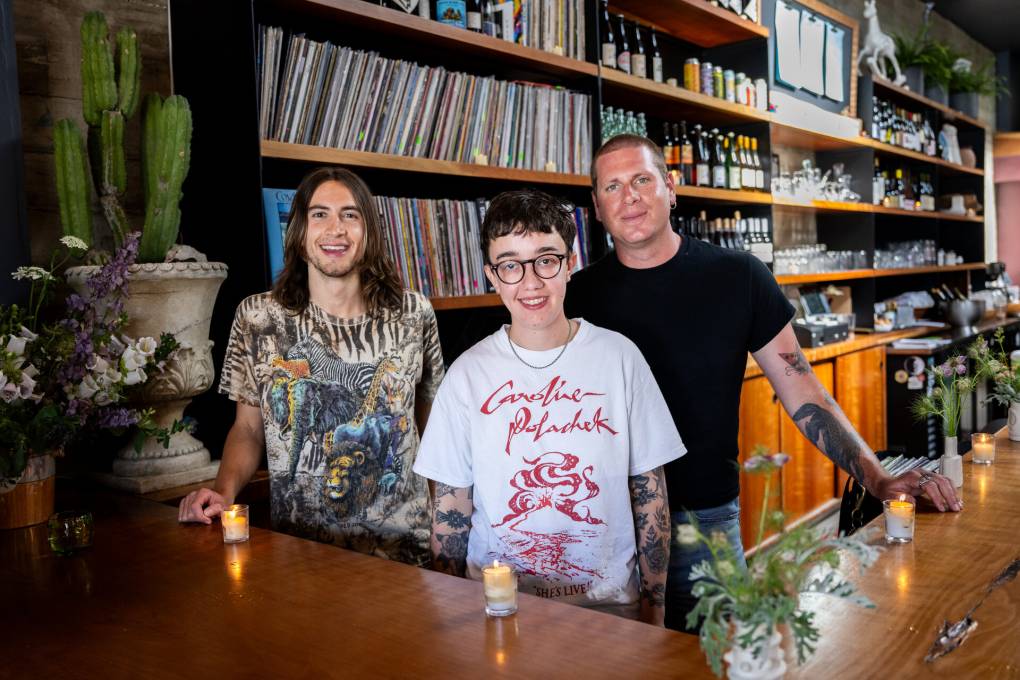
"caption": "Alex Wolfert, Eva Treadway, and Max Edelman stand behind the bar at The Laundromat, a restaurant in the Outer Richmond in San Francisco, on June 5. All three play in local bands, and work as part of a musician-friendly staff that support each other's creative initiatives and cover shifts for national tours. ",
"credit": "Beth LaBerge/KQED",
"altTag": "Three people in T-shirts stand behind a service counter, with a wall of vinyl LPs in the background.",
"description": null,
"imgSizes": {
"medium": {
"file": "https://cdn.kqed.org/wp-content/uploads/sites/2/2024/06/240605-TheLaundromatRestaurant-73-BL_qut-800x533.jpg",
"width": 800,
"height": 533,
"mimeType": "image/jpeg"
},
"large": {
"file": "https://cdn.kqed.org/wp-content/uploads/sites/2/2024/06/240605-TheLaundromatRestaurant-73-BL_qut-1020x680.jpg",
"width": 1020,
"height": 680,
"mimeType": "image/jpeg"
},
"thumbnail": {
"file": "https://cdn.kqed.org/wp-content/uploads/sites/2/2024/06/240605-TheLaundromatRestaurant-73-BL_qut-160x107.jpg",
"width": 160,
"height": 107,
"mimeType": "image/jpeg"
},
"medium_large": {
"file": "https://cdn.kqed.org/wp-content/uploads/sites/2/2024/06/240605-TheLaundromatRestaurant-73-BL_qut-768x512.jpg",
"width": 768,
"height": 512,
"mimeType": "image/jpeg"
},
"1536x1536": {
"file": "https://cdn.kqed.org/wp-content/uploads/sites/2/2024/06/240605-TheLaundromatRestaurant-73-BL_qut-1536x1024.jpg",
"width": 1536,
"height": 1024,
"mimeType": "image/jpeg"
},
"post-thumbnail": {
"file": "https://cdn.kqed.org/wp-content/uploads/sites/2/2024/06/240605-TheLaundromatRestaurant-73-BL_qut-672x372.jpg",
"width": 672,
"height": 372,
"mimeType": "image/jpeg"
},
"twentyfourteen-full-width": {
"file": "https://cdn.kqed.org/wp-content/uploads/sites/2/2024/06/240605-TheLaundromatRestaurant-73-BL_qut-1038x576.jpg",
"width": 1038,
"height": 576,
"mimeType": "image/jpeg"
},
"kqedFullSize": {
"file": "https://cdn.kqed.org/wp-content/uploads/sites/2/2024/06/240605-TheLaundromatRestaurant-73-BL_qut.jpg",
"width": 1920,
"height": 1280
}
},
"isLoading": false,
"fetchFailed": false
},
"arts_13959619": {
"type": "attachments",
"id": "arts_13959619",
"meta": {
"index": "attachments_1716263798",
"site": "arts",
"id": "13959619",
"found": true
},
"title": "3rd_Palou_COVER",
"publishDate": 1718140027,
"status": "inherit",
"parent": 13959524,
"modified": 1718141893,
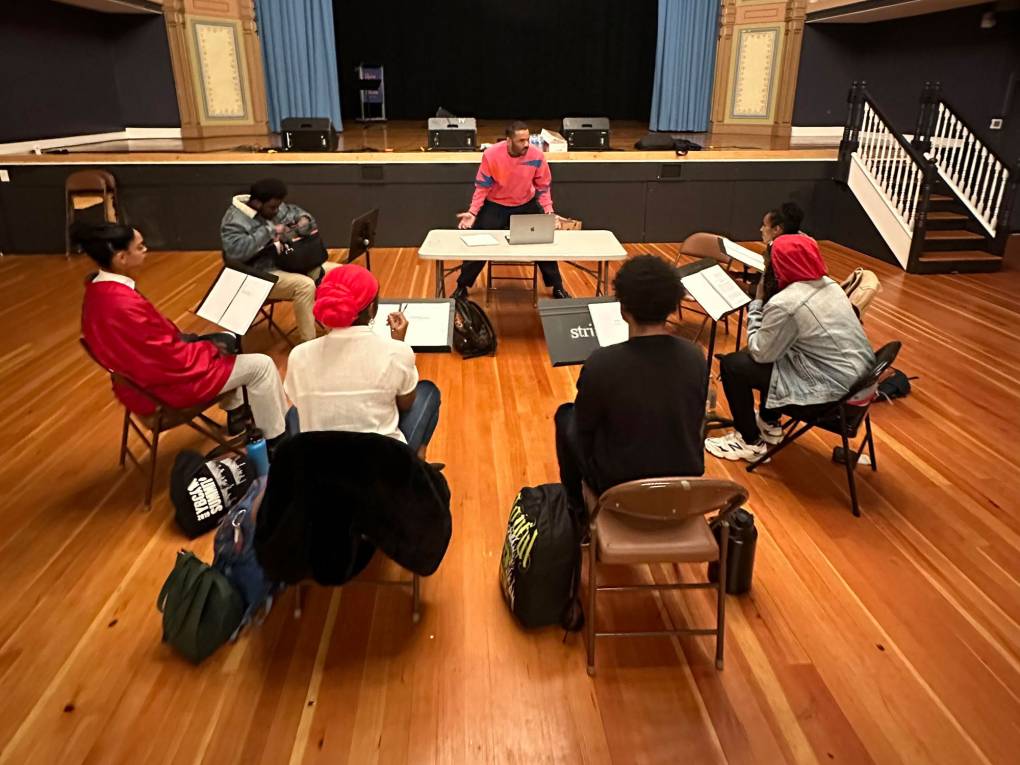
"caption": "Biko Eisen-Martin working with his cast at the Ruth Williams Opera House.",
"credit": "Courtesy Biko Eisen-Martin",
"altTag": "One man standing at table in circle of seated people in theater space",
"description": null,
"imgSizes": {
"medium": {
"file": "https://cdn.kqed.org/wp-content/uploads/sites/2/2024/06/3rd_Palou_COVER-800x600.jpg",
"width": 800,
"height": 600,
"mimeType": "image/jpeg"
},
"large": {
"file": "https://cdn.kqed.org/wp-content/uploads/sites/2/2024/06/3rd_Palou_COVER-1020x765.jpg",
"width": 1020,
"height": 765,
"mimeType": "image/jpeg"
},
"thumbnail": {
"file": "https://cdn.kqed.org/wp-content/uploads/sites/2/2024/06/3rd_Palou_COVER-160x120.jpg",
"width": 160,
"height": 120,
"mimeType": "image/jpeg"
},
"medium_large": {
"file": "https://cdn.kqed.org/wp-content/uploads/sites/2/2024/06/3rd_Palou_COVER-768x576.jpg",
"width": 768,
"height": 576,
"mimeType": "image/jpeg"
},
"1536x1536": {
"file": "https://cdn.kqed.org/wp-content/uploads/sites/2/2024/06/3rd_Palou_COVER-1536x1152.jpg",
"width": 1536,
"height": 1152,
"mimeType": "image/jpeg"
},
"post-thumbnail": {
"file": "https://cdn.kqed.org/wp-content/uploads/sites/2/2024/06/3rd_Palou_COVER-672x372.jpg",
"width": 672,
"height": 372,
"mimeType": "image/jpeg"
},
"twentyfourteen-full-width": {
"file": "https://cdn.kqed.org/wp-content/uploads/sites/2/2024/06/3rd_Palou_COVER-1038x576.jpg",
"width": 1038,
"height": 576,
"mimeType": "image/jpeg"
},
"full-width": {
"file": "https://cdn.kqed.org/wp-content/uploads/sites/2/2024/06/3rd_Palou_COVER-1920x1440.jpg",
"width": 1920,
"height": 1440,
"mimeType": "image/jpeg"
},
"kqedFullSize": {
"file": "https://cdn.kqed.org/wp-content/uploads/sites/2/2024/06/3rd_Palou_COVER.jpg",
"width": 2000,
"height": 1500
}
},
"isLoading": false,
"fetchFailed": false
},
"arts_13959568": {
"type": "attachments",
"id": "arts_13959568",
"meta": {
"index": "attachments_1716263798",
"site": "arts",
"id": "13959568",
"found": true
},
"title": "These images provided by San Francisco Giants coach Ryan Christenson show lineup cards from baseball games.",
"publishDate": 1718068524,
"status": "inherit",
"parent": 13959567,
"modified": 1718070099,
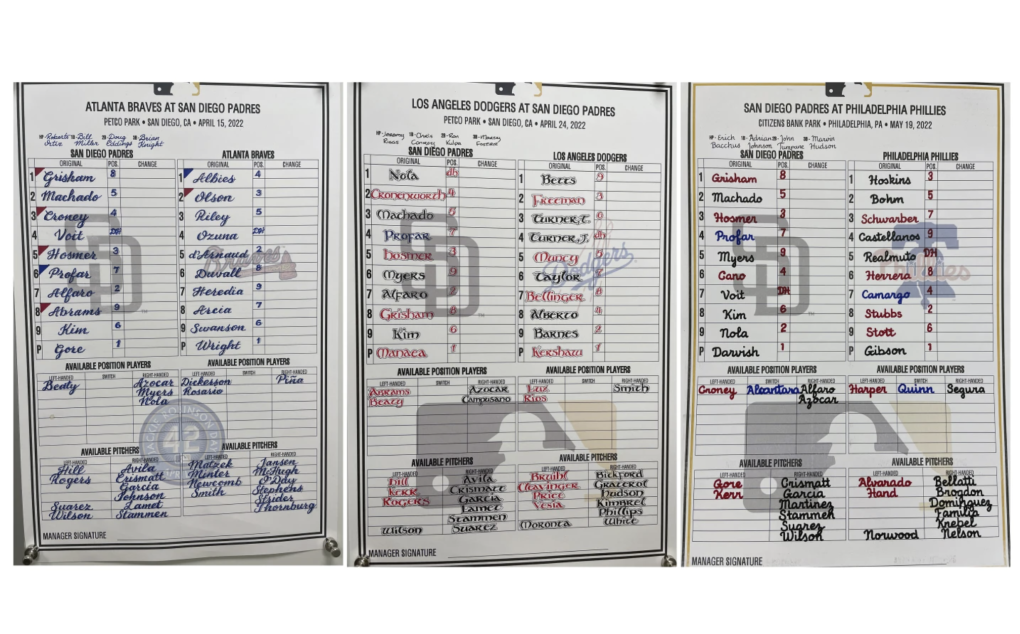
"caption": "These images provided by San Francisco Giants coach Ryan Christenson show lineup cards from baseball games.",
"credit": "Ryan Christenson via AP",
"altTag": "Three lineup cards for the San Diego Padres, beautifully written.",
"description": null,
"imgSizes": {
"medium": {
"file": "https://cdn.kqed.org/wp-content/uploads/sites/2/2024/06/Screen-Shot-2024-06-10-at-6.12.46-PM-800x497.png",
"width": 800,
"height": 497,
"mimeType": "image/png"
},
"large": {
"file": "https://cdn.kqed.org/wp-content/uploads/sites/2/2024/06/Screen-Shot-2024-06-10-at-6.12.46-PM-1020x634.png",
"width": 1020,
"height": 634,
"mimeType": "image/png"
},
"thumbnail": {
"file": "https://cdn.kqed.org/wp-content/uploads/sites/2/2024/06/Screen-Shot-2024-06-10-at-6.12.46-PM-160x99.png",
"width": 160,
"height": 99,
"mimeType": "image/png"
},
"medium_large": {
"file": "https://cdn.kqed.org/wp-content/uploads/sites/2/2024/06/Screen-Shot-2024-06-10-at-6.12.46-PM-768x477.png",
"width": 768,
"height": 477,
"mimeType": "image/png"
},
"1536x1536": {
"file": "https://cdn.kqed.org/wp-content/uploads/sites/2/2024/06/Screen-Shot-2024-06-10-at-6.12.46-PM-1536x954.png",
"width": 1536,
"height": 954,
"mimeType": "image/png"
},
"post-thumbnail": {
"file": "https://cdn.kqed.org/wp-content/uploads/sites/2/2024/06/Screen-Shot-2024-06-10-at-6.12.46-PM-672x372.png",
"width": 672,
"height": 372,
"mimeType": "image/png"
},
"twentyfourteen-full-width": {
"file": "https://cdn.kqed.org/wp-content/uploads/sites/2/2024/06/Screen-Shot-2024-06-10-at-6.12.46-PM-1038x576.png",
"width": 1038,
"height": 576,
"mimeType": "image/png"
},
"full-width": {
"file": "https://cdn.kqed.org/wp-content/uploads/sites/2/2024/06/Screen-Shot-2024-06-10-at-6.12.46-PM-1920x1193.png",
"width": 1920,
"height": 1193,
"mimeType": "image/png"
},
"kqedFullSize": {
"file": "https://cdn.kqed.org/wp-content/uploads/sites/2/2024/06/Screen-Shot-2024-06-10-at-6.12.46-PM.png",
"width": 2018,
"height": 1254
}
},
"isLoading": false,
"fetchFailed": false
},
"arts_13958714": {
"type": "attachments",
"id": "arts_13958714",
"meta": {
"index": "attachments_1716263798",
"site": "arts",
"id": "13958714",
"found": true
},
"title": "Juneteenth",
"publishDate": 1716926558,
"status": "inherit",
"parent": 13958706,
"modified": 1717605362,
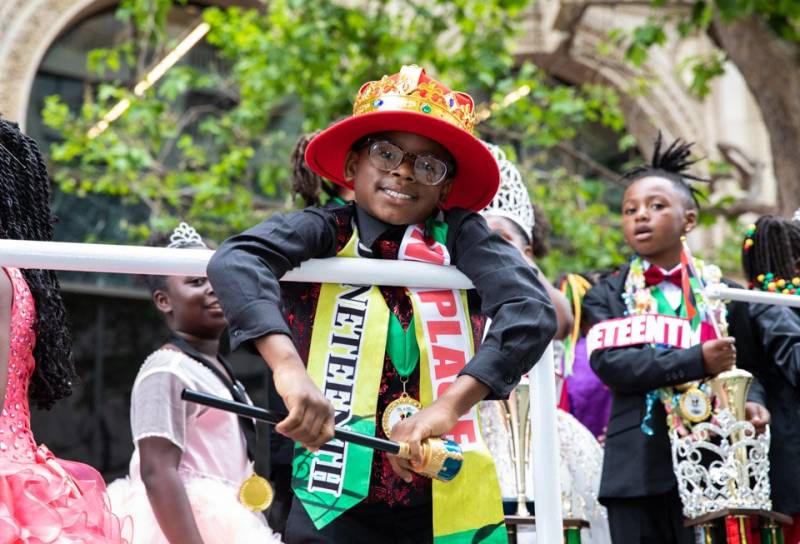
"caption": "The Juneteenth parade and festival in San Francisco is a celebration for all ages. ",
"credit": "Courtesy of the San Francisco Human Rights Commission",
"altTag": "A child with a fancy orange hat, dress clothes and a sash rides on a float during the Juneteenth parade and festival.",
"description": "Juneteenth parade and festival: a celebration for all ages.",
"imgSizes": {
"medium": {
"file": "https://cdn.kqed.org/wp-content/uploads/sites/2/2024/05/Juneteenth23.clg-3.webp_-800x544.jpg",
"width": 800,
"height": 544,
"mimeType": "image/jpeg"
},
"thumbnail": {
"file": "https://cdn.kqed.org/wp-content/uploads/sites/2/2024/05/Juneteenth23.clg-3.webp_-160x109.jpg",
"width": 160,
"height": 109,
"mimeType": "image/jpeg"
},
"medium_large": {
"file": "https://cdn.kqed.org/wp-content/uploads/sites/2/2024/05/Juneteenth23.clg-3.webp_-768x522.jpg",
"width": 768,
"height": 522,
"mimeType": "image/jpeg"
},
"post-thumbnail": {
"file": "https://cdn.kqed.org/wp-content/uploads/sites/2/2024/05/Juneteenth23.clg-3.webp_-672x372.jpg",
"width": 672,
"height": 372,
"mimeType": "image/jpeg"
},
"twentyfourteen-full-width": {
"file": "https://cdn.kqed.org/wp-content/uploads/sites/2/2024/05/Juneteenth23.clg-3.webp_-960x576.jpg",
"width": 960,
"height": 576,
"mimeType": "image/jpeg"
},
"kqedFullSize": {
"file": "https://cdn.kqed.org/wp-content/uploads/sites/2/2024/05/Juneteenth23.clg-3.webp_.jpg",
"width": 960,
"height": 653
}
},
"isLoading": false,
"fetchFailed": false
},
"arts_13959110": {
"type": "attachments",
"id": "arts_13959110",
"meta": {
"index": "attachments_1716263798",
"site": "arts",
"id": "13959110",
"found": true
},
"title": "_74A1662",
"publishDate": 1717440079,
"status": "inherit",
"parent": 13959026,
"modified": 1717442217,
"caption": "Rowan Kievits as Student #4 (Anton), Beate Mordal as Student #2 (Lilly), Lucy Shelton as the Teacher, Marina Dumont as Student #6 (Alexia), Vilma Jää as Student #1 (Markéta), Camilo Delgado Díaz as Student #5 (Jerónimo), and Julie Hega as Student #3 (Iris) in 'Innocence' at SF Opera.",
"credit": "Cory Weaver/San Francisco Opera",
"altTag": null,
"description": null,
"imgSizes": {
"medium": {
"file": "https://cdn.kqed.org/wp-content/uploads/sites/2/2024/06/74A1662-800x534.jpg",
"width": 800,
"height": 534,
"mimeType": "image/jpeg"
},
"large": {
"file": "https://cdn.kqed.org/wp-content/uploads/sites/2/2024/06/74A1662-1020x681.jpg",
"width": 1020,
"height": 681,
"mimeType": "image/jpeg"
},
"thumbnail": {
"file": "https://cdn.kqed.org/wp-content/uploads/sites/2/2024/06/74A1662-160x107.jpg",
"width": 160,
"height": 107,
"mimeType": "image/jpeg"
},
"medium_large": {
"file": "https://cdn.kqed.org/wp-content/uploads/sites/2/2024/06/74A1662-768x512.jpg",
"width": 768,
"height": 512,
"mimeType": "image/jpeg"
},
"1536x1536": {
"file": "https://cdn.kqed.org/wp-content/uploads/sites/2/2024/06/74A1662-1536x1025.jpg",
"width": 1536,
"height": 1025,
"mimeType": "image/jpeg"
},
"post-thumbnail": {
"file": "https://cdn.kqed.org/wp-content/uploads/sites/2/2024/06/74A1662-672x372.jpg",
"width": 672,
"height": 372,
"mimeType": "image/jpeg"
},
"twentyfourteen-full-width": {
"file": "https://cdn.kqed.org/wp-content/uploads/sites/2/2024/06/74A1662-1038x576.jpg",
"width": 1038,
"height": 576,
"mimeType": "image/jpeg"
},
"kqedFullSize": {
"file": "https://cdn.kqed.org/wp-content/uploads/sites/2/2024/06/74A1662.jpg",
"width": 1920,
"height": 1281
}
},
"isLoading": false,
"fetchFailed": false
},
"arts_13958449": {
"type": "attachments",
"id": "arts_13958449",
"meta": {
"index": "attachments_1716263798",
"site": "arts",
"id": "13958449",
"found": true
},
"title": "KellyLovemonster_Jenn Wong_11",
"publishDate": 1716503829,
"status": "inherit",
"parent": 13958438,
"modified": 1716503870,
"caption": "Kelly Lovemonster at Swagger Like Us in 2018.",
"credit": "Jennifer Wong @takeover.tokyo",
"altTag": null,
"description": null,
"imgSizes": {
"medium": {
"file": "https://cdn.kqed.org/wp-content/uploads/sites/2/2024/05/KellyLovemonster_Jenn-Wong_11-800x533.jpg",
"width": 800,
"height": 533,
"mimeType": "image/jpeg"
},
"large": {
"file": "https://cdn.kqed.org/wp-content/uploads/sites/2/2024/05/KellyLovemonster_Jenn-Wong_11-1020x680.jpg",
"width": 1020,
"height": 680,
"mimeType": "image/jpeg"
},
"thumbnail": {
"file": "https://cdn.kqed.org/wp-content/uploads/sites/2/2024/05/KellyLovemonster_Jenn-Wong_11-160x107.jpg",
"width": 160,
"height": 107,
"mimeType": "image/jpeg"
},
"medium_large": {
"file": "https://cdn.kqed.org/wp-content/uploads/sites/2/2024/05/KellyLovemonster_Jenn-Wong_11-768x512.jpg",
"width": 768,
"height": 512,
"mimeType": "image/jpeg"
},
"1536x1536": {
"file": "https://cdn.kqed.org/wp-content/uploads/sites/2/2024/05/KellyLovemonster_Jenn-Wong_11-1536x1024.jpg",
"width": 1536,
"height": 1024,
"mimeType": "image/jpeg"
},
"2048x2048": {
"file": "https://cdn.kqed.org/wp-content/uploads/sites/2/2024/05/KellyLovemonster_Jenn-Wong_11-2048x1365.jpg",
"width": 2048,
"height": 1365,
"mimeType": "image/jpeg"
},
"post-thumbnail": {
"file": "https://cdn.kqed.org/wp-content/uploads/sites/2/2024/05/KellyLovemonster_Jenn-Wong_11-672x372.jpg",
"width": 672,
"height": 372,
"mimeType": "image/jpeg"
},
"twentyfourteen-full-width": {
"file": "https://cdn.kqed.org/wp-content/uploads/sites/2/2024/05/KellyLovemonster_Jenn-Wong_11-1038x576.jpg",
"width": 1038,
"height": 576,
"mimeType": "image/jpeg"
},
"full-width": {
"file": "https://cdn.kqed.org/wp-content/uploads/sites/2/2024/05/KellyLovemonster_Jenn-Wong_11-1920x1280.jpg",
"width": 1920,
"height": 1280,
"mimeType": "image/jpeg"
},
"kqedFullSize": {
"file": "https://cdn.kqed.org/wp-content/uploads/sites/2/2024/05/KellyLovemonster_Jenn-Wong_11-scaled.jpg",
"width": 2560,
"height": 1707
}
},
"isLoading": false,
"fetchFailed": false
},
"arts_13954250": {
"type": "attachments",
"id": "arts_13954250",
"meta": {
"index": "attachments_1716263798",
"site": "arts",
"id": "13954250",
"found": true
},
"parent": 0,
"imgSizes": {
"twentyfourteen-full-width": {
"file": "https://cdn.kqed.org/wp-content/uploads/sites/2/2024/03/240313-YBCAARTISTS-JY-028-KQED-1038x576.jpg",
"width": 1038,
"mimeType": "image/jpeg",
"height": 576
},
"thumbnail": {
"file": "https://cdn.kqed.org/wp-content/uploads/sites/2/2024/03/240313-YBCAARTISTS-JY-028-KQED-160x107.jpg",
"width": 160,
"mimeType": "image/jpeg",
"height": 107
},
"post-thumbnail": {
"file": "https://cdn.kqed.org/wp-content/uploads/sites/2/2024/03/240313-YBCAARTISTS-JY-028-KQED-672x372.jpg",
"width": 672,
"mimeType": "image/jpeg",
"height": 372
},
"kqedFullSize": {
"file": "https://cdn.kqed.org/wp-content/uploads/sites/2/2024/03/240313-YBCAARTISTS-JY-028-KQED.jpg",
"width": 2000,
"height": 1333
},
"large": {
"file": "https://cdn.kqed.org/wp-content/uploads/sites/2/2024/03/240313-YBCAARTISTS-JY-028-KQED-1020x680.jpg",
"width": 1020,
"mimeType": "image/jpeg",
"height": 680
},
"1536x1536": {
"file": "https://cdn.kqed.org/wp-content/uploads/sites/2/2024/03/240313-YBCAARTISTS-JY-028-KQED-1536x1024.jpg",
"width": 1536,
"mimeType": "image/jpeg",
"height": 1024
},
"full-width": {
"file": "https://cdn.kqed.org/wp-content/uploads/sites/2/2024/03/240313-YBCAARTISTS-JY-028-KQED-1920x1280.jpg",
"width": 1920,
"mimeType": "image/jpeg",
"height": 1280
},
"medium": {
"file": "https://cdn.kqed.org/wp-content/uploads/sites/2/2024/03/240313-YBCAARTISTS-JY-028-KQED-800x533.jpg",
"width": 800,
"mimeType": "image/jpeg",
"height": 533
},
"medium_large": {
"file": "https://cdn.kqed.org/wp-content/uploads/sites/2/2024/03/240313-YBCAARTISTS-JY-028-KQED-768x512.jpg",
"width": 768,
"mimeType": "image/jpeg",
"height": 512
}
},
"publishDate": 1710779836,
"modified": 1715893266,
"caption": "Bay Area Now 9 artist Jeff Cheung’s piece “Ceasefire Now!” is seen outside of Yerba Buena Center for the Arts (YBCA) in San Francisco on Thursday, March 14, 2024. ",
"description": null,
"title": "240313-YBCAARTISTS-JY-028-KQED",
"credit": "Juliana Yamada/KQED",
"status": "inherit",
"altTag": null,
"isLoading": false,
"fetchFailed": false
},
"arts_13957856": {
"type": "attachments",
"id": "arts_13957856",
"meta": {
"index": "attachments_1716263798",
"site": "arts",
"id": "13957856",
"found": true
},
"parent": 13957833,
"imgSizes": {
"twentyfourteen-full-width": {
"file": "https://cdn.kqed.org/wp-content/uploads/sites/2/2024/05/GettyImages-1638215938-1038x576.jpg",
"width": 1038,
"mimeType": "image/jpeg",
"height": 576
},
"thumbnail": {
"file": "https://cdn.kqed.org/wp-content/uploads/sites/2/2024/05/GettyImages-1638215938-160x105.jpg",
"width": 160,
"mimeType": "image/jpeg",
"height": 105
},
"post-thumbnail": {
"file": "https://cdn.kqed.org/wp-content/uploads/sites/2/2024/05/GettyImages-1638215938-672x372.jpg",
"width": 672,
"mimeType": "image/jpeg",
"height": 372
},
"kqedFullSize": {
"file": "https://cdn.kqed.org/wp-content/uploads/sites/2/2024/05/GettyImages-1638215938-scaled.jpg",
"width": 2560,
"height": 1688
},
"2048x2048": {
"file": "https://cdn.kqed.org/wp-content/uploads/sites/2/2024/05/GettyImages-1638215938-2048x1350.jpg",
"width": 2048,
"mimeType": "image/jpeg",
"height": 1350
},
"large": {
"file": "https://cdn.kqed.org/wp-content/uploads/sites/2/2024/05/GettyImages-1638215938-1020x673.jpg",
"width": 1020,
"mimeType": "image/jpeg",
"height": 673
},
"1536x1536": {
"file": "https://cdn.kqed.org/wp-content/uploads/sites/2/2024/05/GettyImages-1638215938-1536x1013.jpg",
"width": 1536,
"mimeType": "image/jpeg",
"height": 1013
},
"full-width": {
"file": "https://cdn.kqed.org/wp-content/uploads/sites/2/2024/05/GettyImages-1638215938-1920x1266.jpg",
"width": 1920,
"mimeType": "image/jpeg",
"height": 1266
},
"medium": {
"file": "https://cdn.kqed.org/wp-content/uploads/sites/2/2024/05/GettyImages-1638215938-800x527.jpg",
"width": 800,
"mimeType": "image/jpeg",
"height": 527
},
"medium_large": {
"file": "https://cdn.kqed.org/wp-content/uploads/sites/2/2024/05/GettyImages-1638215938-768x506.jpg",
"width": 768,
"mimeType": "image/jpeg",
"height": 506
}
},
"publishDate": 1715729110,
"modified": 1715729136,
"caption": "Kehlani performs during the Sol Blume Music festival at Discovery Park on August 20, 2023 in Sacramento, California. ",
"description": null,
"title": "2023 Sol Blume Festival",
"credit": "Tim Mosenfelder/WireImage",
"status": "inherit",
"altTag": null,
"isLoading": false,
"fetchFailed": false
},
"arts_13957664": {
"type": "attachments",
"id": "arts_13957664",
"meta": {
"index": "attachments_1716263798",
"site": "arts",
"id": "13957664",
"found": true
},
"parent": 13957514,
"imgSizes": {
"twentyfourteen-full-width": {
"file": "https://cdn.kqed.org/wp-content/uploads/sites/2/2024/05/Screen-Shot-2024-05-10-at-2.40.57-PM-1038x576.png",
"width": 1038,
"mimeType": "image/png",
"height": 576
},
"thumbnail": {
"file": "https://cdn.kqed.org/wp-content/uploads/sites/2/2024/05/Screen-Shot-2024-05-10-at-2.40.57-PM-160x93.png",
"width": 160,
"mimeType": "image/png",
"height": 93
},
"post-thumbnail": {
"file": "https://cdn.kqed.org/wp-content/uploads/sites/2/2024/05/Screen-Shot-2024-05-10-at-2.40.57-PM-672x372.png",
"width": 672,
"mimeType": "image/png",
"height": 372
},
"kqedFullSize": {
"file": "https://cdn.kqed.org/wp-content/uploads/sites/2/2024/05/Screen-Shot-2024-05-10-at-2.40.57-PM.png",
"width": 1584,
"height": 916
},
"large": {
"file": "https://cdn.kqed.org/wp-content/uploads/sites/2/2024/05/Screen-Shot-2024-05-10-at-2.40.57-PM-1020x590.png",
"width": 1020,
"mimeType": "image/png",
"height": 590
},
"1536x1536": {
"file": "https://cdn.kqed.org/wp-content/uploads/sites/2/2024/05/Screen-Shot-2024-05-10-at-2.40.57-PM-1536x888.png",
"width": 1536,
"mimeType": "image/png",
"height": 888
},
"medium": {
"file": "https://cdn.kqed.org/wp-content/uploads/sites/2/2024/05/Screen-Shot-2024-05-10-at-2.40.57-PM-800x463.png",
"width": 800,
"mimeType": "image/png",
"height": 463
},
"medium_large": {
"file": "https://cdn.kqed.org/wp-content/uploads/sites/2/2024/05/Screen-Shot-2024-05-10-at-2.40.57-PM-768x444.png",
"width": 768,
"mimeType": "image/png",
"height": 444
}
},
"publishDate": 1715377288,
"modified": 1715377334,
"caption": "A rendition of the airship seen in the skies above Sacramento, as illustrated in ‘The San Francisco Call and Post’ on Nov. 29, 1896.",
"description": null,
"title": "A rendition of the airship seen in the skies above Sacramento, as illustrated in ‘The San Francisco Call and Post’ on Nov. 29, 1896.",
"credit": "The San Francisco Call and Post",
"status": "inherit",
"altTag": "A Victorian illustration of two men watching an airship with wings and spotlights flying near the top of the Capitol building.",
"isLoading": false,
"fetchFailed": false
},
"arts_13916882": {
"type": "attachments",
"id": "arts_13916882",
"meta": {
"index": "attachments_1716263798",
"site": "arts",
"id": "13916882",
"found": true
},
"parent": 13916940,
"imgSizes": {
"twentyfourteen-full-width": {
"file": "https://cdn.kqed.org/wp-content/uploads/sites/2/2022/08/Chaka-Khan-performs-at-Blue-Note-Jazz-Festival-in-St.-Helena-on-Friday-July-29-2022002-1038x576.jpg",
"width": 1038,
"mimeType": "image/jpeg",
"height": 576
},
"thumbnail": {
"file": "https://cdn.kqed.org/wp-content/uploads/sites/2/2022/08/Chaka-Khan-performs-at-Blue-Note-Jazz-Festival-in-St.-Helena-on-Friday-July-29-2022002-160x107.jpg",
"width": 160,
"mimeType": "image/jpeg",
"height": 107
},
"post-thumbnail": {
"file": "https://cdn.kqed.org/wp-content/uploads/sites/2/2022/08/Chaka-Khan-performs-at-Blue-Note-Jazz-Festival-in-St.-Helena-on-Friday-July-29-2022002-672x372.jpg",
"width": 672,
"mimeType": "image/jpeg",
"height": 372
},
"kqedFullSize": {
"file": "https://cdn.kqed.org/wp-content/uploads/sites/2/2022/08/Chaka-Khan-performs-at-Blue-Note-Jazz-Festival-in-St.-Helena-on-Friday-July-29-2022002.jpg",
"width": 1920,
"height": 1280
},
"large": {
"file": "https://cdn.kqed.org/wp-content/uploads/sites/2/2022/08/Chaka-Khan-performs-at-Blue-Note-Jazz-Festival-in-St.-Helena-on-Friday-July-29-2022002-1020x680.jpg",
"width": 1020,
"mimeType": "image/jpeg",
"height": 680
},
"1536x1536": {
"file": "https://cdn.kqed.org/wp-content/uploads/sites/2/2022/08/Chaka-Khan-performs-at-Blue-Note-Jazz-Festival-in-St.-Helena-on-Friday-July-29-2022002-1536x1024.jpg",
"width": 1536,
"mimeType": "image/jpeg",
"height": 1024
},
"medium": {
"file": "https://cdn.kqed.org/wp-content/uploads/sites/2/2022/08/Chaka-Khan-performs-at-Blue-Note-Jazz-Festival-in-St.-Helena-on-Friday-July-29-2022002-800x533.jpg",
"width": 800,
"mimeType": "image/jpeg",
"height": 533
},
"medium_large": {
"file": "https://cdn.kqed.org/wp-content/uploads/sites/2/2022/08/Chaka-Khan-performs-at-Blue-Note-Jazz-Festival-in-St.-Helena-on-Friday-July-29-2022002-768x512.jpg",
"width": 768,
"mimeType": "image/jpeg",
"height": 512
}
},
"publishDate": 1659344971,
"modified": 1715298328,
"caption": "Chaka Khan performs at Blue Note Jazz Festival in St. Helena on Friday, July 29, 2022.",
"description": "Chaka Khan performs at Blue Note Jazz Festival in St. Helena on Friday, July 29, 2022.",
"title": "Chaka Khan performs at Blue Note Jazz Festival in St. Helena on Friday, July 29, 2022.",
"credit": "Estefany Gonzalez for KQED",
"status": "inherit",
"altTag": null,
"isLoading": false,
"fetchFailed": false
},
"arts_13957595": {
"type": "attachments",
"id": "arts_13957595",
"meta": {
"index": "attachments_1716263798",
"site": "arts",
"id": "13957595",
"found": true
},
"parent": 0,
"imgSizes": {
"twentyfourteen-full-width": {
"file": "https://cdn.kqed.org/wp-content/uploads/sites/2/2024/05/Ping-Yang-crop-1038x576.jpg",
"width": 1038,
"mimeType": "image/jpeg",
"height": 576
},
"thumbnail": {
"file": "https://cdn.kqed.org/wp-content/uploads/sites/2/2024/05/Ping-Yang-crop-160x90.jpg",
"width": 160,
"mimeType": "image/jpeg",
"height": 90
},
"post-thumbnail": {
"file": "https://cdn.kqed.org/wp-content/uploads/sites/2/2024/05/Ping-Yang-crop-672x372.jpg",
"width": 672,
"mimeType": "image/jpeg",
"height": 372
},
"kqedFullSize": {
"file": "https://cdn.kqed.org/wp-content/uploads/sites/2/2024/05/Ping-Yang-crop.jpg",
"width": 1920,
"height": 1080
},
"large": {
"file": "https://cdn.kqed.org/wp-content/uploads/sites/2/2024/05/Ping-Yang-crop-1020x574.jpg",
"width": 1020,
"mimeType": "image/jpeg",
"height": 574
},
"1536x1536": {
"file": "https://cdn.kqed.org/wp-content/uploads/sites/2/2024/05/Ping-Yang-crop-1536x864.jpg",
"width": 1536,
"mimeType": "image/jpeg",
"height": 864
},
"medium": {
"file": "https://cdn.kqed.org/wp-content/uploads/sites/2/2024/05/Ping-Yang-crop-800x450.jpg",
"width": 800,
"mimeType": "image/jpeg",
"height": 450
},
"medium_large": {
"file": "https://cdn.kqed.org/wp-content/uploads/sites/2/2024/05/Ping-Yang-crop-768x432.jpg",
"width": 768,
"mimeType": "image/jpeg",
"height": 432
}
},
"publishDate": 1715299251,
"modified": 1715299949,
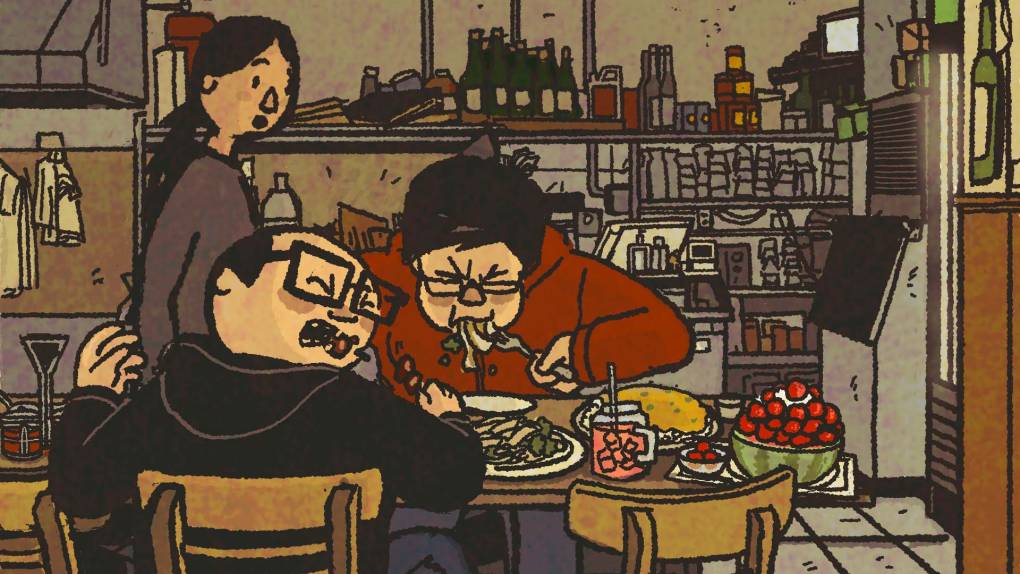
"caption": "The charms of Ping Yang Thai Grill & Dessert are at least twofold: homey Thai noodles and rice dishes, and over-the-top Asian desserts.",
"description": null,
"title": "Ping Yang crop",
"credit": "Thien Pham",
"status": "inherit",
"altTag": "Illustration: Two men eat noodles and Thai desserts with an animalistic fervor.",
"isLoading": false,
"fetchFailed": false
},
"arts_13957561": {
"type": "attachments",
"id": "arts_13957561",
"meta": {
"index": "attachments_1716263798",
"site": "arts",
"id": "13957561",
"found": true
},
"parent": 13957550,
"imgSizes": {
"twentyfourteen-full-width": {
"file": "https://cdn.kqed.org/wp-content/uploads/sites/2/2024/05/IMG_3348_1-1038x576.jpg",
"width": 1038,
"mimeType": "image/jpeg",
"height": 576
},
"thumbnail": {
"file": "https://cdn.kqed.org/wp-content/uploads/sites/2/2024/05/IMG_3348_1-160x90.jpg",
"width": 160,
"mimeType": "image/jpeg",
"height": 90
},
"post-thumbnail": {
"file": "https://cdn.kqed.org/wp-content/uploads/sites/2/2024/05/IMG_3348_1-672x372.jpg",
"width": 672,
"mimeType": "image/jpeg",
"height": 372
},
"kqedFullSize": {
"file": "https://cdn.kqed.org/wp-content/uploads/sites/2/2024/05/IMG_3348_1.jpg",
"width": 1921,
"height": 1081
},
"large": {
"file": "https://cdn.kqed.org/wp-content/uploads/sites/2/2024/05/IMG_3348_1-1020x574.jpg",
"width": 1020,
"mimeType": "image/jpeg",
"height": 574
},
"1536x1536": {
"file": "https://cdn.kqed.org/wp-content/uploads/sites/2/2024/05/IMG_3348_1-1536x864.jpg",
"width": 1536,
"mimeType": "image/jpeg",
"height": 864
},
"medium": {
"file": "https://cdn.kqed.org/wp-content/uploads/sites/2/2024/05/IMG_3348_1-800x450.jpg",
"width": 800,
"mimeType": "image/jpeg",
"height": 450
},
"medium_large": {
"file": "https://cdn.kqed.org/wp-content/uploads/sites/2/2024/05/IMG_3348_1-768x432.jpg",
"width": 768,
"mimeType": "image/jpeg",
"height": 432
}
},
"publishDate": 1715282129,
"modified": 1715282171,
"caption": "Kezia's love of Paramore and Brandy shaped her genre-bending style.",
"description": null,
"title": "IMG_3348_1",
"credit": "Sanny Bisquerra ",
"status": "inherit",
"altTag": "A portrait of Kezia at night on a beach, illuminated by red light.",
"isLoading": false,
"fetchFailed": false
}
},
"audioPlayerReducer": {
"postId": "stream_live",
"isPaused": true,
"isPlaying": false,
"pfsActive": false,
"pledgeModalIsOpen": true,
"playerDrawerIsOpen": false,
"liveAudioPlayStartedAt": 0,
"liveAudioPlayContext": ""
},
"authorsReducer": {
"byline_arts_13959567": {
"type": "authors",
"id": "byline_arts_13959567",
"meta": {
"override": true
},
"slug": "byline_arts_13959567",
"name": "Ronald Blum, Associated Press",
"isLoading": false
},
"byline_arts_13958438": {
"type": "authors",
"id": "byline_arts_13958438",
"meta": {
"override": true
},
"slug": "byline_arts_13958438",
"name": "Caitlin Donohue",
"isLoading": false
},
"gmeline": {
"type": "authors",
"id": "185",
"meta": {
"index": "authors_1716337520",
"id": "185",
"found": true
},
"name": "Gabe Meline",
"firstName": "Gabe",
"lastName": "Meline",
"slug": "gmeline",
"email": "gmeline@kqed.org",
"display_author_email": true,
"staff_mastheads": [
"arts"
],
"title": "Senior Editor, KQED Arts & Culture",
"bio": "Gabe Meline entered journalism at age 15 making photocopied zines, and has since earned awards from the Edward R. Murrow Awards, the Society for Professional Journalists, the Online Journalism Awards, the Association of Alternative Newsweeklies and the California Newspaper Publishers Association. Prior to KQED, he was the editor of the \u003cem>North Bay Bohemian\u003c/em> and a touring musician. He lives with his wife and daughter in his hometown of Santa Rosa, CA.",
"avatar": "https://secure.gravatar.com/avatar/5bebe57be0d8bc2dd318934feb47299e2d2d10cba28d09d8d7afb389a2ce2bdd?s=600&d=blank&r=g",
"twitter": null,
"bluesky": null,
"facebook": null,
"instagram": null,
"linkedin": null,
"sites": [
{
"site": "",
"roles": [
"editor"
]
},
{
"site": "arts",
"roles": [
"administrator"
]
},
{
"site": "artschool",
"roles": [
"editor"
]
},
{
"site": "news",
"roles": [
"author"
]
},
{
"site": "pop",
"roles": [
"editor"
]
},
{
"site": "bayareabites",
"roles": [
"editor"
]
},
{
"site": "food",
"roles": [
"editor"
]
},
{
"site": "forum",
"roles": [
"administrator"
]
},
{
"site": "liveblog",
"roles": [
"editor"
]
},
{
"site": "hiphop",
"roles": [
"editor"
]
}
],
"headData": {
"title": "Gabe Meline | KQED",
"description": "Senior Editor, KQED Arts & Culture",
"ogImgSrc": "https://secure.gravatar.com/avatar/5bebe57be0d8bc2dd318934feb47299e2d2d10cba28d09d8d7afb389a2ce2bdd?s=600&d=blank&r=g",
"twImgSrc": "https://secure.gravatar.com/avatar/5bebe57be0d8bc2dd318934feb47299e2d2d10cba28d09d8d7afb389a2ce2bdd?s=600&d=blank&r=g"
},
"isLoading": false,
"link": "/author/gmeline"
},
"ralexandra": {
"type": "authors",
"id": "11242",
"meta": {
"index": "authors_1716337520",
"id": "11242",
"found": true
},
"name": "Rae Alexandra",
"firstName": "Rae",
"lastName": "Alexandra",
"slug": "ralexandra",
"email": "ralexandra@kqed.org",
"display_author_email": true,
"staff_mastheads": [],
"title": "Reporter/Producer",
"bio": "Rae Alexandra is a Reporter/Producer for KQED Arts & Culture, and the creator/author of the \u003ca href=\"https://www.kqed.org/arts/program/rebel-girls-from-bay-area-history\">Rebel Girls From Bay Area History\u003c/a> and \u003ca href=\"https://www.kqed.org/bizarrebayarea\">Bizarre Bay Area\u003c/a> series. Her debut book, \u003ca href=\"https://citylights.com/politics-current-events-history/unsung-heroines35-women-who-changed/\">Unsung Heroines: 35 Women Who Changed the Bay Area\u003c/a> was published by City Lights in March 2026. In 2023, Rae was awarded an SPJ Excellence in Journalism Award for Arts & Culture. Rae was born and raised in Wales and subsequently — even after two decades in Northern California — still uses phrases that regularly baffle her coworkers.",
"avatar": "https://secure.gravatar.com/avatar/edfee8176c80cc0a382b051190f5341997df378a934a5774dcb0977732dfd401?s=600&d=blank&r=g",
"twitter": null,
"bluesky": null,
"facebook": null,
"instagram": null,
"linkedin": null,
"sites": [
{
"site": "arts",
"roles": [
"subscriber"
]
},
{
"site": "news",
"roles": [
"subscriber"
]
},
{
"site": "pop",
"roles": [
"subscriber"
]
},
{
"site": "bayareabites",
"roles": [
"subscriber"
]
},
{
"site": "science",
"roles": [
"subscriber"
]
}
],
"headData": {
"title": "Rae Alexandra | KQED",
"description": "Reporter/Producer",
"ogImgSrc": "https://secure.gravatar.com/avatar/edfee8176c80cc0a382b051190f5341997df378a934a5774dcb0977732dfd401?s=600&d=blank&r=g",
"twImgSrc": "https://secure.gravatar.com/avatar/edfee8176c80cc0a382b051190f5341997df378a934a5774dcb0977732dfd401?s=600&d=blank&r=g"
},
"isLoading": false,
"link": "/author/ralexandra"
},
"nvoynovskaya": {
"type": "authors",
"id": "11387",
"meta": {
"index": "authors_1716337520",
"id": "11387",
"found": true
},
"name": "Nastia Voynovskaya",
"firstName": "Nastia",
"lastName": "Voynovskaya",
"slug": "nvoynovskaya",
"email": "nvoynovskaya@kqed.org",
"display_author_email": false,
"staff_mastheads": [
"arts"
],
"title": "Editor and reporter",
"bio": "Nastia Voynovskaya is a reporter, editor and host at KQED Arts & Culture. She's been covering the arts in the Bay Area for over a decade, with a focus on music, queer culture, labor issues and grassroots organizing. She has edited KQED story series such as Trans Bay: A History of San Francisco's Gender-Diverse Community, and co-created KQED's Bay Area hip-hop history project, That's My Word. Nastia's work has been recognized by the Society of Professional Journalists and San Francisco Press Club. She regularly appears on podcasts and radio programs, including NPR's All Songs Considered, and hosts live events where music, culture and conversation meet.",
"avatar": "https://secure.gravatar.com/avatar/5025ee460e5a85d69ca20ea6c6f2f80d7e17795c828f61ea3aecfcd924e9042e?s=600&d=blank&r=g",
"twitter": null,
"bluesky": null,
"facebook": null,
"instagram": "https://www.instagram.com/nananastia/",
"linkedin": null,
"sites": [
{
"site": "",
"roles": [
"editor"
]
},
{
"site": "arts",
"roles": [
"administrator"
]
},
{
"site": "news",
"roles": [
"editor"
]
},
{
"site": "pop",
"roles": [
"administrator"
]
},
{
"site": "bayareabites",
"roles": [
"editor"
]
},
{
"site": "podcasts",
"roles": [
"editor"
]
},
{
"site": "hiphop",
"roles": [
"editor"
]
}
],
"headData": {
"title": "Nastia Voynovskaya | KQED",
"description": "Editor and reporter",
"ogImgSrc": "https://secure.gravatar.com/avatar/5025ee460e5a85d69ca20ea6c6f2f80d7e17795c828f61ea3aecfcd924e9042e?s=600&d=blank&r=g",
"twImgSrc": "https://secure.gravatar.com/avatar/5025ee460e5a85d69ca20ea6c6f2f80d7e17795c828f61ea3aecfcd924e9042e?s=600&d=blank&r=g"
},
"isLoading": false,
"link": "/author/nvoynovskaya"
},
"ogpenn": {
"type": "authors",
"id": "11491",
"meta": {
"index": "authors_1716337520",
"id": "11491",
"found": true
},
"name": "Pendarvis Harshaw",
"firstName": "Pendarvis",
"lastName": "Harshaw",
"slug": "ogpenn",
"email": "ogpenn@gmail.com",
"display_author_email": false,
"staff_mastheads": [
"arts"
],
"title": "Community Engagement Reporter",
"bio": "Pendarvis Harshaw is an educator, host and writer with KQED Arts.",
"avatar": "https://secure.gravatar.com/avatar/972b77ee8e3f346ae2b00622661187fbfabd059b5693bbdc1475ea7a722fd4cd?s=600&d=blank&r=g",
"twitter": null,
"bluesky": null,
"facebook": null,
"instagram": "ogpenn",
"linkedin": null,
"sites": [
{
"site": "arts",
"roles": [
"administrator"
]
},
{
"site": "news",
"roles": [
"editor"
]
},
{
"site": "bayareabites",
"roles": [
"author"
]
},
{
"site": "hiphop",
"roles": [
"editor"
]
}
],
"headData": {
"title": "Pendarvis Harshaw | KQED",
"description": "Community Engagement Reporter",
"ogImgSrc": "https://secure.gravatar.com/avatar/972b77ee8e3f346ae2b00622661187fbfabd059b5693bbdc1475ea7a722fd4cd?s=600&d=blank&r=g",
"twImgSrc": "https://secure.gravatar.com/avatar/972b77ee8e3f346ae2b00622661187fbfabd059b5693bbdc1475ea7a722fd4cd?s=600&d=blank&r=g"
},
"isLoading": false,
"link": "/author/ogpenn"
},
"csmith": {
"type": "authors",
"id": "11603",
"meta": {
"index": "authors_1716337520",
"id": "11603",
"found": true
},
"name": "Caroline Smith",
"firstName": "Caroline",
"lastName": "Smith",
"slug": "csmith",
"email": "csmith@kqed.org",
"display_author_email": true,
"staff_mastheads": [
"news"
],
"title": "Producer, Forum",
"bio": "Caroline Smith is a producer for \u003cem>Forum\u003c/em>, producing more than 500 segments since joining the team in 2019 as an intern. From the Bay Area, Smith graduated with a B.A. in Rhetoric from UC Berkeley and is an alumnus of \u003cem>The Daily Californian.\u003c/em> They have received multiple San Francisco Press Club awards, a Fulbright scholarship and the ICFJ's Arthur F. Burns Fellowship, through which they reported from Berlin for one of Germany's largest national newspapers.",
"avatar": "https://secure.gravatar.com/avatar/191832bcd9809e2c67810a34b813b4b6c43fcba15f499f526da57b7161b4c778?s=600&d=blank&r=g",
"twitter": null,
"bluesky": null,
"facebook": null,
"instagram": null,
"linkedin": null,
"sites": [
{
"site": "arts",
"roles": [
"editor"
]
},
{
"site": "news",
"roles": [
"author"
]
},
{
"site": "mindshift",
"roles": [
"editor"
]
},
{
"site": "forum",
"roles": [
"administrator"
]
},
{
"site": "perspectives",
"roles": [
"editor"
]
}
],
"headData": {
"title": "Caroline Smith | KQED",
"description": "Producer, Forum",
"ogImgSrc": "https://secure.gravatar.com/avatar/191832bcd9809e2c67810a34b813b4b6c43fcba15f499f526da57b7161b4c778?s=600&d=blank&r=g",
"twImgSrc": "https://secure.gravatar.com/avatar/191832bcd9809e2c67810a34b813b4b6c43fcba15f499f526da57b7161b4c778?s=600&d=blank&r=g"
},
"isLoading": false,
"link": "/author/csmith"
},
"ltsai": {
"type": "authors",
"id": "11743",
"meta": {
"index": "authors_1716337520",
"id": "11743",
"found": true
},
"name": "Luke Tsai",
"firstName": "Luke",
"lastName": "Tsai",
"slug": "ltsai",
"email": "ltsai@kqed.org",
"display_author_email": true,
"staff_mastheads": [
"arts"
],
"title": "Food Editor",
"bio": "Luke Tsai is KQED's food editor and resident stinky tofu connoisseur. Prior to KQED, he was an editor at Eater SF, \u003cem>San Francisco \u003c/em>magazine, and the \u003cem>East Bay Express\u003c/em>, and his work has also appeared in TASTE, the \u003cem>San Francisco Chronicle\u003c/em>, and the \u003cem>Best Food Writing\u003c/em> anthology. When he isn't writing or editing, you'll find him eating most everything he can get his hands on.",
"avatar": "https://secure.gravatar.com/avatar/1e59b45bf191526e7339d6ba46e33a57b2030d25c27660ecc64ea3cb863e34f7?s=600&d=blank&r=g",
"twitter": "theluketsai",
"bluesky": null,
"facebook": null,
"instagram": null,
"linkedin": null,
"sites": [
{
"site": "",
"roles": [
"editor"
]
},
{
"site": "arts",
"roles": [
"administrator"
]
},
{
"site": "news",
"roles": [
"editor",
"contributor"
]
},
{
"site": "bayareabites",
"roles": [
"editor"
]
},
{
"site": "food",
"roles": [
"editor"
]
}
],
"headData": {
"title": "Luke Tsai | KQED",
"description": "Food Editor",
"ogImgSrc": "https://secure.gravatar.com/avatar/1e59b45bf191526e7339d6ba46e33a57b2030d25c27660ecc64ea3cb863e34f7?s=600&d=blank&r=g",
"twImgSrc": "https://secure.gravatar.com/avatar/1e59b45bf191526e7339d6ba46e33a57b2030d25c27660ecc64ea3cb863e34f7?s=600&d=blank&r=g"
},
"isLoading": false,
"link": "/author/ltsai"
},
"achazaro": {
"type": "authors",
"id": "11748",
"meta": {
"index": "authors_1716337520",
"id": "11748",
"found": true
},
"name": "Alan Chazaro",
"firstName": "Alan",
"lastName": "Chazaro",
"slug": "achazaro",
"email": "agchazaro@gmail.com",
"display_author_email": true,
"staff_mastheads": [],
"title": "Food Writer and Reporter",
"bio": "Alan Chazaro is the author of \u003cem>This Is Not a Frank Ocean Cover Album\u003c/em> (Black Lawrence Press, 2019), \u003cem>Piñata Theory\u003c/em> (Black Lawrence Press, 2020), and \u003cem>Notes from the Eastern Span of the Bay Bridge\u003c/em> (Ghost City Press, 2021). He is a graduate of June Jordan’s Poetry for the People program at UC Berkeley and a former Lawrence Ferlinghetti Fellow at the University of San Francisco. He writes about sports, food, art, music, education, and culture while repping the Bay on \u003ca href=\"https://twitter.com/alan_chazaro\">Twitter\u003c/a> and \u003ca href=\"https://www.instagram.com/alan_chazaro/?hl=en\">Instagram\u003c/a> at @alan_chazaro.",
"avatar": "https://secure.gravatar.com/avatar/ea8b6dd970fc5c29e7a188e7d5861df7?s=600&d=blank&r=g",
"twitter": "alan_chazaro",
"facebook": null,
"instagram": null,
"linkedin": null,
"sites": [
{
"site": "arts",
"roles": [
"contributor"
]
},
{
"site": "news",
"roles": [
"editor"
]
}
],
"headData": {
"title": "Alan Chazaro | KQED",
"description": "Food Writer and Reporter",
"ogImgSrc": "https://secure.gravatar.com/avatar/ea8b6dd970fc5c29e7a188e7d5861df7?s=600&d=blank&r=g",
"twImgSrc": "https://secure.gravatar.com/avatar/ea8b6dd970fc5c29e7a188e7d5861df7?s=600&d=blank&r=g"
},
"isLoading": false,
"link": "/author/achazaro"
},
"emilianovilla": {
"type": "authors",
"id": "11752",
"meta": {
"index": "authors_1716337520",
"id": "11752",
"found": true
},
"name": "Emiliano Villa",
"firstName": "Emiliano",
"lastName": "Villa",
"slug": "emilianovilla",
"email": "evilla@kqed.org",
"display_author_email": true,
"staff_mastheads": [],
"title": "KQED Education Staff",
"bio": "Emiliano Villa is a multimedia journalist seeped in Oakland culture. Through their training at YR Media, they discovered their love for journalism and realized the power of youth media in addressing inequity. This passion led them to join YR's newsroom, reporting on politics, arts, and queer culture through a youth perspective. Their work has been featured on NPR, SF Chronicle, and the NY Times. When they aren't creating, Emiliano enjoys nature and dancing their heart out to pop music.",
"avatar": "https://secure.gravatar.com/avatar/1b7b4ba50c7d726845f5f18c6b77b0ba?s=600&d=mm&r=g",
"twitter": null,
"facebook": null,
"instagram": null,
"linkedin": null,
"sites": [
{
"site": "",
"roles": [
"editor"
]
},
{
"site": "arts",
"roles": []
},
{
"site": "news",
"roles": []
},
{
"site": "education",
"roles": []
},
{
"site": "perspectives",
"roles": []
}
],
"headData": {
"title": "Emiliano Villa | KQED",
"description": "KQED Education Staff",
"ogImgSrc": "https://secure.gravatar.com/avatar/1b7b4ba50c7d726845f5f18c6b77b0ba?s=600&d=mm&r=g",
"twImgSrc": "https://secure.gravatar.com/avatar/1b7b4ba50c7d726845f5f18c6b77b0ba?s=600&d=mm&r=g"
},
"isLoading": false,
"link": "/author/emilianovilla"
},
"tpham": {
"type": "authors",
"id": "11753",
"meta": {
"index": "authors_1716337520",
"id": "11753",
"found": true
},
"name": "Thien Pham",
"firstName": "Thien",
"lastName": "Pham",
"slug": "tpham",
"email": "thiendog@gmail.com",
"display_author_email": false,
"staff_mastheads": [],
"title": "KQED Contributor",
"bio": null,
"avatar": "https://secure.gravatar.com/avatar/a5b4729969ad46d88e7b9ec9dd4f3fa6af84dd0fa8fa91f01d8d9481694999bc?s=600&d=blank&r=g",
"twitter": null,
"bluesky": null,
"facebook": null,
"instagram": null,
"linkedin": null,
"sites": [
{
"site": "arts",
"roles": [
"contributor"
]
}
],
"headData": {
"title": "Thien Pham | KQED",
"description": "KQED Contributor",
"ogImgSrc": "https://secure.gravatar.com/avatar/a5b4729969ad46d88e7b9ec9dd4f3fa6af84dd0fa8fa91f01d8d9481694999bc?s=600&d=blank&r=g",
"twImgSrc": "https://secure.gravatar.com/avatar/a5b4729969ad46d88e7b9ec9dd4f3fa6af84dd0fa8fa91f01d8d9481694999bc?s=600&d=blank&r=g"
},
"isLoading": false,
"link": "/author/tpham"
}
},
"pagesReducer": {
"arts_tag_san-francisco": {
"type": "terms",
"id": "arts_1146",
"meta": {
"index": "terms_1716263798",
"site": "arts",
"id": "1146",
"score": 6.7228813
},
"featImg": null,
"name": "San Francisco",
"description": null,
"taxonomy": "tag",
"headData": {
"twImgId": null,
"twTitle": null,
"ogTitle": null,
"ogImgId": null,
"twDescription": null,
"description": null,
"title": "San Francisco Archives | KQED Arts",
"ogDescription": null
},
"ttid": 701,
"slug": "san-francisco",
"isLoading": false,
"title": "San Francisco",
"pageMeta": {
"site": "arts",
"WpPageTemplate": "page-topic-editorial",
"currentPage": 25
},
"blocks": [
{
"blockName": "kqed/post-list",
"attrs": {
"layout": "cardArticle2",
"query": "posts/arts?tag=san-francisco",
"seeMore": false,
"paginated": true,
"page": 25
}
},
{
"blockName": "kqed/ad"
}
]
}
},
"pfsSessionReducer": {},
"postsReducer": {
"stream_live": {
"type": "live",
"id": "stream_live",
"audioUrl": "https://streams.kqed.org/kqedradio",
"title": "Live Stream",
"excerpt": "Live Stream information currently unavailable.",
"link": "/radio",
"featImg": "",
"label": {
"name": "KQED Live",
"link": "/"
}
},
"stream_kqedNewscast": {
"type": "posts",
"id": "stream_kqedNewscast",
"audioUrl": "https://www.kqed.org/.stream/anon/radio/RDnews/newscast.mp3?_=1",
"title": "KQED Newscast",
"featImg": "",
"label": {
"name": "88.5 FM",
"link": "/"
}
},
"arts_13959669": {
"type": "posts",
"id": "arts_13959669",
"meta": {
"index": "posts_1716263798",
"site": "arts",
"id": "13959669",
"score": null,
"sort": [
1718224460000
]
},
"guestAuthors": [],
"slug": "the-laundromat-pizza-outer-richmond-musicians-bands-staff",
"title": "Your Favorite Local Band Member Is Serving You Pizza in the Outer Richmond",
"publishDate": 1718224460,
"format": "audio",
"headTitle": "Your Favorite Local Band Member Is Serving You Pizza in the Outer Richmond | KQED",
"labelTerm": {},
"content": "\u003cp>On Wednesday evenings, Alex Wolfert feels like he’s on stage — even if none of his three bands is performing that night.\u003c/p>\n\u003cp>That’s because Wolfert, 24, works Wednesdays at \u003ca href=\"https://www.thelaundromatsf.com/\">The Laundromat\u003c/a> — a bagels-in-the-morning, pizzas-and-wine-in-the-evening spot in San Francisco’s Outer Richmond that doubles as a micro-community of the city’s indie musicians. Hours pass to the hum of vinyl LPs from its sizable collection; dough and industry advice are thrown and caught; band tees are complimented. Co-workers’ demos are played on shared rides home, and employees cover shifts when others play shows or go on tour.\u003c/p>\n\u003cp>But mainly, The Laundromat’s supportive, tight-knit staff show that the artist’s tradition of working behind a counter on the nights not spent on stage is alive and well in an increasingly unaffordable, tech-centered city.\u003c/p>\n\u003cfigure id=\"attachment_13959564\" class=\"wp-caption aligncenter\" style=\"max-width: 1920px\">\u003cimg loading=\"lazy\" decoding=\"async\" class=\"size-full wp-image-13959564\" src=\"https://cdn.kqed.org/wp-content/uploads/sites/2/2024/06/240605-TheLaundromatRestaurant-75-BL_qut.jpg\" alt=\"\" width=\"1920\" height=\"1280\" srcset=\"https://cdn.kqed.org/wp-content/uploads/sites/2/2024/06/240605-TheLaundromatRestaurant-75-BL_qut.jpg 1920w, https://cdn.kqed.org/wp-content/uploads/sites/2/2024/06/240605-TheLaundromatRestaurant-75-BL_qut-800x533.jpg 800w, https://cdn.kqed.org/wp-content/uploads/sites/2/2024/06/240605-TheLaundromatRestaurant-75-BL_qut-1020x680.jpg 1020w, https://cdn.kqed.org/wp-content/uploads/sites/2/2024/06/240605-TheLaundromatRestaurant-75-BL_qut-160x107.jpg 160w, https://cdn.kqed.org/wp-content/uploads/sites/2/2024/06/240605-TheLaundromatRestaurant-75-BL_qut-768x512.jpg 768w, https://cdn.kqed.org/wp-content/uploads/sites/2/2024/06/240605-TheLaundromatRestaurant-75-BL_qut-1536x1024.jpg 1536w\" sizes=\"auto, (max-width: 1920px) 100vw, 1920px\">\u003cfigcaption class=\"wp-caption-text\">Alex Wolfert serves orders at The Laundromat, where he works alongside other musicians from San Francisco bands. Wolfert plays in Uncle Chris, Double Helix Peace Treaty and Starfish Prime. \u003ccite>(Beth LaBerge/KQED)\u003c/cite>\u003c/figcaption>\u003c/figure>\n\u003cp>On a typical shift, Wolfert, with his easy smile, might step outside to wipe down a table, passing the hour-long line and white horizon of Ocean Beach. His thoughts will race: He needs to text Joey he can record this week; Korey wants to rehearse next week; that one party needs water; two tables need to be set. Then he’ll grab a mushroom combo, balancing dipping dishes of honey and ranch between his fingers, and slide them all onto a crowded table.\u003c/p>\n\u003cp>As the phone rings, he’ll notice the Groove Armada record is on the penultimate track of Side B.\u003c/p>\n\u003cp>[ad fullwidth]\u003c/p>\n\u003cp>“One! More! Song!” he chirps in these moments over the beat to co-workers, Max Edelman, 29 (drummer for alt-rock band \u003ca href=\"https://www.instagram.com/sourwidows\">Sour Widows\u003c/a> and black metal band \u003ca href=\"https://www.instagram.com/rokeblackmetal/\">Roke\u003c/a>), and Eva Treadway, 29 (guitarist in the ’60s-style pop band \u003ca href=\"https://www.instagram.com/theshesmusic/\">The She’s\u003c/a> and the noisy ’90s-style rock group \u003ca href=\"https://www.instagram.com/world_smasher/\">World Smasher\u003c/a>). Edelman might be pouring a skin-contact orange wine into one patron’s glass while Treadway — wearing a baseball cap with the word “Laundromat” in a squiggly font, designed by \u003ca href=\"https://www.instagram.com/secret.cobra.information/\">Trey Flanigan\u003c/a> of local band \u003ca href=\"https://pardoner.bandcamp.com/\">Pardoner\u003c/a> — pours a chilled red into another. A sausage pie’s ready for delivery. The phone’s ringing again.\u003c/p>\n\u003cfigure id=\"attachment_13959565\" class=\"wp-caption aligncenter\" style=\"max-width: 1920px\">\u003cimg loading=\"lazy\" decoding=\"async\" class=\"size-full wp-image-13959565\" src=\"https://cdn.kqed.org/wp-content/uploads/sites/2/2024/06/240605-TheLaundromatRestaurant-76-BL_qut.jpg\" alt=\"\" width=\"1920\" height=\"1280\" srcset=\"https://cdn.kqed.org/wp-content/uploads/sites/2/2024/06/240605-TheLaundromatRestaurant-76-BL_qut.jpg 1920w, https://cdn.kqed.org/wp-content/uploads/sites/2/2024/06/240605-TheLaundromatRestaurant-76-BL_qut-800x533.jpg 800w, https://cdn.kqed.org/wp-content/uploads/sites/2/2024/06/240605-TheLaundromatRestaurant-76-BL_qut-1020x680.jpg 1020w, https://cdn.kqed.org/wp-content/uploads/sites/2/2024/06/240605-TheLaundromatRestaurant-76-BL_qut-160x107.jpg 160w, https://cdn.kqed.org/wp-content/uploads/sites/2/2024/06/240605-TheLaundromatRestaurant-76-BL_qut-768x512.jpg 768w, https://cdn.kqed.org/wp-content/uploads/sites/2/2024/06/240605-TheLaundromatRestaurant-76-BL_qut-1536x1024.jpg 1536w\" sizes=\"auto, (max-width: 1920px) 100vw, 1920px\">\u003cfigcaption class=\"wp-caption-text\">Eva Treadway and Max Edelman work behind the bar at The Laundromat. \u003ccite>(Beth LaBerge/KQED)\u003c/cite>\u003c/figcaption>\u003c/figure>\n\u003cp>Busy nights like these are exhilarating to Wolfert. It’s like when his fingers are on the bass strings at Kilowatt or the Knockout. He plays with the jazz-inspired indie-pop group \u003ca href=\"https://www.kqed.org/news/11985883/uncle-chris-dove-on-the-ocean\">Uncle Chris,\u003c/a> the rock-driven songwriting-forward alt-pop of \u003ca href=\"https://www.instagram.com/starfishprime999/\">Starfish Prime\u003c/a> and the gritty, edgy sounds of \u003ca href=\"https://www.instagram.com/doublehelix.peacetreaty/\">Double Helix Peace Treaty\u003c/a>. Working at The Laundromat can be like the climax of a song, he says. The crowd is rapt. The band’s locked in. The sound engineer is waving a symbol he can half see. His friends are in the front row making heart hands.\u003c/p>\n\u003cp>There’s a beast flowing through the air at that moment, he says. At The Laundromat, it’s caught and upheld by his co-workers, who are also his friends and some of his favorite musicians, similarly running pizzas or laughing in passing.\u003c/p>\n\u003cp>“There are parallels in service as in performance,” says Treadway just before their shift on a recent Wednesday. “We have our flow and we’re putting on a little bit of a show. Like, you’re providing this environment, you’re helping to curate it and you’re helping it to run, and you’re really fucking leaning on the people around you as your team.”\u003c/p>\n\u003cp>Navigating this organized chaos comes naturally to people who’ve worked together in a collaborative way artistically, Treadway adds, “because so much of being in a band is compromise and truly working together and doing hard things together. I don’t know anyone that’s a working musician in San Francisco that’s not working really, really hard.”\u003c/p>\n\u003cfigure id=\"attachment_13959557\" class=\"wp-caption aligncenter\" style=\"max-width: 1920px\">\u003cimg loading=\"lazy\" decoding=\"async\" class=\"size-full wp-image-13959557\" src=\"https://cdn.kqed.org/wp-content/uploads/sites/2/2024/06/240605-TheLaundromatRestaurant-59-BL_qut.jpg\" alt=\"\" width=\"1920\" height=\"1280\" srcset=\"https://cdn.kqed.org/wp-content/uploads/sites/2/2024/06/240605-TheLaundromatRestaurant-59-BL_qut.jpg 1920w, https://cdn.kqed.org/wp-content/uploads/sites/2/2024/06/240605-TheLaundromatRestaurant-59-BL_qut-800x533.jpg 800w, https://cdn.kqed.org/wp-content/uploads/sites/2/2024/06/240605-TheLaundromatRestaurant-59-BL_qut-1020x680.jpg 1020w, https://cdn.kqed.org/wp-content/uploads/sites/2/2024/06/240605-TheLaundromatRestaurant-59-BL_qut-160x107.jpg 160w, https://cdn.kqed.org/wp-content/uploads/sites/2/2024/06/240605-TheLaundromatRestaurant-59-BL_qut-768x512.jpg 768w, https://cdn.kqed.org/wp-content/uploads/sites/2/2024/06/240605-TheLaundromatRestaurant-59-BL_qut-1536x1024.jpg 1536w\" sizes=\"auto, (max-width: 1920px) 100vw, 1920px\">\u003cfigcaption class=\"wp-caption-text\">Eva Treadway poses for a portrait at The Laundromat. Treadway plays in The She’s and World Smasher. \u003ccite>(Beth LaBerge/KQED)\u003c/cite>\u003c/figcaption>\u003c/figure>\n\u003cp>Musicians have worked service jobs since the beginning of undercompensated music and undercompensated labor. But the marriage’s harmony largely depends on institutional support – especially in San Francisco, where rents are always going up, prices are high and \u003ca href=\"https://www.sfgate.com/local/article/under-100k-low-income-san-francisco-18168899.php\">anyone making less than $100,000 a year is considered low-income\u003c/a>. The Tenderloin rehearsal space shared by two of Wolfert’s bands, a tight room split between five bands total, costs $800 a month. He lives with four roommates, one of whom is a bandmate.\u003c/p>\n\u003cp>When asked how to best support San Francisco’s musicians, Treadway says to tip well and pay in cash. Break out of the “transaction” mindset. Sometimes people forget their waiter is “a cool person who’s working really hard, who has their own interests, who maybe has their own band,” they add.\u003c/p>\n\u003cp>“Supporting your local restaurant is supporting your local musicians,” says Treadway. “Never forget it.”\u003c/p>\n\u003cfigure id=\"attachment_13959555\" class=\"wp-caption aligncenter\" style=\"max-width: 1920px\">\u003cimg loading=\"lazy\" decoding=\"async\" class=\"size-full wp-image-13959555\" src=\"https://cdn.kqed.org/wp-content/uploads/sites/2/2024/06/240605-TheLaundromatRestaurant-03-BL_qut.jpg\" alt=\"\" width=\"1920\" height=\"1280\" srcset=\"https://cdn.kqed.org/wp-content/uploads/sites/2/2024/06/240605-TheLaundromatRestaurant-03-BL_qut.jpg 1920w, https://cdn.kqed.org/wp-content/uploads/sites/2/2024/06/240605-TheLaundromatRestaurant-03-BL_qut-800x533.jpg 800w, https://cdn.kqed.org/wp-content/uploads/sites/2/2024/06/240605-TheLaundromatRestaurant-03-BL_qut-1020x680.jpg 1020w, https://cdn.kqed.org/wp-content/uploads/sites/2/2024/06/240605-TheLaundromatRestaurant-03-BL_qut-160x107.jpg 160w, https://cdn.kqed.org/wp-content/uploads/sites/2/2024/06/240605-TheLaundromatRestaurant-03-BL_qut-768x512.jpg 768w, https://cdn.kqed.org/wp-content/uploads/sites/2/2024/06/240605-TheLaundromatRestaurant-03-BL_qut-1536x1024.jpg 1536w\" sizes=\"auto, (max-width: 1920px) 100vw, 1920px\">\u003cfigcaption class=\"wp-caption-text\">Max Edelman poses for a portrait at The Laundromat. Edelman plays in the bands Sour Widows and Roke. \u003ccite>(Beth LaBerge/KQED)\u003c/cite>\u003c/figcaption>\u003c/figure>\n\u003cp>The city’s music scene is a fragile ecosystem, one supported through ticket and merch sales and prenegotiated percentages of the bar. And it’s supported most directly by the musicians themselves, waiting tables and humming a song idea as they grab Table Three’s vegan cheese.\u003c/p>\n\u003cp>Local music survives, says Wolfert, because of places like The Laundromat, and because people in the scene help each other out. Musicians hook other musicians up with places to practice or record; they ask local acts to open when they headline; they let them know when their neighborhood pizza place is hiring.\u003c/p>\n\u003cfigure id=\"attachment_13959563\" class=\"wp-caption aligncenter\" style=\"max-width: 1920px\">\u003cimg loading=\"lazy\" decoding=\"async\" class=\"size-full wp-image-13959563\" src=\"https://cdn.kqed.org/wp-content/uploads/sites/2/2024/06/240605-TheLaundromatRestaurant-72-BL_qut.jpg\" alt=\"\" width=\"1920\" height=\"1280\" srcset=\"https://cdn.kqed.org/wp-content/uploads/sites/2/2024/06/240605-TheLaundromatRestaurant-72-BL_qut.jpg 1920w, https://cdn.kqed.org/wp-content/uploads/sites/2/2024/06/240605-TheLaundromatRestaurant-72-BL_qut-800x533.jpg 800w, https://cdn.kqed.org/wp-content/uploads/sites/2/2024/06/240605-TheLaundromatRestaurant-72-BL_qut-1020x680.jpg 1020w, https://cdn.kqed.org/wp-content/uploads/sites/2/2024/06/240605-TheLaundromatRestaurant-72-BL_qut-160x107.jpg 160w, https://cdn.kqed.org/wp-content/uploads/sites/2/2024/06/240605-TheLaundromatRestaurant-72-BL_qut-768x512.jpg 768w, https://cdn.kqed.org/wp-content/uploads/sites/2/2024/06/240605-TheLaundromatRestaurant-72-BL_qut-1536x1024.jpg 1536w\" sizes=\"auto, (max-width: 1920px) 100vw, 1920px\">\u003cfigcaption class=\"wp-caption-text\">Alex Wolfert talks with a co-worker at The Laundromat. \u003ccite>(Beth LaBerge/KQED)\u003c/cite>\u003c/figcaption>\u003c/figure>\n\u003cp>“As a musician, I feel like you’re working so many different jobs all at once,” says Edelman. “And then you work your job. And you’re not being paid, usually, for the music aspect.” Edelman, who’s tended bar at The Laundromat for more than a year, learned about the job from an Instagram post by Treadway, right after the two returned to San Francisco from playing South by Southwest.\u003c/p>\n\u003cp>Treadway calls The Laundromat “a project”; Edelman opts for a musician-artist space as well as a culinary spot. Wolfert jokes that people say from the outside, it looks like “a little cult.” (The Laundromat’s musician staff also includes Keith Frerichs of \u003ca href=\"https://www.instagram.com/theumbrellassf/\">The Umbrellas\u003c/a>, who is absent on this particular day to prepare for a North American tour.)\u003c/p>\n\u003cp>When Wolfert worked at a prior pizza place, he says he felt validated as a musician. But there’s validation, and then there’s encouragement from managers and owners. Here, your co-workers and bosses will proactively sit down around a calendar of your upcoming tour dates. They’ll work together to cover shifts; they’ll make it happen.\u003c/p>\n\u003cfigure id=\"attachment_13959559\" class=\"wp-caption aligncenter\" style=\"max-width: 1920px\">\u003cimg loading=\"lazy\" decoding=\"async\" class=\"size-full wp-image-13959559\" src=\"https://cdn.kqed.org/wp-content/uploads/sites/2/2024/06/240605-TheLaundromatRestaurant-65-BL_qut.jpg\" alt=\"\" width=\"1920\" height=\"1280\" srcset=\"https://cdn.kqed.org/wp-content/uploads/sites/2/2024/06/240605-TheLaundromatRestaurant-65-BL_qut.jpg 1920w, https://cdn.kqed.org/wp-content/uploads/sites/2/2024/06/240605-TheLaundromatRestaurant-65-BL_qut-800x533.jpg 800w, https://cdn.kqed.org/wp-content/uploads/sites/2/2024/06/240605-TheLaundromatRestaurant-65-BL_qut-1020x680.jpg 1020w, https://cdn.kqed.org/wp-content/uploads/sites/2/2024/06/240605-TheLaundromatRestaurant-65-BL_qut-160x107.jpg 160w, https://cdn.kqed.org/wp-content/uploads/sites/2/2024/06/240605-TheLaundromatRestaurant-65-BL_qut-768x512.jpg 768w, https://cdn.kqed.org/wp-content/uploads/sites/2/2024/06/240605-TheLaundromatRestaurant-65-BL_qut-1536x1024.jpg 1536w\" sizes=\"auto, (max-width: 1920px) 100vw, 1920px\">\u003cfigcaption class=\"wp-caption-text\">Bumper stickers by Christopher DeLoach (@thatscoolthankyou on Instagram) hang at the entrance to The Laundromat. \u003ccite>(Beth LaBerge/KQED)\u003c/cite>\u003c/figcaption>\u003c/figure>\n\u003cp>Laundromat co-owners Kevin Rodgers and Jenna O’Connell don’t play music themselves, but both have histories of working with musicians in the service industry. The Laundromat, Rodgers says, is the most musician-concentrated workplace in his career. With so many band members and music lovers on staff, Rodgers says, they all just get it.\u003c/p>\n\u003cp>“Feeling like you’re in a place where your actual artistic endeavors are supported, that feels really important to me as someone who has played music my whole life,” says Treadway. “What makes people whole is being able to participate in their artistic endeavors.”\u003c/p>\n\u003cp>Ever since Treadway started in San Francisco’s music scene, people have said that the scene is dying. That everyone’s moving to L.A. They don’t think that’s true.\u003c/p>\n\u003cp>“There’s always going to be music in San Francisco,” Treadway says. “It’s in the DNA of the city, and has been since before any of us even were considered to exist.”\u003c/p>\n\u003chr>\n\u003cp>[ad floatright]\u003c/p>\n\u003cp>\u003cem>\u003ca href=\"https://www.instagram.com/theumbrellassf/\">The Umbrellas\u003c/a> are currently touring North America, and play \u003ca href=\"https://dice.fm/event/wkpon-the-umbrellas-pocket-full-of-crumbs-and-latitude-29th-jun-kilowatt-san-francisco-tickets?\">Saturday, June 29, at Kilowatt in San Francisco\u003c/a>. \u003ca href=\"https://www.sourwidows.com/\">Sour Widows\u003c/a> begins a U.S. tour this month, and plays \u003ca href=\"https://theindependentsf.com/event/13375114/sour-widows/\">Saturday, July 13, at the Independent\u003c/a> in San Francisco. \u003ca href=\"https://www.instagram.com/doublehelix.peacetreaty/\">Double Helix Peace Treaty\u003c/a> plays \u003ca href=\"https://www.4-star-movies.com/calendar-of-events/credit-electric-w-dutch-interior-amp-double-helix-peace-treaty-doors-700-pm-music-730-pm\">Wednesday, August 14, at the 4 Star Theater\u003c/a> in San Francisco.\u003c/em>\u003c/p>\n\n",
"blocks": [],
"excerpt": "At The Laundromat, a musician-friendly staff supports each other behind the counter — and on stage.",
"status": "publish",
"parent": 0,
"modified": 1755686986,
"stats": {
"hasAudio": false,
"hasVideo": false,
"hasChartOrMap": false,
"iframeSrcs": [],
"hasGoogleForm": false,
"hasGallery": false,
"hasHearkenModule": false,
"hasPolis": false,
"paragraphCount": 25,
"wordCount": 1493
},
"headData": {
"title": "At The Laundromat, Your Favorite Musician Is Also Your Server | KQED",
"description": "A musician-friendly staff at the Outer Richmond pizza restaurant supports each other behind the counter — and on stage.",
"ogTitle": "Your Favorite Local Band Member Is Serving You Pizza in the Outer Richmond",
"ogDescription": "At The Laundromat, a musician-friendly staff supports each other behind the counter — and on stage.",
"ogImgId": "",
"twTitle": "Your Favorite Local Band Member Is Serving You Pizza in the Outer Richmond",
"twDescription": "At The Laundromat, a musician-friendly staff supports each other behind the counter — and on stage.",
"twImgId": "",
"socialTitle": "At The Laundromat, Your Favorite Musician Is Also Your Server %%page%% %%sep%% KQED",
"socialDescription": "A musician-friendly staff at the Outer Richmond pizza restaurant supports each other behind the counter — and on stage.",
"schema": {
"@context": "https://schema.org",
"@type": "Article",
"headline": "Your Favorite Local Band Member Is Serving You Pizza in the Outer Richmond",
"datePublished": "2024-06-12T13:34:20-07:00",
"dateModified": "2025-08-20T03:49:46-07:00",
"image": "https://cdn.kqed.org/wp-content/uploads/2020/02/KQED-OG-Image@1x.png"
}
},
"primaryCategory": {
"termId": 1,
"slug": "arts",
"name": "Arts"
},
"source": "Food",
"sourceUrl": "https://www.kqed.org/food",
"audioUrl": "https://traffic.omny.fm/d/clips/0af137ef-751e-4b19-a055-aaef00d2d578/ffca7e9f-6831-41c5-bcaf-aaef00f5a073/c29e5579-1ff6-4ed2-bfc0-b1a50113d20b/audio.mp3",
"sticky": false,
"nprStoryId": "kqed-13959669",
"templateType": "standard",
"featuredImageType": "standard",
"excludeFromSiteSearch": "Include",
"articleAge": "0",
"path": "/arts/13959669/the-laundromat-pizza-outer-richmond-musicians-bands-staff",
"audioTrackLength": null,
"parsedContent": [
{
"type": "contentString",
"content": "\u003cdiv class=\"post-body\">\u003cp>\u003cp>On Wednesday evenings, Alex Wolfert feels like he’s on stage — even if none of his three bands is performing that night.\u003c/p>\n\u003cp>That’s because Wolfert, 24, works Wednesdays at \u003ca href=\"https://www.thelaundromatsf.com/\">The Laundromat\u003c/a> — a bagels-in-the-morning, pizzas-and-wine-in-the-evening spot in San Francisco’s Outer Richmond that doubles as a micro-community of the city’s indie musicians. Hours pass to the hum of vinyl LPs from its sizable collection; dough and industry advice are thrown and caught; band tees are complimented. Co-workers’ demos are played on shared rides home, and employees cover shifts when others play shows or go on tour.\u003c/p>\n\u003cp>But mainly, The Laundromat’s supportive, tight-knit staff show that the artist’s tradition of working behind a counter on the nights not spent on stage is alive and well in an increasingly unaffordable, tech-centered city.\u003c/p>\n\u003cfigure id=\"attachment_13959564\" class=\"wp-caption aligncenter\" style=\"max-width: 1920px\">\u003cimg loading=\"lazy\" decoding=\"async\" class=\"size-full wp-image-13959564\" src=\"https://cdn.kqed.org/wp-content/uploads/sites/2/2024/06/240605-TheLaundromatRestaurant-75-BL_qut.jpg\" alt=\"\" width=\"1920\" height=\"1280\" srcset=\"https://cdn.kqed.org/wp-content/uploads/sites/2/2024/06/240605-TheLaundromatRestaurant-75-BL_qut.jpg 1920w, https://cdn.kqed.org/wp-content/uploads/sites/2/2024/06/240605-TheLaundromatRestaurant-75-BL_qut-800x533.jpg 800w, https://cdn.kqed.org/wp-content/uploads/sites/2/2024/06/240605-TheLaundromatRestaurant-75-BL_qut-1020x680.jpg 1020w, https://cdn.kqed.org/wp-content/uploads/sites/2/2024/06/240605-TheLaundromatRestaurant-75-BL_qut-160x107.jpg 160w, https://cdn.kqed.org/wp-content/uploads/sites/2/2024/06/240605-TheLaundromatRestaurant-75-BL_qut-768x512.jpg 768w, https://cdn.kqed.org/wp-content/uploads/sites/2/2024/06/240605-TheLaundromatRestaurant-75-BL_qut-1536x1024.jpg 1536w\" sizes=\"auto, (max-width: 1920px) 100vw, 1920px\">\u003cfigcaption class=\"wp-caption-text\">Alex Wolfert serves orders at The Laundromat, where he works alongside other musicians from San Francisco bands. Wolfert plays in Uncle Chris, Double Helix Peace Treaty and Starfish Prime. \u003ccite>(Beth LaBerge/KQED)\u003c/cite>\u003c/figcaption>\u003c/figure>\n\u003cp>On a typical shift, Wolfert, with his easy smile, might step outside to wipe down a table, passing the hour-long line and white horizon of Ocean Beach. His thoughts will race: He needs to text Joey he can record this week; Korey wants to rehearse next week; that one party needs water; two tables need to be set. Then he’ll grab a mushroom combo, balancing dipping dishes of honey and ranch between his fingers, and slide them all onto a crowded table.\u003c/p>\n\u003cp>As the phone rings, he’ll notice the Groove Armada record is on the penultimate track of Side B.\u003c/p>\n\u003cp>\u003c/p>\u003c/div>",
"attributes": {
"named": {},
"numeric": []
}
},
{
"type": "component",
"content": "",
"name": "ad",
"attributes": {
"named": {
"label": "fullwidth"
},
"numeric": [
"fullwidth"
]
}
},
{
"type": "contentString",
"content": "\u003cdiv class=\"post-body\">\u003cp>\u003c/p>\n\u003cp>“One! More! Song!” he chirps in these moments over the beat to co-workers, Max Edelman, 29 (drummer for alt-rock band \u003ca href=\"https://www.instagram.com/sourwidows\">Sour Widows\u003c/a> and black metal band \u003ca href=\"https://www.instagram.com/rokeblackmetal/\">Roke\u003c/a>), and Eva Treadway, 29 (guitarist in the ’60s-style pop band \u003ca href=\"https://www.instagram.com/theshesmusic/\">The She’s\u003c/a> and the noisy ’90s-style rock group \u003ca href=\"https://www.instagram.com/world_smasher/\">World Smasher\u003c/a>). Edelman might be pouring a skin-contact orange wine into one patron’s glass while Treadway — wearing a baseball cap with the word “Laundromat” in a squiggly font, designed by \u003ca href=\"https://www.instagram.com/secret.cobra.information/\">Trey Flanigan\u003c/a> of local band \u003ca href=\"https://pardoner.bandcamp.com/\">Pardoner\u003c/a> — pours a chilled red into another. A sausage pie’s ready for delivery. The phone’s ringing again.\u003c/p>\n\u003cfigure id=\"attachment_13959565\" class=\"wp-caption aligncenter\" style=\"max-width: 1920px\">\u003cimg loading=\"lazy\" decoding=\"async\" class=\"size-full wp-image-13959565\" src=\"https://cdn.kqed.org/wp-content/uploads/sites/2/2024/06/240605-TheLaundromatRestaurant-76-BL_qut.jpg\" alt=\"\" width=\"1920\" height=\"1280\" srcset=\"https://cdn.kqed.org/wp-content/uploads/sites/2/2024/06/240605-TheLaundromatRestaurant-76-BL_qut.jpg 1920w, https://cdn.kqed.org/wp-content/uploads/sites/2/2024/06/240605-TheLaundromatRestaurant-76-BL_qut-800x533.jpg 800w, https://cdn.kqed.org/wp-content/uploads/sites/2/2024/06/240605-TheLaundromatRestaurant-76-BL_qut-1020x680.jpg 1020w, https://cdn.kqed.org/wp-content/uploads/sites/2/2024/06/240605-TheLaundromatRestaurant-76-BL_qut-160x107.jpg 160w, https://cdn.kqed.org/wp-content/uploads/sites/2/2024/06/240605-TheLaundromatRestaurant-76-BL_qut-768x512.jpg 768w, https://cdn.kqed.org/wp-content/uploads/sites/2/2024/06/240605-TheLaundromatRestaurant-76-BL_qut-1536x1024.jpg 1536w\" sizes=\"auto, (max-width: 1920px) 100vw, 1920px\">\u003cfigcaption class=\"wp-caption-text\">Eva Treadway and Max Edelman work behind the bar at The Laundromat. \u003ccite>(Beth LaBerge/KQED)\u003c/cite>\u003c/figcaption>\u003c/figure>\n\u003cp>Busy nights like these are exhilarating to Wolfert. It’s like when his fingers are on the bass strings at Kilowatt or the Knockout. He plays with the jazz-inspired indie-pop group \u003ca href=\"https://www.kqed.org/news/11985883/uncle-chris-dove-on-the-ocean\">Uncle Chris,\u003c/a> the rock-driven songwriting-forward alt-pop of \u003ca href=\"https://www.instagram.com/starfishprime999/\">Starfish Prime\u003c/a> and the gritty, edgy sounds of \u003ca href=\"https://www.instagram.com/doublehelix.peacetreaty/\">Double Helix Peace Treaty\u003c/a>. Working at The Laundromat can be like the climax of a song, he says. The crowd is rapt. The band’s locked in. The sound engineer is waving a symbol he can half see. His friends are in the front row making heart hands.\u003c/p>\n\u003cp>There’s a beast flowing through the air at that moment, he says. At The Laundromat, it’s caught and upheld by his co-workers, who are also his friends and some of his favorite musicians, similarly running pizzas or laughing in passing.\u003c/p>\n\u003cp>“There are parallels in service as in performance,” says Treadway just before their shift on a recent Wednesday. “We have our flow and we’re putting on a little bit of a show. Like, you’re providing this environment, you’re helping to curate it and you’re helping it to run, and you’re really fucking leaning on the people around you as your team.”\u003c/p>\n\u003cp>Navigating this organized chaos comes naturally to people who’ve worked together in a collaborative way artistically, Treadway adds, “because so much of being in a band is compromise and truly working together and doing hard things together. I don’t know anyone that’s a working musician in San Francisco that’s not working really, really hard.”\u003c/p>\n\u003cfigure id=\"attachment_13959557\" class=\"wp-caption aligncenter\" style=\"max-width: 1920px\">\u003cimg loading=\"lazy\" decoding=\"async\" class=\"size-full wp-image-13959557\" src=\"https://cdn.kqed.org/wp-content/uploads/sites/2/2024/06/240605-TheLaundromatRestaurant-59-BL_qut.jpg\" alt=\"\" width=\"1920\" height=\"1280\" srcset=\"https://cdn.kqed.org/wp-content/uploads/sites/2/2024/06/240605-TheLaundromatRestaurant-59-BL_qut.jpg 1920w, https://cdn.kqed.org/wp-content/uploads/sites/2/2024/06/240605-TheLaundromatRestaurant-59-BL_qut-800x533.jpg 800w, https://cdn.kqed.org/wp-content/uploads/sites/2/2024/06/240605-TheLaundromatRestaurant-59-BL_qut-1020x680.jpg 1020w, https://cdn.kqed.org/wp-content/uploads/sites/2/2024/06/240605-TheLaundromatRestaurant-59-BL_qut-160x107.jpg 160w, https://cdn.kqed.org/wp-content/uploads/sites/2/2024/06/240605-TheLaundromatRestaurant-59-BL_qut-768x512.jpg 768w, https://cdn.kqed.org/wp-content/uploads/sites/2/2024/06/240605-TheLaundromatRestaurant-59-BL_qut-1536x1024.jpg 1536w\" sizes=\"auto, (max-width: 1920px) 100vw, 1920px\">\u003cfigcaption class=\"wp-caption-text\">Eva Treadway poses for a portrait at The Laundromat. Treadway plays in The She’s and World Smasher. \u003ccite>(Beth LaBerge/KQED)\u003c/cite>\u003c/figcaption>\u003c/figure>\n\u003cp>Musicians have worked service jobs since the beginning of undercompensated music and undercompensated labor. But the marriage’s harmony largely depends on institutional support – especially in San Francisco, where rents are always going up, prices are high and \u003ca href=\"https://www.sfgate.com/local/article/under-100k-low-income-san-francisco-18168899.php\">anyone making less than $100,000 a year is considered low-income\u003c/a>. The Tenderloin rehearsal space shared by two of Wolfert’s bands, a tight room split between five bands total, costs $800 a month. He lives with four roommates, one of whom is a bandmate.\u003c/p>\n\u003cp>When asked how to best support San Francisco’s musicians, Treadway says to tip well and pay in cash. Break out of the “transaction” mindset. Sometimes people forget their waiter is “a cool person who’s working really hard, who has their own interests, who maybe has their own band,” they add.\u003c/p>\n\u003cp>“Supporting your local restaurant is supporting your local musicians,” says Treadway. “Never forget it.”\u003c/p>\n\u003cfigure id=\"attachment_13959555\" class=\"wp-caption aligncenter\" style=\"max-width: 1920px\">\u003cimg loading=\"lazy\" decoding=\"async\" class=\"size-full wp-image-13959555\" src=\"https://cdn.kqed.org/wp-content/uploads/sites/2/2024/06/240605-TheLaundromatRestaurant-03-BL_qut.jpg\" alt=\"\" width=\"1920\" height=\"1280\" srcset=\"https://cdn.kqed.org/wp-content/uploads/sites/2/2024/06/240605-TheLaundromatRestaurant-03-BL_qut.jpg 1920w, https://cdn.kqed.org/wp-content/uploads/sites/2/2024/06/240605-TheLaundromatRestaurant-03-BL_qut-800x533.jpg 800w, https://cdn.kqed.org/wp-content/uploads/sites/2/2024/06/240605-TheLaundromatRestaurant-03-BL_qut-1020x680.jpg 1020w, https://cdn.kqed.org/wp-content/uploads/sites/2/2024/06/240605-TheLaundromatRestaurant-03-BL_qut-160x107.jpg 160w, https://cdn.kqed.org/wp-content/uploads/sites/2/2024/06/240605-TheLaundromatRestaurant-03-BL_qut-768x512.jpg 768w, https://cdn.kqed.org/wp-content/uploads/sites/2/2024/06/240605-TheLaundromatRestaurant-03-BL_qut-1536x1024.jpg 1536w\" sizes=\"auto, (max-width: 1920px) 100vw, 1920px\">\u003cfigcaption class=\"wp-caption-text\">Max Edelman poses for a portrait at The Laundromat. Edelman plays in the bands Sour Widows and Roke. \u003ccite>(Beth LaBerge/KQED)\u003c/cite>\u003c/figcaption>\u003c/figure>\n\u003cp>The city’s music scene is a fragile ecosystem, one supported through ticket and merch sales and prenegotiated percentages of the bar. And it’s supported most directly by the musicians themselves, waiting tables and humming a song idea as they grab Table Three’s vegan cheese.\u003c/p>\n\u003cp>Local music survives, says Wolfert, because of places like The Laundromat, and because people in the scene help each other out. Musicians hook other musicians up with places to practice or record; they ask local acts to open when they headline; they let them know when their neighborhood pizza place is hiring.\u003c/p>\n\u003cfigure id=\"attachment_13959563\" class=\"wp-caption aligncenter\" style=\"max-width: 1920px\">\u003cimg loading=\"lazy\" decoding=\"async\" class=\"size-full wp-image-13959563\" src=\"https://cdn.kqed.org/wp-content/uploads/sites/2/2024/06/240605-TheLaundromatRestaurant-72-BL_qut.jpg\" alt=\"\" width=\"1920\" height=\"1280\" srcset=\"https://cdn.kqed.org/wp-content/uploads/sites/2/2024/06/240605-TheLaundromatRestaurant-72-BL_qut.jpg 1920w, https://cdn.kqed.org/wp-content/uploads/sites/2/2024/06/240605-TheLaundromatRestaurant-72-BL_qut-800x533.jpg 800w, https://cdn.kqed.org/wp-content/uploads/sites/2/2024/06/240605-TheLaundromatRestaurant-72-BL_qut-1020x680.jpg 1020w, https://cdn.kqed.org/wp-content/uploads/sites/2/2024/06/240605-TheLaundromatRestaurant-72-BL_qut-160x107.jpg 160w, https://cdn.kqed.org/wp-content/uploads/sites/2/2024/06/240605-TheLaundromatRestaurant-72-BL_qut-768x512.jpg 768w, https://cdn.kqed.org/wp-content/uploads/sites/2/2024/06/240605-TheLaundromatRestaurant-72-BL_qut-1536x1024.jpg 1536w\" sizes=\"auto, (max-width: 1920px) 100vw, 1920px\">\u003cfigcaption class=\"wp-caption-text\">Alex Wolfert talks with a co-worker at The Laundromat. \u003ccite>(Beth LaBerge/KQED)\u003c/cite>\u003c/figcaption>\u003c/figure>\n\u003cp>“As a musician, I feel like you’re working so many different jobs all at once,” says Edelman. “And then you work your job. And you’re not being paid, usually, for the music aspect.” Edelman, who’s tended bar at The Laundromat for more than a year, learned about the job from an Instagram post by Treadway, right after the two returned to San Francisco from playing South by Southwest.\u003c/p>\n\u003cp>Treadway calls The Laundromat “a project”; Edelman opts for a musician-artist space as well as a culinary spot. Wolfert jokes that people say from the outside, it looks like “a little cult.” (The Laundromat’s musician staff also includes Keith Frerichs of \u003ca href=\"https://www.instagram.com/theumbrellassf/\">The Umbrellas\u003c/a>, who is absent on this particular day to prepare for a North American tour.)\u003c/p>\n\u003cp>When Wolfert worked at a prior pizza place, he says he felt validated as a musician. But there’s validation, and then there’s encouragement from managers and owners. Here, your co-workers and bosses will proactively sit down around a calendar of your upcoming tour dates. They’ll work together to cover shifts; they’ll make it happen.\u003c/p>\n\u003cfigure id=\"attachment_13959559\" class=\"wp-caption aligncenter\" style=\"max-width: 1920px\">\u003cimg loading=\"lazy\" decoding=\"async\" class=\"size-full wp-image-13959559\" src=\"https://cdn.kqed.org/wp-content/uploads/sites/2/2024/06/240605-TheLaundromatRestaurant-65-BL_qut.jpg\" alt=\"\" width=\"1920\" height=\"1280\" srcset=\"https://cdn.kqed.org/wp-content/uploads/sites/2/2024/06/240605-TheLaundromatRestaurant-65-BL_qut.jpg 1920w, https://cdn.kqed.org/wp-content/uploads/sites/2/2024/06/240605-TheLaundromatRestaurant-65-BL_qut-800x533.jpg 800w, https://cdn.kqed.org/wp-content/uploads/sites/2/2024/06/240605-TheLaundromatRestaurant-65-BL_qut-1020x680.jpg 1020w, https://cdn.kqed.org/wp-content/uploads/sites/2/2024/06/240605-TheLaundromatRestaurant-65-BL_qut-160x107.jpg 160w, https://cdn.kqed.org/wp-content/uploads/sites/2/2024/06/240605-TheLaundromatRestaurant-65-BL_qut-768x512.jpg 768w, https://cdn.kqed.org/wp-content/uploads/sites/2/2024/06/240605-TheLaundromatRestaurant-65-BL_qut-1536x1024.jpg 1536w\" sizes=\"auto, (max-width: 1920px) 100vw, 1920px\">\u003cfigcaption class=\"wp-caption-text\">Bumper stickers by Christopher DeLoach (@thatscoolthankyou on Instagram) hang at the entrance to The Laundromat. \u003ccite>(Beth LaBerge/KQED)\u003c/cite>\u003c/figcaption>\u003c/figure>\n\u003cp>Laundromat co-owners Kevin Rodgers and Jenna O’Connell don’t play music themselves, but both have histories of working with musicians in the service industry. The Laundromat, Rodgers says, is the most musician-concentrated workplace in his career. With so many band members and music lovers on staff, Rodgers says, they all just get it.\u003c/p>\n\u003cp>“Feeling like you’re in a place where your actual artistic endeavors are supported, that feels really important to me as someone who has played music my whole life,” says Treadway. “What makes people whole is being able to participate in their artistic endeavors.”\u003c/p>\n\u003cp>Ever since Treadway started in San Francisco’s music scene, people have said that the scene is dying. That everyone’s moving to L.A. They don’t think that’s true.\u003c/p>\n\u003cp>“There’s always going to be music in San Francisco,” Treadway says. “It’s in the DNA of the city, and has been since before any of us even were considered to exist.”\u003c/p>\n\u003chr>\n\u003cp>\u003c/p>\u003c/div>",
"attributes": {
"named": {},
"numeric": []
}
},
{
"type": "component",
"content": "",
"name": "ad",
"attributes": {
"named": {
"label": "floatright"
},
"numeric": [
"floatright"
]
}
},
{
"type": "contentString",
"content": "\u003cdiv class=\"post-body\">\u003cp>\u003c/p>\n\u003cp>\u003cem>\u003ca href=\"https://www.instagram.com/theumbrellassf/\">The Umbrellas\u003c/a> are currently touring North America, and play \u003ca href=\"https://dice.fm/event/wkpon-the-umbrellas-pocket-full-of-crumbs-and-latitude-29th-jun-kilowatt-san-francisco-tickets?\">Saturday, June 29, at Kilowatt in San Francisco\u003c/a>. \u003ca href=\"https://www.sourwidows.com/\">Sour Widows\u003c/a> begins a U.S. tour this month, and plays \u003ca href=\"https://theindependentsf.com/event/13375114/sour-widows/\">Saturday, July 13, at the Independent\u003c/a> in San Francisco. \u003ca href=\"https://www.instagram.com/doublehelix.peacetreaty/\">Double Helix Peace Treaty\u003c/a> plays \u003ca href=\"https://www.4-star-movies.com/calendar-of-events/credit-electric-w-dutch-interior-amp-double-helix-peace-treaty-doors-700-pm-music-730-pm\">Wednesday, August 14, at the 4 Star Theater\u003c/a> in San Francisco.\u003c/em>\u003c/p>\n\n\u003c/div>\u003c/p>",
"attributes": {
"named": {},
"numeric": []
}
}
],
"link": "/arts/13959669/the-laundromat-pizza-outer-richmond-musicians-bands-staff",
"authors": [
"11603"
],
"categories": [
"arts_1",
"arts_12276",
"arts_69",
"arts_235"
],
"tags": [
"arts_22185",
"arts_10342",
"arts_10278",
"arts_21788",
"arts_14730",
"arts_1146"
],
"featImg": "arts_13959562",
"label": "source_arts_13959669"
},
"arts_13959524": {
"type": "posts",
"id": "arts_13959524",
"meta": {
"index": "posts_1716263798",
"site": "arts",
"id": "13959524",
"score": null,
"sort": [
1718204456000
]
},
"guestAuthors": [],
"slug": "biko-eisen-martin-3rd-and-palou-bayview-ruth-williams-opera-house-juneteenth",
"title": "Biko Eisen-Martin’s New Play Grapples With a 1966 Uprising in Hunters Point",
"publishDate": 1718204456,
"format": "standard",
"headTitle": "Biko Eisen-Martin’s New Play Grapples With a 1966 Uprising in Hunters Point | KQED",
"labelTerm": {
"term": 140,
"site": "arts"
},
"content": "\u003cp>While the Vietnam War raged in 1966, and the onset of California’s prison industrial complex began to ravage Black and low-income communities in a dreadfully systematic way, San Francisco’s Hunters Point residents were hurled onto the frontlines of their own conflict. On Sept. 27 of that year, the Third Street Riot (or \u003ca href=\"https://www.foundsf.org/index.php?title=Hunters_Point_Uprising\">Hunters Point Uprising\u003c/a>) ignited after an SFPD officer killed Matthew “Peanut” Johnson — a neighborhood teenager the police were pursuing after a crime.\u003c/p>\n\u003cp>Johnson’s violent — and presumably racially motivated — death ignited a series of community actions that crescendoed with a citywide outbreak of demands for justice. Though largely overlooked in modern history (despite being \u003ca href=\"https://www.blackpast.org/african-american-history/hunter-s-point-san-francisco-uprising-1966/\">the largest riot in San Francisco history at the time\u003c/a>), the event offers a critical look at San Francisco’s decades-long struggles with racial segregation, police brutality and community neglect.\u003c/p>\n\u003cfigure id=\"attachment_13959620\" class=\"wp-caption alignright\" style=\"max-width: 727px\">\u003cimg loading=\"lazy\" decoding=\"async\" class=\"size-full wp-image-13959620\" src=\"https://cdn.kqed.org/wp-content/uploads/sites/2/2024/06/image5.jpeg\" alt=\"Black-and-white headshot of man with facial hair\" width=\"727\" height=\"948\" srcset=\"https://cdn.kqed.org/wp-content/uploads/sites/2/2024/06/image5.jpeg 727w, https://cdn.kqed.org/wp-content/uploads/sites/2/2024/06/image5-160x209.jpeg 160w\" sizes=\"(max-width: 727px) 100vw, 727px\">\u003cfigcaption class=\"wp-caption-text\">Biko Eisen-Martin. \u003ccite>(Jeremiah Cumberbatch)\u003c/cite>\u003c/figcaption>\u003c/figure>\n\u003cp>For local actor and filmmaker \u003ca href=\"https://www.instagram.com/saybiko/?hl=en\">Biko Eisen-Martin\u003c/a>, it’s an essential chapter of San Francisco’s past that has yet to be fully excavated by the public. For him, growing up in San Francisco and listening to his family members and elders speak about the revolutionary time inspired Eisen-Martin to write and direct \u003ca href=\"https://www.bikoeisenmartin.com/3rd-palou\">\u003ci>3rd and Palou\u003c/i>\u003c/a> — a community-centered performance premiering as a staged reading at the historic \u003ca href=\"https://rwoh.org/#\">Ruth Williams Opera House\u003c/a> (also known as the Bayview Opera House) on the night of Juneteenth.\u003c/p>\n\u003cp>“This is based on community testimonies. Right now, there isn’t a pipeline for these stories. This isn’t stuff that is readily available; it hasn’t been properly archived,” Eisen-Martin says. “But it happened right here on Third Street. There were tanks rolling down the streets of San Francisco. There are still bullet holes in the Bayview Opera House from it all. That’s why I wanted to make [the Opera House] ground zero and activate the community.”\u003c/p>\n\u003cp>Directly inspired by Eisen-Martin’s godmother, Ida McCrae — who was a teenager navigating issues of patriarchy, racism and rising incarceration at the time — the play is a semi-biographical coming-of-age tale that focuses deeply on one woman’s experience, rather than trying to abstractly retell the story of the entire uprising itself.\u003c/p>\n\u003cp>[ad fullwidth]\u003c/p>\n\u003cp>“[McCrae] is a revolutionary with a long, rich story,” says Eisen-Martin. “This is just a clip of it all. One year before the riots, the Youth Authority opened, \u003ca href=\"https://ojp.gov/pdffiles1/Digitization/14214NCJRS.pdf\">a huge prison\u003c/a> where Bay Area youth were sent. Ida was a victim of that.”\u003c/p>\n\u003cp>As a theatrical performance, \u003ci>3rd & Palou\u003c/i> is a dramatized depiction that takes creative liberties. But the core of McCrae’s story — who Eisen-Martin interviewed extensively while scripting his play — is central to much larger truths about Northern California’s Black communities, going far beyond just Hunters Point (the riots eventually spilled into other Black neighborhoods around San Francisco).\u003c/p>\n\u003cfigure id=\"attachment_13959621\" class=\"wp-caption aligncenter\" style=\"max-width: 618px\">\u003cimg loading=\"lazy\" decoding=\"async\" class=\"size-full wp-image-13959621\" src=\"https://cdn.kqed.org/wp-content/uploads/sites/2/2024/06/image4.jpeg\" alt=\"Black-and-white photograph of police crouched in street with guns while people stand in doorway of building \" width=\"618\" height=\"400\" srcset=\"https://cdn.kqed.org/wp-content/uploads/sites/2/2024/06/image4.jpeg 618w, https://cdn.kqed.org/wp-content/uploads/sites/2/2024/06/image4-160x104.jpeg 160w\" sizes=\"(max-width: 618px) 100vw, 618px\">\u003cfigcaption class=\"wp-caption-text\">The Bayview-Hunters Point Community Center under siege during the 1966 uprising. \u003ccite>(Photo by Jean-Antony Du Lac; Courtesy San Francisco History Center, San Francisco Public Library)\u003c/cite>\u003c/figcaption>\u003c/figure>\n\u003cp>“It’s a moment in time but it’s also a microcosm of what we still see today,” he continues. “At the time, learning about imperialism was at the forefront of popular consciousness. Reading political magazines was a day to day thing, not just a subculture. [During the testimonies], I really could see the love the community had for each other back then. We need an entire curriculum, films, books about this. I’m just trying to be a spark; it’s a big, old oven full of stuff, and this is just the preheating.”\u003c/p>\n\u003cp>[aside postID='arts_13958706']Additional research on Eisen-Martin’s part included correspondence with Stanford PhD candidate \u003ca href=\"https://history.stanford.edu/people/aliyah-dunn-salahuddin\">Aliyah Dunn-Salahuddin\u003c/a> — who was formerly the head of the African American Studies department at the City College of San Francisco. Her dissertation, “A Forgotten Community, A Forgotten History: San Francisco’s 1966 Uprising” was excerpted in \u003ci>\u003ca href=\"https://nyupress.org/9781479820337/the-strange-careers-of-the-jim-crow-north/\">The Strange Careers of the Jim Crow North: Segregation and Struggle Outside of the South\u003c/a>\u003c/i>, which Eisen-Martin heavily referenced while weaving together various threads for his own work.\u003c/p>\n\u003cp>A former teacher at Berkeley High School and a product of the Bay Area’s \u003ca href=\"https://youthspeaks.org/\">Youth Speaks\u003c/a> program for rising poets, Eisen-Martin has been comfortable with standing in front of an audience since he was able to walk. His mother, Arlene Eisen, was active in exposing Biko’s (as well as his older brother, San Francisco’s Poet Laureate \u003ca href=\"https://www.kqed.org/arts/13893308/tongo-eisen-martin-on-a-poets-role-in-a-protest\">Tongo Eisen-Martin\u003c/a>) to the Bay Area’s diverse tapestry of arts, activism and community organizing. Offering free acting classes and directly asking for the community’s feedback is a part of Biko’s everyday existence as a writer and actor with generational ties to Frisco’s Black histories.\u003c/p>\n\u003cp>In both San Francisco and New York City — where the artist splits his time working and performing — Eisen-Martin is all too familiar with the erasure of not just the arts, but the deep-seated stories in communities who have long fostered them.\u003c/p>\n\u003cp>“It’s a great feeling to do a show off Broadway, being in New York and spilling out into the street with all the big lights, but there’s something to being in your own community and activating the future of your community with a craft you love and watching others fall in love with it, too,” says Eisen-Martin. “We don’t need the big lights, they need us. Some of the work gets shine, some doesn’t; but the work is what has a lasting impression.”\u003c/p>\n\u003cp>Eisen-Martin makes clear that he doesn’t have any answers. But, as poets and artists in times of struggle often do, he’s willing to ask questions in search of catharsis and healing.\u003c/p>\n\u003chr>\n\u003cp>\u003c/p>\n\u003cp>\u003ci>‘3rd & Palou’ takes place as a free staged reading at the \u003ca href=\"https://rwoh.org/#\">Ruth Williams Opera House\u003c/a> (4705 Third St., San Francisco) on June 19, 2024 at 7 p.m.\u003c/i>\u003c/p>\n\n",
"blocks": [],
"excerpt": "Community testimonies inform this free, staged reading on Juneteenth at the Ruth Williams Opera House.",
"status": "publish",
"parent": 0,
"modified": 1726701232,
"stats": {
"hasAudio": false,
"hasVideo": false,
"hasChartOrMap": false,
"iframeSrcs": [],
"hasGoogleForm": false,
"hasGallery": false,
"hasHearkenModule": false,
"hasPolis": false,
"paragraphCount": 16,
"wordCount": 1045
},
"headData": {
"title": "‘3rd & Palou’: Biko Eisen-Martin’s New Play About a 1966 Uprising | KQED",
"description": "Community testimonies inform this free, staged reading on Juneteenth at the Ruth Williams Opera House.",
"ogTitle": "Biko Eisen-Martin’s New Play Grapples With a 1966 Uprising in Hunters Point",
"ogDescription": "",
"ogImgId": "",
"twTitle": "Biko Eisen-Martin’s New Play Grapples With a 1966 Uprising in Hunters Point",
"twDescription": "",
"twImgId": "",
"socialTitle": "‘3rd & Palou’: Biko Eisen-Martin’s New Play About a 1966 Uprising %%page%% %%sep%% KQED",
"schema": {
"@context": "https://schema.org",
"@type": "Article",
"headline": "Biko Eisen-Martin’s New Play Grapples With a 1966 Uprising in Hunters Point",
"datePublished": "2024-06-12T08:00:56-07:00",
"dateModified": "2024-09-18T16:13:52-07:00",
"image": "https://cdn.kqed.org/wp-content/uploads/2020/02/KQED-OG-Image@1x.png"
}
},
"sticky": false,
"nprStoryId": "kqed-13959524",
"templateType": "standard",
"featuredImageType": "standard",
"excludeFromSiteSearch": "Include",
"articleAge": "0",
"path": "/arts/13959524/biko-eisen-martin-3rd-and-palou-bayview-ruth-williams-opera-house-juneteenth",
"audioTrackLength": null,
"parsedContent": [
{
"type": "contentString",
"content": "\u003cdiv class=\"post-body\">\u003cp>\u003cp>While the Vietnam War raged in 1966, and the onset of California’s prison industrial complex began to ravage Black and low-income communities in a dreadfully systematic way, San Francisco’s Hunters Point residents were hurled onto the frontlines of their own conflict. On Sept. 27 of that year, the Third Street Riot (or \u003ca href=\"https://www.foundsf.org/index.php?title=Hunters_Point_Uprising\">Hunters Point Uprising\u003c/a>) ignited after an SFPD officer killed Matthew “Peanut” Johnson — a neighborhood teenager the police were pursuing after a crime.\u003c/p>\n\u003cp>Johnson’s violent — and presumably racially motivated — death ignited a series of community actions that crescendoed with a citywide outbreak of demands for justice. Though largely overlooked in modern history (despite being \u003ca href=\"https://www.blackpast.org/african-american-history/hunter-s-point-san-francisco-uprising-1966/\">the largest riot in San Francisco history at the time\u003c/a>), the event offers a critical look at San Francisco’s decades-long struggles with racial segregation, police brutality and community neglect.\u003c/p>\n\u003cfigure id=\"attachment_13959620\" class=\"wp-caption alignright\" style=\"max-width: 727px\">\u003cimg loading=\"lazy\" decoding=\"async\" class=\"size-full wp-image-13959620\" src=\"https://cdn.kqed.org/wp-content/uploads/sites/2/2024/06/image5.jpeg\" alt=\"Black-and-white headshot of man with facial hair\" width=\"727\" height=\"948\" srcset=\"https://cdn.kqed.org/wp-content/uploads/sites/2/2024/06/image5.jpeg 727w, https://cdn.kqed.org/wp-content/uploads/sites/2/2024/06/image5-160x209.jpeg 160w\" sizes=\"(max-width: 727px) 100vw, 727px\">\u003cfigcaption class=\"wp-caption-text\">Biko Eisen-Martin. \u003ccite>(Jeremiah Cumberbatch)\u003c/cite>\u003c/figcaption>\u003c/figure>\n\u003cp>For local actor and filmmaker \u003ca href=\"https://www.instagram.com/saybiko/?hl=en\">Biko Eisen-Martin\u003c/a>, it’s an essential chapter of San Francisco’s past that has yet to be fully excavated by the public. For him, growing up in San Francisco and listening to his family members and elders speak about the revolutionary time inspired Eisen-Martin to write and direct \u003ca href=\"https://www.bikoeisenmartin.com/3rd-palou\">\u003ci>3rd and Palou\u003c/i>\u003c/a> — a community-centered performance premiering as a staged reading at the historic \u003ca href=\"https://rwoh.org/#\">Ruth Williams Opera House\u003c/a> (also known as the Bayview Opera House) on the night of Juneteenth.\u003c/p>\n\u003cp>“This is based on community testimonies. Right now, there isn’t a pipeline for these stories. This isn’t stuff that is readily available; it hasn’t been properly archived,” Eisen-Martin says. “But it happened right here on Third Street. There were tanks rolling down the streets of San Francisco. There are still bullet holes in the Bayview Opera House from it all. That’s why I wanted to make [the Opera House] ground zero and activate the community.”\u003c/p>\n\u003cp>Directly inspired by Eisen-Martin’s godmother, Ida McCrae — who was a teenager navigating issues of patriarchy, racism and rising incarceration at the time — the play is a semi-biographical coming-of-age tale that focuses deeply on one woman’s experience, rather than trying to abstractly retell the story of the entire uprising itself.\u003c/p>\n\u003cp>\u003c/p>\u003c/div>",
"attributes": {
"named": {},
"numeric": []
}
},
{
"type": "component",
"content": "",
"name": "ad",
"attributes": {
"named": {
"label": "fullwidth"
},
"numeric": [
"fullwidth"
]
}
},
{
"type": "contentString",
"content": "\u003cdiv class=\"post-body\">\u003cp>\u003c/p>\n\u003cp>“[McCrae] is a revolutionary with a long, rich story,” says Eisen-Martin. “This is just a clip of it all. One year before the riots, the Youth Authority opened, \u003ca href=\"https://ojp.gov/pdffiles1/Digitization/14214NCJRS.pdf\">a huge prison\u003c/a> where Bay Area youth were sent. Ida was a victim of that.”\u003c/p>\n\u003cp>As a theatrical performance, \u003ci>3rd & Palou\u003c/i> is a dramatized depiction that takes creative liberties. But the core of McCrae’s story — who Eisen-Martin interviewed extensively while scripting his play — is central to much larger truths about Northern California’s Black communities, going far beyond just Hunters Point (the riots eventually spilled into other Black neighborhoods around San Francisco).\u003c/p>\n\u003cfigure id=\"attachment_13959621\" class=\"wp-caption aligncenter\" style=\"max-width: 618px\">\u003cimg loading=\"lazy\" decoding=\"async\" class=\"size-full wp-image-13959621\" src=\"https://cdn.kqed.org/wp-content/uploads/sites/2/2024/06/image4.jpeg\" alt=\"Black-and-white photograph of police crouched in street with guns while people stand in doorway of building \" width=\"618\" height=\"400\" srcset=\"https://cdn.kqed.org/wp-content/uploads/sites/2/2024/06/image4.jpeg 618w, https://cdn.kqed.org/wp-content/uploads/sites/2/2024/06/image4-160x104.jpeg 160w\" sizes=\"(max-width: 618px) 100vw, 618px\">\u003cfigcaption class=\"wp-caption-text\">The Bayview-Hunters Point Community Center under siege during the 1966 uprising. \u003ccite>(Photo by Jean-Antony Du Lac; Courtesy San Francisco History Center, San Francisco Public Library)\u003c/cite>\u003c/figcaption>\u003c/figure>\n\u003cp>“It’s a moment in time but it’s also a microcosm of what we still see today,” he continues. “At the time, learning about imperialism was at the forefront of popular consciousness. Reading political magazines was a day to day thing, not just a subculture. [During the testimonies], I really could see the love the community had for each other back then. We need an entire curriculum, films, books about this. I’m just trying to be a spark; it’s a big, old oven full of stuff, and this is just the preheating.”\u003c/p>\n\u003cp>\u003c/p>\u003c/div>",
"attributes": {
"named": {},
"numeric": []
}
},
{
"type": "component",
"content": "",
"name": "aside",
"attributes": {
"named": {
"postid": "arts_13958706",
"label": ""
},
"numeric": []
}
},
{
"type": "contentString",
"content": "\u003cdiv class=\"post-body\">\u003cp>Additional research on Eisen-Martin’s part included correspondence with Stanford PhD candidate \u003ca href=\"https://history.stanford.edu/people/aliyah-dunn-salahuddin\">Aliyah Dunn-Salahuddin\u003c/a> — who was formerly the head of the African American Studies department at the City College of San Francisco. Her dissertation, “A Forgotten Community, A Forgotten History: San Francisco’s 1966 Uprising” was excerpted in \u003ci>\u003ca href=\"https://nyupress.org/9781479820337/the-strange-careers-of-the-jim-crow-north/\">The Strange Careers of the Jim Crow North: Segregation and Struggle Outside of the South\u003c/a>\u003c/i>, which Eisen-Martin heavily referenced while weaving together various threads for his own work.\u003c/p>\n\u003cp>A former teacher at Berkeley High School and a product of the Bay Area’s \u003ca href=\"https://youthspeaks.org/\">Youth Speaks\u003c/a> program for rising poets, Eisen-Martin has been comfortable with standing in front of an audience since he was able to walk. His mother, Arlene Eisen, was active in exposing Biko’s (as well as his older brother, San Francisco’s Poet Laureate \u003ca href=\"https://www.kqed.org/arts/13893308/tongo-eisen-martin-on-a-poets-role-in-a-protest\">Tongo Eisen-Martin\u003c/a>) to the Bay Area’s diverse tapestry of arts, activism and community organizing. Offering free acting classes and directly asking for the community’s feedback is a part of Biko’s everyday existence as a writer and actor with generational ties to Frisco’s Black histories.\u003c/p>\n\u003cp>In both San Francisco and New York City — where the artist splits his time working and performing — Eisen-Martin is all too familiar with the erasure of not just the arts, but the deep-seated stories in communities who have long fostered them.\u003c/p>\n\u003cp>“It’s a great feeling to do a show off Broadway, being in New York and spilling out into the street with all the big lights, but there’s something to being in your own community and activating the future of your community with a craft you love and watching others fall in love with it, too,” says Eisen-Martin. “We don’t need the big lights, they need us. Some of the work gets shine, some doesn’t; but the work is what has a lasting impression.”\u003c/p>\n\u003cp>Eisen-Martin makes clear that he doesn’t have any answers. But, as poets and artists in times of struggle often do, he’s willing to ask questions in search of catharsis and healing.\u003c/p>\n\u003chr>\n\u003cp>\u003c/p>\n\u003cp>\u003ci>‘3rd & Palou’ takes place as a free staged reading at the \u003ca href=\"https://rwoh.org/#\">Ruth Williams Opera House\u003c/a> (4705 Third St., San Francisco) on June 19, 2024 at 7 p.m.\u003c/i>\u003c/p>\n\n\u003c/div>\u003c/p>",
"attributes": {
"named": {},
"numeric": []
}
}
],
"link": "/arts/13959524/biko-eisen-martin-3rd-and-palou-bayview-ruth-williams-opera-house-juneteenth",
"authors": [
"11748"
],
"programs": [
"arts_140"
],
"categories": [
"arts_1",
"arts_967"
],
"tags": [
"arts_4018",
"arts_4017",
"arts_7465",
"arts_1146",
"arts_1072",
"arts_585"
],
"featImg": "arts_13959619",
"label": "arts_140"
},
"arts_13959567": {
"type": "posts",
"id": "arts_13959567",
"meta": {
"index": "posts_1716263798",
"site": "arts",
"id": "13959567",
"score": null,
"sort": [
1718117346000
]
},
"guestAuthors": [],
"slug": "san-francisco-giants-coach-ryan-christenson-lineup-cards-art-calligraphy",
"title": "San Francisco Giants Coach Ryan Christenson Turns Lineup Cards Into Art",
"publishDate": 1718117346,
"format": "standard",
"headTitle": "San Francisco Giants Coach Ryan Christenson Turns Lineup Cards Into Art | KQED",
"labelTerm": {
"site": "arts"
},
"content": "\u003cp>Ryan Christenson has turned lineup cards into art.\u003c/p>\n\u003cp>After San Francisco Giants manager Bob Melvin picks a batting order, his bench coach selects the font and color scheme for the day’s sumptuous script. Options include Roman Gothic, a Celtic variation, Chicano Tattoo and graffiti.\u003c/p>\n\u003cp>“He’s an artist,” said New York Yankees star Juan Soto, who spent 1 1/2 years with Christenson in San Diego.\u003c/p>\n\u003cp>Players look forward to the handwriting on the wall as long as Christenson provides the penmanship. When pitcher Drew Pomeranz reached the visitors’ clubhouse at Citi Field to join the Giants last month, the lettering was unmistakable.\u003c/p>\n\u003cp>“I knew as soon as I walked in here who wrote that board,” he said.\u003c/p>\n\u003cp>[ad fullwidth]\u003c/p>\n\u003cp>Christenson uses roughly 10 styles that include cursives with various thickness to make the letters pop. He employs the Phillies’ Scriptwurst font for games against Philadelphia and imitates the style of the interlocking “NY” monogram’s type when playing the Yankees.\u003c/p>\n\u003cp>“Whatever floats my boat that day,” he said. “Sometimes if we go on a little winning streak, I’ll keep that font going until we lose.”\u003c/p>\n\u003cp>[aside postid='arts_13938668']Right-handed hitters are often in black, left-handers in red and switch-hitters in blue. He used orange and blue when the Giants played the Mets, and rainbow colors on pride night.\u003c/p>\n\u003cp>“It’s something that the players kind of get a kick out of,” Christenson said, noting that sometimes when players have a great game, they’re gifted the lineup card as a memento.\u003c/p>\n\u003cp>“That’s just something unique. You can put it on your wall. Just a little piece of art to it. It’s unique.”\u003c/p>\n\u003cp>A 50-year-old former outfielder, Christenson was born in Redlands, California, and grew up in nearby Highland. He never studied calligraphy.\u003c/p>\n\u003cp>“I first started doing it back when I was a little kid. My grandma, my nana, she gave me a calligraphy pen,” Christenson said, thinking back fondly to Iva Six. “So throughout my childhood, I’d like pick it up and then put it back in the closet and find it and bring it back out and doodle a little bit around with it and kind of learn just the basics of how it worked.”\u003c/p>\n\u003cfigure id=\"attachment_13959569\" class=\"wp-caption aligncenter\" style=\"max-width: 2210px\">\u003cimg loading=\"lazy\" decoding=\"async\" class=\"size-full wp-image-13959569\" src=\"https://cdn.kqed.org/wp-content/uploads/sites/2/2024/06/Screen-Shot-2024-06-10-at-6.19.15-PM.png\" alt=\"Two line up cards for the San Francisco Giants next to a color drawing of baseball players in action.\" width=\"2210\" height=\"1086\" srcset=\"https://cdn.kqed.org/wp-content/uploads/sites/2/2024/06/Screen-Shot-2024-06-10-at-6.19.15-PM.png 2210w, https://cdn.kqed.org/wp-content/uploads/sites/2/2024/06/Screen-Shot-2024-06-10-at-6.19.15-PM-800x393.png 800w, https://cdn.kqed.org/wp-content/uploads/sites/2/2024/06/Screen-Shot-2024-06-10-at-6.19.15-PM-1020x501.png 1020w, https://cdn.kqed.org/wp-content/uploads/sites/2/2024/06/Screen-Shot-2024-06-10-at-6.19.15-PM-160x79.png 160w, https://cdn.kqed.org/wp-content/uploads/sites/2/2024/06/Screen-Shot-2024-06-10-at-6.19.15-PM-768x377.png 768w, https://cdn.kqed.org/wp-content/uploads/sites/2/2024/06/Screen-Shot-2024-06-10-at-6.19.15-PM-1536x755.png 1536w, https://cdn.kqed.org/wp-content/uploads/sites/2/2024/06/Screen-Shot-2024-06-10-at-6.19.15-PM-2048x1006.png 2048w, https://cdn.kqed.org/wp-content/uploads/sites/2/2024/06/Screen-Shot-2024-06-10-at-6.19.15-PM-1920x943.png 1920w\" sizes=\"(max-width: 2210px) 100vw, 2210px\">\u003cfigcaption class=\"wp-caption-text\">These images provided by Giants coach Ryan Christenson show lineup card and a drawing showing Frank White turning a double play. “He’s an artist,” said New York Yankees star Juan Soto, who spent a year and a half with Christenson in San Diego. \u003ccite>(Ryan Christenson via AP)\u003c/cite>\u003c/figcaption>\u003c/figure>\n\u003cp>Christenson doodled in his school folders at Apple Valley High School, northeast of Los Angeles. He made the baseball team at Pepperdine as a walk-on and was selected by Oakland in the 10th round of the 1995 amateur draft.\u003c/p>\n\u003cp>[aside postid='arts_13931346']He hit .222 over six seasons from 1998 to 2002 with the Athletics, Arizona, Milwaukee and Texas, earning a World Series ring with the 2001 Diamondbacks, though he didn’t play in the postseason. He retired due to a knee injury after spending 2004 with the Marlins’ Triple-A Albuquerque team and got his bachelor’s degree from Pepperdine that year, majoring in business.\u003c/p>\n\u003cp>“So I kind of have a little bit of left and right mind working,” Christenson said. “I love numbers and the analytics part of baseball. I love reading a horse racing form. All the numbers fascinate me there. And then I also enjoy the artistic side.”\u003c/p>\n\u003cp>After working in a mortgage bank north of San Diego, he opened a baseball academy in Georgia. He was planning a larger academy but financing from suburban Fairburn fell through.\u003c/p>\n\u003cp>Christenson decided to get back into baseball and worked his way up the Athletics organization, managing Class A Beloit (2013) and Stockton (2014), Double-A Midland (2015-16) and Triple-A Nashville (2017). He became Melvin’s bench coach with the A’s from 2018-21, moved to San Diego with Melvin as bench coach in 2022 and associate manager in 2023, then followed Melvin to the Giants this season.\u003c/p>\n\u003cp>“He is very analytic oriented, and that organization was like that,” Melvin said. “It was a perfect fit at the perfect time. Obviously, I brought him everywhere I’ve gone.”\u003c/p>\n\u003cp>Christenson restarted flamboyant penmanship in 2014 at Stockton, inspired by the fancy lineup cards of Jerry Narron and Don Wakamatsu, both former managers who also coached. Narron’s creative cards started with Baltimore in 1993, and he appreciates having the imprint of an innovator.\u003c/p>\n\u003cp>“Imitation is the highest form of flattery, so I appreciate it,” Narron said.\u003c/p>\n\u003cp>Wakamatsu’s lineup cards gained limelight when Kansas City reached the 2014 World Series.\u003c/p>\n\u003cp>[aside postid='arts_13956931']“The reason I started in the first place was I remembered when I first got to my first game in the big leagues with the White Sox and they gave me my lineup card and it meant something to me,” Wakamatsu said. “When I started doing Sharpie pens, like everybody else at the time, I just didn’t like the look of it. Kind of an old-school baseball guy and I started playing around with it. My first ones were awfully rough and I think I got a little bit better as I went along.”\u003c/p>\n\u003cp>Christenson takes a bag with writing implements and ink cartridges on the road. He uses Elegant Writer felt tip markers from Speedball and also some with metal tips.\u003c/p>\n\u003cp>Most lineup cards take about 15 minutes, but more intricate designs can stretch drafting to 30.\u003c/p>\n\u003cp>“Nothing too long, just a little Zen moment, kind of get you away from the grinding-on-the-numbers part of the game and just kind of lets my mind relax,” Christenson said.\u003c/p>\n\u003cp>If a player comes up sore during batting practice and is scratched, Christenson is ready to revise.\u003c/p>\n\u003cp>“Usually I’ll take another lineup card and if it’s in the 7 hole, I’ll write the correct name in the 7 hole, then I’ll just cut it out, glue it over the top so the water marks line up. Unless you really look at it, you can’t tell,” he said.\u003c/p>\n\u003cp>San Francisco sells a majority of Christenson’s lineup cards in the Giants’ “From the Clubhouse” store at Oracle Park starting at $75, with price dependent on the game and milestones.\u003c/p>\n\u003cp>Melvin has several framed lineup cards in his study.\u003c/p>\n\u003cp>[ad floatright]\u003c/p>\n\u003cp>“I don’t know how he has the time with all that he has to do,” Melvin said. “The players come out to the dugout at times and the first thing they want to look at is what’s the different calligraphy on the lineup card today.”\u003c/p>\n\n",
"blocks": [],
"excerpt": "Christenson uses calligraphy to embellish lineup cards with special fonts and color schemes for each game.",
"status": "publish",
"parent": 0,
"modified": 1726770915,
"stats": {
"hasAudio": false,
"hasVideo": false,
"hasChartOrMap": false,
"iframeSrcs": [],
"hasGoogleForm": false,
"hasGallery": false,
"hasHearkenModule": false,
"hasPolis": false,
"paragraphCount": 32,
"wordCount": 1190
},
"headData": {
"title": "San Francisco Giants Coach Ryan Christenson Turns Lineup Cards Into Art | KQED",
"description": "Christenson uses calligraphy to embellish lineup cards with special fonts and color schemes for each game.",
"ogTitle": "",
"ogDescription": "",
"ogImgId": "",
"twTitle": "",
"twDescription": "",
"twImgId": "",
"schema": {
"@context": "https://schema.org",
"@type": "Article",
"headline": "San Francisco Giants Coach Ryan Christenson Turns Lineup Cards Into Art",
"datePublished": "2024-06-11T07:49:06-07:00",
"dateModified": "2024-09-19T11:35:15-07:00",
"image": "https://cdn.kqed.org/wp-content/uploads/2020/02/KQED-OG-Image@1x.png"
}
},
"sticky": false,
"nprByline": "Ronald Blum, Associated Press",
"nprStoryId": "kqed-13959567",
"templateType": "standard",
"featuredImageType": "standard",
"excludeFromSiteSearch": "Include",
"showOnAuthorArchivePages": "No",
"articleAge": "0",
"path": "/arts/13959567/san-francisco-giants-coach-ryan-christenson-lineup-cards-art-calligraphy",
"audioTrackLength": null,
"parsedContent": [
{
"type": "contentString",
"content": "\u003cdiv class=\"post-body\">\u003cp>\u003cp>Ryan Christenson has turned lineup cards into art.\u003c/p>\n\u003cp>After San Francisco Giants manager Bob Melvin picks a batting order, his bench coach selects the font and color scheme for the day’s sumptuous script. Options include Roman Gothic, a Celtic variation, Chicano Tattoo and graffiti.\u003c/p>\n\u003cp>“He’s an artist,” said New York Yankees star Juan Soto, who spent 1 1/2 years with Christenson in San Diego.\u003c/p>\n\u003cp>Players look forward to the handwriting on the wall as long as Christenson provides the penmanship. When pitcher Drew Pomeranz reached the visitors’ clubhouse at Citi Field to join the Giants last month, the lettering was unmistakable.\u003c/p>\n\u003cp>“I knew as soon as I walked in here who wrote that board,” he said.\u003c/p>\n\u003cp>\u003c/p>\u003c/div>",
"attributes": {
"named": {},
"numeric": []
}
},
{
"type": "component",
"content": "",
"name": "ad",
"attributes": {
"named": {
"label": "fullwidth"
},
"numeric": [
"fullwidth"
]
}
},
{
"type": "contentString",
"content": "\u003cdiv class=\"post-body\">\u003cp>\u003c/p>\n\u003cp>Christenson uses roughly 10 styles that include cursives with various thickness to make the letters pop. He employs the Phillies’ Scriptwurst font for games against Philadelphia and imitates the style of the interlocking “NY” monogram’s type when playing the Yankees.\u003c/p>\n\u003cp>“Whatever floats my boat that day,” he said. “Sometimes if we go on a little winning streak, I’ll keep that font going until we lose.”\u003c/p>\n\u003cp>\u003c/p>\u003c/div>",
"attributes": {
"named": {},
"numeric": []
}
},
{
"type": "component",
"content": "",
"name": "aside",
"attributes": {
"named": {
"postid": "arts_13938668",
"label": ""
},
"numeric": []
}
},
{
"type": "contentString",
"content": "\u003cdiv class=\"post-body\">\u003cp>Right-handed hitters are often in black, left-handers in red and switch-hitters in blue. He used orange and blue when the Giants played the Mets, and rainbow colors on pride night.\u003c/p>\n\u003cp>“It’s something that the players kind of get a kick out of,” Christenson said, noting that sometimes when players have a great game, they’re gifted the lineup card as a memento.\u003c/p>\n\u003cp>“That’s just something unique. You can put it on your wall. Just a little piece of art to it. It’s unique.”\u003c/p>\n\u003cp>A 50-year-old former outfielder, Christenson was born in Redlands, California, and grew up in nearby Highland. He never studied calligraphy.\u003c/p>\n\u003cp>“I first started doing it back when I was a little kid. My grandma, my nana, she gave me a calligraphy pen,” Christenson said, thinking back fondly to Iva Six. “So throughout my childhood, I’d like pick it up and then put it back in the closet and find it and bring it back out and doodle a little bit around with it and kind of learn just the basics of how it worked.”\u003c/p>\n\u003cfigure id=\"attachment_13959569\" class=\"wp-caption aligncenter\" style=\"max-width: 2210px\">\u003cimg loading=\"lazy\" decoding=\"async\" class=\"size-full wp-image-13959569\" src=\"https://cdn.kqed.org/wp-content/uploads/sites/2/2024/06/Screen-Shot-2024-06-10-at-6.19.15-PM.png\" alt=\"Two line up cards for the San Francisco Giants next to a color drawing of baseball players in action.\" width=\"2210\" height=\"1086\" srcset=\"https://cdn.kqed.org/wp-content/uploads/sites/2/2024/06/Screen-Shot-2024-06-10-at-6.19.15-PM.png 2210w, https://cdn.kqed.org/wp-content/uploads/sites/2/2024/06/Screen-Shot-2024-06-10-at-6.19.15-PM-800x393.png 800w, https://cdn.kqed.org/wp-content/uploads/sites/2/2024/06/Screen-Shot-2024-06-10-at-6.19.15-PM-1020x501.png 1020w, https://cdn.kqed.org/wp-content/uploads/sites/2/2024/06/Screen-Shot-2024-06-10-at-6.19.15-PM-160x79.png 160w, https://cdn.kqed.org/wp-content/uploads/sites/2/2024/06/Screen-Shot-2024-06-10-at-6.19.15-PM-768x377.png 768w, https://cdn.kqed.org/wp-content/uploads/sites/2/2024/06/Screen-Shot-2024-06-10-at-6.19.15-PM-1536x755.png 1536w, https://cdn.kqed.org/wp-content/uploads/sites/2/2024/06/Screen-Shot-2024-06-10-at-6.19.15-PM-2048x1006.png 2048w, https://cdn.kqed.org/wp-content/uploads/sites/2/2024/06/Screen-Shot-2024-06-10-at-6.19.15-PM-1920x943.png 1920w\" sizes=\"(max-width: 2210px) 100vw, 2210px\">\u003cfigcaption class=\"wp-caption-text\">These images provided by Giants coach Ryan Christenson show lineup card and a drawing showing Frank White turning a double play. “He’s an artist,” said New York Yankees star Juan Soto, who spent a year and a half with Christenson in San Diego. \u003ccite>(Ryan Christenson via AP)\u003c/cite>\u003c/figcaption>\u003c/figure>\n\u003cp>Christenson doodled in his school folders at Apple Valley High School, northeast of Los Angeles. He made the baseball team at Pepperdine as a walk-on and was selected by Oakland in the 10th round of the 1995 amateur draft.\u003c/p>\n\u003cp>\u003c/p>\u003c/div>",
"attributes": {
"named": {},
"numeric": []
}
},
{
"type": "component",
"content": "",
"name": "aside",
"attributes": {
"named": {
"postid": "arts_13931346",
"label": ""
},
"numeric": []
}
},
{
"type": "contentString",
"content": "\u003cdiv class=\"post-body\">\u003cp>He hit .222 over six seasons from 1998 to 2002 with the Athletics, Arizona, Milwaukee and Texas, earning a World Series ring with the 2001 Diamondbacks, though he didn’t play in the postseason. He retired due to a knee injury after spending 2004 with the Marlins’ Triple-A Albuquerque team and got his bachelor’s degree from Pepperdine that year, majoring in business.\u003c/p>\n\u003cp>“So I kind of have a little bit of left and right mind working,” Christenson said. “I love numbers and the analytics part of baseball. I love reading a horse racing form. All the numbers fascinate me there. And then I also enjoy the artistic side.”\u003c/p>\n\u003cp>After working in a mortgage bank north of San Diego, he opened a baseball academy in Georgia. He was planning a larger academy but financing from suburban Fairburn fell through.\u003c/p>\n\u003cp>Christenson decided to get back into baseball and worked his way up the Athletics organization, managing Class A Beloit (2013) and Stockton (2014), Double-A Midland (2015-16) and Triple-A Nashville (2017). He became Melvin’s bench coach with the A’s from 2018-21, moved to San Diego with Melvin as bench coach in 2022 and associate manager in 2023, then followed Melvin to the Giants this season.\u003c/p>\n\u003cp>“He is very analytic oriented, and that organization was like that,” Melvin said. “It was a perfect fit at the perfect time. Obviously, I brought him everywhere I’ve gone.”\u003c/p>\n\u003cp>Christenson restarted flamboyant penmanship in 2014 at Stockton, inspired by the fancy lineup cards of Jerry Narron and Don Wakamatsu, both former managers who also coached. Narron’s creative cards started with Baltimore in 1993, and he appreciates having the imprint of an innovator.\u003c/p>\n\u003cp>“Imitation is the highest form of flattery, so I appreciate it,” Narron said.\u003c/p>\n\u003cp>Wakamatsu’s lineup cards gained limelight when Kansas City reached the 2014 World Series.\u003c/p>\n\u003cp>\u003c/p>\u003c/div>",
"attributes": {
"named": {},
"numeric": []
}
},
{
"type": "component",
"content": "",
"name": "aside",
"attributes": {
"named": {
"postid": "arts_13956931",
"label": ""
},
"numeric": []
}
},
{
"type": "contentString",
"content": "\u003cdiv class=\"post-body\">\u003cp>“The reason I started in the first place was I remembered when I first got to my first game in the big leagues with the White Sox and they gave me my lineup card and it meant something to me,” Wakamatsu said. “When I started doing Sharpie pens, like everybody else at the time, I just didn’t like the look of it. Kind of an old-school baseball guy and I started playing around with it. My first ones were awfully rough and I think I got a little bit better as I went along.”\u003c/p>\n\u003cp>Christenson takes a bag with writing implements and ink cartridges on the road. He uses Elegant Writer felt tip markers from Speedball and also some with metal tips.\u003c/p>\n\u003cp>Most lineup cards take about 15 minutes, but more intricate designs can stretch drafting to 30.\u003c/p>\n\u003cp>“Nothing too long, just a little Zen moment, kind of get you away from the grinding-on-the-numbers part of the game and just kind of lets my mind relax,” Christenson said.\u003c/p>\n\u003cp>If a player comes up sore during batting practice and is scratched, Christenson is ready to revise.\u003c/p>\n\u003cp>“Usually I’ll take another lineup card and if it’s in the 7 hole, I’ll write the correct name in the 7 hole, then I’ll just cut it out, glue it over the top so the water marks line up. Unless you really look at it, you can’t tell,” he said.\u003c/p>\n\u003cp>San Francisco sells a majority of Christenson’s lineup cards in the Giants’ “From the Clubhouse” store at Oracle Park starting at $75, with price dependent on the game and milestones.\u003c/p>\n\u003cp>Melvin has several framed lineup cards in his study.\u003c/p>\n\u003cp>\u003c/p>\u003c/div>",
"attributes": {
"named": {},
"numeric": []
}
},
{
"type": "component",
"content": "",
"name": "ad",
"attributes": {
"named": {
"label": "floatright"
},
"numeric": [
"floatright"
]
}
},
{
"type": "contentString",
"content": "\u003cdiv class=\"post-body\">\u003cp>\u003c/p>\n\u003cp>“I don’t know how he has the time with all that he has to do,” Melvin said. “The players come out to the dugout at times and the first thing they want to look at is what’s the different calligraphy on the lineup card today.”\u003c/p>\n\n\u003c/div>\u003c/p>",
"attributes": {
"named": {},
"numeric": []
}
}
],
"link": "/arts/13959567/san-francisco-giants-coach-ryan-christenson-lineup-cards-art-calligraphy",
"authors": [
"byline_arts_13959567"
],
"categories": [
"arts_1",
"arts_13238"
],
"tags": [
"arts_10092",
"arts_22182",
"arts_1146"
],
"featImg": "arts_13959568",
"label": "arts"
},
"arts_13958706": {
"type": "posts",
"id": "arts_13958706",
"meta": {
"index": "posts_1716263798",
"site": "arts",
"id": "13958706",
"score": null,
"sort": [
1717607294000
]
},
"guestAuthors": [],
"slug": "juneteenth-2024-events-list-san-francisco-bay-area",
"title": "Juneteenth Celebrations in San Francisco and Around the Bay",
"publishDate": 1717607294,
"format": "standard",
"headTitle": "Juneteenth Celebrations in San Francisco and Around the Bay | KQED",
"labelTerm": {
"term": 140,
"site": "arts"
},
"content": "\u003cp>When San Francisco hosted its first official city-supported Juneteenth parade down Market Street last year, Dr. Sheryl Davis witnessed its significance firsthand.\u003c/p>\n\u003cp>Davis is the executive director of the city’s Human Rights Commission, which puts on the parade, and she knew what it meant to those in San Francisco’s African-American community who’ve organized independent community Juneteenth celebrations for years.\u003c/p>\n\u003cp>“For them it was huge,” said Davis. “The parade was legitimizing. They felt like all of the sudden they were welcome — even with everything that was happening and all of the different challenges, now that Black people could have a parade down Market Street, it’s a symbol of freedom.”\u003c/p>\n\u003cp>This year, the celebration of Black culture is back — and the lineup is stacked.\u003c/p>\n\u003cp>This weekend’s parade kicks off from Market and Spear Streets at 11 a.m. on Saturday, June 8, ending at the Civic Center Plaza at noon for a festival headlined by Larry June, Rapsody and Goapele. The lineup also includes the Fillmore Jazz Ambassadors, San Francisco’s poet laureate Tongo Eisen-Martin, Frisco’s own DJ Red Corvette, Martin Luther and more.\u003c/p>\n\u003cfigure id=\"attachment_13959246\" class=\"wp-caption aligncenter\" style=\"max-width: 1280px\">\u003cimg loading=\"lazy\" decoding=\"async\" src=\"https://cdn.kqed.org/wp-content/uploads/sites/2/2024/06/download-1.jpg\" alt=\"African American woman in black attire standing behind a microphone at a podium during an indoor event in San Francisco.\" width=\"1280\" height=\"1093\" class=\"size-full wp-image-13959246\" srcset=\"https://cdn.kqed.org/wp-content/uploads/sites/2/2024/06/download-1.jpg 1280w, https://cdn.kqed.org/wp-content/uploads/sites/2/2024/06/download-1-800x683.jpg 800w, https://cdn.kqed.org/wp-content/uploads/sites/2/2024/06/download-1-1020x871.jpg 1020w, https://cdn.kqed.org/wp-content/uploads/sites/2/2024/06/download-1-160x137.jpg 160w, https://cdn.kqed.org/wp-content/uploads/sites/2/2024/06/download-1-768x656.jpg 768w\" sizes=\"(max-width: 1280px) 100vw, 1280px\">\u003cfigcaption class=\"wp-caption-text\">Dr. Sheryl Davis speaking at a convening in San Francisco, discussing Historically Black Colleges and Universities in February of 2024. \u003ccite>(Courtesy of the San Francisco Human Rights Commission)\u003c/cite>\u003c/figcaption>\u003c/figure>\n\u003ch2>We Still Here\u003c/h2>\n\u003cp>Davis says the event’s goal is to both bring people back to San Francisco and celebrate the folks who still call the city home.\u003c/p>\n\u003cp>[ad fullwidth]\u003c/p>\n\u003cp>Celebrating Black culture in a city where the \u003ca href=\"https://www.sfexaminer.com/news/the-city/how-black-san-francisco-has-dwindled-since-harlem-west-days/article_42b6f538-d5a4-11ee-85ea-df19cc90bd0d.html\" target=\"_blank\" rel=\"noopener\">African-American population\u003c/a> has dropped 50% in the past 50 years presents a conflict, Davis says.\u003c/p>\n\u003cp>“When you have a diminishing population of people and you hold an event to celebrate that culture, if people don’t turn out like they do for a Warriors parade, does the city then say it’s not worth it?” asks Davis. “What is our end goal for holding this parade?”\u003c/p>\n\u003cp>To some, Davis says, that answer might be financial. To others, the answer might be a matter of “enough” people showing up. Davis doesn’t see it that way.\u003c/p>\n\u003cp>“The people in the parade are grateful to be seen, whether it’s by one person or one thousand. And to know the streets were shut down to celebrate their culture — in a town where people often talk about how many Black folks have left the city, but they don’t mention the people who still live here.”\u003c/p>\n\u003cfigure id=\"attachment_13958715\" class=\"wp-caption aligncenter\" style=\"max-width: 960px\">\u003cimg loading=\"lazy\" decoding=\"async\" src=\"https://cdn.kqed.org/wp-content/uploads/sites/2/2024/05/ratio3x2_960.jpg\" alt=\"\" width=\"960\" height=\"640\" class=\"size-full wp-image-13958715\" srcset=\"https://cdn.kqed.org/wp-content/uploads/sites/2/2024/05/ratio3x2_960.jpg 960w, https://cdn.kqed.org/wp-content/uploads/sites/2/2024/05/ratio3x2_960-800x533.jpg 800w, https://cdn.kqed.org/wp-content/uploads/sites/2/2024/05/ratio3x2_960-160x107.jpg 160w, https://cdn.kqed.org/wp-content/uploads/sites/2/2024/05/ratio3x2_960-768x512.jpg 768w\" sizes=\"(max-width: 960px) 100vw, 960px\">\u003cfigcaption class=\"wp-caption-text\">People hop aboard a cable car during last year’s San Francisco Juneteenth parade. \u003ccite>(Courtesy of the San Francisco Human Rights Commission)\u003c/cite>\u003c/figcaption>\u003c/figure>\n\u003ch2>‘How It’s Really Done’\u003c/h2>\n\u003cp>Juneteenth became a federal holiday three years ago, but the history of its celebration in San Francisco goes back to the 1940s.\u003c/p>\n\u003cp>In June of 1945, Wesley Johnson, Sr. wore a white cowboy hat as he rode through the Fillmore on a white horse. It was his way of bringing the celebration of Juneteenth — a day commemorating the delayed notification to western states that enslaved Africans in America had become legally free — to the city.\u003c/p>\n\u003cp>Like many African Americans involved in the Great Migration, Johnson Sr. was born in Texas and moved to San Francisco in the early 1900s for work. Along with his labor, he brought culture.\u003c/p>\n\u003cp>“I want to bring my corner of Texas to San Francisco and show them how it’s really done,” reads a quote from Johnson Sr. on the city’s \u003ca href=\"https://www.sfcjuneteenth.org/\" target=\"_blank\" rel=\"noopener\">Juneteenth page\u003c/a>.\u003c/p>\n\u003ch2>Juneteenth Events Around the Bay\u003c/h2>\n\u003cp>The San Francisco Human Rights Commission is backing a handful of events to commemorate Juneteenth. The list includes \u003ca href=\"https://www.sfcjuneteenth.org/events/mayor-london-breeds-official-juneteenth-kickoff\" target=\"_blank\" rel=\"noopener\">Mayor London Breed’s Official Juneteenth Kickoff\u003c/a> event on June 14, the SF Black Wall Street Gala on June 14 and the Juneteenth Festival in the Bayview on June 16.\u003c/p>\n\u003cp>In addition to the City of San Francisco’s Juneteenth events there will be a number of happenings around town, including the Juneteenth celebration on \u003ca href=\"https://www.onetreasureisland.org/events/juneteenth-celebration\">Treasure Island\u003c/a> on June 15 and SF \u003ca href=\"https://www.sfjazz.org/juneteenth/?gad_source=1&gclid=CjwKCAjwgdayBhBQEiwAXhMxtqbGxzmhjodiAjAt29DeAGMxB7BzNghfnh7LNCll-mnj--2Xbs2hjxoCdp0QAvD_BwE\">Jazz’s Juneteenth event \u003c/a>on June 19.\u003c/p>\n\u003cfigure id=\"attachment_13958721\" class=\"wp-caption aligncenter\" style=\"max-width: 1024px\">\u003cimg loading=\"lazy\" decoding=\"async\" src=\"https://cdn.kqed.org/wp-content/uploads/sites/2/2024/05/JuneteenthDay32023-08038.jpg\" alt=\"Man on stage with a microphone and sunglasses, rapping to a full crowd of smiling faces on a sunny day at a festival.\" width=\"1024\" height=\"683\" class=\"size-full wp-image-13958721\" srcset=\"https://cdn.kqed.org/wp-content/uploads/sites/2/2024/05/JuneteenthDay32023-08038.jpg 1024w, https://cdn.kqed.org/wp-content/uploads/sites/2/2024/05/JuneteenthDay32023-08038-800x534.jpg 800w, https://cdn.kqed.org/wp-content/uploads/sites/2/2024/05/JuneteenthDay32023-08038-1020x680.jpg 1020w, https://cdn.kqed.org/wp-content/uploads/sites/2/2024/05/JuneteenthDay32023-08038-160x107.jpg 160w, https://cdn.kqed.org/wp-content/uploads/sites/2/2024/05/JuneteenthDay32023-08038-768x512.jpg 768w\" sizes=\"(max-width: 1024px) 100vw, 1024px\">\u003cfigcaption class=\"wp-caption-text\">Stunnaman02 will be big steppin’ at San Francisco’s 2024 Juneteenth parade and festival. \u003ccite>(Courtesy of the San Francisco Human Rights Commission)\u003c/cite>\u003c/figcaption>\u003c/figure>\n\u003cp>\u003ca href=\"https://www.moadsf.org/event/free-admission-day-kp-thrive-moad-celebrate-juneteenth\" target=\"_blank\" rel=\"noopener\">The MoAd will host a free admission day\u003c/a> and a series of events during the month of June, including Drag Story Hour with \u003ca href=\"https://www.kqed.org/news/1765/the-california-report-magazine\">Black Benetar\u003c/a>, a film screening of \u003ca href=\"https://www.moadsf.org/event/film-screening-discussion-city-of-a-million-dreams-parading-for-the-dead-in-new-orleans\">City of a Million Dreams: Parading for the Dead in New Orleans\u003c/a> and a tour of oil pastel landscapes by the artist Rachel Jones. Free admission day is Saturday, June 8.\u003c/p>\n\u003cp>\u003ca href=\"https://www.oigc.org/cal/2nd-freight-juneteenth\" target=\"_blank\" rel=\"noopener\">The Oakland Interfaith Gospel Choir\u003c/a> will celebrate Juneteenth for the second year in a row with a special performance. Founded in 1986 to honor Black gospel tradition, the choir brings together over 300 singers whose ages range from five to 100. The performance will take place Saturday, June 15 at \u003ca href=\"https://thefreight.org/\">Freight and Salvage\u003c/a> in Berkeley.\u003c/p>\n\u003cp>Eight blocks of the Fillmore District will feature music, carnival games, a hair and fashion show and more for the annual \u003ca href=\"https://juneteenth-sf.org/\" target=\"_blank\" rel=\"noopener\">Juneteenth SF Freedom Celebration\u003c/a>. On Saturday, June 15, over 50 food and retail vendors, classic cars and the L.A. R&B group The Whispers will come together for the holiday.\u003c/p>\n\u003cp>\u003ca href=\"https://vallejojuneteenth.com/\" target=\"_blank\" rel=\"noopener\">The 34th annual Juneteenth celebration in Vallejo\u003c/a> will include a parade, a youth art contest and a paint party. The festival and parade is on June 15 at the Barbara Kondylis Waterfront Green.\u003c/p>\n\u003cp>The \u003ca href=\"https://healdsburgjazz.org/festival-schedule/june-15/\" target=\"_blank\" rel=\"noopener\">Healdsburg Jazz Festival\u003c/a> is honoring Juneteenth on June 15 with a quintet, a sextet, drum workshops and drinks from the Nubian Cafe Collective at Healdsburg Plaza. Performers include Houston Person and Steve Turre.\u003c/p>\n\u003cp>On June 15 renowned vocalist Marsha Ambrosius is set to headline \u003ca href=\"https://www.sjaacsa.org/juneteenth/home\" target=\"_blank\" rel=\"noopener\">the 43rd annual Juneteenth Festival in downtown San Jose\u003c/a>, as the event will also feature the marching bands of Florida A&M University and Alabama State University.\u003c/p>\n\u003cfigure id=\"attachment_13959247\" class=\"wp-caption aligncenter\" style=\"max-width: 1280px\">\u003cimg loading=\"lazy\" decoding=\"async\" src=\"https://cdn.kqed.org/wp-content/uploads/sites/2/2024/06/download.jpg\" alt='A set of balloons reads \"JUNETEENTH\" in golden lettering overhead, as two event attendees pose for a photo in the foreground.' width=\"1280\" height=\"854\" class=\"size-full wp-image-13959247\" srcset=\"https://cdn.kqed.org/wp-content/uploads/sites/2/2024/06/download.jpg 1280w, https://cdn.kqed.org/wp-content/uploads/sites/2/2024/06/download-800x534.jpg 800w, https://cdn.kqed.org/wp-content/uploads/sites/2/2024/06/download-1020x681.jpg 1020w, https://cdn.kqed.org/wp-content/uploads/sites/2/2024/06/download-160x107.jpg 160w, https://cdn.kqed.org/wp-content/uploads/sites/2/2024/06/download-768x512.jpg 768w\" sizes=\"(max-width: 1280px) 100vw, 1280px\">\u003cfigcaption class=\"wp-caption-text\">Dr. Sheryl Davis and Shakirah Simley, executive director of Booker T. Washington Community Service Center in San Francisco, pose for a photo at Juneteenth on the Waterfront at the Ferry Plaza Farmers Market in 2021. \u003ccite>(Photo by Foodwise)\u003c/cite>\u003c/figcaption>\u003c/figure>\n\u003cp>\u003ca href=\"https://berkeleyjuneteenth.org/\" target=\"_blank\" rel=\"noopener\">The Berkeley Juneteenth Festival\u003c/a> on June 16 at Adeline St. and Alcatraz Ave is bringing live music on two stages, a zone for kids to do STEM activities and face painting and food vendors.\u003c/p>\n\u003cp>\u003ca href=\"https://www.antiochca.gov/juneteenth/\" target=\"_blank\" rel=\"noopener\">During the Antioch Juneteenth\u003c/a> event there will be carnival games, live performances by Nzuri Soul and the Ariel Marin Band and a rock climbing wall at Williamson Ranch Park on Sunday, June 16.\u003c/p>\n\u003cp>The Oakland Museum of California is hosting a \u003ca href=\"https://museumca.org/event/hella-juneteenth-the-cookout/\" target=\"_blank\" rel=\"noopener\">Hella Juneteenth “The Cookout,”\u003c/a> which will feature sets from DJs \u003ca href=\"https://www.instagram.com/fattonyrap/\">Fat Tony\u003c/a>, \u003ca href=\"https://www.instagram.com/djdarlingcool/\">Darling Cool\u003c/a> and \u003ca href=\"https://www.instagram.com/djken_z_o/\">DJ Kenzo\u003c/a>. Cookout goers will enjoy music in the OMCA garden and food from chef Michele McQueen of the museum’s cafe Town Fare. Tickets for the event on June 19 will include access to all of OMCA’s galleries.\u003c/p>\n\u003cp>\u003ca href=\"https://juneteenthcommunityfestival.info/about\" target=\"_blank\" rel=\"noopener\">The family-friendly Marin City Juneteenth Festival\u003c/a> will host an African Marketplace featuring apparel, jewelry and art from small businesses, will crown a community kind and queen and will provide supervised childcare for the kiddos at Rocky Graham Park on Saturday, June 22.\u003c/p>\n\u003cp>In Richmond, community members are holding a \u003ca href=\"https://www.ci.richmond.ca.us/4665/Richmond-Juneteenth-Festival\" target=\"_blank\" rel=\"noopener\">Juneteenth Family Day Parade and Festival\u003c/a> to uplift peace and unity in their neighborhoods on Saturday, June 22 at Nicholl Park.\u003c/p>\n\u003cp>[ad floatright]\u003c/p>\n\u003cp>\u003cem>Juneteenth events compiled by Olivia Cruz Mayeda.\u003c/em>\u003c/p>\n\n",
"blocks": [],
"excerpt": "An official parade down Market Street, a giant outdoor concert and more Juneteenth events in the Bay Area.",
"status": "publish",
"parent": 0,
"modified": 1726701328,
"stats": {
"hasAudio": false,
"hasVideo": false,
"hasChartOrMap": false,
"iframeSrcs": [],
"hasGoogleForm": false,
"hasGallery": false,
"hasHearkenModule": false,
"hasPolis": false,
"paragraphCount": 30,
"wordCount": 1261
},
"headData": {
"title": "Juneteenth Celebrations in San Francisco and Around the Bay | KQED",
"description": "An official parade down Market Street, a giant outdoor concert and more Juneteenth events in the Bay Area.",
"ogTitle": "",
"ogDescription": "",
"ogImgId": "",
"twTitle": "",
"twDescription": "",
"twImgId": "",
"schema": {
"@context": "https://schema.org",
"@type": "Article",
"headline": "Juneteenth Celebrations in San Francisco and Around the Bay",
"datePublished": "2024-06-05T10:08:14-07:00",
"dateModified": "2024-09-18T16:15:28-07:00",
"image": "https://cdn.kqed.org/wp-content/uploads/2020/02/KQED-OG-Image@1x.png"
}
},
"sticky": false,
"nprStoryId": "kqed-13958706",
"templateType": "standard",
"featuredImageType": "standard",
"excludeFromSiteSearch": "Include",
"articleAge": "0",
"path": "/arts/13958706/juneteenth-2024-events-list-san-francisco-bay-area",
"audioTrackLength": null,
"parsedContent": [
{
"type": "contentString",
"content": "\u003cdiv class=\"post-body\">\u003cp>\u003cp>When San Francisco hosted its first official city-supported Juneteenth parade down Market Street last year, Dr. Sheryl Davis witnessed its significance firsthand.\u003c/p>\n\u003cp>Davis is the executive director of the city’s Human Rights Commission, which puts on the parade, and she knew what it meant to those in San Francisco’s African-American community who’ve organized independent community Juneteenth celebrations for years.\u003c/p>\n\u003cp>“For them it was huge,” said Davis. “The parade was legitimizing. They felt like all of the sudden they were welcome — even with everything that was happening and all of the different challenges, now that Black people could have a parade down Market Street, it’s a symbol of freedom.”\u003c/p>\n\u003cp>This year, the celebration of Black culture is back — and the lineup is stacked.\u003c/p>\n\u003cp>This weekend’s parade kicks off from Market and Spear Streets at 11 a.m. on Saturday, June 8, ending at the Civic Center Plaza at noon for a festival headlined by Larry June, Rapsody and Goapele. The lineup also includes the Fillmore Jazz Ambassadors, San Francisco’s poet laureate Tongo Eisen-Martin, Frisco’s own DJ Red Corvette, Martin Luther and more.\u003c/p>\n\u003cfigure id=\"attachment_13959246\" class=\"wp-caption aligncenter\" style=\"max-width: 1280px\">\u003cimg loading=\"lazy\" decoding=\"async\" src=\"https://cdn.kqed.org/wp-content/uploads/sites/2/2024/06/download-1.jpg\" alt=\"African American woman in black attire standing behind a microphone at a podium during an indoor event in San Francisco.\" width=\"1280\" height=\"1093\" class=\"size-full wp-image-13959246\" srcset=\"https://cdn.kqed.org/wp-content/uploads/sites/2/2024/06/download-1.jpg 1280w, https://cdn.kqed.org/wp-content/uploads/sites/2/2024/06/download-1-800x683.jpg 800w, https://cdn.kqed.org/wp-content/uploads/sites/2/2024/06/download-1-1020x871.jpg 1020w, https://cdn.kqed.org/wp-content/uploads/sites/2/2024/06/download-1-160x137.jpg 160w, https://cdn.kqed.org/wp-content/uploads/sites/2/2024/06/download-1-768x656.jpg 768w\" sizes=\"(max-width: 1280px) 100vw, 1280px\">\u003cfigcaption class=\"wp-caption-text\">Dr. Sheryl Davis speaking at a convening in San Francisco, discussing Historically Black Colleges and Universities in February of 2024. \u003ccite>(Courtesy of the San Francisco Human Rights Commission)\u003c/cite>\u003c/figcaption>\u003c/figure>\n\u003ch2>We Still Here\u003c/h2>\n\u003cp>Davis says the event’s goal is to both bring people back to San Francisco and celebrate the folks who still call the city home.\u003c/p>\n\u003cp>\u003c/p>\u003c/div>",
"attributes": {
"named": {},
"numeric": []
}
},
{
"type": "component",
"content": "",
"name": "ad",
"attributes": {
"named": {
"label": "fullwidth"
},
"numeric": [
"fullwidth"
]
}
},
{
"type": "contentString",
"content": "\u003cdiv class=\"post-body\">\u003cp>\u003c/p>\n\u003cp>Celebrating Black culture in a city where the \u003ca href=\"https://www.sfexaminer.com/news/the-city/how-black-san-francisco-has-dwindled-since-harlem-west-days/article_42b6f538-d5a4-11ee-85ea-df19cc90bd0d.html\" target=\"_blank\" rel=\"noopener\">African-American population\u003c/a> has dropped 50% in the past 50 years presents a conflict, Davis says.\u003c/p>\n\u003cp>“When you have a diminishing population of people and you hold an event to celebrate that culture, if people don’t turn out like they do for a Warriors parade, does the city then say it’s not worth it?” asks Davis. “What is our end goal for holding this parade?”\u003c/p>\n\u003cp>To some, Davis says, that answer might be financial. To others, the answer might be a matter of “enough” people showing up. Davis doesn’t see it that way.\u003c/p>\n\u003cp>“The people in the parade are grateful to be seen, whether it’s by one person or one thousand. And to know the streets were shut down to celebrate their culture — in a town where people often talk about how many Black folks have left the city, but they don’t mention the people who still live here.”\u003c/p>\n\u003cfigure id=\"attachment_13958715\" class=\"wp-caption aligncenter\" style=\"max-width: 960px\">\u003cimg loading=\"lazy\" decoding=\"async\" src=\"https://cdn.kqed.org/wp-content/uploads/sites/2/2024/05/ratio3x2_960.jpg\" alt=\"\" width=\"960\" height=\"640\" class=\"size-full wp-image-13958715\" srcset=\"https://cdn.kqed.org/wp-content/uploads/sites/2/2024/05/ratio3x2_960.jpg 960w, https://cdn.kqed.org/wp-content/uploads/sites/2/2024/05/ratio3x2_960-800x533.jpg 800w, https://cdn.kqed.org/wp-content/uploads/sites/2/2024/05/ratio3x2_960-160x107.jpg 160w, https://cdn.kqed.org/wp-content/uploads/sites/2/2024/05/ratio3x2_960-768x512.jpg 768w\" sizes=\"(max-width: 960px) 100vw, 960px\">\u003cfigcaption class=\"wp-caption-text\">People hop aboard a cable car during last year’s San Francisco Juneteenth parade. \u003ccite>(Courtesy of the San Francisco Human Rights Commission)\u003c/cite>\u003c/figcaption>\u003c/figure>\n\u003ch2>‘How It’s Really Done’\u003c/h2>\n\u003cp>Juneteenth became a federal holiday three years ago, but the history of its celebration in San Francisco goes back to the 1940s.\u003c/p>\n\u003cp>In June of 1945, Wesley Johnson, Sr. wore a white cowboy hat as he rode through the Fillmore on a white horse. It was his way of bringing the celebration of Juneteenth — a day commemorating the delayed notification to western states that enslaved Africans in America had become legally free — to the city.\u003c/p>\n\u003cp>Like many African Americans involved in the Great Migration, Johnson Sr. was born in Texas and moved to San Francisco in the early 1900s for work. Along with his labor, he brought culture.\u003c/p>\n\u003cp>“I want to bring my corner of Texas to San Francisco and show them how it’s really done,” reads a quote from Johnson Sr. on the city’s \u003ca href=\"https://www.sfcjuneteenth.org/\" target=\"_blank\" rel=\"noopener\">Juneteenth page\u003c/a>.\u003c/p>\n\u003ch2>Juneteenth Events Around the Bay\u003c/h2>\n\u003cp>The San Francisco Human Rights Commission is backing a handful of events to commemorate Juneteenth. The list includes \u003ca href=\"https://www.sfcjuneteenth.org/events/mayor-london-breeds-official-juneteenth-kickoff\" target=\"_blank\" rel=\"noopener\">Mayor London Breed’s Official Juneteenth Kickoff\u003c/a> event on June 14, the SF Black Wall Street Gala on June 14 and the Juneteenth Festival in the Bayview on June 16.\u003c/p>\n\u003cp>In addition to the City of San Francisco’s Juneteenth events there will be a number of happenings around town, including the Juneteenth celebration on \u003ca href=\"https://www.onetreasureisland.org/events/juneteenth-celebration\">Treasure Island\u003c/a> on June 15 and SF \u003ca href=\"https://www.sfjazz.org/juneteenth/?gad_source=1&gclid=CjwKCAjwgdayBhBQEiwAXhMxtqbGxzmhjodiAjAt29DeAGMxB7BzNghfnh7LNCll-mnj--2Xbs2hjxoCdp0QAvD_BwE\">Jazz’s Juneteenth event \u003c/a>on June 19.\u003c/p>\n\u003cfigure id=\"attachment_13958721\" class=\"wp-caption aligncenter\" style=\"max-width: 1024px\">\u003cimg loading=\"lazy\" decoding=\"async\" src=\"https://cdn.kqed.org/wp-content/uploads/sites/2/2024/05/JuneteenthDay32023-08038.jpg\" alt=\"Man on stage with a microphone and sunglasses, rapping to a full crowd of smiling faces on a sunny day at a festival.\" width=\"1024\" height=\"683\" class=\"size-full wp-image-13958721\" srcset=\"https://cdn.kqed.org/wp-content/uploads/sites/2/2024/05/JuneteenthDay32023-08038.jpg 1024w, https://cdn.kqed.org/wp-content/uploads/sites/2/2024/05/JuneteenthDay32023-08038-800x534.jpg 800w, https://cdn.kqed.org/wp-content/uploads/sites/2/2024/05/JuneteenthDay32023-08038-1020x680.jpg 1020w, https://cdn.kqed.org/wp-content/uploads/sites/2/2024/05/JuneteenthDay32023-08038-160x107.jpg 160w, https://cdn.kqed.org/wp-content/uploads/sites/2/2024/05/JuneteenthDay32023-08038-768x512.jpg 768w\" sizes=\"(max-width: 1024px) 100vw, 1024px\">\u003cfigcaption class=\"wp-caption-text\">Stunnaman02 will be big steppin’ at San Francisco’s 2024 Juneteenth parade and festival. \u003ccite>(Courtesy of the San Francisco Human Rights Commission)\u003c/cite>\u003c/figcaption>\u003c/figure>\n\u003cp>\u003ca href=\"https://www.moadsf.org/event/free-admission-day-kp-thrive-moad-celebrate-juneteenth\" target=\"_blank\" rel=\"noopener\">The MoAd will host a free admission day\u003c/a> and a series of events during the month of June, including Drag Story Hour with \u003ca href=\"https://www.kqed.org/news/1765/the-california-report-magazine\">Black Benetar\u003c/a>, a film screening of \u003ca href=\"https://www.moadsf.org/event/film-screening-discussion-city-of-a-million-dreams-parading-for-the-dead-in-new-orleans\">City of a Million Dreams: Parading for the Dead in New Orleans\u003c/a> and a tour of oil pastel landscapes by the artist Rachel Jones. Free admission day is Saturday, June 8.\u003c/p>\n\u003cp>\u003ca href=\"https://www.oigc.org/cal/2nd-freight-juneteenth\" target=\"_blank\" rel=\"noopener\">The Oakland Interfaith Gospel Choir\u003c/a> will celebrate Juneteenth for the second year in a row with a special performance. Founded in 1986 to honor Black gospel tradition, the choir brings together over 300 singers whose ages range from five to 100. The performance will take place Saturday, June 15 at \u003ca href=\"https://thefreight.org/\">Freight and Salvage\u003c/a> in Berkeley.\u003c/p>\n\u003cp>Eight blocks of the Fillmore District will feature music, carnival games, a hair and fashion show and more for the annual \u003ca href=\"https://juneteenth-sf.org/\" target=\"_blank\" rel=\"noopener\">Juneteenth SF Freedom Celebration\u003c/a>. On Saturday, June 15, over 50 food and retail vendors, classic cars and the L.A. R&B group The Whispers will come together for the holiday.\u003c/p>\n\u003cp>\u003ca href=\"https://vallejojuneteenth.com/\" target=\"_blank\" rel=\"noopener\">The 34th annual Juneteenth celebration in Vallejo\u003c/a> will include a parade, a youth art contest and a paint party. The festival and parade is on June 15 at the Barbara Kondylis Waterfront Green.\u003c/p>\n\u003cp>The \u003ca href=\"https://healdsburgjazz.org/festival-schedule/june-15/\" target=\"_blank\" rel=\"noopener\">Healdsburg Jazz Festival\u003c/a> is honoring Juneteenth on June 15 with a quintet, a sextet, drum workshops and drinks from the Nubian Cafe Collective at Healdsburg Plaza. Performers include Houston Person and Steve Turre.\u003c/p>\n\u003cp>On June 15 renowned vocalist Marsha Ambrosius is set to headline \u003ca href=\"https://www.sjaacsa.org/juneteenth/home\" target=\"_blank\" rel=\"noopener\">the 43rd annual Juneteenth Festival in downtown San Jose\u003c/a>, as the event will also feature the marching bands of Florida A&M University and Alabama State University.\u003c/p>\n\u003cfigure id=\"attachment_13959247\" class=\"wp-caption aligncenter\" style=\"max-width: 1280px\">\u003cimg loading=\"lazy\" decoding=\"async\" src=\"https://cdn.kqed.org/wp-content/uploads/sites/2/2024/06/download.jpg\" alt='A set of balloons reads \"JUNETEENTH\" in golden lettering overhead, as two event attendees pose for a photo in the foreground.' width=\"1280\" height=\"854\" class=\"size-full wp-image-13959247\" srcset=\"https://cdn.kqed.org/wp-content/uploads/sites/2/2024/06/download.jpg 1280w, https://cdn.kqed.org/wp-content/uploads/sites/2/2024/06/download-800x534.jpg 800w, https://cdn.kqed.org/wp-content/uploads/sites/2/2024/06/download-1020x681.jpg 1020w, https://cdn.kqed.org/wp-content/uploads/sites/2/2024/06/download-160x107.jpg 160w, https://cdn.kqed.org/wp-content/uploads/sites/2/2024/06/download-768x512.jpg 768w\" sizes=\"(max-width: 1280px) 100vw, 1280px\">\u003cfigcaption class=\"wp-caption-text\">Dr. Sheryl Davis and Shakirah Simley, executive director of Booker T. Washington Community Service Center in San Francisco, pose for a photo at Juneteenth on the Waterfront at the Ferry Plaza Farmers Market in 2021. \u003ccite>(Photo by Foodwise)\u003c/cite>\u003c/figcaption>\u003c/figure>\n\u003cp>\u003ca href=\"https://berkeleyjuneteenth.org/\" target=\"_blank\" rel=\"noopener\">The Berkeley Juneteenth Festival\u003c/a> on June 16 at Adeline St. and Alcatraz Ave is bringing live music on two stages, a zone for kids to do STEM activities and face painting and food vendors.\u003c/p>\n\u003cp>\u003ca href=\"https://www.antiochca.gov/juneteenth/\" target=\"_blank\" rel=\"noopener\">During the Antioch Juneteenth\u003c/a> event there will be carnival games, live performances by Nzuri Soul and the Ariel Marin Band and a rock climbing wall at Williamson Ranch Park on Sunday, June 16.\u003c/p>\n\u003cp>The Oakland Museum of California is hosting a \u003ca href=\"https://museumca.org/event/hella-juneteenth-the-cookout/\" target=\"_blank\" rel=\"noopener\">Hella Juneteenth “The Cookout,”\u003c/a> which will feature sets from DJs \u003ca href=\"https://www.instagram.com/fattonyrap/\">Fat Tony\u003c/a>, \u003ca href=\"https://www.instagram.com/djdarlingcool/\">Darling Cool\u003c/a> and \u003ca href=\"https://www.instagram.com/djken_z_o/\">DJ Kenzo\u003c/a>. Cookout goers will enjoy music in the OMCA garden and food from chef Michele McQueen of the museum’s cafe Town Fare. Tickets for the event on June 19 will include access to all of OMCA’s galleries.\u003c/p>\n\u003cp>\u003ca href=\"https://juneteenthcommunityfestival.info/about\" target=\"_blank\" rel=\"noopener\">The family-friendly Marin City Juneteenth Festival\u003c/a> will host an African Marketplace featuring apparel, jewelry and art from small businesses, will crown a community kind and queen and will provide supervised childcare for the kiddos at Rocky Graham Park on Saturday, June 22.\u003c/p>\n\u003cp>In Richmond, community members are holding a \u003ca href=\"https://www.ci.richmond.ca.us/4665/Richmond-Juneteenth-Festival\" target=\"_blank\" rel=\"noopener\">Juneteenth Family Day Parade and Festival\u003c/a> to uplift peace and unity in their neighborhoods on Saturday, June 22 at Nicholl Park.\u003c/p>\n\u003cp>\u003c/p>\u003c/div>",
"attributes": {
"named": {},
"numeric": []
}
},
{
"type": "component",
"content": "",
"name": "ad",
"attributes": {
"named": {
"label": "floatright"
},
"numeric": [
"floatright"
]
}
},
{
"type": "contentString",
"content": "\u003cdiv class=\"post-body\">\u003cp>\u003c/p>\n\u003cp>\u003cem>Juneteenth events compiled by Olivia Cruz Mayeda.\u003c/em>\u003c/p>\n\n\u003c/div>\u003c/p>",
"attributes": {
"named": {},
"numeric": []
}
}
],
"link": "/arts/13958706/juneteenth-2024-events-list-san-francisco-bay-area",
"authors": [
"11491"
],
"programs": [
"arts_140"
],
"categories": [
"arts_1",
"arts_69",
"arts_235"
],
"tags": [
"arts_10278",
"arts_1828",
"arts_7465",
"arts_9337",
"arts_1146",
"arts_585"
],
"featImg": "arts_13958714",
"label": "arts_140"
},
"arts_13959026": {
"type": "posts",
"id": "arts_13959026",
"meta": {
"index": "posts_1716263798",
"site": "arts",
"id": "13959026",
"score": null,
"sort": [
1717444131000
]
},
"guestAuthors": [],
"slug": "innocence-sf-opera-review-san-francisco-school-shooting-kaija-saariaho",
"title": "‘Innocence’ at SF Opera: An Astonishing Masterwork About a School Shooting",
"publishDate": 1717444131,
"format": "standard",
"headTitle": "‘Innocence’ at SF Opera: An Astonishing Masterwork About a School Shooting | KQED",
"labelTerm": {
"term": 140,
"site": "arts"
},
"content": "\u003cp>The thing is, I’d started to get desensitized to school shootings. Where once I devoured every detail in the news reports, trying to make sense of the senseless, lately I have scrolled right past. Maybe this has happened to you, too. If so, you know the strange guilt of it. The \u003cem>I care, but I cannot care right now\u003c/em> of it.\u003c/p>\n\u003cp>Is this how “normalization” works? \u003c/p>\n\u003cp>\u003cem>\u003ca href=\"https://www.sfopera.com/operas/innocence/\">Innocence\u003c/a>\u003c/em>, an opera about a school shooting that made its U.S. premiere on Saturday at San Francisco Opera, does not let you look away from the horror that has, yes, become normalized in America. It does so without being preachy, or didactic. Written by the Finnish composer Kaija Saariaho, who died before its San Francisco opening, it is, hands down, the most moving contemporary opera I’ve ever seen.\u003c/p>\n\u003cfigure id=\"attachment_13959106\" class=\"wp-caption aligncenter\" style=\"max-width: 1920px\">\u003cimg loading=\"lazy\" decoding=\"async\" src=\"https://cdn.kqed.org/wp-content/uploads/sites/2/2024/06/74A0991.1920.jpg\" alt=\"\" width=\"1920\" height=\"1281\" class=\"size-full wp-image-13959106\" srcset=\"https://cdn.kqed.org/wp-content/uploads/sites/2/2024/06/74A0991.1920.jpg 1920w, https://cdn.kqed.org/wp-content/uploads/sites/2/2024/06/74A0991.1920-800x534.jpg 800w, https://cdn.kqed.org/wp-content/uploads/sites/2/2024/06/74A0991.1920-1020x681.jpg 1020w, https://cdn.kqed.org/wp-content/uploads/sites/2/2024/06/74A0991.1920-160x107.jpg 160w, https://cdn.kqed.org/wp-content/uploads/sites/2/2024/06/74A0991.1920-768x512.jpg 768w, https://cdn.kqed.org/wp-content/uploads/sites/2/2024/06/74A0991.1920-1536x1025.jpg 1536w\" sizes=\"(max-width: 1920px) 100vw, 1920px\" />\u003cfigcaption class=\"wp-caption-text\">Claire de Sévigné as the Mother-in-Law (Patricia), Miles Mykkanen as the Bridegroom (Tuomas), Lilian Farahani as the Bride (Stela), Ruxandra Donose as the Waitress (Tereza), and Rod Gilfry as the Father-in-Law (Henrik) in ‘Innocence’ at SF Opera. \u003ccite>(Cory Weaver/San Francisco Opera)\u003c/cite>\u003c/figcaption>\u003c/figure>\n\u003cp>The story opens at a wedding rehearsal dinner, where the bride, Stela (played by Lilian Farahani) is thrilled to soon be married to Tuomas (Miles Mykkanen). Meanwhile, a catering waitress, Tereza (Ruxandra Donose), recognizes Tuomas as the brother of the man who committed a mass shooting at her daughter’s school, 10 years prior.\u003c/p>\n\u003cp>While Tereza, as well as the groom’s parents, wrestle with what to tell the bride, seven figures haunt the wedding. Six are students. One is a teacher. In a series of soliloquies and flashbacks, on a revolving two-story turntable set that morphs between wedding venue and school, the students and teacher contrast the joy of the upcoming nuptials with the terror of the shooting.\u003c/p>\n\u003cfigure id=\"attachment_13959124\" class=\"wp-caption aligncenter\" style=\"max-width: 1920px\">\u003cimg loading=\"lazy\" decoding=\"async\" src=\"https://cdn.kqed.org/wp-content/uploads/sites/2/2024/06/74A1047.jpg\" alt=\"\" width=\"1920\" height=\"1425\" class=\"size-full wp-image-13959124\" srcset=\"https://cdn.kqed.org/wp-content/uploads/sites/2/2024/06/74A1047.jpg 1920w, https://cdn.kqed.org/wp-content/uploads/sites/2/2024/06/74A1047-800x594.jpg 800w, https://cdn.kqed.org/wp-content/uploads/sites/2/2024/06/74A1047-1020x757.jpg 1020w, https://cdn.kqed.org/wp-content/uploads/sites/2/2024/06/74A1047-160x119.jpg 160w, https://cdn.kqed.org/wp-content/uploads/sites/2/2024/06/74A1047-768x570.jpg 768w, https://cdn.kqed.org/wp-content/uploads/sites/2/2024/06/74A1047-1536x1140.jpg 1536w\" sizes=\"(max-width: 1920px) 100vw, 1920px\" />\u003cfigcaption class=\"wp-caption-text\">At left, Claire de Sévigné as the Mother-in-Law (Patricia) and Rod Gilfry as the Father-in-Law (Henrik); at right, Vilma Jää as Student #1 (Markéta) and Ruxandra Donose as the Waitress (Tereza) in ‘Innocence’ at SF Opera. \u003ccite>(Cory Weaver/San Francisco Opera)\u003c/cite>\u003c/figcaption>\u003c/figure>\n\u003cp>Director Louise Bakker spares us the shooting itself. You will, to be sure, see red streaks of blood. You will see panic, and lifeless young bodies slumped against a classroom wall. (On opening night, as these visuals multiplied, I noticed only three people walk out; the rest, rapt, couldn’t look away.)\u003c/p>\n\u003cp>Nearly as agonizing is the characters’ ongoing trauma, its complex layers fearlessly probed by librettist Sofi Oksanen. The waitress resents the shooter’s family for the audacity to carry on with a future that they don’t deserve, while the parents of the groom, and of his brother the shooter, fight incessantly.\u003c/p>\n\u003cfigure id=\"attachment_13959101\" class=\"wp-caption aligncenter\" style=\"max-width: 1920px\">\u003cimg loading=\"lazy\" decoding=\"async\" src=\"https://cdn.kqed.org/wp-content/uploads/sites/2/2024/06/74A9204.jpg\" alt=\"\" width=\"1920\" height=\"1280\" class=\"size-full wp-image-13959101\" srcset=\"https://cdn.kqed.org/wp-content/uploads/sites/2/2024/06/74A9204.jpg 1920w, https://cdn.kqed.org/wp-content/uploads/sites/2/2024/06/74A9204-800x533.jpg 800w, https://cdn.kqed.org/wp-content/uploads/sites/2/2024/06/74A9204-1020x680.jpg 1020w, https://cdn.kqed.org/wp-content/uploads/sites/2/2024/06/74A9204-160x107.jpg 160w, https://cdn.kqed.org/wp-content/uploads/sites/2/2024/06/74A9204-768x512.jpg 768w, https://cdn.kqed.org/wp-content/uploads/sites/2/2024/06/74A9204-1536x1024.jpg 1536w\" sizes=\"(max-width: 1920px) 100vw, 1920px\" />\u003cfigcaption class=\"wp-caption-text\">Lilian Farahani as the Bride (Stela), Miles Mykkanen as the Bridegroom (Tuomas), Claire de Sévigné as the Mother-in-Law (Patricia), and Rod Gilfry as the Father-in-Law (Henrik) in ‘Innocence’ at SF Opera. \u003ccite>(Cory Weaver/San Francisco Opera)\u003c/cite>\u003c/figcaption>\u003c/figure>\n\u003cp>The students who survived the shooting can’t stand to be in large crowds now, or sit with their back to a door. They teach themselves to stop talking about the shooting, even though it is the only thing they can think about. For the teacher (Lucy Shelton), her very purpose has evaporated. All knowledge feels useless after the shooting, she sings, in an anguished voice: “Each textbook, stupid. Each exam, superfluous.”\u003c/p>\n\u003cp>\u003cem>Innocence\u003c/em> is about this loss. Not just a loss of innocence but a loss of sense or meaning. A loss, caused by guns, of our common bonds. \u003c/p>\n\u003cfigure id=\"attachment_13959118\" class=\"wp-caption aligncenter\" style=\"max-width: 1920px\">\u003cimg loading=\"lazy\" decoding=\"async\" src=\"https://cdn.kqed.org/wp-content/uploads/sites/2/2024/06/74A1022.dip_.jpg\" alt=\"\" width=\"1920\" height=\"1427\" class=\"size-full wp-image-13959118\" srcset=\"https://cdn.kqed.org/wp-content/uploads/sites/2/2024/06/74A1022.dip_.jpg 1920w, https://cdn.kqed.org/wp-content/uploads/sites/2/2024/06/74A1022.dip_-800x595.jpg 800w, https://cdn.kqed.org/wp-content/uploads/sites/2/2024/06/74A1022.dip_-1020x758.jpg 1020w, https://cdn.kqed.org/wp-content/uploads/sites/2/2024/06/74A1022.dip_-160x119.jpg 160w, https://cdn.kqed.org/wp-content/uploads/sites/2/2024/06/74A1022.dip_-768x571.jpg 768w, https://cdn.kqed.org/wp-content/uploads/sites/2/2024/06/74A1022.dip_-1536x1142.jpg 1536w\" sizes=\"(max-width: 1920px) 100vw, 1920px\" />\u003cfigcaption class=\"wp-caption-text\">At left, Camilo Delgado Díaz as Student #5 (Jerónimo); at right, Julie Hega as Student #3 (Iris) in ‘Innocence’ at SF Opera. \u003ccite>(Cory Weaver/San Francisco Opera)\u003c/cite>\u003c/figcaption>\u003c/figure>\n\u003cp>All of this would be powerful enough on its own. But in the fourth act, we are forced to ask: who is really innocent? As new, shocking twists are revealed by students Iris and Markéta (Julie Hega and Vilma Jää, both mesmerizing talents), and as further context is added by the groom, his parents and even a priest (Kristinn Sigmundsson), the pain of the shooting becomes more entrenched. \u003c/p>\n\u003cp>Elevating all of this is Saariaho’s angular, modern-sounding score, matching the mood and timeliness of its subject perfectly. Jää’s usage of Finnish folk singing adds to the story’s realism, while an off-stage chorus and surround-sound effects lend further gravitas to the tension, discomfort and sorrow. Over time, the revolving set designed by Chloe Lamford transforms entirely. All together, it’s an opera that feels like a movie, both in style and length; the whole thing runs just an hour and 48 minutes. \u003c/p>\n\u003cfigure id=\"attachment_13959097\" class=\"wp-caption aligncenter\" style=\"max-width: 1920px\">\u003cimg loading=\"lazy\" decoding=\"async\" src=\"https://cdn.kqed.org/wp-content/uploads/sites/2/2024/06/75A8850.jpg\" alt=\"\" width=\"1920\" height=\"1280\" class=\"size-full wp-image-13959097\" srcset=\"https://cdn.kqed.org/wp-content/uploads/sites/2/2024/06/75A8850.jpg 1920w, https://cdn.kqed.org/wp-content/uploads/sites/2/2024/06/75A8850-800x533.jpg 800w, https://cdn.kqed.org/wp-content/uploads/sites/2/2024/06/75A8850-1020x680.jpg 1020w, https://cdn.kqed.org/wp-content/uploads/sites/2/2024/06/75A8850-160x107.jpg 160w, https://cdn.kqed.org/wp-content/uploads/sites/2/2024/06/75A8850-768x512.jpg 768w, https://cdn.kqed.org/wp-content/uploads/sites/2/2024/06/75A8850-1536x1024.jpg 1536w\" sizes=\"(max-width: 1920px) 100vw, 1920px\" />\u003cfigcaption class=\"wp-caption-text\">Vilma Jää as Student #1 (Markéta) (center) with Lucy Shelton as the Teacher, and Rowan Kievits as Student #4 (Anton) in ‘Innocence’ at SF Opera. \u003ccite>(Cory Weaver / San Francisco Opera)\u003c/cite>\u003c/figcaption>\u003c/figure>\n\u003cp>\u003cem>Innocence\u003c/em> is based on a 2008 school shooting that occurred in Saariaho’s native Finland. At the time, this was a rarity for the country, but two months ago, just outside Helsinki, a \u003ca href=\"https://www.bbc.com/news/world-europe-68724991\">12 year-old brought a gun to school and shot a classmate dead\u003c/a>. \u003c/p>\n\u003cp>Meanwhile, I can’t count the number of school shootings in America. Can you? Since Columbine in 1999, there have been \u003ca href=\"https://www.security.org/blog/a-timeline-of-school-shootings-since-columbine/\">118 active shooter incidents reported at K–12 schools in the United States\u003c/a>. A total of 1,243 have been injured, and 440 people killed. Teachers, children, all with futures. All shot down dead.\u003c/p>\n\u003cp>This was supposed to be an opera review, I know. But as a work of art, \u003cem>Innocence\u003c/em> is just that masterful, to shake you out of your complacency, to keep you thinking about it for days afterward. And to never take a school shooting for granted again. \u003c/p>\n\u003chr>\n\u003cp>\u003cem>‘\u003ca href=\"https://www.sfopera.com/operas/innocence/\">Innocence\u003c/a>’ runs through June 21 at the War Memorial Opera House in San Francisco. \u003ca href=\"https://www.sfopera.com/operas/innocence/\">Details here\u003c/a>. SF Opera has also convened \u003ca href=\"https://www.sfopera.com/beyond-innocence\">Beyond Innocence\u003c/a>, a series of panel discussions on gun violence and its effects. \u003ca href=\"https://www.sfopera.com/beyond-innocence\">Details here\u003c/a>.\u003c/em>\u003c/p>\n",
"blocks": [],
"excerpt": "Probing the lasting agony caused by a school shooting, ‘Innocence’ is an unforgettable triumph.",
"status": "publish",
"parent": 0,
"modified": 1717539906,
"stats": {
"hasAudio": false,
"hasVideo": false,
"hasChartOrMap": false,
"iframeSrcs": [],
"hasGoogleForm": false,
"hasGallery": false,
"hasHearkenModule": false,
"hasPolis": false,
"paragraphCount": 15,
"wordCount": 1010
},
"headData": {
"title": "‘Innocence’ at SF Opera: A Masterwork About a School Shooting | KQED",
"description": "Probing the lasting agony caused by a school shooting, ‘Innocence’ is an unforgettable triumph.",
"ogTitle": "‘Innocence’ at SF Opera: An Astonishing Masterwork About a School Shooting",
"ogDescription": "",
"ogImgId": "",
"twTitle": "‘Innocence’ at SF Opera: An Astonishing Masterwork About a School Shooting",
"twDescription": "",
"twImgId": "",
"socialTitle": "‘Innocence’ at SF Opera: A Masterwork About a School Shooting %%page%% %%sep%% KQED",
"schema": {
"@context": "https://schema.org",
"@type": "Article",
"headline": "‘Innocence’ at SF Opera: An Astonishing Masterwork About a School Shooting",
"datePublished": "2024-06-03T12:48:51-07:00",
"dateModified": "2024-06-04T15:25:06-07:00",
"image": "https://cdn.kqed.org/wp-content/uploads/2020/02/KQED-OG-Image@1x.png"
}
},
"sticky": false,
"nprStoryId": "kqed-13959026",
"templateType": "standard",
"featuredImageType": "standard",
"excludeFromSiteSearch": "Include",
"articleAge": "0",
"path": "/arts/13959026/innocence-sf-opera-review-san-francisco-school-shooting-kaija-saariaho",
"audioTrackLength": null,
"parsedContent": [
{
"type": "contentString",
"content": "\u003cdiv class=\"post-body\">\u003cp>\u003cp>The thing is, I’d started to get desensitized to school shootings. Where once I devoured every detail in the news reports, trying to make sense of the senseless, lately I have scrolled right past. Maybe this has happened to you, too. If so, you know the strange guilt of it. The \u003cem>I care, but I cannot care right now\u003c/em> of it.\u003c/p>\n\u003cp>Is this how “normalization” works? \u003c/p>\n\u003cp>\u003cem>\u003ca href=\"https://www.sfopera.com/operas/innocence/\">Innocence\u003c/a>\u003c/em>, an opera about a school shooting that made its U.S. premiere on Saturday at San Francisco Opera, does not let you look away from the horror that has, yes, become normalized in America. It does so without being preachy, or didactic. Written by the Finnish composer Kaija Saariaho, who died before its San Francisco opening, it is, hands down, the most moving contemporary opera I’ve ever seen.\u003c/p>\n\u003cfigure id=\"attachment_13959106\" class=\"wp-caption aligncenter\" style=\"max-width: 1920px\">\u003cimg loading=\"lazy\" decoding=\"async\" src=\"https://cdn.kqed.org/wp-content/uploads/sites/2/2024/06/74A0991.1920.jpg\" alt=\"\" width=\"1920\" height=\"1281\" class=\"size-full wp-image-13959106\" srcset=\"https://cdn.kqed.org/wp-content/uploads/sites/2/2024/06/74A0991.1920.jpg 1920w, https://cdn.kqed.org/wp-content/uploads/sites/2/2024/06/74A0991.1920-800x534.jpg 800w, https://cdn.kqed.org/wp-content/uploads/sites/2/2024/06/74A0991.1920-1020x681.jpg 1020w, https://cdn.kqed.org/wp-content/uploads/sites/2/2024/06/74A0991.1920-160x107.jpg 160w, https://cdn.kqed.org/wp-content/uploads/sites/2/2024/06/74A0991.1920-768x512.jpg 768w, https://cdn.kqed.org/wp-content/uploads/sites/2/2024/06/74A0991.1920-1536x1025.jpg 1536w\" sizes=\"(max-width: 1920px) 100vw, 1920px\" />\u003cfigcaption class=\"wp-caption-text\">Claire de Sévigné as the Mother-in-Law (Patricia), Miles Mykkanen as the Bridegroom (Tuomas), Lilian Farahani as the Bride (Stela), Ruxandra Donose as the Waitress (Tereza), and Rod Gilfry as the Father-in-Law (Henrik) in ‘Innocence’ at SF Opera. \u003ccite>(Cory Weaver/San Francisco Opera)\u003c/cite>\u003c/figcaption>\u003c/figure>\n\u003cp>The story opens at a wedding rehearsal dinner, where the bride, Stela (played by Lilian Farahani) is thrilled to soon be married to Tuomas (Miles Mykkanen). Meanwhile, a catering waitress, Tereza (Ruxandra Donose), recognizes Tuomas as the brother of the man who committed a mass shooting at her daughter’s school, 10 years prior.\u003c/p>\n\u003cp>While Tereza, as well as the groom’s parents, wrestle with what to tell the bride, seven figures haunt the wedding. Six are students. One is a teacher. In a series of soliloquies and flashbacks, on a revolving two-story turntable set that morphs between wedding venue and school, the students and teacher contrast the joy of the upcoming nuptials with the terror of the shooting.\u003c/p>\n\u003cfigure id=\"attachment_13959124\" class=\"wp-caption aligncenter\" style=\"max-width: 1920px\">\u003cimg loading=\"lazy\" decoding=\"async\" src=\"https://cdn.kqed.org/wp-content/uploads/sites/2/2024/06/74A1047.jpg\" alt=\"\" width=\"1920\" height=\"1425\" class=\"size-full wp-image-13959124\" srcset=\"https://cdn.kqed.org/wp-content/uploads/sites/2/2024/06/74A1047.jpg 1920w, https://cdn.kqed.org/wp-content/uploads/sites/2/2024/06/74A1047-800x594.jpg 800w, https://cdn.kqed.org/wp-content/uploads/sites/2/2024/06/74A1047-1020x757.jpg 1020w, https://cdn.kqed.org/wp-content/uploads/sites/2/2024/06/74A1047-160x119.jpg 160w, https://cdn.kqed.org/wp-content/uploads/sites/2/2024/06/74A1047-768x570.jpg 768w, https://cdn.kqed.org/wp-content/uploads/sites/2/2024/06/74A1047-1536x1140.jpg 1536w\" sizes=\"(max-width: 1920px) 100vw, 1920px\" />\u003cfigcaption class=\"wp-caption-text\">At left, Claire de Sévigné as the Mother-in-Law (Patricia) and Rod Gilfry as the Father-in-Law (Henrik); at right, Vilma Jää as Student #1 (Markéta) and Ruxandra Donose as the Waitress (Tereza) in ‘Innocence’ at SF Opera. \u003ccite>(Cory Weaver/San Francisco Opera)\u003c/cite>\u003c/figcaption>\u003c/figure>\n\u003cp>Director Louise Bakker spares us the shooting itself. You will, to be sure, see red streaks of blood. You will see panic, and lifeless young bodies slumped against a classroom wall. (On opening night, as these visuals multiplied, I noticed only three people walk out; the rest, rapt, couldn’t look away.)\u003c/p>\n\u003cp>Nearly as agonizing is the characters’ ongoing trauma, its complex layers fearlessly probed by librettist Sofi Oksanen. The waitress resents the shooter’s family for the audacity to carry on with a future that they don’t deserve, while the parents of the groom, and of his brother the shooter, fight incessantly.\u003c/p>\n\u003cfigure id=\"attachment_13959101\" class=\"wp-caption aligncenter\" style=\"max-width: 1920px\">\u003cimg loading=\"lazy\" decoding=\"async\" src=\"https://cdn.kqed.org/wp-content/uploads/sites/2/2024/06/74A9204.jpg\" alt=\"\" width=\"1920\" height=\"1280\" class=\"size-full wp-image-13959101\" srcset=\"https://cdn.kqed.org/wp-content/uploads/sites/2/2024/06/74A9204.jpg 1920w, https://cdn.kqed.org/wp-content/uploads/sites/2/2024/06/74A9204-800x533.jpg 800w, https://cdn.kqed.org/wp-content/uploads/sites/2/2024/06/74A9204-1020x680.jpg 1020w, https://cdn.kqed.org/wp-content/uploads/sites/2/2024/06/74A9204-160x107.jpg 160w, https://cdn.kqed.org/wp-content/uploads/sites/2/2024/06/74A9204-768x512.jpg 768w, https://cdn.kqed.org/wp-content/uploads/sites/2/2024/06/74A9204-1536x1024.jpg 1536w\" sizes=\"(max-width: 1920px) 100vw, 1920px\" />\u003cfigcaption class=\"wp-caption-text\">Lilian Farahani as the Bride (Stela), Miles Mykkanen as the Bridegroom (Tuomas), Claire de Sévigné as the Mother-in-Law (Patricia), and Rod Gilfry as the Father-in-Law (Henrik) in ‘Innocence’ at SF Opera. \u003ccite>(Cory Weaver/San Francisco Opera)\u003c/cite>\u003c/figcaption>\u003c/figure>\n\u003cp>The students who survived the shooting can’t stand to be in large crowds now, or sit with their back to a door. They teach themselves to stop talking about the shooting, even though it is the only thing they can think about. For the teacher (Lucy Shelton), her very purpose has evaporated. All knowledge feels useless after the shooting, she sings, in an anguished voice: “Each textbook, stupid. Each exam, superfluous.”\u003c/p>\n\u003cp>\u003cem>Innocence\u003c/em> is about this loss. Not just a loss of innocence but a loss of sense or meaning. A loss, caused by guns, of our common bonds. \u003c/p>\n\u003cfigure id=\"attachment_13959118\" class=\"wp-caption aligncenter\" style=\"max-width: 1920px\">\u003cimg loading=\"lazy\" decoding=\"async\" src=\"https://cdn.kqed.org/wp-content/uploads/sites/2/2024/06/74A1022.dip_.jpg\" alt=\"\" width=\"1920\" height=\"1427\" class=\"size-full wp-image-13959118\" srcset=\"https://cdn.kqed.org/wp-content/uploads/sites/2/2024/06/74A1022.dip_.jpg 1920w, https://cdn.kqed.org/wp-content/uploads/sites/2/2024/06/74A1022.dip_-800x595.jpg 800w, https://cdn.kqed.org/wp-content/uploads/sites/2/2024/06/74A1022.dip_-1020x758.jpg 1020w, https://cdn.kqed.org/wp-content/uploads/sites/2/2024/06/74A1022.dip_-160x119.jpg 160w, https://cdn.kqed.org/wp-content/uploads/sites/2/2024/06/74A1022.dip_-768x571.jpg 768w, https://cdn.kqed.org/wp-content/uploads/sites/2/2024/06/74A1022.dip_-1536x1142.jpg 1536w\" sizes=\"(max-width: 1920px) 100vw, 1920px\" />\u003cfigcaption class=\"wp-caption-text\">At left, Camilo Delgado Díaz as Student #5 (Jerónimo); at right, Julie Hega as Student #3 (Iris) in ‘Innocence’ at SF Opera. \u003ccite>(Cory Weaver/San Francisco Opera)\u003c/cite>\u003c/figcaption>\u003c/figure>\n\u003cp>All of this would be powerful enough on its own. But in the fourth act, we are forced to ask: who is really innocent? As new, shocking twists are revealed by students Iris and Markéta (Julie Hega and Vilma Jää, both mesmerizing talents), and as further context is added by the groom, his parents and even a priest (Kristinn Sigmundsson), the pain of the shooting becomes more entrenched. \u003c/p>\n\u003cp>Elevating all of this is Saariaho’s angular, modern-sounding score, matching the mood and timeliness of its subject perfectly. Jää’s usage of Finnish folk singing adds to the story’s realism, while an off-stage chorus and surround-sound effects lend further gravitas to the tension, discomfort and sorrow. Over time, the revolving set designed by Chloe Lamford transforms entirely. All together, it’s an opera that feels like a movie, both in style and length; the whole thing runs just an hour and 48 minutes. \u003c/p>\n\u003cfigure id=\"attachment_13959097\" class=\"wp-caption aligncenter\" style=\"max-width: 1920px\">\u003cimg loading=\"lazy\" decoding=\"async\" src=\"https://cdn.kqed.org/wp-content/uploads/sites/2/2024/06/75A8850.jpg\" alt=\"\" width=\"1920\" height=\"1280\" class=\"size-full wp-image-13959097\" srcset=\"https://cdn.kqed.org/wp-content/uploads/sites/2/2024/06/75A8850.jpg 1920w, https://cdn.kqed.org/wp-content/uploads/sites/2/2024/06/75A8850-800x533.jpg 800w, https://cdn.kqed.org/wp-content/uploads/sites/2/2024/06/75A8850-1020x680.jpg 1020w, https://cdn.kqed.org/wp-content/uploads/sites/2/2024/06/75A8850-160x107.jpg 160w, https://cdn.kqed.org/wp-content/uploads/sites/2/2024/06/75A8850-768x512.jpg 768w, https://cdn.kqed.org/wp-content/uploads/sites/2/2024/06/75A8850-1536x1024.jpg 1536w\" sizes=\"(max-width: 1920px) 100vw, 1920px\" />\u003cfigcaption class=\"wp-caption-text\">Vilma Jää as Student #1 (Markéta) (center) with Lucy Shelton as the Teacher, and Rowan Kievits as Student #4 (Anton) in ‘Innocence’ at SF Opera. \u003ccite>(Cory Weaver / San Francisco Opera)\u003c/cite>\u003c/figcaption>\u003c/figure>\n\u003cp>\u003cem>Innocence\u003c/em> is based on a 2008 school shooting that occurred in Saariaho’s native Finland. At the time, this was a rarity for the country, but two months ago, just outside Helsinki, a \u003ca href=\"https://www.bbc.com/news/world-europe-68724991\">12 year-old brought a gun to school and shot a classmate dead\u003c/a>. \u003c/p>\n\u003cp>Meanwhile, I can’t count the number of school shootings in America. Can you? Since Columbine in 1999, there have been \u003ca href=\"https://www.security.org/blog/a-timeline-of-school-shootings-since-columbine/\">118 active shooter incidents reported at K–12 schools in the United States\u003c/a>. A total of 1,243 have been injured, and 440 people killed. Teachers, children, all with futures. All shot down dead.\u003c/p>\n\u003cp>This was supposed to be an opera review, I know. But as a work of art, \u003cem>Innocence\u003c/em> is just that masterful, to shake you out of your complacency, to keep you thinking about it for days afterward. And to never take a school shooting for granted again. \u003c/p>\n\u003chr>\n\u003cp>\u003cem>‘\u003ca href=\"https://www.sfopera.com/operas/innocence/\">Innocence\u003c/a>’ runs through June 21 at the War Memorial Opera House in San Francisco. \u003ca href=\"https://www.sfopera.com/operas/innocence/\">Details here\u003c/a>. SF Opera has also convened \u003ca href=\"https://www.sfopera.com/beyond-innocence\">Beyond Innocence\u003c/a>, a series of panel discussions on gun violence and its effects. \u003ca href=\"https://www.sfopera.com/beyond-innocence\">Details here\u003c/a>.\u003c/em>\u003c/p>\n\u003c/div>\u003c/p>",
"attributes": {
"named": {},
"numeric": []
}
}
],
"link": "/arts/13959026/innocence-sf-opera-review-san-francisco-school-shooting-kaija-saariaho",
"authors": [
"185"
],
"programs": [
"arts_140"
],
"categories": [
"arts_1",
"arts_69",
"arts_967"
],
"tags": [
"arts_1312",
"arts_10278",
"arts_3081",
"arts_1146",
"arts_22172",
"arts_3316",
"arts_585",
"arts_22171"
],
"featImg": "arts_13959110",
"label": "arts_140"
},
"arts_13958438": {
"type": "posts",
"id": "arts_13958438",
"meta": {
"index": "posts_1716263798",
"site": "arts",
"id": "13958438",
"score": null,
"sort": [
1716505164000
]
},
"guestAuthors": [],
"slug": "swagger-like-us-queer-hip-hop-nightlife-san-francisco",
"title": "How Swagger Like Us Pushed Queer Hip-Hop Forward in SF",
"publishDate": 1716505164,
"format": "standard",
"headTitle": "How Swagger Like Us Pushed Queer Hip-Hop Forward in SF | KQED",
"labelTerm": {
"site": "arts"
},
"content": "\u003cp>[dropcap]O[/dropcap]n July 29, 2012, a family function was born on the patio of San Francisco’s El Rio.\u003c/p>\n\u003cp>Rapper MicahTron, who grew up in Hunters Point, struck a pose onstage in a silk bomber jacket, encouraging an ecstatic queer crowd sporting shaved sides, crop tops and improbably tight denim to “\u003ca href=\"https://soundcloud.com/micahtron/use-it-like-a-bumper-2\">back it up, use it like a bumper\u003c/a>.” Her set followed a wraithlike performance by Tosh Basco, formerly known as boychild, an art star of the freak-drag movement that enraptured the city. Basco entranced the audience in a neon-green look consisting of little more than fishnets and happy face stickers. The event’s co-mastermind Kelly Lovemonster generously distributed hugs and booty pops, ensuring a certain atmosphere in their whisper of a gray tank top.\u003c/p>\n\u003cp>“We did this because we wanted to support our community,” says Lovemonster, who is now living on the other side of the world in Australia. “I helped run and produce \u003ca href=\"https://www.swaggersf.com/\">Swagger Like Us\u003c/a> because I really thought this was an important space to hold.”\u003c/p>\n\u003cp>DJs played a joyful, aerobic collection of beats: Club-remixed R&B divas rubbed up against queer artists from niche subgenres of the nationwide hip-hop diaspora. The event’s namesake, the chest-out line from M.I.A.’s “\u003ca href=\"https://www.youtube.com/watch?v=ewRjZoRtu0Y\">Paper Planes\u003c/a>” that \u003ca href=\"https://youtu.be/Im4tnRlJcXc?si=IHAkMCPr19JLJBwc\">Jay-Z and T.I. had spun into their own banger\u003c/a>, boomed out over the lemon trees that flanked the neighborhood bar’s dance floor. \u003cem>No one on the corner has swagger like us\u003c/em>, indeed.\u003c/p>\n\u003cp>Twelve years later, Swagger Like Us is now wrapping up its monthly format with a finale at El Rio on June 2. On a giggly, time-zone-spanning video call I had with the party’s two co-founders, Lovemonster brings up some thoughts occasioned by chapters on Black San Francisco in David Talbot’s history book \u003cem>Season of the Witch\u003c/em>. “I was thinking about places like the Fillmore and thinking of Swagger as a space for Black folks, and Black queer folks in particular, to say that we still exist,” they say.\u003c/p>\n\u003cfigure id=\"attachment_13958452\" class=\"wp-caption aligncenter\" style=\"max-width: 1500px\">\u003cimg loading=\"lazy\" decoding=\"async\" class=\"size-full wp-image-13958452\" src=\"https://cdn.kqed.org/wp-content/uploads/sites/2/2024/05/IMG_8657.jpg\" alt=\"\" width=\"1500\" height=\"1000\" srcset=\"https://cdn.kqed.org/wp-content/uploads/sites/2/2024/05/IMG_8657.jpg 1500w, https://cdn.kqed.org/wp-content/uploads/sites/2/2024/05/IMG_8657-800x533.jpg 800w, https://cdn.kqed.org/wp-content/uploads/sites/2/2024/05/IMG_8657-1020x680.jpg 1020w, https://cdn.kqed.org/wp-content/uploads/sites/2/2024/05/IMG_8657-160x107.jpg 160w, https://cdn.kqed.org/wp-content/uploads/sites/2/2024/05/IMG_8657-768x512.jpg 768w\" sizes=\"(max-width: 1500px) 100vw, 1500px\">\u003cfigcaption class=\"wp-caption-text\">The crowd at Swagger Like Us in May 2024. \u003ccite>(Jennifer Wong @takeover.tokyo)\u003c/cite>\u003c/figcaption>\u003c/figure>\n\u003cp>Aside from a truly significant decade-plus of supporting the financial viability of queer hip-hop artists, this may well be Swagger’s true legacy in a city that has largely failed to hold the line for its Black community. “A space for us to congregate, a space for us to celebrate,” they smile.\u003c/p>\n\u003cp>[ad fullwidth]\u003c/p>\n\u003cp>That long-ago debut twirl took place years before Swagger started selling out 1,000-person venues with indelible Pride events featuring larger-than-life allies like Trina and Leikeli47. But if you knew, you knew: Those of us who attended that first edition could absolutely clock a new chapter in queer San Francisco hip-hop history.\u003c/p>\n\u003cp>As Swagger’s finale approaches, it seems like a good moment to reflect on what the party has meant for its artists and attendees. (This may not mean goodbye forever: Organizers hint that they might be back in the future for special events.)\u003c/p>\n\u003cp>[dropcap]“T[/dropcap]he community that has formed around Swagger Like Us is nothing short of beautiful, vibrant, colorful and inclusive. It’s been a beautiful journey, and I feel incredibly humbled by the trust that David and Kelly have placed in me,” says acclaimed vogue dancer and queer socialite \u003ca href=\"https://www.instagram.com/sirjoq/?hl=en\">Jocquese Whitfield\u003c/a>, who has been hosting the party since that way-back first edition.\u003c/p>\n\u003cfigure id=\"attachment_13958450\" class=\"wp-caption aligncenter\" style=\"max-width: 2560px\">\u003cimg loading=\"lazy\" decoding=\"async\" class=\"size-full wp-image-13958450\" src=\"https://cdn.kqed.org/wp-content/uploads/sites/2/2024/05/SirJoQ_Jenn-Wong_12-scaled.jpg\" alt=\"\" width=\"2560\" height=\"1707\" srcset=\"https://cdn.kqed.org/wp-content/uploads/sites/2/2024/05/SirJoQ_Jenn-Wong_12-scaled.jpg 2560w, https://cdn.kqed.org/wp-content/uploads/sites/2/2024/05/SirJoQ_Jenn-Wong_12-800x533.jpg 800w, https://cdn.kqed.org/wp-content/uploads/sites/2/2024/05/SirJoQ_Jenn-Wong_12-1020x680.jpg 1020w, https://cdn.kqed.org/wp-content/uploads/sites/2/2024/05/SirJoQ_Jenn-Wong_12-160x107.jpg 160w, https://cdn.kqed.org/wp-content/uploads/sites/2/2024/05/SirJoQ_Jenn-Wong_12-768x512.jpg 768w, https://cdn.kqed.org/wp-content/uploads/sites/2/2024/05/SirJoQ_Jenn-Wong_12-1536x1024.jpg 1536w, https://cdn.kqed.org/wp-content/uploads/sites/2/2024/05/SirJoQ_Jenn-Wong_12-2048x1365.jpg 2048w, https://cdn.kqed.org/wp-content/uploads/sites/2/2024/05/SirJoQ_Jenn-Wong_12-1920x1280.jpg 1920w\" sizes=\"(max-width: 2560px) 100vw, 2560px\">\u003cfigcaption class=\"wp-caption-text\">Jocquese Whitfield at Swagger Like Us in 2018. \u003ccite>(Jennifer Wong @takeover.tokyo)\u003c/cite>\u003c/figcaption>\u003c/figure>\n\u003cp>The party’s debut came mere months after a little-known “\u003ca href=\"https://www.youtube.com/watch?v=bC6gTNKl-ak\">212\u003c/a>” ingénue named Azealia Banks nonchalantly told \u003cem>The New York Times\u003c/em> she was a bisexual. This was years before Lil Nas X came out with his 2019 track “\u003ca href=\"https://www.youtube.com/watch?v=eLgxYjZEflI\">C7osure\u003c/a>,” a release that arguably \u003ca href=\"https://www.revolt.tv/article/2019-07-05/93134/lil-nas-x-on-the-backlash-of-confirming-his-sexuality-im-not-angry-or-anything\">ushered in the era of the mainstream gay rapper\u003c/a>.\u003c/p>\n\u003cp>Nowadays, queer hip-hop has taken definite steps out of the underground. Streaming algorithms suggest \u003ca href=\"https://www.autostraddle.com/the-sounds-of-gen-z-five-queer-rappers-making-waves/\">LGBTQ+ performers\u003c/a> like Doechii and Ice Spice, and veteran MCs Queen Latifah and Da Brat have finally gone public with their decided lack of heterosexuality, to the delight of legions.\u003c/p>\n\u003cp>Swagger was born to book queer hip-hop’s rising stars long before the majors were ready. On national tours as one half of the queer electro-pop duo \u003ca href=\"https://www.instagram.com/doubleduchess/\">Double Duchess\u003c/a>, davOmakesbeats realized their home of San Francisco lacked inclusive, Black and Brown community functions that would “get” the lyrics and moves he and Krylon Superstar were delivering on stage. davO’s own Caucasity aside, the beats-obsessed, Maryland-born DJ wanted to feel that energy in his adopted City by the Bay.\u003c/p>\n\u003cp>“When I came to California, I would play Baltimore club tracks and no one would know what they were,” remembers davO, who was also the founder of the sweaty Chinatown basement party Blood Sweat and Queers. “I didn’t get it. I was like, ‘Not everybody listens to this?’”\u003c/p>\n\u003cfigure id=\"attachment_13958451\" class=\"wp-caption aligncenter\" style=\"max-width: 2560px\">\u003cimg loading=\"lazy\" decoding=\"async\" class=\"size-full wp-image-13958451\" src=\"https://cdn.kqed.org/wp-content/uploads/sites/2/2024/05/IndiaSky_Jenn-Wong_8-scaled.jpg\" alt=\"\" width=\"2560\" height=\"1707\" srcset=\"https://cdn.kqed.org/wp-content/uploads/sites/2/2024/05/IndiaSky_Jenn-Wong_8-scaled.jpg 2560w, https://cdn.kqed.org/wp-content/uploads/sites/2/2024/05/IndiaSky_Jenn-Wong_8-800x533.jpg 800w, https://cdn.kqed.org/wp-content/uploads/sites/2/2024/05/IndiaSky_Jenn-Wong_8-1020x680.jpg 1020w, https://cdn.kqed.org/wp-content/uploads/sites/2/2024/05/IndiaSky_Jenn-Wong_8-160x107.jpg 160w, https://cdn.kqed.org/wp-content/uploads/sites/2/2024/05/IndiaSky_Jenn-Wong_8-768x512.jpg 768w, https://cdn.kqed.org/wp-content/uploads/sites/2/2024/05/IndiaSky_Jenn-Wong_8-1536x1024.jpg 1536w, https://cdn.kqed.org/wp-content/uploads/sites/2/2024/05/IndiaSky_Jenn-Wong_8-2048x1365.jpg 2048w, https://cdn.kqed.org/wp-content/uploads/sites/2/2024/05/IndiaSky_Jenn-Wong_8-1920x1280.jpg 1920w\" sizes=\"(max-width: 2560px) 100vw, 2560px\">\u003cfigcaption class=\"wp-caption-text\">India Sky performs at Swagger Like Us in 2019. \u003ccite>(Jennifer Wong @takeover.tokyo)\u003c/cite>\u003c/figcaption>\u003c/figure>\n\u003cp>If it’s queer, immaculate vibes you’re looking for, you could do much worse than seek out davO’s eventual collaborator, Lovemonster. The multi-hyphenate creative with Haitian roots started producing events with their “Love canvases,” paint-spattered, clothing-optional performance-happenings they convened while attending their home state of New Jersey’s Rutgers University.\u003c/p>\n\u003cp>Today, they are successful curator and party producer in Sydney, Australia, where they live with their partner Spencer Dezart-Smith (a.k.a. boyfriend) — one of the founding DJs of Swagger Like Us — and their son. True to form, one of Lovemonster’s current events, Leak Your Own Nudes, is an underwear party. By the time they came together with davO over starting a new monthly function, Lovemonster was already a local nightlife heartthrob who curated the inclusive and foxy “go-go babes” at El Rio’s marquee soul music Saturday afternoon monthly, Hard French.\u003c/p>\n\u003cp>[dropcap]I[/dropcap] see now that this was one of the many golden ages of SF queer nightlife. In the early ’10s, you could drink affordably potent cocktails while grinding with sexy weirdos every night of the week: DJ Stanley Frank’s Viennetta Discotheque on Mondays, High Fantasy at Aunt Charlie’s on Tuesdays, Booty Call Wednesdays at Q Bar, Thursday nights at DJ Bus Station John’s Tubesteak Connection and avant-garde drag cabaret Club Something on Fridays at The Stud’s original location.\u003c/p>\n\u003cp>After a breakup, I wound up living with Lovemonster, Hard French promoter Tom Temprano and a passel of other sparkly queers and their pets in a ramshackle flat on South Van Ness Avenue. An easy drunken stumble from El Rio, our lair was the designated after for, uh, releasing the energy of the bar’s daylight-hour parties. Despite a preponderance of shenanigans, we all got along surprisingly lovingly. The last of us didn’t leave that house until many years later, when the front staircase collapsed.\u003c/p>\n\u003cp>[aside postid='arts_13938947']Even amid so much festivity, Swagger filled a void. Nearly every decade since hip-hop’s birth, Bay Area queers have made space in a genre that, much like the world at large, is all too often hampered by heteronormative rigidity. In the ’80s, Page Hodel’s The Box hosted Queen Latifah, over three decades before she came out officially. In the ’90s, DJ Olga T gave birth to the eternal (27+ years running!) Mango at El Rio. Juba Kalamka of Deep Dickollective produced the first edition of the PeaceOUT World Homo Hop Festival in 2001, and in 2003, Oakland’s electric fundraiser-dance-party Ships in the Night set sail.\u003c/p>\n\u003cp>Though Swagger is indubitably part of this proud legacy, its founders were more focused on creating a proper Bay Area stop for the countrywide queer hip-hop circuit. Their first edition featured local nightlife stars, but the crew was soon introducing growing crowds to their next Soundcloud addictions. Early lineups featured Nola bounce queens Katey Red and Sissy Nobby; UNIIQU3’s defiant Jersey club; NYC ballroom giants MikeQ and Byrell the Great; Baltimore rappers DDm and TT the Artist; and the cadre of brilliant queer hip-hop artists who at the time always seemed painfully close to breaking the genre’s glass ceiling: Le1f, Zebra Katz, Cakes Da Killa and even Princess Nokia, who delivered an early performance of “Tomboy” to the Swagger crowd at Oasis.\u003c/p>\n\u003cfigure id=\"attachment_13958453\" class=\"wp-caption aligncenter\" style=\"max-width: 1500px\">\u003cimg loading=\"lazy\" decoding=\"async\" class=\"size-full wp-image-13958453\" src=\"https://cdn.kqed.org/wp-content/uploads/sites/2/2024/05/IMG_9107.jpg\" alt=\"\" width=\"1500\" height=\"1000\" srcset=\"https://cdn.kqed.org/wp-content/uploads/sites/2/2024/05/IMG_9107.jpg 1500w, https://cdn.kqed.org/wp-content/uploads/sites/2/2024/05/IMG_9107-800x533.jpg 800w, https://cdn.kqed.org/wp-content/uploads/sites/2/2024/05/IMG_9107-1020x680.jpg 1020w, https://cdn.kqed.org/wp-content/uploads/sites/2/2024/05/IMG_9107-160x107.jpg 160w, https://cdn.kqed.org/wp-content/uploads/sites/2/2024/05/IMG_9107-768x512.jpg 768w\" sizes=\"(max-width: 1500px) 100vw, 1500px\">\u003cfigcaption class=\"wp-caption-text\">Dancers at Swagger Like Us in May 2024. \u003ccite>(Jennifer Wong @takeover.tokyo)\u003c/cite>\u003c/figcaption>\u003c/figure>\n\u003cp>Some of these names are now Bay Area party regulars. At least in part, that’s due to their initial Swagger bookings. Eventually, the sound expanded to run the gamut of Black-rooted genres, including baile funk, the reggaeton of Mexico City’s Rosa Pistola and Latin club. The CDMX party I hosted (I’m telling you, it runs in the family), Traición, came up for a Swagger crossover Folsom Street Fair afterparty in 2017.\u003c/p>\n\u003cp>“It was the first time that I had been welcomed by a space that was so queer and Black,” remembers Saturn Risin9. The Hercules-raised performer had come up through what she calls San Francisco’s “universal” nightlife spaces, all-comer dance parties like Lights Down Low and Blow Up. “But at that time, I needed to connect with people like me,” she continues.\u003c/p>\n\u003cp>Swagger was there at every shift in her career, providing a stage for Saturn’s early, elaborate choreographies and eventually, her sets of breathy, club-ready R&B tracks that davO produced on \u003ca href=\"https://www.sfchronicle.com/music/article/Molly-House-Records-aims-to-take-LGBTQ-artists-11100671.php\">Molly House Records\u003c/a>, founded in 2017 to provide yet more amplification for the party’s talented collaborators. “It was a beautiful space for me to find ways to nurture others, and find out how I needed to be nurtured,” she recalls.\u003c/p>\n\u003cp>“It felt amazing to be celebrated as a Black queer artist in the city that I was born in,” says self-proclaimed “hyphy spiritual” and second-generation San Francisco rapper A.M.K, who adds that her Swagger appearances netted her exposure that led to out-of-state gigs. “Swagger Like Us represents the diversity and the love of the Bay Area,” A.M.K concludes.[aside postid='arts_13928057']\u003c/p>\n\u003cp>But throwing a BIPOC hip-hop party in San Francisco has never been all positivity, as generations of promoters who’ve encountered manic police surveillance and hostile venue owners know. Lovemonster recalls an insurance company who jacked up rates for a major event when they found out Swagger’s genre of preference.\u003c/p>\n\u003cp>And the city’s evolution meant many from the event’s original crowd eventually moved out. “The only changes to the party have been by virtue of the city’s changes, which is to be expected,” says davO, who is now back in Maryland working as an addiction counselor and life coach. He left SF in 2018, the same year Lovemonster and boyfriend decamped to start their Australian family.\u003c/p>\n\u003cfigure id=\"attachment_13958454\" class=\"wp-caption aligncenter\" style=\"max-width: 1500px\">\u003cimg loading=\"lazy\" decoding=\"async\" class=\"size-full wp-image-13958454\" src=\"https://cdn.kqed.org/wp-content/uploads/sites/2/2024/05/IMG_6104.jpg\" alt=\"\" width=\"1500\" height=\"1000\" srcset=\"https://cdn.kqed.org/wp-content/uploads/sites/2/2024/05/IMG_6104.jpg 1500w, https://cdn.kqed.org/wp-content/uploads/sites/2/2024/05/IMG_6104-800x533.jpg 800w, https://cdn.kqed.org/wp-content/uploads/sites/2/2024/05/IMG_6104-1020x680.jpg 1020w, https://cdn.kqed.org/wp-content/uploads/sites/2/2024/05/IMG_6104-160x107.jpg 160w, https://cdn.kqed.org/wp-content/uploads/sites/2/2024/05/IMG_6104-768x512.jpg 768w\" sizes=\"(max-width: 1500px) 100vw, 1500px\">\u003cfigcaption class=\"wp-caption-text\">Dancers at Swagger Like Us in March 2024. \u003ccite>(Jennifer Wong @takeover.tokyo)\u003c/cite>\u003c/figcaption>\u003c/figure>\n\u003cp>Luckily, a younger generation carried on with the show, hosting and eventually becoming the new face of the party. “I think Jocquese and I were synonymous on the Swagger stage because we were its little siblings,” says Saturn. “Like, if davO and Kelly were the Kardashians, we were the Kendall and Kylie.” That they have given new life to Swagger over the last six years reminds me that as one person’s San Francisco recedes, another’s celebration of the city is just starting to pop.\u003c/p>\n\u003cp>But also: “There’s a beginning and end to everything,” says Lovemonster, explaining away the end of the 12-year monthly that provided a place to dance, flirt and link when it was needed most. “Like, it’s just literally the cycle of life.”\u003c/p>\n\u003cp>There are sure to be a few tears when davO spins his classic Swagger closer “Choose Me,” a sweet, sunny Cobra Krames remix of UGK and Outkast’s “Int’l Players Anthem.” (“I just chose everybody!” davO exclaims when asked how the track made it into his heavy rotation.) Still, don’t think the finale of Swagger’s last season at El Rio will have more sad than swag.\u003c/p>\n\u003cp>At least, not according to its headliner, Cakes Da Killa: “I’m honored to be in the mix for the last hurrah, and I hope everyone pulls up and shows out.”\u003c/p>\n\u003chr>\n\u003cp>[ad floatright]\u003c/p>\n\u003cp>\u003cem>\u003ca href=\"https://www.eventbrite.com/e/swagger-like-us-presents-tickets-845752437307\">Swagger Like Us\u003c/a> will host its final monthly edition at El Rio (3158 Mission, San Francisco) on Sunday, June 2, 3-8 p.m. Tickets will be available at the door for $25. There will be an after-party at The Stud (1123-1125 Folsom Street, San Francisco) from 8 p.m.-2 a.m. \u003ca href=\"https://www.eventbrite.com/e/swagger-like-us-presents-the-after-party-tickets-907486976977?aff=oddtdtcreator\">Tickets available online\u003c/a> for $20, $25 at the door. \u003c/em>\u003c/p>\n\n",
"blocks": [],
"excerpt": "As they wrap up a 12-year run, organizers look back a wild and expansive chapter in local nightlife.",
"status": "publish",
"parent": 0,
"modified": 1726701415,
"stats": {
"hasAudio": false,
"hasVideo": false,
"hasChartOrMap": false,
"iframeSrcs": [],
"hasGoogleForm": false,
"hasGallery": false,
"hasHearkenModule": false,
"hasPolis": false,
"paragraphCount": 32,
"wordCount": 2245
},
"headData": {
"title": "How Swagger Like Us Pushed Queer Hip-Hop Forward in SF | KQED",
"description": "As they wrap up a 12-year run, organizers look back a wild and expansive chapter in local nightlife.",
"ogTitle": "",
"ogDescription": "",
"ogImgId": "",
"twTitle": "",
"twDescription": "",
"twImgId": "",
"schema": {
"@context": "https://schema.org",
"@type": "Article",
"headline": "How Swagger Like Us Pushed Queer Hip-Hop Forward in SF",
"datePublished": "2024-05-23T15:59:24-07:00",
"dateModified": "2024-09-18T16:16:55-07:00",
"image": "https://cdn.kqed.org/wp-content/uploads/2020/02/KQED-OG-Image@1x.png"
}
},
"sticky": false,
"nprByline": "Caitlin Donohue",
"nprStoryId": "kqed-13958438",
"templateType": "standard",
"featuredImageType": "standard",
"excludeFromSiteSearch": "Include",
"showOnAuthorArchivePages": "No",
"articleAge": "0",
"path": "/arts/13958438/swagger-like-us-queer-hip-hop-nightlife-san-francisco",
"audioTrackLength": null,
"parsedContent": [
{
"type": "contentString",
"content": "\u003cdiv class=\"post-body\">\u003cp>\u003cp>\u003c/p>\u003cp>\u003cspan class=\"utils-parseShortcode-shortcodes-__dropcapShortcode__dropcap\">O\u003c/span>\u003c/p>\u003cp>n July 29, 2012, a family function was born on the patio of San Francisco’s El Rio.\u003c/p>\n\u003cp>Rapper MicahTron, who grew up in Hunters Point, struck a pose onstage in a silk bomber jacket, encouraging an ecstatic queer crowd sporting shaved sides, crop tops and improbably tight denim to “\u003ca href=\"https://soundcloud.com/micahtron/use-it-like-a-bumper-2\">back it up, use it like a bumper\u003c/a>.” Her set followed a wraithlike performance by Tosh Basco, formerly known as boychild, an art star of the freak-drag movement that enraptured the city. Basco entranced the audience in a neon-green look consisting of little more than fishnets and happy face stickers. The event’s co-mastermind Kelly Lovemonster generously distributed hugs and booty pops, ensuring a certain atmosphere in their whisper of a gray tank top.\u003c/p>\n\u003cp>“We did this because we wanted to support our community,” says Lovemonster, who is now living on the other side of the world in Australia. “I helped run and produce \u003ca href=\"https://www.swaggersf.com/\">Swagger Like Us\u003c/a> because I really thought this was an important space to hold.”\u003c/p>\n\u003cp>DJs played a joyful, aerobic collection of beats: Club-remixed R&B divas rubbed up against queer artists from niche subgenres of the nationwide hip-hop diaspora. The event’s namesake, the chest-out line from M.I.A.’s “\u003ca href=\"https://www.youtube.com/watch?v=ewRjZoRtu0Y\">Paper Planes\u003c/a>” that \u003ca href=\"https://youtu.be/Im4tnRlJcXc?si=IHAkMCPr19JLJBwc\">Jay-Z and T.I. had spun into their own banger\u003c/a>, boomed out over the lemon trees that flanked the neighborhood bar’s dance floor. \u003cem>No one on the corner has swagger like us\u003c/em>, indeed.\u003c/p>\n\u003cp>Twelve years later, Swagger Like Us is now wrapping up its monthly format with a finale at El Rio on June 2. On a giggly, time-zone-spanning video call I had with the party’s two co-founders, Lovemonster brings up some thoughts occasioned by chapters on Black San Francisco in David Talbot’s history book \u003cem>Season of the Witch\u003c/em>. “I was thinking about places like the Fillmore and thinking of Swagger as a space for Black folks, and Black queer folks in particular, to say that we still exist,” they say.\u003c/p>\n\u003cfigure id=\"attachment_13958452\" class=\"wp-caption aligncenter\" style=\"max-width: 1500px\">\u003cimg loading=\"lazy\" decoding=\"async\" class=\"size-full wp-image-13958452\" src=\"https://cdn.kqed.org/wp-content/uploads/sites/2/2024/05/IMG_8657.jpg\" alt=\"\" width=\"1500\" height=\"1000\" srcset=\"https://cdn.kqed.org/wp-content/uploads/sites/2/2024/05/IMG_8657.jpg 1500w, https://cdn.kqed.org/wp-content/uploads/sites/2/2024/05/IMG_8657-800x533.jpg 800w, https://cdn.kqed.org/wp-content/uploads/sites/2/2024/05/IMG_8657-1020x680.jpg 1020w, https://cdn.kqed.org/wp-content/uploads/sites/2/2024/05/IMG_8657-160x107.jpg 160w, https://cdn.kqed.org/wp-content/uploads/sites/2/2024/05/IMG_8657-768x512.jpg 768w\" sizes=\"(max-width: 1500px) 100vw, 1500px\">\u003cfigcaption class=\"wp-caption-text\">The crowd at Swagger Like Us in May 2024. \u003ccite>(Jennifer Wong @takeover.tokyo)\u003c/cite>\u003c/figcaption>\u003c/figure>\n\u003cp>Aside from a truly significant decade-plus of supporting the financial viability of queer hip-hop artists, this may well be Swagger’s true legacy in a city that has largely failed to hold the line for its Black community. “A space for us to congregate, a space for us to celebrate,” they smile.\u003c/p>\n\u003cp>\u003c/p>\u003c/div>",
"attributes": {
"named": {},
"numeric": []
}
},
{
"type": "component",
"content": "",
"name": "ad",
"attributes": {
"named": {
"label": "fullwidth"
},
"numeric": [
"fullwidth"
]
}
},
{
"type": "contentString",
"content": "\u003cdiv class=\"post-body\">\u003cp>\u003c/p>\n\u003cp>That long-ago debut twirl took place years before Swagger started selling out 1,000-person venues with indelible Pride events featuring larger-than-life allies like Trina and Leikeli47. But if you knew, you knew: Those of us who attended that first edition could absolutely clock a new chapter in queer San Francisco hip-hop history.\u003c/p>\n\u003cp>As Swagger’s finale approaches, it seems like a good moment to reflect on what the party has meant for its artists and attendees. (This may not mean goodbye forever: Organizers hint that they might be back in the future for special events.)\u003c/p>\n\u003cp>\u003c/p>\u003cp>\u003cspan class=\"utils-parseShortcode-shortcodes-__dropcapShortcode__dropcap\">“T\u003c/span>\u003c/p>\u003cp>he community that has formed around Swagger Like Us is nothing short of beautiful, vibrant, colorful and inclusive. It’s been a beautiful journey, and I feel incredibly humbled by the trust that David and Kelly have placed in me,” says acclaimed vogue dancer and queer socialite \u003ca href=\"https://www.instagram.com/sirjoq/?hl=en\">Jocquese Whitfield\u003c/a>, who has been hosting the party since that way-back first edition.\u003c/p>\n\u003cfigure id=\"attachment_13958450\" class=\"wp-caption aligncenter\" style=\"max-width: 2560px\">\u003cimg loading=\"lazy\" decoding=\"async\" class=\"size-full wp-image-13958450\" src=\"https://cdn.kqed.org/wp-content/uploads/sites/2/2024/05/SirJoQ_Jenn-Wong_12-scaled.jpg\" alt=\"\" width=\"2560\" height=\"1707\" srcset=\"https://cdn.kqed.org/wp-content/uploads/sites/2/2024/05/SirJoQ_Jenn-Wong_12-scaled.jpg 2560w, https://cdn.kqed.org/wp-content/uploads/sites/2/2024/05/SirJoQ_Jenn-Wong_12-800x533.jpg 800w, https://cdn.kqed.org/wp-content/uploads/sites/2/2024/05/SirJoQ_Jenn-Wong_12-1020x680.jpg 1020w, https://cdn.kqed.org/wp-content/uploads/sites/2/2024/05/SirJoQ_Jenn-Wong_12-160x107.jpg 160w, https://cdn.kqed.org/wp-content/uploads/sites/2/2024/05/SirJoQ_Jenn-Wong_12-768x512.jpg 768w, https://cdn.kqed.org/wp-content/uploads/sites/2/2024/05/SirJoQ_Jenn-Wong_12-1536x1024.jpg 1536w, https://cdn.kqed.org/wp-content/uploads/sites/2/2024/05/SirJoQ_Jenn-Wong_12-2048x1365.jpg 2048w, https://cdn.kqed.org/wp-content/uploads/sites/2/2024/05/SirJoQ_Jenn-Wong_12-1920x1280.jpg 1920w\" sizes=\"(max-width: 2560px) 100vw, 2560px\">\u003cfigcaption class=\"wp-caption-text\">Jocquese Whitfield at Swagger Like Us in 2018. \u003ccite>(Jennifer Wong @takeover.tokyo)\u003c/cite>\u003c/figcaption>\u003c/figure>\n\u003cp>The party’s debut came mere months after a little-known “\u003ca href=\"https://www.youtube.com/watch?v=bC6gTNKl-ak\">212\u003c/a>” ingénue named Azealia Banks nonchalantly told \u003cem>The New York Times\u003c/em> she was a bisexual. This was years before Lil Nas X came out with his 2019 track “\u003ca href=\"https://www.youtube.com/watch?v=eLgxYjZEflI\">C7osure\u003c/a>,” a release that arguably \u003ca href=\"https://www.revolt.tv/article/2019-07-05/93134/lil-nas-x-on-the-backlash-of-confirming-his-sexuality-im-not-angry-or-anything\">ushered in the era of the mainstream gay rapper\u003c/a>.\u003c/p>\n\u003cp>Nowadays, queer hip-hop has taken definite steps out of the underground. Streaming algorithms suggest \u003ca href=\"https://www.autostraddle.com/the-sounds-of-gen-z-five-queer-rappers-making-waves/\">LGBTQ+ performers\u003c/a> like Doechii and Ice Spice, and veteran MCs Queen Latifah and Da Brat have finally gone public with their decided lack of heterosexuality, to the delight of legions.\u003c/p>\n\u003cp>Swagger was born to book queer hip-hop’s rising stars long before the majors were ready. On national tours as one half of the queer electro-pop duo \u003ca href=\"https://www.instagram.com/doubleduchess/\">Double Duchess\u003c/a>, davOmakesbeats realized their home of San Francisco lacked inclusive, Black and Brown community functions that would “get” the lyrics and moves he and Krylon Superstar were delivering on stage. davO’s own Caucasity aside, the beats-obsessed, Maryland-born DJ wanted to feel that energy in his adopted City by the Bay.\u003c/p>\n\u003cp>“When I came to California, I would play Baltimore club tracks and no one would know what they were,” remembers davO, who was also the founder of the sweaty Chinatown basement party Blood Sweat and Queers. “I didn’t get it. I was like, ‘Not everybody listens to this?’”\u003c/p>\n\u003cfigure id=\"attachment_13958451\" class=\"wp-caption aligncenter\" style=\"max-width: 2560px\">\u003cimg loading=\"lazy\" decoding=\"async\" class=\"size-full wp-image-13958451\" src=\"https://cdn.kqed.org/wp-content/uploads/sites/2/2024/05/IndiaSky_Jenn-Wong_8-scaled.jpg\" alt=\"\" width=\"2560\" height=\"1707\" srcset=\"https://cdn.kqed.org/wp-content/uploads/sites/2/2024/05/IndiaSky_Jenn-Wong_8-scaled.jpg 2560w, https://cdn.kqed.org/wp-content/uploads/sites/2/2024/05/IndiaSky_Jenn-Wong_8-800x533.jpg 800w, https://cdn.kqed.org/wp-content/uploads/sites/2/2024/05/IndiaSky_Jenn-Wong_8-1020x680.jpg 1020w, https://cdn.kqed.org/wp-content/uploads/sites/2/2024/05/IndiaSky_Jenn-Wong_8-160x107.jpg 160w, https://cdn.kqed.org/wp-content/uploads/sites/2/2024/05/IndiaSky_Jenn-Wong_8-768x512.jpg 768w, https://cdn.kqed.org/wp-content/uploads/sites/2/2024/05/IndiaSky_Jenn-Wong_8-1536x1024.jpg 1536w, https://cdn.kqed.org/wp-content/uploads/sites/2/2024/05/IndiaSky_Jenn-Wong_8-2048x1365.jpg 2048w, https://cdn.kqed.org/wp-content/uploads/sites/2/2024/05/IndiaSky_Jenn-Wong_8-1920x1280.jpg 1920w\" sizes=\"(max-width: 2560px) 100vw, 2560px\">\u003cfigcaption class=\"wp-caption-text\">India Sky performs at Swagger Like Us in 2019. \u003ccite>(Jennifer Wong @takeover.tokyo)\u003c/cite>\u003c/figcaption>\u003c/figure>\n\u003cp>If it’s queer, immaculate vibes you’re looking for, you could do much worse than seek out davO’s eventual collaborator, Lovemonster. The multi-hyphenate creative with Haitian roots started producing events with their “Love canvases,” paint-spattered, clothing-optional performance-happenings they convened while attending their home state of New Jersey’s Rutgers University.\u003c/p>\n\u003cp>Today, they are successful curator and party producer in Sydney, Australia, where they live with their partner Spencer Dezart-Smith (a.k.a. boyfriend) — one of the founding DJs of Swagger Like Us — and their son. True to form, one of Lovemonster’s current events, Leak Your Own Nudes, is an underwear party. By the time they came together with davO over starting a new monthly function, Lovemonster was already a local nightlife heartthrob who curated the inclusive and foxy “go-go babes” at El Rio’s marquee soul music Saturday afternoon monthly, Hard French.\u003c/p>\n\u003cp>\u003c/p>\u003cp>\u003cspan class=\"utils-parseShortcode-shortcodes-__dropcapShortcode__dropcap\">I\u003c/span>\u003c/p>\u003cp> see now that this was one of the many golden ages of SF queer nightlife. In the early ’10s, you could drink affordably potent cocktails while grinding with sexy weirdos every night of the week: DJ Stanley Frank’s Viennetta Discotheque on Mondays, High Fantasy at Aunt Charlie’s on Tuesdays, Booty Call Wednesdays at Q Bar, Thursday nights at DJ Bus Station John’s Tubesteak Connection and avant-garde drag cabaret Club Something on Fridays at The Stud’s original location.\u003c/p>\n\u003cp>After a breakup, I wound up living with Lovemonster, Hard French promoter Tom Temprano and a passel of other sparkly queers and their pets in a ramshackle flat on South Van Ness Avenue. An easy drunken stumble from El Rio, our lair was the designated after for, uh, releasing the energy of the bar’s daylight-hour parties. Despite a preponderance of shenanigans, we all got along surprisingly lovingly. The last of us didn’t leave that house until many years later, when the front staircase collapsed.\u003c/p>\n\u003cp>\u003c/p>\u003c/div>",
"attributes": {
"named": {},
"numeric": []
}
},
{
"type": "component",
"content": "",
"name": "aside",
"attributes": {
"named": {
"postid": "arts_13938947",
"label": ""
},
"numeric": []
}
},
{
"type": "contentString",
"content": "\u003cdiv class=\"post-body\">\u003cp>Even amid so much festivity, Swagger filled a void. Nearly every decade since hip-hop’s birth, Bay Area queers have made space in a genre that, much like the world at large, is all too often hampered by heteronormative rigidity. In the ’80s, Page Hodel’s The Box hosted Queen Latifah, over three decades before she came out officially. In the ’90s, DJ Olga T gave birth to the eternal (27+ years running!) Mango at El Rio. Juba Kalamka of Deep Dickollective produced the first edition of the PeaceOUT World Homo Hop Festival in 2001, and in 2003, Oakland’s electric fundraiser-dance-party Ships in the Night set sail.\u003c/p>\n\u003cp>Though Swagger is indubitably part of this proud legacy, its founders were more focused on creating a proper Bay Area stop for the countrywide queer hip-hop circuit. Their first edition featured local nightlife stars, but the crew was soon introducing growing crowds to their next Soundcloud addictions. Early lineups featured Nola bounce queens Katey Red and Sissy Nobby; UNIIQU3’s defiant Jersey club; NYC ballroom giants MikeQ and Byrell the Great; Baltimore rappers DDm and TT the Artist; and the cadre of brilliant queer hip-hop artists who at the time always seemed painfully close to breaking the genre’s glass ceiling: Le1f, Zebra Katz, Cakes Da Killa and even Princess Nokia, who delivered an early performance of “Tomboy” to the Swagger crowd at Oasis.\u003c/p>\n\u003cfigure id=\"attachment_13958453\" class=\"wp-caption aligncenter\" style=\"max-width: 1500px\">\u003cimg loading=\"lazy\" decoding=\"async\" class=\"size-full wp-image-13958453\" src=\"https://cdn.kqed.org/wp-content/uploads/sites/2/2024/05/IMG_9107.jpg\" alt=\"\" width=\"1500\" height=\"1000\" srcset=\"https://cdn.kqed.org/wp-content/uploads/sites/2/2024/05/IMG_9107.jpg 1500w, https://cdn.kqed.org/wp-content/uploads/sites/2/2024/05/IMG_9107-800x533.jpg 800w, https://cdn.kqed.org/wp-content/uploads/sites/2/2024/05/IMG_9107-1020x680.jpg 1020w, https://cdn.kqed.org/wp-content/uploads/sites/2/2024/05/IMG_9107-160x107.jpg 160w, https://cdn.kqed.org/wp-content/uploads/sites/2/2024/05/IMG_9107-768x512.jpg 768w\" sizes=\"(max-width: 1500px) 100vw, 1500px\">\u003cfigcaption class=\"wp-caption-text\">Dancers at Swagger Like Us in May 2024. \u003ccite>(Jennifer Wong @takeover.tokyo)\u003c/cite>\u003c/figcaption>\u003c/figure>\n\u003cp>Some of these names are now Bay Area party regulars. At least in part, that’s due to their initial Swagger bookings. Eventually, the sound expanded to run the gamut of Black-rooted genres, including baile funk, the reggaeton of Mexico City’s Rosa Pistola and Latin club. The CDMX party I hosted (I’m telling you, it runs in the family), Traición, came up for a Swagger crossover Folsom Street Fair afterparty in 2017.\u003c/p>\n\u003cp>“It was the first time that I had been welcomed by a space that was so queer and Black,” remembers Saturn Risin9. The Hercules-raised performer had come up through what she calls San Francisco’s “universal” nightlife spaces, all-comer dance parties like Lights Down Low and Blow Up. “But at that time, I needed to connect with people like me,” she continues.\u003c/p>\n\u003cp>Swagger was there at every shift in her career, providing a stage for Saturn’s early, elaborate choreographies and eventually, her sets of breathy, club-ready R&B tracks that davO produced on \u003ca href=\"https://www.sfchronicle.com/music/article/Molly-House-Records-aims-to-take-LGBTQ-artists-11100671.php\">Molly House Records\u003c/a>, founded in 2017 to provide yet more amplification for the party’s talented collaborators. “It was a beautiful space for me to find ways to nurture others, and find out how I needed to be nurtured,” she recalls.\u003c/p>\n\u003cp>“It felt amazing to be celebrated as a Black queer artist in the city that I was born in,” says self-proclaimed “hyphy spiritual” and second-generation San Francisco rapper A.M.K, who adds that her Swagger appearances netted her exposure that led to out-of-state gigs. “Swagger Like Us represents the diversity and the love of the Bay Area,” A.M.K concludes.\u003c/p>\u003c/div>",
"attributes": {
"named": {},
"numeric": []
}
},
{
"type": "component",
"content": "",
"name": "aside",
"attributes": {
"named": {
"postid": "arts_13928057",
"label": ""
},
"numeric": []
}
},
{
"type": "contentString",
"content": "\u003cdiv class=\"post-body\">\u003cp>\u003c/p>\n\u003cp>But throwing a BIPOC hip-hop party in San Francisco has never been all positivity, as generations of promoters who’ve encountered manic police surveillance and hostile venue owners know. Lovemonster recalls an insurance company who jacked up rates for a major event when they found out Swagger’s genre of preference.\u003c/p>\n\u003cp>And the city’s evolution meant many from the event’s original crowd eventually moved out. “The only changes to the party have been by virtue of the city’s changes, which is to be expected,” says davO, who is now back in Maryland working as an addiction counselor and life coach. He left SF in 2018, the same year Lovemonster and boyfriend decamped to start their Australian family.\u003c/p>\n\u003cfigure id=\"attachment_13958454\" class=\"wp-caption aligncenter\" style=\"max-width: 1500px\">\u003cimg loading=\"lazy\" decoding=\"async\" class=\"size-full wp-image-13958454\" src=\"https://cdn.kqed.org/wp-content/uploads/sites/2/2024/05/IMG_6104.jpg\" alt=\"\" width=\"1500\" height=\"1000\" srcset=\"https://cdn.kqed.org/wp-content/uploads/sites/2/2024/05/IMG_6104.jpg 1500w, https://cdn.kqed.org/wp-content/uploads/sites/2/2024/05/IMG_6104-800x533.jpg 800w, https://cdn.kqed.org/wp-content/uploads/sites/2/2024/05/IMG_6104-1020x680.jpg 1020w, https://cdn.kqed.org/wp-content/uploads/sites/2/2024/05/IMG_6104-160x107.jpg 160w, https://cdn.kqed.org/wp-content/uploads/sites/2/2024/05/IMG_6104-768x512.jpg 768w\" sizes=\"(max-width: 1500px) 100vw, 1500px\">\u003cfigcaption class=\"wp-caption-text\">Dancers at Swagger Like Us in March 2024. \u003ccite>(Jennifer Wong @takeover.tokyo)\u003c/cite>\u003c/figcaption>\u003c/figure>\n\u003cp>Luckily, a younger generation carried on with the show, hosting and eventually becoming the new face of the party. “I think Jocquese and I were synonymous on the Swagger stage because we were its little siblings,” says Saturn. “Like, if davO and Kelly were the Kardashians, we were the Kendall and Kylie.” That they have given new life to Swagger over the last six years reminds me that as one person’s San Francisco recedes, another’s celebration of the city is just starting to pop.\u003c/p>\n\u003cp>But also: “There’s a beginning and end to everything,” says Lovemonster, explaining away the end of the 12-year monthly that provided a place to dance, flirt and link when it was needed most. “Like, it’s just literally the cycle of life.”\u003c/p>\n\u003cp>There are sure to be a few tears when davO spins his classic Swagger closer “Choose Me,” a sweet, sunny Cobra Krames remix of UGK and Outkast’s “Int’l Players Anthem.” (“I just chose everybody!” davO exclaims when asked how the track made it into his heavy rotation.) Still, don’t think the finale of Swagger’s last season at El Rio will have more sad than swag.\u003c/p>\n\u003cp>At least, not according to its headliner, Cakes Da Killa: “I’m honored to be in the mix for the last hurrah, and I hope everyone pulls up and shows out.”\u003c/p>\n\u003chr>\n\u003cp>\u003c/p>\u003c/div>",
"attributes": {
"named": {},
"numeric": []
}
},
{
"type": "component",
"content": "",
"name": "ad",
"attributes": {
"named": {
"label": "floatright"
},
"numeric": [
"floatright"
]
}
},
{
"type": "contentString",
"content": "\u003cdiv class=\"post-body\">\u003cp>\u003c/p>\n\u003cp>\u003cem>\u003ca href=\"https://www.eventbrite.com/e/swagger-like-us-presents-tickets-845752437307\">Swagger Like Us\u003c/a> will host its final monthly edition at El Rio (3158 Mission, San Francisco) on Sunday, June 2, 3-8 p.m. Tickets will be available at the door for $25. There will be an after-party at The Stud (1123-1125 Folsom Street, San Francisco) from 8 p.m.-2 a.m. \u003ca href=\"https://www.eventbrite.com/e/swagger-like-us-presents-the-after-party-tickets-907486976977?aff=oddtdtcreator\">Tickets available online\u003c/a> for $20, $25 at the door. \u003c/em>\u003c/p>\n\n\u003c/div>\u003c/p>",
"attributes": {
"named": {},
"numeric": []
}
}
],
"link": "/arts/13958438/swagger-like-us-queer-hip-hop-nightlife-san-francisco",
"authors": [
"byline_arts_13958438"
],
"categories": [
"arts_1",
"arts_69"
],
"tags": [
"arts_8505",
"arts_10342",
"arts_10278",
"arts_3226",
"arts_4640",
"arts_12080",
"arts_1146"
],
"featImg": "arts_13958449",
"label": "arts"
},
"arts_13958007": {
"type": "posts",
"id": "arts_13958007",
"meta": {
"index": "posts_1716263798",
"site": "arts",
"id": "13958007",
"score": null,
"sort": [
1715897916000
]
},
"guestAuthors": [],
"slug": "ybca-new-interim-ceo-jim-rettew",
"title": "Amid Upheaval, a New CEO Steps in at Yerba Buena Center for the Arts",
"publishDate": 1715897916,
"format": "standard",
"headTitle": "Amid Upheaval, a New CEO Steps in at Yerba Buena Center for the Arts | KQED",
"labelTerm": {
"site": "arts"
},
"content": "\u003cp>A new CEO has stepped in to lead \u003ca href=\"https://ybca.org/\">Yerba Buena Center for the Arts\u003c/a> (YBCA), the embattled San Francisco arts organization whose \u003ca href=\"https://www.kqed.org/arts/13953653/ybca-ceo-resigns-after-pro-palestinian-protest-and-boycott\">previous interim CEO abruptly resigned\u003c/a> in March during the fallout of a pro-Palestinian protest.\u003c/p>\n\u003cp>Jim Rettew, the new interim CEO, has previously held five interim leadership roles at various nonprofits. His background as a crisis management expert will be put to the test at YBCA, which has been embroiled in controversy since a \u003ca href=\"https://www.kqed.org/arts/13952460/artists-deface-work-ybca-pro-palestine-protest\">Feb. 15 protest\u003c/a> during which eight artists spray painted and draped pro-Palestinian messages onto their own works in the \u003ci>Bay Area Now 9\u003c/i> exhibit.\u003c/p>\n\u003cfigure id=\"attachment_13958014\" class=\"wp-caption aligncenter\" style=\"max-width: 906px\">\u003cimg loading=\"lazy\" decoding=\"async\" class=\"size-full wp-image-13958014\" src=\"https://cdn.kqed.org/wp-content/uploads/sites/2/2024/05/Jim-Rettew.jpg\" alt=\"\" width=\"906\" height=\"1155\" srcset=\"https://cdn.kqed.org/wp-content/uploads/sites/2/2024/05/Jim-Rettew.jpg 906w, https://cdn.kqed.org/wp-content/uploads/sites/2/2024/05/Jim-Rettew-800x1020.jpg 800w, https://cdn.kqed.org/wp-content/uploads/sites/2/2024/05/Jim-Rettew-160x204.jpg 160w, https://cdn.kqed.org/wp-content/uploads/sites/2/2024/05/Jim-Rettew-768x979.jpg 768w\" sizes=\"auto, (max-width: 906px) 100vw, 906px\">\u003cfigcaption class=\"wp-caption-text\">Jim Rettew is YBCA’s new interim CEO. \u003ccite>(Jim Rettew)\u003c/cite>\u003c/figcaption>\u003c/figure>\n\u003cp>In response to the protest, former interim CEO Sara Fenske Bahat and the board closed the galleries, which remained shuttered for a month. In open letters, \u003ca href=\"https://docs.google.com/document/d/1ZAoljeQycemJrzYNDyVoSN0gc6ogp5B3jUzj77qua2g/edit\">artists\u003c/a> and \u003ca href=\"https://docs.google.com/forms/d/e/1FAIpQLSdLNnUvnx74rLWZKIJaHUsMt4qOogFrBZ2OIeUjKjM2gblk6Q/viewform\">staff\u003c/a> accused YBCA leaders of censorship. Bahat resigned on March 3, citing “antisemitic backlash” and “the actions of some of our own employees” in her letter to the board. (Staff and leadership denied each other’s allegations.) San Francisco Supervisor Hillary Ronen, meanwhile, voiced support for the artists, and proposed an examination of the city’s support of YBCA at an upcoming Board of Supervisors meeting.\u003c/p>\n\u003cp>[aside postid='arts_13952460,arts_13953653']YBCA reopened in mid-March, but the turmoil continued. At least nine staff members have resigned in protest, according to employee comments during a public meeting. And YBCA now faces scrutiny from San Francisco’s Director of Cultural Affairs, who has proposed changes that would drastically alter how YBCA operates.\u003c/p>\n\u003cp>In an email interview, Rettew told KQED that he sees rebuilding public trust as one of YBCA’s biggest challenges, and that he’s spent his first few weeks on the job listening to employees.\u003c/p>\n\u003cp>“I’m now using those essential conversations to work with our staff to help deliver on the promises and aspirations of our organization,” he wrote. “I think that in many ways, the protest on Feb. 15 was a reflection of people asking the question: what do people expect from a cultural institution in 2024? We are working tirelessly to try to answer that question, and to create a space that is authentic and valuable to the public.”\u003c/p>\n\u003cfigure id=\"attachment_13954248\" class=\"wp-caption aligncenter\" style=\"max-width: 2000px\">\u003cimg loading=\"lazy\" decoding=\"async\" class=\"size-full wp-image-13954248\" src=\"https://cdn.kqed.org/wp-content/uploads/sites/2/2024/03/240313-YBCAARTISTS-JY-014-KQED.jpg\" alt=\"\" width=\"2000\" height=\"1333\" srcset=\"https://cdn.kqed.org/wp-content/uploads/sites/2/2024/03/240313-YBCAARTISTS-JY-014-KQED.jpg 2000w, https://cdn.kqed.org/wp-content/uploads/sites/2/2024/03/240313-YBCAARTISTS-JY-014-KQED-800x533.jpg 800w, https://cdn.kqed.org/wp-content/uploads/sites/2/2024/03/240313-YBCAARTISTS-JY-014-KQED-1020x680.jpg 1020w, https://cdn.kqed.org/wp-content/uploads/sites/2/2024/03/240313-YBCAARTISTS-JY-014-KQED-160x107.jpg 160w, https://cdn.kqed.org/wp-content/uploads/sites/2/2024/03/240313-YBCAARTISTS-JY-014-KQED-768x512.jpg 768w, https://cdn.kqed.org/wp-content/uploads/sites/2/2024/03/240313-YBCAARTISTS-JY-014-KQED-1536x1024.jpg 1536w, https://cdn.kqed.org/wp-content/uploads/sites/2/2024/03/240313-YBCAARTISTS-JY-014-KQED-1920x1280.jpg 1920w\" sizes=\"auto, (max-width: 2000px) 100vw, 2000px\">\u003cfigcaption class=\"wp-caption-text\">Bay Area Artists Against Genocide (B.A.A.A.G.) member Paz G displays design options at a screen-printing event artists organized outside of YBCA while the art center was closed in March 2024. \u003ccite>(Juliana Yamada/KQED)\u003c/cite>\u003c/figcaption>\u003c/figure>\n\u003ch2>An art center on taxpayer-funded property\u003c/h2>\n\u003cp>YBCA is under particular scrutiny because the private nonprofit enjoys significant, taxpayer-funded subsidies from the City and County of San Francisco. It occupies a city-owned building, rent free, on public land under a contract that’s subject to renewal through 2094. YBCA has also received tens of millions in taxpayer dollars since its founding in 1993; according to its most recent financial report, for fiscal year 2023, about 6% of its revenue and support came from the City and County of San Francisco. [ad fullwidth]\u003c/p>\n\u003cp>Yerba Buena Gardens Conservancy, another nonprofit, manages the YBCA property, acting as an intermediary between YBCA and the city. In exchange for financial support and subsidies, YBCA is contractually obligated to offer “high-quality artistic programming to San Francisco residents and visitors.”\u003c/p>\n\u003cp>At the Conservancy’s most recent public board meeting on April 10, San Francisco’s Director of Cultural Affairs, Ralph Remington, sharply criticized YBCA for what he considers its failure to do so.\u003c/p>\n\u003cp>“With the level of subsidy YBCA receives … they should have been operating and maintaining the cultural facilities in a way that presents themselves as a world-class performing arts presenting, producing, exhibiting organization,” Remington said. “You’d have to go back into the distant past to see when that actually happened.”\u003c/p>\n\u003cfigure id=\"attachment_13958015\" class=\"wp-caption aligncenter\" style=\"max-width: 2560px\">\u003cimg loading=\"lazy\" decoding=\"async\" class=\"size-full wp-image-13958015\" src=\"https://cdn.kqed.org/wp-content/uploads/sites/2/2024/05/Ralph-Remington-3_Photo-Credit-Aminda-Villa_0-scaled.jpg\" alt=\"\" width=\"2560\" height=\"1707\" srcset=\"https://cdn.kqed.org/wp-content/uploads/sites/2/2024/05/Ralph-Remington-3_Photo-Credit-Aminda-Villa_0-scaled.jpg 2560w, https://cdn.kqed.org/wp-content/uploads/sites/2/2024/05/Ralph-Remington-3_Photo-Credit-Aminda-Villa_0-800x533.jpg 800w, https://cdn.kqed.org/wp-content/uploads/sites/2/2024/05/Ralph-Remington-3_Photo-Credit-Aminda-Villa_0-1020x680.jpg 1020w, https://cdn.kqed.org/wp-content/uploads/sites/2/2024/05/Ralph-Remington-3_Photo-Credit-Aminda-Villa_0-160x107.jpg 160w, https://cdn.kqed.org/wp-content/uploads/sites/2/2024/05/Ralph-Remington-3_Photo-Credit-Aminda-Villa_0-768x512.jpg 768w, https://cdn.kqed.org/wp-content/uploads/sites/2/2024/05/Ralph-Remington-3_Photo-Credit-Aminda-Villa_0-1536x1024.jpg 1536w, https://cdn.kqed.org/wp-content/uploads/sites/2/2024/05/Ralph-Remington-3_Photo-Credit-Aminda-Villa_0-2048x1365.jpg 2048w, https://cdn.kqed.org/wp-content/uploads/sites/2/2024/05/Ralph-Remington-3_Photo-Credit-Aminda-Villa_0-1920x1280.jpg 1920w\" sizes=\"auto, (max-width: 2560px) 100vw, 2560px\">\u003cfigcaption class=\"wp-caption-text\">San Francisco Director of Cultural Affairs Ralph Remington said YBCA needs to be ‘reined in’ at a recent board meeting. \u003ccite>(Aminda Villa)\u003c/cite>\u003c/figcaption>\u003c/figure>\n\u003cp>Indeed, YBCA significantly reduced its film programming in 2018 after \u003ca href=\"https://www.kqed.org/arts/13841205/curatorial-crisis-bay-area-art-institutions\">laying off the two-person department\u003c/a>. In 2020, it launched the \u003ca href=\"https://www.kqed.org/arts/13880296/ybca-launches-artist-power-center-resource-for-financially-struggling-artists\">Artist Power Center\u003c/a>, an online platform meant to connect artists to grants and job opportunities; it has since sunsetted that project.\u003c/p>\n\u003cp>“It turned into some kind of weird thinktank that should’ve been out in the woods somewhere, maybe,” said Remington at the Conservancy board meeting. “But for the level of public subsidy in the middle of the city … YBCA, in my opinion, needs to be reined in.”\u003c/p>\n\u003cp>At the board meeting, Remington contrasted YBCA with SOMArts, a significantly less resourced nonprofit that’s also located in a city-owned building. While YBCA enjoys a spacious, modern, centrally located facility, SOMArts needs significant seismic improvements, and is in a much less desirable location, below a freeway underpass and away from BART and downtown offices. [aside postid='arts_13955613']\u003c/p>\n\u003cp>“I would put on the table that we could move SOMArts into YBCA to share with SOMA Pilipinas,” said Remington, referring to another vibrant, less resourced arts organization, “and they could activate the building.”\u003c/p>\n\u003cp>In a follow-up interview, Remington told KQED that these proposals are in their “embryonic” stages. He credited the Feb. 15 protesters, who now call themselves Bay Area Artists Against Genocide, with spurring important conversations about reforms at YBCA.\u003c/p>\n\u003cp>“I think the activists ultimately were successful because they drew attention to the issues at YBCA; they drew attention to the issue that they were actually protesting about,” he said in a video call. “And they brought about ultimate change that will happen with that organization as a result of these bold actions. … This is why civil disobedience and protest and having your voice heard is so important.”\u003c/p>\n\u003cfigure id=\"attachment_13952464\" class=\"wp-caption aligncenter\" style=\"max-width: 1920px\">\u003cimg loading=\"lazy\" decoding=\"async\" class=\"size-full wp-image-13952464\" src=\"https://cdn.kqed.org/wp-content/uploads/sites/2/2024/02/240215-YBCAGazaProtest-29-BL_qut.jpg\" alt=\"\" width=\"1920\" height=\"1280\" srcset=\"https://cdn.kqed.org/wp-content/uploads/sites/2/2024/02/240215-YBCAGazaProtest-29-BL_qut.jpg 1920w, https://cdn.kqed.org/wp-content/uploads/sites/2/2024/02/240215-YBCAGazaProtest-29-BL_qut-800x533.jpg 800w, https://cdn.kqed.org/wp-content/uploads/sites/2/2024/02/240215-YBCAGazaProtest-29-BL_qut-1020x680.jpg 1020w, https://cdn.kqed.org/wp-content/uploads/sites/2/2024/02/240215-YBCAGazaProtest-29-BL_qut-160x107.jpg 160w, https://cdn.kqed.org/wp-content/uploads/sites/2/2024/02/240215-YBCAGazaProtest-29-BL_qut-768x512.jpg 768w, https://cdn.kqed.org/wp-content/uploads/sites/2/2024/02/240215-YBCAGazaProtest-29-BL_qut-1536x1024.jpg 1536w\" sizes=\"auto, (max-width: 1920px) 100vw, 1920px\">\u003cfigcaption class=\"wp-caption-text\">Demonstators chant during a protest calling for a ceasefire in Gaza at the show ‘Bay Area Now’ at Yerba Buena Center for the Arts in San Francisco on Feb. 15, 2024. \u003ccite>(Beth LaBerge/KQED)\u003c/cite>\u003c/figcaption>\u003c/figure>\n\u003ch2>Staff members reveal a schism with leadership\u003c/h2>\n\u003cp>During the April 10 Conservancy board meeting, a handful of YBCA staff members spoke out during public comment, painting an image of broken trust between the art center’s leadership and YBCA workers. The employees said that, even amid leadership changes, they’ve spent years building relationships with artists and the public, and they now feel those relationships are in jeopardy due to the actions of the board and former CEO.\u003c/p>\n\u003cp>Rettew told KQED that he sees rebuilding trust with staff as one of his first priorities. (He declined to comment on recent staff resignations.) He also said that he’s working to make sure the art center fulfills its commitment to the city and its visitors.\u003c/p>\n\u003cp>“I cannot undo decisions that were made, or change what happened,” he said. “What I can do is help this organization move forward with integrity.” [aside postid='arts_13956575']\u003c/p>\n\u003cp>When asked about issues raised in the Feb. 15 protest, Rettew said YBCA would not join the Palestinian Campaign for an Academic and Cultural Boycott of Israel (PACBI), as artists demanded. (The boycott encourages international institutions to divest from Israeli institutions until Israel ends its siege and occupation of Gaza and the West Bank, among other conditions.)\u003c/p>\n\u003cp>When asked if YBCA would take a different approach to political messages in artists’ work, Rettew didn’t specify any changes. But he said that the censorship allegations “remain one of the most challenging and contentious issues of the past few months,” and underscored the institutions’ need to balance artistic expression with curatorial context.\u003c/p>\n\u003cfigure id=\"attachment_13953036\" class=\"wp-caption aligncenter\" style=\"max-width: 1920px\">\u003cimg loading=\"lazy\" decoding=\"async\" class=\"size-full wp-image-13953036\" src=\"https://cdn.kqed.org/wp-content/uploads/sites/2/2024/02/240215-YBCAGazaProtest-07-BL_qut.jpg\" alt='A sign over a wool rug reads \"No More Blood Money - Ceasefire Now!\"' width=\"1920\" height=\"1280\" srcset=\"https://cdn.kqed.org/wp-content/uploads/sites/2/2024/02/240215-YBCAGazaProtest-07-BL_qut.jpg 1920w, https://cdn.kqed.org/wp-content/uploads/sites/2/2024/02/240215-YBCAGazaProtest-07-BL_qut-800x533.jpg 800w, https://cdn.kqed.org/wp-content/uploads/sites/2/2024/02/240215-YBCAGazaProtest-07-BL_qut-1020x680.jpg 1020w, https://cdn.kqed.org/wp-content/uploads/sites/2/2024/02/240215-YBCAGazaProtest-07-BL_qut-160x107.jpg 160w, https://cdn.kqed.org/wp-content/uploads/sites/2/2024/02/240215-YBCAGazaProtest-07-BL_qut-768x512.jpg 768w, https://cdn.kqed.org/wp-content/uploads/sites/2/2024/02/240215-YBCAGazaProtest-07-BL_qut-1536x1024.jpg 1536w\" sizes=\"auto, (max-width: 1920px) 100vw, 1920px\">\u003cfigcaption class=\"wp-caption-text\">A sign covers art by Tracy Ren during a protest calling for a ceasefire in Gaza at the show Bay Area Now at Yerba Buena Center for the Arts in San Francisco on Feb. 15, 2024. \u003ccite>(Beth LaBerge/KQED)\u003c/cite>\u003c/figcaption>\u003c/figure>\n\u003cp>Rettew is now focused on YBCA’s upcoming programming. “I recognize that it is now our job to prove ourselves as a trustworthy partner to the community, and to artists, and the way that we will do that is by doubling down on our commitment to put on engaging and thought-provoking exhibitions, by filling our theater as many nights as possible, by putting together compelling public programs, and by working with our neighbors to continue the important work of bringing people downtown to the Yerba Buena District,” he wrote.\u003c/p>\n\u003cp>YBCA’s next exhibition, a \u003ca href=\"https://ybca.org/ybca-announces-nick-dong-11-to-88-an-immersive-solo-exhibition/\">solo show by Oakland artist Nick Dong\u003c/a>, opens on June 6 and will be on view through Aug. 25. A spring dance festival presented by San Francisco Ballet School is slated for May 22-24; there’s also a free, all-ages art workshop scheduled for May 22.\u003c/p>\n\u003cp>Meanwhile, Remington hopes the Yerba Buena Gardens Conservancy will arrive at a plan of action for YBCA by the fall. The proposed San Francisco Board of Supervisors public hearing on censorship allegations at YBCA has not been scheduled.\u003c/p>\n\u003cp>[ad floatright]\u003c/p>\n",
"blocks": [],
"excerpt": "Interim CEO Jim Rettew wants to rebuild public trust after the art center's censorship controversies. ",
"status": "publish",
"parent": 0,
"modified": 1777324289,
"stats": {
"hasAudio": false,
"hasVideo": false,
"hasChartOrMap": false,
"iframeSrcs": [],
"hasGoogleForm": false,
"hasGallery": false,
"hasHearkenModule": false,
"hasPolis": false,
"paragraphCount": 25,
"wordCount": 1524
},
"headData": {
"title": "Amid Upheaval, a New CEO Steps in at Yerba Buena Center for the Arts | KQED",
"description": "Interim CEO Jim Rettew wants to rebuild public trust after the art center's censorship controversies. ",
"ogTitle": "",
"ogDescription": "",
"ogImgId": "",
"twTitle": "",
"twDescription": "",
"twImgId": "",
"schema": {
"@context": "https://schema.org",
"@type": "Article",
"headline": "Amid Upheaval, a New CEO Steps in at Yerba Buena Center for the Arts",
"datePublished": "2024-05-16T15:18:36-07:00",
"dateModified": "2026-04-27T14:11:29-07:00",
"image": "https://cdn.kqed.org/wp-content/uploads/2020/02/KQED-OG-Image@1x.png"
}
},
"primaryCategory": {
"termId": 1,
"slug": "arts",
"name": "Arts"
},
"sticky": false,
"nprStoryId": "kqed-13958007",
"templateType": "standard",
"featuredImageType": "standard",
"excludeFromSiteSearch": "Include",
"articleAge": "0",
"path": "/arts/13958007/ybca-new-interim-ceo-jim-rettew",
"audioTrackLength": null,
"parsedContent": [
{
"type": "contentString",
"content": "\u003cdiv class=\"post-body\">\u003cp>\u003cp>A new CEO has stepped in to lead \u003ca href=\"https://ybca.org/\">Yerba Buena Center for the Arts\u003c/a> (YBCA), the embattled San Francisco arts organization whose \u003ca href=\"https://www.kqed.org/arts/13953653/ybca-ceo-resigns-after-pro-palestinian-protest-and-boycott\">previous interim CEO abruptly resigned\u003c/a> in March during the fallout of a pro-Palestinian protest.\u003c/p>\n\u003cp>Jim Rettew, the new interim CEO, has previously held five interim leadership roles at various nonprofits. His background as a crisis management expert will be put to the test at YBCA, which has been embroiled in controversy since a \u003ca href=\"https://www.kqed.org/arts/13952460/artists-deface-work-ybca-pro-palestine-protest\">Feb. 15 protest\u003c/a> during which eight artists spray painted and draped pro-Palestinian messages onto their own works in the \u003ci>Bay Area Now 9\u003c/i> exhibit.\u003c/p>\n\u003cfigure id=\"attachment_13958014\" class=\"wp-caption aligncenter\" style=\"max-width: 906px\">\u003cimg loading=\"lazy\" decoding=\"async\" class=\"size-full wp-image-13958014\" src=\"https://cdn.kqed.org/wp-content/uploads/sites/2/2024/05/Jim-Rettew.jpg\" alt=\"\" width=\"906\" height=\"1155\" srcset=\"https://cdn.kqed.org/wp-content/uploads/sites/2/2024/05/Jim-Rettew.jpg 906w, https://cdn.kqed.org/wp-content/uploads/sites/2/2024/05/Jim-Rettew-800x1020.jpg 800w, https://cdn.kqed.org/wp-content/uploads/sites/2/2024/05/Jim-Rettew-160x204.jpg 160w, https://cdn.kqed.org/wp-content/uploads/sites/2/2024/05/Jim-Rettew-768x979.jpg 768w\" sizes=\"auto, (max-width: 906px) 100vw, 906px\">\u003cfigcaption class=\"wp-caption-text\">Jim Rettew is YBCA’s new interim CEO. \u003ccite>(Jim Rettew)\u003c/cite>\u003c/figcaption>\u003c/figure>\n\u003cp>In response to the protest, former interim CEO Sara Fenske Bahat and the board closed the galleries, which remained shuttered for a month. In open letters, \u003ca href=\"https://docs.google.com/document/d/1ZAoljeQycemJrzYNDyVoSN0gc6ogp5B3jUzj77qua2g/edit\">artists\u003c/a> and \u003ca href=\"https://docs.google.com/forms/d/e/1FAIpQLSdLNnUvnx74rLWZKIJaHUsMt4qOogFrBZ2OIeUjKjM2gblk6Q/viewform\">staff\u003c/a> accused YBCA leaders of censorship. Bahat resigned on March 3, citing “antisemitic backlash” and “the actions of some of our own employees” in her letter to the board. (Staff and leadership denied each other’s allegations.) San Francisco Supervisor Hillary Ronen, meanwhile, voiced support for the artists, and proposed an examination of the city’s support of YBCA at an upcoming Board of Supervisors meeting.\u003c/p>\n\u003cp>\u003c/p>\u003c/div>",
"attributes": {
"named": {},
"numeric": []
}
},
{
"type": "component",
"content": "",
"name": "aside",
"attributes": {
"named": {
"postid": "arts_13952460,arts_13953653",
"label": ""
},
"numeric": []
}
},
{
"type": "contentString",
"content": "\u003cdiv class=\"post-body\">\u003cp>YBCA reopened in mid-March, but the turmoil continued. At least nine staff members have resigned in protest, according to employee comments during a public meeting. And YBCA now faces scrutiny from San Francisco’s Director of Cultural Affairs, who has proposed changes that would drastically alter how YBCA operates.\u003c/p>\n\u003cp>In an email interview, Rettew told KQED that he sees rebuilding public trust as one of YBCA’s biggest challenges, and that he’s spent his first few weeks on the job listening to employees.\u003c/p>\n\u003cp>“I’m now using those essential conversations to work with our staff to help deliver on the promises and aspirations of our organization,” he wrote. “I think that in many ways, the protest on Feb. 15 was a reflection of people asking the question: what do people expect from a cultural institution in 2024? We are working tirelessly to try to answer that question, and to create a space that is authentic and valuable to the public.”\u003c/p>\n\u003cfigure id=\"attachment_13954248\" class=\"wp-caption aligncenter\" style=\"max-width: 2000px\">\u003cimg loading=\"lazy\" decoding=\"async\" class=\"size-full wp-image-13954248\" src=\"https://cdn.kqed.org/wp-content/uploads/sites/2/2024/03/240313-YBCAARTISTS-JY-014-KQED.jpg\" alt=\"\" width=\"2000\" height=\"1333\" srcset=\"https://cdn.kqed.org/wp-content/uploads/sites/2/2024/03/240313-YBCAARTISTS-JY-014-KQED.jpg 2000w, https://cdn.kqed.org/wp-content/uploads/sites/2/2024/03/240313-YBCAARTISTS-JY-014-KQED-800x533.jpg 800w, https://cdn.kqed.org/wp-content/uploads/sites/2/2024/03/240313-YBCAARTISTS-JY-014-KQED-1020x680.jpg 1020w, https://cdn.kqed.org/wp-content/uploads/sites/2/2024/03/240313-YBCAARTISTS-JY-014-KQED-160x107.jpg 160w, https://cdn.kqed.org/wp-content/uploads/sites/2/2024/03/240313-YBCAARTISTS-JY-014-KQED-768x512.jpg 768w, https://cdn.kqed.org/wp-content/uploads/sites/2/2024/03/240313-YBCAARTISTS-JY-014-KQED-1536x1024.jpg 1536w, https://cdn.kqed.org/wp-content/uploads/sites/2/2024/03/240313-YBCAARTISTS-JY-014-KQED-1920x1280.jpg 1920w\" sizes=\"auto, (max-width: 2000px) 100vw, 2000px\">\u003cfigcaption class=\"wp-caption-text\">Bay Area Artists Against Genocide (B.A.A.A.G.) member Paz G displays design options at a screen-printing event artists organized outside of YBCA while the art center was closed in March 2024. \u003ccite>(Juliana Yamada/KQED)\u003c/cite>\u003c/figcaption>\u003c/figure>\n\u003ch2>An art center on taxpayer-funded property\u003c/h2>\n\u003cp>YBCA is under particular scrutiny because the private nonprofit enjoys significant, taxpayer-funded subsidies from the City and County of San Francisco. It occupies a city-owned building, rent free, on public land under a contract that’s subject to renewal through 2094. YBCA has also received tens of millions in taxpayer dollars since its founding in 1993; according to its most recent financial report, for fiscal year 2023, about 6% of its revenue and support came from the City and County of San Francisco. \u003c/p>\u003c/div>",
"attributes": {
"named": {},
"numeric": []
}
},
{
"type": "component",
"content": "",
"name": "ad",
"attributes": {
"named": {
"label": "fullwidth"
},
"numeric": [
"fullwidth"
]
}
},
{
"type": "contentString",
"content": "\u003cdiv class=\"post-body\">\u003cp>\u003c/p>\n\u003cp>Yerba Buena Gardens Conservancy, another nonprofit, manages the YBCA property, acting as an intermediary between YBCA and the city. In exchange for financial support and subsidies, YBCA is contractually obligated to offer “high-quality artistic programming to San Francisco residents and visitors.”\u003c/p>\n\u003cp>At the Conservancy’s most recent public board meeting on April 10, San Francisco’s Director of Cultural Affairs, Ralph Remington, sharply criticized YBCA for what he considers its failure to do so.\u003c/p>\n\u003cp>“With the level of subsidy YBCA receives … they should have been operating and maintaining the cultural facilities in a way that presents themselves as a world-class performing arts presenting, producing, exhibiting organization,” Remington said. “You’d have to go back into the distant past to see when that actually happened.”\u003c/p>\n\u003cfigure id=\"attachment_13958015\" class=\"wp-caption aligncenter\" style=\"max-width: 2560px\">\u003cimg loading=\"lazy\" decoding=\"async\" class=\"size-full wp-image-13958015\" src=\"https://cdn.kqed.org/wp-content/uploads/sites/2/2024/05/Ralph-Remington-3_Photo-Credit-Aminda-Villa_0-scaled.jpg\" alt=\"\" width=\"2560\" height=\"1707\" srcset=\"https://cdn.kqed.org/wp-content/uploads/sites/2/2024/05/Ralph-Remington-3_Photo-Credit-Aminda-Villa_0-scaled.jpg 2560w, https://cdn.kqed.org/wp-content/uploads/sites/2/2024/05/Ralph-Remington-3_Photo-Credit-Aminda-Villa_0-800x533.jpg 800w, https://cdn.kqed.org/wp-content/uploads/sites/2/2024/05/Ralph-Remington-3_Photo-Credit-Aminda-Villa_0-1020x680.jpg 1020w, https://cdn.kqed.org/wp-content/uploads/sites/2/2024/05/Ralph-Remington-3_Photo-Credit-Aminda-Villa_0-160x107.jpg 160w, https://cdn.kqed.org/wp-content/uploads/sites/2/2024/05/Ralph-Remington-3_Photo-Credit-Aminda-Villa_0-768x512.jpg 768w, https://cdn.kqed.org/wp-content/uploads/sites/2/2024/05/Ralph-Remington-3_Photo-Credit-Aminda-Villa_0-1536x1024.jpg 1536w, https://cdn.kqed.org/wp-content/uploads/sites/2/2024/05/Ralph-Remington-3_Photo-Credit-Aminda-Villa_0-2048x1365.jpg 2048w, https://cdn.kqed.org/wp-content/uploads/sites/2/2024/05/Ralph-Remington-3_Photo-Credit-Aminda-Villa_0-1920x1280.jpg 1920w\" sizes=\"auto, (max-width: 2560px) 100vw, 2560px\">\u003cfigcaption class=\"wp-caption-text\">San Francisco Director of Cultural Affairs Ralph Remington said YBCA needs to be ‘reined in’ at a recent board meeting. \u003ccite>(Aminda Villa)\u003c/cite>\u003c/figcaption>\u003c/figure>\n\u003cp>Indeed, YBCA significantly reduced its film programming in 2018 after \u003ca href=\"https://www.kqed.org/arts/13841205/curatorial-crisis-bay-area-art-institutions\">laying off the two-person department\u003c/a>. In 2020, it launched the \u003ca href=\"https://www.kqed.org/arts/13880296/ybca-launches-artist-power-center-resource-for-financially-struggling-artists\">Artist Power Center\u003c/a>, an online platform meant to connect artists to grants and job opportunities; it has since sunsetted that project.\u003c/p>\n\u003cp>“It turned into some kind of weird thinktank that should’ve been out in the woods somewhere, maybe,” said Remington at the Conservancy board meeting. “But for the level of public subsidy in the middle of the city … YBCA, in my opinion, needs to be reined in.”\u003c/p>\n\u003cp>At the board meeting, Remington contrasted YBCA with SOMArts, a significantly less resourced nonprofit that’s also located in a city-owned building. While YBCA enjoys a spacious, modern, centrally located facility, SOMArts needs significant seismic improvements, and is in a much less desirable location, below a freeway underpass and away from BART and downtown offices. \u003c/p>\u003c/div>",
"attributes": {
"named": {},
"numeric": []
}
},
{
"type": "component",
"content": "",
"name": "aside",
"attributes": {
"named": {
"postid": "arts_13955613",
"label": ""
},
"numeric": []
}
},
{
"type": "contentString",
"content": "\u003cdiv class=\"post-body\">\u003cp>\u003c/p>\n\u003cp>“I would put on the table that we could move SOMArts into YBCA to share with SOMA Pilipinas,” said Remington, referring to another vibrant, less resourced arts organization, “and they could activate the building.”\u003c/p>\n\u003cp>In a follow-up interview, Remington told KQED that these proposals are in their “embryonic” stages. He credited the Feb. 15 protesters, who now call themselves Bay Area Artists Against Genocide, with spurring important conversations about reforms at YBCA.\u003c/p>\n\u003cp>“I think the activists ultimately were successful because they drew attention to the issues at YBCA; they drew attention to the issue that they were actually protesting about,” he said in a video call. “And they brought about ultimate change that will happen with that organization as a result of these bold actions. … This is why civil disobedience and protest and having your voice heard is so important.”\u003c/p>\n\u003cfigure id=\"attachment_13952464\" class=\"wp-caption aligncenter\" style=\"max-width: 1920px\">\u003cimg loading=\"lazy\" decoding=\"async\" class=\"size-full wp-image-13952464\" src=\"https://cdn.kqed.org/wp-content/uploads/sites/2/2024/02/240215-YBCAGazaProtest-29-BL_qut.jpg\" alt=\"\" width=\"1920\" height=\"1280\" srcset=\"https://cdn.kqed.org/wp-content/uploads/sites/2/2024/02/240215-YBCAGazaProtest-29-BL_qut.jpg 1920w, https://cdn.kqed.org/wp-content/uploads/sites/2/2024/02/240215-YBCAGazaProtest-29-BL_qut-800x533.jpg 800w, https://cdn.kqed.org/wp-content/uploads/sites/2/2024/02/240215-YBCAGazaProtest-29-BL_qut-1020x680.jpg 1020w, https://cdn.kqed.org/wp-content/uploads/sites/2/2024/02/240215-YBCAGazaProtest-29-BL_qut-160x107.jpg 160w, https://cdn.kqed.org/wp-content/uploads/sites/2/2024/02/240215-YBCAGazaProtest-29-BL_qut-768x512.jpg 768w, https://cdn.kqed.org/wp-content/uploads/sites/2/2024/02/240215-YBCAGazaProtest-29-BL_qut-1536x1024.jpg 1536w\" sizes=\"auto, (max-width: 1920px) 100vw, 1920px\">\u003cfigcaption class=\"wp-caption-text\">Demonstators chant during a protest calling for a ceasefire in Gaza at the show ‘Bay Area Now’ at Yerba Buena Center for the Arts in San Francisco on Feb. 15, 2024. \u003ccite>(Beth LaBerge/KQED)\u003c/cite>\u003c/figcaption>\u003c/figure>\n\u003ch2>Staff members reveal a schism with leadership\u003c/h2>\n\u003cp>During the April 10 Conservancy board meeting, a handful of YBCA staff members spoke out during public comment, painting an image of broken trust between the art center’s leadership and YBCA workers. The employees said that, even amid leadership changes, they’ve spent years building relationships with artists and the public, and they now feel those relationships are in jeopardy due to the actions of the board and former CEO.\u003c/p>\n\u003cp>Rettew told KQED that he sees rebuilding trust with staff as one of his first priorities. (He declined to comment on recent staff resignations.) He also said that he’s working to make sure the art center fulfills its commitment to the city and its visitors.\u003c/p>\n\u003cp>“I cannot undo decisions that were made, or change what happened,” he said. “What I can do is help this organization move forward with integrity.” \u003c/p>\u003c/div>",
"attributes": {
"named": {},
"numeric": []
}
},
{
"type": "component",
"content": "",
"name": "aside",
"attributes": {
"named": {
"postid": "arts_13956575",
"label": ""
},
"numeric": []
}
},
{
"type": "contentString",
"content": "\u003cdiv class=\"post-body\">\u003cp>\u003c/p>\n\u003cp>When asked about issues raised in the Feb. 15 protest, Rettew said YBCA would not join the Palestinian Campaign for an Academic and Cultural Boycott of Israel (PACBI), as artists demanded. (The boycott encourages international institutions to divest from Israeli institutions until Israel ends its siege and occupation of Gaza and the West Bank, among other conditions.)\u003c/p>\n\u003cp>When asked if YBCA would take a different approach to political messages in artists’ work, Rettew didn’t specify any changes. But he said that the censorship allegations “remain one of the most challenging and contentious issues of the past few months,” and underscored the institutions’ need to balance artistic expression with curatorial context.\u003c/p>\n\u003cfigure id=\"attachment_13953036\" class=\"wp-caption aligncenter\" style=\"max-width: 1920px\">\u003cimg loading=\"lazy\" decoding=\"async\" class=\"size-full wp-image-13953036\" src=\"https://cdn.kqed.org/wp-content/uploads/sites/2/2024/02/240215-YBCAGazaProtest-07-BL_qut.jpg\" alt='A sign over a wool rug reads \"No More Blood Money - Ceasefire Now!\"' width=\"1920\" height=\"1280\" srcset=\"https://cdn.kqed.org/wp-content/uploads/sites/2/2024/02/240215-YBCAGazaProtest-07-BL_qut.jpg 1920w, https://cdn.kqed.org/wp-content/uploads/sites/2/2024/02/240215-YBCAGazaProtest-07-BL_qut-800x533.jpg 800w, https://cdn.kqed.org/wp-content/uploads/sites/2/2024/02/240215-YBCAGazaProtest-07-BL_qut-1020x680.jpg 1020w, https://cdn.kqed.org/wp-content/uploads/sites/2/2024/02/240215-YBCAGazaProtest-07-BL_qut-160x107.jpg 160w, https://cdn.kqed.org/wp-content/uploads/sites/2/2024/02/240215-YBCAGazaProtest-07-BL_qut-768x512.jpg 768w, https://cdn.kqed.org/wp-content/uploads/sites/2/2024/02/240215-YBCAGazaProtest-07-BL_qut-1536x1024.jpg 1536w\" sizes=\"auto, (max-width: 1920px) 100vw, 1920px\">\u003cfigcaption class=\"wp-caption-text\">A sign covers art by Tracy Ren during a protest calling for a ceasefire in Gaza at the show Bay Area Now at Yerba Buena Center for the Arts in San Francisco on Feb. 15, 2024. \u003ccite>(Beth LaBerge/KQED)\u003c/cite>\u003c/figcaption>\u003c/figure>\n\u003cp>Rettew is now focused on YBCA’s upcoming programming. “I recognize that it is now our job to prove ourselves as a trustworthy partner to the community, and to artists, and the way that we will do that is by doubling down on our commitment to put on engaging and thought-provoking exhibitions, by filling our theater as many nights as possible, by putting together compelling public programs, and by working with our neighbors to continue the important work of bringing people downtown to the Yerba Buena District,” he wrote.\u003c/p>\n\u003cp>YBCA’s next exhibition, a \u003ca href=\"https://ybca.org/ybca-announces-nick-dong-11-to-88-an-immersive-solo-exhibition/\">solo show by Oakland artist Nick Dong\u003c/a>, opens on June 6 and will be on view through Aug. 25. A spring dance festival presented by San Francisco Ballet School is slated for May 22-24; there’s also a free, all-ages art workshop scheduled for May 22.\u003c/p>\n\u003cp>Meanwhile, Remington hopes the Yerba Buena Gardens Conservancy will arrive at a plan of action for YBCA by the fall. The proposed San Francisco Board of Supervisors public hearing on censorship allegations at YBCA has not been scheduled.\u003c/p>\n\u003cp>\u003c/p>\u003c/div>",
"attributes": {
"named": {},
"numeric": []
}
},
{
"type": "component",
"content": "",
"name": "ad",
"attributes": {
"named": {
"label": "floatright"
},
"numeric": [
"floatright"
]
}
},
{
"type": "contentString",
"content": "\u003cdiv class=\"post-body\">\u003cp>\u003c/p>\n\u003c/div>\u003c/p>",
"attributes": {
"named": {},
"numeric": []
}
}
],
"link": "/arts/13958007/ybca-new-interim-ceo-jim-rettew",
"authors": [
"11387"
],
"categories": [
"arts_1",
"arts_235"
],
"tags": [
"arts_10342",
"arts_10278",
"arts_3648",
"arts_1146",
"arts_1040",
"arts_1955"
],
"featImg": "arts_13954250",
"label": "arts"
},
"arts_13957833": {
"type": "posts",
"id": "arts_13957833",
"meta": {
"index": "posts_1716263798",
"site": "arts",
"id": "13957833",
"score": null,
"sort": [
1715729282000
]
},
"guestAuthors": [],
"slug": "golden-state-valkyries-chase-center-wnba-block-party-kehlani-e-40-p-lo",
"title": "Kehlani, E-40, P-Lo to Celebrate Golden State Valkyries at SF Block Party",
"publishDate": 1715729282,
"format": "standard",
"headTitle": "Kehlani, E-40, P-Lo to Celebrate Golden State Valkyries at SF Block Party | KQED",
"labelTerm": {
"site": "arts"
},
"content": "\u003cp>\u003cspan style=\"font-weight: 400\">Since the WNBA announced that the Bay Area would receive an expansion team last October, fans have clamored with excitement and speculation around what the team’s name would be. \u003c/span>\u003c/p>\n\u003cp>\u003cspan style=\"font-weight: 400\">On Tuesday, May 14, \u003c/span>\u003cspan style=\"font-weight: 400\">the franchise’s identity was finally revealed\u003c/span>\u003cspan style=\"font-weight: 400\">: the Golden State Valkyries. One team representative described it as being “Warriors-inspired… \u003ca href=\"https://twitter.com/wnbagoldenstate/status/1790392163722772790\">a host of women warriors\u003c/a>.”\u003c/span>\u003c/p>\n\u003cp>\u003cspan style=\"font-weight: 400\">Fittingly, \u003c/span>\u003ca href=\"https://twitter.com/itszenakeita/status/1790439492991529276\">\u003cspan style=\"font-weight: 400\">the team will be hosting a block party in front of Chase Center\u003c/span>\u003c/a>\u003cspan style=\"font-weight: 400\"> on Saturday, May 18, from 2-6 p.m. with appearances from Kehlani, P-Lo and E-40. Team merchandise will already be available for the earliest diehard fans, as the Valkyries aren’t slated to play their first game until the 2025 season.\u003c/span>\u003c/p>\n\u003cp>\u003cspan style=\"font-weight: 400\">\u003ca href=\"https://twitter.com/wnbagoldenstate/status/1790376816840146993\">The Valkyries logo is minimalistic and clean\u003c/a>, with a violet crest anchored by the central tower of the Bay Bridge that flows into a winged V-shaped symbol. The bridge’s cables double as reinforced wings spreading outwards, and \u003ca href=\"https://www.wnba.com/news/gs-valkyries-2025-identity\">the five spaces on each side represent a total of ten players facing off\u003c/a> against each other.\u003c/span>\u003c/p>\n\u003cp>https://twitter.com/wnbagoldenstate/status/1790376816840146993\u003c/p>\n\u003cp>[ad fullwidth]\u003c/p>\n\u003cp>\u003cspan style=\"font-weight: 400\">The announcement was made at 5:30 a.m., later accompanied by \u003ca href=\"https://twitter.com/wnbagoldenstate/status/1790360287725674855\">a Kehlani-narrated video\u003c/a> — in which a camera flies over the Bay and into San Francisco’s streets with the sound of wings flapping in the background, alluding to the flying Nordic warrior that is the Valkyries’ namesake.\u003c/span>\u003c/p>\n\u003cp>\u003cspan style=\"font-weight: 400\">“This is where legends take flight,” says Kehlani, the Oakland singer whose early mixtapes \u003c/span>\u003ci>\u003cspan style=\"font-weight: 400\">Cloud 19 \u003c/span>\u003c/i>\u003cspan style=\"font-weight: 400\">and \u003c/span>\u003ci>\u003cspan style=\"font-weight: 400\">You Should Be Here\u003c/span>\u003c/i>\u003cspan style=\"font-weight: 400\"> evoke a similar vibe of high-flying, pink-clouded views overlooking San Francisco’s mighty skyline. “Our story has yet to be written,” she tells fans.\u003c/span>\u003c/p>\n\u003cp>\u003cspan style=\"font-weight: 400\">Despite its recent growth in popularity, the WNBA hasn’t added a team since 2008, so anticipation has been high. (Team owner Joe Lacob previously invested in women’s basketball with the short-lived San Jose Lasers in 1996, as part of the now-defunct American Basketball League.) \u003c/span>\u003c/p>\n\u003cp>\u003cspan style=\"font-weight: 400\">Responses to the Valkyries’ name and logo seem to be overwhelmingly positive up to this point. Warriors players \u003c/span>\u003ca href=\"https://x.com/warriors/status/1790426521858937324\">\u003cspan style=\"font-weight: 400\">Kevon Looney and Trayce Jackson-Davis were shown repping their counterparts’ shirts\u003c/span>\u003c/a>\u003cspan style=\"font-weight: 400\"> in the Chase Center, where the Valkyries will also play. Warriors head coach \u003c/span>\u003ca href=\"https://twitter.com/warriors/status/1790472288066011379\">\u003cspan style=\"font-weight: 400\">Steve Kerr has also been spotted in the Dub’s practice facility rocking a Vs crewneck\u003c/span>\u003c/a>\u003cspan style=\"font-weight: 400\">. \u003c/span>\u003c/p>\n\u003cp>https://twitter.com/wnbagoldenstate/status/1790360287725674855\u003c/p>\n\u003cp>\u003ca href=\"https://twitter.com/wnbagoldenstate/status/1790402511368769841\">\u003cspan style=\"font-weight: 400\">San Francisco-born Olympian and freestyle skier Eileen Gu\u003c/span>\u003c/a>\u003cspan style=\"font-weight: 400\"> shared a message for fans. \u003c/span>\u003ca href=\"https://twitter.com/Caltrain/status/1790396659945587148\">\u003cspan style=\"font-weight: 400\">Caltrain tweeted\u003c/span>\u003c/a>\u003cspan style=\"font-weight: 400\"> about going to Chase Center to watch the new team. Robin Roberts, who covered \u003c/span>\u003ca href=\"https://twitter.com/RobinRoberts/status/1790350094463803854\">\u003cspan style=\"font-weight: 400\">the WNBA’s inaugural season in 1997\u003c/span>\u003c/a>\u003cspan style=\"font-weight: 400\">, held up a\u003c/span>\u003ca href=\"https://twitter.com/wnbagoldenstate/status/1790382211965075680\">\u003cspan style=\"font-weight: 400\"> a Valkyries sweatshirt\u003c/span>\u003c/a>\u003cspan style=\"font-weight: 400\"> on \u003cem>Good Morning America\u003c/em> after interviewing team president Jess Smith. And \u003c/span>\u003ca href=\"https://wnbastore.nba.com/golden-state-valkyries/unisex-golden-state-valkyries-playa-society-eclipse-black-premium-t-shirt/t-24961574+p-574467284513361+z-9-1951373147\">\u003cspan style=\"font-weight: 400\">Playa Society, a niche, independent clothing brand focused on the WNBA\u003c/span>\u003c/a>\u003cspan style=\"font-weight: 400\"> that has earned respect within the women’s basketball community, has already released their debut Valkyries merch. \u003c/span>\u003c/p>\n\u003cp>\u003cspan style=\"font-weight: 400\">The few criticisms have come from a handful of fans who’ve pointed out that the Valkyries’ purple and black color scheme is weirdly reminiscent of the nearby Sacramento Kings, rather than the blue and yellow of the Golden State Warriors. Another commenter also made a reference to the Dallas Wings, an WNBA team that features a mythological winged logo that appears to be Pegasus. But the detractors are far and few between.\u003c/span>\u003c/p>\n\u003cp>\u003cspan style=\"font-weight: 400\">The only remaining element is to add worthy players to their roster and watch them ball out on the hardwood. With one of the highest picks in the upcoming draft to be awarded to Golden State, many fans are hoping that \u003c/span>\u003ca href=\"https://www.instagram.com/paigebueckers/?hl=en\">\u003cspan style=\"font-weight: 400\">University of Connecticut star Paige Bueckers\u003c/span>\u003c/a>\u003cspan style=\"font-weight: 400\"> will land in the Bay Area. \u003c/span>\u003c/p>\n\u003cp>\u003cspan style=\"font-weight: 400\">As soon the Valkyries announced their name and logo, the young WNBA prospect declared that Golden State has \u003c/span>\u003ca href=\"https://twitter.com/paigebueckers1/status/1790410960886227152?ref_src=twsrc%5Etfw%7Ctwcamp%5Etweetembed%7Ctwterm%5E1790410960886227152%7Ctwgr%5E627c58dfb108a876f19909da1dc59f6ae19728c0%7Ctwcon%5Es1_&ref_url=https%3A%2F%2Fwww.nbcsportsbayarea.com%2Fwnba%2Fpaige-bueckers-valkyries-design-color%2F1734864%2F\">\u003cspan style=\"font-weight: 400\">the “prettiest colorway ever.”\u003c/span>\u003c/a>\u003c/p>\n\u003chr>\n\u003cp>\u003c/p>\n\u003cp>\u003ci>\u003cspan style=\"font-weight: 400\">The \u003c/span>\u003c/i>\u003ca href=\"https://twitter.com/itszenakeita/status/1790439492991529276\">\u003ci>\u003cspan style=\"font-weight: 400\">Golden State Valkyries will host a block party at Chase Center’s Thrive City\u003c/span>\u003c/i>\u003c/a>\u003ci>\u003cspan style=\"font-weight: 400\"> on Saturday, May 18, from 2-6 p.m. Free admission.\u003c/span>\u003c/i>\u003c/p>\n\n",
"blocks": [],
"excerpt": "The Bay Area’s newest sports franchise will host a free community event in front of Chase Center this weekend.",
"status": "publish",
"parent": 0,
"modified": 1726701513,
"stats": {
"hasAudio": false,
"hasVideo": false,
"hasChartOrMap": false,
"iframeSrcs": [],
"hasGoogleForm": false,
"hasGallery": false,
"hasHearkenModule": false,
"hasPolis": false,
"paragraphCount": 15,
"wordCount": 679
},
"headData": {
"title": "Kehlani, E-40, P-Lo to Celebrate Golden State Valkyries at SF Block Party | KQED",
"description": "The Bay Area’s newest sports franchise will host a free community event in front of Chase Center this weekend.",
"ogTitle": "",
"ogDescription": "",
"ogImgId": "",
"twTitle": "",
"twDescription": "",
"twImgId": "",
"schema": {
"@context": "https://schema.org",
"@type": "Article",
"headline": "Kehlani, E-40, P-Lo to Celebrate Golden State Valkyries at SF Block Party",
"datePublished": "2024-05-14T16:28:02-07:00",
"dateModified": "2024-09-18T16:18:33-07:00",
"image": "https://cdn.kqed.org/wp-content/uploads/2020/02/KQED-OG-Image@1x.png"
}
},
"sticky": false,
"nprStoryId": "kqed-13957833",
"templateType": "standard",
"featuredImageType": "standard",
"excludeFromSiteSearch": "Include",
"articleAge": "0",
"path": "/arts/13957833/golden-state-valkyries-chase-center-wnba-block-party-kehlani-e-40-p-lo",
"audioTrackLength": null,
"parsedContent": [
{
"type": "contentString",
"content": "\u003cdiv class=\"post-body\">\u003cp>\u003cp>\u003cspan style=\"font-weight: 400\">Since the WNBA announced that the Bay Area would receive an expansion team last October, fans have clamored with excitement and speculation around what the team’s name would be. \u003c/span>\u003c/p>\n\u003cp>\u003cspan style=\"font-weight: 400\">On Tuesday, May 14, \u003c/span>\u003cspan style=\"font-weight: 400\">the franchise’s identity was finally revealed\u003c/span>\u003cspan style=\"font-weight: 400\">: the Golden State Valkyries. One team representative described it as being “Warriors-inspired… \u003ca href=\"https://twitter.com/wnbagoldenstate/status/1790392163722772790\">a host of women warriors\u003c/a>.”\u003c/span>\u003c/p>\n\u003cp>\u003cspan style=\"font-weight: 400\">Fittingly, \u003c/span>\u003ca href=\"https://twitter.com/itszenakeita/status/1790439492991529276\">\u003cspan style=\"font-weight: 400\">the team will be hosting a block party in front of Chase Center\u003c/span>\u003c/a>\u003cspan style=\"font-weight: 400\"> on Saturday, May 18, from 2-6 p.m. with appearances from Kehlani, P-Lo and E-40. Team merchandise will already be available for the earliest diehard fans, as the Valkyries aren’t slated to play their first game until the 2025 season.\u003c/span>\u003c/p>\n\u003cp>\u003cspan style=\"font-weight: 400\">\u003ca href=\"https://twitter.com/wnbagoldenstate/status/1790376816840146993\">The Valkyries logo is minimalistic and clean\u003c/a>, with a violet crest anchored by the central tower of the Bay Bridge that flows into a winged V-shaped symbol. The bridge’s cables double as reinforced wings spreading outwards, and \u003ca href=\"https://www.wnba.com/news/gs-valkyries-2025-identity\">the five spaces on each side represent a total of ten players facing off\u003c/a> against each other.\u003c/span>\u003c/p>\u003c/p>\u003c/div>",
"attributes": {
"named": {},
"numeric": []
}
},
{
"type": "component",
"content": "",
"name": "singleTwitterStatus",
"attributes": {
"named": {
"id": "1790376816840146993"
},
"numeric": []
}
},
{
"type": "contentString",
"content": "\u003cdiv class=\"post-body\">\u003cp>\n\u003cp>\u003c/p>\u003c/div>",
"attributes": {
"named": {},
"numeric": []
}
},
{
"type": "component",
"content": "",
"name": "ad",
"attributes": {
"named": {
"label": "fullwidth"
},
"numeric": [
"fullwidth"
]
}
},
{
"type": "contentString",
"content": "\u003cdiv class=\"post-body\">\u003cp>\u003c/p>\n\u003cp>\u003cspan style=\"font-weight: 400\">The announcement was made at 5:30 a.m., later accompanied by \u003ca href=\"https://twitter.com/wnbagoldenstate/status/1790360287725674855\">a Kehlani-narrated video\u003c/a> — in which a camera flies over the Bay and into San Francisco’s streets with the sound of wings flapping in the background, alluding to the flying Nordic warrior that is the Valkyries’ namesake.\u003c/span>\u003c/p>\n\u003cp>\u003cspan style=\"font-weight: 400\">“This is where legends take flight,” says Kehlani, the Oakland singer whose early mixtapes \u003c/span>\u003ci>\u003cspan style=\"font-weight: 400\">Cloud 19 \u003c/span>\u003c/i>\u003cspan style=\"font-weight: 400\">and \u003c/span>\u003ci>\u003cspan style=\"font-weight: 400\">You Should Be Here\u003c/span>\u003c/i>\u003cspan style=\"font-weight: 400\"> evoke a similar vibe of high-flying, pink-clouded views overlooking San Francisco’s mighty skyline. “Our story has yet to be written,” she tells fans.\u003c/span>\u003c/p>\n\u003cp>\u003cspan style=\"font-weight: 400\">Despite its recent growth in popularity, the WNBA hasn’t added a team since 2008, so anticipation has been high. (Team owner Joe Lacob previously invested in women’s basketball with the short-lived San Jose Lasers in 1996, as part of the now-defunct American Basketball League.) \u003c/span>\u003c/p>\n\u003cp>\u003cspan style=\"font-weight: 400\">Responses to the Valkyries’ name and logo seem to be overwhelmingly positive up to this point. Warriors players \u003c/span>\u003ca href=\"https://x.com/warriors/status/1790426521858937324\">\u003cspan style=\"font-weight: 400\">Kevon Looney and Trayce Jackson-Davis were shown repping their counterparts’ shirts\u003c/span>\u003c/a>\u003cspan style=\"font-weight: 400\"> in the Chase Center, where the Valkyries will also play. Warriors head coach \u003c/span>\u003ca href=\"https://twitter.com/warriors/status/1790472288066011379\">\u003cspan style=\"font-weight: 400\">Steve Kerr has also been spotted in the Dub’s practice facility rocking a Vs crewneck\u003c/span>\u003c/a>\u003cspan style=\"font-weight: 400\">. \u003c/span>\u003c/p>\u003c/p>\u003c/div>",
"attributes": {
"named": {},
"numeric": []
}
},
{
"type": "component",
"content": "",
"name": "singleTwitterStatus",
"attributes": {
"named": {
"id": "1790360287725674855"
},
"numeric": []
}
},
{
"type": "contentString",
"content": "\u003cdiv class=\"post-body\">\u003cp>\n\u003cp>\u003ca href=\"https://twitter.com/wnbagoldenstate/status/1790402511368769841\">\u003cspan style=\"font-weight: 400\">San Francisco-born Olympian and freestyle skier Eileen Gu\u003c/span>\u003c/a>\u003cspan style=\"font-weight: 400\"> shared a message for fans. \u003c/span>\u003ca href=\"https://twitter.com/Caltrain/status/1790396659945587148\">\u003cspan style=\"font-weight: 400\">Caltrain tweeted\u003c/span>\u003c/a>\u003cspan style=\"font-weight: 400\"> about going to Chase Center to watch the new team. Robin Roberts, who covered \u003c/span>\u003ca href=\"https://twitter.com/RobinRoberts/status/1790350094463803854\">\u003cspan style=\"font-weight: 400\">the WNBA’s inaugural season in 1997\u003c/span>\u003c/a>\u003cspan style=\"font-weight: 400\">, held up a\u003c/span>\u003ca href=\"https://twitter.com/wnbagoldenstate/status/1790382211965075680\">\u003cspan style=\"font-weight: 400\"> a Valkyries sweatshirt\u003c/span>\u003c/a>\u003cspan style=\"font-weight: 400\"> on \u003cem>Good Morning America\u003c/em> after interviewing team president Jess Smith. And \u003c/span>\u003ca href=\"https://wnbastore.nba.com/golden-state-valkyries/unisex-golden-state-valkyries-playa-society-eclipse-black-premium-t-shirt/t-24961574+p-574467284513361+z-9-1951373147\">\u003cspan style=\"font-weight: 400\">Playa Society, a niche, independent clothing brand focused on the WNBA\u003c/span>\u003c/a>\u003cspan style=\"font-weight: 400\"> that has earned respect within the women’s basketball community, has already released their debut Valkyries merch. \u003c/span>\u003c/p>\n\u003cp>\u003cspan style=\"font-weight: 400\">The few criticisms have come from a handful of fans who’ve pointed out that the Valkyries’ purple and black color scheme is weirdly reminiscent of the nearby Sacramento Kings, rather than the blue and yellow of the Golden State Warriors. Another commenter also made a reference to the Dallas Wings, an WNBA team that features a mythological winged logo that appears to be Pegasus. But the detractors are far and few between.\u003c/span>\u003c/p>\n\u003cp>\u003cspan style=\"font-weight: 400\">The only remaining element is to add worthy players to their roster and watch them ball out on the hardwood. With one of the highest picks in the upcoming draft to be awarded to Golden State, many fans are hoping that \u003c/span>\u003ca href=\"https://www.instagram.com/paigebueckers/?hl=en\">\u003cspan style=\"font-weight: 400\">University of Connecticut star Paige Bueckers\u003c/span>\u003c/a>\u003cspan style=\"font-weight: 400\"> will land in the Bay Area. \u003c/span>\u003c/p>\n\u003cp>\u003cspan style=\"font-weight: 400\">As soon the Valkyries announced their name and logo, the young WNBA prospect declared that Golden State has \u003c/span>\u003ca href=\"https://twitter.com/paigebueckers1/status/1790410960886227152?ref_src=twsrc%5Etfw%7Ctwcamp%5Etweetembed%7Ctwterm%5E1790410960886227152%7Ctwgr%5E627c58dfb108a876f19909da1dc59f6ae19728c0%7Ctwcon%5Es1_&ref_url=https%3A%2F%2Fwww.nbcsportsbayarea.com%2Fwnba%2Fpaige-bueckers-valkyries-design-color%2F1734864%2F\">\u003cspan style=\"font-weight: 400\">the “prettiest colorway ever.”\u003c/span>\u003c/a>\u003c/p>\n\u003chr>\n\u003cp>\u003c/p>\n\u003cp>\u003ci>\u003cspan style=\"font-weight: 400\">The \u003c/span>\u003c/i>\u003ca href=\"https://twitter.com/itszenakeita/status/1790439492991529276\">\u003ci>\u003cspan style=\"font-weight: 400\">Golden State Valkyries will host a block party at Chase Center’s Thrive City\u003c/span>\u003c/i>\u003c/a>\u003ci>\u003cspan style=\"font-weight: 400\"> on Saturday, May 18, from 2-6 p.m. Free admission.\u003c/span>\u003c/i>\u003c/p>\n\n\u003c/div>\u003c/p>",
"attributes": {
"named": {},
"numeric": []
}
}
],
"link": "/arts/13957833/golden-state-valkyries-chase-center-wnba-block-party-kehlani-e-40-p-lo",
"authors": [
"11748"
],
"categories": [
"arts_1",
"arts_69"
],
"tags": [
"arts_5786",
"arts_6926",
"arts_1601",
"arts_22151",
"arts_9346",
"arts_1829",
"arts_681",
"arts_1803",
"arts_1146"
],
"featImg": "arts_13957856",
"label": "arts"
},
"arts_13957514": {
"type": "posts",
"id": "arts_13957514",
"meta": {
"index": "posts_1716263798",
"site": "arts",
"id": "13957514",
"score": null,
"sort": [
1715374318000
]
},
"guestAuthors": [],
"slug": "1896-mystery-airship-bay-area-ufo-history-victorian-aliens",
"title": "In 1896, a Mysterious UFO Brought Northern California to a Mesmerized Halt",
"publishDate": 1715374318,
"format": "aside",
"headTitle": "In 1896, a Mysterious UFO Brought Northern California to a Mesmerized Halt | KQED",
"labelTerm": {
"site": "arts"
},
"content": "\u003cfigure id=\"attachment_13957590\" class=\"wp-caption aligncenter\" style=\"max-width: 1130px\">\u003cimg loading=\"lazy\" decoding=\"async\" class=\"size-full wp-image-13957590\" src=\"https://cdn.kqed.org/wp-content/uploads/sites/2/2024/05/Screen-Shot-2024-05-09-at-4.30.03-PM.png\" alt=\"A Victorian illustration of two men watching an airship with wings and spotlights flying near the top of the Capitol building.\" width=\"1130\" height=\"994\">\u003cfigcaption class=\"wp-caption-text\">A rendition of the airship seen in the skies above Sacramento, as illustrated in ‘The San Francisco Call and Post’ on Nov. 29, 1896.\u003c/figcaption>\u003c/figure>\n\u003cp>In the 1890s, Northern California was in flux — living with Victorian sensibilities, but surrounded by remnants of the gold rush. \u003ca href=\"https://www.kqed.org/arts/13912657/gum-girls-midwinter-fair-san-francisco-history-golden-gate-park\">San Francisco’s Midwinter Fair\u003c/a> in 1894 had ushered in an age of electricity-fueled modernity, but \u003ca href=\"https://www.kqed.org/arts/13932525/mother-thompson-san-francisco-tavern-owner-bay-area-history\">sailors were still brawling\u003c/a> it out down on the Embarcadero. New-fangled ways to have fun — like the \u003ca href=\"https://www.kqed.org/arts/13909983/victorian-attractions-san-francisco-chutes-gravity-railroad-woodwards-gardens-bonet-tower-auditorium-skating\">Haight Street Chutes\u003c/a> and home \u003ca href=\"https://www.kqed.org/arts/13924208/uc-santa-barbara-edison-phonograph-audio-cylinder-archive-vaudeville-racism\">phonographs\u003c/a> — were all the rage, but, for most, life revolved around basic necessities.\u003c/p>\n\u003cp>In November 1896, however, the entire region was excited and united by one thing: a mysterious “airship” that was spotted repeatedly in the skies over San Francisco, Oakland and Sacramento. At the time, airships had been invented but they were flown primarily in Europe and had yet to make a West Coast debut. To see an airship over the Bay Area in 1896 wasn’t just unusual, it was entirely unheard of — and yet, suddenly, hundreds of witnesses began reporting just that.\u003c/p>\n\u003cp>[aside postid='arts_13917340']Making these sightings all the more perplexing was the fact that they only happened at night, and the aircraft in question reportedly had wings, making it unlike any airship that existed at the time. Multiple passengers on an Oakland streetcar one November night described the craft hovering over Fruitvale as “resembling a huge bird in its outlines … which seemed to rise and fall in its course.”\u003c/p>\n\u003cp>That night, the streetcar’s conductor said the ship had one powerful headlight and several smaller lights on board. This was a welcome elaboration, as many witnesses around the Bay had reported seeing only bright lights in the sky. The day after the sighting on the streetcar, \u003cem>The San Francisco Call and Post\u003c/em> reported that:\u003c/p>\n\u003cblockquote>\u003cp>[The airship] was high in the heavens and appeared to be of huge size. When first seen, it seemed to be floating over San Leandro. It moved rapidly, going at least twenty miles an hour. It shot across the skies in the northwest, then turned quickly and disappeared in the direction of Hayward.\u003c/p>\u003c/blockquote>\n\u003cp>The newspaper was particularly invested in the story, since its very own advertising manager, Samuel Foltz, had seen the craft from his Parnassus Heights home in San Francisco. He wasn’t the only one. Colonel W. H. Menton of the Southern Pacific Railroad Company saw the airship from the Supreme Court building at Larkin and McAllister. “The light was far brighter than any of the electric lights I saw just below, in and about the park,” he also told \u003cem>The Call\u003c/em>.\u003c/p>\n\u003cp>[ad fullwidth]\u003c/p>\n\u003cp>Another witness cited in the newspaper that day was Mayor Adolph Sutro, who had several employees who’d seen the craft days before newspapers had even begun reporting the sightings. “I certainly think that some shrewd inventor has solved the problem of aerial navigation,” Sutro said, “and that we will hear all about it within a short time.”\u003c/p>\n\u003cp>[aside postid='arts_13919589']Here, then, is where the mystery deepens.\u003c/p>\n\u003cp>No such inventor ever came forward. And no winged airship was ever patented and produced. In fact, the first gas-powered Zeppelin didn’t fly until July 1900, and its maiden voyage was in Germany. Airships weren’t even used by the US Army until 1908. So what were so many people seeing in the skies around the Bay in 1896?\u003c/p>\n\u003cfigure id=\"attachment_13957579\" class=\"wp-caption aligncenter\" style=\"max-width: 1598px\">\u003cimg loading=\"lazy\" decoding=\"async\" class=\"size-full wp-image-13957579\" src=\"https://cdn.kqed.org/wp-content/uploads/sites/2/2024/05/Screen-Shot-2024-05-09-at-2.01.52-PM.png\" alt=\"A Victorian illustration of a man gazing up at dark skies, astonished to see a clipper ship there.\" width=\"1598\" height=\"1246\" srcset=\"https://cdn.kqed.org/wp-content/uploads/sites/2/2024/05/Screen-Shot-2024-05-09-at-2.01.52-PM.png 1598w, https://cdn.kqed.org/wp-content/uploads/sites/2/2024/05/Screen-Shot-2024-05-09-at-2.01.52-PM-800x624.png 800w, https://cdn.kqed.org/wp-content/uploads/sites/2/2024/05/Screen-Shot-2024-05-09-at-2.01.52-PM-1020x795.png 1020w, https://cdn.kqed.org/wp-content/uploads/sites/2/2024/05/Screen-Shot-2024-05-09-at-2.01.52-PM-160x125.png 160w, https://cdn.kqed.org/wp-content/uploads/sites/2/2024/05/Screen-Shot-2024-05-09-at-2.01.52-PM-768x599.png 768w, https://cdn.kqed.org/wp-content/uploads/sites/2/2024/05/Screen-Shot-2024-05-09-at-2.01.52-PM-1536x1198.png 1536w\" sizes=\"(max-width: 1598px) 100vw, 1598px\">\u003cfigcaption class=\"wp-caption-text\">This cartoon, referencing renowned ship builder and inventor Irving M. Scott, appeared in ‘The San Francisco Call’ in Nov. 1896, during the peak of the UFO sightings. \u003ccite>(The San Francisco Call and Post/ Newspapers.com)\u003c/cite>\u003c/figcaption>\u003c/figure>\n\u003cp>At the time, newspapers swirled with conjecture about whether or not a patent attorney named George Collins knew who the inventor of the mysterious craft was. Collins publicly spoke of being visited by a man who was seeking a patent for a new airship that he claimed had been spotted over Sacramento. Collins told the man he could not provide a patent without first seeing a model of the aircraft. With that, Collins told reporters, the client was gone, never to be seen again. “I know nothing about the airship,” the attorney said. “I do not know what it is made of, what power propels it, nor where its inventor now is.”\u003c/p>\n\u003cp>Frustrated by Collins’ lack of information, rumors began swirling around San Francisco that the mysterious inventor was a 34-year-old dentist named E. H. Benjamin. Dr. Benjamin had patented a variety of dental equipment through Collins and also acted as his dentist. But when a \u003cem>Call\u003c/em> reporter tracked him down, the dentist simply said: “I only wish I was the inventor. But I am inclined to think I would be afraid to go up in it.”\u003c/p>\n\u003cp>[aside postid='arts_13935838']By the end of 1896, Bay Area airship sightings had stopped altogether. The confounding thing is, they quickly started up in other parts of the country — first Nebraska in Feb. 1897, followed by Illinois, Michigan, Wisconsin, Iowa, Missouri and Kansas. The craft seen in Marshfield, Wisconsin was described as “cone-shaped with glaring headlights,” moving up to 70 mph — very similar to what had been seen in California.\u003c/p>\n\u003cp>Many newspapers of the era described credible sightings, alongside hoax attempts. Fake photos of a flying airship — made using images of a painted canvas on wires — were reported in Rogers Park, Illinois. Groups of men in Omaha, Nebraska and Burlington, Iowa confessed to sending up huge balloons to confuse people actively looking for the airship. And on April 2, 1897, the K\u003cem>ansas City Journal, \u003c/em>mindful that what it was describing may have been an April Fool’s prank, nevertheless reported a:\u003c/p>\n\u003cp>“Flying machine in view for more than an hour … [Witnesses] assert that the floating power seemed to be in a mammoth bag, supposedly filled with gas. To this were attached four light wings of triangular form, two on either side and from the great bag was suspended a cage or car. This car was canoe-shaped and appeared to be from twenty-five to thirty feet long. A few declared that the ship had red lights hung over the edges of the car.”\u003c/p>\n\u003cp>No one was quite sure what to believe, as is evidenced by the following words gingerly printed in Pennsylvania newspaper \u003cem>The York Dispatch\u003c/em> in May 1897:\u003c/p>\n\u003cblockquote>\u003cp>Recently, the newspapers of the whole country have been exploiting stories of airships seen hovering over various towns and country places in districts very far apart. The testimony seems unimpeachable, especially in the face of so many witnesses, but certain details are always lacking to complete the evidence.\u003c/p>\u003c/blockquote>\n\u003cp>[ad floatright]\u003c/p>\n\u003cp>In the end, the origins of 1896’s unidentified flying airship were never revealed. Theories posited in the century since have included: a mass media hoax, actual bonafide aliens visiting Earth and delusional witnesses (perhaps inspired by the recent publication of H. G. Wells’ \u003cem>The Time Machine\u003c/em>) confusing the planet Venus for an aircraft. The fact that no one ever took ownership of the aircraft leaves its existence tantalizingly open to interpretation. It all just depends on how much you want to believe.\u003c/p>\n\n",
"blocks": [],
"excerpt": "For weeks, witnesses in San Francisco, Oakland and Sacramento saw a mysterious \"airship.\" Then it disappeared.",
"status": "publish",
"parent": 0,
"modified": 1726770947,
"stats": {
"hasAudio": false,
"hasVideo": false,
"hasChartOrMap": false,
"iframeSrcs": [],
"hasGoogleForm": false,
"hasGallery": false,
"hasHearkenModule": false,
"hasPolis": false,
"paragraphCount": 19,
"wordCount": 1231
},
"headData": {
"title": "The 1896 UFO That Stunned Bay Area Victorians | KQED",
"description": "For weeks, witnesses in San Francisco, Oakland and Sacramento saw a mysterious "airship." Then it disappeared.",
"ogTitle": "In 1896, a Mysterious UFO Brought Northern California to a Mesmerized Halt",
"ogDescription": "",
"ogImgId": "",
"twTitle": "In 1896, a Mysterious UFO Brought Northern California to a Mesmerized Halt",
"twDescription": "",
"twImgId": "",
"socialTitle": "The 1896 UFO That Stunned Bay Area Victorians%%page%% %%sep%% KQED",
"schema": {
"@context": "https://schema.org",
"@type": "Article",
"headline": "In 1896, a Mysterious UFO Brought Northern California to a Mesmerized Halt",
"datePublished": "2024-05-10T13:51:58-07:00",
"dateModified": "2024-09-19T11:35:47-07:00",
"image": "https://cdn.kqed.org/wp-content/uploads/2020/02/KQED-OG-Image@1x.png"
}
},
"audioUrl": "https://traffic.omny.fm/d/clips/0af137ef-751e-4b19-a055-aaef00d2d578/ffca7e9f-6831-4[…]f-aaef00f5a073/96fcc9c3-c4fd-4ac9-a9f1-b178014e6444/audio.mp3",
"sticky": false,
"nprStoryId": "kqed-13957514",
"templateType": "standard",
"featuredImageType": "standard",
"excludeFromSiteSearch": "Include",
"articleAge": "0",
"path": "/arts/13957514/1896-mystery-airship-bay-area-ufo-history-victorian-aliens",
"audioTrackLength": null,
"parsedContent": [
{
"type": "contentString",
"content": "\u003cdiv class=\"post-body\">\u003cp>\u003cfigure id=\"attachment_13957590\" class=\"wp-caption aligncenter\" style=\"max-width: 1130px\">\u003cimg loading=\"lazy\" decoding=\"async\" class=\"size-full wp-image-13957590\" src=\"https://cdn.kqed.org/wp-content/uploads/sites/2/2024/05/Screen-Shot-2024-05-09-at-4.30.03-PM.png\" alt=\"A Victorian illustration of two men watching an airship with wings and spotlights flying near the top of the Capitol building.\" width=\"1130\" height=\"994\">\u003cfigcaption class=\"wp-caption-text\">A rendition of the airship seen in the skies above Sacramento, as illustrated in ‘The San Francisco Call and Post’ on Nov. 29, 1896.\u003c/figcaption>\u003c/figure>\n\u003cp>In the 1890s, Northern California was in flux — living with Victorian sensibilities, but surrounded by remnants of the gold rush. \u003ca href=\"https://www.kqed.org/arts/13912657/gum-girls-midwinter-fair-san-francisco-history-golden-gate-park\">San Francisco’s Midwinter Fair\u003c/a> in 1894 had ushered in an age of electricity-fueled modernity, but \u003ca href=\"https://www.kqed.org/arts/13932525/mother-thompson-san-francisco-tavern-owner-bay-area-history\">sailors were still brawling\u003c/a> it out down on the Embarcadero. New-fangled ways to have fun — like the \u003ca href=\"https://www.kqed.org/arts/13909983/victorian-attractions-san-francisco-chutes-gravity-railroad-woodwards-gardens-bonet-tower-auditorium-skating\">Haight Street Chutes\u003c/a> and home \u003ca href=\"https://www.kqed.org/arts/13924208/uc-santa-barbara-edison-phonograph-audio-cylinder-archive-vaudeville-racism\">phonographs\u003c/a> — were all the rage, but, for most, life revolved around basic necessities.\u003c/p>\n\u003cp>In November 1896, however, the entire region was excited and united by one thing: a mysterious “airship” that was spotted repeatedly in the skies over San Francisco, Oakland and Sacramento. At the time, airships had been invented but they were flown primarily in Europe and had yet to make a West Coast debut. To see an airship over the Bay Area in 1896 wasn’t just unusual, it was entirely unheard of — and yet, suddenly, hundreds of witnesses began reporting just that.\u003c/p>\n\u003cp>\u003c/p>\u003c/div>",
"attributes": {
"named": {},
"numeric": []
}
},
{
"type": "component",
"content": "",
"name": "aside",
"attributes": {
"named": {
"postid": "arts_13917340",
"label": ""
},
"numeric": []
}
},
{
"type": "contentString",
"content": "\u003cdiv class=\"post-body\">\u003cp>Making these sightings all the more perplexing was the fact that they only happened at night, and the aircraft in question reportedly had wings, making it unlike any airship that existed at the time. Multiple passengers on an Oakland streetcar one November night described the craft hovering over Fruitvale as “resembling a huge bird in its outlines … which seemed to rise and fall in its course.”\u003c/p>\n\u003cp>That night, the streetcar’s conductor said the ship had one powerful headlight and several smaller lights on board. This was a welcome elaboration, as many witnesses around the Bay had reported seeing only bright lights in the sky. The day after the sighting on the streetcar, \u003cem>The San Francisco Call and Post\u003c/em> reported that:\u003c/p>\n\u003cblockquote>\u003cp>[The airship] was high in the heavens and appeared to be of huge size. When first seen, it seemed to be floating over San Leandro. It moved rapidly, going at least twenty miles an hour. It shot across the skies in the northwest, then turned quickly and disappeared in the direction of Hayward.\u003c/p>\u003c/blockquote>\n\u003cp>The newspaper was particularly invested in the story, since its very own advertising manager, Samuel Foltz, had seen the craft from his Parnassus Heights home in San Francisco. He wasn’t the only one. Colonel W. H. Menton of the Southern Pacific Railroad Company saw the airship from the Supreme Court building at Larkin and McAllister. “The light was far brighter than any of the electric lights I saw just below, in and about the park,” he also told \u003cem>The Call\u003c/em>.\u003c/p>\n\u003cp>\u003c/p>\u003c/div>",
"attributes": {
"named": {},
"numeric": []
}
},
{
"type": "component",
"content": "",
"name": "ad",
"attributes": {
"named": {
"label": "fullwidth"
},
"numeric": [
"fullwidth"
]
}
},
{
"type": "contentString",
"content": "\u003cdiv class=\"post-body\">\u003cp>\u003c/p>\n\u003cp>Another witness cited in the newspaper that day was Mayor Adolph Sutro, who had several employees who’d seen the craft days before newspapers had even begun reporting the sightings. “I certainly think that some shrewd inventor has solved the problem of aerial navigation,” Sutro said, “and that we will hear all about it within a short time.”\u003c/p>\n\u003cp>\u003c/p>\u003c/div>",
"attributes": {
"named": {},
"numeric": []
}
},
{
"type": "component",
"content": "",
"name": "aside",
"attributes": {
"named": {
"postid": "arts_13919589",
"label": ""
},
"numeric": []
}
},
{
"type": "contentString",
"content": "\u003cdiv class=\"post-body\">\u003cp>Here, then, is where the mystery deepens.\u003c/p>\n\u003cp>No such inventor ever came forward. And no winged airship was ever patented and produced. In fact, the first gas-powered Zeppelin didn’t fly until July 1900, and its maiden voyage was in Germany. Airships weren’t even used by the US Army until 1908. So what were so many people seeing in the skies around the Bay in 1896?\u003c/p>\n\u003cfigure id=\"attachment_13957579\" class=\"wp-caption aligncenter\" style=\"max-width: 1598px\">\u003cimg loading=\"lazy\" decoding=\"async\" class=\"size-full wp-image-13957579\" src=\"https://cdn.kqed.org/wp-content/uploads/sites/2/2024/05/Screen-Shot-2024-05-09-at-2.01.52-PM.png\" alt=\"A Victorian illustration of a man gazing up at dark skies, astonished to see a clipper ship there.\" width=\"1598\" height=\"1246\" srcset=\"https://cdn.kqed.org/wp-content/uploads/sites/2/2024/05/Screen-Shot-2024-05-09-at-2.01.52-PM.png 1598w, https://cdn.kqed.org/wp-content/uploads/sites/2/2024/05/Screen-Shot-2024-05-09-at-2.01.52-PM-800x624.png 800w, https://cdn.kqed.org/wp-content/uploads/sites/2/2024/05/Screen-Shot-2024-05-09-at-2.01.52-PM-1020x795.png 1020w, https://cdn.kqed.org/wp-content/uploads/sites/2/2024/05/Screen-Shot-2024-05-09-at-2.01.52-PM-160x125.png 160w, https://cdn.kqed.org/wp-content/uploads/sites/2/2024/05/Screen-Shot-2024-05-09-at-2.01.52-PM-768x599.png 768w, https://cdn.kqed.org/wp-content/uploads/sites/2/2024/05/Screen-Shot-2024-05-09-at-2.01.52-PM-1536x1198.png 1536w\" sizes=\"(max-width: 1598px) 100vw, 1598px\">\u003cfigcaption class=\"wp-caption-text\">This cartoon, referencing renowned ship builder and inventor Irving M. Scott, appeared in ‘The San Francisco Call’ in Nov. 1896, during the peak of the UFO sightings. \u003ccite>(The San Francisco Call and Post/ Newspapers.com)\u003c/cite>\u003c/figcaption>\u003c/figure>\n\u003cp>At the time, newspapers swirled with conjecture about whether or not a patent attorney named George Collins knew who the inventor of the mysterious craft was. Collins publicly spoke of being visited by a man who was seeking a patent for a new airship that he claimed had been spotted over Sacramento. Collins told the man he could not provide a patent without first seeing a model of the aircraft. With that, Collins told reporters, the client was gone, never to be seen again. “I know nothing about the airship,” the attorney said. “I do not know what it is made of, what power propels it, nor where its inventor now is.”\u003c/p>\n\u003cp>Frustrated by Collins’ lack of information, rumors began swirling around San Francisco that the mysterious inventor was a 34-year-old dentist named E. H. Benjamin. Dr. Benjamin had patented a variety of dental equipment through Collins and also acted as his dentist. But when a \u003cem>Call\u003c/em> reporter tracked him down, the dentist simply said: “I only wish I was the inventor. But I am inclined to think I would be afraid to go up in it.”\u003c/p>\n\u003cp>\u003c/p>\u003c/div>",
"attributes": {
"named": {},
"numeric": []
}
},
{
"type": "component",
"content": "",
"name": "aside",
"attributes": {
"named": {
"postid": "arts_13935838",
"label": ""
},
"numeric": []
}
},
{
"type": "contentString",
"content": "\u003cdiv class=\"post-body\">\u003cp>By the end of 1896, Bay Area airship sightings had stopped altogether. The confounding thing is, they quickly started up in other parts of the country — first Nebraska in Feb. 1897, followed by Illinois, Michigan, Wisconsin, Iowa, Missouri and Kansas. The craft seen in Marshfield, Wisconsin was described as “cone-shaped with glaring headlights,” moving up to 70 mph — very similar to what had been seen in California.\u003c/p>\n\u003cp>Many newspapers of the era described credible sightings, alongside hoax attempts. Fake photos of a flying airship — made using images of a painted canvas on wires — were reported in Rogers Park, Illinois. Groups of men in Omaha, Nebraska and Burlington, Iowa confessed to sending up huge balloons to confuse people actively looking for the airship. And on April 2, 1897, the K\u003cem>ansas City Journal, \u003c/em>mindful that what it was describing may have been an April Fool’s prank, nevertheless reported a:\u003c/p>\n\u003cp>“Flying machine in view for more than an hour … [Witnesses] assert that the floating power seemed to be in a mammoth bag, supposedly filled with gas. To this were attached four light wings of triangular form, two on either side and from the great bag was suspended a cage or car. This car was canoe-shaped and appeared to be from twenty-five to thirty feet long. A few declared that the ship had red lights hung over the edges of the car.”\u003c/p>\n\u003cp>No one was quite sure what to believe, as is evidenced by the following words gingerly printed in Pennsylvania newspaper \u003cem>The York Dispatch\u003c/em> in May 1897:\u003c/p>\n\u003cblockquote>\u003cp>Recently, the newspapers of the whole country have been exploiting stories of airships seen hovering over various towns and country places in districts very far apart. The testimony seems unimpeachable, especially in the face of so many witnesses, but certain details are always lacking to complete the evidence.\u003c/p>\u003c/blockquote>\n\u003cp>\u003c/p>\u003c/div>",
"attributes": {
"named": {},
"numeric": []
}
},
{
"type": "component",
"content": "",
"name": "ad",
"attributes": {
"named": {
"label": "floatright"
},
"numeric": [
"floatright"
]
}
},
{
"type": "contentString",
"content": "\u003cdiv class=\"post-body\">\u003cp>\u003c/p>\n\u003cp>In the end, the origins of 1896’s unidentified flying airship were never revealed. Theories posited in the century since have included: a mass media hoax, actual bonafide aliens visiting Earth and delusional witnesses (perhaps inspired by the recent publication of H. G. Wells’ \u003cem>The Time Machine\u003c/em>) confusing the planet Venus for an aircraft. The fact that no one ever took ownership of the aircraft leaves its existence tantalizingly open to interpretation. It all just depends on how much you want to believe.\u003c/p>\n\n\u003c/div>\u003c/p>",
"attributes": {
"named": {},
"numeric": []
}
}
],
"link": "/arts/13957514/1896-mystery-airship-bay-area-ufo-history-victorian-aliens",
"authors": [
"11242"
],
"categories": [
"arts_1",
"arts_7862"
],
"tags": [
"arts_14353",
"arts_1143",
"arts_5779",
"arts_1146"
],
"featImg": "arts_13957664",
"label": "arts"
},
"arts_13957582": {
"type": "posts",
"id": "arts_13957582",
"meta": {
"index": "posts_1716263798",
"site": "arts",
"id": "13957582",
"score": null,
"sort": [
1715360227000
]
},
"parent": 0,
"labelTerm": {
"site": "arts",
"term": 140
},
"blocks": [],
"publishDate": 1715360227,
"format": "standard",
"title": "How to See Chaka Khan, Chicano Batman for Free at Stern Grove",
"headTitle": "How to See Chaka Khan, Chicano Batman for Free at Stern Grove | KQED",
"content": "\u003cp>\u003ca href=\"https://www.sterngrove.org/\">Stern Grove\u003c/a>, a San Francisco institution if there ever was one, is back for an 87th season of free outdoor concerts starting June 23 and continuing every Sunday through Aug. 25.\u003c/p>\n\u003cp>Its eclectic lineup kicks off with a performance by popular queer indie rock duo \u003ca href=\"https://youtu.be/BTMt8sjbFtU?si=t7tlrfmZAeYZHOwS\">Tegan and Sara\u003c/a>, with an opening set from rising Oakland singer-songwriter \u003ca href=\"https://kingisis.bandcamp.com/\">King Isis\u003c/a>. June 30 sees the arrival of \u003ca href=\"https://youtu.be/fsmwWjU_Xaw?si=WyN7fbGLEQjueAwN\">Chicano Batman\u003c/a>, whose oozing, psychedelic guitar pop shines on their new, bilingual album, \u003cem>Notebook Fantasy\u003c/em>; Colombian Canadian singer \u003ca href=\"https://youtu.be/K0nRktrfhPk?si=OdidVB2CnIsKEvh7\">Lido Pimiento\u003c/a> will open with her tropical, electronic indie pop.\u003c/p>\n\u003cfigure id=\"attachment_13838687\" class=\"wp-caption aligncenter\" style=\"max-width: 800px\">\u003cimg loading=\"lazy\" decoding=\"async\" class=\"size-full wp-image-13838687\" src=\"https://cdn.kqed.org/wp-content/uploads/sites/2/2018/08/MG_7297.jpg\" alt=\"Chicano Batman performs at the Outside Lands music festival in San Francisco, Aug. 10, 2018.\" width=\"800\" height=\"533\" srcset=\"https://cdn.kqed.org/wp-content/uploads/sites/2/2018/08/MG_7297.jpg 800w, https://cdn.kqed.org/wp-content/uploads/sites/2/2018/08/MG_7297-160x107.jpg 160w, https://cdn.kqed.org/wp-content/uploads/sites/2/2018/08/MG_7297-768x512.jpg 768w, https://cdn.kqed.org/wp-content/uploads/sites/2/2018/08/MG_7297-240x160.jpg 240w, https://cdn.kqed.org/wp-content/uploads/sites/2/2018/08/MG_7297-375x250.jpg 375w, https://cdn.kqed.org/wp-content/uploads/sites/2/2018/08/MG_7297-520x346.jpg 520w\" sizes=\"(max-width: 800px) 100vw, 800px\">\u003cfigcaption class=\"wp-caption-text\">Chicano Batman performs at the Outside Lands music festival in San Francisco, Aug. 10, 2018. \u003ccite>(Estefany Gonzalez for KQED)\u003c/cite>\u003c/figcaption>\u003c/figure>\n\u003cp>On July 7, the San Francisco Symphony performs en plein air with Broadway singer and actress \u003ca href=\"https://youtu.be/jSiWuNb8b_A?si=mo2jjp20PzXSbRYz\">Jessica Vosk\u003c/a>. Funk and soul legends the Commodores (the band of “\u003ca href=\"https://youtu.be/KzOJaHHlIcQ?si=X5S7aWX06UH1qCuq\">Brick House\u003c/a>” fame that gave rise to Lionel Richie) perform July 14 with \u003ca href=\"https://youtu.be/tiAf94VSPI0?si=PctRNudqQ5kGZWM2\">The Grease Traps\u003c/a>. July 21 welcomes saxophonist and R&B singer \u003ca href=\"https://youtu.be/hC8CH0Z3L54?si=hLErNIUsSU3tF-AC\">Masego\u003c/a>, along with soulful Oakland vocalist \u003ca href=\"https://youtu.be/N5cET-ipUcQ?si=MZ_j1dh-Cw1jXX78\">Satya\u003c/a>.\u003c/p>\n\u003cp>Nu-disco British electronic duo \u003ca href=\"https://youtu.be/uFJomteTY7k?si=qQ1apaG6yHKxutQs\">Franc Moody\u003c/a> takes the stage July 28 with funk revivalists \u003ca href=\"https://www.youtube.com/watch?v=NSdAUJhLZNc\">Drama\u003c/a>. Indie rocker \u003ca href=\"https://youtu.be/zV75x00RiKI?si=Wi9M3GCo6nU8VrXq\">Alex G\u003c/a> and local faves \u003ca href=\"https://youtu.be/09XNN3nfNlk?si=H8t3WpYkyh60-_LS\">Fake Fruit\u003c/a> perform on Aug. 4.\u003c/p>\n\u003cp>Jazz legend Herbie Hancock — who has \u003ca href=\"http://www.kqed.org/bayareahiphop/timeline#herbie-hancock-records-head-hunters-in-the-tenderloin\">plenty of history\u003c/a> in San Francisco — headlines Aug. 11, with the SFJAZZ Collective. Americana treasure \u003ca href=\"https://youtu.be/mTu4cXW9H_Q?si=JyevuVRy34g8E3f8\">Lucinda Williams\u003c/a> performs on Aug. 18 with \u003ca href=\"https://youtu.be/5LZtcCsCwP8?si=jm28IqDCMxvDM_L6\">Jobi Riccio\u003c/a>.\u003c/p>\n\u003cfigure id=\"attachment_13939952\" class=\"wp-caption aligncenter\" style=\"max-width: 2560px\">\u003cimg loading=\"lazy\" decoding=\"async\" class=\"size-full wp-image-13939952\" src=\"https://cdn.kqed.org/wp-content/uploads/sites/2/2023/12/GettyImages-1441278746-scaled.jpg\" alt=\"a young woman with dark hair and a dark dress plays a white guitar on stage in purple lighting\" width=\"2560\" height=\"1707\" srcset=\"https://cdn.kqed.org/wp-content/uploads/sites/2/2023/12/GettyImages-1441278746-scaled.jpg 2560w, https://cdn.kqed.org/wp-content/uploads/sites/2/2023/12/GettyImages-1441278746-800x533.jpg 800w, https://cdn.kqed.org/wp-content/uploads/sites/2/2023/12/GettyImages-1441278746-1020x680.jpg 1020w, https://cdn.kqed.org/wp-content/uploads/sites/2/2023/12/GettyImages-1441278746-160x107.jpg 160w, https://cdn.kqed.org/wp-content/uploads/sites/2/2023/12/GettyImages-1441278746-768x512.jpg 768w, https://cdn.kqed.org/wp-content/uploads/sites/2/2023/12/GettyImages-1441278746-1536x1024.jpg 1536w, https://cdn.kqed.org/wp-content/uploads/sites/2/2023/12/GettyImages-1441278746-2048x1365.jpg 2048w, https://cdn.kqed.org/wp-content/uploads/sites/2/2023/12/GettyImages-1441278746-1920x1280.jpg 1920w\" sizes=\"(max-width: 2560px) 100vw, 2560px\">\u003cfigcaption class=\"wp-caption-text\">Hannah D’Amato of Oakland’s Fake Fruit performs at Pitchfork Music Festival London in 2022. \u003ccite>(Burak Cingi/Redferns)\u003c/cite>\u003c/figcaption>\u003c/figure>\n\u003cp>On the closing Big Picnic Weekend, which also includes a Saturday show, electronic pop duo Sylvan Esso (whose song “\u003ca href=\"https://youtu.be/Qr5AIKRPIHo?si=lSV7PVLzeF4bVPjs\">Coffee\u003c/a>” you’ve definitely heard even if you don’t know it by name) performs Aug. 24 with lounge-y disco and pop band \u003ca href=\"https://youtu.be/8_I7AS90OV4?si=kqK2aIQcikLAbOcp\">Poolside\u003c/a>. And finally, on Aug. 25, the queen of funk, boogie and disco \u003ca href=\"https://youtu.be/BNirQXe8HOA?si=_aWlSodf42Pb43eN\">Chaka Khan\u003c/a> closes out the summer festivities.\u003c/p>\n\u003cp>[ad fullwidth]\u003c/p>\n\u003cp>\u003c/p>\n\u003cp>All shows are free, but RSVP is required. \u003ca href=\"https://www.sterngrove.org/\">Tickets\u003c/a> get released one month ahead of each event at 2 p.m. Reserved table seating is available for purchase, and the concerts will also broadcast and livestream on KPIX.\u003c/p>\n\n",
"stats": {
"hasVideo": false,
"hasChartOrMap": false,
"hasAudio": false,
"hasPolis": false,
"wordCount": 362,
"hasGoogleForm": false,
"hasGallery": false,
"hasHearkenModule": false,
"iframeSrcs": [],
"paragraphCount": 9
},
"modified": 1715355580,
"excerpt": "The concert series also includes Herbie Hancock, Alex G, Lucinda Williams, the Commodores and more.",
"headData": {
"twImgId": "",
"twTitle": "Stern Grove Lineup: Chaka Khan, Chicano Batman, Herbie Hancock, more",
"socialTitle": "Stern Grove Lineup: Chaka Khan, Chicano Batman, Herbie Hancock, more %%page%% %%sep%% KQED",
"ogTitle": "Stern Grove Lineup: Chaka Khan, Chicano Batman, Herbie Hancock, more",
"ogImgId": "",
"twDescription": "Other artists in this year's free concert series include Alex G, Lucinda Williams, the Commodores and Sylvan Esso.",
"description": "Other artists in this year's free concert series include Alex G, Lucinda Williams, the Commodores and Sylvan Esso.",
"socialDescription": "Other artists in this year's free concert series include Alex G, Lucinda Williams, the Commodores and Sylvan Esso.",
"title": "Stern Grove Lineup: Chaka Khan, Chicano Batman, Herbie Hancock, more | KQED",
"ogDescription": "Other artists in this year's free concert series include Alex G, Lucinda Williams, the Commodores and Sylvan Esso.",
"schema": {
"@context": "https://schema.org",
"@type": "Article",
"headline": "How to See Chaka Khan, Chicano Batman for Free at Stern Grove",
"datePublished": "2024-05-10T09:57:07-07:00",
"dateModified": "2024-05-10T08:39:40-07:00",
"image": "https://cdn.kqed.org/wp-content/uploads/2020/02/KQED-OG-Image@1x.png"
}
},
"guestAuthors": [],
"slug": "stern-grove-lineup-san-francisco-2024-free-concerts",
"status": "publish",
"templateType": "standard",
"excludeFromSiteSearch": "Include",
"featuredImageType": "standard",
"sticky": false,
"articleAge": "0",
"path": "/arts/13957582/stern-grove-lineup-san-francisco-2024-free-concerts",
"audioTrackLength": null,
"parsedContent": [
{
"type": "contentString",
"content": "\u003cdiv class=\"post-body\">\u003cp>\u003cp>\u003ca href=\"https://www.sterngrove.org/\">Stern Grove\u003c/a>, a San Francisco institution if there ever was one, is back for an 87th season of free outdoor concerts starting June 23 and continuing every Sunday through Aug. 25.\u003c/p>\n\u003cp>Its eclectic lineup kicks off with a performance by popular queer indie rock duo \u003ca href=\"https://youtu.be/BTMt8sjbFtU?si=t7tlrfmZAeYZHOwS\">Tegan and Sara\u003c/a>, with an opening set from rising Oakland singer-songwriter \u003ca href=\"https://kingisis.bandcamp.com/\">King Isis\u003c/a>. June 30 sees the arrival of \u003ca href=\"https://youtu.be/fsmwWjU_Xaw?si=WyN7fbGLEQjueAwN\">Chicano Batman\u003c/a>, whose oozing, psychedelic guitar pop shines on their new, bilingual album, \u003cem>Notebook Fantasy\u003c/em>; Colombian Canadian singer \u003ca href=\"https://youtu.be/K0nRktrfhPk?si=OdidVB2CnIsKEvh7\">Lido Pimiento\u003c/a> will open with her tropical, electronic indie pop.\u003c/p>\n\u003cfigure id=\"attachment_13838687\" class=\"wp-caption aligncenter\" style=\"max-width: 800px\">\u003cimg loading=\"lazy\" decoding=\"async\" class=\"size-full wp-image-13838687\" src=\"https://cdn.kqed.org/wp-content/uploads/sites/2/2018/08/MG_7297.jpg\" alt=\"Chicano Batman performs at the Outside Lands music festival in San Francisco, Aug. 10, 2018.\" width=\"800\" height=\"533\" srcset=\"https://cdn.kqed.org/wp-content/uploads/sites/2/2018/08/MG_7297.jpg 800w, https://cdn.kqed.org/wp-content/uploads/sites/2/2018/08/MG_7297-160x107.jpg 160w, https://cdn.kqed.org/wp-content/uploads/sites/2/2018/08/MG_7297-768x512.jpg 768w, https://cdn.kqed.org/wp-content/uploads/sites/2/2018/08/MG_7297-240x160.jpg 240w, https://cdn.kqed.org/wp-content/uploads/sites/2/2018/08/MG_7297-375x250.jpg 375w, https://cdn.kqed.org/wp-content/uploads/sites/2/2018/08/MG_7297-520x346.jpg 520w\" sizes=\"(max-width: 800px) 100vw, 800px\">\u003cfigcaption class=\"wp-caption-text\">Chicano Batman performs at the Outside Lands music festival in San Francisco, Aug. 10, 2018. \u003ccite>(Estefany Gonzalez for KQED)\u003c/cite>\u003c/figcaption>\u003c/figure>\n\u003cp>On July 7, the San Francisco Symphony performs en plein air with Broadway singer and actress \u003ca href=\"https://youtu.be/jSiWuNb8b_A?si=mo2jjp20PzXSbRYz\">Jessica Vosk\u003c/a>. Funk and soul legends the Commodores (the band of “\u003ca href=\"https://youtu.be/KzOJaHHlIcQ?si=X5S7aWX06UH1qCuq\">Brick House\u003c/a>” fame that gave rise to Lionel Richie) perform July 14 with \u003ca href=\"https://youtu.be/tiAf94VSPI0?si=PctRNudqQ5kGZWM2\">The Grease Traps\u003c/a>. July 21 welcomes saxophonist and R&B singer \u003ca href=\"https://youtu.be/hC8CH0Z3L54?si=hLErNIUsSU3tF-AC\">Masego\u003c/a>, along with soulful Oakland vocalist \u003ca href=\"https://youtu.be/N5cET-ipUcQ?si=MZ_j1dh-Cw1jXX78\">Satya\u003c/a>.\u003c/p>\n\u003cp>Nu-disco British electronic duo \u003ca href=\"https://youtu.be/uFJomteTY7k?si=qQ1apaG6yHKxutQs\">Franc Moody\u003c/a> takes the stage July 28 with funk revivalists \u003ca href=\"https://www.youtube.com/watch?v=NSdAUJhLZNc\">Drama\u003c/a>. Indie rocker \u003ca href=\"https://youtu.be/zV75x00RiKI?si=Wi9M3GCo6nU8VrXq\">Alex G\u003c/a> and local faves \u003ca href=\"https://youtu.be/09XNN3nfNlk?si=H8t3WpYkyh60-_LS\">Fake Fruit\u003c/a> perform on Aug. 4.\u003c/p>\n\u003cp>Jazz legend Herbie Hancock — who has \u003ca href=\"http://www.kqed.org/bayareahiphop/timeline#herbie-hancock-records-head-hunters-in-the-tenderloin\">plenty of history\u003c/a> in San Francisco — headlines Aug. 11, with the SFJAZZ Collective. Americana treasure \u003ca href=\"https://youtu.be/mTu4cXW9H_Q?si=JyevuVRy34g8E3f8\">Lucinda Williams\u003c/a> performs on Aug. 18 with \u003ca href=\"https://youtu.be/5LZtcCsCwP8?si=jm28IqDCMxvDM_L6\">Jobi Riccio\u003c/a>.\u003c/p>\n\u003cfigure id=\"attachment_13939952\" class=\"wp-caption aligncenter\" style=\"max-width: 2560px\">\u003cimg loading=\"lazy\" decoding=\"async\" class=\"size-full wp-image-13939952\" src=\"https://cdn.kqed.org/wp-content/uploads/sites/2/2023/12/GettyImages-1441278746-scaled.jpg\" alt=\"a young woman with dark hair and a dark dress plays a white guitar on stage in purple lighting\" width=\"2560\" height=\"1707\" srcset=\"https://cdn.kqed.org/wp-content/uploads/sites/2/2023/12/GettyImages-1441278746-scaled.jpg 2560w, https://cdn.kqed.org/wp-content/uploads/sites/2/2023/12/GettyImages-1441278746-800x533.jpg 800w, https://cdn.kqed.org/wp-content/uploads/sites/2/2023/12/GettyImages-1441278746-1020x680.jpg 1020w, https://cdn.kqed.org/wp-content/uploads/sites/2/2023/12/GettyImages-1441278746-160x107.jpg 160w, https://cdn.kqed.org/wp-content/uploads/sites/2/2023/12/GettyImages-1441278746-768x512.jpg 768w, https://cdn.kqed.org/wp-content/uploads/sites/2/2023/12/GettyImages-1441278746-1536x1024.jpg 1536w, https://cdn.kqed.org/wp-content/uploads/sites/2/2023/12/GettyImages-1441278746-2048x1365.jpg 2048w, https://cdn.kqed.org/wp-content/uploads/sites/2/2023/12/GettyImages-1441278746-1920x1280.jpg 1920w\" sizes=\"(max-width: 2560px) 100vw, 2560px\">\u003cfigcaption class=\"wp-caption-text\">Hannah D’Amato of Oakland’s Fake Fruit performs at Pitchfork Music Festival London in 2022. \u003ccite>(Burak Cingi/Redferns)\u003c/cite>\u003c/figcaption>\u003c/figure>\n\u003cp>On the closing Big Picnic Weekend, which also includes a Saturday show, electronic pop duo Sylvan Esso (whose song “\u003ca href=\"https://youtu.be/Qr5AIKRPIHo?si=lSV7PVLzeF4bVPjs\">Coffee\u003c/a>” you’ve definitely heard even if you don’t know it by name) performs Aug. 24 with lounge-y disco and pop band \u003ca href=\"https://youtu.be/8_I7AS90OV4?si=kqK2aIQcikLAbOcp\">Poolside\u003c/a>. And finally, on Aug. 25, the queen of funk, boogie and disco \u003ca href=\"https://youtu.be/BNirQXe8HOA?si=_aWlSodf42Pb43eN\">Chaka Khan\u003c/a> closes out the summer festivities.\u003c/p>\n\u003cp>\u003c/p>\u003c/div>",
"attributes": {
"named": {},
"numeric": []
}
},
{
"type": "component",
"content": "",
"name": "ad",
"attributes": {
"named": {
"label": "fullwidth"
},
"numeric": [
"fullwidth"
]
}
},
{
"type": "contentString",
"content": "\u003cdiv class=\"post-body\">\u003cp>\u003c/p>\n\u003cp>\u003c/p>\n\u003cp>All shows are free, but RSVP is required. \u003ca href=\"https://www.sterngrove.org/\">Tickets\u003c/a> get released one month ahead of each event at 2 p.m. Reserved table seating is available for purchase, and the concerts will also broadcast and livestream on KPIX.\u003c/p>\n\n\u003c/div>\u003c/p>",
"attributes": {
"named": {},
"numeric": []
}
}
],
"link": "/arts/13957582/stern-grove-lineup-san-francisco-2024-free-concerts",
"authors": [
"11387"
],
"programs": [
"arts_140"
],
"categories": [
"arts_1",
"arts_69",
"arts_235"
],
"tags": [
"arts_10278",
"arts_1146",
"arts_1788",
"arts_585"
],
"featImg": "arts_13916882",
"label": "arts_140"
},
"arts_13957599": {
"type": "posts",
"id": "arts_13957599",
"meta": {
"index": "posts_1716263798",
"site": "arts",
"id": "13957599",
"score": null,
"sort": [
1715301200000
]
},
"guestAuthors": [],
"slug": "late-night-thai-food-dessert-sf-ping-yang",
"title": "This Cozy Thai Cafe Serves Eye-Popping Desserts Until Midnight",
"publishDate": 1715301200,
"format": "aside",
"headTitle": "This Cozy Thai Cafe Serves Eye-Popping Desserts Until Midnight | KQED",
"labelTerm": {},
"content": "\u003cfigure id=\"attachment_13957597\" class=\"wp-caption alignnone\" style=\"max-width: 1920px\">\u003cimg loading=\"lazy\" decoding=\"async\" class=\"size-full wp-image-13957597\" src=\"https://cdn.kqed.org/wp-content/uploads/sites/2/2024/05/Ping-Yang.jpg\" alt=\"Illustration: Two men eat noodles and Thai desserts with an animalistic fervor.\" width=\"1920\" height=\"1920\" srcset=\"https://cdn.kqed.org/wp-content/uploads/sites/2/2024/05/Ping-Yang.jpg 1920w, https://cdn.kqed.org/wp-content/uploads/sites/2/2024/05/Ping-Yang-800x800.jpg 800w, https://cdn.kqed.org/wp-content/uploads/sites/2/2024/05/Ping-Yang-1020x1020.jpg 1020w, https://cdn.kqed.org/wp-content/uploads/sites/2/2024/05/Ping-Yang-160x160.jpg 160w, https://cdn.kqed.org/wp-content/uploads/sites/2/2024/05/Ping-Yang-768x768.jpg 768w, https://cdn.kqed.org/wp-content/uploads/sites/2/2024/05/Ping-Yang-1536x1536.jpg 1536w\" sizes=\"(max-width: 1920px) 100vw, 1920px\">\u003cfigcaption class=\"wp-caption-text\">The charms of Ping Yang Thai Grill & Dessert are at least twofold: homey Thai noodles and rice dishes, and over-the-top Asian desserts. \u003ccite>(Thien Pham)\u003c/cite>\u003c/figcaption>\u003c/figure>\n\u003cp>\u003ca href=\"https://www.kqed.org/arts/tag/the-midnight-diners\">\u003ci>The Midnight Diners\u003c/i>\u003c/a>\u003ci> is a regular collaboration between KQED food editor Luke Tsai and graphic novelist \u003c/i>\u003ca href=\"https://www.instagram.com/thiendog/?hl=en\">\u003ci>Thien Pham\u003c/i>\u003c/a>\u003ci>. Follow them each week as they explore the hot pot restaurants, taco carts and 24-hour casino buffets that make up the Bay Area’s after-hours dining scene.\u003c/i>\u003c/p>\n\u003cp>One of the most charming restaurants I’ve been to in San Francisco is a little Thai cafe that sits on a relatively unobtrusive street corner in Lower Nob Hill, stays open until midnight every night, and serves a menu that’s equal parts impeccable Thai home cooking and gloriously over-the-top desserts.\u003c/p>\n\u003cp>And that’s only the beginning of the pleasures that \u003ca href=\"https://www.pingyangthaigrilldessert.com/\">Ping Yang Thai Grill & Dessert\u003c/a> has to offer.\u003c/p>\n\u003cp>The restaurant has a cozy, lived-in quality. The walls are lined with succulents, climbing vine plants and other assorted greenery. The steady stream of guitar-driven Thai pop-rock that plays over the speakers was catchy enough to get my head bopping. A small bookshelf is stocked with the same mix of slightly random reading material you might find in a friend’s living room: \u003ci>Harry Potter\u003c/i>, \u003ci>The Catcher in the Rye\u003c/i>, some test prep workbooks, the Thai translation of the \u003ci>Detective Conan\u003c/i> manga.\u003c/p>\n\u003cp>The menu, too, is optimized with an eye toward homey comfort. Which isn’t to say that the cooking is uninteresting or unambitious. In fact, Ping Yang serves a whole slew of dishes that I rarely see at other Thai restaurants in the Bay Area, like fried silkworms and mok pla — a Lao dish that consists of catfish steamed inside a banana leaf. This is, after all, the kind of Thai restaurant that has a specials board handwritten in Thai, with no translation.\u003c/p>\n\u003cp>[ad fullwidth]\u003c/p>\n\u003cp>Ping Yang also serves one of the most ubiquitous home-cooked Thai dishes that you’ll only occasionally find at a restaurant: a Thai omelet. This is one of my all-time favorite egg dishes (which, coming from an egg-obsessed person, says a lot) — essentially just egg and fish sauce, whisked together and fried quickly in a hot wok until it’s puffed up and golden-brown. Served over a plate of hot jasmine rice, Ping Yang’s herb-flecked version is simple and supremely comforting, especially when doctored with a few dabs of Sriracha. Left to my own devices, I would happily eat this twice a week.\u003c/p>\n\u003cp>In a similar comfort food vein: the restaurant’s pad see ew, which, by contrast, is a dish you can find at practically every Thai restaurant in the U.S. But I was enamored with Ping Yang’s homey, oil-slicked version of the dish, which was loaded with vegetables and full of umami without being overly salty. It didn’t hurt that I ordered the version with pork jowl, a luxurious, underrated cut that gives you a little of the fattiness of the belly with a nice, crisp, cartilaginous chew. After applying a few liberal drops of prik nam som (chili vinegar) from the condiment caddy, we inhaled this dish in a matter of minutes.\u003c/p>\n\u003cp>Again, this is restaurant-quality food cooked with light enough a touch that I could easily imagine myself eating here multiple times a week if I lived in the neighborhood — especially with so much of the menu left to explore, and many of the dishes priced at $15 or less.\u003c/p>\n\u003cfigure id=\"attachment_13957596\" class=\"wp-caption alignnone\" style=\"max-width: 1920px\">\u003cimg loading=\"lazy\" decoding=\"async\" class=\"size-full wp-image-13957596\" src=\"https://cdn.kqed.org/wp-content/uploads/sites/2/2024/05/pin-yang-2.jpg\" alt='Illustration: Exterior of a restaurant at nighttime — the sign reads \"Ping Yang.\"' width=\"1920\" height=\"1920\" srcset=\"https://cdn.kqed.org/wp-content/uploads/sites/2/2024/05/pin-yang-2.jpg 1920w, https://cdn.kqed.org/wp-content/uploads/sites/2/2024/05/pin-yang-2-800x800.jpg 800w, https://cdn.kqed.org/wp-content/uploads/sites/2/2024/05/pin-yang-2-1020x1020.jpg 1020w, https://cdn.kqed.org/wp-content/uploads/sites/2/2024/05/pin-yang-2-160x160.jpg 160w, https://cdn.kqed.org/wp-content/uploads/sites/2/2024/05/pin-yang-2-768x768.jpg 768w, https://cdn.kqed.org/wp-content/uploads/sites/2/2024/05/pin-yang-2-1536x1536.jpg 1536w\" sizes=\"(max-width: 1920px) 100vw, 1920px\">\u003cfigcaption class=\"wp-caption-text\">Located in Lower Nob Hill, the restaurant is open until midnight every night. \u003ccite>(Thien Pham)\u003c/cite>\u003c/figcaption>\u003c/figure>\n\u003cp>Truth be told, I would come even if the food were only half as good, because the vibe at Ping Yang is just so pleasant, welcoming and chill. Half the people who came in during our visit seemed to be regulars or personal friends of the owners, and no one seemed to be in any particular rush. At around 10 o’clock on a Thursday night, a couple of thirtysomething Thai dudes had their laptops out, sipping cold Thai lagers while they worked on a project. Others came in after dinner elsewhere just to share a dessert.\u003c/p>\n\u003cp>The service, meanwhile, was friendly without being overly familiar. I especially appreciated the conviction with which our server delivered her recommendations when we asked for them. “The pad see ew is my favorite,” she said without a moment’s hesitation when we asked about the noodle dishes. And later, when it was time for dessert, she once again spoke, with absolute certainty, in favor of the watermelon bing soo.\u003c/p>\n\u003cp>\u003cspan style=\"font-weight: 400\">\u003cspan style=\"color: #2b2b2b;font-weight: 400\">[aside postID='arts_13954983,arts_13953702,arts_13952823']\u003c/span>\u003c/span>Ah yes, dessert. Can I speak for a moment on how dispiriting I have found it, personally, that there aren’t more dessert shops in the Bay Area open past, say, 9 o’clock? The struggle is real, and if you’ve felt it too, I am here to tell you that Ping Yang is the solution to your woes: It serves a vast Thai and pan-Asian dessert menu until midnight every night. In contrast to the homey, simple quality of the savory foods, the desserts are elaborate and over-the-top in a way that feels made for Instagram — but \u003ci>also \u003c/i>entirely delicious.\u003c/p>\n\u003cp>There are Hong Kong–style toast boxes filled to overflowing with ube ice cream, whipped cream and all manner of fresh fruits. There are variations on the Thai-style dessert rotis that are wildly popular at night markets all across Asia. The banana roti we tried was a deconstructed version — crispy roti wedges piled on a plate and topped with whipped cream, chocolate sauce and condensed milk, with a stack of banana slices arranged neatly on the side. You assemble each perfect bite yourself.\u003c/p>\n\u003cp>As for that watermelon bing soo? It was fully half of a small, sweet watermelon, served with the carved-out balls of its flesh piled high inside the rind itself. Layered inside was the bing soo, or shaved ice, itself — mixed with condensed milk and shaved so finely that for the first several bites I was convinced it was ice cream.\u003c/p>\n\u003cp>Let’s just say the recommendation didn’t miss: This was the tastiest, most refreshing dessert I’d eaten in months.\u003c/p>\n\u003chr>\n\u003cp>[ad floatright]\u003c/p>\n\u003cp>\u003ca href=\"https://www.instagram.com/pingyangsf/\">\u003ci>Ping Yang Grill & Dessert\u003c/i>\u003c/a>\u003ci> is open Monday through Saturday from noon–3 p.m. and 5 p.m.–midnight, and Sunday 5 p.m.–midnight at 955 Larkin St. in San Francisco.\u003c/i>\u003c/p>\n\n",
"blocks": [],
"excerpt": "Ping Yang Thai Grill & Dessert is a late-night comfort food oasis in SF.",
"status": "publish",
"parent": 0,
"modified": 1726786332,
"stats": {
"hasAudio": false,
"hasVideo": false,
"hasChartOrMap": false,
"iframeSrcs": [],
"hasGoogleForm": false,
"hasGallery": false,
"hasHearkenModule": false,
"hasPolis": false,
"paragraphCount": 17,
"wordCount": 1116
},
"headData": {
"title": "This Late-Night Thai Restaurant in SF Serves Dessert Until Midnight | KQED",
"description": "Ping Yang Thai Grill & Dessert is a late-night comfort food oasis in SF.",
"ogTitle": "This Cozy Thai Cafe Serves Eye-Popping Desserts Until Midnight",
"ogDescription": "",
"ogImgId": "",
"twTitle": "This Cozy Thai Cafe Serves Eye-Popping Desserts Until Midnight",
"twDescription": "",
"twImgId": "",
"socialTitle": "This Late-Night Thai Restaurant in SF Serves Dessert Until Midnight %%page%% %%sep%% KQED",
"schema": {
"@context": "https://schema.org",
"@type": "Article",
"headline": "This Cozy Thai Cafe Serves Eye-Popping Desserts Until Midnight",
"datePublished": "2024-05-09T17:33:20-07:00",
"dateModified": "2024-09-19T15:52:12-07:00",
"image": "https://cdn.kqed.org/wp-content/uploads/2020/02/KQED-OG-Image@1x.png"
}
},
"source": "The Midnight Diners",
"sourceUrl": "https://www.kqed.org/arts/tag/the-midnight-diners",
"sticky": false,
"nprStoryId": "kqed-13957599",
"excludeFromSiteSearch": "Include",
"articleAge": "0",
"path": "/arts/13957599/late-night-thai-food-dessert-sf-ping-yang",
"audioTrackLength": null,
"parsedContent": [
{
"type": "contentString",
"content": "\u003cdiv class=\"post-body\">\u003cp>\u003cfigure id=\"attachment_13957597\" class=\"wp-caption alignnone\" style=\"max-width: 1920px\">\u003cimg loading=\"lazy\" decoding=\"async\" class=\"size-full wp-image-13957597\" src=\"https://cdn.kqed.org/wp-content/uploads/sites/2/2024/05/Ping-Yang.jpg\" alt=\"Illustration: Two men eat noodles and Thai desserts with an animalistic fervor.\" width=\"1920\" height=\"1920\" srcset=\"https://cdn.kqed.org/wp-content/uploads/sites/2/2024/05/Ping-Yang.jpg 1920w, https://cdn.kqed.org/wp-content/uploads/sites/2/2024/05/Ping-Yang-800x800.jpg 800w, https://cdn.kqed.org/wp-content/uploads/sites/2/2024/05/Ping-Yang-1020x1020.jpg 1020w, https://cdn.kqed.org/wp-content/uploads/sites/2/2024/05/Ping-Yang-160x160.jpg 160w, https://cdn.kqed.org/wp-content/uploads/sites/2/2024/05/Ping-Yang-768x768.jpg 768w, https://cdn.kqed.org/wp-content/uploads/sites/2/2024/05/Ping-Yang-1536x1536.jpg 1536w\" sizes=\"(max-width: 1920px) 100vw, 1920px\">\u003cfigcaption class=\"wp-caption-text\">The charms of Ping Yang Thai Grill & Dessert are at least twofold: homey Thai noodles and rice dishes, and over-the-top Asian desserts. \u003ccite>(Thien Pham)\u003c/cite>\u003c/figcaption>\u003c/figure>\n\u003cp>\u003ca href=\"https://www.kqed.org/arts/tag/the-midnight-diners\">\u003ci>The Midnight Diners\u003c/i>\u003c/a>\u003ci> is a regular collaboration between KQED food editor Luke Tsai and graphic novelist \u003c/i>\u003ca href=\"https://www.instagram.com/thiendog/?hl=en\">\u003ci>Thien Pham\u003c/i>\u003c/a>\u003ci>. Follow them each week as they explore the hot pot restaurants, taco carts and 24-hour casino buffets that make up the Bay Area’s after-hours dining scene.\u003c/i>\u003c/p>\n\u003cp>One of the most charming restaurants I’ve been to in San Francisco is a little Thai cafe that sits on a relatively unobtrusive street corner in Lower Nob Hill, stays open until midnight every night, and serves a menu that’s equal parts impeccable Thai home cooking and gloriously over-the-top desserts.\u003c/p>\n\u003cp>And that’s only the beginning of the pleasures that \u003ca href=\"https://www.pingyangthaigrilldessert.com/\">Ping Yang Thai Grill & Dessert\u003c/a> has to offer.\u003c/p>\n\u003cp>The restaurant has a cozy, lived-in quality. The walls are lined with succulents, climbing vine plants and other assorted greenery. The steady stream of guitar-driven Thai pop-rock that plays over the speakers was catchy enough to get my head bopping. A small bookshelf is stocked with the same mix of slightly random reading material you might find in a friend’s living room: \u003ci>Harry Potter\u003c/i>, \u003ci>The Catcher in the Rye\u003c/i>, some test prep workbooks, the Thai translation of the \u003ci>Detective Conan\u003c/i> manga.\u003c/p>\n\u003cp>The menu, too, is optimized with an eye toward homey comfort. Which isn’t to say that the cooking is uninteresting or unambitious. In fact, Ping Yang serves a whole slew of dishes that I rarely see at other Thai restaurants in the Bay Area, like fried silkworms and mok pla — a Lao dish that consists of catfish steamed inside a banana leaf. This is, after all, the kind of Thai restaurant that has a specials board handwritten in Thai, with no translation.\u003c/p>\n\u003cp>\u003c/p>\u003c/div>",
"attributes": {
"named": {},
"numeric": []
}
},
{
"type": "component",
"content": "",
"name": "ad",
"attributes": {
"named": {
"label": "fullwidth"
},
"numeric": [
"fullwidth"
]
}
},
{
"type": "contentString",
"content": "\u003cdiv class=\"post-body\">\u003cp>\u003c/p>\n\u003cp>Ping Yang also serves one of the most ubiquitous home-cooked Thai dishes that you’ll only occasionally find at a restaurant: a Thai omelet. This is one of my all-time favorite egg dishes (which, coming from an egg-obsessed person, says a lot) — essentially just egg and fish sauce, whisked together and fried quickly in a hot wok until it’s puffed up and golden-brown. Served over a plate of hot jasmine rice, Ping Yang’s herb-flecked version is simple and supremely comforting, especially when doctored with a few dabs of Sriracha. Left to my own devices, I would happily eat this twice a week.\u003c/p>\n\u003cp>In a similar comfort food vein: the restaurant’s pad see ew, which, by contrast, is a dish you can find at practically every Thai restaurant in the U.S. But I was enamored with Ping Yang’s homey, oil-slicked version of the dish, which was loaded with vegetables and full of umami without being overly salty. It didn’t hurt that I ordered the version with pork jowl, a luxurious, underrated cut that gives you a little of the fattiness of the belly with a nice, crisp, cartilaginous chew. After applying a few liberal drops of prik nam som (chili vinegar) from the condiment caddy, we inhaled this dish in a matter of minutes.\u003c/p>\n\u003cp>Again, this is restaurant-quality food cooked with light enough a touch that I could easily imagine myself eating here multiple times a week if I lived in the neighborhood — especially with so much of the menu left to explore, and many of the dishes priced at $15 or less.\u003c/p>\n\u003cfigure id=\"attachment_13957596\" class=\"wp-caption alignnone\" style=\"max-width: 1920px\">\u003cimg loading=\"lazy\" decoding=\"async\" class=\"size-full wp-image-13957596\" src=\"https://cdn.kqed.org/wp-content/uploads/sites/2/2024/05/pin-yang-2.jpg\" alt='Illustration: Exterior of a restaurant at nighttime — the sign reads \"Ping Yang.\"' width=\"1920\" height=\"1920\" srcset=\"https://cdn.kqed.org/wp-content/uploads/sites/2/2024/05/pin-yang-2.jpg 1920w, https://cdn.kqed.org/wp-content/uploads/sites/2/2024/05/pin-yang-2-800x800.jpg 800w, https://cdn.kqed.org/wp-content/uploads/sites/2/2024/05/pin-yang-2-1020x1020.jpg 1020w, https://cdn.kqed.org/wp-content/uploads/sites/2/2024/05/pin-yang-2-160x160.jpg 160w, https://cdn.kqed.org/wp-content/uploads/sites/2/2024/05/pin-yang-2-768x768.jpg 768w, https://cdn.kqed.org/wp-content/uploads/sites/2/2024/05/pin-yang-2-1536x1536.jpg 1536w\" sizes=\"(max-width: 1920px) 100vw, 1920px\">\u003cfigcaption class=\"wp-caption-text\">Located in Lower Nob Hill, the restaurant is open until midnight every night. \u003ccite>(Thien Pham)\u003c/cite>\u003c/figcaption>\u003c/figure>\n\u003cp>Truth be told, I would come even if the food were only half as good, because the vibe at Ping Yang is just so pleasant, welcoming and chill. Half the people who came in during our visit seemed to be regulars or personal friends of the owners, and no one seemed to be in any particular rush. At around 10 o’clock on a Thursday night, a couple of thirtysomething Thai dudes had their laptops out, sipping cold Thai lagers while they worked on a project. Others came in after dinner elsewhere just to share a dessert.\u003c/p>\n\u003cp>The service, meanwhile, was friendly without being overly familiar. I especially appreciated the conviction with which our server delivered her recommendations when we asked for them. “The pad see ew is my favorite,” she said without a moment’s hesitation when we asked about the noodle dishes. And later, when it was time for dessert, she once again spoke, with absolute certainty, in favor of the watermelon bing soo.\u003c/p>\n\u003cp>\u003cspan style=\"font-weight: 400\">\u003cspan style=\"color: #2b2b2b;font-weight: 400\">\u003c/p>\u003c/div>",
"attributes": {
"named": {},
"numeric": []
}
},
{
"type": "component",
"content": "",
"name": "aside",
"attributes": {
"named": {
"postid": "arts_13954983,arts_13953702,arts_13952823",
"label": ""
},
"numeric": []
}
},
{
"type": "contentString",
"content": "\u003cdiv class=\"post-body\">\u003cp>\u003c/span>\u003c/span>Ah yes, dessert. Can I speak for a moment on how dispiriting I have found it, personally, that there aren’t more dessert shops in the Bay Area open past, say, 9 o’clock? The struggle is real, and if you’ve felt it too, I am here to tell you that Ping Yang is the solution to your woes: It serves a vast Thai and pan-Asian dessert menu until midnight every night. In contrast to the homey, simple quality of the savory foods, the desserts are elaborate and over-the-top in a way that feels made for Instagram — but \u003ci>also \u003c/i>entirely delicious.\u003c/p>\n\u003cp>There are Hong Kong–style toast boxes filled to overflowing with ube ice cream, whipped cream and all manner of fresh fruits. There are variations on the Thai-style dessert rotis that are wildly popular at night markets all across Asia. The banana roti we tried was a deconstructed version — crispy roti wedges piled on a plate and topped with whipped cream, chocolate sauce and condensed milk, with a stack of banana slices arranged neatly on the side. You assemble each perfect bite yourself.\u003c/p>\n\u003cp>As for that watermelon bing soo? It was fully half of a small, sweet watermelon, served with the carved-out balls of its flesh piled high inside the rind itself. Layered inside was the bing soo, or shaved ice, itself — mixed with condensed milk and shaved so finely that for the first several bites I was convinced it was ice cream.\u003c/p>\n\u003cp>Let’s just say the recommendation didn’t miss: This was the tastiest, most refreshing dessert I’d eaten in months.\u003c/p>\n\u003chr>\n\u003cp>\u003c/p>\u003c/div>",
"attributes": {
"named": {},
"numeric": []
}
},
{
"type": "component",
"content": "",
"name": "ad",
"attributes": {
"named": {
"label": "floatright"
},
"numeric": [
"floatright"
]
}
},
{
"type": "contentString",
"content": "\u003cdiv class=\"post-body\">\u003cp>\u003c/p>\n\u003cp>\u003ca href=\"https://www.instagram.com/pingyangsf/\">\u003ci>Ping Yang Grill & Dessert\u003c/i>\u003c/a>\u003ci> is open Monday through Saturday from noon–3 p.m. and 5 p.m.–midnight, and Sunday 5 p.m.–midnight at 955 Larkin St. in San Francisco.\u003c/i>\u003c/p>\n\n\u003c/div>\u003c/p>",
"attributes": {
"named": {},
"numeric": []
}
}
],
"link": "/arts/13957599/late-night-thai-food-dessert-sf-ping-yang",
"authors": [
"11743",
"11753"
],
"series": [
"arts_22316"
],
"categories": [
"arts_1",
"arts_12276"
],
"tags": [
"arts_22144",
"arts_10278",
"arts_1297",
"arts_8805",
"arts_1146",
"arts_21928"
],
"featImg": "arts_13957595",
"label": "source_arts_13957599"
},
"arts_13957550": {
"type": "posts",
"id": "arts_13957550",
"meta": {
"index": "posts_1716263798",
"site": "arts",
"id": "13957550",
"score": null,
"sort": [
1715282962000
]
},
"parent": 0,
"labelTerm": {
"site": "arts"
},
"blocks": [],
"publishDate": 1715282962,
"format": "aside",
"title": "Kezia Is the Bay’s Fresh New Voice of ‘Rock’N’B’",
"headTitle": "Kezia Is the Bay’s Fresh New Voice of ‘Rock’N’B’ | KQED",
"content": "\u003cfigure id=\"attachment_13957562\" class=\"wp-caption aligncenter\" style=\"max-width: 1707px\">\u003cimg loading=\"lazy\" decoding=\"async\" class=\"size-full wp-image-13957562\" src=\"https://cdn.kqed.org/wp-content/uploads/sites/2/2024/05/IMG_3348-1-scaled.jpg\" alt=\"A portrait of Kezia at night on a beach, illuminated by red light.\" width=\"1707\" height=\"2560\" srcset=\"https://cdn.kqed.org/wp-content/uploads/sites/2/2024/05/IMG_3348-1-scaled.jpg 1707w, https://cdn.kqed.org/wp-content/uploads/sites/2/2024/05/IMG_3348-1-800x1200.jpg 800w, https://cdn.kqed.org/wp-content/uploads/sites/2/2024/05/IMG_3348-1-1020x1530.jpg 1020w, https://cdn.kqed.org/wp-content/uploads/sites/2/2024/05/IMG_3348-1-160x240.jpg 160w, https://cdn.kqed.org/wp-content/uploads/sites/2/2024/05/IMG_3348-1-768x1152.jpg 768w, https://cdn.kqed.org/wp-content/uploads/sites/2/2024/05/IMG_3348-1-1024x1536.jpg 1024w, https://cdn.kqed.org/wp-content/uploads/sites/2/2024/05/IMG_3348-1-1365x2048.jpg 1365w\" sizes=\"(max-width: 1707px) 100vw, 1707px\">\u003cfigcaption class=\"wp-caption-text\">Kezia’s love of Paramore and Brandy shaped her genre-bending style. \u003ccite>(Sanny Bisquerra )\u003c/cite>\u003c/figcaption>\u003c/figure>\n\u003cp>Rising singer \u003ca href=\"https://www.instagram.com/k333zia/\">Kezia\u003c/a> is clear about who she is and what she wants: “I’m Kezia. I’m an artist. I make rock’n’b, and I want you to love yourself and believe you’re hot and sexy and can do anything, always,” she says in a recent interview.\u003c/p>\n\u003cp>At her first headlining show, \u003ca href=\"https://www.brickandmortarmusic.com/event-details/13524368/kezia/\">May 11 at San Francisco’s Brick & Mortar Music Hall\u003c/a>, the singer-songwriter will preview tracks from her upcoming project, showcasing the dreamy sonic world that she’s built for her fans.\u003c/p>\n\u003cp>In the three years since the release of her \u003ci>Claire\u003c/i> EP, Kezia has dropped a number of singles and evolved her sound, an ethereal combination of soft vocals over fuzzy guitar and trap-inspired hi-hats. It’s a fusion that stems from her earliest loves in music\u003c/p>\n\u003cp>“I remember growing up, riding with my mom listening to the Bay Area alternative music station, Live 105,” she says. She found inspiration in bands like Red Hot Chili Peppers, Incubus and Paramore — the first band she discovered on her own. She also loved the stacked vocal harmonies of R&B singers like Brandy. Now, she melds these sounds into one that represents her.\u003c/p>\n\u003cp>https://youtu.be/n8eQIjnKnZ8?si=G1B8c3SRZqCgr1pZ\u003c/p>\n\u003cp>[ad fullwidth]\u003c/p>\n\u003cp>Her warm and hazy track “megan fox” has received over 3.6 million streams on Spotify, thanks to a placement on the popular Lorem playlist, which highlights indie artists across genres for a largely Gen Z audience. The placement connected Kezia to fans across the world.\u003c/p>\n\u003cp>Kezia’s musicality has been a constant in her life — growing from childhood jam sessions on guitar to later studying music in college at Cal Poly Pomona, where she cites a class on the history of American pop music as a turning point. “Learning about the history of rock’n’roll and R&B, it was really fascinating for me to discover that they really sprouted from the same seed,” she says.\u003c/p>\n\u003cfigure id=\"attachment_13957558\" class=\"wp-caption aligncenter\" style=\"max-width: 1920px\">\u003cimg loading=\"lazy\" decoding=\"async\" class=\"size-full wp-image-13957558\" src=\"https://cdn.kqed.org/wp-content/uploads/sites/2/2024/05/IMG_3560.jpg\" alt=\"\" width=\"1920\" height=\"1280\" srcset=\"https://cdn.kqed.org/wp-content/uploads/sites/2/2024/05/IMG_3560.jpg 1920w, https://cdn.kqed.org/wp-content/uploads/sites/2/2024/05/IMG_3560-800x533.jpg 800w, https://cdn.kqed.org/wp-content/uploads/sites/2/2024/05/IMG_3560-1020x680.jpg 1020w, https://cdn.kqed.org/wp-content/uploads/sites/2/2024/05/IMG_3560-160x107.jpg 160w, https://cdn.kqed.org/wp-content/uploads/sites/2/2024/05/IMG_3560-768x512.jpg 768w, https://cdn.kqed.org/wp-content/uploads/sites/2/2024/05/IMG_3560-1536x1024.jpg 1536w\" sizes=\"(max-width: 1920px) 100vw, 1920px\">\u003cfigcaption class=\"wp-caption-text\">Kezia says authenticity is a Bay Area value that shapes her approach to her music. \u003ccite>(Sanny Bisquerra )\u003c/cite>\u003c/figcaption>\u003c/figure>\n\u003cp>It was this newfound knowledge that inspired her to look to the core of the classic music she loves and ask herself why it still resonates with fans after decades. “For a song to be classic and timeless, it has to be real and authentic and punch from the heart,” she says.\u003c/p>\n\u003cp>Raised in American Canyon, between Napa and Vallejo, Kezia describes diversity and commitment to authenticity as the ethos of the Bay Area — values shapes her creative process. The Bay is a place she considers magical, and she tries to not spend too much time away while pursuing her dreams in Los Angeles. “I think growing up in the Bay Area, you don’t realize that you’re living in a completely different world than the rest of the country until you leave,” she reflects.\u003c/p>\n\u003cp>https://youtu.be/lOnTlZKEPL8?si=zSOTbX9aURTyFFIH\u003c/p>\n\u003cp>Looking back at her early days of performing at underground shows, Kezia says the culture here helped her grow. “People can tell when you’re faking and trying too hard, and they don’t like that,” Kezia notes. “Bay Area crowds will not lie to you, they will walk away.”\u003c/p>\n\u003cp>Spirituality and getting in tune with herself have been integral to Kezia’s artistic journey. “When I’m in the studio, it’s a very unconscious process,” she shares. “The flow state is real.”\u003c/p>\n\u003cp>https://youtu.be/ibGuykzDc8w?si=n7ECFuZkd4nkFzK6\u003c/p>\n\u003cp>For her, the creative process revolves around letting her spirit guide her, freestyling melodies and letting the rest of the song come. “A mantra that me and my producer on a lot of this next project, Oscar Scheller, will constantly say in the studio is ‘no thoughts.’”\u003c/p>\n\u003cp>In jam sessions for her upcoming project, some songs came together in a matter of days; others took years to perfect. Kezia mentions the arrangement of a forthcoming track titled “Skywalker,” inspired by a joyous recurring dream. Dreams are a continuous inspiration in Kezia’s world — she describes one of her latest singles, “sweet nothing,” as the feeling of fantasy softening harsh realities. [aside postid='arts_13957459']\u003c/p>\n\u003cp>As she prepares for her headlining show, Kezia draws upon her background in acting to get into that flow state on stage. While rehearsing, she’s also focused on more than how she’s going to sound or look. “Music is really so important to the spiritual health of the world, and it provides a great service,” she says. “Anytime you’re sharing or channeling your gifts, it’s always going to be spiritually healthy for you.”\u003c/p>\n\u003cp>Kezia views her fans as peers who see themselves in the lyrics; she wants her songs to be as empowering for them as they are for her. “At many points in my life, certain songs have been a friend to me,” she says. “I just hope that my songs can be that for people when they feel like nobody understands them, to inspire them to see themselves clearly and to love themselves more deeply and to honor their own inner nature.” [aside postid='arts_13955372']\u003c/p>\n\u003cp>Connecting with her fans after the show is always a highlight for Kezia. “I love the community that we’ve created,“ she says. “One of the most beautiful things about music is that it’s always existed to be shared amongst the community, and that’s why I’m really excited to play my show.”\u003c/p>\n\u003chr>\n\u003cp>\u003c/p>\n\u003cp>\u003cem>Kezia performs at Brick & Mortar Music Hall in San Francisco on Saturday, May 11, at 9 p.m. \u003ca href=\"https://www.brickandmortarmusic.com/event-details/13524368/kezia/\">Tickets and details here\u003c/a>. \u003c/em>\u003c/p>\n\n",
"stats": {
"hasVideo": false,
"hasChartOrMap": false,
"hasAudio": false,
"hasPolis": false,
"wordCount": 1015,
"hasGoogleForm": false,
"hasGallery": false,
"hasHearkenModule": false,
"iframeSrcs": [],
"paragraphCount": 18
},
"modified": 1715282962,
"excerpt": "The rising singer channels Brandy and Paramore at her first headlining show in SF. ",
"headData": {
"twImgId": "",
"twTitle": "",
"ogTitle": "",
"ogImgId": "",
"twDescription": "",
"description": "The rising singer channels Brandy and Paramore at her first headlining show in SF. ",
"title": "Kezia Is the Bay’s Fresh New Voice of ‘Rock’N’B’ | KQED",
"ogDescription": "",
"schema": {
"@context": "https://schema.org",
"@type": "Article",
"headline": "Kezia Is the Bay’s Fresh New Voice of ‘Rock’N’B’",
"datePublished": "2024-05-09T12:29:22-07:00",
"dateModified": "2024-05-09T12:29:22-07:00",
"image": "https://cdn.kqed.org/wp-content/uploads/2020/02/KQED-OG-Image@1x.png"
}
},
"guestAuthors": [],
"slug": "kezia-is-the-bays-fresh-new-voice-of-rocknb",
"status": "publish",
"templateType": "standard",
"excludeFromSiteSearch": "Include",
"featuredImageType": "standard",
"sticky": false,
"articleAge": "0",
"nprStoryId": "kqed-13957550",
"path": "/arts/13957550/kezia-is-the-bays-fresh-new-voice-of-rocknb",
"audioTrackLength": null,
"parsedContent": [
{
"type": "contentString",
"content": "\u003cdiv class=\"post-body\">\u003cp>\u003cfigure id=\"attachment_13957562\" class=\"wp-caption aligncenter\" style=\"max-width: 1707px\">\u003cimg loading=\"lazy\" decoding=\"async\" class=\"size-full wp-image-13957562\" src=\"https://cdn.kqed.org/wp-content/uploads/sites/2/2024/05/IMG_3348-1-scaled.jpg\" alt=\"A portrait of Kezia at night on a beach, illuminated by red light.\" width=\"1707\" height=\"2560\" srcset=\"https://cdn.kqed.org/wp-content/uploads/sites/2/2024/05/IMG_3348-1-scaled.jpg 1707w, https://cdn.kqed.org/wp-content/uploads/sites/2/2024/05/IMG_3348-1-800x1200.jpg 800w, https://cdn.kqed.org/wp-content/uploads/sites/2/2024/05/IMG_3348-1-1020x1530.jpg 1020w, https://cdn.kqed.org/wp-content/uploads/sites/2/2024/05/IMG_3348-1-160x240.jpg 160w, https://cdn.kqed.org/wp-content/uploads/sites/2/2024/05/IMG_3348-1-768x1152.jpg 768w, https://cdn.kqed.org/wp-content/uploads/sites/2/2024/05/IMG_3348-1-1024x1536.jpg 1024w, https://cdn.kqed.org/wp-content/uploads/sites/2/2024/05/IMG_3348-1-1365x2048.jpg 1365w\" sizes=\"(max-width: 1707px) 100vw, 1707px\">\u003cfigcaption class=\"wp-caption-text\">Kezia’s love of Paramore and Brandy shaped her genre-bending style. \u003ccite>(Sanny Bisquerra )\u003c/cite>\u003c/figcaption>\u003c/figure>\n\u003cp>Rising singer \u003ca href=\"https://www.instagram.com/k333zia/\">Kezia\u003c/a> is clear about who she is and what she wants: “I’m Kezia. I’m an artist. I make rock’n’b, and I want you to love yourself and believe you’re hot and sexy and can do anything, always,” she says in a recent interview.\u003c/p>\n\u003cp>At her first headlining show, \u003ca href=\"https://www.brickandmortarmusic.com/event-details/13524368/kezia/\">May 11 at San Francisco’s Brick & Mortar Music Hall\u003c/a>, the singer-songwriter will preview tracks from her upcoming project, showcasing the dreamy sonic world that she’s built for her fans.\u003c/p>\n\u003cp>In the three years since the release of her \u003ci>Claire\u003c/i> EP, Kezia has dropped a number of singles and evolved her sound, an ethereal combination of soft vocals over fuzzy guitar and trap-inspired hi-hats. It’s a fusion that stems from her earliest loves in music\u003c/p>\n\u003cp>“I remember growing up, riding with my mom listening to the Bay Area alternative music station, Live 105,” she says. She found inspiration in bands like Red Hot Chili Peppers, Incubus and Paramore — the first band she discovered on her own. She also loved the stacked vocal harmonies of R&B singers like Brandy. Now, she melds these sounds into one that represents her.\u003c/p>\u003c/p>\u003cp>\u003cspan class='utils-parseShortcode-shortcodes-__youtubeShortcode__embedYoutube'>\n \u003cspan class='utils-parseShortcode-shortcodes-__youtubeShortcode__embedYoutubeInside'>\n \u003ciframe\n loading='lazy'\n class='utils-parseShortcode-shortcodes-__youtubeShortcode__youtubePlayer'\n type='text/html'\n src='//www.youtube.com/embed/n8eQIjnKnZ8'\n title='//www.youtube.com/embed/n8eQIjnKnZ8'\n allowfullscreen='true'\n style='border:0;'>\u003c/iframe>\n \u003c/span>\n \u003c/span>\u003c/p>\u003cp>\u003cp>\u003c/p>\u003c/div>",
"attributes": {
"named": {},
"numeric": []
}
},
{
"type": "component",
"content": "",
"name": "ad",
"attributes": {
"named": {
"label": "fullwidth"
},
"numeric": [
"fullwidth"
]
}
},
{
"type": "contentString",
"content": "\u003cdiv class=\"post-body\">\u003cp>\u003c/p>\n\u003cp>Her warm and hazy track “megan fox” has received over 3.6 million streams on Spotify, thanks to a placement on the popular Lorem playlist, which highlights indie artists across genres for a largely Gen Z audience. The placement connected Kezia to fans across the world.\u003c/p>\n\u003cp>Kezia’s musicality has been a constant in her life — growing from childhood jam sessions on guitar to later studying music in college at Cal Poly Pomona, where she cites a class on the history of American pop music as a turning point. “Learning about the history of rock’n’roll and R&B, it was really fascinating for me to discover that they really sprouted from the same seed,” she says.\u003c/p>\n\u003cfigure id=\"attachment_13957558\" class=\"wp-caption aligncenter\" style=\"max-width: 1920px\">\u003cimg loading=\"lazy\" decoding=\"async\" class=\"size-full wp-image-13957558\" src=\"https://cdn.kqed.org/wp-content/uploads/sites/2/2024/05/IMG_3560.jpg\" alt=\"\" width=\"1920\" height=\"1280\" srcset=\"https://cdn.kqed.org/wp-content/uploads/sites/2/2024/05/IMG_3560.jpg 1920w, https://cdn.kqed.org/wp-content/uploads/sites/2/2024/05/IMG_3560-800x533.jpg 800w, https://cdn.kqed.org/wp-content/uploads/sites/2/2024/05/IMG_3560-1020x680.jpg 1020w, https://cdn.kqed.org/wp-content/uploads/sites/2/2024/05/IMG_3560-160x107.jpg 160w, https://cdn.kqed.org/wp-content/uploads/sites/2/2024/05/IMG_3560-768x512.jpg 768w, https://cdn.kqed.org/wp-content/uploads/sites/2/2024/05/IMG_3560-1536x1024.jpg 1536w\" sizes=\"(max-width: 1920px) 100vw, 1920px\">\u003cfigcaption class=\"wp-caption-text\">Kezia says authenticity is a Bay Area value that shapes her approach to her music. \u003ccite>(Sanny Bisquerra )\u003c/cite>\u003c/figcaption>\u003c/figure>\n\u003cp>It was this newfound knowledge that inspired her to look to the core of the classic music she loves and ask herself why it still resonates with fans after decades. “For a song to be classic and timeless, it has to be real and authentic and punch from the heart,” she says.\u003c/p>\n\u003cp>Raised in American Canyon, between Napa and Vallejo, Kezia describes diversity and commitment to authenticity as the ethos of the Bay Area — values shapes her creative process. The Bay is a place she considers magical, and she tries to not spend too much time away while pursuing her dreams in Los Angeles. “I think growing up in the Bay Area, you don’t realize that you’re living in a completely different world than the rest of the country until you leave,” she reflects.\u003c/p>\u003c/p>\u003cp>\u003cspan class='utils-parseShortcode-shortcodes-__youtubeShortcode__embedYoutube'>\n \u003cspan class='utils-parseShortcode-shortcodes-__youtubeShortcode__embedYoutubeInside'>\n \u003ciframe\n loading='lazy'\n class='utils-parseShortcode-shortcodes-__youtubeShortcode__youtubePlayer'\n type='text/html'\n src='//www.youtube.com/embed/lOnTlZKEPL8'\n title='//www.youtube.com/embed/lOnTlZKEPL8'\n allowfullscreen='true'\n style='border:0;'>\u003c/iframe>\n \u003c/span>\n \u003c/span>\u003c/p>\u003cp>\u003cp>Looking back at her early days of performing at underground shows, Kezia says the culture here helped her grow. “People can tell when you’re faking and trying too hard, and they don’t like that,” Kezia notes. “Bay Area crowds will not lie to you, they will walk away.”\u003c/p>\n\u003cp>Spirituality and getting in tune with herself have been integral to Kezia’s artistic journey. “When I’m in the studio, it’s a very unconscious process,” she shares. “The flow state is real.”\u003c/p>\u003c/p>\u003cp>\u003cspan class='utils-parseShortcode-shortcodes-__youtubeShortcode__embedYoutube'>\n \u003cspan class='utils-parseShortcode-shortcodes-__youtubeShortcode__embedYoutubeInside'>\n \u003ciframe\n loading='lazy'\n class='utils-parseShortcode-shortcodes-__youtubeShortcode__youtubePlayer'\n type='text/html'\n src='//www.youtube.com/embed/ibGuykzDc8w'\n title='//www.youtube.com/embed/ibGuykzDc8w'\n allowfullscreen='true'\n style='border:0;'>\u003c/iframe>\n \u003c/span>\n \u003c/span>\u003c/p>\u003cp>\u003cp>For her, the creative process revolves around letting her spirit guide her, freestyling melodies and letting the rest of the song come. “A mantra that me and my producer on a lot of this next project, Oscar Scheller, will constantly say in the studio is ‘no thoughts.’”\u003c/p>\n\u003cp>In jam sessions for her upcoming project, some songs came together in a matter of days; others took years to perfect. Kezia mentions the arrangement of a forthcoming track titled “Skywalker,” inspired by a joyous recurring dream. Dreams are a continuous inspiration in Kezia’s world — she describes one of her latest singles, “sweet nothing,” as the feeling of fantasy softening harsh realities. \u003c/p>\u003c/div>",
"attributes": {
"named": {},
"numeric": []
}
},
{
"type": "component",
"content": "",
"name": "aside",
"attributes": {
"named": {
"postid": "arts_13957459",
"label": ""
},
"numeric": []
}
},
{
"type": "contentString",
"content": "\u003cdiv class=\"post-body\">\u003cp>\u003c/p>\n\u003cp>As she prepares for her headlining show, Kezia draws upon her background in acting to get into that flow state on stage. While rehearsing, she’s also focused on more than how she’s going to sound or look. “Music is really so important to the spiritual health of the world, and it provides a great service,” she says. “Anytime you’re sharing or channeling your gifts, it’s always going to be spiritually healthy for you.”\u003c/p>\n\u003cp>Kezia views her fans as peers who see themselves in the lyrics; she wants her songs to be as empowering for them as they are for her. “At many points in my life, certain songs have been a friend to me,” she says. “I just hope that my songs can be that for people when they feel like nobody understands them, to inspire them to see themselves clearly and to love themselves more deeply and to honor their own inner nature.” \u003c/p>\u003c/div>",
"attributes": {
"named": {},
"numeric": []
}
},
{
"type": "component",
"content": "",
"name": "aside",
"attributes": {
"named": {
"postid": "arts_13955372",
"label": ""
},
"numeric": []
}
},
{
"type": "contentString",
"content": "\u003cdiv class=\"post-body\">\u003cp>\u003c/p>\n\u003cp>Connecting with her fans after the show is always a highlight for Kezia. “I love the community that we’ve created,“ she says. “One of the most beautiful things about music is that it’s always existed to be shared amongst the community, and that’s why I’m really excited to play my show.”\u003c/p>\n\u003chr>\n\u003cp>\u003c/p>\n\u003cp>\u003cem>Kezia performs at Brick & Mortar Music Hall in San Francisco on Saturday, May 11, at 9 p.m. \u003ca href=\"https://www.brickandmortarmusic.com/event-details/13524368/kezia/\">Tickets and details here\u003c/a>. \u003c/em>\u003c/p>\n\n\u003c/div>\u003c/p>",
"attributes": {
"named": {},
"numeric": []
}
}
],
"link": "/arts/13957550/kezia-is-the-bays-fresh-new-voice-of-rocknb",
"authors": [
"11752"
],
"categories": [
"arts_1",
"arts_69"
],
"tags": [
"arts_10278",
"arts_924",
"arts_1146"
],
"featImg": "arts_13957561",
"label": "arts"
}
},
"podcastsReducer": {
"isFetching": false,
"fetchFailed": false,
"hasFetched": false,
"podcasts": {}
},
"radioProgramsReducer": {
"isFetching": false,
"fetchFailed": false,
"hasFetched": false,
"radioPrograms": {}
},
"radioSearchSegmentsReducer": {},
"programsReducer": {
"all-things-considered": {
"id": "all-things-considered",
"title": "All Things Considered",
"info": "Every weekday, \u003cem>All Things Considered\u003c/em> hosts Robert Siegel, Audie Cornish, Ari Shapiro, and Kelly McEvers present the program's trademark mix of news, interviews, commentaries, reviews, and offbeat features. Michel Martin hosts on the weekends.",
"airtime": "MON-FRI 1pm-2pm, 4:30pm-6:30pm\u003cbr />SAT-SUN 5pm-6pm",
"imageSrc": "https://cdn.kqed.org/wp-content/uploads/2024/04/All-Things-Considered-Podcast-Tile-360x360-1.jpg",
"officialWebsiteLink": "https://www.npr.org/programs/all-things-considered/",
"meta": {
"site": "news",
"source": "npr"
},
"link": "/radio/program/all-things-considered"
},
"american-suburb-podcast": {
"id": "american-suburb-podcast",
"title": "American Suburb: The Podcast",
"tagline": "The flip side of gentrification, told through one town",
"info": "Gentrification is changing cities across America, forcing people from neighborhoods they have long called home. Call them the displaced. Now those priced out of the Bay Area are looking for a better life in an unlikely place. American Suburb follows this migration to one California town along the Delta, 45 miles from San Francisco. But is this once sleepy suburb ready for them?",
"imageSrc": "https://cdn.kqed.org/wp-content/uploads/2024/04/American-Suburb-Podcast-Tile-703x703-1.jpg",
"officialWebsiteLink": "/news/series/american-suburb-podcast",
"meta": {
"site": "news",
"source": "kqed",
"order": 19
},
"link": "/news/series/american-suburb-podcast/",
"subscribe": {
"npr": "https://rpb3r.app.goo.gl/RBrW",
"apple": "https://itunes.apple.com/WebObjects/MZStore.woa/wa/viewPodcast?mt=2&id=1287748328",
"tuneIn": "https://tunein.com/radio/American-Suburb-p1086805/",
"rss": "https://ww2.kqed.org/news/series/american-suburb-podcast/feed/podcast",
"google": "https://podcasts.google.com/feed/aHR0cHM6Ly9mZWVkcy5tZWdhcGhvbmUuZm0vS1FJTkMzMDExODgxNjA5"
}
},
"baycurious": {
"id": "baycurious",
"title": "Bay Curious",
"tagline": "Exploring the Bay Area, one question at a time",
"info": "KQED’s new podcast, Bay Curious, gets to the bottom of the mysteries — both profound and peculiar — that give the Bay Area its unique identity. And we’ll do it with your help! You ask the questions. You decide what Bay Curious investigates. And you join us on the journey to find the answers.",
"imageSrc": "https://cdn.kqed.org/wp-content/uploads/2024/04/Bay-Curious-Podcast-Tile-703x703-1.jpg",
"imageAlt": "KQED Bay Curious",
"officialWebsiteLink": "/news/series/baycurious",
"meta": {
"site": "news",
"source": "kqed",
"order": 3
},
"link": "/podcasts/baycurious",
"subscribe": {
"apple": "https://podcasts.apple.com/us/podcast/bay-curious/id1172473406",
"npr": "https://www.npr.org/podcasts/500557090/bay-curious",
"rss": "https://ww2.kqed.org/news/category/bay-curious-podcast/feed/podcast",
"amazon": "https://music.amazon.com/podcasts/9a90d476-aa04-455d-9a4c-0871ed6216d4/bay-curious",
"stitcher": "https://www.stitcher.com/podcast/kqed/bay-curious",
"spotify": "https://open.spotify.com/show/6O76IdmhixfijmhTZLIJ8k"
}
},
"bbc-world-service": {
"id": "bbc-world-service",
"title": "BBC World Service",
"info": "The day's top stories from BBC News compiled twice daily in the week, once at weekends.",
"airtime": "MON-FRI 9pm-10pm, TUE-FRI 1am-2am",
"imageSrc": "https://cdn.kqed.org/wp-content/uploads/2024/04/BBC-World-Service-Podcast-Tile-360x360-1.jpg",
"officialWebsiteLink": "https://www.bbc.co.uk/sounds/play/live:bbc_world_service",
"meta": {
"site": "news",
"source": "BBC World Service"
},
"link": "/radio/program/bbc-world-service",
"subscribe": {
"apple": "https://itunes.apple.com/us/podcast/global-news-podcast/id135067274?mt=2",
"tuneIn": "https://tunein.com/radio/BBC-World-Service-p455581/",
"rss": "https://podcasts.files.bbci.co.uk/p02nq0gn.rss"
}
},
"californiareport": {
"id": "californiareport",
"title": "The California Report",
"tagline": "California, day by day",
"info": "KQED’s statewide radio news program providing daily coverage of issues, trends and public policy decisions.",
"imageSrc": "https://cdn.kqed.org/wp-content/uploads/2024/04/The-California-Report-Podcast-Tile-703x703-1.jpg",
"imageAlt": "KQED The California Report",
"officialWebsiteLink": "/californiareport",
"meta": {
"site": "news",
"source": "kqed",
"order": 8
},
"link": "/californiareport",
"subscribe": {
"apple": "https://podcasts.apple.com/us/podcast/kqeds-the-california-report/id79681292",
"amazon": "https://music.amazon.com/podcasts/26099305-72af-4542-9dde-ac1807fe36d5/kqed-s-the-california-report",
"npr": "https://www.npr.org/podcasts/432285393/the-california-report",
"stitcher": "https://www.stitcher.com/podcast/kqedfm-kqeds-the-california-report-podcast-8838",
"rss": "https://ww2.kqed.org/news/tag/tcram/feed/podcast"
}
},
"californiareportmagazine": {
"id": "californiareportmagazine",
"title": "The California Report Magazine",
"tagline": "Your state, your stories",
"info": "Every week, The California Report Magazine takes you on a road trip for the ears: to visit the places and meet the people who make California unique. The in-depth storytelling podcast from the California Report.",
"airtime": "FRI 4:30pm-5pm, 6:30pm-7pm, 11pm-11:30pm",
"imageSrc": "https://cdn.kqed.org/wp-content/uploads/2024/04/The-California-Report-Magazine-Podcast-Tile-703x703-1.jpg",
"imageAlt": "KQED The California Report Magazine",
"officialWebsiteLink": "/californiareportmagazine",
"meta": {
"site": "news",
"source": "kqed",
"order": 10
},
"link": "/californiareportmagazine",
"subscribe": {
"apple": "https://podcasts.apple.com/us/podcast/the-california-report-magazine/id1314750545",
"google": "https://podcasts.google.com/feed/aHR0cHM6Ly9mZWVkcy5tZWdhcGhvbmUuZm0vS1FJTkM3NjkwNjk1OTAz",
"npr": "https://www.npr.org/podcasts/564733126/the-california-report-magazine",
"stitcher": "https://www.stitcher.com/podcast/kqed/the-california-report-magazine",
"rss": "https://ww2.kqed.org/news/tag/tcrmag/feed/podcast"
}
},
"city-arts": {
"id": "city-arts",
"title": "City Arts & Lectures",
"info": "A one-hour radio program to hear celebrated writers, artists and thinkers address contemporary ideas and values, often discussing the creative process. Please note: tapes or transcripts are not available",
"imageSrc": "https://ww2.kqed.org/radio/wp-content/uploads/sites/50/2018/05/cityartsandlecture-300x300.jpg",
"officialWebsiteLink": "https://www.cityarts.net/",
"airtime": "SUN 1pm-2pm, TUE 10pm, WED 1am",
"meta": {
"site": "news",
"source": "City Arts & Lectures"
},
"link": "https://www.cityarts.net",
"subscribe": {
"tuneIn": "https://tunein.com/radio/City-Arts-and-Lectures-p692/",
"rss": "https://www.cityarts.net/feed/"
}
},
"closealltabs": {
"id": "closealltabs",
"title": "Close All Tabs",
"tagline": "Your irreverent guide to the trends redefining our world",
"info": "Close All Tabs breaks down how digital culture shapes our world through thoughtful insights and irreverent humor.",
"imageSrc": "https://cdn.kqed.org/wp-content/uploads/2025/02/CAT_2_Tile-scaled.jpg",
"imageAlt": "KQED Close All Tabs",
"officialWebsiteLink": "/podcasts/closealltabs",
"meta": {
"site": "news",
"source": "kqed",
"order": 1
},
"link": "/podcasts/closealltabs",
"subscribe": {
"apple": "https://podcasts.apple.com/us/podcast/close-all-tabs/id214663465",
"rss": "https://feeds.megaphone.fm/KQINC6993880386",
"amazon": "https://music.amazon.com/podcasts/92d9d4ac-67a3-4eed-b10a-fb45d45b1ef2/close-all-tabs",
"spotify": "https://open.spotify.com/show/6LAJFHnGK1pYXYzv6SIol6?si=deb0cae19813417c"
}
},
"code-switch-life-kit": {
"id": "code-switch-life-kit",
"title": "Code Switch / Life Kit",
"info": "\u003cem>Code Switch\u003c/em>, which listeners will hear in the first part of the hour, has fearless and much-needed conversations about race. Hosted by journalists of color, the show tackles the subject of race head-on, exploring how it impacts every part of society — from politics and pop culture to history, sports and more.\u003cbr />\u003cbr />\u003cem>Life Kit\u003c/em>, which will be in the second part of the hour, guides you through spaces and feelings no one prepares you for — from finances to mental health, from workplace microaggressions to imposter syndrome, from relationships to parenting. The show features experts with real world experience and shares their knowledge. Because everyone needs a little help being human.\u003cbr />\u003cbr />\u003ca href=\"https://www.npr.org/podcasts/510312/codeswitch\">\u003cem>Code Switch\u003c/em> offical site and podcast\u003c/a>\u003cbr />\u003ca href=\"https://www.npr.org/lifekit\">\u003cem>Life Kit\u003c/em> offical site and podcast\u003c/a>\u003cbr />",
"airtime": "SUN 9pm-10pm",
"imageSrc": "https://cdn.kqed.org/wp-content/uploads/2024/04/Code-Switch-Life-Kit-Podcast-Tile-360x360-1.jpg",
"meta": {
"site": "radio",
"source": "npr"
},
"link": "/radio/program/code-switch-life-kit",
"subscribe": {
"apple": "https://podcasts.apple.com/podcast/1112190608?mt=2&at=11l79Y&ct=nprdirectory",
"google": "https://podcasts.google.com/feed/aHR0cHM6Ly93d3cubnByLm9yZy9yc3MvcG9kY2FzdC5waHA_aWQ9NTEwMzEy",
"spotify": "https://open.spotify.com/show/3bExJ9JQpkwNhoHvaIIuyV",
"rss": "https://feeds.npr.org/510312/podcast.xml"
}
},
"commonwealth-club": {
"id": "commonwealth-club",
"title": "Commonwealth Club of California Podcast",
"info": "The Commonwealth Club of California is the nation's oldest and largest public affairs forum. As a non-partisan forum, The Club brings to the public airwaves diverse viewpoints on important topics. The Club's weekly radio broadcast - the oldest in the U.S., dating back to 1924 - is carried across the nation on public radio stations and is now podcasting. Our website archive features audio of our recent programs, as well as selected speeches from our long and distinguished history. This podcast feed is usually updated twice a week and is always un-edited.",
"airtime": "THU 10pm, FRI 1am",
"imageSrc": "https://cdn.kqed.org/wp-content/uploads/2024/04/Commonwealth-Club-Podcast-Tile-360x360-1.jpg",
"officialWebsiteLink": "https://www.commonwealthclub.org/podcasts",
"meta": {
"site": "news",
"source": "Commonwealth Club of California"
},
"link": "/radio/program/commonwealth-club",
"subscribe": {
"apple": "https://itunes.apple.com/us/podcast/commonwealth-club-of-california-podcast/id976334034?mt=2",
"google": "https://podcasts.google.com/feed/aHR0cDovL3d3dy5jb21tb253ZWFsdGhjbHViLm9yZy9hdWRpby9wb2RjYXN0L3dlZWtseS54bWw",
"tuneIn": "https://tunein.com/radio/Commonwealth-Club-of-California-p1060/"
}
},
"forum": {
"id": "forum",
"title": "Forum",
"tagline": "The conversation starts here",
"info": "KQED’s live call-in program discussing local, state, national and international issues, as well as in-depth interviews.",
"airtime": "MON-FRI 9am-11am, 10pm-11pm",
"imageSrc": "https://cdn.kqed.org/wp-content/uploads/2024/04/Forum-Podcast-Tile-703x703-1.jpg",
"imageAlt": "KQED Forum with Mina Kim and Alexis Madrigal",
"officialWebsiteLink": "/forum",
"meta": {
"site": "news",
"source": "kqed",
"order": 9
},
"link": "/forum",
"subscribe": {
"apple": "https://podcasts.apple.com/us/podcast/kqeds-forum/id73329719",
"google": "https://podcasts.google.com/feed/aHR0cHM6Ly9mZWVkcy5tZWdhcGhvbmUuZm0vS1FJTkM5NTU3MzgxNjMz",
"npr": "https://www.npr.org/podcasts/432307980/forum",
"stitcher": "https://www.stitcher.com/podcast/kqedfm-kqeds-forum-podcast",
"rss": "https://feeds.megaphone.fm/KQINC9557381633"
}
},
"freakonomics-radio": {
"id": "freakonomics-radio",
"title": "Freakonomics Radio",
"info": "Freakonomics Radio is a one-hour award-winning podcast and public-radio project hosted by Stephen Dubner, with co-author Steve Levitt as a regular guest. It is produced in partnership with WNYC.",
"imageSrc": "https://ww2.kqed.org/news/wp-content/uploads/sites/10/2018/05/freakonomicsRadio.png",
"officialWebsiteLink": "http://freakonomics.com/",
"airtime": "SUN 1am-2am, SAT 3pm-4pm",
"meta": {
"site": "radio",
"source": "WNYC"
},
"link": "/radio/program/freakonomics-radio",
"subscribe": {
"npr": "https://rpb3r.app.goo.gl/4s8b",
"apple": "https://itunes.apple.com/us/podcast/freakonomics-radio/id354668519",
"tuneIn": "https://tunein.com/podcasts/WNYC-Podcasts/Freakonomics-Radio-p272293/",
"rss": "https://feeds.feedburner.com/freakonomicsradio"
}
},
"fresh-air": {
"id": "fresh-air",
"title": "Fresh Air",
"info": "Hosted by Terry Gross, \u003cem>Fresh Air from WHYY\u003c/em> is the Peabody Award-winning weekday magazine of contemporary arts and issues. One of public radio's most popular programs, Fresh Air features intimate conversations with today's biggest luminaries.",
"airtime": "MON-FRI 7pm-8pm",
"imageSrc": "https://cdn.kqed.org/wp-content/uploads/2024/04/Fresh-Air-Podcast-Tile-360x360-1.jpg",
"officialWebsiteLink": "https://www.npr.org/programs/fresh-air/",
"meta": {
"site": "radio",
"source": "npr"
},
"link": "/radio/program/fresh-air",
"subscribe": {
"npr": "https://rpb3r.app.goo.gl/4s8b",
"apple": "https://itunes.apple.com/WebObjects/MZStore.woa/wa/viewPodcast?s=143441&mt=2&id=214089682&at=11l79Y&ct=nprdirectory",
"tuneIn": "https://tunein.com/radio/Fresh-Air-p17/",
"rss": "https://feeds.npr.org/381444908/podcast.xml"
}
},
"here-and-now": {
"id": "here-and-now",
"title": "Here & Now",
"info": "A live production of NPR and WBUR Boston, in collaboration with stations across the country, Here & Now reflects the fluid world of news as it's happening in the middle of the day, with timely, in-depth news, interviews and conversation. Hosted by Robin Young, Jeremy Hobson and Tonya Mosley.",
"airtime": "MON-THU 11am-12pm",
"imageSrc": "https://cdn.kqed.org/wp-content/uploads/2024/04/Here-And-Now-Podcast-Tile-360x360-1.jpg",
"officialWebsiteLink": "http://www.wbur.org/hereandnow",
"meta": {
"site": "news",
"source": "npr"
},
"link": "/radio/program/here-and-now",
"subsdcribe": {
"apple": "https://itunes.apple.com/WebObjects/MZStore.woa/wa/viewPodcast?mt=2&id=426698661",
"tuneIn": "https://tunein.com/radio/Here--Now-p211/",
"rss": "https://feeds.npr.org/510051/podcast.xml"
}
},
"hidden-brain": {
"id": "hidden-brain",
"title": "Hidden Brain",
"info": "Shankar Vedantam uses science and storytelling to reveal the unconscious patterns that drive human behavior, shape our choices and direct our relationships.",
"imageSrc": "https://ww2.kqed.org/radio/wp-content/uploads/sites/50/2018/05/hiddenbrain.jpg",
"officialWebsiteLink": "https://www.npr.org/series/423302056/hidden-brain",
"airtime": "SUN 7pm-8pm",
"meta": {
"site": "news",
"source": "NPR"
},
"link": "/radio/program/hidden-brain",
"subscribe": {
"apple": "https://itunes.apple.com/us/podcast/hidden-brain/id1028908750?mt=2",
"tuneIn": "https://tunein.com/podcasts/Science-Podcasts/Hidden-Brain-p787503/",
"rss": "https://feeds.npr.org/510308/podcast.xml"
}
},
"how-i-built-this": {
"id": "how-i-built-this",
"title": "How I Built This with Guy Raz",
"info": "Guy Raz dives into the stories behind some of the world's best known companies. How I Built This weaves a narrative journey about innovators, entrepreneurs and idealists—and the movements they built.",
"imageSrc": "https://ww2.kqed.org/news/wp-content/uploads/sites/10/2018/05/howIBuiltThis.png",
"officialWebsiteLink": "https://www.npr.org/podcasts/510313/how-i-built-this",
"airtime": "SUN 7:30pm-8pm",
"meta": {
"site": "news",
"source": "npr"
},
"link": "/radio/program/how-i-built-this",
"subscribe": {
"npr": "https://rpb3r.app.goo.gl/3zxy",
"apple": "https://itunes.apple.com/us/podcast/how-i-built-this-with-guy-raz/id1150510297?mt=2",
"tuneIn": "https://tunein.com/podcasts/Arts--Culture-Podcasts/How-I-Built-This-p910896/",
"rss": "https://feeds.npr.org/510313/podcast.xml"
}
},
"hyphenacion": {
"id": "hyphenacion",
"title": "Hyphenación",
"tagline": "Where conversation and cultura meet",
"info": "What kind of no sabo word is Hyphenación? For us, it’s about living within a hyphenation. Like being a third-gen Mexican-American from the Texas border now living that Bay Area Chicano life. Like Xorje! Each week we bring together a couple of hyphenated Latinos to talk all about personal life choices: family, careers, relationships, belonging … everything is on the table. ",
"imageSrc": "https://cdn.kqed.org/wp-content/uploads/2025/03/Hyphenacion_FinalAssets_PodcastTile.png",
"imageAlt": "KQED Hyphenación",
"officialWebsiteLink": "/podcasts/hyphenacion",
"meta": {
"site": "news",
"source": "kqed",
"order": 15
},
"link": "/podcasts/hyphenacion",
"subscribe": {
"apple": "https://podcasts.apple.com/us/podcast/hyphenaci%C3%B3n/id1191591838",
"spotify": "https://open.spotify.com/show/2p3Fifq96nw9BPcmFdIq0o?si=39209f7b25774f38",
"youtube": "https://www.youtube.com/c/kqedarts",
"amazon": "https://music.amazon.com/podcasts/6c3dd23c-93fb-4aab-97ba-1725fa6315f1/hyphenaci%C3%B3n",
"rss": "https://feeds.megaphone.fm/KQINC2275451163"
}
},
"jerrybrown": {
"id": "jerrybrown",
"title": "The Political Mind of Jerry Brown",
"tagline": "Lessons from a lifetime in politics",
"info": "The Political Mind of Jerry Brown brings listeners the wisdom of the former Governor, Mayor, and presidential candidate. Scott Shafer interviewed Brown for more than 40 hours, covering the former governor's life and half-century in the political game – and Brown has some lessons he'd like to share. ",
"imageSrc": "https://cdn.kqed.org/wp-content/uploads/2024/04/The-Political-Mind-of-Jerry-Brown-Podcast-Tile-703x703-1.jpg",
"imageAlt": "KQED The Political Mind of Jerry Brown",
"officialWebsiteLink": "/podcasts/jerrybrown",
"meta": {
"site": "news",
"source": "kqed",
"order": 18
},
"link": "/podcasts/jerrybrown",
"subscribe": {
"npr": "https://www.npr.org/podcasts/790253322/the-political-mind-of-jerry-brown",
"apple": "https://itunes.apple.com/us/podcast/id1492194549",
"rss": "https://ww2.kqed.org/news/series/jerrybrown/feed/podcast/",
"tuneIn": "http://tun.in/pjGcK",
"stitcher": "https://www.stitcher.com/podcast/kqed/the-political-mind-of-jerry-brown",
"spotify": "https://open.spotify.com/show/54C1dmuyFyKMFttY6X2j6r?si=K8SgRCoISNK6ZbjpXrX5-w",
"amazon": "https://music.amazon.com/podcasts/44420f75-3b0e-4301-ab3b-16da6b09e543/the-political-mind-of-jerry-brown"
}
},
"latino-usa": {
"id": "latino-usa",
"title": "Latino USA",
"airtime": "MON 1am-2am, SUN 6pm-7pm",
"info": "Latino USA, the radio journal of news and culture, is the only national, English-language radio program produced from a Latino perspective.",
"imageSrc": "https://ww2.kqed.org/radio/wp-content/uploads/sites/50/2018/04/latinoUsa.jpg",
"officialWebsiteLink": "http://latinousa.org/",
"meta": {
"site": "news",
"source": "npr"
},
"link": "/radio/program/latino-usa",
"subscribe": {
"npr": "https://rpb3r.app.goo.gl/xtTd",
"apple": "https://itunes.apple.com/WebObjects/MZStore.woa/wa/viewPodcast?s=143441&mt=2&id=79681317&at=11l79Y&ct=nprdirectory",
"tuneIn": "https://tunein.com/radio/Latino-USA-p621/",
"rss": "https://feeds.npr.org/510016/podcast.xml"
}
},
"marketplace": {
"id": "marketplace",
"title": "Marketplace",
"info": "Our flagship program, helmed by Kai Ryssdal, examines what the day in money delivered, through stories, conversations, newsworthy numbers and more. Updated Monday through Friday at about 3:30 p.m. PT.",
"airtime": "MON-FRI 4pm-4:30pm, MON-WED 6:30pm-7pm",
"imageSrc": "https://cdn.kqed.org/wp-content/uploads/2024/04/Marketplace-Podcast-Tile-360x360-1.jpg",
"officialWebsiteLink": "https://www.marketplace.org/",
"meta": {
"site": "news",
"source": "American Public Media"
},
"link": "/radio/program/marketplace",
"subscribe": {
"apple": "https://itunes.apple.com/WebObjects/MZStore.woa/wa/viewPodcast?s=143441&mt=2&id=201853034&at=11l79Y&ct=nprdirectory",
"tuneIn": "https://tunein.com/radio/APM-Marketplace-p88/",
"rss": "https://feeds.publicradio.org/public_feeds/marketplace-pm/rss/rss"
}
},
"masters-of-scale": {
"id": "masters-of-scale",
"title": "Masters of Scale",
"info": "Masters of Scale is an original podcast in which LinkedIn co-founder and Greylock Partner Reid Hoffman sets out to describe and prove theories that explain how great entrepreneurs take their companies from zero to a gazillion in ingenious fashion.",
"airtime": "Every other Wednesday June 12 through October 16 at 8pm (repeats Thursdays at 2am)",
"imageSrc": "https://cdn.kqed.org/wp-content/uploads/2024/04/Masters-of-Scale-Podcast-Tile-360x360-1.jpg",
"officialWebsiteLink": "https://mastersofscale.com/",
"meta": {
"site": "radio",
"source": "WaitWhat"
},
"link": "/radio/program/masters-of-scale",
"subscribe": {
"apple": "http://mastersofscale.app.link/",
"rss": "https://rss.art19.com/masters-of-scale"
}
},
"mindshift": {
"id": "mindshift",
"title": "MindShift",
"tagline": "A podcast about the future of learning and how we raise our kids",
"info": "The MindShift podcast explores the innovations in education that are shaping how kids learn. Hosts Ki Sung and Katrina Schwartz introduce listeners to educators, researchers, parents and students who are developing effective ways to improve how kids learn. We cover topics like how fed-up administrators are developing surprising tactics to deal with classroom disruptions; how listening to podcasts are helping kids develop reading skills; the consequences of overparenting; and why interdisciplinary learning can engage students on all ends of the traditional achievement spectrum. This podcast is part of the MindShift education site, a division of KQED News. KQED is an NPR/PBS member station based in San Francisco. You can also visit the MindShift website for episodes and supplemental blog posts or tweet us \u003ca href=\"https://twitter.com/MindShiftKQED\">@MindShiftKQED\u003c/a> or visit us at \u003ca href=\"/mindshift\">MindShift.KQED.org\u003c/a>",
"imageSrc": "https://cdn.kqed.org/wp-content/uploads/2024/04/Mindshift-Podcast-Tile-703x703-1.jpg",
"imageAlt": "KQED MindShift: How We Will Learn",
"officialWebsiteLink": "/mindshift/",
"meta": {
"site": "news",
"source": "kqed",
"order": 12
},
"link": "/podcasts/mindshift",
"subscribe": {
"apple": "https://podcasts.apple.com/us/podcast/mindshift-podcast/id1078765985",
"google": "https://podcasts.google.com/feed/aHR0cHM6Ly9mZWVkcy5tZWdhcGhvbmUuZm0vS1FJTkM1NzY0NjAwNDI5",
"npr": "https://www.npr.org/podcasts/464615685/mind-shift-podcast",
"stitcher": "https://www.stitcher.com/podcast/kqed/stories-teachers-share",
"spotify": "https://open.spotify.com/show/0MxSpNYZKNprFLCl7eEtyx"
}
},
"morning-edition": {
"id": "morning-edition",
"title": "Morning Edition",
"info": "\u003cem>Morning Edition\u003c/em> takes listeners around the country and the world with multi-faceted stories and commentaries every weekday. Hosts Steve Inskeep, David Greene and Rachel Martin bring you the latest breaking news and features to prepare you for the day.",
"airtime": "MON-FRI 3am-9am",
"imageSrc": "https://cdn.kqed.org/wp-content/uploads/2024/04/Morning-Edition-Podcast-Tile-360x360-1.jpg",
"officialWebsiteLink": "https://www.npr.org/programs/morning-edition/",
"meta": {
"site": "news",
"source": "npr"
},
"link": "/radio/program/morning-edition"
},
"onourwatch": {
"id": "onourwatch",
"title": "On Our Watch",
"tagline": "Deeply-reported investigative journalism",
"info": "For decades, the process for how police police themselves has been inconsistent – if not opaque. In some states, like California, these proceedings were completely hidden. After a new police transparency law unsealed scores of internal affairs files, our reporters set out to examine these cases and the shadow world of police discipline. On Our Watch brings listeners into the rooms where officers are questioned and witnesses are interrogated to find out who this system is really protecting. Is it the officers, or the public they've sworn to serve?",
"imageSrc": "https://cdn.kqed.org/wp-content/uploads/2024/04/On-Our-Watch-Podcast-Tile-703x703-1.jpg",
"imageAlt": "On Our Watch from NPR and KQED",
"officialWebsiteLink": "/podcasts/onourwatch",
"meta": {
"site": "news",
"source": "kqed",
"order": 11
},
"link": "/podcasts/onourwatch",
"subscribe": {
"apple": "https://podcasts.apple.com/podcast/id1567098962",
"google": "https://podcasts.google.com/feed/aHR0cHM6Ly9mZWVkcy5ucHIub3JnLzUxMDM2MC9wb2RjYXN0LnhtbD9zYz1nb29nbGVwb2RjYXN0cw",
"npr": "https://rpb3r.app.goo.gl/onourwatch",
"spotify": "https://open.spotify.com/show/0OLWoyizopu6tY1XiuX70x",
"tuneIn": "https://tunein.com/radio/On-Our-Watch-p1436229/",
"stitcher": "https://www.stitcher.com/show/on-our-watch",
"rss": "https://feeds.npr.org/510360/podcast.xml"
}
},
"on-the-media": {
"id": "on-the-media",
"title": "On The Media",
"info": "Our weekly podcast explores how the media 'sausage' is made, casts an incisive eye on fluctuations in the marketplace of ideas, and examines threats to the freedom of information and expression in America and abroad. For one hour a week, the show tries to lift the veil from the process of \"making media,\" especially news media, because it's through that lens that we see the world and the world sees us",
"airtime": "SUN 2pm-3pm, MON 12am-1am",
"imageSrc": "https://ww2.kqed.org/radio/wp-content/uploads/sites/50/2018/04/onTheMedia.png",
"officialWebsiteLink": "https://www.wnycstudios.org/shows/otm",
"meta": {
"site": "news",
"source": "wnyc"
},
"link": "/radio/program/on-the-media",
"subscribe": {
"apple": "https://itunes.apple.com/us/podcast/on-the-media/id73330715?mt=2",
"tuneIn": "https://tunein.com/radio/On-the-Media-p69/",
"rss": "http://feeds.wnyc.org/onthemedia"
}
},
"pbs-newshour": {
"id": "pbs-newshour",
"title": "PBS NewsHour",
"info": "Analysis, background reports and updates from the PBS NewsHour putting today's news in context.",
"airtime": "MON-FRI 3pm-4pm",
"imageSrc": "https://cdn.kqed.org/wp-content/uploads/2024/04/PBS-News-Hour-Podcast-Tile-360x360-1.jpg",
"officialWebsiteLink": "https://www.pbs.org/newshour/",
"meta": {
"site": "news",
"source": "pbs"
},
"link": "/radio/program/pbs-newshour",
"subscribe": {
"apple": "https://itunes.apple.com/us/podcast/pbs-newshour-full-show/id394432287?mt=2",
"tuneIn": "https://tunein.com/radio/PBS-NewsHour---Full-Show-p425698/",
"rss": "https://www.pbs.org/newshour/feeds/rss/podcasts/show"
}
},
"perspectives": {
"id": "perspectives",
"title": "Perspectives",
"tagline": "KQED's series of daily listener commentaries since 1991",
"info": "KQED's series of daily listener commentaries since 1991.",
"imageSrc": "https://cdn.kqed.org/wp-content/uploads/2025/01/Perspectives_Tile_Final.jpg",
"imageAlt": "KQED Perspectives",
"officialWebsiteLink": "/perspectives/",
"meta": {
"site": "radio",
"source": "kqed",
"order": 14
},
"link": "/perspectives",
"subscribe": {
"apple": "https://podcasts.apple.com/us/podcast/id73801135",
"npr": "https://www.npr.org/podcasts/432309616/perspectives",
"rss": "https://ww2.kqed.org/perspectives/category/perspectives/feed/",
"google": "https://podcasts.google.com/feed/aHR0cHM6Ly93dzIua3FlZC5vcmcvcGVyc3BlY3RpdmVzL2NhdGVnb3J5L3BlcnNwZWN0aXZlcy9mZWVkLw"
}
},
"planet-money": {
"id": "planet-money",
"title": "Planet Money",
"info": "The economy explained. Imagine you could call up a friend and say, Meet me at the bar and tell me what's going on with the economy. Now imagine that's actually a fun evening.",
"airtime": "SUN 3pm-4pm",
"imageSrc": "https://ww2.kqed.org/radio/wp-content/uploads/sites/50/2018/04/planetmoney.jpg",
"officialWebsiteLink": "https://www.npr.org/sections/money/",
"meta": {
"site": "news",
"source": "npr"
},
"link": "/radio/program/planet-money",
"subscribe": {
"npr": "https://rpb3r.app.goo.gl/M4f5",
"apple": "https://itunes.apple.com/us/podcast/planet-money/id290783428?mt=2",
"tuneIn": "https://tunein.com/podcasts/Business--Economics-Podcasts/Planet-Money-p164680/",
"rss": "https://feeds.npr.org/510289/podcast.xml"
}
},
"politicalbreakdown": {
"id": "politicalbreakdown",
"title": "Political Breakdown",
"tagline": "Politics from a personal perspective",
"info": "Political Breakdown is a new series that explores the political intersection of California and the nation. Each week hosts Scott Shafer and Marisa Lagos are joined with a new special guest to unpack politics -- with personality — and offer an insider’s glimpse at how politics happens.",
"airtime": "THU 6:30pm-7pm",
"imageSrc": "https://cdn.kqed.org/wp-content/uploads/2024/04/Political-Breakdown-2024-Podcast-Tile-703x703-1.jpg",
"imageAlt": "KQED Political Breakdown",
"officialWebsiteLink": "/podcasts/politicalbreakdown",
"meta": {
"site": "radio",
"source": "kqed",
"order": 5
},
"link": "/podcasts/politicalbreakdown",
"subscribe": {
"apple": "https://podcasts.apple.com/us/podcast/political-breakdown/id1327641087",
"amazon": "https://music.amazon.com/podcasts/e0c2d153-ad36-4c8d-901d-f1da6a724824/political-breakdown",
"npr": "https://www.npr.org/podcasts/572155894/political-breakdown",
"stitcher": "https://www.stitcher.com/podcast/kqed/political-breakdown",
"spotify": "https://open.spotify.com/show/07RVyIjIdk2WDuVehvBMoN",
"rss": "https://ww2.kqed.org/news/tag/political-breakdown/feed/podcast"
}
},
"possible": {
"id": "possible",
"title": "Possible",
"info": "Possible is hosted by entrepreneur Reid Hoffman and writer Aria Finger. Together in Possible, Hoffman and Finger lead enlightening discussions about building a brighter collective future. The show features interviews with visionary guests like Trevor Noah, Sam Altman and Janette Sadik-Khan. Possible paints an optimistic portrait of the world we can create through science, policy, business, art and our shared humanity. It asks: What if everything goes right for once? How can we get there? Each episode also includes a short fiction story generated by advanced AI GPT-4, serving as a thought-provoking springboard to speculate how humanity could leverage technology for good.",
"airtime": "SUN 2pm",
"imageSrc": "https://cdn.kqed.org/wp-content/uploads/2024/04/Possible-Podcast-Tile-360x360-1.jpg",
"officialWebsiteLink": "https://www.possible.fm/",
"meta": {
"site": "news",
"source": "Possible"
},
"link": "/radio/program/possible",
"subscribe": {
"apple": "https://podcasts.apple.com/us/podcast/possible/id1677184070",
"spotify": "https://open.spotify.com/show/730YpdUSNlMyPQwNnyjp4k"
}
},
"pri-the-world": {
"id": "pri-the-world",
"title": "PRI's The World: Latest Edition",
"info": "Each weekday, host Marco Werman and his team of producers bring you the world's most interesting stories in an hour of radio that reminds us just how small our planet really is.",
"airtime": "MON-FRI 2pm-3pm",
"imageSrc": "https://cdn.kqed.org/wp-content/uploads/2024/04/The-World-Podcast-Tile-360x360-1.jpg",
"officialWebsiteLink": "https://www.pri.org/programs/the-world",
"meta": {
"site": "news",
"source": "PRI"
},
"link": "/radio/program/pri-the-world",
"subscribe": {
"apple": "https://itunes.apple.com/us/podcast/pris-the-world-latest-edition/id278196007?mt=2",
"tuneIn": "https://tunein.com/podcasts/News--Politics-Podcasts/PRIs-The-World-p24/",
"rss": "http://feeds.feedburner.com/pri/theworld"
}
},
"radiolab": {
"id": "radiolab",
"title": "Radiolab",
"info": "A two-time Peabody Award-winner, Radiolab is an investigation told through sounds and stories, and centered around one big idea. In the Radiolab world, information sounds like music and science and culture collide. Hosted by Jad Abumrad and Robert Krulwich, the show is designed for listeners who demand skepticism, but appreciate wonder. WNYC Studios is the producer of other leading podcasts including Freakonomics Radio, Death, Sex & Money, On the Media and many more.",
"airtime": "SUN 12am-1am, SAT 2pm-3pm",
"imageSrc": "https://ww2.kqed.org/radio/wp-content/uploads/sites/50/2018/04/radiolab1400.png",
"officialWebsiteLink": "https://www.wnycstudios.org/shows/radiolab/",
"meta": {
"site": "science",
"source": "WNYC"
},
"link": "/radio/program/radiolab",
"subscribe": {
"apple": "https://itunes.apple.com/us/podcast/radiolab/id152249110?mt=2",
"tuneIn": "https://tunein.com/radio/RadioLab-p68032/",
"rss": "https://feeds.wnyc.org/radiolab"
}
},
"reveal": {
"id": "reveal",
"title": "Reveal",
"info": "Created by The Center for Investigative Reporting and PRX, Reveal is public radios first one-hour weekly radio show and podcast dedicated to investigative reporting. Credible, fact based and without a partisan agenda, Reveal combines the power and artistry of driveway moment storytelling with data-rich reporting on critically important issues. The result is stories that inform and inspire, arming our listeners with information to right injustices, hold the powerful accountable and improve lives.Reveal is hosted by Al Letson and showcases the award-winning work of CIR and newsrooms large and small across the nation. In a radio and podcast market crowded with choices, Reveal focuses on important and often surprising stories that illuminate the world for our listeners.",
"airtime": "SAT 4pm-5pm",
"imageSrc": "https://ww2.kqed.org/radio/wp-content/uploads/sites/50/2018/04/reveal300px.png",
"officialWebsiteLink": "https://www.revealnews.org/episodes/",
"meta": {
"site": "news",
"source": "npr"
},
"link": "/radio/program/reveal",
"subscribe": {
"apple": "https://itunes.apple.com/us/podcast/reveal/id886009669",
"tuneIn": "https://tunein.com/radio/Reveal-p679597/",
"rss": "http://feeds.revealradio.org/revealpodcast"
}
},
"rightnowish": {
"id": "rightnowish",
"title": "Rightnowish",
"tagline": "Art is where you find it",
"info": "Rightnowish digs into life in the Bay Area right now… ish. Journalist Pendarvis Harshaw takes us to galleries painted on the sides of liquor stores in West Oakland. We'll dance in warehouses in the Bayview, make smoothies with kids in South Berkeley, and listen to classical music in a 1984 Cutlass Supreme in Richmond. Every week, Pen talks to movers and shakers about how the Bay Area shapes what they create, and how they shape the place we call home.",
"imageSrc": "https://cdn.kqed.org/wp-content/uploads/2024/04/Rightnowish-Podcast-Tile-500x500-1.jpg",
"imageAlt": "KQED Rightnowish with Pendarvis Harshaw",
"officialWebsiteLink": "/podcasts/rightnowish",
"meta": {
"site": "arts",
"source": "kqed",
"order": 16
},
"link": "/podcasts/rightnowish",
"subscribe": {
"npr": "https://www.npr.org/podcasts/721590300/rightnowish",
"rss": "https://ww2.kqed.org/arts/programs/rightnowish/feed/podcast",
"apple": "https://podcasts.apple.com/us/podcast/rightnowish/id1482187648",
"stitcher": "https://www.stitcher.com/podcast/kqed/rightnowish",
"google": "https://podcasts.google.com/feed/aHR0cHM6Ly9mZWVkcy5tZWdhcGhvbmUuZm0vS1FJTkMxMjU5MTY3NDc4",
"spotify": "https://open.spotify.com/show/7kEJuafTzTVan7B78ttz1I"
}
},
"science-friday": {
"id": "science-friday",
"title": "Science Friday",
"info": "Science Friday is a weekly science talk show, broadcast live over public radio stations nationwide. Each week, the show focuses on science topics that are in the news and tries to bring an educated, balanced discussion to bear on the scientific issues at hand. Panels of expert guests join host Ira Flatow, a veteran science journalist, to discuss science and to take questions from listeners during the call-in portion of the program.",
"airtime": "FRI 11am-1pm",
"imageSrc": "https://cdn.kqed.org/wp-content/uploads/2024/04/Science-Friday-Podcast-Tile-360x360-1.jpg",
"officialWebsiteLink": "https://www.wnycstudios.org/shows/science-friday",
"meta": {
"site": "news",
"source": "npr"
},
"link": "/radio/program/science-friday",
"subscribe": {
"apple": "https://itunes.apple.com/WebObjects/MZStore.woa/wa/viewPodcast?s=143441&mt=2&id=73329284&at=11l79Y&ct=nprdirectory",
"tuneIn": "https://tunein.com/radio/Science-Friday-p394/",
"rss": "http://feeds.wnyc.org/science-friday"
}
},
"snap-judgment": {
"id": "snap-judgment",
"title": "Snap Judgment",
"tagline": "Real stories with killer beats",
"info": "The Snap Judgment radio show and podcast mixes real stories with killer beats to produce cinematic, dramatic radio. Snap's musical brand of storytelling dares listeners to see the world through the eyes of another. This is storytelling... with a BEAT!! Snap first aired on public radio stations nationwide in July 2010. Today, Snap Judgment airs on over 450 public radio stations and is brought to the airwaves by KQED & PRX.",
"airtime": "SAT 1pm-2pm, 9pm-10pm",
"imageSrc": "https://cdn.kqed.org/wp-content/uploads/2024/05/Snap-Judgment-Podcast-Tile-703x703-1.jpg",
"imageAlt": "KQED Snap Judgment",
"officialWebsiteLink": "https://snapjudgment.org",
"meta": {
"site": "arts",
"source": "kqed",
"order": 4
},
"link": "https://snapjudgment.org",
"subscribe": {
"apple": "https://podcasts.apple.com/us/podcast/snap-judgment/id283657561",
"npr": "https://www.npr.org/podcasts/449018144/snap-judgment",
"stitcher": "https://www.pandora.com/podcast/snap-judgment/PC:241?source=stitcher-sunset",
"spotify": "https://open.spotify.com/show/3Cct7ZWmxHNAtLgBTqjC5v",
"rss": "https://snap.feed.snapjudgment.org/"
}
},
"soldout": {
"id": "soldout",
"title": "SOLD OUT: Rethinking Housing in America",
"tagline": "A new future for housing",
"info": "Sold Out: Rethinking Housing in America",
"imageSrc": "https://cdn.kqed.org/wp-content/uploads/2024/04/Sold-Out-Podcast-Tile-703x703-1.jpg",
"imageAlt": "KQED Sold Out: Rethinking Housing in America",
"officialWebsiteLink": "/podcasts/soldout",
"meta": {
"site": "news",
"source": "kqed",
"order": 13
},
"link": "/podcasts/soldout",
"subscribe": {
"npr": "https://www.npr.org/podcasts/911586047/s-o-l-d-o-u-t-a-new-future-for-housing",
"apple": "https://podcasts.apple.com/us/podcast/introducing-sold-out-rethinking-housing-in-america/id1531354937",
"rss": "https://feeds.megaphone.fm/soldout",
"spotify": "https://open.spotify.com/show/38dTBSk2ISFoPiyYNoKn1X",
"stitcher": "https://www.stitcher.com/podcast/kqed/sold-out-rethinking-housing-in-america",
"tunein": "https://tunein.com/radio/SOLD-OUT-Rethinking-Housing-in-America-p1365871/"
}
},
"spooked": {
"id": "spooked",
"title": "Spooked",
"tagline": "True-life supernatural stories",
"info": "",
"imageSrc": "https://cdn.kqed.org/wp-content/uploads/2024/10/Spooked-Podcast-Tile-703x703-1.jpg",
"imageAlt": "KQED Spooked",
"officialWebsiteLink": "https://spookedpodcast.org/",
"meta": {
"site": "news",
"source": "kqed",
"order": 7
},
"link": "https://spookedpodcast.org/",
"subscribe": {
"apple": "https://podcasts.apple.com/us/podcast/spooked/id1279361017",
"npr": "https://www.npr.org/podcasts/549547848/snap-judgment-presents-spooked",
"spotify": "https://open.spotify.com/show/76571Rfl3m7PLJQZKQIGCT",
"rss": "https://feeds.simplecast.com/TBotaapn"
}
},
"tech-nation": {
"id": "tech-nation",
"title": "Tech Nation Radio Podcast",
"info": "Tech Nation is a weekly public radio program, hosted by Dr. Moira Gunn. Founded in 1993, it has grown from a simple interview show to a multi-faceted production, featuring conversations with noted technology and science leaders, and a weekly science and technology-related commentary.",
"airtime": "FRI 10pm",
"imageSrc": "https://cdn.kqed.org/wp-content/uploads/2024/04/Tech-Nation-Radio-Podcast-Tile-360x360-1.jpg",
"officialWebsiteLink": "http://technation.podomatic.com/",
"meta": {
"site": "science",
"source": "Tech Nation Media"
},
"link": "/radio/program/tech-nation",
"subscribe": {
"rss": "https://technation.podomatic.com/rss2.xml"
}
},
"ted-radio-hour": {
"id": "ted-radio-hour",
"title": "TED Radio Hour",
"info": "The TED Radio Hour is a journey through fascinating ideas, astonishing inventions, fresh approaches to old problems, and new ways to think and create.",
"airtime": "SUN 3pm-4pm, SAT 10pm-11pm",
"imageSrc": "https://ww2.kqed.org/radio/wp-content/uploads/sites/50/2018/04/tedRadioHour.jpg",
"officialWebsiteLink": "https://www.npr.org/programs/ted-radio-hour/?showDate=2018-06-22",
"meta": {
"site": "news",
"source": "npr"
},
"link": "/radio/program/ted-radio-hour",
"subscribe": {
"npr": "https://rpb3r.app.goo.gl/8vsS",
"apple": "https://itunes.apple.com/WebObjects/MZStore.woa/wa/viewPodcast?s=143441&mt=2&id=523121474&at=11l79Y&ct=nprdirectory",
"tuneIn": "https://tunein.com/radio/TED-Radio-Hour-p418021/",
"rss": "https://feeds.npr.org/510298/podcast.xml"
}
},
"thebay": {
"id": "thebay",
"title": "The Bay",
"tagline": "Local news to keep you rooted",
"info": "Host Devin Katayama walks you through the biggest story of the day with reporters and newsmakers.",
"imageSrc": "https://cdn.kqed.org/wp-content/uploads/2024/04/The-Bay-Podcast-Tile-703x703-1.jpg",
"imageAlt": "KQED The Bay",
"officialWebsiteLink": "/podcasts/thebay",
"meta": {
"site": "radio",
"source": "kqed",
"order": 2
},
"link": "/podcasts/thebay",
"subscribe": {
"apple": "https://podcasts.apple.com/us/podcast/the-bay/id1350043452",
"amazon": "https://music.amazon.com/podcasts/d800ea4c-7a2c-42f2-b861-edaf78a5db0b/the-bay",
"npr": "https://www.npr.org/podcasts/586725995/the-bay",
"stitcher": "https://www.stitcher.com/podcast/kqed/the-bay",
"spotify": "https://open.spotify.com/show/4BIKBKIujizLHlIlBNaAqQ",
"rss": "https://feeds.megaphone.fm/KQINC8259786327"
}
},
"thelatest": {
"id": "thelatest",
"title": "The Latest",
"tagline": "Trusted local news in real time",
"info": "",
"imageSrc": "https://cdn.kqed.org/wp-content/uploads/2025/05/The-Latest-2025-Podcast-Tile-703x703-1.jpg",
"imageAlt": "KQED The Latest",
"officialWebsiteLink": "/thelatest",
"meta": {
"site": "news",
"source": "kqed",
"order": 6
},
"link": "/thelatest",
"subscribe": {
"apple": "https://podcasts.apple.com/us/podcast/the-latest-from-kqed/id1197721799",
"npr": "https://www.npr.org/podcasts/1257949365/the-latest-from-k-q-e-d",
"spotify": "https://open.spotify.com/show/5KIIXMgM9GTi5AepwOYvIZ?si=bd3053fec7244dba",
"rss": "https://feeds.megaphone.fm/KQINC9137121918"
}
},
"theleap": {
"id": "theleap",
"title": "The Leap",
"tagline": "What if you closed your eyes, and jumped?",
"info": "Stories about people making dramatic, risky changes, told by award-winning public radio reporter Judy Campbell.",
"imageSrc": "https://cdn.kqed.org/wp-content/uploads/2024/04/The-Leap-Podcast-Tile-703x703-1.jpg",
"imageAlt": "KQED The Leap",
"officialWebsiteLink": "/podcasts/theleap",
"meta": {
"site": "news",
"source": "kqed",
"order": 17
},
"link": "/podcasts/theleap",
"subscribe": {
"apple": "https://podcasts.apple.com/us/podcast/the-leap/id1046668171",
"npr": "https://www.npr.org/podcasts/447248267/the-leap",
"stitcher": "https://www.stitcher.com/podcast/kqed/the-leap",
"spotify": "https://open.spotify.com/show/3sSlVHHzU0ytLwuGs1SD1U",
"rss": "https://ww2.kqed.org/news/programs/the-leap/feed/podcast"
}
},
"the-moth-radio-hour": {
"id": "the-moth-radio-hour",
"title": "The Moth Radio Hour",
"info": "Since its launch in 1997, The Moth has presented thousands of true stories, told live and without notes, to standing-room-only crowds worldwide. Moth storytellers stand alone, under a spotlight, with only a microphone and a roomful of strangers. The storyteller and the audience embark on a high-wire act of shared experience which is both terrifying and exhilarating. Since 2008, The Moth podcast has featured many of our favorite stories told live on Moth stages around the country. For information on all of our programs and live events, visit themoth.org.",
"airtime": "SAT 8pm-9pm and SUN 11am-12pm",
"imageSrc": "https://ww2.kqed.org/radio/wp-content/uploads/sites/50/2018/04/theMoth.jpg",
"officialWebsiteLink": "https://themoth.org/",
"meta": {
"site": "arts",
"source": "prx"
},
"link": "/radio/program/the-moth-radio-hour",
"subscribe": {
"apple": "https://itunes.apple.com/us/podcast/the-moth-podcast/id275699983?mt=2",
"tuneIn": "https://tunein.com/radio/The-Moth-p273888/",
"rss": "http://feeds.themoth.org/themothpodcast"
}
},
"the-new-yorker-radio-hour": {
"id": "the-new-yorker-radio-hour",
"title": "The New Yorker Radio Hour",
"info": "The New Yorker Radio Hour is a weekly program presented by the magazine's editor, David Remnick, and produced by WNYC Studios and The New Yorker. Each episode features a diverse mix of interviews, profiles, storytelling, and an occasional burst of humor inspired by the magazine, and shaped by its writers, artists, and editors. This isn't a radio version of a magazine, but something all its own, reflecting the rich possibilities of audio storytelling and conversation. Theme music for the show was composed and performed by Merrill Garbus of tUnE-YArDs.",
"airtime": "SAT 10am-11am",
"imageSrc": "https://cdn.kqed.org/wp-content/uploads/2024/04/The-New-Yorker-Podcast-Tile-360x360-1.jpg",
"officialWebsiteLink": "https://www.wnycstudios.org/shows/tnyradiohour",
"meta": {
"site": "arts",
"source": "WNYC"
},
"link": "/radio/program/the-new-yorker-radio-hour",
"subscribe": {
"apple": "https://itunes.apple.com/us/podcast/id1050430296",
"tuneIn": "https://tunein.com/podcasts/WNYC-Podcasts/New-Yorker-Radio-Hour-p803804/",
"rss": "https://feeds.feedburner.com/newyorkerradiohour"
}
},
"the-sam-sanders-show": {
"id": "the-sam-sanders-show",
"title": "The Sam Sanders Show",
"info": "One of public radio's most dynamic voices, Sam Sanders helped launch The NPR Politics Podcast and hosted NPR's hit show It's Been A Minute. Now, the award-winning host returns with something brand new, The Sam Sanders Show. Every week, Sam Sanders and friends dig into the culture that shapes our lives: what's driving the biggest trends, how artists really think, and even the memes you can't stop scrolling past. Sam is beloved for his way of unpacking the world and bringing you up close to fresh currents and engaging conversations. The Sam Sanders Show is smart, funny and always a good time.",
"airtime": "FRI 12-1pm AND SAT 11am-12pm",
"imageSrc": "https://cdn.kqed.org/wp-content/uploads/2025/11/The-Sam-Sanders-Show-Podcast-Tile-400x400-1.jpg",
"officialWebsiteLink": "https://www.kcrw.com/shows/the-sam-sanders-show/latest",
"meta": {
"site": "arts",
"source": "KCRW"
},
"link": "https://www.kcrw.com/shows/the-sam-sanders-show/latest",
"subscribe": {
"rss": "https://feed.cdnstream1.com/zjb/feed/download/ac/28/59/ac28594c-e1d0-4231-8728-61865cdc80e8.xml"
}
},
"the-splendid-table": {
"id": "the-splendid-table",
"title": "The Splendid Table",
"info": "\u003cem>The Splendid Table\u003c/em> hosts our nation's conversations about cooking, sustainability and food culture.",
"imageSrc": "https://cdn.kqed.org/wp-content/uploads/2024/04/The-Splendid-Table-Podcast-Tile-360x360-1.jpg",
"officialWebsiteLink": "https://www.splendidtable.org/",
"airtime": "SUN 10-11 pm",
"meta": {
"site": "radio",
"source": "npr"
},
"link": "/radio/program/the-splendid-table"
},
"this-american-life": {
"id": "this-american-life",
"title": "This American Life",
"info": "This American Life is a weekly public radio show, heard by 2.2 million people on more than 500 stations. Another 2.5 million people download the weekly podcast. It is hosted by Ira Glass, produced in collaboration with Chicago Public Media, delivered to stations by PRX The Public Radio Exchange, and has won all of the major broadcasting awards.",
"airtime": "SAT 12pm-1pm, 7pm-8pm",
"imageSrc": "https://ww2.kqed.org/radio/wp-content/uploads/sites/50/2018/04/thisAmericanLife.png",
"officialWebsiteLink": "https://www.thisamericanlife.org/",
"meta": {
"site": "news",
"source": "wbez"
},
"link": "/radio/program/this-american-life",
"subscribe": {
"apple": "https://itunes.apple.com/WebObjects/MZStore.woa/wa/viewPodcast?s=143441&mt=2&id=201671138&at=11l79Y&ct=nprdirectory",
"rss": "https://www.thisamericanlife.org/podcast/rss.xml"
}
},
"tinydeskradio": {
"id": "tinydeskradio",
"title": "Tiny Desk Radio",
"info": "We're bringing the best of Tiny Desk to the airwaves, only on public radio.",
"airtime": "SUN 8pm and SAT 9pm",
"imageSrc": "https://cdn.kqed.org/wp-content/uploads/2025/04/300x300-For-Member-Station-Logo-Tiny-Desk-Radio-@2x.png",
"officialWebsiteLink": "https://www.npr.org/series/g-s1-52030/tiny-desk-radio",
"meta": {
"site": "news",
"source": "npr"
},
"link": "/radio/program/tinydeskradio",
"subscribe": {
"rss": "https://feeds.npr.org/g-s1-52030/rss.xml"
}
},
"wait-wait-dont-tell-me": {
"id": "wait-wait-dont-tell-me",
"title": "Wait Wait... Don't Tell Me!",
"info": "Peter Sagal and Bill Kurtis host the weekly NPR News quiz show alongside some of the best and brightest news and entertainment personalities.",
"airtime": "SUN 10am-11am, SAT 11am-12pm, SAT 6pm-7pm",
"imageSrc": "https://cdn.kqed.org/wp-content/uploads/2024/04/Wait-Wait-Podcast-Tile-300x300-1.jpg",
"officialWebsiteLink": "https://www.npr.org/programs/wait-wait-dont-tell-me/",
"meta": {
"site": "news",
"source": "npr"
},
"link": "/radio/program/wait-wait-dont-tell-me",
"subscribe": {
"npr": "https://rpb3r.app.goo.gl/Xogv",
"apple": "https://itunes.apple.com/WebObjects/MZStore.woa/wa/viewPodcast?s=143441&mt=2&id=121493804&at=11l79Y&ct=nprdirectory",
"tuneIn": "https://tunein.com/radio/Wait-Wait-Dont-Tell-Me-p46/",
"rss": "https://feeds.npr.org/344098539/podcast.xml"
}
},
"weekend-edition-saturday": {
"id": "weekend-edition-saturday",
"title": "Weekend Edition Saturday",
"info": "Weekend Edition Saturday wraps up the week's news and offers a mix of analysis and features on a wide range of topics, including arts, sports, entertainment, and human interest stories. The two-hour program is hosted by NPR's Peabody Award-winning Scott Simon.",
"airtime": "SAT 5am-10am",
"imageSrc": "https://cdn.kqed.org/wp-content/uploads/2024/04/Weekend-Edition-Podcast-Tile-360x360-1.jpg",
"officialWebsiteLink": "https://www.npr.org/programs/weekend-edition-saturday/",
"meta": {
"site": "news",
"source": "npr"
},
"link": "/radio/program/weekend-edition-saturday"
},
"weekend-edition-sunday": {
"id": "weekend-edition-sunday",
"title": "Weekend Edition Sunday",
"info": "Weekend Edition Sunday features interviews with newsmakers, artists, scientists, politicians, musicians, writers, theologians and historians. The program has covered news events from Nelson Mandela's 1990 release from a South African prison to the capture of Saddam Hussein.",
"airtime": "SUN 5am-10am",
"imageSrc": "https://cdn.kqed.org/wp-content/uploads/2024/04/Weekend-Edition-Podcast-Tile-360x360-1.jpg",
"officialWebsiteLink": "https://www.npr.org/programs/weekend-edition-sunday/",
"meta": {
"site": "news",
"source": "npr"
},
"link": "/radio/program/weekend-edition-sunday"
}
},
"racesReducer": {},
"racesGenElectionReducer": {},
"racesGenElection2026Reducer": {},
"radioSchedulesReducer": {},
"listsReducer": {
"posts/arts?tag=san-francisco": {
"isFetching": false,
"latestQuery": {
"from": 288,
"size": 12
},
"vitalsOnly": false,
"totalRequested": 12,
"isLoading": false,
"isLoadingMore": true,
"total": {
"value": 617,
"relation": "eq"
},
"items": [
"arts_13959669",
"arts_13959524",
"arts_13959567",
"arts_13958706",
"arts_13959026",
"arts_13958438",
"arts_13958007",
"arts_13957833",
"arts_13957514",
"arts_13957582",
"arts_13957599",
"arts_13957550"
],
"complete": true
}
},
"recallGuideReducer": {
"intros": {},
"policy": {},
"candidates": {}
},
"savedArticleReducer": {
"articles": [],
"status": {}
},
"newslettersReducer": {
"isFetching": false,
"fetchFailed": false,
"hasFetched": false,
"newsletters": {},
"isSubscribing": false,
"isUnsubscribing": false,
"subscribedNewsletters": {}
},
"termsReducer": {
"about": {
"name": "About",
"type": "terms",
"id": "about",
"slug": "about",
"link": "/about",
"taxonomy": "site"
},
"arts": {
"name": "Arts & Culture",
"grouping": [
"arts",
"pop",
"trulyca"
],
"description": "KQED Arts provides daily in-depth coverage of the Bay Area's music, art, film, performing arts, literature and arts news, as well as cultural commentary and criticism.",
"type": "terms",
"id": "arts",
"slug": "arts",
"link": "/arts",
"taxonomy": "site"
},
"artschool": {
"name": "Art School",
"parent": "arts",
"type": "terms",
"id": "artschool",
"slug": "artschool",
"link": "/artschool",
"taxonomy": "site"
},
"bayareabites": {
"name": "KQED food",
"grouping": [
"food",
"bayareabites",
"checkplease"
],
"parent": "food",
"type": "terms",
"id": "bayareabites",
"slug": "bayareabites",
"link": "/food",
"taxonomy": "site"
},
"bayareahiphop": {
"name": "Bay Area Hiphop",
"type": "terms",
"id": "bayareahiphop",
"slug": "bayareahiphop",
"link": "/bayareahiphop",
"taxonomy": "site"
},
"campaign21": {
"name": "Campaign 21",
"type": "terms",
"id": "campaign21",
"slug": "campaign21",
"link": "/campaign21",
"taxonomy": "site"
},
"careers": {
"name": "Careers",
"type": "terms",
"id": "careers",
"slug": "careers",
"link": "/careers",
"taxonomy": "site"
},
"checkplease": {
"name": "KQED food",
"grouping": [
"food",
"bayareabites",
"checkplease"
],
"parent": "food",
"type": "terms",
"id": "checkplease",
"slug": "checkplease",
"link": "/food",
"taxonomy": "site"
},
"education": {
"name": "Education",
"grouping": [
"education"
],
"type": "terms",
"id": "education",
"slug": "education",
"link": "/education",
"taxonomy": "site"
},
"elections": {
"name": "Elections",
"type": "terms",
"id": "elections",
"slug": "elections",
"link": "/elections",
"taxonomy": "site"
},
"events": {
"name": "Events",
"type": "terms",
"id": "events",
"slug": "events",
"link": "/events",
"taxonomy": "site"
},
"event": {
"name": "Event",
"alias": "events",
"type": "terms",
"id": "event",
"slug": "event",
"link": "/event",
"taxonomy": "site"
},
"filmschoolshorts": {
"name": "Film School Shorts",
"type": "terms",
"id": "filmschoolshorts",
"slug": "filmschoolshorts",
"link": "/filmschoolshorts",
"taxonomy": "site"
},
"food": {
"name": "KQED food",
"grouping": [
"food",
"bayareabites",
"checkplease"
],
"type": "terms",
"id": "food",
"slug": "food",
"link": "/food",
"taxonomy": "site"
},
"forum": {
"name": "Forum",
"relatedContentQuery": "posts/forum?",
"parent": "news",
"type": "terms",
"id": "forum",
"slug": "forum",
"link": "/forum",
"taxonomy": "site"
},
"futureofyou": {
"name": "Future of You",
"grouping": [
"science",
"futureofyou"
],
"parent": "science",
"type": "terms",
"id": "futureofyou",
"slug": "futureofyou",
"link": "/futureofyou",
"taxonomy": "site"
},
"jpepinheart": {
"name": "KQED food",
"relatedContentQuery": "posts/food,bayareabites,checkplease",
"parent": "food",
"type": "terms",
"id": "jpepinheart",
"slug": "jpepinheart",
"link": "/food",
"taxonomy": "site"
},
"liveblog": {
"name": "Live Blog",
"type": "terms",
"id": "liveblog",
"slug": "liveblog",
"link": "/liveblog",
"taxonomy": "site"
},
"livetv": {
"name": "Live TV",
"parent": "tv",
"type": "terms",
"id": "livetv",
"slug": "livetv",
"link": "/livetv",
"taxonomy": "site"
},
"lowdown": {
"name": "The Lowdown",
"relatedContentQuery": "posts/lowdown?",
"parent": "news",
"type": "terms",
"id": "lowdown",
"slug": "lowdown",
"link": "/lowdown",
"taxonomy": "site"
},
"mindshift": {
"name": "Mindshift",
"parent": "news",
"description": "MindShift explores the future of education by highlighting the innovative – and sometimes counterintuitive – ways educators and parents are helping all children succeed.",
"type": "terms",
"id": "mindshift",
"slug": "mindshift",
"link": "/mindshift",
"taxonomy": "site"
},
"news": {
"name": "News",
"grouping": [
"news",
"forum"
],
"type": "terms",
"id": "news",
"slug": "news",
"link": "/news",
"taxonomy": "site"
},
"newsletters": {
"name": "newsletters",
"type": "terms",
"id": "newsletters",
"slug": "newsletters",
"link": "/newsletters",
"taxonomy": "site"
},
"perspectives": {
"name": "Perspectives",
"parent": "radio",
"type": "terms",
"id": "perspectives",
"slug": "perspectives",
"link": "/perspectives",
"taxonomy": "site"
},
"podcasts": {
"name": "Podcasts",
"type": "terms",
"id": "podcasts",
"slug": "podcasts",
"link": "/podcasts",
"taxonomy": "site"
},
"pop": {
"name": "Pop",
"parent": "arts",
"type": "terms",
"id": "pop",
"slug": "pop",
"link": "/pop",
"taxonomy": "site"
},
"pressroom": {
"name": "Pressroom",
"type": "terms",
"id": "pressroom",
"slug": "pressroom",
"link": "/pressroom",
"taxonomy": "site"
},
"quest": {
"name": "Quest",
"parent": "science",
"type": "terms",
"id": "quest",
"slug": "quest",
"link": "/quest",
"taxonomy": "site"
},
"radio": {
"name": "Radio",
"grouping": [
"forum",
"perspectives"
],
"description": "Listen to KQED Public Radio – home of Forum and The California Report – on 88.5 FM in San Francisco, 89.3 FM in Sacramento, 88.3 FM in Santa Rosa and 88.1 FM in Martinez.",
"type": "terms",
"id": "radio",
"slug": "radio",
"link": "/radio",
"taxonomy": "site"
},
"root": {
"name": "KQED",
"image": "https://ww2.kqed.org/app/uploads/2020/02/KQED-OG-Image@1x.png",
"imageWidth": 1200,
"imageHeight": 630,
"headData": {
"title": "KQED | News, Radio, Podcasts, TV | Public Media for Northern California",
"description": "KQED provides public radio, television, and independent reporting on issues that matter to the Bay Area. We’re the NPR and PBS member station for Northern California."
},
"type": "terms",
"id": "root",
"slug": "root",
"link": "/root",
"taxonomy": "site"
},
"science": {
"name": "Science",
"grouping": [
"science",
"futureofyou"
],
"description": "KQED Science brings you award-winning science and environment coverage from the Bay Area and beyond.",
"type": "terms",
"id": "science",
"slug": "science",
"link": "/science",
"taxonomy": "site"
},
"stateofhealth": {
"name": "State of Health",
"parent": "science",
"type": "terms",
"id": "stateofhealth",
"slug": "stateofhealth",
"link": "/stateofhealth",
"taxonomy": "site"
},
"support": {
"name": "Support",
"type": "terms",
"id": "support",
"slug": "support",
"link": "/support",
"taxonomy": "site"
},
"thedolist": {
"name": "The Do List",
"parent": "arts",
"type": "terms",
"id": "thedolist",
"slug": "thedolist",
"link": "/thedolist",
"taxonomy": "site"
},
"trulyca": {
"name": "Truly CA",
"grouping": [
"arts",
"pop",
"trulyca"
],
"parent": "arts",
"type": "terms",
"id": "trulyca",
"slug": "trulyca",
"link": "/trulyca",
"taxonomy": "site"
},
"tv": {
"name": "TV",
"type": "terms",
"id": "tv",
"slug": "tv",
"link": "/tv",
"taxonomy": "site"
},
"voterguide": {
"name": "Voter Guide",
"parent": "elections",
"alias": "elections",
"type": "terms",
"id": "voterguide",
"slug": "voterguide",
"link": "/voterguide",
"taxonomy": "site"
},
"guiaelectoral": {
"name": "Guia Electoral",
"parent": "elections",
"alias": "elections",
"type": "terms",
"id": "guiaelectoral",
"slug": "guiaelectoral",
"link": "/guiaelectoral",
"taxonomy": "site"
},
"arts_tag_san-francisco": {
"isLoading": true
},
"arts_1146": {
"type": "terms",
"id": "arts_1146",
"meta": {
"index": "terms_1716263798",
"site": "arts",
"id": "1146",
"found": true
},
"relationships": {},
"featImg": null,
"name": "San Francisco",
"description": null,
"taxonomy": "tag",
"headData": {
"twImgId": null,
"twTitle": null,
"ogTitle": null,
"ogImgId": null,
"twDescription": null,
"description": null,
"title": "San Francisco Archives | KQED Arts",
"ogDescription": null
},
"ttid": 701,
"slug": "san-francisco",
"isLoading": false,
"link": "/arts/tag/san-francisco"
},
"source_arts_13959669": {
"type": "terms",
"id": "source_arts_13959669",
"meta": {
"override": true
},
"name": "Food",
"link": "https://www.kqed.org/food",
"isLoading": false
},
"source_arts_13957599": {
"type": "terms",
"id": "source_arts_13957599",
"meta": {
"override": true
},
"name": "The Midnight Diners",
"link": "https://www.kqed.org/arts/tag/the-midnight-diners",
"isLoading": false
},
"arts_1": {
"type": "terms",
"id": "arts_1",
"meta": {
"index": "terms_1716263798",
"site": "arts",
"id": "1",
"found": true
},
"relationships": {},
"featImg": null,
"name": "Arts",
"description": null,
"taxonomy": "category",
"headData": {
"twImgId": null,
"twTitle": null,
"ogTitle": null,
"ogImgId": null,
"twDescription": null,
"description": null,
"title": "Arts Archives | KQED Arts",
"ogDescription": null
},
"ttid": 1,
"slug": "arts",
"isLoading": false,
"link": "/arts/category/arts"
},
"arts_12276": {
"type": "terms",
"id": "arts_12276",
"meta": {
"index": "terms_1716263798",
"site": "arts",
"id": "12276",
"found": true
},
"relationships": {},
"featImg": null,
"name": "Food",
"description": null,
"taxonomy": "category",
"headData": {
"twImgId": null,
"twTitle": null,
"ogTitle": null,
"ogImgId": null,
"twDescription": null,
"description": "Explore the Bay Area culinary scene through KQED's food stories, recipes, dining experiences, and stories from the diverse tastemakers that define the Bay's cuisines.",
"title": "Bay Area Food Archives, Articles, News, and Reviews | KQED",
"ogDescription": null
},
"ttid": 12288,
"slug": "food",
"isLoading": false,
"link": "/arts/category/food"
},
"arts_69": {
"type": "terms",
"id": "arts_69",
"meta": {
"index": "terms_1716263798",
"site": "arts",
"id": "69",
"found": true
},
"relationships": {},
"featImg": null,
"name": "Music",
"description": null,
"taxonomy": "category",
"headData": {
"twImgId": null,
"twTitle": null,
"ogTitle": null,
"ogImgId": null,
"twDescription": null,
"description": null,
"title": "Music Archives | KQED Arts",
"ogDescription": null
},
"ttid": 70,
"slug": "music",
"isLoading": false,
"link": "/arts/category/music"
},
"arts_235": {
"type": "terms",
"id": "arts_235",
"meta": {
"index": "terms_1716263798",
"site": "arts",
"id": "235",
"found": true
},
"relationships": {},
"featImg": null,
"name": "News",
"description": null,
"taxonomy": "category",
"headData": {
"twImgId": null,
"twTitle": null,
"ogTitle": null,
"ogImgId": null,
"twDescription": null,
"description": null,
"title": "News Archives | KQED Arts",
"ogDescription": null
},
"ttid": 236,
"slug": "news",
"isLoading": false,
"link": "/arts/category/news"
},
"arts_22185": {
"type": "terms",
"id": "arts_22185",
"meta": {
"index": "terms_1716263798",
"site": "arts",
"id": "22185",
"found": true
},
"relationships": {},
"name": "affordability",
"slug": "affordability",
"taxonomy": "tag",
"description": null,
"featImg": null,
"headData": {
"title": "affordability Archives | KQED Arts",
"description": null,
"ogTitle": null,
"ogDescription": null,
"ogImgId": null,
"twTitle": null,
"twDescription": null,
"twImgId": null
},
"ttid": 22197,
"isLoading": false,
"link": "/arts/tag/affordability"
},
"arts_10342": {
"type": "terms",
"id": "arts_10342",
"meta": {
"index": "terms_1716263798",
"site": "arts",
"id": "10342",
"found": true
},
"relationships": {},
"featImg": null,
"name": "editorspick",
"description": null,
"taxonomy": "tag",
"headData": {
"twImgId": null,
"twTitle": null,
"ogTitle": null,
"ogImgId": null,
"twDescription": null,
"description": null,
"title": "editorspick Archives | KQED Arts",
"ogDescription": null
},
"ttid": 10354,
"slug": "editorspick",
"isLoading": false,
"link": "/arts/tag/editorspick"
},
"arts_10278": {
"type": "terms",
"id": "arts_10278",
"meta": {
"index": "terms_1716263798",
"site": "arts",
"id": "10278",
"found": true
},
"relationships": {},
"featImg": null,
"name": "featured-arts",
"description": null,
"taxonomy": "tag",
"headData": {
"twImgId": null,
"twTitle": null,
"ogTitle": null,
"ogImgId": null,
"twDescription": null,
"description": null,
"title": "featured-arts Archives | KQED Arts",
"ogDescription": null
},
"ttid": 10290,
"slug": "featured-arts",
"isLoading": false,
"link": "/arts/tag/featured-arts"
},
"arts_21788": {
"type": "terms",
"id": "arts_21788",
"meta": {
"index": "terms_1716263798",
"site": "arts",
"id": "21788",
"found": true
},
"relationships": {},
"featImg": null,
"name": "indie rock",
"description": null,
"taxonomy": "tag",
"headData": {
"twImgId": null,
"twTitle": null,
"ogTitle": null,
"ogImgId": null,
"twDescription": null,
"description": null,
"title": "indie rock Archives | KQED Arts",
"ogDescription": null
},
"ttid": 21800,
"slug": "indie-rock",
"isLoading": false,
"link": "/arts/tag/indie-rock"
},
"arts_14730": {
"type": "terms",
"id": "arts_14730",
"meta": {
"index": "terms_1716263798",
"site": "arts",
"id": "14730",
"found": true
},
"relationships": {},
"featImg": null,
"name": "pizza",
"description": null,
"taxonomy": "tag",
"headData": {
"twImgId": null,
"twTitle": null,
"ogTitle": null,
"ogImgId": null,
"twDescription": null,
"description": null,
"title": "pizza Archives | KQED Arts",
"ogDescription": null
},
"ttid": 14742,
"slug": "pizza",
"isLoading": false,
"link": "/arts/tag/pizza"
},
"arts_21866": {
"type": "terms",
"id": "arts_21866",
"meta": {
"index": "terms_1716263798",
"site": "arts",
"id": "21866",
"found": true
},
"relationships": {},
"featImg": null,
"name": "Arts and Culture",
"description": null,
"taxonomy": "interest",
"headData": {
"twImgId": null,
"twTitle": null,
"ogTitle": null,
"ogImgId": null,
"twDescription": null,
"description": null,
"title": "Arts and Culture Archives | KQED Arts",
"ogDescription": null
},
"ttid": 21878,
"slug": "arts-and-culture",
"isLoading": false,
"link": "/arts/interest/arts-and-culture"
},
"arts_21865": {
"type": "terms",
"id": "arts_21865",
"meta": {
"index": "terms_1716263798",
"site": "arts",
"id": "21865",
"found": true
},
"relationships": {},
"featImg": null,
"name": "Food and Drink",
"description": null,
"taxonomy": "interest",
"headData": {
"twImgId": null,
"twTitle": null,
"ogTitle": null,
"ogImgId": null,
"twDescription": null,
"description": null,
"title": "Food and Drink Archives | KQED Arts",
"ogDescription": null
},
"ttid": 21877,
"slug": "food-and-drink",
"isLoading": false,
"link": "/arts/interest/food-and-drink"
},
"arts_21859": {
"type": "terms",
"id": "arts_21859",
"meta": {
"index": "terms_1716263798",
"site": "arts",
"id": "21859",
"found": true
},
"relationships": {},
"featImg": null,
"name": "San Francisco",
"description": null,
"taxonomy": "interest",
"headData": {
"twImgId": null,
"twTitle": null,
"ogTitle": null,
"ogImgId": null,
"twDescription": null,
"description": null,
"title": "San Francisco Archives | KQED Arts",
"ogDescription": null
},
"ttid": 21871,
"slug": "san-francisco",
"isLoading": false,
"link": "/arts/interest/san-francisco"
},
"arts_140": {
"type": "terms",
"id": "arts_140",
"meta": {
"index": "terms_1716263798",
"site": "arts",
"id": "140",
"found": true
},
"relationships": {},
"name": "The Do List",
"slug": "the-do-list",
"taxonomy": "program",
"description": null,
"featImg": "https://cdn.kqed.org/wp-content/uploads/sites/2/2015/11/The-Do-LIst-logo-2014-horizontal-015.png",
"headData": {
"title": "The Do List Archives | KQED Arts",
"description": null,
"ogTitle": null,
"ogDescription": null,
"ogImgId": null,
"twTitle": null,
"twDescription": null,
"twImgId": null
},
"ttid": 141,
"isLoading": false,
"link": "/arts/program/the-do-list"
},
"arts_967": {
"type": "terms",
"id": "arts_967",
"meta": {
"index": "terms_1716263798",
"site": "arts",
"id": "967",
"found": true
},
"relationships": {},
"featImg": null,
"name": "Theater",
"description": null,
"taxonomy": "category",
"headData": {
"twImgId": null,
"twTitle": null,
"ogTitle": null,
"ogImgId": null,
"twDescription": null,
"description": null,
"title": "Theater Archives | KQED Arts",
"ogDescription": null
},
"ttid": 985,
"slug": "theater",
"isLoading": false,
"link": "/arts/category/theater"
},
"arts_4018": {
"type": "terms",
"id": "arts_4018",
"meta": {
"index": "terms_1716263798",
"site": "arts",
"id": "4018",
"found": true
},
"relationships": {},
"featImg": null,
"name": "bayview",
"description": null,
"taxonomy": "tag",
"headData": {
"twImgId": null,
"twTitle": null,
"ogTitle": null,
"ogImgId": null,
"twDescription": null,
"description": null,
"title": "bayview Archives | KQED Arts",
"ogDescription": null
},
"ttid": 4030,
"slug": "bayview",
"isLoading": false,
"link": "/arts/tag/bayview"
},
"arts_4017": {
"type": "terms",
"id": "arts_4017",
"meta": {
"index": "terms_1716263798",
"site": "arts",
"id": "4017",
"found": true
},
"relationships": {},
"featImg": null,
"name": "hunters point",
"description": null,
"taxonomy": "tag",
"headData": {
"twImgId": null,
"twTitle": null,
"ogTitle": null,
"ogImgId": null,
"twDescription": null,
"description": null,
"title": "hunters point Archives | KQED Arts",
"ogDescription": null
},
"ttid": 4029,
"slug": "hunters-point",
"isLoading": false,
"link": "/arts/tag/hunters-point"
},
"arts_7465": {
"type": "terms",
"id": "arts_7465",
"meta": {
"index": "terms_1716263798",
"site": "arts",
"id": "7465",
"found": true
},
"relationships": {},
"featImg": null,
"name": "juneteenth",
"description": null,
"taxonomy": "tag",
"headData": {
"twImgId": null,
"twTitle": null,
"ogTitle": null,
"ogImgId": null,
"twDescription": null,
"description": null,
"title": "juneteenth Archives | KQED Arts",
"ogDescription": null
},
"ttid": 7477,
"slug": "juneteenth",
"isLoading": false,
"link": "/arts/tag/juneteenth"
},
"arts_1072": {
"type": "terms",
"id": "arts_1072",
"meta": {
"index": "terms_1716263798",
"site": "arts",
"id": "1072",
"found": true
},
"relationships": {},
"featImg": null,
"name": "theater",
"description": null,
"taxonomy": "tag",
"headData": {
"twImgId": null,
"twTitle": null,
"ogTitle": null,
"ogImgId": null,
"twDescription": null,
"description": null,
"title": "theater Archives | KQED Arts",
"ogDescription": null
},
"ttid": 1089,
"slug": "theater",
"isLoading": false,
"link": "/arts/tag/theater"
},
"arts_585": {
"type": "terms",
"id": "arts_585",
"meta": {
"index": "terms_1716263798",
"site": "arts",
"id": "585",
"found": true
},
"relationships": {},
"featImg": null,
"name": "thedolist",
"description": null,
"taxonomy": "tag",
"headData": {
"twImgId": null,
"twTitle": null,
"ogTitle": null,
"ogImgId": null,
"twDescription": null,
"description": null,
"title": "thedolist Archives | KQED Arts",
"ogDescription": null
},
"ttid": 590,
"slug": "thedolist",
"isLoading": false,
"link": "/arts/tag/thedolist"
},
"arts_21879": {
"type": "terms",
"id": "arts_21879",
"meta": {
"index": "terms_1716263798",
"site": "arts",
"id": "21879",
"found": true
},
"relationships": {},
"featImg": null,
"name": "Entertainment",
"description": null,
"taxonomy": "interest",
"headData": {
"twImgId": null,
"twTitle": null,
"ogTitle": null,
"ogImgId": null,
"twDescription": null,
"description": null,
"title": "Entertainment Archives | KQED Arts",
"ogDescription": null
},
"ttid": 21891,
"slug": "entertainment",
"isLoading": false,
"link": "/arts/interest/entertainment"
},
"arts_21870": {
"type": "terms",
"id": "arts_21870",
"meta": {
"index": "terms_1716263798",
"site": "arts",
"id": "21870",
"found": true
},
"relationships": {},
"featImg": null,
"name": "Events",
"description": null,
"taxonomy": "interest",
"headData": {
"twImgId": null,
"twTitle": null,
"ogTitle": null,
"ogImgId": null,
"twDescription": null,
"description": null,
"title": "Events Archives | KQED Arts",
"ogDescription": null
},
"ttid": 21882,
"slug": "events",
"isLoading": false,
"link": "/arts/interest/events"
},
"arts_13238": {
"type": "terms",
"id": "arts_13238",
"meta": {
"index": "terms_1716263798",
"site": "arts",
"id": "13238",
"found": true
},
"relationships": {},
"featImg": null,
"name": "Sports",
"description": null,
"taxonomy": "category",
"headData": {
"twImgId": null,
"twTitle": null,
"ogTitle": null,
"ogImgId": null,
"twDescription": null,
"description": null,
"title": "Sports Archives | KQED Arts",
"ogDescription": null
},
"ttid": 13250,
"slug": "sports",
"isLoading": false,
"link": "/arts/category/sports"
},
"arts_10092": {
"type": "terms",
"id": "arts_10092",
"meta": {
"index": "terms_1716263798",
"site": "arts",
"id": "10092",
"found": true
},
"relationships": {},
"featImg": null,
"name": "Baseball",
"description": null,
"taxonomy": "tag",
"headData": {
"twImgId": null,
"twTitle": null,
"ogTitle": null,
"ogImgId": null,
"twDescription": null,
"description": null,
"title": "Baseball Archives | KQED Arts",
"ogDescription": null
},
"ttid": 10104,
"slug": "baseball",
"isLoading": false,
"link": "/arts/tag/baseball"
},
"arts_22182": {
"type": "terms",
"id": "arts_22182",
"meta": {
"index": "terms_1716263798",
"site": "arts",
"id": "22182",
"found": true
},
"relationships": {},
"name": "Giants",
"slug": "giants",
"taxonomy": "tag",
"description": null,
"featImg": null,
"headData": {
"title": "Giants Archives | KQED Arts",
"description": null,
"ogTitle": null,
"ogDescription": null,
"ogImgId": null,
"twTitle": null,
"twDescription": null,
"twImgId": null
},
"ttid": 22194,
"isLoading": false,
"link": "/arts/tag/giants"
},
"arts_1828": {
"type": "terms",
"id": "arts_1828",
"meta": {
"index": "terms_1716263798",
"site": "arts",
"id": "1828",
"found": true
},
"relationships": {},
"featImg": null,
"name": "goapele",
"description": null,
"taxonomy": "tag",
"headData": {
"twImgId": null,
"twTitle": null,
"ogTitle": null,
"ogImgId": null,
"twDescription": null,
"description": null,
"title": "goapele Archives | KQED Arts",
"ogDescription": null
},
"ttid": 1840,
"slug": "goapele",
"isLoading": false,
"link": "/arts/tag/goapele"
},
"arts_9337": {
"type": "terms",
"id": "arts_9337",
"meta": {
"index": "terms_1716263798",
"site": "arts",
"id": "9337",
"found": true
},
"relationships": {},
"featImg": null,
"name": "larry june",
"description": null,
"taxonomy": "tag",
"headData": {
"twImgId": null,
"twTitle": null,
"ogTitle": null,
"ogImgId": null,
"twDescription": null,
"description": null,
"title": "larry june Archives | KQED Arts",
"ogDescription": null
},
"ttid": 9349,
"slug": "larry-june",
"isLoading": false,
"link": "/arts/tag/larry-june"
},
"arts_21872": {
"type": "terms",
"id": "arts_21872",
"meta": {
"index": "terms_1716263798",
"site": "arts",
"id": "21872",
"found": true
},
"relationships": {},
"featImg": null,
"name": "Berkeley",
"description": null,
"taxonomy": "interest",
"headData": {
"twImgId": null,
"twTitle": null,
"ogTitle": null,
"ogImgId": null,
"twDescription": null,
"description": null,
"title": "Berkeley Archives | KQED Arts",
"ogDescription": null
},
"ttid": 21884,
"slug": "berkeley",
"isLoading": false,
"link": "/arts/interest/berkeley"
},
"arts_21871": {
"type": "terms",
"id": "arts_21871",
"meta": {
"index": "terms_1716263798",
"site": "arts",
"id": "21871",
"found": true
},
"relationships": {},
"featImg": null,
"name": "East Bay",
"description": null,
"taxonomy": "interest",
"headData": {
"twImgId": null,
"twTitle": null,
"ogTitle": null,
"ogImgId": null,
"twDescription": null,
"description": null,
"title": "East Bay Archives | KQED Arts",
"ogDescription": null
},
"ttid": 21883,
"slug": "east-bay",
"isLoading": false,
"link": "/arts/interest/east-bay"
},
"arts_21863": {
"type": "terms",
"id": "arts_21863",
"meta": {
"index": "terms_1716263798",
"site": "arts",
"id": "21863",
"found": true
},
"relationships": {},
"featImg": null,
"name": "News",
"description": null,
"taxonomy": "interest",
"headData": {
"twImgId": null,
"twTitle": null,
"ogTitle": null,
"ogImgId": null,
"twDescription": null,
"description": null,
"title": "News Archives | KQED Arts",
"ogDescription": null
},
"ttid": 21875,
"slug": "news",
"isLoading": false,
"link": "/arts/interest/news"
},
"arts_21873": {
"type": "terms",
"id": "arts_21873",
"meta": {
"index": "terms_1716263798",
"site": "arts",
"id": "21873",
"found": true
},
"relationships": {},
"featImg": null,
"name": "North Bay",
"description": null,
"taxonomy": "interest",
"headData": {
"twImgId": null,
"twTitle": null,
"ogTitle": null,
"ogImgId": null,
"twDescription": null,
"description": null,
"title": "North Bay Archives | KQED Arts",
"ogDescription": null
},
"ttid": 21885,
"slug": "north-bay",
"isLoading": false,
"link": "/arts/interest/north-bay"
},
"arts_21860": {
"type": "terms",
"id": "arts_21860",
"meta": {
"index": "terms_1716263798",
"site": "arts",
"id": "21860",
"found": true
},
"relationships": {},
"featImg": null,
"name": "Oakland",
"description": null,
"taxonomy": "interest",
"headData": {
"twImgId": null,
"twTitle": null,
"ogTitle": null,
"ogImgId": null,
"twDescription": null,
"description": null,
"title": "Oakland Archives | KQED Arts",
"ogDescription": null
},
"ttid": 21872,
"slug": "oakland",
"isLoading": false,
"link": "/arts/interest/oakland"
},
"arts_21861": {
"type": "terms",
"id": "arts_21861",
"meta": {
"index": "terms_1716263798",
"site": "arts",
"id": "21861",
"found": true
},
"relationships": {},
"featImg": null,
"name": "South Bay",
"description": null,
"taxonomy": "interest",
"headData": {
"twImgId": null,
"twTitle": null,
"ogTitle": null,
"ogImgId": null,
"twDescription": null,
"description": null,
"title": "South Bay Archives | KQED Arts",
"ogDescription": null
},
"ttid": 21873,
"slug": "south-bay",
"isLoading": false,
"link": "/arts/interest/south-bay"
},
"arts_1312": {
"type": "terms",
"id": "arts_1312",
"meta": {
"index": "terms_1716263798",
"site": "arts",
"id": "1312",
"found": true
},
"relationships": {},
"featImg": null,
"name": "classical music",
"description": null,
"taxonomy": "tag",
"headData": {
"twImgId": null,
"twTitle": null,
"socialTitle": "From Symphony Hall to Hidden Gems: Bay Area's Classical Music Stories",
"ogTitle": null,
"ogImgId": null,
"twDescription": null,
"description": "Immerse yourself in the Bay Area's rich classical music world! KQED brings you news, educational resources, and event listings.",
"metaRobotsNoIndex": "index",
"title": "From Symphony Hall to Hidden Gems: Bay Area's Classical Music Stories",
"ogDescription": null
},
"ttid": 1324,
"slug": "classical-music",
"isLoading": false,
"link": "/arts/tag/classical-music"
},
"arts_3081": {
"type": "terms",
"id": "arts_3081",
"meta": {
"index": "terms_1716263798",
"site": "arts",
"id": "3081",
"found": true
},
"relationships": {},
"featImg": null,
"name": "gun violence",
"description": null,
"taxonomy": "tag",
"headData": {
"twImgId": null,
"twTitle": null,
"ogTitle": null,
"ogImgId": null,
"twDescription": null,
"description": null,
"title": "gun violence Archives | KQED Arts",
"ogDescription": null
},
"ttid": 3093,
"slug": "gun-violence",
"isLoading": false,
"link": "/arts/tag/gun-violence"
},
"arts_22172": {
"type": "terms",
"id": "arts_22172",
"meta": {
"index": "terms_1716263798",
"site": "arts",
"id": "22172",
"found": true
},
"relationships": {},
"name": "school shootings",
"slug": "school-shootings",
"taxonomy": "tag",
"description": null,
"featImg": null,
"headData": {
"title": "school shootings Archives | KQED Arts",
"description": null,
"ogTitle": null,
"ogDescription": null,
"ogImgId": null,
"twTitle": null,
"twDescription": null,
"twImgId": null
},
"ttid": 22184,
"isLoading": false,
"link": "/arts/tag/school-shootings"
},
"arts_3316": {
"type": "terms",
"id": "arts_3316",
"meta": {
"index": "terms_1716263798",
"site": "arts",
"id": "3316",
"found": true
},
"relationships": {},
"featImg": null,
"name": "SF Opera",
"description": null,
"taxonomy": "tag",
"headData": {
"twImgId": null,
"twTitle": null,
"ogTitle": null,
"ogImgId": null,
"twDescription": null,
"description": null,
"title": "SF Opera Archives | KQED Arts",
"ogDescription": null
},
"ttid": 3328,
"slug": "sf-opera",
"isLoading": false,
"link": "/arts/tag/sf-opera"
},
"arts_22171": {
"type": "terms",
"id": "arts_22171",
"meta": {
"index": "terms_1716263798",
"site": "arts",
"id": "22171",
"found": true
},
"relationships": {},
"name": "war memorial opera house",
"slug": "war-memorial-opera-house",
"taxonomy": "tag",
"description": null,
"featImg": null,
"headData": {
"title": "war memorial opera house Archives | KQED Arts",
"description": null,
"ogTitle": null,
"ogDescription": null,
"ogImgId": null,
"twTitle": null,
"twDescription": null,
"twImgId": null
},
"ttid": 22183,
"isLoading": false,
"link": "/arts/tag/war-memorial-opera-house"
},
"arts_8505": {
"type": "terms",
"id": "arts_8505",
"meta": {
"index": "terms_1716263798",
"site": "arts",
"id": "8505",
"found": true
},
"relationships": {},
"featImg": null,
"name": "bay area hip-hop",
"description": null,
"taxonomy": "tag",
"headData": {
"twImgId": null,
"twTitle": null,
"ogTitle": null,
"ogImgId": null,
"twDescription": null,
"description": null,
"title": "bay area hip-hop Archives | KQED Arts",
"ogDescription": null
},
"ttid": 8517,
"slug": "bay-area-hip-hop",
"isLoading": false,
"link": "/arts/tag/bay-area-hip-hop"
},
"arts_3226": {
"type": "terms",
"id": "arts_3226",
"meta": {
"index": "terms_1716263798",
"site": "arts",
"id": "3226",
"found": true
},
"relationships": {},
"name": "LGBTQ+",
"slug": "lgbtq",
"taxonomy": "tag",
"description": null,
"featImg": null,
"headData": {
"title": "LGBTQ+ | KQED Arts",
"description": null,
"ogTitle": null,
"ogDescription": null,
"ogImgId": null,
"twTitle": null,
"twDescription": null,
"twImgId": null
},
"ttid": 3238,
"isLoading": false,
"link": "/arts/tag/lgbtq"
},
"arts_4640": {
"type": "terms",
"id": "arts_4640",
"meta": {
"index": "terms_1716263798",
"site": "arts",
"id": "4640",
"found": true
},
"relationships": {},
"featImg": null,
"name": "queer",
"description": null,
"taxonomy": "tag",
"headData": {
"twImgId": null,
"twTitle": null,
"ogTitle": null,
"ogImgId": null,
"twDescription": null,
"description": null,
"title": "queer Archives | KQED Arts",
"ogDescription": null
},
"ttid": 4652,
"slug": "queer",
"isLoading": false,
"link": "/arts/tag/queer"
},
"arts_12080": {
"type": "terms",
"id": "arts_12080",
"meta": {
"index": "terms_1716263798",
"site": "arts",
"id": "12080",
"found": true
},
"relationships": {},
"featImg": null,
"name": "queer culture",
"description": null,
"taxonomy": "tag",
"headData": {
"twImgId": null,
"twTitle": null,
"ogTitle": null,
"ogImgId": null,
"twDescription": null,
"description": null,
"title": "queer culture Archives | KQED Arts",
"ogDescription": null
},
"ttid": 12092,
"slug": "queer-culture",
"isLoading": false,
"link": "/arts/tag/queer-culture"
},
"arts_3648": {
"type": "terms",
"id": "arts_3648",
"meta": {
"index": "terms_1716263798",
"site": "arts",
"id": "3648",
"found": true
},
"relationships": {},
"featImg": null,
"name": "museums",
"description": null,
"taxonomy": "tag",
"headData": {
"twImgId": null,
"twTitle": null,
"ogTitle": null,
"ogImgId": null,
"twDescription": null,
"description": null,
"title": "museums Archives | KQED Arts",
"ogDescription": null
},
"ttid": 3660,
"slug": "museums",
"isLoading": false,
"link": "/arts/tag/museums"
},
"arts_1040": {
"type": "terms",
"id": "arts_1040",
"meta": {
"index": "terms_1716263798",
"site": "arts",
"id": "1040",
"found": true
},
"relationships": {},
"featImg": null,
"name": "YBCA",
"description": null,
"taxonomy": "tag",
"headData": {
"twImgId": null,
"twTitle": null,
"ogTitle": null,
"ogImgId": null,
"twDescription": null,
"description": null,
"title": "YBCA Archives | KQED Arts",
"ogDescription": null
},
"ttid": 1057,
"slug": "ybca",
"isLoading": false,
"link": "/arts/tag/ybca"
},
"arts_1955": {
"type": "terms",
"id": "arts_1955",
"meta": {
"index": "terms_1716263798",
"site": "arts",
"id": "1955",
"found": true
},
"relationships": {},
"featImg": null,
"name": "Yerba Buena Center for the Arts",
"description": null,
"taxonomy": "tag",
"headData": {
"twImgId": null,
"twTitle": null,
"ogTitle": null,
"ogImgId": null,
"twDescription": null,
"description": null,
"title": "Yerba Buena Center for the Arts Archives | KQED Arts",
"ogDescription": null
},
"ttid": 1967,
"slug": "yerba-buena-center-for-the-arts",
"isLoading": false,
"link": "/arts/tag/yerba-buena-center-for-the-arts"
},
"arts_5786": {
"type": "terms",
"id": "arts_5786",
"meta": {
"index": "terms_1716263798",
"site": "arts",
"id": "5786",
"found": true
},
"relationships": {},
"featImg": null,
"name": "Basketball",
"description": null,
"taxonomy": "tag",
"headData": {
"twImgId": null,
"twTitle": null,
"ogTitle": null,
"ogImgId": null,
"twDescription": null,
"description": null,
"title": "Basketball Archives | KQED Arts",
"ogDescription": null
},
"ttid": 5798,
"slug": "basketball",
"isLoading": false,
"link": "/arts/tag/basketball"
},
"arts_6926": {
"type": "terms",
"id": "arts_6926",
"meta": {
"index": "terms_1716263798",
"site": "arts",
"id": "6926",
"found": true
},
"relationships": {},
"featImg": null,
"name": "chase center",
"description": null,
"taxonomy": "tag",
"headData": {
"twImgId": null,
"twTitle": null,
"ogTitle": null,
"ogImgId": null,
"twDescription": null,
"description": null,
"title": "chase center Archives | KQED Arts",
"ogDescription": null
},
"ttid": 6938,
"slug": "chase-center",
"isLoading": false,
"link": "/arts/tag/chase-center"
},
"arts_1601": {
"type": "terms",
"id": "arts_1601",
"meta": {
"index": "terms_1716263798",
"site": "arts",
"id": "1601",
"found": true
},
"relationships": {},
"featImg": null,
"name": "E-40",
"description": null,
"taxonomy": "tag",
"headData": {
"twImgId": null,
"twTitle": null,
"ogTitle": null,
"ogImgId": null,
"twDescription": null,
"description": null,
"title": "E-40 Archives | KQED Arts",
"ogDescription": null
},
"ttid": 1613,
"slug": "e-40",
"isLoading": false,
"link": "/arts/tag/e-40"
},
"arts_22151": {
"type": "terms",
"id": "arts_22151",
"meta": {
"index": "terms_1716263798",
"site": "arts",
"id": "22151",
"found": true
},
"relationships": {},
"name": "Golden State Valkyries",
"slug": "golden-state-valkyries",
"taxonomy": "tag",
"description": null,
"featImg": null,
"headData": {
"title": "Golden State Valkyries | KQED Arts",
"description": null,
"ogTitle": null,
"ogDescription": null,
"ogImgId": null,
"twTitle": null,
"twDescription": null,
"twImgId": null
},
"ttid": 22163,
"isLoading": false,
"link": "/arts/tag/golden-state-valkyries"
},
"arts_9346": {
"type": "terms",
"id": "arts_9346",
"meta": {
"index": "terms_1716263798",
"site": "arts",
"id": "9346",
"found": true
},
"relationships": {},
"featImg": null,
"name": "golden state warriors",
"description": null,
"taxonomy": "tag",
"headData": {
"twImgId": null,
"twTitle": null,
"ogTitle": null,
"ogImgId": null,
"twDescription": null,
"description": null,
"title": "golden state warriors Archives | KQED Arts",
"ogDescription": null
},
"ttid": 9358,
"slug": "golden-state-warriors",
"isLoading": false,
"link": "/arts/tag/golden-state-warriors"
},
"arts_1829": {
"type": "terms",
"id": "arts_1829",
"meta": {
"index": "terms_1716263798",
"site": "arts",
"id": "1829",
"found": true
},
"relationships": {},
"featImg": null,
"name": "kehlani",
"description": null,
"taxonomy": "tag",
"headData": {
"twImgId": null,
"twTitle": null,
"ogTitle": null,
"ogImgId": null,
"twDescription": null,
"description": null,
"title": "kehlani Archives | KQED Arts",
"ogDescription": null
},
"ttid": 1841,
"slug": "kehlani",
"isLoading": false,
"link": "/arts/tag/kehlani"
},
"arts_681": {
"type": "terms",
"id": "arts_681",
"meta": {
"index": "terms_1716263798",
"site": "arts",
"id": "681",
"found": true
},
"relationships": {},
"featImg": null,
"name": "music",
"description": null,
"taxonomy": "tag",
"headData": {
"twImgId": null,
"twTitle": null,
"ogTitle": null,
"ogImgId": null,
"twDescription": null,
"description": null,
"title": "music Archives | KQED Arts",
"ogDescription": null
},
"ttid": 690,
"slug": "music-2",
"isLoading": false,
"link": "/arts/tag/music-2"
},
"arts_1803": {
"type": "terms",
"id": "arts_1803",
"meta": {
"index": "terms_1716263798",
"site": "arts",
"id": "1803",
"found": true
},
"relationships": {},
"name": "P-Lo",
"slug": "p-lo",
"taxonomy": "tag",
"description": null,
"featImg": null,
"headData": {
"title": "P-Lo | KQED Arts",
"description": null,
"ogTitle": null,
"ogDescription": null,
"ogImgId": null,
"twTitle": null,
"twDescription": null,
"twImgId": null
},
"ttid": 1815,
"isLoading": false,
"link": "/arts/tag/p-lo"
},
"arts_7862": {
"type": "terms",
"id": "arts_7862",
"meta": {
"index": "terms_1716263798",
"site": "arts",
"id": "7862",
"found": true
},
"relationships": {},
"featImg": null,
"name": "History",
"description": null,
"taxonomy": "category",
"headData": {
"twImgId": null,
"twTitle": null,
"ogTitle": null,
"ogImgId": null,
"twDescription": null,
"description": null,
"title": "History Archives | KQED Arts",
"ogDescription": null
},
"ttid": 7874,
"slug": "history",
"isLoading": false,
"link": "/arts/category/history"
},
"arts_14353": {
"type": "terms",
"id": "arts_14353",
"meta": {
"index": "terms_1716263798",
"site": "arts",
"id": "14353",
"found": true
},
"relationships": {},
"featImg": null,
"name": "bizarrebayarea",
"description": null,
"taxonomy": "tag",
"headData": {
"twImgId": null,
"twTitle": null,
"ogTitle": null,
"ogImgId": null,
"twDescription": null,
"description": null,
"title": "bizarrebayarea Archives | KQED Arts",
"ogDescription": null
},
"ttid": 14365,
"slug": "bizarrebayarea",
"isLoading": false,
"link": "/arts/tag/bizarrebayarea"
},
"arts_1143": {
"type": "terms",
"id": "arts_1143",
"meta": {
"index": "terms_1716263798",
"site": "arts",
"id": "1143",
"found": true
},
"relationships": {},
"featImg": null,
"name": "Oakland",
"description": null,
"taxonomy": "tag",
"headData": {
"twImgId": null,
"twTitle": null,
"ogTitle": null,
"ogImgId": null,
"twDescription": null,
"description": null,
"title": "Oakland Archives | KQED Arts",
"ogDescription": null
},
"ttid": 692,
"slug": "oakland",
"isLoading": false,
"link": "/arts/tag/oakland"
},
"arts_5779": {
"type": "terms",
"id": "arts_5779",
"meta": {
"index": "terms_1716263798",
"site": "arts",
"id": "5779",
"found": true
},
"relationships": {},
"featImg": null,
"name": "sacramento",
"description": null,
"taxonomy": "tag",
"headData": {
"twImgId": null,
"twTitle": null,
"ogTitle": null,
"ogImgId": null,
"twDescription": null,
"description": null,
"title": "sacramento Archives | KQED Arts",
"ogDescription": null
},
"ttid": 5791,
"slug": "sacramento",
"isLoading": false,
"link": "/arts/tag/sacramento"
},
"arts_1788": {
"type": "terms",
"id": "arts_1788",
"meta": {
"index": "terms_1716263798",
"site": "arts",
"id": "1788",
"found": true
},
"relationships": {},
"featImg": null,
"name": "stern grove",
"description": null,
"taxonomy": "tag",
"headData": {
"twImgId": null,
"twTitle": null,
"ogTitle": null,
"ogImgId": null,
"twDescription": null,
"description": null,
"title": "stern grove Archives | KQED Arts",
"ogDescription": null
},
"ttid": 1800,
"slug": "stern-grove",
"isLoading": false,
"link": "/arts/tag/stern-grove"
},
"arts_22316": {
"type": "terms",
"id": "arts_22316",
"meta": {
"index": "terms_1716263798",
"site": "arts",
"id": "22316",
"found": true
},
"relationships": {},
"name": "The Midnight Diners",
"slug": "midnight-diners",
"taxonomy": "series",
"description": null,
"featImg": null,
"headData": {
"title": "The Midnight Diners | KQED Arts",
"description": null,
"ogTitle": null,
"ogDescription": null,
"ogImgId": null,
"twTitle": null,
"twDescription": null,
"twImgId": null
},
"ttid": 22328,
"isLoading": false,
"link": "/arts/series/midnight-diners"
},
"arts_22144": {
"type": "terms",
"id": "arts_22144",
"meta": {
"index": "terms_1716263798",
"site": "arts",
"id": "22144",
"found": true
},
"relationships": {},
"featImg": null,
"name": "dessert",
"description": null,
"taxonomy": "tag",
"headData": {
"twImgId": null,
"twTitle": null,
"ogTitle": null,
"ogImgId": null,
"twDescription": null,
"description": null,
"title": "dessert Archives | KQED Arts",
"ogDescription": null
},
"ttid": 22156,
"slug": "dessert",
"isLoading": false,
"link": "/arts/tag/dessert"
},
"arts_1297": {
"type": "terms",
"id": "arts_1297",
"meta": {
"index": "terms_1716263798",
"site": "arts",
"id": "1297",
"found": true
},
"relationships": {},
"featImg": null,
"name": "food",
"description": null,
"taxonomy": "tag",
"headData": {
"twImgId": null,
"twTitle": null,
"ogTitle": null,
"ogImgId": null,
"twDescription": null,
"description": null,
"title": "food Archives | KQED Arts",
"ogDescription": null
},
"ttid": 1309,
"slug": "food",
"isLoading": false,
"link": "/arts/tag/food"
},
"arts_8805": {
"type": "terms",
"id": "arts_8805",
"meta": {
"index": "terms_1716263798",
"site": "arts",
"id": "8805",
"found": true
},
"relationships": {},
"featImg": null,
"name": "late night",
"description": null,
"taxonomy": "tag",
"headData": {
"twImgId": null,
"twTitle": null,
"ogTitle": null,
"ogImgId": null,
"twDescription": null,
"description": null,
"title": "late night Archives | KQED Arts",
"ogDescription": null
},
"ttid": 8817,
"slug": "late-night",
"isLoading": false,
"link": "/arts/tag/late-night"
},
"arts_21928": {
"type": "terms",
"id": "arts_21928",
"meta": {
"index": "terms_1716263798",
"site": "arts",
"id": "21928",
"found": true
},
"relationships": {},
"featImg": null,
"name": "The Midnight Diners",
"description": "The Midnight Diners is a regular collaboration between KQED food editor Luke Tsai and artist Thien Pham. Follow them each week as they explore the hot pot restaurants, taco carts and 24-hour casino buffets that make up the Bay Area’s after-hours dining scene.",
"taxonomy": "tag",
"headData": {
"twImgId": null,
"twTitle": null,
"ogTitle": null,
"ogImgId": null,
"twDescription": null,
"description": "The Midnight Diners is a regular collaboration between KQED food editor Luke Tsai and artist Thien Pham. Follow them each week as they explore the hot pot restaurants, taco carts and 24-hour casino buffets that make up the Bay Area’s after-hours dining scene.",
"title": "The Midnight Diners Archives | KQED Arts",
"ogDescription": null
},
"ttid": 21940,
"slug": "the-midnight-diners",
"isLoading": false,
"link": "/arts/tag/the-midnight-diners"
},
"arts_924": {
"type": "terms",
"id": "arts_924",
"meta": {
"index": "terms_1716263798",
"site": "arts",
"id": "924",
"found": true
},
"relationships": {},
"featImg": null,
"name": "R&B",
"description": null,
"taxonomy": "tag",
"headData": {
"twImgId": null,
"twTitle": null,
"ogTitle": null,
"ogImgId": null,
"twDescription": null,
"description": null,
"title": "R&B Archives | KQED Arts",
"ogDescription": null
},
"ttid": 942,
"slug": "rb",
"isLoading": false,
"link": "/arts/tag/rb"
}
},
"userPermissionsReducer": {
"wpLoggedIn": false
},
"eventsReducer": {},
"fssReducer": {},
"tvDailyScheduleReducer": {},
"tvWeeklyScheduleReducer": {},
"tvPrimetimeScheduleReducer": {},
"tvMonthlyScheduleReducer": {},
"userAccountReducer": {
"user": {
"email": null,
"emailStatus": "EMAIL_UNVALIDATED",
"loggedStatus": "LOGGED_OUT",
"loggingChecked": false,
"articles": [],
"firstName": null,
"lastName": null,
"phoneNumber": null,
"fetchingMembership": false,
"membershipError": false,
"memberships": [
{
"id": null,
"startDate": null,
"firstName": null,
"lastName": null,
"familyNumber": null,
"memberNumber": null,
"memberSince": null,
"expirationDate": null,
"pfsEligible": false,
"isSustaining": false,
"membershipLevel": "Prospect",
"membershipStatus": "Non Member",
"lastGiftDate": null,
"renewalDate": null,
"lastDonationAmount": null
}
]
},
"authModal": {
"isOpen": false,
"view": "LANDING_VIEW"
},
"error": null
},
"youthMediaReducer": {},
"checkPleaseReducer": {
"filterData": {
"region": {
"key": "Restaurant Region",
"filters": [
"Any Region"
]
},
"cuisine": {
"key": "Restaurant Cuisine",
"filters": [
"Any Cuisine"
]
}
},
"restaurantDataById": {},
"restaurantIdsSorted": [],
"error": null
},
"userAgentReducer": {
"userAgent": "Mozilla/5.0 AppleWebKit/537.36 (KHTML, like Gecko; compatible; ClaudeBot/1.0; +claudebot@anthropic.com)",
"isBot": true
},
"requestOutcomesReducer": {
"notFound": []
}
}