window.__IS_SSR__=true
window.__INITIAL_STATE__={
"attachmentsReducer": {
"audio_0": {
"type": "attachments",
"id": "audio_0",
"imgSizes": {
"kqedFullSize": {
"file": "https://ww2.kqed.org/news/wp-content/themes/KQED-unified/img/audio_bgs/background0.jpg"
}
}
},
"audio_1": {
"type": "attachments",
"id": "audio_1",
"imgSizes": {
"kqedFullSize": {
"file": "https://ww2.kqed.org/news/wp-content/themes/KQED-unified/img/audio_bgs/background1.jpg"
}
}
},
"audio_2": {
"type": "attachments",
"id": "audio_2",
"imgSizes": {
"kqedFullSize": {
"file": "https://ww2.kqed.org/news/wp-content/themes/KQED-unified/img/audio_bgs/background2.jpg"
}
}
},
"audio_3": {
"type": "attachments",
"id": "audio_3",
"imgSizes": {
"kqedFullSize": {
"file": "https://ww2.kqed.org/news/wp-content/themes/KQED-unified/img/audio_bgs/background3.jpg"
}
}
},
"audio_4": {
"type": "attachments",
"id": "audio_4",
"imgSizes": {
"kqedFullSize": {
"file": "https://ww2.kqed.org/news/wp-content/themes/KQED-unified/img/audio_bgs/background4.jpg"
}
}
},
"placeholder": {
"type": "attachments",
"id": "placeholder",
"imgSizes": {
"thumbnail": {
"file": "https://cdn.kqed.org/wp-content/uploads/2024/12/KQED-Default-Image-816638274-2000x1333-1-160x107.jpg",
"width": 160,
"height": 107,
"mimeType": "image/jpeg"
},
"medium": {
"file": "https://cdn.kqed.org/wp-content/uploads/2024/12/KQED-Default-Image-816638274-2000x1333-1-800x533.jpg",
"width": 800,
"height": 533,
"mimeType": "image/jpeg"
},
"medium_large": {
"file": "https://cdn.kqed.org/wp-content/uploads/2024/12/KQED-Default-Image-816638274-2000x1333-1-768x512.jpg",
"width": 768,
"height": 512,
"mimeType": "image/jpeg"
},
"large": {
"file": "https://cdn.kqed.org/wp-content/uploads/2024/12/KQED-Default-Image-816638274-2000x1333-1-1020x680.jpg",
"width": 1020,
"height": 680,
"mimeType": "image/jpeg"
},
"1536x1536": {
"file": "https://cdn.kqed.org/wp-content/uploads/2024/12/KQED-Default-Image-816638274-2000x1333-1-1536x1024.jpg",
"width": 1536,
"height": 1024,
"mimeType": "image/jpeg"
},
"fd-lrg": {
"file": "https://cdn.kqed.org/wp-content/uploads/2024/12/KQED-Default-Image-816638274-2000x1333-1-1536x1024.jpg",
"width": 1536,
"height": 1024,
"mimeType": "image/jpeg"
},
"fd-med": {
"file": "https://cdn.kqed.org/wp-content/uploads/2024/12/KQED-Default-Image-816638274-2000x1333-1-1020x680.jpg",
"width": 1020,
"height": 680,
"mimeType": "image/jpeg"
},
"fd-sm": {
"file": "https://cdn.kqed.org/wp-content/uploads/2024/12/KQED-Default-Image-816638274-2000x1333-1-800x533.jpg",
"width": 800,
"height": 533,
"mimeType": "image/jpeg"
},
"post-thumbnail": {
"file": "https://cdn.kqed.org/wp-content/uploads/2024/12/KQED-Default-Image-816638274-2000x1333-1-672x372.jpg",
"width": 672,
"height": 372,
"mimeType": "image/jpeg"
},
"twentyfourteen-full-width": {
"file": "https://cdn.kqed.org/wp-content/uploads/2024/12/KQED-Default-Image-816638274-2000x1333-1-1038x576.jpg",
"width": 1038,
"height": 576,
"mimeType": "image/jpeg"
},
"xxsmall": {
"file": "https://cdn.kqed.org/wp-content/uploads/2024/12/KQED-Default-Image-816638274-2000x1333-1-160x107.jpg",
"width": 160,
"height": 107,
"mimeType": "image/jpeg"
},
"xsmall": {
"file": "https://cdn.kqed.org/wp-content/uploads/2024/12/KQED-Default-Image-816638274-2000x1333-1-672x372.jpg",
"width": 672,
"height": 372,
"mimeType": "image/jpeg"
},
"small": {
"file": "https://cdn.kqed.org/wp-content/uploads/2024/12/KQED-Default-Image-816638274-2000x1333-1-672x372.jpg",
"width": 672,
"height": 372,
"mimeType": "image/jpeg"
},
"xlarge": {
"file": "https://cdn.kqed.org/wp-content/uploads/2024/12/KQED-Default-Image-816638274-2000x1333-1-1020x680.jpg",
"width": 1020,
"height": 680,
"mimeType": "image/jpeg"
},
"full-width": {
"file": "https://cdn.kqed.org/wp-content/uploads/2024/12/KQED-Default-Image-816638274-2000x1333-1-1920x1280.jpg",
"width": 1920,
"height": 1280,
"mimeType": "image/jpeg"
},
"guest-author-32": {
"file": "https://cdn.kqed.org/wp-content/uploads/2025/01/KQED-Default-Image-816638274-1333x1333-1-160x160.jpg",
"width": 32,
"height": 32,
"mimeType": "image/jpeg"
},
"guest-author-50": {
"file": "https://cdn.kqed.org/wp-content/uploads/2025/01/KQED-Default-Image-816638274-1333x1333-1-160x160.jpg",
"width": 50,
"height": 50,
"mimeType": "image/jpeg"
},
"guest-author-64": {
"file": "https://cdn.kqed.org/wp-content/uploads/2025/01/KQED-Default-Image-816638274-1333x1333-1-160x160.jpg",
"width": 64,
"height": 64,
"mimeType": "image/jpeg"
},
"guest-author-96": {
"file": "https://cdn.kqed.org/wp-content/uploads/2025/01/KQED-Default-Image-816638274-1333x1333-1-160x160.jpg",
"width": 96,
"height": 96,
"mimeType": "image/jpeg"
},
"guest-author-128": {
"file": "https://cdn.kqed.org/wp-content/uploads/2025/01/KQED-Default-Image-816638274-1333x1333-1-160x160.jpg",
"width": 128,
"height": 128,
"mimeType": "image/jpeg"
},
"detail": {
"file": "https://cdn.kqed.org/wp-content/uploads/2025/01/KQED-Default-Image-816638274-1333x1333-1-160x160.jpg",
"width": 160,
"height": 160,
"mimeType": "image/jpeg"
},
"kqedFullSize": {
"file": "https://cdn.kqed.org/wp-content/uploads/2024/12/KQED-Default-Image-816638274-2000x1333-1.jpg",
"width": 2000,
"height": 1333
}
}
},
"arts_13957522": {
"type": "attachments",
"id": "arts_13957522",
"meta": {
"index": "attachments_1716263798",
"site": "arts",
"id": "13957522",
"found": true
},
"parent": 0,
"imgSizes": {
"twentyfourteen-full-width": {
"file": "https://cdn.kqed.org/wp-content/uploads/sites/2/2024/05/IMG_9318-1038x576.jpg",
"width": 1038,
"mimeType": "image/jpeg",
"height": 576
},
"thumbnail": {
"file": "https://cdn.kqed.org/wp-content/uploads/sites/2/2024/05/IMG_9318-160x90.jpg",
"width": 160,
"mimeType": "image/jpeg",
"height": 90
},
"post-thumbnail": {
"file": "https://cdn.kqed.org/wp-content/uploads/sites/2/2024/05/IMG_9318-672x372.jpg",
"width": 672,
"mimeType": "image/jpeg",
"height": 372
},
"kqedFullSize": {
"file": "https://cdn.kqed.org/wp-content/uploads/sites/2/2024/05/IMG_9318.jpg",
"width": 1920,
"height": 1080
},
"large": {
"file": "https://cdn.kqed.org/wp-content/uploads/sites/2/2024/05/IMG_9318-1020x574.jpg",
"width": 1020,
"mimeType": "image/jpeg",
"height": 574
},
"1536x1536": {
"file": "https://cdn.kqed.org/wp-content/uploads/sites/2/2024/05/IMG_9318-1536x864.jpg",
"width": 1536,
"mimeType": "image/jpeg",
"height": 864
},
"medium": {
"file": "https://cdn.kqed.org/wp-content/uploads/sites/2/2024/05/IMG_9318-800x450.jpg",
"width": 800,
"mimeType": "image/jpeg",
"height": 450
},
"medium_large": {
"file": "https://cdn.kqed.org/wp-content/uploads/sites/2/2024/05/IMG_9318-768x432.jpg",
"width": 768,
"mimeType": "image/jpeg",
"height": 432
}
},
"publishDate": 1715217227,
"modified": 1715217962,
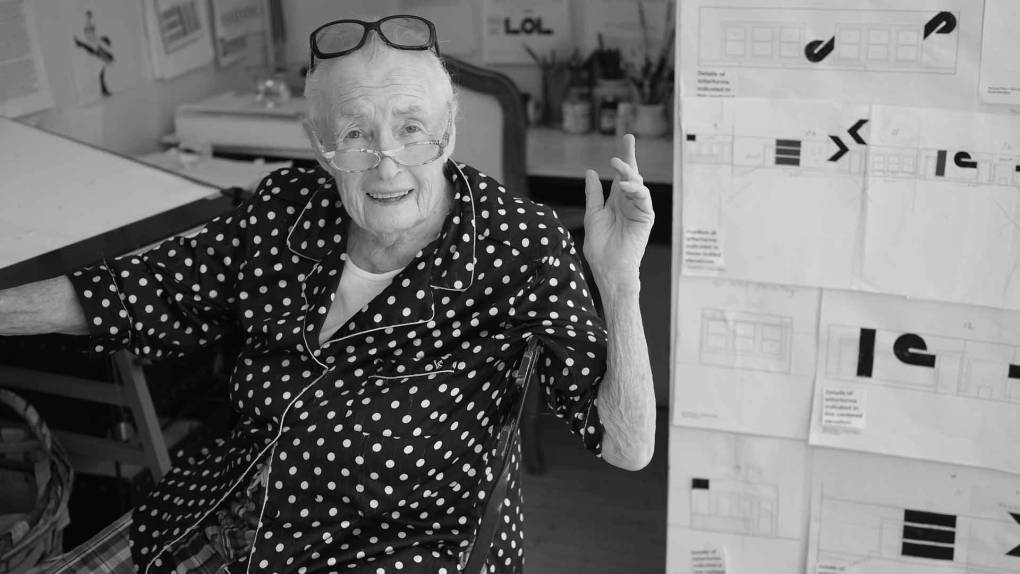
"caption": "Barbara Stauffacher Solomon, seen here surrounded by her designs. The artist and pioneer of supergraphics died at her home Tuesday night at age 95.",
"description": null,
"title": "IMG_9318",
"credit": "Courtesy Chris Grunder",
"status": "inherit",
"altTag": null,
"isLoading": false,
"fetchFailed": false
},
"arts_13957309": {
"type": "attachments",
"id": "arts_13957309",
"meta": {
"index": "attachments_1716263798",
"site": "arts",
"id": "13957309",
"found": true
},
"parent": 13957305,
"imgSizes": {
"twentyfourteen-full-width": {
"file": "https://cdn.kqed.org/wp-content/uploads/sites/2/2024/05/liangs-beef-noodle-2022_crop-1038x576.jpg",
"width": 1038,
"mimeType": "image/jpeg",
"height": 576
},
"thumbnail": {
"file": "https://cdn.kqed.org/wp-content/uploads/sites/2/2024/05/liangs-beef-noodle-2022_crop-160x110.jpg",
"width": 160,
"mimeType": "image/jpeg",
"height": 110
},
"post-thumbnail": {
"file": "https://cdn.kqed.org/wp-content/uploads/sites/2/2024/05/liangs-beef-noodle-2022_crop-672x372.jpg",
"width": 672,
"mimeType": "image/jpeg",
"height": 372
},
"kqedFullSize": {
"file": "https://cdn.kqed.org/wp-content/uploads/sites/2/2024/05/liangs-beef-noodle-2022_crop.jpg",
"width": 1920,
"height": 1320
},
"large": {
"file": "https://cdn.kqed.org/wp-content/uploads/sites/2/2024/05/liangs-beef-noodle-2022_crop-1020x701.jpg",
"width": 1020,
"mimeType": "image/jpeg",
"height": 701
},
"1536x1536": {
"file": "https://cdn.kqed.org/wp-content/uploads/sites/2/2024/05/liangs-beef-noodle-2022_crop-1536x1056.jpg",
"width": 1536,
"mimeType": "image/jpeg",
"height": 1056
},
"medium": {
"file": "https://cdn.kqed.org/wp-content/uploads/sites/2/2024/05/liangs-beef-noodle-2022_crop-800x550.jpg",
"width": 800,
"mimeType": "image/jpeg",
"height": 550
},
"medium_large": {
"file": "https://cdn.kqed.org/wp-content/uploads/sites/2/2024/05/liangs-beef-noodle-2022_crop-768x528.jpg",
"width": 768,
"mimeType": "image/jpeg",
"height": 528
}
},
"publishDate": 1715036002,
"modified": 1715036109,
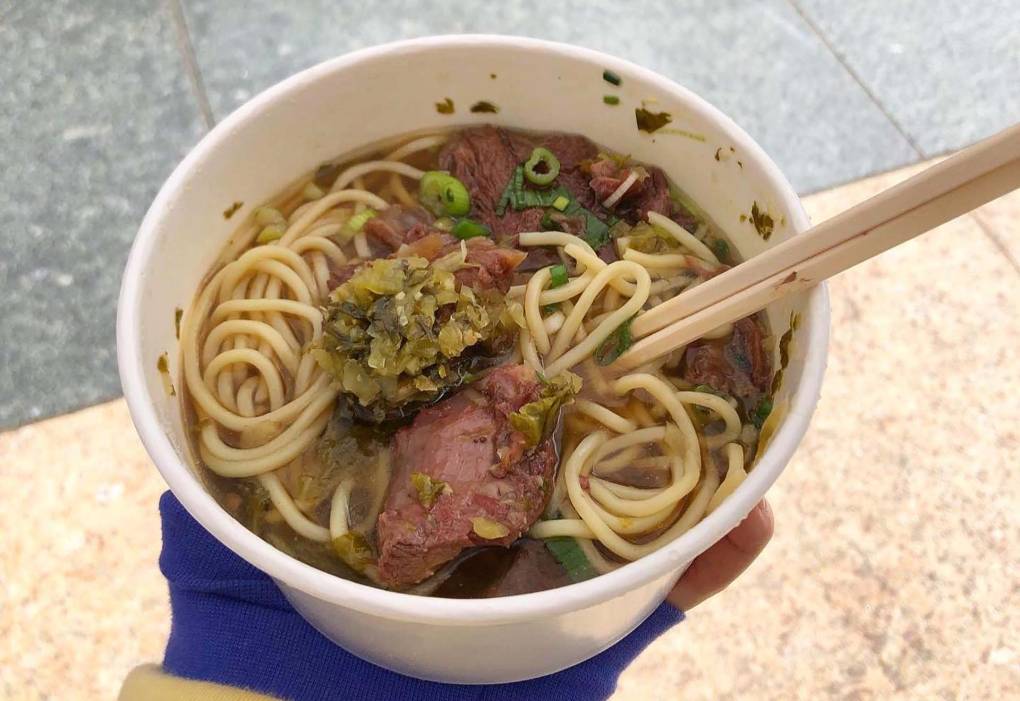
"caption": "Liang's Village's popular beef noodle soup will return to this year's Taiwanese American Cultural Festival, held in Union Square.",
"description": null,
"title": "liangs beef noodle 2022_crop",
"credit": "Courtesy of Liang's Village / Facebook",
"status": "inherit",
"altTag": "Beef noodle soup in a takeout bowl.",
"isLoading": false,
"fetchFailed": false
},
"arts_13957283": {
"type": "attachments",
"id": "arts_13957283",
"meta": {
"index": "attachments_1716263798",
"site": "arts",
"id": "13957283",
"found": true
},
"parent": 13957282,
"imgSizes": {
"twentyfourteen-full-width": {
"file": "https://cdn.kqed.org/wp-content/uploads/sites/2/2024/05/ZachRodell-photo-by-Adrian-Spinelli-1038x576.jpg",
"width": 1038,
"mimeType": "image/jpeg",
"height": 576
},
"thumbnail": {
"file": "https://cdn.kqed.org/wp-content/uploads/sites/2/2024/05/ZachRodell-photo-by-Adrian-Spinelli-160x112.jpg",
"width": 160,
"mimeType": "image/jpeg",
"height": 112
},
"post-thumbnail": {
"file": "https://cdn.kqed.org/wp-content/uploads/sites/2/2024/05/ZachRodell-photo-by-Adrian-Spinelli-672x372.jpg",
"width": 672,
"mimeType": "image/jpeg",
"height": 372
},
"kqedFullSize": {
"file": "https://cdn.kqed.org/wp-content/uploads/sites/2/2024/05/ZachRodell-photo-by-Adrian-Spinelli-scaled.jpg",
"width": 2560,
"height": 1797
},
"2048x2048": {
"file": "https://cdn.kqed.org/wp-content/uploads/sites/2/2024/05/ZachRodell-photo-by-Adrian-Spinelli-2048x1437.jpg",
"width": 2048,
"mimeType": "image/jpeg",
"height": 1437
},
"large": {
"file": "https://cdn.kqed.org/wp-content/uploads/sites/2/2024/05/ZachRodell-photo-by-Adrian-Spinelli-1020x716.jpg",
"width": 1020,
"mimeType": "image/jpeg",
"height": 716
},
"1536x1536": {
"file": "https://cdn.kqed.org/wp-content/uploads/sites/2/2024/05/ZachRodell-photo-by-Adrian-Spinelli-1536x1078.jpg",
"width": 1536,
"mimeType": "image/jpeg",
"height": 1078
},
"full-width": {
"file": "https://cdn.kqed.org/wp-content/uploads/sites/2/2024/05/ZachRodell-photo-by-Adrian-Spinelli-1920x1348.jpg",
"width": 1920,
"mimeType": "image/jpeg",
"height": 1348
},
"medium": {
"file": "https://cdn.kqed.org/wp-content/uploads/sites/2/2024/05/ZachRodell-photo-by-Adrian-Spinelli-800x562.jpg",
"width": 800,
"mimeType": "image/jpeg",
"height": 562
},
"medium_large": {
"file": "https://cdn.kqed.org/wp-content/uploads/sites/2/2024/05/ZachRodell-photo-by-Adrian-Spinelli-768x539.jpg",
"width": 768,
"mimeType": "image/jpeg",
"height": 539
}
},
"publishDate": 1715022034,
"modified": 1715022155,
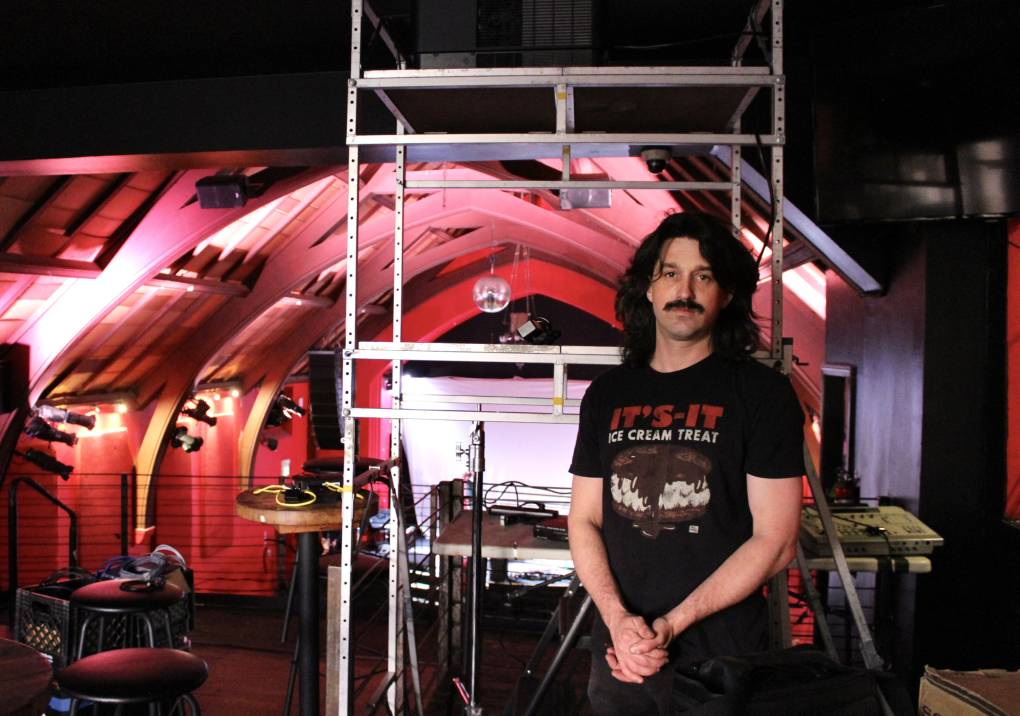
"caption": "Zach Rodell envelops SF venues like The Chapel and Rickshaw Stop with his psychedelic projections. ",
"description": null,
"title": "ZachRodell photo by Adrian Spinelli",
"credit": "Adrian Spinelli ",
"status": "inherit",
"altTag": "An artist poses in the south booth of a concert hall with a disco ball.",
"isLoading": false,
"fetchFailed": false
},
"arts_13957209": {
"type": "attachments",
"id": "arts_13957209",
"meta": {
"index": "attachments_1716263798",
"site": "arts",
"id": "13957209",
"found": true
},
"parent": 13957201,
"imgSizes": {
"twentyfourteen-full-width": {
"file": "https://cdn.kqed.org/wp-content/uploads/sites/2/2024/05/pratt14_print-Robert-Reck-1038x576.jpg",
"width": 1038,
"mimeType": "image/jpeg",
"height": 576
},
"thumbnail": {
"file": "https://cdn.kqed.org/wp-content/uploads/sites/2/2024/05/pratt14_print-Robert-Reck-160x110.jpg",
"width": 160,
"mimeType": "image/jpeg",
"height": 110
},
"post-thumbnail": {
"file": "https://cdn.kqed.org/wp-content/uploads/sites/2/2024/05/pratt14_print-Robert-Reck-672x372.jpg",
"width": 672,
"mimeType": "image/jpeg",
"height": 372
},
"kqedFullSize": {
"file": "https://cdn.kqed.org/wp-content/uploads/sites/2/2024/05/pratt14_print-Robert-Reck.jpg",
"width": 1920,
"height": 1321
},
"large": {
"file": "https://cdn.kqed.org/wp-content/uploads/sites/2/2024/05/pratt14_print-Robert-Reck-1020x702.jpg",
"width": 1020,
"mimeType": "image/jpeg",
"height": 702
},
"1536x1536": {
"file": "https://cdn.kqed.org/wp-content/uploads/sites/2/2024/05/pratt14_print-Robert-Reck-1536x1057.jpg",
"width": 1536,
"mimeType": "image/jpeg",
"height": 1057
},
"medium": {
"file": "https://cdn.kqed.org/wp-content/uploads/sites/2/2024/05/pratt14_print-Robert-Reck-800x550.jpg",
"width": 800,
"mimeType": "image/jpeg",
"height": 550
},
"medium_large": {
"file": "https://cdn.kqed.org/wp-content/uploads/sites/2/2024/05/pratt14_print-Robert-Reck-768x528.jpg",
"width": 768,
"mimeType": "image/jpeg",
"height": 528
}
},
"publishDate": 1714762123,
"modified": 1714778174,
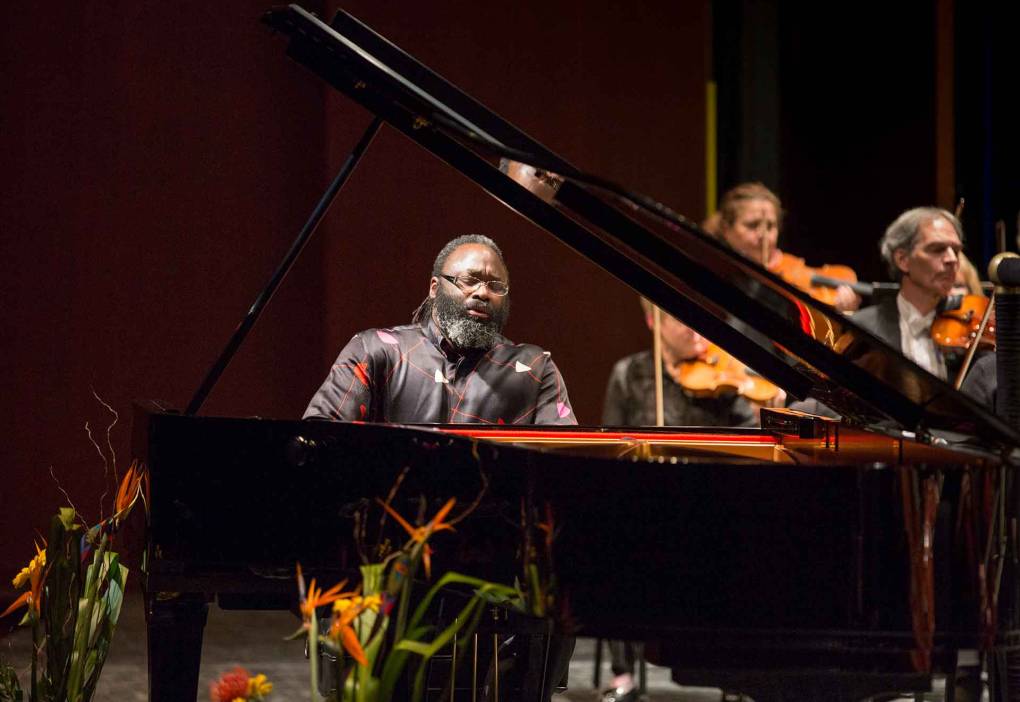
"caption": "Awadagin Pratt at the piano. Having recently joined the San Francisco Conservatory of Music, Pratt performs Jessie Montgomery's 'Rounds' this weekend with the New Century Chamber Orchestra. ",
"description": null,
"title": "pratt14_print-Robert-Reck",
"credit": "Robert Reck",
"status": "inherit",
"altTag": "A Black man with a beard in a black and red jacket plays a grand piano.",
"isLoading": false,
"fetchFailed": false
},
"arts_13915269": {
"type": "attachments",
"id": "arts_13915269",
"meta": {
"index": "attachments_1716263798",
"site": "arts",
"id": "13915269",
"found": true
},
"parent": 13956246,
"imgSizes": {
"twentyfourteen-full-width": {
"file": "https://cdn.kqed.org/wp-content/uploads/sites/2/2022/06/RS56925_024_KQED_SFTransMarch_06242022-qut-1038x576.jpg",
"width": 1038,
"mimeType": "image/jpeg",
"height": 576
},
"thumbnail": {
"file": "https://cdn.kqed.org/wp-content/uploads/sites/2/2022/06/RS56925_024_KQED_SFTransMarch_06242022-qut-160x107.jpg",
"width": 160,
"mimeType": "image/jpeg",
"height": 107
},
"post-thumbnail": {
"file": "https://cdn.kqed.org/wp-content/uploads/sites/2/2022/06/RS56925_024_KQED_SFTransMarch_06242022-qut-672x372.jpg",
"width": 672,
"mimeType": "image/jpeg",
"height": 372
},
"kqedFullSize": {
"file": "https://cdn.kqed.org/wp-content/uploads/sites/2/2022/06/RS56925_024_KQED_SFTransMarch_06242022-qut.jpg",
"width": 1920,
"height": 1278
},
"large": {
"file": "https://cdn.kqed.org/wp-content/uploads/sites/2/2022/06/RS56925_024_KQED_SFTransMarch_06242022-qut-1020x679.jpg",
"width": 1020,
"mimeType": "image/jpeg",
"height": 679
},
"1536x1536": {
"file": "https://cdn.kqed.org/wp-content/uploads/sites/2/2022/06/RS56925_024_KQED_SFTransMarch_06242022-qut-1536x1022.jpg",
"width": 1536,
"mimeType": "image/jpeg",
"height": 1022
},
"medium": {
"file": "https://cdn.kqed.org/wp-content/uploads/sites/2/2022/06/RS56925_024_KQED_SFTransMarch_06242022-qut-800x533.jpg",
"width": 800,
"mimeType": "image/jpeg",
"height": 533
},
"medium_large": {
"file": "https://cdn.kqed.org/wp-content/uploads/sites/2/2022/06/RS56925_024_KQED_SFTransMarch_06242022-qut-768x511.jpg",
"width": 768,
"mimeType": "image/jpeg",
"height": 511
}
},
"publishDate": 1656345266,
"modified": 1713545923,
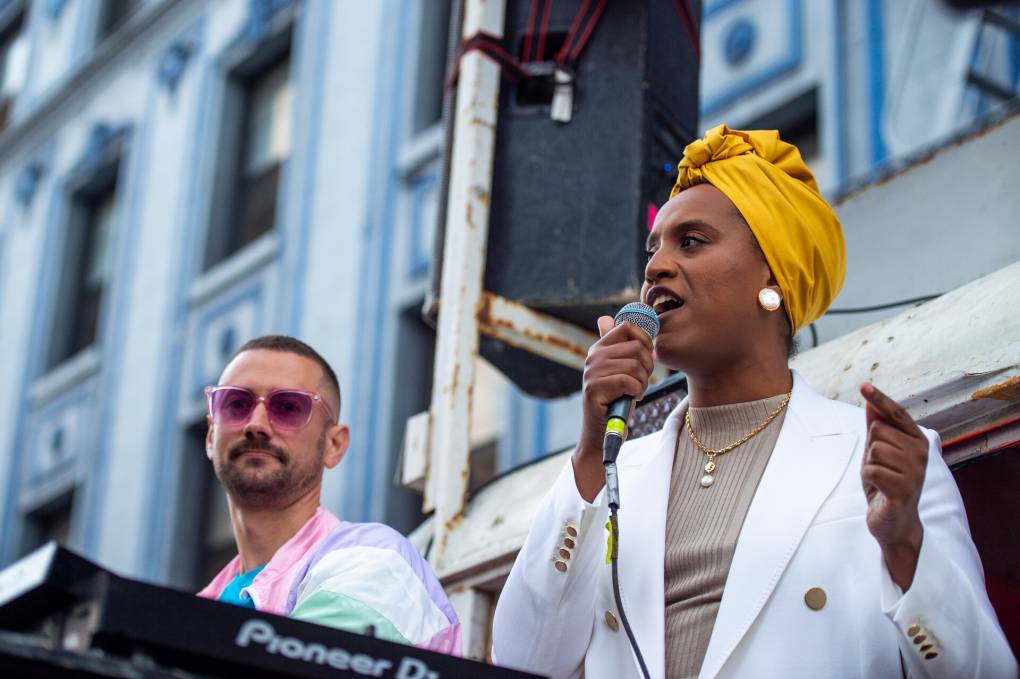
"caption": "Honey Mahogany speaks during a rally after the Trans March in San Francisco on June 24, 2022.",
"description": null,
"title": "RS56925_024_KQED_SFTransMarch_06242022-qut",
"credit": "Beth LaBerge/KQED",
"status": "inherit",
"altTag": null,
"isLoading": false,
"fetchFailed": false
},
"arts_13957076": {
"type": "attachments",
"id": "arts_13957076",
"meta": {
"index": "attachments_1716263798",
"site": "arts",
"id": "13957076",
"found": true
},
"parent": 13956701,
"imgSizes": {
"thumbnail": {
"file": "https://cdn.kqed.org/wp-content/uploads/sites/2/2024/05/GunnaGoesGlobal-160x90.jpg",
"width": 160,
"mimeType": "image/jpeg",
"height": 90
},
"post-thumbnail": {
"file": "https://cdn.kqed.org/wp-content/uploads/sites/2/2024/05/GunnaGoesGlobal-672x372.jpg",
"width": 672,
"mimeType": "image/jpeg",
"height": 372
},
"kqedFullSize": {
"file": "https://cdn.kqed.org/wp-content/uploads/sites/2/2024/05/GunnaGoesGlobal.jpg",
"width": 825,
"height": 464
},
"medium": {
"file": "https://cdn.kqed.org/wp-content/uploads/sites/2/2024/05/GunnaGoesGlobal-800x450.jpg",
"width": 800,
"mimeType": "image/jpeg",
"height": 450
},
"medium_large": {
"file": "https://cdn.kqed.org/wp-content/uploads/sites/2/2024/05/GunnaGoesGlobal-768x432.jpg",
"width": 768,
"mimeType": "image/jpeg",
"height": 432
}
},
"publishDate": 1714671906,
"modified": 1714671938,
"caption": "Gunna Goes Global's newest project is called 'Therapy in the Ghetto.'",
"description": null,
"title": "GunnaGoesGlobal",
"credit": "Gunna Goes Global",
"status": "inherit",
"altTag": null,
"isLoading": false,
"fetchFailed": false
},
"arts_13957027": {
"type": "attachments",
"id": "arts_13957027",
"meta": {
"index": "attachments_1716263798",
"site": "arts",
"id": "13957027",
"found": true
},
"parent": 0,
"imgSizes": {
"twentyfourteen-full-width": {
"file": "https://cdn.kqed.org/wp-content/uploads/sites/2/2024/05/07.-Achille-and-Piergiacomo-Castiglioni-RR126-Stereo-System-1038x576.jpg",
"width": 1038,
"mimeType": "image/jpeg",
"height": 576
},
"thumbnail": {
"file": "https://cdn.kqed.org/wp-content/uploads/sites/2/2024/05/07.-Achille-and-Piergiacomo-Castiglioni-RR126-Stereo-System-160x111.jpg",
"width": 160,
"mimeType": "image/jpeg",
"height": 111
},
"post-thumbnail": {
"file": "https://cdn.kqed.org/wp-content/uploads/sites/2/2024/05/07.-Achille-and-Piergiacomo-Castiglioni-RR126-Stereo-System-672x372.jpg",
"width": 672,
"mimeType": "image/jpeg",
"height": 372
},
"kqedFullSize": {
"file": "https://cdn.kqed.org/wp-content/uploads/sites/2/2024/05/07.-Achille-and-Piergiacomo-Castiglioni-RR126-Stereo-System.jpg",
"width": 1920,
"height": 1326
},
"large": {
"file": "https://cdn.kqed.org/wp-content/uploads/sites/2/2024/05/07.-Achille-and-Piergiacomo-Castiglioni-RR126-Stereo-System-1020x704.jpg",
"width": 1020,
"mimeType": "image/jpeg",
"height": 704
},
"1536x1536": {
"file": "https://cdn.kqed.org/wp-content/uploads/sites/2/2024/05/07.-Achille-and-Piergiacomo-Castiglioni-RR126-Stereo-System-1536x1061.jpg",
"width": 1536,
"mimeType": "image/jpeg",
"height": 1061
},
"medium": {
"file": "https://cdn.kqed.org/wp-content/uploads/sites/2/2024/05/07.-Achille-and-Piergiacomo-Castiglioni-RR126-Stereo-System-800x553.jpg",
"width": 800,
"mimeType": "image/jpeg",
"height": 553
},
"medium_large": {
"file": "https://cdn.kqed.org/wp-content/uploads/sites/2/2024/05/07.-Achille-and-Piergiacomo-Castiglioni-RR126-Stereo-System-768x530.jpg",
"width": 768,
"mimeType": "image/jpeg",
"height": 530
}
},
"publishDate": 1714611495,
"modified": 1714611637,
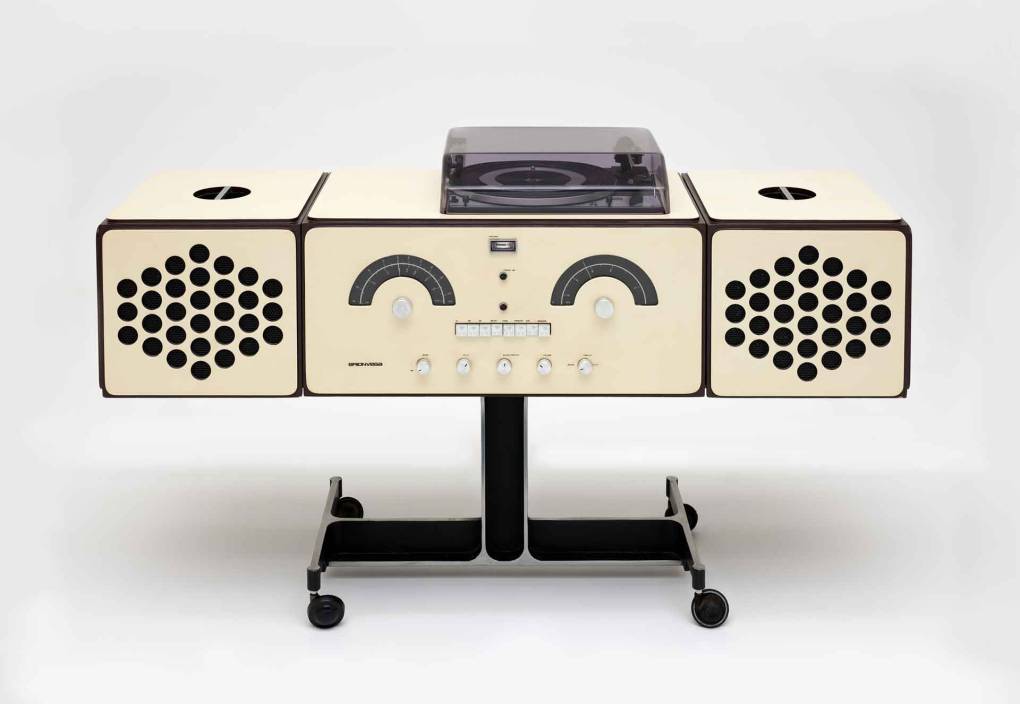
"caption": "Achille and Piergiacomo Castiglioni, RR126 Stereo System, manufactured by Brionvega, 1965.",
"description": null,
"title": "07.-Achille-and-Piergiacomo-Castiglioni,-RR126-Stereo-System",
"credit": "Don Ross",
"status": "inherit",
"altTag": null,
"isLoading": false,
"fetchFailed": false
},
"arts_13956749": {
"type": "attachments",
"id": "arts_13956749",
"meta": {
"index": "attachments_1716263798",
"site": "arts",
"id": "13956749",
"found": true
},
"parent": 13956734,
"imgSizes": {
"twentyfourteen-full-width": {
"file": "https://cdn.kqed.org/wp-content/uploads/sites/2/2024/04/3kelves-jakarta-photo-1-Dylan-Greene-cropped-1038x576.jpg",
"width": 1038,
"mimeType": "image/jpeg",
"height": 576
},
"thumbnail": {
"file": "https://cdn.kqed.org/wp-content/uploads/sites/2/2024/04/3kelves-jakarta-photo-1-Dylan-Greene-cropped-160x107.jpg",
"width": 160,
"mimeType": "image/jpeg",
"height": 107
},
"post-thumbnail": {
"file": "https://cdn.kqed.org/wp-content/uploads/sites/2/2024/04/3kelves-jakarta-photo-1-Dylan-Greene-cropped-672x372.jpg",
"width": 672,
"mimeType": "image/jpeg",
"height": 372
},
"kqedFullSize": {
"file": "https://cdn.kqed.org/wp-content/uploads/sites/2/2024/04/3kelves-jakarta-photo-1-Dylan-Greene-cropped.jpg",
"width": 2075,
"height": 1383
},
"2048x2048": {
"file": "https://cdn.kqed.org/wp-content/uploads/sites/2/2024/04/3kelves-jakarta-photo-1-Dylan-Greene-cropped-2048x1365.jpg",
"width": 2048,
"mimeType": "image/jpeg",
"height": 1365
},
"large": {
"file": "https://cdn.kqed.org/wp-content/uploads/sites/2/2024/04/3kelves-jakarta-photo-1-Dylan-Greene-cropped-1020x680.jpg",
"width": 1020,
"mimeType": "image/jpeg",
"height": 680
},
"1536x1536": {
"file": "https://cdn.kqed.org/wp-content/uploads/sites/2/2024/04/3kelves-jakarta-photo-1-Dylan-Greene-cropped-1536x1024.jpg",
"width": 1536,
"mimeType": "image/jpeg",
"height": 1024
},
"full-width": {
"file": "https://cdn.kqed.org/wp-content/uploads/sites/2/2024/04/3kelves-jakarta-photo-1-Dylan-Greene-cropped-1920x1280.jpg",
"width": 1920,
"mimeType": "image/jpeg",
"height": 1280
},
"medium": {
"file": "https://cdn.kqed.org/wp-content/uploads/sites/2/2024/04/3kelves-jakarta-photo-1-Dylan-Greene-cropped-800x533.jpg",
"width": 800,
"mimeType": "image/jpeg",
"height": 533
},
"medium_large": {
"file": "https://cdn.kqed.org/wp-content/uploads/sites/2/2024/04/3kelves-jakarta-photo-1-Dylan-Greene-cropped-768x512.jpg",
"width": 768,
"mimeType": "image/jpeg",
"height": 512
}
},
"publishDate": 1714411588,
"modified": 1714412303,
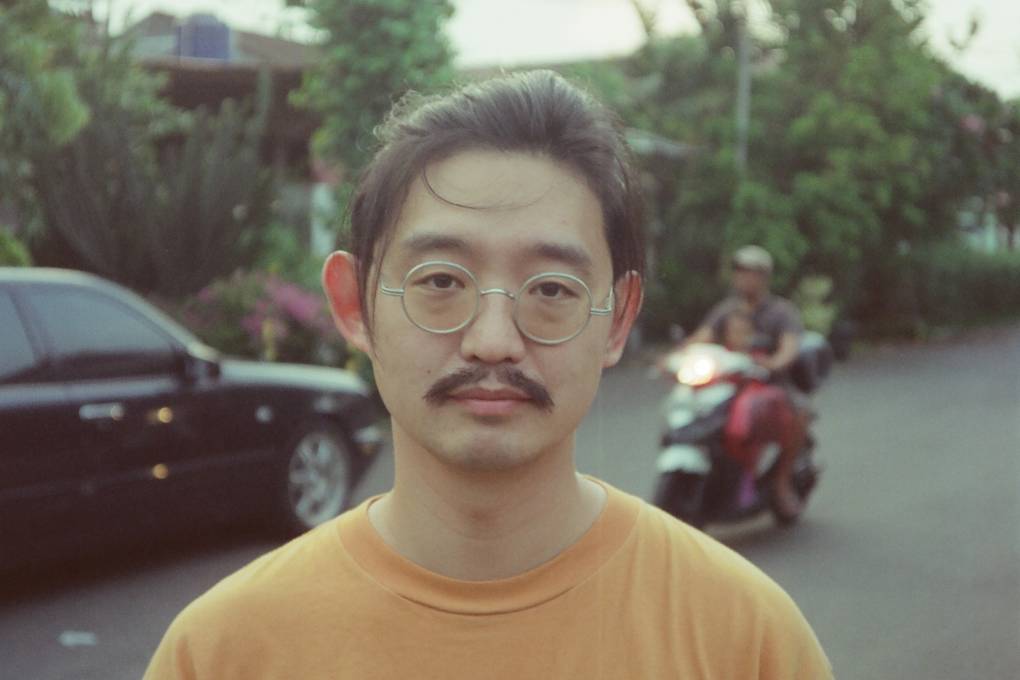
"caption": "On his EP 'lucas,' 3kelves takes inspiration from the 2000s indie pop that became his soundtrack when he immigrated to the U.S. from Korea. ",
"description": null,
"title": "3kelves jakarta photo 1 - Dylan Greene- cropped",
"credit": "Dylan C. Greene",
"status": "inherit",
"altTag": "A music producer poses, looking into the camera, in a tropical setting with scooters driving by behind him.",
"isLoading": false,
"fetchFailed": false
},
"arts_13956601": {
"type": "attachments",
"id": "arts_13956601",
"meta": {
"index": "attachments_1716263798",
"site": "arts",
"id": "13956601",
"found": true
},
"parent": 13956017,
"imgSizes": {
"twentyfourteen-full-width": {
"file": "https://cdn.kqed.org/wp-content/uploads/sites/2/2024/04/Colucci-spread_courtesy-of-cafe-colucci-1038x576.jpg",
"width": 1038,
"mimeType": "image/jpeg",
"height": 576
},
"thumbnail": {
"file": "https://cdn.kqed.org/wp-content/uploads/sites/2/2024/04/Colucci-spread_courtesy-of-cafe-colucci-160x90.jpg",
"width": 160,
"mimeType": "image/jpeg",
"height": 90
},
"post-thumbnail": {
"file": "https://cdn.kqed.org/wp-content/uploads/sites/2/2024/04/Colucci-spread_courtesy-of-cafe-colucci-672x372.jpg",
"width": 672,
"mimeType": "image/jpeg",
"height": 372
},
"kqedFullSize": {
"file": "https://cdn.kqed.org/wp-content/uploads/sites/2/2024/04/Colucci-spread_courtesy-of-cafe-colucci.jpg",
"width": 1920,
"height": 1080
},
"large": {
"file": "https://cdn.kqed.org/wp-content/uploads/sites/2/2024/04/Colucci-spread_courtesy-of-cafe-colucci-1020x574.jpg",
"width": 1020,
"mimeType": "image/jpeg",
"height": 574
},
"1536x1536": {
"file": "https://cdn.kqed.org/wp-content/uploads/sites/2/2024/04/Colucci-spread_courtesy-of-cafe-colucci-1536x864.jpg",
"width": 1536,
"mimeType": "image/jpeg",
"height": 864
},
"medium": {
"file": "https://cdn.kqed.org/wp-content/uploads/sites/2/2024/04/Colucci-spread_courtesy-of-cafe-colucci-800x450.jpg",
"width": 800,
"mimeType": "image/jpeg",
"height": 450
},
"medium_large": {
"file": "https://cdn.kqed.org/wp-content/uploads/sites/2/2024/04/Colucci-spread_courtesy-of-cafe-colucci-768x432.jpg",
"width": 768,
"mimeType": "image/jpeg",
"height": 432
}
},
"publishDate": 1713984302,
"modified": 1713984490,
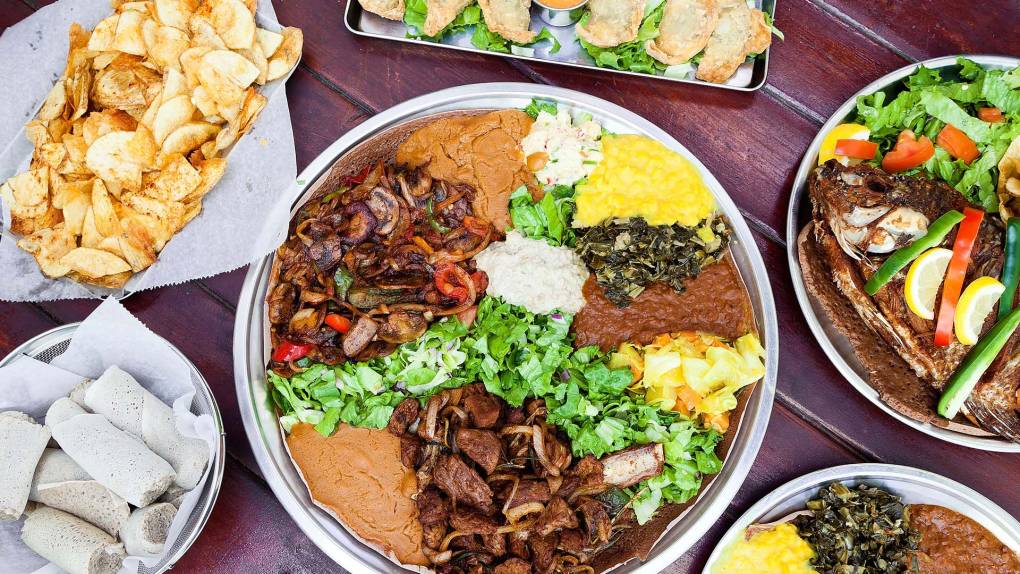
"caption": "At the first-ever POC Food & Wine Festival Oakland's Cafe Colucci will be on hand to rep the cuisine of the Ethiopian diaspora.",
"description": null,
"title": "Colucci spread_courtesy of cafe colucci",
"credit": "Courtesy of Cafe Colucci",
"status": "inherit",
"altTag": "A sumptuous spread of Ethiopian dishes, including a large round platter lined with injera.",
"isLoading": false,
"fetchFailed": false
},
"arts_13956570": {
"type": "attachments",
"id": "arts_13956570",
"meta": {
"index": "attachments_1716263798",
"site": "arts",
"id": "13956570",
"found": true
},
"parent": 0,
"imgSizes": {
"twentyfourteen-full-width": {
"file": "https://cdn.kqed.org/wp-content/uploads/sites/2/2024/04/240422-LOCOBLOCO-54-BL-KQED-1038x576.jpg",
"width": 1038,
"mimeType": "image/jpeg",
"height": 576
},
"thumbnail": {
"file": "https://cdn.kqed.org/wp-content/uploads/sites/2/2024/04/240422-LOCOBLOCO-54-BL-KQED-160x107.jpg",
"width": 160,
"mimeType": "image/jpeg",
"height": 107
},
"post-thumbnail": {
"file": "https://cdn.kqed.org/wp-content/uploads/sites/2/2024/04/240422-LOCOBLOCO-54-BL-KQED-672x372.jpg",
"width": 672,
"mimeType": "image/jpeg",
"height": 372
},
"kqedFullSize": {
"file": "https://cdn.kqed.org/wp-content/uploads/sites/2/2024/04/240422-LOCOBLOCO-54-BL-KQED.jpg",
"width": 2000,
"height": 1333
},
"large": {
"file": "https://cdn.kqed.org/wp-content/uploads/sites/2/2024/04/240422-LOCOBLOCO-54-BL-KQED-1020x680.jpg",
"width": 1020,
"mimeType": "image/jpeg",
"height": 680
},
"1536x1536": {
"file": "https://cdn.kqed.org/wp-content/uploads/sites/2/2024/04/240422-LOCOBLOCO-54-BL-KQED-1536x1024.jpg",
"width": 1536,
"mimeType": "image/jpeg",
"height": 1024
},
"full-width": {
"file": "https://cdn.kqed.org/wp-content/uploads/sites/2/2024/04/240422-LOCOBLOCO-54-BL-KQED-1920x1280.jpg",
"width": 1920,
"mimeType": "image/jpeg",
"height": 1280
},
"medium": {
"file": "https://cdn.kqed.org/wp-content/uploads/sites/2/2024/04/240422-LOCOBLOCO-54-BL-KQED-800x533.jpg",
"width": 800,
"mimeType": "image/jpeg",
"height": 533
},
"medium_large": {
"file": "https://cdn.kqed.org/wp-content/uploads/sites/2/2024/04/240422-LOCOBLOCO-54-BL-KQED-768x512.jpg",
"width": 768,
"mimeType": "image/jpeg",
"height": 512
}
},
"publishDate": 1713977046,
"modified": 1713991606,
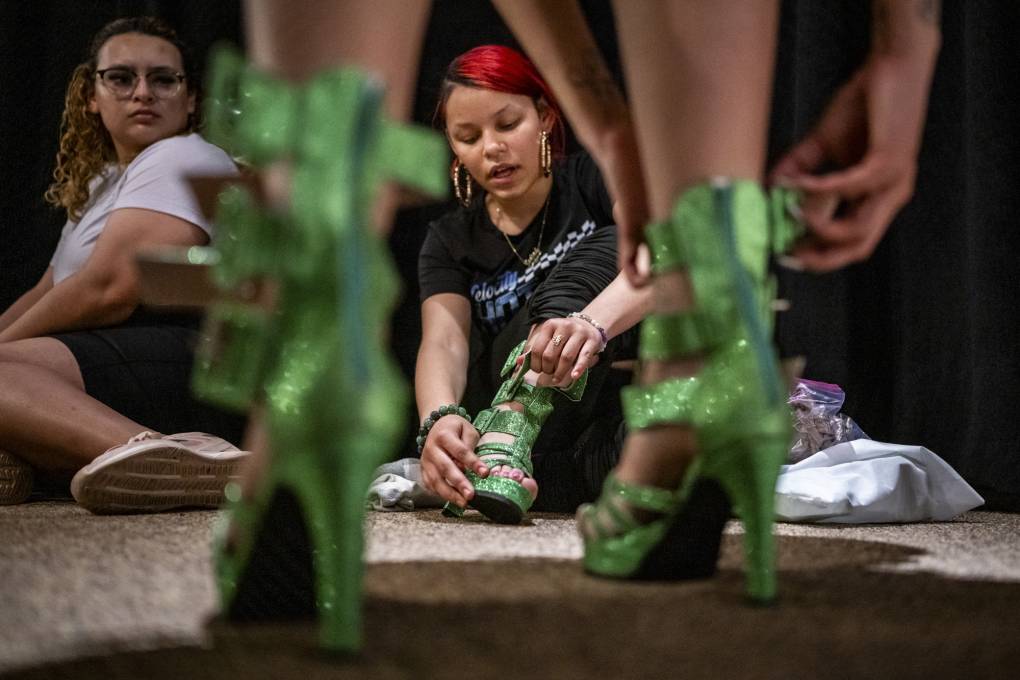
"caption": "Jediah Pratt (center), 15, tries on dance shoes during practice with Loco Bloco at Brava Theater in San Francisco on April 22, 2024, during preparations for their performance in Carnaval.",
"description": null,
"title": "240422-LOCOBLOCO-54-BL-KQED",
"credit": "Beth LaBerge/KQED",
"status": "inherit",
"altTag": "A young woman in black T-shirt and red dyed hair works on a costume, framed by two legs in green shoes.",
"isLoading": false,
"fetchFailed": false
},
"arts_13956500": {
"type": "attachments",
"id": "arts_13956500",
"meta": {
"index": "attachments_1716263798",
"site": "arts",
"id": "13956500",
"found": true
},
"parent": 13956497,
"imgSizes": {
"twentyfourteen-full-width": {
"file": "https://cdn.kqed.org/wp-content/uploads/sites/2/2024/04/Fox_Nakai_Diaspora-Dinner_.00_00_57_22-1038x576.jpg",
"width": 1038,
"mimeType": "image/jpeg",
"height": 576
},
"thumbnail": {
"file": "https://cdn.kqed.org/wp-content/uploads/sites/2/2024/04/Fox_Nakai_Diaspora-Dinner_.00_00_57_22-160x90.jpg",
"width": 160,
"mimeType": "image/jpeg",
"height": 90
},
"post-thumbnail": {
"file": "https://cdn.kqed.org/wp-content/uploads/sites/2/2024/04/Fox_Nakai_Diaspora-Dinner_.00_00_57_22-672x372.jpg",
"width": 672,
"mimeType": "image/jpeg",
"height": 372
},
"kqedFullSize": {
"file": "https://cdn.kqed.org/wp-content/uploads/sites/2/2024/04/Fox_Nakai_Diaspora-Dinner_.00_00_57_22.jpg",
"width": 1920,
"height": 1080
},
"large": {
"file": "https://cdn.kqed.org/wp-content/uploads/sites/2/2024/04/Fox_Nakai_Diaspora-Dinner_.00_00_57_22-1020x574.jpg",
"width": 1020,
"mimeType": "image/jpeg",
"height": 574
},
"1536x1536": {
"file": "https://cdn.kqed.org/wp-content/uploads/sites/2/2024/04/Fox_Nakai_Diaspora-Dinner_.00_00_57_22-1536x864.jpg",
"width": 1536,
"mimeType": "image/jpeg",
"height": 864
},
"medium": {
"file": "https://cdn.kqed.org/wp-content/uploads/sites/2/2024/04/Fox_Nakai_Diaspora-Dinner_.00_00_57_22-800x450.jpg",
"width": 800,
"mimeType": "image/jpeg",
"height": 450
},
"medium_large": {
"file": "https://cdn.kqed.org/wp-content/uploads/sites/2/2024/04/Fox_Nakai_Diaspora-Dinner_.00_00_57_22-768x432.jpg",
"width": 768,
"mimeType": "image/jpeg",
"height": 432
}
},
"publishDate": 1713912419,
"modified": 1713912633,
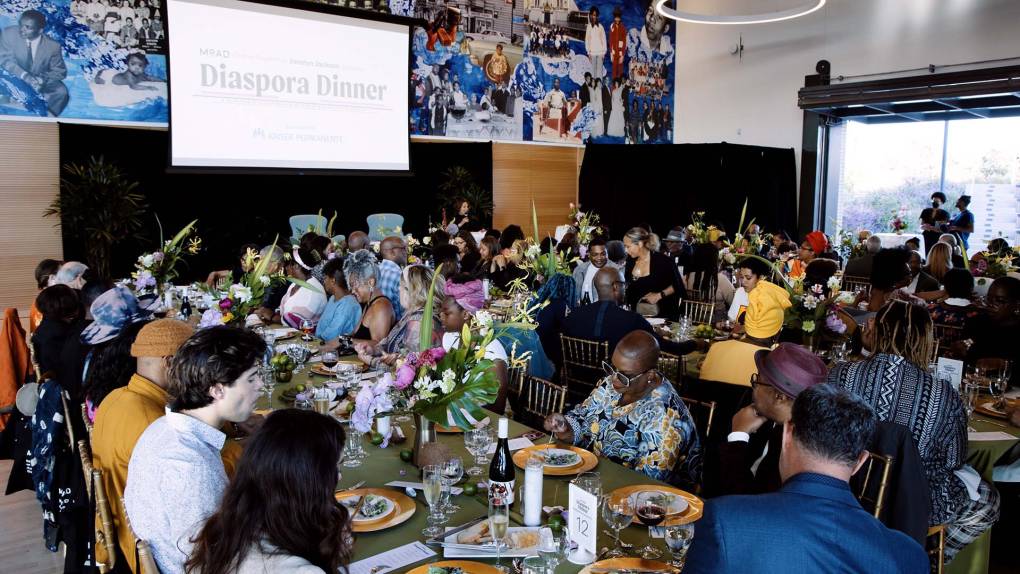
"caption": "The packed house at last year's Diaspora Dinner, which MoAD hosted at the Southeast Community Center in the Bayview.",
"description": null,
"title": "Fox_Nakai_Diaspora Dinner_.00_00_57_22",
"credit": "Fox Nakai, courtesy of MoAD",
"status": "inherit",
"altTag": "The crowded dining room at an elegant gala. The text projected onto a screen reads, \"Diaspora Dinner.\"",
"isLoading": false,
"fetchFailed": false
},
"arts_13960063": {
"type": "attachments",
"id": "arts_13960063",
"meta": {
"index": "attachments_1716263798",
"site": "arts",
"id": "13960063",
"found": true
},
"title": "2024 Governors Ball",
"publishDate": 1718918522,
"status": "inherit",
"parent": 13960034,
"modified": 1718918555,
"caption": "Sabrina Carpenter performs during the 2024 Governors Ball at Flushing Meadows Corona Park on June 08, 2024 in New York City. ",
"credit": "Marleen Moise/Getty Images",
"altTag": null,
"description": null,
"imgSizes": {
"medium": {
"file": "https://cdn.kqed.org/wp-content/uploads/sites/2/2024/06/GettyImages-2156725960-800x533.jpg",
"width": 800,
"height": 533,
"mimeType": "image/jpeg"
},
"large": {
"file": "https://cdn.kqed.org/wp-content/uploads/sites/2/2024/06/GettyImages-2156725960-1020x679.jpg",
"width": 1020,
"height": 679,
"mimeType": "image/jpeg"
},
"thumbnail": {
"file": "https://cdn.kqed.org/wp-content/uploads/sites/2/2024/06/GettyImages-2156725960-160x107.jpg",
"width": 160,
"height": 107,
"mimeType": "image/jpeg"
},
"medium_large": {
"file": "https://cdn.kqed.org/wp-content/uploads/sites/2/2024/06/GettyImages-2156725960-768x512.jpg",
"width": 768,
"height": 512,
"mimeType": "image/jpeg"
},
"post-thumbnail": {
"file": "https://cdn.kqed.org/wp-content/uploads/sites/2/2024/06/GettyImages-2156725960-672x372.jpg",
"width": 672,
"height": 372,
"mimeType": "image/jpeg"
},
"twentyfourteen-full-width": {
"file": "https://cdn.kqed.org/wp-content/uploads/sites/2/2024/06/GettyImages-2156725960-1024x576.jpg",
"width": 1024,
"height": 576,
"mimeType": "image/jpeg"
},
"kqedFullSize": {
"file": "https://cdn.kqed.org/wp-content/uploads/sites/2/2024/06/GettyImages-2156725960.jpg",
"width": 1024,
"height": 682
}
},
"isLoading": false,
"fetchFailed": false
}
},
"audioPlayerReducer": {
"postId": "stream_live",
"isPaused": true,
"isPlaying": false,
"pfsActive": false,
"pledgeModalIsOpen": true,
"playerDrawerIsOpen": false,
"liveAudioPlayStartedAt": 0,
"liveAudioPlayContext": ""
},
"authorsReducer": {
"byline_arts_13957282": {
"type": "authors",
"id": "byline_arts_13957282",
"meta": {
"override": true
},
"slug": "byline_arts_13957282",
"name": "Adrian Spinelli ",
"isLoading": false
},
"byline_arts_13956554": {
"type": "authors",
"id": "byline_arts_13956554",
"meta": {
"override": true
},
"slug": "byline_arts_13956554",
"name": "Binnie Kenvin",
"isLoading": false
},
"gmeline": {
"type": "authors",
"id": "185",
"meta": {
"index": "authors_1716337520",
"id": "185",
"found": true
},
"name": "Gabe Meline",
"firstName": "Gabe",
"lastName": "Meline",
"slug": "gmeline",
"email": "gmeline@kqed.org",
"display_author_email": true,
"staff_mastheads": [
"arts"
],
"title": "Senior Editor, KQED Arts & Culture",
"bio": "Gabe Meline entered journalism at age 15 making photocopied zines, and has since earned awards from the Edward R. Murrow Awards, the Society for Professional Journalists, the Online Journalism Awards, the Association of Alternative Newsweeklies and the California Newspaper Publishers Association. Prior to KQED, he was the editor of the \u003cem>North Bay Bohemian\u003c/em> and a touring musician. He lives with his wife and daughter in his hometown of Santa Rosa, CA.",
"avatar": "https://secure.gravatar.com/avatar/5bebe57be0d8bc2dd318934feb47299e2d2d10cba28d09d8d7afb389a2ce2bdd?s=600&d=blank&r=g",
"twitter": null,
"bluesky": null,
"facebook": null,
"instagram": null,
"linkedin": null,
"sites": [
{
"site": "",
"roles": [
"editor"
]
},
{
"site": "arts",
"roles": [
"administrator"
]
},
{
"site": "artschool",
"roles": [
"editor"
]
},
{
"site": "news",
"roles": [
"author"
]
},
{
"site": "pop",
"roles": [
"editor"
]
},
{
"site": "bayareabites",
"roles": [
"editor"
]
},
{
"site": "food",
"roles": [
"editor"
]
},
{
"site": "forum",
"roles": [
"administrator"
]
},
{
"site": "liveblog",
"roles": [
"editor"
]
},
{
"site": "hiphop",
"roles": [
"editor"
]
}
],
"headData": {
"title": "Gabe Meline | KQED",
"description": "Senior Editor, KQED Arts & Culture",
"ogImgSrc": "https://secure.gravatar.com/avatar/5bebe57be0d8bc2dd318934feb47299e2d2d10cba28d09d8d7afb389a2ce2bdd?s=600&d=blank&r=g",
"twImgSrc": "https://secure.gravatar.com/avatar/5bebe57be0d8bc2dd318934feb47299e2d2d10cba28d09d8d7afb389a2ce2bdd?s=600&d=blank&r=g"
},
"isLoading": false,
"link": "/author/gmeline"
},
"nvoynovskaya": {
"type": "authors",
"id": "11387",
"meta": {
"index": "authors_1716337520",
"id": "11387",
"found": true
},
"name": "Nastia Voynovskaya",
"firstName": "Nastia",
"lastName": "Voynovskaya",
"slug": "nvoynovskaya",
"email": "nvoynovskaya@kqed.org",
"display_author_email": false,
"staff_mastheads": [
"arts"
],
"title": "Editor and reporter",
"bio": "Nastia Voynovskaya is a reporter, editor and host at KQED Arts & Culture. She's been covering the arts in the Bay Area for over a decade, with a focus on music, queer culture, labor issues and grassroots organizing. She has edited KQED story series such as Trans Bay: A History of San Francisco's Gender-Diverse Community, and co-created KQED's Bay Area hip-hop history project, That's My Word. Nastia's work has been recognized by the Society of Professional Journalists and San Francisco Press Club. She regularly appears on podcasts and radio programs, including NPR's All Songs Considered, and hosts live events where music, culture and conversation meet.",
"avatar": "https://secure.gravatar.com/avatar/5025ee460e5a85d69ca20ea6c6f2f80d7e17795c828f61ea3aecfcd924e9042e?s=600&d=blank&r=g",
"twitter": null,
"bluesky": null,
"facebook": null,
"instagram": "https://www.instagram.com/nananastia/",
"linkedin": null,
"sites": [
{
"site": "",
"roles": [
"editor"
]
},
{
"site": "arts",
"roles": [
"administrator"
]
},
{
"site": "news",
"roles": [
"editor"
]
},
{
"site": "pop",
"roles": [
"administrator"
]
},
{
"site": "bayareabites",
"roles": [
"editor"
]
},
{
"site": "podcasts",
"roles": [
"editor"
]
},
{
"site": "hiphop",
"roles": [
"editor"
]
}
],
"headData": {
"title": "Nastia Voynovskaya | KQED",
"description": "Editor and reporter",
"ogImgSrc": "https://secure.gravatar.com/avatar/5025ee460e5a85d69ca20ea6c6f2f80d7e17795c828f61ea3aecfcd924e9042e?s=600&d=blank&r=g",
"twImgSrc": "https://secure.gravatar.com/avatar/5025ee460e5a85d69ca20ea6c6f2f80d7e17795c828f61ea3aecfcd924e9042e?s=600&d=blank&r=g"
},
"isLoading": false,
"link": "/author/nvoynovskaya"
},
"ltsai": {
"type": "authors",
"id": "11743",
"meta": {
"index": "authors_1716337520",
"id": "11743",
"found": true
},
"name": "Luke Tsai",
"firstName": "Luke",
"lastName": "Tsai",
"slug": "ltsai",
"email": "ltsai@kqed.org",
"display_author_email": true,
"staff_mastheads": [
"arts"
],
"title": "Food Editor",
"bio": "Luke Tsai is KQED's food editor and resident stinky tofu connoisseur. Prior to KQED, he was an editor at Eater SF, \u003cem>San Francisco \u003c/em>magazine, and the \u003cem>East Bay Express\u003c/em>, and his work has also appeared in TASTE, the \u003cem>San Francisco Chronicle\u003c/em>, and the \u003cem>Best Food Writing\u003c/em> anthology. When he isn't writing or editing, you'll find him eating most everything he can get his hands on.",
"avatar": "https://secure.gravatar.com/avatar/1e59b45bf191526e7339d6ba46e33a57b2030d25c27660ecc64ea3cb863e34f7?s=600&d=blank&r=g",
"twitter": "theluketsai",
"bluesky": null,
"facebook": null,
"instagram": null,
"linkedin": null,
"sites": [
{
"site": "",
"roles": [
"editor"
]
},
{
"site": "arts",
"roles": [
"administrator"
]
},
{
"site": "news",
"roles": [
"editor",
"contributor"
]
},
{
"site": "bayareabites",
"roles": [
"editor"
]
},
{
"site": "food",
"roles": [
"editor"
]
}
],
"headData": {
"title": "Luke Tsai | KQED",
"description": "Food Editor",
"ogImgSrc": "https://secure.gravatar.com/avatar/1e59b45bf191526e7339d6ba46e33a57b2030d25c27660ecc64ea3cb863e34f7?s=600&d=blank&r=g",
"twImgSrc": "https://secure.gravatar.com/avatar/1e59b45bf191526e7339d6ba46e33a57b2030d25c27660ecc64ea3cb863e34f7?s=600&d=blank&r=g"
},
"isLoading": false,
"link": "/author/ltsai"
},
"achazaro": {
"type": "authors",
"id": "11748",
"meta": {
"index": "authors_1716337520",
"id": "11748",
"found": true
},
"name": "Alan Chazaro",
"firstName": "Alan",
"lastName": "Chazaro",
"slug": "achazaro",
"email": "agchazaro@gmail.com",
"display_author_email": true,
"staff_mastheads": [],
"title": "Food Writer and Reporter",
"bio": "Alan Chazaro is the author of \u003cem>This Is Not a Frank Ocean Cover Album\u003c/em> (Black Lawrence Press, 2019), \u003cem>Piñata Theory\u003c/em> (Black Lawrence Press, 2020), and \u003cem>Notes from the Eastern Span of the Bay Bridge\u003c/em> (Ghost City Press, 2021). He is a graduate of June Jordan’s Poetry for the People program at UC Berkeley and a former Lawrence Ferlinghetti Fellow at the University of San Francisco. He writes about sports, food, art, music, education, and culture while repping the Bay on \u003ca href=\"https://twitter.com/alan_chazaro\">Twitter\u003c/a> and \u003ca href=\"https://www.instagram.com/alan_chazaro/?hl=en\">Instagram\u003c/a> at @alan_chazaro.",
"avatar": "https://secure.gravatar.com/avatar/ea8b6dd970fc5c29e7a188e7d5861df7?s=600&d=blank&r=g",
"twitter": "alan_chazaro",
"facebook": null,
"instagram": null,
"linkedin": null,
"sites": [
{
"site": "arts",
"roles": [
"contributor"
]
},
{
"site": "news",
"roles": [
"editor"
]
}
],
"headData": {
"title": "Alan Chazaro | KQED",
"description": "Food Writer and Reporter",
"ogImgSrc": "https://secure.gravatar.com/avatar/ea8b6dd970fc5c29e7a188e7d5861df7?s=600&d=blank&r=g",
"twImgSrc": "https://secure.gravatar.com/avatar/ea8b6dd970fc5c29e7a188e7d5861df7?s=600&d=blank&r=g"
},
"isLoading": false,
"link": "/author/achazaro"
}
},
"pagesReducer": {
"arts_tag_san-francisco": {
"type": "terms",
"id": "arts_1146",
"meta": {
"index": "terms_1716263798",
"site": "arts",
"id": "1146",
"score": 6.7229023
},
"featImg": null,
"name": "San Francisco",
"description": null,
"taxonomy": "tag",
"headData": {
"twImgId": null,
"twTitle": null,
"ogTitle": null,
"ogImgId": null,
"twDescription": null,
"description": null,
"title": "San Francisco Archives | KQED Arts",
"ogDescription": null
},
"ttid": 701,
"slug": "san-francisco",
"isLoading": false,
"title": "San Francisco",
"pageMeta": {
"site": "arts",
"WpPageTemplate": "page-topic-editorial",
"currentPage": 26
},
"blocks": [
{
"blockName": "kqed/post-list",
"attrs": {
"layout": "cardArticle2",
"query": "posts/arts?tag=san-francisco",
"seeMore": false,
"paginated": true,
"page": 26
}
},
{
"blockName": "kqed/ad"
}
]
}
},
"pfsSessionReducer": {},
"postsReducer": {
"stream_live": {
"type": "live",
"id": "stream_live",
"audioUrl": "https://streams.kqed.org/kqedradio",
"title": "Live Stream",
"excerpt": "Live Stream information currently unavailable.",
"link": "/radio",
"featImg": "",
"label": {
"name": "KQED Live",
"link": "/"
}
},
"stream_kqedNewscast": {
"type": "posts",
"id": "stream_kqedNewscast",
"audioUrl": "https://www.kqed.org/.stream/anon/radio/RDnews/newscast.mp3?_=1",
"title": "KQED Newscast",
"featImg": "",
"label": {
"name": "88.5 FM",
"link": "/"
}
},
"arts_13957530": {
"type": "posts",
"id": "arts_13957530",
"meta": {
"index": "posts_1716263798",
"site": "arts",
"id": "13957530",
"score": null,
"sort": [
1715220738000
]
},
"parent": 0,
"labelTerm": {
"site": "arts"
},
"blocks": [],
"publishDate": 1715220738,
"format": "aside",
"title": "Barbara Stauffacher Solomon, Visionary Artist Who Invented Supergraphics, Dies at 95",
"headTitle": "Barbara Stauffacher Solomon, Visionary Artist Who Invented Supergraphics, Dies at 95 | KQED",
"content": "\u003cfigure id=\"attachment_13957526\" class=\"wp-caption aligncenter\" style=\"max-width: 1436px\">\u003cimg loading=\"lazy\" decoding=\"async\" src=\"https://cdn.kqed.org/wp-content/uploads/sites/2/2024/05/Barbara.top_.jpg\" alt=\"\" width=\"1436\" height=\"1920\" class=\"size-full wp-image-13957526\" srcset=\"https://cdn.kqed.org/wp-content/uploads/sites/2/2024/05/Barbara.top_.jpg 1436w, https://cdn.kqed.org/wp-content/uploads/sites/2/2024/05/Barbara.top_-800x1070.jpg 800w, https://cdn.kqed.org/wp-content/uploads/sites/2/2024/05/Barbara.top_-1020x1364.jpg 1020w, https://cdn.kqed.org/wp-content/uploads/sites/2/2024/05/Barbara.top_-160x214.jpg 160w, https://cdn.kqed.org/wp-content/uploads/sites/2/2024/05/Barbara.top_-768x1027.jpg 768w, https://cdn.kqed.org/wp-content/uploads/sites/2/2024/05/Barbara.top_-1149x1536.jpg 1149w\" sizes=\"(max-width: 1436px) 100vw, 1436px\">\u003cfigcaption class=\"wp-caption-text\">Barbara Stauffacher Solomon, seen here surrounded by her designs. The artist and pioneer of supergraphics died at her home Tuesday night at age 95. \u003ccite>(Courtesy Chris Grunder)\u003c/cite>\u003c/figcaption>\u003c/figure>\n\u003cp>Barbara Stauffacher Solomon, a giant in the worlds of landscape architecture and graphic design who spearheaded the colorful supergraphics movement of the 1960s and ’70s, died last night at her home in San Francisco. She was 95.\u003c/p>\n\u003cp>According to her daughter, the Los Angeles-based artist Nellie King Solomon, Stauffacher Solomon had been in hospice care for some time, and had reached the point where she was no longer able to eat, drink or talk. “Her body expired,” Solomon said. “She had a huge life! There’s no tragedy.”\u003c/p>\n\u003cp>In spite of her declining health, Stauffacher Solomon was a prolific artist up until the very end. Recent projects include a series of drawings displayed on the walls above a \u003ca href=\"https://staircase.place/\">red-painted staircase\u003c/a> in the Inner Richmond, a \u003ca href=\"https://www.vonbartha.com/events/welcome-sign-st-moritz/\">95-foot-long “WELCOME” sign\u003c/a> installed on the retaining wall outside the train station in Moritz, Switzerland, and a large-scale, stripe-themed installation that currently occupies the entire \u003ca href=\"https://www.sfmoma.org/exhibition/barbara-stauffacher-solomon-strips-of-stripes/\">second-floor lobby of SFMOMA\u003c/a>. \u003c/p>\n\u003cp>“She died with Liquid Paper on her hands,” Solomon said. “She wrestled it with the nurses.”\u003c/p>\n\u003cfigure id=\"attachment_13938883\" class=\"wp-caption aligncenter\" style=\"max-width: 2000px\">\u003cimg loading=\"lazy\" decoding=\"async\" src=\"https://cdn.kqed.org/wp-content/uploads/sites/2/2023/12/Barbara-Stauffacher-Solomon-Stripes-of-Stripes-SFMOMA-installation-view-4-2023-photo-by-Don-Ross_2000.jpg\" alt=\"Red and black stripes painted on white walls and ceilings of lobby space\" width=\"2000\" height=\"1333\" class=\"size-full wp-image-13938883\" srcset=\"https://cdn.kqed.org/wp-content/uploads/sites/2/2023/12/Barbara-Stauffacher-Solomon-Stripes-of-Stripes-SFMOMA-installation-view-4-2023-photo-by-Don-Ross_2000.jpg 2000w, https://cdn.kqed.org/wp-content/uploads/sites/2/2023/12/Barbara-Stauffacher-Solomon-Stripes-of-Stripes-SFMOMA-installation-view-4-2023-photo-by-Don-Ross_2000-800x533.jpg 800w, https://cdn.kqed.org/wp-content/uploads/sites/2/2023/12/Barbara-Stauffacher-Solomon-Stripes-of-Stripes-SFMOMA-installation-view-4-2023-photo-by-Don-Ross_2000-1020x680.jpg 1020w, https://cdn.kqed.org/wp-content/uploads/sites/2/2023/12/Barbara-Stauffacher-Solomon-Stripes-of-Stripes-SFMOMA-installation-view-4-2023-photo-by-Don-Ross_2000-160x107.jpg 160w, https://cdn.kqed.org/wp-content/uploads/sites/2/2023/12/Barbara-Stauffacher-Solomon-Stripes-of-Stripes-SFMOMA-installation-view-4-2023-photo-by-Don-Ross_2000-768x512.jpg 768w, https://cdn.kqed.org/wp-content/uploads/sites/2/2023/12/Barbara-Stauffacher-Solomon-Stripes-of-Stripes-SFMOMA-installation-view-4-2023-photo-by-Don-Ross_2000-1536x1024.jpg 1536w, https://cdn.kqed.org/wp-content/uploads/sites/2/2023/12/Barbara-Stauffacher-Solomon-Stripes-of-Stripes-SFMOMA-installation-view-4-2023-photo-by-Don-Ross_2000-1920x1280.jpg 1920w\" sizes=\"(max-width: 2000px) 100vw, 2000px\">\u003cfigcaption class=\"wp-caption-text\">Barbara Stauffacher Solomon, ‘Strips of Stripes’ at SFMOMA. \u003ccite>(Don Ross)\u003c/cite>\u003c/figcaption>\u003c/figure>\n\u003cp>Chris Grunder, a San Francisco artist who worked as Stauffacher Solomon’s studio assistant and informal caregiver for much of the past few years, said that he was inspired by her ability to overcome adversity — “reinventing herself five times over in 70-plus years,” he said.\u003c/p>\n\u003cp>[ad fullwidth]\u003c/p>\n\u003cp>After her first husband, the filmmaker Frank Stauffacher, died, Stauffacher Solomon moved to Basel, Switzerland, to study graphic design and learn skills that she could use to support herself and her young child. She returned to San Francisco in the early ’60s to open her own graphic design firm. \u003c/p>\n\u003cfigure id=\"attachment_13839100\" class=\"wp-caption aligncenter\" style=\"max-width: 640px\">\u003cimg loading=\"lazy\" decoding=\"async\" src=\"https://cdn.kqed.org/wp-content/uploads/sites/2/2018/08/Event_Artist-Talk_2018-08-16_Barbara-Stauffacher-Solomon_001_640.jpg\" alt=\"Barbara Stauffacher Solomon in 1955.\" width=\"640\" height=\"865\" class=\"size-full wp-image-13839100\" srcset=\"https://cdn.kqed.org/wp-content/uploads/sites/2/2018/08/Event_Artist-Talk_2018-08-16_Barbara-Stauffacher-Solomon_001_640.jpg 640w, https://cdn.kqed.org/wp-content/uploads/sites/2/2018/08/Event_Artist-Talk_2018-08-16_Barbara-Stauffacher-Solomon_001_640-160x216.jpg 160w, https://cdn.kqed.org/wp-content/uploads/sites/2/2018/08/Event_Artist-Talk_2018-08-16_Barbara-Stauffacher-Solomon_001_640-240x324.jpg 240w, https://cdn.kqed.org/wp-content/uploads/sites/2/2018/08/Event_Artist-Talk_2018-08-16_Barbara-Stauffacher-Solomon_001_640-375x507.jpg 375w, https://cdn.kqed.org/wp-content/uploads/sites/2/2018/08/Event_Artist-Talk_2018-08-16_Barbara-Stauffacher-Solomon_001_640-520x703.jpg 520w\" sizes=\"(max-width: 640px) 100vw, 640px\">\u003cfigcaption class=\"wp-caption-text\">Barbara Stauffacher Solomon in 1955. \u003ccite>(Courtesy of BAMPFA)\u003c/cite>\u003c/figcaption>\u003c/figure>\n\u003cp>Soon after, Stauffacher Solomon took on the design project that she will likely be remembered most for, at an experimental housing development known as \u003ca href=\"https://www.tsra.org/\">Sea Ranch\u003c/a> on the Sonoma coast. She designed the ram’s horn–inspired logo, as well as the bold, large-scale graphic elements that are painted inside several buildings at Sea Ranch, including, most famously, its \u003ca href=\"https://searanch.ced.berkeley.edu/s/sea-ranch/page/moonraker\">athletic center\u003c/a>. The new style of graphics and environmental architecture that she created came to be known as supergraphics — a design movement that blended “the rigor of Swiss modernism with the color and style of [Stauffacher Solomon’s] West Coast sensibility,” as KQED’s Sarah Hotchkiss described it in a \u003ca href=\"https://www.kqed.org/arts/13839094/barbara-stauffacher-solomon-bampfa-art-wall\">2018 profile of the artist\u003c/a>.\u003c/p>\n\u003cfigure id=\"attachment_13957527\" class=\"wp-caption aligncenter\" style=\"max-width: 1920px\">\u003cimg loading=\"lazy\" decoding=\"async\" src=\"https://cdn.kqed.org/wp-content/uploads/sites/2/2024/05/GettyImages-1240494355.jpg\" alt=\"\" width=\"1920\" height=\"1281\" class=\"size-full wp-image-13957527\" srcset=\"https://cdn.kqed.org/wp-content/uploads/sites/2/2024/05/GettyImages-1240494355.jpg 1920w, https://cdn.kqed.org/wp-content/uploads/sites/2/2024/05/GettyImages-1240494355-800x534.jpg 800w, https://cdn.kqed.org/wp-content/uploads/sites/2/2024/05/GettyImages-1240494355-1020x681.jpg 1020w, https://cdn.kqed.org/wp-content/uploads/sites/2/2024/05/GettyImages-1240494355-160x107.jpg 160w, https://cdn.kqed.org/wp-content/uploads/sites/2/2024/05/GettyImages-1240494355-768x512.jpg 768w, https://cdn.kqed.org/wp-content/uploads/sites/2/2024/05/GettyImages-1240494355-1536x1025.jpg 1536w\" sizes=\"(max-width: 1920px) 100vw, 1920px\">\u003cfigcaption class=\"wp-caption-text\">The rams horns at the Sea Ranch Lodge as designed by artist Barbara Stauffacher Solomon. \u003ccite>(Myung J. Chun / Los Angeles Times via Getty Images)\u003c/cite>\u003c/figcaption>\u003c/figure>\n\u003cp>But Solomon asserted that the “hard-edged” supergraphics are only one part of her mother’s artistic legacy. “There was this whole schmaltzy side to her,” she said. She loved 1930s French music; she loved gardens and meadows; she spent years working primarily as a landscape architect. Some of Solomon’s favorite memories with her mother were of “breaking and entering” into historical gardens — experiences that she documented in her 1989 book, \u003cem>Green Architecture & the Agrarian Garden\u003c/em>.\u003c/p>\n\u003cp>In more recent years, Stauffacher Solomon revisited the supergraphics style that she helped popularize, perhaps most notably for her recent SFMOMA atrium project. Joseph Becker, SFMOMA’s Associate Curator of Architecture and Design, said he had been collaborating with Stauffacher Solomon for years, describing her as “an incredible sparring partner and visionary who suffered no fools.” \u003c/p>\n\u003cfigure id=\"attachment_13957524\" class=\"wp-caption aligncenter\" style=\"max-width: 1920px\">\u003cimg loading=\"lazy\" decoding=\"async\" src=\"https://cdn.kqed.org/wp-content/uploads/sites/2/2024/05/DSC00061.jpg\" alt=\"\" width=\"1920\" height=\"1079\" class=\"size-full wp-image-13957524\" srcset=\"https://cdn.kqed.org/wp-content/uploads/sites/2/2024/05/DSC00061.jpg 1920w, https://cdn.kqed.org/wp-content/uploads/sites/2/2024/05/DSC00061-800x450.jpg 800w, https://cdn.kqed.org/wp-content/uploads/sites/2/2024/05/DSC00061-1020x573.jpg 1020w, https://cdn.kqed.org/wp-content/uploads/sites/2/2024/05/DSC00061-160x90.jpg 160w, https://cdn.kqed.org/wp-content/uploads/sites/2/2024/05/DSC00061-768x432.jpg 768w, https://cdn.kqed.org/wp-content/uploads/sites/2/2024/05/DSC00061-1536x863.jpg 1536w\" sizes=\"(max-width: 1920px) 100vw, 1920px\">\u003cfigcaption class=\"wp-caption-text\">Barbara Stauffacher Solomon with her daughter Nellie and granddaughter Fia. \u003ccite>(Courtesy Nellie King Solomon)\u003c/cite>\u003c/figcaption>\u003c/figure>\n\u003cp>“She overcame tremendous adversity in the early part of her career, developing her own graphic design practice in a world not hospitable to women setting out on their own and making a name for themselves,” Becker said. “One of the reasons was because she had an exacting vision and attitude. To work with someone like that, even though she was 95, her clarity was undeniable. She knew exactly what she wanted, saw all sides of the project.”\u003c/p>\n\u003cp>The museum currently has new Stauffacher Solomon work that it’s partnering with the City of San Francisco to present: a massive, 300-foot-long \u003ca href=\"https://www.sfartscommission.org/content/minna-natoma-art-corridor-project-street-paving\">street paving project on Minna Street\u003c/a> featuring a graphic pattern made of red boots as an homage to Minna Rae Simpson, the street’s supposed namesake.\u003c/p>\n\u003cp>“What an absolute San Francisco treasure,” Becker said of Stauffacher Solomon. “Hands down, one of the best.”\u003c/p>\n\u003cfigure id=\"attachment_13957523\" class=\"wp-caption aligncenter\" style=\"max-width: 1920px\">\u003cimg loading=\"lazy\" decoding=\"async\" src=\"https://cdn.kqed.org/wp-content/uploads/sites/2/2024/05/IMG_9498.jpg\" alt=\"\" width=\"1920\" height=\"1443\" class=\"size-full wp-image-13957523\" srcset=\"https://cdn.kqed.org/wp-content/uploads/sites/2/2024/05/IMG_9498.jpg 1920w, https://cdn.kqed.org/wp-content/uploads/sites/2/2024/05/IMG_9498-800x601.jpg 800w, https://cdn.kqed.org/wp-content/uploads/sites/2/2024/05/IMG_9498-1020x767.jpg 1020w, https://cdn.kqed.org/wp-content/uploads/sites/2/2024/05/IMG_9498-160x120.jpg 160w, https://cdn.kqed.org/wp-content/uploads/sites/2/2024/05/IMG_9498-768x577.jpg 768w, https://cdn.kqed.org/wp-content/uploads/sites/2/2024/05/IMG_9498-1536x1154.jpg 1536w\" sizes=\"(max-width: 1920px) 100vw, 1920px\">\u003cfigcaption class=\"wp-caption-text\">Barbara Stauffacher Solomon, going through some of her many files. \u003ccite>(Courtesy Chris Grunder)\u003c/cite>\u003c/figcaption>\u003c/figure>\n\u003cp>Grunder, who met Stauffacher Solomon in 2019, said he “clicked [with her] in a way I never clicked with any friend ever.” Working closely with her as her “accomplice” these past few years, he says what he learned most from her is that you “can have an absolutely wonderful life without trying to please everybody.”\u003c/p>\n\u003cp>“Truthfully, she was incredibly prickly to a lot of people, and incredibly sweet and devoted to others,” Grunder said.\u003c/p>\n\u003cp>In recent years, he said, what Stauffacher Solomon seemed proudest of were her books — many of them an eccentric mix of drawings, abstractions and some rhyming text. The one she’d just completed, \u003cem>See the Invisible\u003c/em>, due to be released by \u003ca href=\"https://www.colpapress.com/collections/frontpage\">Colpa Press\u003c/a> later this year, focuses on a theme Grunder says Stauffacher Solomon was obsessed with: making things that are visible invisible — with how design can be almost entirely invisible.\u003c/p>\n\u003cfigure id=\"attachment_13839103\" class=\"wp-caption aligncenter\" style=\"max-width: 1920px\">\u003cimg loading=\"lazy\" decoding=\"async\" src=\"https://cdn.kqed.org/wp-content/uploads/sites/2/2018/08/BAMPFA-Mural_8-18_007_COVER.jpg\" alt=\"Installation view of Barbara Stauffacher Solomon's 'Land(e)scape 2018' at BAMPFA.\" width=\"1920\" height=\"1080\" class=\"size-full wp-image-13839103\" srcset=\"https://cdn.kqed.org/wp-content/uploads/sites/2/2018/08/BAMPFA-Mural_8-18_007_COVER.jpg 1920w, https://cdn.kqed.org/wp-content/uploads/sites/2/2018/08/BAMPFA-Mural_8-18_007_COVER-160x90.jpg 160w, https://cdn.kqed.org/wp-content/uploads/sites/2/2018/08/BAMPFA-Mural_8-18_007_COVER-800x450.jpg 800w, https://cdn.kqed.org/wp-content/uploads/sites/2/2018/08/BAMPFA-Mural_8-18_007_COVER-768x432.jpg 768w, https://cdn.kqed.org/wp-content/uploads/sites/2/2018/08/BAMPFA-Mural_8-18_007_COVER-1020x574.jpg 1020w, https://cdn.kqed.org/wp-content/uploads/sites/2/2018/08/BAMPFA-Mural_8-18_007_COVER-1200x675.jpg 1200w, https://cdn.kqed.org/wp-content/uploads/sites/2/2018/08/BAMPFA-Mural_8-18_007_COVER-1180x664.jpg 1180w, https://cdn.kqed.org/wp-content/uploads/sites/2/2018/08/BAMPFA-Mural_8-18_007_COVER-960x540.jpg 960w, https://cdn.kqed.org/wp-content/uploads/sites/2/2018/08/BAMPFA-Mural_8-18_007_COVER-240x135.jpg 240w, https://cdn.kqed.org/wp-content/uploads/sites/2/2018/08/BAMPFA-Mural_8-18_007_COVER-375x211.jpg 375w, https://cdn.kqed.org/wp-content/uploads/sites/2/2018/08/BAMPFA-Mural_8-18_007_COVER-520x293.jpg 520w\" sizes=\"(max-width: 1920px) 100vw, 1920px\">\u003cfigcaption class=\"wp-caption-text\">Installation view of Barbara Stauffacher Solomon’s ‘Land(e)scape 2018’ at BAMPFA. \u003ccite>(Johnna Arnold)\u003c/cite>\u003c/figcaption>\u003c/figure>\n\u003cp>Grunder recalls a time when Stauffacher Solomon referred, offhandedly, to her signs on Market Street in San Francisco. “Maybe you’re confused,” Grunder remembers saying to her. When did she ever get commissioned to do an installation on Market Street? So, she sent him down to Market and 3rd and had him look: “There, there,” she told him.\u003c/p>\n\u003cp>As it turns out, Stauffacher Solomon had designed the \u003cem>\u003ca href=\"https://www.google.com/maps/@37.7879043,-122.4033387,3a,75y,204.09h,101.03t/data=!3m7!1e1!3m5!1shUg8nuEWC6jtk-GaO4ZOgA!2e0!6shttps:%2F%2Fstreetviewpixels-pa.googleapis.com%2Fv1%2Fthumbnail%3Fpanoid%3DhUg8nuEWC6jtk-GaO4ZOgA%26cb_client%3Dmaps_sv.share%26w%3D900%26h%3D600%26yaw%3D204.08666956826983%26pitch%3D-11.025780054833689%26thumbfov%3D90!7i16384!8i8192?coh=205410&entry=ttu\">actual street signs\u003c/a>\u003c/em>. “Ta-da,” she said, when he finally made the connection.\u003c/p>\n\u003cp>As SFMOMA’s Becker put it, “We’re surrounded by works by Bobbie even if we’re not aware of it,” using the name used by Stauffacher Solomon’s friends.\u003c/p>\n\u003cfigure id=\"attachment_13957525\" class=\"wp-caption aligncenter\" style=\"max-width: 1920px\">\u003cimg loading=\"lazy\" decoding=\"async\" src=\"https://cdn.kqed.org/wp-content/uploads/sites/2/2024/05/IMG_1041.jpg\" alt=\"\" width=\"1920\" height=\"1920\" class=\"size-full wp-image-13957525\" srcset=\"https://cdn.kqed.org/wp-content/uploads/sites/2/2024/05/IMG_1041.jpg 1920w, https://cdn.kqed.org/wp-content/uploads/sites/2/2024/05/IMG_1041-800x800.jpg 800w, https://cdn.kqed.org/wp-content/uploads/sites/2/2024/05/IMG_1041-1020x1020.jpg 1020w, https://cdn.kqed.org/wp-content/uploads/sites/2/2024/05/IMG_1041-160x160.jpg 160w, https://cdn.kqed.org/wp-content/uploads/sites/2/2024/05/IMG_1041-768x768.jpg 768w, https://cdn.kqed.org/wp-content/uploads/sites/2/2024/05/IMG_1041-1536x1536.jpg 1536w\" sizes=\"(max-width: 1920px) 100vw, 1920px\">\u003cfigcaption class=\"wp-caption-text\">Barbara Stauffacher Solomon with her daughter Nellie, granddaughter Fia, and a display of her work. \u003ccite>(Courtesy Nellie King Solomon)\u003c/cite>\u003c/figcaption>\u003c/figure>\n\u003cp>Having spent much of the past decade fielding questions about legacy, Stauffacher Solomon was delighted to surprise one such inquisitor by saying she’d like to be remembered “for being a good mommy.” According to Solomon, her mother really did view herself as a mother and a grandmother first, even before her career, as someone who made the conscious choice to “build the next generation and have the best work of your life.” \u003c/p>\n\u003cp>“Because the art world and the design world are primarily a man’s world, they want you to choose between the two. I think that’s antiquated and ridiculous,” Solomon said. In that way, she believes that she and her own 16-year-old daughter, Fia — a budding singer-songwriter in her own right — are tasked with carrying on Stauffacher Solomon’s true legacy.\u003c/p>\n\u003cp>On Sunday, May 12, at 3 p.m., the family will hold a public memorial for Stauffacher Solomon at \u003ca href=\"https://presidio.gov/explore/attractions/crissy-field-east-beach\">Crissy Field East Beach\u003c/a>, in front of the changing rooms. “That was where she used to walk her dog Jake,” Solomon said. “The beach is where she hung out.” \u003c/p>\n\u003cp>[ad floatright]\u003c/p>\n\u003cp>She hopes friends, colleagues and other well-wishers who knew her mother will come ready with stories to share to give her a proper send-off.\u003c/p>\n\n",
"stats": {
"hasVideo": false,
"hasChartOrMap": false,
"hasAudio": false,
"hasPolis": false,
"wordCount": 1357,
"hasGoogleForm": false,
"hasGallery": false,
"hasHearkenModule": false,
"iframeSrcs": [],
"paragraphCount": 24
},
"modified": 1715977757,
"excerpt": "The San Francisco-born designer and landscape architect was known for her colorful, oversized work.",
"headData": {
"twImgId": "",
"twTitle": "Barbara Stauffacher Solomon, Visionary Artist Who Invented Supergraphics, Dies at 95",
"socialTitle": "Artist Barbara Stauffacher Solomon Dies at 95 %%page%% %%sep%% KQED",
"ogTitle": "Barbara Stauffacher Solomon, Visionary Artist Who Invented Supergraphics, Dies at 95",
"ogImgId": "",
"twDescription": "",
"description": "The San Francisco-born designer and landscape architect was known for her colorful, oversized work.",
"title": "Artist Barbara Stauffacher Solomon Dies at 95 | KQED",
"ogDescription": "",
"schema": {
"@context": "https://schema.org",
"@type": "Article",
"headline": "Barbara Stauffacher Solomon, Visionary Artist Who Invented Supergraphics, Dies at 95",
"datePublished": "2024-05-08T19:12:18-07:00",
"dateModified": "2024-05-17T13:29:17-07:00",
"image": "https://cdn.kqed.org/wp-content/uploads/2020/02/KQED-OG-Image@1x.png"
}
},
"guestAuthors": [],
"slug": "barbara-stauffacher-solomon-supergraphics-obituary",
"status": "publish",
"templateType": "standard",
"excludeFromSiteSearch": "Include",
"featuredImageType": "standard",
"sticky": false,
"articleAge": "0",
"nprStoryId": "kqed-13957530",
"path": "/arts/13957530/barbara-stauffacher-solomon-supergraphics-obituary",
"audioTrackLength": null,
"parsedContent": [
{
"type": "contentString",
"content": "\u003cdiv class=\"post-body\">\u003cp>\u003cfigure id=\"attachment_13957526\" class=\"wp-caption aligncenter\" style=\"max-width: 1436px\">\u003cimg loading=\"lazy\" decoding=\"async\" src=\"https://cdn.kqed.org/wp-content/uploads/sites/2/2024/05/Barbara.top_.jpg\" alt=\"\" width=\"1436\" height=\"1920\" class=\"size-full wp-image-13957526\" srcset=\"https://cdn.kqed.org/wp-content/uploads/sites/2/2024/05/Barbara.top_.jpg 1436w, https://cdn.kqed.org/wp-content/uploads/sites/2/2024/05/Barbara.top_-800x1070.jpg 800w, https://cdn.kqed.org/wp-content/uploads/sites/2/2024/05/Barbara.top_-1020x1364.jpg 1020w, https://cdn.kqed.org/wp-content/uploads/sites/2/2024/05/Barbara.top_-160x214.jpg 160w, https://cdn.kqed.org/wp-content/uploads/sites/2/2024/05/Barbara.top_-768x1027.jpg 768w, https://cdn.kqed.org/wp-content/uploads/sites/2/2024/05/Barbara.top_-1149x1536.jpg 1149w\" sizes=\"(max-width: 1436px) 100vw, 1436px\">\u003cfigcaption class=\"wp-caption-text\">Barbara Stauffacher Solomon, seen here surrounded by her designs. The artist and pioneer of supergraphics died at her home Tuesday night at age 95. \u003ccite>(Courtesy Chris Grunder)\u003c/cite>\u003c/figcaption>\u003c/figure>\n\u003cp>Barbara Stauffacher Solomon, a giant in the worlds of landscape architecture and graphic design who spearheaded the colorful supergraphics movement of the 1960s and ’70s, died last night at her home in San Francisco. She was 95.\u003c/p>\n\u003cp>According to her daughter, the Los Angeles-based artist Nellie King Solomon, Stauffacher Solomon had been in hospice care for some time, and had reached the point where she was no longer able to eat, drink or talk. “Her body expired,” Solomon said. “She had a huge life! There’s no tragedy.”\u003c/p>\n\u003cp>In spite of her declining health, Stauffacher Solomon was a prolific artist up until the very end. Recent projects include a series of drawings displayed on the walls above a \u003ca href=\"https://staircase.place/\">red-painted staircase\u003c/a> in the Inner Richmond, a \u003ca href=\"https://www.vonbartha.com/events/welcome-sign-st-moritz/\">95-foot-long “WELCOME” sign\u003c/a> installed on the retaining wall outside the train station in Moritz, Switzerland, and a large-scale, stripe-themed installation that currently occupies the entire \u003ca href=\"https://www.sfmoma.org/exhibition/barbara-stauffacher-solomon-strips-of-stripes/\">second-floor lobby of SFMOMA\u003c/a>. \u003c/p>\n\u003cp>“She died with Liquid Paper on her hands,” Solomon said. “She wrestled it with the nurses.”\u003c/p>\n\u003cfigure id=\"attachment_13938883\" class=\"wp-caption aligncenter\" style=\"max-width: 2000px\">\u003cimg loading=\"lazy\" decoding=\"async\" src=\"https://cdn.kqed.org/wp-content/uploads/sites/2/2023/12/Barbara-Stauffacher-Solomon-Stripes-of-Stripes-SFMOMA-installation-view-4-2023-photo-by-Don-Ross_2000.jpg\" alt=\"Red and black stripes painted on white walls and ceilings of lobby space\" width=\"2000\" height=\"1333\" class=\"size-full wp-image-13938883\" srcset=\"https://cdn.kqed.org/wp-content/uploads/sites/2/2023/12/Barbara-Stauffacher-Solomon-Stripes-of-Stripes-SFMOMA-installation-view-4-2023-photo-by-Don-Ross_2000.jpg 2000w, https://cdn.kqed.org/wp-content/uploads/sites/2/2023/12/Barbara-Stauffacher-Solomon-Stripes-of-Stripes-SFMOMA-installation-view-4-2023-photo-by-Don-Ross_2000-800x533.jpg 800w, https://cdn.kqed.org/wp-content/uploads/sites/2/2023/12/Barbara-Stauffacher-Solomon-Stripes-of-Stripes-SFMOMA-installation-view-4-2023-photo-by-Don-Ross_2000-1020x680.jpg 1020w, https://cdn.kqed.org/wp-content/uploads/sites/2/2023/12/Barbara-Stauffacher-Solomon-Stripes-of-Stripes-SFMOMA-installation-view-4-2023-photo-by-Don-Ross_2000-160x107.jpg 160w, https://cdn.kqed.org/wp-content/uploads/sites/2/2023/12/Barbara-Stauffacher-Solomon-Stripes-of-Stripes-SFMOMA-installation-view-4-2023-photo-by-Don-Ross_2000-768x512.jpg 768w, https://cdn.kqed.org/wp-content/uploads/sites/2/2023/12/Barbara-Stauffacher-Solomon-Stripes-of-Stripes-SFMOMA-installation-view-4-2023-photo-by-Don-Ross_2000-1536x1024.jpg 1536w, https://cdn.kqed.org/wp-content/uploads/sites/2/2023/12/Barbara-Stauffacher-Solomon-Stripes-of-Stripes-SFMOMA-installation-view-4-2023-photo-by-Don-Ross_2000-1920x1280.jpg 1920w\" sizes=\"(max-width: 2000px) 100vw, 2000px\">\u003cfigcaption class=\"wp-caption-text\">Barbara Stauffacher Solomon, ‘Strips of Stripes’ at SFMOMA. \u003ccite>(Don Ross)\u003c/cite>\u003c/figcaption>\u003c/figure>\n\u003cp>Chris Grunder, a San Francisco artist who worked as Stauffacher Solomon’s studio assistant and informal caregiver for much of the past few years, said that he was inspired by her ability to overcome adversity — “reinventing herself five times over in 70-plus years,” he said.\u003c/p>\n\u003cp>\u003c/p>\u003c/div>",
"attributes": {
"named": {},
"numeric": []
}
},
{
"type": "component",
"content": "",
"name": "ad",
"attributes": {
"named": {
"label": "fullwidth"
},
"numeric": [
"fullwidth"
]
}
},
{
"type": "contentString",
"content": "\u003cdiv class=\"post-body\">\u003cp>\u003c/p>\n\u003cp>After her first husband, the filmmaker Frank Stauffacher, died, Stauffacher Solomon moved to Basel, Switzerland, to study graphic design and learn skills that she could use to support herself and her young child. She returned to San Francisco in the early ’60s to open her own graphic design firm. \u003c/p>\n\u003cfigure id=\"attachment_13839100\" class=\"wp-caption aligncenter\" style=\"max-width: 640px\">\u003cimg loading=\"lazy\" decoding=\"async\" src=\"https://cdn.kqed.org/wp-content/uploads/sites/2/2018/08/Event_Artist-Talk_2018-08-16_Barbara-Stauffacher-Solomon_001_640.jpg\" alt=\"Barbara Stauffacher Solomon in 1955.\" width=\"640\" height=\"865\" class=\"size-full wp-image-13839100\" srcset=\"https://cdn.kqed.org/wp-content/uploads/sites/2/2018/08/Event_Artist-Talk_2018-08-16_Barbara-Stauffacher-Solomon_001_640.jpg 640w, https://cdn.kqed.org/wp-content/uploads/sites/2/2018/08/Event_Artist-Talk_2018-08-16_Barbara-Stauffacher-Solomon_001_640-160x216.jpg 160w, https://cdn.kqed.org/wp-content/uploads/sites/2/2018/08/Event_Artist-Talk_2018-08-16_Barbara-Stauffacher-Solomon_001_640-240x324.jpg 240w, https://cdn.kqed.org/wp-content/uploads/sites/2/2018/08/Event_Artist-Talk_2018-08-16_Barbara-Stauffacher-Solomon_001_640-375x507.jpg 375w, https://cdn.kqed.org/wp-content/uploads/sites/2/2018/08/Event_Artist-Talk_2018-08-16_Barbara-Stauffacher-Solomon_001_640-520x703.jpg 520w\" sizes=\"(max-width: 640px) 100vw, 640px\">\u003cfigcaption class=\"wp-caption-text\">Barbara Stauffacher Solomon in 1955. \u003ccite>(Courtesy of BAMPFA)\u003c/cite>\u003c/figcaption>\u003c/figure>\n\u003cp>Soon after, Stauffacher Solomon took on the design project that she will likely be remembered most for, at an experimental housing development known as \u003ca href=\"https://www.tsra.org/\">Sea Ranch\u003c/a> on the Sonoma coast. She designed the ram’s horn–inspired logo, as well as the bold, large-scale graphic elements that are painted inside several buildings at Sea Ranch, including, most famously, its \u003ca href=\"https://searanch.ced.berkeley.edu/s/sea-ranch/page/moonraker\">athletic center\u003c/a>. The new style of graphics and environmental architecture that she created came to be known as supergraphics — a design movement that blended “the rigor of Swiss modernism with the color and style of [Stauffacher Solomon’s] West Coast sensibility,” as KQED’s Sarah Hotchkiss described it in a \u003ca href=\"https://www.kqed.org/arts/13839094/barbara-stauffacher-solomon-bampfa-art-wall\">2018 profile of the artist\u003c/a>.\u003c/p>\n\u003cfigure id=\"attachment_13957527\" class=\"wp-caption aligncenter\" style=\"max-width: 1920px\">\u003cimg loading=\"lazy\" decoding=\"async\" src=\"https://cdn.kqed.org/wp-content/uploads/sites/2/2024/05/GettyImages-1240494355.jpg\" alt=\"\" width=\"1920\" height=\"1281\" class=\"size-full wp-image-13957527\" srcset=\"https://cdn.kqed.org/wp-content/uploads/sites/2/2024/05/GettyImages-1240494355.jpg 1920w, https://cdn.kqed.org/wp-content/uploads/sites/2/2024/05/GettyImages-1240494355-800x534.jpg 800w, https://cdn.kqed.org/wp-content/uploads/sites/2/2024/05/GettyImages-1240494355-1020x681.jpg 1020w, https://cdn.kqed.org/wp-content/uploads/sites/2/2024/05/GettyImages-1240494355-160x107.jpg 160w, https://cdn.kqed.org/wp-content/uploads/sites/2/2024/05/GettyImages-1240494355-768x512.jpg 768w, https://cdn.kqed.org/wp-content/uploads/sites/2/2024/05/GettyImages-1240494355-1536x1025.jpg 1536w\" sizes=\"(max-width: 1920px) 100vw, 1920px\">\u003cfigcaption class=\"wp-caption-text\">The rams horns at the Sea Ranch Lodge as designed by artist Barbara Stauffacher Solomon. \u003ccite>(Myung J. Chun / Los Angeles Times via Getty Images)\u003c/cite>\u003c/figcaption>\u003c/figure>\n\u003cp>But Solomon asserted that the “hard-edged” supergraphics are only one part of her mother’s artistic legacy. “There was this whole schmaltzy side to her,” she said. She loved 1930s French music; she loved gardens and meadows; she spent years working primarily as a landscape architect. Some of Solomon’s favorite memories with her mother were of “breaking and entering” into historical gardens — experiences that she documented in her 1989 book, \u003cem>Green Architecture & the Agrarian Garden\u003c/em>.\u003c/p>\n\u003cp>In more recent years, Stauffacher Solomon revisited the supergraphics style that she helped popularize, perhaps most notably for her recent SFMOMA atrium project. Joseph Becker, SFMOMA’s Associate Curator of Architecture and Design, said he had been collaborating with Stauffacher Solomon for years, describing her as “an incredible sparring partner and visionary who suffered no fools.” \u003c/p>\n\u003cfigure id=\"attachment_13957524\" class=\"wp-caption aligncenter\" style=\"max-width: 1920px\">\u003cimg loading=\"lazy\" decoding=\"async\" src=\"https://cdn.kqed.org/wp-content/uploads/sites/2/2024/05/DSC00061.jpg\" alt=\"\" width=\"1920\" height=\"1079\" class=\"size-full wp-image-13957524\" srcset=\"https://cdn.kqed.org/wp-content/uploads/sites/2/2024/05/DSC00061.jpg 1920w, https://cdn.kqed.org/wp-content/uploads/sites/2/2024/05/DSC00061-800x450.jpg 800w, https://cdn.kqed.org/wp-content/uploads/sites/2/2024/05/DSC00061-1020x573.jpg 1020w, https://cdn.kqed.org/wp-content/uploads/sites/2/2024/05/DSC00061-160x90.jpg 160w, https://cdn.kqed.org/wp-content/uploads/sites/2/2024/05/DSC00061-768x432.jpg 768w, https://cdn.kqed.org/wp-content/uploads/sites/2/2024/05/DSC00061-1536x863.jpg 1536w\" sizes=\"(max-width: 1920px) 100vw, 1920px\">\u003cfigcaption class=\"wp-caption-text\">Barbara Stauffacher Solomon with her daughter Nellie and granddaughter Fia. \u003ccite>(Courtesy Nellie King Solomon)\u003c/cite>\u003c/figcaption>\u003c/figure>\n\u003cp>“She overcame tremendous adversity in the early part of her career, developing her own graphic design practice in a world not hospitable to women setting out on their own and making a name for themselves,” Becker said. “One of the reasons was because she had an exacting vision and attitude. To work with someone like that, even though she was 95, her clarity was undeniable. She knew exactly what she wanted, saw all sides of the project.”\u003c/p>\n\u003cp>The museum currently has new Stauffacher Solomon work that it’s partnering with the City of San Francisco to present: a massive, 300-foot-long \u003ca href=\"https://www.sfartscommission.org/content/minna-natoma-art-corridor-project-street-paving\">street paving project on Minna Street\u003c/a> featuring a graphic pattern made of red boots as an homage to Minna Rae Simpson, the street’s supposed namesake.\u003c/p>\n\u003cp>“What an absolute San Francisco treasure,” Becker said of Stauffacher Solomon. “Hands down, one of the best.”\u003c/p>\n\u003cfigure id=\"attachment_13957523\" class=\"wp-caption aligncenter\" style=\"max-width: 1920px\">\u003cimg loading=\"lazy\" decoding=\"async\" src=\"https://cdn.kqed.org/wp-content/uploads/sites/2/2024/05/IMG_9498.jpg\" alt=\"\" width=\"1920\" height=\"1443\" class=\"size-full wp-image-13957523\" srcset=\"https://cdn.kqed.org/wp-content/uploads/sites/2/2024/05/IMG_9498.jpg 1920w, https://cdn.kqed.org/wp-content/uploads/sites/2/2024/05/IMG_9498-800x601.jpg 800w, https://cdn.kqed.org/wp-content/uploads/sites/2/2024/05/IMG_9498-1020x767.jpg 1020w, https://cdn.kqed.org/wp-content/uploads/sites/2/2024/05/IMG_9498-160x120.jpg 160w, https://cdn.kqed.org/wp-content/uploads/sites/2/2024/05/IMG_9498-768x577.jpg 768w, https://cdn.kqed.org/wp-content/uploads/sites/2/2024/05/IMG_9498-1536x1154.jpg 1536w\" sizes=\"(max-width: 1920px) 100vw, 1920px\">\u003cfigcaption class=\"wp-caption-text\">Barbara Stauffacher Solomon, going through some of her many files. \u003ccite>(Courtesy Chris Grunder)\u003c/cite>\u003c/figcaption>\u003c/figure>\n\u003cp>Grunder, who met Stauffacher Solomon in 2019, said he “clicked [with her] in a way I never clicked with any friend ever.” Working closely with her as her “accomplice” these past few years, he says what he learned most from her is that you “can have an absolutely wonderful life without trying to please everybody.”\u003c/p>\n\u003cp>“Truthfully, she was incredibly prickly to a lot of people, and incredibly sweet and devoted to others,” Grunder said.\u003c/p>\n\u003cp>In recent years, he said, what Stauffacher Solomon seemed proudest of were her books — many of them an eccentric mix of drawings, abstractions and some rhyming text. The one she’d just completed, \u003cem>See the Invisible\u003c/em>, due to be released by \u003ca href=\"https://www.colpapress.com/collections/frontpage\">Colpa Press\u003c/a> later this year, focuses on a theme Grunder says Stauffacher Solomon was obsessed with: making things that are visible invisible — with how design can be almost entirely invisible.\u003c/p>\n\u003cfigure id=\"attachment_13839103\" class=\"wp-caption aligncenter\" style=\"max-width: 1920px\">\u003cimg loading=\"lazy\" decoding=\"async\" src=\"https://cdn.kqed.org/wp-content/uploads/sites/2/2018/08/BAMPFA-Mural_8-18_007_COVER.jpg\" alt=\"Installation view of Barbara Stauffacher Solomon's 'Land(e)scape 2018' at BAMPFA.\" width=\"1920\" height=\"1080\" class=\"size-full wp-image-13839103\" srcset=\"https://cdn.kqed.org/wp-content/uploads/sites/2/2018/08/BAMPFA-Mural_8-18_007_COVER.jpg 1920w, https://cdn.kqed.org/wp-content/uploads/sites/2/2018/08/BAMPFA-Mural_8-18_007_COVER-160x90.jpg 160w, https://cdn.kqed.org/wp-content/uploads/sites/2/2018/08/BAMPFA-Mural_8-18_007_COVER-800x450.jpg 800w, https://cdn.kqed.org/wp-content/uploads/sites/2/2018/08/BAMPFA-Mural_8-18_007_COVER-768x432.jpg 768w, https://cdn.kqed.org/wp-content/uploads/sites/2/2018/08/BAMPFA-Mural_8-18_007_COVER-1020x574.jpg 1020w, https://cdn.kqed.org/wp-content/uploads/sites/2/2018/08/BAMPFA-Mural_8-18_007_COVER-1200x675.jpg 1200w, https://cdn.kqed.org/wp-content/uploads/sites/2/2018/08/BAMPFA-Mural_8-18_007_COVER-1180x664.jpg 1180w, https://cdn.kqed.org/wp-content/uploads/sites/2/2018/08/BAMPFA-Mural_8-18_007_COVER-960x540.jpg 960w, https://cdn.kqed.org/wp-content/uploads/sites/2/2018/08/BAMPFA-Mural_8-18_007_COVER-240x135.jpg 240w, https://cdn.kqed.org/wp-content/uploads/sites/2/2018/08/BAMPFA-Mural_8-18_007_COVER-375x211.jpg 375w, https://cdn.kqed.org/wp-content/uploads/sites/2/2018/08/BAMPFA-Mural_8-18_007_COVER-520x293.jpg 520w\" sizes=\"(max-width: 1920px) 100vw, 1920px\">\u003cfigcaption class=\"wp-caption-text\">Installation view of Barbara Stauffacher Solomon’s ‘Land(e)scape 2018’ at BAMPFA. \u003ccite>(Johnna Arnold)\u003c/cite>\u003c/figcaption>\u003c/figure>\n\u003cp>Grunder recalls a time when Stauffacher Solomon referred, offhandedly, to her signs on Market Street in San Francisco. “Maybe you’re confused,” Grunder remembers saying to her. When did she ever get commissioned to do an installation on Market Street? So, she sent him down to Market and 3rd and had him look: “There, there,” she told him.\u003c/p>\n\u003cp>As it turns out, Stauffacher Solomon had designed the \u003cem>\u003ca href=\"https://www.google.com/maps/@37.7879043,-122.4033387,3a,75y,204.09h,101.03t/data=!3m7!1e1!3m5!1shUg8nuEWC6jtk-GaO4ZOgA!2e0!6shttps:%2F%2Fstreetviewpixels-pa.googleapis.com%2Fv1%2Fthumbnail%3Fpanoid%3DhUg8nuEWC6jtk-GaO4ZOgA%26cb_client%3Dmaps_sv.share%26w%3D900%26h%3D600%26yaw%3D204.08666956826983%26pitch%3D-11.025780054833689%26thumbfov%3D90!7i16384!8i8192?coh=205410&entry=ttu\">actual street signs\u003c/a>\u003c/em>. “Ta-da,” she said, when he finally made the connection.\u003c/p>\n\u003cp>As SFMOMA’s Becker put it, “We’re surrounded by works by Bobbie even if we’re not aware of it,” using the name used by Stauffacher Solomon’s friends.\u003c/p>\n\u003cfigure id=\"attachment_13957525\" class=\"wp-caption aligncenter\" style=\"max-width: 1920px\">\u003cimg loading=\"lazy\" decoding=\"async\" src=\"https://cdn.kqed.org/wp-content/uploads/sites/2/2024/05/IMG_1041.jpg\" alt=\"\" width=\"1920\" height=\"1920\" class=\"size-full wp-image-13957525\" srcset=\"https://cdn.kqed.org/wp-content/uploads/sites/2/2024/05/IMG_1041.jpg 1920w, https://cdn.kqed.org/wp-content/uploads/sites/2/2024/05/IMG_1041-800x800.jpg 800w, https://cdn.kqed.org/wp-content/uploads/sites/2/2024/05/IMG_1041-1020x1020.jpg 1020w, https://cdn.kqed.org/wp-content/uploads/sites/2/2024/05/IMG_1041-160x160.jpg 160w, https://cdn.kqed.org/wp-content/uploads/sites/2/2024/05/IMG_1041-768x768.jpg 768w, https://cdn.kqed.org/wp-content/uploads/sites/2/2024/05/IMG_1041-1536x1536.jpg 1536w\" sizes=\"(max-width: 1920px) 100vw, 1920px\">\u003cfigcaption class=\"wp-caption-text\">Barbara Stauffacher Solomon with her daughter Nellie, granddaughter Fia, and a display of her work. \u003ccite>(Courtesy Nellie King Solomon)\u003c/cite>\u003c/figcaption>\u003c/figure>\n\u003cp>Having spent much of the past decade fielding questions about legacy, Stauffacher Solomon was delighted to surprise one such inquisitor by saying she’d like to be remembered “for being a good mommy.” According to Solomon, her mother really did view herself as a mother and a grandmother first, even before her career, as someone who made the conscious choice to “build the next generation and have the best work of your life.” \u003c/p>\n\u003cp>“Because the art world and the design world are primarily a man’s world, they want you to choose between the two. I think that’s antiquated and ridiculous,” Solomon said. In that way, she believes that she and her own 16-year-old daughter, Fia — a budding singer-songwriter in her own right — are tasked with carrying on Stauffacher Solomon’s true legacy.\u003c/p>\n\u003cp>On Sunday, May 12, at 3 p.m., the family will hold a public memorial for Stauffacher Solomon at \u003ca href=\"https://presidio.gov/explore/attractions/crissy-field-east-beach\">Crissy Field East Beach\u003c/a>, in front of the changing rooms. “That was where she used to walk her dog Jake,” Solomon said. “The beach is where she hung out.” \u003c/p>\n\u003cp>\u003c/p>\u003c/div>",
"attributes": {
"named": {},
"numeric": []
}
},
{
"type": "component",
"content": "",
"name": "ad",
"attributes": {
"named": {
"label": "floatright"
},
"numeric": [
"floatright"
]
}
},
{
"type": "contentString",
"content": "\u003cdiv class=\"post-body\">\u003cp>\u003c/p>\n\u003cp>She hopes friends, colleagues and other well-wishers who knew her mother will come ready with stories to share to give her a proper send-off.\u003c/p>\n\n\u003c/div>\u003c/p>",
"attributes": {
"named": {},
"numeric": []
}
}
],
"link": "/arts/13957530/barbara-stauffacher-solomon-supergraphics-obituary",
"authors": [
"11743"
],
"categories": [
"arts_1",
"arts_235",
"arts_1564",
"arts_70"
],
"tags": [
"arts_10342",
"arts_10278",
"arts_1091",
"arts_21789",
"arts_1146",
"arts_1381"
],
"featImg": "arts_13957522",
"label": "arts"
},
"arts_13957305": {
"type": "posts",
"id": "arts_13957305",
"meta": {
"index": "posts_1716263798",
"site": "arts",
"id": "13957305",
"score": null,
"sort": [
1715037453000
]
},
"parent": 0,
"labelTerm": {},
"blocks": [],
"publishDate": 1715037453,
"format": "standard",
"title": "This Year’s Taiwanese American Culture Fest Will Be Bigger Than Ever",
"headTitle": "This Year’s Taiwanese American Culture Fest Will Be Bigger Than Ever | KQED",
"content": "\u003cp>Once a year, the \u003ca href=\"https://www.kqed.org/arts/13929007/taiwanese-american-culture-festival-union-square-sf\">West Coast’s biggest Taiwanese American cultural celebration\u003c/a> takes over Union Square for a day of lion dance performances, acrobatics, live music, local art and, of course, a whole lot of delicious food. We’re talking beef noodle soup with hand-pulled noodles. Silky, sweet tofu pudding. Night market–style candied fruit skewers.\u003c/p>\n\u003cp>With all the discourse around \u003ca href=\"https://www.kqed.org/arts/13939383/downtown-san-francisco-doom-spiral-sucka-flea-market-holiday-spirit\">downtown San Francisco’s restaurant and retail apocalypse\u003c/a>, maybe \u003ci>this \u003c/i>is precisely what Union Square needs to bring some life to the neighborhood.\u003c/p>\n\u003cp>At least, that’s what Alan Ma, a co-director of this year’s \u003ca href=\"https://www.tap-sf.org/tacf\">Taiwanese American Cultural Festival\u003c/a>, is hoping. Organized by the Bay Area chapter of the nonprofit \u003ca href=\"https://tacl.org/tap1/\">Taiwanese American Professionals\u003c/a> (TAP), the festival kicks off its 31st annual edition — minus a couple years’ hiatus during the height of the pandemic — on Saturday, May 11.\u003c/p>\n\u003cp>Unlike some previous incarnations of the festival, this year’s version won’t have a specific theme. Instead, Ma explains, the focus will just be on “revitalizing traffic or noise in San Francisco, given a lot of news of people leaving.”\u003c/p>\n\u003cp>“I just want to bring back what is still here, what is still alive in San Francisco,” he says.\u003c/p>\n\u003cfigure id=\"attachment_13957310\" class=\"wp-caption alignnone\" style=\"max-width: 1920px\">\u003cimg loading=\"lazy\" decoding=\"async\" class=\"size-full wp-image-13957310\" src=\"https://cdn.kqed.org/wp-content/uploads/sites/2/2024/05/yoyo_PeterChuTACF23_39.jpg\" alt=\"Women in nostalgic period costumes perform a choreographed Chinese yo-yo dance.\" width=\"1920\" height=\"1280\" srcset=\"https://cdn.kqed.org/wp-content/uploads/sites/2/2024/05/yoyo_PeterChuTACF23_39.jpg 1920w, https://cdn.kqed.org/wp-content/uploads/sites/2/2024/05/yoyo_PeterChuTACF23_39-800x533.jpg 800w, https://cdn.kqed.org/wp-content/uploads/sites/2/2024/05/yoyo_PeterChuTACF23_39-1020x680.jpg 1020w, https://cdn.kqed.org/wp-content/uploads/sites/2/2024/05/yoyo_PeterChuTACF23_39-160x107.jpg 160w, https://cdn.kqed.org/wp-content/uploads/sites/2/2024/05/yoyo_PeterChuTACF23_39-768x512.jpg 768w, https://cdn.kqed.org/wp-content/uploads/sites/2/2024/05/yoyo_PeterChuTACF23_39-1536x1024.jpg 1536w\" sizes=\"(max-width: 1920px) 100vw, 1920px\">\u003cfigcaption class=\"wp-caption-text\">A choreographed Chinese yo-yo performance at last year’s festival. \u003ccite>(Peter Chu, courtesy of Taiwanese American Cultural Festival)\u003c/cite>\u003c/figcaption>\u003c/figure>\n\u003cp>Part of how Ma and his fellow organizers hope to generate that sense of excitement is by offering the widest variety of Taiwanese foods and beverages in the festival’s history. In recent years, the only hot food options came from the tent operated by \u003ca href=\"https://www.liangsvillage.com/\">Liang’s Village\u003c/a>, a longtime \u003ca href=\"https://www.kqed.org/arts/13897684/pandemic-taiwanese-food-liangs-village\">South Bay mainstay\u003c/a>. But as tasty as Liang’s is — and the restaurant will once again be on hand this year to sling hand-pulled beef noodle soup, lu rou fan and other classic Taiwanese dishes — there’s no way for a single vendor to capture all of the depth, breadth and overall vibrancy of the cuisine.\u003c/p>\n\u003cp>[ad fullwidth]\u003c/p>\n\u003cp>So this year Ma is pulling in a number of other big names from the local Taiwanese food scene, including the soy milk shop \u003ca href=\"https://www.facebook.com/US.Soypresso\">US Soypresso\u003c/a>, shaved snow specialist \u003ca href=\"https://www.powdershavedsnow.com/about-us\">Powder\u003c/a> and \u003ca href=\"https://www.duanchunzhen-us.com/ca/?\">Duan Chun Zhen\u003c/a> (another beef noodle soup specialist, though it’ll be serving pork belly noodle soup and a selection of lu wei, or braised items, at the festival).\u003c/p>\n\u003cfigure id=\"attachment_13957311\" class=\"wp-caption alignnone\" style=\"max-width: 1920px\">\u003cimg loading=\"lazy\" decoding=\"async\" class=\"size-full wp-image-13957311\" src=\"https://cdn.kqed.org/wp-content/uploads/sites/2/2024/05/duan-chun-zhen_fried-rice.jpg\" alt=\"A bowl of egg fried rice topped with fried chop.\" width=\"1920\" height=\"1440\" srcset=\"https://cdn.kqed.org/wp-content/uploads/sites/2/2024/05/duan-chun-zhen_fried-rice.jpg 1920w, https://cdn.kqed.org/wp-content/uploads/sites/2/2024/05/duan-chun-zhen_fried-rice-800x600.jpg 800w, https://cdn.kqed.org/wp-content/uploads/sites/2/2024/05/duan-chun-zhen_fried-rice-1020x765.jpg 1020w, https://cdn.kqed.org/wp-content/uploads/sites/2/2024/05/duan-chun-zhen_fried-rice-160x120.jpg 160w, https://cdn.kqed.org/wp-content/uploads/sites/2/2024/05/duan-chun-zhen_fried-rice-768x576.jpg 768w, https://cdn.kqed.org/wp-content/uploads/sites/2/2024/05/duan-chun-zhen_fried-rice-1536x1152.jpg 1536w\" sizes=\"(max-width: 1920px) 100vw, 1920px\">\u003cfigcaption class=\"wp-caption-text\">Duan Chun Zhen will have a booth at this year’s festival. Pictured here is the Cupertino restaurant’s fried rice with pork chop. \u003ccite>(Luke Tsai)\u003c/cite>\u003c/figcaption>\u003c/figure>\n\u003cp>Even more striking, though, is the number of smaller Taiwanese pop-ups and homegrown food businesses — which are the backbone of the Bay Area’s \u003ca href=\"https://www.kqed.org/arts/13897272/bay-area-taiwanese-food-scene-nostalgia\">recent Taiwanese food renaissance\u003c/a> — that will be joining the festival this year.\u003c/p>\n\u003cp>A few of the notable participants: \u003ca href=\"https://www.instagram.com/oramasamadumplings/?hl=en\">Oramasama Dumpling\u003c/a> will be selling the Taiwanese-style steamed rice cakes known as \u003ca href=\"https://www.instagram.com/p/C3Ere34rC5t/\">kueh\u003c/a>. Cinnamon roll pop-up sensation \u003ca href=\"https://www.instagram.com/astrandabakery/?hl=en\">Astranda Bakery\u003c/a> will offer sweet potato rolls and laminated milk bread. \u003ca href=\"https://www.instagram.com/jessicalittlefu/?hl=en\">Jessica Little Fu\u003c/a> will peddle the aforementioned tofu pudding. And \u003ca href=\"https://mitkcatering.com/\">Maxine’s Kitchen\u003c/a>, the Hayward-based cult favorite bento caterer, will be slinging some of the most nostalgic food items: the so-called “rice burritos” known as \u003ca href=\"https://www.kqed.org/arts/13897868/taiwanese-breakfast-bay-area\">fan tuan\u003c/a>, and “\u003ca href=\"https://en.wikipedia.org/wiki/Small_sausage_in_large_sausage\">little sausage wrapped inside a big sausage\u003c/a>,” a staple of every Taiwanese night market.\u003c/p>\n\u003cfigure id=\"attachment_13957319\" class=\"wp-caption alignnone\" style=\"max-width: 1920px\">\u003cimg loading=\"lazy\" decoding=\"async\" class=\"size-full wp-image-13957319\" src=\"https://cdn.kqed.org/wp-content/uploads/sites/2/2024/05/maxines-kitchen-bento_facebook.jpg\" alt=\"A red pork chop bento wit corn and egg.\" width=\"1920\" height=\"1440\" srcset=\"https://cdn.kqed.org/wp-content/uploads/sites/2/2024/05/maxines-kitchen-bento_facebook.jpg 1920w, https://cdn.kqed.org/wp-content/uploads/sites/2/2024/05/maxines-kitchen-bento_facebook-800x600.jpg 800w, https://cdn.kqed.org/wp-content/uploads/sites/2/2024/05/maxines-kitchen-bento_facebook-1020x765.jpg 1020w, https://cdn.kqed.org/wp-content/uploads/sites/2/2024/05/maxines-kitchen-bento_facebook-160x120.jpg 160w, https://cdn.kqed.org/wp-content/uploads/sites/2/2024/05/maxines-kitchen-bento_facebook-768x576.jpg 768w, https://cdn.kqed.org/wp-content/uploads/sites/2/2024/05/maxines-kitchen-bento_facebook-1536x1152.jpg 1536w\" sizes=\"(max-width: 1920px) 100vw, 1920px\">\u003cfigcaption class=\"wp-caption-text\">One of the Taiwanese-style bentos from Maxine’s Kitchen \u003ccite>(Courtesy of Maxine's Kitchen / Facebook)\u003c/cite>\u003c/figcaption>\u003c/figure>\n\u003cp>[aside postID='arts_13897936,arts_13956218,arts_13897868']According to Ma, most — but not all — of the vendors are Taiwanese Americans themselves. And in some cases, like the craft chocolate company \u003ca href=\"https://www.formosachocolates.com/\">Formosa Chocolates\u003c/a>, the Taiwanese American makers might not specialize in overtly Taiwanese foods. Taken all together, though, the festival should capture a fairly broad snapshot of the Bay Area’s current Taiwanese food scene.\u003c/p>\n\u003cp>The hope, Ma says, is that by having so many more food vendors, it’ll help mitigate some of the long lines that visitors may have experienced at last year’s festival. Even more important, though, is the way it will help promote a broader appreciation for Taiwanese food culture in the heart of downtown San Francisco.\u003c/p>\n\u003cp>“There are definitely more and more of these lesser-known and more hole-in-the-wall places that we want to showcase and give them a spotlight to the greater community of San Francisco,” Ma says.\u003c/p>\n\u003cfigure id=\"attachment_13957321\" class=\"wp-caption alignnone\" style=\"max-width: 1920px\">\u003cimg loading=\"lazy\" decoding=\"async\" class=\"size-full wp-image-13957321\" src=\"https://cdn.kqed.org/wp-content/uploads/sites/2/2024/05/Yun-Hai_JuliaYu_TACF2023-27.jpg\" alt=\"Bags of Taiwanese dried fruit snacks for sale.\" width=\"1920\" height=\"1280\" srcset=\"https://cdn.kqed.org/wp-content/uploads/sites/2/2024/05/Yun-Hai_JuliaYu_TACF2023-27.jpg 1920w, https://cdn.kqed.org/wp-content/uploads/sites/2/2024/05/Yun-Hai_JuliaYu_TACF2023-27-800x533.jpg 800w, https://cdn.kqed.org/wp-content/uploads/sites/2/2024/05/Yun-Hai_JuliaYu_TACF2023-27-1020x680.jpg 1020w, https://cdn.kqed.org/wp-content/uploads/sites/2/2024/05/Yun-Hai_JuliaYu_TACF2023-27-160x107.jpg 160w, https://cdn.kqed.org/wp-content/uploads/sites/2/2024/05/Yun-Hai_JuliaYu_TACF2023-27-768x512.jpg 768w, https://cdn.kqed.org/wp-content/uploads/sites/2/2024/05/Yun-Hai_JuliaYu_TACF2023-27-1536x1024.jpg 1536w\" sizes=\"(max-width: 1920px) 100vw, 1920px\">\u003cfigcaption class=\"wp-caption-text\">A booth selling Taiwanese-style dried fruit snacks at last year’s festival. \u003ccite>(Julia Yu, courtesy of Taiwanese American Cultural Festival)\u003c/cite>\u003c/figcaption>\u003c/figure>\n\u003chr>\n\u003cp>\u003c/p>\n\u003cp>\u003ci>The \u003c/i>\u003ca href=\"https://www.tap-sf.org/tacf\">\u003ci>Taiwanese American Cultural Festival\u003c/i>\u003c/a>\u003ci> will take place on Saturday, May 11, from 10 a.m.–4 p.m. at Union Square in San Francisco. Admission is free.\u003c/i>\u003c/p>\n\n",
"stats": {
"hasVideo": false,
"hasChartOrMap": false,
"hasAudio": false,
"hasPolis": false,
"wordCount": 805,
"hasGoogleForm": false,
"hasGallery": false,
"hasHearkenModule": false,
"iframeSrcs": [],
"paragraphCount": 15
},
"modified": 1715038154,
"excerpt": "More than a dozen Taiwanese food vendors will set up in Union Square for the day.",
"headData": {
"twImgId": "",
"twTitle": "",
"ogTitle": "",
"ogImgId": "",
"twDescription": "",
"description": "More than a dozen Taiwanese food vendors will set up in Union Square for the day.",
"title": "This Year’s Taiwanese American Culture Fest Will Be Bigger Than Ever | KQED",
"ogDescription": "",
"schema": {
"@context": "https://schema.org",
"@type": "Article",
"headline": "This Year’s Taiwanese American Culture Fest Will Be Bigger Than Ever",
"datePublished": "2024-05-06T16:17:33-07:00",
"dateModified": "2024-05-06T16:29:14-07:00",
"image": "https://cdn.kqed.org/wp-content/uploads/2020/02/KQED-OG-Image@1x.png"
}
},
"guestAuthors": [],
"slug": "taiwanese-food-taiwanese-american-cultural-festival-san-francisco-union-square-2024",
"status": "publish",
"sourceUrl": "https://www.kqed.org/food",
"excludeFromSiteSearch": "Include",
"sticky": false,
"source": "Food",
"articleAge": "0",
"nprStoryId": "kqed-13957305",
"path": "/arts/13957305/taiwanese-food-taiwanese-american-cultural-festival-san-francisco-union-square-2024",
"audioTrackLength": null,
"parsedContent": [
{
"type": "contentString",
"content": "\u003cdiv class=\"post-body\">\u003cp>\u003cp>Once a year, the \u003ca href=\"https://www.kqed.org/arts/13929007/taiwanese-american-culture-festival-union-square-sf\">West Coast’s biggest Taiwanese American cultural celebration\u003c/a> takes over Union Square for a day of lion dance performances, acrobatics, live music, local art and, of course, a whole lot of delicious food. We’re talking beef noodle soup with hand-pulled noodles. Silky, sweet tofu pudding. Night market–style candied fruit skewers.\u003c/p>\n\u003cp>With all the discourse around \u003ca href=\"https://www.kqed.org/arts/13939383/downtown-san-francisco-doom-spiral-sucka-flea-market-holiday-spirit\">downtown San Francisco’s restaurant and retail apocalypse\u003c/a>, maybe \u003ci>this \u003c/i>is precisely what Union Square needs to bring some life to the neighborhood.\u003c/p>\n\u003cp>At least, that’s what Alan Ma, a co-director of this year’s \u003ca href=\"https://www.tap-sf.org/tacf\">Taiwanese American Cultural Festival\u003c/a>, is hoping. Organized by the Bay Area chapter of the nonprofit \u003ca href=\"https://tacl.org/tap1/\">Taiwanese American Professionals\u003c/a> (TAP), the festival kicks off its 31st annual edition — minus a couple years’ hiatus during the height of the pandemic — on Saturday, May 11.\u003c/p>\n\u003cp>Unlike some previous incarnations of the festival, this year’s version won’t have a specific theme. Instead, Ma explains, the focus will just be on “revitalizing traffic or noise in San Francisco, given a lot of news of people leaving.”\u003c/p>\n\u003cp>“I just want to bring back what is still here, what is still alive in San Francisco,” he says.\u003c/p>\n\u003cfigure id=\"attachment_13957310\" class=\"wp-caption alignnone\" style=\"max-width: 1920px\">\u003cimg loading=\"lazy\" decoding=\"async\" class=\"size-full wp-image-13957310\" src=\"https://cdn.kqed.org/wp-content/uploads/sites/2/2024/05/yoyo_PeterChuTACF23_39.jpg\" alt=\"Women in nostalgic period costumes perform a choreographed Chinese yo-yo dance.\" width=\"1920\" height=\"1280\" srcset=\"https://cdn.kqed.org/wp-content/uploads/sites/2/2024/05/yoyo_PeterChuTACF23_39.jpg 1920w, https://cdn.kqed.org/wp-content/uploads/sites/2/2024/05/yoyo_PeterChuTACF23_39-800x533.jpg 800w, https://cdn.kqed.org/wp-content/uploads/sites/2/2024/05/yoyo_PeterChuTACF23_39-1020x680.jpg 1020w, https://cdn.kqed.org/wp-content/uploads/sites/2/2024/05/yoyo_PeterChuTACF23_39-160x107.jpg 160w, https://cdn.kqed.org/wp-content/uploads/sites/2/2024/05/yoyo_PeterChuTACF23_39-768x512.jpg 768w, https://cdn.kqed.org/wp-content/uploads/sites/2/2024/05/yoyo_PeterChuTACF23_39-1536x1024.jpg 1536w\" sizes=\"(max-width: 1920px) 100vw, 1920px\">\u003cfigcaption class=\"wp-caption-text\">A choreographed Chinese yo-yo performance at last year’s festival. \u003ccite>(Peter Chu, courtesy of Taiwanese American Cultural Festival)\u003c/cite>\u003c/figcaption>\u003c/figure>\n\u003cp>Part of how Ma and his fellow organizers hope to generate that sense of excitement is by offering the widest variety of Taiwanese foods and beverages in the festival’s history. In recent years, the only hot food options came from the tent operated by \u003ca href=\"https://www.liangsvillage.com/\">Liang’s Village\u003c/a>, a longtime \u003ca href=\"https://www.kqed.org/arts/13897684/pandemic-taiwanese-food-liangs-village\">South Bay mainstay\u003c/a>. But as tasty as Liang’s is — and the restaurant will once again be on hand this year to sling hand-pulled beef noodle soup, lu rou fan and other classic Taiwanese dishes — there’s no way for a single vendor to capture all of the depth, breadth and overall vibrancy of the cuisine.\u003c/p>\n\u003cp>\u003c/p>\u003c/div>",
"attributes": {
"named": {},
"numeric": []
}
},
{
"type": "component",
"content": "",
"name": "ad",
"attributes": {
"named": {
"label": "fullwidth"
},
"numeric": [
"fullwidth"
]
}
},
{
"type": "contentString",
"content": "\u003cdiv class=\"post-body\">\u003cp>\u003c/p>\n\u003cp>So this year Ma is pulling in a number of other big names from the local Taiwanese food scene, including the soy milk shop \u003ca href=\"https://www.facebook.com/US.Soypresso\">US Soypresso\u003c/a>, shaved snow specialist \u003ca href=\"https://www.powdershavedsnow.com/about-us\">Powder\u003c/a> and \u003ca href=\"https://www.duanchunzhen-us.com/ca/?\">Duan Chun Zhen\u003c/a> (another beef noodle soup specialist, though it’ll be serving pork belly noodle soup and a selection of lu wei, or braised items, at the festival).\u003c/p>\n\u003cfigure id=\"attachment_13957311\" class=\"wp-caption alignnone\" style=\"max-width: 1920px\">\u003cimg loading=\"lazy\" decoding=\"async\" class=\"size-full wp-image-13957311\" src=\"https://cdn.kqed.org/wp-content/uploads/sites/2/2024/05/duan-chun-zhen_fried-rice.jpg\" alt=\"A bowl of egg fried rice topped with fried chop.\" width=\"1920\" height=\"1440\" srcset=\"https://cdn.kqed.org/wp-content/uploads/sites/2/2024/05/duan-chun-zhen_fried-rice.jpg 1920w, https://cdn.kqed.org/wp-content/uploads/sites/2/2024/05/duan-chun-zhen_fried-rice-800x600.jpg 800w, https://cdn.kqed.org/wp-content/uploads/sites/2/2024/05/duan-chun-zhen_fried-rice-1020x765.jpg 1020w, https://cdn.kqed.org/wp-content/uploads/sites/2/2024/05/duan-chun-zhen_fried-rice-160x120.jpg 160w, https://cdn.kqed.org/wp-content/uploads/sites/2/2024/05/duan-chun-zhen_fried-rice-768x576.jpg 768w, https://cdn.kqed.org/wp-content/uploads/sites/2/2024/05/duan-chun-zhen_fried-rice-1536x1152.jpg 1536w\" sizes=\"(max-width: 1920px) 100vw, 1920px\">\u003cfigcaption class=\"wp-caption-text\">Duan Chun Zhen will have a booth at this year’s festival. Pictured here is the Cupertino restaurant’s fried rice with pork chop. \u003ccite>(Luke Tsai)\u003c/cite>\u003c/figcaption>\u003c/figure>\n\u003cp>Even more striking, though, is the number of smaller Taiwanese pop-ups and homegrown food businesses — which are the backbone of the Bay Area’s \u003ca href=\"https://www.kqed.org/arts/13897272/bay-area-taiwanese-food-scene-nostalgia\">recent Taiwanese food renaissance\u003c/a> — that will be joining the festival this year.\u003c/p>\n\u003cp>A few of the notable participants: \u003ca href=\"https://www.instagram.com/oramasamadumplings/?hl=en\">Oramasama Dumpling\u003c/a> will be selling the Taiwanese-style steamed rice cakes known as \u003ca href=\"https://www.instagram.com/p/C3Ere34rC5t/\">kueh\u003c/a>. Cinnamon roll pop-up sensation \u003ca href=\"https://www.instagram.com/astrandabakery/?hl=en\">Astranda Bakery\u003c/a> will offer sweet potato rolls and laminated milk bread. \u003ca href=\"https://www.instagram.com/jessicalittlefu/?hl=en\">Jessica Little Fu\u003c/a> will peddle the aforementioned tofu pudding. And \u003ca href=\"https://mitkcatering.com/\">Maxine’s Kitchen\u003c/a>, the Hayward-based cult favorite bento caterer, will be slinging some of the most nostalgic food items: the so-called “rice burritos” known as \u003ca href=\"https://www.kqed.org/arts/13897868/taiwanese-breakfast-bay-area\">fan tuan\u003c/a>, and “\u003ca href=\"https://en.wikipedia.org/wiki/Small_sausage_in_large_sausage\">little sausage wrapped inside a big sausage\u003c/a>,” a staple of every Taiwanese night market.\u003c/p>\n\u003cfigure id=\"attachment_13957319\" class=\"wp-caption alignnone\" style=\"max-width: 1920px\">\u003cimg loading=\"lazy\" decoding=\"async\" class=\"size-full wp-image-13957319\" src=\"https://cdn.kqed.org/wp-content/uploads/sites/2/2024/05/maxines-kitchen-bento_facebook.jpg\" alt=\"A red pork chop bento wit corn and egg.\" width=\"1920\" height=\"1440\" srcset=\"https://cdn.kqed.org/wp-content/uploads/sites/2/2024/05/maxines-kitchen-bento_facebook.jpg 1920w, https://cdn.kqed.org/wp-content/uploads/sites/2/2024/05/maxines-kitchen-bento_facebook-800x600.jpg 800w, https://cdn.kqed.org/wp-content/uploads/sites/2/2024/05/maxines-kitchen-bento_facebook-1020x765.jpg 1020w, https://cdn.kqed.org/wp-content/uploads/sites/2/2024/05/maxines-kitchen-bento_facebook-160x120.jpg 160w, https://cdn.kqed.org/wp-content/uploads/sites/2/2024/05/maxines-kitchen-bento_facebook-768x576.jpg 768w, https://cdn.kqed.org/wp-content/uploads/sites/2/2024/05/maxines-kitchen-bento_facebook-1536x1152.jpg 1536w\" sizes=\"(max-width: 1920px) 100vw, 1920px\">\u003cfigcaption class=\"wp-caption-text\">One of the Taiwanese-style bentos from Maxine’s Kitchen \u003ccite>(Courtesy of Maxine's Kitchen / Facebook)\u003c/cite>\u003c/figcaption>\u003c/figure>\n\u003cp>\u003c/p>\u003c/div>",
"attributes": {
"named": {},
"numeric": []
}
},
{
"type": "component",
"content": "",
"name": "aside",
"attributes": {
"named": {
"postid": "arts_13897936,arts_13956218,arts_13897868",
"label": ""
},
"numeric": []
}
},
{
"type": "contentString",
"content": "\u003cdiv class=\"post-body\">\u003cp>According to Ma, most — but not all — of the vendors are Taiwanese Americans themselves. And in some cases, like the craft chocolate company \u003ca href=\"https://www.formosachocolates.com/\">Formosa Chocolates\u003c/a>, the Taiwanese American makers might not specialize in overtly Taiwanese foods. Taken all together, though, the festival should capture a fairly broad snapshot of the Bay Area’s current Taiwanese food scene.\u003c/p>\n\u003cp>The hope, Ma says, is that by having so many more food vendors, it’ll help mitigate some of the long lines that visitors may have experienced at last year’s festival. Even more important, though, is the way it will help promote a broader appreciation for Taiwanese food culture in the heart of downtown San Francisco.\u003c/p>\n\u003cp>“There are definitely more and more of these lesser-known and more hole-in-the-wall places that we want to showcase and give them a spotlight to the greater community of San Francisco,” Ma says.\u003c/p>\n\u003cfigure id=\"attachment_13957321\" class=\"wp-caption alignnone\" style=\"max-width: 1920px\">\u003cimg loading=\"lazy\" decoding=\"async\" class=\"size-full wp-image-13957321\" src=\"https://cdn.kqed.org/wp-content/uploads/sites/2/2024/05/Yun-Hai_JuliaYu_TACF2023-27.jpg\" alt=\"Bags of Taiwanese dried fruit snacks for sale.\" width=\"1920\" height=\"1280\" srcset=\"https://cdn.kqed.org/wp-content/uploads/sites/2/2024/05/Yun-Hai_JuliaYu_TACF2023-27.jpg 1920w, https://cdn.kqed.org/wp-content/uploads/sites/2/2024/05/Yun-Hai_JuliaYu_TACF2023-27-800x533.jpg 800w, https://cdn.kqed.org/wp-content/uploads/sites/2/2024/05/Yun-Hai_JuliaYu_TACF2023-27-1020x680.jpg 1020w, https://cdn.kqed.org/wp-content/uploads/sites/2/2024/05/Yun-Hai_JuliaYu_TACF2023-27-160x107.jpg 160w, https://cdn.kqed.org/wp-content/uploads/sites/2/2024/05/Yun-Hai_JuliaYu_TACF2023-27-768x512.jpg 768w, https://cdn.kqed.org/wp-content/uploads/sites/2/2024/05/Yun-Hai_JuliaYu_TACF2023-27-1536x1024.jpg 1536w\" sizes=\"(max-width: 1920px) 100vw, 1920px\">\u003cfigcaption class=\"wp-caption-text\">A booth selling Taiwanese-style dried fruit snacks at last year’s festival. \u003ccite>(Julia Yu, courtesy of Taiwanese American Cultural Festival)\u003c/cite>\u003c/figcaption>\u003c/figure>\n\u003chr>\n\u003cp>\u003c/p>\n\u003cp>\u003ci>The \u003c/i>\u003ca href=\"https://www.tap-sf.org/tacf\">\u003ci>Taiwanese American Cultural Festival\u003c/i>\u003c/a>\u003ci> will take place on Saturday, May 11, from 10 a.m.–4 p.m. at Union Square in San Francisco. Admission is free.\u003c/i>\u003c/p>\n\n\u003c/div>\u003c/p>",
"attributes": {
"named": {},
"numeric": []
}
}
],
"link": "/arts/13957305/taiwanese-food-taiwanese-american-cultural-festival-san-francisco-union-square-2024",
"authors": [
"11743"
],
"programs": [
"arts_140"
],
"categories": [
"arts_1",
"arts_12276"
],
"tags": [
"arts_14125",
"arts_1297",
"arts_14398",
"arts_1146",
"arts_15151",
"arts_585"
],
"featImg": "arts_13957309",
"label": "source_arts_13957305"
},
"arts_13957282": {
"type": "posts",
"id": "arts_13957282",
"meta": {
"index": "posts_1716263798",
"site": "arts",
"id": "13957282",
"score": null,
"sort": [
1715029250000
]
},
"parent": 0,
"labelTerm": {
"site": "arts"
},
"blocks": [],
"publishDate": 1715029250,
"format": "standard",
"title": "SF’s Zach Rodell Is a Go-To Artist for Tripped-Out Concert Visuals",
"headTitle": "SF’s Zach Rodell Is a Go-To Artist for Tripped-Out Concert Visuals | KQED",
"content": "\u003cp>Moments before Panchiko takes the stage at their sold-out UC Theatre show in April, \u003ca href=\"https://www.instagram.com/zackr_thx_1138/?hl=en\">Zach Rodell\u003c/a> is plotting a visual projection display he’s never done before. He’s just gotten back from doing visuals at Coachella with LA psych rockers Jjuujjuu. And while Panchiko’s Berkeley tour stop might be Rodell’s first time working with the British indie band, he’s doing anything but playing it safe.\u003c/p>\n\u003cp>“You always want to envelop the audience so there’s visuals in your peripheral,” Rodell says as he juggles software platforms on his computer, which is connected to different MIDI controllers and analog hardware. “Lose your senses. Get lost in a show. … So I’m gonna try something really risky.”\u003c/p>\n\u003cp>The show is about to start, yet Rodell — who lives in San Francisco’s Sunset district — is still downloading new digital art code packets from his command center next to the sound booth. He wants to project a deep-cut Sega Saturn warning graphic to make it look like the band is playing inside of an old video game — a fitting decision given that Panchiko’s young, internet-obsessed fanbase \u003ca href=\"https://www.34st.com/article/2024/04/resurrection-of-panchiko-lost-wave-band-comeback\">unearthed their music online\u003c/a> almost 20 years after it was first released.\u003c/p>\n\u003cfigure id=\"attachment_13957285\" class=\"wp-caption aligncenter\" style=\"max-width: 2300px\">\u003cimg loading=\"lazy\" decoding=\"async\" class=\"size-full wp-image-13957285\" src=\"https://cdn.kqed.org/wp-content/uploads/sites/2/2024/05/chokecherryat-The-Chapel_photo-by-Greg-Chow-_-visuals-by-Zach-Rodell.jpg\" alt=\"\" width=\"2300\" height=\"1533\" srcset=\"https://cdn.kqed.org/wp-content/uploads/sites/2/2024/05/chokecherryat-The-Chapel_photo-by-Greg-Chow-_-visuals-by-Zach-Rodell.jpg 2300w, https://cdn.kqed.org/wp-content/uploads/sites/2/2024/05/chokecherryat-The-Chapel_photo-by-Greg-Chow-_-visuals-by-Zach-Rodell-800x533.jpg 800w, https://cdn.kqed.org/wp-content/uploads/sites/2/2024/05/chokecherryat-The-Chapel_photo-by-Greg-Chow-_-visuals-by-Zach-Rodell-1020x680.jpg 1020w, https://cdn.kqed.org/wp-content/uploads/sites/2/2024/05/chokecherryat-The-Chapel_photo-by-Greg-Chow-_-visuals-by-Zach-Rodell-160x107.jpg 160w, https://cdn.kqed.org/wp-content/uploads/sites/2/2024/05/chokecherryat-The-Chapel_photo-by-Greg-Chow-_-visuals-by-Zach-Rodell-768x512.jpg 768w, https://cdn.kqed.org/wp-content/uploads/sites/2/2024/05/chokecherryat-The-Chapel_photo-by-Greg-Chow-_-visuals-by-Zach-Rodell-1536x1024.jpg 1536w, https://cdn.kqed.org/wp-content/uploads/sites/2/2024/05/chokecherryat-The-Chapel_photo-by-Greg-Chow-_-visuals-by-Zach-Rodell-2048x1365.jpg 2048w, https://cdn.kqed.org/wp-content/uploads/sites/2/2024/05/chokecherryat-The-Chapel_photo-by-Greg-Chow-_-visuals-by-Zach-Rodell-1920x1280.jpg 1920w\" sizes=\"(max-width: 2300px) 100vw, 2300px\">\u003cfigcaption class=\"wp-caption-text\">Chokecherry performs at the Chapel in San Francisco on April 12, surrounded by Zach Rodell’s visuals. \u003ccite>(Greg Chow)\u003c/cite>\u003c/figcaption>\u003c/figure>\n\u003cp>Rodell typically begins his process by recording a band on stage, then projecting that footage live onto a venue’s walls while layering it with fuzzed-out graphics and trippy, distorted colors. It creates a kind of living, breathing visual companion to the music, whose metamorphosis unfolds before the audience.\u003c/p>\n\u003cp>Panchiko’s performance feels like a full-on audiovisual ecosystem. The band plays in front of a live superimposition of themselves soaked in Rodell’s digital watercolors, layered atop anime and gaming graphics. At the end of the night, Rodell is pleased with himself, even though he says wi-fi issues prevented him from executing all the “risks” he wanted to take, including a live AI art projection.\u003c/p>\n\u003cp>[ad fullwidth]\u003c/p>\n\u003cp>Regardless, the band is stoked, and Rodell gets confirmed to work with Panchiko for their next seven tour dates. Not to mention, he still has the second weekend of Coachella to head down to.\u003c/p>\n\u003ch2>Elevating the concert experience\u003c/h2>\n\u003cp>Coupled with his regular lighting and visual technician gigs at San Francisco rooms like Rickshaw Stop, Great American Music Hall and The Chapel, Rodell’s work is in demand. He was in talks to do visuals for André 3000’s Big Sur show this past April at Henry Miller Library, before road closures on Highway 1 forced a postponement.\u003c/p>\n\u003cp>When Oakland band \u003ca href=\"https://www.kqed.org/arts/13928718/fake-fruit-is-the-best-emerging-band-in-the-bay-is-the-universe-conspiring-against-them\">Fake Fruit\u003c/a> headlined a bill at Rickshaw Stop earlier this year, Rodell wrapped a canvas around the entire room to create 360-degree projections. At one point, it felt like the band and audience were inside a psychedelic aquarium. It was sick.\u003c/p>\n\u003cp>“Every show that Zach works, he elevates,” says Rickshaw Stop Head of Operations Dan Strachota.\u003c/p>\n\u003cp>https://youtu.be/ui5I-YwbaKs?si=VuF6UBb71BqsTMnr&t=155\u003c/p>\n\u003cp>Rodell’s rise comes at a fortuitous time in the live music industry, where promoters and consumers are swarming over the idea of concerts that are visually enhanced. Look no further than the Sphere in Las Vegas for the alpha example of this: It’s an immersive, 18,600-person concert hall where attendees are inside of a live music snow globe of sorts, featuring a 360-degree 16K LED visual display, spatial audio and 4D effects. U2 and Phish played widely publicized residencies since it opened last September, and Dead & Company have a 24-show run starting this month.\u003c/p>\n\u003ch2>Continuing a psychedelic SF legacy\u003c/h2>\n\u003cp>When it comes to Dead & Co especially, it’s hard to not think about how this represents an evolution of the ’60s Grateful Dead shows in SF venues like the Avalon and Carousel Ballroom. Visual artists like Bill Ham and Glenn McKay created psychedelic, oil-spinning light shows, making venues feel like the inside of a lava lamp — a perfect place to indulge in hallucinogens. Rodell is friends with the 92-year old Ham, and his work builds upon that ’60s San Francisco tradition. Even if it happened by accident.\u003c/p>\n\u003cp>Rodell grew up in the Inland Empire city of Rancho Cucamonga. “I love that it’s my hometown. Frank Zappa got arrested here,” he says with a smile. [aside postid='arts_13956541']\u003c/p>\n\u003cp>He went to school for airplane mechanics and made a move to East Palo Alto in 2012 to live with a girl he met on a Coachella message board. (“I ran into Mark Zuckerberg once, and he wouldn’t let me pet his dog,” he quips.) He was working at a startup that made oil-less generators, and immersed himself in live music and festival culture.\u003c/p>\n\u003cp>While volunteering at Sonoma County’s psych-rock staple, Huichica Festival, in 2015, Rodell found himself backstage talking to — of all people — Dead Kennedys frontman and SF political jester Jello Biafra.\u003c/p>\n\u003cp>“We were talking about how Bernie [Sanders] just lost the primary, and Jello was like, ‘I can’t talk about this stuff ’cause the Green Party will be all up on me,’” Rodell recalls. “So he changes the subject and was like, ‘Look at all this lighting stuff!’”\u003c/p>\n\u003cp>Biafra was referencing the spinning platters adorned with oils, dyes and inks that Mad Alchemy Liquid Light Show’s Lance Gordon began making in the ’70s and revived in the late aughts after a decades-long hiatus.\u003c/p>\n\u003cp>Gordon was inspired by the likes of Ham, McKay and Brotherhood of Light, artists who helped cement the live legacies of the Grateful Dead, Big Brother and the Holding Company and The Allman Brothers Band. These acts were seen as truly psychedelic performers. Today, Mad Alchemy is, by all accounts, the modern day benchmark for psychedelic light shows.\u003c/p>\n\u003cfigure id=\"attachment_13957284\" class=\"wp-caption aligncenter\" style=\"max-width: 2300px\">\u003cimg loading=\"lazy\" decoding=\"async\" class=\"size-full wp-image-13957284\" src=\"https://cdn.kqed.org/wp-content/uploads/sites/2/2024/05/JJuujjuu_CHapel_Photo-by-greg-CHow_Visuals-by-Zach-Rodell.jpg\" alt=\"\" width=\"2300\" height=\"1533\" srcset=\"https://cdn.kqed.org/wp-content/uploads/sites/2/2024/05/JJuujjuu_CHapel_Photo-by-greg-CHow_Visuals-by-Zach-Rodell.jpg 2300w, https://cdn.kqed.org/wp-content/uploads/sites/2/2024/05/JJuujjuu_CHapel_Photo-by-greg-CHow_Visuals-by-Zach-Rodell-800x533.jpg 800w, https://cdn.kqed.org/wp-content/uploads/sites/2/2024/05/JJuujjuu_CHapel_Photo-by-greg-CHow_Visuals-by-Zach-Rodell-1020x680.jpg 1020w, https://cdn.kqed.org/wp-content/uploads/sites/2/2024/05/JJuujjuu_CHapel_Photo-by-greg-CHow_Visuals-by-Zach-Rodell-160x107.jpg 160w, https://cdn.kqed.org/wp-content/uploads/sites/2/2024/05/JJuujjuu_CHapel_Photo-by-greg-CHow_Visuals-by-Zach-Rodell-768x512.jpg 768w, https://cdn.kqed.org/wp-content/uploads/sites/2/2024/05/JJuujjuu_CHapel_Photo-by-greg-CHow_Visuals-by-Zach-Rodell-1536x1024.jpg 1536w, https://cdn.kqed.org/wp-content/uploads/sites/2/2024/05/JJuujjuu_CHapel_Photo-by-greg-CHow_Visuals-by-Zach-Rodell-2048x1365.jpg 2048w, https://cdn.kqed.org/wp-content/uploads/sites/2/2024/05/JJuujjuu_CHapel_Photo-by-greg-CHow_Visuals-by-Zach-Rodell-1920x1280.jpg 1920w\" sizes=\"(max-width: 2300px) 100vw, 2300px\">\u003cfigcaption class=\"wp-caption-text\">JJuujjuu performs at the Chapel in San Francisco, surrounded by Zach Rodell’s visuals. \u003ccite>(Greg Chow)\u003c/cite>\u003c/figcaption>\u003c/figure>\n\u003cp>Intrigued, Rodell got Gordon’s card, followed up and was soon working with him as an assistant. He broke up with the girl and dove deeper into his work with Mad Alchemy, including a yearly stint at Desert Daze festival in Joshua Tree, which has grown into the nation’s premier psych music fest. (He’s worked Desert Daze seven times, creating visuals for over 100 artists in the process.) Rodell gleaned much from Gordon, but the pair had a falling out in 2018. They briefly came back together during the pandemic in 2020, and Rodell set off on his own for good in 2021.\u003c/p>\n\u003cp>“Mad Alchemy is only liquids — it’s beautiful — but I want to do all types of visuals. I’m not trying to copy his stuff,” Rodell says. “I like cam footage and repurposing the footage of the band into art, and it’s mostly improv. The more I have to put thought into something or worry about it, I find myself not having as much fun.”\u003c/p>\n\u003cp>He learns new techniques online, watching YouTube videos, staying active on forums, always looking for new modes to add to his arsenal. Over the years, he’s worked with bands from all over the world, in all edges of psychedelia, pushing the envelope of the complete experience. Australia’s Surprise Chef, Afro-soul collective Budos Band, New Zealand psych-folk singer Aldous Harding, LA dreamy indie outfit The Marías, Bronx funk legends ESG, Zamrock pioneers W.I.T.C.H., local luminary \u003ca href=\"https://www.kqed.org/arts/13956541/shannon-shaw-the-clams-the-moon-is-in-the-wrong-place\">Shannon Shaw\u003c/a>, Stereolab’s Laetitia Sadier and so forth.\u003c/p>\n\u003ch2>Trippy visuals for a new generation\u003c/h2>\n\u003cp>Fast forward to a recent Friday night at The Chapel in San Francisco’s Mission District, and Rodell is erecting scaffolding to mount his enormous, 65-pound projector to do visuals for SF shoegaze band LSD and the Search For God, along with Jjuujjuu and Chokecherry. Jjuujjuu is bringing Rodell to Coachella with them later that weekend. Bandleader Phil Pirrone — who also happens to have founded the Desert Daze festival — knows exactly why Rodell is the artist he wants to accompany the band on music’s biggest stage at Coachella.\u003c/p>\n\u003cp>“Our show is less about us and more about you,” Pirrone says. “He helps facilitate that. For our kind of band, and for Zach as the kind of projection artist he is, it always feels like it completes the intention of it to be an out-of-body experience.” [aside postid='arts_13957227']\u003c/p>\n\u003cp>With Rodell’s help, a band can have this living organism behind them, almost like a kinetic, phonetic embodiment of the music. Just as Bill Ham and Glenn McKay intended in the ’60s, the visuals help audiences let go of their inhibitions and feel more alive. For Rodell — who enjoys his morning coffee while looking out at Ocean Beach, and drives his gear solo to gigs, even Coachella — his art is an extension of a deeply personal connection to live music. One that he hopes to pass on to others.\u003c/p>\n\u003cp>[ad floatright]\u003c/p>\n\u003cp>“I’m just hoping down the line I’m gonna meet some kid who was like, ‘I tripped balls to your shows in high school!’” he exclaims. “I wanna hear that, that someone had an amazing time at a show, and the visuals helped it out and made the band look cool.”\u003c/p>\n\n",
"stats": {
"hasVideo": false,
"hasChartOrMap": false,
"hasAudio": false,
"hasPolis": false,
"wordCount": 1639,
"hasGoogleForm": false,
"hasGallery": false,
"hasHearkenModule": false,
"iframeSrcs": [],
"paragraphCount": 26
},
"modified": 1715877623,
"excerpt": "His kaleidoscopic projections have taken him from Bay Area clubs to Coachella. ",
"headData": {
"twImgId": "",
"twTitle": "",
"ogTitle": "",
"ogImgId": "",
"twDescription": "",
"description": "His kaleidoscopic projections have taken him from Bay Area clubs to Coachella. ",
"title": "SF’s Zach Rodell Is a Go-To Artist for Tripped-Out Concert Visuals | KQED",
"ogDescription": "",
"schema": {
"@context": "https://schema.org",
"@type": "Article",
"headline": "SF’s Zach Rodell Is a Go-To Artist for Tripped-Out Concert Visuals",
"datePublished": "2024-05-06T14:00:50-07:00",
"dateModified": "2024-05-16T09:40:23-07:00",
"image": "https://cdn.kqed.org/wp-content/uploads/2020/02/KQED-OG-Image@1x.png"
}
},
"guestAuthors": [],
"slug": "zach-rodell-concert-visual-projection-artist-sf",
"status": "publish",
"templateType": "standard",
"nprByline": "Adrian Spinelli ",
"excludeFromSiteSearch": "Include",
"featuredImageType": "standard",
"sticky": false,
"showOnAuthorArchivePages": "No",
"articleAge": "0",
"nprStoryId": "kqed-13957282",
"path": "/arts/13957282/zach-rodell-concert-visual-projection-artist-sf",
"audioTrackLength": null,
"parsedContent": [
{
"type": "contentString",
"content": "\u003cdiv class=\"post-body\">\u003cp>\u003cp>Moments before Panchiko takes the stage at their sold-out UC Theatre show in April, \u003ca href=\"https://www.instagram.com/zackr_thx_1138/?hl=en\">Zach Rodell\u003c/a> is plotting a visual projection display he’s never done before. He’s just gotten back from doing visuals at Coachella with LA psych rockers Jjuujjuu. And while Panchiko’s Berkeley tour stop might be Rodell’s first time working with the British indie band, he’s doing anything but playing it safe.\u003c/p>\n\u003cp>“You always want to envelop the audience so there’s visuals in your peripheral,” Rodell says as he juggles software platforms on his computer, which is connected to different MIDI controllers and analog hardware. “Lose your senses. Get lost in a show. … So I’m gonna try something really risky.”\u003c/p>\n\u003cp>The show is about to start, yet Rodell — who lives in San Francisco’s Sunset district — is still downloading new digital art code packets from his command center next to the sound booth. He wants to project a deep-cut Sega Saturn warning graphic to make it look like the band is playing inside of an old video game — a fitting decision given that Panchiko’s young, internet-obsessed fanbase \u003ca href=\"https://www.34st.com/article/2024/04/resurrection-of-panchiko-lost-wave-band-comeback\">unearthed their music online\u003c/a> almost 20 years after it was first released.\u003c/p>\n\u003cfigure id=\"attachment_13957285\" class=\"wp-caption aligncenter\" style=\"max-width: 2300px\">\u003cimg loading=\"lazy\" decoding=\"async\" class=\"size-full wp-image-13957285\" src=\"https://cdn.kqed.org/wp-content/uploads/sites/2/2024/05/chokecherryat-The-Chapel_photo-by-Greg-Chow-_-visuals-by-Zach-Rodell.jpg\" alt=\"\" width=\"2300\" height=\"1533\" srcset=\"https://cdn.kqed.org/wp-content/uploads/sites/2/2024/05/chokecherryat-The-Chapel_photo-by-Greg-Chow-_-visuals-by-Zach-Rodell.jpg 2300w, https://cdn.kqed.org/wp-content/uploads/sites/2/2024/05/chokecherryat-The-Chapel_photo-by-Greg-Chow-_-visuals-by-Zach-Rodell-800x533.jpg 800w, https://cdn.kqed.org/wp-content/uploads/sites/2/2024/05/chokecherryat-The-Chapel_photo-by-Greg-Chow-_-visuals-by-Zach-Rodell-1020x680.jpg 1020w, https://cdn.kqed.org/wp-content/uploads/sites/2/2024/05/chokecherryat-The-Chapel_photo-by-Greg-Chow-_-visuals-by-Zach-Rodell-160x107.jpg 160w, https://cdn.kqed.org/wp-content/uploads/sites/2/2024/05/chokecherryat-The-Chapel_photo-by-Greg-Chow-_-visuals-by-Zach-Rodell-768x512.jpg 768w, https://cdn.kqed.org/wp-content/uploads/sites/2/2024/05/chokecherryat-The-Chapel_photo-by-Greg-Chow-_-visuals-by-Zach-Rodell-1536x1024.jpg 1536w, https://cdn.kqed.org/wp-content/uploads/sites/2/2024/05/chokecherryat-The-Chapel_photo-by-Greg-Chow-_-visuals-by-Zach-Rodell-2048x1365.jpg 2048w, https://cdn.kqed.org/wp-content/uploads/sites/2/2024/05/chokecherryat-The-Chapel_photo-by-Greg-Chow-_-visuals-by-Zach-Rodell-1920x1280.jpg 1920w\" sizes=\"(max-width: 2300px) 100vw, 2300px\">\u003cfigcaption class=\"wp-caption-text\">Chokecherry performs at the Chapel in San Francisco on April 12, surrounded by Zach Rodell’s visuals. \u003ccite>(Greg Chow)\u003c/cite>\u003c/figcaption>\u003c/figure>\n\u003cp>Rodell typically begins his process by recording a band on stage, then projecting that footage live onto a venue’s walls while layering it with fuzzed-out graphics and trippy, distorted colors. It creates a kind of living, breathing visual companion to the music, whose metamorphosis unfolds before the audience.\u003c/p>\n\u003cp>Panchiko’s performance feels like a full-on audiovisual ecosystem. The band plays in front of a live superimposition of themselves soaked in Rodell’s digital watercolors, layered atop anime and gaming graphics. At the end of the night, Rodell is pleased with himself, even though he says wi-fi issues prevented him from executing all the “risks” he wanted to take, including a live AI art projection.\u003c/p>\n\u003cp>\u003c/p>\u003c/div>",
"attributes": {
"named": {},
"numeric": []
}
},
{
"type": "component",
"content": "",
"name": "ad",
"attributes": {
"named": {
"label": "fullwidth"
},
"numeric": [
"fullwidth"
]
}
},
{
"type": "contentString",
"content": "\u003cdiv class=\"post-body\">\u003cp>\u003c/p>\n\u003cp>Regardless, the band is stoked, and Rodell gets confirmed to work with Panchiko for their next seven tour dates. Not to mention, he still has the second weekend of Coachella to head down to.\u003c/p>\n\u003ch2>Elevating the concert experience\u003c/h2>\n\u003cp>Coupled with his regular lighting and visual technician gigs at San Francisco rooms like Rickshaw Stop, Great American Music Hall and The Chapel, Rodell’s work is in demand. He was in talks to do visuals for André 3000’s Big Sur show this past April at Henry Miller Library, before road closures on Highway 1 forced a postponement.\u003c/p>\n\u003cp>When Oakland band \u003ca href=\"https://www.kqed.org/arts/13928718/fake-fruit-is-the-best-emerging-band-in-the-bay-is-the-universe-conspiring-against-them\">Fake Fruit\u003c/a> headlined a bill at Rickshaw Stop earlier this year, Rodell wrapped a canvas around the entire room to create 360-degree projections. At one point, it felt like the band and audience were inside a psychedelic aquarium. It was sick.\u003c/p>\n\u003cp>“Every show that Zach works, he elevates,” says Rickshaw Stop Head of Operations Dan Strachota.\u003c/p>\u003c/p>\u003cp>\u003cspan class='utils-parseShortcode-shortcodes-__youtubeShortcode__embedYoutube'>\n \u003cspan class='utils-parseShortcode-shortcodes-__youtubeShortcode__embedYoutubeInside'>\n \u003ciframe\n loading='lazy'\n class='utils-parseShortcode-shortcodes-__youtubeShortcode__youtubePlayer'\n type='text/html'\n src='//www.youtube.com/embed/ui5I-YwbaKs'\n title='//www.youtube.com/embed/ui5I-YwbaKs'\n allowfullscreen='true'\n style='border:0;'>\u003c/iframe>\n \u003c/span>\n \u003c/span>\u003c/p>\u003cp>\u003cp>Rodell’s rise comes at a fortuitous time in the live music industry, where promoters and consumers are swarming over the idea of concerts that are visually enhanced. Look no further than the Sphere in Las Vegas for the alpha example of this: It’s an immersive, 18,600-person concert hall where attendees are inside of a live music snow globe of sorts, featuring a 360-degree 16K LED visual display, spatial audio and 4D effects. U2 and Phish played widely publicized residencies since it opened last September, and Dead & Company have a 24-show run starting this month.\u003c/p>\n\u003ch2>Continuing a psychedelic SF legacy\u003c/h2>\n\u003cp>When it comes to Dead & Co especially, it’s hard to not think about how this represents an evolution of the ’60s Grateful Dead shows in SF venues like the Avalon and Carousel Ballroom. Visual artists like Bill Ham and Glenn McKay created psychedelic, oil-spinning light shows, making venues feel like the inside of a lava lamp — a perfect place to indulge in hallucinogens. Rodell is friends with the 92-year old Ham, and his work builds upon that ’60s San Francisco tradition. Even if it happened by accident.\u003c/p>\n\u003cp>Rodell grew up in the Inland Empire city of Rancho Cucamonga. “I love that it’s my hometown. Frank Zappa got arrested here,” he says with a smile. \u003c/p>\u003c/div>",
"attributes": {
"named": {},
"numeric": []
}
},
{
"type": "component",
"content": "",
"name": "aside",
"attributes": {
"named": {
"postid": "arts_13956541",
"label": ""
},
"numeric": []
}
},
{
"type": "contentString",
"content": "\u003cdiv class=\"post-body\">\u003cp>\u003c/p>\n\u003cp>He went to school for airplane mechanics and made a move to East Palo Alto in 2012 to live with a girl he met on a Coachella message board. (“I ran into Mark Zuckerberg once, and he wouldn’t let me pet his dog,” he quips.) He was working at a startup that made oil-less generators, and immersed himself in live music and festival culture.\u003c/p>\n\u003cp>While volunteering at Sonoma County’s psych-rock staple, Huichica Festival, in 2015, Rodell found himself backstage talking to — of all people — Dead Kennedys frontman and SF political jester Jello Biafra.\u003c/p>\n\u003cp>“We were talking about how Bernie [Sanders] just lost the primary, and Jello was like, ‘I can’t talk about this stuff ’cause the Green Party will be all up on me,’” Rodell recalls. “So he changes the subject and was like, ‘Look at all this lighting stuff!’”\u003c/p>\n\u003cp>Biafra was referencing the spinning platters adorned with oils, dyes and inks that Mad Alchemy Liquid Light Show’s Lance Gordon began making in the ’70s and revived in the late aughts after a decades-long hiatus.\u003c/p>\n\u003cp>Gordon was inspired by the likes of Ham, McKay and Brotherhood of Light, artists who helped cement the live legacies of the Grateful Dead, Big Brother and the Holding Company and The Allman Brothers Band. These acts were seen as truly psychedelic performers. Today, Mad Alchemy is, by all accounts, the modern day benchmark for psychedelic light shows.\u003c/p>\n\u003cfigure id=\"attachment_13957284\" class=\"wp-caption aligncenter\" style=\"max-width: 2300px\">\u003cimg loading=\"lazy\" decoding=\"async\" class=\"size-full wp-image-13957284\" src=\"https://cdn.kqed.org/wp-content/uploads/sites/2/2024/05/JJuujjuu_CHapel_Photo-by-greg-CHow_Visuals-by-Zach-Rodell.jpg\" alt=\"\" width=\"2300\" height=\"1533\" srcset=\"https://cdn.kqed.org/wp-content/uploads/sites/2/2024/05/JJuujjuu_CHapel_Photo-by-greg-CHow_Visuals-by-Zach-Rodell.jpg 2300w, https://cdn.kqed.org/wp-content/uploads/sites/2/2024/05/JJuujjuu_CHapel_Photo-by-greg-CHow_Visuals-by-Zach-Rodell-800x533.jpg 800w, https://cdn.kqed.org/wp-content/uploads/sites/2/2024/05/JJuujjuu_CHapel_Photo-by-greg-CHow_Visuals-by-Zach-Rodell-1020x680.jpg 1020w, https://cdn.kqed.org/wp-content/uploads/sites/2/2024/05/JJuujjuu_CHapel_Photo-by-greg-CHow_Visuals-by-Zach-Rodell-160x107.jpg 160w, https://cdn.kqed.org/wp-content/uploads/sites/2/2024/05/JJuujjuu_CHapel_Photo-by-greg-CHow_Visuals-by-Zach-Rodell-768x512.jpg 768w, https://cdn.kqed.org/wp-content/uploads/sites/2/2024/05/JJuujjuu_CHapel_Photo-by-greg-CHow_Visuals-by-Zach-Rodell-1536x1024.jpg 1536w, https://cdn.kqed.org/wp-content/uploads/sites/2/2024/05/JJuujjuu_CHapel_Photo-by-greg-CHow_Visuals-by-Zach-Rodell-2048x1365.jpg 2048w, https://cdn.kqed.org/wp-content/uploads/sites/2/2024/05/JJuujjuu_CHapel_Photo-by-greg-CHow_Visuals-by-Zach-Rodell-1920x1280.jpg 1920w\" sizes=\"(max-width: 2300px) 100vw, 2300px\">\u003cfigcaption class=\"wp-caption-text\">JJuujjuu performs at the Chapel in San Francisco, surrounded by Zach Rodell’s visuals. \u003ccite>(Greg Chow)\u003c/cite>\u003c/figcaption>\u003c/figure>\n\u003cp>Intrigued, Rodell got Gordon’s card, followed up and was soon working with him as an assistant. He broke up with the girl and dove deeper into his work with Mad Alchemy, including a yearly stint at Desert Daze festival in Joshua Tree, which has grown into the nation’s premier psych music fest. (He’s worked Desert Daze seven times, creating visuals for over 100 artists in the process.) Rodell gleaned much from Gordon, but the pair had a falling out in 2018. They briefly came back together during the pandemic in 2020, and Rodell set off on his own for good in 2021.\u003c/p>\n\u003cp>“Mad Alchemy is only liquids — it’s beautiful — but I want to do all types of visuals. I’m not trying to copy his stuff,” Rodell says. “I like cam footage and repurposing the footage of the band into art, and it’s mostly improv. The more I have to put thought into something or worry about it, I find myself not having as much fun.”\u003c/p>\n\u003cp>He learns new techniques online, watching YouTube videos, staying active on forums, always looking for new modes to add to his arsenal. Over the years, he’s worked with bands from all over the world, in all edges of psychedelia, pushing the envelope of the complete experience. Australia’s Surprise Chef, Afro-soul collective Budos Band, New Zealand psych-folk singer Aldous Harding, LA dreamy indie outfit The Marías, Bronx funk legends ESG, Zamrock pioneers W.I.T.C.H., local luminary \u003ca href=\"https://www.kqed.org/arts/13956541/shannon-shaw-the-clams-the-moon-is-in-the-wrong-place\">Shannon Shaw\u003c/a>, Stereolab’s Laetitia Sadier and so forth.\u003c/p>\n\u003ch2>Trippy visuals for a new generation\u003c/h2>\n\u003cp>Fast forward to a recent Friday night at The Chapel in San Francisco’s Mission District, and Rodell is erecting scaffolding to mount his enormous, 65-pound projector to do visuals for SF shoegaze band LSD and the Search For God, along with Jjuujjuu and Chokecherry. Jjuujjuu is bringing Rodell to Coachella with them later that weekend. Bandleader Phil Pirrone — who also happens to have founded the Desert Daze festival — knows exactly why Rodell is the artist he wants to accompany the band on music’s biggest stage at Coachella.\u003c/p>\n\u003cp>“Our show is less about us and more about you,” Pirrone says. “He helps facilitate that. For our kind of band, and for Zach as the kind of projection artist he is, it always feels like it completes the intention of it to be an out-of-body experience.” \u003c/p>\u003c/div>",
"attributes": {
"named": {},
"numeric": []
}
},
{
"type": "component",
"content": "",
"name": "aside",
"attributes": {
"named": {
"postid": "arts_13957227",
"label": ""
},
"numeric": []
}
},
{
"type": "contentString",
"content": "\u003cdiv class=\"post-body\">\u003cp>\u003c/p>\n\u003cp>With Rodell’s help, a band can have this living organism behind them, almost like a kinetic, phonetic embodiment of the music. Just as Bill Ham and Glenn McKay intended in the ’60s, the visuals help audiences let go of their inhibitions and feel more alive. For Rodell — who enjoys his morning coffee while looking out at Ocean Beach, and drives his gear solo to gigs, even Coachella — his art is an extension of a deeply personal connection to live music. One that he hopes to pass on to others.\u003c/p>\n\u003cp>\u003c/p>\u003c/div>",
"attributes": {
"named": {},
"numeric": []
}
},
{
"type": "component",
"content": "",
"name": "ad",
"attributes": {
"named": {
"label": "floatright"
},
"numeric": [
"floatright"
]
}
},
{
"type": "contentString",
"content": "\u003cdiv class=\"post-body\">\u003cp>\u003c/p>\n\u003cp>“I’m just hoping down the line I’m gonna meet some kid who was like, ‘I tripped balls to your shows in high school!’” he exclaims. “I wanna hear that, that someone had an amazing time at a show, and the visuals helped it out and made the band look cool.”\u003c/p>\n\n\u003c/div>\u003c/p>",
"attributes": {
"named": {},
"numeric": []
}
}
],
"link": "/arts/13957282/zach-rodell-concert-visual-projection-artist-sf",
"authors": [
"byline_arts_13957282"
],
"categories": [
"arts_1",
"arts_69",
"arts_70"
],
"tags": [
"arts_10278",
"arts_681",
"arts_1146"
],
"featImg": "arts_13957283",
"label": "arts"
},
"arts_13957201": {
"type": "posts",
"id": "arts_13957201",
"meta": {
"index": "posts_1716263798",
"site": "arts",
"id": "13957201",
"score": null,
"sort": [
1714763926000
]
},
"parent": 0,
"labelTerm": {
"site": "arts",
"term": 140
},
"blocks": [],
"publishDate": 1714763926,
"format": "standard",
"title": "See Awadagin Pratt’s Incredible ‘Rounds’ While You Can",
"headTitle": "See Awadagin Pratt’s Incredible ‘Rounds’ While You Can | KQED",
"content": "\u003cp>In attending live music, one must always be open to the element of surprise.\u003c/p>\n\u003cp>Case in point: I’d gone to the New Century Chamber Orchestra’s performance in Berkeley Thursday night to see a short piece by the composer Florence Price, whose \u003ca href=\"https://www.nytimes.com/2023/04/07/arts/music/florence-price-music.html\">discovered trove of manuscripts in 2009\u003c/a> has led to a recent renaissance. Another draw of the concert was Leonard Bernstein’s \u003cem>Serenade\u003c/em>, what with the biopic \u003cem>Maestro\u003c/em> still fresh on my mind.\u003c/p>\n\u003cp>But the jaw-dropping highlight of the program, which repeats Friday at the Green Music Center and Saturday at the Presidio Theatre, was pianist Awadagin Pratt’s performance of Jessie Montgomery’s \u003cem>Rounds\u003c/em>. Re-reading my notebook, I see that while Pratt commanded the piano keys, I scrawled things like “holy shit,” “D E L I C A T E ~then~ \u003cem>thundering\u003c/em>,” and “this is what classical music needs in 2024.”\u003c/p>\n\u003cp>Opening with precise string pizzicatos and weaving piano arpeggios, \u003cem>Rounds\u003c/em> soon transformed into a beautiful discordance that pushed and pulled over the course of 15 minutes. At times, Pratt threw his head back, eyes closed, letting the unusual combinations of notes hang in the air. And the solo cadenza? It was one of the most beautiful sounds I’ve heard come out of a grand piano in years.\u003c/p>\n\u003cfigure id=\"attachment_13957208\" class=\"wp-caption aligncenter\" style=\"max-width: 1920px\">\u003cimg loading=\"lazy\" decoding=\"async\" src=\"https://cdn.kqed.org/wp-content/uploads/sites/2/2024/05/Pratt.Hope_.jpg\" alt=\"\" width=\"1920\" height=\"1155\" class=\"size-full wp-image-13957208\" srcset=\"https://cdn.kqed.org/wp-content/uploads/sites/2/2024/05/Pratt.Hope_.jpg 1920w, https://cdn.kqed.org/wp-content/uploads/sites/2/2024/05/Pratt.Hope_-800x481.jpg 800w, https://cdn.kqed.org/wp-content/uploads/sites/2/2024/05/Pratt.Hope_-1020x614.jpg 1020w, https://cdn.kqed.org/wp-content/uploads/sites/2/2024/05/Pratt.Hope_-160x96.jpg 160w, https://cdn.kqed.org/wp-content/uploads/sites/2/2024/05/Pratt.Hope_-768x462.jpg 768w, https://cdn.kqed.org/wp-content/uploads/sites/2/2024/05/Pratt.Hope_-1536x924.jpg 1536w\" sizes=\"(max-width: 1920px) 100vw, 1920px\">\u003cfigcaption class=\"wp-caption-text\">Pianist Awadagin Pratt and New Century Chamber Orchestra Director Daniel Hope at the First Congregational Church in Berkeley on May 2, 2024. \u003ccite>(Gabe Meline/KQED)\u003c/cite>\u003c/figcaption>\u003c/figure>\n\u003cp>David Diamond’s identically titled \u003cem>Rounds\u003c/em> opened the program, evoking the Midwestern plains with humor and verve; a lively conversation between the upper and lower registers of the orchestra propelled the third movement. Florence Price’s short “Adoration” gave director and violinist Daniel Hope the spotlight, showing off a tender touch, and the chance to breathe amidst the rapid bowing required of the other pieces. \u003c/p>\n\u003cp>[ad fullwidth]\u003c/p>\n\u003cp>Closing the program was Bernstein’s \u003cem>Serenade\u003c/em>, a five-part rumination on love that zig-zagged from manic to sorrowful. Without a formal conductor at a podium, the orchestra got a bit off in a few moments, but Bernstein’s fast-tempo sense of fun justified it, like a few apples bouncing overboard in a bumpy wagon race. The fifth movement, an early evocation of jazz in classical music, still sounded very modern, and ridiculously fast playing by Hope brought everything to a final halt.\u003c/p>\n\u003cp>But yes, it was Awadagin Pratt’s night. There’s a reason \u003ca href=\"https://www.jessiemontgomery.com/jessie-montgomerys-rounds-wins-2024-grammy-award-for-best-contemporary-classical-composition/\">his recording of \u003cem>Rounds\u003c/em> won a Grammy Award\u003c/a>, and here in the Bay Area, we can count ourselves lucky that he recently joined the San Francisco Conservatory of Music as a professor of piano.\u003c/p>\n\u003cp>Saturday marks Pratt’s first performance in San Francisco since joining the faculty — may there be many more here to come. \u003c/p>\n\u003chr>\n\u003cp>\u003c/p>\n\u003cp>\u003cem>Awadagin Pratt and the New Century Chamber Orchestra perform on Friday, May 3 at the \u003ca href=\"https://gmc.sonoma.edu/ncco/\">Green Music Center\u003c/a> in Rohnert Park, and on Saturday, May 4 at the \u003ca href=\"https://www.presidiotheatre.org/show/2024loveandwar/\">Presidio Theatre\u003c/a> in San Francisco. \u003ca href=\"https://www.ncco.org/23-24-season/love-war\">Find tickets and details here\u003c/a>.\u003c/em> \u003c/p>\n\n",
"stats": {
"hasVideo": false,
"hasChartOrMap": false,
"hasAudio": false,
"hasPolis": false,
"wordCount": 519,
"hasGoogleForm": false,
"hasGallery": false,
"hasHearkenModule": false,
"iframeSrcs": [],
"paragraphCount": 11
},
"modified": 1714778927,
"excerpt": "The pianist's live performance of Jessie Montgomery's Grammy-winning ‘Rounds’ is a thing of rare beauty.",
"headData": {
"twImgId": "",
"twTitle": "",
"ogTitle": "",
"ogImgId": "",
"twDescription": "",
"description": "The pianist's live performance of Jessie Montgomery's Grammy-winning ‘Rounds’ is a thing of rare beauty.",
"title": "See Awadagin Pratt’s Incredible ‘Rounds’ While You Can | KQED",
"ogDescription": "",
"schema": {
"@context": "https://schema.org",
"@type": "Article",
"headline": "See Awadagin Pratt’s Incredible ‘Rounds’ While You Can",
"datePublished": "2024-05-03T12:18:46-07:00",
"dateModified": "2024-05-03T16:28:47-07:00",
"image": "https://cdn.kqed.org/wp-content/uploads/2020/02/KQED-OG-Image@1x.png"
}
},
"guestAuthors": [],
"slug": "awadagin-pratt-rounds-new-century-chamber-orchestra",
"status": "publish",
"templateType": "standard",
"excludeFromSiteSearch": "Include",
"featuredImageType": "standard",
"sticky": false,
"articleAge": "0",
"nprStoryId": "kqed-13957201",
"path": "/arts/13957201/awadagin-pratt-rounds-new-century-chamber-orchestra",
"audioTrackLength": null,
"parsedContent": [
{
"type": "contentString",
"content": "\u003cdiv class=\"post-body\">\u003cp>\u003cp>In attending live music, one must always be open to the element of surprise.\u003c/p>\n\u003cp>Case in point: I’d gone to the New Century Chamber Orchestra’s performance in Berkeley Thursday night to see a short piece by the composer Florence Price, whose \u003ca href=\"https://www.nytimes.com/2023/04/07/arts/music/florence-price-music.html\">discovered trove of manuscripts in 2009\u003c/a> has led to a recent renaissance. Another draw of the concert was Leonard Bernstein’s \u003cem>Serenade\u003c/em>, what with the biopic \u003cem>Maestro\u003c/em> still fresh on my mind.\u003c/p>\n\u003cp>But the jaw-dropping highlight of the program, which repeats Friday at the Green Music Center and Saturday at the Presidio Theatre, was pianist Awadagin Pratt’s performance of Jessie Montgomery’s \u003cem>Rounds\u003c/em>. Re-reading my notebook, I see that while Pratt commanded the piano keys, I scrawled things like “holy shit,” “D E L I C A T E ~then~ \u003cem>thundering\u003c/em>,” and “this is what classical music needs in 2024.”\u003c/p>\n\u003cp>Opening with precise string pizzicatos and weaving piano arpeggios, \u003cem>Rounds\u003c/em> soon transformed into a beautiful discordance that pushed and pulled over the course of 15 minutes. At times, Pratt threw his head back, eyes closed, letting the unusual combinations of notes hang in the air. And the solo cadenza? It was one of the most beautiful sounds I’ve heard come out of a grand piano in years.\u003c/p>\n\u003cfigure id=\"attachment_13957208\" class=\"wp-caption aligncenter\" style=\"max-width: 1920px\">\u003cimg loading=\"lazy\" decoding=\"async\" src=\"https://cdn.kqed.org/wp-content/uploads/sites/2/2024/05/Pratt.Hope_.jpg\" alt=\"\" width=\"1920\" height=\"1155\" class=\"size-full wp-image-13957208\" srcset=\"https://cdn.kqed.org/wp-content/uploads/sites/2/2024/05/Pratt.Hope_.jpg 1920w, https://cdn.kqed.org/wp-content/uploads/sites/2/2024/05/Pratt.Hope_-800x481.jpg 800w, https://cdn.kqed.org/wp-content/uploads/sites/2/2024/05/Pratt.Hope_-1020x614.jpg 1020w, https://cdn.kqed.org/wp-content/uploads/sites/2/2024/05/Pratt.Hope_-160x96.jpg 160w, https://cdn.kqed.org/wp-content/uploads/sites/2/2024/05/Pratt.Hope_-768x462.jpg 768w, https://cdn.kqed.org/wp-content/uploads/sites/2/2024/05/Pratt.Hope_-1536x924.jpg 1536w\" sizes=\"(max-width: 1920px) 100vw, 1920px\">\u003cfigcaption class=\"wp-caption-text\">Pianist Awadagin Pratt and New Century Chamber Orchestra Director Daniel Hope at the First Congregational Church in Berkeley on May 2, 2024. \u003ccite>(Gabe Meline/KQED)\u003c/cite>\u003c/figcaption>\u003c/figure>\n\u003cp>David Diamond’s identically titled \u003cem>Rounds\u003c/em> opened the program, evoking the Midwestern plains with humor and verve; a lively conversation between the upper and lower registers of the orchestra propelled the third movement. Florence Price’s short “Adoration” gave director and violinist Daniel Hope the spotlight, showing off a tender touch, and the chance to breathe amidst the rapid bowing required of the other pieces. \u003c/p>\n\u003cp>\u003c/p>\u003c/div>",
"attributes": {
"named": {},
"numeric": []
}
},
{
"type": "component",
"content": "",
"name": "ad",
"attributes": {
"named": {
"label": "fullwidth"
},
"numeric": [
"fullwidth"
]
}
},
{
"type": "contentString",
"content": "\u003cdiv class=\"post-body\">\u003cp>\u003c/p>\n\u003cp>Closing the program was Bernstein’s \u003cem>Serenade\u003c/em>, a five-part rumination on love that zig-zagged from manic to sorrowful. Without a formal conductor at a podium, the orchestra got a bit off in a few moments, but Bernstein’s fast-tempo sense of fun justified it, like a few apples bouncing overboard in a bumpy wagon race. The fifth movement, an early evocation of jazz in classical music, still sounded very modern, and ridiculously fast playing by Hope brought everything to a final halt.\u003c/p>\n\u003cp>But yes, it was Awadagin Pratt’s night. There’s a reason \u003ca href=\"https://www.jessiemontgomery.com/jessie-montgomerys-rounds-wins-2024-grammy-award-for-best-contemporary-classical-composition/\">his recording of \u003cem>Rounds\u003c/em> won a Grammy Award\u003c/a>, and here in the Bay Area, we can count ourselves lucky that he recently joined the San Francisco Conservatory of Music as a professor of piano.\u003c/p>\n\u003cp>Saturday marks Pratt’s first performance in San Francisco since joining the faculty — may there be many more here to come. \u003c/p>\n\u003chr>\n\u003cp>\u003c/p>\n\u003cp>\u003cem>Awadagin Pratt and the New Century Chamber Orchestra perform on Friday, May 3 at the \u003ca href=\"https://gmc.sonoma.edu/ncco/\">Green Music Center\u003c/a> in Rohnert Park, and on Saturday, May 4 at the \u003ca href=\"https://www.presidiotheatre.org/show/2024loveandwar/\">Presidio Theatre\u003c/a> in San Francisco. \u003ca href=\"https://www.ncco.org/23-24-season/love-war\">Find tickets and details here\u003c/a>.\u003c/em> \u003c/p>\n\n\u003c/div>\u003c/p>",
"attributes": {
"named": {},
"numeric": []
}
}
],
"link": "/arts/13957201/awadagin-pratt-rounds-new-century-chamber-orchestra",
"authors": [
"185"
],
"programs": [
"arts_140"
],
"categories": [
"arts_1",
"arts_69"
],
"tags": [
"arts_1270",
"arts_1312",
"arts_10278",
"arts_2520",
"arts_22132",
"arts_1146",
"arts_585"
],
"featImg": "arts_13957209",
"label": "arts_140"
},
"arts_13957070": {
"type": "posts",
"id": "arts_13957070",
"meta": {
"index": "posts_1716263798",
"site": "arts",
"id": "13957070",
"score": null,
"sort": [
1714675290000
]
},
"guestAuthors": [],
"slug": "honey-mahogany-chosen-to-lead-sfs-office-of-transgender-initiatives",
"title": "Honey Mahogany Chosen to Lead SF's Office of Transgender Initiatives",
"publishDate": 1714675290,
"format": "standard",
"headTitle": "Honey Mahogany Chosen to Lead SF’s Office of Transgender Initiatives | KQED",
"labelTerm": {
"site": "arts"
},
"content": "\u003cp>San Francisco Mayor London Breed has appointed multi-hyphenate community advocate, artist and former San Francisco Democratic Party Chair Honey Mahogany to lead the \u003ca href=\"https://www.sf.gov/departments/city-administrator/office-transgender-initiatives\">Office of Transgender Initiatives\u003c/a>. The office was founded in 2017 to connect San Francisco’s trans and gender-nonconforming communities to resources and advocate for their needs within city government. Mahogany’s first day is May 6.\u003c/p>\n\u003cp>“I am grateful to Mayor Breed for the opportunity to take on this role in this first of its kind office, and to fight for my community at this pivotal time in our nation’s history,” Mahogany said in a statement. “After two decades of community-based work and legislative experience, I look forward to leveraging all I have learned over the years in service of this office and the entire transgender, gender nonconforming, intersex and 2-spirit (TGNCI2S) community. I’m especially excited to be leading an extraordinary team of trans staff at the Office of Transgender Initiatives, and to work alongside longtime community leaders to continue our fight for equity and to ensure that San Francisco continues to be a sanctuary city for the trans community.” [aside postid='arts_13956246']\u003c/p>\n\u003cp>Born and raised in San Francisco, Mahogany first rose to prominence in 2013 as a contestant on \u003cem>RuPaul’s Drag Race\u003c/em>, but quickly turned her focus to community organizing and politics. In 2017, she co-founded San Francisco’s Transgender Cultural District, the first of its kind in the country. She also served as the chief of staff for former San Francisco Supervisor Matt Haney. (She ran to replace Haney in 2022 but lost to current Supervisor Matt Dorsey.)\u003c/p>\n\u003cp>In 2023, while anti-drag and anti-trans legislation swept the nation, she co-organized last year’s \u003ca href=\"https://www.kqed.org/arts/13927432/drag-up-fight-back-protest-san-francisco-trans-lgbtq\">Drag Up! Fight Back! march\u003c/a>. Last month, she helped re-open \u003ca href=\"https://www.kqed.org/arts/13956246/the-stud-san-francisco-lgbtq-bar-reopening\">historic LGBTQ+ venue The Stud\u003c/a> as a co-founder of its worker-owner collective.\u003c/p>\n\u003cp>“Honey Mahogany is a proven champion and in her new role will work to advance San Francisco’s values of inclusion that will inspire communities everywhere and future generations,” said Breed in a statement. “I look forward to partnering with Honey to ensure our City continues to be a place of acceptance, fairness, and opportunities for all.”\u003c/p>\n\u003cp>[ad fullwidth]\u003c/p>\n\u003cp>\u003c/p>\n\u003cp>Following Mahogany’s appointment, the Office of Transgender Initiatives will move from the City Administrator’s Office to the Human Rights Commission, which addresses causes and effects of discrimination. The office was formerly led by Pau Crego, who helped establish initiatives like Mayor Breed’s plan to end trans homelessness by 2027.\u003c/p>\n\n",
"blocks": [],
"excerpt": "The longtime community advocate will helm the office connecting gender-nonconforming people to resources.",
"status": "publish",
"parent": 0,
"modified": 1718052409,
"stats": {
"hasAudio": false,
"hasVideo": false,
"hasChartOrMap": false,
"iframeSrcs": [],
"hasGoogleForm": false,
"hasGallery": false,
"hasHearkenModule": false,
"hasPolis": false,
"paragraphCount": 8,
"wordCount": 444
},
"headData": {
"title": "Honey Mahogany Chosen to Lead SF's Office of Transgender Initiatives | KQED",
"description": "The longtime community advocate will helm the office connecting gender-nonconforming people to resources.",
"ogTitle": "",
"ogDescription": "",
"ogImgId": "",
"twTitle": "",
"twDescription": "",
"twImgId": "",
"schema": {
"@context": "https://schema.org",
"@type": "Article",
"headline": "Honey Mahogany Chosen to Lead SF's Office of Transgender Initiatives",
"datePublished": "2024-05-02T11:41:30-07:00",
"dateModified": "2024-06-10T13:46:49-07:00",
"image": "https://cdn.kqed.org/wp-content/uploads/2020/02/KQED-OG-Image@1x.png"
}
},
"sticky": false,
"nprStoryId": "kqed-13957070",
"templateType": "standard",
"featuredImageType": "standard",
"excludeFromSiteSearch": "Include",
"articleAge": "0",
"path": "/arts/13957070/honey-mahogany-chosen-to-lead-sfs-office-of-transgender-initiatives",
"audioTrackLength": null,
"parsedContent": [
{
"type": "contentString",
"content": "\u003cdiv class=\"post-body\">\u003cp>\u003cp>San Francisco Mayor London Breed has appointed multi-hyphenate community advocate, artist and former San Francisco Democratic Party Chair Honey Mahogany to lead the \u003ca href=\"https://www.sf.gov/departments/city-administrator/office-transgender-initiatives\">Office of Transgender Initiatives\u003c/a>. The office was founded in 2017 to connect San Francisco’s trans and gender-nonconforming communities to resources and advocate for their needs within city government. Mahogany’s first day is May 6.\u003c/p>\n\u003cp>“I am grateful to Mayor Breed for the opportunity to take on this role in this first of its kind office, and to fight for my community at this pivotal time in our nation’s history,” Mahogany said in a statement. “After two decades of community-based work and legislative experience, I look forward to leveraging all I have learned over the years in service of this office and the entire transgender, gender nonconforming, intersex and 2-spirit (TGNCI2S) community. I’m especially excited to be leading an extraordinary team of trans staff at the Office of Transgender Initiatives, and to work alongside longtime community leaders to continue our fight for equity and to ensure that San Francisco continues to be a sanctuary city for the trans community.” \u003c/p>\u003c/div>",
"attributes": {
"named": {},
"numeric": []
}
},
{
"type": "component",
"content": "",
"name": "aside",
"attributes": {
"named": {
"postid": "arts_13956246",
"label": ""
},
"numeric": []
}
},
{
"type": "contentString",
"content": "\u003cdiv class=\"post-body\">\u003cp>\u003c/p>\n\u003cp>Born and raised in San Francisco, Mahogany first rose to prominence in 2013 as a contestant on \u003cem>RuPaul’s Drag Race\u003c/em>, but quickly turned her focus to community organizing and politics. In 2017, she co-founded San Francisco’s Transgender Cultural District, the first of its kind in the country. She also served as the chief of staff for former San Francisco Supervisor Matt Haney. (She ran to replace Haney in 2022 but lost to current Supervisor Matt Dorsey.)\u003c/p>\n\u003cp>In 2023, while anti-drag and anti-trans legislation swept the nation, she co-organized last year’s \u003ca href=\"https://www.kqed.org/arts/13927432/drag-up-fight-back-protest-san-francisco-trans-lgbtq\">Drag Up! Fight Back! march\u003c/a>. Last month, she helped re-open \u003ca href=\"https://www.kqed.org/arts/13956246/the-stud-san-francisco-lgbtq-bar-reopening\">historic LGBTQ+ venue The Stud\u003c/a> as a co-founder of its worker-owner collective.\u003c/p>\n\u003cp>“Honey Mahogany is a proven champion and in her new role will work to advance San Francisco’s values of inclusion that will inspire communities everywhere and future generations,” said Breed in a statement. “I look forward to partnering with Honey to ensure our City continues to be a place of acceptance, fairness, and opportunities for all.”\u003c/p>\n\u003cp>\u003c/p>\u003c/div>",
"attributes": {
"named": {},
"numeric": []
}
},
{
"type": "component",
"content": "",
"name": "ad",
"attributes": {
"named": {
"label": "fullwidth"
},
"numeric": [
"fullwidth"
]
}
},
{
"type": "contentString",
"content": "\u003cdiv class=\"post-body\">\u003cp>\u003c/p>\n\u003cp>\u003c/p>\n\u003cp>Following Mahogany’s appointment, the Office of Transgender Initiatives will move from the City Administrator’s Office to the Human Rights Commission, which addresses causes and effects of discrimination. The office was formerly led by Pau Crego, who helped establish initiatives like Mayor Breed’s plan to end trans homelessness by 2027.\u003c/p>\n\n\u003c/div>\u003c/p>",
"attributes": {
"named": {},
"numeric": []
}
}
],
"link": "/arts/13957070/honey-mahogany-chosen-to-lead-sfs-office-of-transgender-initiatives",
"authors": [
"11387"
],
"categories": [
"arts_1",
"arts_235"
],
"tags": [
"arts_10278",
"arts_3226",
"arts_4953",
"arts_22180",
"arts_1146"
],
"featImg": "arts_13915269",
"label": "arts"
},
"arts_13956701": {
"type": "posts",
"id": "arts_13956701",
"meta": {
"index": "posts_1716263798",
"site": "arts",
"id": "13956701",
"score": null,
"sort": [
1714671562000
]
},
"guestAuthors": [],
"slug": "therapy-in-the-ghetto-mental-health-bayview-gunna-goes-global",
"title": "‘Therapy In The Ghetto: Reimagined’ to Raise Mental Health Awareness in SF’s Bayview",
"publishDate": 1714671562,
"format": "standard",
"headTitle": "‘Therapy In The Ghetto: Reimagined’ to Raise Mental Health Awareness in SF’s Bayview | KQED",
"labelTerm": {
"term": 140,
"site": "arts"
},
"content": "\u003cp>When kids approach the San Francisco rapper \u003ca href=\"https://www.instagram.com/gunnagoesglobal/?hl=en\">Gunna Goes Global\u003c/a> to ask why he wears an eyepatch — the result of being shot in the head at age 19 — he doesn’t see it as disrespectful.\u003c/p>\n\u003cp>“It’s a genuine question,” he recently said on the \u003ca href=\"https://www.instagram.com/reel/C31UorjxP7m/\">Blowin Smoke Podcast\u003c/a>. “I wear this as a reminder of what I’ve been through, what I come from, and what I overcame.”\u003c/p>\n\u003cp>Rather than avoid his tumultuous past, he embraces it with a deep reverence. Over the years, Gunna Goes Global has emerged as a de facto spokesperson \u003ca href=\"https://www.sfgate.com/local/article/rappers-poets-activists-say-frisco-17441731.php\">in defense of Frisco’s Black and underserved communities\u003c/a>. Having appeared in \u003ci>The Last Black Man in San Francisco\u003c/i>, the lyricist-actor is at the forefront of preserving the city’s cultural and artistic legacy, using his experiences to guide himself and those around him.\u003c/p>\n\u003cp>Currently, Gunna Goes Global is working toward a stronger sense of communal healing in his city with \u003cem>Therapy In The Ghetto: Reimagined\u003c/em>. Initially released as the 17-track album \u003cem>Therapy In The Ghetto\u003c/em> last summer, the project is now being remixed into a free gallery exhibit, which opens at the \u003ca href=\"https://rwoh.org/\">Ruth Williams Opera House\u003c/a> in Bayview on Saturday, May 4.\u003c/p>\n\u003cp>[aside postID='arts_13955706']“It’s a celebration. I ain’t gon’ lie; I’m excited. I’ve never seen anything like it in the space,” he says of the show. “We’ve turned [the album] into an experience centered around mental health topics such as depression, suicide, PTSD, postpartum, alcoholism, addiction, domestic violence and anxiety.”\u003c/p>\n\u003cp>[ad fullwidth]\u003c/p>\n\u003cp>In collaboration with \u003ca href=\"https://www.blackonbothsides.org/\">Black On Both Sides\u003c/a> — a resource and empowerment program that offers financial and creative support to San Francisco’s Black artists — and \u003ca href=\"https://www.youtube.com/watch?v=T0izt3pl630\">100 MILLION Records\u003c/a>, the exhibit features Gunna Goes Global’s music fused with photographs, video and community outreach organizations from the San Francisco areas where Gunna Goes Global grew up before gentrification.\u003c/p>\n\u003cp>In one area you might learn — through rap lyrics, medical definitions, photos and a brief clip — about the ways in which opioid addiction impacts certain neighborhoods of San Francisco. In another part of the gallery, you can speak with someone about it.\u003c/p>\n\u003cp>https://www.youtube.com/watch?v=YTJypGjYhqg\u003c/p>\n\u003cp>It’s not Gunna Goes Global’s first attempt at uniting San Franciscans to confront difficult issues. He’s been on local TV speaking out against educational injustice, and he appears on podcasts and web series to discuss topics traditionally shied away from, particularly among men and communities of color.\u003c/p>\n\u003cp>“A lot of popping pills, all that shit, it may feel good, but where you going to be at 50? Where you going to be at 40? Where you going to be at 60? What’s going to be the quality of life?” he said during an online interview series also titled “\u003ca href=\"https://www.youtube.com/watch?v=mJyAteCAgDc\">Therapy In The Ghetto\u003c/a>”. In the multi-episode videos, each session begins with a big-picture question, like “What would be some solutions for those who are in pain?” or “Have you ever dealt with financial poverty?” His answers regularly mix philosophical insight and hardened pragmatism.\u003c/p>\n\u003cp>[aside postID='arts_13913540']At its nucleus, \u003ci>Therapy In The Ghetto\u003c/i> — both the album and the upcoming exhibit — offers an inclusive space to poetically explore the effects of communal and personal traumas for communities deserving of that care.\u003c/p>\n\u003cp>“Mental health is applicable to those in historically marginalized communities, too,” he says.\u003c/p>\n\u003chr>\n\u003cp>\u003c/p>\n\u003cp>\u003cem>‘Therapy in the Ghetto’ takes place on Saturday, May 4, from 5 p.m. to 10 p.m. at the Ruth Williams Opera House (formerly the Bayview Opera House) in San Francisco. \u003ca href=\"https://www.eventbrite.com/e/therapy-in-the-ghetto-art-exhibit-inspired-by-gunna-goes-global-tickets-884680752947\">Details here\u003c/a>. \u003c/em>\u003c/p>\n\n",
"blocks": [],
"excerpt": "San Francisco's Gunna Goes Global brings the community together for a therapeutic exhibit in Hunters Point.",
"status": "publish",
"parent": 0,
"modified": 1726701589,
"stats": {
"hasAudio": false,
"hasVideo": true,
"hasChartOrMap": false,
"iframeSrcs": [],
"hasGoogleForm": false,
"hasGallery": false,
"hasHearkenModule": false,
"hasPolis": false,
"paragraphCount": 14,
"wordCount": 640
},
"headData": {
"title": "‘Therapy In The Ghetto: Reimagined’ to Raise Mental Health Awareness in SF’s Bayview | KQED",
"description": "San Francisco's Gunna Goes Global brings the community together for a therapeutic exhibit in Hunters Point.",
"ogTitle": "",
"ogDescription": "",
"ogImgId": "",
"twTitle": "",
"twDescription": "",
"twImgId": "",
"schema": {
"@context": "https://schema.org",
"@type": "Article",
"headline": "‘Therapy In The Ghetto: Reimagined’ to Raise Mental Health Awareness in SF’s Bayview",
"datePublished": "2024-05-02T10:39:22-07:00",
"dateModified": "2024-09-18T16:19:49-07:00",
"image": "https://cdn.kqed.org/wp-content/uploads/2020/02/KQED-OG-Image@1x.png"
}
},
"sticky": false,
"WpOldSlug": "therapy-in-the-ghetto-reimagined-to-raise-mental-health-awareness-in-sfs-bayview",
"nprStoryId": "kqed-13956701",
"templateType": "standard",
"featuredImageType": "standard",
"excludeFromSiteSearch": "Include",
"articleAge": "0",
"path": "/arts/13956701/therapy-in-the-ghetto-mental-health-bayview-gunna-goes-global",
"audioTrackLength": null,
"parsedContent": [
{
"type": "contentString",
"content": "\u003cdiv class=\"post-body\">\u003cp>\u003cp>When kids approach the San Francisco rapper \u003ca href=\"https://www.instagram.com/gunnagoesglobal/?hl=en\">Gunna Goes Global\u003c/a> to ask why he wears an eyepatch — the result of being shot in the head at age 19 — he doesn’t see it as disrespectful.\u003c/p>\n\u003cp>“It’s a genuine question,” he recently said on the \u003ca href=\"https://www.instagram.com/reel/C31UorjxP7m/\">Blowin Smoke Podcast\u003c/a>. “I wear this as a reminder of what I’ve been through, what I come from, and what I overcame.”\u003c/p>\n\u003cp>Rather than avoid his tumultuous past, he embraces it with a deep reverence. Over the years, Gunna Goes Global has emerged as a de facto spokesperson \u003ca href=\"https://www.sfgate.com/local/article/rappers-poets-activists-say-frisco-17441731.php\">in defense of Frisco’s Black and underserved communities\u003c/a>. Having appeared in \u003ci>The Last Black Man in San Francisco\u003c/i>, the lyricist-actor is at the forefront of preserving the city’s cultural and artistic legacy, using his experiences to guide himself and those around him.\u003c/p>\n\u003cp>Currently, Gunna Goes Global is working toward a stronger sense of communal healing in his city with \u003cem>Therapy In The Ghetto: Reimagined\u003c/em>. Initially released as the 17-track album \u003cem>Therapy In The Ghetto\u003c/em> last summer, the project is now being remixed into a free gallery exhibit, which opens at the \u003ca href=\"https://rwoh.org/\">Ruth Williams Opera House\u003c/a> in Bayview on Saturday, May 4.\u003c/p>\n\u003cp>\u003c/p>\u003c/div>",
"attributes": {
"named": {},
"numeric": []
}
},
{
"type": "component",
"content": "",
"name": "aside",
"attributes": {
"named": {
"postid": "arts_13955706",
"label": ""
},
"numeric": []
}
},
{
"type": "contentString",
"content": "\u003cdiv class=\"post-body\">\u003cp>“It’s a celebration. I ain’t gon’ lie; I’m excited. I’ve never seen anything like it in the space,” he says of the show. “We’ve turned [the album] into an experience centered around mental health topics such as depression, suicide, PTSD, postpartum, alcoholism, addiction, domestic violence and anxiety.”\u003c/p>\n\u003cp>\u003c/p>\u003c/div>",
"attributes": {
"named": {},
"numeric": []
}
},
{
"type": "component",
"content": "",
"name": "ad",
"attributes": {
"named": {
"label": "fullwidth"
},
"numeric": [
"fullwidth"
]
}
},
{
"type": "contentString",
"content": "\u003cdiv class=\"post-body\">\u003cp>\u003c/p>\n\u003cp>In collaboration with \u003ca href=\"https://www.blackonbothsides.org/\">Black On Both Sides\u003c/a> — a resource and empowerment program that offers financial and creative support to San Francisco’s Black artists — and \u003ca href=\"https://www.youtube.com/watch?v=T0izt3pl630\">100 MILLION Records\u003c/a>, the exhibit features Gunna Goes Global’s music fused with photographs, video and community outreach organizations from the San Francisco areas where Gunna Goes Global grew up before gentrification.\u003c/p>\n\u003cp>In one area you might learn — through rap lyrics, medical definitions, photos and a brief clip — about the ways in which opioid addiction impacts certain neighborhoods of San Francisco. In another part of the gallery, you can speak with someone about it.\u003c/p>\u003c/p>\u003cp>\u003cspan class='utils-parseShortcode-shortcodes-__youtubeShortcode__embedYoutube'>\n \u003cspan class='utils-parseShortcode-shortcodes-__youtubeShortcode__embedYoutubeInside'>\n \u003ciframe\n loading='lazy'\n class='utils-parseShortcode-shortcodes-__youtubeShortcode__youtubePlayer'\n type='text/html'\n src='//www.youtube.com/embed/YTJypGjYhqg'\n title='//www.youtube.com/embed/YTJypGjYhqg'\n allowfullscreen='true'\n style='border:0;'>\u003c/iframe>\n \u003c/span>\n \u003c/span>\u003c/p>\u003cp>\u003cp>It’s not Gunna Goes Global’s first attempt at uniting San Franciscans to confront difficult issues. He’s been on local TV speaking out against educational injustice, and he appears on podcasts and web series to discuss topics traditionally shied away from, particularly among men and communities of color.\u003c/p>\n\u003cp>“A lot of popping pills, all that shit, it may feel good, but where you going to be at 50? Where you going to be at 40? Where you going to be at 60? What’s going to be the quality of life?” he said during an online interview series also titled “\u003ca href=\"https://www.youtube.com/watch?v=mJyAteCAgDc\">Therapy In The Ghetto\u003c/a>”. In the multi-episode videos, each session begins with a big-picture question, like “What would be some solutions for those who are in pain?” or “Have you ever dealt with financial poverty?” His answers regularly mix philosophical insight and hardened pragmatism.\u003c/p>\n\u003cp>\u003c/p>\u003c/div>",
"attributes": {
"named": {},
"numeric": []
}
},
{
"type": "component",
"content": "",
"name": "aside",
"attributes": {
"named": {
"postid": "arts_13913540",
"label": ""
},
"numeric": []
}
},
{
"type": "contentString",
"content": "\u003cdiv class=\"post-body\">\u003cp>At its nucleus, \u003ci>Therapy In The Ghetto\u003c/i> — both the album and the upcoming exhibit — offers an inclusive space to poetically explore the effects of communal and personal traumas for communities deserving of that care.\u003c/p>\n\u003cp>“Mental health is applicable to those in historically marginalized communities, too,” he says.\u003c/p>\n\u003chr>\n\u003cp>\u003c/p>\n\u003cp>\u003cem>‘Therapy in the Ghetto’ takes place on Saturday, May 4, from 5 p.m. to 10 p.m. at the Ruth Williams Opera House (formerly the Bayview Opera House) in San Francisco. \u003ca href=\"https://www.eventbrite.com/e/therapy-in-the-ghetto-art-exhibit-inspired-by-gunna-goes-global-tickets-884680752947\">Details here\u003c/a>. \u003c/em>\u003c/p>\n\n\u003c/div>\u003c/p>",
"attributes": {
"named": {},
"numeric": []
}
}
],
"link": "/arts/13956701/therapy-in-the-ghetto-mental-health-bayview-gunna-goes-global",
"authors": [
"11748"
],
"programs": [
"arts_140"
],
"categories": [
"arts_1",
"arts_69"
],
"tags": [
"arts_4018",
"arts_22082",
"arts_831",
"arts_4017",
"arts_1146",
"arts_585"
],
"featImg": "arts_13957076",
"label": "arts_140"
},
"arts_13956979": {
"type": "posts",
"id": "arts_13956979",
"meta": {
"index": "posts_1716263798",
"site": "arts",
"id": "13956979",
"score": null,
"sort": [
1714670010000
]
},
"parent": 0,
"labelTerm": {
"site": "arts",
"term": 140
},
"blocks": [],
"publishDate": 1714670010,
"format": "standard",
"title": "‘Art of Noise’ at SFMOMA Celebrates the Weird Ways We Listen to Music",
"headTitle": "‘Art of Noise’ at SFMOMA Celebrates the Weird Ways We Listen to Music | KQED",
"content": "\u003cp>For what’s essentially \u003ca href=\"https://www.reddit.com/media?url=https%3A%2F%2Fi.redd.it%2Fuloa32ec6ej11.jpg\">a bunch of wiggly air\u003c/a>, music plays a fascinating and outsized role in civilization. The methods humans have devised to deliver sound waves to our ears are as varied as they are ubiquitous, from \u003ca href=\"https://www.youtube.com/watch?v=Rfsmj_OzdO8\">AirPods vibrating to Tommy Richman\u003c/a> to that tinny P.A. speaker at the DMV bleating out “A43, Window 8.”\u003c/p>\n\u003cp>Some of these innovations, like the Sony Walkman, changed the world. Many more were flops. Still others benefitted from being conceived as works of art.\u003c/p>\n\u003cp>The more fascinating of these wiggly-air delivery systems (or “weird stereos,” as one overheard visitor put it) make up the most compelling portion of \u003cem>Art of Noise\u003c/em>, on view at the San Francisco Museum of Modern Art, May 4–Aug. 16. The show, taking up the entire seventh floor of the museum, also includes two listening rooms, interactive displays, and collections of the artistic two-dimensional ways that music has been marketed and sold over the past 75 years.\u003c/p>\n\u003cfigure id=\"attachment_13957025\" class=\"wp-caption aligncenter\" style=\"max-width: 1440px\">\u003cimg loading=\"lazy\" decoding=\"async\" class=\"size-full wp-image-13957025\" src=\"https://cdn.kqed.org/wp-content/uploads/sites/2/2024/05/12.-Mathieu-Lehanneur-Power-of-Love-music-player.jpg\" alt=\"\" width=\"1440\" height=\"1920\" srcset=\"https://cdn.kqed.org/wp-content/uploads/sites/2/2024/05/12.-Mathieu-Lehanneur-Power-of-Love-music-player.jpg 1440w, https://cdn.kqed.org/wp-content/uploads/sites/2/2024/05/12.-Mathieu-Lehanneur-Power-of-Love-music-player-800x1067.jpg 800w, https://cdn.kqed.org/wp-content/uploads/sites/2/2024/05/12.-Mathieu-Lehanneur-Power-of-Love-music-player-1020x1360.jpg 1020w, https://cdn.kqed.org/wp-content/uploads/sites/2/2024/05/12.-Mathieu-Lehanneur-Power-of-Love-music-player-160x213.jpg 160w, https://cdn.kqed.org/wp-content/uploads/sites/2/2024/05/12.-Mathieu-Lehanneur-Power-of-Love-music-player-768x1024.jpg 768w, https://cdn.kqed.org/wp-content/uploads/sites/2/2024/05/12.-Mathieu-Lehanneur-Power-of-Love-music-player-1152x1536.jpg 1152w\" sizes=\"(max-width: 1440px) 100vw, 1440px\">\u003cfigcaption class=\"wp-caption-text\">Mathieu Lehanneur, ‘Power of Love,’ 2009. \u003ccite>(Don Ross)\u003c/cite>\u003c/figcaption>\u003c/figure>\n\u003cp>The show’s main flaw is also its saving grace. \u003cem>Art of Noise\u003c/em> is a hodgepodge collection of stuff related to music, with no connecting thread or narrative, and little context. And yet, because it contains over 800 pieces on display, the visitor is sure to stumble on something interesting, nostalgic or even profound.\u003c/p>\n\u003cp>[aside postID='arts_13414955']The bulk of those pieces are Fillmore-style posters, which greet visitors at the show’s entrance: colorful 11-by-17-inch posters for the Fillmore Ballroom, the Avalon Ballroom, the Matrix, the Scottish Rite Temple and other late-1960s venues that hosted bands such as Jefferson Airplane, Big Brother and the Holding Company and the Grateful Dead.\u003c/p>\n\u003cp>[ad fullwidth]\u003c/p>\n\u003cp>For those who grew up in the the shadow of the Bay Area’s hippie generation and its adroit marketing of its own importance, this might warrant a shrug. But the design has obviously captured the contemporary imagination, as evidenced by an opposing corner of the exhibition with similar-looking posters, bubbly writing and all, for more recent bands like Comets on Fire, the Coachwhips and Panty Raid.\u003c/p>\n\u003cfigure id=\"attachment_13957023\" class=\"wp-caption aligncenter\" style=\"max-width: 1258px\">\u003cimg loading=\"lazy\" decoding=\"async\" class=\"size-full wp-image-13957023\" src=\"https://cdn.kqed.org/wp-content/uploads/sites/2/2024/05/03.-Bonnie-MacLean-The-Yardbirds-and-The-Doors-at-the-Fillmore-Auditorium-San-Francisco-July-25-30-1967-1.jpg\" alt=\"\" width=\"1258\" height=\"1920\" srcset=\"https://cdn.kqed.org/wp-content/uploads/sites/2/2024/05/03.-Bonnie-MacLean-The-Yardbirds-and-The-Doors-at-the-Fillmore-Auditorium-San-Francisco-July-25-30-1967-1.jpg 1258w, https://cdn.kqed.org/wp-content/uploads/sites/2/2024/05/03.-Bonnie-MacLean-The-Yardbirds-and-The-Doors-at-the-Fillmore-Auditorium-San-Francisco-July-25-30-1967-1-800x1221.jpg 800w, https://cdn.kqed.org/wp-content/uploads/sites/2/2024/05/03.-Bonnie-MacLean-The-Yardbirds-and-The-Doors-at-the-Fillmore-Auditorium-San-Francisco-July-25-30-1967-1-1020x1557.jpg 1020w, https://cdn.kqed.org/wp-content/uploads/sites/2/2024/05/03.-Bonnie-MacLean-The-Yardbirds-and-The-Doors-at-the-Fillmore-Auditorium-San-Francisco-July-25-30-1967-1-160x244.jpg 160w, https://cdn.kqed.org/wp-content/uploads/sites/2/2024/05/03.-Bonnie-MacLean-The-Yardbirds-and-The-Doors-at-the-Fillmore-Auditorium-San-Francisco-July-25-30-1967-1-768x1172.jpg 768w, https://cdn.kqed.org/wp-content/uploads/sites/2/2024/05/03.-Bonnie-MacLean-The-Yardbirds-and-The-Doors-at-the-Fillmore-Auditorium-San-Francisco-July-25-30-1967-1-1006x1536.jpg 1006w\" sizes=\"(max-width: 1258px) 100vw, 1258px\">\u003cfigcaption class=\"wp-caption-text\">Bonnie MacLean, The Yardbirds and The Doors at the Fillmore Auditorium, San Francisco, July 25–30, 1967.\u003c/figcaption>\u003c/figure>\n\u003cp>The posters come from a large collection donated to SFMOMA in the 1990s, and curators Joseph Becker with Divya Saraf seem to have thought it best to display as many as possible — satisfying for the completist, but to the detriment of context or visibility. Hung in a static grid, floor to tall ceiling, they simultaneously overwhelm and bleed together.\u003c/p>\n\u003cp>(Side note: the sanctioned \u003ca href=\"https://www.kqed.org/news/11825401/how-urban-renewal-decimated-the-fillmore-district-and-took-jazz-with-it\">decimation of the Fillmore’s Black community\u003c/a> is well-known, and it would be nice to see posters from \u003ca href=\"https://www.kqed.org/arts/13414955/without-charles-sullivan-thered-be-no-fillmore-as-we-know-it\">the earlier years of the Fillmore Auditorium\u003c/a> — which hosted artists like Duke Ellington, Ike & Tina Turner and the Temptations — before Bill Graham took over the venue’s dance permit.)\u003c/p>\n\u003cfigure id=\"attachment_13957022\" class=\"wp-caption aligncenter\" style=\"max-width: 1454px\">\u003cimg loading=\"lazy\" decoding=\"async\" class=\"size-full wp-image-13957022\" src=\"https://cdn.kqed.org/wp-content/uploads/sites/2/2024/05/02.-Joy-Division-Unknown-Pleasures-poster.jpg\" alt=\"\" width=\"1454\" height=\"1920\" srcset=\"https://cdn.kqed.org/wp-content/uploads/sites/2/2024/05/02.-Joy-Division-Unknown-Pleasures-poster.jpg 1454w, https://cdn.kqed.org/wp-content/uploads/sites/2/2024/05/02.-Joy-Division-Unknown-Pleasures-poster-800x1056.jpg 800w, https://cdn.kqed.org/wp-content/uploads/sites/2/2024/05/02.-Joy-Division-Unknown-Pleasures-poster-1020x1347.jpg 1020w, https://cdn.kqed.org/wp-content/uploads/sites/2/2024/05/02.-Joy-Division-Unknown-Pleasures-poster-160x211.jpg 160w, https://cdn.kqed.org/wp-content/uploads/sites/2/2024/05/02.-Joy-Division-Unknown-Pleasures-poster-768x1014.jpg 768w, https://cdn.kqed.org/wp-content/uploads/sites/2/2024/05/02.-Joy-Division-Unknown-Pleasures-poster-1163x1536.jpg 1163w\" sizes=\"(max-width: 1454px) 100vw, 1454px\">\u003cfigcaption class=\"wp-caption-text\">Joy Division, ‘Unknown Pleasures.’ Poster. 1979. Designed by Factory Records after Peter Saville. \u003ccite>(Tenari Tuatagaloa)\u003c/cite>\u003c/figcaption>\u003c/figure>\n\u003cp>On another wall, various posters and flyers run chronologically from 1955 to 2015, with a number of dorm room standbys: posters for Woodstock, Bob Dylan as imagined by Milton Glaser, Joy Division’s \u003cem>Unknown Pleasures\u003c/em>. Early computer-designed rave flyers and photocopied punk flyers, plus block-lettered cardstock posters for ’80s and ’90s hip-hop shows, are a welcome addition.\u003c/p>\n\u003cp>Meanwhile, posters of Apple’s silhouette and neon 2003 iPod campaign feel off somehow; not that they’re too recent, but perhaps too tied to a \u003cem>product\u003c/em> instead of more directly to music. For that, you can pivot to a nearby wall of aesthetically designed LP covers — some original issues, some modern reprints — from labels like Blue Note, Verve and Columbia.\u003c/p>\n\u003cfigure id=\"attachment_13957056\" class=\"wp-caption aligncenter\" style=\"max-width: 1920px\">\u003cimg loading=\"lazy\" decoding=\"async\" class=\"size-full wp-image-13957056\" src=\"https://cdn.kqed.org/wp-content/uploads/sites/2/2024/05/08.-Devon-Turnbull-Hifi-Pursuit-Listening-Room-Dream-No.-1-2022-photo-Michael-Lavorgna.jpg\" alt=\"\" width=\"1920\" height=\"1280\" srcset=\"https://cdn.kqed.org/wp-content/uploads/sites/2/2024/05/08.-Devon-Turnbull-Hifi-Pursuit-Listening-Room-Dream-No.-1-2022-photo-Michael-Lavorgna.jpg 1920w, https://cdn.kqed.org/wp-content/uploads/sites/2/2024/05/08.-Devon-Turnbull-Hifi-Pursuit-Listening-Room-Dream-No.-1-2022-photo-Michael-Lavorgna-800x533.jpg 800w, https://cdn.kqed.org/wp-content/uploads/sites/2/2024/05/08.-Devon-Turnbull-Hifi-Pursuit-Listening-Room-Dream-No.-1-2022-photo-Michael-Lavorgna-1020x680.jpg 1020w, https://cdn.kqed.org/wp-content/uploads/sites/2/2024/05/08.-Devon-Turnbull-Hifi-Pursuit-Listening-Room-Dream-No.-1-2022-photo-Michael-Lavorgna-160x107.jpg 160w, https://cdn.kqed.org/wp-content/uploads/sites/2/2024/05/08.-Devon-Turnbull-Hifi-Pursuit-Listening-Room-Dream-No.-1-2022-photo-Michael-Lavorgna-768x512.jpg 768w, https://cdn.kqed.org/wp-content/uploads/sites/2/2024/05/08.-Devon-Turnbull-Hifi-Pursuit-Listening-Room-Dream-No.-1-2022-photo-Michael-Lavorgna-1536x1024.jpg 1536w\" sizes=\"(max-width: 1920px) 100vw, 1920px\">\u003cfigcaption class=\"wp-caption-text\">Devon Turnbull, ‘HiFi Pursuit Listening Room Dream No. 1,’ 2022. \u003ccite>(Michael Lavorgna)\u003c/cite>\u003c/figcaption>\u003c/figure>\n\u003cp>A small listening room offers the strange experience of hearing eight wooden sculptures sing songs like “Sweet Adeline” and “The Darktown Strutter’s Ball” in oddly disembodied voices reminiscent of \u003ca href=\"https://www.youtube.com/watch?v=41U78QP8nBk\">the IBM 7094 singing “Daisy Bell” in 1961\u003c/a>. Another side room contains a sound system designed by \u003ca href=\"https://www.nytimes.com/2022/07/25/style/devon-turnbull-ojas-speakers.html\">Devon Turnbull\u003c/a>, programmed live throughout the exhibition by Turnbull himself and a \u003ca href=\"https://www.sfmoma.org/devon-turnbull-listening-room-schedule/\">rotating schedule\u003c/a> of guest DJs.\u003c/p>\n\u003cp>On to the large room of weird stereos, where the music of New Order, Kraftwerk, Santana, Miles Davis and Grandmaster Flash softly emanates in an ambient din. Here’s where my imagination ran free, thinking of the vision necessary to design a turntable that looks like it was salvaged from the Starship Enterprise, or embedded in demolished concrete rubble, or meant to double as a waffle maker.\u003c/p>\n\u003cfigure id=\"attachment_13957024\" class=\"wp-caption aligncenter\" style=\"max-width: 1920px\">\u003cimg loading=\"lazy\" decoding=\"async\" class=\"size-full wp-image-13957024\" src=\"https://cdn.kqed.org/wp-content/uploads/sites/2/2024/05/16.-Thilo-Oerke-and-Rosita-Tonmo%CC%88bel-Rosita-Vision-2000.jpg\" alt=\"\" width=\"1920\" height=\"1588\" srcset=\"https://cdn.kqed.org/wp-content/uploads/sites/2/2024/05/16.-Thilo-Oerke-and-Rosita-Tonmöbel-Rosita-Vision-2000.jpg 1920w, https://cdn.kqed.org/wp-content/uploads/sites/2/2024/05/16.-Thilo-Oerke-and-Rosita-Tonmöbel-Rosita-Vision-2000-800x662.jpg 800w, https://cdn.kqed.org/wp-content/uploads/sites/2/2024/05/16.-Thilo-Oerke-and-Rosita-Tonmöbel-Rosita-Vision-2000-1020x844.jpg 1020w, https://cdn.kqed.org/wp-content/uploads/sites/2/2024/05/16.-Thilo-Oerke-and-Rosita-Tonmöbel-Rosita-Vision-2000-160x132.jpg 160w, https://cdn.kqed.org/wp-content/uploads/sites/2/2024/05/16.-Thilo-Oerke-and-Rosita-Tonmöbel-Rosita-Vision-2000-768x635.jpg 768w, https://cdn.kqed.org/wp-content/uploads/sites/2/2024/05/16.-Thilo-Oerke-and-Rosita-Tonmöbel-Rosita-Vision-2000-1536x1270.jpg 1536w\" sizes=\"(max-width: 1920px) 100vw, 1920px\">\u003cfigcaption class=\"wp-caption-text\">Thilo Oerke and Rosita Tonmöbel, ‘Rosita Vision 2000,’ 1971. \u003ccite>(Don Ross)\u003c/cite>\u003c/figcaption>\u003c/figure>\n\u003cp>The big hits are here: Bang & Olufsen’s sleek stereo components, Dieter Ram’s marvelous midcentury designs for Braun. An early Edison wax cylinder player sits near one of the first-ever widely marketed Rock-ola jukeboxes. 1980s boomboxes, 1990s CD players and various MP3 gizmos trip through time; there’s even a \u003ca href=\"https://www.youtube.com/watch?v=OvliFN893GA\">My First Sony\u003c/a>.\u003c/p>\n\u003cp>But the really marvelous additions are aggressively unfamiliar, such as Mathieu Lehanneur’s \u003cem>Power of Love music player\u003c/em>, or Hugh Spencer’s \u003cem>Project G\u003c/em>. In a utilitarian world, these reimagine everyday objects as transporters for the divine.\u003c/p>\n\u003cp>Why do we want to make a music player that looks like gilded flame? Or that resembles a space helmet? Perhaps, in designing its vessel, we want to create something as beautiful as music itself.\u003c/p>\n\u003cp>Not too shabby for a bunch of wiggly air.\u003c/p>\n\u003chr>\n\u003cp>\u003c/p>\n\u003cp>\u003cem>‘\u003ca href=\"https://www.sfmoma.org/exhibition/art-of-noise/\">Art of Noise\u003c/a>’ is on view at the San Francisco Museum of Modern Art, May 4–Aug. 16, 2024.\u003c/em>\u003c/p>\n\n",
"stats": {
"hasVideo": false,
"hasChartOrMap": false,
"hasAudio": false,
"hasPolis": false,
"wordCount": 979,
"hasGoogleForm": false,
"hasGallery": false,
"hasHearkenModule": false,
"iframeSrcs": [],
"paragraphCount": 19
},
"modified": 1715815294,
"excerpt": "Elegant design, strange stereos and hundreds of music posters make up this scattershot but fun exhibition.",
"headData": {
"twImgId": "",
"twTitle": "‘Art of Noise’ at SFMOMA Celebrates the Weird Ways We Listen to Music",
"socialTitle": "Review: ‘Art of Noise’ at SFMOMA Explores Our Weird Musical Ways %%page%% %%sep%% KQED",
"ogTitle": "‘Art of Noise’ at SFMOMA Celebrates the Weird Ways We Listen to Music",
"ogImgId": "",
"twDescription": "",
"description": "Elegant design, strange stereos and hundreds of music posters make up this scattershot but fun exhibition.",
"title": "Review: ‘Art of Noise’ at SFMOMA Explores Our Weird Musical Ways | KQED",
"ogDescription": "",
"schema": {
"@context": "https://schema.org",
"@type": "Article",
"headline": "‘Art of Noise’ at SFMOMA Celebrates the Weird Ways We Listen to Music",
"datePublished": "2024-05-02T10:13:30-07:00",
"dateModified": "2024-05-15T16:21:34-07:00",
"image": "https://cdn.kqed.org/wp-content/uploads/2020/02/KQED-OG-Image@1x.png"
}
},
"guestAuthors": [],
"slug": "art-of-noise-sfmoma-music-fillmore-stereo-review",
"status": "publish",
"templateType": "standard",
"audioUrl": "https://traffic.omny.fm/d/clips/0af137ef-751e-4b19-a055-aaef00d2d578/ffca7e9f-6831-41c5-bcaf-aaef00f5a073/7e63983b-66ec-40b8-8745-b16b0174d4eb/audio.mp3",
"excludeFromSiteSearch": "Include",
"featuredImageType": "standard",
"sticky": false,
"articleAge": "0",
"nprStoryId": "kqed-13956979",
"path": "/arts/13956979/art-of-noise-sfmoma-music-fillmore-stereo-review",
"audioTrackLength": null,
"parsedContent": [
{
"type": "contentString",
"content": "\u003cdiv class=\"post-body\">\u003cp>\u003cp>For what’s essentially \u003ca href=\"https://www.reddit.com/media?url=https%3A%2F%2Fi.redd.it%2Fuloa32ec6ej11.jpg\">a bunch of wiggly air\u003c/a>, music plays a fascinating and outsized role in civilization. The methods humans have devised to deliver sound waves to our ears are as varied as they are ubiquitous, from \u003ca href=\"https://www.youtube.com/watch?v=Rfsmj_OzdO8\">AirPods vibrating to Tommy Richman\u003c/a> to that tinny P.A. speaker at the DMV bleating out “A43, Window 8.”\u003c/p>\n\u003cp>Some of these innovations, like the Sony Walkman, changed the world. Many more were flops. Still others benefitted from being conceived as works of art.\u003c/p>\n\u003cp>The more fascinating of these wiggly-air delivery systems (or “weird stereos,” as one overheard visitor put it) make up the most compelling portion of \u003cem>Art of Noise\u003c/em>, on view at the San Francisco Museum of Modern Art, May 4–Aug. 16. The show, taking up the entire seventh floor of the museum, also includes two listening rooms, interactive displays, and collections of the artistic two-dimensional ways that music has been marketed and sold over the past 75 years.\u003c/p>\n\u003cfigure id=\"attachment_13957025\" class=\"wp-caption aligncenter\" style=\"max-width: 1440px\">\u003cimg loading=\"lazy\" decoding=\"async\" class=\"size-full wp-image-13957025\" src=\"https://cdn.kqed.org/wp-content/uploads/sites/2/2024/05/12.-Mathieu-Lehanneur-Power-of-Love-music-player.jpg\" alt=\"\" width=\"1440\" height=\"1920\" srcset=\"https://cdn.kqed.org/wp-content/uploads/sites/2/2024/05/12.-Mathieu-Lehanneur-Power-of-Love-music-player.jpg 1440w, https://cdn.kqed.org/wp-content/uploads/sites/2/2024/05/12.-Mathieu-Lehanneur-Power-of-Love-music-player-800x1067.jpg 800w, https://cdn.kqed.org/wp-content/uploads/sites/2/2024/05/12.-Mathieu-Lehanneur-Power-of-Love-music-player-1020x1360.jpg 1020w, https://cdn.kqed.org/wp-content/uploads/sites/2/2024/05/12.-Mathieu-Lehanneur-Power-of-Love-music-player-160x213.jpg 160w, https://cdn.kqed.org/wp-content/uploads/sites/2/2024/05/12.-Mathieu-Lehanneur-Power-of-Love-music-player-768x1024.jpg 768w, https://cdn.kqed.org/wp-content/uploads/sites/2/2024/05/12.-Mathieu-Lehanneur-Power-of-Love-music-player-1152x1536.jpg 1152w\" sizes=\"(max-width: 1440px) 100vw, 1440px\">\u003cfigcaption class=\"wp-caption-text\">Mathieu Lehanneur, ‘Power of Love,’ 2009. \u003ccite>(Don Ross)\u003c/cite>\u003c/figcaption>\u003c/figure>\n\u003cp>The show’s main flaw is also its saving grace. \u003cem>Art of Noise\u003c/em> is a hodgepodge collection of stuff related to music, with no connecting thread or narrative, and little context. And yet, because it contains over 800 pieces on display, the visitor is sure to stumble on something interesting, nostalgic or even profound.\u003c/p>\n\u003cp>\u003c/p>\u003c/div>",
"attributes": {
"named": {},
"numeric": []
}
},
{
"type": "component",
"content": "",
"name": "aside",
"attributes": {
"named": {
"postid": "arts_13414955",
"label": ""
},
"numeric": []
}
},
{
"type": "contentString",
"content": "\u003cdiv class=\"post-body\">\u003cp>The bulk of those pieces are Fillmore-style posters, which greet visitors at the show’s entrance: colorful 11-by-17-inch posters for the Fillmore Ballroom, the Avalon Ballroom, the Matrix, the Scottish Rite Temple and other late-1960s venues that hosted bands such as Jefferson Airplane, Big Brother and the Holding Company and the Grateful Dead.\u003c/p>\n\u003cp>\u003c/p>\u003c/div>",
"attributes": {
"named": {},
"numeric": []
}
},
{
"type": "component",
"content": "",
"name": "ad",
"attributes": {
"named": {
"label": "fullwidth"
},
"numeric": [
"fullwidth"
]
}
},
{
"type": "contentString",
"content": "\u003cdiv class=\"post-body\">\u003cp>\u003c/p>\n\u003cp>For those who grew up in the the shadow of the Bay Area’s hippie generation and its adroit marketing of its own importance, this might warrant a shrug. But the design has obviously captured the contemporary imagination, as evidenced by an opposing corner of the exhibition with similar-looking posters, bubbly writing and all, for more recent bands like Comets on Fire, the Coachwhips and Panty Raid.\u003c/p>\n\u003cfigure id=\"attachment_13957023\" class=\"wp-caption aligncenter\" style=\"max-width: 1258px\">\u003cimg loading=\"lazy\" decoding=\"async\" class=\"size-full wp-image-13957023\" src=\"https://cdn.kqed.org/wp-content/uploads/sites/2/2024/05/03.-Bonnie-MacLean-The-Yardbirds-and-The-Doors-at-the-Fillmore-Auditorium-San-Francisco-July-25-30-1967-1.jpg\" alt=\"\" width=\"1258\" height=\"1920\" srcset=\"https://cdn.kqed.org/wp-content/uploads/sites/2/2024/05/03.-Bonnie-MacLean-The-Yardbirds-and-The-Doors-at-the-Fillmore-Auditorium-San-Francisco-July-25-30-1967-1.jpg 1258w, https://cdn.kqed.org/wp-content/uploads/sites/2/2024/05/03.-Bonnie-MacLean-The-Yardbirds-and-The-Doors-at-the-Fillmore-Auditorium-San-Francisco-July-25-30-1967-1-800x1221.jpg 800w, https://cdn.kqed.org/wp-content/uploads/sites/2/2024/05/03.-Bonnie-MacLean-The-Yardbirds-and-The-Doors-at-the-Fillmore-Auditorium-San-Francisco-July-25-30-1967-1-1020x1557.jpg 1020w, https://cdn.kqed.org/wp-content/uploads/sites/2/2024/05/03.-Bonnie-MacLean-The-Yardbirds-and-The-Doors-at-the-Fillmore-Auditorium-San-Francisco-July-25-30-1967-1-160x244.jpg 160w, https://cdn.kqed.org/wp-content/uploads/sites/2/2024/05/03.-Bonnie-MacLean-The-Yardbirds-and-The-Doors-at-the-Fillmore-Auditorium-San-Francisco-July-25-30-1967-1-768x1172.jpg 768w, https://cdn.kqed.org/wp-content/uploads/sites/2/2024/05/03.-Bonnie-MacLean-The-Yardbirds-and-The-Doors-at-the-Fillmore-Auditorium-San-Francisco-July-25-30-1967-1-1006x1536.jpg 1006w\" sizes=\"(max-width: 1258px) 100vw, 1258px\">\u003cfigcaption class=\"wp-caption-text\">Bonnie MacLean, The Yardbirds and The Doors at the Fillmore Auditorium, San Francisco, July 25–30, 1967.\u003c/figcaption>\u003c/figure>\n\u003cp>The posters come from a large collection donated to SFMOMA in the 1990s, and curators Joseph Becker with Divya Saraf seem to have thought it best to display as many as possible — satisfying for the completist, but to the detriment of context or visibility. Hung in a static grid, floor to tall ceiling, they simultaneously overwhelm and bleed together.\u003c/p>\n\u003cp>(Side note: the sanctioned \u003ca href=\"https://www.kqed.org/news/11825401/how-urban-renewal-decimated-the-fillmore-district-and-took-jazz-with-it\">decimation of the Fillmore’s Black community\u003c/a> is well-known, and it would be nice to see posters from \u003ca href=\"https://www.kqed.org/arts/13414955/without-charles-sullivan-thered-be-no-fillmore-as-we-know-it\">the earlier years of the Fillmore Auditorium\u003c/a> — which hosted artists like Duke Ellington, Ike & Tina Turner and the Temptations — before Bill Graham took over the venue’s dance permit.)\u003c/p>\n\u003cfigure id=\"attachment_13957022\" class=\"wp-caption aligncenter\" style=\"max-width: 1454px\">\u003cimg loading=\"lazy\" decoding=\"async\" class=\"size-full wp-image-13957022\" src=\"https://cdn.kqed.org/wp-content/uploads/sites/2/2024/05/02.-Joy-Division-Unknown-Pleasures-poster.jpg\" alt=\"\" width=\"1454\" height=\"1920\" srcset=\"https://cdn.kqed.org/wp-content/uploads/sites/2/2024/05/02.-Joy-Division-Unknown-Pleasures-poster.jpg 1454w, https://cdn.kqed.org/wp-content/uploads/sites/2/2024/05/02.-Joy-Division-Unknown-Pleasures-poster-800x1056.jpg 800w, https://cdn.kqed.org/wp-content/uploads/sites/2/2024/05/02.-Joy-Division-Unknown-Pleasures-poster-1020x1347.jpg 1020w, https://cdn.kqed.org/wp-content/uploads/sites/2/2024/05/02.-Joy-Division-Unknown-Pleasures-poster-160x211.jpg 160w, https://cdn.kqed.org/wp-content/uploads/sites/2/2024/05/02.-Joy-Division-Unknown-Pleasures-poster-768x1014.jpg 768w, https://cdn.kqed.org/wp-content/uploads/sites/2/2024/05/02.-Joy-Division-Unknown-Pleasures-poster-1163x1536.jpg 1163w\" sizes=\"(max-width: 1454px) 100vw, 1454px\">\u003cfigcaption class=\"wp-caption-text\">Joy Division, ‘Unknown Pleasures.’ Poster. 1979. Designed by Factory Records after Peter Saville. \u003ccite>(Tenari Tuatagaloa)\u003c/cite>\u003c/figcaption>\u003c/figure>\n\u003cp>On another wall, various posters and flyers run chronologically from 1955 to 2015, with a number of dorm room standbys: posters for Woodstock, Bob Dylan as imagined by Milton Glaser, Joy Division’s \u003cem>Unknown Pleasures\u003c/em>. Early computer-designed rave flyers and photocopied punk flyers, plus block-lettered cardstock posters for ’80s and ’90s hip-hop shows, are a welcome addition.\u003c/p>\n\u003cp>Meanwhile, posters of Apple’s silhouette and neon 2003 iPod campaign feel off somehow; not that they’re too recent, but perhaps too tied to a \u003cem>product\u003c/em> instead of more directly to music. For that, you can pivot to a nearby wall of aesthetically designed LP covers — some original issues, some modern reprints — from labels like Blue Note, Verve and Columbia.\u003c/p>\n\u003cfigure id=\"attachment_13957056\" class=\"wp-caption aligncenter\" style=\"max-width: 1920px\">\u003cimg loading=\"lazy\" decoding=\"async\" class=\"size-full wp-image-13957056\" src=\"https://cdn.kqed.org/wp-content/uploads/sites/2/2024/05/08.-Devon-Turnbull-Hifi-Pursuit-Listening-Room-Dream-No.-1-2022-photo-Michael-Lavorgna.jpg\" alt=\"\" width=\"1920\" height=\"1280\" srcset=\"https://cdn.kqed.org/wp-content/uploads/sites/2/2024/05/08.-Devon-Turnbull-Hifi-Pursuit-Listening-Room-Dream-No.-1-2022-photo-Michael-Lavorgna.jpg 1920w, https://cdn.kqed.org/wp-content/uploads/sites/2/2024/05/08.-Devon-Turnbull-Hifi-Pursuit-Listening-Room-Dream-No.-1-2022-photo-Michael-Lavorgna-800x533.jpg 800w, https://cdn.kqed.org/wp-content/uploads/sites/2/2024/05/08.-Devon-Turnbull-Hifi-Pursuit-Listening-Room-Dream-No.-1-2022-photo-Michael-Lavorgna-1020x680.jpg 1020w, https://cdn.kqed.org/wp-content/uploads/sites/2/2024/05/08.-Devon-Turnbull-Hifi-Pursuit-Listening-Room-Dream-No.-1-2022-photo-Michael-Lavorgna-160x107.jpg 160w, https://cdn.kqed.org/wp-content/uploads/sites/2/2024/05/08.-Devon-Turnbull-Hifi-Pursuit-Listening-Room-Dream-No.-1-2022-photo-Michael-Lavorgna-768x512.jpg 768w, https://cdn.kqed.org/wp-content/uploads/sites/2/2024/05/08.-Devon-Turnbull-Hifi-Pursuit-Listening-Room-Dream-No.-1-2022-photo-Michael-Lavorgna-1536x1024.jpg 1536w\" sizes=\"(max-width: 1920px) 100vw, 1920px\">\u003cfigcaption class=\"wp-caption-text\">Devon Turnbull, ‘HiFi Pursuit Listening Room Dream No. 1,’ 2022. \u003ccite>(Michael Lavorgna)\u003c/cite>\u003c/figcaption>\u003c/figure>\n\u003cp>A small listening room offers the strange experience of hearing eight wooden sculptures sing songs like “Sweet Adeline” and “The Darktown Strutter’s Ball” in oddly disembodied voices reminiscent of \u003ca href=\"https://www.youtube.com/watch?v=41U78QP8nBk\">the IBM 7094 singing “Daisy Bell” in 1961\u003c/a>. Another side room contains a sound system designed by \u003ca href=\"https://www.nytimes.com/2022/07/25/style/devon-turnbull-ojas-speakers.html\">Devon Turnbull\u003c/a>, programmed live throughout the exhibition by Turnbull himself and a \u003ca href=\"https://www.sfmoma.org/devon-turnbull-listening-room-schedule/\">rotating schedule\u003c/a> of guest DJs.\u003c/p>\n\u003cp>On to the large room of weird stereos, where the music of New Order, Kraftwerk, Santana, Miles Davis and Grandmaster Flash softly emanates in an ambient din. Here’s where my imagination ran free, thinking of the vision necessary to design a turntable that looks like it was salvaged from the Starship Enterprise, or embedded in demolished concrete rubble, or meant to double as a waffle maker.\u003c/p>\n\u003cfigure id=\"attachment_13957024\" class=\"wp-caption aligncenter\" style=\"max-width: 1920px\">\u003cimg loading=\"lazy\" decoding=\"async\" class=\"size-full wp-image-13957024\" src=\"https://cdn.kqed.org/wp-content/uploads/sites/2/2024/05/16.-Thilo-Oerke-and-Rosita-Tonmo%CC%88bel-Rosita-Vision-2000.jpg\" alt=\"\" width=\"1920\" height=\"1588\" srcset=\"https://cdn.kqed.org/wp-content/uploads/sites/2/2024/05/16.-Thilo-Oerke-and-Rosita-Tonmöbel-Rosita-Vision-2000.jpg 1920w, https://cdn.kqed.org/wp-content/uploads/sites/2/2024/05/16.-Thilo-Oerke-and-Rosita-Tonmöbel-Rosita-Vision-2000-800x662.jpg 800w, https://cdn.kqed.org/wp-content/uploads/sites/2/2024/05/16.-Thilo-Oerke-and-Rosita-Tonmöbel-Rosita-Vision-2000-1020x844.jpg 1020w, https://cdn.kqed.org/wp-content/uploads/sites/2/2024/05/16.-Thilo-Oerke-and-Rosita-Tonmöbel-Rosita-Vision-2000-160x132.jpg 160w, https://cdn.kqed.org/wp-content/uploads/sites/2/2024/05/16.-Thilo-Oerke-and-Rosita-Tonmöbel-Rosita-Vision-2000-768x635.jpg 768w, https://cdn.kqed.org/wp-content/uploads/sites/2/2024/05/16.-Thilo-Oerke-and-Rosita-Tonmöbel-Rosita-Vision-2000-1536x1270.jpg 1536w\" sizes=\"(max-width: 1920px) 100vw, 1920px\">\u003cfigcaption class=\"wp-caption-text\">Thilo Oerke and Rosita Tonmöbel, ‘Rosita Vision 2000,’ 1971. \u003ccite>(Don Ross)\u003c/cite>\u003c/figcaption>\u003c/figure>\n\u003cp>The big hits are here: Bang & Olufsen’s sleek stereo components, Dieter Ram’s marvelous midcentury designs for Braun. An early Edison wax cylinder player sits near one of the first-ever widely marketed Rock-ola jukeboxes. 1980s boomboxes, 1990s CD players and various MP3 gizmos trip through time; there’s even a \u003ca href=\"https://www.youtube.com/watch?v=OvliFN893GA\">My First Sony\u003c/a>.\u003c/p>\n\u003cp>But the really marvelous additions are aggressively unfamiliar, such as Mathieu Lehanneur’s \u003cem>Power of Love music player\u003c/em>, or Hugh Spencer’s \u003cem>Project G\u003c/em>. In a utilitarian world, these reimagine everyday objects as transporters for the divine.\u003c/p>\n\u003cp>Why do we want to make a music player that looks like gilded flame? Or that resembles a space helmet? Perhaps, in designing its vessel, we want to create something as beautiful as music itself.\u003c/p>\n\u003cp>Not too shabby for a bunch of wiggly air.\u003c/p>\n\u003chr>\n\u003cp>\u003c/p>\n\u003cp>\u003cem>‘\u003ca href=\"https://www.sfmoma.org/exhibition/art-of-noise/\">Art of Noise\u003c/a>’ is on view at the San Francisco Museum of Modern Art, May 4–Aug. 16, 2024.\u003c/em>\u003c/p>\n\n\u003c/div>\u003c/p>",
"attributes": {
"named": {},
"numeric": []
}
}
],
"link": "/arts/13956979/art-of-noise-sfmoma-music-fillmore-stereo-review",
"authors": [
"185"
],
"programs": [
"arts_140"
],
"categories": [
"arts_1",
"arts_76",
"arts_69",
"arts_235",
"arts_70"
],
"tags": [
"arts_10278",
"arts_1806",
"arts_831",
"arts_1420",
"arts_769",
"arts_22122",
"arts_1146",
"arts_1381",
"arts_585"
],
"featImg": "arts_13957027",
"label": "arts_140"
},
"arts_13956734": {
"type": "posts",
"id": "arts_13956734",
"meta": {
"index": "posts_1716263798",
"site": "arts",
"id": "13956734",
"score": null,
"sort": [
1714422110000
]
},
"parent": 0,
"labelTerm": {
"site": "arts"
},
"blocks": [],
"publishDate": 1714422110,
"format": "standard",
"title": "From San Francisco to Jakarta, 3kelves Makes Borderless Indie Pop",
"headTitle": "From San Francisco to Jakarta, 3kelves Makes Borderless Indie Pop | KQED",
"content": "\u003cp>Sure, a lot of artists connect on Instagram. But for the producer 3kelves, it all started in a more niche corner of the internet: the \u003ca href=\"https://discord.gg/CEUEjH5\">Disclosure Discord\u003c/a> server. That’s where he discovered he might be good at music production, and that it could take him all over the world.\u003c/p>\n\u003cp>Bored in his San Francisco apartment during pandemic lockdowns, the Korean American artist began frequenting the Grammy-winning English dance music duo’s Discord, where they had taken to sharing their creative process. When Disclosure hosted a remix contest, 3kelves tried his hand and won. Twice.\u003c/p>\n\u003cp>It set him on an upward trajectory that allowed him to quit his tech job and meet his closest collaborators: \u003ca href=\"https://www.instagram.com/dylancgreene/\">Dylan C. Greene\u003c/a> from the Netherlands, and Indonesian group \u003ca href=\"https://www.instagram.com/weareneurotic/\">We Are Neurotic\u003c/a>, all of whom are now partners in their new record label, \u003ca href=\"https://www.instagram.com/c3do.recordings/\">C3DO\u003c/a>. [aside postid='arts_13956373']\u003c/p>\n\u003cp>Once the world reopened, the friends began traveling to see one another in person. It was in Jakarta that they began working on tracks that became part of 3kelves’ new EP \u003ci>lucas 루카스\u003c/i>, which also features production from San Diego’s Memery and Germany’s Axel Steinbiss.\u003c/p>\n\u003cp>“When we met each other, there were no barriers,” says 3kelves, whose real name is Taewook Lucas Kang, in a video call from a hotel lobby in New York during a mini-tour earlier this month. “It’s just like, straight into it because we’ve been hanging out so much online. The only difference we didn’t notice was [each other’s] heights.”\u003c/p>\n\u003cp>[ad fullwidth]\u003c/p>\n\u003cp>\u003c!-- iframe plugin v.4.3 wordpress.org/plugins/iframe/ -->\u003cbr>\n\u003ciframe loading=\"lazy\" style=\"border: 0; width: 100%; height: 120px;\" src=\"https://bandcamp.com/EmbeddedPlayer/album=118698841/size=large/bgcol=ffffff/linkcol=0687f5/tracklist=false/artwork=small/transparent=true/\" width=\"100%\" height=\"500\" scrolling=\"yes\" class=\"iframe-class\" frameborder=\"0\">\u003c/iframe>\u003c/p>\n\u003cp>In the years prior, 3kelves had made a name for himself with nu-disco releases whose ecstatic melodies and pulsing beats beckoned listeners to the dance floor, landing him opening gigs for big names in house music like Purple Disco Machine, Duck Sauce and SG Lewis. \u003ci>lucas 루카스\u003c/i> (which came out March 29 via Brooklyn label \u003ca href=\"https://toucansounds.com/\">toucan sounds\u003c/a>) is his most personal project yet, one where his lyrical abilities come into clear focus as he excavates the intricacies of turbulent relationships.\u003c/p>\n\u003cp>The EP dips into 2000s nostalgia, taking inspiration from the indie pop music 3kelves immersed himself in when he and his family first arrived from Korea to the United States (Irvine, Calif., to be exact) when he was in middle school.\u003c/p>\n\u003cp>Because of the language barrier, it was hard at first to connect with peers. “But my friend gave me this mixtape that had the later side of Beatles, Radiohead, Arcade Fire and The Shins — the earlier indie stuff, even before it was that popular,” 3kelves recalls. “That mixtape really changed my life.”\u003c/p>\n\u003cfigure id=\"attachment_13956746\" class=\"wp-caption aligncenter\" style=\"max-width: 2560px\">\u003cimg loading=\"lazy\" decoding=\"async\" class=\"size-full wp-image-13956746\" src=\"https://cdn.kqed.org/wp-content/uploads/sites/2/2024/04/3kelves-sf-photo-2-Kiara-Gil-scaled.jpg\" alt=\"\" width=\"2560\" height=\"1874\" srcset=\"https://cdn.kqed.org/wp-content/uploads/sites/2/2024/04/3kelves-sf-photo-2-Kiara-Gil-scaled.jpg 2560w, https://cdn.kqed.org/wp-content/uploads/sites/2/2024/04/3kelves-sf-photo-2-Kiara-Gil-800x585.jpg 800w, https://cdn.kqed.org/wp-content/uploads/sites/2/2024/04/3kelves-sf-photo-2-Kiara-Gil-1020x746.jpg 1020w, https://cdn.kqed.org/wp-content/uploads/sites/2/2024/04/3kelves-sf-photo-2-Kiara-Gil-160x117.jpg 160w, https://cdn.kqed.org/wp-content/uploads/sites/2/2024/04/3kelves-sf-photo-2-Kiara-Gil-768x562.jpg 768w, https://cdn.kqed.org/wp-content/uploads/sites/2/2024/04/3kelves-sf-photo-2-Kiara-Gil-1536x1124.jpg 1536w, https://cdn.kqed.org/wp-content/uploads/sites/2/2024/04/3kelves-sf-photo-2-Kiara-Gil-2048x1499.jpg 2048w, https://cdn.kqed.org/wp-content/uploads/sites/2/2024/04/3kelves-sf-photo-2-Kiara-Gil-1920x1405.jpg 1920w\" sizes=\"(max-width: 2560px) 100vw, 2560px\">\u003cfigcaption class=\"wp-caption-text\">3kelves in San Francisco. \u003ccite>(Kiara Gil)\u003c/cite>\u003c/figcaption>\u003c/figure>\n\u003cp>Music became his way of finding community, and in high school and college in New York state, 3kelves immersed himself in the playful and experimental sounds of the Dirty Projectors, Passion Pit and Danny Brown. \u003ci>lucas 루카스\u003c/i> calls back to that era of music blogs and technological optimism. Funky bass lines bubble up from undercurrents of dreamy, reflective synth melodies as 3kelves delivers lyrics with the intensity of a psychological thriller.\u003c/p>\n\u003cp>\u003ci>lucas 루카스\u003c/i> might have a nostalgic sound, but this isn’t background music for tuning out in a coffee shop. “Squint your eyes but there’s nothing to see / Tangled up, I’m dying in your basement / Reach your hands down and carried me out / Blood naked to the cross alone,” 3kelves sings on the unsettling yet upbeat opening track “Tides,” about a codependent relationship.\u003c/p>\n\u003cp>\u003c!-- iframe plugin v.4.3 wordpress.org/plugins/iframe/ -->\u003cbr>\n\u003ciframe loading=\"lazy\" style=\"border: 0; width: 100%; height: 120px;\" src=\"https://bandcamp.com/EmbeddedPlayer/album=2388264227/size=large/bgcol=ffffff/linkcol=0687f5/tracklist=false/artwork=small/transparent=true/\" width=\"100%\" height=\"500\" scrolling=\"yes\" class=\"iframe-class\" frameborder=\"0\">\u003c/iframe>\u003c/p>\n\u003cp>When asked how he keeps his pen so sharp, 3kelves reveals that he’s a huge poetry fan. Poet and memoirist Saeed Jones (who is also a reliable source for whip-smart cultural commentary on his podcast, \u003ca href=\"https://podcasts.apple.com/us/podcast/vibe-check/id1637476174\">\u003ci>Vibe Check\u003c/i>\u003c/a>) is an inspiration, as is U.S. Poet Laureate Ada Limón, specifically her meditation on love and loss, \u003ci>The Hurting Kind\u003c/i>.\u003c/p>\n\u003cp>“I look at the poetry books and how they organize things — it’s kind of incredible. Like the cadence of the words and the impact of certain words,” 3kelves says. “I take a lot of inspiration from that. Not that I’m taking any lines straight from the book, but just looking at the word choice and how it flows.”\u003c/p>\n\u003cp>https://youtu.be/kmWpeD48yg0?si=dWW0IZV8GcHMekP8\u003c/p>\n\u003cp>Musical partner in crime Dylan C. Greene (“Someone described our dynamic as a couple that’s about to divorce at any moment,” says 3kelves) is quick to praise 3kelves’ songwriting.\u003c/p>\n\u003cp>“His speed and skill for writing non-corny lyrics is very good,” says Greene, who permanently joined 3kelves in San Francisco about a year ago. “I’ve never heard a line come out of his pen that I’m just like, ‘Oh no, I don’t think that’s a good idea.’ It’s always an interesting take on something or a nice turn of phrase. That’s a skill that’s very rare, and that hopefully we can start using for other people’s projects.”\u003c/p>\n\u003cp>The two friends have a music studio downtown that they share with a crew of collaborators — mostly electronic musicians and one trombone player who makes disco. Their ambitions are global, but they have no plans of leaving San Francisco, an electronic music destination that still has a small-city pace.\u003c/p>\n\u003cp>\u003c/p>\n\u003cp>“In New York City, I think if I moved here,” 3kelves laughs, “I would have lost my mind and lost all my money.”\u003c/p>\n\n",
"stats": {
"hasVideo": false,
"hasChartOrMap": true,
"hasAudio": false,
"hasPolis": false,
"wordCount": 953,
"hasGoogleForm": false,
"hasGallery": false,
"hasHearkenModule": false,
"iframeSrcs": [
"https://bandcamp.com/EmbeddedPlayer/album=118698841/size=large/bgcol=ffffff/linkcol=0687f5/tracklist=false/artwork=small/transparent=true/",
"https://bandcamp.com/EmbeddedPlayer/album=2388264227/size=large/bgcol=ffffff/linkcol=0687f5/tracklist=false/artwork=small/transparent=true/"
],
"paragraphCount": 20
},
"modified": 1714493742,
"excerpt": "Music has taken the Korean American producer across the globe, and it all started on Discord. ",
"headData": {
"twImgId": "",
"twTitle": "",
"ogTitle": "",
"ogImgId": "",
"twDescription": "",
"description": "Music has taken the Korean American producer across the globe, and it all started on Discord. ",
"title": "From San Francisco to Jakarta, 3kelves Makes Borderless Indie Pop | KQED",
"ogDescription": "",
"schema": {
"@context": "https://schema.org",
"@type": "Article",
"headline": "From San Francisco to Jakarta, 3kelves Makes Borderless Indie Pop",
"datePublished": "2024-04-29T13:21:50-07:00",
"dateModified": "2024-04-30T09:15:42-07:00",
"image": "https://cdn.kqed.org/wp-content/uploads/2020/02/KQED-OG-Image@1x.png"
}
},
"guestAuthors": [],
"slug": "3kelves-lucas-electronic-music-san-francisco-c3do",
"status": "publish",
"templateType": "standard",
"excludeFromSiteSearch": "Include",
"featuredImageType": "standard",
"sticky": false,
"articleAge": "0",
"nprStoryId": "kqed-13956734",
"path": "/arts/13956734/3kelves-lucas-electronic-music-san-francisco-c3do",
"audioTrackLength": null,
"parsedContent": [
{
"type": "contentString",
"content": "\u003cdiv class=\"post-body\">\u003cp>\u003cp>Sure, a lot of artists connect on Instagram. But for the producer 3kelves, it all started in a more niche corner of the internet: the \u003ca href=\"https://discord.gg/CEUEjH5\">Disclosure Discord\u003c/a> server. That’s where he discovered he might be good at music production, and that it could take him all over the world.\u003c/p>\n\u003cp>Bored in his San Francisco apartment during pandemic lockdowns, the Korean American artist began frequenting the Grammy-winning English dance music duo’s Discord, where they had taken to sharing their creative process. When Disclosure hosted a remix contest, 3kelves tried his hand and won. Twice.\u003c/p>\n\u003cp>It set him on an upward trajectory that allowed him to quit his tech job and meet his closest collaborators: \u003ca href=\"https://www.instagram.com/dylancgreene/\">Dylan C. Greene\u003c/a> from the Netherlands, and Indonesian group \u003ca href=\"https://www.instagram.com/weareneurotic/\">We Are Neurotic\u003c/a>, all of whom are now partners in their new record label, \u003ca href=\"https://www.instagram.com/c3do.recordings/\">C3DO\u003c/a>. \u003c/p>\u003c/div>",
"attributes": {
"named": {},
"numeric": []
}
},
{
"type": "component",
"content": "",
"name": "aside",
"attributes": {
"named": {
"postid": "arts_13956373",
"label": ""
},
"numeric": []
}
},
{
"type": "contentString",
"content": "\u003cdiv class=\"post-body\">\u003cp>\u003c/p>\n\u003cp>Once the world reopened, the friends began traveling to see one another in person. It was in Jakarta that they began working on tracks that became part of 3kelves’ new EP \u003ci>lucas 루카스\u003c/i>, which also features production from San Diego’s Memery and Germany’s Axel Steinbiss.\u003c/p>\n\u003cp>“When we met each other, there were no barriers,” says 3kelves, whose real name is Taewook Lucas Kang, in a video call from a hotel lobby in New York during a mini-tour earlier this month. “It’s just like, straight into it because we’ve been hanging out so much online. The only difference we didn’t notice was [each other’s] heights.”\u003c/p>\n\u003cp>\u003c/p>\u003c/div>",
"attributes": {
"named": {},
"numeric": []
}
},
{
"type": "component",
"content": "",
"name": "ad",
"attributes": {
"named": {
"label": "fullwidth"
},
"numeric": [
"fullwidth"
]
}
},
{
"type": "contentString",
"content": "\u003cdiv class=\"post-body\">\u003cp>\u003c/p>\n\u003cp>\u003c!-- iframe plugin v.4.3 wordpress.org/plugins/iframe/ -->\u003cbr>\n\u003ciframe loading=\"lazy\" style=\"border: 0; width: 100%; height: 120px;\" src=\"https://bandcamp.com/EmbeddedPlayer/album=118698841/size=large/bgcol=ffffff/linkcol=0687f5/tracklist=false/artwork=small/transparent=true/\" width=\"100%\" height=\"500\" scrolling=\"yes\" class=\"iframe-class\" frameborder=\"0\">\u003c/iframe>\u003c/p>\n\u003cp>In the years prior, 3kelves had made a name for himself with nu-disco releases whose ecstatic melodies and pulsing beats beckoned listeners to the dance floor, landing him opening gigs for big names in house music like Purple Disco Machine, Duck Sauce and SG Lewis. \u003ci>lucas 루카스\u003c/i> (which came out March 29 via Brooklyn label \u003ca href=\"https://toucansounds.com/\">toucan sounds\u003c/a>) is his most personal project yet, one where his lyrical abilities come into clear focus as he excavates the intricacies of turbulent relationships.\u003c/p>\n\u003cp>The EP dips into 2000s nostalgia, taking inspiration from the indie pop music 3kelves immersed himself in when he and his family first arrived from Korea to the United States (Irvine, Calif., to be exact) when he was in middle school.\u003c/p>\n\u003cp>Because of the language barrier, it was hard at first to connect with peers. “But my friend gave me this mixtape that had the later side of Beatles, Radiohead, Arcade Fire and The Shins — the earlier indie stuff, even before it was that popular,” 3kelves recalls. “That mixtape really changed my life.”\u003c/p>\n\u003cfigure id=\"attachment_13956746\" class=\"wp-caption aligncenter\" style=\"max-width: 2560px\">\u003cimg loading=\"lazy\" decoding=\"async\" class=\"size-full wp-image-13956746\" src=\"https://cdn.kqed.org/wp-content/uploads/sites/2/2024/04/3kelves-sf-photo-2-Kiara-Gil-scaled.jpg\" alt=\"\" width=\"2560\" height=\"1874\" srcset=\"https://cdn.kqed.org/wp-content/uploads/sites/2/2024/04/3kelves-sf-photo-2-Kiara-Gil-scaled.jpg 2560w, https://cdn.kqed.org/wp-content/uploads/sites/2/2024/04/3kelves-sf-photo-2-Kiara-Gil-800x585.jpg 800w, https://cdn.kqed.org/wp-content/uploads/sites/2/2024/04/3kelves-sf-photo-2-Kiara-Gil-1020x746.jpg 1020w, https://cdn.kqed.org/wp-content/uploads/sites/2/2024/04/3kelves-sf-photo-2-Kiara-Gil-160x117.jpg 160w, https://cdn.kqed.org/wp-content/uploads/sites/2/2024/04/3kelves-sf-photo-2-Kiara-Gil-768x562.jpg 768w, https://cdn.kqed.org/wp-content/uploads/sites/2/2024/04/3kelves-sf-photo-2-Kiara-Gil-1536x1124.jpg 1536w, https://cdn.kqed.org/wp-content/uploads/sites/2/2024/04/3kelves-sf-photo-2-Kiara-Gil-2048x1499.jpg 2048w, https://cdn.kqed.org/wp-content/uploads/sites/2/2024/04/3kelves-sf-photo-2-Kiara-Gil-1920x1405.jpg 1920w\" sizes=\"(max-width: 2560px) 100vw, 2560px\">\u003cfigcaption class=\"wp-caption-text\">3kelves in San Francisco. \u003ccite>(Kiara Gil)\u003c/cite>\u003c/figcaption>\u003c/figure>\n\u003cp>Music became his way of finding community, and in high school and college in New York state, 3kelves immersed himself in the playful and experimental sounds of the Dirty Projectors, Passion Pit and Danny Brown. \u003ci>lucas 루카스\u003c/i> calls back to that era of music blogs and technological optimism. Funky bass lines bubble up from undercurrents of dreamy, reflective synth melodies as 3kelves delivers lyrics with the intensity of a psychological thriller.\u003c/p>\n\u003cp>\u003ci>lucas 루카스\u003c/i> might have a nostalgic sound, but this isn’t background music for tuning out in a coffee shop. “Squint your eyes but there’s nothing to see / Tangled up, I’m dying in your basement / Reach your hands down and carried me out / Blood naked to the cross alone,” 3kelves sings on the unsettling yet upbeat opening track “Tides,” about a codependent relationship.\u003c/p>\n\u003cp>\u003c!-- iframe plugin v.4.3 wordpress.org/plugins/iframe/ -->\u003cbr>\n\u003ciframe loading=\"lazy\" style=\"border: 0; width: 100%; height: 120px;\" src=\"https://bandcamp.com/EmbeddedPlayer/album=2388264227/size=large/bgcol=ffffff/linkcol=0687f5/tracklist=false/artwork=small/transparent=true/\" width=\"100%\" height=\"500\" scrolling=\"yes\" class=\"iframe-class\" frameborder=\"0\">\u003c/iframe>\u003c/p>\n\u003cp>When asked how he keeps his pen so sharp, 3kelves reveals that he’s a huge poetry fan. Poet and memoirist Saeed Jones (who is also a reliable source for whip-smart cultural commentary on his podcast, \u003ca href=\"https://podcasts.apple.com/us/podcast/vibe-check/id1637476174\">\u003ci>Vibe Check\u003c/i>\u003c/a>) is an inspiration, as is U.S. Poet Laureate Ada Limón, specifically her meditation on love and loss, \u003ci>The Hurting Kind\u003c/i>.\u003c/p>\n\u003cp>“I look at the poetry books and how they organize things — it’s kind of incredible. Like the cadence of the words and the impact of certain words,” 3kelves says. “I take a lot of inspiration from that. Not that I’m taking any lines straight from the book, but just looking at the word choice and how it flows.”\u003c/p>\u003c/p>\u003cp>\u003cspan class='utils-parseShortcode-shortcodes-__youtubeShortcode__embedYoutube'>\n \u003cspan class='utils-parseShortcode-shortcodes-__youtubeShortcode__embedYoutubeInside'>\n \u003ciframe\n loading='lazy'\n class='utils-parseShortcode-shortcodes-__youtubeShortcode__youtubePlayer'\n type='text/html'\n src='//www.youtube.com/embed/kmWpeD48yg0'\n title='//www.youtube.com/embed/kmWpeD48yg0'\n allowfullscreen='true'\n style='border:0;'>\u003c/iframe>\n \u003c/span>\n \u003c/span>\u003c/p>\u003cp>\u003cp>Musical partner in crime Dylan C. Greene (“Someone described our dynamic as a couple that’s about to divorce at any moment,” says 3kelves) is quick to praise 3kelves’ songwriting.\u003c/p>\n\u003cp>“His speed and skill for writing non-corny lyrics is very good,” says Greene, who permanently joined 3kelves in San Francisco about a year ago. “I’ve never heard a line come out of his pen that I’m just like, ‘Oh no, I don’t think that’s a good idea.’ It’s always an interesting take on something or a nice turn of phrase. That’s a skill that’s very rare, and that hopefully we can start using for other people’s projects.”\u003c/p>\n\u003cp>The two friends have a music studio downtown that they share with a crew of collaborators — mostly electronic musicians and one trombone player who makes disco. Their ambitions are global, but they have no plans of leaving San Francisco, an electronic music destination that still has a small-city pace.\u003c/p>\n\u003cp>\u003c/p>\n\u003cp>“In New York City, I think if I moved here,” 3kelves laughs, “I would have lost my mind and lost all my money.”\u003c/p>\n\n\u003c/div>\u003c/p>",
"attributes": {
"named": {},
"numeric": []
}
}
],
"link": "/arts/13956734/3kelves-lucas-electronic-music-san-francisco-c3do",
"authors": [
"11387"
],
"categories": [
"arts_1",
"arts_69"
],
"tags": [
"arts_2852",
"arts_1501",
"arts_10278",
"arts_1146"
],
"featImg": "arts_13956749",
"label": "arts"
},
"arts_13956017": {
"type": "posts",
"id": "arts_13956017",
"meta": {
"index": "posts_1716263798",
"site": "arts",
"id": "13956017",
"score": null,
"sort": [
1714149075000
]
},
"guestAuthors": [],
"slug": "poc-food-festival-san-francisco-berkeley",
"title": "A New Bay Area Food Festival Celebrates Chefs of Color and Diasporic Unity",
"publishDate": 1714149075,
"format": "standard",
"headTitle": "A New Bay Area Food Festival Celebrates Chefs of Color and Diasporic Unity | KQED",
"labelTerm": {},
"content": "\u003cp>You’re at a food and wine festival in the Bay Area. But instead of the usual Chardonnay and chicken pairing, you’re drinking arak — an anise seed–based Palestinian spirit — and eating hearty Ethiopian sambussas in a space that is designated for diasporic, cross-communal celebration.\u003c/p>\n\u003cp>You might sip on \u003ca href=\"https://www.instagram.com/drinkkace/\">a Filipino and Taiwanese tea\u003c/a> founded by a pair of young AAPI entrepreneurs while enjoying bites from \u003ca href=\"https://www.kqed.org/event/1610\">Chef Nelson German — the Dominican savant behind Oakland’s alaMar and Sobre Mesa\u003c/a>. And since true nourishment requires more than just food and beverages, you can sneak off for a CBD sound bath, or keep your energy balanced at an R&B Soul Lounge, before returning for the afterparty.\u003c/p>\n\u003cp>That’s a snippet of the vision that San Francisco event organizer Gina Mariko Rosales has in mind for the first-ever \u003ca href=\"https://www.pocfoodandwine.com/\">POC Food and Wine Festival\u003c/a>.\u003c/p>\n\u003cp>“We want people to know up front that it’s a diverse space, and you’re welcome here,” Rosales says. “We’re already battling in the wine space. It doesn’t feel comfortable or safe for some people, and I knew I needed to create and name it so people would feel it’s a space for them. This is a celebration of the global majority. You gotta have big balls to do this shit. It’s not an easy feat.”\u003c/p>\n\u003cp>Having co-founded UNDISCOVERED SF’s Creative Night Market in SOMA Pilipinas, and with nearly a decade of experience working as an event specialist with Google, Rosales believes she has the savvy and background to execute such an ambitious three-day festival.\u003c/p>\n\u003cp>[ad fullwidth]\u003c/p>\n\u003cp>“I had a huge desire to build a multicultural space to come together and meet each other, share resources, create collaborations that didn’t exist and expand our reach and make it bigger than any one cultural group. We need a space to come together,” she continues.\u003c/p>\n\u003cfigure id=\"attachment_13956309\" class=\"wp-caption alignnone\" style=\"max-width: 1024px\">\u003cimg loading=\"lazy\" decoding=\"async\" class=\"size-full wp-image-13956309\" src=\"https://cdn.kqed.org/wp-content/uploads/sites/2/2024/04/ginamariko-pocfoodandwine-3.jpg\" alt=\"A woman in a red jacket stands before a lavish spread of drinks, appetizers and flowers.\" width=\"1024\" height=\"683\" srcset=\"https://cdn.kqed.org/wp-content/uploads/sites/2/2024/04/ginamariko-pocfoodandwine-3.jpg 1024w, https://cdn.kqed.org/wp-content/uploads/sites/2/2024/04/ginamariko-pocfoodandwine-3-800x534.jpg 800w, https://cdn.kqed.org/wp-content/uploads/sites/2/2024/04/ginamariko-pocfoodandwine-3-1020x680.jpg 1020w, https://cdn.kqed.org/wp-content/uploads/sites/2/2024/04/ginamariko-pocfoodandwine-3-160x107.jpg 160w, https://cdn.kqed.org/wp-content/uploads/sites/2/2024/04/ginamariko-pocfoodandwine-3-768x512.jpg 768w\" sizes=\"(max-width: 1024px) 100vw, 1024px\">\u003cfigcaption class=\"wp-caption-text\">The festival is the brainchild of San Francisco event planner Gina Mariko Rosales. \u003ccite>(Melissa De Mata)\u003c/cite>\u003c/figcaption>\u003c/figure>\n\u003cp>In all, the bodacious festival will include seven events happening across two venues in Berkeley and San Francisco from Thursday, May 2, through Sunday, May 5 (with Friday, May 3, as an off-day). The inaugural festivities will comprise a who’s who of Bay Area foodmakers and small business owners of color, all gathered at one intentional table.\u003c/p>\n\u003cp>The festival will kick off with a “Palestinian Family Meal” featuring one of the Bay Area’s most notable Palestinian chefs in Reem Assil (of \u003ca href=\"https://www.instagram.com/reemscalifornia/\">Reem’s\u003c/a>). Assil’s dishes — an array of mezzes, flatbreads, sweets and more served for large group enjoyment — will be paired with\u003ca href=\"https://www.terahwineco.com/\"> Terah Wine Co.\u003c/a> and Terra Sancta, a local winemaker and an importer of Middle Eastern wines and arak, respectively.\u003c/p>\n\u003cp>The opening night dinner underscores a mindful awareness to serve more than just good food. Rosales believes it’s also an opportunity to empower, uplift and educate around the various, complex politics that different Bay Area groups — often working in solidarity — must combat.\u003c/p>\n\u003cfigure id=\"attachment_13956598\" class=\"wp-caption alignleft\" style=\"max-width: 1920px\">\u003cimg loading=\"lazy\" decoding=\"async\" class=\"size-full wp-image-13956598\" src=\"https://cdn.kqed.org/wp-content/uploads/sites/2/2024/04/Alanna-Hale_ShishBarak_LambDumplings_021.jpg\" alt=\"A bowl of Palestinian lamb dumplings in yogurt sauce, presented in a pale yellow bowl.\" width=\"1920\" height=\"2259\" srcset=\"https://cdn.kqed.org/wp-content/uploads/sites/2/2024/04/Alanna-Hale_ShishBarak_LambDumplings_021.jpg 1920w, https://cdn.kqed.org/wp-content/uploads/sites/2/2024/04/Alanna-Hale_ShishBarak_LambDumplings_021-800x941.jpg 800w, https://cdn.kqed.org/wp-content/uploads/sites/2/2024/04/Alanna-Hale_ShishBarak_LambDumplings_021-1020x1200.jpg 1020w, https://cdn.kqed.org/wp-content/uploads/sites/2/2024/04/Alanna-Hale_ShishBarak_LambDumplings_021-160x188.jpg 160w, https://cdn.kqed.org/wp-content/uploads/sites/2/2024/04/Alanna-Hale_ShishBarak_LambDumplings_021-768x904.jpg 768w, https://cdn.kqed.org/wp-content/uploads/sites/2/2024/04/Alanna-Hale_ShishBarak_LambDumplings_021-1305x1536.jpg 1305w, https://cdn.kqed.org/wp-content/uploads/sites/2/2024/04/Alanna-Hale_ShishBarak_LambDumplings_021-1741x2048.jpg 1741w\" sizes=\"(max-width: 1920px) 100vw, 1920px\">\u003cfigcaption class=\"wp-caption-text\">For the festival’s Saturday main event, Reem’s will serve shish barak — lamb dumplings in yogurt sauce. \u003ccite>(Courtesy of Alanna Hale)\u003c/cite>\u003c/figcaption>\u003c/figure>\n\u003cp>“Food is an entryway to culture,” Rosales says. “Everyone wants good food. That’s how you get people in, and then it’s up to you to teach a lesson.”\u003c/p>\n\u003cp>Other festival highlights will include Saturday’s “Main Dish,” a palate-friendly carousel of curated food-and-wine pairings from 14 participating chefs. Featured dishes include \u003ca href=\"https://www.instagram.com/cheftudavidphu\">Chef Tu David Phu\u003c/a>’s banh khot (a rich Vietnamese pancake) with caviar and velarde truffle, \u003ca href=\"https://www.instagram.com/tacossincero\">Tacos Sincero\u003c/a>’s charred sweet potato tostada with lime aioli, and salsa verde, and \u003ca href=\"https://www.instagram.com/tartsdefeybesse/\">Tarts de Feybesse\u003c/a>’s iÎle flottante — floating meringue in a custardy creme anglaise, infused with flavors from the Philippines.\u003c/p>\n\u003cp>The concept is to expose festival goers with as many diverse foodmakers as possible from the Bay Area’s impressive scene.\u003c/p>\n\u003cp>“Putting Ethiopia and the greater continent of Africa on the culinary map has always been our mission,” a representative for one participant, Oakland’s \u003ca href=\"https://www.instagram.com/cafecolucci/\">Cafe Colucci\u003c/a>, told KQED via email. “This is an opportunity to show our greater Bay Area community the power and importance of our diverse food environment.”\u003c/p>\n\u003cp>\u003cspan style=\"font-weight: 400\">[aside postID='arts_13954899,arts_13956178,arts_13929494']\u003c/span>A “Brown Is Beautiful” afterparty and a “Closing Family Meal” with \u003ca href=\"https://www.instagram.com/bigbadwolfsf/?hl=en\">Big Bad Wolf\u003c/a> — a popular cannabis-infused pop-up from first-generation Korean American chef Haeji Chun — will close out the festivities.\u003c/p>\n\u003cp>Think of that \u003ca href=\"https://www.youtube.com/watch?v=aQ1aEaRyR5A\">T.W.D.Y song, “Player’s Holiday”\u003c/a> — but add in lentil dips, old-world vino, DJs, marketplace vendors, diasporic snacks, CBD goods and botanicals distributed for and by people of color in an effort to heal and connect.\u003c/p>\n\u003cp>“The heart of what we want to get at with this festival is sharing culture. But this is also about Brown and Black joy,” says Rosales. “We need and deserve spaces where we are taken care of. We deserve nice things. We deserve beautiful experiences. We don’t always have to be struggling and hustling.”\u003c/p>\n\u003chr>\n\u003cp>\u003c/p>\n\u003cp>\u003cem>\u003ca href=\"https://www.pocfoodandwine.com/events/\">The POC Food and Wine Festival\u003c/a> will take place from Thursday, May 2, through Sunday, May 5, at \u003ca href=\"https://www.fouronenine.com/\">Four One Nine\u003c/a> (419 10th St.) in San Francisco and \u003ca href=\"https://cielcreativespace.com/\">Ciel Creative Space\u003c/a> (935 Carleton St.) in Berkeley. \u003ca href=\"https://www.pocfoodandwine.com/tickets/\">Sliding-scale ticket options\u003c/a> are available. Attendees can select single events, entire days, the complete weekend package or the VIP package, depending on their budgets.\u003c/em>\u003c/p>\n\n",
"blocks": [],
"excerpt": "The first-ever 'POC Food and Wine Festival' features an array of foodmakers, winemakers and merchants of color.",
"status": "publish",
"parent": 0,
"modified": 1726701625,
"stats": {
"hasAudio": false,
"hasVideo": false,
"hasChartOrMap": false,
"iframeSrcs": [],
"hasGoogleForm": false,
"hasGallery": false,
"hasHearkenModule": false,
"hasPolis": false,
"paragraphCount": 19,
"wordCount": 967
},
"headData": {
"title": "A New Bay Area Food Festival Celebrates Chefs of Color and Diasporic Unity | KQED",
"description": "The first-ever 'POC Food and Wine Festival' features an array of foodmakers, winemakers and merchants of color.",
"ogTitle": "",
"ogDescription": "",
"ogImgId": "",
"twTitle": "",
"twDescription": "",
"twImgId": "",
"schema": {
"@context": "https://schema.org",
"@type": "Article",
"headline": "A New Bay Area Food Festival Celebrates Chefs of Color and Diasporic Unity",
"datePublished": "2024-04-26T09:31:15-07:00",
"dateModified": "2024-09-18T16:20:25-07:00",
"image": "https://cdn.kqed.org/wp-content/uploads/2020/02/KQED-OG-Image@1x.png"
}
},
"source": "Food",
"sourceUrl": "https://www.kqed.org/food",
"sticky": false,
"nprStoryId": "kqed-13956017",
"excludeFromSiteSearch": "Include",
"articleAge": "0",
"path": "/arts/13956017/poc-food-festival-san-francisco-berkeley",
"audioTrackLength": null,
"parsedContent": [
{
"type": "contentString",
"content": "\u003cdiv class=\"post-body\">\u003cp>\u003cp>You’re at a food and wine festival in the Bay Area. But instead of the usual Chardonnay and chicken pairing, you’re drinking arak — an anise seed–based Palestinian spirit — and eating hearty Ethiopian sambussas in a space that is designated for diasporic, cross-communal celebration.\u003c/p>\n\u003cp>You might sip on \u003ca href=\"https://www.instagram.com/drinkkace/\">a Filipino and Taiwanese tea\u003c/a> founded by a pair of young AAPI entrepreneurs while enjoying bites from \u003ca href=\"https://www.kqed.org/event/1610\">Chef Nelson German — the Dominican savant behind Oakland’s alaMar and Sobre Mesa\u003c/a>. And since true nourishment requires more than just food and beverages, you can sneak off for a CBD sound bath, or keep your energy balanced at an R&B Soul Lounge, before returning for the afterparty.\u003c/p>\n\u003cp>That’s a snippet of the vision that San Francisco event organizer Gina Mariko Rosales has in mind for the first-ever \u003ca href=\"https://www.pocfoodandwine.com/\">POC Food and Wine Festival\u003c/a>.\u003c/p>\n\u003cp>“We want people to know up front that it’s a diverse space, and you’re welcome here,” Rosales says. “We’re already battling in the wine space. It doesn’t feel comfortable or safe for some people, and I knew I needed to create and name it so people would feel it’s a space for them. This is a celebration of the global majority. You gotta have big balls to do this shit. It’s not an easy feat.”\u003c/p>\n\u003cp>Having co-founded UNDISCOVERED SF’s Creative Night Market in SOMA Pilipinas, and with nearly a decade of experience working as an event specialist with Google, Rosales believes she has the savvy and background to execute such an ambitious three-day festival.\u003c/p>\n\u003cp>\u003c/p>\u003c/div>",
"attributes": {
"named": {},
"numeric": []
}
},
{
"type": "component",
"content": "",
"name": "ad",
"attributes": {
"named": {
"label": "fullwidth"
},
"numeric": [
"fullwidth"
]
}
},
{
"type": "contentString",
"content": "\u003cdiv class=\"post-body\">\u003cp>\u003c/p>\n\u003cp>“I had a huge desire to build a multicultural space to come together and meet each other, share resources, create collaborations that didn’t exist and expand our reach and make it bigger than any one cultural group. We need a space to come together,” she continues.\u003c/p>\n\u003cfigure id=\"attachment_13956309\" class=\"wp-caption alignnone\" style=\"max-width: 1024px\">\u003cimg loading=\"lazy\" decoding=\"async\" class=\"size-full wp-image-13956309\" src=\"https://cdn.kqed.org/wp-content/uploads/sites/2/2024/04/ginamariko-pocfoodandwine-3.jpg\" alt=\"A woman in a red jacket stands before a lavish spread of drinks, appetizers and flowers.\" width=\"1024\" height=\"683\" srcset=\"https://cdn.kqed.org/wp-content/uploads/sites/2/2024/04/ginamariko-pocfoodandwine-3.jpg 1024w, https://cdn.kqed.org/wp-content/uploads/sites/2/2024/04/ginamariko-pocfoodandwine-3-800x534.jpg 800w, https://cdn.kqed.org/wp-content/uploads/sites/2/2024/04/ginamariko-pocfoodandwine-3-1020x680.jpg 1020w, https://cdn.kqed.org/wp-content/uploads/sites/2/2024/04/ginamariko-pocfoodandwine-3-160x107.jpg 160w, https://cdn.kqed.org/wp-content/uploads/sites/2/2024/04/ginamariko-pocfoodandwine-3-768x512.jpg 768w\" sizes=\"(max-width: 1024px) 100vw, 1024px\">\u003cfigcaption class=\"wp-caption-text\">The festival is the brainchild of San Francisco event planner Gina Mariko Rosales. \u003ccite>(Melissa De Mata)\u003c/cite>\u003c/figcaption>\u003c/figure>\n\u003cp>In all, the bodacious festival will include seven events happening across two venues in Berkeley and San Francisco from Thursday, May 2, through Sunday, May 5 (with Friday, May 3, as an off-day). The inaugural festivities will comprise a who’s who of Bay Area foodmakers and small business owners of color, all gathered at one intentional table.\u003c/p>\n\u003cp>The festival will kick off with a “Palestinian Family Meal” featuring one of the Bay Area’s most notable Palestinian chefs in Reem Assil (of \u003ca href=\"https://www.instagram.com/reemscalifornia/\">Reem’s\u003c/a>). Assil’s dishes — an array of mezzes, flatbreads, sweets and more served for large group enjoyment — will be paired with\u003ca href=\"https://www.terahwineco.com/\"> Terah Wine Co.\u003c/a> and Terra Sancta, a local winemaker and an importer of Middle Eastern wines and arak, respectively.\u003c/p>\n\u003cp>The opening night dinner underscores a mindful awareness to serve more than just good food. Rosales believes it’s also an opportunity to empower, uplift and educate around the various, complex politics that different Bay Area groups — often working in solidarity — must combat.\u003c/p>\n\u003cfigure id=\"attachment_13956598\" class=\"wp-caption alignleft\" style=\"max-width: 1920px\">\u003cimg loading=\"lazy\" decoding=\"async\" class=\"size-full wp-image-13956598\" src=\"https://cdn.kqed.org/wp-content/uploads/sites/2/2024/04/Alanna-Hale_ShishBarak_LambDumplings_021.jpg\" alt=\"A bowl of Palestinian lamb dumplings in yogurt sauce, presented in a pale yellow bowl.\" width=\"1920\" height=\"2259\" srcset=\"https://cdn.kqed.org/wp-content/uploads/sites/2/2024/04/Alanna-Hale_ShishBarak_LambDumplings_021.jpg 1920w, https://cdn.kqed.org/wp-content/uploads/sites/2/2024/04/Alanna-Hale_ShishBarak_LambDumplings_021-800x941.jpg 800w, https://cdn.kqed.org/wp-content/uploads/sites/2/2024/04/Alanna-Hale_ShishBarak_LambDumplings_021-1020x1200.jpg 1020w, https://cdn.kqed.org/wp-content/uploads/sites/2/2024/04/Alanna-Hale_ShishBarak_LambDumplings_021-160x188.jpg 160w, https://cdn.kqed.org/wp-content/uploads/sites/2/2024/04/Alanna-Hale_ShishBarak_LambDumplings_021-768x904.jpg 768w, https://cdn.kqed.org/wp-content/uploads/sites/2/2024/04/Alanna-Hale_ShishBarak_LambDumplings_021-1305x1536.jpg 1305w, https://cdn.kqed.org/wp-content/uploads/sites/2/2024/04/Alanna-Hale_ShishBarak_LambDumplings_021-1741x2048.jpg 1741w\" sizes=\"(max-width: 1920px) 100vw, 1920px\">\u003cfigcaption class=\"wp-caption-text\">For the festival’s Saturday main event, Reem’s will serve shish barak — lamb dumplings in yogurt sauce. \u003ccite>(Courtesy of Alanna Hale)\u003c/cite>\u003c/figcaption>\u003c/figure>\n\u003cp>“Food is an entryway to culture,” Rosales says. “Everyone wants good food. That’s how you get people in, and then it’s up to you to teach a lesson.”\u003c/p>\n\u003cp>Other festival highlights will include Saturday’s “Main Dish,” a palate-friendly carousel of curated food-and-wine pairings from 14 participating chefs. Featured dishes include \u003ca href=\"https://www.instagram.com/cheftudavidphu\">Chef Tu David Phu\u003c/a>’s banh khot (a rich Vietnamese pancake) with caviar and velarde truffle, \u003ca href=\"https://www.instagram.com/tacossincero\">Tacos Sincero\u003c/a>’s charred sweet potato tostada with lime aioli, and salsa verde, and \u003ca href=\"https://www.instagram.com/tartsdefeybesse/\">Tarts de Feybesse\u003c/a>’s iÎle flottante — floating meringue in a custardy creme anglaise, infused with flavors from the Philippines.\u003c/p>\n\u003cp>The concept is to expose festival goers with as many diverse foodmakers as possible from the Bay Area’s impressive scene.\u003c/p>\n\u003cp>“Putting Ethiopia and the greater continent of Africa on the culinary map has always been our mission,” a representative for one participant, Oakland’s \u003ca href=\"https://www.instagram.com/cafecolucci/\">Cafe Colucci\u003c/a>, told KQED via email. “This is an opportunity to show our greater Bay Area community the power and importance of our diverse food environment.”\u003c/p>\n\u003cp>\u003cspan style=\"font-weight: 400\">\u003c/p>\u003c/div>",
"attributes": {
"named": {},
"numeric": []
}
},
{
"type": "component",
"content": "",
"name": "aside",
"attributes": {
"named": {
"postid": "arts_13954899,arts_13956178,arts_13929494",
"label": ""
},
"numeric": []
}
},
{
"type": "contentString",
"content": "\u003cdiv class=\"post-body\">\u003cp>\u003c/span>A “Brown Is Beautiful” afterparty and a “Closing Family Meal” with \u003ca href=\"https://www.instagram.com/bigbadwolfsf/?hl=en\">Big Bad Wolf\u003c/a> — a popular cannabis-infused pop-up from first-generation Korean American chef Haeji Chun — will close out the festivities.\u003c/p>\n\u003cp>Think of that \u003ca href=\"https://www.youtube.com/watch?v=aQ1aEaRyR5A\">T.W.D.Y song, “Player’s Holiday”\u003c/a> — but add in lentil dips, old-world vino, DJs, marketplace vendors, diasporic snacks, CBD goods and botanicals distributed for and by people of color in an effort to heal and connect.\u003c/p>\n\u003cp>“The heart of what we want to get at with this festival is sharing culture. But this is also about Brown and Black joy,” says Rosales. “We need and deserve spaces where we are taken care of. We deserve nice things. We deserve beautiful experiences. We don’t always have to be struggling and hustling.”\u003c/p>\n\u003chr>\n\u003cp>\u003c/p>\n\u003cp>\u003cem>\u003ca href=\"https://www.pocfoodandwine.com/events/\">The POC Food and Wine Festival\u003c/a> will take place from Thursday, May 2, through Sunday, May 5, at \u003ca href=\"https://www.fouronenine.com/\">Four One Nine\u003c/a> (419 10th St.) in San Francisco and \u003ca href=\"https://cielcreativespace.com/\">Ciel Creative Space\u003c/a> (935 Carleton St.) in Berkeley. \u003ca href=\"https://www.pocfoodandwine.com/tickets/\">Sliding-scale ticket options\u003c/a> are available. Attendees can select single events, entire days, the complete weekend package or the VIP package, depending on their budgets.\u003c/em>\u003c/p>\n\n\u003c/div>\u003c/p>",
"attributes": {
"named": {},
"numeric": []
}
}
],
"link": "/arts/13956017/poc-food-festival-san-francisco-berkeley",
"authors": [
"11748"
],
"programs": [
"arts_140"
],
"categories": [
"arts_1",
"arts_12276"
],
"tags": [
"arts_2438",
"arts_4672",
"arts_1270",
"arts_21727",
"arts_10278",
"arts_22068",
"arts_2855",
"arts_1297",
"arts_1720",
"arts_14985",
"arts_21682",
"arts_1146",
"arts_585"
],
"featImg": "arts_13956601",
"label": "source_arts_13956017"
},
"arts_13956554": {
"type": "posts",
"id": "arts_13956554",
"meta": {
"index": "posts_1716263798",
"site": "arts",
"id": "13956554",
"score": null,
"sort": [
1713993863000
]
},
"guestAuthors": [],
"slug": "loco-bloco-mission-district-carnaval-jediah-pratt",
"title": "The Drumbeat of Home: How Loco Bloco Keeps One Family Tethered to the Mission",
"publishDate": 1713993863,
"format": "standard",
"headTitle": "The Drumbeat of Home: How Loco Bloco Keeps One Family Tethered to the Mission | KQED",
"labelTerm": {
"site": "arts"
},
"content": "\u003cp>\u003cem>\u003cstrong>Editor’s note\u003c/strong>: This story is part of KQED’s \u003ca href=\"https://www.kqed.org/youthtakeover\">Youth Takeover\u003c/a>. Throughout the week of April 22-26, we’re publishing content by high school students from all over the Bay Area.\u003c/em>\u003c/p>\n\u003cp>The booming sounds can be heard in the Mission District all the way down the block. From inside a brightly painted building on 24th Street, upstairs at the Brava Theater Center, 20 drummers pound out a rhythm for nearly three dozen dancers, shaking the floor as they move. \u003cimg loading=\"lazy\" decoding=\"async\" class=\"alignright size-thumbnail wp-image-13956328\" src=\"https://cdn.kqed.org/wp-content/uploads/sites/2/2024/04/Binnie.headshot-160x190.jpg\" alt=\"\" width=\"160\" height=\"190\" srcset=\"https://cdn.kqed.org/wp-content/uploads/sites/2/2024/04/Binnie.headshot-160x190.jpg 160w, https://cdn.kqed.org/wp-content/uploads/sites/2/2024/04/Binnie.headshot.jpg 180w\" sizes=\"(max-width: 160px) 100vw, 160px\">\u003c/p>\n\u003cp>This is a typical weeknight rehearsal for \u003ca href=\"https://www.locoblocosf.org/\">Loco Bloco\u003c/a>, whose performers are currently working for hours on end to master intricate choreography and complex drum patterns for their performance at San Francisco’s massive \u003ca href=\"https://carnavalsanfrancisco.org/\">Carnaval celebration\u003c/a> in May.\u003c/p>\n\u003cp>A donations-based organization offering free dance and music classes to young people, Loco Bloco primarily serves the Latin and Afro-Latino communities in the Bay Area. Since its founding in 1994, Loco Bloco has influenced countless young participants, giving them a sense of community, stability and core values.\u003c/p>\n\u003cfigure id=\"attachment_13956568\" class=\"wp-caption aligncenter\" style=\"max-width: 2000px\">\u003cimg loading=\"lazy\" decoding=\"async\" class=\"size-full wp-image-13956568\" src=\"https://cdn.kqed.org/wp-content/uploads/sites/2/2024/04/240422-LOCOBLOCO-44-BL-KQED.jpg\" alt=\"\" width=\"2000\" height=\"1333\" srcset=\"https://cdn.kqed.org/wp-content/uploads/sites/2/2024/04/240422-LOCOBLOCO-44-BL-KQED.jpg 2000w, https://cdn.kqed.org/wp-content/uploads/sites/2/2024/04/240422-LOCOBLOCO-44-BL-KQED-800x533.jpg 800w, https://cdn.kqed.org/wp-content/uploads/sites/2/2024/04/240422-LOCOBLOCO-44-BL-KQED-1020x680.jpg 1020w, https://cdn.kqed.org/wp-content/uploads/sites/2/2024/04/240422-LOCOBLOCO-44-BL-KQED-160x107.jpg 160w, https://cdn.kqed.org/wp-content/uploads/sites/2/2024/04/240422-LOCOBLOCO-44-BL-KQED-768x512.jpg 768w, https://cdn.kqed.org/wp-content/uploads/sites/2/2024/04/240422-LOCOBLOCO-44-BL-KQED-1536x1024.jpg 1536w, https://cdn.kqed.org/wp-content/uploads/sites/2/2024/04/240422-LOCOBLOCO-44-BL-KQED-1920x1280.jpg 1920w\" sizes=\"(max-width: 2000px) 100vw, 2000px\">\u003cfigcaption class=\"wp-caption-text\">Antonio ‘Tico’ Dos Santos leads a Loco Bloco drum lesson at Brava Theater in San Francisco on April 22, 2024, to prepare for their performance in Carnaval. \u003ccite>(Beth LaBerge/KQED)\u003c/cite>\u003c/figcaption>\u003c/figure>\n\u003cp>A prime example of this is 15-year-old dancer Jediah Pratt, who began dancing with Loco Bloco when she was just 6 years old. When asked about the benefits of the program, she emphasizes the group’s tight-knit bond, and how much it means to her and her family since moving out of San Francisco with its rising costs. Now living an hour away, she says the program has kept her connected to the city where her family lived for generations.\u003c/p>\n\u003cfigure id=\"attachment_13956565\" class=\"wp-caption aligncenter\" style=\"max-width: 2000px\">\u003cimg loading=\"lazy\" decoding=\"async\" class=\"size-full wp-image-13956565\" src=\"https://cdn.kqed.org/wp-content/uploads/sites/2/2024/04/240422-LOCOBLOCO-31-BL-KQED.jpg\" alt=\"\" width=\"2000\" height=\"1333\" srcset=\"https://cdn.kqed.org/wp-content/uploads/sites/2/2024/04/240422-LOCOBLOCO-31-BL-KQED.jpg 2000w, https://cdn.kqed.org/wp-content/uploads/sites/2/2024/04/240422-LOCOBLOCO-31-BL-KQED-800x533.jpg 800w, https://cdn.kqed.org/wp-content/uploads/sites/2/2024/04/240422-LOCOBLOCO-31-BL-KQED-1020x680.jpg 1020w, https://cdn.kqed.org/wp-content/uploads/sites/2/2024/04/240422-LOCOBLOCO-31-BL-KQED-160x107.jpg 160w, https://cdn.kqed.org/wp-content/uploads/sites/2/2024/04/240422-LOCOBLOCO-31-BL-KQED-768x512.jpg 768w, https://cdn.kqed.org/wp-content/uploads/sites/2/2024/04/240422-LOCOBLOCO-31-BL-KQED-1536x1024.jpg 1536w, https://cdn.kqed.org/wp-content/uploads/sites/2/2024/04/240422-LOCOBLOCO-31-BL-KQED-1920x1280.jpg 1920w\" sizes=\"(max-width: 2000px) 100vw, 2000px\">\u003cfigcaption class=\"wp-caption-text\">Jediah Pratt (center right), 15, practices with a Loco Bloco dance group lead by artistic director Mayela Carrasco at Brava Theater in San Francisco on April 22, 2024, to prepare for their performance in Carnaval. \u003ccite>(Beth LaBerge/KQED)\u003c/cite>\u003c/figcaption>\u003c/figure>\n\u003cp>Jediah’s family has a long history with Loco Bloco. Her mother Ramona was introduced to the program by one of its founders, Jose Carrasco, when she was 11, and would watch rehearsals from the sidelines after school before joining in herself as a drummer.\u003c/p>\n\u003cp>[ad fullwidth]\u003c/p>\n\u003cp>Many years later, when Jediah was just 5, she saw the group perform — feathers, floats, colors and all — and begged her mom to join. In first grade, her wish came true, and she dutifully showed up to rehearsals, rain or shine. (Once, when a family member died, she remembers wanting to go to Loco Bloco rehearsal instead of their funeral.)\u003c/p>\n\u003cfigure id=\"attachment_13956564\" class=\"wp-caption aligncenter\" style=\"max-width: 2000px\">\u003cimg loading=\"lazy\" decoding=\"async\" class=\"size-full wp-image-13956564\" src=\"https://cdn.kqed.org/wp-content/uploads/sites/2/2024/04/240422-LOCOBLOCO-16-BL-KQED.jpg\" alt=\"\" width=\"2000\" height=\"1333\" srcset=\"https://cdn.kqed.org/wp-content/uploads/sites/2/2024/04/240422-LOCOBLOCO-16-BL-KQED.jpg 2000w, https://cdn.kqed.org/wp-content/uploads/sites/2/2024/04/240422-LOCOBLOCO-16-BL-KQED-800x533.jpg 800w, https://cdn.kqed.org/wp-content/uploads/sites/2/2024/04/240422-LOCOBLOCO-16-BL-KQED-1020x680.jpg 1020w, https://cdn.kqed.org/wp-content/uploads/sites/2/2024/04/240422-LOCOBLOCO-16-BL-KQED-160x107.jpg 160w, https://cdn.kqed.org/wp-content/uploads/sites/2/2024/04/240422-LOCOBLOCO-16-BL-KQED-768x512.jpg 768w, https://cdn.kqed.org/wp-content/uploads/sites/2/2024/04/240422-LOCOBLOCO-16-BL-KQED-1536x1024.jpg 1536w, https://cdn.kqed.org/wp-content/uploads/sites/2/2024/04/240422-LOCOBLOCO-16-BL-KQED-1920x1280.jpg 1920w\" sizes=\"(max-width: 2000px) 100vw, 2000px\">\u003cfigcaption class=\"wp-caption-text\">Jediah Pratt, 15, stands outside Brava Theater in San Francisco on April 22, 2024, before dance practice with the group Loco Bloco to prepare for Carnaval. \u003ccite>(Beth LaBerge/KQED)\u003c/cite>\u003c/figcaption>\u003c/figure>\n\u003cp>“She’s grown up with Loco Bloco, which I think is a beautiful thing,” says Ramona of her daughter. “I’ve asked over and over again, ‘Is this what you really want to do? Because you’re really good at it.’”\u003c/p>\n\u003cp>Three years ago, the closeness and familial bond of the program gave Jediah and her family a sense of stability after moving to Concord due to high costs and inflation. It was a difficult time, and her new home and school were vastly different from San Francisco. Yet Jediah and her three siblings still attended Loco Bloco every Monday and Wednesday.\u003c/p>\n\u003cfigure id=\"attachment_13956569\" class=\"wp-caption aligncenter\" style=\"max-width: 2000px\">\u003cimg loading=\"lazy\" decoding=\"async\" class=\"size-full wp-image-13956569\" src=\"https://cdn.kqed.org/wp-content/uploads/sites/2/2024/04/240422-LOCOBLOCO-48-BL-KQED.jpg\" alt=\"\" width=\"2000\" height=\"1333\" srcset=\"https://cdn.kqed.org/wp-content/uploads/sites/2/2024/04/240422-LOCOBLOCO-48-BL-KQED.jpg 2000w, https://cdn.kqed.org/wp-content/uploads/sites/2/2024/04/240422-LOCOBLOCO-48-BL-KQED-800x533.jpg 800w, https://cdn.kqed.org/wp-content/uploads/sites/2/2024/04/240422-LOCOBLOCO-48-BL-KQED-1020x680.jpg 1020w, https://cdn.kqed.org/wp-content/uploads/sites/2/2024/04/240422-LOCOBLOCO-48-BL-KQED-160x107.jpg 160w, https://cdn.kqed.org/wp-content/uploads/sites/2/2024/04/240422-LOCOBLOCO-48-BL-KQED-768x512.jpg 768w, https://cdn.kqed.org/wp-content/uploads/sites/2/2024/04/240422-LOCOBLOCO-48-BL-KQED-1536x1024.jpg 1536w, https://cdn.kqed.org/wp-content/uploads/sites/2/2024/04/240422-LOCOBLOCO-48-BL-KQED-1920x1280.jpg 1920w\" sizes=\"(max-width: 2000px) 100vw, 2000px\">\u003cfigcaption class=\"wp-caption-text\">Loco Bloco managing director Jose Carrasco leads a drum group during practice at Brava Theater in San Francisco on April 22, 2024, to prepare for their performance in Carnaval. \u003ccite>(Beth LaBerge/KQED)\u003c/cite>\u003c/figcaption>\u003c/figure>\n\u003cp>“Jediah is really the best,” said Jose Carrasco, now Loco Bloco’s managing director. “She has really developed into a beautiful artist, and through the years I’ve watched her blossom.” Jediah helps out with the younger kids and their stilts lessons, Carrasco is quick to point out, while Ramona spends her time drumming and volunteering for the program.\u003c/p>\n\u003cp>Two years ago, Jediah’s family moved to Fairfield, an hour away from San Francisco without traffic, where her routine and environment changed once again. She began high school in Fairfield this year, which she described as rough. She didn’t know anybody at first, and went to a school with thousands of kids and “fights every day on the schoolyard.”\u003c/p>\n\u003cfigure id=\"attachment_13956567\" class=\"wp-caption aligncenter\" style=\"max-width: 2000px\">\u003cimg loading=\"lazy\" decoding=\"async\" class=\"size-full wp-image-13956567\" src=\"https://cdn.kqed.org/wp-content/uploads/sites/2/2024/04/240422-LOCOBLOCO-35-BL-KQED.jpg\" alt=\"\" width=\"2000\" height=\"1333\" srcset=\"https://cdn.kqed.org/wp-content/uploads/sites/2/2024/04/240422-LOCOBLOCO-35-BL-KQED.jpg 2000w, https://cdn.kqed.org/wp-content/uploads/sites/2/2024/04/240422-LOCOBLOCO-35-BL-KQED-800x533.jpg 800w, https://cdn.kqed.org/wp-content/uploads/sites/2/2024/04/240422-LOCOBLOCO-35-BL-KQED-1020x680.jpg 1020w, https://cdn.kqed.org/wp-content/uploads/sites/2/2024/04/240422-LOCOBLOCO-35-BL-KQED-160x107.jpg 160w, https://cdn.kqed.org/wp-content/uploads/sites/2/2024/04/240422-LOCOBLOCO-35-BL-KQED-768x512.jpg 768w, https://cdn.kqed.org/wp-content/uploads/sites/2/2024/04/240422-LOCOBLOCO-35-BL-KQED-1536x1024.jpg 1536w, https://cdn.kqed.org/wp-content/uploads/sites/2/2024/04/240422-LOCOBLOCO-35-BL-KQED-1920x1280.jpg 1920w\" sizes=\"(max-width: 2000px) 100vw, 2000px\">\u003cfigcaption class=\"wp-caption-text\">Jediah Pratt, 15, talks with friends during Loco Bloco dance practice at Brava Theater in San Francisco on April 22, 2024, to prepare for their performance in Carnaval. \u003ccite>(Beth LaBerge/KQED)\u003c/cite>\u003c/figcaption>\u003c/figure>\n\u003cp>Still, every Monday and Wednesday at 5 p.m., Ramona drives the family down I-80 and through the city’s traffic to Loco Bloco, where Jediah and her siblings dance and drum for hours. They don’t get back home until 11 p.m. While it may sound strenuous, when asked about it, Jediah says, “I feel like everybody is kind of like family. Everyone knows everyone, and we’re always there for each other, looking out for each other.”\u003c/p>\n\u003cp>For this year’s Carnaval, Jediah is one of just two teens dancing with the adults. Though the rehearsals and dances are difficult, the hardest part of preparing for Carnaval is the costumes, she says. Each year the dancers are given costumes to decorate with rhinestones or other accouterments and make their own. Jediah recalls staying up until one a.m. the night before last year’s Carnaval, trying to finish her outfit and falling asleep with the hot glue gun in hand.\u003c/p>\n\u003cfigure id=\"attachment_13956563\" class=\"wp-caption aligncenter\" style=\"max-width: 2000px\">\u003cimg loading=\"lazy\" decoding=\"async\" class=\"size-full wp-image-13956563\" src=\"https://cdn.kqed.org/wp-content/uploads/sites/2/2024/04/240422-LOCOBLOCO-09-BL-KQED.jpg\" alt=\"\" width=\"2000\" height=\"1333\" srcset=\"https://cdn.kqed.org/wp-content/uploads/sites/2/2024/04/240422-LOCOBLOCO-09-BL-KQED.jpg 2000w, https://cdn.kqed.org/wp-content/uploads/sites/2/2024/04/240422-LOCOBLOCO-09-BL-KQED-800x533.jpg 800w, https://cdn.kqed.org/wp-content/uploads/sites/2/2024/04/240422-LOCOBLOCO-09-BL-KQED-1020x680.jpg 1020w, https://cdn.kqed.org/wp-content/uploads/sites/2/2024/04/240422-LOCOBLOCO-09-BL-KQED-160x107.jpg 160w, https://cdn.kqed.org/wp-content/uploads/sites/2/2024/04/240422-LOCOBLOCO-09-BL-KQED-768x512.jpg 768w, https://cdn.kqed.org/wp-content/uploads/sites/2/2024/04/240422-LOCOBLOCO-09-BL-KQED-1536x1024.jpg 1536w, https://cdn.kqed.org/wp-content/uploads/sites/2/2024/04/240422-LOCOBLOCO-09-BL-KQED-1920x1280.jpg 1920w\" sizes=\"(max-width: 2000px) 100vw, 2000px\">\u003cfigcaption class=\"wp-caption-text\">Jediah Pratt, 15, helps stilt walkers for the group Loco Bloco practice outside Brava Theater in San Francisco on April 22, 2024. \u003ccite>(Beth LaBerge/KQED)\u003c/cite>\u003c/figcaption>\u003c/figure>\n\u003cp>As Jediah continues to navigate the challenges of adjusting to a new environment and the demands of high school life, her dedication to Loco Bloco remains a testament to the power of community and art. Through Loco Bloco, she not only hones her skills as an artist but also cultivates resilience, perseverance, and a sense of belonging.\u003c/p>\n\u003cp>At the upcoming Carnaval performance, there’ll be drums, dancing and colorful costumes — and for Jediah, there’ll also be the enduring impact of cultural expression and the bonds forged through shared experiences.\u003c/p>\n\u003chr>\n\u003cp>\u003cem>Loco Bloco performs as part of this year’s San Francisco’s Carnaval, running May 25–26 in the Mission District. \u003ca href=\"https://carnavalsanfrancisco.org/\">Details here\u003c/a>. \u003c/em>\u003c/p>\n\u003cp>[ad floatright]\u003c/p>\n\u003cp>\u003cem>Binnie Kenvin is a Junior at University High School. She is passionate about screenwriting, dancing and playing bass, and loves to hang out with her three dogs. In the future she hopes to be a screenwriter. \u003c/em>\u003c/p>\n\n",
"blocks": [],
"excerpt": "As rehearsals heat up for this year's Carnaval, one 15-year-old dancer calls Loco Bloco 'like family.' ",
"status": "publish",
"parent": 0,
"modified": 1726770954,
"stats": {
"hasAudio": false,
"hasVideo": false,
"hasChartOrMap": false,
"iframeSrcs": [],
"hasGoogleForm": false,
"hasGallery": false,
"hasHearkenModule": false,
"hasPolis": false,
"paragraphCount": 19,
"wordCount": 1122
},
"headData": {
"title": "The Drumbeat of Home: How Loco Bloco Keeps One Family Tethered to the Mission | KQED",
"description": "As rehearsals heat up for this year's Carnaval, one 15-year-old dancer calls Loco Bloco 'like family.' ",
"ogTitle": "",
"ogDescription": "",
"ogImgId": "",
"twTitle": "",
"twDescription": "",
"twImgId": "",
"schema": {
"@context": "https://schema.org",
"@type": "Article",
"headline": "The Drumbeat of Home: How Loco Bloco Keeps One Family Tethered to the Mission",
"datePublished": "2024-04-24T14:24:23-07:00",
"dateModified": "2024-09-19T11:35:54-07:00",
"image": "https://cdn.kqed.org/wp-content/uploads/2020/02/KQED-OG-Image@1x.png"
}
},
"sticky": false,
"WpOldSlug": "the-drumbeat-of-home-how-loco-bloco-keeps-one-family-tethered-to-the-mission",
"nprByline": "Binnie Kenvin",
"nprStoryId": "kqed-13956554",
"templateType": "standard",
"featuredImageType": "standard",
"excludeFromSiteSearch": "Include",
"showOnAuthorArchivePages": "No",
"articleAge": "0",
"path": "/arts/13956554/loco-bloco-mission-district-carnaval-jediah-pratt",
"audioTrackLength": null,
"parsedContent": [
{
"type": "contentString",
"content": "\u003cdiv class=\"post-body\">\u003cp>\u003cp>\u003cem>\u003cstrong>Editor’s note\u003c/strong>: This story is part of KQED’s \u003ca href=\"https://www.kqed.org/youthtakeover\">Youth Takeover\u003c/a>. Throughout the week of April 22-26, we’re publishing content by high school students from all over the Bay Area.\u003c/em>\u003c/p>\n\u003cp>The booming sounds can be heard in the Mission District all the way down the block. From inside a brightly painted building on 24th Street, upstairs at the Brava Theater Center, 20 drummers pound out a rhythm for nearly three dozen dancers, shaking the floor as they move. \u003cimg loading=\"lazy\" decoding=\"async\" class=\"alignright size-thumbnail wp-image-13956328\" src=\"https://cdn.kqed.org/wp-content/uploads/sites/2/2024/04/Binnie.headshot-160x190.jpg\" alt=\"\" width=\"160\" height=\"190\" srcset=\"https://cdn.kqed.org/wp-content/uploads/sites/2/2024/04/Binnie.headshot-160x190.jpg 160w, https://cdn.kqed.org/wp-content/uploads/sites/2/2024/04/Binnie.headshot.jpg 180w\" sizes=\"(max-width: 160px) 100vw, 160px\">\u003c/p>\n\u003cp>This is a typical weeknight rehearsal for \u003ca href=\"https://www.locoblocosf.org/\">Loco Bloco\u003c/a>, whose performers are currently working for hours on end to master intricate choreography and complex drum patterns for their performance at San Francisco’s massive \u003ca href=\"https://carnavalsanfrancisco.org/\">Carnaval celebration\u003c/a> in May.\u003c/p>\n\u003cp>A donations-based organization offering free dance and music classes to young people, Loco Bloco primarily serves the Latin and Afro-Latino communities in the Bay Area. Since its founding in 1994, Loco Bloco has influenced countless young participants, giving them a sense of community, stability and core values.\u003c/p>\n\u003cfigure id=\"attachment_13956568\" class=\"wp-caption aligncenter\" style=\"max-width: 2000px\">\u003cimg loading=\"lazy\" decoding=\"async\" class=\"size-full wp-image-13956568\" src=\"https://cdn.kqed.org/wp-content/uploads/sites/2/2024/04/240422-LOCOBLOCO-44-BL-KQED.jpg\" alt=\"\" width=\"2000\" height=\"1333\" srcset=\"https://cdn.kqed.org/wp-content/uploads/sites/2/2024/04/240422-LOCOBLOCO-44-BL-KQED.jpg 2000w, https://cdn.kqed.org/wp-content/uploads/sites/2/2024/04/240422-LOCOBLOCO-44-BL-KQED-800x533.jpg 800w, https://cdn.kqed.org/wp-content/uploads/sites/2/2024/04/240422-LOCOBLOCO-44-BL-KQED-1020x680.jpg 1020w, https://cdn.kqed.org/wp-content/uploads/sites/2/2024/04/240422-LOCOBLOCO-44-BL-KQED-160x107.jpg 160w, https://cdn.kqed.org/wp-content/uploads/sites/2/2024/04/240422-LOCOBLOCO-44-BL-KQED-768x512.jpg 768w, https://cdn.kqed.org/wp-content/uploads/sites/2/2024/04/240422-LOCOBLOCO-44-BL-KQED-1536x1024.jpg 1536w, https://cdn.kqed.org/wp-content/uploads/sites/2/2024/04/240422-LOCOBLOCO-44-BL-KQED-1920x1280.jpg 1920w\" sizes=\"(max-width: 2000px) 100vw, 2000px\">\u003cfigcaption class=\"wp-caption-text\">Antonio ‘Tico’ Dos Santos leads a Loco Bloco drum lesson at Brava Theater in San Francisco on April 22, 2024, to prepare for their performance in Carnaval. \u003ccite>(Beth LaBerge/KQED)\u003c/cite>\u003c/figcaption>\u003c/figure>\n\u003cp>A prime example of this is 15-year-old dancer Jediah Pratt, who began dancing with Loco Bloco when she was just 6 years old. When asked about the benefits of the program, she emphasizes the group’s tight-knit bond, and how much it means to her and her family since moving out of San Francisco with its rising costs. Now living an hour away, she says the program has kept her connected to the city where her family lived for generations.\u003c/p>\n\u003cfigure id=\"attachment_13956565\" class=\"wp-caption aligncenter\" style=\"max-width: 2000px\">\u003cimg loading=\"lazy\" decoding=\"async\" class=\"size-full wp-image-13956565\" src=\"https://cdn.kqed.org/wp-content/uploads/sites/2/2024/04/240422-LOCOBLOCO-31-BL-KQED.jpg\" alt=\"\" width=\"2000\" height=\"1333\" srcset=\"https://cdn.kqed.org/wp-content/uploads/sites/2/2024/04/240422-LOCOBLOCO-31-BL-KQED.jpg 2000w, https://cdn.kqed.org/wp-content/uploads/sites/2/2024/04/240422-LOCOBLOCO-31-BL-KQED-800x533.jpg 800w, https://cdn.kqed.org/wp-content/uploads/sites/2/2024/04/240422-LOCOBLOCO-31-BL-KQED-1020x680.jpg 1020w, https://cdn.kqed.org/wp-content/uploads/sites/2/2024/04/240422-LOCOBLOCO-31-BL-KQED-160x107.jpg 160w, https://cdn.kqed.org/wp-content/uploads/sites/2/2024/04/240422-LOCOBLOCO-31-BL-KQED-768x512.jpg 768w, https://cdn.kqed.org/wp-content/uploads/sites/2/2024/04/240422-LOCOBLOCO-31-BL-KQED-1536x1024.jpg 1536w, https://cdn.kqed.org/wp-content/uploads/sites/2/2024/04/240422-LOCOBLOCO-31-BL-KQED-1920x1280.jpg 1920w\" sizes=\"(max-width: 2000px) 100vw, 2000px\">\u003cfigcaption class=\"wp-caption-text\">Jediah Pratt (center right), 15, practices with a Loco Bloco dance group lead by artistic director Mayela Carrasco at Brava Theater in San Francisco on April 22, 2024, to prepare for their performance in Carnaval. \u003ccite>(Beth LaBerge/KQED)\u003c/cite>\u003c/figcaption>\u003c/figure>\n\u003cp>Jediah’s family has a long history with Loco Bloco. Her mother Ramona was introduced to the program by one of its founders, Jose Carrasco, when she was 11, and would watch rehearsals from the sidelines after school before joining in herself as a drummer.\u003c/p>\n\u003cp>\u003c/p>\u003c/div>",
"attributes": {
"named": {},
"numeric": []
}
},
{
"type": "component",
"content": "",
"name": "ad",
"attributes": {
"named": {
"label": "fullwidth"
},
"numeric": [
"fullwidth"
]
}
},
{
"type": "contentString",
"content": "\u003cdiv class=\"post-body\">\u003cp>\u003c/p>\n\u003cp>Many years later, when Jediah was just 5, she saw the group perform — feathers, floats, colors and all — and begged her mom to join. In first grade, her wish came true, and she dutifully showed up to rehearsals, rain or shine. (Once, when a family member died, she remembers wanting to go to Loco Bloco rehearsal instead of their funeral.)\u003c/p>\n\u003cfigure id=\"attachment_13956564\" class=\"wp-caption aligncenter\" style=\"max-width: 2000px\">\u003cimg loading=\"lazy\" decoding=\"async\" class=\"size-full wp-image-13956564\" src=\"https://cdn.kqed.org/wp-content/uploads/sites/2/2024/04/240422-LOCOBLOCO-16-BL-KQED.jpg\" alt=\"\" width=\"2000\" height=\"1333\" srcset=\"https://cdn.kqed.org/wp-content/uploads/sites/2/2024/04/240422-LOCOBLOCO-16-BL-KQED.jpg 2000w, https://cdn.kqed.org/wp-content/uploads/sites/2/2024/04/240422-LOCOBLOCO-16-BL-KQED-800x533.jpg 800w, https://cdn.kqed.org/wp-content/uploads/sites/2/2024/04/240422-LOCOBLOCO-16-BL-KQED-1020x680.jpg 1020w, https://cdn.kqed.org/wp-content/uploads/sites/2/2024/04/240422-LOCOBLOCO-16-BL-KQED-160x107.jpg 160w, https://cdn.kqed.org/wp-content/uploads/sites/2/2024/04/240422-LOCOBLOCO-16-BL-KQED-768x512.jpg 768w, https://cdn.kqed.org/wp-content/uploads/sites/2/2024/04/240422-LOCOBLOCO-16-BL-KQED-1536x1024.jpg 1536w, https://cdn.kqed.org/wp-content/uploads/sites/2/2024/04/240422-LOCOBLOCO-16-BL-KQED-1920x1280.jpg 1920w\" sizes=\"(max-width: 2000px) 100vw, 2000px\">\u003cfigcaption class=\"wp-caption-text\">Jediah Pratt, 15, stands outside Brava Theater in San Francisco on April 22, 2024, before dance practice with the group Loco Bloco to prepare for Carnaval. \u003ccite>(Beth LaBerge/KQED)\u003c/cite>\u003c/figcaption>\u003c/figure>\n\u003cp>“She’s grown up with Loco Bloco, which I think is a beautiful thing,” says Ramona of her daughter. “I’ve asked over and over again, ‘Is this what you really want to do? Because you’re really good at it.’”\u003c/p>\n\u003cp>Three years ago, the closeness and familial bond of the program gave Jediah and her family a sense of stability after moving to Concord due to high costs and inflation. It was a difficult time, and her new home and school were vastly different from San Francisco. Yet Jediah and her three siblings still attended Loco Bloco every Monday and Wednesday.\u003c/p>\n\u003cfigure id=\"attachment_13956569\" class=\"wp-caption aligncenter\" style=\"max-width: 2000px\">\u003cimg loading=\"lazy\" decoding=\"async\" class=\"size-full wp-image-13956569\" src=\"https://cdn.kqed.org/wp-content/uploads/sites/2/2024/04/240422-LOCOBLOCO-48-BL-KQED.jpg\" alt=\"\" width=\"2000\" height=\"1333\" srcset=\"https://cdn.kqed.org/wp-content/uploads/sites/2/2024/04/240422-LOCOBLOCO-48-BL-KQED.jpg 2000w, https://cdn.kqed.org/wp-content/uploads/sites/2/2024/04/240422-LOCOBLOCO-48-BL-KQED-800x533.jpg 800w, https://cdn.kqed.org/wp-content/uploads/sites/2/2024/04/240422-LOCOBLOCO-48-BL-KQED-1020x680.jpg 1020w, https://cdn.kqed.org/wp-content/uploads/sites/2/2024/04/240422-LOCOBLOCO-48-BL-KQED-160x107.jpg 160w, https://cdn.kqed.org/wp-content/uploads/sites/2/2024/04/240422-LOCOBLOCO-48-BL-KQED-768x512.jpg 768w, https://cdn.kqed.org/wp-content/uploads/sites/2/2024/04/240422-LOCOBLOCO-48-BL-KQED-1536x1024.jpg 1536w, https://cdn.kqed.org/wp-content/uploads/sites/2/2024/04/240422-LOCOBLOCO-48-BL-KQED-1920x1280.jpg 1920w\" sizes=\"(max-width: 2000px) 100vw, 2000px\">\u003cfigcaption class=\"wp-caption-text\">Loco Bloco managing director Jose Carrasco leads a drum group during practice at Brava Theater in San Francisco on April 22, 2024, to prepare for their performance in Carnaval. \u003ccite>(Beth LaBerge/KQED)\u003c/cite>\u003c/figcaption>\u003c/figure>\n\u003cp>“Jediah is really the best,” said Jose Carrasco, now Loco Bloco’s managing director. “She has really developed into a beautiful artist, and through the years I’ve watched her blossom.” Jediah helps out with the younger kids and their stilts lessons, Carrasco is quick to point out, while Ramona spends her time drumming and volunteering for the program.\u003c/p>\n\u003cp>Two years ago, Jediah’s family moved to Fairfield, an hour away from San Francisco without traffic, where her routine and environment changed once again. She began high school in Fairfield this year, which she described as rough. She didn’t know anybody at first, and went to a school with thousands of kids and “fights every day on the schoolyard.”\u003c/p>\n\u003cfigure id=\"attachment_13956567\" class=\"wp-caption aligncenter\" style=\"max-width: 2000px\">\u003cimg loading=\"lazy\" decoding=\"async\" class=\"size-full wp-image-13956567\" src=\"https://cdn.kqed.org/wp-content/uploads/sites/2/2024/04/240422-LOCOBLOCO-35-BL-KQED.jpg\" alt=\"\" width=\"2000\" height=\"1333\" srcset=\"https://cdn.kqed.org/wp-content/uploads/sites/2/2024/04/240422-LOCOBLOCO-35-BL-KQED.jpg 2000w, https://cdn.kqed.org/wp-content/uploads/sites/2/2024/04/240422-LOCOBLOCO-35-BL-KQED-800x533.jpg 800w, https://cdn.kqed.org/wp-content/uploads/sites/2/2024/04/240422-LOCOBLOCO-35-BL-KQED-1020x680.jpg 1020w, https://cdn.kqed.org/wp-content/uploads/sites/2/2024/04/240422-LOCOBLOCO-35-BL-KQED-160x107.jpg 160w, https://cdn.kqed.org/wp-content/uploads/sites/2/2024/04/240422-LOCOBLOCO-35-BL-KQED-768x512.jpg 768w, https://cdn.kqed.org/wp-content/uploads/sites/2/2024/04/240422-LOCOBLOCO-35-BL-KQED-1536x1024.jpg 1536w, https://cdn.kqed.org/wp-content/uploads/sites/2/2024/04/240422-LOCOBLOCO-35-BL-KQED-1920x1280.jpg 1920w\" sizes=\"(max-width: 2000px) 100vw, 2000px\">\u003cfigcaption class=\"wp-caption-text\">Jediah Pratt, 15, talks with friends during Loco Bloco dance practice at Brava Theater in San Francisco on April 22, 2024, to prepare for their performance in Carnaval. \u003ccite>(Beth LaBerge/KQED)\u003c/cite>\u003c/figcaption>\u003c/figure>\n\u003cp>Still, every Monday and Wednesday at 5 p.m., Ramona drives the family down I-80 and through the city’s traffic to Loco Bloco, where Jediah and her siblings dance and drum for hours. They don’t get back home until 11 p.m. While it may sound strenuous, when asked about it, Jediah says, “I feel like everybody is kind of like family. Everyone knows everyone, and we’re always there for each other, looking out for each other.”\u003c/p>\n\u003cp>For this year’s Carnaval, Jediah is one of just two teens dancing with the adults. Though the rehearsals and dances are difficult, the hardest part of preparing for Carnaval is the costumes, she says. Each year the dancers are given costumes to decorate with rhinestones or other accouterments and make their own. Jediah recalls staying up until one a.m. the night before last year’s Carnaval, trying to finish her outfit and falling asleep with the hot glue gun in hand.\u003c/p>\n\u003cfigure id=\"attachment_13956563\" class=\"wp-caption aligncenter\" style=\"max-width: 2000px\">\u003cimg loading=\"lazy\" decoding=\"async\" class=\"size-full wp-image-13956563\" src=\"https://cdn.kqed.org/wp-content/uploads/sites/2/2024/04/240422-LOCOBLOCO-09-BL-KQED.jpg\" alt=\"\" width=\"2000\" height=\"1333\" srcset=\"https://cdn.kqed.org/wp-content/uploads/sites/2/2024/04/240422-LOCOBLOCO-09-BL-KQED.jpg 2000w, https://cdn.kqed.org/wp-content/uploads/sites/2/2024/04/240422-LOCOBLOCO-09-BL-KQED-800x533.jpg 800w, https://cdn.kqed.org/wp-content/uploads/sites/2/2024/04/240422-LOCOBLOCO-09-BL-KQED-1020x680.jpg 1020w, https://cdn.kqed.org/wp-content/uploads/sites/2/2024/04/240422-LOCOBLOCO-09-BL-KQED-160x107.jpg 160w, https://cdn.kqed.org/wp-content/uploads/sites/2/2024/04/240422-LOCOBLOCO-09-BL-KQED-768x512.jpg 768w, https://cdn.kqed.org/wp-content/uploads/sites/2/2024/04/240422-LOCOBLOCO-09-BL-KQED-1536x1024.jpg 1536w, https://cdn.kqed.org/wp-content/uploads/sites/2/2024/04/240422-LOCOBLOCO-09-BL-KQED-1920x1280.jpg 1920w\" sizes=\"(max-width: 2000px) 100vw, 2000px\">\u003cfigcaption class=\"wp-caption-text\">Jediah Pratt, 15, helps stilt walkers for the group Loco Bloco practice outside Brava Theater in San Francisco on April 22, 2024. \u003ccite>(Beth LaBerge/KQED)\u003c/cite>\u003c/figcaption>\u003c/figure>\n\u003cp>As Jediah continues to navigate the challenges of adjusting to a new environment and the demands of high school life, her dedication to Loco Bloco remains a testament to the power of community and art. Through Loco Bloco, she not only hones her skills as an artist but also cultivates resilience, perseverance, and a sense of belonging.\u003c/p>\n\u003cp>At the upcoming Carnaval performance, there’ll be drums, dancing and colorful costumes — and for Jediah, there’ll also be the enduring impact of cultural expression and the bonds forged through shared experiences.\u003c/p>\n\u003chr>\n\u003cp>\u003cem>Loco Bloco performs as part of this year’s San Francisco’s Carnaval, running May 25–26 in the Mission District. \u003ca href=\"https://carnavalsanfrancisco.org/\">Details here\u003c/a>. \u003c/em>\u003c/p>\n\u003cp>\u003c/p>\u003c/div>",
"attributes": {
"named": {},
"numeric": []
}
},
{
"type": "component",
"content": "",
"name": "ad",
"attributes": {
"named": {
"label": "floatright"
},
"numeric": [
"floatright"
]
}
},
{
"type": "contentString",
"content": "\u003cdiv class=\"post-body\">\u003cp>\u003c/p>\n\u003cp>\u003cem>Binnie Kenvin is a Junior at University High School. She is passionate about screenwriting, dancing and playing bass, and loves to hang out with her three dogs. In the future she hopes to be a screenwriter. \u003c/em>\u003c/p>\n\n\u003c/div>\u003c/p>",
"attributes": {
"named": {},
"numeric": []
}
}
],
"link": "/arts/13956554/loco-bloco-mission-district-carnaval-jediah-pratt",
"authors": [
"byline_arts_13956554"
],
"categories": [
"arts_1",
"arts_966",
"arts_76",
"arts_69",
"arts_235"
],
"tags": [
"arts_10342",
"arts_10278",
"arts_1257",
"arts_822",
"arts_1146",
"arts_4533"
],
"featImg": "arts_13956570",
"label": "arts"
},
"arts_13956497": {
"type": "posts",
"id": "arts_13956497",
"meta": {
"index": "posts_1716263798",
"site": "arts",
"id": "13956497",
"score": null,
"sort": [
1713913256000
]
},
"parent": 0,
"labelTerm": {},
"blocks": [],
"publishDate": 1713913256,
"format": "standard",
"title": "MoAD Hosts ‘High on the Hog’ Author for a Blowout Dinner",
"headTitle": "MoAD Hosts ‘High on the Hog’ Author for a Blowout Dinner | KQED",
"content": "\u003cp>Long before Netflix released \u003ci>High on the Hog\u003c/i>, its award-winning food docu-series based on Dr. Jessica B. Harris’ book of the same name, Harris herself was already a living legend. Food historian, author of a dozen classic cookbooks and unofficial poet laureate of \u003ca href=\"https://twitter.com/strongblacklead/status/1400544874047307776?lang=en\">yams\u003c/a>, okra and black-eyed peas, Harris literally wrote the book on how diasporic African foodways shaped America. When the Smithsonian’s National Museum of African American History and Culture was planning its new cafeteria a few years back, Harris was the one the museum tapped to \u003ca href=\"https://www.nytimes.com/2016/11/28/dining/african-american-museum-sweet-home-cafe.html\">help conceptualize the menu\u003c/a>.\u003c/p>\n\u003cfigure id=\"attachment_13956501\" class=\"wp-caption alignright\" style=\"max-width: 1707px\">\u003cimg loading=\"lazy\" decoding=\"async\" class=\"size-full wp-image-13956501\" src=\"https://cdn.kqed.org/wp-content/uploads/sites/2/2024/04/DrHarris-headshot-scaled.jpg\" alt=\"Headshot of an African American woman in glasses seated inside an elegant restaurant.\" width=\"1707\" height=\"2560\" srcset=\"https://cdn.kqed.org/wp-content/uploads/sites/2/2024/04/DrHarris-headshot-scaled.jpg 1707w, https://cdn.kqed.org/wp-content/uploads/sites/2/2024/04/DrHarris-headshot-800x1200.jpg 800w, https://cdn.kqed.org/wp-content/uploads/sites/2/2024/04/DrHarris-headshot-1020x1529.jpg 1020w, https://cdn.kqed.org/wp-content/uploads/sites/2/2024/04/DrHarris-headshot-160x240.jpg 160w, https://cdn.kqed.org/wp-content/uploads/sites/2/2024/04/DrHarris-headshot-768x1152.jpg 768w, https://cdn.kqed.org/wp-content/uploads/sites/2/2024/04/DrHarris-headshot-1024x1536.jpg 1024w, https://cdn.kqed.org/wp-content/uploads/sites/2/2024/04/DrHarris-headshot-1366x2048.jpg 1366w\" sizes=\"(max-width: 1707px) 100vw, 1707px\">\u003cfigcaption class=\"wp-caption-text\">Dr. Jessica B. Harris is this year’s featured speaker. \u003ccite>(Courtesy of Dr. Jessica B. Harris)\u003c/cite>\u003c/figcaption>\u003c/figure>\n\u003cp>And so, when San Francisco’s Museum of the African Diaspora had to pick a featured speaker for this year’s splashy “\u003ca href=\"https://www.moadsf.org/event/diaspora-dinner-2024\">Diaspora Dinner\u003c/a>,” the museum’s \u003ca href=\"https://www.kqed.org/arts/13930013/moad-diaspora-dinner-bay-area-black-women-chefs-intergenerational-sf-bayview\">signature fundraising event\u003c/a>, inviting Harris was a no-brainer.\u003c/p>\n\u003cp>On Saturday, May 4, Harris will take the stage at MoAD for a conversation about the history of diasporic African food, moderated by chef Adrian Lipscombe. The talk will be the highlight of a blowout dinner featuring dishes from Harris’s cookbooks — all cooked under the supervision of MoAD chef-in-residence \u003ca href=\"https://www.kqed.org/arts/13923936/moad-new-chef-in-residence-jocelyn-jackson-peoples-kitchen-collective\">Jocelyn Jackson\u003c/a>, who calls Harris “an incredible icon” to the Black community.\u003c/p>\n\u003cp>According to Harris, one of the main reasons she decided to write \u003ci>High on the Hog\u003c/i> in the first place was because in her cookbooks, “the headnotes for the recipes kept getting longer and longer, which indicated that there was more to be said.”\u003c/p>\n\u003cp>She has seen a late-career revival after producers Fabienne Toback and Karis Jagger optioned the \u003ci>High on the Hog\u003c/i> for Netflix\u003ci>, \u003c/i>introducing her work to a new generation. Like the book that inspired it, the show (which recently released a second season) takes viewers on a journey from the open-air markets of Benin, in West Africa, to the rice fields of South Carolina, the barbecue pits of Texas and beyond. It’s a culinary history that’s intertwined with the suffering that enslaved Africans faced — but also their resilience and ingenuity in maintaining their connection to Africa.\u003c/p>\n\u003cp>[ad fullwidth]\u003c/p>\n\u003cp>[aside postID='arts_13923936,arts_13930013']The menu for MoAD’s Diaspora Dinner will also reflect that journey. While Jackson is keeping most of it a secret, she says one dish she plans to serve is acaraje, a Brazilian black-eyed pea fritter that’s usually stuffed with smoked shellfish and fried in palm oil. As Harris notes, it’s a dish that traces its roots back to southwestern Nigeria, where they eat a white bean fritter called akara.\u003c/p>\n\u003cp>“The bean has changed, but the oil remains red palm oil,” Harris explains. “There’s a lot of history in that.”\u003c/p>\n\u003cp>Ultimately, Harris’s vision of the future of food and community for the African diaspora is refreshingly hopeful. She sees young, Black fine-dining chefs using their training to find new ways to connect to their cultures, and she says, “Change is the most wonderful thing about food.”\u003c/p>\n\u003cfigure id=\"attachment_13956503\" class=\"wp-caption alignnone\" style=\"max-width: 1920px\">\u003cimg loading=\"lazy\" decoding=\"async\" class=\"size-full wp-image-13956503\" src=\"https://cdn.kqed.org/wp-content/uploads/sites/2/2024/04/2023-6-7_Diaspora-Dinner-38_Tinashe-Chidarikire-courtesy-of-MoAD.jpg\" alt=\"Fried plantains topped with pumpkin seeds.\" width=\"1920\" height=\"1200\" srcset=\"https://cdn.kqed.org/wp-content/uploads/sites/2/2024/04/2023-6-7_Diaspora-Dinner-38_Tinashe-Chidarikire-courtesy-of-MoAD.jpg 1920w, https://cdn.kqed.org/wp-content/uploads/sites/2/2024/04/2023-6-7_Diaspora-Dinner-38_Tinashe-Chidarikire-courtesy-of-MoAD-800x500.jpg 800w, https://cdn.kqed.org/wp-content/uploads/sites/2/2024/04/2023-6-7_Diaspora-Dinner-38_Tinashe-Chidarikire-courtesy-of-MoAD-1020x638.jpg 1020w, https://cdn.kqed.org/wp-content/uploads/sites/2/2024/04/2023-6-7_Diaspora-Dinner-38_Tinashe-Chidarikire-courtesy-of-MoAD-160x100.jpg 160w, https://cdn.kqed.org/wp-content/uploads/sites/2/2024/04/2023-6-7_Diaspora-Dinner-38_Tinashe-Chidarikire-courtesy-of-MoAD-768x480.jpg 768w, https://cdn.kqed.org/wp-content/uploads/sites/2/2024/04/2023-6-7_Diaspora-Dinner-38_Tinashe-Chidarikire-courtesy-of-MoAD-1536x960.jpg 1536w\" sizes=\"(max-width: 1920px) 100vw, 1920px\">\u003cfigcaption class=\"wp-caption-text\">A dish of fried plantains from last year’s Diaspora Dinner. \u003ccite>(Tinashe Chidarikire, courtesy of MoAD)\u003c/cite>\u003c/figcaption>\u003c/figure>\n\u003cp>Even as she acknowledges the way that a city like San Francisco has seen a \u003ca href=\"https://www.kqed.org/news/11952984/reparations-commentary\">tremendous exodus\u003c/a> of its Black population, Harris urges us to take an even broader view: “Yes, it’s displacement — but it is such a slim displacement in proportion to the ultimate displacement, which was the one from the African continent.”\u003c/p>\n\u003cp>“We will find ways to come together,” she says. “The communing of sitting at or around a table is cardinal to our existence — I think that is not going to be diminished. It may evolve, but it’s there.”\u003c/p>\n\u003chr>\n\u003cp>\u003c/p>\n\u003cp>\u003ci>MoAD’s annual \u003c/i>\u003ca href=\"https://www.moadsf.org/event/diaspora-dinner-2024\">\u003ci>Diaspora Dinner\u003c/i>\u003c/a>\u003ci> will take place at the museum (685 Mission St., San Francisco) and the adjacent St. Regis Hotel on Saturday, May 4, from 6–9 p.m. General admission tickets are sold out at this time, but a handful of VIP tickets, which include a private meet-and-greet, are still available.\u003c/i>\u003c/p>\n\n",
"stats": {
"hasVideo": false,
"hasChartOrMap": false,
"hasAudio": false,
"hasPolis": false,
"wordCount": 710,
"hasGoogleForm": false,
"hasGallery": false,
"hasHearkenModule": false,
"iframeSrcs": [],
"paragraphCount": 13
},
"modified": 1713913828,
"excerpt": "Food historian Dr. Jessica B. Harris is one of America’s foremost experts on diasporic African cuisine.",
"headData": {
"twImgId": "",
"twTitle": "MoAD Hosts ‘High on the Hog’ Author for a Blowout Dinner",
"socialTitle": "MoAD's Diaspora Dinner Stars ‘High on the Hog’ Author %%page%% %%sep%% KQED",
"ogTitle": "MoAD Hosts ‘High on the Hog’ Author for a Blowout Dinner",
"ogImgId": "",
"twDescription": "",
"description": "Food historian Dr. Jessica B. Harris is one of America’s foremost experts on diasporic African cuisine.",
"title": "MoAD's Diaspora Dinner Stars ‘High on the Hog’ Author | KQED",
"ogDescription": "",
"schema": {
"@context": "https://schema.org",
"@type": "Article",
"headline": "MoAD Hosts ‘High on the Hog’ Author for a Blowout Dinner",
"datePublished": "2024-04-23T16:00:56-07:00",
"dateModified": "2024-04-23T16:10:28-07:00",
"image": "https://cdn.kqed.org/wp-content/uploads/2020/02/KQED-OG-Image@1x.png"
}
},
"guestAuthors": [],
"slug": "moad-diaspora-dinner-high-on-the-hog-jessica-harris-sf",
"status": "publish",
"sourceUrl": "https://www.kqed.org/food",
"excludeFromSiteSearch": "Include",
"sticky": false,
"source": "Food",
"articleAge": "0",
"nprStoryId": "kqed-13956497",
"path": "/arts/13956497/moad-diaspora-dinner-high-on-the-hog-jessica-harris-sf",
"audioTrackLength": null,
"parsedContent": [
{
"type": "contentString",
"content": "\u003cdiv class=\"post-body\">\u003cp>\u003cp>Long before Netflix released \u003ci>High on the Hog\u003c/i>, its award-winning food docu-series based on Dr. Jessica B. Harris’ book of the same name, Harris herself was already a living legend. Food historian, author of a dozen classic cookbooks and unofficial poet laureate of \u003ca href=\"https://twitter.com/strongblacklead/status/1400544874047307776?lang=en\">yams\u003c/a>, okra and black-eyed peas, Harris literally wrote the book on how diasporic African foodways shaped America. When the Smithsonian’s National Museum of African American History and Culture was planning its new cafeteria a few years back, Harris was the one the museum tapped to \u003ca href=\"https://www.nytimes.com/2016/11/28/dining/african-american-museum-sweet-home-cafe.html\">help conceptualize the menu\u003c/a>.\u003c/p>\n\u003cfigure id=\"attachment_13956501\" class=\"wp-caption alignright\" style=\"max-width: 1707px\">\u003cimg loading=\"lazy\" decoding=\"async\" class=\"size-full wp-image-13956501\" src=\"https://cdn.kqed.org/wp-content/uploads/sites/2/2024/04/DrHarris-headshot-scaled.jpg\" alt=\"Headshot of an African American woman in glasses seated inside an elegant restaurant.\" width=\"1707\" height=\"2560\" srcset=\"https://cdn.kqed.org/wp-content/uploads/sites/2/2024/04/DrHarris-headshot-scaled.jpg 1707w, https://cdn.kqed.org/wp-content/uploads/sites/2/2024/04/DrHarris-headshot-800x1200.jpg 800w, https://cdn.kqed.org/wp-content/uploads/sites/2/2024/04/DrHarris-headshot-1020x1529.jpg 1020w, https://cdn.kqed.org/wp-content/uploads/sites/2/2024/04/DrHarris-headshot-160x240.jpg 160w, https://cdn.kqed.org/wp-content/uploads/sites/2/2024/04/DrHarris-headshot-768x1152.jpg 768w, https://cdn.kqed.org/wp-content/uploads/sites/2/2024/04/DrHarris-headshot-1024x1536.jpg 1024w, https://cdn.kqed.org/wp-content/uploads/sites/2/2024/04/DrHarris-headshot-1366x2048.jpg 1366w\" sizes=\"(max-width: 1707px) 100vw, 1707px\">\u003cfigcaption class=\"wp-caption-text\">Dr. Jessica B. Harris is this year’s featured speaker. \u003ccite>(Courtesy of Dr. Jessica B. Harris)\u003c/cite>\u003c/figcaption>\u003c/figure>\n\u003cp>And so, when San Francisco’s Museum of the African Diaspora had to pick a featured speaker for this year’s splashy “\u003ca href=\"https://www.moadsf.org/event/diaspora-dinner-2024\">Diaspora Dinner\u003c/a>,” the museum’s \u003ca href=\"https://www.kqed.org/arts/13930013/moad-diaspora-dinner-bay-area-black-women-chefs-intergenerational-sf-bayview\">signature fundraising event\u003c/a>, inviting Harris was a no-brainer.\u003c/p>\n\u003cp>On Saturday, May 4, Harris will take the stage at MoAD for a conversation about the history of diasporic African food, moderated by chef Adrian Lipscombe. The talk will be the highlight of a blowout dinner featuring dishes from Harris’s cookbooks — all cooked under the supervision of MoAD chef-in-residence \u003ca href=\"https://www.kqed.org/arts/13923936/moad-new-chef-in-residence-jocelyn-jackson-peoples-kitchen-collective\">Jocelyn Jackson\u003c/a>, who calls Harris “an incredible icon” to the Black community.\u003c/p>\n\u003cp>According to Harris, one of the main reasons she decided to write \u003ci>High on the Hog\u003c/i> in the first place was because in her cookbooks, “the headnotes for the recipes kept getting longer and longer, which indicated that there was more to be said.”\u003c/p>\n\u003cp>She has seen a late-career revival after producers Fabienne Toback and Karis Jagger optioned the \u003ci>High on the Hog\u003c/i> for Netflix\u003ci>, \u003c/i>introducing her work to a new generation. Like the book that inspired it, the show (which recently released a second season) takes viewers on a journey from the open-air markets of Benin, in West Africa, to the rice fields of South Carolina, the barbecue pits of Texas and beyond. It’s a culinary history that’s intertwined with the suffering that enslaved Africans faced — but also their resilience and ingenuity in maintaining their connection to Africa.\u003c/p>\n\u003cp>\u003c/p>\u003c/div>",
"attributes": {
"named": {},
"numeric": []
}
},
{
"type": "component",
"content": "",
"name": "ad",
"attributes": {
"named": {
"label": "fullwidth"
},
"numeric": [
"fullwidth"
]
}
},
{
"type": "contentString",
"content": "\u003cdiv class=\"post-body\">\u003cp>\u003c/p>\n\u003cp>\u003c/p>\u003c/div>",
"attributes": {
"named": {},
"numeric": []
}
},
{
"type": "component",
"content": "",
"name": "aside",
"attributes": {
"named": {
"postid": "arts_13923936,arts_13930013",
"label": ""
},
"numeric": []
}
},
{
"type": "contentString",
"content": "\u003cdiv class=\"post-body\">\u003cp>The menu for MoAD’s Diaspora Dinner will also reflect that journey. While Jackson is keeping most of it a secret, she says one dish she plans to serve is acaraje, a Brazilian black-eyed pea fritter that’s usually stuffed with smoked shellfish and fried in palm oil. As Harris notes, it’s a dish that traces its roots back to southwestern Nigeria, where they eat a white bean fritter called akara.\u003c/p>\n\u003cp>“The bean has changed, but the oil remains red palm oil,” Harris explains. “There’s a lot of history in that.”\u003c/p>\n\u003cp>Ultimately, Harris’s vision of the future of food and community for the African diaspora is refreshingly hopeful. She sees young, Black fine-dining chefs using their training to find new ways to connect to their cultures, and she says, “Change is the most wonderful thing about food.”\u003c/p>\n\u003cfigure id=\"attachment_13956503\" class=\"wp-caption alignnone\" style=\"max-width: 1920px\">\u003cimg loading=\"lazy\" decoding=\"async\" class=\"size-full wp-image-13956503\" src=\"https://cdn.kqed.org/wp-content/uploads/sites/2/2024/04/2023-6-7_Diaspora-Dinner-38_Tinashe-Chidarikire-courtesy-of-MoAD.jpg\" alt=\"Fried plantains topped with pumpkin seeds.\" width=\"1920\" height=\"1200\" srcset=\"https://cdn.kqed.org/wp-content/uploads/sites/2/2024/04/2023-6-7_Diaspora-Dinner-38_Tinashe-Chidarikire-courtesy-of-MoAD.jpg 1920w, https://cdn.kqed.org/wp-content/uploads/sites/2/2024/04/2023-6-7_Diaspora-Dinner-38_Tinashe-Chidarikire-courtesy-of-MoAD-800x500.jpg 800w, https://cdn.kqed.org/wp-content/uploads/sites/2/2024/04/2023-6-7_Diaspora-Dinner-38_Tinashe-Chidarikire-courtesy-of-MoAD-1020x638.jpg 1020w, https://cdn.kqed.org/wp-content/uploads/sites/2/2024/04/2023-6-7_Diaspora-Dinner-38_Tinashe-Chidarikire-courtesy-of-MoAD-160x100.jpg 160w, https://cdn.kqed.org/wp-content/uploads/sites/2/2024/04/2023-6-7_Diaspora-Dinner-38_Tinashe-Chidarikire-courtesy-of-MoAD-768x480.jpg 768w, https://cdn.kqed.org/wp-content/uploads/sites/2/2024/04/2023-6-7_Diaspora-Dinner-38_Tinashe-Chidarikire-courtesy-of-MoAD-1536x960.jpg 1536w\" sizes=\"(max-width: 1920px) 100vw, 1920px\">\u003cfigcaption class=\"wp-caption-text\">A dish of fried plantains from last year’s Diaspora Dinner. \u003ccite>(Tinashe Chidarikire, courtesy of MoAD)\u003c/cite>\u003c/figcaption>\u003c/figure>\n\u003cp>Even as she acknowledges the way that a city like San Francisco has seen a \u003ca href=\"https://www.kqed.org/news/11952984/reparations-commentary\">tremendous exodus\u003c/a> of its Black population, Harris urges us to take an even broader view: “Yes, it’s displacement — but it is such a slim displacement in proportion to the ultimate displacement, which was the one from the African continent.”\u003c/p>\n\u003cp>“We will find ways to come together,” she says. “The communing of sitting at or around a table is cardinal to our existence — I think that is not going to be diminished. It may evolve, but it’s there.”\u003c/p>\n\u003chr>\n\u003cp>\u003c/p>\n\u003cp>\u003ci>MoAD’s annual \u003c/i>\u003ca href=\"https://www.moadsf.org/event/diaspora-dinner-2024\">\u003ci>Diaspora Dinner\u003c/i>\u003c/a>\u003ci> will take place at the museum (685 Mission St., San Francisco) and the adjacent St. Regis Hotel on Saturday, May 4, from 6–9 p.m. General admission tickets are sold out at this time, but a handful of VIP tickets, which include a private meet-and-greet, are still available.\u003c/i>\u003c/p>\n\n\u003c/div>\u003c/p>",
"attributes": {
"named": {},
"numeric": []
}
}
],
"link": "/arts/13956497/moad-diaspora-dinner-high-on-the-hog-jessica-harris-sf",
"authors": [
"11743"
],
"programs": [
"arts_140"
],
"categories": [
"arts_1",
"arts_12276"
],
"tags": [
"arts_2438",
"arts_1297",
"arts_1987",
"arts_1146",
"arts_14729",
"arts_585"
],
"featImg": "arts_13956500",
"label": "source_arts_13956497"
},
"arts_13956373": {
"type": "posts",
"id": "arts_13956373",
"meta": {
"index": "posts_1716263798",
"site": "arts",
"id": "13956373",
"score": null,
"sort": [
1713892535000
]
},
"guestAuthors": [],
"slug": "outside-lands-lineup-2024-san-francisco",
"title": "Outside Lands 2024: Sabrina Carpenter, The Killers and Sturgill Simpson Headline",
"publishDate": 1713892535,
"format": "audio",
"headTitle": "Outside Lands 2024: Sabrina Carpenter, The Killers and Sturgill Simpson Headline | KQED",
"labelTerm": {
"term": 140,
"site": "arts"
},
"content": "\u003cp>\u003cstrong>Update, June 20, 2024: \u003c/strong>“Espresso” hitmaker Sabrina Carpenter will now headline Outside Lands on Aug. 10 instead of Tyler, the Creator.\u003c/p>\n\u003cp>\u003cstrong>Original story:\u003c/strong>\u003c/p>\n\u003cp>\u003ca href=\"https://www.sfoutsidelands.com/\">Outside Lands\u003c/a> has announced the 2024 lineup for its annual music festival.\u003c/p>\n\u003cp>Topping the bill this year is Tyler, the Creator, the experimental rapper, singer and producer whose powerful stage presence overshadowed the actual headliners when he \u003ca href=\"https://www.kqed.org/arts/13905536/photos-an-electric-return-for-outside-lands-with-tyler-the-creator-and-more\">performed on a smaller Outside Lands stage\u003c/a> in 2021. Aughts rock mainstays The Killers and country singer-songwriter Sturgill Simpson join Tyler as co-headliners.\u003c/p>\n\u003cp>The festival, which draws hundreds of thousands of fans to San Francisco’s Golden Gate Park each August, notably has a larger country music presence than in years past. Hot off his feature on Beyoncé’s \u003cem>Cowboy Carter\u003c/em>, Post Malone will perform an all-country set. Other lineup highlights include art pop icon and fashion muse Grace Jones; disco revivalists Jungle; “Water” hitmaker Tyla; Sacramento-raised Grammy winner Victoria Monét; the Postal Service, patron saints of millennial sad boys and girls everywhere; house music producer Kaytranada; actor and electronic music producer Idris Elba and many more.\u003c/p>\n\u003cp>[ad fullwidth]\u003c/p>\n\u003cp>In addition to its musical, culinary and cannabis offerings, Outside Lands will bring back Dolores’, its queer-oriented, open-air dance club that debuted to great acclaim last year. Its SOMA stage, for electronic music, will also change from its previous tent setting to an open-air format.\u003c/p>\n\u003cp>Outside Lands takes place Aug. 9-11, and \u003ca href=\"https://outsidelands.frontgatetickets.com/\">three-day tickets\u003c/a> go on sale April 24 at 10 am.\u003c/p>\n\u003ch2>Full lineup\u003c/h2>\n\u003cp>Sabrina Carpenter\u003cbr>\nThe Killers\u003cbr>\nSturgill Simpson\u003cbr>\nPost Malone (Performing a Special Country Set)\u003cbr>\nThe Postal Service\u003cbr>\nGrace Jones\u003cbr>\nKAYTRANADA\u003cbr>\nJUNGLE\u003cbr>\nChris Lake\u003cbr>\nGryffin\u003cbr>\nSnoh Aalegra\u003cbr>\nYoung The Giant\u003cbr>\nScHoolboy Q\u003cbr>\nTeddy Swims\u003cbr>\nReneé Rapp\u003cbr>\nVictoria Monét\u003cbr>\nKnock2\u003cbr>\nSlowdive\u003cbr>\nKiller Mike\u003cbr>\nFLETCHER\u003cbr>\nTV Girl\u003cbr>\nTyla\u003cbr>\nChappell Roan\u003cbr>\nChannel Tres\u003cbr>\nCharley Crockett\u003cbr>\nMen I Trust\u003cbr>\nBen Howard\u003cbr>\nAmyl and The Sniffers\u003cbr>\nKevin Abstract\u003cbr>\nPaul Cauthen\u003cbr>\nThe Japanese House\u003cbr>\nRomy\u003cbr>\nThe Last Dinner Party\u003cbr>\nBADBADNOTGOOD\u003cbr>\nSTRFKR\u003cbr>\nReal Estate\u003cbr>\nK.Flay\u003cbr>\nCorinne Bailey Rae\u003cbr>\nSnakehips\u003cbr>\nAmen Dunes\u003cbr>\nRoosevelt\u003cbr>\nAllen Stone\u003cbr>\nMindchatter\u003cbr>\nDaði Freyr\u003cbr>\nRyan Beatty\u003cbr>\nLEISURE\u003cbr>\nElyanna\u003cbr>\nConfidence Man\u003cbr>\nKasablanca\u003cbr>\nVandelux\u003cbr>\nWisp\u003cbr>\nMedium Build\u003cbr>\nRocco\u003cbr>\nunderscores\u003cbr>\nDevault\u003cbr>\nChance Peña\u003cbr>\nMimi Webb\u003cbr>\nDaily Bread\u003cbr>\nBALTHVS\u003cbr>\nShaboozey\u003cbr>\nbilly woods\u003cbr>\nThe Lemon Twigs\u003cbr>\nTrueno\u003cbr>\nSons Of The East\u003cbr>\nCMAT\u003cbr>\nCimafunk\u003cbr>\nKatie Pruitt\u003cbr>\nAG Club\u003cbr>\nLady Wray\u003cbr>\nOdie Leigh\u003cbr>\nFrench Cassettes\u003cbr>\nOgi\u003cbr>\nMiLES.\u003cbr>\nValencia Grace\u003cbr>\nDan Spencer\u003cbr>\nLael Neale\u003c/p>\n\u003cp>\u003c/p>\n\u003cp>\u003cstrong>SOMA\u003c/strong>\u003cbr>\nAngrybaby\u003cbr>\nAnish Kumar\u003cbr>\nAYYBO\u003cbr>\nThe Blessed Madonna\u003cbr>\nBUNS\u003cbr>\nChuck Gunn\u003cbr>\nDARIUS\u003cbr>\nDusky\u003cbr>\nHoneyluv b2b Jaden Thompson\u003cbr>\nIdris Elba\u003cbr>\nJackie Hollander\u003cbr>\nJoe Kay b2b Jared Jackson\u003cbr>\nKaleena Zanders\u003cbr>\nMarsh\u003cbr>\nSeth Troxler\u003cbr>\nShiba San b2b CID\u003cbr>\nSIDEPIECE\u003cbr>\nSofia Kourtesis\u003cbr>\nTSHA\u003cbr>\nUncle Waffles\u003cbr>\nYulia Niko\u003c/p>\n\n",
"blocks": [],
"excerpt": "Three-day tickets to the festival in Golden Gate Park go on sale April 24 at 10 a.m.",
"status": "publish",
"parent": 0,
"modified": 1723568073,
"stats": {
"hasAudio": false,
"hasVideo": false,
"hasChartOrMap": false,
"iframeSrcs": [],
"hasGoogleForm": false,
"hasGallery": false,
"hasHearkenModule": false,
"hasPolis": false,
"paragraphCount": 11,
"wordCount": 454
},
"headData": {
"title": "Outside Lands 2024: Sabrina Carpenter, The Killers and Sturgill Simpson Headline | KQED",
"description": "Three-day tickets to the festival in Golden Gate Park go on sale April 24 at 10 a.m.",
"ogTitle": "",
"ogDescription": "",
"ogImgId": "",
"twTitle": "",
"twDescription": "",
"twImgId": "",
"schema": {
"@context": "https://schema.org",
"@type": "Article",
"headline": "Outside Lands 2024: Sabrina Carpenter, The Killers and Sturgill Simpson Headline",
"datePublished": "2024-04-23T10:15:35-07:00",
"dateModified": "2024-08-13T09:54:33-07:00",
"image": "https://cdn.kqed.org/wp-content/uploads/2020/02/KQED-OG-Image@1x.png"
}
},
"audioUrl": "https://traffic.omny.fm/d/clips/0af137ef-751e-4b19-a055-aaef00d2d578/ffca7e9f-6831-41c5-bcaf-aaef00f5a073/5e0b58d6-12e1-4976-a868-b1ca012f914c/audio.mp3",
"sticky": false,
"templateType": "standard",
"featuredImageType": "standard",
"excludeFromSiteSearch": "Include",
"articleAge": "0",
"path": "/arts/13956373/outside-lands-lineup-2024-san-francisco",
"audioTrackLength": null,
"parsedContent": [
{
"type": "contentString",
"content": "\u003cdiv class=\"post-body\">\u003cp>\u003cp>\u003cstrong>Update, June 20, 2024: \u003c/strong>“Espresso” hitmaker Sabrina Carpenter will now headline Outside Lands on Aug. 10 instead of Tyler, the Creator.\u003c/p>\n\u003cp>\u003cstrong>Original story:\u003c/strong>\u003c/p>\n\u003cp>\u003ca href=\"https://www.sfoutsidelands.com/\">Outside Lands\u003c/a> has announced the 2024 lineup for its annual music festival.\u003c/p>\n\u003cp>Topping the bill this year is Tyler, the Creator, the experimental rapper, singer and producer whose powerful stage presence overshadowed the actual headliners when he \u003ca href=\"https://www.kqed.org/arts/13905536/photos-an-electric-return-for-outside-lands-with-tyler-the-creator-and-more\">performed on a smaller Outside Lands stage\u003c/a> in 2021. Aughts rock mainstays The Killers and country singer-songwriter Sturgill Simpson join Tyler as co-headliners.\u003c/p>\n\u003cp>The festival, which draws hundreds of thousands of fans to San Francisco’s Golden Gate Park each August, notably has a larger country music presence than in years past. Hot off his feature on Beyoncé’s \u003cem>Cowboy Carter\u003c/em>, Post Malone will perform an all-country set. Other lineup highlights include art pop icon and fashion muse Grace Jones; disco revivalists Jungle; “Water” hitmaker Tyla; Sacramento-raised Grammy winner Victoria Monét; the Postal Service, patron saints of millennial sad boys and girls everywhere; house music producer Kaytranada; actor and electronic music producer Idris Elba and many more.\u003c/p>\n\u003cp>\u003c/p>\u003c/div>",
"attributes": {
"named": {},
"numeric": []
}
},
{
"type": "component",
"content": "",
"name": "ad",
"attributes": {
"named": {
"label": "fullwidth"
},
"numeric": [
"fullwidth"
]
}
},
{
"type": "contentString",
"content": "\u003cdiv class=\"post-body\">\u003cp>\u003c/p>\n\u003cp>In addition to its musical, culinary and cannabis offerings, Outside Lands will bring back Dolores’, its queer-oriented, open-air dance club that debuted to great acclaim last year. Its SOMA stage, for electronic music, will also change from its previous tent setting to an open-air format.\u003c/p>\n\u003cp>Outside Lands takes place Aug. 9-11, and \u003ca href=\"https://outsidelands.frontgatetickets.com/\">three-day tickets\u003c/a> go on sale April 24 at 10 am.\u003c/p>\n\u003ch2>Full lineup\u003c/h2>\n\u003cp>Sabrina Carpenter\u003cbr>\nThe Killers\u003cbr>\nSturgill Simpson\u003cbr>\nPost Malone (Performing a Special Country Set)\u003cbr>\nThe Postal Service\u003cbr>\nGrace Jones\u003cbr>\nKAYTRANADA\u003cbr>\nJUNGLE\u003cbr>\nChris Lake\u003cbr>\nGryffin\u003cbr>\nSnoh Aalegra\u003cbr>\nYoung The Giant\u003cbr>\nScHoolboy Q\u003cbr>\nTeddy Swims\u003cbr>\nReneé Rapp\u003cbr>\nVictoria Monét\u003cbr>\nKnock2\u003cbr>\nSlowdive\u003cbr>\nKiller Mike\u003cbr>\nFLETCHER\u003cbr>\nTV Girl\u003cbr>\nTyla\u003cbr>\nChappell Roan\u003cbr>\nChannel Tres\u003cbr>\nCharley Crockett\u003cbr>\nMen I Trust\u003cbr>\nBen Howard\u003cbr>\nAmyl and The Sniffers\u003cbr>\nKevin Abstract\u003cbr>\nPaul Cauthen\u003cbr>\nThe Japanese House\u003cbr>\nRomy\u003cbr>\nThe Last Dinner Party\u003cbr>\nBADBADNOTGOOD\u003cbr>\nSTRFKR\u003cbr>\nReal Estate\u003cbr>\nK.Flay\u003cbr>\nCorinne Bailey Rae\u003cbr>\nSnakehips\u003cbr>\nAmen Dunes\u003cbr>\nRoosevelt\u003cbr>\nAllen Stone\u003cbr>\nMindchatter\u003cbr>\nDaði Freyr\u003cbr>\nRyan Beatty\u003cbr>\nLEISURE\u003cbr>\nElyanna\u003cbr>\nConfidence Man\u003cbr>\nKasablanca\u003cbr>\nVandelux\u003cbr>\nWisp\u003cbr>\nMedium Build\u003cbr>\nRocco\u003cbr>\nunderscores\u003cbr>\nDevault\u003cbr>\nChance Peña\u003cbr>\nMimi Webb\u003cbr>\nDaily Bread\u003cbr>\nBALTHVS\u003cbr>\nShaboozey\u003cbr>\nbilly woods\u003cbr>\nThe Lemon Twigs\u003cbr>\nTrueno\u003cbr>\nSons Of The East\u003cbr>\nCMAT\u003cbr>\nCimafunk\u003cbr>\nKatie Pruitt\u003cbr>\nAG Club\u003cbr>\nLady Wray\u003cbr>\nOdie Leigh\u003cbr>\nFrench Cassettes\u003cbr>\nOgi\u003cbr>\nMiLES.\u003cbr>\nValencia Grace\u003cbr>\nDan Spencer\u003cbr>\nLael Neale\u003c/p>\n\u003cp>\u003c/p>\n\u003cp>\u003cstrong>SOMA\u003c/strong>\u003cbr>\nAngrybaby\u003cbr>\nAnish Kumar\u003cbr>\nAYYBO\u003cbr>\nThe Blessed Madonna\u003cbr>\nBUNS\u003cbr>\nChuck Gunn\u003cbr>\nDARIUS\u003cbr>\nDusky\u003cbr>\nHoneyluv b2b Jaden Thompson\u003cbr>\nIdris Elba\u003cbr>\nJackie Hollander\u003cbr>\nJoe Kay b2b Jared Jackson\u003cbr>\nKaleena Zanders\u003cbr>\nMarsh\u003cbr>\nSeth Troxler\u003cbr>\nShiba San b2b CID\u003cbr>\nSIDEPIECE\u003cbr>\nSofia Kourtesis\u003cbr>\nTSHA\u003cbr>\nUncle Waffles\u003cbr>\nYulia Niko\u003c/p>\n\n\u003c/div>\u003c/p>",
"attributes": {
"named": {},
"numeric": []
}
}
],
"link": "/arts/13956373/outside-lands-lineup-2024-san-francisco",
"authors": [
"11387"
],
"programs": [
"arts_140"
],
"categories": [
"arts_1",
"arts_69",
"arts_235"
],
"tags": [
"arts_10278",
"arts_22068",
"arts_1739",
"arts_1146",
"arts_585"
],
"featImg": "arts_13960063",
"label": "arts_140"
}
},
"podcastsReducer": {
"isFetching": false,
"fetchFailed": false,
"hasFetched": false,
"podcasts": {}
},
"radioProgramsReducer": {
"isFetching": false,
"fetchFailed": false,
"hasFetched": false,
"radioPrograms": {}
},
"radioSearchSegmentsReducer": {},
"programsReducer": {
"all-things-considered": {
"id": "all-things-considered",
"title": "All Things Considered",
"info": "Every weekday, \u003cem>All Things Considered\u003c/em> hosts Robert Siegel, Audie Cornish, Ari Shapiro, and Kelly McEvers present the program's trademark mix of news, interviews, commentaries, reviews, and offbeat features. Michel Martin hosts on the weekends.",
"airtime": "MON-FRI 1pm-2pm, 4:30pm-6:30pm\u003cbr />SAT-SUN 5pm-6pm",
"imageSrc": "https://cdn.kqed.org/wp-content/uploads/2024/04/All-Things-Considered-Podcast-Tile-360x360-1.jpg",
"officialWebsiteLink": "https://www.npr.org/programs/all-things-considered/",
"meta": {
"site": "news",
"source": "npr"
},
"link": "/radio/program/all-things-considered"
},
"american-suburb-podcast": {
"id": "american-suburb-podcast",
"title": "American Suburb: The Podcast",
"tagline": "The flip side of gentrification, told through one town",
"info": "Gentrification is changing cities across America, forcing people from neighborhoods they have long called home. Call them the displaced. Now those priced out of the Bay Area are looking for a better life in an unlikely place. American Suburb follows this migration to one California town along the Delta, 45 miles from San Francisco. But is this once sleepy suburb ready for them?",
"imageSrc": "https://cdn.kqed.org/wp-content/uploads/2024/04/American-Suburb-Podcast-Tile-703x703-1.jpg",
"officialWebsiteLink": "/news/series/american-suburb-podcast",
"meta": {
"site": "news",
"source": "kqed",
"order": 19
},
"link": "/news/series/american-suburb-podcast/",
"subscribe": {
"npr": "https://rpb3r.app.goo.gl/RBrW",
"apple": "https://itunes.apple.com/WebObjects/MZStore.woa/wa/viewPodcast?mt=2&id=1287748328",
"tuneIn": "https://tunein.com/radio/American-Suburb-p1086805/",
"rss": "https://ww2.kqed.org/news/series/american-suburb-podcast/feed/podcast",
"google": "https://podcasts.google.com/feed/aHR0cHM6Ly9mZWVkcy5tZWdhcGhvbmUuZm0vS1FJTkMzMDExODgxNjA5"
}
},
"baycurious": {
"id": "baycurious",
"title": "Bay Curious",
"tagline": "Exploring the Bay Area, one question at a time",
"info": "KQED’s new podcast, Bay Curious, gets to the bottom of the mysteries — both profound and peculiar — that give the Bay Area its unique identity. And we’ll do it with your help! You ask the questions. You decide what Bay Curious investigates. And you join us on the journey to find the answers.",
"imageSrc": "https://cdn.kqed.org/wp-content/uploads/2024/04/Bay-Curious-Podcast-Tile-703x703-1.jpg",
"imageAlt": "KQED Bay Curious",
"officialWebsiteLink": "/news/series/baycurious",
"meta": {
"site": "news",
"source": "kqed",
"order": 3
},
"link": "/podcasts/baycurious",
"subscribe": {
"apple": "https://podcasts.apple.com/us/podcast/bay-curious/id1172473406",
"npr": "https://www.npr.org/podcasts/500557090/bay-curious",
"rss": "https://ww2.kqed.org/news/category/bay-curious-podcast/feed/podcast",
"amazon": "https://music.amazon.com/podcasts/9a90d476-aa04-455d-9a4c-0871ed6216d4/bay-curious",
"stitcher": "https://www.stitcher.com/podcast/kqed/bay-curious",
"spotify": "https://open.spotify.com/show/6O76IdmhixfijmhTZLIJ8k"
}
},
"bbc-world-service": {
"id": "bbc-world-service",
"title": "BBC World Service",
"info": "The day's top stories from BBC News compiled twice daily in the week, once at weekends.",
"airtime": "MON-FRI 9pm-10pm, TUE-FRI 1am-2am",
"imageSrc": "https://cdn.kqed.org/wp-content/uploads/2024/04/BBC-World-Service-Podcast-Tile-360x360-1.jpg",
"officialWebsiteLink": "https://www.bbc.co.uk/sounds/play/live:bbc_world_service",
"meta": {
"site": "news",
"source": "BBC World Service"
},
"link": "/radio/program/bbc-world-service",
"subscribe": {
"apple": "https://itunes.apple.com/us/podcast/global-news-podcast/id135067274?mt=2",
"tuneIn": "https://tunein.com/radio/BBC-World-Service-p455581/",
"rss": "https://podcasts.files.bbci.co.uk/p02nq0gn.rss"
}
},
"californiareport": {
"id": "californiareport",
"title": "The California Report",
"tagline": "California, day by day",
"info": "KQED’s statewide radio news program providing daily coverage of issues, trends and public policy decisions.",
"imageSrc": "https://cdn.kqed.org/wp-content/uploads/2024/04/The-California-Report-Podcast-Tile-703x703-1.jpg",
"imageAlt": "KQED The California Report",
"officialWebsiteLink": "/californiareport",
"meta": {
"site": "news",
"source": "kqed",
"order": 8
},
"link": "/californiareport",
"subscribe": {
"apple": "https://podcasts.apple.com/us/podcast/kqeds-the-california-report/id79681292",
"amazon": "https://music.amazon.com/podcasts/26099305-72af-4542-9dde-ac1807fe36d5/kqed-s-the-california-report",
"npr": "https://www.npr.org/podcasts/432285393/the-california-report",
"stitcher": "https://www.stitcher.com/podcast/kqedfm-kqeds-the-california-report-podcast-8838",
"rss": "https://ww2.kqed.org/news/tag/tcram/feed/podcast"
}
},
"californiareportmagazine": {
"id": "californiareportmagazine",
"title": "The California Report Magazine",
"tagline": "Your state, your stories",
"info": "Every week, The California Report Magazine takes you on a road trip for the ears: to visit the places and meet the people who make California unique. The in-depth storytelling podcast from the California Report.",
"airtime": "FRI 4:30pm-5pm, 6:30pm-7pm, 11pm-11:30pm",
"imageSrc": "https://cdn.kqed.org/wp-content/uploads/2024/04/The-California-Report-Magazine-Podcast-Tile-703x703-1.jpg",
"imageAlt": "KQED The California Report Magazine",
"officialWebsiteLink": "/californiareportmagazine",
"meta": {
"site": "news",
"source": "kqed",
"order": 10
},
"link": "/californiareportmagazine",
"subscribe": {
"apple": "https://podcasts.apple.com/us/podcast/the-california-report-magazine/id1314750545",
"google": "https://podcasts.google.com/feed/aHR0cHM6Ly9mZWVkcy5tZWdhcGhvbmUuZm0vS1FJTkM3NjkwNjk1OTAz",
"npr": "https://www.npr.org/podcasts/564733126/the-california-report-magazine",
"stitcher": "https://www.stitcher.com/podcast/kqed/the-california-report-magazine",
"rss": "https://ww2.kqed.org/news/tag/tcrmag/feed/podcast"
}
},
"city-arts": {
"id": "city-arts",
"title": "City Arts & Lectures",
"info": "A one-hour radio program to hear celebrated writers, artists and thinkers address contemporary ideas and values, often discussing the creative process. Please note: tapes or transcripts are not available",
"imageSrc": "https://ww2.kqed.org/radio/wp-content/uploads/sites/50/2018/05/cityartsandlecture-300x300.jpg",
"officialWebsiteLink": "https://www.cityarts.net/",
"airtime": "SUN 1pm-2pm, TUE 10pm, WED 1am",
"meta": {
"site": "news",
"source": "City Arts & Lectures"
},
"link": "https://www.cityarts.net",
"subscribe": {
"tuneIn": "https://tunein.com/radio/City-Arts-and-Lectures-p692/",
"rss": "https://www.cityarts.net/feed/"
}
},
"closealltabs": {
"id": "closealltabs",
"title": "Close All Tabs",
"tagline": "Your irreverent guide to the trends redefining our world",
"info": "Close All Tabs breaks down how digital culture shapes our world through thoughtful insights and irreverent humor.",
"imageSrc": "https://cdn.kqed.org/wp-content/uploads/2025/02/CAT_2_Tile-scaled.jpg",
"imageAlt": "KQED Close All Tabs",
"officialWebsiteLink": "/podcasts/closealltabs",
"meta": {
"site": "news",
"source": "kqed",
"order": 1
},
"link": "/podcasts/closealltabs",
"subscribe": {
"apple": "https://podcasts.apple.com/us/podcast/close-all-tabs/id214663465",
"rss": "https://feeds.megaphone.fm/KQINC6993880386",
"amazon": "https://music.amazon.com/podcasts/92d9d4ac-67a3-4eed-b10a-fb45d45b1ef2/close-all-tabs",
"spotify": "https://open.spotify.com/show/6LAJFHnGK1pYXYzv6SIol6?si=deb0cae19813417c"
}
},
"code-switch-life-kit": {
"id": "code-switch-life-kit",
"title": "Code Switch / Life Kit",
"info": "\u003cem>Code Switch\u003c/em>, which listeners will hear in the first part of the hour, has fearless and much-needed conversations about race. Hosted by journalists of color, the show tackles the subject of race head-on, exploring how it impacts every part of society — from politics and pop culture to history, sports and more.\u003cbr />\u003cbr />\u003cem>Life Kit\u003c/em>, which will be in the second part of the hour, guides you through spaces and feelings no one prepares you for — from finances to mental health, from workplace microaggressions to imposter syndrome, from relationships to parenting. The show features experts with real world experience and shares their knowledge. Because everyone needs a little help being human.\u003cbr />\u003cbr />\u003ca href=\"https://www.npr.org/podcasts/510312/codeswitch\">\u003cem>Code Switch\u003c/em> offical site and podcast\u003c/a>\u003cbr />\u003ca href=\"https://www.npr.org/lifekit\">\u003cem>Life Kit\u003c/em> offical site and podcast\u003c/a>\u003cbr />",
"airtime": "SUN 9pm-10pm",
"imageSrc": "https://cdn.kqed.org/wp-content/uploads/2024/04/Code-Switch-Life-Kit-Podcast-Tile-360x360-1.jpg",
"meta": {
"site": "radio",
"source": "npr"
},
"link": "/radio/program/code-switch-life-kit",
"subscribe": {
"apple": "https://podcasts.apple.com/podcast/1112190608?mt=2&at=11l79Y&ct=nprdirectory",
"google": "https://podcasts.google.com/feed/aHR0cHM6Ly93d3cubnByLm9yZy9yc3MvcG9kY2FzdC5waHA_aWQ9NTEwMzEy",
"spotify": "https://open.spotify.com/show/3bExJ9JQpkwNhoHvaIIuyV",
"rss": "https://feeds.npr.org/510312/podcast.xml"
}
},
"commonwealth-club": {
"id": "commonwealth-club",
"title": "Commonwealth Club of California Podcast",
"info": "The Commonwealth Club of California is the nation's oldest and largest public affairs forum. As a non-partisan forum, The Club brings to the public airwaves diverse viewpoints on important topics. The Club's weekly radio broadcast - the oldest in the U.S., dating back to 1924 - is carried across the nation on public radio stations and is now podcasting. Our website archive features audio of our recent programs, as well as selected speeches from our long and distinguished history. This podcast feed is usually updated twice a week and is always un-edited.",
"airtime": "THU 10pm, FRI 1am",
"imageSrc": "https://cdn.kqed.org/wp-content/uploads/2024/04/Commonwealth-Club-Podcast-Tile-360x360-1.jpg",
"officialWebsiteLink": "https://www.commonwealthclub.org/podcasts",
"meta": {
"site": "news",
"source": "Commonwealth Club of California"
},
"link": "/radio/program/commonwealth-club",
"subscribe": {
"apple": "https://itunes.apple.com/us/podcast/commonwealth-club-of-california-podcast/id976334034?mt=2",
"google": "https://podcasts.google.com/feed/aHR0cDovL3d3dy5jb21tb253ZWFsdGhjbHViLm9yZy9hdWRpby9wb2RjYXN0L3dlZWtseS54bWw",
"tuneIn": "https://tunein.com/radio/Commonwealth-Club-of-California-p1060/"
}
},
"forum": {
"id": "forum",
"title": "Forum",
"tagline": "The conversation starts here",
"info": "KQED’s live call-in program discussing local, state, national and international issues, as well as in-depth interviews.",
"airtime": "MON-FRI 9am-11am, 10pm-11pm",
"imageSrc": "https://cdn.kqed.org/wp-content/uploads/2024/04/Forum-Podcast-Tile-703x703-1.jpg",
"imageAlt": "KQED Forum with Mina Kim and Alexis Madrigal",
"officialWebsiteLink": "/forum",
"meta": {
"site": "news",
"source": "kqed",
"order": 9
},
"link": "/forum",
"subscribe": {
"apple": "https://podcasts.apple.com/us/podcast/kqeds-forum/id73329719",
"google": "https://podcasts.google.com/feed/aHR0cHM6Ly9mZWVkcy5tZWdhcGhvbmUuZm0vS1FJTkM5NTU3MzgxNjMz",
"npr": "https://www.npr.org/podcasts/432307980/forum",
"stitcher": "https://www.stitcher.com/podcast/kqedfm-kqeds-forum-podcast",
"rss": "https://feeds.megaphone.fm/KQINC9557381633"
}
},
"freakonomics-radio": {
"id": "freakonomics-radio",
"title": "Freakonomics Radio",
"info": "Freakonomics Radio is a one-hour award-winning podcast and public-radio project hosted by Stephen Dubner, with co-author Steve Levitt as a regular guest. It is produced in partnership with WNYC.",
"imageSrc": "https://ww2.kqed.org/news/wp-content/uploads/sites/10/2018/05/freakonomicsRadio.png",
"officialWebsiteLink": "http://freakonomics.com/",
"airtime": "SUN 1am-2am, SAT 3pm-4pm",
"meta": {
"site": "radio",
"source": "WNYC"
},
"link": "/radio/program/freakonomics-radio",
"subscribe": {
"npr": "https://rpb3r.app.goo.gl/4s8b",
"apple": "https://itunes.apple.com/us/podcast/freakonomics-radio/id354668519",
"tuneIn": "https://tunein.com/podcasts/WNYC-Podcasts/Freakonomics-Radio-p272293/",
"rss": "https://feeds.feedburner.com/freakonomicsradio"
}
},
"fresh-air": {
"id": "fresh-air",
"title": "Fresh Air",
"info": "Hosted by Terry Gross, \u003cem>Fresh Air from WHYY\u003c/em> is the Peabody Award-winning weekday magazine of contemporary arts and issues. One of public radio's most popular programs, Fresh Air features intimate conversations with today's biggest luminaries.",
"airtime": "MON-FRI 7pm-8pm",
"imageSrc": "https://cdn.kqed.org/wp-content/uploads/2024/04/Fresh-Air-Podcast-Tile-360x360-1.jpg",
"officialWebsiteLink": "https://www.npr.org/programs/fresh-air/",
"meta": {
"site": "radio",
"source": "npr"
},
"link": "/radio/program/fresh-air",
"subscribe": {
"npr": "https://rpb3r.app.goo.gl/4s8b",
"apple": "https://itunes.apple.com/WebObjects/MZStore.woa/wa/viewPodcast?s=143441&mt=2&id=214089682&at=11l79Y&ct=nprdirectory",
"tuneIn": "https://tunein.com/radio/Fresh-Air-p17/",
"rss": "https://feeds.npr.org/381444908/podcast.xml"
}
},
"here-and-now": {
"id": "here-and-now",
"title": "Here & Now",
"info": "A live production of NPR and WBUR Boston, in collaboration with stations across the country, Here & Now reflects the fluid world of news as it's happening in the middle of the day, with timely, in-depth news, interviews and conversation. Hosted by Robin Young, Jeremy Hobson and Tonya Mosley.",
"airtime": "MON-THU 11am-12pm",
"imageSrc": "https://cdn.kqed.org/wp-content/uploads/2024/04/Here-And-Now-Podcast-Tile-360x360-1.jpg",
"officialWebsiteLink": "http://www.wbur.org/hereandnow",
"meta": {
"site": "news",
"source": "npr"
},
"link": "/radio/program/here-and-now",
"subsdcribe": {
"apple": "https://itunes.apple.com/WebObjects/MZStore.woa/wa/viewPodcast?mt=2&id=426698661",
"tuneIn": "https://tunein.com/radio/Here--Now-p211/",
"rss": "https://feeds.npr.org/510051/podcast.xml"
}
},
"hidden-brain": {
"id": "hidden-brain",
"title": "Hidden Brain",
"info": "Shankar Vedantam uses science and storytelling to reveal the unconscious patterns that drive human behavior, shape our choices and direct our relationships.",
"imageSrc": "https://ww2.kqed.org/radio/wp-content/uploads/sites/50/2018/05/hiddenbrain.jpg",
"officialWebsiteLink": "https://www.npr.org/series/423302056/hidden-brain",
"airtime": "SUN 7pm-8pm",
"meta": {
"site": "news",
"source": "NPR"
},
"link": "/radio/program/hidden-brain",
"subscribe": {
"apple": "https://itunes.apple.com/us/podcast/hidden-brain/id1028908750?mt=2",
"tuneIn": "https://tunein.com/podcasts/Science-Podcasts/Hidden-Brain-p787503/",
"rss": "https://feeds.npr.org/510308/podcast.xml"
}
},
"how-i-built-this": {
"id": "how-i-built-this",
"title": "How I Built This with Guy Raz",
"info": "Guy Raz dives into the stories behind some of the world's best known companies. How I Built This weaves a narrative journey about innovators, entrepreneurs and idealists—and the movements they built.",
"imageSrc": "https://ww2.kqed.org/news/wp-content/uploads/sites/10/2018/05/howIBuiltThis.png",
"officialWebsiteLink": "https://www.npr.org/podcasts/510313/how-i-built-this",
"airtime": "SUN 7:30pm-8pm",
"meta": {
"site": "news",
"source": "npr"
},
"link": "/radio/program/how-i-built-this",
"subscribe": {
"npr": "https://rpb3r.app.goo.gl/3zxy",
"apple": "https://itunes.apple.com/us/podcast/how-i-built-this-with-guy-raz/id1150510297?mt=2",
"tuneIn": "https://tunein.com/podcasts/Arts--Culture-Podcasts/How-I-Built-This-p910896/",
"rss": "https://feeds.npr.org/510313/podcast.xml"
}
},
"hyphenacion": {
"id": "hyphenacion",
"title": "Hyphenación",
"tagline": "Where conversation and cultura meet",
"info": "What kind of no sabo word is Hyphenación? For us, it’s about living within a hyphenation. Like being a third-gen Mexican-American from the Texas border now living that Bay Area Chicano life. Like Xorje! Each week we bring together a couple of hyphenated Latinos to talk all about personal life choices: family, careers, relationships, belonging … everything is on the table. ",
"imageSrc": "https://cdn.kqed.org/wp-content/uploads/2025/03/Hyphenacion_FinalAssets_PodcastTile.png",
"imageAlt": "KQED Hyphenación",
"officialWebsiteLink": "/podcasts/hyphenacion",
"meta": {
"site": "news",
"source": "kqed",
"order": 15
},
"link": "/podcasts/hyphenacion",
"subscribe": {
"apple": "https://podcasts.apple.com/us/podcast/hyphenaci%C3%B3n/id1191591838",
"spotify": "https://open.spotify.com/show/2p3Fifq96nw9BPcmFdIq0o?si=39209f7b25774f38",
"youtube": "https://www.youtube.com/c/kqedarts",
"amazon": "https://music.amazon.com/podcasts/6c3dd23c-93fb-4aab-97ba-1725fa6315f1/hyphenaci%C3%B3n",
"rss": "https://feeds.megaphone.fm/KQINC2275451163"
}
},
"jerrybrown": {
"id": "jerrybrown",
"title": "The Political Mind of Jerry Brown",
"tagline": "Lessons from a lifetime in politics",
"info": "The Political Mind of Jerry Brown brings listeners the wisdom of the former Governor, Mayor, and presidential candidate. Scott Shafer interviewed Brown for more than 40 hours, covering the former governor's life and half-century in the political game – and Brown has some lessons he'd like to share. ",
"imageSrc": "https://cdn.kqed.org/wp-content/uploads/2024/04/The-Political-Mind-of-Jerry-Brown-Podcast-Tile-703x703-1.jpg",
"imageAlt": "KQED The Political Mind of Jerry Brown",
"officialWebsiteLink": "/podcasts/jerrybrown",
"meta": {
"site": "news",
"source": "kqed",
"order": 18
},
"link": "/podcasts/jerrybrown",
"subscribe": {
"npr": "https://www.npr.org/podcasts/790253322/the-political-mind-of-jerry-brown",
"apple": "https://itunes.apple.com/us/podcast/id1492194549",
"rss": "https://ww2.kqed.org/news/series/jerrybrown/feed/podcast/",
"tuneIn": "http://tun.in/pjGcK",
"stitcher": "https://www.stitcher.com/podcast/kqed/the-political-mind-of-jerry-brown",
"spotify": "https://open.spotify.com/show/54C1dmuyFyKMFttY6X2j6r?si=K8SgRCoISNK6ZbjpXrX5-w",
"amazon": "https://music.amazon.com/podcasts/44420f75-3b0e-4301-ab3b-16da6b09e543/the-political-mind-of-jerry-brown"
}
},
"latino-usa": {
"id": "latino-usa",
"title": "Latino USA",
"airtime": "MON 1am-2am, SUN 6pm-7pm",
"info": "Latino USA, the radio journal of news and culture, is the only national, English-language radio program produced from a Latino perspective.",
"imageSrc": "https://ww2.kqed.org/radio/wp-content/uploads/sites/50/2018/04/latinoUsa.jpg",
"officialWebsiteLink": "http://latinousa.org/",
"meta": {
"site": "news",
"source": "npr"
},
"link": "/radio/program/latino-usa",
"subscribe": {
"npr": "https://rpb3r.app.goo.gl/xtTd",
"apple": "https://itunes.apple.com/WebObjects/MZStore.woa/wa/viewPodcast?s=143441&mt=2&id=79681317&at=11l79Y&ct=nprdirectory",
"tuneIn": "https://tunein.com/radio/Latino-USA-p621/",
"rss": "https://feeds.npr.org/510016/podcast.xml"
}
},
"marketplace": {
"id": "marketplace",
"title": "Marketplace",
"info": "Our flagship program, helmed by Kai Ryssdal, examines what the day in money delivered, through stories, conversations, newsworthy numbers and more. Updated Monday through Friday at about 3:30 p.m. PT.",
"airtime": "MON-FRI 4pm-4:30pm, MON-WED 6:30pm-7pm",
"imageSrc": "https://cdn.kqed.org/wp-content/uploads/2024/04/Marketplace-Podcast-Tile-360x360-1.jpg",
"officialWebsiteLink": "https://www.marketplace.org/",
"meta": {
"site": "news",
"source": "American Public Media"
},
"link": "/radio/program/marketplace",
"subscribe": {
"apple": "https://itunes.apple.com/WebObjects/MZStore.woa/wa/viewPodcast?s=143441&mt=2&id=201853034&at=11l79Y&ct=nprdirectory",
"tuneIn": "https://tunein.com/radio/APM-Marketplace-p88/",
"rss": "https://feeds.publicradio.org/public_feeds/marketplace-pm/rss/rss"
}
},
"masters-of-scale": {
"id": "masters-of-scale",
"title": "Masters of Scale",
"info": "Masters of Scale is an original podcast in which LinkedIn co-founder and Greylock Partner Reid Hoffman sets out to describe and prove theories that explain how great entrepreneurs take their companies from zero to a gazillion in ingenious fashion.",
"airtime": "Every other Wednesday June 12 through October 16 at 8pm (repeats Thursdays at 2am)",
"imageSrc": "https://cdn.kqed.org/wp-content/uploads/2024/04/Masters-of-Scale-Podcast-Tile-360x360-1.jpg",
"officialWebsiteLink": "https://mastersofscale.com/",
"meta": {
"site": "radio",
"source": "WaitWhat"
},
"link": "/radio/program/masters-of-scale",
"subscribe": {
"apple": "http://mastersofscale.app.link/",
"rss": "https://rss.art19.com/masters-of-scale"
}
},
"mindshift": {
"id": "mindshift",
"title": "MindShift",
"tagline": "A podcast about the future of learning and how we raise our kids",
"info": "The MindShift podcast explores the innovations in education that are shaping how kids learn. Hosts Ki Sung and Katrina Schwartz introduce listeners to educators, researchers, parents and students who are developing effective ways to improve how kids learn. We cover topics like how fed-up administrators are developing surprising tactics to deal with classroom disruptions; how listening to podcasts are helping kids develop reading skills; the consequences of overparenting; and why interdisciplinary learning can engage students on all ends of the traditional achievement spectrum. This podcast is part of the MindShift education site, a division of KQED News. KQED is an NPR/PBS member station based in San Francisco. You can also visit the MindShift website for episodes and supplemental blog posts or tweet us \u003ca href=\"https://twitter.com/MindShiftKQED\">@MindShiftKQED\u003c/a> or visit us at \u003ca href=\"/mindshift\">MindShift.KQED.org\u003c/a>",
"imageSrc": "https://cdn.kqed.org/wp-content/uploads/2024/04/Mindshift-Podcast-Tile-703x703-1.jpg",
"imageAlt": "KQED MindShift: How We Will Learn",
"officialWebsiteLink": "/mindshift/",
"meta": {
"site": "news",
"source": "kqed",
"order": 12
},
"link": "/podcasts/mindshift",
"subscribe": {
"apple": "https://podcasts.apple.com/us/podcast/mindshift-podcast/id1078765985",
"google": "https://podcasts.google.com/feed/aHR0cHM6Ly9mZWVkcy5tZWdhcGhvbmUuZm0vS1FJTkM1NzY0NjAwNDI5",
"npr": "https://www.npr.org/podcasts/464615685/mind-shift-podcast",
"stitcher": "https://www.stitcher.com/podcast/kqed/stories-teachers-share",
"spotify": "https://open.spotify.com/show/0MxSpNYZKNprFLCl7eEtyx"
}
},
"morning-edition": {
"id": "morning-edition",
"title": "Morning Edition",
"info": "\u003cem>Morning Edition\u003c/em> takes listeners around the country and the world with multi-faceted stories and commentaries every weekday. Hosts Steve Inskeep, David Greene and Rachel Martin bring you the latest breaking news and features to prepare you for the day.",
"airtime": "MON-FRI 3am-9am",
"imageSrc": "https://cdn.kqed.org/wp-content/uploads/2024/04/Morning-Edition-Podcast-Tile-360x360-1.jpg",
"officialWebsiteLink": "https://www.npr.org/programs/morning-edition/",
"meta": {
"site": "news",
"source": "npr"
},
"link": "/radio/program/morning-edition"
},
"onourwatch": {
"id": "onourwatch",
"title": "On Our Watch",
"tagline": "Deeply-reported investigative journalism",
"info": "For decades, the process for how police police themselves has been inconsistent – if not opaque. In some states, like California, these proceedings were completely hidden. After a new police transparency law unsealed scores of internal affairs files, our reporters set out to examine these cases and the shadow world of police discipline. On Our Watch brings listeners into the rooms where officers are questioned and witnesses are interrogated to find out who this system is really protecting. Is it the officers, or the public they've sworn to serve?",
"imageSrc": "https://cdn.kqed.org/wp-content/uploads/2024/04/On-Our-Watch-Podcast-Tile-703x703-1.jpg",
"imageAlt": "On Our Watch from NPR and KQED",
"officialWebsiteLink": "/podcasts/onourwatch",
"meta": {
"site": "news",
"source": "kqed",
"order": 11
},
"link": "/podcasts/onourwatch",
"subscribe": {
"apple": "https://podcasts.apple.com/podcast/id1567098962",
"google": "https://podcasts.google.com/feed/aHR0cHM6Ly9mZWVkcy5ucHIub3JnLzUxMDM2MC9wb2RjYXN0LnhtbD9zYz1nb29nbGVwb2RjYXN0cw",
"npr": "https://rpb3r.app.goo.gl/onourwatch",
"spotify": "https://open.spotify.com/show/0OLWoyizopu6tY1XiuX70x",
"tuneIn": "https://tunein.com/radio/On-Our-Watch-p1436229/",
"stitcher": "https://www.stitcher.com/show/on-our-watch",
"rss": "https://feeds.npr.org/510360/podcast.xml"
}
},
"on-the-media": {
"id": "on-the-media",
"title": "On The Media",
"info": "Our weekly podcast explores how the media 'sausage' is made, casts an incisive eye on fluctuations in the marketplace of ideas, and examines threats to the freedom of information and expression in America and abroad. For one hour a week, the show tries to lift the veil from the process of \"making media,\" especially news media, because it's through that lens that we see the world and the world sees us",
"airtime": "SUN 2pm-3pm, MON 12am-1am",
"imageSrc": "https://ww2.kqed.org/radio/wp-content/uploads/sites/50/2018/04/onTheMedia.png",
"officialWebsiteLink": "https://www.wnycstudios.org/shows/otm",
"meta": {
"site": "news",
"source": "wnyc"
},
"link": "/radio/program/on-the-media",
"subscribe": {
"apple": "https://itunes.apple.com/us/podcast/on-the-media/id73330715?mt=2",
"tuneIn": "https://tunein.com/radio/On-the-Media-p69/",
"rss": "http://feeds.wnyc.org/onthemedia"
}
},
"pbs-newshour": {
"id": "pbs-newshour",
"title": "PBS NewsHour",
"info": "Analysis, background reports and updates from the PBS NewsHour putting today's news in context.",
"airtime": "MON-FRI 3pm-4pm",
"imageSrc": "https://cdn.kqed.org/wp-content/uploads/2024/04/PBS-News-Hour-Podcast-Tile-360x360-1.jpg",
"officialWebsiteLink": "https://www.pbs.org/newshour/",
"meta": {
"site": "news",
"source": "pbs"
},
"link": "/radio/program/pbs-newshour",
"subscribe": {
"apple": "https://itunes.apple.com/us/podcast/pbs-newshour-full-show/id394432287?mt=2",
"tuneIn": "https://tunein.com/radio/PBS-NewsHour---Full-Show-p425698/",
"rss": "https://www.pbs.org/newshour/feeds/rss/podcasts/show"
}
},
"perspectives": {
"id": "perspectives",
"title": "Perspectives",
"tagline": "KQED's series of daily listener commentaries since 1991",
"info": "KQED's series of daily listener commentaries since 1991.",
"imageSrc": "https://cdn.kqed.org/wp-content/uploads/2025/01/Perspectives_Tile_Final.jpg",
"imageAlt": "KQED Perspectives",
"officialWebsiteLink": "/perspectives/",
"meta": {
"site": "radio",
"source": "kqed",
"order": 14
},
"link": "/perspectives",
"subscribe": {
"apple": "https://podcasts.apple.com/us/podcast/id73801135",
"npr": "https://www.npr.org/podcasts/432309616/perspectives",
"rss": "https://ww2.kqed.org/perspectives/category/perspectives/feed/",
"google": "https://podcasts.google.com/feed/aHR0cHM6Ly93dzIua3FlZC5vcmcvcGVyc3BlY3RpdmVzL2NhdGVnb3J5L3BlcnNwZWN0aXZlcy9mZWVkLw"
}
},
"planet-money": {
"id": "planet-money",
"title": "Planet Money",
"info": "The economy explained. Imagine you could call up a friend and say, Meet me at the bar and tell me what's going on with the economy. Now imagine that's actually a fun evening.",
"airtime": "SUN 3pm-4pm",
"imageSrc": "https://ww2.kqed.org/radio/wp-content/uploads/sites/50/2018/04/planetmoney.jpg",
"officialWebsiteLink": "https://www.npr.org/sections/money/",
"meta": {
"site": "news",
"source": "npr"
},
"link": "/radio/program/planet-money",
"subscribe": {
"npr": "https://rpb3r.app.goo.gl/M4f5",
"apple": "https://itunes.apple.com/us/podcast/planet-money/id290783428?mt=2",
"tuneIn": "https://tunein.com/podcasts/Business--Economics-Podcasts/Planet-Money-p164680/",
"rss": "https://feeds.npr.org/510289/podcast.xml"
}
},
"politicalbreakdown": {
"id": "politicalbreakdown",
"title": "Political Breakdown",
"tagline": "Politics from a personal perspective",
"info": "Political Breakdown is a new series that explores the political intersection of California and the nation. Each week hosts Scott Shafer and Marisa Lagos are joined with a new special guest to unpack politics -- with personality — and offer an insider’s glimpse at how politics happens.",
"airtime": "THU 6:30pm-7pm",
"imageSrc": "https://cdn.kqed.org/wp-content/uploads/2024/04/Political-Breakdown-2024-Podcast-Tile-703x703-1.jpg",
"imageAlt": "KQED Political Breakdown",
"officialWebsiteLink": "/podcasts/politicalbreakdown",
"meta": {
"site": "radio",
"source": "kqed",
"order": 5
},
"link": "/podcasts/politicalbreakdown",
"subscribe": {
"apple": "https://podcasts.apple.com/us/podcast/political-breakdown/id1327641087",
"amazon": "https://music.amazon.com/podcasts/e0c2d153-ad36-4c8d-901d-f1da6a724824/political-breakdown",
"npr": "https://www.npr.org/podcasts/572155894/political-breakdown",
"stitcher": "https://www.stitcher.com/podcast/kqed/political-breakdown",
"spotify": "https://open.spotify.com/show/07RVyIjIdk2WDuVehvBMoN",
"rss": "https://ww2.kqed.org/news/tag/political-breakdown/feed/podcast"
}
},
"possible": {
"id": "possible",
"title": "Possible",
"info": "Possible is hosted by entrepreneur Reid Hoffman and writer Aria Finger. Together in Possible, Hoffman and Finger lead enlightening discussions about building a brighter collective future. The show features interviews with visionary guests like Trevor Noah, Sam Altman and Janette Sadik-Khan. Possible paints an optimistic portrait of the world we can create through science, policy, business, art and our shared humanity. It asks: What if everything goes right for once? How can we get there? Each episode also includes a short fiction story generated by advanced AI GPT-4, serving as a thought-provoking springboard to speculate how humanity could leverage technology for good.",
"airtime": "SUN 2pm",
"imageSrc": "https://cdn.kqed.org/wp-content/uploads/2024/04/Possible-Podcast-Tile-360x360-1.jpg",
"officialWebsiteLink": "https://www.possible.fm/",
"meta": {
"site": "news",
"source": "Possible"
},
"link": "/radio/program/possible",
"subscribe": {
"apple": "https://podcasts.apple.com/us/podcast/possible/id1677184070",
"spotify": "https://open.spotify.com/show/730YpdUSNlMyPQwNnyjp4k"
}
},
"pri-the-world": {
"id": "pri-the-world",
"title": "PRI's The World: Latest Edition",
"info": "Each weekday, host Marco Werman and his team of producers bring you the world's most interesting stories in an hour of radio that reminds us just how small our planet really is.",
"airtime": "MON-FRI 2pm-3pm",
"imageSrc": "https://cdn.kqed.org/wp-content/uploads/2024/04/The-World-Podcast-Tile-360x360-1.jpg",
"officialWebsiteLink": "https://www.pri.org/programs/the-world",
"meta": {
"site": "news",
"source": "PRI"
},
"link": "/radio/program/pri-the-world",
"subscribe": {
"apple": "https://itunes.apple.com/us/podcast/pris-the-world-latest-edition/id278196007?mt=2",
"tuneIn": "https://tunein.com/podcasts/News--Politics-Podcasts/PRIs-The-World-p24/",
"rss": "http://feeds.feedburner.com/pri/theworld"
}
},
"radiolab": {
"id": "radiolab",
"title": "Radiolab",
"info": "A two-time Peabody Award-winner, Radiolab is an investigation told through sounds and stories, and centered around one big idea. In the Radiolab world, information sounds like music and science and culture collide. Hosted by Jad Abumrad and Robert Krulwich, the show is designed for listeners who demand skepticism, but appreciate wonder. WNYC Studios is the producer of other leading podcasts including Freakonomics Radio, Death, Sex & Money, On the Media and many more.",
"airtime": "SUN 12am-1am, SAT 2pm-3pm",
"imageSrc": "https://ww2.kqed.org/radio/wp-content/uploads/sites/50/2018/04/radiolab1400.png",
"officialWebsiteLink": "https://www.wnycstudios.org/shows/radiolab/",
"meta": {
"site": "science",
"source": "WNYC"
},
"link": "/radio/program/radiolab",
"subscribe": {
"apple": "https://itunes.apple.com/us/podcast/radiolab/id152249110?mt=2",
"tuneIn": "https://tunein.com/radio/RadioLab-p68032/",
"rss": "https://feeds.wnyc.org/radiolab"
}
},
"reveal": {
"id": "reveal",
"title": "Reveal",
"info": "Created by The Center for Investigative Reporting and PRX, Reveal is public radios first one-hour weekly radio show and podcast dedicated to investigative reporting. Credible, fact based and without a partisan agenda, Reveal combines the power and artistry of driveway moment storytelling with data-rich reporting on critically important issues. The result is stories that inform and inspire, arming our listeners with information to right injustices, hold the powerful accountable and improve lives.Reveal is hosted by Al Letson and showcases the award-winning work of CIR and newsrooms large and small across the nation. In a radio and podcast market crowded with choices, Reveal focuses on important and often surprising stories that illuminate the world for our listeners.",
"airtime": "SAT 4pm-5pm",
"imageSrc": "https://ww2.kqed.org/radio/wp-content/uploads/sites/50/2018/04/reveal300px.png",
"officialWebsiteLink": "https://www.revealnews.org/episodes/",
"meta": {
"site": "news",
"source": "npr"
},
"link": "/radio/program/reveal",
"subscribe": {
"apple": "https://itunes.apple.com/us/podcast/reveal/id886009669",
"tuneIn": "https://tunein.com/radio/Reveal-p679597/",
"rss": "http://feeds.revealradio.org/revealpodcast"
}
},
"rightnowish": {
"id": "rightnowish",
"title": "Rightnowish",
"tagline": "Art is where you find it",
"info": "Rightnowish digs into life in the Bay Area right now… ish. Journalist Pendarvis Harshaw takes us to galleries painted on the sides of liquor stores in West Oakland. We'll dance in warehouses in the Bayview, make smoothies with kids in South Berkeley, and listen to classical music in a 1984 Cutlass Supreme in Richmond. Every week, Pen talks to movers and shakers about how the Bay Area shapes what they create, and how they shape the place we call home.",
"imageSrc": "https://cdn.kqed.org/wp-content/uploads/2024/04/Rightnowish-Podcast-Tile-500x500-1.jpg",
"imageAlt": "KQED Rightnowish with Pendarvis Harshaw",
"officialWebsiteLink": "/podcasts/rightnowish",
"meta": {
"site": "arts",
"source": "kqed",
"order": 16
},
"link": "/podcasts/rightnowish",
"subscribe": {
"npr": "https://www.npr.org/podcasts/721590300/rightnowish",
"rss": "https://ww2.kqed.org/arts/programs/rightnowish/feed/podcast",
"apple": "https://podcasts.apple.com/us/podcast/rightnowish/id1482187648",
"stitcher": "https://www.stitcher.com/podcast/kqed/rightnowish",
"google": "https://podcasts.google.com/feed/aHR0cHM6Ly9mZWVkcy5tZWdhcGhvbmUuZm0vS1FJTkMxMjU5MTY3NDc4",
"spotify": "https://open.spotify.com/show/7kEJuafTzTVan7B78ttz1I"
}
},
"science-friday": {
"id": "science-friday",
"title": "Science Friday",
"info": "Science Friday is a weekly science talk show, broadcast live over public radio stations nationwide. Each week, the show focuses on science topics that are in the news and tries to bring an educated, balanced discussion to bear on the scientific issues at hand. Panels of expert guests join host Ira Flatow, a veteran science journalist, to discuss science and to take questions from listeners during the call-in portion of the program.",
"airtime": "FRI 11am-1pm",
"imageSrc": "https://cdn.kqed.org/wp-content/uploads/2024/04/Science-Friday-Podcast-Tile-360x360-1.jpg",
"officialWebsiteLink": "https://www.wnycstudios.org/shows/science-friday",
"meta": {
"site": "news",
"source": "npr"
},
"link": "/radio/program/science-friday",
"subscribe": {
"apple": "https://itunes.apple.com/WebObjects/MZStore.woa/wa/viewPodcast?s=143441&mt=2&id=73329284&at=11l79Y&ct=nprdirectory",
"tuneIn": "https://tunein.com/radio/Science-Friday-p394/",
"rss": "http://feeds.wnyc.org/science-friday"
}
},
"snap-judgment": {
"id": "snap-judgment",
"title": "Snap Judgment",
"tagline": "Real stories with killer beats",
"info": "The Snap Judgment radio show and podcast mixes real stories with killer beats to produce cinematic, dramatic radio. Snap's musical brand of storytelling dares listeners to see the world through the eyes of another. This is storytelling... with a BEAT!! Snap first aired on public radio stations nationwide in July 2010. Today, Snap Judgment airs on over 450 public radio stations and is brought to the airwaves by KQED & PRX.",
"airtime": "SAT 1pm-2pm, 9pm-10pm",
"imageSrc": "https://cdn.kqed.org/wp-content/uploads/2024/05/Snap-Judgment-Podcast-Tile-703x703-1.jpg",
"imageAlt": "KQED Snap Judgment",
"officialWebsiteLink": "https://snapjudgment.org",
"meta": {
"site": "arts",
"source": "kqed",
"order": 4
},
"link": "https://snapjudgment.org",
"subscribe": {
"apple": "https://podcasts.apple.com/us/podcast/snap-judgment/id283657561",
"npr": "https://www.npr.org/podcasts/449018144/snap-judgment",
"stitcher": "https://www.pandora.com/podcast/snap-judgment/PC:241?source=stitcher-sunset",
"spotify": "https://open.spotify.com/show/3Cct7ZWmxHNAtLgBTqjC5v",
"rss": "https://snap.feed.snapjudgment.org/"
}
},
"soldout": {
"id": "soldout",
"title": "SOLD OUT: Rethinking Housing in America",
"tagline": "A new future for housing",
"info": "Sold Out: Rethinking Housing in America",
"imageSrc": "https://cdn.kqed.org/wp-content/uploads/2024/04/Sold-Out-Podcast-Tile-703x703-1.jpg",
"imageAlt": "KQED Sold Out: Rethinking Housing in America",
"officialWebsiteLink": "/podcasts/soldout",
"meta": {
"site": "news",
"source": "kqed",
"order": 13
},
"link": "/podcasts/soldout",
"subscribe": {
"npr": "https://www.npr.org/podcasts/911586047/s-o-l-d-o-u-t-a-new-future-for-housing",
"apple": "https://podcasts.apple.com/us/podcast/introducing-sold-out-rethinking-housing-in-america/id1531354937",
"rss": "https://feeds.megaphone.fm/soldout",
"spotify": "https://open.spotify.com/show/38dTBSk2ISFoPiyYNoKn1X",
"stitcher": "https://www.stitcher.com/podcast/kqed/sold-out-rethinking-housing-in-america",
"tunein": "https://tunein.com/radio/SOLD-OUT-Rethinking-Housing-in-America-p1365871/"
}
},
"spooked": {
"id": "spooked",
"title": "Spooked",
"tagline": "True-life supernatural stories",
"info": "",
"imageSrc": "https://cdn.kqed.org/wp-content/uploads/2024/10/Spooked-Podcast-Tile-703x703-1.jpg",
"imageAlt": "KQED Spooked",
"officialWebsiteLink": "https://spookedpodcast.org/",
"meta": {
"site": "news",
"source": "kqed",
"order": 7
},
"link": "https://spookedpodcast.org/",
"subscribe": {
"apple": "https://podcasts.apple.com/us/podcast/spooked/id1279361017",
"npr": "https://www.npr.org/podcasts/549547848/snap-judgment-presents-spooked",
"spotify": "https://open.spotify.com/show/76571Rfl3m7PLJQZKQIGCT",
"rss": "https://feeds.simplecast.com/TBotaapn"
}
},
"tech-nation": {
"id": "tech-nation",
"title": "Tech Nation Radio Podcast",
"info": "Tech Nation is a weekly public radio program, hosted by Dr. Moira Gunn. Founded in 1993, it has grown from a simple interview show to a multi-faceted production, featuring conversations with noted technology and science leaders, and a weekly science and technology-related commentary.",
"airtime": "FRI 10pm",
"imageSrc": "https://cdn.kqed.org/wp-content/uploads/2024/04/Tech-Nation-Radio-Podcast-Tile-360x360-1.jpg",
"officialWebsiteLink": "http://technation.podomatic.com/",
"meta": {
"site": "science",
"source": "Tech Nation Media"
},
"link": "/radio/program/tech-nation",
"subscribe": {
"rss": "https://technation.podomatic.com/rss2.xml"
}
},
"ted-radio-hour": {
"id": "ted-radio-hour",
"title": "TED Radio Hour",
"info": "The TED Radio Hour is a journey through fascinating ideas, astonishing inventions, fresh approaches to old problems, and new ways to think and create.",
"airtime": "SUN 3pm-4pm, SAT 10pm-11pm",
"imageSrc": "https://ww2.kqed.org/radio/wp-content/uploads/sites/50/2018/04/tedRadioHour.jpg",
"officialWebsiteLink": "https://www.npr.org/programs/ted-radio-hour/?showDate=2018-06-22",
"meta": {
"site": "news",
"source": "npr"
},
"link": "/radio/program/ted-radio-hour",
"subscribe": {
"npr": "https://rpb3r.app.goo.gl/8vsS",
"apple": "https://itunes.apple.com/WebObjects/MZStore.woa/wa/viewPodcast?s=143441&mt=2&id=523121474&at=11l79Y&ct=nprdirectory",
"tuneIn": "https://tunein.com/radio/TED-Radio-Hour-p418021/",
"rss": "https://feeds.npr.org/510298/podcast.xml"
}
},
"thebay": {
"id": "thebay",
"title": "The Bay",
"tagline": "Local news to keep you rooted",
"info": "Host Devin Katayama walks you through the biggest story of the day with reporters and newsmakers.",
"imageSrc": "https://cdn.kqed.org/wp-content/uploads/2024/04/The-Bay-Podcast-Tile-703x703-1.jpg",
"imageAlt": "KQED The Bay",
"officialWebsiteLink": "/podcasts/thebay",
"meta": {
"site": "radio",
"source": "kqed",
"order": 2
},
"link": "/podcasts/thebay",
"subscribe": {
"apple": "https://podcasts.apple.com/us/podcast/the-bay/id1350043452",
"amazon": "https://music.amazon.com/podcasts/d800ea4c-7a2c-42f2-b861-edaf78a5db0b/the-bay",
"npr": "https://www.npr.org/podcasts/586725995/the-bay",
"stitcher": "https://www.stitcher.com/podcast/kqed/the-bay",
"spotify": "https://open.spotify.com/show/4BIKBKIujizLHlIlBNaAqQ",
"rss": "https://feeds.megaphone.fm/KQINC8259786327"
}
},
"thelatest": {
"id": "thelatest",
"title": "The Latest",
"tagline": "Trusted local news in real time",
"info": "",
"imageSrc": "https://cdn.kqed.org/wp-content/uploads/2025/05/The-Latest-2025-Podcast-Tile-703x703-1.jpg",
"imageAlt": "KQED The Latest",
"officialWebsiteLink": "/thelatest",
"meta": {
"site": "news",
"source": "kqed",
"order": 6
},
"link": "/thelatest",
"subscribe": {
"apple": "https://podcasts.apple.com/us/podcast/the-latest-from-kqed/id1197721799",
"npr": "https://www.npr.org/podcasts/1257949365/the-latest-from-k-q-e-d",
"spotify": "https://open.spotify.com/show/5KIIXMgM9GTi5AepwOYvIZ?si=bd3053fec7244dba",
"rss": "https://feeds.megaphone.fm/KQINC9137121918"
}
},
"theleap": {
"id": "theleap",
"title": "The Leap",
"tagline": "What if you closed your eyes, and jumped?",
"info": "Stories about people making dramatic, risky changes, told by award-winning public radio reporter Judy Campbell.",
"imageSrc": "https://cdn.kqed.org/wp-content/uploads/2024/04/The-Leap-Podcast-Tile-703x703-1.jpg",
"imageAlt": "KQED The Leap",
"officialWebsiteLink": "/podcasts/theleap",
"meta": {
"site": "news",
"source": "kqed",
"order": 17
},
"link": "/podcasts/theleap",
"subscribe": {
"apple": "https://podcasts.apple.com/us/podcast/the-leap/id1046668171",
"npr": "https://www.npr.org/podcasts/447248267/the-leap",
"stitcher": "https://www.stitcher.com/podcast/kqed/the-leap",
"spotify": "https://open.spotify.com/show/3sSlVHHzU0ytLwuGs1SD1U",
"rss": "https://ww2.kqed.org/news/programs/the-leap/feed/podcast"
}
},
"the-moth-radio-hour": {
"id": "the-moth-radio-hour",
"title": "The Moth Radio Hour",
"info": "Since its launch in 1997, The Moth has presented thousands of true stories, told live and without notes, to standing-room-only crowds worldwide. Moth storytellers stand alone, under a spotlight, with only a microphone and a roomful of strangers. The storyteller and the audience embark on a high-wire act of shared experience which is both terrifying and exhilarating. Since 2008, The Moth podcast has featured many of our favorite stories told live on Moth stages around the country. For information on all of our programs and live events, visit themoth.org.",
"airtime": "SAT 8pm-9pm and SUN 11am-12pm",
"imageSrc": "https://ww2.kqed.org/radio/wp-content/uploads/sites/50/2018/04/theMoth.jpg",
"officialWebsiteLink": "https://themoth.org/",
"meta": {
"site": "arts",
"source": "prx"
},
"link": "/radio/program/the-moth-radio-hour",
"subscribe": {
"apple": "https://itunes.apple.com/us/podcast/the-moth-podcast/id275699983?mt=2",
"tuneIn": "https://tunein.com/radio/The-Moth-p273888/",
"rss": "http://feeds.themoth.org/themothpodcast"
}
},
"the-new-yorker-radio-hour": {
"id": "the-new-yorker-radio-hour",
"title": "The New Yorker Radio Hour",
"info": "The New Yorker Radio Hour is a weekly program presented by the magazine's editor, David Remnick, and produced by WNYC Studios and The New Yorker. Each episode features a diverse mix of interviews, profiles, storytelling, and an occasional burst of humor inspired by the magazine, and shaped by its writers, artists, and editors. This isn't a radio version of a magazine, but something all its own, reflecting the rich possibilities of audio storytelling and conversation. Theme music for the show was composed and performed by Merrill Garbus of tUnE-YArDs.",
"airtime": "SAT 10am-11am",
"imageSrc": "https://cdn.kqed.org/wp-content/uploads/2024/04/The-New-Yorker-Podcast-Tile-360x360-1.jpg",
"officialWebsiteLink": "https://www.wnycstudios.org/shows/tnyradiohour",
"meta": {
"site": "arts",
"source": "WNYC"
},
"link": "/radio/program/the-new-yorker-radio-hour",
"subscribe": {
"apple": "https://itunes.apple.com/us/podcast/id1050430296",
"tuneIn": "https://tunein.com/podcasts/WNYC-Podcasts/New-Yorker-Radio-Hour-p803804/",
"rss": "https://feeds.feedburner.com/newyorkerradiohour"
}
},
"the-sam-sanders-show": {
"id": "the-sam-sanders-show",
"title": "The Sam Sanders Show",
"info": "One of public radio's most dynamic voices, Sam Sanders helped launch The NPR Politics Podcast and hosted NPR's hit show It's Been A Minute. Now, the award-winning host returns with something brand new, The Sam Sanders Show. Every week, Sam Sanders and friends dig into the culture that shapes our lives: what's driving the biggest trends, how artists really think, and even the memes you can't stop scrolling past. Sam is beloved for his way of unpacking the world and bringing you up close to fresh currents and engaging conversations. The Sam Sanders Show is smart, funny and always a good time.",
"airtime": "FRI 12-1pm AND SAT 11am-12pm",
"imageSrc": "https://cdn.kqed.org/wp-content/uploads/2025/11/The-Sam-Sanders-Show-Podcast-Tile-400x400-1.jpg",
"officialWebsiteLink": "https://www.kcrw.com/shows/the-sam-sanders-show/latest",
"meta": {
"site": "arts",
"source": "KCRW"
},
"link": "https://www.kcrw.com/shows/the-sam-sanders-show/latest",
"subscribe": {
"rss": "https://feed.cdnstream1.com/zjb/feed/download/ac/28/59/ac28594c-e1d0-4231-8728-61865cdc80e8.xml"
}
},
"the-splendid-table": {
"id": "the-splendid-table",
"title": "The Splendid Table",
"info": "\u003cem>The Splendid Table\u003c/em> hosts our nation's conversations about cooking, sustainability and food culture.",
"imageSrc": "https://cdn.kqed.org/wp-content/uploads/2024/04/The-Splendid-Table-Podcast-Tile-360x360-1.jpg",
"officialWebsiteLink": "https://www.splendidtable.org/",
"airtime": "SUN 10-11 pm",
"meta": {
"site": "radio",
"source": "npr"
},
"link": "/radio/program/the-splendid-table"
},
"this-american-life": {
"id": "this-american-life",
"title": "This American Life",
"info": "This American Life is a weekly public radio show, heard by 2.2 million people on more than 500 stations. Another 2.5 million people download the weekly podcast. It is hosted by Ira Glass, produced in collaboration with Chicago Public Media, delivered to stations by PRX The Public Radio Exchange, and has won all of the major broadcasting awards.",
"airtime": "SAT 12pm-1pm, 7pm-8pm",
"imageSrc": "https://ww2.kqed.org/radio/wp-content/uploads/sites/50/2018/04/thisAmericanLife.png",
"officialWebsiteLink": "https://www.thisamericanlife.org/",
"meta": {
"site": "news",
"source": "wbez"
},
"link": "/radio/program/this-american-life",
"subscribe": {
"apple": "https://itunes.apple.com/WebObjects/MZStore.woa/wa/viewPodcast?s=143441&mt=2&id=201671138&at=11l79Y&ct=nprdirectory",
"rss": "https://www.thisamericanlife.org/podcast/rss.xml"
}
},
"tinydeskradio": {
"id": "tinydeskradio",
"title": "Tiny Desk Radio",
"info": "We're bringing the best of Tiny Desk to the airwaves, only on public radio.",
"airtime": "SUN 8pm and SAT 9pm",
"imageSrc": "https://cdn.kqed.org/wp-content/uploads/2025/04/300x300-For-Member-Station-Logo-Tiny-Desk-Radio-@2x.png",
"officialWebsiteLink": "https://www.npr.org/series/g-s1-52030/tiny-desk-radio",
"meta": {
"site": "news",
"source": "npr"
},
"link": "/radio/program/tinydeskradio",
"subscribe": {
"rss": "https://feeds.npr.org/g-s1-52030/rss.xml"
}
},
"wait-wait-dont-tell-me": {
"id": "wait-wait-dont-tell-me",
"title": "Wait Wait... Don't Tell Me!",
"info": "Peter Sagal and Bill Kurtis host the weekly NPR News quiz show alongside some of the best and brightest news and entertainment personalities.",
"airtime": "SUN 10am-11am, SAT 11am-12pm, SAT 6pm-7pm",
"imageSrc": "https://cdn.kqed.org/wp-content/uploads/2024/04/Wait-Wait-Podcast-Tile-300x300-1.jpg",
"officialWebsiteLink": "https://www.npr.org/programs/wait-wait-dont-tell-me/",
"meta": {
"site": "news",
"source": "npr"
},
"link": "/radio/program/wait-wait-dont-tell-me",
"subscribe": {
"npr": "https://rpb3r.app.goo.gl/Xogv",
"apple": "https://itunes.apple.com/WebObjects/MZStore.woa/wa/viewPodcast?s=143441&mt=2&id=121493804&at=11l79Y&ct=nprdirectory",
"tuneIn": "https://tunein.com/radio/Wait-Wait-Dont-Tell-Me-p46/",
"rss": "https://feeds.npr.org/344098539/podcast.xml"
}
},
"weekend-edition-saturday": {
"id": "weekend-edition-saturday",
"title": "Weekend Edition Saturday",
"info": "Weekend Edition Saturday wraps up the week's news and offers a mix of analysis and features on a wide range of topics, including arts, sports, entertainment, and human interest stories. The two-hour program is hosted by NPR's Peabody Award-winning Scott Simon.",
"airtime": "SAT 5am-10am",
"imageSrc": "https://cdn.kqed.org/wp-content/uploads/2024/04/Weekend-Edition-Podcast-Tile-360x360-1.jpg",
"officialWebsiteLink": "https://www.npr.org/programs/weekend-edition-saturday/",
"meta": {
"site": "news",
"source": "npr"
},
"link": "/radio/program/weekend-edition-saturday"
},
"weekend-edition-sunday": {
"id": "weekend-edition-sunday",
"title": "Weekend Edition Sunday",
"info": "Weekend Edition Sunday features interviews with newsmakers, artists, scientists, politicians, musicians, writers, theologians and historians. The program has covered news events from Nelson Mandela's 1990 release from a South African prison to the capture of Saddam Hussein.",
"airtime": "SUN 5am-10am",
"imageSrc": "https://cdn.kqed.org/wp-content/uploads/2024/04/Weekend-Edition-Podcast-Tile-360x360-1.jpg",
"officialWebsiteLink": "https://www.npr.org/programs/weekend-edition-sunday/",
"meta": {
"site": "news",
"source": "npr"
},
"link": "/radio/program/weekend-edition-sunday"
}
},
"racesReducer": {},
"racesGenElectionReducer": {},
"racesGenElection2026Reducer": {},
"radioSchedulesReducer": {},
"listsReducer": {
"posts/arts?tag=san-francisco": {
"isFetching": false,
"latestQuery": {
"from": 300,
"size": 12
},
"vitalsOnly": false,
"totalRequested": 12,
"isLoading": false,
"isLoadingMore": true,
"total": {
"value": 617,
"relation": "eq"
},
"items": [
"arts_13957530",
"arts_13957305",
"arts_13957282",
"arts_13957201",
"arts_13957070",
"arts_13956701",
"arts_13956979",
"arts_13956734",
"arts_13956017",
"arts_13956554",
"arts_13956497",
"arts_13956373"
],
"complete": true
}
},
"recallGuideReducer": {
"intros": {},
"policy": {},
"candidates": {}
},
"savedArticleReducer": {
"articles": [],
"status": {}
},
"newslettersReducer": {
"isFetching": false,
"fetchFailed": false,
"hasFetched": false,
"newsletters": {},
"isSubscribing": false,
"isUnsubscribing": false,
"subscribedNewsletters": {}
},
"termsReducer": {
"about": {
"name": "About",
"type": "terms",
"id": "about",
"slug": "about",
"link": "/about",
"taxonomy": "site"
},
"arts": {
"name": "Arts & Culture",
"grouping": [
"arts",
"pop",
"trulyca"
],
"description": "KQED Arts provides daily in-depth coverage of the Bay Area's music, art, film, performing arts, literature and arts news, as well as cultural commentary and criticism.",
"type": "terms",
"id": "arts",
"slug": "arts",
"link": "/arts",
"taxonomy": "site"
},
"artschool": {
"name": "Art School",
"parent": "arts",
"type": "terms",
"id": "artschool",
"slug": "artschool",
"link": "/artschool",
"taxonomy": "site"
},
"bayareabites": {
"name": "KQED food",
"grouping": [
"food",
"bayareabites",
"checkplease"
],
"parent": "food",
"type": "terms",
"id": "bayareabites",
"slug": "bayareabites",
"link": "/food",
"taxonomy": "site"
},
"bayareahiphop": {
"name": "Bay Area Hiphop",
"type": "terms",
"id": "bayareahiphop",
"slug": "bayareahiphop",
"link": "/bayareahiphop",
"taxonomy": "site"
},
"campaign21": {
"name": "Campaign 21",
"type": "terms",
"id": "campaign21",
"slug": "campaign21",
"link": "/campaign21",
"taxonomy": "site"
},
"careers": {
"name": "Careers",
"type": "terms",
"id": "careers",
"slug": "careers",
"link": "/careers",
"taxonomy": "site"
},
"checkplease": {
"name": "KQED food",
"grouping": [
"food",
"bayareabites",
"checkplease"
],
"parent": "food",
"type": "terms",
"id": "checkplease",
"slug": "checkplease",
"link": "/food",
"taxonomy": "site"
},
"education": {
"name": "Education",
"grouping": [
"education"
],
"type": "terms",
"id": "education",
"slug": "education",
"link": "/education",
"taxonomy": "site"
},
"elections": {
"name": "Elections",
"type": "terms",
"id": "elections",
"slug": "elections",
"link": "/elections",
"taxonomy": "site"
},
"events": {
"name": "Events",
"type": "terms",
"id": "events",
"slug": "events",
"link": "/events",
"taxonomy": "site"
},
"event": {
"name": "Event",
"alias": "events",
"type": "terms",
"id": "event",
"slug": "event",
"link": "/event",
"taxonomy": "site"
},
"filmschoolshorts": {
"name": "Film School Shorts",
"type": "terms",
"id": "filmschoolshorts",
"slug": "filmschoolshorts",
"link": "/filmschoolshorts",
"taxonomy": "site"
},
"food": {
"name": "KQED food",
"grouping": [
"food",
"bayareabites",
"checkplease"
],
"type": "terms",
"id": "food",
"slug": "food",
"link": "/food",
"taxonomy": "site"
},
"forum": {
"name": "Forum",
"relatedContentQuery": "posts/forum?",
"parent": "news",
"type": "terms",
"id": "forum",
"slug": "forum",
"link": "/forum",
"taxonomy": "site"
},
"futureofyou": {
"name": "Future of You",
"grouping": [
"science",
"futureofyou"
],
"parent": "science",
"type": "terms",
"id": "futureofyou",
"slug": "futureofyou",
"link": "/futureofyou",
"taxonomy": "site"
},
"jpepinheart": {
"name": "KQED food",
"relatedContentQuery": "posts/food,bayareabites,checkplease",
"parent": "food",
"type": "terms",
"id": "jpepinheart",
"slug": "jpepinheart",
"link": "/food",
"taxonomy": "site"
},
"liveblog": {
"name": "Live Blog",
"type": "terms",
"id": "liveblog",
"slug": "liveblog",
"link": "/liveblog",
"taxonomy": "site"
},
"livetv": {
"name": "Live TV",
"parent": "tv",
"type": "terms",
"id": "livetv",
"slug": "livetv",
"link": "/livetv",
"taxonomy": "site"
},
"lowdown": {
"name": "The Lowdown",
"relatedContentQuery": "posts/lowdown?",
"parent": "news",
"type": "terms",
"id": "lowdown",
"slug": "lowdown",
"link": "/lowdown",
"taxonomy": "site"
},
"mindshift": {
"name": "Mindshift",
"parent": "news",
"description": "MindShift explores the future of education by highlighting the innovative – and sometimes counterintuitive – ways educators and parents are helping all children succeed.",
"type": "terms",
"id": "mindshift",
"slug": "mindshift",
"link": "/mindshift",
"taxonomy": "site"
},
"news": {
"name": "News",
"grouping": [
"news",
"forum"
],
"type": "terms",
"id": "news",
"slug": "news",
"link": "/news",
"taxonomy": "site"
},
"newsletters": {
"name": "newsletters",
"type": "terms",
"id": "newsletters",
"slug": "newsletters",
"link": "/newsletters",
"taxonomy": "site"
},
"perspectives": {
"name": "Perspectives",
"parent": "radio",
"type": "terms",
"id": "perspectives",
"slug": "perspectives",
"link": "/perspectives",
"taxonomy": "site"
},
"podcasts": {
"name": "Podcasts",
"type": "terms",
"id": "podcasts",
"slug": "podcasts",
"link": "/podcasts",
"taxonomy": "site"
},
"pop": {
"name": "Pop",
"parent": "arts",
"type": "terms",
"id": "pop",
"slug": "pop",
"link": "/pop",
"taxonomy": "site"
},
"pressroom": {
"name": "Pressroom",
"type": "terms",
"id": "pressroom",
"slug": "pressroom",
"link": "/pressroom",
"taxonomy": "site"
},
"quest": {
"name": "Quest",
"parent": "science",
"type": "terms",
"id": "quest",
"slug": "quest",
"link": "/quest",
"taxonomy": "site"
},
"radio": {
"name": "Radio",
"grouping": [
"forum",
"perspectives"
],
"description": "Listen to KQED Public Radio – home of Forum and The California Report – on 88.5 FM in San Francisco, 89.3 FM in Sacramento, 88.3 FM in Santa Rosa and 88.1 FM in Martinez.",
"type": "terms",
"id": "radio",
"slug": "radio",
"link": "/radio",
"taxonomy": "site"
},
"root": {
"name": "KQED",
"image": "https://ww2.kqed.org/app/uploads/2020/02/KQED-OG-Image@1x.png",
"imageWidth": 1200,
"imageHeight": 630,
"headData": {
"title": "KQED | News, Radio, Podcasts, TV | Public Media for Northern California",
"description": "KQED provides public radio, television, and independent reporting on issues that matter to the Bay Area. We’re the NPR and PBS member station for Northern California."
},
"type": "terms",
"id": "root",
"slug": "root",
"link": "/root",
"taxonomy": "site"
},
"science": {
"name": "Science",
"grouping": [
"science",
"futureofyou"
],
"description": "KQED Science brings you award-winning science and environment coverage from the Bay Area and beyond.",
"type": "terms",
"id": "science",
"slug": "science",
"link": "/science",
"taxonomy": "site"
},
"stateofhealth": {
"name": "State of Health",
"parent": "science",
"type": "terms",
"id": "stateofhealth",
"slug": "stateofhealth",
"link": "/stateofhealth",
"taxonomy": "site"
},
"support": {
"name": "Support",
"type": "terms",
"id": "support",
"slug": "support",
"link": "/support",
"taxonomy": "site"
},
"thedolist": {
"name": "The Do List",
"parent": "arts",
"type": "terms",
"id": "thedolist",
"slug": "thedolist",
"link": "/thedolist",
"taxonomy": "site"
},
"trulyca": {
"name": "Truly CA",
"grouping": [
"arts",
"pop",
"trulyca"
],
"parent": "arts",
"type": "terms",
"id": "trulyca",
"slug": "trulyca",
"link": "/trulyca",
"taxonomy": "site"
},
"tv": {
"name": "TV",
"type": "terms",
"id": "tv",
"slug": "tv",
"link": "/tv",
"taxonomy": "site"
},
"voterguide": {
"name": "Voter Guide",
"parent": "elections",
"alias": "elections",
"type": "terms",
"id": "voterguide",
"slug": "voterguide",
"link": "/voterguide",
"taxonomy": "site"
},
"guiaelectoral": {
"name": "Guia Electoral",
"parent": "elections",
"alias": "elections",
"type": "terms",
"id": "guiaelectoral",
"slug": "guiaelectoral",
"link": "/guiaelectoral",
"taxonomy": "site"
},
"arts_tag_san-francisco": {
"isLoading": true
},
"arts_1146": {
"type": "terms",
"id": "arts_1146",
"meta": {
"index": "terms_1716263798",
"site": "arts",
"id": "1146",
"found": true
},
"relationships": {},
"featImg": null,
"name": "San Francisco",
"description": null,
"taxonomy": "tag",
"headData": {
"twImgId": null,
"twTitle": null,
"ogTitle": null,
"ogImgId": null,
"twDescription": null,
"description": null,
"title": "San Francisco Archives | KQED Arts",
"ogDescription": null
},
"ttid": 701,
"slug": "san-francisco",
"isLoading": false,
"link": "/arts/tag/san-francisco"
},
"source_arts_13957305": {
"type": "terms",
"id": "source_arts_13957305",
"meta": {
"override": true
},
"name": "Food",
"link": "https://www.kqed.org/food",
"isLoading": false
},
"source_arts_13956017": {
"type": "terms",
"id": "source_arts_13956017",
"meta": {
"override": true
},
"name": "Food",
"link": "https://www.kqed.org/food",
"isLoading": false
},
"source_arts_13956497": {
"type": "terms",
"id": "source_arts_13956497",
"meta": {
"override": true
},
"name": "Food",
"link": "https://www.kqed.org/food",
"isLoading": false
},
"arts_1": {
"type": "terms",
"id": "arts_1",
"meta": {
"index": "terms_1716263798",
"site": "arts",
"id": "1",
"found": true
},
"relationships": {},
"featImg": null,
"name": "Arts",
"description": null,
"taxonomy": "category",
"headData": {
"twImgId": null,
"twTitle": null,
"ogTitle": null,
"ogImgId": null,
"twDescription": null,
"description": null,
"title": "Arts Archives | KQED Arts",
"ogDescription": null
},
"ttid": 1,
"slug": "arts",
"isLoading": false,
"link": "/arts/category/arts"
},
"arts_235": {
"type": "terms",
"id": "arts_235",
"meta": {
"index": "terms_1716263798",
"site": "arts",
"id": "235",
"found": true
},
"relationships": {},
"featImg": null,
"name": "News",
"description": null,
"taxonomy": "category",
"headData": {
"twImgId": null,
"twTitle": null,
"ogTitle": null,
"ogImgId": null,
"twDescription": null,
"description": null,
"title": "News Archives | KQED Arts",
"ogDescription": null
},
"ttid": 236,
"slug": "news",
"isLoading": false,
"link": "/arts/category/news"
},
"arts_1564": {
"type": "terms",
"id": "arts_1564",
"meta": {
"index": "terms_1716263798",
"site": "arts",
"id": "1564",
"found": true
},
"relationships": {},
"featImg": null,
"name": "Remembrance",
"description": null,
"taxonomy": "category",
"headData": {
"twImgId": null,
"twTitle": null,
"ogTitle": null,
"ogImgId": null,
"twDescription": null,
"description": null,
"title": "Remembrance Archives | KQED Arts",
"ogDescription": null
},
"ttid": 1576,
"slug": "remembrance",
"isLoading": false,
"link": "/arts/category/remembrance"
},
"arts_70": {
"type": "terms",
"id": "arts_70",
"meta": {
"index": "terms_1716263798",
"site": "arts",
"id": "70",
"found": true
},
"relationships": {},
"featImg": null,
"name": "Visual Arts",
"description": null,
"taxonomy": "category",
"headData": {
"twImgId": null,
"twTitle": null,
"ogTitle": null,
"ogImgId": null,
"twDescription": null,
"description": null,
"title": "Visual Arts Archives | KQED Arts",
"ogDescription": null
},
"ttid": 71,
"slug": "visualarts",
"isLoading": false,
"link": "/arts/category/visualarts"
},
"arts_10342": {
"type": "terms",
"id": "arts_10342",
"meta": {
"index": "terms_1716263798",
"site": "arts",
"id": "10342",
"found": true
},
"relationships": {},
"featImg": null,
"name": "editorspick",
"description": null,
"taxonomy": "tag",
"headData": {
"twImgId": null,
"twTitle": null,
"ogTitle": null,
"ogImgId": null,
"twDescription": null,
"description": null,
"title": "editorspick Archives | KQED Arts",
"ogDescription": null
},
"ttid": 10354,
"slug": "editorspick",
"isLoading": false,
"link": "/arts/tag/editorspick"
},
"arts_10278": {
"type": "terms",
"id": "arts_10278",
"meta": {
"index": "terms_1716263798",
"site": "arts",
"id": "10278",
"found": true
},
"relationships": {},
"featImg": null,
"name": "featured-arts",
"description": null,
"taxonomy": "tag",
"headData": {
"twImgId": null,
"twTitle": null,
"ogTitle": null,
"ogImgId": null,
"twDescription": null,
"description": null,
"title": "featured-arts Archives | KQED Arts",
"ogDescription": null
},
"ttid": 10290,
"slug": "featured-arts",
"isLoading": false,
"link": "/arts/tag/featured-arts"
},
"arts_1091": {
"type": "terms",
"id": "arts_1091",
"meta": {
"index": "terms_1716263798",
"site": "arts",
"id": "1091",
"found": true
},
"relationships": {},
"featImg": null,
"name": "obit",
"description": null,
"taxonomy": "tag",
"headData": {
"twImgId": null,
"twTitle": null,
"ogTitle": null,
"ogImgId": null,
"twDescription": null,
"description": null,
"title": "obit Archives | KQED Arts",
"ogDescription": null
},
"ttid": 1108,
"slug": "obit",
"isLoading": false,
"link": "/arts/tag/obit"
},
"arts_21789": {
"type": "terms",
"id": "arts_21789",
"meta": {
"index": "terms_1716263798",
"site": "arts",
"id": "21789",
"found": true
},
"relationships": {},
"featImg": null,
"name": "obituary",
"description": null,
"taxonomy": "tag",
"headData": {
"twImgId": null,
"twTitle": null,
"ogTitle": null,
"ogImgId": null,
"twDescription": null,
"description": null,
"title": "obituary Archives | KQED Arts",
"ogDescription": null
},
"ttid": 21801,
"slug": "obituary",
"isLoading": false,
"link": "/arts/tag/obituary"
},
"arts_1381": {
"type": "terms",
"id": "arts_1381",
"meta": {
"index": "terms_1716263798",
"site": "arts",
"id": "1381",
"found": true
},
"relationships": {},
"featImg": null,
"name": "SFMOMA",
"description": null,
"taxonomy": "tag",
"headData": {
"twImgId": null,
"twTitle": null,
"ogTitle": null,
"ogImgId": null,
"twDescription": null,
"description": null,
"title": "SFMOMA Archives | KQED Arts",
"ogDescription": null
},
"ttid": 1393,
"slug": "sfmoma",
"isLoading": false,
"link": "/arts/tag/sfmoma"
},
"arts_21866": {
"type": "terms",
"id": "arts_21866",
"meta": {
"index": "terms_1716263798",
"site": "arts",
"id": "21866",
"found": true
},
"relationships": {},
"featImg": null,
"name": "Arts and Culture",
"description": null,
"taxonomy": "interest",
"headData": {
"twImgId": null,
"twTitle": null,
"ogTitle": null,
"ogImgId": null,
"twDescription": null,
"description": null,
"title": "Arts and Culture Archives | KQED Arts",
"ogDescription": null
},
"ttid": 21878,
"slug": "arts-and-culture",
"isLoading": false,
"link": "/arts/interest/arts-and-culture"
},
"arts_21859": {
"type": "terms",
"id": "arts_21859",
"meta": {
"index": "terms_1716263798",
"site": "arts",
"id": "21859",
"found": true
},
"relationships": {},
"featImg": null,
"name": "San Francisco",
"description": null,
"taxonomy": "interest",
"headData": {
"twImgId": null,
"twTitle": null,
"ogTitle": null,
"ogImgId": null,
"twDescription": null,
"description": null,
"title": "San Francisco Archives | KQED Arts",
"ogDescription": null
},
"ttid": 21871,
"slug": "san-francisco",
"isLoading": false,
"link": "/arts/interest/san-francisco"
},
"arts_140": {
"type": "terms",
"id": "arts_140",
"meta": {
"index": "terms_1716263798",
"site": "arts",
"id": "140",
"found": true
},
"relationships": {},
"name": "The Do List",
"slug": "the-do-list",
"taxonomy": "program",
"description": null,
"featImg": "https://cdn.kqed.org/wp-content/uploads/sites/2/2015/11/The-Do-LIst-logo-2014-horizontal-015.png",
"headData": {
"title": "The Do List Archives | KQED Arts",
"description": null,
"ogTitle": null,
"ogDescription": null,
"ogImgId": null,
"twTitle": null,
"twDescription": null,
"twImgId": null
},
"ttid": 141,
"isLoading": false,
"link": "/arts/program/the-do-list"
},
"arts_12276": {
"type": "terms",
"id": "arts_12276",
"meta": {
"index": "terms_1716263798",
"site": "arts",
"id": "12276",
"found": true
},
"relationships": {},
"featImg": null,
"name": "Food",
"description": null,
"taxonomy": "category",
"headData": {
"twImgId": null,
"twTitle": null,
"ogTitle": null,
"ogImgId": null,
"twDescription": null,
"description": "Explore the Bay Area culinary scene through KQED's food stories, recipes, dining experiences, and stories from the diverse tastemakers that define the Bay's cuisines.",
"title": "Bay Area Food Archives, Articles, News, and Reviews | KQED",
"ogDescription": null
},
"ttid": 12288,
"slug": "food",
"isLoading": false,
"link": "/arts/category/food"
},
"arts_14125": {
"type": "terms",
"id": "arts_14125",
"meta": {
"index": "terms_1716263798",
"site": "arts",
"id": "14125",
"found": true
},
"relationships": {},
"featImg": null,
"name": "beef noodle soup",
"description": null,
"taxonomy": "tag",
"headData": {
"twImgId": null,
"twTitle": null,
"ogTitle": null,
"ogImgId": null,
"twDescription": null,
"description": null,
"title": "beef noodle soup Archives | KQED Arts",
"ogDescription": null
},
"ttid": 14137,
"slug": "beef-noodle-soup",
"isLoading": false,
"link": "/arts/tag/beef-noodle-soup"
},
"arts_1297": {
"type": "terms",
"id": "arts_1297",
"meta": {
"index": "terms_1716263798",
"site": "arts",
"id": "1297",
"found": true
},
"relationships": {},
"featImg": null,
"name": "food",
"description": null,
"taxonomy": "tag",
"headData": {
"twImgId": null,
"twTitle": null,
"ogTitle": null,
"ogImgId": null,
"twDescription": null,
"description": null,
"title": "food Archives | KQED Arts",
"ogDescription": null
},
"ttid": 1309,
"slug": "food",
"isLoading": false,
"link": "/arts/tag/food"
},
"arts_14398": {
"type": "terms",
"id": "arts_14398",
"meta": {
"index": "terms_1716263798",
"site": "arts",
"id": "14398",
"found": true
},
"relationships": {},
"featImg": null,
"name": "lu rou fan",
"description": null,
"taxonomy": "tag",
"headData": {
"twImgId": null,
"twTitle": null,
"ogTitle": null,
"ogImgId": null,
"twDescription": null,
"description": null,
"title": "lu rou fan Archives | KQED Arts",
"ogDescription": null
},
"ttid": 14410,
"slug": "lu-rou-fan",
"isLoading": false,
"link": "/arts/tag/lu-rou-fan"
},
"arts_15151": {
"type": "terms",
"id": "arts_15151",
"meta": {
"index": "terms_1716263798",
"site": "arts",
"id": "15151",
"found": true
},
"relationships": {},
"featImg": null,
"name": "taiwanese food",
"description": null,
"taxonomy": "tag",
"headData": {
"twImgId": null,
"twTitle": null,
"ogTitle": null,
"ogImgId": null,
"twDescription": null,
"description": null,
"title": "taiwanese food Archives | KQED Arts",
"ogDescription": null
},
"ttid": 15163,
"slug": "taiwanese-food",
"isLoading": false,
"link": "/arts/tag/taiwanese-food"
},
"arts_585": {
"type": "terms",
"id": "arts_585",
"meta": {
"index": "terms_1716263798",
"site": "arts",
"id": "585",
"found": true
},
"relationships": {},
"featImg": null,
"name": "thedolist",
"description": null,
"taxonomy": "tag",
"headData": {
"twImgId": null,
"twTitle": null,
"ogTitle": null,
"ogImgId": null,
"twDescription": null,
"description": null,
"title": "thedolist Archives | KQED Arts",
"ogDescription": null
},
"ttid": 590,
"slug": "thedolist",
"isLoading": false,
"link": "/arts/tag/thedolist"
},
"arts_21870": {
"type": "terms",
"id": "arts_21870",
"meta": {
"index": "terms_1716263798",
"site": "arts",
"id": "21870",
"found": true
},
"relationships": {},
"featImg": null,
"name": "Events",
"description": null,
"taxonomy": "interest",
"headData": {
"twImgId": null,
"twTitle": null,
"ogTitle": null,
"ogImgId": null,
"twDescription": null,
"description": null,
"title": "Events Archives | KQED Arts",
"ogDescription": null
},
"ttid": 21882,
"slug": "events",
"isLoading": false,
"link": "/arts/interest/events"
},
"arts_21865": {
"type": "terms",
"id": "arts_21865",
"meta": {
"index": "terms_1716263798",
"site": "arts",
"id": "21865",
"found": true
},
"relationships": {},
"featImg": null,
"name": "Food and Drink",
"description": null,
"taxonomy": "interest",
"headData": {
"twImgId": null,
"twTitle": null,
"ogTitle": null,
"ogImgId": null,
"twDescription": null,
"description": null,
"title": "Food and Drink Archives | KQED Arts",
"ogDescription": null
},
"ttid": 21877,
"slug": "food-and-drink",
"isLoading": false,
"link": "/arts/interest/food-and-drink"
},
"arts_69": {
"type": "terms",
"id": "arts_69",
"meta": {
"index": "terms_1716263798",
"site": "arts",
"id": "69",
"found": true
},
"relationships": {},
"featImg": null,
"name": "Music",
"description": null,
"taxonomy": "category",
"headData": {
"twImgId": null,
"twTitle": null,
"ogTitle": null,
"ogImgId": null,
"twDescription": null,
"description": null,
"title": "Music Archives | KQED Arts",
"ogDescription": null
},
"ttid": 70,
"slug": "music",
"isLoading": false,
"link": "/arts/category/music"
},
"arts_681": {
"type": "terms",
"id": "arts_681",
"meta": {
"index": "terms_1716263798",
"site": "arts",
"id": "681",
"found": true
},
"relationships": {},
"featImg": null,
"name": "music",
"description": null,
"taxonomy": "tag",
"headData": {
"twImgId": null,
"twTitle": null,
"ogTitle": null,
"ogImgId": null,
"twDescription": null,
"description": null,
"title": "music Archives | KQED Arts",
"ogDescription": null
},
"ttid": 690,
"slug": "music-2",
"isLoading": false,
"link": "/arts/tag/music-2"
},
"arts_1270": {
"type": "terms",
"id": "arts_1270",
"meta": {
"index": "terms_1716263798",
"site": "arts",
"id": "1270",
"found": true
},
"relationships": {},
"featImg": null,
"name": "Berkeley",
"description": null,
"taxonomy": "tag",
"headData": {
"twImgId": null,
"twTitle": null,
"ogTitle": null,
"ogImgId": null,
"twDescription": null,
"description": null,
"title": "Berkeley Archives | KQED Arts",
"ogDescription": null
},
"ttid": 1282,
"slug": "berkeley",
"isLoading": false,
"link": "/arts/tag/berkeley"
},
"arts_1312": {
"type": "terms",
"id": "arts_1312",
"meta": {
"index": "terms_1716263798",
"site": "arts",
"id": "1312",
"found": true
},
"relationships": {},
"featImg": null,
"name": "classical music",
"description": null,
"taxonomy": "tag",
"headData": {
"twImgId": null,
"twTitle": null,
"socialTitle": "From Symphony Hall to Hidden Gems: Bay Area's Classical Music Stories",
"ogTitle": null,
"ogImgId": null,
"twDescription": null,
"description": "Immerse yourself in the Bay Area's rich classical music world! KQED brings you news, educational resources, and event listings.",
"metaRobotsNoIndex": "index",
"title": "From Symphony Hall to Hidden Gems: Bay Area's Classical Music Stories",
"ogDescription": null
},
"ttid": 1324,
"slug": "classical-music",
"isLoading": false,
"link": "/arts/tag/classical-music"
},
"arts_2520": {
"type": "terms",
"id": "arts_2520",
"meta": {
"index": "terms_1716263798",
"site": "arts",
"id": "2520",
"found": true
},
"relationships": {},
"featImg": null,
"name": "green music center",
"description": null,
"taxonomy": "tag",
"headData": {
"twImgId": null,
"twTitle": null,
"ogTitle": null,
"ogImgId": null,
"twDescription": null,
"description": null,
"title": "green music center Archives | KQED Arts",
"ogDescription": null
},
"ttid": 2532,
"slug": "green-music-center",
"isLoading": false,
"link": "/arts/tag/green-music-center"
},
"arts_22132": {
"type": "terms",
"id": "arts_22132",
"meta": {
"index": "terms_1716263798",
"site": "arts",
"id": "22132",
"found": true
},
"relationships": {},
"featImg": null,
"name": "presidio theatre",
"description": null,
"taxonomy": "tag",
"headData": {
"twImgId": null,
"twTitle": null,
"ogTitle": null,
"ogImgId": null,
"twDescription": null,
"description": null,
"title": "presidio theatre Archives | KQED Arts",
"ogDescription": null
},
"ttid": 22144,
"slug": "presidio-theatre",
"isLoading": false,
"link": "/arts/tag/presidio-theatre"
},
"arts_21872": {
"type": "terms",
"id": "arts_21872",
"meta": {
"index": "terms_1716263798",
"site": "arts",
"id": "21872",
"found": true
},
"relationships": {},
"featImg": null,
"name": "Berkeley",
"description": null,
"taxonomy": "interest",
"headData": {
"twImgId": null,
"twTitle": null,
"ogTitle": null,
"ogImgId": null,
"twDescription": null,
"description": null,
"title": "Berkeley Archives | KQED Arts",
"ogDescription": null
},
"ttid": 21884,
"slug": "berkeley",
"isLoading": false,
"link": "/arts/interest/berkeley"
},
"arts_21879": {
"type": "terms",
"id": "arts_21879",
"meta": {
"index": "terms_1716263798",
"site": "arts",
"id": "21879",
"found": true
},
"relationships": {},
"featImg": null,
"name": "Entertainment",
"description": null,
"taxonomy": "interest",
"headData": {
"twImgId": null,
"twTitle": null,
"ogTitle": null,
"ogImgId": null,
"twDescription": null,
"description": null,
"title": "Entertainment Archives | KQED Arts",
"ogDescription": null
},
"ttid": 21891,
"slug": "entertainment",
"isLoading": false,
"link": "/arts/interest/entertainment"
},
"arts_21873": {
"type": "terms",
"id": "arts_21873",
"meta": {
"index": "terms_1716263798",
"site": "arts",
"id": "21873",
"found": true
},
"relationships": {},
"featImg": null,
"name": "North Bay",
"description": null,
"taxonomy": "interest",
"headData": {
"twImgId": null,
"twTitle": null,
"ogTitle": null,
"ogImgId": null,
"twDescription": null,
"description": null,
"title": "North Bay Archives | KQED Arts",
"ogDescription": null
},
"ttid": 21885,
"slug": "north-bay",
"isLoading": false,
"link": "/arts/interest/north-bay"
},
"arts_3226": {
"type": "terms",
"id": "arts_3226",
"meta": {
"index": "terms_1716263798",
"site": "arts",
"id": "3226",
"found": true
},
"relationships": {},
"name": "LGBTQ+",
"slug": "lgbtq",
"taxonomy": "tag",
"description": null,
"featImg": null,
"headData": {
"title": "LGBTQ+ | KQED Arts",
"description": null,
"ogTitle": null,
"ogDescription": null,
"ogImgId": null,
"twTitle": null,
"twDescription": null,
"twImgId": null
},
"ttid": 3238,
"isLoading": false,
"link": "/arts/tag/lgbtq"
},
"arts_4953": {
"type": "terms",
"id": "arts_4953",
"meta": {
"index": "terms_1716263798",
"site": "arts",
"id": "4953",
"found": true
},
"relationships": {},
"featImg": null,
"name": "london breed",
"description": null,
"taxonomy": "tag",
"headData": {
"twImgId": null,
"twTitle": null,
"ogTitle": null,
"ogImgId": null,
"twDescription": null,
"description": null,
"title": "london breed Archives | KQED Arts",
"ogDescription": null
},
"ttid": 4965,
"slug": "london-breed",
"isLoading": false,
"link": "/arts/tag/london-breed"
},
"arts_22180": {
"type": "terms",
"id": "arts_22180",
"meta": {
"index": "terms_1716263798",
"site": "arts",
"id": "22180",
"found": true
},
"relationships": {},
"name": "pride resources",
"slug": "pride-resources",
"taxonomy": "tag",
"description": null,
"featImg": null,
"headData": {
"title": "pride resources Archives | KQED Arts",
"description": null,
"ogTitle": null,
"ogDescription": null,
"ogImgId": null,
"twTitle": null,
"twDescription": null,
"twImgId": null
},
"ttid": 22192,
"isLoading": false,
"link": "/arts/tag/pride-resources"
},
"arts_4018": {
"type": "terms",
"id": "arts_4018",
"meta": {
"index": "terms_1716263798",
"site": "arts",
"id": "4018",
"found": true
},
"relationships": {},
"featImg": null,
"name": "bayview",
"description": null,
"taxonomy": "tag",
"headData": {
"twImgId": null,
"twTitle": null,
"ogTitle": null,
"ogImgId": null,
"twDescription": null,
"description": null,
"title": "bayview Archives | KQED Arts",
"ogDescription": null
},
"ttid": 4030,
"slug": "bayview",
"isLoading": false,
"link": "/arts/tag/bayview"
},
"arts_22082": {
"type": "terms",
"id": "arts_22082",
"meta": {
"index": "terms_1716263798",
"site": "arts",
"id": "22082",
"found": true
},
"relationships": {},
"featImg": null,
"name": "Healing",
"description": null,
"taxonomy": "tag",
"headData": {
"twImgId": null,
"twTitle": null,
"ogTitle": null,
"ogImgId": null,
"twDescription": null,
"description": null,
"title": "Healing Archives | KQED Arts",
"ogDescription": null
},
"ttid": 22094,
"slug": "healing",
"isLoading": false,
"link": "/arts/tag/healing"
},
"arts_831": {
"type": "terms",
"id": "arts_831",
"meta": {
"index": "terms_1716263798",
"site": "arts",
"id": "831",
"found": true
},
"relationships": {},
"featImg": null,
"name": "Hip Hop",
"description": null,
"taxonomy": "tag",
"headData": {
"twImgId": null,
"twTitle": null,
"socialTitle": "Fresh Off the Streets: Get Amped by the Bay's Hottest Hip-Hop Stories",
"ogTitle": null,
"ogImgId": null,
"twDescription": null,
"description": "Discover rising stars, hidden gems, and live events that'll keep your head nodding. Find your next favorite local hip hop artist right here.",
"metaRobotsNoIndex": "index",
"title": "Fresh Off the Streets: Get Amped by the Bay's Hottest Hip-Hop Stories",
"ogDescription": null
},
"ttid": 849,
"slug": "hip-hop",
"isLoading": false,
"link": "/arts/tag/hip-hop"
},
"arts_4017": {
"type": "terms",
"id": "arts_4017",
"meta": {
"index": "terms_1716263798",
"site": "arts",
"id": "4017",
"found": true
},
"relationships": {},
"featImg": null,
"name": "hunters point",
"description": null,
"taxonomy": "tag",
"headData": {
"twImgId": null,
"twTitle": null,
"ogTitle": null,
"ogImgId": null,
"twDescription": null,
"description": null,
"title": "hunters point Archives | KQED Arts",
"ogDescription": null
},
"ttid": 4029,
"slug": "hunters-point",
"isLoading": false,
"link": "/arts/tag/hunters-point"
},
"arts_21876": {
"type": "terms",
"id": "arts_21876",
"meta": {
"index": "terms_1716263798",
"site": "arts",
"id": "21876",
"found": true
},
"relationships": {},
"featImg": null,
"name": "Education",
"description": null,
"taxonomy": "interest",
"headData": {
"twImgId": null,
"twTitle": null,
"ogTitle": null,
"ogImgId": null,
"twDescription": null,
"description": null,
"title": "Education Archives | KQED Arts",
"ogDescription": null
},
"ttid": 21888,
"slug": "education",
"isLoading": false,
"link": "/arts/interest/education"
},
"arts_21877": {
"type": "terms",
"id": "arts_21877",
"meta": {
"index": "terms_1716263798",
"site": "arts",
"id": "21877",
"found": true
},
"relationships": {},
"featImg": null,
"name": "Health",
"description": null,
"taxonomy": "interest",
"headData": {
"twImgId": null,
"twTitle": null,
"ogTitle": null,
"ogImgId": null,
"twDescription": null,
"description": null,
"title": "Health Archives | KQED Arts",
"ogDescription": null
},
"ttid": 21889,
"slug": "health",
"isLoading": false,
"link": "/arts/interest/health"
},
"arts_76": {
"type": "terms",
"id": "arts_76",
"meta": {
"index": "terms_1716263798",
"site": "arts",
"id": "76",
"found": true
},
"relationships": {},
"featImg": null,
"name": "Fashion/Design",
"description": null,
"taxonomy": "category",
"headData": {
"twImgId": null,
"twTitle": null,
"ogTitle": null,
"ogImgId": null,
"twDescription": null,
"description": null,
"title": "Fashion/Design Archives | KQED Arts",
"ogDescription": null
},
"ttid": 77,
"slug": "design",
"isLoading": false,
"link": "/arts/category/design"
},
"arts_1806": {
"type": "terms",
"id": "arts_1806",
"meta": {
"index": "terms_1716263798",
"site": "arts",
"id": "1806",
"found": true
},
"relationships": {},
"featImg": null,
"name": "fillmore",
"description": null,
"taxonomy": "tag",
"headData": {
"twImgId": null,
"twTitle": null,
"ogTitle": null,
"ogImgId": null,
"twDescription": null,
"description": null,
"title": "fillmore Archives | KQED Arts",
"ogDescription": null
},
"ttid": 1818,
"slug": "fillmore",
"isLoading": false,
"link": "/arts/tag/fillmore"
},
"arts_1420": {
"type": "terms",
"id": "arts_1420",
"meta": {
"index": "terms_1716263798",
"site": "arts",
"id": "1420",
"found": true
},
"relationships": {},
"featImg": null,
"name": "jazz",
"description": null,
"taxonomy": "tag",
"headData": {
"twImgId": null,
"twTitle": null,
"ogTitle": null,
"ogImgId": null,
"twDescription": null,
"description": null,
"title": "jazz Archives | KQED Arts",
"ogDescription": null
},
"ttid": 1432,
"slug": "jazz",
"isLoading": false,
"link": "/arts/tag/jazz"
},
"arts_769": {
"type": "terms",
"id": "arts_769",
"meta": {
"index": "terms_1716263798",
"site": "arts",
"id": "769",
"found": true
},
"relationships": {},
"featImg": null,
"name": "review",
"description": null,
"taxonomy": "tag",
"headData": {
"twImgId": null,
"twTitle": null,
"ogTitle": null,
"ogImgId": null,
"twDescription": null,
"description": null,
"title": "review Archives | KQED Arts",
"ogDescription": null
},
"ttid": 787,
"slug": "review",
"isLoading": false,
"link": "/arts/tag/review"
},
"arts_22122": {
"type": "terms",
"id": "arts_22122",
"meta": {
"index": "terms_1716263798",
"site": "arts",
"id": "22122",
"found": true
},
"relationships": {},
"featImg": null,
"name": "rock music",
"description": null,
"taxonomy": "tag",
"headData": {
"twImgId": null,
"twTitle": null,
"ogTitle": null,
"ogImgId": null,
"twDescription": null,
"description": null,
"title": "rock music Archives | KQED Arts",
"ogDescription": null
},
"ttid": 22134,
"slug": "rock-music",
"isLoading": false,
"link": "/arts/tag/rock-music"
},
"arts_2852": {
"type": "terms",
"id": "arts_2852",
"meta": {
"index": "terms_1716263798",
"site": "arts",
"id": "2852",
"found": true
},
"relationships": {},
"featImg": null,
"name": "DJs",
"description": null,
"taxonomy": "tag",
"headData": {
"twImgId": null,
"twTitle": null,
"ogTitle": null,
"ogImgId": null,
"twDescription": null,
"description": null,
"title": "DJs Archives | KQED Arts",
"ogDescription": null
},
"ttid": 2864,
"slug": "djs",
"isLoading": false,
"link": "/arts/tag/djs"
},
"arts_1501": {
"type": "terms",
"id": "arts_1501",
"meta": {
"index": "terms_1716263798",
"site": "arts",
"id": "1501",
"found": true
},
"relationships": {},
"featImg": null,
"name": "electronic music",
"description": null,
"taxonomy": "tag",
"headData": {
"twImgId": null,
"twTitle": null,
"ogTitle": null,
"ogImgId": null,
"twDescription": null,
"description": null,
"title": "electronic music Archives | KQED Arts",
"ogDescription": null
},
"ttid": 1513,
"slug": "electronic-music",
"isLoading": false,
"link": "/arts/tag/electronic-music"
},
"arts_2438": {
"type": "terms",
"id": "arts_2438",
"meta": {
"index": "terms_1716263798",
"site": "arts",
"id": "2438",
"found": true
},
"relationships": {},
"featImg": null,
"name": "African diaspora",
"description": null,
"taxonomy": "tag",
"headData": {
"twImgId": null,
"twTitle": null,
"ogTitle": null,
"ogImgId": null,
"twDescription": null,
"description": null,
"title": "African diaspora Archives | KQED Arts",
"ogDescription": null
},
"ttid": 2450,
"slug": "african-diaspora",
"isLoading": false,
"link": "/arts/tag/african-diaspora"
},
"arts_4672": {
"type": "terms",
"id": "arts_4672",
"meta": {
"index": "terms_1716263798",
"site": "arts",
"id": "4672",
"found": true
},
"relationships": {},
"featImg": null,
"name": "Asian American",
"description": null,
"taxonomy": "tag",
"headData": {
"twImgId": null,
"twTitle": null,
"ogTitle": null,
"ogImgId": null,
"twDescription": null,
"description": null,
"title": "Asian American Archives | KQED Arts",
"ogDescription": null
},
"ttid": 4684,
"slug": "asian-american",
"isLoading": false,
"link": "/arts/tag/asian-american"
},
"arts_21727": {
"type": "terms",
"id": "arts_21727",
"meta": {
"index": "terms_1716263798",
"site": "arts",
"id": "21727",
"found": true
},
"relationships": {},
"featImg": null,
"name": "chinese food",
"description": null,
"taxonomy": "tag",
"headData": {
"twImgId": null,
"twTitle": null,
"ogTitle": null,
"ogImgId": null,
"twDescription": null,
"description": null,
"title": "chinese food Archives | KQED Arts",
"ogDescription": null
},
"ttid": 21739,
"slug": "chinese-food",
"isLoading": false,
"link": "/arts/tag/chinese-food"
},
"arts_22068": {
"type": "terms",
"id": "arts_22068",
"meta": {
"index": "terms_1716263798",
"site": "arts",
"id": "22068",
"found": true
},
"relationships": {},
"featImg": null,
"name": "festivals",
"description": null,
"taxonomy": "tag",
"headData": {
"twImgId": null,
"twTitle": null,
"ogTitle": null,
"ogImgId": null,
"twDescription": null,
"description": null,
"title": "festivals Archives | KQED Arts",
"ogDescription": null
},
"ttid": 22080,
"slug": "festivals",
"isLoading": false,
"link": "/arts/tag/festivals"
},
"arts_2855": {
"type": "terms",
"id": "arts_2855",
"meta": {
"index": "terms_1716263798",
"site": "arts",
"id": "2855",
"found": true
},
"relationships": {},
"featImg": null,
"name": "Filipino",
"description": null,
"taxonomy": "tag",
"headData": {
"twImgId": null,
"twTitle": null,
"ogTitle": null,
"ogImgId": null,
"twDescription": null,
"description": null,
"title": "Filipino Archives | KQED Arts",
"ogDescription": null
},
"ttid": 2867,
"slug": "filipino",
"isLoading": false,
"link": "/arts/tag/filipino"
},
"arts_1720": {
"type": "terms",
"id": "arts_1720",
"meta": {
"index": "terms_1716263798",
"site": "arts",
"id": "1720",
"found": true
},
"relationships": {},
"featImg": null,
"name": "local music",
"description": null,
"taxonomy": "tag",
"headData": {
"twImgId": null,
"twTitle": null,
"ogTitle": null,
"ogImgId": null,
"twDescription": null,
"description": null,
"title": "local music Archives | KQED Arts",
"ogDescription": null
},
"ttid": 1732,
"slug": "local-music",
"isLoading": false,
"link": "/arts/tag/local-music"
},
"arts_14985": {
"type": "terms",
"id": "arts_14985",
"meta": {
"index": "terms_1716263798",
"site": "arts",
"id": "14985",
"found": true
},
"relationships": {},
"featImg": null,
"name": "mexican food",
"description": null,
"taxonomy": "tag",
"headData": {
"twImgId": null,
"twTitle": null,
"ogTitle": null,
"ogImgId": null,
"twDescription": null,
"description": null,
"title": "mexican food Archives | KQED Arts",
"ogDescription": null
},
"ttid": 14997,
"slug": "mexican-food",
"isLoading": false,
"link": "/arts/tag/mexican-food"
},
"arts_21682": {
"type": "terms",
"id": "arts_21682",
"meta": {
"index": "terms_1716263798",
"site": "arts",
"id": "21682",
"found": true
},
"relationships": {},
"featImg": null,
"name": "palestine",
"description": null,
"taxonomy": "tag",
"headData": {
"twImgId": null,
"twTitle": null,
"ogTitle": null,
"ogImgId": null,
"twDescription": null,
"description": null,
"title": "palestine Archives | KQED Arts",
"ogDescription": null
},
"ttid": 21694,
"slug": "palestine",
"isLoading": false,
"link": "/arts/tag/palestine"
},
"arts_21871": {
"type": "terms",
"id": "arts_21871",
"meta": {
"index": "terms_1716263798",
"site": "arts",
"id": "21871",
"found": true
},
"relationships": {},
"featImg": null,
"name": "East Bay",
"description": null,
"taxonomy": "interest",
"headData": {
"twImgId": null,
"twTitle": null,
"ogTitle": null,
"ogImgId": null,
"twDescription": null,
"description": null,
"title": "East Bay Archives | KQED Arts",
"ogDescription": null
},
"ttid": 21883,
"slug": "east-bay",
"isLoading": false,
"link": "/arts/interest/east-bay"
},
"arts_966": {
"type": "terms",
"id": "arts_966",
"meta": {
"index": "terms_1716263798",
"site": "arts",
"id": "966",
"found": true
},
"relationships": {},
"featImg": null,
"name": "Dance",
"description": null,
"taxonomy": "category",
"headData": {
"twImgId": null,
"twTitle": null,
"ogTitle": null,
"ogImgId": null,
"twDescription": null,
"description": null,
"title": "Dance Archives | KQED Arts",
"ogDescription": null
},
"ttid": 984,
"slug": "dance",
"isLoading": false,
"link": "/arts/category/dance"
},
"arts_1257": {
"type": "terms",
"id": "arts_1257",
"meta": {
"index": "terms_1716263798",
"site": "arts",
"id": "1257",
"found": true
},
"relationships": {},
"featImg": null,
"name": "Mission District",
"description": null,
"taxonomy": "tag",
"headData": {
"twImgId": null,
"twTitle": null,
"ogTitle": null,
"ogImgId": null,
"twDescription": null,
"description": null,
"title": "Mission District Archives | KQED Arts",
"ogDescription": null
},
"ttid": 1269,
"slug": "mission-district",
"isLoading": false,
"link": "/arts/tag/mission-district"
},
"arts_822": {
"type": "terms",
"id": "arts_822",
"meta": {
"index": "terms_1716263798",
"site": "arts",
"id": "822",
"found": true
},
"relationships": {},
"featImg": null,
"name": "photography",
"description": null,
"taxonomy": "tag",
"headData": {
"twImgId": null,
"twTitle": null,
"ogTitle": null,
"ogImgId": null,
"twDescription": null,
"description": null,
"title": "photography Archives | KQED Arts",
"ogDescription": null
},
"ttid": 840,
"slug": "photography",
"isLoading": false,
"link": "/arts/tag/photography"
},
"arts_4533": {
"type": "terms",
"id": "arts_4533",
"meta": {
"index": "terms_1716263798",
"site": "arts",
"id": "4533",
"found": true
},
"relationships": {},
"featImg": null,
"name": "Youth Takeover",
"description": null,
"taxonomy": "tag",
"headData": {
"twImgId": null,
"twTitle": null,
"ogTitle": null,
"ogImgId": null,
"twDescription": null,
"description": null,
"title": "Youth Takeover Archives | KQED Arts",
"ogDescription": null
},
"ttid": 4545,
"slug": "youth-takeover",
"isLoading": false,
"link": "/arts/tag/youth-takeover"
},
"arts_1987": {
"type": "terms",
"id": "arts_1987",
"meta": {
"index": "terms_1716263798",
"site": "arts",
"id": "1987",
"found": true
},
"relationships": {},
"featImg": null,
"name": "Museum of the African Diaspora",
"description": null,
"taxonomy": "tag",
"headData": {
"twImgId": null,
"twTitle": null,
"ogTitle": null,
"ogImgId": null,
"twDescription": null,
"description": null,
"title": "Museum of the African Diaspora Archives | KQED Arts",
"ogDescription": null
},
"ttid": 1999,
"slug": "museum-of-the-african-diaspora",
"isLoading": false,
"link": "/arts/tag/museum-of-the-african-diaspora"
},
"arts_14729": {
"type": "terms",
"id": "arts_14729",
"meta": {
"index": "terms_1716263798",
"site": "arts",
"id": "14729",
"found": true
},
"relationships": {},
"featImg": null,
"name": "soul food",
"description": null,
"taxonomy": "tag",
"headData": {
"twImgId": null,
"twTitle": null,
"ogTitle": null,
"ogImgId": null,
"twDescription": null,
"description": null,
"title": "soul food Archives | KQED Arts",
"ogDescription": null
},
"ttid": 14741,
"slug": "soul-food",
"isLoading": false,
"link": "/arts/tag/soul-food"
},
"arts_1739": {
"type": "terms",
"id": "arts_1739",
"meta": {
"index": "terms_1716263798",
"site": "arts",
"id": "1739",
"found": true
},
"relationships": {},
"name": "Outside Lands",
"slug": "outside-lands",
"taxonomy": "tag",
"description": null,
"featImg": null,
"headData": {
"title": "Outside Lands | KQED Arts",
"description": null,
"ogTitle": null,
"ogDescription": null,
"ogImgId": null,
"twTitle": null,
"twDescription": null,
"twImgId": null
},
"ttid": 1751,
"isLoading": false,
"link": "/arts/tag/outside-lands"
}
},
"userPermissionsReducer": {
"wpLoggedIn": false
},
"eventsReducer": {},
"fssReducer": {},
"tvDailyScheduleReducer": {},
"tvWeeklyScheduleReducer": {},
"tvPrimetimeScheduleReducer": {},
"tvMonthlyScheduleReducer": {},
"userAccountReducer": {
"user": {
"email": null,
"emailStatus": "EMAIL_UNVALIDATED",
"loggedStatus": "LOGGED_OUT",
"loggingChecked": false,
"articles": [],
"firstName": null,
"lastName": null,
"phoneNumber": null,
"fetchingMembership": false,
"membershipError": false,
"memberships": [
{
"id": null,
"startDate": null,
"firstName": null,
"lastName": null,
"familyNumber": null,
"memberNumber": null,
"memberSince": null,
"expirationDate": null,
"pfsEligible": false,
"isSustaining": false,
"membershipLevel": "Prospect",
"membershipStatus": "Non Member",
"lastGiftDate": null,
"renewalDate": null,
"lastDonationAmount": null
}
]
},
"authModal": {
"isOpen": false,
"view": "LANDING_VIEW"
},
"error": null
},
"youthMediaReducer": {},
"checkPleaseReducer": {
"filterData": {
"region": {
"key": "Restaurant Region",
"filters": [
"Any Region"
]
},
"cuisine": {
"key": "Restaurant Cuisine",
"filters": [
"Any Cuisine"
]
}
},
"restaurantDataById": {},
"restaurantIdsSorted": [],
"error": null
},
"userAgentReducer": {
"userAgent": "Mozilla/5.0 AppleWebKit/537.36 (KHTML, like Gecko; compatible; ClaudeBot/1.0; +claudebot@anthropic.com)",
"isBot": true
},
"requestOutcomesReducer": {
"notFound": []
}
}