window.__IS_SSR__=true
window.__INITIAL_STATE__={
"attachmentsReducer": {
"audio_0": {
"type": "attachments",
"id": "audio_0",
"imgSizes": {
"kqedFullSize": {
"file": "https://ww2.kqed.org/news/wp-content/themes/KQED-unified/img/audio_bgs/background0.jpg"
}
}
},
"audio_1": {
"type": "attachments",
"id": "audio_1",
"imgSizes": {
"kqedFullSize": {
"file": "https://ww2.kqed.org/news/wp-content/themes/KQED-unified/img/audio_bgs/background1.jpg"
}
}
},
"audio_2": {
"type": "attachments",
"id": "audio_2",
"imgSizes": {
"kqedFullSize": {
"file": "https://ww2.kqed.org/news/wp-content/themes/KQED-unified/img/audio_bgs/background2.jpg"
}
}
},
"audio_3": {
"type": "attachments",
"id": "audio_3",
"imgSizes": {
"kqedFullSize": {
"file": "https://ww2.kqed.org/news/wp-content/themes/KQED-unified/img/audio_bgs/background3.jpg"
}
}
},
"audio_4": {
"type": "attachments",
"id": "audio_4",
"imgSizes": {
"kqedFullSize": {
"file": "https://ww2.kqed.org/news/wp-content/themes/KQED-unified/img/audio_bgs/background4.jpg"
}
}
},
"placeholder": {
"type": "attachments",
"id": "placeholder",
"imgSizes": {
"thumbnail": {
"file": "https://cdn.kqed.org/wp-content/uploads/2024/12/KQED-Default-Image-816638274-2000x1333-1-160x107.jpg",
"width": 160,
"height": 107,
"mimeType": "image/jpeg"
},
"medium": {
"file": "https://cdn.kqed.org/wp-content/uploads/2024/12/KQED-Default-Image-816638274-2000x1333-1-800x533.jpg",
"width": 800,
"height": 533,
"mimeType": "image/jpeg"
},
"medium_large": {
"file": "https://cdn.kqed.org/wp-content/uploads/2024/12/KQED-Default-Image-816638274-2000x1333-1-768x512.jpg",
"width": 768,
"height": 512,
"mimeType": "image/jpeg"
},
"large": {
"file": "https://cdn.kqed.org/wp-content/uploads/2024/12/KQED-Default-Image-816638274-2000x1333-1-1020x680.jpg",
"width": 1020,
"height": 680,
"mimeType": "image/jpeg"
},
"1536x1536": {
"file": "https://cdn.kqed.org/wp-content/uploads/2024/12/KQED-Default-Image-816638274-2000x1333-1-1536x1024.jpg",
"width": 1536,
"height": 1024,
"mimeType": "image/jpeg"
},
"fd-lrg": {
"file": "https://cdn.kqed.org/wp-content/uploads/2024/12/KQED-Default-Image-816638274-2000x1333-1-1536x1024.jpg",
"width": 1536,
"height": 1024,
"mimeType": "image/jpeg"
},
"fd-med": {
"file": "https://cdn.kqed.org/wp-content/uploads/2024/12/KQED-Default-Image-816638274-2000x1333-1-1020x680.jpg",
"width": 1020,
"height": 680,
"mimeType": "image/jpeg"
},
"fd-sm": {
"file": "https://cdn.kqed.org/wp-content/uploads/2024/12/KQED-Default-Image-816638274-2000x1333-1-800x533.jpg",
"width": 800,
"height": 533,
"mimeType": "image/jpeg"
},
"post-thumbnail": {
"file": "https://cdn.kqed.org/wp-content/uploads/2024/12/KQED-Default-Image-816638274-2000x1333-1-672x372.jpg",
"width": 672,
"height": 372,
"mimeType": "image/jpeg"
},
"twentyfourteen-full-width": {
"file": "https://cdn.kqed.org/wp-content/uploads/2024/12/KQED-Default-Image-816638274-2000x1333-1-1038x576.jpg",
"width": 1038,
"height": 576,
"mimeType": "image/jpeg"
},
"xxsmall": {
"file": "https://cdn.kqed.org/wp-content/uploads/2024/12/KQED-Default-Image-816638274-2000x1333-1-160x107.jpg",
"width": 160,
"height": 107,
"mimeType": "image/jpeg"
},
"xsmall": {
"file": "https://cdn.kqed.org/wp-content/uploads/2024/12/KQED-Default-Image-816638274-2000x1333-1-672x372.jpg",
"width": 672,
"height": 372,
"mimeType": "image/jpeg"
},
"small": {
"file": "https://cdn.kqed.org/wp-content/uploads/2024/12/KQED-Default-Image-816638274-2000x1333-1-672x372.jpg",
"width": 672,
"height": 372,
"mimeType": "image/jpeg"
},
"xlarge": {
"file": "https://cdn.kqed.org/wp-content/uploads/2024/12/KQED-Default-Image-816638274-2000x1333-1-1020x680.jpg",
"width": 1020,
"height": 680,
"mimeType": "image/jpeg"
},
"full-width": {
"file": "https://cdn.kqed.org/wp-content/uploads/2024/12/KQED-Default-Image-816638274-2000x1333-1-1920x1280.jpg",
"width": 1920,
"height": 1280,
"mimeType": "image/jpeg"
},
"guest-author-32": {
"file": "https://cdn.kqed.org/wp-content/uploads/2025/01/KQED-Default-Image-816638274-1333x1333-1-160x160.jpg",
"width": 32,
"height": 32,
"mimeType": "image/jpeg"
},
"guest-author-50": {
"file": "https://cdn.kqed.org/wp-content/uploads/2025/01/KQED-Default-Image-816638274-1333x1333-1-160x160.jpg",
"width": 50,
"height": 50,
"mimeType": "image/jpeg"
},
"guest-author-64": {
"file": "https://cdn.kqed.org/wp-content/uploads/2025/01/KQED-Default-Image-816638274-1333x1333-1-160x160.jpg",
"width": 64,
"height": 64,
"mimeType": "image/jpeg"
},
"guest-author-96": {
"file": "https://cdn.kqed.org/wp-content/uploads/2025/01/KQED-Default-Image-816638274-1333x1333-1-160x160.jpg",
"width": 96,
"height": 96,
"mimeType": "image/jpeg"
},
"guest-author-128": {
"file": "https://cdn.kqed.org/wp-content/uploads/2025/01/KQED-Default-Image-816638274-1333x1333-1-160x160.jpg",
"width": 128,
"height": 128,
"mimeType": "image/jpeg"
},
"detail": {
"file": "https://cdn.kqed.org/wp-content/uploads/2025/01/KQED-Default-Image-816638274-1333x1333-1-160x160.jpg",
"width": 160,
"height": 160,
"mimeType": "image/jpeg"
},
"kqedFullSize": {
"file": "https://cdn.kqed.org/wp-content/uploads/2024/12/KQED-Default-Image-816638274-2000x1333-1.jpg",
"width": 2000,
"height": 1333
}
}
},
"arts_13977745": {
"type": "attachments",
"id": "arts_13977745",
"meta": {
"index": "attachments_1716263798",
"site": "arts",
"id": "13977745",
"found": true
},
"title": "250616-MESKISKITCHEN-12-BL-KQED",
"publishDate": 1750184914,
"status": "inherit",
"parent": 0,
"modified": 1752846413,
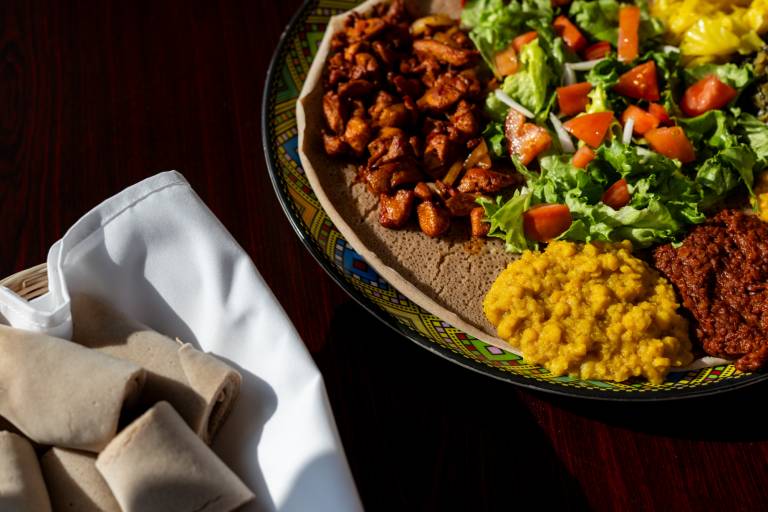
"caption": "The meat and veggie combo at Meskie’s Kitchen on Telegraph Avenue in Berkeley on June 16, 2025. The platter includes stews made with lentils, greens, and meat, served atop traditional injera. Founded by the late Meskerem Tsegaye in 1993, the family-run restaurant is now operated by her son Guma Fassil, who continues to serve authentic Ethiopian cuisine.",
"credit": "Beth LaBerge/KQED",
"altTag": null,
"description": null,
"imgSizes": {
"thumbnail": {
"file": "https://cdn.kqed.org/wp-content/uploads/sites/2/2025/06/250616-MESKISKITCHEN-12-BL-KQED-160x107.jpg",
"width": 160,
"height": 107,
"mimeType": "image/jpeg"
},
"medium_large": {
"file": "https://cdn.kqed.org/wp-content/uploads/sites/2/2025/06/250616-MESKISKITCHEN-12-BL-KQED-768x512.jpg",
"width": 768,
"height": 512,
"mimeType": "image/jpeg"
},
"1536x1536": {
"file": "https://cdn.kqed.org/wp-content/uploads/sites/2/2025/06/250616-MESKISKITCHEN-12-BL-KQED-1536x1024.jpg",
"width": 1536,
"height": 1024,
"mimeType": "image/jpeg"
},
"post-thumbnail": {
"file": "https://cdn.kqed.org/wp-content/uploads/sites/2/2025/06/250616-MESKISKITCHEN-12-BL-KQED-672x372.jpg",
"width": 672,
"height": 372,
"mimeType": "image/jpeg"
},
"twentyfourteen-full-width": {
"file": "https://cdn.kqed.org/wp-content/uploads/sites/2/2025/06/250616-MESKISKITCHEN-12-BL-KQED-1038x576.jpg",
"width": 1038,
"height": 576,
"mimeType": "image/jpeg"
},
"kqedFullSize": {
"file": "https://cdn.kqed.org/wp-content/uploads/sites/2/2025/06/250616-MESKISKITCHEN-12-BL-KQED.jpg",
"width": 2000,
"height": 1333
}
},
"isLoading": false,
"fetchFailed": false
},
"arts_13911890": {
"type": "attachments",
"id": "arts_13911890",
"meta": {
"index": "attachments_1716263798",
"site": "arts",
"id": "13911890",
"found": true
},
"title": "RBLPosse",
"publishDate": 1649841286,
"status": "inherit",
"parent": 13911888,
"modified": 1649841370,
"caption": "RBL Posse, shown here at the Monterey County Fairgrounds, headlines the 415 Day festivities on Friday, April 15.",
"credit": "\u003ca hef=\"https://www.instagram.com/j.castae/\">J.Castae\u003c/a>",
"altTag": "A rap group performs on an outside stage during the day",
"description": null,
"imgSizes": {
"thumbnail": {
"file": "https://cdn.kqed.org/wp-content/uploads/sites/2/2022/04/RBLPosse-e1752795505226-160x107.jpg",
"width": 160,
"height": 107,
"mimeType": "image/jpeg"
},
"medium_large": {
"file": "https://cdn.kqed.org/wp-content/uploads/sites/2/2022/04/RBLPosse-e1752795505226-768x514.jpg",
"width": 768,
"height": 514,
"mimeType": "image/jpeg"
},
"post-thumbnail": {
"file": "https://cdn.kqed.org/wp-content/uploads/sites/2/2022/04/RBLPosse-e1752795505226-672x372.jpg",
"width": 672,
"height": 372,
"mimeType": "image/jpeg"
},
"kqedFullSize": {
"file": "https://cdn.kqed.org/wp-content/uploads/sites/2/2022/04/RBLPosse-e1752795505226.jpg",
"width": 800,
"height": 535
}
},
"isLoading": false,
"fetchFailed": false
},
"arts_13978724": {
"type": "attachments",
"id": "arts_13978724",
"meta": {
"index": "attachments_1716263798",
"site": "arts",
"id": "13978724",
"found": true
},
"title": "250713-streetcats_00111_TV_qed",
"publishDate": 1752530105,
"status": "inherit",
"parent": 0,
"modified": 1752691079,
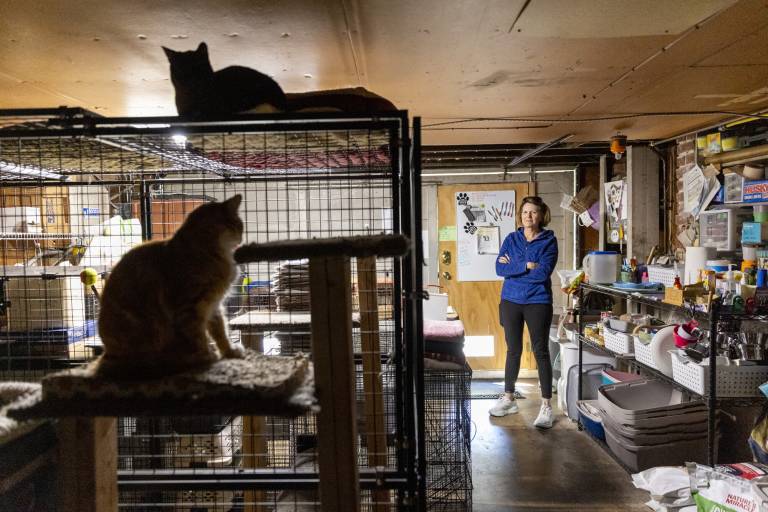
"caption": "Rescue cats Leo (left) and Paco (right) lounge around as Island Cat Resources & Adoption Board President Merry Bates looks onto them in her home in the Laurel District in Oakland on July 13, 2025. The Bay Area has a feral cat problem and organizations such as Cat Town, Island Cat Resources & Adoption and Toni’s Kitty Rescue are working toward rehabilitating street cats. ",
"credit": "Tâm Vũ/KQED",
"altTag": "A woman in a blue hoodie and black athleisure pants stands, arms folded, looking at two cats lounging atop and near a large cage, in a room cluttered with materials related to cat rescue",
"description": null,
"imgSizes": {
"thumbnail": {
"file": "https://cdn.kqed.org/wp-content/uploads/sites/2/2025/07/250713-streetcats_00111_TV_qed-160x107.jpg",
"width": 160,
"height": 107,
"mimeType": "image/jpeg"
},
"medium_large": {
"file": "https://cdn.kqed.org/wp-content/uploads/sites/2/2025/07/250713-streetcats_00111_TV_qed-768x512.jpg",
"width": 768,
"height": 512,
"mimeType": "image/jpeg"
},
"1536x1536": {
"file": "https://cdn.kqed.org/wp-content/uploads/sites/2/2025/07/250713-streetcats_00111_TV_qed-1536x1024.jpg",
"width": 1536,
"height": 1024,
"mimeType": "image/jpeg"
},
"post-thumbnail": {
"file": "https://cdn.kqed.org/wp-content/uploads/sites/2/2025/07/250713-streetcats_00111_TV_qed-672x372.jpg",
"width": 672,
"height": 372,
"mimeType": "image/jpeg"
},
"twentyfourteen-full-width": {
"file": "https://cdn.kqed.org/wp-content/uploads/sites/2/2025/07/250713-streetcats_00111_TV_qed-1038x576.jpg",
"width": 1038,
"height": 576,
"mimeType": "image/jpeg"
},
"kqedFullSize": {
"file": "https://cdn.kqed.org/wp-content/uploads/sites/2/2025/07/250713-streetcats_00111_TV_qed.jpg",
"width": 2000,
"height": 1333
}
},
"isLoading": false,
"fetchFailed": false
},
"arts_13978793": {
"type": "attachments",
"id": "arts_13978793",
"meta": {
"index": "attachments_1716263798",
"site": "arts",
"id": "13978793",
"found": true
},
"title": "Kapwa-Gardens-aerial_2000",
"publishDate": 1752617865,
"status": "inherit",
"parent": 13978786,
"modified": 1752618020,
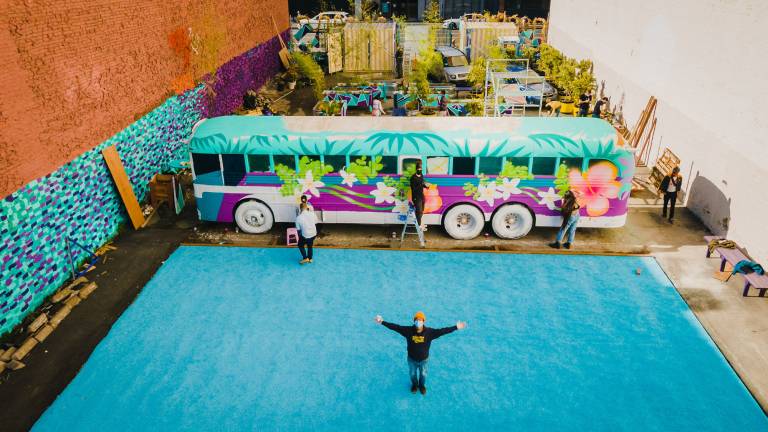
"caption": "An aerial view of Kapwa Gardens before its opening in 2021.",
"credit": "Courtesy of Kultivate Labs",
"altTag": null,
"description": null,
"imgSizes": {
"thumbnail": {
"file": "https://cdn.kqed.org/wp-content/uploads/sites/2/2025/07/Kapwa-Gardens-aerial_2000-160x90.jpg",
"width": 160,
"height": 90,
"mimeType": "image/jpeg"
},
"medium_large": {
"file": "https://cdn.kqed.org/wp-content/uploads/sites/2/2025/07/Kapwa-Gardens-aerial_2000-768x432.jpg",
"width": 768,
"height": 432,
"mimeType": "image/jpeg"
},
"1536x1536": {
"file": "https://cdn.kqed.org/wp-content/uploads/sites/2/2025/07/Kapwa-Gardens-aerial_2000-1536x864.jpg",
"width": 1536,
"height": 864,
"mimeType": "image/jpeg"
},
"post-thumbnail": {
"file": "https://cdn.kqed.org/wp-content/uploads/sites/2/2025/07/Kapwa-Gardens-aerial_2000-672x372.jpg",
"width": 672,
"height": 372,
"mimeType": "image/jpeg"
},
"twentyfourteen-full-width": {
"file": "https://cdn.kqed.org/wp-content/uploads/sites/2/2025/07/Kapwa-Gardens-aerial_2000-1038x576.jpg",
"width": 1038,
"height": 576,
"mimeType": "image/jpeg"
},
"kqedFullSize": {
"file": "https://cdn.kqed.org/wp-content/uploads/sites/2/2025/07/Kapwa-Gardens-aerial_2000.jpg",
"width": 2000,
"height": 1125
}
},
"isLoading": false,
"fetchFailed": false
},
"arts_13978771": {
"type": "attachments",
"id": "arts_13978771",
"meta": {
"index": "attachments_1716263798",
"site": "arts",
"id": "13978771",
"found": true
},
"title": "IMG_20240419_142259_01",
"publishDate": 1752604995,
"status": "inherit",
"parent": 13978766,
"modified": 1752618491,
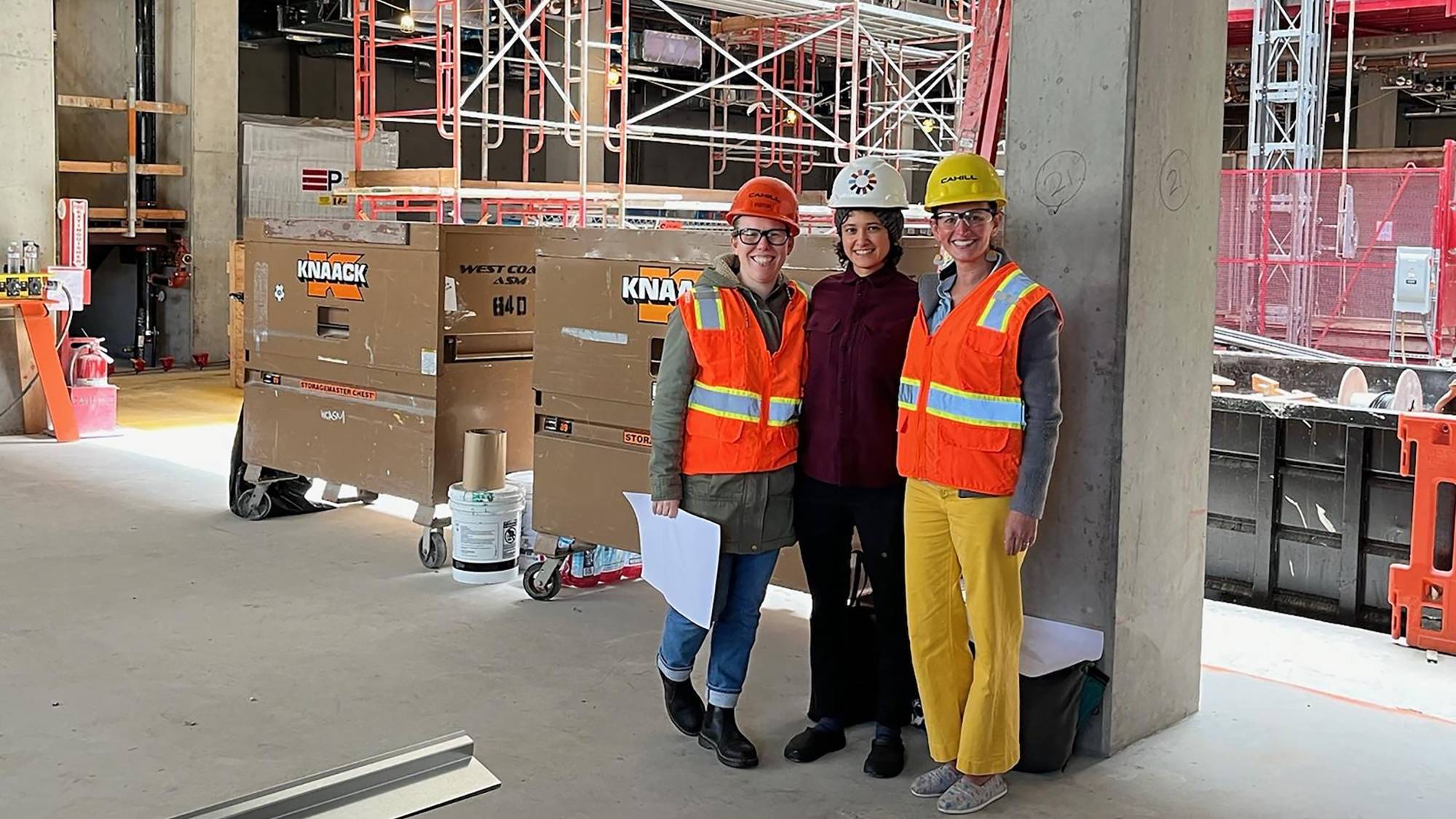
"caption": "(L–R) Disability Cultural Center co-directors Dagny Brown, Mika Weissbuch and Emily Beitiks during construction.",
"credit": "Courtesy SFDCC",
"altTag": "Three people in orange and yellow construction gear and helmets stand in front of a construction site with scaffolding and concrete",
"description": null,
"imgSizes": {
"medium": {
"file": "https://cdn.kqed.org/wp-content/uploads/sites/2/2025/07/IMG_20240419_142259_01-2000x1125.jpg",
"width": 2000,
"height": 1125,
"mimeType": "image/jpeg"
},
"large": {
"file": "https://cdn.kqed.org/wp-content/uploads/sites/2/2025/07/IMG_20240419_142259_01-2000x1125.jpg",
"width": 2000,
"height": 1125,
"mimeType": "image/jpeg"
},
"thumbnail": {
"file": "https://cdn.kqed.org/wp-content/uploads/sites/2/2025/07/IMG_20240419_142259_01-160x90.jpg",
"width": 160,
"height": 90,
"mimeType": "image/jpeg"
},
"medium_large": {
"file": "https://cdn.kqed.org/wp-content/uploads/sites/2/2025/07/IMG_20240419_142259_01-768x432.jpg",
"width": 768,
"height": 432,
"mimeType": "image/jpeg"
},
"1536x1536": {
"file": "https://cdn.kqed.org/wp-content/uploads/sites/2/2025/07/IMG_20240419_142259_01-1536x864.jpg",
"width": 1536,
"height": 864,
"mimeType": "image/jpeg"
},
"2048x2048": {
"file": "https://cdn.kqed.org/wp-content/uploads/sites/2/2025/07/IMG_20240419_142259_01-2048x1152.jpg",
"width": 2048,
"height": 1152,
"mimeType": "image/jpeg"
},
"post-thumbnail": {
"file": "https://cdn.kqed.org/wp-content/uploads/sites/2/2025/07/IMG_20240419_142259_01-672x372.jpg",
"width": 672,
"height": 372,
"mimeType": "image/jpeg"
},
"twentyfourteen-full-width": {
"file": "https://cdn.kqed.org/wp-content/uploads/sites/2/2025/07/IMG_20240419_142259_01-1038x576.jpg",
"width": 1038,
"height": 576,
"mimeType": "image/jpeg"
},
"full-width": {
"file": "https://cdn.kqed.org/wp-content/uploads/sites/2/2025/07/IMG_20240419_142259_01-2000x1125.jpg",
"width": 2000,
"height": 1125,
"mimeType": "image/jpeg"
},
"kqedFullSize": {
"file": "https://cdn.kqed.org/wp-content/uploads/sites/2/2025/07/IMG_20240419_142259_01-scaled.jpg",
"width": 2560,
"height": 1440
}
},
"isLoading": false,
"fetchFailed": false
},
"arts_13978576": {
"type": "attachments",
"id": "arts_13978576",
"meta": {
"index": "attachments_1716263798",
"site": "arts",
"id": "13978576",
"found": true
},
"title": "OceanEscalanti",
"publishDate": 1752167302,
"status": "inherit",
"parent": 13978572,
"modified": 1752167469,
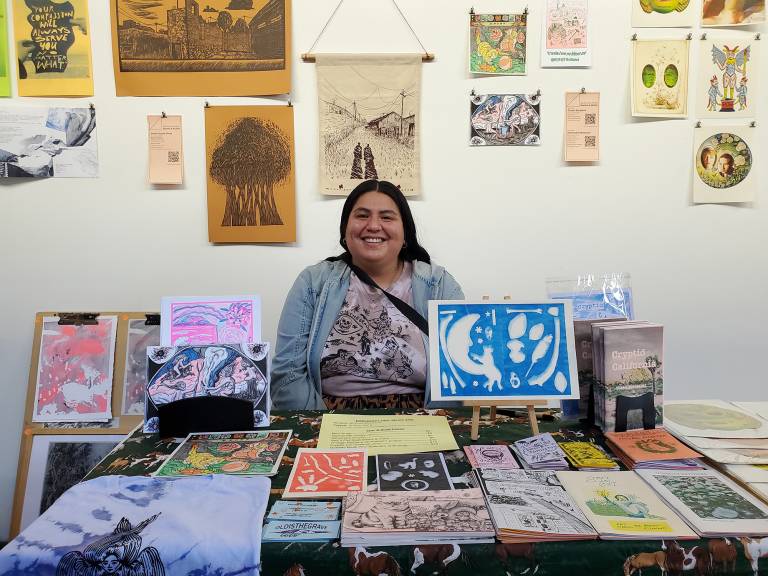
"caption": "Oakland-based zinemaker Ocean Escalanti is one of 30 first-time exhibitors at this year’s San Francisco Art Book Fair.",
"credit": "Courtesy Ocean Escalanti",
"altTag": "A woman sites at a table full of small printed matter, in front of a wall covered in hanging printed matter",
"description": null,
"imgSizes": {
"thumbnail": {
"file": "https://cdn.kqed.org/wp-content/uploads/sites/2/2025/07/OceanEscalanti-160x120.jpg",
"width": 160,
"height": 120,
"mimeType": "image/jpeg"
},
"medium_large": {
"file": "https://cdn.kqed.org/wp-content/uploads/sites/2/2025/07/OceanEscalanti-768x576.jpg",
"width": 768,
"height": 576,
"mimeType": "image/jpeg"
},
"1536x1536": {
"file": "https://cdn.kqed.org/wp-content/uploads/sites/2/2025/07/OceanEscalanti-1536x1152.jpg",
"width": 1536,
"height": 1152,
"mimeType": "image/jpeg"
},
"post-thumbnail": {
"file": "https://cdn.kqed.org/wp-content/uploads/sites/2/2025/07/OceanEscalanti-672x372.jpg",
"width": 672,
"height": 372,
"mimeType": "image/jpeg"
},
"twentyfourteen-full-width": {
"file": "https://cdn.kqed.org/wp-content/uploads/sites/2/2025/07/OceanEscalanti-1038x576.jpg",
"width": 1038,
"height": 576,
"mimeType": "image/jpeg"
},
"kqedFullSize": {
"file": "https://cdn.kqed.org/wp-content/uploads/sites/2/2025/07/OceanEscalanti.jpg",
"width": 2000,
"height": 1500
}
},
"isLoading": false,
"fetchFailed": false
},
"arts_13978426": {
"type": "attachments",
"id": "arts_13978426",
"meta": {
"index": "attachments_1716263798",
"site": "arts",
"id": "13978426",
"found": true
},
"title": "Pursuit",
"publishDate": 1751995115,
"status": "inherit",
"parent": 13978335,
"modified": 1752017958,
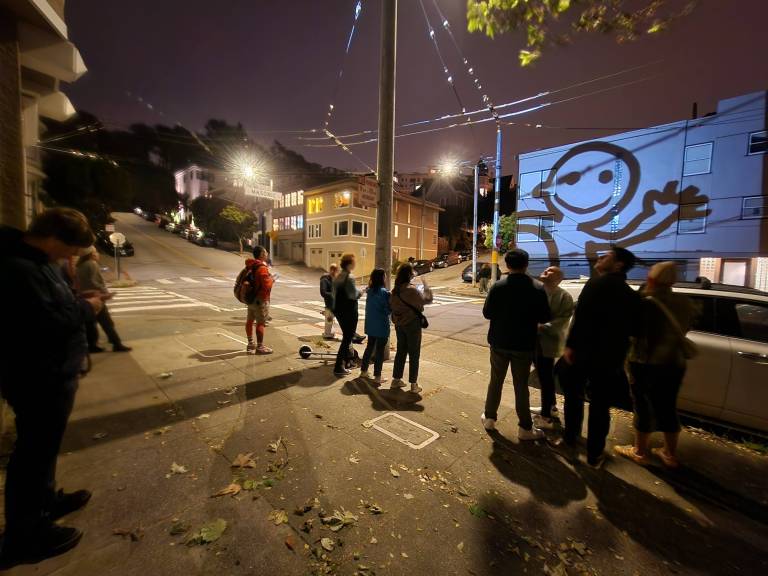
"caption": "Participants on the PURSUIT scavenger hunt look for clues in the shadow of Percy, the hunt's official mascot. ",
"credit": "George",
"altTag": "A group of people gather on a street corner at night, opposite a residential building. A projection of a simple black and white figure waving is being projected onto the side of the building.",
"description": null,
"imgSizes": {
"thumbnail": {
"file": "https://cdn.kqed.org/wp-content/uploads/sites/2/2025/07/Pursuit-160x120.jpg",
"width": 160,
"height": 120,
"mimeType": "image/jpeg"
},
"medium_large": {
"file": "https://cdn.kqed.org/wp-content/uploads/sites/2/2025/07/Pursuit-768x576.jpg",
"width": 768,
"height": 576,
"mimeType": "image/jpeg"
},
"1536x1536": {
"file": "https://cdn.kqed.org/wp-content/uploads/sites/2/2025/07/Pursuit-1536x1152.jpg",
"width": 1536,
"height": 1152,
"mimeType": "image/jpeg"
},
"post-thumbnail": {
"file": "https://cdn.kqed.org/wp-content/uploads/sites/2/2025/07/Pursuit-672x372.jpg",
"width": 672,
"height": 372,
"mimeType": "image/jpeg"
},
"twentyfourteen-full-width": {
"file": "https://cdn.kqed.org/wp-content/uploads/sites/2/2025/07/Pursuit-1038x576.jpg",
"width": 1038,
"height": 576,
"mimeType": "image/jpeg"
},
"kqedFullSize": {
"file": "https://cdn.kqed.org/wp-content/uploads/sites/2/2025/07/Pursuit.jpg",
"width": 2000,
"height": 1500
}
},
"isLoading": false,
"fetchFailed": false
},
"arts_13978438": {
"type": "attachments",
"id": "arts_13978438",
"meta": {
"index": "attachments_1716263798",
"site": "arts",
"id": "13978438",
"found": true
},
"title": "Stan and Doug absorbed",
"publishDate": 1751998038,
"status": "inherit",
"parent": 13978433,
"modified": 1751998589,
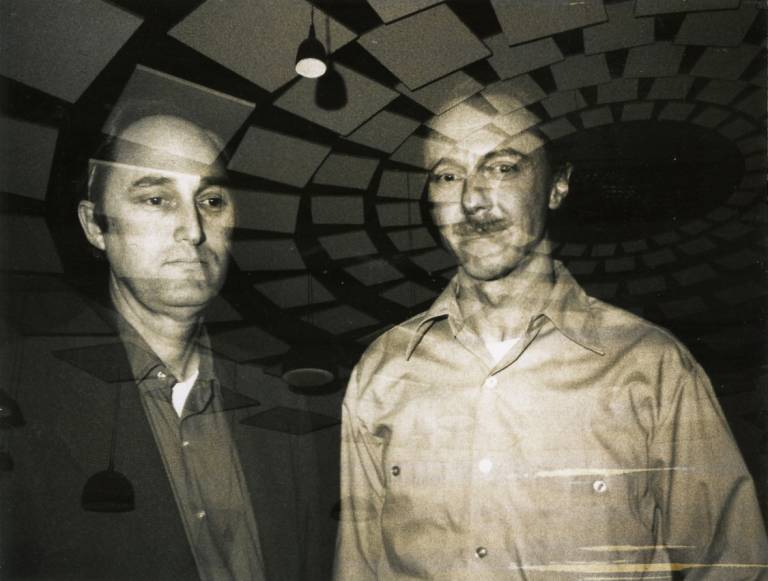
"caption": "Stan Shaff and Douglas Douglas McEachern, founders of Audium, superimposed against Audium's ceiling sound baffling in an undated photo.",
"credit": "Courtesy Audium",
"altTag": "The image of two men superimposed against a backdrop of sound baffling",
"description": null,
"imgSizes": {
"thumbnail": {
"file": "https://cdn.kqed.org/wp-content/uploads/sites/2/2025/07/Stan-and-Doug-absorbed-160x121.jpg",
"width": 160,
"height": 121,
"mimeType": "image/jpeg"
},
"medium_large": {
"file": "https://cdn.kqed.org/wp-content/uploads/sites/2/2025/07/Stan-and-Doug-absorbed-768x581.jpg",
"width": 768,
"height": 581,
"mimeType": "image/jpeg"
},
"post-thumbnail": {
"file": "https://cdn.kqed.org/wp-content/uploads/sites/2/2025/07/Stan-and-Doug-absorbed-672x372.jpg",
"width": 672,
"height": 372,
"mimeType": "image/jpeg"
},
"twentyfourteen-full-width": {
"file": "https://cdn.kqed.org/wp-content/uploads/sites/2/2025/07/Stan-and-Doug-absorbed-1038x576.jpg",
"width": 1038,
"height": 576,
"mimeType": "image/jpeg"
},
"kqedFullSize": {
"file": "https://cdn.kqed.org/wp-content/uploads/sites/2/2025/07/Stan-and-Doug-absorbed.jpg",
"width": 1125,
"height": 851
}
},
"isLoading": false,
"fetchFailed": false
},
"arts_13978361": {
"type": "attachments",
"id": "arts_13978361",
"meta": {
"index": "attachments_1716263798",
"site": "arts",
"id": "13978361",
"found": true
},
"title": "Mama Go's2-crop",
"publishDate": 1751585727,
"status": "inherit",
"parent": 13978355,
"modified": 1751585760,
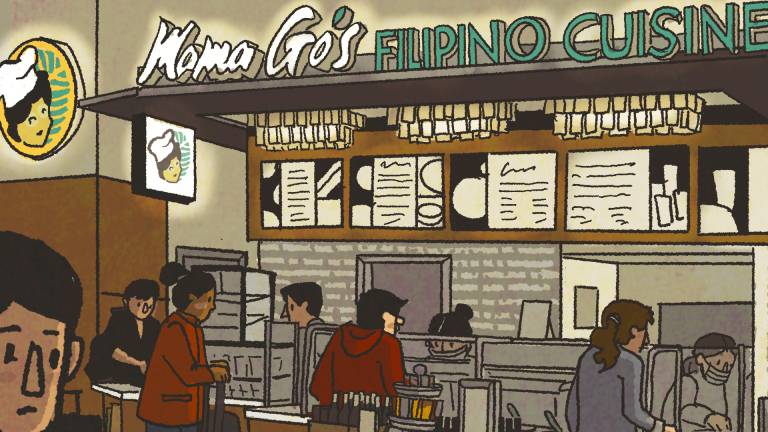
"caption": "The kiosk is open until 11:30 p.m. each night — and then it opens again at 3:30 a.m. for Filipino breakfast.",
"credit": "Thien Pham",
"altTag": "A busy food kiosk inside an airport. The sign overhead reads, \"Mama Go's Filipino Cuisine.\"",
"description": null,
"imgSizes": {
"thumbnail": {
"file": "https://cdn.kqed.org/wp-content/uploads/sites/2/2025/07/Mama-Gos2-crop-160x90.jpg",
"width": 160,
"height": 90,
"mimeType": "image/jpeg"
},
"medium_large": {
"file": "https://cdn.kqed.org/wp-content/uploads/sites/2/2025/07/Mama-Gos2-crop-768x432.jpg",
"width": 768,
"height": 432,
"mimeType": "image/jpeg"
},
"1536x1536": {
"file": "https://cdn.kqed.org/wp-content/uploads/sites/2/2025/07/Mama-Gos2-crop-1536x864.jpg",
"width": 1536,
"height": 864,
"mimeType": "image/jpeg"
},
"post-thumbnail": {
"file": "https://cdn.kqed.org/wp-content/uploads/sites/2/2025/07/Mama-Gos2-crop-672x372.jpg",
"width": 672,
"height": 372,
"mimeType": "image/jpeg"
},
"twentyfourteen-full-width": {
"file": "https://cdn.kqed.org/wp-content/uploads/sites/2/2025/07/Mama-Gos2-crop-1038x576.jpg",
"width": 1038,
"height": 576,
"mimeType": "image/jpeg"
},
"kqedFullSize": {
"file": "https://cdn.kqed.org/wp-content/uploads/sites/2/2025/07/Mama-Gos2-crop.jpg",
"width": 1920,
"height": 1080
}
},
"isLoading": false,
"fetchFailed": false
},
"arts_13935418": {
"type": "attachments",
"id": "arts_13935418",
"meta": {
"index": "attachments_1716263798",
"site": "arts",
"id": "13935418",
"found": true
},
"parent": 13935406,
"imgSizes": {
"twentyfourteen-full-width": {
"file": "https://ww2.kqed.org/app/uploads/sites/2/2023/09/KQEDLIVE21LaDona-039-1038x576.jpg",
"width": 1038,
"mimeType": "image/jpeg",
"height": 576
},
"thumbnail": {
"file": "https://ww2.kqed.org/app/uploads/sites/2/2023/09/KQEDLIVE21LaDona-039-160x106.jpg",
"width": 160,
"mimeType": "image/jpeg",
"height": 106
},
"post-thumbnail": {
"file": "https://ww2.kqed.org/app/uploads/sites/2/2023/09/KQEDLIVE21LaDona-039-672x372.jpg",
"width": 672,
"mimeType": "image/jpeg",
"height": 372
},
"kqedFullSize": {
"file": "https://ww2.kqed.org/app/uploads/sites/2/2023/09/KQEDLIVE21LaDona-039-scaled.jpg",
"width": 2560,
"height": 1703
},
"2048x2048": {
"file": "https://ww2.kqed.org/app/uploads/sites/2/2023/09/KQEDLIVE21LaDona-039-2048x1363.jpg",
"width": 2048,
"mimeType": "image/jpeg",
"height": 1363
},
"large": {
"file": "https://ww2.kqed.org/app/uploads/sites/2/2023/09/KQEDLIVE21LaDona-039-1020x679.jpg",
"width": 1020,
"mimeType": "image/jpeg",
"height": 679
},
"1536x1536": {
"file": "https://ww2.kqed.org/app/uploads/sites/2/2023/09/KQEDLIVE21LaDona-039-1536x1022.jpg",
"width": 1536,
"mimeType": "image/jpeg",
"height": 1022
},
"full-width": {
"file": "https://ww2.kqed.org/app/uploads/sites/2/2023/09/KQEDLIVE21LaDona-039-1920x1277.jpg",
"width": 1920,
"mimeType": "image/jpeg",
"height": 1277
},
"medium": {
"file": "https://ww2.kqed.org/app/uploads/sites/2/2023/09/KQEDLIVE21LaDona-039-800x532.jpg",
"width": 800,
"mimeType": "image/jpeg",
"height": 532
},
"medium_large": {
"file": "https://ww2.kqed.org/app/uploads/sites/2/2023/09/KQEDLIVE21LaDona-039-768x511.jpg",
"width": 768,
"mimeType": "image/jpeg",
"height": 511
}
},
"publishDate": 1695768256,
"modified": 1695768355,
"caption": "La Doña performs at The Commons in KQED's headquarters in 2021. ",
"description": null,
"title": "KQEDLIVE21LaDona-039",
"credit": "Alain McLaughlin for KQED",
"status": "inherit",
"altTag": "La Doña sings on stage next to her saxophonist and bassist.",
"isLoading": false,
"fetchFailed": false
},
"arts_13978156": {
"type": "attachments",
"id": "arts_13978156",
"meta": {
"index": "attachments_1716263798",
"site": "arts",
"id": "13978156",
"found": true
},
"title": "GettyImages-2163980968",
"publishDate": 1751323891,
"status": "inherit",
"parent": 13978141,
"modified": 1751325270,
"caption": "Satomi Matsuzaki of Deerhoof performs at the WOMAD Festival on July 27, 2024, in Malmesbury, England.",
"credit": "C Brandon/Redferns",
"altTag": "A Japanese American woman plays the bass guitar and sings into a microphone",
"description": null,
"imgSizes": {
"thumbnail": {
"file": "https://cdn.kqed.org/wp-content/uploads/sites/2/2025/06/GettyImages-2163980968-160x107.jpg",
"width": 160,
"height": 107,
"mimeType": "image/jpeg"
},
"medium_large": {
"file": "https://cdn.kqed.org/wp-content/uploads/sites/2/2025/06/GettyImages-2163980968-768x513.jpg",
"width": 768,
"height": 513,
"mimeType": "image/jpeg"
},
"1536x1536": {
"file": "https://cdn.kqed.org/wp-content/uploads/sites/2/2025/06/GettyImages-2163980968-1536x1025.jpg",
"width": 1536,
"height": 1025,
"mimeType": "image/jpeg"
},
"post-thumbnail": {
"file": "https://cdn.kqed.org/wp-content/uploads/sites/2/2025/06/GettyImages-2163980968-672x372.jpg",
"width": 672,
"height": 372,
"mimeType": "image/jpeg"
},
"twentyfourteen-full-width": {
"file": "https://cdn.kqed.org/wp-content/uploads/sites/2/2025/06/GettyImages-2163980968-1038x576.jpg",
"width": 1038,
"height": 576,
"mimeType": "image/jpeg"
},
"kqedFullSize": {
"file": "https://cdn.kqed.org/wp-content/uploads/sites/2/2025/06/GettyImages-2163980968.jpg",
"width": 2000,
"height": 1335
}
},
"isLoading": false,
"fetchFailed": false
},
"arts_13978074": {
"type": "attachments",
"id": "arts_13978074",
"meta": {
"index": "attachments_1716263798",
"site": "arts",
"id": "13978074",
"found": true
},
"title": "Bayview.Voguing.MAIN",
"publishDate": 1751039995,
"status": "inherit",
"parent": 13978071,
"modified": 1751040084,
"caption": "A contestant executes a dramatic dip on the runway at the Power of Love Kiki Ball at the Bayview Opera House on Wednesday, June 26, 2025.",
"credit": "Brandon Robinson",
"altTag": null,
"description": null,
"imgSizes": {
"thumbnail": {
"file": "https://cdn.kqed.org/wp-content/uploads/sites/2/2025/06/Bayview.Voguing.MAIN_-160x90.jpg",
"width": 160,
"height": 90,
"mimeType": "image/jpeg"
},
"medium_large": {
"file": "https://cdn.kqed.org/wp-content/uploads/sites/2/2025/06/Bayview.Voguing.MAIN_-768x432.jpg",
"width": 768,
"height": 432,
"mimeType": "image/jpeg"
},
"1536x1536": {
"file": "https://cdn.kqed.org/wp-content/uploads/sites/2/2025/06/Bayview.Voguing.MAIN_-1536x864.jpg",
"width": 1536,
"height": 864,
"mimeType": "image/jpeg"
},
"post-thumbnail": {
"file": "https://cdn.kqed.org/wp-content/uploads/sites/2/2025/06/Bayview.Voguing.MAIN_-672x372.jpg",
"width": 672,
"height": 372,
"mimeType": "image/jpeg"
},
"twentyfourteen-full-width": {
"file": "https://cdn.kqed.org/wp-content/uploads/sites/2/2025/06/Bayview.Voguing.MAIN_-1038x576.jpg",
"width": 1038,
"height": 576,
"mimeType": "image/jpeg"
},
"kqedFullSize": {
"file": "https://cdn.kqed.org/wp-content/uploads/sites/2/2025/06/Bayview.Voguing.MAIN_.jpg",
"width": 2000,
"height": 1125
}
},
"isLoading": false,
"fetchFailed": false
}
},
"audioPlayerReducer": {
"postId": "stream_live",
"isPaused": true,
"isPlaying": false,
"pfsActive": false,
"pledgeModalIsOpen": true,
"playerDrawerIsOpen": false,
"liveAudioPlayStartedAt": 0,
"liveAudioPlayContext": ""
},
"authorsReducer": {
"shotchkiss": {
"type": "authors",
"id": "61",
"meta": {
"index": "authors_1716337520",
"id": "61",
"found": true
},
"name": "Sarah Hotchkiss",
"firstName": "Sarah",
"lastName": "Hotchkiss",
"slug": "shotchkiss",
"email": "shotchkiss@kqed.org",
"display_author_email": true,
"staff_mastheads": [
"arts"
],
"title": "Senior Editor",
"bio": "Sarah Hotchkiss is a San Francisco \u003ca href=\"http://www.sarahhotchkiss.com\">artist\u003c/a> and arts writer. In 2019, she received the Dorothea & Leo Rabkin Foundation grant for visual art journalism and in 2020 she received a Society of Professional Journalists, Northern California award for excellence in arts and culture reporting.",
"avatar": "https://secure.gravatar.com/avatar/bc662df144b3d27fd8b1b6f1c2a420d34e91e53154d411bb7ad353cc8b6cea8d?s=600&d=blank&r=g",
"twitter": null,
"bluesky": null,
"facebook": null,
"instagram": null,
"linkedin": null,
"sites": [
{
"site": "",
"roles": [
"editor"
]
},
{
"site": "arts",
"roles": [
"Contributor",
"administrator"
]
},
{
"site": "artschool",
"roles": [
"administrator"
]
},
{
"site": "news",
"roles": [
"editor"
]
},
{
"site": "pop",
"roles": [
"administrator"
]
},
{
"site": "bayareabites",
"roles": [
"editor"
]
},
{
"site": "spark",
"roles": [
"editor"
]
},
{
"site": "checkplease",
"roles": [
"editor"
]
}
],
"headData": {
"title": "Sarah Hotchkiss | KQED",
"description": "Senior Editor",
"ogImgSrc": "https://secure.gravatar.com/avatar/bc662df144b3d27fd8b1b6f1c2a420d34e91e53154d411bb7ad353cc8b6cea8d?s=600&d=blank&r=g",
"twImgSrc": "https://secure.gravatar.com/avatar/bc662df144b3d27fd8b1b6f1c2a420d34e91e53154d411bb7ad353cc8b6cea8d?s=600&d=blank&r=g"
},
"isLoading": false,
"link": "/author/shotchkiss"
},
"gmeline": {
"type": "authors",
"id": "185",
"meta": {
"index": "authors_1716337520",
"id": "185",
"found": true
},
"name": "Gabe Meline",
"firstName": "Gabe",
"lastName": "Meline",
"slug": "gmeline",
"email": "gmeline@kqed.org",
"display_author_email": true,
"staff_mastheads": [
"arts"
],
"title": "Senior Editor, KQED Arts & Culture",
"bio": "Gabe Meline entered journalism at age 15 making photocopied zines, and has since earned awards from the Edward R. Murrow Awards, the Society for Professional Journalists, the Online Journalism Awards, the Association of Alternative Newsweeklies and the California Newspaper Publishers Association. Prior to KQED, he was the editor of the \u003cem>North Bay Bohemian\u003c/em> and a touring musician. He lives with his wife and daughter in his hometown of Santa Rosa, CA.",
"avatar": "https://secure.gravatar.com/avatar/5bebe57be0d8bc2dd318934feb47299e2d2d10cba28d09d8d7afb389a2ce2bdd?s=600&d=blank&r=g",
"twitter": null,
"bluesky": null,
"facebook": null,
"instagram": null,
"linkedin": null,
"sites": [
{
"site": "",
"roles": [
"editor"
]
},
{
"site": "arts",
"roles": [
"administrator"
]
},
{
"site": "artschool",
"roles": [
"editor"
]
},
{
"site": "news",
"roles": [
"author"
]
},
{
"site": "pop",
"roles": [
"editor"
]
},
{
"site": "bayareabites",
"roles": [
"editor"
]
},
{
"site": "food",
"roles": [
"editor"
]
},
{
"site": "forum",
"roles": [
"administrator"
]
},
{
"site": "liveblog",
"roles": [
"editor"
]
},
{
"site": "hiphop",
"roles": [
"editor"
]
}
],
"headData": {
"title": "Gabe Meline | KQED",
"description": "Senior Editor, KQED Arts & Culture",
"ogImgSrc": "https://secure.gravatar.com/avatar/5bebe57be0d8bc2dd318934feb47299e2d2d10cba28d09d8d7afb389a2ce2bdd?s=600&d=blank&r=g",
"twImgSrc": "https://secure.gravatar.com/avatar/5bebe57be0d8bc2dd318934feb47299e2d2d10cba28d09d8d7afb389a2ce2bdd?s=600&d=blank&r=g"
},
"isLoading": false,
"link": "/author/gmeline"
},
"ralexandra": {
"type": "authors",
"id": "11242",
"meta": {
"index": "authors_1716337520",
"id": "11242",
"found": true
},
"name": "Rae Alexandra",
"firstName": "Rae",
"lastName": "Alexandra",
"slug": "ralexandra",
"email": "ralexandra@kqed.org",
"display_author_email": true,
"staff_mastheads": [],
"title": "Reporter/Producer",
"bio": "Rae Alexandra is a Reporter/Producer for KQED Arts & Culture, and the creator/author of the \u003ca href=\"https://www.kqed.org/arts/program/rebel-girls-from-bay-area-history\">Rebel Girls From Bay Area History\u003c/a> and \u003ca href=\"https://www.kqed.org/bizarrebayarea\">Bizarre Bay Area\u003c/a> series. Her debut book, \u003ca href=\"https://citylights.com/politics-current-events-history/unsung-heroines35-women-who-changed/\">Unsung Heroines: 35 Women Who Changed the Bay Area\u003c/a> was published by City Lights in March 2026. In 2023, Rae was awarded an SPJ Excellence in Journalism Award for Arts & Culture. Rae was born and raised in Wales and subsequently — even after two decades in Northern California — still uses phrases that regularly baffle her coworkers.",
"avatar": "https://secure.gravatar.com/avatar/edfee8176c80cc0a382b051190f5341997df378a934a5774dcb0977732dfd401?s=600&d=blank&r=g",
"twitter": null,
"bluesky": null,
"facebook": null,
"instagram": null,
"linkedin": null,
"sites": [
{
"site": "arts",
"roles": [
"subscriber"
]
},
{
"site": "news",
"roles": [
"subscriber"
]
},
{
"site": "pop",
"roles": [
"subscriber"
]
},
{
"site": "bayareabites",
"roles": [
"subscriber"
]
},
{
"site": "science",
"roles": [
"subscriber"
]
}
],
"headData": {
"title": "Rae Alexandra | KQED",
"description": "Reporter/Producer",
"ogImgSrc": "https://secure.gravatar.com/avatar/edfee8176c80cc0a382b051190f5341997df378a934a5774dcb0977732dfd401?s=600&d=blank&r=g",
"twImgSrc": "https://secure.gravatar.com/avatar/edfee8176c80cc0a382b051190f5341997df378a934a5774dcb0977732dfd401?s=600&d=blank&r=g"
},
"isLoading": false,
"link": "/author/ralexandra"
},
"ltsai": {
"type": "authors",
"id": "11743",
"meta": {
"index": "authors_1716337520",
"id": "11743",
"found": true
},
"name": "Luke Tsai",
"firstName": "Luke",
"lastName": "Tsai",
"slug": "ltsai",
"email": "ltsai@kqed.org",
"display_author_email": true,
"staff_mastheads": [
"arts"
],
"title": "Food Editor",
"bio": "Luke Tsai is KQED's food editor and resident stinky tofu connoisseur. Prior to KQED, he was an editor at Eater SF, \u003cem>San Francisco \u003c/em>magazine, and the \u003cem>East Bay Express\u003c/em>, and his work has also appeared in TASTE, the \u003cem>San Francisco Chronicle\u003c/em>, and the \u003cem>Best Food Writing\u003c/em> anthology. When he isn't writing or editing, you'll find him eating most everything he can get his hands on.",
"avatar": "https://secure.gravatar.com/avatar/1e59b45bf191526e7339d6ba46e33a57b2030d25c27660ecc64ea3cb863e34f7?s=600&d=blank&r=g",
"twitter": "theluketsai",
"bluesky": null,
"facebook": null,
"instagram": null,
"linkedin": null,
"sites": [
{
"site": "",
"roles": [
"editor"
]
},
{
"site": "arts",
"roles": [
"administrator"
]
},
{
"site": "news",
"roles": [
"editor",
"contributor"
]
},
{
"site": "bayareabites",
"roles": [
"editor"
]
},
{
"site": "food",
"roles": [
"editor"
]
}
],
"headData": {
"title": "Luke Tsai | KQED",
"description": "Food Editor",
"ogImgSrc": "https://secure.gravatar.com/avatar/1e59b45bf191526e7339d6ba46e33a57b2030d25c27660ecc64ea3cb863e34f7?s=600&d=blank&r=g",
"twImgSrc": "https://secure.gravatar.com/avatar/1e59b45bf191526e7339d6ba46e33a57b2030d25c27660ecc64ea3cb863e34f7?s=600&d=blank&r=g"
},
"isLoading": false,
"link": "/author/ltsai"
},
"achazaro": {
"type": "authors",
"id": "11748",
"meta": {
"index": "authors_1716337520",
"id": "11748",
"found": true
},
"name": "Alan Chazaro",
"firstName": "Alan",
"lastName": "Chazaro",
"slug": "achazaro",
"email": "agchazaro@gmail.com",
"display_author_email": true,
"staff_mastheads": [],
"title": "Food Writer and Reporter",
"bio": "Alan Chazaro is the author of \u003cem>This Is Not a Frank Ocean Cover Album\u003c/em> (Black Lawrence Press, 2019), \u003cem>Piñata Theory\u003c/em> (Black Lawrence Press, 2020), and \u003cem>Notes from the Eastern Span of the Bay Bridge\u003c/em> (Ghost City Press, 2021). He is a graduate of June Jordan’s Poetry for the People program at UC Berkeley and a former Lawrence Ferlinghetti Fellow at the University of San Francisco. He writes about sports, food, art, music, education, and culture while repping the Bay on \u003ca href=\"https://twitter.com/alan_chazaro\">Twitter\u003c/a> and \u003ca href=\"https://www.instagram.com/alan_chazaro/?hl=en\">Instagram\u003c/a> at @alan_chazaro.",
"avatar": "https://secure.gravatar.com/avatar/ea8b6dd970fc5c29e7a188e7d5861df7?s=600&d=blank&r=g",
"twitter": "alan_chazaro",
"facebook": null,
"instagram": null,
"linkedin": null,
"sites": [
{
"site": "arts",
"roles": [
"contributor"
]
},
{
"site": "news",
"roles": [
"editor"
]
}
],
"headData": {
"title": "Alan Chazaro | KQED",
"description": "Food Writer and Reporter",
"ogImgSrc": "https://secure.gravatar.com/avatar/ea8b6dd970fc5c29e7a188e7d5861df7?s=600&d=blank&r=g",
"twImgSrc": "https://secure.gravatar.com/avatar/ea8b6dd970fc5c29e7a188e7d5861df7?s=600&d=blank&r=g"
},
"isLoading": false,
"link": "/author/achazaro"
},
"tpham": {
"type": "authors",
"id": "11753",
"meta": {
"index": "authors_1716337520",
"id": "11753",
"found": true
},
"name": "Thien Pham",
"firstName": "Thien",
"lastName": "Pham",
"slug": "tpham",
"email": "thiendog@gmail.com",
"display_author_email": false,
"staff_mastheads": [],
"title": "KQED Contributor",
"bio": null,
"avatar": "https://secure.gravatar.com/avatar/a5b4729969ad46d88e7b9ec9dd4f3fa6af84dd0fa8fa91f01d8d9481694999bc?s=600&d=blank&r=g",
"twitter": null,
"bluesky": null,
"facebook": null,
"instagram": null,
"linkedin": null,
"sites": [
{
"site": "arts",
"roles": [
"contributor"
]
}
],
"headData": {
"title": "Thien Pham | KQED",
"description": "KQED Contributor",
"ogImgSrc": "https://secure.gravatar.com/avatar/a5b4729969ad46d88e7b9ec9dd4f3fa6af84dd0fa8fa91f01d8d9481694999bc?s=600&d=blank&r=g",
"twImgSrc": "https://secure.gravatar.com/avatar/a5b4729969ad46d88e7b9ec9dd4f3fa6af84dd0fa8fa91f01d8d9481694999bc?s=600&d=blank&r=g"
},
"isLoading": false,
"link": "/author/tpham"
},
"sfaulise": {
"type": "authors",
"id": "11919",
"meta": {
"index": "authors_1716337520",
"id": "11919",
"found": true
},
"name": "Shannon Faulise",
"firstName": "Shannon",
"lastName": "Faulise",
"slug": "sfaulise",
"email": "sfaulise@kqed.org",
"display_author_email": false,
"staff_mastheads": [],
"title": "Contributor, KQED Arts & Culture",
"bio": "Shannon Faulise is a graduate of the UC Berkeley Graduate School of Journalism, where she concentrated on photojournalism and feature writing. Shannon's photos, audio pieces and written stories have appeared in The Oaklandside, The Redwood City Pulse and KALX. Outside of reporting, Shannon loves kpop, women's sports and concerts. She served as an intern for KQED Arts & Culture in 2024–25.",
"avatar": "https://secure.gravatar.com/avatar/76449df2627a603d6b02f0534ec3c913007029bff4f1c0572071401f9a293a02?s=600&d=blank&r=g",
"twitter": null,
"bluesky": null,
"facebook": null,
"instagram": null,
"linkedin": null,
"sites": [
{
"site": "arts",
"roles": [
"subscriber"
]
}
],
"headData": {
"title": "Shannon Faulise | KQED",
"description": "Contributor, KQED Arts & Culture",
"ogImgSrc": "https://secure.gravatar.com/avatar/76449df2627a603d6b02f0534ec3c913007029bff4f1c0572071401f9a293a02?s=600&d=blank&r=g",
"twImgSrc": "https://secure.gravatar.com/avatar/76449df2627a603d6b02f0534ec3c913007029bff4f1c0572071401f9a293a02?s=600&d=blank&r=g"
},
"isLoading": false,
"link": "/author/sfaulise"
},
"jmelido": {
"type": "authors",
"id": "11972",
"meta": {
"index": "authors_1716337520",
"id": "11972",
"found": true
},
"name": "Janea Melido",
"firstName": "Janea",
"lastName": "Melido",
"slug": "jmelido",
"email": "jmelido@kqed.org",
"display_author_email": true,
"staff_mastheads": [
"arts"
],
"title": "Contributor, KQED Arts & Culture",
"bio": "Janea Melido holds a Bachelor of Arts in English and minor in Ethnic Studies from the University of Portland. She's drawn to the quiet power of everyday stories, especially ones that often go overlooked. When she's not reporting, she enjoys cutting up her old print stories and making collages out of them. She served as an intern for KQED Arts & Culture in 2025–26.",
"avatar": "https://secure.gravatar.com/avatar/a29821c5951064ade16b01245ce4604a599e1d4609df1ff590a8de6c7728826a?s=600&d=blank&r=g",
"twitter": null,
"bluesky": null,
"facebook": null,
"instagram": null,
"linkedin": null,
"sites": [
{
"site": "arts",
"roles": [
"contributor"
]
}
],
"headData": {
"title": "Janea Melido | KQED",
"description": "Contributor, KQED Arts & Culture",
"ogImgSrc": "https://secure.gravatar.com/avatar/a29821c5951064ade16b01245ce4604a599e1d4609df1ff590a8de6c7728826a?s=600&d=blank&r=g",
"twImgSrc": "https://secure.gravatar.com/avatar/a29821c5951064ade16b01245ce4604a599e1d4609df1ff590a8de6c7728826a?s=600&d=blank&r=g"
},
"isLoading": false,
"link": "/author/jmelido"
},
"mmitchell": {
"type": "authors",
"id": "12012",
"meta": {
"index": "authors_1716337520",
"id": "12012",
"found": true
},
"name": "Meaghan Mitchell",
"firstName": "Meaghan",
"lastName": "Mitchell",
"slug": "mmitchell",
"email": "meaghanmitchell@gmail.com",
"display_author_email": false,
"staff_mastheads": [],
"title": "KQED Contributor",
"bio": null,
"avatar": "https://secure.gravatar.com/avatar/f5382d86673790e07dd22c71f8411f7ee82a8c4cd863732b646b3fc5cbb5894d?s=600&d=blank&r=g",
"twitter": null,
"bluesky": null,
"facebook": null,
"instagram": null,
"linkedin": null,
"sites": [
{
"site": "arts",
"roles": [
"contributor"
]
}
],
"headData": {
"title": "Meaghan Mitchell | KQED",
"description": "KQED Contributor",
"ogImgSrc": "https://secure.gravatar.com/avatar/f5382d86673790e07dd22c71f8411f7ee82a8c4cd863732b646b3fc5cbb5894d?s=600&d=blank&r=g",
"twImgSrc": "https://secure.gravatar.com/avatar/f5382d86673790e07dd22c71f8411f7ee82a8c4cd863732b646b3fc5cbb5894d?s=600&d=blank&r=g"
},
"isLoading": false,
"link": "/author/mmitchell"
}
},
"pagesReducer": {
"arts_tag_san-francisco": {
"type": "terms",
"id": "arts_1146",
"meta": {
"index": "terms_1716263798",
"site": "arts",
"id": "1146",
"score": 6.722821
},
"featImg": null,
"name": "San Francisco",
"description": null,
"taxonomy": "tag",
"headData": {
"twImgId": null,
"twTitle": null,
"ogTitle": null,
"ogImgId": null,
"twDescription": null,
"description": null,
"title": "San Francisco Archives | KQED Arts",
"ogDescription": null
},
"ttid": 701,
"slug": "san-francisco",
"isLoading": false,
"title": "San Francisco",
"pageMeta": {
"site": "arts",
"WpPageTemplate": "page-topic-editorial",
"currentPage": 14
},
"blocks": [
{
"blockName": "kqed/post-list",
"attrs": {
"layout": "cardArticle2",
"query": "posts/arts?tag=san-francisco",
"seeMore": false,
"paginated": true,
"page": 14
}
},
{
"blockName": "kqed/ad"
}
]
}
},
"pfsSessionReducer": {},
"postsReducer": {
"stream_live": {
"type": "live",
"id": "stream_live",
"audioUrl": "https://streams.kqed.org/kqedradio",
"title": "Live Stream",
"excerpt": "Live Stream information currently unavailable.",
"link": "/radio",
"featImg": "",
"label": {
"name": "KQED Live",
"link": "/"
}
},
"stream_kqedNewscast": {
"type": "posts",
"id": "stream_kqedNewscast",
"audioUrl": "https://www.kqed.org/.stream/anon/radio/RDnews/newscast.mp3?_=1",
"title": "KQED Newscast",
"featImg": "",
"label": {
"name": "88.5 FM",
"link": "/"
}
},
"arts_13978846": {
"type": "posts",
"id": "arts_13978846",
"meta": {
"index": "posts_1716263798",
"site": "arts",
"id": "13978846",
"score": null,
"sort": [
1752850191000
]
},
"guestAuthors": [],
"slug": "new-ethiopian-eritrean-restaurants-bay-area-san-francisco-oakland",
"title": "The New Evolution of Ethiopian and Eritrean Restaurants in the Bay Area",
"publishDate": 1752850191,
"format": "standard",
"headTitle": "The New Evolution of Ethiopian and Eritrean Restaurants in the Bay Area | KQED",
"labelTerm": {},
"content": "\u003cp>In 2007, when my mom hadn’t yet been priced out of San Francisco, I’d trek over from my dorm in Berkeley to wander with her around the neon-drenched, still-Waymo-less city. That’s when I first tasted Ethiopian food.\u003c/p>\n\u003cp>Attracted to its rich flavors and affordability, my mom, a Mexican immigrant who worked odd jobs in the food industry, often insisted on taking me out for Ethiopian. The spongy, sour fluffs of injera and heaps of berbere-rich chicken and spicy lentil stew were new and exciting to my teenage palate, though of course by then the East African cuisine was already well entrenched in Bay Area culture. And while my exposure to the cuisine tapered off after I moved out of the Bay, Ethiopian and Eritrean restaurants have somehow managed to look, smell and taste exactly as I remembered them in those days — despite the rest of the Bay’s aggressive changes.\u003c/p>\n\u003cp>In 2025, you can walk into just about any popular fixture of \u003ca href=\"https://sf.eater.com/maps/ethiopian-restaurant-oakland-east-african\">our region’s loaded East African food circuit\u003c/a> — Café Colucci in North Oakland, Ensarro near Lake Merritt, Sheba Jazz Lounge (formerly Piano Lounge) on Fillmore Street — and it’ll still feel mostly like it did decades ago.\u003c/p>\n\u003cfigure id=\"attachment_13977747\" class=\"wp-caption aligncenter\" style=\"max-width: 2000px\">\u003cimg loading=\"lazy\" decoding=\"async\" src=\"https://cdn.kqed.org/wp-content/uploads/sites/2/2025/06/250616-MESKISKITCHEN-18-BL-KQED.jpg\" alt=\"\" width=\"2000\" height=\"1333\" class=\"size-full wp-image-13977747\" srcset=\"https://cdn.kqed.org/wp-content/uploads/sites/2/2025/06/250616-MESKISKITCHEN-18-BL-KQED.jpg 2000w, https://cdn.kqed.org/wp-content/uploads/sites/2/2025/06/250616-MESKISKITCHEN-18-BL-KQED-160x107.jpg 160w, https://cdn.kqed.org/wp-content/uploads/sites/2/2025/06/250616-MESKISKITCHEN-18-BL-KQED-768x512.jpg 768w, https://cdn.kqed.org/wp-content/uploads/sites/2/2025/06/250616-MESKISKITCHEN-18-BL-KQED-1536x1024.jpg 1536w\" sizes=\"auto, (max-width: 2000px) 100vw, 2000px\">\u003cfigcaption class=\"wp-caption-text\">Yohana Woldeabzgi serves injera at Meskie’s Kitchen on Telegraph Avenue in Berkeley on June 16, 2025. \u003ccite>(Beth LaBerge/KQED)\u003c/cite>\u003c/figcaption>\u003c/figure>\n\u003cp>Take my recent visit to \u003ca href=\"https://www.instagram.com/meskisberkeley/?hl=en\">Meskie’s Kitchen\u003c/a> in Berkeley, which has stayed relatively the same since it opened over three decades ago under the name Ethiopia Restaurant. The place is still filled with the fragrant aromas you’ll mostly find inside family kitchens equipped with mom-approved recipes. Even though the space was renovated in 2020, the unpretentious interior, with a few Ethiopian paintings and photographs dotting the walls, may as well be from the late aughts. \u003c/p>\n\u003cp>I stuck with the basics. A round of beef tibs, a stir-fry dressed in zesty awaze sauce. Doro wot, a piquant stew of tender bone-in chicken and hard-boiled eggs. Yebeg alicha, an herb-infused lamb stew. And gomen, the peppery collard green sauté. I also ordered the classic veggie combo, a vegan-friendly mix of spiced red lentils, split peas, cabbage, puréed garbanzo beans and more, all jigsawed onto a large, colorful platter. And that’s only the tip of the pyramid when it comes to its diverse menu. \u003c/p>\n\u003cp>[ad fullwidth]\u003c/p>\n\u003cp>Historically, the Bay Area’s Ethiopian restaurants have provided more than just uber-fresh flavors. The cuisine is also known for its comparatively low price point, generous family-sized portions and down-to-earth simplicity. Almost all of the region’s East African restaurants are small, homey mom-and-pop operations. For the past 40 years, you wouldn’t necessarily expect to find an Ethiopian or Eritrean fine dining establishment or experimental fusion hot spot. \u003c/p>\n\u003cfigure id=\"attachment_13977746\" class=\"wp-caption aligncenter\" style=\"max-width: 2000px\">\u003cimg loading=\"lazy\" decoding=\"async\" src=\"https://cdn.kqed.org/wp-content/uploads/sites/2/2025/06/250616-MESKISKITCHEN-15-BL-KQED.jpg\" alt=\"\" width=\"2000\" height=\"1333\" class=\"size-full wp-image-13977746\" srcset=\"https://cdn.kqed.org/wp-content/uploads/sites/2/2025/06/250616-MESKISKITCHEN-15-BL-KQED.jpg 2000w, https://cdn.kqed.org/wp-content/uploads/sites/2/2025/06/250616-MESKISKITCHEN-15-BL-KQED-160x107.jpg 160w, https://cdn.kqed.org/wp-content/uploads/sites/2/2025/06/250616-MESKISKITCHEN-15-BL-KQED-768x512.jpg 768w, https://cdn.kqed.org/wp-content/uploads/sites/2/2025/06/250616-MESKISKITCHEN-15-BL-KQED-1536x1024.jpg 1536w\" sizes=\"auto, (max-width: 2000px) 100vw, 2000px\">\u003cfigcaption class=\"wp-caption-text\">Injera at Meskie’s Kitchen on Telegraph Avenue in Berkeley on June 16, 2025. \u003ccite>(Beth LaBerge/KQED)\u003c/cite>\u003c/figcaption>\u003c/figure>\n\u003cp>But those long-held expectations are slowly starting to shift. A new generation of East African business owners, entrepreneurs and creatives are taking the reins while upholding the work and legacy they’ve inherited. As their elders pass down knowledge, resources and capital, Americanized millennials — the first generation to be born and raised stateside after their parents immigrated from Ethiopia and Eritrea in the 1970s, ’80s and ’90s — are expanding on what their predecessors built. The result? At least in the Bay Area, East African food seems poised to enter its biggest evolutionary moment, as newer, more open-ended approaches to the cuisine now appeal to younger, social media–savvy crowds.\u003c/p>\n\u003cp>Daniel Aderaw Yeshiwas, a managing partner of \u003ca href=\"https://www.instagram.com/cafecolucci/?hl=en\">Café Colucci\u003c/a> and \u003ca href=\"https://www.instagram.com/brundospices/?hl=en\">Brundo Spice Company\u003c/a> in North Oakland, runs a series of innovative pop-ups in Colucci’s patio: blending Ethiopian spices with flavors from \u003ca href=\"https://www.kqed.org/arts/13938506/cafe-colucci-pop-up-oakland-ethiopian-ghanaian-selasie-dotse\">Ghana\u003c/a> and the \u003ca href=\"https://www.instagram.com/p/DLLVteMhd3t/?hl=en&img_index=1\">American South\u003c/a>. First-generation brothers Benyam and Yonathan Yohannes — whose family opened Asmara, Oakland’s first East African restaurant, in 1985 — recently unveiled a cocktail bar, 51 & Tel, that features modern vegan bites like a burrito-esque “\u003ca href=\"https://sf.eater.com/2024/9/9/24240304/51-and-tel-oakland-temescal-cocktail-bar-opening\">injera-ritto\u003c/a>” and boozy drinks inspired by underground Bay Area rap and spiked punch bowls. Meanwhile, an Ethiopian duo based in San Jose has been working on \u003ca href=\"https://www.instagram.com/automitad/\">the first automated injera maker, Automitad\u003c/a>. The startup boasts “unrivaled efficiency” with a product able to crank out between 1,000 and 1,7000 injeras an hour. Last year, they announced \u003ca href=\"https://www.facebook.com/share/p/1AQ7JXvkhm/\">the shipment of their first machine\u003c/a>.\u003c/p>\n\u003cp>“There’s a new wave of Ethiopian entrepreneurs who are taking risks in different fields,” says Guma Fassil, the 37-year-old Ethiopian American who owns the aforementioned Meskie’s. A savvy playmaker and the ambitious only child of Ethiopian immigrants, Fassil would know. He unexpectedly took charge of the Berkeley restaurant in 2019 after his mother, Meski, passed away. She had opened the institutional eatery in 1993, operating it as a community hub until her final days.\u003c/p>\n\u003cfigure id=\"attachment_13978624\" class=\"wp-caption aligncenter\" style=\"max-width: 1999px\">\u003cimg loading=\"lazy\" decoding=\"async\" src=\"https://cdn.kqed.org/wp-content/uploads/sites/2/2025/07/250710-MeskisKitchen-05-BL_qed.jpg\" alt=\"\" width=\"1999\" height=\"1333\" class=\"size-full wp-image-13978624\" srcset=\"https://cdn.kqed.org/wp-content/uploads/sites/2/2025/07/250710-MeskisKitchen-05-BL_qed.jpg 1999w, https://cdn.kqed.org/wp-content/uploads/sites/2/2025/07/250710-MeskisKitchen-05-BL_qed-160x107.jpg 160w, https://cdn.kqed.org/wp-content/uploads/sites/2/2025/07/250710-MeskisKitchen-05-BL_qed-768x512.jpg 768w, https://cdn.kqed.org/wp-content/uploads/sites/2/2025/07/250710-MeskisKitchen-05-BL_qed-1536x1024.jpg 1536w\" sizes=\"auto, (max-width: 1999px) 100vw, 1999px\">\u003cfigcaption class=\"wp-caption-text\">Guma Fassil sits in the lounge at Meski, an Ethiopian–Afro-Latin fusion restaurant in San Francisco co-owned by Fassil, chef Nelson German, and NBA star Draymond Green, on July 10, 2025.\u003c/figcaption>\u003c/figure>\n\u003cp>Since taking over the restaurant and rebranding it as Meskie’s, Fassil has learned to inject his own worldview and expertise into the Bay’s vibrant East African scene. Fassil — who worked at his mom’s restaurant throughout his twenties while also making a name for himself in Bay Area nightlife — opened his own splashy, Ethiopian-inspired establishment in San Francisco earlier this year: Meski. In his telling, it’s an Ethiopian-nightclub-meets-dining-lounge concept with an Afro-Latino punch, occupying prime real estate in the glamorous Lower Nob Hill neighborhood. This new place to be seen at is co-owned by Golden State Warriors star \u003ca href=\"https://www.kqed.org/news/tag/draymond-green\">Draymond Green\u003c/a>, and the kitchen’s Ethiopian-Dominican menu is overseen by \u003ci>Top Chef\u003c/i> alum Nelson German, the Oakland-based Dominican cuisinier behind Sobre Mesa and alaMar.\u003c/p>\n\u003cp>“I love traditional mom and pop Ethiopian food. I was raised on it,” Fassil says. “But I honestly had no interest in replicating that. I wanted to be a vanguard in creating something that hasn’t been done before, and changing the narrative on East African cuisine. We are capable of packaging our culture in an elevated way. There is an appetite for this.”\u003c/p>\n\u003cp>[aside postID='arts_13905230']Ethiopia is Africa’s oldest independent nation — a millenia-old society, and \u003ca href=\"https://schoolfor.africa/education/african-communities-that-resisted-colonization/\">the first and only African country that successfully resisted European occupation\u003c/a>. So it makes sense that its diasporic foods would also have a proudly unchanging quality.\u003c/p>\n\u003cp>The ’80s and ’90s brought a slew of East African businesses to the Bay after an initial wave of Ethiopian immigrants, refugees and dreamers first reached America beginning in the late ’70s. Many — including Fassil’s and Yeshiwas’ parents — came on student visas, initially landing in states like Ohio and Massachusetts before graduating and migrating westward. Others fled from the drought, government-induced famines, and a 17-year civil war that took hundreds of thousands of East African lives after Haile Selassie was overthrown in the 1974 Ethiopian coup. In Northern California, this led to a flourishing ecosystem of Ethiopian and Eritrean community leaders, including future restaurateurs. Their hard-earned resolve, scrappy resourcefulness, and memories of their estranged homeland helped forge one of the nation’s most distinct swaths of East African food.\u003c/p>\n\u003cfigure id=\"attachment_13970244\" class=\"wp-caption aligncenter\" style=\"max-width: 1038px\">\u003cimg loading=\"lazy\" decoding=\"async\" src=\"https://cdn.kqed.org/wp-content/uploads/sites/2/2025/01/0.jpg\" alt=\"Daniel Aderaw Yeshiwas, manager of Cafe Colucci, poses for a photo in a black jacket in front of a white background.\" width=\"1038\" height=\"1566\" class=\"size-full wp-image-13970244\" srcset=\"https://cdn.kqed.org/wp-content/uploads/sites/2/2025/01/0.jpg 1038w, https://cdn.kqed.org/wp-content/uploads/sites/2/2025/01/0-800x1207.jpg 800w, https://cdn.kqed.org/wp-content/uploads/sites/2/2025/01/0-1020x1539.jpg 1020w, https://cdn.kqed.org/wp-content/uploads/sites/2/2025/01/0-160x241.jpg 160w, https://cdn.kqed.org/wp-content/uploads/sites/2/2025/01/0-768x1159.jpg 768w, https://cdn.kqed.org/wp-content/uploads/sites/2/2025/01/0-1018x1536.jpg 1018w\" sizes=\"auto, (max-width: 1038px) 100vw, 1038px\">\u003cfigcaption class=\"wp-caption-text\">Daniel Aderaw Yeshiwas, manager of Café Colucci and owner of Brundo Spice Company. \u003ccite>(Clay Williams)\u003c/cite>\u003c/figcaption>\u003c/figure>\n\u003cp>“Bay Area Ethiopians are unique,” says Yeshiwas. “Our take on Ethiopian food here merges with our surroundings. In the Bay, we have the best access to produce and fresh vegetables. Our food is full of greens, hummus, salads. That’s traditional, but it’s not exactly the same in Ethiopia. And if you go to D.C., it’s huge piles of meat. It’s all tasty, but there’s an added emphasis on veganism and vegetarianism [in the Bay].”\u003c/p>\n\u003cp>Michelin-recognized Café Colucci was founded in 1991 by Fetlework Tefferi, Yeshiwas’ lifelong family friend and nominal aunt. The Oakland staple was preceded by Chibbo in 1985, an Afrocentric after-hours club and East African grill that Tefferi formerly helped to run on University Avenue in Berkeley. During the day, Tefferi dreamed of building her own space. She eventually opened Café Colucci, which was meant to be an Italian-inspired cafe when it debuted. After it became clear that Ethiopian grub was a bigger hit than expected, Tefferi went all in.\u003c/p>\n\u003cp>Nowadays, Yeshiwas helps run the longstanding business that Tefferi built. He knows Fassil’s family through an Ethiopian church (because, as Fassil says, “every Ethiopian in the Bay knows each other, or knows someone who knows you.”) Similar to Fassil, Yeshiwas stepped into his role at Café Colucci with deep pride and respect, but also with an unfurled sense of possibility.\u003c/p>\n\u003cfigure id=\"attachment_13978891\" class=\"wp-caption aligncenter\" style=\"max-width: 2000px\">\u003cimg loading=\"lazy\" decoding=\"async\" src=\"https://cdn.kqed.org/wp-content/uploads/sites/2/2025/07/MelatiCitrawireja2.jpg\" alt=\"\" width=\"2000\" height=\"2506\" class=\"size-full wp-image-13978891\" srcset=\"https://cdn.kqed.org/wp-content/uploads/sites/2/2025/07/MelatiCitrawireja2.jpg 2000w, https://cdn.kqed.org/wp-content/uploads/sites/2/2025/07/MelatiCitrawireja2-160x200.jpg 160w, https://cdn.kqed.org/wp-content/uploads/sites/2/2025/07/MelatiCitrawireja2-768x962.jpg 768w, https://cdn.kqed.org/wp-content/uploads/sites/2/2025/07/MelatiCitrawireja2-1226x1536.jpg 1226w, https://cdn.kqed.org/wp-content/uploads/sites/2/2025/07/MelatiCitrawireja2-1634x2048.jpg 1634w\" sizes=\"auto, (max-width: 2000px) 100vw, 2000px\">\u003cfigcaption class=\"wp-caption-text\">Suggested recipes from the Brundo Spice Company include Shrimp Tibs with a citrus dressed salad and a side of Shiro. \u003ccite>(Melati Citrawireja / Courtesy Brundo Spice Company)\u003c/cite>\u003c/figcaption>\u003c/figure>\n\u003cp>“Ethiopian food is really hard to make,” says Yeshiwas, who regularly travels to Ethiopia to oversee a spice packaging warehouse in Modjo that was built for his spice company, Brundo. “Taking 2,000 pounds of onions, then cooking that down into a sauce to be made into another sauce to be put on lentils and then selling that for $13 bucks — it worked for our parents trying to survive however they could. But for a group of friends today, it’s like, just making injera, we have two shifts of workers making a thousand daily. It’s a very old-school process, rooted in tradition, but [my generation is] thinking about scale, and we’re living in an ultra-capitalistic society. So how can we preserve the culture and, frankly, be able to run these operations a bit more efficiently?”\u003c/p>\n\u003cp>Over the past five years, Yeshiwas has used Brundo — an Ethiopian colloquialism that roughly translates into “good food” — to reconnect with his Ethiopian identity and to reimagine Ethiopian heirloom spices and herbs as a premier product with top-end partnerships.\u003c/p>\n\u003cp>[aside postID='arts_13977950']That takes the form of Ethiopian spice chai and black cardamom lattes at Blue Bottle Coffee. It’s berbere-spiced greens at Burdell in Oakland, the \u003ca href=\"https://www.foodandwine.com/2024-restaurant-of-the-year-burdell-8702727\">nationally recognized soul food\u003c/a> restaurant. It’s berbere hummus at Obour. It’s Ethiopian hot chocolate at Coracao. It’s all of the clever pop-ups hosted on Café Colucci’s side patio, which bring in talented young chefs from all different backgrounds and set them loose on Brundo’s full spectrum of East African spices. It’s even Ethiopian-spiced ice cream — something Yeshiwas has his aim set on next.\u003c/p>\n\u003cp>“I want to have a high quality, presentable Ethiopian product,” he says. “Food systems in the U.S. are difficult [to navigate] and can make it harder, but I want it to be in a lot of other different places. I want to collab in new kinds of ways.”\u003c/p>\n\u003cfigure id=\"attachment_13978886\" class=\"wp-caption aligncenter\" style=\"max-width: 2500px\">\u003cimg loading=\"lazy\" decoding=\"async\" src=\"https://cdn.kqed.org/wp-content/uploads/sites/2/2025/07/Green-Red-and-White-Minimalist-Family-Time-Photo-Collage-Landscape.jpg\" alt=\"\" width=\"2500\" height=\"2000\" class=\"size-full wp-image-13978886\" srcset=\"https://cdn.kqed.org/wp-content/uploads/sites/2/2025/07/Green-Red-and-White-Minimalist-Family-Time-Photo-Collage-Landscape.jpg 2500w, https://cdn.kqed.org/wp-content/uploads/sites/2/2025/07/Green-Red-and-White-Minimalist-Family-Time-Photo-Collage-Landscape-2000x1600.jpg 2000w, https://cdn.kqed.org/wp-content/uploads/sites/2/2025/07/Green-Red-and-White-Minimalist-Family-Time-Photo-Collage-Landscape-160x128.jpg 160w, https://cdn.kqed.org/wp-content/uploads/sites/2/2025/07/Green-Red-and-White-Minimalist-Family-Time-Photo-Collage-Landscape-768x614.jpg 768w, https://cdn.kqed.org/wp-content/uploads/sites/2/2025/07/Green-Red-and-White-Minimalist-Family-Time-Photo-Collage-Landscape-1536x1229.jpg 1536w, https://cdn.kqed.org/wp-content/uploads/sites/2/2025/07/Green-Red-and-White-Minimalist-Family-Time-Photo-Collage-Landscape-2048x1638.jpg 2048w\" sizes=\"auto, (max-width: 2500px) 100vw, 2500px\">\u003cfigcaption class=\"wp-caption-text\">Women oversee the drying process on the farm in Ethiopia that supplies Brundo Spice Company. \u003ccite>(Courtesy Brundo Spice Company)\u003c/cite>\u003c/figcaption>\u003c/figure>\n\u003cp>Fassil has a similar game plan. At the sleek new Meski in San Francisco, eaters will find dining options that they likely won’t find at other Ethiopian-owned businesses: Ethiopian-style sambusas made from island yuca, stuffed with berbere-kissed beef or lentils; tibs de maduro, a Carribeanized spin on the dish made with plantains, inca peppers and salsa afrikana; teff pancakes with coconut cookie crumble and grilled pineapple; and habichuela misir wet, which combines Dominican kidney beans and sofrito with Ethiopian-spiced lentils. Of course there’s also plenty of tej, the classic Ethiopian honey wine, which gets remixed as a bottomless mimosa.\u003c/p>\n\u003cp>“Right now, the older first-gen Ethiopian Americans are in our thirties; that’s really the entrepreneurial stage of life,” Fassil says. “In your twenties, you’re working and figuring it all out, saving your money. But in your thirties you can take those bigger risks and pursue those endeavors. I’m now in a position to do it. I’ve been dreaming of this my entire life.” \u003c/p>\n\u003cp>Like Yeshiwas, Fassil credits those who came before him and doesn’t shortchange the labor of those who paved the proverbial way forward. He’s adamant about carrying on his mom’s memory through food. He also namedrops Ethiopian-Swedish chef Marcus Samuelson as an inspiration who encouraged him, via Instagram, to take the leap with his bold approach to Ethiopian cuisine.\u003c/p>\n\u003cfigure id=\"attachment_13978626\" class=\"wp-caption aligncenter\" style=\"max-width: 2000px\">\u003cimg loading=\"lazy\" decoding=\"async\" src=\"https://cdn.kqed.org/wp-content/uploads/sites/2/2025/07/250616-MeskisKitchen-06-BL_qed.jpg\" alt=\"\" width=\"2000\" height=\"1333\" class=\"size-full wp-image-13978626\" srcset=\"https://cdn.kqed.org/wp-content/uploads/sites/2/2025/07/250616-MeskisKitchen-06-BL_qed.jpg 2000w, https://cdn.kqed.org/wp-content/uploads/sites/2/2025/07/250616-MeskisKitchen-06-BL_qed-160x107.jpg 160w, https://cdn.kqed.org/wp-content/uploads/sites/2/2025/07/250616-MeskisKitchen-06-BL_qed-768x512.jpg 768w, https://cdn.kqed.org/wp-content/uploads/sites/2/2025/07/250616-MeskisKitchen-06-BL_qed-1536x1024.jpg 1536w\" sizes=\"auto, (max-width: 2000px) 100vw, 2000px\">\u003cfigcaption class=\"wp-caption-text\">A painting of Meskie’s Kitchen founder Meskerem Tsegaye hangs inside the restaurant on Telegraph Avenue in Berkeley on June 16, 2025. Founded by the late Tsegaye in 1993, the family-run restaurant is now operated by her son Guma Fassil, who continues to serve authentic Ethiopian cuisine. \u003ccite>(Beth LaBerge/KQED)\u003c/cite>\u003c/figcaption>\u003c/figure>\n\u003cp>“It’s all about timing. And right now, the time is perfect,” Fassil declares. “You can argue that Ethiopian cuisine in the East Bay has become mainstream now, that it’s over-saturated. If you’re near Oakland, you don’t even know where to choose. So I had no interest in opening another traditional spot. I wanted to mix my culture as an American with my nightlife background. We don’t really have that vibe [with Ethiopian food].”\u003c/p>\n\u003cp>In a way, Fassil is doing both — keeping those old-school East African traditions intact at the original Meskie’s in the East Bay while also carving out his own definition of Ethiopian dining across the bridge at Meski, in a way that still honors his mom’s spirit.\u003c/p>\n\u003cp>He continues with his entrepreneurial manifesto: “Ethiopian cuisine is at a place where most people around here have tried it. It was in a Simpsons episode, I mean, that’s how you know most people know about it. If I tried to do what I’m doing 10 or more years ago, it may not have had the same reception. But the Bay is ready for a different iteration of Ethiopian food. So many people have already tried the traditional version.”\u003c/p>\n\u003chr>\n\u003cp>[ad floatright]\u003c/p>\n\u003cp>\u003ca href=\"https://www.instagram.com/meski.sf/?hl=en\">\u003ci>Meski\u003c/i>\u003c/a>\u003ci> (1000 Larkin St., SF) is open Wed. to Sun. for dinner (hours vary from 5 p.m. to 11 p.m. or 1 a.m.) and on Sun. for brunch from 11 a.m. to 3 p.m.. \u003c/i>\u003ca href=\"https://www.instagram.com/meskisberkeley/?hl=en\">\u003ci>Meskie’s\u003c/i>\u003c/a>\u003ci> (2955 Telegraph Ave., Berkeley) is open every day from 11:30 a.m. to 9 p.m. \u003c/i>\u003ca href=\"https://www.instagram.com/cafecolucci/?hl=en\">\u003ci>Café Colucci\u003c/i>\u003c/a>\u003ci> (5849 San Pablo Ave., Oakland) is open every day with varying lunch and dinner hours from 11 a.m. to 10 p.m. \u003c/i>\u003ca href=\"https://www.instagram.com/brundospices/?hl=en\">\u003ci>Brundo Spice Company\u003c/i>\u003c/a>\u003ci> is located inside Café Colucci.\u003c/i>\u003c/p>\n\n",
"blocks": [],
"excerpt": "A fresh generation of Ethiopian and Eritrean entrepreneurs are taking over family-owned businesses and infusing new perspectives.",
"status": "publish",
"parent": 0,
"modified": 1752863973,
"stats": {
"hasAudio": false,
"hasVideo": false,
"hasChartOrMap": false,
"iframeSrcs": [],
"hasGoogleForm": false,
"hasGallery": false,
"hasHearkenModule": false,
"hasPolis": false,
"paragraphCount": 29,
"wordCount": 2570
},
"headData": {
"title": "The New Wave of Ethiopian and Eritrean Restaurants in the Bay Area | KQED",
"description": "A fresh generation of East African entrepreneurs are taking over family-owned businesses and infusing new perspectives.",
"ogTitle": "",
"ogDescription": "",
"ogImgId": "",
"twTitle": "",
"twDescription": "",
"twImgId": "",
"socialTitle": "The New Wave of Ethiopian and Eritrean Restaurants in the Bay Area %%page%% %%sep%% KQED",
"socialDescription": "A fresh generation of East African entrepreneurs are taking over family-owned businesses and infusing new perspectives.",
"schema": {
"@context": "https://schema.org",
"@type": "Article",
"headline": "The New Evolution of Ethiopian and Eritrean Restaurants in the Bay Area",
"datePublished": "2025-07-18T07:49:51-07:00",
"dateModified": "2025-07-18T11:39:33-07:00",
"image": "https://cdn.kqed.org/wp-content/uploads/2020/02/KQED-OG-Image@1x.png"
}
},
"primaryCategory": {
"termId": 1,
"slug": "arts",
"name": "Arts"
},
"source": "Food",
"sourceUrl": "https://www.kqed.org/food",
"sticky": false,
"nprStoryId": "kqed-13978846",
"templateType": "standard",
"featuredImageType": "standard",
"excludeFromSiteSearch": "Include",
"articleAge": "0",
"path": "/arts/13978846/new-ethiopian-eritrean-restaurants-bay-area-san-francisco-oakland",
"audioTrackLength": null,
"parsedContent": [
{
"type": "contentString",
"content": "\u003cdiv class=\"post-body\">\u003cp>\u003cp>In 2007, when my mom hadn’t yet been priced out of San Francisco, I’d trek over from my dorm in Berkeley to wander with her around the neon-drenched, still-Waymo-less city. That’s when I first tasted Ethiopian food.\u003c/p>\n\u003cp>Attracted to its rich flavors and affordability, my mom, a Mexican immigrant who worked odd jobs in the food industry, often insisted on taking me out for Ethiopian. The spongy, sour fluffs of injera and heaps of berbere-rich chicken and spicy lentil stew were new and exciting to my teenage palate, though of course by then the East African cuisine was already well entrenched in Bay Area culture. And while my exposure to the cuisine tapered off after I moved out of the Bay, Ethiopian and Eritrean restaurants have somehow managed to look, smell and taste exactly as I remembered them in those days — despite the rest of the Bay’s aggressive changes.\u003c/p>\n\u003cp>In 2025, you can walk into just about any popular fixture of \u003ca href=\"https://sf.eater.com/maps/ethiopian-restaurant-oakland-east-african\">our region’s loaded East African food circuit\u003c/a> — Café Colucci in North Oakland, Ensarro near Lake Merritt, Sheba Jazz Lounge (formerly Piano Lounge) on Fillmore Street — and it’ll still feel mostly like it did decades ago.\u003c/p>\n\u003cfigure id=\"attachment_13977747\" class=\"wp-caption aligncenter\" style=\"max-width: 2000px\">\u003cimg loading=\"lazy\" decoding=\"async\" src=\"https://cdn.kqed.org/wp-content/uploads/sites/2/2025/06/250616-MESKISKITCHEN-18-BL-KQED.jpg\" alt=\"\" width=\"2000\" height=\"1333\" class=\"size-full wp-image-13977747\" srcset=\"https://cdn.kqed.org/wp-content/uploads/sites/2/2025/06/250616-MESKISKITCHEN-18-BL-KQED.jpg 2000w, https://cdn.kqed.org/wp-content/uploads/sites/2/2025/06/250616-MESKISKITCHEN-18-BL-KQED-160x107.jpg 160w, https://cdn.kqed.org/wp-content/uploads/sites/2/2025/06/250616-MESKISKITCHEN-18-BL-KQED-768x512.jpg 768w, https://cdn.kqed.org/wp-content/uploads/sites/2/2025/06/250616-MESKISKITCHEN-18-BL-KQED-1536x1024.jpg 1536w\" sizes=\"auto, (max-width: 2000px) 100vw, 2000px\">\u003cfigcaption class=\"wp-caption-text\">Yohana Woldeabzgi serves injera at Meskie’s Kitchen on Telegraph Avenue in Berkeley on June 16, 2025. \u003ccite>(Beth LaBerge/KQED)\u003c/cite>\u003c/figcaption>\u003c/figure>\n\u003cp>Take my recent visit to \u003ca href=\"https://www.instagram.com/meskisberkeley/?hl=en\">Meskie’s Kitchen\u003c/a> in Berkeley, which has stayed relatively the same since it opened over three decades ago under the name Ethiopia Restaurant. The place is still filled with the fragrant aromas you’ll mostly find inside family kitchens equipped with mom-approved recipes. Even though the space was renovated in 2020, the unpretentious interior, with a few Ethiopian paintings and photographs dotting the walls, may as well be from the late aughts. \u003c/p>\n\u003cp>I stuck with the basics. A round of beef tibs, a stir-fry dressed in zesty awaze sauce. Doro wot, a piquant stew of tender bone-in chicken and hard-boiled eggs. Yebeg alicha, an herb-infused lamb stew. And gomen, the peppery collard green sauté. I also ordered the classic veggie combo, a vegan-friendly mix of spiced red lentils, split peas, cabbage, puréed garbanzo beans and more, all jigsawed onto a large, colorful platter. And that’s only the tip of the pyramid when it comes to its diverse menu. \u003c/p>\n\u003cp>\u003c/p>\u003c/div>",
"attributes": {
"named": {},
"numeric": []
}
},
{
"type": "component",
"content": "",
"name": "ad",
"attributes": {
"named": {
"label": "fullwidth"
},
"numeric": [
"fullwidth"
]
}
},
{
"type": "contentString",
"content": "\u003cdiv class=\"post-body\">\u003cp>\u003c/p>\n\u003cp>Historically, the Bay Area’s Ethiopian restaurants have provided more than just uber-fresh flavors. The cuisine is also known for its comparatively low price point, generous family-sized portions and down-to-earth simplicity. Almost all of the region’s East African restaurants are small, homey mom-and-pop operations. For the past 40 years, you wouldn’t necessarily expect to find an Ethiopian or Eritrean fine dining establishment or experimental fusion hot spot. \u003c/p>\n\u003cfigure id=\"attachment_13977746\" class=\"wp-caption aligncenter\" style=\"max-width: 2000px\">\u003cimg loading=\"lazy\" decoding=\"async\" src=\"https://cdn.kqed.org/wp-content/uploads/sites/2/2025/06/250616-MESKISKITCHEN-15-BL-KQED.jpg\" alt=\"\" width=\"2000\" height=\"1333\" class=\"size-full wp-image-13977746\" srcset=\"https://cdn.kqed.org/wp-content/uploads/sites/2/2025/06/250616-MESKISKITCHEN-15-BL-KQED.jpg 2000w, https://cdn.kqed.org/wp-content/uploads/sites/2/2025/06/250616-MESKISKITCHEN-15-BL-KQED-160x107.jpg 160w, https://cdn.kqed.org/wp-content/uploads/sites/2/2025/06/250616-MESKISKITCHEN-15-BL-KQED-768x512.jpg 768w, https://cdn.kqed.org/wp-content/uploads/sites/2/2025/06/250616-MESKISKITCHEN-15-BL-KQED-1536x1024.jpg 1536w\" sizes=\"auto, (max-width: 2000px) 100vw, 2000px\">\u003cfigcaption class=\"wp-caption-text\">Injera at Meskie’s Kitchen on Telegraph Avenue in Berkeley on June 16, 2025. \u003ccite>(Beth LaBerge/KQED)\u003c/cite>\u003c/figcaption>\u003c/figure>\n\u003cp>But those long-held expectations are slowly starting to shift. A new generation of East African business owners, entrepreneurs and creatives are taking the reins while upholding the work and legacy they’ve inherited. As their elders pass down knowledge, resources and capital, Americanized millennials — the first generation to be born and raised stateside after their parents immigrated from Ethiopia and Eritrea in the 1970s, ’80s and ’90s — are expanding on what their predecessors built. The result? At least in the Bay Area, East African food seems poised to enter its biggest evolutionary moment, as newer, more open-ended approaches to the cuisine now appeal to younger, social media–savvy crowds.\u003c/p>\n\u003cp>Daniel Aderaw Yeshiwas, a managing partner of \u003ca href=\"https://www.instagram.com/cafecolucci/?hl=en\">Café Colucci\u003c/a> and \u003ca href=\"https://www.instagram.com/brundospices/?hl=en\">Brundo Spice Company\u003c/a> in North Oakland, runs a series of innovative pop-ups in Colucci’s patio: blending Ethiopian spices with flavors from \u003ca href=\"https://www.kqed.org/arts/13938506/cafe-colucci-pop-up-oakland-ethiopian-ghanaian-selasie-dotse\">Ghana\u003c/a> and the \u003ca href=\"https://www.instagram.com/p/DLLVteMhd3t/?hl=en&img_index=1\">American South\u003c/a>. First-generation brothers Benyam and Yonathan Yohannes — whose family opened Asmara, Oakland’s first East African restaurant, in 1985 — recently unveiled a cocktail bar, 51 & Tel, that features modern vegan bites like a burrito-esque “\u003ca href=\"https://sf.eater.com/2024/9/9/24240304/51-and-tel-oakland-temescal-cocktail-bar-opening\">injera-ritto\u003c/a>” and boozy drinks inspired by underground Bay Area rap and spiked punch bowls. Meanwhile, an Ethiopian duo based in San Jose has been working on \u003ca href=\"https://www.instagram.com/automitad/\">the first automated injera maker, Automitad\u003c/a>. The startup boasts “unrivaled efficiency” with a product able to crank out between 1,000 and 1,7000 injeras an hour. Last year, they announced \u003ca href=\"https://www.facebook.com/share/p/1AQ7JXvkhm/\">the shipment of their first machine\u003c/a>.\u003c/p>\n\u003cp>“There’s a new wave of Ethiopian entrepreneurs who are taking risks in different fields,” says Guma Fassil, the 37-year-old Ethiopian American who owns the aforementioned Meskie’s. A savvy playmaker and the ambitious only child of Ethiopian immigrants, Fassil would know. He unexpectedly took charge of the Berkeley restaurant in 2019 after his mother, Meski, passed away. She had opened the institutional eatery in 1993, operating it as a community hub until her final days.\u003c/p>\n\u003cfigure id=\"attachment_13978624\" class=\"wp-caption aligncenter\" style=\"max-width: 1999px\">\u003cimg loading=\"lazy\" decoding=\"async\" src=\"https://cdn.kqed.org/wp-content/uploads/sites/2/2025/07/250710-MeskisKitchen-05-BL_qed.jpg\" alt=\"\" width=\"1999\" height=\"1333\" class=\"size-full wp-image-13978624\" srcset=\"https://cdn.kqed.org/wp-content/uploads/sites/2/2025/07/250710-MeskisKitchen-05-BL_qed.jpg 1999w, https://cdn.kqed.org/wp-content/uploads/sites/2/2025/07/250710-MeskisKitchen-05-BL_qed-160x107.jpg 160w, https://cdn.kqed.org/wp-content/uploads/sites/2/2025/07/250710-MeskisKitchen-05-BL_qed-768x512.jpg 768w, https://cdn.kqed.org/wp-content/uploads/sites/2/2025/07/250710-MeskisKitchen-05-BL_qed-1536x1024.jpg 1536w\" sizes=\"auto, (max-width: 1999px) 100vw, 1999px\">\u003cfigcaption class=\"wp-caption-text\">Guma Fassil sits in the lounge at Meski, an Ethiopian–Afro-Latin fusion restaurant in San Francisco co-owned by Fassil, chef Nelson German, and NBA star Draymond Green, on July 10, 2025.\u003c/figcaption>\u003c/figure>\n\u003cp>Since taking over the restaurant and rebranding it as Meskie’s, Fassil has learned to inject his own worldview and expertise into the Bay’s vibrant East African scene. Fassil — who worked at his mom’s restaurant throughout his twenties while also making a name for himself in Bay Area nightlife — opened his own splashy, Ethiopian-inspired establishment in San Francisco earlier this year: Meski. In his telling, it’s an Ethiopian-nightclub-meets-dining-lounge concept with an Afro-Latino punch, occupying prime real estate in the glamorous Lower Nob Hill neighborhood. This new place to be seen at is co-owned by Golden State Warriors star \u003ca href=\"https://www.kqed.org/news/tag/draymond-green\">Draymond Green\u003c/a>, and the kitchen’s Ethiopian-Dominican menu is overseen by \u003ci>Top Chef\u003c/i> alum Nelson German, the Oakland-based Dominican cuisinier behind Sobre Mesa and alaMar.\u003c/p>\n\u003cp>“I love traditional mom and pop Ethiopian food. I was raised on it,” Fassil says. “But I honestly had no interest in replicating that. I wanted to be a vanguard in creating something that hasn’t been done before, and changing the narrative on East African cuisine. We are capable of packaging our culture in an elevated way. There is an appetite for this.”\u003c/p>\n\u003cp>\u003c/p>\u003c/div>",
"attributes": {
"named": {},
"numeric": []
}
},
{
"type": "component",
"content": "",
"name": "aside",
"attributes": {
"named": {
"postid": "arts_13905230",
"label": ""
},
"numeric": []
}
},
{
"type": "contentString",
"content": "\u003cdiv class=\"post-body\">\u003cp>Ethiopia is Africa’s oldest independent nation — a millenia-old society, and \u003ca href=\"https://schoolfor.africa/education/african-communities-that-resisted-colonization/\">the first and only African country that successfully resisted European occupation\u003c/a>. So it makes sense that its diasporic foods would also have a proudly unchanging quality.\u003c/p>\n\u003cp>The ’80s and ’90s brought a slew of East African businesses to the Bay after an initial wave of Ethiopian immigrants, refugees and dreamers first reached America beginning in the late ’70s. Many — including Fassil’s and Yeshiwas’ parents — came on student visas, initially landing in states like Ohio and Massachusetts before graduating and migrating westward. Others fled from the drought, government-induced famines, and a 17-year civil war that took hundreds of thousands of East African lives after Haile Selassie was overthrown in the 1974 Ethiopian coup. In Northern California, this led to a flourishing ecosystem of Ethiopian and Eritrean community leaders, including future restaurateurs. Their hard-earned resolve, scrappy resourcefulness, and memories of their estranged homeland helped forge one of the nation’s most distinct swaths of East African food.\u003c/p>\n\u003cfigure id=\"attachment_13970244\" class=\"wp-caption aligncenter\" style=\"max-width: 1038px\">\u003cimg loading=\"lazy\" decoding=\"async\" src=\"https://cdn.kqed.org/wp-content/uploads/sites/2/2025/01/0.jpg\" alt=\"Daniel Aderaw Yeshiwas, manager of Cafe Colucci, poses for a photo in a black jacket in front of a white background.\" width=\"1038\" height=\"1566\" class=\"size-full wp-image-13970244\" srcset=\"https://cdn.kqed.org/wp-content/uploads/sites/2/2025/01/0.jpg 1038w, https://cdn.kqed.org/wp-content/uploads/sites/2/2025/01/0-800x1207.jpg 800w, https://cdn.kqed.org/wp-content/uploads/sites/2/2025/01/0-1020x1539.jpg 1020w, https://cdn.kqed.org/wp-content/uploads/sites/2/2025/01/0-160x241.jpg 160w, https://cdn.kqed.org/wp-content/uploads/sites/2/2025/01/0-768x1159.jpg 768w, https://cdn.kqed.org/wp-content/uploads/sites/2/2025/01/0-1018x1536.jpg 1018w\" sizes=\"auto, (max-width: 1038px) 100vw, 1038px\">\u003cfigcaption class=\"wp-caption-text\">Daniel Aderaw Yeshiwas, manager of Café Colucci and owner of Brundo Spice Company. \u003ccite>(Clay Williams)\u003c/cite>\u003c/figcaption>\u003c/figure>\n\u003cp>“Bay Area Ethiopians are unique,” says Yeshiwas. “Our take on Ethiopian food here merges with our surroundings. In the Bay, we have the best access to produce and fresh vegetables. Our food is full of greens, hummus, salads. That’s traditional, but it’s not exactly the same in Ethiopia. And if you go to D.C., it’s huge piles of meat. It’s all tasty, but there’s an added emphasis on veganism and vegetarianism [in the Bay].”\u003c/p>\n\u003cp>Michelin-recognized Café Colucci was founded in 1991 by Fetlework Tefferi, Yeshiwas’ lifelong family friend and nominal aunt. The Oakland staple was preceded by Chibbo in 1985, an Afrocentric after-hours club and East African grill that Tefferi formerly helped to run on University Avenue in Berkeley. During the day, Tefferi dreamed of building her own space. She eventually opened Café Colucci, which was meant to be an Italian-inspired cafe when it debuted. After it became clear that Ethiopian grub was a bigger hit than expected, Tefferi went all in.\u003c/p>\n\u003cp>Nowadays, Yeshiwas helps run the longstanding business that Tefferi built. He knows Fassil’s family through an Ethiopian church (because, as Fassil says, “every Ethiopian in the Bay knows each other, or knows someone who knows you.”) Similar to Fassil, Yeshiwas stepped into his role at Café Colucci with deep pride and respect, but also with an unfurled sense of possibility.\u003c/p>\n\u003cfigure id=\"attachment_13978891\" class=\"wp-caption aligncenter\" style=\"max-width: 2000px\">\u003cimg loading=\"lazy\" decoding=\"async\" src=\"https://cdn.kqed.org/wp-content/uploads/sites/2/2025/07/MelatiCitrawireja2.jpg\" alt=\"\" width=\"2000\" height=\"2506\" class=\"size-full wp-image-13978891\" srcset=\"https://cdn.kqed.org/wp-content/uploads/sites/2/2025/07/MelatiCitrawireja2.jpg 2000w, https://cdn.kqed.org/wp-content/uploads/sites/2/2025/07/MelatiCitrawireja2-160x200.jpg 160w, https://cdn.kqed.org/wp-content/uploads/sites/2/2025/07/MelatiCitrawireja2-768x962.jpg 768w, https://cdn.kqed.org/wp-content/uploads/sites/2/2025/07/MelatiCitrawireja2-1226x1536.jpg 1226w, https://cdn.kqed.org/wp-content/uploads/sites/2/2025/07/MelatiCitrawireja2-1634x2048.jpg 1634w\" sizes=\"auto, (max-width: 2000px) 100vw, 2000px\">\u003cfigcaption class=\"wp-caption-text\">Suggested recipes from the Brundo Spice Company include Shrimp Tibs with a citrus dressed salad and a side of Shiro. \u003ccite>(Melati Citrawireja / Courtesy Brundo Spice Company)\u003c/cite>\u003c/figcaption>\u003c/figure>\n\u003cp>“Ethiopian food is really hard to make,” says Yeshiwas, who regularly travels to Ethiopia to oversee a spice packaging warehouse in Modjo that was built for his spice company, Brundo. “Taking 2,000 pounds of onions, then cooking that down into a sauce to be made into another sauce to be put on lentils and then selling that for $13 bucks — it worked for our parents trying to survive however they could. But for a group of friends today, it’s like, just making injera, we have two shifts of workers making a thousand daily. It’s a very old-school process, rooted in tradition, but [my generation is] thinking about scale, and we’re living in an ultra-capitalistic society. So how can we preserve the culture and, frankly, be able to run these operations a bit more efficiently?”\u003c/p>\n\u003cp>Over the past five years, Yeshiwas has used Brundo — an Ethiopian colloquialism that roughly translates into “good food” — to reconnect with his Ethiopian identity and to reimagine Ethiopian heirloom spices and herbs as a premier product with top-end partnerships.\u003c/p>\n\u003cp>\u003c/p>\u003c/div>",
"attributes": {
"named": {},
"numeric": []
}
},
{
"type": "component",
"content": "",
"name": "aside",
"attributes": {
"named": {
"postid": "arts_13977950",
"label": ""
},
"numeric": []
}
},
{
"type": "contentString",
"content": "\u003cdiv class=\"post-body\">\u003cp>That takes the form of Ethiopian spice chai and black cardamom lattes at Blue Bottle Coffee. It’s berbere-spiced greens at Burdell in Oakland, the \u003ca href=\"https://www.foodandwine.com/2024-restaurant-of-the-year-burdell-8702727\">nationally recognized soul food\u003c/a> restaurant. It’s berbere hummus at Obour. It’s Ethiopian hot chocolate at Coracao. It’s all of the clever pop-ups hosted on Café Colucci’s side patio, which bring in talented young chefs from all different backgrounds and set them loose on Brundo’s full spectrum of East African spices. It’s even Ethiopian-spiced ice cream — something Yeshiwas has his aim set on next.\u003c/p>\n\u003cp>“I want to have a high quality, presentable Ethiopian product,” he says. “Food systems in the U.S. are difficult [to navigate] and can make it harder, but I want it to be in a lot of other different places. I want to collab in new kinds of ways.”\u003c/p>\n\u003cfigure id=\"attachment_13978886\" class=\"wp-caption aligncenter\" style=\"max-width: 2500px\">\u003cimg loading=\"lazy\" decoding=\"async\" src=\"https://cdn.kqed.org/wp-content/uploads/sites/2/2025/07/Green-Red-and-White-Minimalist-Family-Time-Photo-Collage-Landscape.jpg\" alt=\"\" width=\"2500\" height=\"2000\" class=\"size-full wp-image-13978886\" srcset=\"https://cdn.kqed.org/wp-content/uploads/sites/2/2025/07/Green-Red-and-White-Minimalist-Family-Time-Photo-Collage-Landscape.jpg 2500w, https://cdn.kqed.org/wp-content/uploads/sites/2/2025/07/Green-Red-and-White-Minimalist-Family-Time-Photo-Collage-Landscape-2000x1600.jpg 2000w, https://cdn.kqed.org/wp-content/uploads/sites/2/2025/07/Green-Red-and-White-Minimalist-Family-Time-Photo-Collage-Landscape-160x128.jpg 160w, https://cdn.kqed.org/wp-content/uploads/sites/2/2025/07/Green-Red-and-White-Minimalist-Family-Time-Photo-Collage-Landscape-768x614.jpg 768w, https://cdn.kqed.org/wp-content/uploads/sites/2/2025/07/Green-Red-and-White-Minimalist-Family-Time-Photo-Collage-Landscape-1536x1229.jpg 1536w, https://cdn.kqed.org/wp-content/uploads/sites/2/2025/07/Green-Red-and-White-Minimalist-Family-Time-Photo-Collage-Landscape-2048x1638.jpg 2048w\" sizes=\"auto, (max-width: 2500px) 100vw, 2500px\">\u003cfigcaption class=\"wp-caption-text\">Women oversee the drying process on the farm in Ethiopia that supplies Brundo Spice Company. \u003ccite>(Courtesy Brundo Spice Company)\u003c/cite>\u003c/figcaption>\u003c/figure>\n\u003cp>Fassil has a similar game plan. At the sleek new Meski in San Francisco, eaters will find dining options that they likely won’t find at other Ethiopian-owned businesses: Ethiopian-style sambusas made from island yuca, stuffed with berbere-kissed beef or lentils; tibs de maduro, a Carribeanized spin on the dish made with plantains, inca peppers and salsa afrikana; teff pancakes with coconut cookie crumble and grilled pineapple; and habichuela misir wet, which combines Dominican kidney beans and sofrito with Ethiopian-spiced lentils. Of course there’s also plenty of tej, the classic Ethiopian honey wine, which gets remixed as a bottomless mimosa.\u003c/p>\n\u003cp>“Right now, the older first-gen Ethiopian Americans are in our thirties; that’s really the entrepreneurial stage of life,” Fassil says. “In your twenties, you’re working and figuring it all out, saving your money. But in your thirties you can take those bigger risks and pursue those endeavors. I’m now in a position to do it. I’ve been dreaming of this my entire life.” \u003c/p>\n\u003cp>Like Yeshiwas, Fassil credits those who came before him and doesn’t shortchange the labor of those who paved the proverbial way forward. He’s adamant about carrying on his mom’s memory through food. He also namedrops Ethiopian-Swedish chef Marcus Samuelson as an inspiration who encouraged him, via Instagram, to take the leap with his bold approach to Ethiopian cuisine.\u003c/p>\n\u003cfigure id=\"attachment_13978626\" class=\"wp-caption aligncenter\" style=\"max-width: 2000px\">\u003cimg loading=\"lazy\" decoding=\"async\" src=\"https://cdn.kqed.org/wp-content/uploads/sites/2/2025/07/250616-MeskisKitchen-06-BL_qed.jpg\" alt=\"\" width=\"2000\" height=\"1333\" class=\"size-full wp-image-13978626\" srcset=\"https://cdn.kqed.org/wp-content/uploads/sites/2/2025/07/250616-MeskisKitchen-06-BL_qed.jpg 2000w, https://cdn.kqed.org/wp-content/uploads/sites/2/2025/07/250616-MeskisKitchen-06-BL_qed-160x107.jpg 160w, https://cdn.kqed.org/wp-content/uploads/sites/2/2025/07/250616-MeskisKitchen-06-BL_qed-768x512.jpg 768w, https://cdn.kqed.org/wp-content/uploads/sites/2/2025/07/250616-MeskisKitchen-06-BL_qed-1536x1024.jpg 1536w\" sizes=\"auto, (max-width: 2000px) 100vw, 2000px\">\u003cfigcaption class=\"wp-caption-text\">A painting of Meskie’s Kitchen founder Meskerem Tsegaye hangs inside the restaurant on Telegraph Avenue in Berkeley on June 16, 2025. Founded by the late Tsegaye in 1993, the family-run restaurant is now operated by her son Guma Fassil, who continues to serve authentic Ethiopian cuisine. \u003ccite>(Beth LaBerge/KQED)\u003c/cite>\u003c/figcaption>\u003c/figure>\n\u003cp>“It’s all about timing. And right now, the time is perfect,” Fassil declares. “You can argue that Ethiopian cuisine in the East Bay has become mainstream now, that it’s over-saturated. If you’re near Oakland, you don’t even know where to choose. So I had no interest in opening another traditional spot. I wanted to mix my culture as an American with my nightlife background. We don’t really have that vibe [with Ethiopian food].”\u003c/p>\n\u003cp>In a way, Fassil is doing both — keeping those old-school East African traditions intact at the original Meskie’s in the East Bay while also carving out his own definition of Ethiopian dining across the bridge at Meski, in a way that still honors his mom’s spirit.\u003c/p>\n\u003cp>He continues with his entrepreneurial manifesto: “Ethiopian cuisine is at a place where most people around here have tried it. It was in a Simpsons episode, I mean, that’s how you know most people know about it. If I tried to do what I’m doing 10 or more years ago, it may not have had the same reception. But the Bay is ready for a different iteration of Ethiopian food. So many people have already tried the traditional version.”\u003c/p>\n\u003chr>\n\u003cp>\u003c/p>\u003c/div>",
"attributes": {
"named": {},
"numeric": []
}
},
{
"type": "component",
"content": "",
"name": "ad",
"attributes": {
"named": {
"label": "floatright"
},
"numeric": [
"floatright"
]
}
},
{
"type": "contentString",
"content": "\u003cdiv class=\"post-body\">\u003cp>\u003c/p>\n\u003cp>\u003ca href=\"https://www.instagram.com/meski.sf/?hl=en\">\u003ci>Meski\u003c/i>\u003c/a>\u003ci> (1000 Larkin St., SF) is open Wed. to Sun. for dinner (hours vary from 5 p.m. to 11 p.m. or 1 a.m.) and on Sun. for brunch from 11 a.m. to 3 p.m.. \u003c/i>\u003ca href=\"https://www.instagram.com/meskisberkeley/?hl=en\">\u003ci>Meskie’s\u003c/i>\u003c/a>\u003ci> (2955 Telegraph Ave., Berkeley) is open every day from 11:30 a.m. to 9 p.m. \u003c/i>\u003ca href=\"https://www.instagram.com/cafecolucci/?hl=en\">\u003ci>Café Colucci\u003c/i>\u003c/a>\u003ci> (5849 San Pablo Ave., Oakland) is open every day with varying lunch and dinner hours from 11 a.m. to 10 p.m. \u003c/i>\u003ca href=\"https://www.instagram.com/brundospices/?hl=en\">\u003ci>Brundo Spice Company\u003c/i>\u003c/a>\u003ci> is located inside Café Colucci.\u003c/i>\u003c/p>\n\n\u003c/div>\u003c/p>",
"attributes": {
"named": {},
"numeric": []
}
}
],
"link": "/arts/13978846/new-ethiopian-eritrean-restaurants-bay-area-san-francisco-oakland",
"authors": [
"11748"
],
"categories": [
"arts_1",
"arts_12276",
"arts_235"
],
"tags": [
"arts_1270",
"arts_21761",
"arts_10278",
"arts_1146"
],
"featImg": "arts_13977745",
"label": "source_arts_13978846"
},
"arts_13978895": {
"type": "posts",
"id": "arts_13978895",
"meta": {
"index": "posts_1716263798",
"site": "arts",
"id": "13978895",
"score": null,
"sort": [
1752795513000
]
},
"guestAuthors": [],
"slug": "sf-hip-hop-festival-midway-san-francisco-black-displacement",
"title": "At this Weekend’s SF Hip-Hop Festival, an Examination of Black Displacement",
"publishDate": 1752795513,
"format": "standard",
"headTitle": "At this Weekend’s SF Hip-Hop Festival, an Examination of Black Displacement | KQED",
"labelTerm": {},
"content": "\u003cp>While watching the likes of \u003ca href=\"https://www.kqed.org/arts/13934014/digable-\">Digable Planets\u003c/a>, the Dogg Pound and \u003ca href=\"https://www.kqed.org/arts/13932471/souls-of-mischief-freestyle-93-til-infinity\">Souls of Mischief\u003c/a> this Saturday at the first annual SF Hip-Hop Festival, Bay Area rap fans will also get something more: a lesson in Black displacement.\u003c/p>\n\u003cp>That’s due to the efforts of Hodari Davis, who’s curated an art- and data-driven project, \u003cem>\u003ca href=\"https://edutainmentforequity.com/exhibit-a\">Exhibit A\u003c/a>\u003c/em>, to be projected onscreen during performers’ sets at the Midway in San Francisco. The exhibit addresses anti-Black policies — urban renewal, overpolicing, redlining — that have caused San Francisco’s Black population to decline consistently from 13.5% in 1970 to just 5.4% in 2025. \u003c/p>\n\u003cp>“The goal is to kind of get these data points in front of people so we can start pressuring the city to make some different policy choices,” Hodari says. \u003c/p>\n\u003cfigure id=\"attachment_13978899\" class=\"wp-caption aligncenter\" style=\"max-width: 800px\">\u003cimg loading=\"lazy\" decoding=\"async\" src=\"https://cdn.kqed.org/wp-content/uploads/sites/2/2025/07/AhmadWalker.ICE_.jpg\" alt=\"\" width=\"800\" height=\"639\" class=\"size-full wp-image-13978899\" srcset=\"https://cdn.kqed.org/wp-content/uploads/sites/2/2025/07/AhmadWalker.ICE_.jpg 800w, https://cdn.kqed.org/wp-content/uploads/sites/2/2025/07/AhmadWalker.ICE_-160x128.jpg 160w, https://cdn.kqed.org/wp-content/uploads/sites/2/2025/07/AhmadWalker.ICE_-768x613.jpg 768w\" sizes=\"auto, (max-width: 800px) 100vw, 800px\">\u003cfigcaption class=\"wp-caption-text\">‘Sanctuary From What?,’ by Ahmad Walker, part of a series of data-driven works in ‘Exhibit A,’ which premieres at the SF Hip-Hop Festival. \u003ccite>(Ahmad Walker)\u003c/cite>\u003c/figcaption>\u003c/figure>\n\u003cp>Naturally, the day-long festival’s primary draw is the musical lineup, with San Francisco hip-hop icons like \u003ca href=\"https://www.kqed.org/arts/13844422/and-ya-dont-stop-the-beastie-boys-visit-city-arts-lectures-in-sf\">Mix Master Mike\u003c/a>, \u003ca href=\"https://www.instagram.com/sanquinn415/reels/\">San Quinn\u003c/a>, the \u003ca href=\"https://www.kqed.org/arts/13952208/invisibl-skratch-piklz-filipino-djs-daly-city-san-francisco-turntablism-history\">Invisibl Skratch Piklz\u003c/a> and \u003ca href=\"https://www.kqed.org/arts/13923766/rbl-posse-a-lesson-to-be-learned-album-cover\">RBL Posse\u003c/a> alongside up-and-comers like \u003ca href=\"https://www.kqed.org/arts/13967001/paris-nights-east-oakland-rapper-videos-90s-throwbacks\">Paris Nights\u003c/a> and \u003ca href=\"https://www.kqed.org/arts/13957194/seiji-oda-bay-area-rap-lo-fi-minimalist-hyphy\">Seiji Oda\u003c/a> from across the Bay Bridge. \u003c/p>\n\u003cp>The intersection of civic policy and hip-hop may seem less prominent in San Francisco than in the East Bay, home of political rappers like Paris and the Coup. But Davis points to the long tradition of San Francisco graffiti, and the ways it’s challenged political norms in prominent spots around the city to make visible “the kinds of social justice resistance that we sometimes hear in rap from the East Bay.”\u003c/p>\n\u003cp>[ad fullwidth]\u003c/p>\n\u003cp>To that end, an upstairs graffiti exhibition and blackbook session on Saturday will include San Francisco artists such as Apex, Bukue and Omen2. In the hallway outside the concert hall will be an exhibit dedicated to the work of \u003ca href=\"https://www.kqed.org/arts/10141391/dream-but-dont-sleep-remembering-mike-dream-francisco\">Mike “Dream” Francisco\u003c/a>. And panel discussions, including one hosted by KQED’s Pendarvis Harshaw, will take place in a side room throughout the day.\u003c/p>\n\u003cp>[aside postID='arts_10141391']But it’s \u003cem>Exhibit A\u003c/em>, with work by Malik Seneferu, Ahmad Walker, Andrew Wilson and the Black Panther Party’s legendary artist \u003ca href=\"https://video.kqed.org/video/emory-douglas-the-black-panther-artist-uiabo7/\">Emory Douglas\u003c/a>, that will provide performance backdrops to exemplify the notion — popularized in hip-hop by KRS-One — of “\u003ca href=\"https://en.wikipedia.org/wiki/Edutainment_(album)\">edutainment\u003c/a>.” A bit of turntablism flair from Rob Swift, a bit of “Big Steppin’” from Stunnaman02, and a bit of education on San Francisco’s rates of incarceration, mental health and income inequality.\u003c/p>\n\u003cp>“What happened in the Fillmore, what happened to Bayview, with regard to dispossession and poverty, and the diminishing population of Black people in San Francisco … it’s a pretty intense story,” Davis says.\u003c/p>\n\u003chr>\n\u003cp>\u003c/p>\n\u003cp>\u003cem>The \u003ca href=\"https://sfhiphop.org/\">SF Hip-Hop Festival\u003c/a> takes place Saturday, July 19, 1–9 p.m. at the Midway (900 Marin St., San Francisco). The night prior, on July 18, New York rap legend Rakim leads a \u003ca href=\"https://sfhiphop.org/calendar/\">panel discussion on AI in hip-hop\u003c/a> at the Midway with Sway Calloway, Davey D, Adisa Banjoko and others. \u003c/em>\u003c/p>\n\n",
"blocks": [],
"excerpt": "More than two dozen performers fill a stacked musical lineup — and art exhibits aim to change city policy.",
"status": "publish",
"parent": 0,
"modified": 1752846106,
"stats": {
"hasAudio": false,
"hasVideo": false,
"hasChartOrMap": false,
"iframeSrcs": [],
"hasGoogleForm": false,
"hasGallery": false,
"hasHearkenModule": false,
"hasPolis": false,
"paragraphCount": 11,
"wordCount": 541
},
"headData": {
"title": "SF Hip-Hop Festival Examines Black Displacement | KQED",
"description": "More than two dozen performers fill a stacked musical lineup — and art exhibits aim to change city policy.",
"ogTitle": "At this Weekend’s SF Hip-Hop Festival, an Examination of Black Displacement",
"ogDescription": "",
"ogImgId": "",
"twTitle": "At this Weekend’s SF Hip-Hop Festival, an Examination of Black Displacement",
"twDescription": "",
"twImgId": "",
"socialTitle": "SF Hip-Hop Festival Examines Black Displacement %%page%% %%sep%% KQED",
"schema": {
"@context": "https://schema.org",
"@type": "Article",
"headline": "At this Weekend’s SF Hip-Hop Festival, an Examination of Black Displacement",
"datePublished": "2025-07-17T16:38:33-07:00",
"dateModified": "2025-07-18T06:41:46-07:00",
"image": "https://cdn.kqed.org/wp-content/uploads/2020/02/KQED-OG-Image@1x.png"
}
},
"primaryCategory": {
"termId": 1,
"slug": "arts",
"name": "Arts"
},
"source": "The Do List",
"sourceUrl": "https://www.kqed.org/thedolist",
"sticky": false,
"nprStoryId": "kqed-13978895",
"templateType": "standard",
"featuredImageType": "standard",
"excludeFromSiteSearch": "Include",
"articleAge": "0",
"path": "/arts/13978895/sf-hip-hop-festival-midway-san-francisco-black-displacement",
"audioTrackLength": null,
"parsedContent": [
{
"type": "contentString",
"content": "\u003cdiv class=\"post-body\">\u003cp>\u003cp>While watching the likes of \u003ca href=\"https://www.kqed.org/arts/13934014/digable-\">Digable Planets\u003c/a>, the Dogg Pound and \u003ca href=\"https://www.kqed.org/arts/13932471/souls-of-mischief-freestyle-93-til-infinity\">Souls of Mischief\u003c/a> this Saturday at the first annual SF Hip-Hop Festival, Bay Area rap fans will also get something more: a lesson in Black displacement.\u003c/p>\n\u003cp>That’s due to the efforts of Hodari Davis, who’s curated an art- and data-driven project, \u003cem>\u003ca href=\"https://edutainmentforequity.com/exhibit-a\">Exhibit A\u003c/a>\u003c/em>, to be projected onscreen during performers’ sets at the Midway in San Francisco. The exhibit addresses anti-Black policies — urban renewal, overpolicing, redlining — that have caused San Francisco’s Black population to decline consistently from 13.5% in 1970 to just 5.4% in 2025. \u003c/p>\n\u003cp>“The goal is to kind of get these data points in front of people so we can start pressuring the city to make some different policy choices,” Hodari says. \u003c/p>\n\u003cfigure id=\"attachment_13978899\" class=\"wp-caption aligncenter\" style=\"max-width: 800px\">\u003cimg loading=\"lazy\" decoding=\"async\" src=\"https://cdn.kqed.org/wp-content/uploads/sites/2/2025/07/AhmadWalker.ICE_.jpg\" alt=\"\" width=\"800\" height=\"639\" class=\"size-full wp-image-13978899\" srcset=\"https://cdn.kqed.org/wp-content/uploads/sites/2/2025/07/AhmadWalker.ICE_.jpg 800w, https://cdn.kqed.org/wp-content/uploads/sites/2/2025/07/AhmadWalker.ICE_-160x128.jpg 160w, https://cdn.kqed.org/wp-content/uploads/sites/2/2025/07/AhmadWalker.ICE_-768x613.jpg 768w\" sizes=\"auto, (max-width: 800px) 100vw, 800px\">\u003cfigcaption class=\"wp-caption-text\">‘Sanctuary From What?,’ by Ahmad Walker, part of a series of data-driven works in ‘Exhibit A,’ which premieres at the SF Hip-Hop Festival. \u003ccite>(Ahmad Walker)\u003c/cite>\u003c/figcaption>\u003c/figure>\n\u003cp>Naturally, the day-long festival’s primary draw is the musical lineup, with San Francisco hip-hop icons like \u003ca href=\"https://www.kqed.org/arts/13844422/and-ya-dont-stop-the-beastie-boys-visit-city-arts-lectures-in-sf\">Mix Master Mike\u003c/a>, \u003ca href=\"https://www.instagram.com/sanquinn415/reels/\">San Quinn\u003c/a>, the \u003ca href=\"https://www.kqed.org/arts/13952208/invisibl-skratch-piklz-filipino-djs-daly-city-san-francisco-turntablism-history\">Invisibl Skratch Piklz\u003c/a> and \u003ca href=\"https://www.kqed.org/arts/13923766/rbl-posse-a-lesson-to-be-learned-album-cover\">RBL Posse\u003c/a> alongside up-and-comers like \u003ca href=\"https://www.kqed.org/arts/13967001/paris-nights-east-oakland-rapper-videos-90s-throwbacks\">Paris Nights\u003c/a> and \u003ca href=\"https://www.kqed.org/arts/13957194/seiji-oda-bay-area-rap-lo-fi-minimalist-hyphy\">Seiji Oda\u003c/a> from across the Bay Bridge. \u003c/p>\n\u003cp>The intersection of civic policy and hip-hop may seem less prominent in San Francisco than in the East Bay, home of political rappers like Paris and the Coup. But Davis points to the long tradition of San Francisco graffiti, and the ways it’s challenged political norms in prominent spots around the city to make visible “the kinds of social justice resistance that we sometimes hear in rap from the East Bay.”\u003c/p>\n\u003cp>\u003c/p>\u003c/div>",
"attributes": {
"named": {},
"numeric": []
}
},
{
"type": "component",
"content": "",
"name": "ad",
"attributes": {
"named": {
"label": "fullwidth"
},
"numeric": [
"fullwidth"
]
}
},
{
"type": "contentString",
"content": "\u003cdiv class=\"post-body\">\u003cp>\u003c/p>\n\u003cp>To that end, an upstairs graffiti exhibition and blackbook session on Saturday will include San Francisco artists such as Apex, Bukue and Omen2. In the hallway outside the concert hall will be an exhibit dedicated to the work of \u003ca href=\"https://www.kqed.org/arts/10141391/dream-but-dont-sleep-remembering-mike-dream-francisco\">Mike “Dream” Francisco\u003c/a>. And panel discussions, including one hosted by KQED’s Pendarvis Harshaw, will take place in a side room throughout the day.\u003c/p>\n\u003cp>\u003c/p>\u003c/div>",
"attributes": {
"named": {},
"numeric": []
}
},
{
"type": "component",
"content": "",
"name": "aside",
"attributes": {
"named": {
"postid": "arts_10141391",
"label": ""
},
"numeric": []
}
},
{
"type": "contentString",
"content": "\u003cdiv class=\"post-body\">\u003cp>But it’s \u003cem>Exhibit A\u003c/em>, with work by Malik Seneferu, Ahmad Walker, Andrew Wilson and the Black Panther Party’s legendary artist \u003ca href=\"https://video.kqed.org/video/emory-douglas-the-black-panther-artist-uiabo7/\">Emory Douglas\u003c/a>, that will provide performance backdrops to exemplify the notion — popularized in hip-hop by KRS-One — of “\u003ca href=\"https://en.wikipedia.org/wiki/Edutainment_(album)\">edutainment\u003c/a>.” A bit of turntablism flair from Rob Swift, a bit of “Big Steppin’” from Stunnaman02, and a bit of education on San Francisco’s rates of incarceration, mental health and income inequality.\u003c/p>\n\u003cp>“What happened in the Fillmore, what happened to Bayview, with regard to dispossession and poverty, and the diminishing population of Black people in San Francisco … it’s a pretty intense story,” Davis says.\u003c/p>\n\u003chr>\n\u003cp>\u003c/p>\n\u003cp>\u003cem>The \u003ca href=\"https://sfhiphop.org/\">SF Hip-Hop Festival\u003c/a> takes place Saturday, July 19, 1–9 p.m. at the Midway (900 Marin St., San Francisco). The night prior, on July 18, New York rap legend Rakim leads a \u003ca href=\"https://sfhiphop.org/calendar/\">panel discussion on AI in hip-hop\u003c/a> at the Midway with Sway Calloway, Davey D, Adisa Banjoko and others. \u003c/em>\u003c/p>\n\n\u003c/div>\u003c/p>",
"attributes": {
"named": {},
"numeric": []
}
}
],
"link": "/arts/13978895/sf-hip-hop-festival-midway-san-francisco-black-displacement",
"authors": [
"185"
],
"programs": [
"arts_140"
],
"categories": [
"arts_1",
"arts_69",
"arts_22313"
],
"tags": [
"arts_5471",
"arts_10278",
"arts_1332",
"arts_831",
"arts_22382",
"arts_1146"
],
"featImg": "arts_13911890",
"label": "source_arts_13978895"
},
"arts_13978816": {
"type": "posts",
"id": "arts_13978816",
"meta": {
"index": "posts_1716263798",
"site": "arts",
"id": "13978816",
"score": null,
"sort": [
1752750047000
]
},
"guestAuthors": [],
"slug": "stray-cats-rescue-bay-area-adoption-tnr-feral-cat-town",
"title": "Why the Bay Area Is Suddenly Crawling With Cats — and What Rescuers Want You to Know",
"publishDate": 1752750047,
"format": "standard",
"headTitle": "Why the Bay Area Is Suddenly Crawling With Cats — and What Rescuers Want You to Know | KQED",
"labelTerm": {
"site": "arts"
},
"content": "\u003cp>I live with a man who smokes two packs of Camel Filters a day. He smokes like it’s the 1950s. He smokes like no one’s ever mentioned it’s bad for him. And I have noticed one particularly life-impacting side effect to all of this tobacco consumption — one I’d never considered before.\u003c/p>\n\u003cp>It’s \u003ca href=\"https://www.kqed.org/news/tag/cats\">cats\u003c/a>. Many, many cats.\u003c/p>\n\u003cp>Turns out, if you spend a lot of time outside smoking, you end up accidentally meeting a plethora of homeless kitties.\u003c/p>\n\u003cp>[ad fullwidth]\u003c/p>\n\u003cp>At our last house, there was Winter, the skittish black cat who rolled up our driveway every night for a can of Fancy Feast. Before that, there was Jerky, who we found starving in the parking lot of a La Quinta Inn, dumped there by her owners.\u003c/p>\n\u003cp>Now there’s Susan, a silver cat with striking white eyeliner, who recently waddled into our garden so extraordinarily pregnant she could no longer groom her lower half.\u003c/p>\n\u003cfigure id=\"attachment_13977804\" class=\"wp-caption aligncenter\" style=\"max-width: 2000px\">\u003cimg loading=\"lazy\" decoding=\"async\" class=\"size-full wp-image-13977804\" src=\"https://cdn.kqed.org/wp-content/uploads/sites/2/2025/06/Susan-Birth.png\" alt=\"A grey cat lies on its side on a brown towel and yellow blanket, feeding 4 or 5 newborn kittens.\" width=\"2000\" height=\"1367\" srcset=\"https://cdn.kqed.org/wp-content/uploads/sites/2/2025/06/Susan-Birth.png 2000w, https://cdn.kqed.org/wp-content/uploads/sites/2/2025/06/Susan-Birth-160x109.png 160w, https://cdn.kqed.org/wp-content/uploads/sites/2/2025/06/Susan-Birth-768x525.png 768w, https://cdn.kqed.org/wp-content/uploads/sites/2/2025/06/Susan-Birth-1536x1050.png 1536w\" sizes=\"auto, (max-width: 2000px) 100vw, 2000px\">\u003cfigcaption class=\"wp-caption-text\">Susan, in the process of giving birth to what felt like 57 kittens. \u003ccite>(Rae Alexandra/KQED)\u003c/cite>\u003c/figcaption>\u003c/figure>\n\u003cp>After a week of receiving snacks and pettings, Susan opted to come inside the house. It wasn’t long before I noticed the telltale gelatinous bulb emerging. I knew right away: Kittens were coming.\u003c/p>\n\u003cp>I let Susan pick a quiet corner and started putting towels and blankets underneath her. I laid down next to her, waited — and within 20 minutes, a tiny kitten slopped into the world, with its amniotic sac tethered to an umbilical cord.\u003c/p>\n\u003cp>Susan took one look at her new baby and promptly devoured the sac and cord in a manner that made me think of \u003ca href=\"https://www.youtube.com/watch?v=bHoqL7DFevc\">Hannibal Lecter and his nice Chianti\u003c/a>.[aside postID=arts_13978519 hero='https://cdn.kqed.org/wp-content/uploads/sites/2/2025/07/opossum.jpg']I watched in wonder as Susan did this terrible, perfectly natural thing to each kitten as it emerged, then enthusiastically groomed them. Her efficiency was striking.\u003c/p>\n\u003cp>Susan birthed seven kittens that day. It took me three full days to realize it wasn’t six. Lord only knows when that last one popped out.\u003c/p>\n\u003cp>Seven kittens are, by anyone’s standards, too many kittens. We responded to the new arrivals by doing what we’d seen on TV and stuck them all in a massive cardboard box.\u003c/p>\n\u003cp>We kept Susan fed but largely left her to it. She gave us little choice, hissing and swatting any time we attempted to put a hand inside her new home.\u003c/p>\n\u003cp>Watching the kittens grow day by day, it was impossible not to think about all the other Susans in the world — cats forced to give birth outside, without a consistent food source, somehow trying to keep their babies alive.\u003c/p>\n\u003cp>According to multiple rescue organizations KQED contacted, those cats are rapidly increasing in number.\u003c/p>\n\u003ch2>Stray cat populations are booming\u003c/h2>\n\u003cp>The exact number of stray cats in the Bay Area is impossible to confirm. The \u003ca href=\"https://eastbayspca.org/\">East Bay SPCA\u003c/a> told me that, as of June, it had already taken in 430 kittens this year.\u003c/p>\n\u003cp>The organization anticipates receiving another 250 kittens in July alone, during what’s known as “kitten season.” The \u003ca href=\"https://www.sfanimalcare.org/about-us/shelter-statistics/\">San Francisco Animal Care and Control\u003c/a> (SFACC) reports that the organization takes in around 2,000 cats a year.\u003c/p>\n\u003cfigure id=\"attachment_13978721\" class=\"wp-caption aligncenter\" style=\"max-width: 2000px\">\u003cimg loading=\"lazy\" decoding=\"async\" class=\"size-full wp-image-13978721\" src=\"https://cdn.kqed.org/wp-content/uploads/sites/2/2025/07/250713-streetcats_00084_TV_qed.jpg\" alt=\"\" width=\"2000\" height=\"1333\" srcset=\"https://cdn.kqed.org/wp-content/uploads/sites/2/2025/07/250713-streetcats_00084_TV_qed.jpg 2000w, https://cdn.kqed.org/wp-content/uploads/sites/2/2025/07/250713-streetcats_00084_TV_qed-160x107.jpg 160w, https://cdn.kqed.org/wp-content/uploads/sites/2/2025/07/250713-streetcats_00084_TV_qed-768x512.jpg 768w, https://cdn.kqed.org/wp-content/uploads/sites/2/2025/07/250713-streetcats_00084_TV_qed-1536x1024.jpg 1536w\" sizes=\"auto, (max-width: 2000px) 100vw, 2000px\">\u003cfigcaption class=\"wp-caption-text\">A cat family of a TNR (Trap, Neuter, Return) project sits in their enclosures next to each other at Island Cat Resources & Adoption Board President Merry Bates’ home in the Laurel District in Oakland on July 13, 2025. \u003ccite>(Tâm Vũ/KQED)\u003c/cite>\u003c/figcaption>\u003c/figure>\n\u003cp>Rescuers around the Bay Area say those figures reflect a minuscule percentage of the true number of homeless cats in the region.\u003c/p>\n\u003cp>“The cat population is unlike anything I have seen in the over 30 years I have been in rescue,” cautions \u003ca href=\"https://toniskittyrescue.org/about/\">Toni Sestak\u003c/a>, who spent more than two decades coordinating neonatal kitten fostering for the SFACC. “I fear it is only going to worsen.” Her position was eliminated in 2022.\u003c/p>\n\u003cp>One of the only effective ways to control the numbers is via TNR — trapping, neutering and releasing cats back to where they came from. The \u003ca href=\"https://www.sfspca.org/resource/tnr/\">San Francisco SPCA website\u003c/a> explains why doing this is so essential.\u003c/p>\n\u003cp>“Stray and feral cats populate an area when there’s food and shelter,” the SPCA states. “If the cats are removed, other cats will find the vacant space and move in … The new cats will have more kittens and repeat the cycle. With TNR, the original cats are returned to their territory, so new cats will not move into the area.”\u003c/p>\n\u003cfigure id=\"attachment_13978732\" class=\"wp-caption aligncenter\" style=\"max-width: 2000px\">\u003cimg loading=\"lazy\" decoding=\"async\" class=\"size-full wp-image-13978732\" src=\"https://cdn.kqed.org/wp-content/uploads/sites/2/2025/07/250713-streetcats_00454_TV_qed.jpg\" alt=\"\" width=\"2000\" height=\"1333\" srcset=\"https://cdn.kqed.org/wp-content/uploads/sites/2/2025/07/250713-streetcats_00454_TV_qed.jpg 2000w, https://cdn.kqed.org/wp-content/uploads/sites/2/2025/07/250713-streetcats_00454_TV_qed-160x107.jpg 160w, https://cdn.kqed.org/wp-content/uploads/sites/2/2025/07/250713-streetcats_00454_TV_qed-768x512.jpg 768w, https://cdn.kqed.org/wp-content/uploads/sites/2/2025/07/250713-streetcats_00454_TV_qed-1536x1024.jpg 1536w\" sizes=\"auto, (max-width: 2000px) 100vw, 2000px\">\u003cfigcaption class=\"wp-caption-text\">Island Cat Director Peggy Harding (left) carries the enclosure with a kitten inside as Island Cat Board President Merry Bates chats with a resident about the last cat they are waiting to trap in the Laurel District in Oakland on July 13, 2025. \u003ccite>(Tâm Vũ/KQED)\u003c/cite>\u003c/figcaption>\u003c/figure>\n\u003cp>For TNR volunteers like Sestak and Merry Bates of \u003ca href=\"https://icraeastbay.org/contact-us/\">Island Cat Resources and Adoption\u003c/a>, the boom in homeless cat numbers has made the last few years extra challenging.\u003c/p>\n\u003cp>“The demand is huge,” Bates says. “When it comes to cats, they are so efficient at reproducing. And when they’re semi-feral, it’s not as simple as just picking them up and taking them to get spayed. You have to catch them first. It’s definitely work.”[aside postID=arts_13956635 hero='https://cdn.kqed.org/wp-content/uploads/sites/2/2024/04/IMG_0056-1020x638.jpeg']Bates helps cats in Oakland, Alameda and San Leandro, while Sestak is based in San Francisco. Both have been involved with rescue, rehoming and spay/neuter efforts since the early 1990s, and tell me that stray cat numbers are currently increasing at a rate that’s impossible to keep up with. This isn’t just bad for the cats — it can wreak havoc on natural ecosystems.\u003c/p>\n\u003cp>According to \u003ca href=\"https://abcbirds.org/news/outdoor-cats-single-greatest-source-of-human-caused-mortality-for-birds-and-mammals-says-new-study/\">the American Bird Conservancy\u003c/a>, outdoor cats kill roughly 2.4 billion birds every year. This is possible because there are tens of millions of cats in the U.S. that spend at least some of their time outside.\u003c/p>\n\u003cp>Making matters worse, TNR organizations say it’s becoming harder to find affordable veterinary care. Both Sestak and Bates say leadership changes at community shelters on both sides of the Bay have led to fewer annual spay/neuter surgeries.\u003c/p>\n\u003cp>“The cost of veterinary services has gone up ridiculously, too,” Sestak says. “We lost so many veterinarians during COVID. In San Francisco now, we only have three vet offices that are not run by corporations. That’s a giant problem.”\u003c/p>\n\u003cp>Bates describes a similar situation in the East Bay.\u003c/p>\n\u003cfigure id=\"attachment_13977809\" class=\"wp-caption aligncenter\" style=\"max-width: 2000px\">\u003cimg loading=\"lazy\" decoding=\"async\" class=\"size-full wp-image-13977809\" src=\"https://cdn.kqed.org/wp-content/uploads/sites/2/2025/06/Kevin-and-Imogen.png\" alt=\"Two older kittens sleep together, embracing one another.\" width=\"2000\" height=\"2000\" srcset=\"https://cdn.kqed.org/wp-content/uploads/sites/2/2025/06/Kevin-and-Imogen.png 2000w, https://cdn.kqed.org/wp-content/uploads/sites/2/2025/06/Kevin-and-Imogen-160x160.png 160w, https://cdn.kqed.org/wp-content/uploads/sites/2/2025/06/Kevin-and-Imogen-768x768.png 768w, https://cdn.kqed.org/wp-content/uploads/sites/2/2025/06/Kevin-and-Imogen-1536x1536.png 1536w\" sizes=\"auto, (max-width: 2000px) 100vw, 2000px\">\u003cfigcaption class=\"wp-caption-text\">(L–R) Kevin and Imogen, who reporter Rae Alexandra initially (and ‘foolishly’) considered separating. \u003ccite>(Rae Alexandra/KQED)\u003c/cite>\u003c/figcaption>\u003c/figure>\n\u003cp>“There are very few resources left,” she says. “What is left is expensive and hard to get to. We’re seeing now that even though people want to help, they can’t make it work with transportation or costs.”\u003c/p>\n\u003cp>Still, Island Cat typically exceeds 2,000 spays and neuters annually, 75% of which are performed on homeless cats. The nonprofit estimates that it has successfully spayed or neutered 22,000 homeless cats in the past 30 years, despite having only 10 dedicated trappers and 20 foster homes that rotate in and out of use. In addition, Island Cat finds homes for 140 to 160 cats per year.\u003c/p>\n\u003cp>“That’s a really small number,” Bates notes. “Ideally, we’d love to get more cats off the street.”\u003c/p>\n\u003ch2>How cat lovers can help\u003c/h2>\n\u003cp>Collectives of good citizens like Sestak — who now runs \u003ca href=\"https://toniskittyrescue.org/\">Toni’s Kitty Rescue\u003c/a> — are scattered across the Bay Area, doing their best to reduce the homeless cat population.\u003c/p>\n\u003cp>One such nonprofit is \u003ca href=\"https://www.cattownoakland.org/\">Cat Town\u003c/a>, an adoption center specifically focused on getting sick, senior and skittish cats out of traditional shelters and into foster homes, where they can undergo rehab to become more adoptable. The organization typically houses 30 cats at its \u003ca href=\"https://www.cattownoakland.org/reservations\">Oakland adoption center\u003c/a> and up to 50 in foster homes.\u003c/p>\n\u003cp>Since the pandemic, Cat Town Executive Director Andrew Dorman has noticed surging numbers of stray cats in the Bay Area.\u003c/p>\n\u003cfigure id=\"attachment_13978807\" class=\"wp-caption alignleft\" style=\"max-width: 1126px\">\u003cimg loading=\"lazy\" decoding=\"async\" class=\"size-full wp-image-13978807\" src=\"https://cdn.kqed.org/wp-content/uploads/sites/2/2025/07/20250503_135632.jpg\" alt=\"A small kitten on a blue and red leash looks upward while crouching on a redwood tree in a redwood grove\" width=\"1126\" height=\"2000\" srcset=\"https://cdn.kqed.org/wp-content/uploads/sites/2/2025/07/20250503_135632.jpg 1126w, https://cdn.kqed.org/wp-content/uploads/sites/2/2025/07/20250503_135632-160x284.jpg 160w, https://cdn.kqed.org/wp-content/uploads/sites/2/2025/07/20250503_135632-768x1364.jpg 768w, https://cdn.kqed.org/wp-content/uploads/sites/2/2025/07/20250503_135632-865x1536.jpg 865w\" sizes=\"auto, (max-width: 1126px) 100vw, 1126px\">\u003cfigcaption class=\"wp-caption-text\">KQED reporter Carlos Cabrera-Lomeleí adopted one of Susan‘s kittens, named Tlalolin, and often takes it out on walks. \u003ccite>(Carlos Cabrera-Lomeleí/KQED)\u003c/cite>\u003c/figcaption>\u003c/figure>\n\u003cp>“We work really closely with the \u003ca href=\"https://www.oaklandanimalservices.org/\">municipal shelter here in Oakland\u003c/a>, and their cat intake is up 42% in 2024, compared to 2019,” Dorman tells KQED. “During the pandemic, there was a huge scaling back of spay/neuter services. My sense is that the explosion of the population we’re seeing now is directly attributable to that. Our partners are being overwhelmed by the demand.”\u003c/p>\n\u003cp>Dorman says there are many ways for the public to help stray cats.\u003c/p>\n\u003cp>“We are blessed in this region with a really amazing network of animal welfare organizations,” Dorman says. “Every community, every city has a good shelter and at least a few good cat rescues. Get involved with the one that’s closest to you, whose work is aligned with your values as a volunteer, as a foster and hopefully as a donor.\u003c/p>\n\u003cp>“Spay and neuter your pets. And people who feed outdoor cats? We always say you should fix every cat that you feed.”\u003c/p>\n\u003cp>Cat Town is actively seeking \u003ca href=\"https://www.cattownoakland.org/foster\">experienced foster homes\u003c/a> and \u003ca href=\"https://www.cattownoakland.org/volunteer\">volunteers\u003c/a> for its adoption center.\u003c/p>\n\u003cp>For TNR, Bates suggests watching and reading as many tutorials as possible before volunteering as a trapper — essential, she says, for the safety of both cats and volunteers. The Island Cat website has \u003ca href=\"https://icraeastbay.org/resources/cat-education/\">extensive tutorials\u003c/a> on cat care, including \u003ca href=\"https://icraeastbay.org/resources/cat-education/community-cat-management/\">how to get started in TNR\u003c/a>.\u003c/p>\n\u003cp>Alternatively, \u003ca href=\"https://www.fullcirclecats.org/\">Full Circle Cats\u003c/a>, an East Bay nonprofit that has fixed 4,144 cats and housed an additional 1,459 over the past five years, holds \u003ca href=\"https://www.fullcirclecats.org/workshops\">regular workshops\u003c/a> to better educate the public on TNR. The organization also trains volunteers on how to care for neonatal kittens and socialize young cats.\u003c/p>\n\u003cp>\u003ca href=\"https://animalfixclinic.org/\">Animal Fix Clinic\u003c/a> in Pinole is one of the few clinics left in the Bay that still offers very low-cost services for homeless cats. One $45 fee covers a spay or neuter surgery, vaccinations, a parasite treatment and a microchip. The nonprofit fixed 2,224 community cats in the first seven months of 2025 — 400 more than the same period last year. \u003ca href=\"https://donatenow.networkforgood.org/animalfixclinic\">Animal Fix is reliant on donations\u003c/a> from the public to cover its costs.\u003c/p>\n\u003cp>As for my personal cat rescue operation, we opted to provide Susan a permanent home — and wound up keeping two of her kittens, too. All three cats have now been fixed and microchipped at low cost, courtesy of Stockton’s \u003ca href=\"https://apl209.org/\">Animal Protection League\u003c/a>.\u003c/p>\n\u003cp>We rehomed the other five kittens to friends and coworkers, including KQED Community Reporter \u003ca href=\"https://www.kqed.org/author/ccabreralomeli\">Carlos Cabrera-Lomelí\u003c/a>, who even takes his little one out on a leash.\u003c/p>\n\u003cp>Of course, we never intended for simple cigarette breaks to bring so many cats into our lives. But now? We’re in love.\u003c/p>\n\u003cp>[ad floatright]\u003c/p>\n",
"blocks": [],
"excerpt": "Stray cat populations are surging across the Bay Area as rescue groups struggle to keep up. KQED Arts reporter Rae Alexandra is pitching in — and so can you.",
"status": "publish",
"parent": 0,
"modified": 1754458439,
"stats": {
"hasAudio": false,
"hasVideo": false,
"hasChartOrMap": false,
"iframeSrcs": [],
"hasGoogleForm": false,
"hasGallery": false,
"hasHearkenModule": false,
"hasPolis": false,
"paragraphCount": 44,
"wordCount": 1890
},
"headData": {
"title": "Why the Bay Area Is Suddenly Crawling With Cats — and What Rescuers Want You to Know | KQED",
"description": "Stray cat populations are surging across the Bay Area as rescue groups struggle to keep up. KQED Arts reporter Rae Alexandra is pitching in — and so can you.",
"ogTitle": "",
"ogDescription": "",
"ogImgId": "",
"twTitle": "",
"twDescription": "",
"twImgId": "",
"schema": {
"@context": "https://schema.org",
"@type": "Article",
"headline": "Why the Bay Area Is Suddenly Crawling With Cats — and What Rescuers Want You to Know",
"datePublished": "2025-07-17T04:00:47-07:00",
"dateModified": "2025-08-05T22:33:59-07:00",
"image": "https://cdn.kqed.org/wp-content/uploads/2020/02/KQED-OG-Image@1x.png"
}
},
"primaryCategory": {
"termId": 235,
"slug": "news",
"name": "News"
},
"sticky": false,
"WpOldSlug": "why-the-bay-area-is-suddenly-crawling-with-cats-and-what-rescuers-want-you-to-know",
"nprStoryId": "kqed-13978816",
"templateType": "standard",
"featuredImageType": "standard",
"excludeFromSiteSearch": "Include",
"articleAge": "0",
"path": "/arts/13978816/stray-cats-rescue-bay-area-adoption-tnr-feral-cat-town",
"audioTrackLength": null,
"parsedContent": [
{
"type": "contentString",
"content": "\u003cdiv class=\"post-body\">\u003cp>\u003cp>I live with a man who smokes two packs of Camel Filters a day. He smokes like it’s the 1950s. He smokes like no one’s ever mentioned it’s bad for him. And I have noticed one particularly life-impacting side effect to all of this tobacco consumption — one I’d never considered before.\u003c/p>\n\u003cp>It’s \u003ca href=\"https://www.kqed.org/news/tag/cats\">cats\u003c/a>. Many, many cats.\u003c/p>\n\u003cp>Turns out, if you spend a lot of time outside smoking, you end up accidentally meeting a plethora of homeless kitties.\u003c/p>\n\u003cp>\u003c/p>\u003c/div>",
"attributes": {
"named": {},
"numeric": []
}
},
{
"type": "component",
"content": "",
"name": "ad",
"attributes": {
"named": {
"label": "fullwidth"
},
"numeric": [
"fullwidth"
]
}
},
{
"type": "contentString",
"content": "\u003cdiv class=\"post-body\">\u003cp>\u003c/p>\n\u003cp>At our last house, there was Winter, the skittish black cat who rolled up our driveway every night for a can of Fancy Feast. Before that, there was Jerky, who we found starving in the parking lot of a La Quinta Inn, dumped there by her owners.\u003c/p>\n\u003cp>Now there’s Susan, a silver cat with striking white eyeliner, who recently waddled into our garden so extraordinarily pregnant she could no longer groom her lower half.\u003c/p>\n\u003cfigure id=\"attachment_13977804\" class=\"wp-caption aligncenter\" style=\"max-width: 2000px\">\u003cimg loading=\"lazy\" decoding=\"async\" class=\"size-full wp-image-13977804\" src=\"https://cdn.kqed.org/wp-content/uploads/sites/2/2025/06/Susan-Birth.png\" alt=\"A grey cat lies on its side on a brown towel and yellow blanket, feeding 4 or 5 newborn kittens.\" width=\"2000\" height=\"1367\" srcset=\"https://cdn.kqed.org/wp-content/uploads/sites/2/2025/06/Susan-Birth.png 2000w, https://cdn.kqed.org/wp-content/uploads/sites/2/2025/06/Susan-Birth-160x109.png 160w, https://cdn.kqed.org/wp-content/uploads/sites/2/2025/06/Susan-Birth-768x525.png 768w, https://cdn.kqed.org/wp-content/uploads/sites/2/2025/06/Susan-Birth-1536x1050.png 1536w\" sizes=\"auto, (max-width: 2000px) 100vw, 2000px\">\u003cfigcaption class=\"wp-caption-text\">Susan, in the process of giving birth to what felt like 57 kittens. \u003ccite>(Rae Alexandra/KQED)\u003c/cite>\u003c/figcaption>\u003c/figure>\n\u003cp>After a week of receiving snacks and pettings, Susan opted to come inside the house. It wasn’t long before I noticed the telltale gelatinous bulb emerging. I knew right away: Kittens were coming.\u003c/p>\n\u003cp>I let Susan pick a quiet corner and started putting towels and blankets underneath her. I laid down next to her, waited — and within 20 minutes, a tiny kitten slopped into the world, with its amniotic sac tethered to an umbilical cord.\u003c/p>\n\u003cp>Susan took one look at her new baby and promptly devoured the sac and cord in a manner that made me think of \u003ca href=\"https://www.youtube.com/watch?v=bHoqL7DFevc\">Hannibal Lecter and his nice Chianti\u003c/a>.\u003c/p>\u003c/div>",
"attributes": {
"named": {},
"numeric": []
}
},
{
"type": "component",
"content": "",
"name": "aside",
"attributes": {
"named": {
"postid": "arts_13978519",
"hero": "https://cdn.kqed.org/wp-content/uploads/sites/2/2025/07/opossum.jpg",
"label": ""
},
"numeric": []
}
},
{
"type": "contentString",
"content": "\u003cdiv class=\"post-body\">\u003cp>I watched in wonder as Susan did this terrible, perfectly natural thing to each kitten as it emerged, then enthusiastically groomed them. Her efficiency was striking.\u003c/p>\n\u003cp>Susan birthed seven kittens that day. It took me three full days to realize it wasn’t six. Lord only knows when that last one popped out.\u003c/p>\n\u003cp>Seven kittens are, by anyone’s standards, too many kittens. We responded to the new arrivals by doing what we’d seen on TV and stuck them all in a massive cardboard box.\u003c/p>\n\u003cp>We kept Susan fed but largely left her to it. She gave us little choice, hissing and swatting any time we attempted to put a hand inside her new home.\u003c/p>\n\u003cp>Watching the kittens grow day by day, it was impossible not to think about all the other Susans in the world — cats forced to give birth outside, without a consistent food source, somehow trying to keep their babies alive.\u003c/p>\n\u003cp>According to multiple rescue organizations KQED contacted, those cats are rapidly increasing in number.\u003c/p>\n\u003ch2>Stray cat populations are booming\u003c/h2>\n\u003cp>The exact number of stray cats in the Bay Area is impossible to confirm. The \u003ca href=\"https://eastbayspca.org/\">East Bay SPCA\u003c/a> told me that, as of June, it had already taken in 430 kittens this year.\u003c/p>\n\u003cp>The organization anticipates receiving another 250 kittens in July alone, during what’s known as “kitten season.” The \u003ca href=\"https://www.sfanimalcare.org/about-us/shelter-statistics/\">San Francisco Animal Care and Control\u003c/a> (SFACC) reports that the organization takes in around 2,000 cats a year.\u003c/p>\n\u003cfigure id=\"attachment_13978721\" class=\"wp-caption aligncenter\" style=\"max-width: 2000px\">\u003cimg loading=\"lazy\" decoding=\"async\" class=\"size-full wp-image-13978721\" src=\"https://cdn.kqed.org/wp-content/uploads/sites/2/2025/07/250713-streetcats_00084_TV_qed.jpg\" alt=\"\" width=\"2000\" height=\"1333\" srcset=\"https://cdn.kqed.org/wp-content/uploads/sites/2/2025/07/250713-streetcats_00084_TV_qed.jpg 2000w, https://cdn.kqed.org/wp-content/uploads/sites/2/2025/07/250713-streetcats_00084_TV_qed-160x107.jpg 160w, https://cdn.kqed.org/wp-content/uploads/sites/2/2025/07/250713-streetcats_00084_TV_qed-768x512.jpg 768w, https://cdn.kqed.org/wp-content/uploads/sites/2/2025/07/250713-streetcats_00084_TV_qed-1536x1024.jpg 1536w\" sizes=\"auto, (max-width: 2000px) 100vw, 2000px\">\u003cfigcaption class=\"wp-caption-text\">A cat family of a TNR (Trap, Neuter, Return) project sits in their enclosures next to each other at Island Cat Resources & Adoption Board President Merry Bates’ home in the Laurel District in Oakland on July 13, 2025. \u003ccite>(Tâm Vũ/KQED)\u003c/cite>\u003c/figcaption>\u003c/figure>\n\u003cp>Rescuers around the Bay Area say those figures reflect a minuscule percentage of the true number of homeless cats in the region.\u003c/p>\n\u003cp>“The cat population is unlike anything I have seen in the over 30 years I have been in rescue,” cautions \u003ca href=\"https://toniskittyrescue.org/about/\">Toni Sestak\u003c/a>, who spent more than two decades coordinating neonatal kitten fostering for the SFACC. “I fear it is only going to worsen.” Her position was eliminated in 2022.\u003c/p>\n\u003cp>One of the only effective ways to control the numbers is via TNR — trapping, neutering and releasing cats back to where they came from. The \u003ca href=\"https://www.sfspca.org/resource/tnr/\">San Francisco SPCA website\u003c/a> explains why doing this is so essential.\u003c/p>\n\u003cp>“Stray and feral cats populate an area when there’s food and shelter,” the SPCA states. “If the cats are removed, other cats will find the vacant space and move in … The new cats will have more kittens and repeat the cycle. With TNR, the original cats are returned to their territory, so new cats will not move into the area.”\u003c/p>\n\u003cfigure id=\"attachment_13978732\" class=\"wp-caption aligncenter\" style=\"max-width: 2000px\">\u003cimg loading=\"lazy\" decoding=\"async\" class=\"size-full wp-image-13978732\" src=\"https://cdn.kqed.org/wp-content/uploads/sites/2/2025/07/250713-streetcats_00454_TV_qed.jpg\" alt=\"\" width=\"2000\" height=\"1333\" srcset=\"https://cdn.kqed.org/wp-content/uploads/sites/2/2025/07/250713-streetcats_00454_TV_qed.jpg 2000w, https://cdn.kqed.org/wp-content/uploads/sites/2/2025/07/250713-streetcats_00454_TV_qed-160x107.jpg 160w, https://cdn.kqed.org/wp-content/uploads/sites/2/2025/07/250713-streetcats_00454_TV_qed-768x512.jpg 768w, https://cdn.kqed.org/wp-content/uploads/sites/2/2025/07/250713-streetcats_00454_TV_qed-1536x1024.jpg 1536w\" sizes=\"auto, (max-width: 2000px) 100vw, 2000px\">\u003cfigcaption class=\"wp-caption-text\">Island Cat Director Peggy Harding (left) carries the enclosure with a kitten inside as Island Cat Board President Merry Bates chats with a resident about the last cat they are waiting to trap in the Laurel District in Oakland on July 13, 2025. \u003ccite>(Tâm Vũ/KQED)\u003c/cite>\u003c/figcaption>\u003c/figure>\n\u003cp>For TNR volunteers like Sestak and Merry Bates of \u003ca href=\"https://icraeastbay.org/contact-us/\">Island Cat Resources and Adoption\u003c/a>, the boom in homeless cat numbers has made the last few years extra challenging.\u003c/p>\n\u003cp>“The demand is huge,” Bates says. “When it comes to cats, they are so efficient at reproducing. And when they’re semi-feral, it’s not as simple as just picking them up and taking them to get spayed. You have to catch them first. It’s definitely work.”\u003c/p>\u003c/div>",
"attributes": {
"named": {},
"numeric": []
}
},
{
"type": "component",
"content": "",
"name": "aside",
"attributes": {
"named": {
"postid": "arts_13956635",
"hero": "https://cdn.kqed.org/wp-content/uploads/sites/2/2024/04/IMG_0056-1020x638.jpeg",
"label": ""
},
"numeric": []
}
},
{
"type": "contentString",
"content": "\u003cdiv class=\"post-body\">\u003cp>Bates helps cats in Oakland, Alameda and San Leandro, while Sestak is based in San Francisco. Both have been involved with rescue, rehoming and spay/neuter efforts since the early 1990s, and tell me that stray cat numbers are currently increasing at a rate that’s impossible to keep up with. This isn’t just bad for the cats — it can wreak havoc on natural ecosystems.\u003c/p>\n\u003cp>According to \u003ca href=\"https://abcbirds.org/news/outdoor-cats-single-greatest-source-of-human-caused-mortality-for-birds-and-mammals-says-new-study/\">the American Bird Conservancy\u003c/a>, outdoor cats kill roughly 2.4 billion birds every year. This is possible because there are tens of millions of cats in the U.S. that spend at least some of their time outside.\u003c/p>\n\u003cp>Making matters worse, TNR organizations say it’s becoming harder to find affordable veterinary care. Both Sestak and Bates say leadership changes at community shelters on both sides of the Bay have led to fewer annual spay/neuter surgeries.\u003c/p>\n\u003cp>“The cost of veterinary services has gone up ridiculously, too,” Sestak says. “We lost so many veterinarians during COVID. In San Francisco now, we only have three vet offices that are not run by corporations. That’s a giant problem.”\u003c/p>\n\u003cp>Bates describes a similar situation in the East Bay.\u003c/p>\n\u003cfigure id=\"attachment_13977809\" class=\"wp-caption aligncenter\" style=\"max-width: 2000px\">\u003cimg loading=\"lazy\" decoding=\"async\" class=\"size-full wp-image-13977809\" src=\"https://cdn.kqed.org/wp-content/uploads/sites/2/2025/06/Kevin-and-Imogen.png\" alt=\"Two older kittens sleep together, embracing one another.\" width=\"2000\" height=\"2000\" srcset=\"https://cdn.kqed.org/wp-content/uploads/sites/2/2025/06/Kevin-and-Imogen.png 2000w, https://cdn.kqed.org/wp-content/uploads/sites/2/2025/06/Kevin-and-Imogen-160x160.png 160w, https://cdn.kqed.org/wp-content/uploads/sites/2/2025/06/Kevin-and-Imogen-768x768.png 768w, https://cdn.kqed.org/wp-content/uploads/sites/2/2025/06/Kevin-and-Imogen-1536x1536.png 1536w\" sizes=\"auto, (max-width: 2000px) 100vw, 2000px\">\u003cfigcaption class=\"wp-caption-text\">(L–R) Kevin and Imogen, who reporter Rae Alexandra initially (and ‘foolishly’) considered separating. \u003ccite>(Rae Alexandra/KQED)\u003c/cite>\u003c/figcaption>\u003c/figure>\n\u003cp>“There are very few resources left,” she says. “What is left is expensive and hard to get to. We’re seeing now that even though people want to help, they can’t make it work with transportation or costs.”\u003c/p>\n\u003cp>Still, Island Cat typically exceeds 2,000 spays and neuters annually, 75% of which are performed on homeless cats. The nonprofit estimates that it has successfully spayed or neutered 22,000 homeless cats in the past 30 years, despite having only 10 dedicated trappers and 20 foster homes that rotate in and out of use. In addition, Island Cat finds homes for 140 to 160 cats per year.\u003c/p>\n\u003cp>“That’s a really small number,” Bates notes. “Ideally, we’d love to get more cats off the street.”\u003c/p>\n\u003ch2>How cat lovers can help\u003c/h2>\n\u003cp>Collectives of good citizens like Sestak — who now runs \u003ca href=\"https://toniskittyrescue.org/\">Toni’s Kitty Rescue\u003c/a> — are scattered across the Bay Area, doing their best to reduce the homeless cat population.\u003c/p>\n\u003cp>One such nonprofit is \u003ca href=\"https://www.cattownoakland.org/\">Cat Town\u003c/a>, an adoption center specifically focused on getting sick, senior and skittish cats out of traditional shelters and into foster homes, where they can undergo rehab to become more adoptable. The organization typically houses 30 cats at its \u003ca href=\"https://www.cattownoakland.org/reservations\">Oakland adoption center\u003c/a> and up to 50 in foster homes.\u003c/p>\n\u003cp>Since the pandemic, Cat Town Executive Director Andrew Dorman has noticed surging numbers of stray cats in the Bay Area.\u003c/p>\n\u003cfigure id=\"attachment_13978807\" class=\"wp-caption alignleft\" style=\"max-width: 1126px\">\u003cimg loading=\"lazy\" decoding=\"async\" class=\"size-full wp-image-13978807\" src=\"https://cdn.kqed.org/wp-content/uploads/sites/2/2025/07/20250503_135632.jpg\" alt=\"A small kitten on a blue and red leash looks upward while crouching on a redwood tree in a redwood grove\" width=\"1126\" height=\"2000\" srcset=\"https://cdn.kqed.org/wp-content/uploads/sites/2/2025/07/20250503_135632.jpg 1126w, https://cdn.kqed.org/wp-content/uploads/sites/2/2025/07/20250503_135632-160x284.jpg 160w, https://cdn.kqed.org/wp-content/uploads/sites/2/2025/07/20250503_135632-768x1364.jpg 768w, https://cdn.kqed.org/wp-content/uploads/sites/2/2025/07/20250503_135632-865x1536.jpg 865w\" sizes=\"auto, (max-width: 1126px) 100vw, 1126px\">\u003cfigcaption class=\"wp-caption-text\">KQED reporter Carlos Cabrera-Lomeleí adopted one of Susan‘s kittens, named Tlalolin, and often takes it out on walks. \u003ccite>(Carlos Cabrera-Lomeleí/KQED)\u003c/cite>\u003c/figcaption>\u003c/figure>\n\u003cp>“We work really closely with the \u003ca href=\"https://www.oaklandanimalservices.org/\">municipal shelter here in Oakland\u003c/a>, and their cat intake is up 42% in 2024, compared to 2019,” Dorman tells KQED. “During the pandemic, there was a huge scaling back of spay/neuter services. My sense is that the explosion of the population we’re seeing now is directly attributable to that. Our partners are being overwhelmed by the demand.”\u003c/p>\n\u003cp>Dorman says there are many ways for the public to help stray cats.\u003c/p>\n\u003cp>“We are blessed in this region with a really amazing network of animal welfare organizations,” Dorman says. “Every community, every city has a good shelter and at least a few good cat rescues. Get involved with the one that’s closest to you, whose work is aligned with your values as a volunteer, as a foster and hopefully as a donor.\u003c/p>\n\u003cp>“Spay and neuter your pets. And people who feed outdoor cats? We always say you should fix every cat that you feed.”\u003c/p>\n\u003cp>Cat Town is actively seeking \u003ca href=\"https://www.cattownoakland.org/foster\">experienced foster homes\u003c/a> and \u003ca href=\"https://www.cattownoakland.org/volunteer\">volunteers\u003c/a> for its adoption center.\u003c/p>\n\u003cp>For TNR, Bates suggests watching and reading as many tutorials as possible before volunteering as a trapper — essential, she says, for the safety of both cats and volunteers. The Island Cat website has \u003ca href=\"https://icraeastbay.org/resources/cat-education/\">extensive tutorials\u003c/a> on cat care, including \u003ca href=\"https://icraeastbay.org/resources/cat-education/community-cat-management/\">how to get started in TNR\u003c/a>.\u003c/p>\n\u003cp>Alternatively, \u003ca href=\"https://www.fullcirclecats.org/\">Full Circle Cats\u003c/a>, an East Bay nonprofit that has fixed 4,144 cats and housed an additional 1,459 over the past five years, holds \u003ca href=\"https://www.fullcirclecats.org/workshops\">regular workshops\u003c/a> to better educate the public on TNR. The organization also trains volunteers on how to care for neonatal kittens and socialize young cats.\u003c/p>\n\u003cp>\u003ca href=\"https://animalfixclinic.org/\">Animal Fix Clinic\u003c/a> in Pinole is one of the few clinics left in the Bay that still offers very low-cost services for homeless cats. One $45 fee covers a spay or neuter surgery, vaccinations, a parasite treatment and a microchip. The nonprofit fixed 2,224 community cats in the first seven months of 2025 — 400 more than the same period last year. \u003ca href=\"https://donatenow.networkforgood.org/animalfixclinic\">Animal Fix is reliant on donations\u003c/a> from the public to cover its costs.\u003c/p>\n\u003cp>As for my personal cat rescue operation, we opted to provide Susan a permanent home — and wound up keeping two of her kittens, too. All three cats have now been fixed and microchipped at low cost, courtesy of Stockton’s \u003ca href=\"https://apl209.org/\">Animal Protection League\u003c/a>.\u003c/p>\n\u003cp>We rehomed the other five kittens to friends and coworkers, including KQED Community Reporter \u003ca href=\"https://www.kqed.org/author/ccabreralomeli\">Carlos Cabrera-Lomelí\u003c/a>, who even takes his little one out on a leash.\u003c/p>\n\u003cp>Of course, we never intended for simple cigarette breaks to bring so many cats into our lives. But now? We’re in love.\u003c/p>\n\u003cp>\u003c/p>\u003c/div>",
"attributes": {
"named": {},
"numeric": []
}
},
{
"type": "component",
"content": "",
"name": "ad",
"attributes": {
"named": {
"label": "floatright"
},
"numeric": [
"floatright"
]
}
},
{
"type": "contentString",
"content": "\u003cdiv class=\"post-body\">\u003cp>\u003c/p>\n\u003c/div>\u003c/p>",
"attributes": {
"named": {},
"numeric": []
}
}
],
"link": "/arts/13978816/stray-cats-rescue-bay-area-adoption-tnr-feral-cat-town",
"authors": [
"11242"
],
"categories": [
"arts_1",
"arts_235"
],
"tags": [
"arts_9124",
"arts_22040",
"arts_1331",
"arts_9340",
"arts_10342",
"arts_10278",
"arts_10422",
"arts_1143",
"arts_8818",
"arts_1146"
],
"featImg": "arts_13978724",
"label": "arts"
},
"arts_13978786": {
"type": "posts",
"id": "arts_13978786",
"meta": {
"index": "posts_1716263798",
"site": "arts",
"id": "13978786",
"score": null,
"sort": [
1752619827000
]
},
"guestAuthors": [],
"slug": "kapwa-gardens-to-close-with-final-ube-event",
"title": "Kapwa Gardens to Close With Final Ube Event",
"publishDate": 1752619827,
"format": "standard",
"headTitle": "Kapwa Gardens to Close With Final Ube Event | KQED",
"labelTerm": {
"site": "arts"
},
"content": "\u003cp>When \u003ca href=\"https://www.kqed.org/arts/13895671/somas-kapwa-gardens-offer-a-lush-space-for-community-growth\">Kapwa Gardens\u003c/a> opened in the SOMA Pilipinas Cultural District in 2021, the planter-filled, brightly painted, artificial turf–covered parking lot on Mission Street provided a rare safe gathering space in what was still the depths of the COVID-19 pandemic. Over the ensuing years, the 8,777-square-foot lot hosted over 264 public events, including yoga, concerts and martial arts classes. \u003c/p>\n\u003cp>Now, this version of Kapwa Gardens is coming to a close. It was always meant to be a temporary activation of the space; the city-owned parking lot is slated to become \u003ca href=\"https://967mission.com/\">affordable senior rental housing\u003c/a>. Saturday, July 26, will mark the gardens’ final event, the beloved ube festival Yum Yams.\u003c/p>\n\u003cp>The July 26 Yum Yams event will include DJ sets by Jon Reyes, ETIV and Trixamillion, and vendors such as Katha Collection, Hatzumomo, Arkipelago Books, Batok ni Kabuay, Made by Meech, Wyldflower and Common Thread Activation. \u003c/p>\n\u003cp>One of the most rewarding aspects of the Kapwa Gardens project, says Desi Danganan, whose nonprofit \u003ca href=\"https://www.kqed.org/arts/13913947/balay-kreative-soma-pilipinas-filipino-heritage-district\">Kultivate Labs\u003c/a> designed and programmed the space, was the connections formed between the 350 volunteers who built it out. “People were so desperate for connection that our volunteer network became like a social network,” he says. “I know of one volunteer in particular who would bring his first dates to our build days.”\u003c/p>\n\u003cfigure id=\"attachment_13895678\" class=\"wp-caption aligncenter\" style=\"max-width: 1200px\">\u003cimg loading=\"lazy\" decoding=\"async\" src=\"https://cdn.kqed.org/wp-content/uploads/sites/2/2021/04/batista_bus_1200.jpg\" alt=\"mural painted bus seen through leaves\" width=\"1200\" height=\"793\" class=\"size-full wp-image-13895678\" srcset=\"https://cdn.kqed.org/wp-content/uploads/sites/2/2021/04/batista_bus_1200.jpg 1200w, https://cdn.kqed.org/wp-content/uploads/sites/2/2021/04/batista_bus_1200-800x529.jpg 800w, https://cdn.kqed.org/wp-content/uploads/sites/2/2021/04/batista_bus_1200-1020x674.jpg 1020w, https://cdn.kqed.org/wp-content/uploads/sites/2/2021/04/batista_bus_1200-160x106.jpg 160w, https://cdn.kqed.org/wp-content/uploads/sites/2/2021/04/batista_bus_1200-768x508.jpg 768w\" sizes=\"auto, (max-width: 1200px) 100vw, 1200px\">\u003cfigcaption class=\"wp-caption-text\">A colorfully painted bus divides the space at Kapwa Gardens. \u003ccite>(Alvaro Batista)\u003c/cite>\u003c/figcaption>\u003c/figure>\n\u003cp>And all that work won’t be in vain — most of the equipment and materials collected at Kapwa Gardens will go to \u003ca href=\"https://missionlocal.org/2025/06/sf-oasis-troubled-sixth-street-urban-alchemy/\">Urban Alchemy’s new Oasis Park\u003c/a>, coming to Sixth and Jessie Streets, and modeled after the nonprofit’s park at Turk and Hyde. \u003c/p>\n\u003cp>[ad fullwidth]\u003c/p>\n\u003cp>The one thing that hasn’t found a home yet, Danganan says, is Kapwa Gardens’ \u003ca href=\"https://www.facebook.com/marketplace/item/1037222275129153/\">40-foot, non-operable, mural-covered bus\u003c/a>. “If you could put that in the article, that this big, beautiful bus that we put $30,000 into renovating to make it into a legit office and sound booth — it needs a home,” he pitches. He’s adamant the solar-powered bus not end up in the landfill.\u003c/p>\n\u003cp>It’s been a tumultuous time for Kultivate Labs. In early March, the nonprofit economic development and arts organization announced that they were \u003ca href=\"https://www.kqed.org/arts/13972547/balay-kreative-pauses-operations-san-francisco-filipino-arts\">pausing their Balay Kreative program\u003c/a>, which provided studio space and grants to Filipino American artists. Republika, their planned marketplace and gallery, replacing Balay in the ground floor of the 5th and Mission Garage, has been delayed by cost increases caused by tariffs. \u003c/p>\n\u003cp>Earlier this month, though, the San Francisco Arts Commission announced Kultivate as a grantee. “That was a godsend,” Danganan says of the \u003ca href=\"https://www.kqed.org/arts/13978179/san-francisco-artist-grants-sfac-2025-2026\">$100,000 grant\u003c/a>. “That allows us to restart the Balay program over again, but we’re going to be finding a new site for that.”\u003c/p>\n\u003cfigure id=\"attachment_13913964\" class=\"wp-caption aligncenter\" style=\"max-width: 2048px\">\u003cimg loading=\"lazy\" decoding=\"async\" src=\"https://cdn.kqed.org/wp-content/uploads/sites/2/2022/05/20220520-23.jpg\" alt=\"\" width=\"2048\" height=\"1365\" class=\"size-full wp-image-13913964\" srcset=\"https://cdn.kqed.org/wp-content/uploads/sites/2/2022/05/20220520-23.jpg 2048w, https://cdn.kqed.org/wp-content/uploads/sites/2/2022/05/20220520-23-800x533.jpg 800w, https://cdn.kqed.org/wp-content/uploads/sites/2/2022/05/20220520-23-1020x680.jpg 1020w, https://cdn.kqed.org/wp-content/uploads/sites/2/2022/05/20220520-23-160x107.jpg 160w, https://cdn.kqed.org/wp-content/uploads/sites/2/2022/05/20220520-23-768x512.jpg 768w, https://cdn.kqed.org/wp-content/uploads/sites/2/2022/05/20220520-23-1536x1024.jpg 1536w, https://cdn.kqed.org/wp-content/uploads/sites/2/2022/05/20220520-23-1920x1280.jpg 1920w\" sizes=\"auto, (max-width: 2048px) 100vw, 2048px\">\u003cfigcaption class=\"wp-caption-text\">Desi Danganan poses for a portrait in the former Balay Kreative space on May, 20, 2022.\u003c/figcaption>\u003c/figure>\n\u003cp>Also restarting, eventually, will be Kapwa Gardens, this time at an empty lot at Fourth and Folsom. The site was originally planned for a housing development, but its location over the Central Subway line made building prohibitively expensive. The San Francisco Office of Economic and Workforce Development has awarded a small grant to Kultivate Labs to flesh out their plan for Kapwa Gardens 2.0.\u003c/p>\n\u003cp>Kultivate will take with them everything they’ve learned in their five years on Mission Street, along with their favorite programs (Die Hard, a family friendly Easter egg hunt, will surely rise again). \u003c/p>\n\u003cp>Until then, Danganan sees the transfer of the equipment to Sixth Street as entirely in the spirit of the endeavor. “It’s really fulfilling one of the core principles of what Kapwa Gardens does — creating a healing space and being interconnected to your community,” he says.\u003c/p>\n\u003chr>\n\u003cp>\u003c/p>\n\u003cp>\u003ci>\u003ca href=\"https://www.kapwagardens.com/events/yumyams-2025\">Yum Yams 2025: A Final Community Gathering Celebrating 5 Years of Kapwa Gardens\u003c/a> will take place at Kapwa Gardens (967 Mission St., San Francisco) on Saturday, July 26, 12–5 p.m. The event is free to attend.\u003c/i>\u003c/p>\n\n",
"blocks": [],
"excerpt": "The SoMa gathering space will become affordable housing; there are already plans for the gardens’ next location.",
"status": "publish",
"parent": 0,
"modified": 1752683491,
"stats": {
"hasAudio": false,
"hasVideo": false,
"hasChartOrMap": false,
"iframeSrcs": [],
"hasGoogleForm": false,
"hasGallery": false,
"hasHearkenModule": false,
"hasPolis": false,
"paragraphCount": 14,
"wordCount": 687
},
"headData": {
"title": "Kapwa Gardens to Close With Final Ube Event | KQED",
"description": "The SoMa gathering space will become affordable housing; there are already plans for the gardens’ next location.",
"ogTitle": "",
"ogDescription": "",
"ogImgId": "",
"twTitle": "",
"twDescription": "",
"twImgId": "",
"schema": {
"@context": "https://schema.org",
"@type": "Article",
"headline": "Kapwa Gardens to Close With Final Ube Event",
"datePublished": "2025-07-15T15:50:27-07:00",
"dateModified": "2025-07-16T09:31:31-07:00",
"image": "https://cdn.kqed.org/wp-content/uploads/2020/02/KQED-OG-Image@1x.png"
}
},
"sticky": false,
"nprStoryId": "kqed-13978786",
"templateType": "standard",
"featuredImageType": "standard",
"excludeFromSiteSearch": "Include",
"articleAge": "0",
"path": "/arts/13978786/kapwa-gardens-to-close-with-final-ube-event",
"audioTrackLength": null,
"parsedContent": [
{
"type": "contentString",
"content": "\u003cdiv class=\"post-body\">\u003cp>\u003cp>When \u003ca href=\"https://www.kqed.org/arts/13895671/somas-kapwa-gardens-offer-a-lush-space-for-community-growth\">Kapwa Gardens\u003c/a> opened in the SOMA Pilipinas Cultural District in 2021, the planter-filled, brightly painted, artificial turf–covered parking lot on Mission Street provided a rare safe gathering space in what was still the depths of the COVID-19 pandemic. Over the ensuing years, the 8,777-square-foot lot hosted over 264 public events, including yoga, concerts and martial arts classes. \u003c/p>\n\u003cp>Now, this version of Kapwa Gardens is coming to a close. It was always meant to be a temporary activation of the space; the city-owned parking lot is slated to become \u003ca href=\"https://967mission.com/\">affordable senior rental housing\u003c/a>. Saturday, July 26, will mark the gardens’ final event, the beloved ube festival Yum Yams.\u003c/p>\n\u003cp>The July 26 Yum Yams event will include DJ sets by Jon Reyes, ETIV and Trixamillion, and vendors such as Katha Collection, Hatzumomo, Arkipelago Books, Batok ni Kabuay, Made by Meech, Wyldflower and Common Thread Activation. \u003c/p>\n\u003cp>One of the most rewarding aspects of the Kapwa Gardens project, says Desi Danganan, whose nonprofit \u003ca href=\"https://www.kqed.org/arts/13913947/balay-kreative-soma-pilipinas-filipino-heritage-district\">Kultivate Labs\u003c/a> designed and programmed the space, was the connections formed between the 350 volunteers who built it out. “People were so desperate for connection that our volunteer network became like a social network,” he says. “I know of one volunteer in particular who would bring his first dates to our build days.”\u003c/p>\n\u003cfigure id=\"attachment_13895678\" class=\"wp-caption aligncenter\" style=\"max-width: 1200px\">\u003cimg loading=\"lazy\" decoding=\"async\" src=\"https://cdn.kqed.org/wp-content/uploads/sites/2/2021/04/batista_bus_1200.jpg\" alt=\"mural painted bus seen through leaves\" width=\"1200\" height=\"793\" class=\"size-full wp-image-13895678\" srcset=\"https://cdn.kqed.org/wp-content/uploads/sites/2/2021/04/batista_bus_1200.jpg 1200w, https://cdn.kqed.org/wp-content/uploads/sites/2/2021/04/batista_bus_1200-800x529.jpg 800w, https://cdn.kqed.org/wp-content/uploads/sites/2/2021/04/batista_bus_1200-1020x674.jpg 1020w, https://cdn.kqed.org/wp-content/uploads/sites/2/2021/04/batista_bus_1200-160x106.jpg 160w, https://cdn.kqed.org/wp-content/uploads/sites/2/2021/04/batista_bus_1200-768x508.jpg 768w\" sizes=\"auto, (max-width: 1200px) 100vw, 1200px\">\u003cfigcaption class=\"wp-caption-text\">A colorfully painted bus divides the space at Kapwa Gardens. \u003ccite>(Alvaro Batista)\u003c/cite>\u003c/figcaption>\u003c/figure>\n\u003cp>And all that work won’t be in vain — most of the equipment and materials collected at Kapwa Gardens will go to \u003ca href=\"https://missionlocal.org/2025/06/sf-oasis-troubled-sixth-street-urban-alchemy/\">Urban Alchemy’s new Oasis Park\u003c/a>, coming to Sixth and Jessie Streets, and modeled after the nonprofit’s park at Turk and Hyde. \u003c/p>\n\u003cp>\u003c/p>\u003c/div>",
"attributes": {
"named": {},
"numeric": []
}
},
{
"type": "component",
"content": "",
"name": "ad",
"attributes": {
"named": {
"label": "fullwidth"
},
"numeric": [
"fullwidth"
]
}
},
{
"type": "contentString",
"content": "\u003cdiv class=\"post-body\">\u003cp>\u003c/p>\n\u003cp>The one thing that hasn’t found a home yet, Danganan says, is Kapwa Gardens’ \u003ca href=\"https://www.facebook.com/marketplace/item/1037222275129153/\">40-foot, non-operable, mural-covered bus\u003c/a>. “If you could put that in the article, that this big, beautiful bus that we put $30,000 into renovating to make it into a legit office and sound booth — it needs a home,” he pitches. He’s adamant the solar-powered bus not end up in the landfill.\u003c/p>\n\u003cp>It’s been a tumultuous time for Kultivate Labs. In early March, the nonprofit economic development and arts organization announced that they were \u003ca href=\"https://www.kqed.org/arts/13972547/balay-kreative-pauses-operations-san-francisco-filipino-arts\">pausing their Balay Kreative program\u003c/a>, which provided studio space and grants to Filipino American artists. Republika, their planned marketplace and gallery, replacing Balay in the ground floor of the 5th and Mission Garage, has been delayed by cost increases caused by tariffs. \u003c/p>\n\u003cp>Earlier this month, though, the San Francisco Arts Commission announced Kultivate as a grantee. “That was a godsend,” Danganan says of the \u003ca href=\"https://www.kqed.org/arts/13978179/san-francisco-artist-grants-sfac-2025-2026\">$100,000 grant\u003c/a>. “That allows us to restart the Balay program over again, but we’re going to be finding a new site for that.”\u003c/p>\n\u003cfigure id=\"attachment_13913964\" class=\"wp-caption aligncenter\" style=\"max-width: 2048px\">\u003cimg loading=\"lazy\" decoding=\"async\" src=\"https://cdn.kqed.org/wp-content/uploads/sites/2/2022/05/20220520-23.jpg\" alt=\"\" width=\"2048\" height=\"1365\" class=\"size-full wp-image-13913964\" srcset=\"https://cdn.kqed.org/wp-content/uploads/sites/2/2022/05/20220520-23.jpg 2048w, https://cdn.kqed.org/wp-content/uploads/sites/2/2022/05/20220520-23-800x533.jpg 800w, https://cdn.kqed.org/wp-content/uploads/sites/2/2022/05/20220520-23-1020x680.jpg 1020w, https://cdn.kqed.org/wp-content/uploads/sites/2/2022/05/20220520-23-160x107.jpg 160w, https://cdn.kqed.org/wp-content/uploads/sites/2/2022/05/20220520-23-768x512.jpg 768w, https://cdn.kqed.org/wp-content/uploads/sites/2/2022/05/20220520-23-1536x1024.jpg 1536w, https://cdn.kqed.org/wp-content/uploads/sites/2/2022/05/20220520-23-1920x1280.jpg 1920w\" sizes=\"auto, (max-width: 2048px) 100vw, 2048px\">\u003cfigcaption class=\"wp-caption-text\">Desi Danganan poses for a portrait in the former Balay Kreative space on May, 20, 2022.\u003c/figcaption>\u003c/figure>\n\u003cp>Also restarting, eventually, will be Kapwa Gardens, this time at an empty lot at Fourth and Folsom. The site was originally planned for a housing development, but its location over the Central Subway line made building prohibitively expensive. The San Francisco Office of Economic and Workforce Development has awarded a small grant to Kultivate Labs to flesh out their plan for Kapwa Gardens 2.0.\u003c/p>\n\u003cp>Kultivate will take with them everything they’ve learned in their five years on Mission Street, along with their favorite programs (Die Hard, a family friendly Easter egg hunt, will surely rise again). \u003c/p>\n\u003cp>Until then, Danganan sees the transfer of the equipment to Sixth Street as entirely in the spirit of the endeavor. “It’s really fulfilling one of the core principles of what Kapwa Gardens does — creating a healing space and being interconnected to your community,” he says.\u003c/p>\n\u003chr>\n\u003cp>\u003c/p>\n\u003cp>\u003ci>\u003ca href=\"https://www.kapwagardens.com/events/yumyams-2025\">Yum Yams 2025: A Final Community Gathering Celebrating 5 Years of Kapwa Gardens\u003c/a> will take place at Kapwa Gardens (967 Mission St., San Francisco) on Saturday, July 26, 12–5 p.m. The event is free to attend.\u003c/i>\u003c/p>\n\n\u003c/div>\u003c/p>",
"attributes": {
"named": {},
"numeric": []
}
}
],
"link": "/arts/13978786/kapwa-gardens-to-close-with-final-ube-event",
"authors": [
"61"
],
"categories": [
"arts_1"
],
"tags": [
"arts_10278",
"arts_1146",
"arts_8836",
"arts_16240"
],
"featImg": "arts_13978793",
"label": "arts"
},
"arts_13978766": {
"type": "posts",
"id": "arts_13978766",
"meta": {
"index": "posts_1716263798",
"site": "arts",
"id": "13978766",
"score": null,
"sort": [
1752618865000
]
},
"guestAuthors": [],
"slug": "disability-cultural-center-open-san-francisco",
"title": "A Brand-New Disability Cultural Center Opens in San Francisco",
"publishDate": 1752618865,
"format": "aside",
"headTitle": "A Brand-New Disability Cultural Center Opens in San Francisco | KQED",
"labelTerm": {
"site": "arts"
},
"content": "\u003cfigure id=\"attachment_13978773\" class=\"wp-caption aligncenter\" style=\"max-width: 2560px\">\u003cimg loading=\"lazy\" decoding=\"async\" src=\"https://cdn.kqed.org/wp-content/uploads/sites/2/2025/07/Const.DCC_-scaled.jpg\" alt=\"Three people in orange and yellow construction gear and helmets stand in front of a construction site with scaffolding and concrete\" width=\"2560\" height=\"1920\" class=\"size-full wp-image-13978773\" srcset=\"https://cdn.kqed.org/wp-content/uploads/sites/2/2025/07/Const.DCC_-scaled.jpg 2560w, https://cdn.kqed.org/wp-content/uploads/sites/2/2025/07/Const.DCC_-2000x1500.jpg 2000w, https://cdn.kqed.org/wp-content/uploads/sites/2/2025/07/Const.DCC_-160x120.jpg 160w, https://cdn.kqed.org/wp-content/uploads/sites/2/2025/07/Const.DCC_-768x576.jpg 768w, https://cdn.kqed.org/wp-content/uploads/sites/2/2025/07/Const.DCC_-1536x1152.jpg 1536w, https://cdn.kqed.org/wp-content/uploads/sites/2/2025/07/Const.DCC_-2048x1536.jpg 2048w\" sizes=\"auto, (max-width: 2560px) 100vw, 2560px\" />\u003cfigcaption class=\"wp-caption-text\">(L–R) Disability Cultural Center co-directors Dagny Brown, Mika Weissbuch and Emily Beitiks during construction. The center, directly across from City Hall, plans to host events, classes and support groups. \u003ccite>(Courtesy SFDCC)\u003c/cite>\u003c/figcaption>\u003c/figure>\n\u003cp>Liz Henry first became a wheelchair user in 1993, while living in poverty and navigating a world of uncertainty. The tools aiding their transition were sparse: a few issues of \u003ci>New Mobility\u003c/i> magazine, a library book written by an author with arthritis and a manual wheelchair stolen out of necessity from Valley Medical Center.\u003c/p>\n\u003cp>At De Anza Community College, Henry often asked other students to help push them to class. Then they encountered the Disabled Students Association, a “life-changing” experience. \u003c/p>\n\u003cp>“Someone just gave me their old wheelchair basketball chair,” Henry recalled. “It was ultra lightweight, it weighed like 19 pounds and was made of titanium or something, and I could zip around independently. That was part of what made it life-changing, but really underlying that was just the sense of community and friendship I found there.”\u003c/p>\n\u003cp>San Francisco’s brand-new \u003ca href=\"https://disabilityculturalcenter.org/\">Disability Cultural Center\u003c/a> (DCC) — which celebrates its grand opening on Thursday, July 17, at 165 Grove St. from 12 to 1 p.m. — aims to cultivate even more of that sense of community through events like body movement classes, accessible yoga, collaborative poetry and support groups. \u003c/p>\n\u003cfigure id=\"attachment_13978774\" class=\"wp-caption aligncenter\" style=\"max-width: 2000px\">\u003cimg loading=\"lazy\" decoding=\"async\" src=\"https://cdn.kqed.org/wp-content/uploads/sites/2/2025/07/C86D57A0-21A5-402B-B5B5-0D3AFED90C24-Messages.jpg\" alt=\"A large group of nearly a dozen people, all wearing masks and some using wheelchairs, stand in a hallway of a partially finished building\" width=\"2000\" height=\"1761\" class=\"size-full wp-image-13978774\" srcset=\"https://cdn.kqed.org/wp-content/uploads/sites/2/2025/07/C86D57A0-21A5-402B-B5B5-0D3AFED90C24-Messages.jpg 2000w, https://cdn.kqed.org/wp-content/uploads/sites/2/2025/07/C86D57A0-21A5-402B-B5B5-0D3AFED90C24-Messages-160x141.jpg 160w, https://cdn.kqed.org/wp-content/uploads/sites/2/2025/07/C86D57A0-21A5-402B-B5B5-0D3AFED90C24-Messages-768x676.jpg 768w, https://cdn.kqed.org/wp-content/uploads/sites/2/2025/07/C86D57A0-21A5-402B-B5B5-0D3AFED90C24-Messages-1536x1352.jpg 1536w\" sizes=\"auto, (max-width: 2000px) 100vw, 2000px\" />\u003cfigcaption class=\"wp-caption-text\">A cohort of Emerge Fellows of the Longmore Institute visit the DCC as part of a workshop for disabled scholar-activists. \u003ccite>(Courtesy SFDCC)\u003c/cite>\u003c/figcaption>\u003c/figure>\n\u003cp>While other organizations in the city like the \u003ca href=\"https://www.ilrcsf.org/about/\">Independent Living Resource Center of San Francisco\u003c/a> focus on advocacy and direct services, and while similar disability centers exist on college campuses, the DCC positions itself as the first of its kind — a hybrid space dedicated to celebrating and cultivating disability through public events. \u003c/p>\n\u003cp>“Our goal is to be the space where people can come for a restorative space when you’re exhausted by how much ableism there is, how many inaccessible buildings you’re expected to go to, and for a reset and an escape from that,” said DCC co-founder Emily Beitiks. “We are doing advocacy, but it’s in the form of anti-abelism work, of shifting assumptions about disability.”\u003c/p>\n\u003cp>The center is located across from City Hall, and around the corner from the Federal Office Building, where 35 years ago \u003ca href=\"https://longmoreinstitute.sfsu.edu/archive/disabled-peoples-forgotten-revolution.html\">dozens of disabled people held a historic demonstration\u003c/a> for national disability rights. \u003c/p>\n\u003cp>After the longest takeover of a federal building in U.S. history — 25 days — the Americans with Disabilities Act was signed into law. \u003c/p>\n\u003cfigure id=\"attachment_13978776\" class=\"wp-caption aligncenter\" style=\"max-width: 1500px\">\u003cimg loading=\"lazy\" decoding=\"async\" src=\"https://cdn.kqed.org/wp-content/uploads/sites/2/2025/07/IMG_0764.jpg\" alt=\"A person in a wheelchair looks at the camera in front of a concrete wall with a sign reading "Disability Cultural Center, 165 Grove Street, disabilityculturalcenter.org."\" width=\"1500\" height=\"2000\" class=\"size-full wp-image-13978776\" srcset=\"https://cdn.kqed.org/wp-content/uploads/sites/2/2025/07/IMG_0764.jpg 1500w, https://cdn.kqed.org/wp-content/uploads/sites/2/2025/07/IMG_0764-160x213.jpg 160w, https://cdn.kqed.org/wp-content/uploads/sites/2/2025/07/IMG_0764-768x1024.jpg 768w, https://cdn.kqed.org/wp-content/uploads/sites/2/2025/07/IMG_0764-1152x1536.jpg 1152w\" sizes=\"auto, (max-width: 1500px) 100vw, 1500px\" />\u003cfigcaption class=\"wp-caption-text\">Alice Wong visits the Disability Cultural Center in San Francisco. \u003ccite>(Courtesy SFDCC)\u003c/cite>\u003c/figcaption>\u003c/figure>\n\u003cp>Disabled activist Alice Wong, a SoMa resident and founder of the \u003ca href=\"https://disabilityvisibilityproject.com/about/\">Disability Visibility Project\u003c/a>, notes that President Trump’s so-called “Big Beautiful Bill” mandates significant cuts to Medi-Cal, resulting in an \u003ca href=\"https://ncil.org/news/announcements/statement-on-passage-hr1/\">especially challenging time for the disabled community\u003c/a>. \u003c/p>\n\u003cp>“We need community more than ever, and the SF Disability Cultural Center will become a critical place for disabled people to organize, gather and just be with each other,” Wong said. “It shouldn’t be radical, but we need a place of our own. We are so lucky to live in a city that is home to the first publicly-funded center on disability culture which recognizes that we have a history, culture, and language spanning centuries. … I know the DCC will become a hub where everyone feels welcome in a world that is increasingly hostile and violent towards us.”\u003c/p>\n\u003cp>The DCC has existed virtually for the past year, hosting 110 programs. On Grove Street, its public events will be a hybrid of in-person and livestreaming.\u003c/p>\n\u003cp>The center features many amenities for the disabled community to take advantage of, such as weighted and heated blankets, hooks for canes, chairs to fit all body sizes and a large folding wall that opens up to the patio, meant to provide better airflow and accommodate immunocompromised people who require being outside. \u003c/p>\n\u003cfigure id=\"attachment_13978775\" class=\"wp-caption aligncenter\" style=\"max-width: 2560px\">\u003cimg loading=\"lazy\" decoding=\"async\" src=\"https://cdn.kqed.org/wp-content/uploads/sites/2/2025/07/Construction-scaled.jpg\" alt=\"Three people stand on the sidewalk across the street from a building, under construction, in the background, posing for the camera\" width=\"2560\" height=\"1920\" class=\"size-full wp-image-13978775\" srcset=\"https://cdn.kqed.org/wp-content/uploads/sites/2/2025/07/Construction-scaled.jpg 2560w, https://cdn.kqed.org/wp-content/uploads/sites/2/2025/07/Construction-2000x1500.jpg 2000w, https://cdn.kqed.org/wp-content/uploads/sites/2/2025/07/Construction-160x120.jpg 160w, https://cdn.kqed.org/wp-content/uploads/sites/2/2025/07/Construction-768x576.jpg 768w, https://cdn.kqed.org/wp-content/uploads/sites/2/2025/07/Construction-1536x1152.jpg 1536w, https://cdn.kqed.org/wp-content/uploads/sites/2/2025/07/Construction-2048x1536.jpg 2048w\" sizes=\"auto, (max-width: 2560px) 100vw, 2560px\" />\u003cfigcaption class=\"wp-caption-text\">(L–R) Disability Cultural Center co-directors Emily Beitiks, Mika Weissbuch and Dagny Brown during construction. \u003ccite>(Courtesy SFDCC)\u003c/cite>\u003c/figcaption>\u003c/figure>\n\u003cp>Technology is also built into the space to ensure a smooth operation of hybrid events, a huge perk for someone like Henry. \u003c/p>\n\u003cp>“Just imagine, you have a chronic illness, you have a mobility issue, you’re in pain,” Henry said. “This happens to me all the time. I get tickets for something, and then the day comes, and I’m exhausted and can’t make it. So, that lets a broader range of people be able to participate in the community.”\u003c/p>\n\u003cp>For Beitiks, the real impact of the DCC goes beyond events or amenities, and is about reshaping how disability is understood and valued.\u003c/p>\n\u003cp>“We want a culture in which disabled people feel we can thrive,” Beitiks said. “And the long-term game involves reaching people’s hearts and minds and rethinking so many of the assumptions that we hold about disability. Culture and the arts — film, music, poetry — these things can completely make disability life experiences more accessible.”\u003c/p>\n\u003chr>\n\u003cp>\u003ci>The San Francisco Disability Cultural Center opens with a ribbon cutting on Thursday, July 17, from 12–1 p.m. \u003ca href=\"https://disabilityculturalcenter.org/event/press-conference-ribbon-cutting-live-stream/?sid=a0zVL000007Nubm\">Details here\u003c/a>\u003ci>.\u003c/i>\u003c/p>\n",
"blocks": [],
"excerpt": "The first public center of its kind will host events, support groups and classes adjacent to City Hall.",
"status": "publish",
"parent": 0,
"modified": 1789103891,
"stats": {
"hasAudio": false,
"hasVideo": false,
"hasChartOrMap": false,
"iframeSrcs": [],
"hasGoogleForm": false,
"hasGallery": false,
"hasHearkenModule": false,
"hasPolis": false,
"paragraphCount": 17,
"wordCount": 859
},
"headData": {
"title": "A Brand-New Disability Cultural Center Opens in San Francisco | KQED",
"description": "The first public center of its kind will host events, support groups and classes adjacent to City Hall.",
"ogTitle": "",
"ogDescription": "",
"ogImgId": "",
"twTitle": "",
"twDescription": "",
"twImgId": "",
"schema": {
"@context": "https://schema.org",
"@type": "Article",
"headline": "A Brand-New Disability Cultural Center Opens in San Francisco",
"datePublished": "2025-07-15T15:34:25-07:00",
"dateModified": "2026-09-10T22:18:11-07:00",
"image": "https://cdn.kqed.org/wp-content/uploads/2020/02/KQED-OG-Image@1x.png"
}
},
"primaryCategory": {
"termId": 1,
"slug": "arts",
"name": "Arts"
},
"sticky": false,
"nprStoryId": "kqed-13978766",
"templateType": "standard",
"featuredImageType": "standard",
"excludeFromSiteSearch": "Include",
"articleAge": "0",
"path": "/arts/13978766/disability-cultural-center-open-san-francisco",
"audioTrackLength": null,
"parsedContent": [
{
"type": "contentString",
"content": "\u003cdiv class=\"post-body\">\u003cp>\u003cfigure id=\"attachment_13978773\" class=\"wp-caption aligncenter\" style=\"max-width: 2560px\">\u003cimg loading=\"lazy\" decoding=\"async\" src=\"https://cdn.kqed.org/wp-content/uploads/sites/2/2025/07/Const.DCC_-scaled.jpg\" alt=\"Three people in orange and yellow construction gear and helmets stand in front of a construction site with scaffolding and concrete\" width=\"2560\" height=\"1920\" class=\"size-full wp-image-13978773\" srcset=\"https://cdn.kqed.org/wp-content/uploads/sites/2/2025/07/Const.DCC_-scaled.jpg 2560w, https://cdn.kqed.org/wp-content/uploads/sites/2/2025/07/Const.DCC_-2000x1500.jpg 2000w, https://cdn.kqed.org/wp-content/uploads/sites/2/2025/07/Const.DCC_-160x120.jpg 160w, https://cdn.kqed.org/wp-content/uploads/sites/2/2025/07/Const.DCC_-768x576.jpg 768w, https://cdn.kqed.org/wp-content/uploads/sites/2/2025/07/Const.DCC_-1536x1152.jpg 1536w, https://cdn.kqed.org/wp-content/uploads/sites/2/2025/07/Const.DCC_-2048x1536.jpg 2048w\" sizes=\"auto, (max-width: 2560px) 100vw, 2560px\" />\u003cfigcaption class=\"wp-caption-text\">(L–R) Disability Cultural Center co-directors Dagny Brown, Mika Weissbuch and Emily Beitiks during construction. The center, directly across from City Hall, plans to host events, classes and support groups. \u003ccite>(Courtesy SFDCC)\u003c/cite>\u003c/figcaption>\u003c/figure>\n\u003cp>Liz Henry first became a wheelchair user in 1993, while living in poverty and navigating a world of uncertainty. The tools aiding their transition were sparse: a few issues of \u003ci>New Mobility\u003c/i> magazine, a library book written by an author with arthritis and a manual wheelchair stolen out of necessity from Valley Medical Center.\u003c/p>\n\u003cp>At De Anza Community College, Henry often asked other students to help push them to class. Then they encountered the Disabled Students Association, a “life-changing” experience. \u003c/p>\n\u003cp>“Someone just gave me their old wheelchair basketball chair,” Henry recalled. “It was ultra lightweight, it weighed like 19 pounds and was made of titanium or something, and I could zip around independently. That was part of what made it life-changing, but really underlying that was just the sense of community and friendship I found there.”\u003c/p>\n\u003cp>San Francisco’s brand-new \u003ca href=\"https://disabilityculturalcenter.org/\">Disability Cultural Center\u003c/a> (DCC) — which celebrates its grand opening on Thursday, July 17, at 165 Grove St. from 12 to 1 p.m. — aims to cultivate even more of that sense of community through events like body movement classes, accessible yoga, collaborative poetry and support groups. \u003c/p>\n\u003cfigure id=\"attachment_13978774\" class=\"wp-caption aligncenter\" style=\"max-width: 2000px\">\u003cimg loading=\"lazy\" decoding=\"async\" src=\"https://cdn.kqed.org/wp-content/uploads/sites/2/2025/07/C86D57A0-21A5-402B-B5B5-0D3AFED90C24-Messages.jpg\" alt=\"A large group of nearly a dozen people, all wearing masks and some using wheelchairs, stand in a hallway of a partially finished building\" width=\"2000\" height=\"1761\" class=\"size-full wp-image-13978774\" srcset=\"https://cdn.kqed.org/wp-content/uploads/sites/2/2025/07/C86D57A0-21A5-402B-B5B5-0D3AFED90C24-Messages.jpg 2000w, https://cdn.kqed.org/wp-content/uploads/sites/2/2025/07/C86D57A0-21A5-402B-B5B5-0D3AFED90C24-Messages-160x141.jpg 160w, https://cdn.kqed.org/wp-content/uploads/sites/2/2025/07/C86D57A0-21A5-402B-B5B5-0D3AFED90C24-Messages-768x676.jpg 768w, https://cdn.kqed.org/wp-content/uploads/sites/2/2025/07/C86D57A0-21A5-402B-B5B5-0D3AFED90C24-Messages-1536x1352.jpg 1536w\" sizes=\"auto, (max-width: 2000px) 100vw, 2000px\" />\u003cfigcaption class=\"wp-caption-text\">A cohort of Emerge Fellows of the Longmore Institute visit the DCC as part of a workshop for disabled scholar-activists. \u003ccite>(Courtesy SFDCC)\u003c/cite>\u003c/figcaption>\u003c/figure>\n\u003cp>While other organizations in the city like the \u003ca href=\"https://www.ilrcsf.org/about/\">Independent Living Resource Center of San Francisco\u003c/a> focus on advocacy and direct services, and while similar disability centers exist on college campuses, the DCC positions itself as the first of its kind — a hybrid space dedicated to celebrating and cultivating disability through public events. \u003c/p>\n\u003cp>“Our goal is to be the space where people can come for a restorative space when you’re exhausted by how much ableism there is, how many inaccessible buildings you’re expected to go to, and for a reset and an escape from that,” said DCC co-founder Emily Beitiks. “We are doing advocacy, but it’s in the form of anti-abelism work, of shifting assumptions about disability.”\u003c/p>\n\u003cp>The center is located across from City Hall, and around the corner from the Federal Office Building, where 35 years ago \u003ca href=\"https://longmoreinstitute.sfsu.edu/archive/disabled-peoples-forgotten-revolution.html\">dozens of disabled people held a historic demonstration\u003c/a> for national disability rights. \u003c/p>\n\u003cp>After the longest takeover of a federal building in U.S. history — 25 days — the Americans with Disabilities Act was signed into law. \u003c/p>\n\u003cfigure id=\"attachment_13978776\" class=\"wp-caption aligncenter\" style=\"max-width: 1500px\">\u003cimg loading=\"lazy\" decoding=\"async\" src=\"https://cdn.kqed.org/wp-content/uploads/sites/2/2025/07/IMG_0764.jpg\" alt=\"A person in a wheelchair looks at the camera in front of a concrete wall with a sign reading "Disability Cultural Center, 165 Grove Street, disabilityculturalcenter.org."\" width=\"1500\" height=\"2000\" class=\"size-full wp-image-13978776\" srcset=\"https://cdn.kqed.org/wp-content/uploads/sites/2/2025/07/IMG_0764.jpg 1500w, https://cdn.kqed.org/wp-content/uploads/sites/2/2025/07/IMG_0764-160x213.jpg 160w, https://cdn.kqed.org/wp-content/uploads/sites/2/2025/07/IMG_0764-768x1024.jpg 768w, https://cdn.kqed.org/wp-content/uploads/sites/2/2025/07/IMG_0764-1152x1536.jpg 1152w\" sizes=\"auto, (max-width: 1500px) 100vw, 1500px\" />\u003cfigcaption class=\"wp-caption-text\">Alice Wong visits the Disability Cultural Center in San Francisco. \u003ccite>(Courtesy SFDCC)\u003c/cite>\u003c/figcaption>\u003c/figure>\n\u003cp>Disabled activist Alice Wong, a SoMa resident and founder of the \u003ca href=\"https://disabilityvisibilityproject.com/about/\">Disability Visibility Project\u003c/a>, notes that President Trump’s so-called “Big Beautiful Bill” mandates significant cuts to Medi-Cal, resulting in an \u003ca href=\"https://ncil.org/news/announcements/statement-on-passage-hr1/\">especially challenging time for the disabled community\u003c/a>. \u003c/p>\n\u003cp>“We need community more than ever, and the SF Disability Cultural Center will become a critical place for disabled people to organize, gather and just be with each other,” Wong said. “It shouldn’t be radical, but we need a place of our own. We are so lucky to live in a city that is home to the first publicly-funded center on disability culture which recognizes that we have a history, culture, and language spanning centuries. … I know the DCC will become a hub where everyone feels welcome in a world that is increasingly hostile and violent towards us.”\u003c/p>\n\u003cp>The DCC has existed virtually for the past year, hosting 110 programs. On Grove Street, its public events will be a hybrid of in-person and livestreaming.\u003c/p>\n\u003cp>The center features many amenities for the disabled community to take advantage of, such as weighted and heated blankets, hooks for canes, chairs to fit all body sizes and a large folding wall that opens up to the patio, meant to provide better airflow and accommodate immunocompromised people who require being outside. \u003c/p>\n\u003cfigure id=\"attachment_13978775\" class=\"wp-caption aligncenter\" style=\"max-width: 2560px\">\u003cimg loading=\"lazy\" decoding=\"async\" src=\"https://cdn.kqed.org/wp-content/uploads/sites/2/2025/07/Construction-scaled.jpg\" alt=\"Three people stand on the sidewalk across the street from a building, under construction, in the background, posing for the camera\" width=\"2560\" height=\"1920\" class=\"size-full wp-image-13978775\" srcset=\"https://cdn.kqed.org/wp-content/uploads/sites/2/2025/07/Construction-scaled.jpg 2560w, https://cdn.kqed.org/wp-content/uploads/sites/2/2025/07/Construction-2000x1500.jpg 2000w, https://cdn.kqed.org/wp-content/uploads/sites/2/2025/07/Construction-160x120.jpg 160w, https://cdn.kqed.org/wp-content/uploads/sites/2/2025/07/Construction-768x576.jpg 768w, https://cdn.kqed.org/wp-content/uploads/sites/2/2025/07/Construction-1536x1152.jpg 1536w, https://cdn.kqed.org/wp-content/uploads/sites/2/2025/07/Construction-2048x1536.jpg 2048w\" sizes=\"auto, (max-width: 2560px) 100vw, 2560px\" />\u003cfigcaption class=\"wp-caption-text\">(L–R) Disability Cultural Center co-directors Emily Beitiks, Mika Weissbuch and Dagny Brown during construction. \u003ccite>(Courtesy SFDCC)\u003c/cite>\u003c/figcaption>\u003c/figure>\n\u003cp>Technology is also built into the space to ensure a smooth operation of hybrid events, a huge perk for someone like Henry. \u003c/p>\n\u003cp>“Just imagine, you have a chronic illness, you have a mobility issue, you’re in pain,” Henry said. “This happens to me all the time. I get tickets for something, and then the day comes, and I’m exhausted and can’t make it. So, that lets a broader range of people be able to participate in the community.”\u003c/p>\n\u003cp>For Beitiks, the real impact of the DCC goes beyond events or amenities, and is about reshaping how disability is understood and valued.\u003c/p>\n\u003cp>“We want a culture in which disabled people feel we can thrive,” Beitiks said. “And the long-term game involves reaching people’s hearts and minds and rethinking so many of the assumptions that we hold about disability. Culture and the arts — film, music, poetry — these things can completely make disability life experiences more accessible.”\u003c/p>\n\u003chr>\n\u003cp>\u003ci>The San Francisco Disability Cultural Center opens with a ribbon cutting on Thursday, July 17, from 12–1 p.m. \u003ca href=\"https://disabilityculturalcenter.org/event/press-conference-ribbon-cutting-live-stream/?sid=a0zVL000007Nubm\">Details here\u003c/a>\u003ci>.\u003c/i>\u003c/p>\n\u003c/div>\u003c/p>",
"attributes": {
"named": {},
"numeric": []
}
}
],
"link": "/arts/13978766/disability-cultural-center-open-san-francisco",
"authors": [
"11972"
],
"categories": [
"arts_1",
"arts_235"
],
"tags": [
"arts_9693",
"arts_10278",
"arts_1146"
],
"featImg": "arts_13978771",
"label": "arts"
},
"arts_13978572": {
"type": "posts",
"id": "arts_13978572",
"meta": {
"index": "posts_1716263798",
"site": "arts",
"id": "13978572",
"score": null,
"sort": [
1752173081000
]
},
"guestAuthors": [],
"slug": "sf-art-book-fair-2025-minnesota-street-project-san-francisco",
"title": "Bigger Than Ever, the SF Art Book Fair Returns With Zines and Small Presses Galore",
"publishDate": 1752173081,
"format": "standard",
"headTitle": "Bigger Than Ever, the SF Art Book Fair Returns With Zines and Small Presses Galore | KQED",
"labelTerm": {},
"content": "\u003cp>You don’t realize just how massive the Bay Area’s small-press and \u003ca href=\"https://www.kqed.org/arts/tag/zines\">zine\u003c/a> world is until you walk into the San Francisco Art Book Fair. \u003c/p>\n\u003cp>Inside, it’s shoulder-to-shoulder crowds. A steady din of excited conversation. And tables full of fascinating, eye-catching DIY publications as far as the eyes can see. \u003c/p>\n\u003cp>It’s a scene that immediately captivated \u003ca href=\"https://cargocollective.com/oceanmescalanti/About-Ocean-M-Escalanti\">Ocean Escalanti\u003c/a> when the festival launched in 2016. After working to assist other vendors at the fair, or tabling for her day job at Richmond’s NIAD Art Center, the Oakland-based zinemaker began applying to be an exhibitor herself. This year, despite the fair receiving more than 400 applications for around 130 tables, she got in. \u003c/p>\n\u003cfigure id=\"attachment_13929554\" class=\"wp-caption aligncenter\" style=\"max-width: 2000px\">\u003cimg loading=\"lazy\" decoding=\"async\" src=\"https://cdn.kqed.org/wp-content/uploads/sites/2/2023/05/SFABF2019_photoAirykaRockefeller-200-1.jpeg\" alt=\"people browse at a book fair\" width=\"2000\" height=\"1333\" class=\"size-full wp-image-13929554\" srcset=\"https://cdn.kqed.org/wp-content/uploads/sites/2/2023/05/SFABF2019_photoAirykaRockefeller-200-1.jpeg 2000w, https://cdn.kqed.org/wp-content/uploads/sites/2/2023/05/SFABF2019_photoAirykaRockefeller-200-1-800x533.jpeg 800w, https://cdn.kqed.org/wp-content/uploads/sites/2/2023/05/SFABF2019_photoAirykaRockefeller-200-1-1020x680.jpeg 1020w, https://cdn.kqed.org/wp-content/uploads/sites/2/2023/05/SFABF2019_photoAirykaRockefeller-200-1-160x107.jpeg 160w, https://cdn.kqed.org/wp-content/uploads/sites/2/2023/05/SFABF2019_photoAirykaRockefeller-200-1-768x512.jpeg 768w, https://cdn.kqed.org/wp-content/uploads/sites/2/2023/05/SFABF2019_photoAirykaRockefeller-200-1-1536x1024.jpeg 1536w, https://cdn.kqed.org/wp-content/uploads/sites/2/2023/05/SFABF2019_photoAirykaRockefeller-200-1-1920x1280.jpeg 1920w\" sizes=\"auto, (max-width: 2000px) 100vw, 2000px\">\u003cfigcaption class=\"wp-caption-text\">People browse at the 2019 SF Art Book Fair. \u003ccite>(Airyka Rockefeller)\u003c/cite>\u003c/figcaption>\u003c/figure>\n\u003cp>In a way, Escalanti says, exhibiting at the SFABF is a rite of passage, and “a way to get acceptance, and own the fact that I’m an artist creating in the Bay Area.”\u003c/p>\n\u003cp>Escalanti’s zines provide a cross-section of the fair’s variety: she’ll have chapbook-sized tributes to David Bowie and Jerry Garcia alongside zines that reference ancient drawings. Her skill-share brochures on color symbolism and natural dyes are informed by her Indigenous Quechan background, and her desire to foster a personal relationship with the Bay Area’s land and its Native people after moving here from San Diego more than 10 years ago.\u003c/p>\n\u003cp>[ad fullwidth]\u003c/p>\n\u003cp>On Friday, July 11, 1–2 p.m., Escalanti leads a discussion on the importance of small publishers working in the realms of ecology, homesteading and the natural world — one of 19 breakout events throughout the weekend.\u003c/p>\n\u003cp>[aside postID='arts_13961341'] In fact, after eight years, the SF Art Book Fair has expanded beyond its original mission as a showcase for art books. In addition to book signings with decidedly non–small press publishers like Chronicle Books, the weekend’s activities include photo exhibitions, a record swap sponsored by KUSF, a reading room dedicated to Charles and Ray Eames and a screening room of short films curated by SF Cinematique. \u003ca href=\"https://www.instagram.com/p/DLyXK-3v-T3/\">There’s even a celebrity dog\u003c/a>.\u003c/p>\n\u003cp>But books and zines are still the star attraction — so much so that, in the case of Ben Kinmont and his “street activation” about the 1960s group The Diggers, they’ll even be printed and given away on-site. When I attended the fair last year, I struggled to whittle my highlights down to just \u003ca href=\"https://www.kqed.org/arts/13961341/sf-art-book-fair-zines-underground-small-press-review\">eight cool books and zines\u003c/a> on offer — although I discovered most of them in the out-of-the-way second building up the street at 1150 25th St., where more DIY and grassroots artists like Escalanti can be found.\u003c/p>\n\u003cp>My advice? Go in completely blind, work your way around the buildings, and enjoy navigating the maze of personal, niche, funny and I-didn’t-know-I-needed-this publications from the Bay Area and beyond. \u003c/p>\n\u003chr>\n\u003cp>\u003c/p>\n\u003cp>\u003cem>The ninth annual \u003ca href=\"https://sfartbookfair.com/\">San Francisco Art Book Fair\u003c/a> is free to attend and runs Friday–Saturday, July 11–13 — with an opening night on Thursday, July 10, 6–10 p.m. — at the Minnesota Street Project (1150 25th St., 1275 Minnesota St., 1240 Minnesota St. and 1201 Minnesota St., San Francisco).\u003c/em>\u003c/p>\n\n",
"blocks": [],
"excerpt": "Panels, on-site presses and even a celebrity dog add to the DIY offerings at this annual print soirée.",
"status": "publish",
"parent": 0,
"modified": 1752173081,
"stats": {
"hasAudio": false,
"hasVideo": false,
"hasChartOrMap": false,
"iframeSrcs": [],
"hasGoogleForm": false,
"hasGallery": false,
"hasHearkenModule": false,
"hasPolis": false,
"paragraphCount": 12,
"wordCount": 567
},
"headData": {
"title": "SF Art Book Fair Returns With Zines, Small Presses Galore | KQED",
"description": "Panels, on-site presses and even a celebrity dog add to the DIY offerings at this annual print soirée.",
"ogTitle": "Bigger Than Ever, the SF Art Book Fair Returns With Zines and Small Presses Galore",
"ogDescription": "",
"ogImgId": "",
"twTitle": "Bigger Than Ever, the SF Art Book Fair Returns With Zines and Small Presses Galore",
"twDescription": "",
"twImgId": "",
"socialTitle": "SF Art Book Fair Returns With Zines, Small Presses Galore %%page%% %%sep%% KQED",
"schema": {
"@context": "https://schema.org",
"@type": "Article",
"headline": "Bigger Than Ever, the SF Art Book Fair Returns With Zines and Small Presses Galore",
"datePublished": "2025-07-10T11:44:41-07:00",
"dateModified": "2025-07-10T11:44:41-07:00",
"image": "https://cdn.kqed.org/wp-content/uploads/2020/02/KQED-OG-Image@1x.png"
}
},
"primaryCategory": {
"termId": 1,
"slug": "arts",
"name": "Arts"
},
"source": "The Do List",
"sourceUrl": "https://www.kqed.org/thedolist",
"sticky": false,
"nprStoryId": "kqed-13978572",
"templateType": "standard",
"featuredImageType": "standard",
"excludeFromSiteSearch": "Include",
"articleAge": "0",
"path": "/arts/13978572/sf-art-book-fair-2025-minnesota-street-project-san-francisco",
"audioTrackLength": null,
"parsedContent": [
{
"type": "contentString",
"content": "\u003cdiv class=\"post-body\">\u003cp>\u003cp>You don’t realize just how massive the Bay Area’s small-press and \u003ca href=\"https://www.kqed.org/arts/tag/zines\">zine\u003c/a> world is until you walk into the San Francisco Art Book Fair. \u003c/p>\n\u003cp>Inside, it’s shoulder-to-shoulder crowds. A steady din of excited conversation. And tables full of fascinating, eye-catching DIY publications as far as the eyes can see. \u003c/p>\n\u003cp>It’s a scene that immediately captivated \u003ca href=\"https://cargocollective.com/oceanmescalanti/About-Ocean-M-Escalanti\">Ocean Escalanti\u003c/a> when the festival launched in 2016. After working to assist other vendors at the fair, or tabling for her day job at Richmond’s NIAD Art Center, the Oakland-based zinemaker began applying to be an exhibitor herself. This year, despite the fair receiving more than 400 applications for around 130 tables, she got in. \u003c/p>\n\u003cfigure id=\"attachment_13929554\" class=\"wp-caption aligncenter\" style=\"max-width: 2000px\">\u003cimg loading=\"lazy\" decoding=\"async\" src=\"https://cdn.kqed.org/wp-content/uploads/sites/2/2023/05/SFABF2019_photoAirykaRockefeller-200-1.jpeg\" alt=\"people browse at a book fair\" width=\"2000\" height=\"1333\" class=\"size-full wp-image-13929554\" srcset=\"https://cdn.kqed.org/wp-content/uploads/sites/2/2023/05/SFABF2019_photoAirykaRockefeller-200-1.jpeg 2000w, https://cdn.kqed.org/wp-content/uploads/sites/2/2023/05/SFABF2019_photoAirykaRockefeller-200-1-800x533.jpeg 800w, https://cdn.kqed.org/wp-content/uploads/sites/2/2023/05/SFABF2019_photoAirykaRockefeller-200-1-1020x680.jpeg 1020w, https://cdn.kqed.org/wp-content/uploads/sites/2/2023/05/SFABF2019_photoAirykaRockefeller-200-1-160x107.jpeg 160w, https://cdn.kqed.org/wp-content/uploads/sites/2/2023/05/SFABF2019_photoAirykaRockefeller-200-1-768x512.jpeg 768w, https://cdn.kqed.org/wp-content/uploads/sites/2/2023/05/SFABF2019_photoAirykaRockefeller-200-1-1536x1024.jpeg 1536w, https://cdn.kqed.org/wp-content/uploads/sites/2/2023/05/SFABF2019_photoAirykaRockefeller-200-1-1920x1280.jpeg 1920w\" sizes=\"auto, (max-width: 2000px) 100vw, 2000px\">\u003cfigcaption class=\"wp-caption-text\">People browse at the 2019 SF Art Book Fair. \u003ccite>(Airyka Rockefeller)\u003c/cite>\u003c/figcaption>\u003c/figure>\n\u003cp>In a way, Escalanti says, exhibiting at the SFABF is a rite of passage, and “a way to get acceptance, and own the fact that I’m an artist creating in the Bay Area.”\u003c/p>\n\u003cp>Escalanti’s zines provide a cross-section of the fair’s variety: she’ll have chapbook-sized tributes to David Bowie and Jerry Garcia alongside zines that reference ancient drawings. Her skill-share brochures on color symbolism and natural dyes are informed by her Indigenous Quechan background, and her desire to foster a personal relationship with the Bay Area’s land and its Native people after moving here from San Diego more than 10 years ago.\u003c/p>\n\u003cp>\u003c/p>\u003c/div>",
"attributes": {
"named": {},
"numeric": []
}
},
{
"type": "component",
"content": "",
"name": "ad",
"attributes": {
"named": {
"label": "fullwidth"
},
"numeric": [
"fullwidth"
]
}
},
{
"type": "contentString",
"content": "\u003cdiv class=\"post-body\">\u003cp>\u003c/p>\n\u003cp>On Friday, July 11, 1–2 p.m., Escalanti leads a discussion on the importance of small publishers working in the realms of ecology, homesteading and the natural world — one of 19 breakout events throughout the weekend.\u003c/p>\n\u003cp>\u003c/p>\u003c/div>",
"attributes": {
"named": {},
"numeric": []
}
},
{
"type": "component",
"content": "",
"name": "aside",
"attributes": {
"named": {
"postid": "arts_13961341",
"label": ""
},
"numeric": []
}
},
{
"type": "contentString",
"content": "\u003cdiv class=\"post-body\">\u003cp> In fact, after eight years, the SF Art Book Fair has expanded beyond its original mission as a showcase for art books. In addition to book signings with decidedly non–small press publishers like Chronicle Books, the weekend’s activities include photo exhibitions, a record swap sponsored by KUSF, a reading room dedicated to Charles and Ray Eames and a screening room of short films curated by SF Cinematique. \u003ca href=\"https://www.instagram.com/p/DLyXK-3v-T3/\">There’s even a celebrity dog\u003c/a>.\u003c/p>\n\u003cp>But books and zines are still the star attraction — so much so that, in the case of Ben Kinmont and his “street activation” about the 1960s group The Diggers, they’ll even be printed and given away on-site. When I attended the fair last year, I struggled to whittle my highlights down to just \u003ca href=\"https://www.kqed.org/arts/13961341/sf-art-book-fair-zines-underground-small-press-review\">eight cool books and zines\u003c/a> on offer — although I discovered most of them in the out-of-the-way second building up the street at 1150 25th St., where more DIY and grassroots artists like Escalanti can be found.\u003c/p>\n\u003cp>My advice? Go in completely blind, work your way around the buildings, and enjoy navigating the maze of personal, niche, funny and I-didn’t-know-I-needed-this publications from the Bay Area and beyond. \u003c/p>\n\u003chr>\n\u003cp>\u003c/p>\n\u003cp>\u003cem>The ninth annual \u003ca href=\"https://sfartbookfair.com/\">San Francisco Art Book Fair\u003c/a> is free to attend and runs Friday–Saturday, July 11–13 — with an opening night on Thursday, July 10, 6–10 p.m. — at the Minnesota Street Project (1150 25th St., 1275 Minnesota St., 1240 Minnesota St. and 1201 Minnesota St., San Francisco).\u003c/em>\u003c/p>\n\n\u003c/div>\u003c/p>",
"attributes": {
"named": {},
"numeric": []
}
}
],
"link": "/arts/13978572/sf-art-book-fair-2025-minnesota-street-project-san-francisco",
"authors": [
"185"
],
"programs": [
"arts_140"
],
"categories": [
"arts_1",
"arts_73",
"arts_22313",
"arts_70"
],
"tags": [
"arts_10278",
"arts_22219",
"arts_1146",
"arts_914"
],
"featImg": "arts_13978576",
"label": "source_arts_13978572"
},
"arts_13978335": {
"type": "posts",
"id": "arts_13978335",
"meta": {
"index": "posts_1716263798",
"site": "arts",
"id": "13978335",
"score": null,
"sort": [
1752085004000
]
},
"guestAuthors": [],
"slug": "pursuit-new-scavenger-hunt-san-francisco-2025-phone-number",
"title": "A New San Francisco Scavenger Hunt Is Worth the PURSUIT",
"publishDate": 1752085004,
"format": "standard",
"headTitle": "A New San Francisco Scavenger Hunt Is Worth the PURSUIT | KQED",
"labelTerm": {},
"content": "\u003cp>There are regular scavenger hunts and then there is \u003ca href=\"https://sfpursuit.org/\">PURSUIT\u003c/a>, a series that lasts an entire month, traverses the length and breadth of San Francisco and includes 11 separate puzzles — or “missions” as the organizers like to call them. Time-strapped participants can skip as many missions as they wish without impacting their ability to complete the others.\u003c/p>\n\u003cp>PURSUIT, which starts on July 12, is the brainchild of Danielle Egan, Athena Leong and Riley Walz, who roped in at least 12 other friends to make it happen. (Walz’s name may already be familiar to fans of \u003ca href=\"https://www.kqed.org/arts/13965882/bop-spotter-riley-walz-mission-district-music-tastes-tech\">Bop Spotter\u003c/a>, the hidden phone in the Mission that logs what people are listening to on the street and turns it into a free, ever-growing \u003ca href=\"https://walzr.com/bop-spotter\">online playlist\u003c/a>.) The trio are all San Francisco residents in their 20s who set up PURSUIT for the sheer fun of it.\u003c/p>\n\u003cp>[aside postid='arts_13965882']Leong tells KQED in a phone call that PURSUIT is simply about “the friends you make along the way, the memories you make along the way.”\u003c/p>\n\u003cp>“Primarily,” Leong, who is originally from Singapore, continues, “we’re doing this because we want people to explore San Francisco. We want them to see the beauty in this amazing city. There are so many hidden gems that you might not find unless you really go look, you know?”\u003c/p>\n\u003cp>Egan, Leong and Walz all work in tech — something that has enhanced how parts of the missions play out. Anonymous equipment donors were called upon to assist in setting up some of PURSUIT’s more technologically-inspired components. And yet at its core, PURSUIT is scrappy enough to attract users the old-fashioned way: curious flyers posted around the city featuring a phone number to text.\u003c/p>\n\u003cfigure id=\"attachment_13978428\" class=\"wp-caption aligncenter\" style=\"max-width: 2000px\">\u003cimg loading=\"lazy\" decoding=\"async\" class=\"size-full wp-image-13978428\" src=\"https://cdn.kqed.org/wp-content/uploads/sites/2/2025/07/Pursuit-flyers.jpg\" alt=\"Two separate photos featuring paper flyers taped to street poles.\" width=\"2000\" height=\"1238\" srcset=\"https://cdn.kqed.org/wp-content/uploads/sites/2/2025/07/Pursuit-flyers.jpg 2000w, https://cdn.kqed.org/wp-content/uploads/sites/2/2025/07/Pursuit-flyers-160x99.jpg 160w, https://cdn.kqed.org/wp-content/uploads/sites/2/2025/07/Pursuit-flyers-768x475.jpg 768w, https://cdn.kqed.org/wp-content/uploads/sites/2/2025/07/Pursuit-flyers-1536x951.jpg 1536w\" sizes=\"auto, (max-width: 2000px) 100vw, 2000px\">\u003cfigcaption class=\"wp-caption-text\">Seen flyers similar to this around San Francisco recently? You’re being invited on a scavenger hunt.\u003c/figcaption>\u003c/figure>\n\u003cp>Once the number from the flyer is contacted, users receive a text from PURSUIT’s mascot, Percy — the smiling line-drawn fellow above. The text says:\u003c/p>\n\u003cblockquote>\u003cp>I’m Percy, and this is PURSUIT! An epic scavenger hunt around SF, made by a bunch of friends. We’ll send the first clue Saturday morning!\u003c/p>\u003c/blockquote>\n\u003cp>2025 is PURSUIT’s second year in action. Leong tells KQED that last year, the hunt received 3,000 enquiries via text message and that 1,000 of those texters completed at least one mission. Since some of those participants were working in groups or with family members, the exact number of people who took part in the scavenger hunt is impossible to calculate.\u003c/p>\n\u003cp>[ad fullwidth]\u003c/p>\n\u003cp>Though this year’s PURSUIT stops will be completely different to anything that happened in 2024, Leong tells me that one of her favorite missions last year took place in Chinatown. Participants were tasked with hunting for special symbols throughout the neighborhood, solving a puzzle, finding a bakery, whispering a code word, then receiving a fortune cookie with another clue in it to get to the next stop. (Getting local businesses to join in the games is also part of PURSUIT’s mission.)\u003c/p>\n\u003cp>[aside postid='arts_13978433']When asked if PURSUIT was in any way inspired by the infamous \u003ca href=\"https://www.kqed.org/quest/8699/inside-the-jejune-institute-sfs-most-popular-alternative-reality-game\">Jejune Institute\u003c/a> scavenger hunt, which lasted three years between 2008 and 2011, Leong says it wasn’t, but that she and her friends love the concept.\u003c/p>\n\u003cp>“We think that was really cool,” she explains. “It all ties into the lore that San Francisco is a mysterious place where things like this can happen.”\u003c/p>\n\u003chr>\n\u003cp>\u003c/p>\n\u003cp>\u003cem>PURSUIT’s first mission commences on July 12, 2025. Folks wishing to participate should text (415) 888-9518 and await further instruction.\u003c/em>\u003c/p>\n\n",
"blocks": [],
"excerpt": "It lasts an entire month and consists of 11 puzzles or ‘missions’ that take players to the city’s hidden gems. ",
"status": "publish",
"parent": 0,
"modified": 1752085004,
"stats": {
"hasAudio": false,
"hasVideo": false,
"hasChartOrMap": false,
"iframeSrcs": [],
"hasGoogleForm": false,
"hasGallery": false,
"hasHearkenModule": false,
"hasPolis": false,
"paragraphCount": 14,
"wordCount": 625
},
"headData": {
"title": "A Mysterious Scavenger Hunt Starts in SF This Weekend | KQED",
"description": "It lasts an entire month and consists of 11 puzzles or ‘missions’ that take players to the city’s hidden gems. ",
"ogTitle": "A New San Francisco Scavenger Hunt Is Worth the PURSUIT",
"ogDescription": "",
"ogImgId": "",
"twTitle": "A New San Francisco Scavenger Hunt Is Worth the PURSUIT",
"twDescription": "",
"twImgId": "",
"socialTitle": "A Mysterious Scavenger Hunt Starts in SF This Weekend%%page%% %%sep%% KQED",
"schema": {
"@context": "https://schema.org",
"@type": "Article",
"headline": "A New San Francisco Scavenger Hunt Is Worth the PURSUIT",
"datePublished": "2025-07-09T11:16:44-07:00",
"dateModified": "2025-07-09T11:16:44-07:00",
"image": "https://cdn.kqed.org/wp-content/uploads/2020/02/KQED-OG-Image@1x.png"
}
},
"primaryCategory": {
"termId": 1,
"slug": "arts",
"name": "Arts"
},
"source": "The Do List",
"sourceUrl": "https://www.kqed.org/thedolist",
"sticky": false,
"nprStoryId": "kqed-13978335",
"templateType": "standard",
"featuredImageType": "standard",
"excludeFromSiteSearch": "Include",
"articleAge": "0",
"path": "/arts/13978335/pursuit-new-scavenger-hunt-san-francisco-2025-phone-number",
"audioTrackLength": null,
"parsedContent": [
{
"type": "contentString",
"content": "\u003cdiv class=\"post-body\">\u003cp>\u003cp>There are regular scavenger hunts and then there is \u003ca href=\"https://sfpursuit.org/\">PURSUIT\u003c/a>, a series that lasts an entire month, traverses the length and breadth of San Francisco and includes 11 separate puzzles — or “missions” as the organizers like to call them. Time-strapped participants can skip as many missions as they wish without impacting their ability to complete the others.\u003c/p>\n\u003cp>PURSUIT, which starts on July 12, is the brainchild of Danielle Egan, Athena Leong and Riley Walz, who roped in at least 12 other friends to make it happen. (Walz’s name may already be familiar to fans of \u003ca href=\"https://www.kqed.org/arts/13965882/bop-spotter-riley-walz-mission-district-music-tastes-tech\">Bop Spotter\u003c/a>, the hidden phone in the Mission that logs what people are listening to on the street and turns it into a free, ever-growing \u003ca href=\"https://walzr.com/bop-spotter\">online playlist\u003c/a>.) The trio are all San Francisco residents in their 20s who set up PURSUIT for the sheer fun of it.\u003c/p>\n\u003cp>\u003c/p>\u003c/div>",
"attributes": {
"named": {},
"numeric": []
}
},
{
"type": "component",
"content": "",
"name": "aside",
"attributes": {
"named": {
"postid": "arts_13965882",
"label": ""
},
"numeric": []
}
},
{
"type": "contentString",
"content": "\u003cdiv class=\"post-body\">\u003cp>Leong tells KQED in a phone call that PURSUIT is simply about “the friends you make along the way, the memories you make along the way.”\u003c/p>\n\u003cp>“Primarily,” Leong, who is originally from Singapore, continues, “we’re doing this because we want people to explore San Francisco. We want them to see the beauty in this amazing city. There are so many hidden gems that you might not find unless you really go look, you know?”\u003c/p>\n\u003cp>Egan, Leong and Walz all work in tech — something that has enhanced how parts of the missions play out. Anonymous equipment donors were called upon to assist in setting up some of PURSUIT’s more technologically-inspired components. And yet at its core, PURSUIT is scrappy enough to attract users the old-fashioned way: curious flyers posted around the city featuring a phone number to text.\u003c/p>\n\u003cfigure id=\"attachment_13978428\" class=\"wp-caption aligncenter\" style=\"max-width: 2000px\">\u003cimg loading=\"lazy\" decoding=\"async\" class=\"size-full wp-image-13978428\" src=\"https://cdn.kqed.org/wp-content/uploads/sites/2/2025/07/Pursuit-flyers.jpg\" alt=\"Two separate photos featuring paper flyers taped to street poles.\" width=\"2000\" height=\"1238\" srcset=\"https://cdn.kqed.org/wp-content/uploads/sites/2/2025/07/Pursuit-flyers.jpg 2000w, https://cdn.kqed.org/wp-content/uploads/sites/2/2025/07/Pursuit-flyers-160x99.jpg 160w, https://cdn.kqed.org/wp-content/uploads/sites/2/2025/07/Pursuit-flyers-768x475.jpg 768w, https://cdn.kqed.org/wp-content/uploads/sites/2/2025/07/Pursuit-flyers-1536x951.jpg 1536w\" sizes=\"auto, (max-width: 2000px) 100vw, 2000px\">\u003cfigcaption class=\"wp-caption-text\">Seen flyers similar to this around San Francisco recently? You’re being invited on a scavenger hunt.\u003c/figcaption>\u003c/figure>\n\u003cp>Once the number from the flyer is contacted, users receive a text from PURSUIT’s mascot, Percy — the smiling line-drawn fellow above. The text says:\u003c/p>\n\u003cblockquote>\u003cp>I’m Percy, and this is PURSUIT! An epic scavenger hunt around SF, made by a bunch of friends. We’ll send the first clue Saturday morning!\u003c/p>\u003c/blockquote>\n\u003cp>2025 is PURSUIT’s second year in action. Leong tells KQED that last year, the hunt received 3,000 enquiries via text message and that 1,000 of those texters completed at least one mission. Since some of those participants were working in groups or with family members, the exact number of people who took part in the scavenger hunt is impossible to calculate.\u003c/p>\n\u003cp>\u003c/p>\u003c/div>",
"attributes": {
"named": {},
"numeric": []
}
},
{
"type": "component",
"content": "",
"name": "ad",
"attributes": {
"named": {
"label": "fullwidth"
},
"numeric": [
"fullwidth"
]
}
},
{
"type": "contentString",
"content": "\u003cdiv class=\"post-body\">\u003cp>\u003c/p>\n\u003cp>Though this year’s PURSUIT stops will be completely different to anything that happened in 2024, Leong tells me that one of her favorite missions last year took place in Chinatown. Participants were tasked with hunting for special symbols throughout the neighborhood, solving a puzzle, finding a bakery, whispering a code word, then receiving a fortune cookie with another clue in it to get to the next stop. (Getting local businesses to join in the games is also part of PURSUIT’s mission.)\u003c/p>\n\u003cp>\u003c/p>\u003c/div>",
"attributes": {
"named": {},
"numeric": []
}
},
{
"type": "component",
"content": "",
"name": "aside",
"attributes": {
"named": {
"postid": "arts_13978433",
"label": ""
},
"numeric": []
}
},
{
"type": "contentString",
"content": "\u003cdiv class=\"post-body\">\u003cp>When asked if PURSUIT was in any way inspired by the infamous \u003ca href=\"https://www.kqed.org/quest/8699/inside-the-jejune-institute-sfs-most-popular-alternative-reality-game\">Jejune Institute\u003c/a> scavenger hunt, which lasted three years between 2008 and 2011, Leong says it wasn’t, but that she and her friends love the concept.\u003c/p>\n\u003cp>“We think that was really cool,” she explains. “It all ties into the lore that San Francisco is a mysterious place where things like this can happen.”\u003c/p>\n\u003chr>\n\u003cp>\u003c/p>\n\u003cp>\u003cem>PURSUIT’s first mission commences on July 12, 2025. Folks wishing to participate should text (415) 888-9518 and await further instruction.\u003c/em>\u003c/p>\n\n\u003c/div>\u003c/p>",
"attributes": {
"named": {},
"numeric": []
}
}
],
"link": "/arts/13978335/pursuit-new-scavenger-hunt-san-francisco-2025-phone-number",
"authors": [
"11242"
],
"programs": [
"arts_140"
],
"categories": [
"arts_1",
"arts_22313"
],
"tags": [
"arts_10278",
"arts_1146",
"arts_585"
],
"featImg": "arts_13978426",
"label": "source_arts_13978335"
},
"arts_13978433": {
"type": "posts",
"id": "arts_13978433",
"meta": {
"index": "posts_1716263798",
"site": "arts",
"id": "13978433",
"score": null,
"sort": [
1751999345000
]
},
"guestAuthors": [],
"slug": "audium-celebrates-50th-anniversary-by-revisiting-its-very-first-soundscape",
"title": "Audium Celebrates Its 50th Anniversary",
"publishDate": 1751999345,
"format": "standard",
"headTitle": "Audium Celebrates Its 50th Anniversary | KQED",
"labelTerm": {},
"content": "\u003cp>In 1970, Stan Shaff and Douglas McEachern bought a building in \u003ca href=\"https://www.kqed.org/arts/tag/san-francisco\">San Francisco\u003c/a> with a vision to choreograph sound.\u003c/p>\n\u003cp>For five years, they tinkered with the former donut shop’s layout and design, testing different kinds of audio speakers and acoustic treatments. And in 1975, they formally opened their final version of Audium, a sound theater \u003ca href=\"https://www.kqed.org/arts/13909188/audium-residency-san-francisco-sound\">known today\u003c/a> for its dark inner sanctum and 176 speakers dispersed over the walls, ceiling and floor.\u003c/p>\n\u003cp>To celebrate Audium’s 50th anniversary on Bush Street this summer, Dave Shaff, the director of Audium and son of founder Stan Shaff, is reviving \u003cem>Audium VI\u003c/em>, the very first tape piece for the space, created by his father, that will run as an immersive, in-the-dark experience every weekend between mid-July and August. \u003c/p>\n\u003cfigure id=\"attachment_13978439\" class=\"wp-caption aligncenter\" style=\"max-width: 2000px\">\u003cimg loading=\"lazy\" decoding=\"async\" src=\"https://cdn.kqed.org/wp-content/uploads/sites/2/2025/07/pICT0034.jpg\" alt=\"\" width=\"2000\" height=\"1333\" class=\"size-full wp-image-13978439\" srcset=\"https://cdn.kqed.org/wp-content/uploads/sites/2/2025/07/pICT0034.jpg 2000w, https://cdn.kqed.org/wp-content/uploads/sites/2/2025/07/pICT0034-160x107.jpg 160w, https://cdn.kqed.org/wp-content/uploads/sites/2/2025/07/pICT0034-768x512.jpg 768w, https://cdn.kqed.org/wp-content/uploads/sites/2/2025/07/pICT0034-1536x1024.jpg 1536w\" sizes=\"auto, (max-width: 2000px) 100vw, 2000px\">\u003cfigcaption class=\"wp-caption-text\">Construction in the early 1970s transformed the former Stempel’s donut shop on Bush Street to Audium as it’s known today. \u003ccite>(Courtesy Audium)\u003c/cite>\u003c/figcaption>\u003c/figure>\n\u003cp>The Audium experience goes much deeper than simply listening to prerecorded music. “There is a performance,” Shaff says, “and that’s the movement of the sound, literally like the choreography of taking the sound and moving it from one speaker to another.” \u003c/p>\n\u003cp>When the lights go out, “you’ve got nowhere else to go but inside yourself,” says Shaff. The sounds bouncing around the room tend to bring up memories, ideas and fantasies, he says, adding that “it kind of touches the subconscious.” \u003c/p>\n\u003cp>[ad fullwidth]\u003c/p>\n\u003cp>During the \u003cem>Audium VI\u003c/em> performances, Audium’s lobby space will display archival ephemera: an old desk with the writings of Stan Shaff, a telephone that plays a surprise recording when listeners hold it up to their ear, the old analog control board from the 1970s and even the original studio four-track tape machine used for shows. \u003c/p>\n\u003cfigure id=\"attachment_13978440\" class=\"wp-caption aligncenter\" style=\"max-width: 1513px\">\u003cimg loading=\"lazy\" decoding=\"async\" src=\"https://cdn.kqed.org/wp-content/uploads/sites/2/2025/07/chematics.jpg\" alt=\"\" width=\"1513\" height=\"2000\" class=\"size-full wp-image-13978440\" srcset=\"https://cdn.kqed.org/wp-content/uploads/sites/2/2025/07/chematics.jpg 1513w, https://cdn.kqed.org/wp-content/uploads/sites/2/2025/07/chematics-160x212.jpg 160w, https://cdn.kqed.org/wp-content/uploads/sites/2/2025/07/chematics-768x1015.jpg 768w, https://cdn.kqed.org/wp-content/uploads/sites/2/2025/07/chematics-1162x1536.jpg 1162w\" sizes=\"auto, (max-width: 1513px) 100vw, 1513px\">\u003cfigcaption class=\"wp-caption-text\">A schematic from the original plans for Audium. \u003ccite>(Courtesy Audium)\u003c/cite>\u003c/figcaption>\u003c/figure>\n\u003cp>“There’s been a lot of memories,” Shaff says about working with the archive. He described the process as “almost too personal.”\u003c/p>\n\u003cp>“It’s discovering, like, some parts of my parents and their own personal lives,” says Shaff, “I’ll hear them talking to each other on the tape at points, as younger adults.”\u003c/p>\n\u003cp>\u003cem>Audium VI\u003c/em> was composed 10 years before Shaff was born. He describes it as “pretty funky” and “out of the bounds of ordinary” — but he also resisted the urge to clean up the experimental composition’s rough edges. \u003c/p>\n\u003cp>“Dad liked to throw a lot of sounds at his audience,” says Shaff. “He’s like Jackson Pollock, you know, the painter that just threw paint on the canvas, except he’s throwing sounds.” \u003c/p>\n\u003cfigure id=\"attachment_13909229\" class=\"wp-caption aligncenter\" style=\"max-width: 1920px\">\u003cimg loading=\"lazy\" decoding=\"async\" src=\"https://cdn.kqed.org/wp-content/uploads/sites/2/2022/02/Audium.Room_.jpg\" alt=\"\" width=\"1920\" height=\"1440\" class=\"size-full wp-image-13909229\" srcset=\"https://cdn.kqed.org/wp-content/uploads/sites/2/2022/02/Audium.Room_.jpg 1920w, https://cdn.kqed.org/wp-content/uploads/sites/2/2022/02/Audium.Room_-800x600.jpg 800w, https://cdn.kqed.org/wp-content/uploads/sites/2/2022/02/Audium.Room_-1020x765.jpg 1020w, https://cdn.kqed.org/wp-content/uploads/sites/2/2022/02/Audium.Room_-160x120.jpg 160w, https://cdn.kqed.org/wp-content/uploads/sites/2/2022/02/Audium.Room_-768x576.jpg 768w, https://cdn.kqed.org/wp-content/uploads/sites/2/2022/02/Audium.Room_-1536x1152.jpg 1536w\" sizes=\"auto, (max-width: 1920px) 100vw, 1920px\">\u003cfigcaption class=\"wp-caption-text\">The listening room at Audium is outfitted with 176 speakers. \u003ccite>(Gabe Meline/KQED)\u003c/cite>\u003c/figcaption>\u003c/figure>\n\u003cp>Those sounds could include electronic noises, field recordings from nature, melodic passages, fog horns and freight trains. In 2022, the resident artist Victoria Shen called Audium “\u003ca href=\"https://www.kqed.org/arts/13909188/audium-residency-san-francisco-sound\">one of the last cool, weird, old-school things in San Francisco\u003c/a>.”\u003c/p>\n\u003cp>The mission for Audium now, Shaff says, is to keep a little bit of that soul of San Francisco alive, while modernizing it for the present day. \u003c/p>\n\u003chr>\n\u003cp>\u003c/p>\n\u003cp>\u003cem>‘Audium VI: Rewind’ runs July 11–Aug. 23 at Audium in San Francisco. \u003ca href=\"https://www.audium.org/audium-vi-rewind/\">Details here\u003c/a>.\u003c/em>\u003c/p>\n\n",
"blocks": [],
"excerpt": "Originally premiered in 1975, ‘Audium VI’ is resurrected in the dark listening space of 176 audio speakers.",
"status": "publish",
"parent": 0,
"modified": 1764885766,
"stats": {
"hasAudio": false,
"hasVideo": false,
"hasChartOrMap": false,
"iframeSrcs": [],
"hasGoogleForm": false,
"hasGallery": false,
"hasHearkenModule": false,
"hasPolis": false,
"paragraphCount": 15,
"wordCount": 567
},
"headData": {
"title": "Audium Celebrates Its 50th Anniversary | KQED",
"description": "Originally premiered in 1975, ‘Audium VI’ is resurrected in the dark listening space of 176 audio speakers.",
"ogTitle": "",
"ogDescription": "",
"ogImgId": "",
"twTitle": "",
"twDescription": "",
"twImgId": "",
"schema": {
"@context": "https://schema.org",
"@type": "Article",
"headline": "Audium Celebrates Its 50th Anniversary",
"datePublished": "2025-07-08T11:29:05-07:00",
"dateModified": "2025-12-04T14:02:46-08:00",
"image": "https://cdn.kqed.org/wp-content/uploads/2020/02/KQED-OG-Image@1x.png"
}
},
"primaryCategory": {
"termId": 1,
"slug": "arts",
"name": "Arts"
},
"source": "The Do List",
"sourceUrl": "https://www.kqed.org/thedolist",
"audioUrl": "https://traffic.omny.fm/d/clips/0af137ef-751e-4b19-a055-aaef00d2d578/ffca7e9f-6831-41c5-bcaf-aaef00f5a073/74bbb2dc-7d66-45cc-88c2-b316011047eb/audio.mp3",
"sticky": false,
"nprStoryId": "kqed-13978433",
"templateType": "standard",
"featuredImageType": "standard",
"excludeFromSiteSearch": "Include",
"articleAge": "0",
"path": "/arts/13978433/audium-celebrates-50th-anniversary-by-revisiting-its-very-first-soundscape",
"audioTrackLength": null,
"parsedContent": [
{
"type": "contentString",
"content": "\u003cdiv class=\"post-body\">\u003cp>\u003cp>In 1970, Stan Shaff and Douglas McEachern bought a building in \u003ca href=\"https://www.kqed.org/arts/tag/san-francisco\">San Francisco\u003c/a> with a vision to choreograph sound.\u003c/p>\n\u003cp>For five years, they tinkered with the former donut shop’s layout and design, testing different kinds of audio speakers and acoustic treatments. And in 1975, they formally opened their final version of Audium, a sound theater \u003ca href=\"https://www.kqed.org/arts/13909188/audium-residency-san-francisco-sound\">known today\u003c/a> for its dark inner sanctum and 176 speakers dispersed over the walls, ceiling and floor.\u003c/p>\n\u003cp>To celebrate Audium’s 50th anniversary on Bush Street this summer, Dave Shaff, the director of Audium and son of founder Stan Shaff, is reviving \u003cem>Audium VI\u003c/em>, the very first tape piece for the space, created by his father, that will run as an immersive, in-the-dark experience every weekend between mid-July and August. \u003c/p>\n\u003cfigure id=\"attachment_13978439\" class=\"wp-caption aligncenter\" style=\"max-width: 2000px\">\u003cimg loading=\"lazy\" decoding=\"async\" src=\"https://cdn.kqed.org/wp-content/uploads/sites/2/2025/07/pICT0034.jpg\" alt=\"\" width=\"2000\" height=\"1333\" class=\"size-full wp-image-13978439\" srcset=\"https://cdn.kqed.org/wp-content/uploads/sites/2/2025/07/pICT0034.jpg 2000w, https://cdn.kqed.org/wp-content/uploads/sites/2/2025/07/pICT0034-160x107.jpg 160w, https://cdn.kqed.org/wp-content/uploads/sites/2/2025/07/pICT0034-768x512.jpg 768w, https://cdn.kqed.org/wp-content/uploads/sites/2/2025/07/pICT0034-1536x1024.jpg 1536w\" sizes=\"auto, (max-width: 2000px) 100vw, 2000px\">\u003cfigcaption class=\"wp-caption-text\">Construction in the early 1970s transformed the former Stempel’s donut shop on Bush Street to Audium as it’s known today. \u003ccite>(Courtesy Audium)\u003c/cite>\u003c/figcaption>\u003c/figure>\n\u003cp>The Audium experience goes much deeper than simply listening to prerecorded music. “There is a performance,” Shaff says, “and that’s the movement of the sound, literally like the choreography of taking the sound and moving it from one speaker to another.” \u003c/p>\n\u003cp>When the lights go out, “you’ve got nowhere else to go but inside yourself,” says Shaff. The sounds bouncing around the room tend to bring up memories, ideas and fantasies, he says, adding that “it kind of touches the subconscious.” \u003c/p>\n\u003cp>\u003c/p>\u003c/div>",
"attributes": {
"named": {},
"numeric": []
}
},
{
"type": "component",
"content": "",
"name": "ad",
"attributes": {
"named": {
"label": "fullwidth"
},
"numeric": [
"fullwidth"
]
}
},
{
"type": "contentString",
"content": "\u003cdiv class=\"post-body\">\u003cp>\u003c/p>\n\u003cp>During the \u003cem>Audium VI\u003c/em> performances, Audium’s lobby space will display archival ephemera: an old desk with the writings of Stan Shaff, a telephone that plays a surprise recording when listeners hold it up to their ear, the old analog control board from the 1970s and even the original studio four-track tape machine used for shows. \u003c/p>\n\u003cfigure id=\"attachment_13978440\" class=\"wp-caption aligncenter\" style=\"max-width: 1513px\">\u003cimg loading=\"lazy\" decoding=\"async\" src=\"https://cdn.kqed.org/wp-content/uploads/sites/2/2025/07/chematics.jpg\" alt=\"\" width=\"1513\" height=\"2000\" class=\"size-full wp-image-13978440\" srcset=\"https://cdn.kqed.org/wp-content/uploads/sites/2/2025/07/chematics.jpg 1513w, https://cdn.kqed.org/wp-content/uploads/sites/2/2025/07/chematics-160x212.jpg 160w, https://cdn.kqed.org/wp-content/uploads/sites/2/2025/07/chematics-768x1015.jpg 768w, https://cdn.kqed.org/wp-content/uploads/sites/2/2025/07/chematics-1162x1536.jpg 1162w\" sizes=\"auto, (max-width: 1513px) 100vw, 1513px\">\u003cfigcaption class=\"wp-caption-text\">A schematic from the original plans for Audium. \u003ccite>(Courtesy Audium)\u003c/cite>\u003c/figcaption>\u003c/figure>\n\u003cp>“There’s been a lot of memories,” Shaff says about working with the archive. He described the process as “almost too personal.”\u003c/p>\n\u003cp>“It’s discovering, like, some parts of my parents and their own personal lives,” says Shaff, “I’ll hear them talking to each other on the tape at points, as younger adults.”\u003c/p>\n\u003cp>\u003cem>Audium VI\u003c/em> was composed 10 years before Shaff was born. He describes it as “pretty funky” and “out of the bounds of ordinary” — but he also resisted the urge to clean up the experimental composition’s rough edges. \u003c/p>\n\u003cp>“Dad liked to throw a lot of sounds at his audience,” says Shaff. “He’s like Jackson Pollock, you know, the painter that just threw paint on the canvas, except he’s throwing sounds.” \u003c/p>\n\u003cfigure id=\"attachment_13909229\" class=\"wp-caption aligncenter\" style=\"max-width: 1920px\">\u003cimg loading=\"lazy\" decoding=\"async\" src=\"https://cdn.kqed.org/wp-content/uploads/sites/2/2022/02/Audium.Room_.jpg\" alt=\"\" width=\"1920\" height=\"1440\" class=\"size-full wp-image-13909229\" srcset=\"https://cdn.kqed.org/wp-content/uploads/sites/2/2022/02/Audium.Room_.jpg 1920w, https://cdn.kqed.org/wp-content/uploads/sites/2/2022/02/Audium.Room_-800x600.jpg 800w, https://cdn.kqed.org/wp-content/uploads/sites/2/2022/02/Audium.Room_-1020x765.jpg 1020w, https://cdn.kqed.org/wp-content/uploads/sites/2/2022/02/Audium.Room_-160x120.jpg 160w, https://cdn.kqed.org/wp-content/uploads/sites/2/2022/02/Audium.Room_-768x576.jpg 768w, https://cdn.kqed.org/wp-content/uploads/sites/2/2022/02/Audium.Room_-1536x1152.jpg 1536w\" sizes=\"auto, (max-width: 1920px) 100vw, 1920px\">\u003cfigcaption class=\"wp-caption-text\">The listening room at Audium is outfitted with 176 speakers. \u003ccite>(Gabe Meline/KQED)\u003c/cite>\u003c/figcaption>\u003c/figure>\n\u003cp>Those sounds could include electronic noises, field recordings from nature, melodic passages, fog horns and freight trains. In 2022, the resident artist Victoria Shen called Audium “\u003ca href=\"https://www.kqed.org/arts/13909188/audium-residency-san-francisco-sound\">one of the last cool, weird, old-school things in San Francisco\u003c/a>.”\u003c/p>\n\u003cp>The mission for Audium now, Shaff says, is to keep a little bit of that soul of San Francisco alive, while modernizing it for the present day. \u003c/p>\n\u003chr>\n\u003cp>\u003c/p>\n\u003cp>\u003cem>‘Audium VI: Rewind’ runs July 11–Aug. 23 at Audium in San Francisco. \u003ca href=\"https://www.audium.org/audium-vi-rewind/\">Details here\u003c/a>.\u003c/em>\u003c/p>\n\n\u003c/div>\u003c/p>",
"attributes": {
"named": {},
"numeric": []
}
}
],
"link": "/arts/13978433/audium-celebrates-50th-anniversary-by-revisiting-its-very-first-soundscape",
"authors": [
"11919"
],
"categories": [
"arts_1",
"arts_7862",
"arts_69",
"arts_235",
"arts_22313"
],
"tags": [
"arts_16655",
"arts_1501",
"arts_3607",
"arts_10278",
"arts_1146"
],
"featImg": "arts_13978438",
"label": "source_arts_13978433"
},
"arts_13978355": {
"type": "posts",
"id": "arts_13978355",
"meta": {
"index": "posts_1716263798",
"site": "arts",
"id": "13978355",
"score": null,
"sort": [
1751586199000
]
},
"guestAuthors": [],
"slug": "mama-gos-filipino-food-sfo-airport-late-night-san-francisco",
"title": "Mama Go’s Serves the Best Late-Night Airport Food at SFO",
"publishDate": 1751586199,
"format": "aside",
"headTitle": "Mama Go’s Serves the Best Late-Night Airport Food at SFO | KQED",
"labelTerm": {},
"content": "\u003cfigure id=\"attachment_13978358\" class=\"wp-caption alignnone\" style=\"max-width: 1920px\">\u003cimg loading=\"lazy\" decoding=\"async\" class=\"size-full wp-image-13978358\" src=\"https://cdn.kqed.org/wp-content/uploads/sites/2/2025/07/Mama-Gos.jpg\" alt=\"Two men devour trays of Filipino food out of cafeteria-style trays. Behind them, travelers pull carry-on suitcases in the background. \" width=\"1920\" height=\"1920\" srcset=\"https://cdn.kqed.org/wp-content/uploads/sites/2/2025/07/Mama-Gos.jpg 1920w, https://cdn.kqed.org/wp-content/uploads/sites/2/2025/07/Mama-Gos-160x160.jpg 160w, https://cdn.kqed.org/wp-content/uploads/sites/2/2025/07/Mama-Gos-768x768.jpg 768w, https://cdn.kqed.org/wp-content/uploads/sites/2/2025/07/Mama-Gos-1536x1536.jpg 1536w\" sizes=\"auto, (max-width: 1920px) 100vw, 1920px\">\u003cfigcaption class=\"wp-caption-text\">Located in the Harvey Milk Terminal concourse at SFO, Mama Go’s serves a real rarity: home-style Filipino food at the airport. \u003ccite>(Thien Pham)\u003c/cite>\u003c/figcaption>\u003c/figure>\n\u003cp>\u003ca href=\"https://www.kqed.org/arts/tag/the-midnight-diners\">\u003ci>The Midnight Diners\u003c/i>\u003c/a>\u003ci> is a regular collaboration between KQED food editor Luke Tsai and graphic novelist \u003c/i>\u003ca href=\"https://www.instagram.com/thiendog/?hl=en\">\u003ci>Thien Pham\u003c/i>\u003c/a>\u003ci>. Follow them each week as they explore the hot pot restaurants, taco carts and 24-hour casino buffets that make up the Bay Area’s after-hours dining scene.\u003c/i>\u003c/p>\n\u003cp>We stepped off the airplane and onto the gleaming white \u003ca href=\"https://www.kqed.org/arts/tag/harvey-milk\">Harvey Milk\u003c/a> Terminal concourse with a rumbling in our stomachs and beef kaldereta on our minds.\u003c/p>\n\u003cp>It was nearly 10 o’clock on a Sunday night, when the options for late-night dining in San Francisco are even slimmer than usual. But we were lucky: We’d heard that \u003ca href=\"https://www.instagram.com/mamagos_filipino/?hl=en\">Mama Go’s\u003c/a>, located just outside our gate, serves its menu of home-style Filipino classics until 11:30 p.m. every night. As we soon learned, it’s probably the best restaurant in the entire airport.\u003c/p>\n\u003cp>We were hardly the only folks on our flight who made a beeline directly toward Mama Go’s, joining other travelers grabbing a quick bite before boarding their redeyes. The shared dining area encompassed a wide spectrum of late-night airport life: An off-shift ground crew member waited for his boba order. An older white guy in a neatly pressed dress shirt tucked a napkin bib into his collar, opened up the newspaper, and proceeded to dig into a big bowl of pancit bihon. A Gen Z Filipina absentmindedly picked at a plate of garlic rice while scrolling her phone.\u003c/p>\n\u003cp>The kiosk is set up similarly to the dozens of turo-turo (“point-point”) steam table restaurants you can find scattered throughout the Bay, except with slightly (but not outrageously) higher prices and a more tightly curated selection of pre-cooked dishes. During our visit, a couple of hours before close, the restaurant had sold out of a few a la carte offerings like its arroz caldo and grilled chicken skewers. In any case, the highlight of the menu at Mama Go’s by far is its array of homey, slow-cooked stews, which you can order as part of a two- or three-item combo plate for around $20 — easily the best bang for your buck.\u003c/p>\n\u003cp>[ad fullwidth]\u003c/p>\n\u003cp>Airport food or not, all of the meaty stews we tried were showstoppers, as comforting and compulsively eatable as anything you’d find at a Daly City or Vallejo neighborhood Filipino spot. Take that beef kaldereta, for instance. I’ve eaten slightly more elaborate versions made with oxtail and studded with green olives. But the airport kiosk’s take on the classic beef stew was as satisfying as any I’ve had — generous chunks of exquisitely tender meat, soft potatoes, and bell peppers in a rich, velvety brown gravy that tasted amazing over garlic rice. I could have eaten three bowls.\u003c/p>\n\u003cp>The Bicol express might have been even better. It featured cubes of tender, fatty pork bathed in a creamy coconut sauce with a surprising chili kick and a jolt of funky shrimp paste umami — the kind of flavor-packed dish I’d expect to find at a Filipino family potluck instead of just steps away from the airport’s children’s play area.\u003c/p>\n\u003cp>The restaurant also sells a very solid version of chicken adobo — boneless, skinless thigh meat to make things easier for the on-the-go crowd, but as lovingly slow-cooked as the other stews, with a bright vinegar tang that perked up our palates.\u003c/p>\n\u003cp>The combo plates all come with a side dish (we went with the cigar-shaped lumpia Shanghai, naturally), a choice of rice or noodles, and a bowl of sibuya soup topped with crispy onions that went soft after soaking up the clear, hot broth.\u003c/p>\n\u003cfigure id=\"attachment_13978359\" class=\"wp-caption alignnone\" style=\"max-width: 1920px\">\u003cimg loading=\"lazy\" decoding=\"async\" class=\"size-full wp-image-13978359\" src=\"https://cdn.kqed.org/wp-content/uploads/sites/2/2025/07/Mama-Gos2.jpg\" alt=\"A busy food kiosk inside an airport. The sign overhead reads, "Mama Go's Filipino Cuisine."\" width=\"1920\" height=\"1920\" srcset=\"https://cdn.kqed.org/wp-content/uploads/sites/2/2025/07/Mama-Gos2.jpg 1920w, https://cdn.kqed.org/wp-content/uploads/sites/2/2025/07/Mama-Gos2-160x160.jpg 160w, https://cdn.kqed.org/wp-content/uploads/sites/2/2025/07/Mama-Gos2-768x768.jpg 768w, https://cdn.kqed.org/wp-content/uploads/sites/2/2025/07/Mama-Gos2-1536x1536.jpg 1536w\" sizes=\"auto, (max-width: 1920px) 100vw, 1920px\">\u003cfigcaption class=\"wp-caption-text\">The kiosk is open until 11:30 p.m. each night — and then it opens again at 3:30 a.m. for Filipino breakfast. \u003ccite>(Thien Pham)\u003c/cite>\u003c/figcaption>\u003c/figure>\n\u003cp>[aside postID='arts_13977177,arts_13956683,arts_13966812']Mama Go’s claims to be the first Filipino restaurant to open at any airport in the United States, and there’s something so fitting and poetic about chicken adobo, garlic rice and lumpia being a traveler’s first and/or last taste of San Francisco. In fact, we only had a chance to experience one end of the restaurant’s late-night clutchness. Mama Go’s closes for just a few hours each night before opening again at 3:30 a.m. (!) to serve a full slate of Filipino breakfast dishes — silog plates with eggs, garlic rice, and your choice of grilled meat (or vegan patty) — to predawn travelers getting ready to board the earliest flights of the day. (When I flew back from the East Coast earlier this week, the prospect of a silog tempted me to \u003ci>not \u003c/i>reschedule a flight that was delayed so much I would have landed at SFO after 3 a.m. Sadly, Mrs. Midnight Diners was not amused.)\u003c/p>\n\u003cp>What really makes Mama Go’s stand out, however, is the way it offers a counterpoint to the inhumanity of commercial airline travel today — the shrinking legroom and overhead compartments, the \u003ca href=\"https://www.vox.com/the-goods/2019/4/17/18412450/tsa-airport-full-body-scanners-racist\">racial profiling\u003c/a>, the fee-ification of every last aspect of the travel experience. Even at SFO, which has better food than the bulk of American airports, almost all of the options are blandly corporate to the utmost degree: fast-casual fried chicken ordered from a touch-screen, overpriced chain restaurant banh mi, or a celebrity chef’s 28th or 29th new pizza franchise.\u003c/p>\n\u003cp>Against that backdrop, a home-style meal from Mama Go’s feels particularly special. To be sure, the restaurant’s parent company has its own \u003ca href=\"https://ladyluckgourmet.com/about-us/our-team/\">corporate hierarchy\u003c/a> — but for now, at least, the SFO kiosk is the only location in the world. The staff is warm and welcoming. And there is something wonderful and incredibly human about eating a meal like this at the airport. Luxuriating in a hearty stew (or two or three) and a mound of garlic rice. Sipping from a bowl of hot broth between bites. Just taking a minute to breathe.\u003c/p>\n\u003chr>\n\u003cp>[ad floatright]\u003c/p>\n\u003cp>\u003ca href=\"https://mamagos.com/\">\u003ci>Mama Go’s Filipino Cuisine\u003c/i>\u003c/a>\u003ci> is open 3:30 a.m.–11:30 p.m. daily in Terminal 1 of the San Francisco International Airport, near Gate B18.\u003c/i>\u003c/p>\n\n",
"blocks": [],
"excerpt": "The home-style Filipino meals — including breakfast at 3:30 a.m. — are a surprising find in Terminal 1.",
"status": "publish",
"parent": 0,
"modified": 1751593153,
"stats": {
"hasAudio": false,
"hasVideo": false,
"hasChartOrMap": false,
"iframeSrcs": [],
"hasGoogleForm": false,
"hasGallery": false,
"hasHearkenModule": false,
"hasPolis": false,
"paragraphCount": 15,
"wordCount": 1092
},
"headData": {
"title": "This Filipino Restaurant Serves the Best Airport Food at SFO | KQED",
"description": "The home-style Filipino meals — including breakfast at 3:30 a.m. — are a surprising find in Terminal 1.",
"ogTitle": "Mama Go’s Serves the Best Late-Night Airport Food at SFO",
"ogDescription": "",
"ogImgId": "",
"twTitle": "Mama Go’s Serves the Best Late-Night Airport Food at SFO",
"twDescription": "",
"twImgId": "",
"socialTitle": "This Filipino Restaurant Serves the Best Airport Food at SFO %%page%% %%sep%% KQED",
"schema": {
"@context": "https://schema.org",
"@type": "Article",
"headline": "Mama Go’s Serves the Best Late-Night Airport Food at SFO",
"datePublished": "2025-07-03T16:43:19-07:00",
"dateModified": "2025-07-03T18:39:13-07:00",
"image": "https://cdn.kqed.org/wp-content/uploads/2020/02/KQED-OG-Image@1x.png"
}
},
"primaryCategory": {
"termId": 12276,
"slug": "food",
"name": "Food"
},
"source": "The Midnight Diners",
"sourceUrl": "https://www.kqed.org/arts/tag/the-midnight-diners",
"sticky": false,
"nprStoryId": "kqed-13978355",
"templateType": "standard",
"featuredImageType": "standard",
"excludeFromSiteSearch": "Include",
"articleAge": "0",
"path": "/arts/13978355/mama-gos-filipino-food-sfo-airport-late-night-san-francisco",
"audioTrackLength": null,
"parsedContent": [
{
"type": "contentString",
"content": "\u003cdiv class=\"post-body\">\u003cp>\u003cfigure id=\"attachment_13978358\" class=\"wp-caption alignnone\" style=\"max-width: 1920px\">\u003cimg loading=\"lazy\" decoding=\"async\" class=\"size-full wp-image-13978358\" src=\"https://cdn.kqed.org/wp-content/uploads/sites/2/2025/07/Mama-Gos.jpg\" alt=\"Two men devour trays of Filipino food out of cafeteria-style trays. Behind them, travelers pull carry-on suitcases in the background. \" width=\"1920\" height=\"1920\" srcset=\"https://cdn.kqed.org/wp-content/uploads/sites/2/2025/07/Mama-Gos.jpg 1920w, https://cdn.kqed.org/wp-content/uploads/sites/2/2025/07/Mama-Gos-160x160.jpg 160w, https://cdn.kqed.org/wp-content/uploads/sites/2/2025/07/Mama-Gos-768x768.jpg 768w, https://cdn.kqed.org/wp-content/uploads/sites/2/2025/07/Mama-Gos-1536x1536.jpg 1536w\" sizes=\"auto, (max-width: 1920px) 100vw, 1920px\">\u003cfigcaption class=\"wp-caption-text\">Located in the Harvey Milk Terminal concourse at SFO, Mama Go’s serves a real rarity: home-style Filipino food at the airport. \u003ccite>(Thien Pham)\u003c/cite>\u003c/figcaption>\u003c/figure>\n\u003cp>\u003ca href=\"https://www.kqed.org/arts/tag/the-midnight-diners\">\u003ci>The Midnight Diners\u003c/i>\u003c/a>\u003ci> is a regular collaboration between KQED food editor Luke Tsai and graphic novelist \u003c/i>\u003ca href=\"https://www.instagram.com/thiendog/?hl=en\">\u003ci>Thien Pham\u003c/i>\u003c/a>\u003ci>. Follow them each week as they explore the hot pot restaurants, taco carts and 24-hour casino buffets that make up the Bay Area’s after-hours dining scene.\u003c/i>\u003c/p>\n\u003cp>We stepped off the airplane and onto the gleaming white \u003ca href=\"https://www.kqed.org/arts/tag/harvey-milk\">Harvey Milk\u003c/a> Terminal concourse with a rumbling in our stomachs and beef kaldereta on our minds.\u003c/p>\n\u003cp>It was nearly 10 o’clock on a Sunday night, when the options for late-night dining in San Francisco are even slimmer than usual. But we were lucky: We’d heard that \u003ca href=\"https://www.instagram.com/mamagos_filipino/?hl=en\">Mama Go’s\u003c/a>, located just outside our gate, serves its menu of home-style Filipino classics until 11:30 p.m. every night. As we soon learned, it’s probably the best restaurant in the entire airport.\u003c/p>\n\u003cp>We were hardly the only folks on our flight who made a beeline directly toward Mama Go’s, joining other travelers grabbing a quick bite before boarding their redeyes. The shared dining area encompassed a wide spectrum of late-night airport life: An off-shift ground crew member waited for his boba order. An older white guy in a neatly pressed dress shirt tucked a napkin bib into his collar, opened up the newspaper, and proceeded to dig into a big bowl of pancit bihon. A Gen Z Filipina absentmindedly picked at a plate of garlic rice while scrolling her phone.\u003c/p>\n\u003cp>The kiosk is set up similarly to the dozens of turo-turo (“point-point”) steam table restaurants you can find scattered throughout the Bay, except with slightly (but not outrageously) higher prices and a more tightly curated selection of pre-cooked dishes. During our visit, a couple of hours before close, the restaurant had sold out of a few a la carte offerings like its arroz caldo and grilled chicken skewers. In any case, the highlight of the menu at Mama Go’s by far is its array of homey, slow-cooked stews, which you can order as part of a two- or three-item combo plate for around $20 — easily the best bang for your buck.\u003c/p>\n\u003cp>\u003c/p>\u003c/div>",
"attributes": {
"named": {},
"numeric": []
}
},
{
"type": "component",
"content": "",
"name": "ad",
"attributes": {
"named": {
"label": "fullwidth"
},
"numeric": [
"fullwidth"
]
}
},
{
"type": "contentString",
"content": "\u003cdiv class=\"post-body\">\u003cp>\u003c/p>\n\u003cp>Airport food or not, all of the meaty stews we tried were showstoppers, as comforting and compulsively eatable as anything you’d find at a Daly City or Vallejo neighborhood Filipino spot. Take that beef kaldereta, for instance. I’ve eaten slightly more elaborate versions made with oxtail and studded with green olives. But the airport kiosk’s take on the classic beef stew was as satisfying as any I’ve had — generous chunks of exquisitely tender meat, soft potatoes, and bell peppers in a rich, velvety brown gravy that tasted amazing over garlic rice. I could have eaten three bowls.\u003c/p>\n\u003cp>The Bicol express might have been even better. It featured cubes of tender, fatty pork bathed in a creamy coconut sauce with a surprising chili kick and a jolt of funky shrimp paste umami — the kind of flavor-packed dish I’d expect to find at a Filipino family potluck instead of just steps away from the airport’s children’s play area.\u003c/p>\n\u003cp>The restaurant also sells a very solid version of chicken adobo — boneless, skinless thigh meat to make things easier for the on-the-go crowd, but as lovingly slow-cooked as the other stews, with a bright vinegar tang that perked up our palates.\u003c/p>\n\u003cp>The combo plates all come with a side dish (we went with the cigar-shaped lumpia Shanghai, naturally), a choice of rice or noodles, and a bowl of sibuya soup topped with crispy onions that went soft after soaking up the clear, hot broth.\u003c/p>\n\u003cfigure id=\"attachment_13978359\" class=\"wp-caption alignnone\" style=\"max-width: 1920px\">\u003cimg loading=\"lazy\" decoding=\"async\" class=\"size-full wp-image-13978359\" src=\"https://cdn.kqed.org/wp-content/uploads/sites/2/2025/07/Mama-Gos2.jpg\" alt=\"A busy food kiosk inside an airport. The sign overhead reads, "Mama Go's Filipino Cuisine."\" width=\"1920\" height=\"1920\" srcset=\"https://cdn.kqed.org/wp-content/uploads/sites/2/2025/07/Mama-Gos2.jpg 1920w, https://cdn.kqed.org/wp-content/uploads/sites/2/2025/07/Mama-Gos2-160x160.jpg 160w, https://cdn.kqed.org/wp-content/uploads/sites/2/2025/07/Mama-Gos2-768x768.jpg 768w, https://cdn.kqed.org/wp-content/uploads/sites/2/2025/07/Mama-Gos2-1536x1536.jpg 1536w\" sizes=\"auto, (max-width: 1920px) 100vw, 1920px\">\u003cfigcaption class=\"wp-caption-text\">The kiosk is open until 11:30 p.m. each night — and then it opens again at 3:30 a.m. for Filipino breakfast. \u003ccite>(Thien Pham)\u003c/cite>\u003c/figcaption>\u003c/figure>\n\u003cp>\u003c/p>\u003c/div>",
"attributes": {
"named": {},
"numeric": []
}
},
{
"type": "component",
"content": "",
"name": "aside",
"attributes": {
"named": {
"postid": "arts_13977177,arts_13956683,arts_13966812",
"label": ""
},
"numeric": []
}
},
{
"type": "contentString",
"content": "\u003cdiv class=\"post-body\">\u003cp>Mama Go’s claims to be the first Filipino restaurant to open at any airport in the United States, and there’s something so fitting and poetic about chicken adobo, garlic rice and lumpia being a traveler’s first and/or last taste of San Francisco. In fact, we only had a chance to experience one end of the restaurant’s late-night clutchness. Mama Go’s closes for just a few hours each night before opening again at 3:30 a.m. (!) to serve a full slate of Filipino breakfast dishes — silog plates with eggs, garlic rice, and your choice of grilled meat (or vegan patty) — to predawn travelers getting ready to board the earliest flights of the day. (When I flew back from the East Coast earlier this week, the prospect of a silog tempted me to \u003ci>not \u003c/i>reschedule a flight that was delayed so much I would have landed at SFO after 3 a.m. Sadly, Mrs. Midnight Diners was not amused.)\u003c/p>\n\u003cp>What really makes Mama Go’s stand out, however, is the way it offers a counterpoint to the inhumanity of commercial airline travel today — the shrinking legroom and overhead compartments, the \u003ca href=\"https://www.vox.com/the-goods/2019/4/17/18412450/tsa-airport-full-body-scanners-racist\">racial profiling\u003c/a>, the fee-ification of every last aspect of the travel experience. Even at SFO, which has better food than the bulk of American airports, almost all of the options are blandly corporate to the utmost degree: fast-casual fried chicken ordered from a touch-screen, overpriced chain restaurant banh mi, or a celebrity chef’s 28th or 29th new pizza franchise.\u003c/p>\n\u003cp>Against that backdrop, a home-style meal from Mama Go’s feels particularly special. To be sure, the restaurant’s parent company has its own \u003ca href=\"https://ladyluckgourmet.com/about-us/our-team/\">corporate hierarchy\u003c/a> — but for now, at least, the SFO kiosk is the only location in the world. The staff is warm and welcoming. And there is something wonderful and incredibly human about eating a meal like this at the airport. Luxuriating in a hearty stew (or two or three) and a mound of garlic rice. Sipping from a bowl of hot broth between bites. Just taking a minute to breathe.\u003c/p>\n\u003chr>\n\u003cp>\u003c/p>\u003c/div>",
"attributes": {
"named": {},
"numeric": []
}
},
{
"type": "component",
"content": "",
"name": "ad",
"attributes": {
"named": {
"label": "floatright"
},
"numeric": [
"floatright"
]
}
},
{
"type": "contentString",
"content": "\u003cdiv class=\"post-body\">\u003cp>\u003c/p>\n\u003cp>\u003ca href=\"https://mamagos.com/\">\u003ci>Mama Go’s Filipino Cuisine\u003c/i>\u003c/a>\u003ci> is open 3:30 a.m.–11:30 p.m. daily in Terminal 1 of the San Francisco International Airport, near Gate B18.\u003c/i>\u003c/p>\n\n\u003c/div>\u003c/p>",
"attributes": {
"named": {},
"numeric": []
}
}
],
"link": "/arts/13978355/mama-gos-filipino-food-sfo-airport-late-night-san-francisco",
"authors": [
"11743",
"11753"
],
"series": [
"arts_22316"
],
"categories": [
"arts_1",
"arts_12276"
],
"tags": [
"arts_10278",
"arts_14183",
"arts_1297",
"arts_8805",
"arts_1146",
"arts_4231",
"arts_21928"
],
"featImg": "arts_13978361",
"label": "source_arts_13978355"
},
"arts_13978179": {
"type": "posts",
"id": "arts_13978179",
"meta": {
"index": "posts_1716263798",
"site": "arts",
"id": "13978179",
"score": null,
"sort": [
1751399653000
]
},
"guestAuthors": [],
"slug": "san-francisco-artist-grants-sfac-2025-2026",
"title": "San Francisco Awards More Than $10 Million to Artists, Arts Orgs",
"publishDate": 1751399653,
"format": "standard",
"headTitle": "San Francisco Awards More Than $10 Million to Artists, Arts Orgs | KQED",
"labelTerm": {
"site": "arts"
},
"content": "\u003cp>The \u003ca href=\"https://www.kqed.org/arts/tag/sfac\">San Francisco Arts Commission\u003c/a> (SFAC) on Tuesday announced a cumulative $10.4 million in \u003ca href=\"https://www.kqed.org/arts/tag/grants\">grants\u003c/a> to 145 artists and arts nonprofits and six cultural centers.\u003c/p>\n\u003cp>The grants include more than $7.5 million in funding for 98 individual artists and 47 arts nonprofit organizations to support performances, documentaries, exhibitions, sculpture, literature, workshops, albums, public events and more. \u003ca href=\"https://cdn.kqed.org/wp-content/uploads/sites/2/2025/07/FY25-SFAC-Grantees-All-Final.pdf\">A full list of grant recipients and their projects can be found here [PDF]\u003c/a>. \u003c/p>\n\u003cp>Nearly $3 million of the grant funding will be spread across six different cultural centers. Those include the African American Art and Culture Complex, the Ruth Williams Bayview Opera House, the Mission Cultural Center for Latino Arts, and SOMArts, along with three “virtual cultural centers”: the Asian Pacific Islander Cultural Center, the American Indian Cultural Center, and the Queer Cultural Center. \u003c/p>\n\u003cp>[aside postID='arts_13975661']The city received 533 grant applications, which were evaluated by 73 peer panelists between January and April of this year. The grants are funded by Proposition E, passed by voters in 2018, which mandates that 1.5% of San Francisco’s 14% hotel tax goes to fund arts and culture initiatives.\u003c/p>\n\u003cp>“Each grant awarded this cycle represents an investment in San Francisco’s vibrant cultural future. We are proud to support so many talented artists and organizations, especially for San Francisco artists whom nearly half are first-time grantees,” said Denise Pate, SFAC’s Director of Community Investments, referring to the grant category for individual artists.\u003c/p>\n\u003cp>[ad fullwidth]\u003c/p>\n\u003cp>The grants come as Mayor Daniel Lurie mounts a visible public comeback for San Francisco, utilizing its arts communities. Free downtown events with DJs and live music are now a regular occurrence, and Lurie has championed relaxed permit restrictions and the city’s \u003ca href=\"https://www.sf.gov/news-mayor-lurie-signs-legislation-creating-five-new-entertainment-zones-across-san-francisco-launches-castro-entertainment-zone\">new entertainment zones\u003c/a> as engines for economic recovery. Lurie also recently announced a restructuring to place SFAC, Grants for the Arts (GFTA), and the San Francisco Film Commission \u003ca href=\"https://www.sfchronicle.com/entertainment/article/sfac-gfta-sffilm-to-unite-20352144.php\">under the same umbrella\u003c/a>. \u003c/p>\n\u003cp>[aside postID='arts_13974119']In a statement, Lurie said that “our arts community brings people from across the world to San Francisco — keeping our arts and cultural institutions strong and vibrant is critical to our economic recovery.” \u003c/p>\n\u003cp>In May, \u003ca href=\"https://www.kqed.org/arts/13975661/national-endowment-for-the-arts-grants-canceled-nonprofits\">the Trump administration canceled National Endowment of the Arts grants nationwide\u003c/a>, including grants for dozens of Bay Area artists and nonprofits. The month prior, the Trump administration \u003ca href=\"https://www.kqed.org/arts/13974246/neh-funding-canceled-grants-california-humanities\">canceled millions of dollars in National Endowment of the Humanities grants\u003c/a>, which also affected many Bay Area artists. \u003c/p>\n\u003cp>\u003c/p>\n\u003cp>Also in April, \u003ca href=\"https://www.kqed.org/arts/13974119/city-of-san-francisco-cancels-14-million-in-dream-keeper-initiative-funding\">the city of San Francisco officially canceled $14.4 million in Dream Keeper Initiative grants\u003c/a> to more than 30 San Francisco-based cultural organizations working in social services and the arts.\u003c/p>\n\n",
"blocks": [],
"excerpt": "The city awarded grants to 145 artists and arts nonprofits during a precarious time for arts funding.",
"status": "publish",
"parent": 0,
"modified": 1751399653,
"stats": {
"hasAudio": false,
"hasVideo": false,
"hasChartOrMap": false,
"iframeSrcs": [],
"hasGoogleForm": false,
"hasGallery": false,
"hasHearkenModule": false,
"hasPolis": false,
"paragraphCount": 11,
"wordCount": 448
},
"headData": {
"title": "SF Awards More Than $10 Million to Artists, Arts Orgs | KQED",
"description": "The city awarded grants to 145 artists and arts nonprofits during a precarious time for arts funding.",
"ogTitle": "San Francisco Awards More Than $10 Million to Artists, Arts Orgs",
"ogDescription": "",
"ogImgId": "",
"twTitle": "San Francisco Awards More Than $10 Million to Artists, Arts Orgs",
"twDescription": "",
"twImgId": "",
"socialTitle": "SF Awards More Than $10 Million to Artists, Arts Orgs %%page%% %%sep%% KQED",
"schema": {
"@context": "https://schema.org",
"@type": "Article",
"headline": "San Francisco Awards More Than $10 Million to Artists, Arts Orgs",
"datePublished": "2025-07-01T12:54:13-07:00",
"dateModified": "2025-07-01T12:54:13-07:00",
"image": "https://cdn.kqed.org/wp-content/uploads/2020/02/KQED-OG-Image@1x.png"
}
},
"primaryCategory": {
"termId": 1,
"slug": "arts",
"name": "Arts"
},
"sticky": false,
"nprStoryId": "kqed-13978179",
"templateType": "standard",
"featuredImageType": "standard",
"excludeFromSiteSearch": "Include",
"articleAge": "0",
"path": "/arts/13978179/san-francisco-artist-grants-sfac-2025-2026",
"audioTrackLength": null,
"parsedContent": [
{
"type": "contentString",
"content": "\u003cdiv class=\"post-body\">\u003cp>\u003cp>The \u003ca href=\"https://www.kqed.org/arts/tag/sfac\">San Francisco Arts Commission\u003c/a> (SFAC) on Tuesday announced a cumulative $10.4 million in \u003ca href=\"https://www.kqed.org/arts/tag/grants\">grants\u003c/a> to 145 artists and arts nonprofits and six cultural centers.\u003c/p>\n\u003cp>The grants include more than $7.5 million in funding for 98 individual artists and 47 arts nonprofit organizations to support performances, documentaries, exhibitions, sculpture, literature, workshops, albums, public events and more. \u003ca href=\"https://cdn.kqed.org/wp-content/uploads/sites/2/2025/07/FY25-SFAC-Grantees-All-Final.pdf\">A full list of grant recipients and their projects can be found here [PDF]\u003c/a>. \u003c/p>\n\u003cp>Nearly $3 million of the grant funding will be spread across six different cultural centers. Those include the African American Art and Culture Complex, the Ruth Williams Bayview Opera House, the Mission Cultural Center for Latino Arts, and SOMArts, along with three “virtual cultural centers”: the Asian Pacific Islander Cultural Center, the American Indian Cultural Center, and the Queer Cultural Center. \u003c/p>\n\u003cp>\u003c/p>\u003c/div>",
"attributes": {
"named": {},
"numeric": []
}
},
{
"type": "component",
"content": "",
"name": "aside",
"attributes": {
"named": {
"postid": "arts_13975661",
"label": ""
},
"numeric": []
}
},
{
"type": "contentString",
"content": "\u003cdiv class=\"post-body\">\u003cp>The city received 533 grant applications, which were evaluated by 73 peer panelists between January and April of this year. The grants are funded by Proposition E, passed by voters in 2018, which mandates that 1.5% of San Francisco’s 14% hotel tax goes to fund arts and culture initiatives.\u003c/p>\n\u003cp>“Each grant awarded this cycle represents an investment in San Francisco’s vibrant cultural future. We are proud to support so many talented artists and organizations, especially for San Francisco artists whom nearly half are first-time grantees,” said Denise Pate, SFAC’s Director of Community Investments, referring to the grant category for individual artists.\u003c/p>\n\u003cp>\u003c/p>\u003c/div>",
"attributes": {
"named": {},
"numeric": []
}
},
{
"type": "component",
"content": "",
"name": "ad",
"attributes": {
"named": {
"label": "fullwidth"
},
"numeric": [
"fullwidth"
]
}
},
{
"type": "contentString",
"content": "\u003cdiv class=\"post-body\">\u003cp>\u003c/p>\n\u003cp>The grants come as Mayor Daniel Lurie mounts a visible public comeback for San Francisco, utilizing its arts communities. Free downtown events with DJs and live music are now a regular occurrence, and Lurie has championed relaxed permit restrictions and the city’s \u003ca href=\"https://www.sf.gov/news-mayor-lurie-signs-legislation-creating-five-new-entertainment-zones-across-san-francisco-launches-castro-entertainment-zone\">new entertainment zones\u003c/a> as engines for economic recovery. Lurie also recently announced a restructuring to place SFAC, Grants for the Arts (GFTA), and the San Francisco Film Commission \u003ca href=\"https://www.sfchronicle.com/entertainment/article/sfac-gfta-sffilm-to-unite-20352144.php\">under the same umbrella\u003c/a>. \u003c/p>\n\u003cp>\u003c/p>\u003c/div>",
"attributes": {
"named": {},
"numeric": []
}
},
{
"type": "component",
"content": "",
"name": "aside",
"attributes": {
"named": {
"postid": "arts_13974119",
"label": ""
},
"numeric": []
}
},
{
"type": "contentString",
"content": "\u003cdiv class=\"post-body\">\u003cp>In a statement, Lurie said that “our arts community brings people from across the world to San Francisco — keeping our arts and cultural institutions strong and vibrant is critical to our economic recovery.” \u003c/p>\n\u003cp>In May, \u003ca href=\"https://www.kqed.org/arts/13975661/national-endowment-for-the-arts-grants-canceled-nonprofits\">the Trump administration canceled National Endowment of the Arts grants nationwide\u003c/a>, including grants for dozens of Bay Area artists and nonprofits. The month prior, the Trump administration \u003ca href=\"https://www.kqed.org/arts/13974246/neh-funding-canceled-grants-california-humanities\">canceled millions of dollars in National Endowment of the Humanities grants\u003c/a>, which also affected many Bay Area artists. \u003c/p>\n\u003cp>\u003c/p>\n\u003cp>Also in April, \u003ca href=\"https://www.kqed.org/arts/13974119/city-of-san-francisco-cancels-14-million-in-dream-keeper-initiative-funding\">the city of San Francisco officially canceled $14.4 million in Dream Keeper Initiative grants\u003c/a> to more than 30 San Francisco-based cultural organizations working in social services and the arts.\u003c/p>\n\n\u003c/div>\u003c/p>",
"attributes": {
"named": {},
"numeric": []
}
}
],
"link": "/arts/13978179/san-francisco-artist-grants-sfac-2025-2026",
"authors": [
"185"
],
"categories": [
"arts_1",
"arts_966",
"arts_74",
"arts_69",
"arts_235",
"arts_967",
"arts_70"
],
"tags": [
"arts_2552",
"arts_10278",
"arts_3590",
"arts_1146",
"arts_1879"
],
"featImg": "arts_13935418",
"label": "arts"
},
"arts_13978141": {
"type": "posts",
"id": "arts_13978141",
"meta": {
"index": "posts_1716263798",
"site": "arts",
"id": "13978141",
"score": null,
"sort": [
1751326301000
]
},
"guestAuthors": [],
"slug": "deerhoof-quits-spotify-daniel-ek-700-million-military-ai-investment",
"title": "SF Band Ditches Spotify Over CEO’s $700M Military AI Investment",
"publishDate": 1751326301,
"format": "standard",
"headTitle": "SF Band Ditches Spotify Over CEO’s $700M Military AI Investment | KQED",
"labelTerm": {
"site": "arts"
},
"content": "\u003cp>Indie band Deerhoof has severed ties with \u003ca href=\"https://www.kqed.org/arts/tag/spotify\">Spotify\u003c/a>, the group announced Monday, citing CEO Daniel Ek’s substantial investments in military AI technology. \u003c/p>\n\u003cp>The angular indie band, which formed in San Francisco in 1994, said in a post on social media that \u003ca href=\"https://www.instagram.com/p/DLhpeEzMMkn/?img_index=1\">it will remove its entire catalog from the streaming platform\u003c/a> upon learning that Ek had led a $700 million round of funding for the European defense company Helsing. The startup develops AI defense software for use in air, land and sea warfare, and manufactures \u003ca href=\"https://helsing.ai/hx-2\">military drones\u003c/a> used in air strikes.\u003c/p>\n\u003cp>[aside postID='arts_13893952']Helsing announced the round of funding via Ek’s venture capital firm Prima Materia in a June 17 press release, which also named Ek as the new chairman of Helsing. \u003c/p>\n\u003cp>“We don’t want our music killing people,” the band’s statement reads. It goes on to call out the billionaire class for using the military as its security detail, the AI military tech sector for testing its products on people in Gaza, and Spotify for being an “already widely hated data-mining scam masquerading as a ‘music company.’”\u003c/p>\n\u003cp>Deerhoof’s current record label, Joyful Noise Recordings, \u003ca href=\"https://www.instagram.com/p/DLh5g5Qs90f/\">issued a statement in support of the band’s decision\u003c/a>, adding that “we too are sickened by the fact that our releases have inadvertently contributed to the global war machine.”\u003c/p>\n\u003cp>[ad fullwidth]\u003c/p>\n\u003cp>Since its inception, Deerhoof has released over 20 albums. No longer formally based in San Francisco, its members now live in various parts of the country. Last month, the band performed a \u003ca href=\"https://www.sfgate.com/sf-culture/article/sf-band-still-worlds-best-20353536.php\">homecoming show at the Rickshaw Stop\u003c/a> in San Francisco.\u003c/p>\n\u003cp>\u003c/p>\n\u003cp>[aside postID='arts_10145479,news_12042653']Read the band’s full statement below.\u003c/p>\n\u003cblockquote>\u003cp>We’re taking Deerhoof off Spotify.\u003c/p>\n\u003cp>“Daniel Ek uses $700 million of his Spotify fortune to become chairman of AI battle tech company” was not a headline we enjoyed reading this week. We don’t want our music killing people. We don’t want our success being tied to AI battle tech.\u003c/p>\n\u003cp>We are privileged that it was a pretty easy decision for us. Spotify only pays a pittance anyway, and we earn a lot more from touring. But we also understand that other artists and labels do rely on Spotify for a bigger chunk of their income, and don’t judge those who can’t make the same move in the short term.\u003c/p>\n\u003cp>AI battle tech is clearly emerging as the hot new big ticket item for the super-rich. It’s increasingly clear that the military and police exist primarily as the security detail for the billionaire class. The more of the killing you can get computers to do, the better your bottom line.\u003c/p>\n\u003cp>Computerized targeting, computerized extermination, computerized destabilization for profit, successfully tested on the people of Gaza, also finally solves the perennial inconvenience to war-makers — it takes human compassion and morality out of the equation.\u003c/p>\n\u003cp>Spotify is flushing itself down the toilet. Eventually artists will want to leave this already widely hated data-mining scam masquerading as a “music company.” It’s creepy for users and crappy for artists. Music-making lasts forever but this or that digital get-rich-quick scheme is sure to become obsolete.\u003c/p>\n\u003cp>One of the claims often made about Spotify is that it theoretically makes one’s music discoverable by anyone who signs up, no matter how remote they may be from the self-proclaimed centers of hipness. But just because someone is far from Western gatekeepers does not mean they lack culture, or need to hear our band. Deerhoof is a small mom and pop operation, and know when enough is enough. We aren’t capitalists, and don’t wish to take over the world. Especially if the price of “discoverability” is letting oligarchs fill the globe with computerized weaponry, we’re going to pass on the supposed benefits.\u003c/p>\n\u003cp>The big picture is this: Our politico-economic system increasingly presents humanity with a hideous fait accompli: Buy from me, vote for me, consume my media, use my service. Yes, it means mass deportation, mass detainment, and mass extermination of those deemed unprofitable by a handful of rich white people living in enclaves protected by AI weaponry. But if you don’t, you cannot have a job. We think this dilemma is coming to a head soon, and we predict that most people aren’t going to take the billionaires’ side.\u003c/p>\n\u003cp>We aren’t sure exactly how soon the takedowns can happen, but it will be as soon as possible. We want to thank our various labels for their support on this tricky decision. The grunt work of pulling content off of Spotify is something they’re now tasked with, and they are sharing the financial hit. We know we are asking them to make a sacrifice, and it means a lot to us.\u003c/p>\u003c/blockquote>\n\n",
"blocks": [],
"excerpt": "Deerhoof will remove its entire catalog from the ‘data-mining scam masquerading as a ‘music company.’’",
"status": "publish",
"parent": 0,
"modified": 1751326301,
"stats": {
"hasAudio": false,
"hasVideo": false,
"hasChartOrMap": false,
"iframeSrcs": [],
"hasGoogleForm": false,
"hasGallery": false,
"hasHearkenModule": false,
"hasPolis": false,
"paragraphCount": 18,
"wordCount": 838
},
"headData": {
"title": "Deerhoof Quits Spotify Over CEO’s Military AI Investment | KQED",
"description": "Deerhoof will remove its entire catalog from the ‘data-mining scam masquerading as a ‘music company.’’",
"ogTitle": "SF Band Ditches Spotify Over CEO’s $700M Military AI Investment",
"ogDescription": "",
"ogImgId": "",
"twTitle": "SF Band Ditches Spotify Over CEO’s $700M Military AI Investment",
"twDescription": "",
"twImgId": "",
"socialTitle": "Deerhoof Quits Spotify Over CEO’s Military AI Investment %%page%% %%sep%% KQED",
"schema": {
"@context": "https://schema.org",
"@type": "Article",
"headline": "SF Band Ditches Spotify Over CEO’s $700M Military AI Investment",
"datePublished": "2025-06-30T16:31:41-07:00",
"dateModified": "2025-06-30T16:31:41-07:00",
"image": "https://cdn.kqed.org/wp-content/uploads/2020/02/KQED-OG-Image@1x.png"
}
},
"primaryCategory": {
"termId": 1,
"slug": "arts",
"name": "Arts"
},
"sticky": false,
"nprStoryId": "kqed-13978141",
"templateType": "standard",
"featuredImageType": "standard",
"excludeFromSiteSearch": "Include",
"articleAge": "0",
"path": "/arts/13978141/deerhoof-quits-spotify-daniel-ek-700-million-military-ai-investment",
"audioTrackLength": null,
"parsedContent": [
{
"type": "contentString",
"content": "\u003cdiv class=\"post-body\">\u003cp>\u003cp>Indie band Deerhoof has severed ties with \u003ca href=\"https://www.kqed.org/arts/tag/spotify\">Spotify\u003c/a>, the group announced Monday, citing CEO Daniel Ek’s substantial investments in military AI technology. \u003c/p>\n\u003cp>The angular indie band, which formed in San Francisco in 1994, said in a post on social media that \u003ca href=\"https://www.instagram.com/p/DLhpeEzMMkn/?img_index=1\">it will remove its entire catalog from the streaming platform\u003c/a> upon learning that Ek had led a $700 million round of funding for the European defense company Helsing. The startup develops AI defense software for use in air, land and sea warfare, and manufactures \u003ca href=\"https://helsing.ai/hx-2\">military drones\u003c/a> used in air strikes.\u003c/p>\n\u003cp>\u003c/p>\u003c/div>",
"attributes": {
"named": {},
"numeric": []
}
},
{
"type": "component",
"content": "",
"name": "aside",
"attributes": {
"named": {
"postid": "arts_13893952",
"label": ""
},
"numeric": []
}
},
{
"type": "contentString",
"content": "\u003cdiv class=\"post-body\">\u003cp>Helsing announced the round of funding via Ek’s venture capital firm Prima Materia in a June 17 press release, which also named Ek as the new chairman of Helsing. \u003c/p>\n\u003cp>“We don’t want our music killing people,” the band’s statement reads. It goes on to call out the billionaire class for using the military as its security detail, the AI military tech sector for testing its products on people in Gaza, and Spotify for being an “already widely hated data-mining scam masquerading as a ‘music company.’”\u003c/p>\n\u003cp>Deerhoof’s current record label, Joyful Noise Recordings, \u003ca href=\"https://www.instagram.com/p/DLh5g5Qs90f/\">issued a statement in support of the band’s decision\u003c/a>, adding that “we too are sickened by the fact that our releases have inadvertently contributed to the global war machine.”\u003c/p>\n\u003cp>\u003c/p>\u003c/div>",
"attributes": {
"named": {},
"numeric": []
}
},
{
"type": "component",
"content": "",
"name": "ad",
"attributes": {
"named": {
"label": "fullwidth"
},
"numeric": [
"fullwidth"
]
}
},
{
"type": "contentString",
"content": "\u003cdiv class=\"post-body\">\u003cp>\u003c/p>\n\u003cp>Since its inception, Deerhoof has released over 20 albums. No longer formally based in San Francisco, its members now live in various parts of the country. Last month, the band performed a \u003ca href=\"https://www.sfgate.com/sf-culture/article/sf-band-still-worlds-best-20353536.php\">homecoming show at the Rickshaw Stop\u003c/a> in San Francisco.\u003c/p>\n\u003cp>\u003c/p>\n\u003cp>\u003c/p>\u003c/div>",
"attributes": {
"named": {},
"numeric": []
}
},
{
"type": "component",
"content": "",
"name": "aside",
"attributes": {
"named": {
"postid": "arts_10145479,news_12042653",
"label": ""
},
"numeric": []
}
},
{
"type": "contentString",
"content": "\u003cdiv class=\"post-body\">\u003cp>Read the band’s full statement below.\u003c/p>\n\u003cblockquote>\u003cp>We’re taking Deerhoof off Spotify.\u003c/p>\n\u003cp>“Daniel Ek uses $700 million of his Spotify fortune to become chairman of AI battle tech company” was not a headline we enjoyed reading this week. We don’t want our music killing people. We don’t want our success being tied to AI battle tech.\u003c/p>\n\u003cp>We are privileged that it was a pretty easy decision for us. Spotify only pays a pittance anyway, and we earn a lot more from touring. But we also understand that other artists and labels do rely on Spotify for a bigger chunk of their income, and don’t judge those who can’t make the same move in the short term.\u003c/p>\n\u003cp>AI battle tech is clearly emerging as the hot new big ticket item for the super-rich. It’s increasingly clear that the military and police exist primarily as the security detail for the billionaire class. The more of the killing you can get computers to do, the better your bottom line.\u003c/p>\n\u003cp>Computerized targeting, computerized extermination, computerized destabilization for profit, successfully tested on the people of Gaza, also finally solves the perennial inconvenience to war-makers — it takes human compassion and morality out of the equation.\u003c/p>\n\u003cp>Spotify is flushing itself down the toilet. Eventually artists will want to leave this already widely hated data-mining scam masquerading as a “music company.” It’s creepy for users and crappy for artists. Music-making lasts forever but this or that digital get-rich-quick scheme is sure to become obsolete.\u003c/p>\n\u003cp>One of the claims often made about Spotify is that it theoretically makes one’s music discoverable by anyone who signs up, no matter how remote they may be from the self-proclaimed centers of hipness. But just because someone is far from Western gatekeepers does not mean they lack culture, or need to hear our band. Deerhoof is a small mom and pop operation, and know when enough is enough. We aren’t capitalists, and don’t wish to take over the world. Especially if the price of “discoverability” is letting oligarchs fill the globe with computerized weaponry, we’re going to pass on the supposed benefits.\u003c/p>\n\u003cp>The big picture is this: Our politico-economic system increasingly presents humanity with a hideous fait accompli: Buy from me, vote for me, consume my media, use my service. Yes, it means mass deportation, mass detainment, and mass extermination of those deemed unprofitable by a handful of rich white people living in enclaves protected by AI weaponry. But if you don’t, you cannot have a job. We think this dilemma is coming to a head soon, and we predict that most people aren’t going to take the billionaires’ side.\u003c/p>\n\u003cp>We aren’t sure exactly how soon the takedowns can happen, but it will be as soon as possible. We want to thank our various labels for their support on this tricky decision. The grunt work of pulling content off of Spotify is something they’re now tasked with, and they are sharing the financial hit. We know we are asking them to make a sacrifice, and it means a lot to us.\u003c/p>\u003c/blockquote>\n\n\u003c/div>\u003c/p>",
"attributes": {
"named": {},
"numeric": []
}
}
],
"link": "/arts/13978141/deerhoof-quits-spotify-daniel-ek-700-million-military-ai-investment",
"authors": [
"185"
],
"categories": [
"arts_1",
"arts_69",
"arts_235"
],
"tags": [
"arts_21788",
"arts_3620",
"arts_1146",
"arts_4136",
"arts_6427"
],
"featImg": "arts_13978156",
"label": "arts"
},
"arts_13978071": {
"type": "posts",
"id": "arts_13978071",
"meta": {
"index": "posts_1716263798",
"site": "arts",
"id": "13978071",
"score": null,
"sort": [
1751042075000
]
},
"guestAuthors": [],
"slug": "voguing-ballroom-bayview-opera-house-san-francisco-oakland-to-all",
"title": "Voguing in the Bayview: Ballroom Culture Comes Alive With Joy at the Opera House",
"publishDate": 1751042075,
"format": "aside",
"headTitle": "Voguing in the Bayview: Ballroom Culture Comes Alive With Joy at the Opera House | KQED",
"labelTerm": {
"site": "arts"
},
"content": "\u003cfigure id=\"attachment_13978075\" class=\"wp-caption aligncenter\" style=\"max-width: 2000px\">\u003cimg loading=\"lazy\" decoding=\"async\" class=\"size-full wp-image-13978075\" src=\"https://cdn.kqed.org/wp-content/uploads/sites/2/2025/06/A7R02885.jpg\" alt=\"\" width=\"2000\" height=\"1333\" srcset=\"https://cdn.kqed.org/wp-content/uploads/sites/2/2025/06/A7R02885.jpg 2000w, https://cdn.kqed.org/wp-content/uploads/sites/2/2025/06/A7R02885-160x107.jpg 160w, https://cdn.kqed.org/wp-content/uploads/sites/2/2025/06/A7R02885-768x512.jpg 768w, https://cdn.kqed.org/wp-content/uploads/sites/2/2025/06/A7R02885-1536x1024.jpg 1536w\" sizes=\"auto, (max-width: 2000px) 100vw, 2000px\">\u003cfigcaption class=\"wp-caption-text\">A contestant executes a dramatic dip on the runway at the Power of Love Kiki Ball at the Bayview Opera House on Wednesday, June 26, 2025. \u003ccite>(Brandon Robinson)\u003c/cite>\u003c/figcaption>\u003c/figure>\n\u003cp>An hour before doors opened, the bass was already pounding through the walls of the \u003ca href=\"https://www.kqed.org/news/tag/bayview-opera-house\">Ruth Williams Bayview Opera House\u003c/a>, pulsing in my chest as I reached for the doorknob. Inside was organized chaos: Opera House staff adjusting stage lights and fine-tuning sound checks while ballroom contestants zipped up outfits, dabbed on lipstick, and darted between dressing rooms. In one corner, a group practiced their runway moves; in another, competitors caught up, laughing and chatting.\u003c/p>\n\u003cp>“Excuse me, sis, can you help me put this necklace on?” one participant asked, holding up a chunky chain. “I got you,” I said, snapping the clasp into place. “Thank you so much!” they beamed, revealing a pendant that read “Cunty.”\u003c/p>\n\u003cp>Then the music shifted, a crowd formed, and suddenly the Power of Love Kiki Ball was on.\u003c/p>\n\u003cfigure id=\"attachment_13978078\" class=\"wp-caption aligncenter\" style=\"max-width: 2000px\">\u003cimg loading=\"lazy\" decoding=\"async\" class=\"size-full wp-image-13978078\" src=\"https://cdn.kqed.org/wp-content/uploads/sites/2/2025/06/A7R02419.jpg\" alt=\"\" width=\"2000\" height=\"1333\" srcset=\"https://cdn.kqed.org/wp-content/uploads/sites/2/2025/06/A7R02419.jpg 2000w, https://cdn.kqed.org/wp-content/uploads/sites/2/2025/06/A7R02419-160x107.jpg 160w, https://cdn.kqed.org/wp-content/uploads/sites/2/2025/06/A7R02419-768x512.jpg 768w, https://cdn.kqed.org/wp-content/uploads/sites/2/2025/06/A7R02419-1536x1024.jpg 1536w\" sizes=\"auto, (max-width: 2000px) 100vw, 2000px\">\u003cfigcaption class=\"wp-caption-text\">The audience cheers on a participant’s energy and style during the Power of Love Kiki Ball at the Bayview Opera House on Wednesday, June 26, 2025. \u003ccite>(Brandon Robinson)\u003c/cite>\u003c/figcaption>\u003c/figure>\n\u003cp>The event marked the fourth time District 10 Pride has partnered with \u003ca href=\"https://www.kqed.org/arts/13913584/oakland-to-all-ballroom-vogue-lgbtq-mental-health\">Oakland to All\u003c/a>, the Bay Area-based ballroom collective centering Black and Brown queer joy, to bring ballroom to the Opera House. Wednesday night’s ball was their biggest San Francisco event yet, drawing approximately 300 people.\u003c/p>\n\u003ch2>What is Ballroom Culture?\u003c/h2>\n\u003cp>For those unfamiliar with the ballroom scene, Mojo Carter offered a vivid explanation: “I would say ballroom is kind of like gay fantasy football. It’s like you have your houses, which are like your home teams, you have your home balls… It’s very similar to sorority culture, but it’s very queer.”\u003c/p>\n\u003cp>[ad fullwidth]\u003c/p>\n\u003cp>These “houses” function as chosen families, offering support both on and off the runway. On Wednesday, participants competed in categories like Executive Realness and Legendary Dip, with judges scoring performances from 1 to 10 — or “chopping” contestants entirely.\u003c/p>\n\u003cfigure id=\"attachment_13978080\" class=\"wp-caption aligncenter\" style=\"max-width: 2000px\">\u003cimg loading=\"lazy\" decoding=\"async\" class=\"size-full wp-image-13978080\" src=\"https://cdn.kqed.org/wp-content/uploads/sites/2/2025/06/A7R02503.jpg\" alt=\"\" width=\"2000\" height=\"1333\" srcset=\"https://cdn.kqed.org/wp-content/uploads/sites/2/2025/06/A7R02503.jpg 2000w, https://cdn.kqed.org/wp-content/uploads/sites/2/2025/06/A7R02503-160x107.jpg 160w, https://cdn.kqed.org/wp-content/uploads/sites/2/2025/06/A7R02503-768x512.jpg 768w, https://cdn.kqed.org/wp-content/uploads/sites/2/2025/06/A7R02503-1536x1024.jpg 1536w\" sizes=\"auto, (max-width: 2000px) 100vw, 2000px\">\u003cfigcaption class=\"wp-caption-text\">Judges score performances during the Power of Love Kiki Ball at the Bayview Opera House on Wednesday, June 26, 2025. \u003ccite>(Brandon Robinson)\u003c/cite>\u003c/figcaption>\u003c/figure>\n\u003cp>One highlight was Couples Realness, in which two people walk the runway as a unit, and are judged on their chemistry, synchronized energy, and coordinated style. It’s not about being an actual romantic pair, but selling the fantasy with attitude, presence, and connection. When the winning couple took home $300, one spectator turned to his girlfriend in amazement: “Three hundred dollars? Next time, we need to enter!”\u003c/p>\n\u003cp>They laughed, but the surprise in his voice summed up a lesson newcomers were learning: ballroom is serious competition wrapped in joyful rebellion.\u003c/p>\n\u003cp>While contestants came more than prepared, even more exciting to witness were attendees who showed up with no real plans to participate, just to cheer on the competitors — and ended up jumping in at the last minute. “I didn’t plan to walk at all, but family pushed me!” said Clover Bodega, who surprised everyone by taking home a grand prize for voguing.\u003c/p>\n\u003cfigure id=\"attachment_13978077\" class=\"wp-caption aligncenter\" style=\"max-width: 2000px\">\u003cimg loading=\"lazy\" decoding=\"async\" class=\"size-full wp-image-13978077\" src=\"https://cdn.kqed.org/wp-content/uploads/sites/2/2025/06/A7R01436.jpg\" alt=\"\" width=\"2000\" height=\"1333\" srcset=\"https://cdn.kqed.org/wp-content/uploads/sites/2/2025/06/A7R01436.jpg 2000w, https://cdn.kqed.org/wp-content/uploads/sites/2/2025/06/A7R01436-160x107.jpg 160w, https://cdn.kqed.org/wp-content/uploads/sites/2/2025/06/A7R01436-768x512.jpg 768w, https://cdn.kqed.org/wp-content/uploads/sites/2/2025/06/A7R01436-1536x1024.jpg 1536w\" sizes=\"auto, (max-width: 2000px) 100vw, 2000px\">\u003cfigcaption class=\"wp-caption-text\">Youth performers from Feline Finesse bring energy to the stage during the Power of Love Kiki Ball at the Bayview Opera House on Wednesday, June 26, 2025. \u003ccite>(Brandon Robinson)\u003c/cite>\u003c/figcaption>\u003c/figure>\n\u003ch2>More Than Entertainment\u003c/h2>\n\u003cp>Rooted in the drag ball traditions of early 20th century Harlem and carried forward by Black and Latinx LGBTQ+ communities through the 1970s and ’80s, ballroom culture has long been a vehicle for self-expression and resistance. It provided safe spaces long before mainstream recognition arrived through documentaries like \u003cem>Paris is Burning\u003c/em> or shows like \u003cem>Pose\u003c/em>.\u003c/p>\n\u003cp>“Ballroom is a community. The ball is the competition,” said Shireen Rahimi, founder of Oakland to All. “This was birthed out of a marginalized community within a marginalized community. Ultimately, it’s about survival.”\u003c/p>\n\u003cp>The culture provides a space for those who often struggle to find acceptance elsewhere.\u003c/p>\n\u003cp>“I can’t do this in the real world. I can’t be the executive. I can’t walk the runway, because people are always trying to tear me down. But I can come here and be myself,” Rahimi said. “When I think of ballroom, I think of a community that made survival look very glamorous.”\u003c/p>\n\u003cfigure id=\"attachment_13978076\" class=\"wp-caption aligncenter\" style=\"max-width: 1333px\">\u003cimg loading=\"lazy\" decoding=\"async\" class=\"size-full wp-image-13978076\" src=\"https://cdn.kqed.org/wp-content/uploads/sites/2/2025/06/A7R00895.jpg\" alt=\"\" width=\"1333\" height=\"2000\" srcset=\"https://cdn.kqed.org/wp-content/uploads/sites/2/2025/06/A7R00895.jpg 1333w, https://cdn.kqed.org/wp-content/uploads/sites/2/2025/06/A7R00895-160x240.jpg 160w, https://cdn.kqed.org/wp-content/uploads/sites/2/2025/06/A7R00895-768x1152.jpg 768w, https://cdn.kqed.org/wp-content/uploads/sites/2/2025/06/A7R00895-1024x1536.jpg 1024w\" sizes=\"auto, (max-width: 1333px) 100vw, 1333px\">\u003cfigcaption class=\"wp-caption-text\">Mojo Carter performs on the runway during the Power of Love Kiki Ball at the Bayview Opera House on Wednesday, June 26, 2025. \u003ccite>(Brandon Robinson)\u003c/cite>\u003c/figcaption>\u003c/figure>\n\u003cp>For participants like Dhalimo Moschino, who traveled from Harlem to join the Bay Area scene, voguing defies easy definition.\u003c/p>\n\u003cp>“The best explanation is there’s no actual explanation for vogue. It’s a feeling. It literally is revolution… All of that is rebellion. So vogue, if I had to define it at all, it is rebellion — and it’s entertaining as fuck.”\u003c/p>\n\u003cp>Though ballroom culture traces its roots to 1930s Harlem, the Bay Area scene has found a powerful ally in the Bayview.\u003c/p>\n\u003cp>“Bayview Opera House and D10 were the first ones to ever book Oakland to All and actually bring us here,” Rahimi said, adding, “this space is one of our favorite places.”\u003c/p>\n\u003cfigure id=\"attachment_13978082\" class=\"wp-caption aligncenter\" style=\"max-width: 1333px\">\u003cimg loading=\"lazy\" decoding=\"async\" class=\"size-full wp-image-13978082\" src=\"https://cdn.kqed.org/wp-content/uploads/sites/2/2025/06/A7R02558.jpg\" alt=\"\" width=\"1333\" height=\"2000\" srcset=\"https://cdn.kqed.org/wp-content/uploads/sites/2/2025/06/A7R02558.jpg 1333w, https://cdn.kqed.org/wp-content/uploads/sites/2/2025/06/A7R02558-160x240.jpg 160w, https://cdn.kqed.org/wp-content/uploads/sites/2/2025/06/A7R02558-768x1152.jpg 768w, https://cdn.kqed.org/wp-content/uploads/sites/2/2025/06/A7R02558-1024x1536.jpg 1024w\" sizes=\"auto, (max-width: 1333px) 100vw, 1333px\">\u003cfigcaption class=\"wp-caption-text\">Confidence and control were paramount during the Power of Love Kiki Ball at the Bayview Opera House on Wednesday, June 26, 2025. \u003ccite>(Brandon Robinson)\u003c/cite>\u003c/figcaption>\u003c/figure>\n\u003cp>Theo Ellington, Executive Director of the Ruth Williams Bayview Opera House, sees the partnership as essential to the venue’s mission.\u003c/p>\n\u003cp>“This event is a reflection of what we believe in — everyone deserves a space to be fully seen, celebrated, and free,” Ellington said. “We were proud to provide a grant to help bring this ballroom event to life because it signals that there is a growing LGBTQ+ presence on the southeast side of San Francisco.”\u003c/p>\n\u003cp>Barbara Gratta, president of District 10 Pride and a 30-year resident of the neighborhood, echoed the sentiment.\u003c/p>\n\u003cp>“It reminds me of what the Mission was in the ’90s as far as the diversity in this neighborhood… It’s got that inclusiveness for various types of ethnicities and cultural people,” she said.\u003c/p>\n\u003cfigure id=\"attachment_13978079\" class=\"wp-caption aligncenter\" style=\"max-width: 2000px\">\u003cimg loading=\"lazy\" decoding=\"async\" class=\"size-full wp-image-13978079\" src=\"https://cdn.kqed.org/wp-content/uploads/sites/2/2025/06/A7R02733.jpg\" alt=\"\" width=\"2000\" height=\"1333\" srcset=\"https://cdn.kqed.org/wp-content/uploads/sites/2/2025/06/A7R02733.jpg 2000w, https://cdn.kqed.org/wp-content/uploads/sites/2/2025/06/A7R02733-160x107.jpg 160w, https://cdn.kqed.org/wp-content/uploads/sites/2/2025/06/A7R02733-768x512.jpg 768w, https://cdn.kqed.org/wp-content/uploads/sites/2/2025/06/A7R02733-1536x1024.jpg 1536w\" sizes=\"auto, (max-width: 2000px) 100vw, 2000px\">\u003cfigcaption class=\"wp-caption-text\">Expressive movements captivated the audience during the Power of Love Kiki Ball at the Bayview Opera House on Wednesday, June 26, 2025. \u003ccite>(Brandon Robinson)\u003c/cite>\u003c/figcaption>\u003c/figure>\n\u003ch2>Strengthening Community Through Competition\u003c/h2>\n\u003cp>Wednesday’s event included a tribute to Rashad Pridgen, a ballroom legend and mentor to many in the Bay Area who died in 2024. Pushdance, a BIPOC dance collective, performed a moving tribute titled “House of Rashad” in his honor.\u003c/p>\n\u003cp>“He was called Baba Rashad by the young folks,” said artist Raissa Simpson, who has worked in the Bayview since 2007. “He’s one of our ancestors now. He’s a guiding star, I think, for a lot of folks.”\u003c/p>\n\u003cp>For Simpson, voguing holds profound cultural weight. “Voguing for me is Black culture. It’s queer culture… It’s not pop culture. It’s really about queer culture. So for me, it’s deep. It’s not Madonna.”\u003c/p>\n\u003cfigure id=\"attachment_13978081\" class=\"wp-caption aligncenter\" style=\"max-width: 2000px\">\u003cimg loading=\"lazy\" decoding=\"async\" class=\"size-full wp-image-13978081\" src=\"https://cdn.kqed.org/wp-content/uploads/sites/2/2025/06/A7R00679.jpg\" alt=\"\" width=\"2000\" height=\"1333\" srcset=\"https://cdn.kqed.org/wp-content/uploads/sites/2/2025/06/A7R00679.jpg 2000w, https://cdn.kqed.org/wp-content/uploads/sites/2/2025/06/A7R00679-160x107.jpg 160w, https://cdn.kqed.org/wp-content/uploads/sites/2/2025/06/A7R00679-768x512.jpg 768w, https://cdn.kqed.org/wp-content/uploads/sites/2/2025/06/A7R00679-1536x1024.jpg 1536w\" sizes=\"auto, (max-width: 2000px) 100vw, 2000px\">\u003cfigcaption class=\"wp-caption-text\">Awards line a table before the start of the Power of Love Kiki Ball at the Bayview Opera House on Wednesday, June 26, 2025. \u003ccite>(Brandon Robinson)\u003c/cite>\u003c/figcaption>\u003c/figure>\n\u003cp>Rather than dividing participants, competition often brings those in the ballroom scene closer together.\u003c/p>\n\u003cp>“Ballroom pushes us to be our best,” Rahimi said. “This is a family. We are here to build each other up because, you know, some people don’t have mothers and fathers. Some people don’t have community in their schools or their neighborhoods. This is our community.”\u003c/p>\n\u003cp>Moschino summed up why these community events matter — especially now.\u003c/p>\n\u003cp>“It’s visibility, it’s freedom, and it’s encouragement for somebody that is stuck — be it a child at a home that’s not being loved with tender care, an adult who’s lost their way and too afraid to be themselves, or a senior who’s had to live through all the challenges and never got a chance to just throw their hands in the air and say, ‘fuck you, everybody.’”\u003c/p>\n\u003cp>As houses competed Wednesday night, that freedom and encouragement were on full display.\u003c/p>\n\u003chr>\n\u003cp>[ad floatright]\u003c/p>\n\u003cp>\u003cem>\u003ca href=\"https://www.linkedin.com/in/meaghanmitchellsf/\">Meaghan Mitchell\u003c/a> is a San Francisco native and narrative journalist whose first-person reporting is deeply rooted in the communities she covers. She was an early team member at the San Francisco Standard and previously served as an editor at Hoodline. Her work has appeared in SFGATE, San Francisco Bay View and SFist, among other outlets. She covers arts, culture and community life in underrepresented neighborhoods — centering stories on engagement, cultural identity, and social equity, while highlighting the resilience of San Francisco’s Black and Brown communities.\u003c/em>\u003c/p>\n\n",
"blocks": [],
"excerpt": "At the Bayview Opera House Wednesday night, a voguing competition brought movement, music and love.",
"status": "publish",
"parent": 0,
"modified": 1784161543,
"stats": {
"hasAudio": false,
"hasVideo": false,
"hasChartOrMap": false,
"iframeSrcs": [],
"hasGoogleForm": false,
"hasGallery": false,
"hasHearkenModule": false,
"hasPolis": false,
"paragraphCount": 32,
"wordCount": 1516
},
"headData": {
"title": "Voguing in the Bayview: Ballroom Culture Comes Alive With Joy at the Opera House | KQED",
"description": "At the Bayview Opera House Wednesday night, a voguing competition brought movement, music and love.",
"ogTitle": "",
"ogDescription": "",
"ogImgId": "",
"twTitle": "",
"twDescription": "",
"twImgId": "",
"schema": {
"@context": "https://schema.org",
"@type": "Article",
"headline": "Voguing in the Bayview: Ballroom Culture Comes Alive With Joy at the Opera House",
"datePublished": "2025-06-27T09:34:35-07:00",
"dateModified": "2026-07-15T17:25:43-07:00",
"image": "https://cdn.kqed.org/wp-content/uploads/2020/02/KQED-OG-Image@1x.png"
}
},
"primaryCategory": {
"termId": 1,
"slug": "arts",
"name": "Arts"
},
"sticky": false,
"nprStoryId": "kqed-13978071",
"templateType": "standard",
"featuredImageType": "standard",
"excludeFromSiteSearch": "Include",
"showOnAuthorArchivePages": "No",
"articleAge": "0",
"path": "/arts/13978071/voguing-ballroom-bayview-opera-house-san-francisco-oakland-to-all",
"audioTrackLength": null,
"parsedContent": [
{
"type": "contentString",
"content": "\u003cdiv class=\"post-body\">\u003cp>\u003cfigure id=\"attachment_13978075\" class=\"wp-caption aligncenter\" style=\"max-width: 2000px\">\u003cimg loading=\"lazy\" decoding=\"async\" class=\"size-full wp-image-13978075\" src=\"https://cdn.kqed.org/wp-content/uploads/sites/2/2025/06/A7R02885.jpg\" alt=\"\" width=\"2000\" height=\"1333\" srcset=\"https://cdn.kqed.org/wp-content/uploads/sites/2/2025/06/A7R02885.jpg 2000w, https://cdn.kqed.org/wp-content/uploads/sites/2/2025/06/A7R02885-160x107.jpg 160w, https://cdn.kqed.org/wp-content/uploads/sites/2/2025/06/A7R02885-768x512.jpg 768w, https://cdn.kqed.org/wp-content/uploads/sites/2/2025/06/A7R02885-1536x1024.jpg 1536w\" sizes=\"auto, (max-width: 2000px) 100vw, 2000px\">\u003cfigcaption class=\"wp-caption-text\">A contestant executes a dramatic dip on the runway at the Power of Love Kiki Ball at the Bayview Opera House on Wednesday, June 26, 2025. \u003ccite>(Brandon Robinson)\u003c/cite>\u003c/figcaption>\u003c/figure>\n\u003cp>An hour before doors opened, the bass was already pounding through the walls of the \u003ca href=\"https://www.kqed.org/news/tag/bayview-opera-house\">Ruth Williams Bayview Opera House\u003c/a>, pulsing in my chest as I reached for the doorknob. Inside was organized chaos: Opera House staff adjusting stage lights and fine-tuning sound checks while ballroom contestants zipped up outfits, dabbed on lipstick, and darted between dressing rooms. In one corner, a group practiced their runway moves; in another, competitors caught up, laughing and chatting.\u003c/p>\n\u003cp>“Excuse me, sis, can you help me put this necklace on?” one participant asked, holding up a chunky chain. “I got you,” I said, snapping the clasp into place. “Thank you so much!” they beamed, revealing a pendant that read “Cunty.”\u003c/p>\n\u003cp>Then the music shifted, a crowd formed, and suddenly the Power of Love Kiki Ball was on.\u003c/p>\n\u003cfigure id=\"attachment_13978078\" class=\"wp-caption aligncenter\" style=\"max-width: 2000px\">\u003cimg loading=\"lazy\" decoding=\"async\" class=\"size-full wp-image-13978078\" src=\"https://cdn.kqed.org/wp-content/uploads/sites/2/2025/06/A7R02419.jpg\" alt=\"\" width=\"2000\" height=\"1333\" srcset=\"https://cdn.kqed.org/wp-content/uploads/sites/2/2025/06/A7R02419.jpg 2000w, https://cdn.kqed.org/wp-content/uploads/sites/2/2025/06/A7R02419-160x107.jpg 160w, https://cdn.kqed.org/wp-content/uploads/sites/2/2025/06/A7R02419-768x512.jpg 768w, https://cdn.kqed.org/wp-content/uploads/sites/2/2025/06/A7R02419-1536x1024.jpg 1536w\" sizes=\"auto, (max-width: 2000px) 100vw, 2000px\">\u003cfigcaption class=\"wp-caption-text\">The audience cheers on a participant’s energy and style during the Power of Love Kiki Ball at the Bayview Opera House on Wednesday, June 26, 2025. \u003ccite>(Brandon Robinson)\u003c/cite>\u003c/figcaption>\u003c/figure>\n\u003cp>The event marked the fourth time District 10 Pride has partnered with \u003ca href=\"https://www.kqed.org/arts/13913584/oakland-to-all-ballroom-vogue-lgbtq-mental-health\">Oakland to All\u003c/a>, the Bay Area-based ballroom collective centering Black and Brown queer joy, to bring ballroom to the Opera House. Wednesday night’s ball was their biggest San Francisco event yet, drawing approximately 300 people.\u003c/p>\n\u003ch2>What is Ballroom Culture?\u003c/h2>\n\u003cp>For those unfamiliar with the ballroom scene, Mojo Carter offered a vivid explanation: “I would say ballroom is kind of like gay fantasy football. It’s like you have your houses, which are like your home teams, you have your home balls… It’s very similar to sorority culture, but it’s very queer.”\u003c/p>\n\u003cp>\u003c/p>\u003c/div>",
"attributes": {
"named": {},
"numeric": []
}
},
{
"type": "component",
"content": "",
"name": "ad",
"attributes": {
"named": {
"label": "fullwidth"
},
"numeric": [
"fullwidth"
]
}
},
{
"type": "contentString",
"content": "\u003cdiv class=\"post-body\">\u003cp>\u003c/p>\n\u003cp>These “houses” function as chosen families, offering support both on and off the runway. On Wednesday, participants competed in categories like Executive Realness and Legendary Dip, with judges scoring performances from 1 to 10 — or “chopping” contestants entirely.\u003c/p>\n\u003cfigure id=\"attachment_13978080\" class=\"wp-caption aligncenter\" style=\"max-width: 2000px\">\u003cimg loading=\"lazy\" decoding=\"async\" class=\"size-full wp-image-13978080\" src=\"https://cdn.kqed.org/wp-content/uploads/sites/2/2025/06/A7R02503.jpg\" alt=\"\" width=\"2000\" height=\"1333\" srcset=\"https://cdn.kqed.org/wp-content/uploads/sites/2/2025/06/A7R02503.jpg 2000w, https://cdn.kqed.org/wp-content/uploads/sites/2/2025/06/A7R02503-160x107.jpg 160w, https://cdn.kqed.org/wp-content/uploads/sites/2/2025/06/A7R02503-768x512.jpg 768w, https://cdn.kqed.org/wp-content/uploads/sites/2/2025/06/A7R02503-1536x1024.jpg 1536w\" sizes=\"auto, (max-width: 2000px) 100vw, 2000px\">\u003cfigcaption class=\"wp-caption-text\">Judges score performances during the Power of Love Kiki Ball at the Bayview Opera House on Wednesday, June 26, 2025. \u003ccite>(Brandon Robinson)\u003c/cite>\u003c/figcaption>\u003c/figure>\n\u003cp>One highlight was Couples Realness, in which two people walk the runway as a unit, and are judged on their chemistry, synchronized energy, and coordinated style. It’s not about being an actual romantic pair, but selling the fantasy with attitude, presence, and connection. When the winning couple took home $300, one spectator turned to his girlfriend in amazement: “Three hundred dollars? Next time, we need to enter!”\u003c/p>\n\u003cp>They laughed, but the surprise in his voice summed up a lesson newcomers were learning: ballroom is serious competition wrapped in joyful rebellion.\u003c/p>\n\u003cp>While contestants came more than prepared, even more exciting to witness were attendees who showed up with no real plans to participate, just to cheer on the competitors — and ended up jumping in at the last minute. “I didn’t plan to walk at all, but family pushed me!” said Clover Bodega, who surprised everyone by taking home a grand prize for voguing.\u003c/p>\n\u003cfigure id=\"attachment_13978077\" class=\"wp-caption aligncenter\" style=\"max-width: 2000px\">\u003cimg loading=\"lazy\" decoding=\"async\" class=\"size-full wp-image-13978077\" src=\"https://cdn.kqed.org/wp-content/uploads/sites/2/2025/06/A7R01436.jpg\" alt=\"\" width=\"2000\" height=\"1333\" srcset=\"https://cdn.kqed.org/wp-content/uploads/sites/2/2025/06/A7R01436.jpg 2000w, https://cdn.kqed.org/wp-content/uploads/sites/2/2025/06/A7R01436-160x107.jpg 160w, https://cdn.kqed.org/wp-content/uploads/sites/2/2025/06/A7R01436-768x512.jpg 768w, https://cdn.kqed.org/wp-content/uploads/sites/2/2025/06/A7R01436-1536x1024.jpg 1536w\" sizes=\"auto, (max-width: 2000px) 100vw, 2000px\">\u003cfigcaption class=\"wp-caption-text\">Youth performers from Feline Finesse bring energy to the stage during the Power of Love Kiki Ball at the Bayview Opera House on Wednesday, June 26, 2025. \u003ccite>(Brandon Robinson)\u003c/cite>\u003c/figcaption>\u003c/figure>\n\u003ch2>More Than Entertainment\u003c/h2>\n\u003cp>Rooted in the drag ball traditions of early 20th century Harlem and carried forward by Black and Latinx LGBTQ+ communities through the 1970s and ’80s, ballroom culture has long been a vehicle for self-expression and resistance. It provided safe spaces long before mainstream recognition arrived through documentaries like \u003cem>Paris is Burning\u003c/em> or shows like \u003cem>Pose\u003c/em>.\u003c/p>\n\u003cp>“Ballroom is a community. The ball is the competition,” said Shireen Rahimi, founder of Oakland to All. “This was birthed out of a marginalized community within a marginalized community. Ultimately, it’s about survival.”\u003c/p>\n\u003cp>The culture provides a space for those who often struggle to find acceptance elsewhere.\u003c/p>\n\u003cp>“I can’t do this in the real world. I can’t be the executive. I can’t walk the runway, because people are always trying to tear me down. But I can come here and be myself,” Rahimi said. “When I think of ballroom, I think of a community that made survival look very glamorous.”\u003c/p>\n\u003cfigure id=\"attachment_13978076\" class=\"wp-caption aligncenter\" style=\"max-width: 1333px\">\u003cimg loading=\"lazy\" decoding=\"async\" class=\"size-full wp-image-13978076\" src=\"https://cdn.kqed.org/wp-content/uploads/sites/2/2025/06/A7R00895.jpg\" alt=\"\" width=\"1333\" height=\"2000\" srcset=\"https://cdn.kqed.org/wp-content/uploads/sites/2/2025/06/A7R00895.jpg 1333w, https://cdn.kqed.org/wp-content/uploads/sites/2/2025/06/A7R00895-160x240.jpg 160w, https://cdn.kqed.org/wp-content/uploads/sites/2/2025/06/A7R00895-768x1152.jpg 768w, https://cdn.kqed.org/wp-content/uploads/sites/2/2025/06/A7R00895-1024x1536.jpg 1024w\" sizes=\"auto, (max-width: 1333px) 100vw, 1333px\">\u003cfigcaption class=\"wp-caption-text\">Mojo Carter performs on the runway during the Power of Love Kiki Ball at the Bayview Opera House on Wednesday, June 26, 2025. \u003ccite>(Brandon Robinson)\u003c/cite>\u003c/figcaption>\u003c/figure>\n\u003cp>For participants like Dhalimo Moschino, who traveled from Harlem to join the Bay Area scene, voguing defies easy definition.\u003c/p>\n\u003cp>“The best explanation is there’s no actual explanation for vogue. It’s a feeling. It literally is revolution… All of that is rebellion. So vogue, if I had to define it at all, it is rebellion — and it’s entertaining as fuck.”\u003c/p>\n\u003cp>Though ballroom culture traces its roots to 1930s Harlem, the Bay Area scene has found a powerful ally in the Bayview.\u003c/p>\n\u003cp>“Bayview Opera House and D10 were the first ones to ever book Oakland to All and actually bring us here,” Rahimi said, adding, “this space is one of our favorite places.”\u003c/p>\n\u003cfigure id=\"attachment_13978082\" class=\"wp-caption aligncenter\" style=\"max-width: 1333px\">\u003cimg loading=\"lazy\" decoding=\"async\" class=\"size-full wp-image-13978082\" src=\"https://cdn.kqed.org/wp-content/uploads/sites/2/2025/06/A7R02558.jpg\" alt=\"\" width=\"1333\" height=\"2000\" srcset=\"https://cdn.kqed.org/wp-content/uploads/sites/2/2025/06/A7R02558.jpg 1333w, https://cdn.kqed.org/wp-content/uploads/sites/2/2025/06/A7R02558-160x240.jpg 160w, https://cdn.kqed.org/wp-content/uploads/sites/2/2025/06/A7R02558-768x1152.jpg 768w, https://cdn.kqed.org/wp-content/uploads/sites/2/2025/06/A7R02558-1024x1536.jpg 1024w\" sizes=\"auto, (max-width: 1333px) 100vw, 1333px\">\u003cfigcaption class=\"wp-caption-text\">Confidence and control were paramount during the Power of Love Kiki Ball at the Bayview Opera House on Wednesday, June 26, 2025. \u003ccite>(Brandon Robinson)\u003c/cite>\u003c/figcaption>\u003c/figure>\n\u003cp>Theo Ellington, Executive Director of the Ruth Williams Bayview Opera House, sees the partnership as essential to the venue’s mission.\u003c/p>\n\u003cp>“This event is a reflection of what we believe in — everyone deserves a space to be fully seen, celebrated, and free,” Ellington said. “We were proud to provide a grant to help bring this ballroom event to life because it signals that there is a growing LGBTQ+ presence on the southeast side of San Francisco.”\u003c/p>\n\u003cp>Barbara Gratta, president of District 10 Pride and a 30-year resident of the neighborhood, echoed the sentiment.\u003c/p>\n\u003cp>“It reminds me of what the Mission was in the ’90s as far as the diversity in this neighborhood… It’s got that inclusiveness for various types of ethnicities and cultural people,” she said.\u003c/p>\n\u003cfigure id=\"attachment_13978079\" class=\"wp-caption aligncenter\" style=\"max-width: 2000px\">\u003cimg loading=\"lazy\" decoding=\"async\" class=\"size-full wp-image-13978079\" src=\"https://cdn.kqed.org/wp-content/uploads/sites/2/2025/06/A7R02733.jpg\" alt=\"\" width=\"2000\" height=\"1333\" srcset=\"https://cdn.kqed.org/wp-content/uploads/sites/2/2025/06/A7R02733.jpg 2000w, https://cdn.kqed.org/wp-content/uploads/sites/2/2025/06/A7R02733-160x107.jpg 160w, https://cdn.kqed.org/wp-content/uploads/sites/2/2025/06/A7R02733-768x512.jpg 768w, https://cdn.kqed.org/wp-content/uploads/sites/2/2025/06/A7R02733-1536x1024.jpg 1536w\" sizes=\"auto, (max-width: 2000px) 100vw, 2000px\">\u003cfigcaption class=\"wp-caption-text\">Expressive movements captivated the audience during the Power of Love Kiki Ball at the Bayview Opera House on Wednesday, June 26, 2025. \u003ccite>(Brandon Robinson)\u003c/cite>\u003c/figcaption>\u003c/figure>\n\u003ch2>Strengthening Community Through Competition\u003c/h2>\n\u003cp>Wednesday’s event included a tribute to Rashad Pridgen, a ballroom legend and mentor to many in the Bay Area who died in 2024. Pushdance, a BIPOC dance collective, performed a moving tribute titled “House of Rashad” in his honor.\u003c/p>\n\u003cp>“He was called Baba Rashad by the young folks,” said artist Raissa Simpson, who has worked in the Bayview since 2007. “He’s one of our ancestors now. He’s a guiding star, I think, for a lot of folks.”\u003c/p>\n\u003cp>For Simpson, voguing holds profound cultural weight. “Voguing for me is Black culture. It’s queer culture… It’s not pop culture. It’s really about queer culture. So for me, it’s deep. It’s not Madonna.”\u003c/p>\n\u003cfigure id=\"attachment_13978081\" class=\"wp-caption aligncenter\" style=\"max-width: 2000px\">\u003cimg loading=\"lazy\" decoding=\"async\" class=\"size-full wp-image-13978081\" src=\"https://cdn.kqed.org/wp-content/uploads/sites/2/2025/06/A7R00679.jpg\" alt=\"\" width=\"2000\" height=\"1333\" srcset=\"https://cdn.kqed.org/wp-content/uploads/sites/2/2025/06/A7R00679.jpg 2000w, https://cdn.kqed.org/wp-content/uploads/sites/2/2025/06/A7R00679-160x107.jpg 160w, https://cdn.kqed.org/wp-content/uploads/sites/2/2025/06/A7R00679-768x512.jpg 768w, https://cdn.kqed.org/wp-content/uploads/sites/2/2025/06/A7R00679-1536x1024.jpg 1536w\" sizes=\"auto, (max-width: 2000px) 100vw, 2000px\">\u003cfigcaption class=\"wp-caption-text\">Awards line a table before the start of the Power of Love Kiki Ball at the Bayview Opera House on Wednesday, June 26, 2025. \u003ccite>(Brandon Robinson)\u003c/cite>\u003c/figcaption>\u003c/figure>\n\u003cp>Rather than dividing participants, competition often brings those in the ballroom scene closer together.\u003c/p>\n\u003cp>“Ballroom pushes us to be our best,” Rahimi said. “This is a family. We are here to build each other up because, you know, some people don’t have mothers and fathers. Some people don’t have community in their schools or their neighborhoods. This is our community.”\u003c/p>\n\u003cp>Moschino summed up why these community events matter — especially now.\u003c/p>\n\u003cp>“It’s visibility, it’s freedom, and it’s encouragement for somebody that is stuck — be it a child at a home that’s not being loved with tender care, an adult who’s lost their way and too afraid to be themselves, or a senior who’s had to live through all the challenges and never got a chance to just throw their hands in the air and say, ‘fuck you, everybody.’”\u003c/p>\n\u003cp>As houses competed Wednesday night, that freedom and encouragement were on full display.\u003c/p>\n\u003chr>\n\u003cp>\u003c/p>\u003c/div>",
"attributes": {
"named": {},
"numeric": []
}
},
{
"type": "component",
"content": "",
"name": "ad",
"attributes": {
"named": {
"label": "floatright"
},
"numeric": [
"floatright"
]
}
},
{
"type": "contentString",
"content": "\u003cdiv class=\"post-body\">\u003cp>\u003c/p>\n\u003cp>\u003cem>\u003ca href=\"https://www.linkedin.com/in/meaghanmitchellsf/\">Meaghan Mitchell\u003c/a> is a San Francisco native and narrative journalist whose first-person reporting is deeply rooted in the communities she covers. She was an early team member at the San Francisco Standard and previously served as an editor at Hoodline. Her work has appeared in SFGATE, San Francisco Bay View and SFist, among other outlets. She covers arts, culture and community life in underrepresented neighborhoods — centering stories on engagement, cultural identity, and social equity, while highlighting the resilience of San Francisco’s Black and Brown communities.\u003c/em>\u003c/p>\n\n\u003c/div>\u003c/p>",
"attributes": {
"named": {},
"numeric": []
}
}
],
"link": "/arts/13978071/voguing-ballroom-bayview-opera-house-san-francisco-oakland-to-all",
"authors": [
"12012"
],
"categories": [
"arts_1",
"arts_966",
"arts_76"
],
"tags": [
"arts_22372",
"arts_4018",
"arts_10278",
"arts_4017",
"arts_22520",
"arts_769",
"arts_1146",
"arts_22519"
],
"featImg": "arts_13978074",
"label": "arts"
}
},
"podcastsReducer": {
"isFetching": false,
"fetchFailed": false,
"hasFetched": false,
"podcasts": {}
},
"radioProgramsReducer": {
"isFetching": false,
"fetchFailed": false,
"hasFetched": false,
"radioPrograms": {}
},
"radioSearchSegmentsReducer": {},
"programsReducer": {
"all-things-considered": {
"id": "all-things-considered",
"title": "All Things Considered",
"info": "Every weekday, \u003cem>All Things Considered\u003c/em> hosts Robert Siegel, Audie Cornish, Ari Shapiro, and Kelly McEvers present the program's trademark mix of news, interviews, commentaries, reviews, and offbeat features. Michel Martin hosts on the weekends.",
"airtime": "MON-FRI 1pm-2pm, 4:30pm-6:30pm\u003cbr />SAT-SUN 5pm-6pm",
"imageSrc": "https://cdn.kqed.org/wp-content/uploads/2024/04/All-Things-Considered-Podcast-Tile-360x360-1.jpg",
"officialWebsiteLink": "https://www.npr.org/programs/all-things-considered/",
"meta": {
"site": "news",
"source": "npr"
},
"link": "/radio/program/all-things-considered"
},
"american-suburb-podcast": {
"id": "american-suburb-podcast",
"title": "American Suburb: The Podcast",
"tagline": "The flip side of gentrification, told through one town",
"info": "Gentrification is changing cities across America, forcing people from neighborhoods they have long called home. Call them the displaced. Now those priced out of the Bay Area are looking for a better life in an unlikely place. American Suburb follows this migration to one California town along the Delta, 45 miles from San Francisco. But is this once sleepy suburb ready for them?",
"imageSrc": "https://cdn.kqed.org/wp-content/uploads/2024/04/American-Suburb-Podcast-Tile-703x703-1.jpg",
"officialWebsiteLink": "/news/series/american-suburb-podcast",
"meta": {
"site": "news",
"source": "kqed",
"order": 19
},
"link": "/news/series/american-suburb-podcast/",
"subscribe": {
"npr": "https://rpb3r.app.goo.gl/RBrW",
"apple": "https://itunes.apple.com/WebObjects/MZStore.woa/wa/viewPodcast?mt=2&id=1287748328",
"tuneIn": "https://tunein.com/radio/American-Suburb-p1086805/",
"rss": "https://ww2.kqed.org/news/series/american-suburb-podcast/feed/podcast",
"google": "https://podcasts.google.com/feed/aHR0cHM6Ly9mZWVkcy5tZWdhcGhvbmUuZm0vS1FJTkMzMDExODgxNjA5"
}
},
"baycurious": {
"id": "baycurious",
"title": "Bay Curious",
"tagline": "Exploring the Bay Area, one question at a time",
"info": "KQED’s new podcast, Bay Curious, gets to the bottom of the mysteries — both profound and peculiar — that give the Bay Area its unique identity. And we’ll do it with your help! You ask the questions. You decide what Bay Curious investigates. And you join us on the journey to find the answers.",
"imageSrc": "https://cdn.kqed.org/wp-content/uploads/2024/04/Bay-Curious-Podcast-Tile-703x703-1.jpg",
"imageAlt": "KQED Bay Curious",
"officialWebsiteLink": "/news/series/baycurious",
"meta": {
"site": "news",
"source": "kqed",
"order": 3
},
"link": "/podcasts/baycurious",
"subscribe": {
"apple": "https://podcasts.apple.com/us/podcast/bay-curious/id1172473406",
"npr": "https://www.npr.org/podcasts/500557090/bay-curious",
"rss": "https://ww2.kqed.org/news/category/bay-curious-podcast/feed/podcast",
"amazon": "https://music.amazon.com/podcasts/9a90d476-aa04-455d-9a4c-0871ed6216d4/bay-curious",
"stitcher": "https://www.stitcher.com/podcast/kqed/bay-curious",
"spotify": "https://open.spotify.com/show/6O76IdmhixfijmhTZLIJ8k"
}
},
"bbc-world-service": {
"id": "bbc-world-service",
"title": "BBC World Service",
"info": "The day's top stories from BBC News compiled twice daily in the week, once at weekends.",
"airtime": "MON-FRI 9pm-10pm, TUE-FRI 1am-2am",
"imageSrc": "https://cdn.kqed.org/wp-content/uploads/2024/04/BBC-World-Service-Podcast-Tile-360x360-1.jpg",
"officialWebsiteLink": "https://www.bbc.co.uk/sounds/play/live:bbc_world_service",
"meta": {
"site": "news",
"source": "BBC World Service"
},
"link": "/radio/program/bbc-world-service",
"subscribe": {
"apple": "https://itunes.apple.com/us/podcast/global-news-podcast/id135067274?mt=2",
"tuneIn": "https://tunein.com/radio/BBC-World-Service-p455581/",
"rss": "https://podcasts.files.bbci.co.uk/p02nq0gn.rss"
}
},
"californiareport": {
"id": "californiareport",
"title": "The California Report",
"tagline": "California, day by day",
"info": "KQED’s statewide radio news program providing daily coverage of issues, trends and public policy decisions.",
"imageSrc": "https://cdn.kqed.org/wp-content/uploads/2024/04/The-California-Report-Podcast-Tile-703x703-1.jpg",
"imageAlt": "KQED The California Report",
"officialWebsiteLink": "/californiareport",
"meta": {
"site": "news",
"source": "kqed",
"order": 8
},
"link": "/californiareport",
"subscribe": {
"apple": "https://podcasts.apple.com/us/podcast/kqeds-the-california-report/id79681292",
"amazon": "https://music.amazon.com/podcasts/26099305-72af-4542-9dde-ac1807fe36d5/kqed-s-the-california-report",
"npr": "https://www.npr.org/podcasts/432285393/the-california-report",
"stitcher": "https://www.stitcher.com/podcast/kqedfm-kqeds-the-california-report-podcast-8838",
"rss": "https://ww2.kqed.org/news/tag/tcram/feed/podcast"
}
},
"californiareportmagazine": {
"id": "californiareportmagazine",
"title": "The California Report Magazine",
"tagline": "Your state, your stories",
"info": "Every week, The California Report Magazine takes you on a road trip for the ears: to visit the places and meet the people who make California unique. The in-depth storytelling podcast from the California Report.",
"airtime": "FRI 4:30pm-5pm, 6:30pm-7pm, 11pm-11:30pm",
"imageSrc": "https://cdn.kqed.org/wp-content/uploads/2024/04/The-California-Report-Magazine-Podcast-Tile-703x703-1.jpg",
"imageAlt": "KQED The California Report Magazine",
"officialWebsiteLink": "/californiareportmagazine",
"meta": {
"site": "news",
"source": "kqed",
"order": 10
},
"link": "/californiareportmagazine",
"subscribe": {
"apple": "https://podcasts.apple.com/us/podcast/the-california-report-magazine/id1314750545",
"google": "https://podcasts.google.com/feed/aHR0cHM6Ly9mZWVkcy5tZWdhcGhvbmUuZm0vS1FJTkM3NjkwNjk1OTAz",
"npr": "https://www.npr.org/podcasts/564733126/the-california-report-magazine",
"stitcher": "https://www.stitcher.com/podcast/kqed/the-california-report-magazine",
"rss": "https://ww2.kqed.org/news/tag/tcrmag/feed/podcast"
}
},
"city-arts": {
"id": "city-arts",
"title": "City Arts & Lectures",
"info": "A one-hour radio program to hear celebrated writers, artists and thinkers address contemporary ideas and values, often discussing the creative process. Please note: tapes or transcripts are not available",
"imageSrc": "https://ww2.kqed.org/radio/wp-content/uploads/sites/50/2018/05/cityartsandlecture-300x300.jpg",
"officialWebsiteLink": "https://www.cityarts.net/",
"airtime": "SUN 1pm-2pm, TUE 10pm, WED 1am",
"meta": {
"site": "news",
"source": "City Arts & Lectures"
},
"link": "https://www.cityarts.net",
"subscribe": {
"tuneIn": "https://tunein.com/radio/City-Arts-and-Lectures-p692/",
"rss": "https://www.cityarts.net/feed/"
}
},
"closealltabs": {
"id": "closealltabs",
"title": "Close All Tabs",
"tagline": "Your irreverent guide to the trends redefining our world",
"info": "Close All Tabs breaks down how digital culture shapes our world through thoughtful insights and irreverent humor.",
"imageSrc": "https://cdn.kqed.org/wp-content/uploads/2025/02/CAT_2_Tile-scaled.jpg",
"imageAlt": "KQED Close All Tabs",
"officialWebsiteLink": "/podcasts/closealltabs",
"meta": {
"site": "news",
"source": "kqed",
"order": 1
},
"link": "/podcasts/closealltabs",
"subscribe": {
"apple": "https://podcasts.apple.com/us/podcast/close-all-tabs/id214663465",
"rss": "https://feeds.megaphone.fm/KQINC6993880386",
"amazon": "https://music.amazon.com/podcasts/92d9d4ac-67a3-4eed-b10a-fb45d45b1ef2/close-all-tabs",
"spotify": "https://open.spotify.com/show/6LAJFHnGK1pYXYzv6SIol6?si=deb0cae19813417c"
}
},
"code-switch-life-kit": {
"id": "code-switch-life-kit",
"title": "Code Switch / Life Kit",
"info": "\u003cem>Code Switch\u003c/em>, which listeners will hear in the first part of the hour, has fearless and much-needed conversations about race. Hosted by journalists of color, the show tackles the subject of race head-on, exploring how it impacts every part of society — from politics and pop culture to history, sports and more.\u003cbr />\u003cbr />\u003cem>Life Kit\u003c/em>, which will be in the second part of the hour, guides you through spaces and feelings no one prepares you for — from finances to mental health, from workplace microaggressions to imposter syndrome, from relationships to parenting. The show features experts with real world experience and shares their knowledge. Because everyone needs a little help being human.\u003cbr />\u003cbr />\u003ca href=\"https://www.npr.org/podcasts/510312/codeswitch\">\u003cem>Code Switch\u003c/em> offical site and podcast\u003c/a>\u003cbr />\u003ca href=\"https://www.npr.org/lifekit\">\u003cem>Life Kit\u003c/em> offical site and podcast\u003c/a>\u003cbr />",
"airtime": "SUN 9pm-10pm",
"imageSrc": "https://cdn.kqed.org/wp-content/uploads/2024/04/Code-Switch-Life-Kit-Podcast-Tile-360x360-1.jpg",
"meta": {
"site": "radio",
"source": "npr"
},
"link": "/radio/program/code-switch-life-kit",
"subscribe": {
"apple": "https://podcasts.apple.com/podcast/1112190608?mt=2&at=11l79Y&ct=nprdirectory",
"google": "https://podcasts.google.com/feed/aHR0cHM6Ly93d3cubnByLm9yZy9yc3MvcG9kY2FzdC5waHA_aWQ9NTEwMzEy",
"spotify": "https://open.spotify.com/show/3bExJ9JQpkwNhoHvaIIuyV",
"rss": "https://feeds.npr.org/510312/podcast.xml"
}
},
"commonwealth-club": {
"id": "commonwealth-club",
"title": "Commonwealth Club of California Podcast",
"info": "The Commonwealth Club of California is the nation's oldest and largest public affairs forum. As a non-partisan forum, The Club brings to the public airwaves diverse viewpoints on important topics. The Club's weekly radio broadcast - the oldest in the U.S., dating back to 1924 - is carried across the nation on public radio stations and is now podcasting. Our website archive features audio of our recent programs, as well as selected speeches from our long and distinguished history. This podcast feed is usually updated twice a week and is always un-edited.",
"airtime": "THU 10pm, FRI 1am",
"imageSrc": "https://cdn.kqed.org/wp-content/uploads/2024/04/Commonwealth-Club-Podcast-Tile-360x360-1.jpg",
"officialWebsiteLink": "https://www.commonwealthclub.org/podcasts",
"meta": {
"site": "news",
"source": "Commonwealth Club of California"
},
"link": "/radio/program/commonwealth-club",
"subscribe": {
"apple": "https://itunes.apple.com/us/podcast/commonwealth-club-of-california-podcast/id976334034?mt=2",
"google": "https://podcasts.google.com/feed/aHR0cDovL3d3dy5jb21tb253ZWFsdGhjbHViLm9yZy9hdWRpby9wb2RjYXN0L3dlZWtseS54bWw",
"tuneIn": "https://tunein.com/radio/Commonwealth-Club-of-California-p1060/"
}
},
"forum": {
"id": "forum",
"title": "Forum",
"tagline": "The conversation starts here",
"info": "KQED’s live call-in program discussing local, state, national and international issues, as well as in-depth interviews.",
"airtime": "MON-FRI 9am-11am, 10pm-11pm",
"imageSrc": "https://cdn.kqed.org/wp-content/uploads/2024/04/Forum-Podcast-Tile-703x703-1.jpg",
"imageAlt": "KQED Forum with Mina Kim and Alexis Madrigal",
"officialWebsiteLink": "/forum",
"meta": {
"site": "news",
"source": "kqed",
"order": 9
},
"link": "/forum",
"subscribe": {
"apple": "https://podcasts.apple.com/us/podcast/kqeds-forum/id73329719",
"google": "https://podcasts.google.com/feed/aHR0cHM6Ly9mZWVkcy5tZWdhcGhvbmUuZm0vS1FJTkM5NTU3MzgxNjMz",
"npr": "https://www.npr.org/podcasts/432307980/forum",
"stitcher": "https://www.stitcher.com/podcast/kqedfm-kqeds-forum-podcast",
"rss": "https://feeds.megaphone.fm/KQINC9557381633"
}
},
"freakonomics-radio": {
"id": "freakonomics-radio",
"title": "Freakonomics Radio",
"info": "Freakonomics Radio is a one-hour award-winning podcast and public-radio project hosted by Stephen Dubner, with co-author Steve Levitt as a regular guest. It is produced in partnership with WNYC.",
"imageSrc": "https://ww2.kqed.org/news/wp-content/uploads/sites/10/2018/05/freakonomicsRadio.png",
"officialWebsiteLink": "http://freakonomics.com/",
"airtime": "SUN 1am-2am, SAT 3pm-4pm",
"meta": {
"site": "radio",
"source": "WNYC"
},
"link": "/radio/program/freakonomics-radio",
"subscribe": {
"npr": "https://rpb3r.app.goo.gl/4s8b",
"apple": "https://itunes.apple.com/us/podcast/freakonomics-radio/id354668519",
"tuneIn": "https://tunein.com/podcasts/WNYC-Podcasts/Freakonomics-Radio-p272293/",
"rss": "https://feeds.feedburner.com/freakonomicsradio"
}
},
"fresh-air": {
"id": "fresh-air",
"title": "Fresh Air",
"info": "Hosted by Terry Gross, \u003cem>Fresh Air from WHYY\u003c/em> is the Peabody Award-winning weekday magazine of contemporary arts and issues. One of public radio's most popular programs, Fresh Air features intimate conversations with today's biggest luminaries.",
"airtime": "MON-FRI 7pm-8pm",
"imageSrc": "https://cdn.kqed.org/wp-content/uploads/2024/04/Fresh-Air-Podcast-Tile-360x360-1.jpg",
"officialWebsiteLink": "https://www.npr.org/programs/fresh-air/",
"meta": {
"site": "radio",
"source": "npr"
},
"link": "/radio/program/fresh-air",
"subscribe": {
"npr": "https://rpb3r.app.goo.gl/4s8b",
"apple": "https://itunes.apple.com/WebObjects/MZStore.woa/wa/viewPodcast?s=143441&mt=2&id=214089682&at=11l79Y&ct=nprdirectory",
"tuneIn": "https://tunein.com/radio/Fresh-Air-p17/",
"rss": "https://feeds.npr.org/381444908/podcast.xml"
}
},
"here-and-now": {
"id": "here-and-now",
"title": "Here & Now",
"info": "A live production of NPR and WBUR Boston, in collaboration with stations across the country, Here & Now reflects the fluid world of news as it's happening in the middle of the day, with timely, in-depth news, interviews and conversation. Hosted by Robin Young, Jeremy Hobson and Tonya Mosley.",
"airtime": "MON-THU 11am-12pm",
"imageSrc": "https://cdn.kqed.org/wp-content/uploads/2024/04/Here-And-Now-Podcast-Tile-360x360-1.jpg",
"officialWebsiteLink": "http://www.wbur.org/hereandnow",
"meta": {
"site": "news",
"source": "npr"
},
"link": "/radio/program/here-and-now",
"subsdcribe": {
"apple": "https://itunes.apple.com/WebObjects/MZStore.woa/wa/viewPodcast?mt=2&id=426698661",
"tuneIn": "https://tunein.com/radio/Here--Now-p211/",
"rss": "https://feeds.npr.org/510051/podcast.xml"
}
},
"hidden-brain": {
"id": "hidden-brain",
"title": "Hidden Brain",
"info": "Shankar Vedantam uses science and storytelling to reveal the unconscious patterns that drive human behavior, shape our choices and direct our relationships.",
"imageSrc": "https://ww2.kqed.org/radio/wp-content/uploads/sites/50/2018/05/hiddenbrain.jpg",
"officialWebsiteLink": "https://www.npr.org/series/423302056/hidden-brain",
"airtime": "SUN 7pm-8pm",
"meta": {
"site": "news",
"source": "NPR"
},
"link": "/radio/program/hidden-brain",
"subscribe": {
"apple": "https://itunes.apple.com/us/podcast/hidden-brain/id1028908750?mt=2",
"tuneIn": "https://tunein.com/podcasts/Science-Podcasts/Hidden-Brain-p787503/",
"rss": "https://feeds.npr.org/510308/podcast.xml"
}
},
"how-i-built-this": {
"id": "how-i-built-this",
"title": "How I Built This with Guy Raz",
"info": "Guy Raz dives into the stories behind some of the world's best known companies. How I Built This weaves a narrative journey about innovators, entrepreneurs and idealists—and the movements they built.",
"imageSrc": "https://ww2.kqed.org/news/wp-content/uploads/sites/10/2018/05/howIBuiltThis.png",
"officialWebsiteLink": "https://www.npr.org/podcasts/510313/how-i-built-this",
"airtime": "SUN 7:30pm-8pm",
"meta": {
"site": "news",
"source": "npr"
},
"link": "/radio/program/how-i-built-this",
"subscribe": {
"npr": "https://rpb3r.app.goo.gl/3zxy",
"apple": "https://itunes.apple.com/us/podcast/how-i-built-this-with-guy-raz/id1150510297?mt=2",
"tuneIn": "https://tunein.com/podcasts/Arts--Culture-Podcasts/How-I-Built-This-p910896/",
"rss": "https://feeds.npr.org/510313/podcast.xml"
}
},
"hyphenacion": {
"id": "hyphenacion",
"title": "Hyphenación",
"tagline": "Where conversation and cultura meet",
"info": "What kind of no sabo word is Hyphenación? For us, it’s about living within a hyphenation. Like being a third-gen Mexican-American from the Texas border now living that Bay Area Chicano life. Like Xorje! Each week we bring together a couple of hyphenated Latinos to talk all about personal life choices: family, careers, relationships, belonging … everything is on the table. ",
"imageSrc": "https://cdn.kqed.org/wp-content/uploads/2025/03/Hyphenacion_FinalAssets_PodcastTile.png",
"imageAlt": "KQED Hyphenación",
"officialWebsiteLink": "/podcasts/hyphenacion",
"meta": {
"site": "news",
"source": "kqed",
"order": 15
},
"link": "/podcasts/hyphenacion",
"subscribe": {
"apple": "https://podcasts.apple.com/us/podcast/hyphenaci%C3%B3n/id1191591838",
"spotify": "https://open.spotify.com/show/2p3Fifq96nw9BPcmFdIq0o?si=39209f7b25774f38",
"youtube": "https://www.youtube.com/c/kqedarts",
"amazon": "https://music.amazon.com/podcasts/6c3dd23c-93fb-4aab-97ba-1725fa6315f1/hyphenaci%C3%B3n",
"rss": "https://feeds.megaphone.fm/KQINC2275451163"
}
},
"jerrybrown": {
"id": "jerrybrown",
"title": "The Political Mind of Jerry Brown",
"tagline": "Lessons from a lifetime in politics",
"info": "The Political Mind of Jerry Brown brings listeners the wisdom of the former Governor, Mayor, and presidential candidate. Scott Shafer interviewed Brown for more than 40 hours, covering the former governor's life and half-century in the political game – and Brown has some lessons he'd like to share. ",
"imageSrc": "https://cdn.kqed.org/wp-content/uploads/2024/04/The-Political-Mind-of-Jerry-Brown-Podcast-Tile-703x703-1.jpg",
"imageAlt": "KQED The Political Mind of Jerry Brown",
"officialWebsiteLink": "/podcasts/jerrybrown",
"meta": {
"site": "news",
"source": "kqed",
"order": 18
},
"link": "/podcasts/jerrybrown",
"subscribe": {
"npr": "https://www.npr.org/podcasts/790253322/the-political-mind-of-jerry-brown",
"apple": "https://itunes.apple.com/us/podcast/id1492194549",
"rss": "https://ww2.kqed.org/news/series/jerrybrown/feed/podcast/",
"tuneIn": "http://tun.in/pjGcK",
"stitcher": "https://www.stitcher.com/podcast/kqed/the-political-mind-of-jerry-brown",
"spotify": "https://open.spotify.com/show/54C1dmuyFyKMFttY6X2j6r?si=K8SgRCoISNK6ZbjpXrX5-w",
"amazon": "https://music.amazon.com/podcasts/44420f75-3b0e-4301-ab3b-16da6b09e543/the-political-mind-of-jerry-brown"
}
},
"latino-usa": {
"id": "latino-usa",
"title": "Latino USA",
"airtime": "MON 1am-2am, SUN 6pm-7pm",
"info": "Latino USA, the radio journal of news and culture, is the only national, English-language radio program produced from a Latino perspective.",
"imageSrc": "https://ww2.kqed.org/radio/wp-content/uploads/sites/50/2018/04/latinoUsa.jpg",
"officialWebsiteLink": "http://latinousa.org/",
"meta": {
"site": "news",
"source": "npr"
},
"link": "/radio/program/latino-usa",
"subscribe": {
"npr": "https://rpb3r.app.goo.gl/xtTd",
"apple": "https://itunes.apple.com/WebObjects/MZStore.woa/wa/viewPodcast?s=143441&mt=2&id=79681317&at=11l79Y&ct=nprdirectory",
"tuneIn": "https://tunein.com/radio/Latino-USA-p621/",
"rss": "https://feeds.npr.org/510016/podcast.xml"
}
},
"marketplace": {
"id": "marketplace",
"title": "Marketplace",
"info": "Our flagship program, helmed by Kai Ryssdal, examines what the day in money delivered, through stories, conversations, newsworthy numbers and more. Updated Monday through Friday at about 3:30 p.m. PT.",
"airtime": "MON-FRI 4pm-4:30pm, MON-WED 6:30pm-7pm",
"imageSrc": "https://cdn.kqed.org/wp-content/uploads/2024/04/Marketplace-Podcast-Tile-360x360-1.jpg",
"officialWebsiteLink": "https://www.marketplace.org/",
"meta": {
"site": "news",
"source": "American Public Media"
},
"link": "/radio/program/marketplace",
"subscribe": {
"apple": "https://itunes.apple.com/WebObjects/MZStore.woa/wa/viewPodcast?s=143441&mt=2&id=201853034&at=11l79Y&ct=nprdirectory",
"tuneIn": "https://tunein.com/radio/APM-Marketplace-p88/",
"rss": "https://feeds.publicradio.org/public_feeds/marketplace-pm/rss/rss"
}
},
"masters-of-scale": {
"id": "masters-of-scale",
"title": "Masters of Scale",
"info": "Masters of Scale is an original podcast in which LinkedIn co-founder and Greylock Partner Reid Hoffman sets out to describe and prove theories that explain how great entrepreneurs take their companies from zero to a gazillion in ingenious fashion.",
"airtime": "Every other Wednesday June 12 through October 16 at 8pm (repeats Thursdays at 2am)",
"imageSrc": "https://cdn.kqed.org/wp-content/uploads/2024/04/Masters-of-Scale-Podcast-Tile-360x360-1.jpg",
"officialWebsiteLink": "https://mastersofscale.com/",
"meta": {
"site": "radio",
"source": "WaitWhat"
},
"link": "/radio/program/masters-of-scale",
"subscribe": {
"apple": "http://mastersofscale.app.link/",
"rss": "https://rss.art19.com/masters-of-scale"
}
},
"mindshift": {
"id": "mindshift",
"title": "MindShift",
"tagline": "A podcast about the future of learning and how we raise our kids",
"info": "The MindShift podcast explores the innovations in education that are shaping how kids learn. Hosts Ki Sung and Katrina Schwartz introduce listeners to educators, researchers, parents and students who are developing effective ways to improve how kids learn. We cover topics like how fed-up administrators are developing surprising tactics to deal with classroom disruptions; how listening to podcasts are helping kids develop reading skills; the consequences of overparenting; and why interdisciplinary learning can engage students on all ends of the traditional achievement spectrum. This podcast is part of the MindShift education site, a division of KQED News. KQED is an NPR/PBS member station based in San Francisco. You can also visit the MindShift website for episodes and supplemental blog posts or tweet us \u003ca href=\"https://twitter.com/MindShiftKQED\">@MindShiftKQED\u003c/a> or visit us at \u003ca href=\"/mindshift\">MindShift.KQED.org\u003c/a>",
"imageSrc": "https://cdn.kqed.org/wp-content/uploads/2024/04/Mindshift-Podcast-Tile-703x703-1.jpg",
"imageAlt": "KQED MindShift: How We Will Learn",
"officialWebsiteLink": "/mindshift/",
"meta": {
"site": "news",
"source": "kqed",
"order": 12
},
"link": "/podcasts/mindshift",
"subscribe": {
"apple": "https://podcasts.apple.com/us/podcast/mindshift-podcast/id1078765985",
"google": "https://podcasts.google.com/feed/aHR0cHM6Ly9mZWVkcy5tZWdhcGhvbmUuZm0vS1FJTkM1NzY0NjAwNDI5",
"npr": "https://www.npr.org/podcasts/464615685/mind-shift-podcast",
"stitcher": "https://www.stitcher.com/podcast/kqed/stories-teachers-share",
"spotify": "https://open.spotify.com/show/0MxSpNYZKNprFLCl7eEtyx"
}
},
"morning-edition": {
"id": "morning-edition",
"title": "Morning Edition",
"info": "\u003cem>Morning Edition\u003c/em> takes listeners around the country and the world with multi-faceted stories and commentaries every weekday. Hosts Steve Inskeep, David Greene and Rachel Martin bring you the latest breaking news and features to prepare you for the day.",
"airtime": "MON-FRI 3am-9am",
"imageSrc": "https://cdn.kqed.org/wp-content/uploads/2024/04/Morning-Edition-Podcast-Tile-360x360-1.jpg",
"officialWebsiteLink": "https://www.npr.org/programs/morning-edition/",
"meta": {
"site": "news",
"source": "npr"
},
"link": "/radio/program/morning-edition"
},
"onourwatch": {
"id": "onourwatch",
"title": "On Our Watch",
"tagline": "Deeply-reported investigative journalism",
"info": "For decades, the process for how police police themselves has been inconsistent – if not opaque. In some states, like California, these proceedings were completely hidden. After a new police transparency law unsealed scores of internal affairs files, our reporters set out to examine these cases and the shadow world of police discipline. On Our Watch brings listeners into the rooms where officers are questioned and witnesses are interrogated to find out who this system is really protecting. Is it the officers, or the public they've sworn to serve?",
"imageSrc": "https://cdn.kqed.org/wp-content/uploads/2024/04/On-Our-Watch-Podcast-Tile-703x703-1.jpg",
"imageAlt": "On Our Watch from NPR and KQED",
"officialWebsiteLink": "/podcasts/onourwatch",
"meta": {
"site": "news",
"source": "kqed",
"order": 11
},
"link": "/podcasts/onourwatch",
"subscribe": {
"apple": "https://podcasts.apple.com/podcast/id1567098962",
"google": "https://podcasts.google.com/feed/aHR0cHM6Ly9mZWVkcy5ucHIub3JnLzUxMDM2MC9wb2RjYXN0LnhtbD9zYz1nb29nbGVwb2RjYXN0cw",
"npr": "https://rpb3r.app.goo.gl/onourwatch",
"spotify": "https://open.spotify.com/show/0OLWoyizopu6tY1XiuX70x",
"tuneIn": "https://tunein.com/radio/On-Our-Watch-p1436229/",
"stitcher": "https://www.stitcher.com/show/on-our-watch",
"rss": "https://feeds.npr.org/510360/podcast.xml"
}
},
"on-the-media": {
"id": "on-the-media",
"title": "On The Media",
"info": "Our weekly podcast explores how the media 'sausage' is made, casts an incisive eye on fluctuations in the marketplace of ideas, and examines threats to the freedom of information and expression in America and abroad. For one hour a week, the show tries to lift the veil from the process of \"making media,\" especially news media, because it's through that lens that we see the world and the world sees us",
"airtime": "SUN 2pm-3pm, MON 12am-1am",
"imageSrc": "https://ww2.kqed.org/radio/wp-content/uploads/sites/50/2018/04/onTheMedia.png",
"officialWebsiteLink": "https://www.wnycstudios.org/shows/otm",
"meta": {
"site": "news",
"source": "wnyc"
},
"link": "/radio/program/on-the-media",
"subscribe": {
"apple": "https://itunes.apple.com/us/podcast/on-the-media/id73330715?mt=2",
"tuneIn": "https://tunein.com/radio/On-the-Media-p69/",
"rss": "http://feeds.wnyc.org/onthemedia"
}
},
"pbs-newshour": {
"id": "pbs-newshour",
"title": "PBS NewsHour",
"info": "Analysis, background reports and updates from the PBS NewsHour putting today's news in context.",
"airtime": "MON-FRI 3pm-4pm",
"imageSrc": "https://cdn.kqed.org/wp-content/uploads/2024/04/PBS-News-Hour-Podcast-Tile-360x360-1.jpg",
"officialWebsiteLink": "https://www.pbs.org/newshour/",
"meta": {
"site": "news",
"source": "pbs"
},
"link": "/radio/program/pbs-newshour",
"subscribe": {
"apple": "https://itunes.apple.com/us/podcast/pbs-newshour-full-show/id394432287?mt=2",
"tuneIn": "https://tunein.com/radio/PBS-NewsHour---Full-Show-p425698/",
"rss": "https://www.pbs.org/newshour/feeds/rss/podcasts/show"
}
},
"perspectives": {
"id": "perspectives",
"title": "Perspectives",
"tagline": "KQED's series of daily listener commentaries since 1991",
"info": "KQED's series of daily listener commentaries since 1991.",
"imageSrc": "https://cdn.kqed.org/wp-content/uploads/2025/01/Perspectives_Tile_Final.jpg",
"imageAlt": "KQED Perspectives",
"officialWebsiteLink": "/perspectives/",
"meta": {
"site": "radio",
"source": "kqed",
"order": 14
},
"link": "/perspectives",
"subscribe": {
"apple": "https://podcasts.apple.com/us/podcast/id73801135",
"npr": "https://www.npr.org/podcasts/432309616/perspectives",
"rss": "https://ww2.kqed.org/perspectives/category/perspectives/feed/",
"google": "https://podcasts.google.com/feed/aHR0cHM6Ly93dzIua3FlZC5vcmcvcGVyc3BlY3RpdmVzL2NhdGVnb3J5L3BlcnNwZWN0aXZlcy9mZWVkLw"
}
},
"planet-money": {
"id": "planet-money",
"title": "Planet Money",
"info": "The economy explained. Imagine you could call up a friend and say, Meet me at the bar and tell me what's going on with the economy. Now imagine that's actually a fun evening.",
"airtime": "SUN 3pm-4pm",
"imageSrc": "https://ww2.kqed.org/radio/wp-content/uploads/sites/50/2018/04/planetmoney.jpg",
"officialWebsiteLink": "https://www.npr.org/sections/money/",
"meta": {
"site": "news",
"source": "npr"
},
"link": "/radio/program/planet-money",
"subscribe": {
"npr": "https://rpb3r.app.goo.gl/M4f5",
"apple": "https://itunes.apple.com/us/podcast/planet-money/id290783428?mt=2",
"tuneIn": "https://tunein.com/podcasts/Business--Economics-Podcasts/Planet-Money-p164680/",
"rss": "https://feeds.npr.org/510289/podcast.xml"
}
},
"politicalbreakdown": {
"id": "politicalbreakdown",
"title": "Political Breakdown",
"tagline": "Politics from a personal perspective",
"info": "Political Breakdown is a new series that explores the political intersection of California and the nation. Each week hosts Scott Shafer and Marisa Lagos are joined with a new special guest to unpack politics -- with personality — and offer an insider’s glimpse at how politics happens.",
"airtime": "THU 6:30pm-7pm",
"imageSrc": "https://cdn.kqed.org/wp-content/uploads/2024/04/Political-Breakdown-2024-Podcast-Tile-703x703-1.jpg",
"imageAlt": "KQED Political Breakdown",
"officialWebsiteLink": "/podcasts/politicalbreakdown",
"meta": {
"site": "radio",
"source": "kqed",
"order": 5
},
"link": "/podcasts/politicalbreakdown",
"subscribe": {
"apple": "https://podcasts.apple.com/us/podcast/political-breakdown/id1327641087",
"amazon": "https://music.amazon.com/podcasts/e0c2d153-ad36-4c8d-901d-f1da6a724824/political-breakdown",
"npr": "https://www.npr.org/podcasts/572155894/political-breakdown",
"stitcher": "https://www.stitcher.com/podcast/kqed/political-breakdown",
"spotify": "https://open.spotify.com/show/07RVyIjIdk2WDuVehvBMoN",
"rss": "https://ww2.kqed.org/news/tag/political-breakdown/feed/podcast"
}
},
"possible": {
"id": "possible",
"title": "Possible",
"info": "Possible is hosted by entrepreneur Reid Hoffman and writer Aria Finger. Together in Possible, Hoffman and Finger lead enlightening discussions about building a brighter collective future. The show features interviews with visionary guests like Trevor Noah, Sam Altman and Janette Sadik-Khan. Possible paints an optimistic portrait of the world we can create through science, policy, business, art and our shared humanity. It asks: What if everything goes right for once? How can we get there? Each episode also includes a short fiction story generated by advanced AI GPT-4, serving as a thought-provoking springboard to speculate how humanity could leverage technology for good.",
"airtime": "SUN 2pm",
"imageSrc": "https://cdn.kqed.org/wp-content/uploads/2024/04/Possible-Podcast-Tile-360x360-1.jpg",
"officialWebsiteLink": "https://www.possible.fm/",
"meta": {
"site": "news",
"source": "Possible"
},
"link": "/radio/program/possible",
"subscribe": {
"apple": "https://podcasts.apple.com/us/podcast/possible/id1677184070",
"spotify": "https://open.spotify.com/show/730YpdUSNlMyPQwNnyjp4k"
}
},
"pri-the-world": {
"id": "pri-the-world",
"title": "PRI's The World: Latest Edition",
"info": "Each weekday, host Marco Werman and his team of producers bring you the world's most interesting stories in an hour of radio that reminds us just how small our planet really is.",
"airtime": "MON-FRI 2pm-3pm",
"imageSrc": "https://cdn.kqed.org/wp-content/uploads/2024/04/The-World-Podcast-Tile-360x360-1.jpg",
"officialWebsiteLink": "https://www.pri.org/programs/the-world",
"meta": {
"site": "news",
"source": "PRI"
},
"link": "/radio/program/pri-the-world",
"subscribe": {
"apple": "https://itunes.apple.com/us/podcast/pris-the-world-latest-edition/id278196007?mt=2",
"tuneIn": "https://tunein.com/podcasts/News--Politics-Podcasts/PRIs-The-World-p24/",
"rss": "http://feeds.feedburner.com/pri/theworld"
}
},
"radiolab": {
"id": "radiolab",
"title": "Radiolab",
"info": "A two-time Peabody Award-winner, Radiolab is an investigation told through sounds and stories, and centered around one big idea. In the Radiolab world, information sounds like music and science and culture collide. Hosted by Jad Abumrad and Robert Krulwich, the show is designed for listeners who demand skepticism, but appreciate wonder. WNYC Studios is the producer of other leading podcasts including Freakonomics Radio, Death, Sex & Money, On the Media and many more.",
"airtime": "SUN 12am-1am, SAT 2pm-3pm",
"imageSrc": "https://ww2.kqed.org/radio/wp-content/uploads/sites/50/2018/04/radiolab1400.png",
"officialWebsiteLink": "https://www.wnycstudios.org/shows/radiolab/",
"meta": {
"site": "science",
"source": "WNYC"
},
"link": "/radio/program/radiolab",
"subscribe": {
"apple": "https://itunes.apple.com/us/podcast/radiolab/id152249110?mt=2",
"tuneIn": "https://tunein.com/radio/RadioLab-p68032/",
"rss": "https://feeds.wnyc.org/radiolab"
}
},
"reveal": {
"id": "reveal",
"title": "Reveal",
"info": "Created by The Center for Investigative Reporting and PRX, Reveal is public radios first one-hour weekly radio show and podcast dedicated to investigative reporting. Credible, fact based and without a partisan agenda, Reveal combines the power and artistry of driveway moment storytelling with data-rich reporting on critically important issues. The result is stories that inform and inspire, arming our listeners with information to right injustices, hold the powerful accountable and improve lives.Reveal is hosted by Al Letson and showcases the award-winning work of CIR and newsrooms large and small across the nation. In a radio and podcast market crowded with choices, Reveal focuses on important and often surprising stories that illuminate the world for our listeners.",
"airtime": "SAT 4pm-5pm",
"imageSrc": "https://ww2.kqed.org/radio/wp-content/uploads/sites/50/2018/04/reveal300px.png",
"officialWebsiteLink": "https://www.revealnews.org/episodes/",
"meta": {
"site": "news",
"source": "npr"
},
"link": "/radio/program/reveal",
"subscribe": {
"apple": "https://itunes.apple.com/us/podcast/reveal/id886009669",
"tuneIn": "https://tunein.com/radio/Reveal-p679597/",
"rss": "http://feeds.revealradio.org/revealpodcast"
}
},
"rightnowish": {
"id": "rightnowish",
"title": "Rightnowish",
"tagline": "Art is where you find it",
"info": "Rightnowish digs into life in the Bay Area right now… ish. Journalist Pendarvis Harshaw takes us to galleries painted on the sides of liquor stores in West Oakland. We'll dance in warehouses in the Bayview, make smoothies with kids in South Berkeley, and listen to classical music in a 1984 Cutlass Supreme in Richmond. Every week, Pen talks to movers and shakers about how the Bay Area shapes what they create, and how they shape the place we call home.",
"imageSrc": "https://cdn.kqed.org/wp-content/uploads/2024/04/Rightnowish-Podcast-Tile-500x500-1.jpg",
"imageAlt": "KQED Rightnowish with Pendarvis Harshaw",
"officialWebsiteLink": "/podcasts/rightnowish",
"meta": {
"site": "arts",
"source": "kqed",
"order": 16
},
"link": "/podcasts/rightnowish",
"subscribe": {
"npr": "https://www.npr.org/podcasts/721590300/rightnowish",
"rss": "https://ww2.kqed.org/arts/programs/rightnowish/feed/podcast",
"apple": "https://podcasts.apple.com/us/podcast/rightnowish/id1482187648",
"stitcher": "https://www.stitcher.com/podcast/kqed/rightnowish",
"google": "https://podcasts.google.com/feed/aHR0cHM6Ly9mZWVkcy5tZWdhcGhvbmUuZm0vS1FJTkMxMjU5MTY3NDc4",
"spotify": "https://open.spotify.com/show/7kEJuafTzTVan7B78ttz1I"
}
},
"science-friday": {
"id": "science-friday",
"title": "Science Friday",
"info": "Science Friday is a weekly science talk show, broadcast live over public radio stations nationwide. Each week, the show focuses on science topics that are in the news and tries to bring an educated, balanced discussion to bear on the scientific issues at hand. Panels of expert guests join host Ira Flatow, a veteran science journalist, to discuss science and to take questions from listeners during the call-in portion of the program.",
"airtime": "FRI 11am-1pm",
"imageSrc": "https://cdn.kqed.org/wp-content/uploads/2024/04/Science-Friday-Podcast-Tile-360x360-1.jpg",
"officialWebsiteLink": "https://www.wnycstudios.org/shows/science-friday",
"meta": {
"site": "news",
"source": "npr"
},
"link": "/radio/program/science-friday",
"subscribe": {
"apple": "https://itunes.apple.com/WebObjects/MZStore.woa/wa/viewPodcast?s=143441&mt=2&id=73329284&at=11l79Y&ct=nprdirectory",
"tuneIn": "https://tunein.com/radio/Science-Friday-p394/",
"rss": "http://feeds.wnyc.org/science-friday"
}
},
"snap-judgment": {
"id": "snap-judgment",
"title": "Snap Judgment",
"tagline": "Real stories with killer beats",
"info": "The Snap Judgment radio show and podcast mixes real stories with killer beats to produce cinematic, dramatic radio. Snap's musical brand of storytelling dares listeners to see the world through the eyes of another. This is storytelling... with a BEAT!! Snap first aired on public radio stations nationwide in July 2010. Today, Snap Judgment airs on over 450 public radio stations and is brought to the airwaves by KQED & PRX.",
"airtime": "SAT 1pm-2pm, 9pm-10pm",
"imageSrc": "https://cdn.kqed.org/wp-content/uploads/2024/05/Snap-Judgment-Podcast-Tile-703x703-1.jpg",
"imageAlt": "KQED Snap Judgment",
"officialWebsiteLink": "https://snapjudgment.org",
"meta": {
"site": "arts",
"source": "kqed",
"order": 4
},
"link": "https://snapjudgment.org",
"subscribe": {
"apple": "https://podcasts.apple.com/us/podcast/snap-judgment/id283657561",
"npr": "https://www.npr.org/podcasts/449018144/snap-judgment",
"stitcher": "https://www.pandora.com/podcast/snap-judgment/PC:241?source=stitcher-sunset",
"spotify": "https://open.spotify.com/show/3Cct7ZWmxHNAtLgBTqjC5v",
"rss": "https://snap.feed.snapjudgment.org/"
}
},
"soldout": {
"id": "soldout",
"title": "SOLD OUT: Rethinking Housing in America",
"tagline": "A new future for housing",
"info": "Sold Out: Rethinking Housing in America",
"imageSrc": "https://cdn.kqed.org/wp-content/uploads/2024/04/Sold-Out-Podcast-Tile-703x703-1.jpg",
"imageAlt": "KQED Sold Out: Rethinking Housing in America",
"officialWebsiteLink": "/podcasts/soldout",
"meta": {
"site": "news",
"source": "kqed",
"order": 13
},
"link": "/podcasts/soldout",
"subscribe": {
"npr": "https://www.npr.org/podcasts/911586047/s-o-l-d-o-u-t-a-new-future-for-housing",
"apple": "https://podcasts.apple.com/us/podcast/introducing-sold-out-rethinking-housing-in-america/id1531354937",
"rss": "https://feeds.megaphone.fm/soldout",
"spotify": "https://open.spotify.com/show/38dTBSk2ISFoPiyYNoKn1X",
"stitcher": "https://www.stitcher.com/podcast/kqed/sold-out-rethinking-housing-in-america",
"tunein": "https://tunein.com/radio/SOLD-OUT-Rethinking-Housing-in-America-p1365871/"
}
},
"spooked": {
"id": "spooked",
"title": "Spooked",
"tagline": "True-life supernatural stories",
"info": "",
"imageSrc": "https://cdn.kqed.org/wp-content/uploads/2024/10/Spooked-Podcast-Tile-703x703-1.jpg",
"imageAlt": "KQED Spooked",
"officialWebsiteLink": "https://spookedpodcast.org/",
"meta": {
"site": "news",
"source": "kqed",
"order": 7
},
"link": "https://spookedpodcast.org/",
"subscribe": {
"apple": "https://podcasts.apple.com/us/podcast/spooked/id1279361017",
"npr": "https://www.npr.org/podcasts/549547848/snap-judgment-presents-spooked",
"spotify": "https://open.spotify.com/show/76571Rfl3m7PLJQZKQIGCT",
"rss": "https://feeds.simplecast.com/TBotaapn"
}
},
"tech-nation": {
"id": "tech-nation",
"title": "Tech Nation Radio Podcast",
"info": "Tech Nation is a weekly public radio program, hosted by Dr. Moira Gunn. Founded in 1993, it has grown from a simple interview show to a multi-faceted production, featuring conversations with noted technology and science leaders, and a weekly science and technology-related commentary.",
"airtime": "FRI 10pm",
"imageSrc": "https://cdn.kqed.org/wp-content/uploads/2024/04/Tech-Nation-Radio-Podcast-Tile-360x360-1.jpg",
"officialWebsiteLink": "http://technation.podomatic.com/",
"meta": {
"site": "science",
"source": "Tech Nation Media"
},
"link": "/radio/program/tech-nation",
"subscribe": {
"rss": "https://technation.podomatic.com/rss2.xml"
}
},
"ted-radio-hour": {
"id": "ted-radio-hour",
"title": "TED Radio Hour",
"info": "The TED Radio Hour is a journey through fascinating ideas, astonishing inventions, fresh approaches to old problems, and new ways to think and create.",
"airtime": "SUN 3pm-4pm, SAT 10pm-11pm",
"imageSrc": "https://ww2.kqed.org/radio/wp-content/uploads/sites/50/2018/04/tedRadioHour.jpg",
"officialWebsiteLink": "https://www.npr.org/programs/ted-radio-hour/?showDate=2018-06-22",
"meta": {
"site": "news",
"source": "npr"
},
"link": "/radio/program/ted-radio-hour",
"subscribe": {
"npr": "https://rpb3r.app.goo.gl/8vsS",
"apple": "https://itunes.apple.com/WebObjects/MZStore.woa/wa/viewPodcast?s=143441&mt=2&id=523121474&at=11l79Y&ct=nprdirectory",
"tuneIn": "https://tunein.com/radio/TED-Radio-Hour-p418021/",
"rss": "https://feeds.npr.org/510298/podcast.xml"
}
},
"thebay": {
"id": "thebay",
"title": "The Bay",
"tagline": "Local news to keep you rooted",
"info": "Host Devin Katayama walks you through the biggest story of the day with reporters and newsmakers.",
"imageSrc": "https://cdn.kqed.org/wp-content/uploads/2024/04/The-Bay-Podcast-Tile-703x703-1.jpg",
"imageAlt": "KQED The Bay",
"officialWebsiteLink": "/podcasts/thebay",
"meta": {
"site": "radio",
"source": "kqed",
"order": 2
},
"link": "/podcasts/thebay",
"subscribe": {
"apple": "https://podcasts.apple.com/us/podcast/the-bay/id1350043452",
"amazon": "https://music.amazon.com/podcasts/d800ea4c-7a2c-42f2-b861-edaf78a5db0b/the-bay",
"npr": "https://www.npr.org/podcasts/586725995/the-bay",
"stitcher": "https://www.stitcher.com/podcast/kqed/the-bay",
"spotify": "https://open.spotify.com/show/4BIKBKIujizLHlIlBNaAqQ",
"rss": "https://feeds.megaphone.fm/KQINC8259786327"
}
},
"thelatest": {
"id": "thelatest",
"title": "The Latest",
"tagline": "Trusted local news in real time",
"info": "",
"imageSrc": "https://cdn.kqed.org/wp-content/uploads/2025/05/The-Latest-2025-Podcast-Tile-703x703-1.jpg",
"imageAlt": "KQED The Latest",
"officialWebsiteLink": "/thelatest",
"meta": {
"site": "news",
"source": "kqed",
"order": 6
},
"link": "/thelatest",
"subscribe": {
"apple": "https://podcasts.apple.com/us/podcast/the-latest-from-kqed/id1197721799",
"npr": "https://www.npr.org/podcasts/1257949365/the-latest-from-k-q-e-d",
"spotify": "https://open.spotify.com/show/5KIIXMgM9GTi5AepwOYvIZ?si=bd3053fec7244dba",
"rss": "https://feeds.megaphone.fm/KQINC9137121918"
}
},
"theleap": {
"id": "theleap",
"title": "The Leap",
"tagline": "What if you closed your eyes, and jumped?",
"info": "Stories about people making dramatic, risky changes, told by award-winning public radio reporter Judy Campbell.",
"imageSrc": "https://cdn.kqed.org/wp-content/uploads/2024/04/The-Leap-Podcast-Tile-703x703-1.jpg",
"imageAlt": "KQED The Leap",
"officialWebsiteLink": "/podcasts/theleap",
"meta": {
"site": "news",
"source": "kqed",
"order": 17
},
"link": "/podcasts/theleap",
"subscribe": {
"apple": "https://podcasts.apple.com/us/podcast/the-leap/id1046668171",
"npr": "https://www.npr.org/podcasts/447248267/the-leap",
"stitcher": "https://www.stitcher.com/podcast/kqed/the-leap",
"spotify": "https://open.spotify.com/show/3sSlVHHzU0ytLwuGs1SD1U",
"rss": "https://ww2.kqed.org/news/programs/the-leap/feed/podcast"
}
},
"the-moth-radio-hour": {
"id": "the-moth-radio-hour",
"title": "The Moth Radio Hour",
"info": "Since its launch in 1997, The Moth has presented thousands of true stories, told live and without notes, to standing-room-only crowds worldwide. Moth storytellers stand alone, under a spotlight, with only a microphone and a roomful of strangers. The storyteller and the audience embark on a high-wire act of shared experience which is both terrifying and exhilarating. Since 2008, The Moth podcast has featured many of our favorite stories told live on Moth stages around the country. For information on all of our programs and live events, visit themoth.org.",
"airtime": "SAT 8pm-9pm and SUN 11am-12pm",
"imageSrc": "https://ww2.kqed.org/radio/wp-content/uploads/sites/50/2018/04/theMoth.jpg",
"officialWebsiteLink": "https://themoth.org/",
"meta": {
"site": "arts",
"source": "prx"
},
"link": "/radio/program/the-moth-radio-hour",
"subscribe": {
"apple": "https://itunes.apple.com/us/podcast/the-moth-podcast/id275699983?mt=2",
"tuneIn": "https://tunein.com/radio/The-Moth-p273888/",
"rss": "http://feeds.themoth.org/themothpodcast"
}
},
"the-new-yorker-radio-hour": {
"id": "the-new-yorker-radio-hour",
"title": "The New Yorker Radio Hour",
"info": "The New Yorker Radio Hour is a weekly program presented by the magazine's editor, David Remnick, and produced by WNYC Studios and The New Yorker. Each episode features a diverse mix of interviews, profiles, storytelling, and an occasional burst of humor inspired by the magazine, and shaped by its writers, artists, and editors. This isn't a radio version of a magazine, but something all its own, reflecting the rich possibilities of audio storytelling and conversation. Theme music for the show was composed and performed by Merrill Garbus of tUnE-YArDs.",
"airtime": "SAT 10am-11am",
"imageSrc": "https://cdn.kqed.org/wp-content/uploads/2024/04/The-New-Yorker-Podcast-Tile-360x360-1.jpg",
"officialWebsiteLink": "https://www.wnycstudios.org/shows/tnyradiohour",
"meta": {
"site": "arts",
"source": "WNYC"
},
"link": "/radio/program/the-new-yorker-radio-hour",
"subscribe": {
"apple": "https://itunes.apple.com/us/podcast/id1050430296",
"tuneIn": "https://tunein.com/podcasts/WNYC-Podcasts/New-Yorker-Radio-Hour-p803804/",
"rss": "https://feeds.feedburner.com/newyorkerradiohour"
}
},
"the-sam-sanders-show": {
"id": "the-sam-sanders-show",
"title": "The Sam Sanders Show",
"info": "One of public radio's most dynamic voices, Sam Sanders helped launch The NPR Politics Podcast and hosted NPR's hit show It's Been A Minute. Now, the award-winning host returns with something brand new, The Sam Sanders Show. Every week, Sam Sanders and friends dig into the culture that shapes our lives: what's driving the biggest trends, how artists really think, and even the memes you can't stop scrolling past. Sam is beloved for his way of unpacking the world and bringing you up close to fresh currents and engaging conversations. The Sam Sanders Show is smart, funny and always a good time.",
"airtime": "FRI 12-1pm AND SAT 11am-12pm",
"imageSrc": "https://cdn.kqed.org/wp-content/uploads/2025/11/The-Sam-Sanders-Show-Podcast-Tile-400x400-1.jpg",
"officialWebsiteLink": "https://www.kcrw.com/shows/the-sam-sanders-show/latest",
"meta": {
"site": "arts",
"source": "KCRW"
},
"link": "https://www.kcrw.com/shows/the-sam-sanders-show/latest",
"subscribe": {
"rss": "https://feed.cdnstream1.com/zjb/feed/download/ac/28/59/ac28594c-e1d0-4231-8728-61865cdc80e8.xml"
}
},
"the-splendid-table": {
"id": "the-splendid-table",
"title": "The Splendid Table",
"info": "\u003cem>The Splendid Table\u003c/em> hosts our nation's conversations about cooking, sustainability and food culture.",
"imageSrc": "https://cdn.kqed.org/wp-content/uploads/2024/04/The-Splendid-Table-Podcast-Tile-360x360-1.jpg",
"officialWebsiteLink": "https://www.splendidtable.org/",
"airtime": "SUN 10-11 pm",
"meta": {
"site": "radio",
"source": "npr"
},
"link": "/radio/program/the-splendid-table"
},
"this-american-life": {
"id": "this-american-life",
"title": "This American Life",
"info": "This American Life is a weekly public radio show, heard by 2.2 million people on more than 500 stations. Another 2.5 million people download the weekly podcast. It is hosted by Ira Glass, produced in collaboration with Chicago Public Media, delivered to stations by PRX The Public Radio Exchange, and has won all of the major broadcasting awards.",
"airtime": "SAT 12pm-1pm, 7pm-8pm",
"imageSrc": "https://ww2.kqed.org/radio/wp-content/uploads/sites/50/2018/04/thisAmericanLife.png",
"officialWebsiteLink": "https://www.thisamericanlife.org/",
"meta": {
"site": "news",
"source": "wbez"
},
"link": "/radio/program/this-american-life",
"subscribe": {
"apple": "https://itunes.apple.com/WebObjects/MZStore.woa/wa/viewPodcast?s=143441&mt=2&id=201671138&at=11l79Y&ct=nprdirectory",
"rss": "https://www.thisamericanlife.org/podcast/rss.xml"
}
},
"tinydeskradio": {
"id": "tinydeskradio",
"title": "Tiny Desk Radio",
"info": "We're bringing the best of Tiny Desk to the airwaves, only on public radio.",
"airtime": "SUN 8pm and SAT 9pm",
"imageSrc": "https://cdn.kqed.org/wp-content/uploads/2025/04/300x300-For-Member-Station-Logo-Tiny-Desk-Radio-@2x.png",
"officialWebsiteLink": "https://www.npr.org/series/g-s1-52030/tiny-desk-radio",
"meta": {
"site": "news",
"source": "npr"
},
"link": "/radio/program/tinydeskradio",
"subscribe": {
"rss": "https://feeds.npr.org/g-s1-52030/rss.xml"
}
},
"wait-wait-dont-tell-me": {
"id": "wait-wait-dont-tell-me",
"title": "Wait Wait... Don't Tell Me!",
"info": "Peter Sagal and Bill Kurtis host the weekly NPR News quiz show alongside some of the best and brightest news and entertainment personalities.",
"airtime": "SUN 10am-11am, SAT 11am-12pm, SAT 6pm-7pm",
"imageSrc": "https://cdn.kqed.org/wp-content/uploads/2024/04/Wait-Wait-Podcast-Tile-300x300-1.jpg",
"officialWebsiteLink": "https://www.npr.org/programs/wait-wait-dont-tell-me/",
"meta": {
"site": "news",
"source": "npr"
},
"link": "/radio/program/wait-wait-dont-tell-me",
"subscribe": {
"npr": "https://rpb3r.app.goo.gl/Xogv",
"apple": "https://itunes.apple.com/WebObjects/MZStore.woa/wa/viewPodcast?s=143441&mt=2&id=121493804&at=11l79Y&ct=nprdirectory",
"tuneIn": "https://tunein.com/radio/Wait-Wait-Dont-Tell-Me-p46/",
"rss": "https://feeds.npr.org/344098539/podcast.xml"
}
},
"weekend-edition-saturday": {
"id": "weekend-edition-saturday",
"title": "Weekend Edition Saturday",
"info": "Weekend Edition Saturday wraps up the week's news and offers a mix of analysis and features on a wide range of topics, including arts, sports, entertainment, and human interest stories. The two-hour program is hosted by NPR's Peabody Award-winning Scott Simon.",
"airtime": "SAT 5am-10am",
"imageSrc": "https://cdn.kqed.org/wp-content/uploads/2024/04/Weekend-Edition-Podcast-Tile-360x360-1.jpg",
"officialWebsiteLink": "https://www.npr.org/programs/weekend-edition-saturday/",
"meta": {
"site": "news",
"source": "npr"
},
"link": "/radio/program/weekend-edition-saturday"
},
"weekend-edition-sunday": {
"id": "weekend-edition-sunday",
"title": "Weekend Edition Sunday",
"info": "Weekend Edition Sunday features interviews with newsmakers, artists, scientists, politicians, musicians, writers, theologians and historians. The program has covered news events from Nelson Mandela's 1990 release from a South African prison to the capture of Saddam Hussein.",
"airtime": "SUN 5am-10am",
"imageSrc": "https://cdn.kqed.org/wp-content/uploads/2024/04/Weekend-Edition-Podcast-Tile-360x360-1.jpg",
"officialWebsiteLink": "https://www.npr.org/programs/weekend-edition-sunday/",
"meta": {
"site": "news",
"source": "npr"
},
"link": "/radio/program/weekend-edition-sunday"
}
},
"racesReducer": {},
"racesGenElectionReducer": {},
"racesGenElection2026Reducer": {},
"radioSchedulesReducer": {},
"listsReducer": {
"posts/arts?tag=san-francisco": {
"isFetching": false,
"latestQuery": {
"from": 156,
"size": 12
},
"vitalsOnly": false,
"totalRequested": 12,
"isLoading": false,
"isLoadingMore": true,
"total": {
"value": 616,
"relation": "eq"
},
"items": [
"arts_13978846",
"arts_13978895",
"arts_13978816",
"arts_13978786",
"arts_13978766",
"arts_13978572",
"arts_13978335",
"arts_13978433",
"arts_13978355",
"arts_13978179",
"arts_13978141",
"arts_13978071"
],
"complete": true
}
},
"recallGuideReducer": {
"intros": {},
"policy": {},
"candidates": {}
},
"savedArticleReducer": {
"articles": [],
"status": {}
},
"newslettersReducer": {
"isFetching": false,
"fetchFailed": false,
"hasFetched": false,
"newsletters": {},
"isSubscribing": false,
"isUnsubscribing": false,
"subscribedNewsletters": {}
},
"termsReducer": {
"about": {
"name": "About",
"type": "terms",
"id": "about",
"slug": "about",
"link": "/about",
"taxonomy": "site"
},
"arts": {
"name": "Arts & Culture",
"grouping": [
"arts",
"pop",
"trulyca"
],
"description": "KQED Arts provides daily in-depth coverage of the Bay Area's music, art, film, performing arts, literature and arts news, as well as cultural commentary and criticism.",
"type": "terms",
"id": "arts",
"slug": "arts",
"link": "/arts",
"taxonomy": "site"
},
"artschool": {
"name": "Art School",
"parent": "arts",
"type": "terms",
"id": "artschool",
"slug": "artschool",
"link": "/artschool",
"taxonomy": "site"
},
"bayareabites": {
"name": "KQED food",
"grouping": [
"food",
"bayareabites",
"checkplease"
],
"parent": "food",
"type": "terms",
"id": "bayareabites",
"slug": "bayareabites",
"link": "/food",
"taxonomy": "site"
},
"bayareahiphop": {
"name": "Bay Area Hiphop",
"type": "terms",
"id": "bayareahiphop",
"slug": "bayareahiphop",
"link": "/bayareahiphop",
"taxonomy": "site"
},
"campaign21": {
"name": "Campaign 21",
"type": "terms",
"id": "campaign21",
"slug": "campaign21",
"link": "/campaign21",
"taxonomy": "site"
},
"careers": {
"name": "Careers",
"type": "terms",
"id": "careers",
"slug": "careers",
"link": "/careers",
"taxonomy": "site"
},
"checkplease": {
"name": "KQED food",
"grouping": [
"food",
"bayareabites",
"checkplease"
],
"parent": "food",
"type": "terms",
"id": "checkplease",
"slug": "checkplease",
"link": "/food",
"taxonomy": "site"
},
"education": {
"name": "Education",
"grouping": [
"education"
],
"type": "terms",
"id": "education",
"slug": "education",
"link": "/education",
"taxonomy": "site"
},
"elections": {
"name": "Elections",
"type": "terms",
"id": "elections",
"slug": "elections",
"link": "/elections",
"taxonomy": "site"
},
"events": {
"name": "Events",
"type": "terms",
"id": "events",
"slug": "events",
"link": "/events",
"taxonomy": "site"
},
"event": {
"name": "Event",
"alias": "events",
"type": "terms",
"id": "event",
"slug": "event",
"link": "/event",
"taxonomy": "site"
},
"filmschoolshorts": {
"name": "Film School Shorts",
"type": "terms",
"id": "filmschoolshorts",
"slug": "filmschoolshorts",
"link": "/filmschoolshorts",
"taxonomy": "site"
},
"food": {
"name": "KQED food",
"grouping": [
"food",
"bayareabites",
"checkplease"
],
"type": "terms",
"id": "food",
"slug": "food",
"link": "/food",
"taxonomy": "site"
},
"forum": {
"name": "Forum",
"relatedContentQuery": "posts/forum?",
"parent": "news",
"type": "terms",
"id": "forum",
"slug": "forum",
"link": "/forum",
"taxonomy": "site"
},
"futureofyou": {
"name": "Future of You",
"grouping": [
"science",
"futureofyou"
],
"parent": "science",
"type": "terms",
"id": "futureofyou",
"slug": "futureofyou",
"link": "/futureofyou",
"taxonomy": "site"
},
"jpepinheart": {
"name": "KQED food",
"relatedContentQuery": "posts/food,bayareabites,checkplease",
"parent": "food",
"type": "terms",
"id": "jpepinheart",
"slug": "jpepinheart",
"link": "/food",
"taxonomy": "site"
},
"liveblog": {
"name": "Live Blog",
"type": "terms",
"id": "liveblog",
"slug": "liveblog",
"link": "/liveblog",
"taxonomy": "site"
},
"livetv": {
"name": "Live TV",
"parent": "tv",
"type": "terms",
"id": "livetv",
"slug": "livetv",
"link": "/livetv",
"taxonomy": "site"
},
"lowdown": {
"name": "The Lowdown",
"relatedContentQuery": "posts/lowdown?",
"parent": "news",
"type": "terms",
"id": "lowdown",
"slug": "lowdown",
"link": "/lowdown",
"taxonomy": "site"
},
"mindshift": {
"name": "Mindshift",
"parent": "news",
"description": "MindShift explores the future of education by highlighting the innovative – and sometimes counterintuitive – ways educators and parents are helping all children succeed.",
"type": "terms",
"id": "mindshift",
"slug": "mindshift",
"link": "/mindshift",
"taxonomy": "site"
},
"news": {
"name": "News",
"grouping": [
"news",
"forum"
],
"type": "terms",
"id": "news",
"slug": "news",
"link": "/news",
"taxonomy": "site"
},
"newsletters": {
"name": "newsletters",
"type": "terms",
"id": "newsletters",
"slug": "newsletters",
"link": "/newsletters",
"taxonomy": "site"
},
"perspectives": {
"name": "Perspectives",
"parent": "radio",
"type": "terms",
"id": "perspectives",
"slug": "perspectives",
"link": "/perspectives",
"taxonomy": "site"
},
"podcasts": {
"name": "Podcasts",
"type": "terms",
"id": "podcasts",
"slug": "podcasts",
"link": "/podcasts",
"taxonomy": "site"
},
"pop": {
"name": "Pop",
"parent": "arts",
"type": "terms",
"id": "pop",
"slug": "pop",
"link": "/pop",
"taxonomy": "site"
},
"pressroom": {
"name": "Pressroom",
"type": "terms",
"id": "pressroom",
"slug": "pressroom",
"link": "/pressroom",
"taxonomy": "site"
},
"quest": {
"name": "Quest",
"parent": "science",
"type": "terms",
"id": "quest",
"slug": "quest",
"link": "/quest",
"taxonomy": "site"
},
"radio": {
"name": "Radio",
"grouping": [
"forum",
"perspectives"
],
"description": "Listen to KQED Public Radio – home of Forum and The California Report – on 88.5 FM in San Francisco, 89.3 FM in Sacramento, 88.3 FM in Santa Rosa and 88.1 FM in Martinez.",
"type": "terms",
"id": "radio",
"slug": "radio",
"link": "/radio",
"taxonomy": "site"
},
"root": {
"name": "KQED",
"image": "https://ww2.kqed.org/app/uploads/2020/02/KQED-OG-Image@1x.png",
"imageWidth": 1200,
"imageHeight": 630,
"headData": {
"title": "KQED | News, Radio, Podcasts, TV | Public Media for Northern California",
"description": "KQED provides public radio, television, and independent reporting on issues that matter to the Bay Area. We’re the NPR and PBS member station for Northern California."
},
"type": "terms",
"id": "root",
"slug": "root",
"link": "/root",
"taxonomy": "site"
},
"science": {
"name": "Science",
"grouping": [
"science",
"futureofyou"
],
"description": "KQED Science brings you award-winning science and environment coverage from the Bay Area and beyond.",
"type": "terms",
"id": "science",
"slug": "science",
"link": "/science",
"taxonomy": "site"
},
"stateofhealth": {
"name": "State of Health",
"parent": "science",
"type": "terms",
"id": "stateofhealth",
"slug": "stateofhealth",
"link": "/stateofhealth",
"taxonomy": "site"
},
"support": {
"name": "Support",
"type": "terms",
"id": "support",
"slug": "support",
"link": "/support",
"taxonomy": "site"
},
"thedolist": {
"name": "The Do List",
"parent": "arts",
"type": "terms",
"id": "thedolist",
"slug": "thedolist",
"link": "/thedolist",
"taxonomy": "site"
},
"trulyca": {
"name": "Truly CA",
"grouping": [
"arts",
"pop",
"trulyca"
],
"parent": "arts",
"type": "terms",
"id": "trulyca",
"slug": "trulyca",
"link": "/trulyca",
"taxonomy": "site"
},
"tv": {
"name": "TV",
"type": "terms",
"id": "tv",
"slug": "tv",
"link": "/tv",
"taxonomy": "site"
},
"voterguide": {
"name": "Voter Guide",
"parent": "elections",
"alias": "elections",
"type": "terms",
"id": "voterguide",
"slug": "voterguide",
"link": "/voterguide",
"taxonomy": "site"
},
"guiaelectoral": {
"name": "Guia Electoral",
"parent": "elections",
"alias": "elections",
"type": "terms",
"id": "guiaelectoral",
"slug": "guiaelectoral",
"link": "/guiaelectoral",
"taxonomy": "site"
},
"arts_tag_san-francisco": {
"isLoading": true
},
"arts_1146": {
"type": "terms",
"id": "arts_1146",
"meta": {
"index": "terms_1716263798",
"site": "arts",
"id": "1146",
"found": true
},
"relationships": {},
"featImg": null,
"name": "San Francisco",
"description": null,
"taxonomy": "tag",
"headData": {
"twImgId": null,
"twTitle": null,
"ogTitle": null,
"ogImgId": null,
"twDescription": null,
"description": null,
"title": "San Francisco Archives | KQED Arts",
"ogDescription": null
},
"ttid": 701,
"slug": "san-francisco",
"isLoading": false,
"link": "/arts/tag/san-francisco"
},
"source_arts_13978846": {
"type": "terms",
"id": "source_arts_13978846",
"meta": {
"override": true
},
"name": "Food",
"link": "https://www.kqed.org/food",
"isLoading": false
},
"source_arts_13978895": {
"type": "terms",
"id": "source_arts_13978895",
"meta": {
"override": true
},
"name": "The Do List",
"link": "https://www.kqed.org/thedolist",
"isLoading": false
},
"source_arts_13978572": {
"type": "terms",
"id": "source_arts_13978572",
"meta": {
"override": true
},
"name": "The Do List",
"link": "https://www.kqed.org/thedolist",
"isLoading": false
},
"source_arts_13978335": {
"type": "terms",
"id": "source_arts_13978335",
"meta": {
"override": true
},
"name": "The Do List",
"link": "https://www.kqed.org/thedolist",
"isLoading": false
},
"source_arts_13978433": {
"type": "terms",
"id": "source_arts_13978433",
"meta": {
"override": true
},
"name": "The Do List",
"link": "https://www.kqed.org/thedolist",
"isLoading": false
},
"source_arts_13978355": {
"type": "terms",
"id": "source_arts_13978355",
"meta": {
"override": true
},
"name": "The Midnight Diners",
"link": "https://www.kqed.org/arts/tag/the-midnight-diners",
"isLoading": false
},
"arts_1": {
"type": "terms",
"id": "arts_1",
"meta": {
"index": "terms_1716263798",
"site": "arts",
"id": "1",
"found": true
},
"relationships": {},
"featImg": null,
"name": "Arts",
"description": null,
"taxonomy": "category",
"headData": {
"twImgId": null,
"twTitle": null,
"ogTitle": null,
"ogImgId": null,
"twDescription": null,
"description": null,
"title": "Arts Archives | KQED Arts",
"ogDescription": null
},
"ttid": 1,
"slug": "arts",
"isLoading": false,
"link": "/arts/category/arts"
},
"arts_12276": {
"type": "terms",
"id": "arts_12276",
"meta": {
"index": "terms_1716263798",
"site": "arts",
"id": "12276",
"found": true
},
"relationships": {},
"featImg": null,
"name": "Food",
"description": null,
"taxonomy": "category",
"headData": {
"twImgId": null,
"twTitle": null,
"ogTitle": null,
"ogImgId": null,
"twDescription": null,
"description": "Explore the Bay Area culinary scene through KQED's food stories, recipes, dining experiences, and stories from the diverse tastemakers that define the Bay's cuisines.",
"title": "Bay Area Food Archives, Articles, News, and Reviews | KQED",
"ogDescription": null
},
"ttid": 12288,
"slug": "food",
"isLoading": false,
"link": "/arts/category/food"
},
"arts_235": {
"type": "terms",
"id": "arts_235",
"meta": {
"index": "terms_1716263798",
"site": "arts",
"id": "235",
"found": true
},
"relationships": {},
"featImg": null,
"name": "News",
"description": null,
"taxonomy": "category",
"headData": {
"twImgId": null,
"twTitle": null,
"ogTitle": null,
"ogImgId": null,
"twDescription": null,
"description": null,
"title": "News Archives | KQED Arts",
"ogDescription": null
},
"ttid": 236,
"slug": "news",
"isLoading": false,
"link": "/arts/category/news"
},
"arts_1270": {
"type": "terms",
"id": "arts_1270",
"meta": {
"index": "terms_1716263798",
"site": "arts",
"id": "1270",
"found": true
},
"relationships": {},
"featImg": null,
"name": "Berkeley",
"description": null,
"taxonomy": "tag",
"headData": {
"twImgId": null,
"twTitle": null,
"ogTitle": null,
"ogImgId": null,
"twDescription": null,
"description": null,
"title": "Berkeley Archives | KQED Arts",
"ogDescription": null
},
"ttid": 1282,
"slug": "berkeley",
"isLoading": false,
"link": "/arts/tag/berkeley"
},
"arts_21761": {
"type": "terms",
"id": "arts_21761",
"meta": {
"index": "terms_1716263798",
"site": "arts",
"id": "21761",
"found": true
},
"relationships": {},
"featImg": null,
"name": "ethiopian food",
"description": null,
"taxonomy": "tag",
"headData": {
"twImgId": null,
"twTitle": null,
"ogTitle": null,
"ogImgId": null,
"twDescription": null,
"description": null,
"title": "ethiopian food Archives | KQED Arts",
"ogDescription": null
},
"ttid": 21773,
"slug": "ethiopian-food",
"isLoading": false,
"link": "/arts/tag/ethiopian-food"
},
"arts_10278": {
"type": "terms",
"id": "arts_10278",
"meta": {
"index": "terms_1716263798",
"site": "arts",
"id": "10278",
"found": true
},
"relationships": {},
"featImg": null,
"name": "featured-arts",
"description": null,
"taxonomy": "tag",
"headData": {
"twImgId": null,
"twTitle": null,
"ogTitle": null,
"ogImgId": null,
"twDescription": null,
"description": null,
"title": "featured-arts Archives | KQED Arts",
"ogDescription": null
},
"ttid": 10290,
"slug": "featured-arts",
"isLoading": false,
"link": "/arts/tag/featured-arts"
},
"arts_21866": {
"type": "terms",
"id": "arts_21866",
"meta": {
"index": "terms_1716263798",
"site": "arts",
"id": "21866",
"found": true
},
"relationships": {},
"featImg": null,
"name": "Arts and Culture",
"description": null,
"taxonomy": "interest",
"headData": {
"twImgId": null,
"twTitle": null,
"ogTitle": null,
"ogImgId": null,
"twDescription": null,
"description": null,
"title": "Arts and Culture Archives | KQED Arts",
"ogDescription": null
},
"ttid": 21878,
"slug": "arts-and-culture",
"isLoading": false,
"link": "/arts/interest/arts-and-culture"
},
"arts_21871": {
"type": "terms",
"id": "arts_21871",
"meta": {
"index": "terms_1716263798",
"site": "arts",
"id": "21871",
"found": true
},
"relationships": {},
"featImg": null,
"name": "East Bay",
"description": null,
"taxonomy": "interest",
"headData": {
"twImgId": null,
"twTitle": null,
"ogTitle": null,
"ogImgId": null,
"twDescription": null,
"description": null,
"title": "East Bay Archives | KQED Arts",
"ogDescription": null
},
"ttid": 21883,
"slug": "east-bay",
"isLoading": false,
"link": "/arts/interest/east-bay"
},
"arts_21865": {
"type": "terms",
"id": "arts_21865",
"meta": {
"index": "terms_1716263798",
"site": "arts",
"id": "21865",
"found": true
},
"relationships": {},
"featImg": null,
"name": "Food and Drink",
"description": null,
"taxonomy": "interest",
"headData": {
"twImgId": null,
"twTitle": null,
"ogTitle": null,
"ogImgId": null,
"twDescription": null,
"description": null,
"title": "Food and Drink Archives | KQED Arts",
"ogDescription": null
},
"ttid": 21877,
"slug": "food-and-drink",
"isLoading": false,
"link": "/arts/interest/food-and-drink"
},
"arts_21859": {
"type": "terms",
"id": "arts_21859",
"meta": {
"index": "terms_1716263798",
"site": "arts",
"id": "21859",
"found": true
},
"relationships": {},
"featImg": null,
"name": "San Francisco",
"description": null,
"taxonomy": "interest",
"headData": {
"twImgId": null,
"twTitle": null,
"ogTitle": null,
"ogImgId": null,
"twDescription": null,
"description": null,
"title": "San Francisco Archives | KQED Arts",
"ogDescription": null
},
"ttid": 21871,
"slug": "san-francisco",
"isLoading": false,
"link": "/arts/interest/san-francisco"
},
"arts_140": {
"type": "terms",
"id": "arts_140",
"meta": {
"index": "terms_1716263798",
"site": "arts",
"id": "140",
"found": true
},
"relationships": {},
"name": "The Do List",
"slug": "the-do-list",
"taxonomy": "program",
"description": null,
"featImg": "https://cdn.kqed.org/wp-content/uploads/sites/2/2015/11/The-Do-LIst-logo-2014-horizontal-015.png",
"headData": {
"title": "The Do List Archives | KQED Arts",
"description": null,
"ogTitle": null,
"ogDescription": null,
"ogImgId": null,
"twTitle": null,
"twDescription": null,
"twImgId": null
},
"ttid": 141,
"isLoading": false,
"link": "/arts/program/the-do-list"
},
"arts_69": {
"type": "terms",
"id": "arts_69",
"meta": {
"index": "terms_1716263798",
"site": "arts",
"id": "69",
"found": true
},
"relationships": {},
"featImg": null,
"name": "Music",
"description": null,
"taxonomy": "category",
"headData": {
"twImgId": null,
"twTitle": null,
"ogTitle": null,
"ogImgId": null,
"twDescription": null,
"description": null,
"title": "Music Archives | KQED Arts",
"ogDescription": null
},
"ttid": 70,
"slug": "music",
"isLoading": false,
"link": "/arts/category/music"
},
"arts_22313": {
"type": "terms",
"id": "arts_22313",
"meta": {
"index": "terms_1716263798",
"site": "arts",
"id": "22313",
"found": true
},
"relationships": {},
"name": "The Do List",
"slug": "the-do-list",
"taxonomy": "category",
"description": null,
"featImg": null,
"headData": {
"title": "The Do List | KQED Arts",
"description": null,
"ogTitle": null,
"ogDescription": null,
"ogImgId": null,
"twTitle": null,
"twDescription": null,
"twImgId": null
},
"ttid": 22325,
"isLoading": false,
"link": "/arts/category/the-do-list"
},
"arts_5471": {
"type": "terms",
"id": "arts_5471",
"meta": {
"index": "terms_1716263798",
"site": "arts",
"id": "5471",
"found": true
},
"relationships": {},
"featImg": null,
"name": "emory douglas",
"description": null,
"taxonomy": "tag",
"headData": {
"twImgId": null,
"twTitle": null,
"ogTitle": null,
"ogImgId": null,
"twDescription": null,
"description": null,
"title": "emory douglas Archives | KQED Arts",
"ogDescription": null
},
"ttid": 5483,
"slug": "emory-douglas",
"isLoading": false,
"link": "/arts/tag/emory-douglas"
},
"arts_1332": {
"type": "terms",
"id": "arts_1332",
"meta": {
"index": "terms_1716263798",
"site": "arts",
"id": "1332",
"found": true
},
"relationships": {},
"featImg": null,
"name": "gentrification",
"description": null,
"taxonomy": "tag",
"headData": {
"twImgId": null,
"twTitle": null,
"ogTitle": null,
"ogImgId": null,
"twDescription": null,
"description": null,
"title": "gentrification Archives | KQED Arts",
"ogDescription": null
},
"ttid": 1344,
"slug": "gentrification",
"isLoading": false,
"link": "/arts/tag/gentrification"
},
"arts_831": {
"type": "terms",
"id": "arts_831",
"meta": {
"index": "terms_1716263798",
"site": "arts",
"id": "831",
"found": true
},
"relationships": {},
"featImg": null,
"name": "Hip Hop",
"description": null,
"taxonomy": "tag",
"headData": {
"twImgId": null,
"twTitle": null,
"socialTitle": "Fresh Off the Streets: Get Amped by the Bay's Hottest Hip-Hop Stories",
"ogTitle": null,
"ogImgId": null,
"twDescription": null,
"description": "Discover rising stars, hidden gems, and live events that'll keep your head nodding. Find your next favorite local hip hop artist right here.",
"metaRobotsNoIndex": "index",
"title": "Fresh Off the Streets: Get Amped by the Bay's Hottest Hip-Hop Stories",
"ogDescription": null
},
"ttid": 849,
"slug": "hip-hop",
"isLoading": false,
"link": "/arts/tag/hip-hop"
},
"arts_22382": {
"type": "terms",
"id": "arts_22382",
"meta": {
"index": "terms_1716263798",
"site": "arts",
"id": "22382",
"found": true
},
"relationships": {},
"name": "rap music",
"slug": "rap-music",
"taxonomy": "tag",
"description": null,
"featImg": null,
"headData": {
"title": "rap music | KQED Arts",
"description": null,
"ogTitle": null,
"ogDescription": null,
"ogImgId": null,
"twTitle": null,
"twDescription": null,
"twImgId": null
},
"ttid": 22394,
"isLoading": false,
"link": "/arts/tag/rap-music"
},
"arts_21879": {
"type": "terms",
"id": "arts_21879",
"meta": {
"index": "terms_1716263798",
"site": "arts",
"id": "21879",
"found": true
},
"relationships": {},
"featImg": null,
"name": "Entertainment",
"description": null,
"taxonomy": "interest",
"headData": {
"twImgId": null,
"twTitle": null,
"ogTitle": null,
"ogImgId": null,
"twDescription": null,
"description": null,
"title": "Entertainment Archives | KQED Arts",
"ogDescription": null
},
"ttid": 21891,
"slug": "entertainment",
"isLoading": false,
"link": "/arts/interest/entertainment"
},
"arts_21870": {
"type": "terms",
"id": "arts_21870",
"meta": {
"index": "terms_1716263798",
"site": "arts",
"id": "21870",
"found": true
},
"relationships": {},
"featImg": null,
"name": "Events",
"description": null,
"taxonomy": "interest",
"headData": {
"twImgId": null,
"twTitle": null,
"ogTitle": null,
"ogImgId": null,
"twDescription": null,
"description": null,
"title": "Events Archives | KQED Arts",
"ogDescription": null
},
"ttid": 21882,
"slug": "events",
"isLoading": false,
"link": "/arts/interest/events"
},
"arts_9124": {
"type": "terms",
"id": "arts_9124",
"meta": {
"index": "terms_1716263798",
"site": "arts",
"id": "9124",
"found": true
},
"relationships": {},
"name": "Animals",
"slug": "animals",
"taxonomy": "tag",
"description": null,
"featImg": null,
"headData": {
"title": "Animals | KQED Arts",
"description": null,
"ogTitle": null,
"ogDescription": null,
"ogImgId": null,
"twTitle": null,
"twDescription": null,
"twImgId": null
},
"ttid": 9136,
"isLoading": false,
"link": "/arts/tag/animals"
},
"arts_22040": {
"type": "terms",
"id": "arts_22040",
"meta": {
"index": "terms_1716263798",
"site": "arts",
"id": "22040",
"found": true
},
"relationships": {},
"featImg": null,
"name": "arts",
"description": null,
"taxonomy": "tag",
"headData": {
"twImgId": null,
"twTitle": null,
"ogTitle": null,
"ogImgId": null,
"twDescription": null,
"description": null,
"title": "arts Archives | KQED Arts",
"ogDescription": null
},
"ttid": 22052,
"slug": "arts",
"isLoading": false,
"link": "/arts/tag/arts"
},
"arts_1331": {
"type": "terms",
"id": "arts_1331",
"meta": {
"index": "terms_1716263798",
"site": "arts",
"id": "1331",
"found": true
},
"relationships": {},
"featImg": null,
"name": "bay area",
"description": null,
"taxonomy": "tag",
"headData": {
"twImgId": null,
"twTitle": null,
"ogTitle": null,
"ogImgId": null,
"twDescription": null,
"description": null,
"title": "bay area Archives | KQED Arts",
"ogDescription": null
},
"ttid": 1343,
"slug": "bay-area",
"isLoading": false,
"link": "/arts/tag/bay-area"
},
"arts_9340": {
"type": "terms",
"id": "arts_9340",
"meta": {
"index": "terms_1716263798",
"site": "arts",
"id": "9340",
"found": true
},
"relationships": {},
"featImg": null,
"name": "cats",
"description": null,
"taxonomy": "tag",
"headData": {
"twImgId": null,
"twTitle": null,
"ogTitle": null,
"ogImgId": null,
"twDescription": null,
"description": null,
"title": "cats Archives | KQED Arts",
"ogDescription": null
},
"ttid": 9352,
"slug": "cats",
"isLoading": false,
"link": "/arts/tag/cats"
},
"arts_10342": {
"type": "terms",
"id": "arts_10342",
"meta": {
"index": "terms_1716263798",
"site": "arts",
"id": "10342",
"found": true
},
"relationships": {},
"featImg": null,
"name": "editorspick",
"description": null,
"taxonomy": "tag",
"headData": {
"twImgId": null,
"twTitle": null,
"ogTitle": null,
"ogImgId": null,
"twDescription": null,
"description": null,
"title": "editorspick Archives | KQED Arts",
"ogDescription": null
},
"ttid": 10354,
"slug": "editorspick",
"isLoading": false,
"link": "/arts/tag/editorspick"
},
"arts_10422": {
"type": "terms",
"id": "arts_10422",
"meta": {
"index": "terms_1716263798",
"site": "arts",
"id": "10422",
"found": true
},
"relationships": {},
"featImg": null,
"name": "featured-news",
"description": null,
"taxonomy": "tag",
"headData": {
"twImgId": null,
"twTitle": null,
"ogTitle": null,
"ogImgId": null,
"twDescription": null,
"description": null,
"title": "featured-news Archives | KQED Arts",
"ogDescription": null
},
"ttid": 10434,
"slug": "featured-news",
"isLoading": false,
"link": "/arts/tag/featured-news"
},
"arts_1143": {
"type": "terms",
"id": "arts_1143",
"meta": {
"index": "terms_1716263798",
"site": "arts",
"id": "1143",
"found": true
},
"relationships": {},
"featImg": null,
"name": "Oakland",
"description": null,
"taxonomy": "tag",
"headData": {
"twImgId": null,
"twTitle": null,
"ogTitle": null,
"ogImgId": null,
"twDescription": null,
"description": null,
"title": "Oakland Archives | KQED Arts",
"ogDescription": null
},
"ttid": 692,
"slug": "oakland",
"isLoading": false,
"link": "/arts/tag/oakland"
},
"arts_8818": {
"type": "terms",
"id": "arts_8818",
"meta": {
"index": "terms_1716263798",
"site": "arts",
"id": "8818",
"found": true
},
"relationships": {},
"featImg": null,
"name": "pets",
"description": null,
"taxonomy": "tag",
"headData": {
"twImgId": null,
"twTitle": null,
"ogTitle": null,
"ogImgId": null,
"twDescription": null,
"description": null,
"title": "pets Archives | KQED Arts",
"ogDescription": null
},
"ttid": 8830,
"slug": "pets",
"isLoading": false,
"link": "/arts/tag/pets"
},
"arts_21868": {
"type": "terms",
"id": "arts_21868",
"meta": {
"index": "terms_1716263798",
"site": "arts",
"id": "21868",
"found": true
},
"relationships": {},
"featImg": null,
"name": "California",
"description": null,
"taxonomy": "interest",
"headData": {
"twImgId": null,
"twTitle": null,
"ogTitle": null,
"ogImgId": null,
"twDescription": null,
"description": null,
"title": "California Archives | KQED Arts",
"ogDescription": null
},
"ttid": 21880,
"slug": "california",
"isLoading": false,
"link": "/arts/interest/california"
},
"arts_21863": {
"type": "terms",
"id": "arts_21863",
"meta": {
"index": "terms_1716263798",
"site": "arts",
"id": "21863",
"found": true
},
"relationships": {},
"featImg": null,
"name": "News",
"description": null,
"taxonomy": "interest",
"headData": {
"twImgId": null,
"twTitle": null,
"ogTitle": null,
"ogImgId": null,
"twDescription": null,
"description": null,
"title": "News Archives | KQED Arts",
"ogDescription": null
},
"ttid": 21875,
"slug": "news",
"isLoading": false,
"link": "/arts/interest/news"
},
"arts_8836": {
"type": "terms",
"id": "arts_8836",
"meta": {
"index": "terms_1716263798",
"site": "arts",
"id": "8836",
"found": true
},
"relationships": {},
"featImg": null,
"name": "SOMA Pilipinas",
"description": null,
"taxonomy": "tag",
"headData": {
"twImgId": null,
"twTitle": null,
"ogTitle": null,
"ogImgId": null,
"twDescription": null,
"description": null,
"title": "SOMA Pilipinas Archives | KQED Arts",
"ogDescription": null
},
"ttid": 8848,
"slug": "soma-pilipinas",
"isLoading": false,
"link": "/arts/tag/soma-pilipinas"
},
"arts_16240": {
"type": "terms",
"id": "arts_16240",
"meta": {
"index": "terms_1716263798",
"site": "arts",
"id": "16240",
"found": true
},
"relationships": {},
"featImg": null,
"name": "ube",
"description": null,
"taxonomy": "tag",
"headData": {
"twImgId": null,
"twTitle": null,
"ogTitle": null,
"ogImgId": null,
"twDescription": null,
"description": null,
"title": "ube Archives | KQED Arts",
"ogDescription": null
},
"ttid": 16252,
"slug": "ube",
"isLoading": false,
"link": "/arts/tag/ube"
},
"arts_9693": {
"type": "terms",
"id": "arts_9693",
"meta": {
"index": "terms_1716263798",
"site": "arts",
"id": "9693",
"found": true
},
"relationships": {},
"featImg": null,
"name": "disability",
"description": null,
"taxonomy": "tag",
"headData": {
"twImgId": null,
"twTitle": null,
"ogTitle": null,
"ogImgId": null,
"twDescription": null,
"description": null,
"title": "disability Archives | KQED Arts",
"ogDescription": null
},
"ttid": 9705,
"slug": "disability",
"isLoading": false,
"link": "/arts/tag/disability"
},
"arts_73": {
"type": "terms",
"id": "arts_73",
"meta": {
"index": "terms_1716263798",
"site": "arts",
"id": "73",
"found": true
},
"relationships": {},
"featImg": null,
"name": "Books",
"description": null,
"taxonomy": "category",
"headData": {
"twImgId": null,
"twTitle": null,
"ogTitle": null,
"ogImgId": null,
"twDescription": null,
"description": null,
"title": "Books Archives | KQED Arts",
"ogDescription": null
},
"ttid": 74,
"slug": "literature",
"isLoading": false,
"link": "/arts/category/literature"
},
"arts_70": {
"type": "terms",
"id": "arts_70",
"meta": {
"index": "terms_1716263798",
"site": "arts",
"id": "70",
"found": true
},
"relationships": {},
"featImg": null,
"name": "Visual Arts",
"description": null,
"taxonomy": "category",
"headData": {
"twImgId": null,
"twTitle": null,
"ogTitle": null,
"ogImgId": null,
"twDescription": null,
"description": null,
"title": "Visual Arts Archives | KQED Arts",
"ogDescription": null
},
"ttid": 71,
"slug": "visualarts",
"isLoading": false,
"link": "/arts/category/visualarts"
},
"arts_22219": {
"type": "terms",
"id": "arts_22219",
"meta": {
"index": "terms_1716263798",
"site": "arts",
"id": "22219",
"found": true
},
"relationships": {},
"name": "Minnesota Street Project",
"slug": "minnesota-street-project",
"taxonomy": "tag",
"description": null,
"featImg": null,
"headData": {
"title": "Minnesota Street Project | KQED Arts",
"description": null,
"ogTitle": null,
"ogDescription": null,
"ogImgId": null,
"twTitle": null,
"twDescription": null,
"twImgId": null
},
"ttid": 22231,
"isLoading": false,
"link": "/arts/tag/minnesota-street-project"
},
"arts_914": {
"type": "terms",
"id": "arts_914",
"meta": {
"index": "terms_1716263798",
"site": "arts",
"id": "914",
"found": true
},
"relationships": {},
"featImg": null,
"name": "zines",
"description": null,
"taxonomy": "tag",
"headData": {
"twImgId": null,
"twTitle": null,
"ogTitle": null,
"ogImgId": null,
"twDescription": null,
"description": null,
"title": "zines Archives | KQED Arts",
"ogDescription": null
},
"ttid": 932,
"slug": "zines",
"isLoading": false,
"link": "/arts/tag/zines"
},
"arts_585": {
"type": "terms",
"id": "arts_585",
"meta": {
"index": "terms_1716263798",
"site": "arts",
"id": "585",
"found": true
},
"relationships": {},
"featImg": null,
"name": "thedolist",
"description": null,
"taxonomy": "tag",
"headData": {
"twImgId": null,
"twTitle": null,
"ogTitle": null,
"ogImgId": null,
"twDescription": null,
"description": null,
"title": "thedolist Archives | KQED Arts",
"ogDescription": null
},
"ttid": 590,
"slug": "thedolist",
"isLoading": false,
"link": "/arts/tag/thedolist"
},
"arts_7862": {
"type": "terms",
"id": "arts_7862",
"meta": {
"index": "terms_1716263798",
"site": "arts",
"id": "7862",
"found": true
},
"relationships": {},
"featImg": null,
"name": "History",
"description": null,
"taxonomy": "category",
"headData": {
"twImgId": null,
"twTitle": null,
"ogTitle": null,
"ogImgId": null,
"twDescription": null,
"description": null,
"title": "History Archives | KQED Arts",
"ogDescription": null
},
"ttid": 7874,
"slug": "history",
"isLoading": false,
"link": "/arts/category/history"
},
"arts_16655": {
"type": "terms",
"id": "arts_16655",
"meta": {
"index": "terms_1716263798",
"site": "arts",
"id": "16655",
"found": true
},
"relationships": {},
"featImg": null,
"name": "audium",
"description": null,
"taxonomy": "tag",
"headData": {
"twImgId": null,
"twTitle": null,
"ogTitle": null,
"ogImgId": null,
"twDescription": null,
"description": null,
"title": "audium Archives | KQED Arts",
"ogDescription": null
},
"ttid": 16667,
"slug": "audium",
"isLoading": false,
"link": "/arts/tag/audium"
},
"arts_1501": {
"type": "terms",
"id": "arts_1501",
"meta": {
"index": "terms_1716263798",
"site": "arts",
"id": "1501",
"found": true
},
"relationships": {},
"featImg": null,
"name": "electronic music",
"description": null,
"taxonomy": "tag",
"headData": {
"twImgId": null,
"twTitle": null,
"ogTitle": null,
"ogImgId": null,
"twDescription": null,
"description": null,
"title": "electronic music Archives | KQED Arts",
"ogDescription": null
},
"ttid": 1513,
"slug": "electronic-music",
"isLoading": false,
"link": "/arts/tag/electronic-music"
},
"arts_3607": {
"type": "terms",
"id": "arts_3607",
"meta": {
"index": "terms_1716263798",
"site": "arts",
"id": "3607",
"found": true
},
"relationships": {},
"featImg": null,
"name": "experimental music",
"description": null,
"taxonomy": "tag",
"headData": {
"twImgId": null,
"twTitle": null,
"ogTitle": null,
"ogImgId": null,
"twDescription": null,
"description": null,
"title": "experimental music Archives | KQED Arts",
"ogDescription": null
},
"ttid": 3619,
"slug": "experimental-music",
"isLoading": false,
"link": "/arts/tag/experimental-music"
},
"arts_22316": {
"type": "terms",
"id": "arts_22316",
"meta": {
"index": "terms_1716263798",
"site": "arts",
"id": "22316",
"found": true
},
"relationships": {},
"name": "The Midnight Diners",
"slug": "midnight-diners",
"taxonomy": "series",
"description": null,
"featImg": null,
"headData": {
"title": "The Midnight Diners | KQED Arts",
"description": null,
"ogTitle": null,
"ogDescription": null,
"ogImgId": null,
"twTitle": null,
"twDescription": null,
"twImgId": null
},
"ttid": 22328,
"isLoading": false,
"link": "/arts/series/midnight-diners"
},
"arts_14183": {
"type": "terms",
"id": "arts_14183",
"meta": {
"index": "terms_1716263798",
"site": "arts",
"id": "14183",
"found": true
},
"relationships": {},
"featImg": null,
"name": "Filipino food",
"description": null,
"taxonomy": "tag",
"headData": {
"twImgId": null,
"twTitle": null,
"ogTitle": null,
"ogImgId": null,
"twDescription": null,
"description": null,
"title": "Filipino food Archives | KQED Arts",
"ogDescription": null
},
"ttid": 14195,
"slug": "filipino-food",
"isLoading": false,
"link": "/arts/tag/filipino-food"
},
"arts_1297": {
"type": "terms",
"id": "arts_1297",
"meta": {
"index": "terms_1716263798",
"site": "arts",
"id": "1297",
"found": true
},
"relationships": {},
"featImg": null,
"name": "food",
"description": null,
"taxonomy": "tag",
"headData": {
"twImgId": null,
"twTitle": null,
"ogTitle": null,
"ogImgId": null,
"twDescription": null,
"description": null,
"title": "food Archives | KQED Arts",
"ogDescription": null
},
"ttid": 1309,
"slug": "food",
"isLoading": false,
"link": "/arts/tag/food"
},
"arts_8805": {
"type": "terms",
"id": "arts_8805",
"meta": {
"index": "terms_1716263798",
"site": "arts",
"id": "8805",
"found": true
},
"relationships": {},
"featImg": null,
"name": "late night",
"description": null,
"taxonomy": "tag",
"headData": {
"twImgId": null,
"twTitle": null,
"ogTitle": null,
"ogImgId": null,
"twDescription": null,
"description": null,
"title": "late night Archives | KQED Arts",
"ogDescription": null
},
"ttid": 8817,
"slug": "late-night",
"isLoading": false,
"link": "/arts/tag/late-night"
},
"arts_4231": {
"type": "terms",
"id": "arts_4231",
"meta": {
"index": "terms_1716263798",
"site": "arts",
"id": "4231",
"found": true
},
"relationships": {},
"featImg": null,
"name": "SFO",
"description": null,
"taxonomy": "tag",
"headData": {
"twImgId": null,
"twTitle": null,
"ogTitle": null,
"ogImgId": null,
"twDescription": null,
"description": null,
"title": "SFO Archives | KQED Arts",
"ogDescription": null
},
"ttid": 4243,
"slug": "sfo",
"isLoading": false,
"link": "/arts/tag/sfo"
},
"arts_21928": {
"type": "terms",
"id": "arts_21928",
"meta": {
"index": "terms_1716263798",
"site": "arts",
"id": "21928",
"found": true
},
"relationships": {},
"featImg": null,
"name": "The Midnight Diners",
"description": "The Midnight Diners is a regular collaboration between KQED food editor Luke Tsai and artist Thien Pham. Follow them each week as they explore the hot pot restaurants, taco carts and 24-hour casino buffets that make up the Bay Area’s after-hours dining scene.",
"taxonomy": "tag",
"headData": {
"twImgId": null,
"twTitle": null,
"ogTitle": null,
"ogImgId": null,
"twDescription": null,
"description": "The Midnight Diners is a regular collaboration between KQED food editor Luke Tsai and artist Thien Pham. Follow them each week as they explore the hot pot restaurants, taco carts and 24-hour casino buffets that make up the Bay Area’s after-hours dining scene.",
"title": "The Midnight Diners Archives | KQED Arts",
"ogDescription": null
},
"ttid": 21940,
"slug": "the-midnight-diners",
"isLoading": false,
"link": "/arts/tag/the-midnight-diners"
},
"arts_966": {
"type": "terms",
"id": "arts_966",
"meta": {
"index": "terms_1716263798",
"site": "arts",
"id": "966",
"found": true
},
"relationships": {},
"featImg": null,
"name": "Dance",
"description": null,
"taxonomy": "category",
"headData": {
"twImgId": null,
"twTitle": null,
"ogTitle": null,
"ogImgId": null,
"twDescription": null,
"description": null,
"title": "Dance Archives | KQED Arts",
"ogDescription": null
},
"ttid": 984,
"slug": "dance",
"isLoading": false,
"link": "/arts/category/dance"
},
"arts_74": {
"type": "terms",
"id": "arts_74",
"meta": {
"index": "terms_1716263798",
"site": "arts",
"id": "74",
"found": true
},
"relationships": {},
"featImg": null,
"name": "Movies",
"description": null,
"taxonomy": "category",
"headData": {
"twImgId": null,
"twTitle": null,
"ogTitle": null,
"ogImgId": null,
"twDescription": null,
"description": null,
"title": "Movies Archives | KQED Arts",
"ogDescription": null
},
"ttid": 75,
"slug": "movies",
"isLoading": false,
"link": "/arts/category/movies"
},
"arts_967": {
"type": "terms",
"id": "arts_967",
"meta": {
"index": "terms_1716263798",
"site": "arts",
"id": "967",
"found": true
},
"relationships": {},
"featImg": null,
"name": "Theater",
"description": null,
"taxonomy": "category",
"headData": {
"twImgId": null,
"twTitle": null,
"ogTitle": null,
"ogImgId": null,
"twDescription": null,
"description": null,
"title": "Theater Archives | KQED Arts",
"ogDescription": null
},
"ttid": 985,
"slug": "theater",
"isLoading": false,
"link": "/arts/category/theater"
},
"arts_2552": {
"type": "terms",
"id": "arts_2552",
"meta": {
"index": "terms_1716263798",
"site": "arts",
"id": "2552",
"found": true
},
"relationships": {},
"featImg": null,
"name": "Arts Funding",
"description": null,
"taxonomy": "tag",
"headData": {
"twImgId": null,
"twTitle": null,
"ogTitle": null,
"ogImgId": null,
"twDescription": null,
"description": null,
"title": "Arts Funding Archives | KQED Arts",
"ogDescription": null
},
"ttid": 2564,
"slug": "arts-funding",
"isLoading": false,
"link": "/arts/tag/arts-funding"
},
"arts_3590": {
"type": "terms",
"id": "arts_3590",
"meta": {
"index": "terms_1716263798",
"site": "arts",
"id": "3590",
"found": true
},
"relationships": {},
"featImg": null,
"name": "grants",
"description": null,
"taxonomy": "tag",
"headData": {
"twImgId": null,
"twTitle": null,
"ogTitle": null,
"ogImgId": null,
"twDescription": null,
"description": null,
"title": "grants Archives | KQED Arts",
"ogDescription": null
},
"ttid": 3602,
"slug": "grants",
"isLoading": false,
"link": "/arts/tag/grants"
},
"arts_1879": {
"type": "terms",
"id": "arts_1879",
"meta": {
"index": "terms_1716263798",
"site": "arts",
"id": "1879",
"found": true
},
"relationships": {},
"featImg": null,
"name": "sfac",
"description": null,
"taxonomy": "tag",
"headData": {
"twImgId": null,
"twTitle": null,
"ogTitle": null,
"ogImgId": null,
"twDescription": null,
"description": null,
"title": "sfac Archives | KQED Arts",
"ogDescription": null
},
"ttid": 1891,
"slug": "sfac",
"isLoading": false,
"link": "/arts/tag/sfac"
},
"arts_21788": {
"type": "terms",
"id": "arts_21788",
"meta": {
"index": "terms_1716263798",
"site": "arts",
"id": "21788",
"found": true
},
"relationships": {},
"featImg": null,
"name": "indie rock",
"description": null,
"taxonomy": "tag",
"headData": {
"twImgId": null,
"twTitle": null,
"ogTitle": null,
"ogImgId": null,
"twDescription": null,
"description": null,
"title": "indie rock Archives | KQED Arts",
"ogDescription": null
},
"ttid": 21800,
"slug": "indie-rock",
"isLoading": false,
"link": "/arts/tag/indie-rock"
},
"arts_3620": {
"type": "terms",
"id": "arts_3620",
"meta": {
"index": "terms_1716263798",
"site": "arts",
"id": "3620",
"found": true
},
"relationships": {},
"featImg": null,
"name": "music industry",
"description": null,
"taxonomy": "tag",
"headData": {
"twImgId": null,
"twTitle": null,
"ogTitle": null,
"ogImgId": null,
"twDescription": null,
"description": null,
"title": "music industry Archives | KQED Arts",
"ogDescription": null
},
"ttid": 3632,
"slug": "music-industry",
"isLoading": false,
"link": "/arts/tag/music-industry"
},
"arts_4136": {
"type": "terms",
"id": "arts_4136",
"meta": {
"index": "terms_1716263798",
"site": "arts",
"id": "4136",
"found": true
},
"relationships": {},
"featImg": null,
"name": "Spotify",
"description": null,
"taxonomy": "tag",
"headData": {
"twImgId": null,
"twTitle": null,
"ogTitle": null,
"ogImgId": null,
"twDescription": null,
"description": null,
"title": "Spotify Archives | KQED Arts",
"ogDescription": null
},
"ttid": 4148,
"slug": "spotify",
"isLoading": false,
"link": "/arts/tag/spotify"
},
"arts_6427": {
"type": "terms",
"id": "arts_6427",
"meta": {
"index": "terms_1716263798",
"site": "arts",
"id": "6427",
"found": true
},
"relationships": {},
"featImg": null,
"name": "streaming",
"description": null,
"taxonomy": "tag",
"headData": {
"twImgId": null,
"twTitle": null,
"ogTitle": null,
"ogImgId": null,
"twDescription": null,
"description": null,
"title": "streaming Archives | KQED Arts",
"ogDescription": null
},
"ttid": 6439,
"slug": "streaming",
"isLoading": false,
"link": "/arts/tag/streaming"
},
"arts_76": {
"type": "terms",
"id": "arts_76",
"meta": {
"index": "terms_1716263798",
"site": "arts",
"id": "76",
"found": true
},
"relationships": {},
"featImg": null,
"name": "Fashion/Design",
"description": null,
"taxonomy": "category",
"headData": {
"twImgId": null,
"twTitle": null,
"ogTitle": null,
"ogImgId": null,
"twDescription": null,
"description": null,
"title": "Fashion/Design Archives | KQED Arts",
"ogDescription": null
},
"ttid": 77,
"slug": "design",
"isLoading": false,
"link": "/arts/category/design"
},
"arts_22372": {
"type": "terms",
"id": "arts_22372",
"meta": {
"index": "terms_1716263798",
"site": "arts",
"id": "22372",
"found": true
},
"relationships": {},
"name": "ballroom",
"slug": "ballroom",
"taxonomy": "tag",
"description": null,
"featImg": null,
"headData": {
"title": "ballroom | KQED Arts",
"description": null,
"ogTitle": null,
"ogDescription": null,
"ogImgId": null,
"twTitle": null,
"twDescription": null,
"twImgId": null
},
"ttid": 22384,
"isLoading": false,
"link": "/arts/tag/ballroom"
},
"arts_4018": {
"type": "terms",
"id": "arts_4018",
"meta": {
"index": "terms_1716263798",
"site": "arts",
"id": "4018",
"found": true
},
"relationships": {},
"featImg": null,
"name": "bayview",
"description": null,
"taxonomy": "tag",
"headData": {
"twImgId": null,
"twTitle": null,
"ogTitle": null,
"ogImgId": null,
"twDescription": null,
"description": null,
"title": "bayview Archives | KQED Arts",
"ogDescription": null
},
"ttid": 4030,
"slug": "bayview",
"isLoading": false,
"link": "/arts/tag/bayview"
},
"arts_4017": {
"type": "terms",
"id": "arts_4017",
"meta": {
"index": "terms_1716263798",
"site": "arts",
"id": "4017",
"found": true
},
"relationships": {},
"featImg": null,
"name": "hunters point",
"description": null,
"taxonomy": "tag",
"headData": {
"twImgId": null,
"twTitle": null,
"ogTitle": null,
"ogImgId": null,
"twDescription": null,
"description": null,
"title": "hunters point Archives | KQED Arts",
"ogDescription": null
},
"ttid": 4029,
"slug": "hunters-point",
"isLoading": false,
"link": "/arts/tag/hunters-point"
},
"arts_22520": {
"type": "terms",
"id": "arts_22520",
"meta": {
"index": "terms_1716263798",
"site": "arts",
"id": "22520",
"found": true
},
"relationships": {},
"name": "lbgtq",
"slug": "lbgtq",
"taxonomy": "tag",
"description": null,
"featImg": null,
"headData": {
"title": "lbgtq | KQED Arts",
"description": null,
"ogTitle": null,
"ogDescription": null,
"ogImgId": null,
"twTitle": null,
"twDescription": null,
"twImgId": null
},
"ttid": 22532,
"isLoading": false,
"link": "/arts/tag/lbgtq"
},
"arts_769": {
"type": "terms",
"id": "arts_769",
"meta": {
"index": "terms_1716263798",
"site": "arts",
"id": "769",
"found": true
},
"relationships": {},
"featImg": null,
"name": "review",
"description": null,
"taxonomy": "tag",
"headData": {
"twImgId": null,
"twTitle": null,
"ogTitle": null,
"ogImgId": null,
"twDescription": null,
"description": null,
"title": "review Archives | KQED Arts",
"ogDescription": null
},
"ttid": 787,
"slug": "review",
"isLoading": false,
"link": "/arts/tag/review"
},
"arts_22519": {
"type": "terms",
"id": "arts_22519",
"meta": {
"index": "terms_1716263798",
"site": "arts",
"id": "22519",
"found": true
},
"relationships": {},
"name": "voguing",
"slug": "voguing",
"taxonomy": "tag",
"description": null,
"featImg": null,
"headData": {
"title": "voguing | KQED Arts",
"description": null,
"ogTitle": null,
"ogDescription": null,
"ogImgId": null,
"twTitle": null,
"twDescription": null,
"twImgId": null
},
"ttid": 22531,
"isLoading": false,
"link": "/arts/tag/voguing"
}
},
"userPermissionsReducer": {
"wpLoggedIn": false
},
"eventsReducer": {},
"fssReducer": {},
"tvDailyScheduleReducer": {},
"tvWeeklyScheduleReducer": {},
"tvPrimetimeScheduleReducer": {},
"tvMonthlyScheduleReducer": {},
"userAccountReducer": {
"user": {
"email": null,
"emailStatus": "EMAIL_UNVALIDATED",
"loggedStatus": "LOGGED_OUT",
"loggingChecked": false,
"articles": [],
"firstName": null,
"lastName": null,
"phoneNumber": null,
"fetchingMembership": false,
"membershipError": false,
"memberships": [
{
"id": null,
"startDate": null,
"firstName": null,
"lastName": null,
"familyNumber": null,
"memberNumber": null,
"memberSince": null,
"expirationDate": null,
"pfsEligible": false,
"isSustaining": false,
"membershipLevel": "Prospect",
"membershipStatus": "Non Member",
"lastGiftDate": null,
"renewalDate": null,
"lastDonationAmount": null
}
]
},
"authModal": {
"isOpen": false,
"view": "LANDING_VIEW"
},
"error": null
},
"youthMediaReducer": {},
"checkPleaseReducer": {
"filterData": {
"region": {
"key": "Restaurant Region",
"filters": [
"Any Region"
]
},
"cuisine": {
"key": "Restaurant Cuisine",
"filters": [
"Any Cuisine"
]
}
},
"restaurantDataById": {},
"restaurantIdsSorted": [],
"error": null
},
"userAgentReducer": {
"userAgent": "Mozilla/5.0 AppleWebKit/537.36 (KHTML, like Gecko; compatible; ClaudeBot/1.0; +claudebot@anthropic.com)",
"isBot": true
},
"requestOutcomesReducer": {
"notFound": []
}
}