window.__IS_SSR__=true
window.__INITIAL_STATE__={
"attachmentsReducer": {
"audio_0": {
"type": "attachments",
"id": "audio_0",
"imgSizes": {
"kqedFullSize": {
"file": "https://ww2.kqed.org/news/wp-content/themes/KQED-unified/img/audio_bgs/background0.jpg"
}
}
},
"audio_1": {
"type": "attachments",
"id": "audio_1",
"imgSizes": {
"kqedFullSize": {
"file": "https://ww2.kqed.org/news/wp-content/themes/KQED-unified/img/audio_bgs/background1.jpg"
}
}
},
"audio_2": {
"type": "attachments",
"id": "audio_2",
"imgSizes": {
"kqedFullSize": {
"file": "https://ww2.kqed.org/news/wp-content/themes/KQED-unified/img/audio_bgs/background2.jpg"
}
}
},
"audio_3": {
"type": "attachments",
"id": "audio_3",
"imgSizes": {
"kqedFullSize": {
"file": "https://ww2.kqed.org/news/wp-content/themes/KQED-unified/img/audio_bgs/background3.jpg"
}
}
},
"audio_4": {
"type": "attachments",
"id": "audio_4",
"imgSizes": {
"kqedFullSize": {
"file": "https://ww2.kqed.org/news/wp-content/themes/KQED-unified/img/audio_bgs/background4.jpg"
}
}
},
"placeholder": {
"type": "attachments",
"id": "placeholder",
"imgSizes": {
"thumbnail": {
"file": "https://cdn.kqed.org/wp-content/uploads/2024/12/KQED-Default-Image-816638274-2000x1333-1-160x107.jpg",
"width": 160,
"height": 107,
"mimeType": "image/jpeg"
},
"medium": {
"file": "https://cdn.kqed.org/wp-content/uploads/2024/12/KQED-Default-Image-816638274-2000x1333-1-800x533.jpg",
"width": 800,
"height": 533,
"mimeType": "image/jpeg"
},
"medium_large": {
"file": "https://cdn.kqed.org/wp-content/uploads/2024/12/KQED-Default-Image-816638274-2000x1333-1-768x512.jpg",
"width": 768,
"height": 512,
"mimeType": "image/jpeg"
},
"large": {
"file": "https://cdn.kqed.org/wp-content/uploads/2024/12/KQED-Default-Image-816638274-2000x1333-1-1020x680.jpg",
"width": 1020,
"height": 680,
"mimeType": "image/jpeg"
},
"1536x1536": {
"file": "https://cdn.kqed.org/wp-content/uploads/2024/12/KQED-Default-Image-816638274-2000x1333-1-1536x1024.jpg",
"width": 1536,
"height": 1024,
"mimeType": "image/jpeg"
},
"fd-lrg": {
"file": "https://cdn.kqed.org/wp-content/uploads/2024/12/KQED-Default-Image-816638274-2000x1333-1-1536x1024.jpg",
"width": 1536,
"height": 1024,
"mimeType": "image/jpeg"
},
"fd-med": {
"file": "https://cdn.kqed.org/wp-content/uploads/2024/12/KQED-Default-Image-816638274-2000x1333-1-1020x680.jpg",
"width": 1020,
"height": 680,
"mimeType": "image/jpeg"
},
"fd-sm": {
"file": "https://cdn.kqed.org/wp-content/uploads/2024/12/KQED-Default-Image-816638274-2000x1333-1-800x533.jpg",
"width": 800,
"height": 533,
"mimeType": "image/jpeg"
},
"post-thumbnail": {
"file": "https://cdn.kqed.org/wp-content/uploads/2024/12/KQED-Default-Image-816638274-2000x1333-1-672x372.jpg",
"width": 672,
"height": 372,
"mimeType": "image/jpeg"
},
"twentyfourteen-full-width": {
"file": "https://cdn.kqed.org/wp-content/uploads/2024/12/KQED-Default-Image-816638274-2000x1333-1-1038x576.jpg",
"width": 1038,
"height": 576,
"mimeType": "image/jpeg"
},
"xxsmall": {
"file": "https://cdn.kqed.org/wp-content/uploads/2024/12/KQED-Default-Image-816638274-2000x1333-1-160x107.jpg",
"width": 160,
"height": 107,
"mimeType": "image/jpeg"
},
"xsmall": {
"file": "https://cdn.kqed.org/wp-content/uploads/2024/12/KQED-Default-Image-816638274-2000x1333-1-672x372.jpg",
"width": 672,
"height": 372,
"mimeType": "image/jpeg"
},
"small": {
"file": "https://cdn.kqed.org/wp-content/uploads/2024/12/KQED-Default-Image-816638274-2000x1333-1-672x372.jpg",
"width": 672,
"height": 372,
"mimeType": "image/jpeg"
},
"xlarge": {
"file": "https://cdn.kqed.org/wp-content/uploads/2024/12/KQED-Default-Image-816638274-2000x1333-1-1020x680.jpg",
"width": 1020,
"height": 680,
"mimeType": "image/jpeg"
},
"full-width": {
"file": "https://cdn.kqed.org/wp-content/uploads/2024/12/KQED-Default-Image-816638274-2000x1333-1-1920x1280.jpg",
"width": 1920,
"height": 1280,
"mimeType": "image/jpeg"
},
"guest-author-32": {
"file": "https://cdn.kqed.org/wp-content/uploads/2025/01/KQED-Default-Image-816638274-1333x1333-1-160x160.jpg",
"width": 32,
"height": 32,
"mimeType": "image/jpeg"
},
"guest-author-50": {
"file": "https://cdn.kqed.org/wp-content/uploads/2025/01/KQED-Default-Image-816638274-1333x1333-1-160x160.jpg",
"width": 50,
"height": 50,
"mimeType": "image/jpeg"
},
"guest-author-64": {
"file": "https://cdn.kqed.org/wp-content/uploads/2025/01/KQED-Default-Image-816638274-1333x1333-1-160x160.jpg",
"width": 64,
"height": 64,
"mimeType": "image/jpeg"
},
"guest-author-96": {
"file": "https://cdn.kqed.org/wp-content/uploads/2025/01/KQED-Default-Image-816638274-1333x1333-1-160x160.jpg",
"width": 96,
"height": 96,
"mimeType": "image/jpeg"
},
"guest-author-128": {
"file": "https://cdn.kqed.org/wp-content/uploads/2025/01/KQED-Default-Image-816638274-1333x1333-1-160x160.jpg",
"width": 128,
"height": 128,
"mimeType": "image/jpeg"
},
"detail": {
"file": "https://cdn.kqed.org/wp-content/uploads/2025/01/KQED-Default-Image-816638274-1333x1333-1-160x160.jpg",
"width": 160,
"height": 160,
"mimeType": "image/jpeg"
},
"kqedFullSize": {
"file": "https://cdn.kqed.org/wp-content/uploads/2024/12/KQED-Default-Image-816638274-2000x1333-1.jpg",
"width": 2000,
"height": 1333
}
}
},
"arts_13952417": {
"type": "attachments",
"id": "arts_13952417",
"meta": {
"index": "attachments_1716263798",
"site": "arts",
"id": "13952417",
"found": true
},
"parent": 13952372,
"imgSizes": {
"twentyfourteen-full-width": {
"file": "https://cdn.kqed.org/wp-content/uploads/sites/2/2024/02/GettyImages-1309725971-1024x576.jpg",
"width": 1024,
"mimeType": "image/jpeg",
"height": 576
},
"thumbnail": {
"file": "https://cdn.kqed.org/wp-content/uploads/sites/2/2024/02/GettyImages-1309725971-160x107.jpg",
"width": 160,
"mimeType": "image/jpeg",
"height": 107
},
"post-thumbnail": {
"file": "https://cdn.kqed.org/wp-content/uploads/sites/2/2024/02/GettyImages-1309725971-672x372.jpg",
"width": 672,
"mimeType": "image/jpeg",
"height": 372
},
"kqedFullSize": {
"file": "https://cdn.kqed.org/wp-content/uploads/sites/2/2024/02/GettyImages-1309725971.jpg",
"width": 1024,
"height": 683
},
"large": {
"file": "https://cdn.kqed.org/wp-content/uploads/sites/2/2024/02/GettyImages-1309725971-1020x680.jpg",
"width": 1020,
"mimeType": "image/jpeg",
"height": 680
},
"medium": {
"file": "https://cdn.kqed.org/wp-content/uploads/sites/2/2024/02/GettyImages-1309725971-800x534.jpg",
"width": 800,
"mimeType": "image/jpeg",
"height": 534
},
"medium_large": {
"file": "https://cdn.kqed.org/wp-content/uploads/sites/2/2024/02/GettyImages-1309725971-768x512.jpg",
"width": 768,
"mimeType": "image/jpeg",
"height": 512
}
},
"publishDate": 1708034107,
"modified": 1708034142,
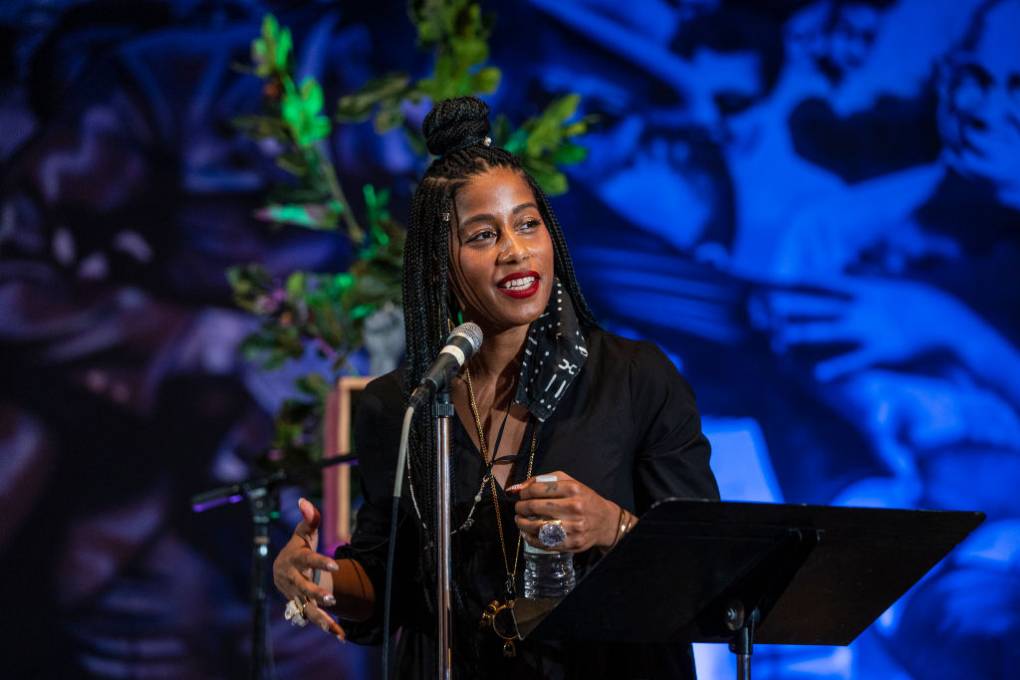
"caption": "aja monet speaks at Studio Be on March 28, 2021 in New Orleans, Louisiana.",
"description": null,
"title": "Aja Monet: A Women's History Month Poetry Session",
"credit": "Erika Goldring/Getty Images",
"status": "inherit",
"altTag": "A poet smiles at a podium.",
"isLoading": false,
"fetchFailed": false
},
"arts_13939183": {
"type": "attachments",
"id": "arts_13939183",
"meta": {
"index": "attachments_1716263798",
"site": "arts",
"id": "13939183",
"found": true
},
"parent": 0,
"imgSizes": {
"twentyfourteen-full-width": {
"file": "https://cdn.kqed.org/wp-content/uploads/sites/2/2023/12/231211-LIGHT-JACKET-READING-SERIES-39-MV-KQED-1038x576.jpg",
"width": 1038,
"mimeType": "image/jpeg",
"height": 576
},
"thumbnail": {
"file": "https://cdn.kqed.org/wp-content/uploads/sites/2/2023/12/231211-LIGHT-JACKET-READING-SERIES-39-MV-KQED-160x107.jpg",
"width": 160,
"mimeType": "image/jpeg",
"height": 107
},
"post-thumbnail": {
"file": "https://cdn.kqed.org/wp-content/uploads/sites/2/2023/12/231211-LIGHT-JACKET-READING-SERIES-39-MV-KQED-672x372.jpg",
"width": 672,
"mimeType": "image/jpeg",
"height": 372
},
"kqedFullSize": {
"file": "https://cdn.kqed.org/wp-content/uploads/sites/2/2023/12/231211-LIGHT-JACKET-READING-SERIES-39-MV-KQED.jpg",
"width": 2000,
"height": 1334
},
"large": {
"file": "https://cdn.kqed.org/wp-content/uploads/sites/2/2023/12/231211-LIGHT-JACKET-READING-SERIES-39-MV-KQED-1020x680.jpg",
"width": 1020,
"mimeType": "image/jpeg",
"height": 680
},
"1536x1536": {
"file": "https://cdn.kqed.org/wp-content/uploads/sites/2/2023/12/231211-LIGHT-JACKET-READING-SERIES-39-MV-KQED-1536x1025.jpg",
"width": 1536,
"mimeType": "image/jpeg",
"height": 1025
},
"full-width": {
"file": "https://cdn.kqed.org/wp-content/uploads/sites/2/2023/12/231211-LIGHT-JACKET-READING-SERIES-39-MV-KQED-1920x1281.jpg",
"width": 1920,
"mimeType": "image/jpeg",
"height": 1281
},
"medium": {
"file": "https://cdn.kqed.org/wp-content/uploads/sites/2/2023/12/231211-LIGHT-JACKET-READING-SERIES-39-MV-KQED-800x534.jpg",
"width": 800,
"mimeType": "image/jpeg",
"height": 534
},
"medium_large": {
"file": "https://cdn.kqed.org/wp-content/uploads/sites/2/2023/12/231211-LIGHT-JACKET-READING-SERIES-39-MV-KQED-768x512.jpg",
"width": 768,
"mimeType": "image/jpeg",
"height": 512
}
},
"publishDate": 1702320040,
"modified": 1702321240,
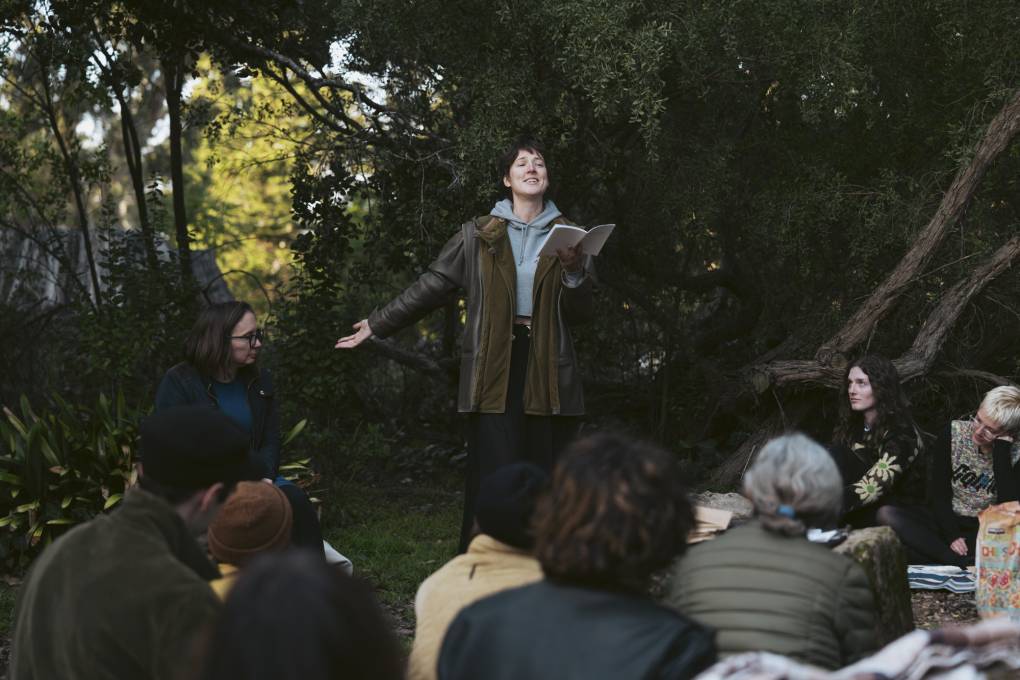
"caption": "Sophia Dahlin reads a poem during the eighth event of the Light Jacket Reading Series in Golden Gate Park on Saturday, Dec. 9, 2023.",
"description": null,
"title": "231211-LIGHT JACKET READING SERIES-39-MV-KQED",
"credit": "Michaela Vatcheva for KQED",
"status": "inherit",
"altTag": "A person holding a book speaks in front of a group of people in a wooded area.",
"isLoading": false,
"fetchFailed": false
},
"arts_13937656": {
"type": "attachments",
"id": "arts_13937656",
"meta": {
"index": "attachments_1716263798",
"site": "arts",
"id": "13937656",
"found": true
},
"parent": 13937655,
"imgSizes": {
"twentyfourteen-full-width": {
"file": "https://ww2.kqed.org/app/uploads/sites/2/2023/11/untitled-design-42-_wide-4210f2ffc5936423f08075e548e7da5484ca9fa5-1038x576.jpg",
"width": 1038,
"mimeType": "image/jpeg",
"height": 576
},
"thumbnail": {
"file": "https://ww2.kqed.org/app/uploads/sites/2/2023/11/untitled-design-42-_wide-4210f2ffc5936423f08075e548e7da5484ca9fa5-160x90.jpg",
"width": 160,
"mimeType": "image/jpeg",
"height": 90
},
"post-thumbnail": {
"file": "https://ww2.kqed.org/app/uploads/sites/2/2023/11/untitled-design-42-_wide-4210f2ffc5936423f08075e548e7da5484ca9fa5-672x372.jpg",
"width": 672,
"mimeType": "image/jpeg",
"height": 372
},
"kqedFullSize": {
"file": "https://ww2.kqed.org/app/uploads/sites/2/2023/11/untitled-design-42-_wide-4210f2ffc5936423f08075e548e7da5484ca9fa5.jpg",
"width": 1917,
"height": 1078
},
"large": {
"file": "https://ww2.kqed.org/app/uploads/sites/2/2023/11/untitled-design-42-_wide-4210f2ffc5936423f08075e548e7da5484ca9fa5-1020x574.jpg",
"width": 1020,
"mimeType": "image/jpeg",
"height": 574
},
"1536x1536": {
"file": "https://ww2.kqed.org/app/uploads/sites/2/2023/11/untitled-design-42-_wide-4210f2ffc5936423f08075e548e7da5484ca9fa5-1536x864.jpg",
"width": 1536,
"mimeType": "image/jpeg",
"height": 864
},
"medium": {
"file": "https://ww2.kqed.org/app/uploads/sites/2/2023/11/untitled-design-42-_wide-4210f2ffc5936423f08075e548e7da5484ca9fa5-800x450.jpg",
"width": 800,
"mimeType": "image/jpeg",
"height": 450
},
"medium_large": {
"file": "https://ww2.kqed.org/app/uploads/sites/2/2023/11/untitled-design-42-_wide-4210f2ffc5936423f08075e548e7da5484ca9fa5-768x432.jpg",
"width": 768,
"mimeType": "image/jpeg",
"height": 432
}
},
"publishDate": 1699299866,
"modified": 1699302329,
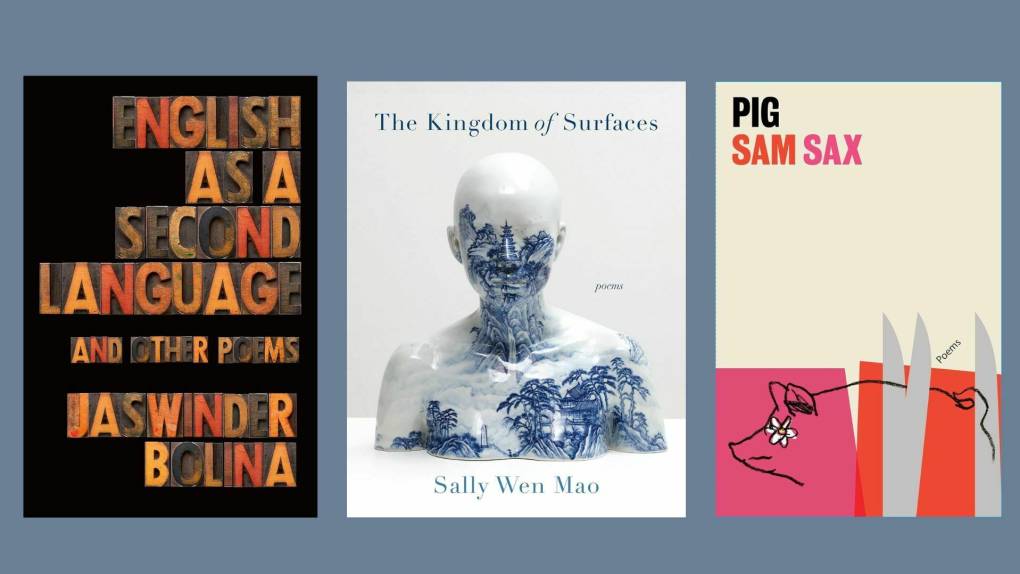
"caption": "‘English as a Second Language’ by Jaswinder Bolina, ‘The Kingdom of Surfaces’ by Sally Wen Mao, ‘Pig’ by Sam Sax.",
"description": null,
"title": "‘English as a Second Language’ by Jaswinder Bolina, ‘The Kingdom of Surfaces’ by Sally Wen Mao, ‘Pig’ by Sam Sax.",
"credit": "Meghan Collins Sullivan/ NPR",
"status": "inherit",
"altTag": "Three books laid out side by side. The first is black with orange and yellow text, the second features a genderless porcelain figure decoraged with blue paint, the third shows a pink square, a red square and the blades of some scissors.",
"isLoading": false,
"fetchFailed": false
},
"arts_13933532": {
"type": "attachments",
"id": "arts_13933532",
"meta": {
"index": "attachments_1716263798",
"site": "arts",
"id": "13933532",
"found": true
},
"parent": 13933527,
"imgSizes": {
"twentyfourteen-full-width": {
"file": "https://ww2.kqed.org/app/uploads/sites/2/2023/08/Screen-Shot-2023-08-21-at-11.28.05-AM-1038x576.png",
"width": 1038,
"mimeType": "image/png",
"height": 576
},
"thumbnail": {
"file": "https://ww2.kqed.org/app/uploads/sites/2/2023/08/Screen-Shot-2023-08-21-at-11.28.05-AM-160x97.png",
"width": 160,
"mimeType": "image/png",
"height": 97
},
"post-thumbnail": {
"file": "https://ww2.kqed.org/app/uploads/sites/2/2023/08/Screen-Shot-2023-08-21-at-11.28.05-AM-672x372.png",
"width": 672,
"mimeType": "image/png",
"height": 372
},
"kqedFullSize": {
"file": "https://ww2.kqed.org/app/uploads/sites/2/2023/08/Screen-Shot-2023-08-21-at-11.28.05-AM.png",
"width": 1640,
"height": 994
},
"large": {
"file": "https://ww2.kqed.org/app/uploads/sites/2/2023/08/Screen-Shot-2023-08-21-at-11.28.05-AM-1020x618.png",
"width": 1020,
"mimeType": "image/png",
"height": 618
},
"1536x1536": {
"file": "https://ww2.kqed.org/app/uploads/sites/2/2023/08/Screen-Shot-2023-08-21-at-11.28.05-AM-1536x931.png",
"width": 1536,
"mimeType": "image/png",
"height": 931
},
"medium": {
"file": "https://ww2.kqed.org/app/uploads/sites/2/2023/08/Screen-Shot-2023-08-21-at-11.28.05-AM-800x485.png",
"width": 800,
"mimeType": "image/png",
"height": 485
},
"medium_large": {
"file": "https://ww2.kqed.org/app/uploads/sites/2/2023/08/Screen-Shot-2023-08-21-at-11.28.05-AM-768x465.png",
"width": 768,
"mimeType": "image/png",
"height": 465
}
},
"publishDate": 1692642515,
"modified": 1692642631,
"caption": "‘Daughters of Latin America.’",
"description": null,
"title": "‘Daughters of Latin America.’",
"credit": null,
"status": "inherit",
"altTag": null,
"isLoading": false,
"fetchFailed": false
},
"arts_13910045": {
"type": "attachments",
"id": "arts_13910045",
"meta": {
"index": "attachments_1716263798",
"site": "arts",
"id": "13910045",
"found": true
},
"parent": 13910030,
"imgSizes": {
"twentyfourteen-full-width": {
"file": "https://ww2.kqed.org/app/uploads/sites/2/2022/03/20220302_150812-1038x576.jpg",
"width": 1038,
"mimeType": "image/jpeg",
"height": 576
},
"thumbnail": {
"file": "https://ww2.kqed.org/app/uploads/sites/2/2022/03/20220302_150812-160x90.jpg",
"width": 160,
"mimeType": "image/jpeg",
"height": 90
},
"post-thumbnail": {
"file": "https://ww2.kqed.org/app/uploads/sites/2/2022/03/20220302_150812-672x372.jpg",
"width": 672,
"mimeType": "image/jpeg",
"height": 372
},
"kqedFullSize": {
"file": "https://ww2.kqed.org/app/uploads/sites/2/2022/03/20220302_150812-scaled-e1646346280825.jpg",
"width": 1920,
"height": 1081
},
"2048x2048": {
"file": "https://ww2.kqed.org/app/uploads/sites/2/2022/03/20220302_150812-2048x1153.jpg",
"width": 2048,
"mimeType": "image/jpeg",
"height": 1153
},
"large": {
"file": "https://ww2.kqed.org/app/uploads/sites/2/2022/03/20220302_150812-1020x574.jpg",
"width": 1020,
"mimeType": "image/jpeg",
"height": 574
},
"1536x1536": {
"file": "https://ww2.kqed.org/app/uploads/sites/2/2022/03/20220302_150812-1536x865.jpg",
"width": 1536,
"mimeType": "image/jpeg",
"height": 865
},
"full-width": {
"file": "https://ww2.kqed.org/app/uploads/sites/2/2022/03/20220302_150812-1920x1081.jpg",
"width": 1920,
"mimeType": "image/jpeg",
"height": 1081
},
"medium": {
"file": "https://ww2.kqed.org/app/uploads/sites/2/2022/03/20220302_150812-800x450.jpg",
"width": 800,
"mimeType": "image/jpeg",
"height": 450
},
"medium_large": {
"file": "https://ww2.kqed.org/app/uploads/sites/2/2022/03/20220302_150812-768x432.jpg",
"width": 768,
"mimeType": "image/jpeg",
"height": 432
}
},
"publishDate": 1646346114,
"modified": 1646352040,
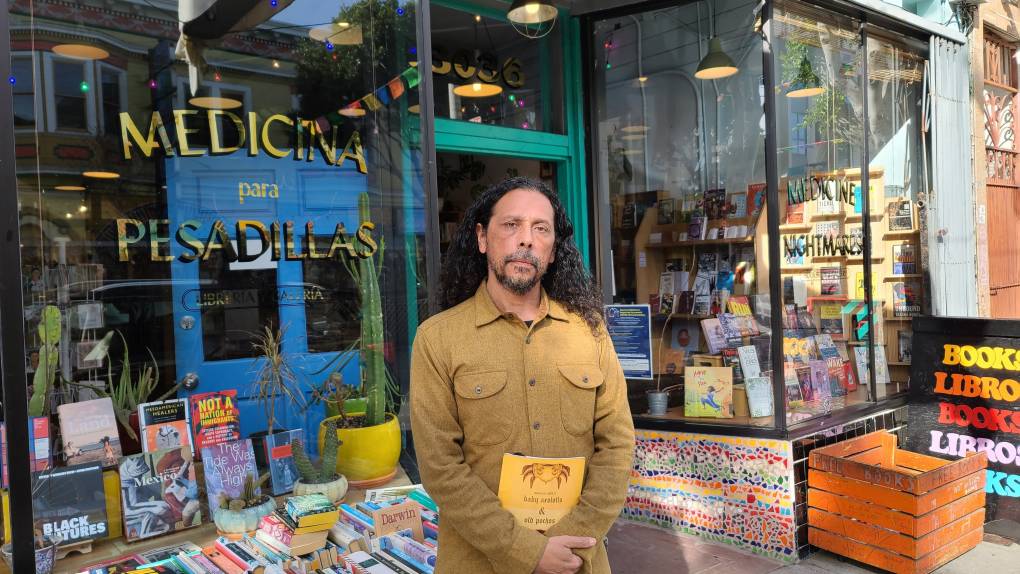
"caption": "Josiah Luis Alderete stands in front of Medicine for Nightmares with his book of poetry in hand. ",
"description": "Josiah Luis Alderete",
"title": "Josiah Luis Alderete",
"credit": "Carlos Cabrera-Lomelí",
"status": "inherit",
"altTag": "Josiah Luis Alderete stands in front of the windows of his bookstore, he wears a mustard shirt and holds his book of poems at his waist.",
"isLoading": false,
"fetchFailed": false
},
"arts_13929554": {
"type": "attachments",
"id": "arts_13929554",
"meta": {
"index": "attachments_1716263798",
"site": "arts",
"id": "13929554",
"found": true
},
"parent": 13929396,
"imgSizes": {
"twentyfourteen-full-width": {
"file": "https://ww2.kqed.org/app/uploads/sites/2/2023/05/SFABF2019_photoAirykaRockefeller-200-1-1038x576.jpeg",
"width": 1038,
"mimeType": "image/jpeg",
"height": 576
},
"thumbnail": {
"file": "https://ww2.kqed.org/app/uploads/sites/2/2023/05/SFABF2019_photoAirykaRockefeller-200-1-160x107.jpeg",
"width": 160,
"mimeType": "image/jpeg",
"height": 107
},
"post-thumbnail": {
"file": "https://ww2.kqed.org/app/uploads/sites/2/2023/05/SFABF2019_photoAirykaRockefeller-200-1-672x372.jpeg",
"width": 672,
"mimeType": "image/jpeg",
"height": 372
},
"kqedFullSize": {
"file": "https://ww2.kqed.org/app/uploads/sites/2/2023/05/SFABF2019_photoAirykaRockefeller-200-1.jpeg",
"width": 2000,
"height": 1333
},
"large": {
"file": "https://ww2.kqed.org/app/uploads/sites/2/2023/05/SFABF2019_photoAirykaRockefeller-200-1-1020x680.jpeg",
"width": 1020,
"mimeType": "image/jpeg",
"height": 680
},
"1536x1536": {
"file": "https://ww2.kqed.org/app/uploads/sites/2/2023/05/SFABF2019_photoAirykaRockefeller-200-1-1536x1024.jpeg",
"width": 1536,
"mimeType": "image/jpeg",
"height": 1024
},
"full-width": {
"file": "https://ww2.kqed.org/app/uploads/sites/2/2023/05/SFABF2019_photoAirykaRockefeller-200-1-1920x1280.jpeg",
"width": 1920,
"mimeType": "image/jpeg",
"height": 1280
},
"medium": {
"file": "https://ww2.kqed.org/app/uploads/sites/2/2023/05/SFABF2019_photoAirykaRockefeller-200-1-800x533.jpeg",
"width": 800,
"mimeType": "image/jpeg",
"height": 533
},
"medium_large": {
"file": "https://ww2.kqed.org/app/uploads/sites/2/2023/05/SFABF2019_photoAirykaRockefeller-200-1-768x512.jpeg",
"width": 768,
"mimeType": "image/jpeg",
"height": 512
}
},
"publishDate": 1684878168,
"modified": 1684879282,
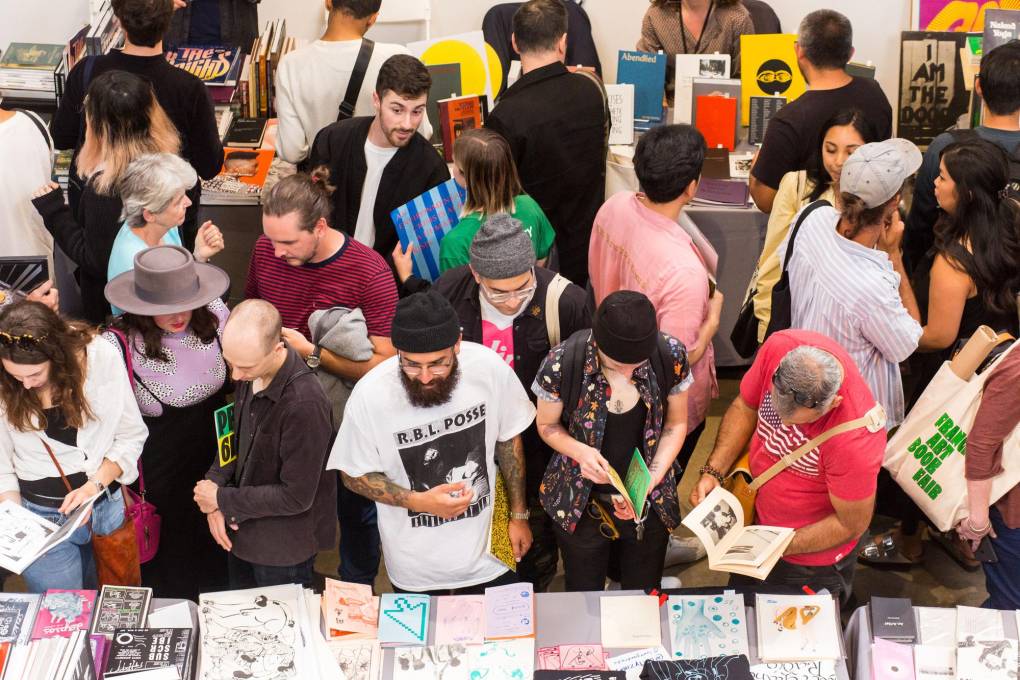
"caption": "People browse at the 2019 SF Art Book Fair.",
"description": null,
"title": "SFABF2019_photoAirykaRockefeller-200 (1)",
"credit": "Airyka Rockefeller",
"status": "inherit",
"altTag": "people browse at a book fair",
"isLoading": false,
"fetchFailed": false
},
"arts_13929029": {
"type": "attachments",
"id": "arts_13929029",
"meta": {
"index": "attachments_1716263798",
"site": "arts",
"id": "13929029",
"found": true
},
"parent": 13929024,
"imgSizes": {
"twentyfourteen-full-width": {
"file": "https://ww2.kqed.org/app/uploads/sites/2/2023/05/Tempestt-1038x576.jpeg",
"width": 1038,
"mimeType": "image/jpeg",
"height": 576
},
"thumbnail": {
"file": "https://ww2.kqed.org/app/uploads/sites/2/2023/05/Tempestt-160x53.jpeg",
"width": 160,
"mimeType": "image/jpeg",
"height": 53
},
"post-thumbnail": {
"file": "https://ww2.kqed.org/app/uploads/sites/2/2023/05/Tempestt-672x372.jpeg",
"width": 672,
"mimeType": "image/jpeg",
"height": 372
},
"kqedFullSize": {
"file": "https://ww2.kqed.org/app/uploads/sites/2/2023/05/Tempestt-scaled.jpeg",
"width": 2560,
"height": 853
},
"2048x2048": {
"file": "https://ww2.kqed.org/app/uploads/sites/2/2023/05/Tempestt-2048x683.jpeg",
"width": 2048,
"mimeType": "image/jpeg",
"height": 683
},
"large": {
"file": "https://ww2.kqed.org/app/uploads/sites/2/2023/05/Tempestt-1020x340.jpeg",
"width": 1020,
"mimeType": "image/jpeg",
"height": 340
},
"1536x1536": {
"file": "https://ww2.kqed.org/app/uploads/sites/2/2023/05/Tempestt-1536x512.jpeg",
"width": 1536,
"mimeType": "image/jpeg",
"height": 512
},
"full-width": {
"file": "https://ww2.kqed.org/app/uploads/sites/2/2023/05/Tempestt-1920x640.jpeg",
"width": 1920,
"mimeType": "image/jpeg",
"height": 640
},
"medium": {
"file": "https://ww2.kqed.org/app/uploads/sites/2/2023/05/Tempestt-800x267.jpeg",
"width": 800,
"mimeType": "image/jpeg",
"height": 267
},
"medium_large": {
"file": "https://ww2.kqed.org/app/uploads/sites/2/2023/05/Tempestt-768x256.jpeg",
"width": 768,
"mimeType": "image/jpeg",
"height": 256
}
},
"publishDate": 1683832816,
"modified": 1683838287,
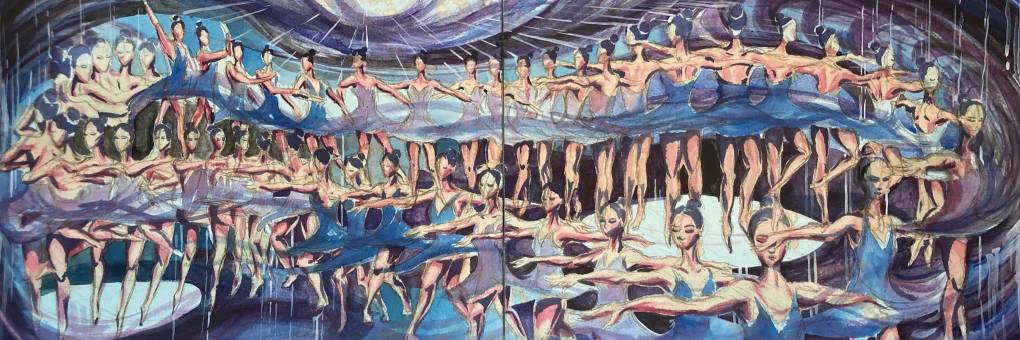
"caption": "Brian Kwon, 'Time is the Act of Looking Back.'",
"description": null,
"title": "Tempestt",
"credit": "Small Press Traffic",
"status": "inherit",
"altTag": "Wide painting with line of dancers patterned in figure-8",
"isLoading": false,
"fetchFailed": false
},
"arts_13928180": {
"type": "attachments",
"id": "arts_13928180",
"meta": {
"index": "attachments_1716263798",
"site": "arts",
"id": "13928180",
"found": true
},
"parent": 13928174,
"imgSizes": {
"twentyfourteen-full-width": {
"file": "https://ww2.kqed.org/app/uploads/sites/2/2023/04/mj2-1038x576.jpg",
"width": 1038,
"mimeType": "image/jpeg",
"height": 576
},
"thumbnail": {
"file": "https://ww2.kqed.org/app/uploads/sites/2/2023/04/mj2-160x120.jpg",
"width": 160,
"mimeType": "image/jpeg",
"height": 120
},
"post-thumbnail": {
"file": "https://ww2.kqed.org/app/uploads/sites/2/2023/04/mj2-672x372.jpg",
"width": 672,
"mimeType": "image/jpeg",
"height": 372
},
"kqedFullSize": {
"file": "https://ww2.kqed.org/app/uploads/sites/2/2023/04/mj2.jpg",
"width": 1600,
"height": 1200
},
"large": {
"file": "https://ww2.kqed.org/app/uploads/sites/2/2023/04/mj2-1020x765.jpg",
"width": 1020,
"mimeType": "image/jpeg",
"height": 765
},
"1536x1536": {
"file": "https://ww2.kqed.org/app/uploads/sites/2/2023/04/mj2-1536x1152.jpg",
"width": 1536,
"mimeType": "image/jpeg",
"height": 1152
},
"medium": {
"file": "https://ww2.kqed.org/app/uploads/sites/2/2023/04/mj2-800x600.jpg",
"width": 800,
"mimeType": "image/jpeg",
"height": 600
},
"medium_large": {
"file": "https://ww2.kqed.org/app/uploads/sites/2/2023/04/mj2-768x576.jpg",
"width": 768,
"mimeType": "image/jpeg",
"height": 576
}
},
"publishDate": 1682358377,
"modified": 1682358467,
"caption": "Poet Michal “MJ” Jones. ",
"description": null,
"title": "mj2",
"credit": "Courtesy of the author",
"status": "inherit",
"altTag": "A young black poet in a brown jacket against a blue vehicle painted with red and white polka dots.",
"isLoading": false,
"fetchFailed": false
},
"arts_13926831": {
"type": "attachments",
"id": "arts_13926831",
"meta": {
"index": "attachments_1716263798",
"site": "arts",
"id": "13926831",
"found": true
},
"parent": 13926826,
"imgSizes": {
"twentyfourteen-full-width": {
"file": "https://ww2.kqed.org/app/uploads/sites/2/2023/03/disbelief-cropped-1038x576.jpg",
"width": 1038,
"mimeType": "image/jpeg",
"height": 576
},
"thumbnail": {
"file": "https://ww2.kqed.org/app/uploads/sites/2/2023/03/disbelief-cropped-160x90.jpg",
"width": 160,
"mimeType": "image/jpeg",
"height": 90
},
"post-thumbnail": {
"file": "https://ww2.kqed.org/app/uploads/sites/2/2023/03/disbelief-cropped-672x372.jpg",
"width": 672,
"mimeType": "image/jpeg",
"height": 372
},
"kqedFullSize": {
"file": "https://ww2.kqed.org/app/uploads/sites/2/2023/03/disbelief-cropped.jpg",
"width": 1278,
"height": 719
},
"large": {
"file": "https://ww2.kqed.org/app/uploads/sites/2/2023/03/disbelief-cropped-1020x574.jpg",
"width": 1020,
"mimeType": "image/jpeg",
"height": 574
},
"medium": {
"file": "https://ww2.kqed.org/app/uploads/sites/2/2023/03/disbelief-cropped-800x450.jpg",
"width": 800,
"mimeType": "image/jpeg",
"height": 450
},
"medium_large": {
"file": "https://ww2.kqed.org/app/uploads/sites/2/2023/03/disbelief-cropped-768x432.jpg",
"width": 768,
"mimeType": "image/jpeg",
"height": 432
}
},
"publishDate": 1679599656,
"modified": 1679600560,
"caption": "'Disbelief: 100 Russian Anti-War Poems,' edited by Julia Nemirovskaya. ",
"description": null,
"title": "disbelief-cropped",
"credit": "Smokestack Books",
"status": "inherit",
"altTag": null,
"isLoading": false,
"fetchFailed": false
},
"arts_13926145": {
"type": "attachments",
"id": "arts_13926145",
"meta": {
"index": "attachments_1716263798",
"site": "arts",
"id": "13926145",
"found": true
},
"parent": 13926141,
"imgSizes": {
"twentyfourteen-full-width": {
"file": "https://ww2.kqed.org/app/uploads/sites/2/2023/03/RS63535_03052023_iraqwaranniversary-147-qut-1038x576.jpg",
"width": 1038,
"mimeType": "image/jpeg",
"height": 576
},
"thumbnail": {
"file": "https://ww2.kqed.org/app/uploads/sites/2/2023/03/RS63535_03052023_iraqwaranniversary-147-qut-160x106.jpg",
"width": 160,
"mimeType": "image/jpeg",
"height": 106
},
"post-thumbnail": {
"file": "https://ww2.kqed.org/app/uploads/sites/2/2023/03/RS63535_03052023_iraqwaranniversary-147-qut-672x372.jpg",
"width": 672,
"mimeType": "image/jpeg",
"height": 372
},
"kqedFullSize": {
"file": "https://ww2.kqed.org/app/uploads/sites/2/2023/03/RS63535_03052023_iraqwaranniversary-147-qut.jpg",
"width": 1920,
"height": 1277
},
"large": {
"file": "https://ww2.kqed.org/app/uploads/sites/2/2023/03/RS63535_03052023_iraqwaranniversary-147-qut-1020x678.jpg",
"width": 1020,
"mimeType": "image/jpeg",
"height": 678
},
"1536x1536": {
"file": "https://ww2.kqed.org/app/uploads/sites/2/2023/03/RS63535_03052023_iraqwaranniversary-147-qut-1536x1022.jpg",
"width": 1536,
"mimeType": "image/jpeg",
"height": 1022
},
"medium": {
"file": "https://ww2.kqed.org/app/uploads/sites/2/2023/03/RS63535_03052023_iraqwaranniversary-147-qut-800x532.jpg",
"width": 800,
"mimeType": "image/jpeg",
"height": 532
},
"medium_large": {
"file": "https://ww2.kqed.org/app/uploads/sites/2/2023/03/RS63535_03052023_iraqwaranniversary-147-qut-768x511.jpg",
"width": 768,
"mimeType": "image/jpeg",
"height": 511
}
},
"publishDate": 1678742221,
"modified": 1678751999,
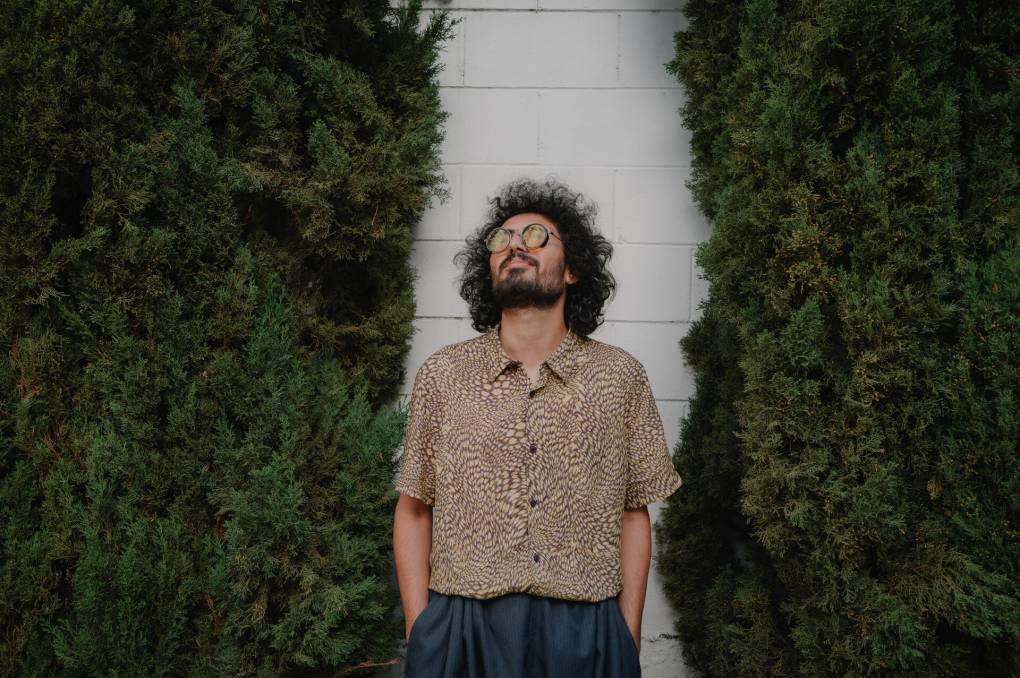
"caption": "Poet and translator Zêdan Xelef, 28, stands for a portrait outside the Persian Center in Berkeley, on March 5, 2023.",
"description": null,
"title": "RS63535_03052023_iraqwaranniversary 147-qut",
"credit": "Kori Suzuki/KQED",
"status": "inherit",
"altTag": "A man wearing a tan short sleeved shirt and glasses stands outside between two bushes.",
"isLoading": false,
"fetchFailed": false
},
"arts_13924747": {
"type": "attachments",
"id": "arts_13924747",
"meta": {
"index": "attachments_1716263798",
"site": "arts",
"id": "13924747",
"found": true
},
"parent": 13924716,
"imgSizes": {
"twentyfourteen-full-width": {
"file": "https://ww2.kqed.org/app/uploads/sites/2/2023/02/62221229_2503417529677797_229243643200798720_n-1038x576.jpg",
"width": 1038,
"mimeType": "image/jpeg",
"height": 576
},
"thumbnail": {
"file": "https://ww2.kqed.org/app/uploads/sites/2/2023/02/62221229_2503417529677797_229243643200798720_n-160x107.jpg",
"width": 160,
"mimeType": "image/jpeg",
"height": 107
},
"post-thumbnail": {
"file": "https://ww2.kqed.org/app/uploads/sites/2/2023/02/62221229_2503417529677797_229243643200798720_n-672x372.jpg",
"width": 672,
"mimeType": "image/jpeg",
"height": 372
},
"kqedFullSize": {
"file": "https://ww2.kqed.org/app/uploads/sites/2/2023/02/62221229_2503417529677797_229243643200798720_n.jpg",
"width": 2048,
"height": 1365
},
"large": {
"file": "https://ww2.kqed.org/app/uploads/sites/2/2023/02/62221229_2503417529677797_229243643200798720_n-1020x680.jpg",
"width": 1020,
"mimeType": "image/jpeg",
"height": 680
},
"1536x1536": {
"file": "https://ww2.kqed.org/app/uploads/sites/2/2023/02/62221229_2503417529677797_229243643200798720_n-1536x1024.jpg",
"width": 1536,
"mimeType": "image/jpeg",
"height": 1024
},
"full-width": {
"file": "https://ww2.kqed.org/app/uploads/sites/2/2023/02/62221229_2503417529677797_229243643200798720_n-1920x1280.jpg",
"width": 1920,
"mimeType": "image/jpeg",
"height": 1280
},
"medium": {
"file": "https://ww2.kqed.org/app/uploads/sites/2/2023/02/62221229_2503417529677797_229243643200798720_n-800x533.jpg",
"width": 800,
"mimeType": "image/jpeg",
"height": 533
},
"medium_large": {
"file": "https://ww2.kqed.org/app/uploads/sites/2/2023/02/62221229_2503417529677797_229243643200798720_n-768x512.jpg",
"width": 768,
"mimeType": "image/jpeg",
"height": 512
}
},
"publishDate": 1675470368,
"modified": 1675470692,
"caption": "Julian Khalil Allen reads at an event celebrating the publication of 'Black Joy,' a youth poetry anthology published by Nomadic Press with the nonprofit Chapter 510 & the Dept. of Make Believe in 2019.",
"description": null,
"title": "62221229_2503417529677797_229243643200798720_n",
"credit": "Robbie Sweeny Photography",
"status": "inherit",
"altTag": "a young person with long black hair reads from a book onstage in a crowded room",
"isLoading": false,
"fetchFailed": false
},
"arts_13923039": {
"type": "attachments",
"id": "arts_13923039",
"meta": {
"index": "attachments_1716263798",
"site": "arts",
"id": "13923039",
"found": true
},
"parent": 13923036,
"imgSizes": {
"twentyfourteen-full-width": {
"file": "https://ww2.kqed.org/app/uploads/sites/2/2022/12/Screen-Shot-2022-12-21-at-11.50.06-AM-1038x576.png",
"width": 1038,
"mimeType": "image/png",
"height": 576
},
"thumbnail": {
"file": "https://ww2.kqed.org/app/uploads/sites/2/2022/12/Screen-Shot-2022-12-21-at-11.50.06-AM-160x95.png",
"width": 160,
"mimeType": "image/png",
"height": 95
},
"post-thumbnail": {
"file": "https://ww2.kqed.org/app/uploads/sites/2/2022/12/Screen-Shot-2022-12-21-at-11.50.06-AM-672x372.png",
"width": 672,
"mimeType": "image/png",
"height": 372
},
"kqedFullSize": {
"file": "https://ww2.kqed.org/app/uploads/sites/2/2022/12/Screen-Shot-2022-12-21-at-11.50.06-AM.png",
"width": 1158,
"height": 688
},
"large": {
"file": "https://ww2.kqed.org/app/uploads/sites/2/2022/12/Screen-Shot-2022-12-21-at-11.50.06-AM-1020x606.png",
"width": 1020,
"mimeType": "image/png",
"height": 606
},
"medium": {
"file": "https://ww2.kqed.org/app/uploads/sites/2/2022/12/Screen-Shot-2022-12-21-at-11.50.06-AM-800x475.png",
"width": 800,
"mimeType": "image/png",
"height": 475
},
"medium_large": {
"file": "https://ww2.kqed.org/app/uploads/sites/2/2022/12/Screen-Shot-2022-12-21-at-11.50.06-AM-768x456.png",
"width": 768,
"mimeType": "image/png",
"height": 456
}
},
"publishDate": 1671652344,
"modified": 1671652425,
"caption": "Lee Herrick speaks to a crowd at Fresno City College.",
"description": null,
"title": "Screen Shot 2022-12-21 at 11.50.06 AM",
"credit": "Larry Valenzuela/The Rampage via EdSource",
"status": "inherit",
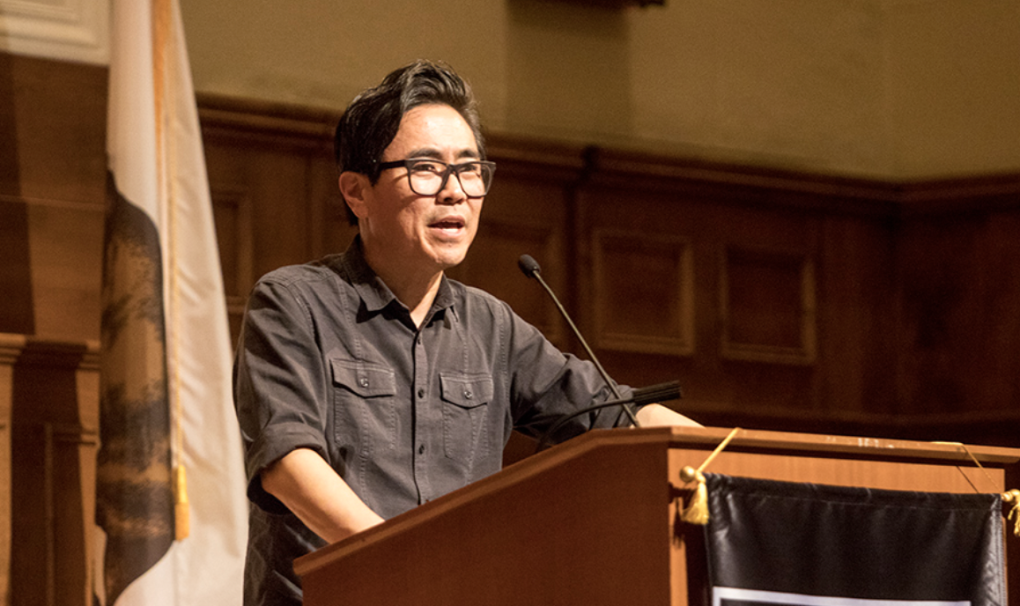
"altTag": "an Asian American man in a gray shirt speaks at a wooden podium",
"isLoading": false,
"fetchFailed": false
}
},
"audioPlayerReducer": {
"postId": "stream_live",
"isPaused": true,
"isPlaying": false,
"pfsActive": false,
"pledgeModalIsOpen": true,
"playerDrawerIsOpen": false,
"liveAudioPlayStartedAt": 0,
"liveAudioPlayContext": ""
},
"authorsReducer": {
"byline_arts_13937655": {
"type": "authors",
"id": "byline_arts_13937655",
"meta": {
"override": true
},
"slug": "byline_arts_13937655",
"name": "Craig Morgan Teicher",
"isLoading": false
},
"byline_arts_13933527": {
"type": "authors",
"id": "byline_arts_13933527",
"meta": {
"override": true
},
"slug": "byline_arts_13933527",
"name": "Ashley Brown",
"isLoading": false
},
"byline_arts_13923036": {
"type": "authors",
"id": "byline_arts_13923036",
"meta": {
"override": true
},
"slug": "byline_arts_13923036",
"name": "\u003ca href=\"https://edsource.org/author/apanoo\">Ashleigh Panoo\u003c/a> and The California Report Magazine",
"isLoading": false
},
"shotchkiss": {
"type": "authors",
"id": "61",
"meta": {
"index": "authors_1716337520",
"id": "61",
"found": true
},
"name": "Sarah Hotchkiss",
"firstName": "Sarah",
"lastName": "Hotchkiss",
"slug": "shotchkiss",
"email": "shotchkiss@kqed.org",
"display_author_email": true,
"staff_mastheads": [
"arts"
],
"title": "Senior Editor",
"bio": "Sarah Hotchkiss is a San Francisco \u003ca href=\"http://www.sarahhotchkiss.com\">artist\u003c/a> and arts writer. In 2019, she received the Dorothea & Leo Rabkin Foundation grant for visual art journalism and in 2020 she received a Society of Professional Journalists, Northern California award for excellence in arts and culture reporting.",
"avatar": "https://secure.gravatar.com/avatar/bc662df144b3d27fd8b1b6f1c2a420d34e91e53154d411bb7ad353cc8b6cea8d?s=600&d=blank&r=g",
"twitter": null,
"bluesky": null,
"facebook": null,
"instagram": null,
"linkedin": null,
"sites": [
{
"site": "",
"roles": [
"editor"
]
},
{
"site": "arts",
"roles": [
"Contributor",
"administrator"
]
},
{
"site": "artschool",
"roles": [
"administrator"
]
},
{
"site": "news",
"roles": [
"editor"
]
},
{
"site": "pop",
"roles": [
"administrator"
]
},
{
"site": "bayareabites",
"roles": [
"editor"
]
},
{
"site": "spark",
"roles": [
"editor"
]
},
{
"site": "checkplease",
"roles": [
"editor"
]
}
],
"headData": {
"title": "Sarah Hotchkiss | KQED",
"description": "Senior Editor",
"ogImgSrc": "https://secure.gravatar.com/avatar/bc662df144b3d27fd8b1b6f1c2a420d34e91e53154d411bb7ad353cc8b6cea8d?s=600&d=blank&r=g",
"twImgSrc": "https://secure.gravatar.com/avatar/bc662df144b3d27fd8b1b6f1c2a420d34e91e53154d411bb7ad353cc8b6cea8d?s=600&d=blank&r=g"
},
"isLoading": false,
"link": "/author/shotchkiss"
},
"aproehl": {
"type": "authors",
"id": "11296",
"meta": {
"index": "authors_1716337520",
"id": "11296",
"found": true
},
"name": "Ariana Proehl",
"firstName": "Ariana",
"lastName": "Proehl",
"slug": "aproehl",
"email": "aproehl@KQED.org",
"display_author_email": true,
"staff_mastheads": [
"news"
],
"title": "Culture Reporter, KQED",
"bio": "Ariana Proehl is a Culture Reporter and Host.",
"avatar": "https://secure.gravatar.com/avatar/c96b24567eb5bb3a4f8bb295ed53e232?s=600&d=blank&r=g",
"twitter": "ArianaProehl",
"facebook": null,
"instagram": null,
"linkedin": null,
"sites": [
{
"site": "arts",
"roles": []
},
{
"site": "news",
"roles": []
},
{
"site": "education",
"roles": []
},
{
"site": "forum",
"roles": []
}
],
"headData": {
"title": "Ariana Proehl | KQED",
"description": "Culture Reporter, KQED",
"ogImgSrc": "https://secure.gravatar.com/avatar/c96b24567eb5bb3a4f8bb295ed53e232?s=600&d=blank&r=g",
"twImgSrc": "https://secure.gravatar.com/avatar/c96b24567eb5bb3a4f8bb295ed53e232?s=600&d=blank&r=g"
},
"isLoading": false,
"link": "/author/aproehl"
},
"nvoynovskaya": {
"type": "authors",
"id": "11387",
"meta": {
"index": "authors_1716337520",
"id": "11387",
"found": true
},
"name": "Nastia Voynovskaya",
"firstName": "Nastia",
"lastName": "Voynovskaya",
"slug": "nvoynovskaya",
"email": "nvoynovskaya@kqed.org",
"display_author_email": false,
"staff_mastheads": [
"arts"
],
"title": "Editor and reporter",
"bio": "Nastia Voynovskaya is a reporter, editor and host at KQED Arts & Culture. She's been covering the arts in the Bay Area for over a decade, with a focus on music, queer culture, labor issues and grassroots organizing. She has edited KQED story series such as Trans Bay: A History of San Francisco's Gender-Diverse Community, and co-created KQED's Bay Area hip-hop history project, That's My Word. Nastia's work has been recognized by the Society of Professional Journalists and San Francisco Press Club. She regularly appears on podcasts and radio programs, including NPR's All Songs Considered, and hosts live events where music, culture and conversation meet.",
"avatar": "https://secure.gravatar.com/avatar/5025ee460e5a85d69ca20ea6c6f2f80d7e17795c828f61ea3aecfcd924e9042e?s=600&d=blank&r=g",
"twitter": null,
"bluesky": null,
"facebook": null,
"instagram": "https://www.instagram.com/nananastia/",
"linkedin": null,
"sites": [
{
"site": "",
"roles": [
"editor"
]
},
{
"site": "arts",
"roles": [
"administrator"
]
},
{
"site": "news",
"roles": [
"editor"
]
},
{
"site": "pop",
"roles": [
"administrator"
]
},
{
"site": "bayareabites",
"roles": [
"editor"
]
},
{
"site": "podcasts",
"roles": [
"editor"
]
},
{
"site": "hiphop",
"roles": [
"editor"
]
}
],
"headData": {
"title": "Nastia Voynovskaya | KQED",
"description": "Editor and reporter",
"ogImgSrc": "https://secure.gravatar.com/avatar/5025ee460e5a85d69ca20ea6c6f2f80d7e17795c828f61ea3aecfcd924e9042e?s=600&d=blank&r=g",
"twImgSrc": "https://secure.gravatar.com/avatar/5025ee460e5a85d69ca20ea6c6f2f80d7e17795c828f61ea3aecfcd924e9042e?s=600&d=blank&r=g"
},
"isLoading": false,
"link": "/author/nvoynovskaya"
},
"mmedina": {
"type": "authors",
"id": "11528",
"meta": {
"index": "authors_1716337520",
"id": "11528",
"found": true
},
"name": "Marisol Medina-Cadena",
"firstName": "Marisol",
"lastName": "Medina-Cadena",
"slug": "mmedina",
"email": "mmedina@KQED.org",
"display_author_email": true,
"staff_mastheads": [],
"title": "Producer, Rightnowish Podcast",
"bio": "Marisol Medina-Cadena is a radio reporter and podcast producer. Before working at KQED, she produced for PBS member station, KCET, in Los Angeles. In 2017, Marisol won an Emmy Award for her work on the televised documentary, \u003cem>City Rising\u003c/em>, examining California's affordable housing crisis and the historical roots of gentrification.",
"avatar": "https://secure.gravatar.com/avatar/6c3db46a1cabb5e1fe9a365b5f4e681e?s=600&d=blank&r=g",
"twitter": "marisolreports",
"facebook": null,
"instagram": null,
"linkedin": null,
"sites": [
{
"site": "arts",
"roles": []
},
{
"site": "news",
"roles": [
"edit_others_posts"
]
}
],
"headData": {
"title": "Marisol Medina-Cadena | KQED",
"description": "Producer, Rightnowish Podcast",
"ogImgSrc": "https://secure.gravatar.com/avatar/6c3db46a1cabb5e1fe9a365b5f4e681e?s=600&d=blank&r=g",
"twImgSrc": "https://secure.gravatar.com/avatar/6c3db46a1cabb5e1fe9a365b5f4e681e?s=600&d=blank&r=g"
},
"isLoading": false,
"link": "/author/mmedina"
},
"achazaro": {
"type": "authors",
"id": "11748",
"meta": {
"index": "authors_1716337520",
"id": "11748",
"found": true
},
"name": "Alan Chazaro",
"firstName": "Alan",
"lastName": "Chazaro",
"slug": "achazaro",
"email": "agchazaro@gmail.com",
"display_author_email": true,
"staff_mastheads": [],
"title": "Food Writer and Reporter",
"bio": "Alan Chazaro is the author of \u003cem>This Is Not a Frank Ocean Cover Album\u003c/em> (Black Lawrence Press, 2019), \u003cem>Piñata Theory\u003c/em> (Black Lawrence Press, 2020), and \u003cem>Notes from the Eastern Span of the Bay Bridge\u003c/em> (Ghost City Press, 2021). He is a graduate of June Jordan’s Poetry for the People program at UC Berkeley and a former Lawrence Ferlinghetti Fellow at the University of San Francisco. He writes about sports, food, art, music, education, and culture while repping the Bay on \u003ca href=\"https://twitter.com/alan_chazaro\">Twitter\u003c/a> and \u003ca href=\"https://www.instagram.com/alan_chazaro/?hl=en\">Instagram\u003c/a> at @alan_chazaro.",
"avatar": "https://secure.gravatar.com/avatar/ea8b6dd970fc5c29e7a188e7d5861df7?s=600&d=blank&r=g",
"twitter": "alan_chazaro",
"facebook": null,
"instagram": null,
"linkedin": null,
"sites": [
{
"site": "arts",
"roles": [
"contributor"
]
},
{
"site": "news",
"roles": [
"editor"
]
}
],
"headData": {
"title": "Alan Chazaro | KQED",
"description": "Food Writer and Reporter",
"ogImgSrc": "https://secure.gravatar.com/avatar/ea8b6dd970fc5c29e7a188e7d5861df7?s=600&d=blank&r=g",
"twImgSrc": "https://secure.gravatar.com/avatar/ea8b6dd970fc5c29e7a188e7d5861df7?s=600&d=blank&r=g"
},
"isLoading": false,
"link": "/author/achazaro"
},
"adahlstromeckman": {
"type": "authors",
"id": "11785",
"meta": {
"index": "authors_1716337520",
"id": "11785",
"found": true
},
"name": "Azul Dahlstrom-Eckman",
"firstName": "Azul",
"lastName": "Dahlstrom-Eckman",
"slug": "adahlstromeckman",
"email": "adahlstrom-eckman@kqed.org",
"display_author_email": true,
"staff_mastheads": [],
"title": "Reporter",
"bio": "Azul is a reporter for KQED focusing on transportation and features. He joined KQED in 2021 as an alumna of KALW's Audio Academy radio journalism training program.",
"avatar": "https://secure.gravatar.com/avatar/9cb750298435add7815a777f55bf1f46845c1386bb8452555c60a7b820b5aba3?s=600&d=blank&r=g",
"twitter": "@zuliemann",
"bluesky": "@azul415.bsky.social",
"facebook": null,
"instagram": null,
"linkedin": null,
"sites": [
{
"site": "arts",
"roles": [
"editor"
]
},
{
"site": "news",
"roles": [
"editor"
]
},
{
"site": "science",
"roles": [
"editor"
]
},
{
"site": "liveblog",
"roles": [
"author"
]
}
],
"headData": {
"title": "Azul Dahlstrom-Eckman | KQED",
"description": "Reporter",
"ogImgSrc": "https://secure.gravatar.com/avatar/9cb750298435add7815a777f55bf1f46845c1386bb8452555c60a7b820b5aba3?s=600&d=blank&r=g",
"twImgSrc": "https://secure.gravatar.com/avatar/9cb750298435add7815a777f55bf1f46845c1386bb8452555c60a7b820b5aba3?s=600&d=blank&r=g"
},
"isLoading": false,
"link": "/author/adahlstromeckman"
},
"ksong": {
"type": "authors",
"id": "11813",
"meta": {
"index": "authors_1716337520",
"id": "11813",
"found": true
},
"name": "Kristie Song",
"firstName": "Kristie",
"lastName": "Song",
"slug": "ksong",
"email": "ksong@kqed.org",
"display_author_email": false,
"staff_mastheads": [],
"title": "Editorial Intern ",
"bio": "Kristie Song is an Arts & Culture Intern at KQED. She is currently a graduate student at UC Berkeley, where she studies audio and multimedia journalism. Previously, she covered the local community for Oakland North, produced episodes for The Science of Happiness, and served as news director for KUCI, UC Irvine’s radio station. Outside of reporting, she likes drawing comics, listening to angsty rock, and practicing the guitar.",
"avatar": "https://secure.gravatar.com/avatar/c1149e78c3c44f92d4945a8ab0711af6?s=600&d=blank&r=g",
"twitter": null,
"facebook": null,
"instagram": null,
"linkedin": null,
"sites": [
{
"site": "arts",
"roles": [
"editor"
]
}
],
"headData": {
"title": "Kristie Song | KQED",
"description": "Editorial Intern ",
"ogImgSrc": "https://secure.gravatar.com/avatar/c1149e78c3c44f92d4945a8ab0711af6?s=600&d=blank&r=g",
"twImgSrc": "https://secure.gravatar.com/avatar/c1149e78c3c44f92d4945a8ab0711af6?s=600&d=blank&r=g"
},
"isLoading": false,
"link": "/author/ksong"
}
},
"pagesReducer": {
"arts_tag_poetry": {
"type": "terms",
"id": "arts_1496",
"meta": {
"index": "terms_1716263798",
"site": "arts",
"id": "1496",
"score": 8.457483
},
"featImg": null,
"name": "Poetry",
"description": null,
"taxonomy": "tag",
"headData": {
"twImgId": null,
"twTitle": null,
"ogTitle": null,
"ogImgId": null,
"twDescription": null,
"description": null,
"title": "Poetry Archives | KQED Arts",
"ogDescription": null
},
"ttid": 1508,
"slug": "poetry",
"isLoading": false,
"title": "Poetry",
"pageMeta": {
"site": "arts",
"WpPageTemplate": "page-topic-editorial",
"currentPage": 2
},
"blocks": [
{
"blockName": "kqed/post-list",
"attrs": {
"layout": "cardArticle2",
"query": "posts/arts?tag=poetry",
"seeMore": false,
"paginated": true,
"page": 2
}
},
{
"blockName": "kqed/ad"
}
]
}
},
"pfsSessionReducer": {},
"postsReducer": {
"stream_live": {
"type": "live",
"id": "stream_live",
"audioUrl": "https://streams.kqed.org/kqedradio",
"title": "Live Stream",
"excerpt": "Live Stream information currently unavailable.",
"link": "/radio",
"featImg": "",
"label": {
"name": "KQED Live",
"link": "/"
}
},
"stream_kqedNewscast": {
"type": "posts",
"id": "stream_kqedNewscast",
"audioUrl": "https://www.kqed.org/.stream/anon/radio/RDnews/newscast.mp3?_=1",
"title": "KQED Newscast",
"featImg": "",
"label": {
"name": "88.5 FM",
"link": "/"
}
},
"arts_13952372": {
"type": "posts",
"id": "arts_13952372",
"meta": {
"index": "posts_1716263798",
"site": "arts",
"id": "13952372",
"score": null,
"sort": [
1708035796000
]
},
"guestAuthors": [],
"slug": "aja-monet-poetry-interview-noise-pop-san-francisco",
"title": "How the Struggle for Liberation Made aja monet Into a Poet",
"publishDate": 1708035796,
"format": "standard",
"headTitle": "How the Struggle for Liberation Made aja monet Into a Poet | KQED",
"labelTerm": {
"term": 140,
"site": "arts"
},
"content": "\u003cp>In an age of information overload and doom scrolling, poetry is essential. A good poem can cut to the core of an issue more immediately than an entire tome of research. It can jolt you awake, stir you to action or whisk you into a dream space in which you completely reimagine your life and its possibilities.\u003c/p>\n\u003cp>In her work, \u003ca href=\"https://ajamonet.com/\">aja monet\u003c/a> accomplishes all of the above. The New York-raised, L.A.-based writer and performer calls herself a “surrealist blues poet.” Her Grammy-nominated 2023 album \u003ci>when the poems do what they do\u003c/i> pairs her words — alternately searing, comforting, grief-stricken or romantic — with jazz grounded in Afro-Caribbean rhythms. (Keyboard and flute stylings by Berkeley-raised siblings \u003ca href=\"https://www.kqed.org/arts/13911226/samora-pinderhughes-ybca-the-healing-project\">Samora\u003c/a> and \u003ca href=\"https://www.kqed.org/arts/13931138/liner-notes-flutist-and-vocalist-elena-pinderhughes-is-limitless\">Elena Pinderhughes\u003c/a> add to the record’s dynamic emotional landscape.)\u003c/p>\n\u003cp>\u003c!-- iframe plugin v.4.3 wordpress.org/plugins/iframe/ -->\u003cbr>\n\u003ciframe loading=\"lazy\" style=\"border: 0; width: 100%; height: 120px;\" src=\"https://bandcamp.com/EmbeddedPlayer/album=3097307146/size=large/bgcol=ffffff/linkcol=0687f5/tracklist=false/artwork=small/transparent=true/\" width=\"100%\" height=\"500\" scrolling=\"yes\" class=\"iframe-class\" frameborder=\"0\">\u003c/iframe>\u003c/p>\n\u003cp>monet’s years of community organizing inform her heart-swelling invocations of love and gut-wrenching reflections on violence inflicted upon Black Americans. She spent years in Florida working with \u003ca href=\"https://www.dreamdefenders.org/\">Dream Defenders\u003c/a>, a prison abolitionist organization formed after the killing of Trayvon Martin, and the \u003ca href=\"https://communityjusticeproject.com/\">Community Justice Project\u003c/a>, which offers free legal aid in Miami. When her star as a poet began to rise after winning the Nuyorican Poets Cafe Grand Slam competition in 2007, monet had already spent years immersed in work instead of chasing accolades. Her numerous poetry books and debut album alike blossomed out of the movement.\u003c/p>\n\u003cp>In addition to fighting for racial justice, monet has long been an advocate for Palestinian liberation, using her words to draw throughlines between human rights struggles around the globe. Most recently, she authored the foreword to \u003ca href=\"https://www.haymarketbooks.org/books/1744-rifqa\">\u003ci>Rifqa\u003c/i>\u003c/a>, the debut poetry collection by Palestinian writer, activist and \u003ca href=\"https://www.thenation.com/authors/mohammed-el-kurd/\">\u003ci>The Nation\u003c/i>\u003c/a> correspondent \u003ca href=\"https://www.mohammedelkurd.com/\">Muhammed El-Kurd\u003c/a>.\u003c/p>\n\u003cp>[ad fullwidth]\u003c/p>\n\u003cp>After sharing potent renditions of her poems on NPR’s Tiny Desk Concert last year, monet and her band make their San Francisco debut at the \u003ca href=\"http://events.noisepop.com/events/2024/2/29/aja-monet-tickets\">Swedish American Hall as part of Noise Pop\u003c/a> on Feb. 29. Ahead of the show, I spoke with her about writing for liberation, her growing platform and how her work resonates with the Bay’s deep legacy of revolutionary organizing.\u003c/p>\n\u003cp>\u003ci>This interview has been edited for length and clarity.\u003c/i>\u003c/p>\n\u003cfigure id=\"attachment_13952375\" class=\"wp-caption aligncenter\" style=\"max-width: 1024px\">\u003cimg loading=\"lazy\" decoding=\"async\" class=\"size-full wp-image-13952375\" src=\"https://cdn.kqed.org/wp-content/uploads/sites/2/2024/02/GettyImages-1407618974.jpg\" alt=\"A poet recites on stage with a keyboard player in the background.\" width=\"1024\" height=\"683\" srcset=\"https://cdn.kqed.org/wp-content/uploads/sites/2/2024/02/GettyImages-1407618974.jpg 1024w, https://cdn.kqed.org/wp-content/uploads/sites/2/2024/02/GettyImages-1407618974-800x534.jpg 800w, https://cdn.kqed.org/wp-content/uploads/sites/2/2024/02/GettyImages-1407618974-1020x680.jpg 1020w, https://cdn.kqed.org/wp-content/uploads/sites/2/2024/02/GettyImages-1407618974-160x107.jpg 160w, https://cdn.kqed.org/wp-content/uploads/sites/2/2024/02/GettyImages-1407618974-768x512.jpg 768w\" sizes=\"(max-width: 1024px) 100vw, 1024px\">\u003cfigcaption class=\"wp-caption-text\">aja monet performs during 2022 BRIC celebrate Brooklyn at Lena Horne Bandshell at Prospect Park on July 08, 2022 in New York City. \u003ccite>(Jason Mendez/Getty Images)\u003c/cite>\u003c/figcaption>\u003c/figure>\n\u003cp>\u003cb>Nastia Voynovskaya: \u003c/b>I’m excited that Noise Pop will be your first time performing in San Francisco. You’ve cited [Black Arts Movement co-founder and former San Francisco State University professor] Amiri Baraka and [\u003ci>for colored girls who have considered suicide\u003c/i> playwright] Ntozake Shange as influences, both of whom had a huge impact here in the Bay Area. What excites you about performing in the Bay Area in particular?\u003c/p>\n\u003cp>\u003cb>aja monet:\u003c/b> I think about the cultural legacy of what the Bay Area has created, in terms of people who have made an incredible impact, in this country and in the world. There’s the cultural work, but then there’s the organizing work that has made a huge impact on our movement and the ways that we approach ideas about social justice and freedom.\u003c/p>\n\u003cp>The Bay has a lot of significance to me. It was one of the first places I traveled on my own for a poetry competition when I was about 17 for Brave New Voices, which was hosted by Youth Speaks. Some of my best friends that I adore are from the Bay, and some of my favorite poets are from the Bay.\u003c/p>\n\u003cp>\u003cb>When you mention your favorite poets from the Bay, who comes to mind? \u003c/b>[aside postid='arts_13916674']\u003c/p>\n\u003cp>\u003ca href=\"https://www.kqed.org/arts/tag/tongo-eisen-martin\">Tongo Eisen-Martin\u003c/a>, \u003ca href=\"https://www.instagram.com/chinakahodge/\">Chinaka Hodge\u003c/a>. \u003ca href=\"https://mobrowne.com/index.html\">Mahogany Browne\u003c/a> is originally from the Bay. June Jordan isn’t from the Bay, but she spent some time at Berkeley, and one of the most influential programs that she implemented has been a guiding light and force for me as an educator, as an organizer and a facilitator. So thinking about the revolutionary blueprint of \u003ca href=\"https://africam.berkeley.edu/poetry-for-the-people/\">Poetry for the People\u003c/a> and what she was able to implement at UC Berkeley.\u003c/p>\n\u003cp>\u003cb>You’ve been an organizer for years. Whether it’s Black liberation or Palestinian liberation, these are long, multi-generational fights. How does poetry help fuel and sustain these movements for the long haul?\u003c/b>\u003c/p>\n\u003cp>I don’t want to make blanket statements about poetry because not all poets are effective in this way. Certain poets have reflected establishment values and have been very focused on an objective that is rooted in accolades and awards.\u003c/p>\n\u003cp>Then there are poets who understand poetry as the function of the people’s heart and spirit and truth. Poetry, to me, is more of an approach. It’s a way of being in the world. When I think about that, I think about poetry as the measure of one’s true devotion to their craft. And so when I say someone dances like a poet, or someone sings like a poet, or someone plays an instrument like a poet, what I’m saying is they have a very different sort of profound orientation toward their gift. It’s taking it to an elevated dimension, and it’s bringing it new meaning and depth. And so I think poetry is really like a possessive, obsessive sort of devotion that transcends into a deeper sort of core truth that is really resonant to the spirit. [pullquote citation='aja monet' size='large']‘I don’t think poets create movements; I think movements create poets.’[/pullquote]\u003c/p>\n\u003cp>It’s no longer just a surface-level approach to an idea or a deep emotion that we all struggle with as humans, whether that be love or anger or war, frustration or death. It’s really delving into why, how, who, what’s the meaning behind that happening. And I think that when you can harness that sort of depth, it automatically elevates the consciousness of the people and the value system and the North Star — the thing that one ends up working towards.\u003c/p>\n\u003cp>So movements are incredibly powerful for the poets that are created through them. I don’t think poets create movements; I think movements create poets. When one is really accessing that real, urgent depth, then I think that all of us are transformed by that pursuit. It’s delving into the interior landscape, which is what we usually say is ultimately the final frontier of our freedom movements.\u003c/p>\n\u003cp>https://youtu.be/_Y-X9CpSiQ0?si=R1gqf8oBAoH8GSps\u003c/p>\n\u003cp>\u003cb>Live music is a big component of your work. Why is that important to you, and how does it change how the audience might receive your words?\u003c/b>\u003c/p>\n\u003cp>I’ve always seen myself as a sort of word musician. Finding musicians who hope to elevate what you’re doing, to be in conversation with you — I mean, that’s ultimately the dream, because being a poet on a stage by yourself is pretty lonely. The co-creative part of being with the band is what excites me, and it allows me to be less in my head and more playful. You feel more protected. You’re on a battlefield with others, with fellow soldiers that are trying to struggle with ideas and cultural norms and push against structures that have kept us from really expressing ourselves with authenticity.\u003c/p>\n\u003cp>Ultimately on the stage, it’s one of the few places where Black people are able to express the full range of one’s emotions without the threat of death. One can be utterly angry, upset, crazed, even ecstatic, enthused, joyful. The range of our full humanity is safe when it’s seen as a performance. But what we do is — we ultimately know we’re doing ceremony. We’re doing spirit work. And I think somehow the stage protects that work. What the West has made into a consumer capitalist venture, it ultimately is really just ceremony, displaced.\u003c/p>\n\u003cfigure id=\"attachment_13952374\" class=\"wp-caption aligncenter\" style=\"max-width: 1024px\">\u003cimg loading=\"lazy\" decoding=\"async\" class=\"size-full wp-image-13952374\" src=\"https://cdn.kqed.org/wp-content/uploads/sites/2/2024/02/GettyImages-1988922565.jpg\" alt=\"A woman poses on the red carpet.\" width=\"1024\" height=\"683\" srcset=\"https://cdn.kqed.org/wp-content/uploads/sites/2/2024/02/GettyImages-1988922565.jpg 1024w, https://cdn.kqed.org/wp-content/uploads/sites/2/2024/02/GettyImages-1988922565-800x534.jpg 800w, https://cdn.kqed.org/wp-content/uploads/sites/2/2024/02/GettyImages-1988922565-1020x680.jpg 1020w, https://cdn.kqed.org/wp-content/uploads/sites/2/2024/02/GettyImages-1988922565-160x107.jpg 160w, https://cdn.kqed.org/wp-content/uploads/sites/2/2024/02/GettyImages-1988922565-768x512.jpg 768w\" sizes=\"(max-width: 1024px) 100vw, 1024px\">\u003cfigcaption class=\"wp-caption-text\">aja monet attends the 66th GRAMMY Awards at Crypto.com Arena on February 04, 2024 in Los Angeles, California. \u003ccite>(Jeff Kravitz/FilmMagic)\u003c/cite>\u003c/figcaption>\u003c/figure>\n\u003cp>\u003cb> Powerfully said. With your recent Grammy nomination, you’re getting recognized on a much larger platform. How does it feel getting validation from the entertainment industry?\u003c/b>\u003c/p>\n\u003cp>I don’t know if I’ve necessarily been acknowledged by the establishment quite yet. For me, the most meaningful thing about the nomination was people being excited about the work. Ultimately it takes people to say, “Nah, yo, whether they give this record an award or not … I’m going to support it because I know that it’s actually a quality thing done with intention, done with skill, with artistry, with creativity, with innovation, with spirit, with soul, with Black people in mind” — whatever it is that your metrics are.\u003c/p>\n\u003cp>We have to have some sort of, what are we measuring our worth towards? Who determines our value? And to me, it’ll always be the people. So that’s why I keep trying to remind folks, you know, when you like something, when you love something, when something really resonates with you, support it in every way, shape or form. We usually wait until we’re dead and gone to get our flowers. That’s kind of the expectation of poets, at least. Any opportunity as a living poet to be able to be appreciated and valued, I will never take for granted, ever.\u003c/p>\n\u003cp>If I could give awards to Sekou Sindiata, Amiri Baraka, June Jordan, I would give them all the awards they deserved and never got. As Black folks, as people of this time who care about the heart, the spirit, the soul, integrity, we have to not wait until people are dead and gone to acknowledge the impact of the work, and we must find ways to celebrate the things we love that don’t have us searching outside of ourselves for validation.\u003c/p>\n\u003cp>\u003cb>Well said. Now that you have more people’s attention, how do you want to use this moment?\u003c/b>\u003c/p>\n\u003cp>There are myriad issues that we are facing as humans in this time, in this life. And if I’m obedient to the gifts, if I’m obedient to the calling, then the work will do what it needs to do for this time.\u003c/p>\n\u003cp>That’s the way I have been orienting myself. Before, I used to think, “Well, I gotta speak to this. I gotta touch on this.” I think poetry in and of itself and how one moves, how one thinks and how one loves and how one relates — that’s how you show your values, and that’s how you show the concerns of the time. [aside postid='arts_13937865']\u003c/p>\n\u003cp>And so I’m not concerned with Palestine because it’s popular and everybody’s talking about it right now, and now people see, “Oh wow, it’s a genocide.” I’m concerned with Palestine because I have relationships with people who are Palestinian, who have changed my life. I’m concerned with Palestine because it affects my day-to-day life. You know what I mean? I’m concerned with the Congo because I have relationships with people that have impacted my life, and I know how this impacts the day-to-day of their lives.\u003c/p>\n\u003cp>So it’s not so much of like, “OK, well now I have attention. So let me bring everybody to this thing.” It’s just, how do you remain steadfast, consistent and of service to one’s calling and gift and be truthful to that and sincere to that? And hopefully, the truth will rise. The meat of it, the heart of it, the spirit and the musicality of it will reflect the best of who you are and what you’re trying to struggle with and the ideas you’re working through.\u003c/p>\n\u003cp>So I think it’ll change. I think I just want to continue to be able to create and to be provided the resources, the access, the ability to reach the people that I care about. So long as I’m here, let me just continue. I want to continue to do what I’m here to do.\u003c/p>\n\u003cp>\u003cimg loading=\"lazy\" decoding=\"async\" class=\"aligncenter size-full wp-image-12127869\" src=\"https://cdn.kqed.org/wp-content/uploads/sites/2/2016/09/Q.Logo_.Break_.jpg\" alt=\"\" width=\"800\" height=\"78\" srcset=\"https://cdn.kqed.org/wp-content/uploads/sites/2/2016/09/Q.Logo_.Break_.jpg 800w, https://cdn.kqed.org/wp-content/uploads/sites/2/2016/09/Q.Logo_.Break_-400x39.jpg 400w, https://cdn.kqed.org/wp-content/uploads/sites/2/2016/09/Q.Logo_.Break_-768x75.jpg 768w\" sizes=\"(max-width: 800px) 100vw, 800px\">\u003c/p>\n\u003cp>[ad floatright]\u003c/p>\n\u003cp>\u003cem>aja monet performs Thursday, Feb. 29, at the Swedish American Hall in San Francisco as part of Noise Pop. \u003ca href=\"http://events.noisepop.com/events/2024/2/29/aja-monet-tickets\">Tickets and details here\u003c/a>. \u003c/em>\u003c/p>\n\n",
"blocks": [],
"excerpt": "Ahead of her SF debut at Noise Pop, the organizer and Grammy-nominated poet talks politics, Palestine and process. ",
"status": "publish",
"parent": 0,
"modified": 1726700552,
"stats": {
"hasAudio": false,
"hasVideo": false,
"hasChartOrMap": true,
"iframeSrcs": [
"https://bandcamp.com/EmbeddedPlayer/album=3097307146/size=large/bgcol=ffffff/linkcol=0687f5/tracklist=false/artwork=small/transparent=true/"
],
"hasGoogleForm": false,
"hasGallery": false,
"hasHearkenModule": false,
"hasPolis": false,
"paragraphCount": 34,
"wordCount": 2125
},
"headData": {
"title": "How the Struggle for Liberation Made aja monet Into a Poet | KQED",
"description": "Ahead of her SF debut at Noise Pop, the organizer and Grammy-nominated poet talks politics, Palestine and process. ",
"ogTitle": "",
"ogDescription": "",
"ogImgId": "",
"twTitle": "",
"twDescription": "",
"twImgId": "",
"schema": {
"@context": "https://schema.org",
"@type": "Article",
"headline": "How the Struggle for Liberation Made aja monet Into a Poet",
"datePublished": "2024-02-15T14:23:16-08:00",
"dateModified": "2024-09-18T16:02:32-07:00",
"image": "https://cdn.kqed.org/wp-content/uploads/2020/02/KQED-OG-Image@1x.png"
}
},
"sticky": false,
"templateType": "standard",
"featuredImageType": "standard",
"excludeFromSiteSearch": "Include",
"articleAge": "0",
"path": "/arts/13952372/aja-monet-poetry-interview-noise-pop-san-francisco",
"audioTrackLength": null,
"parsedContent": [
{
"type": "contentString",
"content": "\u003cdiv class=\"post-body\">\u003cp>\u003cp>In an age of information overload and doom scrolling, poetry is essential. A good poem can cut to the core of an issue more immediately than an entire tome of research. It can jolt you awake, stir you to action or whisk you into a dream space in which you completely reimagine your life and its possibilities.\u003c/p>\n\u003cp>In her work, \u003ca href=\"https://ajamonet.com/\">aja monet\u003c/a> accomplishes all of the above. The New York-raised, L.A.-based writer and performer calls herself a “surrealist blues poet.” Her Grammy-nominated 2023 album \u003ci>when the poems do what they do\u003c/i> pairs her words — alternately searing, comforting, grief-stricken or romantic — with jazz grounded in Afro-Caribbean rhythms. (Keyboard and flute stylings by Berkeley-raised siblings \u003ca href=\"https://www.kqed.org/arts/13911226/samora-pinderhughes-ybca-the-healing-project\">Samora\u003c/a> and \u003ca href=\"https://www.kqed.org/arts/13931138/liner-notes-flutist-and-vocalist-elena-pinderhughes-is-limitless\">Elena Pinderhughes\u003c/a> add to the record’s dynamic emotional landscape.)\u003c/p>\n\u003cp>\u003c!-- iframe plugin v.4.3 wordpress.org/plugins/iframe/ -->\u003cbr>\n\u003ciframe loading=\"lazy\" style=\"border: 0; width: 100%; height: 120px;\" src=\"https://bandcamp.com/EmbeddedPlayer/album=3097307146/size=large/bgcol=ffffff/linkcol=0687f5/tracklist=false/artwork=small/transparent=true/\" width=\"100%\" height=\"500\" scrolling=\"yes\" class=\"iframe-class\" frameborder=\"0\">\u003c/iframe>\u003c/p>\n\u003cp>monet’s years of community organizing inform her heart-swelling invocations of love and gut-wrenching reflections on violence inflicted upon Black Americans. She spent years in Florida working with \u003ca href=\"https://www.dreamdefenders.org/\">Dream Defenders\u003c/a>, a prison abolitionist organization formed after the killing of Trayvon Martin, and the \u003ca href=\"https://communityjusticeproject.com/\">Community Justice Project\u003c/a>, which offers free legal aid in Miami. When her star as a poet began to rise after winning the Nuyorican Poets Cafe Grand Slam competition in 2007, monet had already spent years immersed in work instead of chasing accolades. Her numerous poetry books and debut album alike blossomed out of the movement.\u003c/p>\n\u003cp>In addition to fighting for racial justice, monet has long been an advocate for Palestinian liberation, using her words to draw throughlines between human rights struggles around the globe. Most recently, she authored the foreword to \u003ca href=\"https://www.haymarketbooks.org/books/1744-rifqa\">\u003ci>Rifqa\u003c/i>\u003c/a>, the debut poetry collection by Palestinian writer, activist and \u003ca href=\"https://www.thenation.com/authors/mohammed-el-kurd/\">\u003ci>The Nation\u003c/i>\u003c/a> correspondent \u003ca href=\"https://www.mohammedelkurd.com/\">Muhammed El-Kurd\u003c/a>.\u003c/p>\n\u003cp>\u003c/p>\u003c/div>",
"attributes": {
"named": {},
"numeric": []
}
},
{
"type": "component",
"content": "",
"name": "ad",
"attributes": {
"named": {
"label": "fullwidth"
},
"numeric": [
"fullwidth"
]
}
},
{
"type": "contentString",
"content": "\u003cdiv class=\"post-body\">\u003cp>\u003c/p>\n\u003cp>After sharing potent renditions of her poems on NPR’s Tiny Desk Concert last year, monet and her band make their San Francisco debut at the \u003ca href=\"http://events.noisepop.com/events/2024/2/29/aja-monet-tickets\">Swedish American Hall as part of Noise Pop\u003c/a> on Feb. 29. Ahead of the show, I spoke with her about writing for liberation, her growing platform and how her work resonates with the Bay’s deep legacy of revolutionary organizing.\u003c/p>\n\u003cp>\u003ci>This interview has been edited for length and clarity.\u003c/i>\u003c/p>\n\u003cfigure id=\"attachment_13952375\" class=\"wp-caption aligncenter\" style=\"max-width: 1024px\">\u003cimg loading=\"lazy\" decoding=\"async\" class=\"size-full wp-image-13952375\" src=\"https://cdn.kqed.org/wp-content/uploads/sites/2/2024/02/GettyImages-1407618974.jpg\" alt=\"A poet recites on stage with a keyboard player in the background.\" width=\"1024\" height=\"683\" srcset=\"https://cdn.kqed.org/wp-content/uploads/sites/2/2024/02/GettyImages-1407618974.jpg 1024w, https://cdn.kqed.org/wp-content/uploads/sites/2/2024/02/GettyImages-1407618974-800x534.jpg 800w, https://cdn.kqed.org/wp-content/uploads/sites/2/2024/02/GettyImages-1407618974-1020x680.jpg 1020w, https://cdn.kqed.org/wp-content/uploads/sites/2/2024/02/GettyImages-1407618974-160x107.jpg 160w, https://cdn.kqed.org/wp-content/uploads/sites/2/2024/02/GettyImages-1407618974-768x512.jpg 768w\" sizes=\"(max-width: 1024px) 100vw, 1024px\">\u003cfigcaption class=\"wp-caption-text\">aja monet performs during 2022 BRIC celebrate Brooklyn at Lena Horne Bandshell at Prospect Park on July 08, 2022 in New York City. \u003ccite>(Jason Mendez/Getty Images)\u003c/cite>\u003c/figcaption>\u003c/figure>\n\u003cp>\u003cb>Nastia Voynovskaya: \u003c/b>I’m excited that Noise Pop will be your first time performing in San Francisco. You’ve cited [Black Arts Movement co-founder and former San Francisco State University professor] Amiri Baraka and [\u003ci>for colored girls who have considered suicide\u003c/i> playwright] Ntozake Shange as influences, both of whom had a huge impact here in the Bay Area. What excites you about performing in the Bay Area in particular?\u003c/p>\n\u003cp>\u003cb>aja monet:\u003c/b> I think about the cultural legacy of what the Bay Area has created, in terms of people who have made an incredible impact, in this country and in the world. There’s the cultural work, but then there’s the organizing work that has made a huge impact on our movement and the ways that we approach ideas about social justice and freedom.\u003c/p>\n\u003cp>The Bay has a lot of significance to me. It was one of the first places I traveled on my own for a poetry competition when I was about 17 for Brave New Voices, which was hosted by Youth Speaks. Some of my best friends that I adore are from the Bay, and some of my favorite poets are from the Bay.\u003c/p>\n\u003cp>\u003cb>When you mention your favorite poets from the Bay, who comes to mind? \u003c/b>\u003c/p>\u003c/div>",
"attributes": {
"named": {},
"numeric": []
}
},
{
"type": "component",
"content": "",
"name": "aside",
"attributes": {
"named": {
"postid": "arts_13916674",
"label": ""
},
"numeric": []
}
},
{
"type": "contentString",
"content": "\u003cdiv class=\"post-body\">\u003cp>\u003c/p>\n\u003cp>\u003ca href=\"https://www.kqed.org/arts/tag/tongo-eisen-martin\">Tongo Eisen-Martin\u003c/a>, \u003ca href=\"https://www.instagram.com/chinakahodge/\">Chinaka Hodge\u003c/a>. \u003ca href=\"https://mobrowne.com/index.html\">Mahogany Browne\u003c/a> is originally from the Bay. June Jordan isn’t from the Bay, but she spent some time at Berkeley, and one of the most influential programs that she implemented has been a guiding light and force for me as an educator, as an organizer and a facilitator. So thinking about the revolutionary blueprint of \u003ca href=\"https://africam.berkeley.edu/poetry-for-the-people/\">Poetry for the People\u003c/a> and what she was able to implement at UC Berkeley.\u003c/p>\n\u003cp>\u003cb>You’ve been an organizer for years. Whether it’s Black liberation or Palestinian liberation, these are long, multi-generational fights. How does poetry help fuel and sustain these movements for the long haul?\u003c/b>\u003c/p>\n\u003cp>I don’t want to make blanket statements about poetry because not all poets are effective in this way. Certain poets have reflected establishment values and have been very focused on an objective that is rooted in accolades and awards.\u003c/p>\n\u003cp>Then there are poets who understand poetry as the function of the people’s heart and spirit and truth. Poetry, to me, is more of an approach. It’s a way of being in the world. When I think about that, I think about poetry as the measure of one’s true devotion to their craft. And so when I say someone dances like a poet, or someone sings like a poet, or someone plays an instrument like a poet, what I’m saying is they have a very different sort of profound orientation toward their gift. It’s taking it to an elevated dimension, and it’s bringing it new meaning and depth. And so I think poetry is really like a possessive, obsessive sort of devotion that transcends into a deeper sort of core truth that is really resonant to the spirit. \u003c/p>\u003c/div>",
"attributes": {
"named": {},
"numeric": []
}
},
{
"type": "component",
"content": "‘I don’t think poets create movements; I think movements create poets.’",
"name": "pullquote",
"attributes": {
"named": {
"citation": "aja monet",
"size": "large",
"label": ""
},
"numeric": []
}
},
{
"type": "contentString",
"content": "\u003cdiv class=\"post-body\">\u003cp>\u003c/p>\n\u003cp>It’s no longer just a surface-level approach to an idea or a deep emotion that we all struggle with as humans, whether that be love or anger or war, frustration or death. It’s really delving into why, how, who, what’s the meaning behind that happening. And I think that when you can harness that sort of depth, it automatically elevates the consciousness of the people and the value system and the North Star — the thing that one ends up working towards.\u003c/p>\n\u003cp>So movements are incredibly powerful for the poets that are created through them. I don’t think poets create movements; I think movements create poets. When one is really accessing that real, urgent depth, then I think that all of us are transformed by that pursuit. It’s delving into the interior landscape, which is what we usually say is ultimately the final frontier of our freedom movements.\u003c/p>\u003c/p>\u003cp>\u003cspan class='utils-parseShortcode-shortcodes-__youtubeShortcode__embedYoutube'>\n \u003cspan class='utils-parseShortcode-shortcodes-__youtubeShortcode__embedYoutubeInside'>\n \u003ciframe\n loading='lazy'\n class='utils-parseShortcode-shortcodes-__youtubeShortcode__youtubePlayer'\n type='text/html'\n src='//www.youtube.com/embed/_Y-X9CpSiQ0'\n title='//www.youtube.com/embed/_Y-X9CpSiQ0'\n allowfullscreen='true'\n style='border:0;'>\u003c/iframe>\n \u003c/span>\n \u003c/span>\u003c/p>\u003cp>\u003cp>\u003cb>Live music is a big component of your work. Why is that important to you, and how does it change how the audience might receive your words?\u003c/b>\u003c/p>\n\u003cp>I’ve always seen myself as a sort of word musician. Finding musicians who hope to elevate what you’re doing, to be in conversation with you — I mean, that’s ultimately the dream, because being a poet on a stage by yourself is pretty lonely. The co-creative part of being with the band is what excites me, and it allows me to be less in my head and more playful. You feel more protected. You’re on a battlefield with others, with fellow soldiers that are trying to struggle with ideas and cultural norms and push against structures that have kept us from really expressing ourselves with authenticity.\u003c/p>\n\u003cp>Ultimately on the stage, it’s one of the few places where Black people are able to express the full range of one’s emotions without the threat of death. One can be utterly angry, upset, crazed, even ecstatic, enthused, joyful. The range of our full humanity is safe when it’s seen as a performance. But what we do is — we ultimately know we’re doing ceremony. We’re doing spirit work. And I think somehow the stage protects that work. What the West has made into a consumer capitalist venture, it ultimately is really just ceremony, displaced.\u003c/p>\n\u003cfigure id=\"attachment_13952374\" class=\"wp-caption aligncenter\" style=\"max-width: 1024px\">\u003cimg loading=\"lazy\" decoding=\"async\" class=\"size-full wp-image-13952374\" src=\"https://cdn.kqed.org/wp-content/uploads/sites/2/2024/02/GettyImages-1988922565.jpg\" alt=\"A woman poses on the red carpet.\" width=\"1024\" height=\"683\" srcset=\"https://cdn.kqed.org/wp-content/uploads/sites/2/2024/02/GettyImages-1988922565.jpg 1024w, https://cdn.kqed.org/wp-content/uploads/sites/2/2024/02/GettyImages-1988922565-800x534.jpg 800w, https://cdn.kqed.org/wp-content/uploads/sites/2/2024/02/GettyImages-1988922565-1020x680.jpg 1020w, https://cdn.kqed.org/wp-content/uploads/sites/2/2024/02/GettyImages-1988922565-160x107.jpg 160w, https://cdn.kqed.org/wp-content/uploads/sites/2/2024/02/GettyImages-1988922565-768x512.jpg 768w\" sizes=\"(max-width: 1024px) 100vw, 1024px\">\u003cfigcaption class=\"wp-caption-text\">aja monet attends the 66th GRAMMY Awards at Crypto.com Arena on February 04, 2024 in Los Angeles, California. \u003ccite>(Jeff Kravitz/FilmMagic)\u003c/cite>\u003c/figcaption>\u003c/figure>\n\u003cp>\u003cb> Powerfully said. With your recent Grammy nomination, you’re getting recognized on a much larger platform. How does it feel getting validation from the entertainment industry?\u003c/b>\u003c/p>\n\u003cp>I don’t know if I’ve necessarily been acknowledged by the establishment quite yet. For me, the most meaningful thing about the nomination was people being excited about the work. Ultimately it takes people to say, “Nah, yo, whether they give this record an award or not … I’m going to support it because I know that it’s actually a quality thing done with intention, done with skill, with artistry, with creativity, with innovation, with spirit, with soul, with Black people in mind” — whatever it is that your metrics are.\u003c/p>\n\u003cp>We have to have some sort of, what are we measuring our worth towards? Who determines our value? And to me, it’ll always be the people. So that’s why I keep trying to remind folks, you know, when you like something, when you love something, when something really resonates with you, support it in every way, shape or form. We usually wait until we’re dead and gone to get our flowers. That’s kind of the expectation of poets, at least. Any opportunity as a living poet to be able to be appreciated and valued, I will never take for granted, ever.\u003c/p>\n\u003cp>If I could give awards to Sekou Sindiata, Amiri Baraka, June Jordan, I would give them all the awards they deserved and never got. As Black folks, as people of this time who care about the heart, the spirit, the soul, integrity, we have to not wait until people are dead and gone to acknowledge the impact of the work, and we must find ways to celebrate the things we love that don’t have us searching outside of ourselves for validation.\u003c/p>\n\u003cp>\u003cb>Well said. Now that you have more people’s attention, how do you want to use this moment?\u003c/b>\u003c/p>\n\u003cp>There are myriad issues that we are facing as humans in this time, in this life. And if I’m obedient to the gifts, if I’m obedient to the calling, then the work will do what it needs to do for this time.\u003c/p>\n\u003cp>That’s the way I have been orienting myself. Before, I used to think, “Well, I gotta speak to this. I gotta touch on this.” I think poetry in and of itself and how one moves, how one thinks and how one loves and how one relates — that’s how you show your values, and that’s how you show the concerns of the time. \u003c/p>\u003c/div>",
"attributes": {
"named": {},
"numeric": []
}
},
{
"type": "component",
"content": "",
"name": "aside",
"attributes": {
"named": {
"postid": "arts_13937865",
"label": ""
},
"numeric": []
}
},
{
"type": "contentString",
"content": "\u003cdiv class=\"post-body\">\u003cp>\u003c/p>\n\u003cp>And so I’m not concerned with Palestine because it’s popular and everybody’s talking about it right now, and now people see, “Oh wow, it’s a genocide.” I’m concerned with Palestine because I have relationships with people who are Palestinian, who have changed my life. I’m concerned with Palestine because it affects my day-to-day life. You know what I mean? I’m concerned with the Congo because I have relationships with people that have impacted my life, and I know how this impacts the day-to-day of their lives.\u003c/p>\n\u003cp>So it’s not so much of like, “OK, well now I have attention. So let me bring everybody to this thing.” It’s just, how do you remain steadfast, consistent and of service to one’s calling and gift and be truthful to that and sincere to that? And hopefully, the truth will rise. The meat of it, the heart of it, the spirit and the musicality of it will reflect the best of who you are and what you’re trying to struggle with and the ideas you’re working through.\u003c/p>\n\u003cp>So I think it’ll change. I think I just want to continue to be able to create and to be provided the resources, the access, the ability to reach the people that I care about. So long as I’m here, let me just continue. I want to continue to do what I’m here to do.\u003c/p>\n\u003cp>\u003cimg loading=\"lazy\" decoding=\"async\" class=\"aligncenter size-full wp-image-12127869\" src=\"https://cdn.kqed.org/wp-content/uploads/sites/2/2016/09/Q.Logo_.Break_.jpg\" alt=\"\" width=\"800\" height=\"78\" srcset=\"https://cdn.kqed.org/wp-content/uploads/sites/2/2016/09/Q.Logo_.Break_.jpg 800w, https://cdn.kqed.org/wp-content/uploads/sites/2/2016/09/Q.Logo_.Break_-400x39.jpg 400w, https://cdn.kqed.org/wp-content/uploads/sites/2/2016/09/Q.Logo_.Break_-768x75.jpg 768w\" sizes=\"(max-width: 800px) 100vw, 800px\">\u003c/p>\n\u003cp>\u003c/p>\u003c/div>",
"attributes": {
"named": {},
"numeric": []
}
},
{
"type": "component",
"content": "",
"name": "ad",
"attributes": {
"named": {
"label": "floatright"
},
"numeric": [
"floatright"
]
}
},
{
"type": "contentString",
"content": "\u003cdiv class=\"post-body\">\u003cp>\u003c/p>\n\u003cp>\u003cem>aja monet performs Thursday, Feb. 29, at the Swedish American Hall in San Francisco as part of Noise Pop. \u003ca href=\"http://events.noisepop.com/events/2024/2/29/aja-monet-tickets\">Tickets and details here\u003c/a>. \u003c/em>\u003c/p>\n\n\u003c/div>\u003c/p>",
"attributes": {
"named": {},
"numeric": []
}
}
],
"link": "/arts/13952372/aja-monet-poetry-interview-noise-pop-san-francisco",
"authors": [
"11387"
],
"programs": [
"arts_140"
],
"categories": [
"arts_1",
"arts_73",
"arts_835",
"arts_69"
],
"tags": [
"arts_10278",
"arts_1022",
"arts_1496",
"arts_585"
],
"featImg": "arts_13952417",
"label": "arts_140"
},
"arts_13939264": {
"type": "posts",
"id": "arts_13939264",
"meta": {
"index": "posts_1716263798",
"site": "arts",
"id": "13939264",
"score": null,
"sort": [
1702413084000
]
},
"parent": 0,
"labelTerm": {
"site": "arts",
"term": 140
},
"blocks": [],
"publishDate": 1702413084,
"format": "standard",
"title": "This Unpretentious Poetry Series Roams the Pockets of Golden Gate Park",
"headTitle": "This Unpretentious Poetry Series Roams the Pockets of Golden Gate Park | KQED",
"content": "\u003cp>On a brisk afternoon in Golden Gate Park’s Monarch Bear Grove, \u003ca href=\"https://www.amyberko.com/\">Amy Berkowitz\u003c/a> and \u003ca href=\"https://lucidtraversal.blogspot.com/\">Erick Saenz\u003c/a> are taking turns reading Google reviews about this secluded spot at the western edge of the AIDS Memorial Grove.\u003c/p>\n\u003cp>“Nice trees to walk through but easy to miss if you are here for the museums,” Berkowitz reads from her phone. An audience of several dozen people comfortably arranged on picnic blankets and stone blocks chuckles lightly — they aren’t here for the museums, they’re here for poetry.\u003c/p>\n\u003cp>This is the eighth event in the cheerily easygoing \u003ca href=\"https://www.instagram.com/lightjacketreadingseries/\">Light Jacket Reading Series\u003c/a>, an outdoor, roving poetry reading hosted by Berkowitz and Saenz since March 2023. Over the past nine months, they’ve featured 32 readers, mostly from the Bay Area, in casual and unamplified meet-ups in various nooks and crannies of the park.\u003c/p>\n\u003cfigure id=\"attachment_13939180\" class=\"wp-caption aligncenter\" style=\"max-width: 2000px\">\u003cimg loading=\"lazy\" decoding=\"async\" class=\"size-full wp-image-13939180\" src=\"https://cdn.kqed.org/wp-content/uploads/sites/2/2023/12/231211-LIGHT-JACKET-READING-SERIES-23-MV-KQED.jpg\" alt=\"Two people sit next to each other in a wooded area, looking at the camera.\" width=\"2000\" height=\"1334\" srcset=\"https://cdn.kqed.org/wp-content/uploads/sites/2/2023/12/231211-LIGHT-JACKET-READING-SERIES-23-MV-KQED.jpg 2000w, https://cdn.kqed.org/wp-content/uploads/sites/2/2023/12/231211-LIGHT-JACKET-READING-SERIES-23-MV-KQED-800x534.jpg 800w, https://cdn.kqed.org/wp-content/uploads/sites/2/2023/12/231211-LIGHT-JACKET-READING-SERIES-23-MV-KQED-1020x680.jpg 1020w, https://cdn.kqed.org/wp-content/uploads/sites/2/2023/12/231211-LIGHT-JACKET-READING-SERIES-23-MV-KQED-160x107.jpg 160w, https://cdn.kqed.org/wp-content/uploads/sites/2/2023/12/231211-LIGHT-JACKET-READING-SERIES-23-MV-KQED-768x512.jpg 768w, https://cdn.kqed.org/wp-content/uploads/sites/2/2023/12/231211-LIGHT-JACKET-READING-SERIES-23-MV-KQED-1536x1025.jpg 1536w, https://cdn.kqed.org/wp-content/uploads/sites/2/2023/12/231211-LIGHT-JACKET-READING-SERIES-23-MV-KQED-1920x1281.jpg 1920w\" sizes=\"(max-width: 2000px) 100vw, 2000px\">\u003cfigcaption class=\"wp-caption-text\">Hosts Erick Saenz and Amy Berkowitz near Monarch Bear Grove. \u003ccite>(Michaela Vatcheva for KQED)\u003c/cite>\u003c/figcaption>\u003c/figure>\n\u003cp>Saenz and Berkowitz, poets themselves, are not new to hosting. Before the pandemic hit, Saenz had just started putting together events at the since-closed San José arts space 3F, and Berkowitz was running a reading series called Amy’s Kitchen Organics out of her Upper Haight home.\u003c/p>\n\u003cp>Early this year, after Saenz moved back to San Francisco, he announced his desire to pick up where he left off. “I wanted,” he says, “to try to create some sort of lit scene that I could be a part of that felt local and felt good and felt kind of punk and DIY. And so Amy was a perfect person to collaborate with on that.”\u003c/p>\n\u003cp>[ad fullwidth]\u003c/p>\n\u003cp>The timing — and concept — appealed to Berkowitz, who craved a return to curating and reading, but like many chronically ill people, wasn’t interested in entering unventilated indoor spaces where she might be the only one in a mask. “For me, it feels really nice to be doing poetry readings outdoors,” she says. “I sometimes see people show up who feel more comfortable wearing a mask outside and I’m like, ‘Great, I’m glad this is here for you.’”\u003c/p>\n\u003cp>Also, she says, “I fell in love with the park during the pandemic.”\u003c/p>\n\u003cfigure id=\"attachment_13939186\" class=\"wp-caption aligncenter\" style=\"max-width: 2000px\">\u003cimg loading=\"lazy\" decoding=\"async\" class=\"size-full wp-image-13939186\" src=\"https://cdn.kqed.org/wp-content/uploads/sites/2/2023/12/231211-LIGHT-JACKET-READING-SERIES-29-MV-KQED.jpg\" alt=\"A group of people sit together smiling in a wooded area.\" width=\"2000\" height=\"1334\" srcset=\"https://cdn.kqed.org/wp-content/uploads/sites/2/2023/12/231211-LIGHT-JACKET-READING-SERIES-29-MV-KQED.jpg 2000w, https://cdn.kqed.org/wp-content/uploads/sites/2/2023/12/231211-LIGHT-JACKET-READING-SERIES-29-MV-KQED-800x534.jpg 800w, https://cdn.kqed.org/wp-content/uploads/sites/2/2023/12/231211-LIGHT-JACKET-READING-SERIES-29-MV-KQED-1020x680.jpg 1020w, https://cdn.kqed.org/wp-content/uploads/sites/2/2023/12/231211-LIGHT-JACKET-READING-SERIES-29-MV-KQED-160x107.jpg 160w, https://cdn.kqed.org/wp-content/uploads/sites/2/2023/12/231211-LIGHT-JACKET-READING-SERIES-29-MV-KQED-768x512.jpg 768w, https://cdn.kqed.org/wp-content/uploads/sites/2/2023/12/231211-LIGHT-JACKET-READING-SERIES-29-MV-KQED-1536x1025.jpg 1536w, https://cdn.kqed.org/wp-content/uploads/sites/2/2023/12/231211-LIGHT-JACKET-READING-SERIES-29-MV-KQED-1920x1281.jpg 1920w\" sizes=\"(max-width: 2000px) 100vw, 2000px\">\u003cfigcaption class=\"wp-caption-text\">Audience members listen during Light Jacket Reading Series #8 in Golden Gate Park. \u003ccite>(Michaela Vatcheva for KQED)\u003c/cite>\u003c/figcaption>\u003c/figure>\n\u003cp>Meeting up at the \u003ca href=\"https://maps.app.goo.gl/s5dA1FqSh7ZDx5qh6\">Ghirardelli Card Shelter\u003c/a> or in a field near the Rhododendron Dell, Light Jacket sheds any semblance of institutional formality. “It was just like the wackiest idea that I could think of,” Saenz says of holding the readings outdoors. “We’ve all been to readings where it’s kind of weird and stuffy and people are trying to be too quiet. It’s just awkward to me.”\u003c/p>\n\u003cp>On \u003ca href=\"https://www.instagram.com/p/C0LuZdSOHZU/\">Dec. 9\u003c/a>, poets Lindsey Boldt, Sophia Dahlin, Danielle Freiman and Christine Imperial raised their voices over the sounds of a helicopter, passing mountain bikers and the repetitive thud of a nearby handball court. The limits of projection necessitated a cozy circle of audience members; at one point, a squirrel perched on a branch seemed to pause and listen. Berkowitz announced the final reader with her 14-month-old perched apprehensively on her hip.\u003c/p>\n\u003cp>Most poetry readings aren’t as family or kid-friendly — nor do they have playgrounds located conveniently nearby. As Light Jacket leans into comfort and accessibility for its audiences, the series also becomes truly public in a way few readings are. At the first event back in March, Saenz says, “People were stopping and listening to a poem or two and then carrying on — it was really cool.”\u003c/p>\n\u003cfigure id=\"attachment_13939179\" class=\"wp-caption aligncenter\" style=\"max-width: 2000px\">\u003cimg loading=\"lazy\" decoding=\"async\" class=\"size-full wp-image-13939179\" src=\"https://cdn.kqed.org/wp-content/uploads/sites/2/2023/12/231211-LIGHT-JACKET-READING-SERIES-13-MV-KQED.jpg\" alt=\"A person holds a thin book marked with pink tabs.\" width=\"2000\" height=\"1334\" srcset=\"https://cdn.kqed.org/wp-content/uploads/sites/2/2023/12/231211-LIGHT-JACKET-READING-SERIES-13-MV-KQED.jpg 2000w, https://cdn.kqed.org/wp-content/uploads/sites/2/2023/12/231211-LIGHT-JACKET-READING-SERIES-13-MV-KQED-800x534.jpg 800w, https://cdn.kqed.org/wp-content/uploads/sites/2/2023/12/231211-LIGHT-JACKET-READING-SERIES-13-MV-KQED-1020x680.jpg 1020w, https://cdn.kqed.org/wp-content/uploads/sites/2/2023/12/231211-LIGHT-JACKET-READING-SERIES-13-MV-KQED-160x107.jpg 160w, https://cdn.kqed.org/wp-content/uploads/sites/2/2023/12/231211-LIGHT-JACKET-READING-SERIES-13-MV-KQED-768x512.jpg 768w, https://cdn.kqed.org/wp-content/uploads/sites/2/2023/12/231211-LIGHT-JACKET-READING-SERIES-13-MV-KQED-1536x1025.jpg 1536w, https://cdn.kqed.org/wp-content/uploads/sites/2/2023/12/231211-LIGHT-JACKET-READING-SERIES-13-MV-KQED-1920x1281.jpg 1920w\" sizes=\"(max-width: 2000px) 100vw, 2000px\">\u003cfigcaption class=\"wp-caption-text\">Poet Danielle Freiman reads from her chapbook at Light Jacket Reading Series #8. \u003ccite>(Michaela Vatcheva for KQED)\u003c/cite>\u003c/figcaption>\u003c/figure>\n\u003cp>\u003ca href=\"https://scoutfaller.com/\">Scout Faller\u003c/a>, a San Francisco poet who might hold the record for attending the most Light Jackets, was hooked from the get-go. “I first messaged Light Jacket before I knew the names of the organizers or anything,” Faller says. “I just had this excessive enthusiasm about it.”\u003c/p>\n\u003cp>Faller says they mostly associate the poetry scene with Oakland and Berkeley (and told Berkowitz as much at some point). “I was like, ‘Excuse me!’” Berkowitz laughs. “So to spite them, when we invited them to read, I curated the other readers to all be people from San Francisco.”\u003c/p>\n\u003cp>Faller met stevie redwood, Tatiana Luboviski-Acosta and Felix Dina for the first time at that \u003ca href=\"https://www.instagram.com/p/Ct3CGwArF8v/\">July 8 reading\u003c/a>; the poets have stayed in close touch ever since. “I talk to stevie every single day,” Faller says. “It’s like my dream of what would happen at a poetry reading but never quite does.”\u003c/p>\n\u003cp>At December’s event, the poets’ styles and subjects varied — Dahlin read from a collection devoted to Bernadette Mayer, Boldt included a piece written on the N-Judah earlier that day — and yet the whole thing hung together effortlessly, with space for all the tones.\u003c/p>\n\u003cfigure id=\"attachment_13939267\" class=\"wp-caption aligncenter\" style=\"max-width: 2000px\">\u003cimg loading=\"lazy\" decoding=\"async\" class=\"size-full wp-image-13939267\" src=\"https://cdn.kqed.org/wp-content/uploads/sites/2/2023/12/Light-Jacket-Reading-Series-15_2000.jpg\" alt=\"Person with shoulder-length black hair and glasses reads from paperback in wooded area\" width=\"2000\" height=\"1334\" srcset=\"https://cdn.kqed.org/wp-content/uploads/sites/2/2023/12/Light-Jacket-Reading-Series-15_2000.jpg 2000w, https://cdn.kqed.org/wp-content/uploads/sites/2/2023/12/Light-Jacket-Reading-Series-15_2000-800x534.jpg 800w, https://cdn.kqed.org/wp-content/uploads/sites/2/2023/12/Light-Jacket-Reading-Series-15_2000-1020x680.jpg 1020w, https://cdn.kqed.org/wp-content/uploads/sites/2/2023/12/Light-Jacket-Reading-Series-15_2000-160x107.jpg 160w, https://cdn.kqed.org/wp-content/uploads/sites/2/2023/12/Light-Jacket-Reading-Series-15_2000-768x512.jpg 768w, https://cdn.kqed.org/wp-content/uploads/sites/2/2023/12/Light-Jacket-Reading-Series-15_2000-1536x1025.jpg 1536w, https://cdn.kqed.org/wp-content/uploads/sites/2/2023/12/Light-Jacket-Reading-Series-15_2000-1920x1281.jpg 1920w\" sizes=\"(max-width: 2000px) 100vw, 2000px\">\u003cfigcaption class=\"wp-caption-text\">Christine Imperial reads a poem during Light Jacket Reading Series #8. \u003ccite>(Michaela Vatcheva for KQED)\u003c/cite>\u003c/figcaption>\u003c/figure>\n\u003cp>“I can think of certain reading series in the Bay Area that have had the same dozen people read multiple times over the last dozen years — and that’s fine,” Berkowitz says. “But that’s not what I want to do. I want to put people in front of an audience who hasn’t seen them yet. I want to give people a chance to do their first-ever poetry reading.”\u003c/p>\n\u003cp>The next Light Jacket will be another kind of first — the first time readings will take place virtually instead of in-person. The Jan. 4 event is co-hosted by \u003ca href=\"https://www.instagram.com/exquisitesbk/?hl=en\">Exquisites\u003c/a>, a queer reading series in Brooklyn, and \u003ca href=\"https://www.hotpinkmag.com/\">Hot Pink Magazine\u003c/a>, poets yet to be announced. (The timing is right for a screen-bound gig: January is too chilly, even in San Francisco, for just a light jacket.)\u003c/p>\n\u003cp>But on Dec. 9, even when the last shafts of warm sunlight were long gone, the crowd remained rapt. After the applause for Christine Imperial faded away, about an hour after the whole thing began, Berkowitz stepped back into the circle to close the event: “As I always say, feel free to hang around, it’s public space!”\u003c/p>\n\u003cp>\u003cimg loading=\"lazy\" decoding=\"async\" class=\"aligncenter size-full wp-image-12127869\" src=\"https://cdn.kqed.org/wp-content/uploads/sites/2/2016/09/Q.Logo_.Break_.jpg\" alt=\"\" width=\"800\" height=\"78\" srcset=\"https://cdn.kqed.org/wp-content/uploads/sites/2/2016/09/Q.Logo_.Break_.jpg 800w, https://cdn.kqed.org/wp-content/uploads/sites/2/2016/09/Q.Logo_.Break_-400x39.jpg 400w, https://cdn.kqed.org/wp-content/uploads/sites/2/2016/09/Q.Logo_.Break_-768x75.jpg 768w\" sizes=\"(max-width: 800px) 100vw, 800px\">\u003c/p>\n\u003cp>[ad floatright]\u003c/p>\n\u003cp>\u003ci>Follow \u003ca href=\"https://www.instagram.com/lightjacketreadingseries/?hl=en\">Light Jacket Reading Series on Instagram\u003c/a> to stay up to date on future events, including a Jan. 4 virtual reading at 5 p.m.\u003c/i>\u003c/p>\n\n",
"stats": {
"hasVideo": false,
"hasChartOrMap": false,
"hasAudio": false,
"hasPolis": false,
"wordCount": 1113,
"hasGoogleForm": false,
"hasGallery": false,
"hasHearkenModule": false,
"iframeSrcs": [],
"paragraphCount": 21
},
"modified": 1705002989,
"excerpt": "Light Jacket Reading Series, hosted by Amy Berkowitz and Erick Saenz, features Bay Area poets at outdoor readings.",
"headData": {
"twImgId": "",
"twTitle": "This Unpretentious Poetry Series Roams the Pockets of Golden Gate Park",
"socialTitle": "Light Jacket Reading Series Brings Poetry to Golden Gate Park %%page%% %%sep%% KQED",
"ogTitle": "This Unpretentious Poetry Series Roams the Pockets of Golden Gate Park",
"ogImgId": "",
"twDescription": "",
"description": "Light Jacket Reading Series, hosted by Amy Berkowitz and Erick Saenz, features Bay Area poets at outdoor readings.",
"title": "Light Jacket Reading Series Brings Poetry to Golden Gate Park | KQED",
"ogDescription": "",
"schema": {
"@context": "https://schema.org",
"@type": "Article",
"headline": "This Unpretentious Poetry Series Roams the Pockets of Golden Gate Park",
"datePublished": "2023-12-12T12:31:24-08:00",
"dateModified": "2024-01-11T11:56:29-08:00",
"image": "https://cdn.kqed.org/wp-content/uploads/2020/02/KQED-OG-Image@1x.png"
}
},
"guestAuthors": [],
"slug": "light-jacket-reading-series-poetry-golden-gate-park",
"status": "publish",
"templateType": "standard",
"excludeFromSiteSearch": "Include",
"featuredImageType": "standard",
"sticky": false,
"articleAge": "0",
"path": "/arts/13939264/light-jacket-reading-series-poetry-golden-gate-park",
"audioTrackLength": null,
"parsedContent": [
{
"type": "contentString",
"content": "\u003cdiv class=\"post-body\">\u003cp>\u003cp>On a brisk afternoon in Golden Gate Park’s Monarch Bear Grove, \u003ca href=\"https://www.amyberko.com/\">Amy Berkowitz\u003c/a> and \u003ca href=\"https://lucidtraversal.blogspot.com/\">Erick Saenz\u003c/a> are taking turns reading Google reviews about this secluded spot at the western edge of the AIDS Memorial Grove.\u003c/p>\n\u003cp>“Nice trees to walk through but easy to miss if you are here for the museums,” Berkowitz reads from her phone. An audience of several dozen people comfortably arranged on picnic blankets and stone blocks chuckles lightly — they aren’t here for the museums, they’re here for poetry.\u003c/p>\n\u003cp>This is the eighth event in the cheerily easygoing \u003ca href=\"https://www.instagram.com/lightjacketreadingseries/\">Light Jacket Reading Series\u003c/a>, an outdoor, roving poetry reading hosted by Berkowitz and Saenz since March 2023. Over the past nine months, they’ve featured 32 readers, mostly from the Bay Area, in casual and unamplified meet-ups in various nooks and crannies of the park.\u003c/p>\n\u003cfigure id=\"attachment_13939180\" class=\"wp-caption aligncenter\" style=\"max-width: 2000px\">\u003cimg loading=\"lazy\" decoding=\"async\" class=\"size-full wp-image-13939180\" src=\"https://cdn.kqed.org/wp-content/uploads/sites/2/2023/12/231211-LIGHT-JACKET-READING-SERIES-23-MV-KQED.jpg\" alt=\"Two people sit next to each other in a wooded area, looking at the camera.\" width=\"2000\" height=\"1334\" srcset=\"https://cdn.kqed.org/wp-content/uploads/sites/2/2023/12/231211-LIGHT-JACKET-READING-SERIES-23-MV-KQED.jpg 2000w, https://cdn.kqed.org/wp-content/uploads/sites/2/2023/12/231211-LIGHT-JACKET-READING-SERIES-23-MV-KQED-800x534.jpg 800w, https://cdn.kqed.org/wp-content/uploads/sites/2/2023/12/231211-LIGHT-JACKET-READING-SERIES-23-MV-KQED-1020x680.jpg 1020w, https://cdn.kqed.org/wp-content/uploads/sites/2/2023/12/231211-LIGHT-JACKET-READING-SERIES-23-MV-KQED-160x107.jpg 160w, https://cdn.kqed.org/wp-content/uploads/sites/2/2023/12/231211-LIGHT-JACKET-READING-SERIES-23-MV-KQED-768x512.jpg 768w, https://cdn.kqed.org/wp-content/uploads/sites/2/2023/12/231211-LIGHT-JACKET-READING-SERIES-23-MV-KQED-1536x1025.jpg 1536w, https://cdn.kqed.org/wp-content/uploads/sites/2/2023/12/231211-LIGHT-JACKET-READING-SERIES-23-MV-KQED-1920x1281.jpg 1920w\" sizes=\"(max-width: 2000px) 100vw, 2000px\">\u003cfigcaption class=\"wp-caption-text\">Hosts Erick Saenz and Amy Berkowitz near Monarch Bear Grove. \u003ccite>(Michaela Vatcheva for KQED)\u003c/cite>\u003c/figcaption>\u003c/figure>\n\u003cp>Saenz and Berkowitz, poets themselves, are not new to hosting. Before the pandemic hit, Saenz had just started putting together events at the since-closed San José arts space 3F, and Berkowitz was running a reading series called Amy’s Kitchen Organics out of her Upper Haight home.\u003c/p>\n\u003cp>Early this year, after Saenz moved back to San Francisco, he announced his desire to pick up where he left off. “I wanted,” he says, “to try to create some sort of lit scene that I could be a part of that felt local and felt good and felt kind of punk and DIY. And so Amy was a perfect person to collaborate with on that.”\u003c/p>\n\u003cp>\u003c/p>\u003c/div>",
"attributes": {
"named": {},
"numeric": []
}
},
{
"type": "component",
"content": "",
"name": "ad",
"attributes": {
"named": {
"label": "fullwidth"
},
"numeric": [
"fullwidth"
]
}
},
{
"type": "contentString",
"content": "\u003cdiv class=\"post-body\">\u003cp>\u003c/p>\n\u003cp>The timing — and concept — appealed to Berkowitz, who craved a return to curating and reading, but like many chronically ill people, wasn’t interested in entering unventilated indoor spaces where she might be the only one in a mask. “For me, it feels really nice to be doing poetry readings outdoors,” she says. “I sometimes see people show up who feel more comfortable wearing a mask outside and I’m like, ‘Great, I’m glad this is here for you.’”\u003c/p>\n\u003cp>Also, she says, “I fell in love with the park during the pandemic.”\u003c/p>\n\u003cfigure id=\"attachment_13939186\" class=\"wp-caption aligncenter\" style=\"max-width: 2000px\">\u003cimg loading=\"lazy\" decoding=\"async\" class=\"size-full wp-image-13939186\" src=\"https://cdn.kqed.org/wp-content/uploads/sites/2/2023/12/231211-LIGHT-JACKET-READING-SERIES-29-MV-KQED.jpg\" alt=\"A group of people sit together smiling in a wooded area.\" width=\"2000\" height=\"1334\" srcset=\"https://cdn.kqed.org/wp-content/uploads/sites/2/2023/12/231211-LIGHT-JACKET-READING-SERIES-29-MV-KQED.jpg 2000w, https://cdn.kqed.org/wp-content/uploads/sites/2/2023/12/231211-LIGHT-JACKET-READING-SERIES-29-MV-KQED-800x534.jpg 800w, https://cdn.kqed.org/wp-content/uploads/sites/2/2023/12/231211-LIGHT-JACKET-READING-SERIES-29-MV-KQED-1020x680.jpg 1020w, https://cdn.kqed.org/wp-content/uploads/sites/2/2023/12/231211-LIGHT-JACKET-READING-SERIES-29-MV-KQED-160x107.jpg 160w, https://cdn.kqed.org/wp-content/uploads/sites/2/2023/12/231211-LIGHT-JACKET-READING-SERIES-29-MV-KQED-768x512.jpg 768w, https://cdn.kqed.org/wp-content/uploads/sites/2/2023/12/231211-LIGHT-JACKET-READING-SERIES-29-MV-KQED-1536x1025.jpg 1536w, https://cdn.kqed.org/wp-content/uploads/sites/2/2023/12/231211-LIGHT-JACKET-READING-SERIES-29-MV-KQED-1920x1281.jpg 1920w\" sizes=\"(max-width: 2000px) 100vw, 2000px\">\u003cfigcaption class=\"wp-caption-text\">Audience members listen during Light Jacket Reading Series #8 in Golden Gate Park. \u003ccite>(Michaela Vatcheva for KQED)\u003c/cite>\u003c/figcaption>\u003c/figure>\n\u003cp>Meeting up at the \u003ca href=\"https://maps.app.goo.gl/s5dA1FqSh7ZDx5qh6\">Ghirardelli Card Shelter\u003c/a> or in a field near the Rhododendron Dell, Light Jacket sheds any semblance of institutional formality. “It was just like the wackiest idea that I could think of,” Saenz says of holding the readings outdoors. “We’ve all been to readings where it’s kind of weird and stuffy and people are trying to be too quiet. It’s just awkward to me.”\u003c/p>\n\u003cp>On \u003ca href=\"https://www.instagram.com/p/C0LuZdSOHZU/\">Dec. 9\u003c/a>, poets Lindsey Boldt, Sophia Dahlin, Danielle Freiman and Christine Imperial raised their voices over the sounds of a helicopter, passing mountain bikers and the repetitive thud of a nearby handball court. The limits of projection necessitated a cozy circle of audience members; at one point, a squirrel perched on a branch seemed to pause and listen. Berkowitz announced the final reader with her 14-month-old perched apprehensively on her hip.\u003c/p>\n\u003cp>Most poetry readings aren’t as family or kid-friendly — nor do they have playgrounds located conveniently nearby. As Light Jacket leans into comfort and accessibility for its audiences, the series also becomes truly public in a way few readings are. At the first event back in March, Saenz says, “People were stopping and listening to a poem or two and then carrying on — it was really cool.”\u003c/p>\n\u003cfigure id=\"attachment_13939179\" class=\"wp-caption aligncenter\" style=\"max-width: 2000px\">\u003cimg loading=\"lazy\" decoding=\"async\" class=\"size-full wp-image-13939179\" src=\"https://cdn.kqed.org/wp-content/uploads/sites/2/2023/12/231211-LIGHT-JACKET-READING-SERIES-13-MV-KQED.jpg\" alt=\"A person holds a thin book marked with pink tabs.\" width=\"2000\" height=\"1334\" srcset=\"https://cdn.kqed.org/wp-content/uploads/sites/2/2023/12/231211-LIGHT-JACKET-READING-SERIES-13-MV-KQED.jpg 2000w, https://cdn.kqed.org/wp-content/uploads/sites/2/2023/12/231211-LIGHT-JACKET-READING-SERIES-13-MV-KQED-800x534.jpg 800w, https://cdn.kqed.org/wp-content/uploads/sites/2/2023/12/231211-LIGHT-JACKET-READING-SERIES-13-MV-KQED-1020x680.jpg 1020w, https://cdn.kqed.org/wp-content/uploads/sites/2/2023/12/231211-LIGHT-JACKET-READING-SERIES-13-MV-KQED-160x107.jpg 160w, https://cdn.kqed.org/wp-content/uploads/sites/2/2023/12/231211-LIGHT-JACKET-READING-SERIES-13-MV-KQED-768x512.jpg 768w, https://cdn.kqed.org/wp-content/uploads/sites/2/2023/12/231211-LIGHT-JACKET-READING-SERIES-13-MV-KQED-1536x1025.jpg 1536w, https://cdn.kqed.org/wp-content/uploads/sites/2/2023/12/231211-LIGHT-JACKET-READING-SERIES-13-MV-KQED-1920x1281.jpg 1920w\" sizes=\"(max-width: 2000px) 100vw, 2000px\">\u003cfigcaption class=\"wp-caption-text\">Poet Danielle Freiman reads from her chapbook at Light Jacket Reading Series #8. \u003ccite>(Michaela Vatcheva for KQED)\u003c/cite>\u003c/figcaption>\u003c/figure>\n\u003cp>\u003ca href=\"https://scoutfaller.com/\">Scout Faller\u003c/a>, a San Francisco poet who might hold the record for attending the most Light Jackets, was hooked from the get-go. “I first messaged Light Jacket before I knew the names of the organizers or anything,” Faller says. “I just had this excessive enthusiasm about it.”\u003c/p>\n\u003cp>Faller says they mostly associate the poetry scene with Oakland and Berkeley (and told Berkowitz as much at some point). “I was like, ‘Excuse me!’” Berkowitz laughs. “So to spite them, when we invited them to read, I curated the other readers to all be people from San Francisco.”\u003c/p>\n\u003cp>Faller met stevie redwood, Tatiana Luboviski-Acosta and Felix Dina for the first time at that \u003ca href=\"https://www.instagram.com/p/Ct3CGwArF8v/\">July 8 reading\u003c/a>; the poets have stayed in close touch ever since. “I talk to stevie every single day,” Faller says. “It’s like my dream of what would happen at a poetry reading but never quite does.”\u003c/p>\n\u003cp>At December’s event, the poets’ styles and subjects varied — Dahlin read from a collection devoted to Bernadette Mayer, Boldt included a piece written on the N-Judah earlier that day — and yet the whole thing hung together effortlessly, with space for all the tones.\u003c/p>\n\u003cfigure id=\"attachment_13939267\" class=\"wp-caption aligncenter\" style=\"max-width: 2000px\">\u003cimg loading=\"lazy\" decoding=\"async\" class=\"size-full wp-image-13939267\" src=\"https://cdn.kqed.org/wp-content/uploads/sites/2/2023/12/Light-Jacket-Reading-Series-15_2000.jpg\" alt=\"Person with shoulder-length black hair and glasses reads from paperback in wooded area\" width=\"2000\" height=\"1334\" srcset=\"https://cdn.kqed.org/wp-content/uploads/sites/2/2023/12/Light-Jacket-Reading-Series-15_2000.jpg 2000w, https://cdn.kqed.org/wp-content/uploads/sites/2/2023/12/Light-Jacket-Reading-Series-15_2000-800x534.jpg 800w, https://cdn.kqed.org/wp-content/uploads/sites/2/2023/12/Light-Jacket-Reading-Series-15_2000-1020x680.jpg 1020w, https://cdn.kqed.org/wp-content/uploads/sites/2/2023/12/Light-Jacket-Reading-Series-15_2000-160x107.jpg 160w, https://cdn.kqed.org/wp-content/uploads/sites/2/2023/12/Light-Jacket-Reading-Series-15_2000-768x512.jpg 768w, https://cdn.kqed.org/wp-content/uploads/sites/2/2023/12/Light-Jacket-Reading-Series-15_2000-1536x1025.jpg 1536w, https://cdn.kqed.org/wp-content/uploads/sites/2/2023/12/Light-Jacket-Reading-Series-15_2000-1920x1281.jpg 1920w\" sizes=\"(max-width: 2000px) 100vw, 2000px\">\u003cfigcaption class=\"wp-caption-text\">Christine Imperial reads a poem during Light Jacket Reading Series #8. \u003ccite>(Michaela Vatcheva for KQED)\u003c/cite>\u003c/figcaption>\u003c/figure>\n\u003cp>“I can think of certain reading series in the Bay Area that have had the same dozen people read multiple times over the last dozen years — and that’s fine,” Berkowitz says. “But that’s not what I want to do. I want to put people in front of an audience who hasn’t seen them yet. I want to give people a chance to do their first-ever poetry reading.”\u003c/p>\n\u003cp>The next Light Jacket will be another kind of first — the first time readings will take place virtually instead of in-person. The Jan. 4 event is co-hosted by \u003ca href=\"https://www.instagram.com/exquisitesbk/?hl=en\">Exquisites\u003c/a>, a queer reading series in Brooklyn, and \u003ca href=\"https://www.hotpinkmag.com/\">Hot Pink Magazine\u003c/a>, poets yet to be announced. (The timing is right for a screen-bound gig: January is too chilly, even in San Francisco, for just a light jacket.)\u003c/p>\n\u003cp>But on Dec. 9, even when the last shafts of warm sunlight were long gone, the crowd remained rapt. After the applause for Christine Imperial faded away, about an hour after the whole thing began, Berkowitz stepped back into the circle to close the event: “As I always say, feel free to hang around, it’s public space!”\u003c/p>\n\u003cp>\u003cimg loading=\"lazy\" decoding=\"async\" class=\"aligncenter size-full wp-image-12127869\" src=\"https://cdn.kqed.org/wp-content/uploads/sites/2/2016/09/Q.Logo_.Break_.jpg\" alt=\"\" width=\"800\" height=\"78\" srcset=\"https://cdn.kqed.org/wp-content/uploads/sites/2/2016/09/Q.Logo_.Break_.jpg 800w, https://cdn.kqed.org/wp-content/uploads/sites/2/2016/09/Q.Logo_.Break_-400x39.jpg 400w, https://cdn.kqed.org/wp-content/uploads/sites/2/2016/09/Q.Logo_.Break_-768x75.jpg 768w\" sizes=\"(max-width: 800px) 100vw, 800px\">\u003c/p>\n\u003cp>\u003c/p>\u003c/div>",
"attributes": {
"named": {},
"numeric": []
}
},
{
"type": "component",
"content": "",
"name": "ad",
"attributes": {
"named": {
"label": "floatright"
},
"numeric": [
"floatright"
]
}
},
{
"type": "contentString",
"content": "\u003cdiv class=\"post-body\">\u003cp>\u003c/p>\n\u003cp>\u003ci>Follow \u003ca href=\"https://www.instagram.com/lightjacketreadingseries/?hl=en\">Light Jacket Reading Series on Instagram\u003c/a> to stay up to date on future events, including a Jan. 4 virtual reading at 5 p.m.\u003c/i>\u003c/p>\n\n\u003c/div>\u003c/p>",
"attributes": {
"named": {},
"numeric": []
}
}
],
"link": "/arts/13939264/light-jacket-reading-series-poetry-golden-gate-park",
"authors": [
"61"
],
"programs": [
"arts_140"
],
"categories": [
"arts_1",
"arts_73"
],
"tags": [
"arts_10278",
"arts_1496",
"arts_585"
],
"featImg": "arts_13939183",
"label": "arts_140"
},
"arts_13937655": {
"type": "posts",
"id": "arts_13937655",
"meta": {
"index": "posts_1716263798",
"site": "arts",
"id": "13937655",
"score": null,
"sort": [
1699303261000
]
},
"guestAuthors": [],
"slug": "new-poetry-collection-jaswinder-bolina-sam-sax-sally-wen-mao",
"title": "3 New Poetry Collections Taking the Pulse of the Times",
"publishDate": 1699303261,
"format": "standard",
"headTitle": "3 New Poetry Collections Taking the Pulse of the Times | KQED",
"labelTerm": {
"term": 140,
"site": "arts"
},
"content": "\u003cp>Poetry takes the pulse of the times.\u003c/p>\n\u003cp>These times are dark: wars raging; a pandemic that, though it has ebbed, still has everyone confused and afraid; monstrous, hate-filled social media posts spreading like wildfire.\u003c/p>\n\u003cp>Poets have been writing about all of this in real time, posting and publishing their poems, and now they’re gathering them up into books. Here are three of the first poetry collections to register the still-unfolding social and physical fallout of the pandemic and Trump-era politics.\u003c/p>\n\u003ch3>\u003cem>English as a Second Language\u003c/em> by Jaswinder Bolina\u003c/h3>\n\u003cp>[aside postid='arts_13928174']With his third collection, Jaswinder Bolina hits his stride, melding fierce and heartbroken politics with a flair for the surreal, to portray America in the throes of the pandemic — and tarnished daily by bold expressions of racism and anti-immigrant sentiment in the years following Trump’s rise to power. It’s a country where one is accosted constantly by urgent, out-of-context messages in waiting rooms; “in hotel bars that used to be/ so well-regarded when white people wore their finest//laundry and ate snails there”; and splattered on consumer products: “IF YOU’RE NOT ANGRY YOU’RE NOT PAYING/ ATTENTION, hollered a passing tote bag.”\u003c/p>\n\u003cp>These poems are tightly packed, a whimsical fabric interwoven with snippets of soundbites and telling phrases gathered by a highly alert ear. I don’t mean at all that this is found poetry, but that Bolina’s poems are precisely attuned to the stupidness, bigotry, and willful ignorance encoded into American English. There’s always this “second language” beneath the one we hear — it’s what people aren’t saying, or aren’t quite saying but, of course, they’re actually saying it.\u003c/p>\n\u003cp>[ad fullwidth]\u003c/p>\n\u003cp>Bolina’s ironic humor feels like the inevitable vehicle for this insight, and these poems are often darkly laugh-out-loud funny. The book is set up to be read either from the front or the back, complete with a reversed table of contents at the end. Read from the front, it’s a book about American racism and immigrant experience. From the back, there’s a baby in the picture, and a pandemic happening: “I go on debating with myself whether it’d be better/ to die of the plague or to die of anything other than/ the plague during a plague.”\u003c/p>\n\u003cp>The cynicism of these poems can sometimes feel like too much. Of course, it’s not really cynicism, it’s reportage. Even “the Abominable News,” as Bolina calls it, is ascribed a sinister kind of sentience: “the Bad News hotwires the buzzer,/ invites itself up with its bouquet of wild/ aneurysms and drooping embolisms.” Bolina’s take on parenthood is equally startling and politicized, an occasion for social commentary. “Poor little guy, alighted/ into what he doesn’t know is America.”\u003c/p>\n\u003ch3>\u003cem>The Kingdom of Surfaces\u003c/em> by Sally Wen Mao\u003c/h3>\n\u003cp>In the meditative and sometimes essayistic poems and sequences of \u003cem>The Kingdom of Surfaces\u003c/em>, Sally Wen Mao visits real and imagined art galleries and other sites of cultural production and display, raging against stereotyped and reductive representations of Chinese women in the arenas of fine art, pop culture, and politics. She visits Wuhan, China, and describes its people with a kind of compassion that has been utterly lacking. The elegant surfaces of these poems belie their internal fury: “It’s a shame/ how people die like their animals.”\u003c/p>\n\u003cp>[aside postid='arts_13933527']In a series of concrete poems shaped like vases, Mao excavates the underbelly of the long history of, and fetishization for, porcelain. Elsewhere she recounts the tyranny of Karens (“A white woman feigns distress,/ calls the cops/ \u003ca href=\"https://www.kqed.org/arts/13900749/central-park-karen-amy-cooper-remains-unrepentant-about-central-park-karen-ing\">On a black man, a bird-/ watcher\u003c/a>“); exposes the dark facts of how silk is made and traded; and, most urgently, revisits her childhood memories of the City of Wuhan (“my birthplace”), and recalls the tides of racism directed at Chinese people during the pandemic years: “security camera footage showed a sixty-five-year-old woman shoved, punched, and kicking in front of 360 West 43rd Street.” A poem about a long-ago sexual assault joins a lamenting chorus that grieves millennia of pillaging: “my feelings were leaves/ that bypassed everyone and buried me.”\u003c/p>\n\u003cp>Mao’s sentences here are more straightforward than in her two previous books, which I loved for their careful eye and quiet roiling. In \u003cem>The Kingdom of Surfaces\u003c/em>, the anger bubbles over, is evident everywhere, and yet these poems have a kind of conversational intimacy that is new to Mao, as if recent events have led her to drop some of the pretense and protection of style. She distills all the ugliness of these years, and the many years before, down to its grim essence: “\u003cem>But beauty is political. But beauty is political. But beauty is political\u003c/em>.”\u003c/p>\n\u003ch3>\u003cem>Pig\u003c/em> by Sam Sax\u003c/h3>\n\u003cp>For Jews, pork is terefah, forbidden food — and, in this book, with a surprisingly light touch, Sam Sax makes of the pig a powerful, all purpose symbol. It becomes an injunction to search oneself, in rather informal and conversational terms, for hedging pathways forward: “do your work with care, as i have tried & failed here.”\u003c/p>\n\u003cp>Though every poem involves a pig somehow (as food, as a slur, as a colloquialism for a police officer, as an \u003cem>Animal Farm\u003c/em> fascist, as a quizzical farm animal, as Wilbur, the pig saved by language), this one-species menagerie doesn’t feel like a conceit. Sometimes the pig is the poem’s stated subject, but more often it waddles in from the side, a verbal tick, a reminder that a shared set of concerns is pulling on these poems. Each poem needs its pig, and each pig is different so each poem is different. In a way, Sax could write this book about anything and he even says as much: “what would i learn if i were to write/ this book on an entirely different subject:/ antique clock repair, the sex lives of astronomers, joy.”\u003c/p>\n\u003cp>[aside postid='arts_13932147']One might think Sax’s chattiness would somehow diminish the poems’ gravity, but Sax again and again says profound things very informally. I feel like I am conversing with a very articulate and clever friend who understands that there are some serious things best said with humor. And he’s got a way with a sentence, offhandedly delivered, tonally precise, able to say what it’s not saying. Sax deploys a kind of serious sarcasm that isn’t irony — it’s a tonal admission that things are too messed up to meet head on, but they also aren’t funny, and can’t be ignored: “Everything that happens on earth happens everywhere.”\u003c/p>\n\u003cp>Language is the salve for, or the weapon against, a disordered world: “the phrases either make love or/ set down a border,” Sax writes in “It’s a Little Anxious to Be a Very Small Animal,” a poem that rather remarkably weaves together Passover traditions, the biography of Karl Marx, genetics, fundraising, and the myth of Daphne to speak out of the uncertainty that so many feel in American for so many different reasons.\u003c/p>\n\u003cp>As a fellow Jew, this book hits hard at this particular moment, though it was of course written well before the current war between Israel and Hamas began. Sax registers the fact that, over the last several years, America has come to feel less safe for Jews, that language, which he sees as the true Jewish homeland, has become less hospitable:\u003c/p>\n\u003cblockquote>\u003cp>inside the skin but\u003c/p>\n\u003cp>just exists in language. let me explain. my people\u003c/p>\n\u003cp>kiss books as a form of prayer. if dropped we\u003c/p>\n\u003cp>lift them to our lips & mouth an honest &\u003c/p>\n\u003cp>uncomplicated apology—\u003c/p>\n\u003cp>\u003cem>nowhere on earth belongs to us\u003c/em>.\u003c/p>\u003c/blockquote>\n\u003cp>The stakes are high — this book is about nothing less than survival, and why to survive, what’s worth living for when so much is so obviously so wrong: “what will be left after we’ve left/ I dare not consider it/ instead dance with me a moment/ late in this late extinction/ that you are reading this/ must be enough.”\u003c/p>\n\u003cp>[ad floatright]\u003c/p>\n\u003cp>\u003cem>Craig Morgan Teicher is the author of several books, including ‘The Trembling Answers,’ which won the 2018 Lenore Marshall Poetry Prize from the Academy of American Poets, and the essay collection ‘We Begin in Gladness: How Poets Progress.’\u003c/em>\u003c/p>\n\u003cdiv class=\"fullattribution\">\u003cem>Copyright 2023 NPR. To see more, \u003ca href=\"https://www.npr.org\">visit NPR\u003c/a>.\u003cimg decoding=\"async\" src=\"https://www.google-analytics.com/__utm.gif?utmac=UA-5828686-4&utmdt=3+new+poetry+collections+taking+the+pulse+of+the+times&utme=8(APIKey)9(MDAxOTAwOTE4MDEyMTkxMDAzNjczZDljZA004)\">\u003c/em>\u003c/div>\n\n",
"blocks": [],
"excerpt": "Three poetry books — including one by Stanford lecturer Sam Sax — register the still-unfolding fallout of the last three years.",
"status": "publish",
"parent": 0,
"modified": 1726757587,
"stats": {
"hasAudio": false,
"hasVideo": false,
"hasChartOrMap": false,
"iframeSrcs": [],
"hasGoogleForm": false,
"hasGallery": false,
"hasHearkenModule": false,
"hasPolis": false,
"paragraphCount": 25,
"wordCount": 1479
},
"headData": {
"title": "3 New Poetry Collections Taking the Pulse of the Times | KQED",
"description": "Three poetry books — including one by Stanford lecturer Sam Sax — register the still-unfolding fallout of the last three years.",
"ogTitle": "",
"ogDescription": "",
"ogImgId": "",
"twTitle": "",
"twDescription": "",
"twImgId": "",
"schema": {
"@context": "https://schema.org",
"@type": "Article",
"headline": "3 New Poetry Collections Taking the Pulse of the Times",
"datePublished": "2023-11-06T12:41:01-08:00",
"dateModified": "2024-09-19T07:53:07-07:00",
"image": "https://cdn.kqed.org/wp-content/uploads/2020/02/KQED-OG-Image@1x.png"
}
},
"sticky": false,
"nprImageCredit": "Meghan Collins Sullivan",
"nprByline": "Craig Morgan Teicher",
"nprImageAgency": "NPR",
"nprStoryId": "1209701376",
"nprApiLink": "http://api.npr.org/query?id=1209701376&apiKey=MDAxOTAwOTE4MDEyMTkxMDAzNjczZDljZA004",
"nprHtmlLink": "https://www.npr.org/2023/11/06/1209701376/poetry-the-kingdom-of-surfaces-pig-english-as-a-second-language?ft=nprml&f=1209701376",
"nprRetrievedStory": "1",
"nprPubDate": "Mon, 06 Nov 2023 11:53:00 -0500",
"nprStoryDate": "Mon, 06 Nov 2023 11:53:30 -0500",
"nprLastModifiedDate": "Mon, 06 Nov 2023 11:53:30 -0500",
"templateType": "standard",
"featuredImageType": "standard",
"excludeFromSiteSearch": "Include",
"showOnAuthorArchivePages": "No",
"articleAge": "0",
"path": "/arts/13937655/new-poetry-collection-jaswinder-bolina-sam-sax-sally-wen-mao",
"audioTrackLength": null,
"parsedContent": [
{
"type": "contentString",
"content": "\u003cdiv class=\"post-body\">\u003cp>\u003cp>Poetry takes the pulse of the times.\u003c/p>\n\u003cp>These times are dark: wars raging; a pandemic that, though it has ebbed, still has everyone confused and afraid; monstrous, hate-filled social media posts spreading like wildfire.\u003c/p>\n\u003cp>Poets have been writing about all of this in real time, posting and publishing their poems, and now they’re gathering them up into books. Here are three of the first poetry collections to register the still-unfolding social and physical fallout of the pandemic and Trump-era politics.\u003c/p>\n\u003ch3>\u003cem>English as a Second Language\u003c/em> by Jaswinder Bolina\u003c/h3>\n\u003cp>\u003c/p>\u003c/div>",
"attributes": {
"named": {},
"numeric": []
}
},
{
"type": "component",
"content": "",
"name": "aside",
"attributes": {
"named": {
"postid": "arts_13928174",
"label": ""
},
"numeric": []
}
},
{
"type": "contentString",
"content": "\u003cdiv class=\"post-body\">\u003cp>With his third collection, Jaswinder Bolina hits his stride, melding fierce and heartbroken politics with a flair for the surreal, to portray America in the throes of the pandemic — and tarnished daily by bold expressions of racism and anti-immigrant sentiment in the years following Trump’s rise to power. It’s a country where one is accosted constantly by urgent, out-of-context messages in waiting rooms; “in hotel bars that used to be/ so well-regarded when white people wore their finest//laundry and ate snails there”; and splattered on consumer products: “IF YOU’RE NOT ANGRY YOU’RE NOT PAYING/ ATTENTION, hollered a passing tote bag.”\u003c/p>\n\u003cp>These poems are tightly packed, a whimsical fabric interwoven with snippets of soundbites and telling phrases gathered by a highly alert ear. I don’t mean at all that this is found poetry, but that Bolina’s poems are precisely attuned to the stupidness, bigotry, and willful ignorance encoded into American English. There’s always this “second language” beneath the one we hear — it’s what people aren’t saying, or aren’t quite saying but, of course, they’re actually saying it.\u003c/p>\n\u003cp>\u003c/p>\u003c/div>",
"attributes": {
"named": {},
"numeric": []
}
},
{
"type": "component",
"content": "",
"name": "ad",
"attributes": {
"named": {
"label": "fullwidth"
},
"numeric": [
"fullwidth"
]
}
},
{
"type": "contentString",
"content": "\u003cdiv class=\"post-body\">\u003cp>\u003c/p>\n\u003cp>Bolina’s ironic humor feels like the inevitable vehicle for this insight, and these poems are often darkly laugh-out-loud funny. The book is set up to be read either from the front or the back, complete with a reversed table of contents at the end. Read from the front, it’s a book about American racism and immigrant experience. From the back, there’s a baby in the picture, and a pandemic happening: “I go on debating with myself whether it’d be better/ to die of the plague or to die of anything other than/ the plague during a plague.”\u003c/p>\n\u003cp>The cynicism of these poems can sometimes feel like too much. Of course, it’s not really cynicism, it’s reportage. Even “the Abominable News,” as Bolina calls it, is ascribed a sinister kind of sentience: “the Bad News hotwires the buzzer,/ invites itself up with its bouquet of wild/ aneurysms and drooping embolisms.” Bolina’s take on parenthood is equally startling and politicized, an occasion for social commentary. “Poor little guy, alighted/ into what he doesn’t know is America.”\u003c/p>\n\u003ch3>\u003cem>The Kingdom of Surfaces\u003c/em> by Sally Wen Mao\u003c/h3>\n\u003cp>In the meditative and sometimes essayistic poems and sequences of \u003cem>The Kingdom of Surfaces\u003c/em>, Sally Wen Mao visits real and imagined art galleries and other sites of cultural production and display, raging against stereotyped and reductive representations of Chinese women in the arenas of fine art, pop culture, and politics. She visits Wuhan, China, and describes its people with a kind of compassion that has been utterly lacking. The elegant surfaces of these poems belie their internal fury: “It’s a shame/ how people die like their animals.”\u003c/p>\n\u003cp>\u003c/p>\u003c/div>",
"attributes": {
"named": {},
"numeric": []
}
},
{
"type": "component",
"content": "",
"name": "aside",
"attributes": {
"named": {
"postid": "arts_13933527",
"label": ""
},
"numeric": []
}
},
{
"type": "contentString",
"content": "\u003cdiv class=\"post-body\">\u003cp>In a series of concrete poems shaped like vases, Mao excavates the underbelly of the long history of, and fetishization for, porcelain. Elsewhere she recounts the tyranny of Karens (“A white woman feigns distress,/ calls the cops/ \u003ca href=\"https://www.kqed.org/arts/13900749/central-park-karen-amy-cooper-remains-unrepentant-about-central-park-karen-ing\">On a black man, a bird-/ watcher\u003c/a>“); exposes the dark facts of how silk is made and traded; and, most urgently, revisits her childhood memories of the City of Wuhan (“my birthplace”), and recalls the tides of racism directed at Chinese people during the pandemic years: “security camera footage showed a sixty-five-year-old woman shoved, punched, and kicking in front of 360 West 43rd Street.” A poem about a long-ago sexual assault joins a lamenting chorus that grieves millennia of pillaging: “my feelings were leaves/ that bypassed everyone and buried me.”\u003c/p>\n\u003cp>Mao’s sentences here are more straightforward than in her two previous books, which I loved for their careful eye and quiet roiling. In \u003cem>The Kingdom of Surfaces\u003c/em>, the anger bubbles over, is evident everywhere, and yet these poems have a kind of conversational intimacy that is new to Mao, as if recent events have led her to drop some of the pretense and protection of style. She distills all the ugliness of these years, and the many years before, down to its grim essence: “\u003cem>But beauty is political. But beauty is political. But beauty is political\u003c/em>.”\u003c/p>\n\u003ch3>\u003cem>Pig\u003c/em> by Sam Sax\u003c/h3>\n\u003cp>For Jews, pork is terefah, forbidden food — and, in this book, with a surprisingly light touch, Sam Sax makes of the pig a powerful, all purpose symbol. It becomes an injunction to search oneself, in rather informal and conversational terms, for hedging pathways forward: “do your work with care, as i have tried & failed here.”\u003c/p>\n\u003cp>Though every poem involves a pig somehow (as food, as a slur, as a colloquialism for a police officer, as an \u003cem>Animal Farm\u003c/em> fascist, as a quizzical farm animal, as Wilbur, the pig saved by language), this one-species menagerie doesn’t feel like a conceit. Sometimes the pig is the poem’s stated subject, but more often it waddles in from the side, a verbal tick, a reminder that a shared set of concerns is pulling on these poems. Each poem needs its pig, and each pig is different so each poem is different. In a way, Sax could write this book about anything and he even says as much: “what would i learn if i were to write/ this book on an entirely different subject:/ antique clock repair, the sex lives of astronomers, joy.”\u003c/p>\n\u003cp>\u003c/p>\u003c/div>",
"attributes": {
"named": {},
"numeric": []
}
},
{
"type": "component",
"content": "",
"name": "aside",
"attributes": {
"named": {
"postid": "arts_13932147",
"label": ""
},
"numeric": []
}
},
{
"type": "contentString",
"content": "\u003cdiv class=\"post-body\">\u003cp>One might think Sax’s chattiness would somehow diminish the poems’ gravity, but Sax again and again says profound things very informally. I feel like I am conversing with a very articulate and clever friend who understands that there are some serious things best said with humor. And he’s got a way with a sentence, offhandedly delivered, tonally precise, able to say what it’s not saying. Sax deploys a kind of serious sarcasm that isn’t irony — it’s a tonal admission that things are too messed up to meet head on, but they also aren’t funny, and can’t be ignored: “Everything that happens on earth happens everywhere.”\u003c/p>\n\u003cp>Language is the salve for, or the weapon against, a disordered world: “the phrases either make love or/ set down a border,” Sax writes in “It’s a Little Anxious to Be a Very Small Animal,” a poem that rather remarkably weaves together Passover traditions, the biography of Karl Marx, genetics, fundraising, and the myth of Daphne to speak out of the uncertainty that so many feel in American for so many different reasons.\u003c/p>\n\u003cp>As a fellow Jew, this book hits hard at this particular moment, though it was of course written well before the current war between Israel and Hamas began. Sax registers the fact that, over the last several years, America has come to feel less safe for Jews, that language, which he sees as the true Jewish homeland, has become less hospitable:\u003c/p>\n\u003cblockquote>\u003cp>inside the skin but\u003c/p>\n\u003cp>just exists in language. let me explain. my people\u003c/p>\n\u003cp>kiss books as a form of prayer. if dropped we\u003c/p>\n\u003cp>lift them to our lips & mouth an honest &\u003c/p>\n\u003cp>uncomplicated apology—\u003c/p>\n\u003cp>\u003cem>nowhere on earth belongs to us\u003c/em>.\u003c/p>\u003c/blockquote>\n\u003cp>The stakes are high — this book is about nothing less than survival, and why to survive, what’s worth living for when so much is so obviously so wrong: “what will be left after we’ve left/ I dare not consider it/ instead dance with me a moment/ late in this late extinction/ that you are reading this/ must be enough.”\u003c/p>\n\u003cp>\u003c/p>\u003c/div>",
"attributes": {
"named": {},
"numeric": []
}
},
{
"type": "component",
"content": "",
"name": "ad",
"attributes": {
"named": {
"label": "floatright"
},
"numeric": [
"floatright"
]
}
},
{
"type": "contentString",
"content": "\u003cdiv class=\"post-body\">\u003cp>\u003c/p>\n\u003cp>\u003cem>Craig Morgan Teicher is the author of several books, including ‘The Trembling Answers,’ which won the 2018 Lenore Marshall Poetry Prize from the Academy of American Poets, and the essay collection ‘We Begin in Gladness: How Poets Progress.’\u003c/em>\u003c/p>\n\u003cdiv class=\"fullattribution\">\u003cem>Copyright 2023 NPR. To see more, \u003ca href=\"https://www.npr.org\">visit NPR\u003c/a>.\u003cimg decoding=\"async\" src=\"https://www.google-analytics.com/__utm.gif?utmac=UA-5828686-4&utmdt=3+new+poetry+collections+taking+the+pulse+of+the+times&utme=8(APIKey)9(MDAxOTAwOTE4MDEyMTkxMDAzNjczZDljZA004)\">\u003c/em>\u003c/div>\n\n\u003c/div>\u003c/p>",
"attributes": {
"named": {},
"numeric": []
}
}
],
"link": "/arts/13937655/new-poetry-collection-jaswinder-bolina-sam-sax-sally-wen-mao",
"authors": [
"byline_arts_13937655"
],
"programs": [
"arts_140"
],
"categories": [
"arts_1",
"arts_73"
],
"tags": [
"arts_1496",
"arts_585"
],
"affiliates": [
"arts_137"
],
"featImg": "arts_13937656",
"label": "arts_140"
},
"arts_13933527": {
"type": "posts",
"id": "arts_13933527",
"meta": {
"index": "posts_1716263798",
"site": "arts",
"id": "13933527",
"score": null,
"sort": [
1692643712000
]
},
"guestAuthors": [],
"slug": "sandra-guzman-poems-by-latin-american-women-multilingual-daughters",
"title": "These Poems by Latin American Women Reflect a Multilingual Region",
"publishDate": 1692643712,
"format": "aside",
"headTitle": "These Poems by Latin American Women Reflect a Multilingual Region | KQED",
"labelTerm": {
"term": 140,
"site": "arts"
},
"content": "\u003cfigure id=\"attachment_13933529\" class=\"wp-caption aligncenter\" style=\"max-width: 800px\">\u003cimg loading=\"lazy\" decoding=\"async\" class=\"size-medium wp-image-13933529\" src=\"https://ww2.kqed.org/app/uploads/sites/2/2023/08/cover_custom-55176823d72bd2bbb7e4d3f04fe93a5eef22f179-800x1209.jpg\" alt=\"A book cover featuring an illustration of two women with brown skin and Black wavy hair face to face. Above them floats another female figure almost acting as a sort of guardian.\" width=\"800\" height=\"1209\" srcset=\"https://cdn.kqed.org/wp-content/uploads/sites/2/2023/08/cover_custom-55176823d72bd2bbb7e4d3f04fe93a5eef22f179-800x1209.jpg 800w, https://cdn.kqed.org/wp-content/uploads/sites/2/2023/08/cover_custom-55176823d72bd2bbb7e4d3f04fe93a5eef22f179-1020x1542.jpg 1020w, https://cdn.kqed.org/wp-content/uploads/sites/2/2023/08/cover_custom-55176823d72bd2bbb7e4d3f04fe93a5eef22f179-160x242.jpg 160w, https://cdn.kqed.org/wp-content/uploads/sites/2/2023/08/cover_custom-55176823d72bd2bbb7e4d3f04fe93a5eef22f179-768x1161.jpg 768w, https://cdn.kqed.org/wp-content/uploads/sites/2/2023/08/cover_custom-55176823d72bd2bbb7e4d3f04fe93a5eef22f179-1016x1536.jpg 1016w, https://cdn.kqed.org/wp-content/uploads/sites/2/2023/08/cover_custom-55176823d72bd2bbb7e4d3f04fe93a5eef22f179-1355x2048.jpg 1355w, https://cdn.kqed.org/wp-content/uploads/sites/2/2023/08/cover_custom-55176823d72bd2bbb7e4d3f04fe93a5eef22f179.jpg 1588w\" sizes=\"(max-width: 800px) 100vw, 800px\">\u003cfigcaption class=\"wp-caption-text\">‘Daughters of Latin America.’ \u003ccite>(Harper Collins)\u003c/cite>\u003c/figcaption>\u003c/figure>\n\u003cp>Award-winning writer, editor and filmmaker Sandra Guzmán once heard an alarming statistic: Every 14 days, an Indigenous language dies around the world.\u003c/p>\n\u003cp>That is, in part, what prompted her to seek out those voices for a new multilingual project centered on Latin American women. The result is the book, \u003cem>Daughters of Latin America: An International Anthology of Writing by Latine Women\u003c/em>, which compiles the work of 140 writers, activists and thought leaders from the region.\u003c/p>\n\u003cp>[aside postid='arts_13932147']“What clicked was this notion that whenever we think about writers, we don’t automatically think of a Latin American woman writer,” Guzmán told \u003cem>All Things Considered\u003c/em>. “We don’t think of an Esmeralda Santiago or a Sandra Cisneros … or Guadeloupe’s masterful writer Maryse Condé or Edwidge Danticat.”\u003c/p>\n\u003cp>“And these are women who have historically written and guided me, and so why not bring together the voices in one volume?”\u003c/p>\n\u003cp>Guzmán also took inspiration from an existing collection, called \u003cem>New Daughters of Africa: An International Anthology of Writing by Women of African Descent\u003c/em>. It features more than 200 women from that region.\u003c/p>\n\u003cp>[ad fullwidth]\u003c/p>\n\u003cp>Her anthology weaves poems, short stories, essays, speeches and more. The contributors live across the Americas and the Caribbean, in Europe and in other parts of the world; some are immigrants, others are members of Indigenous communities. And there are more than 20 languages in the book.\u003c/p>\n\u003cp>“We are one of the most multilingual, multiethnic, multiracial, multireligious regions in the world,” Guzmán said. “So for me, it was really important to convey that diversity.”\u003c/p>\n\u003cp>There is, for example, Rosa Chávez, a Maya K’iche’-Kaqchikel poet and artist from Guatemala. A few of her poems appear in the Kʼicheʼ language in the anthology as well as in English. The poem, \u003cem>Speak to me in the language of time, \u003c/em>was translated from Spanish by Gabriela Ramirez- Chávez:\u003c/p>\n\u003cblockquote>\u003cp>Speak to me in the language of time\u003c/p>\n\u003cp>shake me in the silence of the stars\u003c/p>\n\u003cp>wake merely before drifting back to sleep\u003c/p>\n\u003cp>so I can love you with my domesticated tongue\u003c/p>\n\u003cp>so your barefoot voice plays inside my body.\u003c/p>\n\u003cp>Speak to me with the sun’s tongue\u003c/p>\n\u003cp>tell me green words that ripen on my skin\u003c/p>\n\u003cp>join your name to mine\u003c/p>\n\u003cp>and love me with your two hearts.\u003c/p>\u003c/blockquote>\n\u003cp>There is also Sonia Guiñansaca, who was born in Ecuador and raised in Harlem, NY. They are a Kichwa-Kañari poet, culture strategist and activist. This is an excerpt of their poem, \u003cem>Runa in Translation\u003c/em>:\u003c/p>\n\u003cblockquote>\u003cp>There is a longing to write this poem in Kichwa / I speak broken\u003c/p>\n\u003cp>Spanish / English with a heavy New York City accent / I wonder if my\u003c/p>\n\u003cp>tongue will ever heal from the breaking /\u003c/p>\n\u003cp>A breaking like when I am around other Kichwas\u003c/p>\n\u003cp>and I cannot understand them /\u003c/p>\n\u003cp>I wonder sometimes (most times) if I’m real / At age five I am plucked\u003c/p>\n\u003cp>from Ecuador and flown to the U.S. / For a brief moment I am given a new\u003c/p>\n\u003cp>name and my hair is cut / and my burgundy luggage goes missing / So I\u003c/p>\n\u003cp>arrive with nothing / I think that I am nothing through middle school / And\u003c/p>\n\u003cp>in high school I stop existing / I nest in my mouth / Quietly /Kikinka\u003c/p>\n\u003cp>maymantatak kanki\u003c/p>\u003c/blockquote>\n\u003cp>Guzmán said she also wanted to put Afro-Latinas front and center in this collection: “It’s really important for me as an Afro-Indigenous woman to include women who have paved the way for us.”\u003c/p>\n\u003cp>One example is Mary Grueso Romero, a poet, children’s literature author and Spanish professor from Colombia. Here’s an excerpt of her poem, \u003cem>Si Dios hubiese nacido aquí (If God had been born here)\u003c/em>, translated into English by Guzmán herself:\u003c/p>\n\u003cblockquote>\u003cp>If God had been born here\u003c/p>\n\u003cp>he’d be a fisherman,\u003c/p>\n\u003cp>eat chontaduro\u003c/p>\n\u003cp>and drink borojó.\u003c/p>\n\u003cp>María would be Black\u003c/p>\n\u003cp>big boned like me\u003c/p>\n\u003cp>and on top of her head would carry a platter of fish\u003c/p>\n\u003cp>offering at the top of her lungs\u003c/p>\n\u003cp>through the town’s streets\u003c/p>\n\u003cp>to all the town folk:\u003c/p>\n\u003cp>“I have silky fish whole and intact;\u003c/p>\n\u003cp>snapper to eat fried,\u003c/p>\n\u003cp>ñato fo’ stewin,\u003c/p>\n\u003cp>tollo fo’ sweatin’\u003c/p>\n\u003cp>and canchimala for tapao.”\u003c/p>\n\u003cp>If God had been born here,\u003c/p>\n\u003cp>here on this coast,\u003c/p>\n\u003cp>he’d be a farmer\u003c/p>\n\u003cp>who’d harvest coconuts from the palm\u003c/p>\n\u003cp>grove with his muscled body\u003c/p>\n\u003cp>like a Black man from El Piñal,\u003c/p>\n\u003cp>with jet Black skin\u003c/p>\n\u003cp>and ivory teeth,\u003c/p>\n\u003cp>with tight coily hair\u003c/p>\n\u003cp>like he was a chacarrás.\u003c/p>\n\u003cp>On the Pacific plain\u003c/p>\n\u003cp>he’d harvest natos and mangroves\u003c/p>\n\u003cp>that he’d turn into rollers fo’ the rails to rest,\u003c/p>\n\u003cp>and he’d fish crabs\u003c/p>\n\u003cp>from the neighborhood caves.\u003c/p>\n\u003cp>If God had been born here,\u003c/p>\n\u003cp>here on this coast,\u003c/p>\n\u003cp>he’d feel his blood rise\u003c/p>\n\u003cp>at the sound of the drum.\u003c/p>\n\u003cp>He’d dance currulao with marimba and guasá,\u003c/p>\n\u003cp>he’d drink biche\u003c/p>\n\u003cp>in the patronal festival,\u003c/p>\n\u003cp>he’d feel on his own flesh\u003c/p>\n\u003cp>the inequality’s scorn for being Black,\u003c/p>\n\u003cp>for being poor,\u003c/p>\n\u003cp>and for being from this coast.\u003c/p>\u003c/blockquote>\n\u003cp>Guzmán also wanted to highlight the works of Puerto Rican writers, explaining that they are often left in the margins.\u003c/p>\n\u003cp>“When anthologies are curated in the United States, for instance, we are often forgotten,” she said. “And when anthologies are curated in Latin America … we’re also forgotten.”\u003c/p>\n\u003cp>One of those she included was Esmeralda Santiago, a Puerto Rican novelist and memoirist who contributed the poem \u003cem>Mi Sangre \u003c/em>(\u003cem>My Blood\u003c/em>). Here’s an excerpt:\u003c/p>\n\u003cblockquote>\u003cp>I’ve left my blood in 49 states, 27 countries on five continents.\u003c/p>\n\u003cp>These days, my blood fills test tubes and spreads across specimen slides.\u003c/p>\n\u003cp>I bleed to delay death a sanguine stream to insufferable regions while my defiant blood pulses in the strangest place of all my children’s veins.\u003c/p>\u003c/blockquote>\n\u003cp>[aside postid='arts_13928174']Guzmán said she hopes this anthology will prompt people to read more of these artists — and others from the region — who live in all corners of the world.\u003c/p>\n\u003cp>“To understand Latin America through the lens of its women is to fully understand the cultures and the people that inhabit this region in different parts of the world,” she said.\u003c/p>\n\u003chr>\n\u003cp>[ad floatright]\u003c/p>\n\u003cp>\u003cstrong>The poems in this article were adapted from \u003c/strong>\u003cstrong>\u003cem>Daughters of Latin America \u003c/em>\u003c/strong>\u003cstrong>edited by Sandra Guzmán and reprinted with permission from Amistad, an imprint of HarperCollins Publishers. Copyright 2023.\u003c/strong>\u003c/p>\n\u003cdiv class=\"fullattribution\">\u003cem>Copyright 2023 NPR. To see more, \u003ca href=\"https://www.npr.org\">visit NPR.\u003c/a>\u003cimg decoding=\"async\" src=\"https://www.google-analytics.com/__utm.gif?utmac=UA-5828686-4&utmdt=These+poems+by+Latin+American+women+reflect+a+multilingual+region&utme=8(APIKey)9(MDAxOTAwOTE4MDEyMTkxMDAzNjczZDljZA004)\">\u003c/em>\u003c/div>\n\n",
"blocks": [],
"excerpt": "Sandra Guzmán has created a beautiful, multilingual collection centered on Latin American women.",
"status": "publish",
"parent": 0,
"modified": 1726757873,
"stats": {
"hasAudio": false,
"hasVideo": false,
"hasChartOrMap": false,
"iframeSrcs": [],
"hasGoogleForm": false,
"hasGallery": false,
"hasHearkenModule": false,
"hasPolis": false,
"paragraphCount": 83,
"wordCount": 1155
},
"headData": {
"title": "Sandra Guzmán's ‘Anthology of Writing by Latine Women’ | KQED",
"description": "Sandra Guzmán has created a beautiful, multilingual collection centered on Latin American women.",
"ogTitle": "These Poems by Latin American Women Reflect a Multilingual Region",
"ogDescription": "",
"ogImgId": "",
"twTitle": "These Poems by Latin American Women Reflect a Multilingual Region",
"twDescription": "",
"twImgId": "",
"socialTitle": "Sandra Guzmán's ‘Anthology of Writing by Latine Women’ %%page%% %%sep%% KQED",
"schema": {
"@context": "https://schema.org",
"@type": "Article",
"headline": "These Poems by Latin American Women Reflect a Multilingual Region",
"datePublished": "2023-08-21T11:48:32-07:00",
"dateModified": "2024-09-19T07:57:53-07:00",
"image": "https://cdn.kqed.org/wp-content/uploads/2020/02/KQED-OG-Image@1x.png"
}
},
"sticky": false,
"nprByline": "Ashley Brown",
"nprImageAgency": "Harper Collins",
"nprStoryId": "1194590734",
"nprApiLink": "http://api.npr.org/query?id=1194590734&apiKey=MDAxOTAwOTE4MDEyMTkxMDAzNjczZDljZA004",
"nprHtmlLink": "https://www.npr.org/2023/08/19/1194590734/these-poems-by-latin-american-women-reflect-a-multilingual-region?ft=nprml&f=1194590734",
"nprRetrievedStory": "1",
"nprPubDate": "Sat, 19 Aug 2023 06:01:00 -0400",
"nprStoryDate": "Sat, 19 Aug 2023 06:01:03 -0400",
"nprLastModifiedDate": "Sat, 19 Aug 2023 06:01:03 -0400",
"nprAudio": "https://play.podtrac.com/npr-1058158920/edge1.pod.npr.org/anon.npr-mp3/npr/atc/2023/08/20230816_atc_book_-_daughters_of_latin_america.mp3?orgId=1&topicId=1008&d=353&story=1194590734&awCollectionId=1&awEpisodeId=1194590734&ft=nprml&f=1194590734",
"nprAudioM3u": "http://api.npr.org/m3u/11194591472-06934a.m3u?orgId=1&topicId=1008&d=353&story=1194590734&ft=nprml&f=1194590734",
"templateType": "standard",
"featuredImageType": "standard",
"excludeFromSiteSearch": "Include",
"showOnAuthorArchivePages": "No",
"articleAge": "0",
"path": "/arts/13933527/sandra-guzman-poems-by-latin-american-women-multilingual-daughters",
"audioUrl": "https://play.podtrac.com/npr-1058158920/edge1.pod.npr.org/anon.npr-mp3/npr/atc/2023/08/20230816_atc_book_-_daughters_of_latin_america.mp3?orgId=1&topicId=1008&d=353&story=1194590734&awCollectionId=1&awEpisodeId=1194590734&ft=nprml&f=1194590734",
"audioTrackLength": null,
"parsedContent": [
{
"type": "contentString",
"content": "\u003cdiv class=\"post-body\">\u003cp>\u003cfigure id=\"attachment_13933529\" class=\"wp-caption aligncenter\" style=\"max-width: 800px\">\u003cimg loading=\"lazy\" decoding=\"async\" class=\"size-medium wp-image-13933529\" src=\"https://ww2.kqed.org/app/uploads/sites/2/2023/08/cover_custom-55176823d72bd2bbb7e4d3f04fe93a5eef22f179-800x1209.jpg\" alt=\"A book cover featuring an illustration of two women with brown skin and Black wavy hair face to face. Above them floats another female figure almost acting as a sort of guardian.\" width=\"800\" height=\"1209\" srcset=\"https://cdn.kqed.org/wp-content/uploads/sites/2/2023/08/cover_custom-55176823d72bd2bbb7e4d3f04fe93a5eef22f179-800x1209.jpg 800w, https://cdn.kqed.org/wp-content/uploads/sites/2/2023/08/cover_custom-55176823d72bd2bbb7e4d3f04fe93a5eef22f179-1020x1542.jpg 1020w, https://cdn.kqed.org/wp-content/uploads/sites/2/2023/08/cover_custom-55176823d72bd2bbb7e4d3f04fe93a5eef22f179-160x242.jpg 160w, https://cdn.kqed.org/wp-content/uploads/sites/2/2023/08/cover_custom-55176823d72bd2bbb7e4d3f04fe93a5eef22f179-768x1161.jpg 768w, https://cdn.kqed.org/wp-content/uploads/sites/2/2023/08/cover_custom-55176823d72bd2bbb7e4d3f04fe93a5eef22f179-1016x1536.jpg 1016w, https://cdn.kqed.org/wp-content/uploads/sites/2/2023/08/cover_custom-55176823d72bd2bbb7e4d3f04fe93a5eef22f179-1355x2048.jpg 1355w, https://cdn.kqed.org/wp-content/uploads/sites/2/2023/08/cover_custom-55176823d72bd2bbb7e4d3f04fe93a5eef22f179.jpg 1588w\" sizes=\"(max-width: 800px) 100vw, 800px\">\u003cfigcaption class=\"wp-caption-text\">‘Daughters of Latin America.’ \u003ccite>(Harper Collins)\u003c/cite>\u003c/figcaption>\u003c/figure>\n\u003cp>Award-winning writer, editor and filmmaker Sandra Guzmán once heard an alarming statistic: Every 14 days, an Indigenous language dies around the world.\u003c/p>\n\u003cp>That is, in part, what prompted her to seek out those voices for a new multilingual project centered on Latin American women. The result is the book, \u003cem>Daughters of Latin America: An International Anthology of Writing by Latine Women\u003c/em>, which compiles the work of 140 writers, activists and thought leaders from the region.\u003c/p>\n\u003cp>\u003c/p>\u003c/div>",
"attributes": {
"named": {},
"numeric": []
}
},
{
"type": "component",
"content": "",
"name": "aside",
"attributes": {
"named": {
"postid": "arts_13932147",
"label": ""
},
"numeric": []
}
},
{
"type": "contentString",
"content": "\u003cdiv class=\"post-body\">\u003cp>“What clicked was this notion that whenever we think about writers, we don’t automatically think of a Latin American woman writer,” Guzmán told \u003cem>All Things Considered\u003c/em>. “We don’t think of an Esmeralda Santiago or a Sandra Cisneros … or Guadeloupe’s masterful writer Maryse Condé or Edwidge Danticat.”\u003c/p>\n\u003cp>“And these are women who have historically written and guided me, and so why not bring together the voices in one volume?”\u003c/p>\n\u003cp>Guzmán also took inspiration from an existing collection, called \u003cem>New Daughters of Africa: An International Anthology of Writing by Women of African Descent\u003c/em>. It features more than 200 women from that region.\u003c/p>\n\u003cp>\u003c/p>\u003c/div>",
"attributes": {
"named": {},
"numeric": []
}
},
{
"type": "component",
"content": "",
"name": "ad",
"attributes": {
"named": {
"label": "fullwidth"
},
"numeric": [
"fullwidth"
]
}
},
{
"type": "contentString",
"content": "\u003cdiv class=\"post-body\">\u003cp>\u003c/p>\n\u003cp>Her anthology weaves poems, short stories, essays, speeches and more. The contributors live across the Americas and the Caribbean, in Europe and in other parts of the world; some are immigrants, others are members of Indigenous communities. And there are more than 20 languages in the book.\u003c/p>\n\u003cp>“We are one of the most multilingual, multiethnic, multiracial, multireligious regions in the world,” Guzmán said. “So for me, it was really important to convey that diversity.”\u003c/p>\n\u003cp>There is, for example, Rosa Chávez, a Maya K’iche’-Kaqchikel poet and artist from Guatemala. A few of her poems appear in the Kʼicheʼ language in the anthology as well as in English. The poem, \u003cem>Speak to me in the language of time, \u003c/em>was translated from Spanish by Gabriela Ramirez- Chávez:\u003c/p>\n\u003cblockquote>\u003cp>Speak to me in the language of time\u003c/p>\n\u003cp>shake me in the silence of the stars\u003c/p>\n\u003cp>wake merely before drifting back to sleep\u003c/p>\n\u003cp>so I can love you with my domesticated tongue\u003c/p>\n\u003cp>so your barefoot voice plays inside my body.\u003c/p>\n\u003cp>Speak to me with the sun’s tongue\u003c/p>\n\u003cp>tell me green words that ripen on my skin\u003c/p>\n\u003cp>join your name to mine\u003c/p>\n\u003cp>and love me with your two hearts.\u003c/p>\u003c/blockquote>\n\u003cp>There is also Sonia Guiñansaca, who was born in Ecuador and raised in Harlem, NY. They are a Kichwa-Kañari poet, culture strategist and activist. This is an excerpt of their poem, \u003cem>Runa in Translation\u003c/em>:\u003c/p>\n\u003cblockquote>\u003cp>There is a longing to write this poem in Kichwa / I speak broken\u003c/p>\n\u003cp>Spanish / English with a heavy New York City accent / I wonder if my\u003c/p>\n\u003cp>tongue will ever heal from the breaking /\u003c/p>\n\u003cp>A breaking like when I am around other Kichwas\u003c/p>\n\u003cp>and I cannot understand them /\u003c/p>\n\u003cp>I wonder sometimes (most times) if I’m real / At age five I am plucked\u003c/p>\n\u003cp>from Ecuador and flown to the U.S. / For a brief moment I am given a new\u003c/p>\n\u003cp>name and my hair is cut / and my burgundy luggage goes missing / So I\u003c/p>\n\u003cp>arrive with nothing / I think that I am nothing through middle school / And\u003c/p>\n\u003cp>in high school I stop existing / I nest in my mouth / Quietly /Kikinka\u003c/p>\n\u003cp>maymantatak kanki\u003c/p>\u003c/blockquote>\n\u003cp>Guzmán said she also wanted to put Afro-Latinas front and center in this collection: “It’s really important for me as an Afro-Indigenous woman to include women who have paved the way for us.”\u003c/p>\n\u003cp>One example is Mary Grueso Romero, a poet, children’s literature author and Spanish professor from Colombia. Here’s an excerpt of her poem, \u003cem>Si Dios hubiese nacido aquí (If God had been born here)\u003c/em>, translated into English by Guzmán herself:\u003c/p>\n\u003cblockquote>\u003cp>If God had been born here\u003c/p>\n\u003cp>he’d be a fisherman,\u003c/p>\n\u003cp>eat chontaduro\u003c/p>\n\u003cp>and drink borojó.\u003c/p>\n\u003cp>María would be Black\u003c/p>\n\u003cp>big boned like me\u003c/p>\n\u003cp>and on top of her head would carry a platter of fish\u003c/p>\n\u003cp>offering at the top of her lungs\u003c/p>\n\u003cp>through the town’s streets\u003c/p>\n\u003cp>to all the town folk:\u003c/p>\n\u003cp>“I have silky fish whole and intact;\u003c/p>\n\u003cp>snapper to eat fried,\u003c/p>\n\u003cp>ñato fo’ stewin,\u003c/p>\n\u003cp>tollo fo’ sweatin’\u003c/p>\n\u003cp>and canchimala for tapao.”\u003c/p>\n\u003cp>If God had been born here,\u003c/p>\n\u003cp>here on this coast,\u003c/p>\n\u003cp>he’d be a farmer\u003c/p>\n\u003cp>who’d harvest coconuts from the palm\u003c/p>\n\u003cp>grove with his muscled body\u003c/p>\n\u003cp>like a Black man from El Piñal,\u003c/p>\n\u003cp>with jet Black skin\u003c/p>\n\u003cp>and ivory teeth,\u003c/p>\n\u003cp>with tight coily hair\u003c/p>\n\u003cp>like he was a chacarrás.\u003c/p>\n\u003cp>On the Pacific plain\u003c/p>\n\u003cp>he’d harvest natos and mangroves\u003c/p>\n\u003cp>that he’d turn into rollers fo’ the rails to rest,\u003c/p>\n\u003cp>and he’d fish crabs\u003c/p>\n\u003cp>from the neighborhood caves.\u003c/p>\n\u003cp>If God had been born here,\u003c/p>\n\u003cp>here on this coast,\u003c/p>\n\u003cp>he’d feel his blood rise\u003c/p>\n\u003cp>at the sound of the drum.\u003c/p>\n\u003cp>He’d dance currulao with marimba and guasá,\u003c/p>\n\u003cp>he’d drink biche\u003c/p>\n\u003cp>in the patronal festival,\u003c/p>\n\u003cp>he’d feel on his own flesh\u003c/p>\n\u003cp>the inequality’s scorn for being Black,\u003c/p>\n\u003cp>for being poor,\u003c/p>\n\u003cp>and for being from this coast.\u003c/p>\u003c/blockquote>\n\u003cp>Guzmán also wanted to highlight the works of Puerto Rican writers, explaining that they are often left in the margins.\u003c/p>\n\u003cp>“When anthologies are curated in the United States, for instance, we are often forgotten,” she said. “And when anthologies are curated in Latin America … we’re also forgotten.”\u003c/p>\n\u003cp>One of those she included was Esmeralda Santiago, a Puerto Rican novelist and memoirist who contributed the poem \u003cem>Mi Sangre \u003c/em>(\u003cem>My Blood\u003c/em>). Here’s an excerpt:\u003c/p>\n\u003cblockquote>\u003cp>I’ve left my blood in 49 states, 27 countries on five continents.\u003c/p>\n\u003cp>These days, my blood fills test tubes and spreads across specimen slides.\u003c/p>\n\u003cp>I bleed to delay death a sanguine stream to insufferable regions while my defiant blood pulses in the strangest place of all my children’s veins.\u003c/p>\u003c/blockquote>\n\u003cp>\u003c/p>\u003c/div>",
"attributes": {
"named": {},
"numeric": []
}
},
{
"type": "component",
"content": "",
"name": "aside",
"attributes": {
"named": {
"postid": "arts_13928174",
"label": ""
},
"numeric": []
}
},
{
"type": "contentString",
"content": "\u003cdiv class=\"post-body\">\u003cp>Guzmán said she hopes this anthology will prompt people to read more of these artists — and others from the region — who live in all corners of the world.\u003c/p>\n\u003cp>“To understand Latin America through the lens of its women is to fully understand the cultures and the people that inhabit this region in different parts of the world,” she said.\u003c/p>\n\u003chr>\n\u003cp>\u003c/p>\u003c/div>",
"attributes": {
"named": {},
"numeric": []
}
},
{
"type": "component",
"content": "",
"name": "ad",
"attributes": {
"named": {
"label": "floatright"
},
"numeric": [
"floatright"
]
}
},
{
"type": "contentString",
"content": "\u003cdiv class=\"post-body\">\u003cp>\u003c/p>\n\u003cp>\u003cstrong>The poems in this article were adapted from \u003c/strong>\u003cstrong>\u003cem>Daughters of Latin America \u003c/em>\u003c/strong>\u003cstrong>edited by Sandra Guzmán and reprinted with permission from Amistad, an imprint of HarperCollins Publishers. Copyright 2023.\u003c/strong>\u003c/p>\n\u003cdiv class=\"fullattribution\">\u003cem>Copyright 2023 NPR. To see more, \u003ca href=\"https://www.npr.org\">visit NPR.\u003c/a>\u003cimg decoding=\"async\" src=\"https://www.google-analytics.com/__utm.gif?utmac=UA-5828686-4&utmdt=These+poems+by+Latin+American+women+reflect+a+multilingual+region&utme=8(APIKey)9(MDAxOTAwOTE4MDEyMTkxMDAzNjczZDljZA004)\">\u003c/em>\u003c/div>\n\n\u003c/div>\u003c/p>",
"attributes": {
"named": {},
"numeric": []
}
}
],
"link": "/arts/13933527/sandra-guzman-poems-by-latin-american-women-multilingual-daughters",
"authors": [
"byline_arts_13933527"
],
"programs": [
"arts_140"
],
"categories": [
"arts_1",
"arts_73"
],
"tags": [
"arts_7005",
"arts_14801",
"arts_1496",
"arts_4244",
"arts_585"
],
"affiliates": [
"arts_137"
],
"featImg": "arts_13933532",
"label": "arts_140"
},
"arts_13932147": {
"type": "posts",
"id": "arts_13932147",
"meta": {
"index": "posts_1716263798",
"site": "arts",
"id": "13932147",
"score": null,
"sort": [
1690538413000
]
},
"parent": 0,
"labelTerm": {},
"blocks": [],
"publishDate": 1690538413,
"format": "audio",
"title": "Pocho Poet Josiah Luis Alderete Speaks Fire In The Mission",
"headTitle": "Pocho Poet Josiah Luis Alderete Speaks Fire In The Mission | KQED",
"content": "\u003cp>In a city that gives the cold shoulder to working class people and creative folks that aren’t backed by trust funds or tech money, \u003ca href=\"https://medicinefornightmares.com/\">Medicine for Nightmares Bookstore\u003c/a> opens their doors to those who still care about the artistic soul of San Francisco.\u003c/p>\n\u003cp>It’s a place where you can walk in and be greeted with a warm “Hey hermano, hey prima, hey familia,” and strike up a conversation with the booksellers, fellow readers or local writers that frequent the Mission shop. It’s a venue where folks can read to a supportive inter generational audience. It’s a gallery space showcasing artists of color. It’s a sanctuary to just stop in and exhale a deep breath from the chaos of the city.\u003c/p>\n\u003cp>This familia vibe is tended to and nurtured by co-owner and poet Josiah Luis Alderete. Coming of age in San Francisco in the 90s, he became immersed in the Mission’s vibrant literary scene. “\u003cspan style=\"font-weight: 400\">People say North Beach is the heart of a literary scene in San Pancho or in San Francisco, and I’d say, nah, man, it’s the Mission,” he muses. \u003c/span>\u003c/p>\n\u003cfigure id=\"attachment_13932150\" class=\"wp-caption alignright\" style=\"max-width: 213px\">\u003cimg loading=\"lazy\" decoding=\"async\" class=\" wp-image-13932150\" src=\"https://ww2.kqed.org/app/uploads/sites/2/2023/07/Fuchi-faces-800x1243.jpg\" alt=\"A yellow book cover with the title Fuchi Faces de los Estados Jodidos. A black ink print of a woman making a serious face is in the center.\" width=\"213\" height=\"331\" srcset=\"https://cdn.kqed.org/wp-content/uploads/sites/2/2023/07/Fuchi-faces-800x1243.jpg 800w, https://cdn.kqed.org/wp-content/uploads/sites/2/2023/07/Fuchi-faces-1020x1584.jpg 1020w, https://cdn.kqed.org/wp-content/uploads/sites/2/2023/07/Fuchi-faces-160x249.jpg 160w, https://cdn.kqed.org/wp-content/uploads/sites/2/2023/07/Fuchi-faces-768x1193.jpg 768w, https://cdn.kqed.org/wp-content/uploads/sites/2/2023/07/Fuchi-faces-989x1536.jpg 989w, https://cdn.kqed.org/wp-content/uploads/sites/2/2023/07/Fuchi-faces-1319x2048.jpg 1319w, https://cdn.kqed.org/wp-content/uploads/sites/2/2023/07/Fuchi-faces-1920x2982.jpg 1920w, https://cdn.kqed.org/wp-content/uploads/sites/2/2023/07/Fuchi-faces-scaled.jpg 1648w\" sizes=\"(max-width: 213px) 100vw, 213px\">\u003cfigcaption class=\"wp-caption-text\">Josiah’s latest chapbook of poems.\u003c/figcaption>\u003c/figure>\n\u003cp>As many of the bookstores and cafes from that era have shuttered in the neighborhood, Alderete is helping keep the Mission poetry scene alive through organizing and booking local writers to read and share their work at the 24th street bookstore.\u003c/p>\n\u003cp>In our conversation \u003ca href=\"https://www.kqed.org/arts/13910030/rightnowish-josiah-luis-alderete-medicine-for-nightmares\">back in 2022\u003c/a>, Josiah shared literary history of the Mission, why Axolotl’s show up in his \u003ca href=\"https://citylights.com/general-poetry/baby-axolotls-old-pochos/\">pocho poems\u003c/a>, and how his work is a form of memory keeping.\u003c/p>\n\u003cp>Most recently, Josiah published a new chapbook of poetry called \u003cem>Fuchi Faces de los Estados Jodidos. \u003c/em>He has also been named the\u003cb>\u003ci> \u003c/i>\u003c/b>Fall 2023 \u003ca href=\"https://diva.sfsu.edu/collections/poetrycenter/12635\">Mazza Writer in Residence\u003c/a> at San Francisco State’s Poetry Center. \u003cstrong class=\"Zsym headword\" lang=\"mul\">¡\u003c/strong>Míralo, the poet stays busy poeting!\u003c/p>\n\u003cp>This fall, Medicine for Nightmares will celebrate its 2nd anniversary — a testament to the deep love and dedication that co-owners Alderete and Tân Khánh Cao have invested in the business despite the shaky pandemic economy. If you haven’t visited the store, do yourself a favor and check it out. It’s always filled with good energía and good people.\u003c/p>\n\u003cp>\u003cem>This episode originally aired March 4, 2022 .\u003c/em>\u003c/p>\n\u003cp>\u003c!-- iframe plugin v.4.3 wordpress.org/plugins/iframe/ -->\u003cbr>\n\u003ciframe loading=\"lazy\" frameborder=\"0\" height=\"200\" scrolling=\"no\" src=\"https://playlist.megaphone.fm/?e=KQINC6680099535&light=true\" width=\"100%\" class=\"iframe-class\">\u003c/iframe>\u003c/p>\n\u003cp>\u003ca href=\"https://bit.ly/3q9nMzM\">Read the episode transcript\u003c/a>\u003c/p>\n\u003cp>\u003cstrong>Below are lightly edited excerpts of my conversation with Josiah Luis Alderete.\u003c/strong>\u003c/p>\n\u003cp>\u003cem>\u003cstrong>Marisol:\u003c/strong> On the cover [of your book] is a picture of a salamander indigenous to Mexico. It has the cute grin and the crown of feathery gills and in Nahuatl it’s called the “axolotl”… That’s also part of the name of your monthly poetry readings, \u003ca href=\"https://medicinefornightmares.com/events/7gcf8kb3kht3arhangdf55galbwdaj\">Speaking Axolotl\u003c/a>. I’d love to know what the axolotl symbolizes for you?\u003c/em>\u003c/p>\n\u003cp>\u003cstrong>Josiah:\u003c/strong> The axolotl for me goes way back to my high school days. I went to a school that mostly only taught dead white males. So basically, I went to a very, very white school and never saw myself or my cultura in anything that was taught. That was the first place I was ever called a wetback. I remember that quite distinctly. I remember not knowing what it was. There were a lot of other words used there too.\u003c/p>\n\u003cp>But the last month before graduating, the English teacher gave us a short story to read called “Axolotl,” which is a \u003ca href=\"https://ambystoma.uky.edu/teachers_materials/axolitbook/AxolotlByJulioCortazar.html\">story by Julio Cortazar\u003c/a>. And I remember reading that story and connecting with it—Don’t get me wrong, I love reading other cultures, I love them dead white males, they’re great— but I looked [Cortazar] up right after that. I was like, ‘Quién? Who the hell is this?’\u003c/p>\n\u003cp>From Cortazar I found Márquez. From Márquez I found Borges. From Borges I found Silvina Ocampo. From Ocampo, Jimmy Santiago Baca. So it’s Julio that got me jumping off to those other people. So a lot of times when you see me using the axolotl, it’s kind of me giving a tribute back to Julio and that first moment when I connected as a youngster.\u003c/p>\n\u003cp>\u003cem>\u003cstrong>Marisol:\u003c/strong> Do the qualities of the axolotl — in that like they regenerate any time a limb is cut off or an organ is cut off — does any of that have resonance for you too?\u003c/em>\u003c/p>\n\u003cp>\u003cstrong>Josiah:\u003c/strong> Oh yeah, when I realized that the reason we’ve discovered this is because there was some weird, nerdy dude in a science lab basically cutting off the little axolotl limb and he’s going, AHHHHH, (we can’t hear that) but [the limb] does come back, que no, it’s the resilience.\u003c/p>\n\u003cp>\u003cem>\u003cstrong>Marisol:\u003c/strong> You mentioning the fact that we know a lot about axolotls because like some scientist in the lab…I think that’s the strange paradox: the axolotl in Mexico are at the brink of extinction yet they’re like one of the most popular animals in research labs around the world. Maybe it’s also an allegory for like Latinx culture: it’s consumed but then [Latinx] people are barely hanging on here in the City.\u003c/em>\u003c/p>\n\u003cp>\u003cstrong>Josiah:\u003c/strong> Yeah, that makes sense. That makes sense, that dissecting us. They’re always yanking things off, like, ‘What’s this taste like?’ [laughs], Yeah, man. That’s that’s a good one. I like that.\u003c/p>\n\u003cp>\u003cem>\u003cstrong>Marisol:\u003c/strong> In the spirit of having, community members come in and share their cuentos and their words [at Medicine for Nightmares] I want to have you read one of your poems from your book, \u003ca href=\"https://www.blackfreighterpress.com/bfpcatalog/p/baby-axolotls-y-old-pochos\">Baby Axolotls & Old Pochos\u003c/a>…\u003c/em>\u003c/p>\n\u003cp>\u003cstrong>(untitled)\u003cbr>\n\u003c/strong>\u003c/p>\n\u003cp>\u003cstrong>The rules for Español\u003c/strong>\u003cbr>\n\u003cstrong>en el caro or en la casa\u003c/strong>\u003c/p>\n\u003cp>\u003cstrong>the rules for Spanglish\u003c/strong>\u003cbr>\n\u003cstrong>near the front door or on certain playgrounds\u003c/strong>\u003c/p>\n\u003cp>\u003cstrong>the rules for English\u003c/strong>\u003cbr>\n\u003cstrong>near the Sizzler salad bar or when we talked about history\u003c/strong>\u003c/p>\n\u003cp>\u003cstrong>the rules for Nahuatl that I heard in mi dreams\u003c/strong>\u003cbr>\n\u003cstrong>pues no me acuerdo\u003c/strong>\u003c/p>\n\u003cp>\u003cstrong>mi accent goes way way back\u003c/strong>\u003cbr>\n\u003cstrong>and was not formed by the neighborhood I grew up in\u003c/strong>\u003cbr>\n\u003cstrong>or the place that mi familia is from\u003c/strong>\u003c/p>\n\u003cp>\u003cstrong>mi accent has been formed\u003c/strong>\u003cbr>\n\u003cstrong>by all those things about ourselves\u003c/strong>\u003cbr>\n\u003cstrong>that were not taught to us\u003c/strong>\u003c/p>\n\u003cp>\u003cstrong>by all those things that our ancestors were not allowed to say\u003c/strong>\u003c/p>\n\u003cp>\u003cstrong>mi accent has been formed by the forced violent migration\u003c/strong>\u003cbr>\n\u003cstrong>of our gente\u003c/strong>\u003cbr>\n\u003cstrong>by the mystical milagroso migration of our gente\u003c/strong>\u003c/p>\n\u003cp>\u003cstrong>along the way\u003c/strong>\u003cbr>\n\u003cstrong>along miles and years\u003c/strong>\u003cbr>\n\u003cstrong>between generations of talking blood and our children becoming our ancestors\u003c/strong>\u003c/p>\n\u003cp>\u003cstrong>we have peeled and transformed the idiomas that we have been given\u003c/strong>\u003cbr>\n\u003cstrong>so that we can believe what we are saying about ourselves\u003c/strong>\u003c/p>\n\u003cp>\u003cstrong>we’ve used what we’ve forgotten how to pronounce\u003c/strong>\u003cbr>\n\u003cstrong>without even knowing it\u003c/strong>\u003cbr>\n\u003cstrong>como constellations in el cielo\u003c/strong>\u003cbr>\n\u003cstrong>como slang directions to the party\u003c/strong>\u003cbr>\n\u003cstrong>como sagrado pronunciations of a ritual\u003c/strong>\u003cbr>\n\u003cstrong>como palabras that your abuelo spoke folded up in your corazon’s memorias\u003c/strong>\u003c/p>\n\u003cp>\u003cstrong>through no fault of our own mispronunciations\u003c/strong>\u003cbr>\n\u003cstrong>our tamales had one oliva each\u003c/strong>\u003cbr>\n\u003cstrong>with a hole in a hole in a hole\u003c/strong>\u003cbr>\n\u003cstrong>where what we were saying should have gone\u003c/strong>\u003c/p>\n\u003cp>\u003cstrong>cuando we were little\u003c/strong>\u003cbr>\n\u003cstrong>we spread the palabras out\u003c/strong>\u003cbr>\n\u003cstrong>on our Abuelita’s kitchen table\u003c/strong>\u003cbr>\n\u003cstrong>we’d mix the palabras up\u003c/strong>\u003cbr>\n\u003cstrong>with frijoles and tortillas that Abuelita would make for us\u003c/strong>\u003cbr>\n\u003cstrong>we could taste the history in what we were eating\u003c/strong>\u003cbr>\n\u003cstrong>we didn’t know what it was\u003c/strong>\u003cbr>\n\u003cstrong>we just knew it tasted good\u003c/strong>\u003c/p>\n\u003cp>\u003cstrong>that was when I learned\u003c/strong>\u003cbr>\n\u003cstrong>que the palabras that they give to us\u003c/strong>\u003cbr>\n\u003cstrong>no tienen sabor\u003c/strong>\u003c/p>\n\u003cp>\u003cstrong>the patron calls us another word for what we are\u003c/strong>\u003cbr>\n\u003cstrong>the religious man calls us another word for who we are\u003c/strong>\u003cbr>\n\u003cstrong>and so many of us end up believing them\u003c/strong>\u003c/p>\n\u003cp>\u003cstrong>si no los ponemos trucha\u003c/strong>\u003cbr>\n\u003cstrong>they’ll go ahead and lose us in-between the lines\u003c/strong>\u003cbr>\n\u003cstrong>they’ll go ahead and lose us in translation\u003c/strong>\u003c/p>\n\u003cp>\u003cstrong>¿can you pronounce yourself with the words that they have given you?\u003c/strong>\u003cbr>\n\u003cstrong>¿can you pronounce your cultura with the words that they have given you?\u003c/strong>\u003c/p>\n\u003cp>\u003cstrong>we can and do speak border because we have to\u003c/strong>\u003cbr>\n\u003cstrong>we can and do speak very clearly with our ancestor’s voices\u003c/strong>\u003cbr>\n\u003cstrong>I can speak just like mi Tia Vangie in a dream\u003c/strong>\u003c/p>\n\u003cp>\u003cstrong>I remember all of this\u003c/strong>\u003cbr>\n\u003cstrong>cuando I pronounce and mispronounce the palabras\u003c/strong>\u003c/p>\n\u003cp>\u003cem>\u003cstrong>Marisol:\u003c/strong> I picked that poem because I thought it spoke to this idea of identity formation and memory keeping, which I think a lot of your poems talk about. How do you see your poetry as a form of culture keeping?\u003c/em>\u003c/p>\n\u003cp>\u003cstrong>Josiah:\u003c/strong> I mean, Black and brown poets, we’re historians. Art, for a lot of us, is all about survival and survival is history, is memoria. In a very small way my poesía is keeping track of us. Remembering the little things in the neighborhood.\u003c/p>\n\u003cp>\u003cem>\u003cstrong>Marisol:\u003c/strong> How do you think younger Josiah would feel about being here in the space as a co-owner alongside another poet [Tân Khánh Cao] owning a bookstore?\u003c/em>\u003c/p>\n\u003cp>\u003cstrong>Josiah:\u003c/strong> It’s really silly, I always dreamed these dreams, but now that I’m doing it… like, how the hell did this happen? To flash forward and see the possibility that my book is going to be on the shelf and one of these strange, awkward little Latinx test tube babies is going to come in and pick it up and hopefully read something in there that connects ‘em… that’s a beautiful thing. If my poetry could do that to somebody, I think I got what I was supposed to do.\u003c/p>\n\u003cp>\u003cimg loading=\"lazy\" decoding=\"async\" class=\"aligncenter size-full wp-image-12127869\" src=\"https://ww2.kqed.org/app/uploads/sites/2/2016/09/Q.Logo_.Break_.jpg\" alt=\"\" width=\"800\" height=\"78\" srcset=\"https://cdn.kqed.org/wp-content/uploads/sites/2/2016/09/Q.Logo_.Break_.jpg 800w, https://cdn.kqed.org/wp-content/uploads/sites/2/2016/09/Q.Logo_.Break_-400x39.jpg 400w, https://cdn.kqed.org/wp-content/uploads/sites/2/2016/09/Q.Logo_.Break_-768x75.jpg 768w\" sizes=\"(max-width: 800px) 100vw, 800px\">\u003c/p>\n\u003cp>\u003cstrong>\u003cem>Rightnowish is an arts and culture podcast produced at KQED. Listen to it wherever you get your podcasts or click the play button at the top of this page and subscribe to the show on \u003ca href=\"https://www.npr.org/podcasts/721590300/rightnowish\">NPR One\u003c/a>, \u003ca href=\"https://open.spotify.com/show/7kEJuafTzTVan7B78ttz1I\">Spotify\u003c/a>, \u003ca href=\"https://podcasts.apple.com/us/podcast/rightnowish/id1482187648\">Apple Podcasts\u003c/a>, \u003ca href=\"https://tunein.com/podcasts/Arts--Culture-Podcasts/Rightnowish-p1258245/\">TuneIn\u003c/a>, \u003ca href=\"https://www.stitcher.com/podcast/kqed/rightnowish\">Stitcher\u003c/a> or wherever you get your podcasts. \u003c/em>\u003c/strong>\u003c/p>\n\u003cp>[ad fullwidth]\u003c/p>\n\u003cp>[ad floatright]\u003c/p>\n",
"stats": {
"hasVideo": false,
"hasChartOrMap": false,
"hasAudio": true,
"hasPolis": false,
"wordCount": 1714,
"hasGoogleForm": false,
"hasGallery": false,
"hasHearkenModule": false,
"iframeSrcs": [],
"paragraphCount": 48
},
"modified": 1705005222,
"excerpt": "Poet Josiah Luis Alderete talks about keeping the Mission District poetry scene alive.\r\n",
"headData": {
"twImgId": "",
"twTitle": "",
"ogTitle": "",
"ogImgId": "",
"twDescription": "",
"description": "Poet Josiah Luis Alderete is helping keep the Mission poetry scene alive through booking local writers to read and share their work at the Medicine for Nightmares Bookstore.",
"socialDescription": "Poet Josiah Luis Alderete is helping keep the Mission poetry scene alive through booking local writers to read and share their work at the Medicine for Nightmares Bookstore.",
"title": "Pocho Poet Josiah Luis Alderete Speaks Fire In The Mission | KQED",
"ogDescription": "",
"schema": {
"@context": "https://schema.org",
"@type": "Article",
"headline": "Pocho Poet Josiah Luis Alderete Speaks Fire In The Mission",
"datePublished": "2023-07-28T03:00:13-07:00",
"dateModified": "2024-01-11T12:33:42-08:00",
"image": "https://cdn.kqed.org/wp-content/uploads/2020/02/KQED-OG-Image@1x.png"
}
},
"guestAuthors": [],
"slug": "pocho-poet-josiah-luis-alderete-speaks-fire-in-the-mission",
"status": "publish",
"sourceUrl": "https://www.kqed.org/podcasts/rightnowish",
"audioUrl": "https://www.podtrac.com/pts/redirect.mp3/chrt.fm/track/G6C7C3/traffic.megaphone.fm/KQINC6680099535.mp3?updated=1690504207",
"excludeFromSiteSearch": "Include",
"sticky": false,
"subhead": "Josiah Luis Alderete's poems speak truths about colonialism and displacement but are also imbued with irreverent humor for culture vultures.",
"source": "Rightnowish",
"articleAge": "0",
"path": "/arts/13932147/pocho-poet-josiah-luis-alderete-speaks-fire-in-the-mission",
"audioTrackLength": null,
"parsedContent": [
{
"type": "contentString",
"content": "\u003cdiv class=\"post-body\">\u003cp>\u003cp>In a city that gives the cold shoulder to working class people and creative folks that aren’t backed by trust funds or tech money, \u003ca href=\"https://medicinefornightmares.com/\">Medicine for Nightmares Bookstore\u003c/a> opens their doors to those who still care about the artistic soul of San Francisco.\u003c/p>\n\u003cp>It’s a place where you can walk in and be greeted with a warm “Hey hermano, hey prima, hey familia,” and strike up a conversation with the booksellers, fellow readers or local writers that frequent the Mission shop. It’s a venue where folks can read to a supportive inter generational audience. It’s a gallery space showcasing artists of color. It’s a sanctuary to just stop in and exhale a deep breath from the chaos of the city.\u003c/p>\n\u003cp>This familia vibe is tended to and nurtured by co-owner and poet Josiah Luis Alderete. Coming of age in San Francisco in the 90s, he became immersed in the Mission’s vibrant literary scene. “\u003cspan style=\"font-weight: 400\">People say North Beach is the heart of a literary scene in San Pancho or in San Francisco, and I’d say, nah, man, it’s the Mission,” he muses. \u003c/span>\u003c/p>\n\u003cfigure id=\"attachment_13932150\" class=\"wp-caption alignright\" style=\"max-width: 213px\">\u003cimg loading=\"lazy\" decoding=\"async\" class=\" wp-image-13932150\" src=\"https://ww2.kqed.org/app/uploads/sites/2/2023/07/Fuchi-faces-800x1243.jpg\" alt=\"A yellow book cover with the title Fuchi Faces de los Estados Jodidos. A black ink print of a woman making a serious face is in the center.\" width=\"213\" height=\"331\" srcset=\"https://cdn.kqed.org/wp-content/uploads/sites/2/2023/07/Fuchi-faces-800x1243.jpg 800w, https://cdn.kqed.org/wp-content/uploads/sites/2/2023/07/Fuchi-faces-1020x1584.jpg 1020w, https://cdn.kqed.org/wp-content/uploads/sites/2/2023/07/Fuchi-faces-160x249.jpg 160w, https://cdn.kqed.org/wp-content/uploads/sites/2/2023/07/Fuchi-faces-768x1193.jpg 768w, https://cdn.kqed.org/wp-content/uploads/sites/2/2023/07/Fuchi-faces-989x1536.jpg 989w, https://cdn.kqed.org/wp-content/uploads/sites/2/2023/07/Fuchi-faces-1319x2048.jpg 1319w, https://cdn.kqed.org/wp-content/uploads/sites/2/2023/07/Fuchi-faces-1920x2982.jpg 1920w, https://cdn.kqed.org/wp-content/uploads/sites/2/2023/07/Fuchi-faces-scaled.jpg 1648w\" sizes=\"(max-width: 213px) 100vw, 213px\">\u003cfigcaption class=\"wp-caption-text\">Josiah’s latest chapbook of poems.\u003c/figcaption>\u003c/figure>\n\u003cp>As many of the bookstores and cafes from that era have shuttered in the neighborhood, Alderete is helping keep the Mission poetry scene alive through organizing and booking local writers to read and share their work at the 24th street bookstore.\u003c/p>\n\u003cp>In our conversation \u003ca href=\"https://www.kqed.org/arts/13910030/rightnowish-josiah-luis-alderete-medicine-for-nightmares\">back in 2022\u003c/a>, Josiah shared literary history of the Mission, why Axolotl’s show up in his \u003ca href=\"https://citylights.com/general-poetry/baby-axolotls-old-pochos/\">pocho poems\u003c/a>, and how his work is a form of memory keeping.\u003c/p>\n\u003cp>Most recently, Josiah published a new chapbook of poetry called \u003cem>Fuchi Faces de los Estados Jodidos. \u003c/em>He has also been named the\u003cb>\u003ci> \u003c/i>\u003c/b>Fall 2023 \u003ca href=\"https://diva.sfsu.edu/collections/poetrycenter/12635\">Mazza Writer in Residence\u003c/a> at San Francisco State’s Poetry Center. \u003cstrong class=\"Zsym headword\" lang=\"mul\">¡\u003c/strong>Míralo, the poet stays busy poeting!\u003c/p>\n\u003cp>This fall, Medicine for Nightmares will celebrate its 2nd anniversary — a testament to the deep love and dedication that co-owners Alderete and Tân Khánh Cao have invested in the business despite the shaky pandemic economy. If you haven’t visited the store, do yourself a favor and check it out. It’s always filled with good energía and good people.\u003c/p>\n\u003cp>\u003cem>This episode originally aired March 4, 2022 .\u003c/em>\u003c/p>\n\u003cp>\u003c!-- iframe plugin v.4.3 wordpress.org/plugins/iframe/ -->\u003cbr>\n\u003ciframe loading=\"lazy\" frameborder=\"0\" height=\"200\" scrolling=\"no\" src=\"https://playlist.megaphone.fm/?e=KQINC6680099535&light=true\" width=\"100%\" class=\"iframe-class\">\u003c/iframe>\u003c/p>\n\u003cp>\u003ca href=\"https://bit.ly/3q9nMzM\">Read the episode transcript\u003c/a>\u003c/p>\n\u003cp>\u003cstrong>Below are lightly edited excerpts of my conversation with Josiah Luis Alderete.\u003c/strong>\u003c/p>\n\u003cp>\u003cem>\u003cstrong>Marisol:\u003c/strong> On the cover [of your book] is a picture of a salamander indigenous to Mexico. It has the cute grin and the crown of feathery gills and in Nahuatl it’s called the “axolotl”… That’s also part of the name of your monthly poetry readings, \u003ca href=\"https://medicinefornightmares.com/events/7gcf8kb3kht3arhangdf55galbwdaj\">Speaking Axolotl\u003c/a>. I’d love to know what the axolotl symbolizes for you?\u003c/em>\u003c/p>\n\u003cp>\u003cstrong>Josiah:\u003c/strong> The axolotl for me goes way back to my high school days. I went to a school that mostly only taught dead white males. So basically, I went to a very, very white school and never saw myself or my cultura in anything that was taught. That was the first place I was ever called a wetback. I remember that quite distinctly. I remember not knowing what it was. There were a lot of other words used there too.\u003c/p>\n\u003cp>But the last month before graduating, the English teacher gave us a short story to read called “Axolotl,” which is a \u003ca href=\"https://ambystoma.uky.edu/teachers_materials/axolitbook/AxolotlByJulioCortazar.html\">story by Julio Cortazar\u003c/a>. And I remember reading that story and connecting with it—Don’t get me wrong, I love reading other cultures, I love them dead white males, they’re great— but I looked [Cortazar] up right after that. I was like, ‘Quién? Who the hell is this?’\u003c/p>\n\u003cp>From Cortazar I found Márquez. From Márquez I found Borges. From Borges I found Silvina Ocampo. From Ocampo, Jimmy Santiago Baca. So it’s Julio that got me jumping off to those other people. So a lot of times when you see me using the axolotl, it’s kind of me giving a tribute back to Julio and that first moment when I connected as a youngster.\u003c/p>\n\u003cp>\u003cem>\u003cstrong>Marisol:\u003c/strong> Do the qualities of the axolotl — in that like they regenerate any time a limb is cut off or an organ is cut off — does any of that have resonance for you too?\u003c/em>\u003c/p>\n\u003cp>\u003cstrong>Josiah:\u003c/strong> Oh yeah, when I realized that the reason we’ve discovered this is because there was some weird, nerdy dude in a science lab basically cutting off the little axolotl limb and he’s going, AHHHHH, (we can’t hear that) but [the limb] does come back, que no, it’s the resilience.\u003c/p>\n\u003cp>\u003cem>\u003cstrong>Marisol:\u003c/strong> You mentioning the fact that we know a lot about axolotls because like some scientist in the lab…I think that’s the strange paradox: the axolotl in Mexico are at the brink of extinction yet they’re like one of the most popular animals in research labs around the world. Maybe it’s also an allegory for like Latinx culture: it’s consumed but then [Latinx] people are barely hanging on here in the City.\u003c/em>\u003c/p>\n\u003cp>\u003cstrong>Josiah:\u003c/strong> Yeah, that makes sense. That makes sense, that dissecting us. They’re always yanking things off, like, ‘What’s this taste like?’ [laughs], Yeah, man. That’s that’s a good one. I like that.\u003c/p>\n\u003cp>\u003cem>\u003cstrong>Marisol:\u003c/strong> In the spirit of having, community members come in and share their cuentos and their words [at Medicine for Nightmares] I want to have you read one of your poems from your book, \u003ca href=\"https://www.blackfreighterpress.com/bfpcatalog/p/baby-axolotls-y-old-pochos\">Baby Axolotls & Old Pochos\u003c/a>…\u003c/em>\u003c/p>\n\u003cp>\u003cstrong>(untitled)\u003cbr>\n\u003c/strong>\u003c/p>\n\u003cp>\u003cstrong>The rules for Español\u003c/strong>\u003cbr>\n\u003cstrong>en el caro or en la casa\u003c/strong>\u003c/p>\n\u003cp>\u003cstrong>the rules for Spanglish\u003c/strong>\u003cbr>\n\u003cstrong>near the front door or on certain playgrounds\u003c/strong>\u003c/p>\n\u003cp>\u003cstrong>the rules for English\u003c/strong>\u003cbr>\n\u003cstrong>near the Sizzler salad bar or when we talked about history\u003c/strong>\u003c/p>\n\u003cp>\u003cstrong>the rules for Nahuatl that I heard in mi dreams\u003c/strong>\u003cbr>\n\u003cstrong>pues no me acuerdo\u003c/strong>\u003c/p>\n\u003cp>\u003cstrong>mi accent goes way way back\u003c/strong>\u003cbr>\n\u003cstrong>and was not formed by the neighborhood I grew up in\u003c/strong>\u003cbr>\n\u003cstrong>or the place that mi familia is from\u003c/strong>\u003c/p>\n\u003cp>\u003cstrong>mi accent has been formed\u003c/strong>\u003cbr>\n\u003cstrong>by all those things about ourselves\u003c/strong>\u003cbr>\n\u003cstrong>that were not taught to us\u003c/strong>\u003c/p>\n\u003cp>\u003cstrong>by all those things that our ancestors were not allowed to say\u003c/strong>\u003c/p>\n\u003cp>\u003cstrong>mi accent has been formed by the forced violent migration\u003c/strong>\u003cbr>\n\u003cstrong>of our gente\u003c/strong>\u003cbr>\n\u003cstrong>by the mystical milagroso migration of our gente\u003c/strong>\u003c/p>\n\u003cp>\u003cstrong>along the way\u003c/strong>\u003cbr>\n\u003cstrong>along miles and years\u003c/strong>\u003cbr>\n\u003cstrong>between generations of talking blood and our children becoming our ancestors\u003c/strong>\u003c/p>\n\u003cp>\u003cstrong>we have peeled and transformed the idiomas that we have been given\u003c/strong>\u003cbr>\n\u003cstrong>so that we can believe what we are saying about ourselves\u003c/strong>\u003c/p>\n\u003cp>\u003cstrong>we’ve used what we’ve forgotten how to pronounce\u003c/strong>\u003cbr>\n\u003cstrong>without even knowing it\u003c/strong>\u003cbr>\n\u003cstrong>como constellations in el cielo\u003c/strong>\u003cbr>\n\u003cstrong>como slang directions to the party\u003c/strong>\u003cbr>\n\u003cstrong>como sagrado pronunciations of a ritual\u003c/strong>\u003cbr>\n\u003cstrong>como palabras that your abuelo spoke folded up in your corazon’s memorias\u003c/strong>\u003c/p>\n\u003cp>\u003cstrong>through no fault of our own mispronunciations\u003c/strong>\u003cbr>\n\u003cstrong>our tamales had one oliva each\u003c/strong>\u003cbr>\n\u003cstrong>with a hole in a hole in a hole\u003c/strong>\u003cbr>\n\u003cstrong>where what we were saying should have gone\u003c/strong>\u003c/p>\n\u003cp>\u003cstrong>cuando we were little\u003c/strong>\u003cbr>\n\u003cstrong>we spread the palabras out\u003c/strong>\u003cbr>\n\u003cstrong>on our Abuelita’s kitchen table\u003c/strong>\u003cbr>\n\u003cstrong>we’d mix the palabras up\u003c/strong>\u003cbr>\n\u003cstrong>with frijoles and tortillas that Abuelita would make for us\u003c/strong>\u003cbr>\n\u003cstrong>we could taste the history in what we were eating\u003c/strong>\u003cbr>\n\u003cstrong>we didn’t know what it was\u003c/strong>\u003cbr>\n\u003cstrong>we just knew it tasted good\u003c/strong>\u003c/p>\n\u003cp>\u003cstrong>that was when I learned\u003c/strong>\u003cbr>\n\u003cstrong>que the palabras that they give to us\u003c/strong>\u003cbr>\n\u003cstrong>no tienen sabor\u003c/strong>\u003c/p>\n\u003cp>\u003cstrong>the patron calls us another word for what we are\u003c/strong>\u003cbr>\n\u003cstrong>the religious man calls us another word for who we are\u003c/strong>\u003cbr>\n\u003cstrong>and so many of us end up believing them\u003c/strong>\u003c/p>\n\u003cp>\u003cstrong>si no los ponemos trucha\u003c/strong>\u003cbr>\n\u003cstrong>they’ll go ahead and lose us in-between the lines\u003c/strong>\u003cbr>\n\u003cstrong>they’ll go ahead and lose us in translation\u003c/strong>\u003c/p>\n\u003cp>\u003cstrong>¿can you pronounce yourself with the words that they have given you?\u003c/strong>\u003cbr>\n\u003cstrong>¿can you pronounce your cultura with the words that they have given you?\u003c/strong>\u003c/p>\n\u003cp>\u003cstrong>we can and do speak border because we have to\u003c/strong>\u003cbr>\n\u003cstrong>we can and do speak very clearly with our ancestor’s voices\u003c/strong>\u003cbr>\n\u003cstrong>I can speak just like mi Tia Vangie in a dream\u003c/strong>\u003c/p>\n\u003cp>\u003cstrong>I remember all of this\u003c/strong>\u003cbr>\n\u003cstrong>cuando I pronounce and mispronounce the palabras\u003c/strong>\u003c/p>\n\u003cp>\u003cem>\u003cstrong>Marisol:\u003c/strong> I picked that poem because I thought it spoke to this idea of identity formation and memory keeping, which I think a lot of your poems talk about. How do you see your poetry as a form of culture keeping?\u003c/em>\u003c/p>\n\u003cp>\u003cstrong>Josiah:\u003c/strong> I mean, Black and brown poets, we’re historians. Art, for a lot of us, is all about survival and survival is history, is memoria. In a very small way my poesía is keeping track of us. Remembering the little things in the neighborhood.\u003c/p>\n\u003cp>\u003cem>\u003cstrong>Marisol:\u003c/strong> How do you think younger Josiah would feel about being here in the space as a co-owner alongside another poet [Tân Khánh Cao] owning a bookstore?\u003c/em>\u003c/p>\n\u003cp>\u003cstrong>Josiah:\u003c/strong> It’s really silly, I always dreamed these dreams, but now that I’m doing it… like, how the hell did this happen? To flash forward and see the possibility that my book is going to be on the shelf and one of these strange, awkward little Latinx test tube babies is going to come in and pick it up and hopefully read something in there that connects ‘em… that’s a beautiful thing. If my poetry could do that to somebody, I think I got what I was supposed to do.\u003c/p>\n\u003cp>\u003cimg loading=\"lazy\" decoding=\"async\" class=\"aligncenter size-full wp-image-12127869\" src=\"https://ww2.kqed.org/app/uploads/sites/2/2016/09/Q.Logo_.Break_.jpg\" alt=\"\" width=\"800\" height=\"78\" srcset=\"https://cdn.kqed.org/wp-content/uploads/sites/2/2016/09/Q.Logo_.Break_.jpg 800w, https://cdn.kqed.org/wp-content/uploads/sites/2/2016/09/Q.Logo_.Break_-400x39.jpg 400w, https://cdn.kqed.org/wp-content/uploads/sites/2/2016/09/Q.Logo_.Break_-768x75.jpg 768w\" sizes=\"(max-width: 800px) 100vw, 800px\">\u003c/p>\n\u003cp>\u003cstrong>\u003cem>Rightnowish is an arts and culture podcast produced at KQED. Listen to it wherever you get your podcasts or click the play button at the top of this page and subscribe to the show on \u003ca href=\"https://www.npr.org/podcasts/721590300/rightnowish\">NPR One\u003c/a>, \u003ca href=\"https://open.spotify.com/show/7kEJuafTzTVan7B78ttz1I\">Spotify\u003c/a>, \u003ca href=\"https://podcasts.apple.com/us/podcast/rightnowish/id1482187648\">Apple Podcasts\u003c/a>, \u003ca href=\"https://tunein.com/podcasts/Arts--Culture-Podcasts/Rightnowish-p1258245/\">TuneIn\u003c/a>, \u003ca href=\"https://www.stitcher.com/podcast/kqed/rightnowish\">Stitcher\u003c/a> or wherever you get your podcasts. \u003c/em>\u003c/strong>\u003c/p>\n\u003cp>\u003c/p>\u003c/div>",
"attributes": {
"named": {},
"numeric": []
}
},
{
"type": "component",
"content": "",
"name": "ad",
"attributes": {
"named": {
"label": "fullwidth"
},
"numeric": [
"fullwidth"
]
}
},
{
"type": "contentString",
"content": "\u003cdiv class=\"post-body\">\u003cp>\u003c/p>\n\u003cp>\u003c/p>\u003c/div>",
"attributes": {
"named": {},
"numeric": []
}
},
{
"type": "component",
"content": "",
"name": "ad",
"attributes": {
"named": {
"label": "floatright"
},
"numeric": [
"floatright"
]
}
},
{
"type": "contentString",
"content": "\u003cdiv class=\"post-body\">\u003cp>\u003c/p>\n\u003c/div>\u003c/p>",
"attributes": {
"named": {},
"numeric": []
}
}
],
"link": "/arts/13932147/pocho-poet-josiah-luis-alderete-speaks-fire-in-the-mission",
"authors": [
"11528"
],
"programs": [
"arts_8720"
],
"categories": [
"arts_1",
"arts_21759"
],
"tags": [
"arts_928",
"arts_3419",
"arts_1118",
"arts_1332",
"arts_1257",
"arts_1496",
"arts_6764",
"arts_16816"
],
"featImg": "arts_13910045",
"label": "source_arts_13932147"
},
"arts_13929396": {
"type": "posts",
"id": "arts_13929396",
"meta": {
"index": "posts_1716263798",
"site": "arts",
"id": "13929396",
"score": null,
"sort": [
1684958412000
]
},
"guestAuthors": [],
"slug": "books-readings-summer-bay-area",
"title": "Get Lit: 8 Bay Area Events to Help You Discover Your Next Summer Read",
"publishDate": 1684958412,
"format": "aside",
"headTitle": "Get Lit: 8 Bay Area Events to Help You Discover Your Next Summer Read | KQED",
"labelTerm": {},
"content": "\u003cp>\u003cem>\u003cstrong>Be sure to check out our full \u003ca href=\"https://www.kqed.org/summerguide2023\">2023 Summer Arts Guide to live music, movies, art, theater, festivals and more\u003c/a> in the Bay Area.\u003c/strong> \u003c/em>\u003c/p>\n\u003cp>Summer heat always brings me back to being a young student, eager to reconnect with joy during breaks from school. It’s the perfect time to get back into reading for pleasure — to dust off the books you’ve shoved into the corners of your desk or visit the local bookstore or library for something new. There are also plenty of chances to get out and explore the Bay Area’s literary scene, with a wave of author talks, book fairs and zine fests offering spaces for bookworms to gather and discover new reads.\u003c/p>\n\u003cfigure id=\"attachment_13929398\" class=\"wp-caption aligncenter\" style=\"max-width: 800px\">\u003ca href=\"https://ww2.kqed.org/app/uploads/sites/2/2023/05/Oakland-2023-youth-poet-laureate-finalists-Sharon-Mckellar-scaled.jpg\">\u003cimg loading=\"lazy\" decoding=\"async\" class=\"size-medium wp-image-13929398\" src=\"https://ww2.kqed.org/app/uploads/sites/2/2023/05/Oakland-2023-youth-poet-laureate-finalists-Sharon-Mckellar-800x533.jpg\" alt=\"a diverse group of seven young women pose and smile while sitting on a stoop\" width=\"800\" height=\"533\" srcset=\"https://cdn.kqed.org/wp-content/uploads/sites/2/2023/05/Oakland-2023-youth-poet-laureate-finalists-Sharon-Mckellar-800x533.jpg 800w, https://cdn.kqed.org/wp-content/uploads/sites/2/2023/05/Oakland-2023-youth-poet-laureate-finalists-Sharon-Mckellar-1020x680.jpg 1020w, https://cdn.kqed.org/wp-content/uploads/sites/2/2023/05/Oakland-2023-youth-poet-laureate-finalists-Sharon-Mckellar-160x107.jpg 160w, https://cdn.kqed.org/wp-content/uploads/sites/2/2023/05/Oakland-2023-youth-poet-laureate-finalists-Sharon-Mckellar-768x512.jpg 768w, https://cdn.kqed.org/wp-content/uploads/sites/2/2023/05/Oakland-2023-youth-poet-laureate-finalists-Sharon-Mckellar-1536x1024.jpg 1536w, https://cdn.kqed.org/wp-content/uploads/sites/2/2023/05/Oakland-2023-youth-poet-laureate-finalists-Sharon-Mckellar-2048x1365.jpg 2048w, https://cdn.kqed.org/wp-content/uploads/sites/2/2023/05/Oakland-2023-youth-poet-laureate-finalists-Sharon-Mckellar-1920x1280.jpg 1920w\" sizes=\"(max-width: 800px) 100vw, 800px\">\u003c/a>\u003cfigcaption class=\"wp-caption-text\">2023 Oakland Youth Poet Laureate finalists Serafina Mackintosh, Maya Raveneu-Bey, Aniylah (Niy) Dixon, Michelle Vong, Ella Gordon, Isabel Park and Nairobi Barnes. \u003ccite>(Sharon Mckellar)\u003c/cite>\u003c/figcaption>\u003c/figure>\n\u003ch2>\u003ca href=\"https://oaklandlibrary.bibliocommons.com/events/640f576581da764500c35abb\" target=\"_blank\" rel=\"noopener\">Oakland’s Youth Poet Laureate Reading\u003c/a>\u003c/h2>\n\u003cp>\u003cem>Oakstop, Oakland \u003c/em>\u003cbr>\n\u003cem>June 2\u003c/em>\u003c/p>\n\u003cp>In high school, I joined a small literary group to find camaraderie with other bookworms. We met weekly, \u003cem>Dead Poets Society\u003c/em>-style, in a secluded part of campus, sharing excerpts from our favorite reads (a good amount was fan fiction) and our own writing projects. I think back on this time as a tender era of exploration, when I was first understanding writing as a way to process my deepest curiosities. It’s always heartening, then, for me to see younger generations come into their own through this form of expression.\u003c/p>\n\u003cp>The Oakland Youth Poet Laureate program was created to help promising young writers do just that, connecting youth ages 13 to 18 with opportunities and community to foster their passions for poetry and literature. On June 2, Oakland Public Library hosts a reading and announcement of this year’s 12th Oakland Youth Poet Laureate and Vice Youth Poet Laureate, selected from a group of seven finalists that includes Aniylah (Niy) Dixon, Ella Gordon, Isabel Park, Maya Raveneau-Bey, Michelle Vong, Nairobi Barnes and Serafina Mackintosh.\u003c/p>\n\u003cp>[ad fullwidth]\u003c/p>\n\u003cp>Each of these writers has already developed a distinct voice and unique delivery. Watching a recent online series of their readings, I was struck by their composure as they recited poems drawing inspiration from Oakland, while holding space for grief and pain, rebellion against sexism and the power and anxieties of Black womanhood.\u003c/p>\n\u003cfigure id=\"attachment_13929576\" class=\"wp-caption aligncenter\" style=\"max-width: 800px\">\u003ca href=\"https://ww2.kqed.org/app/uploads/sites/2/2023/05/Screen-Shot-2023-05-24-at-10.39.51-AM.png\">\u003cimg loading=\"lazy\" decoding=\"async\" class=\"size-medium wp-image-13929576\" src=\"https://ww2.kqed.org/app/uploads/sites/2/2023/05/Screen-Shot-2023-05-24-at-10.39.51-AM-800x488.png\" alt=\"a young Asian American person in a black and white headshot and a Black man with a beard and glasses in a headshot\" width=\"800\" height=\"488\" srcset=\"https://cdn.kqed.org/wp-content/uploads/sites/2/2023/05/Screen-Shot-2023-05-24-at-10.39.51-AM-800x488.png 800w, https://cdn.kqed.org/wp-content/uploads/sites/2/2023/05/Screen-Shot-2023-05-24-at-10.39.51-AM-1020x622.png 1020w, https://cdn.kqed.org/wp-content/uploads/sites/2/2023/05/Screen-Shot-2023-05-24-at-10.39.51-AM-160x98.png 160w, https://cdn.kqed.org/wp-content/uploads/sites/2/2023/05/Screen-Shot-2023-05-24-at-10.39.51-AM-768x468.png 768w, https://cdn.kqed.org/wp-content/uploads/sites/2/2023/05/Screen-Shot-2023-05-24-at-10.39.51-AM.png 1142w\" sizes=\"(max-width: 800px) 100vw, 800px\">\u003c/a>\u003cfigcaption class=\"wp-caption-text\">L to R: Writers Brandon Taylor and Ocean Vuong. \u003ccite>(Tom Hines; H. Xu)\u003c/cite>\u003c/figcaption>\u003c/figure>\n\u003ch2>City Arts & Lectures: \u003ca href=\"https://www.cityarts.net/event/brandon-taylor/\" target=\"_blank\" rel=\"noopener\">Brandon Taylor\u003c/a> and \u003ca href=\"https://www.cityarts.net/event/ocean-vuong-2/\">Ocean Vuong\u003c/a>\u003c/h2>\n\u003cp>\u003cem>Sydney Goldstein Theater, San Francisco \u003c/em>\u003cbr>\n\u003cem>June 2 (Brandon Taylor) and June 9 (Ocean Vuong)\u003c/em>\u003c/p>\n\u003cp>Around two years ago, I began reading more queer literature from contemporary writers of color, scouring the internet for short stories and poems, and saving as much as I could. The world was in the midst of lockdown chaos, and questions of identity felt more pressing than ever before.\u003c/p>\n\u003cp>This is how I discovered the works of \u003ca href=\"https://www.instagram.com/brandonlgtaylor/?hl=en\">Brandon Taylor\u003c/a> and \u003ca href=\"https://www.instagram.com/ocean_vuong/\">Ocean Vuong\u003c/a>. I devoured Taylor’s essays on his \u003ca href=\"https://lithub.com/who-cares-what-straight-people-think/\">conflictedness in reading and writing queer narratives\u003c/a> and on \u003ca href=\"https://lithub.com/being-gay-vs-being-southern-a-false-choice/\">being gay in the South\u003c/a>; and spent hours underlining quotes from Vuong’s debut novel, \u003cem>On Earth We’re Briefly Gorgeous\u003c/em>. Taylor’s writing encouraged me to think more critically about craft, while Vuong’s prose presented new and unconventional ways to use language in vulnerable stories.\u003c/p>\n\u003cp>At Taylor’s and Vuong’s City Arts & Lectures talks, each writer will discuss their most recent works — Taylor’s upcoming book \u003cem>The Late Americans\u003c/em>, and Vuong’s latest poetry collection, \u003cem>Time is a Mother\u003c/em>.\u003c/p>\n\u003cfigure id=\"attachment_13929544\" class=\"wp-caption aligncenter\" style=\"max-width: 800px\">\u003ca href=\"https://ww2.kqed.org/app/uploads/sites/2/2023/05/Peter-Limata-MDX-REPCO-2020-049.jpeg\">\u003cimg loading=\"lazy\" decoding=\"async\" class=\"size-medium wp-image-13929544\" src=\"https://ww2.kqed.org/app/uploads/sites/2/2023/05/Peter-Limata-MDX-REPCO-2020-049-800x533.jpeg\" alt=\"a young Black man in a denim button up shirt smiles while holding a children's book in a bookstore\" width=\"800\" height=\"533\" srcset=\"https://cdn.kqed.org/wp-content/uploads/sites/2/2023/05/Peter-Limata-MDX-REPCO-2020-049-800x533.jpeg 800w, https://cdn.kqed.org/wp-content/uploads/sites/2/2023/05/Peter-Limata-MDX-REPCO-2020-049-1020x680.jpeg 1020w, https://cdn.kqed.org/wp-content/uploads/sites/2/2023/05/Peter-Limata-MDX-REPCO-2020-049-160x107.jpeg 160w, https://cdn.kqed.org/wp-content/uploads/sites/2/2023/05/Peter-Limata-MDX-REPCO-2020-049-768x512.jpeg 768w, https://cdn.kqed.org/wp-content/uploads/sites/2/2023/05/Peter-Limata-MDX-REPCO-2020-049.jpeg 1500w\" sizes=\"(max-width: 800px) 100vw, 800px\">\u003c/a>\u003cfigcaption class=\"wp-caption-text\">Peter Limata, seen here at Marcus Books, is an Oakland educator who’s become nationally known for his live book readings. He’ll host this year’s book festival at Children’s Fairyland. \u003ccite>(Molly DeCoudreaux Photography)\u003c/cite>\u003c/figcaption>\u003c/figure>\n\u003ch2>\u003ca href=\"https://fairyland.org/events-and-performances/book-festival/\">The Children’s Fairyland Book Festival\u003c/a>\u003c/h2>\n\u003cp>\u003cem>Children’s Fairyland, Oakland\u003cbr>\nJune 3\u003c/em>\u003c/p>\n\u003cp>At this family-friendly event, local youth are invited to celebrate literature and reading with a lineup of author talks, book-making activities, a puppet show, meet-and-greets and more. The speaker lineup features illustrators and authors including Angela Dalton, Christian Robinson, Gennifer Choldenko, JaNay Brown-Wood, Mac Barnett, Nidhi Chanani, Shawn Harris and members of Fairyland’s \u003ca href=\"https://www.fairyland.org/education-and-community/youth-writers-workshop/\">Youth Writers Workshop\u003c/a>. The festival will be hosted by Oakland educator\u003ca href=\"https://www.storytimewithmrlimata.com/\"> Mr. Limata\u003c/a>, who is known for his live children’s book readings.\u003c/p>\n\u003cfigure id=\"attachment_13929400\" class=\"wp-caption aligncenter\" style=\"max-width: 800px\">\u003ca href=\"https://ww2.kqed.org/app/uploads/sites/2/2023/05/Screen-Shot-2023-05-19-at-12.00.51-PM.png\">\u003cimg loading=\"lazy\" decoding=\"async\" class=\"size-medium wp-image-13929400\" src=\"https://ww2.kqed.org/app/uploads/sites/2/2023/05/Screen-Shot-2023-05-19-at-12.00.51-PM-800x506.png\" alt=\"a diptych of an author, a woman with brown hair and glasses and a book cover for a graphic novel called 'impossible people'\" width=\"800\" height=\"506\" srcset=\"https://cdn.kqed.org/wp-content/uploads/sites/2/2023/05/Screen-Shot-2023-05-19-at-12.00.51-PM-800x506.png 800w, https://cdn.kqed.org/wp-content/uploads/sites/2/2023/05/Screen-Shot-2023-05-19-at-12.00.51-PM-1020x645.png 1020w, https://cdn.kqed.org/wp-content/uploads/sites/2/2023/05/Screen-Shot-2023-05-19-at-12.00.51-PM-160x101.png 160w, https://cdn.kqed.org/wp-content/uploads/sites/2/2023/05/Screen-Shot-2023-05-19-at-12.00.51-PM-768x485.png 768w, https://cdn.kqed.org/wp-content/uploads/sites/2/2023/05/Screen-Shot-2023-05-19-at-12.00.51-PM.png 1190w\" sizes=\"(max-width: 800px) 100vw, 800px\">\u003c/a>\u003cfigcaption class=\"wp-caption-text\">Author Julia Wertz and the cover of her latest book, ‘Impossible People.’ \u003ccite>(Author photo by Oliver Trixl; book cover courtesy of the artist)\u003c/cite>\u003c/figcaption>\u003c/figure>\n\u003ch2>\u003ca href=\"https://www.juliawertz.com/events/\">Cartoonist Julia Wertz’s ‘Impossible People’\u003c/a>\u003c/h2>\n\u003cp>\u003cem>Pegasus Books, Berkeley, June 8\u003cbr>\nBookmine, Napa, June 15\u003cbr>\nSilver Sprocket, San Francisco, Aug. 11 (with \u003ca href=\"https://www.instagram.com/janelleblarg\">Janelle Hessig\u003c/a>!)\u003c/em>\u003c/p>\n\u003cp>As both a nosy person and comics lover, my favorite subcategory of the artform has always been diary comics and graphic memoirs. They don’t have to be notable public figures, nor do their recollections need to be magnificent or fanciful for me to be invested — I’m just entranced by people being people, navigating their doubts and fears as they search for their own versions of peace.\u003c/p>\n\u003cp>When I first read Sonoma County cartoonist Julia Wertz’s comics, I immediately fell in love with her storytelling. Wertz has an illustrative style that is cute, simple and detailed; a witty and reflective approach to dialogue and narrative; and an openness that is intimate and relatable. In her latest book, \u003cem>Impossible People\u003c/em>, she details her five-year sobriety journey in all its chaos. Digging into stories of group therapy sessions, relapses, relationship troubles, an eviction and other trials, she tells the story of how she succeeded, failed and picked herself back up throughout her recovery process. Reflective and honest, Wertz’s take on recovery is filled with ups, downs and unexpected turns. Through each winding revelation, she comes to see herself in a new light — one that forces her to care more deeply for herself.\u003c/p>\n\u003cfigure id=\"attachment_13929403\" class=\"wp-caption aligncenter\" style=\"max-width: 800px\">\u003ca href=\"https://ww2.kqed.org/app/uploads/sites/2/2023/05/image10.png\">\u003cimg loading=\"lazy\" decoding=\"async\" class=\"size-medium wp-image-13929403\" src=\"https://ww2.kqed.org/app/uploads/sites/2/2023/05/image10-800x824.png\" alt=\"a young Asian woman poses behind a table full of zines and stickers and tshirts at a book fair\" width=\"800\" height=\"824\" srcset=\"https://cdn.kqed.org/wp-content/uploads/sites/2/2023/05/image10-800x824.png 800w, https://cdn.kqed.org/wp-content/uploads/sites/2/2023/05/image10-1020x1051.png 1020w, https://cdn.kqed.org/wp-content/uploads/sites/2/2023/05/image10-160x165.png 160w, https://cdn.kqed.org/wp-content/uploads/sites/2/2023/05/image10-768x791.png 768w, https://cdn.kqed.org/wp-content/uploads/sites/2/2023/05/image10.png 1246w\" sizes=\"(max-width: 800px) 100vw, 800px\">\u003c/a>\u003cfigcaption class=\"wp-caption-text\">Local illustrator HAETAE will be tabling at the San Jose Art, Zine & Book Fair. \u003ccite>(Courtesy of the artit)\u003c/cite>\u003c/figcaption>\u003c/figure>\n\u003ch2>\u003ca href=\"https://www.empiresevenstudios.com/sj-art-zine-book-fair\">San Jose Art, Zine & Book Fair\u003c/a>\u003c/h2>\n\u003cp>\u003cem>Japantown, San Jose\u003cbr>\nJune 10–11\u003c/em>\u003c/p>\n\u003cp>A newer addition to the local DIY arts scene, this two-day event is organized by art gallery \u003ca href=\"https://www.instagram.com/empire7studios/\">Empire Seven Studios\u003c/a> and community arts organization \u003ca href=\"https://www.instagram.com/sj.makers/\">SJ Makers\u003c/a>. The event will feature local indie creators tabling with their art, a pop-up market and artist panelists, including Sean Barton, creator of \u003cem>Indecent Exposure\u003c/em>, a 300-page graffiti zine published in San Jose.\u003c/p>\n\u003cp>While the event is relatively new, its presence proves that the South Bay — a region often overlooked in Bay Area arts events — is a thriving hotspot for underground zine culture.\u003c/p>\n\u003cfigure id=\"attachment_13929543\" class=\"wp-caption aligncenter\" style=\"max-width: 800px\">\u003ca href=\"https://ww2.kqed.org/app/uploads/sites/2/2023/05/image7.png\">\u003cimg loading=\"lazy\" decoding=\"async\" class=\"size-medium wp-image-13929543\" src=\"https://ww2.kqed.org/app/uploads/sites/2/2023/05/image7-800x738.png\" alt=\"a young Black woman wearing a coat and red lipstick laughs in a portrait\" width=\"800\" height=\"738\" srcset=\"https://cdn.kqed.org/wp-content/uploads/sites/2/2023/05/image7-800x738.png 800w, https://cdn.kqed.org/wp-content/uploads/sites/2/2023/05/image7-1020x941.png 1020w, https://cdn.kqed.org/wp-content/uploads/sites/2/2023/05/image7-160x148.png 160w, https://cdn.kqed.org/wp-content/uploads/sites/2/2023/05/image7-768x709.png 768w, https://cdn.kqed.org/wp-content/uploads/sites/2/2023/05/image7.png 1062w\" sizes=\"(max-width: 800px) 100vw, 800px\">\u003c/a>\u003cfigcaption class=\"wp-caption-text\">Author and NPR podcast host Aisha Harris. \u003ccite>(Sheilby Macena)\u003c/cite>\u003c/figcaption>\u003c/figure>\n\u003ch2>\u003ca href=\"https://www.eventbrite.com/e/aisha-harris-in-store-launch-and-signing-for-her-new-book-wannabe-tickets-610208669557\">Aisha Harris’ ‘Wannabe: Reckonings with the Pop Culture That Shapes Me’\u003c/a>\u003c/h2>\n\u003cp>\u003cem>Mrs. Dalloway’s, Berkeley\u003c/em>\u003cbr>\n\u003cem>June 14\u003c/em>\u003c/p>\n\u003cp>I’ve often tuned into NPR’s Pop Culture Happy Hour during long walks, finding solace in the lively conversations of its hosts, a warm, funny and knowledgeable group of arts journalists. In bite-sized episodes, the hosts and guests banter and discuss the intricacies of popular shows, films and pop culture events, while dissecting their significance.\u003c/p>\n\u003cp>Host and culture critic \u003ca href=\"https://www.instagram.com/aha88/\">Aisha Harris\u003c/a> is touring this summer with her debut essay collection, \u003cem>Wannabe: Reckonings with the Pop Culture That Shapes Me\u003c/em>. In it, she takes readers through her adolescence, and the pop-culture figures, moments and concepts that impacted her growing up. On Instagram, Harris offers snippets of some of her chapters and the “mood boards” behind them, with one focusing on her relationship with being the “cool girl,” writing that this journey is “the story of a girl who sought power through exception and various posturings of masculinity.”\u003c/p>\n\u003cp>The book is a more intimate look into Harris’ life: a treat for those, like myself, who have grown to savor her wisdom and humor on Pop Culture Happy Hour.\u003c/p>\n\u003cfigure id=\"attachment_13929542\" class=\"wp-caption aligncenter\" style=\"max-width: 509px\">\u003ca href=\"https://ww2.kqed.org/app/uploads/sites/2/2023/05/image9.jpg\">\u003cimg loading=\"lazy\" decoding=\"async\" class=\" wp-image-13929542\" src=\"https://ww2.kqed.org/app/uploads/sites/2/2023/05/image9-800x534.jpg\" alt=\"people gather at a book fair, scene in an aerial shot\" width=\"509\" height=\"339\" srcset=\"https://cdn.kqed.org/wp-content/uploads/sites/2/2023/05/image9-800x534.jpg 800w, https://cdn.kqed.org/wp-content/uploads/sites/2/2023/05/image9-1020x681.jpg 1020w, https://cdn.kqed.org/wp-content/uploads/sites/2/2023/05/image9-160x107.jpg 160w, https://cdn.kqed.org/wp-content/uploads/sites/2/2023/05/image9-768x513.jpg 768w, https://cdn.kqed.org/wp-content/uploads/sites/2/2023/05/image9-1536x1025.jpg 1536w, https://cdn.kqed.org/wp-content/uploads/sites/2/2023/05/image9-1920x1281.jpg 1920w, https://cdn.kqed.org/wp-content/uploads/sites/2/2023/05/image9.jpg 1999w\" sizes=\"(max-width: 509px) 100vw, 509px\">\u003c/a>\u003cfigcaption class=\"wp-caption-text\">Attendees and artists gather at SF Art Book Fair 2022. \u003ccite>(Jenna Garrett)\u003c/cite>\u003c/figcaption>\u003c/figure>\n\u003ch2>\u003ca href=\"https://sfartbookfair.com/\">The San Francisco Art Book Fair\u003c/a>\u003c/h2>\n\u003cp>\u003cem>Minnesota Street Project, San Francisco\u003c/em>\u003cbr>\n\u003cem>July 14-16 (Preview July 13)\u003c/em>\u003c/p>\n\u003cp>Zine fests and book fairs are staples amongst local artists and enthusiasts in the Bay Area: each one a new treasure trove of colorful, eclectic items to add to one’s ever-growing personal collection. The San Francisco Art Book Fair is one of these essential events, and offers a large range of independent artists, publishers and designers who will sell prints, zines, books, apparel and other wares over the course of four days.\u003c/p>\n\u003cp>The fair, currently in its sixth year, also includes artist talks, book presentations, performances, lectures and other special events. In previous years, they’ve hosted a documentary screening on Bay Area zine culture, collaborative drawing sessions and an exhibition showcasing unseen work from cultural icons John Waters and Andy Warhol. Best of all, it retains the spirit of the humble book fair, where accessibility and inclusivity are key. In this place, there is truly something for everyone.\u003c/p>\n\u003cfigure id=\"attachment_13929541\" class=\"wp-caption aligncenter\" style=\"max-width: 800px\">\u003ca href=\"https://ww2.kqed.org/app/uploads/sites/2/2023/05/Screen-Shot-2023-05-23-at-1.15.24-PM.png\">\u003cimg loading=\"lazy\" decoding=\"async\" class=\"size-medium wp-image-13929541\" src=\"https://ww2.kqed.org/app/uploads/sites/2/2023/05/Screen-Shot-2023-05-23-at-1.15.24-PM-800x803.png\" alt=\"a collage of an Asian-American woman with two book covers, with titles 'In the Beautiful Country' and 'Land of Broken Promises'\" width=\"800\" height=\"803\" srcset=\"https://cdn.kqed.org/wp-content/uploads/sites/2/2023/05/Screen-Shot-2023-05-23-at-1.15.24-PM-800x803.png 800w, https://cdn.kqed.org/wp-content/uploads/sites/2/2023/05/Screen-Shot-2023-05-23-at-1.15.24-PM-1020x1023.png 1020w, https://cdn.kqed.org/wp-content/uploads/sites/2/2023/05/Screen-Shot-2023-05-23-at-1.15.24-PM-160x161.png 160w, https://cdn.kqed.org/wp-content/uploads/sites/2/2023/05/Screen-Shot-2023-05-23-at-1.15.24-PM-768x771.png 768w, https://cdn.kqed.org/wp-content/uploads/sites/2/2023/05/Screen-Shot-2023-05-23-at-1.15.24-PM.png 1212w\" sizes=\"(max-width: 800px) 100vw, 800px\">\u003c/a>\u003cfigcaption class=\"wp-caption-text\">Author Jane Kuo with her two novels, ‘In the Beautiful Country,’ and ‘Land of Broken Promises.’ \u003ccite>(Jane Kuo photo by Jon Paris; collage courtesy Palo Alto City Library)\u003c/cite>\u003c/figcaption>\u003c/figure>\n\u003ch2>\u003ca href=\"https://paloalto.bibliocommons.com/events/6463ce250e0afc41007480ba\">Jane Kuo’s ‘Land of Broken Promises’\u003c/a>\u003c/h2>\n\u003cp>\u003cem>Rinconada Library, Palo Alto\u003c/em>\u003cbr>\n\u003cem>July 15\u003c/em>\u003c/p>\n\u003cp>[ad floatright]\u003c/p>\n\u003cp>Novelist Jane Kuo’s latest book follows Anna, a young Taiwanese immigrant who struggles to adjust to 1980s Los Angeles. Drawn from Kuo’s own life, the book is a tribute to the author’s experience immigrating to the U.S. and her subsequent explorations of identity, language, family and the concept of the American Dream. The novel is a sequel to Kuo’s first book, \u003cem>In the Beautiful Country\u003c/em>, and similarly explores the lesser-told coming-of-age narrative of a young Taiwanese immigrant. Here, Kuo will appear for a craft talk and book signing.\u003c/p>\n\n",
"blocks": [],
"excerpt": "Hear from Oakland's finest youth poets, browse at a zine fest in San Jose, and enjoy local authors' book launches all around the Bay. ",
"status": "publish",
"parent": 0,
"modified": 1726758614,
"stats": {
"hasAudio": false,
"hasVideo": false,
"hasChartOrMap": false,
"iframeSrcs": [],
"hasGoogleForm": false,
"hasGallery": false,
"hasHearkenModule": false,
"hasPolis": false,
"paragraphCount": 29,
"wordCount": 1675
},
"headData": {
"title": "Get Lit: 8 Bay Area Events to Help You Discover Your Next Summer Read | KQED",
"description": "Hear from Oakland's finest youth poets, browse at a zine fest in San Jose, and enjoy local authors' book launches all around the Bay. ",
"ogTitle": "",
"ogDescription": "",
"ogImgId": "",
"twTitle": "",
"twDescription": "",
"twImgId": "",
"schema": {
"@context": "https://schema.org",
"@type": "Article",
"headline": "Get Lit: 8 Bay Area Events to Help You Discover Your Next Summer Read",
"datePublished": "2023-05-24T13:00:12-07:00",
"dateModified": "2024-09-19T08:10:14-07:00",
"image": "https://cdn.kqed.org/wp-content/uploads/2020/02/KQED-OG-Image@1x.png"
}
},
"source": "Hot Summer Guide 2023",
"sourceUrl": "/summerguide2023",
"sticky": false,
"WpOldSlug": "get-lit-8-bay-area-events-to-help-you-discover-your-next-summer-read",
"templateType": "standard",
"featuredImageType": "standard",
"excludeFromSiteSearch": "Include",
"articleAge": "0",
"path": "/arts/13929396/books-readings-summer-bay-area",
"audioTrackLength": null,
"parsedContent": [
{
"type": "contentString",
"content": "\u003cdiv class=\"post-body\">\u003cp>\u003cp>\u003cem>\u003cstrong>Be sure to check out our full \u003ca href=\"https://www.kqed.org/summerguide2023\">2023 Summer Arts Guide to live music, movies, art, theater, festivals and more\u003c/a> in the Bay Area.\u003c/strong> \u003c/em>\u003c/p>\n\u003cp>Summer heat always brings me back to being a young student, eager to reconnect with joy during breaks from school. It’s the perfect time to get back into reading for pleasure — to dust off the books you’ve shoved into the corners of your desk or visit the local bookstore or library for something new. There are also plenty of chances to get out and explore the Bay Area’s literary scene, with a wave of author talks, book fairs and zine fests offering spaces for bookworms to gather and discover new reads.\u003c/p>\n\u003cfigure id=\"attachment_13929398\" class=\"wp-caption aligncenter\" style=\"max-width: 800px\">\u003ca href=\"https://ww2.kqed.org/app/uploads/sites/2/2023/05/Oakland-2023-youth-poet-laureate-finalists-Sharon-Mckellar-scaled.jpg\">\u003cimg loading=\"lazy\" decoding=\"async\" class=\"size-medium wp-image-13929398\" src=\"https://ww2.kqed.org/app/uploads/sites/2/2023/05/Oakland-2023-youth-poet-laureate-finalists-Sharon-Mckellar-800x533.jpg\" alt=\"a diverse group of seven young women pose and smile while sitting on a stoop\" width=\"800\" height=\"533\" srcset=\"https://cdn.kqed.org/wp-content/uploads/sites/2/2023/05/Oakland-2023-youth-poet-laureate-finalists-Sharon-Mckellar-800x533.jpg 800w, https://cdn.kqed.org/wp-content/uploads/sites/2/2023/05/Oakland-2023-youth-poet-laureate-finalists-Sharon-Mckellar-1020x680.jpg 1020w, https://cdn.kqed.org/wp-content/uploads/sites/2/2023/05/Oakland-2023-youth-poet-laureate-finalists-Sharon-Mckellar-160x107.jpg 160w, https://cdn.kqed.org/wp-content/uploads/sites/2/2023/05/Oakland-2023-youth-poet-laureate-finalists-Sharon-Mckellar-768x512.jpg 768w, https://cdn.kqed.org/wp-content/uploads/sites/2/2023/05/Oakland-2023-youth-poet-laureate-finalists-Sharon-Mckellar-1536x1024.jpg 1536w, https://cdn.kqed.org/wp-content/uploads/sites/2/2023/05/Oakland-2023-youth-poet-laureate-finalists-Sharon-Mckellar-2048x1365.jpg 2048w, https://cdn.kqed.org/wp-content/uploads/sites/2/2023/05/Oakland-2023-youth-poet-laureate-finalists-Sharon-Mckellar-1920x1280.jpg 1920w\" sizes=\"(max-width: 800px) 100vw, 800px\">\u003c/a>\u003cfigcaption class=\"wp-caption-text\">2023 Oakland Youth Poet Laureate finalists Serafina Mackintosh, Maya Raveneu-Bey, Aniylah (Niy) Dixon, Michelle Vong, Ella Gordon, Isabel Park and Nairobi Barnes. \u003ccite>(Sharon Mckellar)\u003c/cite>\u003c/figcaption>\u003c/figure>\n\u003ch2>\u003ca href=\"https://oaklandlibrary.bibliocommons.com/events/640f576581da764500c35abb\" target=\"_blank\" rel=\"noopener\">Oakland’s Youth Poet Laureate Reading\u003c/a>\u003c/h2>\n\u003cp>\u003cem>Oakstop, Oakland \u003c/em>\u003cbr>\n\u003cem>June 2\u003c/em>\u003c/p>\n\u003cp>In high school, I joined a small literary group to find camaraderie with other bookworms. We met weekly, \u003cem>Dead Poets Society\u003c/em>-style, in a secluded part of campus, sharing excerpts from our favorite reads (a good amount was fan fiction) and our own writing projects. I think back on this time as a tender era of exploration, when I was first understanding writing as a way to process my deepest curiosities. It’s always heartening, then, for me to see younger generations come into their own through this form of expression.\u003c/p>\n\u003cp>The Oakland Youth Poet Laureate program was created to help promising young writers do just that, connecting youth ages 13 to 18 with opportunities and community to foster their passions for poetry and literature. On June 2, Oakland Public Library hosts a reading and announcement of this year’s 12th Oakland Youth Poet Laureate and Vice Youth Poet Laureate, selected from a group of seven finalists that includes Aniylah (Niy) Dixon, Ella Gordon, Isabel Park, Maya Raveneau-Bey, Michelle Vong, Nairobi Barnes and Serafina Mackintosh.\u003c/p>\n\u003cp>\u003c/p>\u003c/div>",
"attributes": {
"named": {},
"numeric": []
}
},
{
"type": "component",
"content": "",
"name": "ad",
"attributes": {
"named": {
"label": "fullwidth"
},
"numeric": [
"fullwidth"
]
}
},
{
"type": "contentString",
"content": "\u003cdiv class=\"post-body\">\u003cp>\u003c/p>\n\u003cp>Each of these writers has already developed a distinct voice and unique delivery. Watching a recent online series of their readings, I was struck by their composure as they recited poems drawing inspiration from Oakland, while holding space for grief and pain, rebellion against sexism and the power and anxieties of Black womanhood.\u003c/p>\n\u003cfigure id=\"attachment_13929576\" class=\"wp-caption aligncenter\" style=\"max-width: 800px\">\u003ca href=\"https://ww2.kqed.org/app/uploads/sites/2/2023/05/Screen-Shot-2023-05-24-at-10.39.51-AM.png\">\u003cimg loading=\"lazy\" decoding=\"async\" class=\"size-medium wp-image-13929576\" src=\"https://ww2.kqed.org/app/uploads/sites/2/2023/05/Screen-Shot-2023-05-24-at-10.39.51-AM-800x488.png\" alt=\"a young Asian American person in a black and white headshot and a Black man with a beard and glasses in a headshot\" width=\"800\" height=\"488\" srcset=\"https://cdn.kqed.org/wp-content/uploads/sites/2/2023/05/Screen-Shot-2023-05-24-at-10.39.51-AM-800x488.png 800w, https://cdn.kqed.org/wp-content/uploads/sites/2/2023/05/Screen-Shot-2023-05-24-at-10.39.51-AM-1020x622.png 1020w, https://cdn.kqed.org/wp-content/uploads/sites/2/2023/05/Screen-Shot-2023-05-24-at-10.39.51-AM-160x98.png 160w, https://cdn.kqed.org/wp-content/uploads/sites/2/2023/05/Screen-Shot-2023-05-24-at-10.39.51-AM-768x468.png 768w, https://cdn.kqed.org/wp-content/uploads/sites/2/2023/05/Screen-Shot-2023-05-24-at-10.39.51-AM.png 1142w\" sizes=\"(max-width: 800px) 100vw, 800px\">\u003c/a>\u003cfigcaption class=\"wp-caption-text\">L to R: Writers Brandon Taylor and Ocean Vuong. \u003ccite>(Tom Hines; H. Xu)\u003c/cite>\u003c/figcaption>\u003c/figure>\n\u003ch2>City Arts & Lectures: \u003ca href=\"https://www.cityarts.net/event/brandon-taylor/\" target=\"_blank\" rel=\"noopener\">Brandon Taylor\u003c/a> and \u003ca href=\"https://www.cityarts.net/event/ocean-vuong-2/\">Ocean Vuong\u003c/a>\u003c/h2>\n\u003cp>\u003cem>Sydney Goldstein Theater, San Francisco \u003c/em>\u003cbr>\n\u003cem>June 2 (Brandon Taylor) and June 9 (Ocean Vuong)\u003c/em>\u003c/p>\n\u003cp>Around two years ago, I began reading more queer literature from contemporary writers of color, scouring the internet for short stories and poems, and saving as much as I could. The world was in the midst of lockdown chaos, and questions of identity felt more pressing than ever before.\u003c/p>\n\u003cp>This is how I discovered the works of \u003ca href=\"https://www.instagram.com/brandonlgtaylor/?hl=en\">Brandon Taylor\u003c/a> and \u003ca href=\"https://www.instagram.com/ocean_vuong/\">Ocean Vuong\u003c/a>. I devoured Taylor’s essays on his \u003ca href=\"https://lithub.com/who-cares-what-straight-people-think/\">conflictedness in reading and writing queer narratives\u003c/a> and on \u003ca href=\"https://lithub.com/being-gay-vs-being-southern-a-false-choice/\">being gay in the South\u003c/a>; and spent hours underlining quotes from Vuong’s debut novel, \u003cem>On Earth We’re Briefly Gorgeous\u003c/em>. Taylor’s writing encouraged me to think more critically about craft, while Vuong’s prose presented new and unconventional ways to use language in vulnerable stories.\u003c/p>\n\u003cp>At Taylor’s and Vuong’s City Arts & Lectures talks, each writer will discuss their most recent works — Taylor’s upcoming book \u003cem>The Late Americans\u003c/em>, and Vuong’s latest poetry collection, \u003cem>Time is a Mother\u003c/em>.\u003c/p>\n\u003cfigure id=\"attachment_13929544\" class=\"wp-caption aligncenter\" style=\"max-width: 800px\">\u003ca href=\"https://ww2.kqed.org/app/uploads/sites/2/2023/05/Peter-Limata-MDX-REPCO-2020-049.jpeg\">\u003cimg loading=\"lazy\" decoding=\"async\" class=\"size-medium wp-image-13929544\" src=\"https://ww2.kqed.org/app/uploads/sites/2/2023/05/Peter-Limata-MDX-REPCO-2020-049-800x533.jpeg\" alt=\"a young Black man in a denim button up shirt smiles while holding a children's book in a bookstore\" width=\"800\" height=\"533\" srcset=\"https://cdn.kqed.org/wp-content/uploads/sites/2/2023/05/Peter-Limata-MDX-REPCO-2020-049-800x533.jpeg 800w, https://cdn.kqed.org/wp-content/uploads/sites/2/2023/05/Peter-Limata-MDX-REPCO-2020-049-1020x680.jpeg 1020w, https://cdn.kqed.org/wp-content/uploads/sites/2/2023/05/Peter-Limata-MDX-REPCO-2020-049-160x107.jpeg 160w, https://cdn.kqed.org/wp-content/uploads/sites/2/2023/05/Peter-Limata-MDX-REPCO-2020-049-768x512.jpeg 768w, https://cdn.kqed.org/wp-content/uploads/sites/2/2023/05/Peter-Limata-MDX-REPCO-2020-049.jpeg 1500w\" sizes=\"(max-width: 800px) 100vw, 800px\">\u003c/a>\u003cfigcaption class=\"wp-caption-text\">Peter Limata, seen here at Marcus Books, is an Oakland educator who’s become nationally known for his live book readings. He’ll host this year’s book festival at Children’s Fairyland. \u003ccite>(Molly DeCoudreaux Photography)\u003c/cite>\u003c/figcaption>\u003c/figure>\n\u003ch2>\u003ca href=\"https://fairyland.org/events-and-performances/book-festival/\">The Children’s Fairyland Book Festival\u003c/a>\u003c/h2>\n\u003cp>\u003cem>Children’s Fairyland, Oakland\u003cbr>\nJune 3\u003c/em>\u003c/p>\n\u003cp>At this family-friendly event, local youth are invited to celebrate literature and reading with a lineup of author talks, book-making activities, a puppet show, meet-and-greets and more. The speaker lineup features illustrators and authors including Angela Dalton, Christian Robinson, Gennifer Choldenko, JaNay Brown-Wood, Mac Barnett, Nidhi Chanani, Shawn Harris and members of Fairyland’s \u003ca href=\"https://www.fairyland.org/education-and-community/youth-writers-workshop/\">Youth Writers Workshop\u003c/a>. The festival will be hosted by Oakland educator\u003ca href=\"https://www.storytimewithmrlimata.com/\"> Mr. Limata\u003c/a>, who is known for his live children’s book readings.\u003c/p>\n\u003cfigure id=\"attachment_13929400\" class=\"wp-caption aligncenter\" style=\"max-width: 800px\">\u003ca href=\"https://ww2.kqed.org/app/uploads/sites/2/2023/05/Screen-Shot-2023-05-19-at-12.00.51-PM.png\">\u003cimg loading=\"lazy\" decoding=\"async\" class=\"size-medium wp-image-13929400\" src=\"https://ww2.kqed.org/app/uploads/sites/2/2023/05/Screen-Shot-2023-05-19-at-12.00.51-PM-800x506.png\" alt=\"a diptych of an author, a woman with brown hair and glasses and a book cover for a graphic novel called 'impossible people'\" width=\"800\" height=\"506\" srcset=\"https://cdn.kqed.org/wp-content/uploads/sites/2/2023/05/Screen-Shot-2023-05-19-at-12.00.51-PM-800x506.png 800w, https://cdn.kqed.org/wp-content/uploads/sites/2/2023/05/Screen-Shot-2023-05-19-at-12.00.51-PM-1020x645.png 1020w, https://cdn.kqed.org/wp-content/uploads/sites/2/2023/05/Screen-Shot-2023-05-19-at-12.00.51-PM-160x101.png 160w, https://cdn.kqed.org/wp-content/uploads/sites/2/2023/05/Screen-Shot-2023-05-19-at-12.00.51-PM-768x485.png 768w, https://cdn.kqed.org/wp-content/uploads/sites/2/2023/05/Screen-Shot-2023-05-19-at-12.00.51-PM.png 1190w\" sizes=\"(max-width: 800px) 100vw, 800px\">\u003c/a>\u003cfigcaption class=\"wp-caption-text\">Author Julia Wertz and the cover of her latest book, ‘Impossible People.’ \u003ccite>(Author photo by Oliver Trixl; book cover courtesy of the artist)\u003c/cite>\u003c/figcaption>\u003c/figure>\n\u003ch2>\u003ca href=\"https://www.juliawertz.com/events/\">Cartoonist Julia Wertz’s ‘Impossible People’\u003c/a>\u003c/h2>\n\u003cp>\u003cem>Pegasus Books, Berkeley, June 8\u003cbr>\nBookmine, Napa, June 15\u003cbr>\nSilver Sprocket, San Francisco, Aug. 11 (with \u003ca href=\"https://www.instagram.com/janelleblarg\">Janelle Hessig\u003c/a>!)\u003c/em>\u003c/p>\n\u003cp>As both a nosy person and comics lover, my favorite subcategory of the artform has always been diary comics and graphic memoirs. They don’t have to be notable public figures, nor do their recollections need to be magnificent or fanciful for me to be invested — I’m just entranced by people being people, navigating their doubts and fears as they search for their own versions of peace.\u003c/p>\n\u003cp>When I first read Sonoma County cartoonist Julia Wertz’s comics, I immediately fell in love with her storytelling. Wertz has an illustrative style that is cute, simple and detailed; a witty and reflective approach to dialogue and narrative; and an openness that is intimate and relatable. In her latest book, \u003cem>Impossible People\u003c/em>, she details her five-year sobriety journey in all its chaos. Digging into stories of group therapy sessions, relapses, relationship troubles, an eviction and other trials, she tells the story of how she succeeded, failed and picked herself back up throughout her recovery process. Reflective and honest, Wertz’s take on recovery is filled with ups, downs and unexpected turns. Through each winding revelation, she comes to see herself in a new light — one that forces her to care more deeply for herself.\u003c/p>\n\u003cfigure id=\"attachment_13929403\" class=\"wp-caption aligncenter\" style=\"max-width: 800px\">\u003ca href=\"https://ww2.kqed.org/app/uploads/sites/2/2023/05/image10.png\">\u003cimg loading=\"lazy\" decoding=\"async\" class=\"size-medium wp-image-13929403\" src=\"https://ww2.kqed.org/app/uploads/sites/2/2023/05/image10-800x824.png\" alt=\"a young Asian woman poses behind a table full of zines and stickers and tshirts at a book fair\" width=\"800\" height=\"824\" srcset=\"https://cdn.kqed.org/wp-content/uploads/sites/2/2023/05/image10-800x824.png 800w, https://cdn.kqed.org/wp-content/uploads/sites/2/2023/05/image10-1020x1051.png 1020w, https://cdn.kqed.org/wp-content/uploads/sites/2/2023/05/image10-160x165.png 160w, https://cdn.kqed.org/wp-content/uploads/sites/2/2023/05/image10-768x791.png 768w, https://cdn.kqed.org/wp-content/uploads/sites/2/2023/05/image10.png 1246w\" sizes=\"(max-width: 800px) 100vw, 800px\">\u003c/a>\u003cfigcaption class=\"wp-caption-text\">Local illustrator HAETAE will be tabling at the San Jose Art, Zine & Book Fair. \u003ccite>(Courtesy of the artit)\u003c/cite>\u003c/figcaption>\u003c/figure>\n\u003ch2>\u003ca href=\"https://www.empiresevenstudios.com/sj-art-zine-book-fair\">San Jose Art, Zine & Book Fair\u003c/a>\u003c/h2>\n\u003cp>\u003cem>Japantown, San Jose\u003cbr>\nJune 10–11\u003c/em>\u003c/p>\n\u003cp>A newer addition to the local DIY arts scene, this two-day event is organized by art gallery \u003ca href=\"https://www.instagram.com/empire7studios/\">Empire Seven Studios\u003c/a> and community arts organization \u003ca href=\"https://www.instagram.com/sj.makers/\">SJ Makers\u003c/a>. The event will feature local indie creators tabling with their art, a pop-up market and artist panelists, including Sean Barton, creator of \u003cem>Indecent Exposure\u003c/em>, a 300-page graffiti zine published in San Jose.\u003c/p>\n\u003cp>While the event is relatively new, its presence proves that the South Bay — a region often overlooked in Bay Area arts events — is a thriving hotspot for underground zine culture.\u003c/p>\n\u003cfigure id=\"attachment_13929543\" class=\"wp-caption aligncenter\" style=\"max-width: 800px\">\u003ca href=\"https://ww2.kqed.org/app/uploads/sites/2/2023/05/image7.png\">\u003cimg loading=\"lazy\" decoding=\"async\" class=\"size-medium wp-image-13929543\" src=\"https://ww2.kqed.org/app/uploads/sites/2/2023/05/image7-800x738.png\" alt=\"a young Black woman wearing a coat and red lipstick laughs in a portrait\" width=\"800\" height=\"738\" srcset=\"https://cdn.kqed.org/wp-content/uploads/sites/2/2023/05/image7-800x738.png 800w, https://cdn.kqed.org/wp-content/uploads/sites/2/2023/05/image7-1020x941.png 1020w, https://cdn.kqed.org/wp-content/uploads/sites/2/2023/05/image7-160x148.png 160w, https://cdn.kqed.org/wp-content/uploads/sites/2/2023/05/image7-768x709.png 768w, https://cdn.kqed.org/wp-content/uploads/sites/2/2023/05/image7.png 1062w\" sizes=\"(max-width: 800px) 100vw, 800px\">\u003c/a>\u003cfigcaption class=\"wp-caption-text\">Author and NPR podcast host Aisha Harris. \u003ccite>(Sheilby Macena)\u003c/cite>\u003c/figcaption>\u003c/figure>\n\u003ch2>\u003ca href=\"https://www.eventbrite.com/e/aisha-harris-in-store-launch-and-signing-for-her-new-book-wannabe-tickets-610208669557\">Aisha Harris’ ‘Wannabe: Reckonings with the Pop Culture That Shapes Me’\u003c/a>\u003c/h2>\n\u003cp>\u003cem>Mrs. Dalloway’s, Berkeley\u003c/em>\u003cbr>\n\u003cem>June 14\u003c/em>\u003c/p>\n\u003cp>I’ve often tuned into NPR’s Pop Culture Happy Hour during long walks, finding solace in the lively conversations of its hosts, a warm, funny and knowledgeable group of arts journalists. In bite-sized episodes, the hosts and guests banter and discuss the intricacies of popular shows, films and pop culture events, while dissecting their significance.\u003c/p>\n\u003cp>Host and culture critic \u003ca href=\"https://www.instagram.com/aha88/\">Aisha Harris\u003c/a> is touring this summer with her debut essay collection, \u003cem>Wannabe: Reckonings with the Pop Culture That Shapes Me\u003c/em>. In it, she takes readers through her adolescence, and the pop-culture figures, moments and concepts that impacted her growing up. On Instagram, Harris offers snippets of some of her chapters and the “mood boards” behind them, with one focusing on her relationship with being the “cool girl,” writing that this journey is “the story of a girl who sought power through exception and various posturings of masculinity.”\u003c/p>\n\u003cp>The book is a more intimate look into Harris’ life: a treat for those, like myself, who have grown to savor her wisdom and humor on Pop Culture Happy Hour.\u003c/p>\n\u003cfigure id=\"attachment_13929542\" class=\"wp-caption aligncenter\" style=\"max-width: 509px\">\u003ca href=\"https://ww2.kqed.org/app/uploads/sites/2/2023/05/image9.jpg\">\u003cimg loading=\"lazy\" decoding=\"async\" class=\" wp-image-13929542\" src=\"https://ww2.kqed.org/app/uploads/sites/2/2023/05/image9-800x534.jpg\" alt=\"people gather at a book fair, scene in an aerial shot\" width=\"509\" height=\"339\" srcset=\"https://cdn.kqed.org/wp-content/uploads/sites/2/2023/05/image9-800x534.jpg 800w, https://cdn.kqed.org/wp-content/uploads/sites/2/2023/05/image9-1020x681.jpg 1020w, https://cdn.kqed.org/wp-content/uploads/sites/2/2023/05/image9-160x107.jpg 160w, https://cdn.kqed.org/wp-content/uploads/sites/2/2023/05/image9-768x513.jpg 768w, https://cdn.kqed.org/wp-content/uploads/sites/2/2023/05/image9-1536x1025.jpg 1536w, https://cdn.kqed.org/wp-content/uploads/sites/2/2023/05/image9-1920x1281.jpg 1920w, https://cdn.kqed.org/wp-content/uploads/sites/2/2023/05/image9.jpg 1999w\" sizes=\"(max-width: 509px) 100vw, 509px\">\u003c/a>\u003cfigcaption class=\"wp-caption-text\">Attendees and artists gather at SF Art Book Fair 2022. \u003ccite>(Jenna Garrett)\u003c/cite>\u003c/figcaption>\u003c/figure>\n\u003ch2>\u003ca href=\"https://sfartbookfair.com/\">The San Francisco Art Book Fair\u003c/a>\u003c/h2>\n\u003cp>\u003cem>Minnesota Street Project, San Francisco\u003c/em>\u003cbr>\n\u003cem>July 14-16 (Preview July 13)\u003c/em>\u003c/p>\n\u003cp>Zine fests and book fairs are staples amongst local artists and enthusiasts in the Bay Area: each one a new treasure trove of colorful, eclectic items to add to one’s ever-growing personal collection. The San Francisco Art Book Fair is one of these essential events, and offers a large range of independent artists, publishers and designers who will sell prints, zines, books, apparel and other wares over the course of four days.\u003c/p>\n\u003cp>The fair, currently in its sixth year, also includes artist talks, book presentations, performances, lectures and other special events. In previous years, they’ve hosted a documentary screening on Bay Area zine culture, collaborative drawing sessions and an exhibition showcasing unseen work from cultural icons John Waters and Andy Warhol. Best of all, it retains the spirit of the humble book fair, where accessibility and inclusivity are key. In this place, there is truly something for everyone.\u003c/p>\n\u003cfigure id=\"attachment_13929541\" class=\"wp-caption aligncenter\" style=\"max-width: 800px\">\u003ca href=\"https://ww2.kqed.org/app/uploads/sites/2/2023/05/Screen-Shot-2023-05-23-at-1.15.24-PM.png\">\u003cimg loading=\"lazy\" decoding=\"async\" class=\"size-medium wp-image-13929541\" src=\"https://ww2.kqed.org/app/uploads/sites/2/2023/05/Screen-Shot-2023-05-23-at-1.15.24-PM-800x803.png\" alt=\"a collage of an Asian-American woman with two book covers, with titles 'In the Beautiful Country' and 'Land of Broken Promises'\" width=\"800\" height=\"803\" srcset=\"https://cdn.kqed.org/wp-content/uploads/sites/2/2023/05/Screen-Shot-2023-05-23-at-1.15.24-PM-800x803.png 800w, https://cdn.kqed.org/wp-content/uploads/sites/2/2023/05/Screen-Shot-2023-05-23-at-1.15.24-PM-1020x1023.png 1020w, https://cdn.kqed.org/wp-content/uploads/sites/2/2023/05/Screen-Shot-2023-05-23-at-1.15.24-PM-160x161.png 160w, https://cdn.kqed.org/wp-content/uploads/sites/2/2023/05/Screen-Shot-2023-05-23-at-1.15.24-PM-768x771.png 768w, https://cdn.kqed.org/wp-content/uploads/sites/2/2023/05/Screen-Shot-2023-05-23-at-1.15.24-PM.png 1212w\" sizes=\"(max-width: 800px) 100vw, 800px\">\u003c/a>\u003cfigcaption class=\"wp-caption-text\">Author Jane Kuo with her two novels, ‘In the Beautiful Country,’ and ‘Land of Broken Promises.’ \u003ccite>(Jane Kuo photo by Jon Paris; collage courtesy Palo Alto City Library)\u003c/cite>\u003c/figcaption>\u003c/figure>\n\u003ch2>\u003ca href=\"https://paloalto.bibliocommons.com/events/6463ce250e0afc41007480ba\">Jane Kuo’s ‘Land of Broken Promises’\u003c/a>\u003c/h2>\n\u003cp>\u003cem>Rinconada Library, Palo Alto\u003c/em>\u003cbr>\n\u003cem>July 15\u003c/em>\u003c/p>\n\u003cp>\u003c/p>\u003c/div>",
"attributes": {
"named": {},
"numeric": []
}
},
{
"type": "component",
"content": "",
"name": "ad",
"attributes": {
"named": {
"label": "floatright"
},
"numeric": [
"floatright"
]
}
},
{
"type": "contentString",
"content": "\u003cdiv class=\"post-body\">\u003cp>\u003c/p>\n\u003cp>Novelist Jane Kuo’s latest book follows Anna, a young Taiwanese immigrant who struggles to adjust to 1980s Los Angeles. Drawn from Kuo’s own life, the book is a tribute to the author’s experience immigrating to the U.S. and her subsequent explorations of identity, language, family and the concept of the American Dream. The novel is a sequel to Kuo’s first book, \u003cem>In the Beautiful Country\u003c/em>, and similarly explores the lesser-told coming-of-age narrative of a young Taiwanese immigrant. Here, Kuo will appear for a craft talk and book signing.\u003c/p>\n\n\u003c/div>\u003c/p>",
"attributes": {
"named": {},
"numeric": []
}
}
],
"link": "/arts/13929396/books-readings-summer-bay-area",
"authors": [
"11813"
],
"programs": [
"arts_140"
],
"categories": [
"arts_1",
"arts_73"
],
"tags": [
"arts_928",
"arts_10629",
"arts_1143",
"arts_1496",
"arts_20565",
"arts_585",
"arts_914"
],
"featImg": "arts_13929554",
"label": "source_arts_13929396"
},
"arts_13929024": {
"type": "posts",
"id": "arts_13929024",
"meta": {
"index": "posts_1716263798",
"site": "arts",
"id": "13929024",
"score": null,
"sort": [
1683838452000
]
},
"parent": 0,
"labelTerm": {
"site": "arts",
"term": 140
},
"blocks": [],
"publishDate": 1683838452,
"format": "standard",
"title": "Decolonized Poetry Takes Center Stage in an Exhibit at Good Mother Gallery",
"headTitle": "Decolonized Poetry Takes Center Stage in an Exhibit at Good Mother Gallery | KQED",
"content": "\u003cp>Since arriving on the Bay Area’s literary scene in 2017, \u003ca href=\"https://www.instagram.com/mimi.tempestt/\">Mimi Tempestt\u003c/a> has lived up to her name — at open mics and poetry readings, she’s a tempestuous force of nature.\u003c/p>\n\u003cp>The Mills College graduate and future City Lights author knows how to harness a storm of language and imagery with her magnetic presence, reciting rapid-fire poems that often explore themes of womanhood and diasporic liberation. Now, for the first time in her career, the verbal spellcaster will be curating an art exhibit at \u003ca href=\"https://goodmothergallery.com/\">Good Mother Gallery\u003c/a>: \u003ci>whistling \u003cs>the avant-garde\u003c/s>\u003c/i>.\u003c/p>\n\u003cp>The exhibit (which borrows its name after a line of poetry in Tempestt’s forthcoming book, \u003ca href=\"https://citylights.com/poetry-published-by-city-lights/delicacy-of-emracing-spirals/\">\u003ci>the delicacy of embracing spirals\u003c/i>\u003c/a>) will showcase the powerfully kaleidoscopic energy of poets like herself who are living — and fearlessly breaking barriers — in the Bay Area. This isn’t your grandma’s tea-sipping poetry by the fireside, though; it’s poetry forged from the modern fires of a hyper-fragmented, violently gentrified Bay Area.\u003c/p>\n\u003cp>“I’m not a fan of popular rhetorical redundancies. I loathe perfectionists,” Tempestt says. “I’m interested in nuances, complexities, contradictions, chaos, experiments, discomforts and ideological confrontations. Art that makes you take a second glance or forces you to look away.”\u003c/p>\n\u003cp>[aside postID='arts_13913436']Having started out as a “2 a.m. street rat” who coordinated punk and hip-hop events around Los Angeles, Tempestt is drawn to the rawness of creative expression and hopes to display that as part of her year-long curatorial residency with \u003ca href=\"https://www.instagram.com/smallpresstraffic/\">Small Press Traffic\u003c/a>, who tapped her for this debut collaboration, with the support of the \u003ca href=\"https://arts.ca.gov/\">California Arts Council\u003c/a> and \u003ca href=\"https://performingarts.mills.edu/programs/we-are-the-voices/index.php\" target=\"_blank\" rel=\"noopener\" data-saferedirecturl=\"https://www.google.com/url?q=https://performingarts.mills.edu/programs/we-are-the-voices/index.php&source=gmail&ust=1683993622625000&usg=AOvVaw0hQv94DsM6Ws_22_NPIyF6\">We Are The Voices\u003c/a>.\u003c/p>\n\u003cp>[ad fullwidth]\u003c/p>\n\u003cp>With representation and reclamation at the forefront of \u003ci>whistling \u003cs>the avant-garde\u003c/s>\u003c/i>, Tempestt is interested in blurring — and completely erasing — the lines between Eurocentric art values.\u003c/p>\n\u003cp>“Because ‘avant-garde’ is French, it’s allotted to whiteness,” she says. “By crossing out the term and simultaneously using it, I’m queering and reclaiming it. My vision is to showcase and celebrate that artists and poets of color don’t have to wait for others to catch up. We’re going to take up space, claim what’s rightfully ours and power forward.”\u003c/p>\n\u003cp>In addition to art contributions from Thad Higa, Brian Kwon, Tatiana Luboviski-Acosta, Lyn Patterson, Crismerly Santibañez and Alexandra Velasco, the space will offer generative sessions, poetry workshops and discussions on craft and poetics — including “\u003ca href=\"https://www.smallpresstraffic.org/event/look-at-the-moon-intuition-for-artists-of-color-with-mihee-kim\">Look at the Moon! Intuition for Artists of Color Workshop\u003c/a>” with the poet Mihee Kim.\u003c/p>\n\u003cp>Though aimed at uplifting marginalized voices, particularly women, femme and trans writers, the gallery is open to everyone, and encourages cross-cultural discussions by engaging with poems presented as visual art, performance and multimedia practices.\u003c/p>\n\u003cp>“I got curious about what [these poets] would do if I offered them the playground of the exhibition,” Tempestt says. “Some of the artists I’ve worked with or known for years. Others were beautiful accidents that landed on my lap.”\u003c/p>\n\u003cp>\u003cimg loading=\"lazy\" decoding=\"async\" class=\"alignnone size-medium wp-image-12127869\" src=\"https://ww2.kqed.org/app/uploads/sites/2/2016/09/Q.Logo_.Break_-800x78.jpg\" alt=\"\" width=\"800\" height=\"78\" srcset=\"https://cdn.kqed.org/wp-content/uploads/sites/2/2016/09/Q.Logo_.Break_.jpg 800w, https://cdn.kqed.org/wp-content/uploads/sites/2/2016/09/Q.Logo_.Break_-400x39.jpg 400w, https://cdn.kqed.org/wp-content/uploads/sites/2/2016/09/Q.Logo_.Break_-768x75.jpg 768w\" sizes=\"(max-width: 800px) 100vw, 800px\">\u003c/p>\n\u003cp>\u003c/p>\n\u003cp>\u003ci>‘\u003ca href=\"https://www.smallpresstraffic.org/currently-post/whistling-the-avant-garde\">whistling \u003cs>the avant-garde\u003c/s>\u003c/a>’ will be on view May 13–June 2 at Good Mother Gallery (408 13th St., Oakland). The series kicks off with a \u003ca href=\"https://www.smallpresstraffic.org/event/whistling-the-avant-garde-opening-dynasties-of-street-rats\">poetry reading\u003c/a> on Wednesday, May 17 at 7 p.m. and the \u003ca href=\"https://www.smallpresstraffic.org/event/whistling-the-avant-garde-closing-and-the-beat-goes-on\">closing event\u003c/a> will take place Friday, June 2 at 7 p.m.\u003c/i>\u003c/p>\n\n",
"stats": {
"hasVideo": false,
"hasChartOrMap": false,
"hasAudio": false,
"hasPolis": false,
"wordCount": 587,
"hasGoogleForm": false,
"hasGallery": false,
"hasHearkenModule": false,
"iframeSrcs": [],
"paragraphCount": 14
},
"modified": 1705005508,
"excerpt": "A show curated by poet Mimi Tempestt features eight multimedia artists of color and a slate of events and workshops.",
"headData": {
"twImgId": "",
"twTitle": "Decolonized Poetry Takes Center Stage in an Exhibit at Good Mother Gallery",
"socialTitle": "Poetry Takes Center Stage in an Art Show at Good Mother Gallery %%page%% %%sep%% KQED",
"ogTitle": "Decolonized Poetry Takes Center Stage in an Exhibit at Good Mother Gallery",
"ogImgId": "",
"twDescription": "",
"description": "A show curated by poet Mimi Tempestt features eight multimedia artists of color and a slate of events and workshops.",
"title": "Poetry Takes Center Stage in an Art Show at Good Mother Gallery | KQED",
"ogDescription": "",
"schema": {
"@context": "https://schema.org",
"@type": "Article",
"headline": "Decolonized Poetry Takes Center Stage in an Exhibit at Good Mother Gallery",
"datePublished": "2023-05-11T13:54:12-07:00",
"dateModified": "2024-01-11T12:38:28-08:00",
"image": "https://cdn.kqed.org/wp-content/uploads/2020/02/KQED-OG-Image@1x.png"
}
},
"guestAuthors": [],
"slug": "whistling-the-avant-garde-small-press-traffic-good-mother-gallery",
"status": "publish",
"templateType": "standard",
"excludeFromSiteSearch": "Include",
"featuredImageType": "standard",
"sticky": false,
"articleAge": "0",
"path": "/arts/13929024/whistling-the-avant-garde-small-press-traffic-good-mother-gallery",
"audioTrackLength": null,
"parsedContent": [
{
"type": "contentString",
"content": "\u003cdiv class=\"post-body\">\u003cp>\u003cp>Since arriving on the Bay Area’s literary scene in 2017, \u003ca href=\"https://www.instagram.com/mimi.tempestt/\">Mimi Tempestt\u003c/a> has lived up to her name — at open mics and poetry readings, she’s a tempestuous force of nature.\u003c/p>\n\u003cp>The Mills College graduate and future City Lights author knows how to harness a storm of language and imagery with her magnetic presence, reciting rapid-fire poems that often explore themes of womanhood and diasporic liberation. Now, for the first time in her career, the verbal spellcaster will be curating an art exhibit at \u003ca href=\"https://goodmothergallery.com/\">Good Mother Gallery\u003c/a>: \u003ci>whistling \u003cs>the avant-garde\u003c/s>\u003c/i>.\u003c/p>\n\u003cp>The exhibit (which borrows its name after a line of poetry in Tempestt’s forthcoming book, \u003ca href=\"https://citylights.com/poetry-published-by-city-lights/delicacy-of-emracing-spirals/\">\u003ci>the delicacy of embracing spirals\u003c/i>\u003c/a>) will showcase the powerfully kaleidoscopic energy of poets like herself who are living — and fearlessly breaking barriers — in the Bay Area. This isn’t your grandma’s tea-sipping poetry by the fireside, though; it’s poetry forged from the modern fires of a hyper-fragmented, violently gentrified Bay Area.\u003c/p>\n\u003cp>“I’m not a fan of popular rhetorical redundancies. I loathe perfectionists,” Tempestt says. “I’m interested in nuances, complexities, contradictions, chaos, experiments, discomforts and ideological confrontations. Art that makes you take a second glance or forces you to look away.”\u003c/p>\n\u003cp>\u003c/p>\u003c/div>",
"attributes": {
"named": {},
"numeric": []
}
},
{
"type": "component",
"content": "",
"name": "aside",
"attributes": {
"named": {
"postid": "arts_13913436",
"label": ""
},
"numeric": []
}
},
{
"type": "contentString",
"content": "\u003cdiv class=\"post-body\">\u003cp>Having started out as a “2 a.m. street rat” who coordinated punk and hip-hop events around Los Angeles, Tempestt is drawn to the rawness of creative expression and hopes to display that as part of her year-long curatorial residency with \u003ca href=\"https://www.instagram.com/smallpresstraffic/\">Small Press Traffic\u003c/a>, who tapped her for this debut collaboration, with the support of the \u003ca href=\"https://arts.ca.gov/\">California Arts Council\u003c/a> and \u003ca href=\"https://performingarts.mills.edu/programs/we-are-the-voices/index.php\" target=\"_blank\" rel=\"noopener\" data-saferedirecturl=\"https://www.google.com/url?q=https://performingarts.mills.edu/programs/we-are-the-voices/index.php&source=gmail&ust=1683993622625000&usg=AOvVaw0hQv94DsM6Ws_22_NPIyF6\">We Are The Voices\u003c/a>.\u003c/p>\n\u003cp>\u003c/p>\u003c/div>",
"attributes": {
"named": {},
"numeric": []
}
},
{
"type": "component",
"content": "",
"name": "ad",
"attributes": {
"named": {
"label": "fullwidth"
},
"numeric": [
"fullwidth"
]
}
},
{
"type": "contentString",
"content": "\u003cdiv class=\"post-body\">\u003cp>\u003c/p>\n\u003cp>With representation and reclamation at the forefront of \u003ci>whistling \u003cs>the avant-garde\u003c/s>\u003c/i>, Tempestt is interested in blurring — and completely erasing — the lines between Eurocentric art values.\u003c/p>\n\u003cp>“Because ‘avant-garde’ is French, it’s allotted to whiteness,” she says. “By crossing out the term and simultaneously using it, I’m queering and reclaiming it. My vision is to showcase and celebrate that artists and poets of color don’t have to wait for others to catch up. We’re going to take up space, claim what’s rightfully ours and power forward.”\u003c/p>\n\u003cp>In addition to art contributions from Thad Higa, Brian Kwon, Tatiana Luboviski-Acosta, Lyn Patterson, Crismerly Santibañez and Alexandra Velasco, the space will offer generative sessions, poetry workshops and discussions on craft and poetics — including “\u003ca href=\"https://www.smallpresstraffic.org/event/look-at-the-moon-intuition-for-artists-of-color-with-mihee-kim\">Look at the Moon! Intuition for Artists of Color Workshop\u003c/a>” with the poet Mihee Kim.\u003c/p>\n\u003cp>Though aimed at uplifting marginalized voices, particularly women, femme and trans writers, the gallery is open to everyone, and encourages cross-cultural discussions by engaging with poems presented as visual art, performance and multimedia practices.\u003c/p>\n\u003cp>“I got curious about what [these poets] would do if I offered them the playground of the exhibition,” Tempestt says. “Some of the artists I’ve worked with or known for years. Others were beautiful accidents that landed on my lap.”\u003c/p>\n\u003cp>\u003cimg loading=\"lazy\" decoding=\"async\" class=\"alignnone size-medium wp-image-12127869\" src=\"https://ww2.kqed.org/app/uploads/sites/2/2016/09/Q.Logo_.Break_-800x78.jpg\" alt=\"\" width=\"800\" height=\"78\" srcset=\"https://cdn.kqed.org/wp-content/uploads/sites/2/2016/09/Q.Logo_.Break_.jpg 800w, https://cdn.kqed.org/wp-content/uploads/sites/2/2016/09/Q.Logo_.Break_-400x39.jpg 400w, https://cdn.kqed.org/wp-content/uploads/sites/2/2016/09/Q.Logo_.Break_-768x75.jpg 768w\" sizes=\"(max-width: 800px) 100vw, 800px\">\u003c/p>\n\u003cp>\u003c/p>\n\u003cp>\u003ci>‘\u003ca href=\"https://www.smallpresstraffic.org/currently-post/whistling-the-avant-garde\">whistling \u003cs>the avant-garde\u003c/s>\u003c/a>’ will be on view May 13–June 2 at Good Mother Gallery (408 13th St., Oakland). The series kicks off with a \u003ca href=\"https://www.smallpresstraffic.org/event/whistling-the-avant-garde-opening-dynasties-of-street-rats\">poetry reading\u003c/a> on Wednesday, May 17 at 7 p.m. and the \u003ca href=\"https://www.smallpresstraffic.org/event/whistling-the-avant-garde-closing-and-the-beat-goes-on\">closing event\u003c/a> will take place Friday, June 2 at 7 p.m.\u003c/i>\u003c/p>\n\n\u003c/div>\u003c/p>",
"attributes": {
"named": {},
"numeric": []
}
}
],
"link": "/arts/13929024/whistling-the-avant-garde-small-press-traffic-good-mother-gallery",
"authors": [
"11748"
],
"programs": [
"arts_140"
],
"categories": [
"arts_1",
"arts_73",
"arts_70"
],
"tags": [
"arts_4837",
"arts_2208",
"arts_3226",
"arts_1496",
"arts_5498",
"arts_585"
],
"featImg": "arts_13929029",
"label": "arts_140"
},
"arts_13928174": {
"type": "posts",
"id": "arts_13928174",
"meta": {
"index": "posts_1716263798",
"site": "arts",
"id": "13928174",
"score": null,
"sort": [
1682368201000
]
},
"parent": 0,
"labelTerm": {
"site": "arts"
},
"blocks": [],
"publishDate": 1682368201,
"format": "standard",
"title": "Talking With Oakland Poet Michal ‘MJ’ Jones",
"headTitle": "Talking With Oakland Poet Michal ‘MJ’ Jones | KQED",
"content": "\u003cp>I first encountered the poetry of \u003ca href=\"https://www.michal-jones.com/\">Michal “MJ” Jones\u003c/a> in April 2021, when they answered a call for submissions for a \u003ca href=\"https://www.kqed.org/arts/13896800/read-the-poems-bay-area-writers-shared-on-air-for-national-poetry-month\">National Poetry Month series\u003c/a> I produced for KQED Forum. Jones submitted their poem “Turnstiles,” and I was drawn in by the deep feeling and imagery of their words, as well as the rhythm. On their website, I saw a note about a forthcoming book. \u003c/p>\n\u003cp>Two years later, Jones has not only recently published their debut book of poetry, \u003ca href=\"https://blacklawrencepress.com/books/hood-vacations/#:~:text=Hood%20Vacations%20is%20a%20massive,familiar%20as%20your%20own%20home.\">\u003cem>Hood Vacations\u003c/em>\u003c/a>, but a chapbook as well, titled \u003ca href=\"https://www.spdbooks.org/Products/9781955239394/soft-armor.aspx\">\u003cem>Soft Armor\u003c/em>\u003c/a>. These accomplishments add to a resume that includes fellowships from the Hurston/Wright Foundation, VONA/Voices and the Kearny Street Workshop, a Pushcart Prize nomination and a role as editor in chief of the queer literary journal \u003ca href=\"https://foglifterjournal.com/\">\u003cem>Foglifter\u003c/em>\u003c/a>.\u003c/p>\n\u003cp>Jones and I reconnected for this year’s National Poetry Month to talk about their new books, the stories behind them and the role community care plays in their work. \u003c/p>\n\u003cp>\u003cem>Interview has been edited for length and clarity.\u003c/em>\u003c/p>\n\u003cp>\u003cstrong>KQED Arts: So, two published books since we last corresponded – in 2023 alone! What was the journey like for you becoming a published poet?\u003c/strong>\u003c/p>\n\u003cp>[ad fullwidth]\u003c/p>\n\u003cp>\u003cstrong>Michal “MJ” Jones\u003c/strong>: I went through a couple stages of submitting to places and having the work accepted, but wanted to find the right fit. I did with Black Lawrence [Press, for \u003cem>Hood Vacations\u003c/em>], and yeah, I’m weirdly bad at self-promotion, so I haven’t really processed being a published author. But it’s really meaningful to be able to hold the books. I have been a writer since I was a child and always dreamt of having a published book, so that’s meaningful. \u003c/p>\n\u003cp>\u003cstrong>How do you define your voice as a poet? \u003c/strong>\u003c/p>\n\u003cp>I guess I’m a lyrical poet in the sense that I am literally being influenced by music. I am also a musician, singer and songwriter, and music has been very informative. In fact, \u003cem>Hood Vacations\u003c/em> was primarily written using the music my father would play me. Because we would be on the road for like 8 to 15 hours at a time, depending on where we were going. We’d hear zydeco, jazz, soul, Motown, folk music, hip-hop – literally everything. So there is a certain rhythm and assonance and mouthfeel [to my work]. That’s very important to me and I think just how I naturally express myself in poems.\u003c/p>\n\u003cp>\u003cstrong>What’s the story behind all your road tripping as a kid? \u003c/strong>\u003c/p>\n\u003cp>I grew up in Michigan until I was 12. My parents separated when I was younger and my dad would take us to visit his family in Philly. And we would be on the road with him all the time because his job required a lot of travel. So we would drive out to Colorado and Kentucky – wherever he was working in the summers. So I got to see a lot of different parts of the country. And then moved out here to Berkeley with my mom when I was 12 or 13.\u003c/p>\n\u003cp>\u003cimg loading=\"lazy\" decoding=\"async\" src=\"https://ww2.kqed.org/app/uploads/sites/2/2023/04/Hood-Vacations-Soft-Armor-800x528.jpg\" alt=\"Two book covers; one with an abstract pink, black and white image, the other with a white background and illustration of a car\" width=\"800\" height=\"528\" class=\"aligncenter size-medium wp-image-13928192\" srcset=\"https://cdn.kqed.org/wp-content/uploads/sites/2/2023/04/Hood-Vacations-Soft-Armor-800x528.jpg 800w, https://cdn.kqed.org/wp-content/uploads/sites/2/2023/04/Hood-Vacations-Soft-Armor-1020x674.jpg 1020w, https://cdn.kqed.org/wp-content/uploads/sites/2/2023/04/Hood-Vacations-Soft-Armor-160x106.jpg 160w, https://cdn.kqed.org/wp-content/uploads/sites/2/2023/04/Hood-Vacations-Soft-Armor-768x507.jpg 768w, https://cdn.kqed.org/wp-content/uploads/sites/2/2023/04/Hood-Vacations-Soft-Armor-1536x1014.jpg 1536w, https://cdn.kqed.org/wp-content/uploads/sites/2/2023/04/Hood-Vacations-Soft-Armor.jpg 1920w\" sizes=\"(max-width: 800px) 100vw, 800px\">\u003c/p>\n\u003cp>\u003cstrong>Tell us about the books, and what each project represents for you.\u003c/strong>\u003c/p>\n\u003cp>I started writing the poems for \u003cem>Hood Vacations\u003c/em> over the course of three or four years, starting in 2018. It was shortly after my son was born and I was having insomnia and just like, if I’m going to be up, I’ll write some poems. So those poems came to me around then for several years. \u003c/p>\n\u003cp>It tackles a lot of political things: race, colorism, gender, sexuality, class – through the lens of my family. One of the motifs of \u003cem>Hood Vacations\u003c/em> is the road trip and how important travel was as a child. Traveling into different stages of Blackness or moving through privilege. The title \u003cem>Hood Vacations\u003c/em> comes from a line in the poem “Rita’s on Stenton”: \u003cem>You take hood vacations, you don’t stay there\u003c/em>. \u003c/p>\n\u003cp>And the poems from \u003cem>Soft Armor\u003c/em> – they’re just vastly different. Basically, what happened with \u003cem>Soft Armor\u003c/em> was I fell in love and met the love of my life. And those poems came very unexpectedly. It was really more of a channeling, like vignettes that just came and had very little revision to them. So super, super close to my essence. It’s also probably the most vulnerable that I’ve been in my writing.\u003c/p>\n\u003cp>\u003cem>Soft Armor\u003c/em> has a lot of poems about loving Sedona, Arizona, and poems about loving the redwood trees in Oakland. It’s a very place-based text, and a lot of my poems [overall] are place-based and talking about the political realities of the place and also just the connection and love of nature and how it ties to romantic love, familial love, love from my parents, myself to my child, etc. That is something that’s common to both of them: love of place or place as a metaphor.\u003c/p>\n\u003cp>https://www.youtube.com/watch?v=8HgR5JWeY1w\u003c/p>\n\u003cp>\u003cstrong>As I read \u003cem>Hood Vacations\u003c/em>, I was moved by the intermingling of the personal and the political across poems, and it made me think about poet and writer June Jordan who, among others, asserted that “the personal is political.” Does that resonate with your own view of your work?\u003c/strong> \u003c/p>\n\u003cp>I do agree with the idea of personal as political. Even when a poem is not specifically addressing a political issue, if I am writing it, it is [political], as a multi-marginalized person. I think often we are pigeonholed into writing maybe only about certain topics to the point where maybe we can’t write about anything else. Or it’s like, “well, where is ‘X identity’ in the poem?” if it’s not made explicit. I grapple with that because even in \u003cem>Soft Armor\u003c/em>, there are poems about the natural world and it references an aliveness that is fleeting. For me, poems demand aliveness and witness. They demand a specific moment. They demand a reader leaving with something shifting in their own perspective or vantage point. \u003c/p>\n\u003cp>https://www.youtube.com/watch?v=AZS8SphpzmY\u003c/p>\n\u003cp>\u003cstrong>Can you tell me about your work with the Bay Area-based journal \u003cem>Foglifter\u003c/em> and what that community means to you?\u003c/strong>\u003c/p>\n\u003cp>\u003cem>Foglifter\u003c/em> is a biannual journal that publishes queer and trans LGBTQI2S writers – all the folks in our alphabet. It’s an amazing, mighty queer publication. I actually started off as a contributor and they published my first published poem five years ago. So that’s how I came in and started off as a reader in poetry and then managed the poetry team. And now I’m editor-in-chief. It’s a really good, living example of queering text – hybrid forms that challenge a cis, hetero, white canon. It’s also transgressive. It’s bold. Unapologetic. It’s extremely rewarding to be a part of.\u003c/p>\n\u003cp>\u003cstrong>Hearing that \u003cem>Foglifter\u003c/em> provided you with the opportunity to be published for the first time makes me think about the significance of creating intentional space for marginalized voices to develop and be heard. That’s something you’ve done through your own workshops for Black queer and trans writers. Can you talk about those?\u003c/strong>\u003c/p>\n\u003cp>I called the group \u003cem>Litany!\u003c/em> after Audre Lorde’s [poem] “\u003ca href=\"https://www.poetryfoundation.org/poems/147275/a-litany-for-survival\">A Litany for Survival\u003c/a>.” It’s a passion project and I would really like to get it started up again in the summer. Especially when we are in \u003ca href=\"https://translegislation.com/\">unprecedented times of anti-trans legislation\u003c/a>. There’s never been a time where state, local, federal governments are after people as much as they are now. And so I think the baseline is surviving and creating spaces – spaces outside of the MFA pathway, especially for folks who cannot afford it, or choose not to learn in that way. I say that as somebody who has an MFA [in creative writing from Mills College] – and probably wouldn’t if it wasn’t fully funded, not going to lie. \u003c/p>\n\u003cp>Another thing that informs my writing, and just like who I am, is community care. So I put out a call at the beginning of the year for Black, queer, trans writers who had not yet published a debut to send me their work and I would edit it for free and consult on how to submit it for publication, etc. Because people need that. I can’t help everybody, but I committed to editing four projects this year. It’s important for me as a literary citizen to do what I can for other people. \u003c/p>\n\u003cp>\u003cstrong>What are you excited to explore next with your writing?\u003c/strong>\u003c/p>\n\u003cp>[ad floatright]\u003c/p>\n\u003cp>I am a huge fan of almost everything I can consume related to documentary poetics. And that is what my third project is primarily grounded in. So we’re talking Patricia Smith’s \u003ca href=\"https://www.npr.org/templates/story/story.php?storyId=96922274\">\u003cem>Blood Dazzler\u003c/em>\u003c/a>, Layli Long Soldier’s \u003ca href=\"https://www.nytimes.com/2017/08/04/books/review/whereas-layli-long-soldier.html\">\u003cem>Whereas\u003c/em>\u003c/a>, Solmaz Sharif’s \u003ca href=\"https://www.npr.org/2016/10/09/494928388/powerful-poetry-urges-us-to-look-more-closely\">\u003cem>Look\u003c/em>\u003c/a>, Tyehimba Jess’ \u003ca href=\"https://www.pulitzer.org/winners/tyehimba-jess\">\u003cem>Olio\u003c/em>\u003c/a>. That’s where I am at now. And I’m just really excited because I think that all of my projects will show some sort of range; something I’m interested in at the time and trying to do well. \u003c/p>\n\n",
"stats": {
"hasVideo": true,
"hasChartOrMap": false,
"hasAudio": false,
"hasPolis": false,
"wordCount": 1573,
"hasGoogleForm": false,
"hasGallery": false,
"hasHearkenModule": false,
"iframeSrcs": [],
"paragraphCount": 27
},
"modified": 1705005595,
"excerpt": "The author of 'Hood Vacations' discusses road trips, poetry as 'aliveness,' and falling in love. ",
"headData": {
"twImgId": "",
"twTitle": "",
"ogTitle": "",
"ogImgId": "",
"twDescription": "",
"description": "The author of 'Hood Vacations' discusses road trips, poetry as 'aliveness,' and falling in love. ",
"title": "Talking With Oakland Poet Michal ‘MJ’ Jones | KQED",
"ogDescription": "",
"schema": {
"@context": "https://schema.org",
"@type": "Article",
"headline": "Talking With Oakland Poet Michal ‘MJ’ Jones",
"datePublished": "2023-04-24T13:30:01-07:00",
"dateModified": "2024-01-11T12:39:55-08:00",
"image": "https://cdn.kqed.org/wp-content/uploads/2020/02/KQED-OG-Image@1x.png"
}
},
"guestAuthors": [],
"slug": "talking-with-oakland-poet-michal-mj-jones",
"status": "publish",
"templateType": "standard",
"excludeFromSiteSearch": "Include",
"featuredImageType": "standard",
"sticky": false,
"articleAge": "0",
"path": "/arts/13928174/talking-with-oakland-poet-michal-mj-jones",
"audioTrackLength": null,
"parsedContent": [
{
"type": "contentString",
"content": "\u003cdiv class=\"post-body\">\u003cp>\u003cp>I first encountered the poetry of \u003ca href=\"https://www.michal-jones.com/\">Michal “MJ” Jones\u003c/a> in April 2021, when they answered a call for submissions for a \u003ca href=\"https://www.kqed.org/arts/13896800/read-the-poems-bay-area-writers-shared-on-air-for-national-poetry-month\">National Poetry Month series\u003c/a> I produced for KQED Forum. Jones submitted their poem “Turnstiles,” and I was drawn in by the deep feeling and imagery of their words, as well as the rhythm. On their website, I saw a note about a forthcoming book. \u003c/p>\n\u003cp>Two years later, Jones has not only recently published their debut book of poetry, \u003ca href=\"https://blacklawrencepress.com/books/hood-vacations/#:~:text=Hood%20Vacations%20is%20a%20massive,familiar%20as%20your%20own%20home.\">\u003cem>Hood Vacations\u003c/em>\u003c/a>, but a chapbook as well, titled \u003ca href=\"https://www.spdbooks.org/Products/9781955239394/soft-armor.aspx\">\u003cem>Soft Armor\u003c/em>\u003c/a>. These accomplishments add to a resume that includes fellowships from the Hurston/Wright Foundation, VONA/Voices and the Kearny Street Workshop, a Pushcart Prize nomination and a role as editor in chief of the queer literary journal \u003ca href=\"https://foglifterjournal.com/\">\u003cem>Foglifter\u003c/em>\u003c/a>.\u003c/p>\n\u003cp>Jones and I reconnected for this year’s National Poetry Month to talk about their new books, the stories behind them and the role community care plays in their work. \u003c/p>\n\u003cp>\u003cem>Interview has been edited for length and clarity.\u003c/em>\u003c/p>\n\u003cp>\u003cstrong>KQED Arts: So, two published books since we last corresponded – in 2023 alone! What was the journey like for you becoming a published poet?\u003c/strong>\u003c/p>\n\u003cp>\u003c/p>\u003c/div>",
"attributes": {
"named": {},
"numeric": []
}
},
{
"type": "component",
"content": "",
"name": "ad",
"attributes": {
"named": {
"label": "fullwidth"
},
"numeric": [
"fullwidth"
]
}
},
{
"type": "contentString",
"content": "\u003cdiv class=\"post-body\">\u003cp>\u003c/p>\n\u003cp>\u003cstrong>Michal “MJ” Jones\u003c/strong>: I went through a couple stages of submitting to places and having the work accepted, but wanted to find the right fit. I did with Black Lawrence [Press, for \u003cem>Hood Vacations\u003c/em>], and yeah, I’m weirdly bad at self-promotion, so I haven’t really processed being a published author. But it’s really meaningful to be able to hold the books. I have been a writer since I was a child and always dreamt of having a published book, so that’s meaningful. \u003c/p>\n\u003cp>\u003cstrong>How do you define your voice as a poet? \u003c/strong>\u003c/p>\n\u003cp>I guess I’m a lyrical poet in the sense that I am literally being influenced by music. I am also a musician, singer and songwriter, and music has been very informative. In fact, \u003cem>Hood Vacations\u003c/em> was primarily written using the music my father would play me. Because we would be on the road for like 8 to 15 hours at a time, depending on where we were going. We’d hear zydeco, jazz, soul, Motown, folk music, hip-hop – literally everything. So there is a certain rhythm and assonance and mouthfeel [to my work]. That’s very important to me and I think just how I naturally express myself in poems.\u003c/p>\n\u003cp>\u003cstrong>What’s the story behind all your road tripping as a kid? \u003c/strong>\u003c/p>\n\u003cp>I grew up in Michigan until I was 12. My parents separated when I was younger and my dad would take us to visit his family in Philly. And we would be on the road with him all the time because his job required a lot of travel. So we would drive out to Colorado and Kentucky – wherever he was working in the summers. So I got to see a lot of different parts of the country. And then moved out here to Berkeley with my mom when I was 12 or 13.\u003c/p>\n\u003cp>\u003cimg loading=\"lazy\" decoding=\"async\" src=\"https://ww2.kqed.org/app/uploads/sites/2/2023/04/Hood-Vacations-Soft-Armor-800x528.jpg\" alt=\"Two book covers; one with an abstract pink, black and white image, the other with a white background and illustration of a car\" width=\"800\" height=\"528\" class=\"aligncenter size-medium wp-image-13928192\" srcset=\"https://cdn.kqed.org/wp-content/uploads/sites/2/2023/04/Hood-Vacations-Soft-Armor-800x528.jpg 800w, https://cdn.kqed.org/wp-content/uploads/sites/2/2023/04/Hood-Vacations-Soft-Armor-1020x674.jpg 1020w, https://cdn.kqed.org/wp-content/uploads/sites/2/2023/04/Hood-Vacations-Soft-Armor-160x106.jpg 160w, https://cdn.kqed.org/wp-content/uploads/sites/2/2023/04/Hood-Vacations-Soft-Armor-768x507.jpg 768w, https://cdn.kqed.org/wp-content/uploads/sites/2/2023/04/Hood-Vacations-Soft-Armor-1536x1014.jpg 1536w, https://cdn.kqed.org/wp-content/uploads/sites/2/2023/04/Hood-Vacations-Soft-Armor.jpg 1920w\" sizes=\"(max-width: 800px) 100vw, 800px\">\u003c/p>\n\u003cp>\u003cstrong>Tell us about the books, and what each project represents for you.\u003c/strong>\u003c/p>\n\u003cp>I started writing the poems for \u003cem>Hood Vacations\u003c/em> over the course of three or four years, starting in 2018. It was shortly after my son was born and I was having insomnia and just like, if I’m going to be up, I’ll write some poems. So those poems came to me around then for several years. \u003c/p>\n\u003cp>It tackles a lot of political things: race, colorism, gender, sexuality, class – through the lens of my family. One of the motifs of \u003cem>Hood Vacations\u003c/em> is the road trip and how important travel was as a child. Traveling into different stages of Blackness or moving through privilege. The title \u003cem>Hood Vacations\u003c/em> comes from a line in the poem “Rita’s on Stenton”: \u003cem>You take hood vacations, you don’t stay there\u003c/em>. \u003c/p>\n\u003cp>And the poems from \u003cem>Soft Armor\u003c/em> – they’re just vastly different. Basically, what happened with \u003cem>Soft Armor\u003c/em> was I fell in love and met the love of my life. And those poems came very unexpectedly. It was really more of a channeling, like vignettes that just came and had very little revision to them. So super, super close to my essence. It’s also probably the most vulnerable that I’ve been in my writing.\u003c/p>\n\u003cp>\u003cem>Soft Armor\u003c/em> has a lot of poems about loving Sedona, Arizona, and poems about loving the redwood trees in Oakland. It’s a very place-based text, and a lot of my poems [overall] are place-based and talking about the political realities of the place and also just the connection and love of nature and how it ties to romantic love, familial love, love from my parents, myself to my child, etc. That is something that’s common to both of them: love of place or place as a metaphor.\u003c/p>\u003c/p>\u003cp>\u003cspan class='utils-parseShortcode-shortcodes-__youtubeShortcode__embedYoutube'>\n \u003cspan class='utils-parseShortcode-shortcodes-__youtubeShortcode__embedYoutubeInside'>\n \u003ciframe\n loading='lazy'\n class='utils-parseShortcode-shortcodes-__youtubeShortcode__youtubePlayer'\n type='text/html'\n src='//www.youtube.com/embed/8HgR5JWeY1w'\n title='//www.youtube.com/embed/8HgR5JWeY1w'\n allowfullscreen='true'\n style='border:0;'>\u003c/iframe>\n \u003c/span>\n \u003c/span>\u003c/p>\u003cp>\u003cp>\u003cstrong>As I read \u003cem>Hood Vacations\u003c/em>, I was moved by the intermingling of the personal and the political across poems, and it made me think about poet and writer June Jordan who, among others, asserted that “the personal is political.” Does that resonate with your own view of your work?\u003c/strong> \u003c/p>\n\u003cp>I do agree with the idea of personal as political. Even when a poem is not specifically addressing a political issue, if I am writing it, it is [political], as a multi-marginalized person. I think often we are pigeonholed into writing maybe only about certain topics to the point where maybe we can’t write about anything else. Or it’s like, “well, where is ‘X identity’ in the poem?” if it’s not made explicit. I grapple with that because even in \u003cem>Soft Armor\u003c/em>, there are poems about the natural world and it references an aliveness that is fleeting. For me, poems demand aliveness and witness. They demand a specific moment. They demand a reader leaving with something shifting in their own perspective or vantage point. \u003c/p>\u003c/p>\u003cp>\u003cspan class='utils-parseShortcode-shortcodes-__youtubeShortcode__embedYoutube'>\n \u003cspan class='utils-parseShortcode-shortcodes-__youtubeShortcode__embedYoutubeInside'>\n \u003ciframe\n loading='lazy'\n class='utils-parseShortcode-shortcodes-__youtubeShortcode__youtubePlayer'\n type='text/html'\n src='//www.youtube.com/embed/AZS8SphpzmY'\n title='//www.youtube.com/embed/AZS8SphpzmY'\n allowfullscreen='true'\n style='border:0;'>\u003c/iframe>\n \u003c/span>\n \u003c/span>\u003c/p>\u003cp>\u003cp>\u003cstrong>Can you tell me about your work with the Bay Area-based journal \u003cem>Foglifter\u003c/em> and what that community means to you?\u003c/strong>\u003c/p>\n\u003cp>\u003cem>Foglifter\u003c/em> is a biannual journal that publishes queer and trans LGBTQI2S writers – all the folks in our alphabet. It’s an amazing, mighty queer publication. I actually started off as a contributor and they published my first published poem five years ago. So that’s how I came in and started off as a reader in poetry and then managed the poetry team. And now I’m editor-in-chief. It’s a really good, living example of queering text – hybrid forms that challenge a cis, hetero, white canon. It’s also transgressive. It’s bold. Unapologetic. It’s extremely rewarding to be a part of.\u003c/p>\n\u003cp>\u003cstrong>Hearing that \u003cem>Foglifter\u003c/em> provided you with the opportunity to be published for the first time makes me think about the significance of creating intentional space for marginalized voices to develop and be heard. That’s something you’ve done through your own workshops for Black queer and trans writers. Can you talk about those?\u003c/strong>\u003c/p>\n\u003cp>I called the group \u003cem>Litany!\u003c/em> after Audre Lorde’s [poem] “\u003ca href=\"https://www.poetryfoundation.org/poems/147275/a-litany-for-survival\">A Litany for Survival\u003c/a>.” It’s a passion project and I would really like to get it started up again in the summer. Especially when we are in \u003ca href=\"https://translegislation.com/\">unprecedented times of anti-trans legislation\u003c/a>. There’s never been a time where state, local, federal governments are after people as much as they are now. And so I think the baseline is surviving and creating spaces – spaces outside of the MFA pathway, especially for folks who cannot afford it, or choose not to learn in that way. I say that as somebody who has an MFA [in creative writing from Mills College] – and probably wouldn’t if it wasn’t fully funded, not going to lie. \u003c/p>\n\u003cp>Another thing that informs my writing, and just like who I am, is community care. So I put out a call at the beginning of the year for Black, queer, trans writers who had not yet published a debut to send me their work and I would edit it for free and consult on how to submit it for publication, etc. Because people need that. I can’t help everybody, but I committed to editing four projects this year. It’s important for me as a literary citizen to do what I can for other people. \u003c/p>\n\u003cp>\u003cstrong>What are you excited to explore next with your writing?\u003c/strong>\u003c/p>\n\u003cp>\u003c/p>\u003c/div>",
"attributes": {
"named": {},
"numeric": []
}
},
{
"type": "component",
"content": "",
"name": "ad",
"attributes": {
"named": {
"label": "floatright"
},
"numeric": [
"floatright"
]
}
},
{
"type": "contentString",
"content": "\u003cdiv class=\"post-body\">\u003cp>\u003c/p>\n\u003cp>I am a huge fan of almost everything I can consume related to documentary poetics. And that is what my third project is primarily grounded in. So we’re talking Patricia Smith’s \u003ca href=\"https://www.npr.org/templates/story/story.php?storyId=96922274\">\u003cem>Blood Dazzler\u003c/em>\u003c/a>, Layli Long Soldier’s \u003ca href=\"https://www.nytimes.com/2017/08/04/books/review/whereas-layli-long-soldier.html\">\u003cem>Whereas\u003c/em>\u003c/a>, Solmaz Sharif’s \u003ca href=\"https://www.npr.org/2016/10/09/494928388/powerful-poetry-urges-us-to-look-more-closely\">\u003cem>Look\u003c/em>\u003c/a>, Tyehimba Jess’ \u003ca href=\"https://www.pulitzer.org/winners/tyehimba-jess\">\u003cem>Olio\u003c/em>\u003c/a>. That’s where I am at now. And I’m just really excited because I think that all of my projects will show some sort of range; something I’m interested in at the time and trying to do well. \u003c/p>\n\n\u003c/div>\u003c/p>",
"attributes": {
"named": {},
"numeric": []
}
}
],
"link": "/arts/13928174/talking-with-oakland-poet-michal-mj-jones",
"authors": [
"11296"
],
"categories": [
"arts_1",
"arts_73"
],
"tags": [
"arts_10278",
"arts_1143",
"arts_1496"
],
"featImg": "arts_13928180",
"label": "arts"
},
"arts_13926826": {
"type": "posts",
"id": "arts_13926826",
"meta": {
"index": "posts_1716263798",
"site": "arts",
"id": "13926826",
"score": null,
"sort": [
1679613714000
]
},
"guestAuthors": [],
"slug": "disbelief-anti-war-russian-poets-reading-globus-books",
"title": "Anti-War Russian Poets Come Together for a Reading at SF’s Globus Books",
"publishDate": 1679613714,
"format": "aside",
"headTitle": "Anti-War Russian Poets Come Together for a Reading at SF’s Globus Books | KQED",
"labelTerm": {},
"content": "\u003cfigure id=\"attachment_13926832\" class=\"wp-caption aligncenter\" style=\"max-width: 800px\">\u003cimg loading=\"lazy\" decoding=\"async\" class=\"size-medium wp-image-13926832\" src=\"https://ww2.kqed.org/app/uploads/sites/2/2023/03/disbelief-800x1054.jpeg\" alt=\"\" width=\"800\" height=\"1054\" srcset=\"https://cdn.kqed.org/wp-content/uploads/sites/2/2023/03/disbelief-800x1054.jpeg 800w, https://cdn.kqed.org/wp-content/uploads/sites/2/2023/03/disbelief-1020x1344.jpeg 1020w, https://cdn.kqed.org/wp-content/uploads/sites/2/2023/03/disbelief-160x211.jpeg 160w, https://cdn.kqed.org/wp-content/uploads/sites/2/2023/03/disbelief-768x1012.jpeg 768w, https://cdn.kqed.org/wp-content/uploads/sites/2/2023/03/disbelief-1166x1536.jpeg 1166w, https://cdn.kqed.org/wp-content/uploads/sites/2/2023/03/disbelief-1555x2048.jpeg 1555w, https://cdn.kqed.org/wp-content/uploads/sites/2/2023/03/disbelief.jpeg 1711w\" sizes=\"(max-width: 800px) 100vw, 800px\">\u003cfigcaption class=\"wp-caption-text\">‘Disbelief: 100 Russian Anti-War Poems,’ edited by Julia Nemirovskaya. \u003ccite>(Smokestack Books)\u003c/cite>\u003c/figcaption>\u003c/figure>\n\u003cp>Student journalists sentenced to two years of \u003ca href=\"https://www.theguardian.com/world/2022/apr/13/russian-student-journalists-sentenced-to-labour-over-freedom-of-assembly-video\">forced labor\u003c/a>. Artists labeled “\u003ca href=\"https://www.latimes.com/world-nation/story/2021-12-30/russia-labels-pussy-riot-member-others-as-foreign-agents\">foreign agents\u003c/a>.” People arrested for \u003ca href=\"https://www.newsweek.com/russia-ukraine-war-invasion-protests-police-arrest-activists-holding-blank-signs-paper-1687603\">holding up blank signs\u003c/a>. Russia’s war in Ukraine has accompanied a war on free expression within its own country. And for immigrants like me, there’s a pervasive sense of alienation, a \u003ca href=\"https://www.washingtonpost.com/world/2023/02/13/russia-diaspora-war-ukraine/\">fear of returning home\u003c/a>. So we turn to art to try to wrap our minds around the atrocities, to feel less alone and to find a path forward.\u003c/p>\n\u003cp>Bilingual, Moscow-born author \u003ca href=\"https://julianemirovskaya.wixsite.com/nemirovskaya\">Julia Nemirovskaya\u003c/a>, a professor at the University of Oregon, has edited a new poetry anthology, \u003ca href=\"https://smokestack-books.co.uk/book.php?book=228\">\u003ci>Disbelief: 100 Russian Anti-War Poems\u003c/i>\u003c/a>, featuring the works of Russian-speaking authors in Ukraine, Russia and in the diaspora. Their stirring words reckon with the generational legacies of violence, resistance, displacement and feelings of helplessness.\u003c/p>\n\u003cp>\u003ci>Disbelief\u003c/i> follows a deep history of Russian wartime poetry. Smokestack Books, the publisher of this collection, also released \u003ca href=\"https://smokestack-books.co.uk/book.php?book=185\">\u003ci>Russia is Burning\u003c/i>\u003c/a>, which features World War II-era writings by soldiers, civilians, immigrants and gulag prisoners grappling with grief, trauma, fights against fascism and the war’s effects on society. [aside postid='arts_13872976']\u003c/p>\n\u003cp>Four immigrant authors from \u003ci>Disbelief\u003c/i>, Polina Barskova, Anna Krushelnitskaya, Andrei Burago and Dmitri Manin, will read their works at \u003ca href=\"https://www.globusbooks.com/\">Globus Books\u003c/a>, San Francisco’s 50-year-old Russian-language bookstore, on April 7. The \u003ca href=\"https://www.globusbooks.com/pages/events/71/disbelief-100-russian-anti-war-poems\">bilingual event\u003c/a>, held in the intimate, Richmond District space, will include readings and a Q&A, and copies of \u003ci>Disbelief\u003c/i> will be available for purchase.\u003c/p>\n\u003cp>\u003cimg loading=\"lazy\" decoding=\"async\" class=\"aligncenter size-medium wp-image-12127869\" src=\"https://ww2.kqed.org/app/uploads/sites/2/2016/09/Q.Logo_.Break_-800x78.jpg\" alt=\"\" width=\"800\" height=\"78\" srcset=\"https://cdn.kqed.org/wp-content/uploads/sites/2/2016/09/Q.Logo_.Break_.jpg 800w, https://cdn.kqed.org/wp-content/uploads/sites/2/2016/09/Q.Logo_.Break_-400x39.jpg 400w, https://cdn.kqed.org/wp-content/uploads/sites/2/2016/09/Q.Logo_.Break_-768x75.jpg 768w\" sizes=\"(max-width: 800px) 100vw, 800px\">\u003c/p>\n\u003cp>[ad fullwidth]\u003c/p>\n\u003cp>\u003c/p>\n\u003cp>\u003cem>Polina Barskova, Anna Krushelnitskaya, Andrei Burago and Dmitri Manin read from ‘Disbelief: 100 Russian Anti-War Poems’ at Globus Books (332 Balboa St., San Francisco) on April 7 at 5 p.m. This event is free and will be livestreamed. \u003ca href=\"https://www.globusbooks.com/pages/events/71/disbelief-100-russian-anti-war-poems\">Details here\u003c/a>.\u003c/em>\u003c/p>\n\n",
"blocks": [],
"excerpt": "The 50-year-old immigrant-centric bookstore hosts a reading from ‘Disbelief: 100 Russian Anti-War Poems.’",
"status": "publish",
"parent": 0,
"modified": 1729111920,
"stats": {
"hasAudio": false,
"hasVideo": false,
"hasChartOrMap": false,
"iframeSrcs": [],
"hasGoogleForm": false,
"hasGallery": false,
"hasHearkenModule": false,
"hasPolis": false,
"paragraphCount": 8,
"wordCount": 310
},
"headData": {
"title": "Anti-War Russian Poets Read from ‘Disbelief’ at Globus Books | KQED",
"description": "The 50-year-old immigrant-centric bookstore hosts a reading from ‘Disbelief: 100 Russian Anti-War Poems.’",
"ogTitle": "Anti-War Russian Poets Come Together for a Reading at SF’s Globus Books",
"ogDescription": "",
"ogImgId": "",
"twTitle": "Anti-War Russian Poets Come Together for a Reading at SF’s Globus Books",
"twDescription": "",
"twImgId": "",
"socialTitle": "Anti-War Russian Poets Read from ‘Disbelief’ at Globus Books %%page%% %%sep%% KQED",
"schema": {
"@context": "https://schema.org",
"@type": "Article",
"headline": "Anti-War Russian Poets Come Together for a Reading at SF’s Globus Books",
"datePublished": "2023-03-23T16:21:54-07:00",
"dateModified": "2024-10-16T13:52:00-07:00",
"image": "https://cdn.kqed.org/wp-content/uploads/2020/02/KQED-OG-Image@1x.png"
}
},
"source": "Food",
"sourceUrl": "https://www.kqed.org/food",
"sticky": false,
"templateType": "standard",
"featuredImageType": "standard",
"excludeFromSiteSearch": "Include",
"articleAge": "0",
"path": "/arts/13926826/disbelief-anti-war-russian-poets-reading-globus-books",
"audioTrackLength": null,
"parsedContent": [
{
"type": "contentString",
"content": "\u003cdiv class=\"post-body\">\u003cp>\u003cfigure id=\"attachment_13926832\" class=\"wp-caption aligncenter\" style=\"max-width: 800px\">\u003cimg loading=\"lazy\" decoding=\"async\" class=\"size-medium wp-image-13926832\" src=\"https://ww2.kqed.org/app/uploads/sites/2/2023/03/disbelief-800x1054.jpeg\" alt=\"\" width=\"800\" height=\"1054\" srcset=\"https://cdn.kqed.org/wp-content/uploads/sites/2/2023/03/disbelief-800x1054.jpeg 800w, https://cdn.kqed.org/wp-content/uploads/sites/2/2023/03/disbelief-1020x1344.jpeg 1020w, https://cdn.kqed.org/wp-content/uploads/sites/2/2023/03/disbelief-160x211.jpeg 160w, https://cdn.kqed.org/wp-content/uploads/sites/2/2023/03/disbelief-768x1012.jpeg 768w, https://cdn.kqed.org/wp-content/uploads/sites/2/2023/03/disbelief-1166x1536.jpeg 1166w, https://cdn.kqed.org/wp-content/uploads/sites/2/2023/03/disbelief-1555x2048.jpeg 1555w, https://cdn.kqed.org/wp-content/uploads/sites/2/2023/03/disbelief.jpeg 1711w\" sizes=\"(max-width: 800px) 100vw, 800px\">\u003cfigcaption class=\"wp-caption-text\">‘Disbelief: 100 Russian Anti-War Poems,’ edited by Julia Nemirovskaya. \u003ccite>(Smokestack Books)\u003c/cite>\u003c/figcaption>\u003c/figure>\n\u003cp>Student journalists sentenced to two years of \u003ca href=\"https://www.theguardian.com/world/2022/apr/13/russian-student-journalists-sentenced-to-labour-over-freedom-of-assembly-video\">forced labor\u003c/a>. Artists labeled “\u003ca href=\"https://www.latimes.com/world-nation/story/2021-12-30/russia-labels-pussy-riot-member-others-as-foreign-agents\">foreign agents\u003c/a>.” People arrested for \u003ca href=\"https://www.newsweek.com/russia-ukraine-war-invasion-protests-police-arrest-activists-holding-blank-signs-paper-1687603\">holding up blank signs\u003c/a>. Russia’s war in Ukraine has accompanied a war on free expression within its own country. And for immigrants like me, there’s a pervasive sense of alienation, a \u003ca href=\"https://www.washingtonpost.com/world/2023/02/13/russia-diaspora-war-ukraine/\">fear of returning home\u003c/a>. So we turn to art to try to wrap our minds around the atrocities, to feel less alone and to find a path forward.\u003c/p>\n\u003cp>Bilingual, Moscow-born author \u003ca href=\"https://julianemirovskaya.wixsite.com/nemirovskaya\">Julia Nemirovskaya\u003c/a>, a professor at the University of Oregon, has edited a new poetry anthology, \u003ca href=\"https://smokestack-books.co.uk/book.php?book=228\">\u003ci>Disbelief: 100 Russian Anti-War Poems\u003c/i>\u003c/a>, featuring the works of Russian-speaking authors in Ukraine, Russia and in the diaspora. Their stirring words reckon with the generational legacies of violence, resistance, displacement and feelings of helplessness.\u003c/p>\n\u003cp>\u003ci>Disbelief\u003c/i> follows a deep history of Russian wartime poetry. Smokestack Books, the publisher of this collection, also released \u003ca href=\"https://smokestack-books.co.uk/book.php?book=185\">\u003ci>Russia is Burning\u003c/i>\u003c/a>, which features World War II-era writings by soldiers, civilians, immigrants and gulag prisoners grappling with grief, trauma, fights against fascism and the war’s effects on society. \u003c/p>\u003c/div>",
"attributes": {
"named": {},
"numeric": []
}
},
{
"type": "component",
"content": "",
"name": "aside",
"attributes": {
"named": {
"postid": "arts_13872976",
"label": ""
},
"numeric": []
}
},
{
"type": "contentString",
"content": "\u003cdiv class=\"post-body\">\u003cp>\u003c/p>\n\u003cp>Four immigrant authors from \u003ci>Disbelief\u003c/i>, Polina Barskova, Anna Krushelnitskaya, Andrei Burago and Dmitri Manin, will read their works at \u003ca href=\"https://www.globusbooks.com/\">Globus Books\u003c/a>, San Francisco’s 50-year-old Russian-language bookstore, on April 7. The \u003ca href=\"https://www.globusbooks.com/pages/events/71/disbelief-100-russian-anti-war-poems\">bilingual event\u003c/a>, held in the intimate, Richmond District space, will include readings and a Q&A, and copies of \u003ci>Disbelief\u003c/i> will be available for purchase.\u003c/p>\n\u003cp>\u003cimg loading=\"lazy\" decoding=\"async\" class=\"aligncenter size-medium wp-image-12127869\" src=\"https://ww2.kqed.org/app/uploads/sites/2/2016/09/Q.Logo_.Break_-800x78.jpg\" alt=\"\" width=\"800\" height=\"78\" srcset=\"https://cdn.kqed.org/wp-content/uploads/sites/2/2016/09/Q.Logo_.Break_.jpg 800w, https://cdn.kqed.org/wp-content/uploads/sites/2/2016/09/Q.Logo_.Break_-400x39.jpg 400w, https://cdn.kqed.org/wp-content/uploads/sites/2/2016/09/Q.Logo_.Break_-768x75.jpg 768w\" sizes=\"(max-width: 800px) 100vw, 800px\">\u003c/p>\n\u003cp>\u003c/p>\u003c/div>",
"attributes": {
"named": {},
"numeric": []
}
},
{
"type": "component",
"content": "",
"name": "ad",
"attributes": {
"named": {
"label": "fullwidth"
},
"numeric": [
"fullwidth"
]
}
},
{
"type": "contentString",
"content": "\u003cdiv class=\"post-body\">\u003cp>\u003c/p>\n\u003cp>\u003c/p>\n\u003cp>\u003cem>Polina Barskova, Anna Krushelnitskaya, Andrei Burago and Dmitri Manin read from ‘Disbelief: 100 Russian Anti-War Poems’ at Globus Books (332 Balboa St., San Francisco) on April 7 at 5 p.m. This event is free and will be livestreamed. \u003ca href=\"https://www.globusbooks.com/pages/events/71/disbelief-100-russian-anti-war-poems\">Details here\u003c/a>.\u003c/em>\u003c/p>\n\n\u003c/div>\u003c/p>",
"attributes": {
"named": {},
"numeric": []
}
}
],
"link": "/arts/13926826/disbelief-anti-war-russian-poets-reading-globus-books",
"authors": [
"11387"
],
"programs": [
"arts_140"
],
"categories": [
"arts_1",
"arts_73",
"arts_22352"
],
"tags": [
"arts_10278",
"arts_1773",
"arts_1496",
"arts_585"
],
"featImg": "arts_13926831",
"label": "source_arts_13926826"
},
"arts_13926141": {
"type": "posts",
"id": "arts_13926141",
"meta": {
"index": "posts_1716263798",
"site": "arts",
"id": "13926141",
"score": null,
"sort": [
1678885218000
]
},
"parent": 0,
"labelTerm": {
"site": "arts"
},
"blocks": [],
"publishDate": 1678885218,
"format": "standard",
"title": "Poets Keep Memories of Iraq Alive 20 Years After US Invasion",
"headTitle": "Poets Keep Memories of Iraq Alive 20 Years After US Invasion | KQED",
"content": "\u003cp>The first time Zêdan Xelef saw United States soldiers, they were 8 years old. It was 2003 – the start of the U.S. war in Iraq.\u003c/p>\n\u003cp>“We would run behind their tanks and they would give us cookies and things like that. But I also knew they were killing other people elsewhere,” said Xelef.\u003c/p>\n\u003cp>Xelef is from the Sinjar District in Iraq, and they’re \u003ca href=\"https://www.britannica.com/topic/Yazidi\">Êzîdî\u003c/a>, one of the country’s religious and ethnic minorities. Once the war began, life destabilized in their region. They describe it as more of a civil war. They say fighting broke out between Muslims and Êzîdîs in their village and their family was forced to move to a Êzîdî-only village.[pullquote size=\"medium\" align=\"right\" citation=\"Zêdan Xelef, poet and student, San Francisco State University\"]‘All of these memory deposits that were attacked — my work is concerned with memory. Memory of the land, memory of the people, and my personal memory.’[/pullquote]\u003c/p>\n\u003cp>“For us, the terrorist attacks and the kidnappings were very common,” said Xelef.\u003c/p>\n\u003cp>This week marks 20 years since the war in Iraq began on March 19, 2003, and the ways of counting its costs are numerous. The war is estimated to have \u003ca href=\"https://sgp.fas.org/crs/natsec/RL33110.pdf\">cost the United States more than $800 billion\u003c/a>, and \u003ca href=\"https://watson.brown.edu/costsofwar/costs/human/civilians/iraqi\">hundreds of thousands of Iraqis are estimated to have died\u003c/a> because of the conflict.\u003c/p>\n\u003cfigure id=\"attachment_13926148\" class=\"wp-caption aligncenter\" style=\"max-width: 800px\">\u003ca href=\"https://ww2.kqed.org/app/uploads/sites/2/2023/03/RS63545_03052023_iraqwaranniversary-441-qut.jpg\">\u003cimg loading=\"lazy\" decoding=\"async\" class=\"wp-image-13926148 size-medium\" src=\"https://ww2.kqed.org/app/uploads/sites/2/2023/03/RS63545_03052023_iraqwaranniversary-441-qut-800x532.jpg\" alt=\"Five people sit together inside a neat room, with high ceilings and light yellow-painted walls, in a semi-circle indoors facing a man with glasses and tan shirt. A bay window with a piano sits just beyond them.\" width=\"800\" height=\"532\" srcset=\"https://cdn.kqed.org/wp-content/uploads/sites/2/2023/03/RS63545_03052023_iraqwaranniversary-441-qut-800x532.jpg 800w, https://cdn.kqed.org/wp-content/uploads/sites/2/2023/03/RS63545_03052023_iraqwaranniversary-441-qut-1020x678.jpg 1020w, https://cdn.kqed.org/wp-content/uploads/sites/2/2023/03/RS63545_03052023_iraqwaranniversary-441-qut-160x106.jpg 160w, https://cdn.kqed.org/wp-content/uploads/sites/2/2023/03/RS63545_03052023_iraqwaranniversary-441-qut-768x511.jpg 768w, https://cdn.kqed.org/wp-content/uploads/sites/2/2023/03/RS63545_03052023_iraqwaranniversary-441-qut-1536x1022.jpg 1536w, https://cdn.kqed.org/wp-content/uploads/sites/2/2023/03/RS63545_03052023_iraqwaranniversary-441-qut.jpg 1920w\" sizes=\"(max-width: 800px) 100vw, 800px\">\u003c/a>\u003cfigcaption class=\"wp-caption-text\">Poet and translator Zêdan Xelef, 28, performs some of their work at a gathering at the Persian Center in Berkeley, during a poetry reading to remember the 2007 bombing of Al-Mutanabbi Street in Baghdad, on March 5, 2023. \u003ccite>(Kori Suzuki/KQED)\u003c/cite>\u003c/figcaption>\u003c/figure>\n\u003cp>But at a poetry reading earlier this month in Berkeley, a collective gathered to remember a different kind of loss – one to the memory and culture of Iraq.\u003c/p>\n\u003ch3>The bombing of Al-Mutanabbi Street\u003c/h3>\n\u003cp>On March 5, 2007, a car bomb exploded on Baghdad’s historic Al-Mutanabbi Street, known as the street of the booksellers. Over 30 people were killed and more than 100 were injured. The reverberations rang around the world.\u003c/p>\n\u003cp>[ad fullwidth]\u003c/p>\n\u003cp>Beau Beausoleil, a former bookseller and poet based in San Francisco, remembers the day.\u003c/p>\n\u003cp>“If I was an Iraqi, that’s where my bookstore would’ve been. And as a poet, that would be my cultural community that had been attacked,” said Beausoleil.\u003c/p>\n\u003cp>In the days after the attack, Beausoleil organized a literary response. It took the form of an anthology of prose and poetry commemorating and reflecting on the tragedy.\u003c/p>\n\u003cfigure id=\"attachment_13926147\" class=\"wp-caption aligncenter\" style=\"max-width: 800px\">\u003ca href=\"https://ww2.kqed.org/app/uploads/sites/2/2023/03/RS63548_03052023_iraqwaranniversary-475-qut.jpg\">\u003cimg loading=\"lazy\" decoding=\"async\" class=\"size-medium wp-image-13926147\" src=\"https://ww2.kqed.org/app/uploads/sites/2/2023/03/RS63548_03052023_iraqwaranniversary-475-qut-800x532.jpg\" alt=\"A man wearing glasses and a dark shirt stands next to a door.\" width=\"800\" height=\"532\" srcset=\"https://cdn.kqed.org/wp-content/uploads/sites/2/2023/03/RS63548_03052023_iraqwaranniversary-475-qut-800x532.jpg 800w, https://cdn.kqed.org/wp-content/uploads/sites/2/2023/03/RS63548_03052023_iraqwaranniversary-475-qut-1020x678.jpg 1020w, https://cdn.kqed.org/wp-content/uploads/sites/2/2023/03/RS63548_03052023_iraqwaranniversary-475-qut-160x106.jpg 160w, https://cdn.kqed.org/wp-content/uploads/sites/2/2023/03/RS63548_03052023_iraqwaranniversary-475-qut-768x511.jpg 768w, https://cdn.kqed.org/wp-content/uploads/sites/2/2023/03/RS63548_03052023_iraqwaranniversary-475-qut-1536x1022.jpg 1536w, https://cdn.kqed.org/wp-content/uploads/sites/2/2023/03/RS63548_03052023_iraqwaranniversary-475-qut.jpg 1920w\" sizes=\"(max-width: 800px) 100vw, 800px\">\u003c/a>\u003cfigcaption class=\"wp-caption-text\">Poet Beau Beausoleil, who co-edited ‘Al-Mutanabbi Street Starts Here,’ stands for a portrait at the Persian Center in Berkeley, on March 5, 2023. \u003ccite>(Kori Suzuki/KQED)\u003c/cite>\u003c/figcaption>\u003c/figure>\n\u003cp>The final product was the anthology \u003cem>\u003ca href=\"https://www.facebook.com/groups/85909663901/\">Al-Mutanabbi Street Starts Here\u003c/a>\u003c/em>, published in 2013, that Beausoleil co-edited with Kuwaiti-born poet Deema Shehabi.\u003c/p>\n\u003cp>“I like to say that wherever someone sits down and picks up a book to read or sits and begins to write towards the truth, it is there that Al-Mutanabbi Street starts,” said Beausoleil.\u003c/p>\n\u003cp>The reading at the Persian Center in Berkeley was one of more than 15 taking place on that day worldwide commemorating the attack on Al-Mutanabbi Street.\u003c/p>\n\u003cp>“This was more than just a car bombing in a place where we were involved in a war,” said Persis Karim, a member of the Al-Mutanabbi Street Starts Here collective, who helped organize the reading in Berkeley. “It was an attack on culture, an attack on ideas, an attack on freedom of speech, and it represented the sort of the worst aspects of what happens in war and occupation and invasions by other countries.”\u003c/p>\n\u003ch3>Reflecting on the war\u003c/h3>\n\u003cp>In front of an audience of few more than two dozen, Xelef recited a song their grandmother, who was a farmer, used to sing before going out to harvest in the fields. Xelef sang the brief verses, almost like a prayer, in their native tongue, Kurmanji, a northern dialect of Kurdish.\u003c/p>\n\u003cp>“The song is about one morning when the villagers go to harvest from the land. It’s springtime and there is fog. The villagers are like happy animals because of the green pastures, and the song depicts a scenery of dancing animals like deers and goats,” explained Xelef.\u003c/p>\n\u003cp>As Xelef got older, memories like these became increasingly under attack. In 2007, a car bomb destroyed an Êzîdî oral history archive, containing recordings of the very songs their grandmother would sing.\u003c/p>\n\u003cfigure id=\"attachment_13926144\" class=\"wp-caption aligncenter\" style=\"max-width: 800px\">\u003ca href=\"https://ww2.kqed.org/app/uploads/sites/2/2023/03/RS63533_03052023_iraqwaranniversary-109-qut.jpg\">\u003cimg loading=\"lazy\" decoding=\"async\" class=\"size-medium wp-image-13926144\" src=\"https://ww2.kqed.org/app/uploads/sites/2/2023/03/RS63533_03052023_iraqwaranniversary-109-qut-800x532.jpg\" alt=\"A woman wearing a multicolored scarf and pink shirt stands behind an art piece.\" width=\"800\" height=\"532\" srcset=\"https://cdn.kqed.org/wp-content/uploads/sites/2/2023/03/RS63533_03052023_iraqwaranniversary-109-qut-800x532.jpg 800w, https://cdn.kqed.org/wp-content/uploads/sites/2/2023/03/RS63533_03052023_iraqwaranniversary-109-qut-1020x678.jpg 1020w, https://cdn.kqed.org/wp-content/uploads/sites/2/2023/03/RS63533_03052023_iraqwaranniversary-109-qut-160x106.jpg 160w, https://cdn.kqed.org/wp-content/uploads/sites/2/2023/03/RS63533_03052023_iraqwaranniversary-109-qut-768x511.jpg 768w, https://cdn.kqed.org/wp-content/uploads/sites/2/2023/03/RS63533_03052023_iraqwaranniversary-109-qut-1536x1022.jpg 1536w, https://cdn.kqed.org/wp-content/uploads/sites/2/2023/03/RS63533_03052023_iraqwaranniversary-109-qut.jpg 1920w\" sizes=\"(max-width: 800px) 100vw, 800px\">\u003c/a>\u003cfigcaption class=\"wp-caption-text\">San Francisco State University professor Persis Karim, 60, stands for a portrait at the Persian Center in Berkeley, on March 5, 2023. ‘I’m just a person who doesn’t want us to forget what has happened,’ she said. \u003ccite>(Kori Suzuki/KQED)\u003c/cite>\u003c/figcaption>\u003c/figure>\n\u003cp>Later, in August 2014, the Islamic State of Iraq and Syria, or ISIS, took control of the Sinjar District. It’s estimated that in a matter of days, over \u003ca href=\"https://journals.plos.org/plosmedicine/article?id=10.1371/journal.pmed.1002297\">3,000 Êzîdîs were either killed or died of starvation, thirst or injuries while another 6,000 were kidnapped\u003c/a>.\u003c/p>\n\u003cp>Xelef was among the many Êzîdîs who fled to the slopes of nearby Mount Sinjar looking for safety from ISIS.\u003c/p>\n\u003cp>“I was trapped on the mountain because the entire region was controlled by ISIS. But not the mountain itself,” recalled Xelef. “We would get attacked from ISIS every day for a week. We made it to the top of the mountain and they told us that President Barack Obama announced an international coalition against ISIS, and the coalition was able to open a passage for the people who were besieged on the mountain.”\u003c/p>\n\u003cp>Xelef was able to make it to a refugee camp for the internally displaced on the Turkey-Syria-Iraq border, and reunite with some members of their family. But, they say, not everyone made it.\u003c/p>\n\u003cp>“I did lose my grandmother, but she wasn’t killed by ISIS,” they said. “She died of thirst on the mountain.”\u003c/p>\n\u003cp>Eventually, Xelef got a job at the American University of Iraq, Sulaimani. They moved to Oakland a year ago, and they are currently pursuing a master’s in fine arts in poetry at San Francisco State University. They’re also working to preserve the Êzîdî oral histories like the ones their grandmother taught them.\u003c/p>\n\u003cp>They say they believe the war, with all of its attacks, be it the looting of Iraq’s National Museum in 2003, or the destruction of the Êzîdî cassette tape archive in 2007, or the attack on the book market on Al-Mutanabbi Street, was an attack on memory and imagination.\u003c/p>\n\u003cp>“All of these memory deposits that were attacked — my work is concerned with memory. Memory of the land, memory of the people, and my personal memory,” said Xelef.\u003c/p>\n\u003cfigure id=\"attachment_13926146\" class=\"wp-caption aligncenter\" style=\"max-width: 800px\">\u003ca href=\"https://ww2.kqed.org/app/uploads/sites/2/2023/03/RS63547_03052023_iraqwaranniversary-413-qut.jpg\">\u003cimg loading=\"lazy\" decoding=\"async\" class=\"size-medium wp-image-13926146\" src=\"https://ww2.kqed.org/app/uploads/sites/2/2023/03/RS63547_03052023_iraqwaranniversary-413-qut-800x532.jpg\" alt=\"A woman wearing a pink jacket and dark coat stands outside.\" width=\"800\" height=\"532\" srcset=\"https://cdn.kqed.org/wp-content/uploads/sites/2/2023/03/RS63547_03052023_iraqwaranniversary-413-qut-800x532.jpg 800w, https://cdn.kqed.org/wp-content/uploads/sites/2/2023/03/RS63547_03052023_iraqwaranniversary-413-qut-1020x678.jpg 1020w, https://cdn.kqed.org/wp-content/uploads/sites/2/2023/03/RS63547_03052023_iraqwaranniversary-413-qut-160x106.jpg 160w, https://cdn.kqed.org/wp-content/uploads/sites/2/2023/03/RS63547_03052023_iraqwaranniversary-413-qut-768x511.jpg 768w, https://cdn.kqed.org/wp-content/uploads/sites/2/2023/03/RS63547_03052023_iraqwaranniversary-413-qut-1536x1022.jpg 1536w, https://cdn.kqed.org/wp-content/uploads/sites/2/2023/03/RS63547_03052023_iraqwaranniversary-413-qut.jpg 1920w\" sizes=\"(max-width: 800px) 100vw, 800px\">\u003c/a>\u003cfigcaption class=\"wp-caption-text\">Rana Alshalyan, 43, stands for a portrait outside the Persian Center in Berkeley. Alshalyan used to live in Basra, Iraq, and now works in education in Oakland. \u003ccite>(Kori Suzuki/KQED)\u003c/cite>\u003c/figcaption>\u003c/figure>\n\u003cp>Rana Alshalyan, from Basra, Iraq, says the war is regrettable.\u003c/p>\n\u003cp>“We wish that it never happened. If we wanted change, it’s supposed to be from the inside. Not from the outside. But it was hard,” said Alshalyan. “Saddam Hussein was a dictator who killed his own people. Nobody thought his regime would be changed someday. So they thought the American government might help the Iraqis. But, that was just stupid.”\u003c/p>\n\u003cp>As the United States marks 20 years since it began the war in Iraq, projects like the Al-Mutanabbi Street Starts Here collective are working to identify the toll it inflicted on the country — not just in dollars or lives, but in ways harder to quantify.\u003c/p>\n\u003cp>Beausoleil, co-editor of \u003cem>Al-Mutanabbi Street Starts Here\u003c/em>, says the book and its annual readings are not a project of healing.\u003c/p>\n\u003cp>[ad floatright]\u003c/p>\n\u003cp>“My feeling is you cannot heal the wounds until you identify all the wounds. And all the wounds we have left on the body of Iraq both literally and metaphorically will be coming to the surface for generations,” he said.\u003c/p>\n\n",
"stats": {
"hasVideo": false,
"hasChartOrMap": false,
"hasAudio": false,
"hasPolis": false,
"wordCount": 1416,
"hasGoogleForm": false,
"hasGallery": false,
"hasHearkenModule": false,
"iframeSrcs": [],
"paragraphCount": 32
},
"modified": 1705005743,
"excerpt": "Zêdan Xelef, a poet from the Sinjar district in Iraq, reflects on their memories, culture and what was lost during the US invasion of Iraq. This week marks 20 years since the war in Iraq began on March 19, 2003.",
"headData": {
"twImgId": "",
"twTitle": "",
"ogTitle": "",
"ogImgId": "",
"twDescription": "",
"description": "Zêdan Xelef, a poet from the Sinjar district in Iraq, reflects on their memories, culture and what was lost during the US invasion of Iraq. This week marks 20 years since the war in Iraq began on March 19, 2003.",
"title": "Poets Keep Memories of Iraq Alive 20 Years After US Invasion | KQED",
"ogDescription": "",
"schema": {
"@context": "https://schema.org",
"@type": "Article",
"headline": "Poets Keep Memories of Iraq Alive 20 Years After US Invasion",
"datePublished": "2023-03-15T06:00:18-07:00",
"dateModified": "2024-01-11T12:42:23-08:00",
"image": "https://cdn.kqed.org/wp-content/uploads/2020/02/KQED-OG-Image@1x.png"
}
},
"guestAuthors": [],
"slug": "poets-keep-memories-of-iraq-alive-20-years-after-u-s-invasion",
"status": "publish",
"audioUrl": "https://traffic.omny.fm/d/clips/0af137ef-751e-4b19-a055-aaef00d2d578/ffca7e9f-6831-41c5-bcaf-aaef00f5a073/91da2ce6-8758-45d7-bf78-afc6010e0f81/audio.mp3?download=true",
"excludeFromSiteSearch": "Include",
"sticky": false,
"articleAge": "0",
"path": "/arts/13926141/poets-keep-memories-of-iraq-alive-20-years-after-u-s-invasion",
"audioTrackLength": null,
"parsedContent": [
{
"type": "contentString",
"content": "\u003cdiv class=\"post-body\">\u003cp>\u003cp>The first time Zêdan Xelef saw United States soldiers, they were 8 years old. It was 2003 – the start of the U.S. war in Iraq.\u003c/p>\n\u003cp>“We would run behind their tanks and they would give us cookies and things like that. But I also knew they were killing other people elsewhere,” said Xelef.\u003c/p>\n\u003cp>Xelef is from the Sinjar District in Iraq, and they’re \u003ca href=\"https://www.britannica.com/topic/Yazidi\">Êzîdî\u003c/a>, one of the country’s religious and ethnic minorities. Once the war began, life destabilized in their region. They describe it as more of a civil war. They say fighting broke out between Muslims and Êzîdîs in their village and their family was forced to move to a Êzîdî-only village.\u003c/p>\u003c/div>",
"attributes": {
"named": {},
"numeric": []
}
},
{
"type": "component",
"content": "‘All of these memory deposits that were attacked — my work is concerned with memory. Memory of the land, memory of the people, and my personal memory.’",
"name": "pullquote",
"attributes": {
"named": {
"size": "medium",
"align": "right",
"citation": "Zêdan Xelef, poet and student, San Francisco State University",
"label": ""
},
"numeric": []
}
},
{
"type": "contentString",
"content": "\u003cdiv class=\"post-body\">\u003cp>\u003c/p>\n\u003cp>“For us, the terrorist attacks and the kidnappings were very common,” said Xelef.\u003c/p>\n\u003cp>This week marks 20 years since the war in Iraq began on March 19, 2003, and the ways of counting its costs are numerous. The war is estimated to have \u003ca href=\"https://sgp.fas.org/crs/natsec/RL33110.pdf\">cost the United States more than $800 billion\u003c/a>, and \u003ca href=\"https://watson.brown.edu/costsofwar/costs/human/civilians/iraqi\">hundreds of thousands of Iraqis are estimated to have died\u003c/a> because of the conflict.\u003c/p>\n\u003cfigure id=\"attachment_13926148\" class=\"wp-caption aligncenter\" style=\"max-width: 800px\">\u003ca href=\"https://ww2.kqed.org/app/uploads/sites/2/2023/03/RS63545_03052023_iraqwaranniversary-441-qut.jpg\">\u003cimg loading=\"lazy\" decoding=\"async\" class=\"wp-image-13926148 size-medium\" src=\"https://ww2.kqed.org/app/uploads/sites/2/2023/03/RS63545_03052023_iraqwaranniversary-441-qut-800x532.jpg\" alt=\"Five people sit together inside a neat room, with high ceilings and light yellow-painted walls, in a semi-circle indoors facing a man with glasses and tan shirt. A bay window with a piano sits just beyond them.\" width=\"800\" height=\"532\" srcset=\"https://cdn.kqed.org/wp-content/uploads/sites/2/2023/03/RS63545_03052023_iraqwaranniversary-441-qut-800x532.jpg 800w, https://cdn.kqed.org/wp-content/uploads/sites/2/2023/03/RS63545_03052023_iraqwaranniversary-441-qut-1020x678.jpg 1020w, https://cdn.kqed.org/wp-content/uploads/sites/2/2023/03/RS63545_03052023_iraqwaranniversary-441-qut-160x106.jpg 160w, https://cdn.kqed.org/wp-content/uploads/sites/2/2023/03/RS63545_03052023_iraqwaranniversary-441-qut-768x511.jpg 768w, https://cdn.kqed.org/wp-content/uploads/sites/2/2023/03/RS63545_03052023_iraqwaranniversary-441-qut-1536x1022.jpg 1536w, https://cdn.kqed.org/wp-content/uploads/sites/2/2023/03/RS63545_03052023_iraqwaranniversary-441-qut.jpg 1920w\" sizes=\"(max-width: 800px) 100vw, 800px\">\u003c/a>\u003cfigcaption class=\"wp-caption-text\">Poet and translator Zêdan Xelef, 28, performs some of their work at a gathering at the Persian Center in Berkeley, during a poetry reading to remember the 2007 bombing of Al-Mutanabbi Street in Baghdad, on March 5, 2023. \u003ccite>(Kori Suzuki/KQED)\u003c/cite>\u003c/figcaption>\u003c/figure>\n\u003cp>But at a poetry reading earlier this month in Berkeley, a collective gathered to remember a different kind of loss – one to the memory and culture of Iraq.\u003c/p>\n\u003ch3>The bombing of Al-Mutanabbi Street\u003c/h3>\n\u003cp>On March 5, 2007, a car bomb exploded on Baghdad’s historic Al-Mutanabbi Street, known as the street of the booksellers. Over 30 people were killed and more than 100 were injured. The reverberations rang around the world.\u003c/p>\n\u003cp>\u003c/p>\u003c/div>",
"attributes": {
"named": {},
"numeric": []
}
},
{
"type": "component",
"content": "",
"name": "ad",
"attributes": {
"named": {
"label": "fullwidth"
},
"numeric": [
"fullwidth"
]
}
},
{
"type": "contentString",
"content": "\u003cdiv class=\"post-body\">\u003cp>\u003c/p>\n\u003cp>Beau Beausoleil, a former bookseller and poet based in San Francisco, remembers the day.\u003c/p>\n\u003cp>“If I was an Iraqi, that’s where my bookstore would’ve been. And as a poet, that would be my cultural community that had been attacked,” said Beausoleil.\u003c/p>\n\u003cp>In the days after the attack, Beausoleil organized a literary response. It took the form of an anthology of prose and poetry commemorating and reflecting on the tragedy.\u003c/p>\n\u003cfigure id=\"attachment_13926147\" class=\"wp-caption aligncenter\" style=\"max-width: 800px\">\u003ca href=\"https://ww2.kqed.org/app/uploads/sites/2/2023/03/RS63548_03052023_iraqwaranniversary-475-qut.jpg\">\u003cimg loading=\"lazy\" decoding=\"async\" class=\"size-medium wp-image-13926147\" src=\"https://ww2.kqed.org/app/uploads/sites/2/2023/03/RS63548_03052023_iraqwaranniversary-475-qut-800x532.jpg\" alt=\"A man wearing glasses and a dark shirt stands next to a door.\" width=\"800\" height=\"532\" srcset=\"https://cdn.kqed.org/wp-content/uploads/sites/2/2023/03/RS63548_03052023_iraqwaranniversary-475-qut-800x532.jpg 800w, https://cdn.kqed.org/wp-content/uploads/sites/2/2023/03/RS63548_03052023_iraqwaranniversary-475-qut-1020x678.jpg 1020w, https://cdn.kqed.org/wp-content/uploads/sites/2/2023/03/RS63548_03052023_iraqwaranniversary-475-qut-160x106.jpg 160w, https://cdn.kqed.org/wp-content/uploads/sites/2/2023/03/RS63548_03052023_iraqwaranniversary-475-qut-768x511.jpg 768w, https://cdn.kqed.org/wp-content/uploads/sites/2/2023/03/RS63548_03052023_iraqwaranniversary-475-qut-1536x1022.jpg 1536w, https://cdn.kqed.org/wp-content/uploads/sites/2/2023/03/RS63548_03052023_iraqwaranniversary-475-qut.jpg 1920w\" sizes=\"(max-width: 800px) 100vw, 800px\">\u003c/a>\u003cfigcaption class=\"wp-caption-text\">Poet Beau Beausoleil, who co-edited ‘Al-Mutanabbi Street Starts Here,’ stands for a portrait at the Persian Center in Berkeley, on March 5, 2023. \u003ccite>(Kori Suzuki/KQED)\u003c/cite>\u003c/figcaption>\u003c/figure>\n\u003cp>The final product was the anthology \u003cem>\u003ca href=\"https://www.facebook.com/groups/85909663901/\">Al-Mutanabbi Street Starts Here\u003c/a>\u003c/em>, published in 2013, that Beausoleil co-edited with Kuwaiti-born poet Deema Shehabi.\u003c/p>\n\u003cp>“I like to say that wherever someone sits down and picks up a book to read or sits and begins to write towards the truth, it is there that Al-Mutanabbi Street starts,” said Beausoleil.\u003c/p>\n\u003cp>The reading at the Persian Center in Berkeley was one of more than 15 taking place on that day worldwide commemorating the attack on Al-Mutanabbi Street.\u003c/p>\n\u003cp>“This was more than just a car bombing in a place where we were involved in a war,” said Persis Karim, a member of the Al-Mutanabbi Street Starts Here collective, who helped organize the reading in Berkeley. “It was an attack on culture, an attack on ideas, an attack on freedom of speech, and it represented the sort of the worst aspects of what happens in war and occupation and invasions by other countries.”\u003c/p>\n\u003ch3>Reflecting on the war\u003c/h3>\n\u003cp>In front of an audience of few more than two dozen, Xelef recited a song their grandmother, who was a farmer, used to sing before going out to harvest in the fields. Xelef sang the brief verses, almost like a prayer, in their native tongue, Kurmanji, a northern dialect of Kurdish.\u003c/p>\n\u003cp>“The song is about one morning when the villagers go to harvest from the land. It’s springtime and there is fog. The villagers are like happy animals because of the green pastures, and the song depicts a scenery of dancing animals like deers and goats,” explained Xelef.\u003c/p>\n\u003cp>As Xelef got older, memories like these became increasingly under attack. In 2007, a car bomb destroyed an Êzîdî oral history archive, containing recordings of the very songs their grandmother would sing.\u003c/p>\n\u003cfigure id=\"attachment_13926144\" class=\"wp-caption aligncenter\" style=\"max-width: 800px\">\u003ca href=\"https://ww2.kqed.org/app/uploads/sites/2/2023/03/RS63533_03052023_iraqwaranniversary-109-qut.jpg\">\u003cimg loading=\"lazy\" decoding=\"async\" class=\"size-medium wp-image-13926144\" src=\"https://ww2.kqed.org/app/uploads/sites/2/2023/03/RS63533_03052023_iraqwaranniversary-109-qut-800x532.jpg\" alt=\"A woman wearing a multicolored scarf and pink shirt stands behind an art piece.\" width=\"800\" height=\"532\" srcset=\"https://cdn.kqed.org/wp-content/uploads/sites/2/2023/03/RS63533_03052023_iraqwaranniversary-109-qut-800x532.jpg 800w, https://cdn.kqed.org/wp-content/uploads/sites/2/2023/03/RS63533_03052023_iraqwaranniversary-109-qut-1020x678.jpg 1020w, https://cdn.kqed.org/wp-content/uploads/sites/2/2023/03/RS63533_03052023_iraqwaranniversary-109-qut-160x106.jpg 160w, https://cdn.kqed.org/wp-content/uploads/sites/2/2023/03/RS63533_03052023_iraqwaranniversary-109-qut-768x511.jpg 768w, https://cdn.kqed.org/wp-content/uploads/sites/2/2023/03/RS63533_03052023_iraqwaranniversary-109-qut-1536x1022.jpg 1536w, https://cdn.kqed.org/wp-content/uploads/sites/2/2023/03/RS63533_03052023_iraqwaranniversary-109-qut.jpg 1920w\" sizes=\"(max-width: 800px) 100vw, 800px\">\u003c/a>\u003cfigcaption class=\"wp-caption-text\">San Francisco State University professor Persis Karim, 60, stands for a portrait at the Persian Center in Berkeley, on March 5, 2023. ‘I’m just a person who doesn’t want us to forget what has happened,’ she said. \u003ccite>(Kori Suzuki/KQED)\u003c/cite>\u003c/figcaption>\u003c/figure>\n\u003cp>Later, in August 2014, the Islamic State of Iraq and Syria, or ISIS, took control of the Sinjar District. It’s estimated that in a matter of days, over \u003ca href=\"https://journals.plos.org/plosmedicine/article?id=10.1371/journal.pmed.1002297\">3,000 Êzîdîs were either killed or died of starvation, thirst or injuries while another 6,000 were kidnapped\u003c/a>.\u003c/p>\n\u003cp>Xelef was among the many Êzîdîs who fled to the slopes of nearby Mount Sinjar looking for safety from ISIS.\u003c/p>\n\u003cp>“I was trapped on the mountain because the entire region was controlled by ISIS. But not the mountain itself,” recalled Xelef. “We would get attacked from ISIS every day for a week. We made it to the top of the mountain and they told us that President Barack Obama announced an international coalition against ISIS, and the coalition was able to open a passage for the people who were besieged on the mountain.”\u003c/p>\n\u003cp>Xelef was able to make it to a refugee camp for the internally displaced on the Turkey-Syria-Iraq border, and reunite with some members of their family. But, they say, not everyone made it.\u003c/p>\n\u003cp>“I did lose my grandmother, but she wasn’t killed by ISIS,” they said. “She died of thirst on the mountain.”\u003c/p>\n\u003cp>Eventually, Xelef got a job at the American University of Iraq, Sulaimani. They moved to Oakland a year ago, and they are currently pursuing a master’s in fine arts in poetry at San Francisco State University. They’re also working to preserve the Êzîdî oral histories like the ones their grandmother taught them.\u003c/p>\n\u003cp>They say they believe the war, with all of its attacks, be it the looting of Iraq’s National Museum in 2003, or the destruction of the Êzîdî cassette tape archive in 2007, or the attack on the book market on Al-Mutanabbi Street, was an attack on memory and imagination.\u003c/p>\n\u003cp>“All of these memory deposits that were attacked — my work is concerned with memory. Memory of the land, memory of the people, and my personal memory,” said Xelef.\u003c/p>\n\u003cfigure id=\"attachment_13926146\" class=\"wp-caption aligncenter\" style=\"max-width: 800px\">\u003ca href=\"https://ww2.kqed.org/app/uploads/sites/2/2023/03/RS63547_03052023_iraqwaranniversary-413-qut.jpg\">\u003cimg loading=\"lazy\" decoding=\"async\" class=\"size-medium wp-image-13926146\" src=\"https://ww2.kqed.org/app/uploads/sites/2/2023/03/RS63547_03052023_iraqwaranniversary-413-qut-800x532.jpg\" alt=\"A woman wearing a pink jacket and dark coat stands outside.\" width=\"800\" height=\"532\" srcset=\"https://cdn.kqed.org/wp-content/uploads/sites/2/2023/03/RS63547_03052023_iraqwaranniversary-413-qut-800x532.jpg 800w, https://cdn.kqed.org/wp-content/uploads/sites/2/2023/03/RS63547_03052023_iraqwaranniversary-413-qut-1020x678.jpg 1020w, https://cdn.kqed.org/wp-content/uploads/sites/2/2023/03/RS63547_03052023_iraqwaranniversary-413-qut-160x106.jpg 160w, https://cdn.kqed.org/wp-content/uploads/sites/2/2023/03/RS63547_03052023_iraqwaranniversary-413-qut-768x511.jpg 768w, https://cdn.kqed.org/wp-content/uploads/sites/2/2023/03/RS63547_03052023_iraqwaranniversary-413-qut-1536x1022.jpg 1536w, https://cdn.kqed.org/wp-content/uploads/sites/2/2023/03/RS63547_03052023_iraqwaranniversary-413-qut.jpg 1920w\" sizes=\"(max-width: 800px) 100vw, 800px\">\u003c/a>\u003cfigcaption class=\"wp-caption-text\">Rana Alshalyan, 43, stands for a portrait outside the Persian Center in Berkeley. Alshalyan used to live in Basra, Iraq, and now works in education in Oakland. \u003ccite>(Kori Suzuki/KQED)\u003c/cite>\u003c/figcaption>\u003c/figure>\n\u003cp>Rana Alshalyan, from Basra, Iraq, says the war is regrettable.\u003c/p>\n\u003cp>“We wish that it never happened. If we wanted change, it’s supposed to be from the inside. Not from the outside. But it was hard,” said Alshalyan. “Saddam Hussein was a dictator who killed his own people. Nobody thought his regime would be changed someday. So they thought the American government might help the Iraqis. But, that was just stupid.”\u003c/p>\n\u003cp>As the United States marks 20 years since it began the war in Iraq, projects like the Al-Mutanabbi Street Starts Here collective are working to identify the toll it inflicted on the country — not just in dollars or lives, but in ways harder to quantify.\u003c/p>\n\u003cp>Beausoleil, co-editor of \u003cem>Al-Mutanabbi Street Starts Here\u003c/em>, says the book and its annual readings are not a project of healing.\u003c/p>\n\u003cp>\u003c/p>\u003c/div>",
"attributes": {
"named": {},
"numeric": []
}
},
{
"type": "component",
"content": "",
"name": "ad",
"attributes": {
"named": {
"label": "floatright"
},
"numeric": [
"floatright"
]
}
},
{
"type": "contentString",
"content": "\u003cdiv class=\"post-body\">\u003cp>\u003c/p>\n\u003cp>“My feeling is you cannot heal the wounds until you identify all the wounds. And all the wounds we have left on the body of Iraq both literally and metaphorically will be coming to the surface for generations,” he said.\u003c/p>\n\n\u003c/div>\u003c/p>",
"attributes": {
"named": {},
"numeric": []
}
}
],
"link": "/arts/13926141/poets-keep-memories-of-iraq-alive-20-years-after-u-s-invasion",
"authors": [
"11785"
],
"categories": [
"arts_1",
"arts_235"
],
"tags": [
"arts_1496"
],
"featImg": "arts_13926145",
"label": "arts"
},
"arts_13924716": {
"type": "posts",
"id": "arts_13924716",
"meta": {
"index": "posts_1716263798",
"site": "arts",
"id": "13924716",
"score": null,
"sort": [
1675470698000
]
},
"guestAuthors": [],
"slug": "nomadic-press-a-chosen-family-for-queer-and-bipoc-writers-closes-up-shop",
"title": "Nomadic Press, a ‘Chosen Family’ For Queer and BIPOC Writers, Closes Up Shop",
"publishDate": 1675470698,
"format": "standard",
"headTitle": "Nomadic Press, a ‘Chosen Family’ For Queer and BIPOC Writers, Closes Up Shop | KQED",
"labelTerm": {
"site": "arts"
},
"content": "\u003cp>After 12 years of publishing marginalized BIPOC and queer writers, the nonprofit \u003ca href=\"https://www.nomadicpress.org/\">Nomadic Press\u003c/a> announced on Jan. 30 that it will be closing. \u003ca href=\"https://www.instagram.com/nomadicpress/\">In an Instagram post\u003c/a>, the Oakland-based independent publishing house cited a “big drop in sales” as well as a decrease in other sources of funding for the decision. There are a dozen new titles confirmed to be published in February, and all existing books on Nomadic Press’ website will be available to order until Feb. 28.\u003c/p>\n\u003cp>In its beginnings in 2011, Nomadic Press came about through trial and error. But while founder and executive director \u003ca href=\"https://www.publicplanter.org/\">J.K. Fowler\u003c/a> explained in an \u003ca href=\"https://www.clmp.org/news/award-spotlight-nomadic-press/\">interview with the Community of Literary Magazines and Presses\u003c/a> that the team “had no idea what we were doing,” their goals were clear.\u003c/p>\n\u003cp>[aside label=\"Related Stories\" postID=\"arts_13911977,arts_13911973,arts_13886553,arts_13918019\"]There was a “desire for integrated community, for chosen family,” said Fowler, in the same interview. “For a place to safely explore and be who we needed to be (as beautifully messy as that might be at times), and for spaces that reflected our many selves.”\u003c/p>\n\u003cp>Over the years, Nomadic Press gradually carved out space for underrepresented voices through gatherings and workshops where BIPOC and LGBTQ writers could discuss their work and build community. In 2020, the publisher created the Black Writers Fund, an initiative in which community donations and a portion of book sales were distributed to the press’ Black writers at the end of the year.\u003c/p>\n\u003cp>Those involved with the publisher say Nomadic Press’ emphasis on accessibility and local engagement — namely, its intentional and human approach to the submission process for writers — set it apart from traditional literary establishments.\u003c/p>\n\u003cp>For many, the task of getting their work out into the world can feel isolating and “disembodied,” says writer and Nomadic Press cohort member \u003ca href=\"https://www.instagram.com/antmenismagic/\">Antmen Pimentel Mendoza\u003c/a>. As part of the cohort, Pimentel Mendoza and \u003ca href=\"https://www.instagram.com/p/CoGPKeoS63Z/?hl=en\">nine other writers\u003c/a> were paired with editors to work on new chapbooks to be released on Feb. 4. Nomadic Press also supported the writers in navigating printing, sales and distribution.\u003c/p>\n\u003cp>[ad fullwidth]\u003c/p>\n\u003cp>Pimentel Mendoza explained that the tiring process of sending out digital manuscripts to publication after publication — only to be ghosted or rejected with empty, vague responses — often drains and discourages emerging writers.\u003c/p>\n\u003cp>“With so much of literary and publishing culture, a lot of things feel big, far-off and anonymous,” says Pimentel Mendoza. “And I think Nomadic Press embodied the opposite of that: of being small, being immediate and intimate in the area and being very much collaborative and community-oriented.”\u003c/p>\n\u003cfigure id=\"attachment_13924738\" class=\"wp-caption aligncenter\" style=\"max-width: 800px\">\u003ca href=\"https://ww2.kqed.org/app/uploads/sites/2/2023/02/6B73AAEC-4E3B-4A2B-923C-CF64BB821CAC.jpg\">\u003cimg loading=\"lazy\" decoding=\"async\" class=\"size-medium wp-image-13924738\" src=\"https://ww2.kqed.org/app/uploads/sites/2/2023/02/6B73AAEC-4E3B-4A2B-923C-CF64BB821CAC-800x600.jpg\" alt=\"a young Latina presenting woman wears a purple shirt and smiles at the beach while holding her book\" width=\"800\" height=\"600\" srcset=\"https://cdn.kqed.org/wp-content/uploads/sites/2/2023/02/6B73AAEC-4E3B-4A2B-923C-CF64BB821CAC-800x600.jpg 800w, https://cdn.kqed.org/wp-content/uploads/sites/2/2023/02/6B73AAEC-4E3B-4A2B-923C-CF64BB821CAC-160x120.jpg 160w, https://cdn.kqed.org/wp-content/uploads/sites/2/2023/02/6B73AAEC-4E3B-4A2B-923C-CF64BB821CAC-768x576.jpg 768w, https://cdn.kqed.org/wp-content/uploads/sites/2/2023/02/6B73AAEC-4E3B-4A2B-923C-CF64BB821CAC.jpg 1008w\" sizes=\"(max-width: 800px) 100vw, 800px\">\u003c/a>\u003cfigcaption class=\"wp-caption-text\">Rachelle Escamilla holds the book she published through Nomadic Press. \u003ccite>(Courtesy Rachelle Escamilla)\u003c/cite>\u003c/figcaption>\u003c/figure>\n\u003cp>The upcoming event for their new chapbooks is bittersweet: the writers — many of whom are being published for the first time — are in the midst of an exciting release and celebration, while also mourning the loss of the press that has sustained and supported their work.\u003c/p>\n\u003cp>“I think I’m still processing it,” says cohort member \u003ca href=\"https://www.instagram.com/poetitaaa/?hl=en\">Rachelle Escamilla\u003c/a>, a longtime poet. “I think what it means for a lot of poets is that this is going to cut off their ability to represent themselves in the world. And it’s even harder when you don’t have people who can advocate for your work.”\u003c/p>\n\u003cp>Escamilla credits Nomadic Press with preserving the voices of the writers it worked with — writers who often disrupted genre conventions in both craft and representation. “I think [larger poetry presses] want to see poems that appropriate whiteness,” says Escamilla. “And I have never seen that out of the books that Nomadic puts out. Nomadic allows their poets to be themselves.”\u003c/p>\n\u003cfigure id=\"attachment_13924727\" class=\"wp-caption alignright\" style=\"max-width: 374px\">\u003ca href=\"https://ww2.kqed.org/app/uploads/sites/2/2023/02/IMG_6861.jpg\">\u003cimg loading=\"lazy\" decoding=\"async\" class=\" wp-image-13924727\" src=\"https://ww2.kqed.org/app/uploads/sites/2/2023/02/IMG_6861-800x790.jpg\" alt=\"a young Black femme-presenting person sits in a kiosk filled with books, smiling\" width=\"374\" height=\"369\" srcset=\"https://cdn.kqed.org/wp-content/uploads/sites/2/2023/02/IMG_6861-800x790.jpg 800w, https://cdn.kqed.org/wp-content/uploads/sites/2/2023/02/IMG_6861-1020x1008.jpg 1020w, https://cdn.kqed.org/wp-content/uploads/sites/2/2023/02/IMG_6861-160x158.jpg 160w, https://cdn.kqed.org/wp-content/uploads/sites/2/2023/02/IMG_6861-768x759.jpg 768w, https://cdn.kqed.org/wp-content/uploads/sites/2/2023/02/IMG_6861.jpg 1170w\" sizes=\"(max-width: 374px) 100vw, 374px\">\u003c/a>\u003cfigcaption class=\"wp-caption-text\">Grace Jackson sits in the Nomadic Press mini-bookshop kiosk in San Francisco, which opened in 2022. \u003ccite>(Courtesy of Grace Jackson)\u003c/cite>\u003c/figcaption>\u003c/figure>\n\u003cp>In 2022, Nomadic Press also began renting out a stand just outside of San Francisco’s Financial District, where bookseller \u003ca href=\"https://www.instagram.com/grac30fg0d/\">Grace Jackson\u003c/a> would discuss Nomadic titles with local pedestrians. When business was slow, Jackson would read from the inventory — sitting for hours immersed in stories they hadn’t encountered before. “I really didn’t realize that there was this whole world of literature that I hadn’t really been aware of,” says Jackson.\u003c/p>\n\u003cp>Jackson received a phone call from Fowler in mid-January with news of the closure. While the Nomadic Press team were dedicated to preserving the organization and its mission, the lack of funding ultimately made it impossible to keep the organization afloat. “Sometimes there are these blows that we just can’t come back from,” says Jackson.\u003c/p>\n\u003cp>But they and other Nomadic Press community members say the publisher’s impact will be deep and lasting — even after it officially shuts down. Nomadic Press’ belief in the local writing community — cultivated by writers who discuss Black and brown identity, queer relationships and navigating the world through a marginalized body — has nurtured a microcosm of writers, all strengthened by a deep sense of belief in themselves and one another.\u003c/p>\n\u003cp>“The way Nomadic Press animates their values by things like the Black Writers Fund, hosting events and anthologies and creating space for marginalized writers, I think is so important,” says Pimentel Mendoza. “I hope that folks will hear the call of the gap that might be left with Nomadic Press’ closure and be like, ‘What does it look like to invest in and be excited about folks who are writing right where we are?’”\u003c/p>\n\u003cp>\u003cimg loading=\"lazy\" decoding=\"async\" class=\"aligncenter size-full wp-image-12127869\" src=\"https://ww2.kqed.org/app/uploads/sites/2/2016/09/Q.Logo_.Break_.jpg\" alt=\"\" width=\"800\" height=\"78\" srcset=\"https://cdn.kqed.org/wp-content/uploads/sites/2/2016/09/Q.Logo_.Break_.jpg 800w, https://cdn.kqed.org/wp-content/uploads/sites/2/2016/09/Q.Logo_.Break_-400x39.jpg 400w, https://cdn.kqed.org/wp-content/uploads/sites/2/2016/09/Q.Logo_.Break_-768x75.jpg 768w\" sizes=\"(max-width: 800px) 100vw, 800px\">\u003c/p>\n\u003cp>\u003cem>Nomadic Press books can be ordered from \u003ca href=\"https://www.nomadicpress.org/\">the publisher’s website\u003c/a> until Feb. 28 and will then be available directly from authors and \u003ca href=\"https://www.spdbooks.org/\">Small Press Distribution\u003c/a> from March 1 through Dec. 31. After Dec. 31, 2023, Nomadic Press books will only be available directly from the authors.\u003c/em>\u003c/p>\n\u003cp>\u003cem> Nomadic Press will be hosting an \u003ca href=\"https://www.facebook.com/events/1093556801520418\">online book release and reading event for its final cohort on Saturday, Feb. 4 at 6 p.m. \u003c/a>There will also be a final virtual online open mic on Feb. 24 and a community gathering on Feb. 26. \u003ca href=\"https://www.instagram.com/p/CoDBcHHrCUx/?hl=en\">More information here\u003c/a>.\u003c/em>\u003c/p>\n\u003cp>\u003c/p>\n",
"blocks": [],
"excerpt": "The Oakland publisher has become an invaluable hub for marginalized authors over the last 12 years — but founders say it's no longer sustainable.",
"status": "publish",
"parent": 0,
"modified": 1726758970,
"stats": {
"hasAudio": false,
"hasVideo": false,
"hasChartOrMap": false,
"iframeSrcs": [],
"hasGoogleForm": false,
"hasGallery": false,
"hasHearkenModule": false,
"hasPolis": false,
"paragraphCount": 20,
"wordCount": 1050
},
"headData": {
"title": "Nomadic Press, a ‘Chosen Family’ For Queer and BIPOC Writers, Closes Up Shop | KQED",
"description": "The Oakland publisher has become an invaluable hub for marginalized authors over the last 12 years — but founders say it's no longer sustainable.",
"ogTitle": "",
"ogDescription": "",
"ogImgId": "",
"twTitle": "",
"twDescription": "",
"twImgId": "",
"schema": {
"@context": "https://schema.org",
"@type": "Article",
"headline": "Nomadic Press, a ‘Chosen Family’ For Queer and BIPOC Writers, Closes Up Shop",
"datePublished": "2023-02-03T16:31:38-08:00",
"dateModified": "2024-09-19T08:16:10-07:00",
"image": "https://cdn.kqed.org/wp-content/uploads/2020/02/KQED-OG-Image@1x.png"
}
},
"sticky": false,
"templateType": "standard",
"featuredImageType": "standard",
"excludeFromSiteSearch": "Include",
"articleAge": "0",
"path": "/arts/13924716/nomadic-press-a-chosen-family-for-queer-and-bipoc-writers-closes-up-shop",
"audioTrackLength": null,
"parsedContent": [
{
"type": "contentString",
"content": "\u003cdiv class=\"post-body\">\u003cp>\u003cp>After 12 years of publishing marginalized BIPOC and queer writers, the nonprofit \u003ca href=\"https://www.nomadicpress.org/\">Nomadic Press\u003c/a> announced on Jan. 30 that it will be closing. \u003ca href=\"https://www.instagram.com/nomadicpress/\">In an Instagram post\u003c/a>, the Oakland-based independent publishing house cited a “big drop in sales” as well as a decrease in other sources of funding for the decision. There are a dozen new titles confirmed to be published in February, and all existing books on Nomadic Press’ website will be available to order until Feb. 28.\u003c/p>\n\u003cp>In its beginnings in 2011, Nomadic Press came about through trial and error. But while founder and executive director \u003ca href=\"https://www.publicplanter.org/\">J.K. Fowler\u003c/a> explained in an \u003ca href=\"https://www.clmp.org/news/award-spotlight-nomadic-press/\">interview with the Community of Literary Magazines and Presses\u003c/a> that the team “had no idea what we were doing,” their goals were clear.\u003c/p>\n\u003cp>\u003c/p>\u003c/div>",
"attributes": {
"named": {},
"numeric": []
}
},
{
"type": "component",
"content": "",
"name": "aside",
"attributes": {
"named": {
"label": "Related Stories ",
"postid": "arts_13911977,arts_13911973,arts_13886553,arts_13918019"
},
"numeric": []
}
},
{
"type": "contentString",
"content": "\u003cdiv class=\"post-body\">\u003cp>There was a “desire for integrated community, for chosen family,” said Fowler, in the same interview. “For a place to safely explore and be who we needed to be (as beautifully messy as that might be at times), and for spaces that reflected our many selves.”\u003c/p>\n\u003cp>Over the years, Nomadic Press gradually carved out space for underrepresented voices through gatherings and workshops where BIPOC and LGBTQ writers could discuss their work and build community. In 2020, the publisher created the Black Writers Fund, an initiative in which community donations and a portion of book sales were distributed to the press’ Black writers at the end of the year.\u003c/p>\n\u003cp>Those involved with the publisher say Nomadic Press’ emphasis on accessibility and local engagement — namely, its intentional and human approach to the submission process for writers — set it apart from traditional literary establishments.\u003c/p>\n\u003cp>For many, the task of getting their work out into the world can feel isolating and “disembodied,” says writer and Nomadic Press cohort member \u003ca href=\"https://www.instagram.com/antmenismagic/\">Antmen Pimentel Mendoza\u003c/a>. As part of the cohort, Pimentel Mendoza and \u003ca href=\"https://www.instagram.com/p/CoGPKeoS63Z/?hl=en\">nine other writers\u003c/a> were paired with editors to work on new chapbooks to be released on Feb. 4. Nomadic Press also supported the writers in navigating printing, sales and distribution.\u003c/p>\n\u003cp>\u003c/p>\u003c/div>",
"attributes": {
"named": {},
"numeric": []
}
},
{
"type": "component",
"content": "",
"name": "ad",
"attributes": {
"named": {
"label": "fullwidth"
},
"numeric": [
"fullwidth"
]
}
},
{
"type": "contentString",
"content": "\u003cdiv class=\"post-body\">\u003cp>\u003c/p>\n\u003cp>Pimentel Mendoza explained that the tiring process of sending out digital manuscripts to publication after publication — only to be ghosted or rejected with empty, vague responses — often drains and discourages emerging writers.\u003c/p>\n\u003cp>“With so much of literary and publishing culture, a lot of things feel big, far-off and anonymous,” says Pimentel Mendoza. “And I think Nomadic Press embodied the opposite of that: of being small, being immediate and intimate in the area and being very much collaborative and community-oriented.”\u003c/p>\n\u003cfigure id=\"attachment_13924738\" class=\"wp-caption aligncenter\" style=\"max-width: 800px\">\u003ca href=\"https://ww2.kqed.org/app/uploads/sites/2/2023/02/6B73AAEC-4E3B-4A2B-923C-CF64BB821CAC.jpg\">\u003cimg loading=\"lazy\" decoding=\"async\" class=\"size-medium wp-image-13924738\" src=\"https://ww2.kqed.org/app/uploads/sites/2/2023/02/6B73AAEC-4E3B-4A2B-923C-CF64BB821CAC-800x600.jpg\" alt=\"a young Latina presenting woman wears a purple shirt and smiles at the beach while holding her book\" width=\"800\" height=\"600\" srcset=\"https://cdn.kqed.org/wp-content/uploads/sites/2/2023/02/6B73AAEC-4E3B-4A2B-923C-CF64BB821CAC-800x600.jpg 800w, https://cdn.kqed.org/wp-content/uploads/sites/2/2023/02/6B73AAEC-4E3B-4A2B-923C-CF64BB821CAC-160x120.jpg 160w, https://cdn.kqed.org/wp-content/uploads/sites/2/2023/02/6B73AAEC-4E3B-4A2B-923C-CF64BB821CAC-768x576.jpg 768w, https://cdn.kqed.org/wp-content/uploads/sites/2/2023/02/6B73AAEC-4E3B-4A2B-923C-CF64BB821CAC.jpg 1008w\" sizes=\"(max-width: 800px) 100vw, 800px\">\u003c/a>\u003cfigcaption class=\"wp-caption-text\">Rachelle Escamilla holds the book she published through Nomadic Press. \u003ccite>(Courtesy Rachelle Escamilla)\u003c/cite>\u003c/figcaption>\u003c/figure>\n\u003cp>The upcoming event for their new chapbooks is bittersweet: the writers — many of whom are being published for the first time — are in the midst of an exciting release and celebration, while also mourning the loss of the press that has sustained and supported their work.\u003c/p>\n\u003cp>“I think I’m still processing it,” says cohort member \u003ca href=\"https://www.instagram.com/poetitaaa/?hl=en\">Rachelle Escamilla\u003c/a>, a longtime poet. “I think what it means for a lot of poets is that this is going to cut off their ability to represent themselves in the world. And it’s even harder when you don’t have people who can advocate for your work.”\u003c/p>\n\u003cp>Escamilla credits Nomadic Press with preserving the voices of the writers it worked with — writers who often disrupted genre conventions in both craft and representation. “I think [larger poetry presses] want to see poems that appropriate whiteness,” says Escamilla. “And I have never seen that out of the books that Nomadic puts out. Nomadic allows their poets to be themselves.”\u003c/p>\n\u003cfigure id=\"attachment_13924727\" class=\"wp-caption alignright\" style=\"max-width: 374px\">\u003ca href=\"https://ww2.kqed.org/app/uploads/sites/2/2023/02/IMG_6861.jpg\">\u003cimg loading=\"lazy\" decoding=\"async\" class=\" wp-image-13924727\" src=\"https://ww2.kqed.org/app/uploads/sites/2/2023/02/IMG_6861-800x790.jpg\" alt=\"a young Black femme-presenting person sits in a kiosk filled with books, smiling\" width=\"374\" height=\"369\" srcset=\"https://cdn.kqed.org/wp-content/uploads/sites/2/2023/02/IMG_6861-800x790.jpg 800w, https://cdn.kqed.org/wp-content/uploads/sites/2/2023/02/IMG_6861-1020x1008.jpg 1020w, https://cdn.kqed.org/wp-content/uploads/sites/2/2023/02/IMG_6861-160x158.jpg 160w, https://cdn.kqed.org/wp-content/uploads/sites/2/2023/02/IMG_6861-768x759.jpg 768w, https://cdn.kqed.org/wp-content/uploads/sites/2/2023/02/IMG_6861.jpg 1170w\" sizes=\"(max-width: 374px) 100vw, 374px\">\u003c/a>\u003cfigcaption class=\"wp-caption-text\">Grace Jackson sits in the Nomadic Press mini-bookshop kiosk in San Francisco, which opened in 2022. \u003ccite>(Courtesy of Grace Jackson)\u003c/cite>\u003c/figcaption>\u003c/figure>\n\u003cp>In 2022, Nomadic Press also began renting out a stand just outside of San Francisco’s Financial District, where bookseller \u003ca href=\"https://www.instagram.com/grac30fg0d/\">Grace Jackson\u003c/a> would discuss Nomadic titles with local pedestrians. When business was slow, Jackson would read from the inventory — sitting for hours immersed in stories they hadn’t encountered before. “I really didn’t realize that there was this whole world of literature that I hadn’t really been aware of,” says Jackson.\u003c/p>\n\u003cp>Jackson received a phone call from Fowler in mid-January with news of the closure. While the Nomadic Press team were dedicated to preserving the organization and its mission, the lack of funding ultimately made it impossible to keep the organization afloat. “Sometimes there are these blows that we just can’t come back from,” says Jackson.\u003c/p>\n\u003cp>But they and other Nomadic Press community members say the publisher’s impact will be deep and lasting — even after it officially shuts down. Nomadic Press’ belief in the local writing community — cultivated by writers who discuss Black and brown identity, queer relationships and navigating the world through a marginalized body — has nurtured a microcosm of writers, all strengthened by a deep sense of belief in themselves and one another.\u003c/p>\n\u003cp>“The way Nomadic Press animates their values by things like the Black Writers Fund, hosting events and anthologies and creating space for marginalized writers, I think is so important,” says Pimentel Mendoza. “I hope that folks will hear the call of the gap that might be left with Nomadic Press’ closure and be like, ‘What does it look like to invest in and be excited about folks who are writing right where we are?’”\u003c/p>\n\u003cp>\u003cimg loading=\"lazy\" decoding=\"async\" class=\"aligncenter size-full wp-image-12127869\" src=\"https://ww2.kqed.org/app/uploads/sites/2/2016/09/Q.Logo_.Break_.jpg\" alt=\"\" width=\"800\" height=\"78\" srcset=\"https://cdn.kqed.org/wp-content/uploads/sites/2/2016/09/Q.Logo_.Break_.jpg 800w, https://cdn.kqed.org/wp-content/uploads/sites/2/2016/09/Q.Logo_.Break_-400x39.jpg 400w, https://cdn.kqed.org/wp-content/uploads/sites/2/2016/09/Q.Logo_.Break_-768x75.jpg 768w\" sizes=\"(max-width: 800px) 100vw, 800px\">\u003c/p>\n\u003cp>\u003cem>Nomadic Press books can be ordered from \u003ca href=\"https://www.nomadicpress.org/\">the publisher’s website\u003c/a> until Feb. 28 and will then be available directly from authors and \u003ca href=\"https://www.spdbooks.org/\">Small Press Distribution\u003c/a> from March 1 through Dec. 31. After Dec. 31, 2023, Nomadic Press books will only be available directly from the authors.\u003c/em>\u003c/p>\n\u003cp>\u003cem> Nomadic Press will be hosting an \u003ca href=\"https://www.facebook.com/events/1093556801520418\">online book release and reading event for its final cohort on Saturday, Feb. 4 at 6 p.m. \u003c/a>There will also be a final virtual online open mic on Feb. 24 and a community gathering on Feb. 26. \u003ca href=\"https://www.instagram.com/p/CoDBcHHrCUx/?hl=en\">More information here\u003c/a>.\u003c/em>\u003c/p>\n\u003cp>\u003c/p>\n\u003c/div>\u003c/p>",
"attributes": {
"named": {},
"numeric": []
}
}
],
"link": "/arts/13924716/nomadic-press-a-chosen-family-for-queer-and-bipoc-writers-closes-up-shop",
"authors": [
"11813"
],
"categories": [
"arts_1",
"arts_73"
],
"tags": [
"arts_928",
"arts_10278",
"arts_3226",
"arts_17282",
"arts_1496"
],
"featImg": "arts_13924747",
"label": "arts"
},
"arts_13923036": {
"type": "posts",
"id": "arts_13923036",
"meta": {
"index": "posts_1716263798",
"site": "arts",
"id": "13923036",
"score": null,
"sort": [
1673028014000
]
},
"guestAuthors": [],
"slug": "californias-first-asian-american-poet-laureate-wants-to-bridge-social-justice-and-poetry",
"title": "California’s First Asian American Poet Laureate Wants to Bridge Social Justice and Poetry",
"publishDate": 1673028014,
"format": "standard",
"headTitle": "California’s First Asian American Poet Laureate Wants to Bridge Social Justice and Poetry | KQED",
"labelTerm": {},
"content": "\u003cp>Governor Gavin Newsom was sworn in for the second time today. At the ceremony, his wife Jennifer Siebel Newsom read a poem co-written by two Fresno poets: Juan Felipe Herrera, former national poet laureate, and Lee Herrick, California’s new state poet laureate. Governor Newsom has called Lee Herrick’s poetry “a vivid celebration of the California experience.”\u003c/p>\n\u003cp>In the audio linked above, Herrick spoke with \u003ca href=\"https://www.kqed.org/californiareportmagazine\">The California Report Magazine\u003c/a> about growing up as a Korean adoptee in a white family, his growing awareness of race and identity as he matured, and how those experiences have shaped his poetry. He also shares some of his poems that speak to the diversity of people and landscapes in our state, including California’s dynamic street food scene.\u003c/p>\n\u003cp>In late November, Governor Newsom and Jennifer Siebel Newsom walked into professor Herrick’s class at Fresno City College, surprising him with the news that he was chosen as California’s 10th poet laureate.\u003c/p>\n\u003cp>“As a teacher, poet and father, Lee writes movingly about his identity as a Californian and encourages others to reflect on what the state means to them,” Newsom said in a news release.\u003c/p>\n\u003cp>“Lee’s dedication to highlighting the diverse experiences of Californians, and making them so accessible through his poetry, makes him a perfect candidate for Poet Laureate.”\u003c/p>\n\u003cp>[aside label=\"Related Stories\" postID=\"arts_13915970,arts_13896077,arts_13892018\"]Herrick has taught poetry at Fresno City College for 26 years and also teaches creative writing for the low-residency MFA program at the University of Nevada Reno at Lake Tahoe.\u003c/p>\n\u003cp>Herrick, the first Asian American to hold the title, has \u003ca href=\"https://www.leeherrick.com/publications\">written three poetry books\u003c/a>: “Scar and Flower,” “Gardening Secrets of the Dead” and “This Many Miles from Desire,” and is working on a fourth, along with a memoir. He was Fresno’s poet laureate from 2015-2017 and lives in the city along with his wife and 17-year-old daughter.\u003c/p>\n\u003cp>Herrick’s two-year position is slated to be confirmed by the state Senate soon, and the role comes with a total stipend of $15,000 plus travel reimbursement, according to the California Arts Council.\u003c/p>\n\u003cp>Herrick, 52, spoke with EdSource about his plans for the position and how to get kids interested in poetry. The following interview has been edited for brevity and clarity. It was conducted by Ashleigh Panoo, who was a student in his poetry class in 2017 and would like to apologize for being late so much.\u003c/p>\n\u003cp>\u003cstrong>EdSource: When one thinks of Fresno, poetry may not be something that comes to mind. But you’re in good company: Several Fresno poets have gone on to become state or national poet laureates, such as \u003ca href=\"https://poets.org/poet/juan-felipe-herrera?gclid=CjwKCAiAs8acBhA1EiwAgRFdw741jWWluNuh95EMi6ICS1ktIjXoQR0n9ZE19i-Mk02qwiaxEmNgIRoCubUQAvD_BwE\">Juan Felipe Herrera\u003c/a> and \u003ca href=\"https://www.poetryfoundation.org/poets/philip-levine\">Philip Levine\u003c/a>. What’s the poetry scene like in Fresno?\u003c/strong>\u003c/p>\n\u003cp>\u003cstrong>Herrick:\u003c/strong> I always think of the poetry community in Fresno sort of like the Seattle music scene might have been in the late ’80s and early ’90s, or the Nashville music scene, where there are so many creative artists writing that it’s hard not to be inspired by and influenced by them.\u003c/p>\n\u003cp>I think there’s a hard-working, gritty, often immigrant or refugee-fueled spirit in the poetry. That might come from the natural landscape of the heat and the farms, as much as the poets who have inspired us and continue to inspire us. There’s a whole slew of Fresno poets writing here currently who are shaping American poetry: \u003ca href=\"https://poets.org/poem/yellow-rain\">Mai Der Vang\u003c/a>, \u003ca href=\"https://anthonycody.com/\">Anthony Cody\u003c/a>, \u003ca href=\"https://fresnoalliance.com/meet-marisol-baca-first-latina-poet-laureate-of-fresno/\">Marisol Baca\u003c/a>, \u003ca href=\"https://stevensanchezpoetry.com/\">Steven Sanchez\u003c/a>, \u003ca href=\"https://poets.org/poet/joseph-rios\">Joseph Rios\u003c/a>, \u003ca href=\"https://www.poetryfoundation.org/poets/david-campos\">David Campos\u003c/a>, \u003ca href=\"https://brynnsaito.com/\">Brynn Saito\u003c/a>, \u003ca href=\"http://www.saraborjas.com/\">Sarah Borjas\u003c/a>, \u003ca href=\"https://www.abebooks.com/Rummage-Oputa-Ife-Chudeni-A-Little/30048454117/bd\">I Adeficha\u003c/a>. It’s a special poetry community. And I wouldn’t want to be a poet anywhere else.\u003c/p>\n\u003cp>\u003cstrong>You’re the first Asian American to hold the position of California poet laureate. Would you speak a little about your background and growing up, and what this means to you?\u003c/strong>\u003c/p>\n\u003cp>One of the major parts of my life, and probably my politics, is being an Asian American person raised by a white family. I was born in Daejeon, South Korea, sometime in late 1970. I was adopted at 10 months of age by a white couple who were living in Danville, California, at the time, in the East Bay. They had a daughter already, my sister, who’s a little bit older, [and] she’s white also.\u003c/p>\n\u003cp>On one hand, I was raised in a very loving home, surrounded by educators and books, and encouraged. On the other hand, race was not something that I could really talk about or learn about in my family. So as I got older, you know, into maybe high school, and college, a lot of those emotions surrounding identity, race differences, racism, started to come to the surface. I played soccer all through high school and college, but as far as academics go and anything creative or intellectual, poetry was the place where I was able to put a lot of those questions and doubts and anger and hurt about my adoption, and about the racism I would experience regularly.\u003c/p>\n\u003cp>I began to learn about my Korean American culture, or Korean adoptee culture, probably in college. I started to read some great books and had great professors who showed me books and gave me opportunities to learn. That really changed my life.\u003c/p>\n\u003cp>It’s an incredible honor to be the first Asian American California poet laureate. It’s very humbling, and I don’t take it for granted. California is an incredibly diverse state, needless to say, and on the one hand, sometimes I wish I weren’t the first, but I certainly hope I won’t be the last.\u003c/p>\n\u003cp>https://twitter.com/CAgovernor/status/1594794265300770816\u003c/p>\n\u003cp>\u003cstrong>If a parent or teacher wanted to introduce poetry to their children, is there anything you would recommend?\u003c/strong>\u003c/p>\n\u003cp>I would try to find poetry that is fun and speaks to the child’s sense of the world. There are poems about sports or superheroes or science. Let the young person explore on their own terms, (and) discover the music and the language. Poetry can be about anything that the child might be interested in or might discover a love for.\u003c/p>\n\u003cp>\u003ca href=\"http://petuniasbooks.com/\">Petunia’s Place\u003c/a> is a good children’s bookstore in Fresno, and the \u003ca href=\"https://poets.org/\">Academy of American Poets\u003c/a> would be a great place for anyone to start with. [There is also a] National Young People’s Poet Laureate and a recent one is actually also from the Fresno-Clovis area. Her name is \u003ca href=\"https://www.poetryfoundation.org/poets/margarita-engle\">Margarita Engle\u003c/a>. If there’s one person I would encourage people to start with, it would be her.\u003c/p>\n\u003cp>\u003cstrong>So poet laureates are tasked with advocating and educating Californians about poetry. What are your goals for the position? What do you want to accomplish in two years?\u003c/strong>\u003c/p>\n\u003cp>My platform is called Our California, and in all of the readings that I do around the state, I hope to invite a local social justice or civic engagement organization to say a few words at the event. I hope to bridge social justice and civic engagement organizations with poetry audiences. I’d like to visit as many cities and towns as possible.\u003c/p>\n\u003cp>So that’s one part of it. The other part of it is taking shape. Currently, I’m working with the executive director of the California Arts Council. I will be inviting all Californians to write a poem about California, or their town or city — what they love about it, and what’s beautiful about it, but also what they don’t love about it, and what they would change. The plan is that they will be posted on the California Arts Council website. Further down the road, we hope to publish a print anthology of those poems as well.\u003c/p>\n\u003cp>\u003c!-- iframe plugin v.4.3 wordpress.org/plugins/iframe/ -->\u003cbr>\n\u003ciframe loading=\"lazy\" src=\"https://player.vimeo.com/video/369477072?h=f25c5c6fb0&byline=0&portrait=0\" width=\"640\" height=\"360\" frameborder=\"0\" allow=\"autoplay; fullscreen; picture-in-picture\" scrolling=\"yes\" class=\"iframe-class\">\u003c/iframe>\u003c/p>\n\u003cp>\u003cstrong>What are you reading right now?\u003c/strong>\u003c/p>\n\u003cp>These might be somewhat obscure, but one that comes to mind is Sean Singer’s book called \u003ca href=\"https://www.seansingerpoetry.com/today-in-the-taxi\">\u003cem>Today in the Taxi\u003c/em>\u003c/a>. Another one is Sun Yung Shin. She has a new book called \u003ca href=\"https://coffeehousepress.org/products/the-wet-hex\">\u003cem>The Wet Hex\u003c/em>\u003c/a> that I’m loving; Mai Der Vang’s \u003ca href=\"https://www.pulitzer.org/finalists/mai-der-vang\">\u003cem>Yellow Rain\u003c/em>\u003c/a>. I’m rereading bell hooks’\u003ca href=\"https://www.barnesandnoble.com/w/all-about-love-bell-hooks/1111738180\"> \u003cem>All About Love\u003c/em>\u003c/a>.\u003c/p>\n\u003cp>\u003cstrong>What or who inspires you?\u003c/strong>\u003c/p>\n\u003cp>One of the things that inspires me most is when people persevere through trauma, difficulty, setback or challenge. That can be physical, someone learning or being able to walk again, or it could be emotionally or with mental health, someone persevering through depression or grief.\u003c/p>\n\u003cp>I’m also very inspired by nature, just the natural world. The ocean or a lake or river or a creek. And music, also. I grew up listening to a lot of rap: Run DMC, Beastie Boys, Public Enemy. I love the lyricism and the wordplay and the energy of that early rap. I love classic rock like Led Zeppelin, which is probably my favorite band, Bob Marley, Janis Joplin, Jimi Hendrix. My wife and I went to see the Pixies in concert recently, and The Cure, Red Hot Chili Peppers, Pearl Jam.\u003c/p>\n\u003cp>And also stand-up comedy, which maybe is an out-of-left-field sort of thing, but I think laughter is necessary. I love Ali Wong, I love Sebastian Maniscalco, Richard Pryor, George Carlin.\u003c/p>\n\u003cp>The list is really too long, but my parents. I am inspired by and grateful for their support. My wife and daughter inspire me daily, my students, and countless poets alive and dead, whose work fuels me and lives with me.\u003c/p>\n\u003cp>\u003cstrong>How long have you been teaching, and is there anything you’ve learned along the way?\u003c/strong>\u003c/p>\n\u003cp>I started teaching in about 1995. So, what, almost 30 years? I’ve learned that collectively the students at Fresno City College are some of the most resilient, beautiful spirits I’ve had the privilege to know. I’ve learned that everyone has aspirations and sometimes those come into focus at different points in people’s lives. Sometimes they’re achieved at different times, for different reasons. But I’m convinced that education is the transformative piece to that equation.\u003c/p>\n\u003cp>I’ve had the good fortune to learn from and work alongside some remarkable educators. I do believe that writing and poetry and the arts are (not only) deeply important for any person’s education, but also their lives. I’ve learned that I love teaching time and time again.\u003c/p>\n\u003cp style=\"text-align: center\">\u003cstrong>***\u003c/strong>\u003c/p>\n\u003cp>\u003cstrong>The following is a poem from Herrick’s book \u003cem>Gardening Secrets of the Dead\u003c/em>, titled “My California.”\u003c/strong>\u003c/p>\n\u003cp>\u003cem>Here, an olive votive keeps the sunset lit,\u003c/em>\u003cbr>\n\u003cem>the Korean twenty-somethings talk about hyphens,\u003c/em>\u003c/p>\n\u003cp>\u003cem>graduate school and good pot. A group of four at a window\u003c/em>\u003cbr>\n\u003cem>table in Carpinteria discuss the quality of wines in Napa Valley versus Lodi.\u003c/em>\u003c/p>\n\u003cp>\u003cem>Here, in my California, the streets remember the Chicano\u003c/em>\u003cbr>\n\u003cem>poet whose songs still bank off Fresno’s beer soaked gutters\u003c/em>\u003c/p>\n\u003cp>\u003cem>and almond trees in partial blossom. Here, in my California,\u003c/em>\u003cbr>\n\u003cem>we fish out long noodles from the pho with such accuracy\u003c/em>\u003c/p>\n\u003cp>\u003cem>you’d know we’d done this before. In Fresno, the bullets\u003c/em>\u003cbr>\n\u003cem>tire of themselves and begin to pray five times a day.\u003c/em>\u003c/p>\n\u003cp>\u003cem>In Fresno, we hope for less of the police state and more of a state of grace.\u003c/em>\u003cbr>\n\u003cem>In my California, you can watch the sun go down\u003c/em>\u003c/p>\n\u003cp>\u003cem>like in your California, on the ledge of the pregnant\u003c/em>\u003cbr>\n\u003cem>twenty-second century, the one with a bounty of peaches and grapes,\u003c/em>\u003c/p>\n\u003cp>\u003cem>red onions and the good salsa, wine and chapchae.\u003c/em>\u003cbr>\n\u003cem>Here, in my California, paperbacks are free,\u003c/em>\u003c/p>\n\u003cp>\u003cem>farmer’s markets are twenty four hours a day and\u003c/em>\u003cbr>\n\u003cem>always packed, the trees and water have no nails in them,\u003c/em>\u003c/p>\n\u003cp>\u003cem>the priests eat well, the homeless eat well.\u003c/em>\u003cbr>\n\u003cem>Here, in my California, everywhere is Chinatown,\u003c/em>\u003c/p>\n\u003cp>\u003cem>everywhere is K-Town, everywhere is Armeniatown,\u003c/em>\u003cbr>\n\u003cem>everywhere a Little Italy. Less confederacy.\u003c/em>\u003c/p>\n\u003cp>\u003cem>No internment in the Valley.\u003c/em>\u003cbr>\n\u003cem>Better history texts for the juniors.\u003c/em>\u003c/p>\n\u003cp>\u003cem>In my California, free sounds and free touch.\u003c/em>\u003cbr>\n\u003cem>Free questions, free answers.\u003c/em>\u003cbr>\n\u003cem>Free songs from parents and poets, those hopeful bodies of light.\u003c/em>\u003c/p>\n\u003cp>\u003cimg loading=\"lazy\" decoding=\"async\" class=\"aligncenter size-full wp-image-12127869\" src=\"https://ww2.kqed.org/app/uploads/sites/2/2016/09/Q.Logo_.Break_.jpg\" alt=\"\" width=\"800\" height=\"78\" srcset=\"https://cdn.kqed.org/wp-content/uploads/sites/2/2016/09/Q.Logo_.Break_.jpg 800w, https://cdn.kqed.org/wp-content/uploads/sites/2/2016/09/Q.Logo_.Break_-400x39.jpg 400w, https://cdn.kqed.org/wp-content/uploads/sites/2/2016/09/Q.Logo_.Break_-768x75.jpg 768w\" sizes=\"(max-width: 800px) 100vw, 800px\">\u003c/p>\n\u003cp>\u003ca href=\"https://edsource.org/2022/californias-new-poet-laureate-wants-to-bridge-social-justice-and-poetry/682589\">\u003cem>This story was originally published by EdSource.\u003c/em>\u003c/a>\u003c/p>\n\u003cp>\u003ci>A version of this story originally published on Dec. 21, 2022.\u003c/i>\u003c/p>\n\u003cp>[ad fullwidth]\u003c/p>\n\u003cp>[ad floatright]\u003c/p>\n",
"blocks": [],
"excerpt": "A longtime teacher at Fresno City College, Lee Herrick is inspired by his home state — and hopes to move young people to write about it, too. ",
"status": "publish",
"parent": 0,
"modified": 1726759150,
"stats": {
"hasAudio": false,
"hasVideo": true,
"hasChartOrMap": false,
"iframeSrcs": [],
"hasGoogleForm": false,
"hasGallery": false,
"hasHearkenModule": false,
"hasPolis": false,
"paragraphCount": 53,
"wordCount": 2068
},
"headData": {
"title": "California’s First Asian American Poet Laureate Wants to Bridge Social Justice and Poetry | KQED",
"description": "A longtime teacher at Fresno City College, Lee Herrick is inspired by his home state — and hopes to move young people to write about it, too. ",
"ogTitle": "",
"ogDescription": "",
"ogImgId": "",
"twTitle": "",
"twDescription": "",
"twImgId": "",
"schema": {
"@context": "https://schema.org",
"@type": "Article",
"headline": "California’s First Asian American Poet Laureate Wants to Bridge Social Justice and Poetry",
"datePublished": "2023-01-06T10:00:14-08:00",
"dateModified": "2024-09-19T08:19:10-07:00",
"image": "https://cdn.kqed.org/wp-content/uploads/2020/02/KQED-OG-Image@1x.png"
}
},
"source": "The California Report Magazine",
"sourceUrl": "https://www.kqed.org/californiareportmagazine",
"audioUrl": "https://traffic.omny.fm/d/clips/0af137ef-751e-4b19-a055-aaef00d2d578/ffca7e9f-6831-4[…]f-aaef00f5a073/14d332ab-40da-4e82-b85b-af8200000e14/audio.mp3",
"sticky": false,
"nprByline": "\u003ca href=\"https://edsource.org/author/apanoo\">Ashleigh Panoo\u003c/a> and The California Report Magazine",
"templateType": "standard",
"featuredImageType": "standard",
"excludeFromSiteSearch": "Include",
"showOnAuthorArchivePages": "No",
"articleAge": "0",
"path": "/arts/13923036/californias-first-asian-american-poet-laureate-wants-to-bridge-social-justice-and-poetry",
"audioTrackLength": null,
"parsedContent": [
{
"type": "contentString",
"content": "\u003cdiv class=\"post-body\">\u003cp>\u003cp>Governor Gavin Newsom was sworn in for the second time today. At the ceremony, his wife Jennifer Siebel Newsom read a poem co-written by two Fresno poets: Juan Felipe Herrera, former national poet laureate, and Lee Herrick, California’s new state poet laureate. Governor Newsom has called Lee Herrick’s poetry “a vivid celebration of the California experience.”\u003c/p>\n\u003cp>In the audio linked above, Herrick spoke with \u003ca href=\"https://www.kqed.org/californiareportmagazine\">The California Report Magazine\u003c/a> about growing up as a Korean adoptee in a white family, his growing awareness of race and identity as he matured, and how those experiences have shaped his poetry. He also shares some of his poems that speak to the diversity of people and landscapes in our state, including California’s dynamic street food scene.\u003c/p>\n\u003cp>In late November, Governor Newsom and Jennifer Siebel Newsom walked into professor Herrick’s class at Fresno City College, surprising him with the news that he was chosen as California’s 10th poet laureate.\u003c/p>\n\u003cp>“As a teacher, poet and father, Lee writes movingly about his identity as a Californian and encourages others to reflect on what the state means to them,” Newsom said in a news release.\u003c/p>\n\u003cp>“Lee’s dedication to highlighting the diverse experiences of Californians, and making them so accessible through his poetry, makes him a perfect candidate for Poet Laureate.”\u003c/p>\n\u003cp>\u003c/p>\u003c/div>",
"attributes": {
"named": {},
"numeric": []
}
},
{
"type": "component",
"content": "",
"name": "aside",
"attributes": {
"named": {
"label": "Related Stories ",
"postid": "arts_13915970,arts_13896077,arts_13892018"
},
"numeric": []
}
},
{
"type": "contentString",
"content": "\u003cdiv class=\"post-body\">\u003cp>Herrick has taught poetry at Fresno City College for 26 years and also teaches creative writing for the low-residency MFA program at the University of Nevada Reno at Lake Tahoe.\u003c/p>\n\u003cp>Herrick, the first Asian American to hold the title, has \u003ca href=\"https://www.leeherrick.com/publications\">written three poetry books\u003c/a>: “Scar and Flower,” “Gardening Secrets of the Dead” and “This Many Miles from Desire,” and is working on a fourth, along with a memoir. He was Fresno’s poet laureate from 2015-2017 and lives in the city along with his wife and 17-year-old daughter.\u003c/p>\n\u003cp>Herrick’s two-year position is slated to be confirmed by the state Senate soon, and the role comes with a total stipend of $15,000 plus travel reimbursement, according to the California Arts Council.\u003c/p>\n\u003cp>Herrick, 52, spoke with EdSource about his plans for the position and how to get kids interested in poetry. The following interview has been edited for brevity and clarity. It was conducted by Ashleigh Panoo, who was a student in his poetry class in 2017 and would like to apologize for being late so much.\u003c/p>\n\u003cp>\u003cstrong>EdSource: When one thinks of Fresno, poetry may not be something that comes to mind. But you’re in good company: Several Fresno poets have gone on to become state or national poet laureates, such as \u003ca href=\"https://poets.org/poet/juan-felipe-herrera?gclid=CjwKCAiAs8acBhA1EiwAgRFdw741jWWluNuh95EMi6ICS1ktIjXoQR0n9ZE19i-Mk02qwiaxEmNgIRoCubUQAvD_BwE\">Juan Felipe Herrera\u003c/a> and \u003ca href=\"https://www.poetryfoundation.org/poets/philip-levine\">Philip Levine\u003c/a>. What’s the poetry scene like in Fresno?\u003c/strong>\u003c/p>\n\u003cp>\u003cstrong>Herrick:\u003c/strong> I always think of the poetry community in Fresno sort of like the Seattle music scene might have been in the late ’80s and early ’90s, or the Nashville music scene, where there are so many creative artists writing that it’s hard not to be inspired by and influenced by them.\u003c/p>\n\u003cp>I think there’s a hard-working, gritty, often immigrant or refugee-fueled spirit in the poetry. That might come from the natural landscape of the heat and the farms, as much as the poets who have inspired us and continue to inspire us. There’s a whole slew of Fresno poets writing here currently who are shaping American poetry: \u003ca href=\"https://poets.org/poem/yellow-rain\">Mai Der Vang\u003c/a>, \u003ca href=\"https://anthonycody.com/\">Anthony Cody\u003c/a>, \u003ca href=\"https://fresnoalliance.com/meet-marisol-baca-first-latina-poet-laureate-of-fresno/\">Marisol Baca\u003c/a>, \u003ca href=\"https://stevensanchezpoetry.com/\">Steven Sanchez\u003c/a>, \u003ca href=\"https://poets.org/poet/joseph-rios\">Joseph Rios\u003c/a>, \u003ca href=\"https://www.poetryfoundation.org/poets/david-campos\">David Campos\u003c/a>, \u003ca href=\"https://brynnsaito.com/\">Brynn Saito\u003c/a>, \u003ca href=\"http://www.saraborjas.com/\">Sarah Borjas\u003c/a>, \u003ca href=\"https://www.abebooks.com/Rummage-Oputa-Ife-Chudeni-A-Little/30048454117/bd\">I Adeficha\u003c/a>. It’s a special poetry community. And I wouldn’t want to be a poet anywhere else.\u003c/p>\n\u003cp>\u003cstrong>You’re the first Asian American to hold the position of California poet laureate. Would you speak a little about your background and growing up, and what this means to you?\u003c/strong>\u003c/p>\n\u003cp>One of the major parts of my life, and probably my politics, is being an Asian American person raised by a white family. I was born in Daejeon, South Korea, sometime in late 1970. I was adopted at 10 months of age by a white couple who were living in Danville, California, at the time, in the East Bay. They had a daughter already, my sister, who’s a little bit older, [and] she’s white also.\u003c/p>\n\u003cp>On one hand, I was raised in a very loving home, surrounded by educators and books, and encouraged. On the other hand, race was not something that I could really talk about or learn about in my family. So as I got older, you know, into maybe high school, and college, a lot of those emotions surrounding identity, race differences, racism, started to come to the surface. I played soccer all through high school and college, but as far as academics go and anything creative or intellectual, poetry was the place where I was able to put a lot of those questions and doubts and anger and hurt about my adoption, and about the racism I would experience regularly.\u003c/p>\n\u003cp>I began to learn about my Korean American culture, or Korean adoptee culture, probably in college. I started to read some great books and had great professors who showed me books and gave me opportunities to learn. That really changed my life.\u003c/p>\n\u003cp>It’s an incredible honor to be the first Asian American California poet laureate. It’s very humbling, and I don’t take it for granted. California is an incredibly diverse state, needless to say, and on the one hand, sometimes I wish I weren’t the first, but I certainly hope I won’t be the last.\u003c/p>\u003c/p>\u003c/div>",
"attributes": {
"named": {},
"numeric": []
}
},
{
"type": "component",
"content": "",
"name": "singleTwitterStatus",
"attributes": {
"named": {
"id": "1594794265300770816"
},
"numeric": []
}
},
{
"type": "contentString",
"content": "\u003cdiv class=\"post-body\">\u003cp>\n\u003cp>\u003cstrong>If a parent or teacher wanted to introduce poetry to their children, is there anything you would recommend?\u003c/strong>\u003c/p>\n\u003cp>I would try to find poetry that is fun and speaks to the child’s sense of the world. There are poems about sports or superheroes or science. Let the young person explore on their own terms, (and) discover the music and the language. Poetry can be about anything that the child might be interested in or might discover a love for.\u003c/p>\n\u003cp>\u003ca href=\"http://petuniasbooks.com/\">Petunia’s Place\u003c/a> is a good children’s bookstore in Fresno, and the \u003ca href=\"https://poets.org/\">Academy of American Poets\u003c/a> would be a great place for anyone to start with. [There is also a] National Young People’s Poet Laureate and a recent one is actually also from the Fresno-Clovis area. Her name is \u003ca href=\"https://www.poetryfoundation.org/poets/margarita-engle\">Margarita Engle\u003c/a>. If there’s one person I would encourage people to start with, it would be her.\u003c/p>\n\u003cp>\u003cstrong>So poet laureates are tasked with advocating and educating Californians about poetry. What are your goals for the position? What do you want to accomplish in two years?\u003c/strong>\u003c/p>\n\u003cp>My platform is called Our California, and in all of the readings that I do around the state, I hope to invite a local social justice or civic engagement organization to say a few words at the event. I hope to bridge social justice and civic engagement organizations with poetry audiences. I’d like to visit as many cities and towns as possible.\u003c/p>\n\u003cp>So that’s one part of it. The other part of it is taking shape. Currently, I’m working with the executive director of the California Arts Council. I will be inviting all Californians to write a poem about California, or their town or city — what they love about it, and what’s beautiful about it, but also what they don’t love about it, and what they would change. The plan is that they will be posted on the California Arts Council website. Further down the road, we hope to publish a print anthology of those poems as well.\u003c/p>\n\u003cp>\u003c!-- iframe plugin v.4.3 wordpress.org/plugins/iframe/ -->\u003cbr>\n\u003ciframe loading=\"lazy\" src=\"https://player.vimeo.com/video/369477072?h=f25c5c6fb0&byline=0&portrait=0\" width=\"640\" height=\"360\" frameborder=\"0\" allow=\"autoplay; fullscreen; picture-in-picture\" scrolling=\"yes\" class=\"iframe-class\">\u003c/iframe>\u003c/p>\n\u003cp>\u003cstrong>What are you reading right now?\u003c/strong>\u003c/p>\n\u003cp>These might be somewhat obscure, but one that comes to mind is Sean Singer’s book called \u003ca href=\"https://www.seansingerpoetry.com/today-in-the-taxi\">\u003cem>Today in the Taxi\u003c/em>\u003c/a>. Another one is Sun Yung Shin. She has a new book called \u003ca href=\"https://coffeehousepress.org/products/the-wet-hex\">\u003cem>The Wet Hex\u003c/em>\u003c/a> that I’m loving; Mai Der Vang’s \u003ca href=\"https://www.pulitzer.org/finalists/mai-der-vang\">\u003cem>Yellow Rain\u003c/em>\u003c/a>. I’m rereading bell hooks’\u003ca href=\"https://www.barnesandnoble.com/w/all-about-love-bell-hooks/1111738180\"> \u003cem>All About Love\u003c/em>\u003c/a>.\u003c/p>\n\u003cp>\u003cstrong>What or who inspires you?\u003c/strong>\u003c/p>\n\u003cp>One of the things that inspires me most is when people persevere through trauma, difficulty, setback or challenge. That can be physical, someone learning or being able to walk again, or it could be emotionally or with mental health, someone persevering through depression or grief.\u003c/p>\n\u003cp>I’m also very inspired by nature, just the natural world. The ocean or a lake or river or a creek. And music, also. I grew up listening to a lot of rap: Run DMC, Beastie Boys, Public Enemy. I love the lyricism and the wordplay and the energy of that early rap. I love classic rock like Led Zeppelin, which is probably my favorite band, Bob Marley, Janis Joplin, Jimi Hendrix. My wife and I went to see the Pixies in concert recently, and The Cure, Red Hot Chili Peppers, Pearl Jam.\u003c/p>\n\u003cp>And also stand-up comedy, which maybe is an out-of-left-field sort of thing, but I think laughter is necessary. I love Ali Wong, I love Sebastian Maniscalco, Richard Pryor, George Carlin.\u003c/p>\n\u003cp>The list is really too long, but my parents. I am inspired by and grateful for their support. My wife and daughter inspire me daily, my students, and countless poets alive and dead, whose work fuels me and lives with me.\u003c/p>\n\u003cp>\u003cstrong>How long have you been teaching, and is there anything you’ve learned along the way?\u003c/strong>\u003c/p>\n\u003cp>I started teaching in about 1995. So, what, almost 30 years? I’ve learned that collectively the students at Fresno City College are some of the most resilient, beautiful spirits I’ve had the privilege to know. I’ve learned that everyone has aspirations and sometimes those come into focus at different points in people’s lives. Sometimes they’re achieved at different times, for different reasons. But I’m convinced that education is the transformative piece to that equation.\u003c/p>\n\u003cp>I’ve had the good fortune to learn from and work alongside some remarkable educators. I do believe that writing and poetry and the arts are (not only) deeply important for any person’s education, but also their lives. I’ve learned that I love teaching time and time again.\u003c/p>\n\u003cp style=\"text-align: center\">\u003cstrong>***\u003c/strong>\u003c/p>\n\u003cp>\u003cstrong>The following is a poem from Herrick’s book \u003cem>Gardening Secrets of the Dead\u003c/em>, titled “My California.”\u003c/strong>\u003c/p>\n\u003cp>\u003cem>Here, an olive votive keeps the sunset lit,\u003c/em>\u003cbr>\n\u003cem>the Korean twenty-somethings talk about hyphens,\u003c/em>\u003c/p>\n\u003cp>\u003cem>graduate school and good pot. A group of four at a window\u003c/em>\u003cbr>\n\u003cem>table in Carpinteria discuss the quality of wines in Napa Valley versus Lodi.\u003c/em>\u003c/p>\n\u003cp>\u003cem>Here, in my California, the streets remember the Chicano\u003c/em>\u003cbr>\n\u003cem>poet whose songs still bank off Fresno’s beer soaked gutters\u003c/em>\u003c/p>\n\u003cp>\u003cem>and almond trees in partial blossom. Here, in my California,\u003c/em>\u003cbr>\n\u003cem>we fish out long noodles from the pho with such accuracy\u003c/em>\u003c/p>\n\u003cp>\u003cem>you’d know we’d done this before. In Fresno, the bullets\u003c/em>\u003cbr>\n\u003cem>tire of themselves and begin to pray five times a day.\u003c/em>\u003c/p>\n\u003cp>\u003cem>In Fresno, we hope for less of the police state and more of a state of grace.\u003c/em>\u003cbr>\n\u003cem>In my California, you can watch the sun go down\u003c/em>\u003c/p>\n\u003cp>\u003cem>like in your California, on the ledge of the pregnant\u003c/em>\u003cbr>\n\u003cem>twenty-second century, the one with a bounty of peaches and grapes,\u003c/em>\u003c/p>\n\u003cp>\u003cem>red onions and the good salsa, wine and chapchae.\u003c/em>\u003cbr>\n\u003cem>Here, in my California, paperbacks are free,\u003c/em>\u003c/p>\n\u003cp>\u003cem>farmer’s markets are twenty four hours a day and\u003c/em>\u003cbr>\n\u003cem>always packed, the trees and water have no nails in them,\u003c/em>\u003c/p>\n\u003cp>\u003cem>the priests eat well, the homeless eat well.\u003c/em>\u003cbr>\n\u003cem>Here, in my California, everywhere is Chinatown,\u003c/em>\u003c/p>\n\u003cp>\u003cem>everywhere is K-Town, everywhere is Armeniatown,\u003c/em>\u003cbr>\n\u003cem>everywhere a Little Italy. Less confederacy.\u003c/em>\u003c/p>\n\u003cp>\u003cem>No internment in the Valley.\u003c/em>\u003cbr>\n\u003cem>Better history texts for the juniors.\u003c/em>\u003c/p>\n\u003cp>\u003cem>In my California, free sounds and free touch.\u003c/em>\u003cbr>\n\u003cem>Free questions, free answers.\u003c/em>\u003cbr>\n\u003cem>Free songs from parents and poets, those hopeful bodies of light.\u003c/em>\u003c/p>\n\u003cp>\u003cimg loading=\"lazy\" decoding=\"async\" class=\"aligncenter size-full wp-image-12127869\" src=\"https://ww2.kqed.org/app/uploads/sites/2/2016/09/Q.Logo_.Break_.jpg\" alt=\"\" width=\"800\" height=\"78\" srcset=\"https://cdn.kqed.org/wp-content/uploads/sites/2/2016/09/Q.Logo_.Break_.jpg 800w, https://cdn.kqed.org/wp-content/uploads/sites/2/2016/09/Q.Logo_.Break_-400x39.jpg 400w, https://cdn.kqed.org/wp-content/uploads/sites/2/2016/09/Q.Logo_.Break_-768x75.jpg 768w\" sizes=\"(max-width: 800px) 100vw, 800px\">\u003c/p>\n\u003cp>\u003ca href=\"https://edsource.org/2022/californias-new-poet-laureate-wants-to-bridge-social-justice-and-poetry/682589\">\u003cem>This story was originally published by EdSource.\u003c/em>\u003c/a>\u003c/p>\n\u003cp>\u003ci>A version of this story originally published on Dec. 21, 2022.\u003c/i>\u003c/p>\n\u003cp>\u003c/p>\u003c/div>",
"attributes": {
"named": {},
"numeric": []
}
},
{
"type": "component",
"content": "",
"name": "ad",
"attributes": {
"named": {
"label": "fullwidth"
},
"numeric": [
"fullwidth"
]
}
},
{
"type": "contentString",
"content": "\u003cdiv class=\"post-body\">\u003cp>\u003c/p>\n\u003cp>\u003c/p>\u003c/div>",
"attributes": {
"named": {},
"numeric": []
}
},
{
"type": "component",
"content": "",
"name": "ad",
"attributes": {
"named": {
"label": "floatright"
},
"numeric": [
"floatright"
]
}
},
{
"type": "contentString",
"content": "\u003cdiv class=\"post-body\">\u003cp>\u003c/p>\n\u003c/div>\u003c/p>",
"attributes": {
"named": {},
"numeric": []
}
}
],
"link": "/arts/13923036/californias-first-asian-american-poet-laureate-wants-to-bridge-social-justice-and-poetry",
"authors": [
"byline_arts_13923036"
],
"categories": [
"arts_1",
"arts_73",
"arts_235"
],
"tags": [
"arts_4672",
"arts_10278",
"arts_7669",
"arts_1496",
"arts_5265"
],
"featImg": "arts_13923039",
"label": "source_arts_13923036"
}
},
"podcastsReducer": {
"isFetching": false,
"fetchFailed": false,
"hasFetched": false,
"podcasts": {}
},
"radioProgramsReducer": {
"isFetching": false,
"fetchFailed": false,
"hasFetched": false,
"radioPrograms": {}
},
"radioSearchSegmentsReducer": {},
"programsReducer": {
"all-things-considered": {
"id": "all-things-considered",
"title": "All Things Considered",
"info": "Every weekday, \u003cem>All Things Considered\u003c/em> hosts Robert Siegel, Audie Cornish, Ari Shapiro, and Kelly McEvers present the program's trademark mix of news, interviews, commentaries, reviews, and offbeat features. Michel Martin hosts on the weekends.",
"airtime": "MON-FRI 1pm-2pm, 4:30pm-6:30pm\u003cbr />SAT-SUN 5pm-6pm",
"imageSrc": "https://cdn.kqed.org/wp-content/uploads/2024/04/All-Things-Considered-Podcast-Tile-360x360-1.jpg",
"officialWebsiteLink": "https://www.npr.org/programs/all-things-considered/",
"meta": {
"site": "news",
"source": "npr"
},
"link": "/radio/program/all-things-considered"
},
"american-suburb-podcast": {
"id": "american-suburb-podcast",
"title": "American Suburb: The Podcast",
"tagline": "The flip side of gentrification, told through one town",
"info": "Gentrification is changing cities across America, forcing people from neighborhoods they have long called home. Call them the displaced. Now those priced out of the Bay Area are looking for a better life in an unlikely place. American Suburb follows this migration to one California town along the Delta, 45 miles from San Francisco. But is this once sleepy suburb ready for them?",
"imageSrc": "https://cdn.kqed.org/wp-content/uploads/2024/04/American-Suburb-Podcast-Tile-703x703-1.jpg",
"officialWebsiteLink": "/news/series/american-suburb-podcast",
"meta": {
"site": "news",
"source": "kqed",
"order": 19
},
"link": "/news/series/american-suburb-podcast/",
"subscribe": {
"npr": "https://rpb3r.app.goo.gl/RBrW",
"apple": "https://itunes.apple.com/WebObjects/MZStore.woa/wa/viewPodcast?mt=2&id=1287748328",
"tuneIn": "https://tunein.com/radio/American-Suburb-p1086805/",
"rss": "https://ww2.kqed.org/news/series/american-suburb-podcast/feed/podcast",
"google": "https://podcasts.google.com/feed/aHR0cHM6Ly9mZWVkcy5tZWdhcGhvbmUuZm0vS1FJTkMzMDExODgxNjA5"
}
},
"baycurious": {
"id": "baycurious",
"title": "Bay Curious",
"tagline": "Exploring the Bay Area, one question at a time",
"info": "KQED’s new podcast, Bay Curious, gets to the bottom of the mysteries — both profound and peculiar — that give the Bay Area its unique identity. And we’ll do it with your help! You ask the questions. You decide what Bay Curious investigates. And you join us on the journey to find the answers.",
"imageSrc": "https://cdn.kqed.org/wp-content/uploads/2024/04/Bay-Curious-Podcast-Tile-703x703-1.jpg",
"imageAlt": "KQED Bay Curious",
"officialWebsiteLink": "/news/series/baycurious",
"meta": {
"site": "news",
"source": "kqed",
"order": 3
},
"link": "/podcasts/baycurious",
"subscribe": {
"apple": "https://podcasts.apple.com/us/podcast/bay-curious/id1172473406",
"npr": "https://www.npr.org/podcasts/500557090/bay-curious",
"rss": "https://ww2.kqed.org/news/category/bay-curious-podcast/feed/podcast",
"amazon": "https://music.amazon.com/podcasts/9a90d476-aa04-455d-9a4c-0871ed6216d4/bay-curious",
"stitcher": "https://www.stitcher.com/podcast/kqed/bay-curious",
"spotify": "https://open.spotify.com/show/6O76IdmhixfijmhTZLIJ8k"
}
},
"bbc-world-service": {
"id": "bbc-world-service",
"title": "BBC World Service",
"info": "The day's top stories from BBC News compiled twice daily in the week, once at weekends.",
"airtime": "MON-FRI 9pm-10pm, TUE-FRI 1am-2am",
"imageSrc": "https://cdn.kqed.org/wp-content/uploads/2024/04/BBC-World-Service-Podcast-Tile-360x360-1.jpg",
"officialWebsiteLink": "https://www.bbc.co.uk/sounds/play/live:bbc_world_service",
"meta": {
"site": "news",
"source": "BBC World Service"
},
"link": "/radio/program/bbc-world-service",
"subscribe": {
"apple": "https://itunes.apple.com/us/podcast/global-news-podcast/id135067274?mt=2",
"tuneIn": "https://tunein.com/radio/BBC-World-Service-p455581/",
"rss": "https://podcasts.files.bbci.co.uk/p02nq0gn.rss"
}
},
"californiareport": {
"id": "californiareport",
"title": "The California Report",
"tagline": "California, day by day",
"info": "KQED’s statewide radio news program providing daily coverage of issues, trends and public policy decisions.",
"imageSrc": "https://cdn.kqed.org/wp-content/uploads/2024/04/The-California-Report-Podcast-Tile-703x703-1.jpg",
"imageAlt": "KQED The California Report",
"officialWebsiteLink": "/californiareport",
"meta": {
"site": "news",
"source": "kqed",
"order": 8
},
"link": "/californiareport",
"subscribe": {
"apple": "https://podcasts.apple.com/us/podcast/kqeds-the-california-report/id79681292",
"amazon": "https://music.amazon.com/podcasts/26099305-72af-4542-9dde-ac1807fe36d5/kqed-s-the-california-report",
"npr": "https://www.npr.org/podcasts/432285393/the-california-report",
"stitcher": "https://www.stitcher.com/podcast/kqedfm-kqeds-the-california-report-podcast-8838",
"rss": "https://ww2.kqed.org/news/tag/tcram/feed/podcast"
}
},
"californiareportmagazine": {
"id": "californiareportmagazine",
"title": "The California Report Magazine",
"tagline": "Your state, your stories",
"info": "Every week, The California Report Magazine takes you on a road trip for the ears: to visit the places and meet the people who make California unique. The in-depth storytelling podcast from the California Report.",
"airtime": "FRI 4:30pm-5pm, 6:30pm-7pm, 11pm-11:30pm",
"imageSrc": "https://cdn.kqed.org/wp-content/uploads/2024/04/The-California-Report-Magazine-Podcast-Tile-703x703-1.jpg",
"imageAlt": "KQED The California Report Magazine",
"officialWebsiteLink": "/californiareportmagazine",
"meta": {
"site": "news",
"source": "kqed",
"order": 10
},
"link": "/californiareportmagazine",
"subscribe": {
"apple": "https://podcasts.apple.com/us/podcast/the-california-report-magazine/id1314750545",
"google": "https://podcasts.google.com/feed/aHR0cHM6Ly9mZWVkcy5tZWdhcGhvbmUuZm0vS1FJTkM3NjkwNjk1OTAz",
"npr": "https://www.npr.org/podcasts/564733126/the-california-report-magazine",
"stitcher": "https://www.stitcher.com/podcast/kqed/the-california-report-magazine",
"rss": "https://ww2.kqed.org/news/tag/tcrmag/feed/podcast"
}
},
"city-arts": {
"id": "city-arts",
"title": "City Arts & Lectures",
"info": "A one-hour radio program to hear celebrated writers, artists and thinkers address contemporary ideas and values, often discussing the creative process. Please note: tapes or transcripts are not available",
"imageSrc": "https://ww2.kqed.org/radio/wp-content/uploads/sites/50/2018/05/cityartsandlecture-300x300.jpg",
"officialWebsiteLink": "https://www.cityarts.net/",
"airtime": "SUN 1pm-2pm, TUE 10pm, WED 1am",
"meta": {
"site": "news",
"source": "City Arts & Lectures"
},
"link": "https://www.cityarts.net",
"subscribe": {
"tuneIn": "https://tunein.com/radio/City-Arts-and-Lectures-p692/",
"rss": "https://www.cityarts.net/feed/"
}
},
"closealltabs": {
"id": "closealltabs",
"title": "Close All Tabs",
"tagline": "Your irreverent guide to the trends redefining our world",
"info": "Close All Tabs breaks down how digital culture shapes our world through thoughtful insights and irreverent humor.",
"imageSrc": "https://cdn.kqed.org/wp-content/uploads/2025/02/CAT_2_Tile-scaled.jpg",
"imageAlt": "KQED Close All Tabs",
"officialWebsiteLink": "/podcasts/closealltabs",
"meta": {
"site": "news",
"source": "kqed",
"order": 1
},
"link": "/podcasts/closealltabs",
"subscribe": {
"apple": "https://podcasts.apple.com/us/podcast/close-all-tabs/id214663465",
"rss": "https://feeds.megaphone.fm/KQINC6993880386",
"amazon": "https://music.amazon.com/podcasts/92d9d4ac-67a3-4eed-b10a-fb45d45b1ef2/close-all-tabs",
"spotify": "https://open.spotify.com/show/6LAJFHnGK1pYXYzv6SIol6?si=deb0cae19813417c"
}
},
"code-switch-life-kit": {
"id": "code-switch-life-kit",
"title": "Code Switch / Life Kit",
"info": "\u003cem>Code Switch\u003c/em>, which listeners will hear in the first part of the hour, has fearless and much-needed conversations about race. Hosted by journalists of color, the show tackles the subject of race head-on, exploring how it impacts every part of society — from politics and pop culture to history, sports and more.\u003cbr />\u003cbr />\u003cem>Life Kit\u003c/em>, which will be in the second part of the hour, guides you through spaces and feelings no one prepares you for — from finances to mental health, from workplace microaggressions to imposter syndrome, from relationships to parenting. The show features experts with real world experience and shares their knowledge. Because everyone needs a little help being human.\u003cbr />\u003cbr />\u003ca href=\"https://www.npr.org/podcasts/510312/codeswitch\">\u003cem>Code Switch\u003c/em> offical site and podcast\u003c/a>\u003cbr />\u003ca href=\"https://www.npr.org/lifekit\">\u003cem>Life Kit\u003c/em> offical site and podcast\u003c/a>\u003cbr />",
"airtime": "SUN 9pm-10pm",
"imageSrc": "https://cdn.kqed.org/wp-content/uploads/2024/04/Code-Switch-Life-Kit-Podcast-Tile-360x360-1.jpg",
"meta": {
"site": "radio",
"source": "npr"
},
"link": "/radio/program/code-switch-life-kit",
"subscribe": {
"apple": "https://podcasts.apple.com/podcast/1112190608?mt=2&at=11l79Y&ct=nprdirectory",
"google": "https://podcasts.google.com/feed/aHR0cHM6Ly93d3cubnByLm9yZy9yc3MvcG9kY2FzdC5waHA_aWQ9NTEwMzEy",
"spotify": "https://open.spotify.com/show/3bExJ9JQpkwNhoHvaIIuyV",
"rss": "https://feeds.npr.org/510312/podcast.xml"
}
},
"commonwealth-club": {
"id": "commonwealth-club",
"title": "Commonwealth Club of California Podcast",
"info": "The Commonwealth Club of California is the nation's oldest and largest public affairs forum. As a non-partisan forum, The Club brings to the public airwaves diverse viewpoints on important topics. The Club's weekly radio broadcast - the oldest in the U.S., dating back to 1924 - is carried across the nation on public radio stations and is now podcasting. Our website archive features audio of our recent programs, as well as selected speeches from our long and distinguished history. This podcast feed is usually updated twice a week and is always un-edited.",
"airtime": "THU 10pm, FRI 1am",
"imageSrc": "https://cdn.kqed.org/wp-content/uploads/2024/04/Commonwealth-Club-Podcast-Tile-360x360-1.jpg",
"officialWebsiteLink": "https://www.commonwealthclub.org/podcasts",
"meta": {
"site": "news",
"source": "Commonwealth Club of California"
},
"link": "/radio/program/commonwealth-club",
"subscribe": {
"apple": "https://itunes.apple.com/us/podcast/commonwealth-club-of-california-podcast/id976334034?mt=2",
"google": "https://podcasts.google.com/feed/aHR0cDovL3d3dy5jb21tb253ZWFsdGhjbHViLm9yZy9hdWRpby9wb2RjYXN0L3dlZWtseS54bWw",
"tuneIn": "https://tunein.com/radio/Commonwealth-Club-of-California-p1060/"
}
},
"forum": {
"id": "forum",
"title": "Forum",
"tagline": "The conversation starts here",
"info": "KQED’s live call-in program discussing local, state, national and international issues, as well as in-depth interviews.",
"airtime": "MON-FRI 9am-11am, 10pm-11pm",
"imageSrc": "https://cdn.kqed.org/wp-content/uploads/2024/04/Forum-Podcast-Tile-703x703-1.jpg",
"imageAlt": "KQED Forum with Mina Kim and Alexis Madrigal",
"officialWebsiteLink": "/forum",
"meta": {
"site": "news",
"source": "kqed",
"order": 9
},
"link": "/forum",
"subscribe": {
"apple": "https://podcasts.apple.com/us/podcast/kqeds-forum/id73329719",
"google": "https://podcasts.google.com/feed/aHR0cHM6Ly9mZWVkcy5tZWdhcGhvbmUuZm0vS1FJTkM5NTU3MzgxNjMz",
"npr": "https://www.npr.org/podcasts/432307980/forum",
"stitcher": "https://www.stitcher.com/podcast/kqedfm-kqeds-forum-podcast",
"rss": "https://feeds.megaphone.fm/KQINC9557381633"
}
},
"freakonomics-radio": {
"id": "freakonomics-radio",
"title": "Freakonomics Radio",
"info": "Freakonomics Radio is a one-hour award-winning podcast and public-radio project hosted by Stephen Dubner, with co-author Steve Levitt as a regular guest. It is produced in partnership with WNYC.",
"imageSrc": "https://ww2.kqed.org/news/wp-content/uploads/sites/10/2018/05/freakonomicsRadio.png",
"officialWebsiteLink": "http://freakonomics.com/",
"airtime": "SUN 1am-2am, SAT 3pm-4pm",
"meta": {
"site": "radio",
"source": "WNYC"
},
"link": "/radio/program/freakonomics-radio",
"subscribe": {
"npr": "https://rpb3r.app.goo.gl/4s8b",
"apple": "https://itunes.apple.com/us/podcast/freakonomics-radio/id354668519",
"tuneIn": "https://tunein.com/podcasts/WNYC-Podcasts/Freakonomics-Radio-p272293/",
"rss": "https://feeds.feedburner.com/freakonomicsradio"
}
},
"fresh-air": {
"id": "fresh-air",
"title": "Fresh Air",
"info": "Hosted by Terry Gross, \u003cem>Fresh Air from WHYY\u003c/em> is the Peabody Award-winning weekday magazine of contemporary arts and issues. One of public radio's most popular programs, Fresh Air features intimate conversations with today's biggest luminaries.",
"airtime": "MON-FRI 7pm-8pm",
"imageSrc": "https://cdn.kqed.org/wp-content/uploads/2024/04/Fresh-Air-Podcast-Tile-360x360-1.jpg",
"officialWebsiteLink": "https://www.npr.org/programs/fresh-air/",
"meta": {
"site": "radio",
"source": "npr"
},
"link": "/radio/program/fresh-air",
"subscribe": {
"npr": "https://rpb3r.app.goo.gl/4s8b",
"apple": "https://itunes.apple.com/WebObjects/MZStore.woa/wa/viewPodcast?s=143441&mt=2&id=214089682&at=11l79Y&ct=nprdirectory",
"tuneIn": "https://tunein.com/radio/Fresh-Air-p17/",
"rss": "https://feeds.npr.org/381444908/podcast.xml"
}
},
"here-and-now": {
"id": "here-and-now",
"title": "Here & Now",
"info": "A live production of NPR and WBUR Boston, in collaboration with stations across the country, Here & Now reflects the fluid world of news as it's happening in the middle of the day, with timely, in-depth news, interviews and conversation. Hosted by Robin Young, Jeremy Hobson and Tonya Mosley.",
"airtime": "MON-THU 11am-12pm",
"imageSrc": "https://cdn.kqed.org/wp-content/uploads/2024/04/Here-And-Now-Podcast-Tile-360x360-1.jpg",
"officialWebsiteLink": "http://www.wbur.org/hereandnow",
"meta": {
"site": "news",
"source": "npr"
},
"link": "/radio/program/here-and-now",
"subsdcribe": {
"apple": "https://itunes.apple.com/WebObjects/MZStore.woa/wa/viewPodcast?mt=2&id=426698661",
"tuneIn": "https://tunein.com/radio/Here--Now-p211/",
"rss": "https://feeds.npr.org/510051/podcast.xml"
}
},
"hidden-brain": {
"id": "hidden-brain",
"title": "Hidden Brain",
"info": "Shankar Vedantam uses science and storytelling to reveal the unconscious patterns that drive human behavior, shape our choices and direct our relationships.",
"imageSrc": "https://ww2.kqed.org/radio/wp-content/uploads/sites/50/2018/05/hiddenbrain.jpg",
"officialWebsiteLink": "https://www.npr.org/series/423302056/hidden-brain",
"airtime": "SUN 7pm-8pm",
"meta": {
"site": "news",
"source": "NPR"
},
"link": "/radio/program/hidden-brain",
"subscribe": {
"apple": "https://itunes.apple.com/us/podcast/hidden-brain/id1028908750?mt=2",
"tuneIn": "https://tunein.com/podcasts/Science-Podcasts/Hidden-Brain-p787503/",
"rss": "https://feeds.npr.org/510308/podcast.xml"
}
},
"how-i-built-this": {
"id": "how-i-built-this",
"title": "How I Built This with Guy Raz",
"info": "Guy Raz dives into the stories behind some of the world's best known companies. How I Built This weaves a narrative journey about innovators, entrepreneurs and idealists—and the movements they built.",
"imageSrc": "https://ww2.kqed.org/news/wp-content/uploads/sites/10/2018/05/howIBuiltThis.png",
"officialWebsiteLink": "https://www.npr.org/podcasts/510313/how-i-built-this",
"airtime": "SUN 7:30pm-8pm",
"meta": {
"site": "news",
"source": "npr"
},
"link": "/radio/program/how-i-built-this",
"subscribe": {
"npr": "https://rpb3r.app.goo.gl/3zxy",
"apple": "https://itunes.apple.com/us/podcast/how-i-built-this-with-guy-raz/id1150510297?mt=2",
"tuneIn": "https://tunein.com/podcasts/Arts--Culture-Podcasts/How-I-Built-This-p910896/",
"rss": "https://feeds.npr.org/510313/podcast.xml"
}
},
"hyphenacion": {
"id": "hyphenacion",
"title": "Hyphenación",
"tagline": "Where conversation and cultura meet",
"info": "What kind of no sabo word is Hyphenación? For us, it’s about living within a hyphenation. Like being a third-gen Mexican-American from the Texas border now living that Bay Area Chicano life. Like Xorje! Each week we bring together a couple of hyphenated Latinos to talk all about personal life choices: family, careers, relationships, belonging … everything is on the table. ",
"imageSrc": "https://cdn.kqed.org/wp-content/uploads/2025/03/Hyphenacion_FinalAssets_PodcastTile.png",
"imageAlt": "KQED Hyphenación",
"officialWebsiteLink": "/podcasts/hyphenacion",
"meta": {
"site": "news",
"source": "kqed",
"order": 15
},
"link": "/podcasts/hyphenacion",
"subscribe": {
"apple": "https://podcasts.apple.com/us/podcast/hyphenaci%C3%B3n/id1191591838",
"spotify": "https://open.spotify.com/show/2p3Fifq96nw9BPcmFdIq0o?si=39209f7b25774f38",
"youtube": "https://www.youtube.com/c/kqedarts",
"amazon": "https://music.amazon.com/podcasts/6c3dd23c-93fb-4aab-97ba-1725fa6315f1/hyphenaci%C3%B3n",
"rss": "https://feeds.megaphone.fm/KQINC2275451163"
}
},
"jerrybrown": {
"id": "jerrybrown",
"title": "The Political Mind of Jerry Brown",
"tagline": "Lessons from a lifetime in politics",
"info": "The Political Mind of Jerry Brown brings listeners the wisdom of the former Governor, Mayor, and presidential candidate. Scott Shafer interviewed Brown for more than 40 hours, covering the former governor's life and half-century in the political game – and Brown has some lessons he'd like to share. ",
"imageSrc": "https://cdn.kqed.org/wp-content/uploads/2024/04/The-Political-Mind-of-Jerry-Brown-Podcast-Tile-703x703-1.jpg",
"imageAlt": "KQED The Political Mind of Jerry Brown",
"officialWebsiteLink": "/podcasts/jerrybrown",
"meta": {
"site": "news",
"source": "kqed",
"order": 18
},
"link": "/podcasts/jerrybrown",
"subscribe": {
"npr": "https://www.npr.org/podcasts/790253322/the-political-mind-of-jerry-brown",
"apple": "https://itunes.apple.com/us/podcast/id1492194549",
"rss": "https://ww2.kqed.org/news/series/jerrybrown/feed/podcast/",
"tuneIn": "http://tun.in/pjGcK",
"stitcher": "https://www.stitcher.com/podcast/kqed/the-political-mind-of-jerry-brown",
"spotify": "https://open.spotify.com/show/54C1dmuyFyKMFttY6X2j6r?si=K8SgRCoISNK6ZbjpXrX5-w",
"amazon": "https://music.amazon.com/podcasts/44420f75-3b0e-4301-ab3b-16da6b09e543/the-political-mind-of-jerry-brown"
}
},
"latino-usa": {
"id": "latino-usa",
"title": "Latino USA",
"airtime": "MON 1am-2am, SUN 6pm-7pm",
"info": "Latino USA, the radio journal of news and culture, is the only national, English-language radio program produced from a Latino perspective.",
"imageSrc": "https://ww2.kqed.org/radio/wp-content/uploads/sites/50/2018/04/latinoUsa.jpg",
"officialWebsiteLink": "http://latinousa.org/",
"meta": {
"site": "news",
"source": "npr"
},
"link": "/radio/program/latino-usa",
"subscribe": {
"npr": "https://rpb3r.app.goo.gl/xtTd",
"apple": "https://itunes.apple.com/WebObjects/MZStore.woa/wa/viewPodcast?s=143441&mt=2&id=79681317&at=11l79Y&ct=nprdirectory",
"tuneIn": "https://tunein.com/radio/Latino-USA-p621/",
"rss": "https://feeds.npr.org/510016/podcast.xml"
}
},
"marketplace": {
"id": "marketplace",
"title": "Marketplace",
"info": "Our flagship program, helmed by Kai Ryssdal, examines what the day in money delivered, through stories, conversations, newsworthy numbers and more. Updated Monday through Friday at about 3:30 p.m. PT.",
"airtime": "MON-FRI 4pm-4:30pm, MON-WED 6:30pm-7pm",
"imageSrc": "https://cdn.kqed.org/wp-content/uploads/2024/04/Marketplace-Podcast-Tile-360x360-1.jpg",
"officialWebsiteLink": "https://www.marketplace.org/",
"meta": {
"site": "news",
"source": "American Public Media"
},
"link": "/radio/program/marketplace",
"subscribe": {
"apple": "https://itunes.apple.com/WebObjects/MZStore.woa/wa/viewPodcast?s=143441&mt=2&id=201853034&at=11l79Y&ct=nprdirectory",
"tuneIn": "https://tunein.com/radio/APM-Marketplace-p88/",
"rss": "https://feeds.publicradio.org/public_feeds/marketplace-pm/rss/rss"
}
},
"masters-of-scale": {
"id": "masters-of-scale",
"title": "Masters of Scale",
"info": "Masters of Scale is an original podcast in which LinkedIn co-founder and Greylock Partner Reid Hoffman sets out to describe and prove theories that explain how great entrepreneurs take their companies from zero to a gazillion in ingenious fashion.",
"airtime": "Every other Wednesday June 12 through October 16 at 8pm (repeats Thursdays at 2am)",
"imageSrc": "https://cdn.kqed.org/wp-content/uploads/2024/04/Masters-of-Scale-Podcast-Tile-360x360-1.jpg",
"officialWebsiteLink": "https://mastersofscale.com/",
"meta": {
"site": "radio",
"source": "WaitWhat"
},
"link": "/radio/program/masters-of-scale",
"subscribe": {
"apple": "http://mastersofscale.app.link/",
"rss": "https://rss.art19.com/masters-of-scale"
}
},
"mindshift": {
"id": "mindshift",
"title": "MindShift",
"tagline": "A podcast about the future of learning and how we raise our kids",
"info": "The MindShift podcast explores the innovations in education that are shaping how kids learn. Hosts Ki Sung and Katrina Schwartz introduce listeners to educators, researchers, parents and students who are developing effective ways to improve how kids learn. We cover topics like how fed-up administrators are developing surprising tactics to deal with classroom disruptions; how listening to podcasts are helping kids develop reading skills; the consequences of overparenting; and why interdisciplinary learning can engage students on all ends of the traditional achievement spectrum. This podcast is part of the MindShift education site, a division of KQED News. KQED is an NPR/PBS member station based in San Francisco. You can also visit the MindShift website for episodes and supplemental blog posts or tweet us \u003ca href=\"https://twitter.com/MindShiftKQED\">@MindShiftKQED\u003c/a> or visit us at \u003ca href=\"/mindshift\">MindShift.KQED.org\u003c/a>",
"imageSrc": "https://cdn.kqed.org/wp-content/uploads/2024/04/Mindshift-Podcast-Tile-703x703-1.jpg",
"imageAlt": "KQED MindShift: How We Will Learn",
"officialWebsiteLink": "/mindshift/",
"meta": {
"site": "news",
"source": "kqed",
"order": 12
},
"link": "/podcasts/mindshift",
"subscribe": {
"apple": "https://podcasts.apple.com/us/podcast/mindshift-podcast/id1078765985",
"google": "https://podcasts.google.com/feed/aHR0cHM6Ly9mZWVkcy5tZWdhcGhvbmUuZm0vS1FJTkM1NzY0NjAwNDI5",
"npr": "https://www.npr.org/podcasts/464615685/mind-shift-podcast",
"stitcher": "https://www.stitcher.com/podcast/kqed/stories-teachers-share",
"spotify": "https://open.spotify.com/show/0MxSpNYZKNprFLCl7eEtyx"
}
},
"morning-edition": {
"id": "morning-edition",
"title": "Morning Edition",
"info": "\u003cem>Morning Edition\u003c/em> takes listeners around the country and the world with multi-faceted stories and commentaries every weekday. Hosts Steve Inskeep, David Greene and Rachel Martin bring you the latest breaking news and features to prepare you for the day.",
"airtime": "MON-FRI 3am-9am",
"imageSrc": "https://cdn.kqed.org/wp-content/uploads/2024/04/Morning-Edition-Podcast-Tile-360x360-1.jpg",
"officialWebsiteLink": "https://www.npr.org/programs/morning-edition/",
"meta": {
"site": "news",
"source": "npr"
},
"link": "/radio/program/morning-edition"
},
"onourwatch": {
"id": "onourwatch",
"title": "On Our Watch",
"tagline": "Deeply-reported investigative journalism",
"info": "For decades, the process for how police police themselves has been inconsistent – if not opaque. In some states, like California, these proceedings were completely hidden. After a new police transparency law unsealed scores of internal affairs files, our reporters set out to examine these cases and the shadow world of police discipline. On Our Watch brings listeners into the rooms where officers are questioned and witnesses are interrogated to find out who this system is really protecting. Is it the officers, or the public they've sworn to serve?",
"imageSrc": "https://cdn.kqed.org/wp-content/uploads/2024/04/On-Our-Watch-Podcast-Tile-703x703-1.jpg",
"imageAlt": "On Our Watch from NPR and KQED",
"officialWebsiteLink": "/podcasts/onourwatch",
"meta": {
"site": "news",
"source": "kqed",
"order": 11
},
"link": "/podcasts/onourwatch",
"subscribe": {
"apple": "https://podcasts.apple.com/podcast/id1567098962",
"google": "https://podcasts.google.com/feed/aHR0cHM6Ly9mZWVkcy5ucHIub3JnLzUxMDM2MC9wb2RjYXN0LnhtbD9zYz1nb29nbGVwb2RjYXN0cw",
"npr": "https://rpb3r.app.goo.gl/onourwatch",
"spotify": "https://open.spotify.com/show/0OLWoyizopu6tY1XiuX70x",
"tuneIn": "https://tunein.com/radio/On-Our-Watch-p1436229/",
"stitcher": "https://www.stitcher.com/show/on-our-watch",
"rss": "https://feeds.npr.org/510360/podcast.xml"
}
},
"on-the-media": {
"id": "on-the-media",
"title": "On The Media",
"info": "Our weekly podcast explores how the media 'sausage' is made, casts an incisive eye on fluctuations in the marketplace of ideas, and examines threats to the freedom of information and expression in America and abroad. For one hour a week, the show tries to lift the veil from the process of \"making media,\" especially news media, because it's through that lens that we see the world and the world sees us",
"airtime": "SUN 2pm-3pm, MON 12am-1am",
"imageSrc": "https://ww2.kqed.org/radio/wp-content/uploads/sites/50/2018/04/onTheMedia.png",
"officialWebsiteLink": "https://www.wnycstudios.org/shows/otm",
"meta": {
"site": "news",
"source": "wnyc"
},
"link": "/radio/program/on-the-media",
"subscribe": {
"apple": "https://itunes.apple.com/us/podcast/on-the-media/id73330715?mt=2",
"tuneIn": "https://tunein.com/radio/On-the-Media-p69/",
"rss": "http://feeds.wnyc.org/onthemedia"
}
},
"pbs-newshour": {
"id": "pbs-newshour",
"title": "PBS NewsHour",
"info": "Analysis, background reports and updates from the PBS NewsHour putting today's news in context.",
"airtime": "MON-FRI 3pm-4pm",
"imageSrc": "https://cdn.kqed.org/wp-content/uploads/2024/04/PBS-News-Hour-Podcast-Tile-360x360-1.jpg",
"officialWebsiteLink": "https://www.pbs.org/newshour/",
"meta": {
"site": "news",
"source": "pbs"
},
"link": "/radio/program/pbs-newshour",
"subscribe": {
"apple": "https://itunes.apple.com/us/podcast/pbs-newshour-full-show/id394432287?mt=2",
"tuneIn": "https://tunein.com/radio/PBS-NewsHour---Full-Show-p425698/",
"rss": "https://www.pbs.org/newshour/feeds/rss/podcasts/show"
}
},
"perspectives": {
"id": "perspectives",
"title": "Perspectives",
"tagline": "KQED's series of daily listener commentaries since 1991",
"info": "KQED's series of daily listener commentaries since 1991.",
"imageSrc": "https://cdn.kqed.org/wp-content/uploads/2025/01/Perspectives_Tile_Final.jpg",
"imageAlt": "KQED Perspectives",
"officialWebsiteLink": "/perspectives/",
"meta": {
"site": "radio",
"source": "kqed",
"order": 14
},
"link": "/perspectives",
"subscribe": {
"apple": "https://podcasts.apple.com/us/podcast/id73801135",
"npr": "https://www.npr.org/podcasts/432309616/perspectives",
"rss": "https://ww2.kqed.org/perspectives/category/perspectives/feed/",
"google": "https://podcasts.google.com/feed/aHR0cHM6Ly93dzIua3FlZC5vcmcvcGVyc3BlY3RpdmVzL2NhdGVnb3J5L3BlcnNwZWN0aXZlcy9mZWVkLw"
}
},
"planet-money": {
"id": "planet-money",
"title": "Planet Money",
"info": "The economy explained. Imagine you could call up a friend and say, Meet me at the bar and tell me what's going on with the economy. Now imagine that's actually a fun evening.",
"airtime": "SUN 3pm-4pm",
"imageSrc": "https://ww2.kqed.org/radio/wp-content/uploads/sites/50/2018/04/planetmoney.jpg",
"officialWebsiteLink": "https://www.npr.org/sections/money/",
"meta": {
"site": "news",
"source": "npr"
},
"link": "/radio/program/planet-money",
"subscribe": {
"npr": "https://rpb3r.app.goo.gl/M4f5",
"apple": "https://itunes.apple.com/us/podcast/planet-money/id290783428?mt=2",
"tuneIn": "https://tunein.com/podcasts/Business--Economics-Podcasts/Planet-Money-p164680/",
"rss": "https://feeds.npr.org/510289/podcast.xml"
}
},
"politicalbreakdown": {
"id": "politicalbreakdown",
"title": "Political Breakdown",
"tagline": "Politics from a personal perspective",
"info": "Political Breakdown is a new series that explores the political intersection of California and the nation. Each week hosts Scott Shafer and Marisa Lagos are joined with a new special guest to unpack politics -- with personality — and offer an insider’s glimpse at how politics happens.",
"airtime": "THU 6:30pm-7pm",
"imageSrc": "https://cdn.kqed.org/wp-content/uploads/2024/04/Political-Breakdown-2024-Podcast-Tile-703x703-1.jpg",
"imageAlt": "KQED Political Breakdown",
"officialWebsiteLink": "/podcasts/politicalbreakdown",
"meta": {
"site": "radio",
"source": "kqed",
"order": 5
},
"link": "/podcasts/politicalbreakdown",
"subscribe": {
"apple": "https://podcasts.apple.com/us/podcast/political-breakdown/id1327641087",
"amazon": "https://music.amazon.com/podcasts/e0c2d153-ad36-4c8d-901d-f1da6a724824/political-breakdown",
"npr": "https://www.npr.org/podcasts/572155894/political-breakdown",
"stitcher": "https://www.stitcher.com/podcast/kqed/political-breakdown",
"spotify": "https://open.spotify.com/show/07RVyIjIdk2WDuVehvBMoN",
"rss": "https://ww2.kqed.org/news/tag/political-breakdown/feed/podcast"
}
},
"possible": {
"id": "possible",
"title": "Possible",
"info": "Possible is hosted by entrepreneur Reid Hoffman and writer Aria Finger. Together in Possible, Hoffman and Finger lead enlightening discussions about building a brighter collective future. The show features interviews with visionary guests like Trevor Noah, Sam Altman and Janette Sadik-Khan. Possible paints an optimistic portrait of the world we can create through science, policy, business, art and our shared humanity. It asks: What if everything goes right for once? How can we get there? Each episode also includes a short fiction story generated by advanced AI GPT-4, serving as a thought-provoking springboard to speculate how humanity could leverage technology for good.",
"airtime": "SUN 2pm",
"imageSrc": "https://cdn.kqed.org/wp-content/uploads/2024/04/Possible-Podcast-Tile-360x360-1.jpg",
"officialWebsiteLink": "https://www.possible.fm/",
"meta": {
"site": "news",
"source": "Possible"
},
"link": "/radio/program/possible",
"subscribe": {
"apple": "https://podcasts.apple.com/us/podcast/possible/id1677184070",
"spotify": "https://open.spotify.com/show/730YpdUSNlMyPQwNnyjp4k"
}
},
"pri-the-world": {
"id": "pri-the-world",
"title": "PRI's The World: Latest Edition",
"info": "Each weekday, host Marco Werman and his team of producers bring you the world's most interesting stories in an hour of radio that reminds us just how small our planet really is.",
"airtime": "MON-FRI 2pm-3pm",
"imageSrc": "https://cdn.kqed.org/wp-content/uploads/2024/04/The-World-Podcast-Tile-360x360-1.jpg",
"officialWebsiteLink": "https://www.pri.org/programs/the-world",
"meta": {
"site": "news",
"source": "PRI"
},
"link": "/radio/program/pri-the-world",
"subscribe": {
"apple": "https://itunes.apple.com/us/podcast/pris-the-world-latest-edition/id278196007?mt=2",
"tuneIn": "https://tunein.com/podcasts/News--Politics-Podcasts/PRIs-The-World-p24/",
"rss": "http://feeds.feedburner.com/pri/theworld"
}
},
"radiolab": {
"id": "radiolab",
"title": "Radiolab",
"info": "A two-time Peabody Award-winner, Radiolab is an investigation told through sounds and stories, and centered around one big idea. In the Radiolab world, information sounds like music and science and culture collide. Hosted by Jad Abumrad and Robert Krulwich, the show is designed for listeners who demand skepticism, but appreciate wonder. WNYC Studios is the producer of other leading podcasts including Freakonomics Radio, Death, Sex & Money, On the Media and many more.",
"airtime": "SUN 12am-1am, SAT 2pm-3pm",
"imageSrc": "https://ww2.kqed.org/radio/wp-content/uploads/sites/50/2018/04/radiolab1400.png",
"officialWebsiteLink": "https://www.wnycstudios.org/shows/radiolab/",
"meta": {
"site": "science",
"source": "WNYC"
},
"link": "/radio/program/radiolab",
"subscribe": {
"apple": "https://itunes.apple.com/us/podcast/radiolab/id152249110?mt=2",
"tuneIn": "https://tunein.com/radio/RadioLab-p68032/",
"rss": "https://feeds.wnyc.org/radiolab"
}
},
"reveal": {
"id": "reveal",
"title": "Reveal",
"info": "Created by The Center for Investigative Reporting and PRX, Reveal is public radios first one-hour weekly radio show and podcast dedicated to investigative reporting. Credible, fact based and without a partisan agenda, Reveal combines the power and artistry of driveway moment storytelling with data-rich reporting on critically important issues. The result is stories that inform and inspire, arming our listeners with information to right injustices, hold the powerful accountable and improve lives.Reveal is hosted by Al Letson and showcases the award-winning work of CIR and newsrooms large and small across the nation. In a radio and podcast market crowded with choices, Reveal focuses on important and often surprising stories that illuminate the world for our listeners.",
"airtime": "SAT 4pm-5pm",
"imageSrc": "https://ww2.kqed.org/radio/wp-content/uploads/sites/50/2018/04/reveal300px.png",
"officialWebsiteLink": "https://www.revealnews.org/episodes/",
"meta": {
"site": "news",
"source": "npr"
},
"link": "/radio/program/reveal",
"subscribe": {
"apple": "https://itunes.apple.com/us/podcast/reveal/id886009669",
"tuneIn": "https://tunein.com/radio/Reveal-p679597/",
"rss": "http://feeds.revealradio.org/revealpodcast"
}
},
"rightnowish": {
"id": "rightnowish",
"title": "Rightnowish",
"tagline": "Art is where you find it",
"info": "Rightnowish digs into life in the Bay Area right now… ish. Journalist Pendarvis Harshaw takes us to galleries painted on the sides of liquor stores in West Oakland. We'll dance in warehouses in the Bayview, make smoothies with kids in South Berkeley, and listen to classical music in a 1984 Cutlass Supreme in Richmond. Every week, Pen talks to movers and shakers about how the Bay Area shapes what they create, and how they shape the place we call home.",
"imageSrc": "https://cdn.kqed.org/wp-content/uploads/2024/04/Rightnowish-Podcast-Tile-500x500-1.jpg",
"imageAlt": "KQED Rightnowish with Pendarvis Harshaw",
"officialWebsiteLink": "/podcasts/rightnowish",
"meta": {
"site": "arts",
"source": "kqed",
"order": 16
},
"link": "/podcasts/rightnowish",
"subscribe": {
"npr": "https://www.npr.org/podcasts/721590300/rightnowish",
"rss": "https://ww2.kqed.org/arts/programs/rightnowish/feed/podcast",
"apple": "https://podcasts.apple.com/us/podcast/rightnowish/id1482187648",
"stitcher": "https://www.stitcher.com/podcast/kqed/rightnowish",
"google": "https://podcasts.google.com/feed/aHR0cHM6Ly9mZWVkcy5tZWdhcGhvbmUuZm0vS1FJTkMxMjU5MTY3NDc4",
"spotify": "https://open.spotify.com/show/7kEJuafTzTVan7B78ttz1I"
}
},
"science-friday": {
"id": "science-friday",
"title": "Science Friday",
"info": "Science Friday is a weekly science talk show, broadcast live over public radio stations nationwide. Each week, the show focuses on science topics that are in the news and tries to bring an educated, balanced discussion to bear on the scientific issues at hand. Panels of expert guests join host Ira Flatow, a veteran science journalist, to discuss science and to take questions from listeners during the call-in portion of the program.",
"airtime": "FRI 11am-1pm",
"imageSrc": "https://cdn.kqed.org/wp-content/uploads/2024/04/Science-Friday-Podcast-Tile-360x360-1.jpg",
"officialWebsiteLink": "https://www.wnycstudios.org/shows/science-friday",
"meta": {
"site": "news",
"source": "npr"
},
"link": "/radio/program/science-friday",
"subscribe": {
"apple": "https://itunes.apple.com/WebObjects/MZStore.woa/wa/viewPodcast?s=143441&mt=2&id=73329284&at=11l79Y&ct=nprdirectory",
"tuneIn": "https://tunein.com/radio/Science-Friday-p394/",
"rss": "http://feeds.wnyc.org/science-friday"
}
},
"snap-judgment": {
"id": "snap-judgment",
"title": "Snap Judgment",
"tagline": "Real stories with killer beats",
"info": "The Snap Judgment radio show and podcast mixes real stories with killer beats to produce cinematic, dramatic radio. Snap's musical brand of storytelling dares listeners to see the world through the eyes of another. This is storytelling... with a BEAT!! Snap first aired on public radio stations nationwide in July 2010. Today, Snap Judgment airs on over 450 public radio stations and is brought to the airwaves by KQED & PRX.",
"airtime": "SAT 1pm-2pm, 9pm-10pm",
"imageSrc": "https://cdn.kqed.org/wp-content/uploads/2024/05/Snap-Judgment-Podcast-Tile-703x703-1.jpg",
"imageAlt": "KQED Snap Judgment",
"officialWebsiteLink": "https://snapjudgment.org",
"meta": {
"site": "arts",
"source": "kqed",
"order": 4
},
"link": "https://snapjudgment.org",
"subscribe": {
"apple": "https://podcasts.apple.com/us/podcast/snap-judgment/id283657561",
"npr": "https://www.npr.org/podcasts/449018144/snap-judgment",
"stitcher": "https://www.pandora.com/podcast/snap-judgment/PC:241?source=stitcher-sunset",
"spotify": "https://open.spotify.com/show/3Cct7ZWmxHNAtLgBTqjC5v",
"rss": "https://snap.feed.snapjudgment.org/"
}
},
"soldout": {
"id": "soldout",
"title": "SOLD OUT: Rethinking Housing in America",
"tagline": "A new future for housing",
"info": "Sold Out: Rethinking Housing in America",
"imageSrc": "https://cdn.kqed.org/wp-content/uploads/2024/04/Sold-Out-Podcast-Tile-703x703-1.jpg",
"imageAlt": "KQED Sold Out: Rethinking Housing in America",
"officialWebsiteLink": "/podcasts/soldout",
"meta": {
"site": "news",
"source": "kqed",
"order": 13
},
"link": "/podcasts/soldout",
"subscribe": {
"npr": "https://www.npr.org/podcasts/911586047/s-o-l-d-o-u-t-a-new-future-for-housing",
"apple": "https://podcasts.apple.com/us/podcast/introducing-sold-out-rethinking-housing-in-america/id1531354937",
"rss": "https://feeds.megaphone.fm/soldout",
"spotify": "https://open.spotify.com/show/38dTBSk2ISFoPiyYNoKn1X",
"stitcher": "https://www.stitcher.com/podcast/kqed/sold-out-rethinking-housing-in-america",
"tunein": "https://tunein.com/radio/SOLD-OUT-Rethinking-Housing-in-America-p1365871/"
}
},
"spooked": {
"id": "spooked",
"title": "Spooked",
"tagline": "True-life supernatural stories",
"info": "",
"imageSrc": "https://cdn.kqed.org/wp-content/uploads/2024/10/Spooked-Podcast-Tile-703x703-1.jpg",
"imageAlt": "KQED Spooked",
"officialWebsiteLink": "https://spookedpodcast.org/",
"meta": {
"site": "news",
"source": "kqed",
"order": 7
},
"link": "https://spookedpodcast.org/",
"subscribe": {
"apple": "https://podcasts.apple.com/us/podcast/spooked/id1279361017",
"npr": "https://www.npr.org/podcasts/549547848/snap-judgment-presents-spooked",
"spotify": "https://open.spotify.com/show/76571Rfl3m7PLJQZKQIGCT",
"rss": "https://feeds.simplecast.com/TBotaapn"
}
},
"tech-nation": {
"id": "tech-nation",
"title": "Tech Nation Radio Podcast",
"info": "Tech Nation is a weekly public radio program, hosted by Dr. Moira Gunn. Founded in 1993, it has grown from a simple interview show to a multi-faceted production, featuring conversations with noted technology and science leaders, and a weekly science and technology-related commentary.",
"airtime": "FRI 10pm",
"imageSrc": "https://cdn.kqed.org/wp-content/uploads/2024/04/Tech-Nation-Radio-Podcast-Tile-360x360-1.jpg",
"officialWebsiteLink": "http://technation.podomatic.com/",
"meta": {
"site": "science",
"source": "Tech Nation Media"
},
"link": "/radio/program/tech-nation",
"subscribe": {
"rss": "https://technation.podomatic.com/rss2.xml"
}
},
"ted-radio-hour": {
"id": "ted-radio-hour",
"title": "TED Radio Hour",
"info": "The TED Radio Hour is a journey through fascinating ideas, astonishing inventions, fresh approaches to old problems, and new ways to think and create.",
"airtime": "SUN 3pm-4pm, SAT 10pm-11pm",
"imageSrc": "https://ww2.kqed.org/radio/wp-content/uploads/sites/50/2018/04/tedRadioHour.jpg",
"officialWebsiteLink": "https://www.npr.org/programs/ted-radio-hour/?showDate=2018-06-22",
"meta": {
"site": "news",
"source": "npr"
},
"link": "/radio/program/ted-radio-hour",
"subscribe": {
"npr": "https://rpb3r.app.goo.gl/8vsS",
"apple": "https://itunes.apple.com/WebObjects/MZStore.woa/wa/viewPodcast?s=143441&mt=2&id=523121474&at=11l79Y&ct=nprdirectory",
"tuneIn": "https://tunein.com/radio/TED-Radio-Hour-p418021/",
"rss": "https://feeds.npr.org/510298/podcast.xml"
}
},
"thebay": {
"id": "thebay",
"title": "The Bay",
"tagline": "Local news to keep you rooted",
"info": "Host Devin Katayama walks you through the biggest story of the day with reporters and newsmakers.",
"imageSrc": "https://cdn.kqed.org/wp-content/uploads/2024/04/The-Bay-Podcast-Tile-703x703-1.jpg",
"imageAlt": "KQED The Bay",
"officialWebsiteLink": "/podcasts/thebay",
"meta": {
"site": "radio",
"source": "kqed",
"order": 2
},
"link": "/podcasts/thebay",
"subscribe": {
"apple": "https://podcasts.apple.com/us/podcast/the-bay/id1350043452",
"amazon": "https://music.amazon.com/podcasts/d800ea4c-7a2c-42f2-b861-edaf78a5db0b/the-bay",
"npr": "https://www.npr.org/podcasts/586725995/the-bay",
"stitcher": "https://www.stitcher.com/podcast/kqed/the-bay",
"spotify": "https://open.spotify.com/show/4BIKBKIujizLHlIlBNaAqQ",
"rss": "https://feeds.megaphone.fm/KQINC8259786327"
}
},
"thelatest": {
"id": "thelatest",
"title": "The Latest",
"tagline": "Trusted local news in real time",
"info": "",
"imageSrc": "https://cdn.kqed.org/wp-content/uploads/2025/05/The-Latest-2025-Podcast-Tile-703x703-1.jpg",
"imageAlt": "KQED The Latest",
"officialWebsiteLink": "/thelatest",
"meta": {
"site": "news",
"source": "kqed",
"order": 6
},
"link": "/thelatest",
"subscribe": {
"apple": "https://podcasts.apple.com/us/podcast/the-latest-from-kqed/id1197721799",
"npr": "https://www.npr.org/podcasts/1257949365/the-latest-from-k-q-e-d",
"spotify": "https://open.spotify.com/show/5KIIXMgM9GTi5AepwOYvIZ?si=bd3053fec7244dba",
"rss": "https://feeds.megaphone.fm/KQINC9137121918"
}
},
"theleap": {
"id": "theleap",
"title": "The Leap",
"tagline": "What if you closed your eyes, and jumped?",
"info": "Stories about people making dramatic, risky changes, told by award-winning public radio reporter Judy Campbell.",
"imageSrc": "https://cdn.kqed.org/wp-content/uploads/2024/04/The-Leap-Podcast-Tile-703x703-1.jpg",
"imageAlt": "KQED The Leap",
"officialWebsiteLink": "/podcasts/theleap",
"meta": {
"site": "news",
"source": "kqed",
"order": 17
},
"link": "/podcasts/theleap",
"subscribe": {
"apple": "https://podcasts.apple.com/us/podcast/the-leap/id1046668171",
"npr": "https://www.npr.org/podcasts/447248267/the-leap",
"stitcher": "https://www.stitcher.com/podcast/kqed/the-leap",
"spotify": "https://open.spotify.com/show/3sSlVHHzU0ytLwuGs1SD1U",
"rss": "https://ww2.kqed.org/news/programs/the-leap/feed/podcast"
}
},
"the-moth-radio-hour": {
"id": "the-moth-radio-hour",
"title": "The Moth Radio Hour",
"info": "Since its launch in 1997, The Moth has presented thousands of true stories, told live and without notes, to standing-room-only crowds worldwide. Moth storytellers stand alone, under a spotlight, with only a microphone and a roomful of strangers. The storyteller and the audience embark on a high-wire act of shared experience which is both terrifying and exhilarating. Since 2008, The Moth podcast has featured many of our favorite stories told live on Moth stages around the country. For information on all of our programs and live events, visit themoth.org.",
"airtime": "SAT 8pm-9pm and SUN 11am-12pm",
"imageSrc": "https://ww2.kqed.org/radio/wp-content/uploads/sites/50/2018/04/theMoth.jpg",
"officialWebsiteLink": "https://themoth.org/",
"meta": {
"site": "arts",
"source": "prx"
},
"link": "/radio/program/the-moth-radio-hour",
"subscribe": {
"apple": "https://itunes.apple.com/us/podcast/the-moth-podcast/id275699983?mt=2",
"tuneIn": "https://tunein.com/radio/The-Moth-p273888/",
"rss": "http://feeds.themoth.org/themothpodcast"
}
},
"the-new-yorker-radio-hour": {
"id": "the-new-yorker-radio-hour",
"title": "The New Yorker Radio Hour",
"info": "The New Yorker Radio Hour is a weekly program presented by the magazine's editor, David Remnick, and produced by WNYC Studios and The New Yorker. Each episode features a diverse mix of interviews, profiles, storytelling, and an occasional burst of humor inspired by the magazine, and shaped by its writers, artists, and editors. This isn't a radio version of a magazine, but something all its own, reflecting the rich possibilities of audio storytelling and conversation. Theme music for the show was composed and performed by Merrill Garbus of tUnE-YArDs.",
"airtime": "SAT 10am-11am",
"imageSrc": "https://cdn.kqed.org/wp-content/uploads/2024/04/The-New-Yorker-Podcast-Tile-360x360-1.jpg",
"officialWebsiteLink": "https://www.wnycstudios.org/shows/tnyradiohour",
"meta": {
"site": "arts",
"source": "WNYC"
},
"link": "/radio/program/the-new-yorker-radio-hour",
"subscribe": {
"apple": "https://itunes.apple.com/us/podcast/id1050430296",
"tuneIn": "https://tunein.com/podcasts/WNYC-Podcasts/New-Yorker-Radio-Hour-p803804/",
"rss": "https://feeds.feedburner.com/newyorkerradiohour"
}
},
"the-sam-sanders-show": {
"id": "the-sam-sanders-show",
"title": "The Sam Sanders Show",
"info": "One of public radio's most dynamic voices, Sam Sanders helped launch The NPR Politics Podcast and hosted NPR's hit show It's Been A Minute. Now, the award-winning host returns with something brand new, The Sam Sanders Show. Every week, Sam Sanders and friends dig into the culture that shapes our lives: what's driving the biggest trends, how artists really think, and even the memes you can't stop scrolling past. Sam is beloved for his way of unpacking the world and bringing you up close to fresh currents and engaging conversations. The Sam Sanders Show is smart, funny and always a good time.",
"airtime": "FRI 12-1pm AND SAT 11am-12pm",
"imageSrc": "https://cdn.kqed.org/wp-content/uploads/2025/11/The-Sam-Sanders-Show-Podcast-Tile-400x400-1.jpg",
"officialWebsiteLink": "https://www.kcrw.com/shows/the-sam-sanders-show/latest",
"meta": {
"site": "arts",
"source": "KCRW"
},
"link": "https://www.kcrw.com/shows/the-sam-sanders-show/latest",
"subscribe": {
"rss": "https://feed.cdnstream1.com/zjb/feed/download/ac/28/59/ac28594c-e1d0-4231-8728-61865cdc80e8.xml"
}
},
"the-splendid-table": {
"id": "the-splendid-table",
"title": "The Splendid Table",
"info": "\u003cem>The Splendid Table\u003c/em> hosts our nation's conversations about cooking, sustainability and food culture.",
"imageSrc": "https://cdn.kqed.org/wp-content/uploads/2024/04/The-Splendid-Table-Podcast-Tile-360x360-1.jpg",
"officialWebsiteLink": "https://www.splendidtable.org/",
"airtime": "SUN 10-11 pm",
"meta": {
"site": "radio",
"source": "npr"
},
"link": "/radio/program/the-splendid-table"
},
"this-american-life": {
"id": "this-american-life",
"title": "This American Life",
"info": "This American Life is a weekly public radio show, heard by 2.2 million people on more than 500 stations. Another 2.5 million people download the weekly podcast. It is hosted by Ira Glass, produced in collaboration with Chicago Public Media, delivered to stations by PRX The Public Radio Exchange, and has won all of the major broadcasting awards.",
"airtime": "SAT 12pm-1pm, 7pm-8pm",
"imageSrc": "https://ww2.kqed.org/radio/wp-content/uploads/sites/50/2018/04/thisAmericanLife.png",
"officialWebsiteLink": "https://www.thisamericanlife.org/",
"meta": {
"site": "news",
"source": "wbez"
},
"link": "/radio/program/this-american-life",
"subscribe": {
"apple": "https://itunes.apple.com/WebObjects/MZStore.woa/wa/viewPodcast?s=143441&mt=2&id=201671138&at=11l79Y&ct=nprdirectory",
"rss": "https://www.thisamericanlife.org/podcast/rss.xml"
}
},
"tinydeskradio": {
"id": "tinydeskradio",
"title": "Tiny Desk Radio",
"info": "We're bringing the best of Tiny Desk to the airwaves, only on public radio.",
"airtime": "SUN 8pm and SAT 9pm",
"imageSrc": "https://cdn.kqed.org/wp-content/uploads/2025/04/300x300-For-Member-Station-Logo-Tiny-Desk-Radio-@2x.png",
"officialWebsiteLink": "https://www.npr.org/series/g-s1-52030/tiny-desk-radio",
"meta": {
"site": "news",
"source": "npr"
},
"link": "/radio/program/tinydeskradio",
"subscribe": {
"rss": "https://feeds.npr.org/g-s1-52030/rss.xml"
}
},
"wait-wait-dont-tell-me": {
"id": "wait-wait-dont-tell-me",
"title": "Wait Wait... Don't Tell Me!",
"info": "Peter Sagal and Bill Kurtis host the weekly NPR News quiz show alongside some of the best and brightest news and entertainment personalities.",
"airtime": "SUN 10am-11am, SAT 11am-12pm, SAT 6pm-7pm",
"imageSrc": "https://cdn.kqed.org/wp-content/uploads/2024/04/Wait-Wait-Podcast-Tile-300x300-1.jpg",
"officialWebsiteLink": "https://www.npr.org/programs/wait-wait-dont-tell-me/",
"meta": {
"site": "news",
"source": "npr"
},
"link": "/radio/program/wait-wait-dont-tell-me",
"subscribe": {
"npr": "https://rpb3r.app.goo.gl/Xogv",
"apple": "https://itunes.apple.com/WebObjects/MZStore.woa/wa/viewPodcast?s=143441&mt=2&id=121493804&at=11l79Y&ct=nprdirectory",
"tuneIn": "https://tunein.com/radio/Wait-Wait-Dont-Tell-Me-p46/",
"rss": "https://feeds.npr.org/344098539/podcast.xml"
}
},
"weekend-edition-saturday": {
"id": "weekend-edition-saturday",
"title": "Weekend Edition Saturday",
"info": "Weekend Edition Saturday wraps up the week's news and offers a mix of analysis and features on a wide range of topics, including arts, sports, entertainment, and human interest stories. The two-hour program is hosted by NPR's Peabody Award-winning Scott Simon.",
"airtime": "SAT 5am-10am",
"imageSrc": "https://cdn.kqed.org/wp-content/uploads/2024/04/Weekend-Edition-Podcast-Tile-360x360-1.jpg",
"officialWebsiteLink": "https://www.npr.org/programs/weekend-edition-saturday/",
"meta": {
"site": "news",
"source": "npr"
},
"link": "/radio/program/weekend-edition-saturday"
},
"weekend-edition-sunday": {
"id": "weekend-edition-sunday",
"title": "Weekend Edition Sunday",
"info": "Weekend Edition Sunday features interviews with newsmakers, artists, scientists, politicians, musicians, writers, theologians and historians. The program has covered news events from Nelson Mandela's 1990 release from a South African prison to the capture of Saddam Hussein.",
"airtime": "SUN 5am-10am",
"imageSrc": "https://cdn.kqed.org/wp-content/uploads/2024/04/Weekend-Edition-Podcast-Tile-360x360-1.jpg",
"officialWebsiteLink": "https://www.npr.org/programs/weekend-edition-sunday/",
"meta": {
"site": "news",
"source": "npr"
},
"link": "/radio/program/weekend-edition-sunday"
}
},
"racesReducer": {},
"racesGenElectionReducer": {},
"racesGenElection2026Reducer": {},
"radioSchedulesReducer": {},
"listsReducer": {
"posts/arts?tag=poetry": {
"isFetching": false,
"latestQuery": {
"from": 12,
"size": 12
},
"vitalsOnly": false,
"totalRequested": 12,
"isLoading": false,
"isLoadingMore": true,
"total": {
"value": 97,
"relation": "eq"
},
"items": [
"arts_13952372",
"arts_13939264",
"arts_13937655",
"arts_13933527",
"arts_13932147",
"arts_13929396",
"arts_13929024",
"arts_13928174",
"arts_13926826",
"arts_13926141",
"arts_13924716",
"arts_13923036"
],
"complete": true
}
},
"recallGuideReducer": {
"intros": {},
"policy": {},
"candidates": {}
},
"savedArticleReducer": {
"articles": [],
"status": {}
},
"newslettersReducer": {
"isFetching": false,
"fetchFailed": false,
"hasFetched": false,
"newsletters": {},
"isSubscribing": false,
"isUnsubscribing": false,
"subscribedNewsletters": {}
},
"termsReducer": {
"about": {
"name": "About",
"type": "terms",
"id": "about",
"slug": "about",
"link": "/about",
"taxonomy": "site"
},
"arts": {
"name": "Arts & Culture",
"grouping": [
"arts",
"pop",
"trulyca"
],
"description": "KQED Arts provides daily in-depth coverage of the Bay Area's music, art, film, performing arts, literature and arts news, as well as cultural commentary and criticism.",
"type": "terms",
"id": "arts",
"slug": "arts",
"link": "/arts",
"taxonomy": "site"
},
"artschool": {
"name": "Art School",
"parent": "arts",
"type": "terms",
"id": "artschool",
"slug": "artschool",
"link": "/artschool",
"taxonomy": "site"
},
"bayareabites": {
"name": "KQED food",
"grouping": [
"food",
"bayareabites",
"checkplease"
],
"parent": "food",
"type": "terms",
"id": "bayareabites",
"slug": "bayareabites",
"link": "/food",
"taxonomy": "site"
},
"bayareahiphop": {
"name": "Bay Area Hiphop",
"type": "terms",
"id": "bayareahiphop",
"slug": "bayareahiphop",
"link": "/bayareahiphop",
"taxonomy": "site"
},
"campaign21": {
"name": "Campaign 21",
"type": "terms",
"id": "campaign21",
"slug": "campaign21",
"link": "/campaign21",
"taxonomy": "site"
},
"careers": {
"name": "Careers",
"type": "terms",
"id": "careers",
"slug": "careers",
"link": "/careers",
"taxonomy": "site"
},
"checkplease": {
"name": "KQED food",
"grouping": [
"food",
"bayareabites",
"checkplease"
],
"parent": "food",
"type": "terms",
"id": "checkplease",
"slug": "checkplease",
"link": "/food",
"taxonomy": "site"
},
"education": {
"name": "Education",
"grouping": [
"education"
],
"type": "terms",
"id": "education",
"slug": "education",
"link": "/education",
"taxonomy": "site"
},
"elections": {
"name": "Elections",
"type": "terms",
"id": "elections",
"slug": "elections",
"link": "/elections",
"taxonomy": "site"
},
"events": {
"name": "Events",
"type": "terms",
"id": "events",
"slug": "events",
"link": "/events",
"taxonomy": "site"
},
"event": {
"name": "Event",
"alias": "events",
"type": "terms",
"id": "event",
"slug": "event",
"link": "/event",
"taxonomy": "site"
},
"filmschoolshorts": {
"name": "Film School Shorts",
"type": "terms",
"id": "filmschoolshorts",
"slug": "filmschoolshorts",
"link": "/filmschoolshorts",
"taxonomy": "site"
},
"food": {
"name": "KQED food",
"grouping": [
"food",
"bayareabites",
"checkplease"
],
"type": "terms",
"id": "food",
"slug": "food",
"link": "/food",
"taxonomy": "site"
},
"forum": {
"name": "Forum",
"relatedContentQuery": "posts/forum?",
"parent": "news",
"type": "terms",
"id": "forum",
"slug": "forum",
"link": "/forum",
"taxonomy": "site"
},
"futureofyou": {
"name": "Future of You",
"grouping": [
"science",
"futureofyou"
],
"parent": "science",
"type": "terms",
"id": "futureofyou",
"slug": "futureofyou",
"link": "/futureofyou",
"taxonomy": "site"
},
"jpepinheart": {
"name": "KQED food",
"relatedContentQuery": "posts/food,bayareabites,checkplease",
"parent": "food",
"type": "terms",
"id": "jpepinheart",
"slug": "jpepinheart",
"link": "/food",
"taxonomy": "site"
},
"liveblog": {
"name": "Live Blog",
"type": "terms",
"id": "liveblog",
"slug": "liveblog",
"link": "/liveblog",
"taxonomy": "site"
},
"livetv": {
"name": "Live TV",
"parent": "tv",
"type": "terms",
"id": "livetv",
"slug": "livetv",
"link": "/livetv",
"taxonomy": "site"
},
"lowdown": {
"name": "The Lowdown",
"relatedContentQuery": "posts/lowdown?",
"parent": "news",
"type": "terms",
"id": "lowdown",
"slug": "lowdown",
"link": "/lowdown",
"taxonomy": "site"
},
"mindshift": {
"name": "Mindshift",
"parent": "news",
"description": "MindShift explores the future of education by highlighting the innovative – and sometimes counterintuitive – ways educators and parents are helping all children succeed.",
"type": "terms",
"id": "mindshift",
"slug": "mindshift",
"link": "/mindshift",
"taxonomy": "site"
},
"news": {
"name": "News",
"grouping": [
"news",
"forum"
],
"type": "terms",
"id": "news",
"slug": "news",
"link": "/news",
"taxonomy": "site"
},
"newsletters": {
"name": "newsletters",
"type": "terms",
"id": "newsletters",
"slug": "newsletters",
"link": "/newsletters",
"taxonomy": "site"
},
"perspectives": {
"name": "Perspectives",
"parent": "radio",
"type": "terms",
"id": "perspectives",
"slug": "perspectives",
"link": "/perspectives",
"taxonomy": "site"
},
"podcasts": {
"name": "Podcasts",
"type": "terms",
"id": "podcasts",
"slug": "podcasts",
"link": "/podcasts",
"taxonomy": "site"
},
"pop": {
"name": "Pop",
"parent": "arts",
"type": "terms",
"id": "pop",
"slug": "pop",
"link": "/pop",
"taxonomy": "site"
},
"pressroom": {
"name": "Pressroom",
"type": "terms",
"id": "pressroom",
"slug": "pressroom",
"link": "/pressroom",
"taxonomy": "site"
},
"quest": {
"name": "Quest",
"parent": "science",
"type": "terms",
"id": "quest",
"slug": "quest",
"link": "/quest",
"taxonomy": "site"
},
"radio": {
"name": "Radio",
"grouping": [
"forum",
"perspectives"
],
"description": "Listen to KQED Public Radio – home of Forum and The California Report – on 88.5 FM in San Francisco, 89.3 FM in Sacramento, 88.3 FM in Santa Rosa and 88.1 FM in Martinez.",
"type": "terms",
"id": "radio",
"slug": "radio",
"link": "/radio",
"taxonomy": "site"
},
"root": {
"name": "KQED",
"image": "https://ww2.kqed.org/app/uploads/2020/02/KQED-OG-Image@1x.png",
"imageWidth": 1200,
"imageHeight": 630,
"headData": {
"title": "KQED | News, Radio, Podcasts, TV | Public Media for Northern California",
"description": "KQED provides public radio, television, and independent reporting on issues that matter to the Bay Area. We’re the NPR and PBS member station for Northern California."
},
"type": "terms",
"id": "root",
"slug": "root",
"link": "/root",
"taxonomy": "site"
},
"science": {
"name": "Science",
"grouping": [
"science",
"futureofyou"
],
"description": "KQED Science brings you award-winning science and environment coverage from the Bay Area and beyond.",
"type": "terms",
"id": "science",
"slug": "science",
"link": "/science",
"taxonomy": "site"
},
"stateofhealth": {
"name": "State of Health",
"parent": "science",
"type": "terms",
"id": "stateofhealth",
"slug": "stateofhealth",
"link": "/stateofhealth",
"taxonomy": "site"
},
"support": {
"name": "Support",
"type": "terms",
"id": "support",
"slug": "support",
"link": "/support",
"taxonomy": "site"
},
"thedolist": {
"name": "The Do List",
"parent": "arts",
"type": "terms",
"id": "thedolist",
"slug": "thedolist",
"link": "/thedolist",
"taxonomy": "site"
},
"trulyca": {
"name": "Truly CA",
"grouping": [
"arts",
"pop",
"trulyca"
],
"parent": "arts",
"type": "terms",
"id": "trulyca",
"slug": "trulyca",
"link": "/trulyca",
"taxonomy": "site"
},
"tv": {
"name": "TV",
"type": "terms",
"id": "tv",
"slug": "tv",
"link": "/tv",
"taxonomy": "site"
},
"voterguide": {
"name": "Voter Guide",
"parent": "elections",
"alias": "elections",
"type": "terms",
"id": "voterguide",
"slug": "voterguide",
"link": "/voterguide",
"taxonomy": "site"
},
"guiaelectoral": {
"name": "Guia Electoral",
"parent": "elections",
"alias": "elections",
"type": "terms",
"id": "guiaelectoral",
"slug": "guiaelectoral",
"link": "/guiaelectoral",
"taxonomy": "site"
},
"arts_tag_poetry": {
"isLoading": true
},
"arts_1496": {
"type": "terms",
"id": "arts_1496",
"meta": {
"index": "terms_1716263798",
"site": "arts",
"id": "1496",
"found": true
},
"relationships": {},
"featImg": null,
"name": "Poetry",
"description": null,
"taxonomy": "tag",
"headData": {
"twImgId": null,
"twTitle": null,
"ogTitle": null,
"ogImgId": null,
"twDescription": null,
"description": null,
"title": "Poetry Archives | KQED Arts",
"ogDescription": null
},
"ttid": 1508,
"slug": "poetry",
"isLoading": false,
"link": "/arts/tag/poetry"
},
"source_arts_13932147": {
"type": "terms",
"id": "source_arts_13932147",
"meta": {
"override": true
},
"name": "Rightnowish",
"link": "https://www.kqed.org/podcasts/rightnowish",
"isLoading": false
},
"source_arts_13929396": {
"type": "terms",
"id": "source_arts_13929396",
"meta": {
"override": true
},
"name": "Hot Summer Guide 2023",
"link": "/summerguide2023",
"isLoading": false
},
"source_arts_13926826": {
"type": "terms",
"id": "source_arts_13926826",
"meta": {
"override": true
},
"name": "Food",
"link": "https://www.kqed.org/food",
"isLoading": false
},
"source_arts_13923036": {
"type": "terms",
"id": "source_arts_13923036",
"meta": {
"override": true
},
"name": "The California Report Magazine",
"link": "https://www.kqed.org/californiareportmagazine",
"isLoading": false
},
"arts_140": {
"type": "terms",
"id": "arts_140",
"meta": {
"index": "terms_1716263798",
"site": "arts",
"id": "140",
"found": true
},
"relationships": {},
"name": "The Do List",
"slug": "the-do-list",
"taxonomy": "program",
"description": null,
"featImg": "https://cdn.kqed.org/wp-content/uploads/sites/2/2015/11/The-Do-LIst-logo-2014-horizontal-015.png",
"headData": {
"title": "The Do List Archives | KQED Arts",
"description": null,
"ogTitle": null,
"ogDescription": null,
"ogImgId": null,
"twTitle": null,
"twDescription": null,
"twImgId": null
},
"ttid": 141,
"isLoading": false,
"link": "/arts/program/the-do-list"
},
"arts_1": {
"type": "terms",
"id": "arts_1",
"meta": {
"index": "terms_1716263798",
"site": "arts",
"id": "1",
"found": true
},
"relationships": {},
"featImg": null,
"name": "Arts",
"description": null,
"taxonomy": "category",
"headData": {
"twImgId": null,
"twTitle": null,
"ogTitle": null,
"ogImgId": null,
"twDescription": null,
"description": null,
"title": "Arts Archives | KQED Arts",
"ogDescription": null
},
"ttid": 1,
"slug": "arts",
"isLoading": false,
"link": "/arts/category/arts"
},
"arts_73": {
"type": "terms",
"id": "arts_73",
"meta": {
"index": "terms_1716263798",
"site": "arts",
"id": "73",
"found": true
},
"relationships": {},
"featImg": null,
"name": "Books",
"description": null,
"taxonomy": "category",
"headData": {
"twImgId": null,
"twTitle": null,
"ogTitle": null,
"ogImgId": null,
"twDescription": null,
"description": null,
"title": "Books Archives | KQED Arts",
"ogDescription": null
},
"ttid": 74,
"slug": "literature",
"isLoading": false,
"link": "/arts/category/literature"
},
"arts_69": {
"type": "terms",
"id": "arts_69",
"meta": {
"index": "terms_1716263798",
"site": "arts",
"id": "69",
"found": true
},
"relationships": {},
"featImg": null,
"name": "Music",
"description": null,
"taxonomy": "category",
"headData": {
"twImgId": null,
"twTitle": null,
"ogTitle": null,
"ogImgId": null,
"twDescription": null,
"description": null,
"title": "Music Archives | KQED Arts",
"ogDescription": null
},
"ttid": 70,
"slug": "music",
"isLoading": false,
"link": "/arts/category/music"
},
"arts_10278": {
"type": "terms",
"id": "arts_10278",
"meta": {
"index": "terms_1716263798",
"site": "arts",
"id": "10278",
"found": true
},
"relationships": {},
"featImg": null,
"name": "featured-arts",
"description": null,
"taxonomy": "tag",
"headData": {
"twImgId": null,
"twTitle": null,
"ogTitle": null,
"ogImgId": null,
"twDescription": null,
"description": null,
"title": "featured-arts Archives | KQED Arts",
"ogDescription": null
},
"ttid": 10290,
"slug": "featured-arts",
"isLoading": false,
"link": "/arts/tag/featured-arts"
},
"arts_1022": {
"type": "terms",
"id": "arts_1022",
"meta": {
"index": "terms_1716263798",
"site": "arts",
"id": "1022",
"found": true
},
"relationships": {},
"featImg": null,
"name": "noise pop",
"description": null,
"taxonomy": "tag",
"headData": {
"twImgId": null,
"twTitle": null,
"ogTitle": null,
"ogImgId": null,
"twDescription": null,
"description": null,
"title": "noise pop Archives | KQED Arts",
"ogDescription": null
},
"ttid": 1039,
"slug": "noise-pop",
"isLoading": false,
"link": "/arts/tag/noise-pop"
},
"arts_585": {
"type": "terms",
"id": "arts_585",
"meta": {
"index": "terms_1716263798",
"site": "arts",
"id": "585",
"found": true
},
"relationships": {},
"featImg": null,
"name": "thedolist",
"description": null,
"taxonomy": "tag",
"headData": {
"twImgId": null,
"twTitle": null,
"ogTitle": null,
"ogImgId": null,
"twDescription": null,
"description": null,
"title": "thedolist Archives | KQED Arts",
"ogDescription": null
},
"ttid": 590,
"slug": "thedolist",
"isLoading": false,
"link": "/arts/tag/thedolist"
},
"arts_137": {
"type": "terms",
"id": "arts_137",
"meta": {
"index": "terms_1716263798",
"site": "arts",
"id": "137",
"found": true
},
"relationships": {},
"featImg": "https://ww2.kqed.org/app/uploads/sites/2/2014/04/logo-npr-lg1.png",
"name": "NPR",
"description": null,
"taxonomy": "affiliate",
"headData": {
"twImgId": null,
"twTitle": null,
"ogTitle": null,
"ogImgId": null,
"twDescription": null,
"description": null,
"title": "NPR Archives | KQED Arts",
"ogDescription": null
},
"ttid": 138,
"slug": "npr",
"isLoading": false,
"link": "/arts/affiliate/npr"
},
"arts_7005": {
"type": "terms",
"id": "arts_7005",
"meta": {
"index": "terms_1716263798",
"site": "arts",
"id": "7005",
"found": true
},
"relationships": {},
"featImg": null,
"name": "Indigenous",
"description": null,
"taxonomy": "tag",
"headData": {
"twImgId": null,
"twTitle": null,
"ogTitle": null,
"ogImgId": null,
"twDescription": null,
"description": null,
"title": "Indigenous Archives | KQED Arts",
"ogDescription": null
},
"ttid": 7017,
"slug": "indigenous",
"isLoading": false,
"link": "/arts/tag/indigenous"
},
"arts_14801": {
"type": "terms",
"id": "arts_14801",
"meta": {
"index": "terms_1716263798",
"site": "arts",
"id": "14801",
"found": true
},
"relationships": {},
"featImg": null,
"name": "latin america",
"description": null,
"taxonomy": "tag",
"headData": {
"twImgId": null,
"twTitle": null,
"ogTitle": null,
"ogImgId": null,
"twDescription": null,
"description": null,
"title": "latin america Archives | KQED Arts",
"ogDescription": null
},
"ttid": 14813,
"slug": "latin-america",
"isLoading": false,
"link": "/arts/tag/latin-america"
},
"arts_4244": {
"type": "terms",
"id": "arts_4244",
"meta": {
"index": "terms_1716263798",
"site": "arts",
"id": "4244",
"found": true
},
"relationships": {},
"featImg": null,
"name": "Puerto Rico",
"description": null,
"taxonomy": "tag",
"headData": {
"twImgId": null,
"twTitle": null,
"ogTitle": null,
"ogImgId": null,
"twDescription": null,
"description": null,
"title": "Puerto Rico Archives | KQED Arts",
"ogDescription": null
},
"ttid": 4256,
"slug": "puerto-rico",
"isLoading": false,
"link": "/arts/tag/puerto-rico"
},
"arts_8720": {
"type": "terms",
"id": "arts_8720",
"meta": {
"index": "terms_1716263798",
"site": "arts",
"id": "8720",
"found": true
},
"relationships": {},
"featImg": null,
"name": "Rightnowish",
"description": null,
"taxonomy": "program",
"headData": {
"twImgId": null,
"twTitle": null,
"ogTitle": null,
"ogImgId": null,
"twDescription": null,
"description": null,
"title": "Rightnowish Archives | KQED Arts",
"ogDescription": null
},
"ttid": 8732,
"slug": "rightnowish",
"isLoading": false,
"link": "/arts/program/rightnowish"
},
"arts_21759": {
"type": "terms",
"id": "arts_21759",
"meta": {
"index": "terms_1716263798",
"site": "arts",
"id": "21759",
"found": true
},
"relationships": {},
"featImg": null,
"name": "Podcast",
"description": null,
"taxonomy": "category",
"headData": {
"twImgId": null,
"twTitle": null,
"ogTitle": null,
"ogImgId": null,
"twDescription": null,
"description": null,
"title": "Podcast Archives | KQED Arts",
"ogDescription": null
},
"ttid": 21771,
"slug": "podcast",
"isLoading": false,
"link": "/arts/category/podcast"
},
"arts_928": {
"type": "terms",
"id": "arts_928",
"meta": {
"index": "terms_1716263798",
"site": "arts",
"id": "928",
"found": true
},
"relationships": {},
"featImg": null,
"name": "books",
"description": null,
"taxonomy": "tag",
"headData": {
"twImgId": null,
"twTitle": null,
"ogTitle": null,
"ogImgId": null,
"twDescription": null,
"description": null,
"title": "books Archives | KQED Arts",
"ogDescription": null
},
"ttid": 946,
"slug": "books",
"isLoading": false,
"link": "/arts/tag/books"
},
"arts_3419": {
"type": "terms",
"id": "arts_3419",
"meta": {
"index": "terms_1716263798",
"site": "arts",
"id": "3419",
"found": true
},
"relationships": {},
"featImg": null,
"name": "Chicano",
"description": null,
"taxonomy": "tag",
"headData": {
"twImgId": null,
"twTitle": null,
"ogTitle": null,
"ogImgId": null,
"twDescription": null,
"description": null,
"title": "Chicano Archives | KQED Arts",
"ogDescription": null
},
"ttid": 3431,
"slug": "chicano",
"isLoading": false,
"link": "/arts/tag/chicano"
},
"arts_1118": {
"type": "terms",
"id": "arts_1118",
"meta": {
"index": "terms_1716263798",
"site": "arts",
"id": "1118",
"found": true
},
"relationships": {},
"featImg": null,
"name": "featured",
"description": null,
"taxonomy": "tag",
"headData": {
"twImgId": null,
"twTitle": null,
"ogTitle": null,
"ogImgId": null,
"twDescription": null,
"description": null,
"title": "featured Archives | KQED Arts",
"ogDescription": null
},
"ttid": 1135,
"slug": "featured",
"isLoading": false,
"link": "/arts/tag/featured"
},
"arts_1332": {
"type": "terms",
"id": "arts_1332",
"meta": {
"index": "terms_1716263798",
"site": "arts",
"id": "1332",
"found": true
},
"relationships": {},
"featImg": null,
"name": "gentrification",
"description": null,
"taxonomy": "tag",
"headData": {
"twImgId": null,
"twTitle": null,
"ogTitle": null,
"ogImgId": null,
"twDescription": null,
"description": null,
"title": "gentrification Archives | KQED Arts",
"ogDescription": null
},
"ttid": 1344,
"slug": "gentrification",
"isLoading": false,
"link": "/arts/tag/gentrification"
},
"arts_1257": {
"type": "terms",
"id": "arts_1257",
"meta": {
"index": "terms_1716263798",
"site": "arts",
"id": "1257",
"found": true
},
"relationships": {},
"featImg": null,
"name": "Mission District",
"description": null,
"taxonomy": "tag",
"headData": {
"twImgId": null,
"twTitle": null,
"ogTitle": null,
"ogImgId": null,
"twDescription": null,
"description": null,
"title": "Mission District Archives | KQED Arts",
"ogDescription": null
},
"ttid": 1269,
"slug": "mission-district",
"isLoading": false,
"link": "/arts/tag/mission-district"
},
"arts_6764": {
"type": "terms",
"id": "arts_6764",
"meta": {
"index": "terms_1716263798",
"site": "arts",
"id": "6764",
"found": true
},
"relationships": {},
"featImg": "https://ww2.kqed.org/app/uploads/sites/2/2019/02/Rightnowish-Link-for-Social.jpg",
"name": "Rightnowish",
"description": "Art is where you find it. Each week, follow lifelong Oaklander, Pendarvis Harshaw, on a brief but memorable trip through the Bay Area’s creative hubs. ",
"taxonomy": "tag",
"headData": {
"twImgId": null,
"twTitle": null,
"ogTitle": null,
"ogImgId": null,
"twDescription": null,
"description": "Art is where you find it. Each week, follow lifelong Oaklander, Pendarvis Harshaw, on a brief but memorable trip through the Bay Area’s creative hubs.",
"title": "Rightnowish Archives | KQED Arts",
"ogDescription": null
},
"ttid": 6776,
"slug": "rightnowish",
"isLoading": false,
"link": "/arts/tag/rightnowish"
},
"arts_16816": {
"type": "terms",
"id": "arts_16816",
"meta": {
"index": "terms_1716263798",
"site": "arts",
"id": "16816",
"found": true
},
"relationships": {},
"featImg": null,
"name": "spanglish",
"description": null,
"taxonomy": "tag",
"headData": {
"twImgId": null,
"twTitle": null,
"ogTitle": null,
"ogImgId": null,
"twDescription": null,
"description": null,
"title": "spanglish Archives | KQED Arts",
"ogDescription": null
},
"ttid": 16828,
"slug": "spanglish",
"isLoading": false,
"link": "/arts/tag/spanglish"
},
"arts_10629": {
"type": "terms",
"id": "arts_10629",
"meta": {
"index": "terms_1716263798",
"site": "arts",
"id": "10629",
"found": true
},
"relationships": {},
"name": "Graphic Novels",
"slug": "graphic-novels",
"taxonomy": "tag",
"description": null,
"featImg": null,
"headData": {
"title": "Graphic Novels | KQED Arts",
"description": null,
"ogTitle": null,
"ogDescription": null,
"ogImgId": null,
"twTitle": null,
"twDescription": null,
"twImgId": null
},
"ttid": 10641,
"isLoading": false,
"link": "/arts/tag/graphic-novels"
},
"arts_1143": {
"type": "terms",
"id": "arts_1143",
"meta": {
"index": "terms_1716263798",
"site": "arts",
"id": "1143",
"found": true
},
"relationships": {},
"featImg": null,
"name": "Oakland",
"description": null,
"taxonomy": "tag",
"headData": {
"twImgId": null,
"twTitle": null,
"ogTitle": null,
"ogImgId": null,
"twDescription": null,
"description": null,
"title": "Oakland Archives | KQED Arts",
"ogDescription": null
},
"ttid": 692,
"slug": "oakland",
"isLoading": false,
"link": "/arts/tag/oakland"
},
"arts_20565": {
"type": "terms",
"id": "arts_20565",
"meta": {
"index": "terms_1716263798",
"site": "arts",
"id": "20565",
"found": true
},
"relationships": {},
"featImg": null,
"name": "summerguide2023",
"description": null,
"taxonomy": "tag",
"headData": {
"twImgId": null,
"twTitle": null,
"ogTitle": null,
"ogImgId": null,
"twDescription": null,
"description": null,
"title": "summerguide2023 Archives | KQED Arts",
"ogDescription": null
},
"ttid": 20577,
"slug": "summerguide2023",
"isLoading": false,
"link": "/arts/tag/summerguide2023"
},
"arts_914": {
"type": "terms",
"id": "arts_914",
"meta": {
"index": "terms_1716263798",
"site": "arts",
"id": "914",
"found": true
},
"relationships": {},
"featImg": null,
"name": "zines",
"description": null,
"taxonomy": "tag",
"headData": {
"twImgId": null,
"twTitle": null,
"ogTitle": null,
"ogImgId": null,
"twDescription": null,
"description": null,
"title": "zines Archives | KQED Arts",
"ogDescription": null
},
"ttid": 932,
"slug": "zines",
"isLoading": false,
"link": "/arts/tag/zines"
},
"arts_70": {
"type": "terms",
"id": "arts_70",
"meta": {
"index": "terms_1716263798",
"site": "arts",
"id": "70",
"found": true
},
"relationships": {},
"featImg": null,
"name": "Visual Arts",
"description": null,
"taxonomy": "category",
"headData": {
"twImgId": null,
"twTitle": null,
"ogTitle": null,
"ogImgId": null,
"twDescription": null,
"description": null,
"title": "Visual Arts Archives | KQED Arts",
"ogDescription": null
},
"ttid": 71,
"slug": "visualarts",
"isLoading": false,
"link": "/arts/category/visualarts"
},
"arts_4837": {
"type": "terms",
"id": "arts_4837",
"meta": {
"index": "terms_1716263798",
"site": "arts",
"id": "4837",
"found": true
},
"relationships": {},
"featImg": null,
"name": "california arts council",
"description": null,
"taxonomy": "tag",
"headData": {
"twImgId": null,
"twTitle": null,
"ogTitle": null,
"ogImgId": null,
"twDescription": null,
"description": null,
"title": "california arts council Archives | KQED Arts",
"ogDescription": null
},
"ttid": 4849,
"slug": "california-arts-council",
"isLoading": false,
"link": "/arts/tag/california-arts-council"
},
"arts_2208": {
"type": "terms",
"id": "arts_2208",
"meta": {
"index": "terms_1716263798",
"site": "arts",
"id": "2208",
"found": true
},
"relationships": {},
"featImg": null,
"name": "city lights",
"description": null,
"taxonomy": "tag",
"headData": {
"twImgId": null,
"twTitle": null,
"ogTitle": null,
"ogImgId": null,
"twDescription": null,
"description": null,
"title": "city lights Archives | KQED Arts",
"ogDescription": null
},
"ttid": 2220,
"slug": "city-lights",
"isLoading": false,
"link": "/arts/tag/city-lights"
},
"arts_3226": {
"type": "terms",
"id": "arts_3226",
"meta": {
"index": "terms_1716263798",
"site": "arts",
"id": "3226",
"found": true
},
"relationships": {},
"name": "LGBTQ+",
"slug": "lgbtq",
"taxonomy": "tag",
"description": null,
"featImg": null,
"headData": {
"title": "LGBTQ+ | KQED Arts",
"description": null,
"ogTitle": null,
"ogDescription": null,
"ogImgId": null,
"twTitle": null,
"twDescription": null,
"twImgId": null
},
"ttid": 3238,
"isLoading": false,
"link": "/arts/tag/lgbtq"
},
"arts_5498": {
"type": "terms",
"id": "arts_5498",
"meta": {
"index": "terms_1716263798",
"site": "arts",
"id": "5498",
"found": true
},
"relationships": {},
"featImg": null,
"name": "Queer and Trans Artists of Color",
"description": null,
"taxonomy": "tag",
"headData": {
"twImgId": null,
"twTitle": null,
"ogTitle": null,
"ogImgId": null,
"twDescription": null,
"description": null,
"title": "Queer and Trans Artists of Color Archives | KQED Arts",
"ogDescription": null
},
"ttid": 5510,
"slug": "queer-and-trans-artists-of-color",
"isLoading": false,
"link": "/arts/tag/queer-and-trans-artists-of-color"
},
"arts_22352": {
"type": "terms",
"id": "arts_22352",
"meta": {
"index": "terms_1716263798",
"site": "arts",
"id": "22352",
"found": true
},
"relationships": {},
"name": "Immigration",
"slug": "immigration",
"taxonomy": "category",
"description": null,
"featImg": null,
"headData": {
"title": "Immigration | KQED Arts",
"description": null,
"ogTitle": null,
"ogDescription": null,
"ogImgId": null,
"twTitle": null,
"twDescription": null,
"twImgId": null
},
"ttid": 22364,
"isLoading": false,
"link": "/arts/category/immigration"
},
"arts_1773": {
"type": "terms",
"id": "arts_1773",
"meta": {
"index": "terms_1716263798",
"site": "arts",
"id": "1773",
"found": true
},
"relationships": {},
"featImg": null,
"name": "immigration",
"description": null,
"taxonomy": "tag",
"headData": {
"twImgId": null,
"twTitle": null,
"ogTitle": null,
"ogImgId": null,
"twDescription": null,
"description": null,
"title": "immigration Archives | KQED Arts",
"ogDescription": null
},
"ttid": 1785,
"slug": "immigration",
"isLoading": false,
"link": "/arts/tag/immigration"
},
"arts_235": {
"type": "terms",
"id": "arts_235",
"meta": {
"index": "terms_1716263798",
"site": "arts",
"id": "235",
"found": true
},
"relationships": {},
"featImg": null,
"name": "News",
"description": null,
"taxonomy": "category",
"headData": {
"twImgId": null,
"twTitle": null,
"ogTitle": null,
"ogImgId": null,
"twDescription": null,
"description": null,
"title": "News Archives | KQED Arts",
"ogDescription": null
},
"ttid": 236,
"slug": "news",
"isLoading": false,
"link": "/arts/category/news"
},
"arts_17282": {
"type": "terms",
"id": "arts_17282",
"meta": {
"index": "terms_1716263798",
"site": "arts",
"id": "17282",
"found": true
},
"relationships": {},
"featImg": null,
"name": "nomadic press",
"description": null,
"taxonomy": "tag",
"headData": {
"twImgId": null,
"twTitle": null,
"ogTitle": null,
"ogImgId": null,
"twDescription": null,
"description": null,
"title": "nomadic press Archives | KQED Arts",
"ogDescription": null
},
"ttid": 17294,
"slug": "nomadic-press",
"isLoading": false,
"link": "/arts/tag/nomadic-press"
},
"arts_4672": {
"type": "terms",
"id": "arts_4672",
"meta": {
"index": "terms_1716263798",
"site": "arts",
"id": "4672",
"found": true
},
"relationships": {},
"featImg": null,
"name": "Asian American",
"description": null,
"taxonomy": "tag",
"headData": {
"twImgId": null,
"twTitle": null,
"ogTitle": null,
"ogImgId": null,
"twDescription": null,
"description": null,
"title": "Asian American Archives | KQED Arts",
"ogDescription": null
},
"ttid": 4684,
"slug": "asian-american",
"isLoading": false,
"link": "/arts/tag/asian-american"
},
"arts_7669": {
"type": "terms",
"id": "arts_7669",
"meta": {
"index": "terms_1716263798",
"site": "arts",
"id": "7669",
"found": true
},
"relationships": {},
"featImg": null,
"name": "poet laureate",
"description": null,
"taxonomy": "tag",
"headData": {
"twImgId": null,
"twTitle": null,
"ogTitle": null,
"ogImgId": null,
"twDescription": null,
"description": null,
"title": "poet laureate Archives | KQED Arts",
"ogDescription": null
},
"ttid": 7681,
"slug": "poet-laureate",
"isLoading": false,
"link": "/arts/tag/poet-laureate"
},
"arts_5265": {
"type": "terms",
"id": "arts_5265",
"meta": {
"index": "terms_1716263798",
"site": "arts",
"id": "5265",
"found": true
},
"relationships": {},
"featImg": null,
"name": "social justice",
"description": null,
"taxonomy": "tag",
"headData": {
"twImgId": null,
"twTitle": null,
"ogTitle": null,
"ogImgId": null,
"twDescription": null,
"description": null,
"title": "social justice Archives | KQED Arts",
"ogDescription": null
},
"ttid": 5277,
"slug": "social-justice",
"isLoading": false,
"link": "/arts/tag/social-justice"
}
},
"userPermissionsReducer": {
"wpLoggedIn": false
},
"eventsReducer": {},
"fssReducer": {},
"tvDailyScheduleReducer": {},
"tvWeeklyScheduleReducer": {},
"tvPrimetimeScheduleReducer": {},
"tvMonthlyScheduleReducer": {},
"userAccountReducer": {
"user": {
"email": null,
"emailStatus": "EMAIL_UNVALIDATED",
"loggedStatus": "LOGGED_OUT",
"loggingChecked": false,
"articles": [],
"firstName": null,
"lastName": null,
"phoneNumber": null,
"fetchingMembership": false,
"membershipError": false,
"memberships": [
{
"id": null,
"startDate": null,
"firstName": null,
"lastName": null,
"familyNumber": null,
"memberNumber": null,
"memberSince": null,
"expirationDate": null,
"pfsEligible": false,
"isSustaining": false,
"membershipLevel": "Prospect",
"membershipStatus": "Non Member",
"lastGiftDate": null,
"renewalDate": null,
"lastDonationAmount": null
}
]
},
"authModal": {
"isOpen": false,
"view": "LANDING_VIEW"
},
"error": null
},
"youthMediaReducer": {},
"checkPleaseReducer": {
"filterData": {
"region": {
"key": "Restaurant Region",
"filters": [
"Any Region"
]
},
"cuisine": {
"key": "Restaurant Cuisine",
"filters": [
"Any Cuisine"
]
}
},
"restaurantDataById": {},
"restaurantIdsSorted": [],
"error": null
},
"userAgentReducer": {
"userAgent": "Mozilla/5.0 AppleWebKit/537.36 (KHTML, like Gecko; compatible; ClaudeBot/1.0; +claudebot@anthropic.com)",
"isBot": true
},
"requestOutcomesReducer": {
"notFound": []
}
}