window.__IS_SSR__=true
window.__INITIAL_STATE__={
"attachmentsReducer": {
"audio_0": {
"type": "attachments",
"id": "audio_0",
"imgSizes": {
"kqedFullSize": {
"file": "https://ww2.kqed.org/news/wp-content/themes/KQED-unified/img/audio_bgs/background0.jpg"
}
}
},
"audio_1": {
"type": "attachments",
"id": "audio_1",
"imgSizes": {
"kqedFullSize": {
"file": "https://ww2.kqed.org/news/wp-content/themes/KQED-unified/img/audio_bgs/background1.jpg"
}
}
},
"audio_2": {
"type": "attachments",
"id": "audio_2",
"imgSizes": {
"kqedFullSize": {
"file": "https://ww2.kqed.org/news/wp-content/themes/KQED-unified/img/audio_bgs/background2.jpg"
}
}
},
"audio_3": {
"type": "attachments",
"id": "audio_3",
"imgSizes": {
"kqedFullSize": {
"file": "https://ww2.kqed.org/news/wp-content/themes/KQED-unified/img/audio_bgs/background3.jpg"
}
}
},
"audio_4": {
"type": "attachments",
"id": "audio_4",
"imgSizes": {
"kqedFullSize": {
"file": "https://ww2.kqed.org/news/wp-content/themes/KQED-unified/img/audio_bgs/background4.jpg"
}
}
},
"placeholder": {
"type": "attachments",
"id": "placeholder",
"imgSizes": {
"thumbnail": {
"file": "https://cdn.kqed.org/wp-content/uploads/2024/12/KQED-Default-Image-816638274-2000x1333-1-160x107.jpg",
"width": 160,
"height": 107,
"mimeType": "image/jpeg"
},
"medium": {
"file": "https://cdn.kqed.org/wp-content/uploads/2024/12/KQED-Default-Image-816638274-2000x1333-1-800x533.jpg",
"width": 800,
"height": 533,
"mimeType": "image/jpeg"
},
"medium_large": {
"file": "https://cdn.kqed.org/wp-content/uploads/2024/12/KQED-Default-Image-816638274-2000x1333-1-768x512.jpg",
"width": 768,
"height": 512,
"mimeType": "image/jpeg"
},
"large": {
"file": "https://cdn.kqed.org/wp-content/uploads/2024/12/KQED-Default-Image-816638274-2000x1333-1-1020x680.jpg",
"width": 1020,
"height": 680,
"mimeType": "image/jpeg"
},
"1536x1536": {
"file": "https://cdn.kqed.org/wp-content/uploads/2024/12/KQED-Default-Image-816638274-2000x1333-1-1536x1024.jpg",
"width": 1536,
"height": 1024,
"mimeType": "image/jpeg"
},
"fd-lrg": {
"file": "https://cdn.kqed.org/wp-content/uploads/2024/12/KQED-Default-Image-816638274-2000x1333-1-1536x1024.jpg",
"width": 1536,
"height": 1024,
"mimeType": "image/jpeg"
},
"fd-med": {
"file": "https://cdn.kqed.org/wp-content/uploads/2024/12/KQED-Default-Image-816638274-2000x1333-1-1020x680.jpg",
"width": 1020,
"height": 680,
"mimeType": "image/jpeg"
},
"fd-sm": {
"file": "https://cdn.kqed.org/wp-content/uploads/2024/12/KQED-Default-Image-816638274-2000x1333-1-800x533.jpg",
"width": 800,
"height": 533,
"mimeType": "image/jpeg"
},
"post-thumbnail": {
"file": "https://cdn.kqed.org/wp-content/uploads/2024/12/KQED-Default-Image-816638274-2000x1333-1-672x372.jpg",
"width": 672,
"height": 372,
"mimeType": "image/jpeg"
},
"twentyfourteen-full-width": {
"file": "https://cdn.kqed.org/wp-content/uploads/2024/12/KQED-Default-Image-816638274-2000x1333-1-1038x576.jpg",
"width": 1038,
"height": 576,
"mimeType": "image/jpeg"
},
"xxsmall": {
"file": "https://cdn.kqed.org/wp-content/uploads/2024/12/KQED-Default-Image-816638274-2000x1333-1-160x107.jpg",
"width": 160,
"height": 107,
"mimeType": "image/jpeg"
},
"xsmall": {
"file": "https://cdn.kqed.org/wp-content/uploads/2024/12/KQED-Default-Image-816638274-2000x1333-1-672x372.jpg",
"width": 672,
"height": 372,
"mimeType": "image/jpeg"
},
"small": {
"file": "https://cdn.kqed.org/wp-content/uploads/2024/12/KQED-Default-Image-816638274-2000x1333-1-672x372.jpg",
"width": 672,
"height": 372,
"mimeType": "image/jpeg"
},
"xlarge": {
"file": "https://cdn.kqed.org/wp-content/uploads/2024/12/KQED-Default-Image-816638274-2000x1333-1-1020x680.jpg",
"width": 1020,
"height": 680,
"mimeType": "image/jpeg"
},
"full-width": {
"file": "https://cdn.kqed.org/wp-content/uploads/2024/12/KQED-Default-Image-816638274-2000x1333-1-1920x1280.jpg",
"width": 1920,
"height": 1280,
"mimeType": "image/jpeg"
},
"guest-author-32": {
"file": "https://cdn.kqed.org/wp-content/uploads/2025/01/KQED-Default-Image-816638274-1333x1333-1-160x160.jpg",
"width": 32,
"height": 32,
"mimeType": "image/jpeg"
},
"guest-author-50": {
"file": "https://cdn.kqed.org/wp-content/uploads/2025/01/KQED-Default-Image-816638274-1333x1333-1-160x160.jpg",
"width": 50,
"height": 50,
"mimeType": "image/jpeg"
},
"guest-author-64": {
"file": "https://cdn.kqed.org/wp-content/uploads/2025/01/KQED-Default-Image-816638274-1333x1333-1-160x160.jpg",
"width": 64,
"height": 64,
"mimeType": "image/jpeg"
},
"guest-author-96": {
"file": "https://cdn.kqed.org/wp-content/uploads/2025/01/KQED-Default-Image-816638274-1333x1333-1-160x160.jpg",
"width": 96,
"height": 96,
"mimeType": "image/jpeg"
},
"guest-author-128": {
"file": "https://cdn.kqed.org/wp-content/uploads/2025/01/KQED-Default-Image-816638274-1333x1333-1-160x160.jpg",
"width": 128,
"height": 128,
"mimeType": "image/jpeg"
},
"detail": {
"file": "https://cdn.kqed.org/wp-content/uploads/2025/01/KQED-Default-Image-816638274-1333x1333-1-160x160.jpg",
"width": 160,
"height": 160,
"mimeType": "image/jpeg"
},
"kqedFullSize": {
"file": "https://cdn.kqed.org/wp-content/uploads/2024/12/KQED-Default-Image-816638274-2000x1333-1.jpg",
"width": 2000,
"height": 1333
}
}
},
"arts_13990277": {
"type": "attachments",
"id": "arts_13990277",
"meta": {
"index": "attachments_1716263798",
"site": "arts",
"id": "13990277",
"found": true
},
"title": "TitaBeccas2-crop",
"publishDate": 1780019661,
"status": "inherit",
"parent": 13990274,
"modified": 1780020087,
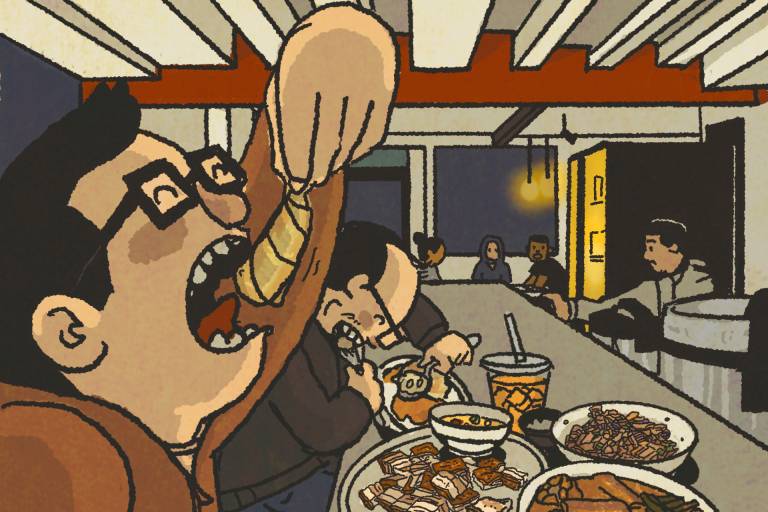
"caption": "In downtown Oakland, Tita Becca's serves some of the tastiest homestyle Filipino food in the Bay Area — until as late as 2 a.m. on weekends.",
"credit": "Thien Pham",
"altTag": "Illustration: Man devouring a shrimp lumpia while seating a diner counter.",
"description": null,
"imgSizes": {
"thumbnail": {
"file": "https://cdn.kqed.org/wp-content/uploads/sites/2/2026/05/TitaBeccas2-crop-160x107.jpg",
"width": 160,
"height": 107,
"mimeType": "image/jpeg"
},
"medium_large": {
"file": "https://cdn.kqed.org/wp-content/uploads/sites/2/2026/05/TitaBeccas2-crop-768x512.jpg",
"width": 768,
"height": 512,
"mimeType": "image/jpeg"
},
"1536x1536": {
"file": "https://cdn.kqed.org/wp-content/uploads/sites/2/2026/05/TitaBeccas2-crop-1536x1024.jpg",
"width": 1536,
"height": 1024,
"mimeType": "image/jpeg"
},
"post-thumbnail": {
"file": "https://cdn.kqed.org/wp-content/uploads/sites/2/2026/05/TitaBeccas2-crop-672x372.jpg",
"width": 672,
"height": 372,
"mimeType": "image/jpeg"
},
"twentyfourteen-full-width": {
"file": "https://cdn.kqed.org/wp-content/uploads/sites/2/2026/05/TitaBeccas2-crop-1038x576.jpg",
"width": 1038,
"height": 576,
"mimeType": "image/jpeg"
},
"npr-cds-wide": {
"file": "https://cdn.kqed.org/wp-content/uploads/sites/2/2026/05/TitaBeccas2-crop-1200x675.jpg",
"width": 1200,
"height": 675,
"mimeType": "image/jpeg"
},
"npr-cds-square": {
"file": "https://cdn.kqed.org/wp-content/uploads/sites/2/2026/05/TitaBeccas2-crop-600x600.jpg",
"width": 600,
"height": 600,
"mimeType": "image/jpeg"
},
"kqedFullSize": {
"file": "https://cdn.kqed.org/wp-content/uploads/sites/2/2026/05/TitaBeccas2-crop.jpg",
"width": 1920,
"height": 1280
}
},
"isLoading": false,
"fetchFailed": false
},
"arts_13990155": {
"type": "attachments",
"id": "arts_13990155",
"meta": {
"index": "attachments_1716263798",
"site": "arts",
"id": "13990155",
"found": true
},
"title": "052026CHAKA KHAN!_GH_011-KQED",
"publishDate": 1779469884,
"status": "inherit",
"parent": 0,
"modified": 1779469904,
"caption": "Chaka Khan performs at the Henry J. Kaiser Center for the Arts in Oakland on May 20, 2026.",
"credit": "Gustavo Hernandez/KQED",
"altTag": null,
"description": null,
"imgSizes": {
"thumbnail": {
"file": "https://cdn.kqed.org/wp-content/uploads/sites/2/2026/05/052026CHAKA-KHAN_GH_011-KQED-160x107.jpg",
"width": 160,
"height": 107,
"mimeType": "image/jpeg"
},
"medium_large": {
"file": "https://cdn.kqed.org/wp-content/uploads/sites/2/2026/05/052026CHAKA-KHAN_GH_011-KQED-768x512.jpg",
"width": 768,
"height": 512,
"mimeType": "image/jpeg"
},
"1536x1536": {
"file": "https://cdn.kqed.org/wp-content/uploads/sites/2/2026/05/052026CHAKA-KHAN_GH_011-KQED-1536x1024.jpg",
"width": 1536,
"height": 1024,
"mimeType": "image/jpeg"
},
"post-thumbnail": {
"file": "https://cdn.kqed.org/wp-content/uploads/sites/2/2026/05/052026CHAKA-KHAN_GH_011-KQED-672x372.jpg",
"width": 672,
"height": 372,
"mimeType": "image/jpeg"
},
"twentyfourteen-full-width": {
"file": "https://cdn.kqed.org/wp-content/uploads/sites/2/2026/05/052026CHAKA-KHAN_GH_011-KQED-1038x576.jpg",
"width": 1038,
"height": 576,
"mimeType": "image/jpeg"
},
"npr-cds-wide": {
"file": "https://cdn.kqed.org/wp-content/uploads/sites/2/2026/05/052026CHAKA-KHAN_GH_011-KQED-1200x675.jpg",
"width": 1200,
"height": 675,
"mimeType": "image/jpeg"
},
"npr-cds-square": {
"file": "https://cdn.kqed.org/wp-content/uploads/sites/2/2026/05/052026CHAKA-KHAN_GH_011-KQED-600x600.jpg",
"width": 600,
"height": 600,
"mimeType": "image/jpeg"
},
"kqedFullSize": {
"file": "https://cdn.kqed.org/wp-content/uploads/sites/2/2026/05/052026CHAKA-KHAN_GH_011-KQED.jpg",
"width": 2000,
"height": 1333
}
},
"isLoading": false,
"fetchFailed": false
},
"arts_13957585": {
"type": "attachments",
"id": "arts_13957585",
"meta": {
"index": "attachments_1716263798",
"site": "arts",
"id": "13957585",
"found": true
},
"title": "240507-BOOTSRILEY-12-BL-KQED",
"publishDate": 1715296058,
"status": "inherit",
"parent": 0,
"modified": 1778874586,
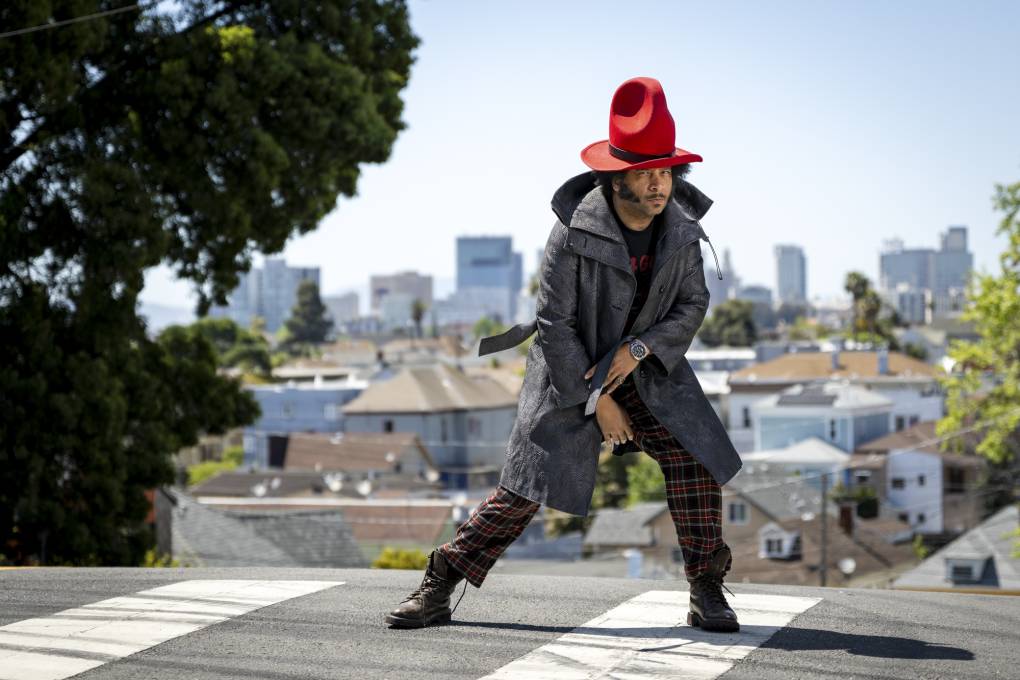
"caption": "Filmmaker and musician Boots Riley near San Antonio Park in Oakland on May 7, 2024.",
"credit": "Beth LaBerge/KQED",
"altTag": null,
"description": null,
"imgSizes": {
"medium": {
"file": "https://cdn.kqed.org/wp-content/uploads/sites/2/2024/05/240507-BOOTSRILEY-12-BL-KQED-800x533.jpg",
"width": 800,
"height": 533,
"mimeType": "image/jpeg"
},
"large": {
"file": "https://cdn.kqed.org/wp-content/uploads/sites/2/2024/05/240507-BOOTSRILEY-12-BL-KQED-1020x680.jpg",
"width": 1020,
"height": 680,
"mimeType": "image/jpeg"
},
"thumbnail": {
"file": "https://cdn.kqed.org/wp-content/uploads/sites/2/2024/05/240507-BOOTSRILEY-12-BL-KQED-160x107.jpg",
"width": 160,
"height": 107,
"mimeType": "image/jpeg"
},
"medium_large": {
"file": "https://cdn.kqed.org/wp-content/uploads/sites/2/2024/05/240507-BOOTSRILEY-12-BL-KQED-768x512.jpg",
"width": 768,
"height": 512,
"mimeType": "image/jpeg"
},
"1536x1536": {
"file": "https://cdn.kqed.org/wp-content/uploads/sites/2/2024/05/240507-BOOTSRILEY-12-BL-KQED-1536x1024.jpg",
"width": 1536,
"height": 1024,
"mimeType": "image/jpeg"
},
"post-thumbnail": {
"file": "https://cdn.kqed.org/wp-content/uploads/sites/2/2024/05/240507-BOOTSRILEY-12-BL-KQED-672x372.jpg",
"width": 672,
"height": 372,
"mimeType": "image/jpeg"
},
"twentyfourteen-full-width": {
"file": "https://cdn.kqed.org/wp-content/uploads/sites/2/2024/05/240507-BOOTSRILEY-12-BL-KQED-1038x576.jpg",
"width": 1038,
"height": 576,
"mimeType": "image/jpeg"
},
"full-width": {
"file": "https://cdn.kqed.org/wp-content/uploads/sites/2/2024/05/240507-BOOTSRILEY-12-BL-KQED-1920x1280.jpg",
"width": 1920,
"height": 1280,
"mimeType": "image/jpeg"
},
"kqedFullSize": {
"file": "https://cdn.kqed.org/wp-content/uploads/sites/2/2024/05/240507-BOOTSRILEY-12-BL-KQED.jpg",
"width": 2000,
"height": 1333
}
},
"isLoading": false,
"fetchFailed": false
},
"arts_13976487": {
"type": "attachments",
"id": "arts_13976487",
"meta": {
"index": "attachments_1716263798",
"site": "arts",
"id": "13976487",
"found": true
},
"title": "SwimmingSpots.Guide.MAIN.16x9",
"publishDate": 1747688209,
"status": "inherit",
"parent": 13976437,
"modified": 1747688440,
"caption": "From public pools and beaches to waterparks like Six Flags Hurricane Harbor in Concord (pictured), swimming spots in the Bay Area are plentiful all summer.",
"credit": "Paul Chinn/San Francisco Chronicle via Getty Images",
"altTag": "Young kids in swimwear getting soaked by falling water",
"description": null,
"imgSizes": {
"medium": {
"file": "https://cdn.kqed.org/wp-content/uploads/sites/2/2025/05/SwimmingSpots.Guide_.MAIN_.16x9-800x450.jpg",
"width": 800,
"height": 450,
"mimeType": "image/jpeg"
},
"large": {
"file": "https://cdn.kqed.org/wp-content/uploads/sites/2/2025/05/SwimmingSpots.Guide_.MAIN_.16x9-1020x574.jpg",
"width": 1020,
"height": 574,
"mimeType": "image/jpeg"
},
"thumbnail": {
"file": "https://cdn.kqed.org/wp-content/uploads/sites/2/2025/05/SwimmingSpots.Guide_.MAIN_.16x9-160x90.jpg",
"width": 160,
"height": 90,
"mimeType": "image/jpeg"
},
"medium_large": {
"file": "https://cdn.kqed.org/wp-content/uploads/sites/2/2025/05/SwimmingSpots.Guide_.MAIN_.16x9-768x432.jpg",
"width": 768,
"height": 432,
"mimeType": "image/jpeg"
},
"1536x1536": {
"file": "https://cdn.kqed.org/wp-content/uploads/sites/2/2025/05/SwimmingSpots.Guide_.MAIN_.16x9-1536x864.jpg",
"width": 1536,
"height": 864,
"mimeType": "image/jpeg"
},
"post-thumbnail": {
"file": "https://cdn.kqed.org/wp-content/uploads/sites/2/2025/05/SwimmingSpots.Guide_.MAIN_.16x9-672x372.jpg",
"width": 672,
"height": 372,
"mimeType": "image/jpeg"
},
"twentyfourteen-full-width": {
"file": "https://cdn.kqed.org/wp-content/uploads/sites/2/2025/05/SwimmingSpots.Guide_.MAIN_.16x9-1038x576.jpg",
"width": 1038,
"height": 576,
"mimeType": "image/jpeg"
},
"full-width": {
"file": "https://cdn.kqed.org/wp-content/uploads/sites/2/2025/05/SwimmingSpots.Guide_.MAIN_.16x9-1920x1080.jpg",
"width": 1920,
"height": 1080,
"mimeType": "image/jpeg"
},
"kqedFullSize": {
"file": "https://cdn.kqed.org/wp-content/uploads/sites/2/2025/05/SwimmingSpots.Guide_.MAIN_.16x9.jpg",
"width": 2000,
"height": 1125
}
},
"isLoading": false,
"fetchFailed": false
},
"arts_13990045": {
"type": "attachments",
"id": "arts_13990045",
"meta": {
"index": "attachments_1716263798",
"site": "arts",
"id": "13990045",
"found": true
},
"title": "260519-HYPHY-BURGER-MD-01-KQED-1",
"publishDate": 1779307714,
"status": "inherit",
"parent": 0,
"modified": 1779387798,
"caption": "The Hyphy Burger and a Cap'n Crunch and Fruity Pebbles Shake at Hyphy Burger in Oakland on May 19, 2026.",
"credit": "Martin do Nascimento/KQED",
"altTag": "Burger, fries and a colorful, Fruity Pebbles-topped milkshake on a tray.",
"description": null,
"imgSizes": {
"thumbnail": {
"file": "https://cdn.kqed.org/wp-content/uploads/sites/2/2026/05/260519-HYPHY-BURGER-MD-01-KQED-1-160x107.jpg",
"width": 160,
"height": 107,
"mimeType": "image/jpeg"
},
"medium_large": {
"file": "https://cdn.kqed.org/wp-content/uploads/sites/2/2026/05/260519-HYPHY-BURGER-MD-01-KQED-1-768x512.jpg",
"width": 768,
"height": 512,
"mimeType": "image/jpeg"
},
"1536x1536": {
"file": "https://cdn.kqed.org/wp-content/uploads/sites/2/2026/05/260519-HYPHY-BURGER-MD-01-KQED-1-1536x1025.jpg",
"width": 1536,
"height": 1025,
"mimeType": "image/jpeg"
},
"post-thumbnail": {
"file": "https://cdn.kqed.org/wp-content/uploads/sites/2/2026/05/260519-HYPHY-BURGER-MD-01-KQED-1-672x372.jpg",
"width": 672,
"height": 372,
"mimeType": "image/jpeg"
},
"twentyfourteen-full-width": {
"file": "https://cdn.kqed.org/wp-content/uploads/sites/2/2026/05/260519-HYPHY-BURGER-MD-01-KQED-1-1038x576.jpg",
"width": 1038,
"height": 576,
"mimeType": "image/jpeg"
},
"npr-cds-wide": {
"file": "https://cdn.kqed.org/wp-content/uploads/sites/2/2026/05/260519-HYPHY-BURGER-MD-01-KQED-1-1200x675.jpg",
"width": 1200,
"height": 675,
"mimeType": "image/jpeg"
},
"npr-cds-square": {
"file": "https://cdn.kqed.org/wp-content/uploads/sites/2/2026/05/260519-HYPHY-BURGER-MD-01-KQED-1-600x600.jpg",
"width": 600,
"height": 600,
"mimeType": "image/jpeg"
},
"kqedFullSize": {
"file": "https://cdn.kqed.org/wp-content/uploads/sites/2/2026/05/260519-HYPHY-BURGER-MD-01-KQED-1.jpg",
"width": 2000,
"height": 1334
}
},
"isLoading": false,
"fetchFailed": false
},
"arts_13989969": {
"type": "attachments",
"id": "arts_13989969",
"meta": {
"index": "attachments_1716263798",
"site": "arts",
"id": "13989969",
"found": true
},
"title": "Lake Merritt Dog Contest final",
"publishDate": 1779228945,
"status": "inherit",
"parent": 13989944,
"modified": 1779229794,
"caption": "Some of the good dogs competing in the 2026 Lake Merritt Dog Contest. Top Row (L-R): Calliope, Larry, Einstein. Bottom row (L-R): Stella, Dontè.",
"credit": "Courtesy of the Lake Merritt Dog Contest",
"altTag": "Photos of five different breeds of dogs arranged on a grid.",
"description": null,
"imgSizes": {
"thumbnail": {
"file": "https://cdn.kqed.org/wp-content/uploads/sites/2/2026/05/Lake-Merritt-Dog-Contest-final-160x120.jpg",
"width": 160,
"height": 120,
"mimeType": "image/jpeg"
},
"medium_large": {
"file": "https://cdn.kqed.org/wp-content/uploads/sites/2/2026/05/Lake-Merritt-Dog-Contest-final-768x574.jpg",
"width": 768,
"height": 574,
"mimeType": "image/jpeg"
},
"1536x1536": {
"file": "https://cdn.kqed.org/wp-content/uploads/sites/2/2026/05/Lake-Merritt-Dog-Contest-final-1536x1148.jpg",
"width": 1536,
"height": 1148,
"mimeType": "image/jpeg"
},
"post-thumbnail": {
"file": "https://cdn.kqed.org/wp-content/uploads/sites/2/2026/05/Lake-Merritt-Dog-Contest-final-672x372.jpg",
"width": 672,
"height": 372,
"mimeType": "image/jpeg"
},
"twentyfourteen-full-width": {
"file": "https://cdn.kqed.org/wp-content/uploads/sites/2/2026/05/Lake-Merritt-Dog-Contest-final-1038x576.jpg",
"width": 1038,
"height": 576,
"mimeType": "image/jpeg"
},
"npr-cds-wide": {
"file": "https://cdn.kqed.org/wp-content/uploads/sites/2/2026/05/Lake-Merritt-Dog-Contest-final-1200x675.jpg",
"width": 1200,
"height": 675,
"mimeType": "image/jpeg"
},
"npr-cds-square": {
"file": "https://cdn.kqed.org/wp-content/uploads/sites/2/2026/05/Lake-Merritt-Dog-Contest-final-600x600.jpg",
"width": 600,
"height": 600,
"mimeType": "image/jpeg"
},
"kqedFullSize": {
"file": "https://cdn.kqed.org/wp-content/uploads/sites/2/2026/05/Lake-Merritt-Dog-Contest-final.jpg",
"width": 2000,
"height": 1495
}
},
"isLoading": false,
"fetchFailed": false
},
"arts_13989804": {
"type": "attachments",
"id": "arts_13989804",
"meta": {
"index": "attachments_1716263798",
"site": "arts",
"id": "13989804",
"found": true
},
"title": "20260516-OAKLASH-JY-01-KQED-1",
"publishDate": 1779122024,
"status": "inherit",
"parent": 0,
"modified": 1779131694,
"caption": "Luismi Munster poses for a portrait during the Oaklash Block Party in Oakland, Calif., on Saturday, May 16, 2026.",
"credit": "Juliana Yamada for KQED",
"altTag": null,
"description": null,
"imgSizes": {
"thumbnail": {
"file": "https://cdn.kqed.org/wp-content/uploads/sites/2/2026/05/20260516-OAKLASH-JY-01-KQED-1-160x107.jpg",
"width": 160,
"height": 107,
"mimeType": "image/jpeg"
},
"medium_large": {
"file": "https://cdn.kqed.org/wp-content/uploads/sites/2/2026/05/20260516-OAKLASH-JY-01-KQED-1-768x512.jpg",
"width": 768,
"height": 512,
"mimeType": "image/jpeg"
},
"1536x1536": {
"file": "https://cdn.kqed.org/wp-content/uploads/sites/2/2026/05/20260516-OAKLASH-JY-01-KQED-1-1536x1024.jpg",
"width": 1536,
"height": 1024,
"mimeType": "image/jpeg"
},
"post-thumbnail": {
"file": "https://cdn.kqed.org/wp-content/uploads/sites/2/2026/05/20260516-OAKLASH-JY-01-KQED-1-672x372.jpg",
"width": 672,
"height": 372,
"mimeType": "image/jpeg"
},
"twentyfourteen-full-width": {
"file": "https://cdn.kqed.org/wp-content/uploads/sites/2/2026/05/20260516-OAKLASH-JY-01-KQED-1-1038x576.jpg",
"width": 1038,
"height": 576,
"mimeType": "image/jpeg"
},
"npr-cds-wide": {
"file": "https://cdn.kqed.org/wp-content/uploads/sites/2/2026/05/20260516-OAKLASH-JY-01-KQED-1-1200x675.jpg",
"width": 1200,
"height": 675,
"mimeType": "image/jpeg"
},
"npr-cds-square": {
"file": "https://cdn.kqed.org/wp-content/uploads/sites/2/2026/05/20260516-OAKLASH-JY-01-KQED-1-600x600.jpg",
"width": 600,
"height": 600,
"mimeType": "image/jpeg"
},
"kqedFullSize": {
"file": "https://cdn.kqed.org/wp-content/uploads/sites/2/2026/05/20260516-OAKLASH-JY-01-KQED-1.jpg",
"width": 2000,
"height": 1333
}
},
"isLoading": false,
"fetchFailed": false
},
"arts_13989665": {
"type": "attachments",
"id": "arts_13989665",
"meta": {
"index": "attachments_1716263798",
"site": "arts",
"id": "13989665",
"found": true
},
"title": "20260511_ARTISTHOUSING_GC-10-KQED",
"publishDate": 1778862546,
"status": "inherit",
"parent": 0,
"modified": 1778862669,
"caption": "Jaelynn Walls, fiction writer and artist, poses for a portrait at their home in Oakland on May 11, 2026.",
"credit": "Gina Castro for KQED",
"altTag": null,
"description": null,
"imgSizes": {
"thumbnail": {
"file": "https://cdn.kqed.org/wp-content/uploads/sites/2/2026/05/20260511_ARTISTHOUSING_GC-10-KQED-160x104.jpg",
"width": 160,
"height": 104,
"mimeType": "image/jpeg"
},
"medium_large": {
"file": "https://cdn.kqed.org/wp-content/uploads/sites/2/2026/05/20260511_ARTISTHOUSING_GC-10-KQED-768x501.jpg",
"width": 768,
"height": 501,
"mimeType": "image/jpeg"
},
"1536x1536": {
"file": "https://cdn.kqed.org/wp-content/uploads/sites/2/2026/05/20260511_ARTISTHOUSING_GC-10-KQED-1536x1001.jpg",
"width": 1536,
"height": 1001,
"mimeType": "image/jpeg"
},
"post-thumbnail": {
"file": "https://cdn.kqed.org/wp-content/uploads/sites/2/2026/05/20260511_ARTISTHOUSING_GC-10-KQED-672x372.jpg",
"width": 672,
"height": 372,
"mimeType": "image/jpeg"
},
"twentyfourteen-full-width": {
"file": "https://cdn.kqed.org/wp-content/uploads/sites/2/2026/05/20260511_ARTISTHOUSING_GC-10-KQED-1038x576.jpg",
"width": 1038,
"height": 576,
"mimeType": "image/jpeg"
},
"npr-cds-wide": {
"file": "https://cdn.kqed.org/wp-content/uploads/sites/2/2026/05/20260511_ARTISTHOUSING_GC-10-KQED-1200x675.jpg",
"width": 1200,
"height": 675,
"mimeType": "image/jpeg"
},
"npr-cds-square": {
"file": "https://cdn.kqed.org/wp-content/uploads/sites/2/2026/05/20260511_ARTISTHOUSING_GC-10-KQED-600x600.jpg",
"width": 600,
"height": 600,
"mimeType": "image/jpeg"
},
"kqedFullSize": {
"file": "https://cdn.kqed.org/wp-content/uploads/sites/2/2026/05/20260511_ARTISTHOUSING_GC-10-KQED.jpg",
"width": 2000,
"height": 1304
}
},
"isLoading": false,
"fetchFailed": false
},
"arts_13989676": {
"type": "attachments",
"id": "arts_13989676",
"meta": {
"index": "attachments_1716263798",
"site": "arts",
"id": "13989676",
"found": true
},
"title": "june's2-crop",
"publishDate": 1778868871,
"status": "inherit",
"parent": 13989673,
"modified": 1778869030,
"caption": "June's Pizza sells margherita slices — and sometimes pepperoni slices — from 9 p.m. to midnight, or until it sells out. ",
"credit": "Thien Pham",
"altTag": "Illustration: Two men devouring pizza. There's a pile of basil leaves on the pan.",
"description": null,
"imgSizes": {
"thumbnail": {
"file": "https://cdn.kqed.org/wp-content/uploads/sites/2/2026/05/junes2-crop-160x107.jpg",
"width": 160,
"height": 107,
"mimeType": "image/jpeg"
},
"medium_large": {
"file": "https://cdn.kqed.org/wp-content/uploads/sites/2/2026/05/junes2-crop-768x512.jpg",
"width": 768,
"height": 512,
"mimeType": "image/jpeg"
},
"1536x1536": {
"file": "https://cdn.kqed.org/wp-content/uploads/sites/2/2026/05/junes2-crop-1536x1024.jpg",
"width": 1536,
"height": 1024,
"mimeType": "image/jpeg"
},
"post-thumbnail": {
"file": "https://cdn.kqed.org/wp-content/uploads/sites/2/2026/05/junes2-crop-672x372.jpg",
"width": 672,
"height": 372,
"mimeType": "image/jpeg"
},
"twentyfourteen-full-width": {
"file": "https://cdn.kqed.org/wp-content/uploads/sites/2/2026/05/junes2-crop-1038x576.jpg",
"width": 1038,
"height": 576,
"mimeType": "image/jpeg"
},
"npr-cds-wide": {
"file": "https://cdn.kqed.org/wp-content/uploads/sites/2/2026/05/junes2-crop-1200x675.jpg",
"width": 1200,
"height": 675,
"mimeType": "image/jpeg"
},
"npr-cds-square": {
"file": "https://cdn.kqed.org/wp-content/uploads/sites/2/2026/05/junes2-crop-600x600.jpg",
"width": 600,
"height": 600,
"mimeType": "image/jpeg"
},
"kqedFullSize": {
"file": "https://cdn.kqed.org/wp-content/uploads/sites/2/2026/05/junes2-crop.jpg",
"width": 1920,
"height": 1280
}
},
"isLoading": false,
"fetchFailed": false
},
"arts_13989488": {
"type": "attachments",
"id": "arts_13989488",
"meta": {
"index": "attachments_1716263798",
"site": "arts",
"id": "13989488",
"found": true
},
"title": "IMG_4177-cropped",
"publishDate": 1778605064,
"status": "inherit",
"parent": 13989428,
"modified": 1778605178,
"caption": "The cover of ‘Love Conquers All’ by Janell Grace and Malik Glass, illustrated by Eli Beaird. ",
"credit": "Courtesy of Love Conquers All",
"altTag": null,
"description": null,
"imgSizes": {
"thumbnail": {
"file": "https://cdn.kqed.org/wp-content/uploads/sites/2/2026/05/IMG_4177-cropped-160x90.jpg",
"width": 160,
"height": 90,
"mimeType": "image/jpeg"
},
"medium_large": {
"file": "https://cdn.kqed.org/wp-content/uploads/sites/2/2026/05/IMG_4177-cropped-768x432.jpg",
"width": 768,
"height": 432,
"mimeType": "image/jpeg"
},
"post-thumbnail": {
"file": "https://cdn.kqed.org/wp-content/uploads/sites/2/2026/05/IMG_4177-cropped-672x372.jpg",
"width": 672,
"height": 372,
"mimeType": "image/jpeg"
},
"npr-cds-square": {
"file": "https://cdn.kqed.org/wp-content/uploads/sites/2/2026/05/IMG_4177-cropped-600x466.jpg",
"width": 600,
"height": 466,
"mimeType": "image/jpeg"
},
"kqedFullSize": {
"file": "https://cdn.kqed.org/wp-content/uploads/sites/2/2026/05/IMG_4177-cropped.jpg",
"width": 828,
"height": 466
}
},
"isLoading": false,
"fetchFailed": false
},
"arts_13989343": {
"type": "attachments",
"id": "arts_13989343",
"meta": {
"index": "attachments_1716263798",
"site": "arts",
"id": "13989343",
"found": true
},
"title": "Thomas McElroy Jr.",
"publishDate": 1778198245,
"status": "inherit",
"parent": 13989273,
"modified": 1778198305,
"caption": "Rising boxing star Thomas McElroy Jr. represents the latest wave of talented fighters from Oakland. ",
"credit": "Pendarvis Harshaw",
"altTag": "A boxer, sitting and posing for a photo.",
"description": null,
"imgSizes": {
"thumbnail": {
"file": "https://cdn.kqed.org/wp-content/uploads/sites/2/2026/05/DSC01205-160x107.jpg",
"width": 160,
"height": 107,
"mimeType": "image/jpeg"
},
"medium_large": {
"file": "https://cdn.kqed.org/wp-content/uploads/sites/2/2026/05/DSC01205-768x513.jpg",
"width": 768,
"height": 513,
"mimeType": "image/jpeg"
},
"1536x1536": {
"file": "https://cdn.kqed.org/wp-content/uploads/sites/2/2026/05/DSC01205-1536x1027.jpg",
"width": 1536,
"height": 1027,
"mimeType": "image/jpeg"
},
"post-thumbnail": {
"file": "https://cdn.kqed.org/wp-content/uploads/sites/2/2026/05/DSC01205-672x372.jpg",
"width": 672,
"height": 372,
"mimeType": "image/jpeg"
},
"twentyfourteen-full-width": {
"file": "https://cdn.kqed.org/wp-content/uploads/sites/2/2026/05/DSC01205-1038x576.jpg",
"width": 1038,
"height": 576,
"mimeType": "image/jpeg"
},
"npr-cds-wide": {
"file": "https://cdn.kqed.org/wp-content/uploads/sites/2/2026/05/DSC01205-1200x675.jpg",
"width": 1200,
"height": 675,
"mimeType": "image/jpeg"
},
"npr-cds-square": {
"file": "https://cdn.kqed.org/wp-content/uploads/sites/2/2026/05/DSC01205-600x600.jpg",
"width": 600,
"height": 600,
"mimeType": "image/jpeg"
},
"kqedFullSize": {
"file": "https://cdn.kqed.org/wp-content/uploads/sites/2/2026/05/DSC01205.jpg",
"width": 2000,
"height": 1337
}
},
"isLoading": false,
"fetchFailed": false
},
"arts_13989257": {
"type": "attachments",
"id": "arts_13989257",
"meta": {
"index": "attachments_1716263798",
"site": "arts",
"id": "13989257",
"found": true
},
"title": "050526BEST MEALS UNDER $10_GH_021-KQED",
"publishDate": 1778168391,
"status": "inherit",
"parent": 0,
"modified": 1778226187,
"caption": "A thali plate from Sunnyvale's Apni Mandi: rice, saag paneer, mixed vegetable curry and roti for $8.99.",
"credit": "Gustavo Hernandez/KQED",
"altTag": "Takeout container with basmati rice and two kinds of curry, on a colorful tablecloth.",
"description": null,
"imgSizes": {
"thumbnail": {
"file": "https://cdn.kqed.org/wp-content/uploads/sites/2/2026/05/050526BEST-MEALS-UNDER-10_GH_021-KQED-160x107.jpg",
"width": 160,
"height": 107,
"mimeType": "image/jpeg"
},
"medium_large": {
"file": "https://cdn.kqed.org/wp-content/uploads/sites/2/2026/05/050526BEST-MEALS-UNDER-10_GH_021-KQED-768x512.jpg",
"width": 768,
"height": 512,
"mimeType": "image/jpeg"
},
"1536x1536": {
"file": "https://cdn.kqed.org/wp-content/uploads/sites/2/2026/05/050526BEST-MEALS-UNDER-10_GH_021-KQED-1536x1024.jpg",
"width": 1536,
"height": 1024,
"mimeType": "image/jpeg"
},
"post-thumbnail": {
"file": "https://cdn.kqed.org/wp-content/uploads/sites/2/2026/05/050526BEST-MEALS-UNDER-10_GH_021-KQED-672x372.jpg",
"width": 672,
"height": 372,
"mimeType": "image/jpeg"
},
"twentyfourteen-full-width": {
"file": "https://cdn.kqed.org/wp-content/uploads/sites/2/2026/05/050526BEST-MEALS-UNDER-10_GH_021-KQED-1038x576.jpg",
"width": 1038,
"height": 576,
"mimeType": "image/jpeg"
},
"npr-cds-wide": {
"file": "https://cdn.kqed.org/wp-content/uploads/sites/2/2026/05/050526BEST-MEALS-UNDER-10_GH_021-KQED-1200x675.jpg",
"width": 1200,
"height": 675,
"mimeType": "image/jpeg"
},
"npr-cds-square": {
"file": "https://cdn.kqed.org/wp-content/uploads/sites/2/2026/05/050526BEST-MEALS-UNDER-10_GH_021-KQED-600x600.jpg",
"width": 600,
"height": 600,
"mimeType": "image/jpeg"
},
"kqedFullSize": {
"file": "https://cdn.kqed.org/wp-content/uploads/sites/2/2026/05/050526BEST-MEALS-UNDER-10_GH_021-KQED.jpg",
"width": 2000,
"height": 1333
}
},
"isLoading": false,
"fetchFailed": false
}
},
"audioPlayerReducer": {
"postId": "stream_live",
"isPaused": true,
"isPlaying": false,
"pfsActive": false,
"pledgeModalIsOpen": true,
"playerDrawerIsOpen": false,
"liveAudioPlayStartedAt": 0,
"liveAudioPlayContext": ""
},
"authorsReducer": {
"ralexandra": {
"type": "authors",
"id": "11242",
"meta": {
"index": "authors_1716337520",
"id": "11242",
"found": true
},
"name": "Rae Alexandra",
"firstName": "Rae",
"lastName": "Alexandra",
"slug": "ralexandra",
"email": "ralexandra@kqed.org",
"display_author_email": true,
"staff_mastheads": [],
"title": "Reporter/Producer",
"bio": "Rae Alexandra is a Reporter/Producer for KQED Arts & Culture, and the creator/author of the \u003ca href=\"https://www.kqed.org/arts/program/rebel-girls-from-bay-area-history\">Rebel Girls From Bay Area History\u003c/a> and \u003ca href=\"https://www.kqed.org/bizarrebayarea\">Bizarre Bay Area\u003c/a> series. Her debut book, \u003ca href=\"https://citylights.com/politics-current-events-history/unsung-heroines35-women-who-changed/\">Unsung Heroines: 35 Women Who Changed the Bay Area\u003c/a> was published by City Lights in March 2026. In 2023, Rae was awarded an SPJ Excellence in Journalism Award for Arts & Culture. Rae was born and raised in Wales and subsequently — even after two decades in Northern California — still uses phrases that regularly baffle her coworkers.",
"avatar": "https://secure.gravatar.com/avatar/edfee8176c80cc0a382b051190f5341997df378a934a5774dcb0977732dfd401?s=600&d=blank&r=g",
"twitter": null,
"bluesky": null,
"facebook": null,
"instagram": null,
"linkedin": null,
"sites": [
{
"site": "arts",
"roles": [
"subscriber"
]
},
{
"site": "news",
"roles": [
"subscriber"
]
},
{
"site": "pop",
"roles": [
"subscriber"
]
},
{
"site": "bayareabites",
"roles": [
"subscriber"
]
},
{
"site": "science",
"roles": [
"subscriber"
]
}
],
"headData": {
"title": "Rae Alexandra | KQED",
"description": "Reporter/Producer",
"ogImgSrc": "https://secure.gravatar.com/avatar/edfee8176c80cc0a382b051190f5341997df378a934a5774dcb0977732dfd401?s=600&d=blank&r=g",
"twImgSrc": "https://secure.gravatar.com/avatar/edfee8176c80cc0a382b051190f5341997df378a934a5774dcb0977732dfd401?s=600&d=blank&r=g"
},
"isLoading": false,
"link": "/author/ralexandra"
},
"nvoynovskaya": {
"type": "authors",
"id": "11387",
"meta": {
"index": "authors_1716337520",
"id": "11387",
"found": true
},
"name": "Nastia Voynovskaya",
"firstName": "Nastia",
"lastName": "Voynovskaya",
"slug": "nvoynovskaya",
"email": "nvoynovskaya@kqed.org",
"display_author_email": false,
"staff_mastheads": [
"arts"
],
"title": "Editor and reporter",
"bio": "Nastia Voynovskaya is a reporter, editor and host at KQED Arts & Culture. She's been covering the arts in the Bay Area for over a decade, with a focus on music, queer culture, labor issues and grassroots organizing. She has edited KQED story series such as Trans Bay: A History of San Francisco's Gender-Diverse Community, and co-created KQED's Bay Area hip-hop history project, That's My Word. Nastia's work has been recognized by the Society of Professional Journalists and San Francisco Press Club. She regularly appears on podcasts and radio programs, including NPR's All Songs Considered, and hosts live events where music, culture and conversation meet.",
"avatar": "https://secure.gravatar.com/avatar/5025ee460e5a85d69ca20ea6c6f2f80d7e17795c828f61ea3aecfcd924e9042e?s=600&d=blank&r=g",
"twitter": null,
"bluesky": null,
"facebook": null,
"instagram": "https://www.instagram.com/nananastia/",
"linkedin": null,
"sites": [
{
"site": "",
"roles": [
"editor"
]
},
{
"site": "arts",
"roles": [
"administrator"
]
},
{
"site": "news",
"roles": [
"editor"
]
},
{
"site": "pop",
"roles": [
"administrator"
]
},
{
"site": "bayareabites",
"roles": [
"editor"
]
},
{
"site": "podcasts",
"roles": [
"editor"
]
},
{
"site": "hiphop",
"roles": [
"editor"
]
}
],
"headData": {
"title": "Nastia Voynovskaya | KQED",
"description": "Editor and reporter",
"ogImgSrc": "https://secure.gravatar.com/avatar/5025ee460e5a85d69ca20ea6c6f2f80d7e17795c828f61ea3aecfcd924e9042e?s=600&d=blank&r=g",
"twImgSrc": "https://secure.gravatar.com/avatar/5025ee460e5a85d69ca20ea6c6f2f80d7e17795c828f61ea3aecfcd924e9042e?s=600&d=blank&r=g"
},
"isLoading": false,
"link": "/author/nvoynovskaya"
},
"ogpenn": {
"type": "authors",
"id": "11491",
"meta": {
"index": "authors_1716337520",
"id": "11491",
"found": true
},
"name": "Pendarvis Harshaw",
"firstName": "Pendarvis",
"lastName": "Harshaw",
"slug": "ogpenn",
"email": "ogpenn@gmail.com",
"display_author_email": false,
"staff_mastheads": [
"arts"
],
"title": "Community Engagement Reporter",
"bio": "Pendarvis Harshaw is an educator, host and writer with KQED Arts.",
"avatar": "https://secure.gravatar.com/avatar/972b77ee8e3f346ae2b00622661187fbfabd059b5693bbdc1475ea7a722fd4cd?s=600&d=blank&r=g",
"twitter": null,
"bluesky": null,
"facebook": null,
"instagram": "ogpenn",
"linkedin": null,
"sites": [
{
"site": "arts",
"roles": [
"administrator"
]
},
{
"site": "news",
"roles": [
"editor"
]
},
{
"site": "bayareabites",
"roles": [
"author"
]
},
{
"site": "hiphop",
"roles": [
"editor"
]
}
],
"headData": {
"title": "Pendarvis Harshaw | KQED",
"description": "Community Engagement Reporter",
"ogImgSrc": "https://secure.gravatar.com/avatar/972b77ee8e3f346ae2b00622661187fbfabd059b5693bbdc1475ea7a722fd4cd?s=600&d=blank&r=g",
"twImgSrc": "https://secure.gravatar.com/avatar/972b77ee8e3f346ae2b00622661187fbfabd059b5693bbdc1475ea7a722fd4cd?s=600&d=blank&r=g"
},
"isLoading": false,
"link": "/author/ogpenn"
},
"ltsai": {
"type": "authors",
"id": "11743",
"meta": {
"index": "authors_1716337520",
"id": "11743",
"found": true
},
"name": "Luke Tsai",
"firstName": "Luke",
"lastName": "Tsai",
"slug": "ltsai",
"email": "ltsai@kqed.org",
"display_author_email": true,
"staff_mastheads": [
"arts"
],
"title": "Food Editor",
"bio": "Luke Tsai is KQED's food editor and resident stinky tofu connoisseur. Prior to KQED, he was an editor at Eater SF, \u003cem>San Francisco \u003c/em>magazine, and the \u003cem>East Bay Express\u003c/em>, and his work has also appeared in TASTE, the \u003cem>San Francisco Chronicle\u003c/em>, and the \u003cem>Best Food Writing\u003c/em> anthology. When he isn't writing or editing, you'll find him eating most everything he can get his hands on.",
"avatar": "https://secure.gravatar.com/avatar/1e59b45bf191526e7339d6ba46e33a57b2030d25c27660ecc64ea3cb863e34f7?s=600&d=blank&r=g",
"twitter": "theluketsai",
"bluesky": null,
"facebook": null,
"instagram": null,
"linkedin": null,
"sites": [
{
"site": "",
"roles": [
"editor"
]
},
{
"site": "arts",
"roles": [
"administrator"
]
},
{
"site": "news",
"roles": [
"editor",
"contributor"
]
},
{
"site": "bayareabites",
"roles": [
"editor"
]
},
{
"site": "food",
"roles": [
"editor"
]
}
],
"headData": {
"title": "Luke Tsai | KQED",
"description": "Food Editor",
"ogImgSrc": "https://secure.gravatar.com/avatar/1e59b45bf191526e7339d6ba46e33a57b2030d25c27660ecc64ea3cb863e34f7?s=600&d=blank&r=g",
"twImgSrc": "https://secure.gravatar.com/avatar/1e59b45bf191526e7339d6ba46e33a57b2030d25c27660ecc64ea3cb863e34f7?s=600&d=blank&r=g"
},
"isLoading": false,
"link": "/author/ltsai"
},
"tpham": {
"type": "authors",
"id": "11753",
"meta": {
"index": "authors_1716337520",
"id": "11753",
"found": true
},
"name": "Thien Pham",
"firstName": "Thien",
"lastName": "Pham",
"slug": "tpham",
"email": "thiendog@gmail.com",
"display_author_email": false,
"staff_mastheads": [],
"title": "KQED Contributor",
"bio": null,
"avatar": "https://secure.gravatar.com/avatar/a5b4729969ad46d88e7b9ec9dd4f3fa6af84dd0fa8fa91f01d8d9481694999bc?s=600&d=blank&r=g",
"twitter": null,
"bluesky": null,
"facebook": null,
"instagram": null,
"linkedin": null,
"sites": [
{
"site": "arts",
"roles": [
"contributor"
]
}
],
"headData": {
"title": "Thien Pham | KQED",
"description": "KQED Contributor",
"ogImgSrc": "https://secure.gravatar.com/avatar/a5b4729969ad46d88e7b9ec9dd4f3fa6af84dd0fa8fa91f01d8d9481694999bc?s=600&d=blank&r=g",
"twImgSrc": "https://secure.gravatar.com/avatar/a5b4729969ad46d88e7b9ec9dd4f3fa6af84dd0fa8fa91f01d8d9481694999bc?s=600&d=blank&r=g"
},
"isLoading": false,
"link": "/author/tpham"
},
"jyamada": {
"type": "authors",
"id": "11876",
"meta": {
"index": "authors_1716337520",
"id": "11876",
"found": true
},
"name": "Juliana Yamada",
"firstName": "Juliana",
"lastName": "Yamada",
"slug": "jyamada",
"email": "julianayamada@kqed.org",
"display_author_email": false,
"staff_mastheads": [],
"title": "KQED Photojournalist",
"bio": null,
"avatar": "https://secure.gravatar.com/avatar/cf3070075b6f3d12aac4e1e40079b3ba5fd828442b579f0ce48c293178a5f269?s=600&d=blank&r=g",
"twitter": "julianayphoto",
"bluesky": null,
"facebook": null,
"instagram": "https://www.instagram.com/julianayamadaphoto/",
"linkedin": null,
"sites": [
{
"site": "arts",
"roles": [
"editor"
]
},
{
"site": "news",
"roles": [
"editor"
]
},
{
"site": "science",
"roles": [
"editor"
]
},
{
"site": "perspectives",
"roles": [
"editor"
]
}
],
"headData": {
"title": "Juliana Yamada | KQED",
"description": "KQED Photojournalist",
"ogImgSrc": "https://secure.gravatar.com/avatar/cf3070075b6f3d12aac4e1e40079b3ba5fd828442b579f0ce48c293178a5f269?s=600&d=blank&r=g",
"twImgSrc": "https://secure.gravatar.com/avatar/cf3070075b6f3d12aac4e1e40079b3ba5fd828442b579f0ce48c293178a5f269?s=600&d=blank&r=g"
},
"isLoading": false,
"link": "/author/jyamada"
},
"sarahwright": {
"type": "authors",
"id": "11956",
"meta": {
"index": "authors_1716337520",
"id": "11956",
"found": true
},
"name": "Sarah Wright",
"firstName": "Sarah",
"lastName": "Wright",
"slug": "sarahwright",
"email": "swright@kqed.org",
"display_author_email": true,
"staff_mastheads": [],
"title": "Outdoors Engagement Reporter",
"bio": "Sarah Wright is KQED's Outdoors Engagement Reporter. Originally from Lake Tahoe, she completed a thru-hike of the Pacific Crest Trail in 2019 and was a U.S. Fulbright Program grantee to Argentina in 2023. Her journalism has appeared in The Guardian, The San Francisco Standard, The Palo Alto Weekly and the Half Moon Bay Review.",
"avatar": "https://secure.gravatar.com/avatar/c161a3d6441865cba25e6db4fa561099ad665799e9432e34da2b84d7e371524c?s=600&d=blank&r=g",
"twitter": null,
"bluesky": null,
"facebook": null,
"instagram": null,
"linkedin": null,
"sites": [
{
"site": "arts",
"roles": [
"editor"
]
},
{
"site": "news",
"roles": [
"editor"
]
},
{
"site": "science",
"roles": [
"contributor",
"author"
]
},
{
"site": "forum",
"roles": [
"editor"
]
}
],
"headData": {
"title": "Sarah Wright | KQED",
"description": "Outdoors Engagement Reporter",
"ogImgSrc": "https://secure.gravatar.com/avatar/c161a3d6441865cba25e6db4fa561099ad665799e9432e34da2b84d7e371524c?s=600&d=blank&r=g",
"twImgSrc": "https://secure.gravatar.com/avatar/c161a3d6441865cba25e6db4fa561099ad665799e9432e34da2b84d7e371524c?s=600&d=blank&r=g"
},
"isLoading": false,
"link": "/author/sarahwright"
}
},
"pagesReducer": {
"arts_tag_oakland": {
"type": "terms",
"id": "arts_1143",
"meta": {
"index": "terms_1716263798",
"site": "arts",
"id": "1143",
"score": 6.870714
},
"featImg": null,
"name": "Oakland",
"description": null,
"taxonomy": "tag",
"headData": {
"twImgId": null,
"twTitle": null,
"ogTitle": null,
"ogImgId": null,
"twDescription": null,
"description": null,
"title": "Oakland Archives | KQED Arts",
"ogDescription": null
},
"ttid": 692,
"slug": "oakland",
"isLoading": false,
"title": "Oakland",
"pageMeta": {
"site": "arts",
"WpPageTemplate": "page-topic-editorial",
"currentPage": 6
},
"blocks": [
{
"blockName": "kqed/post-list",
"attrs": {
"layout": "cardArticle2",
"query": "posts/arts?tag=oakland",
"seeMore": false,
"paginated": true,
"page": 6
}
},
{
"blockName": "kqed/ad"
}
]
}
},
"pfsSessionReducer": {},
"postsReducer": {
"stream_live": {
"type": "live",
"id": "stream_live",
"audioUrl": "https://hls.kqed.org/hls/kqed_app/playlist.m3u8",
"title": "Live Stream",
"excerpt": "Live Stream information currently unavailable.",
"link": "/radio",
"featImg": "",
"label": {
"name": "KQED Live",
"link": "/"
}
},
"stream_kqedNewscast": {
"type": "posts",
"id": "stream_kqedNewscast",
"audioUrl": "https://www.kqed.org/.stream/anon/radio/RDnews/newscast.mp3?_=1",
"title": "KQED Newscast",
"featImg": "",
"label": {
"name": "88.5 FM",
"link": "/"
}
},
"arts_13990274": {
"type": "posts",
"id": "arts_13990274",
"meta": {
"index": "posts_1716263798",
"site": "arts",
"id": "13990274",
"score": null,
"sort": [
1780066800000
]
},
"guestAuthors": [],
"slug": "tita-beccas-filipino-diner-oakland-late-night",
"title": "This Late-Night Filipino Diner in Downtown Oakland Is Hidden in Plain Sight",
"publishDate": 1780066800,
"format": "standard",
"headTitle": "This Late-Night Filipino Diner in Downtown Oakland Is Hidden in Plain Sight | KQED",
"labelTerm": {},
"content": "\u003cfigure class=\"wp-block-image size-full\">\u003cimg loading=\"lazy\" decoding=\"async\" width=\"1920\" height=\"1920\" src=\"https://cdn.kqed.org/wp-content/uploads/sites/2/2026/05/TitaBeccas2.jpg\" alt=\"Illustration: Man devouring a shrimp lumpia while seating a diner counter. There's a huge spread of Filipino food in front of him.\" class=\"wp-image-13990278\" srcset=\"https://cdn.kqed.org/wp-content/uploads/sites/2/2026/05/TitaBeccas2.jpg 1920w, https://cdn.kqed.org/wp-content/uploads/sites/2/2026/05/TitaBeccas2-160x160.jpg 160w, https://cdn.kqed.org/wp-content/uploads/sites/2/2026/05/TitaBeccas2-768x768.jpg 768w, https://cdn.kqed.org/wp-content/uploads/sites/2/2026/05/TitaBeccas2-1536x1536.jpg 1536w, https://cdn.kqed.org/wp-content/uploads/sites/2/2026/05/TitaBeccas2-600x600.jpg 600w\" sizes=\"auto, (max-width: 1920px) 100vw, 1920px\">\u003cfigcaption class=\"wp-element-caption\">In downtown Oakland, Tita Becca’s serves some of the tastiest homestyle Filipino food in the Bay Area — until as late as 2 a.m. on weekends. (Thien Pham)\u003c/figcaption>\u003c/figure>\n\n\n\n\u003cp>\u003ca href=\"https://www.kqed.org/arts/tag/the-midnight-diners\">\u003cem>The Midnight Diners\u003c/em>\u003c/a>\u003cem> is a regular collaboration between KQED food editor Luke Tsai and graphic novelist \u003c/em>\u003ca href=\"https://www.instagram.com/thiendog/?hl=en\">\u003cem>Thien Pham\u003c/em>\u003c/a>\u003cem>. Follow them each week as they explore the hot pot restaurants, taco carts and 24-hour casino buffets that make up the Bay Area’s after-hours dining scene. \u003c/em>\u003c/p>\n\n\n\n\u003cp>\u003ca href=\"https://www.google.com/maps/place/Tita+Becca's/@37.8050666,-122.269489,17z/data=!3m1!4b1!4m6!3m5!1s0x808f810010cb4c49:0x6216a723cfa2d8bc!8m2!3d37.8050666!4d-122.269489!16s%2Fg%2F11nc868hz3!18m1!1e1?entry=ttu&g_ep=EgoyMDI2MDUyNi4wIKXMDSoASAFQAw%3D%3D\">Tita Becca’s\u003c/a> is the kind of restaurant that almost doesn’t seem real. \u003c/p>\n\n\n\n\u003cp>What do you \u003cem>mean\u003c/em> there’s an old-fashioned \u003ca href=\"https://www.kqed.org/arts/tag/filipino\">Filipino\u003c/a> diner right smack in the middle of downtown Oakland where you can sit on a ’50s-style bar stool eating some of the most delicious pork sisig and kare-kare you’ve ever tasted — as late as 2 o’clock in the morning, no less? \u003c/p>\n\n\n\n\u003cp>Even as we savored each bite, it felt like some kind of fever dream. At the time of our visit, a couple weeks ago, the restaurant had no \u003ca href=\"https://www.yelp.com/biz/tita-beccas-oakland\">Yelp reviews\u003c/a> and barely any \u003ca href=\"https://www.instagram.com/titabeccas/\">social media presence\u003c/a>. The lone “Tita Becca’s” sign painted on the wall outside gave no indication of what kind of food we might find inside (though a Pinoy would have recognized the \u003ca href=\"https://en.wikipedia.org/wiki/Flag_of_the_Philippines\">bright yellow sun\u003c/a> in the logo). The only reason we’d heard of the place at all was because of a kind reader who emailed us a glowing report.\u003c/p>\n\n\n\n\u003cp>When we pulled up to the restaurant at a little before 10 p.m. on a recent Friday, an older Filipino dude in a Warriors jersey and flip-flops was posted up outside, nursing the last few sips of a bottle of beer. Inside, the dining room was set up like the kind of old-timey diner you might see painted on a picture postcard: the long counter, the vintage stools, the nostalgic red and turquoise color scheme. The restaurant was almost entirely empty — just one young Filipino guy sitting at the counter, ladling pork sinigang over a bowl of white rice. The R&B playlist blaring from the speakers consisted almost entirely of sultry Mariah Carey jams. \u003c/p>\n\n\n\n\u003cp>[ad fullwidth]\u003c/p>\n\u003cp>Already, the place passed the vibe check. A perfect hundred out of a hundred points.\u003c/p>\n\n\n\n\u003cp>What you might expect to find at a restaurant that looks like this are three-egg omelettes and big stacks of pancakes with a pile of hash browns on the side. (We found out later that until late last year, the space had been home to a more classic American greasy spoon called Leo’s Diner.) Instead, Tita Becca’s serves a full — and surprisingly extensive — menu of homestyle Filipino dishes.\u003c/p>\n\n\n\n\u003cfigure class=\"wp-block-image size-full\">\u003cimg loading=\"lazy\" decoding=\"async\" width=\"1920\" height=\"1920\" src=\"https://cdn.kqed.org/wp-content/uploads/sites/2/2026/05/TitaBeccas1.jpg\" alt=\"Illustration: a low-slung diner lit up at night. The sign painted on the wall reads "Tita Becca's," with a yellow sun logo above.\" class=\"wp-image-13990281\" srcset=\"https://cdn.kqed.org/wp-content/uploads/sites/2/2026/05/TitaBeccas1.jpg 1920w, https://cdn.kqed.org/wp-content/uploads/sites/2/2026/05/TitaBeccas1-160x160.jpg 160w, https://cdn.kqed.org/wp-content/uploads/sites/2/2026/05/TitaBeccas1-768x768.jpg 768w, https://cdn.kqed.org/wp-content/uploads/sites/2/2026/05/TitaBeccas1-1536x1536.jpg 1536w, https://cdn.kqed.org/wp-content/uploads/sites/2/2026/05/TitaBeccas1-600x600.jpg 600w\" sizes=\"auto, (max-width: 1920px) 100vw, 1920px\">\u003cfigcaption class=\"wp-element-caption\">The restaurant is set up like a classic all-American diner — except that all of the food is Filipino. (Thien Pham)\u003c/figcaption>\u003c/figure>\n\n\n\n\u003cp>Chatting with the staff a bit, we learned that the restaurant is a family enterprise through and through. Mark, a gregarious middle-aged Filipino American with a wispy beard, is the main owner and public face of the business. His adult son was working up front, behind the counter, taking orders. And though she only popped her head out of the kitchen once or twice, we could see that Mark’s mother, \u003cem>the\u003c/em> Tita Becca herself, was the real heart and soul of the restaurant — the one whose recipes made us start to feel homesick and nostalgic for her food even before we’d finished eating.\u003c/p>\n\n\n\n\u003cp>To put it plainly: Everything was mind-blowingly delicious. We started with an order of shrimp lumpia — whole large shrimp, their tails still attached, encased by the wrapper and deep fried until they were super-crunchy and almost too hot to eat. These were deeply satisfying, with or without the obligatory sweet chili dipping sauce. \u003c/p>\n\n\n\n\u003cp>Meanwhile, the Pampanga-style pork sisig was a revelation of textures and flavors. There was the crispiness of fried pork skin, along with the soft fat and the meaty, gelatinous bits. There was the heat of the chiles, the crisp tanginess of red onions and also an earthy undercurrent from the bits of chicken liver that they’d mixed into the sauce. Most of all, there was this wonderful brightness, from calamansi and lemon juice, that cut into the richness of the dish. Ladling the sisig over rice, we were able to keep eating it and eating it without ever getting tired of the taste.\u003c/p>\n\n\n\n\n\n\u003cp>Later, the owner confided that this wasn’t even the full version of the dish. They’d run out of the pig’s head meats — the ears, cheeks and so forth — that usually go into it, so they made a cobbled-together version using chopped up lechon.\u003c/p>\n\n\n\n\u003cp>If we’d known that ahead of time, we probably wouldn’t have also ordered the lechon kawali, the beloved Filipino dish of fried skin-on pork belly. We didn’t exactly have anything to complain about, though — it was one of the moistest and most jigglingly tender versions we’ve had in the Bay, with some of the crunchiest skin. The fatty pork was especially nice with either of the vinegar dips the shop offers, one spiked with chiles and the other with both chiles and chopped tomatoes. \u003c/p>\n\n\n\n\u003cp>And perhaps everyone knows by now that \u003ca href=\"https://www.kqed.org/arts/13956683/late-night-filipino-food-24-hour-cafe-colma-lucky-chances\">I can’t ever \u003cem>not \u003c/em>order oxtail kare-kare\u003c/a> if I see it on a menu. The peanut sauce in Tita Becca’s version was rich and velvety; the eggplant, bok choy and string beans were all cooked to exactly the right texture. And while the oxtails were small, there were \u003cem>a lot\u003c/em> of them — the meat was so tender, and it was so very satisfying to suck on the bones.\u003c/p>\n\n\n\n\u003cp>Most impressive of all? Tita Becca’s makes its own bagoong (fermented shrimp paste), the salty-funky condiment traditionally served with kare-kare, in house, so that it was less aggressively salty than the jarred kind, with the same pungent umami punch. We kept stirring it in, and the dish kept tasting better and better. We could’ve eaten infinite amounts of rice.\u003c/p>\n\n\n\n\u003cp>In the end, our only regret was that we only had the stomach space to try four dishes — that we’d missed out on the other homey stews like the sinigang and the Bicol Express. How could any of it not have been delicious? Someone’s mom was cooking for us back there, probably the best home cook we knew in our circle of friends. That was the feeling we got, anyway.\u003c/p>\n\n\n\n\u003cp>By the time we finished our meal, only a few more customers had straggled in through the door. A millennial Filipina who sat at the restaurant’s one larger table and ordered a family-style meal for her group of non-Filipino friends. A couple of takeout customers bringing food over to the queer bar next door. It really felt like we had stumbled on a secret hiding in plain sight. And after we walked out at the end of the night, I started to worry, sincerely, that maybe we’d dreamed the whole thing. \u003c/p>\n\n\n\n\u003chr class=\"wp-block-separator has-alpha-channel-opacity\">\n\n\n\n\u003cp>[ad floatright]\u003c/p>\n\u003cp>\u003ca href=\"https://www.instagram.com/titabeccas/\">\u003cem>Tita Becca’s\u003c/em>\u003c/a>\u003cem> is open Tuesday to Thursday 5–9 p.m., Friday 5 p.m.–2 a.m., Saturday noon–2 a.m. and Sunday noon to 6 p.m. at 400 15th St. in Oakland.\u003c/em>\u003c/p>\n\n",
"blocks": [
{
"blockName": "core/image",
"attrs": {
"id": 13990278,
"sizeSlug": "full",
"linkDestination": "none",
"imageCredit": "Thien Pham",
"srcset": "https://cdn.kqed.org/wp-content/uploads/sites/2/2026/05/TitaBeccas2.jpg 1920w, https://cdn.kqed.org/wp-content/uploads/sites/2/2026/05/TitaBeccas2-160x160.jpg 160w, https://cdn.kqed.org/wp-content/uploads/sites/2/2026/05/TitaBeccas2-768x768.jpg 768w, https://cdn.kqed.org/wp-content/uploads/sites/2/2026/05/TitaBeccas2-1536x1536.jpg 1536w, https://cdn.kqed.org/wp-content/uploads/sites/2/2026/05/TitaBeccas2-600x600.jpg 600w",
"sizes": "(min-width: 992px) min(100vw, 1536px), (min-width: 768px) min(100vw, 1280px), min(100vw, 1020px)"
},
"innerHTML": "\n\u003cfigure class=\"wp-block-image size-full\">\u003cimg src=\"https://cdn.kqed.org/wp-content/uploads/sites/2/2026/05/TitaBeccas2.jpg\" alt=\"Illustration: Man devouring a shrimp lumpia while seating a diner counter. There's a huge spread of Filipino food in front of him.\" class=\"wp-image-13990278\" srcset=\"https://cdn.kqed.org/wp-content/uploads/sites/2/2026/05/TitaBeccas2.jpg 1920w, https://cdn.kqed.org/wp-content/uploads/sites/2/2026/05/TitaBeccas2-160x160.jpg 160w, https://cdn.kqed.org/wp-content/uploads/sites/2/2026/05/TitaBeccas2-768x768.jpg 768w, https://cdn.kqed.org/wp-content/uploads/sites/2/2026/05/TitaBeccas2-1536x1536.jpg 1536w, https://cdn.kqed.org/wp-content/uploads/sites/2/2026/05/TitaBeccas2-600x600.jpg 600w\" sizes=\"(min-width: 992px) min(100vw, 1536px), (min-width: 768px) min(100vw, 1280px), min(100vw, 1020px)\" />\u003cfigcaption class=\"wp-element-caption\">In downtown Oakland, Tita Becca’s serves some of the tastiest homestyle Filipino food in the Bay Area — until as late as 2 a.m. on weekends.\u003c/figcaption>\u003c/figure>\n",
"innerContent": [
"\n\u003cfigure class=\"wp-block-image size-full\">\u003cimg src=\"https://cdn.kqed.org/wp-content/uploads/sites/2/2026/05/TitaBeccas2.jpg\" alt=\"Illustration: Man devouring a shrimp lumpia while seating a diner counter. There's a huge spread of Filipino food in front of him.\" class=\"wp-image-13990278\" />\u003cfigcaption class=\"wp-element-caption\">In downtown Oakland, Tita Becca’s serves some of the tastiest homestyle Filipino food in the Bay Area — until as late as 2 a.m. on weekends.\u003c/figcaption>\u003c/figure>\n"
],
"innerBlocks": []
},
{
"blockName": "core/paragraph",
"attrs": [],
"innerHTML": "\n\u003cp>\u003ca href=\"https://www.kqed.org/arts/tag/the-midnight-diners\">\u003cem>The Midnight Diners\u003c/em>\u003c/a>\u003cem> is a regular collaboration between KQED food editor Luke Tsai and graphic novelist \u003c/em>\u003ca href=\"https://www.instagram.com/thiendog/?hl=en\">\u003cem>Thien Pham\u003c/em>\u003c/a>\u003cem>. Follow them each week as they explore the hot pot restaurants, taco carts and 24-hour casino buffets that make up the Bay Area’s after-hours dining scene. \u003c/em>\u003c/p>\n",
"innerContent": [
"\n\u003cp>\u003ca href=\"https://www.kqed.org/arts/tag/the-midnight-diners\">\u003cem>The Midnight Diners\u003c/em>\u003c/a>\u003cem> is a regular collaboration between KQED food editor Luke Tsai and graphic novelist \u003c/em>\u003ca href=\"https://www.instagram.com/thiendog/?hl=en\">\u003cem>Thien Pham\u003c/em>\u003c/a>\u003cem>. Follow them each week as they explore the hot pot restaurants, taco carts and 24-hour casino buffets that make up the Bay Area’s after-hours dining scene. \u003c/em>\u003c/p>\n"
],
"innerBlocks": []
},
{
"blockName": "core/paragraph",
"attrs": [],
"innerHTML": "\n\u003cp>\u003ca href=\"https://www.google.com/maps/place/Tita+Becca's/@37.8050666,-122.269489,17z/data=!3m1!4b1!4m6!3m5!1s0x808f810010cb4c49:0x6216a723cfa2d8bc!8m2!3d37.8050666!4d-122.269489!16s%2Fg%2F11nc868hz3!18m1!1e1?entry=ttu&g_ep=EgoyMDI2MDUyNi4wIKXMDSoASAFQAw%3D%3D\">Tita Becca’s\u003c/a> is the kind of restaurant that almost doesn’t seem real. \u003c/p>\n",
"innerContent": [
"\n\u003cp>\u003ca href=\"https://www.google.com/maps/place/Tita+Becca's/@37.8050666,-122.269489,17z/data=!3m1!4b1!4m6!3m5!1s0x808f810010cb4c49:0x6216a723cfa2d8bc!8m2!3d37.8050666!4d-122.269489!16s%2Fg%2F11nc868hz3!18m1!1e1?entry=ttu&g_ep=EgoyMDI2MDUyNi4wIKXMDSoASAFQAw%3D%3D\">Tita Becca’s\u003c/a> is the kind of restaurant that almost doesn’t seem real. \u003c/p>\n"
],
"innerBlocks": []
},
{
"blockName": "core/paragraph",
"attrs": [],
"innerHTML": "\n\u003cp>What do you \u003cem>mean\u003c/em> there’s an old-fashioned \u003ca href=\"https://www.kqed.org/arts/tag/filipino\">Filipino\u003c/a> diner right smack in the middle of downtown Oakland where you can sit on a ’50s-style bar stool eating some of the most delicious pork sisig and kare-kare you’ve ever tasted — as late as 2 o’clock in the morning, no less? \u003c/p>\n",
"innerContent": [
"\n\u003cp>What do you \u003cem>mean\u003c/em> there’s an old-fashioned \u003ca href=\"https://www.kqed.org/arts/tag/filipino\">Filipino\u003c/a> diner right smack in the middle of downtown Oakland where you can sit on a ’50s-style bar stool eating some of the most delicious pork sisig and kare-kare you’ve ever tasted — as late as 2 o’clock in the morning, no less? \u003c/p>\n"
],
"innerBlocks": []
},
{
"blockName": "core/paragraph",
"attrs": [],
"innerHTML": "\n\u003cp>Even as we savored each bite, it felt like some kind of fever dream. At the time of our visit, a couple weeks ago, the restaurant had no \u003ca href=\"https://www.yelp.com/biz/tita-beccas-oakland\">Yelp reviews\u003c/a> and barely any \u003ca href=\"https://www.instagram.com/titabeccas/\">social media presence\u003c/a>. The lone “Tita Becca’s” sign painted on the wall outside gave no indication of what kind of food we might find inside (though a Pinoy would have recognized the \u003ca href=\"https://en.wikipedia.org/wiki/Flag_of_the_Philippines\">bright yellow sun\u003c/a> in the logo). The only reason we’d heard of the place at all was because of a kind reader who emailed us a glowing report.\u003c/p>\n",
"innerContent": [
"\n\u003cp>Even as we savored each bite, it felt like some kind of fever dream. At the time of our visit, a couple weeks ago, the restaurant had no \u003ca href=\"https://www.yelp.com/biz/tita-beccas-oakland\">Yelp reviews\u003c/a> and barely any \u003ca href=\"https://www.instagram.com/titabeccas/\">social media presence\u003c/a>. The lone “Tita Becca’s” sign painted on the wall outside gave no indication of what kind of food we might find inside (though a Pinoy would have recognized the \u003ca href=\"https://en.wikipedia.org/wiki/Flag_of_the_Philippines\">bright yellow sun\u003c/a> in the logo). The only reason we’d heard of the place at all was because of a kind reader who emailed us a glowing report.\u003c/p>\n"
],
"innerBlocks": []
},
{
"blockName": "core/paragraph",
"attrs": [],
"innerHTML": "\n\u003cp>When we pulled up to the restaurant at a little before 10 p.m. on a recent Friday, an older Filipino dude in a Warriors jersey and flip-flops was posted up outside, nursing the last few sips of a bottle of beer. Inside, the dining room was set up like the kind of old-timey diner you might see painted on a picture postcard: the long counter, the vintage stools, the nostalgic red and turquoise color scheme. The restaurant was almost entirely empty — just one young Filipino guy sitting at the counter, ladling pork sinigang over a bowl of white rice. The R&B playlist blaring from the speakers consisted almost entirely of sultry Mariah Carey jams. \u003c/p>\n",
"innerContent": [
"\n\u003cp>When we pulled up to the restaurant at a little before 10 p.m. on a recent Friday, an older Filipino dude in a Warriors jersey and flip-flops was posted up outside, nursing the last few sips of a bottle of beer. Inside, the dining room was set up like the kind of old-timey diner you might see painted on a picture postcard: the long counter, the vintage stools, the nostalgic red and turquoise color scheme. The restaurant was almost entirely empty — just one young Filipino guy sitting at the counter, ladling pork sinigang over a bowl of white rice. The R&B playlist blaring from the speakers consisted almost entirely of sultry Mariah Carey jams. \u003c/p>\n"
],
"innerBlocks": []
},
{
"blockName": "kqed/ad",
"attrs": {
"format": "fullwidth"
},
"innerBlocks": [],
"innerHTML": "",
"innerContent": []
},
{
"blockName": "core/paragraph",
"attrs": [],
"innerHTML": "\n\u003cp>Already, the place passed the vibe check. A perfect hundred out of a hundred points.\u003c/p>\n",
"innerContent": [
"\n\u003cp>Already, the place passed the vibe check. A perfect hundred out of a hundred points.\u003c/p>\n"
],
"innerBlocks": []
},
{
"blockName": "core/paragraph",
"attrs": [],
"innerHTML": "\n\u003cp>What you might expect to find at a restaurant that looks like this are three-egg omelettes and big stacks of pancakes with a pile of hash browns on the side. (We found out later that until late last year, the space had been home to a more classic American greasy spoon called Leo’s Diner.) Instead, Tita Becca’s serves a full — and surprisingly extensive — menu of homestyle Filipino dishes.\u003c/p>\n",
"innerContent": [
"\n\u003cp>What you might expect to find at a restaurant that looks like this are three-egg omelettes and big stacks of pancakes with a pile of hash browns on the side. (We found out later that until late last year, the space had been home to a more classic American greasy spoon called Leo’s Diner.) Instead, Tita Becca’s serves a full — and surprisingly extensive — menu of homestyle Filipino dishes.\u003c/p>\n"
],
"innerBlocks": []
},
{
"blockName": "core/image",
"attrs": {
"id": 13990281,
"sizeSlug": "full",
"linkDestination": "none",
"imageCredit": "Thien Pham",
"srcset": "https://cdn.kqed.org/wp-content/uploads/sites/2/2026/05/TitaBeccas1.jpg 1920w, https://cdn.kqed.org/wp-content/uploads/sites/2/2026/05/TitaBeccas1-160x160.jpg 160w, https://cdn.kqed.org/wp-content/uploads/sites/2/2026/05/TitaBeccas1-768x768.jpg 768w, https://cdn.kqed.org/wp-content/uploads/sites/2/2026/05/TitaBeccas1-1536x1536.jpg 1536w, https://cdn.kqed.org/wp-content/uploads/sites/2/2026/05/TitaBeccas1-600x600.jpg 600w",
"sizes": "(min-width: 992px) min(100vw, 1536px), (min-width: 768px) min(100vw, 1280px), min(100vw, 1020px)"
},
"innerHTML": "\n\u003cfigure class=\"wp-block-image size-full\">\u003cimg src=\"https://cdn.kqed.org/wp-content/uploads/sites/2/2026/05/TitaBeccas1.jpg\" alt=\"Illustration: a low-slung diner lit up at night. The sign painted on the wall reads "Tita Becca's," with a yellow sun logo above.\" class=\"wp-image-13990281\" srcset=\"https://cdn.kqed.org/wp-content/uploads/sites/2/2026/05/TitaBeccas1.jpg 1920w, https://cdn.kqed.org/wp-content/uploads/sites/2/2026/05/TitaBeccas1-160x160.jpg 160w, https://cdn.kqed.org/wp-content/uploads/sites/2/2026/05/TitaBeccas1-768x768.jpg 768w, https://cdn.kqed.org/wp-content/uploads/sites/2/2026/05/TitaBeccas1-1536x1536.jpg 1536w, https://cdn.kqed.org/wp-content/uploads/sites/2/2026/05/TitaBeccas1-600x600.jpg 600w\" sizes=\"(min-width: 992px) min(100vw, 1536px), (min-width: 768px) min(100vw, 1280px), min(100vw, 1020px)\" />\u003cfigcaption class=\"wp-element-caption\">The restaurant is set up like a classic all-American diner — except that all of the food is Filipino.\u003c/figcaption>\u003c/figure>\n",
"innerContent": [
"\n\u003cfigure class=\"wp-block-image size-full\">\u003cimg src=\"https://cdn.kqed.org/wp-content/uploads/sites/2/2026/05/TitaBeccas1.jpg\" alt=\"Illustration: a low-slung diner lit up at night. The sign painted on the wall reads "Tita Becca's," with a yellow sun logo above.\" class=\"wp-image-13990281\" />\u003cfigcaption class=\"wp-element-caption\">The restaurant is set up like a classic all-American diner — except that all of the food is Filipino.\u003c/figcaption>\u003c/figure>\n"
],
"innerBlocks": []
},
{
"blockName": "core/paragraph",
"attrs": [],
"innerHTML": "\n\u003cp>Chatting with the staff a bit, we learned that the restaurant is a family enterprise through and through. Mark, a gregarious middle-aged Filipino American with a wispy beard, is the main owner and public face of the business. His adult son was working up front, behind the counter, taking orders. And though she only popped her head out of the kitchen once or twice, we could see that Mark’s mother, \u003cem>the\u003c/em> Tita Becca herself, was the real heart and soul of the restaurant — the one whose recipes made us start to feel homesick and nostalgic for her food even before we’d finished eating.\u003c/p>\n",
"innerContent": [
"\n\u003cp>Chatting with the staff a bit, we learned that the restaurant is a family enterprise through and through. Mark, a gregarious middle-aged Filipino American with a wispy beard, is the main owner and public face of the business. His adult son was working up front, behind the counter, taking orders. And though she only popped her head out of the kitchen once or twice, we could see that Mark’s mother, \u003cem>the\u003c/em> Tita Becca herself, was the real heart and soul of the restaurant — the one whose recipes made us start to feel homesick and nostalgic for her food even before we’d finished eating.\u003c/p>\n"
],
"innerBlocks": []
},
{
"blockName": "core/paragraph",
"attrs": [],
"innerHTML": "\n\u003cp>To put it plainly: Everything was mind-blowingly delicious. We started with an order of shrimp lumpia — whole large shrimp, their tails still attached, encased by the wrapper and deep fried until they were super-crunchy and almost too hot to eat. These were deeply satisfying, with or without the obligatory sweet chili dipping sauce. \u003c/p>\n",
"innerContent": [
"\n\u003cp>To put it plainly: Everything was mind-blowingly delicious. We started with an order of shrimp lumpia — whole large shrimp, their tails still attached, encased by the wrapper and deep fried until they were super-crunchy and almost too hot to eat. These were deeply satisfying, with or without the obligatory sweet chili dipping sauce. \u003c/p>\n"
],
"innerBlocks": []
},
{
"blockName": "core/paragraph",
"attrs": [],
"innerHTML": "\n\u003cp>Meanwhile, the Pampanga-style pork sisig was a revelation of textures and flavors. There was the crispiness of fried pork skin, along with the soft fat and the meaty, gelatinous bits. There was the heat of the chiles, the crisp tanginess of red onions and also an earthy undercurrent from the bits of chicken liver that they’d mixed into the sauce. Most of all, there was this wonderful brightness, from calamansi and lemon juice, that cut into the richness of the dish. Ladling the sisig over rice, we were able to keep eating it and eating it without ever getting tired of the taste.\u003c/p>\n",
"innerContent": [
"\n\u003cp>Meanwhile, the Pampanga-style pork sisig was a revelation of textures and flavors. There was the crispiness of fried pork skin, along with the soft fat and the meaty, gelatinous bits. There was the heat of the chiles, the crisp tanginess of red onions and also an earthy undercurrent from the bits of chicken liver that they’d mixed into the sauce. Most of all, there was this wonderful brightness, from calamansi and lemon juice, that cut into the richness of the dish. Ladling the sisig over rice, we were able to keep eating it and eating it without ever getting tired of the taste.\u003c/p>\n"
],
"innerBlocks": []
},
{
"blockName": "kqed-v2/related-articles",
"attrs": {
"postIds": [
"arts_13989673",
"arts_13978355",
"arts_13956683"
],
"labelWasCleared": true
},
"innerHTML": "",
"innerContent": [],
"innerBlocks": []
},
{
"blockName": "core/paragraph",
"attrs": [],
"innerHTML": "\n\u003cp>Later, the owner confided that this wasn’t even the full version of the dish. They’d run out of the pig’s head meats — the ears, cheeks and so forth — that usually go into it, so they made a cobbled-together version using chopped up lechon.\u003c/p>\n",
"innerContent": [
"\n\u003cp>Later, the owner confided that this wasn’t even the full version of the dish. They’d run out of the pig’s head meats — the ears, cheeks and so forth — that usually go into it, so they made a cobbled-together version using chopped up lechon.\u003c/p>\n"
],
"innerBlocks": []
},
{
"blockName": "core/paragraph",
"attrs": [],
"innerHTML": "\n\u003cp>If we’d known that ahead of time, we probably wouldn’t have also ordered the lechon kawali, the beloved Filipino dish of fried skin-on pork belly. We didn’t exactly have anything to complain about, though — it was one of the moistest and most jigglingly tender versions we’ve had in the Bay, with some of the crunchiest skin. The fatty pork was especially nice with either of the vinegar dips the shop offers, one spiked with chiles and the other with both chiles and chopped tomatoes. \u003c/p>\n",
"innerContent": [
"\n\u003cp>If we’d known that ahead of time, we probably wouldn’t have also ordered the lechon kawali, the beloved Filipino dish of fried skin-on pork belly. We didn’t exactly have anything to complain about, though — it was one of the moistest and most jigglingly tender versions we’ve had in the Bay, with some of the crunchiest skin. The fatty pork was especially nice with either of the vinegar dips the shop offers, one spiked with chiles and the other with both chiles and chopped tomatoes. \u003c/p>\n"
],
"innerBlocks": []
},
{
"blockName": "core/paragraph",
"attrs": [],
"innerHTML": "\n\u003cp>And perhaps everyone knows by now that \u003ca href=\"https://www.kqed.org/arts/13956683/late-night-filipino-food-24-hour-cafe-colma-lucky-chances\">I can’t ever \u003cem>not \u003c/em>order oxtail kare-kare\u003c/a> if I see it on a menu. The peanut sauce in Tita Becca’s version was rich and velvety; the eggplant, bok choy and string beans were all cooked to exactly the right texture. And while the oxtails were small, there were \u003cem>a lot\u003c/em> of them — the meat was so tender, and it was so very satisfying to suck on the bones.\u003c/p>\n",
"innerContent": [
"\n\u003cp>And perhaps everyone knows by now that \u003ca href=\"https://www.kqed.org/arts/13956683/late-night-filipino-food-24-hour-cafe-colma-lucky-chances\">I can’t ever \u003cem>not \u003c/em>order oxtail kare-kare\u003c/a> if I see it on a menu. The peanut sauce in Tita Becca’s version was rich and velvety; the eggplant, bok choy and string beans were all cooked to exactly the right texture. And while the oxtails were small, there were \u003cem>a lot\u003c/em> of them — the meat was so tender, and it was so very satisfying to suck on the bones.\u003c/p>\n"
],
"innerBlocks": []
},
{
"blockName": "core/paragraph",
"attrs": [],
"innerHTML": "\n\u003cp>Most impressive of all? Tita Becca’s makes its own bagoong (fermented shrimp paste), the salty-funky condiment traditionally served with kare-kare, in house, so that it was less aggressively salty than the jarred kind, with the same pungent umami punch. We kept stirring it in, and the dish kept tasting better and better. We could’ve eaten infinite amounts of rice.\u003c/p>\n",
"innerContent": [
"\n\u003cp>Most impressive of all? Tita Becca’s makes its own bagoong (fermented shrimp paste), the salty-funky condiment traditionally served with kare-kare, in house, so that it was less aggressively salty than the jarred kind, with the same pungent umami punch. We kept stirring it in, and the dish kept tasting better and better. We could’ve eaten infinite amounts of rice.\u003c/p>\n"
],
"innerBlocks": []
},
{
"blockName": "core/paragraph",
"attrs": [],
"innerHTML": "\n\u003cp>In the end, our only regret was that we only had the stomach space to try four dishes — that we’d missed out on the other homey stews like the sinigang and the Bicol Express. How could any of it not have been delicious? Someone’s mom was cooking for us back there, probably the best home cook we knew in our circle of friends. That was the feeling we got, anyway.\u003c/p>\n",
"innerContent": [
"\n\u003cp>In the end, our only regret was that we only had the stomach space to try four dishes — that we’d missed out on the other homey stews like the sinigang and the Bicol Express. How could any of it not have been delicious? Someone’s mom was cooking for us back there, probably the best home cook we knew in our circle of friends. That was the feeling we got, anyway.\u003c/p>\n"
],
"innerBlocks": []
},
{
"blockName": "core/paragraph",
"attrs": [],
"innerHTML": "\n\u003cp>By the time we finished our meal, only a few more customers had straggled in through the door. A millennial Filipina who sat at the restaurant’s one larger table and ordered a family-style meal for her group of non-Filipino friends. A couple of takeout customers bringing food over to the queer bar next door. It really felt like we had stumbled on a secret hiding in plain sight. And after we walked out at the end of the night, I started to worry, sincerely, that maybe we’d dreamed the whole thing. \u003c/p>\n",
"innerContent": [
"\n\u003cp>By the time we finished our meal, only a few more customers had straggled in through the door. A millennial Filipina who sat at the restaurant’s one larger table and ordered a family-style meal for her group of non-Filipino friends. A couple of takeout customers bringing food over to the queer bar next door. It really felt like we had stumbled on a secret hiding in plain sight. And after we walked out at the end of the night, I started to worry, sincerely, that maybe we’d dreamed the whole thing. \u003c/p>\n"
],
"innerBlocks": []
},
{
"blockName": "core/separator",
"attrs": [],
"innerHTML": "\n\u003chr class=\"wp-block-separator has-alpha-channel-opacity\" />\n",
"innerContent": [
"\n\u003chr class=\"wp-block-separator has-alpha-channel-opacity\" />\n"
],
"innerBlocks": []
},
{
"blockName": "kqed/ad",
"attrs": {
"format": "floatright"
},
"innerBlocks": [],
"innerHTML": "",
"innerContent": []
},
{
"blockName": "core/paragraph",
"attrs": [],
"innerHTML": "\n\u003cp>\u003ca href=\"https://www.instagram.com/titabeccas/\">\u003cem>Tita Becca’s\u003c/em>\u003c/a>\u003cem> is open Tuesday to Thursday 5–9 p.m., Friday 5 p.m.–2 a.m., Saturday noon–2 a.m. and Sunday noon to 6 p.m. at 400 15th St. in Oakland.\u003c/em>\u003c/p>\n",
"innerContent": [
"\n\u003cp>\u003ca href=\"https://www.instagram.com/titabeccas/\">\u003cem>Tita Becca’s\u003c/em>\u003c/a>\u003cem> is open Tuesday to Thursday 5–9 p.m., Friday 5 p.m.–2 a.m., Saturday noon–2 a.m. and Sunday noon to 6 p.m. at 400 15th St. in Oakland.\u003c/em>\u003c/p>\n"
],
"innerBlocks": []
}
],
"excerpt": "The secret is out about Tita Becca’s amazing homestyle pork sisig and kare-kare. ",
"status": "publish",
"parent": 0,
"modified": 1780385651,
"stats": {
"hasAudio": false,
"hasVideo": false,
"hasChartOrMap": false,
"iframeSrcs": [],
"hasGoogleForm": false,
"hasGallery": false,
"hasHearkenModule": false,
"hasPolis": false,
"paragraphCount": 19,
"wordCount": 1275
},
"headData": {
"title": "Tita Becca's Is Oakland's Great Late-Night Filipino Diner | KQED",
"description": "The secret is out about Tita Becca’s amazing homestyle pork sisig and kare-kare. ",
"ogTitle": "This Late-Night Filipino Diner in Downtown Oakland Is Hidden in Plain Sight",
"ogDescription": "",
"ogImgId": "",
"twTitle": "This Late-Night Filipino Diner in Downtown Oakland Is Hidden in Plain Sight",
"twDescription": "",
"twImgId": "",
"socialTitle": "Tita Becca's Is Oakland's Great Late-Night Filipino Diner %%page%% %%sep%% KQED",
"schema": {
"@context": "https://schema.org",
"@type": "Article",
"headline": "This Late-Night Filipino Diner in Downtown Oakland Is Hidden in Plain Sight",
"datePublished": "2026-05-29T08:00:00-07:00",
"dateModified": "2026-06-02T00:34:11-07:00",
"image": "https://cdn.kqed.org/wp-content/uploads/2020/02/KQED-OG-Image@1x.png"
}
},
"primaryCategory": {
"termId": 12276,
"slug": "food",
"name": "Food"
},
"source": "The Midnight Diners",
"sourceUrl": "https://www.kqed.org/arts/tag/the-midnight-diners",
"sticky": false,
"nprStoryId": "kqed-13990274",
"templateType": "standard",
"featuredImageType": "none",
"excludeFromSiteSearch": "Include",
"articleAge": "0",
"path": "/arts/13990274/tita-beccas-filipino-diner-oakland-late-night",
"audioTrackLength": null,
"parsedContent": [
{
"type": "contentString",
"content": "\u003cdiv class=\"post-body\">\u003cp>\u003cfigure class=\"wp-block-image size-full\">\u003cimg loading=\"lazy\" decoding=\"async\" width=\"1920\" height=\"1920\" src=\"https://cdn.kqed.org/wp-content/uploads/sites/2/2026/05/TitaBeccas2.jpg\" alt=\"Illustration: Man devouring a shrimp lumpia while seating a diner counter. There's a huge spread of Filipino food in front of him.\" class=\"wp-image-13990278\" srcset=\"https://cdn.kqed.org/wp-content/uploads/sites/2/2026/05/TitaBeccas2.jpg 1920w, https://cdn.kqed.org/wp-content/uploads/sites/2/2026/05/TitaBeccas2-160x160.jpg 160w, https://cdn.kqed.org/wp-content/uploads/sites/2/2026/05/TitaBeccas2-768x768.jpg 768w, https://cdn.kqed.org/wp-content/uploads/sites/2/2026/05/TitaBeccas2-1536x1536.jpg 1536w, https://cdn.kqed.org/wp-content/uploads/sites/2/2026/05/TitaBeccas2-600x600.jpg 600w\" sizes=\"auto, (max-width: 1920px) 100vw, 1920px\">\u003cfigcaption class=\"wp-element-caption\">In downtown Oakland, Tita Becca’s serves some of the tastiest homestyle Filipino food in the Bay Area — until as late as 2 a.m. on weekends. (Thien Pham)\u003c/figcaption>\u003c/figure>\n\n\n\n\u003cp>\u003ca href=\"https://www.kqed.org/arts/tag/the-midnight-diners\">\u003cem>The Midnight Diners\u003c/em>\u003c/a>\u003cem> is a regular collaboration between KQED food editor Luke Tsai and graphic novelist \u003c/em>\u003ca href=\"https://www.instagram.com/thiendog/?hl=en\">\u003cem>Thien Pham\u003c/em>\u003c/a>\u003cem>. Follow them each week as they explore the hot pot restaurants, taco carts and 24-hour casino buffets that make up the Bay Area’s after-hours dining scene. \u003c/em>\u003c/p>\n\n\n\n\u003cp>\u003ca href=\"https://www.google.com/maps/place/Tita+Becca's/@37.8050666,-122.269489,17z/data=!3m1!4b1!4m6!3m5!1s0x808f810010cb4c49:0x6216a723cfa2d8bc!8m2!3d37.8050666!4d-122.269489!16s%2Fg%2F11nc868hz3!18m1!1e1?entry=ttu&g_ep=EgoyMDI2MDUyNi4wIKXMDSoASAFQAw%3D%3D\">Tita Becca’s\u003c/a> is the kind of restaurant that almost doesn’t seem real. \u003c/p>\n\n\n\n\u003cp>What do you \u003cem>mean\u003c/em> there’s an old-fashioned \u003ca href=\"https://www.kqed.org/arts/tag/filipino\">Filipino\u003c/a> diner right smack in the middle of downtown Oakland where you can sit on a ’50s-style bar stool eating some of the most delicious pork sisig and kare-kare you’ve ever tasted — as late as 2 o’clock in the morning, no less? \u003c/p>\n\n\n\n\u003cp>Even as we savored each bite, it felt like some kind of fever dream. At the time of our visit, a couple weeks ago, the restaurant had no \u003ca href=\"https://www.yelp.com/biz/tita-beccas-oakland\">Yelp reviews\u003c/a> and barely any \u003ca href=\"https://www.instagram.com/titabeccas/\">social media presence\u003c/a>. The lone “Tita Becca’s” sign painted on the wall outside gave no indication of what kind of food we might find inside (though a Pinoy would have recognized the \u003ca href=\"https://en.wikipedia.org/wiki/Flag_of_the_Philippines\">bright yellow sun\u003c/a> in the logo). The only reason we’d heard of the place at all was because of a kind reader who emailed us a glowing report.\u003c/p>\n\n\n\n\u003cp>When we pulled up to the restaurant at a little before 10 p.m. on a recent Friday, an older Filipino dude in a Warriors jersey and flip-flops was posted up outside, nursing the last few sips of a bottle of beer. Inside, the dining room was set up like the kind of old-timey diner you might see painted on a picture postcard: the long counter, the vintage stools, the nostalgic red and turquoise color scheme. The restaurant was almost entirely empty — just one young Filipino guy sitting at the counter, ladling pork sinigang over a bowl of white rice. The R&B playlist blaring from the speakers consisted almost entirely of sultry Mariah Carey jams. \u003c/p>\n\n\n\n\u003cp>\u003c/p>\u003c/div>",
"attributes": {
"named": {},
"numeric": []
}
},
{
"type": "component",
"content": "",
"name": "ad",
"attributes": {
"named": {
"label": "fullwidth"
},
"numeric": [
"fullwidth"
]
}
},
{
"type": "contentString",
"content": "\u003cdiv class=\"post-body\">\u003cp>\u003c/p>\n\u003cp>Already, the place passed the vibe check. A perfect hundred out of a hundred points.\u003c/p>\n\n\n\n\u003cp>What you might expect to find at a restaurant that looks like this are three-egg omelettes and big stacks of pancakes with a pile of hash browns on the side. (We found out later that until late last year, the space had been home to a more classic American greasy spoon called Leo’s Diner.) Instead, Tita Becca’s serves a full — and surprisingly extensive — menu of homestyle Filipino dishes.\u003c/p>\n\n\n\n\u003cfigure class=\"wp-block-image size-full\">\u003cimg loading=\"lazy\" decoding=\"async\" width=\"1920\" height=\"1920\" src=\"https://cdn.kqed.org/wp-content/uploads/sites/2/2026/05/TitaBeccas1.jpg\" alt=\"Illustration: a low-slung diner lit up at night. The sign painted on the wall reads "Tita Becca's," with a yellow sun logo above.\" class=\"wp-image-13990281\" srcset=\"https://cdn.kqed.org/wp-content/uploads/sites/2/2026/05/TitaBeccas1.jpg 1920w, https://cdn.kqed.org/wp-content/uploads/sites/2/2026/05/TitaBeccas1-160x160.jpg 160w, https://cdn.kqed.org/wp-content/uploads/sites/2/2026/05/TitaBeccas1-768x768.jpg 768w, https://cdn.kqed.org/wp-content/uploads/sites/2/2026/05/TitaBeccas1-1536x1536.jpg 1536w, https://cdn.kqed.org/wp-content/uploads/sites/2/2026/05/TitaBeccas1-600x600.jpg 600w\" sizes=\"auto, (max-width: 1920px) 100vw, 1920px\">\u003cfigcaption class=\"wp-element-caption\">The restaurant is set up like a classic all-American diner — except that all of the food is Filipino. (Thien Pham)\u003c/figcaption>\u003c/figure>\n\n\n\n\u003cp>Chatting with the staff a bit, we learned that the restaurant is a family enterprise through and through. Mark, a gregarious middle-aged Filipino American with a wispy beard, is the main owner and public face of the business. His adult son was working up front, behind the counter, taking orders. And though she only popped her head out of the kitchen once or twice, we could see that Mark’s mother, \u003cem>the\u003c/em> Tita Becca herself, was the real heart and soul of the restaurant — the one whose recipes made us start to feel homesick and nostalgic for her food even before we’d finished eating.\u003c/p>\n\n\n\n\u003cp>To put it plainly: Everything was mind-blowingly delicious. We started with an order of shrimp lumpia — whole large shrimp, their tails still attached, encased by the wrapper and deep fried until they were super-crunchy and almost too hot to eat. These were deeply satisfying, with or without the obligatory sweet chili dipping sauce. \u003c/p>\n\n\n\n\u003cp>Meanwhile, the Pampanga-style pork sisig was a revelation of textures and flavors. There was the crispiness of fried pork skin, along with the soft fat and the meaty, gelatinous bits. There was the heat of the chiles, the crisp tanginess of red onions and also an earthy undercurrent from the bits of chicken liver that they’d mixed into the sauce. Most of all, there was this wonderful brightness, from calamansi and lemon juice, that cut into the richness of the dish. Ladling the sisig over rice, we were able to keep eating it and eating it without ever getting tired of the taste.\u003c/p>\n\n\n\n\n\n\u003cp>Later, the owner confided that this wasn’t even the full version of the dish. They’d run out of the pig’s head meats — the ears, cheeks and so forth — that usually go into it, so they made a cobbled-together version using chopped up lechon.\u003c/p>\n\n\n\n\u003cp>If we’d known that ahead of time, we probably wouldn’t have also ordered the lechon kawali, the beloved Filipino dish of fried skin-on pork belly. We didn’t exactly have anything to complain about, though — it was one of the moistest and most jigglingly tender versions we’ve had in the Bay, with some of the crunchiest skin. The fatty pork was especially nice with either of the vinegar dips the shop offers, one spiked with chiles and the other with both chiles and chopped tomatoes. \u003c/p>\n\n\n\n\u003cp>And perhaps everyone knows by now that \u003ca href=\"https://www.kqed.org/arts/13956683/late-night-filipino-food-24-hour-cafe-colma-lucky-chances\">I can’t ever \u003cem>not \u003c/em>order oxtail kare-kare\u003c/a> if I see it on a menu. The peanut sauce in Tita Becca’s version was rich and velvety; the eggplant, bok choy and string beans were all cooked to exactly the right texture. And while the oxtails were small, there were \u003cem>a lot\u003c/em> of them — the meat was so tender, and it was so very satisfying to suck on the bones.\u003c/p>\n\n\n\n\u003cp>Most impressive of all? Tita Becca’s makes its own bagoong (fermented shrimp paste), the salty-funky condiment traditionally served with kare-kare, in house, so that it was less aggressively salty than the jarred kind, with the same pungent umami punch. We kept stirring it in, and the dish kept tasting better and better. We could’ve eaten infinite amounts of rice.\u003c/p>\n\n\n\n\u003cp>In the end, our only regret was that we only had the stomach space to try four dishes — that we’d missed out on the other homey stews like the sinigang and the Bicol Express. How could any of it not have been delicious? Someone’s mom was cooking for us back there, probably the best home cook we knew in our circle of friends. That was the feeling we got, anyway.\u003c/p>\n\n\n\n\u003cp>By the time we finished our meal, only a few more customers had straggled in through the door. A millennial Filipina who sat at the restaurant’s one larger table and ordered a family-style meal for her group of non-Filipino friends. A couple of takeout customers bringing food over to the queer bar next door. It really felt like we had stumbled on a secret hiding in plain sight. And after we walked out at the end of the night, I started to worry, sincerely, that maybe we’d dreamed the whole thing. \u003c/p>\n\n\n\n\u003chr class=\"wp-block-separator has-alpha-channel-opacity\">\n\n\n\n\u003cp>\u003c/p>\u003c/div>",
"attributes": {
"named": {},
"numeric": []
}
},
{
"type": "component",
"content": "",
"name": "ad",
"attributes": {
"named": {
"label": "floatright"
},
"numeric": [
"floatright"
]
}
},
{
"type": "contentString",
"content": "\u003cdiv class=\"post-body\">\u003cp>\u003c/p>\n\u003cp>\u003ca href=\"https://www.instagram.com/titabeccas/\">\u003cem>Tita Becca’s\u003c/em>\u003c/a>\u003cem> is open Tuesday to Thursday 5–9 p.m., Friday 5 p.m.–2 a.m., Saturday noon–2 a.m. and Sunday noon to 6 p.m. at 400 15th St. in Oakland.\u003c/em>\u003c/p>\n\n\u003c/div>\u003c/p>",
"attributes": {
"named": {},
"numeric": []
}
}
],
"link": "/arts/13990274/tita-beccas-filipino-diner-oakland-late-night",
"authors": [
"11743",
"11753"
],
"series": [
"arts_22316"
],
"categories": [
"arts_1",
"arts_12276",
"arts_235"
],
"tags": [
"arts_10278",
"arts_2855",
"arts_14183",
"arts_1297",
"arts_8805",
"arts_1143",
"arts_21928"
],
"featImg": "arts_13990277",
"label": "source_arts_13990274"
},
"arts_13990169": {
"type": "posts",
"id": "arts_13990169",
"meta": {
"index": "posts_1716263798",
"site": "arts",
"id": "13990169",
"score": null,
"sort": [
1779912455000
]
},
"guestAuthors": [],
"slug": "chaka-khan-chann-berry-henry-j-kaiser-oakland",
"title": "How an Old Friendship Brought Chaka Khan to an Oakland Stage",
"publishDate": 1779912455,
"format": "standard",
"headTitle": "How an Old Friendship Brought Chaka Khan to an Oakland Stage | KQED",
"labelTerm": {
"site": "arts"
},
"content": "\u003cp>Last Wednesday night, as Chaka Khan’s song “\u003ca href=\"https://www.youtube.com/watch?v=RecY5iZn6B0\">Like Sugar\u003c/a>” blasted over the sound system at the Calvin Simmons Theatre at Oakland’s Henry J. Kaiser Center for the Arts, rows of folks in fly attire stood and danced.\u003c/p>\n\n\n\n\u003cp>On stage, wearing an all-black ensemble complete with golden rings on her fingers, her trademark auburn-colored hair flowing beyond her shoulders, 10-time Grammy Award-winning vocalist Chaka Khan danced as well.\u003c/p>\n\n\n\n\u003cp>The crowd had just taken in a fireside chat that covered a range of topics from Khan’s career: Sarah Vaughan’s influence; her experience with the group Rufus; raising children while traveling and performing; and the feeling of owning 80 acres of land in Georgia.\u003c/p>\n\n\n\n\u003cp>Khan opened up about her time as a member of the Black Panther Party for Self-Defense in Chicago, where she was a friend of the late Chairman Fred Hampton. And she took questions from the crowd; at one point she got an aspiring singer to perform on the spot.\u003c/p>\n\n\n\n\u003cp>During the event, Khan also sang, performing the songs “\u003ca href=\"https://www.youtube.com/watch?v=QEHkZi5m8dI\">Destiny\u003c/a>,” “\u003ca href=\"https://www.youtube.com/watch?v=aCdDQPPhHzg\">Alfie\u003c/a>,” “\u003ca href=\"https://www.youtube.com/watch?v=fyLKYWiUMxs\">I Love You Porgy\u003c/a>,” and “\u003ca href=\"https://www.youtube.com/watch?v=OVI2I9m7ybM\">Love Me Still\u003c/a>” to thunderous applause.\u003c/p>\n\n\n\n\u003cfigure class=\"wp-block-image size-full\">\u003cimg loading=\"lazy\" decoding=\"async\" width=\"2000\" height=\"1333\" src=\"https://cdn.kqed.org/wp-content/uploads/sites/2/2026/05/052026CHAKA-KHAN_GH_008-KQED.jpg\" alt=\"Black woman and Black man stride across stage in front of large audience\" class=\"wp-image-13990153\" srcset=\"https://cdn.kqed.org/wp-content/uploads/sites/2/2026/05/052026CHAKA-KHAN_GH_008-KQED.jpg 2000w, https://cdn.kqed.org/wp-content/uploads/sites/2/2026/05/052026CHAKA-KHAN_GH_008-KQED-160x107.jpg 160w, https://cdn.kqed.org/wp-content/uploads/sites/2/2026/05/052026CHAKA-KHAN_GH_008-KQED-768x512.jpg 768w, https://cdn.kqed.org/wp-content/uploads/sites/2/2026/05/052026CHAKA-KHAN_GH_008-KQED-1536x1024.jpg 1536w\" sizes=\"auto, (max-width: 2000px) 100vw, 2000px\">\u003cfigcaption class=\"wp-element-caption\">Chaka Khan and host Chann Berry walk onto the stage at the Henry J. Kaiser Center for the Arts in Oakland on May 20, 2026. (Gustavo Hernandez/KQED)\u003c/figcaption>\u003c/figure>\n\n\n\n\u003cp>The flowing performance and intimate conversation was a product of the renowned artist’s relationship to the host, filmmaker and longtime friend of Chaka Khan, \u003ca href=\"https://www.instagram.com/d.channsinberry/\">D. Channsin “Chann” Berry\u003c/a>.\u003c/p>\n\n\n\n\u003cp>[ad fullwidth]\u003c/p>\n\u003cp>“We’re spiritually aligned,” Berry tells me while discussing their friendship. “And have been for many, many, many years.”\u003c/p>\n\n\n\n\u003cp>Ahead of the event, while sitting in a dressing room with white walls and a soft evening light coming through a western-facing window, Berry tells me all about his connection with Khan and why he chose to kick off his \u003cem>Conversations in Music\u003c/em> live podcast series in Oakland.\u003c/p>\n\n\n\n\u003cp>A musician and filmmaker himself, known for producing and directing \u003cem>\u003ca href=\"https://www.imdb.com/title/tt1966396/\">Dark Girls\u003c/a>\u003c/em> (2011) and\u003cem> \u003c/em>\u003ca href=\"https://www.imdb.com/title/tt11951482/\">\u003cem>Dark Girls \u003c/em>2\u003c/a> (2020), as well as \u003cem>\u003ca href=\"https://www.imdb.com/title/tt0924207/\">The Black Line\u003c/a>\u003c/em> (2013) and\u003ca href=\"https://chicagodefender.com/149951/\"> \u003cem>The Church House… Sexuality In The Black Church\u003c/em>\u003c/a> (2015), Berry is originally from New Jersey. After attending Rutgers University he launched his career by taking a cross-country leap. \u003c/p>\n\n\n\n\u003cp>“And it was where God wanted me to be,” Berry says, discussing his move to Oakland in the 1980s. “There’s something magical and special for a young Black man coming from New Jersey or New York, and landing in the Bay.” \u003c/p>\n\n\n\n\u003cp>As an artist, he found this region nurturing. “It was just positive energy that came to me and from everybody,” says Berry, “whether I’m in Oakland or I’m in San Francisco, or I’m in Sausalito, Marin or Tiburon.”\u003c/p>\n\n\n\n\u003cfigure class=\"wp-block-image size-full\">\u003cimg loading=\"lazy\" decoding=\"async\" width=\"2000\" height=\"1333\" src=\"https://cdn.kqed.org/wp-content/uploads/sites/2/2026/05/052026CHAKA-KHAN_GH_003-KQED.jpg\" alt=\"\" class=\"wp-image-13990152\" srcset=\"https://cdn.kqed.org/wp-content/uploads/sites/2/2026/05/052026CHAKA-KHAN_GH_003-KQED.jpg 2000w, https://cdn.kqed.org/wp-content/uploads/sites/2/2026/05/052026CHAKA-KHAN_GH_003-KQED-160x107.jpg 160w, https://cdn.kqed.org/wp-content/uploads/sites/2/2026/05/052026CHAKA-KHAN_GH_003-KQED-768x512.jpg 768w, https://cdn.kqed.org/wp-content/uploads/sites/2/2026/05/052026CHAKA-KHAN_GH_003-KQED-1536x1024.jpg 1536w\" sizes=\"auto, (max-width: 2000px) 100vw, 2000px\">\u003cfigcaption class=\"wp-element-caption\">Filmmaker and talk show host Chann Berry poses backstage before ‘Conversations in Music’ with special guest Chaka Khan at the Henry J. Kaiser Center for the Arts in Oakland on May 20, 2026. (Gustavo Hernandez/KQED)\u003c/figcaption>\u003c/figure>\n\n\n\n\u003cp>He harnessed that positive energy and support, and over the span of a decade he produced his first film, titled \u003cem>My Father’s Music… Jazz\u003c/em>. The documentary featured Dizzy Gillespie, Max Roach, Miles Davis, Mary Stallings, Stanley Turrentine, Oscar Peterson, Joe Williams, Chaka Khan and Carlos Santana.\u003c/p>\n\n\n\n\u003cp>“It premiered at the Castro in San Francisco to a packed audience,” says Berry, who at the time was terrified because he pieced the whole film together with pocket money earned while working multiple media-related jobs, including as a jock on 102.9 KBLX. “I saved up my coins — and a lot of people helped me out as well — and did my first film.”\u003c/p>\n\n\n\n\u003cp>Berry later moved to Los Angeles. For eight years he worked in development for feature films at Disney, delivering million dollar checks and learning how the industry works. “I got a chance to find out what the business was all about from the mouse,” Berry says with a laugh.\u003c/p>\n\n\n\n\u003cp>A filmmaker and songwriter, his career has included collaborations with the likes of Bill Duke, Oprah and Prince. \u003c/p>\n\n\n\n\u003cp>“I wrote a song for Rosie Gaines,” Berry says, referring to the singer from Pittsburg known for her hit song “\u003ca href=\"https://www.youtube.com/watch?v=SUlBXdjG-Z8\">Closer than Close\u003c/a>,” and her duet with Tevin Campbell from the film\u003cem> A Goofy Movie,\u003c/em> “\u003ca href=\"https://www.youtube.com/watch?v=j4asUD0Ip5c\">I2I\u003c/a>” (Eye to Eye). \u003c/p>\n\n\n\n\u003cp>Gaines, a member of Prince’s New Power Generation group, worked with Prince to “Pain,” a song Berry wrote. Then she called Berry. “She told me to sit down,” says Berry. “Prince gets on the phone, and then he’s like ‘Nice to meet you. Funky song, man. I hope you like what I did to it.’” The musicians then played the song over the phone. \u003c/p>\n\n\n\n\u003cp>“I was just laid out, man!” Berry exclaims, eyes growing wide behind his glasses. \u003c/p>\n\n\n\n\u003cfigure class=\"wp-block-image size-full\">\u003cimg loading=\"lazy\" decoding=\"async\" width=\"2000\" height=\"1333\" src=\"https://cdn.kqed.org/wp-content/uploads/sites/2/2026/05/052026CHAKA-KHAN_GH_014-KQED.jpg\" alt=\"\" class=\"wp-image-13990156\" srcset=\"https://cdn.kqed.org/wp-content/uploads/sites/2/2026/05/052026CHAKA-KHAN_GH_014-KQED.jpg 2000w, https://cdn.kqed.org/wp-content/uploads/sites/2/2026/05/052026CHAKA-KHAN_GH_014-KQED-160x107.jpg 160w, https://cdn.kqed.org/wp-content/uploads/sites/2/2026/05/052026CHAKA-KHAN_GH_014-KQED-768x512.jpg 768w, https://cdn.kqed.org/wp-content/uploads/sites/2/2026/05/052026CHAKA-KHAN_GH_014-KQED-1536x1024.jpg 1536w\" sizes=\"auto, (max-width: 2000px) 100vw, 2000px\">\u003cfigcaption class=\"wp-element-caption\">Audience members arrive and gather in the lobby before ‘Conversations in Music’ featuring Chaka Khan at the Henry J. Kaiser Center for the Arts in Oakland on May 20, 2026. (Gustavo Hernandez/KQED)\u003c/figcaption>\u003c/figure>\n\n\n\n\u003cp>Due to Prince’s conflict with Warner Bros. at the time, their version of the song was never released. Berry took it back and Chaka Khan later recorded it. “\u003ca href=\"https://www.youtube.com/watch?v=8YKl25pRHlY\">Pain\u003c/a>” appeared on the soundtrack for the hit TV show \u003cem>Living Single.\u003c/em> \u003c/p>\n\n\n\n\u003cp>But his connection with Khan goes back far before that track, and prior to Berry’s first film.\u003c/p>\n\n\n\n\u003cp>“I was like 16, she was 21,” Berry says, discussing their first interaction. “She was with Rufus, and they had come to North New Jersey, to Symphony Hall, to do a concert. And I was a fan.” He met her backstage and their friendship developed from there.\u003c/p>\n\n\n\n\u003cp>As Berry worked, he learned to navigate “the system” by retaining independence as a film producer. He locked in on telling stories that center Black women, tailoring his works for Black audiences. And at the same time, Khan’s career progressed profoundly.\u003c/p>\n\n\n\n\u003cp>Now, after numerous hit songs and dealing with the highs and lows of stardom, Khan is a member of the Rock & Roll of Fame. \u003c/p>\n\n\n\n\u003cp>Her music has influenced generations, and her songs have been widely sampled. One of Kanye West’s first hits, “Through The Wire” was pulled from Khan’s 1985 groove “Through the Fire.” And Mac Dre’s classic “Too Hard for The F*ckin Radio,” which was recently interpolated by Drake, was built on a sample from Khan’s “Tell Me Something Good” (which was written by Stevie Wonder).\u003c/p>\n\n\n\n\u003cfigure class=\"wp-block-image size-full\">\u003cimg loading=\"lazy\" decoding=\"async\" width=\"2000\" height=\"1333\" src=\"https://cdn.kqed.org/wp-content/uploads/sites/2/2026/05/052026CHAKA-KHAN_GH_009-KQED.jpg\" alt=\"\" class=\"wp-image-13990154\" srcset=\"https://cdn.kqed.org/wp-content/uploads/sites/2/2026/05/052026CHAKA-KHAN_GH_009-KQED.jpg 2000w, https://cdn.kqed.org/wp-content/uploads/sites/2/2026/05/052026CHAKA-KHAN_GH_009-KQED-160x107.jpg 160w, https://cdn.kqed.org/wp-content/uploads/sites/2/2026/05/052026CHAKA-KHAN_GH_009-KQED-768x512.jpg 768w, https://cdn.kqed.org/wp-content/uploads/sites/2/2026/05/052026CHAKA-KHAN_GH_009-KQED-1536x1024.jpg 1536w\" sizes=\"auto, (max-width: 2000px) 100vw, 2000px\">\u003cfigcaption class=\"wp-element-caption\">Audience members listen as Chaka Khan speaks during ‘Conversations in Music’ at the Henry J. Kaiser Center for the Arts in Oakland on May 20, 2026. (Gustavo Hernandez/KQED)\u003c/figcaption>\u003c/figure>\n\n\n\n\u003cp>When asked why he’d start his series of live podcast events by interviewing Chaka Khan, Berry simply retorts, “Because she’s an icon.”\u003c/p>\n\n\n\n\u003cp>He adds that Khan is one of “the last great vocalists of our time.” He puts her alongside Aretha Franklin, Mahalia Jackson and Barbra Streisand as voices we’ll never hear again. \u003c/p>\n\n\n\n\u003cp>Despite the lofty admiration, their close relationship was on display all evening. The audience laughed and made comments as the duo talked like two old friends having a phone conversation. And at the end of the event, they showed just how in-step they are.\u003c/p>\n\n\n\n\u003cp>[ad floatright]\u003c/p>\n\u003cp>As “Like Sugar” played over the sound system and the audience got up to dance, Khan’s old friend was the first one two-stepping alongside her.\u003c/p>\n\n",
"blocks": [
{
"blockName": "core/paragraph",
"attrs": [],
"innerHTML": "\n\u003cp>Last Wednesday night, as Chaka Khan’s song “\u003ca href=\"https://www.youtube.com/watch?v=RecY5iZn6B0\">Like Sugar\u003c/a>” blasted over the sound system at the Calvin Simmons Theatre at Oakland’s Henry J. Kaiser Center for the Arts, rows of folks in fly attire stood and danced.\u003c/p>\n",
"innerContent": [
"\n\u003cp>Last Wednesday night, as Chaka Khan’s song “\u003ca href=\"https://www.youtube.com/watch?v=RecY5iZn6B0\">Like Sugar\u003c/a>” blasted over the sound system at the Calvin Simmons Theatre at Oakland’s Henry J. Kaiser Center for the Arts, rows of folks in fly attire stood and danced.\u003c/p>\n"
],
"innerBlocks": []
},
{
"blockName": "core/paragraph",
"attrs": [],
"innerHTML": "\n\u003cp>On stage, wearing an all-black ensemble complete with golden rings on her fingers, her trademark auburn-colored hair flowing beyond her shoulders, 10-time Grammy Award-winning vocalist Chaka Khan danced as well.\u003c/p>\n",
"innerContent": [
"\n\u003cp>On stage, wearing an all-black ensemble complete with golden rings on her fingers, her trademark auburn-colored hair flowing beyond her shoulders, 10-time Grammy Award-winning vocalist Chaka Khan danced as well.\u003c/p>\n"
],
"innerBlocks": []
},
{
"blockName": "core/paragraph",
"attrs": [],
"innerHTML": "\n\u003cp>The crowd had just taken in a fireside chat that covered a range of topics from Khan’s career: Sarah Vaughan’s influence; her experience with the group Rufus; raising children while traveling and performing; and the feeling of owning 80 acres of land in Georgia.\u003c/p>\n",
"innerContent": [
"\n\u003cp>The crowd had just taken in a fireside chat that covered a range of topics from Khan’s career: Sarah Vaughan’s influence; her experience with the group Rufus; raising children while traveling and performing; and the feeling of owning 80 acres of land in Georgia.\u003c/p>\n"
],
"innerBlocks": []
},
{
"blockName": "core/paragraph",
"attrs": [],
"innerHTML": "\n\u003cp>Khan opened up about her time as a member of the Black Panther Party for Self-Defense in Chicago, where she was a friend of the late Chairman Fred Hampton. And she took questions from the crowd; at one point she got an aspiring singer to perform on the spot.\u003c/p>\n",
"innerContent": [
"\n\u003cp>Khan opened up about her time as a member of the Black Panther Party for Self-Defense in Chicago, where she was a friend of the late Chairman Fred Hampton. And she took questions from the crowd; at one point she got an aspiring singer to perform on the spot.\u003c/p>\n"
],
"innerBlocks": []
},
{
"blockName": "core/paragraph",
"attrs": [],
"innerHTML": "\n\u003cp>During the event, Khan also sang, performing the songs “\u003ca href=\"https://www.youtube.com/watch?v=QEHkZi5m8dI\">Destiny\u003c/a>,” “\u003ca href=\"https://www.youtube.com/watch?v=aCdDQPPhHzg\">Alfie\u003c/a>,” “\u003ca href=\"https://www.youtube.com/watch?v=fyLKYWiUMxs\">I Love You Porgy\u003c/a>,” and “\u003ca href=\"https://www.youtube.com/watch?v=OVI2I9m7ybM\">Love Me Still\u003c/a>” to thunderous applause.\u003c/p>\n",
"innerContent": [
"\n\u003cp>During the event, Khan also sang, performing the songs “\u003ca href=\"https://www.youtube.com/watch?v=QEHkZi5m8dI\">Destiny\u003c/a>,” “\u003ca href=\"https://www.youtube.com/watch?v=aCdDQPPhHzg\">Alfie\u003c/a>,” “\u003ca href=\"https://www.youtube.com/watch?v=fyLKYWiUMxs\">I Love You Porgy\u003c/a>,” and “\u003ca href=\"https://www.youtube.com/watch?v=OVI2I9m7ybM\">Love Me Still\u003c/a>” to thunderous applause.\u003c/p>\n"
],
"innerBlocks": []
},
{
"blockName": "core/image",
"attrs": {
"id": 13990153,
"sizeSlug": "full",
"linkDestination": "none",
"imageCredit": "Gustavo Hernandez/KQED",
"srcset": "https://cdn.kqed.org/wp-content/uploads/sites/2/2026/05/052026CHAKA-KHAN_GH_008-KQED.jpg 2000w, https://cdn.kqed.org/wp-content/uploads/sites/2/2026/05/052026CHAKA-KHAN_GH_008-KQED-160x107.jpg 160w, https://cdn.kqed.org/wp-content/uploads/sites/2/2026/05/052026CHAKA-KHAN_GH_008-KQED-768x512.jpg 768w, https://cdn.kqed.org/wp-content/uploads/sites/2/2026/05/052026CHAKA-KHAN_GH_008-KQED-1536x1024.jpg 1536w",
"sizes": "(min-width: 992px) min(100vw, 1536px), (min-width: 768px) min(100vw, 1280px), min(100vw, 1020px)"
},
"innerHTML": "\n\u003cfigure class=\"wp-block-image size-full\">\u003cimg src=\"https://cdn.kqed.org/wp-content/uploads/sites/2/2026/05/052026CHAKA-KHAN_GH_008-KQED.jpg\" alt=\"Black woman and Black man stride across stage in front of large audience\" class=\"wp-image-13990153\" srcset=\"https://cdn.kqed.org/wp-content/uploads/sites/2/2026/05/052026CHAKA-KHAN_GH_008-KQED.jpg 2000w, https://cdn.kqed.org/wp-content/uploads/sites/2/2026/05/052026CHAKA-KHAN_GH_008-KQED-160x107.jpg 160w, https://cdn.kqed.org/wp-content/uploads/sites/2/2026/05/052026CHAKA-KHAN_GH_008-KQED-768x512.jpg 768w, https://cdn.kqed.org/wp-content/uploads/sites/2/2026/05/052026CHAKA-KHAN_GH_008-KQED-1536x1024.jpg 1536w\" sizes=\"(min-width: 992px) min(100vw, 1536px), (min-width: 768px) min(100vw, 1280px), min(100vw, 1020px)\"/>\u003cfigcaption class=\"wp-element-caption\">Chaka Khan and host Chann Berry walk onto the stage at the Henry J. Kaiser Center for the Arts in Oakland on May 20, 2026.\u003c/figcaption>\u003c/figure>\n",
"innerContent": [
"\n\u003cfigure class=\"wp-block-image size-full\">\u003cimg src=\"https://cdn.kqed.org/wp-content/uploads/sites/2/2026/05/052026CHAKA-KHAN_GH_008-KQED.jpg\" alt=\"Black woman and Black man stride across stage in front of large audience\" class=\"wp-image-13990153\"/>\u003cfigcaption class=\"wp-element-caption\">Chaka Khan and host Chann Berry walk onto the stage at the Henry J. Kaiser Center for the Arts in Oakland on May 20, 2026.\u003c/figcaption>\u003c/figure>\n"
],
"innerBlocks": []
},
{
"blockName": "core/paragraph",
"attrs": [],
"innerHTML": "\n\u003cp>The flowing performance and intimate conversation was a product of the renowned artist’s relationship to the host, filmmaker and longtime friend of Chaka Khan, \u003ca href=\"https://www.instagram.com/d.channsinberry/\">D. Channsin “Chann” Berry\u003c/a>.\u003c/p>\n",
"innerContent": [
"\n\u003cp>The flowing performance and intimate conversation was a product of the renowned artist’s relationship to the host, filmmaker and longtime friend of Chaka Khan, \u003ca href=\"https://www.instagram.com/d.channsinberry/\">D. Channsin “Chann” Berry\u003c/a>.\u003c/p>\n"
],
"innerBlocks": []
},
{
"blockName": "kqed/ad",
"attrs": {
"format": "fullwidth"
},
"innerBlocks": [],
"innerHTML": "",
"innerContent": []
},
{
"blockName": "core/paragraph",
"attrs": [],
"innerHTML": "\n\u003cp>“We’re spiritually aligned,” Berry tells me while discussing their friendship. “And have been for many, many, many years.”\u003c/p>\n",
"innerContent": [
"\n\u003cp>“We’re spiritually aligned,” Berry tells me while discussing their friendship. “And have been for many, many, many years.”\u003c/p>\n"
],
"innerBlocks": []
},
{
"blockName": "core/paragraph",
"attrs": [],
"innerHTML": "\n\u003cp>Ahead of the event, while sitting in a dressing room with white walls and a soft evening light coming through a western-facing window, Berry tells me all about his connection with Khan and why he chose to kick off his \u003cem>Conversations in Music\u003c/em> live podcast series in Oakland.\u003c/p>\n",
"innerContent": [
"\n\u003cp>Ahead of the event, while sitting in a dressing room with white walls and a soft evening light coming through a western-facing window, Berry tells me all about his connection with Khan and why he chose to kick off his \u003cem>Conversations in Music\u003c/em> live podcast series in Oakland.\u003c/p>\n"
],
"innerBlocks": []
},
{
"blockName": "core/paragraph",
"attrs": [],
"innerHTML": "\n\u003cp>A musician and filmmaker himself, known for producing and directing \u003cem>\u003ca href=\"https://www.imdb.com/title/tt1966396/\">Dark Girls\u003c/a>\u003c/em> (2011) and\u003cem> \u003c/em>\u003ca href=\"https://www.imdb.com/title/tt11951482/\">\u003cem>Dark Girls \u003c/em>2\u003c/a> (2020), as well as \u003cem>\u003ca href=\"https://www.imdb.com/title/tt0924207/\">The Black Line\u003c/a>\u003c/em> (2013) and\u003ca href=\"https://chicagodefender.com/149951/\"> \u003cem>The Church House… Sexuality In The Black Church\u003c/em>\u003c/a> (2015), Berry is originally from New Jersey. After attending Rutgers University he launched his career by taking a cross-country leap. \u003c/p>\n",
"innerContent": [
"\n\u003cp>A musician and filmmaker himself, known for producing and directing \u003cem>\u003ca href=\"https://www.imdb.com/title/tt1966396/\">Dark Girls\u003c/a>\u003c/em> (2011) and\u003cem> \u003c/em>\u003ca href=\"https://www.imdb.com/title/tt11951482/\">\u003cem>Dark Girls \u003c/em>2\u003c/a> (2020), as well as \u003cem>\u003ca href=\"https://www.imdb.com/title/tt0924207/\">The Black Line\u003c/a>\u003c/em> (2013) and\u003ca href=\"https://chicagodefender.com/149951/\"> \u003cem>The Church House… Sexuality In The Black Church\u003c/em>\u003c/a> (2015), Berry is originally from New Jersey. After attending Rutgers University he launched his career by taking a cross-country leap. \u003c/p>\n"
],
"innerBlocks": []
},
{
"blockName": "core/paragraph",
"attrs": [],
"innerHTML": "\n\u003cp>“And it was where God wanted me to be,” Berry says, discussing his move to Oakland in the 1980s. “There’s something magical and special for a young Black man coming from New Jersey or New York, and landing in the Bay.” \u003c/p>\n",
"innerContent": [
"\n\u003cp>“And it was where God wanted me to be,” Berry says, discussing his move to Oakland in the 1980s. “There’s something magical and special for a young Black man coming from New Jersey or New York, and landing in the Bay.” \u003c/p>\n"
],
"innerBlocks": []
},
{
"blockName": "core/paragraph",
"attrs": [],
"innerHTML": "\n\u003cp>As an artist, he found this region nurturing. “It was just positive energy that came to me and from everybody,” says Berry, “whether I’m in Oakland or I’m in San Francisco, or I’m in Sausalito, Marin or Tiburon.”\u003c/p>\n",
"innerContent": [
"\n\u003cp>As an artist, he found this region nurturing. “It was just positive energy that came to me and from everybody,” says Berry, “whether I’m in Oakland or I’m in San Francisco, or I’m in Sausalito, Marin or Tiburon.”\u003c/p>\n"
],
"innerBlocks": []
},
{
"blockName": "core/image",
"attrs": {
"id": 13990152,
"sizeSlug": "full",
"linkDestination": "none",
"imageCredit": "Gustavo Hernandez/KQED",
"srcset": "https://cdn.kqed.org/wp-content/uploads/sites/2/2026/05/052026CHAKA-KHAN_GH_003-KQED.jpg 2000w, https://cdn.kqed.org/wp-content/uploads/sites/2/2026/05/052026CHAKA-KHAN_GH_003-KQED-160x107.jpg 160w, https://cdn.kqed.org/wp-content/uploads/sites/2/2026/05/052026CHAKA-KHAN_GH_003-KQED-768x512.jpg 768w, https://cdn.kqed.org/wp-content/uploads/sites/2/2026/05/052026CHAKA-KHAN_GH_003-KQED-1536x1024.jpg 1536w",
"sizes": "(min-width: 992px) min(100vw, 1536px), (min-width: 768px) min(100vw, 1280px), min(100vw, 1020px)"
},
"innerHTML": "\n\u003cfigure class=\"wp-block-image size-full\">\u003cimg src=\"https://cdn.kqed.org/wp-content/uploads/sites/2/2026/05/052026CHAKA-KHAN_GH_003-KQED.jpg\" alt=\"\" class=\"wp-image-13990152\" srcset=\"https://cdn.kqed.org/wp-content/uploads/sites/2/2026/05/052026CHAKA-KHAN_GH_003-KQED.jpg 2000w, https://cdn.kqed.org/wp-content/uploads/sites/2/2026/05/052026CHAKA-KHAN_GH_003-KQED-160x107.jpg 160w, https://cdn.kqed.org/wp-content/uploads/sites/2/2026/05/052026CHAKA-KHAN_GH_003-KQED-768x512.jpg 768w, https://cdn.kqed.org/wp-content/uploads/sites/2/2026/05/052026CHAKA-KHAN_GH_003-KQED-1536x1024.jpg 1536w\" sizes=\"(min-width: 992px) min(100vw, 1536px), (min-width: 768px) min(100vw, 1280px), min(100vw, 1020px)\"/>\u003cfigcaption class=\"wp-element-caption\">Filmmaker and talk show host Chann Berry poses backstage before ‘Conversations in Music’ with special guest Chaka Khan at the Henry J. Kaiser Center for the Arts in Oakland on May 20, 2026.\u003c/figcaption>\u003c/figure>\n",
"innerContent": [
"\n\u003cfigure class=\"wp-block-image size-full\">\u003cimg src=\"https://cdn.kqed.org/wp-content/uploads/sites/2/2026/05/052026CHAKA-KHAN_GH_003-KQED.jpg\" alt=\"\" class=\"wp-image-13990152\"/>\u003cfigcaption class=\"wp-element-caption\">Filmmaker and talk show host Chann Berry poses backstage before ‘Conversations in Music’ with special guest Chaka Khan at the Henry J. Kaiser Center for the Arts in Oakland on May 20, 2026.\u003c/figcaption>\u003c/figure>\n"
],
"innerBlocks": []
},
{
"blockName": "core/paragraph",
"attrs": [],
"innerHTML": "\n\u003cp>He harnessed that positive energy and support, and over the span of a decade he produced his first film, titled \u003cem>My Father’s Music… Jazz\u003c/em>. The documentary featured Dizzy Gillespie, Max Roach, Miles Davis, Mary Stallings, Stanley Turrentine, Oscar Peterson, Joe Williams, Chaka Khan and Carlos Santana.\u003c/p>\n",
"innerContent": [
"\n\u003cp>He harnessed that positive energy and support, and over the span of a decade he produced his first film, titled \u003cem>My Father’s Music… Jazz\u003c/em>. The documentary featured Dizzy Gillespie, Max Roach, Miles Davis, Mary Stallings, Stanley Turrentine, Oscar Peterson, Joe Williams, Chaka Khan and Carlos Santana.\u003c/p>\n"
],
"innerBlocks": []
},
{
"blockName": "core/paragraph",
"attrs": [],
"innerHTML": "\n\u003cp>“It premiered at the Castro in San Francisco to a packed audience,” says Berry, who at the time was terrified because he pieced the whole film together with pocket money earned while working multiple media-related jobs, including as a jock on 102.9 KBLX. “I saved up my coins — and a lot of people helped me out as well — and did my first film.”\u003c/p>\n",
"innerContent": [
"\n\u003cp>“It premiered at the Castro in San Francisco to a packed audience,” says Berry, who at the time was terrified because he pieced the whole film together with pocket money earned while working multiple media-related jobs, including as a jock on 102.9 KBLX. “I saved up my coins — and a lot of people helped me out as well — and did my first film.”\u003c/p>\n"
],
"innerBlocks": []
},
{
"blockName": "core/paragraph",
"attrs": [],
"innerHTML": "\n\u003cp>Berry later moved to Los Angeles. For eight years he worked in development for feature films at Disney, delivering million dollar checks and learning how the industry works. “I got a chance to find out what the business was all about from the mouse,” Berry says with a laugh.\u003c/p>\n",
"innerContent": [
"\n\u003cp>Berry later moved to Los Angeles. For eight years he worked in development for feature films at Disney, delivering million dollar checks and learning how the industry works. “I got a chance to find out what the business was all about from the mouse,” Berry says with a laugh.\u003c/p>\n"
],
"innerBlocks": []
},
{
"blockName": "core/paragraph",
"attrs": [],
"innerHTML": "\n\u003cp>A filmmaker and songwriter, his career has included collaborations with the likes of Bill Duke, Oprah and Prince. \u003c/p>\n",
"innerContent": [
"\n\u003cp>A filmmaker and songwriter, his career has included collaborations with the likes of Bill Duke, Oprah and Prince. \u003c/p>\n"
],
"innerBlocks": []
},
{
"blockName": "core/paragraph",
"attrs": [],
"innerHTML": "\n\u003cp>“I wrote a song for Rosie Gaines,” Berry says, referring to the singer from Pittsburg known for her hit song “\u003ca href=\"https://www.youtube.com/watch?v=SUlBXdjG-Z8\">Closer than Close\u003c/a>,” and her duet with Tevin Campbell from the film\u003cem> A Goofy Movie,\u003c/em> “\u003ca href=\"https://www.youtube.com/watch?v=j4asUD0Ip5c\">I2I\u003c/a>” (Eye to Eye). \u003c/p>\n",
"innerContent": [
"\n\u003cp>“I wrote a song for Rosie Gaines,” Berry says, referring to the singer from Pittsburg known for her hit song “\u003ca href=\"https://www.youtube.com/watch?v=SUlBXdjG-Z8\">Closer than Close\u003c/a>,” and her duet with Tevin Campbell from the film\u003cem> A Goofy Movie,\u003c/em> “\u003ca href=\"https://www.youtube.com/watch?v=j4asUD0Ip5c\">I2I\u003c/a>” (Eye to Eye). \u003c/p>\n"
],
"innerBlocks": []
},
{
"blockName": "core/paragraph",
"attrs": [],
"innerHTML": "\n\u003cp>Gaines, a member of Prince’s New Power Generation group, worked with Prince to “Pain,” a song Berry wrote. Then she called Berry. “She told me to sit down,” says Berry. “Prince gets on the phone, and then he’s like ‘Nice to meet you. Funky song, man. I hope you like what I did to it.’” The musicians then played the song over the phone. \u003c/p>\n",
"innerContent": [
"\n\u003cp>Gaines, a member of Prince’s New Power Generation group, worked with Prince to “Pain,” a song Berry wrote. Then she called Berry. “She told me to sit down,” says Berry. “Prince gets on the phone, and then he’s like ‘Nice to meet you. Funky song, man. I hope you like what I did to it.’” The musicians then played the song over the phone. \u003c/p>\n"
],
"innerBlocks": []
},
{
"blockName": "core/paragraph",
"attrs": [],
"innerHTML": "\n\u003cp>“I was just laid out, man!” Berry exclaims, eyes growing wide behind his glasses. \u003c/p>\n",
"innerContent": [
"\n\u003cp>“I was just laid out, man!” Berry exclaims, eyes growing wide behind his glasses. \u003c/p>\n"
],
"innerBlocks": []
},
{
"blockName": "core/image",
"attrs": {
"id": 13990156,
"sizeSlug": "full",
"linkDestination": "none",
"imageCredit": "Gustavo Hernandez/KQED",
"srcset": "https://cdn.kqed.org/wp-content/uploads/sites/2/2026/05/052026CHAKA-KHAN_GH_014-KQED.jpg 2000w, https://cdn.kqed.org/wp-content/uploads/sites/2/2026/05/052026CHAKA-KHAN_GH_014-KQED-160x107.jpg 160w, https://cdn.kqed.org/wp-content/uploads/sites/2/2026/05/052026CHAKA-KHAN_GH_014-KQED-768x512.jpg 768w, https://cdn.kqed.org/wp-content/uploads/sites/2/2026/05/052026CHAKA-KHAN_GH_014-KQED-1536x1024.jpg 1536w",
"sizes": "(min-width: 992px) min(100vw, 1536px), (min-width: 768px) min(100vw, 1280px), min(100vw, 1020px)"
},
"innerHTML": "\n\u003cfigure class=\"wp-block-image size-full\">\u003cimg src=\"https://cdn.kqed.org/wp-content/uploads/sites/2/2026/05/052026CHAKA-KHAN_GH_014-KQED.jpg\" alt=\"\" class=\"wp-image-13990156\" srcset=\"https://cdn.kqed.org/wp-content/uploads/sites/2/2026/05/052026CHAKA-KHAN_GH_014-KQED.jpg 2000w, https://cdn.kqed.org/wp-content/uploads/sites/2/2026/05/052026CHAKA-KHAN_GH_014-KQED-160x107.jpg 160w, https://cdn.kqed.org/wp-content/uploads/sites/2/2026/05/052026CHAKA-KHAN_GH_014-KQED-768x512.jpg 768w, https://cdn.kqed.org/wp-content/uploads/sites/2/2026/05/052026CHAKA-KHAN_GH_014-KQED-1536x1024.jpg 1536w\" sizes=\"(min-width: 992px) min(100vw, 1536px), (min-width: 768px) min(100vw, 1280px), min(100vw, 1020px)\"/>\u003cfigcaption class=\"wp-element-caption\">Audience members arrive and gather in the lobby before ‘Conversations in Music’ featuring Chaka Khan at the Henry J. Kaiser Center for the Arts in Oakland on May 20, 2026.\u003c/figcaption>\u003c/figure>\n",
"innerContent": [
"\n\u003cfigure class=\"wp-block-image size-full\">\u003cimg src=\"https://cdn.kqed.org/wp-content/uploads/sites/2/2026/05/052026CHAKA-KHAN_GH_014-KQED.jpg\" alt=\"\" class=\"wp-image-13990156\"/>\u003cfigcaption class=\"wp-element-caption\">Audience members arrive and gather in the lobby before ‘Conversations in Music’ featuring Chaka Khan at the Henry J. Kaiser Center for the Arts in Oakland on May 20, 2026.\u003c/figcaption>\u003c/figure>\n"
],
"innerBlocks": []
},
{
"blockName": "core/paragraph",
"attrs": [],
"innerHTML": "\n\u003cp>Due to Prince’s conflict with Warner Bros. at the time, their version of the song was never released. Berry took it back and Chaka Khan later recorded it. “\u003ca href=\"https://www.youtube.com/watch?v=8YKl25pRHlY\">Pain\u003c/a>” appeared on the soundtrack for the hit TV show \u003cem>Living Single.\u003c/em> \u003c/p>\n",
"innerContent": [
"\n\u003cp>Due to Prince’s conflict with Warner Bros. at the time, their version of the song was never released. Berry took it back and Chaka Khan later recorded it. “\u003ca href=\"https://www.youtube.com/watch?v=8YKl25pRHlY\">Pain\u003c/a>” appeared on the soundtrack for the hit TV show \u003cem>Living Single.\u003c/em> \u003c/p>\n"
],
"innerBlocks": []
},
{
"blockName": "core/paragraph",
"attrs": [],
"innerHTML": "\n\u003cp>But his connection with Khan goes back far before that track, and prior to Berry’s first film.\u003c/p>\n",
"innerContent": [
"\n\u003cp>But his connection with Khan goes back far before that track, and prior to Berry’s first film.\u003c/p>\n"
],
"innerBlocks": []
},
{
"blockName": "core/paragraph",
"attrs": [],
"innerHTML": "\n\u003cp>“I was like 16, she was 21,” Berry says, discussing their first interaction. “She was with Rufus, and they had come to North New Jersey, to Symphony Hall, to do a concert. And I was a fan.” He met her backstage and their friendship developed from there.\u003c/p>\n",
"innerContent": [
"\n\u003cp>“I was like 16, she was 21,” Berry says, discussing their first interaction. “She was with Rufus, and they had come to North New Jersey, to Symphony Hall, to do a concert. And I was a fan.” He met her backstage and their friendship developed from there.\u003c/p>\n"
],
"innerBlocks": []
},
{
"blockName": "core/paragraph",
"attrs": [],
"innerHTML": "\n\u003cp>As Berry worked, he learned to navigate “the system” by retaining independence as a film producer. He locked in on telling stories that center Black women, tailoring his works for Black audiences. And at the same time, Khan’s career progressed profoundly.\u003c/p>\n",
"innerContent": [
"\n\u003cp>As Berry worked, he learned to navigate “the system” by retaining independence as a film producer. He locked in on telling stories that center Black women, tailoring his works for Black audiences. And at the same time, Khan’s career progressed profoundly.\u003c/p>\n"
],
"innerBlocks": []
},
{
"blockName": "core/paragraph",
"attrs": [],
"innerHTML": "\n\u003cp>Now, after numerous hit songs and dealing with the highs and lows of stardom, Khan is a member of the Rock & Roll of Fame. \u003c/p>\n",
"innerContent": [
"\n\u003cp>Now, after numerous hit songs and dealing with the highs and lows of stardom, Khan is a member of the Rock & Roll of Fame. \u003c/p>\n"
],
"innerBlocks": []
},
{
"blockName": "core/paragraph",
"attrs": [],
"innerHTML": "\n\u003cp>Her music has influenced generations, and her songs have been widely sampled. One of Kanye West’s first hits, “Through The Wire” was pulled from Khan’s 1985 groove “Through the Fire.” And Mac Dre’s classic “Too Hard for The F*ckin Radio,” which was recently interpolated by Drake, was built on a sample from Khan’s “Tell Me Something Good” (which was written by Stevie Wonder).\u003c/p>\n",
"innerContent": [
"\n\u003cp>Her music has influenced generations, and her songs have been widely sampled. One of Kanye West’s first hits, “Through The Wire” was pulled from Khan’s 1985 groove “Through the Fire.” And Mac Dre’s classic “Too Hard for The F*ckin Radio,” which was recently interpolated by Drake, was built on a sample from Khan’s “Tell Me Something Good” (which was written by Stevie Wonder).\u003c/p>\n"
],
"innerBlocks": []
},
{
"blockName": "core/image",
"attrs": {
"id": 13990154,
"sizeSlug": "full",
"linkDestination": "none",
"imageCredit": "Gustavo Hernandez/KQED",
"srcset": "https://cdn.kqed.org/wp-content/uploads/sites/2/2026/05/052026CHAKA-KHAN_GH_009-KQED.jpg 2000w, https://cdn.kqed.org/wp-content/uploads/sites/2/2026/05/052026CHAKA-KHAN_GH_009-KQED-160x107.jpg 160w, https://cdn.kqed.org/wp-content/uploads/sites/2/2026/05/052026CHAKA-KHAN_GH_009-KQED-768x512.jpg 768w, https://cdn.kqed.org/wp-content/uploads/sites/2/2026/05/052026CHAKA-KHAN_GH_009-KQED-1536x1024.jpg 1536w",
"sizes": "(min-width: 992px) min(100vw, 1536px), (min-width: 768px) min(100vw, 1280px), min(100vw, 1020px)"
},
"innerHTML": "\n\u003cfigure class=\"wp-block-image size-full\">\u003cimg src=\"https://cdn.kqed.org/wp-content/uploads/sites/2/2026/05/052026CHAKA-KHAN_GH_009-KQED.jpg\" alt=\"\" class=\"wp-image-13990154\" srcset=\"https://cdn.kqed.org/wp-content/uploads/sites/2/2026/05/052026CHAKA-KHAN_GH_009-KQED.jpg 2000w, https://cdn.kqed.org/wp-content/uploads/sites/2/2026/05/052026CHAKA-KHAN_GH_009-KQED-160x107.jpg 160w, https://cdn.kqed.org/wp-content/uploads/sites/2/2026/05/052026CHAKA-KHAN_GH_009-KQED-768x512.jpg 768w, https://cdn.kqed.org/wp-content/uploads/sites/2/2026/05/052026CHAKA-KHAN_GH_009-KQED-1536x1024.jpg 1536w\" sizes=\"(min-width: 992px) min(100vw, 1536px), (min-width: 768px) min(100vw, 1280px), min(100vw, 1020px)\"/>\u003cfigcaption class=\"wp-element-caption\">Audience members listen as Chaka Khan speaks during ‘Conversations in Music’ at the Henry J. Kaiser Center for the Arts in Oakland on May 20, 2026.\u003c/figcaption>\u003c/figure>\n",
"innerContent": [
"\n\u003cfigure class=\"wp-block-image size-full\">\u003cimg src=\"https://cdn.kqed.org/wp-content/uploads/sites/2/2026/05/052026CHAKA-KHAN_GH_009-KQED.jpg\" alt=\"\" class=\"wp-image-13990154\"/>\u003cfigcaption class=\"wp-element-caption\">Audience members listen as Chaka Khan speaks during ‘Conversations in Music’ at the Henry J. Kaiser Center for the Arts in Oakland on May 20, 2026.\u003c/figcaption>\u003c/figure>\n"
],
"innerBlocks": []
},
{
"blockName": "core/paragraph",
"attrs": [],
"innerHTML": "\n\u003cp>When asked why he’d start his series of live podcast events by interviewing Chaka Khan, Berry simply retorts, “Because she’s an icon.”\u003c/p>\n",
"innerContent": [
"\n\u003cp>When asked why he’d start his series of live podcast events by interviewing Chaka Khan, Berry simply retorts, “Because she’s an icon.”\u003c/p>\n"
],
"innerBlocks": []
},
{
"blockName": "core/paragraph",
"attrs": [],
"innerHTML": "\n\u003cp>He adds that Khan is one of “the last great vocalists of our time.” He puts her alongside Aretha Franklin, Mahalia Jackson and Barbra Streisand as voices we’ll never hear again. \u003c/p>\n",
"innerContent": [
"\n\u003cp>He adds that Khan is one of “the last great vocalists of our time.” He puts her alongside Aretha Franklin, Mahalia Jackson and Barbra Streisand as voices we’ll never hear again. \u003c/p>\n"
],
"innerBlocks": []
},
{
"blockName": "core/paragraph",
"attrs": [],
"innerHTML": "\n\u003cp>Despite the lofty admiration, their close relationship was on display all evening. The audience laughed and made comments as the duo talked like two old friends having a phone conversation. And at the end of the event, they showed just how in-step they are.\u003c/p>\n",
"innerContent": [
"\n\u003cp>Despite the lofty admiration, their close relationship was on display all evening. The audience laughed and made comments as the duo talked like two old friends having a phone conversation. And at the end of the event, they showed just how in-step they are.\u003c/p>\n"
],
"innerBlocks": []
},
{
"blockName": "kqed/ad",
"attrs": {
"format": "floatright"
},
"innerBlocks": [],
"innerHTML": "",
"innerContent": []
},
{
"blockName": "core/paragraph",
"attrs": [],
"innerHTML": "\n\u003cp>As “Like Sugar” played over the sound system and the audience got up to dance, Khan’s old friend was the first one two-stepping alongside her.\u003c/p>\n",
"innerContent": [
"\n\u003cp>As “Like Sugar” played over the sound system and the audience got up to dance, Khan’s old friend was the first one two-stepping alongside her.\u003c/p>\n"
],
"innerBlocks": []
}
],
"excerpt": "Filmmaker Chann Berry chatted with the legendary vocalist at the Henry J. Kaiser Theatre on May 20.",
"status": "publish",
"parent": 0,
"modified": 1779912465,
"stats": {
"hasAudio": false,
"hasVideo": false,
"hasChartOrMap": false,
"iframeSrcs": [],
"hasGoogleForm": false,
"hasGallery": false,
"hasHearkenModule": false,
"hasPolis": false,
"paragraphCount": 30,
"wordCount": 1334
},
"headData": {
"title": "How an Old Friendship Brought Chaka Khan to Oakland | KQED",
"description": "Filmmaker Chann Berry chatted with the legendary vocalist at the Henry J. Kaiser Theatre on May 20.",
"ogTitle": "How an Old Friendship Brought Chaka Khan to an Oakland Stage",
"ogDescription": "",
"ogImgId": "",
"twTitle": "How an Old Friendship Brought Chaka Khan to an Oakland Stage",
"twDescription": "",
"twImgId": "",
"socialTitle": "How an Old Friendship Brought Chaka Khan to Oakland %%page%% %%sep%% KQED",
"schema": {
"@context": "https://schema.org",
"@type": "Article",
"headline": "How an Old Friendship Brought Chaka Khan to an Oakland Stage",
"datePublished": "2026-05-27T13:07:35-07:00",
"dateModified": "2026-05-27T13:07:45-07:00",
"image": "https://cdn.kqed.org/wp-content/uploads/2020/02/KQED-OG-Image@1x.png"
}
},
"primaryCategory": {
"termId": 1,
"slug": "arts",
"name": "Arts"
},
"sticky": false,
"nprStoryId": "kqed-13990169",
"templateType": "standard",
"featuredImageType": "standard",
"excludeFromSiteSearch": "Include",
"articleAge": "0",
"path": "/arts/13990169/chaka-khan-chann-berry-henry-j-kaiser-oakland",
"audioTrackLength": null,
"parsedContent": [
{
"type": "contentString",
"content": "\u003cdiv class=\"post-body\">\u003cp>\u003cp>Last Wednesday night, as Chaka Khan’s song “\u003ca href=\"https://www.youtube.com/watch?v=RecY5iZn6B0\">Like Sugar\u003c/a>” blasted over the sound system at the Calvin Simmons Theatre at Oakland’s Henry J. Kaiser Center for the Arts, rows of folks in fly attire stood and danced.\u003c/p>\n\n\n\n\u003cp>On stage, wearing an all-black ensemble complete with golden rings on her fingers, her trademark auburn-colored hair flowing beyond her shoulders, 10-time Grammy Award-winning vocalist Chaka Khan danced as well.\u003c/p>\n\n\n\n\u003cp>The crowd had just taken in a fireside chat that covered a range of topics from Khan’s career: Sarah Vaughan’s influence; her experience with the group Rufus; raising children while traveling and performing; and the feeling of owning 80 acres of land in Georgia.\u003c/p>\n\n\n\n\u003cp>Khan opened up about her time as a member of the Black Panther Party for Self-Defense in Chicago, where she was a friend of the late Chairman Fred Hampton. And she took questions from the crowd; at one point she got an aspiring singer to perform on the spot.\u003c/p>\n\n\n\n\u003cp>During the event, Khan also sang, performing the songs “\u003ca href=\"https://www.youtube.com/watch?v=QEHkZi5m8dI\">Destiny\u003c/a>,” “\u003ca href=\"https://www.youtube.com/watch?v=aCdDQPPhHzg\">Alfie\u003c/a>,” “\u003ca href=\"https://www.youtube.com/watch?v=fyLKYWiUMxs\">I Love You Porgy\u003c/a>,” and “\u003ca href=\"https://www.youtube.com/watch?v=OVI2I9m7ybM\">Love Me Still\u003c/a>” to thunderous applause.\u003c/p>\n\n\n\n\u003cfigure class=\"wp-block-image size-full\">\u003cimg loading=\"lazy\" decoding=\"async\" width=\"2000\" height=\"1333\" src=\"https://cdn.kqed.org/wp-content/uploads/sites/2/2026/05/052026CHAKA-KHAN_GH_008-KQED.jpg\" alt=\"Black woman and Black man stride across stage in front of large audience\" class=\"wp-image-13990153\" srcset=\"https://cdn.kqed.org/wp-content/uploads/sites/2/2026/05/052026CHAKA-KHAN_GH_008-KQED.jpg 2000w, https://cdn.kqed.org/wp-content/uploads/sites/2/2026/05/052026CHAKA-KHAN_GH_008-KQED-160x107.jpg 160w, https://cdn.kqed.org/wp-content/uploads/sites/2/2026/05/052026CHAKA-KHAN_GH_008-KQED-768x512.jpg 768w, https://cdn.kqed.org/wp-content/uploads/sites/2/2026/05/052026CHAKA-KHAN_GH_008-KQED-1536x1024.jpg 1536w\" sizes=\"auto, (max-width: 2000px) 100vw, 2000px\">\u003cfigcaption class=\"wp-element-caption\">Chaka Khan and host Chann Berry walk onto the stage at the Henry J. Kaiser Center for the Arts in Oakland on May 20, 2026. (Gustavo Hernandez/KQED)\u003c/figcaption>\u003c/figure>\n\n\n\n\u003cp>The flowing performance and intimate conversation was a product of the renowned artist’s relationship to the host, filmmaker and longtime friend of Chaka Khan, \u003ca href=\"https://www.instagram.com/d.channsinberry/\">D. Channsin “Chann” Berry\u003c/a>.\u003c/p>\n\n\n\n\u003cp>\u003c/p>\u003c/div>",
"attributes": {
"named": {},
"numeric": []
}
},
{
"type": "component",
"content": "",
"name": "ad",
"attributes": {
"named": {
"label": "fullwidth"
},
"numeric": [
"fullwidth"
]
}
},
{
"type": "contentString",
"content": "\u003cdiv class=\"post-body\">\u003cp>\u003c/p>\n\u003cp>“We’re spiritually aligned,” Berry tells me while discussing their friendship. “And have been for many, many, many years.”\u003c/p>\n\n\n\n\u003cp>Ahead of the event, while sitting in a dressing room with white walls and a soft evening light coming through a western-facing window, Berry tells me all about his connection with Khan and why he chose to kick off his \u003cem>Conversations in Music\u003c/em> live podcast series in Oakland.\u003c/p>\n\n\n\n\u003cp>A musician and filmmaker himself, known for producing and directing \u003cem>\u003ca href=\"https://www.imdb.com/title/tt1966396/\">Dark Girls\u003c/a>\u003c/em> (2011) and\u003cem> \u003c/em>\u003ca href=\"https://www.imdb.com/title/tt11951482/\">\u003cem>Dark Girls \u003c/em>2\u003c/a> (2020), as well as \u003cem>\u003ca href=\"https://www.imdb.com/title/tt0924207/\">The Black Line\u003c/a>\u003c/em> (2013) and\u003ca href=\"https://chicagodefender.com/149951/\"> \u003cem>The Church House… Sexuality In The Black Church\u003c/em>\u003c/a> (2015), Berry is originally from New Jersey. After attending Rutgers University he launched his career by taking a cross-country leap. \u003c/p>\n\n\n\n\u003cp>“And it was where God wanted me to be,” Berry says, discussing his move to Oakland in the 1980s. “There’s something magical and special for a young Black man coming from New Jersey or New York, and landing in the Bay.” \u003c/p>\n\n\n\n\u003cp>As an artist, he found this region nurturing. “It was just positive energy that came to me and from everybody,” says Berry, “whether I’m in Oakland or I’m in San Francisco, or I’m in Sausalito, Marin or Tiburon.”\u003c/p>\n\n\n\n\u003cfigure class=\"wp-block-image size-full\">\u003cimg loading=\"lazy\" decoding=\"async\" width=\"2000\" height=\"1333\" src=\"https://cdn.kqed.org/wp-content/uploads/sites/2/2026/05/052026CHAKA-KHAN_GH_003-KQED.jpg\" alt=\"\" class=\"wp-image-13990152\" srcset=\"https://cdn.kqed.org/wp-content/uploads/sites/2/2026/05/052026CHAKA-KHAN_GH_003-KQED.jpg 2000w, https://cdn.kqed.org/wp-content/uploads/sites/2/2026/05/052026CHAKA-KHAN_GH_003-KQED-160x107.jpg 160w, https://cdn.kqed.org/wp-content/uploads/sites/2/2026/05/052026CHAKA-KHAN_GH_003-KQED-768x512.jpg 768w, https://cdn.kqed.org/wp-content/uploads/sites/2/2026/05/052026CHAKA-KHAN_GH_003-KQED-1536x1024.jpg 1536w\" sizes=\"auto, (max-width: 2000px) 100vw, 2000px\">\u003cfigcaption class=\"wp-element-caption\">Filmmaker and talk show host Chann Berry poses backstage before ‘Conversations in Music’ with special guest Chaka Khan at the Henry J. Kaiser Center for the Arts in Oakland on May 20, 2026. (Gustavo Hernandez/KQED)\u003c/figcaption>\u003c/figure>\n\n\n\n\u003cp>He harnessed that positive energy and support, and over the span of a decade he produced his first film, titled \u003cem>My Father’s Music… Jazz\u003c/em>. The documentary featured Dizzy Gillespie, Max Roach, Miles Davis, Mary Stallings, Stanley Turrentine, Oscar Peterson, Joe Williams, Chaka Khan and Carlos Santana.\u003c/p>\n\n\n\n\u003cp>“It premiered at the Castro in San Francisco to a packed audience,” says Berry, who at the time was terrified because he pieced the whole film together with pocket money earned while working multiple media-related jobs, including as a jock on 102.9 KBLX. “I saved up my coins — and a lot of people helped me out as well — and did my first film.”\u003c/p>\n\n\n\n\u003cp>Berry later moved to Los Angeles. For eight years he worked in development for feature films at Disney, delivering million dollar checks and learning how the industry works. “I got a chance to find out what the business was all about from the mouse,” Berry says with a laugh.\u003c/p>\n\n\n\n\u003cp>A filmmaker and songwriter, his career has included collaborations with the likes of Bill Duke, Oprah and Prince. \u003c/p>\n\n\n\n\u003cp>“I wrote a song for Rosie Gaines,” Berry says, referring to the singer from Pittsburg known for her hit song “\u003ca href=\"https://www.youtube.com/watch?v=SUlBXdjG-Z8\">Closer than Close\u003c/a>,” and her duet with Tevin Campbell from the film\u003cem> A Goofy Movie,\u003c/em> “\u003ca href=\"https://www.youtube.com/watch?v=j4asUD0Ip5c\">I2I\u003c/a>” (Eye to Eye). \u003c/p>\n\n\n\n\u003cp>Gaines, a member of Prince’s New Power Generation group, worked with Prince to “Pain,” a song Berry wrote. Then she called Berry. “She told me to sit down,” says Berry. “Prince gets on the phone, and then he’s like ‘Nice to meet you. Funky song, man. I hope you like what I did to it.’” The musicians then played the song over the phone. \u003c/p>\n\n\n\n\u003cp>“I was just laid out, man!” Berry exclaims, eyes growing wide behind his glasses. \u003c/p>\n\n\n\n\u003cfigure class=\"wp-block-image size-full\">\u003cimg loading=\"lazy\" decoding=\"async\" width=\"2000\" height=\"1333\" src=\"https://cdn.kqed.org/wp-content/uploads/sites/2/2026/05/052026CHAKA-KHAN_GH_014-KQED.jpg\" alt=\"\" class=\"wp-image-13990156\" srcset=\"https://cdn.kqed.org/wp-content/uploads/sites/2/2026/05/052026CHAKA-KHAN_GH_014-KQED.jpg 2000w, https://cdn.kqed.org/wp-content/uploads/sites/2/2026/05/052026CHAKA-KHAN_GH_014-KQED-160x107.jpg 160w, https://cdn.kqed.org/wp-content/uploads/sites/2/2026/05/052026CHAKA-KHAN_GH_014-KQED-768x512.jpg 768w, https://cdn.kqed.org/wp-content/uploads/sites/2/2026/05/052026CHAKA-KHAN_GH_014-KQED-1536x1024.jpg 1536w\" sizes=\"auto, (max-width: 2000px) 100vw, 2000px\">\u003cfigcaption class=\"wp-element-caption\">Audience members arrive and gather in the lobby before ‘Conversations in Music’ featuring Chaka Khan at the Henry J. Kaiser Center for the Arts in Oakland on May 20, 2026. (Gustavo Hernandez/KQED)\u003c/figcaption>\u003c/figure>\n\n\n\n\u003cp>Due to Prince’s conflict with Warner Bros. at the time, their version of the song was never released. Berry took it back and Chaka Khan later recorded it. “\u003ca href=\"https://www.youtube.com/watch?v=8YKl25pRHlY\">Pain\u003c/a>” appeared on the soundtrack for the hit TV show \u003cem>Living Single.\u003c/em> \u003c/p>\n\n\n\n\u003cp>But his connection with Khan goes back far before that track, and prior to Berry’s first film.\u003c/p>\n\n\n\n\u003cp>“I was like 16, she was 21,” Berry says, discussing their first interaction. “She was with Rufus, and they had come to North New Jersey, to Symphony Hall, to do a concert. And I was a fan.” He met her backstage and their friendship developed from there.\u003c/p>\n\n\n\n\u003cp>As Berry worked, he learned to navigate “the system” by retaining independence as a film producer. He locked in on telling stories that center Black women, tailoring his works for Black audiences. And at the same time, Khan’s career progressed profoundly.\u003c/p>\n\n\n\n\u003cp>Now, after numerous hit songs and dealing with the highs and lows of stardom, Khan is a member of the Rock & Roll of Fame. \u003c/p>\n\n\n\n\u003cp>Her music has influenced generations, and her songs have been widely sampled. One of Kanye West’s first hits, “Through The Wire” was pulled from Khan’s 1985 groove “Through the Fire.” And Mac Dre’s classic “Too Hard for The F*ckin Radio,” which was recently interpolated by Drake, was built on a sample from Khan’s “Tell Me Something Good” (which was written by Stevie Wonder).\u003c/p>\n\n\n\n\u003cfigure class=\"wp-block-image size-full\">\u003cimg loading=\"lazy\" decoding=\"async\" width=\"2000\" height=\"1333\" src=\"https://cdn.kqed.org/wp-content/uploads/sites/2/2026/05/052026CHAKA-KHAN_GH_009-KQED.jpg\" alt=\"\" class=\"wp-image-13990154\" srcset=\"https://cdn.kqed.org/wp-content/uploads/sites/2/2026/05/052026CHAKA-KHAN_GH_009-KQED.jpg 2000w, https://cdn.kqed.org/wp-content/uploads/sites/2/2026/05/052026CHAKA-KHAN_GH_009-KQED-160x107.jpg 160w, https://cdn.kqed.org/wp-content/uploads/sites/2/2026/05/052026CHAKA-KHAN_GH_009-KQED-768x512.jpg 768w, https://cdn.kqed.org/wp-content/uploads/sites/2/2026/05/052026CHAKA-KHAN_GH_009-KQED-1536x1024.jpg 1536w\" sizes=\"auto, (max-width: 2000px) 100vw, 2000px\">\u003cfigcaption class=\"wp-element-caption\">Audience members listen as Chaka Khan speaks during ‘Conversations in Music’ at the Henry J. Kaiser Center for the Arts in Oakland on May 20, 2026. (Gustavo Hernandez/KQED)\u003c/figcaption>\u003c/figure>\n\n\n\n\u003cp>When asked why he’d start his series of live podcast events by interviewing Chaka Khan, Berry simply retorts, “Because she’s an icon.”\u003c/p>\n\n\n\n\u003cp>He adds that Khan is one of “the last great vocalists of our time.” He puts her alongside Aretha Franklin, Mahalia Jackson and Barbra Streisand as voices we’ll never hear again. \u003c/p>\n\n\n\n\u003cp>Despite the lofty admiration, their close relationship was on display all evening. The audience laughed and made comments as the duo talked like two old friends having a phone conversation. And at the end of the event, they showed just how in-step they are.\u003c/p>\n\n\n\n\u003cp>\u003c/p>\u003c/div>",
"attributes": {
"named": {},
"numeric": []
}
},
{
"type": "component",
"content": "",
"name": "ad",
"attributes": {
"named": {
"label": "floatright"
},
"numeric": [
"floatright"
]
}
},
{
"type": "contentString",
"content": "\u003cdiv class=\"post-body\">\u003cp>\u003c/p>\n\u003cp>As “Like Sugar” played over the sound system and the audience got up to dance, Khan’s old friend was the first one two-stepping alongside her.\u003c/p>\n\n\u003c/div>\u003c/p>",
"attributes": {
"named": {},
"numeric": []
}
}
],
"link": "/arts/13990169/chaka-khan-chann-berry-henry-j-kaiser-oakland",
"authors": [
"11491"
],
"categories": [
"arts_1",
"arts_69"
],
"tags": [
"arts_10278",
"arts_7623",
"arts_1143"
],
"featImg": "arts_13990155",
"label": "arts"
},
"arts_13989694": {
"type": "posts",
"id": "arts_13989694",
"meta": {
"index": "posts_1716263798",
"site": "arts",
"id": "13989694",
"score": null,
"sort": [
1779462944000
]
},
"guestAuthors": [],
"slug": "boots-riley-i-love-boosters-oakland-interview",
"title": "Can Boots Riley’s ‘I Love Boosters’ Make the Revolution Sexy?",
"publishDate": 1779462944,
"format": "standard",
"headTitle": "Can Boots Riley’s ‘I Love Boosters’ Make the Revolution Sexy? | KQED",
"labelTerm": {
"site": "arts"
},
"content": "\u003cp>When \u003ca href=\"https://www.kqed.org/arts/tag/boots-riley\">Boots Riley\u003c/a> looks back at his debut feature, \u003ca href=\"https://www.kqed.org/arts/13836455/in-sorry-to-bother-you-an-alternate-universe-oakland-is-still-true-and-familiar\">\u003cem>Sorry to Bother You\u003c/em>\u003c/a>, it’s not the rave reviews, near-perfect Rotten Tomatoes score or $18 million in box office revenue that stand out. It’s the messages he got from labor organizers. Dozens wrote to tell him they swayed their colleagues to form unions or authorize strikes after showing them his film, about a call center worker who discovers a shady corporate conspiracy to turn people into literal workhorses.\u003c/p>\n\u003cp>“There was a story of a guy in Baltimore who told me that there was going to be a 60-person show of hands on whether they want to make a union,” Riley tells KQED. “It was going to be kind of a nail-biter. … [Then] somebody yelled, ‘Equasapiens! Let’s be out!’ And then the whole crowd erupted in laughter, and every single person raised their hands.”\u003c/p>\n\u003cp>Set in the Bay Area, Riley’s sophomore film \u003cem>I Love Boosters\u003c/em> follows Corvette (Keke Palmer), Mariah (Taylour Paige) and Sade (Naomi Ackie) as they steal high-end designer clothes and resell them at discount prices. In their eyes, they’re doing fashion-forward (f)ilanthropy while keeping themselves financially afloat.\u003c/p>\n\u003cp>[ad fullwidth]\u003c/p>\n\u003cp>Before long, their cartoonish heists get them caught up in a rivalry with the elitist fashion mogul Christie Smith (Demi Moore), whose lofty diatribes about her art cloak a conservative, tough-on-crime political agenda. The Velvet Gang, as the boosters are known, join forces with retail worker Violeta (Eiza González) and Chinese garment worker Jianhu (Poppy Liu) to take down Smith through a surreal scheme that unspools reality and unveils a heinous secret.\u003c/p>\n\u003cp>Using art to fuel a mass working-class movement has been an ambition of Riley’s since he got his start as a rapper in the early ’90s with his group, The Coup. With \u003cem>I Love Boosters\u003c/em>, the 55-year-old activist-turned-director arrives at a new height of his career: His first wide-release feature, with a star-studded cast, backing from prestige production company NEON and a $20 million budget, all to create a technicolor, eye-popping ode to the power of collective organizing.\u003c/p>\n\u003cfigure id=\"attachment_13988896\" class=\"wp-caption aligncenter\" style=\"max-width: 2560px\">\u003cimg loading=\"lazy\" decoding=\"async\" class=\"size-full wp-image-13988896\" src=\"https://cdn.kqed.org/wp-content/uploads/sites/2/2026/04/I-LOVE-BOOSTERS_Still_03_Cropped_Courtesy-of-NEON-scaled.jpg\" alt=\"\" width=\"2560\" height=\"1125\" srcset=\"https://cdn.kqed.org/wp-content/uploads/sites/2/2026/04/I-LOVE-BOOSTERS_Still_03_Cropped_Courtesy-of-NEON-scaled.jpg 2560w, https://cdn.kqed.org/wp-content/uploads/sites/2/2026/04/I-LOVE-BOOSTERS_Still_03_Cropped_Courtesy-of-NEON-2000x879.jpg 2000w, https://cdn.kqed.org/wp-content/uploads/sites/2/2026/04/I-LOVE-BOOSTERS_Still_03_Cropped_Courtesy-of-NEON-160x70.jpg 160w, https://cdn.kqed.org/wp-content/uploads/sites/2/2026/04/I-LOVE-BOOSTERS_Still_03_Cropped_Courtesy-of-NEON-768x338.jpg 768w, https://cdn.kqed.org/wp-content/uploads/sites/2/2026/04/I-LOVE-BOOSTERS_Still_03_Cropped_Courtesy-of-NEON-1536x675.jpg 1536w, https://cdn.kqed.org/wp-content/uploads/sites/2/2026/04/I-LOVE-BOOSTERS_Still_03_Cropped_Courtesy-of-NEON-2048x900.jpg 2048w\" sizes=\"auto, (max-width: 2560px) 100vw, 2560px\">\u003cfigcaption class=\"wp-caption-text\">Naomi Ackie, Keke Palmer, Poppy Liu and Taylour Paige in ‘I Love Boosters.’ \u003ccite>(Courtesy of NEON)\u003c/cite>\u003c/figcaption>\u003c/figure>\n\u003cp>Riley has spent years \u003ca href=\"https://www.youtube.com/watch?v=IcrYJALWWLE&t=1s\">giving talks\u003c/a> about how, a century ago, labor strikes forced politicians to create basic social welfare programs that helped lift working people out of poverty. He wants to bring that back. “We need a mass, militant, radical labor movement that uses the withholding of labor as a tactic and strategy to affect policy change,” he says. With today’s income inequality \u003ca href=\"https://robertreich.substack.com/p/from-the-robber-barons-to-elon-musk\">drawing comparisons to the Gilded Age\u003c/a>, \u003cem>I Love Boosters\u003c/em> is Riley’s bet on whether he can make the revolution sexy, and whether he can use the ultra-capitalist Hollywood system for his decidedly anti-capitalist ends.\u003c/p>\n\u003cp>“What gets people to get involved in things is not anger or fear,” Riley says. “It’s optimism that there’s something that they can do. And so that’s what my writing normally is, is pointing to what actually can be done.”\u003c/p>\n\u003ch2>Boots on the ground\u003c/h2>\n\u003cp>Long before he touched the microphone or picked up a camera, Riley was a community organizer. Born in Chicago and raised in Oakland by activist parents (his father, civil rights lawyer \u003ca href=\"https://www.sfchronicle.com/lift-every-voice/article/Walter-Riley-16219770.php\">Walter Riley\u003c/a>, fought segregation in the South and later participated in San Francisco State University’s Third World Liberation strikes), Riley was 14 years old when neighborhood organizers recruited him and other youth to support Watsonville Cannery workers. He passed out flyers and helped organize rallies as the workers waged an \u003ca href=\"https://unityarchiveproject.org/wp-content/uploads/Victoria.pdf\">18-month strike\u003c/a> that became one of the biggest organized labor victories of the 1980s.\u003c/p>\n\u003cp>Riley’s activism didn’t stop, even as The Coup inked a major record deal and made their debut with the funky yet militant album \u003cem>Kill My Landlord\u003c/em> in 1993. In the mid ’90s, Riley helped lead a group called the Young Comrades to \u003ca href=\"https://www.youtube.com/watch?v=J1-k03bE8DY\">protest an anti-cruising law\u003c/a> that effectively criminalized Black youth hanging out at Lake Merritt. (A 1996 \u003cem>Oakland Tribune\u003c/em> op-ed chastised them for “rudely and repeatedly” interrupting city council meetings.)\u003c/p>\n\u003cfigure id=\"attachment_13988894\" class=\"wp-caption aligncenter\" style=\"max-width: 2560px\">\u003cimg loading=\"lazy\" decoding=\"async\" class=\"size-full wp-image-13988894\" src=\"https://cdn.kqed.org/wp-content/uploads/sites/2/2026/04/I-LOVE-BOOSTERS_BTS_02_Courtesy-of-NEON-scaled.jpg\" alt=\"\" width=\"2560\" height=\"1707\" srcset=\"https://cdn.kqed.org/wp-content/uploads/sites/2/2026/04/I-LOVE-BOOSTERS_BTS_02_Courtesy-of-NEON-scaled.jpg 2560w, https://cdn.kqed.org/wp-content/uploads/sites/2/2026/04/I-LOVE-BOOSTERS_BTS_02_Courtesy-of-NEON-2000x1334.jpg 2000w, https://cdn.kqed.org/wp-content/uploads/sites/2/2026/04/I-LOVE-BOOSTERS_BTS_02_Courtesy-of-NEON-160x107.jpg 160w, https://cdn.kqed.org/wp-content/uploads/sites/2/2026/04/I-LOVE-BOOSTERS_BTS_02_Courtesy-of-NEON-768x512.jpg 768w, https://cdn.kqed.org/wp-content/uploads/sites/2/2026/04/I-LOVE-BOOSTERS_BTS_02_Courtesy-of-NEON-1536x1024.jpg 1536w, https://cdn.kqed.org/wp-content/uploads/sites/2/2026/04/I-LOVE-BOOSTERS_BTS_02_Courtesy-of-NEON-2048x1366.jpg 2048w\" sizes=\"auto, (max-width: 2560px) 100vw, 2560px\">\u003cfigcaption class=\"wp-caption-text\">Boots Riley on the set of ‘I Love Boosters.’ \u003ccite>(Courtesy of NEON)\u003c/cite>\u003c/figcaption>\u003c/figure>\n\u003cp>His frontline work continued in the 2000s, when he organized guerrilla hip-hop concerts to protest a state law that increased criminal penalties for juvenile offenders. In 2011, during Occupy Oakland, he helped coordinate tens of thousands of people in a general strike that shut down the Port of Oakland. And in the years since, even as his star rose in Hollywood, he’s taken to the streets at \u003ca href=\"https://www.kqed.org/arts/13851697/boots-riley-spoke-at-the-oakland-teachers-strike-heres-what-he-said\">teachers strikes\u003c/a>, \u003ca href=\"https://www.kqed.org/arts/13933709/oakland-filmmaker-boots-riley-on-hollywood-strikes-radicalizing-creative-class\">the Hollywood writers strike\u003c/a> and anti-ICE protests.\u003c/p>\n\u003cp>“The idea then was the same as my idea now,” Riley says of his evolution, “which is to get the working class involved in class struggle.”\u003c/p>\n\u003ch2>The absurdity of the rat race\u003c/h2>\n\u003cp>In \u003cem>I Love Boosters, \u003c/em>Riley operates in a different mode than the political theorist version of himself that gives erudite speeches at rallies and in \u003cem>Democracy Now\u003c/em> interviews. As a screenwriter and director, he’s weirder and looser, submerging viewers in a candy-colored world where he amplifies every indignity of life as a low-wage worker. The effect is hilarious, yet maddening enough to make viewers want to join the characters on the picket line.\u003c/p>\n\u003cp>When Corvette and the Velvet Gang get jobs at Christie Smith’s fast-fashion chain, 30-second lunch breaks that start like track-and-field races leave them panting; their paychecks amount to chump change because they’re forced to buy designer outfits to wear on the job. Later, when we meet Jianhu, we find out the Chinese factory workers are sick because Smith orders them to distress denim by sandblasting it with absurdly large amounts of industrial chemicals.\u003c/p>\n\u003cfigure id=\"attachment_13989010\" class=\"wp-caption aligncenter\" style=\"max-width: 2000px\">\u003cimg loading=\"lazy\" decoding=\"async\" class=\"wp-image-13989010 size-full\" src=\"https://cdn.kqed.org/wp-content/uploads/sites/2/2026/04/260428-iloveboostersredcarpet00644_TV_qed.jpg\" alt=\"\" width=\"2000\" height=\"1333\" srcset=\"https://cdn.kqed.org/wp-content/uploads/sites/2/2026/04/260428-iloveboostersredcarpet00644_TV_qed.jpg 2000w, https://cdn.kqed.org/wp-content/uploads/sites/2/2026/04/260428-iloveboostersredcarpet00644_TV_qed-160x107.jpg 160w, https://cdn.kqed.org/wp-content/uploads/sites/2/2026/04/260428-iloveboostersredcarpet00644_TV_qed-768x512.jpg 768w, https://cdn.kqed.org/wp-content/uploads/sites/2/2026/04/260428-iloveboostersredcarpet00644_TV_qed-1536x1024.jpg 1536w\" sizes=\"auto, (max-width: 2000px) 100vw, 2000px\">\u003cfigcaption class=\"wp-caption-text\">Actress Eiza González (left), Boots Riley (center), director of the movie “I Love Boosters,” and actress Poppy Liu (right) pose at a red carpet event for the movie ‘I Love Boosters’ near the Grand Lake Theatre in Oakland on April 28, 2026. \u003ccite>(Tâm Vũ/KQED)\u003c/cite>\u003c/figcaption>\u003c/figure>\n\u003cp>“This is part of Boots’ genius in that he wields satire as a genre really expertly,” says Poppy Liu, whose sharp-tongued Jianhu is an unexpected moral center of the film.\u003c/p>\n\u003cp>Corvette loses her housing and is squatting in an abandoned fast-food restaurant, unable to see the bigger picture of class solidarity because her mounting financial problems pose the more immediate threat. Her fixation on Smith feels personal, tinged with admiration and jealousy. It’s Jianhu who realizes that joining Corvette in her vendetta can lead to massive gains for exploited laborers.\u003c/p>\n\u003cp>The two characters’ dynamic embodies a lesson about coalition-building that Riley learned in his organizing days. “People start making sacrifices for each other because they start understanding how intertwined things are,” he says. “It starts with understanding that a situation in which people have solidarity is helping your own personal interests as well. And from that grows a different kind of consciousness.”\u003c/p>\n\u003cp>“Honestly, those themes were the biggest thing that got me excited about the movie,” Liu says.\u003c/p>\n\u003ch2>Making class solidarity accessible\u003c/h2>\n\u003cp>Other cast members had different entry points into the sometimes heady political ideas in \u003cem>I Love Boosters\u003c/em>. For Eiza González, it was personal conversations with Riley about her family in Mexico; she shared that her mom was one of eight children from a humble family that couldn’t afford basic necessities like healthcare.\u003c/p>\n\u003cp>González’s cool-girl Violeta is a secret wonk who delivers a passionate monologue about the Marxist concept of dialectical materialism at a crucial turning point in the film. She mustered the fire for her role as conversations on set turned to how, across cultures and borders, working people struggle to get by as the 1% makes record profits from their labor.\u003c/p>\n\u003cfigure id=\"attachment_13989008\" class=\"wp-caption aligncenter\" style=\"max-width: 1999px\">\u003cimg loading=\"lazy\" decoding=\"async\" class=\"wp-image-13989008 size-full\" src=\"https://cdn.kqed.org/wp-content/uploads/sites/2/2026/04/260428-iloveboostersredcarpet00277_TV_qed.jpg\" alt=\"\" width=\"1999\" height=\"1333\" srcset=\"https://cdn.kqed.org/wp-content/uploads/sites/2/2026/04/260428-iloveboostersredcarpet00277_TV_qed.jpg 1999w, https://cdn.kqed.org/wp-content/uploads/sites/2/2026/04/260428-iloveboostersredcarpet00277_TV_qed-160x107.jpg 160w, https://cdn.kqed.org/wp-content/uploads/sites/2/2026/04/260428-iloveboostersredcarpet00277_TV_qed-768x512.jpg 768w, https://cdn.kqed.org/wp-content/uploads/sites/2/2026/04/260428-iloveboostersredcarpet00277_TV_qed-1536x1024.jpg 1536w\" sizes=\"auto, (max-width: 1999px) 100vw, 1999px\">\u003cfigcaption class=\"wp-caption-text\">Actress Eiza González poses at a red carpet event for the movie, ‘I Love Boosters,’ near the Grand Lake Theatre in Oakland on April 28, 2026. \u003ccite>(Tâm Vũ/KQED)\u003c/cite>\u003c/figcaption>\u003c/figure>\n\u003cp>“He weirdly built the characters with us without us realizing, if that makes sense, which was amazing,” González says. “It was a different experience, but once you were in the character, you were believing it at its core.”\u003c/p>\n\u003cp>While LaKeith Stanfield, who starred in \u003cem>Sorry to Bother You\u003c/em>, shares many of Riley’s viewpoints on class inequality, he brings a wackiness and levity to \u003cem>I Love Boosters\u003c/em> that helps make the film accessible and entertaining.\u003c/p>\n\u003cfigure id=\"attachment_13989011\" class=\"wp-caption aligncenter\" style=\"max-width: 2000px\">\u003cimg loading=\"lazy\" decoding=\"async\" class=\"wp-image-13989011 size-full\" src=\"https://cdn.kqed.org/wp-content/uploads/sites/2/2026/04/260428-iloveboostersredcarpet00222_TV_qed.jpg\" alt=\"\" width=\"2000\" height=\"1333\" srcset=\"https://cdn.kqed.org/wp-content/uploads/sites/2/2026/04/260428-iloveboostersredcarpet00222_TV_qed.jpg 2000w, https://cdn.kqed.org/wp-content/uploads/sites/2/2026/04/260428-iloveboostersredcarpet00222_TV_qed-160x107.jpg 160w, https://cdn.kqed.org/wp-content/uploads/sites/2/2026/04/260428-iloveboostersredcarpet00222_TV_qed-768x512.jpg 768w, https://cdn.kqed.org/wp-content/uploads/sites/2/2026/04/260428-iloveboostersredcarpet00222_TV_qed-1536x1024.jpg 1536w\" sizes=\"auto, (max-width: 2000px) 100vw, 2000px\">\u003cfigcaption class=\"wp-caption-text\">Actor LaKeith Stanfield poses at a red carpet event for the movie ‘I Love Boosters’ near the Grand Lake Theatre in Oakland on April 28, 2026. \u003ccite>(Tâm Vũ/KQED)\u003c/cite>\u003c/figcaption>\u003c/figure>\n\u003cp>“Anytime I can just be a part of a Boots Riley movie, I mean, even if I’m playing someone’s toe, I’m glad to be there,” Stanfield says.\u003c/p>\n\u003cp>His character is a supernatural being who uses his oral sex skills for nefarious ends, and he brings much-needed hilarity to a story that’s largely about labor.\u003c/p>\n\u003cp>“I hope that people can be entertained and have a good laugh and gawk at the spectacle,” Stanfield says, “but also maybe look into some of our industry and … what effects we have on the global market and global labor. And also maybe take a look at, hopefully, the importance of us being a unit and being together.”\u003c/p>\n\u003ch2>Thorny questions around Hollywood money\u003c/h2>\n\u003cp>Making a wide-release feature film with a not-so-secret socialist agenda has its challenges — chiefly, getting it funded.\u003c/p>\n\u003cp>For all who are eager to praise Riley’s activist bona fides (“He’s always been an anti-capitalist baddie,” Liu says), some observers on social media have criticized his willingness to take money from the film’s executive producer, Annapurna Pictures founder and Oracle heiress Megan Ellison.\u003c/p>\n\u003cfigure id=\"attachment_13988897\" class=\"wp-caption aligncenter\" style=\"max-width: 2560px\">\u003cimg loading=\"lazy\" decoding=\"async\" class=\"wp-image-13988897 size-full\" src=\"https://cdn.kqed.org/wp-content/uploads/sites/2/2026/04/I-LOVE-BOOSTERS_Still_01_Cropped_Courtesy-of-NEON-scaled.jpg\" alt=\"\" width=\"2560\" height=\"1247\" srcset=\"https://cdn.kqed.org/wp-content/uploads/sites/2/2026/04/I-LOVE-BOOSTERS_Still_01_Cropped_Courtesy-of-NEON-scaled.jpg 2560w, https://cdn.kqed.org/wp-content/uploads/sites/2/2026/04/I-LOVE-BOOSTERS_Still_01_Cropped_Courtesy-of-NEON-2000x974.jpg 2000w, https://cdn.kqed.org/wp-content/uploads/sites/2/2026/04/I-LOVE-BOOSTERS_Still_01_Cropped_Courtesy-of-NEON-160x78.jpg 160w, https://cdn.kqed.org/wp-content/uploads/sites/2/2026/04/I-LOVE-BOOSTERS_Still_01_Cropped_Courtesy-of-NEON-768x374.jpg 768w, https://cdn.kqed.org/wp-content/uploads/sites/2/2026/04/I-LOVE-BOOSTERS_Still_01_Cropped_Courtesy-of-NEON-1536x748.jpg 1536w, https://cdn.kqed.org/wp-content/uploads/sites/2/2026/04/I-LOVE-BOOSTERS_Still_01_Cropped_Courtesy-of-NEON-2048x998.jpg 2048w\" sizes=\"auto, (max-width: 2560px) 100vw, 2560px\">\u003cfigcaption class=\"wp-caption-text\">Naomi Ackie, Taylour Paige and Keke Palmer star in ‘I Love Boosters.’ \u003ccite>(Courtesy of NEON)\u003c/cite>\u003c/figcaption>\u003c/figure>\n\u003cp>Ellison hasn’t donated to political campaigns and \u003ca href=\"https://www.hollywoodreporter.com/movies/movie-features/megan-ellison-second-coming-nimona-1235842667/\">tends to finance left-leaning prestige cinema\u003c/a>. But her father, the \u003ca href=\"https://www.npr.org/2025/10/06/nx-s1-5560216/who-is-larry-ellison-the-billionaire-trump-friend-whos-part-of-the-tiktok-takeover\">far-right billionaire Larry Ellison\u003c/a>, and her brother, David, head a media empire that controls a massive swath of television, film and social media, including Paramount, TikTok and, if a pending deal goes through, Warner Brothers Discovery. The senior Ellison has been accused of \u003ca href=\"https://www.latimes.com/entertainment-arts/business/story/2026-05-08/press-freedom-groups-allege-larry-ellison-has-promised-to-fire-cnn-anchors\">wielding his power to silence President Donald Trump’s critics\u003c/a>. So the source of Megan Ellison’s wealth has \u003ca href=\"https://brokeassstuart.com/p/wait-they-re-trying-to-cancel-boots-riley-now\">drawn scrutiny from some would-be supporters of Riley’s work\u003c/a>.\u003c/p>\n\u003cp>Has Riley ever felt tension around using the Hollywood system to tell his anti-capitalist stories? He says no.\u003c/p>\n\u003cp>“I’m not trying to be like, ‘Oh, I’ve got a pure way for you to take in your entertainment,’” he says.[aside postID=arts_13989013 hero='https://cdn.kqed.org/wp-content/uploads/sites/2/2026/04/260428-iloveboostersredcarpet00657_TV_qed.jpg']“From the theater chains to the streamers, to the studios and funders big enough to do something that’s big enough for millions of people to see — you’re there,” he continues. “You’re mixed up in everything.”\u003c/p>\n\u003cp>While \u003cem>Sorry to Bother You\u003c/em> started its theatrical run in only 100 theaters, \u003cem>I Love Boosters\u003c/em> will hit 2,500 screens Memorial Day weekend. After its world premiere at South By Southwest, Riley has been building word-of-mouth hype by throwing small screenings on college campuses, where he’s shown up to talk to students personally. But grassroots campaigning alone can’t create the magnitude of impact he’s aiming for, he says.\u003c/p>\n\u003cp>“If you don’t have a goal of revolution, then it’s easier to say, ‘Hey, I just need to have my hands clean of this, and let me make a commune in the woods,’” he says.\u003c/p>\n\u003cp>Riley is hopeful that the kind of radical social change he’s spent his life advocating for will come. He points to the post-pandemic strike wave, during which the U.S. saw a \u003ca href=\"https://www.epi.org/publication/major-strike-activity-in-2023/\">280% increase in strikes in 2023 from the year before\u003c/a>. More recently, in January of this year, \u003ca href=\"https://www.motherjones.com/politics/2026/02/minneapolis-minnesotas-general-strike-ice-border-patrol-trump/\">Minnesota unions and activists mounted a one-day general strike\u003c/a> to protest ICE abuses in their city, inspiring similar actions across the nation. For Riley, it’s only the beginning. With \u003cem>I Love Boosters, \u003c/em>he wants to remind viewers of their ability to stand together and tip the scales of power.\u003c/p>\n\u003cp>“I want the result of millions of people getting involved in class struggle, joining organizations, all of that,” he says, “because that is the only thing that can actually change the situation.”\u003c/p>\n\u003cp>[ad floatright]\u003c/p>\n",
"blocks": [],
"excerpt": "With his stylish new satire, the Oakland director places a bet that art can fuel a mass labor movement. \r\n",
"status": "publish",
"parent": 0,
"modified": 1779470090,
"stats": {
"hasAudio": false,
"hasVideo": false,
"hasChartOrMap": false,
"iframeSrcs": [],
"hasGoogleForm": false,
"hasGallery": false,
"hasHearkenModule": false,
"hasPolis": false,
"paragraphCount": 35,
"wordCount": 2231
},
"headData": {
"title": "Can Boots Riley’s ‘I Love Boosters’ Make the Revolution Sexy? | KQED",
"description": "With his stylish new satire, the Oakland director places a bet that art can fuel a mass labor movement. \r\n",
"ogTitle": "",
"ogDescription": "",
"ogImgId": "",
"twTitle": "",
"twDescription": "",
"twImgId": "",
"schema": {
"@context": "https://schema.org",
"@type": "Article",
"headline": "Can Boots Riley’s ‘I Love Boosters’ Make the Revolution Sexy?",
"datePublished": "2026-05-22T08:15:44-07:00",
"dateModified": "2026-05-22T10:14:50-07:00",
"image": "https://cdn.kqed.org/wp-content/uploads/2020/02/KQED-OG-Image@1x.png"
}
},
"primaryCategory": {
"termId": 74,
"slug": "movies",
"name": "Movies"
},
"audioUrl": "https://traffic.omny.fm/d/clips/0af137ef-751e-4b19-a055-aaef00d2d578/ffca7e9f-6831-41c5-bcaf-aaef00f5a073/cb2bce49-0087-4324-9335-b452010cf070/audio.mp3",
"sticky": false,
"nprStoryId": "kqed-13989694",
"templateType": "standard",
"featuredImageType": "standard",
"excludeFromSiteSearch": "Include",
"articleAge": "0",
"path": "/arts/13989694/boots-riley-i-love-boosters-oakland-interview",
"audioTrackLength": null,
"parsedContent": [
{
"type": "contentString",
"content": "\u003cdiv class=\"post-body\">\u003cp>\u003cp>When \u003ca href=\"https://www.kqed.org/arts/tag/boots-riley\">Boots Riley\u003c/a> looks back at his debut feature, \u003ca href=\"https://www.kqed.org/arts/13836455/in-sorry-to-bother-you-an-alternate-universe-oakland-is-still-true-and-familiar\">\u003cem>Sorry to Bother You\u003c/em>\u003c/a>, it’s not the rave reviews, near-perfect Rotten Tomatoes score or $18 million in box office revenue that stand out. It’s the messages he got from labor organizers. Dozens wrote to tell him they swayed their colleagues to form unions or authorize strikes after showing them his film, about a call center worker who discovers a shady corporate conspiracy to turn people into literal workhorses.\u003c/p>\n\u003cp>“There was a story of a guy in Baltimore who told me that there was going to be a 60-person show of hands on whether they want to make a union,” Riley tells KQED. “It was going to be kind of a nail-biter. … [Then] somebody yelled, ‘Equasapiens! Let’s be out!’ And then the whole crowd erupted in laughter, and every single person raised their hands.”\u003c/p>\n\u003cp>Set in the Bay Area, Riley’s sophomore film \u003cem>I Love Boosters\u003c/em> follows Corvette (Keke Palmer), Mariah (Taylour Paige) and Sade (Naomi Ackie) as they steal high-end designer clothes and resell them at discount prices. In their eyes, they’re doing fashion-forward (f)ilanthropy while keeping themselves financially afloat.\u003c/p>\n\u003cp>\u003c/p>\u003c/div>",
"attributes": {
"named": {},
"numeric": []
}
},
{
"type": "component",
"content": "",
"name": "ad",
"attributes": {
"named": {
"label": "fullwidth"
},
"numeric": [
"fullwidth"
]
}
},
{
"type": "contentString",
"content": "\u003cdiv class=\"post-body\">\u003cp>\u003c/p>\n\u003cp>Before long, their cartoonish heists get them caught up in a rivalry with the elitist fashion mogul Christie Smith (Demi Moore), whose lofty diatribes about her art cloak a conservative, tough-on-crime political agenda. The Velvet Gang, as the boosters are known, join forces with retail worker Violeta (Eiza González) and Chinese garment worker Jianhu (Poppy Liu) to take down Smith through a surreal scheme that unspools reality and unveils a heinous secret.\u003c/p>\n\u003cp>Using art to fuel a mass working-class movement has been an ambition of Riley’s since he got his start as a rapper in the early ’90s with his group, The Coup. With \u003cem>I Love Boosters\u003c/em>, the 55-year-old activist-turned-director arrives at a new height of his career: His first wide-release feature, with a star-studded cast, backing from prestige production company NEON and a $20 million budget, all to create a technicolor, eye-popping ode to the power of collective organizing.\u003c/p>\n\u003cfigure id=\"attachment_13988896\" class=\"wp-caption aligncenter\" style=\"max-width: 2560px\">\u003cimg loading=\"lazy\" decoding=\"async\" class=\"size-full wp-image-13988896\" src=\"https://cdn.kqed.org/wp-content/uploads/sites/2/2026/04/I-LOVE-BOOSTERS_Still_03_Cropped_Courtesy-of-NEON-scaled.jpg\" alt=\"\" width=\"2560\" height=\"1125\" srcset=\"https://cdn.kqed.org/wp-content/uploads/sites/2/2026/04/I-LOVE-BOOSTERS_Still_03_Cropped_Courtesy-of-NEON-scaled.jpg 2560w, https://cdn.kqed.org/wp-content/uploads/sites/2/2026/04/I-LOVE-BOOSTERS_Still_03_Cropped_Courtesy-of-NEON-2000x879.jpg 2000w, https://cdn.kqed.org/wp-content/uploads/sites/2/2026/04/I-LOVE-BOOSTERS_Still_03_Cropped_Courtesy-of-NEON-160x70.jpg 160w, https://cdn.kqed.org/wp-content/uploads/sites/2/2026/04/I-LOVE-BOOSTERS_Still_03_Cropped_Courtesy-of-NEON-768x338.jpg 768w, https://cdn.kqed.org/wp-content/uploads/sites/2/2026/04/I-LOVE-BOOSTERS_Still_03_Cropped_Courtesy-of-NEON-1536x675.jpg 1536w, https://cdn.kqed.org/wp-content/uploads/sites/2/2026/04/I-LOVE-BOOSTERS_Still_03_Cropped_Courtesy-of-NEON-2048x900.jpg 2048w\" sizes=\"auto, (max-width: 2560px) 100vw, 2560px\">\u003cfigcaption class=\"wp-caption-text\">Naomi Ackie, Keke Palmer, Poppy Liu and Taylour Paige in ‘I Love Boosters.’ \u003ccite>(Courtesy of NEON)\u003c/cite>\u003c/figcaption>\u003c/figure>\n\u003cp>Riley has spent years \u003ca href=\"https://www.youtube.com/watch?v=IcrYJALWWLE&t=1s\">giving talks\u003c/a> about how, a century ago, labor strikes forced politicians to create basic social welfare programs that helped lift working people out of poverty. He wants to bring that back. “We need a mass, militant, radical labor movement that uses the withholding of labor as a tactic and strategy to affect policy change,” he says. With today’s income inequality \u003ca href=\"https://robertreich.substack.com/p/from-the-robber-barons-to-elon-musk\">drawing comparisons to the Gilded Age\u003c/a>, \u003cem>I Love Boosters\u003c/em> is Riley’s bet on whether he can make the revolution sexy, and whether he can use the ultra-capitalist Hollywood system for his decidedly anti-capitalist ends.\u003c/p>\n\u003cp>“What gets people to get involved in things is not anger or fear,” Riley says. “It’s optimism that there’s something that they can do. And so that’s what my writing normally is, is pointing to what actually can be done.”\u003c/p>\n\u003ch2>Boots on the ground\u003c/h2>\n\u003cp>Long before he touched the microphone or picked up a camera, Riley was a community organizer. Born in Chicago and raised in Oakland by activist parents (his father, civil rights lawyer \u003ca href=\"https://www.sfchronicle.com/lift-every-voice/article/Walter-Riley-16219770.php\">Walter Riley\u003c/a>, fought segregation in the South and later participated in San Francisco State University’s Third World Liberation strikes), Riley was 14 years old when neighborhood organizers recruited him and other youth to support Watsonville Cannery workers. He passed out flyers and helped organize rallies as the workers waged an \u003ca href=\"https://unityarchiveproject.org/wp-content/uploads/Victoria.pdf\">18-month strike\u003c/a> that became one of the biggest organized labor victories of the 1980s.\u003c/p>\n\u003cp>Riley’s activism didn’t stop, even as The Coup inked a major record deal and made their debut with the funky yet militant album \u003cem>Kill My Landlord\u003c/em> in 1993. In the mid ’90s, Riley helped lead a group called the Young Comrades to \u003ca href=\"https://www.youtube.com/watch?v=J1-k03bE8DY\">protest an anti-cruising law\u003c/a> that effectively criminalized Black youth hanging out at Lake Merritt. (A 1996 \u003cem>Oakland Tribune\u003c/em> op-ed chastised them for “rudely and repeatedly” interrupting city council meetings.)\u003c/p>\n\u003cfigure id=\"attachment_13988894\" class=\"wp-caption aligncenter\" style=\"max-width: 2560px\">\u003cimg loading=\"lazy\" decoding=\"async\" class=\"size-full wp-image-13988894\" src=\"https://cdn.kqed.org/wp-content/uploads/sites/2/2026/04/I-LOVE-BOOSTERS_BTS_02_Courtesy-of-NEON-scaled.jpg\" alt=\"\" width=\"2560\" height=\"1707\" srcset=\"https://cdn.kqed.org/wp-content/uploads/sites/2/2026/04/I-LOVE-BOOSTERS_BTS_02_Courtesy-of-NEON-scaled.jpg 2560w, https://cdn.kqed.org/wp-content/uploads/sites/2/2026/04/I-LOVE-BOOSTERS_BTS_02_Courtesy-of-NEON-2000x1334.jpg 2000w, https://cdn.kqed.org/wp-content/uploads/sites/2/2026/04/I-LOVE-BOOSTERS_BTS_02_Courtesy-of-NEON-160x107.jpg 160w, https://cdn.kqed.org/wp-content/uploads/sites/2/2026/04/I-LOVE-BOOSTERS_BTS_02_Courtesy-of-NEON-768x512.jpg 768w, https://cdn.kqed.org/wp-content/uploads/sites/2/2026/04/I-LOVE-BOOSTERS_BTS_02_Courtesy-of-NEON-1536x1024.jpg 1536w, https://cdn.kqed.org/wp-content/uploads/sites/2/2026/04/I-LOVE-BOOSTERS_BTS_02_Courtesy-of-NEON-2048x1366.jpg 2048w\" sizes=\"auto, (max-width: 2560px) 100vw, 2560px\">\u003cfigcaption class=\"wp-caption-text\">Boots Riley on the set of ‘I Love Boosters.’ \u003ccite>(Courtesy of NEON)\u003c/cite>\u003c/figcaption>\u003c/figure>\n\u003cp>His frontline work continued in the 2000s, when he organized guerrilla hip-hop concerts to protest a state law that increased criminal penalties for juvenile offenders. In 2011, during Occupy Oakland, he helped coordinate tens of thousands of people in a general strike that shut down the Port of Oakland. And in the years since, even as his star rose in Hollywood, he’s taken to the streets at \u003ca href=\"https://www.kqed.org/arts/13851697/boots-riley-spoke-at-the-oakland-teachers-strike-heres-what-he-said\">teachers strikes\u003c/a>, \u003ca href=\"https://www.kqed.org/arts/13933709/oakland-filmmaker-boots-riley-on-hollywood-strikes-radicalizing-creative-class\">the Hollywood writers strike\u003c/a> and anti-ICE protests.\u003c/p>\n\u003cp>“The idea then was the same as my idea now,” Riley says of his evolution, “which is to get the working class involved in class struggle.”\u003c/p>\n\u003ch2>The absurdity of the rat race\u003c/h2>\n\u003cp>In \u003cem>I Love Boosters, \u003c/em>Riley operates in a different mode than the political theorist version of himself that gives erudite speeches at rallies and in \u003cem>Democracy Now\u003c/em> interviews. As a screenwriter and director, he’s weirder and looser, submerging viewers in a candy-colored world where he amplifies every indignity of life as a low-wage worker. The effect is hilarious, yet maddening enough to make viewers want to join the characters on the picket line.\u003c/p>\n\u003cp>When Corvette and the Velvet Gang get jobs at Christie Smith’s fast-fashion chain, 30-second lunch breaks that start like track-and-field races leave them panting; their paychecks amount to chump change because they’re forced to buy designer outfits to wear on the job. Later, when we meet Jianhu, we find out the Chinese factory workers are sick because Smith orders them to distress denim by sandblasting it with absurdly large amounts of industrial chemicals.\u003c/p>\n\u003cfigure id=\"attachment_13989010\" class=\"wp-caption aligncenter\" style=\"max-width: 2000px\">\u003cimg loading=\"lazy\" decoding=\"async\" class=\"wp-image-13989010 size-full\" src=\"https://cdn.kqed.org/wp-content/uploads/sites/2/2026/04/260428-iloveboostersredcarpet00644_TV_qed.jpg\" alt=\"\" width=\"2000\" height=\"1333\" srcset=\"https://cdn.kqed.org/wp-content/uploads/sites/2/2026/04/260428-iloveboostersredcarpet00644_TV_qed.jpg 2000w, https://cdn.kqed.org/wp-content/uploads/sites/2/2026/04/260428-iloveboostersredcarpet00644_TV_qed-160x107.jpg 160w, https://cdn.kqed.org/wp-content/uploads/sites/2/2026/04/260428-iloveboostersredcarpet00644_TV_qed-768x512.jpg 768w, https://cdn.kqed.org/wp-content/uploads/sites/2/2026/04/260428-iloveboostersredcarpet00644_TV_qed-1536x1024.jpg 1536w\" sizes=\"auto, (max-width: 2000px) 100vw, 2000px\">\u003cfigcaption class=\"wp-caption-text\">Actress Eiza González (left), Boots Riley (center), director of the movie “I Love Boosters,” and actress Poppy Liu (right) pose at a red carpet event for the movie ‘I Love Boosters’ near the Grand Lake Theatre in Oakland on April 28, 2026. \u003ccite>(Tâm Vũ/KQED)\u003c/cite>\u003c/figcaption>\u003c/figure>\n\u003cp>“This is part of Boots’ genius in that he wields satire as a genre really expertly,” says Poppy Liu, whose sharp-tongued Jianhu is an unexpected moral center of the film.\u003c/p>\n\u003cp>Corvette loses her housing and is squatting in an abandoned fast-food restaurant, unable to see the bigger picture of class solidarity because her mounting financial problems pose the more immediate threat. Her fixation on Smith feels personal, tinged with admiration and jealousy. It’s Jianhu who realizes that joining Corvette in her vendetta can lead to massive gains for exploited laborers.\u003c/p>\n\u003cp>The two characters’ dynamic embodies a lesson about coalition-building that Riley learned in his organizing days. “People start making sacrifices for each other because they start understanding how intertwined things are,” he says. “It starts with understanding that a situation in which people have solidarity is helping your own personal interests as well. And from that grows a different kind of consciousness.”\u003c/p>\n\u003cp>“Honestly, those themes were the biggest thing that got me excited about the movie,” Liu says.\u003c/p>\n\u003ch2>Making class solidarity accessible\u003c/h2>\n\u003cp>Other cast members had different entry points into the sometimes heady political ideas in \u003cem>I Love Boosters\u003c/em>. For Eiza González, it was personal conversations with Riley about her family in Mexico; she shared that her mom was one of eight children from a humble family that couldn’t afford basic necessities like healthcare.\u003c/p>\n\u003cp>González’s cool-girl Violeta is a secret wonk who delivers a passionate monologue about the Marxist concept of dialectical materialism at a crucial turning point in the film. She mustered the fire for her role as conversations on set turned to how, across cultures and borders, working people struggle to get by as the 1% makes record profits from their labor.\u003c/p>\n\u003cfigure id=\"attachment_13989008\" class=\"wp-caption aligncenter\" style=\"max-width: 1999px\">\u003cimg loading=\"lazy\" decoding=\"async\" class=\"wp-image-13989008 size-full\" src=\"https://cdn.kqed.org/wp-content/uploads/sites/2/2026/04/260428-iloveboostersredcarpet00277_TV_qed.jpg\" alt=\"\" width=\"1999\" height=\"1333\" srcset=\"https://cdn.kqed.org/wp-content/uploads/sites/2/2026/04/260428-iloveboostersredcarpet00277_TV_qed.jpg 1999w, https://cdn.kqed.org/wp-content/uploads/sites/2/2026/04/260428-iloveboostersredcarpet00277_TV_qed-160x107.jpg 160w, https://cdn.kqed.org/wp-content/uploads/sites/2/2026/04/260428-iloveboostersredcarpet00277_TV_qed-768x512.jpg 768w, https://cdn.kqed.org/wp-content/uploads/sites/2/2026/04/260428-iloveboostersredcarpet00277_TV_qed-1536x1024.jpg 1536w\" sizes=\"auto, (max-width: 1999px) 100vw, 1999px\">\u003cfigcaption class=\"wp-caption-text\">Actress Eiza González poses at a red carpet event for the movie, ‘I Love Boosters,’ near the Grand Lake Theatre in Oakland on April 28, 2026. \u003ccite>(Tâm Vũ/KQED)\u003c/cite>\u003c/figcaption>\u003c/figure>\n\u003cp>“He weirdly built the characters with us without us realizing, if that makes sense, which was amazing,” González says. “It was a different experience, but once you were in the character, you were believing it at its core.”\u003c/p>\n\u003cp>While LaKeith Stanfield, who starred in \u003cem>Sorry to Bother You\u003c/em>, shares many of Riley’s viewpoints on class inequality, he brings a wackiness and levity to \u003cem>I Love Boosters\u003c/em> that helps make the film accessible and entertaining.\u003c/p>\n\u003cfigure id=\"attachment_13989011\" class=\"wp-caption aligncenter\" style=\"max-width: 2000px\">\u003cimg loading=\"lazy\" decoding=\"async\" class=\"wp-image-13989011 size-full\" src=\"https://cdn.kqed.org/wp-content/uploads/sites/2/2026/04/260428-iloveboostersredcarpet00222_TV_qed.jpg\" alt=\"\" width=\"2000\" height=\"1333\" srcset=\"https://cdn.kqed.org/wp-content/uploads/sites/2/2026/04/260428-iloveboostersredcarpet00222_TV_qed.jpg 2000w, https://cdn.kqed.org/wp-content/uploads/sites/2/2026/04/260428-iloveboostersredcarpet00222_TV_qed-160x107.jpg 160w, https://cdn.kqed.org/wp-content/uploads/sites/2/2026/04/260428-iloveboostersredcarpet00222_TV_qed-768x512.jpg 768w, https://cdn.kqed.org/wp-content/uploads/sites/2/2026/04/260428-iloveboostersredcarpet00222_TV_qed-1536x1024.jpg 1536w\" sizes=\"auto, (max-width: 2000px) 100vw, 2000px\">\u003cfigcaption class=\"wp-caption-text\">Actor LaKeith Stanfield poses at a red carpet event for the movie ‘I Love Boosters’ near the Grand Lake Theatre in Oakland on April 28, 2026. \u003ccite>(Tâm Vũ/KQED)\u003c/cite>\u003c/figcaption>\u003c/figure>\n\u003cp>“Anytime I can just be a part of a Boots Riley movie, I mean, even if I’m playing someone’s toe, I’m glad to be there,” Stanfield says.\u003c/p>\n\u003cp>His character is a supernatural being who uses his oral sex skills for nefarious ends, and he brings much-needed hilarity to a story that’s largely about labor.\u003c/p>\n\u003cp>“I hope that people can be entertained and have a good laugh and gawk at the spectacle,” Stanfield says, “but also maybe look into some of our industry and … what effects we have on the global market and global labor. And also maybe take a look at, hopefully, the importance of us being a unit and being together.”\u003c/p>\n\u003ch2>Thorny questions around Hollywood money\u003c/h2>\n\u003cp>Making a wide-release feature film with a not-so-secret socialist agenda has its challenges — chiefly, getting it funded.\u003c/p>\n\u003cp>For all who are eager to praise Riley’s activist bona fides (“He’s always been an anti-capitalist baddie,” Liu says), some observers on social media have criticized his willingness to take money from the film’s executive producer, Annapurna Pictures founder and Oracle heiress Megan Ellison.\u003c/p>\n\u003cfigure id=\"attachment_13988897\" class=\"wp-caption aligncenter\" style=\"max-width: 2560px\">\u003cimg loading=\"lazy\" decoding=\"async\" class=\"wp-image-13988897 size-full\" src=\"https://cdn.kqed.org/wp-content/uploads/sites/2/2026/04/I-LOVE-BOOSTERS_Still_01_Cropped_Courtesy-of-NEON-scaled.jpg\" alt=\"\" width=\"2560\" height=\"1247\" srcset=\"https://cdn.kqed.org/wp-content/uploads/sites/2/2026/04/I-LOVE-BOOSTERS_Still_01_Cropped_Courtesy-of-NEON-scaled.jpg 2560w, https://cdn.kqed.org/wp-content/uploads/sites/2/2026/04/I-LOVE-BOOSTERS_Still_01_Cropped_Courtesy-of-NEON-2000x974.jpg 2000w, https://cdn.kqed.org/wp-content/uploads/sites/2/2026/04/I-LOVE-BOOSTERS_Still_01_Cropped_Courtesy-of-NEON-160x78.jpg 160w, https://cdn.kqed.org/wp-content/uploads/sites/2/2026/04/I-LOVE-BOOSTERS_Still_01_Cropped_Courtesy-of-NEON-768x374.jpg 768w, https://cdn.kqed.org/wp-content/uploads/sites/2/2026/04/I-LOVE-BOOSTERS_Still_01_Cropped_Courtesy-of-NEON-1536x748.jpg 1536w, https://cdn.kqed.org/wp-content/uploads/sites/2/2026/04/I-LOVE-BOOSTERS_Still_01_Cropped_Courtesy-of-NEON-2048x998.jpg 2048w\" sizes=\"auto, (max-width: 2560px) 100vw, 2560px\">\u003cfigcaption class=\"wp-caption-text\">Naomi Ackie, Taylour Paige and Keke Palmer star in ‘I Love Boosters.’ \u003ccite>(Courtesy of NEON)\u003c/cite>\u003c/figcaption>\u003c/figure>\n\u003cp>Ellison hasn’t donated to political campaigns and \u003ca href=\"https://www.hollywoodreporter.com/movies/movie-features/megan-ellison-second-coming-nimona-1235842667/\">tends to finance left-leaning prestige cinema\u003c/a>. But her father, the \u003ca href=\"https://www.npr.org/2025/10/06/nx-s1-5560216/who-is-larry-ellison-the-billionaire-trump-friend-whos-part-of-the-tiktok-takeover\">far-right billionaire Larry Ellison\u003c/a>, and her brother, David, head a media empire that controls a massive swath of television, film and social media, including Paramount, TikTok and, if a pending deal goes through, Warner Brothers Discovery. The senior Ellison has been accused of \u003ca href=\"https://www.latimes.com/entertainment-arts/business/story/2026-05-08/press-freedom-groups-allege-larry-ellison-has-promised-to-fire-cnn-anchors\">wielding his power to silence President Donald Trump’s critics\u003c/a>. So the source of Megan Ellison’s wealth has \u003ca href=\"https://brokeassstuart.com/p/wait-they-re-trying-to-cancel-boots-riley-now\">drawn scrutiny from some would-be supporters of Riley’s work\u003c/a>.\u003c/p>\n\u003cp>Has Riley ever felt tension around using the Hollywood system to tell his anti-capitalist stories? He says no.\u003c/p>\n\u003cp>“I’m not trying to be like, ‘Oh, I’ve got a pure way for you to take in your entertainment,’” he says.\u003c/p>\u003c/div>",
"attributes": {
"named": {},
"numeric": []
}
},
{
"type": "component",
"content": "",
"name": "aside",
"attributes": {
"named": {
"postid": "arts_13989013",
"hero": "https://cdn.kqed.org/wp-content/uploads/sites/2/2026/04/260428-iloveboostersredcarpet00657_TV_qed.jpg",
"label": ""
},
"numeric": []
}
},
{
"type": "contentString",
"content": "\u003cdiv class=\"post-body\">\u003cp>“From the theater chains to the streamers, to the studios and funders big enough to do something that’s big enough for millions of people to see — you’re there,” he continues. “You’re mixed up in everything.”\u003c/p>\n\u003cp>While \u003cem>Sorry to Bother You\u003c/em> started its theatrical run in only 100 theaters, \u003cem>I Love Boosters\u003c/em> will hit 2,500 screens Memorial Day weekend. After its world premiere at South By Southwest, Riley has been building word-of-mouth hype by throwing small screenings on college campuses, where he’s shown up to talk to students personally. But grassroots campaigning alone can’t create the magnitude of impact he’s aiming for, he says.\u003c/p>\n\u003cp>“If you don’t have a goal of revolution, then it’s easier to say, ‘Hey, I just need to have my hands clean of this, and let me make a commune in the woods,’” he says.\u003c/p>\n\u003cp>Riley is hopeful that the kind of radical social change he’s spent his life advocating for will come. He points to the post-pandemic strike wave, during which the U.S. saw a \u003ca href=\"https://www.epi.org/publication/major-strike-activity-in-2023/\">280% increase in strikes in 2023 from the year before\u003c/a>. More recently, in January of this year, \u003ca href=\"https://www.motherjones.com/politics/2026/02/minneapolis-minnesotas-general-strike-ice-border-patrol-trump/\">Minnesota unions and activists mounted a one-day general strike\u003c/a> to protest ICE abuses in their city, inspiring similar actions across the nation. For Riley, it’s only the beginning. With \u003cem>I Love Boosters, \u003c/em>he wants to remind viewers of their ability to stand together and tip the scales of power.\u003c/p>\n\u003cp>“I want the result of millions of people getting involved in class struggle, joining organizations, all of that,” he says, “because that is the only thing that can actually change the situation.”\u003c/p>\n\u003cp>\u003c/p>\u003c/div>",
"attributes": {
"named": {},
"numeric": []
}
},
{
"type": "component",
"content": "",
"name": "ad",
"attributes": {
"named": {
"label": "floatright"
},
"numeric": [
"floatright"
]
}
},
{
"type": "contentString",
"content": "\u003cdiv class=\"post-body\">\u003cp>\u003c/p>\n\u003c/div>\u003c/p>",
"attributes": {
"named": {},
"numeric": []
}
}
],
"link": "/arts/13989694/boots-riley-i-love-boosters-oakland-interview",
"authors": [
"11387"
],
"categories": [
"arts_1",
"arts_74",
"arts_235"
],
"tags": [
"arts_22040",
"arts_1331",
"arts_1998",
"arts_10342",
"arts_10278",
"arts_10422",
"arts_977",
"arts_12322",
"arts_3465",
"arts_1143"
],
"featImg": "arts_13957585",
"label": "arts"
},
"arts_13976437": {
"type": "posts",
"id": "arts_13976437",
"meta": {
"index": "posts_1716263798",
"site": "arts",
"id": "13976437",
"score": null,
"sort": [
1779458403000
]
},
"guestAuthors": [],
"slug": "best-swimming-spots-public-pools-rivers-lakes-beaches-holes-bay-area",
"title": "Beat the Heat at These Top 20 Swimming Spots in the Bay Area",
"publishDate": 1779458403,
"format": "aside",
"headTitle": "Beat the Heat at These Top 20 Swimming Spots in the Bay Area | KQED",
"labelTerm": {},
"content": "\u003cfigure id=\"attachment_13976488\" class=\"wp-caption aligncenter\" style=\"max-width: 2000px\">\u003cimg loading=\"lazy\" decoding=\"async\" class=\"size-full wp-image-13976488\" src=\"https://cdn.kqed.org/wp-content/uploads/sites/2/2025/05/GettyImages-1298780633.jpg\" alt=\"Young kids in swimwear getting soaked by falling water\" width=\"2000\" height=\"1443\" srcset=\"https://cdn.kqed.org/wp-content/uploads/sites/2/2025/05/GettyImages-1298780633.jpg 2000w, https://cdn.kqed.org/wp-content/uploads/sites/2/2025/05/GettyImages-1298780633-800x577.jpg 800w, https://cdn.kqed.org/wp-content/uploads/sites/2/2025/05/GettyImages-1298780633-1020x736.jpg 1020w, https://cdn.kqed.org/wp-content/uploads/sites/2/2025/05/GettyImages-1298780633-160x115.jpg 160w, https://cdn.kqed.org/wp-content/uploads/sites/2/2025/05/GettyImages-1298780633-768x554.jpg 768w, https://cdn.kqed.org/wp-content/uploads/sites/2/2025/05/GettyImages-1298780633-1536x1108.jpg 1536w, https://cdn.kqed.org/wp-content/uploads/sites/2/2025/05/GettyImages-1298780633-1920x1385.jpg 1920w\" sizes=\"auto, (max-width: 2000px) 100vw, 2000px\">\u003cfigcaption class=\"wp-caption-text\">From public pools and beaches to waterparks like Six Flags Hurricane Harbor in Concord (pictured), swimming spots in the Bay Area are plentiful all summer. \u003ccite>(Paul Chinn/San Francisco Chronicle via Getty Images)\u003c/cite>\u003c/figcaption>\u003c/figure>\n\u003cp>\u003cstrong>\u003cem>Be sure to check out our full \u003ca href=\"https://www.kqed.org/arts/tag/summer-guide-2025\">2025 Summer Arts Guide to live music, movies, art, theater, festivals and more\u003c/a> in the Bay Area.\u003c/em>\u003c/strong>\u003c/p>\n\u003cp>Warmer \u003ca href=\"https://www.kqed.org/news/tag/bay-area-weather\">Bay Area weather\u003c/a> has finally arrived, and there are few better ways to enjoy the summer to its fullest than by going for a dip outdoors.\u003c/p>\n\u003cp>Luckily, the Bay Area offers an abundance of places to take advantage of the heat, whether it’s getting laps in at a local open-air pool, wading at nearby lakes and rivers or diving into the San Francisco Bay itself. Keep reading our round-up of idyllic Bay Area outdoor swimming spots, as recommended by local experts.\u003c/p>\n\u003cp>Remember to \u003ca href=\"https://www.kqed.org/news/11988947/heading-to-a-river-this-summer-heres-how-to-stay-safe\">prioritize safety when swimming\u003c/a>, and consider bringing along a wetsuit and a flotation device to ensure you stay safe and warm – especially in waters like the Bay.\u003c/p>\n\u003cp>(And if you’re reading this while the Bay Area is wrapped in summer fog? \u003ca href=\"https://www.kqed.org/arts/13963334/your-guide-to-bay-area-spas-and-hot-springs\">Try our local hot springs and spas guide instead\u003c/a>.)\u003c/p>\n\u003cp>[ad fullwidth]\u003c/p>\n\u003cp>\u003cb>Jump straight to:\u003c/b>\u003c/p>\n\u003cul>\n\u003cli>\u003cstrong>\u003ca href=\"#bay-area-beaches-to-swim\">Bay Area beaches for swimming\u003c/a>\u003c/strong>\u003c/li>\n\u003cli>\u003cstrong>\u003ca href=\"#bay-area-outdoor-swimming-pools\">Bay Area outdoor swimming pools\u003c/a>\u003c/strong>\u003c/li>\n\u003cli>\u003cstrong>\u003ca href=\"#lakes-rivers-bay-area-swimming\">Bay Area rivers and lakes\u003c/a>\u003c/strong>\u003c/li>\n\u003cli>\u003cstrong>\u003ca href=\"#waterparks-in-bay-area\">Bay Area waterparks\u003c/a>\u003c/strong>\u003c/li>\n\u003c/ul>\n\u003ch1>\u003ca id=\"bay-area-beaches-to-swim\">\u003c/a>Bay Area beaches for swimming\u003c/h1>\n\u003cfigure id=\"attachment_13976474\" class=\"wp-caption alignnone\" style=\"max-width: 800px\">\u003cimg loading=\"lazy\" decoding=\"async\" class=\"size-full wp-image-13976474\" src=\"https://cdn.kqed.org/wp-content/uploads/sites/2/2025/05/IMG_8739.jpg\" alt=\"\" width=\"800\" height=\"600\" srcset=\"https://cdn.kqed.org/wp-content/uploads/sites/2/2025/05/IMG_8739.jpg 800w, https://cdn.kqed.org/wp-content/uploads/sites/2/2025/05/IMG_8739-160x120.jpg 160w, https://cdn.kqed.org/wp-content/uploads/sites/2/2025/05/IMG_8739-768x576.jpg 768w\" sizes=\"auto, (max-width: 800px) 100vw, 800px\">\u003cfigcaption class=\"wp-caption-text\">Visitors wade in the water at Angel Island’s Quarry Beach on March 2, 2025. \u003ccite>(Casey Dexter-Lee/California State Parks)\u003c/cite>\u003c/figcaption>\u003c/figure>\n\u003ch2>Ayala Cove, Angel Island\u003c/h2>\n\u003cp>Accessible by ferry \u003ca href=\"https://www.goldengate.org/ferry/route-schedule/angel-island-sf/\">from San Francisco\u003c/a> and \u003ca href=\"https://angelislandferry.com/schedule\">Tiburon\u003c/a>, \u003ca href=\"https://angelisland.org/history/ayala-cove/\">Angel Island’s Ayala Cove\u003c/a> feels a world away from the bustle of the Bay.\u003c/p>\n\u003cp>This small strip of sandy beach is just a short walk from the ferry dock, with waters that are fairly protected from strong bay currents and an expansive grassy picnic area equipped with tables and barbecues.Bathrooms and the Angel Island Café\u003cb>, \u003c/b>which has a full menu of meals and drinks\u003cb>, \u003c/b>are also on hand.\u003c/p>\n\u003cp>[aside postID='science_1993633']If you’re worried about swimming in the Bay, be reassured that \u003ca href=\"https://www.kqed.org/news/12020761/is-it-safe-to-swim-in-the-bay-braving-the-cold-and-sometimes-dirty-water\">it’s generally safe – plus, it’s free\u003c/a>. Nonetheless, no lifeguards are on duty here, and Angel Island State Park Interpreter Casey Dexter-Lee cautioned swimmers to remember they’ll be sharing this cold water with boats, which will frequently dock here for the day or drop anchor for sailors to take a dip. Swimmers should also be vigilant for currents, which can pick up quickly here.\u003c/p>\n\u003cp>\u003cb>Pro tip: \u003c/b>If you’re looking for a little more adventure, Dexter-Lee suggested hiking a couple of miles from the cove to \u003ca href=\"https://www.alltrails.com/trail/us/california/angel-island-perimeter-loop\">Quarry Beach or Perles Beach\u003c/a>, both of which offer spectacular south-facing views of the city. Be warned that the swimming on the south side is a little more exposed to wind and currents – and “make sure to save a little energy for the hike back,” Dexter-Lee said.\u003c/p>\n\u003cp>\u003cb>Cost: \u003c/b>Ferry tickets from San Francisco cost $15.50 each way ($9.50 with Clipper card), which also covers the park entrance fee. Youth and seniors pay $8 per ticket from San Francisco. From Tiburon, ferry tickets cost $18 for the round trip for adults, with discounts for kids and seniors.\u003c/p>\n\u003cfigure id=\"attachment_13976475\" class=\"wp-caption alignnone\" style=\"max-width: 800px\">\u003cimg loading=\"lazy\" decoding=\"async\" class=\"size-medium wp-image-13976475\" src=\"https://cdn.kqed.org/wp-content/uploads/sites/2/2025/05/China-Camp-State-Park-_California-State-Parks-2025-800x532.jpg\" alt=\"\" width=\"800\" height=\"532\" srcset=\"https://cdn.kqed.org/wp-content/uploads/sites/2/2025/05/China-Camp-State-Park-_California-State-Parks-2025-800x532.jpg 800w, https://cdn.kqed.org/wp-content/uploads/sites/2/2025/05/China-Camp-State-Park-_California-State-Parks-2025-1020x679.jpg 1020w, https://cdn.kqed.org/wp-content/uploads/sites/2/2025/05/China-Camp-State-Park-_California-State-Parks-2025-160x106.jpg 160w, https://cdn.kqed.org/wp-content/uploads/sites/2/2025/05/China-Camp-State-Park-_California-State-Parks-2025-768x511.jpg 768w, https://cdn.kqed.org/wp-content/uploads/sites/2/2025/05/China-Camp-State-Park-_California-State-Parks-2025-1536x1022.jpg 1536w, https://cdn.kqed.org/wp-content/uploads/sites/2/2025/05/China-Camp-State-Park-_California-State-Parks-2025-1920x1278.jpg 1920w, https://cdn.kqed.org/wp-content/uploads/sites/2/2025/05/China-Camp-State-Park-_California-State-Parks-2025.jpg 2000w\" sizes=\"auto, (max-width: 800px) 100vw, 800px\">\u003cfigcaption class=\"wp-caption-text\">A view of the pier at China Camp State Park in 2009. \u003ccite>(Brian Baer/California State Parks)\u003c/cite>\u003c/figcaption>\u003c/figure>\n\u003ch2>China Camp and McNears Beach, San Rafael\u003c/h2>\n\u003cp>On the shores of San Pablo Bay are two adjacent outdoor swimming spots: \u003ca href=\"https://www.parks.ca.gov/?page_id=466\">China Camp State Park\u003c/a> and \u003ca href=\"https://parks.marincounty.gov/parkspreserves/parks/mcnears-beach-park\">McNears Beach Park\u003c/a>, the first a state park and the second managed by Marin County Parks. Each offers a sandy shoreline ideal for swimmers plus convenient park facilities like bathrooms, barbecues and group picnic areas.\u003c/p>\n\u003cp>If more protected swimming is your goal, McNears Beach Park also offers a swimming pool that’s typically open from Memorial Day to Labor Day. According to Marin County Park and Open Space Superintendent Ari Golan, the county hopes to open the pool on May 24 this year.\u003c/p>\n\u003cp>One challenge of this spot: Since it’s one of the few free parks and pools in the area, weekends can get crowded with limited parking and lines to enter. If you can, Golan recommends visiting Tuesday through Thursday instead for the best experience (the pool is closed on Mondays) – or as he puts it, “more pool and less people.”\u003c/p>\n\u003cp>If you’re specifically looking to swim out into the bay, a popular place to enter the water is at China Camp, just to the north of McNears. The Friends of China Camp, the local nonprofit that runs events and manages picnic and camping reservations at the state park, \u003ca href=\"https://friendsofchinacamp.org/water-safety-smarts/\">suggest checking wind directions and tide charts before you head out\u003c/a> – there’s nothing worse than rolling up, ready to dive in, when all you see is mud, said China Camp park manager Chris Young. This preparation will also help swimmers plan for tidal currents and aim for “slack tides,” when the tide is going neither in nor out.\u003c/p>\n\u003cp>Young also suggested wearing tight-fitting shoes in the water to protect your feet from sharp rocks.\u003c/p>\n\u003cp>\u003ci>Pro tip: \u003c/i>While you’re at China Camp beach, \u003ca href=\"https://friendsofchinacamp.org/about-china-camp/history/\">visit the museum at China Camp Village\u003c/a> that recounts the history of the site, which housed around 500 Chinese shrimp fishers in the 1880s.\u003c/p>\n\u003cp>Cost: China Camp costs $5 for parking and entry or $3 without parking. McNears Beach Park has no entry fee.\u003c/p>\n\u003ch2>Crown Beach, Alameda\u003c/h2>\n\u003cp>The water is shallow and warm. The currents aren’t very strong. The city views are unbeatable. What more could you want?\u003c/p>\n\u003cp>While there are no lifeguards on duty at Alameda’s Crown Beach, changing rooms and showers are stationed nearby, and the beach is also wheelchair accessible, with \u003ca href=\"https://www.ebparks.org/parks/crown-beach\">free beach wheelchairs available on a first-come, first-serve basis\u003c/a>.\u003c/p>\n\u003cp>\u003cb>Pro tip:\u003c/b> Consider visiting Crown Beach in the morning, as the wind tends to pick up most afternoons, making those hours more ideal for kite and windsurfing than swimming. The East Bay Regional Parks District also \u003ca href=\"https://www.ebparks.org/parks/crown-beach\">publishes water quality reports\u003c/a> on its website, so you can confirm that the beach is open and swimming conditions are safe before you head out.\u003c/p>\n\u003cp>Cost: Free to enter the beach, parking is $5.\u003c/p>\n\u003cfigure id=\"attachment_13976478\" class=\"wp-caption alignnone\" style=\"max-width: 800px\">\u003cimg loading=\"lazy\" decoding=\"async\" class=\"size-medium wp-image-13976478\" src=\"https://cdn.kqed.org/wp-content/uploads/sites/2/2025/05/GettyImages-2167846275-800x534.jpg\" alt=\"\" width=\"800\" height=\"534\" srcset=\"https://cdn.kqed.org/wp-content/uploads/sites/2/2025/05/GettyImages-2167846275-800x534.jpg 800w, https://cdn.kqed.org/wp-content/uploads/sites/2/2025/05/GettyImages-2167846275-1020x680.jpg 1020w, https://cdn.kqed.org/wp-content/uploads/sites/2/2025/05/GettyImages-2167846275-160x107.jpg 160w, https://cdn.kqed.org/wp-content/uploads/sites/2/2025/05/GettyImages-2167846275-768x512.jpg 768w, https://cdn.kqed.org/wp-content/uploads/sites/2/2025/05/GettyImages-2167846275-1536x1025.jpg 1536w, https://cdn.kqed.org/wp-content/uploads/sites/2/2025/05/GettyImages-2167846275-2048x1366.jpg 2048w, https://cdn.kqed.org/wp-content/uploads/sites/2/2025/05/GettyImages-2167846275-1920x1281.jpg 1920w\" sizes=\"auto, (max-width: 800px) 100vw, 800px\">\u003cfigcaption class=\"wp-caption-text\">Olivia Noceda), center, and Jessica Lazarus prepare for a swim at Aquatic Park Cove on August 26, 2024 in San Francisco, California. \u003ccite>(Benjamin Fanjoy/Getty Images)\u003c/cite>\u003c/figcaption>\u003c/figure>\n\u003ch2>Aquatic Park, San Francisco\u003c/h2>\n\u003cp>A favorite spot of KQED’s own Bianca Taylor, host and producer of \u003ca href=\"https://www.kqed.org/thelatest\">\u003ci>The Latest \u003c/i>podcast\u003c/a>\u003ci>,\u003c/i> is right in front of Ghirardelli Square at \u003ca href=\"http://nps.gov/safr/learn/historyculture/aquatic-park-bathhouse.htm\">San Francisco’s Aquatic Park\u003c/a>. There, you can lay a towel out on the bleachers and swim to the buoys that line the shore.\u003c/p>\n\u003cp>Yes, the water is cold, with lows of 49 degrees in winter and highs of 65 in late summer. It’s also murky – even with goggles, be prepared to see nothing – and comes with the usual risks of swimming in the wild. (Yes, \u003ca href=\"https://www.sfgate.com/bayarea/article/seal-bites-swimmer-san-francisco-aquatic-park-17858852.php\">seal bites are a thing.\u003c/a>)\u003c/p>\n\u003cp>Despite this, there’s nothing like floating on your back with a view of the Golden Gate Bridge to the west and the Salesforce Tower to the east, Taylor said. And if you’re still hesitant to take the plunge, \u003ca href=\"https://ggtc.org/swimming-in-aquatic-park\">Golden Gate Triathlon Club has valuable safety tips and route ideas for swimmers new to the park.\u003c/a>\u003c/p>\n\u003cp>\u003cb>Pro tip: \u003c/b>Leave any valuables at home, as the area is known for \u003ca href=\"https://www.kqed.org/news/11959477/car-break-ins-bay-area-glass-repair-what-to-do\">car break-ins\u003c/a>. After your swim, Taylor recommends heading to \u003ca href=\"https://www.cafedecasa.com/stores/fisherman's-wharf\">Cafe de Casa\u003c/a> at Fisherman’s Wharf to warm up with a coffee and Brazilian pastry.\u003c/p>\n\u003cp>\u003cb>Cost: \u003c/b>There is no cost to swim in the water at Aquatic Park, but parking close by will be metered – so you can save a few bucks by biking or \u003ca href=\"https://www.sfmta.com/trip-planner\">taking transit to the park.\u003c/a>\u003c/p>\n\u003cfigure id=\"attachment_13976479\" class=\"wp-caption alignnone\" style=\"max-width: 800px\">\u003cimg loading=\"lazy\" decoding=\"async\" class=\"size-medium wp-image-13976479\" src=\"https://cdn.kqed.org/wp-content/uploads/sites/2/2025/05/HeartsDesire._Courtesy-of-California-State-Parks-2025-800x534.jpg\" alt=\"\" width=\"800\" height=\"534\" srcset=\"https://cdn.kqed.org/wp-content/uploads/sites/2/2025/05/HeartsDesire._Courtesy-of-California-State-Parks-2025-800x534.jpg 800w, https://cdn.kqed.org/wp-content/uploads/sites/2/2025/05/HeartsDesire._Courtesy-of-California-State-Parks-2025-1020x680.jpg 1020w, https://cdn.kqed.org/wp-content/uploads/sites/2/2025/05/HeartsDesire._Courtesy-of-California-State-Parks-2025-160x107.jpg 160w, https://cdn.kqed.org/wp-content/uploads/sites/2/2025/05/HeartsDesire._Courtesy-of-California-State-Parks-2025-768x512.jpg 768w, https://cdn.kqed.org/wp-content/uploads/sites/2/2025/05/HeartsDesire._Courtesy-of-California-State-Parks-2025.jpg 1024w\" sizes=\"auto, (max-width: 800px) 100vw, 800px\">\u003cfigcaption class=\"wp-caption-text\">Kayaks await their passengers at Heart’s Desire Beach in Tomales Bay State Park in 2021. \u003ccite>(Brian Baer/California State Parks)\u003c/cite>\u003c/figcaption>\u003c/figure>\n\u003ch2>Heart’s Desire Beach, Point Reyes\u003c/h2>\n\u003cp>Just a short drive from the entrance to the Tomales Bay State Park in Point Reyes National Seashore is \u003ca href=\"https://www.parks.ca.gov/?page_id=470\">Heart’s Desire Beach\u003c/a>, an oasis on the shores of shallow Tomales Bay – which tends to be quite a bit warmer than the deeper waters of the San Francisco Bay.\u003c/p>\n\u003cp>The beach is peaceful enough to enjoy by itself, with picnic tables and barbecues available for use. But if you’re looking for a little more adventure, the shoreline is riddled with small, hidden beaches and rocky coves that are close enough to swim out to. While you’re enjoying the beach, make sure to keep your eyes peeled overhead for \u003ca href=\"https://www.nps.gov/pore/planyourvisit/wildlife_viewing_birds.htm\">bald eagles, which nest nearby\u003c/a>.\u003c/p>\n\u003cp>Yes, there are sometimes leopard sharks and \u003ca href=\"https://www.kqed.org/science/1996552/thousands-mysterious-blue-creatures-bay-area-beaches-san-francisco\">blue jellyfish-like creatures\u003c/a> in these waters. And no, they generally won’t hurt you.\u003c/p>\n\u003cp>\u003ci>Pro tip: \u003c/i>\u003ca href=\"https://www.bluewaterskayaking.com/rentals/\">Blue Waters Kayaking operates kayak\u003c/a> and stand-up paddle board rentals on the shores of Heart’s Desire beach itself. Get a reservation in advance for busy weekends or try for a walk-up rental during quieter times. They also have a location in Point Reyes Station and offer drop-off rentals if you’d prefer to launch from a different location.\u003c/p>\n\u003cp>Cost: $8 per vehicle for the park entrance fee.\u003c/p>\n\u003ch1>\u003ca id=\"bay-area-outdoor-swimming-pools\">\u003c/a>Bay Area public outdoor swimming pools\u003c/h1>\n\u003cfigure id=\"attachment_13976482\" class=\"wp-caption alignnone\" style=\"max-width: 800px\">\u003cimg loading=\"lazy\" decoding=\"async\" class=\"size-medium wp-image-13976482\" src=\"https://cdn.kqed.org/wp-content/uploads/sites/2/2025/05/Golden-Bear-UC-Berkeley-800x533.jpg\" alt=\"\" width=\"800\" height=\"533\" srcset=\"https://cdn.kqed.org/wp-content/uploads/sites/2/2025/05/Golden-Bear-UC-Berkeley-800x533.jpg 800w, https://cdn.kqed.org/wp-content/uploads/sites/2/2025/05/Golden-Bear-UC-Berkeley-1020x680.jpg 1020w, https://cdn.kqed.org/wp-content/uploads/sites/2/2025/05/Golden-Bear-UC-Berkeley-160x107.jpg 160w, https://cdn.kqed.org/wp-content/uploads/sites/2/2025/05/Golden-Bear-UC-Berkeley-768x512.jpg 768w, https://cdn.kqed.org/wp-content/uploads/sites/2/2025/05/Golden-Bear-UC-Berkeley-1536x1024.jpg 1536w, https://cdn.kqed.org/wp-content/uploads/sites/2/2025/05/Golden-Bear-UC-Berkeley-2048x1365.jpg 2048w, https://cdn.kqed.org/wp-content/uploads/sites/2/2025/05/Golden-Bear-UC-Berkeley-1920x1280.jpg 1920w\" sizes=\"auto, (max-width: 800px) 100vw, 800px\">\u003cfigcaption class=\"wp-caption-text\">A woman prepares to lap swim at Golden Bear Rec Center Pool at UC Berkeley. \u003ccite>(UC Berkeley)\u003c/cite>\u003c/figcaption>\u003c/figure>\n\u003ch2>Strawberry Canyon Pool and Golden Bear Pool, UC Berkeley\u003c/h2>\n\u003cp>UC Berkeley’s campus houses four pools, two of which are available to the public.\u003c/p>\n\u003cp>Located at the gateway to \u003ca href=\"https://www.tripadvisor.com/Attraction_Review-g32066-d9732891-Reviews-Berkeley_Fire_Trails-Berkeley_California.html\">Berkeley’s popular hillside fire trails\u003c/a>, \u003ca href=\"https://recwell.berkeley.edu/facilities/golden-bear-recreation-pool/\">Golden Bear Pool\u003c/a> is lap swim only, with six lanes available, so be sure to check their year-round public \u003ca href=\"https://recwell.berkeley.edu/schedules-reservations/lap-swim/\">swim schedule online\u003c/a> before you head out.\u003c/p>\n\u003cp>Nestled above campus in the hillside, the Z-shaped \u003ca href=\"https://recwell.berkeley.edu/facilities/strawberry-canyon-recreation-pool/\">Strawberry Canyon Pool\u003c/a> is the best family-friendly option, with just three lanes dedicated to lap swimming and the rest of the pool open for anyone to splash around and escape the heat. The pool is open seasonally from the end of May to mid-October. There are locker rooms, showers, kickboards and \u003ca href=\"https://recwell.berkeley.edu/facilities/strawberry-canyon-recreation-pool/\">wheelchair access to both the pool and its amenities\u003c/a>.\u003c/p>\n\u003cp>\u003cb>Pro tip: \u003c/b>Since Cal students will be your competition for these pools, bear their schedules in mind when planning your visit. Weekdays during the mid-morning or early afternoon, when classes are most likely to be in session, could offer you the best shot at an uncrowded pool.\u003c/p>\n\u003cp>\u003cb>Cost: \u003c/b>Day passes cost $15 per person.\u003c/p>\n\u003ch2>Castle Rock Pool Complex, Walnut Creek\u003c/h2>\n\u003cp>At the foot of Mt. Diablo is \u003ca href=\"https://www.ebparks.org/parks/castle-rock\">Castle Rock Regional Recreation Area\u003c/a>, which features a serene swimming pool that allows visitors to take full advantage of the East Bay’s natural beauty.\u003c/p>\n\u003cp>Surrounded by oak woodlands below Pine Canyon’s famous rock formations, \u003ca href=\"https://www.ebparks.org/recreation/swimming/castle-rock\">Castle Rock Pool Complex\u003c/a> is open on weekends from mid-May to mid-September and also on Thursdays and Fridays during the height of summer.\u003c/p>\n\u003cp>\u003cb>Pro tip: \u003c/b>The pool is a full 10-minute walk from the parking lot, and once the swimming facility’s capacity is reached, no new entries are permitted that day – so get there early on hot, busy weekends.\u003c/p>\n\u003cp>\u003cb>Cost: \u003c/b>$5 for adults, $3 for youth and seniors and free for kids under 2.\u003c/p>\n\u003ch2>Mission Pool, San Francisco\u003c/h2>\n\u003cp>[aside postID='arts_13975794']The only outdoor city-operated pool in San Francisco is \u003ca href=\"https://sfrecpark.org/facilities/facility/details/Mission-Community-Pool-217\">Mission Pool\u003c/a>, located on 19th Street in the sunny Mission District. The pool opens this year on May 10.\u003c/p>\n\u003cp>Just a block from Dolores Park, this is a prime spot for a swim when even the city is sweltering. Plus, it’s easily accessible via BART and Muni with lots of local businesses and food options nearby.\u003c/p>\n\u003cp>\u003cb>Pro tip: \u003c/b>If you’re in the mood for something sweet before or after your swim, the famed Bi-Rite Creamery is a short two blocks away, offering seasonal and classic ice-cream flavors plus frozen treats like ice cream sandwiches and popsicles. The Creamery opened almost 20 years ago, while the historic Bi-Rite Market down the street dates from 1940.\u003c/p>\n\u003cp>\u003cb>Cost:\u003c/b> $6 for adults and $1 for kids.\u003c/p>\n\u003ch2>Burlingame Aquatics Center, Burlingame\u003c/h2>\n\u003cp>The Peninsula offers what KQED’s Taylor calls “one of the nicest outdoor pools I have ever swum in.” At \u003ca href=\"https://www.burlingameaquatics.com/\">Burlingame Aquatics Center\u003c/a>, there are tons of lanes for \u003ca href=\"https://www.pacificmasters.org/page.cfm?pagetitle=what+is+masters+swimming\">masters (18+) swimming\u003c/a>, recreational swimming and an aqua aerobics class.\u003c/p>\n\u003cp>Check the schedule before you go, as the \u003ca href=\"https://www.burlingameaquatics.com/Lapswim/\">open swim hours\u003c/a> are subject to change since the pool is often used for Burlingame High School classes, and may require lane reservations.\u003c/p>\n\u003cp>\u003ci>Pro tip: \u003c/i>A short walk from the Burlingame Caltrain stop, this pool is easily transit accessible.\u003c/p>\n\u003cp>Cost: The $9 entry fee includes access to a locker room. Ages 3 and under swim for free.\u003c/p>\n\u003cfigure id=\"attachment_13976483\" class=\"wp-caption alignnone\" style=\"max-width: 800px\">\u003cimg loading=\"lazy\" decoding=\"async\" class=\"size-medium wp-image-13976483\" src=\"https://cdn.kqed.org/wp-content/uploads/sites/2/2025/05/GettyImages-1172431740-800x529.jpg\" alt=\"\" width=\"800\" height=\"529\" srcset=\"https://cdn.kqed.org/wp-content/uploads/sites/2/2025/05/GettyImages-1172431740-800x529.jpg 800w, https://cdn.kqed.org/wp-content/uploads/sites/2/2025/05/GettyImages-1172431740-1020x674.jpg 1020w, https://cdn.kqed.org/wp-content/uploads/sites/2/2025/05/GettyImages-1172431740-160x106.jpg 160w, https://cdn.kqed.org/wp-content/uploads/sites/2/2025/05/GettyImages-1172431740-768x508.jpg 768w, https://cdn.kqed.org/wp-content/uploads/sites/2/2025/05/GettyImages-1172431740-1536x1016.jpg 1536w, https://cdn.kqed.org/wp-content/uploads/sites/2/2025/05/GettyImages-1172431740-2048x1354.jpg 2048w, https://cdn.kqed.org/wp-content/uploads/sites/2/2025/05/GettyImages-1172431740-1920x1270.jpg 1920w\" sizes=\"auto, (max-width: 800px) 100vw, 800px\">\u003cfigcaption class=\"wp-caption-text\">Bay Area News Group reporter Marisa Kendall is photographed at the Temescal swimming pool on Sunday, March 26, 2017, in Oakland, Calif. \u003ccite>(Aric Crabb/Bay Area News Group via Getty Images)\u003c/cite>\u003c/figcaption>\u003c/figure>\n\u003ch2>Temescal Pool, Oakland\u003c/h2>\n\u003cp>If you want to swim for exercise, Taylor recommends \u003ca href=\"https://www.oaklandca.gov/resources/learn-more-about-temescal-pool\">Temescal Pool\u003c/a> as a good outdoors spot for lap swimming (just \u003ca href=\"https://www.oaklandca.gov/resources/learn-more-about-temescal-pool\">check the schedule for those lap hours\u003c/a>). There’s also a large pool deck here, plus grassy areas for a post-swim lay out. The East Bay sunshine can be strong, so don’t forget to wear sunscreen.\u003c/p>\n\u003cp>\u003cb>Pro tip:\u003c/b> This pool is actually 33 ⅓ yards long, as opposed to the traditional 25 yards, pushing swimmers to go those extra few strokes.\u003c/p>\n\u003cp>\u003cb>Cost: \u003c/b>Entry is $6 for lap swimming and $3 for recreational swimming.\u003c/p>\n\u003ch1>\u003ca id=\"lakes-rivers-bay-area-swimming\">\u003c/a>Bay Area rivers and lakes you can swim in\u003c/h1>\n\u003cfigure id=\"attachment_13976484\" class=\"wp-caption alignnone\" style=\"max-width: 800px\">\u003cimg loading=\"lazy\" decoding=\"async\" class=\"size-medium wp-image-13976484\" src=\"https://cdn.kqed.org/wp-content/uploads/sites/2/2025/05/GettyImages-1298786410-800x540.jpg\" alt=\"\" width=\"800\" height=\"540\" srcset=\"https://cdn.kqed.org/wp-content/uploads/sites/2/2025/05/GettyImages-1298786410-800x540.jpg 800w, https://cdn.kqed.org/wp-content/uploads/sites/2/2025/05/GettyImages-1298786410-1020x689.jpg 1020w, https://cdn.kqed.org/wp-content/uploads/sites/2/2025/05/GettyImages-1298786410-160x108.jpg 160w, https://cdn.kqed.org/wp-content/uploads/sites/2/2025/05/GettyImages-1298786410-768x518.jpg 768w, https://cdn.kqed.org/wp-content/uploads/sites/2/2025/05/GettyImages-1298786410-1536x1037.jpg 1536w, https://cdn.kqed.org/wp-content/uploads/sites/2/2025/05/GettyImages-1298786410-2048x1383.jpg 2048w, https://cdn.kqed.org/wp-content/uploads/sites/2/2025/05/GettyImages-1298786410-1920x1296.jpg 1920w\" sizes=\"auto, (max-width: 800px) 100vw, 800px\">\u003cfigcaption class=\"wp-caption-text\">Folks cool off as they play in Lake del Valle at Del Valle Regional Park in Livermore, Calif., on Saturday, July 13, 2019. \u003ccite>(Yalonda M. James/San Francisco Chronicle via Getty Images)\u003c/cite>\u003c/figcaption>\u003c/figure>\n\u003ch2>Lake Del Valle, Livermore\u003c/h2>\n\u003cp>Ever wondered \u003ca href=\"https://www.kqed.org/news/11780692/why-cant-you-swim-in-most-of-the-bay-area-lakes\">why most “lakes” in the Bay Area aren’t swimmable\u003c/a>? The answer: they tend to actually be reservoirs for drinking water, meaning body contact with the water typically isn’t allowed.\u003c/p>\n\u003cp>But there \u003ci>is \u003c/i>one reservoir where you can happily (and legally) splash away: \u003ca href=\"https://www.ebparks.org/parks/del-valle\">Lake Del Valle\u003c/a> in Livermore. Part of the \u003ca href=\"https://www.ebparks.org/recreation/swimming/del-valle\">State Water Project\u003c/a>, a statewide system of drinking water storage and supply, this spot is exempted from the rule banning swimming in most Bay Area reservoirs.\u003c/p>\n\u003cp>Del Valle Regional Park \u003ca href=\"https://www.ebparks.org/recreation/swimming/del-valle\">has two swimming areas\u003c/a> that are monitored by lifeguards on the east and west sides of the lake.\u003c/p>\n\u003cp>\u003cb>Pro tip: \u003c/b>Swimming is far from Del Valle’s only attraction. The rest of the five-mile-long lake offers all sorts of water recreation and fishing, not to mention the nearly 4,500 acres open to hiking and horseback riding.\u003c/p>\n\u003cp>\u003cb>Cost:\u003c/b> $10 fee to park at Del Valle Regional Park.\u003c/p>\n\u003ch2>Lake Temescal, Oakland, and Lake Anza, Berkeley\u003c/h2>\n\u003cp>Hidden in the Berkeley Hills are the \u003ca href=\"https://www.ebparks.org/parks/temescal\">Temescal Regional Recreation Area\u003c/a> and \u003ca href=\"https://www.ebparks.org/parks/tilden\">Tilden Regional Park\u003c/a>, both offering safe and kid-friendly swimming areas that have lifeguards on duty in the summer months.\u003c/p>\n\u003cp>Sheltered from the wind and up away from the fog, these swim areas may especially appeal to San Franciscans for whom the city summers aren’t quite feeling hot enough. Both \u003ca href=\"https://www.ebparks.org/recreation/swimming/lake-temescal\">Lake Temescal\u003c/a> and \u003ca href=\"https://www.ebparks.org/recreation/swimming/lake-anza\">Lake Anza\u003c/a> have full beach amenities like refreshment stands, changing rooms and showers.\u003c/p>\n\u003cp>\u003cb>Pro tip:\u003c/b> Both lakes are tested weekly for bacteria levels, but if you’re still If worried, pay a visit in the late spring or early summer, before \u003ca href=\"https://www.kqed.org/science/1993633/algal-blooms-love-heat-waves-when-is-bay-area-swimming-dangerous-for-humans-and-pets\">the heat of the summer produces algae blooms\u003c/a> that can sometimes close these waters.\u003c/p>\n\u003cp>Cost: Entry is $5 to enter and $3 for seniors and kids, while infants under 2 enter for free.\u003c/p>\n\u003ch2>Don Castro and Cull Canyon, Castro Valley\u003c/h2>\n\u003cp>If you’re looking for a safe spot for kids to get used to the water, these two shallow swim spots in the Castro Valley might fit the bill.\u003c/p>\n\u003cp>Combining the natural beauty of a lagoon with the safety features of a pool, both \u003ca href=\"https://www.ebparks.org/recreation/swimming/don-castro\">Don Castro\u003c/a> and \u003ca href=\"https://www.ebparks.org/recreation/swimming/cull-canyon\">Cull Canyon\u003c/a> have large, sandy beaches, extensive lawns and shallow chlorinated water for swimmers of any age and ability to safely enjoy a summer’s day. The two lagoons are also monitored by lifeguards and feature full pool amenities like bathhouses and vending machines.\u003c/p>\n\u003cp>Both spots open first on weekends only in the spring and then every day during peak summer months.\u003c/p>\n\u003cp>\u003cb>Pro tip: \u003c/b>Although barbecues and picnic tables are aplenty for you to settle in for a full day in the sun, no alcohol is allowed at either spot.\u003c/p>\n\u003cp>\u003cb>Cost:\u003c/b> Both spots charge $5 for adults and $3 for youth and seniors, but kids under 2 swim for free.\u003c/p>\n\u003cfigure id=\"attachment_13976485\" class=\"wp-caption aligncenter\" style=\"max-width: 2560px\">\u003cimg loading=\"lazy\" decoding=\"async\" class=\"size-full wp-image-13976485\" src=\"https://cdn.kqed.org/wp-content/uploads/sites/2/2025/05/Steelhead-Beach-Regional-Park.-Photo-courtesy-of-Sonoma-County-Regional-Parks-scaled.jpg\" alt=\"\" width=\"2560\" height=\"1707\" srcset=\"https://cdn.kqed.org/wp-content/uploads/sites/2/2025/05/Steelhead-Beach-Regional-Park.-Photo-courtesy-of-Sonoma-County-Regional-Parks-scaled.jpg 2560w, https://cdn.kqed.org/wp-content/uploads/sites/2/2025/05/Steelhead-Beach-Regional-Park.-Photo-courtesy-of-Sonoma-County-Regional-Parks-800x533.jpg 800w, https://cdn.kqed.org/wp-content/uploads/sites/2/2025/05/Steelhead-Beach-Regional-Park.-Photo-courtesy-of-Sonoma-County-Regional-Parks-1020x680.jpg 1020w, https://cdn.kqed.org/wp-content/uploads/sites/2/2025/05/Steelhead-Beach-Regional-Park.-Photo-courtesy-of-Sonoma-County-Regional-Parks-160x107.jpg 160w, https://cdn.kqed.org/wp-content/uploads/sites/2/2025/05/Steelhead-Beach-Regional-Park.-Photo-courtesy-of-Sonoma-County-Regional-Parks-768x512.jpg 768w, https://cdn.kqed.org/wp-content/uploads/sites/2/2025/05/Steelhead-Beach-Regional-Park.-Photo-courtesy-of-Sonoma-County-Regional-Parks-1536x1024.jpg 1536w, https://cdn.kqed.org/wp-content/uploads/sites/2/2025/05/Steelhead-Beach-Regional-Park.-Photo-courtesy-of-Sonoma-County-Regional-Parks-2048x1365.jpg 2048w, https://cdn.kqed.org/wp-content/uploads/sites/2/2025/05/Steelhead-Beach-Regional-Park.-Photo-courtesy-of-Sonoma-County-Regional-Parks-1920x1280.jpg 1920w\" sizes=\"auto, (max-width: 2560px) 100vw, 2560px\">\u003cfigcaption class=\"wp-caption-text\">A boy dons a life jacket and prepares for a swim at Steelhead Beach Regional Park on the Russian River. \u003ccite>(Sonoma County Regional Parks)\u003c/cite>\u003c/figcaption>\u003c/figure>\n\u003ch2>Russian River, Sonoma County\u003c/h2>\n\u003cp>Many Bay Area residents looking to cool off head to the Russian River, where water – and access to the shore – is plentiful. Try the protected \u003ca href=\"https://parks.sonomacounty.ca.gov/visit/find-a-park/healdsburg-veterans-memorial-beach\">Healdsburg Veterans Memorial Beach\u003c/a> or \u003ca href=\"https://parks.sonomacounty.ca.gov/visit/find-a-park/cloverdale-river-park\">Cloverdale River Park\u003c/a> for superior wildlife viewing. \u003ca href=\"https://www.mrrpd.org/monte-rio-beach/\">Monte Rio Beach\u003c/a>, meanwhile, is a favorite for family beach days, with boat rentals and volleyball courts onsite.\u003c/p>\n\u003cp>While the Russian River is usually pristine and calm, \u003ca href=\"https://www.kqed.org/news/11988947/heading-to-a-river-this-summer-heres-how-to-stay-safe\">swimming in any river isn’t entirely without risk\u003c/a>. That’s why Greg Desmond, aquatics and recreation supervisor for Sonoma County Regional Parks, particularly recommends Healdsburg Veterans Memorial Beach, where a dam creates an area deep enough to swim but lifeguards are also on duty. And from Memorial Day to Labor Day, \u003ca href=\"https://parks.sonomacounty.ca.gov/play/swimming/russian-river-patrol\">the county deploys a river patrol\u003c/a> to help people floating the river or enjoying the beach with life jackets and safety tips.\u003c/p>\n\u003cp>“We don’t want people to be afraid of the water, but just take the necessary precautions,” Desmond said. “If you’re not a strong swimmer, try to stay out of the deep end.”\u003c/p>\n\u003cp>\u003cb>Pro tip: \u003c/b>At Healdsburg and nearby beaches \u003ca href=\"https://parks.sonomacounty.ca.gov/visit/find-a-park/del-rio-woods\">Del Rio Woods\u003c/a>, \u003ca href=\"https://parks.sonomacounty.ca.gov/visit/find-a-park/steelhead-beach-regional-park\">Steelhead Beach\u003c/a>, \u003ca href=\"https://parks.sonomacounty.ca.gov/visit/find-a-park/forestville-river-access\">Forestville River Access\u003c/a> and \u003ca href=\"https://parks.sonomacounty.ca.gov/visit/find-a-park/sunset-beach-river-park\">Sunset Beach\u003c/a>, the county parks department provides free life vests for visitors to borrow all day. “It’s sort of like a library for life jackets,” Desmond said.\u003c/p>\n\u003cp>\u003cb>Cost: \u003c/b>Parking at Sonoma County Regional Parks is $10 in the summer and $7 the rest of the year. Monte Rio Beach has no entry fee.\u003c/p>\n\u003ch1>\u003ca id=\"waterparks-in-bay-area\">\u003c/a>… and don’t forget Bay Area waterparks\u003c/h1>\n\u003cfigure id=\"attachment_13976486\" class=\"wp-caption alignnone\" style=\"max-width: 800px\">\u003cimg loading=\"lazy\" decoding=\"async\" class=\"size-medium wp-image-13976486\" src=\"https://cdn.kqed.org/wp-content/uploads/sites/2/2025/05/GettyImages-1298780652-800x533.jpg\" alt=\"\" width=\"800\" height=\"533\" srcset=\"https://cdn.kqed.org/wp-content/uploads/sites/2/2025/05/GettyImages-1298780652-800x533.jpg 800w, https://cdn.kqed.org/wp-content/uploads/sites/2/2025/05/GettyImages-1298780652-1020x679.jpg 1020w, https://cdn.kqed.org/wp-content/uploads/sites/2/2025/05/GettyImages-1298780652-160x107.jpg 160w, https://cdn.kqed.org/wp-content/uploads/sites/2/2025/05/GettyImages-1298780652-768x511.jpg 768w, https://cdn.kqed.org/wp-content/uploads/sites/2/2025/05/GettyImages-1298780652-1536x1023.jpg 1536w, https://cdn.kqed.org/wp-content/uploads/sites/2/2025/05/GettyImages-1298780652-2048x1364.jpg 2048w, https://cdn.kqed.org/wp-content/uploads/sites/2/2025/05/GettyImages-1298780652-1920x1279.jpg 1920w\" sizes=\"auto, (max-width: 800px) 100vw, 800px\">\u003cfigcaption class=\"wp-caption-text\">Kids of all ages seek relief from the sweltering heat at Six Flags Hurricane Harbor waterpark in Concord, Calif. on Saturday, July 27, 2019. \u003ccite>(Paul Chinn/San Francisco Chronicle via Getty Images)\u003c/cite>\u003c/figcaption>\u003c/figure>\n\u003cp>If you’re comfortable with a somewhat more noisy and crowded – and costly – outdoor aquatic experience, the Bay Area offers several popular waterparks:\u003c/p>\n\u003ch2>Six Flags Hurricane Harbor, Concord\u003c/h2>\n\u003cp>The biggest water park in the Bay Area, with a lazy river for those seeking a more relaxed experience.\u003c/p>\n\u003cp>\u003cb>Cost: \u003c/b>Online tickets cost $34 per person, which rises to $70 at the gate. Kids under 3 enter for free.\u003c/p>\n\u003ch2>Aqua Adventure Water Park, Fremont\u003c/h2>\n\u003cp>Best for young kids, this spot tends to be less busy and a more relaxed environment.\u003c/p>\n\u003cp>\u003cb>Cost: \u003c/b>$27 for adults ($25 for Fremont residents), $22 for kids. Discounts for seniors, military, large groups and kids under 3.\u003c/p>\n\u003ch2>Antioch Water Park, Antioch\u003c/h2>\n\u003cp>Ideal for families, this Contra Costa water park offers lots of space for spreading out and picnicking all day long.\u003c/p>\n\u003cp>\u003cb>Cost:\u003c/b> $17 on weekends, $15 on weekdays, with discounts for seniors, military and large groups.\u003c/p>\n\u003ch2>South Bay Shores at California’s Great America, Santa Clara\u003c/h2>\n\u003cp>Pro: A full range of water slide heights and speeds. Con: Lines can get long.\u003c/p>\n\u003cp>\u003cb>Cost: \u003c/b>Tickets, which include admission to the full amusement park, are $42 online but $70 at the gate, with military and first responder discounts.\u003c/p>\n\u003ch2>Golfland Sunsplash, Roseville\u003c/h2>\n\u003cp>Further afield northeast of Sacramento, Golfland Sunsplash has intense slides, a killer wave pool and night slide admission after 5 p.m.\u003c/p>\n\u003cp>[ad floatright]\u003c/p>\n\u003cp>\u003cb>Cost:\u003c/b> $63 on weekends for adults and $53 for kids, plus discounts on weekdays and for toddlers.\u003c/p>\n\n",
"blocks": [],
"excerpt": "From public pools and beaches to lakes and rivers, here are the best places to swim outdoors in the Bay Area this summer.",
"status": "publish",
"parent": 0,
"modified": 1779819357,
"stats": {
"hasAudio": false,
"hasVideo": false,
"hasChartOrMap": false,
"iframeSrcs": [],
"hasGoogleForm": false,
"hasGallery": false,
"hasHearkenModule": false,
"hasPolis": false,
"paragraphCount": 84,
"wordCount": 3386
},
"headData": {
"title": "The 20 Best Swimming Spots and Public Pools in the Bay Area | KQED",
"description": "From public pools and beaches to lakes and rivers, here are the best places to swim outdoors in the Bay Area this summer.",
"ogTitle": "Beat the Heat at These Top 20 Swimming Spots in the Bay Area",
"ogDescription": "",
"ogImgId": "",
"twTitle": "Beat the Heat at These Top 20 Swimming Spots in the Bay Area",
"twDescription": "",
"twImgId": "",
"socialTitle": "The 20 Best Swimming Spots and Public Pools in the Bay Area %%page%% %%sep%% KQED",
"schema": {
"@context": "https://schema.org",
"@type": "Article",
"headline": "Beat the Heat at These Top 20 Swimming Spots in the Bay Area",
"datePublished": "2026-05-22T07:00:03-07:00",
"dateModified": "2026-05-26T11:15:57-07:00",
"image": "https://cdn.kqed.org/wp-content/uploads/2020/02/KQED-OG-Image@1x.png"
}
},
"primaryCategory": {
"termId": 1,
"slug": "arts",
"name": "Arts"
},
"source": "Summer Guide 2026",
"sourceUrl": "https://www.kqed.org/arts/tag/summer-guide-2026",
"sticky": false,
"nprStoryId": "kqed-13976437",
"templateType": "standard",
"featuredImageType": "standard",
"excludeFromSiteSearch": "Include",
"articleAge": "0",
"path": "/arts/13976437/best-swimming-spots-public-pools-rivers-lakes-beaches-holes-bay-area",
"audioTrackLength": null,
"parsedContent": [
{
"type": "contentString",
"content": "\u003cdiv class=\"post-body\">\u003cp>\u003cfigure id=\"attachment_13976488\" class=\"wp-caption aligncenter\" style=\"max-width: 2000px\">\u003cimg loading=\"lazy\" decoding=\"async\" class=\"size-full wp-image-13976488\" src=\"https://cdn.kqed.org/wp-content/uploads/sites/2/2025/05/GettyImages-1298780633.jpg\" alt=\"Young kids in swimwear getting soaked by falling water\" width=\"2000\" height=\"1443\" srcset=\"https://cdn.kqed.org/wp-content/uploads/sites/2/2025/05/GettyImages-1298780633.jpg 2000w, https://cdn.kqed.org/wp-content/uploads/sites/2/2025/05/GettyImages-1298780633-800x577.jpg 800w, https://cdn.kqed.org/wp-content/uploads/sites/2/2025/05/GettyImages-1298780633-1020x736.jpg 1020w, https://cdn.kqed.org/wp-content/uploads/sites/2/2025/05/GettyImages-1298780633-160x115.jpg 160w, https://cdn.kqed.org/wp-content/uploads/sites/2/2025/05/GettyImages-1298780633-768x554.jpg 768w, https://cdn.kqed.org/wp-content/uploads/sites/2/2025/05/GettyImages-1298780633-1536x1108.jpg 1536w, https://cdn.kqed.org/wp-content/uploads/sites/2/2025/05/GettyImages-1298780633-1920x1385.jpg 1920w\" sizes=\"auto, (max-width: 2000px) 100vw, 2000px\">\u003cfigcaption class=\"wp-caption-text\">From public pools and beaches to waterparks like Six Flags Hurricane Harbor in Concord (pictured), swimming spots in the Bay Area are plentiful all summer. \u003ccite>(Paul Chinn/San Francisco Chronicle via Getty Images)\u003c/cite>\u003c/figcaption>\u003c/figure>\n\u003cp>\u003cstrong>\u003cem>Be sure to check out our full \u003ca href=\"https://www.kqed.org/arts/tag/summer-guide-2025\">2025 Summer Arts Guide to live music, movies, art, theater, festivals and more\u003c/a> in the Bay Area.\u003c/em>\u003c/strong>\u003c/p>\n\u003cp>Warmer \u003ca href=\"https://www.kqed.org/news/tag/bay-area-weather\">Bay Area weather\u003c/a> has finally arrived, and there are few better ways to enjoy the summer to its fullest than by going for a dip outdoors.\u003c/p>\n\u003cp>Luckily, the Bay Area offers an abundance of places to take advantage of the heat, whether it’s getting laps in at a local open-air pool, wading at nearby lakes and rivers or diving into the San Francisco Bay itself. Keep reading our round-up of idyllic Bay Area outdoor swimming spots, as recommended by local experts.\u003c/p>\n\u003cp>Remember to \u003ca href=\"https://www.kqed.org/news/11988947/heading-to-a-river-this-summer-heres-how-to-stay-safe\">prioritize safety when swimming\u003c/a>, and consider bringing along a wetsuit and a flotation device to ensure you stay safe and warm – especially in waters like the Bay.\u003c/p>\n\u003cp>(And if you’re reading this while the Bay Area is wrapped in summer fog? \u003ca href=\"https://www.kqed.org/arts/13963334/your-guide-to-bay-area-spas-and-hot-springs\">Try our local hot springs and spas guide instead\u003c/a>.)\u003c/p>\n\u003cp>\u003c/p>\u003c/div>",
"attributes": {
"named": {},
"numeric": []
}
},
{
"type": "component",
"content": "",
"name": "ad",
"attributes": {
"named": {
"label": "fullwidth"
},
"numeric": [
"fullwidth"
]
}
},
{
"type": "contentString",
"content": "\u003cdiv class=\"post-body\">\u003cp>\u003c/p>\n\u003cp>\u003cb>Jump straight to:\u003c/b>\u003c/p>\n\u003cul>\n\u003cli>\u003cstrong>\u003ca href=\"#bay-area-beaches-to-swim\">Bay Area beaches for swimming\u003c/a>\u003c/strong>\u003c/li>\n\u003cli>\u003cstrong>\u003ca href=\"#bay-area-outdoor-swimming-pools\">Bay Area outdoor swimming pools\u003c/a>\u003c/strong>\u003c/li>\n\u003cli>\u003cstrong>\u003ca href=\"#lakes-rivers-bay-area-swimming\">Bay Area rivers and lakes\u003c/a>\u003c/strong>\u003c/li>\n\u003cli>\u003cstrong>\u003ca href=\"#waterparks-in-bay-area\">Bay Area waterparks\u003c/a>\u003c/strong>\u003c/li>\n\u003c/ul>\n\u003ch1>\u003ca id=\"bay-area-beaches-to-swim\">\u003c/a>Bay Area beaches for swimming\u003c/h1>\n\u003cfigure id=\"attachment_13976474\" class=\"wp-caption alignnone\" style=\"max-width: 800px\">\u003cimg loading=\"lazy\" decoding=\"async\" class=\"size-full wp-image-13976474\" src=\"https://cdn.kqed.org/wp-content/uploads/sites/2/2025/05/IMG_8739.jpg\" alt=\"\" width=\"800\" height=\"600\" srcset=\"https://cdn.kqed.org/wp-content/uploads/sites/2/2025/05/IMG_8739.jpg 800w, https://cdn.kqed.org/wp-content/uploads/sites/2/2025/05/IMG_8739-160x120.jpg 160w, https://cdn.kqed.org/wp-content/uploads/sites/2/2025/05/IMG_8739-768x576.jpg 768w\" sizes=\"auto, (max-width: 800px) 100vw, 800px\">\u003cfigcaption class=\"wp-caption-text\">Visitors wade in the water at Angel Island’s Quarry Beach on March 2, 2025. \u003ccite>(Casey Dexter-Lee/California State Parks)\u003c/cite>\u003c/figcaption>\u003c/figure>\n\u003ch2>Ayala Cove, Angel Island\u003c/h2>\n\u003cp>Accessible by ferry \u003ca href=\"https://www.goldengate.org/ferry/route-schedule/angel-island-sf/\">from San Francisco\u003c/a> and \u003ca href=\"https://angelislandferry.com/schedule\">Tiburon\u003c/a>, \u003ca href=\"https://angelisland.org/history/ayala-cove/\">Angel Island’s Ayala Cove\u003c/a> feels a world away from the bustle of the Bay.\u003c/p>\n\u003cp>This small strip of sandy beach is just a short walk from the ferry dock, with waters that are fairly protected from strong bay currents and an expansive grassy picnic area equipped with tables and barbecues.Bathrooms and the Angel Island Café\u003cb>, \u003c/b>which has a full menu of meals and drinks\u003cb>, \u003c/b>are also on hand.\u003c/p>\n\u003cp>\u003c/p>\u003c/div>",
"attributes": {
"named": {},
"numeric": []
}
},
{
"type": "component",
"content": "",
"name": "aside",
"attributes": {
"named": {
"postid": "science_1993633",
"label": ""
},
"numeric": []
}
},
{
"type": "contentString",
"content": "\u003cdiv class=\"post-body\">\u003cp>If you’re worried about swimming in the Bay, be reassured that \u003ca href=\"https://www.kqed.org/news/12020761/is-it-safe-to-swim-in-the-bay-braving-the-cold-and-sometimes-dirty-water\">it’s generally safe – plus, it’s free\u003c/a>. Nonetheless, no lifeguards are on duty here, and Angel Island State Park Interpreter Casey Dexter-Lee cautioned swimmers to remember they’ll be sharing this cold water with boats, which will frequently dock here for the day or drop anchor for sailors to take a dip. Swimmers should also be vigilant for currents, which can pick up quickly here.\u003c/p>\n\u003cp>\u003cb>Pro tip: \u003c/b>If you’re looking for a little more adventure, Dexter-Lee suggested hiking a couple of miles from the cove to \u003ca href=\"https://www.alltrails.com/trail/us/california/angel-island-perimeter-loop\">Quarry Beach or Perles Beach\u003c/a>, both of which offer spectacular south-facing views of the city. Be warned that the swimming on the south side is a little more exposed to wind and currents – and “make sure to save a little energy for the hike back,” Dexter-Lee said.\u003c/p>\n\u003cp>\u003cb>Cost: \u003c/b>Ferry tickets from San Francisco cost $15.50 each way ($9.50 with Clipper card), which also covers the park entrance fee. Youth and seniors pay $8 per ticket from San Francisco. From Tiburon, ferry tickets cost $18 for the round trip for adults, with discounts for kids and seniors.\u003c/p>\n\u003cfigure id=\"attachment_13976475\" class=\"wp-caption alignnone\" style=\"max-width: 800px\">\u003cimg loading=\"lazy\" decoding=\"async\" class=\"size-medium wp-image-13976475\" src=\"https://cdn.kqed.org/wp-content/uploads/sites/2/2025/05/China-Camp-State-Park-_California-State-Parks-2025-800x532.jpg\" alt=\"\" width=\"800\" height=\"532\" srcset=\"https://cdn.kqed.org/wp-content/uploads/sites/2/2025/05/China-Camp-State-Park-_California-State-Parks-2025-800x532.jpg 800w, https://cdn.kqed.org/wp-content/uploads/sites/2/2025/05/China-Camp-State-Park-_California-State-Parks-2025-1020x679.jpg 1020w, https://cdn.kqed.org/wp-content/uploads/sites/2/2025/05/China-Camp-State-Park-_California-State-Parks-2025-160x106.jpg 160w, https://cdn.kqed.org/wp-content/uploads/sites/2/2025/05/China-Camp-State-Park-_California-State-Parks-2025-768x511.jpg 768w, https://cdn.kqed.org/wp-content/uploads/sites/2/2025/05/China-Camp-State-Park-_California-State-Parks-2025-1536x1022.jpg 1536w, https://cdn.kqed.org/wp-content/uploads/sites/2/2025/05/China-Camp-State-Park-_California-State-Parks-2025-1920x1278.jpg 1920w, https://cdn.kqed.org/wp-content/uploads/sites/2/2025/05/China-Camp-State-Park-_California-State-Parks-2025.jpg 2000w\" sizes=\"auto, (max-width: 800px) 100vw, 800px\">\u003cfigcaption class=\"wp-caption-text\">A view of the pier at China Camp State Park in 2009. \u003ccite>(Brian Baer/California State Parks)\u003c/cite>\u003c/figcaption>\u003c/figure>\n\u003ch2>China Camp and McNears Beach, San Rafael\u003c/h2>\n\u003cp>On the shores of San Pablo Bay are two adjacent outdoor swimming spots: \u003ca href=\"https://www.parks.ca.gov/?page_id=466\">China Camp State Park\u003c/a> and \u003ca href=\"https://parks.marincounty.gov/parkspreserves/parks/mcnears-beach-park\">McNears Beach Park\u003c/a>, the first a state park and the second managed by Marin County Parks. Each offers a sandy shoreline ideal for swimmers plus convenient park facilities like bathrooms, barbecues and group picnic areas.\u003c/p>\n\u003cp>If more protected swimming is your goal, McNears Beach Park also offers a swimming pool that’s typically open from Memorial Day to Labor Day. According to Marin County Park and Open Space Superintendent Ari Golan, the county hopes to open the pool on May 24 this year.\u003c/p>\n\u003cp>One challenge of this spot: Since it’s one of the few free parks and pools in the area, weekends can get crowded with limited parking and lines to enter. If you can, Golan recommends visiting Tuesday through Thursday instead for the best experience (the pool is closed on Mondays) – or as he puts it, “more pool and less people.”\u003c/p>\n\u003cp>If you’re specifically looking to swim out into the bay, a popular place to enter the water is at China Camp, just to the north of McNears. The Friends of China Camp, the local nonprofit that runs events and manages picnic and camping reservations at the state park, \u003ca href=\"https://friendsofchinacamp.org/water-safety-smarts/\">suggest checking wind directions and tide charts before you head out\u003c/a> – there’s nothing worse than rolling up, ready to dive in, when all you see is mud, said China Camp park manager Chris Young. This preparation will also help swimmers plan for tidal currents and aim for “slack tides,” when the tide is going neither in nor out.\u003c/p>\n\u003cp>Young also suggested wearing tight-fitting shoes in the water to protect your feet from sharp rocks.\u003c/p>\n\u003cp>\u003ci>Pro tip: \u003c/i>While you’re at China Camp beach, \u003ca href=\"https://friendsofchinacamp.org/about-china-camp/history/\">visit the museum at China Camp Village\u003c/a> that recounts the history of the site, which housed around 500 Chinese shrimp fishers in the 1880s.\u003c/p>\n\u003cp>Cost: China Camp costs $5 for parking and entry or $3 without parking. McNears Beach Park has no entry fee.\u003c/p>\n\u003ch2>Crown Beach, Alameda\u003c/h2>\n\u003cp>The water is shallow and warm. The currents aren’t very strong. The city views are unbeatable. What more could you want?\u003c/p>\n\u003cp>While there are no lifeguards on duty at Alameda’s Crown Beach, changing rooms and showers are stationed nearby, and the beach is also wheelchair accessible, with \u003ca href=\"https://www.ebparks.org/parks/crown-beach\">free beach wheelchairs available on a first-come, first-serve basis\u003c/a>.\u003c/p>\n\u003cp>\u003cb>Pro tip:\u003c/b> Consider visiting Crown Beach in the morning, as the wind tends to pick up most afternoons, making those hours more ideal for kite and windsurfing than swimming. The East Bay Regional Parks District also \u003ca href=\"https://www.ebparks.org/parks/crown-beach\">publishes water quality reports\u003c/a> on its website, so you can confirm that the beach is open and swimming conditions are safe before you head out.\u003c/p>\n\u003cp>Cost: Free to enter the beach, parking is $5.\u003c/p>\n\u003cfigure id=\"attachment_13976478\" class=\"wp-caption alignnone\" style=\"max-width: 800px\">\u003cimg loading=\"lazy\" decoding=\"async\" class=\"size-medium wp-image-13976478\" src=\"https://cdn.kqed.org/wp-content/uploads/sites/2/2025/05/GettyImages-2167846275-800x534.jpg\" alt=\"\" width=\"800\" height=\"534\" srcset=\"https://cdn.kqed.org/wp-content/uploads/sites/2/2025/05/GettyImages-2167846275-800x534.jpg 800w, https://cdn.kqed.org/wp-content/uploads/sites/2/2025/05/GettyImages-2167846275-1020x680.jpg 1020w, https://cdn.kqed.org/wp-content/uploads/sites/2/2025/05/GettyImages-2167846275-160x107.jpg 160w, https://cdn.kqed.org/wp-content/uploads/sites/2/2025/05/GettyImages-2167846275-768x512.jpg 768w, https://cdn.kqed.org/wp-content/uploads/sites/2/2025/05/GettyImages-2167846275-1536x1025.jpg 1536w, https://cdn.kqed.org/wp-content/uploads/sites/2/2025/05/GettyImages-2167846275-2048x1366.jpg 2048w, https://cdn.kqed.org/wp-content/uploads/sites/2/2025/05/GettyImages-2167846275-1920x1281.jpg 1920w\" sizes=\"auto, (max-width: 800px) 100vw, 800px\">\u003cfigcaption class=\"wp-caption-text\">Olivia Noceda), center, and Jessica Lazarus prepare for a swim at Aquatic Park Cove on August 26, 2024 in San Francisco, California. \u003ccite>(Benjamin Fanjoy/Getty Images)\u003c/cite>\u003c/figcaption>\u003c/figure>\n\u003ch2>Aquatic Park, San Francisco\u003c/h2>\n\u003cp>A favorite spot of KQED’s own Bianca Taylor, host and producer of \u003ca href=\"https://www.kqed.org/thelatest\">\u003ci>The Latest \u003c/i>podcast\u003c/a>\u003ci>,\u003c/i> is right in front of Ghirardelli Square at \u003ca href=\"http://nps.gov/safr/learn/historyculture/aquatic-park-bathhouse.htm\">San Francisco’s Aquatic Park\u003c/a>. There, you can lay a towel out on the bleachers and swim to the buoys that line the shore.\u003c/p>\n\u003cp>Yes, the water is cold, with lows of 49 degrees in winter and highs of 65 in late summer. It’s also murky – even with goggles, be prepared to see nothing – and comes with the usual risks of swimming in the wild. (Yes, \u003ca href=\"https://www.sfgate.com/bayarea/article/seal-bites-swimmer-san-francisco-aquatic-park-17858852.php\">seal bites are a thing.\u003c/a>)\u003c/p>\n\u003cp>Despite this, there’s nothing like floating on your back with a view of the Golden Gate Bridge to the west and the Salesforce Tower to the east, Taylor said. And if you’re still hesitant to take the plunge, \u003ca href=\"https://ggtc.org/swimming-in-aquatic-park\">Golden Gate Triathlon Club has valuable safety tips and route ideas for swimmers new to the park.\u003c/a>\u003c/p>\n\u003cp>\u003cb>Pro tip: \u003c/b>Leave any valuables at home, as the area is known for \u003ca href=\"https://www.kqed.org/news/11959477/car-break-ins-bay-area-glass-repair-what-to-do\">car break-ins\u003c/a>. After your swim, Taylor recommends heading to \u003ca href=\"https://www.cafedecasa.com/stores/fisherman's-wharf\">Cafe de Casa\u003c/a> at Fisherman’s Wharf to warm up with a coffee and Brazilian pastry.\u003c/p>\n\u003cp>\u003cb>Cost: \u003c/b>There is no cost to swim in the water at Aquatic Park, but parking close by will be metered – so you can save a few bucks by biking or \u003ca href=\"https://www.sfmta.com/trip-planner\">taking transit to the park.\u003c/a>\u003c/p>\n\u003cfigure id=\"attachment_13976479\" class=\"wp-caption alignnone\" style=\"max-width: 800px\">\u003cimg loading=\"lazy\" decoding=\"async\" class=\"size-medium wp-image-13976479\" src=\"https://cdn.kqed.org/wp-content/uploads/sites/2/2025/05/HeartsDesire._Courtesy-of-California-State-Parks-2025-800x534.jpg\" alt=\"\" width=\"800\" height=\"534\" srcset=\"https://cdn.kqed.org/wp-content/uploads/sites/2/2025/05/HeartsDesire._Courtesy-of-California-State-Parks-2025-800x534.jpg 800w, https://cdn.kqed.org/wp-content/uploads/sites/2/2025/05/HeartsDesire._Courtesy-of-California-State-Parks-2025-1020x680.jpg 1020w, https://cdn.kqed.org/wp-content/uploads/sites/2/2025/05/HeartsDesire._Courtesy-of-California-State-Parks-2025-160x107.jpg 160w, https://cdn.kqed.org/wp-content/uploads/sites/2/2025/05/HeartsDesire._Courtesy-of-California-State-Parks-2025-768x512.jpg 768w, https://cdn.kqed.org/wp-content/uploads/sites/2/2025/05/HeartsDesire._Courtesy-of-California-State-Parks-2025.jpg 1024w\" sizes=\"auto, (max-width: 800px) 100vw, 800px\">\u003cfigcaption class=\"wp-caption-text\">Kayaks await their passengers at Heart’s Desire Beach in Tomales Bay State Park in 2021. \u003ccite>(Brian Baer/California State Parks)\u003c/cite>\u003c/figcaption>\u003c/figure>\n\u003ch2>Heart’s Desire Beach, Point Reyes\u003c/h2>\n\u003cp>Just a short drive from the entrance to the Tomales Bay State Park in Point Reyes National Seashore is \u003ca href=\"https://www.parks.ca.gov/?page_id=470\">Heart’s Desire Beach\u003c/a>, an oasis on the shores of shallow Tomales Bay – which tends to be quite a bit warmer than the deeper waters of the San Francisco Bay.\u003c/p>\n\u003cp>The beach is peaceful enough to enjoy by itself, with picnic tables and barbecues available for use. But if you’re looking for a little more adventure, the shoreline is riddled with small, hidden beaches and rocky coves that are close enough to swim out to. While you’re enjoying the beach, make sure to keep your eyes peeled overhead for \u003ca href=\"https://www.nps.gov/pore/planyourvisit/wildlife_viewing_birds.htm\">bald eagles, which nest nearby\u003c/a>.\u003c/p>\n\u003cp>Yes, there are sometimes leopard sharks and \u003ca href=\"https://www.kqed.org/science/1996552/thousands-mysterious-blue-creatures-bay-area-beaches-san-francisco\">blue jellyfish-like creatures\u003c/a> in these waters. And no, they generally won’t hurt you.\u003c/p>\n\u003cp>\u003ci>Pro tip: \u003c/i>\u003ca href=\"https://www.bluewaterskayaking.com/rentals/\">Blue Waters Kayaking operates kayak\u003c/a> and stand-up paddle board rentals on the shores of Heart’s Desire beach itself. Get a reservation in advance for busy weekends or try for a walk-up rental during quieter times. They also have a location in Point Reyes Station and offer drop-off rentals if you’d prefer to launch from a different location.\u003c/p>\n\u003cp>Cost: $8 per vehicle for the park entrance fee.\u003c/p>\n\u003ch1>\u003ca id=\"bay-area-outdoor-swimming-pools\">\u003c/a>Bay Area public outdoor swimming pools\u003c/h1>\n\u003cfigure id=\"attachment_13976482\" class=\"wp-caption alignnone\" style=\"max-width: 800px\">\u003cimg loading=\"lazy\" decoding=\"async\" class=\"size-medium wp-image-13976482\" src=\"https://cdn.kqed.org/wp-content/uploads/sites/2/2025/05/Golden-Bear-UC-Berkeley-800x533.jpg\" alt=\"\" width=\"800\" height=\"533\" srcset=\"https://cdn.kqed.org/wp-content/uploads/sites/2/2025/05/Golden-Bear-UC-Berkeley-800x533.jpg 800w, https://cdn.kqed.org/wp-content/uploads/sites/2/2025/05/Golden-Bear-UC-Berkeley-1020x680.jpg 1020w, https://cdn.kqed.org/wp-content/uploads/sites/2/2025/05/Golden-Bear-UC-Berkeley-160x107.jpg 160w, https://cdn.kqed.org/wp-content/uploads/sites/2/2025/05/Golden-Bear-UC-Berkeley-768x512.jpg 768w, https://cdn.kqed.org/wp-content/uploads/sites/2/2025/05/Golden-Bear-UC-Berkeley-1536x1024.jpg 1536w, https://cdn.kqed.org/wp-content/uploads/sites/2/2025/05/Golden-Bear-UC-Berkeley-2048x1365.jpg 2048w, https://cdn.kqed.org/wp-content/uploads/sites/2/2025/05/Golden-Bear-UC-Berkeley-1920x1280.jpg 1920w\" sizes=\"auto, (max-width: 800px) 100vw, 800px\">\u003cfigcaption class=\"wp-caption-text\">A woman prepares to lap swim at Golden Bear Rec Center Pool at UC Berkeley. \u003ccite>(UC Berkeley)\u003c/cite>\u003c/figcaption>\u003c/figure>\n\u003ch2>Strawberry Canyon Pool and Golden Bear Pool, UC Berkeley\u003c/h2>\n\u003cp>UC Berkeley’s campus houses four pools, two of which are available to the public.\u003c/p>\n\u003cp>Located at the gateway to \u003ca href=\"https://www.tripadvisor.com/Attraction_Review-g32066-d9732891-Reviews-Berkeley_Fire_Trails-Berkeley_California.html\">Berkeley’s popular hillside fire trails\u003c/a>, \u003ca href=\"https://recwell.berkeley.edu/facilities/golden-bear-recreation-pool/\">Golden Bear Pool\u003c/a> is lap swim only, with six lanes available, so be sure to check their year-round public \u003ca href=\"https://recwell.berkeley.edu/schedules-reservations/lap-swim/\">swim schedule online\u003c/a> before you head out.\u003c/p>\n\u003cp>Nestled above campus in the hillside, the Z-shaped \u003ca href=\"https://recwell.berkeley.edu/facilities/strawberry-canyon-recreation-pool/\">Strawberry Canyon Pool\u003c/a> is the best family-friendly option, with just three lanes dedicated to lap swimming and the rest of the pool open for anyone to splash around and escape the heat. The pool is open seasonally from the end of May to mid-October. There are locker rooms, showers, kickboards and \u003ca href=\"https://recwell.berkeley.edu/facilities/strawberry-canyon-recreation-pool/\">wheelchair access to both the pool and its amenities\u003c/a>.\u003c/p>\n\u003cp>\u003cb>Pro tip: \u003c/b>Since Cal students will be your competition for these pools, bear their schedules in mind when planning your visit. Weekdays during the mid-morning or early afternoon, when classes are most likely to be in session, could offer you the best shot at an uncrowded pool.\u003c/p>\n\u003cp>\u003cb>Cost: \u003c/b>Day passes cost $15 per person.\u003c/p>\n\u003ch2>Castle Rock Pool Complex, Walnut Creek\u003c/h2>\n\u003cp>At the foot of Mt. Diablo is \u003ca href=\"https://www.ebparks.org/parks/castle-rock\">Castle Rock Regional Recreation Area\u003c/a>, which features a serene swimming pool that allows visitors to take full advantage of the East Bay’s natural beauty.\u003c/p>\n\u003cp>Surrounded by oak woodlands below Pine Canyon’s famous rock formations, \u003ca href=\"https://www.ebparks.org/recreation/swimming/castle-rock\">Castle Rock Pool Complex\u003c/a> is open on weekends from mid-May to mid-September and also on Thursdays and Fridays during the height of summer.\u003c/p>\n\u003cp>\u003cb>Pro tip: \u003c/b>The pool is a full 10-minute walk from the parking lot, and once the swimming facility’s capacity is reached, no new entries are permitted that day – so get there early on hot, busy weekends.\u003c/p>\n\u003cp>\u003cb>Cost: \u003c/b>$5 for adults, $3 for youth and seniors and free for kids under 2.\u003c/p>\n\u003ch2>Mission Pool, San Francisco\u003c/h2>\n\u003cp>\u003c/p>\u003c/div>",
"attributes": {
"named": {},
"numeric": []
}
},
{
"type": "component",
"content": "",
"name": "aside",
"attributes": {
"named": {
"postid": "arts_13975794",
"label": ""
},
"numeric": []
}
},
{
"type": "contentString",
"content": "\u003cdiv class=\"post-body\">\u003cp>The only outdoor city-operated pool in San Francisco is \u003ca href=\"https://sfrecpark.org/facilities/facility/details/Mission-Community-Pool-217\">Mission Pool\u003c/a>, located on 19th Street in the sunny Mission District. The pool opens this year on May 10.\u003c/p>\n\u003cp>Just a block from Dolores Park, this is a prime spot for a swim when even the city is sweltering. Plus, it’s easily accessible via BART and Muni with lots of local businesses and food options nearby.\u003c/p>\n\u003cp>\u003cb>Pro tip: \u003c/b>If you’re in the mood for something sweet before or after your swim, the famed Bi-Rite Creamery is a short two blocks away, offering seasonal and classic ice-cream flavors plus frozen treats like ice cream sandwiches and popsicles. The Creamery opened almost 20 years ago, while the historic Bi-Rite Market down the street dates from 1940.\u003c/p>\n\u003cp>\u003cb>Cost:\u003c/b> $6 for adults and $1 for kids.\u003c/p>\n\u003ch2>Burlingame Aquatics Center, Burlingame\u003c/h2>\n\u003cp>The Peninsula offers what KQED’s Taylor calls “one of the nicest outdoor pools I have ever swum in.” At \u003ca href=\"https://www.burlingameaquatics.com/\">Burlingame Aquatics Center\u003c/a>, there are tons of lanes for \u003ca href=\"https://www.pacificmasters.org/page.cfm?pagetitle=what+is+masters+swimming\">masters (18+) swimming\u003c/a>, recreational swimming and an aqua aerobics class.\u003c/p>\n\u003cp>Check the schedule before you go, as the \u003ca href=\"https://www.burlingameaquatics.com/Lapswim/\">open swim hours\u003c/a> are subject to change since the pool is often used for Burlingame High School classes, and may require lane reservations.\u003c/p>\n\u003cp>\u003ci>Pro tip: \u003c/i>A short walk from the Burlingame Caltrain stop, this pool is easily transit accessible.\u003c/p>\n\u003cp>Cost: The $9 entry fee includes access to a locker room. Ages 3 and under swim for free.\u003c/p>\n\u003cfigure id=\"attachment_13976483\" class=\"wp-caption alignnone\" style=\"max-width: 800px\">\u003cimg loading=\"lazy\" decoding=\"async\" class=\"size-medium wp-image-13976483\" src=\"https://cdn.kqed.org/wp-content/uploads/sites/2/2025/05/GettyImages-1172431740-800x529.jpg\" alt=\"\" width=\"800\" height=\"529\" srcset=\"https://cdn.kqed.org/wp-content/uploads/sites/2/2025/05/GettyImages-1172431740-800x529.jpg 800w, https://cdn.kqed.org/wp-content/uploads/sites/2/2025/05/GettyImages-1172431740-1020x674.jpg 1020w, https://cdn.kqed.org/wp-content/uploads/sites/2/2025/05/GettyImages-1172431740-160x106.jpg 160w, https://cdn.kqed.org/wp-content/uploads/sites/2/2025/05/GettyImages-1172431740-768x508.jpg 768w, https://cdn.kqed.org/wp-content/uploads/sites/2/2025/05/GettyImages-1172431740-1536x1016.jpg 1536w, https://cdn.kqed.org/wp-content/uploads/sites/2/2025/05/GettyImages-1172431740-2048x1354.jpg 2048w, https://cdn.kqed.org/wp-content/uploads/sites/2/2025/05/GettyImages-1172431740-1920x1270.jpg 1920w\" sizes=\"auto, (max-width: 800px) 100vw, 800px\">\u003cfigcaption class=\"wp-caption-text\">Bay Area News Group reporter Marisa Kendall is photographed at the Temescal swimming pool on Sunday, March 26, 2017, in Oakland, Calif. \u003ccite>(Aric Crabb/Bay Area News Group via Getty Images)\u003c/cite>\u003c/figcaption>\u003c/figure>\n\u003ch2>Temescal Pool, Oakland\u003c/h2>\n\u003cp>If you want to swim for exercise, Taylor recommends \u003ca href=\"https://www.oaklandca.gov/resources/learn-more-about-temescal-pool\">Temescal Pool\u003c/a> as a good outdoors spot for lap swimming (just \u003ca href=\"https://www.oaklandca.gov/resources/learn-more-about-temescal-pool\">check the schedule for those lap hours\u003c/a>). There’s also a large pool deck here, plus grassy areas for a post-swim lay out. The East Bay sunshine can be strong, so don’t forget to wear sunscreen.\u003c/p>\n\u003cp>\u003cb>Pro tip:\u003c/b> This pool is actually 33 ⅓ yards long, as opposed to the traditional 25 yards, pushing swimmers to go those extra few strokes.\u003c/p>\n\u003cp>\u003cb>Cost: \u003c/b>Entry is $6 for lap swimming and $3 for recreational swimming.\u003c/p>\n\u003ch1>\u003ca id=\"lakes-rivers-bay-area-swimming\">\u003c/a>Bay Area rivers and lakes you can swim in\u003c/h1>\n\u003cfigure id=\"attachment_13976484\" class=\"wp-caption alignnone\" style=\"max-width: 800px\">\u003cimg loading=\"lazy\" decoding=\"async\" class=\"size-medium wp-image-13976484\" src=\"https://cdn.kqed.org/wp-content/uploads/sites/2/2025/05/GettyImages-1298786410-800x540.jpg\" alt=\"\" width=\"800\" height=\"540\" srcset=\"https://cdn.kqed.org/wp-content/uploads/sites/2/2025/05/GettyImages-1298786410-800x540.jpg 800w, https://cdn.kqed.org/wp-content/uploads/sites/2/2025/05/GettyImages-1298786410-1020x689.jpg 1020w, https://cdn.kqed.org/wp-content/uploads/sites/2/2025/05/GettyImages-1298786410-160x108.jpg 160w, https://cdn.kqed.org/wp-content/uploads/sites/2/2025/05/GettyImages-1298786410-768x518.jpg 768w, https://cdn.kqed.org/wp-content/uploads/sites/2/2025/05/GettyImages-1298786410-1536x1037.jpg 1536w, https://cdn.kqed.org/wp-content/uploads/sites/2/2025/05/GettyImages-1298786410-2048x1383.jpg 2048w, https://cdn.kqed.org/wp-content/uploads/sites/2/2025/05/GettyImages-1298786410-1920x1296.jpg 1920w\" sizes=\"auto, (max-width: 800px) 100vw, 800px\">\u003cfigcaption class=\"wp-caption-text\">Folks cool off as they play in Lake del Valle at Del Valle Regional Park in Livermore, Calif., on Saturday, July 13, 2019. \u003ccite>(Yalonda M. James/San Francisco Chronicle via Getty Images)\u003c/cite>\u003c/figcaption>\u003c/figure>\n\u003ch2>Lake Del Valle, Livermore\u003c/h2>\n\u003cp>Ever wondered \u003ca href=\"https://www.kqed.org/news/11780692/why-cant-you-swim-in-most-of-the-bay-area-lakes\">why most “lakes” in the Bay Area aren’t swimmable\u003c/a>? The answer: they tend to actually be reservoirs for drinking water, meaning body contact with the water typically isn’t allowed.\u003c/p>\n\u003cp>But there \u003ci>is \u003c/i>one reservoir where you can happily (and legally) splash away: \u003ca href=\"https://www.ebparks.org/parks/del-valle\">Lake Del Valle\u003c/a> in Livermore. Part of the \u003ca href=\"https://www.ebparks.org/recreation/swimming/del-valle\">State Water Project\u003c/a>, a statewide system of drinking water storage and supply, this spot is exempted from the rule banning swimming in most Bay Area reservoirs.\u003c/p>\n\u003cp>Del Valle Regional Park \u003ca href=\"https://www.ebparks.org/recreation/swimming/del-valle\">has two swimming areas\u003c/a> that are monitored by lifeguards on the east and west sides of the lake.\u003c/p>\n\u003cp>\u003cb>Pro tip: \u003c/b>Swimming is far from Del Valle’s only attraction. The rest of the five-mile-long lake offers all sorts of water recreation and fishing, not to mention the nearly 4,500 acres open to hiking and horseback riding.\u003c/p>\n\u003cp>\u003cb>Cost:\u003c/b> $10 fee to park at Del Valle Regional Park.\u003c/p>\n\u003ch2>Lake Temescal, Oakland, and Lake Anza, Berkeley\u003c/h2>\n\u003cp>Hidden in the Berkeley Hills are the \u003ca href=\"https://www.ebparks.org/parks/temescal\">Temescal Regional Recreation Area\u003c/a> and \u003ca href=\"https://www.ebparks.org/parks/tilden\">Tilden Regional Park\u003c/a>, both offering safe and kid-friendly swimming areas that have lifeguards on duty in the summer months.\u003c/p>\n\u003cp>Sheltered from the wind and up away from the fog, these swim areas may especially appeal to San Franciscans for whom the city summers aren’t quite feeling hot enough. Both \u003ca href=\"https://www.ebparks.org/recreation/swimming/lake-temescal\">Lake Temescal\u003c/a> and \u003ca href=\"https://www.ebparks.org/recreation/swimming/lake-anza\">Lake Anza\u003c/a> have full beach amenities like refreshment stands, changing rooms and showers.\u003c/p>\n\u003cp>\u003cb>Pro tip:\u003c/b> Both lakes are tested weekly for bacteria levels, but if you’re still If worried, pay a visit in the late spring or early summer, before \u003ca href=\"https://www.kqed.org/science/1993633/algal-blooms-love-heat-waves-when-is-bay-area-swimming-dangerous-for-humans-and-pets\">the heat of the summer produces algae blooms\u003c/a> that can sometimes close these waters.\u003c/p>\n\u003cp>Cost: Entry is $5 to enter and $3 for seniors and kids, while infants under 2 enter for free.\u003c/p>\n\u003ch2>Don Castro and Cull Canyon, Castro Valley\u003c/h2>\n\u003cp>If you’re looking for a safe spot for kids to get used to the water, these two shallow swim spots in the Castro Valley might fit the bill.\u003c/p>\n\u003cp>Combining the natural beauty of a lagoon with the safety features of a pool, both \u003ca href=\"https://www.ebparks.org/recreation/swimming/don-castro\">Don Castro\u003c/a> and \u003ca href=\"https://www.ebparks.org/recreation/swimming/cull-canyon\">Cull Canyon\u003c/a> have large, sandy beaches, extensive lawns and shallow chlorinated water for swimmers of any age and ability to safely enjoy a summer’s day. The two lagoons are also monitored by lifeguards and feature full pool amenities like bathhouses and vending machines.\u003c/p>\n\u003cp>Both spots open first on weekends only in the spring and then every day during peak summer months.\u003c/p>\n\u003cp>\u003cb>Pro tip: \u003c/b>Although barbecues and picnic tables are aplenty for you to settle in for a full day in the sun, no alcohol is allowed at either spot.\u003c/p>\n\u003cp>\u003cb>Cost:\u003c/b> Both spots charge $5 for adults and $3 for youth and seniors, but kids under 2 swim for free.\u003c/p>\n\u003cfigure id=\"attachment_13976485\" class=\"wp-caption aligncenter\" style=\"max-width: 2560px\">\u003cimg loading=\"lazy\" decoding=\"async\" class=\"size-full wp-image-13976485\" src=\"https://cdn.kqed.org/wp-content/uploads/sites/2/2025/05/Steelhead-Beach-Regional-Park.-Photo-courtesy-of-Sonoma-County-Regional-Parks-scaled.jpg\" alt=\"\" width=\"2560\" height=\"1707\" srcset=\"https://cdn.kqed.org/wp-content/uploads/sites/2/2025/05/Steelhead-Beach-Regional-Park.-Photo-courtesy-of-Sonoma-County-Regional-Parks-scaled.jpg 2560w, https://cdn.kqed.org/wp-content/uploads/sites/2/2025/05/Steelhead-Beach-Regional-Park.-Photo-courtesy-of-Sonoma-County-Regional-Parks-800x533.jpg 800w, https://cdn.kqed.org/wp-content/uploads/sites/2/2025/05/Steelhead-Beach-Regional-Park.-Photo-courtesy-of-Sonoma-County-Regional-Parks-1020x680.jpg 1020w, https://cdn.kqed.org/wp-content/uploads/sites/2/2025/05/Steelhead-Beach-Regional-Park.-Photo-courtesy-of-Sonoma-County-Regional-Parks-160x107.jpg 160w, https://cdn.kqed.org/wp-content/uploads/sites/2/2025/05/Steelhead-Beach-Regional-Park.-Photo-courtesy-of-Sonoma-County-Regional-Parks-768x512.jpg 768w, https://cdn.kqed.org/wp-content/uploads/sites/2/2025/05/Steelhead-Beach-Regional-Park.-Photo-courtesy-of-Sonoma-County-Regional-Parks-1536x1024.jpg 1536w, https://cdn.kqed.org/wp-content/uploads/sites/2/2025/05/Steelhead-Beach-Regional-Park.-Photo-courtesy-of-Sonoma-County-Regional-Parks-2048x1365.jpg 2048w, https://cdn.kqed.org/wp-content/uploads/sites/2/2025/05/Steelhead-Beach-Regional-Park.-Photo-courtesy-of-Sonoma-County-Regional-Parks-1920x1280.jpg 1920w\" sizes=\"auto, (max-width: 2560px) 100vw, 2560px\">\u003cfigcaption class=\"wp-caption-text\">A boy dons a life jacket and prepares for a swim at Steelhead Beach Regional Park on the Russian River. \u003ccite>(Sonoma County Regional Parks)\u003c/cite>\u003c/figcaption>\u003c/figure>\n\u003ch2>Russian River, Sonoma County\u003c/h2>\n\u003cp>Many Bay Area residents looking to cool off head to the Russian River, where water – and access to the shore – is plentiful. Try the protected \u003ca href=\"https://parks.sonomacounty.ca.gov/visit/find-a-park/healdsburg-veterans-memorial-beach\">Healdsburg Veterans Memorial Beach\u003c/a> or \u003ca href=\"https://parks.sonomacounty.ca.gov/visit/find-a-park/cloverdale-river-park\">Cloverdale River Park\u003c/a> for superior wildlife viewing. \u003ca href=\"https://www.mrrpd.org/monte-rio-beach/\">Monte Rio Beach\u003c/a>, meanwhile, is a favorite for family beach days, with boat rentals and volleyball courts onsite.\u003c/p>\n\u003cp>While the Russian River is usually pristine and calm, \u003ca href=\"https://www.kqed.org/news/11988947/heading-to-a-river-this-summer-heres-how-to-stay-safe\">swimming in any river isn’t entirely without risk\u003c/a>. That’s why Greg Desmond, aquatics and recreation supervisor for Sonoma County Regional Parks, particularly recommends Healdsburg Veterans Memorial Beach, where a dam creates an area deep enough to swim but lifeguards are also on duty. And from Memorial Day to Labor Day, \u003ca href=\"https://parks.sonomacounty.ca.gov/play/swimming/russian-river-patrol\">the county deploys a river patrol\u003c/a> to help people floating the river or enjoying the beach with life jackets and safety tips.\u003c/p>\n\u003cp>“We don’t want people to be afraid of the water, but just take the necessary precautions,” Desmond said. “If you’re not a strong swimmer, try to stay out of the deep end.”\u003c/p>\n\u003cp>\u003cb>Pro tip: \u003c/b>At Healdsburg and nearby beaches \u003ca href=\"https://parks.sonomacounty.ca.gov/visit/find-a-park/del-rio-woods\">Del Rio Woods\u003c/a>, \u003ca href=\"https://parks.sonomacounty.ca.gov/visit/find-a-park/steelhead-beach-regional-park\">Steelhead Beach\u003c/a>, \u003ca href=\"https://parks.sonomacounty.ca.gov/visit/find-a-park/forestville-river-access\">Forestville River Access\u003c/a> and \u003ca href=\"https://parks.sonomacounty.ca.gov/visit/find-a-park/sunset-beach-river-park\">Sunset Beach\u003c/a>, the county parks department provides free life vests for visitors to borrow all day. “It’s sort of like a library for life jackets,” Desmond said.\u003c/p>\n\u003cp>\u003cb>Cost: \u003c/b>Parking at Sonoma County Regional Parks is $10 in the summer and $7 the rest of the year. Monte Rio Beach has no entry fee.\u003c/p>\n\u003ch1>\u003ca id=\"waterparks-in-bay-area\">\u003c/a>… and don’t forget Bay Area waterparks\u003c/h1>\n\u003cfigure id=\"attachment_13976486\" class=\"wp-caption alignnone\" style=\"max-width: 800px\">\u003cimg loading=\"lazy\" decoding=\"async\" class=\"size-medium wp-image-13976486\" src=\"https://cdn.kqed.org/wp-content/uploads/sites/2/2025/05/GettyImages-1298780652-800x533.jpg\" alt=\"\" width=\"800\" height=\"533\" srcset=\"https://cdn.kqed.org/wp-content/uploads/sites/2/2025/05/GettyImages-1298780652-800x533.jpg 800w, https://cdn.kqed.org/wp-content/uploads/sites/2/2025/05/GettyImages-1298780652-1020x679.jpg 1020w, https://cdn.kqed.org/wp-content/uploads/sites/2/2025/05/GettyImages-1298780652-160x107.jpg 160w, https://cdn.kqed.org/wp-content/uploads/sites/2/2025/05/GettyImages-1298780652-768x511.jpg 768w, https://cdn.kqed.org/wp-content/uploads/sites/2/2025/05/GettyImages-1298780652-1536x1023.jpg 1536w, https://cdn.kqed.org/wp-content/uploads/sites/2/2025/05/GettyImages-1298780652-2048x1364.jpg 2048w, https://cdn.kqed.org/wp-content/uploads/sites/2/2025/05/GettyImages-1298780652-1920x1279.jpg 1920w\" sizes=\"auto, (max-width: 800px) 100vw, 800px\">\u003cfigcaption class=\"wp-caption-text\">Kids of all ages seek relief from the sweltering heat at Six Flags Hurricane Harbor waterpark in Concord, Calif. on Saturday, July 27, 2019. \u003ccite>(Paul Chinn/San Francisco Chronicle via Getty Images)\u003c/cite>\u003c/figcaption>\u003c/figure>\n\u003cp>If you’re comfortable with a somewhat more noisy and crowded – and costly – outdoor aquatic experience, the Bay Area offers several popular waterparks:\u003c/p>\n\u003ch2>Six Flags Hurricane Harbor, Concord\u003c/h2>\n\u003cp>The biggest water park in the Bay Area, with a lazy river for those seeking a more relaxed experience.\u003c/p>\n\u003cp>\u003cb>Cost: \u003c/b>Online tickets cost $34 per person, which rises to $70 at the gate. Kids under 3 enter for free.\u003c/p>\n\u003ch2>Aqua Adventure Water Park, Fremont\u003c/h2>\n\u003cp>Best for young kids, this spot tends to be less busy and a more relaxed environment.\u003c/p>\n\u003cp>\u003cb>Cost: \u003c/b>$27 for adults ($25 for Fremont residents), $22 for kids. Discounts for seniors, military, large groups and kids under 3.\u003c/p>\n\u003ch2>Antioch Water Park, Antioch\u003c/h2>\n\u003cp>Ideal for families, this Contra Costa water park offers lots of space for spreading out and picnicking all day long.\u003c/p>\n\u003cp>\u003cb>Cost:\u003c/b> $17 on weekends, $15 on weekdays, with discounts for seniors, military and large groups.\u003c/p>\n\u003ch2>South Bay Shores at California’s Great America, Santa Clara\u003c/h2>\n\u003cp>Pro: A full range of water slide heights and speeds. Con: Lines can get long.\u003c/p>\n\u003cp>\u003cb>Cost: \u003c/b>Tickets, which include admission to the full amusement park, are $42 online but $70 at the gate, with military and first responder discounts.\u003c/p>\n\u003ch2>Golfland Sunsplash, Roseville\u003c/h2>\n\u003cp>Further afield northeast of Sacramento, Golfland Sunsplash has intense slides, a killer wave pool and night slide admission after 5 p.m.\u003c/p>\n\u003cp>\u003c/p>\u003c/div>",
"attributes": {
"named": {},
"numeric": []
}
},
{
"type": "component",
"content": "",
"name": "ad",
"attributes": {
"named": {
"label": "floatright"
},
"numeric": [
"floatright"
]
}
},
{
"type": "contentString",
"content": "\u003cdiv class=\"post-body\">\u003cp>\u003c/p>\n\u003cp>\u003cb>Cost:\u003c/b> $63 on weekends for adults and $53 for kids, plus discounts on weekdays and for toddlers.\u003c/p>\n\n\u003c/div>\u003c/p>",
"attributes": {
"named": {},
"numeric": []
}
}
],
"link": "/arts/13976437/best-swimming-spots-public-pools-rivers-lakes-beaches-holes-bay-area",
"authors": [
"11956"
],
"programs": [
"arts_140"
],
"categories": [
"arts_1",
"arts_235",
"arts_13238"
],
"tags": [
"arts_14987",
"arts_16944",
"arts_22483",
"arts_22642",
"arts_1270",
"arts_10278",
"arts_1143",
"arts_1146",
"arts_3595",
"arts_3217",
"arts_22488",
"arts_585"
],
"featImg": "arts_13976487",
"label": "source_arts_13976437"
},
"arts_13990112": {
"type": "posts",
"id": "arts_13990112",
"meta": {
"index": "posts_1716263798",
"site": "arts",
"id": "13990112",
"score": null,
"sort": [
1779390883000
]
},
"guestAuthors": [],
"slug": "best-burger-joints-bay-area",
"title": "10 Classic (and Not-So-Classic) Bay Area Burger Joints",
"publishDate": 1779390883,
"format": "standard",
"headTitle": "10 Classic (and Not-So-Classic) Bay Area Burger Joints | KQED",
"labelTerm": {},
"content": "\u003cp>Nothing says summer quite like a char-grilled burger and a chocolate shake, enjoyed on a sunny patio or at an old-fashioned carhop with the A/C blasting. Here in the Bay Area, we’re lucky to have the best of both worlds — nostalgic, old-timey burger joints that have been feeding locals since the ’50s or ’60s \u003cem>and \u003c/em>new-school fusion spots that are infusing their burgers with South Asian spices and Mexican al pastor. \u003c/p>\n\n\n\n\u003cp>Here, then, are 10 of my favorite classic — and not-so-classic — spots to grab a delicious burger.\u003c/p>\n\n\n\n\u003ch2 class=\"wp-block-heading\">Phila Burger Station\u003c/h2>\n\n\n\n\u003cp>\u003cem>1100 23rd St., Richmond\u003c/em>\u003c/p>\n\n\n\n\u003cp>In this age of flashy, Instagram-optimized smash burgers, an old-school joint like Phila Burger Station is a comfort and a joy. The burgers themselves are a bit of a throwback — the beef patties are juicy and decently hefty, with a nice loose grind to them. All of the basic components are great: the crunch of the pickles and the crisp iceberg lettuce, the creamy swipe of mayo, the ooziness of the American cheese — and, if you go for the signature Phila Burger, a luxurious slice of pastrami on top to gild the lily. This is a sloppy burger, a five- or six-napkin burger. Meanwhile, the fries come out blistering hot, and the shop’s Philadelphia namesake isn’t just for show: The cheesesteak is one of the best in the Bay (though purists may want to ask them to hold the lettuce and tomato). And even though the restaurant is just a takeout window, the owner is so friendly and kind that he makes every customer feel like a regular.\u003c/p>\n\n\n\n\u003cfigure class=\"wp-block-image size-full\">\u003cimg loading=\"lazy\" decoding=\"async\" width=\"1999\" height=\"1333\" src=\"https://cdn.kqed.org/wp-content/uploads/sites/2/2026/05/052026Summer-Guide_-Burger-Joints-_GH_004_qed.jpg\" alt=\"An overstuffed burger, fries and soda on a metal try.\" class=\"wp-image-13990064\" srcset=\"https://cdn.kqed.org/wp-content/uploads/sites/2/2026/05/052026Summer-Guide_-Burger-Joints-_GH_004_qed.jpg 1999w, https://cdn.kqed.org/wp-content/uploads/sites/2/2026/05/052026Summer-Guide_-Burger-Joints-_GH_004_qed-160x107.jpg 160w, https://cdn.kqed.org/wp-content/uploads/sites/2/2026/05/052026Summer-Guide_-Burger-Joints-_GH_004_qed-768x512.jpg 768w, https://cdn.kqed.org/wp-content/uploads/sites/2/2026/05/052026Summer-Guide_-Burger-Joints-_GH_004_qed-1536x1024.jpg 1536w\" sizes=\"auto, (max-width: 1999px) 100vw, 1999px\">\u003cfigcaption class=\"wp-element-caption\">The Trompo Burger at Johnny Boi. The burger features fire-roasted al pastor pork, grilled pineapple, white American cheese, fried leeks and chipotle sauce. (Gustavo Hernandez/KQED)\u003c/figcaption>\u003c/figure>\n\n\n\n\u003ch2 class=\"wp-block-heading\">Johnny Boi \u003c/h2>\n\n\n\n\u003cp>\u003cem>201 Tewksbury Ave., Richmond\u003c/em>\u003c/p>\n\n\n\n\u003cp>[ad fullwidth]\u003c/p>\n\u003cp>This lively, Mexican American–owned burger joint in Point Richmond has a big, graffiti-inspired mural of Selena, Tupac and Frida Kahlo in the dining room and a crowd-pleasing menu centered on some of the East Bay’s tastiest smash burgers. Johnny Boi does the basics well (I love the beer-battered onion rings) and adds fun, thoughtful extras like the smoky-sweet bacon jam that tops a few of the burgers. The flashiest item is the Trompo, a smash burger topped with pineapple and pork al pastor, both shaved off a vertical spit. This is homegrown fusion, Bay Area style, at its very finest. The restaurant also serves maybe the single best (and most affordable!) kids’ meal in town: $6 for an adorable, perfectly sized mini smash burger and a side of tater tots or fries. \u003c/p>\n\n\n\n\u003cfigure class=\"wp-block-gallery has-nested-images columns-default is-cropped wp-block-gallery-3 is-layout-flex wp-block-gallery-is-layout-flex\">\n\u003cfigure class=\"wp-block-image size-large\">\u003cimg loading=\"lazy\" decoding=\"async\" width=\"2000\" height=\"1333\" data-id=\"13990100\" src=\"https://cdn.kqed.org/wp-content/uploads/sites/2/2026/05/260520-SUMMERGUIDEBURGERJOINT01377_TV-KQED.jpg\" alt=\"A cheeseburger, fries and cola on a metal picnic table.\" class=\"wp-image-13990100\" srcset=\"https://cdn.kqed.org/wp-content/uploads/sites/2/2026/05/260520-SUMMERGUIDEBURGERJOINT01377_TV-KQED.jpg 2000w, https://cdn.kqed.org/wp-content/uploads/sites/2/2026/05/260520-SUMMERGUIDEBURGERJOINT01377_TV-KQED-160x107.jpg 160w, https://cdn.kqed.org/wp-content/uploads/sites/2/2026/05/260520-SUMMERGUIDEBURGERJOINT01377_TV-KQED-768x512.jpg 768w, https://cdn.kqed.org/wp-content/uploads/sites/2/2026/05/260520-SUMMERGUIDEBURGERJOINT01377_TV-KQED-1536x1024.jpg 1536w\" sizes=\"auto, (max-width: 2000px) 100vw, 2000px\">\u003cfigcaption class=\"wp-element-caption\">A quarter-pound burger, curly fries and Pepsi. (Gustavo Hernandez/KQED)\u003c/figcaption>\u003c/figure>\n\n\n\n\u003cfigure class=\"wp-block-image size-large\">\u003cimg loading=\"lazy\" decoding=\"async\" width=\"2000\" height=\"1333\" data-id=\"13990097\" src=\"https://cdn.kqed.org/wp-content/uploads/sites/2/2026/05/260520-SUMMERGUIDEBURGERJOINT00791_TV-KQED.jpg\" alt=\"Exterior of a burger restaurant, with a big retro-style "Beep's Burgers" sign.\" class=\"wp-image-13990097\" srcset=\"https://cdn.kqed.org/wp-content/uploads/sites/2/2026/05/260520-SUMMERGUIDEBURGERJOINT00791_TV-KQED.jpg 2000w, https://cdn.kqed.org/wp-content/uploads/sites/2/2026/05/260520-SUMMERGUIDEBURGERJOINT00791_TV-KQED-160x107.jpg 160w, https://cdn.kqed.org/wp-content/uploads/sites/2/2026/05/260520-SUMMERGUIDEBURGERJOINT00791_TV-KQED-768x512.jpg 768w, https://cdn.kqed.org/wp-content/uploads/sites/2/2026/05/260520-SUMMERGUIDEBURGERJOINT00791_TV-KQED-1536x1024.jpg 1536w\" sizes=\"auto, (max-width: 2000px) 100vw, 2000px\">\u003cfigcaption class=\"wp-element-caption\">A ’60s-era neon sign points the way to Beep’s. (Gustavo Hernandez/KQED)\u003c/figcaption>\u003c/figure>\n\u003c/figure>\n\n\n\n\u003ch2 class=\"wp-block-heading\">Beep’s Burgers \u003c/h2>\n\n\n\n\u003cp>\u003cem>1051 Ocean Ave., San Francisco\u003c/em>\u003c/p>\n\n\n\n\u003cp>A perennial contender on assorted Bay Area \u003ca href=\"https://www.kqed.org/arts/13989331/best-cheap-affordable-restaurant-meals-bay-area-oakland-sf\">cheap eats lists\u003c/a>, this ’60s-era throwback serves some of the city’s tastiest and most reasonably priced (for SF) fast food–style burgers. The burgers have the appealing simplicity I associate with a good backyard cookout: juicy, well-charred patties; fresh toppings; and a squishy, compact bun. Add one of their superlatively slurpable Oreo shakes and an order of garlic fries, and it’s easy to see why Beep’s is the unrivaled favorite of local teens. Night owls, take note: The restaurant \u003ca href=\"https://www.kqed.org/arts/13972197/beeps-burgers-best-late-night-san-francisco-milkshakes\">stays open until 2 a.m. daily\u003c/a>.\u003c/p>\n\n\n\n\u003cfigure class=\"wp-block-image size-full\">\u003cimg loading=\"lazy\" decoding=\"async\" width=\"2000\" height=\"1333\" src=\"https://cdn.kqed.org/wp-content/uploads/sites/2/2026/05/smokehouse-spread.jpg\" alt=\"Overhead view of a spread of burgers, fries and milkshakes on a picnic table.\" class=\"wp-image-13990118\" srcset=\"https://cdn.kqed.org/wp-content/uploads/sites/2/2026/05/smokehouse-spread.jpg 2000w, https://cdn.kqed.org/wp-content/uploads/sites/2/2026/05/smokehouse-spread-160x107.jpg 160w, https://cdn.kqed.org/wp-content/uploads/sites/2/2026/05/smokehouse-spread-768x512.jpg 768w, https://cdn.kqed.org/wp-content/uploads/sites/2/2026/05/smokehouse-spread-1536x1024.jpg 1536w\" sizes=\"auto, (max-width: 2000px) 100vw, 2000px\">\u003cfigcaption class=\"wp-element-caption\">A spread of burgers and shakes at Smokehouse, a Berkeley classic since 1951. (Luke Tsai/KQED)\u003c/figcaption>\u003c/figure>\n\n\n\n\u003ch2 class=\"wp-block-heading\">Smokehouse\u003c/h2>\n\n\n\n\u003cp>\u003cem>3115 Telegraph Ave., Berkeley\u003c/em>\u003c/p>\n\n\n\n\u003cp>A Berkeley institution dating back to 1951, Smokehouse is notable for its emphasis on \u003ca href=\"https://www.kqed.org/arts/13985780/smokehouse-berkeley-late-night-burgers-hot-dogs-shakes\">flame-grilled\u003cem> \u003c/em>burgers\u003c/a>. In fact, it’s one of just a handful of Bay Area burger joints that still cook their burger patties and hot dogs over an open fire, adding a deep smoky, charred flavor that’s awfully hard to beat. Most everything on the menu is solid to very good: the shakes, the onion rings, the thick-cut fries. The back patio is super family-friendly, with a big grassy lawn where kids and dogs can run around.\u003c/p>\n\n\n\n\u003cfigure class=\"wp-block-image size-full\">\u003cimg loading=\"lazy\" decoding=\"async\" width=\"2000\" height=\"1334\" src=\"https://cdn.kqed.org/wp-content/uploads/sites/2/2026/05/260519-HYPHY-BURGER-MD-06-KQED.jpg\" alt='Colorful red, blue and yellow exterior of a burger shop. The sign reads \"Hyphy Burger.\"' class=\"wp-image-13990018\" srcset=\"https://cdn.kqed.org/wp-content/uploads/sites/2/2026/05/260519-HYPHY-BURGER-MD-06-KQED.jpg 2000w, https://cdn.kqed.org/wp-content/uploads/sites/2/2026/05/260519-HYPHY-BURGER-MD-06-KQED-160x107.jpg 160w, https://cdn.kqed.org/wp-content/uploads/sites/2/2026/05/260519-HYPHY-BURGER-MD-06-KQED-768x512.jpg 768w, https://cdn.kqed.org/wp-content/uploads/sites/2/2026/05/260519-HYPHY-BURGER-MD-06-KQED-1536x1025.jpg 1536w\" sizes=\"auto, (max-width: 2000px) 100vw, 2000px\">\u003cfigcaption class=\"wp-element-caption\">The Hyphy Burger on West Grand Avenue in Oakland. (Martin do Nascimento/KQED)\u003c/figcaption>\u003c/figure>\n\n\n\n\u003ch2 class=\"wp-block-heading\">Hyphy Burger \u003c/h2>\n\n\n\n\u003cp>\u003cem>898 W. Grand Ave., Oakland\u003c/em>\u003c/p>\n\n\n\n\u003cp>No Bay Area burger joint has louder branding than \u003ca href=\"https://www.kqed.org/arts/13979306/hyphy-burger-grand-opening-west-oakland-guapdad\">Hyphy Burger\u003c/a>, with its sideshow- and hyphy-themed iconography, splashes of bright color, and menu items with names like the “Burnout Burger” and “You Feel Me” sauce. The important thing, though, is that the food actually lives up to the hype. The thin smashed patties on the double Hyphy Burger are crispy and frilly-edged to the extreme, infused with an extra boost of caramelized char. I love the generous pile of thin-sliced grilled onions, and the way the melty American cheese just kind of oozes into the patty as you eat. Meanwhile, the banana pudding and Oreo milkshake — a truly divine combination — gets my highest recommendation. The restaurant has a second, drive-thru-focused location at 9825 International Blvd. in East Oakland.\u003c/p>\n\n\n\n\u003cfigure class=\"wp-block-image size-full\">\u003cimg loading=\"lazy\" decoding=\"async\" width=\"2000\" height=\"1333\" src=\"https://cdn.kqed.org/wp-content/uploads/sites/2/2026/05/lovelys-og.jpg\" alt=\"An oozy cheeseburger, just removed from it yellow paper wrapping.\" class=\"wp-image-13990120\" srcset=\"https://cdn.kqed.org/wp-content/uploads/sites/2/2026/05/lovelys-og.jpg 2000w, https://cdn.kqed.org/wp-content/uploads/sites/2/2026/05/lovelys-og-160x107.jpg 160w, https://cdn.kqed.org/wp-content/uploads/sites/2/2026/05/lovelys-og-768x512.jpg 768w, https://cdn.kqed.org/wp-content/uploads/sites/2/2026/05/lovelys-og-1536x1024.jpg 1536w\" sizes=\"auto, (max-width: 2000px) 100vw, 2000px\">\u003cfigcaption class=\"wp-element-caption\">The “OG” cheeseburger at Lovely’s: a smashed beef patty, American cheese, pickles and griddled onions on a potato bun. (Luke Tsai/KQED)\u003c/figcaption>\u003c/figure>\n\n\n\n\u003ch2 class=\"wp-block-heading\">Lovely’s \u003c/h2>\n\n\n\n\u003cp>\u003cem>2344 Webster St., Oakland\u003c/em>\u003c/p>\n\n\n\n\u003cp>Now located in a shipping container set inside a lovely, string light–bedecked beer garden, this longtime pop-up was an early comer (circa 2018) to the Bay Area’s now-ubiquitous smash burger scene. These days, there are tons of burger joints that traffic in thinner, lacier and more outrageously crunchy exemplars of the form. Where Lovely’s wins over almost everyone, though, is in terms of flavor. The beef patties are so well-seasoned; the rich fattiness of the Cream Co. beef really shines through. Meanwhile, the fries are made with hand-cut Chipperbecs — super-fluffy with a deep, true potato flavor — and even something as simple as caramelized onions gets a bit of extra oomph. (Schmaltz is the \u003ca href=\"https://www.lovelysburgers.com/oakland#anchors-meqiip9y\">not-so-secret ingredient\u003c/a>.) Most days, I go for the simple, classic OG (just American cheese, ketchup, mustard, pickles, and griddled onions on a potato bun), but the Drive-Thru makes for a great change of pace when I crave a fresh iceberg lettuce crunch — and those aforementioned schmaltz onions. The restaurant also has a \u003ca href=\"https://www.lovelysburgers.com/cole-valley\">second location\u003c/a> in San Francisco’s Cole Valley neighborhood.\u003c/p>\n\n\n\n\u003cfigure class=\"wp-block-image size-full\">\u003cimg loading=\"lazy\" decoding=\"async\" width=\"2000\" height=\"1333\" src=\"https://cdn.kqed.org/wp-content/uploads/sites/2/2026/05/cecils-exterior.jpg\" alt=\"An old-fashioned burger shop. The sign above reads, "Cecil's Famous Burgers."\" class=\"wp-image-13990121\" srcset=\"https://cdn.kqed.org/wp-content/uploads/sites/2/2026/05/cecils-exterior.jpg 2000w, https://cdn.kqed.org/wp-content/uploads/sites/2/2026/05/cecils-exterior-160x107.jpg 160w, https://cdn.kqed.org/wp-content/uploads/sites/2/2026/05/cecils-exterior-768x512.jpg 768w, https://cdn.kqed.org/wp-content/uploads/sites/2/2026/05/cecils-exterior-1536x1024.jpg 1536w\" sizes=\"auto, (max-width: 2000px) 100vw, 2000px\">\u003cfigcaption class=\"wp-element-caption\">Cecil’s is a Hayward institution going back to the 1950s, when the restaurant first opened as a Foster’s Freeze. (Luke Tsai/KQED)\u003c/figcaption>\u003c/figure>\n\n\n\n\u003ch2 class=\"wp-block-heading\">Cecil’s Famous Burgers \u003c/h2>\n\n\n\n\u003cp>\u003cem>547 Tennyson Rd., Hayward\u003c/em>\u003c/p>\n\n\n\n\u003cp>This old-fashioned Hayward burger shack has been dishing out classic fast food–style burgers and shakes since the ’50s, when it first \u003ca href=\"https://www.facebook.com/groups/234304749943128/posts/8706566282716890/\">opened as a Foster’s Freeze\u003c/a>. These days Cecil’s is using fairly generic pre-frozen burger patties that are mostly notable for their customizability and affordable price: Burger patties come as small as 1/6 of a pound (for just over $6), and all but the most expensive combo meals (with, say, a triple bacon cheeseburger) can be had for less than $15. The standard quarter-pound burger is called a “Bulky.” I ordered mine with crispy pastrami on top, and that extra bit of salty, smoky flavor, combined with a decent char on the patty itself, really hit the spot. Add one of Cecil’s thick chocolate shakes, and you’ll feel like you’re reliving the best part of high school all over again. Note: There are a couple of slightly sketchy-looking metal tables outside, but most customers seem to grab and go.\u003c/p>\n\n\n\n\u003cfigure class=\"wp-block-image size-full\">\u003cimg loading=\"lazy\" decoding=\"async\" width=\"2000\" height=\"1333\" src=\"https://cdn.kqed.org/wp-content/uploads/sites/2/2026/05/ysg-burger-fries.jpg\" alt=\"A burger and fries nestled in a red and white checkered paper wrap.\" class=\"wp-image-13990122\" srcset=\"https://cdn.kqed.org/wp-content/uploads/sites/2/2026/05/ysg-burger-fries.jpg 2000w, https://cdn.kqed.org/wp-content/uploads/sites/2/2026/05/ysg-burger-fries-160x107.jpg 160w, https://cdn.kqed.org/wp-content/uploads/sites/2/2026/05/ysg-burger-fries-768x512.jpg 768w, https://cdn.kqed.org/wp-content/uploads/sites/2/2026/05/ysg-burger-fries-1536x1024.jpg 1536w\" sizes=\"auto, (max-width: 2000px) 100vw, 2000px\">\u003cfigcaption class=\"wp-element-caption\">The desi burgers at YSG Halal are infused with a hit of South Asian spices. (Luke Tsai/KQED)\u003c/figcaption>\u003c/figure>\n\n\n\n\u003ch2 class=\"wp-block-heading\">YSG Halal \u003c/h2>\n\n\n\n\u003cp>\u003cem>4342 Thornton Ave., Fremont\u003c/em>\u003c/p>\n\n\n\n\u003cp>This little glass box of a burger shack in a Fremont strip mall specializes in desi burgers — i.e., burgers with South Asian–inspired toppings and spices like cumin and coriander. My favorite is the ChaplYee burger, YSG’s fierce take on Pakistani chapli kebab, which features a super-oniony beef patty loaded with chopped chilies. Pair it with seasoned fries, a tub of the restaurant’s fiendishly addicting SpiceYee sauce and a mango milkshake. How’s that for a Bay Area–style all-American meal? Bonus: \u003ca href=\"https://www.kqed.org/arts/13952384/pakistani-desi-burger-fremont-late-night\">YSG Halal is open to satisfy your desi burger cravings until 1 a.m.\u003c/a> most nights.\u003c/p>\n\n\n\n\u003ch2 class=\"wp-block-heading\">Dad’s Luncheonette \u003c/h2>\n\n\n\n\u003cp>\u003cem>225 Cabrillo Hwy. S., Half Moon Bay\u003c/em>\u003c/p>\n\n\n\n\n\n\u003cp>What happens when a fine dining chef decamps for a simpler life on the California coastline? If you’re lucky, you wind up with the best, and most idiosyncratic, little roadside burger shack in San Mateo County. I use the term “burger” loosely here, as what Dad’s Luncheonette specializes in are “hamburger sandwiches” (a take on a patty melt, essentially) and they are phenomenal: juicy and well-seasoned and crowned with a runny-yolked fried egg, served on grilled white bread from Pacifica’s Rosalind Bakery. Located in an old train caboose that’s been converted into a diner, Dad’s has all the quaint seaside charm a daytripper — or local — could ask for.\u003c/p>\n\n\n\n\u003cfigure class=\"wp-block-image size-full\">\u003cimg loading=\"lazy\" decoding=\"async\" width=\"2000\" height=\"2000\" src=\"https://cdn.kqed.org/wp-content/uploads/sites/2/2026/05/big-a-root-beer.jpg\" alt=\"A paper-wrapped burger, a sleeve of fries and a root beer float in a frosty mug.\" class=\"wp-image-13990123\" srcset=\"https://cdn.kqed.org/wp-content/uploads/sites/2/2026/05/big-a-root-beer.jpg 2000w, https://cdn.kqed.org/wp-content/uploads/sites/2/2026/05/big-a-root-beer-160x160.jpg 160w, https://cdn.kqed.org/wp-content/uploads/sites/2/2026/05/big-a-root-beer-768x768.jpg 768w, https://cdn.kqed.org/wp-content/uploads/sites/2/2026/05/big-a-root-beer-1536x1536.jpg 1536w, https://cdn.kqed.org/wp-content/uploads/sites/2/2026/05/big-a-root-beer-600x600.jpg 600w\" sizes=\"auto, (max-width: 2000px) 100vw, 2000px\">\u003cfigcaption class=\"wp-element-caption\">At Big A, the root beer floats come with unlimited root beer refills. The Grass Valley classic recently reopened under new ownership. (Luke Tsai/KQED)\u003c/figcaption>\u003c/figure>\n\n\n\n\u003ch2 class=\"wp-block-heading\">Big A Root Beer Drive-In \u003c/h2>\n\n\n\n\u003cp>\u003cem>810 E. Main St., Grass Valley\u003c/em>\u003c/p>\n\n\n\n\u003cp>I know, Grass Valley is not exactly the Bay Area, but this old-fashioned carhop burger joint makes for the perfect pitstop for roadtrippers en route to North Tahoe or the South Yuba River Valley. The burgers are excellent — big and juicy, with crunchy, well-charred edges to the meat. Most notably, Big A’s house-brewed root beer, served ice-cold in frosty mugs, is some of the best I’ve had. And if the idea of a root beer float with\u003cem> free root beer refills \u003c/em>sounds appealing to you, this is most definitely your spot. Recently revived after a yearlong hiatus, the restaurant has kept almost all of its original menu intact, with one notable addition: \u003ca href=\"https://www.theunion.com/news/burgers-and-dumplings-big-a-set-for-return-with-dumplings-in-the-mix/article_be3fcc1e-6da1-4274-bf34-0c8a414bdfc3.html#:~:text=After%20a%20vacancy%20of%20over,entity%20closed%20abruptly%20in%20October\">homemade boiled dumplings\u003c/a> — a nod to the new owner’s family heritage, as well as the deep Chinese history of California’s Gold Country.\u003c/p>\n\n\n\n\u003chr class=\"wp-block-separator has-alpha-channel-opacity\">\n\n\n\n\u003cp>[ad floatright]\u003c/p>\n\u003cp>\u003c/p>\n\n",
"blocks": [
{
"blockName": "core/paragraph",
"attrs": [],
"innerHTML": "\n\u003cp>Nothing says summer quite like a char-grilled burger and a chocolate shake, enjoyed on a sunny patio or at an old-fashioned carhop with the A/C blasting. Here in the Bay Area, we’re lucky to have the best of both worlds — nostalgic, old-timey burger joints that have been feeding locals since the ’50s or ’60s \u003cem>and \u003c/em>new-school fusion spots that are infusing their burgers with South Asian spices and Mexican al pastor. \u003c/p>\n",
"innerContent": [
"\n\u003cp>Nothing says summer quite like a char-grilled burger and a chocolate shake, enjoyed on a sunny patio or at an old-fashioned carhop with the A/C blasting. Here in the Bay Area, we’re lucky to have the best of both worlds — nostalgic, old-timey burger joints that have been feeding locals since the ’50s or ’60s \u003cem>and \u003c/em>new-school fusion spots that are infusing their burgers with South Asian spices and Mexican al pastor. \u003c/p>\n"
],
"innerBlocks": []
},
{
"blockName": "core/paragraph",
"attrs": [],
"innerHTML": "\n\u003cp>Here, then, are 10 of my favorite classic — and not-so-classic — spots to grab a delicious burger.\u003c/p>\n",
"innerContent": [
"\n\u003cp>Here, then, are 10 of my favorite classic — and not-so-classic — spots to grab a delicious burger.\u003c/p>\n"
],
"innerBlocks": []
},
{
"blockName": "core/heading",
"attrs": {
"text": "Phila Burger Station",
"level": 2
},
"innerHTML": "\n\u003ch2 class=\"wp-block-heading\">Phila Burger Station\u003c/h2>\n",
"innerContent": [
"\n\u003ch2 class=\"wp-block-heading\">Phila Burger Station\u003c/h2>\n"
],
"innerBlocks": []
},
{
"blockName": "core/paragraph",
"attrs": [],
"innerHTML": "\n\u003cp>\u003cem>1100 23rd St., Richmond\u003c/em>\u003c/p>\n",
"innerContent": [
"\n\u003cp>\u003cem>1100 23rd St., Richmond\u003c/em>\u003c/p>\n"
],
"innerBlocks": []
},
{
"blockName": "core/paragraph",
"attrs": [],
"innerHTML": "\n\u003cp>In this age of flashy, Instagram-optimized smash burgers, an old-school joint like Phila Burger Station is a comfort and a joy. The burgers themselves are a bit of a throwback — the beef patties are juicy and decently hefty, with a nice loose grind to them. All of the basic components are great: the crunch of the pickles and the crisp iceberg lettuce, the creamy swipe of mayo, the ooziness of the American cheese — and, if you go for the signature Phila Burger, a luxurious slice of pastrami on top to gild the lily. This is a sloppy burger, a five- or six-napkin burger. Meanwhile, the fries come out blistering hot, and the shop’s Philadelphia namesake isn’t just for show: The cheesesteak is one of the best in the Bay (though purists may want to ask them to hold the lettuce and tomato). And even though the restaurant is just a takeout window, the owner is so friendly and kind that he makes every customer feel like a regular.\u003c/p>\n",
"innerContent": [
"\n\u003cp>In this age of flashy, Instagram-optimized smash burgers, an old-school joint like Phila Burger Station is a comfort and a joy. The burgers themselves are a bit of a throwback — the beef patties are juicy and decently hefty, with a nice loose grind to them. All of the basic components are great: the crunch of the pickles and the crisp iceberg lettuce, the creamy swipe of mayo, the ooziness of the American cheese — and, if you go for the signature Phila Burger, a luxurious slice of pastrami on top to gild the lily. This is a sloppy burger, a five- or six-napkin burger. Meanwhile, the fries come out blistering hot, and the shop’s Philadelphia namesake isn’t just for show: The cheesesteak is one of the best in the Bay (though purists may want to ask them to hold the lettuce and tomato). And even though the restaurant is just a takeout window, the owner is so friendly and kind that he makes every customer feel like a regular.\u003c/p>\n"
],
"innerBlocks": []
},
{
"blockName": "core/image",
"attrs": {
"id": 13990064,
"sizeSlug": "full",
"linkDestination": "none",
"imageCredit": "Gustavo Hernandez/KQED",
"srcset": "https://cdn.kqed.org/wp-content/uploads/sites/2/2026/05/052026Summer-Guide_-Burger-Joints-_GH_004_qed.jpg 1999w, https://cdn.kqed.org/wp-content/uploads/sites/2/2026/05/052026Summer-Guide_-Burger-Joints-_GH_004_qed-160x107.jpg 160w, https://cdn.kqed.org/wp-content/uploads/sites/2/2026/05/052026Summer-Guide_-Burger-Joints-_GH_004_qed-768x512.jpg 768w, https://cdn.kqed.org/wp-content/uploads/sites/2/2026/05/052026Summer-Guide_-Burger-Joints-_GH_004_qed-1536x1024.jpg 1536w",
"sizes": "(min-width: 992px) min(100vw, 1536px), (min-width: 768px) min(100vw, 1280px), min(100vw, 1020px)"
},
"innerHTML": "\n\u003cfigure class=\"wp-block-image size-full\">\u003cimg src=\"https://cdn.kqed.org/wp-content/uploads/sites/2/2026/05/052026Summer-Guide_-Burger-Joints-_GH_004_qed.jpg\" alt=\"An overstuffed burger, fries and soda on a metal try.\" class=\"wp-image-13990064\" srcset=\"https://cdn.kqed.org/wp-content/uploads/sites/2/2026/05/052026Summer-Guide_-Burger-Joints-_GH_004_qed.jpg 1999w, https://cdn.kqed.org/wp-content/uploads/sites/2/2026/05/052026Summer-Guide_-Burger-Joints-_GH_004_qed-160x107.jpg 160w, https://cdn.kqed.org/wp-content/uploads/sites/2/2026/05/052026Summer-Guide_-Burger-Joints-_GH_004_qed-768x512.jpg 768w, https://cdn.kqed.org/wp-content/uploads/sites/2/2026/05/052026Summer-Guide_-Burger-Joints-_GH_004_qed-1536x1024.jpg 1536w\" sizes=\"(min-width: 992px) min(100vw, 1536px), (min-width: 768px) min(100vw, 1280px), min(100vw, 1020px)\" />\u003cfigcaption class=\"wp-element-caption\">The Trompo Burger at Johnny Boi. The burger features fire-roasted al pastor pork, grilled pineapple, white American cheese, fried leeks and chipotle sauce. \u003c/figcaption>\u003c/figure>\n",
"innerContent": [
"\n\u003cfigure class=\"wp-block-image size-full\">\u003cimg src=\"https://cdn.kqed.org/wp-content/uploads/sites/2/2026/05/052026Summer-Guide_-Burger-Joints-_GH_004_qed.jpg\" alt=\"An overstuffed burger, fries and soda on a metal try.\" class=\"wp-image-13990064\" />\u003cfigcaption class=\"wp-element-caption\">The Trompo Burger at Johnny Boi. The burger features fire-roasted al pastor pork, grilled pineapple, white American cheese, fried leeks and chipotle sauce. \u003c/figcaption>\u003c/figure>\n"
],
"innerBlocks": []
},
{
"blockName": "core/heading",
"attrs": {
"text": "Johnny Boi ",
"level": 2
},
"innerHTML": "\n\u003ch2 class=\"wp-block-heading\">Johnny Boi \u003c/h2>\n",
"innerContent": [
"\n\u003ch2 class=\"wp-block-heading\">Johnny Boi \u003c/h2>\n"
],
"innerBlocks": []
},
{
"blockName": "core/paragraph",
"attrs": [],
"innerHTML": "\n\u003cp>\u003cem>201 Tewksbury Ave., Richmond\u003c/em>\u003c/p>\n",
"innerContent": [
"\n\u003cp>\u003cem>201 Tewksbury Ave., Richmond\u003c/em>\u003c/p>\n"
],
"innerBlocks": []
},
{
"blockName": "kqed/ad",
"attrs": {
"format": "fullwidth"
},
"innerBlocks": [],
"innerHTML": "",
"innerContent": []
},
{
"blockName": "core/paragraph",
"attrs": [],
"innerHTML": "\n\u003cp>This lively, Mexican American–owned burger joint in Point Richmond has a big, graffiti-inspired mural of Selena, Tupac and Frida Kahlo in the dining room and a crowd-pleasing menu centered on some of the East Bay’s tastiest smash burgers. Johnny Boi does the basics well (I love the beer-battered onion rings) and adds fun, thoughtful extras like the smoky-sweet bacon jam that tops a few of the burgers. The flashiest item is the Trompo, a smash burger topped with pineapple and pork al pastor, both shaved off a vertical spit. This is homegrown fusion, Bay Area style, at its very finest. The restaurant also serves maybe the single best (and most affordable!) kids’ meal in town: $6 for an adorable, perfectly sized mini smash burger and a side of tater tots or fries. \u003c/p>\n",
"innerContent": [
"\n\u003cp>This lively, Mexican American–owned burger joint in Point Richmond has a big, graffiti-inspired mural of Selena, Tupac and Frida Kahlo in the dining room and a crowd-pleasing menu centered on some of the East Bay’s tastiest smash burgers. Johnny Boi does the basics well (I love the beer-battered onion rings) and adds fun, thoughtful extras like the smoky-sweet bacon jam that tops a few of the burgers. The flashiest item is the Trompo, a smash burger topped with pineapple and pork al pastor, both shaved off a vertical spit. This is homegrown fusion, Bay Area style, at its very finest. The restaurant also serves maybe the single best (and most affordable!) kids’ meal in town: $6 for an adorable, perfectly sized mini smash burger and a side of tater tots or fries. \u003c/p>\n"
],
"innerBlocks": []
},
{
"blockName": "core/gallery",
"attrs": {
"linkTo": "none"
},
"innerHTML": "\n\u003cfigure class=\"wp-block-gallery has-nested-images columns-default is-cropped\">\n\n\u003c/figure>\n",
"innerContent": [
"\n\u003cfigure class=\"wp-block-gallery has-nested-images columns-default is-cropped\">",
null,
"\n\n",
null,
"\u003c/figure>\n"
],
"innerBlocks": [
{
"blockName": "core/image",
"attrs": {
"id": 13990100,
"sizeSlug": "large",
"linkDestination": "none"
},
"innerBlocks": [],
"innerHTML": "\n\u003cfigure class=\"wp-block-image size-large\">\u003cimg src=\"https://cdn.kqed.org/wp-content/uploads/sites/2/2026/05/260520-SUMMERGUIDEBURGERJOINT01377_TV-KQED.jpg\" alt=\"A cheeseburger, fries and cola on a metal picnic table.\" class=\"wp-image-13990100\" />\u003cfigcaption class=\"wp-element-caption\">A quarter-pound burger, curly fries and Pepsi.\u003c/figcaption>\u003c/figure>\n",
"innerContent": [
"\n\u003cfigure class=\"wp-block-image size-large\">\u003cimg src=\"https://cdn.kqed.org/wp-content/uploads/sites/2/2026/05/260520-SUMMERGUIDEBURGERJOINT01377_TV-KQED.jpg\" alt=\"A cheeseburger, fries and cola on a metal picnic table.\" class=\"wp-image-13990100\" />\u003cfigcaption class=\"wp-element-caption\">A quarter-pound burger, curly fries and Pepsi.\u003c/figcaption>\u003c/figure>\n"
]
},
{
"blockName": "core/image",
"attrs": {
"id": 13990097,
"sizeSlug": "large",
"linkDestination": "none"
},
"innerBlocks": [],
"innerHTML": "\n\u003cfigure class=\"wp-block-image size-large\">\u003cimg src=\"https://cdn.kqed.org/wp-content/uploads/sites/2/2026/05/260520-SUMMERGUIDEBURGERJOINT00791_TV-KQED.jpg\" alt=\"Exterior of a burger restaurant, with a big retro-style "Beep's Burgers" sign.\" class=\"wp-image-13990097\" />\u003cfigcaption class=\"wp-element-caption\">A ’60s-era neon sign points the way to Beep’s.\u003c/figcaption>\u003c/figure>\n",
"innerContent": [
"\n\u003cfigure class=\"wp-block-image size-large\">\u003cimg src=\"https://cdn.kqed.org/wp-content/uploads/sites/2/2026/05/260520-SUMMERGUIDEBURGERJOINT00791_TV-KQED.jpg\" alt=\"Exterior of a burger restaurant, with a big retro-style "Beep's Burgers" sign.\" class=\"wp-image-13990097\" />\u003cfigcaption class=\"wp-element-caption\">A ’60s-era neon sign points the way to Beep’s.\u003c/figcaption>\u003c/figure>\n"
]
}
]
},
{
"blockName": "core/heading",
"attrs": {
"text": "Beep’s Burgers ",
"level": 2
},
"innerHTML": "\n\u003ch2 class=\"wp-block-heading\">Beep’s Burgers \u003c/h2>\n",
"innerContent": [
"\n\u003ch2 class=\"wp-block-heading\">Beep’s Burgers \u003c/h2>\n"
],
"innerBlocks": []
},
{
"blockName": "core/paragraph",
"attrs": [],
"innerHTML": "\n\u003cp>\u003cem>1051 Ocean Ave., San Francisco\u003c/em>\u003c/p>\n",
"innerContent": [
"\n\u003cp>\u003cem>1051 Ocean Ave., San Francisco\u003c/em>\u003c/p>\n"
],
"innerBlocks": []
},
{
"blockName": "core/paragraph",
"attrs": [],
"innerHTML": "\n\u003cp>A perennial contender on assorted Bay Area \u003ca href=\"https://www.kqed.org/arts/13989331/best-cheap-affordable-restaurant-meals-bay-area-oakland-sf\">cheap eats lists\u003c/a>, this ’60s-era throwback serves some of the city’s tastiest and most reasonably priced (for SF) fast food–style burgers. The burgers have the appealing simplicity I associate with a good backyard cookout: juicy, well-charred patties; fresh toppings; and a squishy, compact bun. Add one of their superlatively slurpable Oreo shakes and an order of garlic fries, and it’s easy to see why Beep’s is the unrivaled favorite of local teens. Night owls, take note: The restaurant \u003ca href=\"https://www.kqed.org/arts/13972197/beeps-burgers-best-late-night-san-francisco-milkshakes\">stays open until 2 a.m. daily\u003c/a>.\u003c/p>\n",
"innerContent": [
"\n\u003cp>A perennial contender on assorted Bay Area \u003ca href=\"https://www.kqed.org/arts/13989331/best-cheap-affordable-restaurant-meals-bay-area-oakland-sf\">cheap eats lists\u003c/a>, this ’60s-era throwback serves some of the city’s tastiest and most reasonably priced (for SF) fast food–style burgers. The burgers have the appealing simplicity I associate with a good backyard cookout: juicy, well-charred patties; fresh toppings; and a squishy, compact bun. Add one of their superlatively slurpable Oreo shakes and an order of garlic fries, and it’s easy to see why Beep’s is the unrivaled favorite of local teens. Night owls, take note: The restaurant \u003ca href=\"https://www.kqed.org/arts/13972197/beeps-burgers-best-late-night-san-francisco-milkshakes\">stays open until 2 a.m. daily\u003c/a>.\u003c/p>\n"
],
"innerBlocks": []
},
{
"blockName": "core/image",
"attrs": {
"id": 13990118,
"sizeSlug": "full",
"linkDestination": "none",
"imageCredit": "Luke Tsai/KQED",
"srcset": "https://cdn.kqed.org/wp-content/uploads/sites/2/2026/05/smokehouse-spread.jpg 2000w, https://cdn.kqed.org/wp-content/uploads/sites/2/2026/05/smokehouse-spread-160x107.jpg 160w, https://cdn.kqed.org/wp-content/uploads/sites/2/2026/05/smokehouse-spread-768x512.jpg 768w, https://cdn.kqed.org/wp-content/uploads/sites/2/2026/05/smokehouse-spread-1536x1024.jpg 1536w",
"sizes": "(min-width: 992px) min(100vw, 1536px), (min-width: 768px) min(100vw, 1280px), min(100vw, 1020px)"
},
"innerHTML": "\n\u003cfigure class=\"wp-block-image size-full\">\u003cimg src=\"https://cdn.kqed.org/wp-content/uploads/sites/2/2026/05/smokehouse-spread.jpg\" alt=\"Overhead view of a spread of burgers, fries and milkshakes on a picnic table.\" class=\"wp-image-13990118\" srcset=\"https://cdn.kqed.org/wp-content/uploads/sites/2/2026/05/smokehouse-spread.jpg 2000w, https://cdn.kqed.org/wp-content/uploads/sites/2/2026/05/smokehouse-spread-160x107.jpg 160w, https://cdn.kqed.org/wp-content/uploads/sites/2/2026/05/smokehouse-spread-768x512.jpg 768w, https://cdn.kqed.org/wp-content/uploads/sites/2/2026/05/smokehouse-spread-1536x1024.jpg 1536w\" sizes=\"(min-width: 992px) min(100vw, 1536px), (min-width: 768px) min(100vw, 1280px), min(100vw, 1020px)\" />\u003cfigcaption class=\"wp-element-caption\">A spread of burgers and shakes at Smokehouse, a Berkeley classic since 1951.\u003c/figcaption>\u003c/figure>\n",
"innerContent": [
"\n\u003cfigure class=\"wp-block-image size-full\">\u003cimg src=\"https://cdn.kqed.org/wp-content/uploads/sites/2/2026/05/smokehouse-spread.jpg\" alt=\"Overhead view of a spread of burgers, fries and milkshakes on a picnic table.\" class=\"wp-image-13990118\" />\u003cfigcaption class=\"wp-element-caption\">A spread of burgers and shakes at Smokehouse, a Berkeley classic since 1951.\u003c/figcaption>\u003c/figure>\n"
],
"innerBlocks": []
},
{
"blockName": "core/heading",
"attrs": {
"text": "Smokehouse",
"level": 2
},
"innerHTML": "\n\u003ch2 class=\"wp-block-heading\">Smokehouse\u003c/h2>\n",
"innerContent": [
"\n\u003ch2 class=\"wp-block-heading\">Smokehouse\u003c/h2>\n"
],
"innerBlocks": []
},
{
"blockName": "core/paragraph",
"attrs": [],
"innerHTML": "\n\u003cp>\u003cem>3115 Telegraph Ave., Berkeley\u003c/em>\u003c/p>\n",
"innerContent": [
"\n\u003cp>\u003cem>3115 Telegraph Ave., Berkeley\u003c/em>\u003c/p>\n"
],
"innerBlocks": []
},
{
"blockName": "core/paragraph",
"attrs": [],
"innerHTML": "\n\u003cp>A Berkeley institution dating back to 1951, Smokehouse is notable for its emphasis on \u003ca href=\"https://www.kqed.org/arts/13985780/smokehouse-berkeley-late-night-burgers-hot-dogs-shakes\">flame-grilled\u003cem> \u003c/em>burgers\u003c/a>. In fact, it’s one of just a handful of Bay Area burger joints that still cook their burger patties and hot dogs over an open fire, adding a deep smoky, charred flavor that’s awfully hard to beat. Most everything on the menu is solid to very good: the shakes, the onion rings, the thick-cut fries. The back patio is super family-friendly, with a big grassy lawn where kids and dogs can run around.\u003c/p>\n",
"innerContent": [
"\n\u003cp>A Berkeley institution dating back to 1951, Smokehouse is notable for its emphasis on \u003ca href=\"https://www.kqed.org/arts/13985780/smokehouse-berkeley-late-night-burgers-hot-dogs-shakes\">flame-grilled\u003cem> \u003c/em>burgers\u003c/a>. In fact, it’s one of just a handful of Bay Area burger joints that still cook their burger patties and hot dogs over an open fire, adding a deep smoky, charred flavor that’s awfully hard to beat. Most everything on the menu is solid to very good: the shakes, the onion rings, the thick-cut fries. The back patio is super family-friendly, with a big grassy lawn where kids and dogs can run around.\u003c/p>\n"
],
"innerBlocks": []
},
{
"blockName": "core/image",
"attrs": {
"id": 13990018,
"sizeSlug": "full",
"linkDestination": "none",
"imageCredit": "Martin do Nascimento/KQED",
"srcset": "https://cdn.kqed.org/wp-content/uploads/sites/2/2026/05/260519-HYPHY-BURGER-MD-06-KQED.jpg 2000w, https://cdn.kqed.org/wp-content/uploads/sites/2/2026/05/260519-HYPHY-BURGER-MD-06-KQED-160x107.jpg 160w, https://cdn.kqed.org/wp-content/uploads/sites/2/2026/05/260519-HYPHY-BURGER-MD-06-KQED-768x512.jpg 768w, https://cdn.kqed.org/wp-content/uploads/sites/2/2026/05/260519-HYPHY-BURGER-MD-06-KQED-1536x1025.jpg 1536w",
"sizes": "(min-width: 992px) min(100vw, 1536px), (min-width: 768px) min(100vw, 1280px), min(100vw, 1020px)"
},
"innerHTML": "\n\u003cfigure class=\"wp-block-image size-full\">\u003cimg src=\"https://cdn.kqed.org/wp-content/uploads/sites/2/2026/05/260519-HYPHY-BURGER-MD-06-KQED.jpg\" alt=\"Colorful red, blue and yellow exterior of a burger shop. The sign reads "Hyphy Burger."\" class=\"wp-image-13990018\" srcset=\"https://cdn.kqed.org/wp-content/uploads/sites/2/2026/05/260519-HYPHY-BURGER-MD-06-KQED.jpg 2000w, https://cdn.kqed.org/wp-content/uploads/sites/2/2026/05/260519-HYPHY-BURGER-MD-06-KQED-160x107.jpg 160w, https://cdn.kqed.org/wp-content/uploads/sites/2/2026/05/260519-HYPHY-BURGER-MD-06-KQED-768x512.jpg 768w, https://cdn.kqed.org/wp-content/uploads/sites/2/2026/05/260519-HYPHY-BURGER-MD-06-KQED-1536x1025.jpg 1536w\" sizes=\"(min-width: 992px) min(100vw, 1536px), (min-width: 768px) min(100vw, 1280px), min(100vw, 1020px)\" />\u003cfigcaption class=\"wp-element-caption\">The Hyphy Burger on West Grand Avenue in Oakland.\u003c/figcaption>\u003c/figure>\n",
"innerContent": [
"\n\u003cfigure class=\"wp-block-image size-full\">\u003cimg src=\"https://cdn.kqed.org/wp-content/uploads/sites/2/2026/05/260519-HYPHY-BURGER-MD-06-KQED.jpg\" alt=\"Colorful red, blue and yellow exterior of a burger shop. The sign reads "Hyphy Burger."\" class=\"wp-image-13990018\" />\u003cfigcaption class=\"wp-element-caption\">The Hyphy Burger on West Grand Avenue in Oakland.\u003c/figcaption>\u003c/figure>\n"
],
"innerBlocks": []
},
{
"blockName": "core/heading",
"attrs": {
"text": "Hyphy Burger ",
"level": 2
},
"innerHTML": "\n\u003ch2 class=\"wp-block-heading\">Hyphy Burger \u003c/h2>\n",
"innerContent": [
"\n\u003ch2 class=\"wp-block-heading\">Hyphy Burger \u003c/h2>\n"
],
"innerBlocks": []
},
{
"blockName": "core/paragraph",
"attrs": [],
"innerHTML": "\n\u003cp>\u003cem>898 W. Grand Ave., Oakland\u003c/em>\u003c/p>\n",
"innerContent": [
"\n\u003cp>\u003cem>898 W. Grand Ave., Oakland\u003c/em>\u003c/p>\n"
],
"innerBlocks": []
},
{
"blockName": "core/paragraph",
"attrs": [],
"innerHTML": "\n\u003cp>No Bay Area burger joint has louder branding than \u003ca href=\"https://www.kqed.org/arts/13979306/hyphy-burger-grand-opening-west-oakland-guapdad\">Hyphy Burger\u003c/a>, with its sideshow- and hyphy-themed iconography, splashes of bright color, and menu items with names like the “Burnout Burger” and “You Feel Me” sauce. The important thing, though, is that the food actually lives up to the hype. The thin smashed patties on the double Hyphy Burger are crispy and frilly-edged to the extreme, infused with an extra boost of caramelized char. I love the generous pile of thin-sliced grilled onions, and the way the melty American cheese just kind of oozes into the patty as you eat. Meanwhile, the banana pudding and Oreo milkshake — a truly divine combination — gets my highest recommendation. The restaurant has a second, drive-thru-focused location at 9825 International Blvd. in East Oakland.\u003c/p>\n",
"innerContent": [
"\n\u003cp>No Bay Area burger joint has louder branding than \u003ca href=\"https://www.kqed.org/arts/13979306/hyphy-burger-grand-opening-west-oakland-guapdad\">Hyphy Burger\u003c/a>, with its sideshow- and hyphy-themed iconography, splashes of bright color, and menu items with names like the “Burnout Burger” and “You Feel Me” sauce. The important thing, though, is that the food actually lives up to the hype. The thin smashed patties on the double Hyphy Burger are crispy and frilly-edged to the extreme, infused with an extra boost of caramelized char. I love the generous pile of thin-sliced grilled onions, and the way the melty American cheese just kind of oozes into the patty as you eat. Meanwhile, the banana pudding and Oreo milkshake — a truly divine combination — gets my highest recommendation. The restaurant has a second, drive-thru-focused location at 9825 International Blvd. in East Oakland.\u003c/p>\n"
],
"innerBlocks": []
},
{
"blockName": "core/image",
"attrs": {
"id": 13990120,
"sizeSlug": "full",
"linkDestination": "none",
"imageCredit": "Luke Tsai/KQED",
"srcset": "https://cdn.kqed.org/wp-content/uploads/sites/2/2026/05/lovelys-og.jpg 2000w, https://cdn.kqed.org/wp-content/uploads/sites/2/2026/05/lovelys-og-160x107.jpg 160w, https://cdn.kqed.org/wp-content/uploads/sites/2/2026/05/lovelys-og-768x512.jpg 768w, https://cdn.kqed.org/wp-content/uploads/sites/2/2026/05/lovelys-og-1536x1024.jpg 1536w",
"sizes": "(min-width: 992px) min(100vw, 1536px), (min-width: 768px) min(100vw, 1280px), min(100vw, 1020px)"
},
"innerHTML": "\n\u003cfigure class=\"wp-block-image size-full\">\u003cimg src=\"https://cdn.kqed.org/wp-content/uploads/sites/2/2026/05/lovelys-og.jpg\" alt=\"An oozy cheeseburger, just removed from it yellow paper wrapping.\" class=\"wp-image-13990120\" srcset=\"https://cdn.kqed.org/wp-content/uploads/sites/2/2026/05/lovelys-og.jpg 2000w, https://cdn.kqed.org/wp-content/uploads/sites/2/2026/05/lovelys-og-160x107.jpg 160w, https://cdn.kqed.org/wp-content/uploads/sites/2/2026/05/lovelys-og-768x512.jpg 768w, https://cdn.kqed.org/wp-content/uploads/sites/2/2026/05/lovelys-og-1536x1024.jpg 1536w\" sizes=\"(min-width: 992px) min(100vw, 1536px), (min-width: 768px) min(100vw, 1280px), min(100vw, 1020px)\" />\u003cfigcaption class=\"wp-element-caption\">The “OG” cheeseburger at Lovely’s: a smashed beef patty, American cheese, pickles and griddled onions on a potato bun.\u003c/figcaption>\u003c/figure>\n",
"innerContent": [
"\n\u003cfigure class=\"wp-block-image size-full\">\u003cimg src=\"https://cdn.kqed.org/wp-content/uploads/sites/2/2026/05/lovelys-og.jpg\" alt=\"An oozy cheeseburger, just removed from it yellow paper wrapping.\" class=\"wp-image-13990120\" />\u003cfigcaption class=\"wp-element-caption\">The “OG” cheeseburger at Lovely’s: a smashed beef patty, American cheese, pickles and griddled onions on a potato bun.\u003c/figcaption>\u003c/figure>\n"
],
"innerBlocks": []
},
{
"blockName": "core/heading",
"attrs": {
"text": "Lovely’s ",
"level": 2
},
"innerHTML": "\n\u003ch2 class=\"wp-block-heading\">Lovely’s \u003c/h2>\n",
"innerContent": [
"\n\u003ch2 class=\"wp-block-heading\">Lovely’s \u003c/h2>\n"
],
"innerBlocks": []
},
{
"blockName": "core/paragraph",
"attrs": [],
"innerHTML": "\n\u003cp>\u003cem>2344 Webster St., Oakland\u003c/em>\u003c/p>\n",
"innerContent": [
"\n\u003cp>\u003cem>2344 Webster St., Oakland\u003c/em>\u003c/p>\n"
],
"innerBlocks": []
},
{
"blockName": "core/paragraph",
"attrs": [],
"innerHTML": "\n\u003cp>Now located in a shipping container set inside a lovely, string light–bedecked beer garden, this longtime pop-up was an early comer (circa 2018) to the Bay Area’s now-ubiquitous smash burger scene. These days, there are tons of burger joints that traffic in thinner, lacier and more outrageously crunchy exemplars of the form. Where Lovely’s wins over almost everyone, though, is in terms of flavor. The beef patties are so well-seasoned; the rich fattiness of the Cream Co. beef really shines through. Meanwhile, the fries are made with hand-cut Chipperbecs — super-fluffy with a deep, true potato flavor — and even something as simple as caramelized onions gets a bit of extra oomph. (Schmaltz is the \u003ca href=\"https://www.lovelysburgers.com/oakland#anchors-meqiip9y\">not-so-secret ingredient\u003c/a>.) Most days, I go for the simple, classic OG (just American cheese, ketchup, mustard, pickles, and griddled onions on a potato bun), but the Drive-Thru makes for a great change of pace when I crave a fresh iceberg lettuce crunch — and those aforementioned schmaltz onions. The restaurant also has a \u003ca href=\"https://www.lovelysburgers.com/cole-valley\">second location\u003c/a> in San Francisco’s Cole Valley neighborhood.\u003c/p>\n",
"innerContent": [
"\n\u003cp>Now located in a shipping container set inside a lovely, string light–bedecked beer garden, this longtime pop-up was an early comer (circa 2018) to the Bay Area’s now-ubiquitous smash burger scene. These days, there are tons of burger joints that traffic in thinner, lacier and more outrageously crunchy exemplars of the form. Where Lovely’s wins over almost everyone, though, is in terms of flavor. The beef patties are so well-seasoned; the rich fattiness of the Cream Co. beef really shines through. Meanwhile, the fries are made with hand-cut Chipperbecs — super-fluffy with a deep, true potato flavor — and even something as simple as caramelized onions gets a bit of extra oomph. (Schmaltz is the \u003ca href=\"https://www.lovelysburgers.com/oakland#anchors-meqiip9y\">not-so-secret ingredient\u003c/a>.) Most days, I go for the simple, classic OG (just American cheese, ketchup, mustard, pickles, and griddled onions on a potato bun), but the Drive-Thru makes for a great change of pace when I crave a fresh iceberg lettuce crunch — and those aforementioned schmaltz onions. The restaurant also has a \u003ca href=\"https://www.lovelysburgers.com/cole-valley\">second location\u003c/a> in San Francisco’s Cole Valley neighborhood.\u003c/p>\n"
],
"innerBlocks": []
},
{
"blockName": "core/image",
"attrs": {
"id": 13990121,
"sizeSlug": "full",
"linkDestination": "none",
"imageCredit": "Luke Tsai/KQED",
"srcset": "https://cdn.kqed.org/wp-content/uploads/sites/2/2026/05/cecils-exterior.jpg 2000w, https://cdn.kqed.org/wp-content/uploads/sites/2/2026/05/cecils-exterior-160x107.jpg 160w, https://cdn.kqed.org/wp-content/uploads/sites/2/2026/05/cecils-exterior-768x512.jpg 768w, https://cdn.kqed.org/wp-content/uploads/sites/2/2026/05/cecils-exterior-1536x1024.jpg 1536w",
"sizes": "(min-width: 992px) min(100vw, 1536px), (min-width: 768px) min(100vw, 1280px), min(100vw, 1020px)"
},
"innerHTML": "\n\u003cfigure class=\"wp-block-image size-full\">\u003cimg src=\"https://cdn.kqed.org/wp-content/uploads/sites/2/2026/05/cecils-exterior.jpg\" alt=\"An old-fashioned burger shop. The sign above reads, "Cecil's Famous Burgers."\" class=\"wp-image-13990121\" srcset=\"https://cdn.kqed.org/wp-content/uploads/sites/2/2026/05/cecils-exterior.jpg 2000w, https://cdn.kqed.org/wp-content/uploads/sites/2/2026/05/cecils-exterior-160x107.jpg 160w, https://cdn.kqed.org/wp-content/uploads/sites/2/2026/05/cecils-exterior-768x512.jpg 768w, https://cdn.kqed.org/wp-content/uploads/sites/2/2026/05/cecils-exterior-1536x1024.jpg 1536w\" sizes=\"(min-width: 992px) min(100vw, 1536px), (min-width: 768px) min(100vw, 1280px), min(100vw, 1020px)\" />\u003cfigcaption class=\"wp-element-caption\">Cecil’s is a Hayward institution going back to the 1950s, when the restaurant first opened as a Foster’s Freeze.\u003c/figcaption>\u003c/figure>\n",
"innerContent": [
"\n\u003cfigure class=\"wp-block-image size-full\">\u003cimg src=\"https://cdn.kqed.org/wp-content/uploads/sites/2/2026/05/cecils-exterior.jpg\" alt=\"An old-fashioned burger shop. The sign above reads, "Cecil's Famous Burgers."\" class=\"wp-image-13990121\" />\u003cfigcaption class=\"wp-element-caption\">Cecil’s is a Hayward institution going back to the 1950s, when the restaurant first opened as a Foster’s Freeze.\u003c/figcaption>\u003c/figure>\n"
],
"innerBlocks": []
},
{
"blockName": "core/heading",
"attrs": {
"text": "Cecil’s Famous Burgers ",
"level": 2
},
"innerHTML": "\n\u003ch2 class=\"wp-block-heading\">Cecil’s Famous Burgers \u003c/h2>\n",
"innerContent": [
"\n\u003ch2 class=\"wp-block-heading\">Cecil’s Famous Burgers \u003c/h2>\n"
],
"innerBlocks": []
},
{
"blockName": "core/paragraph",
"attrs": [],
"innerHTML": "\n\u003cp>\u003cem>547 Tennyson Rd., Hayward\u003c/em>\u003c/p>\n",
"innerContent": [
"\n\u003cp>\u003cem>547 Tennyson Rd., Hayward\u003c/em>\u003c/p>\n"
],
"innerBlocks": []
},
{
"blockName": "core/paragraph",
"attrs": [],
"innerHTML": "\n\u003cp>This old-fashioned Hayward burger shack has been dishing out classic fast food–style burgers and shakes since the ’50s, when it first \u003ca href=\"https://www.facebook.com/groups/234304749943128/posts/8706566282716890/\">opened as a Foster’s Freeze\u003c/a>. These days Cecil’s is using fairly generic pre-frozen burger patties that are mostly notable for their customizability and affordable price: Burger patties come as small as 1/6 of a pound (for just over $6), and all but the most expensive combo meals (with, say, a triple bacon cheeseburger) can be had for less than $15. The standard quarter-pound burger is called a “Bulky.” I ordered mine with crispy pastrami on top, and that extra bit of salty, smoky flavor, combined with a decent char on the patty itself, really hit the spot. Add one of Cecil’s thick chocolate shakes, and you’ll feel like you’re reliving the best part of high school all over again. Note: There are a couple of slightly sketchy-looking metal tables outside, but most customers seem to grab and go.\u003c/p>\n",
"innerContent": [
"\n\u003cp>This old-fashioned Hayward burger shack has been dishing out classic fast food–style burgers and shakes since the ’50s, when it first \u003ca href=\"https://www.facebook.com/groups/234304749943128/posts/8706566282716890/\">opened as a Foster’s Freeze\u003c/a>. These days Cecil’s is using fairly generic pre-frozen burger patties that are mostly notable for their customizability and affordable price: Burger patties come as small as 1/6 of a pound (for just over $6), and all but the most expensive combo meals (with, say, a triple bacon cheeseburger) can be had for less than $15. The standard quarter-pound burger is called a “Bulky.” I ordered mine with crispy pastrami on top, and that extra bit of salty, smoky flavor, combined with a decent char on the patty itself, really hit the spot. Add one of Cecil’s thick chocolate shakes, and you’ll feel like you’re reliving the best part of high school all over again. Note: There are a couple of slightly sketchy-looking metal tables outside, but most customers seem to grab and go.\u003c/p>\n"
],
"innerBlocks": []
},
{
"blockName": "core/image",
"attrs": {
"id": 13990122,
"sizeSlug": "full",
"linkDestination": "none",
"imageCredit": "Luke Tsai/KQED",
"srcset": "https://cdn.kqed.org/wp-content/uploads/sites/2/2026/05/ysg-burger-fries.jpg 2000w, https://cdn.kqed.org/wp-content/uploads/sites/2/2026/05/ysg-burger-fries-160x107.jpg 160w, https://cdn.kqed.org/wp-content/uploads/sites/2/2026/05/ysg-burger-fries-768x512.jpg 768w, https://cdn.kqed.org/wp-content/uploads/sites/2/2026/05/ysg-burger-fries-1536x1024.jpg 1536w",
"sizes": "(min-width: 992px) min(100vw, 1536px), (min-width: 768px) min(100vw, 1280px), min(100vw, 1020px)"
},
"innerHTML": "\n\u003cfigure class=\"wp-block-image size-full\">\u003cimg src=\"https://cdn.kqed.org/wp-content/uploads/sites/2/2026/05/ysg-burger-fries.jpg\" alt=\"A burger and fries nestled in a red and white checkered paper wrap.\" class=\"wp-image-13990122\" srcset=\"https://cdn.kqed.org/wp-content/uploads/sites/2/2026/05/ysg-burger-fries.jpg 2000w, https://cdn.kqed.org/wp-content/uploads/sites/2/2026/05/ysg-burger-fries-160x107.jpg 160w, https://cdn.kqed.org/wp-content/uploads/sites/2/2026/05/ysg-burger-fries-768x512.jpg 768w, https://cdn.kqed.org/wp-content/uploads/sites/2/2026/05/ysg-burger-fries-1536x1024.jpg 1536w\" sizes=\"(min-width: 992px) min(100vw, 1536px), (min-width: 768px) min(100vw, 1280px), min(100vw, 1020px)\" />\u003cfigcaption class=\"wp-element-caption\">The desi burgers at YSG Halal are infused with a hit of South Asian spices.\u003c/figcaption>\u003c/figure>\n",
"innerContent": [
"\n\u003cfigure class=\"wp-block-image size-full\">\u003cimg src=\"https://cdn.kqed.org/wp-content/uploads/sites/2/2026/05/ysg-burger-fries.jpg\" alt=\"A burger and fries nestled in a red and white checkered paper wrap.\" class=\"wp-image-13990122\" />\u003cfigcaption class=\"wp-element-caption\">The desi burgers at YSG Halal are infused with a hit of South Asian spices.\u003c/figcaption>\u003c/figure>\n"
],
"innerBlocks": []
},
{
"blockName": "core/heading",
"attrs": {
"text": "YSG Halal ",
"level": 2
},
"innerHTML": "\n\u003ch2 class=\"wp-block-heading\">YSG Halal \u003c/h2>\n",
"innerContent": [
"\n\u003ch2 class=\"wp-block-heading\">YSG Halal \u003c/h2>\n"
],
"innerBlocks": []
},
{
"blockName": "core/paragraph",
"attrs": [],
"innerHTML": "\n\u003cp>\u003cem>4342 Thornton Ave., Fremont\u003c/em>\u003c/p>\n",
"innerContent": [
"\n\u003cp>\u003cem>4342 Thornton Ave., Fremont\u003c/em>\u003c/p>\n"
],
"innerBlocks": []
},
{
"blockName": "core/paragraph",
"attrs": [],
"innerHTML": "\n\u003cp>This little glass box of a burger shack in a Fremont strip mall specializes in desi burgers — i.e., burgers with South Asian–inspired toppings and spices like cumin and coriander. My favorite is the ChaplYee burger, YSG’s fierce take on Pakistani chapli kebab, which features a super-oniony beef patty loaded with chopped chilies. Pair it with seasoned fries, a tub of the restaurant’s fiendishly addicting SpiceYee sauce and a mango milkshake. How’s that for a Bay Area–style all-American meal? Bonus: \u003ca href=\"https://www.kqed.org/arts/13952384/pakistani-desi-burger-fremont-late-night\">YSG Halal is open to satisfy your desi burger cravings until 1 a.m.\u003c/a> most nights.\u003c/p>\n",
"innerContent": [
"\n\u003cp>This little glass box of a burger shack in a Fremont strip mall specializes in desi burgers — i.e., burgers with South Asian–inspired toppings and spices like cumin and coriander. My favorite is the ChaplYee burger, YSG’s fierce take on Pakistani chapli kebab, which features a super-oniony beef patty loaded with chopped chilies. Pair it with seasoned fries, a tub of the restaurant’s fiendishly addicting SpiceYee sauce and a mango milkshake. How’s that for a Bay Area–style all-American meal? Bonus: \u003ca href=\"https://www.kqed.org/arts/13952384/pakistani-desi-burger-fremont-late-night\">YSG Halal is open to satisfy your desi burger cravings until 1 a.m.\u003c/a> most nights.\u003c/p>\n"
],
"innerBlocks": []
},
{
"blockName": "core/heading",
"attrs": {
"text": "Dad’s Luncheonette ",
"level": 2
},
"innerHTML": "\n\u003ch2 class=\"wp-block-heading\">Dad’s Luncheonette \u003c/h2>\n",
"innerContent": [
"\n\u003ch2 class=\"wp-block-heading\">Dad’s Luncheonette \u003c/h2>\n"
],
"innerBlocks": []
},
{
"blockName": "core/paragraph",
"attrs": [],
"innerHTML": "\n\u003cp>\u003cem>225 Cabrillo Hwy. S., Half Moon Bay\u003c/em>\u003c/p>\n",
"innerContent": [
"\n\u003cp>\u003cem>225 Cabrillo Hwy. S., Half Moon Bay\u003c/em>\u003c/p>\n"
],
"innerBlocks": []
},
{
"blockName": "kqed-v2/related-articles",
"attrs": {
"postIds": [
"arts_13957666",
"arts_13989331"
],
"labelWasCleared": true
},
"innerHTML": "",
"innerContent": [],
"innerBlocks": []
},
{
"blockName": "core/paragraph",
"attrs": [],
"innerHTML": "\n\u003cp>What happens when a fine dining chef decamps for a simpler life on the California coastline? If you’re lucky, you wind up with the best, and most idiosyncratic, little roadside burger shack in San Mateo County. I use the term “burger” loosely here, as what Dad’s Luncheonette specializes in are “hamburger sandwiches” (a take on a patty melt, essentially) and they are phenomenal: juicy and well-seasoned and crowned with a runny-yolked fried egg, served on grilled white bread from Pacifica’s Rosalind Bakery. Located in an old train caboose that’s been converted into a diner, Dad’s has all the quaint seaside charm a daytripper — or local — could ask for.\u003c/p>\n",
"innerContent": [
"\n\u003cp>What happens when a fine dining chef decamps for a simpler life on the California coastline? If you’re lucky, you wind up with the best, and most idiosyncratic, little roadside burger shack in San Mateo County. I use the term “burger” loosely here, as what Dad’s Luncheonette specializes in are “hamburger sandwiches” (a take on a patty melt, essentially) and they are phenomenal: juicy and well-seasoned and crowned with a runny-yolked fried egg, served on grilled white bread from Pacifica’s Rosalind Bakery. Located in an old train caboose that’s been converted into a diner, Dad’s has all the quaint seaside charm a daytripper — or local — could ask for.\u003c/p>\n"
],
"innerBlocks": []
},
{
"blockName": "core/image",
"attrs": {
"id": 13990123,
"sizeSlug": "full",
"linkDestination": "none",
"imageCredit": "Luke Tsai/KQED",
"srcset": "https://cdn.kqed.org/wp-content/uploads/sites/2/2026/05/big-a-root-beer.jpg 2000w, https://cdn.kqed.org/wp-content/uploads/sites/2/2026/05/big-a-root-beer-160x160.jpg 160w, https://cdn.kqed.org/wp-content/uploads/sites/2/2026/05/big-a-root-beer-768x768.jpg 768w, https://cdn.kqed.org/wp-content/uploads/sites/2/2026/05/big-a-root-beer-1536x1536.jpg 1536w, https://cdn.kqed.org/wp-content/uploads/sites/2/2026/05/big-a-root-beer-600x600.jpg 600w",
"sizes": "(min-width: 992px) min(100vw, 1536px), (min-width: 768px) min(100vw, 1280px), min(100vw, 1020px)"
},
"innerHTML": "\n\u003cfigure class=\"wp-block-image size-full\">\u003cimg src=\"https://cdn.kqed.org/wp-content/uploads/sites/2/2026/05/big-a-root-beer.jpg\" alt=\"A paper-wrapped burger, a sleeve of fries and a root beer float in a frosty mug.\" class=\"wp-image-13990123\" srcset=\"https://cdn.kqed.org/wp-content/uploads/sites/2/2026/05/big-a-root-beer.jpg 2000w, https://cdn.kqed.org/wp-content/uploads/sites/2/2026/05/big-a-root-beer-160x160.jpg 160w, https://cdn.kqed.org/wp-content/uploads/sites/2/2026/05/big-a-root-beer-768x768.jpg 768w, https://cdn.kqed.org/wp-content/uploads/sites/2/2026/05/big-a-root-beer-1536x1536.jpg 1536w, https://cdn.kqed.org/wp-content/uploads/sites/2/2026/05/big-a-root-beer-600x600.jpg 600w\" sizes=\"(min-width: 992px) min(100vw, 1536px), (min-width: 768px) min(100vw, 1280px), min(100vw, 1020px)\" />\u003cfigcaption class=\"wp-element-caption\">At Big A, the root beer floats come with unlimited root beer refills. The Grass Valley classic recently reopened under new ownership.\u003c/figcaption>\u003c/figure>\n",
"innerContent": [
"\n\u003cfigure class=\"wp-block-image size-full\">\u003cimg src=\"https://cdn.kqed.org/wp-content/uploads/sites/2/2026/05/big-a-root-beer.jpg\" alt=\"A paper-wrapped burger, a sleeve of fries and a root beer float in a frosty mug.\" class=\"wp-image-13990123\" />\u003cfigcaption class=\"wp-element-caption\">At Big A, the root beer floats come with unlimited root beer refills. The Grass Valley classic recently reopened under new ownership.\u003c/figcaption>\u003c/figure>\n"
],
"innerBlocks": []
},
{
"blockName": "core/heading",
"attrs": {
"text": "Big A Root Beer Drive-In ",
"level": 2
},
"innerHTML": "\n\u003ch2 class=\"wp-block-heading\">Big A Root Beer Drive-In \u003c/h2>\n",
"innerContent": [
"\n\u003ch2 class=\"wp-block-heading\">Big A Root Beer Drive-In \u003c/h2>\n"
],
"innerBlocks": []
},
{
"blockName": "core/paragraph",
"attrs": [],
"innerHTML": "\n\u003cp>\u003cem>810 E. Main St., Grass Valley\u003c/em>\u003c/p>\n",
"innerContent": [
"\n\u003cp>\u003cem>810 E. Main St., Grass Valley\u003c/em>\u003c/p>\n"
],
"innerBlocks": []
},
{
"blockName": "core/paragraph",
"attrs": [],
"innerHTML": "\n\u003cp>I know, Grass Valley is not exactly the Bay Area, but this old-fashioned carhop burger joint makes for the perfect pitstop for roadtrippers en route to North Tahoe or the South Yuba River Valley. The burgers are excellent — big and juicy, with crunchy, well-charred edges to the meat. Most notably, Big A’s house-brewed root beer, served ice-cold in frosty mugs, is some of the best I’ve had. And if the idea of a root beer float with\u003cem> free root beer refills \u003c/em>sounds appealing to you, this is most definitely your spot. Recently revived after a yearlong hiatus, the restaurant has kept almost all of its original menu intact, with one notable addition: \u003ca href=\"https://www.theunion.com/news/burgers-and-dumplings-big-a-set-for-return-with-dumplings-in-the-mix/article_be3fcc1e-6da1-4274-bf34-0c8a414bdfc3.html#:~:text=After%20a%20vacancy%20of%20over,entity%20closed%20abruptly%20in%20October\">homemade boiled dumplings\u003c/a> — a nod to the new owner’s family heritage, as well as the deep Chinese history of California’s Gold Country.\u003c/p>\n",
"innerContent": [
"\n\u003cp>I know, Grass Valley is not exactly the Bay Area, but this old-fashioned carhop burger joint makes for the perfect pitstop for roadtrippers en route to North Tahoe or the South Yuba River Valley. The burgers are excellent — big and juicy, with crunchy, well-charred edges to the meat. Most notably, Big A’s house-brewed root beer, served ice-cold in frosty mugs, is some of the best I’ve had. And if the idea of a root beer float with\u003cem> free root beer refills \u003c/em>sounds appealing to you, this is most definitely your spot. Recently revived after a yearlong hiatus, the restaurant has kept almost all of its original menu intact, with one notable addition: \u003ca href=\"https://www.theunion.com/news/burgers-and-dumplings-big-a-set-for-return-with-dumplings-in-the-mix/article_be3fcc1e-6da1-4274-bf34-0c8a414bdfc3.html#:~:text=After%20a%20vacancy%20of%20over,entity%20closed%20abruptly%20in%20October\">homemade boiled dumplings\u003c/a> — a nod to the new owner’s family heritage, as well as the deep Chinese history of California’s Gold Country.\u003c/p>\n"
],
"innerBlocks": []
},
{
"blockName": "core/separator",
"attrs": [],
"innerHTML": "\n\u003chr class=\"wp-block-separator has-alpha-channel-opacity\" />\n",
"innerContent": [
"\n\u003chr class=\"wp-block-separator has-alpha-channel-opacity\" />\n"
],
"innerBlocks": []
},
{
"blockName": "kqed/ad",
"attrs": {
"format": "floatright"
},
"innerBlocks": [],
"innerHTML": "",
"innerContent": []
},
{
"blockName": "core/paragraph",
"attrs": [],
"innerHTML": "\n\u003cp>\u003c/p>\n",
"innerContent": [
"\n\u003cp>\u003c/p>\n"
],
"innerBlocks": []
}
],
"excerpt": "The crispiest smash burgers and most nostalgic, old-timey carhops.",
"status": "publish",
"parent": 0,
"modified": 1779394178,
"stats": {
"hasAudio": false,
"hasVideo": false,
"hasChartOrMap": false,
"iframeSrcs": [],
"hasGoogleForm": false,
"hasGallery": false,
"hasHearkenModule": false,
"hasPolis": false,
"paragraphCount": 25,
"wordCount": 1783
},
"headData": {
"title": "The Best Burger Joints in the Bay Area | KQED",
"description": "The crispiest smash burgers and most nostalgic, old-timey carhops.",
"ogTitle": "10 Classic (and Not-So-Classic) Bay Area Burger Joints",
"ogDescription": "",
"ogImgId": "",
"twTitle": "10 Classic (and Not-So-Classic) Bay Area Burger Joints",
"twDescription": "",
"twImgId": "",
"socialTitle": "The Best Burger Joints in the Bay Area %%page%% %%sep%% KQED",
"schema": {
"@context": "https://schema.org",
"@type": "Article",
"headline": "10 Classic (and Not-So-Classic) Bay Area Burger Joints",
"datePublished": "2026-05-21T12:14:43-07:00",
"dateModified": "2026-05-21T13:09:38-07:00",
"image": "https://cdn.kqed.org/wp-content/uploads/2020/02/KQED-OG-Image@1x.png"
}
},
"primaryCategory": {
"termId": 12276,
"slug": "food",
"name": "Food"
},
"source": "Summer Guide 2026",
"sourceUrl": "https://www.kqed.org/arts/tag/summer-guide-2026",
"sticky": false,
"nprStoryId": "kqed-13990112",
"templateType": "standard",
"featuredImageType": "standard",
"excludeFromSiteSearch": "Include",
"articleAge": "0",
"path": "/arts/13990112/best-burger-joints-bay-area",
"audioTrackLength": null,
"parsedContent": [
{
"type": "contentString",
"content": "\u003cdiv class=\"post-body\">\u003cp>\u003cp>Nothing says summer quite like a char-grilled burger and a chocolate shake, enjoyed on a sunny patio or at an old-fashioned carhop with the A/C blasting. Here in the Bay Area, we’re lucky to have the best of both worlds — nostalgic, old-timey burger joints that have been feeding locals since the ’50s or ’60s \u003cem>and \u003c/em>new-school fusion spots that are infusing their burgers with South Asian spices and Mexican al pastor. \u003c/p>\n\n\n\n\u003cp>Here, then, are 10 of my favorite classic — and not-so-classic — spots to grab a delicious burger.\u003c/p>\n\n\n\n\u003ch2 class=\"wp-block-heading\">Phila Burger Station\u003c/h2>\n\n\n\n\u003cp>\u003cem>1100 23rd St., Richmond\u003c/em>\u003c/p>\n\n\n\n\u003cp>In this age of flashy, Instagram-optimized smash burgers, an old-school joint like Phila Burger Station is a comfort and a joy. The burgers themselves are a bit of a throwback — the beef patties are juicy and decently hefty, with a nice loose grind to them. All of the basic components are great: the crunch of the pickles and the crisp iceberg lettuce, the creamy swipe of mayo, the ooziness of the American cheese — and, if you go for the signature Phila Burger, a luxurious slice of pastrami on top to gild the lily. This is a sloppy burger, a five- or six-napkin burger. Meanwhile, the fries come out blistering hot, and the shop’s Philadelphia namesake isn’t just for show: The cheesesteak is one of the best in the Bay (though purists may want to ask them to hold the lettuce and tomato). And even though the restaurant is just a takeout window, the owner is so friendly and kind that he makes every customer feel like a regular.\u003c/p>\n\n\n\n\u003cfigure class=\"wp-block-image size-full\">\u003cimg loading=\"lazy\" decoding=\"async\" width=\"1999\" height=\"1333\" src=\"https://cdn.kqed.org/wp-content/uploads/sites/2/2026/05/052026Summer-Guide_-Burger-Joints-_GH_004_qed.jpg\" alt=\"An overstuffed burger, fries and soda on a metal try.\" class=\"wp-image-13990064\" srcset=\"https://cdn.kqed.org/wp-content/uploads/sites/2/2026/05/052026Summer-Guide_-Burger-Joints-_GH_004_qed.jpg 1999w, https://cdn.kqed.org/wp-content/uploads/sites/2/2026/05/052026Summer-Guide_-Burger-Joints-_GH_004_qed-160x107.jpg 160w, https://cdn.kqed.org/wp-content/uploads/sites/2/2026/05/052026Summer-Guide_-Burger-Joints-_GH_004_qed-768x512.jpg 768w, https://cdn.kqed.org/wp-content/uploads/sites/2/2026/05/052026Summer-Guide_-Burger-Joints-_GH_004_qed-1536x1024.jpg 1536w\" sizes=\"auto, (max-width: 1999px) 100vw, 1999px\">\u003cfigcaption class=\"wp-element-caption\">The Trompo Burger at Johnny Boi. The burger features fire-roasted al pastor pork, grilled pineapple, white American cheese, fried leeks and chipotle sauce. (Gustavo Hernandez/KQED)\u003c/figcaption>\u003c/figure>\n\n\n\n\u003ch2 class=\"wp-block-heading\">Johnny Boi \u003c/h2>\n\n\n\n\u003cp>\u003cem>201 Tewksbury Ave., Richmond\u003c/em>\u003c/p>\n\n\n\n\u003cp>\u003c/p>\u003c/div>",
"attributes": {
"named": {},
"numeric": []
}
},
{
"type": "component",
"content": "",
"name": "ad",
"attributes": {
"named": {
"label": "fullwidth"
},
"numeric": [
"fullwidth"
]
}
},
{
"type": "contentString",
"content": "\u003cdiv class=\"post-body\">\u003cp>\u003c/p>\n\u003cp>This lively, Mexican American–owned burger joint in Point Richmond has a big, graffiti-inspired mural of Selena, Tupac and Frida Kahlo in the dining room and a crowd-pleasing menu centered on some of the East Bay’s tastiest smash burgers. Johnny Boi does the basics well (I love the beer-battered onion rings) and adds fun, thoughtful extras like the smoky-sweet bacon jam that tops a few of the burgers. The flashiest item is the Trompo, a smash burger topped with pineapple and pork al pastor, both shaved off a vertical spit. This is homegrown fusion, Bay Area style, at its very finest. The restaurant also serves maybe the single best (and most affordable!) kids’ meal in town: $6 for an adorable, perfectly sized mini smash burger and a side of tater tots or fries. \u003c/p>\n\n\n\n\u003cfigure class=\"wp-block-gallery has-nested-images columns-default is-cropped wp-block-gallery-3 is-layout-flex wp-block-gallery-is-layout-flex\">\n\u003cfigure class=\"wp-block-image size-large\">\u003cimg loading=\"lazy\" decoding=\"async\" width=\"2000\" height=\"1333\" data-id=\"13990100\" src=\"https://cdn.kqed.org/wp-content/uploads/sites/2/2026/05/260520-SUMMERGUIDEBURGERJOINT01377_TV-KQED.jpg\" alt=\"A cheeseburger, fries and cola on a metal picnic table.\" class=\"wp-image-13990100\" srcset=\"https://cdn.kqed.org/wp-content/uploads/sites/2/2026/05/260520-SUMMERGUIDEBURGERJOINT01377_TV-KQED.jpg 2000w, https://cdn.kqed.org/wp-content/uploads/sites/2/2026/05/260520-SUMMERGUIDEBURGERJOINT01377_TV-KQED-160x107.jpg 160w, https://cdn.kqed.org/wp-content/uploads/sites/2/2026/05/260520-SUMMERGUIDEBURGERJOINT01377_TV-KQED-768x512.jpg 768w, https://cdn.kqed.org/wp-content/uploads/sites/2/2026/05/260520-SUMMERGUIDEBURGERJOINT01377_TV-KQED-1536x1024.jpg 1536w\" sizes=\"auto, (max-width: 2000px) 100vw, 2000px\">\u003cfigcaption class=\"wp-element-caption\">A quarter-pound burger, curly fries and Pepsi. (Gustavo Hernandez/KQED)\u003c/figcaption>\u003c/figure>\n\n\n\n\u003cfigure class=\"wp-block-image size-large\">\u003cimg loading=\"lazy\" decoding=\"async\" width=\"2000\" height=\"1333\" data-id=\"13990097\" src=\"https://cdn.kqed.org/wp-content/uploads/sites/2/2026/05/260520-SUMMERGUIDEBURGERJOINT00791_TV-KQED.jpg\" alt=\"Exterior of a burger restaurant, with a big retro-style "Beep's Burgers" sign.\" class=\"wp-image-13990097\" srcset=\"https://cdn.kqed.org/wp-content/uploads/sites/2/2026/05/260520-SUMMERGUIDEBURGERJOINT00791_TV-KQED.jpg 2000w, https://cdn.kqed.org/wp-content/uploads/sites/2/2026/05/260520-SUMMERGUIDEBURGERJOINT00791_TV-KQED-160x107.jpg 160w, https://cdn.kqed.org/wp-content/uploads/sites/2/2026/05/260520-SUMMERGUIDEBURGERJOINT00791_TV-KQED-768x512.jpg 768w, https://cdn.kqed.org/wp-content/uploads/sites/2/2026/05/260520-SUMMERGUIDEBURGERJOINT00791_TV-KQED-1536x1024.jpg 1536w\" sizes=\"auto, (max-width: 2000px) 100vw, 2000px\">\u003cfigcaption class=\"wp-element-caption\">A ’60s-era neon sign points the way to Beep’s. (Gustavo Hernandez/KQED)\u003c/figcaption>\u003c/figure>\n\u003c/figure>\n\n\n\n\u003ch2 class=\"wp-block-heading\">Beep’s Burgers \u003c/h2>\n\n\n\n\u003cp>\u003cem>1051 Ocean Ave., San Francisco\u003c/em>\u003c/p>\n\n\n\n\u003cp>A perennial contender on assorted Bay Area \u003ca href=\"https://www.kqed.org/arts/13989331/best-cheap-affordable-restaurant-meals-bay-area-oakland-sf\">cheap eats lists\u003c/a>, this ’60s-era throwback serves some of the city’s tastiest and most reasonably priced (for SF) fast food–style burgers. The burgers have the appealing simplicity I associate with a good backyard cookout: juicy, well-charred patties; fresh toppings; and a squishy, compact bun. Add one of their superlatively slurpable Oreo shakes and an order of garlic fries, and it’s easy to see why Beep’s is the unrivaled favorite of local teens. Night owls, take note: The restaurant \u003ca href=\"https://www.kqed.org/arts/13972197/beeps-burgers-best-late-night-san-francisco-milkshakes\">stays open until 2 a.m. daily\u003c/a>.\u003c/p>\n\n\n\n\u003cfigure class=\"wp-block-image size-full\">\u003cimg loading=\"lazy\" decoding=\"async\" width=\"2000\" height=\"1333\" src=\"https://cdn.kqed.org/wp-content/uploads/sites/2/2026/05/smokehouse-spread.jpg\" alt=\"Overhead view of a spread of burgers, fries and milkshakes on a picnic table.\" class=\"wp-image-13990118\" srcset=\"https://cdn.kqed.org/wp-content/uploads/sites/2/2026/05/smokehouse-spread.jpg 2000w, https://cdn.kqed.org/wp-content/uploads/sites/2/2026/05/smokehouse-spread-160x107.jpg 160w, https://cdn.kqed.org/wp-content/uploads/sites/2/2026/05/smokehouse-spread-768x512.jpg 768w, https://cdn.kqed.org/wp-content/uploads/sites/2/2026/05/smokehouse-spread-1536x1024.jpg 1536w\" sizes=\"auto, (max-width: 2000px) 100vw, 2000px\">\u003cfigcaption class=\"wp-element-caption\">A spread of burgers and shakes at Smokehouse, a Berkeley classic since 1951. (Luke Tsai/KQED)\u003c/figcaption>\u003c/figure>\n\n\n\n\u003ch2 class=\"wp-block-heading\">Smokehouse\u003c/h2>\n\n\n\n\u003cp>\u003cem>3115 Telegraph Ave., Berkeley\u003c/em>\u003c/p>\n\n\n\n\u003cp>A Berkeley institution dating back to 1951, Smokehouse is notable for its emphasis on \u003ca href=\"https://www.kqed.org/arts/13985780/smokehouse-berkeley-late-night-burgers-hot-dogs-shakes\">flame-grilled\u003cem> \u003c/em>burgers\u003c/a>. In fact, it’s one of just a handful of Bay Area burger joints that still cook their burger patties and hot dogs over an open fire, adding a deep smoky, charred flavor that’s awfully hard to beat. Most everything on the menu is solid to very good: the shakes, the onion rings, the thick-cut fries. The back patio is super family-friendly, with a big grassy lawn where kids and dogs can run around.\u003c/p>\n\n\n\n\u003cfigure class=\"wp-block-image size-full\">\u003cimg loading=\"lazy\" decoding=\"async\" width=\"2000\" height=\"1334\" src=\"https://cdn.kqed.org/wp-content/uploads/sites/2/2026/05/260519-HYPHY-BURGER-MD-06-KQED.jpg\" alt='Colorful red, blue and yellow exterior of a burger shop. The sign reads \"Hyphy Burger.\"' class=\"wp-image-13990018\" srcset=\"https://cdn.kqed.org/wp-content/uploads/sites/2/2026/05/260519-HYPHY-BURGER-MD-06-KQED.jpg 2000w, https://cdn.kqed.org/wp-content/uploads/sites/2/2026/05/260519-HYPHY-BURGER-MD-06-KQED-160x107.jpg 160w, https://cdn.kqed.org/wp-content/uploads/sites/2/2026/05/260519-HYPHY-BURGER-MD-06-KQED-768x512.jpg 768w, https://cdn.kqed.org/wp-content/uploads/sites/2/2026/05/260519-HYPHY-BURGER-MD-06-KQED-1536x1025.jpg 1536w\" sizes=\"auto, (max-width: 2000px) 100vw, 2000px\">\u003cfigcaption class=\"wp-element-caption\">The Hyphy Burger on West Grand Avenue in Oakland. (Martin do Nascimento/KQED)\u003c/figcaption>\u003c/figure>\n\n\n\n\u003ch2 class=\"wp-block-heading\">Hyphy Burger \u003c/h2>\n\n\n\n\u003cp>\u003cem>898 W. Grand Ave., Oakland\u003c/em>\u003c/p>\n\n\n\n\u003cp>No Bay Area burger joint has louder branding than \u003ca href=\"https://www.kqed.org/arts/13979306/hyphy-burger-grand-opening-west-oakland-guapdad\">Hyphy Burger\u003c/a>, with its sideshow- and hyphy-themed iconography, splashes of bright color, and menu items with names like the “Burnout Burger” and “You Feel Me” sauce. The important thing, though, is that the food actually lives up to the hype. The thin smashed patties on the double Hyphy Burger are crispy and frilly-edged to the extreme, infused with an extra boost of caramelized char. I love the generous pile of thin-sliced grilled onions, and the way the melty American cheese just kind of oozes into the patty as you eat. Meanwhile, the banana pudding and Oreo milkshake — a truly divine combination — gets my highest recommendation. The restaurant has a second, drive-thru-focused location at 9825 International Blvd. in East Oakland.\u003c/p>\n\n\n\n\u003cfigure class=\"wp-block-image size-full\">\u003cimg loading=\"lazy\" decoding=\"async\" width=\"2000\" height=\"1333\" src=\"https://cdn.kqed.org/wp-content/uploads/sites/2/2026/05/lovelys-og.jpg\" alt=\"An oozy cheeseburger, just removed from it yellow paper wrapping.\" class=\"wp-image-13990120\" srcset=\"https://cdn.kqed.org/wp-content/uploads/sites/2/2026/05/lovelys-og.jpg 2000w, https://cdn.kqed.org/wp-content/uploads/sites/2/2026/05/lovelys-og-160x107.jpg 160w, https://cdn.kqed.org/wp-content/uploads/sites/2/2026/05/lovelys-og-768x512.jpg 768w, https://cdn.kqed.org/wp-content/uploads/sites/2/2026/05/lovelys-og-1536x1024.jpg 1536w\" sizes=\"auto, (max-width: 2000px) 100vw, 2000px\">\u003cfigcaption class=\"wp-element-caption\">The “OG” cheeseburger at Lovely’s: a smashed beef patty, American cheese, pickles and griddled onions on a potato bun. (Luke Tsai/KQED)\u003c/figcaption>\u003c/figure>\n\n\n\n\u003ch2 class=\"wp-block-heading\">Lovely’s \u003c/h2>\n\n\n\n\u003cp>\u003cem>2344 Webster St., Oakland\u003c/em>\u003c/p>\n\n\n\n\u003cp>Now located in a shipping container set inside a lovely, string light–bedecked beer garden, this longtime pop-up was an early comer (circa 2018) to the Bay Area’s now-ubiquitous smash burger scene. These days, there are tons of burger joints that traffic in thinner, lacier and more outrageously crunchy exemplars of the form. Where Lovely’s wins over almost everyone, though, is in terms of flavor. The beef patties are so well-seasoned; the rich fattiness of the Cream Co. beef really shines through. Meanwhile, the fries are made with hand-cut Chipperbecs — super-fluffy with a deep, true potato flavor — and even something as simple as caramelized onions gets a bit of extra oomph. (Schmaltz is the \u003ca href=\"https://www.lovelysburgers.com/oakland#anchors-meqiip9y\">not-so-secret ingredient\u003c/a>.) Most days, I go for the simple, classic OG (just American cheese, ketchup, mustard, pickles, and griddled onions on a potato bun), but the Drive-Thru makes for a great change of pace when I crave a fresh iceberg lettuce crunch — and those aforementioned schmaltz onions. The restaurant also has a \u003ca href=\"https://www.lovelysburgers.com/cole-valley\">second location\u003c/a> in San Francisco’s Cole Valley neighborhood.\u003c/p>\n\n\n\n\u003cfigure class=\"wp-block-image size-full\">\u003cimg loading=\"lazy\" decoding=\"async\" width=\"2000\" height=\"1333\" src=\"https://cdn.kqed.org/wp-content/uploads/sites/2/2026/05/cecils-exterior.jpg\" alt=\"An old-fashioned burger shop. The sign above reads, "Cecil's Famous Burgers."\" class=\"wp-image-13990121\" srcset=\"https://cdn.kqed.org/wp-content/uploads/sites/2/2026/05/cecils-exterior.jpg 2000w, https://cdn.kqed.org/wp-content/uploads/sites/2/2026/05/cecils-exterior-160x107.jpg 160w, https://cdn.kqed.org/wp-content/uploads/sites/2/2026/05/cecils-exterior-768x512.jpg 768w, https://cdn.kqed.org/wp-content/uploads/sites/2/2026/05/cecils-exterior-1536x1024.jpg 1536w\" sizes=\"auto, (max-width: 2000px) 100vw, 2000px\">\u003cfigcaption class=\"wp-element-caption\">Cecil’s is a Hayward institution going back to the 1950s, when the restaurant first opened as a Foster’s Freeze. (Luke Tsai/KQED)\u003c/figcaption>\u003c/figure>\n\n\n\n\u003ch2 class=\"wp-block-heading\">Cecil’s Famous Burgers \u003c/h2>\n\n\n\n\u003cp>\u003cem>547 Tennyson Rd., Hayward\u003c/em>\u003c/p>\n\n\n\n\u003cp>This old-fashioned Hayward burger shack has been dishing out classic fast food–style burgers and shakes since the ’50s, when it first \u003ca href=\"https://www.facebook.com/groups/234304749943128/posts/8706566282716890/\">opened as a Foster’s Freeze\u003c/a>. These days Cecil’s is using fairly generic pre-frozen burger patties that are mostly notable for their customizability and affordable price: Burger patties come as small as 1/6 of a pound (for just over $6), and all but the most expensive combo meals (with, say, a triple bacon cheeseburger) can be had for less than $15. The standard quarter-pound burger is called a “Bulky.” I ordered mine with crispy pastrami on top, and that extra bit of salty, smoky flavor, combined with a decent char on the patty itself, really hit the spot. Add one of Cecil’s thick chocolate shakes, and you’ll feel like you’re reliving the best part of high school all over again. Note: There are a couple of slightly sketchy-looking metal tables outside, but most customers seem to grab and go.\u003c/p>\n\n\n\n\u003cfigure class=\"wp-block-image size-full\">\u003cimg loading=\"lazy\" decoding=\"async\" width=\"2000\" height=\"1333\" src=\"https://cdn.kqed.org/wp-content/uploads/sites/2/2026/05/ysg-burger-fries.jpg\" alt=\"A burger and fries nestled in a red and white checkered paper wrap.\" class=\"wp-image-13990122\" srcset=\"https://cdn.kqed.org/wp-content/uploads/sites/2/2026/05/ysg-burger-fries.jpg 2000w, https://cdn.kqed.org/wp-content/uploads/sites/2/2026/05/ysg-burger-fries-160x107.jpg 160w, https://cdn.kqed.org/wp-content/uploads/sites/2/2026/05/ysg-burger-fries-768x512.jpg 768w, https://cdn.kqed.org/wp-content/uploads/sites/2/2026/05/ysg-burger-fries-1536x1024.jpg 1536w\" sizes=\"auto, (max-width: 2000px) 100vw, 2000px\">\u003cfigcaption class=\"wp-element-caption\">The desi burgers at YSG Halal are infused with a hit of South Asian spices. (Luke Tsai/KQED)\u003c/figcaption>\u003c/figure>\n\n\n\n\u003ch2 class=\"wp-block-heading\">YSG Halal \u003c/h2>\n\n\n\n\u003cp>\u003cem>4342 Thornton Ave., Fremont\u003c/em>\u003c/p>\n\n\n\n\u003cp>This little glass box of a burger shack in a Fremont strip mall specializes in desi burgers — i.e., burgers with South Asian–inspired toppings and spices like cumin and coriander. My favorite is the ChaplYee burger, YSG’s fierce take on Pakistani chapli kebab, which features a super-oniony beef patty loaded with chopped chilies. Pair it with seasoned fries, a tub of the restaurant’s fiendishly addicting SpiceYee sauce and a mango milkshake. How’s that for a Bay Area–style all-American meal? Bonus: \u003ca href=\"https://www.kqed.org/arts/13952384/pakistani-desi-burger-fremont-late-night\">YSG Halal is open to satisfy your desi burger cravings until 1 a.m.\u003c/a> most nights.\u003c/p>\n\n\n\n\u003ch2 class=\"wp-block-heading\">Dad’s Luncheonette \u003c/h2>\n\n\n\n\u003cp>\u003cem>225 Cabrillo Hwy. S., Half Moon Bay\u003c/em>\u003c/p>\n\n\n\n\n\n\u003cp>What happens when a fine dining chef decamps for a simpler life on the California coastline? If you’re lucky, you wind up with the best, and most idiosyncratic, little roadside burger shack in San Mateo County. I use the term “burger” loosely here, as what Dad’s Luncheonette specializes in are “hamburger sandwiches” (a take on a patty melt, essentially) and they are phenomenal: juicy and well-seasoned and crowned with a runny-yolked fried egg, served on grilled white bread from Pacifica’s Rosalind Bakery. Located in an old train caboose that’s been converted into a diner, Dad’s has all the quaint seaside charm a daytripper — or local — could ask for.\u003c/p>\n\n\n\n\u003cfigure class=\"wp-block-image size-full\">\u003cimg loading=\"lazy\" decoding=\"async\" width=\"2000\" height=\"2000\" src=\"https://cdn.kqed.org/wp-content/uploads/sites/2/2026/05/big-a-root-beer.jpg\" alt=\"A paper-wrapped burger, a sleeve of fries and a root beer float in a frosty mug.\" class=\"wp-image-13990123\" srcset=\"https://cdn.kqed.org/wp-content/uploads/sites/2/2026/05/big-a-root-beer.jpg 2000w, https://cdn.kqed.org/wp-content/uploads/sites/2/2026/05/big-a-root-beer-160x160.jpg 160w, https://cdn.kqed.org/wp-content/uploads/sites/2/2026/05/big-a-root-beer-768x768.jpg 768w, https://cdn.kqed.org/wp-content/uploads/sites/2/2026/05/big-a-root-beer-1536x1536.jpg 1536w, https://cdn.kqed.org/wp-content/uploads/sites/2/2026/05/big-a-root-beer-600x600.jpg 600w\" sizes=\"auto, (max-width: 2000px) 100vw, 2000px\">\u003cfigcaption class=\"wp-element-caption\">At Big A, the root beer floats come with unlimited root beer refills. The Grass Valley classic recently reopened under new ownership. (Luke Tsai/KQED)\u003c/figcaption>\u003c/figure>\n\n\n\n\u003ch2 class=\"wp-block-heading\">Big A Root Beer Drive-In \u003c/h2>\n\n\n\n\u003cp>\u003cem>810 E. Main St., Grass Valley\u003c/em>\u003c/p>\n\n\n\n\u003cp>I know, Grass Valley is not exactly the Bay Area, but this old-fashioned carhop burger joint makes for the perfect pitstop for roadtrippers en route to North Tahoe or the South Yuba River Valley. The burgers are excellent — big and juicy, with crunchy, well-charred edges to the meat. Most notably, Big A’s house-brewed root beer, served ice-cold in frosty mugs, is some of the best I’ve had. And if the idea of a root beer float with\u003cem> free root beer refills \u003c/em>sounds appealing to you, this is most definitely your spot. Recently revived after a yearlong hiatus, the restaurant has kept almost all of its original menu intact, with one notable addition: \u003ca href=\"https://www.theunion.com/news/burgers-and-dumplings-big-a-set-for-return-with-dumplings-in-the-mix/article_be3fcc1e-6da1-4274-bf34-0c8a414bdfc3.html#:~:text=After%20a%20vacancy%20of%20over,entity%20closed%20abruptly%20in%20October\">homemade boiled dumplings\u003c/a> — a nod to the new owner’s family heritage, as well as the deep Chinese history of California’s Gold Country.\u003c/p>\n\n\n\n\u003chr class=\"wp-block-separator has-alpha-channel-opacity\">\n\n\n\n\u003cp>\u003c/p>\u003c/div>",
"attributes": {
"named": {},
"numeric": []
}
},
{
"type": "component",
"content": "",
"name": "ad",
"attributes": {
"named": {
"label": "floatright"
},
"numeric": [
"floatright"
]
}
},
{
"type": "contentString",
"content": "\u003cdiv class=\"post-body\">\u003cp>\u003c/p>\n\u003cp>\u003c/p>\n\n\u003c/div>\u003c/p>",
"attributes": {
"named": {},
"numeric": []
}
}
],
"link": "/arts/13990112/best-burger-joints-bay-area",
"authors": [
"11743"
],
"categories": [
"arts_1",
"arts_12276"
],
"tags": [
"arts_22642",
"arts_21946",
"arts_10278",
"arts_1297",
"arts_1143",
"arts_2479"
],
"featImg": "arts_13990045",
"label": "source_arts_13990112"
},
"arts_13989944": {
"type": "posts",
"id": "arts_13989944",
"meta": {
"index": "posts_1716263798",
"site": "arts",
"id": "13989944",
"score": null,
"sort": [
1779308287000
]
},
"guestAuthors": [],
"slug": "lake-merritt-dog-contest-oakland-2026",
"title": "The Lake Merritt Dog Contest Is Basically the Best Thing That’s Ever Happened",
"publishDate": 1779308287,
"format": "standard",
"headTitle": "The Lake Merritt Dog Contest Is Basically the Best Thing That’s Ever Happened | KQED",
"labelTerm": {},
"content": "\u003cfigure class=\"wp-block-post-featured-image\">\u003cimg loading=\"lazy\" decoding=\"async\" width=\"640\" height=\"354\" src=\"https://cdn.kqed.org/wp-content/uploads/sites/2/2026/05/Lake-Merritt-Dog-Contest-final-672x372.jpg\" class=\"attachment-post-thumbnail size-post-thumbnail wp-post-image\" alt=\"Photos of five different breeds of dogs arranged on a grid.\" style=\"object-fit:cover;\" srcset=\"https://cdn.kqed.org/wp-content/uploads/sites/2/2026/05/Lake-Merritt-Dog-Contest-final-672x372.jpg 672w, https://cdn.kqed.org/wp-content/uploads/sites/2/2026/05/Lake-Merritt-Dog-Contest-final-1038x576.jpg 1038w\" sizes=\"auto, (max-width: 640px) 100vw, 640px\">\u003c/figure>\n\n\n\u003cp>It’s May! That means it’s time to vote! Yes, in the gubernatorial primaries and all of that stress-inducing malarkey. But there’s another important election happening in Oakland that you may not have heard about yet. It’s a race for those of us who need a treat after participating in actual politics. It’s a competition featuring only the best bois, niftiest grrls and stinkiest butts who’ve spread joy in the Town this year. It’s the \u003ca href=\"https://www.lakemerrittdogcontest.com/\">Lake Merritt Dog Contest\u003c/a> and voting is open right the heck now.\u003c/p>\n\n\n\n\u003cp>There are 145 floofers on the ballot for 2026 – the fifth year of this contest — and voters get to pick three pups each, which is only right and natural because picking just one is entirely impossible. This (not so) short list has everything! There are dogs named after celebrities, like Sasha Fierce, Archie Bon Jovi and Stan Lee. There are dogs rescued from organizations like Muttville, Family Dog, the SPCA, Oakland Animal Services and the Hawaiian Humane Society. And there are dogs — oh so many dogs — wearing hats for some reason.\u003c/p>\n\n\n\n\u003cfigure class=\"wp-block-gallery has-nested-images columns-default is-cropped wp-block-gallery-3 is-layout-flex wp-block-gallery-is-layout-flex\">\n\u003cfigure class=\"wp-block-image size-large\">\u003cimg loading=\"lazy\" decoding=\"async\" width=\"2000\" height=\"928\" data-id=\"13989953\" src=\"https://cdn.kqed.org/wp-content/uploads/sites/2/2026/05/dogs-in-hats-2000x928.jpg\" alt=\"four dog images with descriptive text below\" class=\"wp-image-13989953\" srcset=\"https://cdn.kqed.org/wp-content/uploads/sites/2/2026/05/dogs-in-hats-2000x928.jpg 2000w, https://cdn.kqed.org/wp-content/uploads/sites/2/2026/05/dogs-in-hats-160x74.jpg 160w, https://cdn.kqed.org/wp-content/uploads/sites/2/2026/05/dogs-in-hats-768x356.jpg 768w, https://cdn.kqed.org/wp-content/uploads/sites/2/2026/05/dogs-in-hats-1536x713.jpg 1536w, https://cdn.kqed.org/wp-content/uploads/sites/2/2026/05/dogs-in-hats-2048x951.jpg 2048w\" sizes=\"auto, (max-width: 2000px) 100vw, 2000px\">\u003cfigcaption class=\"wp-element-caption\">A sampling of this year’s behatted contestants. (Courtesy of the Lake Merritt Dog Contest)\u003c/figcaption>\u003c/figure>\n\u003c/figure>\n\n\n\n\u003cp>Longtime Oakland resident Nathan Porter started the contest back in 2022 as a post-pandemic means of raising community spirits. Porter, by day an AV and sound technician, initially put up flyers around his neighborhood for a “Vernon Street Dog Contest” and was genuinely surprised when scores of people signed up. Less surprising (given the fact that so many of his friends immediately embraced voting) was the fact that Porter’s own dog Maggie won Top Dog. This year, Porter has entered his current pup, a shepherd mix named Lisa who is “Lake Merritt’s gentlest gentle giant.”\u003c/p>\n\n\n\n\n\n\u003cp>The greatest twist of the Lake Merritt Dog Contest — the name changed when Porter relocated to Cleveland Heights — is that truthfully, every dog who enters wins, in their own way. Each is crowned with their very own superlative (Best Dressed, Sweetest Mama, Most Artistic, Classiest Canine, Best Personality, etc.) and the pups that make it to the annual awards ceremony are presented with a trophy and certificate. That, Porter says, is because “every dog is the best dog.”\u003c/p>\n\n\n\n\u003cp>Another twist? Not every dog is an actual dog. In 2023, second place went to a tiny horse named Cupcake. (“Though she may not appear as a dog,” her profile read, “this Shetland pony is just a large ball of fur, ready to snuggle up in your lap.”) Last year, third place went to a cat named Richard. (“He has a penis for a face and thinks he’s a dog” was his entire description.)\u003c/p>\n\n\n\n\u003cfigure class=\"wp-block-image size-large\">\u003cimg loading=\"lazy\" decoding=\"async\" width=\"2000\" height=\"1238\" src=\"https://cdn.kqed.org/wp-content/uploads/sites/2/2026/05/cupcake-richard-2000x1238.jpg\" alt=\"\" class=\"wp-image-13989956\" srcset=\"https://cdn.kqed.org/wp-content/uploads/sites/2/2026/05/cupcake-richard-2000x1238.jpg 2000w, https://cdn.kqed.org/wp-content/uploads/sites/2/2026/05/cupcake-richard-160x99.jpg 160w, https://cdn.kqed.org/wp-content/uploads/sites/2/2026/05/cupcake-richard-768x475.jpg 768w, https://cdn.kqed.org/wp-content/uploads/sites/2/2026/05/cupcake-richard-1536x951.jpg 1536w, https://cdn.kqed.org/wp-content/uploads/sites/2/2026/05/cupcake-richard-2048x1267.jpg 2048w\" sizes=\"auto, (max-width: 2000px) 100vw, 2000px\">\u003cfigcaption class=\"wp-element-caption\">Cupcake and Richard: also ‘Best Dogs.’\u003c/figcaption>\u003c/figure>\n\n\n\n\u003cp>“The contest has always been open to dogs of all kinds,” Porter tells KQED. “I’ve known people my whole life that are like, ‘Oh, I’m more of a dog person but my cat acts just like a dog.’ So, you know, I figured, let’s have a very inclusive practice.”\u003c/p>\n\n\n\n\u003cp>[ad fullwidth]\u003c/p>\n\u003cp>This year’s contest includes Beanie, a cat who loves “to play fetch & cuddle up at the foot of the bed every night. They’ve got a loud bark & will let you know when they enter the room or tell you to stop coughing.”\u003c/p>\n\n\n\n\u003cp>Voting, which began on May 17, closes on Sunday, May 31. This year’s awards ceremony will be held the same day near Lake Merritt’s iconic Fairyland sign. Porter organizes and funds everything relating to the contest entirely on his own — including hiring musician \u003ca href=\"https://www.instagram.com/jw__francis/\">JW Francis\u003c/a> to write a theme tune for the competition last year. Which, incidentally, sounds like pure unfiltered sunshine: \u003c/p>\n\n\n\n\u003cfigure class=\"wp-block-embed is-type-video is-provider-youtube wp-block-embed-youtube wp-embed-aspect-16-9 wp-has-aspect-ratio\">\u003cdiv class=\"wp-block-embed__wrapper\">\nhttps://www.youtube.com/watch?v=GRkdGJR2qAk\n\u003c/div>\u003c/figure>\n\n\n\n\u003cp>Porter’s primary future goal is to find a volunteer skywriter to show the competing dogs some love in the East Bay heavens.\u003c/p>\n\n\n\n\u003cp>“The contest does cost me money,” Porter says, “but, I don’t know, it’s worth it. It’s fun. It’s making people happy, and I’m happy doing it. It’s a great way to get to know your neighbors and other dogs out there. It’s just really nice to have that sense of familiarity with all of your neighbors, both human and canine.”\u003c/p>\n\n\n\n\u003chr class=\"wp-block-separator has-alpha-channel-opacity\">\n\n\n\n\u003cp>\u003c/p>\n\u003cp>\u003cem>You can vote for your favorite dogs at the \u003ca href=\"https://vote.lakemerrittdogcontest.com/\">Lake Merritt Dog Contest\u003c/a>’s website now. Details of all things relating to the contest, present and future, can be found by following the \u003ca href=\"https://www.instagram.com/lakemerritt_dogcontest/\">official Instagram account\u003c/a>.\u003c/em>\u003c/p>\n\n",
"blocks": [
{
"blockName": "core/post-featured-image",
"attrs": [],
"innerHTML": "",
"innerContent": [],
"innerBlocks": []
},
{
"blockName": "core/paragraph",
"attrs": [],
"innerHTML": "\n\u003cp>It’s May! That means it’s time to vote! Yes, in the gubernatorial primaries and all of that stress-inducing malarkey. But there’s another important election happening in Oakland that you may not have heard about yet. It’s a race for those of us who need a treat after participating in actual politics. It’s a competition featuring only the best bois, niftiest grrls and stinkiest butts who’ve spread joy in the Town this year. It’s the \u003ca href=\"https://www.lakemerrittdogcontest.com/\">Lake Merritt Dog Contest\u003c/a> and voting is open right the heck now.\u003c/p>\n",
"innerContent": [
"\n\u003cp>It’s May! That means it’s time to vote! Yes, in the gubernatorial primaries and all of that stress-inducing malarkey. But there’s another important election happening in Oakland that you may not have heard about yet. It’s a race for those of us who need a treat after participating in actual politics. It’s a competition featuring only the best bois, niftiest grrls and stinkiest butts who’ve spread joy in the Town this year. It’s the \u003ca href=\"https://www.lakemerrittdogcontest.com/\">Lake Merritt Dog Contest\u003c/a> and voting is open right the heck now.\u003c/p>\n"
],
"innerBlocks": []
},
{
"blockName": "core/paragraph",
"attrs": [],
"innerHTML": "\n\u003cp>There are 145 floofers on the ballot for 2026 – the fifth year of this contest — and voters get to pick three pups each, which is only right and natural because picking just one is entirely impossible. This (not so) short list has everything! There are dogs named after celebrities, like Sasha Fierce, Archie Bon Jovi and Stan Lee. There are dogs rescued from organizations like Muttville, Family Dog, the SPCA, Oakland Animal Services and the Hawaiian Humane Society. And there are dogs — oh so many dogs — wearing hats for some reason.\u003c/p>\n",
"innerContent": [
"\n\u003cp>There are 145 floofers on the ballot for 2026 – the fifth year of this contest — and voters get to pick three pups each, which is only right and natural because picking just one is entirely impossible. This (not so) short list has everything! There are dogs named after celebrities, like Sasha Fierce, Archie Bon Jovi and Stan Lee. There are dogs rescued from organizations like Muttville, Family Dog, the SPCA, Oakland Animal Services and the Hawaiian Humane Society. And there are dogs — oh so many dogs — wearing hats for some reason.\u003c/p>\n"
],
"innerBlocks": []
},
{
"blockName": "core/gallery",
"attrs": {
"linkTo": "none"
},
"innerHTML": "\n\u003cfigure class=\"wp-block-gallery has-nested-images columns-default is-cropped\">\u003c/figure>\n",
"innerContent": [
"\n\u003cfigure class=\"wp-block-gallery has-nested-images columns-default is-cropped\">",
null,
"\u003c/figure>\n"
],
"innerBlocks": [
{
"blockName": "core/image",
"attrs": {
"id": 13989953,
"sizeSlug": "large",
"linkDestination": "none"
},
"innerBlocks": [],
"innerHTML": "\n\u003cfigure class=\"wp-block-image size-large\">\u003cimg src=\"https://cdn.kqed.org/wp-content/uploads/sites/2/2026/05/dogs-in-hats-2000x928.jpg\" alt=\"four dog images with descriptive text below\" class=\"wp-image-13989953\" />\u003cfigcaption class=\"wp-element-caption\">A sampling of this year’s behatted contestants.\u003c/figcaption>\u003c/figure>\n",
"innerContent": [
"\n\u003cfigure class=\"wp-block-image size-large\">\u003cimg src=\"https://cdn.kqed.org/wp-content/uploads/sites/2/2026/05/dogs-in-hats-2000x928.jpg\" alt=\"four dog images with descriptive text below\" class=\"wp-image-13989953\" />\u003cfigcaption class=\"wp-element-caption\">A sampling of this year’s behatted contestants.\u003c/figcaption>\u003c/figure>\n"
]
}
]
},
{
"blockName": "core/paragraph",
"attrs": [],
"innerHTML": "\n\u003cp>Longtime Oakland resident Nathan Porter started the contest back in 2022 as a post-pandemic means of raising community spirits. Porter, by day an AV and sound technician, initially put up flyers around his neighborhood for a “Vernon Street Dog Contest” and was genuinely surprised when scores of people signed up. Less surprising (given the fact that so many of his friends immediately embraced voting) was the fact that Porter’s own dog Maggie won Top Dog. This year, Porter has entered his current pup, a shepherd mix named Lisa who is “Lake Merritt’s gentlest gentle giant.”\u003c/p>\n",
"innerContent": [
"\n\u003cp>Longtime Oakland resident Nathan Porter started the contest back in 2022 as a post-pandemic means of raising community spirits. Porter, by day an AV and sound technician, initially put up flyers around his neighborhood for a “Vernon Street Dog Contest” and was genuinely surprised when scores of people signed up. Less surprising (given the fact that so many of his friends immediately embraced voting) was the fact that Porter’s own dog Maggie won Top Dog. This year, Porter has entered his current pup, a shepherd mix named Lisa who is “Lake Merritt’s gentlest gentle giant.”\u003c/p>\n"
],
"innerBlocks": []
},
{
"blockName": "kqed-v2/related-articles",
"attrs": {
"postIds": [
"arts_13987000",
"arts_13989127"
],
"labelWasCleared": true,
"maxPosts": 1,
"showImages": false
},
"innerHTML": "",
"innerContent": [],
"innerBlocks": []
},
{
"blockName": "core/paragraph",
"attrs": [],
"innerHTML": "\n\u003cp>The greatest twist of the Lake Merritt Dog Contest — the name changed when Porter relocated to Cleveland Heights — is that truthfully, every dog who enters wins, in their own way. Each is crowned with their very own superlative (Best Dressed, Sweetest Mama, Most Artistic, Classiest Canine, Best Personality, etc.) and the pups that make it to the annual awards ceremony are presented with a trophy and certificate. That, Porter says, is because “every dog is the best dog.”\u003c/p>\n",
"innerContent": [
"\n\u003cp>The greatest twist of the Lake Merritt Dog Contest — the name changed when Porter relocated to Cleveland Heights — is that truthfully, every dog who enters wins, in their own way. Each is crowned with their very own superlative (Best Dressed, Sweetest Mama, Most Artistic, Classiest Canine, Best Personality, etc.) and the pups that make it to the annual awards ceremony are presented with a trophy and certificate. That, Porter says, is because “every dog is the best dog.”\u003c/p>\n"
],
"innerBlocks": []
},
{
"blockName": "core/paragraph",
"attrs": [],
"innerHTML": "\n\u003cp>Another twist? Not every dog is an actual dog. In 2023, second place went to a tiny horse named Cupcake. (“Though she may not appear as a dog,” her profile read, “this Shetland pony is just a large ball of fur, ready to snuggle up in your lap.”) Last year, third place went to a cat named Richard. (“He has a penis for a face and thinks he’s a dog” was his entire description.)\u003c/p>\n",
"innerContent": [
"\n\u003cp>Another twist? Not every dog is an actual dog. In 2023, second place went to a tiny horse named Cupcake. (“Though she may not appear as a dog,” her profile read, “this Shetland pony is just a large ball of fur, ready to snuggle up in your lap.”) Last year, third place went to a cat named Richard. (“He has a penis for a face and thinks he’s a dog” was his entire description.)\u003c/p>\n"
],
"innerBlocks": []
},
{
"blockName": "core/image",
"attrs": {
"id": 13989956,
"sizeSlug": "large",
"linkDestination": "none",
"srcset": "https://cdn.kqed.org/wp-content/uploads/sites/2/2026/05/cupcake-richard-2000x1238.jpg 2000w, https://cdn.kqed.org/wp-content/uploads/sites/2/2026/05/cupcake-richard-160x99.jpg 160w, https://cdn.kqed.org/wp-content/uploads/sites/2/2026/05/cupcake-richard-768x475.jpg 768w, https://cdn.kqed.org/wp-content/uploads/sites/2/2026/05/cupcake-richard-1536x951.jpg 1536w, https://cdn.kqed.org/wp-content/uploads/sites/2/2026/05/cupcake-richard-2048x1267.jpg 2048w",
"sizes": "(min-width: 992px) min(100vw, 1536px), (min-width: 768px) min(100vw, 1280px), min(100vw, 1020px)"
},
"innerHTML": "\n\u003cfigure class=\"wp-block-image size-large\">\u003cimg src=\"https://cdn.kqed.org/wp-content/uploads/sites/2/2026/05/cupcake-richard-2000x1238.jpg\" alt=\"\" class=\"wp-image-13989956\" srcset=\"https://cdn.kqed.org/wp-content/uploads/sites/2/2026/05/cupcake-richard-2000x1238.jpg 2000w, https://cdn.kqed.org/wp-content/uploads/sites/2/2026/05/cupcake-richard-160x99.jpg 160w, https://cdn.kqed.org/wp-content/uploads/sites/2/2026/05/cupcake-richard-768x475.jpg 768w, https://cdn.kqed.org/wp-content/uploads/sites/2/2026/05/cupcake-richard-1536x951.jpg 1536w, https://cdn.kqed.org/wp-content/uploads/sites/2/2026/05/cupcake-richard-2048x1267.jpg 2048w\" sizes=\"(min-width: 992px) min(100vw, 1536px), (min-width: 768px) min(100vw, 1280px), min(100vw, 1020px)\" />\u003cfigcaption class=\"wp-element-caption\">Cupcake and Richard: also ‘Best Dogs.’\u003c/figcaption>\u003c/figure>\n",
"innerContent": [
"\n\u003cfigure class=\"wp-block-image size-large\">\u003cimg src=\"https://cdn.kqed.org/wp-content/uploads/sites/2/2026/05/cupcake-richard-2000x1238.jpg\" alt=\"\" class=\"wp-image-13989956\" />\u003cfigcaption class=\"wp-element-caption\">Cupcake and Richard: also ‘Best Dogs.’\u003c/figcaption>\u003c/figure>\n"
],
"innerBlocks": []
},
{
"blockName": "core/paragraph",
"attrs": [],
"innerHTML": "\n\u003cp>“The contest has always been open to dogs of all kinds,” Porter tells KQED. “I’ve known people my whole life that are like, ‘Oh, I’m more of a dog person but my cat acts just like a dog.’ So, you know, I figured, let’s have a very inclusive practice.”\u003c/p>\n",
"innerContent": [
"\n\u003cp>“The contest has always been open to dogs of all kinds,” Porter tells KQED. “I’ve known people my whole life that are like, ‘Oh, I’m more of a dog person but my cat acts just like a dog.’ So, you know, I figured, let’s have a very inclusive practice.”\u003c/p>\n"
],
"innerBlocks": []
},
{
"blockName": "kqed/ad",
"attrs": {
"format": "fullwidth"
},
"innerBlocks": [],
"innerHTML": "",
"innerContent": []
},
{
"blockName": "core/paragraph",
"attrs": [],
"innerHTML": "\n\u003cp>This year’s contest includes Beanie, a cat who loves “to play fetch & cuddle up at the foot of the bed every night. They’ve got a loud bark & will let you know when they enter the room or tell you to stop coughing.”\u003c/p>\n",
"innerContent": [
"\n\u003cp>This year’s contest includes Beanie, a cat who loves “to play fetch & cuddle up at the foot of the bed every night. They’ve got a loud bark & will let you know when they enter the room or tell you to stop coughing.”\u003c/p>\n"
],
"innerBlocks": []
},
{
"blockName": "core/paragraph",
"attrs": [],
"innerHTML": "\n\u003cp>Voting, which began on May 17, closes on Sunday, May 31. This year’s awards ceremony will be held the same day near Lake Merritt’s iconic Fairyland sign. Porter organizes and funds everything relating to the contest entirely on his own — including hiring musician \u003ca href=\"https://www.instagram.com/jw__francis/\">JW Francis\u003c/a> to write a theme tune for the competition last year. Which, incidentally, sounds like pure unfiltered sunshine: \u003c/p>\n",
"innerContent": [
"\n\u003cp>Voting, which began on May 17, closes on Sunday, May 31. This year’s awards ceremony will be held the same day near Lake Merritt’s iconic Fairyland sign. Porter organizes and funds everything relating to the contest entirely on his own — including hiring musician \u003ca href=\"https://www.instagram.com/jw__francis/\">JW Francis\u003c/a> to write a theme tune for the competition last year. Which, incidentally, sounds like pure unfiltered sunshine: \u003c/p>\n"
],
"innerBlocks": []
},
{
"blockName": "core/embed",
"attrs": {
"url": "https://www.youtube.com/watch?v=GRkdGJR2qAk",
"type": "video",
"providerNameSlug": "youtube",
"responsive": true,
"className": "wp-embed-aspect-16-9 wp-has-aspect-ratio"
},
"innerHTML": "\n\u003cfigure class=\"wp-block-embed is-type-video is-provider-youtube wp-block-embed-youtube wp-embed-aspect-16-9 wp-has-aspect-ratio\">\u003cdiv class=\"wp-block-embed__wrapper\">\nhttps://www.youtube.com/watch?v=GRkdGJR2qAk\n\u003c/div>\u003c/figure>\n",
"innerContent": [
"\n\u003cfigure class=\"wp-block-embed is-type-video is-provider-youtube wp-block-embed-youtube wp-embed-aspect-16-9 wp-has-aspect-ratio\">\u003cdiv class=\"wp-block-embed__wrapper\">\nhttps://www.youtube.com/watch?v=GRkdGJR2qAk\n\u003c/div>\u003c/figure>\n"
],
"innerBlocks": []
},
{
"blockName": "core/paragraph",
"attrs": [],
"innerHTML": "\n\u003cp>Porter’s primary future goal is to find a volunteer skywriter to show the competing dogs some love in the East Bay heavens.\u003c/p>\n",
"innerContent": [
"\n\u003cp>Porter’s primary future goal is to find a volunteer skywriter to show the competing dogs some love in the East Bay heavens.\u003c/p>\n"
],
"innerBlocks": []
},
{
"blockName": "core/paragraph",
"attrs": [],
"innerHTML": "\n\u003cp>“The contest does cost me money,” Porter says, “but, I don’t know, it’s worth it. It’s fun. It’s making people happy, and I’m happy doing it. It’s a great way to get to know your neighbors and other dogs out there. It’s just really nice to have that sense of familiarity with all of your neighbors, both human and canine.”\u003c/p>\n",
"innerContent": [
"\n\u003cp>“The contest does cost me money,” Porter says, “but, I don’t know, it’s worth it. It’s fun. It’s making people happy, and I’m happy doing it. It’s a great way to get to know your neighbors and other dogs out there. It’s just really nice to have that sense of familiarity with all of your neighbors, both human and canine.”\u003c/p>\n"
],
"innerBlocks": []
},
{
"blockName": "core/separator",
"attrs": [],
"innerHTML": "\n\u003chr class=\"wp-block-separator has-alpha-channel-opacity\" />\n",
"innerContent": [
"\n\u003chr class=\"wp-block-separator has-alpha-channel-opacity\" />\n"
],
"innerBlocks": []
},
{
"blockName": "kqed/ad",
"attrs": {
"format": "floatright"
},
"innerBlocks": [],
"innerHTML": "",
"innerContent": []
},
{
"blockName": "core/paragraph",
"attrs": [],
"innerHTML": "\n\u003cp>\u003cem>You can vote for your favorite dogs at the \u003ca href=\"https://vote.lakemerrittdogcontest.com/\">Lake Merritt Dog Contest\u003c/a>’s website now. Details of all things relating to the contest, present and future, can be found by following the \u003ca href=\"https://www.instagram.com/lakemerritt_dogcontest/\">official Instagram account\u003c/a>.\u003c/em>\u003c/p>\n",
"innerContent": [
"\n\u003cp>\u003cem>You can vote for your favorite dogs at the \u003ca href=\"https://vote.lakemerrittdogcontest.com/\">Lake Merritt Dog Contest\u003c/a>’s website now. Details of all things relating to the contest, present and future, can be found by following the \u003ca href=\"https://www.instagram.com/lakemerritt_dogcontest/\">official Instagram account\u003c/a>.\u003c/em>\u003c/p>\n"
],
"innerBlocks": []
}
],
"excerpt": "Voting is live for the extremely pure fifth annual Oakland event, in which ‘every dog is the best dog.’",
"status": "publish",
"parent": 0,
"modified": 1779310651,
"stats": {
"hasAudio": false,
"hasVideo": false,
"hasChartOrMap": false,
"iframeSrcs": [],
"hasGoogleForm": false,
"hasGallery": false,
"hasHearkenModule": false,
"hasPolis": false,
"paragraphCount": 13,
"wordCount": 814
},
"headData": {
"title": "Vote Now for the Best Pooch in the Lake Merritt Dog Contest | KQED",
"description": "Voting is live for the extremely pure fifth annual Oakland event, in which ‘every dog is the best dog.’",
"ogTitle": "The Lake Merritt Dog Contest Is the Best Thing That’s Ever Happened",
"ogDescription": "",
"ogImgId": "",
"twTitle": "The Lake Merritt Dog Contest Is the Best Thing That’s Ever Happened",
"twDescription": "",
"twImgId": "",
"socialTitle": "Vote Now for the Best Pooch in the Lake Merritt Dog Contest %%page%% %%sep%% KQED",
"schema": {
"@context": "https://schema.org",
"@type": "Article",
"headline": "The Lake Merritt Dog Contest Is Basically the Best Thing That’s Ever Happened",
"datePublished": "2026-05-20T13:18:07-07:00",
"dateModified": "2026-05-20T13:57:31-07:00",
"image": "https://cdn.kqed.org/wp-content/uploads/2020/02/KQED-OG-Image@1x.png"
}
},
"primaryCategory": {
"termId": 1,
"slug": "arts",
"name": "Arts"
},
"source": "The Do List",
"sourceUrl": "https://www.kqed.org/thedolist",
"sticky": false,
"nprStoryId": "kqed-13989944",
"templateType": "standard",
"featuredImageType": "standard",
"excludeFromSiteSearch": "Include",
"articleAge": "0",
"path": "/arts/13989944/lake-merritt-dog-contest-oakland-2026",
"audioTrackLength": null,
"parsedContent": [
{
"type": "contentString",
"content": "\u003cdiv class=\"post-body\">\u003cp>\u003cfigure class=\"wp-block-post-featured-image\">\u003cimg loading=\"lazy\" decoding=\"async\" width=\"640\" height=\"354\" src=\"https://cdn.kqed.org/wp-content/uploads/sites/2/2026/05/Lake-Merritt-Dog-Contest-final-672x372.jpg\" class=\"attachment-post-thumbnail size-post-thumbnail wp-post-image\" alt=\"Photos of five different breeds of dogs arranged on a grid.\" style=\"object-fit:cover;\" srcset=\"https://cdn.kqed.org/wp-content/uploads/sites/2/2026/05/Lake-Merritt-Dog-Contest-final-672x372.jpg 672w, https://cdn.kqed.org/wp-content/uploads/sites/2/2026/05/Lake-Merritt-Dog-Contest-final-1038x576.jpg 1038w\" sizes=\"auto, (max-width: 640px) 100vw, 640px\">\u003c/figure>\n\n\n\u003cp>It’s May! That means it’s time to vote! Yes, in the gubernatorial primaries and all of that stress-inducing malarkey. But there’s another important election happening in Oakland that you may not have heard about yet. It’s a race for those of us who need a treat after participating in actual politics. It’s a competition featuring only the best bois, niftiest grrls and stinkiest butts who’ve spread joy in the Town this year. It’s the \u003ca href=\"https://www.lakemerrittdogcontest.com/\">Lake Merritt Dog Contest\u003c/a> and voting is open right the heck now.\u003c/p>\n\n\n\n\u003cp>There are 145 floofers on the ballot for 2026 – the fifth year of this contest — and voters get to pick three pups each, which is only right and natural because picking just one is entirely impossible. This (not so) short list has everything! There are dogs named after celebrities, like Sasha Fierce, Archie Bon Jovi and Stan Lee. There are dogs rescued from organizations like Muttville, Family Dog, the SPCA, Oakland Animal Services and the Hawaiian Humane Society. And there are dogs — oh so many dogs — wearing hats for some reason.\u003c/p>\n\n\n\n\u003cfigure class=\"wp-block-gallery has-nested-images columns-default is-cropped wp-block-gallery-3 is-layout-flex wp-block-gallery-is-layout-flex\">\n\u003cfigure class=\"wp-block-image size-large\">\u003cimg loading=\"lazy\" decoding=\"async\" width=\"2000\" height=\"928\" data-id=\"13989953\" src=\"https://cdn.kqed.org/wp-content/uploads/sites/2/2026/05/dogs-in-hats-2000x928.jpg\" alt=\"four dog images with descriptive text below\" class=\"wp-image-13989953\" srcset=\"https://cdn.kqed.org/wp-content/uploads/sites/2/2026/05/dogs-in-hats-2000x928.jpg 2000w, https://cdn.kqed.org/wp-content/uploads/sites/2/2026/05/dogs-in-hats-160x74.jpg 160w, https://cdn.kqed.org/wp-content/uploads/sites/2/2026/05/dogs-in-hats-768x356.jpg 768w, https://cdn.kqed.org/wp-content/uploads/sites/2/2026/05/dogs-in-hats-1536x713.jpg 1536w, https://cdn.kqed.org/wp-content/uploads/sites/2/2026/05/dogs-in-hats-2048x951.jpg 2048w\" sizes=\"auto, (max-width: 2000px) 100vw, 2000px\">\u003cfigcaption class=\"wp-element-caption\">A sampling of this year’s behatted contestants. (Courtesy of the Lake Merritt Dog Contest)\u003c/figcaption>\u003c/figure>\n\u003c/figure>\n\n\n\n\u003cp>Longtime Oakland resident Nathan Porter started the contest back in 2022 as a post-pandemic means of raising community spirits. Porter, by day an AV and sound technician, initially put up flyers around his neighborhood for a “Vernon Street Dog Contest” and was genuinely surprised when scores of people signed up. Less surprising (given the fact that so many of his friends immediately embraced voting) was the fact that Porter’s own dog Maggie won Top Dog. This year, Porter has entered his current pup, a shepherd mix named Lisa who is “Lake Merritt’s gentlest gentle giant.”\u003c/p>\n\n\n\n\n\n\u003cp>The greatest twist of the Lake Merritt Dog Contest — the name changed when Porter relocated to Cleveland Heights — is that truthfully, every dog who enters wins, in their own way. Each is crowned with their very own superlative (Best Dressed, Sweetest Mama, Most Artistic, Classiest Canine, Best Personality, etc.) and the pups that make it to the annual awards ceremony are presented with a trophy and certificate. That, Porter says, is because “every dog is the best dog.”\u003c/p>\n\n\n\n\u003cp>Another twist? Not every dog is an actual dog. In 2023, second place went to a tiny horse named Cupcake. (“Though she may not appear as a dog,” her profile read, “this Shetland pony is just a large ball of fur, ready to snuggle up in your lap.”) Last year, third place went to a cat named Richard. (“He has a penis for a face and thinks he’s a dog” was his entire description.)\u003c/p>\n\n\n\n\u003cfigure class=\"wp-block-image size-large\">\u003cimg loading=\"lazy\" decoding=\"async\" width=\"2000\" height=\"1238\" src=\"https://cdn.kqed.org/wp-content/uploads/sites/2/2026/05/cupcake-richard-2000x1238.jpg\" alt=\"\" class=\"wp-image-13989956\" srcset=\"https://cdn.kqed.org/wp-content/uploads/sites/2/2026/05/cupcake-richard-2000x1238.jpg 2000w, https://cdn.kqed.org/wp-content/uploads/sites/2/2026/05/cupcake-richard-160x99.jpg 160w, https://cdn.kqed.org/wp-content/uploads/sites/2/2026/05/cupcake-richard-768x475.jpg 768w, https://cdn.kqed.org/wp-content/uploads/sites/2/2026/05/cupcake-richard-1536x951.jpg 1536w, https://cdn.kqed.org/wp-content/uploads/sites/2/2026/05/cupcake-richard-2048x1267.jpg 2048w\" sizes=\"auto, (max-width: 2000px) 100vw, 2000px\">\u003cfigcaption class=\"wp-element-caption\">Cupcake and Richard: also ‘Best Dogs.’\u003c/figcaption>\u003c/figure>\n\n\n\n\u003cp>“The contest has always been open to dogs of all kinds,” Porter tells KQED. “I’ve known people my whole life that are like, ‘Oh, I’m more of a dog person but my cat acts just like a dog.’ So, you know, I figured, let’s have a very inclusive practice.”\u003c/p>\n\n\n\n\u003cp>\u003c/p>\u003c/div>",
"attributes": {
"named": {},
"numeric": []
}
},
{
"type": "component",
"content": "",
"name": "ad",
"attributes": {
"named": {
"label": "fullwidth"
},
"numeric": [
"fullwidth"
]
}
},
{
"type": "contentString",
"content": "\u003cdiv class=\"post-body\">\u003cp>\u003c/p>\n\u003cp>This year’s contest includes Beanie, a cat who loves “to play fetch & cuddle up at the foot of the bed every night. They’ve got a loud bark & will let you know when they enter the room or tell you to stop coughing.”\u003c/p>\n\n\n\n\u003cp>Voting, which began on May 17, closes on Sunday, May 31. This year’s awards ceremony will be held the same day near Lake Merritt’s iconic Fairyland sign. Porter organizes and funds everything relating to the contest entirely on his own — including hiring musician \u003ca href=\"https://www.instagram.com/jw__francis/\">JW Francis\u003c/a> to write a theme tune for the competition last year. Which, incidentally, sounds like pure unfiltered sunshine: \u003c/p>\n\n\n\n\u003cfigure class=\"wp-block-embed is-type-video is-provider-youtube wp-block-embed-youtube wp-embed-aspect-16-9 wp-has-aspect-ratio\">\u003cdiv class=\"wp-block-embed__wrapper\">\u003c/p>\u003cp>\u003cspan class='utils-parseShortcode-shortcodes-__youtubeShortcode__embedYoutube'>\n \u003cspan class='utils-parseShortcode-shortcodes-__youtubeShortcode__embedYoutubeInside'>\n \u003ciframe\n loading='lazy'\n class='utils-parseShortcode-shortcodes-__youtubeShortcode__youtubePlayer'\n type='text/html'\n src='//www.youtube.com/embed/GRkdGJR2qAk'\n title='//www.youtube.com/embed/GRkdGJR2qAk'\n allowfullscreen='true'\n style='border:0;'>\u003c/iframe>\n \u003c/span>\n \u003c/span>\u003c/p>\u003cp>\u003c/div>\u003c/figure>\n\n\n\n\u003cp>Porter’s primary future goal is to find a volunteer skywriter to show the competing dogs some love in the East Bay heavens.\u003c/p>\n\n\n\n\u003cp>“The contest does cost me money,” Porter says, “but, I don’t know, it’s worth it. It’s fun. It’s making people happy, and I’m happy doing it. It’s a great way to get to know your neighbors and other dogs out there. It’s just really nice to have that sense of familiarity with all of your neighbors, both human and canine.”\u003c/p>\n\n\n\n\u003chr class=\"wp-block-separator has-alpha-channel-opacity\">\n\n\n\n\u003cp>\u003c/p>\n\u003cp>\u003cem>You can vote for your favorite dogs at the \u003ca href=\"https://vote.lakemerrittdogcontest.com/\">Lake Merritt Dog Contest\u003c/a>’s website now. Details of all things relating to the contest, present and future, can be found by following the \u003ca href=\"https://www.instagram.com/lakemerritt_dogcontest/\">official Instagram account\u003c/a>.\u003c/em>\u003c/p>\n\n\u003c/div>\u003c/p>",
"attributes": {
"named": {},
"numeric": []
}
}
],
"link": "/arts/13989944/lake-merritt-dog-contest-oakland-2026",
"authors": [
"11242"
],
"programs": [
"arts_140"
],
"categories": [
"arts_1",
"arts_22313"
],
"tags": [
"arts_9124",
"arts_8819",
"arts_10278",
"arts_1143",
"arts_585"
],
"featImg": "arts_13989969",
"label": "source_arts_13989944"
},
"arts_13989835": {
"type": "posts",
"id": "arts_13989835",
"meta": {
"index": "posts_1716263798",
"site": "arts",
"id": "13989835",
"score": null,
"sort": [
1779140135000
]
},
"guestAuthors": [],
"slug": "best-looks-oaklash-oakland-drag-festival-2026",
"title": "The Best Looks at Oaklash, Oakland’s Drag Festival",
"publishDate": 1779140135,
"format": "standard",
"headTitle": "The Best Looks at Oaklash, Oakland’s Drag Festival | KQED",
"labelTerm": {
"site": "arts"
},
"content": "\u003cp>Over the past nine years, \u003ca href=\"https://www.oaklash.com/\">Oaklash\u003c/a> has grown from a humble, grassroots block party to a full-scale \u003ca href=\"https://www.kqed.org/pop/tag/drag\">drag\u003c/a> festival — not to mention an arts incubator that has put on some \u003ca href=\"https://www.kqed.org/arts/13984104/last-seven-days-obsidienne-obsurd-oaklash-oakland\">truly mind-melting performances\u003c/a>.\u003c/p>\n\u003cp>On Saturday, May 16, hundreds of drag fans gathered in Old Oakland to watch dozens of performers on multiple stages. There were soul-stirring lip syncs, flawless fashion reveals, gravity-defying dance moves and lots of dollar bills flying through the air.\u003c/p>\n\u003cp>Local drag queens, kings and genderless entities frolicked alongside artists who flew in from all over the country, including \u003cem>RuPaul’s Drag Race\u003c/em> star Aja, who headlined along with \u003cem>King of Drag\u003c/em>’s King Molasses. KQED roamed the streets, documenting the most creative looks we could find.\u003c/p>\n\u003cfigure id=\"attachment_13989771\" class=\"wp-caption aligncenter\" style=\"max-width: 1333px\">\u003cimg loading=\"lazy\" decoding=\"async\" src=\"https://cdn.kqed.org/wp-content/uploads/sites/2/2026/05/20260516-OAKLASH-JY-03-KQED.jpg\" alt=\"\" width=\"1333\" height=\"2000\" class=\"size-full wp-image-13989771\" srcset=\"https://cdn.kqed.org/wp-content/uploads/sites/2/2026/05/20260516-OAKLASH-JY-03-KQED.jpg 1333w, https://cdn.kqed.org/wp-content/uploads/sites/2/2026/05/20260516-OAKLASH-JY-03-KQED-160x240.jpg 160w, https://cdn.kqed.org/wp-content/uploads/sites/2/2026/05/20260516-OAKLASH-JY-03-KQED-768x1152.jpg 768w, https://cdn.kqed.org/wp-content/uploads/sites/2/2026/05/20260516-OAKLASH-JY-03-KQED-1024x1536.jpg 1024w\" sizes=\"auto, (max-width: 1333px) 100vw, 1333px\">\u003cfigcaption class=\"wp-caption-text\">“The inspiration was if Lil Uzi Vert was a highland cow,” said Tokyn 666. \u003ccite>(Juliana Yamada for KQED)\u003c/cite>\u003c/figcaption>\u003c/figure>\n\u003cfigure id=\"attachment_13989797\" class=\"wp-caption aligncenter\" style=\"max-width: 2000px\">\u003cimg loading=\"lazy\" decoding=\"async\" class=\"size-full wp-image-13989797\" src=\"https://cdn.kqed.org/wp-content/uploads/sites/2/2026/05/20260516-OAKLASH-JY-40-KQED.jpg\" alt=\"\" width=\"2000\" height=\"1333\" srcset=\"https://cdn.kqed.org/wp-content/uploads/sites/2/2026/05/20260516-OAKLASH-JY-40-KQED.jpg 2000w, https://cdn.kqed.org/wp-content/uploads/sites/2/2026/05/20260516-OAKLASH-JY-40-KQED-160x107.jpg 160w, https://cdn.kqed.org/wp-content/uploads/sites/2/2026/05/20260516-OAKLASH-JY-40-KQED-768x512.jpg 768w, https://cdn.kqed.org/wp-content/uploads/sites/2/2026/05/20260516-OAKLASH-JY-40-KQED-1536x1024.jpg 1536w\" sizes=\"auto, (max-width: 2000px) 100vw, 2000px\">\u003cfigcaption class=\"wp-caption-text\">Tokyn 666 stands in the crowd during the Oaklash Block Party in Oakland on Saturday, May 16, 2026. \u003ccite>(Juliana Yamada for KQED)\u003c/cite>\u003c/figcaption>\u003c/figure>\n\u003cfigure id=\"attachment_13989802\" class=\"wp-caption aligncenter\" style=\"max-width: 2000px\">\u003cimg loading=\"lazy\" decoding=\"async\" class=\"size-full wp-image-13989802\" src=\"https://cdn.kqed.org/wp-content/uploads/sites/2/2026/05/20260516-OAKLASH-JY-47-KQED.jpg\" alt=\"\" width=\"2000\" height=\"1333\" srcset=\"https://cdn.kqed.org/wp-content/uploads/sites/2/2026/05/20260516-OAKLASH-JY-47-KQED.jpg 2000w, https://cdn.kqed.org/wp-content/uploads/sites/2/2026/05/20260516-OAKLASH-JY-47-KQED-160x107.jpg 160w, https://cdn.kqed.org/wp-content/uploads/sites/2/2026/05/20260516-OAKLASH-JY-47-KQED-768x512.jpg 768w, https://cdn.kqed.org/wp-content/uploads/sites/2/2026/05/20260516-OAKLASH-JY-47-KQED-1536x1024.jpg 1536w\" sizes=\"auto, (max-width: 2000px) 100vw, 2000px\">\u003cfigcaption class=\"wp-caption-text\">Luismi Munster poses for a portrait during the Oaklash Block Party. \u003ccite>(Juliana Yamada for KQED)\u003c/cite>\u003c/figcaption>\u003c/figure>\n\u003cfigure id=\"attachment_13989801\" class=\"wp-caption aligncenter\" style=\"max-width: 2000px\">\u003cimg loading=\"lazy\" decoding=\"async\" class=\"size-full wp-image-13989801\" src=\"https://cdn.kqed.org/wp-content/uploads/sites/2/2026/05/20260516-OAKLASH-JY-46-KQED.jpg\" alt=\"\" width=\"2000\" height=\"1333\" srcset=\"https://cdn.kqed.org/wp-content/uploads/sites/2/2026/05/20260516-OAKLASH-JY-46-KQED.jpg 2000w, https://cdn.kqed.org/wp-content/uploads/sites/2/2026/05/20260516-OAKLASH-JY-46-KQED-160x107.jpg 160w, https://cdn.kqed.org/wp-content/uploads/sites/2/2026/05/20260516-OAKLASH-JY-46-KQED-768x512.jpg 768w, https://cdn.kqed.org/wp-content/uploads/sites/2/2026/05/20260516-OAKLASH-JY-46-KQED-1536x1024.jpg 1536w\" sizes=\"auto, (max-width: 2000px) 100vw, 2000px\">\u003cfigcaption class=\"wp-caption-text\">“What inspired my look was very zebra, but also zebra with a fire, but it’s still being fierce throughout the fire,” Luismi Munster said. \u003ccite>(Juliana Yamada for KQED)\u003c/cite>\u003c/figcaption>\u003c/figure>\n\u003cfigure id=\"attachment_13989800\" class=\"wp-caption aligncenter\" style=\"max-width: 2000px\">\u003cimg loading=\"lazy\" decoding=\"async\" class=\"size-full wp-image-13989800\" src=\"https://cdn.kqed.org/wp-content/uploads/sites/2/2026/05/20260516-OAKLASH-JY-44-KQED.jpg\" alt=\"\" width=\"2000\" height=\"1333\" srcset=\"https://cdn.kqed.org/wp-content/uploads/sites/2/2026/05/20260516-OAKLASH-JY-44-KQED.jpg 2000w, https://cdn.kqed.org/wp-content/uploads/sites/2/2026/05/20260516-OAKLASH-JY-44-KQED-160x107.jpg 160w, https://cdn.kqed.org/wp-content/uploads/sites/2/2026/05/20260516-OAKLASH-JY-44-KQED-768x512.jpg 768w, https://cdn.kqed.org/wp-content/uploads/sites/2/2026/05/20260516-OAKLASH-JY-44-KQED-1536x1024.jpg 1536w\" sizes=\"auto, (max-width: 2000px) 100vw, 2000px\">\u003cfigcaption class=\"wp-caption-text\">Aja of ‘RuPaul’s Drag Race’ performs during the Oaklash Block Party. \u003ccite>(Juliana Yamada for KQED)\u003c/cite>\u003c/figcaption>\u003c/figure>\n\u003cfigure id=\"attachment_13989799\" class=\"wp-caption aligncenter\" style=\"max-width: 2000px\">\u003cimg loading=\"lazy\" decoding=\"async\" class=\"size-full wp-image-13989799\" src=\"https://cdn.kqed.org/wp-content/uploads/sites/2/2026/05/20260516-OAKLASH-JY-43-KQED.jpg\" alt=\"\" width=\"2000\" height=\"1333\" srcset=\"https://cdn.kqed.org/wp-content/uploads/sites/2/2026/05/20260516-OAKLASH-JY-43-KQED.jpg 2000w, https://cdn.kqed.org/wp-content/uploads/sites/2/2026/05/20260516-OAKLASH-JY-43-KQED-160x107.jpg 160w, https://cdn.kqed.org/wp-content/uploads/sites/2/2026/05/20260516-OAKLASH-JY-43-KQED-768x512.jpg 768w, https://cdn.kqed.org/wp-content/uploads/sites/2/2026/05/20260516-OAKLASH-JY-43-KQED-1536x1024.jpg 1536w\" sizes=\"auto, (max-width: 2000px) 100vw, 2000px\">\u003cfigcaption class=\"wp-caption-text\">Bre’nae Bullocks-Benard, 21, and Zachary Lipsett, 20, cheer as Aja performs. \u003ccite>(Juliana Yamada for KQED)\u003c/cite>\u003c/figcaption>\u003c/figure>\n\u003cfigure id=\"attachment_13989798\" class=\"wp-caption aligncenter\" style=\"max-width: 2000px\">\u003cimg loading=\"lazy\" decoding=\"async\" class=\"size-full wp-image-13989798\" src=\"https://cdn.kqed.org/wp-content/uploads/sites/2/2026/05/20260516-OAKLASH-JY-41-KQED.jpg\" alt=\"\" width=\"2000\" height=\"1333\" srcset=\"https://cdn.kqed.org/wp-content/uploads/sites/2/2026/05/20260516-OAKLASH-JY-41-KQED.jpg 2000w, https://cdn.kqed.org/wp-content/uploads/sites/2/2026/05/20260516-OAKLASH-JY-41-KQED-160x107.jpg 160w, https://cdn.kqed.org/wp-content/uploads/sites/2/2026/05/20260516-OAKLASH-JY-41-KQED-768x512.jpg 768w, https://cdn.kqed.org/wp-content/uploads/sites/2/2026/05/20260516-OAKLASH-JY-41-KQED-1536x1024.jpg 1536w\" sizes=\"auto, (max-width: 2000px) 100vw, 2000px\">\u003cfigcaption class=\"wp-caption-text\">People cheer in the crowd while waiting for the next performer. \u003ccite>(Juliana Yamada for KQED)\u003c/cite>\u003c/figcaption>\u003c/figure>\n\u003cfigure id=\"attachment_13989796\" class=\"wp-caption aligncenter\" style=\"max-width: 2000px\">\u003cimg loading=\"lazy\" decoding=\"async\" class=\"size-full wp-image-13989796\" src=\"https://cdn.kqed.org/wp-content/uploads/sites/2/2026/05/20260516-OAKLASH-JY-39-KQED.jpg\" alt=\"\" width=\"2000\" height=\"1333\" srcset=\"https://cdn.kqed.org/wp-content/uploads/sites/2/2026/05/20260516-OAKLASH-JY-39-KQED.jpg 2000w, https://cdn.kqed.org/wp-content/uploads/sites/2/2026/05/20260516-OAKLASH-JY-39-KQED-160x107.jpg 160w, https://cdn.kqed.org/wp-content/uploads/sites/2/2026/05/20260516-OAKLASH-JY-39-KQED-768x512.jpg 768w, https://cdn.kqed.org/wp-content/uploads/sites/2/2026/05/20260516-OAKLASH-JY-39-KQED-1536x1024.jpg 1536w\" sizes=\"auto, (max-width: 2000px) 100vw, 2000px\">\u003cfigcaption class=\"wp-caption-text\">People dance in the crowd during the Oaklash Block Party. \u003ccite>(Juliana Yamada for KQED)\u003c/cite>\u003c/figcaption>\u003c/figure>\n\u003cfigure id=\"attachment_13989795\" class=\"wp-caption aligncenter\" style=\"max-width: 2000px\">\u003cimg loading=\"lazy\" decoding=\"async\" class=\"size-full wp-image-13989795\" src=\"https://cdn.kqed.org/wp-content/uploads/sites/2/2026/05/20260516-OAKLASH-JY-38-KQED.jpg\" alt=\"\" width=\"2000\" height=\"1333\" srcset=\"https://cdn.kqed.org/wp-content/uploads/sites/2/2026/05/20260516-OAKLASH-JY-38-KQED.jpg 2000w, https://cdn.kqed.org/wp-content/uploads/sites/2/2026/05/20260516-OAKLASH-JY-38-KQED-160x107.jpg 160w, https://cdn.kqed.org/wp-content/uploads/sites/2/2026/05/20260516-OAKLASH-JY-38-KQED-768x512.jpg 768w, https://cdn.kqed.org/wp-content/uploads/sites/2/2026/05/20260516-OAKLASH-JY-38-KQED-1536x1024.jpg 1536w\" sizes=\"auto, (max-width: 2000px) 100vw, 2000px\">\u003cfigcaption class=\"wp-caption-text\">Aurris Garçon takes tip money from the crowd as she performs her set. \u003ccite>(Juliana Yamada for KQED)\u003c/cite>\u003c/figcaption>\u003c/figure>\n\u003cfigure id=\"attachment_13989794\" class=\"wp-caption aligncenter\" style=\"max-width: 2000px\">\u003cimg loading=\"lazy\" decoding=\"async\" class=\"size-full wp-image-13989794\" src=\"https://cdn.kqed.org/wp-content/uploads/sites/2/2026/05/20260516-OAKLASH-JY-37-KQED.jpg\" alt=\"\" width=\"2000\" height=\"1333\" srcset=\"https://cdn.kqed.org/wp-content/uploads/sites/2/2026/05/20260516-OAKLASH-JY-37-KQED.jpg 2000w, https://cdn.kqed.org/wp-content/uploads/sites/2/2026/05/20260516-OAKLASH-JY-37-KQED-160x107.jpg 160w, https://cdn.kqed.org/wp-content/uploads/sites/2/2026/05/20260516-OAKLASH-JY-37-KQED-768x512.jpg 768w, https://cdn.kqed.org/wp-content/uploads/sites/2/2026/05/20260516-OAKLASH-JY-37-KQED-1536x1024.jpg 1536w\" sizes=\"auto, (max-width: 2000px) 100vw, 2000px\">\u003cfigcaption class=\"wp-caption-text\">Zachary Lipsett, 20, claps as drag quen Empress Astara does a flip during their performance. \u003ccite>(Juliana Yamada for KQED)\u003c/cite>\u003c/figcaption>\u003c/figure>\n\u003cfigure id=\"attachment_13989791\" class=\"wp-caption aligncenter\" style=\"max-width: 2000px\">\u003cimg loading=\"lazy\" decoding=\"async\" class=\"size-full wp-image-13989791\" src=\"https://cdn.kqed.org/wp-content/uploads/sites/2/2026/05/20260516-OAKLASH-JY-30-KQED.jpg\" alt=\"\" width=\"2000\" height=\"1333\" srcset=\"https://cdn.kqed.org/wp-content/uploads/sites/2/2026/05/20260516-OAKLASH-JY-30-KQED.jpg 2000w, https://cdn.kqed.org/wp-content/uploads/sites/2/2026/05/20260516-OAKLASH-JY-30-KQED-160x107.jpg 160w, https://cdn.kqed.org/wp-content/uploads/sites/2/2026/05/20260516-OAKLASH-JY-30-KQED-768x512.jpg 768w, https://cdn.kqed.org/wp-content/uploads/sites/2/2026/05/20260516-OAKLASH-JY-30-KQED-1536x1024.jpg 1536w\" sizes=\"auto, (max-width: 2000px) 100vw, 2000px\">\u003cfigcaption class=\"wp-caption-text\">Evian, aka Lashley, poses for a portrait during the Oaklash Block Party. Evian is one of Oaklash’s artists in residence, and produced large-scale art installations for the festival. \u003ccite>(Juliana Yamada for KQED)\u003c/cite>\u003c/figcaption>\u003c/figure>\n\u003cfigure id=\"attachment_13989790\" class=\"wp-caption aligncenter\" style=\"max-width: 1333px\">\u003cimg loading=\"lazy\" decoding=\"async\" class=\"size-full wp-image-13989790\" src=\"https://cdn.kqed.org/wp-content/uploads/sites/2/2026/05/20260516-OAKLASH-JY-28-KQED.jpg\" alt=\"\" width=\"1333\" height=\"2000\" srcset=\"https://cdn.kqed.org/wp-content/uploads/sites/2/2026/05/20260516-OAKLASH-JY-28-KQED.jpg 1333w, https://cdn.kqed.org/wp-content/uploads/sites/2/2026/05/20260516-OAKLASH-JY-28-KQED-160x240.jpg 160w, https://cdn.kqed.org/wp-content/uploads/sites/2/2026/05/20260516-OAKLASH-JY-28-KQED-768x1152.jpg 768w, https://cdn.kqed.org/wp-content/uploads/sites/2/2026/05/20260516-OAKLASH-JY-28-KQED-1024x1536.jpg 1024w\" sizes=\"auto, (max-width: 1333px) 100vw, 1333px\">\u003cfigcaption class=\"wp-caption-text\">Pei Pei Ma’Bilz stands for a portrait during the Oaklash Block Party. \u003ccite>(Juliana Yamada for KQED)\u003c/cite>\u003c/figcaption>\u003c/figure>\n\u003cfigure id=\"attachment_13989789\" class=\"wp-caption aligncenter\" style=\"max-width: 1333px\">\u003cimg loading=\"lazy\" decoding=\"async\" class=\"size-full wp-image-13989789\" src=\"https://cdn.kqed.org/wp-content/uploads/sites/2/2026/05/20260516-OAKLASH-JY-27-KQED.jpg\" alt=\"\" width=\"1333\" height=\"2000\" srcset=\"https://cdn.kqed.org/wp-content/uploads/sites/2/2026/05/20260516-OAKLASH-JY-27-KQED.jpg 1333w, https://cdn.kqed.org/wp-content/uploads/sites/2/2026/05/20260516-OAKLASH-JY-27-KQED-160x240.jpg 160w, https://cdn.kqed.org/wp-content/uploads/sites/2/2026/05/20260516-OAKLASH-JY-27-KQED-768x1152.jpg 768w, https://cdn.kqed.org/wp-content/uploads/sites/2/2026/05/20260516-OAKLASH-JY-27-KQED-1024x1536.jpg 1024w\" sizes=\"auto, (max-width: 1333px) 100vw, 1333px\">\u003cfigcaption class=\"wp-caption-text\">“I was going for business because Pei Pei, she means business but also she likes to clown,” Pei Pei Ma’Bilz said. “She just got plastic surgery, she’s still recovering.” \u003ccite>(Juliana Yamada for KQED)\u003c/cite>\u003c/figcaption>\u003c/figure>\n\u003cfigure id=\"attachment_13989786\" class=\"wp-caption aligncenter\" style=\"max-width: 1333px\">\u003cimg loading=\"lazy\" decoding=\"async\" class=\"size-full wp-image-13989786\" src=\"https://cdn.kqed.org/wp-content/uploads/sites/2/2026/05/20260516-OAKLASH-JY-23-KQED.jpg\" alt=\"\" width=\"1333\" height=\"2000\" srcset=\"https://cdn.kqed.org/wp-content/uploads/sites/2/2026/05/20260516-OAKLASH-JY-23-KQED.jpg 1333w, https://cdn.kqed.org/wp-content/uploads/sites/2/2026/05/20260516-OAKLASH-JY-23-KQED-160x240.jpg 160w, https://cdn.kqed.org/wp-content/uploads/sites/2/2026/05/20260516-OAKLASH-JY-23-KQED-768x1152.jpg 768w, https://cdn.kqed.org/wp-content/uploads/sites/2/2026/05/20260516-OAKLASH-JY-23-KQED-1024x1536.jpg 1024w\" sizes=\"auto, (max-width: 1333px) 100vw, 1333px\">\u003cfigcaption class=\"wp-caption-text\">Cake Bitch poses for a portrait during the Oaklash Block Party . \u003ccite>(Juliana Yamada for KQED)\u003c/cite>\u003c/figcaption>\u003c/figure>\n\u003cfigure id=\"attachment_13989785\" class=\"wp-caption aligncenter\" style=\"max-width: 2000px\">\u003cimg loading=\"lazy\" decoding=\"async\" class=\"size-full wp-image-13989785\" src=\"https://cdn.kqed.org/wp-content/uploads/sites/2/2026/05/20260516-OAKLASH-JY-21-KQED.jpg\" alt=\"\" width=\"2000\" height=\"1333\" srcset=\"https://cdn.kqed.org/wp-content/uploads/sites/2/2026/05/20260516-OAKLASH-JY-21-KQED.jpg 2000w, https://cdn.kqed.org/wp-content/uploads/sites/2/2026/05/20260516-OAKLASH-JY-21-KQED-160x107.jpg 160w, https://cdn.kqed.org/wp-content/uploads/sites/2/2026/05/20260516-OAKLASH-JY-21-KQED-768x512.jpg 768w, https://cdn.kqed.org/wp-content/uploads/sites/2/2026/05/20260516-OAKLASH-JY-21-KQED-1536x1024.jpg 1536w\" sizes=\"auto, (max-width: 2000px) 100vw, 2000px\">\u003cfigcaption class=\"wp-caption-text\">“I recently made a troll porn with one of my best friends that’s in a couple local film festivals,” said Cake Bitch. “I’m a crazy troll collector. I have over 300 trolls and so does my bestie.” \u003ccite>(Juliana Yamada for KQED)\u003c/cite>\u003c/figcaption>\u003c/figure>\n\u003cfigure id=\"attachment_13989787\" class=\"wp-caption aligncenter\" style=\"max-width: 2000px\">\u003cimg loading=\"lazy\" decoding=\"async\" class=\"size-full wp-image-13989787\" src=\"https://cdn.kqed.org/wp-content/uploads/sites/2/2026/05/20260516-OAKLASH-JY-24-KQED.jpg\" alt=\"\" width=\"2000\" height=\"1333\" srcset=\"https://cdn.kqed.org/wp-content/uploads/sites/2/2026/05/20260516-OAKLASH-JY-24-KQED.jpg 2000w, https://cdn.kqed.org/wp-content/uploads/sites/2/2026/05/20260516-OAKLASH-JY-24-KQED-160x107.jpg 160w, https://cdn.kqed.org/wp-content/uploads/sites/2/2026/05/20260516-OAKLASH-JY-24-KQED-768x512.jpg 768w, https://cdn.kqed.org/wp-content/uploads/sites/2/2026/05/20260516-OAKLASH-JY-24-KQED-1536x1024.jpg 1536w\" sizes=\"auto, (max-width: 2000px) 100vw, 2000px\">\u003cfigcaption class=\"wp-caption-text\">Cake Bitch poses for a portrait. \u003ccite>(Juliana Yamada for KQED)\u003c/cite>\u003c/figcaption>\u003c/figure>\n\u003cfigure id=\"attachment_13989784\" class=\"wp-caption aligncenter\" style=\"max-width: 2000px\">\u003cimg loading=\"lazy\" decoding=\"async\" class=\"size-full wp-image-13989784\" src=\"https://cdn.kqed.org/wp-content/uploads/sites/2/2026/05/20260516-OAKLASH-JY-20-KQED.jpg\" alt=\"\" width=\"2000\" height=\"1333\" srcset=\"https://cdn.kqed.org/wp-content/uploads/sites/2/2026/05/20260516-OAKLASH-JY-20-KQED.jpg 2000w, https://cdn.kqed.org/wp-content/uploads/sites/2/2026/05/20260516-OAKLASH-JY-20-KQED-160x107.jpg 160w, https://cdn.kqed.org/wp-content/uploads/sites/2/2026/05/20260516-OAKLASH-JY-20-KQED-768x512.jpg 768w, https://cdn.kqed.org/wp-content/uploads/sites/2/2026/05/20260516-OAKLASH-JY-20-KQED-1536x1024.jpg 1536w\" sizes=\"auto, (max-width: 2000px) 100vw, 2000px\">\u003cfigcaption class=\"wp-caption-text\">Henlo Bullfrog at the Oaklash Block Party. \u003ccite>(Juliana Yamada for KQED)\u003c/cite>\u003c/figcaption>\u003c/figure>\n\u003cfigure id=\"attachment_13989783\" class=\"wp-caption aligncenter\" style=\"max-width: 2000px\">\u003cimg loading=\"lazy\" decoding=\"async\" class=\"size-full wp-image-13989783\" src=\"https://cdn.kqed.org/wp-content/uploads/sites/2/2026/05/20260516-OAKLASH-JY-19-KQED.jpg\" alt=\"\" width=\"2000\" height=\"1333\" srcset=\"https://cdn.kqed.org/wp-content/uploads/sites/2/2026/05/20260516-OAKLASH-JY-19-KQED.jpg 2000w, https://cdn.kqed.org/wp-content/uploads/sites/2/2026/05/20260516-OAKLASH-JY-19-KQED-160x107.jpg 160w, https://cdn.kqed.org/wp-content/uploads/sites/2/2026/05/20260516-OAKLASH-JY-19-KQED-768x512.jpg 768w, https://cdn.kqed.org/wp-content/uploads/sites/2/2026/05/20260516-OAKLASH-JY-19-KQED-1536x1024.jpg 1536w\" sizes=\"auto, (max-width: 2000px) 100vw, 2000px\">\u003cfigcaption class=\"wp-caption-text\">“This was very much, like, ‘corpse being reclaimed by nature,’” said Henlo Bullfrog. \u003ccite>(Juliana Yamada for KQED)\u003c/cite>\u003c/figcaption>\u003c/figure>\n\u003cfigure id=\"attachment_13989781\" class=\"wp-caption aligncenter\" style=\"max-width: 2000px\">\u003cimg loading=\"lazy\" decoding=\"async\" class=\"size-full wp-image-13989781\" src=\"https://cdn.kqed.org/wp-content/uploads/sites/2/2026/05/20260516-OAKLASH-JY-17-KQED.jpg\" alt=\"\" width=\"2000\" height=\"1333\" srcset=\"https://cdn.kqed.org/wp-content/uploads/sites/2/2026/05/20260516-OAKLASH-JY-17-KQED.jpg 2000w, https://cdn.kqed.org/wp-content/uploads/sites/2/2026/05/20260516-OAKLASH-JY-17-KQED-160x107.jpg 160w, https://cdn.kqed.org/wp-content/uploads/sites/2/2026/05/20260516-OAKLASH-JY-17-KQED-768x512.jpg 768w, https://cdn.kqed.org/wp-content/uploads/sites/2/2026/05/20260516-OAKLASH-JY-17-KQED-1536x1024.jpg 1536w\" sizes=\"auto, (max-width: 2000px) 100vw, 2000px\">\u003cfigcaption class=\"wp-caption-text\">Raya Light poses at the Oaklash Block Party. \u003ccite>(Juliana Yamada for KQED)\u003c/cite>\u003c/figcaption>\u003c/figure>\n\u003cfigure id=\"attachment_13989780\" class=\"wp-caption aligncenter\" style=\"max-width: 2000px\">\u003cimg loading=\"lazy\" decoding=\"async\" class=\"size-full wp-image-13989780\" src=\"https://cdn.kqed.org/wp-content/uploads/sites/2/2026/05/20260516-OAKLASH-JY-16-KQED.jpg\" alt=\"\" width=\"2000\" height=\"1333\" srcset=\"https://cdn.kqed.org/wp-content/uploads/sites/2/2026/05/20260516-OAKLASH-JY-16-KQED.jpg 2000w, https://cdn.kqed.org/wp-content/uploads/sites/2/2026/05/20260516-OAKLASH-JY-16-KQED-160x107.jpg 160w, https://cdn.kqed.org/wp-content/uploads/sites/2/2026/05/20260516-OAKLASH-JY-16-KQED-768x512.jpg 768w, https://cdn.kqed.org/wp-content/uploads/sites/2/2026/05/20260516-OAKLASH-JY-16-KQED-1536x1024.jpg 1536w\" sizes=\"auto, (max-width: 2000px) 100vw, 2000px\">\u003cfigcaption class=\"wp-caption-text\">“I’m an all-American whore,” Raya Light said. “Can you say that on KQED?” \u003ccite>(Juliana Yamada for KQED)\u003c/cite>\u003c/figcaption>\u003c/figure>\n\u003cfigure id=\"attachment_13989777\" class=\"wp-caption aligncenter\" style=\"max-width: 2000px\">\u003cimg loading=\"lazy\" decoding=\"async\" class=\"size-full wp-image-13989777\" src=\"https://cdn.kqed.org/wp-content/uploads/sites/2/2026/05/20260516-OAKLASH-JY-13-KQED.jpg\" alt=\"\" width=\"2000\" height=\"1333\" srcset=\"https://cdn.kqed.org/wp-content/uploads/sites/2/2026/05/20260516-OAKLASH-JY-13-KQED.jpg 2000w, https://cdn.kqed.org/wp-content/uploads/sites/2/2026/05/20260516-OAKLASH-JY-13-KQED-160x107.jpg 160w, https://cdn.kqed.org/wp-content/uploads/sites/2/2026/05/20260516-OAKLASH-JY-13-KQED-768x512.jpg 768w, https://cdn.kqed.org/wp-content/uploads/sites/2/2026/05/20260516-OAKLASH-JY-13-KQED-1536x1024.jpg 1536w\" sizes=\"auto, (max-width: 2000px) 100vw, 2000px\">\u003cfigcaption class=\"wp-caption-text\">Jupiter poses for a portrait. \u003ccite>(Juliana Yamada for KQED)\u003c/cite>\u003c/figcaption>\u003c/figure>\n\u003cfigure id=\"attachment_13989776\" class=\"wp-caption aligncenter\" style=\"max-width: 2000px\">\u003cimg loading=\"lazy\" decoding=\"async\" class=\"size-full wp-image-13989776\" src=\"https://cdn.kqed.org/wp-content/uploads/sites/2/2026/05/20260516-OAKLASH-JY-12-KQED.jpg\" alt=\"\" width=\"2000\" height=\"1333\" srcset=\"https://cdn.kqed.org/wp-content/uploads/sites/2/2026/05/20260516-OAKLASH-JY-12-KQED.jpg 2000w, https://cdn.kqed.org/wp-content/uploads/sites/2/2026/05/20260516-OAKLASH-JY-12-KQED-160x107.jpg 160w, https://cdn.kqed.org/wp-content/uploads/sites/2/2026/05/20260516-OAKLASH-JY-12-KQED-768x512.jpg 768w, https://cdn.kqed.org/wp-content/uploads/sites/2/2026/05/20260516-OAKLASH-JY-12-KQED-1536x1024.jpg 1536w\" sizes=\"auto, (max-width: 2000px) 100vw, 2000px\">\u003cfigcaption class=\"wp-caption-text\">Jupiter has been doing drag since 1976: “You remember the ancestors and also do what’s up and coming and beyond.” \u003ccite>(Juliana Yamada for KQED)\u003c/cite>\u003c/figcaption>\u003c/figure>\n\u003cfigure id=\"attachment_13989775\" class=\"wp-caption aligncenter\" style=\"max-width: 2000px\">\u003cimg loading=\"lazy\" decoding=\"async\" class=\"size-full wp-image-13989775\" src=\"https://cdn.kqed.org/wp-content/uploads/sites/2/2026/05/20260516-OAKLASH-JY-09-KQED.jpg\" alt=\"\" width=\"2000\" height=\"1333\" srcset=\"https://cdn.kqed.org/wp-content/uploads/sites/2/2026/05/20260516-OAKLASH-JY-09-KQED.jpg 2000w, https://cdn.kqed.org/wp-content/uploads/sites/2/2026/05/20260516-OAKLASH-JY-09-KQED-160x107.jpg 160w, https://cdn.kqed.org/wp-content/uploads/sites/2/2026/05/20260516-OAKLASH-JY-09-KQED-768x512.jpg 768w, https://cdn.kqed.org/wp-content/uploads/sites/2/2026/05/20260516-OAKLASH-JY-09-KQED-1536x1024.jpg 1536w\" sizes=\"auto, (max-width: 2000px) 100vw, 2000px\">\u003cfigcaption class=\"wp-caption-text\">“I very much enjoy sci-fi. I’m very anti-AI, but I’m a very pro—body modification in the sense of supporting my trans family,” Mylique E. Fawcett said. “Humans have been into body mods since the beginning of time, it’s nothing new. So I just wanted to show my support in a different way.” \u003ccite>(Juliana Yamada for KQED)\u003c/cite>\u003c/figcaption>\u003c/figure>\n\u003cfigure id=\"attachment_13989773\" class=\"wp-caption aligncenter\" style=\"max-width: 2000px\">\u003cimg loading=\"lazy\" decoding=\"async\" class=\"size-full wp-image-13989773\" src=\"https://cdn.kqed.org/wp-content/uploads/sites/2/2026/05/20260516-OAKLASH-JY-06-KQED.jpg\" alt=\"\" width=\"2000\" height=\"1333\" srcset=\"https://cdn.kqed.org/wp-content/uploads/sites/2/2026/05/20260516-OAKLASH-JY-06-KQED.jpg 2000w, https://cdn.kqed.org/wp-content/uploads/sites/2/2026/05/20260516-OAKLASH-JY-06-KQED-160x107.jpg 160w, https://cdn.kqed.org/wp-content/uploads/sites/2/2026/05/20260516-OAKLASH-JY-06-KQED-768x512.jpg 768w, https://cdn.kqed.org/wp-content/uploads/sites/2/2026/05/20260516-OAKLASH-JY-06-KQED-1536x1024.jpg 1536w\" sizes=\"auto, (max-width: 2000px) 100vw, 2000px\">\u003cfigcaption class=\"wp-caption-text\">“This outfit was inspired by Rosalía at the BRIT Awards ceremony,” said Mudd the Two Spirit. \u003ccite>(Juliana Yamada for KQED)\u003c/cite>\u003c/figcaption>\u003c/figure>\n\u003cp>[ad fullwidth]\u003c/p>\u003cp>\u003c/p>\n",
"blocks": [],
"excerpt": "Drag queens, kings and genderless entities showed out in eye-popping outfits. ",
"status": "publish",
"parent": 0,
"modified": 1779145256,
"stats": {
"hasAudio": false,
"hasVideo": false,
"hasChartOrMap": false,
"iframeSrcs": [],
"hasGoogleForm": false,
"hasGallery": false,
"hasHearkenModule": false,
"hasPolis": false,
"paragraphCount": 5,
"wordCount": 690
},
"headData": {
"title": "The Best Looks at Oaklash, Oakland’s Drag Festival | KQED",
"description": "Drag queens, kings and genderless entities showed out in eye-popping outfits. ",
"ogTitle": "",
"ogDescription": "",
"ogImgId": "",
"twTitle": "",
"twDescription": "",
"twImgId": "",
"schema": {
"@context": "https://schema.org",
"@type": "Article",
"headline": "The Best Looks at Oaklash, Oakland’s Drag Festival",
"datePublished": "2026-05-18T14:35:35-07:00",
"dateModified": "2026-05-18T16:00:56-07:00",
"image": "https://cdn.kqed.org/wp-content/uploads/2020/02/KQED-OG-Image@1x.png"
}
},
"primaryCategory": {
"termId": 1,
"slug": "arts",
"name": "Arts"
},
"sticky": false,
"nprStoryId": "kqed-13989835",
"templateType": "standard",
"featuredImageType": "standard",
"excludeFromSiteSearch": "Include",
"showOnAuthorArchivePages": "No",
"articleAge": "0",
"path": "/arts/13989835/best-looks-oaklash-oakland-drag-festival-2026",
"audioTrackLength": null,
"parsedContent": [
{
"type": "contentString",
"content": "\u003cdiv class=\"post-body\">\u003cp>\u003cp>Over the past nine years, \u003ca href=\"https://www.oaklash.com/\">Oaklash\u003c/a> has grown from a humble, grassroots block party to a full-scale \u003ca href=\"https://www.kqed.org/pop/tag/drag\">drag\u003c/a> festival — not to mention an arts incubator that has put on some \u003ca href=\"https://www.kqed.org/arts/13984104/last-seven-days-obsidienne-obsurd-oaklash-oakland\">truly mind-melting performances\u003c/a>.\u003c/p>\n\u003cp>On Saturday, May 16, hundreds of drag fans gathered in Old Oakland to watch dozens of performers on multiple stages. There were soul-stirring lip syncs, flawless fashion reveals, gravity-defying dance moves and lots of dollar bills flying through the air.\u003c/p>\n\u003cp>Local drag queens, kings and genderless entities frolicked alongside artists who flew in from all over the country, including \u003cem>RuPaul’s Drag Race\u003c/em> star Aja, who headlined along with \u003cem>King of Drag\u003c/em>’s King Molasses. KQED roamed the streets, documenting the most creative looks we could find.\u003c/p>\n\u003cfigure id=\"attachment_13989771\" class=\"wp-caption aligncenter\" style=\"max-width: 1333px\">\u003cimg loading=\"lazy\" decoding=\"async\" src=\"https://cdn.kqed.org/wp-content/uploads/sites/2/2026/05/20260516-OAKLASH-JY-03-KQED.jpg\" alt=\"\" width=\"1333\" height=\"2000\" class=\"size-full wp-image-13989771\" srcset=\"https://cdn.kqed.org/wp-content/uploads/sites/2/2026/05/20260516-OAKLASH-JY-03-KQED.jpg 1333w, https://cdn.kqed.org/wp-content/uploads/sites/2/2026/05/20260516-OAKLASH-JY-03-KQED-160x240.jpg 160w, https://cdn.kqed.org/wp-content/uploads/sites/2/2026/05/20260516-OAKLASH-JY-03-KQED-768x1152.jpg 768w, https://cdn.kqed.org/wp-content/uploads/sites/2/2026/05/20260516-OAKLASH-JY-03-KQED-1024x1536.jpg 1024w\" sizes=\"auto, (max-width: 1333px) 100vw, 1333px\">\u003cfigcaption class=\"wp-caption-text\">“The inspiration was if Lil Uzi Vert was a highland cow,” said Tokyn 666. \u003ccite>(Juliana Yamada for KQED)\u003c/cite>\u003c/figcaption>\u003c/figure>\n\u003cfigure id=\"attachment_13989797\" class=\"wp-caption aligncenter\" style=\"max-width: 2000px\">\u003cimg loading=\"lazy\" decoding=\"async\" class=\"size-full wp-image-13989797\" src=\"https://cdn.kqed.org/wp-content/uploads/sites/2/2026/05/20260516-OAKLASH-JY-40-KQED.jpg\" alt=\"\" width=\"2000\" height=\"1333\" srcset=\"https://cdn.kqed.org/wp-content/uploads/sites/2/2026/05/20260516-OAKLASH-JY-40-KQED.jpg 2000w, https://cdn.kqed.org/wp-content/uploads/sites/2/2026/05/20260516-OAKLASH-JY-40-KQED-160x107.jpg 160w, https://cdn.kqed.org/wp-content/uploads/sites/2/2026/05/20260516-OAKLASH-JY-40-KQED-768x512.jpg 768w, https://cdn.kqed.org/wp-content/uploads/sites/2/2026/05/20260516-OAKLASH-JY-40-KQED-1536x1024.jpg 1536w\" sizes=\"auto, (max-width: 2000px) 100vw, 2000px\">\u003cfigcaption class=\"wp-caption-text\">Tokyn 666 stands in the crowd during the Oaklash Block Party in Oakland on Saturday, May 16, 2026. \u003ccite>(Juliana Yamada for KQED)\u003c/cite>\u003c/figcaption>\u003c/figure>\n\u003cfigure id=\"attachment_13989802\" class=\"wp-caption aligncenter\" style=\"max-width: 2000px\">\u003cimg loading=\"lazy\" decoding=\"async\" class=\"size-full wp-image-13989802\" src=\"https://cdn.kqed.org/wp-content/uploads/sites/2/2026/05/20260516-OAKLASH-JY-47-KQED.jpg\" alt=\"\" width=\"2000\" height=\"1333\" srcset=\"https://cdn.kqed.org/wp-content/uploads/sites/2/2026/05/20260516-OAKLASH-JY-47-KQED.jpg 2000w, https://cdn.kqed.org/wp-content/uploads/sites/2/2026/05/20260516-OAKLASH-JY-47-KQED-160x107.jpg 160w, https://cdn.kqed.org/wp-content/uploads/sites/2/2026/05/20260516-OAKLASH-JY-47-KQED-768x512.jpg 768w, https://cdn.kqed.org/wp-content/uploads/sites/2/2026/05/20260516-OAKLASH-JY-47-KQED-1536x1024.jpg 1536w\" sizes=\"auto, (max-width: 2000px) 100vw, 2000px\">\u003cfigcaption class=\"wp-caption-text\">Luismi Munster poses for a portrait during the Oaklash Block Party. \u003ccite>(Juliana Yamada for KQED)\u003c/cite>\u003c/figcaption>\u003c/figure>\n\u003cfigure id=\"attachment_13989801\" class=\"wp-caption aligncenter\" style=\"max-width: 2000px\">\u003cimg loading=\"lazy\" decoding=\"async\" class=\"size-full wp-image-13989801\" src=\"https://cdn.kqed.org/wp-content/uploads/sites/2/2026/05/20260516-OAKLASH-JY-46-KQED.jpg\" alt=\"\" width=\"2000\" height=\"1333\" srcset=\"https://cdn.kqed.org/wp-content/uploads/sites/2/2026/05/20260516-OAKLASH-JY-46-KQED.jpg 2000w, https://cdn.kqed.org/wp-content/uploads/sites/2/2026/05/20260516-OAKLASH-JY-46-KQED-160x107.jpg 160w, https://cdn.kqed.org/wp-content/uploads/sites/2/2026/05/20260516-OAKLASH-JY-46-KQED-768x512.jpg 768w, https://cdn.kqed.org/wp-content/uploads/sites/2/2026/05/20260516-OAKLASH-JY-46-KQED-1536x1024.jpg 1536w\" sizes=\"auto, (max-width: 2000px) 100vw, 2000px\">\u003cfigcaption class=\"wp-caption-text\">“What inspired my look was very zebra, but also zebra with a fire, but it’s still being fierce throughout the fire,” Luismi Munster said. \u003ccite>(Juliana Yamada for KQED)\u003c/cite>\u003c/figcaption>\u003c/figure>\n\u003cfigure id=\"attachment_13989800\" class=\"wp-caption aligncenter\" style=\"max-width: 2000px\">\u003cimg loading=\"lazy\" decoding=\"async\" class=\"size-full wp-image-13989800\" src=\"https://cdn.kqed.org/wp-content/uploads/sites/2/2026/05/20260516-OAKLASH-JY-44-KQED.jpg\" alt=\"\" width=\"2000\" height=\"1333\" srcset=\"https://cdn.kqed.org/wp-content/uploads/sites/2/2026/05/20260516-OAKLASH-JY-44-KQED.jpg 2000w, https://cdn.kqed.org/wp-content/uploads/sites/2/2026/05/20260516-OAKLASH-JY-44-KQED-160x107.jpg 160w, https://cdn.kqed.org/wp-content/uploads/sites/2/2026/05/20260516-OAKLASH-JY-44-KQED-768x512.jpg 768w, https://cdn.kqed.org/wp-content/uploads/sites/2/2026/05/20260516-OAKLASH-JY-44-KQED-1536x1024.jpg 1536w\" sizes=\"auto, (max-width: 2000px) 100vw, 2000px\">\u003cfigcaption class=\"wp-caption-text\">Aja of ‘RuPaul’s Drag Race’ performs during the Oaklash Block Party. \u003ccite>(Juliana Yamada for KQED)\u003c/cite>\u003c/figcaption>\u003c/figure>\n\u003cfigure id=\"attachment_13989799\" class=\"wp-caption aligncenter\" style=\"max-width: 2000px\">\u003cimg loading=\"lazy\" decoding=\"async\" class=\"size-full wp-image-13989799\" src=\"https://cdn.kqed.org/wp-content/uploads/sites/2/2026/05/20260516-OAKLASH-JY-43-KQED.jpg\" alt=\"\" width=\"2000\" height=\"1333\" srcset=\"https://cdn.kqed.org/wp-content/uploads/sites/2/2026/05/20260516-OAKLASH-JY-43-KQED.jpg 2000w, https://cdn.kqed.org/wp-content/uploads/sites/2/2026/05/20260516-OAKLASH-JY-43-KQED-160x107.jpg 160w, https://cdn.kqed.org/wp-content/uploads/sites/2/2026/05/20260516-OAKLASH-JY-43-KQED-768x512.jpg 768w, https://cdn.kqed.org/wp-content/uploads/sites/2/2026/05/20260516-OAKLASH-JY-43-KQED-1536x1024.jpg 1536w\" sizes=\"auto, (max-width: 2000px) 100vw, 2000px\">\u003cfigcaption class=\"wp-caption-text\">Bre’nae Bullocks-Benard, 21, and Zachary Lipsett, 20, cheer as Aja performs. \u003ccite>(Juliana Yamada for KQED)\u003c/cite>\u003c/figcaption>\u003c/figure>\n\u003cfigure id=\"attachment_13989798\" class=\"wp-caption aligncenter\" style=\"max-width: 2000px\">\u003cimg loading=\"lazy\" decoding=\"async\" class=\"size-full wp-image-13989798\" src=\"https://cdn.kqed.org/wp-content/uploads/sites/2/2026/05/20260516-OAKLASH-JY-41-KQED.jpg\" alt=\"\" width=\"2000\" height=\"1333\" srcset=\"https://cdn.kqed.org/wp-content/uploads/sites/2/2026/05/20260516-OAKLASH-JY-41-KQED.jpg 2000w, https://cdn.kqed.org/wp-content/uploads/sites/2/2026/05/20260516-OAKLASH-JY-41-KQED-160x107.jpg 160w, https://cdn.kqed.org/wp-content/uploads/sites/2/2026/05/20260516-OAKLASH-JY-41-KQED-768x512.jpg 768w, https://cdn.kqed.org/wp-content/uploads/sites/2/2026/05/20260516-OAKLASH-JY-41-KQED-1536x1024.jpg 1536w\" sizes=\"auto, (max-width: 2000px) 100vw, 2000px\">\u003cfigcaption class=\"wp-caption-text\">People cheer in the crowd while waiting for the next performer. \u003ccite>(Juliana Yamada for KQED)\u003c/cite>\u003c/figcaption>\u003c/figure>\n\u003cfigure id=\"attachment_13989796\" class=\"wp-caption aligncenter\" style=\"max-width: 2000px\">\u003cimg loading=\"lazy\" decoding=\"async\" class=\"size-full wp-image-13989796\" src=\"https://cdn.kqed.org/wp-content/uploads/sites/2/2026/05/20260516-OAKLASH-JY-39-KQED.jpg\" alt=\"\" width=\"2000\" height=\"1333\" srcset=\"https://cdn.kqed.org/wp-content/uploads/sites/2/2026/05/20260516-OAKLASH-JY-39-KQED.jpg 2000w, https://cdn.kqed.org/wp-content/uploads/sites/2/2026/05/20260516-OAKLASH-JY-39-KQED-160x107.jpg 160w, https://cdn.kqed.org/wp-content/uploads/sites/2/2026/05/20260516-OAKLASH-JY-39-KQED-768x512.jpg 768w, https://cdn.kqed.org/wp-content/uploads/sites/2/2026/05/20260516-OAKLASH-JY-39-KQED-1536x1024.jpg 1536w\" sizes=\"auto, (max-width: 2000px) 100vw, 2000px\">\u003cfigcaption class=\"wp-caption-text\">People dance in the crowd during the Oaklash Block Party. \u003ccite>(Juliana Yamada for KQED)\u003c/cite>\u003c/figcaption>\u003c/figure>\n\u003cfigure id=\"attachment_13989795\" class=\"wp-caption aligncenter\" style=\"max-width: 2000px\">\u003cimg loading=\"lazy\" decoding=\"async\" class=\"size-full wp-image-13989795\" src=\"https://cdn.kqed.org/wp-content/uploads/sites/2/2026/05/20260516-OAKLASH-JY-38-KQED.jpg\" alt=\"\" width=\"2000\" height=\"1333\" srcset=\"https://cdn.kqed.org/wp-content/uploads/sites/2/2026/05/20260516-OAKLASH-JY-38-KQED.jpg 2000w, https://cdn.kqed.org/wp-content/uploads/sites/2/2026/05/20260516-OAKLASH-JY-38-KQED-160x107.jpg 160w, https://cdn.kqed.org/wp-content/uploads/sites/2/2026/05/20260516-OAKLASH-JY-38-KQED-768x512.jpg 768w, https://cdn.kqed.org/wp-content/uploads/sites/2/2026/05/20260516-OAKLASH-JY-38-KQED-1536x1024.jpg 1536w\" sizes=\"auto, (max-width: 2000px) 100vw, 2000px\">\u003cfigcaption class=\"wp-caption-text\">Aurris Garçon takes tip money from the crowd as she performs her set. \u003ccite>(Juliana Yamada for KQED)\u003c/cite>\u003c/figcaption>\u003c/figure>\n\u003cfigure id=\"attachment_13989794\" class=\"wp-caption aligncenter\" style=\"max-width: 2000px\">\u003cimg loading=\"lazy\" decoding=\"async\" class=\"size-full wp-image-13989794\" src=\"https://cdn.kqed.org/wp-content/uploads/sites/2/2026/05/20260516-OAKLASH-JY-37-KQED.jpg\" alt=\"\" width=\"2000\" height=\"1333\" srcset=\"https://cdn.kqed.org/wp-content/uploads/sites/2/2026/05/20260516-OAKLASH-JY-37-KQED.jpg 2000w, https://cdn.kqed.org/wp-content/uploads/sites/2/2026/05/20260516-OAKLASH-JY-37-KQED-160x107.jpg 160w, https://cdn.kqed.org/wp-content/uploads/sites/2/2026/05/20260516-OAKLASH-JY-37-KQED-768x512.jpg 768w, https://cdn.kqed.org/wp-content/uploads/sites/2/2026/05/20260516-OAKLASH-JY-37-KQED-1536x1024.jpg 1536w\" sizes=\"auto, (max-width: 2000px) 100vw, 2000px\">\u003cfigcaption class=\"wp-caption-text\">Zachary Lipsett, 20, claps as drag quen Empress Astara does a flip during their performance. \u003ccite>(Juliana Yamada for KQED)\u003c/cite>\u003c/figcaption>\u003c/figure>\n\u003cfigure id=\"attachment_13989791\" class=\"wp-caption aligncenter\" style=\"max-width: 2000px\">\u003cimg loading=\"lazy\" decoding=\"async\" class=\"size-full wp-image-13989791\" src=\"https://cdn.kqed.org/wp-content/uploads/sites/2/2026/05/20260516-OAKLASH-JY-30-KQED.jpg\" alt=\"\" width=\"2000\" height=\"1333\" srcset=\"https://cdn.kqed.org/wp-content/uploads/sites/2/2026/05/20260516-OAKLASH-JY-30-KQED.jpg 2000w, https://cdn.kqed.org/wp-content/uploads/sites/2/2026/05/20260516-OAKLASH-JY-30-KQED-160x107.jpg 160w, https://cdn.kqed.org/wp-content/uploads/sites/2/2026/05/20260516-OAKLASH-JY-30-KQED-768x512.jpg 768w, https://cdn.kqed.org/wp-content/uploads/sites/2/2026/05/20260516-OAKLASH-JY-30-KQED-1536x1024.jpg 1536w\" sizes=\"auto, (max-width: 2000px) 100vw, 2000px\">\u003cfigcaption class=\"wp-caption-text\">Evian, aka Lashley, poses for a portrait during the Oaklash Block Party. Evian is one of Oaklash’s artists in residence, and produced large-scale art installations for the festival. \u003ccite>(Juliana Yamada for KQED)\u003c/cite>\u003c/figcaption>\u003c/figure>\n\u003cfigure id=\"attachment_13989790\" class=\"wp-caption aligncenter\" style=\"max-width: 1333px\">\u003cimg loading=\"lazy\" decoding=\"async\" class=\"size-full wp-image-13989790\" src=\"https://cdn.kqed.org/wp-content/uploads/sites/2/2026/05/20260516-OAKLASH-JY-28-KQED.jpg\" alt=\"\" width=\"1333\" height=\"2000\" srcset=\"https://cdn.kqed.org/wp-content/uploads/sites/2/2026/05/20260516-OAKLASH-JY-28-KQED.jpg 1333w, https://cdn.kqed.org/wp-content/uploads/sites/2/2026/05/20260516-OAKLASH-JY-28-KQED-160x240.jpg 160w, https://cdn.kqed.org/wp-content/uploads/sites/2/2026/05/20260516-OAKLASH-JY-28-KQED-768x1152.jpg 768w, https://cdn.kqed.org/wp-content/uploads/sites/2/2026/05/20260516-OAKLASH-JY-28-KQED-1024x1536.jpg 1024w\" sizes=\"auto, (max-width: 1333px) 100vw, 1333px\">\u003cfigcaption class=\"wp-caption-text\">Pei Pei Ma’Bilz stands for a portrait during the Oaklash Block Party. \u003ccite>(Juliana Yamada for KQED)\u003c/cite>\u003c/figcaption>\u003c/figure>\n\u003cfigure id=\"attachment_13989789\" class=\"wp-caption aligncenter\" style=\"max-width: 1333px\">\u003cimg loading=\"lazy\" decoding=\"async\" class=\"size-full wp-image-13989789\" src=\"https://cdn.kqed.org/wp-content/uploads/sites/2/2026/05/20260516-OAKLASH-JY-27-KQED.jpg\" alt=\"\" width=\"1333\" height=\"2000\" srcset=\"https://cdn.kqed.org/wp-content/uploads/sites/2/2026/05/20260516-OAKLASH-JY-27-KQED.jpg 1333w, https://cdn.kqed.org/wp-content/uploads/sites/2/2026/05/20260516-OAKLASH-JY-27-KQED-160x240.jpg 160w, https://cdn.kqed.org/wp-content/uploads/sites/2/2026/05/20260516-OAKLASH-JY-27-KQED-768x1152.jpg 768w, https://cdn.kqed.org/wp-content/uploads/sites/2/2026/05/20260516-OAKLASH-JY-27-KQED-1024x1536.jpg 1024w\" sizes=\"auto, (max-width: 1333px) 100vw, 1333px\">\u003cfigcaption class=\"wp-caption-text\">“I was going for business because Pei Pei, she means business but also she likes to clown,” Pei Pei Ma’Bilz said. “She just got plastic surgery, she’s still recovering.” \u003ccite>(Juliana Yamada for KQED)\u003c/cite>\u003c/figcaption>\u003c/figure>\n\u003cfigure id=\"attachment_13989786\" class=\"wp-caption aligncenter\" style=\"max-width: 1333px\">\u003cimg loading=\"lazy\" decoding=\"async\" class=\"size-full wp-image-13989786\" src=\"https://cdn.kqed.org/wp-content/uploads/sites/2/2026/05/20260516-OAKLASH-JY-23-KQED.jpg\" alt=\"\" width=\"1333\" height=\"2000\" srcset=\"https://cdn.kqed.org/wp-content/uploads/sites/2/2026/05/20260516-OAKLASH-JY-23-KQED.jpg 1333w, https://cdn.kqed.org/wp-content/uploads/sites/2/2026/05/20260516-OAKLASH-JY-23-KQED-160x240.jpg 160w, https://cdn.kqed.org/wp-content/uploads/sites/2/2026/05/20260516-OAKLASH-JY-23-KQED-768x1152.jpg 768w, https://cdn.kqed.org/wp-content/uploads/sites/2/2026/05/20260516-OAKLASH-JY-23-KQED-1024x1536.jpg 1024w\" sizes=\"auto, (max-width: 1333px) 100vw, 1333px\">\u003cfigcaption class=\"wp-caption-text\">Cake Bitch poses for a portrait during the Oaklash Block Party . \u003ccite>(Juliana Yamada for KQED)\u003c/cite>\u003c/figcaption>\u003c/figure>\n\u003cfigure id=\"attachment_13989785\" class=\"wp-caption aligncenter\" style=\"max-width: 2000px\">\u003cimg loading=\"lazy\" decoding=\"async\" class=\"size-full wp-image-13989785\" src=\"https://cdn.kqed.org/wp-content/uploads/sites/2/2026/05/20260516-OAKLASH-JY-21-KQED.jpg\" alt=\"\" width=\"2000\" height=\"1333\" srcset=\"https://cdn.kqed.org/wp-content/uploads/sites/2/2026/05/20260516-OAKLASH-JY-21-KQED.jpg 2000w, https://cdn.kqed.org/wp-content/uploads/sites/2/2026/05/20260516-OAKLASH-JY-21-KQED-160x107.jpg 160w, https://cdn.kqed.org/wp-content/uploads/sites/2/2026/05/20260516-OAKLASH-JY-21-KQED-768x512.jpg 768w, https://cdn.kqed.org/wp-content/uploads/sites/2/2026/05/20260516-OAKLASH-JY-21-KQED-1536x1024.jpg 1536w\" sizes=\"auto, (max-width: 2000px) 100vw, 2000px\">\u003cfigcaption class=\"wp-caption-text\">“I recently made a troll porn with one of my best friends that’s in a couple local film festivals,” said Cake Bitch. “I’m a crazy troll collector. I have over 300 trolls and so does my bestie.” \u003ccite>(Juliana Yamada for KQED)\u003c/cite>\u003c/figcaption>\u003c/figure>\n\u003cfigure id=\"attachment_13989787\" class=\"wp-caption aligncenter\" style=\"max-width: 2000px\">\u003cimg loading=\"lazy\" decoding=\"async\" class=\"size-full wp-image-13989787\" src=\"https://cdn.kqed.org/wp-content/uploads/sites/2/2026/05/20260516-OAKLASH-JY-24-KQED.jpg\" alt=\"\" width=\"2000\" height=\"1333\" srcset=\"https://cdn.kqed.org/wp-content/uploads/sites/2/2026/05/20260516-OAKLASH-JY-24-KQED.jpg 2000w, https://cdn.kqed.org/wp-content/uploads/sites/2/2026/05/20260516-OAKLASH-JY-24-KQED-160x107.jpg 160w, https://cdn.kqed.org/wp-content/uploads/sites/2/2026/05/20260516-OAKLASH-JY-24-KQED-768x512.jpg 768w, https://cdn.kqed.org/wp-content/uploads/sites/2/2026/05/20260516-OAKLASH-JY-24-KQED-1536x1024.jpg 1536w\" sizes=\"auto, (max-width: 2000px) 100vw, 2000px\">\u003cfigcaption class=\"wp-caption-text\">Cake Bitch poses for a portrait. \u003ccite>(Juliana Yamada for KQED)\u003c/cite>\u003c/figcaption>\u003c/figure>\n\u003cfigure id=\"attachment_13989784\" class=\"wp-caption aligncenter\" style=\"max-width: 2000px\">\u003cimg loading=\"lazy\" decoding=\"async\" class=\"size-full wp-image-13989784\" src=\"https://cdn.kqed.org/wp-content/uploads/sites/2/2026/05/20260516-OAKLASH-JY-20-KQED.jpg\" alt=\"\" width=\"2000\" height=\"1333\" srcset=\"https://cdn.kqed.org/wp-content/uploads/sites/2/2026/05/20260516-OAKLASH-JY-20-KQED.jpg 2000w, https://cdn.kqed.org/wp-content/uploads/sites/2/2026/05/20260516-OAKLASH-JY-20-KQED-160x107.jpg 160w, https://cdn.kqed.org/wp-content/uploads/sites/2/2026/05/20260516-OAKLASH-JY-20-KQED-768x512.jpg 768w, https://cdn.kqed.org/wp-content/uploads/sites/2/2026/05/20260516-OAKLASH-JY-20-KQED-1536x1024.jpg 1536w\" sizes=\"auto, (max-width: 2000px) 100vw, 2000px\">\u003cfigcaption class=\"wp-caption-text\">Henlo Bullfrog at the Oaklash Block Party. \u003ccite>(Juliana Yamada for KQED)\u003c/cite>\u003c/figcaption>\u003c/figure>\n\u003cfigure id=\"attachment_13989783\" class=\"wp-caption aligncenter\" style=\"max-width: 2000px\">\u003cimg loading=\"lazy\" decoding=\"async\" class=\"size-full wp-image-13989783\" src=\"https://cdn.kqed.org/wp-content/uploads/sites/2/2026/05/20260516-OAKLASH-JY-19-KQED.jpg\" alt=\"\" width=\"2000\" height=\"1333\" srcset=\"https://cdn.kqed.org/wp-content/uploads/sites/2/2026/05/20260516-OAKLASH-JY-19-KQED.jpg 2000w, https://cdn.kqed.org/wp-content/uploads/sites/2/2026/05/20260516-OAKLASH-JY-19-KQED-160x107.jpg 160w, https://cdn.kqed.org/wp-content/uploads/sites/2/2026/05/20260516-OAKLASH-JY-19-KQED-768x512.jpg 768w, https://cdn.kqed.org/wp-content/uploads/sites/2/2026/05/20260516-OAKLASH-JY-19-KQED-1536x1024.jpg 1536w\" sizes=\"auto, (max-width: 2000px) 100vw, 2000px\">\u003cfigcaption class=\"wp-caption-text\">“This was very much, like, ‘corpse being reclaimed by nature,’” said Henlo Bullfrog. \u003ccite>(Juliana Yamada for KQED)\u003c/cite>\u003c/figcaption>\u003c/figure>\n\u003cfigure id=\"attachment_13989781\" class=\"wp-caption aligncenter\" style=\"max-width: 2000px\">\u003cimg loading=\"lazy\" decoding=\"async\" class=\"size-full wp-image-13989781\" src=\"https://cdn.kqed.org/wp-content/uploads/sites/2/2026/05/20260516-OAKLASH-JY-17-KQED.jpg\" alt=\"\" width=\"2000\" height=\"1333\" srcset=\"https://cdn.kqed.org/wp-content/uploads/sites/2/2026/05/20260516-OAKLASH-JY-17-KQED.jpg 2000w, https://cdn.kqed.org/wp-content/uploads/sites/2/2026/05/20260516-OAKLASH-JY-17-KQED-160x107.jpg 160w, https://cdn.kqed.org/wp-content/uploads/sites/2/2026/05/20260516-OAKLASH-JY-17-KQED-768x512.jpg 768w, https://cdn.kqed.org/wp-content/uploads/sites/2/2026/05/20260516-OAKLASH-JY-17-KQED-1536x1024.jpg 1536w\" sizes=\"auto, (max-width: 2000px) 100vw, 2000px\">\u003cfigcaption class=\"wp-caption-text\">Raya Light poses at the Oaklash Block Party. \u003ccite>(Juliana Yamada for KQED)\u003c/cite>\u003c/figcaption>\u003c/figure>\n\u003cfigure id=\"attachment_13989780\" class=\"wp-caption aligncenter\" style=\"max-width: 2000px\">\u003cimg loading=\"lazy\" decoding=\"async\" class=\"size-full wp-image-13989780\" src=\"https://cdn.kqed.org/wp-content/uploads/sites/2/2026/05/20260516-OAKLASH-JY-16-KQED.jpg\" alt=\"\" width=\"2000\" height=\"1333\" srcset=\"https://cdn.kqed.org/wp-content/uploads/sites/2/2026/05/20260516-OAKLASH-JY-16-KQED.jpg 2000w, https://cdn.kqed.org/wp-content/uploads/sites/2/2026/05/20260516-OAKLASH-JY-16-KQED-160x107.jpg 160w, https://cdn.kqed.org/wp-content/uploads/sites/2/2026/05/20260516-OAKLASH-JY-16-KQED-768x512.jpg 768w, https://cdn.kqed.org/wp-content/uploads/sites/2/2026/05/20260516-OAKLASH-JY-16-KQED-1536x1024.jpg 1536w\" sizes=\"auto, (max-width: 2000px) 100vw, 2000px\">\u003cfigcaption class=\"wp-caption-text\">“I’m an all-American whore,” Raya Light said. “Can you say that on KQED?” \u003ccite>(Juliana Yamada for KQED)\u003c/cite>\u003c/figcaption>\u003c/figure>\n\u003cfigure id=\"attachment_13989777\" class=\"wp-caption aligncenter\" style=\"max-width: 2000px\">\u003cimg loading=\"lazy\" decoding=\"async\" class=\"size-full wp-image-13989777\" src=\"https://cdn.kqed.org/wp-content/uploads/sites/2/2026/05/20260516-OAKLASH-JY-13-KQED.jpg\" alt=\"\" width=\"2000\" height=\"1333\" srcset=\"https://cdn.kqed.org/wp-content/uploads/sites/2/2026/05/20260516-OAKLASH-JY-13-KQED.jpg 2000w, https://cdn.kqed.org/wp-content/uploads/sites/2/2026/05/20260516-OAKLASH-JY-13-KQED-160x107.jpg 160w, https://cdn.kqed.org/wp-content/uploads/sites/2/2026/05/20260516-OAKLASH-JY-13-KQED-768x512.jpg 768w, https://cdn.kqed.org/wp-content/uploads/sites/2/2026/05/20260516-OAKLASH-JY-13-KQED-1536x1024.jpg 1536w\" sizes=\"auto, (max-width: 2000px) 100vw, 2000px\">\u003cfigcaption class=\"wp-caption-text\">Jupiter poses for a portrait. \u003ccite>(Juliana Yamada for KQED)\u003c/cite>\u003c/figcaption>\u003c/figure>\n\u003cfigure id=\"attachment_13989776\" class=\"wp-caption aligncenter\" style=\"max-width: 2000px\">\u003cimg loading=\"lazy\" decoding=\"async\" class=\"size-full wp-image-13989776\" src=\"https://cdn.kqed.org/wp-content/uploads/sites/2/2026/05/20260516-OAKLASH-JY-12-KQED.jpg\" alt=\"\" width=\"2000\" height=\"1333\" srcset=\"https://cdn.kqed.org/wp-content/uploads/sites/2/2026/05/20260516-OAKLASH-JY-12-KQED.jpg 2000w, https://cdn.kqed.org/wp-content/uploads/sites/2/2026/05/20260516-OAKLASH-JY-12-KQED-160x107.jpg 160w, https://cdn.kqed.org/wp-content/uploads/sites/2/2026/05/20260516-OAKLASH-JY-12-KQED-768x512.jpg 768w, https://cdn.kqed.org/wp-content/uploads/sites/2/2026/05/20260516-OAKLASH-JY-12-KQED-1536x1024.jpg 1536w\" sizes=\"auto, (max-width: 2000px) 100vw, 2000px\">\u003cfigcaption class=\"wp-caption-text\">Jupiter has been doing drag since 1976: “You remember the ancestors and also do what’s up and coming and beyond.” \u003ccite>(Juliana Yamada for KQED)\u003c/cite>\u003c/figcaption>\u003c/figure>\n\u003cfigure id=\"attachment_13989775\" class=\"wp-caption aligncenter\" style=\"max-width: 2000px\">\u003cimg loading=\"lazy\" decoding=\"async\" class=\"size-full wp-image-13989775\" src=\"https://cdn.kqed.org/wp-content/uploads/sites/2/2026/05/20260516-OAKLASH-JY-09-KQED.jpg\" alt=\"\" width=\"2000\" height=\"1333\" srcset=\"https://cdn.kqed.org/wp-content/uploads/sites/2/2026/05/20260516-OAKLASH-JY-09-KQED.jpg 2000w, https://cdn.kqed.org/wp-content/uploads/sites/2/2026/05/20260516-OAKLASH-JY-09-KQED-160x107.jpg 160w, https://cdn.kqed.org/wp-content/uploads/sites/2/2026/05/20260516-OAKLASH-JY-09-KQED-768x512.jpg 768w, https://cdn.kqed.org/wp-content/uploads/sites/2/2026/05/20260516-OAKLASH-JY-09-KQED-1536x1024.jpg 1536w\" sizes=\"auto, (max-width: 2000px) 100vw, 2000px\">\u003cfigcaption class=\"wp-caption-text\">“I very much enjoy sci-fi. I’m very anti-AI, but I’m a very pro—body modification in the sense of supporting my trans family,” Mylique E. Fawcett said. “Humans have been into body mods since the beginning of time, it’s nothing new. So I just wanted to show my support in a different way.” \u003ccite>(Juliana Yamada for KQED)\u003c/cite>\u003c/figcaption>\u003c/figure>\n\u003cfigure id=\"attachment_13989773\" class=\"wp-caption aligncenter\" style=\"max-width: 2000px\">\u003cimg loading=\"lazy\" decoding=\"async\" class=\"size-full wp-image-13989773\" src=\"https://cdn.kqed.org/wp-content/uploads/sites/2/2026/05/20260516-OAKLASH-JY-06-KQED.jpg\" alt=\"\" width=\"2000\" height=\"1333\" srcset=\"https://cdn.kqed.org/wp-content/uploads/sites/2/2026/05/20260516-OAKLASH-JY-06-KQED.jpg 2000w, https://cdn.kqed.org/wp-content/uploads/sites/2/2026/05/20260516-OAKLASH-JY-06-KQED-160x107.jpg 160w, https://cdn.kqed.org/wp-content/uploads/sites/2/2026/05/20260516-OAKLASH-JY-06-KQED-768x512.jpg 768w, https://cdn.kqed.org/wp-content/uploads/sites/2/2026/05/20260516-OAKLASH-JY-06-KQED-1536x1024.jpg 1536w\" sizes=\"auto, (max-width: 2000px) 100vw, 2000px\">\u003cfigcaption class=\"wp-caption-text\">“This outfit was inspired by Rosalía at the BRIT Awards ceremony,” said Mudd the Two Spirit. \u003ccite>(Juliana Yamada for KQED)\u003c/cite>\u003c/figcaption>\u003c/figure>\n\u003cp>\u003c/p>\u003c/div>",
"attributes": {
"named": {},
"numeric": []
}
},
{
"type": "component",
"content": "",
"name": "ad",
"attributes": {
"named": {
"label": "fullwidth"
},
"numeric": [
"fullwidth"
]
}
},
{
"type": "contentString",
"content": "\u003cdiv class=\"post-body\">\u003cp>\u003c/p>\u003cp>\u003c/p>\n\u003c/div>\u003c/p>",
"attributes": {
"named": {},
"numeric": []
}
}
],
"link": "/arts/13989835/best-looks-oaklash-oakland-drag-festival-2026",
"authors": [
"11387",
"11876"
],
"categories": [
"arts_1",
"arts_967"
],
"tags": [
"arts_1556",
"arts_10278",
"arts_1143",
"arts_22152"
],
"featImg": "arts_13989804",
"label": "arts"
},
"arts_13989682": {
"type": "posts",
"id": "arts_13989682",
"meta": {
"index": "posts_1716263798",
"site": "arts",
"id": "13989682",
"score": null,
"sort": [
1779138508000
]
},
"guestAuthors": [],
"slug": "artist-housing-advocates-eye-a-once-in-100-year-opportunity",
"title": "Artist Housing Advocates Eye a ‘Once-in-100-Year’ Opportunity",
"publishDate": 1779138508,
"format": "standard",
"headTitle": "Artist Housing Advocates Eye a ‘Once-in-100-Year’ Opportunity | KQED",
"labelTerm": {
"site": "arts"
},
"content": "\u003cp>\u003cem>This story is part of \u003c/em>\u003ca href=\"https://www.kqed.org/affordability\">\u003cem>How We Get By\u003c/em>\u003c/a>\u003cem>, a KQED series exploring how people are coping with rising costs in the Bay Area and California. Find the \u003c/em>\u003ca href=\"https://www.kqed.org/affordability\">\u003cem>full series here\u003c/em>\u003c/a>\u003cem>.\u003c/em>\u003c/p>\n\u003cp>Jaelynn Walls thought it would take years of saving before they could buy their own \u003ca href=\"https://www.kqed.org/housing\">home\u003c/a> in \u003ca href=\"https://www.kqed.org/arts/tag/oakland\">Oakland\u003c/a>. But after seeing an Instagram post from \u003ca href=\"https://www.artistspacetrust.org/\">Artist Space Trust\u003c/a>, home ownership went from dream to reality for the 27-year-old fiction writer, curator and visual artist.\u003c/p>\n\u003cp>Artist Space Trust, a new Bay Area organization that helps artists secure affordable housing, helped Walls secure $168,000 in downpayment assistance from CalHOME, a state program for first-time homebuyers. After a whirlwind three months of compiling financial paperwork and spending their free time at open houses, Walls and their wife got the keys to a cozy East Oakland three-bedroom.\u003c/p>\n\u003cp>“Just having a place to land, and not feeling like I could have the rug pulled out from under me at any moment by the greater powers that be, such as a landlord or a housing company, is very assuring,” Walls said during a video call from their fabric- and plant-filled home studio.\u003c/p>\n\u003cp>[ad fullwidth]\u003c/p>\n\u003cp>Walls used to live in a cramped Tenderloin studio apartment where most of their income went to rent. Now, a much smaller portion of their paycheck goes to their mortgage.\u003c/p>\n\u003cp>They have more space to focus on their next young-adult novel and quilting projects, and can even set aside some savings. Walls’ wife has a music studio where friends collaborate. Out-of-town artists sometimes crash with the couple when they’re in the Bay Area for gigs.\u003c/p>\n\u003cp>“This is pretty much the greatest thing that has ever happened to me in terms of my creative practice,” Walls said.\u003c/p>\n\u003cfigure id=\"attachment_13989670\" class=\"wp-caption aligncenter\" style=\"max-width: 2000px\">\u003cimg loading=\"lazy\" decoding=\"async\" class=\"size-full wp-image-13989670\" src=\"https://cdn.kqed.org/wp-content/uploads/sites/2/2026/05/20260511_ARTISTHOUSING_GC-11-KQED.jpg\" alt=\"\" width=\"2000\" height=\"1333\" srcset=\"https://cdn.kqed.org/wp-content/uploads/sites/2/2026/05/20260511_ARTISTHOUSING_GC-11-KQED.jpg 2000w, https://cdn.kqed.org/wp-content/uploads/sites/2/2026/05/20260511_ARTISTHOUSING_GC-11-KQED-160x107.jpg 160w, https://cdn.kqed.org/wp-content/uploads/sites/2/2026/05/20260511_ARTISTHOUSING_GC-11-KQED-768x512.jpg 768w, https://cdn.kqed.org/wp-content/uploads/sites/2/2026/05/20260511_ARTISTHOUSING_GC-11-KQED-1536x1024.jpg 1536w\" sizes=\"auto, (max-width: 2000px) 100vw, 2000px\">\u003cfigcaption class=\"wp-caption-text\">Jaelynn Walls, fiction writer and artist, holds their book “The Queer Girl is Going to be Okay” at their home in Oakland on May 11, 2026. \u003ccite>(Gina Castro for KQED)\u003c/cite>\u003c/figcaption>\u003c/figure>\n\u003cp>Bay Area artists have always been resilient, but in recent years, economic upheaval, the worldwide pandemic and federal funding cuts have put a financial strain on artists, and forced some to leave the region altogether.\u003c/p>\n\u003cp>As housing costs continue to rise, artists, policymakers and nonprofit leaders are testing new models to make sure the people who give the Bay Area its creative identity can afford to stay. Artist Space Trust uses a community land trust model to take homes off the for-profit real estate market and make them permanently affordable for artists. It’s part of a larger movement to create artist housing throughout the Bay Area, including projects underway in San Francisco, Berkeley and Oakland.\u003c/p>\n\u003cfigure id=\"attachment_13989671\" class=\"wp-caption aligncenter\" style=\"max-width: 2000px\">\u003cimg loading=\"lazy\" decoding=\"async\" class=\"size-full wp-image-13989671\" src=\"https://cdn.kqed.org/wp-content/uploads/sites/2/2026/05/20260511_ARTISTHOUSING_GC-17-KQED.jpg\" alt=\"\" width=\"2000\" height=\"1333\" srcset=\"https://cdn.kqed.org/wp-content/uploads/sites/2/2026/05/20260511_ARTISTHOUSING_GC-17-KQED.jpg 2000w, https://cdn.kqed.org/wp-content/uploads/sites/2/2026/05/20260511_ARTISTHOUSING_GC-17-KQED-160x107.jpg 160w, https://cdn.kqed.org/wp-content/uploads/sites/2/2026/05/20260511_ARTISTHOUSING_GC-17-KQED-768x512.jpg 768w, https://cdn.kqed.org/wp-content/uploads/sites/2/2026/05/20260511_ARTISTHOUSING_GC-17-KQED-1536x1024.jpg 1536w\" sizes=\"auto, (max-width: 2000px) 100vw, 2000px\">\u003cfigcaption class=\"wp-caption-text\">Jaelynn Walls’ handmade quilt at their home in Oakland on May 11, 2026. \u003ccite>(Gina Castro for KQED)\u003c/cite>\u003c/figcaption>\u003c/figure>\n\u003cp>Walls sees the Bay Area as their long-term home, and they’re relieved they can remain here. “I’m surrounded by artists who have unstable housing, who are not sure of \u003cem>where\u003c/em> they’re going to create, or \u003cem>how\u003c/em> they’re gonna create their work,” Walls said, “and even beyond that, where they’re going to live.”\u003c/p>\n\u003cp>Meg Shiffler, the director of Artist Space Trust, said her organization is looking generations ahead.\u003c/p>\n\u003cp>“If you lift up and look down at the Bay Area, 10, 20, 50, 100 years from now, there are gonna be artists permanently embedded all over the Bay Area,” Shiffler said.\u003c/p>\n\u003ch2>The Great Wealth Transfer creates an opening for artist housing\u003c/h2>\n\u003cp>While there isn’t enough recent data available to paint a complete picture of Bay Area artists as a workforce, it’s safe to say they’re struggling to get by.\u003c/p>\n\u003cp>The \u003ca href=\"https://www.kqed.org/arts/10960748/survey-confirms-market-forces-pushing-artists-out-of-san-francisco\">last large-scale survey of artists in San Francisco\u003c/a>, from 2015, found that 70% had been or were being displaced from their home, workspace or both. A \u003ca href=\"https://berkeleyca.gov/sites/default/files/2022-02/Berkeley%20Affordable%20Housing%20for%20Artists.pdf\">2021 survey of artists in Berkeley\u003c/a> found that the majority were low-income, and 77% were either “rent burdened” or “severely rent burdened.”\u003c/p>\n\u003cfigure id=\"attachment_13989668\" class=\"wp-caption aligncenter\" style=\"max-width: 2000px\">\u003cimg loading=\"lazy\" decoding=\"async\" class=\"size-full wp-image-13989668\" src=\"https://cdn.kqed.org/wp-content/uploads/sites/2/2026/05/20260514_ARTISTHOUSING_GC-19-KQED.jpg\" alt=\"\" width=\"2000\" height=\"1354\" srcset=\"https://cdn.kqed.org/wp-content/uploads/sites/2/2026/05/20260514_ARTISTHOUSING_GC-19-KQED.jpg 2000w, https://cdn.kqed.org/wp-content/uploads/sites/2/2026/05/20260514_ARTISTHOUSING_GC-19-KQED-160x108.jpg 160w, https://cdn.kqed.org/wp-content/uploads/sites/2/2026/05/20260514_ARTISTHOUSING_GC-19-KQED-768x520.jpg 768w, https://cdn.kqed.org/wp-content/uploads/sites/2/2026/05/20260514_ARTISTHOUSING_GC-19-KQED-1536x1040.jpg 1536w\" sizes=\"auto, (max-width: 2000px) 100vw, 2000px\">\u003cfigcaption class=\"wp-caption-text\">From left, Artist Space Trust team, Qiana Ellis, Programs Manager, and Meg Shiffler, Director, pose for a photo in Berkeley on May 14, 2026. \u003ccite>(Gina Castro for KQED)\u003c/cite>\u003c/figcaption>\u003c/figure>\n\u003cp>In the past decade, Bay Area artists have faced setback after setback. In 2016, the \u003ca href=\"https://www.kqed.org/ghostshipmemorial\">Ghost Ship fire\u003c/a> at a live-work artist warehouse in Oakland, during which 36 people died, prompted a wave of evictions from makeshift dwellings where artists lived because they couldn’t afford anything else.\u003c/p>\n\u003cp>Then came the 2020 pandemic shutdowns, which cut off performance income, and another wave of displacement when state and city governments lifted eviction moratoriums. In more recent years, surging gas, food and rent prices have kept artists and other workers stuck in financial precarity.[aside postID=arts_13989622 hero='https://cdn.kqed.org/wp-content/uploads/sites/2/2026/05/260512-FREE-PARKING-AT-MUSIC-VENUES-MD-03-KQED.jpg']Advocates say that securing permanently affordable housing for artists is key to ensuring that the Bay Area can remain a cultural hub. Qiana Ellis, Artist Space Trust’s programs manager, sees a rare opportunity for artists to secure a permanent place in the region. “They’re calling it the Great Wealth Transfer,” she said.\u003c/p>\n\u003cp>Over the next two decades, an estimated $124 trillion will change hands nationally as Baby Boomers and members of the Silent Generation die and pass on their assets, according to the consulting firm Cerulli Associates. “We’re really in this point that may not happen for another 100 years,” Ellis said.\u003c/p>\n\u003cp>It’s mostly members of these generations who are bequeathing their homes to Artist Space Trust. Some of them are artists and most aren’t wealthy themselves; they bought their homes decades ago, when \u003ca href=\"https://www.kqed.org/news/12078615/how-skyrocketing-housing-costs-and-policy-choices-reshaped-the-bay-area\">houses in the Bay Area went for around $23,000\u003c/a>. Today’s average home price is over $700,000 in Oakland and over $1.3 million in San Francisco.\u003c/p>\n\u003cp>“They’re looking back on their lives and saying, ‘Wow, I see how difficult it’s gotten for artists,’” Ellis said. “‘I’m in conversation with younger generations, and I know that they cannot make their work in the same way that I could and be able to afford housing anymore.’”\u003c/p>\n\u003ch2>Assessing artists’ needs\u003c/h2>\n\u003cp>Artist Space Trust is the first organization in the nation to use a community land trust model to create permanently affordable housing specifically for artists.\u003c/p>\n\u003cp>The Berkeley nonprofit takes properties off the for-profit real-estate market and sells them well below market rate. Prices are set so that an individual making 60% to 80% of the area median income — roughly $65,000 to $87,000 — would spend no more than 30% of their monthly income on housing expenses. The organization is also working to create other home ownership opportunities, such as tiny homes and condos, for artists making below 60% of the area’s median income.\u003c/p>\n\u003cfigure id=\"attachment_13989663\" class=\"wp-caption alignleft\" style=\"max-width: 1333px\">\u003cimg loading=\"lazy\" decoding=\"async\" class=\"size-full wp-image-13989663\" src=\"https://cdn.kqed.org/wp-content/uploads/sites/2/2026/05/20260511_ARTISTHOUSING_GC-2-KQED.jpg\" alt=\"\" width=\"1333\" height=\"2000\" srcset=\"https://cdn.kqed.org/wp-content/uploads/sites/2/2026/05/20260511_ARTISTHOUSING_GC-2-KQED.jpg 1333w, https://cdn.kqed.org/wp-content/uploads/sites/2/2026/05/20260511_ARTISTHOUSING_GC-2-KQED-160x240.jpg 160w, https://cdn.kqed.org/wp-content/uploads/sites/2/2026/05/20260511_ARTISTHOUSING_GC-2-KQED-768x1152.jpg 768w, https://cdn.kqed.org/wp-content/uploads/sites/2/2026/05/20260511_ARTISTHOUSING_GC-2-KQED-1024x1536.jpg 1024w\" sizes=\"auto, (max-width: 1333px) 100vw, 1333px\">\u003cfigcaption class=\"wp-caption-text\">Sharmi Basu, Vital Arts director, poses for a portrait in downtown Oakland on May 11, 2026. \u003ccite>(Gina Castro for KQED)\u003c/cite>\u003c/figcaption>\u003c/figure>\n\u003cp>Artist Space Trust has $15 million in properties that have either been donated or will be in the coming years. Some are single-family homes while others are more unconventional, including a property with a house, a warehouse and enough room to build another unit. So far, in partnership with the Northern California Land Trust (NCLT), the organization has helped artists purchase homes by helping them take advantage of the CalHOME downpayment-assistance program. This year, Artist Space Trust will sell the first property from its own portfolio: a duplex in San Francisco’s Mission District that will go to two artist households.\u003c/p>\n\u003cp>The nonprofit is currently doing outreach at community events to educate local artists on different pathways to affordable housing; their \u003ca href=\"https://www.eventbrite.com/e/holding-ground-models-for-artist-housing-in-a-time-of-displacement-tickets-1987660345600\">next resource fair\u003c/a> is on May 19. “The idea is that we start to get individuals, families and cooperatives ready for the opportunities that are coming,” Shiffler said.\u003c/p>\n\u003cp>Artist Space Trust is a partnership of NCLT and Vital Arts, an economic justice organization for artists that formed after the Ghost Ship fire. Vital Arts Director Sharmi Basu lost over a dozen friends in the tragedy; in the aftermath, they poured themself into organizing mutual aid for survivors.\u003c/p>\n\u003cp>Today, Vital Arts tackles affordability at several different levels. The organization helps artists cover basic living expenses through its \u003ca href=\"https://www.vitalarts.org/adpg\">Artist Displacement Prevention Grant\u003c/a>, which gives out $3,000 in emergency assistance to artists facing eviction, homelessness and sudden rent increases. At its free \u003ca href=\"https://www.vitalarts.org/alc\">Artist Legal Cafe\u003c/a>, next happening on May 19, lawyers advise artists on tenants’ rights and other issues.\u003c/p>\n\u003cp>For Basu, helping artists get permanent housing through Artist Space Trust is a crucial part of the solution. While Artist Space Trust helps artists navigate the complicated financial logistics, Vital Arts will come in when it’s time to select potential homeowners for each housing opportunity.\u003c/p>\n\u003cp>There are the features of the property to consider — ceramicists will be prioritized for a home with a pottery studio, for example — but Basu also sees this as an opportunity to address inequality. They want to make sure these housing opportunities don’t just reach people from well-off backgrounds, but go to people from Black and brown communities who have historically been locked out of homeownership because of redlining and other racist policies.\u003c/p>\n\u003cp>“[We’re] making sure that equity is built from the foundation up in that selection process,” Basu said.\u003c/p>\n\u003ch2>A movement for artist housing grows\u003c/h2>\n\u003cp>The need for artist housing is inspiring efforts across the Bay Area.\u003c/p>\n\u003cp>Artists Hub on Market and Mercy Housing of California, two nonprofits, will soon begin construction on an 100% affordable \u003ca href=\"https://www.kqed.org/arts/13957645/100-million-gift-affordable-artist-housing-mcroskey-mattress-san-francisco\">San Francisco apartment building for artists\u003c/a> that will include nearly 100 units, plus workspaces, a community center and a theater. Another nonprofit, Unity Council, has plans to develop the former Ghost Ship site in East Oakland into affordable housing, with 10% of the units set aside for artists.\u003c/p>\n\u003cfigure id=\"attachment_13989667\" class=\"wp-caption aligncenter\" style=\"max-width: 2000px\">\u003cimg loading=\"lazy\" decoding=\"async\" class=\"size-full wp-image-13989667\" src=\"https://cdn.kqed.org/wp-content/uploads/sites/2/2026/05/20260514_ARTISTHOUSING_GC-18-KQED.jpg\" alt=\"\" width=\"2000\" height=\"1307\" srcset=\"https://cdn.kqed.org/wp-content/uploads/sites/2/2026/05/20260514_ARTISTHOUSING_GC-18-KQED.jpg 2000w, https://cdn.kqed.org/wp-content/uploads/sites/2/2026/05/20260514_ARTISTHOUSING_GC-18-KQED-160x105.jpg 160w, https://cdn.kqed.org/wp-content/uploads/sites/2/2026/05/20260514_ARTISTHOUSING_GC-18-KQED-768x502.jpg 768w, https://cdn.kqed.org/wp-content/uploads/sites/2/2026/05/20260514_ARTISTHOUSING_GC-18-KQED-1536x1004.jpg 1536w\" sizes=\"auto, (max-width: 2000px) 100vw, 2000px\">\u003cfigcaption class=\"wp-caption-text\">Rashida Chase, board chair of Vital Arts and cultural strategist for the city of Oakland, poses for a portrait in downtown Oakland on May 11, 2026. \u003ccite>(Gina Castro for KQED)\u003c/cite>\u003c/figcaption>\u003c/figure>\n\u003cp>Artists Hub on Market is slated for completion in 2028, and the Unity Council building is projected to begin construction that year. But building from the ground up is a lengthy process, so arts advocates are also exploring how to create affordable artist housing in existing properties.\u003c/p>\n\u003cp>Rashida Chase, board chair of Vital Arts, is a cultural strategist in Oakland City Councilmember Carroll Fife’s office. Chase lobbied the state to designate downtown Oakland’s Black Arts Movement and Business District as a California Cultural District, which opens up more housing opportunities.\u003c/p>\n\u003cp>Thanks to the 2023 state law AB 812, city governments can set aside 10% of locally required affordable housing units for artists within and around state-designated cultural districts, as well as within local cultural districts.[aside postID=arts_13988685 hero='https://cdn.kqed.org/wp-content/uploads/sites/2/2026/04/jewelry-making-1536x1024.jpg']The \u003ca href=\"https://www.kqed.org/news/12016292/berkeley-wants-to-create-cultural-district-where-artists-afford-to-live\">city of Berkeley is using AB 812\u003c/a> to pursue similar strategies. Artist Space Trust is currently advising multiple housing developers building in cultural districts, with the goal of holding the master lease for the units designated for artists.\u003c/p>\n\u003cp>This summer, Chase is spearheading a survey to find out whether there are city-owned properties, foreclosed homes or vacant lots that could be converted into affordable housing.\u003c/p>\n\u003cp>Chase, who grew up in West Oakland, namechecks born-and-raised Oaklanders Ryan Coogler, Zendaya and Alysa Liu when she talks about the importance of creating policy that makes it easier for artists to stay in Oakland. “Culture is our main export,” she said.\u003c/p>\n\u003cp>“We can hope [the Bay Area] won’t keep skyrocketing, but prices typically don’t come down,” Chase said. “And so we just wanna make sure that there’s enough housing available for the artists who are still here, but also artists who wanna come back.”\u003c/p>\n\u003chr>\n\u003cp>\u003cem>Experts from Artist Space Trust and other nonprofits are hosting \u003c/em>\u003ca href=\"https://www.eventbrite.com/e/holding-ground-models-for-artist-housing-in-a-time-of-displacement-tickets-1987660345600\">\u003cem>Holding Ground\u003c/em>\u003c/a>\u003cem>, a panel discussion and resource fair, on May 19 at 6:30 p.m. at Root Division (1131 Mission St., San Francisco). Also on May 19, Vital Arts has its free \u003c/em>\u003ca href=\"https://www.theselc.org/legalcafe_20260519\">\u003cem>Artist Legal Cafe\u003c/em>\u003c/a>\u003cem> from 3:30-5:30 p.m. at Bandaloop Studios (1601 18th St., Oakland).\u003c/em>\u003c/p>\n\u003cp>[ad floatright]\u003c/p>\n",
"blocks": [],
"excerpt": "A community land trust for artists wants to make sure the Bay Area can remain a creative hub.",
"status": "publish",
"parent": 0,
"modified": 1779138526,
"stats": {
"hasAudio": false,
"hasVideo": false,
"hasChartOrMap": false,
"iframeSrcs": [],
"hasGoogleForm": false,
"hasGallery": false,
"hasHearkenModule": false,
"hasPolis": false,
"paragraphCount": 39,
"wordCount": 2108
},
"headData": {
"title": "Artist Housing Advocates Eye a ‘Once-in-100-Year’ Opportunity | KQED",
"description": "A community land trust for artists wants to make sure the Bay Area can remain a creative hub.",
"ogTitle": "",
"ogDescription": "",
"ogImgId": "",
"twTitle": "",
"twDescription": "",
"twImgId": "",
"schema": {
"@context": "https://schema.org",
"@type": "Article",
"headline": "Artist Housing Advocates Eye a ‘Once-in-100-Year’ Opportunity",
"datePublished": "2026-05-18T14:08:28-07:00",
"dateModified": "2026-05-18T14:08:46-07:00",
"image": "https://cdn.kqed.org/wp-content/uploads/2020/02/KQED-OG-Image@1x.png"
}
},
"primaryCategory": {
"termId": 1,
"slug": "arts",
"name": "Arts"
},
"audioUrl": "https://traffic.omny.fm/d/clips/0af137ef-751e-4b19-a055-aaef00d2d578/ffca7e9f-6831-41c5-bcaf-aaef00f5a073/40b8dd1c-ef44-4a72-9dd4-b44e0113fe08/audio.mp3",
"sticky": false,
"nprStoryId": "kqed-13989682",
"templateType": "standard",
"featuredImageType": "standard",
"excludeFromSiteSearch": "Include",
"articleAge": "0",
"path": "/arts/13989682/artist-housing-advocates-eye-a-once-in-100-year-opportunity",
"audioTrackLength": null,
"parsedContent": [
{
"type": "contentString",
"content": "\u003cdiv class=\"post-body\">\u003cp>\u003cp>\u003cem>This story is part of \u003c/em>\u003ca href=\"https://www.kqed.org/affordability\">\u003cem>How We Get By\u003c/em>\u003c/a>\u003cem>, a KQED series exploring how people are coping with rising costs in the Bay Area and California. Find the \u003c/em>\u003ca href=\"https://www.kqed.org/affordability\">\u003cem>full series here\u003c/em>\u003c/a>\u003cem>.\u003c/em>\u003c/p>\n\u003cp>Jaelynn Walls thought it would take years of saving before they could buy their own \u003ca href=\"https://www.kqed.org/housing\">home\u003c/a> in \u003ca href=\"https://www.kqed.org/arts/tag/oakland\">Oakland\u003c/a>. But after seeing an Instagram post from \u003ca href=\"https://www.artistspacetrust.org/\">Artist Space Trust\u003c/a>, home ownership went from dream to reality for the 27-year-old fiction writer, curator and visual artist.\u003c/p>\n\u003cp>Artist Space Trust, a new Bay Area organization that helps artists secure affordable housing, helped Walls secure $168,000 in downpayment assistance from CalHOME, a state program for first-time homebuyers. After a whirlwind three months of compiling financial paperwork and spending their free time at open houses, Walls and their wife got the keys to a cozy East Oakland three-bedroom.\u003c/p>\n\u003cp>“Just having a place to land, and not feeling like I could have the rug pulled out from under me at any moment by the greater powers that be, such as a landlord or a housing company, is very assuring,” Walls said during a video call from their fabric- and plant-filled home studio.\u003c/p>\n\u003cp>\u003c/p>\u003c/div>",
"attributes": {
"named": {},
"numeric": []
}
},
{
"type": "component",
"content": "",
"name": "ad",
"attributes": {
"named": {
"label": "fullwidth"
},
"numeric": [
"fullwidth"
]
}
},
{
"type": "contentString",
"content": "\u003cdiv class=\"post-body\">\u003cp>\u003c/p>\n\u003cp>Walls used to live in a cramped Tenderloin studio apartment where most of their income went to rent. Now, a much smaller portion of their paycheck goes to their mortgage.\u003c/p>\n\u003cp>They have more space to focus on their next young-adult novel and quilting projects, and can even set aside some savings. Walls’ wife has a music studio where friends collaborate. Out-of-town artists sometimes crash with the couple when they’re in the Bay Area for gigs.\u003c/p>\n\u003cp>“This is pretty much the greatest thing that has ever happened to me in terms of my creative practice,” Walls said.\u003c/p>\n\u003cfigure id=\"attachment_13989670\" class=\"wp-caption aligncenter\" style=\"max-width: 2000px\">\u003cimg loading=\"lazy\" decoding=\"async\" class=\"size-full wp-image-13989670\" src=\"https://cdn.kqed.org/wp-content/uploads/sites/2/2026/05/20260511_ARTISTHOUSING_GC-11-KQED.jpg\" alt=\"\" width=\"2000\" height=\"1333\" srcset=\"https://cdn.kqed.org/wp-content/uploads/sites/2/2026/05/20260511_ARTISTHOUSING_GC-11-KQED.jpg 2000w, https://cdn.kqed.org/wp-content/uploads/sites/2/2026/05/20260511_ARTISTHOUSING_GC-11-KQED-160x107.jpg 160w, https://cdn.kqed.org/wp-content/uploads/sites/2/2026/05/20260511_ARTISTHOUSING_GC-11-KQED-768x512.jpg 768w, https://cdn.kqed.org/wp-content/uploads/sites/2/2026/05/20260511_ARTISTHOUSING_GC-11-KQED-1536x1024.jpg 1536w\" sizes=\"auto, (max-width: 2000px) 100vw, 2000px\">\u003cfigcaption class=\"wp-caption-text\">Jaelynn Walls, fiction writer and artist, holds their book “The Queer Girl is Going to be Okay” at their home in Oakland on May 11, 2026. \u003ccite>(Gina Castro for KQED)\u003c/cite>\u003c/figcaption>\u003c/figure>\n\u003cp>Bay Area artists have always been resilient, but in recent years, economic upheaval, the worldwide pandemic and federal funding cuts have put a financial strain on artists, and forced some to leave the region altogether.\u003c/p>\n\u003cp>As housing costs continue to rise, artists, policymakers and nonprofit leaders are testing new models to make sure the people who give the Bay Area its creative identity can afford to stay. Artist Space Trust uses a community land trust model to take homes off the for-profit real estate market and make them permanently affordable for artists. It’s part of a larger movement to create artist housing throughout the Bay Area, including projects underway in San Francisco, Berkeley and Oakland.\u003c/p>\n\u003cfigure id=\"attachment_13989671\" class=\"wp-caption aligncenter\" style=\"max-width: 2000px\">\u003cimg loading=\"lazy\" decoding=\"async\" class=\"size-full wp-image-13989671\" src=\"https://cdn.kqed.org/wp-content/uploads/sites/2/2026/05/20260511_ARTISTHOUSING_GC-17-KQED.jpg\" alt=\"\" width=\"2000\" height=\"1333\" srcset=\"https://cdn.kqed.org/wp-content/uploads/sites/2/2026/05/20260511_ARTISTHOUSING_GC-17-KQED.jpg 2000w, https://cdn.kqed.org/wp-content/uploads/sites/2/2026/05/20260511_ARTISTHOUSING_GC-17-KQED-160x107.jpg 160w, https://cdn.kqed.org/wp-content/uploads/sites/2/2026/05/20260511_ARTISTHOUSING_GC-17-KQED-768x512.jpg 768w, https://cdn.kqed.org/wp-content/uploads/sites/2/2026/05/20260511_ARTISTHOUSING_GC-17-KQED-1536x1024.jpg 1536w\" sizes=\"auto, (max-width: 2000px) 100vw, 2000px\">\u003cfigcaption class=\"wp-caption-text\">Jaelynn Walls’ handmade quilt at their home in Oakland on May 11, 2026. \u003ccite>(Gina Castro for KQED)\u003c/cite>\u003c/figcaption>\u003c/figure>\n\u003cp>Walls sees the Bay Area as their long-term home, and they’re relieved they can remain here. “I’m surrounded by artists who have unstable housing, who are not sure of \u003cem>where\u003c/em> they’re going to create, or \u003cem>how\u003c/em> they’re gonna create their work,” Walls said, “and even beyond that, where they’re going to live.”\u003c/p>\n\u003cp>Meg Shiffler, the director of Artist Space Trust, said her organization is looking generations ahead.\u003c/p>\n\u003cp>“If you lift up and look down at the Bay Area, 10, 20, 50, 100 years from now, there are gonna be artists permanently embedded all over the Bay Area,” Shiffler said.\u003c/p>\n\u003ch2>The Great Wealth Transfer creates an opening for artist housing\u003c/h2>\n\u003cp>While there isn’t enough recent data available to paint a complete picture of Bay Area artists as a workforce, it’s safe to say they’re struggling to get by.\u003c/p>\n\u003cp>The \u003ca href=\"https://www.kqed.org/arts/10960748/survey-confirms-market-forces-pushing-artists-out-of-san-francisco\">last large-scale survey of artists in San Francisco\u003c/a>, from 2015, found that 70% had been or were being displaced from their home, workspace or both. A \u003ca href=\"https://berkeleyca.gov/sites/default/files/2022-02/Berkeley%20Affordable%20Housing%20for%20Artists.pdf\">2021 survey of artists in Berkeley\u003c/a> found that the majority were low-income, and 77% were either “rent burdened” or “severely rent burdened.”\u003c/p>\n\u003cfigure id=\"attachment_13989668\" class=\"wp-caption aligncenter\" style=\"max-width: 2000px\">\u003cimg loading=\"lazy\" decoding=\"async\" class=\"size-full wp-image-13989668\" src=\"https://cdn.kqed.org/wp-content/uploads/sites/2/2026/05/20260514_ARTISTHOUSING_GC-19-KQED.jpg\" alt=\"\" width=\"2000\" height=\"1354\" srcset=\"https://cdn.kqed.org/wp-content/uploads/sites/2/2026/05/20260514_ARTISTHOUSING_GC-19-KQED.jpg 2000w, https://cdn.kqed.org/wp-content/uploads/sites/2/2026/05/20260514_ARTISTHOUSING_GC-19-KQED-160x108.jpg 160w, https://cdn.kqed.org/wp-content/uploads/sites/2/2026/05/20260514_ARTISTHOUSING_GC-19-KQED-768x520.jpg 768w, https://cdn.kqed.org/wp-content/uploads/sites/2/2026/05/20260514_ARTISTHOUSING_GC-19-KQED-1536x1040.jpg 1536w\" sizes=\"auto, (max-width: 2000px) 100vw, 2000px\">\u003cfigcaption class=\"wp-caption-text\">From left, Artist Space Trust team, Qiana Ellis, Programs Manager, and Meg Shiffler, Director, pose for a photo in Berkeley on May 14, 2026. \u003ccite>(Gina Castro for KQED)\u003c/cite>\u003c/figcaption>\u003c/figure>\n\u003cp>In the past decade, Bay Area artists have faced setback after setback. In 2016, the \u003ca href=\"https://www.kqed.org/ghostshipmemorial\">Ghost Ship fire\u003c/a> at a live-work artist warehouse in Oakland, during which 36 people died, prompted a wave of evictions from makeshift dwellings where artists lived because they couldn’t afford anything else.\u003c/p>\n\u003cp>Then came the 2020 pandemic shutdowns, which cut off performance income, and another wave of displacement when state and city governments lifted eviction moratoriums. In more recent years, surging gas, food and rent prices have kept artists and other workers stuck in financial precarity.\u003c/p>\u003c/div>",
"attributes": {
"named": {},
"numeric": []
}
},
{
"type": "component",
"content": "",
"name": "aside",
"attributes": {
"named": {
"postid": "arts_13989622",
"hero": "https://cdn.kqed.org/wp-content/uploads/sites/2/2026/05/260512-FREE-PARKING-AT-MUSIC-VENUES-MD-03-KQED.jpg",
"label": ""
},
"numeric": []
}
},
{
"type": "contentString",
"content": "\u003cdiv class=\"post-body\">\u003cp>Advocates say that securing permanently affordable housing for artists is key to ensuring that the Bay Area can remain a cultural hub. Qiana Ellis, Artist Space Trust’s programs manager, sees a rare opportunity for artists to secure a permanent place in the region. “They’re calling it the Great Wealth Transfer,” she said.\u003c/p>\n\u003cp>Over the next two decades, an estimated $124 trillion will change hands nationally as Baby Boomers and members of the Silent Generation die and pass on their assets, according to the consulting firm Cerulli Associates. “We’re really in this point that may not happen for another 100 years,” Ellis said.\u003c/p>\n\u003cp>It’s mostly members of these generations who are bequeathing their homes to Artist Space Trust. Some of them are artists and most aren’t wealthy themselves; they bought their homes decades ago, when \u003ca href=\"https://www.kqed.org/news/12078615/how-skyrocketing-housing-costs-and-policy-choices-reshaped-the-bay-area\">houses in the Bay Area went for around $23,000\u003c/a>. Today’s average home price is over $700,000 in Oakland and over $1.3 million in San Francisco.\u003c/p>\n\u003cp>“They’re looking back on their lives and saying, ‘Wow, I see how difficult it’s gotten for artists,’” Ellis said. “‘I’m in conversation with younger generations, and I know that they cannot make their work in the same way that I could and be able to afford housing anymore.’”\u003c/p>\n\u003ch2>Assessing artists’ needs\u003c/h2>\n\u003cp>Artist Space Trust is the first organization in the nation to use a community land trust model to create permanently affordable housing specifically for artists.\u003c/p>\n\u003cp>The Berkeley nonprofit takes properties off the for-profit real-estate market and sells them well below market rate. Prices are set so that an individual making 60% to 80% of the area median income — roughly $65,000 to $87,000 — would spend no more than 30% of their monthly income on housing expenses. The organization is also working to create other home ownership opportunities, such as tiny homes and condos, for artists making below 60% of the area’s median income.\u003c/p>\n\u003cfigure id=\"attachment_13989663\" class=\"wp-caption alignleft\" style=\"max-width: 1333px\">\u003cimg loading=\"lazy\" decoding=\"async\" class=\"size-full wp-image-13989663\" src=\"https://cdn.kqed.org/wp-content/uploads/sites/2/2026/05/20260511_ARTISTHOUSING_GC-2-KQED.jpg\" alt=\"\" width=\"1333\" height=\"2000\" srcset=\"https://cdn.kqed.org/wp-content/uploads/sites/2/2026/05/20260511_ARTISTHOUSING_GC-2-KQED.jpg 1333w, https://cdn.kqed.org/wp-content/uploads/sites/2/2026/05/20260511_ARTISTHOUSING_GC-2-KQED-160x240.jpg 160w, https://cdn.kqed.org/wp-content/uploads/sites/2/2026/05/20260511_ARTISTHOUSING_GC-2-KQED-768x1152.jpg 768w, https://cdn.kqed.org/wp-content/uploads/sites/2/2026/05/20260511_ARTISTHOUSING_GC-2-KQED-1024x1536.jpg 1024w\" sizes=\"auto, (max-width: 1333px) 100vw, 1333px\">\u003cfigcaption class=\"wp-caption-text\">Sharmi Basu, Vital Arts director, poses for a portrait in downtown Oakland on May 11, 2026. \u003ccite>(Gina Castro for KQED)\u003c/cite>\u003c/figcaption>\u003c/figure>\n\u003cp>Artist Space Trust has $15 million in properties that have either been donated or will be in the coming years. Some are single-family homes while others are more unconventional, including a property with a house, a warehouse and enough room to build another unit. So far, in partnership with the Northern California Land Trust (NCLT), the organization has helped artists purchase homes by helping them take advantage of the CalHOME downpayment-assistance program. This year, Artist Space Trust will sell the first property from its own portfolio: a duplex in San Francisco’s Mission District that will go to two artist households.\u003c/p>\n\u003cp>The nonprofit is currently doing outreach at community events to educate local artists on different pathways to affordable housing; their \u003ca href=\"https://www.eventbrite.com/e/holding-ground-models-for-artist-housing-in-a-time-of-displacement-tickets-1987660345600\">next resource fair\u003c/a> is on May 19. “The idea is that we start to get individuals, families and cooperatives ready for the opportunities that are coming,” Shiffler said.\u003c/p>\n\u003cp>Artist Space Trust is a partnership of NCLT and Vital Arts, an economic justice organization for artists that formed after the Ghost Ship fire. Vital Arts Director Sharmi Basu lost over a dozen friends in the tragedy; in the aftermath, they poured themself into organizing mutual aid for survivors.\u003c/p>\n\u003cp>Today, Vital Arts tackles affordability at several different levels. The organization helps artists cover basic living expenses through its \u003ca href=\"https://www.vitalarts.org/adpg\">Artist Displacement Prevention Grant\u003c/a>, which gives out $3,000 in emergency assistance to artists facing eviction, homelessness and sudden rent increases. At its free \u003ca href=\"https://www.vitalarts.org/alc\">Artist Legal Cafe\u003c/a>, next happening on May 19, lawyers advise artists on tenants’ rights and other issues.\u003c/p>\n\u003cp>For Basu, helping artists get permanent housing through Artist Space Trust is a crucial part of the solution. While Artist Space Trust helps artists navigate the complicated financial logistics, Vital Arts will come in when it’s time to select potential homeowners for each housing opportunity.\u003c/p>\n\u003cp>There are the features of the property to consider — ceramicists will be prioritized for a home with a pottery studio, for example — but Basu also sees this as an opportunity to address inequality. They want to make sure these housing opportunities don’t just reach people from well-off backgrounds, but go to people from Black and brown communities who have historically been locked out of homeownership because of redlining and other racist policies.\u003c/p>\n\u003cp>“[We’re] making sure that equity is built from the foundation up in that selection process,” Basu said.\u003c/p>\n\u003ch2>A movement for artist housing grows\u003c/h2>\n\u003cp>The need for artist housing is inspiring efforts across the Bay Area.\u003c/p>\n\u003cp>Artists Hub on Market and Mercy Housing of California, two nonprofits, will soon begin construction on an 100% affordable \u003ca href=\"https://www.kqed.org/arts/13957645/100-million-gift-affordable-artist-housing-mcroskey-mattress-san-francisco\">San Francisco apartment building for artists\u003c/a> that will include nearly 100 units, plus workspaces, a community center and a theater. Another nonprofit, Unity Council, has plans to develop the former Ghost Ship site in East Oakland into affordable housing, with 10% of the units set aside for artists.\u003c/p>\n\u003cfigure id=\"attachment_13989667\" class=\"wp-caption aligncenter\" style=\"max-width: 2000px\">\u003cimg loading=\"lazy\" decoding=\"async\" class=\"size-full wp-image-13989667\" src=\"https://cdn.kqed.org/wp-content/uploads/sites/2/2026/05/20260514_ARTISTHOUSING_GC-18-KQED.jpg\" alt=\"\" width=\"2000\" height=\"1307\" srcset=\"https://cdn.kqed.org/wp-content/uploads/sites/2/2026/05/20260514_ARTISTHOUSING_GC-18-KQED.jpg 2000w, https://cdn.kqed.org/wp-content/uploads/sites/2/2026/05/20260514_ARTISTHOUSING_GC-18-KQED-160x105.jpg 160w, https://cdn.kqed.org/wp-content/uploads/sites/2/2026/05/20260514_ARTISTHOUSING_GC-18-KQED-768x502.jpg 768w, https://cdn.kqed.org/wp-content/uploads/sites/2/2026/05/20260514_ARTISTHOUSING_GC-18-KQED-1536x1004.jpg 1536w\" sizes=\"auto, (max-width: 2000px) 100vw, 2000px\">\u003cfigcaption class=\"wp-caption-text\">Rashida Chase, board chair of Vital Arts and cultural strategist for the city of Oakland, poses for a portrait in downtown Oakland on May 11, 2026. \u003ccite>(Gina Castro for KQED)\u003c/cite>\u003c/figcaption>\u003c/figure>\n\u003cp>Artists Hub on Market is slated for completion in 2028, and the Unity Council building is projected to begin construction that year. But building from the ground up is a lengthy process, so arts advocates are also exploring how to create affordable artist housing in existing properties.\u003c/p>\n\u003cp>Rashida Chase, board chair of Vital Arts, is a cultural strategist in Oakland City Councilmember Carroll Fife’s office. Chase lobbied the state to designate downtown Oakland’s Black Arts Movement and Business District as a California Cultural District, which opens up more housing opportunities.\u003c/p>\n\u003cp>Thanks to the 2023 state law AB 812, city governments can set aside 10% of locally required affordable housing units for artists within and around state-designated cultural districts, as well as within local cultural districts.\u003c/p>\u003c/div>",
"attributes": {
"named": {},
"numeric": []
}
},
{
"type": "component",
"content": "",
"name": "aside",
"attributes": {
"named": {
"postid": "arts_13988685",
"hero": "https://cdn.kqed.org/wp-content/uploads/sites/2/2026/04/jewelry-making-1536x1024.jpg",
"label": ""
},
"numeric": []
}
},
{
"type": "contentString",
"content": "\u003cdiv class=\"post-body\">\u003cp>The \u003ca href=\"https://www.kqed.org/news/12016292/berkeley-wants-to-create-cultural-district-where-artists-afford-to-live\">city of Berkeley is using AB 812\u003c/a> to pursue similar strategies. Artist Space Trust is currently advising multiple housing developers building in cultural districts, with the goal of holding the master lease for the units designated for artists.\u003c/p>\n\u003cp>This summer, Chase is spearheading a survey to find out whether there are city-owned properties, foreclosed homes or vacant lots that could be converted into affordable housing.\u003c/p>\n\u003cp>Chase, who grew up in West Oakland, namechecks born-and-raised Oaklanders Ryan Coogler, Zendaya and Alysa Liu when she talks about the importance of creating policy that makes it easier for artists to stay in Oakland. “Culture is our main export,” she said.\u003c/p>\n\u003cp>“We can hope [the Bay Area] won’t keep skyrocketing, but prices typically don’t come down,” Chase said. “And so we just wanna make sure that there’s enough housing available for the artists who are still here, but also artists who wanna come back.”\u003c/p>\n\u003chr>\n\u003cp>\u003cem>Experts from Artist Space Trust and other nonprofits are hosting \u003c/em>\u003ca href=\"https://www.eventbrite.com/e/holding-ground-models-for-artist-housing-in-a-time-of-displacement-tickets-1987660345600\">\u003cem>Holding Ground\u003c/em>\u003c/a>\u003cem>, a panel discussion and resource fair, on May 19 at 6:30 p.m. at Root Division (1131 Mission St., San Francisco). Also on May 19, Vital Arts has its free \u003c/em>\u003ca href=\"https://www.theselc.org/legalcafe_20260519\">\u003cem>Artist Legal Cafe\u003c/em>\u003c/a>\u003cem> from 3:30-5:30 p.m. at Bandaloop Studios (1601 18th St., Oakland).\u003c/em>\u003c/p>\n\u003cp>\u003c/p>\u003c/div>",
"attributes": {
"named": {},
"numeric": []
}
},
{
"type": "component",
"content": "",
"name": "ad",
"attributes": {
"named": {
"label": "floatright"
},
"numeric": [
"floatright"
]
}
},
{
"type": "contentString",
"content": "\u003cdiv class=\"post-body\">\u003cp>\u003c/p>\n\u003c/div>\u003c/p>",
"attributes": {
"named": {},
"numeric": []
}
}
],
"link": "/arts/13989682/artist-housing-advocates-eye-a-once-in-100-year-opportunity",
"authors": [
"11387"
],
"categories": [
"arts_1"
],
"tags": [
"arts_22185",
"arts_22040",
"arts_1331",
"arts_1270",
"arts_5016",
"arts_10342",
"arts_22608",
"arts_10278",
"arts_10422",
"arts_1627",
"arts_4544",
"arts_1143",
"arts_1146",
"arts_1020"
],
"featImg": "arts_13989665",
"label": "arts"
},
"arts_13989673": {
"type": "posts",
"id": "arts_13989673",
"meta": {
"index": "posts_1716263798",
"site": "arts",
"id": "13989673",
"score": null,
"sort": [
1778869475000
]
},
"guestAuthors": [],
"slug": "junes-pizza-west-oakland-late-night-margherita-pepperoni-slices",
"title": "June’s Pizza Is Oakland’s Favorite Late-Night Slice Shop",
"publishDate": 1778869475,
"format": "aside",
"headTitle": "June’s Pizza Is Oakland’s Favorite Late-Night Slice Shop | KQED",
"labelTerm": {},
"content": "\u003cfigure id=\"attachment_13989677\" class=\"wp-caption alignnone\" style=\"max-width: 1920px\">\u003cimg loading=\"lazy\" decoding=\"async\" class=\"size-full wp-image-13989677\" src=\"https://cdn.kqed.org/wp-content/uploads/sites/2/2026/05/junes2.jpg\" alt=\"Illustration: Two men devouring pizza. There's a pile of basil leaves on the pan.\" width=\"1920\" height=\"1920\" srcset=\"https://cdn.kqed.org/wp-content/uploads/sites/2/2026/05/junes2.jpg 1920w, https://cdn.kqed.org/wp-content/uploads/sites/2/2026/05/junes2-160x160.jpg 160w, https://cdn.kqed.org/wp-content/uploads/sites/2/2026/05/junes2-768x768.jpg 768w, https://cdn.kqed.org/wp-content/uploads/sites/2/2026/05/junes2-1536x1536.jpg 1536w, https://cdn.kqed.org/wp-content/uploads/sites/2/2026/05/junes2-600x600.jpg 600w\" sizes=\"auto, (max-width: 1920px) 100vw, 1920px\">\u003cfigcaption class=\"wp-caption-text\">June’s Pizza sells margherita slices — and sometimes pepperoni slices — from 9 p.m. to midnight, or until it sells out. \u003ccite>(Thien Pham)\u003c/cite>\u003c/figcaption>\u003c/figure>\n\u003cp>\u003ca href=\"https://www.kqed.org/arts/tag/the-midnight-diners\">\u003ci>The Midnight Diners\u003c/i>\u003c/a>\u003ci> is a regular collaboration between KQED food editor Luke Tsai and graphic novelist \u003c/i>\u003ca href=\"https://www.instagram.com/thiendog/?hl=en\">\u003ci>Thien Pham\u003c/i>\u003c/a>\u003ci>. Follow them each week as they explore the hot pot restaurants, taco carts and 24-hour casino buffets that make up the Bay Area’s after-hours dining scene. \u003c/i>\u003c/p>\n\u003cp>When we pull up to the unmarked \u003ca href=\"https://www.kqed.org/arts/tag/west-oakland\">West Oakland\u003c/a> warehouse at a little past 9 o’clock on a recent Friday night, there’s already a long line out the door. It’s a big, semi-industrial building — all exposed pipes and corrugated metal. The only signage to indicate that this is a place of business is an old, spray-painted wood board propped up on the ground: “June’s Pizza,” it reads.\u003c/p>\n\u003cp>June’s has emerged, somewhat unexpectedly, as one of the most celebrated pizza restaurants in the Bay Area on the back of its wood-fired, decadently cheese-strewn margherita pies. The pizzeria got plenty of acclaim during its renegade, early-COVID-era days as an unpermitted (and eventually \u003ca href=\"https://www.sfchronicle.com/food/restaurants/article/Oakland-s-pandemic-pizza-sensation-June-s-has-16513631.php\">shut down\u003c/a>) shipping container pop-up. Last year, after its brick-and-mortar opened on Mandela Parkway, \u003ci>Esquire \u003c/i>even named it one of the \u003ca href=\"https://www.esquire.com/food-drink/restaurants/a69501755/best-new-restaurants-america-2025/\">best new restaurants\u003c/a> in the entire country.\u003c/p>\n\u003cp>But the reason we decided to make this pilgrimage now is because we heard — also somewhat unexpectedly — that the place has become one of the East Bay’s most popular late-night restaurants. Unexpected in the sense that June’s really only sells one thing between the hours of 9 p.m. and midnight: margherita pizza by the slice. That’s it. Nothing else.\u003c/p>\n\u003cp>Would that be enough to hold our wandering eyes? We had been a bit skeptical. But by the time we finish our meal, we’re hard-pressed to think of anything \u003ci>more \u003c/i>perfect to eat at the end of a long night.\u003c/p>\n\u003cp>[ad fullwidth]\u003c/p>\n\u003cp>June’s has become something of a destination restaurant for out-of-town visitors. But during its late-night hours, the place feels more like a locals’ hangout. Maybe a DJ is spinning records, or maybe the restaurant’s hosting a \u003ca href=\"https://www.instagram.com/p/DL6tw4mOljf/\">listening party for a new rap album\u003c/a>. But the overall vibe is akin to a big, convivial house party hosted in someone’s high-ceilinged living room. On the night of our visit, the crowd feels quintessentially Oakland — racially diverse, skewing toward twenty- and thirtysomething artistic types. At the table next to ours, a group of chic Asian Americans in designer eyeglasses chatters happily over their marg slices and a bottle of red wine.\u003c/p>\n\u003cfigure id=\"attachment_13989679\" class=\"wp-caption alignnone\" style=\"max-width: 1920px\">\u003cimg loading=\"lazy\" decoding=\"async\" class=\"size-full wp-image-13989679\" src=\"https://cdn.kqed.org/wp-content/uploads/sites/2/2026/05/junes.jpg\" alt=\"Illustration: the exterior of a warehouse-like restaurant, where several customers wait in line. On the ground, a handwritten sign reads, "June's Pizza."\" width=\"1920\" height=\"1920\" srcset=\"https://cdn.kqed.org/wp-content/uploads/sites/2/2026/05/junes.jpg 1920w, https://cdn.kqed.org/wp-content/uploads/sites/2/2026/05/junes-160x160.jpg 160w, https://cdn.kqed.org/wp-content/uploads/sites/2/2026/05/junes-768x768.jpg 768w, https://cdn.kqed.org/wp-content/uploads/sites/2/2026/05/junes-1536x1536.jpg 1536w, https://cdn.kqed.org/wp-content/uploads/sites/2/2026/05/junes-600x600.jpg 600w\" sizes=\"auto, (max-width: 1920px) 100vw, 1920px\">\u003cfigcaption class=\"wp-caption-text\">The buzzy West Oakland restaurant is located in an unmarked warehouse on a semi-industrial stretch of Mandela Parkway. \u003ccite>(Thien Pham)\u003c/cite>\u003c/figcaption>\u003c/figure>\n\u003cp>June’s is proof that giving the customer \u003ci>fewer \u003c/i>choices is sometimes the smartest move. Even during non-late-night hours, the restaurant only ever sells three types of pizza: margherita, pepperoni and a limited quantity of whatever seasonal special they’ve come up with that week (say, fingerling potatoes, green garlic and ham). There are no salads, no cute little appetizers, no bread sticks, no desserts.\u003c/p>\n\u003cp>And after 9 p.m., when June’s starts serving slices, the menu winnows down even further. Most nights, they only offer the margherita, which could scarcely be simpler — just cheese and tomato sauce with a stack of super-fresh basil leaves on the side, so you can top each slice as you please. The kitchen’s signature move is sprinkling the bejesus out of every pizza with a flurry of grated parmesan, covering the whole surface with a feathery umami dust.\u003c/p>\n\u003cp>The first bite is blistering hot, super crispy at the thin tip, and soft and melty on top. We love the interplay between the bright red sauce, salty cheese and well-blistered crust. The dough has just a hint of sourdough tang, and it puffs up and gets chewier and more flavorful as we get closer to the crust, offering different textures from bite to bite.\u003c/p>\n\u003cp>\u003cspan style=\"font-weight: 400\">\u003cspan style=\"color: #2b2b2b;font-weight: 400\">[aside postID='arts_13988856,arts_13959808,arts_13987415']\u003c/span>\u003c/span>We fold our slices in half, New York–style, and dip the crusts in the restaurant’s housemade sauces — an earthy roasted garlic number and a tangy, “limited edition” wakame Caesar dressing that has a strong anchovy umami punch. (That one is so good, I bring the leftovers home to make a helluva delicious salad the next day.)\u003c/p>\n\u003cp>One slice in, we understand perfectly now why June’s doesn’t offer a bunch of different pizzas, because this is a taste that we would never get tired of — one we could come back to week after week.\u003c/p>\n\u003cp>Tonight is our lucky night, though, because the restaurant is also selling pepperoni slices, which aren’t always available. These have an entirely different vibe, despite being built on the same base as the margherita — the pizza is much richer and more intensely flavored, and has a surprisingly spicy kick from the small, dense rounds of pepperoni.\u003c/p>\n\u003cp>Ultimately, the success of June’s is a testament to the power of doing one thing really, really well. The lack of bells and whistles also helps keep the after-hours menu relatively affordable. Slices are $5 ($6 for pepperoni), and they’re big. Most diners won’t wind up eating more than two or three in one sitting.\u003c/p>\n\u003cp>The only danger? Not long after we arrive, we overhear the chef telling a customer that they only have three balls of raw dough left. By a little after 10 o’clock, there are maybe three pizzas’ worth of slices left, and it seems quite likely that they’re going to sell out before the hour is out. So as we head out into the night, we make plans to come back soon for another late-night pizza session — but maybe not \u003ci>too \u003c/i>late, to be safe.\u003c/p>\n\u003chr>\n\u003cp>\u003c/p>\n\u003cp>\u003ci>\u003ca href=\"https://www.instagram.com/junes_pizza/\">June’s Pizza\u003c/a> is open 4 p.m.–midnight daily at 2408 Mandela Pkwy. in Oakland. The restaurant serves slices only starting at 9 p.m. \u003c/i>\u003c/p>\n\n",
"blocks": [],
"excerpt": "The simple margherita and pepperoni slices are a thing of beauty at this buzzy Mandela Parkway pizzeria.",
"status": "publish",
"parent": 0,
"modified": 1778887729,
"stats": {
"hasAudio": false,
"hasVideo": false,
"hasChartOrMap": false,
"iframeSrcs": [],
"hasGoogleForm": false,
"hasGallery": false,
"hasHearkenModule": false,
"hasPolis": false,
"paragraphCount": 17,
"wordCount": 1059
},
"headData": {
"title": "June’s Pizza Is Oakland’s Best Late-Night Slice Shop | KQED",
"description": "The simple margherita and pepperoni slices are a thing of beauty at this buzzy Mandela Parkway pizzeria.",
"ogTitle": "June’s Pizza Is Oakland’s Favorite Late-Night Slice Shop",
"ogDescription": "",
"ogImgId": "",
"twTitle": "June’s Pizza Is Oakland’s Favorite Late-Night Slice Shop",
"twDescription": "",
"twImgId": "",
"socialTitle": "June’s Pizza Is Oakland’s Best Late-Night Slice Shop %%page%% %%sep%% KQED",
"schema": {
"@context": "https://schema.org",
"@type": "Article",
"headline": "June’s Pizza Is Oakland’s Favorite Late-Night Slice Shop",
"datePublished": "2026-05-15T11:24:35-07:00",
"dateModified": "2026-05-15T16:28:49-07:00",
"image": "https://cdn.kqed.org/wp-content/uploads/2020/02/KQED-OG-Image@1x.png"
}
},
"primaryCategory": {
"termId": 12276,
"slug": "food",
"name": "Food"
},
"source": "The Midnight Diners",
"sourceUrl": "https://www.kqed.org/arts/tag/the-midnight-diners",
"sticky": false,
"nprStoryId": "kqed-13989673",
"templateType": "standard",
"featuredImageType": "standard",
"excludeFromSiteSearch": "Include",
"articleAge": "0",
"path": "/arts/13989673/junes-pizza-west-oakland-late-night-margherita-pepperoni-slices",
"audioTrackLength": null,
"parsedContent": [
{
"type": "contentString",
"content": "\u003cdiv class=\"post-body\">\u003cp>\u003cfigure id=\"attachment_13989677\" class=\"wp-caption alignnone\" style=\"max-width: 1920px\">\u003cimg loading=\"lazy\" decoding=\"async\" class=\"size-full wp-image-13989677\" src=\"https://cdn.kqed.org/wp-content/uploads/sites/2/2026/05/junes2.jpg\" alt=\"Illustration: Two men devouring pizza. There's a pile of basil leaves on the pan.\" width=\"1920\" height=\"1920\" srcset=\"https://cdn.kqed.org/wp-content/uploads/sites/2/2026/05/junes2.jpg 1920w, https://cdn.kqed.org/wp-content/uploads/sites/2/2026/05/junes2-160x160.jpg 160w, https://cdn.kqed.org/wp-content/uploads/sites/2/2026/05/junes2-768x768.jpg 768w, https://cdn.kqed.org/wp-content/uploads/sites/2/2026/05/junes2-1536x1536.jpg 1536w, https://cdn.kqed.org/wp-content/uploads/sites/2/2026/05/junes2-600x600.jpg 600w\" sizes=\"auto, (max-width: 1920px) 100vw, 1920px\">\u003cfigcaption class=\"wp-caption-text\">June’s Pizza sells margherita slices — and sometimes pepperoni slices — from 9 p.m. to midnight, or until it sells out. \u003ccite>(Thien Pham)\u003c/cite>\u003c/figcaption>\u003c/figure>\n\u003cp>\u003ca href=\"https://www.kqed.org/arts/tag/the-midnight-diners\">\u003ci>The Midnight Diners\u003c/i>\u003c/a>\u003ci> is a regular collaboration between KQED food editor Luke Tsai and graphic novelist \u003c/i>\u003ca href=\"https://www.instagram.com/thiendog/?hl=en\">\u003ci>Thien Pham\u003c/i>\u003c/a>\u003ci>. Follow them each week as they explore the hot pot restaurants, taco carts and 24-hour casino buffets that make up the Bay Area’s after-hours dining scene. \u003c/i>\u003c/p>\n\u003cp>When we pull up to the unmarked \u003ca href=\"https://www.kqed.org/arts/tag/west-oakland\">West Oakland\u003c/a> warehouse at a little past 9 o’clock on a recent Friday night, there’s already a long line out the door. It’s a big, semi-industrial building — all exposed pipes and corrugated metal. The only signage to indicate that this is a place of business is an old, spray-painted wood board propped up on the ground: “June’s Pizza,” it reads.\u003c/p>\n\u003cp>June’s has emerged, somewhat unexpectedly, as one of the most celebrated pizza restaurants in the Bay Area on the back of its wood-fired, decadently cheese-strewn margherita pies. The pizzeria got plenty of acclaim during its renegade, early-COVID-era days as an unpermitted (and eventually \u003ca href=\"https://www.sfchronicle.com/food/restaurants/article/Oakland-s-pandemic-pizza-sensation-June-s-has-16513631.php\">shut down\u003c/a>) shipping container pop-up. Last year, after its brick-and-mortar opened on Mandela Parkway, \u003ci>Esquire \u003c/i>even named it one of the \u003ca href=\"https://www.esquire.com/food-drink/restaurants/a69501755/best-new-restaurants-america-2025/\">best new restaurants\u003c/a> in the entire country.\u003c/p>\n\u003cp>But the reason we decided to make this pilgrimage now is because we heard — also somewhat unexpectedly — that the place has become one of the East Bay’s most popular late-night restaurants. Unexpected in the sense that June’s really only sells one thing between the hours of 9 p.m. and midnight: margherita pizza by the slice. That’s it. Nothing else.\u003c/p>\n\u003cp>Would that be enough to hold our wandering eyes? We had been a bit skeptical. But by the time we finish our meal, we’re hard-pressed to think of anything \u003ci>more \u003c/i>perfect to eat at the end of a long night.\u003c/p>\n\u003cp>\u003c/p>\u003c/div>",
"attributes": {
"named": {},
"numeric": []
}
},
{
"type": "component",
"content": "",
"name": "ad",
"attributes": {
"named": {
"label": "fullwidth"
},
"numeric": [
"fullwidth"
]
}
},
{
"type": "contentString",
"content": "\u003cdiv class=\"post-body\">\u003cp>\u003c/p>\n\u003cp>June’s has become something of a destination restaurant for out-of-town visitors. But during its late-night hours, the place feels more like a locals’ hangout. Maybe a DJ is spinning records, or maybe the restaurant’s hosting a \u003ca href=\"https://www.instagram.com/p/DL6tw4mOljf/\">listening party for a new rap album\u003c/a>. But the overall vibe is akin to a big, convivial house party hosted in someone’s high-ceilinged living room. On the night of our visit, the crowd feels quintessentially Oakland — racially diverse, skewing toward twenty- and thirtysomething artistic types. At the table next to ours, a group of chic Asian Americans in designer eyeglasses chatters happily over their marg slices and a bottle of red wine.\u003c/p>\n\u003cfigure id=\"attachment_13989679\" class=\"wp-caption alignnone\" style=\"max-width: 1920px\">\u003cimg loading=\"lazy\" decoding=\"async\" class=\"size-full wp-image-13989679\" src=\"https://cdn.kqed.org/wp-content/uploads/sites/2/2026/05/junes.jpg\" alt=\"Illustration: the exterior of a warehouse-like restaurant, where several customers wait in line. On the ground, a handwritten sign reads, "June's Pizza."\" width=\"1920\" height=\"1920\" srcset=\"https://cdn.kqed.org/wp-content/uploads/sites/2/2026/05/junes.jpg 1920w, https://cdn.kqed.org/wp-content/uploads/sites/2/2026/05/junes-160x160.jpg 160w, https://cdn.kqed.org/wp-content/uploads/sites/2/2026/05/junes-768x768.jpg 768w, https://cdn.kqed.org/wp-content/uploads/sites/2/2026/05/junes-1536x1536.jpg 1536w, https://cdn.kqed.org/wp-content/uploads/sites/2/2026/05/junes-600x600.jpg 600w\" sizes=\"auto, (max-width: 1920px) 100vw, 1920px\">\u003cfigcaption class=\"wp-caption-text\">The buzzy West Oakland restaurant is located in an unmarked warehouse on a semi-industrial stretch of Mandela Parkway. \u003ccite>(Thien Pham)\u003c/cite>\u003c/figcaption>\u003c/figure>\n\u003cp>June’s is proof that giving the customer \u003ci>fewer \u003c/i>choices is sometimes the smartest move. Even during non-late-night hours, the restaurant only ever sells three types of pizza: margherita, pepperoni and a limited quantity of whatever seasonal special they’ve come up with that week (say, fingerling potatoes, green garlic and ham). There are no salads, no cute little appetizers, no bread sticks, no desserts.\u003c/p>\n\u003cp>And after 9 p.m., when June’s starts serving slices, the menu winnows down even further. Most nights, they only offer the margherita, which could scarcely be simpler — just cheese and tomato sauce with a stack of super-fresh basil leaves on the side, so you can top each slice as you please. The kitchen’s signature move is sprinkling the bejesus out of every pizza with a flurry of grated parmesan, covering the whole surface with a feathery umami dust.\u003c/p>\n\u003cp>The first bite is blistering hot, super crispy at the thin tip, and soft and melty on top. We love the interplay between the bright red sauce, salty cheese and well-blistered crust. The dough has just a hint of sourdough tang, and it puffs up and gets chewier and more flavorful as we get closer to the crust, offering different textures from bite to bite.\u003c/p>\n\u003cp>\u003cspan style=\"font-weight: 400\">\u003cspan style=\"color: #2b2b2b;font-weight: 400\">\u003c/p>\u003c/div>",
"attributes": {
"named": {},
"numeric": []
}
},
{
"type": "component",
"content": "",
"name": "aside",
"attributes": {
"named": {
"postid": "arts_13988856,arts_13959808,arts_13987415",
"label": ""
},
"numeric": []
}
},
{
"type": "contentString",
"content": "\u003cdiv class=\"post-body\">\u003cp>\u003c/span>\u003c/span>We fold our slices in half, New York–style, and dip the crusts in the restaurant’s housemade sauces — an earthy roasted garlic number and a tangy, “limited edition” wakame Caesar dressing that has a strong anchovy umami punch. (That one is so good, I bring the leftovers home to make a helluva delicious salad the next day.)\u003c/p>\n\u003cp>One slice in, we understand perfectly now why June’s doesn’t offer a bunch of different pizzas, because this is a taste that we would never get tired of — one we could come back to week after week.\u003c/p>\n\u003cp>Tonight is our lucky night, though, because the restaurant is also selling pepperoni slices, which aren’t always available. These have an entirely different vibe, despite being built on the same base as the margherita — the pizza is much richer and more intensely flavored, and has a surprisingly spicy kick from the small, dense rounds of pepperoni.\u003c/p>\n\u003cp>Ultimately, the success of June’s is a testament to the power of doing one thing really, really well. The lack of bells and whistles also helps keep the after-hours menu relatively affordable. Slices are $5 ($6 for pepperoni), and they’re big. Most diners won’t wind up eating more than two or three in one sitting.\u003c/p>\n\u003cp>The only danger? Not long after we arrive, we overhear the chef telling a customer that they only have three balls of raw dough left. By a little after 10 o’clock, there are maybe three pizzas’ worth of slices left, and it seems quite likely that they’re going to sell out before the hour is out. So as we head out into the night, we make plans to come back soon for another late-night pizza session — but maybe not \u003ci>too \u003c/i>late, to be safe.\u003c/p>\n\u003chr>\n\u003cp>\u003c/p>\n\u003cp>\u003ci>\u003ca href=\"https://www.instagram.com/junes_pizza/\">June’s Pizza\u003c/a> is open 4 p.m.–midnight daily at 2408 Mandela Pkwy. in Oakland. The restaurant serves slices only starting at 9 p.m. \u003c/i>\u003c/p>\n\n\u003c/div>\u003c/p>",
"attributes": {
"named": {},
"numeric": []
}
}
],
"link": "/arts/13989673/junes-pizza-west-oakland-late-night-margherita-pepperoni-slices",
"authors": [
"11743",
"11753"
],
"series": [
"arts_22316"
],
"categories": [
"arts_1",
"arts_12276",
"arts_235"
],
"tags": [
"arts_10278",
"arts_1297",
"arts_8805",
"arts_1143",
"arts_14730",
"arts_21928",
"arts_2533"
],
"featImg": "arts_13989676",
"label": "source_arts_13989673"
},
"arts_13989428": {
"type": "posts",
"id": "arts_13989428",
"meta": {
"index": "posts_1716263798",
"site": "arts",
"id": "13989428",
"score": null,
"sort": [
1778605476000
]
},
"guestAuthors": [],
"slug": "love-conquers-all-oakland-comic-book-love-conquers-all-black-mental-health",
"title": "A New Oakland Comic Book Unpacks Black Mental Health",
"publishDate": 1778605476,
"format": "standard",
"headTitle": "A New Oakland Comic Book Unpacks Black Mental Health | KQED",
"labelTerm": {},
"content": "\u003cp>Before she became a screenwriter and author, \u003ca href=\"https://www.nellynellproductions.com/\">Janell Grace\u003c/a> worked as a case manager in juvenile hall, and she saw firsthand the effects that unprocessed trauma had on young people. “I didn’t like how they saw themselves,” she says.\u003c/p>\n\u003cp>Grace wanted to tell a story that could help the youth she worked with dream bigger, so she teamed up with one of her best friends from college, Malik Glass, to write a screenplay for a short film that could help destigmatize mental health. The result was 2022’s \u003ci>Love Conquers All\u003c/i>, which the two writers have turned into a graphic novel in collaboration with illustrator Eli Beaird. The third installment of the book comes out May 16, with a \u003ca href=\"https://www.eventbrite.com/e/love-conquers-all-part-3-book-release-tickets-1983055036998\">release party in Oakland\u003c/a>. [aside postid='arts_13989248']\u003c/p>\n\u003cp>\u003ci>Love Conquers All\u003c/i> tells the story of Kennedy, a young Black man whose family settled in Oakland from New Orleans in the aftermath of Hurricane Katrina. As Kennedy studies to become a chef, he’s grief-stricken from his sister Faith’s death and haunted by memories of their childhood in foster care. Kennedy starts to withdraw, and his girlfriend Rose pressures him to get help.\u003c/p>\n\u003cp>“Before the good happens, the bad has to happen, so you see that transition from him crashing out,” Grace says.\u003c/p>\n\u003cp>The latest edition of \u003ci>Love Conquers All\u003c/i> deals with flashbacks to Kennedy’s brush with gun violence when he was a child, an experience he’s attempting to process in therapy as he navigates a major opportunity that could take his cooking career to the next level.\u003c/p>\n\u003cp>[ad fullwidth]\u003c/p>\n\u003cp>“[We’re] normalizing the fact that people do have issues, and that it’s OK to address it and that, it’s OK to even have doubts if therapy is gonna work,” says Glass, who previously worked as a counselor for young people in a group home.\u003c/p>\n\u003cfigure id=\"attachment_13989433\" class=\"wp-caption alignright\" style=\"max-width: 820px\">\u003cimg loading=\"lazy\" decoding=\"async\" class=\"size-full wp-image-13989433\" src=\"https://cdn.kqed.org/wp-content/uploads/sites/2/2026/05/IMG_4165.jpeg\" alt=\"\" width=\"820\" height=\"679\" srcset=\"https://cdn.kqed.org/wp-content/uploads/sites/2/2026/05/IMG_4165.jpeg 820w, https://cdn.kqed.org/wp-content/uploads/sites/2/2026/05/IMG_4165-160x132.jpeg 160w, https://cdn.kqed.org/wp-content/uploads/sites/2/2026/05/IMG_4165-768x636.jpeg 768w\" sizes=\"auto, (max-width: 820px) 100vw, 820px\">\u003cfigcaption class=\"wp-caption-text\">Authors Janell Grace and Malik Glass (left to right). \u003ccite>(Courtesy of Janell Grace)\u003c/cite>\u003c/figcaption>\u003c/figure>\n\u003cp>Across the three volumes of \u003ci>Love Conquers All\u003c/i>, Grace and Glass explore multiple levels of trauma that can shake one’s foundation. In addition to the personal loss of Kennedy’s sister — which parallels Grace’s own experience of losing a sister of her own — the story also alludes to the global trauma of natural disasters, and the reverberating effects of losing one’s home. After Kennedy’s family is displaced from New Orleans, his parents are in survival mode, putting food on the table by any means necessary.\u003c/p>\n\u003cp>On an even larger scale, the books and short film also allude to generational trauma. In part one, a character recommends a book to Kennedy: \u003ci>Post Traumatic Slave Syndrome\u003c/i> by social work professor Dr. Joy DeGruy, an influential text that unpacks the lasting scars of racist violence. “If you wanna know about Black mental health, read that book,” Grace says. “It gives you a perspective that is not talked about in schools. It’s not talked about amongst our families.” [aside postid='arts_13989273']\u003c/p>\n\u003cp>In addition to independently releasing the \u003ci>Love Conquers All\u003c/i> comic books, Grace and Glass have their sights set on taking Kennedy’s story to a bigger audience: Their ambition is to turn the graphic novel into a live-action TV show set in Oakland, and they’ve already written two episodes.\u003c/p>\n\u003cp>“We just wanna show love for the Bay and its people,” Grace says. “You see TV shows shot in LA, you see TV show shot in New York. Let’s bring a show here and let’s show the people how beautiful and unique the people are in the Bay area.”\u003c/p>\n\u003chr>\n\u003cp>\u003c/p>\n\u003cp>\u003ci>The ‘Love Conquers All’ \u003ca href=\"https://www.eventbrite.com/e/love-conquers-all-part-3-book-release-tickets-1983055036998\">launch party\u003c/a> takes place May 16, 1–5 p.m. at 3235 Grand Ave., Oakland.\u003c/i>\u003c/p>\n\n",
"blocks": [],
"excerpt": "In ‘Love Conquers All,’ a young chef named Kennedy must address past trauma before he can achieve his dreams.",
"status": "publish",
"parent": 0,
"modified": 1778605476,
"stats": {
"hasAudio": false,
"hasVideo": false,
"hasChartOrMap": false,
"iframeSrcs": [],
"hasGoogleForm": false,
"hasGallery": false,
"hasHearkenModule": false,
"hasPolis": false,
"paragraphCount": 13,
"wordCount": 653
},
"headData": {
"title": "A New Oakland Comic Book Unpacks Black Mental Health | KQED",
"description": "In ‘Love Conquers All,’ a young chef named Kennedy must address past trauma before he can achieve his dreams.",
"ogTitle": "",
"ogDescription": "",
"ogImgId": "",
"twTitle": "",
"twDescription": "",
"twImgId": "",
"schema": {
"@context": "https://schema.org",
"@type": "Article",
"headline": "A New Oakland Comic Book Unpacks Black Mental Health",
"datePublished": "2026-05-12T10:04:36-07:00",
"dateModified": "2026-05-12T10:04:36-07:00",
"image": "https://cdn.kqed.org/wp-content/uploads/2020/02/KQED-OG-Image@1x.png"
}
},
"primaryCategory": {
"termId": 1,
"slug": "arts",
"name": "Arts"
},
"source": "The Do List",
"sourceUrl": "https://www.kqed.org/thedolist",
"sticky": false,
"nprStoryId": "kqed-13989428",
"templateType": "standard",
"featuredImageType": "standard",
"excludeFromSiteSearch": "Include",
"articleAge": "0",
"path": "/arts/13989428/love-conquers-all-oakland-comic-book-love-conquers-all-black-mental-health",
"audioTrackLength": null,
"parsedContent": [
{
"type": "contentString",
"content": "\u003cdiv class=\"post-body\">\u003cp>\u003cp>Before she became a screenwriter and author, \u003ca href=\"https://www.nellynellproductions.com/\">Janell Grace\u003c/a> worked as a case manager in juvenile hall, and she saw firsthand the effects that unprocessed trauma had on young people. “I didn’t like how they saw themselves,” she says.\u003c/p>\n\u003cp>Grace wanted to tell a story that could help the youth she worked with dream bigger, so she teamed up with one of her best friends from college, Malik Glass, to write a screenplay for a short film that could help destigmatize mental health. The result was 2022’s \u003ci>Love Conquers All\u003c/i>, which the two writers have turned into a graphic novel in collaboration with illustrator Eli Beaird. The third installment of the book comes out May 16, with a \u003ca href=\"https://www.eventbrite.com/e/love-conquers-all-part-3-book-release-tickets-1983055036998\">release party in Oakland\u003c/a>. \u003c/p>\u003c/div>",
"attributes": {
"named": {},
"numeric": []
}
},
{
"type": "component",
"content": "",
"name": "aside",
"attributes": {
"named": {
"postid": "arts_13989248",
"label": ""
},
"numeric": []
}
},
{
"type": "contentString",
"content": "\u003cdiv class=\"post-body\">\u003cp>\u003c/p>\n\u003cp>\u003ci>Love Conquers All\u003c/i> tells the story of Kennedy, a young Black man whose family settled in Oakland from New Orleans in the aftermath of Hurricane Katrina. As Kennedy studies to become a chef, he’s grief-stricken from his sister Faith’s death and haunted by memories of their childhood in foster care. Kennedy starts to withdraw, and his girlfriend Rose pressures him to get help.\u003c/p>\n\u003cp>“Before the good happens, the bad has to happen, so you see that transition from him crashing out,” Grace says.\u003c/p>\n\u003cp>The latest edition of \u003ci>Love Conquers All\u003c/i> deals with flashbacks to Kennedy’s brush with gun violence when he was a child, an experience he’s attempting to process in therapy as he navigates a major opportunity that could take his cooking career to the next level.\u003c/p>\n\u003cp>\u003c/p>\u003c/div>",
"attributes": {
"named": {},
"numeric": []
}
},
{
"type": "component",
"content": "",
"name": "ad",
"attributes": {
"named": {
"label": "fullwidth"
},
"numeric": [
"fullwidth"
]
}
},
{
"type": "contentString",
"content": "\u003cdiv class=\"post-body\">\u003cp>\u003c/p>\n\u003cp>“[We’re] normalizing the fact that people do have issues, and that it’s OK to address it and that, it’s OK to even have doubts if therapy is gonna work,” says Glass, who previously worked as a counselor for young people in a group home.\u003c/p>\n\u003cfigure id=\"attachment_13989433\" class=\"wp-caption alignright\" style=\"max-width: 820px\">\u003cimg loading=\"lazy\" decoding=\"async\" class=\"size-full wp-image-13989433\" src=\"https://cdn.kqed.org/wp-content/uploads/sites/2/2026/05/IMG_4165.jpeg\" alt=\"\" width=\"820\" height=\"679\" srcset=\"https://cdn.kqed.org/wp-content/uploads/sites/2/2026/05/IMG_4165.jpeg 820w, https://cdn.kqed.org/wp-content/uploads/sites/2/2026/05/IMG_4165-160x132.jpeg 160w, https://cdn.kqed.org/wp-content/uploads/sites/2/2026/05/IMG_4165-768x636.jpeg 768w\" sizes=\"auto, (max-width: 820px) 100vw, 820px\">\u003cfigcaption class=\"wp-caption-text\">Authors Janell Grace and Malik Glass (left to right). \u003ccite>(Courtesy of Janell Grace)\u003c/cite>\u003c/figcaption>\u003c/figure>\n\u003cp>Across the three volumes of \u003ci>Love Conquers All\u003c/i>, Grace and Glass explore multiple levels of trauma that can shake one’s foundation. In addition to the personal loss of Kennedy’s sister — which parallels Grace’s own experience of losing a sister of her own — the story also alludes to the global trauma of natural disasters, and the reverberating effects of losing one’s home. After Kennedy’s family is displaced from New Orleans, his parents are in survival mode, putting food on the table by any means necessary.\u003c/p>\n\u003cp>On an even larger scale, the books and short film also allude to generational trauma. In part one, a character recommends a book to Kennedy: \u003ci>Post Traumatic Slave Syndrome\u003c/i> by social work professor Dr. Joy DeGruy, an influential text that unpacks the lasting scars of racist violence. “If you wanna know about Black mental health, read that book,” Grace says. “It gives you a perspective that is not talked about in schools. It’s not talked about amongst our families.” \u003c/p>\u003c/div>",
"attributes": {
"named": {},
"numeric": []
}
},
{
"type": "component",
"content": "",
"name": "aside",
"attributes": {
"named": {
"postid": "arts_13989273",
"label": ""
},
"numeric": []
}
},
{
"type": "contentString",
"content": "\u003cdiv class=\"post-body\">\u003cp>\u003c/p>\n\u003cp>In addition to independently releasing the \u003ci>Love Conquers All\u003c/i> comic books, Grace and Glass have their sights set on taking Kennedy’s story to a bigger audience: Their ambition is to turn the graphic novel into a live-action TV show set in Oakland, and they’ve already written two episodes.\u003c/p>\n\u003cp>“We just wanna show love for the Bay and its people,” Grace says. “You see TV shows shot in LA, you see TV show shot in New York. Let’s bring a show here and let’s show the people how beautiful and unique the people are in the Bay area.”\u003c/p>\n\u003chr>\n\u003cp>\u003c/p>\n\u003cp>\u003ci>The ‘Love Conquers All’ \u003ca href=\"https://www.eventbrite.com/e/love-conquers-all-part-3-book-release-tickets-1983055036998\">launch party\u003c/a> takes place May 16, 1–5 p.m. at 3235 Grand Ave., Oakland.\u003c/i>\u003c/p>\n\n\u003c/div>\u003c/p>",
"attributes": {
"named": {},
"numeric": []
}
}
],
"link": "/arts/13989428/love-conquers-all-oakland-comic-book-love-conquers-all-black-mental-health",
"authors": [
"11387"
],
"programs": [
"arts_140"
],
"categories": [
"arts_1",
"arts_22313",
"arts_70"
],
"tags": [
"arts_7584",
"arts_10278",
"arts_10629",
"arts_4773",
"arts_1143",
"arts_585"
],
"featImg": "arts_13989488",
"label": "source_arts_13989428"
},
"arts_13989273": {
"type": "posts",
"id": "arts_13989273",
"meta": {
"index": "posts_1716263798",
"site": "arts",
"id": "13989273",
"score": null,
"sort": [
1778440507000
]
},
"guestAuthors": [],
"slug": "oakland-boxing-thomas-mcelroy-lightnings-gym-documentary",
"title": "With His Mother’s Support, A Young Oakland Boxer Carries on The Town's Deep Legacy",
"publishDate": 1778440507,
"format": "standard",
"headTitle": "With His Mother’s Support, A Young Oakland Boxer Carries on The Town’s Deep Legacy | KQED",
"labelTerm": {
"site": "arts"
},
"content": "\u003cp>After \u003ca href=\"https://www.nbcbayarea.com/news/local/oakland-lightning-boxing-car-crash/4006888/\">a car smashed through the front doors\u003c/a> of Lightning’s Boxing Club in East Oakland this past New Year’s Eve, the young fighters who’d found sanctuary at the facility went looking for a new home.\u003c/p>\n\u003cp>That explains why there’s currently a boxing ring inside downtown Oakland’s landmark nightclub \u003ca href=\"https://geoffreyslive.com/\">Geoffery’s Inner Circle\u003c/a>.\u003c/p>\n\u003cp>Up two flights of stairs, past framed images of superstars who’ve performed on the Geoffrey’s stage, there’s all the amenities of a boxing gym. Punching bags suspended from the ceiling. Weights stacked near a bench press.\u003c/p>\n\u003cp>During a recent visit, a boxer jumps rope in the mirror on the far side, while another gets lessons from the gym’s owner, coach Kris “Lightning” Lopez. In the center of the room is a traditional boxing ring, and shadowboxing in the middle of it is a determined young man named Thomas McElroy Jr.\u003c/p>\n\u003cfigure id=\"attachment_13989346\" class=\"wp-caption aligncenter\" style=\"max-width: 2000px\">\u003cimg loading=\"lazy\" decoding=\"async\" class=\"wp-image-13989346 size-full\" src=\"https://cdn.kqed.org/wp-content/uploads/sites/2/2026/05/DSC01189.jpg\" alt=\"A young African American man shadowboxing in a boxing ring. \" width=\"2000\" height=\"1337\" srcset=\"https://cdn.kqed.org/wp-content/uploads/sites/2/2026/05/DSC01189.jpg 2000w, https://cdn.kqed.org/wp-content/uploads/sites/2/2026/05/DSC01189-160x107.jpg 160w, https://cdn.kqed.org/wp-content/uploads/sites/2/2026/05/DSC01189-768x513.jpg 768w, https://cdn.kqed.org/wp-content/uploads/sites/2/2026/05/DSC01189-1536x1027.jpg 1536w\" sizes=\"auto, (max-width: 2000px) 100vw, 2000px\">\u003cfigcaption class=\"wp-caption-text\">Thomas McElroy Jr. and his friends train daily in downtown Oakland. \u003ccite>(Pendarvis Harshaw)\u003c/cite>\u003c/figcaption>\u003c/figure>\n\u003cp>A nationally top-ranked amateur fighter with medal-wining bouts behind him and miles of potential in front of him, McElroy Jr. and his circle of boxing friends represent the next wave of boxers carrying the baton for the Bay.\u003c/p>\n\u003cp>[ad fullwidth]\u003c/p>\n\u003cp>His story, along with other rising fighters, is illuminated in the new four-part documentary series \u003cem>\u003ca href=\"https://www.sonsofthesweetscience.com/\">Sons of the Sweet Science\u003c/a>.\u003c/em>\u003c/p>\n\u003cp>“There’s a lot of great fighters from this gym, and all around Oakland,” McElroy Jr. tells me. At 19 years old, he’s fully aware of the legacy of this soil.\u003c/p>\n\u003cp>Retired Olympic gold medalist \u003ca href=\"https://boxrec.com/en/box-pro/281958\">Andre Ward\u003c/a> and current World Boxing Organization welterweight champion \u003ca href=\"https://boxrec.com/en/box-pro/741718\">Devin Haney\u003c/a> both started in the Town. Notable fighters like \u003ca href=\"https://boxrec.com/en/box-pro/100759\">Bilal Mahasin\u003c/a>, \u003ca href=\"https://boxrec.com/en/box-pro/873678\">Amari Jones\u003c/a> and \u003ca href=\"https://boxrec.com/en/box-pro/853206\">Anthony Garnica\u003c/a> learned the ropes here, as did \u003ca href=\"https://boxrec.com/en/box-pro/048243\">Nonito “The Filipino Flash” Donaire\u003c/a> and \u003ca href=\"https://boxrec.com/en/box-pro/25178\">Juaquin “Killer” Gallardo\u003c/a>, a 1996 U.S. Olympic team alternate.\u003c/p>\n\u003cp>The first African American fighter to win the Light Heavyweight title, \u003ca href=\"https://www.britishvintageboxing.com/blogs/news/john-henry-lewis-sensationally-humble\">John Henry Lewis\u003c/a>, spent his adult years in the East Bay, running a gym with his brothers. (He was also the father of \u003ca href=\"https://www.illustrationhistory.org/artists/joan-tarika-lewis\">Joan Tarika Lewis\u003c/a>, the first woman to join the Black Panther Party.)\u003c/p>\n\u003cp>Reflecting on the Town’s lineage, McElroy says, “I’m just adding the cherry on top.”\u003c/p>\n\u003cfigure id=\"attachment_13989368\" class=\"wp-caption aligncenter\" style=\"max-width: 2000px\">\u003cimg loading=\"lazy\" decoding=\"async\" class=\"wp-image-13989368 size-full\" src=\"https://cdn.kqed.org/wp-content/uploads/sites/2/2026/05/image1.jpg\" alt=\"A black and white image of a young African American man wearing multiple medals around his neck. \" width=\"2000\" height=\"1303\" srcset=\"https://cdn.kqed.org/wp-content/uploads/sites/2/2026/05/image1.jpg 2000w, https://cdn.kqed.org/wp-content/uploads/sites/2/2026/05/image1-160x104.jpg 160w, https://cdn.kqed.org/wp-content/uploads/sites/2/2026/05/image1-768x500.jpg 768w, https://cdn.kqed.org/wp-content/uploads/sites/2/2026/05/image1-1536x1001.jpg 1536w\" sizes=\"auto, (max-width: 2000px) 100vw, 2000px\">\u003cfigcaption class=\"wp-caption-text\">Thomas McElroy Jr. has accomplished a lot as an amateur fighter. Now, he’s looking to turn pro. \u003ccite>(Renée Moncada-McElroy)\u003c/cite>\u003c/figcaption>\u003c/figure>\n\u003cp>Formerly ranked No. 2 in the nation in the 143-pound weight class, McElroy recently moved up to the 154-pound division, where he’s ranked No. 6. Fresh from winning an exhibition fight by unanimous decision in Las Vegas this past weekend, McElroy Jr. is preparing for the Junior Olympics in June — which he predicts will be his last tournament before turning pro.\u003c/p>\n\u003cp>And with that, he’ll start the next chapter of a story he started as a baby.\u003c/p>\n\u003cp>“I have a picture of him with his big old boxing gloves on,” says \u003ca href=\"https://www.instagram.com/renee_electronika/\">Renée Moncada-McElroy\u003c/a>. “He’s literally been doing this all his life.”\u003c/p>\n\u003cfigure id=\"attachment_13989355\" class=\"wp-caption aligncenter\" style=\"max-width: 2000px\">\u003cimg loading=\"lazy\" decoding=\"async\" class=\"wp-image-13989355 size-full\" src=\"https://cdn.kqed.org/wp-content/uploads/sites/2/2026/05/IMG_3738.jpg\" alt=\"An African American toddler wearing boxing gloves and kicking a punching bag. \" width=\"2000\" height=\"1333\" srcset=\"https://cdn.kqed.org/wp-content/uploads/sites/2/2026/05/IMG_3738.jpg 2000w, https://cdn.kqed.org/wp-content/uploads/sites/2/2026/05/IMG_3738-160x107.jpg 160w, https://cdn.kqed.org/wp-content/uploads/sites/2/2026/05/IMG_3738-768x512.jpg 768w, https://cdn.kqed.org/wp-content/uploads/sites/2/2026/05/IMG_3738-1536x1024.jpg 1536w\" sizes=\"auto, (max-width: 2000px) 100vw, 2000px\">\u003cfigcaption class=\"wp-caption-text\">As a toddler, Thomas McElroy Jr. put on his first pair of boxing gloves — and he hasn’t stopped fighting since. \u003ccite>(Renée Moncada-McElroy)\u003c/cite>\u003c/figcaption>\u003c/figure>\n\u003ch2>‘It’s not just about boxing’\u003c/h2>\n\u003cp>Moncada-McElroy, McElroy Jr.’s mother, is also the creator of the documentary series \u003cem>Sons of the Sweet Science\u003c/em>; the latest production credit on her already stacked résumé.\u003c/p>\n\u003cp>She’s worked as a producer for the reality show \u003cem>Big Freedia: Queen of Bounce\u003c/em> and the nature show \u003cem>Man vs. Fish\u003c/em>. She also directed on the series \u003cem>Chain Gang Girls\u003c/em> and was the force behind a documentary about Oakland rap legend Too Short, \u003cem>Life Is: The Life and Times of Todd Shaw\u003c/em>.\u003c/p>\n\u003cp>But this one is different.\u003c/p>\n\u003cp>“It’s not just about boxing,” says Moncada-McElroy, explaining her goal to show the ring as a rite of passage. “Coming of age under pressure,” as she calls it, “\u003cem>and\u003c/em> it’s connected to real-world stakes.”\u003c/p>\n\u003cfigure id=\"attachment_13989364\" class=\"wp-caption aligncenter\" style=\"max-width: 2000px\">\u003cimg loading=\"lazy\" decoding=\"async\" class=\"wp-image-13989364 size-full\" src=\"https://cdn.kqed.org/wp-content/uploads/sites/2/2026/05/DSC01242.jpg\" alt=\"A young African American man wears boxing gloves as he poses for a photo next to his mother and father. \" width=\"2000\" height=\"1337\" srcset=\"https://cdn.kqed.org/wp-content/uploads/sites/2/2026/05/DSC01242.jpg 2000w, https://cdn.kqed.org/wp-content/uploads/sites/2/2026/05/DSC01242-160x107.jpg 160w, https://cdn.kqed.org/wp-content/uploads/sites/2/2026/05/DSC01242-768x513.jpg 768w, https://cdn.kqed.org/wp-content/uploads/sites/2/2026/05/DSC01242-1536x1027.jpg 1536w\" sizes=\"auto, (max-width: 2000px) 100vw, 2000px\">\u003cfigcaption class=\"wp-caption-text\">Thomas McElroy Jr. and his parents, Renée Moncada-McElroy and Thomas McElroy.\u003c/figcaption>\u003c/figure>\n\u003cp>The series was filmed around 2021, in the wake of the police killing of George Floyd and numerous other high-profile extrajudicial murders of Black people. “The gym was a safe space for them during that time,” says the filmmaker, recognizing the pressure that her son and his friends faced as teenage Black men in America.\u003c/p>\n\u003cp>She credits coaches Kris Lopez and Abe Morones for creating a place for young people to fully express themselves. “The gyms are social service agencies,” asserts Moncada-McElroy. “They’re an alternative to the streets for a lot of these boys.”\u003c/p>\n\u003cp>But even in finding a bit of escape, the influence of the Town isn’t far behind.\u003c/p>\n\u003cp>“The Oakland style of boxing,” says coach Kris Lopez, “is an intellectual style of boxing.” The best fighters from the region, he says, have a great understanding of distance, and of keeping their front guard hand up at a 45-degree angle. They also make tremendous use of the jab.\u003c/p>\n\u003cp>It’s a balanced style that doesn’t rely on power punching, but instead focuses on rhythm, good fundamentals, sharp lines and timing.\u003c/p>\n\u003cp>“You’re not going to catch an Oakland fighter sitting in the shell too long,” says Lopez. “They’re going to dictate the fight with the jab and be more like a sniper, landing clean shots.”\u003c/p>\n\u003cfigure id=\"attachment_13989365\" class=\"wp-caption aligncenter\" style=\"max-width: 1616px\">\u003cimg loading=\"lazy\" decoding=\"async\" class=\"wp-image-13989365 size-full\" src=\"https://cdn.kqed.org/wp-content/uploads/sites/2/2026/05/DSC01183.jpg\" alt=\"A coach and young boxer secure gloves and get ready to train. \" width=\"1616\" height=\"1080\" srcset=\"https://cdn.kqed.org/wp-content/uploads/sites/2/2026/05/DSC01183.jpg 1616w, https://cdn.kqed.org/wp-content/uploads/sites/2/2026/05/DSC01183-160x107.jpg 160w, https://cdn.kqed.org/wp-content/uploads/sites/2/2026/05/DSC01183-768x513.jpg 768w, https://cdn.kqed.org/wp-content/uploads/sites/2/2026/05/DSC01183-1536x1027.jpg 1536w\" sizes=\"auto, (max-width: 1616px) 100vw, 1616px\">\u003cfigcaption class=\"wp-caption-text\">Coach Kris “Lightning” Lopez secures the gloves on a young boxer’s hands before a training session. \u003ccite>(Pendarvis Harshaw)\u003c/cite>\u003c/figcaption>\u003c/figure>\n\u003cp>In addition to the technical aspects of the sport, the community safety net and coming-of-age experience, the series centers fatherhood.\u003c/p>\n\u003cp>Rattling off a list of great boxers, male and female, Moncada-McElroy notes how deeply their fathers (or father figures) were involved in their upbringing. Thomas McElroy Jr. is no different.\u003c/p>\n\u003ch2>A mother’s love, a father’s guidance\u003c/h2>\n\u003cp>“I love that my son is achieving all that he wants to achieve so far in boxing,” says the elder Thomas McElroy. “There’s so much you can learn from boxing that doesn’t have anything to do with punching and not getting punched.”\u003c/p>\n\u003cp>McElroy, as one half of the acclaimed music production team \u003ca href=\"https://www.allmusic.com/artist/thomas-mcelroy-mn0000488357#songs\">Foster and McElroy\u003c/a>, has produced hits for legendary groups En Vogue and Tony! Toni! Toné!, as well as Timex Social Club and Club Nouveau.\u003c/p>\n\u003cp>He’s also a longtime Muay Thai kickboxer.\u003c/p>\n\u003cfigure id=\"attachment_13989372\" class=\"wp-caption aligncenter\" style=\"max-width: 2000px\">\u003cimg loading=\"lazy\" decoding=\"async\" class=\"wp-image-13989372 size-full\" src=\"https://cdn.kqed.org/wp-content/uploads/sites/2/2026/05/IMG_3733.jpg\" alt=\"A boy stands in a boxing ring, as his father stands outside of the ring looking on in admiration. \" width=\"2000\" height=\"2507\" srcset=\"https://cdn.kqed.org/wp-content/uploads/sites/2/2026/05/IMG_3733.jpg 2000w, https://cdn.kqed.org/wp-content/uploads/sites/2/2026/05/IMG_3733-160x201.jpg 160w, https://cdn.kqed.org/wp-content/uploads/sites/2/2026/05/IMG_3733-768x963.jpg 768w, https://cdn.kqed.org/wp-content/uploads/sites/2/2026/05/IMG_3733-1225x1536.jpg 1225w, https://cdn.kqed.org/wp-content/uploads/sites/2/2026/05/IMG_3733-1634x2048.jpg 1634w\" sizes=\"auto, (max-width: 2000px) 100vw, 2000px\">\u003cfigcaption class=\"wp-caption-text\">Thomas McElroy Jr. has been training with his father all his life. \u003ccite>(Renée Moncada-McElroy)\u003c/cite>\u003c/figcaption>\u003c/figure>\n\u003cp>“Boxing is a beautiful art, it’s a craft,” says McElroy, describing the lessons his son is gleaning in the ring.\u003c/p>\n\u003cp>It takes a certain type of person to want to become a boxer, McElroy says. Most folks avoid conflict. “They don’t want to get in the ring and fight, they’d rather run,” he says. “And then some people run toward the flame, you know? They don’t mind getting burned. They don’t mind getting heated up.”\u003c/p>\n\u003cp>McElroy says, “They just add to the flame when they get there.”\u003c/p>\n\u003cp>McElroy Jr. maintains a healthy relationship with his father, somebody he says he can talk to any time. “He’s a very cool dude,” adds the young boxer, referring to him as a coach, trainer and an all-around person in his corner.\u003c/p>\n\u003cp>“I look at my dad,” McElroy Jr. says, “as more than just a father.”\u003c/p>\n\u003ch2>Oakland boxing is different\u003c/h2>\n\u003cp>The importance of family support, the intricate mindset of a young boxer and the texture of the Town are all prominent in the first episode of \u003cem>Sons of the Sweet Science\u003c/em>.\u003c/p>\n\u003cp>In one scene, fathers deescalate a potentially bad situation where a boxer doesn’t have proper equipment. In another brief clip, Moncada-McElroy holds her son close as he processes emotions after a rough fight. And in yet another scene, McElroy Jr. and his friends smile wide as they jump into a swimming pool, evidence that they retain their childlike joy in the midst of constantly training for battle.\u003c/p>\n\u003cfigure id=\"attachment_13989370\" class=\"wp-caption aligncenter\" style=\"max-width: 1616px\">\u003cimg loading=\"lazy\" decoding=\"async\" class=\"wp-image-13989370 size-full\" src=\"https://cdn.kqed.org/wp-content/uploads/sites/2/2026/05/DSC01220.jpg\" alt=\"A silhouette of a boxer swinging at a suspended weight bag.\" width=\"1616\" height=\"1080\" srcset=\"https://cdn.kqed.org/wp-content/uploads/sites/2/2026/05/DSC01220.jpg 1616w, https://cdn.kqed.org/wp-content/uploads/sites/2/2026/05/DSC01220-160x107.jpg 160w, https://cdn.kqed.org/wp-content/uploads/sites/2/2026/05/DSC01220-768x513.jpg 768w, https://cdn.kqed.org/wp-content/uploads/sites/2/2026/05/DSC01220-1536x1027.jpg 1536w\" sizes=\"auto, (max-width: 1616px) 100vw, 1616px\">\u003cfigcaption class=\"wp-caption-text\">In addition to boxing, Thomas McElroy Jr. is a visual artist, musician and craftsman. \u003ccite>(Pendarvis Harshaw)\u003c/cite>\u003c/figcaption>\u003c/figure>\n\u003cp>By fusing narrative storytelling with a very intentional soundtrack, Moncada-McElroy guides the viewers through the emotions that come with fighting — both inside and outside the ring. In the end, for an activity that involves getting punched in the face, she creates a language that expresses the \u003cem>poetry\u003c/em> of the sport.\u003c/p>\n\u003cp>“It’s strategy, it’s precision, timing and control,” she says. “And so I wanted to make sure that I used certain tools or certain formats to communicate the language that boxing has.”\u003c/p>\n\u003cp>Moncada-McElroy breaks that language down into a bit of a paradox, one that parallels the knotty nature of Oakland.\u003c/p>\n\u003cp>“It’s complicated,” she says, comparing the Town to the sport. “You have opportunities, but you also have limitations. There’s community, but there’s also isolation.”\u003c/p>\n\u003cp>Within Oakland’s style of boxing, she sees a deeper dichotomy: “There’s a sort of lightheartedness,” Moncada-McElroy says of the boxers she watches, “but they do take care of business when they get in the ring … They may not start it, but they’re gonna finish it.”\u003c/p>\n\u003cp>Even the existential questions that the boxing gym currently faces illustrate a duality. It’s unfortunate that a stolen car busted through the gym’s front wall six months ago. It’s also truly beautiful that a storied nightclub and cultural hub would open up its space and allow its young athletes to continue to grow.\u003c/p>\n\u003cp>It turns out that the secrets to being an incredible city and a respected fighter are one and the same: support from community, a bit of conflict, and a confident jab. And balance — always maintain your balance.\u003c/p>\n\u003chr>\n\u003cp>[ad floatright]\u003c/p>\n\u003cp>\u003cem>The first episode of ‘Sons of the Sweet Science’ is available to watch now. \u003ca href=\"https://www.sonsofthesweetscience.com/\">Check the series site for upcoming episodes and more information\u003c/a>. \u003c/em>\u003c/p>\n\n",
"blocks": [],
"excerpt": "Thomas McElroy Jr. is set for a boxing career like no other, assisted by family, coaches and Oakland’s community network.",
"status": "publish",
"parent": 0,
"modified": 1779116737,
"stats": {
"hasAudio": false,
"hasVideo": false,
"hasChartOrMap": false,
"iframeSrcs": [],
"hasGoogleForm": false,
"hasGallery": false,
"hasHearkenModule": false,
"hasPolis": false,
"paragraphCount": 45,
"wordCount": 1785
},
"headData": {
"title": "Boxing in Oakland: The Gym Training Future Pros Like Thomas McElroy Jr. | KQED",
"description": "Thomas McElroy Jr. is set for a boxing career like no other, assisted by family, coaches and Oakland’s community network.",
"ogTitle": "A Young Oakland Boxer, Poised for Greatness, Carries on The Town’s Deep Legacy",
"ogDescription": "",
"ogImgId": "",
"twTitle": "A Young Oakland Boxer, Poised for Greatness, Carries on The Town’s Deep Legacy",
"twDescription": "",
"twImgId": "",
"socialTitle": "Boxing in Oakland: The Gym Training Future Pros Like Thomas McElroy Jr. %%page%% %%sep%% KQED",
"schema": {
"@context": "https://schema.org",
"@type": "Article",
"headline": "With His Mother’s Support, A Young Oakland Boxer Carries on The Town's Deep Legacy",
"datePublished": "2026-05-10T12:15:07-07:00",
"dateModified": "2026-05-18T08:05:37-07:00",
"image": "https://cdn.kqed.org/wp-content/uploads/2020/02/KQED-OG-Image@1x.png"
}
},
"primaryCategory": {
"termId": 1,
"slug": "arts",
"name": "Arts"
},
"sticky": false,
"nprStoryId": "kqed-13989273",
"templateType": "standard",
"featuredImageType": "standard",
"excludeFromSiteSearch": "Include",
"articleAge": "0",
"path": "/arts/13989273/oakland-boxing-thomas-mcelroy-lightnings-gym-documentary",
"audioTrackLength": null,
"parsedContent": [
{
"type": "contentString",
"content": "\u003cdiv class=\"post-body\">\u003cp>\u003cp>After \u003ca href=\"https://www.nbcbayarea.com/news/local/oakland-lightning-boxing-car-crash/4006888/\">a car smashed through the front doors\u003c/a> of Lightning’s Boxing Club in East Oakland this past New Year’s Eve, the young fighters who’d found sanctuary at the facility went looking for a new home.\u003c/p>\n\u003cp>That explains why there’s currently a boxing ring inside downtown Oakland’s landmark nightclub \u003ca href=\"https://geoffreyslive.com/\">Geoffery’s Inner Circle\u003c/a>.\u003c/p>\n\u003cp>Up two flights of stairs, past framed images of superstars who’ve performed on the Geoffrey’s stage, there’s all the amenities of a boxing gym. Punching bags suspended from the ceiling. Weights stacked near a bench press.\u003c/p>\n\u003cp>During a recent visit, a boxer jumps rope in the mirror on the far side, while another gets lessons from the gym’s owner, coach Kris “Lightning” Lopez. In the center of the room is a traditional boxing ring, and shadowboxing in the middle of it is a determined young man named Thomas McElroy Jr.\u003c/p>\n\u003cfigure id=\"attachment_13989346\" class=\"wp-caption aligncenter\" style=\"max-width: 2000px\">\u003cimg loading=\"lazy\" decoding=\"async\" class=\"wp-image-13989346 size-full\" src=\"https://cdn.kqed.org/wp-content/uploads/sites/2/2026/05/DSC01189.jpg\" alt=\"A young African American man shadowboxing in a boxing ring. \" width=\"2000\" height=\"1337\" srcset=\"https://cdn.kqed.org/wp-content/uploads/sites/2/2026/05/DSC01189.jpg 2000w, https://cdn.kqed.org/wp-content/uploads/sites/2/2026/05/DSC01189-160x107.jpg 160w, https://cdn.kqed.org/wp-content/uploads/sites/2/2026/05/DSC01189-768x513.jpg 768w, https://cdn.kqed.org/wp-content/uploads/sites/2/2026/05/DSC01189-1536x1027.jpg 1536w\" sizes=\"auto, (max-width: 2000px) 100vw, 2000px\">\u003cfigcaption class=\"wp-caption-text\">Thomas McElroy Jr. and his friends train daily in downtown Oakland. \u003ccite>(Pendarvis Harshaw)\u003c/cite>\u003c/figcaption>\u003c/figure>\n\u003cp>A nationally top-ranked amateur fighter with medal-wining bouts behind him and miles of potential in front of him, McElroy Jr. and his circle of boxing friends represent the next wave of boxers carrying the baton for the Bay.\u003c/p>\n\u003cp>\u003c/p>\u003c/div>",
"attributes": {
"named": {},
"numeric": []
}
},
{
"type": "component",
"content": "",
"name": "ad",
"attributes": {
"named": {
"label": "fullwidth"
},
"numeric": [
"fullwidth"
]
}
},
{
"type": "contentString",
"content": "\u003cdiv class=\"post-body\">\u003cp>\u003c/p>\n\u003cp>His story, along with other rising fighters, is illuminated in the new four-part documentary series \u003cem>\u003ca href=\"https://www.sonsofthesweetscience.com/\">Sons of the Sweet Science\u003c/a>.\u003c/em>\u003c/p>\n\u003cp>“There’s a lot of great fighters from this gym, and all around Oakland,” McElroy Jr. tells me. At 19 years old, he’s fully aware of the legacy of this soil.\u003c/p>\n\u003cp>Retired Olympic gold medalist \u003ca href=\"https://boxrec.com/en/box-pro/281958\">Andre Ward\u003c/a> and current World Boxing Organization welterweight champion \u003ca href=\"https://boxrec.com/en/box-pro/741718\">Devin Haney\u003c/a> both started in the Town. Notable fighters like \u003ca href=\"https://boxrec.com/en/box-pro/100759\">Bilal Mahasin\u003c/a>, \u003ca href=\"https://boxrec.com/en/box-pro/873678\">Amari Jones\u003c/a> and \u003ca href=\"https://boxrec.com/en/box-pro/853206\">Anthony Garnica\u003c/a> learned the ropes here, as did \u003ca href=\"https://boxrec.com/en/box-pro/048243\">Nonito “The Filipino Flash” Donaire\u003c/a> and \u003ca href=\"https://boxrec.com/en/box-pro/25178\">Juaquin “Killer” Gallardo\u003c/a>, a 1996 U.S. Olympic team alternate.\u003c/p>\n\u003cp>The first African American fighter to win the Light Heavyweight title, \u003ca href=\"https://www.britishvintageboxing.com/blogs/news/john-henry-lewis-sensationally-humble\">John Henry Lewis\u003c/a>, spent his adult years in the East Bay, running a gym with his brothers. (He was also the father of \u003ca href=\"https://www.illustrationhistory.org/artists/joan-tarika-lewis\">Joan Tarika Lewis\u003c/a>, the first woman to join the Black Panther Party.)\u003c/p>\n\u003cp>Reflecting on the Town’s lineage, McElroy says, “I’m just adding the cherry on top.”\u003c/p>\n\u003cfigure id=\"attachment_13989368\" class=\"wp-caption aligncenter\" style=\"max-width: 2000px\">\u003cimg loading=\"lazy\" decoding=\"async\" class=\"wp-image-13989368 size-full\" src=\"https://cdn.kqed.org/wp-content/uploads/sites/2/2026/05/image1.jpg\" alt=\"A black and white image of a young African American man wearing multiple medals around his neck. \" width=\"2000\" height=\"1303\" srcset=\"https://cdn.kqed.org/wp-content/uploads/sites/2/2026/05/image1.jpg 2000w, https://cdn.kqed.org/wp-content/uploads/sites/2/2026/05/image1-160x104.jpg 160w, https://cdn.kqed.org/wp-content/uploads/sites/2/2026/05/image1-768x500.jpg 768w, https://cdn.kqed.org/wp-content/uploads/sites/2/2026/05/image1-1536x1001.jpg 1536w\" sizes=\"auto, (max-width: 2000px) 100vw, 2000px\">\u003cfigcaption class=\"wp-caption-text\">Thomas McElroy Jr. has accomplished a lot as an amateur fighter. Now, he’s looking to turn pro. \u003ccite>(Renée Moncada-McElroy)\u003c/cite>\u003c/figcaption>\u003c/figure>\n\u003cp>Formerly ranked No. 2 in the nation in the 143-pound weight class, McElroy recently moved up to the 154-pound division, where he’s ranked No. 6. Fresh from winning an exhibition fight by unanimous decision in Las Vegas this past weekend, McElroy Jr. is preparing for the Junior Olympics in June — which he predicts will be his last tournament before turning pro.\u003c/p>\n\u003cp>And with that, he’ll start the next chapter of a story he started as a baby.\u003c/p>\n\u003cp>“I have a picture of him with his big old boxing gloves on,” says \u003ca href=\"https://www.instagram.com/renee_electronika/\">Renée Moncada-McElroy\u003c/a>. “He’s literally been doing this all his life.”\u003c/p>\n\u003cfigure id=\"attachment_13989355\" class=\"wp-caption aligncenter\" style=\"max-width: 2000px\">\u003cimg loading=\"lazy\" decoding=\"async\" class=\"wp-image-13989355 size-full\" src=\"https://cdn.kqed.org/wp-content/uploads/sites/2/2026/05/IMG_3738.jpg\" alt=\"An African American toddler wearing boxing gloves and kicking a punching bag. \" width=\"2000\" height=\"1333\" srcset=\"https://cdn.kqed.org/wp-content/uploads/sites/2/2026/05/IMG_3738.jpg 2000w, https://cdn.kqed.org/wp-content/uploads/sites/2/2026/05/IMG_3738-160x107.jpg 160w, https://cdn.kqed.org/wp-content/uploads/sites/2/2026/05/IMG_3738-768x512.jpg 768w, https://cdn.kqed.org/wp-content/uploads/sites/2/2026/05/IMG_3738-1536x1024.jpg 1536w\" sizes=\"auto, (max-width: 2000px) 100vw, 2000px\">\u003cfigcaption class=\"wp-caption-text\">As a toddler, Thomas McElroy Jr. put on his first pair of boxing gloves — and he hasn’t stopped fighting since. \u003ccite>(Renée Moncada-McElroy)\u003c/cite>\u003c/figcaption>\u003c/figure>\n\u003ch2>‘It’s not just about boxing’\u003c/h2>\n\u003cp>Moncada-McElroy, McElroy Jr.’s mother, is also the creator of the documentary series \u003cem>Sons of the Sweet Science\u003c/em>; the latest production credit on her already stacked résumé.\u003c/p>\n\u003cp>She’s worked as a producer for the reality show \u003cem>Big Freedia: Queen of Bounce\u003c/em> and the nature show \u003cem>Man vs. Fish\u003c/em>. She also directed on the series \u003cem>Chain Gang Girls\u003c/em> and was the force behind a documentary about Oakland rap legend Too Short, \u003cem>Life Is: The Life and Times of Todd Shaw\u003c/em>.\u003c/p>\n\u003cp>But this one is different.\u003c/p>\n\u003cp>“It’s not just about boxing,” says Moncada-McElroy, explaining her goal to show the ring as a rite of passage. “Coming of age under pressure,” as she calls it, “\u003cem>and\u003c/em> it’s connected to real-world stakes.”\u003c/p>\n\u003cfigure id=\"attachment_13989364\" class=\"wp-caption aligncenter\" style=\"max-width: 2000px\">\u003cimg loading=\"lazy\" decoding=\"async\" class=\"wp-image-13989364 size-full\" src=\"https://cdn.kqed.org/wp-content/uploads/sites/2/2026/05/DSC01242.jpg\" alt=\"A young African American man wears boxing gloves as he poses for a photo next to his mother and father. \" width=\"2000\" height=\"1337\" srcset=\"https://cdn.kqed.org/wp-content/uploads/sites/2/2026/05/DSC01242.jpg 2000w, https://cdn.kqed.org/wp-content/uploads/sites/2/2026/05/DSC01242-160x107.jpg 160w, https://cdn.kqed.org/wp-content/uploads/sites/2/2026/05/DSC01242-768x513.jpg 768w, https://cdn.kqed.org/wp-content/uploads/sites/2/2026/05/DSC01242-1536x1027.jpg 1536w\" sizes=\"auto, (max-width: 2000px) 100vw, 2000px\">\u003cfigcaption class=\"wp-caption-text\">Thomas McElroy Jr. and his parents, Renée Moncada-McElroy and Thomas McElroy.\u003c/figcaption>\u003c/figure>\n\u003cp>The series was filmed around 2021, in the wake of the police killing of George Floyd and numerous other high-profile extrajudicial murders of Black people. “The gym was a safe space for them during that time,” says the filmmaker, recognizing the pressure that her son and his friends faced as teenage Black men in America.\u003c/p>\n\u003cp>She credits coaches Kris Lopez and Abe Morones for creating a place for young people to fully express themselves. “The gyms are social service agencies,” asserts Moncada-McElroy. “They’re an alternative to the streets for a lot of these boys.”\u003c/p>\n\u003cp>But even in finding a bit of escape, the influence of the Town isn’t far behind.\u003c/p>\n\u003cp>“The Oakland style of boxing,” says coach Kris Lopez, “is an intellectual style of boxing.” The best fighters from the region, he says, have a great understanding of distance, and of keeping their front guard hand up at a 45-degree angle. They also make tremendous use of the jab.\u003c/p>\n\u003cp>It’s a balanced style that doesn’t rely on power punching, but instead focuses on rhythm, good fundamentals, sharp lines and timing.\u003c/p>\n\u003cp>“You’re not going to catch an Oakland fighter sitting in the shell too long,” says Lopez. “They’re going to dictate the fight with the jab and be more like a sniper, landing clean shots.”\u003c/p>\n\u003cfigure id=\"attachment_13989365\" class=\"wp-caption aligncenter\" style=\"max-width: 1616px\">\u003cimg loading=\"lazy\" decoding=\"async\" class=\"wp-image-13989365 size-full\" src=\"https://cdn.kqed.org/wp-content/uploads/sites/2/2026/05/DSC01183.jpg\" alt=\"A coach and young boxer secure gloves and get ready to train. \" width=\"1616\" height=\"1080\" srcset=\"https://cdn.kqed.org/wp-content/uploads/sites/2/2026/05/DSC01183.jpg 1616w, https://cdn.kqed.org/wp-content/uploads/sites/2/2026/05/DSC01183-160x107.jpg 160w, https://cdn.kqed.org/wp-content/uploads/sites/2/2026/05/DSC01183-768x513.jpg 768w, https://cdn.kqed.org/wp-content/uploads/sites/2/2026/05/DSC01183-1536x1027.jpg 1536w\" sizes=\"auto, (max-width: 1616px) 100vw, 1616px\">\u003cfigcaption class=\"wp-caption-text\">Coach Kris “Lightning” Lopez secures the gloves on a young boxer’s hands before a training session. \u003ccite>(Pendarvis Harshaw)\u003c/cite>\u003c/figcaption>\u003c/figure>\n\u003cp>In addition to the technical aspects of the sport, the community safety net and coming-of-age experience, the series centers fatherhood.\u003c/p>\n\u003cp>Rattling off a list of great boxers, male and female, Moncada-McElroy notes how deeply their fathers (or father figures) were involved in their upbringing. Thomas McElroy Jr. is no different.\u003c/p>\n\u003ch2>A mother’s love, a father’s guidance\u003c/h2>\n\u003cp>“I love that my son is achieving all that he wants to achieve so far in boxing,” says the elder Thomas McElroy. “There’s so much you can learn from boxing that doesn’t have anything to do with punching and not getting punched.”\u003c/p>\n\u003cp>McElroy, as one half of the acclaimed music production team \u003ca href=\"https://www.allmusic.com/artist/thomas-mcelroy-mn0000488357#songs\">Foster and McElroy\u003c/a>, has produced hits for legendary groups En Vogue and Tony! Toni! Toné!, as well as Timex Social Club and Club Nouveau.\u003c/p>\n\u003cp>He’s also a longtime Muay Thai kickboxer.\u003c/p>\n\u003cfigure id=\"attachment_13989372\" class=\"wp-caption aligncenter\" style=\"max-width: 2000px\">\u003cimg loading=\"lazy\" decoding=\"async\" class=\"wp-image-13989372 size-full\" src=\"https://cdn.kqed.org/wp-content/uploads/sites/2/2026/05/IMG_3733.jpg\" alt=\"A boy stands in a boxing ring, as his father stands outside of the ring looking on in admiration. \" width=\"2000\" height=\"2507\" srcset=\"https://cdn.kqed.org/wp-content/uploads/sites/2/2026/05/IMG_3733.jpg 2000w, https://cdn.kqed.org/wp-content/uploads/sites/2/2026/05/IMG_3733-160x201.jpg 160w, https://cdn.kqed.org/wp-content/uploads/sites/2/2026/05/IMG_3733-768x963.jpg 768w, https://cdn.kqed.org/wp-content/uploads/sites/2/2026/05/IMG_3733-1225x1536.jpg 1225w, https://cdn.kqed.org/wp-content/uploads/sites/2/2026/05/IMG_3733-1634x2048.jpg 1634w\" sizes=\"auto, (max-width: 2000px) 100vw, 2000px\">\u003cfigcaption class=\"wp-caption-text\">Thomas McElroy Jr. has been training with his father all his life. \u003ccite>(Renée Moncada-McElroy)\u003c/cite>\u003c/figcaption>\u003c/figure>\n\u003cp>“Boxing is a beautiful art, it’s a craft,” says McElroy, describing the lessons his son is gleaning in the ring.\u003c/p>\n\u003cp>It takes a certain type of person to want to become a boxer, McElroy says. Most folks avoid conflict. “They don’t want to get in the ring and fight, they’d rather run,” he says. “And then some people run toward the flame, you know? They don’t mind getting burned. They don’t mind getting heated up.”\u003c/p>\n\u003cp>McElroy says, “They just add to the flame when they get there.”\u003c/p>\n\u003cp>McElroy Jr. maintains a healthy relationship with his father, somebody he says he can talk to any time. “He’s a very cool dude,” adds the young boxer, referring to him as a coach, trainer and an all-around person in his corner.\u003c/p>\n\u003cp>“I look at my dad,” McElroy Jr. says, “as more than just a father.”\u003c/p>\n\u003ch2>Oakland boxing is different\u003c/h2>\n\u003cp>The importance of family support, the intricate mindset of a young boxer and the texture of the Town are all prominent in the first episode of \u003cem>Sons of the Sweet Science\u003c/em>.\u003c/p>\n\u003cp>In one scene, fathers deescalate a potentially bad situation where a boxer doesn’t have proper equipment. In another brief clip, Moncada-McElroy holds her son close as he processes emotions after a rough fight. And in yet another scene, McElroy Jr. and his friends smile wide as they jump into a swimming pool, evidence that they retain their childlike joy in the midst of constantly training for battle.\u003c/p>\n\u003cfigure id=\"attachment_13989370\" class=\"wp-caption aligncenter\" style=\"max-width: 1616px\">\u003cimg loading=\"lazy\" decoding=\"async\" class=\"wp-image-13989370 size-full\" src=\"https://cdn.kqed.org/wp-content/uploads/sites/2/2026/05/DSC01220.jpg\" alt=\"A silhouette of a boxer swinging at a suspended weight bag.\" width=\"1616\" height=\"1080\" srcset=\"https://cdn.kqed.org/wp-content/uploads/sites/2/2026/05/DSC01220.jpg 1616w, https://cdn.kqed.org/wp-content/uploads/sites/2/2026/05/DSC01220-160x107.jpg 160w, https://cdn.kqed.org/wp-content/uploads/sites/2/2026/05/DSC01220-768x513.jpg 768w, https://cdn.kqed.org/wp-content/uploads/sites/2/2026/05/DSC01220-1536x1027.jpg 1536w\" sizes=\"auto, (max-width: 1616px) 100vw, 1616px\">\u003cfigcaption class=\"wp-caption-text\">In addition to boxing, Thomas McElroy Jr. is a visual artist, musician and craftsman. \u003ccite>(Pendarvis Harshaw)\u003c/cite>\u003c/figcaption>\u003c/figure>\n\u003cp>By fusing narrative storytelling with a very intentional soundtrack, Moncada-McElroy guides the viewers through the emotions that come with fighting — both inside and outside the ring. In the end, for an activity that involves getting punched in the face, she creates a language that expresses the \u003cem>poetry\u003c/em> of the sport.\u003c/p>\n\u003cp>“It’s strategy, it’s precision, timing and control,” she says. “And so I wanted to make sure that I used certain tools or certain formats to communicate the language that boxing has.”\u003c/p>\n\u003cp>Moncada-McElroy breaks that language down into a bit of a paradox, one that parallels the knotty nature of Oakland.\u003c/p>\n\u003cp>“It’s complicated,” she says, comparing the Town to the sport. “You have opportunities, but you also have limitations. There’s community, but there’s also isolation.”\u003c/p>\n\u003cp>Within Oakland’s style of boxing, she sees a deeper dichotomy: “There’s a sort of lightheartedness,” Moncada-McElroy says of the boxers she watches, “but they do take care of business when they get in the ring … They may not start it, but they’re gonna finish it.”\u003c/p>\n\u003cp>Even the existential questions that the boxing gym currently faces illustrate a duality. It’s unfortunate that a stolen car busted through the gym’s front wall six months ago. It’s also truly beautiful that a storied nightclub and cultural hub would open up its space and allow its young athletes to continue to grow.\u003c/p>\n\u003cp>It turns out that the secrets to being an incredible city and a respected fighter are one and the same: support from community, a bit of conflict, and a confident jab. And balance — always maintain your balance.\u003c/p>\n\u003chr>\n\u003cp>\u003c/p>\u003c/div>",
"attributes": {
"named": {},
"numeric": []
}
},
{
"type": "component",
"content": "",
"name": "ad",
"attributes": {
"named": {
"label": "floatright"
},
"numeric": [
"floatright"
]
}
},
{
"type": "contentString",
"content": "\u003cdiv class=\"post-body\">\u003cp>\u003c/p>\n\u003cp>\u003cem>The first episode of ‘Sons of the Sweet Science’ is available to watch now. \u003ca href=\"https://www.sonsofthesweetscience.com/\">Check the series site for upcoming episodes and more information\u003c/a>. \u003c/em>\u003c/p>\n\n\u003c/div>\u003c/p>",
"attributes": {
"named": {},
"numeric": []
}
}
],
"link": "/arts/13989273/oakland-boxing-thomas-mcelroy-lightnings-gym-documentary",
"authors": [
"11491"
],
"categories": [
"arts_1",
"arts_74",
"arts_235",
"arts_13238"
],
"tags": [
"arts_22248",
"arts_13672",
"arts_5016",
"arts_10342",
"arts_10278",
"arts_10422",
"arts_22437",
"arts_1143"
],
"featImg": "arts_13989343",
"label": "arts"
},
"arts_13989331": {
"type": "posts",
"id": "arts_13989331",
"meta": {
"index": "posts_1716263798",
"site": "arts",
"id": "13989331",
"score": null,
"sort": [
1778269550000
]
},
"guestAuthors": [],
"slug": "best-cheap-affordable-restaurant-meals-bay-area-oakland-sf",
"title": "25 Great Bay Area Meals for $12 or Less",
"publishDate": 1778269550,
"format": "standard",
"headTitle": "25 Great Bay Area Meals for $12 or Less | KQED",
"labelTerm": {},
"content": "\u003cp>\u003ci>This story is part of \u003ca href=\"https://www.kqed.org/affordability\">How We Get By\u003c/a>, a KQED series exploring how people are coping with rising costs in the Bay Area and California. Find the \u003ca href=\"https://www.kqed.org/affordability\">full series here\u003c/a>.\u003c/i>\u003c/p>\n\u003cp>You don’t need to sit down at one of the Bay Area’s posh and trendy temples of fine dining to know that eating out in the year 2026 is too damn expensive. These days, even the most generic fast food might cost $50 or $60 to feed a family of four, and buying groceries to cook at home is an increasingly fraught and overwhelming expense.\u003c/p>\n\u003cp>Thankfully, the high-end California cuisine restaurant isn’t the \u003ci>only\u003c/i> hallmark of the Bay Area food scene — there’s also the neighborhood taco truck, noodle counter, bánh mì shop and casual takeout dim sum deli. In every city in the Bay, these essential restaurants are still feeding the people, often at a shockingly inexpensive price point. You just need to know which ones are actually delicious.\u003c/p>\n\u003cp>Here, then, is my guide to eating well on a budget: 25 of my favorite affordable Bay Area restaurants where you can get a full, satisfying meal for $12 or less.\u003c/p>\n\u003cp>\u003cstrong>Jump straight to:\u003c/strong>\u003c/p>\n\u003cul>\n\u003cli>\u003cstrong>\u003ca href=\"#CheapEatsinSanFrancisco\">Cheap eats in San Francisco\u003c/a>\u003c/strong>\u003c/li>\n\u003cli>\u003cstrong>\u003ca href=\"#CheapEatsintheSouthBayandPeninsula\">Cheap eats in the South Bay and Peninsula\u003c/a>\u003c/strong>\u003c/li>\n\u003cli>\u003cstrong>\u003ca href=\"#CheapEatsintheNorthBay\">Cheap eats in the North Bay\u003c/a>\u003c/strong>\u003c/li>\n\u003c/ul>\n\u003ch1>\u003cb>EAST BAY\u003c/b>\u003c/h1>\n\u003cfigure id=\"attachment_13989352\" class=\"wp-caption aligncenter\" style=\"max-width: 2000px\">\u003cimg loading=\"lazy\" decoding=\"async\" class=\"size-full wp-image-13989352\" src=\"https://cdn.kqed.org/wp-content/uploads/sites/2/2026/05/universal-bakery-pan-con-todo.jpg\" alt=\"Breakfast sandwich with sausage, scrambled egg and queso fresco.\" width=\"2000\" height=\"1333\" srcset=\"https://cdn.kqed.org/wp-content/uploads/sites/2/2026/05/universal-bakery-pan-con-todo.jpg 2000w, https://cdn.kqed.org/wp-content/uploads/sites/2/2026/05/universal-bakery-pan-con-todo-160x107.jpg 160w, https://cdn.kqed.org/wp-content/uploads/sites/2/2026/05/universal-bakery-pan-con-todo-768x512.jpg 768w, https://cdn.kqed.org/wp-content/uploads/sites/2/2026/05/universal-bakery-pan-con-todo-1536x1024.jpg 1536w\" sizes=\"auto, (max-width: 2000px) 100vw, 2000px\">\u003cfigcaption class=\"wp-caption-text\">The pan con todo with Guatemalan sausage at Universal Bakery, which has locations in San Pablo, San Francisco and Daly City. \u003ccite>(Luke Tsai/KQED)\u003c/cite>\u003c/figcaption>\u003c/figure>\n\u003ch2>Universal Bakery\u003c/h2>\n\u003cp>\u003cem>1946 23rd St., San Pablo\u003c/em>\u003c/p>\n\u003cp>This bustling Guatemalan bakery is the king of the delicious, inexpensive breakfast sandwich, serving at least seven different varieties of its pan con todo. The baseline sandwich ($6.55) comes with fluffy scrambled eggs, refried beans, crema and a wedge of fresh cheese — the staples of a traditional Guatemalan breakfast, all piled onto a good, crusty French roll. My favorite version adds well-charred longaniza (Guatemalan pork sausage) to the mix; others feature sweet plantains or carne asada. The bakery has additional locations in \u003ca href=\"https://www.google.com/maps/place/Universal+Bakery+on+Mission/@37.741405,-122.4228077,3291m/data=!3m1!1e3!4m6!3m5!1s0x808f7e5d405c2f8b:0xb24e30761070f266!8m2!3d37.741405!4d-122.4228077!16s%2Fg%2F1vlqqfmk?entry=ttu&g_ep=EgoyMDI2MDQyOS4wIKXMDSoASAFQAw%3D%3D\">San Francisco’s Mission District\u003c/a> and in \u003ca href=\"https://www.google.com/maps/place/Universal+Bakery+on+Geneva/@37.7070028,-122.4146378,17z/data=!3m1!4b1!4m6!3m5!1s0x808f7ec563977c09:0x63c23ad1f3300324!8m2!3d37.7070028!4d-122.4146378!16s%2Fg%2F11bx9t7vrz?entry=ttu&g_ep=EgoyMDI1MDMyNS4wIKXMDSoASAFQAw%3D%3D\">Daly City\u003c/a>.\u003c/p>\n\u003cp>[ad fullwidth]\u003c/p>\n\u003cfigure id=\"attachment_13989373\" class=\"wp-caption alignnone\" style=\"max-width: 2000px\">\u003cimg loading=\"lazy\" decoding=\"async\" class=\"size-full wp-image-13989373\" src=\"https://cdn.kqed.org/wp-content/uploads/sites/2/2026/05/aqua-terra_branzino_credit-luketsai.jpg\" alt=\"Seared fish fillet on a bed of noodles, with grilled vegetables on the side.\" width=\"2000\" height=\"1333\" srcset=\"https://cdn.kqed.org/wp-content/uploads/sites/2/2026/05/aqua-terra_branzino_credit-luketsai.jpg 2000w, https://cdn.kqed.org/wp-content/uploads/sites/2/2026/05/aqua-terra_branzino_credit-luketsai-160x107.jpg 160w, https://cdn.kqed.org/wp-content/uploads/sites/2/2026/05/aqua-terra_branzino_credit-luketsai-768x512.jpg 768w, https://cdn.kqed.org/wp-content/uploads/sites/2/2026/05/aqua-terra_branzino_credit-luketsai-1536x1024.jpg 1536w\" sizes=\"auto, (max-width: 2000px) 100vw, 2000px\">\u003cfigcaption class=\"wp-caption-text\">Even the most expensive items on the menu at Aqua Terra, like this seared branzino, only cost $16. \u003ccite>(Luke Tsai/KQED)\u003c/cite>\u003c/figcaption>\u003c/figure>\n\u003ch2>Aqua Terra Grill at Contra Costa College\u003c/h2>\n\u003cp>\u003cem>2600 Mission Bell Dr. SAB-130, San Pablo\u003c/em>\u003c/p>\n\u003cp>Located on the Contra Costa College campus, \u003ca href=\"https://linktr.ee/ccc_order?fbclid=IwY2xjawRlx6JleHRuA2FlbQIxMABicmlkETFEWHBmMlhCam1JYk1ZTjdRc3J0YwZhcHBfaWQQMjIyMDM5MTc4ODIwMDg5MgABHkJtQLftRhaphc9HVpBM1Pr9EdNirfRNdN9VR35XQrQKyp3Rsl1ce1jrD45w_aem_5GeBZRKVmdFI7Kideqc3EA\">Aqua Terra\u003c/a> functions as a training facility for students in the school’s \u003ca href=\"https://www.instagram.com/ccc_culinaryacademy\">culinary academy\u003c/a>, but it it’s also fully open to the public for lunch service, three days a week (Tuesday–Thursday). The bonus with getting a meal prepared and served by students still learning their trade is that it’s an extraordinary value — say, a cool $9 for braised beef shank ravioli or a portobello focaccia sandwich with fries. (It’s just $16 to splurge on grilled branzino with garlic noodles.) The food can be a little uneven, with a throwback-to-’90s-New-American vibe. But it’s a solid meal — slightly fancy, even! — with sweet, earnest service for fast food prices. Note: the restaurant follows the school calendar, which means it’s already wrapping up for the semester. The last hurrah is a big Mother’s Day buffet on May 12–13; \u003ca href=\"https://forms.office.com/pages/responsepage.aspx?id=SmlUw-XMn0iyo6Kp0m4MP3XtfkM2ShJPnQ6gSMwaMQJUNE5WMTdVR05WQldHUTJDNEFWUEFKM1M2MC4u&route=shorturl\">reservations\u003c/a> are highly recommended.\u003c/p>\n\u003cfigure id=\"attachment_13989374\" class=\"wp-caption alignnone\" style=\"max-width: 2000px\">\u003cimg loading=\"lazy\" decoding=\"async\" class=\"size-full wp-image-13989374\" src=\"https://cdn.kqed.org/wp-content/uploads/sites/2/2026/05/la-selva_credit-luketsai_2.jpg\" alt=\"Whole grilled chicken in a takeout container, with rice, refried beans and various salsas on the side.\" width=\"2000\" height=\"1500\" srcset=\"https://cdn.kqed.org/wp-content/uploads/sites/2/2026/05/la-selva_credit-luketsai_2.jpg 2000w, https://cdn.kqed.org/wp-content/uploads/sites/2/2026/05/la-selva_credit-luketsai_2-160x120.jpg 160w, https://cdn.kqed.org/wp-content/uploads/sites/2/2026/05/la-selva_credit-luketsai_2-768x576.jpg 768w, https://cdn.kqed.org/wp-content/uploads/sites/2/2026/05/la-selva_credit-luketsai_2-1536x1152.jpg 1536w\" sizes=\"auto, (max-width: 2000px) 100vw, 2000px\">\u003cfigcaption class=\"wp-caption-text\">The whole chicken meal at Richmond’s La Selva is an affordable way to feed the whole family. \u003ccite>(Luke Tsai/KQED)\u003c/cite>\u003c/figcaption>\u003c/figure>\n\u003ch2>La Selva Taqueria\u003c/h2>\n\u003cp>\u003cem>1049 23rd St., Richmond\u003c/em>\u003c/p>\n\u003cp>The house specialty at this rainforest-themed taqueria near the end of \u003ca href=\"https://eastbayexpress.com/a-richmond-taco-crawl-2-1/\">Richmond’s 23rd Street taco corridor\u003c/a> is pollo al carbon — whole spatchcocked chickens slow-grilled over charcoal until the skin is deeply charred and the flesh is smoky, tender and delicious. You can get your chicken either on tacos or in a burrito, but my preference is the $30 family meal, which comes with a whole bird, tortillas, rice, refried beans, chips and as many tubs of salsa as you want from the restaurant’s excellent serve-yourself salsa bar. It’s enough to feed my family of four with leftovers — just $7.50 per person.\u003c/p>\n\u003ch2>Grand Cafe\u003c/h2>\n\u003cp>\u003cem>4250 Macdonald Ave., Richmond\u003c/em>\u003c/p>\n\u003cp>This under-the-radar Hong Kong cafe tucked inside a Target shopping plaza isn’t notable for any single standout dish, but instead for its overall dedication to affordability: \u003ca href=\"https://www.kqed.org/arts/13986256/cheap-cantonese-restaurant-richmond-east-bay-grand-cafe-dim-sum-claypot-rice\">Nothing on the menu costs more than $10.75\u003c/a>, and most dishes come with free soy milk and a bowl of hot soup on the side. My favorite is the claypot rice with spare ribs and preserved sausage.\u003c/p>\n\u003cfigure id=\"attachment_13923368\" class=\"wp-caption alignnone\" style=\"max-width: 1920px\">\u003cimg loading=\"lazy\" decoding=\"async\" class=\"size-full wp-image-13923368\" src=\"https://cdn.kqed.org/wp-content/uploads/sites/2/2023/01/antojitos-exterior.jpg\" alt=\"Exterior of the Antojitos Guatemaltecos restaurant with a yellow facade and a handful of outdoor tables on the sidewalk.\" width=\"1920\" height=\"1440\" srcset=\"https://cdn.kqed.org/wp-content/uploads/sites/2/2023/01/antojitos-exterior.jpg 1920w, https://cdn.kqed.org/wp-content/uploads/sites/2/2023/01/antojitos-exterior-800x600.jpg 800w, https://cdn.kqed.org/wp-content/uploads/sites/2/2023/01/antojitos-exterior-1020x765.jpg 1020w, https://cdn.kqed.org/wp-content/uploads/sites/2/2023/01/antojitos-exterior-160x120.jpg 160w, https://cdn.kqed.org/wp-content/uploads/sites/2/2023/01/antojitos-exterior-768x576.jpg 768w, https://cdn.kqed.org/wp-content/uploads/sites/2/2023/01/antojitos-exterior-1536x1152.jpg 1536w\" sizes=\"auto, (max-width: 1920px) 100vw, 1920px\">\u003cfigcaption class=\"wp-caption-text\">Tamales are the staple dish at Antojitos Guatemaltecos in El Cerrito. \u003ccite>(Luke Tsai)\u003c/cite>\u003c/figcaption>\u003c/figure>\n\u003ch2>Antojitos Guatemaltecos\u003c/h2>\n\u003cp>\u003cem>11252 San Pablo Ave., El Cerrito\u003c/em>\u003c/p>\n\u003cp>Tamales are the staple dish at this \u003ca href=\"https://www.kqed.org/arts/13923359/antojitos-guatemaltecos-guatemalan-restaurant-el-cerrito-tamales-pollo-campero\">homestyle Guatemalan restaurant\u003c/a> — and at $5 a pop, they’re also its most affordable offering. Two of these, mixed and matched between about a half-dozen available varieties, make for a hearty breakfast, lunch or dinner. I especially love the wonderfully jiggly and custard-like Guatemalan-style corn-masa tamales and the harder-to-find \u003ca href=\"https://www.kqed.org/arts/13913355/guatemalan-rice-tamales-antojitos-guatemaltecos-richmond\">rice tamales\u003c/a>, which are like a soupy Central American cousin to Chinese zongzi. The restaurant has a great deal on its extraordinarily flavorful \u003ca href=\"https://www.latimes.com/california/story/2021-04-14/pollo-campero-central-america-los-angeles\">Pollo Campero–style\u003c/a> fried chicken — a whole leg, fries and a handmade tortilla for $11.95.\u003c/p>\n\u003ch2>Top Dog\u003c/h2>\n\u003cp>\u003cem>2534 Durant Ave., Berkeley\u003c/em>\u003c/p>\n\u003cp>The original, and only remaining, location of Top Dog is a Berkeley \u003ca href=\"https://www.kqed.org/arts/13954597/top-dog-late-night-hot-dogs-berkeley-midnight-diners\">late-night institution\u003c/a> for good reason. The hot dogs, served on the shop’s signature toasty French rolls, are simply the best. One of them makes for a solid lunch (the garlic frankfurter is my favorite); two in one sitting feels like a downright feast. Note well: Most of the dogs are priced at $4.75, but the shop has a $5 credit card minimum. If you don’t feel like buying a soda, the mild, creamy potato salad is a nice add-on.\u003c/p>\n\u003cfigure id=\"attachment_13989377\" class=\"wp-caption alignnone\" style=\"max-width: 2000px\">\u003cimg loading=\"lazy\" decoding=\"async\" class=\"size-full wp-image-13989377\" src=\"https://cdn.kqed.org/wp-content/uploads/sites/2/2026/05/alems-coffee-shihan-ful_credit-luketsai.jpg\" alt=\"Dark red fava bean stew, with two crusty rolls on the side.\" width=\"2000\" height=\"1333\" srcset=\"https://cdn.kqed.org/wp-content/uploads/sites/2/2026/05/alems-coffee-shihan-ful_credit-luketsai.jpg 2000w, https://cdn.kqed.org/wp-content/uploads/sites/2/2026/05/alems-coffee-shihan-ful_credit-luketsai-160x107.jpg 160w, https://cdn.kqed.org/wp-content/uploads/sites/2/2026/05/alems-coffee-shihan-ful_credit-luketsai-768x512.jpg 768w, https://cdn.kqed.org/wp-content/uploads/sites/2/2026/05/alems-coffee-shihan-ful_credit-luketsai-1536x1024.jpg 1536w\" sizes=\"auto, (max-width: 2000px) 100vw, 2000px\">\u003cfigcaption class=\"wp-caption-text\">The shihan ful at Alem’s Coffee in Oakland. \u003ccite>(Luke Tsai/KQED)\u003c/cite>\u003c/figcaption>\u003c/figure>\n\u003ch2>Alem’s Coffee\u003c/h2>\n\u003cp>\u003cem>5353 Claremont Ave., Oakland\u003c/em>\u003c/p>\n\u003cp>Strictly speaking, my favorite dishes at this classic Eritrean cafe are \u003ci>just \u003c/i>above this roundup’s $12 threshold — the oniony egg frittata ($12.50) and the spice-redolent fava bean stew known as shihan ful ($13), both served with excellent crusty bread for dipping. On a hot day, though, it’s tough to beat the value on the $9 umbotito, a quirky, refreshing potato sandwich of sorts — slices of cold, al dente boiled potato topped with lettuce, tomatoes and onions in a light vinaigrette. The cafe’s location, across from the Oakland DMV parking lot, has made it the one bright spot in many otherwise dreary mornings.\u003c/p>\n\u003cfigure id=\"attachment_13989378\" class=\"wp-caption alignnone\" style=\"max-width: 2000px\">\u003cimg loading=\"lazy\" decoding=\"async\" class=\"size-full wp-image-13989378\" src=\"https://cdn.kqed.org/wp-content/uploads/sites/2/2026/05/souk-savanh_rice-plate_credit-luketsai.jpg\" alt=\"Sticky rice, sausage balls and fried egg on a metal tray.\" width=\"2000\" height=\"1333\" srcset=\"https://cdn.kqed.org/wp-content/uploads/sites/2/2026/05/souk-savanh_rice-plate_credit-luketsai.jpg 2000w, https://cdn.kqed.org/wp-content/uploads/sites/2/2026/05/souk-savanh_rice-plate_credit-luketsai-160x107.jpg 160w, https://cdn.kqed.org/wp-content/uploads/sites/2/2026/05/souk-savanh_rice-plate_credit-luketsai-768x512.jpg 768w, https://cdn.kqed.org/wp-content/uploads/sites/2/2026/05/souk-savanh_rice-plate_credit-luketsai-1536x1024.jpg 1536w\" sizes=\"auto, (max-width: 2000px) 100vw, 2000px\">\u003cfigcaption class=\"wp-caption-text\">The $10 Lao sausage rice plate at the newly opened Souk Savanh 2.0 in Oakland. The fried egg is a $2 add-on. \u003ccite>(Luke Tsai/KQED)\u003c/cite>\u003c/figcaption>\u003c/figure>\n\u003ch2>Soukh Savanh 2.0\u003c/h2>\n\u003cp>\u003cem>1707 Telegraph Ave., Oakland\u003c/em>\u003c/p>\n\u003cp>Recently reborn in a prime Uptown location, the new, counter-service incarnation of this \u003ca href=\"https://eastbayexpress.com/paradise-deferred-2-1/\">much-loved Lao-Thai restaurant\u003c/a> has one of the most affordable menus in the neighborhood. The headliner is the selection of $10 rice plates, which are available all day long. I especially love the fermented Lao sausage, which Souk Savanh serves as crisp-edged meatballs — absurdly delicious when dunked in a runny-yolked fried egg (a $2 add-on); dipped in funky-sweet jeow som; and then scooped up, Lao-style, with a clump of sticky rice. Pro tip: For a near-perfect meal, two diners can split one rice plate and an order of nam khao (crispy rice ball salad) — one of the best versions in the Bay — for about $12 a person. \u003cem>\u003cstrong>Editor’s note: Souk Savanh is now \u003ca href=\"https://www.instagram.com/p/DYN4ropPhGb/\">closed indefinitely,\u003c/a> but the owners continue to run an \u003ca href=\"https://www.instagram.com/pais.eatery/\">active pop-up in Richmond\u003c/a> that serves many of the same dishes.\u003c/strong>\u003c/em>\u003c/p>\n\u003cfigure id=\"attachment_13989379\" class=\"wp-caption alignnone\" style=\"max-width: 2000px\">\u003cimg loading=\"lazy\" decoding=\"async\" class=\"size-full wp-image-13989379\" src=\"https://cdn.kqed.org/wp-content/uploads/sites/2/2026/05/banh-mi-ba-le_credit-luketsai_1.jpg\" alt=\"Hand holding what's left of a banh mi sandwich with ground pork and egg.\" width=\"2000\" height=\"1500\" srcset=\"https://cdn.kqed.org/wp-content/uploads/sites/2/2026/05/banh-mi-ba-le_credit-luketsai_1.jpg 2000w, https://cdn.kqed.org/wp-content/uploads/sites/2/2026/05/banh-mi-ba-le_credit-luketsai_1-160x120.jpg 160w, https://cdn.kqed.org/wp-content/uploads/sites/2/2026/05/banh-mi-ba-le_credit-luketsai_1-768x576.jpg 768w, https://cdn.kqed.org/wp-content/uploads/sites/2/2026/05/banh-mi-ba-le_credit-luketsai_1-1536x1152.jpg 1536w\" sizes=\"auto, (max-width: 2000px) 100vw, 2000px\">\u003cfigcaption class=\"wp-caption-text\">A view of a half-eaten #13 meatball and egg bánh mì from Banh Mi Ba Le. \u003ccite>(Luke Tsai/KQED)\u003c/cite>\u003c/figcaption>\u003c/figure>\n\u003ch2>Banh Mi Ba Le\u003c/h2>\n\u003cp>\u003cem>1909 International Blvd., Oakland\u003c/em>\u003c/p>\n\u003cp>Ba Le’s #13 meatball-and-egg bánh mì shot to the top of my bánh mì rankings the first time I tried it, some 15 years ago — just an exquisite combination of juicy, peppery ground pork; a jammy-yolked fried egg; a big smear of buttery Vietnamese mayo; and both fresh and pickled vegetables. It’s still my favorite to this day. The only things that have changed is that the shop now keeps super-limited hours (Friday–Sunday only) and no longer has a dine-in area. The prices have crept up too, but at $6.30 a pop for most sandwiches on the menu ($7.25 for the #13), it’s still as good a bang for your buck as you can find in the East Bay.\u003c/p>\n\u003cfigure id=\"attachment_13989380\" class=\"wp-caption alignnone\" style=\"max-width: 2000px\">\u003cimg loading=\"lazy\" decoding=\"async\" class=\"size-full wp-image-13989380\" src=\"https://cdn.kqed.org/wp-content/uploads/sites/2/2026/05/taqueria-el-paisa_credit-luketsai.jpg\" alt=\"Two tacos, radishes, grilled onions and nopales on a paper plate.\" width=\"2000\" height=\"1500\" srcset=\"https://cdn.kqed.org/wp-content/uploads/sites/2/2026/05/taqueria-el-paisa_credit-luketsai.jpg 2000w, https://cdn.kqed.org/wp-content/uploads/sites/2/2026/05/taqueria-el-paisa_credit-luketsai-160x120.jpg 160w, https://cdn.kqed.org/wp-content/uploads/sites/2/2026/05/taqueria-el-paisa_credit-luketsai-768x576.jpg 768w, https://cdn.kqed.org/wp-content/uploads/sites/2/2026/05/taqueria-el-paisa_credit-luketsai-1536x1152.jpg 1536w\" sizes=\"auto, (max-width: 2000px) 100vw, 2000px\">\u003cfigcaption class=\"wp-caption-text\">A two-taco plate at Taqueria El Paisa in Oakland’s Fruitvale District. \u003ccite>(Luke Tsai/KQED)\u003c/cite>\u003c/figcaption>\u003c/figure>\n\u003ch2>Taqueria El Paisa\u003c/h2>\n\u003cp>\u003cem>4610 International Blvd., Oakland\u003c/em>\u003c/p>\n\u003cp>The beauty of Fruitvale is that you can get amazing, inexpensive tacos up and down International Boulevard, but this no-frills taqueria is the \u003ca href=\"https://eastbayexpress.com/taqueria-el-paisa-at-com-serves-the-best-tacos-in-town-2-1/\">best of the best\u003c/a>. Favorites include the decadent tripa (a divine combination of soft, squishy and crunchy textures) and the exquisitely tender, juicy suadero. These days, El Paisa tacos will run you $4.50 a pop — by no means the cheapest in the neighborhood — but they’re so rich and meaty that a two-taco lunch is usually all I want. A three-taco lunch? That’s cause for celebration (and maybe a short nap).\u003c/p>\n\u003cp> \u003c/p>\n\u003ch1>\u003ca id=\"CheapEatsinSanFrancisco\">\u003c/a>\u003cb>SAN FRANCISCO\u003c/b>\u003c/h1>\n\u003ch2>Freddie’s Sandwiches\u003c/h2>\n\u003cp>\u003cem>300 Francisco St., San Francisco\u003c/em>\u003c/p>\n\u003cp>Freddie’s is the very definition of the low-key neighborhood deli that’s always there when you need it. I got lunch here at least once a week when I worked near North Beach, alternating between the Italian combo and the egg salad, both excellent, always on Dutch Crunch. Most sandwiches are priced at $10.95 for the small (but generously stuffed) 6-inch size — I never wanted anything bigger.\u003c/p>\n\u003cfigure id=\"attachment_13989385\" class=\"wp-caption alignnone\" style=\"max-width: 2000px\">\u003cimg loading=\"lazy\" decoding=\"async\" class=\"size-full wp-image-13989385\" src=\"https://cdn.kqed.org/wp-content/uploads/sites/2/2026/05/lung-fung_credit-luketsai_2.jpg\" alt=\"The interior of a Chinese bakery, with a fully stocked display case and old-fashioned signage visible.\" width=\"2000\" height=\"1500\" srcset=\"https://cdn.kqed.org/wp-content/uploads/sites/2/2026/05/lung-fung_credit-luketsai_2.jpg 2000w, https://cdn.kqed.org/wp-content/uploads/sites/2/2026/05/lung-fung_credit-luketsai_2-160x120.jpg 160w, https://cdn.kqed.org/wp-content/uploads/sites/2/2026/05/lung-fung_credit-luketsai_2-768x576.jpg 768w, https://cdn.kqed.org/wp-content/uploads/sites/2/2026/05/lung-fung_credit-luketsai_2-1536x1152.jpg 1536w\" sizes=\"auto, (max-width: 2000px) 100vw, 2000px\">\u003cfigcaption class=\"wp-caption-text\">Lung Fung Bakery serves some of the best baked pork buns and egg custard tarts in San Francisco. \u003ccite>(Luke Tsai/KQED)\u003c/cite>\u003c/figcaption>\u003c/figure>\n\u003ch2>Lung Fung Bakery\u003c/h2>\n\u003cp>\u003cem>1823 Clement St., San Francisco\u003c/em>\u003c/p>\n\u003cp>Chinese bakeries are some of the best places to cobble together an S-tier struggle meal — to, for instance, drop $5 on a couple of barbecue pork buns and fill your daily meat and carb allowance. At Lung Fung in the Outer Richmond, the baked char siu buns aren’t just inexpensive, at $2.50 apiece; they’re also my very favorite version of this treat — beautifully golden-brown with a super-lush and meaty filling. If you’ve got a couple bucks to spare on dessert, Lung Fung’s egg custard tarts ($2.38) are also some of the best around. Cash only.\u003c/p>\n\u003cfigure id=\"attachment_13989390\" class=\"wp-caption alignnone\" style=\"max-width: 2000px\">\u003cimg loading=\"lazy\" decoding=\"async\" class=\"size-full wp-image-13989390\" src=\"https://cdn.kqed.org/wp-content/uploads/sites/2/2026/05/yo-yo_credit-luketsai_2.jpg\" alt=\"Takeout containers of soba and curry chicken against a concrete backdrop.\" width=\"2000\" height=\"1333\" srcset=\"https://cdn.kqed.org/wp-content/uploads/sites/2/2026/05/yo-yo_credit-luketsai_2.jpg 2000w, https://cdn.kqed.org/wp-content/uploads/sites/2/2026/05/yo-yo_credit-luketsai_2-160x107.jpg 160w, https://cdn.kqed.org/wp-content/uploads/sites/2/2026/05/yo-yo_credit-luketsai_2-768x512.jpg 768w, https://cdn.kqed.org/wp-content/uploads/sites/2/2026/05/yo-yo_credit-luketsai_2-1536x1024.jpg 1536w\" sizes=\"auto, (max-width: 2000px) 100vw, 2000px\">\u003cfigcaption class=\"wp-caption-text\">The curry chicken special and a half order of cold soba from Yo Yo’s. \u003ccite>(Luke Tsai/KQED)\u003c/cite>\u003c/figcaption>\u003c/figure>\n\u003ch2>Yo Yo’s\u003c/h2>\n\u003cp>\u003cem>318 Pacific Ave., San Francisco\u003c/em>\u003c/p>\n\u003cp>This tiny, utterly unpretentious Japanese takeout shop feels like a miracle in the Financial District. Udon for $9? Six-piece unagi rolls for $3.25? Almost everything on the menu available as a (still-substantial) half portion? All in all, I’m hard-pressed to think of a more affordable lunch in the city. On days when I’m particularly cash-strapped, my go-to is the half order of cold soba ($5), which comes loaded with spinach, tofu puffs and crispy puffed rice, plus a refreshing hit of wasabi by request. But it’s hard to pass up on the curry chicken special ($12) when it’s available: two tender chicken legs, a hard-boiled egg and big chunks of carrot and potato in a spicy-sweet sauce that tastes more like home-cooked Thai massaman curry than your standard Japanese roux. It’s delicious, and enough food to stretch the leftovers into another meal. Cash only.\u003c/p>\n\u003cfigure id=\"attachment_13989251\" class=\"wp-caption alignnone\" style=\"max-width: 2000px\">\u003cimg loading=\"lazy\" decoding=\"async\" class=\"size-full wp-image-13989251\" src=\"https://cdn.kqed.org/wp-content/uploads/sites/2/2026/05/050526BEST-MEALS-UNDER-10_GH_002-KQED.jpg\" alt=\"Siu mai dumplings in a metal steamer.\" width=\"2000\" height=\"1333\" srcset=\"https://cdn.kqed.org/wp-content/uploads/sites/2/2026/05/050526BEST-MEALS-UNDER-10_GH_002-KQED.jpg 2000w, https://cdn.kqed.org/wp-content/uploads/sites/2/2026/05/050526BEST-MEALS-UNDER-10_GH_002-KQED-160x107.jpg 160w, https://cdn.kqed.org/wp-content/uploads/sites/2/2026/05/050526BEST-MEALS-UNDER-10_GH_002-KQED-768x512.jpg 768w, https://cdn.kqed.org/wp-content/uploads/sites/2/2026/05/050526BEST-MEALS-UNDER-10_GH_002-KQED-1536x1024.jpg 1536w\" sizes=\"auto, (max-width: 2000px) 100vw, 2000px\">\u003cfigcaption class=\"wp-caption-text\">Beef siu mai dumplings at Good Mong Kok. \u003ccite>(Gustavo Hernandez/KQED)\u003c/cite>\u003c/figcaption>\u003c/figure>\n\u003ch2>Good Mong Kok\u003c/h2>\n\u003cp>\u003cem>1039 Stockton St., San Francisco\u003c/em>\u003c/p>\n\u003cp>It’s easy to understand why this popular takeout dim sum spot draws some of the longest lines in Chinatown: The shop sells a huge assortment of extremely tasty, conveniently portable buns and dumplings for bargain-basement prices. Most items are between $2 and $4, perfect for sampling a good mix. The steamed buns here are especially great: uncommonly juicy and savory pork-and-vegetable buns (three for $3.80) and, my favorite, the truly enormous big (or “combination”) chicken bun ($2.80), which comes jam-packed with thigh meat, shiitakes, preserved sausage and hard-boiled egg — a whole meal unto itself. Cash only.\u003c/p>\n\u003cfigure id=\"attachment_13989392\" class=\"wp-caption alignnone\" style=\"max-width: 2000px\">\u003cimg loading=\"lazy\" decoding=\"async\" class=\"size-full wp-image-13989392\" src=\"https://cdn.kqed.org/wp-content/uploads/sites/2/2026/05/yamo-2.jpg\" alt=\"A bowl of beef noodles with Burmese tea leaf salad on the side.\" width=\"2000\" height=\"1500\" srcset=\"https://cdn.kqed.org/wp-content/uploads/sites/2/2026/05/yamo-2.jpg 2000w, https://cdn.kqed.org/wp-content/uploads/sites/2/2026/05/yamo-2-160x120.jpg 160w, https://cdn.kqed.org/wp-content/uploads/sites/2/2026/05/yamo-2-768x576.jpg 768w, https://cdn.kqed.org/wp-content/uploads/sites/2/2026/05/yamo-2-1536x1152.jpg 1536w\" sizes=\"auto, (max-width: 2000px) 100vw, 2000px\">\u003cfigcaption class=\"wp-caption-text\">Yuma’s beef noodles with an order of tea leaf salad on the side. \u003ccite>(Luke Tsai/KQED)\u003c/cite>\u003c/figcaption>\u003c/figure>\n\u003ch2>Yamo\u003c/h2>\n\u003cp>\u003cem>3406 18th St., San Francisco\u003c/em>\u003c/p>\n\u003cp>This narrow, eight-seat Burmese noodle counter in the heart of the Mission seems almost too charming to be real, with its older proprietress working three hot woks at a time while her daughter greets the shop’s diverse cast of twenty- and thirtysomething regular customers by name. Oh, and every single item on the menu costs $9 or less. The headliner here is the house noodles ($9), a simple and satisfying oil-slicked stir-fry topped with crispy garlic and your protein of choice. But everything I’ve tried has been tasty: the blazing-hot, shatteringly crispy potato samusas ($5) and the tea leaf salad ($9), which has a wonderful zip of heat that cuts through the funk of the fermented tea. Cash only.\u003c/p>\n\u003cfigure id=\"attachment_13989393\" class=\"wp-caption alignnone\" style=\"max-width: 2000px\">\u003cimg loading=\"lazy\" decoding=\"async\" class=\"size-full wp-image-13989393\" src=\"https://cdn.kqed.org/wp-content/uploads/sites/2/2026/05/basa-seafood-shoyu-salmon-poke_credit-luketsai.jpg\" alt=\"A container of salmon poke and a side of white rice, shown on a park bench.\" width=\"2000\" height=\"1500\" srcset=\"https://cdn.kqed.org/wp-content/uploads/sites/2/2026/05/basa-seafood-shoyu-salmon-poke_credit-luketsai.jpg 2000w, https://cdn.kqed.org/wp-content/uploads/sites/2/2026/05/basa-seafood-shoyu-salmon-poke_credit-luketsai-160x120.jpg 160w, https://cdn.kqed.org/wp-content/uploads/sites/2/2026/05/basa-seafood-shoyu-salmon-poke_credit-luketsai-768x576.jpg 768w, https://cdn.kqed.org/wp-content/uploads/sites/2/2026/05/basa-seafood-shoyu-salmon-poke_credit-luketsai-1536x1152.jpg 1536w\" sizes=\"auto, (max-width: 2000px) 100vw, 2000px\">\u003cfigcaption class=\"wp-caption-text\">An order of shoyu salmon poke from Basa Seafood Express is best enjoyed on a nearby park bench. \u003ccite>(Luke Tsai/KQED)\u003c/cite>\u003c/figcaption>\u003c/figure>\n\u003ch2>Basa Seafood Express\u003c/h2>\n\u003cp>\u003cem>3064 24th St., San Francisco\u003c/em>\u003c/p>\n\u003cp>This bare-bones Mission District seafood counter is a neighborhood staple for affordable sushi rolls, sashimi and fried seafood dishes. My go-to lunch order is the shoyu salmon poke ($8.50) with a small side of rice — the combination of raw fish, seasoned soy sauce and hot rice is such a simple, exquisite pleasure in the middle of the workday. Also great: the impeccably fried, poboy-adjacent soft-shell crab burger ($11.50). There’s no dine-in seating, so you can bring your food home or find a park bench a couple blocks away for a nice al fresco meal.\u003c/p>\n\u003cp> \u003c/p>\n\u003ch1>\u003ca id=\"CheapEatsintheSouthBayandPeninsula\">\u003c/a>\u003cb>SOUTH BAY AND PENINSULA\u003c/b>\u003c/h1>\n\u003cfigure id=\"attachment_13989395\" class=\"wp-caption alignnone\" style=\"max-width: 2000px\">\u003cimg loading=\"lazy\" decoding=\"async\" class=\"size-full wp-image-13989395\" src=\"https://cdn.kqed.org/wp-content/uploads/sites/2/2026/05/fil-am_credit-luketsai_2.jpg\" alt=\"To-go container of barbecue skewers over white rice.\" width=\"2000\" height=\"1500\" srcset=\"https://cdn.kqed.org/wp-content/uploads/sites/2/2026/05/fil-am_credit-luketsai_2.jpg 2000w, https://cdn.kqed.org/wp-content/uploads/sites/2/2026/05/fil-am_credit-luketsai_2-160x120.jpg 160w, https://cdn.kqed.org/wp-content/uploads/sites/2/2026/05/fil-am_credit-luketsai_2-768x576.jpg 768w, https://cdn.kqed.org/wp-content/uploads/sites/2/2026/05/fil-am_credit-luketsai_2-1536x1152.jpg 1536w\" sizes=\"auto, (max-width: 2000px) 100vw, 2000px\">\u003cfigcaption class=\"wp-caption-text\">Filipino BBQ skewers over rice from Fil-Am Cuisine in Daly City. \u003ccite>(Luke Tsai/KQED)\u003c/cite>\u003c/figcaption>\u003c/figure>\n\u003ch2>Fil-Am Cuisine\u003c/h2>\n\u003cp>\u003cem>66 School St., Daly City\u003c/em>\u003c/p>\n\u003cp>I don’t know if there’s such a thing as a perfect lunch, but two Filipino barbecue meat sticks over rice from Fil-Am Cuisine comes pretty close to my Platonic ideal — especially since it only costs $9.99. The sweet smell of the shop’s well-charred pork and chicken skewers ($3.75 each a la carte) is irresistible. Add a couple more to your order plus a large carton of pancit ($9), and you can feed the whole family. Cash only.\u003c/p>\n\u003cfigure id=\"attachment_13989396\" class=\"wp-caption alignnone\" style=\"max-width: 2000px\">\u003cimg loading=\"lazy\" decoding=\"async\" class=\"size-full wp-image-13989396\" src=\"https://cdn.kqed.org/wp-content/uploads/sites/2/2026/05/keiths-chicken_credit-luketsai.jpg\" alt=\"A waffle and three chicken wings on a paper plate.\" width=\"2000\" height=\"1333\" srcset=\"https://cdn.kqed.org/wp-content/uploads/sites/2/2026/05/keiths-chicken_credit-luketsai.jpg 2000w, https://cdn.kqed.org/wp-content/uploads/sites/2/2026/05/keiths-chicken_credit-luketsai-160x107.jpg 160w, https://cdn.kqed.org/wp-content/uploads/sites/2/2026/05/keiths-chicken_credit-luketsai-768x512.jpg 768w, https://cdn.kqed.org/wp-content/uploads/sites/2/2026/05/keiths-chicken_credit-luketsai-1536x1024.jpg 1536w\" sizes=\"auto, (max-width: 2000px) 100vw, 2000px\">\u003cfigcaption class=\"wp-caption-text\">Three chicken wings and a Belgian waffle — one of the discounted daily specials at Keith’s Chicken & Waffles in Daly City. \u003ccite>(Luke Tsai/KQED)\u003c/cite>\u003c/figcaption>\u003c/figure>\n\u003ch2>Keith’s Chicken & Waffles\u003c/h2>\n\u003cp>\u003cem>270 San Pedro Rd., Daly City\u003c/em>\u003c/p>\n\u003cp>The best thing about Keith’s is that it sells some of the \u003ca href=\"https://www.kqed.org/arts/13979460/keiths-chicken-waffles-crunchiest-fried-chicken-daly-city-late-night\">crunchiest, most exceptionally well seasoned fried chicken\u003c/a> you can find in the Bay Area, along with several varieties of crisp-edged, airy-light waffles. The second-best thing? The prices are so reasonable that they put even fast food chicken chains like Popeyes and Raising Cane’s to shame. Combo meals, which come with a waffle or side dish, start at $12, and there’s always a daily special — say, three wings and a Belgian waffle — for around $10.\u003c/p>\n\u003cfigure id=\"attachment_13989261\" class=\"wp-caption alignnone\" style=\"max-width: 2000px\">\u003cimg loading=\"lazy\" decoding=\"async\" class=\"size-full wp-image-13989261\" src=\"https://cdn.kqed.org/wp-content/uploads/sites/2/2026/05/050626BEST-MEALS-UNDER-10_GH_031-KQED.jpg\" alt=\"Hand holding a salmon musubi.\" width=\"2000\" height=\"1333\" srcset=\"https://cdn.kqed.org/wp-content/uploads/sites/2/2026/05/050626BEST-MEALS-UNDER-10_GH_031-KQED.jpg 2000w, https://cdn.kqed.org/wp-content/uploads/sites/2/2026/05/050626BEST-MEALS-UNDER-10_GH_031-KQED-160x107.jpg 160w, https://cdn.kqed.org/wp-content/uploads/sites/2/2026/05/050626BEST-MEALS-UNDER-10_GH_031-KQED-768x512.jpg 768w, https://cdn.kqed.org/wp-content/uploads/sites/2/2026/05/050626BEST-MEALS-UNDER-10_GH_031-KQED-1536x1024.jpg 1536w\" sizes=\"auto, (max-width: 2000px) 100vw, 2000px\">\u003cfigcaption class=\"wp-caption-text\">The luscious salmon musubi from Takahashi Market in San Mateo. The 120-year-old market’s musubis are one of the Bay Area’s best lunch deals. \u003ccite>(Gustavo Hernandez/KQED)\u003c/cite>\u003c/figcaption>\u003c/figure>\n\u003ch2>Takahashi Market\u003c/h2>\n\u003cp>\u003cem>221 S. Claremont St., San Mateo\u003c/em>\u003c/p>\n\u003cp>The wonderfully varied assortment of musubis at this 120-year-old Japanese-Hawaiian market aren’t just one of the best lunch deals in town; they’re one of my favorite things to eat in the Bay Area, flat out. Just one of these hefty, seven-inch beauties will fill you up — the Spam musubi ($6.95) is a classic for good reason, but my personal favorite is the decadent, tobiko-topped salmon-and-crawfish musubi.\u003c/p>\n\u003ch2>Taiwan Porridge\u003c/h2>\n\u003cp>\u003cem>20956 Homestead Rd., Cupertino\u003c/em>\u003c/p>\n\u003cp>For Taiwanese immigrants, this strip mall spot’s format is deeply nostalgic: a dazzling array of hot and cold dishes all meant to accompany big tureens of velvety sweet potato congee. Value-wise, the highlight is the $12.83 three-item lunch special (available until 4 p.m.), which puts the average Chinese takeout joint’s combo plate to shame with cozy, home-style options like cold lotus root salad, twice-cooked pork belly, anchovies stir-fried with peanuts, and loofah with scrambled eggs. If budget allows, you should absolutely pay an extra $1.83 to upgrade from regular steamed rice to congee. Taiwan Porridge also has locations in Milpitas and Fremont.\u003c/p>\n\u003cfigure id=\"attachment_13989256\" class=\"wp-caption alignnone\" style=\"max-width: 2000px\">\u003cimg loading=\"lazy\" decoding=\"async\" class=\"size-full wp-image-13989256\" src=\"https://cdn.kqed.org/wp-content/uploads/sites/2/2026/05/050526BEST-MEALS-UNDER-10_GH_015-KQED.jpg\" alt='An Indian supermarket lit up at night. The sign above reads, \"Apni Mandi.\"' width=\"2000\" height=\"1333\" srcset=\"https://cdn.kqed.org/wp-content/uploads/sites/2/2026/05/050526BEST-MEALS-UNDER-10_GH_015-KQED.jpg 2000w, https://cdn.kqed.org/wp-content/uploads/sites/2/2026/05/050526BEST-MEALS-UNDER-10_GH_015-KQED-160x107.jpg 160w, https://cdn.kqed.org/wp-content/uploads/sites/2/2026/05/050526BEST-MEALS-UNDER-10_GH_015-KQED-768x512.jpg 768w, https://cdn.kqed.org/wp-content/uploads/sites/2/2026/05/050526BEST-MEALS-UNDER-10_GH_015-KQED-1536x1024.jpg 1536w\" sizes=\"auto, (max-width: 2000px) 100vw, 2000px\">\u003cfigcaption class=\"wp-caption-text\">The exterior of Apni Mandi in Sunnyvale. The Indian market sells hot food 24/7. \u003ccite>(Gustavo Hernandez/KQED)\u003c/cite>\u003c/figcaption>\u003c/figure>\n\u003ch2>Apni Mandi\u003c/h2>\n\u003cp>\u003cem>1111 W. El Camino Real, Sunnyvale\u003c/em>\u003c/p>\n\u003cp>Not only is the hot food counter at Sunnyvale’s \u003ca href=\"https://www.kqed.org/arts/13955884/sunnyvale-late-night-food-24-hour-indian-grocery-apni-mandi-apna-bazar\">24-hour Indian grocery store\u003c/a> open all day and night, its $10.99 vegetarian thali platter is one of best deals around — a three-compartment foil clamshell container crammed full of rice, onion salad and your choice of two curries (I especially love the paneer makhani and the fritter-studded kadhi pakora), with a couple rounds of chapati on the side.\u003c/p>\n\u003cfigure id=\"attachment_13989400\" class=\"wp-caption alignnone\" style=\"max-width: 2000px\">\u003cimg loading=\"lazy\" decoding=\"async\" class=\"size-full wp-image-13989400\" src=\"https://cdn.kqed.org/wp-content/uploads/sites/2/2026/05/duc-huong_grilled-pork-egg_luketsai.jpg\" alt=\"Hand holding a small banh mi in a parking lot.\" width=\"2000\" height=\"1500\" srcset=\"https://cdn.kqed.org/wp-content/uploads/sites/2/2026/05/duc-huong_grilled-pork-egg_luketsai.jpg 2000w, https://cdn.kqed.org/wp-content/uploads/sites/2/2026/05/duc-huong_grilled-pork-egg_luketsai-160x120.jpg 160w, https://cdn.kqed.org/wp-content/uploads/sites/2/2026/05/duc-huong_grilled-pork-egg_luketsai-768x576.jpg 768w, https://cdn.kqed.org/wp-content/uploads/sites/2/2026/05/duc-huong_grilled-pork-egg_luketsai-1536x1152.jpg 1536w\" sizes=\"auto, (max-width: 2000px) 100vw, 2000px\">\u003cfigcaption class=\"wp-caption-text\">The option to order a budget-friendly half-size bánh mì at Duc Huong also allows diners to try multiple varieties. Pictured here is the grilled pork and egg bánh mì. \u003ccite>(Luke Tsai/KQED)\u003c/cite>\u003c/figcaption>\u003c/figure>\n\u003ch2>Duc Huong\u003c/h2>\n\u003cp>\u003cem>1020 Story Rd. Ste. C, San José\u003c/em>\u003c/p>\n\u003cp>My favorite South Bay bánh mì mini-chain is especially good for budget-minded diners because it offers a half-size sandwich option ($4.50 for most varieties), allowing lighter eaters to save some money — and giving heartier eaters the chance to sample two different sandwiches for the price of one. I love the classic #2 cold-cut combo the best, but the #8 (grilled pork topped with a fluffy egg omelette) is also pretty great, especially on garlic bread. Why not get both? Apart from its very busy original Story Road location, Duc Huong has \u003ca href=\"https://duchuongsandwiches.com/#locations\">three other shops\u003c/a> around San José, plus one in Sacramento.\u003c/p>\n\u003cp> \u003c/p>\n\u003ch1>\u003ca id=\"CheapEatsintheNorthBay\">\u003c/a>\u003cb>NORTH BAY\u003c/b>\u003c/h1>\n\u003ch2>Guerneville Taco Truck\u003c/h2>\n\u003cp>\u003cem>16632 Main St., Guerneville\u003c/em>\u003c/p>\n\u003cp>Amidst all of Sonoma County’s frou-frou dining options, this taco truck — parked in a Safeway parking lot — is an oasis for locals and daytrippers looking for something more casual and inexpensive. Tacos are $3; the excellent (massive, totally shareable) breakfast burrito is $14. My favorite, the $12.50 fry-stuffed California burrito, has enough calories to keep you going all day. This is a must-stop for my family on our way to an Armstrong Woods hike, or on our way back from a day of Russian River Valley wine tasting.\u003c/p>\n\u003cfigure id=\"attachment_13907215\" class=\"wp-caption alignnone\" style=\"max-width: 1920px\">\u003cimg loading=\"lazy\" decoding=\"async\" class=\"size-full wp-image-13907215\" src=\"https://cdn.kqed.org/wp-content/uploads/sites/2/2021/12/WhataChicken.jpg\" alt=\"A man in a flannel and hat tends to chicken on a grill on an overcast day\" width=\"1920\" height=\"1440\" srcset=\"https://cdn.kqed.org/wp-content/uploads/sites/2/2021/12/WhataChicken.jpg 1920w, https://cdn.kqed.org/wp-content/uploads/sites/2/2021/12/WhataChicken-800x600.jpg 800w, https://cdn.kqed.org/wp-content/uploads/sites/2/2021/12/WhataChicken-1020x765.jpg 1020w, https://cdn.kqed.org/wp-content/uploads/sites/2/2021/12/WhataChicken-160x120.jpg 160w, https://cdn.kqed.org/wp-content/uploads/sites/2/2021/12/WhataChicken-768x576.jpg 768w, https://cdn.kqed.org/wp-content/uploads/sites/2/2021/12/WhataChicken-1536x1152.jpg 1536w\" sizes=\"auto, (max-width: 1920px) 100vw, 1920px\">\u003cfigcaption class=\"wp-caption-text\">What a Chicken’s outdoor grill, seen here at the Santa Rosa Flea Market. \u003ccite>(Gabe Meline/KQED)\u003c/cite>\u003c/figcaption>\u003c/figure>\n\u003ch2>What a Chicken\u003c/h2>\n\u003cp>\u003cem>706 E. Washington St., Petaluma\u003c/em>\u003c/p>\n\u003cp>This gem of a pollo asado shop sits near the gateway to wine country, slinging hearty portions of its exceptionally juicy and crisp-skinned char-grilled chicken at a good value in one of the Bay Area’s most expensive regions. The prices especially work in your favor if you come with a crowd: My standard order is a half ($18.99) or whole chicken plate ($34.99), which comes with rice, salsa and piping-hot handmade tortillas — plenty of food to feed two or four adults, respectively, at under $10 per person. Pro tip: I always add one of the shop’s meaty, slow-cooked pork ribs ($4.99) to my order. It’s just as good as the chicken.\u003c/p>\n\u003cfigure id=\"attachment_13989401\" class=\"wp-caption alignnone\" style=\"max-width: 2000px\">\u003cimg loading=\"lazy\" decoding=\"async\" class=\"size-full wp-image-13989401\" src=\"https://cdn.kqed.org/wp-content/uploads/sites/2/2026/05/pupuseria-blankita_credit-luketsai.jpg\" alt=\"A pupusa on a white plate, with a small tub of curtido and a bowl of salsa on the side.\" width=\"2000\" height=\"1500\" srcset=\"https://cdn.kqed.org/wp-content/uploads/sites/2/2026/05/pupuseria-blankita_credit-luketsai.jpg 2000w, https://cdn.kqed.org/wp-content/uploads/sites/2/2026/05/pupuseria-blankita_credit-luketsai-160x120.jpg 160w, https://cdn.kqed.org/wp-content/uploads/sites/2/2026/05/pupuseria-blankita_credit-luketsai-768x576.jpg 768w, https://cdn.kqed.org/wp-content/uploads/sites/2/2026/05/pupuseria-blankita_credit-luketsai-1536x1152.jpg 1536w\" sizes=\"auto, (max-width: 2000px) 100vw, 2000px\">\u003cfigcaption class=\"wp-caption-text\">One of Pupuseria Blankita’s toasty, well-griddled pupusas. \u003ccite>(Luke Tsai/KQED)\u003c/cite>\u003c/figcaption>\u003c/figure>\n\u003ch2>Pupuseria Blankita\u003c/h2>\n\u003cp>\u003cem>48 N. San Pedro Rd., San Rafael\u003c/em>\u003c/p>\n\u003cp>Two of Blankita’s toasty, well-griddled pupusas make for the ideal post–Marin Farmers Market lunch — say, the revuelta ($5.50), with its classic pork, bean and cheese filling, and maybe the green-flecked zucchini and cheese ($4.50), both topped with a generous heap of bright, crunchy curtido. To mix it up, sometimes I’ll order just one pupusa and add a gooey, sugar-dusted fried plantain empanada ($5) for dessert.\u003c/p>\n\u003cp>[ad floatright]\u003c/p>\n",
"blocks": [],
"excerpt": "Your guide to the best — and most affordable — taquerias, noodle counters and bánh mì shops in the Bay.",
"status": "publish",
"parent": 0,
"modified": 1784833171,
"stats": {
"hasAudio": false,
"hasVideo": false,
"hasChartOrMap": false,
"iframeSrcs": [],
"hasGoogleForm": false,
"hasGallery": false,
"hasHearkenModule": false,
"hasPolis": false,
"paragraphCount": 57,
"wordCount": 3571
},
"headData": {
"title": "The Best Cheap Meals in the Bay Area | KQED",
"description": "Your guide to the best — and most affordable — taquerias, noodle counters and bánh mì shops in the Bay.",
"ogTitle": "25 Great Bay Area Meals for $12 or Less",
"ogDescription": "",
"ogImgId": "",
"twTitle": "25 Great Bay Area Meals for $12 or Less",
"twDescription": "",
"twImgId": "",
"socialTitle": "The Best Cheap Meals in the Bay Area %%page%% %%sep%% KQED",
"schema": {
"@context": "https://schema.org",
"@type": "Article",
"headline": "25 Great Bay Area Meals for $12 or Less",
"datePublished": "2026-05-08T12:45:50-07:00",
"dateModified": "2026-07-23T11:59:31-07:00",
"image": "https://cdn.kqed.org/wp-content/uploads/2020/02/KQED-OG-Image@1x.png"
}
},
"primaryCategory": {
"termId": 12276,
"slug": "food",
"name": "Food"
},
"source": "Food",
"sourceUrl": "https://www.kqed.org/food",
"sticky": false,
"nprStoryId": "kqed-13989331",
"templateType": "standard",
"featuredImageType": "standard",
"excludeFromSiteSearch": "Include",
"articleAge": "0",
"path": "/arts/13989331/best-cheap-affordable-restaurant-meals-bay-area-oakland-sf",
"audioTrackLength": null,
"parsedContent": [
{
"type": "contentString",
"content": "\u003cdiv class=\"post-body\">\u003cp>\u003cp>\u003ci>This story is part of \u003ca href=\"https://www.kqed.org/affordability\">How We Get By\u003c/a>, a KQED series exploring how people are coping with rising costs in the Bay Area and California. Find the \u003ca href=\"https://www.kqed.org/affordability\">full series here\u003c/a>.\u003c/i>\u003c/p>\n\u003cp>You don’t need to sit down at one of the Bay Area’s posh and trendy temples of fine dining to know that eating out in the year 2026 is too damn expensive. These days, even the most generic fast food might cost $50 or $60 to feed a family of four, and buying groceries to cook at home is an increasingly fraught and overwhelming expense.\u003c/p>\n\u003cp>Thankfully, the high-end California cuisine restaurant isn’t the \u003ci>only\u003c/i> hallmark of the Bay Area food scene — there’s also the neighborhood taco truck, noodle counter, bánh mì shop and casual takeout dim sum deli. In every city in the Bay, these essential restaurants are still feeding the people, often at a shockingly inexpensive price point. You just need to know which ones are actually delicious.\u003c/p>\n\u003cp>Here, then, is my guide to eating well on a budget: 25 of my favorite affordable Bay Area restaurants where you can get a full, satisfying meal for $12 or less.\u003c/p>\n\u003cp>\u003cstrong>Jump straight to:\u003c/strong>\u003c/p>\n\u003cul>\n\u003cli>\u003cstrong>\u003ca href=\"#CheapEatsinSanFrancisco\">Cheap eats in San Francisco\u003c/a>\u003c/strong>\u003c/li>\n\u003cli>\u003cstrong>\u003ca href=\"#CheapEatsintheSouthBayandPeninsula\">Cheap eats in the South Bay and Peninsula\u003c/a>\u003c/strong>\u003c/li>\n\u003cli>\u003cstrong>\u003ca href=\"#CheapEatsintheNorthBay\">Cheap eats in the North Bay\u003c/a>\u003c/strong>\u003c/li>\n\u003c/ul>\n\u003ch1>\u003cb>EAST BAY\u003c/b>\u003c/h1>\n\u003cfigure id=\"attachment_13989352\" class=\"wp-caption aligncenter\" style=\"max-width: 2000px\">\u003cimg loading=\"lazy\" decoding=\"async\" class=\"size-full wp-image-13989352\" src=\"https://cdn.kqed.org/wp-content/uploads/sites/2/2026/05/universal-bakery-pan-con-todo.jpg\" alt=\"Breakfast sandwich with sausage, scrambled egg and queso fresco.\" width=\"2000\" height=\"1333\" srcset=\"https://cdn.kqed.org/wp-content/uploads/sites/2/2026/05/universal-bakery-pan-con-todo.jpg 2000w, https://cdn.kqed.org/wp-content/uploads/sites/2/2026/05/universal-bakery-pan-con-todo-160x107.jpg 160w, https://cdn.kqed.org/wp-content/uploads/sites/2/2026/05/universal-bakery-pan-con-todo-768x512.jpg 768w, https://cdn.kqed.org/wp-content/uploads/sites/2/2026/05/universal-bakery-pan-con-todo-1536x1024.jpg 1536w\" sizes=\"auto, (max-width: 2000px) 100vw, 2000px\">\u003cfigcaption class=\"wp-caption-text\">The pan con todo with Guatemalan sausage at Universal Bakery, which has locations in San Pablo, San Francisco and Daly City. \u003ccite>(Luke Tsai/KQED)\u003c/cite>\u003c/figcaption>\u003c/figure>\n\u003ch2>Universal Bakery\u003c/h2>\n\u003cp>\u003cem>1946 23rd St., San Pablo\u003c/em>\u003c/p>\n\u003cp>This bustling Guatemalan bakery is the king of the delicious, inexpensive breakfast sandwich, serving at least seven different varieties of its pan con todo. The baseline sandwich ($6.55) comes with fluffy scrambled eggs, refried beans, crema and a wedge of fresh cheese — the staples of a traditional Guatemalan breakfast, all piled onto a good, crusty French roll. My favorite version adds well-charred longaniza (Guatemalan pork sausage) to the mix; others feature sweet plantains or carne asada. The bakery has additional locations in \u003ca href=\"https://www.google.com/maps/place/Universal+Bakery+on+Mission/@37.741405,-122.4228077,3291m/data=!3m1!1e3!4m6!3m5!1s0x808f7e5d405c2f8b:0xb24e30761070f266!8m2!3d37.741405!4d-122.4228077!16s%2Fg%2F1vlqqfmk?entry=ttu&g_ep=EgoyMDI2MDQyOS4wIKXMDSoASAFQAw%3D%3D\">San Francisco’s Mission District\u003c/a> and in \u003ca href=\"https://www.google.com/maps/place/Universal+Bakery+on+Geneva/@37.7070028,-122.4146378,17z/data=!3m1!4b1!4m6!3m5!1s0x808f7ec563977c09:0x63c23ad1f3300324!8m2!3d37.7070028!4d-122.4146378!16s%2Fg%2F11bx9t7vrz?entry=ttu&g_ep=EgoyMDI1MDMyNS4wIKXMDSoASAFQAw%3D%3D\">Daly City\u003c/a>.\u003c/p>\n\u003cp>\u003c/p>\u003c/div>",
"attributes": {
"named": {},
"numeric": []
}
},
{
"type": "component",
"content": "",
"name": "ad",
"attributes": {
"named": {
"label": "fullwidth"
},
"numeric": [
"fullwidth"
]
}
},
{
"type": "contentString",
"content": "\u003cdiv class=\"post-body\">\u003cp>\u003c/p>\n\u003cfigure id=\"attachment_13989373\" class=\"wp-caption alignnone\" style=\"max-width: 2000px\">\u003cimg loading=\"lazy\" decoding=\"async\" class=\"size-full wp-image-13989373\" src=\"https://cdn.kqed.org/wp-content/uploads/sites/2/2026/05/aqua-terra_branzino_credit-luketsai.jpg\" alt=\"Seared fish fillet on a bed of noodles, with grilled vegetables on the side.\" width=\"2000\" height=\"1333\" srcset=\"https://cdn.kqed.org/wp-content/uploads/sites/2/2026/05/aqua-terra_branzino_credit-luketsai.jpg 2000w, https://cdn.kqed.org/wp-content/uploads/sites/2/2026/05/aqua-terra_branzino_credit-luketsai-160x107.jpg 160w, https://cdn.kqed.org/wp-content/uploads/sites/2/2026/05/aqua-terra_branzino_credit-luketsai-768x512.jpg 768w, https://cdn.kqed.org/wp-content/uploads/sites/2/2026/05/aqua-terra_branzino_credit-luketsai-1536x1024.jpg 1536w\" sizes=\"auto, (max-width: 2000px) 100vw, 2000px\">\u003cfigcaption class=\"wp-caption-text\">Even the most expensive items on the menu at Aqua Terra, like this seared branzino, only cost $16. \u003ccite>(Luke Tsai/KQED)\u003c/cite>\u003c/figcaption>\u003c/figure>\n\u003ch2>Aqua Terra Grill at Contra Costa College\u003c/h2>\n\u003cp>\u003cem>2600 Mission Bell Dr. SAB-130, San Pablo\u003c/em>\u003c/p>\n\u003cp>Located on the Contra Costa College campus, \u003ca href=\"https://linktr.ee/ccc_order?fbclid=IwY2xjawRlx6JleHRuA2FlbQIxMABicmlkETFEWHBmMlhCam1JYk1ZTjdRc3J0YwZhcHBfaWQQMjIyMDM5MTc4ODIwMDg5MgABHkJtQLftRhaphc9HVpBM1Pr9EdNirfRNdN9VR35XQrQKyp3Rsl1ce1jrD45w_aem_5GeBZRKVmdFI7Kideqc3EA\">Aqua Terra\u003c/a> functions as a training facility for students in the school’s \u003ca href=\"https://www.instagram.com/ccc_culinaryacademy\">culinary academy\u003c/a>, but it it’s also fully open to the public for lunch service, three days a week (Tuesday–Thursday). The bonus with getting a meal prepared and served by students still learning their trade is that it’s an extraordinary value — say, a cool $9 for braised beef shank ravioli or a portobello focaccia sandwich with fries. (It’s just $16 to splurge on grilled branzino with garlic noodles.) The food can be a little uneven, with a throwback-to-’90s-New-American vibe. But it’s a solid meal — slightly fancy, even! — with sweet, earnest service for fast food prices. Note: the restaurant follows the school calendar, which means it’s already wrapping up for the semester. The last hurrah is a big Mother’s Day buffet on May 12–13; \u003ca href=\"https://forms.office.com/pages/responsepage.aspx?id=SmlUw-XMn0iyo6Kp0m4MP3XtfkM2ShJPnQ6gSMwaMQJUNE5WMTdVR05WQldHUTJDNEFWUEFKM1M2MC4u&route=shorturl\">reservations\u003c/a> are highly recommended.\u003c/p>\n\u003cfigure id=\"attachment_13989374\" class=\"wp-caption alignnone\" style=\"max-width: 2000px\">\u003cimg loading=\"lazy\" decoding=\"async\" class=\"size-full wp-image-13989374\" src=\"https://cdn.kqed.org/wp-content/uploads/sites/2/2026/05/la-selva_credit-luketsai_2.jpg\" alt=\"Whole grilled chicken in a takeout container, with rice, refried beans and various salsas on the side.\" width=\"2000\" height=\"1500\" srcset=\"https://cdn.kqed.org/wp-content/uploads/sites/2/2026/05/la-selva_credit-luketsai_2.jpg 2000w, https://cdn.kqed.org/wp-content/uploads/sites/2/2026/05/la-selva_credit-luketsai_2-160x120.jpg 160w, https://cdn.kqed.org/wp-content/uploads/sites/2/2026/05/la-selva_credit-luketsai_2-768x576.jpg 768w, https://cdn.kqed.org/wp-content/uploads/sites/2/2026/05/la-selva_credit-luketsai_2-1536x1152.jpg 1536w\" sizes=\"auto, (max-width: 2000px) 100vw, 2000px\">\u003cfigcaption class=\"wp-caption-text\">The whole chicken meal at Richmond’s La Selva is an affordable way to feed the whole family. \u003ccite>(Luke Tsai/KQED)\u003c/cite>\u003c/figcaption>\u003c/figure>\n\u003ch2>La Selva Taqueria\u003c/h2>\n\u003cp>\u003cem>1049 23rd St., Richmond\u003c/em>\u003c/p>\n\u003cp>The house specialty at this rainforest-themed taqueria near the end of \u003ca href=\"https://eastbayexpress.com/a-richmond-taco-crawl-2-1/\">Richmond’s 23rd Street taco corridor\u003c/a> is pollo al carbon — whole spatchcocked chickens slow-grilled over charcoal until the skin is deeply charred and the flesh is smoky, tender and delicious. You can get your chicken either on tacos or in a burrito, but my preference is the $30 family meal, which comes with a whole bird, tortillas, rice, refried beans, chips and as many tubs of salsa as you want from the restaurant’s excellent serve-yourself salsa bar. It’s enough to feed my family of four with leftovers — just $7.50 per person.\u003c/p>\n\u003ch2>Grand Cafe\u003c/h2>\n\u003cp>\u003cem>4250 Macdonald Ave., Richmond\u003c/em>\u003c/p>\n\u003cp>This under-the-radar Hong Kong cafe tucked inside a Target shopping plaza isn’t notable for any single standout dish, but instead for its overall dedication to affordability: \u003ca href=\"https://www.kqed.org/arts/13986256/cheap-cantonese-restaurant-richmond-east-bay-grand-cafe-dim-sum-claypot-rice\">Nothing on the menu costs more than $10.75\u003c/a>, and most dishes come with free soy milk and a bowl of hot soup on the side. My favorite is the claypot rice with spare ribs and preserved sausage.\u003c/p>\n\u003cfigure id=\"attachment_13923368\" class=\"wp-caption alignnone\" style=\"max-width: 1920px\">\u003cimg loading=\"lazy\" decoding=\"async\" class=\"size-full wp-image-13923368\" src=\"https://cdn.kqed.org/wp-content/uploads/sites/2/2023/01/antojitos-exterior.jpg\" alt=\"Exterior of the Antojitos Guatemaltecos restaurant with a yellow facade and a handful of outdoor tables on the sidewalk.\" width=\"1920\" height=\"1440\" srcset=\"https://cdn.kqed.org/wp-content/uploads/sites/2/2023/01/antojitos-exterior.jpg 1920w, https://cdn.kqed.org/wp-content/uploads/sites/2/2023/01/antojitos-exterior-800x600.jpg 800w, https://cdn.kqed.org/wp-content/uploads/sites/2/2023/01/antojitos-exterior-1020x765.jpg 1020w, https://cdn.kqed.org/wp-content/uploads/sites/2/2023/01/antojitos-exterior-160x120.jpg 160w, https://cdn.kqed.org/wp-content/uploads/sites/2/2023/01/antojitos-exterior-768x576.jpg 768w, https://cdn.kqed.org/wp-content/uploads/sites/2/2023/01/antojitos-exterior-1536x1152.jpg 1536w\" sizes=\"auto, (max-width: 1920px) 100vw, 1920px\">\u003cfigcaption class=\"wp-caption-text\">Tamales are the staple dish at Antojitos Guatemaltecos in El Cerrito. \u003ccite>(Luke Tsai)\u003c/cite>\u003c/figcaption>\u003c/figure>\n\u003ch2>Antojitos Guatemaltecos\u003c/h2>\n\u003cp>\u003cem>11252 San Pablo Ave., El Cerrito\u003c/em>\u003c/p>\n\u003cp>Tamales are the staple dish at this \u003ca href=\"https://www.kqed.org/arts/13923359/antojitos-guatemaltecos-guatemalan-restaurant-el-cerrito-tamales-pollo-campero\">homestyle Guatemalan restaurant\u003c/a> — and at $5 a pop, they’re also its most affordable offering. Two of these, mixed and matched between about a half-dozen available varieties, make for a hearty breakfast, lunch or dinner. I especially love the wonderfully jiggly and custard-like Guatemalan-style corn-masa tamales and the harder-to-find \u003ca href=\"https://www.kqed.org/arts/13913355/guatemalan-rice-tamales-antojitos-guatemaltecos-richmond\">rice tamales\u003c/a>, which are like a soupy Central American cousin to Chinese zongzi. The restaurant has a great deal on its extraordinarily flavorful \u003ca href=\"https://www.latimes.com/california/story/2021-04-14/pollo-campero-central-america-los-angeles\">Pollo Campero–style\u003c/a> fried chicken — a whole leg, fries and a handmade tortilla for $11.95.\u003c/p>\n\u003ch2>Top Dog\u003c/h2>\n\u003cp>\u003cem>2534 Durant Ave., Berkeley\u003c/em>\u003c/p>\n\u003cp>The original, and only remaining, location of Top Dog is a Berkeley \u003ca href=\"https://www.kqed.org/arts/13954597/top-dog-late-night-hot-dogs-berkeley-midnight-diners\">late-night institution\u003c/a> for good reason. The hot dogs, served on the shop’s signature toasty French rolls, are simply the best. One of them makes for a solid lunch (the garlic frankfurter is my favorite); two in one sitting feels like a downright feast. Note well: Most of the dogs are priced at $4.75, but the shop has a $5 credit card minimum. If you don’t feel like buying a soda, the mild, creamy potato salad is a nice add-on.\u003c/p>\n\u003cfigure id=\"attachment_13989377\" class=\"wp-caption alignnone\" style=\"max-width: 2000px\">\u003cimg loading=\"lazy\" decoding=\"async\" class=\"size-full wp-image-13989377\" src=\"https://cdn.kqed.org/wp-content/uploads/sites/2/2026/05/alems-coffee-shihan-ful_credit-luketsai.jpg\" alt=\"Dark red fava bean stew, with two crusty rolls on the side.\" width=\"2000\" height=\"1333\" srcset=\"https://cdn.kqed.org/wp-content/uploads/sites/2/2026/05/alems-coffee-shihan-ful_credit-luketsai.jpg 2000w, https://cdn.kqed.org/wp-content/uploads/sites/2/2026/05/alems-coffee-shihan-ful_credit-luketsai-160x107.jpg 160w, https://cdn.kqed.org/wp-content/uploads/sites/2/2026/05/alems-coffee-shihan-ful_credit-luketsai-768x512.jpg 768w, https://cdn.kqed.org/wp-content/uploads/sites/2/2026/05/alems-coffee-shihan-ful_credit-luketsai-1536x1024.jpg 1536w\" sizes=\"auto, (max-width: 2000px) 100vw, 2000px\">\u003cfigcaption class=\"wp-caption-text\">The shihan ful at Alem’s Coffee in Oakland. \u003ccite>(Luke Tsai/KQED)\u003c/cite>\u003c/figcaption>\u003c/figure>\n\u003ch2>Alem’s Coffee\u003c/h2>\n\u003cp>\u003cem>5353 Claremont Ave., Oakland\u003c/em>\u003c/p>\n\u003cp>Strictly speaking, my favorite dishes at this classic Eritrean cafe are \u003ci>just \u003c/i>above this roundup’s $12 threshold — the oniony egg frittata ($12.50) and the spice-redolent fava bean stew known as shihan ful ($13), both served with excellent crusty bread for dipping. On a hot day, though, it’s tough to beat the value on the $9 umbotito, a quirky, refreshing potato sandwich of sorts — slices of cold, al dente boiled potato topped with lettuce, tomatoes and onions in a light vinaigrette. The cafe’s location, across from the Oakland DMV parking lot, has made it the one bright spot in many otherwise dreary mornings.\u003c/p>\n\u003cfigure id=\"attachment_13989378\" class=\"wp-caption alignnone\" style=\"max-width: 2000px\">\u003cimg loading=\"lazy\" decoding=\"async\" class=\"size-full wp-image-13989378\" src=\"https://cdn.kqed.org/wp-content/uploads/sites/2/2026/05/souk-savanh_rice-plate_credit-luketsai.jpg\" alt=\"Sticky rice, sausage balls and fried egg on a metal tray.\" width=\"2000\" height=\"1333\" srcset=\"https://cdn.kqed.org/wp-content/uploads/sites/2/2026/05/souk-savanh_rice-plate_credit-luketsai.jpg 2000w, https://cdn.kqed.org/wp-content/uploads/sites/2/2026/05/souk-savanh_rice-plate_credit-luketsai-160x107.jpg 160w, https://cdn.kqed.org/wp-content/uploads/sites/2/2026/05/souk-savanh_rice-plate_credit-luketsai-768x512.jpg 768w, https://cdn.kqed.org/wp-content/uploads/sites/2/2026/05/souk-savanh_rice-plate_credit-luketsai-1536x1024.jpg 1536w\" sizes=\"auto, (max-width: 2000px) 100vw, 2000px\">\u003cfigcaption class=\"wp-caption-text\">The $10 Lao sausage rice plate at the newly opened Souk Savanh 2.0 in Oakland. The fried egg is a $2 add-on. \u003ccite>(Luke Tsai/KQED)\u003c/cite>\u003c/figcaption>\u003c/figure>\n\u003ch2>Soukh Savanh 2.0\u003c/h2>\n\u003cp>\u003cem>1707 Telegraph Ave., Oakland\u003c/em>\u003c/p>\n\u003cp>Recently reborn in a prime Uptown location, the new, counter-service incarnation of this \u003ca href=\"https://eastbayexpress.com/paradise-deferred-2-1/\">much-loved Lao-Thai restaurant\u003c/a> has one of the most affordable menus in the neighborhood. The headliner is the selection of $10 rice plates, which are available all day long. I especially love the fermented Lao sausage, which Souk Savanh serves as crisp-edged meatballs — absurdly delicious when dunked in a runny-yolked fried egg (a $2 add-on); dipped in funky-sweet jeow som; and then scooped up, Lao-style, with a clump of sticky rice. Pro tip: For a near-perfect meal, two diners can split one rice plate and an order of nam khao (crispy rice ball salad) — one of the best versions in the Bay — for about $12 a person. \u003cem>\u003cstrong>Editor’s note: Souk Savanh is now \u003ca href=\"https://www.instagram.com/p/DYN4ropPhGb/\">closed indefinitely,\u003c/a> but the owners continue to run an \u003ca href=\"https://www.instagram.com/pais.eatery/\">active pop-up in Richmond\u003c/a> that serves many of the same dishes.\u003c/strong>\u003c/em>\u003c/p>\n\u003cfigure id=\"attachment_13989379\" class=\"wp-caption alignnone\" style=\"max-width: 2000px\">\u003cimg loading=\"lazy\" decoding=\"async\" class=\"size-full wp-image-13989379\" src=\"https://cdn.kqed.org/wp-content/uploads/sites/2/2026/05/banh-mi-ba-le_credit-luketsai_1.jpg\" alt=\"Hand holding what's left of a banh mi sandwich with ground pork and egg.\" width=\"2000\" height=\"1500\" srcset=\"https://cdn.kqed.org/wp-content/uploads/sites/2/2026/05/banh-mi-ba-le_credit-luketsai_1.jpg 2000w, https://cdn.kqed.org/wp-content/uploads/sites/2/2026/05/banh-mi-ba-le_credit-luketsai_1-160x120.jpg 160w, https://cdn.kqed.org/wp-content/uploads/sites/2/2026/05/banh-mi-ba-le_credit-luketsai_1-768x576.jpg 768w, https://cdn.kqed.org/wp-content/uploads/sites/2/2026/05/banh-mi-ba-le_credit-luketsai_1-1536x1152.jpg 1536w\" sizes=\"auto, (max-width: 2000px) 100vw, 2000px\">\u003cfigcaption class=\"wp-caption-text\">A view of a half-eaten #13 meatball and egg bánh mì from Banh Mi Ba Le. \u003ccite>(Luke Tsai/KQED)\u003c/cite>\u003c/figcaption>\u003c/figure>\n\u003ch2>Banh Mi Ba Le\u003c/h2>\n\u003cp>\u003cem>1909 International Blvd., Oakland\u003c/em>\u003c/p>\n\u003cp>Ba Le’s #13 meatball-and-egg bánh mì shot to the top of my bánh mì rankings the first time I tried it, some 15 years ago — just an exquisite combination of juicy, peppery ground pork; a jammy-yolked fried egg; a big smear of buttery Vietnamese mayo; and both fresh and pickled vegetables. It’s still my favorite to this day. The only things that have changed is that the shop now keeps super-limited hours (Friday–Sunday only) and no longer has a dine-in area. The prices have crept up too, but at $6.30 a pop for most sandwiches on the menu ($7.25 for the #13), it’s still as good a bang for your buck as you can find in the East Bay.\u003c/p>\n\u003cfigure id=\"attachment_13989380\" class=\"wp-caption alignnone\" style=\"max-width: 2000px\">\u003cimg loading=\"lazy\" decoding=\"async\" class=\"size-full wp-image-13989380\" src=\"https://cdn.kqed.org/wp-content/uploads/sites/2/2026/05/taqueria-el-paisa_credit-luketsai.jpg\" alt=\"Two tacos, radishes, grilled onions and nopales on a paper plate.\" width=\"2000\" height=\"1500\" srcset=\"https://cdn.kqed.org/wp-content/uploads/sites/2/2026/05/taqueria-el-paisa_credit-luketsai.jpg 2000w, https://cdn.kqed.org/wp-content/uploads/sites/2/2026/05/taqueria-el-paisa_credit-luketsai-160x120.jpg 160w, https://cdn.kqed.org/wp-content/uploads/sites/2/2026/05/taqueria-el-paisa_credit-luketsai-768x576.jpg 768w, https://cdn.kqed.org/wp-content/uploads/sites/2/2026/05/taqueria-el-paisa_credit-luketsai-1536x1152.jpg 1536w\" sizes=\"auto, (max-width: 2000px) 100vw, 2000px\">\u003cfigcaption class=\"wp-caption-text\">A two-taco plate at Taqueria El Paisa in Oakland’s Fruitvale District. \u003ccite>(Luke Tsai/KQED)\u003c/cite>\u003c/figcaption>\u003c/figure>\n\u003ch2>Taqueria El Paisa\u003c/h2>\n\u003cp>\u003cem>4610 International Blvd., Oakland\u003c/em>\u003c/p>\n\u003cp>The beauty of Fruitvale is that you can get amazing, inexpensive tacos up and down International Boulevard, but this no-frills taqueria is the \u003ca href=\"https://eastbayexpress.com/taqueria-el-paisa-at-com-serves-the-best-tacos-in-town-2-1/\">best of the best\u003c/a>. Favorites include the decadent tripa (a divine combination of soft, squishy and crunchy textures) and the exquisitely tender, juicy suadero. These days, El Paisa tacos will run you $4.50 a pop — by no means the cheapest in the neighborhood — but they’re so rich and meaty that a two-taco lunch is usually all I want. A three-taco lunch? That’s cause for celebration (and maybe a short nap).\u003c/p>\n\u003cp> \u003c/p>\n\u003ch1>\u003ca id=\"CheapEatsinSanFrancisco\">\u003c/a>\u003cb>SAN FRANCISCO\u003c/b>\u003c/h1>\n\u003ch2>Freddie’s Sandwiches\u003c/h2>\n\u003cp>\u003cem>300 Francisco St., San Francisco\u003c/em>\u003c/p>\n\u003cp>Freddie’s is the very definition of the low-key neighborhood deli that’s always there when you need it. I got lunch here at least once a week when I worked near North Beach, alternating between the Italian combo and the egg salad, both excellent, always on Dutch Crunch. Most sandwiches are priced at $10.95 for the small (but generously stuffed) 6-inch size — I never wanted anything bigger.\u003c/p>\n\u003cfigure id=\"attachment_13989385\" class=\"wp-caption alignnone\" style=\"max-width: 2000px\">\u003cimg loading=\"lazy\" decoding=\"async\" class=\"size-full wp-image-13989385\" src=\"https://cdn.kqed.org/wp-content/uploads/sites/2/2026/05/lung-fung_credit-luketsai_2.jpg\" alt=\"The interior of a Chinese bakery, with a fully stocked display case and old-fashioned signage visible.\" width=\"2000\" height=\"1500\" srcset=\"https://cdn.kqed.org/wp-content/uploads/sites/2/2026/05/lung-fung_credit-luketsai_2.jpg 2000w, https://cdn.kqed.org/wp-content/uploads/sites/2/2026/05/lung-fung_credit-luketsai_2-160x120.jpg 160w, https://cdn.kqed.org/wp-content/uploads/sites/2/2026/05/lung-fung_credit-luketsai_2-768x576.jpg 768w, https://cdn.kqed.org/wp-content/uploads/sites/2/2026/05/lung-fung_credit-luketsai_2-1536x1152.jpg 1536w\" sizes=\"auto, (max-width: 2000px) 100vw, 2000px\">\u003cfigcaption class=\"wp-caption-text\">Lung Fung Bakery serves some of the best baked pork buns and egg custard tarts in San Francisco. \u003ccite>(Luke Tsai/KQED)\u003c/cite>\u003c/figcaption>\u003c/figure>\n\u003ch2>Lung Fung Bakery\u003c/h2>\n\u003cp>\u003cem>1823 Clement St., San Francisco\u003c/em>\u003c/p>\n\u003cp>Chinese bakeries are some of the best places to cobble together an S-tier struggle meal — to, for instance, drop $5 on a couple of barbecue pork buns and fill your daily meat and carb allowance. At Lung Fung in the Outer Richmond, the baked char siu buns aren’t just inexpensive, at $2.50 apiece; they’re also my very favorite version of this treat — beautifully golden-brown with a super-lush and meaty filling. If you’ve got a couple bucks to spare on dessert, Lung Fung’s egg custard tarts ($2.38) are also some of the best around. Cash only.\u003c/p>\n\u003cfigure id=\"attachment_13989390\" class=\"wp-caption alignnone\" style=\"max-width: 2000px\">\u003cimg loading=\"lazy\" decoding=\"async\" class=\"size-full wp-image-13989390\" src=\"https://cdn.kqed.org/wp-content/uploads/sites/2/2026/05/yo-yo_credit-luketsai_2.jpg\" alt=\"Takeout containers of soba and curry chicken against a concrete backdrop.\" width=\"2000\" height=\"1333\" srcset=\"https://cdn.kqed.org/wp-content/uploads/sites/2/2026/05/yo-yo_credit-luketsai_2.jpg 2000w, https://cdn.kqed.org/wp-content/uploads/sites/2/2026/05/yo-yo_credit-luketsai_2-160x107.jpg 160w, https://cdn.kqed.org/wp-content/uploads/sites/2/2026/05/yo-yo_credit-luketsai_2-768x512.jpg 768w, https://cdn.kqed.org/wp-content/uploads/sites/2/2026/05/yo-yo_credit-luketsai_2-1536x1024.jpg 1536w\" sizes=\"auto, (max-width: 2000px) 100vw, 2000px\">\u003cfigcaption class=\"wp-caption-text\">The curry chicken special and a half order of cold soba from Yo Yo’s. \u003ccite>(Luke Tsai/KQED)\u003c/cite>\u003c/figcaption>\u003c/figure>\n\u003ch2>Yo Yo’s\u003c/h2>\n\u003cp>\u003cem>318 Pacific Ave., San Francisco\u003c/em>\u003c/p>\n\u003cp>This tiny, utterly unpretentious Japanese takeout shop feels like a miracle in the Financial District. Udon for $9? Six-piece unagi rolls for $3.25? Almost everything on the menu available as a (still-substantial) half portion? All in all, I’m hard-pressed to think of a more affordable lunch in the city. On days when I’m particularly cash-strapped, my go-to is the half order of cold soba ($5), which comes loaded with spinach, tofu puffs and crispy puffed rice, plus a refreshing hit of wasabi by request. But it’s hard to pass up on the curry chicken special ($12) when it’s available: two tender chicken legs, a hard-boiled egg and big chunks of carrot and potato in a spicy-sweet sauce that tastes more like home-cooked Thai massaman curry than your standard Japanese roux. It’s delicious, and enough food to stretch the leftovers into another meal. Cash only.\u003c/p>\n\u003cfigure id=\"attachment_13989251\" class=\"wp-caption alignnone\" style=\"max-width: 2000px\">\u003cimg loading=\"lazy\" decoding=\"async\" class=\"size-full wp-image-13989251\" src=\"https://cdn.kqed.org/wp-content/uploads/sites/2/2026/05/050526BEST-MEALS-UNDER-10_GH_002-KQED.jpg\" alt=\"Siu mai dumplings in a metal steamer.\" width=\"2000\" height=\"1333\" srcset=\"https://cdn.kqed.org/wp-content/uploads/sites/2/2026/05/050526BEST-MEALS-UNDER-10_GH_002-KQED.jpg 2000w, https://cdn.kqed.org/wp-content/uploads/sites/2/2026/05/050526BEST-MEALS-UNDER-10_GH_002-KQED-160x107.jpg 160w, https://cdn.kqed.org/wp-content/uploads/sites/2/2026/05/050526BEST-MEALS-UNDER-10_GH_002-KQED-768x512.jpg 768w, https://cdn.kqed.org/wp-content/uploads/sites/2/2026/05/050526BEST-MEALS-UNDER-10_GH_002-KQED-1536x1024.jpg 1536w\" sizes=\"auto, (max-width: 2000px) 100vw, 2000px\">\u003cfigcaption class=\"wp-caption-text\">Beef siu mai dumplings at Good Mong Kok. \u003ccite>(Gustavo Hernandez/KQED)\u003c/cite>\u003c/figcaption>\u003c/figure>\n\u003ch2>Good Mong Kok\u003c/h2>\n\u003cp>\u003cem>1039 Stockton St., San Francisco\u003c/em>\u003c/p>\n\u003cp>It’s easy to understand why this popular takeout dim sum spot draws some of the longest lines in Chinatown: The shop sells a huge assortment of extremely tasty, conveniently portable buns and dumplings for bargain-basement prices. Most items are between $2 and $4, perfect for sampling a good mix. The steamed buns here are especially great: uncommonly juicy and savory pork-and-vegetable buns (three for $3.80) and, my favorite, the truly enormous big (or “combination”) chicken bun ($2.80), which comes jam-packed with thigh meat, shiitakes, preserved sausage and hard-boiled egg — a whole meal unto itself. Cash only.\u003c/p>\n\u003cfigure id=\"attachment_13989392\" class=\"wp-caption alignnone\" style=\"max-width: 2000px\">\u003cimg loading=\"lazy\" decoding=\"async\" class=\"size-full wp-image-13989392\" src=\"https://cdn.kqed.org/wp-content/uploads/sites/2/2026/05/yamo-2.jpg\" alt=\"A bowl of beef noodles with Burmese tea leaf salad on the side.\" width=\"2000\" height=\"1500\" srcset=\"https://cdn.kqed.org/wp-content/uploads/sites/2/2026/05/yamo-2.jpg 2000w, https://cdn.kqed.org/wp-content/uploads/sites/2/2026/05/yamo-2-160x120.jpg 160w, https://cdn.kqed.org/wp-content/uploads/sites/2/2026/05/yamo-2-768x576.jpg 768w, https://cdn.kqed.org/wp-content/uploads/sites/2/2026/05/yamo-2-1536x1152.jpg 1536w\" sizes=\"auto, (max-width: 2000px) 100vw, 2000px\">\u003cfigcaption class=\"wp-caption-text\">Yuma’s beef noodles with an order of tea leaf salad on the side. \u003ccite>(Luke Tsai/KQED)\u003c/cite>\u003c/figcaption>\u003c/figure>\n\u003ch2>Yamo\u003c/h2>\n\u003cp>\u003cem>3406 18th St., San Francisco\u003c/em>\u003c/p>\n\u003cp>This narrow, eight-seat Burmese noodle counter in the heart of the Mission seems almost too charming to be real, with its older proprietress working three hot woks at a time while her daughter greets the shop’s diverse cast of twenty- and thirtysomething regular customers by name. Oh, and every single item on the menu costs $9 or less. The headliner here is the house noodles ($9), a simple and satisfying oil-slicked stir-fry topped with crispy garlic and your protein of choice. But everything I’ve tried has been tasty: the blazing-hot, shatteringly crispy potato samusas ($5) and the tea leaf salad ($9), which has a wonderful zip of heat that cuts through the funk of the fermented tea. Cash only.\u003c/p>\n\u003cfigure id=\"attachment_13989393\" class=\"wp-caption alignnone\" style=\"max-width: 2000px\">\u003cimg loading=\"lazy\" decoding=\"async\" class=\"size-full wp-image-13989393\" src=\"https://cdn.kqed.org/wp-content/uploads/sites/2/2026/05/basa-seafood-shoyu-salmon-poke_credit-luketsai.jpg\" alt=\"A container of salmon poke and a side of white rice, shown on a park bench.\" width=\"2000\" height=\"1500\" srcset=\"https://cdn.kqed.org/wp-content/uploads/sites/2/2026/05/basa-seafood-shoyu-salmon-poke_credit-luketsai.jpg 2000w, https://cdn.kqed.org/wp-content/uploads/sites/2/2026/05/basa-seafood-shoyu-salmon-poke_credit-luketsai-160x120.jpg 160w, https://cdn.kqed.org/wp-content/uploads/sites/2/2026/05/basa-seafood-shoyu-salmon-poke_credit-luketsai-768x576.jpg 768w, https://cdn.kqed.org/wp-content/uploads/sites/2/2026/05/basa-seafood-shoyu-salmon-poke_credit-luketsai-1536x1152.jpg 1536w\" sizes=\"auto, (max-width: 2000px) 100vw, 2000px\">\u003cfigcaption class=\"wp-caption-text\">An order of shoyu salmon poke from Basa Seafood Express is best enjoyed on a nearby park bench. \u003ccite>(Luke Tsai/KQED)\u003c/cite>\u003c/figcaption>\u003c/figure>\n\u003ch2>Basa Seafood Express\u003c/h2>\n\u003cp>\u003cem>3064 24th St., San Francisco\u003c/em>\u003c/p>\n\u003cp>This bare-bones Mission District seafood counter is a neighborhood staple for affordable sushi rolls, sashimi and fried seafood dishes. My go-to lunch order is the shoyu salmon poke ($8.50) with a small side of rice — the combination of raw fish, seasoned soy sauce and hot rice is such a simple, exquisite pleasure in the middle of the workday. Also great: the impeccably fried, poboy-adjacent soft-shell crab burger ($11.50). There’s no dine-in seating, so you can bring your food home or find a park bench a couple blocks away for a nice al fresco meal.\u003c/p>\n\u003cp> \u003c/p>\n\u003ch1>\u003ca id=\"CheapEatsintheSouthBayandPeninsula\">\u003c/a>\u003cb>SOUTH BAY AND PENINSULA\u003c/b>\u003c/h1>\n\u003cfigure id=\"attachment_13989395\" class=\"wp-caption alignnone\" style=\"max-width: 2000px\">\u003cimg loading=\"lazy\" decoding=\"async\" class=\"size-full wp-image-13989395\" src=\"https://cdn.kqed.org/wp-content/uploads/sites/2/2026/05/fil-am_credit-luketsai_2.jpg\" alt=\"To-go container of barbecue skewers over white rice.\" width=\"2000\" height=\"1500\" srcset=\"https://cdn.kqed.org/wp-content/uploads/sites/2/2026/05/fil-am_credit-luketsai_2.jpg 2000w, https://cdn.kqed.org/wp-content/uploads/sites/2/2026/05/fil-am_credit-luketsai_2-160x120.jpg 160w, https://cdn.kqed.org/wp-content/uploads/sites/2/2026/05/fil-am_credit-luketsai_2-768x576.jpg 768w, https://cdn.kqed.org/wp-content/uploads/sites/2/2026/05/fil-am_credit-luketsai_2-1536x1152.jpg 1536w\" sizes=\"auto, (max-width: 2000px) 100vw, 2000px\">\u003cfigcaption class=\"wp-caption-text\">Filipino BBQ skewers over rice from Fil-Am Cuisine in Daly City. \u003ccite>(Luke Tsai/KQED)\u003c/cite>\u003c/figcaption>\u003c/figure>\n\u003ch2>Fil-Am Cuisine\u003c/h2>\n\u003cp>\u003cem>66 School St., Daly City\u003c/em>\u003c/p>\n\u003cp>I don’t know if there’s such a thing as a perfect lunch, but two Filipino barbecue meat sticks over rice from Fil-Am Cuisine comes pretty close to my Platonic ideal — especially since it only costs $9.99. The sweet smell of the shop’s well-charred pork and chicken skewers ($3.75 each a la carte) is irresistible. Add a couple more to your order plus a large carton of pancit ($9), and you can feed the whole family. Cash only.\u003c/p>\n\u003cfigure id=\"attachment_13989396\" class=\"wp-caption alignnone\" style=\"max-width: 2000px\">\u003cimg loading=\"lazy\" decoding=\"async\" class=\"size-full wp-image-13989396\" src=\"https://cdn.kqed.org/wp-content/uploads/sites/2/2026/05/keiths-chicken_credit-luketsai.jpg\" alt=\"A waffle and three chicken wings on a paper plate.\" width=\"2000\" height=\"1333\" srcset=\"https://cdn.kqed.org/wp-content/uploads/sites/2/2026/05/keiths-chicken_credit-luketsai.jpg 2000w, https://cdn.kqed.org/wp-content/uploads/sites/2/2026/05/keiths-chicken_credit-luketsai-160x107.jpg 160w, https://cdn.kqed.org/wp-content/uploads/sites/2/2026/05/keiths-chicken_credit-luketsai-768x512.jpg 768w, https://cdn.kqed.org/wp-content/uploads/sites/2/2026/05/keiths-chicken_credit-luketsai-1536x1024.jpg 1536w\" sizes=\"auto, (max-width: 2000px) 100vw, 2000px\">\u003cfigcaption class=\"wp-caption-text\">Three chicken wings and a Belgian waffle — one of the discounted daily specials at Keith’s Chicken & Waffles in Daly City. \u003ccite>(Luke Tsai/KQED)\u003c/cite>\u003c/figcaption>\u003c/figure>\n\u003ch2>Keith’s Chicken & Waffles\u003c/h2>\n\u003cp>\u003cem>270 San Pedro Rd., Daly City\u003c/em>\u003c/p>\n\u003cp>The best thing about Keith’s is that it sells some of the \u003ca href=\"https://www.kqed.org/arts/13979460/keiths-chicken-waffles-crunchiest-fried-chicken-daly-city-late-night\">crunchiest, most exceptionally well seasoned fried chicken\u003c/a> you can find in the Bay Area, along with several varieties of crisp-edged, airy-light waffles. The second-best thing? The prices are so reasonable that they put even fast food chicken chains like Popeyes and Raising Cane’s to shame. Combo meals, which come with a waffle or side dish, start at $12, and there’s always a daily special — say, three wings and a Belgian waffle — for around $10.\u003c/p>\n\u003cfigure id=\"attachment_13989261\" class=\"wp-caption alignnone\" style=\"max-width: 2000px\">\u003cimg loading=\"lazy\" decoding=\"async\" class=\"size-full wp-image-13989261\" src=\"https://cdn.kqed.org/wp-content/uploads/sites/2/2026/05/050626BEST-MEALS-UNDER-10_GH_031-KQED.jpg\" alt=\"Hand holding a salmon musubi.\" width=\"2000\" height=\"1333\" srcset=\"https://cdn.kqed.org/wp-content/uploads/sites/2/2026/05/050626BEST-MEALS-UNDER-10_GH_031-KQED.jpg 2000w, https://cdn.kqed.org/wp-content/uploads/sites/2/2026/05/050626BEST-MEALS-UNDER-10_GH_031-KQED-160x107.jpg 160w, https://cdn.kqed.org/wp-content/uploads/sites/2/2026/05/050626BEST-MEALS-UNDER-10_GH_031-KQED-768x512.jpg 768w, https://cdn.kqed.org/wp-content/uploads/sites/2/2026/05/050626BEST-MEALS-UNDER-10_GH_031-KQED-1536x1024.jpg 1536w\" sizes=\"auto, (max-width: 2000px) 100vw, 2000px\">\u003cfigcaption class=\"wp-caption-text\">The luscious salmon musubi from Takahashi Market in San Mateo. The 120-year-old market’s musubis are one of the Bay Area’s best lunch deals. \u003ccite>(Gustavo Hernandez/KQED)\u003c/cite>\u003c/figcaption>\u003c/figure>\n\u003ch2>Takahashi Market\u003c/h2>\n\u003cp>\u003cem>221 S. Claremont St., San Mateo\u003c/em>\u003c/p>\n\u003cp>The wonderfully varied assortment of musubis at this 120-year-old Japanese-Hawaiian market aren’t just one of the best lunch deals in town; they’re one of my favorite things to eat in the Bay Area, flat out. Just one of these hefty, seven-inch beauties will fill you up — the Spam musubi ($6.95) is a classic for good reason, but my personal favorite is the decadent, tobiko-topped salmon-and-crawfish musubi.\u003c/p>\n\u003ch2>Taiwan Porridge\u003c/h2>\n\u003cp>\u003cem>20956 Homestead Rd., Cupertino\u003c/em>\u003c/p>\n\u003cp>For Taiwanese immigrants, this strip mall spot’s format is deeply nostalgic: a dazzling array of hot and cold dishes all meant to accompany big tureens of velvety sweet potato congee. Value-wise, the highlight is the $12.83 three-item lunch special (available until 4 p.m.), which puts the average Chinese takeout joint’s combo plate to shame with cozy, home-style options like cold lotus root salad, twice-cooked pork belly, anchovies stir-fried with peanuts, and loofah with scrambled eggs. If budget allows, you should absolutely pay an extra $1.83 to upgrade from regular steamed rice to congee. Taiwan Porridge also has locations in Milpitas and Fremont.\u003c/p>\n\u003cfigure id=\"attachment_13989256\" class=\"wp-caption alignnone\" style=\"max-width: 2000px\">\u003cimg loading=\"lazy\" decoding=\"async\" class=\"size-full wp-image-13989256\" src=\"https://cdn.kqed.org/wp-content/uploads/sites/2/2026/05/050526BEST-MEALS-UNDER-10_GH_015-KQED.jpg\" alt='An Indian supermarket lit up at night. The sign above reads, \"Apni Mandi.\"' width=\"2000\" height=\"1333\" srcset=\"https://cdn.kqed.org/wp-content/uploads/sites/2/2026/05/050526BEST-MEALS-UNDER-10_GH_015-KQED.jpg 2000w, https://cdn.kqed.org/wp-content/uploads/sites/2/2026/05/050526BEST-MEALS-UNDER-10_GH_015-KQED-160x107.jpg 160w, https://cdn.kqed.org/wp-content/uploads/sites/2/2026/05/050526BEST-MEALS-UNDER-10_GH_015-KQED-768x512.jpg 768w, https://cdn.kqed.org/wp-content/uploads/sites/2/2026/05/050526BEST-MEALS-UNDER-10_GH_015-KQED-1536x1024.jpg 1536w\" sizes=\"auto, (max-width: 2000px) 100vw, 2000px\">\u003cfigcaption class=\"wp-caption-text\">The exterior of Apni Mandi in Sunnyvale. The Indian market sells hot food 24/7. \u003ccite>(Gustavo Hernandez/KQED)\u003c/cite>\u003c/figcaption>\u003c/figure>\n\u003ch2>Apni Mandi\u003c/h2>\n\u003cp>\u003cem>1111 W. El Camino Real, Sunnyvale\u003c/em>\u003c/p>\n\u003cp>Not only is the hot food counter at Sunnyvale’s \u003ca href=\"https://www.kqed.org/arts/13955884/sunnyvale-late-night-food-24-hour-indian-grocery-apni-mandi-apna-bazar\">24-hour Indian grocery store\u003c/a> open all day and night, its $10.99 vegetarian thali platter is one of best deals around — a three-compartment foil clamshell container crammed full of rice, onion salad and your choice of two curries (I especially love the paneer makhani and the fritter-studded kadhi pakora), with a couple rounds of chapati on the side.\u003c/p>\n\u003cfigure id=\"attachment_13989400\" class=\"wp-caption alignnone\" style=\"max-width: 2000px\">\u003cimg loading=\"lazy\" decoding=\"async\" class=\"size-full wp-image-13989400\" src=\"https://cdn.kqed.org/wp-content/uploads/sites/2/2026/05/duc-huong_grilled-pork-egg_luketsai.jpg\" alt=\"Hand holding a small banh mi in a parking lot.\" width=\"2000\" height=\"1500\" srcset=\"https://cdn.kqed.org/wp-content/uploads/sites/2/2026/05/duc-huong_grilled-pork-egg_luketsai.jpg 2000w, https://cdn.kqed.org/wp-content/uploads/sites/2/2026/05/duc-huong_grilled-pork-egg_luketsai-160x120.jpg 160w, https://cdn.kqed.org/wp-content/uploads/sites/2/2026/05/duc-huong_grilled-pork-egg_luketsai-768x576.jpg 768w, https://cdn.kqed.org/wp-content/uploads/sites/2/2026/05/duc-huong_grilled-pork-egg_luketsai-1536x1152.jpg 1536w\" sizes=\"auto, (max-width: 2000px) 100vw, 2000px\">\u003cfigcaption class=\"wp-caption-text\">The option to order a budget-friendly half-size bánh mì at Duc Huong also allows diners to try multiple varieties. Pictured here is the grilled pork and egg bánh mì. \u003ccite>(Luke Tsai/KQED)\u003c/cite>\u003c/figcaption>\u003c/figure>\n\u003ch2>Duc Huong\u003c/h2>\n\u003cp>\u003cem>1020 Story Rd. Ste. C, San José\u003c/em>\u003c/p>\n\u003cp>My favorite South Bay bánh mì mini-chain is especially good for budget-minded diners because it offers a half-size sandwich option ($4.50 for most varieties), allowing lighter eaters to save some money — and giving heartier eaters the chance to sample two different sandwiches for the price of one. I love the classic #2 cold-cut combo the best, but the #8 (grilled pork topped with a fluffy egg omelette) is also pretty great, especially on garlic bread. Why not get both? Apart from its very busy original Story Road location, Duc Huong has \u003ca href=\"https://duchuongsandwiches.com/#locations\">three other shops\u003c/a> around San José, plus one in Sacramento.\u003c/p>\n\u003cp> \u003c/p>\n\u003ch1>\u003ca id=\"CheapEatsintheNorthBay\">\u003c/a>\u003cb>NORTH BAY\u003c/b>\u003c/h1>\n\u003ch2>Guerneville Taco Truck\u003c/h2>\n\u003cp>\u003cem>16632 Main St., Guerneville\u003c/em>\u003c/p>\n\u003cp>Amidst all of Sonoma County’s frou-frou dining options, this taco truck — parked in a Safeway parking lot — is an oasis for locals and daytrippers looking for something more casual and inexpensive. Tacos are $3; the excellent (massive, totally shareable) breakfast burrito is $14. My favorite, the $12.50 fry-stuffed California burrito, has enough calories to keep you going all day. This is a must-stop for my family on our way to an Armstrong Woods hike, or on our way back from a day of Russian River Valley wine tasting.\u003c/p>\n\u003cfigure id=\"attachment_13907215\" class=\"wp-caption alignnone\" style=\"max-width: 1920px\">\u003cimg loading=\"lazy\" decoding=\"async\" class=\"size-full wp-image-13907215\" src=\"https://cdn.kqed.org/wp-content/uploads/sites/2/2021/12/WhataChicken.jpg\" alt=\"A man in a flannel and hat tends to chicken on a grill on an overcast day\" width=\"1920\" height=\"1440\" srcset=\"https://cdn.kqed.org/wp-content/uploads/sites/2/2021/12/WhataChicken.jpg 1920w, https://cdn.kqed.org/wp-content/uploads/sites/2/2021/12/WhataChicken-800x600.jpg 800w, https://cdn.kqed.org/wp-content/uploads/sites/2/2021/12/WhataChicken-1020x765.jpg 1020w, https://cdn.kqed.org/wp-content/uploads/sites/2/2021/12/WhataChicken-160x120.jpg 160w, https://cdn.kqed.org/wp-content/uploads/sites/2/2021/12/WhataChicken-768x576.jpg 768w, https://cdn.kqed.org/wp-content/uploads/sites/2/2021/12/WhataChicken-1536x1152.jpg 1536w\" sizes=\"auto, (max-width: 1920px) 100vw, 1920px\">\u003cfigcaption class=\"wp-caption-text\">What a Chicken’s outdoor grill, seen here at the Santa Rosa Flea Market. \u003ccite>(Gabe Meline/KQED)\u003c/cite>\u003c/figcaption>\u003c/figure>\n\u003ch2>What a Chicken\u003c/h2>\n\u003cp>\u003cem>706 E. Washington St., Petaluma\u003c/em>\u003c/p>\n\u003cp>This gem of a pollo asado shop sits near the gateway to wine country, slinging hearty portions of its exceptionally juicy and crisp-skinned char-grilled chicken at a good value in one of the Bay Area’s most expensive regions. The prices especially work in your favor if you come with a crowd: My standard order is a half ($18.99) or whole chicken plate ($34.99), which comes with rice, salsa and piping-hot handmade tortillas — plenty of food to feed two or four adults, respectively, at under $10 per person. Pro tip: I always add one of the shop’s meaty, slow-cooked pork ribs ($4.99) to my order. It’s just as good as the chicken.\u003c/p>\n\u003cfigure id=\"attachment_13989401\" class=\"wp-caption alignnone\" style=\"max-width: 2000px\">\u003cimg loading=\"lazy\" decoding=\"async\" class=\"size-full wp-image-13989401\" src=\"https://cdn.kqed.org/wp-content/uploads/sites/2/2026/05/pupuseria-blankita_credit-luketsai.jpg\" alt=\"A pupusa on a white plate, with a small tub of curtido and a bowl of salsa on the side.\" width=\"2000\" height=\"1500\" srcset=\"https://cdn.kqed.org/wp-content/uploads/sites/2/2026/05/pupuseria-blankita_credit-luketsai.jpg 2000w, https://cdn.kqed.org/wp-content/uploads/sites/2/2026/05/pupuseria-blankita_credit-luketsai-160x120.jpg 160w, https://cdn.kqed.org/wp-content/uploads/sites/2/2026/05/pupuseria-blankita_credit-luketsai-768x576.jpg 768w, https://cdn.kqed.org/wp-content/uploads/sites/2/2026/05/pupuseria-blankita_credit-luketsai-1536x1152.jpg 1536w\" sizes=\"auto, (max-width: 2000px) 100vw, 2000px\">\u003cfigcaption class=\"wp-caption-text\">One of Pupuseria Blankita’s toasty, well-griddled pupusas. \u003ccite>(Luke Tsai/KQED)\u003c/cite>\u003c/figcaption>\u003c/figure>\n\u003ch2>Pupuseria Blankita\u003c/h2>\n\u003cp>\u003cem>48 N. San Pedro Rd., San Rafael\u003c/em>\u003c/p>\n\u003cp>Two of Blankita’s toasty, well-griddled pupusas make for the ideal post–Marin Farmers Market lunch — say, the revuelta ($5.50), with its classic pork, bean and cheese filling, and maybe the green-flecked zucchini and cheese ($4.50), both topped with a generous heap of bright, crunchy curtido. To mix it up, sometimes I’ll order just one pupusa and add a gooey, sugar-dusted fried plantain empanada ($5) for dessert.\u003c/p>\n\u003cp>\u003c/p>\u003c/div>",
"attributes": {
"named": {},
"numeric": []
}
},
{
"type": "component",
"content": "",
"name": "ad",
"attributes": {
"named": {
"label": "floatright"
},
"numeric": [
"floatright"
]
}
},
{
"type": "contentString",
"content": "\u003cdiv class=\"post-body\">\u003cp>\u003c/p>\n\u003c/div>\u003c/p>",
"attributes": {
"named": {},
"numeric": []
}
}
],
"link": "/arts/13989331/best-cheap-affordable-restaurant-meals-bay-area-oakland-sf",
"authors": [
"11743"
],
"categories": [
"arts_1",
"arts_12276",
"arts_235"
],
"tags": [
"arts_22185",
"arts_10342",
"arts_22608",
"arts_10422",
"arts_1297",
"arts_1143",
"arts_1146"
],
"featImg": "arts_13989257",
"label": "source_arts_13989331"
}
},
"podcastsReducer": {
"isFetching": false,
"fetchFailed": false,
"hasFetched": false,
"podcasts": {}
},
"radioProgramsReducer": {
"isFetching": false,
"fetchFailed": false,
"hasFetched": false,
"radioPrograms": {}
},
"radioSearchSegmentsReducer": {},
"programsReducer": {
"all-things-considered": {
"id": "all-things-considered",
"title": "All Things Considered",
"info": "Every weekday, \u003cem>All Things Considered\u003c/em> hosts Robert Siegel, Audie Cornish, Ari Shapiro, and Kelly McEvers present the program's trademark mix of news, interviews, commentaries, reviews, and offbeat features. Michel Martin hosts on the weekends.",
"airtime": "MON-FRI 1pm-2pm, 4:30pm-6:30pm\u003cbr />SAT-SUN 5pm-6pm",
"imageSrc": "https://cdn.kqed.org/wp-content/uploads/2024/04/All-Things-Considered-Podcast-Tile-360x360-1.jpg",
"officialWebsiteLink": "https://www.npr.org/programs/all-things-considered/",
"meta": {
"site": "news",
"source": "npr"
},
"link": "/radio/program/all-things-considered"
},
"american-suburb-podcast": {
"id": "american-suburb-podcast",
"title": "American Suburb: The Podcast",
"tagline": "The flip side of gentrification, told through one town",
"info": "Gentrification is changing cities across America, forcing people from neighborhoods they have long called home. Call them the displaced. Now those priced out of the Bay Area are looking for a better life in an unlikely place. American Suburb follows this migration to one California town along the Delta, 45 miles from San Francisco. But is this once sleepy suburb ready for them?",
"imageSrc": "https://cdn.kqed.org/wp-content/uploads/2024/04/American-Suburb-Podcast-Tile-703x703-1.jpg",
"officialWebsiteLink": "/news/series/american-suburb-podcast",
"meta": {
"site": "news",
"source": "kqed",
"order": 19
},
"link": "/news/series/american-suburb-podcast/",
"subscribe": {
"npr": "https://rpb3r.app.goo.gl/RBrW",
"apple": "https://itunes.apple.com/WebObjects/MZStore.woa/wa/viewPodcast?mt=2&id=1287748328",
"tuneIn": "https://tunein.com/radio/American-Suburb-p1086805/",
"rss": "https://ww2.kqed.org/news/series/american-suburb-podcast/feed/podcast",
"google": "https://podcasts.google.com/feed/aHR0cHM6Ly9mZWVkcy5tZWdhcGhvbmUuZm0vS1FJTkMzMDExODgxNjA5"
}
},
"baycurious": {
"id": "baycurious",
"title": "Bay Curious",
"tagline": "Exploring the Bay Area, one question at a time",
"info": "KQED’s new podcast, Bay Curious, gets to the bottom of the mysteries — both profound and peculiar — that give the Bay Area its unique identity. And we’ll do it with your help! You ask the questions. You decide what Bay Curious investigates. And you join us on the journey to find the answers.",
"imageSrc": "https://cdn.kqed.org/wp-content/uploads/2024/04/Bay-Curious-Podcast-Tile-703x703-1.jpg",
"imageAlt": "KQED Bay Curious",
"officialWebsiteLink": "/news/series/baycurious",
"meta": {
"site": "news",
"source": "kqed",
"order": 3
},
"link": "/podcasts/baycurious",
"subscribe": {
"apple": "https://podcasts.apple.com/us/podcast/bay-curious/id1172473406",
"npr": "https://www.npr.org/podcasts/500557090/bay-curious",
"rss": "https://ww2.kqed.org/news/category/bay-curious-podcast/feed/podcast",
"amazon": "https://music.amazon.com/podcasts/9a90d476-aa04-455d-9a4c-0871ed6216d4/bay-curious",
"stitcher": "https://www.stitcher.com/podcast/kqed/bay-curious",
"spotify": "https://open.spotify.com/show/6O76IdmhixfijmhTZLIJ8k"
}
},
"bbc-world-service": {
"id": "bbc-world-service",
"title": "BBC World Service",
"info": "The day's top stories from BBC News compiled twice daily in the week, once at weekends.",
"airtime": "MON-FRI 9pm-10pm, TUE-FRI 1am-2am",
"imageSrc": "https://cdn.kqed.org/wp-content/uploads/2024/04/BBC-World-Service-Podcast-Tile-360x360-1.jpg",
"officialWebsiteLink": "https://www.bbc.co.uk/sounds/play/live:bbc_world_service",
"meta": {
"site": "news",
"source": "BBC World Service"
},
"link": "/radio/program/bbc-world-service",
"subscribe": {
"apple": "https://itunes.apple.com/us/podcast/global-news-podcast/id135067274?mt=2",
"tuneIn": "https://tunein.com/radio/BBC-World-Service-p455581/",
"rss": "https://podcasts.files.bbci.co.uk/p02nq0gn.rss"
}
},
"californiareport": {
"id": "californiareport",
"title": "The California Report",
"tagline": "California, day by day",
"info": "KQED’s statewide radio news program providing daily coverage of issues, trends and public policy decisions.",
"imageSrc": "https://cdn.kqed.org/wp-content/uploads/2024/04/The-California-Report-Podcast-Tile-703x703-1.jpg",
"imageAlt": "KQED The California Report",
"officialWebsiteLink": "/californiareport",
"meta": {
"site": "news",
"source": "kqed",
"order": 8
},
"link": "/californiareport",
"subscribe": {
"apple": "https://podcasts.apple.com/us/podcast/kqeds-the-california-report/id79681292",
"amazon": "https://music.amazon.com/podcasts/26099305-72af-4542-9dde-ac1807fe36d5/kqed-s-the-california-report",
"npr": "https://www.npr.org/podcasts/432285393/the-california-report",
"stitcher": "https://www.stitcher.com/podcast/kqedfm-kqeds-the-california-report-podcast-8838",
"rss": "https://ww2.kqed.org/news/tag/tcram/feed/podcast"
}
},
"californiareportmagazine": {
"id": "californiareportmagazine",
"title": "The California Report Magazine",
"tagline": "Your state, your stories",
"info": "Every week, The California Report Magazine takes you on a road trip for the ears: to visit the places and meet the people who make California unique. The in-depth storytelling podcast from the California Report.",
"airtime": "FRI 4:30pm-5pm, 6:30pm-7pm, 11pm-11:30pm",
"imageSrc": "https://cdn.kqed.org/wp-content/uploads/2024/04/The-California-Report-Magazine-Podcast-Tile-703x703-1.jpg",
"imageAlt": "KQED The California Report Magazine",
"officialWebsiteLink": "/californiareportmagazine",
"meta": {
"site": "news",
"source": "kqed",
"order": 10
},
"link": "/californiareportmagazine",
"subscribe": {
"apple": "https://podcasts.apple.com/us/podcast/the-california-report-magazine/id1314750545",
"google": "https://podcasts.google.com/feed/aHR0cHM6Ly9mZWVkcy5tZWdhcGhvbmUuZm0vS1FJTkM3NjkwNjk1OTAz",
"npr": "https://www.npr.org/podcasts/564733126/the-california-report-magazine",
"stitcher": "https://www.stitcher.com/podcast/kqed/the-california-report-magazine",
"rss": "https://ww2.kqed.org/news/tag/tcrmag/feed/podcast"
}
},
"city-arts": {
"id": "city-arts",
"title": "City Arts & Lectures",
"info": "A one-hour radio program to hear celebrated writers, artists and thinkers address contemporary ideas and values, often discussing the creative process. Please note: tapes or transcripts are not available",
"imageSrc": "https://ww2.kqed.org/radio/wp-content/uploads/sites/50/2018/05/cityartsandlecture-300x300.jpg",
"officialWebsiteLink": "https://www.cityarts.net/",
"airtime": "SUN 1pm-2pm, TUE 10pm, WED 1am",
"meta": {
"site": "news",
"source": "City Arts & Lectures"
},
"link": "https://www.cityarts.net",
"subscribe": {
"tuneIn": "https://tunein.com/radio/City-Arts-and-Lectures-p692/",
"rss": "https://www.cityarts.net/feed/"
}
},
"closealltabs": {
"id": "closealltabs",
"title": "Close All Tabs",
"tagline": "Your irreverent guide to the trends redefining our world",
"info": "Close All Tabs breaks down how digital culture shapes our world through thoughtful insights and irreverent humor.",
"imageSrc": "https://cdn.kqed.org/wp-content/uploads/2025/02/CAT_2_Tile-scaled.jpg",
"imageAlt": "KQED Close All Tabs",
"officialWebsiteLink": "/podcasts/closealltabs",
"meta": {
"site": "news",
"source": "kqed",
"order": 1
},
"link": "/podcasts/closealltabs",
"subscribe": {
"apple": "https://podcasts.apple.com/us/podcast/close-all-tabs/id214663465",
"rss": "https://feeds.megaphone.fm/KQINC6993880386",
"amazon": "https://music.amazon.com/podcasts/92d9d4ac-67a3-4eed-b10a-fb45d45b1ef2/close-all-tabs",
"spotify": "https://open.spotify.com/show/6LAJFHnGK1pYXYzv6SIol6?si=deb0cae19813417c"
}
},
"code-switch-life-kit": {
"id": "code-switch-life-kit",
"title": "Code Switch / Life Kit",
"info": "\u003cem>Code Switch\u003c/em>, which listeners will hear in the first part of the hour, has fearless and much-needed conversations about race. Hosted by journalists of color, the show tackles the subject of race head-on, exploring how it impacts every part of society — from politics and pop culture to history, sports and more.\u003cbr />\u003cbr />\u003cem>Life Kit\u003c/em>, which will be in the second part of the hour, guides you through spaces and feelings no one prepares you for — from finances to mental health, from workplace microaggressions to imposter syndrome, from relationships to parenting. The show features experts with real world experience and shares their knowledge. Because everyone needs a little help being human.\u003cbr />\u003cbr />\u003ca href=\"https://www.npr.org/podcasts/510312/codeswitch\">\u003cem>Code Switch\u003c/em> offical site and podcast\u003c/a>\u003cbr />\u003ca href=\"https://www.npr.org/lifekit\">\u003cem>Life Kit\u003c/em> offical site and podcast\u003c/a>\u003cbr />",
"airtime": "SUN 9pm-10pm",
"imageSrc": "https://cdn.kqed.org/wp-content/uploads/2024/04/Code-Switch-Life-Kit-Podcast-Tile-360x360-1.jpg",
"meta": {
"site": "radio",
"source": "npr"
},
"link": "/radio/program/code-switch-life-kit",
"subscribe": {
"apple": "https://podcasts.apple.com/podcast/1112190608?mt=2&at=11l79Y&ct=nprdirectory",
"google": "https://podcasts.google.com/feed/aHR0cHM6Ly93d3cubnByLm9yZy9yc3MvcG9kY2FzdC5waHA_aWQ9NTEwMzEy",
"spotify": "https://open.spotify.com/show/3bExJ9JQpkwNhoHvaIIuyV",
"rss": "https://feeds.npr.org/510312/podcast.xml"
}
},
"commonwealth-club": {
"id": "commonwealth-club",
"title": "Commonwealth Club of California Podcast",
"info": "The Commonwealth Club of California is the nation's oldest and largest public affairs forum. As a non-partisan forum, The Club brings to the public airwaves diverse viewpoints on important topics. The Club's weekly radio broadcast - the oldest in the U.S., dating back to 1924 - is carried across the nation on public radio stations and is now podcasting. Our website archive features audio of our recent programs, as well as selected speeches from our long and distinguished history. This podcast feed is usually updated twice a week and is always un-edited.",
"airtime": "THU 10pm, FRI 1am",
"imageSrc": "https://cdn.kqed.org/wp-content/uploads/2024/04/Commonwealth-Club-Podcast-Tile-360x360-1.jpg",
"officialWebsiteLink": "https://www.commonwealthclub.org/podcasts",
"meta": {
"site": "news",
"source": "Commonwealth Club of California"
},
"link": "/radio/program/commonwealth-club",
"subscribe": {
"apple": "https://itunes.apple.com/us/podcast/commonwealth-club-of-california-podcast/id976334034?mt=2",
"google": "https://podcasts.google.com/feed/aHR0cDovL3d3dy5jb21tb253ZWFsdGhjbHViLm9yZy9hdWRpby9wb2RjYXN0L3dlZWtseS54bWw",
"tuneIn": "https://tunein.com/radio/Commonwealth-Club-of-California-p1060/"
}
},
"forum": {
"id": "forum",
"title": "Forum",
"tagline": "The conversation starts here",
"info": "KQED’s live call-in program discussing local, state, national and international issues, as well as in-depth interviews.",
"airtime": "MON-FRI 9am-11am, 10pm-11pm",
"imageSrc": "https://cdn.kqed.org/wp-content/uploads/2024/04/Forum-Podcast-Tile-703x703-1.jpg",
"imageAlt": "KQED Forum with Mina Kim and Alexis Madrigal",
"officialWebsiteLink": "/forum",
"meta": {
"site": "news",
"source": "kqed",
"order": 9
},
"link": "/forum",
"subscribe": {
"apple": "https://podcasts.apple.com/us/podcast/kqeds-forum/id73329719",
"google": "https://podcasts.google.com/feed/aHR0cHM6Ly9mZWVkcy5tZWdhcGhvbmUuZm0vS1FJTkM5NTU3MzgxNjMz",
"npr": "https://www.npr.org/podcasts/432307980/forum",
"stitcher": "https://www.stitcher.com/podcast/kqedfm-kqeds-forum-podcast",
"rss": "https://feeds.megaphone.fm/KQINC9557381633"
}
},
"freakonomics-radio": {
"id": "freakonomics-radio",
"title": "Freakonomics Radio",
"info": "Freakonomics Radio is a one-hour award-winning podcast and public-radio project hosted by Stephen Dubner, with co-author Steve Levitt as a regular guest. It is produced in partnership with WNYC.",
"imageSrc": "https://ww2.kqed.org/news/wp-content/uploads/sites/10/2018/05/freakonomicsRadio.png",
"officialWebsiteLink": "http://freakonomics.com/",
"airtime": "SUN 1am-2am, SAT 3pm-4pm",
"meta": {
"site": "radio",
"source": "WNYC"
},
"link": "/radio/program/freakonomics-radio",
"subscribe": {
"npr": "https://rpb3r.app.goo.gl/4s8b",
"apple": "https://itunes.apple.com/us/podcast/freakonomics-radio/id354668519",
"tuneIn": "https://tunein.com/podcasts/WNYC-Podcasts/Freakonomics-Radio-p272293/",
"rss": "https://feeds.feedburner.com/freakonomicsradio"
}
},
"fresh-air": {
"id": "fresh-air",
"title": "Fresh Air",
"info": "Hosted by Terry Gross, \u003cem>Fresh Air from WHYY\u003c/em> is the Peabody Award-winning weekday magazine of contemporary arts and issues. One of public radio's most popular programs, Fresh Air features intimate conversations with today's biggest luminaries.",
"airtime": "MON-FRI 7pm-8pm",
"imageSrc": "https://cdn.kqed.org/wp-content/uploads/2024/04/Fresh-Air-Podcast-Tile-360x360-1.jpg",
"officialWebsiteLink": "https://www.npr.org/programs/fresh-air/",
"meta": {
"site": "radio",
"source": "npr"
},
"link": "/radio/program/fresh-air",
"subscribe": {
"npr": "https://rpb3r.app.goo.gl/4s8b",
"apple": "https://itunes.apple.com/WebObjects/MZStore.woa/wa/viewPodcast?s=143441&mt=2&id=214089682&at=11l79Y&ct=nprdirectory",
"tuneIn": "https://tunein.com/radio/Fresh-Air-p17/",
"rss": "https://feeds.npr.org/381444908/podcast.xml"
}
},
"here-and-now": {
"id": "here-and-now",
"title": "Here & Now",
"info": "A live production of NPR and WBUR Boston, in collaboration with stations across the country, Here & Now reflects the fluid world of news as it's happening in the middle of the day, with timely, in-depth news, interviews and conversation. Hosted by Robin Young, Jeremy Hobson and Tonya Mosley.",
"airtime": "MON-THU 11am-12pm",
"imageSrc": "https://cdn.kqed.org/wp-content/uploads/2024/04/Here-And-Now-Podcast-Tile-360x360-1.jpg",
"officialWebsiteLink": "http://www.wbur.org/hereandnow",
"meta": {
"site": "news",
"source": "npr"
},
"link": "/radio/program/here-and-now",
"subsdcribe": {
"apple": "https://itunes.apple.com/WebObjects/MZStore.woa/wa/viewPodcast?mt=2&id=426698661",
"tuneIn": "https://tunein.com/radio/Here--Now-p211/",
"rss": "https://feeds.npr.org/510051/podcast.xml"
}
},
"hidden-brain": {
"id": "hidden-brain",
"title": "Hidden Brain",
"info": "Shankar Vedantam uses science and storytelling to reveal the unconscious patterns that drive human behavior, shape our choices and direct our relationships.",
"imageSrc": "https://ww2.kqed.org/radio/wp-content/uploads/sites/50/2018/05/hiddenbrain.jpg",
"officialWebsiteLink": "https://www.npr.org/series/423302056/hidden-brain",
"airtime": "SUN 7pm-8pm",
"meta": {
"site": "news",
"source": "NPR"
},
"link": "/radio/program/hidden-brain",
"subscribe": {
"apple": "https://itunes.apple.com/us/podcast/hidden-brain/id1028908750?mt=2",
"tuneIn": "https://tunein.com/podcasts/Science-Podcasts/Hidden-Brain-p787503/",
"rss": "https://feeds.npr.org/510308/podcast.xml"
}
},
"how-i-built-this": {
"id": "how-i-built-this",
"title": "How I Built This with Guy Raz",
"info": "Guy Raz dives into the stories behind some of the world's best known companies. How I Built This weaves a narrative journey about innovators, entrepreneurs and idealists—and the movements they built.",
"imageSrc": "https://ww2.kqed.org/news/wp-content/uploads/sites/10/2018/05/howIBuiltThis.png",
"officialWebsiteLink": "https://www.npr.org/podcasts/510313/how-i-built-this",
"airtime": "SUN 7:30pm-8pm",
"meta": {
"site": "news",
"source": "npr"
},
"link": "/radio/program/how-i-built-this",
"subscribe": {
"npr": "https://rpb3r.app.goo.gl/3zxy",
"apple": "https://itunes.apple.com/us/podcast/how-i-built-this-with-guy-raz/id1150510297?mt=2",
"tuneIn": "https://tunein.com/podcasts/Arts--Culture-Podcasts/How-I-Built-This-p910896/",
"rss": "https://feeds.npr.org/510313/podcast.xml"
}
},
"hyphenacion": {
"id": "hyphenacion",
"title": "Hyphenación",
"tagline": "Where conversation and cultura meet",
"info": "What kind of no sabo word is Hyphenación? For us, it’s about living within a hyphenation. Like being a third-gen Mexican-American from the Texas border now living that Bay Area Chicano life. Like Xorje! Each week we bring together a couple of hyphenated Latinos to talk all about personal life choices: family, careers, relationships, belonging … everything is on the table. ",
"imageSrc": "https://cdn.kqed.org/wp-content/uploads/2025/03/Hyphenacion_FinalAssets_PodcastTile.png",
"imageAlt": "KQED Hyphenación",
"officialWebsiteLink": "/podcasts/hyphenacion",
"meta": {
"site": "news",
"source": "kqed",
"order": 15
},
"link": "/podcasts/hyphenacion",
"subscribe": {
"apple": "https://podcasts.apple.com/us/podcast/hyphenaci%C3%B3n/id1191591838",
"spotify": "https://open.spotify.com/show/2p3Fifq96nw9BPcmFdIq0o?si=39209f7b25774f38",
"youtube": "https://www.youtube.com/c/kqedarts",
"amazon": "https://music.amazon.com/podcasts/6c3dd23c-93fb-4aab-97ba-1725fa6315f1/hyphenaci%C3%B3n",
"rss": "https://feeds.megaphone.fm/KQINC2275451163"
}
},
"jerrybrown": {
"id": "jerrybrown",
"title": "The Political Mind of Jerry Brown",
"tagline": "Lessons from a lifetime in politics",
"info": "The Political Mind of Jerry Brown brings listeners the wisdom of the former Governor, Mayor, and presidential candidate. Scott Shafer interviewed Brown for more than 40 hours, covering the former governor's life and half-century in the political game – and Brown has some lessons he'd like to share. ",
"imageSrc": "https://cdn.kqed.org/wp-content/uploads/2024/04/The-Political-Mind-of-Jerry-Brown-Podcast-Tile-703x703-1.jpg",
"imageAlt": "KQED The Political Mind of Jerry Brown",
"officialWebsiteLink": "/podcasts/jerrybrown",
"meta": {
"site": "news",
"source": "kqed",
"order": 18
},
"link": "/podcasts/jerrybrown",
"subscribe": {
"npr": "https://www.npr.org/podcasts/790253322/the-political-mind-of-jerry-brown",
"apple": "https://itunes.apple.com/us/podcast/id1492194549",
"rss": "https://ww2.kqed.org/news/series/jerrybrown/feed/podcast/",
"tuneIn": "http://tun.in/pjGcK",
"stitcher": "https://www.stitcher.com/podcast/kqed/the-political-mind-of-jerry-brown",
"spotify": "https://open.spotify.com/show/54C1dmuyFyKMFttY6X2j6r?si=K8SgRCoISNK6ZbjpXrX5-w",
"amazon": "https://music.amazon.com/podcasts/44420f75-3b0e-4301-ab3b-16da6b09e543/the-political-mind-of-jerry-brown"
}
},
"latino-usa": {
"id": "latino-usa",
"title": "Latino USA",
"airtime": "MON 1am-2am, SUN 6pm-7pm",
"info": "Latino USA, the radio journal of news and culture, is the only national, English-language radio program produced from a Latino perspective.",
"imageSrc": "https://ww2.kqed.org/radio/wp-content/uploads/sites/50/2018/04/latinoUsa.jpg",
"officialWebsiteLink": "http://latinousa.org/",
"meta": {
"site": "news",
"source": "npr"
},
"link": "/radio/program/latino-usa",
"subscribe": {
"npr": "https://rpb3r.app.goo.gl/xtTd",
"apple": "https://itunes.apple.com/WebObjects/MZStore.woa/wa/viewPodcast?s=143441&mt=2&id=79681317&at=11l79Y&ct=nprdirectory",
"tuneIn": "https://tunein.com/radio/Latino-USA-p621/",
"rss": "https://feeds.npr.org/510016/podcast.xml"
}
},
"marketplace": {
"id": "marketplace",
"title": "Marketplace",
"info": "Our flagship program, helmed by Kai Ryssdal, examines what the day in money delivered, through stories, conversations, newsworthy numbers and more. Updated Monday through Friday at about 3:30 p.m. PT.",
"airtime": "MON-FRI 4pm-4:30pm, MON-WED 6:30pm-7pm",
"imageSrc": "https://cdn.kqed.org/wp-content/uploads/2024/04/Marketplace-Podcast-Tile-360x360-1.jpg",
"officialWebsiteLink": "https://www.marketplace.org/",
"meta": {
"site": "news",
"source": "American Public Media"
},
"link": "/radio/program/marketplace",
"subscribe": {
"apple": "https://itunes.apple.com/WebObjects/MZStore.woa/wa/viewPodcast?s=143441&mt=2&id=201853034&at=11l79Y&ct=nprdirectory",
"tuneIn": "https://tunein.com/radio/APM-Marketplace-p88/",
"rss": "https://feeds.publicradio.org/public_feeds/marketplace-pm/rss/rss"
}
},
"masters-of-scale": {
"id": "masters-of-scale",
"title": "Masters of Scale",
"info": "Masters of Scale is an original podcast in which LinkedIn co-founder and Greylock Partner Reid Hoffman sets out to describe and prove theories that explain how great entrepreneurs take their companies from zero to a gazillion in ingenious fashion.",
"airtime": "Every other Wednesday June 12 through October 16 at 8pm (repeats Thursdays at 2am)",
"imageSrc": "https://cdn.kqed.org/wp-content/uploads/2024/04/Masters-of-Scale-Podcast-Tile-360x360-1.jpg",
"officialWebsiteLink": "https://mastersofscale.com/",
"meta": {
"site": "radio",
"source": "WaitWhat"
},
"link": "/radio/program/masters-of-scale",
"subscribe": {
"apple": "http://mastersofscale.app.link/",
"rss": "https://rss.art19.com/masters-of-scale"
}
},
"mindshift": {
"id": "mindshift",
"title": "MindShift",
"tagline": "A podcast about the future of learning and how we raise our kids",
"info": "The MindShift podcast explores the innovations in education that are shaping how kids learn. Hosts Ki Sung and Katrina Schwartz introduce listeners to educators, researchers, parents and students who are developing effective ways to improve how kids learn. We cover topics like how fed-up administrators are developing surprising tactics to deal with classroom disruptions; how listening to podcasts are helping kids develop reading skills; the consequences of overparenting; and why interdisciplinary learning can engage students on all ends of the traditional achievement spectrum. This podcast is part of the MindShift education site, a division of KQED News. KQED is an NPR/PBS member station based in San Francisco. You can also visit the MindShift website for episodes and supplemental blog posts or tweet us \u003ca href=\"https://twitter.com/MindShiftKQED\">@MindShiftKQED\u003c/a> or visit us at \u003ca href=\"/mindshift\">MindShift.KQED.org\u003c/a>",
"imageSrc": "https://cdn.kqed.org/wp-content/uploads/2024/04/Mindshift-Podcast-Tile-703x703-1.jpg",
"imageAlt": "KQED MindShift: How We Will Learn",
"officialWebsiteLink": "/mindshift/",
"meta": {
"site": "news",
"source": "kqed",
"order": 12
},
"link": "/podcasts/mindshift",
"subscribe": {
"apple": "https://podcasts.apple.com/us/podcast/mindshift-podcast/id1078765985",
"google": "https://podcasts.google.com/feed/aHR0cHM6Ly9mZWVkcy5tZWdhcGhvbmUuZm0vS1FJTkM1NzY0NjAwNDI5",
"npr": "https://www.npr.org/podcasts/464615685/mind-shift-podcast",
"stitcher": "https://www.stitcher.com/podcast/kqed/stories-teachers-share",
"spotify": "https://open.spotify.com/show/0MxSpNYZKNprFLCl7eEtyx"
}
},
"morning-edition": {
"id": "morning-edition",
"title": "Morning Edition",
"info": "\u003cem>Morning Edition\u003c/em> takes listeners around the country and the world with multi-faceted stories and commentaries every weekday. Hosts Steve Inskeep, David Greene and Rachel Martin bring you the latest breaking news and features to prepare you for the day.",
"airtime": "MON-FRI 3am-9am",
"imageSrc": "https://cdn.kqed.org/wp-content/uploads/2024/04/Morning-Edition-Podcast-Tile-360x360-1.jpg",
"officialWebsiteLink": "https://www.npr.org/programs/morning-edition/",
"meta": {
"site": "news",
"source": "npr"
},
"link": "/radio/program/morning-edition"
},
"onourwatch": {
"id": "onourwatch",
"title": "On Our Watch",
"tagline": "Deeply-reported investigative journalism",
"info": "For decades, the process for how police police themselves has been inconsistent – if not opaque. In some states, like California, these proceedings were completely hidden. After a new police transparency law unsealed scores of internal affairs files, our reporters set out to examine these cases and the shadow world of police discipline. On Our Watch brings listeners into the rooms where officers are questioned and witnesses are interrogated to find out who this system is really protecting. Is it the officers, or the public they've sworn to serve?",
"imageSrc": "https://cdn.kqed.org/wp-content/uploads/2024/04/On-Our-Watch-Podcast-Tile-703x703-1.jpg",
"imageAlt": "On Our Watch from NPR and KQED",
"officialWebsiteLink": "/podcasts/onourwatch",
"meta": {
"site": "news",
"source": "kqed",
"order": 11
},
"link": "/podcasts/onourwatch",
"subscribe": {
"apple": "https://podcasts.apple.com/podcast/id1567098962",
"google": "https://podcasts.google.com/feed/aHR0cHM6Ly9mZWVkcy5ucHIub3JnLzUxMDM2MC9wb2RjYXN0LnhtbD9zYz1nb29nbGVwb2RjYXN0cw",
"npr": "https://rpb3r.app.goo.gl/onourwatch",
"spotify": "https://open.spotify.com/show/0OLWoyizopu6tY1XiuX70x",
"tuneIn": "https://tunein.com/radio/On-Our-Watch-p1436229/",
"stitcher": "https://www.stitcher.com/show/on-our-watch",
"rss": "https://feeds.npr.org/510360/podcast.xml"
}
},
"on-the-media": {
"id": "on-the-media",
"title": "On The Media",
"info": "Our weekly podcast explores how the media 'sausage' is made, casts an incisive eye on fluctuations in the marketplace of ideas, and examines threats to the freedom of information and expression in America and abroad. For one hour a week, the show tries to lift the veil from the process of \"making media,\" especially news media, because it's through that lens that we see the world and the world sees us",
"airtime": "SUN 2pm-3pm, MON 12am-1am",
"imageSrc": "https://ww2.kqed.org/radio/wp-content/uploads/sites/50/2018/04/onTheMedia.png",
"officialWebsiteLink": "https://www.wnycstudios.org/shows/otm",
"meta": {
"site": "news",
"source": "wnyc"
},
"link": "/radio/program/on-the-media",
"subscribe": {
"apple": "https://itunes.apple.com/us/podcast/on-the-media/id73330715?mt=2",
"tuneIn": "https://tunein.com/radio/On-the-Media-p69/",
"rss": "http://feeds.wnyc.org/onthemedia"
}
},
"pbs-newshour": {
"id": "pbs-newshour",
"title": "PBS NewsHour",
"info": "Analysis, background reports and updates from the PBS NewsHour putting today's news in context.",
"airtime": "MON-FRI 3pm-4pm",
"imageSrc": "https://cdn.kqed.org/wp-content/uploads/2024/04/PBS-News-Hour-Podcast-Tile-360x360-1.jpg",
"officialWebsiteLink": "https://www.pbs.org/newshour/",
"meta": {
"site": "news",
"source": "pbs"
},
"link": "/radio/program/pbs-newshour",
"subscribe": {
"apple": "https://itunes.apple.com/us/podcast/pbs-newshour-full-show/id394432287?mt=2",
"tuneIn": "https://tunein.com/radio/PBS-NewsHour---Full-Show-p425698/",
"rss": "https://www.pbs.org/newshour/feeds/rss/podcasts/show"
}
},
"perspectives": {
"id": "perspectives",
"title": "Perspectives",
"tagline": "KQED's series of daily listener commentaries since 1991",
"info": "KQED's series of daily listener commentaries since 1991.",
"imageSrc": "https://cdn.kqed.org/wp-content/uploads/2025/01/Perspectives_Tile_Final.jpg",
"imageAlt": "KQED Perspectives",
"officialWebsiteLink": "/perspectives/",
"meta": {
"site": "radio",
"source": "kqed",
"order": 14
},
"link": "/perspectives",
"subscribe": {
"apple": "https://podcasts.apple.com/us/podcast/id73801135",
"npr": "https://www.npr.org/podcasts/432309616/perspectives",
"rss": "https://ww2.kqed.org/perspectives/category/perspectives/feed/",
"google": "https://podcasts.google.com/feed/aHR0cHM6Ly93dzIua3FlZC5vcmcvcGVyc3BlY3RpdmVzL2NhdGVnb3J5L3BlcnNwZWN0aXZlcy9mZWVkLw"
}
},
"planet-money": {
"id": "planet-money",
"title": "Planet Money",
"info": "The economy explained. Imagine you could call up a friend and say, Meet me at the bar and tell me what's going on with the economy. Now imagine that's actually a fun evening.",
"airtime": "SUN 3pm-4pm",
"imageSrc": "https://ww2.kqed.org/radio/wp-content/uploads/sites/50/2018/04/planetmoney.jpg",
"officialWebsiteLink": "https://www.npr.org/sections/money/",
"meta": {
"site": "news",
"source": "npr"
},
"link": "/radio/program/planet-money",
"subscribe": {
"npr": "https://rpb3r.app.goo.gl/M4f5",
"apple": "https://itunes.apple.com/us/podcast/planet-money/id290783428?mt=2",
"tuneIn": "https://tunein.com/podcasts/Business--Economics-Podcasts/Planet-Money-p164680/",
"rss": "https://feeds.npr.org/510289/podcast.xml"
}
},
"politicalbreakdown": {
"id": "politicalbreakdown",
"title": "Political Breakdown",
"tagline": "Politics from a personal perspective",
"info": "Political Breakdown is a new series that explores the political intersection of California and the nation. Each week hosts Scott Shafer and Marisa Lagos are joined with a new special guest to unpack politics -- with personality — and offer an insider’s glimpse at how politics happens.",
"airtime": "THU 6:30pm-7pm",
"imageSrc": "https://cdn.kqed.org/wp-content/uploads/2024/04/Political-Breakdown-2024-Podcast-Tile-703x703-1.jpg",
"imageAlt": "KQED Political Breakdown",
"officialWebsiteLink": "/podcasts/politicalbreakdown",
"meta": {
"site": "radio",
"source": "kqed",
"order": 5
},
"link": "/podcasts/politicalbreakdown",
"subscribe": {
"apple": "https://podcasts.apple.com/us/podcast/political-breakdown/id1327641087",
"amazon": "https://music.amazon.com/podcasts/e0c2d153-ad36-4c8d-901d-f1da6a724824/political-breakdown",
"npr": "https://www.npr.org/podcasts/572155894/political-breakdown",
"stitcher": "https://www.stitcher.com/podcast/kqed/political-breakdown",
"spotify": "https://open.spotify.com/show/07RVyIjIdk2WDuVehvBMoN",
"rss": "https://ww2.kqed.org/news/tag/political-breakdown/feed/podcast"
}
},
"possible": {
"id": "possible",
"title": "Possible",
"info": "Possible is hosted by entrepreneur Reid Hoffman and writer Aria Finger. Together in Possible, Hoffman and Finger lead enlightening discussions about building a brighter collective future. The show features interviews with visionary guests like Trevor Noah, Sam Altman and Janette Sadik-Khan. Possible paints an optimistic portrait of the world we can create through science, policy, business, art and our shared humanity. It asks: What if everything goes right for once? How can we get there? Each episode also includes a short fiction story generated by advanced AI GPT-4, serving as a thought-provoking springboard to speculate how humanity could leverage technology for good.",
"airtime": "SUN 2pm",
"imageSrc": "https://cdn.kqed.org/wp-content/uploads/2024/04/Possible-Podcast-Tile-360x360-1.jpg",
"officialWebsiteLink": "https://www.possible.fm/",
"meta": {
"site": "news",
"source": "Possible"
},
"link": "/radio/program/possible",
"subscribe": {
"apple": "https://podcasts.apple.com/us/podcast/possible/id1677184070",
"spotify": "https://open.spotify.com/show/730YpdUSNlMyPQwNnyjp4k"
}
},
"pri-the-world": {
"id": "pri-the-world",
"title": "PRI's The World: Latest Edition",
"info": "Each weekday, host Marco Werman and his team of producers bring you the world's most interesting stories in an hour of radio that reminds us just how small our planet really is.",
"airtime": "MON-FRI 2pm-3pm",
"imageSrc": "https://cdn.kqed.org/wp-content/uploads/2024/04/The-World-Podcast-Tile-360x360-1.jpg",
"officialWebsiteLink": "https://www.pri.org/programs/the-world",
"meta": {
"site": "news",
"source": "PRI"
},
"link": "/radio/program/pri-the-world",
"subscribe": {
"apple": "https://itunes.apple.com/us/podcast/pris-the-world-latest-edition/id278196007?mt=2",
"tuneIn": "https://tunein.com/podcasts/News--Politics-Podcasts/PRIs-The-World-p24/",
"rss": "http://feeds.feedburner.com/pri/theworld"
}
},
"radiolab": {
"id": "radiolab",
"title": "Radiolab",
"info": "A two-time Peabody Award-winner, Radiolab is an investigation told through sounds and stories, and centered around one big idea. In the Radiolab world, information sounds like music and science and culture collide. Hosted by Jad Abumrad and Robert Krulwich, the show is designed for listeners who demand skepticism, but appreciate wonder. WNYC Studios is the producer of other leading podcasts including Freakonomics Radio, Death, Sex & Money, On the Media and many more.",
"airtime": "SUN 12am-1am, SAT 2pm-3pm",
"imageSrc": "https://ww2.kqed.org/radio/wp-content/uploads/sites/50/2018/04/radiolab1400.png",
"officialWebsiteLink": "https://www.wnycstudios.org/shows/radiolab/",
"meta": {
"site": "science",
"source": "WNYC"
},
"link": "/radio/program/radiolab",
"subscribe": {
"apple": "https://itunes.apple.com/us/podcast/radiolab/id152249110?mt=2",
"tuneIn": "https://tunein.com/radio/RadioLab-p68032/",
"rss": "https://feeds.wnyc.org/radiolab"
}
},
"reveal": {
"id": "reveal",
"title": "Reveal",
"info": "Created by The Center for Investigative Reporting and PRX, Reveal is public radios first one-hour weekly radio show and podcast dedicated to investigative reporting. Credible, fact based and without a partisan agenda, Reveal combines the power and artistry of driveway moment storytelling with data-rich reporting on critically important issues. The result is stories that inform and inspire, arming our listeners with information to right injustices, hold the powerful accountable and improve lives.Reveal is hosted by Al Letson and showcases the award-winning work of CIR and newsrooms large and small across the nation. In a radio and podcast market crowded with choices, Reveal focuses on important and often surprising stories that illuminate the world for our listeners.",
"airtime": "SAT 4pm-5pm",
"imageSrc": "https://ww2.kqed.org/radio/wp-content/uploads/sites/50/2018/04/reveal300px.png",
"officialWebsiteLink": "https://www.revealnews.org/episodes/",
"meta": {
"site": "news",
"source": "npr"
},
"link": "/radio/program/reveal",
"subscribe": {
"apple": "https://itunes.apple.com/us/podcast/reveal/id886009669",
"tuneIn": "https://tunein.com/radio/Reveal-p679597/",
"rss": "http://feeds.revealradio.org/revealpodcast"
}
},
"rightnowish": {
"id": "rightnowish",
"title": "Rightnowish",
"tagline": "Art is where you find it",
"info": "Rightnowish digs into life in the Bay Area right now… ish. Journalist Pendarvis Harshaw takes us to galleries painted on the sides of liquor stores in West Oakland. We'll dance in warehouses in the Bayview, make smoothies with kids in South Berkeley, and listen to classical music in a 1984 Cutlass Supreme in Richmond. Every week, Pen talks to movers and shakers about how the Bay Area shapes what they create, and how they shape the place we call home.",
"imageSrc": "https://cdn.kqed.org/wp-content/uploads/2024/04/Rightnowish-Podcast-Tile-500x500-1.jpg",
"imageAlt": "KQED Rightnowish with Pendarvis Harshaw",
"officialWebsiteLink": "/podcasts/rightnowish",
"meta": {
"site": "arts",
"source": "kqed",
"order": 16
},
"link": "/podcasts/rightnowish",
"subscribe": {
"npr": "https://www.npr.org/podcasts/721590300/rightnowish",
"rss": "https://ww2.kqed.org/arts/programs/rightnowish/feed/podcast",
"apple": "https://podcasts.apple.com/us/podcast/rightnowish/id1482187648",
"stitcher": "https://www.stitcher.com/podcast/kqed/rightnowish",
"google": "https://podcasts.google.com/feed/aHR0cHM6Ly9mZWVkcy5tZWdhcGhvbmUuZm0vS1FJTkMxMjU5MTY3NDc4",
"spotify": "https://open.spotify.com/show/7kEJuafTzTVan7B78ttz1I"
}
},
"science-friday": {
"id": "science-friday",
"title": "Science Friday",
"info": "Science Friday is a weekly science talk show, broadcast live over public radio stations nationwide. Each week, the show focuses on science topics that are in the news and tries to bring an educated, balanced discussion to bear on the scientific issues at hand. Panels of expert guests join host Ira Flatow, a veteran science journalist, to discuss science and to take questions from listeners during the call-in portion of the program.",
"airtime": "FRI 11am-1pm",
"imageSrc": "https://cdn.kqed.org/wp-content/uploads/2024/04/Science-Friday-Podcast-Tile-360x360-1.jpg",
"officialWebsiteLink": "https://www.wnycstudios.org/shows/science-friday",
"meta": {
"site": "news",
"source": "npr"
},
"link": "/radio/program/science-friday",
"subscribe": {
"apple": "https://itunes.apple.com/WebObjects/MZStore.woa/wa/viewPodcast?s=143441&mt=2&id=73329284&at=11l79Y&ct=nprdirectory",
"tuneIn": "https://tunein.com/radio/Science-Friday-p394/",
"rss": "http://feeds.wnyc.org/science-friday"
}
},
"snap-judgment": {
"id": "snap-judgment",
"title": "Snap Judgment",
"tagline": "Real stories with killer beats",
"info": "The Snap Judgment radio show and podcast mixes real stories with killer beats to produce cinematic, dramatic radio. Snap's musical brand of storytelling dares listeners to see the world through the eyes of another. This is storytelling... with a BEAT!! Snap first aired on public radio stations nationwide in July 2010. Today, Snap Judgment airs on over 450 public radio stations and is brought to the airwaves by KQED & PRX.",
"airtime": "SAT 1pm-2pm, 9pm-10pm",
"imageSrc": "https://cdn.kqed.org/wp-content/uploads/2024/05/Snap-Judgment-Podcast-Tile-703x703-1.jpg",
"imageAlt": "KQED Snap Judgment",
"officialWebsiteLink": "https://snapjudgment.org",
"meta": {
"site": "arts",
"source": "kqed",
"order": 4
},
"link": "https://snapjudgment.org",
"subscribe": {
"apple": "https://podcasts.apple.com/us/podcast/snap-judgment/id283657561",
"npr": "https://www.npr.org/podcasts/449018144/snap-judgment",
"stitcher": "https://www.pandora.com/podcast/snap-judgment/PC:241?source=stitcher-sunset",
"spotify": "https://open.spotify.com/show/3Cct7ZWmxHNAtLgBTqjC5v",
"rss": "https://snap.feed.snapjudgment.org/"
}
},
"soldout": {
"id": "soldout",
"title": "SOLD OUT: Rethinking Housing in America",
"tagline": "A new future for housing",
"info": "Sold Out: Rethinking Housing in America",
"imageSrc": "https://cdn.kqed.org/wp-content/uploads/2024/04/Sold-Out-Podcast-Tile-703x703-1.jpg",
"imageAlt": "KQED Sold Out: Rethinking Housing in America",
"officialWebsiteLink": "/podcasts/soldout",
"meta": {
"site": "news",
"source": "kqed",
"order": 13
},
"link": "/podcasts/soldout",
"subscribe": {
"npr": "https://www.npr.org/podcasts/911586047/s-o-l-d-o-u-t-a-new-future-for-housing",
"apple": "https://podcasts.apple.com/us/podcast/introducing-sold-out-rethinking-housing-in-america/id1531354937",
"rss": "https://feeds.megaphone.fm/soldout",
"spotify": "https://open.spotify.com/show/38dTBSk2ISFoPiyYNoKn1X",
"stitcher": "https://www.stitcher.com/podcast/kqed/sold-out-rethinking-housing-in-america",
"tunein": "https://tunein.com/radio/SOLD-OUT-Rethinking-Housing-in-America-p1365871/"
}
},
"spooked": {
"id": "spooked",
"title": "Spooked",
"tagline": "True-life supernatural stories",
"info": "",
"imageSrc": "https://cdn.kqed.org/wp-content/uploads/2024/10/Spooked-Podcast-Tile-703x703-1.jpg",
"imageAlt": "KQED Spooked",
"officialWebsiteLink": "https://spookedpodcast.org/",
"meta": {
"site": "news",
"source": "kqed",
"order": 7
},
"link": "https://spookedpodcast.org/",
"subscribe": {
"apple": "https://podcasts.apple.com/us/podcast/spooked/id1279361017",
"npr": "https://www.npr.org/podcasts/549547848/snap-judgment-presents-spooked",
"spotify": "https://open.spotify.com/show/76571Rfl3m7PLJQZKQIGCT",
"rss": "https://feeds.simplecast.com/TBotaapn"
}
},
"tech-nation": {
"id": "tech-nation",
"title": "Tech Nation Radio Podcast",
"info": "Tech Nation is a weekly public radio program, hosted by Dr. Moira Gunn. Founded in 1993, it has grown from a simple interview show to a multi-faceted production, featuring conversations with noted technology and science leaders, and a weekly science and technology-related commentary.",
"airtime": "FRI 10pm",
"imageSrc": "https://cdn.kqed.org/wp-content/uploads/2024/04/Tech-Nation-Radio-Podcast-Tile-360x360-1.jpg",
"officialWebsiteLink": "http://technation.podomatic.com/",
"meta": {
"site": "science",
"source": "Tech Nation Media"
},
"link": "/radio/program/tech-nation",
"subscribe": {
"rss": "https://technation.podomatic.com/rss2.xml"
}
},
"ted-radio-hour": {
"id": "ted-radio-hour",
"title": "TED Radio Hour",
"info": "The TED Radio Hour is a journey through fascinating ideas, astonishing inventions, fresh approaches to old problems, and new ways to think and create.",
"airtime": "SUN 3pm-4pm, SAT 10pm-11pm",
"imageSrc": "https://ww2.kqed.org/radio/wp-content/uploads/sites/50/2018/04/tedRadioHour.jpg",
"officialWebsiteLink": "https://www.npr.org/programs/ted-radio-hour/?showDate=2018-06-22",
"meta": {
"site": "news",
"source": "npr"
},
"link": "/radio/program/ted-radio-hour",
"subscribe": {
"npr": "https://rpb3r.app.goo.gl/8vsS",
"apple": "https://itunes.apple.com/WebObjects/MZStore.woa/wa/viewPodcast?s=143441&mt=2&id=523121474&at=11l79Y&ct=nprdirectory",
"tuneIn": "https://tunein.com/radio/TED-Radio-Hour-p418021/",
"rss": "https://feeds.npr.org/510298/podcast.xml"
}
},
"thebay": {
"id": "thebay",
"title": "The Bay",
"tagline": "Local news to keep you rooted",
"info": "Host Devin Katayama walks you through the biggest story of the day with reporters and newsmakers.",
"imageSrc": "https://cdn.kqed.org/wp-content/uploads/2024/04/The-Bay-Podcast-Tile-703x703-1.jpg",
"imageAlt": "KQED The Bay",
"officialWebsiteLink": "/podcasts/thebay",
"meta": {
"site": "radio",
"source": "kqed",
"order": 2
},
"link": "/podcasts/thebay",
"subscribe": {
"apple": "https://podcasts.apple.com/us/podcast/the-bay/id1350043452",
"amazon": "https://music.amazon.com/podcasts/d800ea4c-7a2c-42f2-b861-edaf78a5db0b/the-bay",
"npr": "https://www.npr.org/podcasts/586725995/the-bay",
"stitcher": "https://www.stitcher.com/podcast/kqed/the-bay",
"spotify": "https://open.spotify.com/show/4BIKBKIujizLHlIlBNaAqQ",
"rss": "https://feeds.megaphone.fm/KQINC8259786327"
}
},
"thelatest": {
"id": "thelatest",
"title": "The Latest",
"tagline": "Trusted local news in real time",
"info": "",
"imageSrc": "https://cdn.kqed.org/wp-content/uploads/2025/05/The-Latest-2025-Podcast-Tile-703x703-1.jpg",
"imageAlt": "KQED The Latest",
"officialWebsiteLink": "/thelatest",
"meta": {
"site": "news",
"source": "kqed",
"order": 6
},
"link": "/thelatest",
"subscribe": {
"apple": "https://podcasts.apple.com/us/podcast/the-latest-from-kqed/id1197721799",
"npr": "https://www.npr.org/podcasts/1257949365/the-latest-from-k-q-e-d",
"spotify": "https://open.spotify.com/show/5KIIXMgM9GTi5AepwOYvIZ?si=bd3053fec7244dba",
"rss": "https://feeds.megaphone.fm/KQINC9137121918"
}
},
"theleap": {
"id": "theleap",
"title": "The Leap",
"tagline": "What if you closed your eyes, and jumped?",
"info": "Stories about people making dramatic, risky changes, told by award-winning public radio reporter Judy Campbell.",
"imageSrc": "https://cdn.kqed.org/wp-content/uploads/2024/04/The-Leap-Podcast-Tile-703x703-1.jpg",
"imageAlt": "KQED The Leap",
"officialWebsiteLink": "/podcasts/theleap",
"meta": {
"site": "news",
"source": "kqed",
"order": 17
},
"link": "/podcasts/theleap",
"subscribe": {
"apple": "https://podcasts.apple.com/us/podcast/the-leap/id1046668171",
"npr": "https://www.npr.org/podcasts/447248267/the-leap",
"stitcher": "https://www.stitcher.com/podcast/kqed/the-leap",
"spotify": "https://open.spotify.com/show/3sSlVHHzU0ytLwuGs1SD1U",
"rss": "https://ww2.kqed.org/news/programs/the-leap/feed/podcast"
}
},
"the-moth-radio-hour": {
"id": "the-moth-radio-hour",
"title": "The Moth Radio Hour",
"info": "Since its launch in 1997, The Moth has presented thousands of true stories, told live and without notes, to standing-room-only crowds worldwide. Moth storytellers stand alone, under a spotlight, with only a microphone and a roomful of strangers. The storyteller and the audience embark on a high-wire act of shared experience which is both terrifying and exhilarating. Since 2008, The Moth podcast has featured many of our favorite stories told live on Moth stages around the country. For information on all of our programs and live events, visit themoth.org.",
"airtime": "SAT 8pm-9pm and SUN 11am-12pm",
"imageSrc": "https://ww2.kqed.org/radio/wp-content/uploads/sites/50/2018/04/theMoth.jpg",
"officialWebsiteLink": "https://themoth.org/",
"meta": {
"site": "arts",
"source": "prx"
},
"link": "/radio/program/the-moth-radio-hour",
"subscribe": {
"apple": "https://itunes.apple.com/us/podcast/the-moth-podcast/id275699983?mt=2",
"tuneIn": "https://tunein.com/radio/The-Moth-p273888/",
"rss": "http://feeds.themoth.org/themothpodcast"
}
},
"the-new-yorker-radio-hour": {
"id": "the-new-yorker-radio-hour",
"title": "The New Yorker Radio Hour",
"info": "The New Yorker Radio Hour is a weekly program presented by the magazine's editor, David Remnick, and produced by WNYC Studios and The New Yorker. Each episode features a diverse mix of interviews, profiles, storytelling, and an occasional burst of humor inspired by the magazine, and shaped by its writers, artists, and editors. This isn't a radio version of a magazine, but something all its own, reflecting the rich possibilities of audio storytelling and conversation. Theme music for the show was composed and performed by Merrill Garbus of tUnE-YArDs.",
"airtime": "SAT 10am-11am",
"imageSrc": "https://cdn.kqed.org/wp-content/uploads/2024/04/The-New-Yorker-Podcast-Tile-360x360-1.jpg",
"officialWebsiteLink": "https://www.wnycstudios.org/shows/tnyradiohour",
"meta": {
"site": "arts",
"source": "WNYC"
},
"link": "/radio/program/the-new-yorker-radio-hour",
"subscribe": {
"apple": "https://itunes.apple.com/us/podcast/id1050430296",
"tuneIn": "https://tunein.com/podcasts/WNYC-Podcasts/New-Yorker-Radio-Hour-p803804/",
"rss": "https://feeds.feedburner.com/newyorkerradiohour"
}
},
"the-sam-sanders-show": {
"id": "the-sam-sanders-show",
"title": "The Sam Sanders Show",
"info": "One of public radio's most dynamic voices, Sam Sanders helped launch The NPR Politics Podcast and hosted NPR's hit show It's Been A Minute. Now, the award-winning host returns with something brand new, The Sam Sanders Show. Every week, Sam Sanders and friends dig into the culture that shapes our lives: what's driving the biggest trends, how artists really think, and even the memes you can't stop scrolling past. Sam is beloved for his way of unpacking the world and bringing you up close to fresh currents and engaging conversations. The Sam Sanders Show is smart, funny and always a good time.",
"airtime": "FRI 12-1pm AND SAT 11am-12pm",
"imageSrc": "https://cdn.kqed.org/wp-content/uploads/2025/11/The-Sam-Sanders-Show-Podcast-Tile-400x400-1.jpg",
"officialWebsiteLink": "https://www.kcrw.com/shows/the-sam-sanders-show/latest",
"meta": {
"site": "arts",
"source": "KCRW"
},
"link": "https://www.kcrw.com/shows/the-sam-sanders-show/latest",
"subscribe": {
"rss": "https://feed.cdnstream1.com/zjb/feed/download/ac/28/59/ac28594c-e1d0-4231-8728-61865cdc80e8.xml"
}
},
"the-splendid-table": {
"id": "the-splendid-table",
"title": "The Splendid Table",
"info": "\u003cem>The Splendid Table\u003c/em> hosts our nation's conversations about cooking, sustainability and food culture.",
"imageSrc": "https://cdn.kqed.org/wp-content/uploads/2024/04/The-Splendid-Table-Podcast-Tile-360x360-1.jpg",
"officialWebsiteLink": "https://www.splendidtable.org/",
"airtime": "SUN 10-11 pm",
"meta": {
"site": "radio",
"source": "npr"
},
"link": "/radio/program/the-splendid-table"
},
"this-american-life": {
"id": "this-american-life",
"title": "This American Life",
"info": "This American Life is a weekly public radio show, heard by 2.2 million people on more than 500 stations. Another 2.5 million people download the weekly podcast. It is hosted by Ira Glass, produced in collaboration with Chicago Public Media, delivered to stations by PRX The Public Radio Exchange, and has won all of the major broadcasting awards.",
"airtime": "SAT 12pm-1pm, 7pm-8pm",
"imageSrc": "https://ww2.kqed.org/radio/wp-content/uploads/sites/50/2018/04/thisAmericanLife.png",
"officialWebsiteLink": "https://www.thisamericanlife.org/",
"meta": {
"site": "news",
"source": "wbez"
},
"link": "/radio/program/this-american-life",
"subscribe": {
"apple": "https://itunes.apple.com/WebObjects/MZStore.woa/wa/viewPodcast?s=143441&mt=2&id=201671138&at=11l79Y&ct=nprdirectory",
"rss": "https://www.thisamericanlife.org/podcast/rss.xml"
}
},
"tinydeskradio": {
"id": "tinydeskradio",
"title": "Tiny Desk Radio",
"info": "We're bringing the best of Tiny Desk to the airwaves, only on public radio.",
"airtime": "SUN 8pm and SAT 9pm",
"imageSrc": "https://cdn.kqed.org/wp-content/uploads/2025/04/300x300-For-Member-Station-Logo-Tiny-Desk-Radio-@2x.png",
"officialWebsiteLink": "https://www.npr.org/series/g-s1-52030/tiny-desk-radio",
"meta": {
"site": "news",
"source": "npr"
},
"link": "/radio/program/tinydeskradio",
"subscribe": {
"rss": "https://feeds.npr.org/g-s1-52030/rss.xml"
}
},
"wait-wait-dont-tell-me": {
"id": "wait-wait-dont-tell-me",
"title": "Wait Wait... Don't Tell Me!",
"info": "Peter Sagal and Bill Kurtis host the weekly NPR News quiz show alongside some of the best and brightest news and entertainment personalities.",
"airtime": "SUN 10am-11am, SAT 11am-12pm, SAT 6pm-7pm",
"imageSrc": "https://cdn.kqed.org/wp-content/uploads/2024/04/Wait-Wait-Podcast-Tile-300x300-1.jpg",
"officialWebsiteLink": "https://www.npr.org/programs/wait-wait-dont-tell-me/",
"meta": {
"site": "news",
"source": "npr"
},
"link": "/radio/program/wait-wait-dont-tell-me",
"subscribe": {
"npr": "https://rpb3r.app.goo.gl/Xogv",
"apple": "https://itunes.apple.com/WebObjects/MZStore.woa/wa/viewPodcast?s=143441&mt=2&id=121493804&at=11l79Y&ct=nprdirectory",
"tuneIn": "https://tunein.com/radio/Wait-Wait-Dont-Tell-Me-p46/",
"rss": "https://feeds.npr.org/344098539/podcast.xml"
}
},
"weekend-edition-saturday": {
"id": "weekend-edition-saturday",
"title": "Weekend Edition Saturday",
"info": "Weekend Edition Saturday wraps up the week's news and offers a mix of analysis and features on a wide range of topics, including arts, sports, entertainment, and human interest stories. The two-hour program is hosted by NPR's Peabody Award-winning Scott Simon.",
"airtime": "SAT 5am-10am",
"imageSrc": "https://cdn.kqed.org/wp-content/uploads/2024/04/Weekend-Edition-Podcast-Tile-360x360-1.jpg",
"officialWebsiteLink": "https://www.npr.org/programs/weekend-edition-saturday/",
"meta": {
"site": "news",
"source": "npr"
},
"link": "/radio/program/weekend-edition-saturday"
},
"weekend-edition-sunday": {
"id": "weekend-edition-sunday",
"title": "Weekend Edition Sunday",
"info": "Weekend Edition Sunday features interviews with newsmakers, artists, scientists, politicians, musicians, writers, theologians and historians. The program has covered news events from Nelson Mandela's 1990 release from a South African prison to the capture of Saddam Hussein.",
"airtime": "SUN 5am-10am",
"imageSrc": "https://cdn.kqed.org/wp-content/uploads/2024/04/Weekend-Edition-Podcast-Tile-360x360-1.jpg",
"officialWebsiteLink": "https://www.npr.org/programs/weekend-edition-sunday/",
"meta": {
"site": "news",
"source": "npr"
},
"link": "/radio/program/weekend-edition-sunday"
}
},
"racesReducer": {},
"racesGenElectionReducer": {},
"racesGenElection2026Reducer": {},
"racesGenElection2026PresidentialReducer": {},
"radioSchedulesReducer": {},
"listsReducer": {
"posts/arts?tag=oakland": {
"isFetching": false,
"latestQuery": {
"from": 60,
"size": 12
},
"vitalsOnly": false,
"totalRequested": 12,
"isLoading": false,
"isLoadingMore": true,
"total": {
"value": 831,
"relation": "eq"
},
"items": [
"arts_13990274",
"arts_13990169",
"arts_13989694",
"arts_13976437",
"arts_13990112",
"arts_13989944",
"arts_13989835",
"arts_13989682",
"arts_13989673",
"arts_13989428",
"arts_13989273",
"arts_13989331"
],
"complete": true
}
},
"recallGuideReducer": {
"intros": {},
"policy": {},
"candidates": {}
},
"savedArticleReducer": {
"articles": [],
"status": {}
},
"newslettersReducer": {
"isFetching": false,
"fetchFailed": false,
"hasFetched": false,
"newsletters": {},
"isSubscribing": false,
"isUnsubscribing": false,
"subscribedNewsletters": {}
},
"termsReducer": {
"about": {
"name": "About",
"type": "terms",
"id": "about",
"slug": "about",
"link": "/about",
"taxonomy": "site"
},
"arts": {
"name": "Arts & Culture",
"grouping": [
"arts",
"pop",
"trulyca"
],
"description": "KQED Arts provides daily in-depth coverage of the Bay Area's music, art, film, performing arts, literature and arts news, as well as cultural commentary and criticism.",
"type": "terms",
"id": "arts",
"slug": "arts",
"link": "/arts",
"taxonomy": "site"
},
"artschool": {
"name": "Art School",
"parent": "arts",
"type": "terms",
"id": "artschool",
"slug": "artschool",
"link": "/artschool",
"taxonomy": "site"
},
"bayareabites": {
"name": "KQED food",
"grouping": [
"food",
"bayareabites",
"checkplease"
],
"parent": "food",
"type": "terms",
"id": "bayareabites",
"slug": "bayareabites",
"link": "/food",
"taxonomy": "site"
},
"bayareahiphop": {
"name": "Bay Area Hiphop",
"type": "terms",
"id": "bayareahiphop",
"slug": "bayareahiphop",
"link": "/bayareahiphop",
"taxonomy": "site"
},
"campaign21": {
"name": "Campaign 21",
"type": "terms",
"id": "campaign21",
"slug": "campaign21",
"link": "/campaign21",
"taxonomy": "site"
},
"careers": {
"name": "Careers",
"type": "terms",
"id": "careers",
"slug": "careers",
"link": "/careers",
"taxonomy": "site"
},
"checkplease": {
"name": "KQED food",
"grouping": [
"food",
"bayareabites",
"checkplease"
],
"parent": "food",
"type": "terms",
"id": "checkplease",
"slug": "checkplease",
"link": "/food",
"taxonomy": "site"
},
"education": {
"name": "Education",
"grouping": [
"education"
],
"type": "terms",
"id": "education",
"slug": "education",
"link": "/education",
"taxonomy": "site"
},
"elections": {
"name": "Elections",
"type": "terms",
"id": "elections",
"slug": "elections",
"link": "/elections",
"taxonomy": "site"
},
"events": {
"name": "Events",
"type": "terms",
"id": "events",
"slug": "events",
"link": "/events",
"taxonomy": "site"
},
"event": {
"name": "Event",
"alias": "events",
"type": "terms",
"id": "event",
"slug": "event",
"link": "/event",
"taxonomy": "site"
},
"filmschoolshorts": {
"name": "Film School Shorts",
"type": "terms",
"id": "filmschoolshorts",
"slug": "filmschoolshorts",
"link": "/filmschoolshorts",
"taxonomy": "site"
},
"food": {
"name": "KQED food",
"grouping": [
"food",
"bayareabites",
"checkplease"
],
"type": "terms",
"id": "food",
"slug": "food",
"link": "/food",
"taxonomy": "site"
},
"forum": {
"name": "Forum",
"relatedContentQuery": "posts/forum?",
"parent": "news",
"type": "terms",
"id": "forum",
"slug": "forum",
"link": "/forum",
"taxonomy": "site"
},
"futureofyou": {
"name": "Future of You",
"grouping": [
"science",
"futureofyou"
],
"parent": "science",
"type": "terms",
"id": "futureofyou",
"slug": "futureofyou",
"link": "/futureofyou",
"taxonomy": "site"
},
"jpepinheart": {
"name": "KQED food",
"relatedContentQuery": "posts/food,bayareabites,checkplease",
"parent": "food",
"type": "terms",
"id": "jpepinheart",
"slug": "jpepinheart",
"link": "/food",
"taxonomy": "site"
},
"liveblog": {
"name": "Live Blog",
"type": "terms",
"id": "liveblog",
"slug": "liveblog",
"link": "/liveblog",
"taxonomy": "site"
},
"livetv": {
"name": "Live TV",
"parent": "tv",
"type": "terms",
"id": "livetv",
"slug": "livetv",
"link": "/livetv",
"taxonomy": "site"
},
"lowdown": {
"name": "The Lowdown",
"relatedContentQuery": "posts/lowdown?",
"parent": "news",
"type": "terms",
"id": "lowdown",
"slug": "lowdown",
"link": "/lowdown",
"taxonomy": "site"
},
"mindshift": {
"name": "Mindshift",
"parent": "news",
"description": "MindShift explores the future of education by highlighting the innovative – and sometimes counterintuitive – ways educators and parents are helping all children succeed.",
"type": "terms",
"id": "mindshift",
"slug": "mindshift",
"link": "/mindshift",
"taxonomy": "site"
},
"news": {
"name": "News",
"grouping": [
"news",
"forum"
],
"type": "terms",
"id": "news",
"slug": "news",
"link": "/news",
"taxonomy": "site"
},
"newsletters": {
"name": "newsletters",
"type": "terms",
"id": "newsletters",
"slug": "newsletters",
"link": "/newsletters",
"taxonomy": "site"
},
"perspectives": {
"name": "Perspectives",
"parent": "radio",
"type": "terms",
"id": "perspectives",
"slug": "perspectives",
"link": "/perspectives",
"taxonomy": "site"
},
"podcasts": {
"name": "Podcasts",
"type": "terms",
"id": "podcasts",
"slug": "podcasts",
"link": "/podcasts",
"taxonomy": "site"
},
"pop": {
"name": "Pop",
"parent": "arts",
"type": "terms",
"id": "pop",
"slug": "pop",
"link": "/pop",
"taxonomy": "site"
},
"pressroom": {
"name": "Pressroom",
"type": "terms",
"id": "pressroom",
"slug": "pressroom",
"link": "/pressroom",
"taxonomy": "site"
},
"quest": {
"name": "Quest",
"parent": "science",
"type": "terms",
"id": "quest",
"slug": "quest",
"link": "/quest",
"taxonomy": "site"
},
"radio": {
"name": "Radio",
"grouping": [
"forum",
"perspectives"
],
"description": "Listen to KQED Public Radio – home of Forum and The California Report – on 88.5 FM in San Francisco, 89.3 FM in Sacramento, 88.3 FM in Santa Rosa and 88.1 FM in Martinez.",
"type": "terms",
"id": "radio",
"slug": "radio",
"link": "/radio",
"taxonomy": "site"
},
"root": {
"name": "KQED",
"image": "https://ww2.kqed.org/app/uploads/2020/02/KQED-OG-Image@1x.png",
"imageWidth": 1200,
"imageHeight": 630,
"headData": {
"title": "KQED | News, Radio, Podcasts, TV | Public Media for Northern California",
"description": "KQED provides public radio, television, and independent reporting on issues that matter to the Bay Area. We’re the NPR and PBS member station for Northern California."
},
"type": "terms",
"id": "root",
"slug": "root",
"link": "/root",
"taxonomy": "site"
},
"science": {
"name": "Science",
"grouping": [
"science",
"futureofyou"
],
"description": "KQED Science brings you award-winning science and environment coverage from the Bay Area and beyond.",
"type": "terms",
"id": "science",
"slug": "science",
"link": "/science",
"taxonomy": "site"
},
"stateofhealth": {
"name": "State of Health",
"parent": "science",
"type": "terms",
"id": "stateofhealth",
"slug": "stateofhealth",
"link": "/stateofhealth",
"taxonomy": "site"
},
"support": {
"name": "Support",
"type": "terms",
"id": "support",
"slug": "support",
"link": "/support",
"taxonomy": "site"
},
"thedolist": {
"name": "The Do List",
"parent": "arts",
"type": "terms",
"id": "thedolist",
"slug": "thedolist",
"link": "/thedolist",
"taxonomy": "site"
},
"trulyca": {
"name": "Truly CA",
"grouping": [
"arts",
"pop",
"trulyca"
],
"parent": "arts",
"type": "terms",
"id": "trulyca",
"slug": "trulyca",
"link": "/trulyca",
"taxonomy": "site"
},
"tv": {
"name": "TV",
"type": "terms",
"id": "tv",
"slug": "tv",
"link": "/tv",
"taxonomy": "site"
},
"voterguide": {
"name": "Voter Guide",
"parent": "elections",
"alias": "elections",
"type": "terms",
"id": "voterguide",
"slug": "voterguide",
"link": "/voterguide",
"taxonomy": "site"
},
"guiaelectoral": {
"name": "Guia Electoral",
"parent": "elections",
"alias": "elections",
"type": "terms",
"id": "guiaelectoral",
"slug": "guiaelectoral",
"link": "/guiaelectoral",
"taxonomy": "site"
},
"arts_tag_oakland": {
"isLoading": true
},
"arts_1143": {
"type": "terms",
"id": "arts_1143",
"meta": {
"index": "terms_1716263798",
"site": "arts",
"id": "1143",
"found": true
},
"relationships": {},
"featImg": null,
"name": "Oakland",
"description": null,
"taxonomy": "tag",
"headData": {
"twImgId": null,
"twTitle": null,
"ogTitle": null,
"ogImgId": null,
"twDescription": null,
"description": null,
"title": "Oakland Archives | KQED Arts",
"ogDescription": null
},
"ttid": 692,
"slug": "oakland",
"isLoading": false,
"link": "/arts/tag/oakland"
},
"source_arts_13990274": {
"type": "terms",
"id": "source_arts_13990274",
"meta": {
"override": true
},
"name": "The Midnight Diners",
"link": "https://www.kqed.org/arts/tag/the-midnight-diners",
"isLoading": false
},
"source_arts_13976437": {
"type": "terms",
"id": "source_arts_13976437",
"meta": {
"override": true
},
"name": "Summer Guide 2026",
"link": "https://www.kqed.org/arts/tag/summer-guide-2026",
"isLoading": false
},
"source_arts_13990112": {
"type": "terms",
"id": "source_arts_13990112",
"meta": {
"override": true
},
"name": "Summer Guide 2026",
"link": "https://www.kqed.org/arts/tag/summer-guide-2026",
"isLoading": false
},
"source_arts_13989944": {
"type": "terms",
"id": "source_arts_13989944",
"meta": {
"override": true
},
"name": "The Do List",
"link": "https://www.kqed.org/thedolist",
"isLoading": false
},
"source_arts_13989673": {
"type": "terms",
"id": "source_arts_13989673",
"meta": {
"override": true
},
"name": "The Midnight Diners",
"link": "https://www.kqed.org/arts/tag/the-midnight-diners",
"isLoading": false
},
"source_arts_13989428": {
"type": "terms",
"id": "source_arts_13989428",
"meta": {
"override": true
},
"name": "The Do List",
"link": "https://www.kqed.org/thedolist",
"isLoading": false
},
"source_arts_13989331": {
"type": "terms",
"id": "source_arts_13989331",
"meta": {
"override": true
},
"name": "Food",
"link": "https://www.kqed.org/food",
"isLoading": false
},
"arts_22316": {
"type": "terms",
"id": "arts_22316",
"meta": {
"index": "terms_1716263798",
"site": "arts",
"id": "22316",
"found": true
},
"relationships": {},
"name": "The Midnight Diners",
"slug": "midnight-diners",
"taxonomy": "series",
"description": null,
"featImg": null,
"headData": {
"title": "The Midnight Diners | KQED Arts",
"description": null,
"ogTitle": null,
"ogDescription": null,
"ogImgId": null,
"twTitle": null,
"twDescription": null,
"twImgId": null
},
"ttid": 22328,
"isLoading": false,
"link": "/arts/series/midnight-diners"
},
"arts_1": {
"type": "terms",
"id": "arts_1",
"meta": {
"index": "terms_1716263798",
"site": "arts",
"id": "1",
"found": true
},
"relationships": {},
"featImg": null,
"name": "Arts",
"description": null,
"taxonomy": "category",
"headData": {
"twImgId": null,
"twTitle": null,
"ogTitle": null,
"ogImgId": null,
"twDescription": null,
"description": null,
"title": "Arts Archives | KQED Arts",
"ogDescription": null
},
"ttid": 1,
"slug": "arts",
"isLoading": false,
"link": "/arts/category/arts"
},
"arts_12276": {
"type": "terms",
"id": "arts_12276",
"meta": {
"index": "terms_1716263798",
"site": "arts",
"id": "12276",
"found": true
},
"relationships": {},
"featImg": null,
"name": "Food",
"description": null,
"taxonomy": "category",
"headData": {
"twImgId": null,
"twTitle": null,
"ogTitle": null,
"ogImgId": null,
"twDescription": null,
"description": "Explore the Bay Area culinary scene through KQED's food stories, recipes, dining experiences, and stories from the diverse tastemakers that define the Bay's cuisines.",
"title": "Bay Area Food Archives, Articles, News, and Reviews | KQED",
"ogDescription": null
},
"ttid": 12288,
"slug": "food",
"isLoading": false,
"link": "/arts/category/food"
},
"arts_235": {
"type": "terms",
"id": "arts_235",
"meta": {
"index": "terms_1716263798",
"site": "arts",
"id": "235",
"found": true
},
"relationships": {},
"featImg": null,
"name": "News",
"description": null,
"taxonomy": "category",
"headData": {
"twImgId": null,
"twTitle": null,
"ogTitle": null,
"ogImgId": null,
"twDescription": null,
"description": null,
"title": "News Archives | KQED Arts",
"ogDescription": null
},
"ttid": 236,
"slug": "news",
"isLoading": false,
"link": "/arts/category/news"
},
"arts_10278": {
"type": "terms",
"id": "arts_10278",
"meta": {
"index": "terms_1716263798",
"site": "arts",
"id": "10278",
"found": true
},
"relationships": {},
"featImg": null,
"name": "featured-arts",
"description": null,
"taxonomy": "tag",
"headData": {
"twImgId": null,
"twTitle": null,
"ogTitle": null,
"ogImgId": null,
"twDescription": null,
"description": null,
"title": "featured-arts Archives | KQED Arts",
"ogDescription": null
},
"ttid": 10290,
"slug": "featured-arts",
"isLoading": false,
"link": "/arts/tag/featured-arts"
},
"arts_2855": {
"type": "terms",
"id": "arts_2855",
"meta": {
"index": "terms_1716263798",
"site": "arts",
"id": "2855",
"found": true
},
"relationships": {},
"featImg": null,
"name": "Filipino",
"description": null,
"taxonomy": "tag",
"headData": {
"twImgId": null,
"twTitle": null,
"ogTitle": null,
"ogImgId": null,
"twDescription": null,
"description": null,
"title": "Filipino Archives | KQED Arts",
"ogDescription": null
},
"ttid": 2867,
"slug": "filipino",
"isLoading": false,
"link": "/arts/tag/filipino"
},
"arts_14183": {
"type": "terms",
"id": "arts_14183",
"meta": {
"index": "terms_1716263798",
"site": "arts",
"id": "14183",
"found": true
},
"relationships": {},
"featImg": null,
"name": "Filipino food",
"description": null,
"taxonomy": "tag",
"headData": {
"twImgId": null,
"twTitle": null,
"ogTitle": null,
"ogImgId": null,
"twDescription": null,
"description": null,
"title": "Filipino food Archives | KQED Arts",
"ogDescription": null
},
"ttid": 14195,
"slug": "filipino-food",
"isLoading": false,
"link": "/arts/tag/filipino-food"
},
"arts_1297": {
"type": "terms",
"id": "arts_1297",
"meta": {
"index": "terms_1716263798",
"site": "arts",
"id": "1297",
"found": true
},
"relationships": {},
"featImg": null,
"name": "food",
"description": null,
"taxonomy": "tag",
"headData": {
"twImgId": null,
"twTitle": null,
"ogTitle": null,
"ogImgId": null,
"twDescription": null,
"description": null,
"title": "food Archives | KQED Arts",
"ogDescription": null
},
"ttid": 1309,
"slug": "food",
"isLoading": false,
"link": "/arts/tag/food"
},
"arts_8805": {
"type": "terms",
"id": "arts_8805",
"meta": {
"index": "terms_1716263798",
"site": "arts",
"id": "8805",
"found": true
},
"relationships": {},
"featImg": null,
"name": "late night",
"description": null,
"taxonomy": "tag",
"headData": {
"twImgId": null,
"twTitle": null,
"ogTitle": null,
"ogImgId": null,
"twDescription": null,
"description": null,
"title": "late night Archives | KQED Arts",
"ogDescription": null
},
"ttid": 8817,
"slug": "late-night",
"isLoading": false,
"link": "/arts/tag/late-night"
},
"arts_21928": {
"type": "terms",
"id": "arts_21928",
"meta": {
"index": "terms_1716263798",
"site": "arts",
"id": "21928",
"found": true
},
"relationships": {},
"featImg": null,
"name": "The Midnight Diners",
"description": "The Midnight Diners is a regular collaboration between KQED food editor Luke Tsai and artist Thien Pham. Follow them each week as they explore the hot pot restaurants, taco carts and 24-hour casino buffets that make up the Bay Area’s after-hours dining scene.",
"taxonomy": "tag",
"headData": {
"twImgId": null,
"twTitle": null,
"ogTitle": null,
"ogImgId": null,
"twDescription": null,
"description": "The Midnight Diners is a regular collaboration between KQED food editor Luke Tsai and artist Thien Pham. Follow them each week as they explore the hot pot restaurants, taco carts and 24-hour casino buffets that make up the Bay Area’s after-hours dining scene.",
"title": "The Midnight Diners Archives | KQED Arts",
"ogDescription": null
},
"ttid": 21940,
"slug": "the-midnight-diners",
"isLoading": false,
"link": "/arts/tag/the-midnight-diners"
},
"arts_21866": {
"type": "terms",
"id": "arts_21866",
"meta": {
"index": "terms_1716263798",
"site": "arts",
"id": "21866",
"found": true
},
"relationships": {},
"featImg": null,
"name": "Arts and Culture",
"description": null,
"taxonomy": "interest",
"headData": {
"twImgId": null,
"twTitle": null,
"ogTitle": null,
"ogImgId": null,
"twDescription": null,
"description": null,
"title": "Arts and Culture Archives | KQED Arts",
"ogDescription": null
},
"ttid": 21878,
"slug": "arts-and-culture",
"isLoading": false,
"link": "/arts/interest/arts-and-culture"
},
"arts_21871": {
"type": "terms",
"id": "arts_21871",
"meta": {
"index": "terms_1716263798",
"site": "arts",
"id": "21871",
"found": true
},
"relationships": {},
"featImg": null,
"name": "East Bay",
"description": null,
"taxonomy": "interest",
"headData": {
"twImgId": null,
"twTitle": null,
"ogTitle": null,
"ogImgId": null,
"twDescription": null,
"description": null,
"title": "East Bay Archives | KQED Arts",
"ogDescription": null
},
"ttid": 21883,
"slug": "east-bay",
"isLoading": false,
"link": "/arts/interest/east-bay"
},
"arts_21865": {
"type": "terms",
"id": "arts_21865",
"meta": {
"index": "terms_1716263798",
"site": "arts",
"id": "21865",
"found": true
},
"relationships": {},
"featImg": null,
"name": "Food and Drink",
"description": null,
"taxonomy": "interest",
"headData": {
"twImgId": null,
"twTitle": null,
"ogTitle": null,
"ogImgId": null,
"twDescription": null,
"description": null,
"title": "Food and Drink Archives | KQED Arts",
"ogDescription": null
},
"ttid": 21877,
"slug": "food-and-drink",
"isLoading": false,
"link": "/arts/interest/food-and-drink"
},
"arts_21860": {
"type": "terms",
"id": "arts_21860",
"meta": {
"index": "terms_1716263798",
"site": "arts",
"id": "21860",
"found": true
},
"relationships": {},
"featImg": null,
"name": "Oakland",
"description": null,
"taxonomy": "interest",
"headData": {
"twImgId": null,
"twTitle": null,
"ogTitle": null,
"ogImgId": null,
"twDescription": null,
"description": null,
"title": "Oakland Archives | KQED Arts",
"ogDescription": null
},
"ttid": 21872,
"slug": "oakland",
"isLoading": false,
"link": "/arts/interest/oakland"
},
"arts_69": {
"type": "terms",
"id": "arts_69",
"meta": {
"index": "terms_1716263798",
"site": "arts",
"id": "69",
"found": true
},
"relationships": {},
"featImg": null,
"name": "Music",
"description": null,
"taxonomy": "category",
"headData": {
"twImgId": null,
"twTitle": null,
"ogTitle": null,
"ogImgId": null,
"twDescription": null,
"description": null,
"title": "Music Archives | KQED Arts",
"ogDescription": null
},
"ttid": 70,
"slug": "music",
"isLoading": false,
"link": "/arts/category/music"
},
"arts_7623": {
"type": "terms",
"id": "arts_7623",
"meta": {
"index": "terms_1716263798",
"site": "arts",
"id": "7623",
"found": true
},
"relationships": {},
"featImg": null,
"name": "henry j. kaiser convention center",
"description": null,
"taxonomy": "tag",
"headData": {
"twImgId": null,
"twTitle": null,
"ogTitle": null,
"ogImgId": null,
"twDescription": null,
"description": null,
"title": "henry j. kaiser convention center Archives | KQED Arts",
"ogDescription": null
},
"ttid": 7635,
"slug": "henry-j-kaiser-convention-center",
"isLoading": false,
"link": "/arts/tag/henry-j-kaiser-convention-center"
},
"arts_21879": {
"type": "terms",
"id": "arts_21879",
"meta": {
"index": "terms_1716263798",
"site": "arts",
"id": "21879",
"found": true
},
"relationships": {},
"featImg": null,
"name": "Entertainment",
"description": null,
"taxonomy": "interest",
"headData": {
"twImgId": null,
"twTitle": null,
"ogTitle": null,
"ogImgId": null,
"twDescription": null,
"description": null,
"title": "Entertainment Archives | KQED Arts",
"ogDescription": null
},
"ttid": 21891,
"slug": "entertainment",
"isLoading": false,
"link": "/arts/interest/entertainment"
},
"arts_74": {
"type": "terms",
"id": "arts_74",
"meta": {
"index": "terms_1716263798",
"site": "arts",
"id": "74",
"found": true
},
"relationships": {},
"featImg": null,
"name": "Movies",
"description": null,
"taxonomy": "category",
"headData": {
"twImgId": null,
"twTitle": null,
"ogTitle": null,
"ogImgId": null,
"twDescription": null,
"description": null,
"title": "Movies Archives | KQED Arts",
"ogDescription": null
},
"ttid": 75,
"slug": "movies",
"isLoading": false,
"link": "/arts/category/movies"
},
"arts_22040": {
"type": "terms",
"id": "arts_22040",
"meta": {
"index": "terms_1716263798",
"site": "arts",
"id": "22040",
"found": true
},
"relationships": {},
"featImg": null,
"name": "arts",
"description": null,
"taxonomy": "tag",
"headData": {
"twImgId": null,
"twTitle": null,
"ogTitle": null,
"ogImgId": null,
"twDescription": null,
"description": null,
"title": "arts Archives | KQED Arts",
"ogDescription": null
},
"ttid": 22052,
"slug": "arts",
"isLoading": false,
"link": "/arts/tag/arts"
},
"arts_1331": {
"type": "terms",
"id": "arts_1331",
"meta": {
"index": "terms_1716263798",
"site": "arts",
"id": "1331",
"found": true
},
"relationships": {},
"featImg": null,
"name": "bay area",
"description": null,
"taxonomy": "tag",
"headData": {
"twImgId": null,
"twTitle": null,
"ogTitle": null,
"ogImgId": null,
"twDescription": null,
"description": null,
"title": "bay area Archives | KQED Arts",
"ogDescription": null
},
"ttid": 1343,
"slug": "bay-area",
"isLoading": false,
"link": "/arts/tag/bay-area"
},
"arts_1998": {
"type": "terms",
"id": "arts_1998",
"meta": {
"index": "terms_1716263798",
"site": "arts",
"id": "1998",
"found": true
},
"relationships": {},
"featImg": null,
"name": "Boots Riley",
"description": null,
"taxonomy": "tag",
"headData": {
"twImgId": null,
"twTitle": null,
"ogTitle": null,
"ogImgId": null,
"twDescription": null,
"description": null,
"title": "Boots Riley Archives | KQED Arts",
"ogDescription": null
},
"ttid": 2010,
"slug": "boots-riley",
"isLoading": false,
"link": "/arts/tag/boots-riley"
},
"arts_10342": {
"type": "terms",
"id": "arts_10342",
"meta": {
"index": "terms_1716263798",
"site": "arts",
"id": "10342",
"found": true
},
"relationships": {},
"featImg": null,
"name": "editorspick",
"description": null,
"taxonomy": "tag",
"headData": {
"twImgId": null,
"twTitle": null,
"ogTitle": null,
"ogImgId": null,
"twDescription": null,
"description": null,
"title": "editorspick Archives | KQED Arts",
"ogDescription": null
},
"ttid": 10354,
"slug": "editorspick",
"isLoading": false,
"link": "/arts/tag/editorspick"
},
"arts_10422": {
"type": "terms",
"id": "arts_10422",
"meta": {
"index": "terms_1716263798",
"site": "arts",
"id": "10422",
"found": true
},
"relationships": {},
"featImg": null,
"name": "featured-news",
"description": null,
"taxonomy": "tag",
"headData": {
"twImgId": null,
"twTitle": null,
"ogTitle": null,
"ogImgId": null,
"twDescription": null,
"description": null,
"title": "featured-news Archives | KQED Arts",
"ogDescription": null
},
"ttid": 10434,
"slug": "featured-news",
"isLoading": false,
"link": "/arts/tag/featured-news"
},
"arts_977": {
"type": "terms",
"id": "arts_977",
"meta": {
"index": "terms_1716263798",
"site": "arts",
"id": "977",
"found": true
},
"relationships": {},
"name": "Film",
"slug": "film",
"taxonomy": "tag",
"description": null,
"featImg": null,
"headData": {
"title": "Film Archives | KQED Arts",
"description": null,
"ogTitle": null,
"ogDescription": null,
"ogImgId": null,
"twTitle": null,
"twDescription": null,
"twImgId": null
},
"ttid": 995,
"isLoading": false,
"link": "/arts/tag/film"
},
"arts_12322": {
"type": "terms",
"id": "arts_12322",
"meta": {
"index": "terms_1716263798",
"site": "arts",
"id": "12322",
"found": true
},
"relationships": {},
"featImg": null,
"name": "films",
"description": null,
"taxonomy": "tag",
"headData": {
"twImgId": null,
"twTitle": null,
"ogTitle": null,
"ogImgId": null,
"twDescription": null,
"description": null,
"title": "films Archives | KQED Arts",
"ogDescription": null
},
"ttid": 12334,
"slug": "films",
"isLoading": false,
"link": "/arts/tag/films"
},
"arts_3465": {
"type": "terms",
"id": "arts_3465",
"meta": {
"index": "terms_1716263798",
"site": "arts",
"id": "3465",
"found": true
},
"relationships": {},
"featImg": null,
"name": "movies",
"description": null,
"taxonomy": "tag",
"headData": {
"twImgId": null,
"twTitle": null,
"ogTitle": null,
"ogImgId": null,
"twDescription": null,
"description": null,
"title": "movies Archives | KQED Arts",
"ogDescription": null
},
"ttid": 3477,
"slug": "movies",
"isLoading": false,
"link": "/arts/tag/movies"
},
"arts_21863": {
"type": "terms",
"id": "arts_21863",
"meta": {
"index": "terms_1716263798",
"site": "arts",
"id": "21863",
"found": true
},
"relationships": {},
"featImg": null,
"name": "News",
"description": null,
"taxonomy": "interest",
"headData": {
"twImgId": null,
"twTitle": null,
"ogTitle": null,
"ogImgId": null,
"twDescription": null,
"description": null,
"title": "News Archives | KQED Arts",
"ogDescription": null
},
"ttid": 21875,
"slug": "news",
"isLoading": false,
"link": "/arts/interest/news"
},
"arts_140": {
"type": "terms",
"id": "arts_140",
"meta": {
"index": "terms_1716263798",
"site": "arts",
"id": "140",
"found": true
},
"relationships": {},
"name": "The Do List",
"slug": "the-do-list",
"taxonomy": "program",
"description": null,
"featImg": "https://cdn.kqed.org/wp-content/uploads/sites/2/2015/11/The-Do-LIst-logo-2014-horizontal-015.png",
"headData": {
"title": "The Do List Archives | KQED Arts",
"description": null,
"ogTitle": null,
"ogDescription": null,
"ogImgId": null,
"twTitle": null,
"twDescription": null,
"twImgId": null
},
"ttid": 141,
"isLoading": false,
"link": "/arts/program/the-do-list"
},
"arts_13238": {
"type": "terms",
"id": "arts_13238",
"meta": {
"index": "terms_1716263798",
"site": "arts",
"id": "13238",
"found": true
},
"relationships": {},
"featImg": null,
"name": "Sports",
"description": null,
"taxonomy": "category",
"headData": {
"twImgId": null,
"twTitle": null,
"ogTitle": null,
"ogImgId": null,
"twDescription": null,
"description": null,
"title": "Sports Archives | KQED Arts",
"ogDescription": null
},
"ttid": 13250,
"slug": "sports",
"isLoading": false,
"link": "/arts/category/sports"
},
"arts_14987": {
"type": "terms",
"id": "arts_14987",
"meta": {
"index": "terms_1716263798",
"site": "arts",
"id": "14987",
"found": true
},
"relationships": {},
"featImg": null,
"name": "Alameda",
"description": null,
"taxonomy": "tag",
"headData": {
"twImgId": null,
"twTitle": null,
"ogTitle": null,
"ogImgId": null,
"twDescription": null,
"description": null,
"title": "Alameda Archives | KQED Arts",
"ogDescription": null
},
"ttid": 14999,
"slug": "alameda",
"isLoading": false,
"link": "/arts/tag/alameda"
},
"arts_16944": {
"type": "terms",
"id": "arts_16944",
"meta": {
"index": "terms_1716263798",
"site": "arts",
"id": "16944",
"found": true
},
"relationships": {},
"featImg": null,
"name": "amusement parks",
"description": null,
"taxonomy": "tag",
"headData": {
"twImgId": null,
"twTitle": null,
"ogTitle": null,
"ogImgId": null,
"twDescription": null,
"description": null,
"title": "amusement parks Archives | KQED Arts",
"ogDescription": null
},
"ttid": 16956,
"slug": "amusement-parks",
"isLoading": false,
"link": "/arts/tag/amusement-parks"
},
"arts_22483": {
"type": "terms",
"id": "arts_22483",
"meta": {
"index": "terms_1716263798",
"site": "arts",
"id": "22483",
"found": true
},
"relationships": {},
"name": "Bay Area Summer Guide 2025",
"slug": "summer-guide-2025",
"taxonomy": "tag",
"description": "Browse our 2025 Bay Area summer guides, including:\r\n\u003cul>\r\n \t\u003cli>\u003ca href=\"https://www.kqed.org/arts/13975778/summer-concerts-music-festivals-bay-area-san-francisco-napa-oakland\">Concerts and music festivals\u003c/a>\u003c/li>\r\n \t\u003cli>\u003ca href=\"https://www.kqed.org/arts/13976029/summer-movie-guide-2025-film-festivals\">Film festivals and the best movies\u003c/a>\u003c/li>\r\n \t\u003cli>\u003ca href=\"https://www.kqed.org/arts/13976079/best-plays-musicals-summer-bay-area\">Best plays and musicals\u003c/a>\u003c/li>\r\n \t\u003cli>\u003ca href=\"https://www.kqed.org/arts/13976229/visual-art-summer-2025-guide-museums-galleries-shows\">Museum and gallery shows\u003c/a>\u003c/li>\r\n \t\u003cli>\u003ca href=\"https://www.kqed.org/arts/13963258/best-bay-area-night-markets-summer-2025\">Night markets\u003c/a>\u003c/li>\r\n\u003c/ul>\r\nSee below for even more ways to enjoy and enrich your summer.",
"featImg": null,
"headData": {
"title": "Bay Area Summer Guide 2025 | KQED Arts",
"description": "Browse our 2025 Bay Area summer guides, including: summer concerts and music festivals, film festivals and the best movies, plays and musicals & night markets",
"ogTitle": null,
"ogDescription": null,
"ogImgId": null,
"twTitle": null,
"twDescription": null,
"twImgId": null
},
"ttid": 22495,
"isLoading": false,
"link": "/arts/tag/summer-guide-2025"
},
"arts_22642": {
"type": "terms",
"id": "arts_22642",
"meta": {
"index": "terms_1716263798",
"site": "arts",
"id": "22642",
"found": true
},
"relationships": {},
"name": "Bay Area Summer Guide 2026",
"slug": "summer-guide-2026",
"taxonomy": "tag",
"description": "Browse our 2026 Bay Area summer guides, including:\r\n\u003cul>\r\n \t\u003cli>\u003ca href=\"https://www.kqed.org/arts/13989330/bay-area-oakland-san-francisco-napa-music-festivals-summer-2026\">Best music festivals\u003c/a>\u003c/li>\r\n \t\u003cli>\u003ca href=\"https://www.kqed.org/arts/13989487/best-plays-musicals-bay-area-oakland-san-francisco-berkeley-2026\">Best plays and musicals\u003c/a>\u003c/li>\r\n \t\u003cli>\u003ca href=\"https://www.kqed.org/arts/13989193/visual-art-summer-guide-2026-museum-gallery-shows\">Best museum and gallery shows\u003c/a>\u003c/li>\r\n \t\u003cli>\u003ca href=\"https://www.kqed.org/arts/13989602/free-concerts-bay-area-summer-best\">Best free concerts\u003c/a>\u003c/li>\r\n\u003c/ul>\r\nSee below for even more ways to enjoy and enrich your summer.",
"featImg": null,
"headData": {
"title": "Bay Area Summer Guide 2026 | KQED Arts",
"description": "Find the best concerts, festivals, plays, art exhibits, film screenings and more this summer in the Bay Area.",
"ogTitle": null,
"ogDescription": null,
"ogImgId": null,
"twTitle": null,
"twDescription": null,
"twImgId": null
},
"ttid": 22654,
"isLoading": false,
"link": "/arts/tag/summer-guide-2026"
},
"arts_1270": {
"type": "terms",
"id": "arts_1270",
"meta": {
"index": "terms_1716263798",
"site": "arts",
"id": "1270",
"found": true
},
"relationships": {},
"featImg": null,
"name": "Berkeley",
"description": null,
"taxonomy": "tag",
"headData": {
"twImgId": null,
"twTitle": null,
"ogTitle": null,
"ogImgId": null,
"twDescription": null,
"description": null,
"title": "Berkeley Archives | KQED Arts",
"ogDescription": null
},
"ttid": 1282,
"slug": "berkeley",
"isLoading": false,
"link": "/arts/tag/berkeley"
},
"arts_1146": {
"type": "terms",
"id": "arts_1146",
"meta": {
"index": "terms_1716263798",
"site": "arts",
"id": "1146",
"found": true
},
"relationships": {},
"featImg": null,
"name": "San Francisco",
"description": null,
"taxonomy": "tag",
"headData": {
"twImgId": null,
"twTitle": null,
"ogTitle": null,
"ogImgId": null,
"twDescription": null,
"description": null,
"title": "San Francisco Archives | KQED Arts",
"ogDescription": null
},
"ttid": 701,
"slug": "san-francisco",
"isLoading": false,
"link": "/arts/tag/san-francisco"
},
"arts_3595": {
"type": "terms",
"id": "arts_3595",
"meta": {
"index": "terms_1716263798",
"site": "arts",
"id": "3595",
"found": true
},
"relationships": {},
"featImg": null,
"name": "san rafael",
"description": null,
"taxonomy": "tag",
"headData": {
"twImgId": null,
"twTitle": null,
"ogTitle": null,
"ogImgId": null,
"twDescription": null,
"description": null,
"title": "san rafael Archives | KQED Arts",
"ogDescription": null
},
"ttid": 3607,
"slug": "san-rafael",
"isLoading": false,
"link": "/arts/tag/san-rafael"
},
"arts_3217": {
"type": "terms",
"id": "arts_3217",
"meta": {
"index": "terms_1716263798",
"site": "arts",
"id": "3217",
"found": true
},
"relationships": {},
"featImg": null,
"name": "sonoma county",
"description": null,
"taxonomy": "tag",
"headData": {
"twImgId": null,
"twTitle": null,
"ogTitle": null,
"ogImgId": null,
"twDescription": null,
"description": null,
"title": "sonoma county Archives | KQED Arts",
"ogDescription": null
},
"ttid": 3229,
"slug": "sonoma-county",
"isLoading": false,
"link": "/arts/tag/sonoma-county"
},
"arts_22488": {
"type": "terms",
"id": "arts_22488",
"meta": {
"index": "terms_1716263798",
"site": "arts",
"id": "22488",
"found": true
},
"relationships": {},
"name": "swimming",
"slug": "swimming",
"taxonomy": "tag",
"description": null,
"featImg": null,
"headData": {
"title": "swimming | KQED Arts",
"description": null,
"ogTitle": null,
"ogDescription": null,
"ogImgId": null,
"twTitle": null,
"twDescription": null,
"twImgId": null
},
"ttid": 22500,
"isLoading": false,
"link": "/arts/tag/swimming"
},
"arts_585": {
"type": "terms",
"id": "arts_585",
"meta": {
"index": "terms_1716263798",
"site": "arts",
"id": "585",
"found": true
},
"relationships": {},
"featImg": null,
"name": "thedolist",
"description": null,
"taxonomy": "tag",
"headData": {
"twImgId": null,
"twTitle": null,
"ogTitle": null,
"ogImgId": null,
"twDescription": null,
"description": null,
"title": "thedolist Archives | KQED Arts",
"ogDescription": null
},
"ttid": 590,
"slug": "thedolist",
"isLoading": false,
"link": "/arts/tag/thedolist"
},
"arts_21872": {
"type": "terms",
"id": "arts_21872",
"meta": {
"index": "terms_1716263798",
"site": "arts",
"id": "21872",
"found": true
},
"relationships": {},
"featImg": null,
"name": "Berkeley",
"description": null,
"taxonomy": "interest",
"headData": {
"twImgId": null,
"twTitle": null,
"ogTitle": null,
"ogImgId": null,
"twDescription": null,
"description": null,
"title": "Berkeley Archives | KQED Arts",
"ogDescription": null
},
"ttid": 21884,
"slug": "berkeley",
"isLoading": false,
"link": "/arts/interest/berkeley"
},
"arts_21877": {
"type": "terms",
"id": "arts_21877",
"meta": {
"index": "terms_1716263798",
"site": "arts",
"id": "21877",
"found": true
},
"relationships": {},
"featImg": null,
"name": "Health",
"description": null,
"taxonomy": "interest",
"headData": {
"twImgId": null,
"twTitle": null,
"ogTitle": null,
"ogImgId": null,
"twDescription": null,
"description": null,
"title": "Health Archives | KQED Arts",
"ogDescription": null
},
"ttid": 21889,
"slug": "health",
"isLoading": false,
"link": "/arts/interest/health"
},
"arts_21873": {
"type": "terms",
"id": "arts_21873",
"meta": {
"index": "terms_1716263798",
"site": "arts",
"id": "21873",
"found": true
},
"relationships": {},
"featImg": null,
"name": "North Bay",
"description": null,
"taxonomy": "interest",
"headData": {
"twImgId": null,
"twTitle": null,
"ogTitle": null,
"ogImgId": null,
"twDescription": null,
"description": null,
"title": "North Bay Archives | KQED Arts",
"ogDescription": null
},
"ttid": 21885,
"slug": "north-bay",
"isLoading": false,
"link": "/arts/interest/north-bay"
},
"arts_21859": {
"type": "terms",
"id": "arts_21859",
"meta": {
"index": "terms_1716263798",
"site": "arts",
"id": "21859",
"found": true
},
"relationships": {},
"featImg": null,
"name": "San Francisco",
"description": null,
"taxonomy": "interest",
"headData": {
"twImgId": null,
"twTitle": null,
"ogTitle": null,
"ogImgId": null,
"twDescription": null,
"description": null,
"title": "San Francisco Archives | KQED Arts",
"ogDescription": null
},
"ttid": 21871,
"slug": "san-francisco",
"isLoading": false,
"link": "/arts/interest/san-francisco"
},
"arts_21861": {
"type": "terms",
"id": "arts_21861",
"meta": {
"index": "terms_1716263798",
"site": "arts",
"id": "21861",
"found": true
},
"relationships": {},
"featImg": null,
"name": "South Bay",
"description": null,
"taxonomy": "interest",
"headData": {
"twImgId": null,
"twTitle": null,
"ogTitle": null,
"ogImgId": null,
"twDescription": null,
"description": null,
"title": "South Bay Archives | KQED Arts",
"ogDescription": null
},
"ttid": 21873,
"slug": "south-bay",
"isLoading": false,
"link": "/arts/interest/south-bay"
},
"arts_21946": {
"type": "terms",
"id": "arts_21946",
"meta": {
"index": "terms_1716263798",
"site": "arts",
"id": "21946",
"found": true
},
"relationships": {},
"featImg": null,
"name": "burger",
"description": null,
"taxonomy": "tag",
"headData": {
"twImgId": null,
"twTitle": null,
"ogTitle": null,
"ogImgId": null,
"twDescription": null,
"description": null,
"title": "burger Archives | KQED Arts",
"ogDescription": null
},
"ttid": 21958,
"slug": "burger",
"isLoading": false,
"link": "/arts/tag/burger"
},
"arts_2479": {
"type": "terms",
"id": "arts_2479",
"meta": {
"index": "terms_1716263798",
"site": "arts",
"id": "2479",
"found": true
},
"relationships": {},
"featImg": null,
"name": "Richmond",
"description": null,
"taxonomy": "tag",
"headData": {
"twImgId": null,
"twTitle": null,
"ogTitle": null,
"ogImgId": null,
"twDescription": null,
"description": null,
"title": "Richmond Archives | KQED Arts",
"ogDescription": null
},
"ttid": 2491,
"slug": "richmond",
"isLoading": false,
"link": "/arts/tag/richmond"
},
"arts_21874": {
"type": "terms",
"id": "arts_21874",
"meta": {
"index": "terms_1716263798",
"site": "arts",
"id": "21874",
"found": true
},
"relationships": {},
"featImg": null,
"name": "Peninsula",
"description": null,
"taxonomy": "interest",
"headData": {
"twImgId": null,
"twTitle": null,
"ogTitle": null,
"ogImgId": null,
"twDescription": null,
"description": null,
"title": "Peninsula Archives | KQED Arts",
"ogDescription": null
},
"ttid": 21886,
"slug": "peninsula",
"isLoading": false,
"link": "/arts/interest/peninsula"
},
"arts_22313": {
"type": "terms",
"id": "arts_22313",
"meta": {
"index": "terms_1716263798",
"site": "arts",
"id": "22313",
"found": true
},
"relationships": {},
"name": "The Do List",
"slug": "the-do-list",
"taxonomy": "category",
"description": null,
"featImg": null,
"headData": {
"title": "The Do List | KQED Arts",
"description": null,
"ogTitle": null,
"ogDescription": null,
"ogImgId": null,
"twTitle": null,
"twDescription": null,
"twImgId": null
},
"ttid": 22325,
"isLoading": false,
"link": "/arts/category/the-do-list"
},
"arts_9124": {
"type": "terms",
"id": "arts_9124",
"meta": {
"index": "terms_1716263798",
"site": "arts",
"id": "9124",
"found": true
},
"relationships": {},
"name": "Animals",
"slug": "animals",
"taxonomy": "tag",
"description": null,
"featImg": null,
"headData": {
"title": "Animals | KQED Arts",
"description": null,
"ogTitle": null,
"ogDescription": null,
"ogImgId": null,
"twTitle": null,
"twDescription": null,
"twImgId": null
},
"ttid": 9136,
"isLoading": false,
"link": "/arts/tag/animals"
},
"arts_8819": {
"type": "terms",
"id": "arts_8819",
"meta": {
"index": "terms_1716263798",
"site": "arts",
"id": "8819",
"found": true
},
"relationships": {},
"featImg": null,
"name": "dogs",
"description": null,
"taxonomy": "tag",
"headData": {
"twImgId": null,
"twTitle": null,
"ogTitle": null,
"ogImgId": null,
"twDescription": null,
"description": null,
"title": "dogs Archives | KQED Arts",
"ogDescription": null
},
"ttid": 8831,
"slug": "dogs",
"isLoading": false,
"link": "/arts/tag/dogs"
},
"arts_21870": {
"type": "terms",
"id": "arts_21870",
"meta": {
"index": "terms_1716263798",
"site": "arts",
"id": "21870",
"found": true
},
"relationships": {},
"featImg": null,
"name": "Events",
"description": null,
"taxonomy": "interest",
"headData": {
"twImgId": null,
"twTitle": null,
"ogTitle": null,
"ogImgId": null,
"twDescription": null,
"description": null,
"title": "Events Archives | KQED Arts",
"ogDescription": null
},
"ttid": 21882,
"slug": "events",
"isLoading": false,
"link": "/arts/interest/events"
},
"arts_967": {
"type": "terms",
"id": "arts_967",
"meta": {
"index": "terms_1716263798",
"site": "arts",
"id": "967",
"found": true
},
"relationships": {},
"featImg": null,
"name": "Theater",
"description": null,
"taxonomy": "category",
"headData": {
"twImgId": null,
"twTitle": null,
"ogTitle": null,
"ogImgId": null,
"twDescription": null,
"description": null,
"title": "Theater Archives | KQED Arts",
"ogDescription": null
},
"ttid": 985,
"slug": "theater",
"isLoading": false,
"link": "/arts/category/theater"
},
"arts_1556": {
"type": "terms",
"id": "arts_1556",
"meta": {
"index": "terms_1716263798",
"site": "arts",
"id": "1556",
"found": true
},
"relationships": {},
"featImg": null,
"name": "drag",
"description": null,
"taxonomy": "tag",
"headData": {
"twImgId": null,
"twTitle": null,
"ogTitle": null,
"ogImgId": null,
"twDescription": null,
"description": null,
"title": "drag Archives | KQED Arts",
"ogDescription": null
},
"ttid": 1568,
"slug": "drag",
"isLoading": false,
"link": "/arts/tag/drag"
},
"arts_22152": {
"type": "terms",
"id": "arts_22152",
"meta": {
"index": "terms_1716263798",
"site": "arts",
"id": "22152",
"found": true
},
"relationships": {},
"featImg": null,
"name": "Oaklash",
"description": null,
"taxonomy": "tag",
"headData": {
"twImgId": null,
"twTitle": null,
"ogTitle": null,
"ogImgId": null,
"twDescription": null,
"description": null,
"title": "Oaklash Archives | KQED Arts",
"ogDescription": null
},
"ttid": 22164,
"slug": "oaklash",
"isLoading": false,
"link": "/arts/tag/oaklash"
},
"arts_22185": {
"type": "terms",
"id": "arts_22185",
"meta": {
"index": "terms_1716263798",
"site": "arts",
"id": "22185",
"found": true
},
"relationships": {},
"name": "affordability",
"slug": "affordability",
"taxonomy": "tag",
"description": null,
"featImg": null,
"headData": {
"title": "affordability Archives | KQED Arts",
"description": null,
"ogTitle": null,
"ogDescription": null,
"ogImgId": null,
"twTitle": null,
"twDescription": null,
"twImgId": null
},
"ttid": 22197,
"isLoading": false,
"link": "/arts/tag/affordability"
},
"arts_5016": {
"type": "terms",
"id": "arts_5016",
"meta": {
"index": "terms_1716263798",
"site": "arts",
"id": "5016",
"found": true
},
"relationships": {},
"featImg": null,
"name": "east oakland",
"description": null,
"taxonomy": "tag",
"headData": {
"twImgId": null,
"twTitle": null,
"ogTitle": null,
"ogImgId": null,
"twDescription": null,
"description": null,
"title": "east oakland Archives | KQED Arts",
"ogDescription": null
},
"ttid": 5028,
"slug": "east-oakland",
"isLoading": false,
"link": "/arts/tag/east-oakland"
},
"arts_22608": {
"type": "terms",
"id": "arts_22608",
"meta": {
"index": "terms_1716263798",
"site": "arts",
"id": "22608",
"found": true
},
"relationships": {},
"name": "featured-affordability",
"slug": "featured-affordability",
"taxonomy": "tag",
"description": null,
"featImg": null,
"headData": {
"title": "featured-affordability | KQED Arts",
"description": null,
"ogTitle": null,
"ogDescription": null,
"ogImgId": null,
"twTitle": null,
"twDescription": null,
"twImgId": null
},
"ttid": 22620,
"isLoading": false,
"link": "/arts/tag/featured-affordability"
},
"arts_1627": {
"type": "terms",
"id": "arts_1627",
"meta": {
"index": "terms_1716263798",
"site": "arts",
"id": "1627",
"found": true
},
"relationships": {},
"featImg": null,
"name": "Ghost Ship fire",
"description": null,
"taxonomy": "tag",
"headData": {
"twImgId": null,
"twTitle": null,
"ogTitle": null,
"ogImgId": null,
"twDescription": null,
"description": null,
"title": "Ghost Ship fire Archives | KQED Arts",
"ogDescription": null
},
"ttid": 1639,
"slug": "ghost-ship-fire",
"isLoading": false,
"link": "/arts/tag/ghost-ship-fire"
},
"arts_4544": {
"type": "terms",
"id": "arts_4544",
"meta": {
"index": "terms_1716263798",
"site": "arts",
"id": "4544",
"found": true
},
"relationships": {},
"featImg": null,
"name": "Housing",
"description": null,
"taxonomy": "tag",
"headData": {
"twImgId": null,
"twTitle": null,
"ogTitle": null,
"ogImgId": null,
"twDescription": null,
"description": null,
"title": "Housing Archives | KQED Arts",
"ogDescription": null
},
"ttid": 4556,
"slug": "housing",
"isLoading": false,
"link": "/arts/tag/housing"
},
"arts_1020": {
"type": "terms",
"id": "arts_1020",
"meta": {
"index": "terms_1716263798",
"site": "arts",
"id": "1020",
"found": true
},
"relationships": {},
"featImg": null,
"name": "Tenderloin",
"description": null,
"taxonomy": "tag",
"headData": {
"twImgId": null,
"twTitle": null,
"ogTitle": null,
"ogImgId": null,
"twDescription": null,
"description": null,
"title": "Tenderloin Archives | KQED Arts",
"ogDescription": null
},
"ttid": 1037,
"slug": "tenderloin",
"isLoading": false,
"link": "/arts/tag/tenderloin"
},
"arts_21869": {
"type": "terms",
"id": "arts_21869",
"meta": {
"index": "terms_1716263798",
"site": "arts",
"id": "21869",
"found": true
},
"relationships": {},
"featImg": null,
"name": "Housing",
"description": null,
"taxonomy": "interest",
"headData": {
"twImgId": null,
"twTitle": null,
"ogTitle": null,
"ogImgId": null,
"twDescription": null,
"description": null,
"title": "Housing Archives | KQED Arts",
"ogDescription": null
},
"ttid": 21881,
"slug": "housing",
"isLoading": false,
"link": "/arts/interest/housing"
},
"arts_14730": {
"type": "terms",
"id": "arts_14730",
"meta": {
"index": "terms_1716263798",
"site": "arts",
"id": "14730",
"found": true
},
"relationships": {},
"featImg": null,
"name": "pizza",
"description": null,
"taxonomy": "tag",
"headData": {
"twImgId": null,
"twTitle": null,
"ogTitle": null,
"ogImgId": null,
"twDescription": null,
"description": null,
"title": "pizza Archives | KQED Arts",
"ogDescription": null
},
"ttid": 14742,
"slug": "pizza",
"isLoading": false,
"link": "/arts/tag/pizza"
},
"arts_2533": {
"type": "terms",
"id": "arts_2533",
"meta": {
"index": "terms_1716263798",
"site": "arts",
"id": "2533",
"found": true
},
"relationships": {},
"featImg": null,
"name": "West Oakland",
"description": null,
"taxonomy": "tag",
"headData": {
"twImgId": null,
"twTitle": null,
"ogTitle": null,
"ogImgId": null,
"twDescription": null,
"description": null,
"title": "West Oakland Archives | KQED Arts",
"ogDescription": null
},
"ttid": 2545,
"slug": "west-oakland",
"isLoading": false,
"link": "/arts/tag/west-oakland"
},
"arts_70": {
"type": "terms",
"id": "arts_70",
"meta": {
"index": "terms_1716263798",
"site": "arts",
"id": "70",
"found": true
},
"relationships": {},
"featImg": null,
"name": "Visual Arts",
"description": null,
"taxonomy": "category",
"headData": {
"twImgId": null,
"twTitle": null,
"ogTitle": null,
"ogImgId": null,
"twDescription": null,
"description": null,
"title": "Visual Arts Archives | KQED Arts",
"ogDescription": null
},
"ttid": 71,
"slug": "visualarts",
"isLoading": false,
"link": "/arts/category/visualarts"
},
"arts_7584": {
"type": "terms",
"id": "arts_7584",
"meta": {
"index": "terms_1716263798",
"site": "arts",
"id": "7584",
"found": true
},
"relationships": {},
"featImg": null,
"name": "comic books",
"description": null,
"taxonomy": "tag",
"headData": {
"twImgId": null,
"twTitle": null,
"ogTitle": null,
"ogImgId": null,
"twDescription": null,
"description": null,
"title": "comic books Archives | KQED Arts",
"ogDescription": null
},
"ttid": 7596,
"slug": "comic-books",
"isLoading": false,
"link": "/arts/tag/comic-books"
},
"arts_10629": {
"type": "terms",
"id": "arts_10629",
"meta": {
"index": "terms_1716263798",
"site": "arts",
"id": "10629",
"found": true
},
"relationships": {},
"name": "Graphic Novels",
"slug": "graphic-novels",
"taxonomy": "tag",
"description": null,
"featImg": null,
"headData": {
"title": "Graphic Novels | KQED Arts",
"description": null,
"ogTitle": null,
"ogDescription": null,
"ogImgId": null,
"twTitle": null,
"twDescription": null,
"twImgId": null
},
"ttid": 10641,
"isLoading": false,
"link": "/arts/tag/graphic-novels"
},
"arts_4773": {
"type": "terms",
"id": "arts_4773",
"meta": {
"index": "terms_1716263798",
"site": "arts",
"id": "4773",
"found": true
},
"relationships": {},
"featImg": null,
"name": "mental health",
"description": null,
"taxonomy": "tag",
"headData": {
"twImgId": null,
"twTitle": null,
"ogTitle": null,
"ogImgId": null,
"twDescription": null,
"description": null,
"title": "mental health Archives | KQED Arts",
"ogDescription": null
},
"ttid": 4785,
"slug": "mental-health",
"isLoading": false,
"link": "/arts/tag/mental-health"
},
"arts_22248": {
"type": "terms",
"id": "arts_22248",
"meta": {
"index": "terms_1716263798",
"site": "arts",
"id": "22248",
"found": true
},
"relationships": {},
"name": "boxing",
"slug": "boxing",
"taxonomy": "tag",
"description": null,
"featImg": null,
"headData": {
"title": "boxing Archives | KQED Arts",
"description": null,
"ogTitle": null,
"ogDescription": null,
"ogImgId": null,
"twTitle": null,
"twDescription": null,
"twImgId": null
},
"ttid": 22260,
"isLoading": false,
"link": "/arts/tag/boxing"
},
"arts_13672": {
"type": "terms",
"id": "arts_13672",
"meta": {
"index": "terms_1716263798",
"site": "arts",
"id": "13672",
"found": true
},
"relationships": {},
"name": "Documentaries",
"slug": "documentaries",
"taxonomy": "tag",
"description": null,
"featImg": null,
"headData": {
"title": "Documentaries | KQED Arts",
"description": null,
"ogTitle": null,
"ogDescription": null,
"ogImgId": null,
"twTitle": null,
"twDescription": null,
"twImgId": null
},
"ttid": 13684,
"isLoading": false,
"link": "/arts/tag/documentaries"
},
"arts_22437": {
"type": "terms",
"id": "arts_22437",
"meta": {
"index": "terms_1716263798",
"site": "arts",
"id": "22437",
"found": true
},
"relationships": {},
"name": "nightclubs",
"slug": "nightclubs",
"taxonomy": "tag",
"description": null,
"featImg": null,
"headData": {
"title": "nightclubs | KQED Arts",
"description": null,
"ogTitle": null,
"ogDescription": null,
"ogImgId": null,
"twTitle": null,
"twDescription": null,
"twImgId": null
},
"ttid": 22449,
"isLoading": false,
"link": "/arts/tag/nightclubs"
}
},
"userPermissionsReducer": {
"wpLoggedIn": false
},
"eventsReducer": {},
"fssReducer": {},
"tvDailyScheduleReducer": {},
"tvWeeklyScheduleReducer": {},
"tvPrimetimeScheduleReducer": {},
"tvMonthlyScheduleReducer": {},
"userAccountReducer": {
"user": {
"email": null,
"emailStatus": "EMAIL_UNVALIDATED",
"loggedStatus": "LOGGED_OUT",
"loggingChecked": false,
"articles": [],
"firstName": null,
"lastName": null,
"phoneNumber": null,
"fetchingMembership": false,
"membershipError": false,
"memberships": [
{
"id": null,
"startDate": null,
"firstName": null,
"lastName": null,
"familyNumber": null,
"memberNumber": null,
"memberSince": null,
"expirationDate": null,
"pfsEligible": false,
"isSustaining": false,
"membershipLevel": "Prospect",
"membershipStatus": "Non Member",
"lastGiftDate": null,
"renewalDate": null,
"lastDonationAmount": null
}
]
},
"authModal": {
"isOpen": false,
"view": "LANDING_VIEW"
},
"error": null
},
"youthMediaReducer": {},
"checkPleaseReducer": {
"filterData": {
"region": {
"key": "Restaurant Region",
"filters": [
"Any Region"
]
},
"cuisine": {
"key": "Restaurant Cuisine",
"filters": [
"Any Cuisine"
]
}
},
"restaurantDataById": {},
"restaurantIdsSorted": [],
"error": null
},
"userAgentReducer": {
"userAgent": "Mozilla/5.0 AppleWebKit/537.36 (KHTML, like Gecko; compatible; ClaudeBot/1.0; +claudebot@anthropic.com)",
"isBot": true
},
"requestOutcomesReducer": {
"notFound": []
},
"navPromosReducer": {
"isFetching": false,
"fetchFailed": false,
"hasFetched": true,
"promos": {
"news": {
"name": "2026 Voter Guide",
"link": "/voterguide",
"imageURL": "https://cdn.kqed.org/wp-content/uploads/2026/10/Nav-News-Nov2026ElectionCoverage@2x-7bd4aad4.png",
"description": "Get informed in minutes with our Voter Guide for California’s November 3 election."
},
"podcasts-radio": {},
"video-tv": {},
"events": {},
"support": {}
}
}
}