window.__IS_SSR__=true
window.__INITIAL_STATE__={
"attachmentsReducer": {
"audio_0": {
"type": "attachments",
"id": "audio_0",
"imgSizes": {
"kqedFullSize": {
"file": "https://ww2.kqed.org/news/wp-content/themes/KQED-unified/img/audio_bgs/background0.jpg"
}
}
},
"audio_1": {
"type": "attachments",
"id": "audio_1",
"imgSizes": {
"kqedFullSize": {
"file": "https://ww2.kqed.org/news/wp-content/themes/KQED-unified/img/audio_bgs/background1.jpg"
}
}
},
"audio_2": {
"type": "attachments",
"id": "audio_2",
"imgSizes": {
"kqedFullSize": {
"file": "https://ww2.kqed.org/news/wp-content/themes/KQED-unified/img/audio_bgs/background2.jpg"
}
}
},
"audio_3": {
"type": "attachments",
"id": "audio_3",
"imgSizes": {
"kqedFullSize": {
"file": "https://ww2.kqed.org/news/wp-content/themes/KQED-unified/img/audio_bgs/background3.jpg"
}
}
},
"audio_4": {
"type": "attachments",
"id": "audio_4",
"imgSizes": {
"kqedFullSize": {
"file": "https://ww2.kqed.org/news/wp-content/themes/KQED-unified/img/audio_bgs/background4.jpg"
}
}
},
"placeholder": {
"type": "attachments",
"id": "placeholder",
"imgSizes": {
"thumbnail": {
"file": "https://cdn.kqed.org/wp-content/uploads/2024/12/KQED-Default-Image-816638274-2000x1333-1-160x107.jpg",
"width": 160,
"height": 107,
"mimeType": "image/jpeg"
},
"medium": {
"file": "https://cdn.kqed.org/wp-content/uploads/2024/12/KQED-Default-Image-816638274-2000x1333-1-800x533.jpg",
"width": 800,
"height": 533,
"mimeType": "image/jpeg"
},
"medium_large": {
"file": "https://cdn.kqed.org/wp-content/uploads/2024/12/KQED-Default-Image-816638274-2000x1333-1-768x512.jpg",
"width": 768,
"height": 512,
"mimeType": "image/jpeg"
},
"large": {
"file": "https://cdn.kqed.org/wp-content/uploads/2024/12/KQED-Default-Image-816638274-2000x1333-1-1020x680.jpg",
"width": 1020,
"height": 680,
"mimeType": "image/jpeg"
},
"1536x1536": {
"file": "https://cdn.kqed.org/wp-content/uploads/2024/12/KQED-Default-Image-816638274-2000x1333-1-1536x1024.jpg",
"width": 1536,
"height": 1024,
"mimeType": "image/jpeg"
},
"fd-lrg": {
"file": "https://cdn.kqed.org/wp-content/uploads/2024/12/KQED-Default-Image-816638274-2000x1333-1-1536x1024.jpg",
"width": 1536,
"height": 1024,
"mimeType": "image/jpeg"
},
"fd-med": {
"file": "https://cdn.kqed.org/wp-content/uploads/2024/12/KQED-Default-Image-816638274-2000x1333-1-1020x680.jpg",
"width": 1020,
"height": 680,
"mimeType": "image/jpeg"
},
"fd-sm": {
"file": "https://cdn.kqed.org/wp-content/uploads/2024/12/KQED-Default-Image-816638274-2000x1333-1-800x533.jpg",
"width": 800,
"height": 533,
"mimeType": "image/jpeg"
},
"post-thumbnail": {
"file": "https://cdn.kqed.org/wp-content/uploads/2024/12/KQED-Default-Image-816638274-2000x1333-1-672x372.jpg",
"width": 672,
"height": 372,
"mimeType": "image/jpeg"
},
"twentyfourteen-full-width": {
"file": "https://cdn.kqed.org/wp-content/uploads/2024/12/KQED-Default-Image-816638274-2000x1333-1-1038x576.jpg",
"width": 1038,
"height": 576,
"mimeType": "image/jpeg"
},
"xxsmall": {
"file": "https://cdn.kqed.org/wp-content/uploads/2024/12/KQED-Default-Image-816638274-2000x1333-1-160x107.jpg",
"width": 160,
"height": 107,
"mimeType": "image/jpeg"
},
"xsmall": {
"file": "https://cdn.kqed.org/wp-content/uploads/2024/12/KQED-Default-Image-816638274-2000x1333-1-672x372.jpg",
"width": 672,
"height": 372,
"mimeType": "image/jpeg"
},
"small": {
"file": "https://cdn.kqed.org/wp-content/uploads/2024/12/KQED-Default-Image-816638274-2000x1333-1-672x372.jpg",
"width": 672,
"height": 372,
"mimeType": "image/jpeg"
},
"xlarge": {
"file": "https://cdn.kqed.org/wp-content/uploads/2024/12/KQED-Default-Image-816638274-2000x1333-1-1020x680.jpg",
"width": 1020,
"height": 680,
"mimeType": "image/jpeg"
},
"full-width": {
"file": "https://cdn.kqed.org/wp-content/uploads/2024/12/KQED-Default-Image-816638274-2000x1333-1-1920x1280.jpg",
"width": 1920,
"height": 1280,
"mimeType": "image/jpeg"
},
"guest-author-32": {
"file": "https://cdn.kqed.org/wp-content/uploads/2025/01/KQED-Default-Image-816638274-1333x1333-1-160x160.jpg",
"width": 32,
"height": 32,
"mimeType": "image/jpeg"
},
"guest-author-50": {
"file": "https://cdn.kqed.org/wp-content/uploads/2025/01/KQED-Default-Image-816638274-1333x1333-1-160x160.jpg",
"width": 50,
"height": 50,
"mimeType": "image/jpeg"
},
"guest-author-64": {
"file": "https://cdn.kqed.org/wp-content/uploads/2025/01/KQED-Default-Image-816638274-1333x1333-1-160x160.jpg",
"width": 64,
"height": 64,
"mimeType": "image/jpeg"
},
"guest-author-96": {
"file": "https://cdn.kqed.org/wp-content/uploads/2025/01/KQED-Default-Image-816638274-1333x1333-1-160x160.jpg",
"width": 96,
"height": 96,
"mimeType": "image/jpeg"
},
"guest-author-128": {
"file": "https://cdn.kqed.org/wp-content/uploads/2025/01/KQED-Default-Image-816638274-1333x1333-1-160x160.jpg",
"width": 128,
"height": 128,
"mimeType": "image/jpeg"
},
"detail": {
"file": "https://cdn.kqed.org/wp-content/uploads/2025/01/KQED-Default-Image-816638274-1333x1333-1-160x160.jpg",
"width": 160,
"height": 160,
"mimeType": "image/jpeg"
},
"kqedFullSize": {
"file": "https://cdn.kqed.org/wp-content/uploads/2024/12/KQED-Default-Image-816638274-2000x1333-1.jpg",
"width": 2000,
"height": 1333
}
}
},
"arts_13910448": {
"type": "attachments",
"id": "arts_13910448",
"meta": {
"index": "attachments_1716263798",
"site": "arts",
"id": "13910448",
"found": true
},
"parent": 13910410,
"imgSizes": {
"twentyfourteen-full-width": {
"file": "https://ww2.kqed.org/app/uploads/sites/2/2022/03/MissOllies-1038x576.jpg",
"width": 1038,
"mimeType": "image/jpeg",
"height": 576
},
"thumbnail": {
"file": "https://ww2.kqed.org/app/uploads/sites/2/2022/03/MissOllies-160x107.jpg",
"width": 160,
"mimeType": "image/jpeg",
"height": 107
},
"post-thumbnail": {
"file": "https://ww2.kqed.org/app/uploads/sites/2/2022/03/MissOllies-672x372.jpg",
"width": 672,
"mimeType": "image/jpeg",
"height": 372
},
"kqedFullSize": {
"file": "https://ww2.kqed.org/app/uploads/sites/2/2022/03/MissOllies.jpg",
"width": 1920,
"height": 1280
},
"large": {
"file": "https://ww2.kqed.org/app/uploads/sites/2/2022/03/MissOllies-1020x680.jpg",
"width": 1020,
"mimeType": "image/jpeg",
"height": 680
},
"1536x1536": {
"file": "https://ww2.kqed.org/app/uploads/sites/2/2022/03/MissOllies-1536x1024.jpg",
"width": 1536,
"mimeType": "image/jpeg",
"height": 1024
},
"medium": {
"file": "https://ww2.kqed.org/app/uploads/sites/2/2022/03/MissOllies-800x533.jpg",
"width": 800,
"mimeType": "image/jpeg",
"height": 533
},
"medium_large": {
"file": "https://ww2.kqed.org/app/uploads/sites/2/2022/03/MissOllies-768x512.jpg",
"width": 768,
"mimeType": "image/jpeg",
"height": 512
}
},
"publishDate": 1647029650,
"modified": 1647031244,
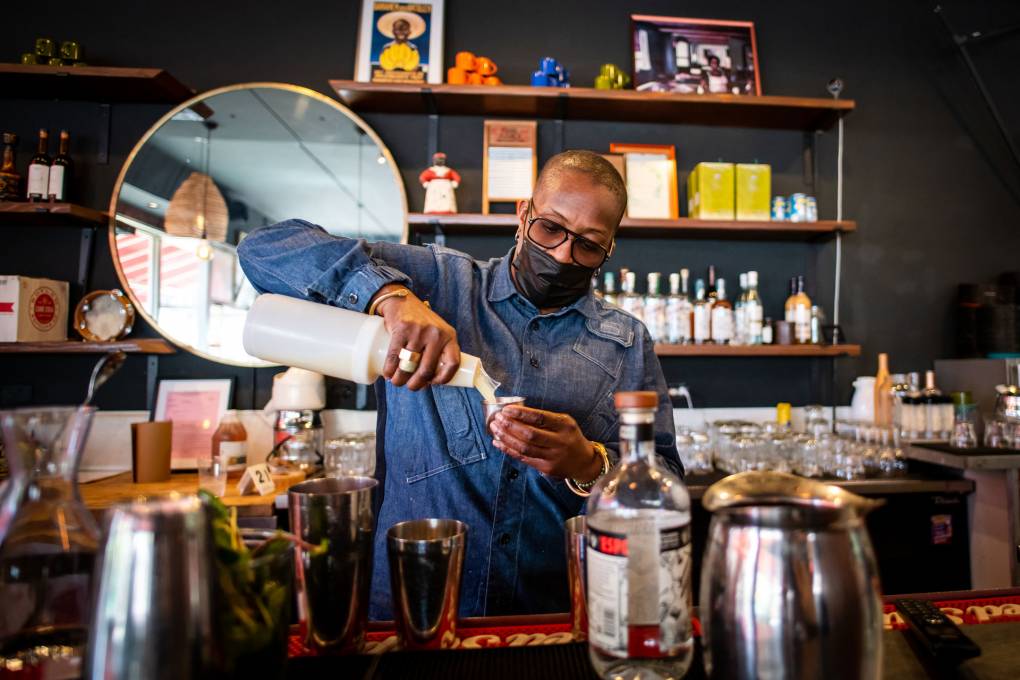
"caption": "Miss Ollie's owner Sarah Kirnon will close her landmark restaurant at the end of March.",
"description": null,
"title": "MissOllies",
"credit": "Beth LaBerge/KQED",
"status": "inherit",
"altTag": "A Black woman pours sauce into a ramekin behind a crowded bar at a restaurant",
"isLoading": false,
"fetchFailed": false
},
"arts_13910373": {
"type": "attachments",
"id": "arts_13910373",
"meta": {
"index": "attachments_1716263798",
"site": "arts",
"id": "13910373",
"found": true
},
"parent": 13910331,
"imgSizes": {
"twentyfourteen-full-width": {
"file": "https://ww2.kqed.org/app/uploads/sites/2/2022/03/Screen-Shot-2022-03-10-at-3.59.09-PM-1038x576.png",
"width": 1038,
"mimeType": "image/png",
"height": 576
},
"thumbnail": {
"file": "https://ww2.kqed.org/app/uploads/sites/2/2022/03/Screen-Shot-2022-03-10-at-3.59.09-PM-160x101.png",
"width": 160,
"mimeType": "image/png",
"height": 101
},
"post-thumbnail": {
"file": "https://ww2.kqed.org/app/uploads/sites/2/2022/03/Screen-Shot-2022-03-10-at-3.59.09-PM-672x372.png",
"width": 672,
"mimeType": "image/png",
"height": 372
},
"kqedFullSize": {
"file": "https://ww2.kqed.org/app/uploads/sites/2/2022/03/Screen-Shot-2022-03-10-at-3.59.09-PM.png",
"width": 1554,
"height": 982
},
"large": {
"file": "https://ww2.kqed.org/app/uploads/sites/2/2022/03/Screen-Shot-2022-03-10-at-3.59.09-PM-1020x645.png",
"width": 1020,
"mimeType": "image/png",
"height": 645
},
"1536x1536": {
"file": "https://ww2.kqed.org/app/uploads/sites/2/2022/03/Screen-Shot-2022-03-10-at-3.59.09-PM-1536x971.png",
"width": 1536,
"mimeType": "image/png",
"height": 971
},
"medium": {
"file": "https://ww2.kqed.org/app/uploads/sites/2/2022/03/Screen-Shot-2022-03-10-at-3.59.09-PM-800x506.png",
"width": 800,
"mimeType": "image/png",
"height": 506
},
"medium_large": {
"file": "https://ww2.kqed.org/app/uploads/sites/2/2022/03/Screen-Shot-2022-03-10-at-3.59.09-PM-768x485.png",
"width": 768,
"mimeType": "image/png",
"height": 485
}
},
"publishDate": 1646956755,
"modified": 1646965201,
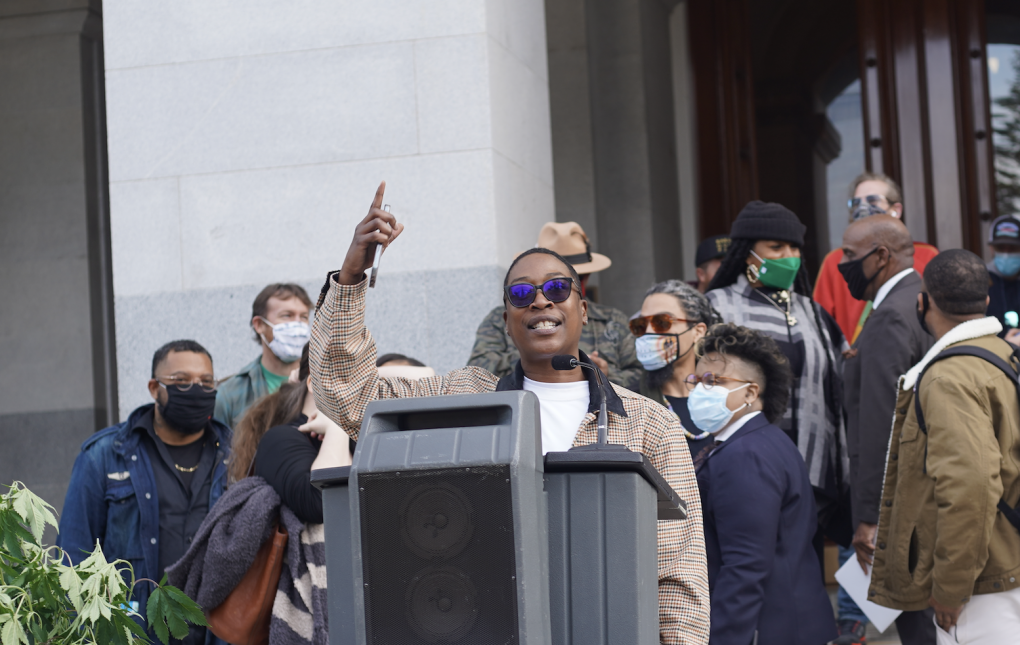
"caption": "Chaney Turner speaks in front of California's State Capitol Building in Sacramento during a protest of high cannabis taxes in January of this year. ",
"description": "Chaney Turner speaks in front of California's State Capitol Building in Sacramento during a protest of high cannabis taxes in January of this year. ",
"title": "Chaney Turner speaks in front of California's State Capitol Building in Sacramento during a protest of high cannabis taxes in January of this year.",
"credit": "Pendarvis Harshaw",
"status": "inherit",
"altTag": "Chaney Turner speaks in front of California's State Capitol Building in Sacramento during a protest of high cannabis taxes in January of this year.",
"isLoading": false,
"fetchFailed": false
},
"arts_13910289": {
"type": "attachments",
"id": "arts_13910289",
"meta": {
"index": "attachments_1716263798",
"site": "arts",
"id": "13910289",
"found": true
},
"parent": 13910282,
"imgSizes": {
"twentyfourteen-full-width": {
"file": "https://ww2.kqed.org/app/uploads/sites/2/2022/03/IMG_6770-1038x576.jpg",
"width": 1038,
"mimeType": "image/jpeg",
"height": 576
},
"thumbnail": {
"file": "https://ww2.kqed.org/app/uploads/sites/2/2022/03/IMG_6770-160x109.jpg",
"width": 160,
"mimeType": "image/jpeg",
"height": 109
},
"post-thumbnail": {
"file": "https://ww2.kqed.org/app/uploads/sites/2/2022/03/IMG_6770-672x372.jpg",
"width": 672,
"mimeType": "image/jpeg",
"height": 372
},
"kqedFullSize": {
"file": "https://ww2.kqed.org/app/uploads/sites/2/2022/03/IMG_6770-scaled-e1646778755336.jpg",
"width": 1920,
"height": 1309
},
"2048x2048": {
"file": "https://ww2.kqed.org/app/uploads/sites/2/2022/03/IMG_6770-2048x1396.jpg",
"width": 2048,
"mimeType": "image/jpeg",
"height": 1396
},
"large": {
"file": "https://ww2.kqed.org/app/uploads/sites/2/2022/03/IMG_6770-1020x695.jpg",
"width": 1020,
"mimeType": "image/jpeg",
"height": 695
},
"1536x1536": {
"file": "https://ww2.kqed.org/app/uploads/sites/2/2022/03/IMG_6770-1536x1047.jpg",
"width": 1536,
"mimeType": "image/jpeg",
"height": 1047
},
"full-width": {
"file": "https://ww2.kqed.org/app/uploads/sites/2/2022/03/IMG_6770-1920x1309.jpg",
"width": 1920,
"mimeType": "image/jpeg",
"height": 1309
},
"medium": {
"file": "https://ww2.kqed.org/app/uploads/sites/2/2022/03/IMG_6770-800x545.jpg",
"width": 800,
"mimeType": "image/jpeg",
"height": 545
},
"medium_large": {
"file": "https://ww2.kqed.org/app/uploads/sites/2/2022/03/IMG_6770-768x523.jpg",
"width": 768,
"mimeType": "image/jpeg",
"height": 523
}
},
"publishDate": 1646778730,
"modified": 1646779694,
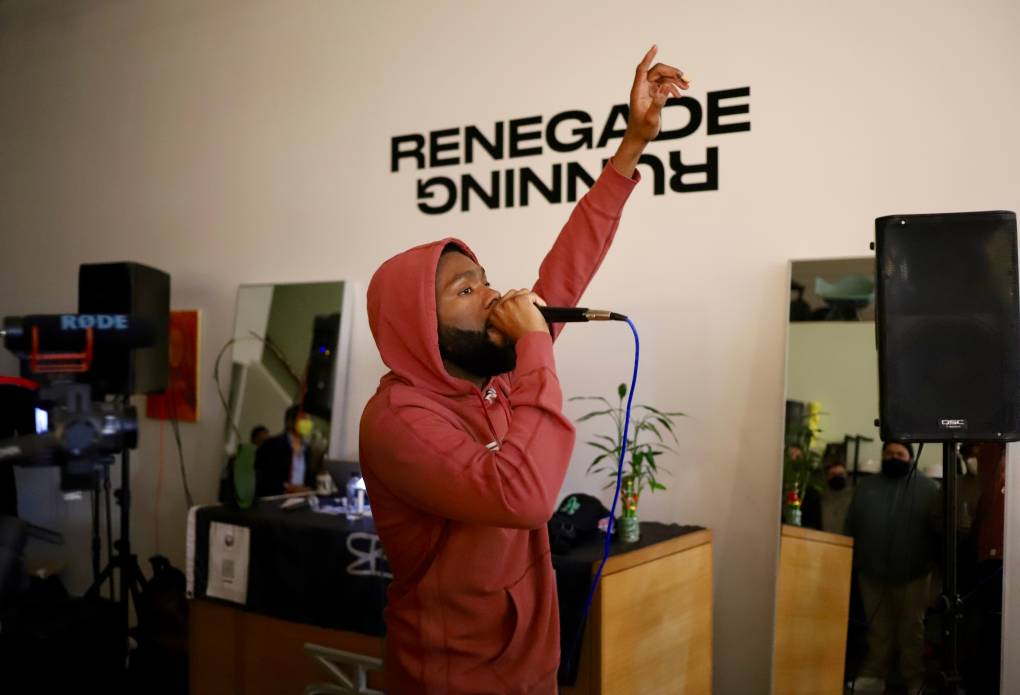
"caption": "Nimsins performs at Renegade Running in Oakland on First Friday, Feb. 4.",
"description": null,
"title": "IMG_6770",
"credit": "Alan Chazaro",
"status": "inherit",
"altTag": "Nimsins raps into the microphone at a sneaker boutique.",
"isLoading": false,
"fetchFailed": false
},
"arts_13910051": {
"type": "attachments",
"id": "arts_13910051",
"meta": {
"index": "attachments_1716263798",
"site": "arts",
"id": "13910051",
"found": true
},
"parent": 13909645,
"imgSizes": {
"twentyfourteen-full-width": {
"file": "https://ww2.kqed.org/app/uploads/sites/2/2022/03/IMG_8361-1038x576.jpg",
"width": 1038,
"mimeType": "image/jpeg",
"height": 576
},
"thumbnail": {
"file": "https://ww2.kqed.org/app/uploads/sites/2/2022/03/IMG_8361-160x120.jpg",
"width": 160,
"mimeType": "image/jpeg",
"height": 120
},
"post-thumbnail": {
"file": "https://ww2.kqed.org/app/uploads/sites/2/2022/03/IMG_8361-672x372.jpg",
"width": 672,
"mimeType": "image/jpeg",
"height": 372
},
"kqedFullSize": {
"file": "https://ww2.kqed.org/app/uploads/sites/2/2022/03/IMG_8361.jpg",
"width": 1600,
"height": 1200
},
"large": {
"file": "https://ww2.kqed.org/app/uploads/sites/2/2022/03/IMG_8361-1020x765.jpg",
"width": 1020,
"mimeType": "image/jpeg",
"height": 765
},
"1536x1536": {
"file": "https://ww2.kqed.org/app/uploads/sites/2/2022/03/IMG_8361-1536x1152.jpg",
"width": 1536,
"mimeType": "image/jpeg",
"height": 1152
},
"medium": {
"file": "https://ww2.kqed.org/app/uploads/sites/2/2022/03/IMG_8361-800x600.jpg",
"width": 800,
"mimeType": "image/jpeg",
"height": 600
},
"medium_large": {
"file": "https://ww2.kqed.org/app/uploads/sites/2/2022/03/IMG_8361-768x576.jpg",
"width": 768,
"mimeType": "image/jpeg",
"height": 576
}
},
"publishDate": 1646347204,
"modified": 1646585242,
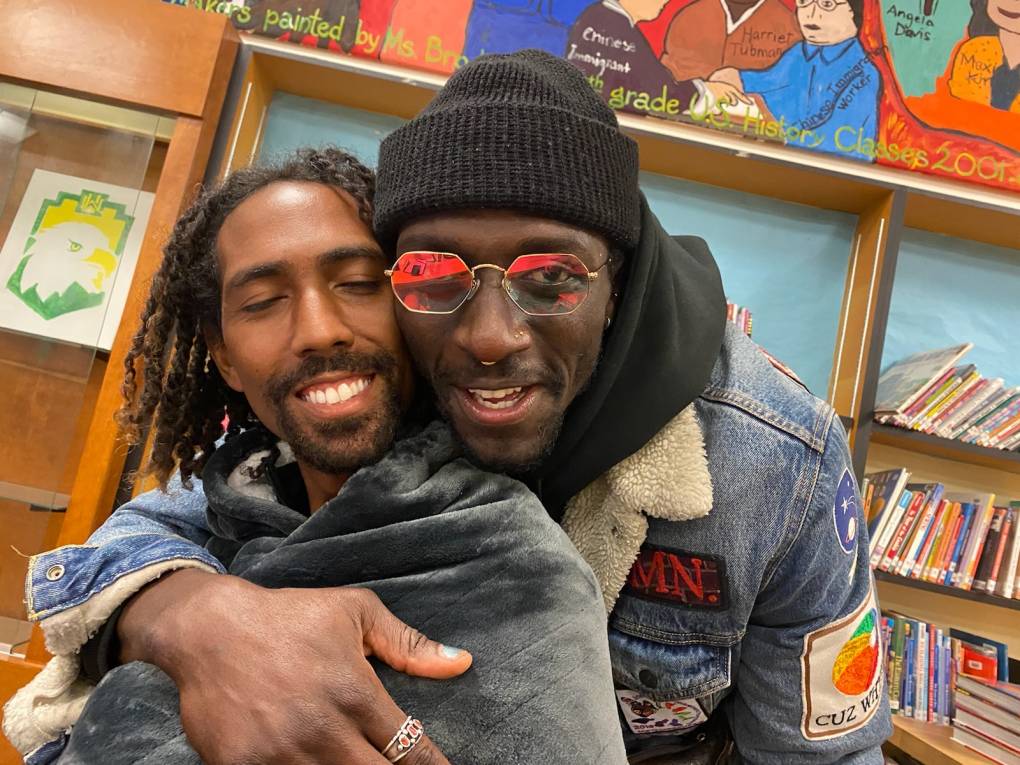
"caption": "School administrator Moses Omolade and educator Maurice Andre San-chez share an embrace inside of Westlake Middle school's library on February 18, 2022-- the day the OUSD school board voted on the planned closure of a number of schools.",
"description": "School administrator Moses Omolade and educator Maurice Andre San-chez share an embrace inside of Westlake Middle school's library on February 18, 2022-- the day the OUSD school board voted on the planned closure of a number of schools.",
"title": "School administrator Moses Omolade and educator Maurice Andre San-chez share an embrace inside of Westlake Middle school's library on February 18, 2022-- the day the OUSD school board voted on the planned closure of a number of schools.",
"credit": "Andre Singleton",
"status": "inherit",
"altTag": "School administrator Moses Omolade and educator Maurice Andre San-chez share an embrace inside of Westlake Middle school's library on February 18, 2022-- the day the OUSD school board voted on the planned closure of a number of schools.",
"isLoading": false,
"fetchFailed": false
},
"arts_13910020": {
"type": "attachments",
"id": "arts_13910020",
"meta": {
"index": "attachments_1716263798",
"site": "arts",
"id": "13910020",
"found": true
},
"parent": 13910010,
"imgSizes": {
"thumbnail": {
"file": "https://ww2.kqed.org/app/uploads/sites/2/2022/03/TraskTalk.AriMarcopoulos-160x102.jpg",
"width": 160,
"mimeType": "image/jpeg",
"height": 102
},
"post-thumbnail": {
"file": "https://ww2.kqed.org/app/uploads/sites/2/2022/03/TraskTalk.AriMarcopoulos-672x372.jpg",
"width": 672,
"mimeType": "image/jpeg",
"height": 372
},
"kqedFullSize": {
"file": "https://ww2.kqed.org/app/uploads/sites/2/2022/03/TraskTalk.AriMarcopoulos.jpg",
"width": 800,
"height": 508
},
"medium_large": {
"file": "https://ww2.kqed.org/app/uploads/sites/2/2022/03/TraskTalk.AriMarcopoulos-768x488.jpg",
"width": 768,
"mimeType": "image/jpeg",
"height": 488
}
},
"publishDate": 1646335226,
"modified": 1646337427,
"caption": "Trash Talk plays during Crybaby's opening weekend on Sunday, March 6, part of an eclectic, inclusive calendar of shows at the former Uptown Nightclub site in Oakland. ",
"description": null,
"title": "TraskTalk.AriMarcopoulos",
"credit": "Ari Marcopoulos",
"status": "inherit",
"altTag": "Four young men pose for the camera",
"isLoading": false,
"fetchFailed": false
},
"arts_13909802": {
"type": "attachments",
"id": "arts_13909802",
"meta": {
"index": "attachments_1716263798",
"site": "arts",
"id": "13909802",
"found": true
},
"parent": 13909788,
"imgSizes": {
"twentyfourteen-full-width": {
"file": "https://ww2.kqed.org/app/uploads/sites/2/2022/02/GettyImages-1304052297-1038x576.jpg",
"width": 1038,
"mimeType": "image/jpeg",
"height": 576
},
"thumbnail": {
"file": "https://ww2.kqed.org/app/uploads/sites/2/2022/02/GettyImages-1304052297-160x126.jpg",
"width": 160,
"mimeType": "image/jpeg",
"height": 126
},
"post-thumbnail": {
"file": "https://ww2.kqed.org/app/uploads/sites/2/2022/02/GettyImages-1304052297-672x372.jpg",
"width": 672,
"mimeType": "image/jpeg",
"height": 372
},
"kqedFullSize": {
"file": "https://ww2.kqed.org/app/uploads/sites/2/2022/02/GettyImages-1304052297-scaled.jpg",
"width": 2560,
"height": 2021
},
"2048x2048": {
"file": "https://ww2.kqed.org/app/uploads/sites/2/2022/02/GettyImages-1304052297-2048x1617.jpg",
"width": 2048,
"mimeType": "image/jpeg",
"height": 1617
},
"large": {
"file": "https://ww2.kqed.org/app/uploads/sites/2/2022/02/GettyImages-1304052297-1020x805.jpg",
"width": 1020,
"mimeType": "image/jpeg",
"height": 805
},
"1536x1536": {
"file": "https://ww2.kqed.org/app/uploads/sites/2/2022/02/GettyImages-1304052297-1536x1212.jpg",
"width": 1536,
"mimeType": "image/jpeg",
"height": 1212
},
"full-width": {
"file": "https://ww2.kqed.org/app/uploads/sites/2/2022/02/GettyImages-1304052297-1920x1516.jpg",
"width": 1920,
"mimeType": "image/jpeg",
"height": 1516
},
"medium": {
"file": "https://ww2.kqed.org/app/uploads/sites/2/2022/02/GettyImages-1304052297-800x631.jpg",
"width": 800,
"mimeType": "image/jpeg",
"height": 631
},
"medium_large": {
"file": "https://ww2.kqed.org/app/uploads/sites/2/2022/02/GettyImages-1304052297-768x606.jpg",
"width": 768,
"mimeType": "image/jpeg",
"height": 606
}
},
"publishDate": 1645827330,
"modified": 1645827425,
"caption": "(L-R) Tupac Shakur, MC Hammer and Snoop Dogg at the American Music Awards in Los Angeles, 1996.",
"description": null,
"title": "(L-R) Tupac Shakur, MC Hammer and Snoop Dogg at the American Music Awards in Los Angeles, 1996.",
"credit": "Ron Galella, Ltd./Ron Galella Collection via Getty Images",
"status": "inherit",
"altTag": null,
"isLoading": false,
"fetchFailed": false
},
"arts_13909870": {
"type": "attachments",
"id": "arts_13909870",
"meta": {
"index": "attachments_1716263798",
"site": "arts",
"id": "13909870",
"found": true
},
"parent": 13909853,
"imgSizes": {
"twentyfourteen-full-width": {
"file": "https://ww2.kqed.org/app/uploads/sites/2/2022/02/BlackJoyParade-21-1038x576.jpg",
"width": 1038,
"mimeType": "image/jpeg",
"height": 576
},
"thumbnail": {
"file": "https://ww2.kqed.org/app/uploads/sites/2/2022/02/BlackJoyParade-21-160x90.jpg",
"width": 160,
"mimeType": "image/jpeg",
"height": 90
},
"post-thumbnail": {
"file": "https://ww2.kqed.org/app/uploads/sites/2/2022/02/BlackJoyParade-21-672x372.jpg",
"width": 672,
"mimeType": "image/jpeg",
"height": 372
},
"kqedFullSize": {
"file": "https://ww2.kqed.org/app/uploads/sites/2/2022/02/BlackJoyParade-21.jpg",
"width": 1920,
"height": 1080
},
"large": {
"file": "https://ww2.kqed.org/app/uploads/sites/2/2022/02/BlackJoyParade-21-1020x574.jpg",
"width": 1020,
"mimeType": "image/jpeg",
"height": 574
},
"1536x1536": {
"file": "https://ww2.kqed.org/app/uploads/sites/2/2022/02/BlackJoyParade-21-1536x864.jpg",
"width": 1536,
"mimeType": "image/jpeg",
"height": 864
},
"medium": {
"file": "https://ww2.kqed.org/app/uploads/sites/2/2022/02/BlackJoyParade-21-800x450.jpg",
"width": 800,
"mimeType": "image/jpeg",
"height": 450
},
"medium_large": {
"file": "https://ww2.kqed.org/app/uploads/sites/2/2022/02/BlackJoyParade-21-768x432.jpg",
"width": 768,
"mimeType": "image/jpeg",
"height": 432
}
},
"publishDate": 1646087819,
"modified": 1646155403,
"caption": "Briana Franklin and Izabel Eisner strut down Broadway during the fifth annual Black Joy Parade in downtown Oakland on Feb. 27, 2022. Both Franklin and Eisner walked in the parade as part of the Melan-aid group.",
"description": null,
"title": "BlackJoyParade-21",
"credit": "Amaya Edwards",
"status": "inherit",
"altTag": "Two people dressed in yellow and flowers pose",
"isLoading": false,
"fetchFailed": false
},
"arts_13909270": {
"type": "attachments",
"id": "arts_13909270",
"meta": {
"index": "attachments_1716263798",
"site": "arts",
"id": "13909270",
"found": true
},
"parent": 13909254,
"imgSizes": {
"twentyfourteen-full-width": {
"file": "https://ww2.kqed.org/app/uploads/sites/2/2022/02/Screen-Shot-2022-02-10-at-6.14.32-PM-1038x576.png",
"width": 1038,
"mimeType": "image/png",
"height": 576
},
"thumbnail": {
"file": "https://ww2.kqed.org/app/uploads/sites/2/2022/02/Screen-Shot-2022-02-10-at-6.14.32-PM-160x104.png",
"width": 160,
"mimeType": "image/png",
"height": 104
},
"post-thumbnail": {
"file": "https://ww2.kqed.org/app/uploads/sites/2/2022/02/Screen-Shot-2022-02-10-at-6.14.32-PM-672x372.png",
"width": 672,
"mimeType": "image/png",
"height": 372
},
"kqedFullSize": {
"file": "https://ww2.kqed.org/app/uploads/sites/2/2022/02/Screen-Shot-2022-02-10-at-6.14.32-PM.png",
"width": 1774,
"height": 1150
},
"large": {
"file": "https://ww2.kqed.org/app/uploads/sites/2/2022/02/Screen-Shot-2022-02-10-at-6.14.32-PM-1020x661.png",
"width": 1020,
"mimeType": "image/png",
"height": 661
},
"1536x1536": {
"file": "https://ww2.kqed.org/app/uploads/sites/2/2022/02/Screen-Shot-2022-02-10-at-6.14.32-PM-1536x996.png",
"width": 1536,
"mimeType": "image/png",
"height": 996
},
"medium": {
"file": "https://ww2.kqed.org/app/uploads/sites/2/2022/02/Screen-Shot-2022-02-10-at-6.14.32-PM-800x519.png",
"width": 800,
"mimeType": "image/png",
"height": 519
},
"medium_large": {
"file": "https://ww2.kqed.org/app/uploads/sites/2/2022/02/Screen-Shot-2022-02-10-at-6.14.32-PM-768x498.png",
"width": 768,
"mimeType": "image/png",
"height": 498
}
},
"publishDate": 1644545679,
"modified": 1644545732,
"caption": "Oopz",
"description": null,
"title": "Oopz",
"credit": null,
"status": "inherit",
"altTag": "Oopz smiles at the camera, wearing a bright Hawiian shirt, a chunky necklace and a tye-die hat.",
"isLoading": false,
"fetchFailed": false
},
"arts_13852495": {
"type": "attachments",
"id": "arts_13852495",
"meta": {
"index": "attachments_1716263798",
"site": "arts",
"id": "13852495",
"found": true
},
"parent": 13852433,
"imgSizes": {
"twentyfourteen-full-width": {
"file": "https://ww2.kqed.org/app/uploads/sites/2/2019/03/AdrianBurrell.MAIN_-1038x576.jpg",
"width": 1038,
"mimeType": "image/jpeg",
"height": 576
},
"thumbnail": {
"file": "https://ww2.kqed.org/app/uploads/sites/2/2019/03/AdrianBurrell.MAIN_-160x90.jpg",
"width": 160,
"mimeType": "image/jpeg",
"height": 90
},
"post-thumbnail": {
"file": "https://ww2.kqed.org/app/uploads/sites/2/2019/03/AdrianBurrell.MAIN_-672x372.jpg",
"width": 672,
"mimeType": "image/jpeg",
"height": 372
},
"kqedFullSize": {
"file": "https://ww2.kqed.org/app/uploads/sites/2/2019/03/AdrianBurrell.MAIN_.jpg",
"width": 1920,
"height": 1080
},
"large": {
"file": "https://ww2.kqed.org/app/uploads/sites/2/2019/03/AdrianBurrell.MAIN_-1020x574.jpg",
"width": 1020,
"mimeType": "image/jpeg",
"height": 574
},
"complete_open_graph": {
"file": "https://ww2.kqed.org/app/uploads/sites/2/2019/03/AdrianBurrell.MAIN_-1200x675.jpg",
"width": 1200,
"mimeType": "image/jpeg",
"height": 675
},
"guest-author-50": {
"file": "https://ww2.kqed.org/app/uploads/sites/2/2019/03/AdrianBurrell.MAIN_-50x50.jpg",
"width": 50,
"mimeType": "image/jpeg",
"height": 50
},
"guest-author-96": {
"file": "https://ww2.kqed.org/app/uploads/sites/2/2019/03/AdrianBurrell.MAIN_-96x96.jpg",
"width": 96,
"mimeType": "image/jpeg",
"height": 96
},
"medium": {
"file": "https://ww2.kqed.org/app/uploads/sites/2/2019/03/AdrianBurrell.MAIN_-800x450.jpg",
"width": 800,
"mimeType": "image/jpeg",
"height": 450
},
"guest-author-64": {
"file": "https://ww2.kqed.org/app/uploads/sites/2/2019/03/AdrianBurrell.MAIN_-64x64.jpg",
"width": 64,
"mimeType": "image/jpeg",
"height": 64
},
"guest-author-32": {
"file": "https://ww2.kqed.org/app/uploads/sites/2/2019/03/AdrianBurrell.MAIN_-32x32.jpg",
"width": 32,
"mimeType": "image/jpeg",
"height": 32
},
"full-width": {
"file": "https://ww2.kqed.org/app/uploads/sites/2/2019/03/AdrianBurrell.MAIN_-1920x1080.jpg",
"width": 1920,
"mimeType": "image/jpeg",
"height": 1080
},
"medium_large": {
"file": "https://ww2.kqed.org/app/uploads/sites/2/2019/03/AdrianBurrell.MAIN_-768x432.jpg",
"width": 768,
"mimeType": "image/jpeg",
"height": 432
},
"guest-author-128": {
"file": "https://ww2.kqed.org/app/uploads/sites/2/2019/03/AdrianBurrell.MAIN_-128x128.jpg",
"width": 128,
"mimeType": "image/jpeg",
"height": 128
}
},
"publishDate": 1551998420,
"modified": 1551998437,
"caption": "Adrian Burrell outside of Vallejo City Hall.",
"description": "Adrian Burrell outside of Vallejo City Hall.",
"title": "AdrianBurrell.MAIN",
"credit": "Pendarvis Harshaw/KQED",
"status": "inherit",
"isLoading": false,
"fetchFailed": false
},
"arts_13908606": {
"type": "attachments",
"id": "arts_13908606",
"meta": {
"index": "attachments_1716263798",
"site": "arts",
"id": "13908606",
"found": true
},
"parent": 0,
"imgSizes": {
"twentyfourteen-full-width": {
"file": "https://ww2.kqed.org/app/uploads/sites/2/2022/01/mistah-fab-1-1038x576.jpg",
"width": 1038,
"mimeType": "image/jpeg",
"height": 576
},
"thumbnail": {
"file": "https://ww2.kqed.org/app/uploads/sites/2/2022/01/mistah-fab-1-160x107.jpg",
"width": 160,
"mimeType": "image/jpeg",
"height": 107
},
"post-thumbnail": {
"file": "https://ww2.kqed.org/app/uploads/sites/2/2022/01/mistah-fab-1-672x372.jpg",
"width": 672,
"mimeType": "image/jpeg",
"height": 372
},
"kqedFullSize": {
"file": "https://ww2.kqed.org/app/uploads/sites/2/2022/01/mistah-fab-1.jpg",
"width": 1920,
"height": 1280
},
"large": {
"file": "https://ww2.kqed.org/app/uploads/sites/2/2022/01/mistah-fab-1-1020x680.jpg",
"width": 1020,
"mimeType": "image/jpeg",
"height": 680
},
"1536x1536": {
"file": "https://ww2.kqed.org/app/uploads/sites/2/2022/01/mistah-fab-1-1536x1024.jpg",
"width": 1536,
"mimeType": "image/jpeg",
"height": 1024
},
"medium": {
"file": "https://ww2.kqed.org/app/uploads/sites/2/2022/01/mistah-fab-1-800x533.jpg",
"width": 800,
"mimeType": "image/jpeg",
"height": 533
},
"medium_large": {
"file": "https://ww2.kqed.org/app/uploads/sites/2/2022/01/mistah-fab-1-768x512.jpg",
"width": 768,
"mimeType": "image/jpeg",
"height": 512
}
},
"publishDate": 1643236281,
"modified": 1643236324,
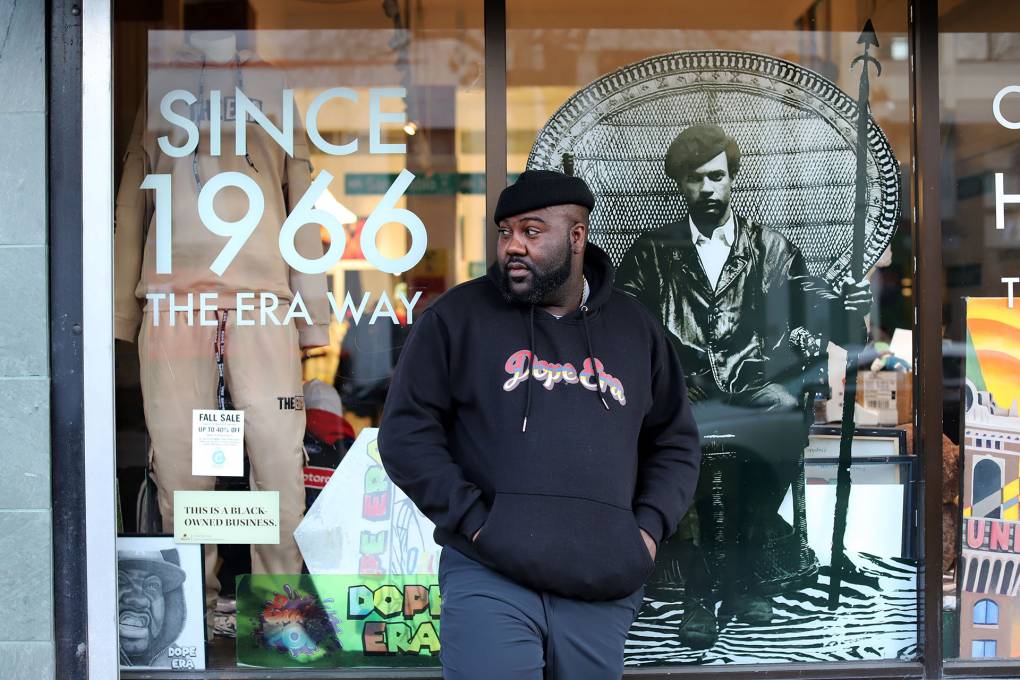
"caption": "Mistah F.A.B. outside of his streetwear boutique, Dope Era, on Jan. 20, 2022. ",
"description": null,
"title": "mistah fab 1",
"credit": "Nastia Voynovskaya",
"status": "inherit",
"altTag": null,
"isLoading": false,
"fetchFailed": false
},
"arts_13908525": {
"type": "attachments",
"id": "arts_13908525",
"meta": {
"index": "attachments_1716263798",
"site": "arts",
"id": "13908525",
"found": true
},
"parent": 13908524,
"imgSizes": {
"twentyfourteen-full-width": {
"file": "https://ww2.kqed.org/app/uploads/sites/2/2022/01/amyschenneider-498f60f50d3708f6e8489599c633c4d3045683f4-1038x576.jpg",
"width": 1038,
"mimeType": "image/jpeg",
"height": 576
},
"thumbnail": {
"file": "https://ww2.kqed.org/app/uploads/sites/2/2022/01/amyschenneider-498f60f50d3708f6e8489599c633c4d3045683f4-160x120.jpg",
"width": 160,
"mimeType": "image/jpeg",
"height": 120
},
"post-thumbnail": {
"file": "https://ww2.kqed.org/app/uploads/sites/2/2022/01/amyschenneider-498f60f50d3708f6e8489599c633c4d3045683f4-672x372.jpg",
"width": 672,
"mimeType": "image/jpeg",
"height": 372
},
"kqedFullSize": {
"file": "https://ww2.kqed.org/app/uploads/sites/2/2022/01/amyschenneider-498f60f50d3708f6e8489599c633c4d3045683f4.jpg",
"width": 1765,
"height": 1324
},
"large": {
"file": "https://ww2.kqed.org/app/uploads/sites/2/2022/01/amyschenneider-498f60f50d3708f6e8489599c633c4d3045683f4-1020x765.jpg",
"width": 1020,
"mimeType": "image/jpeg",
"height": 765
},
"1536x1536": {
"file": "https://ww2.kqed.org/app/uploads/sites/2/2022/01/amyschenneider-498f60f50d3708f6e8489599c633c4d3045683f4-1536x1152.jpg",
"width": 1536,
"mimeType": "image/jpeg",
"height": 1152
},
"medium": {
"file": "https://ww2.kqed.org/app/uploads/sites/2/2022/01/amyschenneider-498f60f50d3708f6e8489599c633c4d3045683f4-800x600.jpg",
"width": 800,
"mimeType": "image/jpeg",
"height": 600
},
"medium_large": {
"file": "https://ww2.kqed.org/app/uploads/sites/2/2022/01/amyschenneider-498f60f50d3708f6e8489599c633c4d3045683f4-768x576.jpg",
"width": 768,
"mimeType": "image/jpeg",
"height": 576
}
},
"publishDate": 1643136373,
"modified": 1643136745,
"caption": "Amy Schneider will seek to continue her historic winning streak Tuesday night on 'Jeopardy!'",
"description": null,
"title": "Amy Schneider will seek to continue her historic winning streak Tuesday night on 'Jeopardy!'",
"credit": "Casey Durkin/Jeopardy Productions, Inc.",
"status": "inherit",
"altTag": "A woman smiles broadly from behind a game show podium, $30,000 written on the screen in front of her. She wears a black sweater and pearl necklace with matching earrings. Behind her hangs a dark blue curtain.",
"isLoading": false,
"fetchFailed": false
},
"arts_13908448": {
"type": "attachments",
"id": "arts_13908448",
"meta": {
"index": "attachments_1716263798",
"site": "arts",
"id": "13908448",
"found": true
},
"parent": 13908432,
"imgSizes": {
"twentyfourteen-full-width": {
"file": "https://ww2.kqed.org/app/uploads/sites/2/2022/01/kornerbar_featured-1038x576.jpg",
"width": 1038,
"mimeType": "image/jpeg",
"height": 576
},
"thumbnail": {
"file": "https://ww2.kqed.org/app/uploads/sites/2/2022/01/kornerbar_featured-160x107.jpg",
"width": 160,
"mimeType": "image/jpeg",
"height": 107
},
"post-thumbnail": {
"file": "https://ww2.kqed.org/app/uploads/sites/2/2022/01/kornerbar_featured-672x372.jpg",
"width": 672,
"mimeType": "image/jpeg",
"height": 372
},
"kqedFullSize": {
"file": "https://ww2.kqed.org/app/uploads/sites/2/2022/01/kornerbar_featured-scaled.jpg",
"width": 2560,
"height": 1707
},
"2048x2048": {
"file": "https://ww2.kqed.org/app/uploads/sites/2/2022/01/kornerbar_featured-2048x1365.jpg",
"width": 2048,
"mimeType": "image/jpeg",
"height": 1365
},
"large": {
"file": "https://ww2.kqed.org/app/uploads/sites/2/2022/01/kornerbar_featured-1020x680.jpg",
"width": 1020,
"mimeType": "image/jpeg",
"height": 680
},
"1536x1536": {
"file": "https://ww2.kqed.org/app/uploads/sites/2/2022/01/kornerbar_featured-1536x1024.jpg",
"width": 1536,
"mimeType": "image/jpeg",
"height": 1024
},
"full-width": {
"file": "https://ww2.kqed.org/app/uploads/sites/2/2022/01/kornerbar_featured-1920x1280.jpg",
"width": 1920,
"mimeType": "image/jpeg",
"height": 1280
},
"medium": {
"file": "https://ww2.kqed.org/app/uploads/sites/2/2022/01/kornerbar_featured-800x533.jpg",
"width": 800,
"mimeType": "image/jpeg",
"height": 533
},
"medium_large": {
"file": "https://ww2.kqed.org/app/uploads/sites/2/2022/01/kornerbar_featured-768x512.jpg",
"width": 768,
"mimeType": "image/jpeg",
"height": 512
}
},
"publishDate": 1642798292,
"modified": 1642798486,
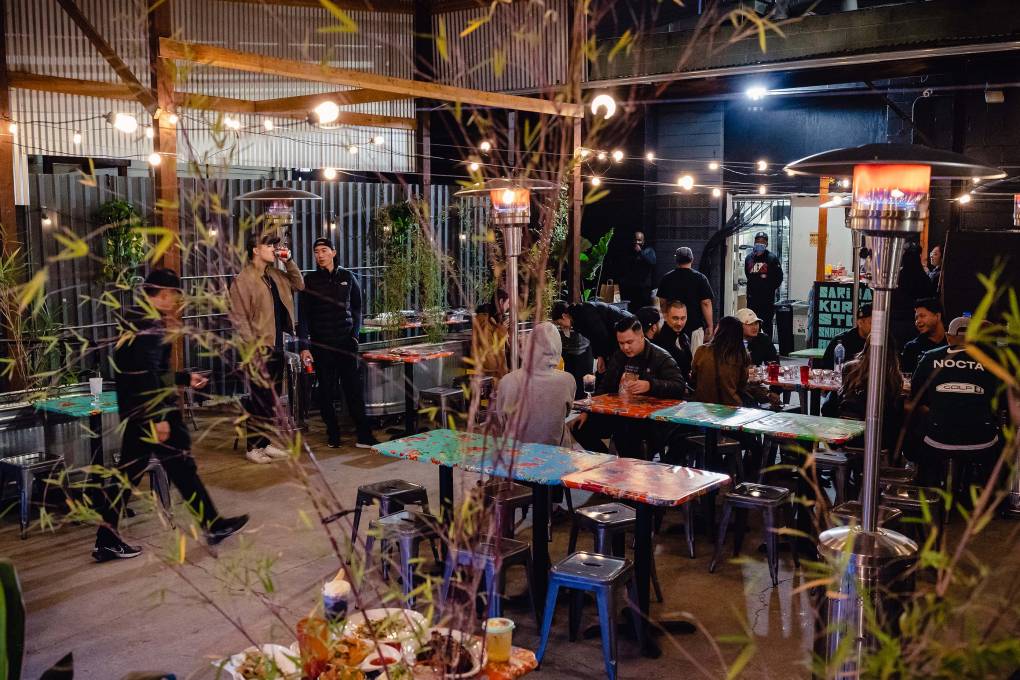
"caption": "Korner Kitchen & Bar has at least one thing ghost kitchens don't have: an outdoor bar and patio where customers can sit down to eat.",
"description": null,
"title": "kornerbar_featured",
"credit": "Korner Kitchen & Bar",
"status": "inherit",
"altTag": "Customers mingle on a bar's outdoor patio.",
"isLoading": false,
"fetchFailed": false
}
},
"audioPlayerReducer": {
"postId": "stream_live",
"isPaused": true,
"isPlaying": false,
"pfsActive": false,
"pledgeModalIsOpen": true,
"playerDrawerIsOpen": false,
"liveAudioPlayStartedAt": 0,
"liveAudioPlayContext": ""
},
"authorsReducer": {
"byline_arts_13908524": {
"type": "authors",
"id": "byline_arts_13908524",
"meta": {
"override": true
},
"slug": "byline_arts_13908524",
"name": "Rachel Treisman",
"isLoading": false
},
"gmeline": {
"type": "authors",
"id": "185",
"meta": {
"index": "authors_1716337520",
"id": "185",
"found": true
},
"name": "Gabe Meline",
"firstName": "Gabe",
"lastName": "Meline",
"slug": "gmeline",
"email": "gmeline@kqed.org",
"display_author_email": true,
"staff_mastheads": [
"arts"
],
"title": "Senior Editor, KQED Arts & Culture",
"bio": "Gabe Meline entered journalism at age 15 making photocopied zines, and has since earned awards from the Edward R. Murrow Awards, the Society for Professional Journalists, the Online Journalism Awards, the Association of Alternative Newsweeklies and the California Newspaper Publishers Association. Prior to KQED, he was the editor of the \u003cem>North Bay Bohemian\u003c/em> and a touring musician. He lives with his wife and daughter in his hometown of Santa Rosa, CA.",
"avatar": "https://secure.gravatar.com/avatar/5bebe57be0d8bc2dd318934feb47299e2d2d10cba28d09d8d7afb389a2ce2bdd?s=600&d=blank&r=g",
"twitter": null,
"bluesky": null,
"facebook": null,
"instagram": null,
"linkedin": null,
"sites": [
{
"site": "",
"roles": [
"editor"
]
},
{
"site": "arts",
"roles": [
"administrator"
]
},
{
"site": "artschool",
"roles": [
"editor"
]
},
{
"site": "news",
"roles": [
"author"
]
},
{
"site": "pop",
"roles": [
"editor"
]
},
{
"site": "bayareabites",
"roles": [
"editor"
]
},
{
"site": "food",
"roles": [
"editor"
]
},
{
"site": "liveblog",
"roles": [
"editor"
]
},
{
"site": "hiphop",
"roles": [
"editor"
]
}
],
"headData": {
"title": "Gabe Meline | KQED",
"description": "Senior Editor, KQED Arts & Culture",
"ogImgSrc": "https://secure.gravatar.com/avatar/5bebe57be0d8bc2dd318934feb47299e2d2d10cba28d09d8d7afb389a2ce2bdd?s=600&d=blank&r=g",
"twImgSrc": "https://secure.gravatar.com/avatar/5bebe57be0d8bc2dd318934feb47299e2d2d10cba28d09d8d7afb389a2ce2bdd?s=600&d=blank&r=g"
},
"isLoading": false,
"link": "/author/gmeline"
},
"ralexandra": {
"type": "authors",
"id": "11242",
"meta": {
"index": "authors_1716337520",
"id": "11242",
"found": true
},
"name": "Rae Alexandra",
"firstName": "Rae",
"lastName": "Alexandra",
"slug": "ralexandra",
"email": "ralexandra@kqed.org",
"display_author_email": true,
"staff_mastheads": [
"arts"
],
"title": "Reporter/Producer",
"bio": "Rae Alexandra is a Reporter/Producer for KQED Arts & Culture, and the creator/author of the \u003ca href=\"https://www.kqed.org/arts/program/rebel-girls-from-bay-area-history\">Rebel Girls From Bay Area History\u003c/a> and \u003ca href=\"https://www.kqed.org/bizarrebayarea\">Bizarre Bay Area\u003c/a> series. Her debut book, \u003ca href=\"https://citylights.com/politics-current-events-history/unsung-heroines35-women-who-changed/\">Unsung Heroines: 35 Women Who Changed the Bay Area\u003c/a> was published by City Lights in March 2026. In 2023, Rae was awarded an SPJ Excellence in Journalism Award for Arts & Culture. Rae was born and raised in Wales and subsequently — even after two decades in Northern California — still uses phrases that regularly baffle her coworkers.",
"avatar": "https://secure.gravatar.com/avatar/edfee8176c80cc0a382b051190f5341997df378a934a5774dcb0977732dfd401?s=600&d=blank&r=g",
"twitter": null,
"bluesky": null,
"facebook": null,
"instagram": null,
"linkedin": null,
"sites": [
{
"site": "arts",
"roles": [
"editor"
]
},
{
"site": "news",
"roles": [
"editor"
]
},
{
"site": "pop",
"roles": [
"editor"
]
},
{
"site": "bayareabites",
"roles": [
"editor"
]
},
{
"site": "science",
"roles": [
"editor"
]
}
],
"headData": {
"title": "Rae Alexandra | KQED",
"description": "Reporter/Producer",
"ogImgSrc": "https://secure.gravatar.com/avatar/edfee8176c80cc0a382b051190f5341997df378a934a5774dcb0977732dfd401?s=600&d=blank&r=g",
"twImgSrc": "https://secure.gravatar.com/avatar/edfee8176c80cc0a382b051190f5341997df378a934a5774dcb0977732dfd401?s=600&d=blank&r=g"
},
"isLoading": false,
"link": "/author/ralexandra"
},
"nvoynovskaya": {
"type": "authors",
"id": "11387",
"meta": {
"index": "authors_1716337520",
"id": "11387",
"found": true
},
"name": "Nastia Voynovskaya",
"firstName": "Nastia",
"lastName": "Voynovskaya",
"slug": "nvoynovskaya",
"email": "nvoynovskaya@kqed.org",
"display_author_email": false,
"staff_mastheads": [
"arts"
],
"title": "Editor and reporter",
"bio": "Nastia Voynovskaya is a reporter and editor at KQED Arts & Culture. She's been covering the arts in the Bay Area for over a decade, with a focus on music, queer culture, labor issues and grassroots organizing. She has edited KQED story series such as Trans Bay: A History of San Francisco's Gender-Diverse Community, and co-created KQED's Bay Area hip-hop history project, That's My Word. Nastia's work has been recognized by the Society of Professional Journalists and San Francisco Press Club. She holds a BA in comparative literature from UC Berkeley.",
"avatar": "https://secure.gravatar.com/avatar/5025ee460e5a85d69ca20ea6c6f2f80d7e17795c828f61ea3aecfcd924e9042e?s=600&d=blank&r=g",
"twitter": null,
"bluesky": null,
"facebook": null,
"instagram": "https://www.instagram.com/nananastia/",
"linkedin": null,
"sites": [
{
"site": "arts",
"roles": [
"administrator"
]
},
{
"site": "news",
"roles": [
"editor"
]
},
{
"site": "pop",
"roles": [
"administrator"
]
},
{
"site": "bayareabites",
"roles": [
"editor"
]
},
{
"site": "podcasts",
"roles": [
"editor"
]
},
{
"site": "hiphop",
"roles": [
"editor"
]
}
],
"headData": {
"title": "Nastia Voynovskaya | KQED",
"description": "Editor and reporter",
"ogImgSrc": "https://secure.gravatar.com/avatar/5025ee460e5a85d69ca20ea6c6f2f80d7e17795c828f61ea3aecfcd924e9042e?s=600&d=blank&r=g",
"twImgSrc": "https://secure.gravatar.com/avatar/5025ee460e5a85d69ca20ea6c6f2f80d7e17795c828f61ea3aecfcd924e9042e?s=600&d=blank&r=g"
},
"isLoading": false,
"link": "/author/nvoynovskaya"
},
"ogpenn": {
"type": "authors",
"id": "11491",
"meta": {
"index": "authors_1716337520",
"id": "11491",
"found": true
},
"name": "Pendarvis Harshaw",
"firstName": "Pendarvis",
"lastName": "Harshaw",
"slug": "ogpenn",
"email": "ogpenn@gmail.com",
"display_author_email": false,
"staff_mastheads": [
"arts"
],
"title": "Community Engagement Reporter",
"bio": "Pendarvis Harshaw is an educator, host and writer with KQED Arts.",
"avatar": "https://secure.gravatar.com/avatar/972b77ee8e3f346ae2b00622661187fbfabd059b5693bbdc1475ea7a722fd4cd?s=600&d=blank&r=g",
"twitter": null,
"bluesky": null,
"facebook": null,
"instagram": "ogpenn",
"linkedin": null,
"sites": [
{
"site": "arts",
"roles": [
"administrator"
]
},
{
"site": "news",
"roles": [
"editor"
]
},
{
"site": "bayareabites",
"roles": [
"author"
]
},
{
"site": "hiphop",
"roles": [
"editor"
]
}
],
"headData": {
"title": "Pendarvis Harshaw | KQED",
"description": "Community Engagement Reporter",
"ogImgSrc": "https://secure.gravatar.com/avatar/972b77ee8e3f346ae2b00622661187fbfabd059b5693bbdc1475ea7a722fd4cd?s=600&d=blank&r=g",
"twImgSrc": "https://secure.gravatar.com/avatar/972b77ee8e3f346ae2b00622661187fbfabd059b5693bbdc1475ea7a722fd4cd?s=600&d=blank&r=g"
},
"isLoading": false,
"link": "/author/ogpenn"
},
"mmedina": {
"type": "authors",
"id": "11528",
"meta": {
"index": "authors_1716337520",
"id": "11528",
"found": true
},
"name": "Marisol Medina-Cadena",
"firstName": "Marisol",
"lastName": "Medina-Cadena",
"slug": "mmedina",
"email": "mmedina@KQED.org",
"display_author_email": true,
"staff_mastheads": [],
"title": "Producer, Rightnowish Podcast",
"bio": "Marisol Medina-Cadena is a radio reporter and podcast producer. Before working at KQED, she produced for PBS member station, KCET, in Los Angeles. In 2017, Marisol won an Emmy Award for her work on the televised documentary, \u003cem>City Rising\u003c/em>, examining California's affordable housing crisis and the historical roots of gentrification.",
"avatar": "https://secure.gravatar.com/avatar/6c3db46a1cabb5e1fe9a365b5f4e681e?s=600&d=blank&r=g",
"twitter": "marisolreports",
"facebook": null,
"instagram": null,
"linkedin": null,
"sites": [
{
"site": "arts",
"roles": []
},
{
"site": "news",
"roles": [
"edit_others_posts"
]
}
],
"headData": {
"title": "Marisol Medina-Cadena | KQED",
"description": "Producer, Rightnowish Podcast",
"ogImgSrc": "https://secure.gravatar.com/avatar/6c3db46a1cabb5e1fe9a365b5f4e681e?s=600&d=blank&r=g",
"twImgSrc": "https://secure.gravatar.com/avatar/6c3db46a1cabb5e1fe9a365b5f4e681e?s=600&d=blank&r=g"
},
"isLoading": false,
"link": "/author/mmedina"
},
"ltsai": {
"type": "authors",
"id": "11743",
"meta": {
"index": "authors_1716337520",
"id": "11743",
"found": true
},
"name": "Luke Tsai",
"firstName": "Luke",
"lastName": "Tsai",
"slug": "ltsai",
"email": "ltsai@kqed.org",
"display_author_email": true,
"staff_mastheads": [
"arts"
],
"title": "Food Editor",
"bio": "Luke Tsai is KQED's food editor and resident stinky tofu connoisseur. Prior to KQED, he was an editor at Eater SF, \u003cem>San Francisco \u003c/em>magazine, and the \u003cem>East Bay Express\u003c/em>, and his work has also appeared in TASTE, the \u003cem>San Francisco Chronicle\u003c/em>, and the \u003cem>Best Food Writing\u003c/em> anthology. When he isn't writing or editing, you'll find him eating most everything he can get his hands on.",
"avatar": "https://secure.gravatar.com/avatar/1e59b45bf191526e7339d6ba46e33a57b2030d25c27660ecc64ea3cb863e34f7?s=600&d=blank&r=g",
"twitter": "theluketsai",
"bluesky": null,
"facebook": null,
"instagram": null,
"linkedin": null,
"sites": [
{
"site": "",
"roles": [
"editor"
]
},
{
"site": "arts",
"roles": [
"administrator"
]
},
{
"site": "news",
"roles": [
"editor",
"contributor"
]
},
{
"site": "bayareabites",
"roles": [
"editor"
]
},
{
"site": "food",
"roles": [
"editor"
]
}
],
"headData": {
"title": "Luke Tsai | KQED",
"description": "Food Editor",
"ogImgSrc": "https://secure.gravatar.com/avatar/1e59b45bf191526e7339d6ba46e33a57b2030d25c27660ecc64ea3cb863e34f7?s=600&d=blank&r=g",
"twImgSrc": "https://secure.gravatar.com/avatar/1e59b45bf191526e7339d6ba46e33a57b2030d25c27660ecc64ea3cb863e34f7?s=600&d=blank&r=g"
},
"isLoading": false,
"link": "/author/ltsai"
},
"achazaro": {
"type": "authors",
"id": "11748",
"meta": {
"index": "authors_1716337520",
"id": "11748",
"found": true
},
"name": "Alan Chazaro",
"firstName": "Alan",
"lastName": "Chazaro",
"slug": "achazaro",
"email": "agchazaro@gmail.com",
"display_author_email": true,
"staff_mastheads": [],
"title": "Food Writer and Reporter",
"bio": "Alan Chazaro is the author of \u003cem>This Is Not a Frank Ocean Cover Album\u003c/em> (Black Lawrence Press, 2019), \u003cem>Piñata Theory\u003c/em> (Black Lawrence Press, 2020), and \u003cem>Notes from the Eastern Span of the Bay Bridge\u003c/em> (Ghost City Press, 2021). He is a graduate of June Jordan’s Poetry for the People program at UC Berkeley and a former Lawrence Ferlinghetti Fellow at the University of San Francisco. He writes about sports, food, art, music, education, and culture while repping the Bay on \u003ca href=\"https://twitter.com/alan_chazaro\">Twitter\u003c/a> and \u003ca href=\"https://www.instagram.com/alan_chazaro/?hl=en\">Instagram\u003c/a> at @alan_chazaro.",
"avatar": "https://secure.gravatar.com/avatar/ea8b6dd970fc5c29e7a188e7d5861df7?s=600&d=blank&r=g",
"twitter": "alan_chazaro",
"facebook": null,
"instagram": null,
"linkedin": null,
"sites": [
{
"site": "arts",
"roles": [
"contributor"
]
},
{
"site": "news",
"roles": [
"editor"
]
}
],
"headData": {
"title": "Alan Chazaro | KQED",
"description": "Food Writer and Reporter",
"ogImgSrc": "https://secure.gravatar.com/avatar/ea8b6dd970fc5c29e7a188e7d5861df7?s=600&d=blank&r=g",
"twImgSrc": "https://secure.gravatar.com/avatar/ea8b6dd970fc5c29e7a188e7d5861df7?s=600&d=blank&r=g"
},
"isLoading": false,
"link": "/author/achazaro"
},
"jsorapuru": {
"type": "authors",
"id": "11792",
"meta": {
"index": "authors_1716337520",
"id": "11792",
"found": true
},
"name": "Julian E.J. Sorapuru",
"firstName": "Julian",
"lastName": "Sorapuru",
"slug": "jsorapuru",
"email": "jsorapuru@kqed.org",
"display_author_email": true,
"staff_mastheads": [],
"title": "Arts & Culture Reporter",
"bio": "Julian E.J. Sorapuru is an Arts & Culture Intern at KQED. Prior to joining KQED Arts, he interned at both POLITICO, covering transportation policy, and \u003cem>The Times-Picayune\u003c/em>, covering government and politics in his hometown of New Orleans, LA. Julian was the first and only Black male Editor-in-Chief in the 119 year history of the University of San Francisco's student newspaper, the\u003cem> San Francisco Foghorn\u003c/em>. He currently resides in San Francisco, CA and enjoys soccer, photography, and reading.",
"avatar": "https://secure.gravatar.com/avatar/e4d0156d1244f96b87927aa011d794a8?s=600&d=blank&r=g",
"twitter": "JulianSorapuru",
"facebook": null,
"instagram": null,
"linkedin": null,
"sites": [
{
"site": "arts",
"roles": [
"editor"
]
}
],
"headData": {
"title": "Julian E.J. Sorapuru | KQED",
"description": "Arts & Culture Reporter",
"ogImgSrc": "https://secure.gravatar.com/avatar/e4d0156d1244f96b87927aa011d794a8?s=600&d=blank&r=g",
"twImgSrc": "https://secure.gravatar.com/avatar/e4d0156d1244f96b87927aa011d794a8?s=600&d=blank&r=g"
},
"isLoading": false,
"link": "/author/jsorapuru"
},
"aedwards": {
"type": "authors",
"id": "11801",
"meta": {
"index": "authors_1716337520",
"id": "11801",
"found": true
},
"name": "Amaya Edwards",
"firstName": "Amaya Nicole",
"lastName": "Edwards",
"slug": "aedwards",
"email": "aedwards@KQED.org",
"display_author_email": false,
"staff_mastheads": [],
"title": "KQED Contributor",
"bio": null,
"avatar": "https://secure.gravatar.com/avatar/746b2cd877163e91ee874b957c10ce8c?s=600&d=blank&r=g",
"twitter": null,
"facebook": null,
"instagram": "amayaee",
"linkedin": null,
"sites": [
{
"site": "",
"roles": [
"editor"
]
},
{
"site": "arts",
"roles": []
}
],
"headData": {
"title": "Amaya Edwards | KQED",
"description": "KQED Contributor",
"ogImgSrc": "https://secure.gravatar.com/avatar/746b2cd877163e91ee874b957c10ce8c?s=600&d=blank&r=g",
"twImgSrc": "https://secure.gravatar.com/avatar/746b2cd877163e91ee874b957c10ce8c?s=600&d=blank&r=g"
},
"isLoading": false,
"link": "/author/aedwards"
}
},
"pagesReducer": {
"arts_tag_oakland": {
"type": "terms",
"id": "arts_1143",
"meta": {
"index": "terms_1716263798",
"site": "arts",
"id": "1143",
"score": 6.8845096
},
"featImg": null,
"name": "Oakland",
"description": null,
"taxonomy": "tag",
"headData": {
"twImgId": null,
"twTitle": null,
"ogTitle": null,
"ogImgId": null,
"twDescription": null,
"description": null,
"title": "Oakland Archives | KQED Arts",
"ogDescription": null
},
"ttid": 692,
"slug": "oakland",
"isLoading": false,
"title": "Oakland",
"pageMeta": {
"site": "arts",
"WpPageTemplate": "page-topic-editorial",
"currentPage": 36
},
"blocks": [
{
"blockName": "kqed/post-list",
"attrs": {
"layout": "cardArticle2",
"query": "posts/arts?tag=oakland",
"seeMore": false,
"paginated": true,
"page": 36
}
},
{
"blockName": "kqed/ad"
}
]
}
},
"pfsSessionReducer": {},
"postsReducer": {
"stream_live": {
"type": "live",
"id": "stream_live",
"audioUrl": "https://streams.kqed.org/kqedradio",
"title": "Live Stream",
"excerpt": "Live Stream information currently unavailable.",
"link": "/radio",
"featImg": "",
"label": {
"name": "KQED Live",
"link": "/"
}
},
"stream_kqedNewscast": {
"type": "posts",
"id": "stream_kqedNewscast",
"audioUrl": "https://www.kqed.org/.stream/anon/radio/RDnews/newscast.mp3?_=1",
"title": "KQED Newscast",
"featImg": "",
"label": {
"name": "88.5 FM",
"link": "/"
}
},
"arts_13910410": {
"type": "posts",
"id": "arts_13910410",
"meta": {
"index": "posts_1716263798",
"site": "arts",
"id": "13910410",
"score": null,
"sort": [
1647031899000
]
},
"parent": 0,
"labelTerm": {},
"blocks": [],
"publishDate": 1647031899,
"format": "standard",
"title": "Miss Ollie's Closes: The End of an Era for Oakland's Black and Brown Communities",
"headTitle": "Miss Ollie’s Closes: The End of an Era for Oakland’s Black and Brown Communities | KQED",
"content": "\u003cp>\u003cspan style=\"font-weight: 400\">For the past 10 years, Miss Ollie’s has been a fixture in Oakland’s celebrated restaurant scene—a delicious beacon of fiery pepper sauce, pholourie and the best damn skillet-fried chicken in all the land. Even more than that, the restaurant has been a vital gathering place for Oakland’s Black, brown and queer communities. \u003c/span>\u003c/p>\n\u003cp>\u003cspan style=\"font-weight: 400\">Now, much to the sadness of longtime customers, the beloved Afro-Caribbean spot will close, serving its last rum cocktail and its final plate of fried chicken out of 901 Washington St. at the end of this month.\u003c/span>\u003c/p>\n\u003cp>\u003cspan style=\"font-weight: 400\">The news shouldn’t come as a complete shock: \u003c/span>\u003ca href=\"https://sf.eater.com/22179428/oakland-restaurant-miss-ollies-turning-into-nonprofit-sanctuary\">\u003cspan style=\"font-weight: 400\">A little over a year ago\u003c/span>\u003c/a>\u003cspan style=\"font-weight: 400\">, chef and owner Sarah Kirnon announced her intention to close the restaurant with an eye toward transforming it into a nonprofit called Sanctuary, which would host sprawling outdoor events centered on Oakland’s Black and brown communities—a kind of cross between a food festival, an art gallery and the longstanding Caribbean tradition of Carnival. \u003c/span>\u003c/p>\n\u003cp>\u003cspan style=\"font-weight: 400\">Kirnon wound up working out an arrangement with her landlord that enabled the restaurant to stay open for another year. In the end, Kirnon says, the economics of trying to keep a restaurant alive during the pandemic took too much of a toll—and that, really, even pre-COVID, the numbers had not been adding up for quite some time. \u003c/span>\u003c/p>\n\u003cp>\u003cspan style=\"font-weight: 400\">“Bars are doing well because people like to drink and forget. Restaurants are for joy and celebration. We’ve not had much of that lately.” Kirnon says. “We don’t see it as a sadness. For us, it’s a smart move to make.”\u003c/span>\u003c/p>\n\u003cp>[ad fullwidth]\u003c/p>\n\u003cp>\u003cspan style=\"font-weight: 400\">With that in mind, Kirnon stresses that Miss Ollie’s will, in fact, live on in some form, likely as a small takeout window and catering operation based out of a to-be-determined new location in Oakland. And the nonprofit project is still very much in the works. But the physical restaurant that customers have come to know and love over the past 10 years will cease to exist.\u003c/span>\u003c/p>\n\u003cfigure id=\"attachment_13910460\" class=\"wp-caption alignnone\" style=\"max-width: 1920px\">\u003cimg loading=\"lazy\" decoding=\"async\" class=\"size-full wp-image-13910460\" src=\"https://ww2.kqed.org/app/uploads/sites/2/2022/03/015_KQEDArts_MissOllies_03042022.jpg\" alt=\"Wearing a face mask, chef Sarah Kirnon holds a plate of fried chicken at Miss Ollie's, her Old Oakland restaurant.\" width=\"1920\" height=\"1280\" srcset=\"https://cdn.kqed.org/wp-content/uploads/sites/2/2022/03/015_KQEDArts_MissOllies_03042022.jpg 1920w, https://cdn.kqed.org/wp-content/uploads/sites/2/2022/03/015_KQEDArts_MissOllies_03042022-800x533.jpg 800w, https://cdn.kqed.org/wp-content/uploads/sites/2/2022/03/015_KQEDArts_MissOllies_03042022-1020x680.jpg 1020w, https://cdn.kqed.org/wp-content/uploads/sites/2/2022/03/015_KQEDArts_MissOllies_03042022-160x107.jpg 160w, https://cdn.kqed.org/wp-content/uploads/sites/2/2022/03/015_KQEDArts_MissOllies_03042022-768x512.jpg 768w, https://cdn.kqed.org/wp-content/uploads/sites/2/2022/03/015_KQEDArts_MissOllies_03042022-1536x1024.jpg 1536w\" sizes=\"(max-width: 1920px) 100vw, 1920px\">\u003cfigcaption class=\"wp-caption-text\">Chef Sarah Kirnon’s most famous dish is her skillet-fried chicken, a staple at her restaurant Miss Ollie’s, in Oakland. \u003ccite>(Beth LaBerge/KQED)\u003c/cite>\u003c/figcaption>\u003c/figure>\n\u003cp>\u003cspan style=\"font-weight: 400\">The decision marks the end of a chapter for a restaurant that was, very quietly, one of the most exciting places to eat in the entire Bay Area. Along with neighbors such as Cosecha, Miss Ollie’s helped revitalize Swan’s Market, turning Old Oakland into one of the Bay Area’s most dynamic, and \u003c/span>\u003ca href=\"https://www.kqed.org/arts/13904416/old-oakland-block-party-international-food-swans-market\">\u003cspan style=\"font-weight: 400\">most international\u003c/span>\u003c/a>\u003cspan style=\"font-weight: 400\">, dining districts. \u003c/span>\u003c/p>\n\u003ch2>End of a Golden Age\u003c/h2>\n\u003cp>\u003cspan style=\"font-weight: 400\">In many ways, Miss Ollie’s departure also marks the end of a very specific golden age for restaurants in Oakland. The late 2000s and early 2010s were when Oakland first came to national prominence as a notable food city—when publications like the \u003c/span>\u003ci>\u003cspan style=\"font-weight: 400\">New York Times \u003c/span>\u003c/i>\u003cspan style=\"font-weight: 400\">started parachuting writers into Temescal and Piedmont Avenue to \u003ca href=\"https://www.nytimes.com/2009/05/03/travel/03hours.html\">document the burgeoning scene\u003c/a>. What struck me at the time was that the buzziest restaurants all seemed to be helmed by folks of color—women of color, in particular. \u003c/span>\u003c/p>\n\u003cfigure id=\"attachment_13910459\" class=\"wp-caption alignnone\" style=\"max-width: 1920px\">\u003cimg loading=\"lazy\" decoding=\"async\" class=\"size-full wp-image-13910459\" src=\"https://ww2.kqed.org/app/uploads/sites/2/2022/03/005_KQEDArts_MissOllies_03042022.jpg\" alt=\"Customers look at the menu at the bar counter; the sign for "Miss Ollie's" is visible in the mirror's reflection..\" width=\"1920\" height=\"1280\" srcset=\"https://cdn.kqed.org/wp-content/uploads/sites/2/2022/03/005_KQEDArts_MissOllies_03042022.jpg 1920w, https://cdn.kqed.org/wp-content/uploads/sites/2/2022/03/005_KQEDArts_MissOllies_03042022-800x533.jpg 800w, https://cdn.kqed.org/wp-content/uploads/sites/2/2022/03/005_KQEDArts_MissOllies_03042022-1020x680.jpg 1020w, https://cdn.kqed.org/wp-content/uploads/sites/2/2022/03/005_KQEDArts_MissOllies_03042022-160x107.jpg 160w, https://cdn.kqed.org/wp-content/uploads/sites/2/2022/03/005_KQEDArts_MissOllies_03042022-768x512.jpg 768w, https://cdn.kqed.org/wp-content/uploads/sites/2/2022/03/005_KQEDArts_MissOllies_03042022-1536x1024.jpg 1536w\" sizes=\"(max-width: 1920px) 100vw, 1920px\">\u003cfigcaption class=\"wp-caption-text\">In its prime, the dining room at Miss Ollie’s was packed every night—in particular with the Bay Area’s Black, brown and queer communities. \u003ccite>(Beth LaBerge/KQED)\u003c/cite>\u003c/figcaption>\u003c/figure>\n\u003cp>\u003ca href=\"https://eastbayexpress.com/sarah-kirnons-revolutionary-new-restaurant-in-old-oakland-1/\">\u003cspan style=\"font-weight: 400\">Born at the start of this era\u003c/span>\u003c/a>\u003cspan style=\"font-weight: 400\">, Miss Ollie’s was \u003c/span>\u003ci>\u003cspan style=\"font-weight: 400\">the\u003c/span>\u003c/i> \u003ca href=\"https://eastbayexpress.com/ten-quintessential-oakland-restaurants-1/\">\u003cspan style=\"font-weight: 400\">quintessential Oakland restaurant\u003c/span>\u003c/a>\u003cspan style=\"font-weight: 400\">—the kind of place I would bring out-of-town visitors to when I wanted to show off the city. As I wrote in 2015, restaurants like Miss Ollie’s “crackled with electricity even on a random weeknight,” had food that was delicious enough to stop you in your tracks, and were reasonably affordable to boot. They were run by charismatic chefs who were cooking food that was deeply personal, reflecting the cultures that shaped their identities—Afro-Caribbean, Mexican, Korean, Lao. And, perhaps most striking, their dining rooms were some of the most diverse I’ve ever encountered.\u003c/span>\u003c/p>\n\u003cp>\u003cspan style=\"font-weight: 400\">“It was Oakland at its finest,” Kirnon says. “Black and brown, people of color, queer folks, elders—we were cross-generational. And I’ve seen kids go off to college. We’ve done funerals. We were a neighborhood restaurant.”\u003c/span>\u003c/p>\n\u003cp>\u003cspan style=\"font-weight: 400\">One by one, however, the restaurants I associate with that era have mostly all closed, many of them even before the pandemic hit. \u003c/span>\u003ca href=\"https://oaklandside.org/2022/01/11/brown-sugar-kitchen-tanya-holland-closed/\">\u003cspan style=\"font-weight: 400\">Brown Sugar Kitchen is gone\u003c/span>\u003c/a>\u003cspan style=\"font-weight: 400\">. So is Juhu Beach Club, FuseBOX (\u003c/span>\u003ca href=\"https://eastbayexpress.com/fusebox-serves-food-for-the-people-1/\">\u003cspan style=\"font-weight: 400\">remember FuseBOX\u003c/span>\u003c/a>\u003cspan style=\"font-weight: 400\">?) and the original Hawker Fare. \u003c/span>\u003c/p>\n\u003cfigure id=\"attachment_13910458\" class=\"wp-caption alignnone\" style=\"max-width: 1920px\">\u003cimg loading=\"lazy\" decoding=\"async\" class=\"size-full wp-image-13910458\" src=\"https://ww2.kqed.org/app/uploads/sites/2/2022/03/001_KQEDArts_MissOllies_03042022.jpg\" alt=\"A shrine with black-and-white photos of chef Sarah Kirnon's grandmother, Miss Ollie, sits on a shelf.\" width=\"1920\" height=\"1280\" srcset=\"https://cdn.kqed.org/wp-content/uploads/sites/2/2022/03/001_KQEDArts_MissOllies_03042022.jpg 1920w, https://cdn.kqed.org/wp-content/uploads/sites/2/2022/03/001_KQEDArts_MissOllies_03042022-800x533.jpg 800w, https://cdn.kqed.org/wp-content/uploads/sites/2/2022/03/001_KQEDArts_MissOllies_03042022-1020x680.jpg 1020w, https://cdn.kqed.org/wp-content/uploads/sites/2/2022/03/001_KQEDArts_MissOllies_03042022-160x107.jpg 160w, https://cdn.kqed.org/wp-content/uploads/sites/2/2022/03/001_KQEDArts_MissOllies_03042022-768x512.jpg 768w, https://cdn.kqed.org/wp-content/uploads/sites/2/2022/03/001_KQEDArts_MissOllies_03042022-1536x1024.jpg 1536w\" sizes=\"(max-width: 1920px) 100vw, 1920px\">\u003cfigcaption class=\"wp-caption-text\">A shrine with photos of chef Sarah Kirnon’s grandmother, Miss Ollie, is one of the restaurant’s many personal touches. \u003ccite>(Beth LaBerge/KQED)\u003c/cite>\u003c/figcaption>\u003c/figure>\n\u003cp>\u003cspan style=\"font-weight: 400\">Among their many virtues, all of those restaurants were known for serving delicious, ambitious food made with high-quality ingredients, but at a lower, still-accessible price point. \u003c/span>\u003c/p>\n\u003cp>\u003cspan style=\"font-weight: 400\">“How do you survive in that mid-range place in this economy?” says Preeti Mistry, the chef and founder of Juhu Beach Club. “Those types of restaurants are becoming an endangered species.” \u003c/span>\u003c/p>\n\u003cp>\u003cspan style=\"font-weight: 400\">Mistry still remembers how blown away they were by Kirnon’s fried chicken the first time they ate at Miss Ollie’s—and Kirnon’s matter-of-fact response when asked what she had put in that chicken to make it taste so good: “seasoning.”\u003c/span>\u003c/p>\n\u003cp>\u003cspan style=\"font-weight: 400\">For Mistry, what really set the restaurant apart was how personal everything felt, from the shrine set up for Kirnon’s grandmother—the original Miss Ollie—to the brightly colored vintage enamel plateware to the food itself. A hopeful energy marked so many of the restaurants run by women of color during that era, Mistry says. \u003c/span>\u003c/p>\n\u003cfigure id=\"attachment_13910461\" class=\"wp-caption alignnone\" style=\"max-width: 1920px\">\u003cimg loading=\"lazy\" decoding=\"async\" class=\"size-full wp-image-13910461\" src=\"https://ww2.kqed.org/app/uploads/sites/2/2022/03/016_KQEDArts_MissOllies_03042022.jpg\" alt=\"A piece of fried chicken on blue-and-white checkered paper.\" width=\"1920\" height=\"1280\" srcset=\"https://cdn.kqed.org/wp-content/uploads/sites/2/2022/03/016_KQEDArts_MissOllies_03042022.jpg 1920w, https://cdn.kqed.org/wp-content/uploads/sites/2/2022/03/016_KQEDArts_MissOllies_03042022-800x533.jpg 800w, https://cdn.kqed.org/wp-content/uploads/sites/2/2022/03/016_KQEDArts_MissOllies_03042022-1020x680.jpg 1020w, https://cdn.kqed.org/wp-content/uploads/sites/2/2022/03/016_KQEDArts_MissOllies_03042022-160x107.jpg 160w, https://cdn.kqed.org/wp-content/uploads/sites/2/2022/03/016_KQEDArts_MissOllies_03042022-768x512.jpg 768w, https://cdn.kqed.org/wp-content/uploads/sites/2/2022/03/016_KQEDArts_MissOllies_03042022-1536x1024.jpg 1536w\" sizes=\"(max-width: 1920px) 100vw, 1920px\">\u003cfigcaption class=\"wp-caption-text\">The secret to the fried chicken at Miss Ollie’s is “seasoning.” \u003ccite>(Beth LaBerge/KQED)\u003c/cite>\u003c/figcaption>\u003c/figure>\n\u003cp>\u003cspan style=\"font-weight: 400\">“The earlier generation it was mostly cis white men and some women [who were running restaurants]. This was a whole new generation,” Mistry says. “Everyone was not staying in the lines; there was a lot of experimentation. It was a way of not giving a fuck.”\u003c/span>\u003c/p>\n\u003ch2>A Deep Soul Connection\u003c/h2>\n\u003cp>\u003cspan style=\"font-weight: 400\">Ellen Sebastian Chang, the co-owner and general manager of FuseBOX, a Korean fusion restaurant that opened in West Oakland a few months earlier than Miss Ollie’s, says the thing that always struck her about Kirnon’s food was the “deep soul connection” that you felt when you were eating it. You could tell, Sebastian Chang says, that the food had been cooked with soul—that someone had put their “life force” into it, that sense of\u003c/span> \u003cspan style=\"font-weight: 400\">“if I don’t do it right, the ancestors in my family are going to haunt me in my dreams.”\u003c/span>\u003c/p>\n\u003cp>\u003cspan style=\"font-weight: 400\">Sebastian Chang struck up a friendship with Kirnon, and she remembers that when FuseBOX closed, Kirnon bought up all of the remaining house-made pickles that the restaurant had in stock and featured them in a special menu that she put together for Miss Ollie’s. “To me, that really speaks to respectful relationships,” Sebastian Chang says. “I see you. You see me. We’re not competing. We’re actually a long-distance collaboration.”\u003c/span>\u003c/p>\n\u003cp>\u003cspan style=\"font-weight: 400\">Somehow, despite how much of a community fixture the restaurant became, Miss Ollie’s always felt a little bit underrated, even in its prime. Kirnon wasn’t feted with national awards the way that some of her peers in Oakland were. And local food media rarely credited the place for being what it was: one of the very best restaurants in the Bay Area.\u003c/span>\u003c/p>\n\u003cfigure id=\"attachment_13910462\" class=\"wp-caption alignnone\" style=\"max-width: 1920px\">\u003cimg loading=\"lazy\" decoding=\"async\" class=\"size-full wp-image-13910462\" src=\"https://ww2.kqed.org/app/uploads/sites/2/2022/03/002_KQEDArts_MissOllies_03042022.jpg\" alt=\"Chef Sarah Kirnon holds a plate of Caribbean patties.\" width=\"1920\" height=\"1280\" srcset=\"https://cdn.kqed.org/wp-content/uploads/sites/2/2022/03/002_KQEDArts_MissOllies_03042022.jpg 1920w, https://cdn.kqed.org/wp-content/uploads/sites/2/2022/03/002_KQEDArts_MissOllies_03042022-800x533.jpg 800w, https://cdn.kqed.org/wp-content/uploads/sites/2/2022/03/002_KQEDArts_MissOllies_03042022-1020x680.jpg 1020w, https://cdn.kqed.org/wp-content/uploads/sites/2/2022/03/002_KQEDArts_MissOllies_03042022-160x107.jpg 160w, https://cdn.kqed.org/wp-content/uploads/sites/2/2022/03/002_KQEDArts_MissOllies_03042022-768x512.jpg 768w, https://cdn.kqed.org/wp-content/uploads/sites/2/2022/03/002_KQEDArts_MissOllies_03042022-1536x1024.jpg 1536w\" sizes=\"(max-width: 1920px) 100vw, 1920px\">\u003cfigcaption class=\"wp-caption-text\">Caribbean beef patties were one of the many Afro-Caribbean dishes served at Miss Ollie’s that were hard to find elsewhere in the Bay Area. \u003ccite>(Beth LaBerge/KQED)\u003c/cite>\u003c/figcaption>\u003c/figure>\n\u003cp>\u003cspan style=\"font-weight: 400\">Vinny Eng recalls that he met Kirnon when he was the wine director for Bar Tartine and she was the chef at Front Porch, on the other side of the Mission. According to Eng, what Kirnon doesn’t get enough credit for is how much of a mentor she has been to the chefs who worked in her kitchen and then went on further successes—what he calls a “quiet lineage of cooks” that she has trained. Miss Ollie’s was one of a relatively small number of kitchens that felt like they were safe havens for young, queer Black and brown chefs, in particular. And that sense of safety and community extended to the rest of the restaurant.\u003c/span>\u003c/p>\n\u003cp>\u003cspan style=\"font-weight: 400\">[aside postID='arts_13904416,arts_13895067']“Community activists and community organizers were always in that space,” Eng says. “More than just functioning as a place where people ate, this was a place where people \u003c/span>\u003ci>\u003cspan style=\"font-weight: 400\">convened\u003c/span>\u003c/i>\u003cspan style=\"font-weight: 400\">.”\u003c/span>\u003c/p>\n\u003ch2>Filling the Void\u003c/h2>\n\u003cp>\u003cspan style=\"font-weight: 400\">As time went on, however, Kirnon says demographic changes within Oakland wound up taking the restaurant’s core communities away even as the city became oversaturated with restaurants. “We lost lots of Black and brown people who moved out of the Bay Area,” she says, noting how a number of her longtime customers might only visit once every couple of months now because they had to move to Stockton or Sacramento. “We were really responding to a particular crowd of folks. And it feels like that doesn’t exist anymore.”\u003c/span>\u003c/p>\n\u003cp>\u003cspan style=\"font-weight: 400\">What Kirnon fears is that the departure of Miss Ollie’s brick-and-mortar space will leave even more of a gap in the community of places where Black and brown folks can congregate. What, then, can she do, other than try to create something new to fill the void?\u003c/span>\u003c/p>\n\u003cfigure id=\"attachment_13910463\" class=\"wp-caption alignnone\" style=\"max-width: 1920px\">\u003cimg loading=\"lazy\" decoding=\"async\" class=\"size-full wp-image-13910463\" src=\"https://ww2.kqed.org/app/uploads/sites/2/2022/03/013_KQEDArts_MissOllies_03042022.jpg\" alt=\"Two customers sit at a wooden table outside of Miss Ollie's in Old Oakland.\" width=\"1920\" height=\"1280\" srcset=\"https://cdn.kqed.org/wp-content/uploads/sites/2/2022/03/013_KQEDArts_MissOllies_03042022.jpg 1920w, https://cdn.kqed.org/wp-content/uploads/sites/2/2022/03/013_KQEDArts_MissOllies_03042022-800x533.jpg 800w, https://cdn.kqed.org/wp-content/uploads/sites/2/2022/03/013_KQEDArts_MissOllies_03042022-1020x680.jpg 1020w, https://cdn.kqed.org/wp-content/uploads/sites/2/2022/03/013_KQEDArts_MissOllies_03042022-160x107.jpg 160w, https://cdn.kqed.org/wp-content/uploads/sites/2/2022/03/013_KQEDArts_MissOllies_03042022-768x512.jpg 768w, https://cdn.kqed.org/wp-content/uploads/sites/2/2022/03/013_KQEDArts_MissOllies_03042022-1536x1024.jpg 1536w\" sizes=\"(max-width: 1920px) 100vw, 1920px\">\u003cfigcaption class=\"wp-caption-text\">Wesley and Antoinettemarie Williams made sure to eat at Miss Ollie’s while visiting from out of state. \u003ccite>(Beth LaBerge/KQED)\u003c/cite>\u003c/figcaption>\u003c/figure>\n\u003cp>\u003cspan style=\"font-weight: 400\">That’s the idea behind the nonprofit Sanctuary, which Kirnon says she’s hoping to move into a temporary location in Oakland. Initially, she hopes to run it as a kind of food hub, not entirely dissimilar to \u003ca href=\"https://www.kqed.org/arts/13895067/la-cocina-municipal-marketplace-food-hall-opening-tenderloin\">La Cocina’s Marketplace\u003c/a> in the Tenderloin, where multiple vendors will be able to host pop-ups and build new food businesses. It will function as a sort of “think tank,” Kirnon says.\u003c/span>\u003c/p>\n\u003cp>\u003cspan style=\"font-weight: 400\">And for those who will specifically miss the food at Miss Ollie’s, there’s some good news as well. Kirnon says she’s in the process of finding a new location in Oakland to house Miss Ollie’s, not as a proper restaurant, but at least as a takeout window where people can pick up food, order delivery via apps and get food catered for their companies or events.\u003c/span>\u003c/p>\n\u003cp>[ad floatright]\u003c/p>\n\u003cp>\u003cspan style=\"font-weight: 400\">As for the original Miss Ollie’s, the restaurant will host a number of farewell events in the coming weeks—keep an eye on \u003ca href=\"https://www.instagram.com/missolliesoakland/?hl=en\" target=\"_blank\" rel=\"noopener noreferrer\">their Instagram\u003c/a>. While the current plan is to stay open until the end of the month, Kirnon says longtime customers should come by in the next week or two the ensure a chance to say their final goodbyes. \u003c/span>\u003c/p>\n\n",
"stats": {
"hasVideo": false,
"hasChartOrMap": false,
"hasAudio": false,
"hasPolis": false,
"wordCount": 1895,
"hasGoogleForm": false,
"hasGallery": false,
"hasHearkenModule": false,
"iframeSrcs": [],
"paragraphCount": 28
},
"modified": 1705007099,
"excerpt": "Opening in the early 2010s, Miss Ollie's quickly became a landmark for a golden age of restaurants in Oakland.",
"headData": {
"twImgId": "",
"twTitle": "",
"ogTitle": "",
"ogImgId": "",
"twDescription": "",
"description": "Opening in the early 2010s, Miss Ollie's quickly became a landmark for a golden age of restaurants in Oakland.",
"title": "Miss Ollie's Closes: The End of an Era for Oakland's Black and Brown Communities | KQED",
"ogDescription": "",
"schema": {
"@context": "https://schema.org",
"@type": "Article",
"headline": "Miss Ollie's Closes: The End of an Era for Oakland's Black and Brown Communities",
"datePublished": "2022-03-11T12:51:39-08:00",
"dateModified": "2024-01-11T13:04:59-08:00",
"image": "https://cdn.kqed.org/wp-content/uploads/2020/02/KQED-OG-Image@1x.png"
}
},
"guestAuthors": [],
"slug": "miss-ollies-oakland-closing",
"status": "publish",
"sourceUrl": "https://www.kqed.org/food/",
"templateType": "standard",
"excludeFromSiteSearch": "Include",
"featuredImageType": "standard",
"sticky": false,
"source": "Food",
"articleAge": "0",
"path": "/arts/13910410/miss-ollies-oakland-closing",
"audioTrackLength": null,
"parsedContent": [
{
"type": "contentString",
"content": "\u003cdiv class=\"post-body\">\u003cp>\u003cp>\u003cspan style=\"font-weight: 400\">For the past 10 years, Miss Ollie’s has been a fixture in Oakland’s celebrated restaurant scene—a delicious beacon of fiery pepper sauce, pholourie and the best damn skillet-fried chicken in all the land. Even more than that, the restaurant has been a vital gathering place for Oakland’s Black, brown and queer communities. \u003c/span>\u003c/p>\n\u003cp>\u003cspan style=\"font-weight: 400\">Now, much to the sadness of longtime customers, the beloved Afro-Caribbean spot will close, serving its last rum cocktail and its final plate of fried chicken out of 901 Washington St. at the end of this month.\u003c/span>\u003c/p>\n\u003cp>\u003cspan style=\"font-weight: 400\">The news shouldn’t come as a complete shock: \u003c/span>\u003ca href=\"https://sf.eater.com/22179428/oakland-restaurant-miss-ollies-turning-into-nonprofit-sanctuary\">\u003cspan style=\"font-weight: 400\">A little over a year ago\u003c/span>\u003c/a>\u003cspan style=\"font-weight: 400\">, chef and owner Sarah Kirnon announced her intention to close the restaurant with an eye toward transforming it into a nonprofit called Sanctuary, which would host sprawling outdoor events centered on Oakland’s Black and brown communities—a kind of cross between a food festival, an art gallery and the longstanding Caribbean tradition of Carnival. \u003c/span>\u003c/p>\n\u003cp>\u003cspan style=\"font-weight: 400\">Kirnon wound up working out an arrangement with her landlord that enabled the restaurant to stay open for another year. In the end, Kirnon says, the economics of trying to keep a restaurant alive during the pandemic took too much of a toll—and that, really, even pre-COVID, the numbers had not been adding up for quite some time. \u003c/span>\u003c/p>\n\u003cp>\u003cspan style=\"font-weight: 400\">“Bars are doing well because people like to drink and forget. Restaurants are for joy and celebration. We’ve not had much of that lately.” Kirnon says. “We don’t see it as a sadness. For us, it’s a smart move to make.”\u003c/span>\u003c/p>\n\u003cp>\u003c/p>\u003c/div>",
"attributes": {
"named": {},
"numeric": []
}
},
{
"type": "component",
"content": "",
"name": "ad",
"attributes": {
"named": {
"label": "fullwidth"
},
"numeric": [
"fullwidth"
]
}
},
{
"type": "contentString",
"content": "\u003cdiv class=\"post-body\">\u003cp>\u003c/p>\n\u003cp>\u003cspan style=\"font-weight: 400\">With that in mind, Kirnon stresses that Miss Ollie’s will, in fact, live on in some form, likely as a small takeout window and catering operation based out of a to-be-determined new location in Oakland. And the nonprofit project is still very much in the works. But the physical restaurant that customers have come to know and love over the past 10 years will cease to exist.\u003c/span>\u003c/p>\n\u003cfigure id=\"attachment_13910460\" class=\"wp-caption alignnone\" style=\"max-width: 1920px\">\u003cimg loading=\"lazy\" decoding=\"async\" class=\"size-full wp-image-13910460\" src=\"https://ww2.kqed.org/app/uploads/sites/2/2022/03/015_KQEDArts_MissOllies_03042022.jpg\" alt=\"Wearing a face mask, chef Sarah Kirnon holds a plate of fried chicken at Miss Ollie's, her Old Oakland restaurant.\" width=\"1920\" height=\"1280\" srcset=\"https://cdn.kqed.org/wp-content/uploads/sites/2/2022/03/015_KQEDArts_MissOllies_03042022.jpg 1920w, https://cdn.kqed.org/wp-content/uploads/sites/2/2022/03/015_KQEDArts_MissOllies_03042022-800x533.jpg 800w, https://cdn.kqed.org/wp-content/uploads/sites/2/2022/03/015_KQEDArts_MissOllies_03042022-1020x680.jpg 1020w, https://cdn.kqed.org/wp-content/uploads/sites/2/2022/03/015_KQEDArts_MissOllies_03042022-160x107.jpg 160w, https://cdn.kqed.org/wp-content/uploads/sites/2/2022/03/015_KQEDArts_MissOllies_03042022-768x512.jpg 768w, https://cdn.kqed.org/wp-content/uploads/sites/2/2022/03/015_KQEDArts_MissOllies_03042022-1536x1024.jpg 1536w\" sizes=\"(max-width: 1920px) 100vw, 1920px\">\u003cfigcaption class=\"wp-caption-text\">Chef Sarah Kirnon’s most famous dish is her skillet-fried chicken, a staple at her restaurant Miss Ollie’s, in Oakland. \u003ccite>(Beth LaBerge/KQED)\u003c/cite>\u003c/figcaption>\u003c/figure>\n\u003cp>\u003cspan style=\"font-weight: 400\">The decision marks the end of a chapter for a restaurant that was, very quietly, one of the most exciting places to eat in the entire Bay Area. Along with neighbors such as Cosecha, Miss Ollie’s helped revitalize Swan’s Market, turning Old Oakland into one of the Bay Area’s most dynamic, and \u003c/span>\u003ca href=\"https://www.kqed.org/arts/13904416/old-oakland-block-party-international-food-swans-market\">\u003cspan style=\"font-weight: 400\">most international\u003c/span>\u003c/a>\u003cspan style=\"font-weight: 400\">, dining districts. \u003c/span>\u003c/p>\n\u003ch2>End of a Golden Age\u003c/h2>\n\u003cp>\u003cspan style=\"font-weight: 400\">In many ways, Miss Ollie’s departure also marks the end of a very specific golden age for restaurants in Oakland. The late 2000s and early 2010s were when Oakland first came to national prominence as a notable food city—when publications like the \u003c/span>\u003ci>\u003cspan style=\"font-weight: 400\">New York Times \u003c/span>\u003c/i>\u003cspan style=\"font-weight: 400\">started parachuting writers into Temescal and Piedmont Avenue to \u003ca href=\"https://www.nytimes.com/2009/05/03/travel/03hours.html\">document the burgeoning scene\u003c/a>. What struck me at the time was that the buzziest restaurants all seemed to be helmed by folks of color—women of color, in particular. \u003c/span>\u003c/p>\n\u003cfigure id=\"attachment_13910459\" class=\"wp-caption alignnone\" style=\"max-width: 1920px\">\u003cimg loading=\"lazy\" decoding=\"async\" class=\"size-full wp-image-13910459\" src=\"https://ww2.kqed.org/app/uploads/sites/2/2022/03/005_KQEDArts_MissOllies_03042022.jpg\" alt=\"Customers look at the menu at the bar counter; the sign for "Miss Ollie's" is visible in the mirror's reflection..\" width=\"1920\" height=\"1280\" srcset=\"https://cdn.kqed.org/wp-content/uploads/sites/2/2022/03/005_KQEDArts_MissOllies_03042022.jpg 1920w, https://cdn.kqed.org/wp-content/uploads/sites/2/2022/03/005_KQEDArts_MissOllies_03042022-800x533.jpg 800w, https://cdn.kqed.org/wp-content/uploads/sites/2/2022/03/005_KQEDArts_MissOllies_03042022-1020x680.jpg 1020w, https://cdn.kqed.org/wp-content/uploads/sites/2/2022/03/005_KQEDArts_MissOllies_03042022-160x107.jpg 160w, https://cdn.kqed.org/wp-content/uploads/sites/2/2022/03/005_KQEDArts_MissOllies_03042022-768x512.jpg 768w, https://cdn.kqed.org/wp-content/uploads/sites/2/2022/03/005_KQEDArts_MissOllies_03042022-1536x1024.jpg 1536w\" sizes=\"(max-width: 1920px) 100vw, 1920px\">\u003cfigcaption class=\"wp-caption-text\">In its prime, the dining room at Miss Ollie’s was packed every night—in particular with the Bay Area’s Black, brown and queer communities. \u003ccite>(Beth LaBerge/KQED)\u003c/cite>\u003c/figcaption>\u003c/figure>\n\u003cp>\u003ca href=\"https://eastbayexpress.com/sarah-kirnons-revolutionary-new-restaurant-in-old-oakland-1/\">\u003cspan style=\"font-weight: 400\">Born at the start of this era\u003c/span>\u003c/a>\u003cspan style=\"font-weight: 400\">, Miss Ollie’s was \u003c/span>\u003ci>\u003cspan style=\"font-weight: 400\">the\u003c/span>\u003c/i> \u003ca href=\"https://eastbayexpress.com/ten-quintessential-oakland-restaurants-1/\">\u003cspan style=\"font-weight: 400\">quintessential Oakland restaurant\u003c/span>\u003c/a>\u003cspan style=\"font-weight: 400\">—the kind of place I would bring out-of-town visitors to when I wanted to show off the city. As I wrote in 2015, restaurants like Miss Ollie’s “crackled with electricity even on a random weeknight,” had food that was delicious enough to stop you in your tracks, and were reasonably affordable to boot. They were run by charismatic chefs who were cooking food that was deeply personal, reflecting the cultures that shaped their identities—Afro-Caribbean, Mexican, Korean, Lao. And, perhaps most striking, their dining rooms were some of the most diverse I’ve ever encountered.\u003c/span>\u003c/p>\n\u003cp>\u003cspan style=\"font-weight: 400\">“It was Oakland at its finest,” Kirnon says. “Black and brown, people of color, queer folks, elders—we were cross-generational. And I’ve seen kids go off to college. We’ve done funerals. We were a neighborhood restaurant.”\u003c/span>\u003c/p>\n\u003cp>\u003cspan style=\"font-weight: 400\">One by one, however, the restaurants I associate with that era have mostly all closed, many of them even before the pandemic hit. \u003c/span>\u003ca href=\"https://oaklandside.org/2022/01/11/brown-sugar-kitchen-tanya-holland-closed/\">\u003cspan style=\"font-weight: 400\">Brown Sugar Kitchen is gone\u003c/span>\u003c/a>\u003cspan style=\"font-weight: 400\">. So is Juhu Beach Club, FuseBOX (\u003c/span>\u003ca href=\"https://eastbayexpress.com/fusebox-serves-food-for-the-people-1/\">\u003cspan style=\"font-weight: 400\">remember FuseBOX\u003c/span>\u003c/a>\u003cspan style=\"font-weight: 400\">?) and the original Hawker Fare. \u003c/span>\u003c/p>\n\u003cfigure id=\"attachment_13910458\" class=\"wp-caption alignnone\" style=\"max-width: 1920px\">\u003cimg loading=\"lazy\" decoding=\"async\" class=\"size-full wp-image-13910458\" src=\"https://ww2.kqed.org/app/uploads/sites/2/2022/03/001_KQEDArts_MissOllies_03042022.jpg\" alt=\"A shrine with black-and-white photos of chef Sarah Kirnon's grandmother, Miss Ollie, sits on a shelf.\" width=\"1920\" height=\"1280\" srcset=\"https://cdn.kqed.org/wp-content/uploads/sites/2/2022/03/001_KQEDArts_MissOllies_03042022.jpg 1920w, https://cdn.kqed.org/wp-content/uploads/sites/2/2022/03/001_KQEDArts_MissOllies_03042022-800x533.jpg 800w, https://cdn.kqed.org/wp-content/uploads/sites/2/2022/03/001_KQEDArts_MissOllies_03042022-1020x680.jpg 1020w, https://cdn.kqed.org/wp-content/uploads/sites/2/2022/03/001_KQEDArts_MissOllies_03042022-160x107.jpg 160w, https://cdn.kqed.org/wp-content/uploads/sites/2/2022/03/001_KQEDArts_MissOllies_03042022-768x512.jpg 768w, https://cdn.kqed.org/wp-content/uploads/sites/2/2022/03/001_KQEDArts_MissOllies_03042022-1536x1024.jpg 1536w\" sizes=\"(max-width: 1920px) 100vw, 1920px\">\u003cfigcaption class=\"wp-caption-text\">A shrine with photos of chef Sarah Kirnon’s grandmother, Miss Ollie, is one of the restaurant’s many personal touches. \u003ccite>(Beth LaBerge/KQED)\u003c/cite>\u003c/figcaption>\u003c/figure>\n\u003cp>\u003cspan style=\"font-weight: 400\">Among their many virtues, all of those restaurants were known for serving delicious, ambitious food made with high-quality ingredients, but at a lower, still-accessible price point. \u003c/span>\u003c/p>\n\u003cp>\u003cspan style=\"font-weight: 400\">“How do you survive in that mid-range place in this economy?” says Preeti Mistry, the chef and founder of Juhu Beach Club. “Those types of restaurants are becoming an endangered species.” \u003c/span>\u003c/p>\n\u003cp>\u003cspan style=\"font-weight: 400\">Mistry still remembers how blown away they were by Kirnon’s fried chicken the first time they ate at Miss Ollie’s—and Kirnon’s matter-of-fact response when asked what she had put in that chicken to make it taste so good: “seasoning.”\u003c/span>\u003c/p>\n\u003cp>\u003cspan style=\"font-weight: 400\">For Mistry, what really set the restaurant apart was how personal everything felt, from the shrine set up for Kirnon’s grandmother—the original Miss Ollie—to the brightly colored vintage enamel plateware to the food itself. A hopeful energy marked so many of the restaurants run by women of color during that era, Mistry says. \u003c/span>\u003c/p>\n\u003cfigure id=\"attachment_13910461\" class=\"wp-caption alignnone\" style=\"max-width: 1920px\">\u003cimg loading=\"lazy\" decoding=\"async\" class=\"size-full wp-image-13910461\" src=\"https://ww2.kqed.org/app/uploads/sites/2/2022/03/016_KQEDArts_MissOllies_03042022.jpg\" alt=\"A piece of fried chicken on blue-and-white checkered paper.\" width=\"1920\" height=\"1280\" srcset=\"https://cdn.kqed.org/wp-content/uploads/sites/2/2022/03/016_KQEDArts_MissOllies_03042022.jpg 1920w, https://cdn.kqed.org/wp-content/uploads/sites/2/2022/03/016_KQEDArts_MissOllies_03042022-800x533.jpg 800w, https://cdn.kqed.org/wp-content/uploads/sites/2/2022/03/016_KQEDArts_MissOllies_03042022-1020x680.jpg 1020w, https://cdn.kqed.org/wp-content/uploads/sites/2/2022/03/016_KQEDArts_MissOllies_03042022-160x107.jpg 160w, https://cdn.kqed.org/wp-content/uploads/sites/2/2022/03/016_KQEDArts_MissOllies_03042022-768x512.jpg 768w, https://cdn.kqed.org/wp-content/uploads/sites/2/2022/03/016_KQEDArts_MissOllies_03042022-1536x1024.jpg 1536w\" sizes=\"(max-width: 1920px) 100vw, 1920px\">\u003cfigcaption class=\"wp-caption-text\">The secret to the fried chicken at Miss Ollie’s is “seasoning.” \u003ccite>(Beth LaBerge/KQED)\u003c/cite>\u003c/figcaption>\u003c/figure>\n\u003cp>\u003cspan style=\"font-weight: 400\">“The earlier generation it was mostly cis white men and some women [who were running restaurants]. This was a whole new generation,” Mistry says. “Everyone was not staying in the lines; there was a lot of experimentation. It was a way of not giving a fuck.”\u003c/span>\u003c/p>\n\u003ch2>A Deep Soul Connection\u003c/h2>\n\u003cp>\u003cspan style=\"font-weight: 400\">Ellen Sebastian Chang, the co-owner and general manager of FuseBOX, a Korean fusion restaurant that opened in West Oakland a few months earlier than Miss Ollie’s, says the thing that always struck her about Kirnon’s food was the “deep soul connection” that you felt when you were eating it. You could tell, Sebastian Chang says, that the food had been cooked with soul—that someone had put their “life force” into it, that sense of\u003c/span> \u003cspan style=\"font-weight: 400\">“if I don’t do it right, the ancestors in my family are going to haunt me in my dreams.”\u003c/span>\u003c/p>\n\u003cp>\u003cspan style=\"font-weight: 400\">Sebastian Chang struck up a friendship with Kirnon, and she remembers that when FuseBOX closed, Kirnon bought up all of the remaining house-made pickles that the restaurant had in stock and featured them in a special menu that she put together for Miss Ollie’s. “To me, that really speaks to respectful relationships,” Sebastian Chang says. “I see you. You see me. We’re not competing. We’re actually a long-distance collaboration.”\u003c/span>\u003c/p>\n\u003cp>\u003cspan style=\"font-weight: 400\">Somehow, despite how much of a community fixture the restaurant became, Miss Ollie’s always felt a little bit underrated, even in its prime. Kirnon wasn’t feted with national awards the way that some of her peers in Oakland were. And local food media rarely credited the place for being what it was: one of the very best restaurants in the Bay Area.\u003c/span>\u003c/p>\n\u003cfigure id=\"attachment_13910462\" class=\"wp-caption alignnone\" style=\"max-width: 1920px\">\u003cimg loading=\"lazy\" decoding=\"async\" class=\"size-full wp-image-13910462\" src=\"https://ww2.kqed.org/app/uploads/sites/2/2022/03/002_KQEDArts_MissOllies_03042022.jpg\" alt=\"Chef Sarah Kirnon holds a plate of Caribbean patties.\" width=\"1920\" height=\"1280\" srcset=\"https://cdn.kqed.org/wp-content/uploads/sites/2/2022/03/002_KQEDArts_MissOllies_03042022.jpg 1920w, https://cdn.kqed.org/wp-content/uploads/sites/2/2022/03/002_KQEDArts_MissOllies_03042022-800x533.jpg 800w, https://cdn.kqed.org/wp-content/uploads/sites/2/2022/03/002_KQEDArts_MissOllies_03042022-1020x680.jpg 1020w, https://cdn.kqed.org/wp-content/uploads/sites/2/2022/03/002_KQEDArts_MissOllies_03042022-160x107.jpg 160w, https://cdn.kqed.org/wp-content/uploads/sites/2/2022/03/002_KQEDArts_MissOllies_03042022-768x512.jpg 768w, https://cdn.kqed.org/wp-content/uploads/sites/2/2022/03/002_KQEDArts_MissOllies_03042022-1536x1024.jpg 1536w\" sizes=\"(max-width: 1920px) 100vw, 1920px\">\u003cfigcaption class=\"wp-caption-text\">Caribbean beef patties were one of the many Afro-Caribbean dishes served at Miss Ollie’s that were hard to find elsewhere in the Bay Area. \u003ccite>(Beth LaBerge/KQED)\u003c/cite>\u003c/figcaption>\u003c/figure>\n\u003cp>\u003cspan style=\"font-weight: 400\">Vinny Eng recalls that he met Kirnon when he was the wine director for Bar Tartine and she was the chef at Front Porch, on the other side of the Mission. According to Eng, what Kirnon doesn’t get enough credit for is how much of a mentor she has been to the chefs who worked in her kitchen and then went on further successes—what he calls a “quiet lineage of cooks” that she has trained. Miss Ollie’s was one of a relatively small number of kitchens that felt like they were safe havens for young, queer Black and brown chefs, in particular. And that sense of safety and community extended to the rest of the restaurant.\u003c/span>\u003c/p>\n\u003cp>\u003cspan style=\"font-weight: 400\">\u003c/p>\u003c/div>",
"attributes": {
"named": {},
"numeric": []
}
},
{
"type": "component",
"content": "",
"name": "aside",
"attributes": {
"named": {
"postid": "arts_13904416,arts_13895067",
"label": ""
},
"numeric": []
}
},
{
"type": "contentString",
"content": "\u003cdiv class=\"post-body\">\u003cp>“Community activists and community organizers were always in that space,” Eng says. “More than just functioning as a place where people ate, this was a place where people \u003c/span>\u003ci>\u003cspan style=\"font-weight: 400\">convened\u003c/span>\u003c/i>\u003cspan style=\"font-weight: 400\">.”\u003c/span>\u003c/p>\n\u003ch2>Filling the Void\u003c/h2>\n\u003cp>\u003cspan style=\"font-weight: 400\">As time went on, however, Kirnon says demographic changes within Oakland wound up taking the restaurant’s core communities away even as the city became oversaturated with restaurants. “We lost lots of Black and brown people who moved out of the Bay Area,” she says, noting how a number of her longtime customers might only visit once every couple of months now because they had to move to Stockton or Sacramento. “We were really responding to a particular crowd of folks. And it feels like that doesn’t exist anymore.”\u003c/span>\u003c/p>\n\u003cp>\u003cspan style=\"font-weight: 400\">What Kirnon fears is that the departure of Miss Ollie’s brick-and-mortar space will leave even more of a gap in the community of places where Black and brown folks can congregate. What, then, can she do, other than try to create something new to fill the void?\u003c/span>\u003c/p>\n\u003cfigure id=\"attachment_13910463\" class=\"wp-caption alignnone\" style=\"max-width: 1920px\">\u003cimg loading=\"lazy\" decoding=\"async\" class=\"size-full wp-image-13910463\" src=\"https://ww2.kqed.org/app/uploads/sites/2/2022/03/013_KQEDArts_MissOllies_03042022.jpg\" alt=\"Two customers sit at a wooden table outside of Miss Ollie's in Old Oakland.\" width=\"1920\" height=\"1280\" srcset=\"https://cdn.kqed.org/wp-content/uploads/sites/2/2022/03/013_KQEDArts_MissOllies_03042022.jpg 1920w, https://cdn.kqed.org/wp-content/uploads/sites/2/2022/03/013_KQEDArts_MissOllies_03042022-800x533.jpg 800w, https://cdn.kqed.org/wp-content/uploads/sites/2/2022/03/013_KQEDArts_MissOllies_03042022-1020x680.jpg 1020w, https://cdn.kqed.org/wp-content/uploads/sites/2/2022/03/013_KQEDArts_MissOllies_03042022-160x107.jpg 160w, https://cdn.kqed.org/wp-content/uploads/sites/2/2022/03/013_KQEDArts_MissOllies_03042022-768x512.jpg 768w, https://cdn.kqed.org/wp-content/uploads/sites/2/2022/03/013_KQEDArts_MissOllies_03042022-1536x1024.jpg 1536w\" sizes=\"(max-width: 1920px) 100vw, 1920px\">\u003cfigcaption class=\"wp-caption-text\">Wesley and Antoinettemarie Williams made sure to eat at Miss Ollie’s while visiting from out of state. \u003ccite>(Beth LaBerge/KQED)\u003c/cite>\u003c/figcaption>\u003c/figure>\n\u003cp>\u003cspan style=\"font-weight: 400\">That’s the idea behind the nonprofit Sanctuary, which Kirnon says she’s hoping to move into a temporary location in Oakland. Initially, she hopes to run it as a kind of food hub, not entirely dissimilar to \u003ca href=\"https://www.kqed.org/arts/13895067/la-cocina-municipal-marketplace-food-hall-opening-tenderloin\">La Cocina’s Marketplace\u003c/a> in the Tenderloin, where multiple vendors will be able to host pop-ups and build new food businesses. It will function as a sort of “think tank,” Kirnon says.\u003c/span>\u003c/p>\n\u003cp>\u003cspan style=\"font-weight: 400\">And for those who will specifically miss the food at Miss Ollie’s, there’s some good news as well. Kirnon says she’s in the process of finding a new location in Oakland to house Miss Ollie’s, not as a proper restaurant, but at least as a takeout window where people can pick up food, order delivery via apps and get food catered for their companies or events.\u003c/span>\u003c/p>\n\u003cp>\u003c/p>\u003c/div>",
"attributes": {
"named": {},
"numeric": []
}
},
{
"type": "component",
"content": "",
"name": "ad",
"attributes": {
"named": {
"label": "floatright"
},
"numeric": [
"floatright"
]
}
},
{
"type": "contentString",
"content": "\u003cdiv class=\"post-body\">\u003cp>\u003c/p>\n\u003cp>\u003cspan style=\"font-weight: 400\">As for the original Miss Ollie’s, the restaurant will host a number of farewell events in the coming weeks—keep an eye on \u003ca href=\"https://www.instagram.com/missolliesoakland/?hl=en\" target=\"_blank\" rel=\"noopener noreferrer\">their Instagram\u003c/a>. While the current plan is to stay open until the end of the month, Kirnon says longtime customers should come by in the next week or two the ensure a chance to say their final goodbyes. \u003c/span>\u003c/p>\n\n\u003c/div>\u003c/p>",
"attributes": {
"named": {},
"numeric": []
}
}
],
"link": "/arts/13910410/miss-ollies-oakland-closing",
"authors": [
"11743"
],
"categories": [
"arts_1",
"arts_12276"
],
"tags": [
"arts_21619",
"arts_10342",
"arts_2991",
"arts_10278",
"arts_1297",
"arts_16934",
"arts_1143"
],
"featImg": "arts_13910448",
"label": "source_arts_13910410"
},
"arts_13910331": {
"type": "posts",
"id": "arts_13910331",
"meta": {
"index": "posts_1716263798",
"site": "arts",
"id": "13910331",
"score": null,
"sort": [
1646996404000
]
},
"parent": 0,
"labelTerm": {},
"blocks": [],
"publishDate": 1646996404,
"format": "standard",
"title": "Up In Smoke: Cannabis, Crime and Creating Equity",
"headTitle": "Up In Smoke: Cannabis, Crime and Creating Equity | KQED",
"content": "\u003cp>\u003c!-- iframe plugin v.4.3 wordpress.org/plugins/iframe/ -->\u003cbr>\n\u003ciframe loading=\"lazy\" frameborder=\"0\" height=\"200\" scrolling=\"no\" src=\"https://playlist.megaphone.fm?e=KQINC5960840567\" width=\"100%\" class=\"iframe-class\">\u003c/iframe>\u003c/p>\n\u003cp>A storm’s been brewing over legal cannabis in Oakland. And Chaney Turner thinks it has the potential to wash away small business owners– especially People of Color.\u003c/p>\n\u003cp>\u003ca href=\"https://www.instagram.com/social_life/\" target=\"_blank\" rel=\"noopener noreferrer\">Turner, \u003c/a>current Chair of the\u003ca href=\"https://www.oaklandca.gov/boards-commissions/cannabis-regulatory-commission\" target=\"_blank\" rel=\"noopener noreferrer\"> City of Oakland Cannabis Regulatory Commission\u003c/a>, has seen robberies reach new heights as organized heists hit cannabis supply chains, from grow operations to retailers. It was especially intense \u003ca href=\"https://oaklandside.org/2020/12/23/roaming-in-caravans-swarms-of-burglars-overwhelmed-oaklands-cannabis-industry-in-2020/\" target=\"_blank\" rel=\"noopener noreferrer\">during the summer of 2020\u003c/a>, but \u003ca href=\"https://www.cannabisbusinesstimes.com/article/armed-robbers-take-millions-cannabis-mayhem-in-oakland/\" target=\"_blank\" rel=\"noopener noreferrer\">this past fall\u003c/a>, another string of caravan burglaries shook the industry, and resulted in distressed workers and millions in lost inventory.\u003c/p>\n\u003cp>Turner says the Oakland Police Department’s response to the burglaries was disappointing and frustrating to business owners. Turner heard retailers experienced slow response times and poor communication from OPD. Some operators were also\u003ca href=\"https://oaklandside.org/2022/01/10/caravans-of-burglars-keep-striking-oaklands-cannabis-industry/\" target=\"_blank\" rel=\"noopener noreferrer\"> told to take matters into their own hands by arming themselves. \u003c/a>While they have seen some improvement from OPD in communicating potential threats, for cannabis operators in Oakland paying sky high\u003ca href=\"https://www.kqed.org/forum/2010101887431/five-years-since-prop-64-californias-legal-cannabis-industry-is-in-disarray\" target=\"_blank\" rel=\"noopener noreferrer\"> taxes\u003c/a>, the approach still leaves something to be desired.\u003c/p>\n\u003cp>On this week’s show Turner talks about the state of legalized cannabis and how it intersects with these robberies, banking, equity, and community safety.\u003cbr>\n\u003cstrong>\u003cbr>\nBelow are some lightly edited excerpts of our conversation the conversation we recorded in January.\u003c/strong>\u003c/p>\n\u003cp>\u003cem>Pen: Just bring us into the fold, what’s been happening as of late?\u003c/em>\u003c/p>\n\u003cp>Chaney: It’s been a kind of a rough two years in general. Our industry has experienced massive burglaries since 2020. During the summer of 2020, there were actions happening across the country in regards to George Floyd and the continued police violence against Black people and Black bodies. Some people used that opportunity to target cannabis operations: dispensaries, cultivation sites, delivery services, warehouses.\u003c/p>\n\u003cp>Chaney: The way that these burglaries happen is you have caravans of people that will roll up to a spot stealing whatever they can get their hands on: product, cash, electronics, whatever they could take, they took. Some have been more organized with people who actually have weapons. Some of these cannabis operations were targeted multiple times, and it hasn’t stopped. People don’t feel safe!\u003c/p>\n\u003cp>\u003cem>Pen: And with your position as the chair of the Oakland Cannabis Regulatory Commission, what have you seen as a response both from stakeholders and from the police?\u003c/em>\u003c/p>\n\u003cp>Chaney: The cannabis community is really frustrated. And so a lot of the frustration is the response time and also the lack of communication from OPD and the city when there is a violent burglary that has happened.\u003c/p>\n\u003cp>Chaney: … The police response should not be hours. If my home or my business has been burglarized I expect their response to be immediate, and the frustration is also because cannabis operators pay some of the highest taxes to the city of Oakland. It further harms equity and small operators who are trying to build a life and some type of wealth for them and their families. I’m specifically talking about women and POC and locally owned businesses. Those are the ones that we have to protect because they’re really hemorrhaging and people are desperate.\u003c/p>\n\u003cp>\u003cem>Pen: Ok so, the folks working in the cannabis industry are historically anti-establishment, I mean they’ve been criminalized by the police, but now as people are strategizing on how to increase safety, and one of the option is to work with police… which is a major shift. How have you seen this play out?\u003c/em>\u003c/p>\n\u003cp>Chaney: As someone who is a lifetime resident of Oakland and also someone who advocates against police violence…when we’re talking about keeping our communities safe, we have to take into account that we need more affordable housing, real affordable housing. We need jobs that pay above minimum wage. You know, people are trying to find ways to survive. And does that mean that people need to go and rob folks? No, but I can’t speak for people in certain situations.\u003c/p>\n\u003cp>Chaney: … One of the responses from OPD to operators was for them to hire armed security and to have them on the roof and shoot at people who are attempting to ya know burglarize their spaces. That’s not what we want. Ya know, the cannabis community is not calling for violence. I want to see better solutions around public safety other than just adding more police.\u003c/p>\n\u003cp>\u003cem>Pen: As someone who has historically advocated against over policing and police violence you’re now in a position where you are working with police to deal with the issues the cannabis industry is facing. I’m just wondering, how do you hold that tension?\u003c/em>\u003c/p>\n\u003cp>Chaney: Morally, it’s challenging [laughs] you know? But I also make sure that I use my position to get as much transparency and accountability when possible… During our November meeting, you know, we had OPD Chief Armstrong speak on the robberies and I’m also very grateful to have Commissioner Corder, Tracey Corder, who does abolitionist work… And it’s important to have a body of people who are not going to have all the same views, but we can respect each other’s views. And when it comes to police accountability, I feel that in general, we do a good job diverting any unnecessary funds… At the same time with this position, I just can’t make it about myself, and so during the last meeting, when there was a proposal of possibly of adding extra officers? Well, Chaney, the Oakland resident, I’m like, no, but there’s also business owners who are looking for them to do their work. And so if that does pass, if that does happen, we still need to make sure that they’re held accountable to the actual police work.\u003c/p>\n\u003cp>\u003cem>Pen: What role does the issues around banking and having money on hand, how does that play a part into this discussion or does it?\u003c/em>\u003c/p>\n\u003cp>Chaney: It does somewhat… So for people to understand… Cannabis businesses have no access to banking like your traditional type businesses, and so usually there’s a lot of cash on hand and or you might have to use an ATM machine, get your cash and then pay for your medicine. And for years, ya know, advocates have been pushing for safe banking so that cannabis businesses can have less barriers.\u003c/p>\n\u003cp>\u003cem>Pen (narration): To be clear: marijuana is still federally illegal. So in order to follow federal law, many banks don’t work with cannabis businesses… In California, this leads many small businesses to only work in cash. And there can be A LOT of cash on hand. Sometimes millions of dollars. Making them targets for theft or worse. \u003c/em>\u003cem>So it makes sense why folks are pushing for cannabis businesses to get access to banking. Recently federal legislators have been working on the SAFE Banking act and even though it’s got bipartisan support, it’s been unsuccessful in getting signed into law. But Chaney thinks Safe Banking won’t solve everything…\u003c/em>\u003c/p>\n\u003cp>Chaney: Robberies are happening with businesses in general. Louis Vuitton has access to banking. Nordstrom’s has access to banking and they’re still being robbed… And so I want people to understand that banking won’t stop robberies. Banking hasn’t stopped robberies for any industry… Do we need [banking]? Yes. But we also need to make sure that whatever passes through the Senate with SAFE Banking, that it’s still equitable.\u003c/p>\n\u003cp>Chaney: Small businesses and Black people in general, I don’t care what business you’re in, already face discrimination when we’re going for small business loans and we need to make sure that when the safe banking does passed that it’s inclusive and equitable and not just catering to large corporate multi-state operators. They’re the ones that’s trying to go around the country and pretty much be the Walgreen’s of cannabis.\u003c/p>\n\u003cp>\u003cem>Pen: What is the remedy to this perfect storm that you’ve laid out of issues that small cannabis retail spots are facing right now?\u003c/em>\u003c/p>\n\u003cp>Chaney: One of the things that we would like and we’ve seen a little bit since the Thanksgiving weekend robberies, there was communication that came from OPD. They had received information that there was possibly going to be an attempted robberies on New Year’s Eve. There was video footage of these caravans that was scoping out some potential spots, and so operators who caught that footage got on it, sent it over to OPD. OPD posted it on their social media. Emails went out…Those types of things are preventative. To my knowledge, there were no robberies that happened over the weekend of New Year’s Eve.\u003c/p>\n\u003cp>Chaney: In regards to security, during our last commission meeting, there was a proposal of some funds because we do get funds from the state each year to strengthen our cannabis programs, asking for additional funds for some operations to have some security. Also, the funds to better fortified spaces. In my opinion You can only have so much security and police overtime, that’s not a long term solution.\u003c/p>\n\u003cp>\u003cem>Pen: We’ve been talking about robberies of cannabis businesses in Oakland… but it’s more than that, what do you see as the bigger equity issue here?\u003c/em>\u003c/p>\n\u003cp>Chaney: You know, if the robberies continue to happen, I think we’ll lose more equity businesses. You can only be robbed so many times like, you know, Blunts and Moore has been robbed multiple times. And for one, it’s not fair. It’s not fair for people, coming from these experiences and backgrounds, whether it’s being formerly incarcerated, you know, or just being poor, right, and working your way up to having an actual, you know, cannabis operation only for it to be burglarized and vandalized so many times… We need to find ways to keep these people hopeful. Because people are losing hope and if they lose hope, we’re going to lose businesses.\u003c/p>\n\u003cp>Chaney: If I’m somebody that’s still is on the unlicensed market witnessing all this happening to people who made it, I’m like, Hell, nah. I’m not like, Nah, I’m stay over here trapping, doing my own thing and stay in my lane right here. We need to get rid of all of these barriers and find out ways to keep our community safe so that people can be encouraged.\u003c/p>\n\u003cp>\u003cimg loading=\"lazy\" decoding=\"async\" class=\"aligncenter size-full wp-image-12127869\" src=\"https://ww2.kqed.org/app/uploads/sites/2/2016/09/Q.Logo_.Break_.jpg\" alt=\"\" width=\"800\" height=\"78\" srcset=\"https://cdn.kqed.org/wp-content/uploads/sites/2/2016/09/Q.Logo_.Break_.jpg 800w, https://cdn.kqed.org/wp-content/uploads/sites/2/2016/09/Q.Logo_.Break_-400x39.jpg 400w, https://cdn.kqed.org/wp-content/uploads/sites/2/2016/09/Q.Logo_.Break_-768x75.jpg 768w\" sizes=\"(max-width: 800px) 100vw, 800px\">\u003c/p>\n\u003cp>\u003cstrong>\u003cem>Rightnowish is an arts and culture podcast produced at KQED. Listen to it wherever you get your podcasts or click the play button at the top of this page and subscribe to the show on \u003ca href=\"https://www.npr.org/podcasts/721590300/rightnowish\">NPR One\u003c/a>, \u003ca href=\"https://open.spotify.com/show/7kEJuafTzTVan7B78ttz1I\">Spotify\u003c/a>, \u003ca href=\"https://podcasts.apple.com/us/podcast/rightnowish/id1482187648\">Apple Podcasts\u003c/a>, \u003ca href=\"https://tunein.com/podcasts/Arts--Culture-Podcasts/Rightnowish-p1258245/\">TuneIn\u003c/a>, \u003ca href=\"https://www.stitcher.com/podcast/kqed/rightnowish\">Stitcher\u003c/a> or wherever you get your podcasts. \u003c/em>\u003c/strong>\u003c/p>\n\u003cp>[ad fullwidth]\u003c/p>\n\u003cp>[ad floatright]\u003c/p>\n",
"stats": {
"hasVideo": false,
"hasChartOrMap": false,
"hasAudio": true,
"hasPolis": false,
"wordCount": 1862,
"hasGoogleForm": false,
"hasGallery": false,
"hasHearkenModule": false,
"iframeSrcs": [],
"paragraphCount": 31
},
"modified": 1705007104,
"excerpt": "An Oakland Cannabis Commissioner Reflects on Weed Heists",
"headData": {
"twImgId": "",
"twTitle": "",
"ogTitle": "",
"ogImgId": "",
"twDescription": "",
"description": "An Oakland Cannabis Commissioner Reflects on Weed Heists",
"title": "Up In Smoke: Cannabis, Crime and Creating Equity | KQED",
"ogDescription": "",
"schema": {
"@context": "https://schema.org",
"@type": "Article",
"headline": "Up In Smoke: Cannabis, Crime and Creating Equity",
"datePublished": "2022-03-11T03:00:04-08:00",
"dateModified": "2024-01-11T13:05:04-08:00",
"image": "https://cdn.kqed.org/wp-content/uploads/2020/02/KQED-OG-Image@1x.png"
}
},
"guestAuthors": [],
"slug": "rightnowish-chaney-turner-cannabis-commission-oakland",
"status": "publish",
"sourceUrl": "https://www.kqed.org/podcasts/rightnowish",
"audioUrl": "https://www.podtrac.com/pts/redirect.mp3/traffic.megaphone.fm/KQINC5960840567.mp3?updated=1646959692",
"excludeFromSiteSearch": "Include",
"sticky": false,
"subhead": "An Oakland Cannabis Commissioner Reflects on Weed Heists",
"source": "Rightnowish",
"path": "/arts/13910331/rightnowish-chaney-turner-cannabis-commission-oakland",
"audioTrackLength": null,
"parsedContent": [
{
"type": "contentString",
"content": "\u003cdiv class=\"post-body\">\u003cp>\u003cp>\u003c!-- iframe plugin v.4.3 wordpress.org/plugins/iframe/ -->\u003cbr>\n\u003ciframe loading=\"lazy\" frameborder=\"0\" height=\"200\" scrolling=\"no\" src=\"https://playlist.megaphone.fm?e=KQINC5960840567\" width=\"100%\" class=\"iframe-class\">\u003c/iframe>\u003c/p>\n\u003cp>A storm’s been brewing over legal cannabis in Oakland. And Chaney Turner thinks it has the potential to wash away small business owners– especially People of Color.\u003c/p>\n\u003cp>\u003ca href=\"https://www.instagram.com/social_life/\" target=\"_blank\" rel=\"noopener noreferrer\">Turner, \u003c/a>current Chair of the\u003ca href=\"https://www.oaklandca.gov/boards-commissions/cannabis-regulatory-commission\" target=\"_blank\" rel=\"noopener noreferrer\"> City of Oakland Cannabis Regulatory Commission\u003c/a>, has seen robberies reach new heights as organized heists hit cannabis supply chains, from grow operations to retailers. It was especially intense \u003ca href=\"https://oaklandside.org/2020/12/23/roaming-in-caravans-swarms-of-burglars-overwhelmed-oaklands-cannabis-industry-in-2020/\" target=\"_blank\" rel=\"noopener noreferrer\">during the summer of 2020\u003c/a>, but \u003ca href=\"https://www.cannabisbusinesstimes.com/article/armed-robbers-take-millions-cannabis-mayhem-in-oakland/\" target=\"_blank\" rel=\"noopener noreferrer\">this past fall\u003c/a>, another string of caravan burglaries shook the industry, and resulted in distressed workers and millions in lost inventory.\u003c/p>\n\u003cp>Turner says the Oakland Police Department’s response to the burglaries was disappointing and frustrating to business owners. Turner heard retailers experienced slow response times and poor communication from OPD. Some operators were also\u003ca href=\"https://oaklandside.org/2022/01/10/caravans-of-burglars-keep-striking-oaklands-cannabis-industry/\" target=\"_blank\" rel=\"noopener noreferrer\"> told to take matters into their own hands by arming themselves. \u003c/a>While they have seen some improvement from OPD in communicating potential threats, for cannabis operators in Oakland paying sky high\u003ca href=\"https://www.kqed.org/forum/2010101887431/five-years-since-prop-64-californias-legal-cannabis-industry-is-in-disarray\" target=\"_blank\" rel=\"noopener noreferrer\"> taxes\u003c/a>, the approach still leaves something to be desired.\u003c/p>\n\u003cp>On this week’s show Turner talks about the state of legalized cannabis and how it intersects with these robberies, banking, equity, and community safety.\u003cbr>\n\u003cstrong>\u003cbr>\nBelow are some lightly edited excerpts of our conversation the conversation we recorded in January.\u003c/strong>\u003c/p>\n\u003cp>\u003cem>Pen: Just bring us into the fold, what’s been happening as of late?\u003c/em>\u003c/p>\n\u003cp>Chaney: It’s been a kind of a rough two years in general. Our industry has experienced massive burglaries since 2020. During the summer of 2020, there were actions happening across the country in regards to George Floyd and the continued police violence against Black people and Black bodies. Some people used that opportunity to target cannabis operations: dispensaries, cultivation sites, delivery services, warehouses.\u003c/p>\n\u003cp>Chaney: The way that these burglaries happen is you have caravans of people that will roll up to a spot stealing whatever they can get their hands on: product, cash, electronics, whatever they could take, they took. Some have been more organized with people who actually have weapons. Some of these cannabis operations were targeted multiple times, and it hasn’t stopped. People don’t feel safe!\u003c/p>\n\u003cp>\u003cem>Pen: And with your position as the chair of the Oakland Cannabis Regulatory Commission, what have you seen as a response both from stakeholders and from the police?\u003c/em>\u003c/p>\n\u003cp>Chaney: The cannabis community is really frustrated. And so a lot of the frustration is the response time and also the lack of communication from OPD and the city when there is a violent burglary that has happened.\u003c/p>\n\u003cp>Chaney: … The police response should not be hours. If my home or my business has been burglarized I expect their response to be immediate, and the frustration is also because cannabis operators pay some of the highest taxes to the city of Oakland. It further harms equity and small operators who are trying to build a life and some type of wealth for them and their families. I’m specifically talking about women and POC and locally owned businesses. Those are the ones that we have to protect because they’re really hemorrhaging and people are desperate.\u003c/p>\n\u003cp>\u003cem>Pen: Ok so, the folks working in the cannabis industry are historically anti-establishment, I mean they’ve been criminalized by the police, but now as people are strategizing on how to increase safety, and one of the option is to work with police… which is a major shift. How have you seen this play out?\u003c/em>\u003c/p>\n\u003cp>Chaney: As someone who is a lifetime resident of Oakland and also someone who advocates against police violence…when we’re talking about keeping our communities safe, we have to take into account that we need more affordable housing, real affordable housing. We need jobs that pay above minimum wage. You know, people are trying to find ways to survive. And does that mean that people need to go and rob folks? No, but I can’t speak for people in certain situations.\u003c/p>\n\u003cp>Chaney: … One of the responses from OPD to operators was for them to hire armed security and to have them on the roof and shoot at people who are attempting to ya know burglarize their spaces. That’s not what we want. Ya know, the cannabis community is not calling for violence. I want to see better solutions around public safety other than just adding more police.\u003c/p>\n\u003cp>\u003cem>Pen: As someone who has historically advocated against over policing and police violence you’re now in a position where you are working with police to deal with the issues the cannabis industry is facing. I’m just wondering, how do you hold that tension?\u003c/em>\u003c/p>\n\u003cp>Chaney: Morally, it’s challenging [laughs] you know? But I also make sure that I use my position to get as much transparency and accountability when possible… During our November meeting, you know, we had OPD Chief Armstrong speak on the robberies and I’m also very grateful to have Commissioner Corder, Tracey Corder, who does abolitionist work… And it’s important to have a body of people who are not going to have all the same views, but we can respect each other’s views. And when it comes to police accountability, I feel that in general, we do a good job diverting any unnecessary funds… At the same time with this position, I just can’t make it about myself, and so during the last meeting, when there was a proposal of possibly of adding extra officers? Well, Chaney, the Oakland resident, I’m like, no, but there’s also business owners who are looking for them to do their work. And so if that does pass, if that does happen, we still need to make sure that they’re held accountable to the actual police work.\u003c/p>\n\u003cp>\u003cem>Pen: What role does the issues around banking and having money on hand, how does that play a part into this discussion or does it?\u003c/em>\u003c/p>\n\u003cp>Chaney: It does somewhat… So for people to understand… Cannabis businesses have no access to banking like your traditional type businesses, and so usually there’s a lot of cash on hand and or you might have to use an ATM machine, get your cash and then pay for your medicine. And for years, ya know, advocates have been pushing for safe banking so that cannabis businesses can have less barriers.\u003c/p>\n\u003cp>\u003cem>Pen (narration): To be clear: marijuana is still federally illegal. So in order to follow federal law, many banks don’t work with cannabis businesses… In California, this leads many small businesses to only work in cash. And there can be A LOT of cash on hand. Sometimes millions of dollars. Making them targets for theft or worse. \u003c/em>\u003cem>So it makes sense why folks are pushing for cannabis businesses to get access to banking. Recently federal legislators have been working on the SAFE Banking act and even though it’s got bipartisan support, it’s been unsuccessful in getting signed into law. But Chaney thinks Safe Banking won’t solve everything…\u003c/em>\u003c/p>\n\u003cp>Chaney: Robberies are happening with businesses in general. Louis Vuitton has access to banking. Nordstrom’s has access to banking and they’re still being robbed… And so I want people to understand that banking won’t stop robberies. Banking hasn’t stopped robberies for any industry… Do we need [banking]? Yes. But we also need to make sure that whatever passes through the Senate with SAFE Banking, that it’s still equitable.\u003c/p>\n\u003cp>Chaney: Small businesses and Black people in general, I don’t care what business you’re in, already face discrimination when we’re going for small business loans and we need to make sure that when the safe banking does passed that it’s inclusive and equitable and not just catering to large corporate multi-state operators. They’re the ones that’s trying to go around the country and pretty much be the Walgreen’s of cannabis.\u003c/p>\n\u003cp>\u003cem>Pen: What is the remedy to this perfect storm that you’ve laid out of issues that small cannabis retail spots are facing right now?\u003c/em>\u003c/p>\n\u003cp>Chaney: One of the things that we would like and we’ve seen a little bit since the Thanksgiving weekend robberies, there was communication that came from OPD. They had received information that there was possibly going to be an attempted robberies on New Year’s Eve. There was video footage of these caravans that was scoping out some potential spots, and so operators who caught that footage got on it, sent it over to OPD. OPD posted it on their social media. Emails went out…Those types of things are preventative. To my knowledge, there were no robberies that happened over the weekend of New Year’s Eve.\u003c/p>\n\u003cp>Chaney: In regards to security, during our last commission meeting, there was a proposal of some funds because we do get funds from the state each year to strengthen our cannabis programs, asking for additional funds for some operations to have some security. Also, the funds to better fortified spaces. In my opinion You can only have so much security and police overtime, that’s not a long term solution.\u003c/p>\n\u003cp>\u003cem>Pen: We’ve been talking about robberies of cannabis businesses in Oakland… but it’s more than that, what do you see as the bigger equity issue here?\u003c/em>\u003c/p>\n\u003cp>Chaney: You know, if the robberies continue to happen, I think we’ll lose more equity businesses. You can only be robbed so many times like, you know, Blunts and Moore has been robbed multiple times. And for one, it’s not fair. It’s not fair for people, coming from these experiences and backgrounds, whether it’s being formerly incarcerated, you know, or just being poor, right, and working your way up to having an actual, you know, cannabis operation only for it to be burglarized and vandalized so many times… We need to find ways to keep these people hopeful. Because people are losing hope and if they lose hope, we’re going to lose businesses.\u003c/p>\n\u003cp>Chaney: If I’m somebody that’s still is on the unlicensed market witnessing all this happening to people who made it, I’m like, Hell, nah. I’m not like, Nah, I’m stay over here trapping, doing my own thing and stay in my lane right here. We need to get rid of all of these barriers and find out ways to keep our community safe so that people can be encouraged.\u003c/p>\n\u003cp>\u003cimg loading=\"lazy\" decoding=\"async\" class=\"aligncenter size-full wp-image-12127869\" src=\"https://ww2.kqed.org/app/uploads/sites/2/2016/09/Q.Logo_.Break_.jpg\" alt=\"\" width=\"800\" height=\"78\" srcset=\"https://cdn.kqed.org/wp-content/uploads/sites/2/2016/09/Q.Logo_.Break_.jpg 800w, https://cdn.kqed.org/wp-content/uploads/sites/2/2016/09/Q.Logo_.Break_-400x39.jpg 400w, https://cdn.kqed.org/wp-content/uploads/sites/2/2016/09/Q.Logo_.Break_-768x75.jpg 768w\" sizes=\"(max-width: 800px) 100vw, 800px\">\u003c/p>\n\u003cp>\u003cstrong>\u003cem>Rightnowish is an arts and culture podcast produced at KQED. Listen to it wherever you get your podcasts or click the play button at the top of this page and subscribe to the show on \u003ca href=\"https://www.npr.org/podcasts/721590300/rightnowish\">NPR One\u003c/a>, \u003ca href=\"https://open.spotify.com/show/7kEJuafTzTVan7B78ttz1I\">Spotify\u003c/a>, \u003ca href=\"https://podcasts.apple.com/us/podcast/rightnowish/id1482187648\">Apple Podcasts\u003c/a>, \u003ca href=\"https://tunein.com/podcasts/Arts--Culture-Podcasts/Rightnowish-p1258245/\">TuneIn\u003c/a>, \u003ca href=\"https://www.stitcher.com/podcast/kqed/rightnowish\">Stitcher\u003c/a> or wherever you get your podcasts. \u003c/em>\u003c/strong>\u003c/p>\n\u003cp>\u003c/p>\u003c/div>",
"attributes": {
"named": {},
"numeric": []
}
},
{
"type": "component",
"content": "",
"name": "ad",
"attributes": {
"named": {
"label": "fullwidth"
},
"numeric": [
"fullwidth"
]
}
},
{
"type": "contentString",
"content": "\u003cdiv class=\"post-body\">\u003cp>\u003c/p>\n\u003cp>\u003c/p>\u003c/div>",
"attributes": {
"named": {},
"numeric": []
}
},
{
"type": "component",
"content": "",
"name": "ad",
"attributes": {
"named": {
"label": "floatright"
},
"numeric": [
"floatright"
]
}
},
{
"type": "contentString",
"content": "\u003cdiv class=\"post-body\">\u003cp>\u003c/p>\n\u003c/div>\u003c/p>",
"attributes": {
"named": {},
"numeric": []
}
}
],
"link": "/arts/13910331/rightnowish-chaney-turner-cannabis-commission-oakland",
"authors": [
"11491",
"11528"
],
"programs": [
"arts_8720"
],
"categories": [
"arts_1",
"arts_21759"
],
"tags": [
"arts_3077",
"arts_1118",
"arts_1143",
"arts_6764"
],
"featImg": "arts_13910373",
"label": "source_arts_13910331"
},
"arts_13910282": {
"type": "posts",
"id": "arts_13910282",
"meta": {
"index": "posts_1716263798",
"site": "arts",
"id": "13910282",
"score": null,
"sort": [
1646780100000
]
},
"parent": 0,
"labelTerm": {
"site": "arts"
},
"blocks": [],
"publishDate": 1646780100,
"format": "standard",
"title": "Nimsins Raps About East Oakland With Love",
"headTitle": "Nimsins Raps About East Oakland With Love | KQED",
"content": "\u003cp>\u003cspan style=\"font-weight: 400\">In a perfect multiverse, the best part about Oakland’s First Fridays is the ending: after a late-night street party, while holding a heavy plate of barbecue links, green beans and mac and cheese on the walk back to your car.\u003c/span>\u003c/p>\n\u003cp>\u003cspan style=\"font-weight: 400\">But that comfort isn’t always the case, especially lately. \u003c/span>\u003ca href=\"https://www.kqed.org/arts/13902006/oakland-police-security-fees-community-events-canceled\" target=\"_blank\" rel=\"noopener noreferrer\">\u003cspan style=\"font-weight: 400\">Expensive city fees\u003c/span>\u003c/a>\u003cspan style=\"font-weight: 400\"> have made it more difficult to throw events since the start of the pandemic, and residents are on edge after seeing a \u003c/span>\u003ca href=\"https://oaklandside.org/2021/12/23/2021-oakland-deadliest-year-since-2006-homicides-shootings-gun-violence/\" target=\"_blank\" rel=\"noopener noreferrer\">\u003cspan style=\"font-weight: 400\">rise in gun violence\u003c/span>\u003c/a>\u003cspan style=\"font-weight: 400\"> this past year. Still, there are powerful moments of healing and solidarity to be found if you know where to look—and a mosaic of local advocates have tirelessly labored to preserve positive outlets, even if it all seems hidden from plain view. \u003c/span>\u003c/p>\n\u003cp>\u003cspan style=\"font-weight: 400\">One supplier of vivacity dedicated to keeping Oakland real? \u003c/span>\u003ca href=\"https://www.instagram.com/nimsins/?hl=en\" target=\"_blank\" rel=\"noopener noreferrer\">\u003cspan style=\"font-weight: 400\">Nimsins, an emerging hip-hop artist\u003c/span>\u003c/a>\u003cspan style=\"font-weight: 400\"> and sage observer of his hometown’s complex, sometimes contradictory dynamics.\u003c/span>\u003c/p>\n\u003cp>\u003cspan style=\"font-weight: 400\">“I’m from East Oakland,” he proudly tells me outside of Renegade Running, a downtown sneaker shop where a crowd gathers to see him rock the mic. “It’s different. I’m not out here [in this neighborhood] much, but things keep changing.”\u003c/span>\u003c/p>\n\u003cp>\u003cspan style=\"font-weight: 400\">Minutes before performing, Nimsins is chilling outside, observing the scene and exchanging daps and laughs with friends. They’ve all driven from the farthest end of the city to celebrate Nim’s recent rise in the rap world, capping off a solid run of two albums, a few EPs, and a handful of singles since 2017. He’s all smiles and clever jokes—something he maintains around his folks—but switches modes once he begins to deliver his truth to the audience.\u003c/span>\u003c/p>\n\u003cp>\u003cspan style=\"font-weight: 400\">“You don’t know how it feel [when] construction all in your hood,” he raps from “Don’t Know How It Feels” off his \u003c/span>\u003ca href=\"https://nimsinsthebalance.bandcamp.com/album/more-to-life\" target=\"_blank\" rel=\"noopener noreferrer\">\u003cspan style=\"font-weight: 400\">2021 project, \u003c/span>\u003ci>\u003cspan style=\"font-weight: 400\">More To Life\u003c/span>\u003c/i>\u003c/a>\u003cspan style=\"font-weight: 400\">.\u003c/span> \u003cspan style=\"font-weight: 400\">The intimately packed listeners sway along, nodding heads, attentively tuned into his energy.\u003c/span>\u003c/p>\n\u003cp>https://www.youtube.com/embed/XPgkV1e6KIk\u003c/p>\n\u003cp>\u003cspan style=\"font-weight: 400\">The song is hyper-appropriate for Oakland in 2022, where a soon-to-open burger joint glows with neon signage across the street and two police cruisers are parked in front. Their presence indicates a shifting city, which continues to invest into the development and protection of certain areas and populations while neglecting others. It’s something Nimsins grapples with in his life and music, while seeking to highlight the solidarity that simultaneously resides in his city. [aside postid='arts_13910221']\u003c/span>\u003c/p>\n\u003cp>\u003cspan style=\"font-weight: 400\">With his stream-of-consciousness style, Nimsins celebrates being a Black man who grew up in a largely Mexican and immigrant community, eating homemade tamales, mole and arroz. He flexes his bilingual skills in titles like “La Verdad” and “Tostones en Harlem,” with a relaxed flow that effortlessly flips to Spanish mid verse over lo-fi, sample-based beats. He even has an upcoming track with local \u003c/span>\u003ca href=\"https://eastbayexpress.com/spitting-game/?amp\">\u003cspan style=\"font-weight: 400\">Mexican American rapper Nito\u003c/span>\u003c/a>\u003cspan style=\"font-weight: 400\"> on the way. \u003c/span>\u003c/p>\n\u003cp>https://www.youtube.com/embed/AFyachRLyA8\u003c/p>\n\u003cp>\u003cspan style=\"font-weight: 400\">In his lyrics, Nimsins often criticizes the lack of infrastructural development in his neighborhood and the frustration he feels in seeing his people locked up. He toggles perspectives from track to track with an inviting, conversational tone: bars about admiring his young daughter while hooping at the park segue into a lesson on various historical factors at the root of urban decay. \u003c/span>\u003c/p>\n\u003cp>\u003cspan style=\"font-weight: 400\">“We get redlined, we get criminalized / you get lifelines, you get dollar signs / this vengeance in my eyes I’m desensitized,” he says on “Redline”—a song that explains how his upbringing in an economically segregated part of East Oakland limited social opportunities for him and his neighbors. \u003c/span>\u003c/p>\n\u003cp>\u003cspan style=\"font-weight: 400\">The record breaks down a form of discrimination that dates back to the 1930s, when the federal government \u003c/span>\u003ca href=\"https://www.kqed.org/lowdown/18486/redlining\">\u003cspan style=\"font-weight: 400\">systemically denied Black neighborhoods access to home loans\u003c/span>\u003c/a>\u003cspan style=\"font-weight: 400\"> and other resources. Even in Oakland, \u003c/span>\u003ca href=\"https://www.reddit.com/r/oakland/comments/ewaip3/this_vintage_rockridge_neighborhood_advertisement/\">\u003cspan style=\"font-weight: 400\">neighborhoods like Rockridge\u003c/span>\u003c/a>\u003cspan style=\"font-weight: 400\"> explicitly banned Black, Chinese and Japanese home buyers and renters. The legacy of these policies is evident in the pronounced wealth inequality we see in the city today. As the backlash to the recent school closures in East Oakland has shown, families still feel cut off from the “lifelines” of quality education, healthcare and infrastructure. [aside postid='news_11904618']\u003c/span>\u003c/p>\n\u003cp>\u003cspan style=\"font-weight: 400\">Rather than simply rapping about it, Nimsins has taken action to facilitate improvement.\u003c/span>\u003c/p>\n\u003cp>\u003cspan style=\"font-weight: 400\">“The messages we feed kids are contradictory to our growth,” he says. “Being a father and being a teacher made me mindful of what I put out and what I do. I can’t be on no bullshit.”\u003c/span>\u003c/p>\n\u003cp>\u003cspan style=\"font-weight: 400\">Having been shot by a stray bullet as a two-year-old in 1997—a wound that left him with only one fully functional kidney—Nimsins has directed his adult life towards arts, civic engagement and uplifting his community. In the past, he has dedicated himself as an after school educator with non-profits like \u003ca href=\"https://www.facebook.com/PUEBLO-Oakland-742724215819105/\" target=\"_blank\" rel=\"noopener noreferrer\">Pueblo \u003c/a>and Safe Passages’ \u003ca href=\"https://safepassages.org/initiatives/social-economic-justice/get-active-urban-arts/\" target=\"_blank\" rel=\"noopener noreferrer\">Get Active Urban Arts\u003c/a>, visiting classrooms and teaching the youth in his neighborhood about knowing their rights, local histories and how to paint murals. A product of Fremont High School himself, he knows the value of his “predecessors” who were able to teach, guide and contribute to his journey. Today, he continues to do that as a rapper, father and graffiti artist.\u003c/span>\u003c/p>\n\u003cp>\u003cspan style=\"font-weight: 400\">“We get the kids to rock with art, cultural literacy, hip-hop. Homework and life skills, too,” he says. “There’s lots of Latinos out here so we also explore Aztecs and indigenous cultures, things like that. Just giving back to the community. Each one, teach one.”\u003c/span>\u003c/p>\n\u003cp>\u003cspan style=\"font-weight: 400\">Both his actions and his songs are like opening up a journal entry penned by an observant, tender-hearted activist who simply wants to see better for his community. There’s no flashy gimmicks of fame, no hyperbolic claims of toughness, no dissing his imaginary foes. It’s purely meditative—a contemplation about his living conditions and an unfiltered glimpse of what he hopes to see changed. Yet, despite his warmth, there’s a roughness and urgency that seeps out from having experienced the consequences of poverty and discrimination firsthand. And he never half-steps about the way he feels.\u003c/span>\u003c/p>\n\u003cp>https://www.youtube.com/embed/50k8FDjF_48\u003c/p>\n\u003cp>\u003cspan style=\"font-weight: 400\">His self-education about figures like the Black Panther Party, Che Guevara, Immortal Technique and The Coup have informed his sense of purpose and possibility as an artist and community advocate. \u003c/span>\u003c/p>\n\u003cp>\u003cspan style=\"font-weight: 400\">In 2019, Nimsins spent six months calling the City of Oakland, trying to get a dilapidated basketball court fixed in his neighborhood with no success. His tweet about his frustrations went viral, and the Golden State Warriors took notice. They sent a team of workers to renovate Concordia Park—\u003c/span>\u003ca href=\"https://www.kqed.org/arts/13863262/steph-curry-helps-renovate-run-down-basketball-court-in-east-oakland\">\u003cspan style=\"font-weight: 400\">along with Steph Curry\u003c/span>\u003c/a>\u003cspan style=\"font-weight: 400\">. \u003c/span>\u003c/p>\n\u003cp>https://twitter.com/nimfromthaeast/status/1144369613448175616?s=20\u003c/p>\n\u003cp>\u003cspan style=\"font-weight: 400\">Taking big shots with an optimistic aim is at the core of how Nim moves. Whether it’s \u003c/span>\u003ca href=\"https://www.kqed.org/arts/13849948/lo-fiction-chases-that-bag-through-east-oakland\">\u003cspan style=\"font-weight: 400\">making music videos with kids in his neighborhood\u003c/span>\u003c/a>\u003cspan style=\"font-weight: 400\"> as part of his Lo-Fiction crew or sharing the meaning of his name (the “sins” part of Nimsins means “stay in school”) with youth, he is purposeful and genuine. \u003c/span>\u003c/p>\n\u003cp>\u003cspan style=\"font-weight: 400\">“Kids die where I come from. People drop out at young ages. There’s no resources,” he says. “That’s what I’ve always known. My music reflects that. I actually come from this.”\u003c/span>\u003c/p>\n\u003cp>\u003cspan style=\"font-weight: 400\">With new music on the way, including \u003c/span>\u003ca href=\"https://www.kqed.org/arts/13908051/rising-artist-ovrkast-makes-introspective-rap-for-cloudy-days\">\u003cspan style=\"font-weight: 400\">collaborations with local rappers and producers like Ovrkast.\u003c/span>\u003c/a>\u003cspan style=\"font-weight: 400\">, \u003c/span>\u003ca href=\"https://demahjiae.bandcamp.com/album/and-such-is-life\">\u003cspan style=\"font-weight: 400\">demahjiae\u003c/span>\u003c/a>\u003cspan style=\"font-weight: 400\">, and \u003c/span>\u003ca href=\"https://www.instagram.com/eliversaam/\">\u003cspan style=\"font-weight: 400\">Versâam\u003c/span>\u003c/a>\u003cspan style=\"font-weight: 400\">, he’s fixated on sharing love and giving “Bendiciones.” As he says in an unreleased track he sent me to preview for his upcoming untitled EP: “Black book in the crib, I’m working on my handstyles / I’m so thankful for all the game passed down.” And we’re thankful for the game he is passing down, too.\u003c/span>\u003c/p>\n\u003cp>[ad fullwidth]\u003c/p>\n\u003cp>[ad floatright]\u003c/p>\n",
"stats": {
"hasVideo": true,
"hasChartOrMap": false,
"hasAudio": false,
"hasPolis": false,
"wordCount": 1357,
"hasGoogleForm": false,
"hasGallery": false,
"hasHearkenModule": false,
"iframeSrcs": [],
"paragraphCount": 23
},
"modified": 1708612202,
"excerpt": "The emerging artist shines a light on his neighborhood's forgotten corners with his music and community work. ",
"headData": {
"twImgId": "",
"twTitle": "",
"ogTitle": "",
"ogImgId": "",
"twDescription": "",
"description": "The emerging artist shines a light on his neighborhood's forgotten corners with his music and community work. ",
"title": "Nimsins Raps About East Oakland With Love | KQED",
"ogDescription": "",
"schema": {
"@context": "https://schema.org",
"@type": "Article",
"headline": "Nimsins Raps About East Oakland With Love",
"datePublished": "2022-03-08T14:55:00-08:00",
"dateModified": "2024-02-22T06:30:02-08:00",
"image": "https://cdn.kqed.org/wp-content/uploads/2020/02/KQED-OG-Image@1x.png"
}
},
"guestAuthors": [],
"slug": "nimsins-raps-about-east-oakland-with-love",
"status": "publish",
"templateType": "standard",
"excludeFromSiteSearch": "Include",
"featuredImageType": "standard",
"sticky": false,
"articleAge": "0",
"path": "/arts/13910282/nimsins-raps-about-east-oakland-with-love",
"audioTrackLength": null,
"parsedContent": [
{
"type": "contentString",
"content": "\u003cdiv class=\"post-body\">\u003cp>\u003cp>\u003cspan style=\"font-weight: 400\">In a perfect multiverse, the best part about Oakland’s First Fridays is the ending: after a late-night street party, while holding a heavy plate of barbecue links, green beans and mac and cheese on the walk back to your car.\u003c/span>\u003c/p>\n\u003cp>\u003cspan style=\"font-weight: 400\">But that comfort isn’t always the case, especially lately. \u003c/span>\u003ca href=\"https://www.kqed.org/arts/13902006/oakland-police-security-fees-community-events-canceled\" target=\"_blank\" rel=\"noopener noreferrer\">\u003cspan style=\"font-weight: 400\">Expensive city fees\u003c/span>\u003c/a>\u003cspan style=\"font-weight: 400\"> have made it more difficult to throw events since the start of the pandemic, and residents are on edge after seeing a \u003c/span>\u003ca href=\"https://oaklandside.org/2021/12/23/2021-oakland-deadliest-year-since-2006-homicides-shootings-gun-violence/\" target=\"_blank\" rel=\"noopener noreferrer\">\u003cspan style=\"font-weight: 400\">rise in gun violence\u003c/span>\u003c/a>\u003cspan style=\"font-weight: 400\"> this past year. Still, there are powerful moments of healing and solidarity to be found if you know where to look—and a mosaic of local advocates have tirelessly labored to preserve positive outlets, even if it all seems hidden from plain view. \u003c/span>\u003c/p>\n\u003cp>\u003cspan style=\"font-weight: 400\">One supplier of vivacity dedicated to keeping Oakland real? \u003c/span>\u003ca href=\"https://www.instagram.com/nimsins/?hl=en\" target=\"_blank\" rel=\"noopener noreferrer\">\u003cspan style=\"font-weight: 400\">Nimsins, an emerging hip-hop artist\u003c/span>\u003c/a>\u003cspan style=\"font-weight: 400\"> and sage observer of his hometown’s complex, sometimes contradictory dynamics.\u003c/span>\u003c/p>\n\u003cp>\u003cspan style=\"font-weight: 400\">“I’m from East Oakland,” he proudly tells me outside of Renegade Running, a downtown sneaker shop where a crowd gathers to see him rock the mic. “It’s different. I’m not out here [in this neighborhood] much, but things keep changing.”\u003c/span>\u003c/p>\n\u003cp>\u003cspan style=\"font-weight: 400\">Minutes before performing, Nimsins is chilling outside, observing the scene and exchanging daps and laughs with friends. They’ve all driven from the farthest end of the city to celebrate Nim’s recent rise in the rap world, capping off a solid run of two albums, a few EPs, and a handful of singles since 2017. He’s all smiles and clever jokes—something he maintains around his folks—but switches modes once he begins to deliver his truth to the audience.\u003c/span>\u003c/p>\n\u003cp>\u003cspan style=\"font-weight: 400\">“You don’t know how it feel [when] construction all in your hood,” he raps from “Don’t Know How It Feels” off his \u003c/span>\u003ca href=\"https://nimsinsthebalance.bandcamp.com/album/more-to-life\" target=\"_blank\" rel=\"noopener noreferrer\">\u003cspan style=\"font-weight: 400\">2021 project, \u003c/span>\u003ci>\u003cspan style=\"font-weight: 400\">More To Life\u003c/span>\u003c/i>\u003c/a>\u003cspan style=\"font-weight: 400\">.\u003c/span> \u003cspan style=\"font-weight: 400\">The intimately packed listeners sway along, nodding heads, attentively tuned into his energy.\u003c/span>\u003c/p>\u003c/p>\u003cp>\u003cspan class='utils-parseShortcode-shortcodes-__youtubeShortcode__embedYoutube'>\n \u003cspan class='utils-parseShortcode-shortcodes-__youtubeShortcode__embedYoutubeInside'>\n \u003ciframe\n loading='lazy'\n class='utils-parseShortcode-shortcodes-__youtubeShortcode__youtubePlayer'\n type='text/html'\n src='//www.youtube.com/embed/XPgkV1e6KIk'\n title='//www.youtube.com/embed/XPgkV1e6KIk'\n allowfullscreen='true'\n style='border:0;'>\u003c/iframe>\n \u003c/span>\n \u003c/span>\u003c/p>\u003cp>\u003cp>\u003cspan style=\"font-weight: 400\">The song is hyper-appropriate for Oakland in 2022, where a soon-to-open burger joint glows with neon signage across the street and two police cruisers are parked in front. Their presence indicates a shifting city, which continues to invest into the development and protection of certain areas and populations while neglecting others. It’s something Nimsins grapples with in his life and music, while seeking to highlight the solidarity that simultaneously resides in his city. \u003c/p>\u003c/div>",
"attributes": {
"named": {},
"numeric": []
}
},
{
"type": "component",
"content": "",
"name": "aside",
"attributes": {
"named": {
"postid": "arts_13910221",
"label": ""
},
"numeric": []
}
},
{
"type": "contentString",
"content": "\u003cdiv class=\"post-body\">\u003cp>\u003c/span>\u003c/p>\n\u003cp>\u003cspan style=\"font-weight: 400\">With his stream-of-consciousness style, Nimsins celebrates being a Black man who grew up in a largely Mexican and immigrant community, eating homemade tamales, mole and arroz. He flexes his bilingual skills in titles like “La Verdad” and “Tostones en Harlem,” with a relaxed flow that effortlessly flips to Spanish mid verse over lo-fi, sample-based beats. He even has an upcoming track with local \u003c/span>\u003ca href=\"https://eastbayexpress.com/spitting-game/?amp\">\u003cspan style=\"font-weight: 400\">Mexican American rapper Nito\u003c/span>\u003c/a>\u003cspan style=\"font-weight: 400\"> on the way. \u003c/span>\u003c/p>\u003c/p>\u003cp>\u003cspan class='utils-parseShortcode-shortcodes-__youtubeShortcode__embedYoutube'>\n \u003cspan class='utils-parseShortcode-shortcodes-__youtubeShortcode__embedYoutubeInside'>\n \u003ciframe\n loading='lazy'\n class='utils-parseShortcode-shortcodes-__youtubeShortcode__youtubePlayer'\n type='text/html'\n src='//www.youtube.com/embed/AFyachRLyA8'\n title='//www.youtube.com/embed/AFyachRLyA8'\n allowfullscreen='true'\n style='border:0;'>\u003c/iframe>\n \u003c/span>\n \u003c/span>\u003c/p>\u003cp>\u003cp>\u003cspan style=\"font-weight: 400\">In his lyrics, Nimsins often criticizes the lack of infrastructural development in his neighborhood and the frustration he feels in seeing his people locked up. He toggles perspectives from track to track with an inviting, conversational tone: bars about admiring his young daughter while hooping at the park segue into a lesson on various historical factors at the root of urban decay. \u003c/span>\u003c/p>\n\u003cp>\u003cspan style=\"font-weight: 400\">“We get redlined, we get criminalized / you get lifelines, you get dollar signs / this vengeance in my eyes I’m desensitized,” he says on “Redline”—a song that explains how his upbringing in an economically segregated part of East Oakland limited social opportunities for him and his neighbors. \u003c/span>\u003c/p>\n\u003cp>\u003cspan style=\"font-weight: 400\">The record breaks down a form of discrimination that dates back to the 1930s, when the federal government \u003c/span>\u003ca href=\"https://www.kqed.org/lowdown/18486/redlining\">\u003cspan style=\"font-weight: 400\">systemically denied Black neighborhoods access to home loans\u003c/span>\u003c/a>\u003cspan style=\"font-weight: 400\"> and other resources. Even in Oakland, \u003c/span>\u003ca href=\"https://www.reddit.com/r/oakland/comments/ewaip3/this_vintage_rockridge_neighborhood_advertisement/\">\u003cspan style=\"font-weight: 400\">neighborhoods like Rockridge\u003c/span>\u003c/a>\u003cspan style=\"font-weight: 400\"> explicitly banned Black, Chinese and Japanese home buyers and renters. The legacy of these policies is evident in the pronounced wealth inequality we see in the city today. As the backlash to the recent school closures in East Oakland has shown, families still feel cut off from the “lifelines” of quality education, healthcare and infrastructure. \u003c/p>\u003c/div>",
"attributes": {
"named": {},
"numeric": []
}
},
{
"type": "component",
"content": "",
"name": "aside",
"attributes": {
"named": {
"postid": "news_11904618",
"label": ""
},
"numeric": []
}
},
{
"type": "contentString",
"content": "\u003cdiv class=\"post-body\">\u003cp>\u003c/span>\u003c/p>\n\u003cp>\u003cspan style=\"font-weight: 400\">Rather than simply rapping about it, Nimsins has taken action to facilitate improvement.\u003c/span>\u003c/p>\n\u003cp>\u003cspan style=\"font-weight: 400\">“The messages we feed kids are contradictory to our growth,” he says. “Being a father and being a teacher made me mindful of what I put out and what I do. I can’t be on no bullshit.”\u003c/span>\u003c/p>\n\u003cp>\u003cspan style=\"font-weight: 400\">Having been shot by a stray bullet as a two-year-old in 1997—a wound that left him with only one fully functional kidney—Nimsins has directed his adult life towards arts, civic engagement and uplifting his community. In the past, he has dedicated himself as an after school educator with non-profits like \u003ca href=\"https://www.facebook.com/PUEBLO-Oakland-742724215819105/\" target=\"_blank\" rel=\"noopener noreferrer\">Pueblo \u003c/a>and Safe Passages’ \u003ca href=\"https://safepassages.org/initiatives/social-economic-justice/get-active-urban-arts/\" target=\"_blank\" rel=\"noopener noreferrer\">Get Active Urban Arts\u003c/a>, visiting classrooms and teaching the youth in his neighborhood about knowing their rights, local histories and how to paint murals. A product of Fremont High School himself, he knows the value of his “predecessors” who were able to teach, guide and contribute to his journey. Today, he continues to do that as a rapper, father and graffiti artist.\u003c/span>\u003c/p>\n\u003cp>\u003cspan style=\"font-weight: 400\">“We get the kids to rock with art, cultural literacy, hip-hop. Homework and life skills, too,” he says. “There’s lots of Latinos out here so we also explore Aztecs and indigenous cultures, things like that. Just giving back to the community. Each one, teach one.”\u003c/span>\u003c/p>\n\u003cp>\u003cspan style=\"font-weight: 400\">Both his actions and his songs are like opening up a journal entry penned by an observant, tender-hearted activist who simply wants to see better for his community. There’s no flashy gimmicks of fame, no hyperbolic claims of toughness, no dissing his imaginary foes. It’s purely meditative—a contemplation about his living conditions and an unfiltered glimpse of what he hopes to see changed. Yet, despite his warmth, there’s a roughness and urgency that seeps out from having experienced the consequences of poverty and discrimination firsthand. And he never half-steps about the way he feels.\u003c/span>\u003c/p>\u003c/p>\u003cp>\u003cspan class='utils-parseShortcode-shortcodes-__youtubeShortcode__embedYoutube'>\n \u003cspan class='utils-parseShortcode-shortcodes-__youtubeShortcode__embedYoutubeInside'>\n \u003ciframe\n loading='lazy'\n class='utils-parseShortcode-shortcodes-__youtubeShortcode__youtubePlayer'\n type='text/html'\n src='//www.youtube.com/embed/50k8FDjF_48'\n title='//www.youtube.com/embed/50k8FDjF_48'\n allowfullscreen='true'\n style='border:0;'>\u003c/iframe>\n \u003c/span>\n \u003c/span>\u003c/p>\u003cp>\u003cp>\u003cspan style=\"font-weight: 400\">His self-education about figures like the Black Panther Party, Che Guevara, Immortal Technique and The Coup have informed his sense of purpose and possibility as an artist and community advocate. \u003c/span>\u003c/p>\n\u003cp>\u003cspan style=\"font-weight: 400\">In 2019, Nimsins spent six months calling the City of Oakland, trying to get a dilapidated basketball court fixed in his neighborhood with no success. His tweet about his frustrations went viral, and the Golden State Warriors took notice. They sent a team of workers to renovate Concordia Park—\u003c/span>\u003ca href=\"https://www.kqed.org/arts/13863262/steph-curry-helps-renovate-run-down-basketball-court-in-east-oakland\">\u003cspan style=\"font-weight: 400\">along with Steph Curry\u003c/span>\u003c/a>\u003cspan style=\"font-weight: 400\">. \u003c/span>\u003c/p>\u003c/p>\u003c/div>",
"attributes": {
"named": {},
"numeric": []
}
},
{
"type": "component",
"content": "",
"name": "singleTwitterStatus",
"attributes": {
"named": {
"id": "1144369613448175616"
},
"numeric": []
}
},
{
"type": "contentString",
"content": "\u003cdiv class=\"post-body\">\u003cp>\n\u003cp>\u003cspan style=\"font-weight: 400\">Taking big shots with an optimistic aim is at the core of how Nim moves. Whether it’s \u003c/span>\u003ca href=\"https://www.kqed.org/arts/13849948/lo-fiction-chases-that-bag-through-east-oakland\">\u003cspan style=\"font-weight: 400\">making music videos with kids in his neighborhood\u003c/span>\u003c/a>\u003cspan style=\"font-weight: 400\"> as part of his Lo-Fiction crew or sharing the meaning of his name (the “sins” part of Nimsins means “stay in school”) with youth, he is purposeful and genuine. \u003c/span>\u003c/p>\n\u003cp>\u003cspan style=\"font-weight: 400\">“Kids die where I come from. People drop out at young ages. There’s no resources,” he says. “That’s what I’ve always known. My music reflects that. I actually come from this.”\u003c/span>\u003c/p>\n\u003cp>\u003cspan style=\"font-weight: 400\">With new music on the way, including \u003c/span>\u003ca href=\"https://www.kqed.org/arts/13908051/rising-artist-ovrkast-makes-introspective-rap-for-cloudy-days\">\u003cspan style=\"font-weight: 400\">collaborations with local rappers and producers like Ovrkast.\u003c/span>\u003c/a>\u003cspan style=\"font-weight: 400\">, \u003c/span>\u003ca href=\"https://demahjiae.bandcamp.com/album/and-such-is-life\">\u003cspan style=\"font-weight: 400\">demahjiae\u003c/span>\u003c/a>\u003cspan style=\"font-weight: 400\">, and \u003c/span>\u003ca href=\"https://www.instagram.com/eliversaam/\">\u003cspan style=\"font-weight: 400\">Versâam\u003c/span>\u003c/a>\u003cspan style=\"font-weight: 400\">, he’s fixated on sharing love and giving “Bendiciones.” As he says in an unreleased track he sent me to preview for his upcoming untitled EP: “Black book in the crib, I’m working on my handstyles / I’m so thankful for all the game passed down.” And we’re thankful for the game he is passing down, too.\u003c/span>\u003c/p>\n\u003cp>\u003c/p>\u003c/div>",
"attributes": {
"named": {},
"numeric": []
}
},
{
"type": "component",
"content": "",
"name": "ad",
"attributes": {
"named": {
"label": "fullwidth"
},
"numeric": [
"fullwidth"
]
}
},
{
"type": "contentString",
"content": "\u003cdiv class=\"post-body\">\u003cp>\u003c/p>\n\u003cp>\u003c/p>\u003c/div>",
"attributes": {
"named": {},
"numeric": []
}
},
{
"type": "component",
"content": "",
"name": "ad",
"attributes": {
"named": {
"label": "floatright"
},
"numeric": [
"floatright"
]
}
},
{
"type": "contentString",
"content": "\u003cdiv class=\"post-body\">\u003cp>\u003c/p>\n\u003c/div>\u003c/p>",
"attributes": {
"named": {},
"numeric": []
}
}
],
"link": "/arts/13910282/nimsins-raps-about-east-oakland-with-love",
"authors": [
"11748"
],
"categories": [
"arts_1"
],
"tags": [
"arts_8505",
"arts_10278",
"arts_1332",
"arts_1143",
"arts_7827",
"arts_974"
],
"featImg": "arts_13910289",
"label": "arts"
},
"arts_13909645": {
"type": "posts",
"id": "arts_13909645",
"meta": {
"index": "posts_1716263798",
"site": "arts",
"id": "13909645",
"score": null,
"sort": [
1646430485000
]
},
"guestAuthors": [],
"slug": "oakland-community-love",
"title": "Community Love: The Fuel For Fighting the Machine",
"publishDate": 1646430485,
"format": "standard",
"headTitle": "Community Love: The Fuel For Fighting the Machine | KQED",
"labelTerm": {},
"content": "\u003cp>\u003cspan style=\"font-size: 4.6875em;float: left;line-height: 0.733em;padding: 0.05em 0.1em 0 0;font-family: times, serif, georgia\">E\u003c/span>arlier this week, \u003ca href=\"https://www.instagram.com/mx.san_chez/\" target=\"_blank\" rel=\"noopener noreferrer\">Maurice André San-Chez\u003c/a> and \u003ca href=\"https://www.instagram.com/craft_ed._x/\" target=\"_blank\" rel=\"noopener noreferrer\">Moses Omolade\u003c/a>, an educator and school administrator who in February held a hunger strike \u003ca href=\"https://www.kqed.org/news/11904278/teachers-and-families-rally-ahead-of-upcoming-vote-on-oakland-school-closures\" target=\"_blank\" rel=\"noopener noreferrer\">to protest Oakland Unified School District’s proposed school closures\u003c/a> in predominantly Black and brown neighborhoods, returned to the location of their protest.\u003c/p>\n\u003cp>\u003cimg loading=\"lazy\" decoding=\"async\" class=\"alignright size-thumbnail wp-image-13833985\" src=\"https://ww2.kqed.org/arts/wp-content/uploads/sites/2/2018/05/OGPenn.Cap_-160x184.jpg\" alt=\"\" width=\"160\" height=\"184\" srcset=\"https://cdn.kqed.org/wp-content/uploads/sites/2/2018/05/OGPenn.Cap_-160x184.jpg 160w, https://cdn.kqed.org/wp-content/uploads/sites/2/2018/05/OGPenn.Cap_.jpg 180w\" sizes=\"(max-width: 160px) 100vw, 160px\">They cleaned the site at Westlake Middle School, held a restorative justice circle and planted two avocado trees. They chose the non-messy fruit that yields healthy fat after the duo asked themselves, “What’s a fruit that we both enjoy that can be really beneficial to the community?”\u003c/p>\n\u003cp>Omolade and San-Chez’s hunger strike lasted \u003ca style=\"color: #41a62a\" href=\"https://www.instagram.com/p/CaOMXP9Fcoe/\" target=\"_blank\" rel=\"noopener noreferrer\">20 days\u003c/a>, and left San-Chez hospitalized for a short period and Omolade requiring medical treatment.\u003c/p>\n\u003cp>“We initially went out on a hunger strike, and there was a deep, deep, \u003cem>deep\u003c/em> commitment to death,” Omolade tells me during a phone call. “That shit was, like, really wild, to look at one another in the face—and to look at ourselves individually—and be like: ‘I’m willing to die.'”\u003c/p>\n\u003cp>But that perspective shifted over time, and for that he’s grateful.\u003c/p>\n\u003cp>[ad fullwidth]\u003c/p>\n\u003cp>He credits his changed perspective to community. The students and elders who visited them during the strike spoke words that resonated. “People were coming by,” Omolade says, “being like, ‘Hold up, what ya’ll are doing here is actually important for the longevity of this fight. So, if you can find it within yourselves, take a step back from a commitment to death—because these folks will allow you to die.'”\u003c/p>\n\u003cfigure id=\"attachment_13910134\" class=\"wp-caption alignnone\" style=\"max-width: 800px\">\u003cimg loading=\"lazy\" decoding=\"async\" class=\"size-medium wp-image-13910134\" src=\"https://ww2.kqed.org/app/uploads/sites/2/2022/03/IMG_3159-800x600.jpeg\" alt=\"André San-Chez, Moses Omolade and community members pose for a photo after planting avocado trees in front of West Lake Middle school in Oakland.\" width=\"800\" height=\"600\" srcset=\"https://cdn.kqed.org/wp-content/uploads/sites/2/2022/03/IMG_3159-800x600.jpeg 800w, https://cdn.kqed.org/wp-content/uploads/sites/2/2022/03/IMG_3159-1020x765.jpeg 1020w, https://cdn.kqed.org/wp-content/uploads/sites/2/2022/03/IMG_3159-160x120.jpeg 160w, https://cdn.kqed.org/wp-content/uploads/sites/2/2022/03/IMG_3159-768x576.jpeg 768w, https://cdn.kqed.org/wp-content/uploads/sites/2/2022/03/IMG_3159-1536x1152.jpeg 1536w, https://cdn.kqed.org/wp-content/uploads/sites/2/2022/03/IMG_3159-2048x1536.jpeg 2048w, https://cdn.kqed.org/wp-content/uploads/sites/2/2022/03/IMG_3159-1920x1440.jpeg 1920w\" sizes=\"(max-width: 800px) 100vw, 800px\">\u003cfigcaption class=\"wp-caption-text\">André San-Chez, Moses Omolade and community members pose for a photo after planting avocado trees in front of West Lake Middle school in Oakland. \u003ccite>(Via Moses Omolade.)\u003c/cite>\u003c/figcaption>\u003c/figure>\n\u003cp>Along with San-Chez, Omolade is now recharging and strategizing. The fight is much larger, he says, than the closure of a few schools. It’s about systems of racism, structural oppression, and the privatization of schools and public land.\u003c/p>\n\u003cp>They’re currently gathering signatures to recall the school board seats of District 1 and District 7, held respectively by Benjamin “Sam” Davis and Clifford Thompson. And on \u003ca href=\"https://www.instagram.com/p/CaTM30GJJqY/\" target=\"_blank\" rel=\"noopener noreferrer\">Saturday, March 5\u003c/a>, they’ll participate in a protest and march against the proposed East Oakland school closures—gathering at 1390 66th Ave. (the site of Coliseum Prep Academy) at 10am, marching at 11am, and arriving at International Community School with music and performances.\u003c/p>\n\u003cp>So much for rest.\u003c/p>\n\u003cp>As of now, the school board \u003ca href=\"https://oaklandside.org/2022/02/09/oakland-school-board-votes-to-close-seven-schools-over-the-next-two-years/\" target=\"_blank\" rel=\"noopener noreferrer\">plans to close fewer schools\u003c/a> than initially suggested, but still closing seven schools. Despite that, I’m intrigued by San-chez and Omolade’s efforts. In effect, they were laying down in front of the machine and willing to die for their cause.\u003c/p>\n\u003cp>It resonated with me. Finding the fuel to keep fighting is something I had been struggling with for a while.\u003c/p>\n\u003cfigure id=\"attachment_13910127\" class=\"wp-caption alignnone\" style=\"max-width: 800px\">\u003cimg loading=\"lazy\" decoding=\"async\" class=\"size-medium wp-image-13910127\" src=\"https://ww2.kqed.org/app/uploads/sites/2/2022/03/IMG_7498-800x600.jpg\" alt=\"Artist, educator and friend Venus Morris stands by Lake Merritt at sunset while wearing a jacket with the logo of the Black Panther Party, made by MADOW FUTUR. \" width=\"800\" height=\"600\" srcset=\"https://cdn.kqed.org/wp-content/uploads/sites/2/2022/03/IMG_7498-800x600.jpg 800w, https://cdn.kqed.org/wp-content/uploads/sites/2/2022/03/IMG_7498-1020x765.jpg 1020w, https://cdn.kqed.org/wp-content/uploads/sites/2/2022/03/IMG_7498-160x120.jpg 160w, https://cdn.kqed.org/wp-content/uploads/sites/2/2022/03/IMG_7498-768x576.jpg 768w, https://cdn.kqed.org/wp-content/uploads/sites/2/2022/03/IMG_7498-1536x1152.jpg 1536w, https://cdn.kqed.org/wp-content/uploads/sites/2/2022/03/IMG_7498-2048x1536.jpg 2048w, https://cdn.kqed.org/wp-content/uploads/sites/2/2022/03/IMG_7498-1920x1440.jpg 1920w\" sizes=\"(max-width: 800px) 100vw, 800px\">\u003cfigcaption class=\"wp-caption-text\">Artist, educator and friend Venus Morris stands by Lake Merritt at sunset while wearing a jacket with the logo of the Black Panther Party, made by MADOW FUTUR. \u003ccite>(Pendarvis Harshaw)\u003c/cite>\u003c/figcaption>\u003c/figure>\n\u003cp>\u003cspan style=\"font-size: 4.6875em;float: left;line-height: 0.733em;padding: 0.05em 0.1em 0 0;font-family: times, serif, georgia\">A\u003c/span>s February flew by, the Oakland school closures, war abroad, COVID’s sustained impact and a few interpersonal issues had been weighing on me.\u003c/p>\n\u003cp>Somehow, I still took a bunch of photos, from the first day of Black History Month to the \u003ca href=\"https://www.kqed.org/arts/13909853/black-joy-parade-2022-oakland-photos\" target=\"_blank\" rel=\"noopener noreferrer\">Black Joy Parade\u003c/a> on its final Sunday. Fly shots. Birthday smiles and nature blossoming. Memories etched in the digital archives.\u003c/p>\n\u003cp>But there’s one image from February that sticks with me. I have no photo of it, but it paints a picture of my recent mind state.\u003c/p>\n\u003cp>At about 2pm on Feb. 5, I sat at the light on West Grand Avenue and Northgate Avenue in Oakland. A middle-aged African American man sporting a bomber jacket with “Security” printed across the back and the word “fuck” written above it in Sharpie started to cross the street.\u003c/p>\n\u003cp>The man halted after a few steps into the crosswalk and turned to square up with a white Tesla that, in its attempt to make a right turn, came too close for comfort.\u003c/p>\n\u003cp>I watched as the driver, an older white woman, threw her arms up and urged the man to move across the street. The man stood his ground with words I couldn’t hear, but with a posture I definitely recognized: he was daring the driver to do something. The car swerved far enough around him so as to not hit him, but close enough for the man to pull off a textbook right-legged roundhouse kick to the driver-side door as the car sped past.\u003c/p>\n\u003cp>The mental snapshot has been inside my dome ever since.\u003c/p>\n\u003cp>\u003cem>He almost get run over by a machine 20 times his size, so he kicks it in protest. Only to see the machine turn and keep rollin’, while he’s left with an injured foot.\u003c/em>\u003c/p>\n\u003cp>Add race and class to that simple synopsis, and it’s a metaphorical breakdown of what I see damn near everyday.\u003c/p>\n\u003cfigure id=\"attachment_13910128\" class=\"wp-caption alignnone\" style=\"max-width: 800px\">\u003cimg loading=\"lazy\" decoding=\"async\" class=\"size-medium wp-image-13910128\" src=\"https://ww2.kqed.org/app/uploads/sites/2/2022/03/IMG_7455-800x373.jpg\" alt=\"A mural by the Bay Area Mural Program located on 22nd Street, between Broadway and Valley Street in Oakland. \" width=\"800\" height=\"373\" srcset=\"https://cdn.kqed.org/wp-content/uploads/sites/2/2022/03/IMG_7455-800x373.jpg 800w, https://cdn.kqed.org/wp-content/uploads/sites/2/2022/03/IMG_7455-1020x476.jpg 1020w, https://cdn.kqed.org/wp-content/uploads/sites/2/2022/03/IMG_7455-160x75.jpg 160w, https://cdn.kqed.org/wp-content/uploads/sites/2/2022/03/IMG_7455-768x358.jpg 768w, https://cdn.kqed.org/wp-content/uploads/sites/2/2022/03/IMG_7455-1536x716.jpg 1536w, https://cdn.kqed.org/wp-content/uploads/sites/2/2022/03/IMG_7455-2048x955.jpg 2048w, https://cdn.kqed.org/wp-content/uploads/sites/2/2022/03/IMG_7455-1920x895.jpg 1920w\" sizes=\"(max-width: 800px) 100vw, 800px\">\u003cfigcaption class=\"wp-caption-text\">A mural by the Bay Area Mural Program located on 22nd Street, between Broadway and Valley Street, in Oakland. \u003ccite>(Pendarvis Harshaw)\u003c/cite>\u003c/figcaption>\u003c/figure>\n\u003cp>The intersection where the punt, pass and kick-a-Tesla competition went down is just around the corner from one of the larger unsheltered encampments in Oakland. For a solid few blocks, tents are strewn down Dr. Martin Luther King Way; a lot of African American folks over there.\u003c/p>\n\u003cp>How many? Well, we don’t know. But we do know that in 2019 about three out four of the 4,000 unsheltered people in Oakland were Black, according to the \u003ca href=\"https://cao-94612.s3.amazonaws.com/documents/2019-Oakland-Point-In-Time-Count-2-page-infographic.pdf\" target=\"_blank\" rel=\"noopener noreferrer\">Point in Time Count data from that year\u003c/a>. The first survey of unhoused individuals \u003ca href=\"https://www.eastbaytimes.com/2022/02/23/how-bad-is-it-for-first-time-in-3-years-bay-area-counts-homeless-residents/\">since the pandemic started\u003c/a> just got underway last month, so we’ll see the current numbers soon enough.\u003c/p>\n\u003cp>Even without the data, the image is enough to make you want to punch one of the new luxury high-rises casting shadows over people living on the street.\u003c/p>\n\u003cp>Beyond the issue of finding basic housing for folks, there’s the problem of increased homicides in a number of major cities across the nation, including Oakland. Last week it was announced that \u003ca href=\"https://www.npr.org/2022/02/23/1082564685/guns-leading-cause-of-premature-deaths\" target=\"_blank\" rel=\"noopener noreferrer\">firearms\u003c/a> are now the leading cause of premature death in America, and that \u003ca href=\"https://www.npr.org/2022/02/23/1082564685/guns-leading-cause-of-premature-deaths\" target=\"_blank\" rel=\"noopener noreferrer\">younger Black males are the group most affected by homicide\u003c/a>.\u003c/p>\n\u003cfigure id=\"attachment_13910129\" class=\"wp-caption alignnone\" style=\"max-width: 800px\">\u003cimg loading=\"lazy\" decoding=\"async\" class=\"size-medium wp-image-13910129\" src=\"https://ww2.kqed.org/app/uploads/sites/2/2022/03/IMG_7510-800x600.jpg\" alt=\"A mural of the late Shock G (aka Humpty Hump) located at Frank Ogawa Plaza, painted by Kufue. \" width=\"800\" height=\"600\" srcset=\"https://cdn.kqed.org/wp-content/uploads/sites/2/2022/03/IMG_7510-800x600.jpg 800w, https://cdn.kqed.org/wp-content/uploads/sites/2/2022/03/IMG_7510-1020x765.jpg 1020w, https://cdn.kqed.org/wp-content/uploads/sites/2/2022/03/IMG_7510-160x120.jpg 160w, https://cdn.kqed.org/wp-content/uploads/sites/2/2022/03/IMG_7510-768x576.jpg 768w, https://cdn.kqed.org/wp-content/uploads/sites/2/2022/03/IMG_7510-1536x1152.jpg 1536w, https://cdn.kqed.org/wp-content/uploads/sites/2/2022/03/IMG_7510-2048x1536.jpg 2048w, https://cdn.kqed.org/wp-content/uploads/sites/2/2022/03/IMG_7510-1920x1440.jpg 1920w\" sizes=\"(max-width: 800px) 100vw, 800px\">\u003cfigcaption class=\"wp-caption-text\">A mural of the late Shock G (a.k.a. Humpty Hump) located at Frank Ogawa Plaza, painted by Kufue. \u003ccite>(Pendarvis Harshaw)\u003c/cite>\u003c/figcaption>\u003c/figure>\n\u003cp>Add to that a few interpersonal issues of loneliness and detachment that often come during the winter months, plus news of international war and the potential for a third year of a pandemic, and you can see why being an arts writer and covering the latest rapper with a hot mixtape isn’t always inspiring work.\u003c/p>\n\u003cp>I quit my job like three times since Jan. 1. I’m tired of kicking the machine to keep it from running us over. It always swerves and drives away. \u003cem>The work ain’t working.\u003c/em>\u003c/p>\n\u003cp>So I quit. Well, mentally. I’m not officially part of \u003ca href=\"https://www.npr.org/2021/06/24/1007914455/as-the-pandemic-recedes-millions-of-workers-are-saying-i-quit\" target=\"_blank\" rel=\"noopener noreferrer\">the great resignation\u003c/a>, but similar circumstances. Call it burnout, fatigue, soul-searching or whatever you want, but man, I struggled just sending emails. Gravity got really heavy.\u003c/p>\n\u003cfigure id=\"attachment_13910131\" class=\"wp-caption alignnone\" style=\"max-width: 800px\">\u003cimg loading=\"lazy\" decoding=\"async\" class=\"size-medium wp-image-13910131\" src=\"https://ww2.kqed.org/app/uploads/sites/2/2022/03/49A488F7-44C2-4DA1-A491-A9AD2EB4768F-800x537.jpg\" alt=\"Filmmaker, poet and friend Nijla Mu'min poses for a photo in front of a mural that reads Oakland Dreams, by Trust Your Struggle. \" width=\"800\" height=\"537\" srcset=\"https://cdn.kqed.org/wp-content/uploads/sites/2/2022/03/49A488F7-44C2-4DA1-A491-A9AD2EB4768F-800x537.jpg 800w, https://cdn.kqed.org/wp-content/uploads/sites/2/2022/03/49A488F7-44C2-4DA1-A491-A9AD2EB4768F-1020x685.jpg 1020w, https://cdn.kqed.org/wp-content/uploads/sites/2/2022/03/49A488F7-44C2-4DA1-A491-A9AD2EB4768F-160x107.jpg 160w, https://cdn.kqed.org/wp-content/uploads/sites/2/2022/03/49A488F7-44C2-4DA1-A491-A9AD2EB4768F-768x516.jpg 768w, https://cdn.kqed.org/wp-content/uploads/sites/2/2022/03/49A488F7-44C2-4DA1-A491-A9AD2EB4768F.jpg 1440w\" sizes=\"(max-width: 800px) 100vw, 800px\">\u003cfigcaption class=\"wp-caption-text\">Filmmaker, poet and friend Nijla Mu’min poses for a photo in front of a mural that reads Oakland Dreams, by Trust Your Struggle. \u003ccite>(Pendarvis Harshaw)\u003c/cite>\u003c/figcaption>\u003c/figure>\n\u003cp>\u003cspan style=\"font-size: 4.6875em;float: left;line-height: 0.733em;padding: 0.05em 0.1em 0 0;font-family: times, serif, georgia\">T\u003c/span>rying to kickstart my ambition the day of the great electric car-kick-and-connection, I was on assignment: taking over KQED Arts’ Instagram stories to give a glimpse into “a day in the life” of what it’s like for me running around town. I figured some inspiration might find me.\u003c/p>\n\u003cp>I posted images of murals and matched them with music from local artists. A shared a quick meeting with a movie maker named \u003ca href=\"https://www.instagram.com/p/CZuxRowBvBh/\" target=\"_blank\" rel=\"noopener noreferrer\">Nijla Mu’min\u003c/a>, who shared her message about her forthcoming film named after Mosswood. A few shots taken by Lake Merritt at sunset.\u003c/p>\n\u003cp>And then it was time for the evening’s main event: a retirement celebration for the former head of East Oakland Youth Development Center, Ms. Regina Jackson. I stood in the back of the room, underdressed and hiding behind my camera, as the decadent Rotunda building in Oakland’s Frank Ogawa Plaza swelled with elected officials and community members praising Ms. Regina’s 27 years of fighting against the machine.\u003c/p>\n\u003cfigure id=\"attachment_13910137\" class=\"wp-caption alignnone\" style=\"max-width: 800px\">\u003cimg loading=\"lazy\" decoding=\"async\" class=\"size-medium wp-image-13910137\" src=\"https://ww2.kqed.org/app/uploads/sites/2/2022/03/JacksonRetirement_15266-800x532.jpeg\" alt=\"Ms. Regina Jackson receives a standing ovation during her retirement party. \" width=\"800\" height=\"532\" srcset=\"https://cdn.kqed.org/wp-content/uploads/sites/2/2022/03/JacksonRetirement_15266-800x532.jpeg 800w, https://cdn.kqed.org/wp-content/uploads/sites/2/2022/03/JacksonRetirement_15266-1020x678.jpeg 1020w, https://cdn.kqed.org/wp-content/uploads/sites/2/2022/03/JacksonRetirement_15266-160x106.jpeg 160w, https://cdn.kqed.org/wp-content/uploads/sites/2/2022/03/JacksonRetirement_15266-768x511.jpeg 768w, https://cdn.kqed.org/wp-content/uploads/sites/2/2022/03/JacksonRetirement_15266.jpeg 1200w\" sizes=\"(max-width: 800px) 100vw, 800px\">\u003cfigcaption class=\"wp-caption-text\">Ms. Regina Jackson receives a standing ovation during her retirement party. \u003ccite>(Via EOYDC)\u003c/cite>\u003c/figcaption>\u003c/figure>\n\u003cp>I’ve seen Ms. Regina’s work in Deep East Oakland and in the Far East. In 2014, I served as chaperone on a trip where she took a group of young African American men to China. I didn’t get a chance to give her a hug and some appreciation at her retirement celebration, but if I had, I couldn’t have thanked her enough.\u003c/p>\n\u003cp>I posted a beautiful dance performance by educator and artist \u003ca href=\"https://www.instagram.com/queen_iminah/?hl=en\" target=\"_blank\" rel=\"noopener noreferrer\">Queen Imïnah\u003c/a>, and I headed home. There were a bunch of photos left untaken that day, more than just the assault of the battery-charged car.\u003c/p>\n\u003cp>While en route to Ms. Regina’s celebration, for example, I passed something else that lingered on my mind all month: Westlake Middle School, where Omolade and San-chez held their hunger strike. I saw their tents, and didn’t stop. But I followed their story all month.\u003c/p>\n\u003cp>When I finally I talked to Omolade earlier this week, the first thing I did was apologize for not covering their story earlier. At the end of our talk, I told him about the interaction at the intersection—the man kicking the Tesla. Omolade knew about tenacity. I asked him: how do you \u003cem>keep\u003c/em> fighting the system? I figured that someone who was willing to die for what they believe in might have some guidance for a struggling writer.\u003c/p>\n\u003cp>His answer?\u003c/p>\n\u003cfigure id=\"attachment_13910135\" class=\"wp-caption alignnone\" style=\"max-width: 800px\">\u003cimg loading=\"lazy\" decoding=\"async\" class=\"size-medium wp-image-13910135\" src=\"https://ww2.kqed.org/app/uploads/sites/2/2022/03/Screen-Shot-2022-03-04-at-10.01.31-AM-800x1004.png\" alt=\"Maurice André San-Chez and Moses Omolade receive medical attention from community members during their hunger strike. \" width=\"800\" height=\"1004\" srcset=\"https://cdn.kqed.org/wp-content/uploads/sites/2/2022/03/Screen-Shot-2022-03-04-at-10.01.31-AM-800x1004.png 800w, https://cdn.kqed.org/wp-content/uploads/sites/2/2022/03/Screen-Shot-2022-03-04-at-10.01.31-AM-160x201.png 160w, https://cdn.kqed.org/wp-content/uploads/sites/2/2022/03/Screen-Shot-2022-03-04-at-10.01.31-AM-768x964.png 768w, https://cdn.kqed.org/wp-content/uploads/sites/2/2022/03/Screen-Shot-2022-03-04-at-10.01.31-AM.png 986w\" sizes=\"(max-width: 800px) 100vw, 800px\">\u003cfigcaption class=\"wp-caption-text\">Maurice André San-Chez and Moses Omolade receive medical attention from community members during their hunger strike. \u003ccite>(Via Moses Omolade )\u003c/cite>\u003c/figcaption>\u003c/figure>\n\u003cp>“Love,” said Omolade. “Love was centered, big time. The community really centered love—and it is currently centered. It’s continuously the fire that we use.”\u003c/p>\n\u003cp>[ad floatright]\u003c/p>\n\u003cp>You know what might be wiser than trying to kick against a machine? Investing in organizing, strategizing and community—specifically community love. Note to self.\u003c/p>\n\n",
"blocks": [],
"excerpt": "Ever feel like kicking a Tesla?",
"status": "publish",
"parent": 0,
"modified": 1726759638,
"stats": {
"hasAudio": false,
"hasVideo": false,
"hasChartOrMap": false,
"iframeSrcs": [],
"hasGoogleForm": false,
"hasGallery": false,
"hasHearkenModule": false,
"hasPolis": false,
"paragraphCount": 39,
"wordCount": 1784
},
"headData": {
"title": "Community Love: The Fuel For Fighting the Machine | KQED",
"description": "Ever feel like kicking a Tesla?",
"ogTitle": "",
"ogDescription": "",
"ogImgId": "",
"twTitle": "",
"twDescription": "",
"twImgId": "",
"schema": {
"@context": "https://schema.org",
"@type": "Article",
"headline": "Community Love: The Fuel For Fighting the Machine",
"datePublished": "2022-03-04T13:48:05-08:00",
"dateModified": "2024-09-19T08:27:18-07:00",
"image": "https://cdn.kqed.org/wp-content/uploads/2020/02/KQED-OG-Image@1x.png"
}
},
"source": "Commentary",
"sourceUrl": "https://www.kqed.org/artscommentary",
"sticky": false,
"WpOldSlug": "community-love-the-fuel-for-fighting-the-machine",
"templateType": "standard",
"featuredImageType": "standard",
"excludeFromSiteSearch": "Include",
"path": "/arts/13909645/oakland-community-love",
"audioTrackLength": null,
"parsedContent": [
{
"type": "contentString",
"content": "\u003cdiv class=\"post-body\">\u003cp>\u003cp>\u003cspan style=\"font-size: 4.6875em;float: left;line-height: 0.733em;padding: 0.05em 0.1em 0 0;font-family: times, serif, georgia\">E\u003c/span>arlier this week, \u003ca href=\"https://www.instagram.com/mx.san_chez/\" target=\"_blank\" rel=\"noopener noreferrer\">Maurice André San-Chez\u003c/a> and \u003ca href=\"https://www.instagram.com/craft_ed._x/\" target=\"_blank\" rel=\"noopener noreferrer\">Moses Omolade\u003c/a>, an educator and school administrator who in February held a hunger strike \u003ca href=\"https://www.kqed.org/news/11904278/teachers-and-families-rally-ahead-of-upcoming-vote-on-oakland-school-closures\" target=\"_blank\" rel=\"noopener noreferrer\">to protest Oakland Unified School District’s proposed school closures\u003c/a> in predominantly Black and brown neighborhoods, returned to the location of their protest.\u003c/p>\n\u003cp>\u003cimg loading=\"lazy\" decoding=\"async\" class=\"alignright size-thumbnail wp-image-13833985\" src=\"https://ww2.kqed.org/arts/wp-content/uploads/sites/2/2018/05/OGPenn.Cap_-160x184.jpg\" alt=\"\" width=\"160\" height=\"184\" srcset=\"https://cdn.kqed.org/wp-content/uploads/sites/2/2018/05/OGPenn.Cap_-160x184.jpg 160w, https://cdn.kqed.org/wp-content/uploads/sites/2/2018/05/OGPenn.Cap_.jpg 180w\" sizes=\"(max-width: 160px) 100vw, 160px\">They cleaned the site at Westlake Middle School, held a restorative justice circle and planted two avocado trees. They chose the non-messy fruit that yields healthy fat after the duo asked themselves, “What’s a fruit that we both enjoy that can be really beneficial to the community?”\u003c/p>\n\u003cp>Omolade and San-Chez’s hunger strike lasted \u003ca style=\"color: #41a62a\" href=\"https://www.instagram.com/p/CaOMXP9Fcoe/\" target=\"_blank\" rel=\"noopener noreferrer\">20 days\u003c/a>, and left San-Chez hospitalized for a short period and Omolade requiring medical treatment.\u003c/p>\n\u003cp>“We initially went out on a hunger strike, and there was a deep, deep, \u003cem>deep\u003c/em> commitment to death,” Omolade tells me during a phone call. “That shit was, like, really wild, to look at one another in the face—and to look at ourselves individually—and be like: ‘I’m willing to die.'”\u003c/p>\n\u003cp>But that perspective shifted over time, and for that he’s grateful.\u003c/p>\n\u003cp>\u003c/p>\u003c/div>",
"attributes": {
"named": {},
"numeric": []
}
},
{
"type": "component",
"content": "",
"name": "ad",
"attributes": {
"named": {
"label": "fullwidth"
},
"numeric": [
"fullwidth"
]
}
},
{
"type": "contentString",
"content": "\u003cdiv class=\"post-body\">\u003cp>\u003c/p>\n\u003cp>He credits his changed perspective to community. The students and elders who visited them during the strike spoke words that resonated. “People were coming by,” Omolade says, “being like, ‘Hold up, what ya’ll are doing here is actually important for the longevity of this fight. So, if you can find it within yourselves, take a step back from a commitment to death—because these folks will allow you to die.'”\u003c/p>\n\u003cfigure id=\"attachment_13910134\" class=\"wp-caption alignnone\" style=\"max-width: 800px\">\u003cimg loading=\"lazy\" decoding=\"async\" class=\"size-medium wp-image-13910134\" src=\"https://ww2.kqed.org/app/uploads/sites/2/2022/03/IMG_3159-800x600.jpeg\" alt=\"André San-Chez, Moses Omolade and community members pose for a photo after planting avocado trees in front of West Lake Middle school in Oakland.\" width=\"800\" height=\"600\" srcset=\"https://cdn.kqed.org/wp-content/uploads/sites/2/2022/03/IMG_3159-800x600.jpeg 800w, https://cdn.kqed.org/wp-content/uploads/sites/2/2022/03/IMG_3159-1020x765.jpeg 1020w, https://cdn.kqed.org/wp-content/uploads/sites/2/2022/03/IMG_3159-160x120.jpeg 160w, https://cdn.kqed.org/wp-content/uploads/sites/2/2022/03/IMG_3159-768x576.jpeg 768w, https://cdn.kqed.org/wp-content/uploads/sites/2/2022/03/IMG_3159-1536x1152.jpeg 1536w, https://cdn.kqed.org/wp-content/uploads/sites/2/2022/03/IMG_3159-2048x1536.jpeg 2048w, https://cdn.kqed.org/wp-content/uploads/sites/2/2022/03/IMG_3159-1920x1440.jpeg 1920w\" sizes=\"(max-width: 800px) 100vw, 800px\">\u003cfigcaption class=\"wp-caption-text\">André San-Chez, Moses Omolade and community members pose for a photo after planting avocado trees in front of West Lake Middle school in Oakland. \u003ccite>(Via Moses Omolade.)\u003c/cite>\u003c/figcaption>\u003c/figure>\n\u003cp>Along with San-Chez, Omolade is now recharging and strategizing. The fight is much larger, he says, than the closure of a few schools. It’s about systems of racism, structural oppression, and the privatization of schools and public land.\u003c/p>\n\u003cp>They’re currently gathering signatures to recall the school board seats of District 1 and District 7, held respectively by Benjamin “Sam” Davis and Clifford Thompson. And on \u003ca href=\"https://www.instagram.com/p/CaTM30GJJqY/\" target=\"_blank\" rel=\"noopener noreferrer\">Saturday, March 5\u003c/a>, they’ll participate in a protest and march against the proposed East Oakland school closures—gathering at 1390 66th Ave. (the site of Coliseum Prep Academy) at 10am, marching at 11am, and arriving at International Community School with music and performances.\u003c/p>\n\u003cp>So much for rest.\u003c/p>\n\u003cp>As of now, the school board \u003ca href=\"https://oaklandside.org/2022/02/09/oakland-school-board-votes-to-close-seven-schools-over-the-next-two-years/\" target=\"_blank\" rel=\"noopener noreferrer\">plans to close fewer schools\u003c/a> than initially suggested, but still closing seven schools. Despite that, I’m intrigued by San-chez and Omolade’s efforts. In effect, they were laying down in front of the machine and willing to die for their cause.\u003c/p>\n\u003cp>It resonated with me. Finding the fuel to keep fighting is something I had been struggling with for a while.\u003c/p>\n\u003cfigure id=\"attachment_13910127\" class=\"wp-caption alignnone\" style=\"max-width: 800px\">\u003cimg loading=\"lazy\" decoding=\"async\" class=\"size-medium wp-image-13910127\" src=\"https://ww2.kqed.org/app/uploads/sites/2/2022/03/IMG_7498-800x600.jpg\" alt=\"Artist, educator and friend Venus Morris stands by Lake Merritt at sunset while wearing a jacket with the logo of the Black Panther Party, made by MADOW FUTUR. \" width=\"800\" height=\"600\" srcset=\"https://cdn.kqed.org/wp-content/uploads/sites/2/2022/03/IMG_7498-800x600.jpg 800w, https://cdn.kqed.org/wp-content/uploads/sites/2/2022/03/IMG_7498-1020x765.jpg 1020w, https://cdn.kqed.org/wp-content/uploads/sites/2/2022/03/IMG_7498-160x120.jpg 160w, https://cdn.kqed.org/wp-content/uploads/sites/2/2022/03/IMG_7498-768x576.jpg 768w, https://cdn.kqed.org/wp-content/uploads/sites/2/2022/03/IMG_7498-1536x1152.jpg 1536w, https://cdn.kqed.org/wp-content/uploads/sites/2/2022/03/IMG_7498-2048x1536.jpg 2048w, https://cdn.kqed.org/wp-content/uploads/sites/2/2022/03/IMG_7498-1920x1440.jpg 1920w\" sizes=\"(max-width: 800px) 100vw, 800px\">\u003cfigcaption class=\"wp-caption-text\">Artist, educator and friend Venus Morris stands by Lake Merritt at sunset while wearing a jacket with the logo of the Black Panther Party, made by MADOW FUTUR. \u003ccite>(Pendarvis Harshaw)\u003c/cite>\u003c/figcaption>\u003c/figure>\n\u003cp>\u003cspan style=\"font-size: 4.6875em;float: left;line-height: 0.733em;padding: 0.05em 0.1em 0 0;font-family: times, serif, georgia\">A\u003c/span>s February flew by, the Oakland school closures, war abroad, COVID’s sustained impact and a few interpersonal issues had been weighing on me.\u003c/p>\n\u003cp>Somehow, I still took a bunch of photos, from the first day of Black History Month to the \u003ca href=\"https://www.kqed.org/arts/13909853/black-joy-parade-2022-oakland-photos\" target=\"_blank\" rel=\"noopener noreferrer\">Black Joy Parade\u003c/a> on its final Sunday. Fly shots. Birthday smiles and nature blossoming. Memories etched in the digital archives.\u003c/p>\n\u003cp>But there’s one image from February that sticks with me. I have no photo of it, but it paints a picture of my recent mind state.\u003c/p>\n\u003cp>At about 2pm on Feb. 5, I sat at the light on West Grand Avenue and Northgate Avenue in Oakland. A middle-aged African American man sporting a bomber jacket with “Security” printed across the back and the word “fuck” written above it in Sharpie started to cross the street.\u003c/p>\n\u003cp>The man halted after a few steps into the crosswalk and turned to square up with a white Tesla that, in its attempt to make a right turn, came too close for comfort.\u003c/p>\n\u003cp>I watched as the driver, an older white woman, threw her arms up and urged the man to move across the street. The man stood his ground with words I couldn’t hear, but with a posture I definitely recognized: he was daring the driver to do something. The car swerved far enough around him so as to not hit him, but close enough for the man to pull off a textbook right-legged roundhouse kick to the driver-side door as the car sped past.\u003c/p>\n\u003cp>The mental snapshot has been inside my dome ever since.\u003c/p>\n\u003cp>\u003cem>He almost get run over by a machine 20 times his size, so he kicks it in protest. Only to see the machine turn and keep rollin’, while he’s left with an injured foot.\u003c/em>\u003c/p>\n\u003cp>Add race and class to that simple synopsis, and it’s a metaphorical breakdown of what I see damn near everyday.\u003c/p>\n\u003cfigure id=\"attachment_13910128\" class=\"wp-caption alignnone\" style=\"max-width: 800px\">\u003cimg loading=\"lazy\" decoding=\"async\" class=\"size-medium wp-image-13910128\" src=\"https://ww2.kqed.org/app/uploads/sites/2/2022/03/IMG_7455-800x373.jpg\" alt=\"A mural by the Bay Area Mural Program located on 22nd Street, between Broadway and Valley Street in Oakland. \" width=\"800\" height=\"373\" srcset=\"https://cdn.kqed.org/wp-content/uploads/sites/2/2022/03/IMG_7455-800x373.jpg 800w, https://cdn.kqed.org/wp-content/uploads/sites/2/2022/03/IMG_7455-1020x476.jpg 1020w, https://cdn.kqed.org/wp-content/uploads/sites/2/2022/03/IMG_7455-160x75.jpg 160w, https://cdn.kqed.org/wp-content/uploads/sites/2/2022/03/IMG_7455-768x358.jpg 768w, https://cdn.kqed.org/wp-content/uploads/sites/2/2022/03/IMG_7455-1536x716.jpg 1536w, https://cdn.kqed.org/wp-content/uploads/sites/2/2022/03/IMG_7455-2048x955.jpg 2048w, https://cdn.kqed.org/wp-content/uploads/sites/2/2022/03/IMG_7455-1920x895.jpg 1920w\" sizes=\"(max-width: 800px) 100vw, 800px\">\u003cfigcaption class=\"wp-caption-text\">A mural by the Bay Area Mural Program located on 22nd Street, between Broadway and Valley Street, in Oakland. \u003ccite>(Pendarvis Harshaw)\u003c/cite>\u003c/figcaption>\u003c/figure>\n\u003cp>The intersection where the punt, pass and kick-a-Tesla competition went down is just around the corner from one of the larger unsheltered encampments in Oakland. For a solid few blocks, tents are strewn down Dr. Martin Luther King Way; a lot of African American folks over there.\u003c/p>\n\u003cp>How many? Well, we don’t know. But we do know that in 2019 about three out four of the 4,000 unsheltered people in Oakland were Black, according to the \u003ca href=\"https://cao-94612.s3.amazonaws.com/documents/2019-Oakland-Point-In-Time-Count-2-page-infographic.pdf\" target=\"_blank\" rel=\"noopener noreferrer\">Point in Time Count data from that year\u003c/a>. The first survey of unhoused individuals \u003ca href=\"https://www.eastbaytimes.com/2022/02/23/how-bad-is-it-for-first-time-in-3-years-bay-area-counts-homeless-residents/\">since the pandemic started\u003c/a> just got underway last month, so we’ll see the current numbers soon enough.\u003c/p>\n\u003cp>Even without the data, the image is enough to make you want to punch one of the new luxury high-rises casting shadows over people living on the street.\u003c/p>\n\u003cp>Beyond the issue of finding basic housing for folks, there’s the problem of increased homicides in a number of major cities across the nation, including Oakland. Last week it was announced that \u003ca href=\"https://www.npr.org/2022/02/23/1082564685/guns-leading-cause-of-premature-deaths\" target=\"_blank\" rel=\"noopener noreferrer\">firearms\u003c/a> are now the leading cause of premature death in America, and that \u003ca href=\"https://www.npr.org/2022/02/23/1082564685/guns-leading-cause-of-premature-deaths\" target=\"_blank\" rel=\"noopener noreferrer\">younger Black males are the group most affected by homicide\u003c/a>.\u003c/p>\n\u003cfigure id=\"attachment_13910129\" class=\"wp-caption alignnone\" style=\"max-width: 800px\">\u003cimg loading=\"lazy\" decoding=\"async\" class=\"size-medium wp-image-13910129\" src=\"https://ww2.kqed.org/app/uploads/sites/2/2022/03/IMG_7510-800x600.jpg\" alt=\"A mural of the late Shock G (aka Humpty Hump) located at Frank Ogawa Plaza, painted by Kufue. \" width=\"800\" height=\"600\" srcset=\"https://cdn.kqed.org/wp-content/uploads/sites/2/2022/03/IMG_7510-800x600.jpg 800w, https://cdn.kqed.org/wp-content/uploads/sites/2/2022/03/IMG_7510-1020x765.jpg 1020w, https://cdn.kqed.org/wp-content/uploads/sites/2/2022/03/IMG_7510-160x120.jpg 160w, https://cdn.kqed.org/wp-content/uploads/sites/2/2022/03/IMG_7510-768x576.jpg 768w, https://cdn.kqed.org/wp-content/uploads/sites/2/2022/03/IMG_7510-1536x1152.jpg 1536w, https://cdn.kqed.org/wp-content/uploads/sites/2/2022/03/IMG_7510-2048x1536.jpg 2048w, https://cdn.kqed.org/wp-content/uploads/sites/2/2022/03/IMG_7510-1920x1440.jpg 1920w\" sizes=\"(max-width: 800px) 100vw, 800px\">\u003cfigcaption class=\"wp-caption-text\">A mural of the late Shock G (a.k.a. Humpty Hump) located at Frank Ogawa Plaza, painted by Kufue. \u003ccite>(Pendarvis Harshaw)\u003c/cite>\u003c/figcaption>\u003c/figure>\n\u003cp>Add to that a few interpersonal issues of loneliness and detachment that often come during the winter months, plus news of international war and the potential for a third year of a pandemic, and you can see why being an arts writer and covering the latest rapper with a hot mixtape isn’t always inspiring work.\u003c/p>\n\u003cp>I quit my job like three times since Jan. 1. I’m tired of kicking the machine to keep it from running us over. It always swerves and drives away. \u003cem>The work ain’t working.\u003c/em>\u003c/p>\n\u003cp>So I quit. Well, mentally. I’m not officially part of \u003ca href=\"https://www.npr.org/2021/06/24/1007914455/as-the-pandemic-recedes-millions-of-workers-are-saying-i-quit\" target=\"_blank\" rel=\"noopener noreferrer\">the great resignation\u003c/a>, but similar circumstances. Call it burnout, fatigue, soul-searching or whatever you want, but man, I struggled just sending emails. Gravity got really heavy.\u003c/p>\n\u003cfigure id=\"attachment_13910131\" class=\"wp-caption alignnone\" style=\"max-width: 800px\">\u003cimg loading=\"lazy\" decoding=\"async\" class=\"size-medium wp-image-13910131\" src=\"https://ww2.kqed.org/app/uploads/sites/2/2022/03/49A488F7-44C2-4DA1-A491-A9AD2EB4768F-800x537.jpg\" alt=\"Filmmaker, poet and friend Nijla Mu'min poses for a photo in front of a mural that reads Oakland Dreams, by Trust Your Struggle. \" width=\"800\" height=\"537\" srcset=\"https://cdn.kqed.org/wp-content/uploads/sites/2/2022/03/49A488F7-44C2-4DA1-A491-A9AD2EB4768F-800x537.jpg 800w, https://cdn.kqed.org/wp-content/uploads/sites/2/2022/03/49A488F7-44C2-4DA1-A491-A9AD2EB4768F-1020x685.jpg 1020w, https://cdn.kqed.org/wp-content/uploads/sites/2/2022/03/49A488F7-44C2-4DA1-A491-A9AD2EB4768F-160x107.jpg 160w, https://cdn.kqed.org/wp-content/uploads/sites/2/2022/03/49A488F7-44C2-4DA1-A491-A9AD2EB4768F-768x516.jpg 768w, https://cdn.kqed.org/wp-content/uploads/sites/2/2022/03/49A488F7-44C2-4DA1-A491-A9AD2EB4768F.jpg 1440w\" sizes=\"(max-width: 800px) 100vw, 800px\">\u003cfigcaption class=\"wp-caption-text\">Filmmaker, poet and friend Nijla Mu’min poses for a photo in front of a mural that reads Oakland Dreams, by Trust Your Struggle. \u003ccite>(Pendarvis Harshaw)\u003c/cite>\u003c/figcaption>\u003c/figure>\n\u003cp>\u003cspan style=\"font-size: 4.6875em;float: left;line-height: 0.733em;padding: 0.05em 0.1em 0 0;font-family: times, serif, georgia\">T\u003c/span>rying to kickstart my ambition the day of the great electric car-kick-and-connection, I was on assignment: taking over KQED Arts’ Instagram stories to give a glimpse into “a day in the life” of what it’s like for me running around town. I figured some inspiration might find me.\u003c/p>\n\u003cp>I posted images of murals and matched them with music from local artists. A shared a quick meeting with a movie maker named \u003ca href=\"https://www.instagram.com/p/CZuxRowBvBh/\" target=\"_blank\" rel=\"noopener noreferrer\">Nijla Mu’min\u003c/a>, who shared her message about her forthcoming film named after Mosswood. A few shots taken by Lake Merritt at sunset.\u003c/p>\n\u003cp>And then it was time for the evening’s main event: a retirement celebration for the former head of East Oakland Youth Development Center, Ms. Regina Jackson. I stood in the back of the room, underdressed and hiding behind my camera, as the decadent Rotunda building in Oakland’s Frank Ogawa Plaza swelled with elected officials and community members praising Ms. Regina’s 27 years of fighting against the machine.\u003c/p>\n\u003cfigure id=\"attachment_13910137\" class=\"wp-caption alignnone\" style=\"max-width: 800px\">\u003cimg loading=\"lazy\" decoding=\"async\" class=\"size-medium wp-image-13910137\" src=\"https://ww2.kqed.org/app/uploads/sites/2/2022/03/JacksonRetirement_15266-800x532.jpeg\" alt=\"Ms. Regina Jackson receives a standing ovation during her retirement party. \" width=\"800\" height=\"532\" srcset=\"https://cdn.kqed.org/wp-content/uploads/sites/2/2022/03/JacksonRetirement_15266-800x532.jpeg 800w, https://cdn.kqed.org/wp-content/uploads/sites/2/2022/03/JacksonRetirement_15266-1020x678.jpeg 1020w, https://cdn.kqed.org/wp-content/uploads/sites/2/2022/03/JacksonRetirement_15266-160x106.jpeg 160w, https://cdn.kqed.org/wp-content/uploads/sites/2/2022/03/JacksonRetirement_15266-768x511.jpeg 768w, https://cdn.kqed.org/wp-content/uploads/sites/2/2022/03/JacksonRetirement_15266.jpeg 1200w\" sizes=\"(max-width: 800px) 100vw, 800px\">\u003cfigcaption class=\"wp-caption-text\">Ms. Regina Jackson receives a standing ovation during her retirement party. \u003ccite>(Via EOYDC)\u003c/cite>\u003c/figcaption>\u003c/figure>\n\u003cp>I’ve seen Ms. Regina’s work in Deep East Oakland and in the Far East. In 2014, I served as chaperone on a trip where she took a group of young African American men to China. I didn’t get a chance to give her a hug and some appreciation at her retirement celebration, but if I had, I couldn’t have thanked her enough.\u003c/p>\n\u003cp>I posted a beautiful dance performance by educator and artist \u003ca href=\"https://www.instagram.com/queen_iminah/?hl=en\" target=\"_blank\" rel=\"noopener noreferrer\">Queen Imïnah\u003c/a>, and I headed home. There were a bunch of photos left untaken that day, more than just the assault of the battery-charged car.\u003c/p>\n\u003cp>While en route to Ms. Regina’s celebration, for example, I passed something else that lingered on my mind all month: Westlake Middle School, where Omolade and San-chez held their hunger strike. I saw their tents, and didn’t stop. But I followed their story all month.\u003c/p>\n\u003cp>When I finally I talked to Omolade earlier this week, the first thing I did was apologize for not covering their story earlier. At the end of our talk, I told him about the interaction at the intersection—the man kicking the Tesla. Omolade knew about tenacity. I asked him: how do you \u003cem>keep\u003c/em> fighting the system? I figured that someone who was willing to die for what they believe in might have some guidance for a struggling writer.\u003c/p>\n\u003cp>His answer?\u003c/p>\n\u003cfigure id=\"attachment_13910135\" class=\"wp-caption alignnone\" style=\"max-width: 800px\">\u003cimg loading=\"lazy\" decoding=\"async\" class=\"size-medium wp-image-13910135\" src=\"https://ww2.kqed.org/app/uploads/sites/2/2022/03/Screen-Shot-2022-03-04-at-10.01.31-AM-800x1004.png\" alt=\"Maurice André San-Chez and Moses Omolade receive medical attention from community members during their hunger strike. \" width=\"800\" height=\"1004\" srcset=\"https://cdn.kqed.org/wp-content/uploads/sites/2/2022/03/Screen-Shot-2022-03-04-at-10.01.31-AM-800x1004.png 800w, https://cdn.kqed.org/wp-content/uploads/sites/2/2022/03/Screen-Shot-2022-03-04-at-10.01.31-AM-160x201.png 160w, https://cdn.kqed.org/wp-content/uploads/sites/2/2022/03/Screen-Shot-2022-03-04-at-10.01.31-AM-768x964.png 768w, https://cdn.kqed.org/wp-content/uploads/sites/2/2022/03/Screen-Shot-2022-03-04-at-10.01.31-AM.png 986w\" sizes=\"(max-width: 800px) 100vw, 800px\">\u003cfigcaption class=\"wp-caption-text\">Maurice André San-Chez and Moses Omolade receive medical attention from community members during their hunger strike. \u003ccite>(Via Moses Omolade )\u003c/cite>\u003c/figcaption>\u003c/figure>\n\u003cp>“Love,” said Omolade. “Love was centered, big time. The community really centered love—and it is currently centered. It’s continuously the fire that we use.”\u003c/p>\n\u003cp>\u003c/p>\u003c/div>",
"attributes": {
"named": {},
"numeric": []
}
},
{
"type": "component",
"content": "",
"name": "ad",
"attributes": {
"named": {
"label": "floatright"
},
"numeric": [
"floatright"
]
}
},
{
"type": "contentString",
"content": "\u003cdiv class=\"post-body\">\u003cp>\u003c/p>\n\u003cp>You know what might be wiser than trying to kick against a machine? Investing in organizing, strategizing and community—specifically community love. Note to self.\u003c/p>\n\n\u003c/div>\u003c/p>",
"attributes": {
"named": {},
"numeric": []
}
}
],
"link": "/arts/13909645/oakland-community-love",
"authors": [
"11491"
],
"categories": [
"arts_1",
"arts_2303"
],
"tags": [
"arts_11374",
"arts_14452",
"arts_2767",
"arts_10278",
"arts_1355",
"arts_3931",
"arts_3851",
"arts_1143",
"arts_7292",
"arts_9159",
"arts_3901"
],
"featImg": "arts_13910051",
"label": "source_arts_13909645"
},
"arts_13910010": {
"type": "posts",
"id": "arts_13910010",
"meta": {
"index": "posts_1716263798",
"site": "arts",
"id": "13910010",
"score": null,
"sort": [
1646337789000
]
},
"parent": 0,
"labelTerm": {
"site": "arts",
"term": 140
},
"blocks": [],
"publishDate": 1646337789,
"format": "standard",
"title": "Crybaby, a New Nightclub in Oakland, Opens With Promising Lineup of Shows",
"headTitle": "Crybaby, a New Nightclub in Oakland, Opens With Promising Lineup of Shows | KQED",
"content": "\u003cp>This weekend marks the grand opening of \u003ca href=\"https://www.instagram.com/crybabyoakland/\" rel=\"noopener noreferrer\" target=\"_blank\">Crybaby\u003c/a>, a new 400-capacity nightclub located in the former Uptown Nightclub building in Oakland—and from its initial schedule of shows, the 21-and-up venue appears ready to make its mark as a promising new independent venue in the Bay Area.\u003c/p>\n\u003cp>Crybaby’s official opening arrives March 4, coinciding with the area’s popular First Fridays, with DJs Shortkut, D-Sharp and Lady Ryan. Saturday, March 5 brings electro-funk revivalist Dam-Funk, and on Sunday, March 6, it’s a hardcore bill topped by Trash Talk.\u003c/p>\n\u003cp>A similar diversity and genre-agnosticism runs through the club’s calendar through April. Upcoming shows include touring hip-hop acts like Armand Hammer and Bbymutha, UK footwork/jungle DJ Sherelle, Chilean reggaetón artist Tomasa Del Real, SoCal hardcore band Xibalba, and the return of local lowrider-soul DJ party Suavecito Souldies.\u003c/p>\n\u003cfigure id=\"attachment_13910021\" class=\"wp-caption aligncenter\" style=\"max-width: 800px\">\u003cimg loading=\"lazy\" decoding=\"async\" class=\"size-medium wp-image-13910021\" src=\"https://ww2.kqed.org/app/uploads/sites/2/2022/03/dam-funk-press-2016-800x529.jpg\" alt=\"A man in a red fedora, against a red background, wearing a red jacket\" width=\"800\" height=\"529\" srcset=\"https://cdn.kqed.org/wp-content/uploads/sites/2/2022/03/dam-funk-press-2016-800x529.jpg 800w, https://cdn.kqed.org/wp-content/uploads/sites/2/2022/03/dam-funk-press-2016-1020x675.jpg 1020w, https://cdn.kqed.org/wp-content/uploads/sites/2/2022/03/dam-funk-press-2016-160x106.jpg 160w, https://cdn.kqed.org/wp-content/uploads/sites/2/2022/03/dam-funk-press-2016-768x508.jpg 768w, https://cdn.kqed.org/wp-content/uploads/sites/2/2022/03/dam-funk-press-2016.jpg 1500w\" sizes=\"(max-width: 800px) 100vw, 800px\">\u003cfigcaption class=\"wp-caption-text\">Dam-Funk plays Crybaby’s opening weekend on Saturday, March 5. \u003ccite>(J3)\u003c/cite>\u003c/figcaption>\u003c/figure>\n\u003cp>It’s a welcome revival not only for the site of the Uptown, which closed citing pandemic losses in 2020, but for the landscape of independently run venues in the Bay Area. In the past five years, large live-music entities like Live Nation and Goldenvoice have \u003ca href=\"https://www.kqed.org/arts/13850185/slims-great-american-music-hall-workers-axed-as-goldenvoice-expands\" target=\"_blank\" rel=\"noopener noreferrer\">taken over smaller and smaller concert spaces\u003c/a> in the Bay Area, and independent venues like Slim’s have closed.\u003c/p>\n\u003cp>Crybaby’s founders—Dominic Green, Jesse Tittsworth, Miles Palliser and Conrad Loebl—aren’t going for an “ultralounge” format like \u003ca href=\"https://www.kqed.org/arts/13899093/i-went-to-yolo-the-nightclub-that-replaced-slims-so-you-dont-have-to\" target=\"_blank\" rel=\"noopener noreferrer\">the one that replaced Slim’s\u003c/a>. Rather, they want “a nightclub without social barriers,” as \u003ca href=\"https://www.billboard.com/pro/venue-crybaby-open-oakland-march/\" target=\"_blank\" rel=\"noopener noreferrer\">Billboard reported\u003c/a> in January. “I felt like a lot of that was being lost, particularly in some places here in Oakland,” Green told the magazine.\u003c/p>\n\u003cp>[ad fullwidth]\u003c/p>\n\u003cp>Green has deep local roots—his grandfather was a mayor of Berkeley, and his father was a jazz promoter, Billboard reports—and Palliser is a partner in The Athletic Club, a sports bar in Oakland and San Francisco.\u003c/p>\n\u003cfigure id=\"attachment_13910018\" class=\"wp-caption aligncenter\" style=\"max-width: 800px\">\u003cimg loading=\"lazy\" decoding=\"async\" src=\"https://ww2.kqed.org/app/uploads/sites/2/2022/03/CrybabyNightclub.MAIN_-800x533.jpg\" alt=\"A large empty venue with a mahogany bar to the left and small stage to the right\" width=\"800\" height=\"533\" class=\"size-medium wp-image-13910018\" srcset=\"https://cdn.kqed.org/wp-content/uploads/sites/2/2022/03/CrybabyNightclub.MAIN_-800x533.jpg 800w, https://cdn.kqed.org/wp-content/uploads/sites/2/2022/03/CrybabyNightclub.MAIN_-1020x680.jpg 1020w, https://cdn.kqed.org/wp-content/uploads/sites/2/2022/03/CrybabyNightclub.MAIN_-160x107.jpg 160w, https://cdn.kqed.org/wp-content/uploads/sites/2/2022/03/CrybabyNightclub.MAIN_-768x512.jpg 768w, https://cdn.kqed.org/wp-content/uploads/sites/2/2022/03/CrybabyNightclub.MAIN_-1536x1024.jpg 1536w, https://cdn.kqed.org/wp-content/uploads/sites/2/2022/03/CrybabyNightclub.MAIN_-2048x1365.jpg 2048w, https://cdn.kqed.org/wp-content/uploads/sites/2/2022/03/CrybabyNightclub.MAIN_-1920x1280.jpg 1920w\" sizes=\"(max-width: 800px) 100vw, 800px\">\u003cfigcaption class=\"wp-caption-text\">Crybaby’s 400-capacity room includes the original mahogany bar from the former Uptown Nightclub site in Oakland. \u003ccite>(Crybaby Nightclub)\u003c/cite>\u003c/figcaption>\u003c/figure>\n\u003cp>Tittsworth was a cofounder of Washington D.C.’s modest, inviting 500-capacity U Street Music Hall. That venue closed in 2020, but its ethos (“No dress code. No bottle service. No party photographers. No VIP areas,” wrote the \u003cem>Washington Post\u003c/em> upon its opening in 2010) seems to be a guiding star for \u003ca href=\"https://crybaby.live/support/#faq\" target=\"_blank\" rel=\"noopener noreferrer\">Crybaby’s policies\u003c/a>. Loebl, with years of booking experience at clubs in cities like Los Angeles and Portland, will handle the in-house talent buying and calendar, as well as work with other promoters.\u003c/p>\n\u003cp>As for the venue’s historic mahogany bar? As \u003ca href=\"https://oaklandside.org/2022/03/02/crybaby-opens-this-weekend-where-the-uptown-nightclub-used-to-be/\" target=\"_blank\" rel=\"noopener noreferrer\">Azucena Rasilla of Oaklandside reports\u003c/a>, it’s staying, and original murals by local artists Xavier Schipani and Berk now adorn the entrance and patio.\u003c/p>\n\u003cp>\u003cimg loading=\"lazy\" decoding=\"async\" class=\"aligncenter size-full wp-image-12904247\" src=\"https://ww2.kqed.org/app/uploads/sites/2/2017/03/Q.Logo_.Break_-400x39.jpg\" alt=\"\" width=\"400\" height=\"39\" srcset=\"https://cdn.kqed.org/wp-content/uploads/sites/2/2017/03/Q.Logo_.Break_-400x39.jpg 400w, https://cdn.kqed.org/wp-content/uploads/sites/2/2017/03/Q.Logo_.Break_-400x39-160x16.jpg 160w, https://cdn.kqed.org/wp-content/uploads/sites/2/2017/03/Q.Logo_.Break_-400x39-240x23.jpg 240w, https://cdn.kqed.org/wp-content/uploads/sites/2/2017/03/Q.Logo_.Break_-400x39-375x37.jpg 375w\" sizes=\"(max-width: 400px) 100vw, 400px\">\u003c/p>\n\u003cp>\u003c/p>\n\u003cp>\u003cem>Crybaby opens Friday, March 4. \u003ca href=\"https://crybaby.live/\" target=\"_blank\" rel=\"noopener noreferrer\">Details and list of upcoming shows here\u003c/a>. \u003c/em>\u003c/p>\n\n",
"stats": {
"hasVideo": false,
"hasChartOrMap": false,
"hasAudio": false,
"hasPolis": false,
"wordCount": 508,
"hasGoogleForm": false,
"hasGallery": false,
"hasHearkenModule": false,
"iframeSrcs": [],
"paragraphCount": 12
},
"modified": 1705007137,
"excerpt": "No dress code, no VIP section, and a diverse slate of performers at the former Uptown Nightclub spot. ",
"headData": {
"twImgId": "",
"twTitle": "",
"ogTitle": "",
"ogImgId": "",
"twDescription": "",
"description": "No dress code, no VIP section, and a diverse slate of performers at the former Uptown Nightclub spot. ",
"title": "Crybaby, a New Nightclub in Oakland, Opens With Promising Lineup of Shows | KQED",
"ogDescription": "",
"schema": {
"@context": "https://schema.org",
"@type": "Article",
"headline": "Crybaby, a New Nightclub in Oakland, Opens With Promising Lineup of Shows",
"datePublished": "2022-03-03T12:03:09-08:00",
"dateModified": "2024-01-11T13:05:37-08:00",
"image": "https://cdn.kqed.org/wp-content/uploads/2020/02/KQED-OG-Image@1x.png"
}
},
"guestAuthors": [],
"slug": "crybaby-nightclub-oakland-opening-uptown",
"status": "publish",
"templateType": "standard",
"excludeFromSiteSearch": "Include",
"featuredImageType": "standard",
"sticky": false,
"WpOldSlug": "crybaby-a-new-nightclub-in-oakland-opens-with-promising-lineup-of-shows",
"path": "/arts/13910010/crybaby-nightclub-oakland-opening-uptown",
"audioTrackLength": null,
"parsedContent": [
{
"type": "contentString",
"content": "\u003cdiv class=\"post-body\">\u003cp>\u003cp>This weekend marks the grand opening of \u003ca href=\"https://www.instagram.com/crybabyoakland/\" rel=\"noopener noreferrer\" target=\"_blank\">Crybaby\u003c/a>, a new 400-capacity nightclub located in the former Uptown Nightclub building in Oakland—and from its initial schedule of shows, the 21-and-up venue appears ready to make its mark as a promising new independent venue in the Bay Area.\u003c/p>\n\u003cp>Crybaby’s official opening arrives March 4, coinciding with the area’s popular First Fridays, with DJs Shortkut, D-Sharp and Lady Ryan. Saturday, March 5 brings electro-funk revivalist Dam-Funk, and on Sunday, March 6, it’s a hardcore bill topped by Trash Talk.\u003c/p>\n\u003cp>A similar diversity and genre-agnosticism runs through the club’s calendar through April. Upcoming shows include touring hip-hop acts like Armand Hammer and Bbymutha, UK footwork/jungle DJ Sherelle, Chilean reggaetón artist Tomasa Del Real, SoCal hardcore band Xibalba, and the return of local lowrider-soul DJ party Suavecito Souldies.\u003c/p>\n\u003cfigure id=\"attachment_13910021\" class=\"wp-caption aligncenter\" style=\"max-width: 800px\">\u003cimg loading=\"lazy\" decoding=\"async\" class=\"size-medium wp-image-13910021\" src=\"https://ww2.kqed.org/app/uploads/sites/2/2022/03/dam-funk-press-2016-800x529.jpg\" alt=\"A man in a red fedora, against a red background, wearing a red jacket\" width=\"800\" height=\"529\" srcset=\"https://cdn.kqed.org/wp-content/uploads/sites/2/2022/03/dam-funk-press-2016-800x529.jpg 800w, https://cdn.kqed.org/wp-content/uploads/sites/2/2022/03/dam-funk-press-2016-1020x675.jpg 1020w, https://cdn.kqed.org/wp-content/uploads/sites/2/2022/03/dam-funk-press-2016-160x106.jpg 160w, https://cdn.kqed.org/wp-content/uploads/sites/2/2022/03/dam-funk-press-2016-768x508.jpg 768w, https://cdn.kqed.org/wp-content/uploads/sites/2/2022/03/dam-funk-press-2016.jpg 1500w\" sizes=\"(max-width: 800px) 100vw, 800px\">\u003cfigcaption class=\"wp-caption-text\">Dam-Funk plays Crybaby’s opening weekend on Saturday, March 5. \u003ccite>(J3)\u003c/cite>\u003c/figcaption>\u003c/figure>\n\u003cp>It’s a welcome revival not only for the site of the Uptown, which closed citing pandemic losses in 2020, but for the landscape of independently run venues in the Bay Area. In the past five years, large live-music entities like Live Nation and Goldenvoice have \u003ca href=\"https://www.kqed.org/arts/13850185/slims-great-american-music-hall-workers-axed-as-goldenvoice-expands\" target=\"_blank\" rel=\"noopener noreferrer\">taken over smaller and smaller concert spaces\u003c/a> in the Bay Area, and independent venues like Slim’s have closed.\u003c/p>\n\u003cp>Crybaby’s founders—Dominic Green, Jesse Tittsworth, Miles Palliser and Conrad Loebl—aren’t going for an “ultralounge” format like \u003ca href=\"https://www.kqed.org/arts/13899093/i-went-to-yolo-the-nightclub-that-replaced-slims-so-you-dont-have-to\" target=\"_blank\" rel=\"noopener noreferrer\">the one that replaced Slim’s\u003c/a>. Rather, they want “a nightclub without social barriers,” as \u003ca href=\"https://www.billboard.com/pro/venue-crybaby-open-oakland-march/\" target=\"_blank\" rel=\"noopener noreferrer\">Billboard reported\u003c/a> in January. “I felt like a lot of that was being lost, particularly in some places here in Oakland,” Green told the magazine.\u003c/p>\n\u003cp>\u003c/p>\u003c/div>",
"attributes": {
"named": {},
"numeric": []
}
},
{
"type": "component",
"content": "",
"name": "ad",
"attributes": {
"named": {
"label": "fullwidth"
},
"numeric": [
"fullwidth"
]
}
},
{
"type": "contentString",
"content": "\u003cdiv class=\"post-body\">\u003cp>\u003c/p>\n\u003cp>Green has deep local roots—his grandfather was a mayor of Berkeley, and his father was a jazz promoter, Billboard reports—and Palliser is a partner in The Athletic Club, a sports bar in Oakland and San Francisco.\u003c/p>\n\u003cfigure id=\"attachment_13910018\" class=\"wp-caption aligncenter\" style=\"max-width: 800px\">\u003cimg loading=\"lazy\" decoding=\"async\" src=\"https://ww2.kqed.org/app/uploads/sites/2/2022/03/CrybabyNightclub.MAIN_-800x533.jpg\" alt=\"A large empty venue with a mahogany bar to the left and small stage to the right\" width=\"800\" height=\"533\" class=\"size-medium wp-image-13910018\" srcset=\"https://cdn.kqed.org/wp-content/uploads/sites/2/2022/03/CrybabyNightclub.MAIN_-800x533.jpg 800w, https://cdn.kqed.org/wp-content/uploads/sites/2/2022/03/CrybabyNightclub.MAIN_-1020x680.jpg 1020w, https://cdn.kqed.org/wp-content/uploads/sites/2/2022/03/CrybabyNightclub.MAIN_-160x107.jpg 160w, https://cdn.kqed.org/wp-content/uploads/sites/2/2022/03/CrybabyNightclub.MAIN_-768x512.jpg 768w, https://cdn.kqed.org/wp-content/uploads/sites/2/2022/03/CrybabyNightclub.MAIN_-1536x1024.jpg 1536w, https://cdn.kqed.org/wp-content/uploads/sites/2/2022/03/CrybabyNightclub.MAIN_-2048x1365.jpg 2048w, https://cdn.kqed.org/wp-content/uploads/sites/2/2022/03/CrybabyNightclub.MAIN_-1920x1280.jpg 1920w\" sizes=\"(max-width: 800px) 100vw, 800px\">\u003cfigcaption class=\"wp-caption-text\">Crybaby’s 400-capacity room includes the original mahogany bar from the former Uptown Nightclub site in Oakland. \u003ccite>(Crybaby Nightclub)\u003c/cite>\u003c/figcaption>\u003c/figure>\n\u003cp>Tittsworth was a cofounder of Washington D.C.’s modest, inviting 500-capacity U Street Music Hall. That venue closed in 2020, but its ethos (“No dress code. No bottle service. No party photographers. No VIP areas,” wrote the \u003cem>Washington Post\u003c/em> upon its opening in 2010) seems to be a guiding star for \u003ca href=\"https://crybaby.live/support/#faq\" target=\"_blank\" rel=\"noopener noreferrer\">Crybaby’s policies\u003c/a>. Loebl, with years of booking experience at clubs in cities like Los Angeles and Portland, will handle the in-house talent buying and calendar, as well as work with other promoters.\u003c/p>\n\u003cp>As for the venue’s historic mahogany bar? As \u003ca href=\"https://oaklandside.org/2022/03/02/crybaby-opens-this-weekend-where-the-uptown-nightclub-used-to-be/\" target=\"_blank\" rel=\"noopener noreferrer\">Azucena Rasilla of Oaklandside reports\u003c/a>, it’s staying, and original murals by local artists Xavier Schipani and Berk now adorn the entrance and patio.\u003c/p>\n\u003cp>\u003cimg loading=\"lazy\" decoding=\"async\" class=\"aligncenter size-full wp-image-12904247\" src=\"https://ww2.kqed.org/app/uploads/sites/2/2017/03/Q.Logo_.Break_-400x39.jpg\" alt=\"\" width=\"400\" height=\"39\" srcset=\"https://cdn.kqed.org/wp-content/uploads/sites/2/2017/03/Q.Logo_.Break_-400x39.jpg 400w, https://cdn.kqed.org/wp-content/uploads/sites/2/2017/03/Q.Logo_.Break_-400x39-160x16.jpg 160w, https://cdn.kqed.org/wp-content/uploads/sites/2/2017/03/Q.Logo_.Break_-400x39-240x23.jpg 240w, https://cdn.kqed.org/wp-content/uploads/sites/2/2017/03/Q.Logo_.Break_-400x39-375x37.jpg 375w\" sizes=\"(max-width: 400px) 100vw, 400px\">\u003c/p>\n\u003cp>\u003c/p>\n\u003cp>\u003cem>Crybaby opens Friday, March 4. \u003ca href=\"https://crybaby.live/\" target=\"_blank\" rel=\"noopener noreferrer\">Details and list of upcoming shows here\u003c/a>. \u003c/em>\u003c/p>\n\n\u003c/div>\u003c/p>",
"attributes": {
"named": {},
"numeric": []
}
}
],
"link": "/arts/13910010/crybaby-nightclub-oakland-opening-uptown",
"authors": [
"185"
],
"programs": [
"arts_140"
],
"categories": [
"arts_1",
"arts_69"
],
"tags": [
"arts_6387",
"arts_1143",
"arts_585"
],
"featImg": "arts_13910020",
"label": "arts_140"
},
"arts_13909788": {
"type": "posts",
"id": "arts_13909788",
"meta": {
"index": "posts_1716263798",
"site": "arts",
"id": "13909788",
"score": null,
"sort": [
1646181795000
]
},
"guestAuthors": [],
"slug": "mc-hammer-oakland-redman-too-short-crips-louis-burrell-mc-serch-hit-e40",
"title": "MC Hammer ‘Will Beat Yo' Ass’—and Other Hard Tales of the MTV-Friendly Rapper",
"publishDate": 1646181795,
"format": "standard",
"headTitle": "MC Hammer ‘Will Beat Yo’ Ass’—and Other Hard Tales of the MTV-Friendly Rapper | KQED",
"labelTerm": {
"term": 22314,
"site": "arts"
},
"content": "\u003cp>Last week, MC Hammer started trending on Twitter for a viral photo of Big Syke, Suge Knight, Snoop Dogg, Tupac and Hammer lined up together at the 1996 Grammys, in all of their ’90s finery. Hammer stood on the far right, arms neatly crossed behind his back, smiling while everyone else mean-mugged. The tweet read: “I don’t think I’ve ever seen anyone more out of place than Hammer was in this photo lol.”\u003c/p>\n\u003cp>Twitter did not hesitate to set the record straight about the Oakland legend, explaining in no uncertain terms that Hammer—despite his legendarily flappy pants, pop superstardom, and ability to win over your mom—did not come to play.\u003c/p>\n\u003cp>https://twitter.com/J_Ran85/status/1497067106818478090\u003c/p>\n\u003cp>https://twitter.com/KieseLaymon/status/1497222235651719202\u003c/p>\n\u003cp>https://twitter.com/SHARMONJONES/status/1497083798919561224\u003c/p>\n\u003cp>[ad fullwidth]\u003c/p>\n\u003cp>https://twitter.com/CerromeRussell/status/1497059859090579458\u003c/p>\n\u003cp>The Twitter explosion reflected the vast gulf between what hip-hop knows about MC Hammer and what mainstream pop culture \u003cem>thinks\u003c/em> it knows about MC Hammer. Because the Oakland rapper spent the early ’90s shuffling from side-to-side at the top of the charts, and filling commercial breaks with entreaties to buy \u003ca href=\"https://www.youtube.com/watch?v=6eydWVvFV2w\" target=\"_blank\" rel=\"noopener noreferrer\">sneakers\u003c/a> and \u003ca href=\"https://www.youtube.com/watch?v=BHp3xXBBDfk\" target=\"_blank\" rel=\"noopener noreferrer\">Taco Bell\u003c/a>, Hammer is too often treated like the Carlton Banks of hip-hop. But stories of Hammer’s more streetwise traits have been rife in both the East Bay and the wider hip-hop community for years.\u003c/p>\n\u003cp>For those not in the know, here are interviews with five MCs that will put Hammer in a whole new light.\u003c/p>\n\u003ch2>\u003cstrong>MC Serch\u003c/strong>\u003c/h2>\n\u003cp>MC Serch of New York’s 3rd Bass has claimed repeatedly that MC Hammer put out a hit on the group over a lyric in their song, “\u003ca href=\"https://www.youtube.com/watch?v=_8sDxQhHkds\" target=\"_blank\" rel=\"noopener noreferrer\">The Cactus.\u003c/a>” The line in question—”The cactus turned Hammer’s mother out”—was purportedly a play on the title of 3rd Bass’ 1989 \u003cem>The Cactus Album\u003c/em> and Hammer’s record from the same year, “\u003ca href=\"https://www.youtube.com/watch?v=YtpWTOk0Ghg\" target=\"_blank\" rel=\"noopener noreferrer\">Turn This Mutha Out\u003c/a>.”\u003c/p>\n\u003cp>In 2015, Serch told the \u003cem>Ed Lover Show\u003c/em> about receiving death threats from Hammer’s brother, Louis Burrell, in the middle of a flight to Los Angeles. “We’re in the air,” Serch says, “and Carmen Ashhurst-Watson, who was the president of Def Jam at the time, picks up the phone and hears someone say ‘Is 3rd Bass on their way to L.A.?’ And she goes ‘Yeah.’ And the voice says ‘Good. They’re dead. This is Louis Burrell.'”\u003c/p>\n\u003cp>https://www.youtube.com/watch?v=vQFlRUCp5r0\u003c/p>\n\u003cp>Serch claims the $50,000 hit was confirmed by fellow Def Jam artist Eric B., and was supposed to be carried out by the Los Angeles crips. In a later interview, Serch said fear and anger over the incident has never left him.\u003c/p>\n\u003cp>“I’m not good,” \u003ca href=\"https://www.youtube.com/watch?v=W3B7KBrnqCI\" target=\"_blank\" rel=\"noopener noreferrer\">he told Vlad TV in 2018\u003c/a>. “I’ve been through 25 years of therapy three days a week. I am not good. I wish I could be good. But when somebody tries to kill you over a rap lyric? … Understand what it feels like to not know that you can turn a corner without someone trying to kill you for $50,000.”\u003c/p>\n\u003ch2>\u003cstrong>Redman\u003c/strong>\u003c/h2>\n\u003cp>Redman also made the mistake of dissing Hammer during an interlude on 1992’s \u003cem>Whut? Thee Album\u003c/em> titled “Funky Uncles.” “Everybody yelling ‘Hammertime! Hammertime!'” the track went. “He ain’t shit, mama ain’t shit, daddy ain’t shit, ain’t nobody shit.”\u003c/p>\n\u003cp>Redman says he was subsequently chased out of Oakland by Hammer affiliates. (“We had to get the fuck out of here. They wasn’t playin’. We was almost boxed in,” he \u003ca href=\"https://www.youtube.com/watch?v=0fyqEYQQW2U\" target=\"_blank\" rel=\"noopener noreferrer\">told Vlad TV in 2016\u003c/a>.) And in 1995, when both MCs were on set for the \u003ca href=\"https://www.youtube.com/watch?v=s8VoRj9Vd4o\" target=\"_blank\" rel=\"noopener noreferrer\">final episode of \u003cem>Yo! MTV Raps\u003c/em>\u003c/a>, Hammer approached Redman and reportedly said, “Red? I’m gonna tell you something. You’re young. But I don’t allow nobody to talk about my mama. You understand me?”\u003c/p>\n\u003cp>Redman later admitted that his response to Hammer was, “Yes, sir!” He elaborated: “I got the message. I heard about [Hammer] and I seen [his] work … I’m good, my brother. Because I’ve gotta come to the west coast and get money. I like it out there. I like the Bay Area. So fuck that, you’re right. I won’t talk about your mama.”\u003c/p>\n\u003cp>Redman admits he learned his lesson. “That goddamn MC Hammer? Very serious about beef. Y’all motherfuckers laugh and y’all joke about Hammer? No, no, no, no … When anybody that talked shit came to the Bay Area, they was in for it. ‘Cause we seen it. I seen it.”\u003c/p>\n\u003cp>https://www.youtube.com/watch?v=0fyqEYQQW2U\u003c/p>\n\u003ch2>\u003cstrong>Too Short\u003c/strong>\u003c/h2>\n\u003cp>In a 2018 interview, Too Short expressed respect for MC Hammer, having come up around the same time. “Hammer was a big dog,” Too Short said. “He got respect in the streets. He came from a respected crew. They handled business. Him and his brother Louis and the crew.”\u003c/p>\n\u003cp>Asked about the alleged hit Hammer put out on MC Serch, Too Short said the only part he didn’t believe was the $50,000—because Hammer would never have to pay for such services.\u003c/p>\n\u003cp>“Without spending any money, he coulda told people to fuck [MC Serch] the fuck up,” Too Short said. “I know who Hammer was affiliated with and he wouldn’t have to pay to tell somebody to fuck somebody up. His people would just do it. We’re from Oakland. Like, he wouldn’t even have to say it.”\u003c/p>\n\u003cp>https://www.youtube.com/watch?v=aOHupZPsWD0\u003c/p>\n\u003ch2>\u003cstrong>E-40 and Fat Joe\u003c/strong>\u003c/h2>\n\u003cp>During a 2020 chat with E-40 for \u003cem>All Urban Central\u003c/em>, Fat Joe mentioned encountering Hammer one time in the Las Vegas airport. Joe said Hammer greeted him warmly, then proceeded to explain that he wasn’t to be trifled with. “He was like, ‘You know I get it poppin’ for real’,” Joe recalled.\u003c/p>\n\u003cp>E-40 was in no way surprised by this news. “Well, he’s from Oakland for one,” the Vallejo rapper responded. “He’s from the Town. He’s highly respected and connected, you know what I mean? All the fixtures and factors know him, he knows them. He rocks it. He’s heavy. His brother’s gangsta … [Hammer] is far from a sucka. And Hammer’s physically fit. You know, he’ll put hands on you.”\u003c/p>\n\u003cp>https://www.youtube.com/watch?v=tuwwd7eb-lA\u003c/p>\n\u003ch2>\u003cstrong>OutKast\u003c/strong>\u003c/h2>\n\u003cp>It’s possible that Big Boi puts it best here, and the most succinctly: “Hammer will beat yo’ ass.”\u003c/p>\n\u003cp>https://twitter.com/__Eddie313/status/1497071531930832899\u003c/p>\n\u003cp>Let’s end with an apt word from the man himself…\u003c/p>\n\u003cp>[ad floatright]\u003c/p>\n\u003cp>https://www.youtube.com/watch?v=otCpCn0l4Wo\u003c/p>\n\n",
"blocks": [],
"excerpt": "As Redman put it: 'That goddamn MC Hammer? Very serious about beef.'",
"status": "publish",
"parent": 0,
"modified": 1726791243,
"stats": {
"hasAudio": false,
"hasVideo": true,
"hasChartOrMap": false,
"iframeSrcs": [],
"hasGoogleForm": false,
"hasGallery": false,
"hasHearkenModule": false,
"hasPolis": false,
"paragraphCount": 21,
"wordCount": 1223
},
"headData": {
"title": "MC Hammer vs. MC Serch—and Other Hip-Hop Beefs | KQED",
"description": "As Redman put it: 'That goddamn MC Hammer? Very serious about beef.'",
"ogTitle": "MC Hammer ‘Will Beat Yo' Ass’—and Other Hard Tales of the MTV-Friendly Rapper",
"ogDescription": "",
"ogImgId": "",
"twTitle": "MC Hammer ‘Will Beat Yo' Ass’—and Other Hard Tales of the MTV-Friendly Rapper",
"twDescription": "",
"twImgId": "",
"socialTitle": "MC Hammer vs. MC Serch—and Other Hip-Hop Beefs%%page%% %%sep%% KQED",
"schema": {
"@context": "https://schema.org",
"@type": "Article",
"headline": "MC Hammer ‘Will Beat Yo' Ass’—and Other Hard Tales of the MTV-Friendly Rapper",
"datePublished": "2022-03-01T16:43:15-08:00",
"dateModified": "2024-09-19T17:14:03-07:00",
"image": "https://cdn.kqed.org/wp-content/uploads/2020/02/KQED-OG-Image@1x.png"
}
},
"sticky": false,
"WpOldSlug": "mc-hammer-will-beat-yo-ass-and-other-hard-tales-of-the-mtv-friendly-rapper",
"templateType": "standard",
"featuredImageType": "standard",
"excludeFromSiteSearch": "Include",
"articleAge": "0",
"path": "/arts/13909788/mc-hammer-oakland-redman-too-short-crips-louis-burrell-mc-serch-hit-e40",
"audioTrackLength": null,
"parsedContent": [
{
"type": "contentString",
"content": "\u003cdiv class=\"post-body\">\u003cp>\u003cp>Last week, MC Hammer started trending on Twitter for a viral photo of Big Syke, Suge Knight, Snoop Dogg, Tupac and Hammer lined up together at the 1996 Grammys, in all of their ’90s finery. Hammer stood on the far right, arms neatly crossed behind his back, smiling while everyone else mean-mugged. The tweet read: “I don’t think I’ve ever seen anyone more out of place than Hammer was in this photo lol.”\u003c/p>\n\u003cp>Twitter did not hesitate to set the record straight about the Oakland legend, explaining in no uncertain terms that Hammer—despite his legendarily flappy pants, pop superstardom, and ability to win over your mom—did not come to play.\u003c/p>\u003c/p>\u003c/div>",
"attributes": {
"named": {},
"numeric": []
}
},
{
"type": "component",
"content": "",
"name": "singleTwitterStatus",
"attributes": {
"named": {
"id": "1497067106818478090"
},
"numeric": []
}
},
{
"type": "contentString",
"content": "\u003cdiv class=\"post-body\">\u003cp>\u003c/p>\u003c/div>",
"attributes": {
"named": {},
"numeric": []
}
},
{
"type": "component",
"content": "",
"name": "singleTwitterStatus",
"attributes": {
"named": {
"id": "1497222235651719202"
},
"numeric": []
}
},
{
"type": "contentString",
"content": "\u003cdiv class=\"post-body\">\u003cp>\u003c/p>\u003c/div>",
"attributes": {
"named": {},
"numeric": []
}
},
{
"type": "component",
"content": "",
"name": "singleTwitterStatus",
"attributes": {
"named": {
"id": "1497083798919561224"
},
"numeric": []
}
},
{
"type": "contentString",
"content": "\u003cdiv class=\"post-body\">\u003cp>\n\u003cp>\u003c/p>\u003c/div>",
"attributes": {
"named": {},
"numeric": []
}
},
{
"type": "component",
"content": "",
"name": "ad",
"attributes": {
"named": {
"label": "fullwidth"
},
"numeric": [
"fullwidth"
]
}
},
{
"type": "contentString",
"content": "\u003cdiv class=\"post-body\">\u003cp>\u003c/p>\u003c/p>\u003c/div>",
"attributes": {
"named": {},
"numeric": []
}
},
{
"type": "component",
"content": "",
"name": "singleTwitterStatus",
"attributes": {
"named": {
"id": "1497059859090579458"
},
"numeric": []
}
},
{
"type": "contentString",
"content": "\u003cdiv class=\"post-body\">\u003cp>\n\u003cp>The Twitter explosion reflected the vast gulf between what hip-hop knows about MC Hammer and what mainstream pop culture \u003cem>thinks\u003c/em> it knows about MC Hammer. Because the Oakland rapper spent the early ’90s shuffling from side-to-side at the top of the charts, and filling commercial breaks with entreaties to buy \u003ca href=\"https://www.youtube.com/watch?v=6eydWVvFV2w\" target=\"_blank\" rel=\"noopener noreferrer\">sneakers\u003c/a> and \u003ca href=\"https://www.youtube.com/watch?v=BHp3xXBBDfk\" target=\"_blank\" rel=\"noopener noreferrer\">Taco Bell\u003c/a>, Hammer is too often treated like the Carlton Banks of hip-hop. But stories of Hammer’s more streetwise traits have been rife in both the East Bay and the wider hip-hop community for years.\u003c/p>\n\u003cp>For those not in the know, here are interviews with five MCs that will put Hammer in a whole new light.\u003c/p>\n\u003ch2>\u003cstrong>MC Serch\u003c/strong>\u003c/h2>\n\u003cp>MC Serch of New York’s 3rd Bass has claimed repeatedly that MC Hammer put out a hit on the group over a lyric in their song, “\u003ca href=\"https://www.youtube.com/watch?v=_8sDxQhHkds\" target=\"_blank\" rel=\"noopener noreferrer\">The Cactus.\u003c/a>” The line in question—”The cactus turned Hammer’s mother out”—was purportedly a play on the title of 3rd Bass’ 1989 \u003cem>The Cactus Album\u003c/em> and Hammer’s record from the same year, “\u003ca href=\"https://www.youtube.com/watch?v=YtpWTOk0Ghg\" target=\"_blank\" rel=\"noopener noreferrer\">Turn This Mutha Out\u003c/a>.”\u003c/p>\n\u003cp>In 2015, Serch told the \u003cem>Ed Lover Show\u003c/em> about receiving death threats from Hammer’s brother, Louis Burrell, in the middle of a flight to Los Angeles. “We’re in the air,” Serch says, “and Carmen Ashhurst-Watson, who was the president of Def Jam at the time, picks up the phone and hears someone say ‘Is 3rd Bass on their way to L.A.?’ And she goes ‘Yeah.’ And the voice says ‘Good. They’re dead. This is Louis Burrell.'”\u003c/p>\u003c/p>\u003cp>\u003cspan class='utils-parseShortcode-shortcodes-__youtubeShortcode__embedYoutube'>\n \u003cspan class='utils-parseShortcode-shortcodes-__youtubeShortcode__embedYoutubeInside'>\n \u003ciframe\n loading='lazy'\n class='utils-parseShortcode-shortcodes-__youtubeShortcode__youtubePlayer'\n type='text/html'\n src='//www.youtube.com/embed/vQFlRUCp5r0'\n title='//www.youtube.com/embed/vQFlRUCp5r0'\n allowfullscreen='true'\n style='border:0;'>\u003c/iframe>\n \u003c/span>\n \u003c/span>\u003c/p>\u003cp>\u003cp>Serch claims the $50,000 hit was confirmed by fellow Def Jam artist Eric B., and was supposed to be carried out by the Los Angeles crips. In a later interview, Serch said fear and anger over the incident has never left him.\u003c/p>\n\u003cp>“I’m not good,” \u003ca href=\"https://www.youtube.com/watch?v=W3B7KBrnqCI\" target=\"_blank\" rel=\"noopener noreferrer\">he told Vlad TV in 2018\u003c/a>. “I’ve been through 25 years of therapy three days a week. I am not good. I wish I could be good. But when somebody tries to kill you over a rap lyric? … Understand what it feels like to not know that you can turn a corner without someone trying to kill you for $50,000.”\u003c/p>\n\u003ch2>\u003cstrong>Redman\u003c/strong>\u003c/h2>\n\u003cp>Redman also made the mistake of dissing Hammer during an interlude on 1992’s \u003cem>Whut? Thee Album\u003c/em> titled “Funky Uncles.” “Everybody yelling ‘Hammertime! Hammertime!'” the track went. “He ain’t shit, mama ain’t shit, daddy ain’t shit, ain’t nobody shit.”\u003c/p>\n\u003cp>Redman says he was subsequently chased out of Oakland by Hammer affiliates. (“We had to get the fuck out of here. They wasn’t playin’. We was almost boxed in,” he \u003ca href=\"https://www.youtube.com/watch?v=0fyqEYQQW2U\" target=\"_blank\" rel=\"noopener noreferrer\">told Vlad TV in 2016\u003c/a>.) And in 1995, when both MCs were on set for the \u003ca href=\"https://www.youtube.com/watch?v=s8VoRj9Vd4o\" target=\"_blank\" rel=\"noopener noreferrer\">final episode of \u003cem>Yo! MTV Raps\u003c/em>\u003c/a>, Hammer approached Redman and reportedly said, “Red? I’m gonna tell you something. You’re young. But I don’t allow nobody to talk about my mama. You understand me?”\u003c/p>\n\u003cp>Redman later admitted that his response to Hammer was, “Yes, sir!” He elaborated: “I got the message. I heard about [Hammer] and I seen [his] work … I’m good, my brother. Because I’ve gotta come to the west coast and get money. I like it out there. I like the Bay Area. So fuck that, you’re right. I won’t talk about your mama.”\u003c/p>\n\u003cp>Redman admits he learned his lesson. “That goddamn MC Hammer? Very serious about beef. Y’all motherfuckers laugh and y’all joke about Hammer? No, no, no, no … When anybody that talked shit came to the Bay Area, they was in for it. ‘Cause we seen it. I seen it.”\u003c/p>\u003c/p>\u003cp>\u003cspan class='utils-parseShortcode-shortcodes-__youtubeShortcode__embedYoutube'>\n \u003cspan class='utils-parseShortcode-shortcodes-__youtubeShortcode__embedYoutubeInside'>\n \u003ciframe\n loading='lazy'\n class='utils-parseShortcode-shortcodes-__youtubeShortcode__youtubePlayer'\n type='text/html'\n src='//www.youtube.com/embed/0fyqEYQQW2U'\n title='//www.youtube.com/embed/0fyqEYQQW2U'\n allowfullscreen='true'\n style='border:0;'>\u003c/iframe>\n \u003c/span>\n \u003c/span>\u003c/p>\u003cp>\u003ch2>\u003cstrong>Too Short\u003c/strong>\u003c/h2>\n\u003cp>In a 2018 interview, Too Short expressed respect for MC Hammer, having come up around the same time. “Hammer was a big dog,” Too Short said. “He got respect in the streets. He came from a respected crew. They handled business. Him and his brother Louis and the crew.”\u003c/p>\n\u003cp>Asked about the alleged hit Hammer put out on MC Serch, Too Short said the only part he didn’t believe was the $50,000—because Hammer would never have to pay for such services.\u003c/p>\n\u003cp>“Without spending any money, he coulda told people to fuck [MC Serch] the fuck up,” Too Short said. “I know who Hammer was affiliated with and he wouldn’t have to pay to tell somebody to fuck somebody up. His people would just do it. We’re from Oakland. Like, he wouldn’t even have to say it.”\u003c/p>\u003c/p>\u003cp>\u003cspan class='utils-parseShortcode-shortcodes-__youtubeShortcode__embedYoutube'>\n \u003cspan class='utils-parseShortcode-shortcodes-__youtubeShortcode__embedYoutubeInside'>\n \u003ciframe\n loading='lazy'\n class='utils-parseShortcode-shortcodes-__youtubeShortcode__youtubePlayer'\n type='text/html'\n src='//www.youtube.com/embed/aOHupZPsWD0'\n title='//www.youtube.com/embed/aOHupZPsWD0'\n allowfullscreen='true'\n style='border:0;'>\u003c/iframe>\n \u003c/span>\n \u003c/span>\u003c/p>\u003cp>\u003ch2>\u003cstrong>E-40 and Fat Joe\u003c/strong>\u003c/h2>\n\u003cp>During a 2020 chat with E-40 for \u003cem>All Urban Central\u003c/em>, Fat Joe mentioned encountering Hammer one time in the Las Vegas airport. Joe said Hammer greeted him warmly, then proceeded to explain that he wasn’t to be trifled with. “He was like, ‘You know I get it poppin’ for real’,” Joe recalled.\u003c/p>\n\u003cp>E-40 was in no way surprised by this news. “Well, he’s from Oakland for one,” the Vallejo rapper responded. “He’s from the Town. He’s highly respected and connected, you know what I mean? All the fixtures and factors know him, he knows them. He rocks it. He’s heavy. His brother’s gangsta … [Hammer] is far from a sucka. And Hammer’s physically fit. You know, he’ll put hands on you.”\u003c/p>\u003c/p>\u003cp>\u003cspan class='utils-parseShortcode-shortcodes-__youtubeShortcode__embedYoutube'>\n \u003cspan class='utils-parseShortcode-shortcodes-__youtubeShortcode__embedYoutubeInside'>\n \u003ciframe\n loading='lazy'\n class='utils-parseShortcode-shortcodes-__youtubeShortcode__youtubePlayer'\n type='text/html'\n src='//www.youtube.com/embed/tuwwd7eb-lA'\n title='//www.youtube.com/embed/tuwwd7eb-lA'\n allowfullscreen='true'\n style='border:0;'>\u003c/iframe>\n \u003c/span>\n \u003c/span>\u003c/p>\u003cp>\u003ch2>\u003cstrong>OutKast\u003c/strong>\u003c/h2>\n\u003cp>It’s possible that Big Boi puts it best here, and the most succinctly: “Hammer will beat yo’ ass.”\u003c/p>\u003c/p>\u003c/div>",
"attributes": {
"named": {},
"numeric": []
}
},
{
"type": "component",
"content": "",
"name": "singleTwitterStatus",
"attributes": {
"named": {
"id": "1497071531930832899"
},
"numeric": []
}
},
{
"type": "contentString",
"content": "\u003cdiv class=\"post-body\">\u003cp>\n\u003cp>Let’s end with an apt word from the man himself…\u003c/p>\n\u003cp>\u003c/p>\u003c/div>",
"attributes": {
"named": {},
"numeric": []
}
},
{
"type": "component",
"content": "",
"name": "ad",
"attributes": {
"named": {
"label": "floatright"
},
"numeric": [
"floatright"
]
}
},
{
"type": "contentString",
"content": "\u003cdiv class=\"post-body\">\u003cp>\u003c/p>\u003c/p>\u003cp>\u003cspan class='utils-parseShortcode-shortcodes-__youtubeShortcode__embedYoutube'>\n \u003cspan class='utils-parseShortcode-shortcodes-__youtubeShortcode__embedYoutubeInside'>\n \u003ciframe\n loading='lazy'\n class='utils-parseShortcode-shortcodes-__youtubeShortcode__youtubePlayer'\n type='text/html'\n src='//www.youtube.com/embed/otCpCn0l4Wo'\n title='//www.youtube.com/embed/otCpCn0l4Wo'\n allowfullscreen='true'\n style='border:0;'>\u003c/iframe>\n \u003c/span>\n \u003c/span>\u003c/p>\u003cp>\n\u003c/div>\u003c/p>",
"attributes": {
"named": {},
"numeric": []
}
}
],
"link": "/arts/13909788/mc-hammer-oakland-redman-too-short-crips-louis-burrell-mc-serch-hit-e40",
"authors": [
"11242"
],
"series": [
"arts_22314"
],
"categories": [
"arts_1",
"arts_69",
"arts_75"
],
"tags": [
"arts_1601",
"arts_10342",
"arts_831",
"arts_1143",
"arts_19347",
"arts_3478",
"arts_1553"
],
"featImg": "arts_13909802",
"label": "arts_22314"
},
"arts_13909853": {
"type": "posts",
"id": "arts_13909853",
"meta": {
"index": "posts_1716263798",
"site": "arts",
"id": "13909853",
"score": null,
"sort": [
1646099583000
]
},
"parent": 0,
"labelTerm": {
"site": "arts"
},
"blocks": [],
"publishDate": 1646099583,
"format": "standard",
"title": "Photos: The Black Joy Parade Returns as ‘A Love Letter to the Bay’",
"headTitle": "Photos: The Black Joy Parade Returns as ‘A Love Letter to the Bay’ | KQED",
"content": "\u003cp>Black is for the people, red is for the blood shed, and green is for the wealth of the Motherland.\u003c/p>\n\u003cp>These colors adorned countless Pan-African flags that proudly flew at the fifth annual \u003ca href=\"https://www.blackjoyparade.org/\" target=\"_blank\" rel=\"noopener noreferrer\">Black Joy Parade\u003c/a> in Oakland on Sunday afternoon. For those uninitiated with the idea of Pan-Africanism, it is a school of thought that aims to unite and create solidarity among Black folks of different cultures around the world.\u003c/p>\n\u003cp>The parade participants represented the diversity of the Black diaspora. There were uniquely American aspects to the parade, like the group of Black cowboys who wore 10-gallon hats while majestically riding their horses down Broadway in downtown Oakland (a favorite among the children in the crowd). Meanwhile, every member of the Divine Nine, made up of the nine historically Black fraternities and sororities (of which I’m a proud brother of Alpha Phi Alpha Fraternity), stepped and strolled their way past an adoring public.\u003c/p>\n\u003cp>There were samba dancers representing Black Brazilian culture; loads of Caribbean food vendors selling oxtails and rum punch; an abundance of people wearing West African-inspired patterns and prints; and even some folks looking to the future while draped in outfits reminiscent of the great Afrofuturist composer, Sun Ra.\u003c/p>\n\u003cfigure id=\"attachment_13909867\" class=\"wp-caption aligncenter\" style=\"max-width: 1053px\">\u003cimg loading=\"lazy\" decoding=\"async\" class=\"size-full wp-image-13909867\" src=\"https://ww2.kqed.org/app/uploads/sites/2/2022/02/BlackJoyParade-05.jpg\" alt=\"A person with short hair, wire jewelry on their face and green lipstick poses\" width=\"1053\" height=\"790\" srcset=\"https://cdn.kqed.org/wp-content/uploads/sites/2/2022/02/BlackJoyParade-05.jpg 1053w, https://cdn.kqed.org/wp-content/uploads/sites/2/2022/02/BlackJoyParade-05-800x600.jpg 800w, https://cdn.kqed.org/wp-content/uploads/sites/2/2022/02/BlackJoyParade-05-1020x765.jpg 1020w, https://cdn.kqed.org/wp-content/uploads/sites/2/2022/02/BlackJoyParade-05-160x120.jpg 160w, https://cdn.kqed.org/wp-content/uploads/sites/2/2022/02/BlackJoyParade-05-768x576.jpg 768w\" sizes=\"(max-width: 1053px) 100vw, 1053px\">\u003cfigcaption class=\"wp-caption-text\">Treajané Brown takes a pause from dancing and poses for a portrait during the Black Joy Parade on Feb. 27, 2022. “I feel like I’ve been struggling recently and I needed some energy to propel me into this next chapter and I knew I could get it from the Black Joy Parade, so I’m so glad it’s back,” Brown said. \u003ccite>(Amaya Edwards)\u003c/cite>\u003c/figcaption>\u003c/figure>\n\u003cp>This is Black joy in its many forms.\u003c/p>\n\u003cp>[ad fullwidth]\u003c/p>\n\u003cp>“I honestly think that Black joy is not definable,” Elycia Thomas Knight, BJP’s parade manager, told KQED. “We’re not telling you what Black joy is. We’re just asking you to show up with whatever that specialized Black joy is–unique Black joy is–that you have in you, and just show up and set it out.”\u003c/p>\n\u003cp>But the joy didn’t end with parade participants, it was also present among those in the crowd. The sun was out and accentuating the melanated skin of Black people of all shades, genders and sizes, gloriously dressed in whatever “Sunday best” looked like to them. As paraders passed by, affirmations of “Go ahead, sista” or “Okay, king!” could be heard. No one knows how to hype you up better than Black folks.\u003c/p>\n\u003cp>Thomas Knight called this year’s parade a “love letter to the Bay” following its 2021 hiatus due to COVID concerns.\u003c/p>\n\u003cp>\u003c/p>\n\u003cp>Mia Meredith, a USF student from San Francisco, said BJP perfectly represents the term “strength in numbers,” popularized by the Golden State Warriors in the Bay Area. “I’ve honestly never seen this many Black people in one sitting before,” Meredith said. “I love to see it.”\u003c/p>\n\u003cfigure id=\"attachment_13909871\" class=\"wp-caption aligncenter\" style=\"max-width: 1284px\">\u003cimg loading=\"lazy\" decoding=\"async\" class=\"size-full wp-image-13909871\" src=\"https://ww2.kqed.org/app/uploads/sites/2/2022/02/BlackJoyParade-23.jpg\" alt='Two people smile in \"black joy\" sweatshirts' width=\"1284\" height=\"856\" srcset=\"https://cdn.kqed.org/wp-content/uploads/sites/2/2022/02/BlackJoyParade-23.jpg 1284w, https://cdn.kqed.org/wp-content/uploads/sites/2/2022/02/BlackJoyParade-23-800x533.jpg 800w, https://cdn.kqed.org/wp-content/uploads/sites/2/2022/02/BlackJoyParade-23-1020x680.jpg 1020w, https://cdn.kqed.org/wp-content/uploads/sites/2/2022/02/BlackJoyParade-23-160x107.jpg 160w, https://cdn.kqed.org/wp-content/uploads/sites/2/2022/02/BlackJoyParade-23-768x512.jpg 768w\" sizes=\"(max-width: 1284px) 100vw, 1284px\">\u003cfigcaption class=\"wp-caption-text\">Elycia Thomas Knight, Black Joy Parade manager, poses for a portrait with her sister at the entrance of the celebration site at 20th and Broadway. \u003ccite>(Amaya Edwards)\u003c/cite>\u003c/figcaption>\u003c/figure>\n\u003cfigure id=\"attachment_13909868\" class=\"wp-caption aligncenter\" style=\"max-width: 1284px\">\u003cimg loading=\"lazy\" decoding=\"async\" class=\"size-full wp-image-13909868\" src=\"https://ww2.kqed.org/app/uploads/sites/2/2022/02/BlackJoyParade-08.jpg\" alt=\"A group poses with their scraper bikes\" width=\"1284\" height=\"856\" srcset=\"https://cdn.kqed.org/wp-content/uploads/sites/2/2022/02/BlackJoyParade-08.jpg 1284w, https://cdn.kqed.org/wp-content/uploads/sites/2/2022/02/BlackJoyParade-08-800x533.jpg 800w, https://cdn.kqed.org/wp-content/uploads/sites/2/2022/02/BlackJoyParade-08-1020x680.jpg 1020w, https://cdn.kqed.org/wp-content/uploads/sites/2/2022/02/BlackJoyParade-08-160x107.jpg 160w, https://cdn.kqed.org/wp-content/uploads/sites/2/2022/02/BlackJoyParade-08-768x512.jpg 768w\" sizes=\"(max-width: 1284px) 100vw, 1284px\">\u003cfigcaption class=\"wp-caption-text\">Members of the Scraper Bike Mob pose for a portrait during the Black Joy Parade on Feb. 27, 2022. \u003ccite>(Amaya Edwards)\u003c/cite>\u003c/figcaption>\u003c/figure>\n\u003cfigure id=\"attachment_13909872\" class=\"wp-caption aligncenter\" style=\"max-width: 1284px\">\u003cimg loading=\"lazy\" decoding=\"async\" class=\"size-full wp-image-13909872\" src=\"https://ww2.kqed.org/app/uploads/sites/2/2022/02/BlackJoyParade-27.jpg\" alt=\"A dance group in matching blue dashiki outfits\" width=\"1284\" height=\"856\" srcset=\"https://cdn.kqed.org/wp-content/uploads/sites/2/2022/02/BlackJoyParade-27.jpg 1284w, https://cdn.kqed.org/wp-content/uploads/sites/2/2022/02/BlackJoyParade-27-800x533.jpg 800w, https://cdn.kqed.org/wp-content/uploads/sites/2/2022/02/BlackJoyParade-27-1020x680.jpg 1020w, https://cdn.kqed.org/wp-content/uploads/sites/2/2022/02/BlackJoyParade-27-160x107.jpg 160w, https://cdn.kqed.org/wp-content/uploads/sites/2/2022/02/BlackJoyParade-27-768x512.jpg 768w\" sizes=\"(max-width: 1284px) 100vw, 1284px\">\u003cfigcaption class=\"wp-caption-text\">A sorority dances in the Black Joy Parade on Feb. 27, 2022. \u003ccite>(Amaya Edwards)\u003c/cite>\u003c/figcaption>\u003c/figure>\n\u003cfigure id=\"attachment_13909875\" class=\"wp-caption aligncenter\" style=\"max-width: 1284px\">\u003cimg loading=\"lazy\" decoding=\"async\" class=\"size-full wp-image-13909875\" src=\"https://ww2.kqed.org/app/uploads/sites/2/2022/02/BlackJoyParade-33.jpg\" alt=\"Two people in letterman jackets wave Pan-African flags from a convertible\" width=\"1284\" height=\"856\" srcset=\"https://cdn.kqed.org/wp-content/uploads/sites/2/2022/02/BlackJoyParade-33.jpg 1284w, https://cdn.kqed.org/wp-content/uploads/sites/2/2022/02/BlackJoyParade-33-800x533.jpg 800w, https://cdn.kqed.org/wp-content/uploads/sites/2/2022/02/BlackJoyParade-33-1020x680.jpg 1020w, https://cdn.kqed.org/wp-content/uploads/sites/2/2022/02/BlackJoyParade-33-160x107.jpg 160w, https://cdn.kqed.org/wp-content/uploads/sites/2/2022/02/BlackJoyParade-33-768x512.jpg 768w\" sizes=\"(max-width: 1284px) 100vw, 1284px\">\u003cfigcaption class=\"wp-caption-text\">Members of the Fo’Fifteen Car Club ride in the parade in their classic car on Feb. 27, 2022. SF Black Wall Street and the Fo’Fifteen Car Club collaborated with the Black Millionaire Development Entrepreneurs, who also walked in the parade. \u003ccite>(Amaya Edwards)\u003c/cite>\u003c/figcaption>\u003c/figure>\n\u003cfigure id=\"attachment_13909866\" class=\"wp-caption aligncenter\" style=\"max-width: 1200px\">\u003cimg loading=\"lazy\" decoding=\"async\" class=\"size-full wp-image-13909866\" src=\"https://ww2.kqed.org/app/uploads/sites/2/2022/02/BlackJoyParade-01.jpg\" alt=\"A group of eight, children and adults, smile\" width=\"1200\" height=\"839\" srcset=\"https://cdn.kqed.org/wp-content/uploads/sites/2/2022/02/BlackJoyParade-01.jpg 1200w, https://cdn.kqed.org/wp-content/uploads/sites/2/2022/02/BlackJoyParade-01-800x559.jpg 800w, https://cdn.kqed.org/wp-content/uploads/sites/2/2022/02/BlackJoyParade-01-1020x713.jpg 1020w, https://cdn.kqed.org/wp-content/uploads/sites/2/2022/02/BlackJoyParade-01-160x112.jpg 160w, https://cdn.kqed.org/wp-content/uploads/sites/2/2022/02/BlackJoyParade-01-768x537.jpg 768w\" sizes=\"(max-width: 1200px) 100vw, 1200px\">\u003cfigcaption class=\"wp-caption-text\">Priscilla Dodoo poses for a portrait with her family during the Black Joy Parade on Feb. 27, 2022. \u003ccite>(Amaya Edwards)\u003c/cite>\u003c/figcaption>\u003c/figure>\n\u003cfigure id=\"attachment_13909874\" class=\"wp-caption aligncenter\" style=\"max-width: 1224px\">\u003cimg loading=\"lazy\" decoding=\"async\" class=\"size-full wp-image-13909874\" src=\"https://ww2.kqed.org/app/uploads/sites/2/2022/02/BlackJoyParade-31.jpg\" alt=\"A dance group in green and white smiles \" width=\"1224\" height=\"796\" srcset=\"https://cdn.kqed.org/wp-content/uploads/sites/2/2022/02/BlackJoyParade-31.jpg 1224w, https://cdn.kqed.org/wp-content/uploads/sites/2/2022/02/BlackJoyParade-31-800x520.jpg 800w, https://cdn.kqed.org/wp-content/uploads/sites/2/2022/02/BlackJoyParade-31-1020x663.jpg 1020w, https://cdn.kqed.org/wp-content/uploads/sites/2/2022/02/BlackJoyParade-31-160x104.jpg 160w, https://cdn.kqed.org/wp-content/uploads/sites/2/2022/02/BlackJoyParade-31-768x499.jpg 768w\" sizes=\"(max-width: 1224px) 100vw, 1224px\">\u003cfigcaption class=\"wp-caption-text\">A dancer with Estralas do Samba smiles at the crowds watching the Black Joy Parade in Oakland on Feb. 27, 2022. \u003ccite>(Amaya Edwards)\u003c/cite>\u003c/figcaption>\u003c/figure>\n\u003cfigure id=\"attachment_13909873\" class=\"wp-caption aligncenter\" style=\"max-width: 1284px\">\u003cimg loading=\"lazy\" decoding=\"async\" class=\"size-full wp-image-13909873\" src=\"https://ww2.kqed.org/app/uploads/sites/2/2022/02/BlackJoyParade-30.jpg\" alt='A dance group in white, one woman has \"BLM\" written on their back' width=\"1284\" height=\"856\" srcset=\"https://cdn.kqed.org/wp-content/uploads/sites/2/2022/02/BlackJoyParade-30.jpg 1284w, https://cdn.kqed.org/wp-content/uploads/sites/2/2022/02/BlackJoyParade-30-800x533.jpg 800w, https://cdn.kqed.org/wp-content/uploads/sites/2/2022/02/BlackJoyParade-30-1020x680.jpg 1020w, https://cdn.kqed.org/wp-content/uploads/sites/2/2022/02/BlackJoyParade-30-160x107.jpg 160w, https://cdn.kqed.org/wp-content/uploads/sites/2/2022/02/BlackJoyParade-30-768x512.jpg 768w\" sizes=\"(max-width: 1284px) 100vw, 1284px\">\u003cfigcaption class=\"wp-caption-text\">Parade participants covered in white body paint dance down Broadway in Oakland on Feb. 27, 2022. \u003ccite>(Amaya Edwards)\u003c/cite>\u003c/figcaption>\u003c/figure>\n\u003cfigure id=\"attachment_13909869\" class=\"wp-caption aligncenter\" style=\"max-width: 1284px\">\u003cimg loading=\"lazy\" decoding=\"async\" class=\"size-full wp-image-13909869\" src=\"https://ww2.kqed.org/app/uploads/sites/2/2022/02/BlackJoyParade-20.jpg\" alt=\"A young person roller skates\" width=\"1284\" height=\"856\" srcset=\"https://cdn.kqed.org/wp-content/uploads/sites/2/2022/02/BlackJoyParade-20.jpg 1284w, https://cdn.kqed.org/wp-content/uploads/sites/2/2022/02/BlackJoyParade-20-800x533.jpg 800w, https://cdn.kqed.org/wp-content/uploads/sites/2/2022/02/BlackJoyParade-20-1020x680.jpg 1020w, https://cdn.kqed.org/wp-content/uploads/sites/2/2022/02/BlackJoyParade-20-160x107.jpg 160w, https://cdn.kqed.org/wp-content/uploads/sites/2/2022/02/BlackJoyParade-20-768x512.jpg 768w\" sizes=\"(max-width: 1284px) 100vw, 1284px\">\u003cfigcaption class=\"wp-caption-text\">A young girl roller skates in the Liberation Park rolling rink pop-up. Attendees of the Black Joy Parade could get skates at the event to use. \u003ccite>(Amaya Edwards)\u003c/cite>\u003c/figcaption>\u003c/figure>\n\u003cfigure id=\"attachment_13909876\" class=\"wp-caption aligncenter\" style=\"max-width: 1238px\">\u003cimg loading=\"lazy\" decoding=\"async\" class=\"size-full wp-image-13909876\" src=\"https://ww2.kqed.org/app/uploads/sites/2/2022/02/BlackJoyParade-36.jpg\" alt=\"A young person in a cow-patterned Western shirt holds the brim of her cowboy hat\" width=\"1238\" height=\"801\" srcset=\"https://cdn.kqed.org/wp-content/uploads/sites/2/2022/02/BlackJoyParade-36.jpg 1238w, https://cdn.kqed.org/wp-content/uploads/sites/2/2022/02/BlackJoyParade-36-800x518.jpg 800w, https://cdn.kqed.org/wp-content/uploads/sites/2/2022/02/BlackJoyParade-36-1020x660.jpg 1020w, https://cdn.kqed.org/wp-content/uploads/sites/2/2022/02/BlackJoyParade-36-160x104.jpg 160w, https://cdn.kqed.org/wp-content/uploads/sites/2/2022/02/BlackJoyParade-36-768x497.jpg 768w\" sizes=\"(max-width: 1238px) 100vw, 1238px\">\u003cfigcaption class=\"wp-caption-text\">KK Brinson poses for a portrait during the Black Joy Parade on Feb. 27, 2022. For Brinson, being able to represent Black women who ride horses competitively was an important part of being at the parade. \u003ccite>(Amaya Edwards)\u003c/cite>\u003c/figcaption>\u003c/figure>\n\u003cfigure id=\"attachment_13909877\" class=\"wp-caption aligncenter\" style=\"max-width: 1236px\">\u003cimg loading=\"lazy\" decoding=\"async\" class=\"size-full wp-image-13909877\" src=\"https://ww2.kqed.org/app/uploads/sites/2/2022/02/BlackJoyParade-38.jpg\" alt=\"A person in a vest smiles next to a black and white horse\" width=\"1236\" height=\"856\" srcset=\"https://cdn.kqed.org/wp-content/uploads/sites/2/2022/02/BlackJoyParade-38.jpg 1236w, https://cdn.kqed.org/wp-content/uploads/sites/2/2022/02/BlackJoyParade-38-800x554.jpg 800w, https://cdn.kqed.org/wp-content/uploads/sites/2/2022/02/BlackJoyParade-38-1020x706.jpg 1020w, https://cdn.kqed.org/wp-content/uploads/sites/2/2022/02/BlackJoyParade-38-160x111.jpg 160w, https://cdn.kqed.org/wp-content/uploads/sites/2/2022/02/BlackJoyParade-38-768x532.jpg 768w\" sizes=\"(max-width: 1236px) 100vw, 1236px\">\u003cfigcaption class=\"wp-caption-text\">Dan Smith, of the Brotherhood Riders, poses with his horse Suga Mama. The organization trains youth in order to provide them with a positive space. \u003ccite>(Amaya Edwards)\u003c/cite>\u003c/figcaption>\u003c/figure>\n\u003cfigure id=\"attachment_13909885\" class=\"wp-caption aligncenter\" style=\"max-width: 1284px\">\u003cimg loading=\"lazy\" decoding=\"async\" class=\"size-full wp-image-13909885\" src=\"https://ww2.kqed.org/app/uploads/sites/2/2022/02/BlackJoyParade-49.jpg\" alt=\"Five women in green shirts smile from a float\" width=\"1284\" height=\"856\" srcset=\"https://cdn.kqed.org/wp-content/uploads/sites/2/2022/02/BlackJoyParade-49.jpg 1284w, https://cdn.kqed.org/wp-content/uploads/sites/2/2022/02/BlackJoyParade-49-800x533.jpg 800w, https://cdn.kqed.org/wp-content/uploads/sites/2/2022/02/BlackJoyParade-49-1020x680.jpg 1020w, https://cdn.kqed.org/wp-content/uploads/sites/2/2022/02/BlackJoyParade-49-160x107.jpg 160w, https://cdn.kqed.org/wp-content/uploads/sites/2/2022/02/BlackJoyParade-49-768x512.jpg 768w\" sizes=\"(max-width: 1284px) 100vw, 1284px\">\u003cfigcaption class=\"wp-caption-text\">Women smile and sing while on a float right before the parade starts on Feb. 27, 2022.\u003c/figcaption>\u003c/figure>\n\u003cfigure id=\"attachment_13909879\" class=\"wp-caption aligncenter\" style=\"max-width: 1284px\">\u003cimg loading=\"lazy\" decoding=\"async\" class=\"size-full wp-image-13909879\" src=\"https://ww2.kqed.org/app/uploads/sites/2/2022/02/BlackJoyParade-44.jpg\" alt=\"A person in a flower-covered space helmet makes the Vulcan hand sign and smiles\" width=\"1284\" height=\"856\" srcset=\"https://cdn.kqed.org/wp-content/uploads/sites/2/2022/02/BlackJoyParade-44.jpg 1284w, https://cdn.kqed.org/wp-content/uploads/sites/2/2022/02/BlackJoyParade-44-800x533.jpg 800w, https://cdn.kqed.org/wp-content/uploads/sites/2/2022/02/BlackJoyParade-44-1020x680.jpg 1020w, https://cdn.kqed.org/wp-content/uploads/sites/2/2022/02/BlackJoyParade-44-160x107.jpg 160w, https://cdn.kqed.org/wp-content/uploads/sites/2/2022/02/BlackJoyParade-44-768x512.jpg 768w\" sizes=\"(max-width: 1284px) 100vw, 1284px\">\u003cfigcaption class=\"wp-caption-text\">Afatasi the Artist, born and raised in San Francisco, poses in her handmade designs on Feb. 27, 2022 in Oakland. “Everything that has to do with like our erasure … it’s like now you can’t deny when you see us. You can’t not see us and that’s what my designs are about,” Afatasi said. \u003ccite>(Amaya Edwards)\u003c/cite>\u003c/figcaption>\u003c/figure>\n\u003cfigure id=\"attachment_13909878\" class=\"wp-caption aligncenter\" style=\"max-width: 1284px\">\u003cimg loading=\"lazy\" decoding=\"async\" class=\"size-full wp-image-13909878\" src=\"https://ww2.kqed.org/app/uploads/sites/2/2022/02/BlackJoyParade-43.jpg\" alt=\"Two young people wear brightly colored, futuristic outfits\" width=\"1284\" height=\"856\" srcset=\"https://cdn.kqed.org/wp-content/uploads/sites/2/2022/02/BlackJoyParade-43.jpg 1284w, https://cdn.kqed.org/wp-content/uploads/sites/2/2022/02/BlackJoyParade-43-800x533.jpg 800w, https://cdn.kqed.org/wp-content/uploads/sites/2/2022/02/BlackJoyParade-43-1020x680.jpg 1020w, https://cdn.kqed.org/wp-content/uploads/sites/2/2022/02/BlackJoyParade-43-160x107.jpg 160w, https://cdn.kqed.org/wp-content/uploads/sites/2/2022/02/BlackJoyParade-43-768x512.jpg 768w\" sizes=\"(max-width: 1284px) 100vw, 1284px\">\u003cfigcaption class=\"wp-caption-text\">Kolo and Pharyll show off their fashion before they walk in the Black Joy Parade on Feb 27, 2022. Afatasi the Artist welded the frames and outfitted them with textiles along with sewing each of the outfits. \u003ccite>(Amaya Edwards)\u003c/cite>\u003c/figcaption>\u003c/figure>\n\u003cfigure id=\"attachment_13909880\" class=\"wp-caption aligncenter\" style=\"max-width: 1284px\">\u003cimg loading=\"lazy\" decoding=\"async\" class=\"size-full wp-image-13909880\" src=\"https://ww2.kqed.org/app/uploads/sites/2/2022/02/BlackJoyParade-46.jpg\" alt=\"A person wears a white fro, antennae and a silver outfit\" width=\"1284\" height=\"856\" srcset=\"https://cdn.kqed.org/wp-content/uploads/sites/2/2022/02/BlackJoyParade-46.jpg 1284w, https://cdn.kqed.org/wp-content/uploads/sites/2/2022/02/BlackJoyParade-46-800x533.jpg 800w, https://cdn.kqed.org/wp-content/uploads/sites/2/2022/02/BlackJoyParade-46-1020x680.jpg 1020w, https://cdn.kqed.org/wp-content/uploads/sites/2/2022/02/BlackJoyParade-46-160x107.jpg 160w, https://cdn.kqed.org/wp-content/uploads/sites/2/2022/02/BlackJoyParade-46-768x512.jpg 768w\" sizes=\"(max-width: 1284px) 100vw, 1284px\">\u003cfigcaption class=\"wp-caption-text\">Honey Brown, a model and cosplayer, poses before she walks in the Black Joy Parade with the Afrocomicon float. Brown expressed her pride in being able to represent herself, pointing out that there are so many different “accents when it comes to African-American culture.” \u003ccite>(Amaya Edwards)\u003c/cite>\u003c/figcaption>\u003c/figure>\n\n",
"stats": {
"hasVideo": false,
"hasChartOrMap": false,
"hasAudio": false,
"hasPolis": false,
"wordCount": 949,
"hasGoogleForm": false,
"hasGallery": false,
"hasHearkenModule": false,
"iframeSrcs": [],
"paragraphCount": 11
},
"modified": 1705007148,
"excerpt": "The participants in the fifth annual Oakland celebration represented the diversity of the Black diaspora.",
"headData": {
"twImgId": "",
"twTitle": "Photos: The Black Joy Parade Returns as ‘A Love Letter to the Bay’",
"socialTitle": "Photos: Oakland’s 2022 Black Joy Parade %%page%% %%sep%% KQED",
"ogTitle": "Photos: The Black Joy Parade Returns as ‘A Love Letter to the Bay’",
"ogImgId": "",
"twDescription": "",
"description": "The participants in the fifth annual Oakland celebration represented the diversity of the Black diaspora.",
"title": "Photos: Oakland’s 2022 Black Joy Parade | KQED",
"ogDescription": "",
"schema": {
"@context": "https://schema.org",
"@type": "Article",
"headline": "Photos: The Black Joy Parade Returns as ‘A Love Letter to the Bay’",
"datePublished": "2022-02-28T17:53:03-08:00",
"dateModified": "2024-01-11T13:05:48-08:00",
"image": "https://cdn.kqed.org/wp-content/uploads/2020/02/KQED-OG-Image@1x.png"
}
},
"guestAuthors": [],
"slug": "black-joy-parade-2022-oakland-photos",
"status": "publish",
"templateType": "standard",
"excludeFromSiteSearch": "Include",
"featuredImageType": "standard",
"sticky": false,
"WpOldSlug": "photos-the-black-joy-parade-returns-as-a-love-letter-to-the-bay",
"path": "/arts/13909853/black-joy-parade-2022-oakland-photos",
"audioTrackLength": null,
"parsedContent": [
{
"type": "contentString",
"content": "\u003cdiv class=\"post-body\">\u003cp>\u003cp>Black is for the people, red is for the blood shed, and green is for the wealth of the Motherland.\u003c/p>\n\u003cp>These colors adorned countless Pan-African flags that proudly flew at the fifth annual \u003ca href=\"https://www.blackjoyparade.org/\" target=\"_blank\" rel=\"noopener noreferrer\">Black Joy Parade\u003c/a> in Oakland on Sunday afternoon. For those uninitiated with the idea of Pan-Africanism, it is a school of thought that aims to unite and create solidarity among Black folks of different cultures around the world.\u003c/p>\n\u003cp>The parade participants represented the diversity of the Black diaspora. There were uniquely American aspects to the parade, like the group of Black cowboys who wore 10-gallon hats while majestically riding their horses down Broadway in downtown Oakland (a favorite among the children in the crowd). Meanwhile, every member of the Divine Nine, made up of the nine historically Black fraternities and sororities (of which I’m a proud brother of Alpha Phi Alpha Fraternity), stepped and strolled their way past an adoring public.\u003c/p>\n\u003cp>There were samba dancers representing Black Brazilian culture; loads of Caribbean food vendors selling oxtails and rum punch; an abundance of people wearing West African-inspired patterns and prints; and even some folks looking to the future while draped in outfits reminiscent of the great Afrofuturist composer, Sun Ra.\u003c/p>\n\u003cfigure id=\"attachment_13909867\" class=\"wp-caption aligncenter\" style=\"max-width: 1053px\">\u003cimg loading=\"lazy\" decoding=\"async\" class=\"size-full wp-image-13909867\" src=\"https://ww2.kqed.org/app/uploads/sites/2/2022/02/BlackJoyParade-05.jpg\" alt=\"A person with short hair, wire jewelry on their face and green lipstick poses\" width=\"1053\" height=\"790\" srcset=\"https://cdn.kqed.org/wp-content/uploads/sites/2/2022/02/BlackJoyParade-05.jpg 1053w, https://cdn.kqed.org/wp-content/uploads/sites/2/2022/02/BlackJoyParade-05-800x600.jpg 800w, https://cdn.kqed.org/wp-content/uploads/sites/2/2022/02/BlackJoyParade-05-1020x765.jpg 1020w, https://cdn.kqed.org/wp-content/uploads/sites/2/2022/02/BlackJoyParade-05-160x120.jpg 160w, https://cdn.kqed.org/wp-content/uploads/sites/2/2022/02/BlackJoyParade-05-768x576.jpg 768w\" sizes=\"(max-width: 1053px) 100vw, 1053px\">\u003cfigcaption class=\"wp-caption-text\">Treajané Brown takes a pause from dancing and poses for a portrait during the Black Joy Parade on Feb. 27, 2022. “I feel like I’ve been struggling recently and I needed some energy to propel me into this next chapter and I knew I could get it from the Black Joy Parade, so I’m so glad it’s back,” Brown said. \u003ccite>(Amaya Edwards)\u003c/cite>\u003c/figcaption>\u003c/figure>\n\u003cp>This is Black joy in its many forms.\u003c/p>\n\u003cp>\u003c/p>\u003c/div>",
"attributes": {
"named": {},
"numeric": []
}
},
{
"type": "component",
"content": "",
"name": "ad",
"attributes": {
"named": {
"label": "fullwidth"
},
"numeric": [
"fullwidth"
]
}
},
{
"type": "contentString",
"content": "\u003cdiv class=\"post-body\">\u003cp>\u003c/p>\n\u003cp>“I honestly think that Black joy is not definable,” Elycia Thomas Knight, BJP’s parade manager, told KQED. “We’re not telling you what Black joy is. We’re just asking you to show up with whatever that specialized Black joy is–unique Black joy is–that you have in you, and just show up and set it out.”\u003c/p>\n\u003cp>But the joy didn’t end with parade participants, it was also present among those in the crowd. The sun was out and accentuating the melanated skin of Black people of all shades, genders and sizes, gloriously dressed in whatever “Sunday best” looked like to them. As paraders passed by, affirmations of “Go ahead, sista” or “Okay, king!” could be heard. No one knows how to hype you up better than Black folks.\u003c/p>\n\u003cp>Thomas Knight called this year’s parade a “love letter to the Bay” following its 2021 hiatus due to COVID concerns.\u003c/p>\n\u003cp>\u003c/p>\n\u003cp>Mia Meredith, a USF student from San Francisco, said BJP perfectly represents the term “strength in numbers,” popularized by the Golden State Warriors in the Bay Area. “I’ve honestly never seen this many Black people in one sitting before,” Meredith said. “I love to see it.”\u003c/p>\n\u003cfigure id=\"attachment_13909871\" class=\"wp-caption aligncenter\" style=\"max-width: 1284px\">\u003cimg loading=\"lazy\" decoding=\"async\" class=\"size-full wp-image-13909871\" src=\"https://ww2.kqed.org/app/uploads/sites/2/2022/02/BlackJoyParade-23.jpg\" alt='Two people smile in \"black joy\" sweatshirts' width=\"1284\" height=\"856\" srcset=\"https://cdn.kqed.org/wp-content/uploads/sites/2/2022/02/BlackJoyParade-23.jpg 1284w, https://cdn.kqed.org/wp-content/uploads/sites/2/2022/02/BlackJoyParade-23-800x533.jpg 800w, https://cdn.kqed.org/wp-content/uploads/sites/2/2022/02/BlackJoyParade-23-1020x680.jpg 1020w, https://cdn.kqed.org/wp-content/uploads/sites/2/2022/02/BlackJoyParade-23-160x107.jpg 160w, https://cdn.kqed.org/wp-content/uploads/sites/2/2022/02/BlackJoyParade-23-768x512.jpg 768w\" sizes=\"(max-width: 1284px) 100vw, 1284px\">\u003cfigcaption class=\"wp-caption-text\">Elycia Thomas Knight, Black Joy Parade manager, poses for a portrait with her sister at the entrance of the celebration site at 20th and Broadway. \u003ccite>(Amaya Edwards)\u003c/cite>\u003c/figcaption>\u003c/figure>\n\u003cfigure id=\"attachment_13909868\" class=\"wp-caption aligncenter\" style=\"max-width: 1284px\">\u003cimg loading=\"lazy\" decoding=\"async\" class=\"size-full wp-image-13909868\" src=\"https://ww2.kqed.org/app/uploads/sites/2/2022/02/BlackJoyParade-08.jpg\" alt=\"A group poses with their scraper bikes\" width=\"1284\" height=\"856\" srcset=\"https://cdn.kqed.org/wp-content/uploads/sites/2/2022/02/BlackJoyParade-08.jpg 1284w, https://cdn.kqed.org/wp-content/uploads/sites/2/2022/02/BlackJoyParade-08-800x533.jpg 800w, https://cdn.kqed.org/wp-content/uploads/sites/2/2022/02/BlackJoyParade-08-1020x680.jpg 1020w, https://cdn.kqed.org/wp-content/uploads/sites/2/2022/02/BlackJoyParade-08-160x107.jpg 160w, https://cdn.kqed.org/wp-content/uploads/sites/2/2022/02/BlackJoyParade-08-768x512.jpg 768w\" sizes=\"(max-width: 1284px) 100vw, 1284px\">\u003cfigcaption class=\"wp-caption-text\">Members of the Scraper Bike Mob pose for a portrait during the Black Joy Parade on Feb. 27, 2022. \u003ccite>(Amaya Edwards)\u003c/cite>\u003c/figcaption>\u003c/figure>\n\u003cfigure id=\"attachment_13909872\" class=\"wp-caption aligncenter\" style=\"max-width: 1284px\">\u003cimg loading=\"lazy\" decoding=\"async\" class=\"size-full wp-image-13909872\" src=\"https://ww2.kqed.org/app/uploads/sites/2/2022/02/BlackJoyParade-27.jpg\" alt=\"A dance group in matching blue dashiki outfits\" width=\"1284\" height=\"856\" srcset=\"https://cdn.kqed.org/wp-content/uploads/sites/2/2022/02/BlackJoyParade-27.jpg 1284w, https://cdn.kqed.org/wp-content/uploads/sites/2/2022/02/BlackJoyParade-27-800x533.jpg 800w, https://cdn.kqed.org/wp-content/uploads/sites/2/2022/02/BlackJoyParade-27-1020x680.jpg 1020w, https://cdn.kqed.org/wp-content/uploads/sites/2/2022/02/BlackJoyParade-27-160x107.jpg 160w, https://cdn.kqed.org/wp-content/uploads/sites/2/2022/02/BlackJoyParade-27-768x512.jpg 768w\" sizes=\"(max-width: 1284px) 100vw, 1284px\">\u003cfigcaption class=\"wp-caption-text\">A sorority dances in the Black Joy Parade on Feb. 27, 2022. \u003ccite>(Amaya Edwards)\u003c/cite>\u003c/figcaption>\u003c/figure>\n\u003cfigure id=\"attachment_13909875\" class=\"wp-caption aligncenter\" style=\"max-width: 1284px\">\u003cimg loading=\"lazy\" decoding=\"async\" class=\"size-full wp-image-13909875\" src=\"https://ww2.kqed.org/app/uploads/sites/2/2022/02/BlackJoyParade-33.jpg\" alt=\"Two people in letterman jackets wave Pan-African flags from a convertible\" width=\"1284\" height=\"856\" srcset=\"https://cdn.kqed.org/wp-content/uploads/sites/2/2022/02/BlackJoyParade-33.jpg 1284w, https://cdn.kqed.org/wp-content/uploads/sites/2/2022/02/BlackJoyParade-33-800x533.jpg 800w, https://cdn.kqed.org/wp-content/uploads/sites/2/2022/02/BlackJoyParade-33-1020x680.jpg 1020w, https://cdn.kqed.org/wp-content/uploads/sites/2/2022/02/BlackJoyParade-33-160x107.jpg 160w, https://cdn.kqed.org/wp-content/uploads/sites/2/2022/02/BlackJoyParade-33-768x512.jpg 768w\" sizes=\"(max-width: 1284px) 100vw, 1284px\">\u003cfigcaption class=\"wp-caption-text\">Members of the Fo’Fifteen Car Club ride in the parade in their classic car on Feb. 27, 2022. SF Black Wall Street and the Fo’Fifteen Car Club collaborated with the Black Millionaire Development Entrepreneurs, who also walked in the parade. \u003ccite>(Amaya Edwards)\u003c/cite>\u003c/figcaption>\u003c/figure>\n\u003cfigure id=\"attachment_13909866\" class=\"wp-caption aligncenter\" style=\"max-width: 1200px\">\u003cimg loading=\"lazy\" decoding=\"async\" class=\"size-full wp-image-13909866\" src=\"https://ww2.kqed.org/app/uploads/sites/2/2022/02/BlackJoyParade-01.jpg\" alt=\"A group of eight, children and adults, smile\" width=\"1200\" height=\"839\" srcset=\"https://cdn.kqed.org/wp-content/uploads/sites/2/2022/02/BlackJoyParade-01.jpg 1200w, https://cdn.kqed.org/wp-content/uploads/sites/2/2022/02/BlackJoyParade-01-800x559.jpg 800w, https://cdn.kqed.org/wp-content/uploads/sites/2/2022/02/BlackJoyParade-01-1020x713.jpg 1020w, https://cdn.kqed.org/wp-content/uploads/sites/2/2022/02/BlackJoyParade-01-160x112.jpg 160w, https://cdn.kqed.org/wp-content/uploads/sites/2/2022/02/BlackJoyParade-01-768x537.jpg 768w\" sizes=\"(max-width: 1200px) 100vw, 1200px\">\u003cfigcaption class=\"wp-caption-text\">Priscilla Dodoo poses for a portrait with her family during the Black Joy Parade on Feb. 27, 2022. \u003ccite>(Amaya Edwards)\u003c/cite>\u003c/figcaption>\u003c/figure>\n\u003cfigure id=\"attachment_13909874\" class=\"wp-caption aligncenter\" style=\"max-width: 1224px\">\u003cimg loading=\"lazy\" decoding=\"async\" class=\"size-full wp-image-13909874\" src=\"https://ww2.kqed.org/app/uploads/sites/2/2022/02/BlackJoyParade-31.jpg\" alt=\"A dance group in green and white smiles \" width=\"1224\" height=\"796\" srcset=\"https://cdn.kqed.org/wp-content/uploads/sites/2/2022/02/BlackJoyParade-31.jpg 1224w, https://cdn.kqed.org/wp-content/uploads/sites/2/2022/02/BlackJoyParade-31-800x520.jpg 800w, https://cdn.kqed.org/wp-content/uploads/sites/2/2022/02/BlackJoyParade-31-1020x663.jpg 1020w, https://cdn.kqed.org/wp-content/uploads/sites/2/2022/02/BlackJoyParade-31-160x104.jpg 160w, https://cdn.kqed.org/wp-content/uploads/sites/2/2022/02/BlackJoyParade-31-768x499.jpg 768w\" sizes=\"(max-width: 1224px) 100vw, 1224px\">\u003cfigcaption class=\"wp-caption-text\">A dancer with Estralas do Samba smiles at the crowds watching the Black Joy Parade in Oakland on Feb. 27, 2022. \u003ccite>(Amaya Edwards)\u003c/cite>\u003c/figcaption>\u003c/figure>\n\u003cfigure id=\"attachment_13909873\" class=\"wp-caption aligncenter\" style=\"max-width: 1284px\">\u003cimg loading=\"lazy\" decoding=\"async\" class=\"size-full wp-image-13909873\" src=\"https://ww2.kqed.org/app/uploads/sites/2/2022/02/BlackJoyParade-30.jpg\" alt='A dance group in white, one woman has \"BLM\" written on their back' width=\"1284\" height=\"856\" srcset=\"https://cdn.kqed.org/wp-content/uploads/sites/2/2022/02/BlackJoyParade-30.jpg 1284w, https://cdn.kqed.org/wp-content/uploads/sites/2/2022/02/BlackJoyParade-30-800x533.jpg 800w, https://cdn.kqed.org/wp-content/uploads/sites/2/2022/02/BlackJoyParade-30-1020x680.jpg 1020w, https://cdn.kqed.org/wp-content/uploads/sites/2/2022/02/BlackJoyParade-30-160x107.jpg 160w, https://cdn.kqed.org/wp-content/uploads/sites/2/2022/02/BlackJoyParade-30-768x512.jpg 768w\" sizes=\"(max-width: 1284px) 100vw, 1284px\">\u003cfigcaption class=\"wp-caption-text\">Parade participants covered in white body paint dance down Broadway in Oakland on Feb. 27, 2022. \u003ccite>(Amaya Edwards)\u003c/cite>\u003c/figcaption>\u003c/figure>\n\u003cfigure id=\"attachment_13909869\" class=\"wp-caption aligncenter\" style=\"max-width: 1284px\">\u003cimg loading=\"lazy\" decoding=\"async\" class=\"size-full wp-image-13909869\" src=\"https://ww2.kqed.org/app/uploads/sites/2/2022/02/BlackJoyParade-20.jpg\" alt=\"A young person roller skates\" width=\"1284\" height=\"856\" srcset=\"https://cdn.kqed.org/wp-content/uploads/sites/2/2022/02/BlackJoyParade-20.jpg 1284w, https://cdn.kqed.org/wp-content/uploads/sites/2/2022/02/BlackJoyParade-20-800x533.jpg 800w, https://cdn.kqed.org/wp-content/uploads/sites/2/2022/02/BlackJoyParade-20-1020x680.jpg 1020w, https://cdn.kqed.org/wp-content/uploads/sites/2/2022/02/BlackJoyParade-20-160x107.jpg 160w, https://cdn.kqed.org/wp-content/uploads/sites/2/2022/02/BlackJoyParade-20-768x512.jpg 768w\" sizes=\"(max-width: 1284px) 100vw, 1284px\">\u003cfigcaption class=\"wp-caption-text\">A young girl roller skates in the Liberation Park rolling rink pop-up. Attendees of the Black Joy Parade could get skates at the event to use. \u003ccite>(Amaya Edwards)\u003c/cite>\u003c/figcaption>\u003c/figure>\n\u003cfigure id=\"attachment_13909876\" class=\"wp-caption aligncenter\" style=\"max-width: 1238px\">\u003cimg loading=\"lazy\" decoding=\"async\" class=\"size-full wp-image-13909876\" src=\"https://ww2.kqed.org/app/uploads/sites/2/2022/02/BlackJoyParade-36.jpg\" alt=\"A young person in a cow-patterned Western shirt holds the brim of her cowboy hat\" width=\"1238\" height=\"801\" srcset=\"https://cdn.kqed.org/wp-content/uploads/sites/2/2022/02/BlackJoyParade-36.jpg 1238w, https://cdn.kqed.org/wp-content/uploads/sites/2/2022/02/BlackJoyParade-36-800x518.jpg 800w, https://cdn.kqed.org/wp-content/uploads/sites/2/2022/02/BlackJoyParade-36-1020x660.jpg 1020w, https://cdn.kqed.org/wp-content/uploads/sites/2/2022/02/BlackJoyParade-36-160x104.jpg 160w, https://cdn.kqed.org/wp-content/uploads/sites/2/2022/02/BlackJoyParade-36-768x497.jpg 768w\" sizes=\"(max-width: 1238px) 100vw, 1238px\">\u003cfigcaption class=\"wp-caption-text\">KK Brinson poses for a portrait during the Black Joy Parade on Feb. 27, 2022. For Brinson, being able to represent Black women who ride horses competitively was an important part of being at the parade. \u003ccite>(Amaya Edwards)\u003c/cite>\u003c/figcaption>\u003c/figure>\n\u003cfigure id=\"attachment_13909877\" class=\"wp-caption aligncenter\" style=\"max-width: 1236px\">\u003cimg loading=\"lazy\" decoding=\"async\" class=\"size-full wp-image-13909877\" src=\"https://ww2.kqed.org/app/uploads/sites/2/2022/02/BlackJoyParade-38.jpg\" alt=\"A person in a vest smiles next to a black and white horse\" width=\"1236\" height=\"856\" srcset=\"https://cdn.kqed.org/wp-content/uploads/sites/2/2022/02/BlackJoyParade-38.jpg 1236w, https://cdn.kqed.org/wp-content/uploads/sites/2/2022/02/BlackJoyParade-38-800x554.jpg 800w, https://cdn.kqed.org/wp-content/uploads/sites/2/2022/02/BlackJoyParade-38-1020x706.jpg 1020w, https://cdn.kqed.org/wp-content/uploads/sites/2/2022/02/BlackJoyParade-38-160x111.jpg 160w, https://cdn.kqed.org/wp-content/uploads/sites/2/2022/02/BlackJoyParade-38-768x532.jpg 768w\" sizes=\"(max-width: 1236px) 100vw, 1236px\">\u003cfigcaption class=\"wp-caption-text\">Dan Smith, of the Brotherhood Riders, poses with his horse Suga Mama. The organization trains youth in order to provide them with a positive space. \u003ccite>(Amaya Edwards)\u003c/cite>\u003c/figcaption>\u003c/figure>\n\u003cfigure id=\"attachment_13909885\" class=\"wp-caption aligncenter\" style=\"max-width: 1284px\">\u003cimg loading=\"lazy\" decoding=\"async\" class=\"size-full wp-image-13909885\" src=\"https://ww2.kqed.org/app/uploads/sites/2/2022/02/BlackJoyParade-49.jpg\" alt=\"Five women in green shirts smile from a float\" width=\"1284\" height=\"856\" srcset=\"https://cdn.kqed.org/wp-content/uploads/sites/2/2022/02/BlackJoyParade-49.jpg 1284w, https://cdn.kqed.org/wp-content/uploads/sites/2/2022/02/BlackJoyParade-49-800x533.jpg 800w, https://cdn.kqed.org/wp-content/uploads/sites/2/2022/02/BlackJoyParade-49-1020x680.jpg 1020w, https://cdn.kqed.org/wp-content/uploads/sites/2/2022/02/BlackJoyParade-49-160x107.jpg 160w, https://cdn.kqed.org/wp-content/uploads/sites/2/2022/02/BlackJoyParade-49-768x512.jpg 768w\" sizes=\"(max-width: 1284px) 100vw, 1284px\">\u003cfigcaption class=\"wp-caption-text\">Women smile and sing while on a float right before the parade starts on Feb. 27, 2022.\u003c/figcaption>\u003c/figure>\n\u003cfigure id=\"attachment_13909879\" class=\"wp-caption aligncenter\" style=\"max-width: 1284px\">\u003cimg loading=\"lazy\" decoding=\"async\" class=\"size-full wp-image-13909879\" src=\"https://ww2.kqed.org/app/uploads/sites/2/2022/02/BlackJoyParade-44.jpg\" alt=\"A person in a flower-covered space helmet makes the Vulcan hand sign and smiles\" width=\"1284\" height=\"856\" srcset=\"https://cdn.kqed.org/wp-content/uploads/sites/2/2022/02/BlackJoyParade-44.jpg 1284w, https://cdn.kqed.org/wp-content/uploads/sites/2/2022/02/BlackJoyParade-44-800x533.jpg 800w, https://cdn.kqed.org/wp-content/uploads/sites/2/2022/02/BlackJoyParade-44-1020x680.jpg 1020w, https://cdn.kqed.org/wp-content/uploads/sites/2/2022/02/BlackJoyParade-44-160x107.jpg 160w, https://cdn.kqed.org/wp-content/uploads/sites/2/2022/02/BlackJoyParade-44-768x512.jpg 768w\" sizes=\"(max-width: 1284px) 100vw, 1284px\">\u003cfigcaption class=\"wp-caption-text\">Afatasi the Artist, born and raised in San Francisco, poses in her handmade designs on Feb. 27, 2022 in Oakland. “Everything that has to do with like our erasure … it’s like now you can’t deny when you see us. You can’t not see us and that’s what my designs are about,” Afatasi said. \u003ccite>(Amaya Edwards)\u003c/cite>\u003c/figcaption>\u003c/figure>\n\u003cfigure id=\"attachment_13909878\" class=\"wp-caption aligncenter\" style=\"max-width: 1284px\">\u003cimg loading=\"lazy\" decoding=\"async\" class=\"size-full wp-image-13909878\" src=\"https://ww2.kqed.org/app/uploads/sites/2/2022/02/BlackJoyParade-43.jpg\" alt=\"Two young people wear brightly colored, futuristic outfits\" width=\"1284\" height=\"856\" srcset=\"https://cdn.kqed.org/wp-content/uploads/sites/2/2022/02/BlackJoyParade-43.jpg 1284w, https://cdn.kqed.org/wp-content/uploads/sites/2/2022/02/BlackJoyParade-43-800x533.jpg 800w, https://cdn.kqed.org/wp-content/uploads/sites/2/2022/02/BlackJoyParade-43-1020x680.jpg 1020w, https://cdn.kqed.org/wp-content/uploads/sites/2/2022/02/BlackJoyParade-43-160x107.jpg 160w, https://cdn.kqed.org/wp-content/uploads/sites/2/2022/02/BlackJoyParade-43-768x512.jpg 768w\" sizes=\"(max-width: 1284px) 100vw, 1284px\">\u003cfigcaption class=\"wp-caption-text\">Kolo and Pharyll show off their fashion before they walk in the Black Joy Parade on Feb 27, 2022. Afatasi the Artist welded the frames and outfitted them with textiles along with sewing each of the outfits. \u003ccite>(Amaya Edwards)\u003c/cite>\u003c/figcaption>\u003c/figure>\n\u003cfigure id=\"attachment_13909880\" class=\"wp-caption aligncenter\" style=\"max-width: 1284px\">\u003cimg loading=\"lazy\" decoding=\"async\" class=\"size-full wp-image-13909880\" src=\"https://ww2.kqed.org/app/uploads/sites/2/2022/02/BlackJoyParade-46.jpg\" alt=\"A person wears a white fro, antennae and a silver outfit\" width=\"1284\" height=\"856\" srcset=\"https://cdn.kqed.org/wp-content/uploads/sites/2/2022/02/BlackJoyParade-46.jpg 1284w, https://cdn.kqed.org/wp-content/uploads/sites/2/2022/02/BlackJoyParade-46-800x533.jpg 800w, https://cdn.kqed.org/wp-content/uploads/sites/2/2022/02/BlackJoyParade-46-1020x680.jpg 1020w, https://cdn.kqed.org/wp-content/uploads/sites/2/2022/02/BlackJoyParade-46-160x107.jpg 160w, https://cdn.kqed.org/wp-content/uploads/sites/2/2022/02/BlackJoyParade-46-768x512.jpg 768w\" sizes=\"(max-width: 1284px) 100vw, 1284px\">\u003cfigcaption class=\"wp-caption-text\">Honey Brown, a model and cosplayer, poses before she walks in the Black Joy Parade with the Afrocomicon float. Brown expressed her pride in being able to represent herself, pointing out that there are so many different “accents when it comes to African-American culture.” \u003ccite>(Amaya Edwards)\u003c/cite>\u003c/figcaption>\u003c/figure>\n\n\u003c/div>\u003c/p>",
"attributes": {
"named": {},
"numeric": []
}
}
],
"link": "/arts/13909853/black-joy-parade-2022-oakland-photos",
"authors": [
"11792",
"11801"
],
"categories": [
"arts_1"
],
"tags": [
"arts_4096",
"arts_10342",
"arts_10278",
"arts_1143"
],
"featImg": "arts_13909870",
"label": "arts"
},
"arts_13909254": {
"type": "posts",
"id": "arts_13909254",
"meta": {
"index": "posts_1716263798",
"site": "arts",
"id": "13909254",
"score": null,
"sort": [
1644577223000
]
},
"guestAuthors": [],
"slug": "rightnowish-big-love-oopz",
"title": "Big Love: Smokin’, Shroomin’ and Shmopin’",
"publishDate": 1644577223,
"format": "aside",
"headTitle": "Big Love: Smokin’, Shroomin’ and Shmopin’ | KQED",
"labelTerm": {},
"content": "\u003cfigure id=\"attachment_13909269\" class=\"wp-caption alignnone\" style=\"max-width: 800px\">\u003cimg loading=\"lazy\" decoding=\"async\" class=\"size-medium wp-image-13909269\" src=\"https://ww2.kqed.org/app/uploads/sites/2/2022/02/bUasTdbv-1-800x800.jpg\" alt=\"Oopz smiles at the camera, wearing a bright Hawiian shirt and a tye-die hat. He's got a chunky necklace and a few tattoos are visible on his forearms.\" width=\"800\" height=\"800\" srcset=\"https://cdn.kqed.org/wp-content/uploads/sites/2/2022/02/bUasTdbv-1-800x800.jpg 800w, https://cdn.kqed.org/wp-content/uploads/sites/2/2022/02/bUasTdbv-1-1020x1020.jpg 1020w, https://cdn.kqed.org/wp-content/uploads/sites/2/2022/02/bUasTdbv-1-160x160.jpg 160w, https://cdn.kqed.org/wp-content/uploads/sites/2/2022/02/bUasTdbv-1-768x768.jpg 768w, https://cdn.kqed.org/wp-content/uploads/sites/2/2022/02/bUasTdbv-1.jpg 1226w\" sizes=\"(max-width: 800px) 100vw, 800px\">\u003cfigcaption class=\"wp-caption-text\">Oopz\u003c/figcaption>\u003c/figure>\n\u003cp>\u003cb data-stringify-type=\"bold\">\u003ci data-stringify-type=\"italic\">Over 4 weeks, the Rightnowish podcast is exploring love’s many forms. \u003c/i>\u003c/b>\u003cb data-stringify-type=\"bold\">\u003ci data-stringify-type=\"italic\">\u003ca class=\"c-link\" href=\"https://www.kqed.org/arts/13908844/rightnowish-big-love-seriespage\" target=\"_blank\" rel=\"noopener noreferrer\" data-stringify-link=\"https://www.kqed.org/arts/13908844/rightnowish-big-love-seriespage\" data-sk=\"tooltip_parent\" data-remove-tab-index=\"true\">Learn more about the series here\u003c/a>\u003c/i>\u003c/b>\u003cb data-stringify-type=\"bold\">\u003ci data-stringify-type=\"italic\">.\u003c/i>\u003c/b>\u003c/p>\n\u003cp>\u003c!-- iframe plugin v.4.3 wordpress.org/plugins/iframe/ -->\u003cbr>\n\u003ciframe loading=\"lazy\" frameborder=\"0\" height=\"200\" scrolling=\"no\" src=\"https://playlist.megaphone.fm?e=KQINC8801598173\" width=\"100%\" class=\"iframe-class\">\u003c/iframe>\u003c/p>\n\u003cp>\u003ca style=\"color: #41a62a\" href=\"https://www.instagram.com/oopzallberryz/\" target=\"_blank\" rel=\"noopener noreferrer\">Oopz \u003c/a>is the living embodiment of “showing love.” He’s a tie-dye wearing, weed smoking, big smiling entrepreneur who sells cannabis accessories. And he’s part \u003ca href=\"https://shmoplife.com/\" target=\"_blank\" rel=\"noopener noreferrer\">Shmoplife,\u003c/a> a crew of cool kids — mostly artists and creatives — known for throwing fun-loving parties. Their headquarters is the Shmop House, a place where the music is usually slappin’, the tacos most likely smackin’ and the air is often thick with cannabis smoke.\u003c/p>\n\u003cp>This week, Oopz opens up about his love of the Bay Area and his journey to becoming an extrovert. Plus he revisits the time his community love was tested following a shooting at the Shmop House, which injured a well-known artist and friend to Oopz, \u003ca href=\"https://www.instagram.com/k00lj0hn_/\" target=\"_blank\" rel=\"noopener noreferrer\">Kool John\u003c/a>.\u003c/p>\n\u003cp>In the Bay Area, “showing love” is something we toss around all the time, especially in hip-hop circles. Oopz really lives it.\u003c/p>\n\u003cp>\u003cstrong>Below are some lightly edited excerpts of my conversation with Oopz.\u003c/strong>\u003c/p>\n\u003cp>Oopz: I feel like I’m an easy person to talk to because I’m non-judgmental and I see things from different perspectives. I feel like that’s love, being understanding of people’s backgrounds and showing empathy and sympathy.\u003c/p>\n\u003cp>\u003cem>Pen: I’ve recognized you as having expertise in showing love. Like everywhere I’ve seen you… in music videos, out at parties, out at the events… you’re showin love to people. And it seems like it’s being reciprocated.\u003c/em>\u003c/p>\n\u003cp>Oopz: That’s really how I was raised, I come from a family of love… and both of my parents had a sense of humor [that’s] really goofy. I got that from them… just keeping the energy around, keeping the energy up and positive. And to be born on February 13, the day before the actual love day, I feel like it’s not a coincidence.\u003c/p>\n\u003cp>\u003cem>Pen: Do you have any words of advice for people who are introverts or wanting to break out of their shells and 1) show love and 2) receive love?\u003c/em>\u003c/p>\n\u003cp>Oopz: I used to be that way too, and then I started a spiritual journey and it opened me up more. It got me out of my shell. But I would just say, be yourself at all times.\u003c/p>\n\u003cp>\u003cem>Pen: You were an introvert?\u003c/em>\u003c/p>\n\u003cp>Oopz: I was back in the day, yeah, before like I did psychedelics I was super introverted…\u003c/p>\n\u003cp>Oopz: I took a five gram shroom trip a couple of years ago… I was literally out of my body. I was like an entity floating in a tunnel of color. It started to look like a kaleidoscope. I felt like I was dying. Like I was doing the tunnel of life when you die. It’s just like… nothingness, it’s like despair. But it’s also like beauty at the same time.. it’s a combination of different feelings!\u003c/p>\n\u003cp>Oopz: When I experienced ego death, I was like, ‘I’m never gonna take life for granted again. I’m gonna be more open, be more accepting of people.’ It opened me up more to the different possibilities of life.\u003c/p>\n\u003cp>\u003cem>Pen: This positivity that you show – this free spirit – How do you do that in this world we exist in, where you know that everything ain’t all peachy keen?\u003c/em>\u003c/p>\n\u003cp>Oopz: I listen to music, smoke a little bit of weed you know, ‘cuz it’s a dark world. So you just gotta find little things that keep you on the up and up, to keep your light focused in, just keep your mind working and keep it at ease. So that’s what I do.\u003c/p>\n\u003cp>\u003cem>Pen: Which brings us to another reason we’re here talking to you…you’re part of Shmop House.. A party house that’s known for throwing fun loving parties. I’ve stopped by the Shmop house at least once before… so much smoke in the air! What does “Shmop” mean?\u003c/em>\u003c/p>\n\u003cp>Oopz: “Shmop” means smacking and popping together. One day Kool John was hella drunk at a party and he was talking to his partner on the phone and he was like, “Bro, you got to get over here it’s shmackin’. It’s poppin’. It’s shmopin’ right now!”\u003c/p>\n\u003cp>Oopz: And then the party became the Shmops. And Shmoplife – it was a lifestyle that we were all living: Positive partying and living everyday like a Saturday night. Just having fun with our friends, having kickbacks and smoking and drinking. That’s what I love about Shmoplife, it’s togetherness and unity. Like I saw that a lot in myself, so I resonated with that movement. And to be able to carry that Schmoplife torch… It’s an honor.\u003c/p>\n\u003cp>\u003cem>Pen: But it hasn’t been all easy: In 2020, Kool John, your good friend, was shot [at one of the parties] and he survived. And he wrote an album where he references that incident and overcoming it. It’s an interesting listen…. because it’s up tempo, it’s still a party, like you gig to it but he is talking about surviving a very violent incident…\u003c/em>\u003c/p>\n\u003cp>Oopz: Yeah. He’s telling what was going through his mind around that time. That was crazy. I never thought anybody would come at us or anything because all we do is spread love and show people love.\u003c/p>\n\u003cp>\u003cem>Pen: Was your love tested?\u003c/em>\u003c/p>\n\u003cp>Oopz: At first, yeah. You kind of start to question the love around you. Because that’s always going to make you question who’s around you. Like, What’s going on? How did I let that happen? But I’m not even really raised to live in fear so I’m not going to go out and get revenge on nobody. We just gotta stay prayed up and just like, move different!\u003c/p>\n\u003cp>\u003cem>Pen: That’s a stance of strength and definitely resiliency to choose love in that instance.\u003c/em>\u003c/p>\n\u003cp>Oopz: Mmmhmm it’s hard to do… glad we bounced back from the incident. Livin our best lives right now is a blessing.\u003c/p>\n\u003cp>\u003cimg loading=\"lazy\" decoding=\"async\" class=\"aligncenter size-full wp-image-12127869\" src=\"https://ww2.kqed.org/app/uploads/sites/2/2016/09/Q.Logo_.Break_.jpg\" alt=\"\" width=\"800\" height=\"78\" srcset=\"https://cdn.kqed.org/wp-content/uploads/sites/2/2016/09/Q.Logo_.Break_.jpg 800w, https://cdn.kqed.org/wp-content/uploads/sites/2/2016/09/Q.Logo_.Break_-400x39.jpg 400w, https://cdn.kqed.org/wp-content/uploads/sites/2/2016/09/Q.Logo_.Break_-768x75.jpg 768w\" sizes=\"(max-width: 800px) 100vw, 800px\">\u003c/p>\n\u003cp>\u003cstrong>\u003cem>Rightnowish is an arts and culture podcast produced at KQED. Listen to it wherever you get your podcasts or click the play button at the top of this page and subscribe to the show on \u003ca href=\"https://www.npr.org/podcasts/721590300/rightnowish\">NPR One\u003c/a>, \u003ca href=\"https://open.spotify.com/show/7kEJuafTzTVan7B78ttz1I\">Spotify\u003c/a>, \u003ca href=\"https://podcasts.apple.com/us/podcast/rightnowish/id1482187648\">Apple Podcasts\u003c/a>, \u003ca href=\"https://tunein.com/podcasts/Arts--Culture-Podcasts/Rightnowish-p1258245/\">TuneIn\u003c/a>, \u003ca href=\"https://www.stitcher.com/podcast/kqed/rightnowish\">Stitcher\u003c/a> or wherever you get your podcasts. \u003c/em>\u003c/strong>\u003c/p>\n\u003cp>[ad fullwidth]\u003c/p>\n\u003cp>[ad floatright]\u003c/p>\n",
"blocks": [],
"excerpt": "How to ooze love the hippy way with the man called Oopz.",
"status": "publish",
"parent": 0,
"modified": 1726759678,
"stats": {
"hasAudio": true,
"hasVideo": false,
"hasChartOrMap": false,
"iframeSrcs": [],
"hasGoogleForm": false,
"hasGallery": false,
"hasHearkenModule": false,
"hasPolis": false,
"paragraphCount": 30,
"wordCount": 1153
},
"headData": {
"title": "Big Love: Smokin’, Shroomin’ and Shmopin’ | KQED",
"description": "How to ooze love the hippy way with the man called Oopz.",
"ogTitle": "",
"ogDescription": "",
"ogImgId": "",
"twTitle": "",
"twDescription": "",
"twImgId": "",
"schema": {
"@context": "https://schema.org",
"@type": "Article",
"headline": "Big Love: Smokin’, Shroomin’ and Shmopin’",
"datePublished": "2022-02-11T03:00:23-08:00",
"dateModified": "2024-09-19T08:27:58-07:00",
"image": "https://cdn.kqed.org/wp-content/uploads/2020/02/KQED-OG-Image@1x.png"
}
},
"source": "Rightnowish",
"sourceUrl": "https://www.kqed.org/podcasts/rightnowish",
"audioUrl": "https://www.podtrac.com/pts/redirect.mp3/traffic.megaphone.fm/KQINC8801598173.mp3?updated=1644545460",
"sticky": false,
"subhead": "How to ooze love the hippie way with the man called Oopz",
"excludeFromSiteSearch": "Include",
"path": "/arts/13909254/rightnowish-big-love-oopz",
"audioTrackLength": null,
"parsedContent": [
{
"type": "contentString",
"content": "\u003cdiv class=\"post-body\">\u003cp>\u003cfigure id=\"attachment_13909269\" class=\"wp-caption alignnone\" style=\"max-width: 800px\">\u003cimg loading=\"lazy\" decoding=\"async\" class=\"size-medium wp-image-13909269\" src=\"https://ww2.kqed.org/app/uploads/sites/2/2022/02/bUasTdbv-1-800x800.jpg\" alt=\"Oopz smiles at the camera, wearing a bright Hawiian shirt and a tye-die hat. He's got a chunky necklace and a few tattoos are visible on his forearms.\" width=\"800\" height=\"800\" srcset=\"https://cdn.kqed.org/wp-content/uploads/sites/2/2022/02/bUasTdbv-1-800x800.jpg 800w, https://cdn.kqed.org/wp-content/uploads/sites/2/2022/02/bUasTdbv-1-1020x1020.jpg 1020w, https://cdn.kqed.org/wp-content/uploads/sites/2/2022/02/bUasTdbv-1-160x160.jpg 160w, https://cdn.kqed.org/wp-content/uploads/sites/2/2022/02/bUasTdbv-1-768x768.jpg 768w, https://cdn.kqed.org/wp-content/uploads/sites/2/2022/02/bUasTdbv-1.jpg 1226w\" sizes=\"(max-width: 800px) 100vw, 800px\">\u003cfigcaption class=\"wp-caption-text\">Oopz\u003c/figcaption>\u003c/figure>\n\u003cp>\u003cb data-stringify-type=\"bold\">\u003ci data-stringify-type=\"italic\">Over 4 weeks, the Rightnowish podcast is exploring love’s many forms. \u003c/i>\u003c/b>\u003cb data-stringify-type=\"bold\">\u003ci data-stringify-type=\"italic\">\u003ca class=\"c-link\" href=\"https://www.kqed.org/arts/13908844/rightnowish-big-love-seriespage\" target=\"_blank\" rel=\"noopener noreferrer\" data-stringify-link=\"https://www.kqed.org/arts/13908844/rightnowish-big-love-seriespage\" data-sk=\"tooltip_parent\" data-remove-tab-index=\"true\">Learn more about the series here\u003c/a>\u003c/i>\u003c/b>\u003cb data-stringify-type=\"bold\">\u003ci data-stringify-type=\"italic\">.\u003c/i>\u003c/b>\u003c/p>\n\u003cp>\u003c!-- iframe plugin v.4.3 wordpress.org/plugins/iframe/ -->\u003cbr>\n\u003ciframe loading=\"lazy\" frameborder=\"0\" height=\"200\" scrolling=\"no\" src=\"https://playlist.megaphone.fm?e=KQINC8801598173\" width=\"100%\" class=\"iframe-class\">\u003c/iframe>\u003c/p>\n\u003cp>\u003ca style=\"color: #41a62a\" href=\"https://www.instagram.com/oopzallberryz/\" target=\"_blank\" rel=\"noopener noreferrer\">Oopz \u003c/a>is the living embodiment of “showing love.” He’s a tie-dye wearing, weed smoking, big smiling entrepreneur who sells cannabis accessories. And he’s part \u003ca href=\"https://shmoplife.com/\" target=\"_blank\" rel=\"noopener noreferrer\">Shmoplife,\u003c/a> a crew of cool kids — mostly artists and creatives — known for throwing fun-loving parties. Their headquarters is the Shmop House, a place where the music is usually slappin’, the tacos most likely smackin’ and the air is often thick with cannabis smoke.\u003c/p>\n\u003cp>This week, Oopz opens up about his love of the Bay Area and his journey to becoming an extrovert. Plus he revisits the time his community love was tested following a shooting at the Shmop House, which injured a well-known artist and friend to Oopz, \u003ca href=\"https://www.instagram.com/k00lj0hn_/\" target=\"_blank\" rel=\"noopener noreferrer\">Kool John\u003c/a>.\u003c/p>\n\u003cp>In the Bay Area, “showing love” is something we toss around all the time, especially in hip-hop circles. Oopz really lives it.\u003c/p>\n\u003cp>\u003cstrong>Below are some lightly edited excerpts of my conversation with Oopz.\u003c/strong>\u003c/p>\n\u003cp>Oopz: I feel like I’m an easy person to talk to because I’m non-judgmental and I see things from different perspectives. I feel like that’s love, being understanding of people’s backgrounds and showing empathy and sympathy.\u003c/p>\n\u003cp>\u003cem>Pen: I’ve recognized you as having expertise in showing love. Like everywhere I’ve seen you… in music videos, out at parties, out at the events… you’re showin love to people. And it seems like it’s being reciprocated.\u003c/em>\u003c/p>\n\u003cp>Oopz: That’s really how I was raised, I come from a family of love… and both of my parents had a sense of humor [that’s] really goofy. I got that from them… just keeping the energy around, keeping the energy up and positive. And to be born on February 13, the day before the actual love day, I feel like it’s not a coincidence.\u003c/p>\n\u003cp>\u003cem>Pen: Do you have any words of advice for people who are introverts or wanting to break out of their shells and 1) show love and 2) receive love?\u003c/em>\u003c/p>\n\u003cp>Oopz: I used to be that way too, and then I started a spiritual journey and it opened me up more. It got me out of my shell. But I would just say, be yourself at all times.\u003c/p>\n\u003cp>\u003cem>Pen: You were an introvert?\u003c/em>\u003c/p>\n\u003cp>Oopz: I was back in the day, yeah, before like I did psychedelics I was super introverted…\u003c/p>\n\u003cp>Oopz: I took a five gram shroom trip a couple of years ago… I was literally out of my body. I was like an entity floating in a tunnel of color. It started to look like a kaleidoscope. I felt like I was dying. Like I was doing the tunnel of life when you die. It’s just like… nothingness, it’s like despair. But it’s also like beauty at the same time.. it’s a combination of different feelings!\u003c/p>\n\u003cp>Oopz: When I experienced ego death, I was like, ‘I’m never gonna take life for granted again. I’m gonna be more open, be more accepting of people.’ It opened me up more to the different possibilities of life.\u003c/p>\n\u003cp>\u003cem>Pen: This positivity that you show – this free spirit – How do you do that in this world we exist in, where you know that everything ain’t all peachy keen?\u003c/em>\u003c/p>\n\u003cp>Oopz: I listen to music, smoke a little bit of weed you know, ‘cuz it’s a dark world. So you just gotta find little things that keep you on the up and up, to keep your light focused in, just keep your mind working and keep it at ease. So that’s what I do.\u003c/p>\n\u003cp>\u003cem>Pen: Which brings us to another reason we’re here talking to you…you’re part of Shmop House.. A party house that’s known for throwing fun loving parties. I’ve stopped by the Shmop house at least once before… so much smoke in the air! What does “Shmop” mean?\u003c/em>\u003c/p>\n\u003cp>Oopz: “Shmop” means smacking and popping together. One day Kool John was hella drunk at a party and he was talking to his partner on the phone and he was like, “Bro, you got to get over here it’s shmackin’. It’s poppin’. It’s shmopin’ right now!”\u003c/p>\n\u003cp>Oopz: And then the party became the Shmops. And Shmoplife – it was a lifestyle that we were all living: Positive partying and living everyday like a Saturday night. Just having fun with our friends, having kickbacks and smoking and drinking. That’s what I love about Shmoplife, it’s togetherness and unity. Like I saw that a lot in myself, so I resonated with that movement. And to be able to carry that Schmoplife torch… It’s an honor.\u003c/p>\n\u003cp>\u003cem>Pen: But it hasn’t been all easy: In 2020, Kool John, your good friend, was shot [at one of the parties] and he survived. And he wrote an album where he references that incident and overcoming it. It’s an interesting listen…. because it’s up tempo, it’s still a party, like you gig to it but he is talking about surviving a very violent incident…\u003c/em>\u003c/p>\n\u003cp>Oopz: Yeah. He’s telling what was going through his mind around that time. That was crazy. I never thought anybody would come at us or anything because all we do is spread love and show people love.\u003c/p>\n\u003cp>\u003cem>Pen: Was your love tested?\u003c/em>\u003c/p>\n\u003cp>Oopz: At first, yeah. You kind of start to question the love around you. Because that’s always going to make you question who’s around you. Like, What’s going on? How did I let that happen? But I’m not even really raised to live in fear so I’m not going to go out and get revenge on nobody. We just gotta stay prayed up and just like, move different!\u003c/p>\n\u003cp>\u003cem>Pen: That’s a stance of strength and definitely resiliency to choose love in that instance.\u003c/em>\u003c/p>\n\u003cp>Oopz: Mmmhmm it’s hard to do… glad we bounced back from the incident. Livin our best lives right now is a blessing.\u003c/p>\n\u003cp>\u003cimg loading=\"lazy\" decoding=\"async\" class=\"aligncenter size-full wp-image-12127869\" src=\"https://ww2.kqed.org/app/uploads/sites/2/2016/09/Q.Logo_.Break_.jpg\" alt=\"\" width=\"800\" height=\"78\" srcset=\"https://cdn.kqed.org/wp-content/uploads/sites/2/2016/09/Q.Logo_.Break_.jpg 800w, https://cdn.kqed.org/wp-content/uploads/sites/2/2016/09/Q.Logo_.Break_-400x39.jpg 400w, https://cdn.kqed.org/wp-content/uploads/sites/2/2016/09/Q.Logo_.Break_-768x75.jpg 768w\" sizes=\"(max-width: 800px) 100vw, 800px\">\u003c/p>\n\u003cp>\u003cstrong>\u003cem>Rightnowish is an arts and culture podcast produced at KQED. Listen to it wherever you get your podcasts or click the play button at the top of this page and subscribe to the show on \u003ca href=\"https://www.npr.org/podcasts/721590300/rightnowish\">NPR One\u003c/a>, \u003ca href=\"https://open.spotify.com/show/7kEJuafTzTVan7B78ttz1I\">Spotify\u003c/a>, \u003ca href=\"https://podcasts.apple.com/us/podcast/rightnowish/id1482187648\">Apple Podcasts\u003c/a>, \u003ca href=\"https://tunein.com/podcasts/Arts--Culture-Podcasts/Rightnowish-p1258245/\">TuneIn\u003c/a>, \u003ca href=\"https://www.stitcher.com/podcast/kqed/rightnowish\">Stitcher\u003c/a> or wherever you get your podcasts. \u003c/em>\u003c/strong>\u003c/p>\n\u003cp>\u003c/p>\u003c/div>",
"attributes": {
"named": {},
"numeric": []
}
},
{
"type": "component",
"content": "",
"name": "ad",
"attributes": {
"named": {
"label": "fullwidth"
},
"numeric": [
"fullwidth"
]
}
},
{
"type": "contentString",
"content": "\u003cdiv class=\"post-body\">\u003cp>\u003c/p>\n\u003cp>\u003c/p>\u003c/div>",
"attributes": {
"named": {},
"numeric": []
}
},
{
"type": "component",
"content": "",
"name": "ad",
"attributes": {
"named": {
"label": "floatright"
},
"numeric": [
"floatright"
]
}
},
{
"type": "contentString",
"content": "\u003cdiv class=\"post-body\">\u003cp>\u003c/p>\n\u003c/div>\u003c/p>",
"attributes": {
"named": {},
"numeric": []
}
}
],
"link": "/arts/13909254/rightnowish-big-love-oopz",
"authors": [
"11491",
"11528"
],
"programs": [
"arts_8720"
],
"categories": [
"arts_21759"
],
"tags": [
"arts_16572",
"arts_1118",
"arts_11936",
"arts_1143",
"arts_2479",
"arts_6764"
],
"featImg": "arts_13909270",
"label": "source_arts_13909254"
},
"arts_13908852": {
"type": "posts",
"id": "arts_13908852",
"meta": {
"index": "posts_1716263798",
"site": "arts",
"id": "13908852",
"score": null,
"sort": [
1643833110000
]
},
"guestAuthors": [],
"slug": "watch-adrian-l-burrells-the-game-gods",
"title": "Watch Adrian L. Burrell's 'The Game God(s)'",
"publishDate": 1643833110,
"format": "video",
"headTitle": "Watch Adrian L. Burrell’s ‘The Game God(s)’ | KQED",
"labelTerm": {
"term": 140,
"site": "arts"
},
"content": "\u003cp>We live in two Americas. This is a long-established fact in the United States, and it’s at the core of Adrian L. Burrell’s new film, \u003cem>The Game God(S)\u003c/em>, which \u003ca href=\"https://www.newyorker.com/culture/the-new-yorker-documentary/shaking-the-foundations-of-the-american-dream\" rel=\"noopener noreferrer\" target=\"_blank\">premiered today via the \u003cem>New Yorker\u003c/em>\u003c/a>. \u003c/p>\n\u003cp>Across the film’s 17 minutes, Burrell, raised in Oakland, doesn’t dissect the myth of the American Dream so much as impart the visceral feeling of its central lie to the viewer. Throughout, Oakland poet laureate Ayodele Nzinga delivers a vivid monologue, as Burrell’s camera visits people who’ve made lives both in and out of the game—hustling, pimping, dealing—and navigating an alternate economy made necessary by American capitalism’s 400-year-old churn against Black people. \u003c/p>\n\u003cp>[aside postID=arts_13852433,arts_13894843]Burrell is no stranger to the ways the cards are stacked. In 2019, his footage of a Vallejo police officer assaulting him on his front porch showed how, as he told the \u003cem>New Yorker\u003c/em>, “at any given moment you can be snatched back to 1942.” \u003c/p>\n\u003cp>Watch \u003cem>The Game God(S)\u003c/em> above.\u003c/p>\n\u003cp>[ad fullwidth]\u003c/p>\u003cp>\u003c/p>\n",
"blocks": [],
"excerpt": "A new film by the Oakland-raised artist dispels the myth of the American Dream. ",
"status": "publish",
"parent": 0,
"modified": 1726759693,
"stats": {
"hasAudio": false,
"hasVideo": false,
"hasChartOrMap": false,
"iframeSrcs": [],
"hasGoogleForm": false,
"hasGallery": false,
"hasHearkenModule": false,
"hasPolis": false,
"paragraphCount": 6,
"wordCount": 188
},
"headData": {
"title": "Watch Adrian L. Burrell's 'The Game God(s)' | KQED",
"description": "A new film by the Oakland-raised artist dispels the myth of the American Dream. ",
"ogTitle": "",
"ogDescription": "",
"ogImgId": "",
"twTitle": "",
"twDescription": "",
"twImgId": "",
"schema": {
"@context": "https://schema.org",
"@type": "Article",
"headline": "Watch Adrian L. Burrell's 'The Game God(s)'",
"datePublished": "2022-02-02T12:18:30-08:00",
"dateModified": "2024-09-19T08:28:13-07:00",
"image": "https://cdn.kqed.org/wp-content/uploads/2020/02/KQED-OG-Image@1x.png"
}
},
"videoEmbed": "https://youtu.be/N1sINtcuW-8",
"sticky": false,
"templateType": "standard",
"featuredImageType": "standard",
"excludeFromSiteSearch": "Include",
"path": "/arts/13908852/watch-adrian-l-burrells-the-game-gods",
"audioTrackLength": null,
"parsedContent": [
{
"type": "contentString",
"content": "\u003cdiv class=\"post-body\">\u003cp>\u003cp>We live in two Americas. This is a long-established fact in the United States, and it’s at the core of Adrian L. Burrell’s new film, \u003cem>The Game God(S)\u003c/em>, which \u003ca href=\"https://www.newyorker.com/culture/the-new-yorker-documentary/shaking-the-foundations-of-the-american-dream\" rel=\"noopener noreferrer\" target=\"_blank\">premiered today via the \u003cem>New Yorker\u003c/em>\u003c/a>. \u003c/p>\n\u003cp>Across the film’s 17 minutes, Burrell, raised in Oakland, doesn’t dissect the myth of the American Dream so much as impart the visceral feeling of its central lie to the viewer. Throughout, Oakland poet laureate Ayodele Nzinga delivers a vivid monologue, as Burrell’s camera visits people who’ve made lives both in and out of the game—hustling, pimping, dealing—and navigating an alternate economy made necessary by American capitalism’s 400-year-old churn against Black people. \u003c/p>\n\u003cp>\u003c/p>\u003c/div>",
"attributes": {
"named": {},
"numeric": []
}
},
{
"type": "component",
"content": "",
"name": "aside",
"attributes": {
"named": {
"postid": "arts_13852433,arts_13894843",
"label": ""
},
"numeric": []
}
},
{
"type": "contentString",
"content": "\u003cdiv class=\"post-body\">\u003cp>Burrell is no stranger to the ways the cards are stacked. In 2019, his footage of a Vallejo police officer assaulting him on his front porch showed how, as he told the \u003cem>New Yorker\u003c/em>, “at any given moment you can be snatched back to 1942.” \u003c/p>\n\u003cp>Watch \u003cem>The Game God(S)\u003c/em> above.\u003c/p>\n\u003cp>\u003c/p>\u003c/div>",
"attributes": {
"named": {},
"numeric": []
}
},
{
"type": "component",
"content": "",
"name": "ad",
"attributes": {
"named": {
"label": "fullwidth"
},
"numeric": [
"fullwidth"
]
}
},
{
"type": "contentString",
"content": "\u003cdiv class=\"post-body\">\u003cp>\u003c/p>\u003cp>\u003c/p>\n\u003c/div>\u003c/p>",
"attributes": {
"named": {},
"numeric": []
}
}
],
"link": "/arts/13908852/watch-adrian-l-burrells-the-game-gods",
"authors": [
"185"
],
"programs": [
"arts_140"
],
"categories": [
"arts_1",
"arts_74"
],
"tags": [
"arts_7624",
"arts_4096",
"arts_977",
"arts_7970",
"arts_1143",
"arts_5848",
"arts_3652",
"arts_585",
"arts_901"
],
"featImg": "arts_13852495",
"label": "arts_140"
},
"arts_13908484": {
"type": "posts",
"id": "arts_13908484",
"meta": {
"index": "posts_1716263798",
"site": "arts",
"id": "13908484",
"score": null,
"sort": [
1643309072000
]
},
"parent": 0,
"labelTerm": {
"site": "arts"
},
"blocks": [],
"publishDate": 1643309072,
"format": "audio",
"title": "A Professor X for Oakland: Mistah F.A.B. Is On a Quest to Uplift His City",
"headTitle": "A Professor X for Oakland: Mistah F.A.B. Is On a Quest to Uplift His City | KQED",
"content": "\u003cp>[dropcap]W[/dropcap]hen Mistah F.A.B. was a kid growing up in North Oakland, he took notes from his heroes. Malcolm X and Huey P. Newton ignited his political consciousness. Tupac showed him that hip-hop could move the masses. And Stan Lee taught him about the power of imagination.\u003c/p>\n\u003cp>Now, just days after his 40th birthday, the beloved Oakland artist is reflecting on how these lessons prepared him for all that he’s accomplished in rap, community activism and business. And it’s Lee, the creator of the ever-expanding Marvel universe, who’s inspiring him to think about what he wants out of his next chapter. As he enters his fourth decade, he’s preparing to open his new downtown Oakland nightclub, Dezi’s, and is starting to work on his biggest ambition: a youth development-focused community arts and culture center called Dope Era Academy.\u003c/p>\n\u003cp>“In my mind, it’s like Professor X, and this is the school for mutants,” he says, dropping an \u003cem>X-Men\u003c/em> reference on a recent afternoon at his streetwear boutique-turned-community hub, \u003ca href=\"https://www.yelp.com/biz/dope-era-oakland-2\" target=\"_blank\" rel=\"noopener noreferrer\">Dope Era\u003c/a>. “If you’ve ever had a creative side and you’re an artist or you’re a dancer or you have some genius, you have this mutant-like ability. But coming from the areas that we come from, we don’t have the luxury of having Professor Xs. There’s no one that’s cultivating that.”\u003c/p>\n\u003cfigure id=\"attachment_13908603\" class=\"wp-caption aligncenter\" style=\"max-width: 800px\">\u003cimg loading=\"lazy\" decoding=\"async\" class=\"size-medium wp-image-13908603\" src=\"https://ww2.kqed.org/app/uploads/sites/2/2022/01/MF40_1685-800x533.jpg\" alt=\"\" width=\"800\" height=\"533\" srcset=\"https://cdn.kqed.org/wp-content/uploads/sites/2/2022/01/MF40_1685-800x533.jpg 800w, https://cdn.kqed.org/wp-content/uploads/sites/2/2022/01/MF40_1685-1020x680.jpg 1020w, https://cdn.kqed.org/wp-content/uploads/sites/2/2022/01/MF40_1685-160x107.jpg 160w, https://cdn.kqed.org/wp-content/uploads/sites/2/2022/01/MF40_1685-768x512.jpg 768w, https://cdn.kqed.org/wp-content/uploads/sites/2/2022/01/MF40_1685-1536x1024.jpg 1536w, https://cdn.kqed.org/wp-content/uploads/sites/2/2022/01/MF40_1685-2048x1365.jpg 2048w, https://cdn.kqed.org/wp-content/uploads/sites/2/2022/01/MF40_1685-1920x1280.jpg 1920w\" sizes=\"(max-width: 800px) 100vw, 800px\">\u003cfigcaption class=\"wp-caption-text\">Mistah F.A.B. celebrates his 40th birthday at Bowlero in Alameda on Jan. 24, 2022. \u003ccite>(Amaya Edwards)\u003c/cite>\u003c/figcaption>\u003c/figure>\n\u003cp>Mistah F.A.B., born Stanley Cox, wants to be that guiding force in his community. He opened Dope Era six years ago at its first location in his childhood neighborhood on the corner of 45th and Market Streets. Before he signed the lease on a humble storefront next to a laundromat and a barbershop, he sold sweat suits and T-shirts out of the trunk of his car, much like he used to sling CDs when he was a rising star of the hyphy movement in the mid 2000s.\u003c/p>\n\u003cp>The shop was decorated with murals of Mac Dre and Mistah F.A.B.’s childhood friend Nguyen, both lost to gun violence. An airbrushed portrait of his biggest champion and best friend, his late mother Desrie Jeffery, watched over the space like a guardian angel. Dope Era became a love letter from Mistah F.A.B. to his neighborhood, a hub for his Thanksgiving turkey giveaways, school supply drives and many other community initiatives to make sure that his people were fed and taken care of.\u003c/p>\n\u003cp>[ad fullwidth]\u003c/p>\n\u003cp>The 45th and Market location had its challenges: in 2017, there were instances of \u003ca href=\"https://www.kqed.org/arts/12982699/public-safety-or-racial-profiling-mistah-f-a-b-alleges-harassment-by-the-opd\" target=\"_blank\" rel=\"noopener noreferrer\">alleged racial profiling by police\u003c/a>, and the \u003ca href=\"https://www.kqed.org/arts/13082904/oakland-store-owned-by-mistah-f-a-b-damaged-in-fire\" target=\"_blank\" rel=\"noopener noreferrer\">storefront was damaged\u003c/a> in a case of what Mistah F.A.B. suspected to be arson. But there were also great successes on the other side. In 2018, Mistah F.A.B. moved Dope Era into a bigger, swankier location on 19th and Broadway, and the brand became a pillar of downtown’s retail landscape. As upscale bars and new high-rise apartments continue to spring up, Dope Era offers a vision of Oakland’s Black pre-gentrification culture evolving and thriving alongside new developments.\u003c/p>\n\u003cp>Dope Era’s colorful, Super Mario-inspired logo has basically become an Oakland uniform, and when Snoop Dogg, Amber Rose, Lil Jon and E-40 started rocking it too, the brand’s reach spread well beyond the Bay.\u003c/p>\n\u003cp>Mistah F.A.B. is harnessing that momentum into Dezi’s, located at 1802 Telegraph Avenue across from the Fox Theater and around the block from the trendy hip-hop club Hello Stranger. The soft opening this Saturday, Jan. 29, is part of his \u003ca href=\"https://www.instagram.com/p/CY-sJ1UrouS/\" target=\"_blank\" rel=\"noopener noreferrer\">F.A.B. Week\u003c/a> of 40th birthday festivities, which also include multiple parties and club nights Thursday and Friday, and a brunch and celebrity basketball game to close things out on Sunday, Jan. 30. E-40, Marshawn Lynch, Steph Curry and Too $hort have already joined in on the celebrations, which started last Sunday.\u003c/p>\n\u003cfigure id=\"attachment_13908605\" class=\"wp-caption aligncenter\" style=\"max-width: 800px\">\u003cimg loading=\"lazy\" decoding=\"async\" class=\"size-medium wp-image-13908605\" src=\"https://ww2.kqed.org/app/uploads/sites/2/2022/01/MF40_TooShort_1971-800x596.jpg\" alt=\"\" width=\"800\" height=\"596\">\u003cfigcaption class=\"wp-caption-text\">Too $hort bowls at Mistah F.A.B.’s birthday party at Bowlero in Alameda on Jan. 24, 2022. \u003ccite>(Amaya Edwards)\u003c/cite>\u003c/figcaption>\u003c/figure>\n\u003cp>“I don’t want [Dezi’s] to be a performance club, but to be more like a lounge where people can come network and listen to some good music,” he says. “I want to represent for the Bay Area growth. I want to show the other artists that are on the up-and-coming—and some of my constituents and peers that are colleagues now—that there are other ways and avenues for us to do things, for us to continue to be successful.”\u003c/p>\n\u003cp>[dropcap]W[/dropcap]ith plans for Dezi’s in motion, Mistah F.A.B. is looking for capital and space to realize his dreams for Dope Era Academy. Ideally, he’d buy a building with multiple rooms that could support a music studio, business classes, culinary classes, coding classes and all kinds of other creative and professional development. Young people would be the target audience, but he doesn’t believe that there’s an age cap for learning and self-improvement. [aside postid='arts_13906176']\u003c/p>\n\u003cp>And he’s in a unique position to reach those a lot of other organizations might not. The Bay Area nonprofit and educational fields are known for having a majority-white leadership that often comes from wealth. Even with the best intentions, they can’t always relate to the cultures or struggles of the people they want to serve.\u003c/p>\n\u003cp>That’s where Mistah F.A.B. comes in. “I think it’s very much so possible, especially living in the areas that we live in, and we got all these major millionaires and billionaires that are looking for ways to help,” he says. “They need some people that they can actually trust with those intentions in the community. And if you look at our track record, my track record has shown nothing but that. I may not have done it the NAACP Image Award way, but we did the work and we got it done.”\u003c/p>\n\u003cp>Mistah F.A.B. is now going on his 19th year of community work (in 2014, Mayor Jean Quan created \u003ca href=\"https://www.eastbaytimes.com/2014/02/10/mayor-jean-quan-honors-oakland-rapper/\" target=\"_blank\" rel=\"noopener noreferrer\">a day in his honor\u003c/a> because of it). People from rough family backgrounds, survivors of neighborhood violence and those who’ve been incarcerated feel comfortable around him. He knows that struggle himself: he lost his father when he was 12 years old (Stanley Cox Sr. contracted AIDS from shared needles). His mother was also addicted to drugs but got clean and became the provider and role model he needed. That’s why Mistah F.A.B. is conscious of the fact that people need acceptance when they’re dealing with trauma—he’s never scolded anyone to pull their pants up. With big hugs, firm handshakes and warm smiles, he’s constantly welcoming people into his orbit.\u003c/p>\n\u003cfigure id=\"attachment_13908602\" class=\"wp-caption aligncenter\" style=\"max-width: 800px\">\u003cimg loading=\"lazy\" decoding=\"async\" class=\"size-medium wp-image-13908602\" src=\"https://ww2.kqed.org/app/uploads/sites/2/2022/01/MF40_1666-800x593.jpg\" alt=\"\" width=\"800\" height=\"593\">\u003cfigcaption class=\"wp-caption-text\">Mistah F.A.B. greets friends and fans at Bowlero in Alameda on Jan. 24, 2022. \u003ccite>(Amaya Edwards)\u003c/cite>\u003c/figcaption>\u003c/figure>\n\u003cp>“There are some people who are very brilliant and very smart, but they may have a speech impediment so they don’t want to talk,” he says of his non-judgmental approach. “There are people that may be social introverts, but could do something to change the social dynamics of the world. They just don’t know how to express themselves. There are people who are autistic who are still artistic. You know what I’m saying?”\u003c/p>\n\u003cp>A project like Dope Era Academy is Mistah F.A.B.’s way of contributing to a vision of a community that leaves fewer people behind, and he sees it as part of a long-term solution to Oakland’s gun violence problem. In 2021, \u003ca href=\"https://oaklandside.org/2021/12/23/2021-oakland-deadliest-year-since-2006-homicides-shootings-gun-violence/\" target=\"_blank\" rel=\"noopener noreferrer\">Oakland saw more killings than in any other year since 2006\u003c/a>, and neighborhood shootings leave families caught in the middle of \u003ca href=\"https://www.theguardian.com/us-news/2021/dec/09/california-gun-violence-teenagers-youth\" target=\"_blank\" rel=\"noopener noreferrer\">cycles of retaliation and more violence\u003c/a>. [aside postid='news_11892026']\u003c/p>\n\u003cp>“A lot of the gun violence comes from young, frustrated youth who are going out venting, and they haven’t had an ability to heal,” says Mistah F.A.B. “We grow up in the ghetto. You know, PTSD. You watching your friends get killed every day. You got to heal from that. … Children 15, 16 years old with a wall full of obituaries. That’s not normal. That’s traumatic.”\u003c/p>\n\u003cp>[dropcap]A[/dropcap]t 40, Mistah F.A.B. sees his music as an extension of his quest to uplift the community. At the top of the new year, he lost his close friend and collaborator, Traxamillion. And this week is the anniversary of the passing of G Field, who was his right-hand man at Dope Era. With so many important hip-hop artists who’ve died in their 40s and 50s over the past couple of years (Shock G, DMX, Zumbi and Gift of Gab also come to mind), Mistah F.A.B. wants to make a statement about maturation and growth. [aside postid='arts_13907735']\u003c/p>\n\u003cp>He’s putting finishing touches on his next album, \u003cem>Black Designer\u003c/em>, whose title pays homage to Black people’s immense contributions to art and culture world over. “It’s the music that a 40 year old should be making,” he says. “It’s easy for me to make hyphy music or whatever the sound is now to modernize my flow. … But I think in doing that, a lot of people are just making music that’s popular. But will it last?”\u003c/p>\n\u003cp>Though he’s best known for his hyphy songs from the 2000s (“N.E.W. Oakland,” “Sideshow” and “Super Sic Wit It” are considered classics), Mistah F.A.B.’s discography since then has been wide-ranging. He’s released emotional albums about trauma (see the \u003cem>Thug Tears\u003c/em> series), missives about racism (\u003cem>Amerikkka Don’t Love Us\u003c/em>), player anthems and party music. But with \u003cem>Black Designer\u003c/em>, he says we’re getting a different, more grown-up side of him. In fact, for the first time, there are no curse words on the album.\u003c/p>\n\u003cp>[ad floatright]\u003c/p>\n\u003cp>“I’ve got kids now and I got responsibilities. … I’m running several businesses now. Things are different. Life is different,” he says. “I’m growing. It’s not that I’m not keeping it real. I would be keeping it fake if I was still in the neighborhood. I think it’s imperative that we show the next generation what growth looks like.”\u003c/p>\n\n",
"stats": {
"hasVideo": false,
"hasChartOrMap": false,
"hasAudio": false,
"hasPolis": false,
"wordCount": 1849,
"hasGoogleForm": false,
"hasGallery": false,
"hasHearkenModule": false,
"iframeSrcs": [],
"paragraphCount": 22
},
"modified": 1705007273,
"excerpt": "The beloved Oakland hip-hop artist is opening a nightclub and setting his sights towards a youth development center.",
"headData": {
"twImgId": "",
"twTitle": "A Professor X for Oakland: Mistah F.A.B. Is On a Quest to Uplift His City",
"socialTitle": "Mistah F.A.B. On His Nightclub, Dezi's, and Dope Era Academy %%page%% %%sep%% KQED",
"ogTitle": "A Professor X for Oakland: Mistah F.A.B. Is On a Quest to Uplift His City",
"ogImgId": "",
"twDescription": "The beloved Oakland hip-hop artist is opening a nightclub and setting his sights towards a youth development center.",
"description": "In activism and business, the beloved Oakland hip-hop artist sets his sights on community development.",
"socialDescription": "In activism and business, the beloved Oakland hip-hop artist sets his sights on community development.",
"title": "Mistah F.A.B. On His Nightclub, Dezi's, and Dope Era Academy | KQED",
"ogDescription": "The beloved Oakland hip-hop artist is opening a nightclub and setting his sights towards a youth development center.",
"schema": {
"@context": "https://schema.org",
"@type": "Article",
"headline": "A Professor X for Oakland: Mistah F.A.B. Is On a Quest to Uplift His City",
"datePublished": "2022-01-27T10:44:32-08:00",
"dateModified": "2024-01-11T13:07:53-08:00",
"image": "https://cdn.kqed.org/wp-content/uploads/2020/02/KQED-OG-Image@1x.png"
}
},
"guestAuthors": [],
"slug": "mistah-fab-week-dope-era-academy-dezis-oakland",
"status": "publish",
"templateType": "standard",
"audioUrl": "https://traffic.omny.fm/d/clips/0af137ef-751e-4b19-a055-aaef00d2d578/ffca7e9f-6831-4[…]f-aaef00f5a073/970aa81d-40ce-4980-990a-ae3501663745/audio.mp3",
"excludeFromSiteSearch": "Include",
"featuredImageType": "standard",
"sticky": false,
"path": "/arts/13908484/mistah-fab-week-dope-era-academy-dezis-oakland",
"audioTrackLength": null,
"parsedContent": [
{
"type": "contentString",
"content": "\u003cdiv class=\"post-body\">\u003cp>\u003cp>\u003c/p>\u003cp>\u003cspan class=\"utils-parseShortcode-shortcodes-__dropcapShortcode__dropcap\">W\u003c/span>\u003c/p>\u003cp>hen Mistah F.A.B. was a kid growing up in North Oakland, he took notes from his heroes. Malcolm X and Huey P. Newton ignited his political consciousness. Tupac showed him that hip-hop could move the masses. And Stan Lee taught him about the power of imagination.\u003c/p>\n\u003cp>Now, just days after his 40th birthday, the beloved Oakland artist is reflecting on how these lessons prepared him for all that he’s accomplished in rap, community activism and business. And it’s Lee, the creator of the ever-expanding Marvel universe, who’s inspiring him to think about what he wants out of his next chapter. As he enters his fourth decade, he’s preparing to open his new downtown Oakland nightclub, Dezi’s, and is starting to work on his biggest ambition: a youth development-focused community arts and culture center called Dope Era Academy.\u003c/p>\n\u003cp>“In my mind, it’s like Professor X, and this is the school for mutants,” he says, dropping an \u003cem>X-Men\u003c/em> reference on a recent afternoon at his streetwear boutique-turned-community hub, \u003ca href=\"https://www.yelp.com/biz/dope-era-oakland-2\" target=\"_blank\" rel=\"noopener noreferrer\">Dope Era\u003c/a>. “If you’ve ever had a creative side and you’re an artist or you’re a dancer or you have some genius, you have this mutant-like ability. But coming from the areas that we come from, we don’t have the luxury of having Professor Xs. There’s no one that’s cultivating that.”\u003c/p>\n\u003cfigure id=\"attachment_13908603\" class=\"wp-caption aligncenter\" style=\"max-width: 800px\">\u003cimg loading=\"lazy\" decoding=\"async\" class=\"size-medium wp-image-13908603\" src=\"https://ww2.kqed.org/app/uploads/sites/2/2022/01/MF40_1685-800x533.jpg\" alt=\"\" width=\"800\" height=\"533\" srcset=\"https://cdn.kqed.org/wp-content/uploads/sites/2/2022/01/MF40_1685-800x533.jpg 800w, https://cdn.kqed.org/wp-content/uploads/sites/2/2022/01/MF40_1685-1020x680.jpg 1020w, https://cdn.kqed.org/wp-content/uploads/sites/2/2022/01/MF40_1685-160x107.jpg 160w, https://cdn.kqed.org/wp-content/uploads/sites/2/2022/01/MF40_1685-768x512.jpg 768w, https://cdn.kqed.org/wp-content/uploads/sites/2/2022/01/MF40_1685-1536x1024.jpg 1536w, https://cdn.kqed.org/wp-content/uploads/sites/2/2022/01/MF40_1685-2048x1365.jpg 2048w, https://cdn.kqed.org/wp-content/uploads/sites/2/2022/01/MF40_1685-1920x1280.jpg 1920w\" sizes=\"(max-width: 800px) 100vw, 800px\">\u003cfigcaption class=\"wp-caption-text\">Mistah F.A.B. celebrates his 40th birthday at Bowlero in Alameda on Jan. 24, 2022. \u003ccite>(Amaya Edwards)\u003c/cite>\u003c/figcaption>\u003c/figure>\n\u003cp>Mistah F.A.B., born Stanley Cox, wants to be that guiding force in his community. He opened Dope Era six years ago at its first location in his childhood neighborhood on the corner of 45th and Market Streets. Before he signed the lease on a humble storefront next to a laundromat and a barbershop, he sold sweat suits and T-shirts out of the trunk of his car, much like he used to sling CDs when he was a rising star of the hyphy movement in the mid 2000s.\u003c/p>\n\u003cp>The shop was decorated with murals of Mac Dre and Mistah F.A.B.’s childhood friend Nguyen, both lost to gun violence. An airbrushed portrait of his biggest champion and best friend, his late mother Desrie Jeffery, watched over the space like a guardian angel. Dope Era became a love letter from Mistah F.A.B. to his neighborhood, a hub for his Thanksgiving turkey giveaways, school supply drives and many other community initiatives to make sure that his people were fed and taken care of.\u003c/p>\n\u003cp>\u003c/p>\u003c/div>",
"attributes": {
"named": {},
"numeric": []
}
},
{
"type": "component",
"content": "",
"name": "ad",
"attributes": {
"named": {
"label": "fullwidth"
},
"numeric": [
"fullwidth"
]
}
},
{
"type": "contentString",
"content": "\u003cdiv class=\"post-body\">\u003cp>\u003c/p>\n\u003cp>The 45th and Market location had its challenges: in 2017, there were instances of \u003ca href=\"https://www.kqed.org/arts/12982699/public-safety-or-racial-profiling-mistah-f-a-b-alleges-harassment-by-the-opd\" target=\"_blank\" rel=\"noopener noreferrer\">alleged racial profiling by police\u003c/a>, and the \u003ca href=\"https://www.kqed.org/arts/13082904/oakland-store-owned-by-mistah-f-a-b-damaged-in-fire\" target=\"_blank\" rel=\"noopener noreferrer\">storefront was damaged\u003c/a> in a case of what Mistah F.A.B. suspected to be arson. But there were also great successes on the other side. In 2018, Mistah F.A.B. moved Dope Era into a bigger, swankier location on 19th and Broadway, and the brand became a pillar of downtown’s retail landscape. As upscale bars and new high-rise apartments continue to spring up, Dope Era offers a vision of Oakland’s Black pre-gentrification culture evolving and thriving alongside new developments.\u003c/p>\n\u003cp>Dope Era’s colorful, Super Mario-inspired logo has basically become an Oakland uniform, and when Snoop Dogg, Amber Rose, Lil Jon and E-40 started rocking it too, the brand’s reach spread well beyond the Bay.\u003c/p>\n\u003cp>Mistah F.A.B. is harnessing that momentum into Dezi’s, located at 1802 Telegraph Avenue across from the Fox Theater and around the block from the trendy hip-hop club Hello Stranger. The soft opening this Saturday, Jan. 29, is part of his \u003ca href=\"https://www.instagram.com/p/CY-sJ1UrouS/\" target=\"_blank\" rel=\"noopener noreferrer\">F.A.B. Week\u003c/a> of 40th birthday festivities, which also include multiple parties and club nights Thursday and Friday, and a brunch and celebrity basketball game to close things out on Sunday, Jan. 30. E-40, Marshawn Lynch, Steph Curry and Too $hort have already joined in on the celebrations, which started last Sunday.\u003c/p>\n\u003cfigure id=\"attachment_13908605\" class=\"wp-caption aligncenter\" style=\"max-width: 800px\">\u003cimg loading=\"lazy\" decoding=\"async\" class=\"size-medium wp-image-13908605\" src=\"https://ww2.kqed.org/app/uploads/sites/2/2022/01/MF40_TooShort_1971-800x596.jpg\" alt=\"\" width=\"800\" height=\"596\">\u003cfigcaption class=\"wp-caption-text\">Too $hort bowls at Mistah F.A.B.’s birthday party at Bowlero in Alameda on Jan. 24, 2022. \u003ccite>(Amaya Edwards)\u003c/cite>\u003c/figcaption>\u003c/figure>\n\u003cp>“I don’t want [Dezi’s] to be a performance club, but to be more like a lounge where people can come network and listen to some good music,” he says. “I want to represent for the Bay Area growth. I want to show the other artists that are on the up-and-coming—and some of my constituents and peers that are colleagues now—that there are other ways and avenues for us to do things, for us to continue to be successful.”\u003c/p>\n\u003cp>\u003c/p>\u003cp>\u003cspan class=\"utils-parseShortcode-shortcodes-__dropcapShortcode__dropcap\">W\u003c/span>\u003c/p>\u003cp>ith plans for Dezi’s in motion, Mistah F.A.B. is looking for capital and space to realize his dreams for Dope Era Academy. Ideally, he’d buy a building with multiple rooms that could support a music studio, business classes, culinary classes, coding classes and all kinds of other creative and professional development. Young people would be the target audience, but he doesn’t believe that there’s an age cap for learning and self-improvement. \u003c/p>\u003c/div>",
"attributes": {
"named": {},
"numeric": []
}
},
{
"type": "component",
"content": "",
"name": "aside",
"attributes": {
"named": {
"postid": "arts_13906176",
"label": ""
},
"numeric": []
}
},
{
"type": "contentString",
"content": "\u003cdiv class=\"post-body\">\u003cp>\u003c/p>\n\u003cp>And he’s in a unique position to reach those a lot of other organizations might not. The Bay Area nonprofit and educational fields are known for having a majority-white leadership that often comes from wealth. Even with the best intentions, they can’t always relate to the cultures or struggles of the people they want to serve.\u003c/p>\n\u003cp>That’s where Mistah F.A.B. comes in. “I think it’s very much so possible, especially living in the areas that we live in, and we got all these major millionaires and billionaires that are looking for ways to help,” he says. “They need some people that they can actually trust with those intentions in the community. And if you look at our track record, my track record has shown nothing but that. I may not have done it the NAACP Image Award way, but we did the work and we got it done.”\u003c/p>\n\u003cp>Mistah F.A.B. is now going on his 19th year of community work (in 2014, Mayor Jean Quan created \u003ca href=\"https://www.eastbaytimes.com/2014/02/10/mayor-jean-quan-honors-oakland-rapper/\" target=\"_blank\" rel=\"noopener noreferrer\">a day in his honor\u003c/a> because of it). People from rough family backgrounds, survivors of neighborhood violence and those who’ve been incarcerated feel comfortable around him. He knows that struggle himself: he lost his father when he was 12 years old (Stanley Cox Sr. contracted AIDS from shared needles). His mother was also addicted to drugs but got clean and became the provider and role model he needed. That’s why Mistah F.A.B. is conscious of the fact that people need acceptance when they’re dealing with trauma—he’s never scolded anyone to pull their pants up. With big hugs, firm handshakes and warm smiles, he’s constantly welcoming people into his orbit.\u003c/p>\n\u003cfigure id=\"attachment_13908602\" class=\"wp-caption aligncenter\" style=\"max-width: 800px\">\u003cimg loading=\"lazy\" decoding=\"async\" class=\"size-medium wp-image-13908602\" src=\"https://ww2.kqed.org/app/uploads/sites/2/2022/01/MF40_1666-800x593.jpg\" alt=\"\" width=\"800\" height=\"593\">\u003cfigcaption class=\"wp-caption-text\">Mistah F.A.B. greets friends and fans at Bowlero in Alameda on Jan. 24, 2022. \u003ccite>(Amaya Edwards)\u003c/cite>\u003c/figcaption>\u003c/figure>\n\u003cp>“There are some people who are very brilliant and very smart, but they may have a speech impediment so they don’t want to talk,” he says of his non-judgmental approach. “There are people that may be social introverts, but could do something to change the social dynamics of the world. They just don’t know how to express themselves. There are people who are autistic who are still artistic. You know what I’m saying?”\u003c/p>\n\u003cp>A project like Dope Era Academy is Mistah F.A.B.’s way of contributing to a vision of a community that leaves fewer people behind, and he sees it as part of a long-term solution to Oakland’s gun violence problem. In 2021, \u003ca href=\"https://oaklandside.org/2021/12/23/2021-oakland-deadliest-year-since-2006-homicides-shootings-gun-violence/\" target=\"_blank\" rel=\"noopener noreferrer\">Oakland saw more killings than in any other year since 2006\u003c/a>, and neighborhood shootings leave families caught in the middle of \u003ca href=\"https://www.theguardian.com/us-news/2021/dec/09/california-gun-violence-teenagers-youth\" target=\"_blank\" rel=\"noopener noreferrer\">cycles of retaliation and more violence\u003c/a>. \u003c/p>\u003c/div>",
"attributes": {
"named": {},
"numeric": []
}
},
{
"type": "component",
"content": "",
"name": "aside",
"attributes": {
"named": {
"postid": "news_11892026",
"label": ""
},
"numeric": []
}
},
{
"type": "contentString",
"content": "\u003cdiv class=\"post-body\">\u003cp>\u003c/p>\n\u003cp>“A lot of the gun violence comes from young, frustrated youth who are going out venting, and they haven’t had an ability to heal,” says Mistah F.A.B. “We grow up in the ghetto. You know, PTSD. You watching your friends get killed every day. You got to heal from that. … Children 15, 16 years old with a wall full of obituaries. That’s not normal. That’s traumatic.”\u003c/p>\n\u003cp>\u003c/p>\u003cp>\u003cspan class=\"utils-parseShortcode-shortcodes-__dropcapShortcode__dropcap\">A\u003c/span>\u003c/p>\u003cp>t 40, Mistah F.A.B. sees his music as an extension of his quest to uplift the community. At the top of the new year, he lost his close friend and collaborator, Traxamillion. And this week is the anniversary of the passing of G Field, who was his right-hand man at Dope Era. With so many important hip-hop artists who’ve died in their 40s and 50s over the past couple of years (Shock G, DMX, Zumbi and Gift of Gab also come to mind), Mistah F.A.B. wants to make a statement about maturation and growth. \u003c/p>\u003c/div>",
"attributes": {
"named": {},
"numeric": []
}
},
{
"type": "component",
"content": "",
"name": "aside",
"attributes": {
"named": {
"postid": "arts_13907735",
"label": ""
},
"numeric": []
}
},
{
"type": "contentString",
"content": "\u003cdiv class=\"post-body\">\u003cp>\u003c/p>\n\u003cp>He’s putting finishing touches on his next album, \u003cem>Black Designer\u003c/em>, whose title pays homage to Black people’s immense contributions to art and culture world over. “It’s the music that a 40 year old should be making,” he says. “It’s easy for me to make hyphy music or whatever the sound is now to modernize my flow. … But I think in doing that, a lot of people are just making music that’s popular. But will it last?”\u003c/p>\n\u003cp>Though he’s best known for his hyphy songs from the 2000s (“N.E.W. Oakland,” “Sideshow” and “Super Sic Wit It” are considered classics), Mistah F.A.B.’s discography since then has been wide-ranging. He’s released emotional albums about trauma (see the \u003cem>Thug Tears\u003c/em> series), missives about racism (\u003cem>Amerikkka Don’t Love Us\u003c/em>), player anthems and party music. But with \u003cem>Black Designer\u003c/em>, he says we’re getting a different, more grown-up side of him. In fact, for the first time, there are no curse words on the album.\u003c/p>\n\u003cp>\u003c/p>\u003c/div>",
"attributes": {
"named": {},
"numeric": []
}
},
{
"type": "component",
"content": "",
"name": "ad",
"attributes": {
"named": {
"label": "floatright"
},
"numeric": [
"floatright"
]
}
},
{
"type": "contentString",
"content": "\u003cdiv class=\"post-body\">\u003cp>\u003c/p>\n\u003cp>“I’ve got kids now and I got responsibilities. … I’m running several businesses now. Things are different. Life is different,” he says. “I’m growing. It’s not that I’m not keeping it real. I would be keeping it fake if I was still in the neighborhood. I think it’s imperative that we show the next generation what growth looks like.”\u003c/p>\n\n\u003c/div>\u003c/p>",
"attributes": {
"named": {},
"numeric": []
}
}
],
"link": "/arts/13908484/mistah-fab-week-dope-era-academy-dezis-oakland",
"authors": [
"11387"
],
"categories": [
"arts_1",
"arts_69"
],
"tags": [
"arts_8505",
"arts_10342",
"arts_10278",
"arts_1768",
"arts_1143",
"arts_7827"
],
"featImg": "arts_13908606",
"label": "arts"
},
"arts_13908524": {
"type": "posts",
"id": "arts_13908524",
"meta": {
"index": "posts_1716263798",
"site": "arts",
"id": "13908524",
"score": null,
"sort": [
1643136956000
]
},
"parent": 0,
"labelTerm": {
"site": "arts",
"term": 137
},
"blocks": [],
"publishDate": 1643136956,
"format": "standard",
"title": "Amy Schneider Now Has the 2nd-Highest Winning Streak in 'Jeopardy!' History",
"headTitle": "Amy Schneider Now Has the 2nd-Highest Winning Streak in ‘Jeopardy!’ History | KQED",
"content": "\u003cp>\u003cem>Jeopardy!\u003c/em> champion Amy Schneider has done it again.\u003c/p>\n\u003cp>She extended her historic winning streak on Monday night, dominating her 39th game to officially become the contestant with the second-most consecutive wins of all time.\u003c/p>\n\u003cp>[aside postid='arts_13907974']That title had previously been held by graduate student Matt Amodio, whose 38-game streak \u003ca href=\"https://www.npr.org/2021/10/12/1045235304/jeopardy-matt-amodio-winning-streak-ends\" target=\"_blank\" rel=\"noopener noreferrer\">ended in October 2021\u003c/a> (the two will face off in the next Tournament of Champions). The all-time record belongs to \u003ca href=\"https://www.npr.org/2020/11/24/938282727/ken-jennings-who-is-first-jeopardy-guest-host\" target=\"_blank\" rel=\"noopener noreferrer\">legend Ken Jennings\u003c/a>, who won 74 consecutive games in 2004 and has a front-row seat to Schneider’s ascendancy as the current guest host of the show.\u003c/p>\n\u003cp>After Schneider won last night’s game—despite answering incorrectly \u003ca href=\"https://www.usatoday.com/story/entertainment/tv/2022/01/25/jeopardy-winner-amy-schneider-wins-second-best-39-games/9199637002/\" target=\"_blank\" rel=\"noopener noreferrer\">in Final Jeopardy\u003c/a>—Jennings announced the milestone onstage as the audience applauded.\u003c/p>\n\u003cp>“It still feels unreal,” Schneider said in a statement. “Knowing that I had this chance, I was definitely thinking about it. Then Ken said it, and I thought, ‘Alright, I just accomplished this huge thing’ and it was pretty great.”\u003c/p>\n\u003cp>[ad fullwidth]\u003c/p>\n\u003cp>Schneider’s winnings now total $1,319,800.\u003c/p>\n\u003cp>The engineering manager from Oakland has already shattered her share of records since beginning her run on Nov. 17.\u003c/p>\n\u003cp>Schneider became just the fifth millionaire in show history (and the fourth to reach that milestone in regular play) as well as the highest-winning female contestant. She’s also the first openly trans contestant to qualify for the show’s Tournament of Champions.\u003c/p>\n\u003cp>She spoke to NPR earlier this month about her experience and\u003ca href=\"https://www.npr.org/2022/01/11/1071916196/jeopardy-champion-amy-schneider-on-streak-trans-representation\" target=\"_blank\" rel=\"noopener noreferrer\"> the importance of representation\u003c/a>.\u003c/p>\n\u003chr>\n\u003cp>\u003c/p>\n\u003cp>This story originally appeared in \u003ca href=\"https://www.npr.org/live-updates/morning-edition-2022-01-25#amy-schneider-now-has-the-2nd-highest-winning-streak-in-jeopardy-history\" target=\"_blank\" rel=\"noopener noreferrer\">the \u003cem>Morning Edition \u003c/em>live blog\u003c/a>.\u003c/p>\n\u003cdiv class=\"fullattribution\">\u003cem>Copyright 2022 NPR. To see more, \u003ca href=\"https://www.npr.org\" target=\"_blank\" rel=\"noopener noreferrer\">visit NPR\u003c/a>.\u003cimg decoding=\"async\" src=\"https://www.google-analytics.com/__utm.gif?utmac=UA-5828686-4&utmdt=Amy+Schneider+now+has+the+2nd-highest+winning+streak+in+%27Jeopardy%21%27+history&utme=8(APIKey)9(MDAxOTAwOTE4MDEyMTkxMDAzNjczZDljZA004)\">\u003c/em>\u003c/div>\n\n",
"stats": {
"hasVideo": false,
"hasChartOrMap": false,
"hasAudio": false,
"hasPolis": false,
"wordCount": 283,
"hasGoogleForm": false,
"hasGallery": false,
"hasHearkenModule": false,
"iframeSrcs": [],
"paragraphCount": 12
},
"modified": 1705007280,
"excerpt": "After the Oakland player won her 39th consecutive game Monday, all-time record-holder Ken Jennings announced the milestone.",
"headData": {
"twImgId": "",
"twTitle": "",
"ogTitle": "",
"ogImgId": "",
"twDescription": "",
"description": "After the Oakland player won her 39th consecutive game Monday, all-time record-holder Ken Jennings announced the milestone.",
"title": "Amy Schneider Now Has the 2nd-Highest Winning Streak in 'Jeopardy!' History | KQED",
"ogDescription": "",
"schema": {
"@context": "https://schema.org",
"@type": "Article",
"headline": "Amy Schneider Now Has the 2nd-Highest Winning Streak in 'Jeopardy!' History",
"datePublished": "2022-01-25T10:55:56-08:00",
"dateModified": "2024-01-11T13:08:00-08:00",
"image": "https://cdn.kqed.org/wp-content/uploads/2020/02/KQED-OG-Image@1x.png"
}
},
"guestAuthors": [],
"slug": "amy-schneider-now-has-the-2nd-highest-winning-streak-in-jeopardy-history",
"status": "publish",
"nprApiLink": "http://api.npr.org/query?id=1075546531&apiKey=MDAxOTAwOTE4MDEyMTkxMDAzNjczZDljZA004",
"templateType": "standard",
"nprStoryDate": "Tue, 25 Jan 2022 12:48:33 -0500",
"excludeFromSiteSearch": "Include",
"nprLastModifiedDate": "Tue, 25 Jan 2022 12:48:33 -0500",
"featuredImageType": "standard",
"nprHtmlLink": "https://www.npr.org/2022/01/25/1075546531/jeopardy-amy-schneider-2nd-highest-winning-streak?ft=nprml&f=1075546531",
"nprImageAgency": "Jeopardy Productions, Inc.",
"nprStoryId": "1075546531",
"nprByline": "Rachel Treisman",
"sticky": false,
"nprImageCredit": "Casey Durkin",
"showOnAuthorArchivePages": "No",
"nprRetrievedStory": "1",
"nprPubDate": "Tue, 25 Jan 2022 12:48:00 -0500",
"path": "/arts/13908524/amy-schneider-now-has-the-2nd-highest-winning-streak-in-jeopardy-history",
"audioTrackLength": null,
"parsedContent": [
{
"type": "contentString",
"content": "\u003cdiv class=\"post-body\">\u003cp>\u003cp>\u003cem>Jeopardy!\u003c/em> champion Amy Schneider has done it again.\u003c/p>\n\u003cp>She extended her historic winning streak on Monday night, dominating her 39th game to officially become the contestant with the second-most consecutive wins of all time.\u003c/p>\n\u003cp>\u003c/p>\u003c/div>",
"attributes": {
"named": {},
"numeric": []
}
},
{
"type": "component",
"content": "",
"name": "aside",
"attributes": {
"named": {
"postid": "arts_13907974",
"label": ""
},
"numeric": []
}
},
{
"type": "contentString",
"content": "\u003cdiv class=\"post-body\">\u003cp>That title had previously been held by graduate student Matt Amodio, whose 38-game streak \u003ca href=\"https://www.npr.org/2021/10/12/1045235304/jeopardy-matt-amodio-winning-streak-ends\" target=\"_blank\" rel=\"noopener noreferrer\">ended in October 2021\u003c/a> (the two will face off in the next Tournament of Champions). The all-time record belongs to \u003ca href=\"https://www.npr.org/2020/11/24/938282727/ken-jennings-who-is-first-jeopardy-guest-host\" target=\"_blank\" rel=\"noopener noreferrer\">legend Ken Jennings\u003c/a>, who won 74 consecutive games in 2004 and has a front-row seat to Schneider’s ascendancy as the current guest host of the show.\u003c/p>\n\u003cp>After Schneider won last night’s game—despite answering incorrectly \u003ca href=\"https://www.usatoday.com/story/entertainment/tv/2022/01/25/jeopardy-winner-amy-schneider-wins-second-best-39-games/9199637002/\" target=\"_blank\" rel=\"noopener noreferrer\">in Final Jeopardy\u003c/a>—Jennings announced the milestone onstage as the audience applauded.\u003c/p>\n\u003cp>“It still feels unreal,” Schneider said in a statement. “Knowing that I had this chance, I was definitely thinking about it. Then Ken said it, and I thought, ‘Alright, I just accomplished this huge thing’ and it was pretty great.”\u003c/p>\n\u003cp>\u003c/p>\u003c/div>",
"attributes": {
"named": {},
"numeric": []
}
},
{
"type": "component",
"content": "",
"name": "ad",
"attributes": {
"named": {
"label": "fullwidth"
},
"numeric": [
"fullwidth"
]
}
},
{
"type": "contentString",
"content": "\u003cdiv class=\"post-body\">\u003cp>\u003c/p>\n\u003cp>Schneider’s winnings now total $1,319,800.\u003c/p>\n\u003cp>The engineering manager from Oakland has already shattered her share of records since beginning her run on Nov. 17.\u003c/p>\n\u003cp>Schneider became just the fifth millionaire in show history (and the fourth to reach that milestone in regular play) as well as the highest-winning female contestant. She’s also the first openly trans contestant to qualify for the show’s Tournament of Champions.\u003c/p>\n\u003cp>She spoke to NPR earlier this month about her experience and\u003ca href=\"https://www.npr.org/2022/01/11/1071916196/jeopardy-champion-amy-schneider-on-streak-trans-representation\" target=\"_blank\" rel=\"noopener noreferrer\"> the importance of representation\u003c/a>.\u003c/p>\n\u003chr>\n\u003cp>\u003c/p>\n\u003cp>This story originally appeared in \u003ca href=\"https://www.npr.org/live-updates/morning-edition-2022-01-25#amy-schneider-now-has-the-2nd-highest-winning-streak-in-jeopardy-history\" target=\"_blank\" rel=\"noopener noreferrer\">the \u003cem>Morning Edition \u003c/em>live blog\u003c/a>.\u003c/p>\n\u003cdiv class=\"fullattribution\">\u003cem>Copyright 2022 NPR. To see more, \u003ca href=\"https://www.npr.org\" target=\"_blank\" rel=\"noopener noreferrer\">visit NPR\u003c/a>.\u003cimg decoding=\"async\" src=\"https://www.google-analytics.com/__utm.gif?utmac=UA-5828686-4&utmdt=Amy+Schneider+now+has+the+2nd-highest+winning+streak+in+%27Jeopardy%21%27+history&utme=8(APIKey)9(MDAxOTAwOTE4MDEyMTkxMDAzNjczZDljZA004)\">\u003c/em>\u003c/div>\n\n\u003c/div>\u003c/p>",
"attributes": {
"named": {},
"numeric": []
}
}
],
"link": "/arts/13908524/amy-schneider-now-has-the-2nd-highest-winning-streak-in-jeopardy-history",
"authors": [
"byline_arts_13908524"
],
"categories": [
"arts_1",
"arts_75",
"arts_990"
],
"tags": [
"arts_11688",
"arts_3226",
"arts_1143",
"arts_702"
],
"affiliates": [
"arts_137"
],
"featImg": "arts_13908525",
"label": "arts_137"
},
"arts_13908432": {
"type": "posts",
"id": "arts_13908432",
"meta": {
"index": "posts_1716263798",
"site": "arts",
"id": "13908432",
"score": null,
"sort": [
1642799199000
]
},
"parent": 0,
"labelTerm": {},
"blocks": [],
"publishDate": 1642799199,
"format": "standard",
"title": "Korner Kitchen & Bar Wants to Be the Anti-Ghost Kitchen",
"headTitle": "Korner Kitchen & Bar Wants to Be the Anti-Ghost Kitchen | KQED",
"content": "\u003cp>\u003cspan style=\"font-weight: 400\">On the string light–bedecked back patio of Fruitvale’s newest food hub, customers can sit down to a meal of chimichangas, garlic noodles or Vietnamese fried chicken. They might throw back a Kingfisher—Bangalore’s finest—and, if they have a sweet tooth, they’ll almost certainly order a pint of the Bay Area’s buzziest lactose-free ice cream for the road. \u003c/span>\u003c/p>\n\u003cp>\u003cspan style=\"font-weight: 400\">Welcome to \u003c/span>\u003ca href=\"https://www.instagram.com/korneroakland/\">\u003cspan style=\"font-weight: 400\">Korner Kitchen & Bar\u003c/span>\u003c/a>\u003cspan style=\"font-weight: 400\">, a kitchen incubator and outdoor cocktail bar where multiculturalism is baked into the business’s identity. Located adjacent to the Fruitvale BART station, the space quietly opened in May as a production facility for 10 up-and-coming Bay Area food and beverage brands: There’s garlic noodle specialist Noodle Belly, a restaurant centered on one of the \u003c/span>\u003ca href=\"https://www.kqed.org/arts/13900855/garlic-noodles-sf-bay-area-iconic-foods-thanh-long-smellys\">\u003cspan style=\"font-weight: 400\">Bay Area’s most iconic dishes\u003c/span>\u003c/a>\u003cspan style=\"font-weight: 400\">. There’s \u003c/span>\u003ca href=\"https://www.instagram.com/fishandbonez/\">\u003cspan style=\"font-weight: 400\">Fish N Bonez\u003c/span>\u003c/a>\u003cspan style=\"font-weight: 400\">, which sells charcuterie and serves a hip, stylish Latinx-American brunch. There’s \u003c/span>\u003ca href=\"https://www.instagram.com/badwalters/\">\u003cspan style=\"font-weight: 400\">Bad Walter’s\u003c/span>\u003c/a>\u003cspan style=\"font-weight: 400\">, the aforementioned ice cream company that’s already built up a legion of fans, both lactose tolerant and intolerant. There’s a \u003c/span>\u003ca href=\"https://www.instagram.com/sfiziopasta/\">\u003cspan style=\"font-weight: 400\">pasta pop-up\u003c/span>\u003c/a>\u003cspan style=\"font-weight: 400\"> and a company that specializes in \u003c/span>\u003ca href=\"https://www.instagram.com/sugarmama_sugarcane/\">\u003cspan style=\"font-weight: 400\">fresh-pressed sugarcane juice\u003c/span>\u003c/a>\u003cspan style=\"font-weight: 400\">.\u003c/span>\u003c/p>\n\u003cp>\u003cspan style=\"font-weight: 400\">Now nine months in, Korner Bar is holding its grand opening this week, Jan. 20–23, with DJs, live music and giveaways each day. \u003c/span>\u003c/p>\n\u003cfigure id=\"attachment_13908449\" class=\"wp-caption alignleft\" style=\"max-width: 1670px\">\u003cimg loading=\"lazy\" decoding=\"async\" class=\"size-full wp-image-13908449\" src=\"https://ww2.kqed.org/app/uploads/sites/2/2022/01/kornerbar_bar.jpg\" alt=\"An outdoor bar lit up by blue neon lights with the Fruitvale BART station in the background.\" width=\"1670\" height=\"2504\" srcset=\"https://cdn.kqed.org/wp-content/uploads/sites/2/2022/01/kornerbar_bar.jpg 1670w, https://cdn.kqed.org/wp-content/uploads/sites/2/2022/01/kornerbar_bar-800x1200.jpg 800w, https://cdn.kqed.org/wp-content/uploads/sites/2/2022/01/kornerbar_bar-1020x1529.jpg 1020w, https://cdn.kqed.org/wp-content/uploads/sites/2/2022/01/kornerbar_bar-160x240.jpg 160w, https://cdn.kqed.org/wp-content/uploads/sites/2/2022/01/kornerbar_bar-768x1152.jpg 768w, https://cdn.kqed.org/wp-content/uploads/sites/2/2022/01/kornerbar_bar-1024x1536.jpg 1024w, https://cdn.kqed.org/wp-content/uploads/sites/2/2022/01/kornerbar_bar-1366x2048.jpg 1366w\" sizes=\"(max-width: 1670px) 100vw, 1670px\">\u003cfigcaption class=\"wp-caption-text\">The outdoor bar area is located adjacent to the Fruitvale BART station. \u003ccite>(Korner Kitchen & Bar)\u003c/cite>\u003c/figcaption>\u003c/figure>\n\u003cp>\u003cspan style=\"font-weight: 400\">At its core, the business operates as a commissary kitchen, explains co-owner Alex Tejeda. In many ways, it’s the spiritual cousin of West Oakland’s \u003c/span>\u003ca href=\"https://www.sfgate.com/food/article/Magnolia-Mini-Mart-pandemic-trendy-pastries-Bay-15610154.php\">\u003cspan style=\"font-weight: 400\">Magnolia Mini Mart\u003c/span>\u003c/a>\u003cspan style=\"font-weight: 400\">, Tejeda’s brainchild and a breakaway hit during the early stages of the pandemic. Currently closed for construction, the mini mart was created to provide an outlet for chefs who’d been laid off during the pandemic, and it wound up becoming a kind of food-enthusiast hotspot—the place you would go to discover the latest cool local pastry or snack brand before it blew up. Korner Bar plays a similar role of curator and tastemaker and hopes to serve as a “one-stop shop,” Tejeda says, for folks who want to grab a meal and a drink and also support small businesses that are just starting to get off the ground. \u003c/span>\u003c/p>\n\u003cp>\u003cspan style=\"font-weight: 400\">According to events manager Jessica Seggman, Korner Bar can support as many as 18 different food and beverage entrepreneurs at once. What the vendors like, she says, are the flexible contracts and the relatively low hourly rates that the kitchen offers.\u003c/span>\u003c/p>\n\u003cp>[ad fullwidth]\u003c/p>\n\u003cp>\u003cspan style=\"font-weight: 400\">As co-owner Eugene Lee (who also runs Noodle Belly with his partner Kevyn Miyata) puts it, “I like to think of our space as a turnkey solution for people like myself, who always wanted to dabble in the food world but don’t want to invest in a three-year, $6,000-a-month lease on a space to do it.”\u003c/span>\u003c/p>\n\u003cp>\u003cspan style=\"font-weight: 400\">Korner Bar bears some resemblance to another big trend that has proliferated during the pandemic: the ghost kitchen—an umbrella term for restaurants that don’t have any brick-and-mortar storefront and only exist in the virtual world of DoorDash and UberEats. Like a ghost kitchen, Korner Bar also houses multiple brands within a single large kitchen facility. Many of them do a brisk business via the delivery apps. \u003c/span>\u003c/p>\n\u003cp>\u003cspan style=\"font-weight: 400\">But Lee says he believes Korner Bar is the \u003c/span>\u003ci>\u003cspan style=\"font-weight: 400\">opposite \u003c/span>\u003c/i>\u003cspan style=\"font-weight: 400\">of a ghost kitchen, which he sees as being these “huge, money-making cash-grabbing facilities.” The ghost kitchen approach, he says, is to cram as many vendors as you can into a gigantic, anonymous, warehouse-like building in order to generate as much rent as possible. \u003c/span>\u003c/p>\n\u003cp>\u003cspan style=\"font-weight: 400\">“Our facility shouldn’t be about that,” Lee says. “We want to highlight our community.”\u003c/span>\u003c/p>\n\u003cfigure id=\"attachment_13908450\" class=\"wp-caption alignnone\" style=\"max-width: 2560px\">\u003cimg loading=\"lazy\" decoding=\"async\" class=\"size-full wp-image-13908450\" src=\"https://ww2.kqed.org/app/uploads/sites/2/2022/01/kornerbar_beer-scaled.jpg\" alt=\"A bartender shows off an array of international beers, including Beerlao, Kingfisher and San Miguel.\" width=\"2560\" height=\"1707\" srcset=\"https://cdn.kqed.org/wp-content/uploads/sites/2/2022/01/kornerbar_beer-scaled.jpg 2560w, https://cdn.kqed.org/wp-content/uploads/sites/2/2022/01/kornerbar_beer-800x533.jpg 800w, https://cdn.kqed.org/wp-content/uploads/sites/2/2022/01/kornerbar_beer-1020x680.jpg 1020w, https://cdn.kqed.org/wp-content/uploads/sites/2/2022/01/kornerbar_beer-160x107.jpg 160w, https://cdn.kqed.org/wp-content/uploads/sites/2/2022/01/kornerbar_beer-768x512.jpg 768w, https://cdn.kqed.org/wp-content/uploads/sites/2/2022/01/kornerbar_beer-1536x1024.jpg 1536w, https://cdn.kqed.org/wp-content/uploads/sites/2/2022/01/kornerbar_beer-2048x1365.jpg 2048w, https://cdn.kqed.org/wp-content/uploads/sites/2/2022/01/kornerbar_beer-1920x1280.jpg 1920w\" sizes=\"(max-width: 2560px) 100vw, 2560px\">\u003cfigcaption class=\"wp-caption-text\">Bar director Fred Acebo shows off an array of international beers. \u003ccite>(Korner Kitchen & Bar)\u003c/cite>\u003c/figcaption>\u003c/figure>\n\u003cp>\u003cspan style=\"font-weight: 400\">By “our community,” Lee is referring, in part, to the diversity of Korner Bar’s vendor lineup, which largely pulls from the Bay Area’s communities of color. That didn’t necessarily come as a result of any kind of explicit outreach or requirement, Lee says. If anything, it was just the natural result of the diversity at the top of the company—for instance, Lee is Korean American; Tejeda is Filipino; Seggman is half Mexican. “Every single person here looks like me and my friends,” Lee says. “We might not be directly saying we want this type of customer. But if we say, ‘Let’s go out for lunch,’ people are going to say, ‘Let’s go for kalbi, let’s go for pho or banh mi.’”\u003c/span>\u003c/p>\n\u003cp>\u003cspan style=\"font-weight: 400\">[aside postID='arts_13900855,arts_13904913,arts_13903531']He and Tejeda both cite Korner’s bar program as a prime example: Lee’s one request was that the bar carry not just your typical craft microbrews but also the beers that are beloved by the Bay Area’s various immigrant communities. So, it’s one of the few places in the Bay Area where you can find Beerlao, the Laotian cult favorite. It carries Kingfisher and San Miguel. Meanwhile, bar director \u003c/span>\u003cspan style=\"font-weight: 400\">Fred Acebo, who is Filipino, has put together a cocktail list that includes a drink inspired by halo-halo and a version of Tejeda’s favorite drink—a Hennessy and horchata, made with Red Bay coffee and horchata from Obelisco around the corner.\u003c/span>\u003c/p>\n\u003cp>\u003cspan style=\"font-weight: 400\">Of course, Korner Bar also offers something that ghost kitchens, by their very definition, do not: a lovely, expansive patio and outdoor bar where customers can order food and drink from whichever in-house food vendors are on rotation, and enjoy a nice sit-down meal. In person.\u003c/span>\u003c/p>\n\u003cp>\u003cimg loading=\"lazy\" decoding=\"async\" class=\"aligncenter size-full wp-image-12904247\" src=\"https://ww2.kqed.org/app/uploads/sites/2/2017/03/Q.Logo_.Break_-400x39.jpg\" alt=\"\" width=\"400\" height=\"39\" srcset=\"https://cdn.kqed.org/wp-content/uploads/sites/2/2017/03/Q.Logo_.Break_-400x39.jpg 400w, https://cdn.kqed.org/wp-content/uploads/sites/2/2017/03/Q.Logo_.Break_-400x39-160x16.jpg 160w, https://cdn.kqed.org/wp-content/uploads/sites/2/2017/03/Q.Logo_.Break_-400x39-240x23.jpg 240w, https://cdn.kqed.org/wp-content/uploads/sites/2/2017/03/Q.Logo_.Break_-400x39-375x37.jpg 375w\" sizes=\"(max-width: 400px) 100vw, 400px\">\u003c/p>\n\u003cp>\u003c/p>\n\u003cp>\u003ci>\u003cspan style=\"font-weight: 400\">Korner Kitchen & Bar is open Thurs.–Fri. 3–10pm, Sat. 11am–10pm and Sunday 11am–9pm at 1014 Fruitvale Avenue in Oakland.\u003c/span>\u003c/i>\u003c/p>\n\n",
"stats": {
"hasVideo": false,
"hasChartOrMap": false,
"hasAudio": false,
"hasPolis": false,
"wordCount": 1026,
"hasGoogleForm": false,
"hasGallery": false,
"hasHearkenModule": false,
"iframeSrcs": [],
"paragraphCount": 16
},
"modified": 1705007286,
"excerpt": "Laotian beer, lactose-free ice cream and a whole lot of community spirit. ",
"headData": {
"twImgId": "",
"twTitle": "Korner Kitchen & Bar Wants to Be the Anti-Ghost Kitchen",
"socialTitle": "Korner Kitchen & Bar in Fruitvale Wants to Be the Anti-Ghost Kitchen %%page%% %%sep%% KQED",
"ogTitle": "Korner Kitchen & Bar Wants to Be the Anti-Ghost Kitchen",
"ogImgId": "",
"twDescription": "",
"description": "Laotian beer, lactose-free ice cream and a whole lot of community spirit. ",
"title": "Korner Kitchen & Bar in Fruitvale Wants to Be the Anti-Ghost Kitchen | KQED",
"ogDescription": "",
"schema": {
"@context": "https://schema.org",
"@type": "Article",
"headline": "Korner Kitchen & Bar Wants to Be the Anti-Ghost Kitchen",
"datePublished": "2022-01-21T13:06:39-08:00",
"dateModified": "2024-01-11T13:08:06-08:00",
"image": "https://cdn.kqed.org/wp-content/uploads/2020/02/KQED-OG-Image@1x.png"
}
},
"guestAuthors": [],
"slug": "korner-kitchen-bar-fruitvale-commissary-kitchen-grand-opening",
"status": "publish",
"sourceUrl": "/food/",
"excludeFromSiteSearch": "Include",
"sticky": false,
"source": "Food",
"path": "/arts/13908432/korner-kitchen-bar-fruitvale-commissary-kitchen-grand-opening",
"audioTrackLength": null,
"parsedContent": [
{
"type": "contentString",
"content": "\u003cdiv class=\"post-body\">\u003cp>\u003cp>\u003cspan style=\"font-weight: 400\">On the string light–bedecked back patio of Fruitvale’s newest food hub, customers can sit down to a meal of chimichangas, garlic noodles or Vietnamese fried chicken. They might throw back a Kingfisher—Bangalore’s finest—and, if they have a sweet tooth, they’ll almost certainly order a pint of the Bay Area’s buzziest lactose-free ice cream for the road. \u003c/span>\u003c/p>\n\u003cp>\u003cspan style=\"font-weight: 400\">Welcome to \u003c/span>\u003ca href=\"https://www.instagram.com/korneroakland/\">\u003cspan style=\"font-weight: 400\">Korner Kitchen & Bar\u003c/span>\u003c/a>\u003cspan style=\"font-weight: 400\">, a kitchen incubator and outdoor cocktail bar where multiculturalism is baked into the business’s identity. Located adjacent to the Fruitvale BART station, the space quietly opened in May as a production facility for 10 up-and-coming Bay Area food and beverage brands: There’s garlic noodle specialist Noodle Belly, a restaurant centered on one of the \u003c/span>\u003ca href=\"https://www.kqed.org/arts/13900855/garlic-noodles-sf-bay-area-iconic-foods-thanh-long-smellys\">\u003cspan style=\"font-weight: 400\">Bay Area’s most iconic dishes\u003c/span>\u003c/a>\u003cspan style=\"font-weight: 400\">. There’s \u003c/span>\u003ca href=\"https://www.instagram.com/fishandbonez/\">\u003cspan style=\"font-weight: 400\">Fish N Bonez\u003c/span>\u003c/a>\u003cspan style=\"font-weight: 400\">, which sells charcuterie and serves a hip, stylish Latinx-American brunch. There’s \u003c/span>\u003ca href=\"https://www.instagram.com/badwalters/\">\u003cspan style=\"font-weight: 400\">Bad Walter’s\u003c/span>\u003c/a>\u003cspan style=\"font-weight: 400\">, the aforementioned ice cream company that’s already built up a legion of fans, both lactose tolerant and intolerant. There’s a \u003c/span>\u003ca href=\"https://www.instagram.com/sfiziopasta/\">\u003cspan style=\"font-weight: 400\">pasta pop-up\u003c/span>\u003c/a>\u003cspan style=\"font-weight: 400\"> and a company that specializes in \u003c/span>\u003ca href=\"https://www.instagram.com/sugarmama_sugarcane/\">\u003cspan style=\"font-weight: 400\">fresh-pressed sugarcane juice\u003c/span>\u003c/a>\u003cspan style=\"font-weight: 400\">.\u003c/span>\u003c/p>\n\u003cp>\u003cspan style=\"font-weight: 400\">Now nine months in, Korner Bar is holding its grand opening this week, Jan. 20–23, with DJs, live music and giveaways each day. \u003c/span>\u003c/p>\n\u003cfigure id=\"attachment_13908449\" class=\"wp-caption alignleft\" style=\"max-width: 1670px\">\u003cimg loading=\"lazy\" decoding=\"async\" class=\"size-full wp-image-13908449\" src=\"https://ww2.kqed.org/app/uploads/sites/2/2022/01/kornerbar_bar.jpg\" alt=\"An outdoor bar lit up by blue neon lights with the Fruitvale BART station in the background.\" width=\"1670\" height=\"2504\" srcset=\"https://cdn.kqed.org/wp-content/uploads/sites/2/2022/01/kornerbar_bar.jpg 1670w, https://cdn.kqed.org/wp-content/uploads/sites/2/2022/01/kornerbar_bar-800x1200.jpg 800w, https://cdn.kqed.org/wp-content/uploads/sites/2/2022/01/kornerbar_bar-1020x1529.jpg 1020w, https://cdn.kqed.org/wp-content/uploads/sites/2/2022/01/kornerbar_bar-160x240.jpg 160w, https://cdn.kqed.org/wp-content/uploads/sites/2/2022/01/kornerbar_bar-768x1152.jpg 768w, https://cdn.kqed.org/wp-content/uploads/sites/2/2022/01/kornerbar_bar-1024x1536.jpg 1024w, https://cdn.kqed.org/wp-content/uploads/sites/2/2022/01/kornerbar_bar-1366x2048.jpg 1366w\" sizes=\"(max-width: 1670px) 100vw, 1670px\">\u003cfigcaption class=\"wp-caption-text\">The outdoor bar area is located adjacent to the Fruitvale BART station. \u003ccite>(Korner Kitchen & Bar)\u003c/cite>\u003c/figcaption>\u003c/figure>\n\u003cp>\u003cspan style=\"font-weight: 400\">At its core, the business operates as a commissary kitchen, explains co-owner Alex Tejeda. In many ways, it’s the spiritual cousin of West Oakland’s \u003c/span>\u003ca href=\"https://www.sfgate.com/food/article/Magnolia-Mini-Mart-pandemic-trendy-pastries-Bay-15610154.php\">\u003cspan style=\"font-weight: 400\">Magnolia Mini Mart\u003c/span>\u003c/a>\u003cspan style=\"font-weight: 400\">, Tejeda’s brainchild and a breakaway hit during the early stages of the pandemic. Currently closed for construction, the mini mart was created to provide an outlet for chefs who’d been laid off during the pandemic, and it wound up becoming a kind of food-enthusiast hotspot—the place you would go to discover the latest cool local pastry or snack brand before it blew up. Korner Bar plays a similar role of curator and tastemaker and hopes to serve as a “one-stop shop,” Tejeda says, for folks who want to grab a meal and a drink and also support small businesses that are just starting to get off the ground. \u003c/span>\u003c/p>\n\u003cp>\u003cspan style=\"font-weight: 400\">According to events manager Jessica Seggman, Korner Bar can support as many as 18 different food and beverage entrepreneurs at once. What the vendors like, she says, are the flexible contracts and the relatively low hourly rates that the kitchen offers.\u003c/span>\u003c/p>\n\u003cp>\u003c/p>\u003c/div>",
"attributes": {
"named": {},
"numeric": []
}
},
{
"type": "component",
"content": "",
"name": "ad",
"attributes": {
"named": {
"label": "fullwidth"
},
"numeric": [
"fullwidth"
]
}
},
{
"type": "contentString",
"content": "\u003cdiv class=\"post-body\">\u003cp>\u003c/p>\n\u003cp>\u003cspan style=\"font-weight: 400\">As co-owner Eugene Lee (who also runs Noodle Belly with his partner Kevyn Miyata) puts it, “I like to think of our space as a turnkey solution for people like myself, who always wanted to dabble in the food world but don’t want to invest in a three-year, $6,000-a-month lease on a space to do it.”\u003c/span>\u003c/p>\n\u003cp>\u003cspan style=\"font-weight: 400\">Korner Bar bears some resemblance to another big trend that has proliferated during the pandemic: the ghost kitchen—an umbrella term for restaurants that don’t have any brick-and-mortar storefront and only exist in the virtual world of DoorDash and UberEats. Like a ghost kitchen, Korner Bar also houses multiple brands within a single large kitchen facility. Many of them do a brisk business via the delivery apps. \u003c/span>\u003c/p>\n\u003cp>\u003cspan style=\"font-weight: 400\">But Lee says he believes Korner Bar is the \u003c/span>\u003ci>\u003cspan style=\"font-weight: 400\">opposite \u003c/span>\u003c/i>\u003cspan style=\"font-weight: 400\">of a ghost kitchen, which he sees as being these “huge, money-making cash-grabbing facilities.” The ghost kitchen approach, he says, is to cram as many vendors as you can into a gigantic, anonymous, warehouse-like building in order to generate as much rent as possible. \u003c/span>\u003c/p>\n\u003cp>\u003cspan style=\"font-weight: 400\">“Our facility shouldn’t be about that,” Lee says. “We want to highlight our community.”\u003c/span>\u003c/p>\n\u003cfigure id=\"attachment_13908450\" class=\"wp-caption alignnone\" style=\"max-width: 2560px\">\u003cimg loading=\"lazy\" decoding=\"async\" class=\"size-full wp-image-13908450\" src=\"https://ww2.kqed.org/app/uploads/sites/2/2022/01/kornerbar_beer-scaled.jpg\" alt=\"A bartender shows off an array of international beers, including Beerlao, Kingfisher and San Miguel.\" width=\"2560\" height=\"1707\" srcset=\"https://cdn.kqed.org/wp-content/uploads/sites/2/2022/01/kornerbar_beer-scaled.jpg 2560w, https://cdn.kqed.org/wp-content/uploads/sites/2/2022/01/kornerbar_beer-800x533.jpg 800w, https://cdn.kqed.org/wp-content/uploads/sites/2/2022/01/kornerbar_beer-1020x680.jpg 1020w, https://cdn.kqed.org/wp-content/uploads/sites/2/2022/01/kornerbar_beer-160x107.jpg 160w, https://cdn.kqed.org/wp-content/uploads/sites/2/2022/01/kornerbar_beer-768x512.jpg 768w, https://cdn.kqed.org/wp-content/uploads/sites/2/2022/01/kornerbar_beer-1536x1024.jpg 1536w, https://cdn.kqed.org/wp-content/uploads/sites/2/2022/01/kornerbar_beer-2048x1365.jpg 2048w, https://cdn.kqed.org/wp-content/uploads/sites/2/2022/01/kornerbar_beer-1920x1280.jpg 1920w\" sizes=\"(max-width: 2560px) 100vw, 2560px\">\u003cfigcaption class=\"wp-caption-text\">Bar director Fred Acebo shows off an array of international beers. \u003ccite>(Korner Kitchen & Bar)\u003c/cite>\u003c/figcaption>\u003c/figure>\n\u003cp>\u003cspan style=\"font-weight: 400\">By “our community,” Lee is referring, in part, to the diversity of Korner Bar’s vendor lineup, which largely pulls from the Bay Area’s communities of color. That didn’t necessarily come as a result of any kind of explicit outreach or requirement, Lee says. If anything, it was just the natural result of the diversity at the top of the company—for instance, Lee is Korean American; Tejeda is Filipino; Seggman is half Mexican. “Every single person here looks like me and my friends,” Lee says. “We might not be directly saying we want this type of customer. But if we say, ‘Let’s go out for lunch,’ people are going to say, ‘Let’s go for kalbi, let’s go for pho or banh mi.’”\u003c/span>\u003c/p>\n\u003cp>\u003cspan style=\"font-weight: 400\">\u003c/p>\u003c/div>",
"attributes": {
"named": {},
"numeric": []
}
},
{
"type": "component",
"content": "",
"name": "aside",
"attributes": {
"named": {
"postid": "arts_13900855,arts_13904913,arts_13903531",
"label": ""
},
"numeric": []
}
},
{
"type": "contentString",
"content": "\u003cdiv class=\"post-body\">\u003cp>He and Tejeda both cite Korner’s bar program as a prime example: Lee’s one request was that the bar carry not just your typical craft microbrews but also the beers that are beloved by the Bay Area’s various immigrant communities. So, it’s one of the few places in the Bay Area where you can find Beerlao, the Laotian cult favorite. It carries Kingfisher and San Miguel. Meanwhile, bar director \u003c/span>\u003cspan style=\"font-weight: 400\">Fred Acebo, who is Filipino, has put together a cocktail list that includes a drink inspired by halo-halo and a version of Tejeda’s favorite drink—a Hennessy and horchata, made with Red Bay coffee and horchata from Obelisco around the corner.\u003c/span>\u003c/p>\n\u003cp>\u003cspan style=\"font-weight: 400\">Of course, Korner Bar also offers something that ghost kitchens, by their very definition, do not: a lovely, expansive patio and outdoor bar where customers can order food and drink from whichever in-house food vendors are on rotation, and enjoy a nice sit-down meal. In person.\u003c/span>\u003c/p>\n\u003cp>\u003cimg loading=\"lazy\" decoding=\"async\" class=\"aligncenter size-full wp-image-12904247\" src=\"https://ww2.kqed.org/app/uploads/sites/2/2017/03/Q.Logo_.Break_-400x39.jpg\" alt=\"\" width=\"400\" height=\"39\" srcset=\"https://cdn.kqed.org/wp-content/uploads/sites/2/2017/03/Q.Logo_.Break_-400x39.jpg 400w, https://cdn.kqed.org/wp-content/uploads/sites/2/2017/03/Q.Logo_.Break_-400x39-160x16.jpg 160w, https://cdn.kqed.org/wp-content/uploads/sites/2/2017/03/Q.Logo_.Break_-400x39-240x23.jpg 240w, https://cdn.kqed.org/wp-content/uploads/sites/2/2017/03/Q.Logo_.Break_-400x39-375x37.jpg 375w\" sizes=\"(max-width: 400px) 100vw, 400px\">\u003c/p>\n\u003cp>\u003c/p>\n\u003cp>\u003ci>\u003cspan style=\"font-weight: 400\">Korner Kitchen & Bar is open Thurs.–Fri. 3–10pm, Sat. 11am–10pm and Sunday 11am–9pm at 1014 Fruitvale Avenue in Oakland.\u003c/span>\u003c/i>\u003c/p>\n\n\u003c/div>\u003c/p>",
"attributes": {
"named": {},
"numeric": []
}
}
],
"link": "/arts/13908432/korner-kitchen-bar-fruitvale-commissary-kitchen-grand-opening",
"authors": [
"11743"
],
"categories": [
"arts_1",
"arts_12276"
],
"tags": [
"arts_10278",
"arts_1297",
"arts_7944",
"arts_1143"
],
"featImg": "arts_13908448",
"label": "source_arts_13908432"
}
},
"podcastsReducer": {
"isFetching": false,
"fetchFailed": false,
"hasFetched": false,
"podcasts": {}
},
"radioProgramsReducer": {
"isFetching": false,
"fetchFailed": false,
"hasFetched": false,
"radioPrograms": {}
},
"programsReducer": {
"all-things-considered": {
"id": "all-things-considered",
"title": "All Things Considered",
"info": "Every weekday, \u003cem>All Things Considered\u003c/em> hosts Robert Siegel, Audie Cornish, Ari Shapiro, and Kelly McEvers present the program's trademark mix of news, interviews, commentaries, reviews, and offbeat features. Michel Martin hosts on the weekends.",
"airtime": "MON-FRI 1pm-2pm, 4:30pm-6:30pm\u003cbr />SAT-SUN 5pm-6pm",
"imageSrc": "https://cdn.kqed.org/wp-content/uploads/2024/04/All-Things-Considered-Podcast-Tile-360x360-1.jpg",
"officialWebsiteLink": "https://www.npr.org/programs/all-things-considered/",
"meta": {
"site": "news",
"source": "npr"
},
"link": "/radio/program/all-things-considered"
},
"american-suburb-podcast": {
"id": "american-suburb-podcast",
"title": "American Suburb: The Podcast",
"tagline": "The flip side of gentrification, told through one town",
"info": "Gentrification is changing cities across America, forcing people from neighborhoods they have long called home. Call them the displaced. Now those priced out of the Bay Area are looking for a better life in an unlikely place. American Suburb follows this migration to one California town along the Delta, 45 miles from San Francisco. But is this once sleepy suburb ready for them?",
"imageSrc": "https://cdn.kqed.org/wp-content/uploads/2024/04/American-Suburb-Podcast-Tile-703x703-1.jpg",
"officialWebsiteLink": "/news/series/american-suburb-podcast",
"meta": {
"site": "news",
"source": "kqed",
"order": 19
},
"link": "/news/series/american-suburb-podcast/",
"subscribe": {
"npr": "https://rpb3r.app.goo.gl/RBrW",
"apple": "https://itunes.apple.com/WebObjects/MZStore.woa/wa/viewPodcast?mt=2&id=1287748328",
"tuneIn": "https://tunein.com/radio/American-Suburb-p1086805/",
"rss": "https://ww2.kqed.org/news/series/american-suburb-podcast/feed/podcast",
"google": "https://podcasts.google.com/feed/aHR0cHM6Ly9mZWVkcy5tZWdhcGhvbmUuZm0vS1FJTkMzMDExODgxNjA5"
}
},
"baycurious": {
"id": "baycurious",
"title": "Bay Curious",
"tagline": "Exploring the Bay Area, one question at a time",
"info": "KQED’s new podcast, Bay Curious, gets to the bottom of the mysteries — both profound and peculiar — that give the Bay Area its unique identity. And we’ll do it with your help! You ask the questions. You decide what Bay Curious investigates. And you join us on the journey to find the answers.",
"imageSrc": "https://cdn.kqed.org/wp-content/uploads/2024/04/Bay-Curious-Podcast-Tile-703x703-1.jpg",
"imageAlt": "KQED Bay Curious",
"officialWebsiteLink": "/news/series/baycurious",
"meta": {
"site": "news",
"source": "kqed",
"order": 3
},
"link": "/podcasts/baycurious",
"subscribe": {
"apple": "https://podcasts.apple.com/us/podcast/bay-curious/id1172473406",
"npr": "https://www.npr.org/podcasts/500557090/bay-curious",
"rss": "https://ww2.kqed.org/news/category/bay-curious-podcast/feed/podcast",
"amazon": "https://music.amazon.com/podcasts/9a90d476-aa04-455d-9a4c-0871ed6216d4/bay-curious",
"stitcher": "https://www.stitcher.com/podcast/kqed/bay-curious",
"spotify": "https://open.spotify.com/show/6O76IdmhixfijmhTZLIJ8k"
}
},
"bbc-world-service": {
"id": "bbc-world-service",
"title": "BBC World Service",
"info": "The day's top stories from BBC News compiled twice daily in the week, once at weekends.",
"airtime": "MON-FRI 9pm-10pm, TUE-FRI 1am-2am",
"imageSrc": "https://cdn.kqed.org/wp-content/uploads/2024/04/BBC-World-Service-Podcast-Tile-360x360-1.jpg",
"officialWebsiteLink": "https://www.bbc.co.uk/sounds/play/live:bbc_world_service",
"meta": {
"site": "news",
"source": "BBC World Service"
},
"link": "/radio/program/bbc-world-service",
"subscribe": {
"apple": "https://itunes.apple.com/us/podcast/global-news-podcast/id135067274?mt=2",
"tuneIn": "https://tunein.com/radio/BBC-World-Service-p455581/",
"rss": "https://podcasts.files.bbci.co.uk/p02nq0gn.rss"
}
},
"californiareport": {
"id": "californiareport",
"title": "The California Report",
"tagline": "California, day by day",
"info": "KQED’s statewide radio news program providing daily coverage of issues, trends and public policy decisions.",
"imageSrc": "https://cdn.kqed.org/wp-content/uploads/2024/04/The-California-Report-Podcast-Tile-703x703-1.jpg",
"imageAlt": "KQED The California Report",
"officialWebsiteLink": "/californiareport",
"meta": {
"site": "news",
"source": "kqed",
"order": 8
},
"link": "/californiareport",
"subscribe": {
"apple": "https://podcasts.apple.com/us/podcast/kqeds-the-california-report/id79681292",
"amazon": "https://music.amazon.com/podcasts/26099305-72af-4542-9dde-ac1807fe36d5/kqed-s-the-california-report",
"npr": "https://www.npr.org/podcasts/432285393/the-california-report",
"stitcher": "https://www.stitcher.com/podcast/kqedfm-kqeds-the-california-report-podcast-8838",
"rss": "https://ww2.kqed.org/news/tag/tcram/feed/podcast"
}
},
"californiareportmagazine": {
"id": "californiareportmagazine",
"title": "The California Report Magazine",
"tagline": "Your state, your stories",
"info": "Every week, The California Report Magazine takes you on a road trip for the ears: to visit the places and meet the people who make California unique. The in-depth storytelling podcast from the California Report.",
"airtime": "FRI 4:30pm-5pm, 6:30pm-7pm, 11pm-11:30pm",
"imageSrc": "https://cdn.kqed.org/wp-content/uploads/2024/04/The-California-Report-Magazine-Podcast-Tile-703x703-1.jpg",
"imageAlt": "KQED The California Report Magazine",
"officialWebsiteLink": "/californiareportmagazine",
"meta": {
"site": "news",
"source": "kqed",
"order": 10
},
"link": "/californiareportmagazine",
"subscribe": {
"apple": "https://podcasts.apple.com/us/podcast/the-california-report-magazine/id1314750545",
"google": "https://podcasts.google.com/feed/aHR0cHM6Ly9mZWVkcy5tZWdhcGhvbmUuZm0vS1FJTkM3NjkwNjk1OTAz",
"npr": "https://www.npr.org/podcasts/564733126/the-california-report-magazine",
"stitcher": "https://www.stitcher.com/podcast/kqed/the-california-report-magazine",
"rss": "https://ww2.kqed.org/news/tag/tcrmag/feed/podcast"
}
},
"city-arts": {
"id": "city-arts",
"title": "City Arts & Lectures",
"info": "A one-hour radio program to hear celebrated writers, artists and thinkers address contemporary ideas and values, often discussing the creative process. Please note: tapes or transcripts are not available",
"imageSrc": "https://ww2.kqed.org/radio/wp-content/uploads/sites/50/2018/05/cityartsandlecture-300x300.jpg",
"officialWebsiteLink": "https://www.cityarts.net/",
"airtime": "SUN 1pm-2pm, TUE 10pm, WED 1am",
"meta": {
"site": "news",
"source": "City Arts & Lectures"
},
"link": "https://www.cityarts.net",
"subscribe": {
"tuneIn": "https://tunein.com/radio/City-Arts-and-Lectures-p692/",
"rss": "https://www.cityarts.net/feed/"
}
},
"closealltabs": {
"id": "closealltabs",
"title": "Close All Tabs",
"tagline": "Your irreverent guide to the trends redefining our world",
"info": "Close All Tabs breaks down how digital culture shapes our world through thoughtful insights and irreverent humor.",
"imageSrc": "https://cdn.kqed.org/wp-content/uploads/2025/02/CAT_2_Tile-scaled.jpg",
"imageAlt": "KQED Close All Tabs",
"officialWebsiteLink": "/podcasts/closealltabs",
"meta": {
"site": "news",
"source": "kqed",
"order": 1
},
"link": "/podcasts/closealltabs",
"subscribe": {
"apple": "https://podcasts.apple.com/us/podcast/close-all-tabs/id214663465",
"rss": "https://feeds.megaphone.fm/KQINC6993880386",
"amazon": "https://music.amazon.com/podcasts/92d9d4ac-67a3-4eed-b10a-fb45d45b1ef2/close-all-tabs",
"spotify": "https://open.spotify.com/show/6LAJFHnGK1pYXYzv6SIol6?si=deb0cae19813417c"
}
},
"code-switch-life-kit": {
"id": "code-switch-life-kit",
"title": "Code Switch / Life Kit",
"info": "\u003cem>Code Switch\u003c/em>, which listeners will hear in the first part of the hour, has fearless and much-needed conversations about race. Hosted by journalists of color, the show tackles the subject of race head-on, exploring how it impacts every part of society — from politics and pop culture to history, sports and more.\u003cbr />\u003cbr />\u003cem>Life Kit\u003c/em>, which will be in the second part of the hour, guides you through spaces and feelings no one prepares you for — from finances to mental health, from workplace microaggressions to imposter syndrome, from relationships to parenting. The show features experts with real world experience and shares their knowledge. Because everyone needs a little help being human.\u003cbr />\u003cbr />\u003ca href=\"https://www.npr.org/podcasts/510312/codeswitch\">\u003cem>Code Switch\u003c/em> offical site and podcast\u003c/a>\u003cbr />\u003ca href=\"https://www.npr.org/lifekit\">\u003cem>Life Kit\u003c/em> offical site and podcast\u003c/a>\u003cbr />",
"airtime": "SUN 9pm-10pm",
"imageSrc": "https://cdn.kqed.org/wp-content/uploads/2024/04/Code-Switch-Life-Kit-Podcast-Tile-360x360-1.jpg",
"meta": {
"site": "radio",
"source": "npr"
},
"link": "/radio/program/code-switch-life-kit",
"subscribe": {
"apple": "https://podcasts.apple.com/podcast/1112190608?mt=2&at=11l79Y&ct=nprdirectory",
"google": "https://podcasts.google.com/feed/aHR0cHM6Ly93d3cubnByLm9yZy9yc3MvcG9kY2FzdC5waHA_aWQ9NTEwMzEy",
"spotify": "https://open.spotify.com/show/3bExJ9JQpkwNhoHvaIIuyV",
"rss": "https://feeds.npr.org/510312/podcast.xml"
}
},
"commonwealth-club": {
"id": "commonwealth-club",
"title": "Commonwealth Club of California Podcast",
"info": "The Commonwealth Club of California is the nation's oldest and largest public affairs forum. As a non-partisan forum, The Club brings to the public airwaves diverse viewpoints on important topics. The Club's weekly radio broadcast - the oldest in the U.S., dating back to 1924 - is carried across the nation on public radio stations and is now podcasting. Our website archive features audio of our recent programs, as well as selected speeches from our long and distinguished history. This podcast feed is usually updated twice a week and is always un-edited.",
"airtime": "THU 10pm, FRI 1am",
"imageSrc": "https://cdn.kqed.org/wp-content/uploads/2024/04/Commonwealth-Club-Podcast-Tile-360x360-1.jpg",
"officialWebsiteLink": "https://www.commonwealthclub.org/podcasts",
"meta": {
"site": "news",
"source": "Commonwealth Club of California"
},
"link": "/radio/program/commonwealth-club",
"subscribe": {
"apple": "https://itunes.apple.com/us/podcast/commonwealth-club-of-california-podcast/id976334034?mt=2",
"google": "https://podcasts.google.com/feed/aHR0cDovL3d3dy5jb21tb253ZWFsdGhjbHViLm9yZy9hdWRpby9wb2RjYXN0L3dlZWtseS54bWw",
"tuneIn": "https://tunein.com/radio/Commonwealth-Club-of-California-p1060/"
}
},
"forum": {
"id": "forum",
"title": "Forum",
"tagline": "The conversation starts here",
"info": "KQED’s live call-in program discussing local, state, national and international issues, as well as in-depth interviews.",
"airtime": "MON-FRI 9am-11am, 10pm-11pm",
"imageSrc": "https://cdn.kqed.org/wp-content/uploads/2024/04/Forum-Podcast-Tile-703x703-1.jpg",
"imageAlt": "KQED Forum with Mina Kim and Alexis Madrigal",
"officialWebsiteLink": "/forum",
"meta": {
"site": "news",
"source": "kqed",
"order": 9
},
"link": "/forum",
"subscribe": {
"apple": "https://podcasts.apple.com/us/podcast/kqeds-forum/id73329719",
"google": "https://podcasts.google.com/feed/aHR0cHM6Ly9mZWVkcy5tZWdhcGhvbmUuZm0vS1FJTkM5NTU3MzgxNjMz",
"npr": "https://www.npr.org/podcasts/432307980/forum",
"stitcher": "https://www.stitcher.com/podcast/kqedfm-kqeds-forum-podcast",
"rss": "https://feeds.megaphone.fm/KQINC9557381633"
}
},
"freakonomics-radio": {
"id": "freakonomics-radio",
"title": "Freakonomics Radio",
"info": "Freakonomics Radio is a one-hour award-winning podcast and public-radio project hosted by Stephen Dubner, with co-author Steve Levitt as a regular guest. It is produced in partnership with WNYC.",
"imageSrc": "https://ww2.kqed.org/news/wp-content/uploads/sites/10/2018/05/freakonomicsRadio.png",
"officialWebsiteLink": "http://freakonomics.com/",
"airtime": "SUN 1am-2am, SAT 3pm-4pm",
"meta": {
"site": "radio",
"source": "WNYC"
},
"link": "/radio/program/freakonomics-radio",
"subscribe": {
"npr": "https://rpb3r.app.goo.gl/4s8b",
"apple": "https://itunes.apple.com/us/podcast/freakonomics-radio/id354668519",
"tuneIn": "https://tunein.com/podcasts/WNYC-Podcasts/Freakonomics-Radio-p272293/",
"rss": "https://feeds.feedburner.com/freakonomicsradio"
}
},
"fresh-air": {
"id": "fresh-air",
"title": "Fresh Air",
"info": "Hosted by Terry Gross, \u003cem>Fresh Air from WHYY\u003c/em> is the Peabody Award-winning weekday magazine of contemporary arts and issues. One of public radio's most popular programs, Fresh Air features intimate conversations with today's biggest luminaries.",
"airtime": "MON-FRI 7pm-8pm",
"imageSrc": "https://cdn.kqed.org/wp-content/uploads/2024/04/Fresh-Air-Podcast-Tile-360x360-1.jpg",
"officialWebsiteLink": "https://www.npr.org/programs/fresh-air/",
"meta": {
"site": "radio",
"source": "npr"
},
"link": "/radio/program/fresh-air",
"subscribe": {
"npr": "https://rpb3r.app.goo.gl/4s8b",
"apple": "https://itunes.apple.com/WebObjects/MZStore.woa/wa/viewPodcast?s=143441&mt=2&id=214089682&at=11l79Y&ct=nprdirectory",
"tuneIn": "https://tunein.com/radio/Fresh-Air-p17/",
"rss": "https://feeds.npr.org/381444908/podcast.xml"
}
},
"here-and-now": {
"id": "here-and-now",
"title": "Here & Now",
"info": "A live production of NPR and WBUR Boston, in collaboration with stations across the country, Here & Now reflects the fluid world of news as it's happening in the middle of the day, with timely, in-depth news, interviews and conversation. Hosted by Robin Young, Jeremy Hobson and Tonya Mosley.",
"airtime": "MON-THU 11am-12pm",
"imageSrc": "https://cdn.kqed.org/wp-content/uploads/2024/04/Here-And-Now-Podcast-Tile-360x360-1.jpg",
"officialWebsiteLink": "http://www.wbur.org/hereandnow",
"meta": {
"site": "news",
"source": "npr"
},
"link": "/radio/program/here-and-now",
"subsdcribe": {
"apple": "https://itunes.apple.com/WebObjects/MZStore.woa/wa/viewPodcast?mt=2&id=426698661",
"tuneIn": "https://tunein.com/radio/Here--Now-p211/",
"rss": "https://feeds.npr.org/510051/podcast.xml"
}
},
"hidden-brain": {
"id": "hidden-brain",
"title": "Hidden Brain",
"info": "Shankar Vedantam uses science and storytelling to reveal the unconscious patterns that drive human behavior, shape our choices and direct our relationships.",
"imageSrc": "https://ww2.kqed.org/radio/wp-content/uploads/sites/50/2018/05/hiddenbrain.jpg",
"officialWebsiteLink": "https://www.npr.org/series/423302056/hidden-brain",
"airtime": "SUN 7pm-8pm",
"meta": {
"site": "news",
"source": "NPR"
},
"link": "/radio/program/hidden-brain",
"subscribe": {
"apple": "https://itunes.apple.com/us/podcast/hidden-brain/id1028908750?mt=2",
"tuneIn": "https://tunein.com/podcasts/Science-Podcasts/Hidden-Brain-p787503/",
"rss": "https://feeds.npr.org/510308/podcast.xml"
}
},
"how-i-built-this": {
"id": "how-i-built-this",
"title": "How I Built This with Guy Raz",
"info": "Guy Raz dives into the stories behind some of the world's best known companies. How I Built This weaves a narrative journey about innovators, entrepreneurs and idealists—and the movements they built.",
"imageSrc": "https://ww2.kqed.org/news/wp-content/uploads/sites/10/2018/05/howIBuiltThis.png",
"officialWebsiteLink": "https://www.npr.org/podcasts/510313/how-i-built-this",
"airtime": "SUN 7:30pm-8pm",
"meta": {
"site": "news",
"source": "npr"
},
"link": "/radio/program/how-i-built-this",
"subscribe": {
"npr": "https://rpb3r.app.goo.gl/3zxy",
"apple": "https://itunes.apple.com/us/podcast/how-i-built-this-with-guy-raz/id1150510297?mt=2",
"tuneIn": "https://tunein.com/podcasts/Arts--Culture-Podcasts/How-I-Built-This-p910896/",
"rss": "https://feeds.npr.org/510313/podcast.xml"
}
},
"hyphenacion": {
"id": "hyphenacion",
"title": "Hyphenación",
"tagline": "Where conversation and cultura meet",
"info": "What kind of no sabo word is Hyphenación? For us, it’s about living within a hyphenation. Like being a third-gen Mexican-American from the Texas border now living that Bay Area Chicano life. Like Xorje! Each week we bring together a couple of hyphenated Latinos to talk all about personal life choices: family, careers, relationships, belonging … everything is on the table. ",
"imageSrc": "https://cdn.kqed.org/wp-content/uploads/2025/03/Hyphenacion_FinalAssets_PodcastTile.png",
"imageAlt": "KQED Hyphenación",
"officialWebsiteLink": "/podcasts/hyphenacion",
"meta": {
"site": "news",
"source": "kqed",
"order": 15
},
"link": "/podcasts/hyphenacion",
"subscribe": {
"apple": "https://podcasts.apple.com/us/podcast/hyphenaci%C3%B3n/id1191591838",
"spotify": "https://open.spotify.com/show/2p3Fifq96nw9BPcmFdIq0o?si=39209f7b25774f38",
"youtube": "https://www.youtube.com/c/kqedarts",
"amazon": "https://music.amazon.com/podcasts/6c3dd23c-93fb-4aab-97ba-1725fa6315f1/hyphenaci%C3%B3n",
"rss": "https://feeds.megaphone.fm/KQINC2275451163"
}
},
"jerrybrown": {
"id": "jerrybrown",
"title": "The Political Mind of Jerry Brown",
"tagline": "Lessons from a lifetime in politics",
"info": "The Political Mind of Jerry Brown brings listeners the wisdom of the former Governor, Mayor, and presidential candidate. Scott Shafer interviewed Brown for more than 40 hours, covering the former governor's life and half-century in the political game – and Brown has some lessons he'd like to share. ",
"imageSrc": "https://cdn.kqed.org/wp-content/uploads/2024/04/The-Political-Mind-of-Jerry-Brown-Podcast-Tile-703x703-1.jpg",
"imageAlt": "KQED The Political Mind of Jerry Brown",
"officialWebsiteLink": "/podcasts/jerrybrown",
"meta": {
"site": "news",
"source": "kqed",
"order": 18
},
"link": "/podcasts/jerrybrown",
"subscribe": {
"npr": "https://www.npr.org/podcasts/790253322/the-political-mind-of-jerry-brown",
"apple": "https://itunes.apple.com/us/podcast/id1492194549",
"rss": "https://ww2.kqed.org/news/series/jerrybrown/feed/podcast/",
"tuneIn": "http://tun.in/pjGcK",
"stitcher": "https://www.stitcher.com/podcast/kqed/the-political-mind-of-jerry-brown",
"spotify": "https://open.spotify.com/show/54C1dmuyFyKMFttY6X2j6r?si=K8SgRCoISNK6ZbjpXrX5-w",
"amazon": "https://music.amazon.com/podcasts/44420f75-3b0e-4301-ab3b-16da6b09e543/the-political-mind-of-jerry-brown"
}
},
"latino-usa": {
"id": "latino-usa",
"title": "Latino USA",
"airtime": "MON 1am-2am, SUN 6pm-7pm",
"info": "Latino USA, the radio journal of news and culture, is the only national, English-language radio program produced from a Latino perspective.",
"imageSrc": "https://ww2.kqed.org/radio/wp-content/uploads/sites/50/2018/04/latinoUsa.jpg",
"officialWebsiteLink": "http://latinousa.org/",
"meta": {
"site": "news",
"source": "npr"
},
"link": "/radio/program/latino-usa",
"subscribe": {
"npr": "https://rpb3r.app.goo.gl/xtTd",
"apple": "https://itunes.apple.com/WebObjects/MZStore.woa/wa/viewPodcast?s=143441&mt=2&id=79681317&at=11l79Y&ct=nprdirectory",
"tuneIn": "https://tunein.com/radio/Latino-USA-p621/",
"rss": "https://feeds.npr.org/510016/podcast.xml"
}
},
"marketplace": {
"id": "marketplace",
"title": "Marketplace",
"info": "Our flagship program, helmed by Kai Ryssdal, examines what the day in money delivered, through stories, conversations, newsworthy numbers and more. Updated Monday through Friday at about 3:30 p.m. PT.",
"airtime": "MON-FRI 4pm-4:30pm, MON-WED 6:30pm-7pm",
"imageSrc": "https://cdn.kqed.org/wp-content/uploads/2024/04/Marketplace-Podcast-Tile-360x360-1.jpg",
"officialWebsiteLink": "https://www.marketplace.org/",
"meta": {
"site": "news",
"source": "American Public Media"
},
"link": "/radio/program/marketplace",
"subscribe": {
"apple": "https://itunes.apple.com/WebObjects/MZStore.woa/wa/viewPodcast?s=143441&mt=2&id=201853034&at=11l79Y&ct=nprdirectory",
"tuneIn": "https://tunein.com/radio/APM-Marketplace-p88/",
"rss": "https://feeds.publicradio.org/public_feeds/marketplace-pm/rss/rss"
}
},
"masters-of-scale": {
"id": "masters-of-scale",
"title": "Masters of Scale",
"info": "Masters of Scale is an original podcast in which LinkedIn co-founder and Greylock Partner Reid Hoffman sets out to describe and prove theories that explain how great entrepreneurs take their companies from zero to a gazillion in ingenious fashion.",
"airtime": "Every other Wednesday June 12 through October 16 at 8pm (repeats Thursdays at 2am)",
"imageSrc": "https://cdn.kqed.org/wp-content/uploads/2024/04/Masters-of-Scale-Podcast-Tile-360x360-1.jpg",
"officialWebsiteLink": "https://mastersofscale.com/",
"meta": {
"site": "radio",
"source": "WaitWhat"
},
"link": "/radio/program/masters-of-scale",
"subscribe": {
"apple": "http://mastersofscale.app.link/",
"rss": "https://rss.art19.com/masters-of-scale"
}
},
"mindshift": {
"id": "mindshift",
"title": "MindShift",
"tagline": "A podcast about the future of learning and how we raise our kids",
"info": "The MindShift podcast explores the innovations in education that are shaping how kids learn. Hosts Ki Sung and Katrina Schwartz introduce listeners to educators, researchers, parents and students who are developing effective ways to improve how kids learn. We cover topics like how fed-up administrators are developing surprising tactics to deal with classroom disruptions; how listening to podcasts are helping kids develop reading skills; the consequences of overparenting; and why interdisciplinary learning can engage students on all ends of the traditional achievement spectrum. This podcast is part of the MindShift education site, a division of KQED News. KQED is an NPR/PBS member station based in San Francisco. You can also visit the MindShift website for episodes and supplemental blog posts or tweet us \u003ca href=\"https://twitter.com/MindShiftKQED\">@MindShiftKQED\u003c/a> or visit us at \u003ca href=\"/mindshift\">MindShift.KQED.org\u003c/a>",
"imageSrc": "https://cdn.kqed.org/wp-content/uploads/2024/04/Mindshift-Podcast-Tile-703x703-1.jpg",
"imageAlt": "KQED MindShift: How We Will Learn",
"officialWebsiteLink": "/mindshift/",
"meta": {
"site": "news",
"source": "kqed",
"order": 12
},
"link": "/podcasts/mindshift",
"subscribe": {
"apple": "https://podcasts.apple.com/us/podcast/mindshift-podcast/id1078765985",
"google": "https://podcasts.google.com/feed/aHR0cHM6Ly9mZWVkcy5tZWdhcGhvbmUuZm0vS1FJTkM1NzY0NjAwNDI5",
"npr": "https://www.npr.org/podcasts/464615685/mind-shift-podcast",
"stitcher": "https://www.stitcher.com/podcast/kqed/stories-teachers-share",
"spotify": "https://open.spotify.com/show/0MxSpNYZKNprFLCl7eEtyx"
}
},
"morning-edition": {
"id": "morning-edition",
"title": "Morning Edition",
"info": "\u003cem>Morning Edition\u003c/em> takes listeners around the country and the world with multi-faceted stories and commentaries every weekday. Hosts Steve Inskeep, David Greene and Rachel Martin bring you the latest breaking news and features to prepare you for the day.",
"airtime": "MON-FRI 3am-9am",
"imageSrc": "https://cdn.kqed.org/wp-content/uploads/2024/04/Morning-Edition-Podcast-Tile-360x360-1.jpg",
"officialWebsiteLink": "https://www.npr.org/programs/morning-edition/",
"meta": {
"site": "news",
"source": "npr"
},
"link": "/radio/program/morning-edition"
},
"onourwatch": {
"id": "onourwatch",
"title": "On Our Watch",
"tagline": "Deeply-reported investigative journalism",
"info": "For decades, the process for how police police themselves has been inconsistent – if not opaque. In some states, like California, these proceedings were completely hidden. After a new police transparency law unsealed scores of internal affairs files, our reporters set out to examine these cases and the shadow world of police discipline. On Our Watch brings listeners into the rooms where officers are questioned and witnesses are interrogated to find out who this system is really protecting. Is it the officers, or the public they've sworn to serve?",
"imageSrc": "https://cdn.kqed.org/wp-content/uploads/2024/04/On-Our-Watch-Podcast-Tile-703x703-1.jpg",
"imageAlt": "On Our Watch from NPR and KQED",
"officialWebsiteLink": "/podcasts/onourwatch",
"meta": {
"site": "news",
"source": "kqed",
"order": 11
},
"link": "/podcasts/onourwatch",
"subscribe": {
"apple": "https://podcasts.apple.com/podcast/id1567098962",
"google": "https://podcasts.google.com/feed/aHR0cHM6Ly9mZWVkcy5ucHIub3JnLzUxMDM2MC9wb2RjYXN0LnhtbD9zYz1nb29nbGVwb2RjYXN0cw",
"npr": "https://rpb3r.app.goo.gl/onourwatch",
"spotify": "https://open.spotify.com/show/0OLWoyizopu6tY1XiuX70x",
"tuneIn": "https://tunein.com/radio/On-Our-Watch-p1436229/",
"stitcher": "https://www.stitcher.com/show/on-our-watch",
"rss": "https://feeds.npr.org/510360/podcast.xml"
}
},
"on-the-media": {
"id": "on-the-media",
"title": "On The Media",
"info": "Our weekly podcast explores how the media 'sausage' is made, casts an incisive eye on fluctuations in the marketplace of ideas, and examines threats to the freedom of information and expression in America and abroad. For one hour a week, the show tries to lift the veil from the process of \"making media,\" especially news media, because it's through that lens that we see the world and the world sees us",
"airtime": "SUN 2pm-3pm, MON 12am-1am",
"imageSrc": "https://ww2.kqed.org/radio/wp-content/uploads/sites/50/2018/04/onTheMedia.png",
"officialWebsiteLink": "https://www.wnycstudios.org/shows/otm",
"meta": {
"site": "news",
"source": "wnyc"
},
"link": "/radio/program/on-the-media",
"subscribe": {
"apple": "https://itunes.apple.com/us/podcast/on-the-media/id73330715?mt=2",
"tuneIn": "https://tunein.com/radio/On-the-Media-p69/",
"rss": "http://feeds.wnyc.org/onthemedia"
}
},
"pbs-newshour": {
"id": "pbs-newshour",
"title": "PBS NewsHour",
"info": "Analysis, background reports and updates from the PBS NewsHour putting today's news in context.",
"airtime": "MON-FRI 3pm-4pm",
"imageSrc": "https://cdn.kqed.org/wp-content/uploads/2024/04/PBS-News-Hour-Podcast-Tile-360x360-1.jpg",
"officialWebsiteLink": "https://www.pbs.org/newshour/",
"meta": {
"site": "news",
"source": "pbs"
},
"link": "/radio/program/pbs-newshour",
"subscribe": {
"apple": "https://itunes.apple.com/us/podcast/pbs-newshour-full-show/id394432287?mt=2",
"tuneIn": "https://tunein.com/radio/PBS-NewsHour---Full-Show-p425698/",
"rss": "https://www.pbs.org/newshour/feeds/rss/podcasts/show"
}
},
"perspectives": {
"id": "perspectives",
"title": "Perspectives",
"tagline": "KQED's series of daily listener commentaries since 1991",
"info": "KQED's series of daily listener commentaries since 1991.",
"imageSrc": "https://cdn.kqed.org/wp-content/uploads/2025/01/Perspectives_Tile_Final.jpg",
"imageAlt": "KQED Perspectives",
"officialWebsiteLink": "/perspectives/",
"meta": {
"site": "radio",
"source": "kqed",
"order": 14
},
"link": "/perspectives",
"subscribe": {
"apple": "https://podcasts.apple.com/us/podcast/id73801135",
"npr": "https://www.npr.org/podcasts/432309616/perspectives",
"rss": "https://ww2.kqed.org/perspectives/category/perspectives/feed/",
"google": "https://podcasts.google.com/feed/aHR0cHM6Ly93dzIua3FlZC5vcmcvcGVyc3BlY3RpdmVzL2NhdGVnb3J5L3BlcnNwZWN0aXZlcy9mZWVkLw"
}
},
"planet-money": {
"id": "planet-money",
"title": "Planet Money",
"info": "The economy explained. Imagine you could call up a friend and say, Meet me at the bar and tell me what's going on with the economy. Now imagine that's actually a fun evening.",
"airtime": "SUN 3pm-4pm",
"imageSrc": "https://ww2.kqed.org/radio/wp-content/uploads/sites/50/2018/04/planetmoney.jpg",
"officialWebsiteLink": "https://www.npr.org/sections/money/",
"meta": {
"site": "news",
"source": "npr"
},
"link": "/radio/program/planet-money",
"subscribe": {
"npr": "https://rpb3r.app.goo.gl/M4f5",
"apple": "https://itunes.apple.com/us/podcast/planet-money/id290783428?mt=2",
"tuneIn": "https://tunein.com/podcasts/Business--Economics-Podcasts/Planet-Money-p164680/",
"rss": "https://feeds.npr.org/510289/podcast.xml"
}
},
"politicalbreakdown": {
"id": "politicalbreakdown",
"title": "Political Breakdown",
"tagline": "Politics from a personal perspective",
"info": "Political Breakdown is a new series that explores the political intersection of California and the nation. Each week hosts Scott Shafer and Marisa Lagos are joined with a new special guest to unpack politics -- with personality — and offer an insider’s glimpse at how politics happens.",
"airtime": "THU 6:30pm-7pm",
"imageSrc": "https://cdn.kqed.org/wp-content/uploads/2024/04/Political-Breakdown-2024-Podcast-Tile-703x703-1.jpg",
"imageAlt": "KQED Political Breakdown",
"officialWebsiteLink": "/podcasts/politicalbreakdown",
"meta": {
"site": "radio",
"source": "kqed",
"order": 5
},
"link": "/podcasts/politicalbreakdown",
"subscribe": {
"apple": "https://podcasts.apple.com/us/podcast/political-breakdown/id1327641087",
"amazon": "https://music.amazon.com/podcasts/e0c2d153-ad36-4c8d-901d-f1da6a724824/political-breakdown",
"npr": "https://www.npr.org/podcasts/572155894/political-breakdown",
"stitcher": "https://www.stitcher.com/podcast/kqed/political-breakdown",
"spotify": "https://open.spotify.com/show/07RVyIjIdk2WDuVehvBMoN",
"rss": "https://ww2.kqed.org/news/tag/political-breakdown/feed/podcast"
}
},
"possible": {
"id": "possible",
"title": "Possible",
"info": "Possible is hosted by entrepreneur Reid Hoffman and writer Aria Finger. Together in Possible, Hoffman and Finger lead enlightening discussions about building a brighter collective future. The show features interviews with visionary guests like Trevor Noah, Sam Altman and Janette Sadik-Khan. Possible paints an optimistic portrait of the world we can create through science, policy, business, art and our shared humanity. It asks: What if everything goes right for once? How can we get there? Each episode also includes a short fiction story generated by advanced AI GPT-4, serving as a thought-provoking springboard to speculate how humanity could leverage technology for good.",
"airtime": "SUN 2pm",
"imageSrc": "https://cdn.kqed.org/wp-content/uploads/2024/04/Possible-Podcast-Tile-360x360-1.jpg",
"officialWebsiteLink": "https://www.possible.fm/",
"meta": {
"site": "news",
"source": "Possible"
},
"link": "/radio/program/possible",
"subscribe": {
"apple": "https://podcasts.apple.com/us/podcast/possible/id1677184070",
"spotify": "https://open.spotify.com/show/730YpdUSNlMyPQwNnyjp4k"
}
},
"pri-the-world": {
"id": "pri-the-world",
"title": "PRI's The World: Latest Edition",
"info": "Each weekday, host Marco Werman and his team of producers bring you the world's most interesting stories in an hour of radio that reminds us just how small our planet really is.",
"airtime": "MON-FRI 2pm-3pm",
"imageSrc": "https://cdn.kqed.org/wp-content/uploads/2024/04/The-World-Podcast-Tile-360x360-1.jpg",
"officialWebsiteLink": "https://www.pri.org/programs/the-world",
"meta": {
"site": "news",
"source": "PRI"
},
"link": "/radio/program/pri-the-world",
"subscribe": {
"apple": "https://itunes.apple.com/us/podcast/pris-the-world-latest-edition/id278196007?mt=2",
"tuneIn": "https://tunein.com/podcasts/News--Politics-Podcasts/PRIs-The-World-p24/",
"rss": "http://feeds.feedburner.com/pri/theworld"
}
},
"radiolab": {
"id": "radiolab",
"title": "Radiolab",
"info": "A two-time Peabody Award-winner, Radiolab is an investigation told through sounds and stories, and centered around one big idea. In the Radiolab world, information sounds like music and science and culture collide. Hosted by Jad Abumrad and Robert Krulwich, the show is designed for listeners who demand skepticism, but appreciate wonder. WNYC Studios is the producer of other leading podcasts including Freakonomics Radio, Death, Sex & Money, On the Media and many more.",
"airtime": "SUN 12am-1am, SAT 2pm-3pm",
"imageSrc": "https://ww2.kqed.org/radio/wp-content/uploads/sites/50/2018/04/radiolab1400.png",
"officialWebsiteLink": "https://www.wnycstudios.org/shows/radiolab/",
"meta": {
"site": "science",
"source": "WNYC"
},
"link": "/radio/program/radiolab",
"subscribe": {
"apple": "https://itunes.apple.com/us/podcast/radiolab/id152249110?mt=2",
"tuneIn": "https://tunein.com/radio/RadioLab-p68032/",
"rss": "https://feeds.wnyc.org/radiolab"
}
},
"reveal": {
"id": "reveal",
"title": "Reveal",
"info": "Created by The Center for Investigative Reporting and PRX, Reveal is public radios first one-hour weekly radio show and podcast dedicated to investigative reporting. Credible, fact based and without a partisan agenda, Reveal combines the power and artistry of driveway moment storytelling with data-rich reporting on critically important issues. The result is stories that inform and inspire, arming our listeners with information to right injustices, hold the powerful accountable and improve lives.Reveal is hosted by Al Letson and showcases the award-winning work of CIR and newsrooms large and small across the nation. In a radio and podcast market crowded with choices, Reveal focuses on important and often surprising stories that illuminate the world for our listeners.",
"airtime": "SAT 4pm-5pm",
"imageSrc": "https://ww2.kqed.org/radio/wp-content/uploads/sites/50/2018/04/reveal300px.png",
"officialWebsiteLink": "https://www.revealnews.org/episodes/",
"meta": {
"site": "news",
"source": "npr"
},
"link": "/radio/program/reveal",
"subscribe": {
"apple": "https://itunes.apple.com/us/podcast/reveal/id886009669",
"tuneIn": "https://tunein.com/radio/Reveal-p679597/",
"rss": "http://feeds.revealradio.org/revealpodcast"
}
},
"rightnowish": {
"id": "rightnowish",
"title": "Rightnowish",
"tagline": "Art is where you find it",
"info": "Rightnowish digs into life in the Bay Area right now… ish. Journalist Pendarvis Harshaw takes us to galleries painted on the sides of liquor stores in West Oakland. We'll dance in warehouses in the Bayview, make smoothies with kids in South Berkeley, and listen to classical music in a 1984 Cutlass Supreme in Richmond. Every week, Pen talks to movers and shakers about how the Bay Area shapes what they create, and how they shape the place we call home.",
"imageSrc": "https://cdn.kqed.org/wp-content/uploads/2024/04/Rightnowish-Podcast-Tile-500x500-1.jpg",
"imageAlt": "KQED Rightnowish with Pendarvis Harshaw",
"officialWebsiteLink": "/podcasts/rightnowish",
"meta": {
"site": "arts",
"source": "kqed",
"order": 16
},
"link": "/podcasts/rightnowish",
"subscribe": {
"npr": "https://www.npr.org/podcasts/721590300/rightnowish",
"rss": "https://ww2.kqed.org/arts/programs/rightnowish/feed/podcast",
"apple": "https://podcasts.apple.com/us/podcast/rightnowish/id1482187648",
"stitcher": "https://www.stitcher.com/podcast/kqed/rightnowish",
"google": "https://podcasts.google.com/feed/aHR0cHM6Ly9mZWVkcy5tZWdhcGhvbmUuZm0vS1FJTkMxMjU5MTY3NDc4",
"spotify": "https://open.spotify.com/show/7kEJuafTzTVan7B78ttz1I"
}
},
"science-friday": {
"id": "science-friday",
"title": "Science Friday",
"info": "Science Friday is a weekly science talk show, broadcast live over public radio stations nationwide. Each week, the show focuses on science topics that are in the news and tries to bring an educated, balanced discussion to bear on the scientific issues at hand. Panels of expert guests join host Ira Flatow, a veteran science journalist, to discuss science and to take questions from listeners during the call-in portion of the program.",
"airtime": "FRI 11am-1pm",
"imageSrc": "https://cdn.kqed.org/wp-content/uploads/2024/04/Science-Friday-Podcast-Tile-360x360-1.jpg",
"officialWebsiteLink": "https://www.wnycstudios.org/shows/science-friday",
"meta": {
"site": "news",
"source": "npr"
},
"link": "/radio/program/science-friday",
"subscribe": {
"apple": "https://itunes.apple.com/WebObjects/MZStore.woa/wa/viewPodcast?s=143441&mt=2&id=73329284&at=11l79Y&ct=nprdirectory",
"tuneIn": "https://tunein.com/radio/Science-Friday-p394/",
"rss": "http://feeds.wnyc.org/science-friday"
}
},
"snap-judgment": {
"id": "snap-judgment",
"title": "Snap Judgment",
"tagline": "Real stories with killer beats",
"info": "The Snap Judgment radio show and podcast mixes real stories with killer beats to produce cinematic, dramatic radio. Snap's musical brand of storytelling dares listeners to see the world through the eyes of another. This is storytelling... with a BEAT!! Snap first aired on public radio stations nationwide in July 2010. Today, Snap Judgment airs on over 450 public radio stations and is brought to the airwaves by KQED & PRX.",
"airtime": "SAT 1pm-2pm, 9pm-10pm",
"imageSrc": "https://cdn.kqed.org/wp-content/uploads/2024/05/Snap-Judgment-Podcast-Tile-703x703-1.jpg",
"imageAlt": "KQED Snap Judgment",
"officialWebsiteLink": "https://snapjudgment.org",
"meta": {
"site": "arts",
"source": "kqed",
"order": 4
},
"link": "https://snapjudgment.org",
"subscribe": {
"apple": "https://podcasts.apple.com/us/podcast/snap-judgment/id283657561",
"npr": "https://www.npr.org/podcasts/449018144/snap-judgment",
"stitcher": "https://www.pandora.com/podcast/snap-judgment/PC:241?source=stitcher-sunset",
"spotify": "https://open.spotify.com/show/3Cct7ZWmxHNAtLgBTqjC5v",
"rss": "https://snap.feed.snapjudgment.org/"
}
},
"soldout": {
"id": "soldout",
"title": "SOLD OUT: Rethinking Housing in America",
"tagline": "A new future for housing",
"info": "Sold Out: Rethinking Housing in America",
"imageSrc": "https://cdn.kqed.org/wp-content/uploads/2024/04/Sold-Out-Podcast-Tile-703x703-1.jpg",
"imageAlt": "KQED Sold Out: Rethinking Housing in America",
"officialWebsiteLink": "/podcasts/soldout",
"meta": {
"site": "news",
"source": "kqed",
"order": 13
},
"link": "/podcasts/soldout",
"subscribe": {
"npr": "https://www.npr.org/podcasts/911586047/s-o-l-d-o-u-t-a-new-future-for-housing",
"apple": "https://podcasts.apple.com/us/podcast/introducing-sold-out-rethinking-housing-in-america/id1531354937",
"rss": "https://feeds.megaphone.fm/soldout",
"spotify": "https://open.spotify.com/show/38dTBSk2ISFoPiyYNoKn1X",
"stitcher": "https://www.stitcher.com/podcast/kqed/sold-out-rethinking-housing-in-america",
"tunein": "https://tunein.com/radio/SOLD-OUT-Rethinking-Housing-in-America-p1365871/"
}
},
"spooked": {
"id": "spooked",
"title": "Spooked",
"tagline": "True-life supernatural stories",
"info": "",
"imageSrc": "https://cdn.kqed.org/wp-content/uploads/2024/10/Spooked-Podcast-Tile-703x703-1.jpg",
"imageAlt": "KQED Spooked",
"officialWebsiteLink": "https://spookedpodcast.org/",
"meta": {
"site": "news",
"source": "kqed",
"order": 7
},
"link": "https://spookedpodcast.org/",
"subscribe": {
"apple": "https://podcasts.apple.com/us/podcast/spooked/id1279361017",
"npr": "https://www.npr.org/podcasts/549547848/snap-judgment-presents-spooked",
"spotify": "https://open.spotify.com/show/76571Rfl3m7PLJQZKQIGCT",
"rss": "https://feeds.simplecast.com/TBotaapn"
}
},
"tech-nation": {
"id": "tech-nation",
"title": "Tech Nation Radio Podcast",
"info": "Tech Nation is a weekly public radio program, hosted by Dr. Moira Gunn. Founded in 1993, it has grown from a simple interview show to a multi-faceted production, featuring conversations with noted technology and science leaders, and a weekly science and technology-related commentary.",
"airtime": "FRI 10pm",
"imageSrc": "https://cdn.kqed.org/wp-content/uploads/2024/04/Tech-Nation-Radio-Podcast-Tile-360x360-1.jpg",
"officialWebsiteLink": "http://technation.podomatic.com/",
"meta": {
"site": "science",
"source": "Tech Nation Media"
},
"link": "/radio/program/tech-nation",
"subscribe": {
"rss": "https://technation.podomatic.com/rss2.xml"
}
},
"ted-radio-hour": {
"id": "ted-radio-hour",
"title": "TED Radio Hour",
"info": "The TED Radio Hour is a journey through fascinating ideas, astonishing inventions, fresh approaches to old problems, and new ways to think and create.",
"airtime": "SUN 3pm-4pm, SAT 10pm-11pm",
"imageSrc": "https://ww2.kqed.org/radio/wp-content/uploads/sites/50/2018/04/tedRadioHour.jpg",
"officialWebsiteLink": "https://www.npr.org/programs/ted-radio-hour/?showDate=2018-06-22",
"meta": {
"site": "news",
"source": "npr"
},
"link": "/radio/program/ted-radio-hour",
"subscribe": {
"npr": "https://rpb3r.app.goo.gl/8vsS",
"apple": "https://itunes.apple.com/WebObjects/MZStore.woa/wa/viewPodcast?s=143441&mt=2&id=523121474&at=11l79Y&ct=nprdirectory",
"tuneIn": "https://tunein.com/radio/TED-Radio-Hour-p418021/",
"rss": "https://feeds.npr.org/510298/podcast.xml"
}
},
"thebay": {
"id": "thebay",
"title": "The Bay",
"tagline": "Local news to keep you rooted",
"info": "Host Devin Katayama walks you through the biggest story of the day with reporters and newsmakers.",
"imageSrc": "https://cdn.kqed.org/wp-content/uploads/2024/04/The-Bay-Podcast-Tile-703x703-1.jpg",
"imageAlt": "KQED The Bay",
"officialWebsiteLink": "/podcasts/thebay",
"meta": {
"site": "radio",
"source": "kqed",
"order": 2
},
"link": "/podcasts/thebay",
"subscribe": {
"apple": "https://podcasts.apple.com/us/podcast/the-bay/id1350043452",
"amazon": "https://music.amazon.com/podcasts/d800ea4c-7a2c-42f2-b861-edaf78a5db0b/the-bay",
"npr": "https://www.npr.org/podcasts/586725995/the-bay",
"stitcher": "https://www.stitcher.com/podcast/kqed/the-bay",
"spotify": "https://open.spotify.com/show/4BIKBKIujizLHlIlBNaAqQ",
"rss": "https://feeds.megaphone.fm/KQINC8259786327"
}
},
"thelatest": {
"id": "thelatest",
"title": "The Latest",
"tagline": "Trusted local news in real time",
"info": "",
"imageSrc": "https://cdn.kqed.org/wp-content/uploads/2025/05/The-Latest-2025-Podcast-Tile-703x703-1.jpg",
"imageAlt": "KQED The Latest",
"officialWebsiteLink": "/thelatest",
"meta": {
"site": "news",
"source": "kqed",
"order": 6
},
"link": "/thelatest",
"subscribe": {
"apple": "https://podcasts.apple.com/us/podcast/the-latest-from-kqed/id1197721799",
"npr": "https://www.npr.org/podcasts/1257949365/the-latest-from-k-q-e-d",
"spotify": "https://open.spotify.com/show/5KIIXMgM9GTi5AepwOYvIZ?si=bd3053fec7244dba",
"rss": "https://feeds.megaphone.fm/KQINC9137121918"
}
},
"theleap": {
"id": "theleap",
"title": "The Leap",
"tagline": "What if you closed your eyes, and jumped?",
"info": "Stories about people making dramatic, risky changes, told by award-winning public radio reporter Judy Campbell.",
"imageSrc": "https://cdn.kqed.org/wp-content/uploads/2024/04/The-Leap-Podcast-Tile-703x703-1.jpg",
"imageAlt": "KQED The Leap",
"officialWebsiteLink": "/podcasts/theleap",
"meta": {
"site": "news",
"source": "kqed",
"order": 17
},
"link": "/podcasts/theleap",
"subscribe": {
"apple": "https://podcasts.apple.com/us/podcast/the-leap/id1046668171",
"npr": "https://www.npr.org/podcasts/447248267/the-leap",
"stitcher": "https://www.stitcher.com/podcast/kqed/the-leap",
"spotify": "https://open.spotify.com/show/3sSlVHHzU0ytLwuGs1SD1U",
"rss": "https://ww2.kqed.org/news/programs/the-leap/feed/podcast"
}
},
"the-moth-radio-hour": {
"id": "the-moth-radio-hour",
"title": "The Moth Radio Hour",
"info": "Since its launch in 1997, The Moth has presented thousands of true stories, told live and without notes, to standing-room-only crowds worldwide. Moth storytellers stand alone, under a spotlight, with only a microphone and a roomful of strangers. The storyteller and the audience embark on a high-wire act of shared experience which is both terrifying and exhilarating. Since 2008, The Moth podcast has featured many of our favorite stories told live on Moth stages around the country. For information on all of our programs and live events, visit themoth.org.",
"airtime": "SAT 8pm-9pm and SUN 11am-12pm",
"imageSrc": "https://ww2.kqed.org/radio/wp-content/uploads/sites/50/2018/04/theMoth.jpg",
"officialWebsiteLink": "https://themoth.org/",
"meta": {
"site": "arts",
"source": "prx"
},
"link": "/radio/program/the-moth-radio-hour",
"subscribe": {
"apple": "https://itunes.apple.com/us/podcast/the-moth-podcast/id275699983?mt=2",
"tuneIn": "https://tunein.com/radio/The-Moth-p273888/",
"rss": "http://feeds.themoth.org/themothpodcast"
}
},
"the-new-yorker-radio-hour": {
"id": "the-new-yorker-radio-hour",
"title": "The New Yorker Radio Hour",
"info": "The New Yorker Radio Hour is a weekly program presented by the magazine's editor, David Remnick, and produced by WNYC Studios and The New Yorker. Each episode features a diverse mix of interviews, profiles, storytelling, and an occasional burst of humor inspired by the magazine, and shaped by its writers, artists, and editors. This isn't a radio version of a magazine, but something all its own, reflecting the rich possibilities of audio storytelling and conversation. Theme music for the show was composed and performed by Merrill Garbus of tUnE-YArDs.",
"airtime": "SAT 10am-11am",
"imageSrc": "https://cdn.kqed.org/wp-content/uploads/2024/04/The-New-Yorker-Podcast-Tile-360x360-1.jpg",
"officialWebsiteLink": "https://www.wnycstudios.org/shows/tnyradiohour",
"meta": {
"site": "arts",
"source": "WNYC"
},
"link": "/radio/program/the-new-yorker-radio-hour",
"subscribe": {
"apple": "https://itunes.apple.com/us/podcast/id1050430296",
"tuneIn": "https://tunein.com/podcasts/WNYC-Podcasts/New-Yorker-Radio-Hour-p803804/",
"rss": "https://feeds.feedburner.com/newyorkerradiohour"
}
},
"the-sam-sanders-show": {
"id": "the-sam-sanders-show",
"title": "The Sam Sanders Show",
"info": "One of public radio's most dynamic voices, Sam Sanders helped launch The NPR Politics Podcast and hosted NPR's hit show It's Been A Minute. Now, the award-winning host returns with something brand new, The Sam Sanders Show. Every week, Sam Sanders and friends dig into the culture that shapes our lives: what's driving the biggest trends, how artists really think, and even the memes you can't stop scrolling past. Sam is beloved for his way of unpacking the world and bringing you up close to fresh currents and engaging conversations. The Sam Sanders Show is smart, funny and always a good time.",
"airtime": "FRI 12-1pm AND SAT 11am-12pm",
"imageSrc": "https://cdn.kqed.org/wp-content/uploads/2025/11/The-Sam-Sanders-Show-Podcast-Tile-400x400-1.jpg",
"officialWebsiteLink": "https://www.kcrw.com/shows/the-sam-sanders-show/latest",
"meta": {
"site": "arts",
"source": "KCRW"
},
"link": "https://www.kcrw.com/shows/the-sam-sanders-show/latest",
"subscribe": {
"rss": "https://feed.cdnstream1.com/zjb/feed/download/ac/28/59/ac28594c-e1d0-4231-8728-61865cdc80e8.xml"
}
},
"the-splendid-table": {
"id": "the-splendid-table",
"title": "The Splendid Table",
"info": "\u003cem>The Splendid Table\u003c/em> hosts our nation's conversations about cooking, sustainability and food culture.",
"imageSrc": "https://cdn.kqed.org/wp-content/uploads/2024/04/The-Splendid-Table-Podcast-Tile-360x360-1.jpg",
"officialWebsiteLink": "https://www.splendidtable.org/",
"airtime": "SUN 10-11 pm",
"meta": {
"site": "radio",
"source": "npr"
},
"link": "/radio/program/the-splendid-table"
},
"this-american-life": {
"id": "this-american-life",
"title": "This American Life",
"info": "This American Life is a weekly public radio show, heard by 2.2 million people on more than 500 stations. Another 2.5 million people download the weekly podcast. It is hosted by Ira Glass, produced in collaboration with Chicago Public Media, delivered to stations by PRX The Public Radio Exchange, and has won all of the major broadcasting awards.",
"airtime": "SAT 12pm-1pm, 7pm-8pm",
"imageSrc": "https://ww2.kqed.org/radio/wp-content/uploads/sites/50/2018/04/thisAmericanLife.png",
"officialWebsiteLink": "https://www.thisamericanlife.org/",
"meta": {
"site": "news",
"source": "wbez"
},
"link": "/radio/program/this-american-life",
"subscribe": {
"apple": "https://itunes.apple.com/WebObjects/MZStore.woa/wa/viewPodcast?s=143441&mt=2&id=201671138&at=11l79Y&ct=nprdirectory",
"rss": "https://www.thisamericanlife.org/podcast/rss.xml"
}
},
"tinydeskradio": {
"id": "tinydeskradio",
"title": "Tiny Desk Radio",
"info": "We're bringing the best of Tiny Desk to the airwaves, only on public radio.",
"airtime": "SUN 8pm and SAT 9pm",
"imageSrc": "https://cdn.kqed.org/wp-content/uploads/2025/04/300x300-For-Member-Station-Logo-Tiny-Desk-Radio-@2x.png",
"officialWebsiteLink": "https://www.npr.org/series/g-s1-52030/tiny-desk-radio",
"meta": {
"site": "news",
"source": "npr"
},
"link": "/radio/program/tinydeskradio",
"subscribe": {
"rss": "https://feeds.npr.org/g-s1-52030/rss.xml"
}
},
"wait-wait-dont-tell-me": {
"id": "wait-wait-dont-tell-me",
"title": "Wait Wait... Don't Tell Me!",
"info": "Peter Sagal and Bill Kurtis host the weekly NPR News quiz show alongside some of the best and brightest news and entertainment personalities.",
"airtime": "SUN 10am-11am, SAT 11am-12pm, SAT 6pm-7pm",
"imageSrc": "https://cdn.kqed.org/wp-content/uploads/2024/04/Wait-Wait-Podcast-Tile-300x300-1.jpg",
"officialWebsiteLink": "https://www.npr.org/programs/wait-wait-dont-tell-me/",
"meta": {
"site": "news",
"source": "npr"
},
"link": "/radio/program/wait-wait-dont-tell-me",
"subscribe": {
"npr": "https://rpb3r.app.goo.gl/Xogv",
"apple": "https://itunes.apple.com/WebObjects/MZStore.woa/wa/viewPodcast?s=143441&mt=2&id=121493804&at=11l79Y&ct=nprdirectory",
"tuneIn": "https://tunein.com/radio/Wait-Wait-Dont-Tell-Me-p46/",
"rss": "https://feeds.npr.org/344098539/podcast.xml"
}
},
"weekend-edition-saturday": {
"id": "weekend-edition-saturday",
"title": "Weekend Edition Saturday",
"info": "Weekend Edition Saturday wraps up the week's news and offers a mix of analysis and features on a wide range of topics, including arts, sports, entertainment, and human interest stories. The two-hour program is hosted by NPR's Peabody Award-winning Scott Simon.",
"airtime": "SAT 5am-10am",
"imageSrc": "https://cdn.kqed.org/wp-content/uploads/2024/04/Weekend-Edition-Podcast-Tile-360x360-1.jpg",
"officialWebsiteLink": "https://www.npr.org/programs/weekend-edition-saturday/",
"meta": {
"site": "news",
"source": "npr"
},
"link": "/radio/program/weekend-edition-saturday"
},
"weekend-edition-sunday": {
"id": "weekend-edition-sunday",
"title": "Weekend Edition Sunday",
"info": "Weekend Edition Sunday features interviews with newsmakers, artists, scientists, politicians, musicians, writers, theologians and historians. The program has covered news events from Nelson Mandela's 1990 release from a South African prison to the capture of Saddam Hussein.",
"airtime": "SUN 5am-10am",
"imageSrc": "https://cdn.kqed.org/wp-content/uploads/2024/04/Weekend-Edition-Podcast-Tile-360x360-1.jpg",
"officialWebsiteLink": "https://www.npr.org/programs/weekend-edition-sunday/",
"meta": {
"site": "news",
"source": "npr"
},
"link": "/radio/program/weekend-edition-sunday"
}
},
"racesReducer": {},
"racesGenElectionReducer": {},
"racesGenElection2026Reducer": {},
"radioSchedulesReducer": {},
"listsReducer": {
"posts/arts?tag=oakland": {
"isFetching": false,
"latestQuery": {
"from": 420,
"size": 12
},
"vitalsOnly": false,
"totalRequested": 12,
"isLoading": false,
"isLoadingMore": true,
"total": {
"value": 791,
"relation": "eq"
},
"items": [
"arts_13910410",
"arts_13910331",
"arts_13910282",
"arts_13909645",
"arts_13910010",
"arts_13909788",
"arts_13909853",
"arts_13909254",
"arts_13908852",
"arts_13908484",
"arts_13908524",
"arts_13908432"
],
"complete": true
}
},
"recallGuideReducer": {
"intros": {},
"policy": {},
"candidates": {}
},
"savedArticleReducer": {
"articles": [],
"status": {}
},
"newslettersReducer": {
"isFetching": false,
"fetchFailed": false,
"hasFetched": false,
"newsletters": {},
"isSubscribing": false,
"isUnsubscribing": false,
"subscribedNewsletters": {}
},
"termsReducer": {
"about": {
"name": "About",
"type": "terms",
"id": "about",
"slug": "about",
"link": "/about",
"taxonomy": "site"
},
"arts": {
"name": "Arts & Culture",
"grouping": [
"arts",
"pop",
"trulyca"
],
"description": "KQED Arts provides daily in-depth coverage of the Bay Area's music, art, film, performing arts, literature and arts news, as well as cultural commentary and criticism.",
"type": "terms",
"id": "arts",
"slug": "arts",
"link": "/arts",
"taxonomy": "site"
},
"artschool": {
"name": "Art School",
"parent": "arts",
"type": "terms",
"id": "artschool",
"slug": "artschool",
"link": "/artschool",
"taxonomy": "site"
},
"bayareabites": {
"name": "KQED food",
"grouping": [
"food",
"bayareabites",
"checkplease"
],
"parent": "food",
"type": "terms",
"id": "bayareabites",
"slug": "bayareabites",
"link": "/food",
"taxonomy": "site"
},
"bayareahiphop": {
"name": "Bay Area Hiphop",
"type": "terms",
"id": "bayareahiphop",
"slug": "bayareahiphop",
"link": "/bayareahiphop",
"taxonomy": "site"
},
"campaign21": {
"name": "Campaign 21",
"type": "terms",
"id": "campaign21",
"slug": "campaign21",
"link": "/campaign21",
"taxonomy": "site"
},
"careers": {
"name": "Careers",
"type": "terms",
"id": "careers",
"slug": "careers",
"link": "/careers",
"taxonomy": "site"
},
"checkplease": {
"name": "KQED food",
"grouping": [
"food",
"bayareabites",
"checkplease"
],
"parent": "food",
"type": "terms",
"id": "checkplease",
"slug": "checkplease",
"link": "/food",
"taxonomy": "site"
},
"education": {
"name": "Education",
"grouping": [
"education"
],
"type": "terms",
"id": "education",
"slug": "education",
"link": "/education",
"taxonomy": "site"
},
"elections": {
"name": "Elections",
"type": "terms",
"id": "elections",
"slug": "elections",
"link": "/elections",
"taxonomy": "site"
},
"events": {
"name": "Events",
"type": "terms",
"id": "events",
"slug": "events",
"link": "/events",
"taxonomy": "site"
},
"event": {
"name": "Event",
"alias": "events",
"type": "terms",
"id": "event",
"slug": "event",
"link": "/event",
"taxonomy": "site"
},
"filmschoolshorts": {
"name": "Film School Shorts",
"type": "terms",
"id": "filmschoolshorts",
"slug": "filmschoolshorts",
"link": "/filmschoolshorts",
"taxonomy": "site"
},
"food": {
"name": "KQED food",
"grouping": [
"food",
"bayareabites",
"checkplease"
],
"type": "terms",
"id": "food",
"slug": "food",
"link": "/food",
"taxonomy": "site"
},
"forum": {
"name": "Forum",
"relatedContentQuery": "posts/forum?",
"parent": "news",
"type": "terms",
"id": "forum",
"slug": "forum",
"link": "/forum",
"taxonomy": "site"
},
"futureofyou": {
"name": "Future of You",
"grouping": [
"science",
"futureofyou"
],
"parent": "science",
"type": "terms",
"id": "futureofyou",
"slug": "futureofyou",
"link": "/futureofyou",
"taxonomy": "site"
},
"jpepinheart": {
"name": "KQED food",
"relatedContentQuery": "posts/food,bayareabites,checkplease",
"parent": "food",
"type": "terms",
"id": "jpepinheart",
"slug": "jpepinheart",
"link": "/food",
"taxonomy": "site"
},
"liveblog": {
"name": "Live Blog",
"type": "terms",
"id": "liveblog",
"slug": "liveblog",
"link": "/liveblog",
"taxonomy": "site"
},
"livetv": {
"name": "Live TV",
"parent": "tv",
"type": "terms",
"id": "livetv",
"slug": "livetv",
"link": "/livetv",
"taxonomy": "site"
},
"lowdown": {
"name": "The Lowdown",
"relatedContentQuery": "posts/lowdown?",
"parent": "news",
"type": "terms",
"id": "lowdown",
"slug": "lowdown",
"link": "/lowdown",
"taxonomy": "site"
},
"mindshift": {
"name": "Mindshift",
"parent": "news",
"description": "MindShift explores the future of education by highlighting the innovative – and sometimes counterintuitive – ways educators and parents are helping all children succeed.",
"type": "terms",
"id": "mindshift",
"slug": "mindshift",
"link": "/mindshift",
"taxonomy": "site"
},
"news": {
"name": "News",
"grouping": [
"news",
"forum"
],
"type": "terms",
"id": "news",
"slug": "news",
"link": "/news",
"taxonomy": "site"
},
"newsletters": {
"name": "newsletters",
"type": "terms",
"id": "newsletters",
"slug": "newsletters",
"link": "/newsletters",
"taxonomy": "site"
},
"perspectives": {
"name": "Perspectives",
"parent": "radio",
"type": "terms",
"id": "perspectives",
"slug": "perspectives",
"link": "/perspectives",
"taxonomy": "site"
},
"podcasts": {
"name": "Podcasts",
"type": "terms",
"id": "podcasts",
"slug": "podcasts",
"link": "/podcasts",
"taxonomy": "site"
},
"pop": {
"name": "Pop",
"parent": "arts",
"type": "terms",
"id": "pop",
"slug": "pop",
"link": "/pop",
"taxonomy": "site"
},
"pressroom": {
"name": "Pressroom",
"type": "terms",
"id": "pressroom",
"slug": "pressroom",
"link": "/pressroom",
"taxonomy": "site"
},
"quest": {
"name": "Quest",
"parent": "science",
"type": "terms",
"id": "quest",
"slug": "quest",
"link": "/quest",
"taxonomy": "site"
},
"radio": {
"name": "Radio",
"grouping": [
"forum",
"perspectives"
],
"description": "Listen to KQED Public Radio – home of Forum and The California Report – on 88.5 FM in San Francisco, 89.3 FM in Sacramento, 88.3 FM in Santa Rosa and 88.1 FM in Martinez.",
"type": "terms",
"id": "radio",
"slug": "radio",
"link": "/radio",
"taxonomy": "site"
},
"root": {
"name": "KQED",
"image": "https://ww2.kqed.org/app/uploads/2020/02/KQED-OG-Image@1x.png",
"imageWidth": 1200,
"imageHeight": 630,
"headData": {
"title": "KQED | News, Radio, Podcasts, TV | Public Media for Northern California",
"description": "KQED provides public radio, television, and independent reporting on issues that matter to the Bay Area. We’re the NPR and PBS member station for Northern California."
},
"type": "terms",
"id": "root",
"slug": "root",
"link": "/root",
"taxonomy": "site"
},
"science": {
"name": "Science",
"grouping": [
"science",
"futureofyou"
],
"description": "KQED Science brings you award-winning science and environment coverage from the Bay Area and beyond.",
"type": "terms",
"id": "science",
"slug": "science",
"link": "/science",
"taxonomy": "site"
},
"stateofhealth": {
"name": "State of Health",
"parent": "science",
"type": "terms",
"id": "stateofhealth",
"slug": "stateofhealth",
"link": "/stateofhealth",
"taxonomy": "site"
},
"support": {
"name": "Support",
"type": "terms",
"id": "support",
"slug": "support",
"link": "/support",
"taxonomy": "site"
},
"thedolist": {
"name": "The Do List",
"parent": "arts",
"type": "terms",
"id": "thedolist",
"slug": "thedolist",
"link": "/thedolist",
"taxonomy": "site"
},
"trulyca": {
"name": "Truly CA",
"grouping": [
"arts",
"pop",
"trulyca"
],
"parent": "arts",
"type": "terms",
"id": "trulyca",
"slug": "trulyca",
"link": "/trulyca",
"taxonomy": "site"
},
"tv": {
"name": "TV",
"type": "terms",
"id": "tv",
"slug": "tv",
"link": "/tv",
"taxonomy": "site"
},
"voterguide": {
"name": "Voter Guide",
"parent": "elections",
"alias": "elections",
"type": "terms",
"id": "voterguide",
"slug": "voterguide",
"link": "/voterguide",
"taxonomy": "site"
},
"guiaelectoral": {
"name": "Guia Electoral",
"parent": "elections",
"alias": "elections",
"type": "terms",
"id": "guiaelectoral",
"slug": "guiaelectoral",
"link": "/guiaelectoral",
"taxonomy": "site"
},
"arts_tag_oakland": {
"isLoading": true
},
"arts_1143": {
"type": "terms",
"id": "arts_1143",
"meta": {
"index": "terms_1716263798",
"site": "arts",
"id": "1143",
"found": true
},
"relationships": {},
"featImg": null,
"name": "Oakland",
"description": null,
"taxonomy": "tag",
"headData": {
"twImgId": null,
"twTitle": null,
"ogTitle": null,
"ogImgId": null,
"twDescription": null,
"description": null,
"title": "Oakland Archives | KQED Arts",
"ogDescription": null
},
"ttid": 692,
"slug": "oakland",
"isLoading": false,
"link": "/arts/tag/oakland"
},
"source_arts_13910410": {
"type": "terms",
"id": "source_arts_13910410",
"meta": {
"override": true
},
"name": "Food",
"link": "https://www.kqed.org/food/",
"isLoading": false
},
"source_arts_13910331": {
"type": "terms",
"id": "source_arts_13910331",
"meta": {
"override": true
},
"name": "Rightnowish",
"link": "https://www.kqed.org/podcasts/rightnowish",
"isLoading": false
},
"source_arts_13909645": {
"type": "terms",
"id": "source_arts_13909645",
"meta": {
"override": true
},
"name": "Commentary",
"link": "https://www.kqed.org/artscommentary",
"isLoading": false
},
"source_arts_13909254": {
"type": "terms",
"id": "source_arts_13909254",
"meta": {
"override": true
},
"name": "Rightnowish",
"link": "https://www.kqed.org/podcasts/rightnowish",
"isLoading": false
},
"source_arts_13908432": {
"type": "terms",
"id": "source_arts_13908432",
"meta": {
"override": true
},
"name": "Food",
"link": "/food/",
"isLoading": false
},
"arts_1": {
"type": "terms",
"id": "arts_1",
"meta": {
"index": "terms_1716263798",
"site": "arts",
"id": "1",
"found": true
},
"relationships": {},
"featImg": null,
"name": "Arts",
"description": null,
"taxonomy": "category",
"headData": {
"twImgId": null,
"twTitle": null,
"ogTitle": null,
"ogImgId": null,
"twDescription": null,
"description": null,
"title": "Arts Archives | KQED Arts",
"ogDescription": null
},
"ttid": 1,
"slug": "arts",
"isLoading": false,
"link": "/arts/category/arts"
},
"arts_12276": {
"type": "terms",
"id": "arts_12276",
"meta": {
"index": "terms_1716263798",
"site": "arts",
"id": "12276",
"found": true
},
"relationships": {},
"featImg": null,
"name": "Food",
"description": null,
"taxonomy": "category",
"headData": {
"twImgId": null,
"twTitle": null,
"ogTitle": null,
"ogImgId": null,
"twDescription": null,
"description": "Explore the Bay Area culinary scene through KQED's food stories, recipes, dining experiences, and stories from the diverse tastemakers that define the Bay's cuisines.",
"title": "Bay Area Food Archives, Articles, News, and Reviews | KQED",
"ogDescription": null
},
"ttid": 12288,
"slug": "food",
"isLoading": false,
"link": "/arts/category/food"
},
"arts_21619": {
"type": "terms",
"id": "arts_21619",
"meta": {
"index": "terms_1716263798",
"site": "arts",
"id": "21619",
"found": true
},
"relationships": {},
"featImg": null,
"name": "caribbean food",
"description": null,
"taxonomy": "tag",
"headData": {
"twImgId": null,
"twTitle": null,
"ogTitle": null,
"ogImgId": null,
"twDescription": null,
"description": null,
"title": "caribbean food Archives | KQED Arts",
"ogDescription": null
},
"ttid": 21631,
"slug": "caribbean-food",
"isLoading": false,
"link": "/arts/tag/caribbean-food"
},
"arts_10342": {
"type": "terms",
"id": "arts_10342",
"meta": {
"index": "terms_1716263798",
"site": "arts",
"id": "10342",
"found": true
},
"relationships": {},
"featImg": null,
"name": "editorspick",
"description": null,
"taxonomy": "tag",
"headData": {
"twImgId": null,
"twTitle": null,
"ogTitle": null,
"ogImgId": null,
"twDescription": null,
"description": null,
"title": "editorspick Archives | KQED Arts",
"ogDescription": null
},
"ttid": 10354,
"slug": "editorspick",
"isLoading": false,
"link": "/arts/tag/editorspick"
},
"arts_2991": {
"type": "terms",
"id": "arts_2991",
"meta": {
"index": "terms_1716263798",
"site": "arts",
"id": "2991",
"found": true
},
"relationships": {},
"featImg": null,
"name": "Ellen Sebastian Chang",
"description": null,
"taxonomy": "tag",
"headData": {
"twImgId": null,
"twTitle": null,
"ogTitle": null,
"ogImgId": null,
"twDescription": null,
"description": null,
"title": "Ellen Sebastian Chang Archives | KQED Arts",
"ogDescription": null
},
"ttid": 3003,
"slug": "ellen-sebastian-chang",
"isLoading": false,
"link": "/arts/tag/ellen-sebastian-chang"
},
"arts_10278": {
"type": "terms",
"id": "arts_10278",
"meta": {
"index": "terms_1716263798",
"site": "arts",
"id": "10278",
"found": true
},
"relationships": {},
"featImg": null,
"name": "featured-arts",
"description": null,
"taxonomy": "tag",
"headData": {
"twImgId": null,
"twTitle": null,
"ogTitle": null,
"ogImgId": null,
"twDescription": null,
"description": null,
"title": "featured-arts Archives | KQED Arts",
"ogDescription": null
},
"ttid": 10290,
"slug": "featured-arts",
"isLoading": false,
"link": "/arts/tag/featured-arts"
},
"arts_1297": {
"type": "terms",
"id": "arts_1297",
"meta": {
"index": "terms_1716263798",
"site": "arts",
"id": "1297",
"found": true
},
"relationships": {},
"featImg": null,
"name": "food",
"description": null,
"taxonomy": "tag",
"headData": {
"twImgId": null,
"twTitle": null,
"ogTitle": null,
"ogImgId": null,
"twDescription": null,
"description": null,
"title": "food Archives | KQED Arts",
"ogDescription": null
},
"ttid": 1309,
"slug": "food",
"isLoading": false,
"link": "/arts/tag/food"
},
"arts_16934": {
"type": "terms",
"id": "arts_16934",
"meta": {
"index": "terms_1716263798",
"site": "arts",
"id": "16934",
"found": true
},
"relationships": {},
"featImg": null,
"name": "miss ollie's",
"description": null,
"taxonomy": "tag",
"headData": {
"twImgId": null,
"twTitle": null,
"ogTitle": null,
"ogImgId": null,
"twDescription": null,
"description": null,
"title": "miss ollie's Archives | KQED Arts",
"ogDescription": null
},
"ttid": 16946,
"slug": "miss-ollies",
"isLoading": false,
"link": "/arts/tag/miss-ollies"
},
"arts_8720": {
"type": "terms",
"id": "arts_8720",
"meta": {
"index": "terms_1716263798",
"site": "arts",
"id": "8720",
"found": true
},
"relationships": {},
"featImg": null,
"name": "Rightnowish",
"description": null,
"taxonomy": "program",
"headData": {
"twImgId": null,
"twTitle": null,
"ogTitle": null,
"ogImgId": null,
"twDescription": null,
"description": null,
"title": "Rightnowish Archives | KQED Arts",
"ogDescription": null
},
"ttid": 8732,
"slug": "rightnowish",
"isLoading": false,
"link": "/arts/program/rightnowish"
},
"arts_21759": {
"type": "terms",
"id": "arts_21759",
"meta": {
"index": "terms_1716263798",
"site": "arts",
"id": "21759",
"found": true
},
"relationships": {},
"featImg": null,
"name": "Podcast",
"description": null,
"taxonomy": "category",
"headData": {
"twImgId": null,
"twTitle": null,
"ogTitle": null,
"ogImgId": null,
"twDescription": null,
"description": null,
"title": "Podcast Archives | KQED Arts",
"ogDescription": null
},
"ttid": 21771,
"slug": "podcast",
"isLoading": false,
"link": "/arts/category/podcast"
},
"arts_3077": {
"type": "terms",
"id": "arts_3077",
"meta": {
"index": "terms_1716263798",
"site": "arts",
"id": "3077",
"found": true
},
"relationships": {},
"featImg": null,
"name": "cannabis",
"description": null,
"taxonomy": "tag",
"headData": {
"twImgId": null,
"twTitle": null,
"ogTitle": null,
"ogImgId": null,
"twDescription": null,
"description": null,
"title": "cannabis Archives | KQED Arts",
"ogDescription": null
},
"ttid": 3089,
"slug": "cannabis",
"isLoading": false,
"link": "/arts/tag/cannabis"
},
"arts_1118": {
"type": "terms",
"id": "arts_1118",
"meta": {
"index": "terms_1716263798",
"site": "arts",
"id": "1118",
"found": true
},
"relationships": {},
"featImg": null,
"name": "featured",
"description": null,
"taxonomy": "tag",
"headData": {
"twImgId": null,
"twTitle": null,
"ogTitle": null,
"ogImgId": null,
"twDescription": null,
"description": null,
"title": "featured Archives | KQED Arts",
"ogDescription": null
},
"ttid": 1135,
"slug": "featured",
"isLoading": false,
"link": "/arts/tag/featured"
},
"arts_6764": {
"type": "terms",
"id": "arts_6764",
"meta": {
"index": "terms_1716263798",
"site": "arts",
"id": "6764",
"found": true
},
"relationships": {},
"featImg": "https://ww2.kqed.org/app/uploads/sites/2/2019/02/Rightnowish-Link-for-Social.jpg",
"name": "Rightnowish",
"description": "Art is where you find it. Each week, follow lifelong Oaklander, Pendarvis Harshaw, on a brief but memorable trip through the Bay Area’s creative hubs. ",
"taxonomy": "tag",
"headData": {
"twImgId": null,
"twTitle": null,
"ogTitle": null,
"ogImgId": null,
"twDescription": null,
"description": "Art is where you find it. Each week, follow lifelong Oaklander, Pendarvis Harshaw, on a brief but memorable trip through the Bay Area’s creative hubs.",
"title": "Rightnowish Archives | KQED Arts",
"ogDescription": null
},
"ttid": 6776,
"slug": "rightnowish",
"isLoading": false,
"link": "/arts/tag/rightnowish"
},
"arts_8505": {
"type": "terms",
"id": "arts_8505",
"meta": {
"index": "terms_1716263798",
"site": "arts",
"id": "8505",
"found": true
},
"relationships": {},
"featImg": null,
"name": "bay area hip-hop",
"description": null,
"taxonomy": "tag",
"headData": {
"twImgId": null,
"twTitle": null,
"ogTitle": null,
"ogImgId": null,
"twDescription": null,
"description": null,
"title": "bay area hip-hop Archives | KQED Arts",
"ogDescription": null
},
"ttid": 8517,
"slug": "bay-area-hip-hop",
"isLoading": false,
"link": "/arts/tag/bay-area-hip-hop"
},
"arts_1332": {
"type": "terms",
"id": "arts_1332",
"meta": {
"index": "terms_1716263798",
"site": "arts",
"id": "1332",
"found": true
},
"relationships": {},
"featImg": null,
"name": "gentrification",
"description": null,
"taxonomy": "tag",
"headData": {
"twImgId": null,
"twTitle": null,
"ogTitle": null,
"ogImgId": null,
"twDescription": null,
"description": null,
"title": "gentrification Archives | KQED Arts",
"ogDescription": null
},
"ttid": 1344,
"slug": "gentrification",
"isLoading": false,
"link": "/arts/tag/gentrification"
},
"arts_7827": {
"type": "terms",
"id": "arts_7827",
"meta": {
"index": "terms_1716263798",
"site": "arts",
"id": "7827",
"found": true
},
"relationships": {},
"featImg": null,
"name": "oakland hip-hop",
"description": null,
"taxonomy": "tag",
"headData": {
"twImgId": null,
"twTitle": null,
"ogTitle": null,
"ogImgId": null,
"twDescription": null,
"description": null,
"title": "oakland hip-hop Archives | KQED Arts",
"ogDescription": null
},
"ttid": 7839,
"slug": "oakland-hip-hop",
"isLoading": false,
"link": "/arts/tag/oakland-hip-hop"
},
"arts_974": {
"type": "terms",
"id": "arts_974",
"meta": {
"index": "terms_1716263798",
"site": "arts",
"id": "974",
"found": true
},
"relationships": {},
"featImg": null,
"name": "rap",
"description": null,
"taxonomy": "tag",
"headData": {
"twImgId": null,
"twTitle": null,
"ogTitle": null,
"ogImgId": null,
"twDescription": null,
"description": null,
"title": "rap Archives | KQED Arts",
"ogDescription": null
},
"ttid": 992,
"slug": "rap",
"isLoading": false,
"link": "/arts/tag/rap"
},
"arts_2303": {
"type": "terms",
"id": "arts_2303",
"meta": {
"index": "terms_1716263798",
"site": "arts",
"id": "2303",
"found": true
},
"relationships": {},
"featImg": null,
"name": "Commentary",
"description": null,
"taxonomy": "category",
"headData": {
"twImgId": null,
"twTitle": null,
"ogTitle": null,
"ogImgId": null,
"twDescription": null,
"description": null,
"title": "Commentary Archives | KQED Arts",
"ogDescription": null
},
"ttid": 2315,
"slug": "commentary",
"isLoading": false,
"link": "/arts/category/commentary"
},
"arts_11374": {
"type": "terms",
"id": "arts_11374",
"meta": {
"index": "terms_1716263798",
"site": "arts",
"id": "11374",
"found": true
},
"relationships": {},
"featImg": null,
"name": "arts-featured",
"description": null,
"taxonomy": "tag",
"headData": {
"twImgId": null,
"twTitle": null,
"ogTitle": null,
"ogImgId": null,
"twDescription": null,
"description": null,
"title": "arts-featured Archives | KQED Arts",
"ogDescription": null
},
"ttid": 11386,
"slug": "arts-featured",
"isLoading": false,
"link": "/arts/tag/arts-featured"
},
"arts_14452": {
"type": "terms",
"id": "arts_14452",
"meta": {
"index": "terms_1716263798",
"site": "arts",
"id": "14452",
"found": true
},
"relationships": {},
"featImg": null,
"name": "artscommentary",
"description": null,
"taxonomy": "tag",
"headData": {
"twImgId": null,
"twTitle": null,
"ogTitle": null,
"ogImgId": null,
"twDescription": null,
"description": null,
"title": "artscommentary Archives | KQED Arts",
"ogDescription": null
},
"ttid": 14464,
"slug": "artscommentary",
"isLoading": false,
"link": "/arts/tag/artscommentary"
},
"arts_2767": {
"type": "terms",
"id": "arts_2767",
"meta": {
"index": "terms_1716263798",
"site": "arts",
"id": "2767",
"found": true
},
"relationships": {},
"featImg": null,
"name": "commentary",
"description": null,
"taxonomy": "tag",
"headData": {
"twImgId": null,
"twTitle": null,
"ogTitle": null,
"ogImgId": null,
"twDescription": null,
"description": null,
"title": "commentary Archives | KQED Arts",
"ogDescription": null
},
"ttid": 2779,
"slug": "commentary",
"isLoading": false,
"link": "/arts/tag/commentary"
},
"arts_1355": {
"type": "terms",
"id": "arts_1355",
"meta": {
"index": "terms_1716263798",
"site": "arts",
"id": "1355",
"found": true
},
"relationships": {},
"featImg": null,
"name": "homelessness",
"description": null,
"taxonomy": "tag",
"headData": {
"twImgId": null,
"twTitle": null,
"ogTitle": null,
"ogImgId": null,
"twDescription": null,
"description": null,
"title": "homelessness Archives | KQED Arts",
"ogDescription": null
},
"ttid": 1367,
"slug": "homelessness",
"isLoading": false,
"link": "/arts/tag/homelessness"
},
"arts_3931": {
"type": "terms",
"id": "arts_3931",
"meta": {
"index": "terms_1716263798",
"site": "arts",
"id": "3931",
"found": true
},
"relationships": {},
"featImg": null,
"name": "love",
"description": null,
"taxonomy": "tag",
"headData": {
"twImgId": null,
"twTitle": null,
"ogTitle": null,
"ogImgId": null,
"twDescription": null,
"description": null,
"title": "love Archives | KQED Arts",
"ogDescription": null
},
"ttid": 3943,
"slug": "love",
"isLoading": false,
"link": "/arts/tag/love"
},
"arts_3851": {
"type": "terms",
"id": "arts_3851",
"meta": {
"index": "terms_1716263798",
"site": "arts",
"id": "3851",
"found": true
},
"relationships": {},
"featImg": null,
"name": "Nijla Mu’min",
"description": null,
"taxonomy": "tag",
"headData": {
"twImgId": null,
"twTitle": null,
"ogTitle": null,
"ogImgId": null,
"twDescription": null,
"description": null,
"title": "Nijla Mu’min Archives | KQED Arts",
"ogDescription": null
},
"ttid": 3863,
"slug": "nijla-mumin",
"isLoading": false,
"link": "/arts/tag/nijla-mumin"
},
"arts_7292": {
"type": "terms",
"id": "arts_7292",
"meta": {
"index": "terms_1716263798",
"site": "arts",
"id": "7292",
"found": true
},
"relationships": {},
"featImg": null,
"name": "OUSD",
"description": null,
"taxonomy": "tag",
"headData": {
"twImgId": null,
"twTitle": null,
"ogTitle": null,
"ogImgId": null,
"twDescription": null,
"description": null,
"title": "OUSD Archives | KQED Arts",
"ogDescription": null
},
"ttid": 7304,
"slug": "ousd",
"isLoading": false,
"link": "/arts/tag/ousd"
},
"arts_9159": {
"type": "terms",
"id": "arts_9159",
"meta": {
"index": "terms_1716263798",
"site": "arts",
"id": "9159",
"found": true
},
"relationships": {},
"featImg": null,
"name": "schools",
"description": null,
"taxonomy": "tag",
"headData": {
"twImgId": null,
"twTitle": null,
"ogTitle": null,
"ogImgId": null,
"twDescription": null,
"description": null,
"title": "schools Archives | KQED Arts",
"ogDescription": null
},
"ttid": 9171,
"slug": "schools",
"isLoading": false,
"link": "/arts/tag/schools"
},
"arts_3901": {
"type": "terms",
"id": "arts_3901",
"meta": {
"index": "terms_1716263798",
"site": "arts",
"id": "3901",
"found": true
},
"relationships": {},
"featImg": null,
"name": "tesla",
"description": null,
"taxonomy": "tag",
"headData": {
"twImgId": null,
"twTitle": null,
"ogTitle": null,
"ogImgId": null,
"twDescription": null,
"description": null,
"title": "tesla Archives | KQED Arts",
"ogDescription": null
},
"ttid": 3913,
"slug": "tesla",
"isLoading": false,
"link": "/arts/tag/tesla"
},
"arts_140": {
"type": "terms",
"id": "arts_140",
"meta": {
"index": "terms_1716263798",
"site": "arts",
"id": "140",
"found": true
},
"relationships": {},
"name": "The Do List",
"slug": "the-do-list",
"taxonomy": "program",
"description": null,
"featImg": "https://cdn.kqed.org/wp-content/uploads/sites/2/2015/11/The-Do-LIst-logo-2014-horizontal-015.png",
"headData": {
"title": "The Do List Archives | KQED Arts",
"description": null,
"ogTitle": null,
"ogDescription": null,
"ogImgId": null,
"twTitle": null,
"twDescription": null,
"twImgId": null
},
"ttid": 141,
"isLoading": false,
"link": "/arts/program/the-do-list"
},
"arts_69": {
"type": "terms",
"id": "arts_69",
"meta": {
"index": "terms_1716263798",
"site": "arts",
"id": "69",
"found": true
},
"relationships": {},
"featImg": null,
"name": "Music",
"description": null,
"taxonomy": "category",
"headData": {
"twImgId": null,
"twTitle": null,
"ogTitle": null,
"ogImgId": null,
"twDescription": null,
"description": null,
"title": "Music Archives | KQED Arts",
"ogDescription": null
},
"ttid": 70,
"slug": "music",
"isLoading": false,
"link": "/arts/category/music"
},
"arts_6387": {
"type": "terms",
"id": "arts_6387",
"meta": {
"index": "terms_1716263798",
"site": "arts",
"id": "6387",
"found": true
},
"relationships": {},
"featImg": null,
"name": "music venues",
"description": null,
"taxonomy": "tag",
"headData": {
"twImgId": null,
"twTitle": null,
"ogTitle": null,
"ogImgId": null,
"twDescription": null,
"description": null,
"title": "music venues Archives | KQED Arts",
"ogDescription": null
},
"ttid": 6399,
"slug": "music-venues",
"isLoading": false,
"link": "/arts/tag/music-venues"
},
"arts_585": {
"type": "terms",
"id": "arts_585",
"meta": {
"index": "terms_1716263798",
"site": "arts",
"id": "585",
"found": true
},
"relationships": {},
"featImg": null,
"name": "thedolist",
"description": null,
"taxonomy": "tag",
"headData": {
"twImgId": null,
"twTitle": null,
"ogTitle": null,
"ogImgId": null,
"twDescription": null,
"description": null,
"title": "thedolist Archives | KQED Arts",
"ogDescription": null
},
"ttid": 590,
"slug": "thedolist",
"isLoading": false,
"link": "/arts/tag/thedolist"
},
"arts_22314": {
"type": "terms",
"id": "arts_22314",
"meta": {
"index": "terms_1716263798",
"site": "arts",
"id": "22314",
"found": true
},
"relationships": {},
"name": "That’s My Word",
"slug": "thats-my-word",
"taxonomy": "series",
"description": null,
"featImg": null,
"headData": {
"title": "That’s My Word | KQED Arts",
"description": null,
"ogTitle": null,
"ogDescription": null,
"ogImgId": null,
"twTitle": null,
"twDescription": null,
"twImgId": null
},
"ttid": 22326,
"isLoading": false,
"link": "/arts/series/thats-my-word"
},
"arts_75": {
"type": "terms",
"id": "arts_75",
"meta": {
"index": "terms_1716263798",
"site": "arts",
"id": "75",
"found": true
},
"relationships": {},
"featImg": null,
"name": "Pop Culture",
"description": null,
"taxonomy": "category",
"headData": {
"twImgId": null,
"twTitle": null,
"ogTitle": null,
"ogImgId": null,
"twDescription": null,
"description": null,
"title": "Pop Culture Archives | KQED Arts",
"ogDescription": null
},
"ttid": 76,
"slug": "popculture",
"isLoading": false,
"link": "/arts/category/popculture"
},
"arts_1601": {
"type": "terms",
"id": "arts_1601",
"meta": {
"index": "terms_1716263798",
"site": "arts",
"id": "1601",
"found": true
},
"relationships": {},
"featImg": null,
"name": "E-40",
"description": null,
"taxonomy": "tag",
"headData": {
"twImgId": null,
"twTitle": null,
"ogTitle": null,
"ogImgId": null,
"twDescription": null,
"description": null,
"title": "E-40 Archives | KQED Arts",
"ogDescription": null
},
"ttid": 1613,
"slug": "e-40",
"isLoading": false,
"link": "/arts/tag/e-40"
},
"arts_831": {
"type": "terms",
"id": "arts_831",
"meta": {
"index": "terms_1716263798",
"site": "arts",
"id": "831",
"found": true
},
"relationships": {},
"featImg": null,
"name": "Hip Hop",
"description": null,
"taxonomy": "tag",
"headData": {
"twImgId": null,
"twTitle": null,
"socialTitle": "Fresh Off the Streets: Get Amped by the Bay's Hottest Hip-Hop Stories",
"ogTitle": null,
"ogImgId": null,
"twDescription": null,
"description": "Discover rising stars, hidden gems, and live events that'll keep your head nodding. Find your next favorite local hip hop artist right here.",
"metaRobotsNoIndex": "index",
"title": "Fresh Off the Streets: Get Amped by the Bay's Hottest Hip-Hop Stories",
"ogDescription": null
},
"ttid": 849,
"slug": "hip-hop",
"isLoading": false,
"link": "/arts/tag/hip-hop"
},
"arts_19347": {
"type": "terms",
"id": "arts_19347",
"meta": {
"index": "terms_1716263798",
"site": "arts",
"id": "19347",
"found": true
},
"relationships": {},
"featImg": null,
"name": "tmw-latest",
"description": null,
"taxonomy": "tag",
"headData": {
"twImgId": null,
"twTitle": null,
"ogTitle": null,
"ogImgId": null,
"twDescription": null,
"description": null,
"title": "tmw-latest Archives | KQED Arts",
"ogDescription": null
},
"ttid": 19359,
"slug": "tmw-latest",
"isLoading": false,
"link": "/arts/tag/tmw-latest"
},
"arts_3478": {
"type": "terms",
"id": "arts_3478",
"meta": {
"index": "terms_1716263798",
"site": "arts",
"id": "3478",
"found": true
},
"relationships": {},
"featImg": null,
"name": "Too Short",
"description": null,
"taxonomy": "tag",
"headData": {
"twImgId": null,
"twTitle": null,
"ogTitle": null,
"ogImgId": null,
"twDescription": null,
"description": null,
"title": "Too Short Archives | KQED Arts",
"ogDescription": null
},
"ttid": 3490,
"slug": "too-short",
"isLoading": false,
"link": "/arts/tag/too-short"
},
"arts_1553": {
"type": "terms",
"id": "arts_1553",
"meta": {
"index": "terms_1716263798",
"site": "arts",
"id": "1553",
"found": true
},
"relationships": {},
"featImg": null,
"name": "twitter",
"description": null,
"taxonomy": "tag",
"headData": {
"twImgId": null,
"twTitle": null,
"ogTitle": null,
"ogImgId": null,
"twDescription": null,
"description": null,
"title": "twitter Archives | KQED Arts",
"ogDescription": null
},
"ttid": 1565,
"slug": "twitter",
"isLoading": false,
"link": "/arts/tag/twitter"
},
"arts_4096": {
"type": "terms",
"id": "arts_4096",
"meta": {
"index": "terms_1716263798",
"site": "arts",
"id": "4096",
"found": true
},
"relationships": {},
"featImg": null,
"name": "black history month",
"description": null,
"taxonomy": "tag",
"headData": {
"twImgId": null,
"twTitle": null,
"ogTitle": null,
"ogImgId": null,
"twDescription": null,
"description": null,
"title": "black history month Archives | KQED Arts",
"ogDescription": null
},
"ttid": 4108,
"slug": "black-history-month",
"isLoading": false,
"link": "/arts/tag/black-history-month"
},
"arts_16572": {
"type": "terms",
"id": "arts_16572",
"meta": {
"index": "terms_1716263798",
"site": "arts",
"id": "16572",
"found": true
},
"relationships": {},
"featImg": null,
"name": "big love",
"description": null,
"taxonomy": "tag",
"headData": {
"twImgId": null,
"twTitle": null,
"ogTitle": null,
"ogImgId": null,
"twDescription": null,
"description": null,
"title": "big love Archives | KQED Arts",
"ogDescription": null
},
"ttid": 16584,
"slug": "big-love",
"isLoading": false,
"link": "/arts/tag/big-love"
},
"arts_11936": {
"type": "terms",
"id": "arts_11936",
"meta": {
"index": "terms_1716263798",
"site": "arts",
"id": "11936",
"found": true
},
"relationships": {},
"featImg": null,
"name": "magic mushrooms",
"description": null,
"taxonomy": "tag",
"headData": {
"twImgId": null,
"twTitle": null,
"ogTitle": null,
"ogImgId": null,
"twDescription": null,
"description": null,
"title": "magic mushrooms Archives | KQED Arts",
"ogDescription": null
},
"ttid": 11948,
"slug": "magic-mushrooms",
"isLoading": false,
"link": "/arts/tag/magic-mushrooms"
},
"arts_2479": {
"type": "terms",
"id": "arts_2479",
"meta": {
"index": "terms_1716263798",
"site": "arts",
"id": "2479",
"found": true
},
"relationships": {},
"featImg": null,
"name": "Richmond",
"description": null,
"taxonomy": "tag",
"headData": {
"twImgId": null,
"twTitle": null,
"ogTitle": null,
"ogImgId": null,
"twDescription": null,
"description": null,
"title": "Richmond Archives | KQED Arts",
"ogDescription": null
},
"ttid": 2491,
"slug": "richmond",
"isLoading": false,
"link": "/arts/tag/richmond"
},
"arts_74": {
"type": "terms",
"id": "arts_74",
"meta": {
"index": "terms_1716263798",
"site": "arts",
"id": "74",
"found": true
},
"relationships": {},
"featImg": null,
"name": "Movies",
"description": null,
"taxonomy": "category",
"headData": {
"twImgId": null,
"twTitle": null,
"ogTitle": null,
"ogImgId": null,
"twDescription": null,
"description": null,
"title": "Movies Archives | KQED Arts",
"ogDescription": null
},
"ttid": 75,
"slug": "movies",
"isLoading": false,
"link": "/arts/category/movies"
},
"arts_7624": {
"type": "terms",
"id": "arts_7624",
"meta": {
"index": "terms_1716263798",
"site": "arts",
"id": "7624",
"found": true
},
"relationships": {},
"featImg": null,
"name": "ayodele nzinga",
"description": null,
"taxonomy": "tag",
"headData": {
"twImgId": null,
"twTitle": null,
"ogTitle": null,
"ogImgId": null,
"twDescription": null,
"description": null,
"title": "ayodele nzinga Archives | KQED Arts",
"ogDescription": null
},
"ttid": 7636,
"slug": "ayodele-nzinga",
"isLoading": false,
"link": "/arts/tag/ayodele-nzinga"
},
"arts_977": {
"type": "terms",
"id": "arts_977",
"meta": {
"index": "terms_1716263798",
"site": "arts",
"id": "977",
"found": true
},
"relationships": {},
"name": "Film",
"slug": "film",
"taxonomy": "tag",
"description": null,
"featImg": null,
"headData": {
"title": "Film Archives | KQED Arts",
"description": null,
"ogTitle": null,
"ogDescription": null,
"ogImgId": null,
"twTitle": null,
"twDescription": null,
"twImgId": null
},
"ttid": 995,
"isLoading": false,
"link": "/arts/tag/film"
},
"arts_7970": {
"type": "terms",
"id": "arts_7970",
"meta": {
"index": "terms_1716263798",
"site": "arts",
"id": "7970",
"found": true
},
"relationships": {},
"featImg": null,
"name": "magazines",
"description": null,
"taxonomy": "tag",
"headData": {
"twImgId": null,
"twTitle": null,
"ogTitle": null,
"ogImgId": null,
"twDescription": null,
"description": null,
"title": "magazines Archives | KQED Arts",
"ogDescription": null
},
"ttid": 7982,
"slug": "magazines",
"isLoading": false,
"link": "/arts/tag/magazines"
},
"arts_5848": {
"type": "terms",
"id": "arts_5848",
"meta": {
"index": "terms_1716263798",
"site": "arts",
"id": "5848",
"found": true
},
"relationships": {},
"featImg": null,
"name": "police brutality",
"description": null,
"taxonomy": "tag",
"headData": {
"twImgId": null,
"twTitle": null,
"ogTitle": null,
"ogImgId": null,
"twDescription": null,
"description": null,
"title": "police brutality Archives | KQED Arts",
"ogDescription": null
},
"ttid": 5860,
"slug": "police-brutality",
"isLoading": false,
"link": "/arts/tag/police-brutality"
},
"arts_3652": {
"type": "terms",
"id": "arts_3652",
"meta": {
"index": "terms_1716263798",
"site": "arts",
"id": "3652",
"found": true
},
"relationships": {},
"featImg": null,
"name": "racism",
"description": null,
"taxonomy": "tag",
"headData": {
"twImgId": null,
"twTitle": null,
"ogTitle": null,
"ogImgId": null,
"twDescription": null,
"description": null,
"title": "racism Archives | KQED Arts",
"ogDescription": null
},
"ttid": 3664,
"slug": "racism",
"isLoading": false,
"link": "/arts/tag/racism"
},
"arts_901": {
"type": "terms",
"id": "arts_901",
"meta": {
"index": "terms_1716263798",
"site": "arts",
"id": "901",
"found": true
},
"relationships": {},
"featImg": null,
"name": "visual art",
"description": null,
"taxonomy": "tag",
"headData": {
"twImgId": null,
"twTitle": null,
"ogTitle": null,
"ogImgId": null,
"twDescription": null,
"description": null,
"title": "visual art Archives | KQED Arts",
"ogDescription": null
},
"ttid": 919,
"slug": "visual-art",
"isLoading": false,
"link": "/arts/tag/visual-art"
},
"arts_1768": {
"type": "terms",
"id": "arts_1768",
"meta": {
"index": "terms_1716263798",
"site": "arts",
"id": "1768",
"found": true
},
"relationships": {},
"featImg": null,
"name": "mistah fab",
"description": null,
"taxonomy": "tag",
"headData": {
"twImgId": null,
"twTitle": null,
"ogTitle": null,
"ogImgId": null,
"twDescription": null,
"description": null,
"title": "mistah fab Archives | KQED Arts",
"ogDescription": null
},
"ttid": 1780,
"slug": "mistah-fab",
"isLoading": false,
"link": "/arts/tag/mistah-fab"
},
"arts_990": {
"type": "terms",
"id": "arts_990",
"meta": {
"index": "terms_1716263798",
"site": "arts",
"id": "990",
"found": true
},
"relationships": {},
"featImg": null,
"name": "TV",
"description": null,
"taxonomy": "category",
"headData": {
"twImgId": null,
"twTitle": null,
"ogTitle": null,
"ogImgId": null,
"twDescription": null,
"description": null,
"title": "TV Archives | KQED Arts",
"ogDescription": null
},
"ttid": 1008,
"slug": "tv",
"isLoading": false,
"link": "/arts/category/tv"
},
"arts_11688": {
"type": "terms",
"id": "arts_11688",
"meta": {
"index": "terms_1716263798",
"site": "arts",
"id": "11688",
"found": true
},
"relationships": {},
"featImg": null,
"name": "Jeopardy!",
"description": null,
"taxonomy": "tag",
"headData": {
"twImgId": null,
"twTitle": null,
"ogTitle": null,
"ogImgId": null,
"twDescription": null,
"description": null,
"title": "Jeopardy! Archives | KQED Arts",
"ogDescription": null
},
"ttid": 11700,
"slug": "jeopardy",
"isLoading": false,
"link": "/arts/tag/jeopardy"
},
"arts_3226": {
"type": "terms",
"id": "arts_3226",
"meta": {
"index": "terms_1716263798",
"site": "arts",
"id": "3226",
"found": true
},
"relationships": {},
"name": "LGBTQ+",
"slug": "lgbtq",
"taxonomy": "tag",
"description": null,
"featImg": null,
"headData": {
"title": "LGBTQ+ | KQED Arts",
"description": null,
"ogTitle": null,
"ogDescription": null,
"ogImgId": null,
"twTitle": null,
"twDescription": null,
"twImgId": null
},
"ttid": 3238,
"isLoading": false,
"link": "/arts/tag/lgbtq"
},
"arts_702": {
"type": "terms",
"id": "arts_702",
"meta": {
"index": "terms_1716263798",
"site": "arts",
"id": "702",
"found": true
},
"relationships": {},
"featImg": null,
"name": "transgender",
"description": null,
"taxonomy": "tag",
"headData": {
"twImgId": null,
"twTitle": null,
"ogTitle": null,
"ogImgId": null,
"twDescription": null,
"description": null,
"title": "transgender Archives | KQED Arts",
"ogDescription": null
},
"ttid": 713,
"slug": "transgender",
"isLoading": false,
"link": "/arts/tag/transgender"
},
"arts_137": {
"type": "terms",
"id": "arts_137",
"meta": {
"index": "terms_1716263798",
"site": "arts",
"id": "137",
"found": true
},
"relationships": {},
"featImg": "https://ww2.kqed.org/app/uploads/sites/2/2014/04/logo-npr-lg1.png",
"name": "NPR",
"description": null,
"taxonomy": "affiliate",
"headData": {
"twImgId": null,
"twTitle": null,
"ogTitle": null,
"ogImgId": null,
"twDescription": null,
"description": null,
"title": "NPR Archives | KQED Arts",
"ogDescription": null
},
"ttid": 138,
"slug": "npr",
"isLoading": false,
"link": "/arts/affiliate/npr"
},
"arts_7944": {
"type": "terms",
"id": "arts_7944",
"meta": {
"index": "terms_1716263798",
"site": "arts",
"id": "7944",
"found": true
},
"relationships": {},
"featImg": null,
"name": "fruitvale",
"description": null,
"taxonomy": "tag",
"headData": {
"twImgId": null,
"twTitle": null,
"ogTitle": null,
"ogImgId": null,
"twDescription": null,
"description": null,
"title": "fruitvale Archives | KQED Arts",
"ogDescription": null
},
"ttid": 7956,
"slug": "fruitvale",
"isLoading": false,
"link": "/arts/tag/fruitvale"
}
},
"userPermissionsReducer": {
"wpLoggedIn": false
},
"eventsReducer": {},
"fssReducer": {},
"tvDailyScheduleReducer": {},
"tvWeeklyScheduleReducer": {},
"tvPrimetimeScheduleReducer": {},
"tvMonthlyScheduleReducer": {},
"userAccountReducer": {
"user": {
"email": null,
"emailStatus": "EMAIL_UNVALIDATED",
"loggedStatus": "LOGGED_OUT",
"loggingChecked": false,
"articles": [],
"firstName": null,
"lastName": null,
"phoneNumber": null,
"fetchingMembership": false,
"membershipError": false,
"memberships": [
{
"id": null,
"startDate": null,
"firstName": null,
"lastName": null,
"familyNumber": null,
"memberNumber": null,
"memberSince": null,
"expirationDate": null,
"pfsEligible": false,
"isSustaining": false,
"membershipLevel": "Prospect",
"membershipStatus": "Non Member",
"lastGiftDate": null,
"renewalDate": null,
"lastDonationAmount": null
}
]
},
"authModal": {
"isOpen": false,
"view": "LANDING_VIEW"
},
"error": null
},
"youthMediaReducer": {},
"checkPleaseReducer": {
"filterData": {
"region": {
"key": "Restaurant Region",
"filters": [
"Any Region"
]
},
"cuisine": {
"key": "Restaurant Cuisine",
"filters": [
"Any Cuisine"
]
}
},
"restaurantDataById": {},
"restaurantIdsSorted": [],
"error": null
},
"userAgentReducer": {
"userAgent": "Mozilla/5.0 AppleWebKit/537.36 (KHTML, like Gecko; compatible; ClaudeBot/1.0; +claudebot@anthropic.com)",
"isBot": true
}
}