window.__IS_SSR__=true
window.__INITIAL_STATE__={
"attachmentsReducer": {
"audio_0": {
"type": "attachments",
"id": "audio_0",
"imgSizes": {
"kqedFullSize": {
"file": "https://ww2.kqed.org/news/wp-content/themes/KQED-unified/img/audio_bgs/background0.jpg"
}
}
},
"audio_1": {
"type": "attachments",
"id": "audio_1",
"imgSizes": {
"kqedFullSize": {
"file": "https://ww2.kqed.org/news/wp-content/themes/KQED-unified/img/audio_bgs/background1.jpg"
}
}
},
"audio_2": {
"type": "attachments",
"id": "audio_2",
"imgSizes": {
"kqedFullSize": {
"file": "https://ww2.kqed.org/news/wp-content/themes/KQED-unified/img/audio_bgs/background2.jpg"
}
}
},
"audio_3": {
"type": "attachments",
"id": "audio_3",
"imgSizes": {
"kqedFullSize": {
"file": "https://ww2.kqed.org/news/wp-content/themes/KQED-unified/img/audio_bgs/background3.jpg"
}
}
},
"audio_4": {
"type": "attachments",
"id": "audio_4",
"imgSizes": {
"kqedFullSize": {
"file": "https://ww2.kqed.org/news/wp-content/themes/KQED-unified/img/audio_bgs/background4.jpg"
}
}
},
"placeholder": {
"type": "attachments",
"id": "placeholder",
"imgSizes": {
"thumbnail": {
"file": "https://cdn.kqed.org/wp-content/uploads/2024/12/KQED-Default-Image-816638274-2000x1333-1-160x107.jpg",
"width": 160,
"height": 107,
"mimeType": "image/jpeg"
},
"medium": {
"file": "https://cdn.kqed.org/wp-content/uploads/2024/12/KQED-Default-Image-816638274-2000x1333-1-800x533.jpg",
"width": 800,
"height": 533,
"mimeType": "image/jpeg"
},
"medium_large": {
"file": "https://cdn.kqed.org/wp-content/uploads/2024/12/KQED-Default-Image-816638274-2000x1333-1-768x512.jpg",
"width": 768,
"height": 512,
"mimeType": "image/jpeg"
},
"large": {
"file": "https://cdn.kqed.org/wp-content/uploads/2024/12/KQED-Default-Image-816638274-2000x1333-1-1020x680.jpg",
"width": 1020,
"height": 680,
"mimeType": "image/jpeg"
},
"1536x1536": {
"file": "https://cdn.kqed.org/wp-content/uploads/2024/12/KQED-Default-Image-816638274-2000x1333-1-1536x1024.jpg",
"width": 1536,
"height": 1024,
"mimeType": "image/jpeg"
},
"fd-lrg": {
"file": "https://cdn.kqed.org/wp-content/uploads/2024/12/KQED-Default-Image-816638274-2000x1333-1-1536x1024.jpg",
"width": 1536,
"height": 1024,
"mimeType": "image/jpeg"
},
"fd-med": {
"file": "https://cdn.kqed.org/wp-content/uploads/2024/12/KQED-Default-Image-816638274-2000x1333-1-1020x680.jpg",
"width": 1020,
"height": 680,
"mimeType": "image/jpeg"
},
"fd-sm": {
"file": "https://cdn.kqed.org/wp-content/uploads/2024/12/KQED-Default-Image-816638274-2000x1333-1-800x533.jpg",
"width": 800,
"height": 533,
"mimeType": "image/jpeg"
},
"post-thumbnail": {
"file": "https://cdn.kqed.org/wp-content/uploads/2024/12/KQED-Default-Image-816638274-2000x1333-1-672x372.jpg",
"width": 672,
"height": 372,
"mimeType": "image/jpeg"
},
"twentyfourteen-full-width": {
"file": "https://cdn.kqed.org/wp-content/uploads/2024/12/KQED-Default-Image-816638274-2000x1333-1-1038x576.jpg",
"width": 1038,
"height": 576,
"mimeType": "image/jpeg"
},
"xxsmall": {
"file": "https://cdn.kqed.org/wp-content/uploads/2024/12/KQED-Default-Image-816638274-2000x1333-1-160x107.jpg",
"width": 160,
"height": 107,
"mimeType": "image/jpeg"
},
"xsmall": {
"file": "https://cdn.kqed.org/wp-content/uploads/2024/12/KQED-Default-Image-816638274-2000x1333-1-672x372.jpg",
"width": 672,
"height": 372,
"mimeType": "image/jpeg"
},
"small": {
"file": "https://cdn.kqed.org/wp-content/uploads/2024/12/KQED-Default-Image-816638274-2000x1333-1-672x372.jpg",
"width": 672,
"height": 372,
"mimeType": "image/jpeg"
},
"xlarge": {
"file": "https://cdn.kqed.org/wp-content/uploads/2024/12/KQED-Default-Image-816638274-2000x1333-1-1020x680.jpg",
"width": 1020,
"height": 680,
"mimeType": "image/jpeg"
},
"full-width": {
"file": "https://cdn.kqed.org/wp-content/uploads/2024/12/KQED-Default-Image-816638274-2000x1333-1-1920x1280.jpg",
"width": 1920,
"height": 1280,
"mimeType": "image/jpeg"
},
"guest-author-32": {
"file": "https://cdn.kqed.org/wp-content/uploads/2025/01/KQED-Default-Image-816638274-1333x1333-1-160x160.jpg",
"width": 32,
"height": 32,
"mimeType": "image/jpeg"
},
"guest-author-50": {
"file": "https://cdn.kqed.org/wp-content/uploads/2025/01/KQED-Default-Image-816638274-1333x1333-1-160x160.jpg",
"width": 50,
"height": 50,
"mimeType": "image/jpeg"
},
"guest-author-64": {
"file": "https://cdn.kqed.org/wp-content/uploads/2025/01/KQED-Default-Image-816638274-1333x1333-1-160x160.jpg",
"width": 64,
"height": 64,
"mimeType": "image/jpeg"
},
"guest-author-96": {
"file": "https://cdn.kqed.org/wp-content/uploads/2025/01/KQED-Default-Image-816638274-1333x1333-1-160x160.jpg",
"width": 96,
"height": 96,
"mimeType": "image/jpeg"
},
"guest-author-128": {
"file": "https://cdn.kqed.org/wp-content/uploads/2025/01/KQED-Default-Image-816638274-1333x1333-1-160x160.jpg",
"width": 128,
"height": 128,
"mimeType": "image/jpeg"
},
"detail": {
"file": "https://cdn.kqed.org/wp-content/uploads/2025/01/KQED-Default-Image-816638274-1333x1333-1-160x160.jpg",
"width": 160,
"height": 160,
"mimeType": "image/jpeg"
},
"kqedFullSize": {
"file": "https://cdn.kqed.org/wp-content/uploads/2024/12/KQED-Default-Image-816638274-2000x1333-1.jpg",
"width": 2000,
"height": 1333
}
}
},
"arts_13927364": {
"type": "attachments",
"id": "arts_13927364",
"meta": {
"index": "attachments_1716263798",
"site": "arts",
"id": "13927364",
"found": true
},
"parent": 13927349,
"imgSizes": {
"twentyfourteen-full-width": {
"file": "https://ww2.kqed.org/app/uploads/sites/2/2023/04/photo-forward_____separate_logos__2_-1038x576.png",
"width": 1038,
"mimeType": "image/png",
"height": 576
},
"thumbnail": {
"file": "https://ww2.kqed.org/app/uploads/sites/2/2023/04/photo-forward_____separate_logos__2_-160x160.png",
"width": 160,
"mimeType": "image/png",
"height": 160
},
"post-thumbnail": {
"file": "https://ww2.kqed.org/app/uploads/sites/2/2023/04/photo-forward_____separate_logos__2_-672x372.png",
"width": 672,
"mimeType": "image/png",
"height": 372
},
"kqedFullSize": {
"file": "https://ww2.kqed.org/app/uploads/sites/2/2023/04/photo-forward_____separate_logos__2_.png",
"width": 1080,
"height": 1080
},
"large": {
"file": "https://ww2.kqed.org/app/uploads/sites/2/2023/04/photo-forward_____separate_logos__2_-1020x1020.png",
"width": 1020,
"mimeType": "image/png",
"height": 1020
},
"medium": {
"file": "https://ww2.kqed.org/app/uploads/sites/2/2023/04/photo-forward_____separate_logos__2_-800x800.png",
"width": 800,
"mimeType": "image/png",
"height": 800
},
"medium_large": {
"file": "https://ww2.kqed.org/app/uploads/sites/2/2023/04/photo-forward_____separate_logos__2_-768x768.png",
"width": 768,
"mimeType": "image/png",
"height": 768
}
},
"publishDate": 1680663395,
"modified": 1680663902,
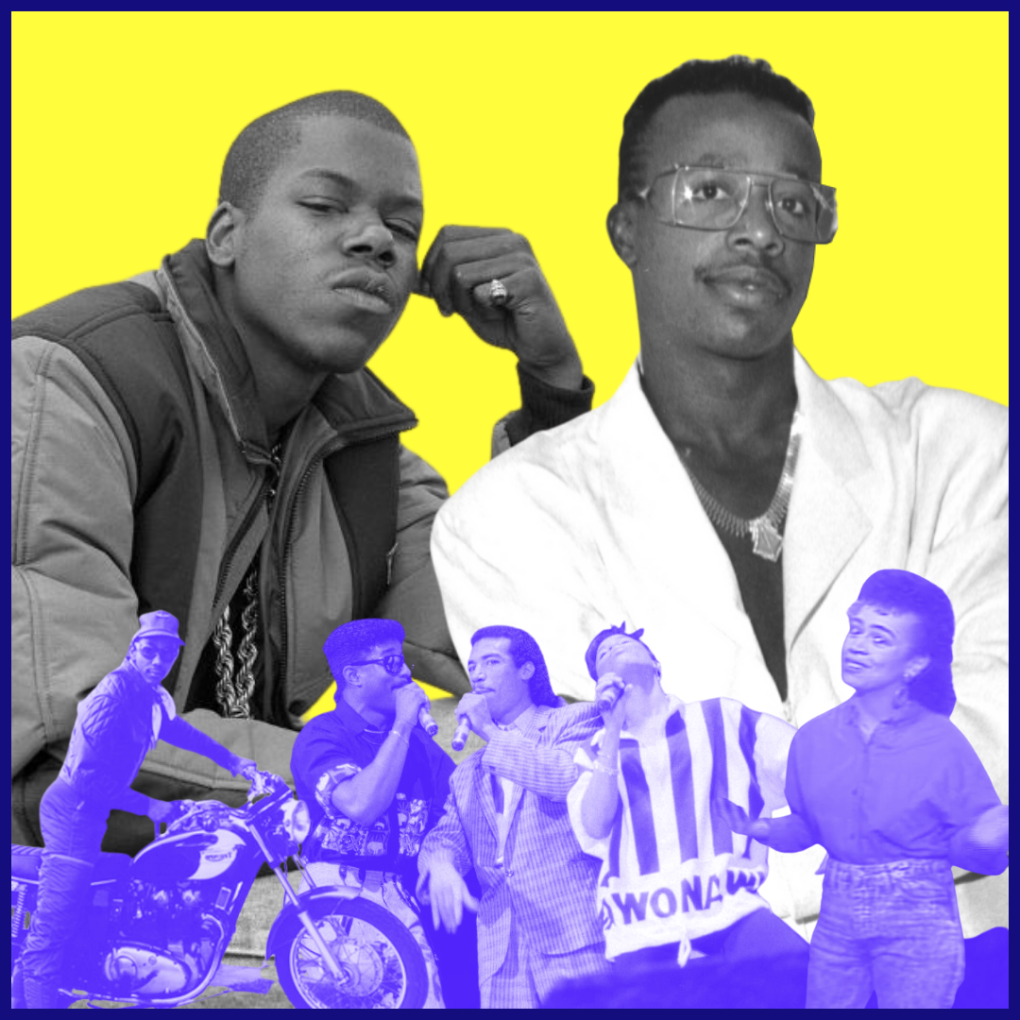
"caption": "In the 1980s, Bay Area hip-hop hadn't yet coalesced into an identifiable regional sound. After years of street dance, DJing and graffiti sharing equal space in hip-hop, however, rapping took over, and the Bay Area's bass-heavy trademark would arrive at the end of the decade. (Clockwise from top left: Too Short, MC Hammer, Dominique DiPrima, Club Nouveau, and Motorcycle Mike.)",
"description": null,
"title": "photo-forward_____separate_logos__2_",
"credit": "Steve Ringman/San Francisco Chronicle via Getty Images; Al Pereira/Michael Ochs Archives/Getty Images; SFSU Television Archives; Raymond Boyd/Getty Images; Hodisk Records",
"status": "inherit",
"altTag": null,
"isLoading": false,
"fetchFailed": false
},
"arts_13927363": {
"type": "attachments",
"id": "arts_13927363",
"meta": {
"index": "attachments_1716263798",
"site": "arts",
"id": "13927363",
"found": true
},
"parent": 13927349,
"imgSizes": {
"twentyfourteen-full-width": {
"file": "https://ww2.kqed.org/app/uploads/sites/2/2023/04/that_s_my_word_____featured_image__3_-1038x576.png",
"width": 1038,
"mimeType": "image/png",
"height": 576
},
"thumbnail": {
"file": "https://ww2.kqed.org/app/uploads/sites/2/2023/04/that_s_my_word_____featured_image__3_-160x90.png",
"width": 160,
"mimeType": "image/png",
"height": 90
},
"post-thumbnail": {
"file": "https://ww2.kqed.org/app/uploads/sites/2/2023/04/that_s_my_word_____featured_image__3_-672x372.png",
"width": 672,
"mimeType": "image/png",
"height": 372
},
"kqedFullSize": {
"file": "https://ww2.kqed.org/app/uploads/sites/2/2023/04/that_s_my_word_____featured_image__3_.png",
"width": 1920,
"height": 1080
},
"large": {
"file": "https://ww2.kqed.org/app/uploads/sites/2/2023/04/that_s_my_word_____featured_image__3_-1020x574.png",
"width": 1020,
"mimeType": "image/png",
"height": 574
},
"1536x1536": {
"file": "https://ww2.kqed.org/app/uploads/sites/2/2023/04/that_s_my_word_____featured_image__3_-1536x864.png",
"width": 1536,
"mimeType": "image/png",
"height": 864
},
"medium": {
"file": "https://ww2.kqed.org/app/uploads/sites/2/2023/04/that_s_my_word_____featured_image__3_-800x450.png",
"width": 800,
"mimeType": "image/png",
"height": 450
},
"medium_large": {
"file": "https://ww2.kqed.org/app/uploads/sites/2/2023/04/that_s_my_word_____featured_image__3_-768x432.png",
"width": 768,
"mimeType": "image/png",
"height": 432
}
},
"publishDate": 1680663386,
"modified": 1680663880,
"caption": "In the 1980s, Bay Area hip-hop hadn't yet coalesced into an identifiable regional sound. After years of street dance, DJing and graffiti sharing equal space in hip-hop, however, rapping took over, and the Bay Area's bass-heavy trademark would arrive at the end of the decade. (Clockwise from top left: Too Short, MC Hammer, Dominique DiPrima, Club Nouveau, and Motorcycle Mike.)",
"description": null,
"title": "that_s_my_word_____featured_image__3_",
"credit": "Steve Ringman/San Francisco Chronicle via Getty Images; Al Pereira/Michael Ochs Archives/Getty Images; SFSU Television Archives; Raymond Boyd/Getty Images; Hodisk Records",
"status": "inherit",
"altTag": null,
"isLoading": false,
"fetchFailed": false
},
"arts_13927302": {
"type": "attachments",
"id": "arts_13927302",
"meta": {
"index": "attachments_1716263798",
"site": "arts",
"id": "13927302",
"found": true
},
"parent": 13927259,
"imgSizes": {
"twentyfourteen-full-width": {
"file": "https://ww2.kqed.org/app/uploads/sites/2/2023/04/04022023_kqed_sithakhmerkitchen_571-1038x576.jpg",
"width": 1038,
"mimeType": "image/jpeg",
"height": 576
},
"thumbnail": {
"file": "https://ww2.kqed.org/app/uploads/sites/2/2023/04/04022023_kqed_sithakhmerkitchen_571-160x100.jpg",
"width": 160,
"mimeType": "image/jpeg",
"height": 100
},
"post-thumbnail": {
"file": "https://ww2.kqed.org/app/uploads/sites/2/2023/04/04022023_kqed_sithakhmerkitchen_571-672x372.jpg",
"width": 672,
"mimeType": "image/jpeg",
"height": 372
},
"kqedFullSize": {
"file": "https://ww2.kqed.org/app/uploads/sites/2/2023/04/04022023_kqed_sithakhmerkitchen_571.jpg",
"width": 1920,
"height": 1200
},
"large": {
"file": "https://ww2.kqed.org/app/uploads/sites/2/2023/04/04022023_kqed_sithakhmerkitchen_571-1020x638.jpg",
"width": 1020,
"mimeType": "image/jpeg",
"height": 638
},
"1536x1536": {
"file": "https://ww2.kqed.org/app/uploads/sites/2/2023/04/04022023_kqed_sithakhmerkitchen_571-1536x960.jpg",
"width": 1536,
"mimeType": "image/jpeg",
"height": 960
},
"medium": {
"file": "https://ww2.kqed.org/app/uploads/sites/2/2023/04/04022023_kqed_sithakhmerkitchen_571-800x500.jpg",
"width": 800,
"mimeType": "image/jpeg",
"height": 500
},
"medium_large": {
"file": "https://ww2.kqed.org/app/uploads/sites/2/2023/04/04022023_kqed_sithakhmerkitchen_571-768x480.jpg",
"width": 768,
"mimeType": "image/jpeg",
"height": 480
}
},
"publishDate": 1680630991,
"modified": 1680647886,
"caption": "Sitha Yim enjoys a light moment during an event at East Brother Beer Co. in Richmond. Yim's Cambodian pop-up, Sitha's Khmerkitchen, is one of a handful of up-and-coming Bay Area food businesses shining a light on Khmer cuisine. ",
"description": null,
"title": "04022023_kqed_sithakhmerkitchen_571",
"credit": "Kori Suzuki/KQED",
"status": "inherit",
"altTag": "A woman wearing an apron and red plastic gloves stands in front of an array of pots and food prep containers for her food pop-up.",
"isLoading": false,
"fetchFailed": false
},
"arts_13927109": {
"type": "attachments",
"id": "arts_13927109",
"meta": {
"index": "attachments_1716263798",
"site": "arts",
"id": "13927109",
"found": true
},
"parent": 13927103,
"imgSizes": {
"twentyfourteen-full-width": {
"file": "https://ww2.kqed.org/app/uploads/sites/2/2023/03/L1-Chow-Fong-and-Noisy-Jim-1038x576.jpg",
"width": 1038,
"mimeType": "image/jpeg",
"height": 576
},
"thumbnail": {
"file": "https://ww2.kqed.org/app/uploads/sites/2/2023/03/L1-Chow-Fong-and-Noisy-Jim-160x100.jpg",
"width": 160,
"mimeType": "image/jpeg",
"height": 100
},
"post-thumbnail": {
"file": "https://ww2.kqed.org/app/uploads/sites/2/2023/03/L1-Chow-Fong-and-Noisy-Jim-672x372.jpg",
"width": 672,
"mimeType": "image/jpeg",
"height": 372
},
"kqedFullSize": {
"file": "https://ww2.kqed.org/app/uploads/sites/2/2023/03/L1-Chow-Fong-and-Noisy-Jim.jpg",
"width": 1920,
"height": 1200
},
"large": {
"file": "https://ww2.kqed.org/app/uploads/sites/2/2023/03/L1-Chow-Fong-and-Noisy-Jim-1020x638.jpg",
"width": 1020,
"mimeType": "image/jpeg",
"height": 638
},
"1536x1536": {
"file": "https://ww2.kqed.org/app/uploads/sites/2/2023/03/L1-Chow-Fong-and-Noisy-Jim-1536x960.jpg",
"width": 1536,
"mimeType": "image/jpeg",
"height": 960
},
"medium": {
"file": "https://ww2.kqed.org/app/uploads/sites/2/2023/03/L1-Chow-Fong-and-Noisy-Jim-800x500.jpg",
"width": 800,
"mimeType": "image/jpeg",
"height": 500
},
"medium_large": {
"file": "https://ww2.kqed.org/app/uploads/sites/2/2023/03/L1-Chow-Fong-and-Noisy-Jim-768x480.jpg",
"width": 768,
"mimeType": "image/jpeg",
"height": 480
}
},
"publishDate": 1680080844,
"modified": 1680081879,
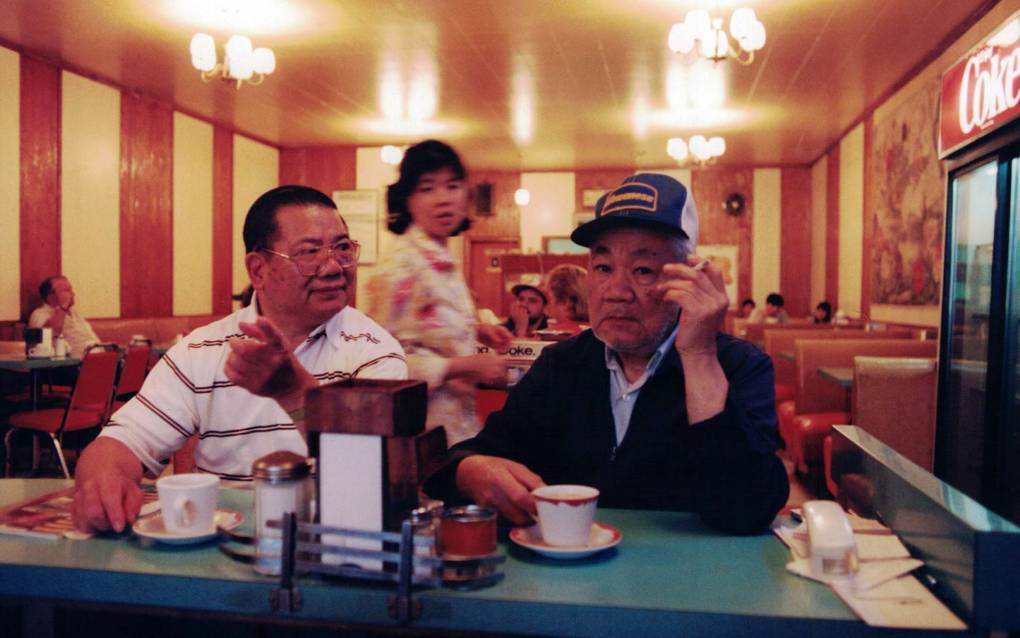
"caption": "Until his recent death, Noisy Jim (right) was the proprietor of a Chinese cafe in a small town in Saskatchewan, Canada. The cafe is one of 15 Chinese restaurants from around the world that documentary filmmaker Cheuk Kwan profiled for his book \u003ci>Have You Eaten Yet?\u003c/i>",
"description": null,
"title": "L1 Chow Fong and Noisy Jim",
"credit": "Courtesy of Cheuk Kwon",
"status": "inherit",
"altTag": "Two older Chinese men sit at a restaurant's diner-style counter while a waitress looks on.",
"isLoading": false,
"fetchFailed": false
},
"arts_13926073": {
"type": "attachments",
"id": "arts_13926073",
"meta": {
"index": "attachments_1716263798",
"site": "arts",
"id": "13926073",
"found": true
},
"parent": 13926069,
"imgSizes": {
"twentyfourteen-full-width": {
"file": "https://ww2.kqed.org/app/uploads/sites/2/2023/03/Screen-Shot-2023-03-09-at-2.54.47-PM-1038x576.png",
"width": 1038,
"mimeType": "image/png",
"height": 576
},
"thumbnail": {
"file": "https://ww2.kqed.org/app/uploads/sites/2/2023/03/Screen-Shot-2023-03-09-at-2.54.47-PM-160x94.png",
"width": 160,
"mimeType": "image/png",
"height": 94
},
"post-thumbnail": {
"file": "https://ww2.kqed.org/app/uploads/sites/2/2023/03/Screen-Shot-2023-03-09-at-2.54.47-PM-672x372.png",
"width": 672,
"mimeType": "image/png",
"height": 372
},
"kqedFullSize": {
"file": "https://ww2.kqed.org/app/uploads/sites/2/2023/03/Screen-Shot-2023-03-09-at-2.54.47-PM.png",
"width": 2018,
"height": 1188
},
"large": {
"file": "https://ww2.kqed.org/app/uploads/sites/2/2023/03/Screen-Shot-2023-03-09-at-2.54.47-PM-1020x600.png",
"width": 1020,
"mimeType": "image/png",
"height": 600
},
"1536x1536": {
"file": "https://ww2.kqed.org/app/uploads/sites/2/2023/03/Screen-Shot-2023-03-09-at-2.54.47-PM-1536x904.png",
"width": 1536,
"mimeType": "image/png",
"height": 904
},
"full-width": {
"file": "https://ww2.kqed.org/app/uploads/sites/2/2023/03/Screen-Shot-2023-03-09-at-2.54.47-PM-1920x1130.png",
"width": 1920,
"mimeType": "image/png",
"height": 1130
},
"medium": {
"file": "https://ww2.kqed.org/app/uploads/sites/2/2023/03/Screen-Shot-2023-03-09-at-2.54.47-PM-800x471.png",
"width": 800,
"mimeType": "image/png",
"height": 471
},
"medium_large": {
"file": "https://ww2.kqed.org/app/uploads/sites/2/2023/03/Screen-Shot-2023-03-09-at-2.54.47-PM-768x452.png",
"width": 768,
"mimeType": "image/png",
"height": 452
}
},
"publishDate": 1678404566,
"modified": 1678404637,
"caption": "Isabella J. Martin, a truly crappy criminal.",
"description": null,
"title": "Isabella J. Martin, a truly crappy criminal.",
"credit": null,
"status": "inherit",
"altTag": "A white woman with ruddy features stands, wearing a hat, facing the camera.",
"isLoading": false,
"fetchFailed": false
},
"arts_13926978": {
"type": "attachments",
"id": "arts_13926978",
"meta": {
"index": "attachments_1716263798",
"site": "arts",
"id": "13926978",
"found": true
},
"parent": 13926749,
"imgSizes": {
"twentyfourteen-full-width": {
"file": "https://ww2.kqed.org/app/uploads/sites/2/2023/03/tasty_tings_spread-crop-1038x576.jpg",
"width": 1038,
"mimeType": "image/jpeg",
"height": 576
},
"thumbnail": {
"file": "https://ww2.kqed.org/app/uploads/sites/2/2023/03/tasty_tings_spread-crop-160x90.jpg",
"width": 160,
"mimeType": "image/jpeg",
"height": 90
},
"post-thumbnail": {
"file": "https://ww2.kqed.org/app/uploads/sites/2/2023/03/tasty_tings_spread-crop-672x372.jpg",
"width": 672,
"mimeType": "image/jpeg",
"height": 372
},
"kqedFullSize": {
"file": "https://ww2.kqed.org/app/uploads/sites/2/2023/03/tasty_tings_spread-crop.jpg",
"width": 1920,
"height": 1080
},
"large": {
"file": "https://ww2.kqed.org/app/uploads/sites/2/2023/03/tasty_tings_spread-crop-1020x574.jpg",
"width": 1020,
"mimeType": "image/jpeg",
"height": 574
},
"1536x1536": {
"file": "https://ww2.kqed.org/app/uploads/sites/2/2023/03/tasty_tings_spread-crop-1536x864.jpg",
"width": 1536,
"mimeType": "image/jpeg",
"height": 864
},
"medium": {
"file": "https://ww2.kqed.org/app/uploads/sites/2/2023/03/tasty_tings_spread-crop-800x450.jpg",
"width": 800,
"mimeType": "image/jpeg",
"height": 450
},
"medium_large": {
"file": "https://ww2.kqed.org/app/uploads/sites/2/2023/03/tasty_tings_spread-crop-768x432.jpg",
"width": 768,
"mimeType": "image/jpeg",
"height": 432
}
},
"publishDate": 1679938763,
"modified": 1679938965,
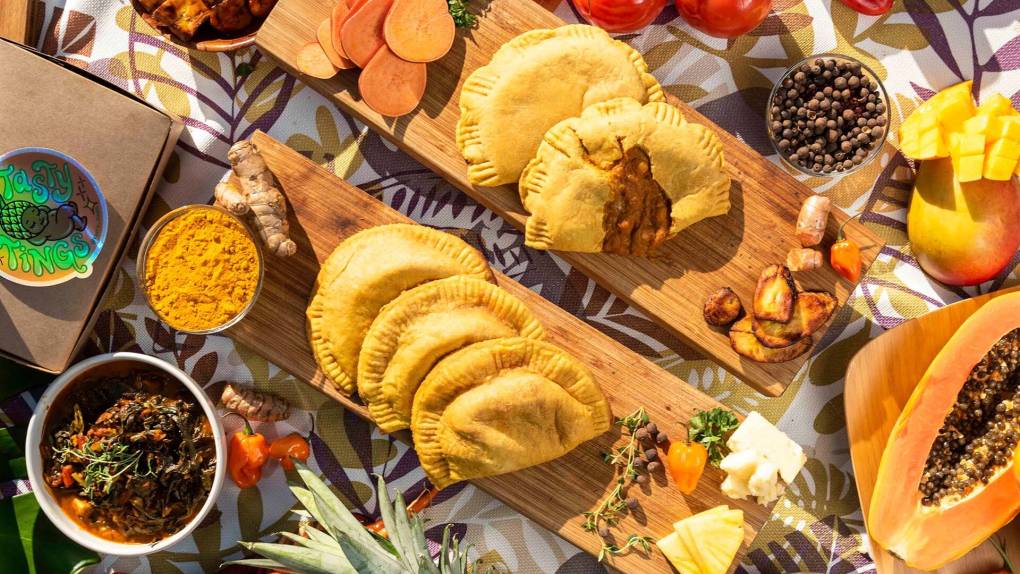
"caption": "A colorful spread of Tasty Tings' Jamaican beef patties.",
"description": null,
"title": "tasty_tings_spread-crop",
"credit": "Elliott Alexander",
"status": "inherit",
"altTag": "A colorful spread of Jamaican beef patties on a table",
"isLoading": false,
"fetchFailed": false
},
"arts_13927010": {
"type": "attachments",
"id": "arts_13927010",
"meta": {
"index": "attachments_1716263798",
"site": "arts",
"id": "13927010",
"found": true
},
"parent": 13926800,
"imgSizes": {
"twentyfourteen-full-width": {
"file": "https://ww2.kqed.org/app/uploads/sites/2/2023/03/PABATCHV2-78-scaled-1-1020x1529-2-1019x576.jpeg",
"width": 1019,
"mimeType": "image/jpeg",
"height": 576
},
"thumbnail": {
"file": "https://ww2.kqed.org/app/uploads/sites/2/2023/03/PABATCHV2-78-scaled-1-1020x1529-2-160x97.jpeg",
"width": 160,
"mimeType": "image/jpeg",
"height": 97
},
"post-thumbnail": {
"file": "https://ww2.kqed.org/app/uploads/sites/2/2023/03/PABATCHV2-78-scaled-1-1020x1529-2-672x372.jpeg",
"width": 672,
"mimeType": "image/jpeg",
"height": 372
},
"kqedFullSize": {
"file": "https://ww2.kqed.org/app/uploads/sites/2/2023/03/PABATCHV2-78-scaled-1-1020x1529-2.jpeg",
"width": 1019,
"height": 620
},
"medium": {
"file": "https://ww2.kqed.org/app/uploads/sites/2/2023/03/PABATCHV2-78-scaled-1-1020x1529-2-800x487.jpeg",
"width": 800,
"mimeType": "image/jpeg",
"height": 487
},
"medium_large": {
"file": "https://ww2.kqed.org/app/uploads/sites/2/2023/03/PABATCHV2-78-scaled-1-1020x1529-2-768x467.jpeg",
"width": 768,
"mimeType": "image/jpeg",
"height": 467
}
},
"publishDate": 1679953748,
"modified": 1679953879,
"caption": "Guap performing at a live concert in Manila, Philippines.",
"description": "Rapper, musician Guap performs live on stage at a concert. He holds a mic in his hand as he wears a white tank top and red and orange-patterned pants.",
"title": "PABATCHV2-78-scaled-1-1020x1529",
"credit": "Courtesy of Paul Middleton",
"status": "inherit",
"altTag": null,
"isLoading": false,
"fetchFailed": false
},
"arts_13926846": {
"type": "attachments",
"id": "arts_13926846",
"meta": {
"index": "attachments_1716263798",
"site": "arts",
"id": "13926846",
"found": true
},
"parent": 0,
"imgSizes": {
"twentyfourteen-full-width": {
"file": "https://ww2.kqed.org/app/uploads/sites/2/2023/03/RS63771_013_KQEDArts_Kingston11Restaurant_03222023-qut-1038x576.jpg",
"width": 1038,
"mimeType": "image/jpeg",
"height": 576
},
"thumbnail": {
"file": "https://ww2.kqed.org/app/uploads/sites/2/2023/03/RS63771_013_KQEDArts_Kingston11Restaurant_03222023-qut-160x107.jpg",
"width": 160,
"mimeType": "image/jpeg",
"height": 107
},
"post-thumbnail": {
"file": "https://ww2.kqed.org/app/uploads/sites/2/2023/03/RS63771_013_KQEDArts_Kingston11Restaurant_03222023-qut-672x372.jpg",
"width": 672,
"mimeType": "image/jpeg",
"height": 372
},
"kqedFullSize": {
"file": "https://ww2.kqed.org/app/uploads/sites/2/2023/03/RS63771_013_KQEDArts_Kingston11Restaurant_03222023-qut.jpg",
"width": 1920,
"height": 1280
},
"large": {
"file": "https://ww2.kqed.org/app/uploads/sites/2/2023/03/RS63771_013_KQEDArts_Kingston11Restaurant_03222023-qut-1020x680.jpg",
"width": 1020,
"mimeType": "image/jpeg",
"height": 680
},
"1536x1536": {
"file": "https://ww2.kqed.org/app/uploads/sites/2/2023/03/RS63771_013_KQEDArts_Kingston11Restaurant_03222023-qut-1536x1024.jpg",
"width": 1536,
"mimeType": "image/jpeg",
"height": 1024
},
"medium": {
"file": "https://ww2.kqed.org/app/uploads/sites/2/2023/03/RS63771_013_KQEDArts_Kingston11Restaurant_03222023-qut-800x533.jpg",
"width": 800,
"mimeType": "image/jpeg",
"height": 533
},
"medium_large": {
"file": "https://ww2.kqed.org/app/uploads/sites/2/2023/03/RS63771_013_KQEDArts_Kingston11Restaurant_03222023-qut-768x512.jpg",
"width": 768,
"mimeType": "image/jpeg",
"height": 512
}
},
"publishDate": 1679601273,
"modified": 1679610119,
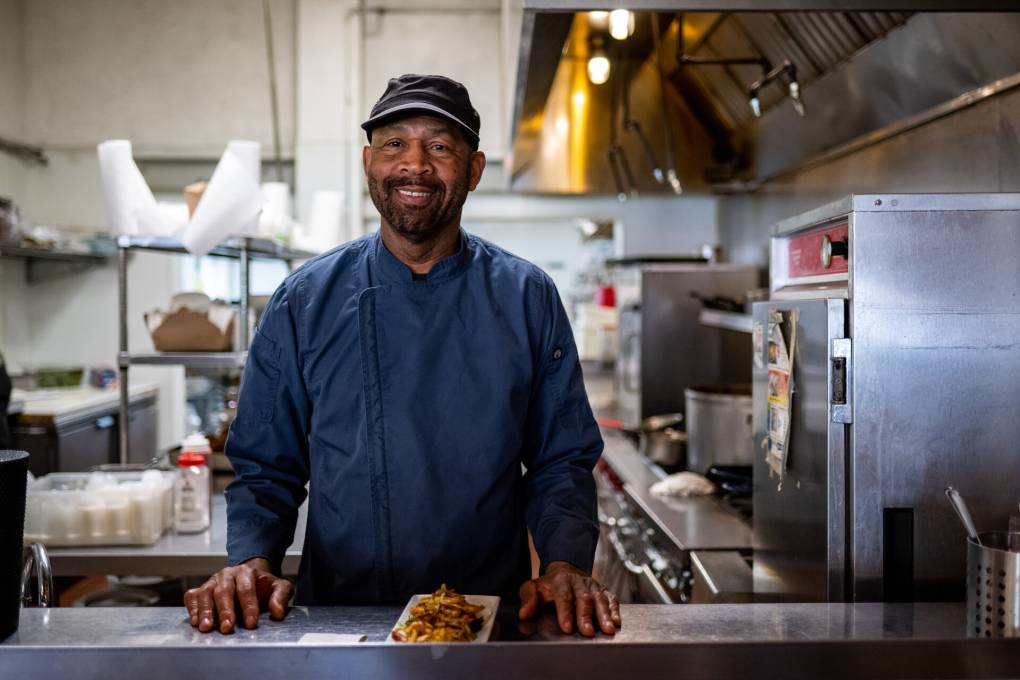
"caption": "Chef Nigel Jones has served classic Jamaican dishes at his Oakland restaurant, Kingston 11, for the past 10 years. The restaurant's last day of business will be on Saturday, March 25.",
"description": null,
"title": "Chef Nigel Jones at his restaurant Kingston 11 in Oakland on March 22, 2023.",
"credit": "Beth LaBerge/KQED",
"status": "inherit",
"altTag": "A chef in blue chef's coat smiles inside a restaurant kitchen, a plate of Jamaican food in front of him on the counter.",
"isLoading": false,
"fetchFailed": false
},
"arts_13927353": {
"type": "attachments",
"id": "arts_13927353",
"meta": {
"index": "attachments_1716263798",
"site": "arts",
"id": "13927353",
"found": true
},
"parent": 13926435,
"imgSizes": {
"twentyfourteen-full-width": {
"file": "https://ww2.kqed.org/app/uploads/sites/2/2023/03/HalHotDogRoots-1038x576.jpeg",
"width": 1038,
"mimeType": "image/jpeg",
"height": 576
},
"thumbnail": {
"file": "https://ww2.kqed.org/app/uploads/sites/2/2023/03/HalHotDogRoots-160x107.jpeg",
"width": 160,
"mimeType": "image/jpeg",
"height": 107
},
"post-thumbnail": {
"file": "https://ww2.kqed.org/app/uploads/sites/2/2023/03/HalHotDogRoots-672x372.jpeg",
"width": 672,
"mimeType": "image/jpeg",
"height": 372
},
"kqedFullSize": {
"file": "https://ww2.kqed.org/app/uploads/sites/2/2023/03/HalHotDogRoots-scaled.jpeg",
"width": 2560,
"height": 1707
},
"2048x2048": {
"file": "https://ww2.kqed.org/app/uploads/sites/2/2023/03/HalHotDogRoots-2048x1366.jpeg",
"width": 2048,
"mimeType": "image/jpeg",
"height": 1366
},
"large": {
"file": "https://ww2.kqed.org/app/uploads/sites/2/2023/03/HalHotDogRoots-1020x680.jpeg",
"width": 1020,
"mimeType": "image/jpeg",
"height": 680
},
"1536x1536": {
"file": "https://ww2.kqed.org/app/uploads/sites/2/2023/03/HalHotDogRoots-1536x1024.jpeg",
"width": 1536,
"mimeType": "image/jpeg",
"height": 1024
},
"full-width": {
"file": "https://ww2.kqed.org/app/uploads/sites/2/2023/03/HalHotDogRoots-1920x1280.jpeg",
"width": 1920,
"mimeType": "image/jpeg",
"height": 1280
},
"medium": {
"file": "https://ww2.kqed.org/app/uploads/sites/2/2023/03/HalHotDogRoots-800x533.jpeg",
"width": 800,
"mimeType": "image/jpeg",
"height": 533
},
"medium_large": {
"file": "https://ww2.kqed.org/app/uploads/sites/2/2023/03/HalHotDogRoots-768x512.jpeg",
"width": 768,
"mimeType": "image/jpeg",
"height": 512
}
},
"publishDate": 1680656540,
"modified": 1680656575,
"caption": null,
"description": null,
"title": "HalHotDogRoots",
"credit": "Oakland Roots SC",
"status": "inherit",
"altTag": null,
"isLoading": false,
"fetchFailed": false
},
"arts_13926251": {
"type": "attachments",
"id": "arts_13926251",
"meta": {
"index": "attachments_1716263798",
"site": "arts",
"id": "13926251",
"found": true
},
"parent": 13925931,
"imgSizes": {
"twentyfourteen-full-width": {
"file": "https://ww2.kqed.org/app/uploads/sites/2/2023/03/ShortDogsIntheHouse.Cover_.Square-1038x576.jpg",
"width": 1038,
"mimeType": "image/jpeg",
"height": 576
},
"thumbnail": {
"file": "https://ww2.kqed.org/app/uploads/sites/2/2023/03/ShortDogsIntheHouse.Cover_.Square-160x160.jpg",
"width": 160,
"mimeType": "image/jpeg",
"height": 160
},
"post-thumbnail": {
"file": "https://ww2.kqed.org/app/uploads/sites/2/2023/03/ShortDogsIntheHouse.Cover_.Square-672x372.jpg",
"width": 672,
"mimeType": "image/jpeg",
"height": 372
},
"kqedFullSize": {
"file": "https://ww2.kqed.org/app/uploads/sites/2/2023/03/ShortDogsIntheHouse.Cover_.Square-scaled.jpg",
"width": 2560,
"height": 2560
},
"2048x2048": {
"file": "https://ww2.kqed.org/app/uploads/sites/2/2023/03/ShortDogsIntheHouse.Cover_.Square-2048x2048.jpg",
"width": 2048,
"mimeType": "image/jpeg",
"height": 2048
},
"large": {
"file": "https://ww2.kqed.org/app/uploads/sites/2/2023/03/ShortDogsIntheHouse.Cover_.Square-1020x1020.jpg",
"width": 1020,
"mimeType": "image/jpeg",
"height": 1020
},
"1536x1536": {
"file": "https://ww2.kqed.org/app/uploads/sites/2/2023/03/ShortDogsIntheHouse.Cover_.Square-1536x1536.jpg",
"width": 1536,
"mimeType": "image/jpeg",
"height": 1536
},
"full-width": {
"file": "https://ww2.kqed.org/app/uploads/sites/2/2023/03/ShortDogsIntheHouse.Cover_.Square-1920x1920.jpg",
"width": 1920,
"mimeType": "image/jpeg",
"height": 1920
},
"medium": {
"file": "https://ww2.kqed.org/app/uploads/sites/2/2023/03/ShortDogsIntheHouse.Cover_.Square-800x800.jpg",
"width": 800,
"mimeType": "image/jpeg",
"height": 800
},
"medium_large": {
"file": "https://ww2.kqed.org/app/uploads/sites/2/2023/03/ShortDogsIntheHouse.Cover_.Square-768x768.jpg",
"width": 768,
"mimeType": "image/jpeg",
"height": 768
}
},
"publishDate": 1678826456,
"modified": 1678895332,
"caption": "The cover art for Too Short's 1990s album 'Short Dog's in the House,' drawn by Boze — \"a little homie from the hood,\" as Too Short described him.",
"description": null,
"title": "ShortDogsIntheHouse.Cover.Square",
"credit": "Cover: Boze/Jive Records; Photo by Gabe Meline/KQED",
"status": "inherit",
"altTag": "A colorful cartoon drawing of people rendered as dogs, congregating around cars, beneath the Tribune Tower in Oakland",
"isLoading": false,
"fetchFailed": false
},
"arts_13926250": {
"type": "attachments",
"id": "arts_13926250",
"meta": {
"index": "attachments_1716263798",
"site": "arts",
"id": "13926250",
"found": true
},
"parent": 13925931,
"imgSizes": {
"twentyfourteen-full-width": {
"file": "https://ww2.kqed.org/app/uploads/sites/2/2023/03/ShortDog.socialthumb.16.9-1038x576.jpg",
"width": 1038,
"mimeType": "image/jpeg",
"height": 576
},
"thumbnail": {
"file": "https://ww2.kqed.org/app/uploads/sites/2/2023/03/ShortDog.socialthumb.16.9-160x90.jpg",
"width": 160,
"mimeType": "image/jpeg",
"height": 90
},
"post-thumbnail": {
"file": "https://ww2.kqed.org/app/uploads/sites/2/2023/03/ShortDog.socialthumb.16.9-672x372.jpg",
"width": 672,
"mimeType": "image/jpeg",
"height": 372
},
"kqedFullSize": {
"file": "https://ww2.kqed.org/app/uploads/sites/2/2023/03/ShortDog.socialthumb.16.9.jpg",
"width": 1920,
"height": 1080
},
"large": {
"file": "https://ww2.kqed.org/app/uploads/sites/2/2023/03/ShortDog.socialthumb.16.9-1020x574.jpg",
"width": 1020,
"mimeType": "image/jpeg",
"height": 574
},
"1536x1536": {
"file": "https://ww2.kqed.org/app/uploads/sites/2/2023/03/ShortDog.socialthumb.16.9-1536x864.jpg",
"width": 1536,
"mimeType": "image/jpeg",
"height": 864
},
"medium": {
"file": "https://ww2.kqed.org/app/uploads/sites/2/2023/03/ShortDog.socialthumb.16.9-800x450.jpg",
"width": 800,
"mimeType": "image/jpeg",
"height": 450
},
"medium_large": {
"file": "https://ww2.kqed.org/app/uploads/sites/2/2023/03/ShortDog.socialthumb.16.9-768x432.jpg",
"width": 768,
"mimeType": "image/jpeg",
"height": 432
}
},
"publishDate": 1678826448,
"modified": 1678826448,
"caption": null,
"description": null,
"title": "ShortDog.socialthumb.16.9",
"credit": null,
"status": "inherit",
"altTag": null,
"isLoading": false,
"fetchFailed": false
},
"arts_13926137": {
"type": "attachments",
"id": "arts_13926137",
"meta": {
"index": "attachments_1716263798",
"site": "arts",
"id": "13926137",
"found": true
},
"parent": 13926136,
"imgSizes": {
"twentyfourteen-full-width": {
"file": "https://ww2.kqed.org/app/uploads/sites/2/2023/03/Screen-Shot-2023-03-13-at-12.54.44-PM-1038x576.png",
"width": 1038,
"mimeType": "image/png",
"height": 576
},
"thumbnail": {
"file": "https://ww2.kqed.org/app/uploads/sites/2/2023/03/Screen-Shot-2023-03-13-at-12.54.44-PM-160x105.png",
"width": 160,
"mimeType": "image/png",
"height": 105
},
"post-thumbnail": {
"file": "https://ww2.kqed.org/app/uploads/sites/2/2023/03/Screen-Shot-2023-03-13-at-12.54.44-PM-672x372.png",
"width": 672,
"mimeType": "image/png",
"height": 372
},
"kqedFullSize": {
"file": "https://ww2.kqed.org/app/uploads/sites/2/2023/03/Screen-Shot-2023-03-13-at-12.54.44-PM.png",
"width": 1896,
"height": 1248
},
"large": {
"file": "https://ww2.kqed.org/app/uploads/sites/2/2023/03/Screen-Shot-2023-03-13-at-12.54.44-PM-1020x671.png",
"width": 1020,
"mimeType": "image/png",
"height": 671
},
"1536x1536": {
"file": "https://ww2.kqed.org/app/uploads/sites/2/2023/03/Screen-Shot-2023-03-13-at-12.54.44-PM-1536x1011.png",
"width": 1536,
"mimeType": "image/png",
"height": 1011
},
"medium": {
"file": "https://ww2.kqed.org/app/uploads/sites/2/2023/03/Screen-Shot-2023-03-13-at-12.54.44-PM-800x527.png",
"width": 800,
"mimeType": "image/png",
"height": 527
},
"medium_large": {
"file": "https://ww2.kqed.org/app/uploads/sites/2/2023/03/Screen-Shot-2023-03-13-at-12.54.44-PM-768x506.png",
"width": 768,
"mimeType": "image/png",
"height": 506
}
},
"publishDate": 1678737978,
"modified": 1678747414,
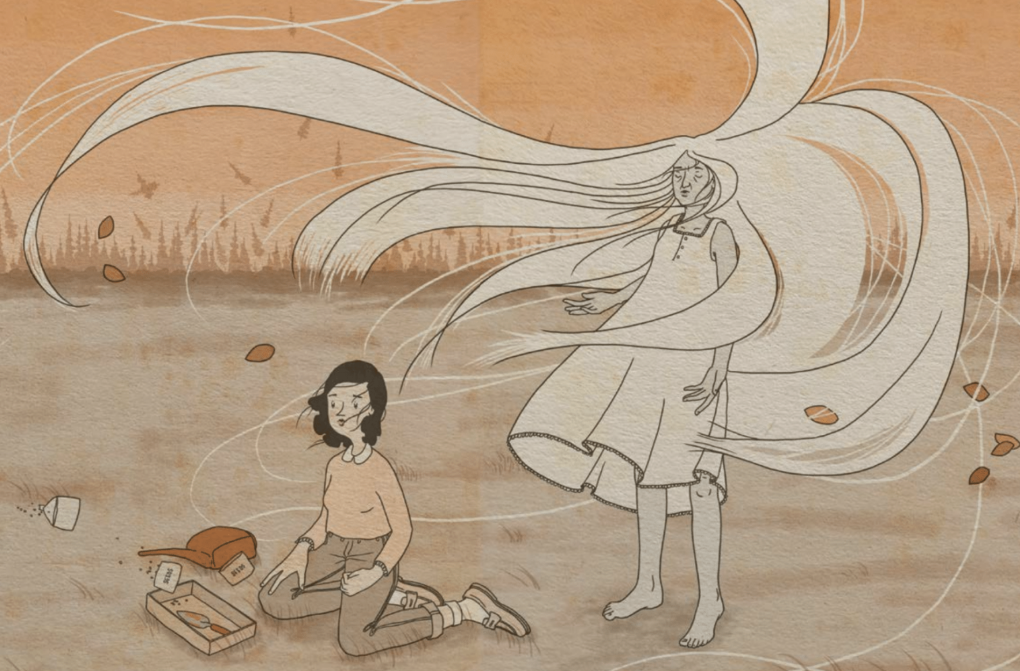
"caption": "In ‘Ephemera’, Briana Loewinsohn explores her family history via her relationship with nature. Here, she feels the spirit of her mother in the garden she grew up in. ",
"description": null,
"title": "In ‘Ephemera’, Briana Loewinsohn explores her family history via her relationship with nature. Here, she feels the spirit of her mother in the garden she grew up in.",
"credit": "Fantagraphics Books Inc.",
"status": "inherit",
"altTag": "An illustration showing a young woman kneeling on the ground next to gardening tools, while the ghostly white figure of an older woman stands behind her, long white hair flowing in the breeze.",
"isLoading": false,
"fetchFailed": false
},
"arts_13926076": {
"type": "attachments",
"id": "arts_13926076",
"meta": {
"index": "attachments_1716263798",
"site": "arts",
"id": "13926076",
"found": true
},
"parent": 13926065,
"imgSizes": {
"twentyfourteen-full-width": {
"file": "https://ww2.kqed.org/app/uploads/sites/2/2023/03/RS63040_014_KQEDArts_YoyokaSomaDrummer_02092023-qut-1038x576.jpg",
"width": 1038,
"mimeType": "image/jpeg",
"height": 576
},
"thumbnail": {
"file": "https://ww2.kqed.org/app/uploads/sites/2/2023/03/RS63040_014_KQEDArts_YoyokaSomaDrummer_02092023-qut-160x107.jpg",
"width": 160,
"mimeType": "image/jpeg",
"height": 107
},
"post-thumbnail": {
"file": "https://ww2.kqed.org/app/uploads/sites/2/2023/03/RS63040_014_KQEDArts_YoyokaSomaDrummer_02092023-qut-672x372.jpg",
"width": 672,
"mimeType": "image/jpeg",
"height": 372
},
"kqedFullSize": {
"file": "https://ww2.kqed.org/app/uploads/sites/2/2023/03/RS63040_014_KQEDArts_YoyokaSomaDrummer_02092023-qut.jpg",
"width": 1920,
"height": 1280
},
"large": {
"file": "https://ww2.kqed.org/app/uploads/sites/2/2023/03/RS63040_014_KQEDArts_YoyokaSomaDrummer_02092023-qut-1020x680.jpg",
"width": 1020,
"mimeType": "image/jpeg",
"height": 680
},
"1536x1536": {
"file": "https://ww2.kqed.org/app/uploads/sites/2/2023/03/RS63040_014_KQEDArts_YoyokaSomaDrummer_02092023-qut-1536x1024.jpg",
"width": 1536,
"mimeType": "image/jpeg",
"height": 1024
},
"medium": {
"file": "https://ww2.kqed.org/app/uploads/sites/2/2023/03/RS63040_014_KQEDArts_YoyokaSomaDrummer_02092023-qut-800x533.jpg",
"width": 800,
"mimeType": "image/jpeg",
"height": 533
},
"medium_large": {
"file": "https://ww2.kqed.org/app/uploads/sites/2/2023/03/RS63040_014_KQEDArts_YoyokaSomaDrummer_02092023-qut-768x512.jpg",
"width": 768,
"mimeType": "image/jpeg",
"height": 512
}
},
"publishDate": 1678407774,
"modified": 1678407957,
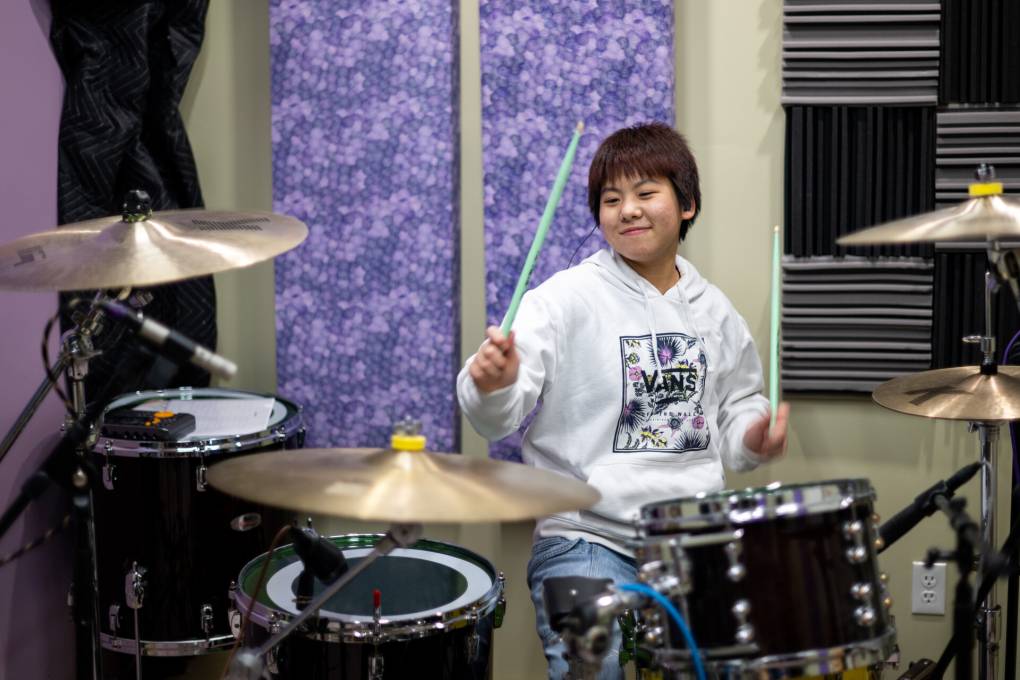
"caption": "Yoyoka Soma plays drums in a practice studio at her family's home in Oakland on Feb. 9, 2023. The 7th grader grew up in Japan but moved to the Bay Area with her family in 2022. She's been internet famous since her drumming videos went viral in 2018.",
"description": null,
"title": "RS63040_014_KQEDArts_YoyokaSomaDrummer_02092023-qut",
"credit": "Beth LaBerge/KQED",
"status": "inherit",
"altTag": "a young Japanese girl with a short haircut in a white sweatshirt smiles while seated at a drum kit in front of a purple acoustic panel in a home studio",
"isLoading": false,
"fetchFailed": false
},
"arts_13925806": {
"type": "attachments",
"id": "arts_13925806",
"meta": {
"index": "attachments_1716263798",
"site": "arts",
"id": "13925806",
"found": true
},
"parent": 13925774,
"imgSizes": {
"twentyfourteen-full-width": {
"file": "https://ww2.kqed.org/app/uploads/sites/2/2023/03/westoakfarmersmarket_sign_alanchazaro-1038x576.jpg",
"width": 1038,
"mimeType": "image/jpeg",
"height": 576
},
"thumbnail": {
"file": "https://ww2.kqed.org/app/uploads/sites/2/2023/03/westoakfarmersmarket_sign_alanchazaro-160x90.jpg",
"width": 160,
"mimeType": "image/jpeg",
"height": 90
},
"post-thumbnail": {
"file": "https://ww2.kqed.org/app/uploads/sites/2/2023/03/westoakfarmersmarket_sign_alanchazaro-672x372.jpg",
"width": 672,
"mimeType": "image/jpeg",
"height": 372
},
"kqedFullSize": {
"file": "https://ww2.kqed.org/app/uploads/sites/2/2023/03/westoakfarmersmarket_sign_alanchazaro.jpg",
"width": 1920,
"height": 1080
},
"large": {
"file": "https://ww2.kqed.org/app/uploads/sites/2/2023/03/westoakfarmersmarket_sign_alanchazaro-1020x574.jpg",
"width": 1020,
"mimeType": "image/jpeg",
"height": 574
},
"1536x1536": {
"file": "https://ww2.kqed.org/app/uploads/sites/2/2023/03/westoakfarmersmarket_sign_alanchazaro-1536x864.jpg",
"width": 1536,
"mimeType": "image/jpeg",
"height": 864
},
"medium": {
"file": "https://ww2.kqed.org/app/uploads/sites/2/2023/03/westoakfarmersmarket_sign_alanchazaro-800x450.jpg",
"width": 800,
"mimeType": "image/jpeg",
"height": 450
},
"medium_large": {
"file": "https://ww2.kqed.org/app/uploads/sites/2/2023/03/westoakfarmersmarket_sign_alanchazaro-768x432.jpg",
"width": 768,
"mimeType": "image/jpeg",
"height": 432
}
},
"publishDate": 1677807282,
"modified": 1677867909,
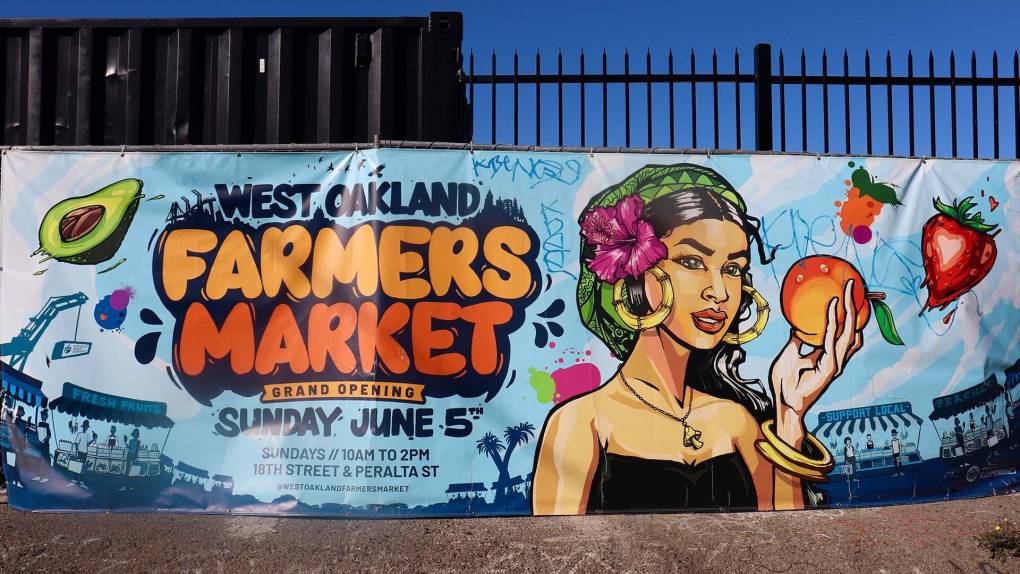
"caption": "The West Oakland Farmers Market debuted on June 5, 2022, and is open every Sunday. ",
"description": null,
"title": "westoakfarmersmarket_sign_alanchazaro",
"credit": "Alan Chazaro",
"status": "inherit",
"altTag": "a colorful advertisement banner for the new West Oakland Farmers Market",
"isLoading": false,
"fetchFailed": false
}
},
"audioPlayerReducer": {
"postId": "stream_live",
"isPaused": true,
"isPlaying": false,
"pfsActive": false,
"pledgeModalIsOpen": true,
"playerDrawerIsOpen": false,
"liveAudioPlayStartedAt": 0,
"liveAudioPlayContext": ""
},
"authorsReducer": {
"sasha-khokha": {
"type": "authors",
"id": "254",
"meta": {
"index": "authors_1716337520",
"id": "254",
"found": true
},
"name": "Sasha Khokha",
"firstName": "Sasha",
"lastName": "Khokha",
"slug": "sasha-khokha",
"email": "skhokha@kqed.org",
"display_author_email": true,
"staff_mastheads": [
"news"
],
"title": "Host, The California Report Magazine",
"bio": "Sasha Khokha is the host of \u003cem>The California Report's \u003c/em> weekly magazine program, which takes listeners on sound-rich excursions to meet the people that make the Golden State unique -- through audio documentaries and long-form stories. As \u003cem>The California Report's\u003c/em> Central Valley Bureau Chief based in Fresno for nearly a dozen years, Sasha brought the lives and concerns of rural Californians to listeners around the state. Her reporting helped expose the hidden price immigrant women janitors and farmworkers may pay to keep their jobs: sexual assault at work. It inspired two new California laws to protect them from sexual harassment. She was a key member of the reporting team for the Frontline film \u003cem>Rape on the Night Shift, \u003c/em>which was nominated for two national Emmys. Sasha has also won a national Edward R. Murrow and a national PRNDI award for investigative reporting, as well as multiple prizes from the Society for Professional Journalists. Sasha is a proud alum of the UC Berkeley Graduate School of Journalism and Brown University and a member of the South Asian Journalists Association.",
"avatar": "https://secure.gravatar.com/avatar/e4b5e1541aaeea2aa356aa1fb2a68950?s=600&d=blank&r=g",
"twitter": "KQEDSashaKhokha",
"facebook": null,
"instagram": null,
"linkedin": null,
"sites": [
{
"site": "news",
"roles": [
"editor"
]
},
{
"site": "stateofhealth",
"roles": [
"author"
]
},
{
"site": "science",
"roles": [
"author"
]
},
{
"site": "quest",
"roles": [
"subscriber"
]
}
],
"headData": {
"title": "Sasha Khokha | KQED",
"description": "Host, The California Report Magazine",
"ogImgSrc": "https://secure.gravatar.com/avatar/e4b5e1541aaeea2aa356aa1fb2a68950?s=600&d=blank&r=g",
"twImgSrc": "https://secure.gravatar.com/avatar/e4b5e1541aaeea2aa356aa1fb2a68950?s=600&d=blank&r=g"
},
"isLoading": false,
"link": "/author/sasha-khokha"
},
"mlagos": {
"type": "authors",
"id": "3239",
"meta": {
"index": "authors_1716337520",
"id": "3239",
"found": true
},
"name": "Marisa Lagos",
"firstName": "Marisa",
"lastName": "Lagos",
"slug": "mlagos",
"email": "mlagos@kqed.org",
"display_author_email": false,
"staff_mastheads": [
"news"
],
"title": "KQED Contributor",
"bio": "Marisa Lagos is a correspondent for KQED’s California Politics and Government Desk and co-hosts the award-winning show and podcast, Political Breakdown. At KQED, Lagos also conducts reporting, analysis and investigations into state, local and national politics for radio, TV, online and onstage. In 2022, she and co-host, Scott Shafer, moderated the only gubernatorial debate in California. In 2020, the \u003ci>Washington Post\u003c/i> named her one of the top political journalists in California; she was nominated for a Peabody and won several other awards for her work investigating the 2017 California wildfires. She has worked at the \u003ci>San Francisco Chronicle\u003c/i>, \u003ci>San Francisco Examiner\u003c/i> and \u003ci>Los Angeles Times\u003c/i>. A UC Santa Barbara graduate, she lives in San Francisco with her two sons and husband.",
"avatar": "https://secure.gravatar.com/avatar/a261a0d3696fc066871ef96b85b5e7d2?s=600&d=blank&r=g",
"twitter": "@mlagos",
"facebook": null,
"instagram": null,
"linkedin": null,
"sites": [
{
"site": "arts",
"roles": [
"author"
]
},
{
"site": "news",
"roles": [
"editor"
]
},
{
"site": "science",
"roles": [
"editor"
]
},
{
"site": "forum",
"roles": [
"author"
]
},
{
"site": "liveblog",
"roles": [
"author"
]
}
],
"headData": {
"title": "Marisa Lagos | KQED",
"description": "KQED Contributor",
"ogImgSrc": "https://secure.gravatar.com/avatar/a261a0d3696fc066871ef96b85b5e7d2?s=600&d=blank&r=g",
"twImgSrc": "https://secure.gravatar.com/avatar/a261a0d3696fc066871ef96b85b5e7d2?s=600&d=blank&r=g"
},
"isLoading": false,
"link": "/author/mlagos"
},
"ralexandra": {
"type": "authors",
"id": "11242",
"meta": {
"index": "authors_1716337520",
"id": "11242",
"found": true
},
"name": "Rae Alexandra",
"firstName": "Rae",
"lastName": "Alexandra",
"slug": "ralexandra",
"email": "ralexandra@kqed.org",
"display_author_email": true,
"staff_mastheads": [
"arts"
],
"title": "Reporter/Producer",
"bio": "Rae Alexandra is a Reporter/Producer for KQED Arts & Culture, and the creator/author of the \u003ca href=\"https://www.kqed.org/arts/program/rebel-girls-from-bay-area-history\">Rebel Girls From Bay Area History\u003c/a> and \u003ca href=\"https://www.kqed.org/bizarrebayarea\">Bizarre Bay Area\u003c/a> series. Her debut book, \u003ca href=\"https://citylights.com/politics-current-events-history/unsung-heroines35-women-who-changed/\">Unsung Heroines: 35 Women Who Changed the Bay Area\u003c/a> was published by City Lights in March 2026. In 2023, Rae was awarded an SPJ Excellence in Journalism Award for Arts & Culture. Rae was born and raised in Wales and subsequently — even after two decades in Northern California — still uses phrases that regularly baffle her coworkers.",
"avatar": "https://secure.gravatar.com/avatar/edfee8176c80cc0a382b051190f5341997df378a934a5774dcb0977732dfd401?s=600&d=blank&r=g",
"twitter": null,
"bluesky": null,
"facebook": null,
"instagram": null,
"linkedin": null,
"sites": [
{
"site": "arts",
"roles": [
"editor"
]
},
{
"site": "news",
"roles": [
"editor"
]
},
{
"site": "pop",
"roles": [
"editor"
]
},
{
"site": "bayareabites",
"roles": [
"editor"
]
},
{
"site": "science",
"roles": [
"editor"
]
}
],
"headData": {
"title": "Rae Alexandra | KQED",
"description": "Reporter/Producer",
"ogImgSrc": "https://secure.gravatar.com/avatar/edfee8176c80cc0a382b051190f5341997df378a934a5774dcb0977732dfd401?s=600&d=blank&r=g",
"twImgSrc": "https://secure.gravatar.com/avatar/edfee8176c80cc0a382b051190f5341997df378a934a5774dcb0977732dfd401?s=600&d=blank&r=g"
},
"isLoading": false,
"link": "/author/ralexandra"
},
"ogpenn": {
"type": "authors",
"id": "11491",
"meta": {
"index": "authors_1716337520",
"id": "11491",
"found": true
},
"name": "Pendarvis Harshaw",
"firstName": "Pendarvis",
"lastName": "Harshaw",
"slug": "ogpenn",
"email": "ogpenn@gmail.com",
"display_author_email": false,
"staff_mastheads": [
"arts"
],
"title": "Community Engagement Reporter",
"bio": "Pendarvis Harshaw is an educator, host and writer with KQED Arts.",
"avatar": "https://secure.gravatar.com/avatar/972b77ee8e3f346ae2b00622661187fbfabd059b5693bbdc1475ea7a722fd4cd?s=600&d=blank&r=g",
"twitter": null,
"bluesky": null,
"facebook": null,
"instagram": "ogpenn",
"linkedin": null,
"sites": [
{
"site": "arts",
"roles": [
"administrator"
]
},
{
"site": "news",
"roles": [
"editor"
]
},
{
"site": "bayareabites",
"roles": [
"author"
]
},
{
"site": "hiphop",
"roles": [
"editor"
]
}
],
"headData": {
"title": "Pendarvis Harshaw | KQED",
"description": "Community Engagement Reporter",
"ogImgSrc": "https://secure.gravatar.com/avatar/972b77ee8e3f346ae2b00622661187fbfabd059b5693bbdc1475ea7a722fd4cd?s=600&d=blank&r=g",
"twImgSrc": "https://secure.gravatar.com/avatar/972b77ee8e3f346ae2b00622661187fbfabd059b5693bbdc1475ea7a722fd4cd?s=600&d=blank&r=g"
},
"isLoading": false,
"link": "/author/ogpenn"
},
"mmedina": {
"type": "authors",
"id": "11528",
"meta": {
"index": "authors_1716337520",
"id": "11528",
"found": true
},
"name": "Marisol Medina-Cadena",
"firstName": "Marisol",
"lastName": "Medina-Cadena",
"slug": "mmedina",
"email": "mmedina@KQED.org",
"display_author_email": true,
"staff_mastheads": [],
"title": "Producer, Rightnowish Podcast",
"bio": "Marisol Medina-Cadena is a radio reporter and podcast producer. Before working at KQED, she produced for PBS member station, KCET, in Los Angeles. In 2017, Marisol won an Emmy Award for her work on the televised documentary, \u003cem>City Rising\u003c/em>, examining California's affordable housing crisis and the historical roots of gentrification.",
"avatar": "https://secure.gravatar.com/avatar/6c3db46a1cabb5e1fe9a365b5f4e681e?s=600&d=blank&r=g",
"twitter": "marisolreports",
"facebook": null,
"instagram": null,
"linkedin": null,
"sites": [
{
"site": "arts",
"roles": []
},
{
"site": "news",
"roles": [
"edit_others_posts"
]
}
],
"headData": {
"title": "Marisol Medina-Cadena | KQED",
"description": "Producer, Rightnowish Podcast",
"ogImgSrc": "https://secure.gravatar.com/avatar/6c3db46a1cabb5e1fe9a365b5f4e681e?s=600&d=blank&r=g",
"twImgSrc": "https://secure.gravatar.com/avatar/6c3db46a1cabb5e1fe9a365b5f4e681e?s=600&d=blank&r=g"
},
"isLoading": false,
"link": "/author/mmedina"
},
"ltsai": {
"type": "authors",
"id": "11743",
"meta": {
"index": "authors_1716337520",
"id": "11743",
"found": true
},
"name": "Luke Tsai",
"firstName": "Luke",
"lastName": "Tsai",
"slug": "ltsai",
"email": "ltsai@kqed.org",
"display_author_email": true,
"staff_mastheads": [
"arts"
],
"title": "Food Editor",
"bio": "Luke Tsai is KQED's food editor and resident stinky tofu connoisseur. Prior to KQED, he was an editor at Eater SF, \u003cem>San Francisco \u003c/em>magazine, and the \u003cem>East Bay Express\u003c/em>, and his work has also appeared in TASTE, the \u003cem>San Francisco Chronicle\u003c/em>, and the \u003cem>Best Food Writing\u003c/em> anthology. When he isn't writing or editing, you'll find him eating most everything he can get his hands on.",
"avatar": "https://secure.gravatar.com/avatar/1e59b45bf191526e7339d6ba46e33a57b2030d25c27660ecc64ea3cb863e34f7?s=600&d=blank&r=g",
"twitter": "theluketsai",
"bluesky": null,
"facebook": null,
"instagram": null,
"linkedin": null,
"sites": [
{
"site": "",
"roles": [
"editor"
]
},
{
"site": "arts",
"roles": [
"administrator"
]
},
{
"site": "news",
"roles": [
"editor",
"contributor"
]
},
{
"site": "bayareabites",
"roles": [
"editor"
]
},
{
"site": "food",
"roles": [
"editor"
]
}
],
"headData": {
"title": "Luke Tsai | KQED",
"description": "Food Editor",
"ogImgSrc": "https://secure.gravatar.com/avatar/1e59b45bf191526e7339d6ba46e33a57b2030d25c27660ecc64ea3cb863e34f7?s=600&d=blank&r=g",
"twImgSrc": "https://secure.gravatar.com/avatar/1e59b45bf191526e7339d6ba46e33a57b2030d25c27660ecc64ea3cb863e34f7?s=600&d=blank&r=g"
},
"isLoading": false,
"link": "/author/ltsai"
},
"achazaro": {
"type": "authors",
"id": "11748",
"meta": {
"index": "authors_1716337520",
"id": "11748",
"found": true
},
"name": "Alan Chazaro",
"firstName": "Alan",
"lastName": "Chazaro",
"slug": "achazaro",
"email": "agchazaro@gmail.com",
"display_author_email": true,
"staff_mastheads": [],
"title": "Food Writer and Reporter",
"bio": "Alan Chazaro is the author of \u003cem>This Is Not a Frank Ocean Cover Album\u003c/em> (Black Lawrence Press, 2019), \u003cem>Piñata Theory\u003c/em> (Black Lawrence Press, 2020), and \u003cem>Notes from the Eastern Span of the Bay Bridge\u003c/em> (Ghost City Press, 2021). He is a graduate of June Jordan’s Poetry for the People program at UC Berkeley and a former Lawrence Ferlinghetti Fellow at the University of San Francisco. He writes about sports, food, art, music, education, and culture while repping the Bay on \u003ca href=\"https://twitter.com/alan_chazaro\">Twitter\u003c/a> and \u003ca href=\"https://www.instagram.com/alan_chazaro/?hl=en\">Instagram\u003c/a> at @alan_chazaro.",
"avatar": "https://secure.gravatar.com/avatar/ea8b6dd970fc5c29e7a188e7d5861df7?s=600&d=blank&r=g",
"twitter": "alan_chazaro",
"facebook": null,
"instagram": null,
"linkedin": null,
"sites": [
{
"site": "arts",
"roles": [
"contributor"
]
},
{
"site": "news",
"roles": [
"editor"
]
}
],
"headData": {
"title": "Alan Chazaro | KQED",
"description": "Food Writer and Reporter",
"ogImgSrc": "https://secure.gravatar.com/avatar/ea8b6dd970fc5c29e7a188e7d5861df7?s=600&d=blank&r=g",
"twImgSrc": "https://secure.gravatar.com/avatar/ea8b6dd970fc5c29e7a188e7d5861df7?s=600&d=blank&r=g"
},
"isLoading": false,
"link": "/author/achazaro"
},
"ksong": {
"type": "authors",
"id": "11813",
"meta": {
"index": "authors_1716337520",
"id": "11813",
"found": true
},
"name": "Kristie Song",
"firstName": "Kristie",
"lastName": "Song",
"slug": "ksong",
"email": "ksong@kqed.org",
"display_author_email": false,
"staff_mastheads": [],
"title": "Editorial Intern ",
"bio": "Kristie Song is an Arts & Culture Intern at KQED. She is currently a graduate student at UC Berkeley, where she studies audio and multimedia journalism. Previously, she covered the local community for Oakland North, produced episodes for The Science of Happiness, and served as news director for KUCI, UC Irvine’s radio station. Outside of reporting, she likes drawing comics, listening to angsty rock, and practicing the guitar.",
"avatar": "https://secure.gravatar.com/avatar/c1149e78c3c44f92d4945a8ab0711af6?s=600&d=blank&r=g",
"twitter": null,
"facebook": null,
"instagram": null,
"linkedin": null,
"sites": [
{
"site": "arts",
"roles": [
"editor"
]
}
],
"headData": {
"title": "Kristie Song | KQED",
"description": "Editorial Intern ",
"ogImgSrc": "https://secure.gravatar.com/avatar/c1149e78c3c44f92d4945a8ab0711af6?s=600&d=blank&r=g",
"twImgSrc": "https://secure.gravatar.com/avatar/c1149e78c3c44f92d4945a8ab0711af6?s=600&d=blank&r=g"
},
"isLoading": false,
"link": "/author/ksong"
},
"jessicakariisa": {
"type": "authors",
"id": "11831",
"meta": {
"index": "authors_1716337520",
"id": "11831",
"found": true
},
"name": "Jessica Kariisa",
"firstName": "Jessica",
"lastName": "Kariisa",
"slug": "jessicakariisa",
"email": "jkariisa@kqed.org",
"display_author_email": false,
"staff_mastheads": [],
"title": "Producer, The Bay",
"bio": "Jessica Kariisa is the producer of The Bay. She first joined KQED as an intern for The California Report Magazine, after which she became an on-call producer. She reported a Bay Curious episode on the use of rap lyrics in criminal trials which won a Society of Professional Journalists award in 2023 for Excellence in Features Journalism and the 2023 Signal Award for Best Conversation Starter. She’s worked on podcasts for Snap Judgment and American Public Media. Before embarking on her audio career, she was a music journalist.\r\n\r\nJessica Kariisa is represented by SAG-AFTRA.",
"avatar": "https://secure.gravatar.com/avatar/522e97b28ac0b3d411621c0fde8f3419c7b71ea2c5c262c57c4bb600963f328c?s=600&d=blank&r=g",
"twitter": null,
"bluesky": null,
"facebook": null,
"instagram": null,
"linkedin": null,
"sites": [
{
"site": "arts",
"roles": [
"author"
]
},
{
"site": "news",
"roles": [
"editor",
"manage_categories"
]
}
],
"headData": {
"title": "Jessica Kariisa | KQED",
"description": "Producer, The Bay",
"ogImgSrc": "https://secure.gravatar.com/avatar/522e97b28ac0b3d411621c0fde8f3419c7b71ea2c5c262c57c4bb600963f328c?s=600&d=blank&r=g",
"twImgSrc": "https://secure.gravatar.com/avatar/522e97b28ac0b3d411621c0fde8f3419c7b71ea2c5c262c57c4bb600963f328c?s=600&d=blank&r=g"
},
"isLoading": false,
"link": "/author/jessicakariisa"
},
"mreeves": {
"type": "authors",
"id": "11855",
"meta": {
"index": "authors_1716337520",
"id": "11855",
"found": true
},
"name": "Mosi Reeves",
"firstName": "Mosi",
"lastName": "Reeves",
"slug": "mreeves",
"email": "infamous30@gmail.com",
"display_author_email": false,
"staff_mastheads": [],
"title": "KQED Contributor",
"bio": "Mosi Reeves is a journalist and cultural critic based in Oakland, California. In addition to KQED, his work has appeared in \u003cem>Rolling Stone\u003c/em>, \u003cem>The Wire\u003c/em>, Pitchfork, \u003cem>Billboard\u003c/em>, and Grammy.com.",
"avatar": "https://secure.gravatar.com/avatar/6f376003ca1cf7a873edc107f5f331f1?s=600&d=blank&r=g",
"twitter": null,
"facebook": null,
"instagram": null,
"linkedin": null,
"sites": [
{
"site": "arts",
"roles": [
"contributor"
]
},
{
"site": "pop",
"roles": [
"contributor"
]
}
],
"headData": {
"title": "Mosi Reeves | KQED",
"description": "KQED Contributor",
"ogImgSrc": "https://secure.gravatar.com/avatar/6f376003ca1cf7a873edc107f5f331f1?s=600&d=blank&r=g",
"twImgSrc": "https://secure.gravatar.com/avatar/6f376003ca1cf7a873edc107f5f331f1?s=600&d=blank&r=g"
},
"isLoading": false,
"link": "/author/mreeves"
}
},
"pagesReducer": {
"arts_tag_oakland": {
"type": "terms",
"id": "arts_1143",
"meta": {
"index": "terms_1716263798",
"site": "arts",
"id": "1143",
"score": 6.8845096
},
"featImg": null,
"name": "Oakland",
"description": null,
"taxonomy": "tag",
"headData": {
"twImgId": null,
"twTitle": null,
"ogTitle": null,
"ogImgId": null,
"twDescription": null,
"description": null,
"title": "Oakland Archives | KQED Arts",
"ogDescription": null
},
"ttid": 692,
"slug": "oakland",
"isLoading": false,
"title": "Oakland",
"pageMeta": {
"site": "arts",
"WpPageTemplate": "page-topic-editorial",
"currentPage": 29
},
"blocks": [
{
"blockName": "kqed/post-list",
"attrs": {
"layout": "cardArticle2",
"query": "posts/arts?tag=oakland",
"seeMore": false,
"paginated": true,
"page": 29
}
},
{
"blockName": "kqed/ad"
}
]
}
},
"pfsSessionReducer": {},
"postsReducer": {
"stream_live": {
"type": "live",
"id": "stream_live",
"audioUrl": "https://streams.kqed.org/kqedradio",
"title": "Live Stream",
"excerpt": "Live Stream information currently unavailable.",
"link": "/radio",
"featImg": "",
"label": {
"name": "KQED Live",
"link": "/"
}
},
"stream_kqedNewscast": {
"type": "posts",
"id": "stream_kqedNewscast",
"audioUrl": "https://www.kqed.org/.stream/anon/radio/RDnews/newscast.mp3?_=1",
"title": "KQED Newscast",
"featImg": "",
"label": {
"name": "88.5 FM",
"link": "/"
}
},
"arts_13927349": {
"type": "posts",
"id": "arts_13927349",
"meta": {
"index": "posts_1716263798",
"site": "arts",
"id": "13927349",
"score": null,
"sort": [
1680722857000
]
},
"guestAuthors": [],
"slug": "bay-area-hip-hop-1980s",
"title": "How Bay Area Hip-Hop Found Its Sound in the 1980s",
"publishDate": 1680722857,
"format": "aside",
"headTitle": "How Bay Area Hip-Hop Found Its Sound in the 1980s | KQED",
"labelTerm": {},
"content": "\u003cfigure id=\"attachment_13927363\" class=\"wp-caption aligncenter\" style=\"max-width: 800px\">\u003cimg loading=\"lazy\" decoding=\"async\" src=\"https://ww2.kqed.org/app/uploads/sites/2/2023/04/that_s_my_word_____featured_image__3_-800x450.png\" alt=\"\" width=\"800\" height=\"450\" class=\"size-medium wp-image-13927363\" srcset=\"https://cdn.kqed.org/wp-content/uploads/sites/2/2023/04/that_s_my_word_____featured_image__3_-800x450.png 800w, https://cdn.kqed.org/wp-content/uploads/sites/2/2023/04/that_s_my_word_____featured_image__3_-1020x574.png 1020w, https://cdn.kqed.org/wp-content/uploads/sites/2/2023/04/that_s_my_word_____featured_image__3_-160x90.png 160w, https://cdn.kqed.org/wp-content/uploads/sites/2/2023/04/that_s_my_word_____featured_image__3_-768x432.png 768w, https://cdn.kqed.org/wp-content/uploads/sites/2/2023/04/that_s_my_word_____featured_image__3_-1536x864.png 1536w, https://cdn.kqed.org/wp-content/uploads/sites/2/2023/04/that_s_my_word_____featured_image__3_.png 1920w\" sizes=\"auto, (max-width: 800px) 100vw, 800px\">\u003cfigcaption class=\"wp-caption-text\">In the mid-1980s, after years of street dance, DJing and graffiti sharing equal space, rapping took center stage. The Bay Area’s bass-heavy sound would arrive at the end of the decade. (Clockwise from top left: Too Short, MC Hammer, Dominique DiPrima, Club Nouveau, and Motorcycle Mike.) \u003ccite>(Steve Ringman/San Francisco Chronicle via Getty Images; Al Pereira/Michael Ochs Archives/Getty Images; SFSU Television Archives; Raymond Boyd/Getty Images; Hodisk Records)\u003c/cite>\u003c/figcaption>\u003c/figure>\n\u003cp>\u003cem>\u003cstrong>Editor’s note\u003c/strong>: This story is part of \u003c/em>\u003ca href=\"https://www.kqed.org/bayareahiphop\">That’s My Word\u003c/a>\u003cem>, KQED’s year-long exploration of \u003ca href=\"https://www.kqed.org/bayareahiphop\">Bay Area hip-hop\u003c/a> history, with new content dropping all throughout 2023.\u003c/em>\u003c/p>\n\u003cp>\u003cspan style=\"font-size: 4.6875em;float: left;line-height: 0.733em;padding: 0.05em 0.1em 0 0;font-family: times, serif, georgia\">I\u003c/span>t’s a wintry January evening when Bas-1 brings me to Del the Funky Homosapien’s house in the East Bay. For much of the afternoon, Bas — the \u003ca href=\"https://eastbayexpress.com/old-school-fool-1/\">Oakland native\u003c/a> who’s worked with Digital Underground and released \u003ca href=\"https://www.youtube.com/results?search_query=bas-1+full+album+mentally+astute\">his own solo records\u003c/a> — has schooled me on the origins of the Bay Area hip-hop sound.\u003c/p>\n\u003cp>Bas lists numerous rappers from the ’80s, and not just Todd “Too Short” Shaw, the East Oakland rapper who famously hustled homemade cassette tapes. I’ve never heard most of the names Bas mentions: MC Chocolate Milk, Windell Baby Doll, Davy Def, Buddy Bean, Reggie Reg Rock Ski.ter, M.C. Tracy, Rock Master Fresh, Nic Nack, Kimmie Fresh, and the Acorn Crew with Grandmaster Fresh (a rapper later known as “DJ Daryl” Anderson, famed for producing tracks like 415’s “\u003ca href=\"https://www.youtube.com/watch?v=yuZ6CAwZmys\">Side Show\u003c/a>” and 2Pac’s “\u003ca href=\"https://www.youtube.com/watch?v=fAJfDP3b5_U\">Keep Ya Head Up\u003c/a>”).\u003c/p>\n\u003cp>[aside postID='arts_13924126']Many of these early Bay Area rappers never put out a commercially available record. Instead, their work is mostly confined to locally distributed cassette tapes — collectors call them “gray tapes” — that are now nearly impossible to find. They publicly broadcasted these tapes throughout neighborhoods, utilizing boomboxes and car stereos as well as stereos at house parties. “None of them sound like Too Short,” says Bas. “Some of these people didn’t put out recordings, but they were known.”\u003c/p>\n\u003cp>Throughout the 1980s, Bay Area hip-hop was an artistic movement struggling for a distinct identity. The first half of the decade was defined by street dance and aerosol art as much as rap and DJing. But as local youth began to absorb the sounds emanating from national hotspots like New York, they created a distinctive style all their own — one that would make a global impact in the years to come.\u003c/p>\n\u003cp>[ad fullwidth]\u003c/p>\n\u003cp>At Del’s house, Bas queues up an extraordinary live video clip of \u003ca href=\"https://www.youtube.com/watch?v=5u3eiG9BtdE\">Mac Mill, Emperor E, and DJ Anthony “K-os” Bryant\u003c/a> performing at \u003ca href=\"https://www.kqed.org/news/11690787/when-oakland-was-a-chocolate-city-a-brief-history-of-festival-at-the-lake\">Festival at the Lake\u003c/a>, a now-defunct annual event held at Lake Merritt, in 1988. (Alex “Naru” Reece, who organized the showcase where Mac Mill performed, clarified in a follow-up conversation that it didn’t happen during Festival at the Lake. He also says the showcase was filmed in 1986 for a 1988 video compilation.)\u003c/p>\n\u003cp>Mac Mill and Emperor E go back and forth, trading sound effects and dense Oakland slang as K-os cuts and scratches copies of Long Island band Original Concept’s deathless bass classic, “\u003ca href=\"https://www.youtube.com/watch?v=ai4VC0NUxl4\">Knowledge Me\u003c/a>.” Bas praises Mac Mill’s unusual “Arabian” style, which the latter deployed nearly a decade later with the 1995 single “\u003ca href=\"https://www.youtube.com/watch?v=5_f0TB3Igro\">Arabian Hump\u003c/a>.”\u003c/p>\n\u003cp>https://www.youtube.com/watch?v=5u3eiG9BtdE\u003c/p>\n\u003cp>Then, Bas-1 calls Chris “CJ Flash” Jourdan, an OG who worked with Timex Social Club, the Berkeley teen band whose 1986 electro-funk classic, “\u003ca href=\"https://www.youtube.com/watch?v=jVce2IeYcTg\">Rumors\u003c/a>,” represented the first national breakthrough for Bay Area hip-hop culture. As Bas broadcasts CJ Flash’s voice from his phone through Del’s stereo equipment, CJ Flash spends the next hour or so describing a fledging scene where poppers and boogaloo dancers, not rappers or DJs, were the prime attractions. \u003c/p>\n\u003cp>These ensembles drew from a street-dance tradition that \u003ca href=\"https://www.kqed.org/arts/13891300/reclaiming-the-legacy-of-oaklands-boogaloo-dance-culture\">dates back decades\u003c/a>. Their kinetic performances ignited crowds at high schools, house parties, and public spaces like Justin Herman Plaza and Union Square in San Francisco and UC Berkeley’s Sproul Plaza. Battles even took place on the street, with crews traveling to different neighborhoods around the region to seek out rivals. “You could meet with people on their turf and get down, and hopefully not get thumped in the process,” says CJ Flash. Many Bay Area hip-hop pioneers got their start in dance crews, including Club Nouveau’s Jay King (who pop-locked with The Unknowns), DJ King Tech (who was known as Wizard, and danced with Master City Breakers), and Flash himself (who \u003ca href=\"https://www.youtube.com/watch?v=ub1TtnI4dh8\">performed with UFO\u003c/a>).\u003c/p>\n\u003cp>https://www.youtube.com/watch?v=ub1TtnI4dh8\u003c/p>\n\u003cp>By contrast, rapping was a relatively new and undeveloped skill, the lowest element on the hip-hop totem pole. “Anybody could rap. Anybody could say a bunch of basic rhyme words with no style and flavor,” says Bas, noting as an aside that “most folks couldn’t understand the lyrics anyway.”\u003c/p>\n\u003cp>How is a discussion about street dancers connected to an exploration of the Bay Area hip-hop sound? It’s important to understand the conditions under which the genre emerged locally.\u003c/p>\n\u003ch2>Turntables, Casios and Homemade Tapes\u003c/h2>\n\u003cp>As KQED’s Eric Arnold explains in “\u003ca href=\"https://www.kqed.org/arts/13924126/the-bay-area-was-hip-hop-before-there-was-hip-hop\">The Bay Area Was Hip-Hop Before There Was Hip-Hop\u003c/a>,” foundational elements such as spoken word, funk, and rhythm & blues existed locally well before New Jersey trio Sugarhill Gang arrived with “\u003ca href=\"https://www.youtube.com/watch?v=rKTUAESacQM\">Rapper’s Delight\u003c/a>” in the fall of 1979.\u003c/p>\n\u003cp>[aside postID='arts_13923978']At the same time, the Bay Area was not the Bronx, where breakbeat culture catalyzed and fermented. Bronx DJs, MCs and B-boys like Kool Herc, Grandmaster Flash, Afrika Bambaataa, Grandmaster Caz, the Rock Steady Crew and many others gained renown among mid-’70s New York youth long before “Rapper’s Delight.” By contrast, as CJ Flash explains, it took much of the 1980s for Bay Area youth to develop the cadences and rhythms we now associate with modern rap.\u003c/p>\n\u003cp>Back then, enterprising musicians couldn’t purchase studio software and distribute their own music on an internet platform like Soundcloud. Recording equipment was expensive. An unsigned artist needed the financial and business expertise to manufacture vinyl and cassettes with artwork, much less convince record stores like Leopold’s Records in Berkeley to carry them. (Recordable CD-Rs weren’t widely used until the 1990s.)\u003c/p>\n\u003cp>This helps explain why so many rappers utilized turntables and Casio keyboards, and then recorded their songs using the microphone input on relatively cheap stereo equipment. Captured on recordable cassettes like Maxell and TDK, some of these “gray tapes” simply had stickers with handwritten titles. More often, they weren’t labeled at all.\u003c/p>\n\u003cfigure id=\"attachment_13927410\" class=\"wp-caption aligncenter\" style=\"max-width: 800px\">\u003cimg loading=\"lazy\" decoding=\"async\" src=\"https://ww2.kqed.org/app/uploads/sites/2/2023/04/Naru.BoxofTapes.CloseUp-800x600.jpg\" alt=\"\" width=\"800\" height=\"600\" class=\"size-medium wp-image-13927410\" srcset=\"https://cdn.kqed.org/wp-content/uploads/sites/2/2023/04/Naru.BoxofTapes.CloseUp-800x600.jpg 800w, https://cdn.kqed.org/wp-content/uploads/sites/2/2023/04/Naru.BoxofTapes.CloseUp-1020x765.jpg 1020w, https://cdn.kqed.org/wp-content/uploads/sites/2/2023/04/Naru.BoxofTapes.CloseUp-160x120.jpg 160w, https://cdn.kqed.org/wp-content/uploads/sites/2/2023/04/Naru.BoxofTapes.CloseUp-768x576.jpg 768w, https://cdn.kqed.org/wp-content/uploads/sites/2/2023/04/Naru.BoxofTapes.CloseUp-1536x1152.jpg 1536w, https://cdn.kqed.org/wp-content/uploads/sites/2/2023/04/Naru.BoxofTapes.CloseUp.jpg 1920w\" sizes=\"auto, (max-width: 800px) 100vw, 800px\">\u003cfigcaption class=\"wp-caption-text\">A box of handmade Bay Area rap tapes, part of Naru’s home archives. \u003ccite>(Mosi Reeves)\u003c/cite>\u003c/figcaption>\u003c/figure>\n\u003cp>In those days, Too Short was an outlier, a Fremont High School student who canvassed East Oakland spots like Arroyo Park, \u003ca href=\"https://medium.com/@bayareahiphoparchive/in-conversation-with-56fae687e9c\">selling copies of “Game Raps”\u003c/a> at a few dollars a pop. Since Short was originally from Los Angeles, he relied on rap partner Tony “Freddy B” Adams to show him around the Town. The duo \u003ca href=\"http://www.kqed.org/bayareahiphop/timeline#too-short-and-freddy-b-start-making-handmade-tapes\">made customized tapes for local drug dealers and players\u003c/a> in the city’s nightlife — now known as “special request” tapes — shouting out the customers’ names in their raps.\u003c/p>\n\u003cp>“Short was a hustler,” says CJ Flash. “He had a style of telling stories that was so outlandish and so funny that word got around.” Short and Freddy B developed the trademark “Biiiiitch!” catchphrase, and Short has often said that he and Freddy B intended to get famous together. Unfortunately, Freddy B was in prison when Short released his landmark “\u003ca href=\"https://www.youtube.com/watch?v=YwVJTvOO4yY\">Freaky Tales\u003c/a>” tape in 1987. (Adams is \u003ca href=\"https://www.dailyrepublic.com/all-dr-news/solano-news/local-features/from-too-hort-colleague-to-christian-missionary/\">now a minister\u003c/a> at Mount Calvary Baptist Church in Fairfield.)\u003c/p>\n\u003cfigure id=\"attachment_13927341\" class=\"wp-caption aligncenter\" style=\"max-width: 676px\">\u003cimg loading=\"lazy\" decoding=\"async\" src=\"https://ww2.kqed.org/app/uploads/sites/2/2023/04/TooShort.SFExaminer.1984.jpg\" alt=\"\" width=\"676\" height=\"455\" class=\"size-full wp-image-13927341\" srcset=\"https://cdn.kqed.org/wp-content/uploads/sites/2/2023/04/TooShort.SFExaminer.1984.jpg 676w, https://cdn.kqed.org/wp-content/uploads/sites/2/2023/04/TooShort.SFExaminer.1984-160x108.jpg 160w\" sizes=\"auto, (max-width: 676px) 100vw, 676px\">\u003cfigcaption class=\"wp-caption-text\">Too Short in 1984, at the age of 18. \u003ccite>(Katy Raddatz/San Francisco Examiner/Bancroft Library)\u003c/cite>\u003c/figcaption>\u003c/figure>\n\u003cp>Others like Sir Quick Draw, Mac Mill, and Chief Naked Head (later known as Premo; he passed away in January of 2023) simply gave away their tapes or let friends copy or “dub” the originals. As Richmond rapper \u003ca href=\"https://www.kqed.org/arts/13925761/magic-mike-richmond-calvin-t-rap-hip-hop\">Magic Mike explained in a recent interview with Dregs One\u003c/a>, dubs of his tracks circulated as widely as Germany. “It was more or less trying to make a name for yourself…you had to make a tape,” adds CJ Flash.\u003c/p>\n\u003cp>Most importantly, Bay Area hip-hop in the ’80s was a primordial soup of youngsters figuring out what the local sound would be. The answers wouldn’t arrive until near the end of the decade. “The Bay Area was behind,” says CJ Flash, comparing it to more advanced regions like Los Angeles, South Florida, and New York. “We never thought about radio.”\u003c/p>\n\u003ch2>‘A Pivotal Moment’\u003c/h2>\n\u003cp>Alex “Naru Kwina” Hence remembers the first time he heard the Sugarhill Gang’s “Rapper’s Delight” as a 14-year-old preparing to attend Oakland High School. “When the song went off, everybody ran outside, like, ‘Did you hear that song?!” he laughs, calling it one of the best moments of his life. “It was a pivotal moment, bro. We literally started rapping the song and trying to remember it.” \u003c/p>\n\u003cp>Naru called himself Sir Quick Draw, an alias inspired by Hanna-Barbera cartoon \u003cem>Quick Draw McGraw\u003c/em> as well as the fact that, as a runner, “I was hella fast.” He took inspiration from Kurtis Blow, the Harlem rapper who scored major hits like 1980’s “\u003ca href=\"https://www.youtube.com/watch?v=qzl-2g5HhaI\">The Breaks\u003c/a>.” And Naru almost immediately began recording his voice on tape. His first original song was “The Caveman Rap,” which was inspired by Brooklyn rapper Jimmy Spicer’s 1980 single “\u003ca href=\"https://www.youtube.com/watch?v=nkGLco0tGqc\">Adventures of Super Rhyme\u003c/a>.” Naru can still recite those verses from memory: \u003cem>Now people come and take a trip in time with me / Back to that sweet year one million B.C.\u003c/em>\u003c/p>\n\u003cp>“I still got that old-school flavor, man,” he admits. “Hip-hop was more fun for me back then.”\u003c/p>\n\u003cfigure id=\"attachment_13927368\" class=\"wp-caption aligncenter\" style=\"max-width: 600px\">\u003cimg loading=\"lazy\" decoding=\"async\" src=\"https://ww2.kqed.org/app/uploads/sites/2/2023/04/Naru.Boxes_.1.jpg\" alt=\"\" width=\"600\" height=\"840\" class=\"size-full wp-image-13927368\" srcset=\"https://cdn.kqed.org/wp-content/uploads/sites/2/2023/04/Naru.Boxes_.1.jpg 600w, https://cdn.kqed.org/wp-content/uploads/sites/2/2023/04/Naru.Boxes_.1-160x224.jpg 160w\" sizes=\"auto, (max-width: 600px) 100vw, 600px\">\u003cfigcaption class=\"wp-caption-text\">Naru Kwina, who recorded under the names Sir Quick Draw and Em Cee Quick, poses with his home archives. \u003ccite>(Mosi Reeves)\u003c/cite>\u003c/figcaption>\u003c/figure>\n\u003cp>But rap in the Bay Area didn’t take off right away. “Most people would rap other people’s songs. They’d just repeat what they heard on the radio,” says Naru. Aspiring MCs honed their craft by congregating at Eastmont Mall, “trying to impress the girls, and getting our names on our derby jackets.” And when Tom Tom Club’s 1981 hit “\u003ca href=\"https://www.youtube.com/watch?v=ECiMhe4E0pI\">Genius of Love\u003c/a>” dropped? “Everybody rapped over that joint, man. Too many people.”\u003c/p>\n\u003cp>It’s worth remembering that hip-hop was a phenomenon developed essentially by Black and Brown children. Rapping, pop-locking, spray-painting aerosol art on neighborhood walls, even DJing: These were youthful forms of play and creative expression.\u003c/p>\n\u003cp>Bas, who grew up in North Oakland, remembers \u003ca href=\"http://www.kqed.org/bayareahiphop/timeline#at-fishermans-wharf-a-street-dance-destination-emerges\">popping and “roboting” at Pier 39 on Fisherman’s Wharf\u003c/a> in the late ’70s as a child. “You have people like Ben [James] from Live Incorporated doing pantomime and roboting,” he says, noting one of the better-known dance crews. Dancers competed for attention and tips that they could spend on Snickers bars and arcade games. “Battle-wise, you had to have skill and talent to a certain caliber in order to truly be out on the Wharf or on Market [and Powell] in front of the cable cars,” he says.\u003c/p>\n\u003cfigure id=\"attachment_13927321\" class=\"wp-caption aligncenter\" style=\"max-width: 800px\">\u003cimg loading=\"lazy\" decoding=\"async\" src=\"https://ww2.kqed.org/app/uploads/sites/2/2023/04/GettyImages-1298788791-800x547.jpg\" alt=\"\" width=\"800\" height=\"547\" class=\"size-medium wp-image-13927321\" srcset=\"https://cdn.kqed.org/wp-content/uploads/sites/2/2023/04/GettyImages-1298788791-800x547.jpg 800w, https://cdn.kqed.org/wp-content/uploads/sites/2/2023/04/GettyImages-1298788791-1020x697.jpg 1020w, https://cdn.kqed.org/wp-content/uploads/sites/2/2023/04/GettyImages-1298788791-160x109.jpg 160w, https://cdn.kqed.org/wp-content/uploads/sites/2/2023/04/GettyImages-1298788791-768x525.jpg 768w, https://cdn.kqed.org/wp-content/uploads/sites/2/2023/04/GettyImages-1298788791.jpg 1024w\" sizes=\"auto, (max-width: 800px) 100vw, 800px\">\u003cfigcaption class=\"wp-caption-text\">A street dance crew called The Vita Family perform at Pier 39 in 1986. \u003ccite>(Liz Hafalia/San Francisco Chronicle via Getty Images)\u003c/cite>\u003c/figcaption>\u003c/figure>\n\u003cp>Local newspaper stories focused on the emergence of hip-hop as a youth obsession. Enterprising teachers incorporated it into their lesson plans. On high-school campuses, fledgling DJs like Joseph Thomas “G.I. Joe” Simms Jr. at El Cerrito High School and groups like the Devastating Four proliferated. At house parties, mobile DJ crews spun the latest electro, boogie-funk, and rap hits.\u003c/p>\n\u003cp>Gatherings at schools, churches, and community centers typically reserved a few minutes for fledgling local rap and dance crews to perform. This was also the era of \u003ca href=\"http://www.kqed.org/bayareahiphop/timeline#nancy-reagan-visits-oakland-and-coins-the-phrase-just-say-no\">the Reagan Administration’s “Just Say No” campaign\u003c/a>, and kids were often asked to help spread an anti-drug message through raps. “Inspired by rapping groups such as Sugar Hill, Run DMC, Jeckyl and Hyde and Mell (sic) and the Furious Five, teen-agers create their own raps mostly for fun and to bring attention to themselves,” read a June 29, 1985, story in the \u003cem>San Francisco Examiner\u003c/em>. \u003c/p>\n\u003cp>[aside postID='arts_13925415']In the first half of the decade, street dance remained a focal point. \u003ca href=\"https://www.npr.org/2022/12/04/1140504217/double-dutch-fantastic-four-holiday-classic\">Double Dutch jump-rope competitions\u003c/a> sponsored by McDonald’s drew thousands to Lincoln Square Center in Oakland. The San Francisco Street Breakers held a fundraising benefit, “Super Break Sunday,” at San Francisco’s Palace of Fine Arts in 1985. \u003c/p>\n\u003cp>Ironically, street dance “got played out” after the success of Hollywood movies like \u003cem>Beat Street\u003c/em> and \u003cem>Breakin’\u003c/em>, and rap music moved to the center of hip-hop culture. Quickening the process were concerts by Black music stars like the \u003ca href=\"http://www.kqed.org/bayareahiphop/timeline#the-fresh-fest-comes-to-oakland\">Fresh Festival\u003c/a>, the first national hip-hop tour, with headliners Run-DMC at the Oakland Coliseum. Local radio tentatively began to experiment with rap, notably KMEL-FM and its mix DJs such as Michael Erickson and \u003ca href=\"https://www.kqed.org/arts/13828163/watch-cameron-paul-give-a-masterclass-in-early-djing\">the late Cameron Paul\u003c/a>.\u003c/p>\n\u003cfigure id=\"attachment_13927323\" class=\"wp-caption aligncenter\" style=\"max-width: 640px\">\u003cimg loading=\"lazy\" decoding=\"async\" src=\"https://ww2.kqed.org/app/uploads/sites/2/2023/04/FreshFest.Flyer_-1020x1517.jpg\" alt=\"\" width=\"640\" height=\"952\" class=\"size-large wp-image-13927323\" srcset=\"https://cdn.kqed.org/wp-content/uploads/sites/2/2023/04/FreshFest.Flyer_-1020x1517.jpg 1020w, https://cdn.kqed.org/wp-content/uploads/sites/2/2023/04/FreshFest.Flyer_-800x1190.jpg 800w, https://cdn.kqed.org/wp-content/uploads/sites/2/2023/04/FreshFest.Flyer_-160x238.jpg 160w, https://cdn.kqed.org/wp-content/uploads/sites/2/2023/04/FreshFest.Flyer_-768x1142.jpg 768w, https://cdn.kqed.org/wp-content/uploads/sites/2/2023/04/FreshFest.Flyer_-1033x1536.jpg 1033w, https://cdn.kqed.org/wp-content/uploads/sites/2/2023/04/FreshFest.Flyer_.jpg 1345w\" sizes=\"auto, (max-width: 640px) 100vw, 640px\">\u003cfigcaption class=\"wp-caption-text\">A flyer for the Fresh Festival, which arrived in Oakland in 1984.\u003c/figcaption>\u003c/figure>\n\u003cp>“By 1985, there was this incredible scene in the South Bay,” says Adisa “The Bishop” Banjoko. As a teen DJ in San Bruno “who looked like Urkel,” he remembers traveling far and wide to buy records, from Creative Music Emporium in San Francisco to T’s Wauzi in Oakland. Meanwhile, nightclubs like Mothers and Studio 47 brought a fusion of hip-hop, freestyle and techno. “San Jose had underage hip-hop teenage clubs, and no other city had those,” he says. (Banjoko later became a rapper, a journalist, and now promotes jiu-jitsu, meditation and chess with his company \u003ca href=\"https://www.instagram.com/real64blocks/?hl=en\">64 Blocks\u003c/a>.)\u003c/p>\n\u003cp>Back in Oakland, Naru continued making tapes. “I come from a musical family. My cousin’s the Maestro” — a.k.a. producer Keenan Foster, who has worked with Too Short, Dru Down, and Askari X — “and a lot of my family sings. I got a drum machine, a little Yamaha keyboard. I would play my bass lines. We had double-cassette decks.” He collaborated with Taj “Turntable T” Tilghman, “who was dope on the turntables.” Turntable T eventually bought a Roland TR-808 drum machine, the instrument du jour for def beat MCs. “When that 808 came, that was it. Everyone loved that deck. \u003cem>Boom!\u003c/em>”\u003c/p>\n\u003cp>“Gray tapes” that circulated weren’t the EP and album-length releases we’re familiar with today. Some tapes only had one song per side; or maybe just one song on one side, period. Artists were judged not only by their ability to rap engagingly for several minutes, but also to chop up a familiar beat like Whodini’s “\u003ca href=\"https://www.youtube.com/watch?v=o5r0i2ZAbCc\">Friends\u003c/a>,” transforming it into something fresh and original; or even make rudimentary 808 beats. For example, Too Short drew attention for “rapping the longest,” as Bas explains, leading to songs that lasted eight or nine minutes.\u003c/p>\n\u003cfigure id=\"attachment_13927334\" class=\"wp-caption aligncenter\" style=\"max-width: 800px\">\u003cimg loading=\"lazy\" decoding=\"async\" src=\"https://ww2.kqed.org/app/uploads/sites/2/2023/04/Adisa.portrait-800x682.jpg\" alt=\"\" width=\"800\" height=\"682\" class=\"size-medium wp-image-13927334\" srcset=\"https://cdn.kqed.org/wp-content/uploads/sites/2/2023/04/Adisa.portrait-800x682.jpg 800w, https://cdn.kqed.org/wp-content/uploads/sites/2/2023/04/Adisa.portrait-1020x870.jpg 1020w, https://cdn.kqed.org/wp-content/uploads/sites/2/2023/04/Adisa.portrait-160x136.jpg 160w, https://cdn.kqed.org/wp-content/uploads/sites/2/2023/04/Adisa.portrait-768x655.jpg 768w, https://cdn.kqed.org/wp-content/uploads/sites/2/2023/04/Adisa.portrait.jpg 1200w\" sizes=\"auto, (max-width: 800px) 100vw, 800px\">\u003cfigcaption class=\"wp-caption-text\">Adisa Banjoko in the 1980s. \u003ccite>(Courtesy Adisa Banjoko)\u003c/cite>\u003c/figcaption>\u003c/figure>\n\u003cp>“Those tapes were everywhere. Everyone was trying to see what was possible,” says Banjoko. In 1987, he began making raps under the name MC Most Ill. His first song was “Rhyme Junkie.” “The truth was, some of it was really cool but a lot of it actually also sucked, because [the art form] was brand new. … The quality control was not there.”\u003c/p>\n\u003cp>On August 18, 1984, the \u003cem>San Francisco Examiner\u003c/em> published an article called “Rapping with Too-Short,” the first story on the 18-year-old prodigy. Pacific News Service journalist Anthony Adams called Short’s songs “preacher-like yarns over pre-recorded music,” and noted that one of them was about automaker John DeLorean, whose conviction for cocaine trafficking made national news. Short claimed he and his partner Freddy B sold over 2,000 tapes. \u003c/p>\n\u003cp>The \u003cem>Chronicle-Examiner\u003c/em> also frequently interviewed \u003ca href=\"https://www.dominiquediprima.com/\">Dominique “Lady D” DiPrima\u003c/a>, a New York transplant and San Francisco State University student who rapped, sung, and organized events. DiPrima possessed a rich family pedigree — her father was the jazz writer Amiri Baraka, her mother the beat poet Diane DiPrima. In late 1984, \u003ca href=\"http://www.kqed.org/bayareahiphop/timeline#home-turf-premieres-on-kron-tv\">KRON-TV recruited her to host \u003cem>Home Turf\u003c/em>\u003c/a>, a Saturday-afternoon program that became appointment viewing for local teens.\u003c/p>\n\u003cp>“Everyone had a crush on Dominique,” says Naru, giggling.\u003c/p>\n\u003cfigure id=\"attachment_13927320\" class=\"wp-caption aligncenter\" style=\"max-width: 800px\">\u003cimg loading=\"lazy\" decoding=\"async\" src=\"https://ww2.kqed.org/app/uploads/sites/2/2023/04/DominiqueDiprima.HomeTurf.SFSU_-800x541.png\" alt=\"\" width=\"800\" height=\"541\" class=\"size-medium wp-image-13927320\" srcset=\"https://cdn.kqed.org/wp-content/uploads/sites/2/2023/04/DominiqueDiprima.HomeTurf.SFSU_-800x541.png 800w, https://cdn.kqed.org/wp-content/uploads/sites/2/2023/04/DominiqueDiprima.HomeTurf.SFSU_-1020x690.png 1020w, https://cdn.kqed.org/wp-content/uploads/sites/2/2023/04/DominiqueDiprima.HomeTurf.SFSU_-160x108.png 160w, https://cdn.kqed.org/wp-content/uploads/sites/2/2023/04/DominiqueDiprima.HomeTurf.SFSU_-768x520.png 768w, https://cdn.kqed.org/wp-content/uploads/sites/2/2023/04/DominiqueDiprima.HomeTurf.SFSU_-1536x1039.png 1536w, https://cdn.kqed.org/wp-content/uploads/sites/2/2023/04/DominiqueDiprima.HomeTurf.SFSU_.png 1540w\" sizes=\"auto, (max-width: 800px) 100vw, 800px\">\u003cfigcaption class=\"wp-caption-text\">Dominique DiPrima, pictured here hosting a 1987 episode of ‘Home Turf’ on KRON-4. \u003ccite>(SFSU Television Archive)\u003c/cite>\u003c/figcaption>\u003c/figure>\n\u003ch2>The First Bay Area Rap Record Opens the Floodgates\u003c/h2>\n\u003cp>One of the under-acknowledged aspects of early hip-hop is the way elder Black musicians shepherded young artists into the recording industry.\u003c/p>\n\u003cp>The late Sylvia Robinson, who was inducted into the Rock & Roll Hall of Fame in 2022, initially emerged in the mid-’50s as one-half of Mickey & Sylvia, who scored a national hit with “\u003ca href=\"https://www.youtube.com/watch?v=5SwMB9v1pQ4\">Love Is Strange\u003c/a>.” As a ’70s solo artist and producer, Robinson made slinky, Eartha Kitt-like erotic disco capers such as “\u003ca href=\"https://www.youtube.com/watch?v=NA2X1040_gY\">Pillow Talk\u003c/a>” and “\u003ca href=\"https://www.youtube.com/watch?v=EPScEJ66_m4\">Sweet Stuff\u003c/a>.” After discovering hip-hop when she heard DJ Lovebug Starski at a party, Robinson formed Sugar Hill Records, and turned three rapping teens she found in New Jersey into its first act, the Sugarhill Gang.\u003c/p>\n\u003cp>This process of soul veterans working with young people resulted in independent 12” singles that mirrored — if not yet accurately capturing — the nascent rap sound at a time when big companies virtually ignored it. With his Mercury Records contract, Kurtis Blow was the only act with a major album deal. A handful of other pioneers like DJ Hollywood scored one-off 12” deals.\u003c/p>\n\u003cp>A similar process played out in the Bay Area.\u003c/p>\n\u003cp>https://www.youtube.com/watch?v=2R_h9BCuvBE\u003c/p>\n\u003cp>The first Bay Area rap record is widely considered to be Phil “Motorcycle Mike” Lewis and the Rat Trap Band’s “\u003ca href=\"https://www.youtube.com/watch?v=p4Odk2Vu70s\">Super Rat\u003c/a>,” a 1981 boogie-funk single notoriously released by East Oakland heroin kingpin Milton “Mickey Mo” Moore’s Hodisk Records. The name “Hodisk” was a cheeky reference to his onetime side business as a pimp. (Moore has since reformed and is now a pastor in West Oakland.) In fact, Mickey Mo boasts in his 1996 autobiography \u003cem>\u003ca href=\"https://www.youtube.com/watch?v=9qy6RNV6f5w\">The Man: The Life Story of a Drug Kingpin\u003c/a>\u003c/em>, “Hodisk Records became the first record company on the West Coast to release a rap record.” (The first L.A. rap record, Disco Daddy and Captain Rapp’s “The Gigolo Rapp,” was also released in 1981.)\u003c/p>\n\u003cp>Mickey Mo has another claim to rap lore: In 1980, he \u003ca href=\"http://www.kqed.org/bayareahiphop/timeline#the-first-rap-performance-on-a-major-stage\">helped finance an Oakland Coliseum concert\u003c/a> headlined by L.A. funk band War, with the Sugarhill Gang as a supporting act. Journalist Lee Hildebrand’s pre-concert interview with the Gang in the \u003cem>Oakland Tribune\u003c/em> was the first mention of rap music in the local press. A second funk-rap novelty, Steve Walker’s “\u003ca href=\"https://www.youtube.com/watch?v=vB9jCLUWwBY\">Tally Ho!\u003c/a>,” also appeared in 1981. In 1983, San Francisco’s Debo & Brian released the electro-funk EP \u003cem>\u003ca href=\"https://www.youtube.com/watch?v=vgv_AfTbEng\">This Is It\u003c/a>\u003c/em>. The momentum had started.\u003c/p>\n\u003cp>“I had made this vow that I would never ever do anything having to do with rap,” laughs Claytoven Richardson. During his long career, the Berkeley-born, Oakland-raised Richardson worked with Aretha Franklin, Kenny G, Whitney Houston, Elton John, and Celine Dion. But in the early ’80s, he was best known as a singer, producer, and arranger with hot dancefloor jazz-funk bands like Bill Summers & Summers’ Heat. His anti-rap stance reflected the music industry at large in the 1980s. “Nobody had the foresight to see that it would morph and change and do the things that it’s done,” he says.\u003c/p>\n\u003cfigure id=\"attachment_13927369\" class=\"wp-caption aligncenter\" style=\"max-width: 625px\">\u003cimg loading=\"lazy\" decoding=\"async\" src=\"https://ww2.kqed.org/app/uploads/sites/2/2023/04/ClaytovenRichardson.jpg\" alt=\"\" width=\"625\" height=\"352\" class=\"size-full wp-image-13927369\" srcset=\"https://cdn.kqed.org/wp-content/uploads/sites/2/2023/04/ClaytovenRichardson.jpg 625w, https://cdn.kqed.org/wp-content/uploads/sites/2/2023/04/ClaytovenRichardson-160x90.jpg 160w\" sizes=\"auto, (max-width: 625px) 100vw, 625px\">\u003cfigcaption class=\"wp-caption-text\">Claytoven Richardson pictured in March 2023 in Los Angeles, California. \u003ccite>(Steven Simione/Getty Images)\u003c/cite>\u003c/figcaption>\u003c/figure>\n\u003cp>Still, Richardson couldn’t avoid the increasingly popular genre when he scored a production deal at Fantasy Records, the onetime Berkeley jazz label also known for innovative acts like Sylvester and Cybotron, as well as one-off singles generated by a “throw it against the wall and see if it sticks” philosophy. \u003c/p>\n\u003cp>One of the records Richardson produced in that anything-goes environment was Mighty Mouth’s satirical complaint, “\u003ca href=\"https://www.youtube.com/watch?v=VU1hAFnrtU8\">I’m All Rapped Out\u003c/a>.” (He wasn’t the only one annoyed over rap; perhaps out of wishful thinking, a 1985 \u003cem>San Francisco Chronicle\u003c/em> article referred to the “fast-fading hip-hop scene.”) A vocalist named Lawrence Pittman didn’t show up for the session, so Richardson performed the lyrics himself. However, Pittman showed up to rap on Mighty Mouth’s second single, “\u003ca href=\"https://www.youtube.com/watch?v=IqfQcLbemE4\">The Roaches\u003c/a>,” which parodied Whodini’s electro hit, “Freaks Come Out at Night.”\u003c/p>\n\u003cp>Other scattered local raps appeared between 1985 and 1986. Former boogaloo dancer Jay King, just home from a stint in the Air Force and splitting time between Sacramento and Vallejo, formed a group called Frost and released “\u003ca href=\"https://www.youtube.com/watch?v=hObIekxeoSg\">Battle Beat\u003c/a>.” His friends Denzil Foster & Thomas McElroy produced it, as well as another electro-rap track, Sorcerey’s “\u003ca href=\"https://www.youtube.com/watch?v=6ap6uw-kX8o\">Woo Baby\u003c/a>.” Pittsburg rapper James “Red Beat” Briggs issued “\u003ca href=\"https://www.youtube.com/watch?v=a7dUlMEZUSc\">Freak City\u003c/a>,” which was later remixed by N.W.A. co-founder Arabian Prince. And there was Rodney “Disco Alamo” Brown, from Richmond, whose 12” “\u003ca href=\"https://www.youtube.com/watch?v=6K-pXg1DY98\">The Task Force\u003c/a>” is \u003ca href=\"http://www.kqed.org/bayareahiphop/timeline#richmonds-task-force-memorialized-on-wax\">an early example\u003c/a> of Bay Area rap chronicling street life.\u003c/p>\n\u003cfigure id=\"attachment_13927313\" class=\"wp-caption aligncenter\" style=\"max-width: 800px\">\u003cimg loading=\"lazy\" decoding=\"async\" src=\"https://ww2.kqed.org/app/uploads/sites/2/2023/04/GettyImages-1206295164-800x484.jpg\" alt=\"\" width=\"800\" height=\"484\" class=\"size-medium wp-image-13927313\" srcset=\"https://cdn.kqed.org/wp-content/uploads/sites/2/2023/04/GettyImages-1206295164-800x484.jpg 800w, https://cdn.kqed.org/wp-content/uploads/sites/2/2023/04/GettyImages-1206295164-1020x618.jpg 1020w, https://cdn.kqed.org/wp-content/uploads/sites/2/2023/04/GettyImages-1206295164-160x97.jpg 160w, https://cdn.kqed.org/wp-content/uploads/sites/2/2023/04/GettyImages-1206295164-768x465.jpg 768w, https://cdn.kqed.org/wp-content/uploads/sites/2/2023/04/GettyImages-1206295164.jpg 1024w\" sizes=\"auto, (max-width: 800px) 100vw, 800px\">\u003cfigcaption class=\"wp-caption-text\">Too Short, pictured at his manager’s house in Oakland on September 21, 1987. \u003ccite>(Steve Ringman/San Francisco Chronicle via Getty Images)\u003c/cite>\u003c/figcaption>\u003c/figure>\n\u003cp>Most importantly, Too Short’s rising buzz led to a deal with deep East Oakland entrepreneur Dean Hodges’ 75 Girls label. Released in 1985, the resulting \u003cem>Don’t Stop Rappin’\u003c/em> was the first official album by a local rapper. While fans of a certain age still treasure protean electro-funk tracks like “\u003ca href=\"https://www.youtube.com/watch?v=L2ywke376NQ\">Girl\u003c/a>” — which E-40 referenced on his 1998 hit, “Earl, That’s Yo Life” — the album couldn’t compare to his raunchy and wickedly hilarious “special request” tapes.\u003c/p>\n\u003cp>It was during this period that Naru finally got his chance in the studio. Since 1984, UC Berkeley station \u003ca href=\"http://www.kqed.org/bayareahiphop/timeline#college-radio-makes-its-mark\">KALX-FM\u003c/a> served as home to “Music for the People,” a Sunday-morning community affairs and music show hosted by the late Charles “Natty Prep” Douglass, as well as DJs like Billy “Jam” Kiernan (who also broadcast on San Francisco State University station KUSF-FM), David “Davey D” Cook, and funkster Rickey “The Uhuru Maggot” Vincent. When Naru won \u003ca href=\"https://wfmu.org/playlists/shows/107287\">a 1986 rap contest hosted by Billy Jam on KALX\u003c/a>, he earned a deal with Bay Wave Records, a local imprint distributed by Hollywood-based Macola Records. Richardson was hired to produce the session.\u003c/p>\n\u003cp>https://www.youtube.com/watch?v=dLlNn1Zh1ww\u003c/p>\n\u003cp>“[Quick Draw] was a great rapper. He had a lot of great lyrics and ideas,” says Richardson. On “\u003ca href=\"https://www.youtube.com/watch?v=dLlNn1Zh1ww\">Rapaholic\u003c/a>,” Richardson and session engineer Michael Denten (who later worked with Spice 1 and E-40) accompanied Quick Draw’s dexterous and energetic raps with sharp-angled percussive edits and sound effects reminiscent of The Art of Noise and Mantronix.\u003c/p>\n\u003cp>“Respect to Claytoven,” says Naru, who not only continues to make music but also owns a company, \u003ca href=\"http://hiplearning.org/\">Hip Learning\u003c/a>, that promotes childhood education with rap. He wasn’t entirely satisfied with the “Rapaholic” experience: “They made the record sound hella more polished. It was [supposed to be] a little more underground than that.” However, he adds, “[Claytoven] taught us a lot in the studio about the mics they use and how to mix. It was a good experience.”\u003c/p>\n\u003cfigure id=\"attachment_13927411\" class=\"wp-caption aligncenter\" style=\"max-width: 600px\">\u003cimg loading=\"lazy\" decoding=\"async\" src=\"https://ww2.kqed.org/app/uploads/sites/2/2023/04/SirQuickdrawFlyer.72dpi.jpg\" alt=\"\" width=\"600\" height=\"889\" class=\"size-full wp-image-13927411\" srcset=\"https://cdn.kqed.org/wp-content/uploads/sites/2/2023/04/SirQuickdrawFlyer.72dpi.jpg 600w, https://cdn.kqed.org/wp-content/uploads/sites/2/2023/04/SirQuickdrawFlyer.72dpi-160x237.jpg 160w\" sizes=\"auto, (max-width: 600px) 100vw, 600px\">\u003cfigcaption class=\"wp-caption-text\">A photocopied flyer advertising Sir Quick Draw’s single ‘Rapaholic.’ \u003ccite>(Mosi Reeves)\u003c/cite>\u003c/figcaption>\u003c/figure>\n\u003ch2>A Radio Breakthrough — And a Kid Named Hammer\u003c/h2>\n\u003cp>As the trajectory of Bay Area hip-hop waxed and waned, three catalyzing moments brought the scene into focus.\u003c/p>\n\u003cp>The first was an R&B track. Timex Social Club’s “Rumors” captured the pulse of Bay Area youth culture, from Marcus Thompson and Alex Hill’s skittering electro-funk bass and drums to singer Michael Marshall’s distinctly regional accent and coy recitation of schoolyard gossip (“Did you hear the one about Michael? Some say he must be gay…”) Produced by Jay King and Denzil Foster and released on King’s Jay Records in February 1986, it mushroomed into a top ten \u003cem>Billboard\u003c/em> pop hit and dominated radio all year.\u003c/p>\n\u003cp>https://www.youtube.com/watch?v=jVce2IeYcTg\u003c/p>\n\u003cp>But by the summer, Timex Social Club was falling apart and trading accusations with King over money and credit. The group’s only album \u003cem>Vicious Rumors\u003c/em> — by that point it was just Michael Marshall — featured drum programming from CJ Flash and a shout-out to KALX’s Natty Prep, who helped break “Rumors” on his “Music and Life” show. Marshall retreated from the spotlight before \u003ca href=\"http://www.kqed.org/bayareahiphop/timeline#i-got-5-on-it-remix-a-meeting-of-greats-recorded-in-alameda\">re-emerging as the hook man\u003c/a> on the Luniz’ 1995 smash “\u003ca href=\"https://www.youtube.com/watch?v=ERtkpnXLrL4\">I Got 5 on It\u003c/a>.”\u003c/p>\n\u003cp>After breaking with Timex Social Club, King formed a group called Jet Set and signed a deal with Warner Bros. Records. The group changed their name to Club Nouveau before debuting with the single “\u003ca href=\"https://www.youtube.com/watch?v=lKWhkjXV5uM\">Jealousy\u003c/a>.” A follow-up, the Bill Withers cover “\u003ca href=\"https://www.youtube.com/watch?v=kbyjaUJWWmk\">Lean on Me\u003c/a>,” went to number-one on the \u003cem>Billboard\u003c/em> Hot 100, while Club Nouveau’s debut album \u003cem>Life, Love & Pain\u003c/em> went platinum.\u003c/p>\n\u003cfigure id=\"attachment_13927310\" class=\"wp-caption aligncenter\" style=\"max-width: 800px\">\u003cimg loading=\"lazy\" decoding=\"async\" src=\"https://ww2.kqed.org/app/uploads/sites/2/2023/04/GettyImages-1346275851-800x489.jpg\" alt=\"\" width=\"800\" height=\"489\" class=\"size-medium wp-image-13927310\" srcset=\"https://cdn.kqed.org/wp-content/uploads/sites/2/2023/04/GettyImages-1346275851-800x489.jpg 800w, https://cdn.kqed.org/wp-content/uploads/sites/2/2023/04/GettyImages-1346275851-1020x624.jpg 1020w, https://cdn.kqed.org/wp-content/uploads/sites/2/2023/04/GettyImages-1346275851-160x98.jpg 160w, https://cdn.kqed.org/wp-content/uploads/sites/2/2023/04/GettyImages-1346275851-768x470.jpg 768w, https://cdn.kqed.org/wp-content/uploads/sites/2/2023/04/GettyImages-1346275851.jpg 1024w\" sizes=\"auto, (max-width: 800px) 100vw, 800px\">\u003cfigcaption class=\"wp-caption-text\">Singers Samuelle Prater, Jay King and Valerie Watson of Club Nouveau performs at the U.I.C. Pavilion in Chicago, Illinois in August 1987. \u003ccite>(Raymond Boyd/Getty Images)\u003c/cite>\u003c/figcaption>\u003c/figure>\n\u003cp>King’s growing stardom rippled across the Bay and reached Felton Pilate, the Vallejo keyboardist, singer, and producer best known as a driving force in Bay Area funk stars Con Funk Shun. The two had already worked together on King’s onetime rap group Frost; Pilate engineered that record. Pilate soon added one of King’s projects, Sacramento R&B/rap group New Choice, to a growing slate of projects he produced and engineered at his Felstar Studios.\u003c/p>\n\u003cp>Felstar Studios was the culmination of work he had begun while not touring and rehearsing with Con Funk Shun. At his home studio on Sandpiper Drive in Vallejo, Pilate helped assemble records for fledgling local artists. “I never thought of myself as just a studio,” he says, where he simply records his clients. “I have a little experience here. I’ve got several gold albums. Here, let me pass on some of this knowledge.” When asked if he considered himself a mentor, he demurs, even though that’s arguably what he was. \u003c/p>\n\u003cp>When Pilate opened Felstar Studios on Sonoma Boulevard, his trusted associate was James Earley, a young engineer whom he credits for adding a more contemporary sensibility to the Studios’ output. Among the locals who came to them were M.V.P., a family trio consisting of Earl Stevens, Danell Stevens, and Brandt Jones. Their 1988 12”, \u003cem>\u003ca href=\"https://www.youtube.com/watch?v=sfLuAL6DueI\">The Kings Men\u003c/a>\u003c/em>, also included Tanina Stevens and Angela Pressley, who called themselves Sugar ‘N’ Spice. The members of M.V.P. updated their stage names to E-40, D-Shot and B-Legit, added Tanina as Suga T, and \u003ca href=\"http://www.kqed.org/bayareahiphop/timeline#the-clicks-down-dirty-ushers-in-mobb-music-era\">evolved into The Click\u003c/a>, arguably becoming the most famous rap group to emerge from Vallejo.\u003c/p>\n\u003cfigure id=\"attachment_13927370\" class=\"wp-caption aligncenter\" style=\"max-width: 700px\">\u003cimg loading=\"lazy\" decoding=\"async\" src=\"https://ww2.kqed.org/app/uploads/sites/2/2023/04/MVP.e-40.jpg\" alt=\"\" width=\"700\" height=\"700\" class=\"size-full wp-image-13927370\" srcset=\"https://cdn.kqed.org/wp-content/uploads/sites/2/2023/04/MVP.e-40.jpg 700w, https://cdn.kqed.org/wp-content/uploads/sites/2/2023/04/MVP.e-40-160x160.jpg 160w\" sizes=\"auto, (max-width: 700px) 100vw, 700px\">\u003cfigcaption class=\"wp-caption-text\">M.V.P., a 1988 Vallejo rap group featuring Busy D, E-40 and Legit (L–R). The three would later add E-40’s sister Suga T and become known as The Click. \u003ccite>(Gerry Ericksen / Rushforce Records)\u003c/cite>\u003c/figcaption>\u003c/figure>\n\u003cp>In 1986, Pilate and Earley both had solo deals at Berkeley’s Fantasy Records. It was there that Pilate met a former Oakland A’s batboy named Stanley “Holyghost Boy” Burrell through Fantasy Records producer Fred L. Pittman. “Fred would often hire me to do keyboard arrangements for him,” says Pilate. When Pittman asked him to play keys for Holyghost Boy, Pilate responded, “Hey Fred, why don’t you let me take the reins on this?”\u003c/p>\n\u003cp>As a classically trained jazz and classical musician, Pilate didn’t think much of rap, even though Con Funk Shun not only included a rap verse on a 1982 single, “\u003ca href=\"https://www.youtube.com/watch?v=GQ9GHVTI-EE\">Ain’t Nobody Baby\u003c/a>”; but also made “\u003ca href=\"https://www.youtube.com/watch?v=kmmzvN7raB0\">Electric Lady\u003c/a>,” a 1985 hit produced by Larry Smith of Whodini fame that landed in the top five of \u003cem>Billboard\u003c/em>’s Black Singles chart. “Musically, I wasn’t a fan, but as a producer, I said, ‘I can do this,’” he says. “Like everyone else, Con Funk Shun wanted to be relevant, and rap was all over the radio.”\u003c/p>\n\u003cp>The tracks Burrell brought to Pilate consisted of him rapping over sparse Yamaha RX5 drum-machine parts. Pilate responded by going into “study mode.” He listened to the rap stuff that was getting airplay like Doug E. Fresh & the Get Fresh Crew. As a result, the skittering percussion on Burrell’s “\u003ca href=\"https://www.youtube.com/watch?v=akVWFiptGNY\">Let’s Get It Started\u003c/a>” is reminiscent of the go-go-inspired arrangements on Doug E. Fresh hits like “\u003ca href=\"https://www.youtube.com/watch?v=6sGw9GSCiYU\">The Show\u003c/a>” and “\u003ca href=\"https://www.youtube.com/watch?v=-UtqnKIF7kE\">All the Way to Heaven\u003c/a>.”\u003c/p>\n\u003cfigure id=\"attachment_13927325\" class=\"wp-caption aligncenter\" style=\"max-width: 800px\">\u003cimg loading=\"lazy\" decoding=\"async\" src=\"https://ww2.kqed.org/app/uploads/sites/2/2023/04/Hammer.VIdeoShoot.NewParish.Getty_-800x565.jpg\" alt=\"\" width=\"800\" height=\"565\" class=\"size-medium wp-image-13927325\" srcset=\"https://cdn.kqed.org/wp-content/uploads/sites/2/2023/04/Hammer.VIdeoShoot.NewParish.Getty_-800x565.jpg 800w, https://cdn.kqed.org/wp-content/uploads/sites/2/2023/04/Hammer.VIdeoShoot.NewParish.Getty_-1020x720.jpg 1020w, https://cdn.kqed.org/wp-content/uploads/sites/2/2023/04/Hammer.VIdeoShoot.NewParish.Getty_-160x113.jpg 160w, https://cdn.kqed.org/wp-content/uploads/sites/2/2023/04/Hammer.VIdeoShoot.NewParish.Getty_-768x542.jpg 768w, https://cdn.kqed.org/wp-content/uploads/sites/2/2023/04/Hammer.VIdeoShoot.NewParish.Getty_.jpg 1024w\" sizes=\"auto, (max-width: 800px) 100vw, 800px\">\u003cfigcaption class=\"wp-caption-text\">MC Hammer films the music video for ‘Let’s Get It Started’ at Sweet Jimmie’s nightclub in downtown Oakland, March 19, 1988. \u003ccite>(Deanne Fitzmaurice/San Francisco Chronicle via Getty Images)\u003c/cite>\u003c/figcaption>\u003c/figure>\n\u003cp>“My thing was to make it more music-driven than beat-driven,” says Pilate. In many cases, he simply “listened to what [Burrell] was talking about and wrote a straight R&B song underneath it.” He also gives credit to Earley, who helped refine the drum programming and brought “that younger ear” to the project. They incorporated stock horn stabs from a battery of Juno, Roland, and Yamaha drum machines. Meanwhile, Kent “The Lone Mixer” Wilson and Bryant “D.J. Redeemed” Marable added rhythmic scratches by cutting up Curtis Mayfield and Beastie Boys records.\u003c/p>\n\u003cp>After the demos were finished, Fantasy Records dropped Pilate, Earley and Burrell from their deals. “They weren’t really sure how to market any of us,” says Pilate. Then, he chuckles, “The next time I ran into the Holyghost Boy, he had changed his name to MC Hammer.” After forming Bustin’ Records in Fremont with financial help from Oakland A’s ballplayers like Mike Davis and Dwayne Murphy, Hammer turned the Pilate demos into three 12”s — “Ring ’Em,” “The Thrill Is Gone” and “Let’s Get It Started” — and the 1987 album \u003cem>Feel My Power\u003c/em>. “I was like, man, those were rough mixes! You were supposed to come back and let me fix that!” Pilate laughs.\u003c/p>\n\u003cp>Everyone involved in Bay Area hip-hop has vivid memories of MC Hammer blowing up. Near-mythical stories of his local takeover abound, like attending local concerts surrounded by a massive crew; or tearing up the dance floor at The Silks, a popular nightclub in Emeryville.\u003c/p>\n\u003cfigure id=\"attachment_13927324\" class=\"wp-caption aligncenter\" style=\"max-width: 800px\">\u003cimg loading=\"lazy\" decoding=\"async\" src=\"https://ww2.kqed.org/app/uploads/sites/2/2023/04/Hammer.Pilate-800x727.jpg\" alt=\"\" width=\"800\" height=\"727\" class=\"size-medium wp-image-13927324\" srcset=\"https://cdn.kqed.org/wp-content/uploads/sites/2/2023/04/Hammer.Pilate-800x727.jpg 800w, https://cdn.kqed.org/wp-content/uploads/sites/2/2023/04/Hammer.Pilate-1020x926.jpg 1020w, https://cdn.kqed.org/wp-content/uploads/sites/2/2023/04/Hammer.Pilate-160x145.jpg 160w, https://cdn.kqed.org/wp-content/uploads/sites/2/2023/04/Hammer.Pilate-768x698.jpg 768w, https://cdn.kqed.org/wp-content/uploads/sites/2/2023/04/Hammer.Pilate.jpg 1058w\" sizes=\"auto, (max-width: 800px) 100vw, 800px\">\u003cfigcaption class=\"wp-caption-text\">MC Hammer and Fenton Pilate in modern times. Pilate engineered and co-produced MC Hammer’s first recordings. \u003ccite>(Courtesy Felton Pilate)\u003c/cite>\u003c/figcaption>\u003c/figure>\n\u003cp>Today, it’s worth revisiting \u003cem>Feel My Power\u003c/em> and 1988’s \u003cem>Let’s Get It Started\u003c/em>. Released after Hammer signed with Capitol Records, \u003cem>Let’s Get It Started\u003c/em> found Hammer and Pilate remixing those original demos while adding vital new tracks like “\u003ca href=\"https://www.youtube.com/watch?v=9sZVcXzSE3M\">Pump It Up\u003c/a>.” The results are bombastic and vibrant dance-floor jams as ecstatic as anything by Kid ‘n’ Play and Salt-n-Pepa. Hammer’s subsequent leap into pop superstardom with 1990’s \u003cem>Please Hammer Don’t Hurt ‘Em\u003c/em> and the ubiquity of “U Can’t Touch This” obscure just how great those early tracks are.\u003c/p>\n\u003ch2>Eight Woofers in the Trunk\u003c/h2>\n\u003cp>MC Hammer’s major-label arrival in 1988 capped a year of Bay Area hip-hop on the cusp of national exposure. \u003c/p>\n\u003cp>After Too Short issued \u003cem>Born to Mack\u003c/em> in the fall of 1987 on his Dangerous Music label, Jive Records picked it up. (Dangerous Music also issued \u003cem>Dangerous Crew\u003c/em>, a compilation of vital Bay Area acts like Spice-1, Rappin’ 4-Tay, and the female duo Danger Zone.) Digital Underground’s playful and psychedelic “\u003ca href=\"https://www.youtube.com/watch?v=5zQ1frcgSbI\">Underwater Rimes\u003c/a> / \u003ca href=\"https://www.youtube.com/watch?v=VpBNB20wVo0\">Your Life’s a Cartoon\u003c/a>” led to a deal with Tommy Boy. Local talent waited in the wings, including rapper/producer Paris (A.T.C.’s “\u003ca href=\"https://www.youtube.com/watch?v=yHpiPWfOBk4\">Cisco Jam\u003c/a>”), Sway & King Tech (\u003cem>\u003ca href=\"https://www.youtube.com/watch?v=FBJujmVXiwE\">Flynamic Force\u003c/a>\u003c/em> EP), Dangerous Dame (“\u003ca href=\"https://www.youtube.com/watch?v=t9Frj4j09GE\">The Power That’s Packed\u003c/a>”), and MC Twist and the Def Squad (“\u003ca href=\"https://www.youtube.com/watch?v=4lZz7qhjfjw\">Just Rock\u003c/a>”). And the late Cameron Paul, known for his “Beats & Pieces” breakbeats, remixed Queens trio Salt-n-Pepa’s 1987 track “\u003ca href=\"https://www.youtube.com/watch?v=SPkdk1oMmtE\">Push It\u003c/a>” into a global phenomenon.\u003c/p>\n\u003cfigure id=\"attachment_13828164\" class=\"wp-caption aligncenter\" style=\"max-width: 800px\">\u003cimg loading=\"lazy\" decoding=\"async\" src=\"https://ww2.kqed.org/app/uploads/sites/2/2018/03/CameronPaul-800x496.jpg\" alt=\"Cameron Paul reveals his mixing secrets.\" width=\"800\" height=\"496\" class=\"size-medium wp-image-13828164\" srcset=\"https://cdn.kqed.org/wp-content/uploads/sites/2/2018/03/CameronPaul.jpg 800w, https://cdn.kqed.org/wp-content/uploads/sites/2/2018/03/CameronPaul-160x99.jpg 160w, https://cdn.kqed.org/wp-content/uploads/sites/2/2018/03/CameronPaul-768x476.jpg 768w, https://cdn.kqed.org/wp-content/uploads/sites/2/2018/03/CameronPaul-240x149.jpg 240w, https://cdn.kqed.org/wp-content/uploads/sites/2/2018/03/CameronPaul-375x233.jpg 375w, https://cdn.kqed.org/wp-content/uploads/sites/2/2018/03/CameronPaul-520x322.jpg 520w\" sizes=\"auto, (max-width: 800px) 100vw, 800px\">\u003cfigcaption class=\"wp-caption-text\">Cameron Paul, who provided the spine of New Orleans bounce music with ‘Brown Beats’ and recorded a smash-hit remix of Salt ‘n’ Pepa’s ‘Push It,’ was also a prominent club and radio megamix DJ in San Francisco. \u003ccite>(YouTube)\u003c/cite>\u003c/figcaption>\u003c/figure>\n\u003cp>Incidentally, the first local group to score a major label deal wasn’t Hammer, but Surf MCs, a Berkeley group that Profile Records promoted as a Beastie Boys-like rap/rock crossover. Their 1987 album \u003cem>\u003ca href=\"https://www.youtube.com/watch?v=ojCAqdBA7uA\">Surf or Die\u003c/a>\u003c/em> proved a flop.\u003c/p>\n\u003cp>Yet the third moment that catalyzed Bay Area hip-hop wasn’t a singular record like Timex Social Club’s “Rumors,” or an artist like Hammer and Short. It was the sound of walloping, all-enveloping bass.\u003c/p>\n\u003cp>Made for surgically enhanced car and jeep stereos, the bass colossus is as much a feature of hip-hop in the mid-’80s as the pounding Roland TR-808 machine, from Rick Rubin’s production on LL Cool J’s “Rock the Bells” and T La Rock’s “It’s Yours” to Rodney O and DJ Joe Cooley’s “Everlasting Bass” and Dr. Dre’s work on Eazy-E’s “The Boyz-N-The Hood.” It also mirrors the crack-cocaine epidemic that began to blight and distort communities across the country. As street life turned treacherous, the specter of the hustler, and whether to become one, cast a growing shadow.\u003c/p>\n\u003cp>[aside postID='arts_13925761']“Then the new style came, the bass got deeper / You gave up the mike and bought you a beeper / Do you want to rap or sell coke? / Brothers like you ain’t never broke,” Too Short memorably rapped on his 1989 hit, “\u003ca href=\"https://www.youtube.com/watch?v=CvfUUOO0xoM\">Life Is…Too Short\u003c/a>.”\u003c/p>\n\u003cp>Banjoko recalls how the presence of gangs transformed local shows. “You would see a bunch of people dressed up together [in the same gear], and you might assume they were a rap or dance crew. They were young drug lords,” he says. “You could get trampled, beat up or robbed by any of them. I remember 69 Ville being massively deep at the Fresh Fest and the [Run-DMC] Raising Hell tour. They were terrifying, straight up. You were going to tuck your chain, you were going to take your Kangol off, or they were going to take it.”\u003c/p>\n\u003cfigure id=\"attachment_13927326\" class=\"wp-caption aligncenter\" style=\"max-width: 600px\">\u003cimg loading=\"lazy\" decoding=\"async\" src=\"https://ww2.kqed.org/app/uploads/sites/2/2023/04/HughEMC.jpg\" alt=\"\" width=\"600\" height=\"409\" class=\"size-full wp-image-13927326\" srcset=\"https://cdn.kqed.org/wp-content/uploads/sites/2/2023/04/HughEMC.jpg 600w, https://cdn.kqed.org/wp-content/uploads/sites/2/2023/04/HughEMC-160x109.jpg 160w\" sizes=\"auto, (max-width: 600px) 100vw, 600px\">\u003cfigcaption class=\"wp-caption-text\">Hugh EMC, the San Francisco rapper whose 1988 single ‘It’s the Game’ unflinchingly chronicled street life. \u003ccite>(Soul Sonic Records)\u003c/cite>\u003c/figcaption>\u003c/figure>\n\u003cp>Rap imagery became more honest and explicit. Some like Richmond rapper Magic Mike, San Francisco’s Hugh EMC (“\u003ca href=\"https://www.youtube.com/watch?v=b_p7L0eJfKI\">It’s the Game\u003c/a>”), and Oakland’s Hollywood (“\u003ca href=\"https://www.discogs.com/release/641778-Hollywood-Stay-Heart-And-Soul-Raps-Just-A-Battlefield\">Gangster Rap\u003c/a>”) seemed to embrace the hustler ethos, while cautiously adding verses about the consequences of that lifestyle. Then there was Oakland rapper Morocco Moe, whose “\u003ca href=\"https://www.youtube.com/watch?v=ogNoOCIVPrI\">Task\u003c/a>” criticized how law enforcement brutalized communities in the War on Drugs: “Their intentions are good/But their actions are wrong.”\u003c/p>\n\u003cp>“Every Black neighborhood was infested” with crack, says Vallejo producer Khayree Shaheed. “There was an influx of money coming into young Black men, but there was also a lot of death occurring.” The epidemic also marked his entry into the world of rap.\u003c/p>\n\u003cp>As a descendant of the Bay Area’s vaunted funk tradition, Khayree spent the ’70s and early ’80s playing bass guitar for bands like Grand Larceny, Body Mind & Spirit and Touch of Class (with keyboardist Rosie Gaines, who later joined Prince & the New Power Generation). His travels took him across the U.S. and even to Japan, where Touch of Class lived and performed for several months. (Though his bands made demos, there are no official recordings to date.) When asked about the first time he heard rap, Khayree cites “jazzoetry” ensembles like The Last Poets, not the Sugarhill Gang. And as a youth growing up on Lofas Place in Vallejo, he spent plenty of time following Con Funk Shun, hoping to apprentice with the biggest band in the city.\u003c/p>\n\u003cfigure id=\"attachment_13927412\" class=\"wp-caption aligncenter\" style=\"max-width: 800px\">\u003cimg loading=\"lazy\" decoding=\"async\" src=\"https://ww2.kqed.org/app/uploads/sites/2/2023/04/Khayree.1979.DockoftheBay.72dpi-800x510.jpg\" alt=\"\" width=\"800\" height=\"510\" class=\"size-medium wp-image-13927412\" srcset=\"https://cdn.kqed.org/wp-content/uploads/sites/2/2023/04/Khayree.1979.DockoftheBay.72dpi-800x510.jpg 800w, https://cdn.kqed.org/wp-content/uploads/sites/2/2023/04/Khayree.1979.DockoftheBay.72dpi-1020x651.jpg 1020w, https://cdn.kqed.org/wp-content/uploads/sites/2/2023/04/Khayree.1979.DockoftheBay.72dpi-160x102.jpg 160w, https://cdn.kqed.org/wp-content/uploads/sites/2/2023/04/Khayree.1979.DockoftheBay.72dpi-768x490.jpg 768w, https://cdn.kqed.org/wp-content/uploads/sites/2/2023/04/Khayree.1979.DockoftheBay.72dpi-1536x980.jpg 1536w, https://cdn.kqed.org/wp-content/uploads/sites/2/2023/04/Khayree.1979.DockoftheBay.72dpi.jpg 1920w\" sizes=\"auto, (max-width: 800px) 100vw, 800px\">\u003cfigcaption class=\"wp-caption-text\">Vallejo musician Khayree Shaheed, playing bass onstage in 1979. \u003ccite>(Courtesy Khayree Shaheed)\u003c/cite>\u003c/figcaption>\u003c/figure>\n\u003cp>Khayree was in his mid-20s when Rod “I.C.E.” Andrews and Dan “Luvva D” Morrison a.k.a. the Luvva Twins brought Khayree a demo they had made on a Casio keyboard, “Hubba Head.” The song title was slang for a crack addict, and the duo described the “hubba head’s” descent into addiction with charismatic punch. They arranged the music and rapped most of the lyrics, while Khayree dropped a short verse and added guitar.\u003c/p>\n\u003cp>Khayree had already spent time at Pilate’s home studio, honing his writing and production skills. (“I always enjoyed working with him,” says Pilate.) Now, he brought “Hubba Head” to Pilate, and the two prepared it for release. Setting up his own label, Big Bank Records, Khayree distributed two hundred copies of the 12” to DJs and influencers. “The record was super popular in the streets,” says Khayree.\u003c/p>\n\u003cp>https://www.youtube.com/watch?v=pArkWvlAebg\u003c/p>\n\u003cp>After “Hubba Head,” Khayree began working with Jay King, a fellow graduate of Vallejo High School. The opportunity to write and produce New Choice’s 1987 single “\u003ca href=\"https://www.youtube.com/watch?v=Q-VLZQ4X1yA\">Cold Stupid\u003c/a>” and most of the quintet’s 1988 debut, \u003cem>At Last\u003c/em>, gave him important experience on a major project and financial stability. By fusing bass, funky R&B and hip-hop breakbeats, New Choice reflected a parallel R&B movement that both influenced and was inspired by the hip-hop scene. Similar Bay Area acts included Oakland’s Tony! Toni! Toné!, who parlayed backing sessions for Sheila E. and Tramaine Hawkins into a major-label deal.\u003c/p>\n\u003cp>Flush from his experience with New Choice, Khayree was ready to start his own company. “I’m listening to EPMD’s \u003cem>Strictly Business\u003c/em>,” he says, inspiring the name of his second label, Strictly Business Records. He knew that Mike “The Mac” Robinson, who also grew up on Lofas Place, was a rapper. Robinson hailed from a musical family: his uncle Steve “Silver” Scales was a well-traveled Vallejo funk percussionist who played with Talking Heads, Tom Tom Club, and the B-52s. (Though it would be a delicious coincidence, Scales didn’t perform on “Genius of Love.”) Khayree encouraged Robinson to take music more seriously. Meanwhile, Robinson’s mother drew the memorable Strictly Business logo: an open briefcase, ready for business.\u003c/p>\n\u003cp>In 1988, Khayree released The Mac’s three-song EP, “\u003ca href=\"https://www.discogs.com/release/805531-The-Mac-Im-Ah-Big-Mac\">I’m Ah Big Mac\u003c/a>.” Heard now, what immediately stands out is the unique \u003cem>tone\u003c/em> of the bass. “We used synthesizers that had dumb-fat bass lines,” explains Khayree in reference to himself and Too Short as well as future Bay Area colleagues like Ant Banks. By comparison, he says, other regional scenes relied on a “natural” bass guitar or samples from records. “You feel it through your whole body. … You can get it with a bass guitar, depending on how you EQ the bass and what you run your guitar through. But you’re \u003cem>never\u003c/em> going to touch the subs and the depth of a Minimoog, of the Oberheim Ovx, or the Roland Juno 106.” The EP’s highlight is its B-side “The Game Is Thick,” which centers on a sample of Prince’s “D.M.S.R.” \u003c/p>\n\u003cfigure id=\"attachment_13927371\" class=\"wp-caption aligncenter\" style=\"max-width: 800px\">\u003cimg loading=\"lazy\" decoding=\"async\" src=\"https://ww2.kqed.org/app/uploads/sites/2/2023/04/TheMac.GameisThick-800x498.jpg\" alt=\"\" width=\"800\" height=\"498\" class=\"size-medium wp-image-13927371\" srcset=\"https://cdn.kqed.org/wp-content/uploads/sites/2/2023/04/TheMac.GameisThick-800x498.jpg 800w, https://cdn.kqed.org/wp-content/uploads/sites/2/2023/04/TheMac.GameisThick-1020x635.jpg 1020w, https://cdn.kqed.org/wp-content/uploads/sites/2/2023/04/TheMac.GameisThick-160x100.jpg 160w, https://cdn.kqed.org/wp-content/uploads/sites/2/2023/04/TheMac.GameisThick-768x478.jpg 768w, https://cdn.kqed.org/wp-content/uploads/sites/2/2023/04/TheMac.GameisThick.jpg 1537w\" sizes=\"auto, (max-width: 800px) 100vw, 800px\">\u003cfigcaption class=\"wp-caption-text\">Khayree and The Mac (L–R), pictured on the cover of The Mac’s ‘The Game is Thick.’ \u003ccite>(Phil Bray / Strictly Business Records)\u003c/cite>\u003c/figcaption>\u003c/figure>\n\u003cp>In 1989, Khayree remixed and re-released “\u003ca href=\"https://www.youtube.com/watch?v=tCxGl7Ok1YI\">The Game Is Thick\u003c/a>” as a standalone 12” with a memorable cover photo: Khayree looking super-clean in a grey suit, clasping a briefcase, with The Mac in a red-and-black bomber jacket. Khayree calls the style “pimping.” “We didn’t mean pimping so much as getting prostitutes to work,” he explains. “It’s an attitude, and it’s a musical style.” The “game” is a metaphor for life in the Black community. Street slang illustrated complex situations, whether it was dealing with the repercussions of a raging crack epidemic, or simply navigating the tensions of everyday living. Meanwhile, The Mac’s “cool, silky, pimpish” flow and Khayree’s synthesized bass production proved a clear predecessor to the ’90s mob-music sound that took over Bay Area rap.\u003c/p>\n\u003cp>[aside postID='arts_13924167']Upon release, “The Game Is Thick” didn’t make a major impact, and most copies went to local DJ pools. “We promoted records out of the trunk,” says Khayree. “We went from Bobby G’s Soul Disco in San Francisco to [Rico Casanova’s record pool] The Pros in Oakland.” Still, “The Game Is Thick” remix received a mention in Davey “D” Cook’s April 7, 1989 “Beats & Breaks” column for \u003cem>BAM\u003c/em> Magazine. “Let me tell you, it’s hyped to the max,” Davey D wrote.\u003c/p>\n\u003cp>With Khayree’s encouragement, the Mac taught himself how to produce music with synth keyboards. He also introduced Khayree to another Vallejo artist, Andre “Mac Dre” Hicks, who became Strictly Business’ second act. By the time The Mac was shot and killed on July 23, 1991 in what Khayree calls “a case of mistaken identity,” the two had recorded dozens of tracks and released a third and final 12” protesting police violence, 1990’s “Enuff of Tis Sh-t!” One of The Mac’s beats posthumously appeared on Mac Dre’s 1993 track, “\u003ca href=\"https://www.youtube.com/watch?v=slA_s7tSjMU\">The M.A.C. & Mac D.R.E.\u003c/a>”\u003c/p>\n\u003cfigure id=\"attachment_13927413\" class=\"wp-caption aligncenter\" style=\"max-width: 800px\">\u003cimg loading=\"lazy\" decoding=\"async\" src=\"https://ww2.kqed.org/app/uploads/sites/2/2023/04/Khayree.KoolMoeDee.72dpi-800x523.jpg\" alt=\"\" width=\"800\" height=\"523\" class=\"size-medium wp-image-13927413\" srcset=\"https://cdn.kqed.org/wp-content/uploads/sites/2/2023/04/Khayree.KoolMoeDee.72dpi-800x523.jpg 800w, https://cdn.kqed.org/wp-content/uploads/sites/2/2023/04/Khayree.KoolMoeDee.72dpi-1020x666.jpg 1020w, https://cdn.kqed.org/wp-content/uploads/sites/2/2023/04/Khayree.KoolMoeDee.72dpi-160x105.jpg 160w, https://cdn.kqed.org/wp-content/uploads/sites/2/2023/04/Khayree.KoolMoeDee.72dpi-768x502.jpg 768w, https://cdn.kqed.org/wp-content/uploads/sites/2/2023/04/Khayree.KoolMoeDee.72dpi-1536x1003.jpg 1536w, https://cdn.kqed.org/wp-content/uploads/sites/2/2023/04/Khayree.KoolMoeDee.72dpi.jpg 1920w\" sizes=\"auto, (max-width: 800px) 100vw, 800px\">\u003cfigcaption class=\"wp-caption-text\">Khayree with Kool Moe Dee at the 1988 BRE Conference in Los Angeles. \u003ccite>(Courtesy Khayree Shaheed)\u003c/cite>\u003c/figcaption>\u003c/figure>\n\u003cp>“Mike had a big, big loving heart,” remembers Khayree, sounding wistful. He emphasizes how The Mac left behind a daughter, “Mac” Reina Robinson, and a pregnant girlfriend who gave birth to his son, Mike. At one point, Khayree plays a voicemail of The Mac passionately singing a funky, swinging hook, as if to counteract the stereotype that rappers aren’t musicians. He talks about how The Mac’s way of playing simple, evocative keyboard notes for maximum effect echoes in the work of his famed protégé, Mac Dre. “I miss him,” he says.\u003c/p>\n\u003cp>[ad floatright]\u003c/p>\n\u003cp>Bay Area rap broke wide at the end of the decade, leading to a 1989 story in the \u003cem>New York Times\u003c/em>, “\u003ca href=\"https://www.nytimes.com/1989/09/10/arts/rap-by-the-bay-oakland-emerges-as-a-force-in-pop.html\">Rap by the Bay: Oakland Emerges as a Force in Pop\u003c/a>.” Not every local pioneer who laid the groundwork would enjoy the fruits of that success. But their stories are essential to understanding how local hip-hop came of age, and everything that came after.\u003c/p>\n\n",
"blocks": [],
"excerpt": "Casio keyboards, homemade tapes and the boundless creativity of Bay Area youth flourished in the 1980s hip-hop scene.",
"status": "publish",
"parent": 0,
"modified": 1754411768,
"stats": {
"hasAudio": false,
"hasVideo": true,
"hasChartOrMap": false,
"iframeSrcs": [],
"hasGoogleForm": false,
"hasGallery": false,
"hasHearkenModule": false,
"hasPolis": false,
"paragraphCount": 86,
"wordCount": 7705
},
"headData": {
"title": "Bay Area Hip-Hop in the 1980s: A Look Back | KQED",
"description": "Casio keyboards, homemade tapes and the boundless creativity of Bay Area youth flourished in the 1980s hip-hop scene.",
"ogTitle": "How Bay Area Hip-Hop Found Its Sound in the 1980s",
"ogDescription": "Casio keyboards, homemade tapes and the boundless creativity of Bay Area youth flourished in the 1980s hip-hop scene.",
"ogImgId": "arts_13927363",
"twTitle": "How Bay Area Hip-Hop Found Its Sound in the 1980s",
"twDescription": "Casio keyboards, homemade tapes and the boundless creativity of Bay Area youth flourished in the 1980s hip-hop scene.",
"twImgId": "arts_13927363",
"socialTitle": "Bay Area Hip-Hop in the 1980s: A Look Back %%page%% %%sep%% KQED",
"socialDescription": "Casio keyboards, homemade tapes and the boundless creativity of Bay Area youth flourished in the 1980s hip-hop scene.",
"schema": {
"@context": "https://schema.org",
"@type": "Article",
"headline": "How Bay Area Hip-Hop Found Its Sound in the 1980s",
"datePublished": "2023-04-05T12:27:37-07:00",
"dateModified": "2025-08-05T09:36:08-07:00",
"image": "https://cdn.kqed.org/wp-content/uploads/2020/02/KQED-OG-Image@1x.png"
}
},
"primaryCategory": {
"termId": 1,
"slug": "arts",
"name": "Arts"
},
"source": "That's My Word",
"sourceUrl": "https://www.kqed.org/bayareahiphop",
"sticky": false,
"templateType": "standard",
"featuredImageType": "standard",
"excludeFromSiteSearch": "Include",
"articleAge": "0",
"path": "/arts/13927349/bay-area-hip-hop-1980s",
"audioTrackLength": null,
"parsedContent": [
{
"type": "contentString",
"content": "\u003cdiv class=\"post-body\">\u003cp>\u003cfigure id=\"attachment_13927363\" class=\"wp-caption aligncenter\" style=\"max-width: 800px\">\u003cimg loading=\"lazy\" decoding=\"async\" src=\"https://ww2.kqed.org/app/uploads/sites/2/2023/04/that_s_my_word_____featured_image__3_-800x450.png\" alt=\"\" width=\"800\" height=\"450\" class=\"size-medium wp-image-13927363\" srcset=\"https://cdn.kqed.org/wp-content/uploads/sites/2/2023/04/that_s_my_word_____featured_image__3_-800x450.png 800w, https://cdn.kqed.org/wp-content/uploads/sites/2/2023/04/that_s_my_word_____featured_image__3_-1020x574.png 1020w, https://cdn.kqed.org/wp-content/uploads/sites/2/2023/04/that_s_my_word_____featured_image__3_-160x90.png 160w, https://cdn.kqed.org/wp-content/uploads/sites/2/2023/04/that_s_my_word_____featured_image__3_-768x432.png 768w, https://cdn.kqed.org/wp-content/uploads/sites/2/2023/04/that_s_my_word_____featured_image__3_-1536x864.png 1536w, https://cdn.kqed.org/wp-content/uploads/sites/2/2023/04/that_s_my_word_____featured_image__3_.png 1920w\" sizes=\"auto, (max-width: 800px) 100vw, 800px\">\u003cfigcaption class=\"wp-caption-text\">In the mid-1980s, after years of street dance, DJing and graffiti sharing equal space, rapping took center stage. The Bay Area’s bass-heavy sound would arrive at the end of the decade. (Clockwise from top left: Too Short, MC Hammer, Dominique DiPrima, Club Nouveau, and Motorcycle Mike.) \u003ccite>(Steve Ringman/San Francisco Chronicle via Getty Images; Al Pereira/Michael Ochs Archives/Getty Images; SFSU Television Archives; Raymond Boyd/Getty Images; Hodisk Records)\u003c/cite>\u003c/figcaption>\u003c/figure>\n\u003cp>\u003cem>\u003cstrong>Editor’s note\u003c/strong>: This story is part of \u003c/em>\u003ca href=\"https://www.kqed.org/bayareahiphop\">That’s My Word\u003c/a>\u003cem>, KQED’s year-long exploration of \u003ca href=\"https://www.kqed.org/bayareahiphop\">Bay Area hip-hop\u003c/a> history, with new content dropping all throughout 2023.\u003c/em>\u003c/p>\n\u003cp>\u003cspan style=\"font-size: 4.6875em;float: left;line-height: 0.733em;padding: 0.05em 0.1em 0 0;font-family: times, serif, georgia\">I\u003c/span>t’s a wintry January evening when Bas-1 brings me to Del the Funky Homosapien’s house in the East Bay. For much of the afternoon, Bas — the \u003ca href=\"https://eastbayexpress.com/old-school-fool-1/\">Oakland native\u003c/a> who’s worked with Digital Underground and released \u003ca href=\"https://www.youtube.com/results?search_query=bas-1+full+album+mentally+astute\">his own solo records\u003c/a> — has schooled me on the origins of the Bay Area hip-hop sound.\u003c/p>\n\u003cp>Bas lists numerous rappers from the ’80s, and not just Todd “Too Short” Shaw, the East Oakland rapper who famously hustled homemade cassette tapes. I’ve never heard most of the names Bas mentions: MC Chocolate Milk, Windell Baby Doll, Davy Def, Buddy Bean, Reggie Reg Rock Ski.ter, M.C. Tracy, Rock Master Fresh, Nic Nack, Kimmie Fresh, and the Acorn Crew with Grandmaster Fresh (a rapper later known as “DJ Daryl” Anderson, famed for producing tracks like 415’s “\u003ca href=\"https://www.youtube.com/watch?v=yuZ6CAwZmys\">Side Show\u003c/a>” and 2Pac’s “\u003ca href=\"https://www.youtube.com/watch?v=fAJfDP3b5_U\">Keep Ya Head Up\u003c/a>”).\u003c/p>\n\u003cp>\u003c/p>\u003c/div>",
"attributes": {
"named": {},
"numeric": []
}
},
{
"type": "component",
"content": "",
"name": "aside",
"attributes": {
"named": {
"postid": "arts_13924126",
"label": ""
},
"numeric": []
}
},
{
"type": "contentString",
"content": "\u003cdiv class=\"post-body\">\u003cp>Many of these early Bay Area rappers never put out a commercially available record. Instead, their work is mostly confined to locally distributed cassette tapes — collectors call them “gray tapes” — that are now nearly impossible to find. They publicly broadcasted these tapes throughout neighborhoods, utilizing boomboxes and car stereos as well as stereos at house parties. “None of them sound like Too Short,” says Bas. “Some of these people didn’t put out recordings, but they were known.”\u003c/p>\n\u003cp>Throughout the 1980s, Bay Area hip-hop was an artistic movement struggling for a distinct identity. The first half of the decade was defined by street dance and aerosol art as much as rap and DJing. But as local youth began to absorb the sounds emanating from national hotspots like New York, they created a distinctive style all their own — one that would make a global impact in the years to come.\u003c/p>\n\u003cp>\u003c/p>\u003c/div>",
"attributes": {
"named": {},
"numeric": []
}
},
{
"type": "component",
"content": "",
"name": "ad",
"attributes": {
"named": {
"label": "fullwidth"
},
"numeric": [
"fullwidth"
]
}
},
{
"type": "contentString",
"content": "\u003cdiv class=\"post-body\">\u003cp>\u003c/p>\n\u003cp>At Del’s house, Bas queues up an extraordinary live video clip of \u003ca href=\"https://www.youtube.com/watch?v=5u3eiG9BtdE\">Mac Mill, Emperor E, and DJ Anthony “K-os” Bryant\u003c/a> performing at \u003ca href=\"https://www.kqed.org/news/11690787/when-oakland-was-a-chocolate-city-a-brief-history-of-festival-at-the-lake\">Festival at the Lake\u003c/a>, a now-defunct annual event held at Lake Merritt, in 1988. (Alex “Naru” Reece, who organized the showcase where Mac Mill performed, clarified in a follow-up conversation that it didn’t happen during Festival at the Lake. He also says the showcase was filmed in 1986 for a 1988 video compilation.)\u003c/p>\n\u003cp>Mac Mill and Emperor E go back and forth, trading sound effects and dense Oakland slang as K-os cuts and scratches copies of Long Island band Original Concept’s deathless bass classic, “\u003ca href=\"https://www.youtube.com/watch?v=ai4VC0NUxl4\">Knowledge Me\u003c/a>.” Bas praises Mac Mill’s unusual “Arabian” style, which the latter deployed nearly a decade later with the 1995 single “\u003ca href=\"https://www.youtube.com/watch?v=5_f0TB3Igro\">Arabian Hump\u003c/a>.”\u003c/p>\u003c/p>\u003cp>\u003cspan class='utils-parseShortcode-shortcodes-__youtubeShortcode__embedYoutube'>\n \u003cspan class='utils-parseShortcode-shortcodes-__youtubeShortcode__embedYoutubeInside'>\n \u003ciframe\n loading='lazy'\n class='utils-parseShortcode-shortcodes-__youtubeShortcode__youtubePlayer'\n type='text/html'\n src='//www.youtube.com/embed/5u3eiG9BtdE'\n title='//www.youtube.com/embed/5u3eiG9BtdE'\n allowfullscreen='true'\n style='border:0;'>\u003c/iframe>\n \u003c/span>\n \u003c/span>\u003c/p>\u003cp>\u003cp>Then, Bas-1 calls Chris “CJ Flash” Jourdan, an OG who worked with Timex Social Club, the Berkeley teen band whose 1986 electro-funk classic, “\u003ca href=\"https://www.youtube.com/watch?v=jVce2IeYcTg\">Rumors\u003c/a>,” represented the first national breakthrough for Bay Area hip-hop culture. As Bas broadcasts CJ Flash’s voice from his phone through Del’s stereo equipment, CJ Flash spends the next hour or so describing a fledging scene where poppers and boogaloo dancers, not rappers or DJs, were the prime attractions. \u003c/p>\n\u003cp>These ensembles drew from a street-dance tradition that \u003ca href=\"https://www.kqed.org/arts/13891300/reclaiming-the-legacy-of-oaklands-boogaloo-dance-culture\">dates back decades\u003c/a>. Their kinetic performances ignited crowds at high schools, house parties, and public spaces like Justin Herman Plaza and Union Square in San Francisco and UC Berkeley’s Sproul Plaza. Battles even took place on the street, with crews traveling to different neighborhoods around the region to seek out rivals. “You could meet with people on their turf and get down, and hopefully not get thumped in the process,” says CJ Flash. Many Bay Area hip-hop pioneers got their start in dance crews, including Club Nouveau’s Jay King (who pop-locked with The Unknowns), DJ King Tech (who was known as Wizard, and danced with Master City Breakers), and Flash himself (who \u003ca href=\"https://www.youtube.com/watch?v=ub1TtnI4dh8\">performed with UFO\u003c/a>).\u003c/p>\u003c/p>\u003cp>\u003cspan class='utils-parseShortcode-shortcodes-__youtubeShortcode__embedYoutube'>\n \u003cspan class='utils-parseShortcode-shortcodes-__youtubeShortcode__embedYoutubeInside'>\n \u003ciframe\n loading='lazy'\n class='utils-parseShortcode-shortcodes-__youtubeShortcode__youtubePlayer'\n type='text/html'\n src='//www.youtube.com/embed/ub1TtnI4dh8'\n title='//www.youtube.com/embed/ub1TtnI4dh8'\n allowfullscreen='true'\n style='border:0;'>\u003c/iframe>\n \u003c/span>\n \u003c/span>\u003c/p>\u003cp>\u003cp>By contrast, rapping was a relatively new and undeveloped skill, the lowest element on the hip-hop totem pole. “Anybody could rap. Anybody could say a bunch of basic rhyme words with no style and flavor,” says Bas, noting as an aside that “most folks couldn’t understand the lyrics anyway.”\u003c/p>\n\u003cp>How is a discussion about street dancers connected to an exploration of the Bay Area hip-hop sound? It’s important to understand the conditions under which the genre emerged locally.\u003c/p>\n\u003ch2>Turntables, Casios and Homemade Tapes\u003c/h2>\n\u003cp>As KQED’s Eric Arnold explains in “\u003ca href=\"https://www.kqed.org/arts/13924126/the-bay-area-was-hip-hop-before-there-was-hip-hop\">The Bay Area Was Hip-Hop Before There Was Hip-Hop\u003c/a>,” foundational elements such as spoken word, funk, and rhythm & blues existed locally well before New Jersey trio Sugarhill Gang arrived with “\u003ca href=\"https://www.youtube.com/watch?v=rKTUAESacQM\">Rapper’s Delight\u003c/a>” in the fall of 1979.\u003c/p>\n\u003cp>\u003c/p>\u003c/div>",
"attributes": {
"named": {},
"numeric": []
}
},
{
"type": "component",
"content": "",
"name": "aside",
"attributes": {
"named": {
"postid": "arts_13923978",
"label": ""
},
"numeric": []
}
},
{
"type": "contentString",
"content": "\u003cdiv class=\"post-body\">\u003cp>At the same time, the Bay Area was not the Bronx, where breakbeat culture catalyzed and fermented. Bronx DJs, MCs and B-boys like Kool Herc, Grandmaster Flash, Afrika Bambaataa, Grandmaster Caz, the Rock Steady Crew and many others gained renown among mid-’70s New York youth long before “Rapper’s Delight.” By contrast, as CJ Flash explains, it took much of the 1980s for Bay Area youth to develop the cadences and rhythms we now associate with modern rap.\u003c/p>\n\u003cp>Back then, enterprising musicians couldn’t purchase studio software and distribute their own music on an internet platform like Soundcloud. Recording equipment was expensive. An unsigned artist needed the financial and business expertise to manufacture vinyl and cassettes with artwork, much less convince record stores like Leopold’s Records in Berkeley to carry them. (Recordable CD-Rs weren’t widely used until the 1990s.)\u003c/p>\n\u003cp>This helps explain why so many rappers utilized turntables and Casio keyboards, and then recorded their songs using the microphone input on relatively cheap stereo equipment. Captured on recordable cassettes like Maxell and TDK, some of these “gray tapes” simply had stickers with handwritten titles. More often, they weren’t labeled at all.\u003c/p>\n\u003cfigure id=\"attachment_13927410\" class=\"wp-caption aligncenter\" style=\"max-width: 800px\">\u003cimg loading=\"lazy\" decoding=\"async\" src=\"https://ww2.kqed.org/app/uploads/sites/2/2023/04/Naru.BoxofTapes.CloseUp-800x600.jpg\" alt=\"\" width=\"800\" height=\"600\" class=\"size-medium wp-image-13927410\" srcset=\"https://cdn.kqed.org/wp-content/uploads/sites/2/2023/04/Naru.BoxofTapes.CloseUp-800x600.jpg 800w, https://cdn.kqed.org/wp-content/uploads/sites/2/2023/04/Naru.BoxofTapes.CloseUp-1020x765.jpg 1020w, https://cdn.kqed.org/wp-content/uploads/sites/2/2023/04/Naru.BoxofTapes.CloseUp-160x120.jpg 160w, https://cdn.kqed.org/wp-content/uploads/sites/2/2023/04/Naru.BoxofTapes.CloseUp-768x576.jpg 768w, https://cdn.kqed.org/wp-content/uploads/sites/2/2023/04/Naru.BoxofTapes.CloseUp-1536x1152.jpg 1536w, https://cdn.kqed.org/wp-content/uploads/sites/2/2023/04/Naru.BoxofTapes.CloseUp.jpg 1920w\" sizes=\"auto, (max-width: 800px) 100vw, 800px\">\u003cfigcaption class=\"wp-caption-text\">A box of handmade Bay Area rap tapes, part of Naru’s home archives. \u003ccite>(Mosi Reeves)\u003c/cite>\u003c/figcaption>\u003c/figure>\n\u003cp>In those days, Too Short was an outlier, a Fremont High School student who canvassed East Oakland spots like Arroyo Park, \u003ca href=\"https://medium.com/@bayareahiphoparchive/in-conversation-with-56fae687e9c\">selling copies of “Game Raps”\u003c/a> at a few dollars a pop. Since Short was originally from Los Angeles, he relied on rap partner Tony “Freddy B” Adams to show him around the Town. The duo \u003ca href=\"http://www.kqed.org/bayareahiphop/timeline#too-short-and-freddy-b-start-making-handmade-tapes\">made customized tapes for local drug dealers and players\u003c/a> in the city’s nightlife — now known as “special request” tapes — shouting out the customers’ names in their raps.\u003c/p>\n\u003cp>“Short was a hustler,” says CJ Flash. “He had a style of telling stories that was so outlandish and so funny that word got around.” Short and Freddy B developed the trademark “Biiiiitch!” catchphrase, and Short has often said that he and Freddy B intended to get famous together. Unfortunately, Freddy B was in prison when Short released his landmark “\u003ca href=\"https://www.youtube.com/watch?v=YwVJTvOO4yY\">Freaky Tales\u003c/a>” tape in 1987. (Adams is \u003ca href=\"https://www.dailyrepublic.com/all-dr-news/solano-news/local-features/from-too-hort-colleague-to-christian-missionary/\">now a minister\u003c/a> at Mount Calvary Baptist Church in Fairfield.)\u003c/p>\n\u003cfigure id=\"attachment_13927341\" class=\"wp-caption aligncenter\" style=\"max-width: 676px\">\u003cimg loading=\"lazy\" decoding=\"async\" src=\"https://ww2.kqed.org/app/uploads/sites/2/2023/04/TooShort.SFExaminer.1984.jpg\" alt=\"\" width=\"676\" height=\"455\" class=\"size-full wp-image-13927341\" srcset=\"https://cdn.kqed.org/wp-content/uploads/sites/2/2023/04/TooShort.SFExaminer.1984.jpg 676w, https://cdn.kqed.org/wp-content/uploads/sites/2/2023/04/TooShort.SFExaminer.1984-160x108.jpg 160w\" sizes=\"auto, (max-width: 676px) 100vw, 676px\">\u003cfigcaption class=\"wp-caption-text\">Too Short in 1984, at the age of 18. \u003ccite>(Katy Raddatz/San Francisco Examiner/Bancroft Library)\u003c/cite>\u003c/figcaption>\u003c/figure>\n\u003cp>Others like Sir Quick Draw, Mac Mill, and Chief Naked Head (later known as Premo; he passed away in January of 2023) simply gave away their tapes or let friends copy or “dub” the originals. As Richmond rapper \u003ca href=\"https://www.kqed.org/arts/13925761/magic-mike-richmond-calvin-t-rap-hip-hop\">Magic Mike explained in a recent interview with Dregs One\u003c/a>, dubs of his tracks circulated as widely as Germany. “It was more or less trying to make a name for yourself…you had to make a tape,” adds CJ Flash.\u003c/p>\n\u003cp>Most importantly, Bay Area hip-hop in the ’80s was a primordial soup of youngsters figuring out what the local sound would be. The answers wouldn’t arrive until near the end of the decade. “The Bay Area was behind,” says CJ Flash, comparing it to more advanced regions like Los Angeles, South Florida, and New York. “We never thought about radio.”\u003c/p>\n\u003ch2>‘A Pivotal Moment’\u003c/h2>\n\u003cp>Alex “Naru Kwina” Hence remembers the first time he heard the Sugarhill Gang’s “Rapper’s Delight” as a 14-year-old preparing to attend Oakland High School. “When the song went off, everybody ran outside, like, ‘Did you hear that song?!” he laughs, calling it one of the best moments of his life. “It was a pivotal moment, bro. We literally started rapping the song and trying to remember it.” \u003c/p>\n\u003cp>Naru called himself Sir Quick Draw, an alias inspired by Hanna-Barbera cartoon \u003cem>Quick Draw McGraw\u003c/em> as well as the fact that, as a runner, “I was hella fast.” He took inspiration from Kurtis Blow, the Harlem rapper who scored major hits like 1980’s “\u003ca href=\"https://www.youtube.com/watch?v=qzl-2g5HhaI\">The Breaks\u003c/a>.” And Naru almost immediately began recording his voice on tape. His first original song was “The Caveman Rap,” which was inspired by Brooklyn rapper Jimmy Spicer’s 1980 single “\u003ca href=\"https://www.youtube.com/watch?v=nkGLco0tGqc\">Adventures of Super Rhyme\u003c/a>.” Naru can still recite those verses from memory: \u003cem>Now people come and take a trip in time with me / Back to that sweet year one million B.C.\u003c/em>\u003c/p>\n\u003cp>“I still got that old-school flavor, man,” he admits. “Hip-hop was more fun for me back then.”\u003c/p>\n\u003cfigure id=\"attachment_13927368\" class=\"wp-caption aligncenter\" style=\"max-width: 600px\">\u003cimg loading=\"lazy\" decoding=\"async\" src=\"https://ww2.kqed.org/app/uploads/sites/2/2023/04/Naru.Boxes_.1.jpg\" alt=\"\" width=\"600\" height=\"840\" class=\"size-full wp-image-13927368\" srcset=\"https://cdn.kqed.org/wp-content/uploads/sites/2/2023/04/Naru.Boxes_.1.jpg 600w, https://cdn.kqed.org/wp-content/uploads/sites/2/2023/04/Naru.Boxes_.1-160x224.jpg 160w\" sizes=\"auto, (max-width: 600px) 100vw, 600px\">\u003cfigcaption class=\"wp-caption-text\">Naru Kwina, who recorded under the names Sir Quick Draw and Em Cee Quick, poses with his home archives. \u003ccite>(Mosi Reeves)\u003c/cite>\u003c/figcaption>\u003c/figure>\n\u003cp>But rap in the Bay Area didn’t take off right away. “Most people would rap other people’s songs. They’d just repeat what they heard on the radio,” says Naru. Aspiring MCs honed their craft by congregating at Eastmont Mall, “trying to impress the girls, and getting our names on our derby jackets.” And when Tom Tom Club’s 1981 hit “\u003ca href=\"https://www.youtube.com/watch?v=ECiMhe4E0pI\">Genius of Love\u003c/a>” dropped? “Everybody rapped over that joint, man. Too many people.”\u003c/p>\n\u003cp>It’s worth remembering that hip-hop was a phenomenon developed essentially by Black and Brown children. Rapping, pop-locking, spray-painting aerosol art on neighborhood walls, even DJing: These were youthful forms of play and creative expression.\u003c/p>\n\u003cp>Bas, who grew up in North Oakland, remembers \u003ca href=\"http://www.kqed.org/bayareahiphop/timeline#at-fishermans-wharf-a-street-dance-destination-emerges\">popping and “roboting” at Pier 39 on Fisherman’s Wharf\u003c/a> in the late ’70s as a child. “You have people like Ben [James] from Live Incorporated doing pantomime and roboting,” he says, noting one of the better-known dance crews. Dancers competed for attention and tips that they could spend on Snickers bars and arcade games. “Battle-wise, you had to have skill and talent to a certain caliber in order to truly be out on the Wharf or on Market [and Powell] in front of the cable cars,” he says.\u003c/p>\n\u003cfigure id=\"attachment_13927321\" class=\"wp-caption aligncenter\" style=\"max-width: 800px\">\u003cimg loading=\"lazy\" decoding=\"async\" src=\"https://ww2.kqed.org/app/uploads/sites/2/2023/04/GettyImages-1298788791-800x547.jpg\" alt=\"\" width=\"800\" height=\"547\" class=\"size-medium wp-image-13927321\" srcset=\"https://cdn.kqed.org/wp-content/uploads/sites/2/2023/04/GettyImages-1298788791-800x547.jpg 800w, https://cdn.kqed.org/wp-content/uploads/sites/2/2023/04/GettyImages-1298788791-1020x697.jpg 1020w, https://cdn.kqed.org/wp-content/uploads/sites/2/2023/04/GettyImages-1298788791-160x109.jpg 160w, https://cdn.kqed.org/wp-content/uploads/sites/2/2023/04/GettyImages-1298788791-768x525.jpg 768w, https://cdn.kqed.org/wp-content/uploads/sites/2/2023/04/GettyImages-1298788791.jpg 1024w\" sizes=\"auto, (max-width: 800px) 100vw, 800px\">\u003cfigcaption class=\"wp-caption-text\">A street dance crew called The Vita Family perform at Pier 39 in 1986. \u003ccite>(Liz Hafalia/San Francisco Chronicle via Getty Images)\u003c/cite>\u003c/figcaption>\u003c/figure>\n\u003cp>Local newspaper stories focused on the emergence of hip-hop as a youth obsession. Enterprising teachers incorporated it into their lesson plans. On high-school campuses, fledgling DJs like Joseph Thomas “G.I. Joe” Simms Jr. at El Cerrito High School and groups like the Devastating Four proliferated. At house parties, mobile DJ crews spun the latest electro, boogie-funk, and rap hits.\u003c/p>\n\u003cp>Gatherings at schools, churches, and community centers typically reserved a few minutes for fledgling local rap and dance crews to perform. This was also the era of \u003ca href=\"http://www.kqed.org/bayareahiphop/timeline#nancy-reagan-visits-oakland-and-coins-the-phrase-just-say-no\">the Reagan Administration’s “Just Say No” campaign\u003c/a>, and kids were often asked to help spread an anti-drug message through raps. “Inspired by rapping groups such as Sugar Hill, Run DMC, Jeckyl and Hyde and Mell (sic) and the Furious Five, teen-agers create their own raps mostly for fun and to bring attention to themselves,” read a June 29, 1985, story in the \u003cem>San Francisco Examiner\u003c/em>. \u003c/p>\n\u003cp>\u003c/p>\u003c/div>",
"attributes": {
"named": {},
"numeric": []
}
},
{
"type": "component",
"content": "",
"name": "aside",
"attributes": {
"named": {
"postid": "arts_13925415",
"label": ""
},
"numeric": []
}
},
{
"type": "contentString",
"content": "\u003cdiv class=\"post-body\">\u003cp>In the first half of the decade, street dance remained a focal point. \u003ca href=\"https://www.npr.org/2022/12/04/1140504217/double-dutch-fantastic-four-holiday-classic\">Double Dutch jump-rope competitions\u003c/a> sponsored by McDonald’s drew thousands to Lincoln Square Center in Oakland. The San Francisco Street Breakers held a fundraising benefit, “Super Break Sunday,” at San Francisco’s Palace of Fine Arts in 1985. \u003c/p>\n\u003cp>Ironically, street dance “got played out” after the success of Hollywood movies like \u003cem>Beat Street\u003c/em> and \u003cem>Breakin’\u003c/em>, and rap music moved to the center of hip-hop culture. Quickening the process were concerts by Black music stars like the \u003ca href=\"http://www.kqed.org/bayareahiphop/timeline#the-fresh-fest-comes-to-oakland\">Fresh Festival\u003c/a>, the first national hip-hop tour, with headliners Run-DMC at the Oakland Coliseum. Local radio tentatively began to experiment with rap, notably KMEL-FM and its mix DJs such as Michael Erickson and \u003ca href=\"https://www.kqed.org/arts/13828163/watch-cameron-paul-give-a-masterclass-in-early-djing\">the late Cameron Paul\u003c/a>.\u003c/p>\n\u003cfigure id=\"attachment_13927323\" class=\"wp-caption aligncenter\" style=\"max-width: 640px\">\u003cimg loading=\"lazy\" decoding=\"async\" src=\"https://ww2.kqed.org/app/uploads/sites/2/2023/04/FreshFest.Flyer_-1020x1517.jpg\" alt=\"\" width=\"640\" height=\"952\" class=\"size-large wp-image-13927323\" srcset=\"https://cdn.kqed.org/wp-content/uploads/sites/2/2023/04/FreshFest.Flyer_-1020x1517.jpg 1020w, https://cdn.kqed.org/wp-content/uploads/sites/2/2023/04/FreshFest.Flyer_-800x1190.jpg 800w, https://cdn.kqed.org/wp-content/uploads/sites/2/2023/04/FreshFest.Flyer_-160x238.jpg 160w, https://cdn.kqed.org/wp-content/uploads/sites/2/2023/04/FreshFest.Flyer_-768x1142.jpg 768w, https://cdn.kqed.org/wp-content/uploads/sites/2/2023/04/FreshFest.Flyer_-1033x1536.jpg 1033w, https://cdn.kqed.org/wp-content/uploads/sites/2/2023/04/FreshFest.Flyer_.jpg 1345w\" sizes=\"auto, (max-width: 640px) 100vw, 640px\">\u003cfigcaption class=\"wp-caption-text\">A flyer for the Fresh Festival, which arrived in Oakland in 1984.\u003c/figcaption>\u003c/figure>\n\u003cp>“By 1985, there was this incredible scene in the South Bay,” says Adisa “The Bishop” Banjoko. As a teen DJ in San Bruno “who looked like Urkel,” he remembers traveling far and wide to buy records, from Creative Music Emporium in San Francisco to T’s Wauzi in Oakland. Meanwhile, nightclubs like Mothers and Studio 47 brought a fusion of hip-hop, freestyle and techno. “San Jose had underage hip-hop teenage clubs, and no other city had those,” he says. (Banjoko later became a rapper, a journalist, and now promotes jiu-jitsu, meditation and chess with his company \u003ca href=\"https://www.instagram.com/real64blocks/?hl=en\">64 Blocks\u003c/a>.)\u003c/p>\n\u003cp>Back in Oakland, Naru continued making tapes. “I come from a musical family. My cousin’s the Maestro” — a.k.a. producer Keenan Foster, who has worked with Too Short, Dru Down, and Askari X — “and a lot of my family sings. I got a drum machine, a little Yamaha keyboard. I would play my bass lines. We had double-cassette decks.” He collaborated with Taj “Turntable T” Tilghman, “who was dope on the turntables.” Turntable T eventually bought a Roland TR-808 drum machine, the instrument du jour for def beat MCs. “When that 808 came, that was it. Everyone loved that deck. \u003cem>Boom!\u003c/em>”\u003c/p>\n\u003cp>“Gray tapes” that circulated weren’t the EP and album-length releases we’re familiar with today. Some tapes only had one song per side; or maybe just one song on one side, period. Artists were judged not only by their ability to rap engagingly for several minutes, but also to chop up a familiar beat like Whodini’s “\u003ca href=\"https://www.youtube.com/watch?v=o5r0i2ZAbCc\">Friends\u003c/a>,” transforming it into something fresh and original; or even make rudimentary 808 beats. For example, Too Short drew attention for “rapping the longest,” as Bas explains, leading to songs that lasted eight or nine minutes.\u003c/p>\n\u003cfigure id=\"attachment_13927334\" class=\"wp-caption aligncenter\" style=\"max-width: 800px\">\u003cimg loading=\"lazy\" decoding=\"async\" src=\"https://ww2.kqed.org/app/uploads/sites/2/2023/04/Adisa.portrait-800x682.jpg\" alt=\"\" width=\"800\" height=\"682\" class=\"size-medium wp-image-13927334\" srcset=\"https://cdn.kqed.org/wp-content/uploads/sites/2/2023/04/Adisa.portrait-800x682.jpg 800w, https://cdn.kqed.org/wp-content/uploads/sites/2/2023/04/Adisa.portrait-1020x870.jpg 1020w, https://cdn.kqed.org/wp-content/uploads/sites/2/2023/04/Adisa.portrait-160x136.jpg 160w, https://cdn.kqed.org/wp-content/uploads/sites/2/2023/04/Adisa.portrait-768x655.jpg 768w, https://cdn.kqed.org/wp-content/uploads/sites/2/2023/04/Adisa.portrait.jpg 1200w\" sizes=\"auto, (max-width: 800px) 100vw, 800px\">\u003cfigcaption class=\"wp-caption-text\">Adisa Banjoko in the 1980s. \u003ccite>(Courtesy Adisa Banjoko)\u003c/cite>\u003c/figcaption>\u003c/figure>\n\u003cp>“Those tapes were everywhere. Everyone was trying to see what was possible,” says Banjoko. In 1987, he began making raps under the name MC Most Ill. His first song was “Rhyme Junkie.” “The truth was, some of it was really cool but a lot of it actually also sucked, because [the art form] was brand new. … The quality control was not there.”\u003c/p>\n\u003cp>On August 18, 1984, the \u003cem>San Francisco Examiner\u003c/em> published an article called “Rapping with Too-Short,” the first story on the 18-year-old prodigy. Pacific News Service journalist Anthony Adams called Short’s songs “preacher-like yarns over pre-recorded music,” and noted that one of them was about automaker John DeLorean, whose conviction for cocaine trafficking made national news. Short claimed he and his partner Freddy B sold over 2,000 tapes. \u003c/p>\n\u003cp>The \u003cem>Chronicle-Examiner\u003c/em> also frequently interviewed \u003ca href=\"https://www.dominiquediprima.com/\">Dominique “Lady D” DiPrima\u003c/a>, a New York transplant and San Francisco State University student who rapped, sung, and organized events. DiPrima possessed a rich family pedigree — her father was the jazz writer Amiri Baraka, her mother the beat poet Diane DiPrima. In late 1984, \u003ca href=\"http://www.kqed.org/bayareahiphop/timeline#home-turf-premieres-on-kron-tv\">KRON-TV recruited her to host \u003cem>Home Turf\u003c/em>\u003c/a>, a Saturday-afternoon program that became appointment viewing for local teens.\u003c/p>\n\u003cp>“Everyone had a crush on Dominique,” says Naru, giggling.\u003c/p>\n\u003cfigure id=\"attachment_13927320\" class=\"wp-caption aligncenter\" style=\"max-width: 800px\">\u003cimg loading=\"lazy\" decoding=\"async\" src=\"https://ww2.kqed.org/app/uploads/sites/2/2023/04/DominiqueDiprima.HomeTurf.SFSU_-800x541.png\" alt=\"\" width=\"800\" height=\"541\" class=\"size-medium wp-image-13927320\" srcset=\"https://cdn.kqed.org/wp-content/uploads/sites/2/2023/04/DominiqueDiprima.HomeTurf.SFSU_-800x541.png 800w, https://cdn.kqed.org/wp-content/uploads/sites/2/2023/04/DominiqueDiprima.HomeTurf.SFSU_-1020x690.png 1020w, https://cdn.kqed.org/wp-content/uploads/sites/2/2023/04/DominiqueDiprima.HomeTurf.SFSU_-160x108.png 160w, https://cdn.kqed.org/wp-content/uploads/sites/2/2023/04/DominiqueDiprima.HomeTurf.SFSU_-768x520.png 768w, https://cdn.kqed.org/wp-content/uploads/sites/2/2023/04/DominiqueDiprima.HomeTurf.SFSU_-1536x1039.png 1536w, https://cdn.kqed.org/wp-content/uploads/sites/2/2023/04/DominiqueDiprima.HomeTurf.SFSU_.png 1540w\" sizes=\"auto, (max-width: 800px) 100vw, 800px\">\u003cfigcaption class=\"wp-caption-text\">Dominique DiPrima, pictured here hosting a 1987 episode of ‘Home Turf’ on KRON-4. \u003ccite>(SFSU Television Archive)\u003c/cite>\u003c/figcaption>\u003c/figure>\n\u003ch2>The First Bay Area Rap Record Opens the Floodgates\u003c/h2>\n\u003cp>One of the under-acknowledged aspects of early hip-hop is the way elder Black musicians shepherded young artists into the recording industry.\u003c/p>\n\u003cp>The late Sylvia Robinson, who was inducted into the Rock & Roll Hall of Fame in 2022, initially emerged in the mid-’50s as one-half of Mickey & Sylvia, who scored a national hit with “\u003ca href=\"https://www.youtube.com/watch?v=5SwMB9v1pQ4\">Love Is Strange\u003c/a>.” As a ’70s solo artist and producer, Robinson made slinky, Eartha Kitt-like erotic disco capers such as “\u003ca href=\"https://www.youtube.com/watch?v=NA2X1040_gY\">Pillow Talk\u003c/a>” and “\u003ca href=\"https://www.youtube.com/watch?v=EPScEJ66_m4\">Sweet Stuff\u003c/a>.” After discovering hip-hop when she heard DJ Lovebug Starski at a party, Robinson formed Sugar Hill Records, and turned three rapping teens she found in New Jersey into its first act, the Sugarhill Gang.\u003c/p>\n\u003cp>This process of soul veterans working with young people resulted in independent 12” singles that mirrored — if not yet accurately capturing — the nascent rap sound at a time when big companies virtually ignored it. With his Mercury Records contract, Kurtis Blow was the only act with a major album deal. A handful of other pioneers like DJ Hollywood scored one-off 12” deals.\u003c/p>\n\u003cp>A similar process played out in the Bay Area.\u003c/p>\u003c/p>\u003cp>\u003cspan class='utils-parseShortcode-shortcodes-__youtubeShortcode__embedYoutube'>\n \u003cspan class='utils-parseShortcode-shortcodes-__youtubeShortcode__embedYoutubeInside'>\n \u003ciframe\n loading='lazy'\n class='utils-parseShortcode-shortcodes-__youtubeShortcode__youtubePlayer'\n type='text/html'\n src='//www.youtube.com/embed/2R_h9BCuvBE'\n title='//www.youtube.com/embed/2R_h9BCuvBE'\n allowfullscreen='true'\n style='border:0;'>\u003c/iframe>\n \u003c/span>\n \u003c/span>\u003c/p>\u003cp>\u003cp>The first Bay Area rap record is widely considered to be Phil “Motorcycle Mike” Lewis and the Rat Trap Band’s “\u003ca href=\"https://www.youtube.com/watch?v=p4Odk2Vu70s\">Super Rat\u003c/a>,” a 1981 boogie-funk single notoriously released by East Oakland heroin kingpin Milton “Mickey Mo” Moore’s Hodisk Records. The name “Hodisk” was a cheeky reference to his onetime side business as a pimp. (Moore has since reformed and is now a pastor in West Oakland.) In fact, Mickey Mo boasts in his 1996 autobiography \u003cem>\u003ca href=\"https://www.youtube.com/watch?v=9qy6RNV6f5w\">The Man: The Life Story of a Drug Kingpin\u003c/a>\u003c/em>, “Hodisk Records became the first record company on the West Coast to release a rap record.” (The first L.A. rap record, Disco Daddy and Captain Rapp’s “The Gigolo Rapp,” was also released in 1981.)\u003c/p>\n\u003cp>Mickey Mo has another claim to rap lore: In 1980, he \u003ca href=\"http://www.kqed.org/bayareahiphop/timeline#the-first-rap-performance-on-a-major-stage\">helped finance an Oakland Coliseum concert\u003c/a> headlined by L.A. funk band War, with the Sugarhill Gang as a supporting act. Journalist Lee Hildebrand’s pre-concert interview with the Gang in the \u003cem>Oakland Tribune\u003c/em> was the first mention of rap music in the local press. A second funk-rap novelty, Steve Walker’s “\u003ca href=\"https://www.youtube.com/watch?v=vB9jCLUWwBY\">Tally Ho!\u003c/a>,” also appeared in 1981. In 1983, San Francisco’s Debo & Brian released the electro-funk EP \u003cem>\u003ca href=\"https://www.youtube.com/watch?v=vgv_AfTbEng\">This Is It\u003c/a>\u003c/em>. The momentum had started.\u003c/p>\n\u003cp>“I had made this vow that I would never ever do anything having to do with rap,” laughs Claytoven Richardson. During his long career, the Berkeley-born, Oakland-raised Richardson worked with Aretha Franklin, Kenny G, Whitney Houston, Elton John, and Celine Dion. But in the early ’80s, he was best known as a singer, producer, and arranger with hot dancefloor jazz-funk bands like Bill Summers & Summers’ Heat. His anti-rap stance reflected the music industry at large in the 1980s. “Nobody had the foresight to see that it would morph and change and do the things that it’s done,” he says.\u003c/p>\n\u003cfigure id=\"attachment_13927369\" class=\"wp-caption aligncenter\" style=\"max-width: 625px\">\u003cimg loading=\"lazy\" decoding=\"async\" src=\"https://ww2.kqed.org/app/uploads/sites/2/2023/04/ClaytovenRichardson.jpg\" alt=\"\" width=\"625\" height=\"352\" class=\"size-full wp-image-13927369\" srcset=\"https://cdn.kqed.org/wp-content/uploads/sites/2/2023/04/ClaytovenRichardson.jpg 625w, https://cdn.kqed.org/wp-content/uploads/sites/2/2023/04/ClaytovenRichardson-160x90.jpg 160w\" sizes=\"auto, (max-width: 625px) 100vw, 625px\">\u003cfigcaption class=\"wp-caption-text\">Claytoven Richardson pictured in March 2023 in Los Angeles, California. \u003ccite>(Steven Simione/Getty Images)\u003c/cite>\u003c/figcaption>\u003c/figure>\n\u003cp>Still, Richardson couldn’t avoid the increasingly popular genre when he scored a production deal at Fantasy Records, the onetime Berkeley jazz label also known for innovative acts like Sylvester and Cybotron, as well as one-off singles generated by a “throw it against the wall and see if it sticks” philosophy. \u003c/p>\n\u003cp>One of the records Richardson produced in that anything-goes environment was Mighty Mouth’s satirical complaint, “\u003ca href=\"https://www.youtube.com/watch?v=VU1hAFnrtU8\">I’m All Rapped Out\u003c/a>.” (He wasn’t the only one annoyed over rap; perhaps out of wishful thinking, a 1985 \u003cem>San Francisco Chronicle\u003c/em> article referred to the “fast-fading hip-hop scene.”) A vocalist named Lawrence Pittman didn’t show up for the session, so Richardson performed the lyrics himself. However, Pittman showed up to rap on Mighty Mouth’s second single, “\u003ca href=\"https://www.youtube.com/watch?v=IqfQcLbemE4\">The Roaches\u003c/a>,” which parodied Whodini’s electro hit, “Freaks Come Out at Night.”\u003c/p>\n\u003cp>Other scattered local raps appeared between 1985 and 1986. Former boogaloo dancer Jay King, just home from a stint in the Air Force and splitting time between Sacramento and Vallejo, formed a group called Frost and released “\u003ca href=\"https://www.youtube.com/watch?v=hObIekxeoSg\">Battle Beat\u003c/a>.” His friends Denzil Foster & Thomas McElroy produced it, as well as another electro-rap track, Sorcerey’s “\u003ca href=\"https://www.youtube.com/watch?v=6ap6uw-kX8o\">Woo Baby\u003c/a>.” Pittsburg rapper James “Red Beat” Briggs issued “\u003ca href=\"https://www.youtube.com/watch?v=a7dUlMEZUSc\">Freak City\u003c/a>,” which was later remixed by N.W.A. co-founder Arabian Prince. And there was Rodney “Disco Alamo” Brown, from Richmond, whose 12” “\u003ca href=\"https://www.youtube.com/watch?v=6K-pXg1DY98\">The Task Force\u003c/a>” is \u003ca href=\"http://www.kqed.org/bayareahiphop/timeline#richmonds-task-force-memorialized-on-wax\">an early example\u003c/a> of Bay Area rap chronicling street life.\u003c/p>\n\u003cfigure id=\"attachment_13927313\" class=\"wp-caption aligncenter\" style=\"max-width: 800px\">\u003cimg loading=\"lazy\" decoding=\"async\" src=\"https://ww2.kqed.org/app/uploads/sites/2/2023/04/GettyImages-1206295164-800x484.jpg\" alt=\"\" width=\"800\" height=\"484\" class=\"size-medium wp-image-13927313\" srcset=\"https://cdn.kqed.org/wp-content/uploads/sites/2/2023/04/GettyImages-1206295164-800x484.jpg 800w, https://cdn.kqed.org/wp-content/uploads/sites/2/2023/04/GettyImages-1206295164-1020x618.jpg 1020w, https://cdn.kqed.org/wp-content/uploads/sites/2/2023/04/GettyImages-1206295164-160x97.jpg 160w, https://cdn.kqed.org/wp-content/uploads/sites/2/2023/04/GettyImages-1206295164-768x465.jpg 768w, https://cdn.kqed.org/wp-content/uploads/sites/2/2023/04/GettyImages-1206295164.jpg 1024w\" sizes=\"auto, (max-width: 800px) 100vw, 800px\">\u003cfigcaption class=\"wp-caption-text\">Too Short, pictured at his manager’s house in Oakland on September 21, 1987. \u003ccite>(Steve Ringman/San Francisco Chronicle via Getty Images)\u003c/cite>\u003c/figcaption>\u003c/figure>\n\u003cp>Most importantly, Too Short’s rising buzz led to a deal with deep East Oakland entrepreneur Dean Hodges’ 75 Girls label. Released in 1985, the resulting \u003cem>Don’t Stop Rappin’\u003c/em> was the first official album by a local rapper. While fans of a certain age still treasure protean electro-funk tracks like “\u003ca href=\"https://www.youtube.com/watch?v=L2ywke376NQ\">Girl\u003c/a>” — which E-40 referenced on his 1998 hit, “Earl, That’s Yo Life” — the album couldn’t compare to his raunchy and wickedly hilarious “special request” tapes.\u003c/p>\n\u003cp>It was during this period that Naru finally got his chance in the studio. Since 1984, UC Berkeley station \u003ca href=\"http://www.kqed.org/bayareahiphop/timeline#college-radio-makes-its-mark\">KALX-FM\u003c/a> served as home to “Music for the People,” a Sunday-morning community affairs and music show hosted by the late Charles “Natty Prep” Douglass, as well as DJs like Billy “Jam” Kiernan (who also broadcast on San Francisco State University station KUSF-FM), David “Davey D” Cook, and funkster Rickey “The Uhuru Maggot” Vincent. When Naru won \u003ca href=\"https://wfmu.org/playlists/shows/107287\">a 1986 rap contest hosted by Billy Jam on KALX\u003c/a>, he earned a deal with Bay Wave Records, a local imprint distributed by Hollywood-based Macola Records. Richardson was hired to produce the session.\u003c/p>\u003c/p>\u003cp>\u003cspan class='utils-parseShortcode-shortcodes-__youtubeShortcode__embedYoutube'>\n \u003cspan class='utils-parseShortcode-shortcodes-__youtubeShortcode__embedYoutubeInside'>\n \u003ciframe\n loading='lazy'\n class='utils-parseShortcode-shortcodes-__youtubeShortcode__youtubePlayer'\n type='text/html'\n src='//www.youtube.com/embed/dLlNn1Zh1ww'\n title='//www.youtube.com/embed/dLlNn1Zh1ww'\n allowfullscreen='true'\n style='border:0;'>\u003c/iframe>\n \u003c/span>\n \u003c/span>\u003c/p>\u003cp>\u003cp>“[Quick Draw] was a great rapper. He had a lot of great lyrics and ideas,” says Richardson. On “\u003ca href=\"https://www.youtube.com/watch?v=dLlNn1Zh1ww\">Rapaholic\u003c/a>,” Richardson and session engineer Michael Denten (who later worked with Spice 1 and E-40) accompanied Quick Draw’s dexterous and energetic raps with sharp-angled percussive edits and sound effects reminiscent of The Art of Noise and Mantronix.\u003c/p>\n\u003cp>“Respect to Claytoven,” says Naru, who not only continues to make music but also owns a company, \u003ca href=\"http://hiplearning.org/\">Hip Learning\u003c/a>, that promotes childhood education with rap. He wasn’t entirely satisfied with the “Rapaholic” experience: “They made the record sound hella more polished. It was [supposed to be] a little more underground than that.” However, he adds, “[Claytoven] taught us a lot in the studio about the mics they use and how to mix. It was a good experience.”\u003c/p>\n\u003cfigure id=\"attachment_13927411\" class=\"wp-caption aligncenter\" style=\"max-width: 600px\">\u003cimg loading=\"lazy\" decoding=\"async\" src=\"https://ww2.kqed.org/app/uploads/sites/2/2023/04/SirQuickdrawFlyer.72dpi.jpg\" alt=\"\" width=\"600\" height=\"889\" class=\"size-full wp-image-13927411\" srcset=\"https://cdn.kqed.org/wp-content/uploads/sites/2/2023/04/SirQuickdrawFlyer.72dpi.jpg 600w, https://cdn.kqed.org/wp-content/uploads/sites/2/2023/04/SirQuickdrawFlyer.72dpi-160x237.jpg 160w\" sizes=\"auto, (max-width: 600px) 100vw, 600px\">\u003cfigcaption class=\"wp-caption-text\">A photocopied flyer advertising Sir Quick Draw’s single ‘Rapaholic.’ \u003ccite>(Mosi Reeves)\u003c/cite>\u003c/figcaption>\u003c/figure>\n\u003ch2>A Radio Breakthrough — And a Kid Named Hammer\u003c/h2>\n\u003cp>As the trajectory of Bay Area hip-hop waxed and waned, three catalyzing moments brought the scene into focus.\u003c/p>\n\u003cp>The first was an R&B track. Timex Social Club’s “Rumors” captured the pulse of Bay Area youth culture, from Marcus Thompson and Alex Hill’s skittering electro-funk bass and drums to singer Michael Marshall’s distinctly regional accent and coy recitation of schoolyard gossip (“Did you hear the one about Michael? Some say he must be gay…”) Produced by Jay King and Denzil Foster and released on King’s Jay Records in February 1986, it mushroomed into a top ten \u003cem>Billboard\u003c/em> pop hit and dominated radio all year.\u003c/p>\u003c/p>\u003cp>\u003cspan class='utils-parseShortcode-shortcodes-__youtubeShortcode__embedYoutube'>\n \u003cspan class='utils-parseShortcode-shortcodes-__youtubeShortcode__embedYoutubeInside'>\n \u003ciframe\n loading='lazy'\n class='utils-parseShortcode-shortcodes-__youtubeShortcode__youtubePlayer'\n type='text/html'\n src='//www.youtube.com/embed/jVce2IeYcTg'\n title='//www.youtube.com/embed/jVce2IeYcTg'\n allowfullscreen='true'\n style='border:0;'>\u003c/iframe>\n \u003c/span>\n \u003c/span>\u003c/p>\u003cp>\u003cp>But by the summer, Timex Social Club was falling apart and trading accusations with King over money and credit. The group’s only album \u003cem>Vicious Rumors\u003c/em> — by that point it was just Michael Marshall — featured drum programming from CJ Flash and a shout-out to KALX’s Natty Prep, who helped break “Rumors” on his “Music and Life” show. Marshall retreated from the spotlight before \u003ca href=\"http://www.kqed.org/bayareahiphop/timeline#i-got-5-on-it-remix-a-meeting-of-greats-recorded-in-alameda\">re-emerging as the hook man\u003c/a> on the Luniz’ 1995 smash “\u003ca href=\"https://www.youtube.com/watch?v=ERtkpnXLrL4\">I Got 5 on It\u003c/a>.”\u003c/p>\n\u003cp>After breaking with Timex Social Club, King formed a group called Jet Set and signed a deal with Warner Bros. Records. The group changed their name to Club Nouveau before debuting with the single “\u003ca href=\"https://www.youtube.com/watch?v=lKWhkjXV5uM\">Jealousy\u003c/a>.” A follow-up, the Bill Withers cover “\u003ca href=\"https://www.youtube.com/watch?v=kbyjaUJWWmk\">Lean on Me\u003c/a>,” went to number-one on the \u003cem>Billboard\u003c/em> Hot 100, while Club Nouveau’s debut album \u003cem>Life, Love & Pain\u003c/em> went platinum.\u003c/p>\n\u003cfigure id=\"attachment_13927310\" class=\"wp-caption aligncenter\" style=\"max-width: 800px\">\u003cimg loading=\"lazy\" decoding=\"async\" src=\"https://ww2.kqed.org/app/uploads/sites/2/2023/04/GettyImages-1346275851-800x489.jpg\" alt=\"\" width=\"800\" height=\"489\" class=\"size-medium wp-image-13927310\" srcset=\"https://cdn.kqed.org/wp-content/uploads/sites/2/2023/04/GettyImages-1346275851-800x489.jpg 800w, https://cdn.kqed.org/wp-content/uploads/sites/2/2023/04/GettyImages-1346275851-1020x624.jpg 1020w, https://cdn.kqed.org/wp-content/uploads/sites/2/2023/04/GettyImages-1346275851-160x98.jpg 160w, https://cdn.kqed.org/wp-content/uploads/sites/2/2023/04/GettyImages-1346275851-768x470.jpg 768w, https://cdn.kqed.org/wp-content/uploads/sites/2/2023/04/GettyImages-1346275851.jpg 1024w\" sizes=\"auto, (max-width: 800px) 100vw, 800px\">\u003cfigcaption class=\"wp-caption-text\">Singers Samuelle Prater, Jay King and Valerie Watson of Club Nouveau performs at the U.I.C. Pavilion in Chicago, Illinois in August 1987. \u003ccite>(Raymond Boyd/Getty Images)\u003c/cite>\u003c/figcaption>\u003c/figure>\n\u003cp>King’s growing stardom rippled across the Bay and reached Felton Pilate, the Vallejo keyboardist, singer, and producer best known as a driving force in Bay Area funk stars Con Funk Shun. The two had already worked together on King’s onetime rap group Frost; Pilate engineered that record. Pilate soon added one of King’s projects, Sacramento R&B/rap group New Choice, to a growing slate of projects he produced and engineered at his Felstar Studios.\u003c/p>\n\u003cp>Felstar Studios was the culmination of work he had begun while not touring and rehearsing with Con Funk Shun. At his home studio on Sandpiper Drive in Vallejo, Pilate helped assemble records for fledgling local artists. “I never thought of myself as just a studio,” he says, where he simply records his clients. “I have a little experience here. I’ve got several gold albums. Here, let me pass on some of this knowledge.” When asked if he considered himself a mentor, he demurs, even though that’s arguably what he was. \u003c/p>\n\u003cp>When Pilate opened Felstar Studios on Sonoma Boulevard, his trusted associate was James Earley, a young engineer whom he credits for adding a more contemporary sensibility to the Studios’ output. Among the locals who came to them were M.V.P., a family trio consisting of Earl Stevens, Danell Stevens, and Brandt Jones. Their 1988 12”, \u003cem>\u003ca href=\"https://www.youtube.com/watch?v=sfLuAL6DueI\">The Kings Men\u003c/a>\u003c/em>, also included Tanina Stevens and Angela Pressley, who called themselves Sugar ‘N’ Spice. The members of M.V.P. updated their stage names to E-40, D-Shot and B-Legit, added Tanina as Suga T, and \u003ca href=\"http://www.kqed.org/bayareahiphop/timeline#the-clicks-down-dirty-ushers-in-mobb-music-era\">evolved into The Click\u003c/a>, arguably becoming the most famous rap group to emerge from Vallejo.\u003c/p>\n\u003cfigure id=\"attachment_13927370\" class=\"wp-caption aligncenter\" style=\"max-width: 700px\">\u003cimg loading=\"lazy\" decoding=\"async\" src=\"https://ww2.kqed.org/app/uploads/sites/2/2023/04/MVP.e-40.jpg\" alt=\"\" width=\"700\" height=\"700\" class=\"size-full wp-image-13927370\" srcset=\"https://cdn.kqed.org/wp-content/uploads/sites/2/2023/04/MVP.e-40.jpg 700w, https://cdn.kqed.org/wp-content/uploads/sites/2/2023/04/MVP.e-40-160x160.jpg 160w\" sizes=\"auto, (max-width: 700px) 100vw, 700px\">\u003cfigcaption class=\"wp-caption-text\">M.V.P., a 1988 Vallejo rap group featuring Busy D, E-40 and Legit (L–R). The three would later add E-40’s sister Suga T and become known as The Click. \u003ccite>(Gerry Ericksen / Rushforce Records)\u003c/cite>\u003c/figcaption>\u003c/figure>\n\u003cp>In 1986, Pilate and Earley both had solo deals at Berkeley’s Fantasy Records. It was there that Pilate met a former Oakland A’s batboy named Stanley “Holyghost Boy” Burrell through Fantasy Records producer Fred L. Pittman. “Fred would often hire me to do keyboard arrangements for him,” says Pilate. When Pittman asked him to play keys for Holyghost Boy, Pilate responded, “Hey Fred, why don’t you let me take the reins on this?”\u003c/p>\n\u003cp>As a classically trained jazz and classical musician, Pilate didn’t think much of rap, even though Con Funk Shun not only included a rap verse on a 1982 single, “\u003ca href=\"https://www.youtube.com/watch?v=GQ9GHVTI-EE\">Ain’t Nobody Baby\u003c/a>”; but also made “\u003ca href=\"https://www.youtube.com/watch?v=kmmzvN7raB0\">Electric Lady\u003c/a>,” a 1985 hit produced by Larry Smith of Whodini fame that landed in the top five of \u003cem>Billboard\u003c/em>’s Black Singles chart. “Musically, I wasn’t a fan, but as a producer, I said, ‘I can do this,’” he says. “Like everyone else, Con Funk Shun wanted to be relevant, and rap was all over the radio.”\u003c/p>\n\u003cp>The tracks Burrell brought to Pilate consisted of him rapping over sparse Yamaha RX5 drum-machine parts. Pilate responded by going into “study mode.” He listened to the rap stuff that was getting airplay like Doug E. Fresh & the Get Fresh Crew. As a result, the skittering percussion on Burrell’s “\u003ca href=\"https://www.youtube.com/watch?v=akVWFiptGNY\">Let’s Get It Started\u003c/a>” is reminiscent of the go-go-inspired arrangements on Doug E. Fresh hits like “\u003ca href=\"https://www.youtube.com/watch?v=6sGw9GSCiYU\">The Show\u003c/a>” and “\u003ca href=\"https://www.youtube.com/watch?v=-UtqnKIF7kE\">All the Way to Heaven\u003c/a>.”\u003c/p>\n\u003cfigure id=\"attachment_13927325\" class=\"wp-caption aligncenter\" style=\"max-width: 800px\">\u003cimg loading=\"lazy\" decoding=\"async\" src=\"https://ww2.kqed.org/app/uploads/sites/2/2023/04/Hammer.VIdeoShoot.NewParish.Getty_-800x565.jpg\" alt=\"\" width=\"800\" height=\"565\" class=\"size-medium wp-image-13927325\" srcset=\"https://cdn.kqed.org/wp-content/uploads/sites/2/2023/04/Hammer.VIdeoShoot.NewParish.Getty_-800x565.jpg 800w, https://cdn.kqed.org/wp-content/uploads/sites/2/2023/04/Hammer.VIdeoShoot.NewParish.Getty_-1020x720.jpg 1020w, https://cdn.kqed.org/wp-content/uploads/sites/2/2023/04/Hammer.VIdeoShoot.NewParish.Getty_-160x113.jpg 160w, https://cdn.kqed.org/wp-content/uploads/sites/2/2023/04/Hammer.VIdeoShoot.NewParish.Getty_-768x542.jpg 768w, https://cdn.kqed.org/wp-content/uploads/sites/2/2023/04/Hammer.VIdeoShoot.NewParish.Getty_.jpg 1024w\" sizes=\"auto, (max-width: 800px) 100vw, 800px\">\u003cfigcaption class=\"wp-caption-text\">MC Hammer films the music video for ‘Let’s Get It Started’ at Sweet Jimmie’s nightclub in downtown Oakland, March 19, 1988. \u003ccite>(Deanne Fitzmaurice/San Francisco Chronicle via Getty Images)\u003c/cite>\u003c/figcaption>\u003c/figure>\n\u003cp>“My thing was to make it more music-driven than beat-driven,” says Pilate. In many cases, he simply “listened to what [Burrell] was talking about and wrote a straight R&B song underneath it.” He also gives credit to Earley, who helped refine the drum programming and brought “that younger ear” to the project. They incorporated stock horn stabs from a battery of Juno, Roland, and Yamaha drum machines. Meanwhile, Kent “The Lone Mixer” Wilson and Bryant “D.J. Redeemed” Marable added rhythmic scratches by cutting up Curtis Mayfield and Beastie Boys records.\u003c/p>\n\u003cp>After the demos were finished, Fantasy Records dropped Pilate, Earley and Burrell from their deals. “They weren’t really sure how to market any of us,” says Pilate. Then, he chuckles, “The next time I ran into the Holyghost Boy, he had changed his name to MC Hammer.” After forming Bustin’ Records in Fremont with financial help from Oakland A’s ballplayers like Mike Davis and Dwayne Murphy, Hammer turned the Pilate demos into three 12”s — “Ring ’Em,” “The Thrill Is Gone” and “Let’s Get It Started” — and the 1987 album \u003cem>Feel My Power\u003c/em>. “I was like, man, those were rough mixes! You were supposed to come back and let me fix that!” Pilate laughs.\u003c/p>\n\u003cp>Everyone involved in Bay Area hip-hop has vivid memories of MC Hammer blowing up. Near-mythical stories of his local takeover abound, like attending local concerts surrounded by a massive crew; or tearing up the dance floor at The Silks, a popular nightclub in Emeryville.\u003c/p>\n\u003cfigure id=\"attachment_13927324\" class=\"wp-caption aligncenter\" style=\"max-width: 800px\">\u003cimg loading=\"lazy\" decoding=\"async\" src=\"https://ww2.kqed.org/app/uploads/sites/2/2023/04/Hammer.Pilate-800x727.jpg\" alt=\"\" width=\"800\" height=\"727\" class=\"size-medium wp-image-13927324\" srcset=\"https://cdn.kqed.org/wp-content/uploads/sites/2/2023/04/Hammer.Pilate-800x727.jpg 800w, https://cdn.kqed.org/wp-content/uploads/sites/2/2023/04/Hammer.Pilate-1020x926.jpg 1020w, https://cdn.kqed.org/wp-content/uploads/sites/2/2023/04/Hammer.Pilate-160x145.jpg 160w, https://cdn.kqed.org/wp-content/uploads/sites/2/2023/04/Hammer.Pilate-768x698.jpg 768w, https://cdn.kqed.org/wp-content/uploads/sites/2/2023/04/Hammer.Pilate.jpg 1058w\" sizes=\"auto, (max-width: 800px) 100vw, 800px\">\u003cfigcaption class=\"wp-caption-text\">MC Hammer and Fenton Pilate in modern times. Pilate engineered and co-produced MC Hammer’s first recordings. \u003ccite>(Courtesy Felton Pilate)\u003c/cite>\u003c/figcaption>\u003c/figure>\n\u003cp>Today, it’s worth revisiting \u003cem>Feel My Power\u003c/em> and 1988’s \u003cem>Let’s Get It Started\u003c/em>. Released after Hammer signed with Capitol Records, \u003cem>Let’s Get It Started\u003c/em> found Hammer and Pilate remixing those original demos while adding vital new tracks like “\u003ca href=\"https://www.youtube.com/watch?v=9sZVcXzSE3M\">Pump It Up\u003c/a>.” The results are bombastic and vibrant dance-floor jams as ecstatic as anything by Kid ‘n’ Play and Salt-n-Pepa. Hammer’s subsequent leap into pop superstardom with 1990’s \u003cem>Please Hammer Don’t Hurt ‘Em\u003c/em> and the ubiquity of “U Can’t Touch This” obscure just how great those early tracks are.\u003c/p>\n\u003ch2>Eight Woofers in the Trunk\u003c/h2>\n\u003cp>MC Hammer’s major-label arrival in 1988 capped a year of Bay Area hip-hop on the cusp of national exposure. \u003c/p>\n\u003cp>After Too Short issued \u003cem>Born to Mack\u003c/em> in the fall of 1987 on his Dangerous Music label, Jive Records picked it up. (Dangerous Music also issued \u003cem>Dangerous Crew\u003c/em>, a compilation of vital Bay Area acts like Spice-1, Rappin’ 4-Tay, and the female duo Danger Zone.) Digital Underground’s playful and psychedelic “\u003ca href=\"https://www.youtube.com/watch?v=5zQ1frcgSbI\">Underwater Rimes\u003c/a> / \u003ca href=\"https://www.youtube.com/watch?v=VpBNB20wVo0\">Your Life’s a Cartoon\u003c/a>” led to a deal with Tommy Boy. Local talent waited in the wings, including rapper/producer Paris (A.T.C.’s “\u003ca href=\"https://www.youtube.com/watch?v=yHpiPWfOBk4\">Cisco Jam\u003c/a>”), Sway & King Tech (\u003cem>\u003ca href=\"https://www.youtube.com/watch?v=FBJujmVXiwE\">Flynamic Force\u003c/a>\u003c/em> EP), Dangerous Dame (“\u003ca href=\"https://www.youtube.com/watch?v=t9Frj4j09GE\">The Power That’s Packed\u003c/a>”), and MC Twist and the Def Squad (“\u003ca href=\"https://www.youtube.com/watch?v=4lZz7qhjfjw\">Just Rock\u003c/a>”). And the late Cameron Paul, known for his “Beats & Pieces” breakbeats, remixed Queens trio Salt-n-Pepa’s 1987 track “\u003ca href=\"https://www.youtube.com/watch?v=SPkdk1oMmtE\">Push It\u003c/a>” into a global phenomenon.\u003c/p>\n\u003cfigure id=\"attachment_13828164\" class=\"wp-caption aligncenter\" style=\"max-width: 800px\">\u003cimg loading=\"lazy\" decoding=\"async\" src=\"https://ww2.kqed.org/app/uploads/sites/2/2018/03/CameronPaul-800x496.jpg\" alt=\"Cameron Paul reveals his mixing secrets.\" width=\"800\" height=\"496\" class=\"size-medium wp-image-13828164\" srcset=\"https://cdn.kqed.org/wp-content/uploads/sites/2/2018/03/CameronPaul.jpg 800w, https://cdn.kqed.org/wp-content/uploads/sites/2/2018/03/CameronPaul-160x99.jpg 160w, https://cdn.kqed.org/wp-content/uploads/sites/2/2018/03/CameronPaul-768x476.jpg 768w, https://cdn.kqed.org/wp-content/uploads/sites/2/2018/03/CameronPaul-240x149.jpg 240w, https://cdn.kqed.org/wp-content/uploads/sites/2/2018/03/CameronPaul-375x233.jpg 375w, https://cdn.kqed.org/wp-content/uploads/sites/2/2018/03/CameronPaul-520x322.jpg 520w\" sizes=\"auto, (max-width: 800px) 100vw, 800px\">\u003cfigcaption class=\"wp-caption-text\">Cameron Paul, who provided the spine of New Orleans bounce music with ‘Brown Beats’ and recorded a smash-hit remix of Salt ‘n’ Pepa’s ‘Push It,’ was also a prominent club and radio megamix DJ in San Francisco. \u003ccite>(YouTube)\u003c/cite>\u003c/figcaption>\u003c/figure>\n\u003cp>Incidentally, the first local group to score a major label deal wasn’t Hammer, but Surf MCs, a Berkeley group that Profile Records promoted as a Beastie Boys-like rap/rock crossover. Their 1987 album \u003cem>\u003ca href=\"https://www.youtube.com/watch?v=ojCAqdBA7uA\">Surf or Die\u003c/a>\u003c/em> proved a flop.\u003c/p>\n\u003cp>Yet the third moment that catalyzed Bay Area hip-hop wasn’t a singular record like Timex Social Club’s “Rumors,” or an artist like Hammer and Short. It was the sound of walloping, all-enveloping bass.\u003c/p>\n\u003cp>Made for surgically enhanced car and jeep stereos, the bass colossus is as much a feature of hip-hop in the mid-’80s as the pounding Roland TR-808 machine, from Rick Rubin’s production on LL Cool J’s “Rock the Bells” and T La Rock’s “It’s Yours” to Rodney O and DJ Joe Cooley’s “Everlasting Bass” and Dr. Dre’s work on Eazy-E’s “The Boyz-N-The Hood.” It also mirrors the crack-cocaine epidemic that began to blight and distort communities across the country. As street life turned treacherous, the specter of the hustler, and whether to become one, cast a growing shadow.\u003c/p>\n\u003cp>\u003c/p>\u003c/div>",
"attributes": {
"named": {},
"numeric": []
}
},
{
"type": "component",
"content": "",
"name": "aside",
"attributes": {
"named": {
"postid": "arts_13925761",
"label": ""
},
"numeric": []
}
},
{
"type": "contentString",
"content": "\u003cdiv class=\"post-body\">\u003cp>“Then the new style came, the bass got deeper / You gave up the mike and bought you a beeper / Do you want to rap or sell coke? / Brothers like you ain’t never broke,” Too Short memorably rapped on his 1989 hit, “\u003ca href=\"https://www.youtube.com/watch?v=CvfUUOO0xoM\">Life Is…Too Short\u003c/a>.”\u003c/p>\n\u003cp>Banjoko recalls how the presence of gangs transformed local shows. “You would see a bunch of people dressed up together [in the same gear], and you might assume they were a rap or dance crew. They were young drug lords,” he says. “You could get trampled, beat up or robbed by any of them. I remember 69 Ville being massively deep at the Fresh Fest and the [Run-DMC] Raising Hell tour. They were terrifying, straight up. You were going to tuck your chain, you were going to take your Kangol off, or they were going to take it.”\u003c/p>\n\u003cfigure id=\"attachment_13927326\" class=\"wp-caption aligncenter\" style=\"max-width: 600px\">\u003cimg loading=\"lazy\" decoding=\"async\" src=\"https://ww2.kqed.org/app/uploads/sites/2/2023/04/HughEMC.jpg\" alt=\"\" width=\"600\" height=\"409\" class=\"size-full wp-image-13927326\" srcset=\"https://cdn.kqed.org/wp-content/uploads/sites/2/2023/04/HughEMC.jpg 600w, https://cdn.kqed.org/wp-content/uploads/sites/2/2023/04/HughEMC-160x109.jpg 160w\" sizes=\"auto, (max-width: 600px) 100vw, 600px\">\u003cfigcaption class=\"wp-caption-text\">Hugh EMC, the San Francisco rapper whose 1988 single ‘It’s the Game’ unflinchingly chronicled street life. \u003ccite>(Soul Sonic Records)\u003c/cite>\u003c/figcaption>\u003c/figure>\n\u003cp>Rap imagery became more honest and explicit. Some like Richmond rapper Magic Mike, San Francisco’s Hugh EMC (“\u003ca href=\"https://www.youtube.com/watch?v=b_p7L0eJfKI\">It’s the Game\u003c/a>”), and Oakland’s Hollywood (“\u003ca href=\"https://www.discogs.com/release/641778-Hollywood-Stay-Heart-And-Soul-Raps-Just-A-Battlefield\">Gangster Rap\u003c/a>”) seemed to embrace the hustler ethos, while cautiously adding verses about the consequences of that lifestyle. Then there was Oakland rapper Morocco Moe, whose “\u003ca href=\"https://www.youtube.com/watch?v=ogNoOCIVPrI\">Task\u003c/a>” criticized how law enforcement brutalized communities in the War on Drugs: “Their intentions are good/But their actions are wrong.”\u003c/p>\n\u003cp>“Every Black neighborhood was infested” with crack, says Vallejo producer Khayree Shaheed. “There was an influx of money coming into young Black men, but there was also a lot of death occurring.” The epidemic also marked his entry into the world of rap.\u003c/p>\n\u003cp>As a descendant of the Bay Area’s vaunted funk tradition, Khayree spent the ’70s and early ’80s playing bass guitar for bands like Grand Larceny, Body Mind & Spirit and Touch of Class (with keyboardist Rosie Gaines, who later joined Prince & the New Power Generation). His travels took him across the U.S. and even to Japan, where Touch of Class lived and performed for several months. (Though his bands made demos, there are no official recordings to date.) When asked about the first time he heard rap, Khayree cites “jazzoetry” ensembles like The Last Poets, not the Sugarhill Gang. And as a youth growing up on Lofas Place in Vallejo, he spent plenty of time following Con Funk Shun, hoping to apprentice with the biggest band in the city.\u003c/p>\n\u003cfigure id=\"attachment_13927412\" class=\"wp-caption aligncenter\" style=\"max-width: 800px\">\u003cimg loading=\"lazy\" decoding=\"async\" src=\"https://ww2.kqed.org/app/uploads/sites/2/2023/04/Khayree.1979.DockoftheBay.72dpi-800x510.jpg\" alt=\"\" width=\"800\" height=\"510\" class=\"size-medium wp-image-13927412\" srcset=\"https://cdn.kqed.org/wp-content/uploads/sites/2/2023/04/Khayree.1979.DockoftheBay.72dpi-800x510.jpg 800w, https://cdn.kqed.org/wp-content/uploads/sites/2/2023/04/Khayree.1979.DockoftheBay.72dpi-1020x651.jpg 1020w, https://cdn.kqed.org/wp-content/uploads/sites/2/2023/04/Khayree.1979.DockoftheBay.72dpi-160x102.jpg 160w, https://cdn.kqed.org/wp-content/uploads/sites/2/2023/04/Khayree.1979.DockoftheBay.72dpi-768x490.jpg 768w, https://cdn.kqed.org/wp-content/uploads/sites/2/2023/04/Khayree.1979.DockoftheBay.72dpi-1536x980.jpg 1536w, https://cdn.kqed.org/wp-content/uploads/sites/2/2023/04/Khayree.1979.DockoftheBay.72dpi.jpg 1920w\" sizes=\"auto, (max-width: 800px) 100vw, 800px\">\u003cfigcaption class=\"wp-caption-text\">Vallejo musician Khayree Shaheed, playing bass onstage in 1979. \u003ccite>(Courtesy Khayree Shaheed)\u003c/cite>\u003c/figcaption>\u003c/figure>\n\u003cp>Khayree was in his mid-20s when Rod “I.C.E.” Andrews and Dan “Luvva D” Morrison a.k.a. the Luvva Twins brought Khayree a demo they had made on a Casio keyboard, “Hubba Head.” The song title was slang for a crack addict, and the duo described the “hubba head’s” descent into addiction with charismatic punch. They arranged the music and rapped most of the lyrics, while Khayree dropped a short verse and added guitar.\u003c/p>\n\u003cp>Khayree had already spent time at Pilate’s home studio, honing his writing and production skills. (“I always enjoyed working with him,” says Pilate.) Now, he brought “Hubba Head” to Pilate, and the two prepared it for release. Setting up his own label, Big Bank Records, Khayree distributed two hundred copies of the 12” to DJs and influencers. “The record was super popular in the streets,” says Khayree.\u003c/p>\u003c/p>\u003cp>\u003cspan class='utils-parseShortcode-shortcodes-__youtubeShortcode__embedYoutube'>\n \u003cspan class='utils-parseShortcode-shortcodes-__youtubeShortcode__embedYoutubeInside'>\n \u003ciframe\n loading='lazy'\n class='utils-parseShortcode-shortcodes-__youtubeShortcode__youtubePlayer'\n type='text/html'\n src='//www.youtube.com/embed/pArkWvlAebg'\n title='//www.youtube.com/embed/pArkWvlAebg'\n allowfullscreen='true'\n style='border:0;'>\u003c/iframe>\n \u003c/span>\n \u003c/span>\u003c/p>\u003cp>\u003cp>After “Hubba Head,” Khayree began working with Jay King, a fellow graduate of Vallejo High School. The opportunity to write and produce New Choice’s 1987 single “\u003ca href=\"https://www.youtube.com/watch?v=Q-VLZQ4X1yA\">Cold Stupid\u003c/a>” and most of the quintet’s 1988 debut, \u003cem>At Last\u003c/em>, gave him important experience on a major project and financial stability. By fusing bass, funky R&B and hip-hop breakbeats, New Choice reflected a parallel R&B movement that both influenced and was inspired by the hip-hop scene. Similar Bay Area acts included Oakland’s Tony! Toni! Toné!, who parlayed backing sessions for Sheila E. and Tramaine Hawkins into a major-label deal.\u003c/p>\n\u003cp>Flush from his experience with New Choice, Khayree was ready to start his own company. “I’m listening to EPMD’s \u003cem>Strictly Business\u003c/em>,” he says, inspiring the name of his second label, Strictly Business Records. He knew that Mike “The Mac” Robinson, who also grew up on Lofas Place, was a rapper. Robinson hailed from a musical family: his uncle Steve “Silver” Scales was a well-traveled Vallejo funk percussionist who played with Talking Heads, Tom Tom Club, and the B-52s. (Though it would be a delicious coincidence, Scales didn’t perform on “Genius of Love.”) Khayree encouraged Robinson to take music more seriously. Meanwhile, Robinson’s mother drew the memorable Strictly Business logo: an open briefcase, ready for business.\u003c/p>\n\u003cp>In 1988, Khayree released The Mac’s three-song EP, “\u003ca href=\"https://www.discogs.com/release/805531-The-Mac-Im-Ah-Big-Mac\">I’m Ah Big Mac\u003c/a>.” Heard now, what immediately stands out is the unique \u003cem>tone\u003c/em> of the bass. “We used synthesizers that had dumb-fat bass lines,” explains Khayree in reference to himself and Too Short as well as future Bay Area colleagues like Ant Banks. By comparison, he says, other regional scenes relied on a “natural” bass guitar or samples from records. “You feel it through your whole body. … You can get it with a bass guitar, depending on how you EQ the bass and what you run your guitar through. But you’re \u003cem>never\u003c/em> going to touch the subs and the depth of a Minimoog, of the Oberheim Ovx, or the Roland Juno 106.” The EP’s highlight is its B-side “The Game Is Thick,” which centers on a sample of Prince’s “D.M.S.R.” \u003c/p>\n\u003cfigure id=\"attachment_13927371\" class=\"wp-caption aligncenter\" style=\"max-width: 800px\">\u003cimg loading=\"lazy\" decoding=\"async\" src=\"https://ww2.kqed.org/app/uploads/sites/2/2023/04/TheMac.GameisThick-800x498.jpg\" alt=\"\" width=\"800\" height=\"498\" class=\"size-medium wp-image-13927371\" srcset=\"https://cdn.kqed.org/wp-content/uploads/sites/2/2023/04/TheMac.GameisThick-800x498.jpg 800w, https://cdn.kqed.org/wp-content/uploads/sites/2/2023/04/TheMac.GameisThick-1020x635.jpg 1020w, https://cdn.kqed.org/wp-content/uploads/sites/2/2023/04/TheMac.GameisThick-160x100.jpg 160w, https://cdn.kqed.org/wp-content/uploads/sites/2/2023/04/TheMac.GameisThick-768x478.jpg 768w, https://cdn.kqed.org/wp-content/uploads/sites/2/2023/04/TheMac.GameisThick.jpg 1537w\" sizes=\"auto, (max-width: 800px) 100vw, 800px\">\u003cfigcaption class=\"wp-caption-text\">Khayree and The Mac (L–R), pictured on the cover of The Mac’s ‘The Game is Thick.’ \u003ccite>(Phil Bray / Strictly Business Records)\u003c/cite>\u003c/figcaption>\u003c/figure>\n\u003cp>In 1989, Khayree remixed and re-released “\u003ca href=\"https://www.youtube.com/watch?v=tCxGl7Ok1YI\">The Game Is Thick\u003c/a>” as a standalone 12” with a memorable cover photo: Khayree looking super-clean in a grey suit, clasping a briefcase, with The Mac in a red-and-black bomber jacket. Khayree calls the style “pimping.” “We didn’t mean pimping so much as getting prostitutes to work,” he explains. “It’s an attitude, and it’s a musical style.” The “game” is a metaphor for life in the Black community. Street slang illustrated complex situations, whether it was dealing with the repercussions of a raging crack epidemic, or simply navigating the tensions of everyday living. Meanwhile, The Mac’s “cool, silky, pimpish” flow and Khayree’s synthesized bass production proved a clear predecessor to the ’90s mob-music sound that took over Bay Area rap.\u003c/p>\n\u003cp>\u003c/p>\u003c/div>",
"attributes": {
"named": {},
"numeric": []
}
},
{
"type": "component",
"content": "",
"name": "aside",
"attributes": {
"named": {
"postid": "arts_13924167",
"label": ""
},
"numeric": []
}
},
{
"type": "contentString",
"content": "\u003cdiv class=\"post-body\">\u003cp>Upon release, “The Game Is Thick” didn’t make a major impact, and most copies went to local DJ pools. “We promoted records out of the trunk,” says Khayree. “We went from Bobby G’s Soul Disco in San Francisco to [Rico Casanova’s record pool] The Pros in Oakland.” Still, “The Game Is Thick” remix received a mention in Davey “D” Cook’s April 7, 1989 “Beats & Breaks” column for \u003cem>BAM\u003c/em> Magazine. “Let me tell you, it’s hyped to the max,” Davey D wrote.\u003c/p>\n\u003cp>With Khayree’s encouragement, the Mac taught himself how to produce music with synth keyboards. He also introduced Khayree to another Vallejo artist, Andre “Mac Dre” Hicks, who became Strictly Business’ second act. By the time The Mac was shot and killed on July 23, 1991 in what Khayree calls “a case of mistaken identity,” the two had recorded dozens of tracks and released a third and final 12” protesting police violence, 1990’s “Enuff of Tis Sh-t!” One of The Mac’s beats posthumously appeared on Mac Dre’s 1993 track, “\u003ca href=\"https://www.youtube.com/watch?v=slA_s7tSjMU\">The M.A.C. & Mac D.R.E.\u003c/a>”\u003c/p>\n\u003cfigure id=\"attachment_13927413\" class=\"wp-caption aligncenter\" style=\"max-width: 800px\">\u003cimg loading=\"lazy\" decoding=\"async\" src=\"https://ww2.kqed.org/app/uploads/sites/2/2023/04/Khayree.KoolMoeDee.72dpi-800x523.jpg\" alt=\"\" width=\"800\" height=\"523\" class=\"size-medium wp-image-13927413\" srcset=\"https://cdn.kqed.org/wp-content/uploads/sites/2/2023/04/Khayree.KoolMoeDee.72dpi-800x523.jpg 800w, https://cdn.kqed.org/wp-content/uploads/sites/2/2023/04/Khayree.KoolMoeDee.72dpi-1020x666.jpg 1020w, https://cdn.kqed.org/wp-content/uploads/sites/2/2023/04/Khayree.KoolMoeDee.72dpi-160x105.jpg 160w, https://cdn.kqed.org/wp-content/uploads/sites/2/2023/04/Khayree.KoolMoeDee.72dpi-768x502.jpg 768w, https://cdn.kqed.org/wp-content/uploads/sites/2/2023/04/Khayree.KoolMoeDee.72dpi-1536x1003.jpg 1536w, https://cdn.kqed.org/wp-content/uploads/sites/2/2023/04/Khayree.KoolMoeDee.72dpi.jpg 1920w\" sizes=\"auto, (max-width: 800px) 100vw, 800px\">\u003cfigcaption class=\"wp-caption-text\">Khayree with Kool Moe Dee at the 1988 BRE Conference in Los Angeles. \u003ccite>(Courtesy Khayree Shaheed)\u003c/cite>\u003c/figcaption>\u003c/figure>\n\u003cp>“Mike had a big, big loving heart,” remembers Khayree, sounding wistful. He emphasizes how The Mac left behind a daughter, “Mac” Reina Robinson, and a pregnant girlfriend who gave birth to his son, Mike. At one point, Khayree plays a voicemail of The Mac passionately singing a funky, swinging hook, as if to counteract the stereotype that rappers aren’t musicians. He talks about how The Mac’s way of playing simple, evocative keyboard notes for maximum effect echoes in the work of his famed protégé, Mac Dre. “I miss him,” he says.\u003c/p>\n\u003cp>\u003c/p>\u003c/div>",
"attributes": {
"named": {},
"numeric": []
}
},
{
"type": "component",
"content": "",
"name": "ad",
"attributes": {
"named": {
"label": "floatright"
},
"numeric": [
"floatright"
]
}
},
{
"type": "contentString",
"content": "\u003cdiv class=\"post-body\">\u003cp>\u003c/p>\n\u003cp>Bay Area rap broke wide at the end of the decade, leading to a 1989 story in the \u003cem>New York Times\u003c/em>, “\u003ca href=\"https://www.nytimes.com/1989/09/10/arts/rap-by-the-bay-oakland-emerges-as-a-force-in-pop.html\">Rap by the Bay: Oakland Emerges as a Force in Pop\u003c/a>.” Not every local pioneer who laid the groundwork would enjoy the fruits of that success. But their stories are essential to understanding how local hip-hop came of age, and everything that came after.\u003c/p>\n\n\u003c/div>\u003c/p>",
"attributes": {
"named": {},
"numeric": []
}
}
],
"link": "/arts/13927349/bay-area-hip-hop-1980s",
"authors": [
"11855"
],
"series": [
"arts_22314"
],
"categories": [
"arts_1",
"arts_966",
"arts_7862",
"arts_69",
"arts_75",
"arts_990",
"arts_70"
],
"tags": [
"arts_5397",
"arts_10278",
"arts_831",
"arts_1143",
"arts_19346",
"arts_3478",
"arts_3800"
],
"featImg": "arts_13927364",
"label": "source_arts_13927349"
},
"arts_13927259": {
"type": "posts",
"id": "arts_13927259",
"meta": {
"index": "posts_1716263798",
"site": "arts",
"id": "13927259",
"score": null,
"sort": [
1680712216000
]
},
"parent": 0,
"labelTerm": {},
"blocks": [],
"publishDate": 1680712216,
"format": "standard",
"title": "After Decades of Invisibility, Khmer Cuisine Is Primed to Rise in the Bay",
"headTitle": "After Decades of Invisibility, Khmer Cuisine Is Primed to Rise in the Bay | KQED",
"content": "\u003cp>[dropcap]I[/dropcap]’m seated inside Phở de Nguyen, a neon-bathed Vietnamese restaurant in downtown San Bruno, on a chilly winter night. I came to get warmed up — but not by the delicious phở the restaurant is known for.\u003c/p>\n\u003cp>Instead, I’m here for something less familiar and harder to find in the Bay Area: homestyle Cambodian food. I’d admittedly never eaten any before that point. Luckily, Mo Seaty, a first-generation Cambodian American from East Oakland and my homie, smoothly places our order.\u003c/p>\n\u003cp>There’s salaw machu kreung, a lemongrass-seasoned beef and tripe soup with eggplant. Amok trei, one of Cambodia’s national dishes, consists of salmon seasoned with kroeung — a spice and herb paste made with makrut lime leaves, galanga and turmeric — then steamed in banana leaves. Prahok ktiss is simmered minced pork mixed with chili peppers, coconut milk and fermented fish sauce. And that’s all before a platter of freshwater clams, directly sourced from the delta region of Stockton, is jigsawed onto our already crowded table.\u003c/p>\n\u003cp>“You can’t find this anywhere,” says Sitha Yim, the owner of \u003ca href=\"https://www.instagram.com/sithas_authentic_khmer_food/?hl=en\">Sitha’s Khmerkitchen\u003c/a>, a Cambodian pop-up that \u003ca href=\"https://www.instagram.com/p/CmUUJ-4J3rJ/?hl=en\">until recently\u003c/a> used to appear at Phở de Nguyen on weekends.\u003c/p>\n\u003cfigure id=\"attachment_13927314\" class=\"wp-caption alignnone\" style=\"max-width: 1920px\">\u003cimg loading=\"lazy\" decoding=\"async\" class=\"size-full wp-image-13927314\" src=\"https://ww2.kqed.org/app/uploads/sites/2/2023/04/sithas_clams.jpg\" alt=\"A plate of small freshwater clams topped with a decorative purple orchid blossom.\" width=\"1920\" height=\"1280\" srcset=\"https://cdn.kqed.org/wp-content/uploads/sites/2/2023/04/sithas_clams.jpg 1920w, https://cdn.kqed.org/wp-content/uploads/sites/2/2023/04/sithas_clams-800x533.jpg 800w, https://cdn.kqed.org/wp-content/uploads/sites/2/2023/04/sithas_clams-1020x680.jpg 1020w, https://cdn.kqed.org/wp-content/uploads/sites/2/2023/04/sithas_clams-160x107.jpg 160w, https://cdn.kqed.org/wp-content/uploads/sites/2/2023/04/sithas_clams-768x512.jpg 768w, https://cdn.kqed.org/wp-content/uploads/sites/2/2023/04/sithas_clams-1536x1024.jpg 1536w\" sizes=\"(max-width: 1920px) 100vw, 1920px\">\u003cfigcaption class=\"wp-caption-text\">One of the hard-to-find Khmer specialties served at Sitha’s: a plate of freshwater clams sourced from Stockton’s delta region. \u003ccite>(Alan Chazaro)\u003c/cite>\u003c/figcaption>\u003c/figure>\n\u003cp>Since December 2021, Yim has lovingly nurtured the small, family-run operation. A San Francisco resident, Yim first ventured into the local food game when she started drying beef jerky with Cambodian seasonings at her mother’s house in the Sunset District during the pandemic. At the time, she utilized Facebook groups to sell her beef jerky and a variety of other specialty Khmer foods — the cuisine of Cambodia’s Khmer ethnic majority, which makes up 90% of the population. She grew in popularity within the local Cambodian community, ultimately landing at Phở de Nguyen. And although her pop-up’s lease at Phở de Nguyen recently ended, Yim is now partnering with Oakland’s \u003ca href=\"https://www.kqed.org/arts/13908432/korner-kitchen-bar-fruitvale-commissary-kitchen-grand-opening\">Korner Kitchen & Bar\u003c/a> to bring her food to Fruitvale starting this spring. She also regularly pops up at venues like Mission Bowling Club and East Brother Beer Co.\u003c/p>\n\u003cp>[ad fullwidth]\u003c/p>\n\u003cp>Despite Yim’s underground rise, Cambodian cuisine isn’t exactly at the top of the Bay Area’s food pyramid. Even though so many other diverse immigrant foods have been embraced by our regional palate, traditional Khmer dishes like those offered by Yim can be difficult to find. In 2020, San Francisco’s Khmer mainstay, Angkor Borei, \u003ca href=\"https://sf.eater.com/2020/6/9/21285207/angkor-borei-closed-son-and-daughters-robin-daeho\">shut down after 30 years\u003c/a> of service. And after \u003ca href=\"https://www.sfgate.com/food/article/Bay-Area-restaurant-Nyum-Bai-closes-17177130.php\">last year’s closure of Nyum Bai\u003c/a> — arguably the region’s most celebrated venue for Cambodian eats — it appeared that the already scarce supply of Khmer food in the Bay faced even further decline.\u003c/p>\n\u003cp>Sure, there’s Phnom Penh and Cambodian Street Food, both in Oakland, and a smattering of old-school joints scattered around the Peninsula. But Cambodian food has rarely made a real splash on the local scene, though its presence here dates back to the 1980s, when \u003ca href=\"https://www.sfgate.com/recipes/article/Angkor-Wat-exemplifies-sense-of-community-2867118.php\">chef Joanna Doung opened what she claims was the very first Cambodian restaurant in the United States\u003c/a> in San Francisco. The since-closed cafe was also called Phnom Penh.\u003c/p>\n\u003cp>Yim, age 46, is primed to change that. For her, an appreciation for Cambodian cuisine isn’t about individual accolades — it’s about representing, and feeding, people just like her.\u003c/p>\n\u003cfigure id=\"attachment_13927262\" class=\"wp-caption alignnone\" style=\"max-width: 2560px\">\u003cimg loading=\"lazy\" decoding=\"async\" class=\"size-full wp-image-13927262\" src=\"https://ww2.kqed.org/app/uploads/sites/2/2023/04/04022023_kqed_sithakhmerkitchen_231-scaled.jpg\" alt=\"A Cambodian chef poses for a portrait\" width=\"2560\" height=\"1703\" srcset=\"https://cdn.kqed.org/wp-content/uploads/sites/2/2023/04/04022023_kqed_sithakhmerkitchen_231-scaled.jpg 2560w, https://cdn.kqed.org/wp-content/uploads/sites/2/2023/04/04022023_kqed_sithakhmerkitchen_231-800x532.jpg 800w, https://cdn.kqed.org/wp-content/uploads/sites/2/2023/04/04022023_kqed_sithakhmerkitchen_231-1020x679.jpg 1020w, https://cdn.kqed.org/wp-content/uploads/sites/2/2023/04/04022023_kqed_sithakhmerkitchen_231-160x106.jpg 160w, https://cdn.kqed.org/wp-content/uploads/sites/2/2023/04/04022023_kqed_sithakhmerkitchen_231-768x511.jpg 768w, https://cdn.kqed.org/wp-content/uploads/sites/2/2023/04/04022023_kqed_sithakhmerkitchen_231-1536x1022.jpg 1536w, https://cdn.kqed.org/wp-content/uploads/sites/2/2023/04/04022023_kqed_sithakhmerkitchen_231-2048x1363.jpg 2048w, https://cdn.kqed.org/wp-content/uploads/sites/2/2023/04/04022023_kqed_sithakhmerkitchen_231-1920x1277.jpg 1920w\" sizes=\"(max-width: 2560px) 100vw, 2560px\">\u003cfigcaption class=\"wp-caption-text\">Yim credits her parents for inspiring her to want to give back to the local Cambodian community. \u003ccite>(Kori Suzuki/KQED)\u003c/cite>\u003c/figcaption>\u003c/figure>\n\u003cp>“My parents came to San Francisco and built a Cambodian community temple,” she says. “I was raised in the [Nagara Dhamma] temple after school, everyday. They inspired me. That’s where I learned to cook, clean and give back. I watched them make lots of food for others in need.”\u003c/p>\n\u003cp>After arriving in the Outer Sunset by way of Thailand and Chicago in 1984 at age seven, Yim quickly embraced the diverse Asian American community here. Having left her birth country after the Cambodian genocide — when the Khmer Rouge’s Communist regime killed a quarter of Cambodia’s population, including members of Yim’s own family — she was grateful for a new beginning. In 1999, she opened a doughnut shop in Southern California (\u003ca href=\"https://story.californiasunday.com/ted-ngoy-california-doughnut-king/\">as many other Cambodian Americans did\u003c/a>), before moving to Houston to run a Cajun seafood restaurant for seven years.\u003c/p>\n\u003cp>Like many refugees, Yim hustled however she could, working around the clock and during holidays to make ends meet. She eventually returned to the Bay Area to raise her two children, moving in with her mother in San Francisco to save money. After her younger brother’s unexpected passing, she began to explore her reconnection to home and Khmer cuisine more deeply.\u003c/p>\n\u003cp>It wasn’t until I stopped by Sitha’s Khmerkitchen, where I tasted my first spoonful of kaw (a caramelized soup made with braised pork belly, pork knuckle, bamboo shoots and star anise) that I realized just how much Cambodia’s distinct flavors — and Khmer identity at large — have been largely hidden in plain sight.\u003c/p>\n\u003ch2>Lack of Khmer Visibility\u003c/h2>\n\u003cp>Despite California having the largest population of Cambodian immigrants in the U.S. — with Los Angeles, Stockton and greater San Francisco ranking among the most concentrated cities in the nation — the Cambodian food community here has remained relatively invisible from public view, especially when compared to other immigrant groups.\u003c/p>\n\u003cp>That’s despite the fact that Cambodians have made major contributions to California’s economy and its cuisine since they first started arriving in large numbers between 1979 and 1989. Perhaps most notably, Cambodian immigrants \u003ca href=\"https://www.kcet.org/shows/lost-la/the-cambodian-american-reign-of-doughnut-shops-began-in-this-la-habra-shop\">own an estimated 90% of doughnut shops in California\u003c/a> and are credited with \u003ca href=\"https://www.latimes.com/business/la-fi-pink-doughnut-boxes-20170525-htmlstory.html\">introducing the now-iconic pink doughnut boxes\u003c/a>.\u003c/p>\n\u003cp>Yet when most Californians think of our state’s cornucopia of popular cuisines, Khmer foods aren’t usually among those listed. So what has kept the general population’s awareness about Cambodian food and Khmer identity on the periphery?\u003c/p>\n\u003cfigure id=\"attachment_13927263\" class=\"wp-caption alignnone\" style=\"max-width: 2560px\">\u003cimg loading=\"lazy\" decoding=\"async\" class=\"size-full wp-image-13927263\" src=\"https://ww2.kqed.org/app/uploads/sites/2/2023/04/04022023_kqed_sithakhmerkitchen_289-scaled.jpg\" alt=\"A Cambodian chef sprinkles a spice mixture onto some shrimp on a grill\" width=\"2560\" height=\"1703\" srcset=\"https://cdn.kqed.org/wp-content/uploads/sites/2/2023/04/04022023_kqed_sithakhmerkitchen_289-scaled.jpg 2560w, https://cdn.kqed.org/wp-content/uploads/sites/2/2023/04/04022023_kqed_sithakhmerkitchen_289-800x532.jpg 800w, https://cdn.kqed.org/wp-content/uploads/sites/2/2023/04/04022023_kqed_sithakhmerkitchen_289-1020x679.jpg 1020w, https://cdn.kqed.org/wp-content/uploads/sites/2/2023/04/04022023_kqed_sithakhmerkitchen_289-160x106.jpg 160w, https://cdn.kqed.org/wp-content/uploads/sites/2/2023/04/04022023_kqed_sithakhmerkitchen_289-768x511.jpg 768w, https://cdn.kqed.org/wp-content/uploads/sites/2/2023/04/04022023_kqed_sithakhmerkitchen_289-1536x1022.jpg 1536w, https://cdn.kqed.org/wp-content/uploads/sites/2/2023/04/04022023_kqed_sithakhmerkitchen_289-2048x1363.jpg 2048w, https://cdn.kqed.org/wp-content/uploads/sites/2/2023/04/04022023_kqed_sithakhmerkitchen_289-1920x1277.jpg 1920w\" sizes=\"(max-width: 2560px) 100vw, 2560px\">\u003cfigcaption class=\"wp-caption-text\">Yim sprinkles a spice mixture onto some shrimp during during one of her pop-up events. \u003ccite>(Kori Suzuki/KQED)\u003c/cite>\u003c/figcaption>\u003c/figure>\n\u003cp>The Cambodian genocide almost completely wiped out Khmer culture during the 1970s, though the community \u003ca href=\"https://criticalrefugeestudies.com/storymaps/bay-area/\">has succeeded in coming together\u003c/a> to preserve certain traditions such as Cambodian New Year and dance. Having experienced one of the most traumatic events in Southeast Asian history, many Cambodian refugees have intentionally created distance from their past — physically, mentally and culturally — which partially explains a lack of Khmer visibility.\u003c/p>\n\u003cp>“My father left and came here; he was basically ready to drop Cambodia as a country,” says Dorothy Chow, a Bay Area–raised Cambodian American who is vice president of sales at \u003ca href=\"https://www.instagram.com/bhbakerydist/?hl=en\">B&H Bakery Distributors\u003c/a>. Her father founded the company in 1992 to provide supplies for mostly Cambodian-owned doughnut shops throughout Northern California.\u003c/p>\n\u003cp>Chow’s father’s generation — whose history she documented in a podcast called \u003ca href=\"https://www.deathincambodiapodcast.com/about-the-show\">\u003ci>Death in Cambodia, Life in America\u003c/i>\u003c/a> — escaped their native land with deeply painful recollections. For decades, many parents passed down an open resentment and fear to their children, most of whom never returned to Cambodia or have been taught not to flaunt their Cambodian roots due to intergenerational trauma.\u003c/p>\n\u003cp>As a result, doughnut shops — rather than traditional Khmer cuisine — became a safe refuge and source of stability for Cambodians who were in pursuit of the American Dream.\u003c/p>\n\u003cp>“A lot of people were so scarred from surviving a genocide in their country that they wanted to be as American as possible,” Chow says. “A lot of them went into doughnut shops, a very American breakfast food that wasn’t a part of their culture.”\u003c/p>\n\u003cp>“My dad referenced the fact that he wasn’t proud to be Cambodian,” she adds. “Even for me, when I was growing up, my parents told me to just say I’m Chinese, not Cambodian. That says a lot as to why there maybe wasn’t as much pride in sharing the culture.”\u003c/p>\n\u003cfigure id=\"attachment_13927264\" class=\"wp-caption alignnone\" style=\"max-width: 2560px\">\u003cimg loading=\"lazy\" decoding=\"async\" class=\"size-full wp-image-13927264\" src=\"https://ww2.kqed.org/app/uploads/sites/2/2023/04/04022023_kqed_sithakhmerkitchen_317-scaled.jpg\" alt=\"A Cambodian chef and her partner prepare food for customers\" width=\"2560\" height=\"1703\" srcset=\"https://cdn.kqed.org/wp-content/uploads/sites/2/2023/04/04022023_kqed_sithakhmerkitchen_317-scaled.jpg 2560w, https://cdn.kqed.org/wp-content/uploads/sites/2/2023/04/04022023_kqed_sithakhmerkitchen_317-800x532.jpg 800w, https://cdn.kqed.org/wp-content/uploads/sites/2/2023/04/04022023_kqed_sithakhmerkitchen_317-1020x679.jpg 1020w, https://cdn.kqed.org/wp-content/uploads/sites/2/2023/04/04022023_kqed_sithakhmerkitchen_317-160x106.jpg 160w, https://cdn.kqed.org/wp-content/uploads/sites/2/2023/04/04022023_kqed_sithakhmerkitchen_317-768x511.jpg 768w, https://cdn.kqed.org/wp-content/uploads/sites/2/2023/04/04022023_kqed_sithakhmerkitchen_317-1536x1022.jpg 1536w, https://cdn.kqed.org/wp-content/uploads/sites/2/2023/04/04022023_kqed_sithakhmerkitchen_317-2048x1363.jpg 2048w, https://cdn.kqed.org/wp-content/uploads/sites/2/2023/04/04022023_kqed_sithakhmerkitchen_317-1920x1277.jpg 1920w\" sizes=\"(max-width: 2560px) 100vw, 2560px\">\u003cfigcaption class=\"wp-caption-text\">Yim, left, and her partner Van Bui prepare garlic noodles with shrimp during one of her East Brother Beer Co. pop-ups. \u003ccite>(Kori Suzuki/KQED)\u003c/cite>\u003c/figcaption>\u003c/figure>\n\u003cp>Chow believes that’s why you’ll rarely see any Cambodian flags or restaurants that are as openly proud of their cultural background — whereas it’s common to see various other ethnicities represented through Mexican symbolism, an Ethiopian flag or Filipino slang at other diversely owned establishments. Even Yim, who is now extremely proud about being Khmer, rejected Cambodia when she was growing up. Instead, she would tell her high school classmates that she was Filipina.\u003c/p>\n\u003cp>[pullquote size=\"large\" align=\"right\" citation=\"Dorothy Chow\"]“When I was growing up, my parents told me to just say I’m Chinese, not Cambodian. That says a lot as to why there maybe wasn’t as much pride in sharing the culture.”[/pullquote]But that seems to be changing. With time having passed, and the rise of online media to promote visibility, a shift is beginning to take place among today’s Khmer Americans in the Bay. And what better way to feel whole and nourished than by learning to embrace forgotten recipes?\u003c/p>\n\u003ch2>The Future of Khmer Cuisine in the Bay\u003c/h2>\n\u003cp>Sitha Yim doesn’t take days off. She’s a mother and entrepreneur, a proud San Franciscan who often volunteers as a translator for Cambodians in her area. She’s fueled by her love of cooking and is driven to share edible memories of her home with others.\u003c/p>\n\u003cp>“It’s a lot,” she admits. “Sometimes I’m tired, I won’t lie. But so many customers tell me they love the food, that they can’t find it anywhere else. I have a fully authentic menu right now. Anything you want in Cambodian food, I have in my kitchen. Even if it’s not on the menu. My oldest customers know. Like a secret menu.”\u003c/p>\n\u003cp>With the help of her partner Van Bui and her teenage daughter Ping, Yim is committed to providing a familial atmosphere at her pop-up, which feels more like eating at a friend’s house and being taken care of by the neighborhood matriarch than ordering at a traditional restaurant. She also continues to volunteer at her family’s Cambodian temple.\u003c/p>\n\u003cfigure id=\"attachment_13927261\" class=\"wp-caption alignnone\" style=\"max-width: 2560px\">\u003cimg loading=\"lazy\" decoding=\"async\" class=\"size-full wp-image-13927261\" src=\"https://ww2.kqed.org/app/uploads/sites/2/2023/04/04022023_kqed_sithakhmerkitchen_081-scaled.jpg\" alt=\"a plate of angel wings, an original chicken dish stuffed with rice noodles, lemongrass and galanga, during a pop-up at East Brother Beer\" width=\"2560\" height=\"1703\" srcset=\"https://cdn.kqed.org/wp-content/uploads/sites/2/2023/04/04022023_kqed_sithakhmerkitchen_081-scaled.jpg 2560w, https://cdn.kqed.org/wp-content/uploads/sites/2/2023/04/04022023_kqed_sithakhmerkitchen_081-800x532.jpg 800w, https://cdn.kqed.org/wp-content/uploads/sites/2/2023/04/04022023_kqed_sithakhmerkitchen_081-1020x679.jpg 1020w, https://cdn.kqed.org/wp-content/uploads/sites/2/2023/04/04022023_kqed_sithakhmerkitchen_081-160x106.jpg 160w, https://cdn.kqed.org/wp-content/uploads/sites/2/2023/04/04022023_kqed_sithakhmerkitchen_081-768x511.jpg 768w, https://cdn.kqed.org/wp-content/uploads/sites/2/2023/04/04022023_kqed_sithakhmerkitchen_081-1536x1022.jpg 1536w, https://cdn.kqed.org/wp-content/uploads/sites/2/2023/04/04022023_kqed_sithakhmerkitchen_081-2048x1363.jpg 2048w, https://cdn.kqed.org/wp-content/uploads/sites/2/2023/04/04022023_kqed_sithakhmerkitchen_081-1920x1277.jpg 1920w\" sizes=\"(max-width: 2560px) 100vw, 2560px\">\u003cfigcaption class=\"wp-caption-text\">Yim holds a plate of angel wings — chicken wings stuffed with rice noodles, lemongrass and galanga. \u003ccite>(Kori Suzuki/KQED)\u003c/cite>\u003c/figcaption>\u003c/figure>\n\u003cp>Though her pop-up spaces don’t show any Cambodian flags or Khmer decor due to being in temporary locations, she operates in a way that feels like someone who is constantly dreaming about their homeland and wants to share that intimacy with you. She hasn’t returned to Cambodia since leaving — due to safety concerns, lack of funding and the inflexibility of her schedule — but says she is making plans to return for the first time in the near future and wants to bring her children.\u003c/p>\n\u003cp>The emergence of Sitha’s Khmerkitchen, which \u003ca href=\"https://www.sfchronicle.com/food/restaurants/article/bay-area-best-2022-17653849.php\">merited recognition in the \u003ci>San Francisco Chronicle\u003c/i>’s\u003c/a> yearly review of best new restaurants of 2022, is coming at the perfect time, when Khmer culture is ready to surge. In addition to Yim’s business, \u003ca href=\"https://www.instagram.com/p/CivcIhxPqc0/?utm_source=ig_web_copy_link\">Nyum Bai occasionally hosts food events\u003c/a> in the area and has announced their hope to fully return. And in 2021, chef Channy Laux — who founded Angkor Cambodian Foods, which sells an array of\u003ca href=\"https://www.mercurynews.com/2019/02/21/qa-cambodian-chef-helps-home-cooks-master-southeast-asian-cuisine/\"> Cambodian cooking sauces and condiments\u003c/a> — opened her first restaurant, \u003ca href=\"https://www.instagram.com/angkorchef/?hl=en\">Angkor Chef\u003c/a>, in San Jose.\u003c/p>\n\u003cp>[pullquote size=\"large\" align=\"right\"]“Restaurants are more than just spaces for dining. They’re where lives can be rebuilt, where diasporas can gather safely, where histories and traditions can be passed down and where refuge and healing can begin.”[/pullquote]\u003c/p>\n\u003cp>“The community is starting to feel more comfortable reclaiming our identity as Cambodian,” says Chow, the doughnut business executive. “Healing and reclaiming our identities is happening now. I see our food popping up more, like ‘Hey, I’m actually proud of my culture and the food we make. It’s important enough for me to put effort into this and share it.’ This generation, it’s kind of like putting our stake in the ground and saying, ‘No, actually this food is important to pass down. I’m not going to shy away from it or feel ashamed.’”\u003c/p>\n\u003cp>In this light, restaurants are more than just spaces for dining. They’re where lives can be rebuilt, where diasporas can gather safely, where histories and traditions can be passed down and where refuge and healing can begin.\u003c/p>\n\u003cp>\u003cspan style=\"font-weight: 400\">[aside postID='arts_13915312,arts_13897272,arts_13908432']\u003c/span>“A part of it is wanting to feel firmly connected with your culture,” says my friend, Mo, who tells me his dad rejected Cambodia upon arriving to California. But that didn’t stop Mo from learning about his parent’s homeland and eventually taking a trip across the Pacific to experience it for himself. “I never felt American because I conceptualized America as white, so I wanted hella badly to find some sense of belonging. I picked Cambodians as my people.”\u003c/p>\n\u003cp>For me, as someone who had never experienced Khmer food, Yim’s pop-up is a crash course on homestyle Cambodian cuisine: pungent fish sauces, tangy herb pastes, salty fats, pickled vegetables and gingery surprises. It is a parade of both unknown and familiar aromas — cucumbers and bean sprouts followed by a bite of tripe, an ambitious spoonful of bitter melon soup and a soft boiled egg with a mouthful of white rice to finish it all off.\u003c/p>\n\u003cfigure id=\"attachment_13927265\" class=\"wp-caption alignnone\" style=\"max-width: 800px\">\u003cimg loading=\"lazy\" decoding=\"async\" class=\"size-medium wp-image-13927265\" src=\"https://ww2.kqed.org/app/uploads/sites/2/2023/04/04022023_kqed_sithakhmerkitchen_558-800x534.jpg\" alt=\"A Cambodian chef steams food\" width=\"800\" height=\"534\" srcset=\"https://cdn.kqed.org/wp-content/uploads/sites/2/2023/04/04022023_kqed_sithakhmerkitchen_558-800x534.jpg 800w, https://cdn.kqed.org/wp-content/uploads/sites/2/2023/04/04022023_kqed_sithakhmerkitchen_558-1020x681.jpg 1020w, https://cdn.kqed.org/wp-content/uploads/sites/2/2023/04/04022023_kqed_sithakhmerkitchen_558-160x107.jpg 160w, https://cdn.kqed.org/wp-content/uploads/sites/2/2023/04/04022023_kqed_sithakhmerkitchen_558-768x513.jpg 768w, https://cdn.kqed.org/wp-content/uploads/sites/2/2023/04/04022023_kqed_sithakhmerkitchen_558-1536x1026.jpg 1536w, https://cdn.kqed.org/wp-content/uploads/sites/2/2023/04/04022023_kqed_sithakhmerkitchen_558-2048x1367.jpg 2048w, https://cdn.kqed.org/wp-content/uploads/sites/2/2023/04/04022023_kqed_sithakhmerkitchen_558-1920x1282.jpg 1920w\" sizes=\"(max-width: 800px) 100vw, 800px\">\u003cfigcaption class=\"wp-caption-text\">Steam catches the sunlight as Sitha Yim cleans the griddle during her pop-up at East Brother Beer Company in Richmond, California on April 2, 2023. (Kori Suzuki / KQED News) \u003ccite>((Kori Suzuki/KQED))\u003c/cite>\u003c/figcaption>\u003c/figure>\n\u003cp>We split a plate of Yim’s Hmong-style stuffed chicken wings, a dish commonly sold by street vendors in Cambodia, Mo tells me. The massive wings are as layered as Yim’s journey as a refugee. And the taste? It’s as homey and comforting as you’ll find anywhere in the Bay Area. As Yim describes it, serving Khmer food is a culinary labor of love.\u003c/p>\n\u003cp>“I love Cambodian food, I’m not a big fan of American food,” she says. “My kids? They love Cambodian food, too. When their friends visit our house, I give them Cambodian food and they tell me they wish their parents knew how to make it.”\u003c/p>\n\u003cp>Mo agrees, pausing before his next bite.\u003c/p>\n\u003cp>“This is home right here.”\u003c/p>\n\u003cp>\u003cimg loading=\"lazy\" decoding=\"async\" class=\"size-full wp-image-12904247 aligncenter\" src=\"https://ww2.kqed.org/app/uploads/sites/2/2017/03/Q.Logo_.Break_-400x39.jpg\" alt=\"\" width=\"400\" height=\"39\" srcset=\"https://cdn.kqed.org/wp-content/uploads/sites/2/2017/03/Q.Logo_.Break_-400x39.jpg 400w, https://cdn.kqed.org/wp-content/uploads/sites/2/2017/03/Q.Logo_.Break_-400x39-160x16.jpg 160w, https://cdn.kqed.org/wp-content/uploads/sites/2/2017/03/Q.Logo_.Break_-400x39-240x23.jpg 240w, https://cdn.kqed.org/wp-content/uploads/sites/2/2017/03/Q.Logo_.Break_-400x39-375x37.jpg 375w\" sizes=\"(max-width: 400px) 100vw, 400px\">\u003c/p>\n\u003cp>[ad floatright]\u003c/p>\n\u003cp>\u003ci>\u003ca href=\"https://www.instagram.com/sithas_authentic_khmer_food/?hl=en\">Sitha’s Khmerkitchen\u003c/a> will be featured at Oakland’s newly reopened \u003ca href=\"https://www.instagram.com/korneroakland/\">Korner Kitchen and Bar\u003c/a> (1014 Fruitvale Ave.) on April 6–7 from 4–10 p.m., and will pop up regularly at the Fruitvale restaurant on weekends moving forward. Follow Sitha’s on \u003ca href=\"https://www.instagram.com/sithas_authentic_khmer_food/?hl=en\">Instagram\u003c/a> for updated hours and for details about additional pop-up locations.\u003c/i>\u003c/p>\n\n",
"stats": {
"hasVideo": false,
"hasChartOrMap": false,
"hasAudio": false,
"hasPolis": false,
"wordCount": 2624,
"hasGoogleForm": false,
"hasGallery": false,
"hasHearkenModule": false,
"iframeSrcs": [],
"paragraphCount": 41
},
"modified": 1705005664,
"excerpt": "Sitha's Khmerkitchen is a celebration of homey Cambodian flavors — and a proud embrace of Khmer culture and identity.",
"headData": {
"twImgId": "",
"twTitle": "After Decades of Invisibility, Khmer Cuisine Is Primed to Rise in the Bay",
"socialTitle": "Cambodian Food in the Bay Area Is on the Rise %%page%% %%sep%% KQED",
"ogTitle": "After Decades of Invisibility, Khmer Cuisine Is Primed to Rise in the Bay",
"ogImgId": "",
"twDescription": "",
"description": "Sitha's Khmerkitchen is a celebration of homey Cambodian flavors — and a proud embrace of Khmer culture and identity.",
"title": "Cambodian Food in the Bay Area Is on the Rise | KQED",
"ogDescription": "",
"schema": {
"@context": "https://schema.org",
"@type": "Article",
"headline": "After Decades of Invisibility, Khmer Cuisine Is Primed to Rise in the Bay",
"datePublished": "2023-04-05T09:30:16-07:00",
"dateModified": "2024-01-11T12:41:04-08:00",
"image": "https://cdn.kqed.org/wp-content/uploads/2020/02/KQED-OG-Image@1x.png"
}
},
"guestAuthors": [],
"slug": "cambodian-restaurant-khmer-food-sithas-khmerkitchen-oakland-sf",
"status": "publish",
"sourceUrl": "/food/",
"excludeFromSiteSearch": "Include",
"sticky": false,
"source": "Food",
"articleAge": "0",
"path": "/arts/13927259/cambodian-restaurant-khmer-food-sithas-khmerkitchen-oakland-sf",
"audioTrackLength": null,
"parsedContent": [
{
"type": "contentString",
"content": "\u003cdiv class=\"post-body\">\u003cp>\u003cp>\u003c/p>\u003cp>\u003cspan class=\"utils-parseShortcode-shortcodes-__dropcapShortcode__dropcap\">I\u003c/span>\u003c/p>\u003cp>’m seated inside Phở de Nguyen, a neon-bathed Vietnamese restaurant in downtown San Bruno, on a chilly winter night. I came to get warmed up — but not by the delicious phở the restaurant is known for.\u003c/p>\n\u003cp>Instead, I’m here for something less familiar and harder to find in the Bay Area: homestyle Cambodian food. I’d admittedly never eaten any before that point. Luckily, Mo Seaty, a first-generation Cambodian American from East Oakland and my homie, smoothly places our order.\u003c/p>\n\u003cp>There’s salaw machu kreung, a lemongrass-seasoned beef and tripe soup with eggplant. Amok trei, one of Cambodia’s national dishes, consists of salmon seasoned with kroeung — a spice and herb paste made with makrut lime leaves, galanga and turmeric — then steamed in banana leaves. Prahok ktiss is simmered minced pork mixed with chili peppers, coconut milk and fermented fish sauce. And that’s all before a platter of freshwater clams, directly sourced from the delta region of Stockton, is jigsawed onto our already crowded table.\u003c/p>\n\u003cp>“You can’t find this anywhere,” says Sitha Yim, the owner of \u003ca href=\"https://www.instagram.com/sithas_authentic_khmer_food/?hl=en\">Sitha’s Khmerkitchen\u003c/a>, a Cambodian pop-up that \u003ca href=\"https://www.instagram.com/p/CmUUJ-4J3rJ/?hl=en\">until recently\u003c/a> used to appear at Phở de Nguyen on weekends.\u003c/p>\n\u003cfigure id=\"attachment_13927314\" class=\"wp-caption alignnone\" style=\"max-width: 1920px\">\u003cimg loading=\"lazy\" decoding=\"async\" class=\"size-full wp-image-13927314\" src=\"https://ww2.kqed.org/app/uploads/sites/2/2023/04/sithas_clams.jpg\" alt=\"A plate of small freshwater clams topped with a decorative purple orchid blossom.\" width=\"1920\" height=\"1280\" srcset=\"https://cdn.kqed.org/wp-content/uploads/sites/2/2023/04/sithas_clams.jpg 1920w, https://cdn.kqed.org/wp-content/uploads/sites/2/2023/04/sithas_clams-800x533.jpg 800w, https://cdn.kqed.org/wp-content/uploads/sites/2/2023/04/sithas_clams-1020x680.jpg 1020w, https://cdn.kqed.org/wp-content/uploads/sites/2/2023/04/sithas_clams-160x107.jpg 160w, https://cdn.kqed.org/wp-content/uploads/sites/2/2023/04/sithas_clams-768x512.jpg 768w, https://cdn.kqed.org/wp-content/uploads/sites/2/2023/04/sithas_clams-1536x1024.jpg 1536w\" sizes=\"(max-width: 1920px) 100vw, 1920px\">\u003cfigcaption class=\"wp-caption-text\">One of the hard-to-find Khmer specialties served at Sitha’s: a plate of freshwater clams sourced from Stockton’s delta region. \u003ccite>(Alan Chazaro)\u003c/cite>\u003c/figcaption>\u003c/figure>\n\u003cp>Since December 2021, Yim has lovingly nurtured the small, family-run operation. A San Francisco resident, Yim first ventured into the local food game when she started drying beef jerky with Cambodian seasonings at her mother’s house in the Sunset District during the pandemic. At the time, she utilized Facebook groups to sell her beef jerky and a variety of other specialty Khmer foods — the cuisine of Cambodia’s Khmer ethnic majority, which makes up 90% of the population. She grew in popularity within the local Cambodian community, ultimately landing at Phở de Nguyen. And although her pop-up’s lease at Phở de Nguyen recently ended, Yim is now partnering with Oakland’s \u003ca href=\"https://www.kqed.org/arts/13908432/korner-kitchen-bar-fruitvale-commissary-kitchen-grand-opening\">Korner Kitchen & Bar\u003c/a> to bring her food to Fruitvale starting this spring. She also regularly pops up at venues like Mission Bowling Club and East Brother Beer Co.\u003c/p>\n\u003cp>\u003c/p>\u003c/div>",
"attributes": {
"named": {},
"numeric": []
}
},
{
"type": "component",
"content": "",
"name": "ad",
"attributes": {
"named": {
"label": "fullwidth"
},
"numeric": [
"fullwidth"
]
}
},
{
"type": "contentString",
"content": "\u003cdiv class=\"post-body\">\u003cp>\u003c/p>\n\u003cp>Despite Yim’s underground rise, Cambodian cuisine isn’t exactly at the top of the Bay Area’s food pyramid. Even though so many other diverse immigrant foods have been embraced by our regional palate, traditional Khmer dishes like those offered by Yim can be difficult to find. In 2020, San Francisco’s Khmer mainstay, Angkor Borei, \u003ca href=\"https://sf.eater.com/2020/6/9/21285207/angkor-borei-closed-son-and-daughters-robin-daeho\">shut down after 30 years\u003c/a> of service. And after \u003ca href=\"https://www.sfgate.com/food/article/Bay-Area-restaurant-Nyum-Bai-closes-17177130.php\">last year’s closure of Nyum Bai\u003c/a> — arguably the region’s most celebrated venue for Cambodian eats — it appeared that the already scarce supply of Khmer food in the Bay faced even further decline.\u003c/p>\n\u003cp>Sure, there’s Phnom Penh and Cambodian Street Food, both in Oakland, and a smattering of old-school joints scattered around the Peninsula. But Cambodian food has rarely made a real splash on the local scene, though its presence here dates back to the 1980s, when \u003ca href=\"https://www.sfgate.com/recipes/article/Angkor-Wat-exemplifies-sense-of-community-2867118.php\">chef Joanna Doung opened what she claims was the very first Cambodian restaurant in the United States\u003c/a> in San Francisco. The since-closed cafe was also called Phnom Penh.\u003c/p>\n\u003cp>Yim, age 46, is primed to change that. For her, an appreciation for Cambodian cuisine isn’t about individual accolades — it’s about representing, and feeding, people just like her.\u003c/p>\n\u003cfigure id=\"attachment_13927262\" class=\"wp-caption alignnone\" style=\"max-width: 2560px\">\u003cimg loading=\"lazy\" decoding=\"async\" class=\"size-full wp-image-13927262\" src=\"https://ww2.kqed.org/app/uploads/sites/2/2023/04/04022023_kqed_sithakhmerkitchen_231-scaled.jpg\" alt=\"A Cambodian chef poses for a portrait\" width=\"2560\" height=\"1703\" srcset=\"https://cdn.kqed.org/wp-content/uploads/sites/2/2023/04/04022023_kqed_sithakhmerkitchen_231-scaled.jpg 2560w, https://cdn.kqed.org/wp-content/uploads/sites/2/2023/04/04022023_kqed_sithakhmerkitchen_231-800x532.jpg 800w, https://cdn.kqed.org/wp-content/uploads/sites/2/2023/04/04022023_kqed_sithakhmerkitchen_231-1020x679.jpg 1020w, https://cdn.kqed.org/wp-content/uploads/sites/2/2023/04/04022023_kqed_sithakhmerkitchen_231-160x106.jpg 160w, https://cdn.kqed.org/wp-content/uploads/sites/2/2023/04/04022023_kqed_sithakhmerkitchen_231-768x511.jpg 768w, https://cdn.kqed.org/wp-content/uploads/sites/2/2023/04/04022023_kqed_sithakhmerkitchen_231-1536x1022.jpg 1536w, https://cdn.kqed.org/wp-content/uploads/sites/2/2023/04/04022023_kqed_sithakhmerkitchen_231-2048x1363.jpg 2048w, https://cdn.kqed.org/wp-content/uploads/sites/2/2023/04/04022023_kqed_sithakhmerkitchen_231-1920x1277.jpg 1920w\" sizes=\"(max-width: 2560px) 100vw, 2560px\">\u003cfigcaption class=\"wp-caption-text\">Yim credits her parents for inspiring her to want to give back to the local Cambodian community. \u003ccite>(Kori Suzuki/KQED)\u003c/cite>\u003c/figcaption>\u003c/figure>\n\u003cp>“My parents came to San Francisco and built a Cambodian community temple,” she says. “I was raised in the [Nagara Dhamma] temple after school, everyday. They inspired me. That’s where I learned to cook, clean and give back. I watched them make lots of food for others in need.”\u003c/p>\n\u003cp>After arriving in the Outer Sunset by way of Thailand and Chicago in 1984 at age seven, Yim quickly embraced the diverse Asian American community here. Having left her birth country after the Cambodian genocide — when the Khmer Rouge’s Communist regime killed a quarter of Cambodia’s population, including members of Yim’s own family — she was grateful for a new beginning. In 1999, she opened a doughnut shop in Southern California (\u003ca href=\"https://story.californiasunday.com/ted-ngoy-california-doughnut-king/\">as many other Cambodian Americans did\u003c/a>), before moving to Houston to run a Cajun seafood restaurant for seven years.\u003c/p>\n\u003cp>Like many refugees, Yim hustled however she could, working around the clock and during holidays to make ends meet. She eventually returned to the Bay Area to raise her two children, moving in with her mother in San Francisco to save money. After her younger brother’s unexpected passing, she began to explore her reconnection to home and Khmer cuisine more deeply.\u003c/p>\n\u003cp>It wasn’t until I stopped by Sitha’s Khmerkitchen, where I tasted my first spoonful of kaw (a caramelized soup made with braised pork belly, pork knuckle, bamboo shoots and star anise) that I realized just how much Cambodia’s distinct flavors — and Khmer identity at large — have been largely hidden in plain sight.\u003c/p>\n\u003ch2>Lack of Khmer Visibility\u003c/h2>\n\u003cp>Despite California having the largest population of Cambodian immigrants in the U.S. — with Los Angeles, Stockton and greater San Francisco ranking among the most concentrated cities in the nation — the Cambodian food community here has remained relatively invisible from public view, especially when compared to other immigrant groups.\u003c/p>\n\u003cp>That’s despite the fact that Cambodians have made major contributions to California’s economy and its cuisine since they first started arriving in large numbers between 1979 and 1989. Perhaps most notably, Cambodian immigrants \u003ca href=\"https://www.kcet.org/shows/lost-la/the-cambodian-american-reign-of-doughnut-shops-began-in-this-la-habra-shop\">own an estimated 90% of doughnut shops in California\u003c/a> and are credited with \u003ca href=\"https://www.latimes.com/business/la-fi-pink-doughnut-boxes-20170525-htmlstory.html\">introducing the now-iconic pink doughnut boxes\u003c/a>.\u003c/p>\n\u003cp>Yet when most Californians think of our state’s cornucopia of popular cuisines, Khmer foods aren’t usually among those listed. So what has kept the general population’s awareness about Cambodian food and Khmer identity on the periphery?\u003c/p>\n\u003cfigure id=\"attachment_13927263\" class=\"wp-caption alignnone\" style=\"max-width: 2560px\">\u003cimg loading=\"lazy\" decoding=\"async\" class=\"size-full wp-image-13927263\" src=\"https://ww2.kqed.org/app/uploads/sites/2/2023/04/04022023_kqed_sithakhmerkitchen_289-scaled.jpg\" alt=\"A Cambodian chef sprinkles a spice mixture onto some shrimp on a grill\" width=\"2560\" height=\"1703\" srcset=\"https://cdn.kqed.org/wp-content/uploads/sites/2/2023/04/04022023_kqed_sithakhmerkitchen_289-scaled.jpg 2560w, https://cdn.kqed.org/wp-content/uploads/sites/2/2023/04/04022023_kqed_sithakhmerkitchen_289-800x532.jpg 800w, https://cdn.kqed.org/wp-content/uploads/sites/2/2023/04/04022023_kqed_sithakhmerkitchen_289-1020x679.jpg 1020w, https://cdn.kqed.org/wp-content/uploads/sites/2/2023/04/04022023_kqed_sithakhmerkitchen_289-160x106.jpg 160w, https://cdn.kqed.org/wp-content/uploads/sites/2/2023/04/04022023_kqed_sithakhmerkitchen_289-768x511.jpg 768w, https://cdn.kqed.org/wp-content/uploads/sites/2/2023/04/04022023_kqed_sithakhmerkitchen_289-1536x1022.jpg 1536w, https://cdn.kqed.org/wp-content/uploads/sites/2/2023/04/04022023_kqed_sithakhmerkitchen_289-2048x1363.jpg 2048w, https://cdn.kqed.org/wp-content/uploads/sites/2/2023/04/04022023_kqed_sithakhmerkitchen_289-1920x1277.jpg 1920w\" sizes=\"(max-width: 2560px) 100vw, 2560px\">\u003cfigcaption class=\"wp-caption-text\">Yim sprinkles a spice mixture onto some shrimp during during one of her pop-up events. \u003ccite>(Kori Suzuki/KQED)\u003c/cite>\u003c/figcaption>\u003c/figure>\n\u003cp>The Cambodian genocide almost completely wiped out Khmer culture during the 1970s, though the community \u003ca href=\"https://criticalrefugeestudies.com/storymaps/bay-area/\">has succeeded in coming together\u003c/a> to preserve certain traditions such as Cambodian New Year and dance. Having experienced one of the most traumatic events in Southeast Asian history, many Cambodian refugees have intentionally created distance from their past — physically, mentally and culturally — which partially explains a lack of Khmer visibility.\u003c/p>\n\u003cp>“My father left and came here; he was basically ready to drop Cambodia as a country,” says Dorothy Chow, a Bay Area–raised Cambodian American who is vice president of sales at \u003ca href=\"https://www.instagram.com/bhbakerydist/?hl=en\">B&H Bakery Distributors\u003c/a>. Her father founded the company in 1992 to provide supplies for mostly Cambodian-owned doughnut shops throughout Northern California.\u003c/p>\n\u003cp>Chow’s father’s generation — whose history she documented in a podcast called \u003ca href=\"https://www.deathincambodiapodcast.com/about-the-show\">\u003ci>Death in Cambodia, Life in America\u003c/i>\u003c/a> — escaped their native land with deeply painful recollections. For decades, many parents passed down an open resentment and fear to their children, most of whom never returned to Cambodia or have been taught not to flaunt their Cambodian roots due to intergenerational trauma.\u003c/p>\n\u003cp>As a result, doughnut shops — rather than traditional Khmer cuisine — became a safe refuge and source of stability for Cambodians who were in pursuit of the American Dream.\u003c/p>\n\u003cp>“A lot of people were so scarred from surviving a genocide in their country that they wanted to be as American as possible,” Chow says. “A lot of them went into doughnut shops, a very American breakfast food that wasn’t a part of their culture.”\u003c/p>\n\u003cp>“My dad referenced the fact that he wasn’t proud to be Cambodian,” she adds. “Even for me, when I was growing up, my parents told me to just say I’m Chinese, not Cambodian. That says a lot as to why there maybe wasn’t as much pride in sharing the culture.”\u003c/p>\n\u003cfigure id=\"attachment_13927264\" class=\"wp-caption alignnone\" style=\"max-width: 2560px\">\u003cimg loading=\"lazy\" decoding=\"async\" class=\"size-full wp-image-13927264\" src=\"https://ww2.kqed.org/app/uploads/sites/2/2023/04/04022023_kqed_sithakhmerkitchen_317-scaled.jpg\" alt=\"A Cambodian chef and her partner prepare food for customers\" width=\"2560\" height=\"1703\" srcset=\"https://cdn.kqed.org/wp-content/uploads/sites/2/2023/04/04022023_kqed_sithakhmerkitchen_317-scaled.jpg 2560w, https://cdn.kqed.org/wp-content/uploads/sites/2/2023/04/04022023_kqed_sithakhmerkitchen_317-800x532.jpg 800w, https://cdn.kqed.org/wp-content/uploads/sites/2/2023/04/04022023_kqed_sithakhmerkitchen_317-1020x679.jpg 1020w, https://cdn.kqed.org/wp-content/uploads/sites/2/2023/04/04022023_kqed_sithakhmerkitchen_317-160x106.jpg 160w, https://cdn.kqed.org/wp-content/uploads/sites/2/2023/04/04022023_kqed_sithakhmerkitchen_317-768x511.jpg 768w, https://cdn.kqed.org/wp-content/uploads/sites/2/2023/04/04022023_kqed_sithakhmerkitchen_317-1536x1022.jpg 1536w, https://cdn.kqed.org/wp-content/uploads/sites/2/2023/04/04022023_kqed_sithakhmerkitchen_317-2048x1363.jpg 2048w, https://cdn.kqed.org/wp-content/uploads/sites/2/2023/04/04022023_kqed_sithakhmerkitchen_317-1920x1277.jpg 1920w\" sizes=\"(max-width: 2560px) 100vw, 2560px\">\u003cfigcaption class=\"wp-caption-text\">Yim, left, and her partner Van Bui prepare garlic noodles with shrimp during one of her East Brother Beer Co. pop-ups. \u003ccite>(Kori Suzuki/KQED)\u003c/cite>\u003c/figcaption>\u003c/figure>\n\u003cp>Chow believes that’s why you’ll rarely see any Cambodian flags or restaurants that are as openly proud of their cultural background — whereas it’s common to see various other ethnicities represented through Mexican symbolism, an Ethiopian flag or Filipino slang at other diversely owned establishments. Even Yim, who is now extremely proud about being Khmer, rejected Cambodia when she was growing up. Instead, she would tell her high school classmates that she was Filipina.\u003c/p>\n\u003cp>\u003c/p>\u003c/div>",
"attributes": {
"named": {},
"numeric": []
}
},
{
"type": "component",
"content": "“When I was growing up, my parents told me to just say I’m Chinese, not Cambodian. That says a lot as to why there maybe wasn’t as much pride in sharing the culture.”",
"name": "pullquote",
"attributes": {
"named": {
"size": "large",
"align": "right",
"citation": "Dorothy Chow",
"label": ""
},
"numeric": []
}
},
{
"type": "contentString",
"content": "\u003cdiv class=\"post-body\">\u003cp>But that seems to be changing. With time having passed, and the rise of online media to promote visibility, a shift is beginning to take place among today’s Khmer Americans in the Bay. And what better way to feel whole and nourished than by learning to embrace forgotten recipes?\u003c/p>\n\u003ch2>The Future of Khmer Cuisine in the Bay\u003c/h2>\n\u003cp>Sitha Yim doesn’t take days off. She’s a mother and entrepreneur, a proud San Franciscan who often volunteers as a translator for Cambodians in her area. She’s fueled by her love of cooking and is driven to share edible memories of her home with others.\u003c/p>\n\u003cp>“It’s a lot,” she admits. “Sometimes I’m tired, I won’t lie. But so many customers tell me they love the food, that they can’t find it anywhere else. I have a fully authentic menu right now. Anything you want in Cambodian food, I have in my kitchen. Even if it’s not on the menu. My oldest customers know. Like a secret menu.”\u003c/p>\n\u003cp>With the help of her partner Van Bui and her teenage daughter Ping, Yim is committed to providing a familial atmosphere at her pop-up, which feels more like eating at a friend’s house and being taken care of by the neighborhood matriarch than ordering at a traditional restaurant. She also continues to volunteer at her family’s Cambodian temple.\u003c/p>\n\u003cfigure id=\"attachment_13927261\" class=\"wp-caption alignnone\" style=\"max-width: 2560px\">\u003cimg loading=\"lazy\" decoding=\"async\" class=\"size-full wp-image-13927261\" src=\"https://ww2.kqed.org/app/uploads/sites/2/2023/04/04022023_kqed_sithakhmerkitchen_081-scaled.jpg\" alt=\"a plate of angel wings, an original chicken dish stuffed with rice noodles, lemongrass and galanga, during a pop-up at East Brother Beer\" width=\"2560\" height=\"1703\" srcset=\"https://cdn.kqed.org/wp-content/uploads/sites/2/2023/04/04022023_kqed_sithakhmerkitchen_081-scaled.jpg 2560w, https://cdn.kqed.org/wp-content/uploads/sites/2/2023/04/04022023_kqed_sithakhmerkitchen_081-800x532.jpg 800w, https://cdn.kqed.org/wp-content/uploads/sites/2/2023/04/04022023_kqed_sithakhmerkitchen_081-1020x679.jpg 1020w, https://cdn.kqed.org/wp-content/uploads/sites/2/2023/04/04022023_kqed_sithakhmerkitchen_081-160x106.jpg 160w, https://cdn.kqed.org/wp-content/uploads/sites/2/2023/04/04022023_kqed_sithakhmerkitchen_081-768x511.jpg 768w, https://cdn.kqed.org/wp-content/uploads/sites/2/2023/04/04022023_kqed_sithakhmerkitchen_081-1536x1022.jpg 1536w, https://cdn.kqed.org/wp-content/uploads/sites/2/2023/04/04022023_kqed_sithakhmerkitchen_081-2048x1363.jpg 2048w, https://cdn.kqed.org/wp-content/uploads/sites/2/2023/04/04022023_kqed_sithakhmerkitchen_081-1920x1277.jpg 1920w\" sizes=\"(max-width: 2560px) 100vw, 2560px\">\u003cfigcaption class=\"wp-caption-text\">Yim holds a plate of angel wings — chicken wings stuffed with rice noodles, lemongrass and galanga. \u003ccite>(Kori Suzuki/KQED)\u003c/cite>\u003c/figcaption>\u003c/figure>\n\u003cp>Though her pop-up spaces don’t show any Cambodian flags or Khmer decor due to being in temporary locations, she operates in a way that feels like someone who is constantly dreaming about their homeland and wants to share that intimacy with you. She hasn’t returned to Cambodia since leaving — due to safety concerns, lack of funding and the inflexibility of her schedule — but says she is making plans to return for the first time in the near future and wants to bring her children.\u003c/p>\n\u003cp>The emergence of Sitha’s Khmerkitchen, which \u003ca href=\"https://www.sfchronicle.com/food/restaurants/article/bay-area-best-2022-17653849.php\">merited recognition in the \u003ci>San Francisco Chronicle\u003c/i>’s\u003c/a> yearly review of best new restaurants of 2022, is coming at the perfect time, when Khmer culture is ready to surge. In addition to Yim’s business, \u003ca href=\"https://www.instagram.com/p/CivcIhxPqc0/?utm_source=ig_web_copy_link\">Nyum Bai occasionally hosts food events\u003c/a> in the area and has announced their hope to fully return. And in 2021, chef Channy Laux — who founded Angkor Cambodian Foods, which sells an array of\u003ca href=\"https://www.mercurynews.com/2019/02/21/qa-cambodian-chef-helps-home-cooks-master-southeast-asian-cuisine/\"> Cambodian cooking sauces and condiments\u003c/a> — opened her first restaurant, \u003ca href=\"https://www.instagram.com/angkorchef/?hl=en\">Angkor Chef\u003c/a>, in San Jose.\u003c/p>\n\u003cp>\u003c/p>\u003c/div>",
"attributes": {
"named": {},
"numeric": []
}
},
{
"type": "component",
"content": "“Restaurants are more than just spaces for dining. They’re where lives can be rebuilt, where diasporas can gather safely, where histories and traditions can be passed down and where refuge and healing can begin.”",
"name": "pullquote",
"attributes": {
"named": {
"size": "large",
"align": "right",
"label": ""
},
"numeric": []
}
},
{
"type": "contentString",
"content": "\u003cdiv class=\"post-body\">\u003cp>\u003c/p>\n\u003cp>“The community is starting to feel more comfortable reclaiming our identity as Cambodian,” says Chow, the doughnut business executive. “Healing and reclaiming our identities is happening now. I see our food popping up more, like ‘Hey, I’m actually proud of my culture and the food we make. It’s important enough for me to put effort into this and share it.’ This generation, it’s kind of like putting our stake in the ground and saying, ‘No, actually this food is important to pass down. I’m not going to shy away from it or feel ashamed.’”\u003c/p>\n\u003cp>In this light, restaurants are more than just spaces for dining. They’re where lives can be rebuilt, where diasporas can gather safely, where histories and traditions can be passed down and where refuge and healing can begin.\u003c/p>\n\u003cp>\u003cspan style=\"font-weight: 400\">\u003c/p>\u003c/div>",
"attributes": {
"named": {},
"numeric": []
}
},
{
"type": "component",
"content": "",
"name": "aside",
"attributes": {
"named": {
"postid": "arts_13915312,arts_13897272,arts_13908432",
"label": ""
},
"numeric": []
}
},
{
"type": "contentString",
"content": "\u003cdiv class=\"post-body\">\u003cp>\u003c/span>“A part of it is wanting to feel firmly connected with your culture,” says my friend, Mo, who tells me his dad rejected Cambodia upon arriving to California. But that didn’t stop Mo from learning about his parent’s homeland and eventually taking a trip across the Pacific to experience it for himself. “I never felt American because I conceptualized America as white, so I wanted hella badly to find some sense of belonging. I picked Cambodians as my people.”\u003c/p>\n\u003cp>For me, as someone who had never experienced Khmer food, Yim’s pop-up is a crash course on homestyle Cambodian cuisine: pungent fish sauces, tangy herb pastes, salty fats, pickled vegetables and gingery surprises. It is a parade of both unknown and familiar aromas — cucumbers and bean sprouts followed by a bite of tripe, an ambitious spoonful of bitter melon soup and a soft boiled egg with a mouthful of white rice to finish it all off.\u003c/p>\n\u003cfigure id=\"attachment_13927265\" class=\"wp-caption alignnone\" style=\"max-width: 800px\">\u003cimg loading=\"lazy\" decoding=\"async\" class=\"size-medium wp-image-13927265\" src=\"https://ww2.kqed.org/app/uploads/sites/2/2023/04/04022023_kqed_sithakhmerkitchen_558-800x534.jpg\" alt=\"A Cambodian chef steams food\" width=\"800\" height=\"534\" srcset=\"https://cdn.kqed.org/wp-content/uploads/sites/2/2023/04/04022023_kqed_sithakhmerkitchen_558-800x534.jpg 800w, https://cdn.kqed.org/wp-content/uploads/sites/2/2023/04/04022023_kqed_sithakhmerkitchen_558-1020x681.jpg 1020w, https://cdn.kqed.org/wp-content/uploads/sites/2/2023/04/04022023_kqed_sithakhmerkitchen_558-160x107.jpg 160w, https://cdn.kqed.org/wp-content/uploads/sites/2/2023/04/04022023_kqed_sithakhmerkitchen_558-768x513.jpg 768w, https://cdn.kqed.org/wp-content/uploads/sites/2/2023/04/04022023_kqed_sithakhmerkitchen_558-1536x1026.jpg 1536w, https://cdn.kqed.org/wp-content/uploads/sites/2/2023/04/04022023_kqed_sithakhmerkitchen_558-2048x1367.jpg 2048w, https://cdn.kqed.org/wp-content/uploads/sites/2/2023/04/04022023_kqed_sithakhmerkitchen_558-1920x1282.jpg 1920w\" sizes=\"(max-width: 800px) 100vw, 800px\">\u003cfigcaption class=\"wp-caption-text\">Steam catches the sunlight as Sitha Yim cleans the griddle during her pop-up at East Brother Beer Company in Richmond, California on April 2, 2023. (Kori Suzuki / KQED News) \u003ccite>((Kori Suzuki/KQED))\u003c/cite>\u003c/figcaption>\u003c/figure>\n\u003cp>We split a plate of Yim’s Hmong-style stuffed chicken wings, a dish commonly sold by street vendors in Cambodia, Mo tells me. The massive wings are as layered as Yim’s journey as a refugee. And the taste? It’s as homey and comforting as you’ll find anywhere in the Bay Area. As Yim describes it, serving Khmer food is a culinary labor of love.\u003c/p>\n\u003cp>“I love Cambodian food, I’m not a big fan of American food,” she says. “My kids? They love Cambodian food, too. When their friends visit our house, I give them Cambodian food and they tell me they wish their parents knew how to make it.”\u003c/p>\n\u003cp>Mo agrees, pausing before his next bite.\u003c/p>\n\u003cp>“This is home right here.”\u003c/p>\n\u003cp>\u003cimg loading=\"lazy\" decoding=\"async\" class=\"size-full wp-image-12904247 aligncenter\" src=\"https://ww2.kqed.org/app/uploads/sites/2/2017/03/Q.Logo_.Break_-400x39.jpg\" alt=\"\" width=\"400\" height=\"39\" srcset=\"https://cdn.kqed.org/wp-content/uploads/sites/2/2017/03/Q.Logo_.Break_-400x39.jpg 400w, https://cdn.kqed.org/wp-content/uploads/sites/2/2017/03/Q.Logo_.Break_-400x39-160x16.jpg 160w, https://cdn.kqed.org/wp-content/uploads/sites/2/2017/03/Q.Logo_.Break_-400x39-240x23.jpg 240w, https://cdn.kqed.org/wp-content/uploads/sites/2/2017/03/Q.Logo_.Break_-400x39-375x37.jpg 375w\" sizes=\"(max-width: 400px) 100vw, 400px\">\u003c/p>\n\u003cp>\u003c/p>\u003c/div>",
"attributes": {
"named": {},
"numeric": []
}
},
{
"type": "component",
"content": "",
"name": "ad",
"attributes": {
"named": {
"label": "floatright"
},
"numeric": [
"floatright"
]
}
},
{
"type": "contentString",
"content": "\u003cdiv class=\"post-body\">\u003cp>\u003c/p>\n\u003cp>\u003ci>\u003ca href=\"https://www.instagram.com/sithas_authentic_khmer_food/?hl=en\">Sitha’s Khmerkitchen\u003c/a> will be featured at Oakland’s newly reopened \u003ca href=\"https://www.instagram.com/korneroakland/\">Korner Kitchen and Bar\u003c/a> (1014 Fruitvale Ave.) on April 6–7 from 4–10 p.m., and will pop up regularly at the Fruitvale restaurant on weekends moving forward. Follow Sitha’s on \u003ca href=\"https://www.instagram.com/sithas_authentic_khmer_food/?hl=en\">Instagram\u003c/a> for updated hours and for details about additional pop-up locations.\u003c/i>\u003c/p>\n\n\u003c/div>\u003c/p>",
"attributes": {
"named": {},
"numeric": []
}
}
],
"link": "/arts/13927259/cambodian-restaurant-khmer-food-sithas-khmerkitchen-oakland-sf",
"authors": [
"11748"
],
"categories": [
"arts_1",
"arts_12276"
],
"tags": [
"arts_5016",
"arts_10278",
"arts_1297",
"arts_7944",
"arts_1143",
"arts_17029",
"arts_14089"
],
"featImg": "arts_13927302",
"label": "source_arts_13927259"
},
"arts_13927103": {
"type": "posts",
"id": "arts_13927103",
"meta": {
"index": "posts_1716263798",
"site": "arts",
"id": "13927103",
"score": null,
"sort": [
1680107656000
]
},
"parent": 0,
"labelTerm": {},
"blocks": [],
"publishDate": 1680107656,
"format": "standard",
"title": "How Chinese Immigrants All Over the World Persevered: They Opened Restaurants",
"headTitle": "How Chinese Immigrants All Over the World Persevered: They Opened Restaurants | KQED",
"content": "\u003cp>You can find Chinese restaurants almost everywhere. That’s a fundamental fact of today’s globalized economy. But if you’ve ever stumbled across a wonton and egg roll joint in, say, a remote Canadian prairie town or a heavily Latino stretch of Fruitvale, you may have wondered to yourself, “How in the world did this place open \u003ci>here\u003c/i>?”\u003c/p>\n\u003cp>That’s the question that has propelled the documentary filmmaker Cheuk Kwan for years. In the early 2000s, he spent four years traveling the world to create a \u003ca href=\"https://chineserestaurants.tv/\">documentary series\u003c/a> on diasporic restaurants owned and operated by Chinese immigrants. Now, he’s written a new book based on those experiences. Part travelog, part food memoir, \u003ca href=\"https://www.simonandschuster.com/books/Have-You-Eaten-Yet/Cheuk-Kwan/9781639363346\">\u003ci>Have You Eaten Yet?\u003c/i>\u003c/a> tells the story of the immigrants behind 15 of the world’s most far-flung and unexpected Chinese restaurants, whether they’re wielding their woks in the Amazon or way up in the Arctic Circle. The book also functions as a dissertation on the Chinese diasporic experience itself.\u003c/p>\n\u003cp>“When I travel, I always poke my head into Chinese restaurants,” Kwan says. “I’m not only searching for comfort food — I’m always very curious about how these people got there.”\u003c/p>\n\u003cp>\u003ca href=\"https://oacc.cc/event/have-you-eaten-yet/\">On April 2\u003c/a>, Kwan will join the legendary chef Martin Yan on stage at the Oakland Asian Cultural Center for a conversation about food, the Chinese diaspora and the way restaurants function as a survival tool — and a wellspring of creativity — for Chinese immigrants all over the world.\u003c/p>\n\u003cp>For Kwan, this decades-long project has been a natural extension of his own identity: The Toronto resident was born in Hong Kong, raised in Singapore and Japan, and educated in the United States, including a year at UC Berkeley in the mid-’70s, at the height of the Asian American political movement. As a result of this diasporic upbringing, Kwan says, he encountered very little during his travels to Chinese restaurants around the world that he found truly surprising — not the simple bacon-and-eggs breakfasts served at a Chinese cafe in Saskatchewan, Canada, nor the chaufa fried rice he found at the Chinatown in Lima, Peru.\u003c/p>\n\u003cfigure id=\"attachment_13927114\" class=\"wp-caption aligncenter\" style=\"max-width: 1920px\">\u003cimg loading=\"lazy\" decoding=\"async\" class=\"size-full wp-image-13927114\" src=\"https://ww2.kqed.org/app/uploads/sites/2/2023/03/Kwan-Author-Photo-Credit-Cedric-Sam.jpg\" alt=\"The author and documentary filmmaker Cheuk Kwan poses for a portrait in a black sports coat.\" width=\"1920\" height=\"1285\" srcset=\"https://cdn.kqed.org/wp-content/uploads/sites/2/2023/03/Kwan-Author-Photo-Credit-Cedric-Sam.jpg 1920w, https://cdn.kqed.org/wp-content/uploads/sites/2/2023/03/Kwan-Author-Photo-Credit-Cedric-Sam-800x535.jpg 800w, https://cdn.kqed.org/wp-content/uploads/sites/2/2023/03/Kwan-Author-Photo-Credit-Cedric-Sam-1020x683.jpg 1020w, https://cdn.kqed.org/wp-content/uploads/sites/2/2023/03/Kwan-Author-Photo-Credit-Cedric-Sam-160x107.jpg 160w, https://cdn.kqed.org/wp-content/uploads/sites/2/2023/03/Kwan-Author-Photo-Credit-Cedric-Sam-768x514.jpg 768w, https://cdn.kqed.org/wp-content/uploads/sites/2/2023/03/Kwan-Author-Photo-Credit-Cedric-Sam-1536x1028.jpg 1536w\" sizes=\"(max-width: 1920px) 100vw, 1920px\">\u003cfigcaption class=\"wp-caption-text\">The author’s own diasporic Chinese background helped fuel the project. \u003ccite>(Cedric Sam)\u003c/cite>\u003c/figcaption>\u003c/figure>\n\u003cp>“Because I’ve gone through a lot of cultures myself, I understand how people have to hybridize cuisine to cater to local customers,” he says. “It’s a matter of survival.”\u003c/p>\n\u003cp>[ad fullwidth]\u003c/p>\n\u003cp>That isn’t to say he didn’t learn anything from his travels. Kwan points to the time he spent in Madagascar, off the southeastern coast of Africa, where he was surprised to find that the local Chinese community goes back five or six generations, with families still sending their kids to attend Chinese language schools even as the community intermarried and assimilated into the local population. One of Madagascar’s national dishes, soupe chinoise, is essentially Chinese wonton soup. “Everybody eats it,” Kwan says, “breakfast, lunch and dinner.”\u003c/p>\n\u003cp>\u003cspan style=\"font-weight: 400\">[aside postID='arts_13905832,arts_13924997,arts_13925835']\u003c/span>Still, Kwan doesn’t think of the book as being about food per se. “It’s using food as an illustration of how adaptive and creative people can be when they’re thrown into a foreign land and barriers to language,” he says.\u003c/p>\n\u003cp>For Sunday’s event, Kwan expects to have a rich and wide-ranging conversation with Yan, who, even beyond his illustrious television career, has taught Chinese cooking all over the world — and has, in that way, become an icon of the Chinese diaspora.\u003c/p>\n\u003cp>Of course, it wouldn’t be a proper Martin Yan event without some kind of cooking demonstration, though the event organizers are keeping the exact details a surprise. “He’s going to add some flavor to the event,” Kwan says.\u003c/p>\n\u003cp>\u003cimg loading=\"lazy\" decoding=\"async\" class=\"aligncenter size-full wp-image-12904247\" src=\"https://ww2.kqed.org/app/uploads/sites/2/2017/03/Q.Logo_.Break_-400x39.jpg\" alt=\"\" width=\"400\" height=\"39\" srcset=\"https://cdn.kqed.org/wp-content/uploads/sites/2/2017/03/Q.Logo_.Break_-400x39.jpg 400w, https://cdn.kqed.org/wp-content/uploads/sites/2/2017/03/Q.Logo_.Break_-400x39-160x16.jpg 160w, https://cdn.kqed.org/wp-content/uploads/sites/2/2017/03/Q.Logo_.Break_-400x39-240x23.jpg 240w, https://cdn.kqed.org/wp-content/uploads/sites/2/2017/03/Q.Logo_.Break_-400x39-375x37.jpg 375w\" sizes=\"(max-width: 400px) 100vw, 400px\">\u003c/p>\n\u003cp>\u003c/p>\n\u003cp>\u003ci>‘Have You Eaten Yet?’ takes place on Sunday, April 2, from 2–4 p.m. at the Oakland Asian Cultural Center (388 9th St., Ste. 290) in Oakland. Tickets are free with \u003c/i>\u003ca href=\"https://oacc.cc/event/have-you-eaten-yet/\">\u003ci>pre-registration\u003c/i>\u003c/a>\u003ci>, and the event is wheelchair-accessible.\u003c/i>\u003c/p>\n\n",
"stats": {
"hasVideo": false,
"hasChartOrMap": false,
"hasAudio": false,
"hasPolis": false,
"wordCount": 708,
"hasGoogleForm": false,
"hasGallery": false,
"hasHearkenModule": false,
"iframeSrcs": [],
"paragraphCount": 14
},
"modified": 1705005685,
"excerpt": "Filmmaker Cheuk Kwan and chef Martin Yan discuss food and the Chinese diaspora at the Oakland Asian Cultural Center.",
"headData": {
"twImgId": "",
"twTitle": "",
"socialTitle": "Martin Yan and Cheuk Kwan in Conversation %%page%% %%sep%% KQED",
"ogTitle": "",
"ogImgId": "",
"twDescription": "",
"description": "'Have You Eaten Yet?' tells the story of the immigrants behind 15 of the world’s most far-flung and unexpected Chinese restaurants.",
"socialDescription": "'Have You Eaten Yet?' tells the story of the immigrants behind 15 of the world’s most far-flung and unexpected Chinese restaurants.",
"title": "Martin Yan and Cheuk Kwan in Conversation | KQED",
"ogDescription": "",
"schema": {
"@context": "https://schema.org",
"@type": "Article",
"headline": "How Chinese Immigrants All Over the World Persevered: They Opened Restaurants",
"datePublished": "2023-03-29T09:34:16-07:00",
"dateModified": "2024-01-11T12:41:25-08:00",
"image": "https://cdn.kqed.org/wp-content/uploads/2020/02/KQED-OG-Image@1x.png"
}
},
"guestAuthors": [],
"slug": "chinese-immigrants-diaspora-have-you-eaten-cheuk-kwan-martin-yan-oakland",
"status": "publish",
"sourceUrl": "https://www.kqed.org/food",
"templateType": "standard",
"excludeFromSiteSearch": "Include",
"featuredImageType": "standard",
"sticky": false,
"source": "Food",
"articleAge": "0",
"path": "/arts/13927103/chinese-immigrants-diaspora-have-you-eaten-cheuk-kwan-martin-yan-oakland",
"audioTrackLength": null,
"parsedContent": [
{
"type": "contentString",
"content": "\u003cdiv class=\"post-body\">\u003cp>\u003cp>You can find Chinese restaurants almost everywhere. That’s a fundamental fact of today’s globalized economy. But if you’ve ever stumbled across a wonton and egg roll joint in, say, a remote Canadian prairie town or a heavily Latino stretch of Fruitvale, you may have wondered to yourself, “How in the world did this place open \u003ci>here\u003c/i>?”\u003c/p>\n\u003cp>That’s the question that has propelled the documentary filmmaker Cheuk Kwan for years. In the early 2000s, he spent four years traveling the world to create a \u003ca href=\"https://chineserestaurants.tv/\">documentary series\u003c/a> on diasporic restaurants owned and operated by Chinese immigrants. Now, he’s written a new book based on those experiences. Part travelog, part food memoir, \u003ca href=\"https://www.simonandschuster.com/books/Have-You-Eaten-Yet/Cheuk-Kwan/9781639363346\">\u003ci>Have You Eaten Yet?\u003c/i>\u003c/a> tells the story of the immigrants behind 15 of the world’s most far-flung and unexpected Chinese restaurants, whether they’re wielding their woks in the Amazon or way up in the Arctic Circle. The book also functions as a dissertation on the Chinese diasporic experience itself.\u003c/p>\n\u003cp>“When I travel, I always poke my head into Chinese restaurants,” Kwan says. “I’m not only searching for comfort food — I’m always very curious about how these people got there.”\u003c/p>\n\u003cp>\u003ca href=\"https://oacc.cc/event/have-you-eaten-yet/\">On April 2\u003c/a>, Kwan will join the legendary chef Martin Yan on stage at the Oakland Asian Cultural Center for a conversation about food, the Chinese diaspora and the way restaurants function as a survival tool — and a wellspring of creativity — for Chinese immigrants all over the world.\u003c/p>\n\u003cp>For Kwan, this decades-long project has been a natural extension of his own identity: The Toronto resident was born in Hong Kong, raised in Singapore and Japan, and educated in the United States, including a year at UC Berkeley in the mid-’70s, at the height of the Asian American political movement. As a result of this diasporic upbringing, Kwan says, he encountered very little during his travels to Chinese restaurants around the world that he found truly surprising — not the simple bacon-and-eggs breakfasts served at a Chinese cafe in Saskatchewan, Canada, nor the chaufa fried rice he found at the Chinatown in Lima, Peru.\u003c/p>\n\u003cfigure id=\"attachment_13927114\" class=\"wp-caption aligncenter\" style=\"max-width: 1920px\">\u003cimg loading=\"lazy\" decoding=\"async\" class=\"size-full wp-image-13927114\" src=\"https://ww2.kqed.org/app/uploads/sites/2/2023/03/Kwan-Author-Photo-Credit-Cedric-Sam.jpg\" alt=\"The author and documentary filmmaker Cheuk Kwan poses for a portrait in a black sports coat.\" width=\"1920\" height=\"1285\" srcset=\"https://cdn.kqed.org/wp-content/uploads/sites/2/2023/03/Kwan-Author-Photo-Credit-Cedric-Sam.jpg 1920w, https://cdn.kqed.org/wp-content/uploads/sites/2/2023/03/Kwan-Author-Photo-Credit-Cedric-Sam-800x535.jpg 800w, https://cdn.kqed.org/wp-content/uploads/sites/2/2023/03/Kwan-Author-Photo-Credit-Cedric-Sam-1020x683.jpg 1020w, https://cdn.kqed.org/wp-content/uploads/sites/2/2023/03/Kwan-Author-Photo-Credit-Cedric-Sam-160x107.jpg 160w, https://cdn.kqed.org/wp-content/uploads/sites/2/2023/03/Kwan-Author-Photo-Credit-Cedric-Sam-768x514.jpg 768w, https://cdn.kqed.org/wp-content/uploads/sites/2/2023/03/Kwan-Author-Photo-Credit-Cedric-Sam-1536x1028.jpg 1536w\" sizes=\"(max-width: 1920px) 100vw, 1920px\">\u003cfigcaption class=\"wp-caption-text\">The author’s own diasporic Chinese background helped fuel the project. \u003ccite>(Cedric Sam)\u003c/cite>\u003c/figcaption>\u003c/figure>\n\u003cp>“Because I’ve gone through a lot of cultures myself, I understand how people have to hybridize cuisine to cater to local customers,” he says. “It’s a matter of survival.”\u003c/p>\n\u003cp>\u003c/p>\u003c/div>",
"attributes": {
"named": {},
"numeric": []
}
},
{
"type": "component",
"content": "",
"name": "ad",
"attributes": {
"named": {
"label": "fullwidth"
},
"numeric": [
"fullwidth"
]
}
},
{
"type": "contentString",
"content": "\u003cdiv class=\"post-body\">\u003cp>\u003c/p>\n\u003cp>That isn’t to say he didn’t learn anything from his travels. Kwan points to the time he spent in Madagascar, off the southeastern coast of Africa, where he was surprised to find that the local Chinese community goes back five or six generations, with families still sending their kids to attend Chinese language schools even as the community intermarried and assimilated into the local population. One of Madagascar’s national dishes, soupe chinoise, is essentially Chinese wonton soup. “Everybody eats it,” Kwan says, “breakfast, lunch and dinner.”\u003c/p>\n\u003cp>\u003cspan style=\"font-weight: 400\">\u003c/p>\u003c/div>",
"attributes": {
"named": {},
"numeric": []
}
},
{
"type": "component",
"content": "",
"name": "aside",
"attributes": {
"named": {
"postid": "arts_13905832,arts_13924997,arts_13925835",
"label": ""
},
"numeric": []
}
},
{
"type": "contentString",
"content": "\u003cdiv class=\"post-body\">\u003cp>\u003c/span>Still, Kwan doesn’t think of the book as being about food per se. “It’s using food as an illustration of how adaptive and creative people can be when they’re thrown into a foreign land and barriers to language,” he says.\u003c/p>\n\u003cp>For Sunday’s event, Kwan expects to have a rich and wide-ranging conversation with Yan, who, even beyond his illustrious television career, has taught Chinese cooking all over the world — and has, in that way, become an icon of the Chinese diaspora.\u003c/p>\n\u003cp>Of course, it wouldn’t be a proper Martin Yan event without some kind of cooking demonstration, though the event organizers are keeping the exact details a surprise. “He’s going to add some flavor to the event,” Kwan says.\u003c/p>\n\u003cp>\u003cimg loading=\"lazy\" decoding=\"async\" class=\"aligncenter size-full wp-image-12904247\" src=\"https://ww2.kqed.org/app/uploads/sites/2/2017/03/Q.Logo_.Break_-400x39.jpg\" alt=\"\" width=\"400\" height=\"39\" srcset=\"https://cdn.kqed.org/wp-content/uploads/sites/2/2017/03/Q.Logo_.Break_-400x39.jpg 400w, https://cdn.kqed.org/wp-content/uploads/sites/2/2017/03/Q.Logo_.Break_-400x39-160x16.jpg 160w, https://cdn.kqed.org/wp-content/uploads/sites/2/2017/03/Q.Logo_.Break_-400x39-240x23.jpg 240w, https://cdn.kqed.org/wp-content/uploads/sites/2/2017/03/Q.Logo_.Break_-400x39-375x37.jpg 375w\" sizes=\"(max-width: 400px) 100vw, 400px\">\u003c/p>\n\u003cp>\u003c/p>\n\u003cp>\u003ci>‘Have You Eaten Yet?’ takes place on Sunday, April 2, from 2–4 p.m. at the Oakland Asian Cultural Center (388 9th St., Ste. 290) in Oakland. Tickets are free with \u003c/i>\u003ca href=\"https://oacc.cc/event/have-you-eaten-yet/\">\u003ci>pre-registration\u003c/i>\u003c/a>\u003ci>, and the event is wheelchair-accessible.\u003c/i>\u003c/p>\n\n\u003c/div>\u003c/p>",
"attributes": {
"named": {},
"numeric": []
}
}
],
"link": "/arts/13927103/chinese-immigrants-diaspora-have-you-eaten-cheuk-kwan-martin-yan-oakland",
"authors": [
"11743"
],
"programs": [
"arts_140"
],
"categories": [
"arts_1",
"arts_12276"
],
"tags": [
"arts_21727",
"arts_13672",
"arts_1297",
"arts_9054",
"arts_1143",
"arts_585"
],
"featImg": "arts_13927109",
"label": "source_arts_13927103"
},
"arts_13926069": {
"type": "posts",
"id": "arts_13926069",
"meta": {
"index": "posts_1716263798",
"site": "arts",
"id": "13926069",
"score": null,
"sort": [
1680098412000
]
},
"guestAuthors": [],
"slug": "meet-isabella-j-martin-the-crappiest-criminal-in-bay-area-history",
"title": "Meet Isabella J. Martin, the Crappiest Criminal in Bay Area History",
"publishDate": 1680098412,
"format": "aside",
"headTitle": "Meet Isabella J. Martin, the Crappiest Criminal in Bay Area History | KQED",
"labelTerm": {
"site": "arts"
},
"content": "\u003cfigure id=\"attachment_13925406\" class=\"wp-caption aligncenter\" style=\"max-width: 800px\">\u003cimg loading=\"lazy\" decoding=\"async\" class=\"size-medium wp-image-13925406\" src=\"https://ww2.kqed.org/app/uploads/sites/2/2023/02/Screen-Shot-2023-02-22-at-4.11.31-PM-800x1048.png\" alt=\"A sour-faced white woman in high collared Victorian clothing and feathered hat stands with a numbered card attached to her chest.\" width=\"800\" height=\"1048\" srcset=\"https://cdn.kqed.org/wp-content/uploads/sites/2/2023/02/Screen-Shot-2023-02-22-at-4.11.31-PM-800x1048.png 800w, https://cdn.kqed.org/wp-content/uploads/sites/2/2023/02/Screen-Shot-2023-02-22-at-4.11.31-PM-160x210.png 160w, https://cdn.kqed.org/wp-content/uploads/sites/2/2023/02/Screen-Shot-2023-02-22-at-4.11.31-PM-768x1006.png 768w, https://cdn.kqed.org/wp-content/uploads/sites/2/2023/02/Screen-Shot-2023-02-22-at-4.11.31-PM.png 812w\" sizes=\"(max-width: 800px) 100vw, 800px\">\u003cfigcaption class=\"wp-caption-text\">Isabella J. Martin after her 1908 arrest.\u003c/figcaption>\u003c/figure>\n\u003cp>She was deceitful, she was depraved, and she might have been truly dangerous if she’d ever stopped being so dim.\u003c/p>\n\u003cp>This was Isabella J. Martin, a woman whose attempted crimes spanned locations from San Francisco and Oakland all the way up to Weaverville, a small Gold Rush town 200 miles north of Sacramento. In her lifetime, Isabella committed a lot of offenses. They just rarely gave her the result she’d been hoping for.\u003c/p>\n\u003cp>[aside postid='arts_13925848']A New Yorker by birth, Isabella became California’s problem in 1882, when she turned 21 and moved west to Weaverville. Four years later, Isabella married a wealthy mine owner named John Martin who was 30 years her senior. A year into their marriage, Isabella came home from a trip to New York with a baby son and claimed he was John’s. She even named the child after him. A year after that, John Sr. was dead in mysterious circumstances and his brother Henry suspected Isabella had poisoned him. No one ever proved the murder either way, but the accusation thoroughly infuriated Isabella. So much so that when Henry, a San Francisco resident with his own family, died in 1893, Isabella came up with a preposterous scheme to try and get her hands on some of his cash.\u003c/p>\n\u003cp>In 1894, Isabella sued Henry’s family, presenting them with a forged will that said Henry wanted to leave her and John Jr. a third of his estate. She did this despite Henry’s family already being in possession of his actual will — one that he had written alongside his wife. Isabella repeatedly insinuated that John Jr. was really Henry’s son, the result of an illicit affair. She made this claim despite the fact that Henry had openly despised, badmouthed and actively avoided Isabella when he was alive.\u003c/p>\n\u003cp>At this point, Isabella was no doubt spurred on by the fact that she had used a child to extort money out of someone before. In 1885, she’d managed to convince a former lover named Andrew Crawford that she’d given birth to his baby. He sent her $1,000 to disappear. It would appear to be the first and last time one of Isabella’s crimes went according to plan.\u003c/p>\n\u003cfigure id=\"attachment_13927045\" class=\"wp-caption aligncenter\" style=\"max-width: 568px\">\u003cimg loading=\"lazy\" decoding=\"async\" class=\"size-full wp-image-13927045\" src=\"https://ww2.kqed.org/app/uploads/sites/2/2023/03/Screen-Shot-2023-03-28-at-12.12.39-PM.png\" alt=\"A black and white courtroom sketch from the turn of the century depicting a stern looking woman, wearing dark suit and hat.\" width=\"568\" height=\"647\" srcset=\"https://cdn.kqed.org/wp-content/uploads/sites/2/2023/03/Screen-Shot-2023-03-28-at-12.12.39-PM.png 568w, https://cdn.kqed.org/wp-content/uploads/sites/2/2023/03/Screen-Shot-2023-03-28-at-12.12.39-PM-160x182.png 160w\" sizes=\"(max-width: 568px) 100vw, 568px\">\u003cfigcaption class=\"wp-caption-text\">Isabella J. Martin, as sketched in court. She reportedly wore a different outfit every day of her high profile trial against Henry Martin’s family.\u003c/figcaption>\u003c/figure>\n\u003cp>Isabella’s court case against Henry’s family dragged on for three months — and the public couldn’t have been happier about it. Hundreds of spectators packed the court daily and San Francisco newspapers had a field day reporting on every tiny detail. Isabella’s self-confidence remained steadfast throughout the trial, despite her reputation getting torn to shreds in both the courtroom and the press on a daily basis. She was prone to violent outbursts that disrupted testimony. She also insisted on bringing her three-year-old son to the court every day — at one point even suggesting that the judge might like to take care of John Jr.\u003c/p>\n\u003cp>[ad fullwidth]\u003c/p>\n\u003cp>“My goodness, no!” Judge Coffey exclaimed, according to a \u003cem>San Francisco Call\u003c/em> report at the time. “I’m too busy! I’ve got work to do! Take the child anywhere. Put him on the desk, put him on the roof, but don’t bring him to me.”\u003c/p>\n\u003cp>By the end of the case, Isabella was a laughingstock. Having learned absolutely nothing from any of it, in 1895 Isabella decided to go after Arthur Rodgers, the attorney who had exposed her lies in court. Isabella sued him for defamation of character because of Rodgers’ suggestion at the trial that John Jr. was, in fact, secretly adopted and was neither the biological son of John Sr. \u003cem>or\u003c/em> Henry.\u003c/p>\n\u003cp>[aside postid='arts_13924208']Isabella filed a second suit on behalf of John Jr. alleging that Rodgers had “defamed the child by attempting to bastardize him.” All told, she asked for $1 million in compensation — that’s almost $36 million in today’s money. While all of this was going on, Isabella was also sending Rodgers’ wife vaguely threatening letters. (“Arthur Rodgers can never, while life lasts, undertake or attempt anything that will not be closely followed by myself,” Isabella wrote in one.)\u003c/p>\n\u003cp>Needless to say, Isabella didn’t win a penny. Moreover, the suits against Rodgers took on a whole new level of absurdity in 1907 when Isabella began claiming that John Jr. was, in fact, the biological son of the \u003ca href=\"https://en.wikipedia.org/wiki/Clara_Ward,_Princesse_de_Caraman-Chimay\">Princess de Chimay\u003c/a>— a Detroit socialite named Clara Ward who’d married into Belgian royalty. Isabella of course, thought this assertion might entitle her to some of Ward’s money. It did not.\u003c/p>\n\u003cp>At that point, Martin could’ve cut her losses and given up on her life of failed schemes. But she wasn’t done. In 1901, she forced her son to burn down two Oakland cottages she owned so she could collect the insurance money. When the Westchester Fire Insurance company refused to pay out, rightfully suspecting arson, Isabella — the genius! — sued them. That case was dismissed four years later by a judge named Frank B. Ogden who also suspected Isabella of foul play.\u003c/p>\n\u003cp>It is at this point that Isabella left the neighborhood of money-hungry scam artist and flew headlong into unhinged maniac territory.\u003c/p>\n\u003cp>Two years after Judge Ogden threw her case out, Isabella hatched a plot to kill him and perhaps his family. One night, Isabella invited over a male admirer so she would have an alibi. She then gave John Jr. “an oil-skin coat and overalls” to wear, handed him a bomb she had made, and demanded he leave the device at Judge Ogden’s Alice Street home in Oakland. John Jr. lived in fear of his abusive mother, so did as he was told.\u003c/p>\n\u003cp>Not wishing to have blood on his hands, however, John Jr. did not put the bomb at the front of the house, as his mother had instructed. Seeing Ogden’s family gathered in the parlor there, John Jr. instead took the device around to the back of the house and left it on their veranda. When the bomb detonated, the veranda was destroyed and a portion of Judge Ogden’s house badly damaged, but nobody got hurt.\u003c/p>\n\u003cp>Isabella’s house of cards really started collapsing after John Jr. (now 16) was arrested after attempting to burn down a Weaverville barn on her behalf. He later told police that the man living in the barn had once failed to give Isabella “permission to stop in the New York Hotel on the ground that there was no room,” and that she still felt slighted by the incident.\u003c/p>\n\u003cp>[aside postid='arts_13863165']Once John Jr. was in police custody, he sang like a bird, relieved to finally be away from his domineering mother. He revealed that Isabella was in the process of building a bomb for another judge, George Samuels, because Samuels had once given Isabella what she considered bad legal advice. John Jr. even took the cops to his mom’s dynamite stashes to prove it.\u003c/p>\n\u003cp>John Jr. also revealed details about the time that he and his mom had poisoned a barrel of sugar with lead powder at Hansen’s, an Oakland grocery store. “She had no grievance against Hansen,” John Jr. later testified, “but she wanted to get every person in town; she wanted to poison every man, woman and child in this city.”\u003c/p>\n\u003cp>The lead-in-the-sugar incident wasn’t the first time Isabella had sought to murder an entire community either. At one point, she had also put a combination of acetate and arsenic into what she thought was Weaverville’s water supply. In classic Isabella style, she put the poison in the wrong water spring. No humans were harmed.\u003c/p>\n\u003cp>On another occasion, Isabella had forced John Jr. to throw phosphorus onto the home and property of some neighbors she was having a spat with.\u003c/p>\n\u003cp>In December 1908, a jury took just a few hours to convict Isabella of the bomb plot to kill Judge Ogden. Her defense during the trial was simply to blame her son for everything. Isabella testified against John Jr. at great length, emphasizing:\u003c/p>\n\u003cblockquote>\u003cp>He has been insane from his earlier youth. My life has been terrible watching him. I have seen him pin my canary to a fence and dance and clap his hands until the canary died… He has always played with fire… All his habits of life are those of a degenerate… He was born that way. I do not know to whom in heredity this reprehensible conduct is to be charged, but I do know it is not to me.\u003c/p>\u003c/blockquote>\n\u003cp>The jury believed none of it. Isabella was sentenced to life in prison, the latter half of which was served in a Napa mental institution — though, as far as records indicate, she never received a formal diagnosis. John Jr. went on to lead a good, law-abiding life once out of the clutches of his mother. Isabella wound up being one of the most ambitious but somehow least successful criminals in California history.\u003c/p>\n\u003cp>[ad floatright]\u003c/p>\n\u003cp>Isabella J. Martin spent her whole life wanting to watch the whole world burn. Fortunately, she never quite figured out how to light the match.\u003c/p>\n\n",
"blocks": [],
"excerpt": "Isabella J. Martin tried extortion, arson, poisoning and bomb plots — and she sucked at all of it.",
"status": "publish",
"parent": 0,
"modified": 1726771125,
"stats": {
"hasAudio": false,
"hasVideo": false,
"hasChartOrMap": false,
"iframeSrcs": [],
"hasGoogleForm": false,
"hasGallery": false,
"hasHearkenModule": false,
"hasPolis": false,
"paragraphCount": 25,
"wordCount": 1623
},
"headData": {
"title": "Bay Area True Crime: Isabella J. Martin Wished Death on Oakland | KQED",
"description": "Isabella J. Martin tried extortion, arson, poisoning and bomb plots — and she sucked at all of it.",
"ogTitle": "Introducing Isabella J. Martin: the Crappiest Criminal in Bay Area History",
"ogDescription": "",
"ogImgId": "",
"twTitle": "Introducing Isabella J. Martin: the Crappiest Criminal in Bay Area History",
"twDescription": "",
"twImgId": "",
"socialTitle": "Bay Area True Crime: Isabella J. Martin Wished Death on Oakland %%page%% %%sep%% KQED",
"schema": {
"@context": "https://schema.org",
"@type": "Article",
"headline": "Meet Isabella J. Martin, the Crappiest Criminal in Bay Area History",
"datePublished": "2023-03-29T07:00:12-07:00",
"dateModified": "2024-09-19T11:38:45-07:00",
"image": "https://cdn.kqed.org/wp-content/uploads/2020/02/KQED-OG-Image@1x.png"
}
},
"audioUrl": "https://traffic.omny.fm/d/clips/0af137ef-751e-4b19-a055-aaef00d2d578/ffca7e9f-6831-4[…]f-aaef00f5a073/b99544af-03bb-4bfa-83f0-afe9013fed12/audio.mp3",
"sticky": false,
"templateType": "standard",
"featuredImageType": "standard",
"excludeFromSiteSearch": "Include",
"articleAge": "0",
"path": "/arts/13926069/meet-isabella-j-martin-the-crappiest-criminal-in-bay-area-history",
"audioTrackLength": null,
"parsedContent": [
{
"type": "contentString",
"content": "\u003cdiv class=\"post-body\">\u003cp>\u003cfigure id=\"attachment_13925406\" class=\"wp-caption aligncenter\" style=\"max-width: 800px\">\u003cimg loading=\"lazy\" decoding=\"async\" class=\"size-medium wp-image-13925406\" src=\"https://ww2.kqed.org/app/uploads/sites/2/2023/02/Screen-Shot-2023-02-22-at-4.11.31-PM-800x1048.png\" alt=\"A sour-faced white woman in high collared Victorian clothing and feathered hat stands with a numbered card attached to her chest.\" width=\"800\" height=\"1048\" srcset=\"https://cdn.kqed.org/wp-content/uploads/sites/2/2023/02/Screen-Shot-2023-02-22-at-4.11.31-PM-800x1048.png 800w, https://cdn.kqed.org/wp-content/uploads/sites/2/2023/02/Screen-Shot-2023-02-22-at-4.11.31-PM-160x210.png 160w, https://cdn.kqed.org/wp-content/uploads/sites/2/2023/02/Screen-Shot-2023-02-22-at-4.11.31-PM-768x1006.png 768w, https://cdn.kqed.org/wp-content/uploads/sites/2/2023/02/Screen-Shot-2023-02-22-at-4.11.31-PM.png 812w\" sizes=\"(max-width: 800px) 100vw, 800px\">\u003cfigcaption class=\"wp-caption-text\">Isabella J. Martin after her 1908 arrest.\u003c/figcaption>\u003c/figure>\n\u003cp>She was deceitful, she was depraved, and she might have been truly dangerous if she’d ever stopped being so dim.\u003c/p>\n\u003cp>This was Isabella J. Martin, a woman whose attempted crimes spanned locations from San Francisco and Oakland all the way up to Weaverville, a small Gold Rush town 200 miles north of Sacramento. In her lifetime, Isabella committed a lot of offenses. They just rarely gave her the result she’d been hoping for.\u003c/p>\n\u003cp>\u003c/p>\u003c/div>",
"attributes": {
"named": {},
"numeric": []
}
},
{
"type": "component",
"content": "",
"name": "aside",
"attributes": {
"named": {
"postid": "arts_13925848",
"label": ""
},
"numeric": []
}
},
{
"type": "contentString",
"content": "\u003cdiv class=\"post-body\">\u003cp>A New Yorker by birth, Isabella became California’s problem in 1882, when she turned 21 and moved west to Weaverville. Four years later, Isabella married a wealthy mine owner named John Martin who was 30 years her senior. A year into their marriage, Isabella came home from a trip to New York with a baby son and claimed he was John’s. She even named the child after him. A year after that, John Sr. was dead in mysterious circumstances and his brother Henry suspected Isabella had poisoned him. No one ever proved the murder either way, but the accusation thoroughly infuriated Isabella. So much so that when Henry, a San Francisco resident with his own family, died in 1893, Isabella came up with a preposterous scheme to try and get her hands on some of his cash.\u003c/p>\n\u003cp>In 1894, Isabella sued Henry’s family, presenting them with a forged will that said Henry wanted to leave her and John Jr. a third of his estate. She did this despite Henry’s family already being in possession of his actual will — one that he had written alongside his wife. Isabella repeatedly insinuated that John Jr. was really Henry’s son, the result of an illicit affair. She made this claim despite the fact that Henry had openly despised, badmouthed and actively avoided Isabella when he was alive.\u003c/p>\n\u003cp>At this point, Isabella was no doubt spurred on by the fact that she had used a child to extort money out of someone before. In 1885, she’d managed to convince a former lover named Andrew Crawford that she’d given birth to his baby. He sent her $1,000 to disappear. It would appear to be the first and last time one of Isabella’s crimes went according to plan.\u003c/p>\n\u003cfigure id=\"attachment_13927045\" class=\"wp-caption aligncenter\" style=\"max-width: 568px\">\u003cimg loading=\"lazy\" decoding=\"async\" class=\"size-full wp-image-13927045\" src=\"https://ww2.kqed.org/app/uploads/sites/2/2023/03/Screen-Shot-2023-03-28-at-12.12.39-PM.png\" alt=\"A black and white courtroom sketch from the turn of the century depicting a stern looking woman, wearing dark suit and hat.\" width=\"568\" height=\"647\" srcset=\"https://cdn.kqed.org/wp-content/uploads/sites/2/2023/03/Screen-Shot-2023-03-28-at-12.12.39-PM.png 568w, https://cdn.kqed.org/wp-content/uploads/sites/2/2023/03/Screen-Shot-2023-03-28-at-12.12.39-PM-160x182.png 160w\" sizes=\"(max-width: 568px) 100vw, 568px\">\u003cfigcaption class=\"wp-caption-text\">Isabella J. Martin, as sketched in court. She reportedly wore a different outfit every day of her high profile trial against Henry Martin’s family.\u003c/figcaption>\u003c/figure>\n\u003cp>Isabella’s court case against Henry’s family dragged on for three months — and the public couldn’t have been happier about it. Hundreds of spectators packed the court daily and San Francisco newspapers had a field day reporting on every tiny detail. Isabella’s self-confidence remained steadfast throughout the trial, despite her reputation getting torn to shreds in both the courtroom and the press on a daily basis. She was prone to violent outbursts that disrupted testimony. She also insisted on bringing her three-year-old son to the court every day — at one point even suggesting that the judge might like to take care of John Jr.\u003c/p>\n\u003cp>\u003c/p>\u003c/div>",
"attributes": {
"named": {},
"numeric": []
}
},
{
"type": "component",
"content": "",
"name": "ad",
"attributes": {
"named": {
"label": "fullwidth"
},
"numeric": [
"fullwidth"
]
}
},
{
"type": "contentString",
"content": "\u003cdiv class=\"post-body\">\u003cp>\u003c/p>\n\u003cp>“My goodness, no!” Judge Coffey exclaimed, according to a \u003cem>San Francisco Call\u003c/em> report at the time. “I’m too busy! I’ve got work to do! Take the child anywhere. Put him on the desk, put him on the roof, but don’t bring him to me.”\u003c/p>\n\u003cp>By the end of the case, Isabella was a laughingstock. Having learned absolutely nothing from any of it, in 1895 Isabella decided to go after Arthur Rodgers, the attorney who had exposed her lies in court. Isabella sued him for defamation of character because of Rodgers’ suggestion at the trial that John Jr. was, in fact, secretly adopted and was neither the biological son of John Sr. \u003cem>or\u003c/em> Henry.\u003c/p>\n\u003cp>\u003c/p>\u003c/div>",
"attributes": {
"named": {},
"numeric": []
}
},
{
"type": "component",
"content": "",
"name": "aside",
"attributes": {
"named": {
"postid": "arts_13924208",
"label": ""
},
"numeric": []
}
},
{
"type": "contentString",
"content": "\u003cdiv class=\"post-body\">\u003cp>Isabella filed a second suit on behalf of John Jr. alleging that Rodgers had “defamed the child by attempting to bastardize him.” All told, she asked for $1 million in compensation — that’s almost $36 million in today’s money. While all of this was going on, Isabella was also sending Rodgers’ wife vaguely threatening letters. (“Arthur Rodgers can never, while life lasts, undertake or attempt anything that will not be closely followed by myself,” Isabella wrote in one.)\u003c/p>\n\u003cp>Needless to say, Isabella didn’t win a penny. Moreover, the suits against Rodgers took on a whole new level of absurdity in 1907 when Isabella began claiming that John Jr. was, in fact, the biological son of the \u003ca href=\"https://en.wikipedia.org/wiki/Clara_Ward,_Princesse_de_Caraman-Chimay\">Princess de Chimay\u003c/a>— a Detroit socialite named Clara Ward who’d married into Belgian royalty. Isabella of course, thought this assertion might entitle her to some of Ward’s money. It did not.\u003c/p>\n\u003cp>At that point, Martin could’ve cut her losses and given up on her life of failed schemes. But she wasn’t done. In 1901, she forced her son to burn down two Oakland cottages she owned so she could collect the insurance money. When the Westchester Fire Insurance company refused to pay out, rightfully suspecting arson, Isabella — the genius! — sued them. That case was dismissed four years later by a judge named Frank B. Ogden who also suspected Isabella of foul play.\u003c/p>\n\u003cp>It is at this point that Isabella left the neighborhood of money-hungry scam artist and flew headlong into unhinged maniac territory.\u003c/p>\n\u003cp>Two years after Judge Ogden threw her case out, Isabella hatched a plot to kill him and perhaps his family. One night, Isabella invited over a male admirer so she would have an alibi. She then gave John Jr. “an oil-skin coat and overalls” to wear, handed him a bomb she had made, and demanded he leave the device at Judge Ogden’s Alice Street home in Oakland. John Jr. lived in fear of his abusive mother, so did as he was told.\u003c/p>\n\u003cp>Not wishing to have blood on his hands, however, John Jr. did not put the bomb at the front of the house, as his mother had instructed. Seeing Ogden’s family gathered in the parlor there, John Jr. instead took the device around to the back of the house and left it on their veranda. When the bomb detonated, the veranda was destroyed and a portion of Judge Ogden’s house badly damaged, but nobody got hurt.\u003c/p>\n\u003cp>Isabella’s house of cards really started collapsing after John Jr. (now 16) was arrested after attempting to burn down a Weaverville barn on her behalf. He later told police that the man living in the barn had once failed to give Isabella “permission to stop in the New York Hotel on the ground that there was no room,” and that she still felt slighted by the incident.\u003c/p>\n\u003cp>\u003c/p>\u003c/div>",
"attributes": {
"named": {},
"numeric": []
}
},
{
"type": "component",
"content": "",
"name": "aside",
"attributes": {
"named": {
"postid": "arts_13863165",
"label": ""
},
"numeric": []
}
},
{
"type": "contentString",
"content": "\u003cdiv class=\"post-body\">\u003cp>Once John Jr. was in police custody, he sang like a bird, relieved to finally be away from his domineering mother. He revealed that Isabella was in the process of building a bomb for another judge, George Samuels, because Samuels had once given Isabella what she considered bad legal advice. John Jr. even took the cops to his mom’s dynamite stashes to prove it.\u003c/p>\n\u003cp>John Jr. also revealed details about the time that he and his mom had poisoned a barrel of sugar with lead powder at Hansen’s, an Oakland grocery store. “She had no grievance against Hansen,” John Jr. later testified, “but she wanted to get every person in town; she wanted to poison every man, woman and child in this city.”\u003c/p>\n\u003cp>The lead-in-the-sugar incident wasn’t the first time Isabella had sought to murder an entire community either. At one point, she had also put a combination of acetate and arsenic into what she thought was Weaverville’s water supply. In classic Isabella style, she put the poison in the wrong water spring. No humans were harmed.\u003c/p>\n\u003cp>On another occasion, Isabella had forced John Jr. to throw phosphorus onto the home and property of some neighbors she was having a spat with.\u003c/p>\n\u003cp>In December 1908, a jury took just a few hours to convict Isabella of the bomb plot to kill Judge Ogden. Her defense during the trial was simply to blame her son for everything. Isabella testified against John Jr. at great length, emphasizing:\u003c/p>\n\u003cblockquote>\u003cp>He has been insane from his earlier youth. My life has been terrible watching him. I have seen him pin my canary to a fence and dance and clap his hands until the canary died… He has always played with fire… All his habits of life are those of a degenerate… He was born that way. I do not know to whom in heredity this reprehensible conduct is to be charged, but I do know it is not to me.\u003c/p>\u003c/blockquote>\n\u003cp>The jury believed none of it. Isabella was sentenced to life in prison, the latter half of which was served in a Napa mental institution — though, as far as records indicate, she never received a formal diagnosis. John Jr. went on to lead a good, law-abiding life once out of the clutches of his mother. Isabella wound up being one of the most ambitious but somehow least successful criminals in California history.\u003c/p>\n\u003cp>\u003c/p>\u003c/div>",
"attributes": {
"named": {},
"numeric": []
}
},
{
"type": "component",
"content": "",
"name": "ad",
"attributes": {
"named": {
"label": "floatright"
},
"numeric": [
"floatright"
]
}
},
{
"type": "contentString",
"content": "\u003cdiv class=\"post-body\">\u003cp>\u003c/p>\n\u003cp>Isabella J. Martin spent her whole life wanting to watch the whole world burn. Fortunately, she never quite figured out how to light the match.\u003c/p>\n\n\u003c/div>\u003c/p>",
"attributes": {
"named": {},
"numeric": []
}
}
],
"link": "/arts/13926069/meet-isabella-j-martin-the-crappiest-criminal-in-bay-area-history",
"authors": [
"11242"
],
"categories": [
"arts_1",
"arts_7862"
],
"tags": [
"arts_6660",
"arts_14353",
"arts_10278",
"arts_1143",
"arts_1146",
"arts_8366"
],
"featImg": "arts_13926073",
"label": "arts"
},
"arts_13926749": {
"type": "posts",
"id": "arts_13926749",
"meta": {
"index": "posts_1716263798",
"site": "arts",
"id": "13926749",
"score": null,
"sort": [
1679946321000
]
},
"guestAuthors": [],
"slug": "tasty-tings-jamaican-beef-patties-sf-oakland",
"title": "Tasty Tings Is an Underground Jamaican Patty Party in the Bay",
"publishDate": 1679946321,
"format": "standard",
"headTitle": "Tasty Tings Is an Underground Jamaican Patty Party in the Bay | KQED",
"labelTerm": {},
"content": "\u003cp>\u003cb>\u003ci>¡Hella Hungry! is a column about Bay Area foodmakers, exploring the region’s culinary cultures through the mouth of a first-\u003c/i>\u003c/b>\u003cb>generation\u003c/b>\u003cb>\u003ci> local.\u003c/i>\u003c/b>\u003c/p>\n\u003cp>Jamaican beef patties are one of those foods you can only truly appreciate if you’ve ever lived outside of the Bay Area. Hefty enough to satiate your stomach, compact enough to grub on while walking to the bus stop and packing enough kick to light up your taste buds, these patties are a quintessentially Caribbean street food that West Coast cities generally lack.\u003c/p>\n\u003cp>It wasn’t until I migrated to the East Coast, where the Caribbean population is far more sizable than it is in California, that I fell in love with the gold-flaked zing of the Jamaican patty. Similar to an empanada, the patties are warm, spicy, beefed up and — very importantly — affordable enough to buy with whatever dollar bills you have crinkled up in your pockets. Often stuffed with various combinations of meats or veggies, Jamaican patties are a versatile vessel for deliciousness. They got me through my coldest winters in Boston and proved to be a worthy substitute for the street tacos I sorely missed, especially after late-night functions.\u003c/p>\n\u003cp>Ever since returning to the Bay, I’ve noticed the lack of Caribbean patties here. I missed them. So you can understand my excitement when I found Tasty Tings, a one-woman pop-up run by Bayview born-and-raised Alyssa Magdaluyo, who was vending the Jamaican baked goods on a sidewalk in Oakland. I immediately stopped what I was doing, crossed the street and ordered a few to take home to my wife, who misses Jamaican beef patties even more than I do.\u003c/p>\n\u003cfigure id=\"attachment_13926981\" class=\"wp-caption alignnone\" style=\"max-width: 1920px\">\u003cimg loading=\"lazy\" decoding=\"async\" class=\"size-full wp-image-13926981\" src=\"https://ww2.kqed.org/app/uploads/sites/2/2023/03/tasty-tings-owner.jpg\" alt=\"The owner of Tasty Tings poses in front of a sign for her Jamaican food pop up.\" width=\"1920\" height=\"1908\" srcset=\"https://cdn.kqed.org/wp-content/uploads/sites/2/2023/03/tasty-tings-owner.jpg 1920w, https://cdn.kqed.org/wp-content/uploads/sites/2/2023/03/tasty-tings-owner-800x795.jpg 800w, https://cdn.kqed.org/wp-content/uploads/sites/2/2023/03/tasty-tings-owner-1020x1014.jpg 1020w, https://cdn.kqed.org/wp-content/uploads/sites/2/2023/03/tasty-tings-owner-160x159.jpg 160w, https://cdn.kqed.org/wp-content/uploads/sites/2/2023/03/tasty-tings-owner-768x763.jpg 768w, https://cdn.kqed.org/wp-content/uploads/sites/2/2023/03/tasty-tings-owner-1536x1526.jpg 1536w\" sizes=\"(max-width: 1920px) 100vw, 1920px\">\u003cfigcaption class=\"wp-caption-text\">Alyssa Magdaluyo poses at a food pop-up event. \u003ccite>(Courtesy of Tasty Tings)\u003c/cite>\u003c/figcaption>\u003c/figure>\n\u003cp>Magdaluyo, who is a mix of Jamaican, Filipina, Chinese and Creole heritages, uses her food as a way to console herself and others. “I love eating,” she says. “But also I love being able to feed. To be able to share food with others is the most comforting experience.”\u003c/p>\n\u003cp>[ad fullwidth]\u003c/p>\n\u003cp>Here’s what the 28-year-old had to say about her Frisco flavors — served with a dash of Caribbean fire.\u003c/p>\n\u003cp>\u003ci>This interview has been edited for length and clarity.\u003c/i>\u003c/p>\n\u003cp style=\"text-align: center\">\u003ci>********\u003c/i>\u003c/p>\n\u003cp>\u003cb>Alan Chazaro: You’re a full-time food hustler. How did you get into foodmaking?\u003c/b>\u003c/p>\n\u003cp>\u003cb>Alyssa Magdaluyo: \u003c/b>I just love cooking. I’m the youngest of three siblings. By the time I was born my mom was over cooking. It was always make-your-own-dinner night. The fridge was always stocked, so that was an entryway into cooking. Growing up, I’ve always wanted [to own] a bakery or restaurant or to be a food columnist, but living in San Francisco is hella expensive to eat out all the time. Cooking became a survival thing and a way to eat food I can’t afford.\u003c/p>\n\u003cp>\u003cb>Why did you start Tasty Tings?\u003c/b>\u003c/p>\n\u003cp>I wanted to hit up Jamaica, the motherland — but then COVID happened. I hit up the Philippines before that though. I also visited New Orleans since I’m Creole. Since I couldn’t go to Jamaica, I started experimenting more with patties, and I put it on social media. People just wanted to keep eating my food. This is my third official year since shelter in place. Every year I’m just surprised. I think I’ll have to get a job serving again, but my people and my community have always held me and supported me. Like damn, I make really good food, and I hold it to the standards of any job I’ve ever had.\u003c/p>\n\u003cp>\u003cb>Tell us about the Jamaican-style patties you serve.\u003c/b>\u003c/p>\n\u003cp>It’s like an empanada. I do a lentil one — lentils stewed in coconut cream and garlic. You can tell I’m Filipino because of all the garlic (laughs). I love the mushroom, too. It’s spicy jerk mushroom and bell peppers. Sometimes I be making it a little too spicy ‘cause the marinade gets absorbed into the dough (laughs). The beef and cheese are really popular. I like cheese, so I’m always trying to add more cheese. The shrimp one is really fire — jerk shrimp with cheese. It has caramelized leeks and bell peppers. And curry chicken was my other favorite.\u003c/p>\n\u003cp>Every year I try to do another [flavor] and perfect it. I usually do a sweet one for fun — coconut condensed milk and bananas. I wanna do a plantain one, a spicy one. But it would be hella dense. I’m trying to mix it up this year. October is Filipino Heritage Month, and I do try to do Filipino flavors, like longaniza. It’s longaniza pork in spicy papaya salad with an egg. It’s difficult putting that together.\u003c/p>\n\u003cfigure id=\"attachment_13926977\" class=\"wp-caption alignnone\" style=\"max-width: 800px\">\u003cimg loading=\"lazy\" decoding=\"async\" class=\"size-medium wp-image-13926977\" src=\"https://ww2.kqed.org/app/uploads/sites/2/2023/03/tasty_tings_beef-800x534.jpg\" alt=\"A Jamaican beef patty on a wooden table\" width=\"800\" height=\"534\" srcset=\"https://cdn.kqed.org/wp-content/uploads/sites/2/2023/03/tasty_tings_beef-800x534.jpg 800w, https://cdn.kqed.org/wp-content/uploads/sites/2/2023/03/tasty_tings_beef-1020x681.jpg 1020w, https://cdn.kqed.org/wp-content/uploads/sites/2/2023/03/tasty_tings_beef-160x107.jpg 160w, https://cdn.kqed.org/wp-content/uploads/sites/2/2023/03/tasty_tings_beef-768x513.jpg 768w, https://cdn.kqed.org/wp-content/uploads/sites/2/2023/03/tasty_tings_beef-1536x1026.jpg 1536w, https://cdn.kqed.org/wp-content/uploads/sites/2/2023/03/tasty_tings_beef.jpg 1920w\" sizes=\"(max-width: 800px) 100vw, 800px\">\u003cfigcaption class=\"wp-caption-text\">A classic Jamaican beef patty from Tasty Tings. \u003ccite>(Elliott Alexander)\u003c/cite>\u003c/figcaption>\u003c/figure>\n\u003cp>\u003cb>What’s your process for making a batch of patties?\u003c/b>\u003c/p>\n\u003cp>I have a prep station at my house. It’s in my living room. It’s all super small-batch. I can probably yield 150 max. I usually just get everything from the store — Mandela or Berkeley Bowl, they have all those special seasonings. I used the smoked salt for the chicken and the jerk because it gives it that flavor since I can’t barbecue mushrooms. Jerk is like Jamaican-style barbecue, basically. I’m trying to infuse those flavors without actually grilling. I just be going crazy looking at patties after that (laughs).\u003c/p>\n\u003cp>\u003cb>You proudly grew up in San Francisco. How does that influence your approach?\u003c/b>\u003c/p>\n\u003cp>[aside postID='arts_13925984,arts_13922141,arts_13926878']I went to school in Pac Heights, and all my classmates were Chinese. And I lived in Bayview where all my neighbors were Black. They each saw me as the other. I just rolled with it. I lived on a hill, right in the middle, so I just created a balance. Took what I liked and kept it pushing.\u003c/p>\n\u003cp>Being from the city and watching it change all the time, especially from living in Bayview, you see it all change, and it’s disheartening. Police corruption, community issues. I like to walk down 24th Street to remember I live here, I’m from here. That’s a mental health walk for me. I’m so grateful. SF breaks my heart so much, but I still love it. It’s like a relationship. I ride so hard for being on this land, but it’s disheartening when it doesn’t want to push you forward also.\u003c/p>\n\u003cp>\u003cb>You often collaborate with local artists, including \u003c/b>\u003ca href=\"https://www.kqed.org/arts/13910221/family-not-a-group-san-francisco-rap\">\u003cb>Family Not A Group\u003c/b>\u003c/a>\u003cb>, the San Francisco collective. What’s your connection to them?\u003c/b>\u003c/p>\n\u003cp>I fucking love FNG. Shout out to all 17 of y’all. I honestly have a personal relationship with everyone in FNG. Just from being raised in this city. The artist hub [in San Francisco] is so small. It makes sense for us to use our platforms to help each other. I wouldn’t be where I’m at without having the support of my community. It’s a beautiful space to be a part of. I’ve known \u003ca href=\"https://www.instagram.com/thejenset/?hl=en\">DJ Jenset\u003c/a> since we were 15. \u003ca href=\"https://www.instagram.com/everybodylovezmike/\">Mike Evans\u003c/a> and \u003ca href=\"https://www.instagram.com/baghead.fng/\">Baghead\u003c/a> I knew from when we were in the Mario Woods Coalition together. I love being around them. Seeing them all together is even better because we’ve shared experiences together. FNG reminds me that we exist.\u003c/p>\n\u003cp>\u003cb>What’s the \u003c/b>\u003ca href=\"https://www.facebook.com/justice4mariowoodscoalition/\">\u003cb>Mario Woods Coalition\u003c/b>\u003c/a>\u003cb>?\u003c/b>\u003c/p>\n\u003cp>It was a grip of people combating police brutality. We had meetings and set up protest dates. Being in that space helped me. I didn’t really have a group of friends in my community until I went to those meetings. Thank god I wasn’t the only one worrying about this. I was happy I found a safe space where we were trying to do something about it and not just being terrorized.\u003c/p>\n\u003cp>\u003cb>What’s one thing about San Francisco you think outsiders might not understand?\u003c/b>\u003c/p>\n\u003cp>It’s pushed out so many people. [But] the community is what makes it beautiful. It’s not Lands End hype. [That’s] so fake. This isn’t what people are here for. They want the art, the music, the community leaders, the muralists.\u003c/p>\n\u003cp>[pullquote size=\"large\" align=\"right\" citation=\"Alyssa Magdaluyo\"]“I think of it not like a capitalistic transaction but an energy exchange. I’ll nourish you, and you help me nourish myself.”[/pullquote]I honestly got evicted out of my family home five years ago, and I came to Oakland. I didn’t think I would enjoy it… well that’s not true. I just love my home [in SF]. But I’ve learned about a new community, and Oakland holds it down. I’m eternally grateful to stay in the Bay. But I love my home and being able to feed you guys and go to all these cool shows.\u003c/p>\n\u003cp>\u003cb>Do you have any favorite beef patty hideouts in the Bay Area besides your own?\u003c/b>\u003c/p>\n\u003cp>I honestly haven’t had many beef patties in the Bay. \u003ca href=\"https://www.instagram.com/peachespatties/?hl=en\">Peaches Patties\u003c/a> — she was at Outside Lands. Those are freakin’ good. I honestly went to New York and did some research and development (laughs). There’s this one in New York, I wish i could tell you where it was, a Senegalese spot; they make these curry goat patties. So good. But I’m not handling goat. That’s just next level.\u003c/p>\n\u003cp>\u003cb>What are the realities of operating a pop-up food business in the Bay?\u003c/b>\u003c/p>\n\u003cp>Just trying to find a balance between handling and saving my mental health and physical health and not burning out — having better boundaries. I can’t overextend myself and make 250 patties to sell out. I’m staying in my lane of 100 to 50 small-batch [so I can] have a real connection with the people I’m vending to rather than having only a transactional moment. I didn’t start it for that. This was a passion project to share comfort with friends and my community [during the pandemic], and it extended to a lot of people who needed food vendors. I think of it not like a capitalistic transaction but an energy exchange. I’ll nourish you, and you help me nourish myself.\u003c/p>\n\u003cp>\u003cimg loading=\"lazy\" decoding=\"async\" class=\"size-full wp-image-12904247 aligncenter\" src=\"https://ww2.kqed.org/app/uploads/sites/2/2017/03/Q.Logo_.Break_-400x39.jpg\" alt=\"\" width=\"400\" height=\"39\" srcset=\"https://cdn.kqed.org/wp-content/uploads/sites/2/2017/03/Q.Logo_.Break_-400x39.jpg 400w, https://cdn.kqed.org/wp-content/uploads/sites/2/2017/03/Q.Logo_.Break_-400x39-160x16.jpg 160w, https://cdn.kqed.org/wp-content/uploads/sites/2/2017/03/Q.Logo_.Break_-400x39-240x23.jpg 240w, https://cdn.kqed.org/wp-content/uploads/sites/2/2017/03/Q.Logo_.Break_-400x39-375x37.jpg 375w\" sizes=\"(max-width: 400px) 100vw, 400px\">\u003c/p>\n\u003cp>[ad floatright]\u003c/p>\n\u003cp>\u003ci>Follow \u003c/i>\u003ca href=\"https://www.instagram.com/tasty_tings/\">\u003ci>Tasty Tings\u003c/i>\u003c/a>\u003ci> on Instagram for announcements on pop-up events and locations around the Bay Area. Catering is also available; send inquiries to \u003c/i>\u003ca href=\"mailto:tastytings@gmail.com\">\u003ci>tastytings@gmail.com\u003c/i>\u003c/a>\u003ci>.\u003cbr>\n\u003c/i>\u003c/p>\n\n",
"blocks": [],
"excerpt": "The pop-up's creative flavors include spicy jerk mushrooms, stewed lentils and even Filipino longaniza pork.",
"status": "publish",
"parent": 0,
"modified": 1727131892,
"stats": {
"hasAudio": false,
"hasVideo": false,
"hasChartOrMap": false,
"iframeSrcs": [],
"hasGoogleForm": false,
"hasGallery": false,
"hasHearkenModule": false,
"hasPolis": false,
"paragraphCount": 34,
"wordCount": 1821
},
"headData": {
"title": "Tasty Tings Is an Underground Jamaican Patty Party in Oakland and SF | KQED",
"description": "The pop-up's creative flavors include spicy jerk mushrooms, stewed lentils and even Filipino longaniza pork.",
"ogTitle": "Tasty Tings Is an Underground Jamaican Patty Party in the Bay",
"ogDescription": "",
"ogImgId": "",
"twTitle": "Tasty Tings Is an Underground Jamaican Patty Party in the Bay",
"twDescription": "",
"twImgId": "",
"socialTitle": "Tasty Tings Is an Underground Jamaican Patty Party in Oakland and SF %%page%% %%sep%% KQED",
"schema": {
"@context": "https://schema.org",
"@type": "Article",
"headline": "Tasty Tings Is an Underground Jamaican Patty Party in the Bay",
"datePublished": "2023-03-27T12:45:21-07:00",
"dateModified": "2024-09-23T15:51:32-07:00",
"image": "https://cdn.kqed.org/wp-content/uploads/2020/02/KQED-OG-Image@1x.png"
}
},
"source": "Food",
"sourceUrl": "https://www.kqed.org/food",
"sticky": false,
"excludeFromSiteSearch": "Include",
"articleAge": "0",
"path": "/arts/13926749/tasty-tings-jamaican-beef-patties-sf-oakland",
"audioTrackLength": null,
"parsedContent": [
{
"type": "contentString",
"content": "\u003cdiv class=\"post-body\">\u003cp>\u003cp>\u003cb>\u003ci>¡Hella Hungry! is a column about Bay Area foodmakers, exploring the region’s culinary cultures through the mouth of a first-\u003c/i>\u003c/b>\u003cb>generation\u003c/b>\u003cb>\u003ci> local.\u003c/i>\u003c/b>\u003c/p>\n\u003cp>Jamaican beef patties are one of those foods you can only truly appreciate if you’ve ever lived outside of the Bay Area. Hefty enough to satiate your stomach, compact enough to grub on while walking to the bus stop and packing enough kick to light up your taste buds, these patties are a quintessentially Caribbean street food that West Coast cities generally lack.\u003c/p>\n\u003cp>It wasn’t until I migrated to the East Coast, where the Caribbean population is far more sizable than it is in California, that I fell in love with the gold-flaked zing of the Jamaican patty. Similar to an empanada, the patties are warm, spicy, beefed up and — very importantly — affordable enough to buy with whatever dollar bills you have crinkled up in your pockets. Often stuffed with various combinations of meats or veggies, Jamaican patties are a versatile vessel for deliciousness. They got me through my coldest winters in Boston and proved to be a worthy substitute for the street tacos I sorely missed, especially after late-night functions.\u003c/p>\n\u003cp>Ever since returning to the Bay, I’ve noticed the lack of Caribbean patties here. I missed them. So you can understand my excitement when I found Tasty Tings, a one-woman pop-up run by Bayview born-and-raised Alyssa Magdaluyo, who was vending the Jamaican baked goods on a sidewalk in Oakland. I immediately stopped what I was doing, crossed the street and ordered a few to take home to my wife, who misses Jamaican beef patties even more than I do.\u003c/p>\n\u003cfigure id=\"attachment_13926981\" class=\"wp-caption alignnone\" style=\"max-width: 1920px\">\u003cimg loading=\"lazy\" decoding=\"async\" class=\"size-full wp-image-13926981\" src=\"https://ww2.kqed.org/app/uploads/sites/2/2023/03/tasty-tings-owner.jpg\" alt=\"The owner of Tasty Tings poses in front of a sign for her Jamaican food pop up.\" width=\"1920\" height=\"1908\" srcset=\"https://cdn.kqed.org/wp-content/uploads/sites/2/2023/03/tasty-tings-owner.jpg 1920w, https://cdn.kqed.org/wp-content/uploads/sites/2/2023/03/tasty-tings-owner-800x795.jpg 800w, https://cdn.kqed.org/wp-content/uploads/sites/2/2023/03/tasty-tings-owner-1020x1014.jpg 1020w, https://cdn.kqed.org/wp-content/uploads/sites/2/2023/03/tasty-tings-owner-160x159.jpg 160w, https://cdn.kqed.org/wp-content/uploads/sites/2/2023/03/tasty-tings-owner-768x763.jpg 768w, https://cdn.kqed.org/wp-content/uploads/sites/2/2023/03/tasty-tings-owner-1536x1526.jpg 1536w\" sizes=\"(max-width: 1920px) 100vw, 1920px\">\u003cfigcaption class=\"wp-caption-text\">Alyssa Magdaluyo poses at a food pop-up event. \u003ccite>(Courtesy of Tasty Tings)\u003c/cite>\u003c/figcaption>\u003c/figure>\n\u003cp>Magdaluyo, who is a mix of Jamaican, Filipina, Chinese and Creole heritages, uses her food as a way to console herself and others. “I love eating,” she says. “But also I love being able to feed. To be able to share food with others is the most comforting experience.”\u003c/p>\n\u003cp>\u003c/p>\u003c/div>",
"attributes": {
"named": {},
"numeric": []
}
},
{
"type": "component",
"content": "",
"name": "ad",
"attributes": {
"named": {
"label": "fullwidth"
},
"numeric": [
"fullwidth"
]
}
},
{
"type": "contentString",
"content": "\u003cdiv class=\"post-body\">\u003cp>\u003c/p>\n\u003cp>Here’s what the 28-year-old had to say about her Frisco flavors — served with a dash of Caribbean fire.\u003c/p>\n\u003cp>\u003ci>This interview has been edited for length and clarity.\u003c/i>\u003c/p>\n\u003cp style=\"text-align: center\">\u003ci>********\u003c/i>\u003c/p>\n\u003cp>\u003cb>Alan Chazaro: You’re a full-time food hustler. How did you get into foodmaking?\u003c/b>\u003c/p>\n\u003cp>\u003cb>Alyssa Magdaluyo: \u003c/b>I just love cooking. I’m the youngest of three siblings. By the time I was born my mom was over cooking. It was always make-your-own-dinner night. The fridge was always stocked, so that was an entryway into cooking. Growing up, I’ve always wanted [to own] a bakery or restaurant or to be a food columnist, but living in San Francisco is hella expensive to eat out all the time. Cooking became a survival thing and a way to eat food I can’t afford.\u003c/p>\n\u003cp>\u003cb>Why did you start Tasty Tings?\u003c/b>\u003c/p>\n\u003cp>I wanted to hit up Jamaica, the motherland — but then COVID happened. I hit up the Philippines before that though. I also visited New Orleans since I’m Creole. Since I couldn’t go to Jamaica, I started experimenting more with patties, and I put it on social media. People just wanted to keep eating my food. This is my third official year since shelter in place. Every year I’m just surprised. I think I’ll have to get a job serving again, but my people and my community have always held me and supported me. Like damn, I make really good food, and I hold it to the standards of any job I’ve ever had.\u003c/p>\n\u003cp>\u003cb>Tell us about the Jamaican-style patties you serve.\u003c/b>\u003c/p>\n\u003cp>It’s like an empanada. I do a lentil one — lentils stewed in coconut cream and garlic. You can tell I’m Filipino because of all the garlic (laughs). I love the mushroom, too. It’s spicy jerk mushroom and bell peppers. Sometimes I be making it a little too spicy ‘cause the marinade gets absorbed into the dough (laughs). The beef and cheese are really popular. I like cheese, so I’m always trying to add more cheese. The shrimp one is really fire — jerk shrimp with cheese. It has caramelized leeks and bell peppers. And curry chicken was my other favorite.\u003c/p>\n\u003cp>Every year I try to do another [flavor] and perfect it. I usually do a sweet one for fun — coconut condensed milk and bananas. I wanna do a plantain one, a spicy one. But it would be hella dense. I’m trying to mix it up this year. October is Filipino Heritage Month, and I do try to do Filipino flavors, like longaniza. It’s longaniza pork in spicy papaya salad with an egg. It’s difficult putting that together.\u003c/p>\n\u003cfigure id=\"attachment_13926977\" class=\"wp-caption alignnone\" style=\"max-width: 800px\">\u003cimg loading=\"lazy\" decoding=\"async\" class=\"size-medium wp-image-13926977\" src=\"https://ww2.kqed.org/app/uploads/sites/2/2023/03/tasty_tings_beef-800x534.jpg\" alt=\"A Jamaican beef patty on a wooden table\" width=\"800\" height=\"534\" srcset=\"https://cdn.kqed.org/wp-content/uploads/sites/2/2023/03/tasty_tings_beef-800x534.jpg 800w, https://cdn.kqed.org/wp-content/uploads/sites/2/2023/03/tasty_tings_beef-1020x681.jpg 1020w, https://cdn.kqed.org/wp-content/uploads/sites/2/2023/03/tasty_tings_beef-160x107.jpg 160w, https://cdn.kqed.org/wp-content/uploads/sites/2/2023/03/tasty_tings_beef-768x513.jpg 768w, https://cdn.kqed.org/wp-content/uploads/sites/2/2023/03/tasty_tings_beef-1536x1026.jpg 1536w, https://cdn.kqed.org/wp-content/uploads/sites/2/2023/03/tasty_tings_beef.jpg 1920w\" sizes=\"(max-width: 800px) 100vw, 800px\">\u003cfigcaption class=\"wp-caption-text\">A classic Jamaican beef patty from Tasty Tings. \u003ccite>(Elliott Alexander)\u003c/cite>\u003c/figcaption>\u003c/figure>\n\u003cp>\u003cb>What’s your process for making a batch of patties?\u003c/b>\u003c/p>\n\u003cp>I have a prep station at my house. It’s in my living room. It’s all super small-batch. I can probably yield 150 max. I usually just get everything from the store — Mandela or Berkeley Bowl, they have all those special seasonings. I used the smoked salt for the chicken and the jerk because it gives it that flavor since I can’t barbecue mushrooms. Jerk is like Jamaican-style barbecue, basically. I’m trying to infuse those flavors without actually grilling. I just be going crazy looking at patties after that (laughs).\u003c/p>\n\u003cp>\u003cb>You proudly grew up in San Francisco. How does that influence your approach?\u003c/b>\u003c/p>\n\u003cp>\u003c/p>\u003c/div>",
"attributes": {
"named": {},
"numeric": []
}
},
{
"type": "component",
"content": "",
"name": "aside",
"attributes": {
"named": {
"postid": "arts_13925984,arts_13922141,arts_13926878",
"label": ""
},
"numeric": []
}
},
{
"type": "contentString",
"content": "\u003cdiv class=\"post-body\">\u003cp>I went to school in Pac Heights, and all my classmates were Chinese. And I lived in Bayview where all my neighbors were Black. They each saw me as the other. I just rolled with it. I lived on a hill, right in the middle, so I just created a balance. Took what I liked and kept it pushing.\u003c/p>\n\u003cp>Being from the city and watching it change all the time, especially from living in Bayview, you see it all change, and it’s disheartening. Police corruption, community issues. I like to walk down 24th Street to remember I live here, I’m from here. That’s a mental health walk for me. I’m so grateful. SF breaks my heart so much, but I still love it. It’s like a relationship. I ride so hard for being on this land, but it’s disheartening when it doesn’t want to push you forward also.\u003c/p>\n\u003cp>\u003cb>You often collaborate with local artists, including \u003c/b>\u003ca href=\"https://www.kqed.org/arts/13910221/family-not-a-group-san-francisco-rap\">\u003cb>Family Not A Group\u003c/b>\u003c/a>\u003cb>, the San Francisco collective. What’s your connection to them?\u003c/b>\u003c/p>\n\u003cp>I fucking love FNG. Shout out to all 17 of y’all. I honestly have a personal relationship with everyone in FNG. Just from being raised in this city. The artist hub [in San Francisco] is so small. It makes sense for us to use our platforms to help each other. I wouldn’t be where I’m at without having the support of my community. It’s a beautiful space to be a part of. I’ve known \u003ca href=\"https://www.instagram.com/thejenset/?hl=en\">DJ Jenset\u003c/a> since we were 15. \u003ca href=\"https://www.instagram.com/everybodylovezmike/\">Mike Evans\u003c/a> and \u003ca href=\"https://www.instagram.com/baghead.fng/\">Baghead\u003c/a> I knew from when we were in the Mario Woods Coalition together. I love being around them. Seeing them all together is even better because we’ve shared experiences together. FNG reminds me that we exist.\u003c/p>\n\u003cp>\u003cb>What’s the \u003c/b>\u003ca href=\"https://www.facebook.com/justice4mariowoodscoalition/\">\u003cb>Mario Woods Coalition\u003c/b>\u003c/a>\u003cb>?\u003c/b>\u003c/p>\n\u003cp>It was a grip of people combating police brutality. We had meetings and set up protest dates. Being in that space helped me. I didn’t really have a group of friends in my community until I went to those meetings. Thank god I wasn’t the only one worrying about this. I was happy I found a safe space where we were trying to do something about it and not just being terrorized.\u003c/p>\n\u003cp>\u003cb>What’s one thing about San Francisco you think outsiders might not understand?\u003c/b>\u003c/p>\n\u003cp>It’s pushed out so many people. [But] the community is what makes it beautiful. It’s not Lands End hype. [That’s] so fake. This isn’t what people are here for. They want the art, the music, the community leaders, the muralists.\u003c/p>\n\u003cp>\u003c/p>\u003c/div>",
"attributes": {
"named": {},
"numeric": []
}
},
{
"type": "component",
"content": "“I think of it not like a capitalistic transaction but an energy exchange. I’ll nourish you, and you help me nourish myself.”",
"name": "pullquote",
"attributes": {
"named": {
"size": "large",
"align": "right",
"citation": "Alyssa Magdaluyo",
"label": ""
},
"numeric": []
}
},
{
"type": "contentString",
"content": "\u003cdiv class=\"post-body\">\u003cp>I honestly got evicted out of my family home five years ago, and I came to Oakland. I didn’t think I would enjoy it… well that’s not true. I just love my home [in SF]. But I’ve learned about a new community, and Oakland holds it down. I’m eternally grateful to stay in the Bay. But I love my home and being able to feed you guys and go to all these cool shows.\u003c/p>\n\u003cp>\u003cb>Do you have any favorite beef patty hideouts in the Bay Area besides your own?\u003c/b>\u003c/p>\n\u003cp>I honestly haven’t had many beef patties in the Bay. \u003ca href=\"https://www.instagram.com/peachespatties/?hl=en\">Peaches Patties\u003c/a> — she was at Outside Lands. Those are freakin’ good. I honestly went to New York and did some research and development (laughs). There’s this one in New York, I wish i could tell you where it was, a Senegalese spot; they make these curry goat patties. So good. But I’m not handling goat. That’s just next level.\u003c/p>\n\u003cp>\u003cb>What are the realities of operating a pop-up food business in the Bay?\u003c/b>\u003c/p>\n\u003cp>Just trying to find a balance between handling and saving my mental health and physical health and not burning out — having better boundaries. I can’t overextend myself and make 250 patties to sell out. I’m staying in my lane of 100 to 50 small-batch [so I can] have a real connection with the people I’m vending to rather than having only a transactional moment. I didn’t start it for that. This was a passion project to share comfort with friends and my community [during the pandemic], and it extended to a lot of people who needed food vendors. I think of it not like a capitalistic transaction but an energy exchange. I’ll nourish you, and you help me nourish myself.\u003c/p>\n\u003cp>\u003cimg loading=\"lazy\" decoding=\"async\" class=\"size-full wp-image-12904247 aligncenter\" src=\"https://ww2.kqed.org/app/uploads/sites/2/2017/03/Q.Logo_.Break_-400x39.jpg\" alt=\"\" width=\"400\" height=\"39\" srcset=\"https://cdn.kqed.org/wp-content/uploads/sites/2/2017/03/Q.Logo_.Break_-400x39.jpg 400w, https://cdn.kqed.org/wp-content/uploads/sites/2/2017/03/Q.Logo_.Break_-400x39-160x16.jpg 160w, https://cdn.kqed.org/wp-content/uploads/sites/2/2017/03/Q.Logo_.Break_-400x39-240x23.jpg 240w, https://cdn.kqed.org/wp-content/uploads/sites/2/2017/03/Q.Logo_.Break_-400x39-375x37.jpg 375w\" sizes=\"(max-width: 400px) 100vw, 400px\">\u003c/p>\n\u003cp>\u003c/p>\u003c/div>",
"attributes": {
"named": {},
"numeric": []
}
},
{
"type": "component",
"content": "",
"name": "ad",
"attributes": {
"named": {
"label": "floatright"
},
"numeric": [
"floatright"
]
}
},
{
"type": "contentString",
"content": "\u003cdiv class=\"post-body\">\u003cp>\u003c/p>\n\u003cp>\u003ci>Follow \u003c/i>\u003ca href=\"https://www.instagram.com/tasty_tings/\">\u003ci>Tasty Tings\u003c/i>\u003c/a>\u003ci> on Instagram for announcements on pop-up events and locations around the Bay Area. Catering is also available; send inquiries to \u003c/i>\u003ca href=\"mailto:tastytings@gmail.com\">\u003ci>tastytings@gmail.com\u003c/i>\u003c/a>\u003ci>.\u003cbr>\n\u003c/i>\u003c/p>\n\n\u003c/div>\u003c/p>",
"attributes": {
"named": {},
"numeric": []
}
}
],
"link": "/arts/13926749/tasty-tings-jamaican-beef-patties-sf-oakland",
"authors": [
"11748"
],
"series": [
"arts_22307"
],
"categories": [
"arts_1",
"arts_12276"
],
"tags": [
"arts_4018",
"arts_21619",
"arts_10278",
"arts_14183",
"arts_1297",
"arts_17573",
"arts_831",
"arts_1143",
"arts_20116"
],
"featImg": "arts_13926978",
"label": "source_arts_13926749"
},
"arts_13926800": {
"type": "posts",
"id": "arts_13926800",
"meta": {
"index": "posts_1716263798",
"site": "arts",
"id": "13926800",
"score": null,
"sort": [
1679652053000
]
},
"parent": 0,
"labelTerm": {
"site": "arts",
"term": 8720
},
"blocks": [],
"publishDate": 1679652053,
"format": "audio",
"title": "Rightnowish Presents 'MIXED' Musician Guap on His Black and Filipino Heritage",
"headTitle": "Rightnowish Presents ‘MIXED’ Musician Guap on His Black and Filipino Heritage | KQED",
"content": "\u003cp>\u003cem>\u003cb>This week on Rightnowish we’ve got a special episode from our friends at KQED’s The California Report Magazine. \u003c/b>\u003cb>They’ve launched a new series called \u003c/b>\u003cb>MIXED: Stories of Mixed Race Californians. \u003c/b>\u003cb> \u003c/b>\u003cb>\u003c/b>\u003cb> \u003c/b>\u003cb>Over 7 episodes, the hosts Sasha Khokha and Marisa Lagos have honest conversations with other mixed race Californians about the challenges and joys of being multi racial. \u003c/b>\u003c/em>\u003c/p>\n\u003cp>Even if he’s not always recognized as part of the Asian American community, Oakland-born rapper Guap is fiercely proud of his Filipino roots. On the last track of his 2021 album, \u003cem>1176\u003c/em>, he tells an origin story spanning decades and continents. His grandfather, a Black merchant marine stationed in Subic Bay in the Philippines, found himself with a rip in the pocket of his uniform. He found a young Filipina seamstress to repair the pocket — and fell in love. When his time in Subic Bay came to an end, the two married and moved to a one-story house in West Oakland, where they would eventually raise their grandchild Guap, the first-born child of their youngest daughter.\u003c/p>\n\u003cp>\u003cem>1176\u003c/em>, created in collaboration with Filipino American producer !llmind, is Guap’s most personal work to date. It’s the culmination of a circuitous path into the music industry, from first getting recognition as a \u003ca href=\"https://www.youtube.com/watch?v=eGRgVCLfRHw&skip_registered_account_check=true\">scam rapper\u003c/a> to being featured on \u003ca href=\"https://open.spotify.com/album/2n3quCZ0anEa46j2IveacI\">a Grammy-nominated album\u003c/a> and a \u003ca href=\"https://www.youtube.com/watch?v=xC-0vapGE0A\">Marvel movie soundtrack\u003c/a>. For the KQED series “Mixed: Stories of Mixed-Race Californians,” hosts Sasha Khokha and Marisa Lagos spoke to Guap about growing up Black and Filipino, the cultural impact his lola had on him, and how his mixed identity shows up in his music.\u003c/p>\n\u003cp>\u003cem>This interview has been edited for length and clarity — for the full version, listen to the audio at the top of this story.\u003c/em>\u003c/p>\n\u003cfigure id=\"attachment_11943567\" class=\"wp-caption aligncenter\" style=\"max-width: 2250px\">\u003cimg loading=\"lazy\" decoding=\"async\" class=\"size-full wp-image-11943567\" src=\"https://ww2.kqed.org/app/uploads/sites/10/2023/03/1176-no-edit.png\" alt=\"A weathered white and light blue house sits in the middle as a young man in a light pink track suit points toward it with one hand, while holding his grandmother with the other. To the left, three teenagers are gathered as two kneel on the sidewalk playing dice.\" width=\"2250\" height=\"2250\">\u003cfigcaption class=\"wp-caption-text\">Guap and his grandmother looking at the West Oakland house he grew up in.\u003c/figcaption>\u003c/figure>\n\u003ch2>On growing up with his grandparents\u003c/h2>\n\u003cp>A lot of my creativity and explorative intent just came from [my grandfather, Douglas]. He was super handy in carpentry and home improvement. I probably get everything else in my life from my grandma. She is the most hard-working, sacrificial person ever. She doesn’t have a selfish bone in her body. I actually want her to be more selfish. I watched her work so many under-the-table jobs, fight to get legalized, even dealing with breast cancer and she’s still here.\u003c/p>\n\u003cp>[pullquote size=\"medium\" align=\"right\" citation=\"Guap, rapper and musician\"]‘[My home] was really like a cultural hub for the neighborhood because my grandma would cook so much Filipino food.’[/pullquote]\u003c/p>\n\u003cp>We had a lot of fruit trees — a calamansi tree, which is a Filipino citrus fruit, a cherry tree, and an apple tree. And [my home] was really like a cultural hub for the neighborhood because my grandma would cook so much Filipino food, and we had an open-door policy. We had a lot of food and we shared it a lot so that my house was a home, not only to me growing up, but to a lot of my friends and people around us. My circle got so used to eating it that they kind of expected certain dishes: pancit, adobo, lumpia especially. I think that’s from the nature of my relationship with my grandma.\u003c/p>\n\u003cfigure id=\"attachment_11943568\" class=\"wp-caption aligncenter\" style=\"max-width: 1707px\">\u003cimg loading=\"lazy\" decoding=\"async\" class=\"wp-image-11943568 size-full\" src=\"https://ww2.kqed.org/app/uploads/sites/10/2023/03/fnf-14-scaled.jpg\" alt=\"A Filipina grandmother in a fuzzy, brown coat and wearing sunglasses smiles as she poses for a photo with her grandson, who towers above her and lays his cheek on top of his head, wears a pink, knitted sweater and silver durag.\" width=\"1707\" height=\"2560\">\u003cfigcaption class=\"wp-caption-text\">Guap and his grandmother, Corazon Mckinzy, in Oakland.\u003c/figcaption>\u003c/figure>\n\u003ch2>On navigating Blackness in the Filipino community\u003c/h2>\n\u003cp>There was a lot of love inherently and a lot of acceptance, but there was also a lot of subtle racism. Even the Filipino elders, who I was receiving it from, didn’t really understand that it was racist. I never played sports, but I got compared to almost every athlete, mostly basketball players. And I used to be so irritated by that. I don’t want to be compared to them. There was even light pressure to get me to try to play basketball, and it got weird.\u003c/p>\n\u003cp>[ad fullwidth]\u003c/p>\n\u003cp>[aside label=\"More from The California Report’s ‘Mixed’ series\" tag=\"mixed\"]\u003c/p>\n\u003cp>So it was little things that built up over time. Comments and assumptions. Now, I know that a lot of my mischievousness as a child was because of ADHD. [Back then] I’d fiddle around with something and get in trouble and that was because I was the Black kid, not because something else was troubling me. Normal mental health issues got waved off as Black problems.\u003c/p>\n\u003cp>\u003cspan style=\"font-weight: 400\">[When I visited the Philippines] it was weird to see people almost as dark as me, but they still [were] kind of confused. The wildest thing was people coming up to me and touching my hair. My grandma warned me about that. But it was always cool when people just walked up speaking Tagalog assuming that I completely understood it because, you know, they’ll try to talk slower if they feel like you’re foreign. So I thought that was cool.\u003c/span>\u003c/p>\n\u003cfigure id=\"attachment_11943560\" class=\"wp-caption aligncenter\" style=\"max-width: 2560px\">\u003cimg loading=\"lazy\" decoding=\"async\" class=\"wp-image-11943560 size-full\" src=\"https://ww2.kqed.org/app/uploads/sites/10/2023/03/PABATCHV2-117-scaled.jpg\" alt=\"A Filipina family of about a dozen men, women and children sit smiling at a dinner table; one woman hugs a baby on her lap. Oakland rapper and musician, Guap, sits at the table on the right side smiling wearing a white tank top next to a woman in a green T-shirt. A stack of blue, plastic chairs are off to the side.\" width=\"2560\" height=\"1708\">\u003cfigcaption class=\"wp-caption-text\">Guap with his extended family in the Philippines.\u003c/figcaption>\u003c/figure>\n\u003ch2>On performing at an LA Clippers game for Filipino Heritage Night\u003c/h2>\n\u003cp>Shout out to the homie Roslynn and her company, 1587. She’s a connector for a lot of Filipino American artists, and because of her, I was able to perform at halftime at the Crypto Arena. I couldn’t believe it. I was looking up at 15,000 people or something like that. It was a great vibe and I was just super humbled by it. When things like that happen, it doesn’t even hit me until I get home and I just smile about it.\u003c/p>\n\u003cp>https://www.youtube.com/watch?v=XB7siF0VKjY\u003c/p>\n\u003ch2>On tapping into his roots when creating the song ‘Chicken Adobo’\u003c/h2>\n\u003cp>I was making this album with !llmind, who’s Filipino as well, and we were just kind of going over Filipino goals. [Like] what do I want out of this project? And I was like, you know, I always wanted a song that the Filipino kids or the islander kids with the ukulele can sing at the talent show, because we all know they’re going to do it. He was going through some beats and he was like, “You know, I have the perfect one.”\u003c/p>\n\u003cp>https://www.youtube.com/watch?v=1DaovaJgytE\u003c/p>\n\u003cp>And I was like, man, this makes me feel so warm. I want to make a love song. But if it’s for Filipino kids, I’ll talk about chicken adobo. That’s my favorite food. And eating food reminds me of love [and] love for family. It’s always food when I think about the old house, you know? So I was trying to channel that energy into the song, which is why I’m comparing the love of food to my love for this girl.\u003c/p>\n\u003ch2>On advice for fellow mixed-race artists\u003c/h2>\n\u003cp>I need all my mixed people to talk about it. Express yourself. Express your vantage point, your perspective and put that in your art, especially to the artists. Let it become a part of your identity. I promise [that] the more you are self-aware, the less writer’s block you have. You don’t have to make anything up or fabricate anything when you can fully tap in with yourself. So don’t deny your art that.\u003c/p>\n\u003cfigure class=\"wp-caption aligncenter\" style=\"max-width: 1020px\">\u003cimg loading=\"lazy\" decoding=\"async\" class=\"size-medium\" src=\"https://ww2.kqed.org/app/uploads/sites/2/2023/03/Guap_Mixed-Horizontal-1020x667-2.png\" width=\"1020\" height=\"667\">\u003cfigcaption class=\"wp-caption-text\">Rapper Guap (formerly Guapdad 4000) was raised by his Filipina grandmother in West Oakland. He’s fiercely proud of his Black and Filipino roots, and has been embraced by audiences from Manila to California. (Photos by Paul Middleton/Illustration by Kelly Ma of KQED)\u003c/figcaption>\u003c/figure>\n\u003ch5 id=\"embed-code\" class=\"inconsolata\">\n\u003c!-- iframe plugin v.4.3 wordpress.org/plugins/iframe/ -->\u003cbr>\n\u003ciframe loading=\"lazy\" frameborder=\"0\" height=\"200\" scrolling=\"no\" src=\"https://playlist.megaphone.fm/?e=KQINC1135527292&light=true\" width=\"100%\" class=\"iframe-class\">\u003c/iframe>\u003cbr>\n\u003c/h5>\n\u003cp> \u003c/p>\n\u003cp> \u003c/p>\n\u003cp>\u003cimg loading=\"lazy\" decoding=\"async\" class=\"aligncenter size-full wp-image-12127869\" src=\"https://ww2.kqed.org/app/uploads/sites/2/2016/09/Q.Logo_.Break_.jpg\" alt=\"\" width=\"800\" height=\"78\" srcset=\"https://cdn.kqed.org/wp-content/uploads/sites/2/2016/09/Q.Logo_.Break_.jpg 800w, https://cdn.kqed.org/wp-content/uploads/sites/2/2016/09/Q.Logo_.Break_-400x39.jpg 400w, https://cdn.kqed.org/wp-content/uploads/sites/2/2016/09/Q.Logo_.Break_-768x75.jpg 768w\" sizes=\"(max-width: 800px) 100vw, 800px\">\u003c/p>\n\u003cp>\u003cstrong>\u003cem>Rightnowish is an arts and culture podcast produced at KQED. Listen to it wherever you get your podcasts or click the play button at the top of this page and subscribe to the show on \u003ca href=\"https://www.npr.org/podcasts/721590300/rightnowish\">NPR One\u003c/a>, \u003ca href=\"https://open.spotify.com/show/7kEJuafTzTVan7B78ttz1I\">Spotify\u003c/a>, \u003ca href=\"https://podcasts.apple.com/us/podcast/rightnowish/id1482187648\">Apple Podcasts\u003c/a>, \u003ca href=\"https://tunein.com/podcasts/Arts--Culture-Podcasts/Rightnowish-p1258245/\">TuneIn\u003c/a>, \u003ca href=\"https://www.stitcher.com/podcast/kqed/rightnowish\">Stitcher\u003c/a> or wherever you get your podcasts. \u003c/em>\u003c/strong>\u003c/p>\n\u003cp>[ad fullwidth]=\u003c/p>\n\u003cp>[ad floatright]\u003c/p>\n",
"stats": {
"hasVideo": true,
"hasChartOrMap": false,
"hasAudio": true,
"hasPolis": false,
"wordCount": 1351,
"hasGoogleForm": false,
"hasGallery": false,
"hasHearkenModule": false,
"iframeSrcs": [],
"paragraphCount": 20
},
"modified": 1705005703,
"excerpt": null,
"headData": {
"twImgId": "",
"twTitle": "",
"ogTitle": "",
"ogImgId": "",
"twDescription": "",
"description": "This week on Rightnowish we've got a special episode from our friends at KQED's The California Report Magazine. They’ve launched a new series called MIXED: Stories of Mixed Race Californians. Over 7 episodes, the hosts Sasha Khokha and Marisa Lagos have honest conversations with other mixed race Californians about the challenges and joys of being",
"title": "Rightnowish Presents 'MIXED' Musician Guap on His Black and Filipino Heritage | KQED",
"ogDescription": "",
"schema": {
"@context": "https://schema.org",
"@type": "Article",
"headline": "Rightnowish Presents 'MIXED' Musician Guap on His Black and Filipino Heritage",
"datePublished": "2023-03-24T03:00:53-07:00",
"dateModified": "2024-01-11T12:41:43-08:00",
"image": "https://cdn.kqed.org/wp-content/uploads/2020/02/KQED-OG-Image@1x.png"
}
},
"guestAuthors": [],
"slug": "rightnowish-presents-mixed-musician-guap-on-his-black-and-filipino-heritage",
"status": "publish",
"audioUrl": "https://www.podtrac.com/pts/redirect.mp3/chrt.fm/track/A511B8/traffic.megaphone.fm/KQINC1135527292.mp3?updated=1679623538",
"excludeFromSiteSearch": "Include",
"sticky": false,
"articleAge": "0",
"path": "/arts/13926800/rightnowish-presents-mixed-musician-guap-on-his-black-and-filipino-heritage",
"audioTrackLength": null,
"parsedContent": [
{
"type": "contentString",
"content": "\u003cdiv class=\"post-body\">\u003cp>\u003cp>\u003cem>\u003cb>This week on Rightnowish we’ve got a special episode from our friends at KQED’s The California Report Magazine. \u003c/b>\u003cb>They’ve launched a new series called \u003c/b>\u003cb>MIXED: Stories of Mixed Race Californians. \u003c/b>\u003cb> \u003c/b>\u003cb>\u003c/b>\u003cb> \u003c/b>\u003cb>Over 7 episodes, the hosts Sasha Khokha and Marisa Lagos have honest conversations with other mixed race Californians about the challenges and joys of being multi racial. \u003c/b>\u003c/em>\u003c/p>\n\u003cp>Even if he’s not always recognized as part of the Asian American community, Oakland-born rapper Guap is fiercely proud of his Filipino roots. On the last track of his 2021 album, \u003cem>1176\u003c/em>, he tells an origin story spanning decades and continents. His grandfather, a Black merchant marine stationed in Subic Bay in the Philippines, found himself with a rip in the pocket of his uniform. He found a young Filipina seamstress to repair the pocket — and fell in love. When his time in Subic Bay came to an end, the two married and moved to a one-story house in West Oakland, where they would eventually raise their grandchild Guap, the first-born child of their youngest daughter.\u003c/p>\n\u003cp>\u003cem>1176\u003c/em>, created in collaboration with Filipino American producer !llmind, is Guap’s most personal work to date. It’s the culmination of a circuitous path into the music industry, from first getting recognition as a \u003ca href=\"https://www.youtube.com/watch?v=eGRgVCLfRHw&skip_registered_account_check=true\">scam rapper\u003c/a> to being featured on \u003ca href=\"https://open.spotify.com/album/2n3quCZ0anEa46j2IveacI\">a Grammy-nominated album\u003c/a> and a \u003ca href=\"https://www.youtube.com/watch?v=xC-0vapGE0A\">Marvel movie soundtrack\u003c/a>. For the KQED series “Mixed: Stories of Mixed-Race Californians,” hosts Sasha Khokha and Marisa Lagos spoke to Guap about growing up Black and Filipino, the cultural impact his lola had on him, and how his mixed identity shows up in his music.\u003c/p>\n\u003cp>\u003cem>This interview has been edited for length and clarity — for the full version, listen to the audio at the top of this story.\u003c/em>\u003c/p>\n\u003cfigure id=\"attachment_11943567\" class=\"wp-caption aligncenter\" style=\"max-width: 2250px\">\u003cimg loading=\"lazy\" decoding=\"async\" class=\"size-full wp-image-11943567\" src=\"https://ww2.kqed.org/app/uploads/sites/10/2023/03/1176-no-edit.png\" alt=\"A weathered white and light blue house sits in the middle as a young man in a light pink track suit points toward it with one hand, while holding his grandmother with the other. To the left, three teenagers are gathered as two kneel on the sidewalk playing dice.\" width=\"2250\" height=\"2250\">\u003cfigcaption class=\"wp-caption-text\">Guap and his grandmother looking at the West Oakland house he grew up in.\u003c/figcaption>\u003c/figure>\n\u003ch2>On growing up with his grandparents\u003c/h2>\n\u003cp>A lot of my creativity and explorative intent just came from [my grandfather, Douglas]. He was super handy in carpentry and home improvement. I probably get everything else in my life from my grandma. She is the most hard-working, sacrificial person ever. She doesn’t have a selfish bone in her body. I actually want her to be more selfish. I watched her work so many under-the-table jobs, fight to get legalized, even dealing with breast cancer and she’s still here.\u003c/p>\n\u003cp>\u003c/p>\u003c/div>",
"attributes": {
"named": {},
"numeric": []
}
},
{
"type": "component",
"content": "‘[My home] was really like a cultural hub for the neighborhood because my grandma would cook so much Filipino food.’",
"name": "pullquote",
"attributes": {
"named": {
"size": "medium",
"align": "right",
"citation": "Guap, rapper and musician",
"label": ""
},
"numeric": []
}
},
{
"type": "contentString",
"content": "\u003cdiv class=\"post-body\">\u003cp>\u003c/p>\n\u003cp>We had a lot of fruit trees — a calamansi tree, which is a Filipino citrus fruit, a cherry tree, and an apple tree. And [my home] was really like a cultural hub for the neighborhood because my grandma would cook so much Filipino food, and we had an open-door policy. We had a lot of food and we shared it a lot so that my house was a home, not only to me growing up, but to a lot of my friends and people around us. My circle got so used to eating it that they kind of expected certain dishes: pancit, adobo, lumpia especially. I think that’s from the nature of my relationship with my grandma.\u003c/p>\n\u003cfigure id=\"attachment_11943568\" class=\"wp-caption aligncenter\" style=\"max-width: 1707px\">\u003cimg loading=\"lazy\" decoding=\"async\" class=\"wp-image-11943568 size-full\" src=\"https://ww2.kqed.org/app/uploads/sites/10/2023/03/fnf-14-scaled.jpg\" alt=\"A Filipina grandmother in a fuzzy, brown coat and wearing sunglasses smiles as she poses for a photo with her grandson, who towers above her and lays his cheek on top of his head, wears a pink, knitted sweater and silver durag.\" width=\"1707\" height=\"2560\">\u003cfigcaption class=\"wp-caption-text\">Guap and his grandmother, Corazon Mckinzy, in Oakland.\u003c/figcaption>\u003c/figure>\n\u003ch2>On navigating Blackness in the Filipino community\u003c/h2>\n\u003cp>There was a lot of love inherently and a lot of acceptance, but there was also a lot of subtle racism. Even the Filipino elders, who I was receiving it from, didn’t really understand that it was racist. I never played sports, but I got compared to almost every athlete, mostly basketball players. And I used to be so irritated by that. I don’t want to be compared to them. There was even light pressure to get me to try to play basketball, and it got weird.\u003c/p>\n\u003cp>\u003c/p>\u003c/div>",
"attributes": {
"named": {},
"numeric": []
}
},
{
"type": "component",
"content": "",
"name": "ad",
"attributes": {
"named": {
"label": "fullwidth"
},
"numeric": [
"fullwidth"
]
}
},
{
"type": "contentString",
"content": "\u003cdiv class=\"post-body\">\u003cp>\u003c/p>\n\u003cp>\u003c/p>\u003c/div>",
"attributes": {
"named": {},
"numeric": []
}
},
{
"type": "component",
"content": "",
"name": "aside",
"attributes": {
"named": {
"label": "More from The California Reports ‘Mixed series ",
"tag": "mixed"
},
"numeric": []
}
},
{
"type": "contentString",
"content": "\u003cdiv class=\"post-body\">\u003cp>\u003c/p>\n\u003cp>So it was little things that built up over time. Comments and assumptions. Now, I know that a lot of my mischievousness as a child was because of ADHD. [Back then] I’d fiddle around with something and get in trouble and that was because I was the Black kid, not because something else was troubling me. Normal mental health issues got waved off as Black problems.\u003c/p>\n\u003cp>\u003cspan style=\"font-weight: 400\">[When I visited the Philippines] it was weird to see people almost as dark as me, but they still [were] kind of confused. The wildest thing was people coming up to me and touching my hair. My grandma warned me about that. But it was always cool when people just walked up speaking Tagalog assuming that I completely understood it because, you know, they’ll try to talk slower if they feel like you’re foreign. So I thought that was cool.\u003c/span>\u003c/p>\n\u003cfigure id=\"attachment_11943560\" class=\"wp-caption aligncenter\" style=\"max-width: 2560px\">\u003cimg loading=\"lazy\" decoding=\"async\" class=\"wp-image-11943560 size-full\" src=\"https://ww2.kqed.org/app/uploads/sites/10/2023/03/PABATCHV2-117-scaled.jpg\" alt=\"A Filipina family of about a dozen men, women and children sit smiling at a dinner table; one woman hugs a baby on her lap. Oakland rapper and musician, Guap, sits at the table on the right side smiling wearing a white tank top next to a woman in a green T-shirt. A stack of blue, plastic chairs are off to the side.\" width=\"2560\" height=\"1708\">\u003cfigcaption class=\"wp-caption-text\">Guap with his extended family in the Philippines.\u003c/figcaption>\u003c/figure>\n\u003ch2>On performing at an LA Clippers game for Filipino Heritage Night\u003c/h2>\n\u003cp>Shout out to the homie Roslynn and her company, 1587. She’s a connector for a lot of Filipino American artists, and because of her, I was able to perform at halftime at the Crypto Arena. I couldn’t believe it. I was looking up at 15,000 people or something like that. It was a great vibe and I was just super humbled by it. When things like that happen, it doesn’t even hit me until I get home and I just smile about it.\u003c/p>\u003c/p>\u003cp>\u003cspan class='utils-parseShortcode-shortcodes-__youtubeShortcode__embedYoutube'>\n \u003cspan class='utils-parseShortcode-shortcodes-__youtubeShortcode__embedYoutubeInside'>\n \u003ciframe\n loading='lazy'\n class='utils-parseShortcode-shortcodes-__youtubeShortcode__youtubePlayer'\n type='text/html'\n src='//www.youtube.com/embed/XB7siF0VKjY'\n title='//www.youtube.com/embed/XB7siF0VKjY'\n allowfullscreen='true'\n style='border:0;'>\u003c/iframe>\n \u003c/span>\n \u003c/span>\u003c/p>\u003cp>\u003ch2>On tapping into his roots when creating the song ‘Chicken Adobo’\u003c/h2>\n\u003cp>I was making this album with !llmind, who’s Filipino as well, and we were just kind of going over Filipino goals. [Like] what do I want out of this project? And I was like, you know, I always wanted a song that the Filipino kids or the islander kids with the ukulele can sing at the talent show, because we all know they’re going to do it. He was going through some beats and he was like, “You know, I have the perfect one.”\u003c/p>\u003c/p>\u003cp>\u003cspan class='utils-parseShortcode-shortcodes-__youtubeShortcode__embedYoutube'>\n \u003cspan class='utils-parseShortcode-shortcodes-__youtubeShortcode__embedYoutubeInside'>\n \u003ciframe\n loading='lazy'\n class='utils-parseShortcode-shortcodes-__youtubeShortcode__youtubePlayer'\n type='text/html'\n src='//www.youtube.com/embed/1DaovaJgytE'\n title='//www.youtube.com/embed/1DaovaJgytE'\n allowfullscreen='true'\n style='border:0;'>\u003c/iframe>\n \u003c/span>\n \u003c/span>\u003c/p>\u003cp>\u003cp>And I was like, man, this makes me feel so warm. I want to make a love song. But if it’s for Filipino kids, I’ll talk about chicken adobo. That’s my favorite food. And eating food reminds me of love [and] love for family. It’s always food when I think about the old house, you know? So I was trying to channel that energy into the song, which is why I’m comparing the love of food to my love for this girl.\u003c/p>\n\u003ch2>On advice for fellow mixed-race artists\u003c/h2>\n\u003cp>I need all my mixed people to talk about it. Express yourself. Express your vantage point, your perspective and put that in your art, especially to the artists. Let it become a part of your identity. I promise [that] the more you are self-aware, the less writer’s block you have. You don’t have to make anything up or fabricate anything when you can fully tap in with yourself. So don’t deny your art that.\u003c/p>\n\u003cfigure class=\"wp-caption aligncenter\" style=\"max-width: 1020px\">\u003cimg loading=\"lazy\" decoding=\"async\" class=\"size-medium\" src=\"https://ww2.kqed.org/app/uploads/sites/2/2023/03/Guap_Mixed-Horizontal-1020x667-2.png\" width=\"1020\" height=\"667\">\u003cfigcaption class=\"wp-caption-text\">Rapper Guap (formerly Guapdad 4000) was raised by his Filipina grandmother in West Oakland. He’s fiercely proud of his Black and Filipino roots, and has been embraced by audiences from Manila to California. (Photos by Paul Middleton/Illustration by Kelly Ma of KQED)\u003c/figcaption>\u003c/figure>\n\u003ch5 id=\"embed-code\" class=\"inconsolata\">\n\u003c!-- iframe plugin v.4.3 wordpress.org/plugins/iframe/ -->\u003cbr>\n\u003ciframe loading=\"lazy\" frameborder=\"0\" height=\"200\" scrolling=\"no\" src=\"https://playlist.megaphone.fm/?e=KQINC1135527292&light=true\" width=\"100%\" class=\"iframe-class\">\u003c/iframe>\u003cbr>\n\u003c/h5>\n\u003cp> \u003c/p>\n\u003cp> \u003c/p>\n\u003cp>\u003cimg loading=\"lazy\" decoding=\"async\" class=\"aligncenter size-full wp-image-12127869\" src=\"https://ww2.kqed.org/app/uploads/sites/2/2016/09/Q.Logo_.Break_.jpg\" alt=\"\" width=\"800\" height=\"78\" srcset=\"https://cdn.kqed.org/wp-content/uploads/sites/2/2016/09/Q.Logo_.Break_.jpg 800w, https://cdn.kqed.org/wp-content/uploads/sites/2/2016/09/Q.Logo_.Break_-400x39.jpg 400w, https://cdn.kqed.org/wp-content/uploads/sites/2/2016/09/Q.Logo_.Break_-768x75.jpg 768w\" sizes=\"(max-width: 800px) 100vw, 800px\">\u003c/p>\n\u003cp>\u003cstrong>\u003cem>Rightnowish is an arts and culture podcast produced at KQED. Listen to it wherever you get your podcasts or click the play button at the top of this page and subscribe to the show on \u003ca href=\"https://www.npr.org/podcasts/721590300/rightnowish\">NPR One\u003c/a>, \u003ca href=\"https://open.spotify.com/show/7kEJuafTzTVan7B78ttz1I\">Spotify\u003c/a>, \u003ca href=\"https://podcasts.apple.com/us/podcast/rightnowish/id1482187648\">Apple Podcasts\u003c/a>, \u003ca href=\"https://tunein.com/podcasts/Arts--Culture-Podcasts/Rightnowish-p1258245/\">TuneIn\u003c/a>, \u003ca href=\"https://www.stitcher.com/podcast/kqed/rightnowish\">Stitcher\u003c/a> or wherever you get your podcasts. \u003c/em>\u003c/strong>\u003c/p>\n\u003cp>\u003c/p>\u003c/div>",
"attributes": {
"named": {},
"numeric": []
}
},
{
"type": "component",
"content": "",
"name": "ad",
"attributes": {
"named": {
"label": "fullwidth"
},
"numeric": [
"fullwidth"
]
}
},
{
"type": "contentString",
"content": "\u003cdiv class=\"post-body\">\u003cp>=\u003c/p>\n\u003cp>\u003c/p>\u003c/div>",
"attributes": {
"named": {},
"numeric": []
}
},
{
"type": "component",
"content": "",
"name": "ad",
"attributes": {
"named": {
"label": "floatright"
},
"numeric": [
"floatright"
]
}
},
{
"type": "contentString",
"content": "\u003cdiv class=\"post-body\">\u003cp>\u003c/p>\n\u003c/div>\u003c/p>",
"attributes": {
"named": {},
"numeric": []
}
}
],
"link": "/arts/13926800/rightnowish-presents-mixed-musician-guap-on-his-black-and-filipino-heritage",
"authors": [
"11831",
"11491",
"11528",
"254",
"3239"
],
"programs": [
"arts_8720"
],
"categories": [
"arts_1",
"arts_21759"
],
"tags": [
"arts_1143"
],
"featImg": "arts_13927010",
"label": "arts_8720"
},
"arts_13926878": {
"type": "posts",
"id": "arts_13926878",
"meta": {
"index": "posts_1716263798",
"site": "arts",
"id": "13926878",
"score": null,
"sort": [
1679611132000
]
},
"parent": 0,
"labelTerm": {},
"blocks": [],
"publishDate": 1679611132,
"format": "standard",
"title": "Kingston 11’s Closure Is a Reminder To Not Take Beloved Black-Owned Businesses for Granted",
"headTitle": "Kingston 11’s Closure Is a Reminder To Not Take Beloved Black-Owned Businesses for Granted | KQED",
"content": "\u003cp>For 10 years now, the Jamaican oxtail stew at Oakland’s \u003ca href=\"https://www.instagram.com/_kingston11/\">Kingston 11\u003c/a> has been one of my go-to comfort meals — a dish whose soupy, tenderly slow-braised succulence I could always rely on to pick me up on the dreariest of days. During that timespan, the restaurant itself has been an anchor at the corner of the Telegraph and West Grand, even as the surrounding neighborhood has undergone so much change. And it has been a vibrant gathering place, from day one, for Oakland’s Black and brown communities.\u003c/p>\n\u003cp>“At a certain point, it starts to feel like a cliché to talk about the diversity of Oakland’s dining scene and how much more ‘real’ its restaurants are compared to those in other cities,” I wrote when I \u003ca href=\"https://eastbayexpress.com/straight-outta-kingston-1/\">reviewed the restaurant\u003c/a> a few months after it opened in 2013. “But at Kingston 11, where people of color make up the majority of both the staff and the customers, and the crowd is a reasonable facsimile of Oakland itself, the point rings true.”\u003c/p>\n\u003cp>It was a gut punch, then, when chef-owner Nigel Jones \u003ca href=\"https://sf.eater.com/2023/3/9/23632640/kingston-11-oakland-restaurant-closing\">announced last week\u003c/a> the Jamaican standby’s last day of service as a dine-in restaurant will be Saturday, March 25. The business and brand won’t cease to exist altogether: Its most popular dishes, like those oxtails and the wonderfully smoky jerk chicken, will still be available at its more casual sister restaurant and marketplace, \u003ca href=\"https://www.instagram.com/calabasheats/\">Calabash\u003c/a>, which opened in December. And Jones will keep the Kingston 11 space itself as a home base for the restaurant’s catering operations.\u003c/p>\n\u003cfigure id=\"attachment_13926859\" class=\"wp-caption alignnone\" style=\"max-width: 1920px\">\u003cimg loading=\"lazy\" decoding=\"async\" class=\"size-full wp-image-13926859\" src=\"https://ww2.kqed.org/app/uploads/sites/2/2023/03/RS63784_024_KQEDArts_Kingston11Restaurant_03222023-qut.jpg\" alt=\"A plate of Jamaican-style vegetable curry, served over rice and peas, on a wooden tabletop. \" width=\"1920\" height=\"1280\" srcset=\"https://cdn.kqed.org/wp-content/uploads/sites/2/2023/03/RS63784_024_KQEDArts_Kingston11Restaurant_03222023-qut.jpg 1920w, https://cdn.kqed.org/wp-content/uploads/sites/2/2023/03/RS63784_024_KQEDArts_Kingston11Restaurant_03222023-qut-800x533.jpg 800w, https://cdn.kqed.org/wp-content/uploads/sites/2/2023/03/RS63784_024_KQEDArts_Kingston11Restaurant_03222023-qut-1020x680.jpg 1020w, https://cdn.kqed.org/wp-content/uploads/sites/2/2023/03/RS63784_024_KQEDArts_Kingston11Restaurant_03222023-qut-160x107.jpg 160w, https://cdn.kqed.org/wp-content/uploads/sites/2/2023/03/RS63784_024_KQEDArts_Kingston11Restaurant_03222023-qut-768x512.jpg 768w, https://cdn.kqed.org/wp-content/uploads/sites/2/2023/03/RS63784_024_KQEDArts_Kingston11Restaurant_03222023-qut-1536x1024.jpg 1536w\" sizes=\"(max-width: 1920px) 100vw, 1920px\">\u003cfigcaption class=\"wp-caption-text\">A curry vegetable dish served over rice and peas. \u003ccite>(Beth LaBerge/KQED)\u003c/cite>\u003c/figcaption>\u003c/figure>\n\u003cp>But for the foreseeable future, diners will no longer be able to come in and sit down for a meal — a huge loss for a city that has already experienced the loss of so many Black-centered spaces. Miss Ollie’s, the beloved Afro-Caribbean spot, \u003ca href=\"https://www.kqed.org/arts/13910410/miss-ollies-oakland-closing\">closed this past year\u003c/a>. So did \u003ca href=\"https://www.berkeleyside.org/2022/01/11/brown-sugar-kitchen-tanya-holland-closed\">Brown Sugar Kitchen\u003c/a>.\u003c/p>\n\u003cp>When reached by phone, Jones told me that he has been keenly aware of that loss. In the week since he first announced the news, a steady stream of longtime customers has reached out to him to express their grief — to lament yet another Black-owned restaurant in Oakland going under.\u003c/p>\n\u003cp>[ad fullwidth]\u003c/p>\n\u003cp>In Jones’ view, the closure of Kingston 11 and these other restaurants should serve as a reminder of how important it is for Black folks and other people of color to support local businesses that reflect their culture and roots. And while he doesn’t believe that Black-owned businesses should “get a pass” just because of the identity of their proprietors, it strikes him that there isn’t more of a concerted effort to support them — especially within communities of color.\u003c/p>\n\u003cp>[pullquote size=\"large\" align=\"right\" citation=\"Nigel Jones\"]“It’s important that folks recognize that there’s a role that they can play if they want to see a community that reflects them back.”[/pullquote]“On the surface, it looks like Black-owned businesses are thriving,” he says. “But most of us don’t have money in our pocket. I don’t have Wall Street or Silicon Valley friends who can front me $300,000.” A rainy day — or a series of rainy days like the ones we’ve had in February and March — could be enough to put a business under.\u003c/p>\n\u003cfigure id=\"attachment_13926853\" class=\"wp-caption alignnone\" style=\"max-width: 1920px\">\u003cimg loading=\"lazy\" decoding=\"async\" class=\"size-full wp-image-13926853\" src=\"https://ww2.kqed.org/app/uploads/sites/2/2023/03/RS63778_019_KQEDArts_Kingston11Restaurant_03222023-qut.jpg\" alt=\"\" width=\"1920\" height=\"1280\" srcset=\"https://cdn.kqed.org/wp-content/uploads/sites/2/2023/03/RS63778_019_KQEDArts_Kingston11Restaurant_03222023-qut.jpg 1920w, https://cdn.kqed.org/wp-content/uploads/sites/2/2023/03/RS63778_019_KQEDArts_Kingston11Restaurant_03222023-qut-800x533.jpg 800w, https://cdn.kqed.org/wp-content/uploads/sites/2/2023/03/RS63778_019_KQEDArts_Kingston11Restaurant_03222023-qut-1020x680.jpg 1020w, https://cdn.kqed.org/wp-content/uploads/sites/2/2023/03/RS63778_019_KQEDArts_Kingston11Restaurant_03222023-qut-160x107.jpg 160w, https://cdn.kqed.org/wp-content/uploads/sites/2/2023/03/RS63778_019_KQEDArts_Kingston11Restaurant_03222023-qut-768x512.jpg 768w, https://cdn.kqed.org/wp-content/uploads/sites/2/2023/03/RS63778_019_KQEDArts_Kingston11Restaurant_03222023-qut-1536x1024.jpg 1536w\" sizes=\"(max-width: 1920px) 100vw, 1920px\">\u003cfigcaption class=\"wp-caption-text\">Kendretta Rogers talks with her nephew Deandre while waiting for an order at Kingston 11. The restaurant has long been a popular gathering space for Oakland’s Black and brown communities. \u003ccite>(Beth LaBerge/KQED)\u003c/cite>\u003c/figcaption>\u003c/figure>\n\u003cp>Ultimately, Jones says, “It’s important that folks recognize that there’s a role that they can play if they want to see a community that reflects them back. So they can see Asian, brown and Black people in the front of the house, in the kitchen and behind the bar — not just washing dishes but running shit. We want to reflect to a young person who walks in the door, ‘Oh shit, there’s someone who looks like me. Maybe someday I can own my own restaurant.’”\u003c/p>\n\u003cp>Still, Jones stresses that he sees this not as the end of the Kingston 11 story but rather a new beginning. Like \u003ca href=\"https://www.kqed.org/arts/13910410/miss-ollies-oakland-closing\">many\u003c/a>, \u003ca href=\"https://sf.eater.com/2020/5/11/21255078/reems-oakland-coronavirus-fruitvale-commissary-kitchen\">many\u003c/a> other restaurant owners during this pandemic, he decided that using the space as a commissary kitchen to do some combination of catering and private events would be a more sustainable business model than trying to operate as a sit-down restaurant. Front-of-house staffing, in particular, has been a challenge during this late stage of the pandemic, when so many of his longtime servers felt burned out and decided to leave the restaurant industry altogether.\u003c/p>\n\u003cfigure id=\"attachment_13926849\" class=\"wp-caption alignnone\" style=\"max-width: 1920px\">\u003cimg loading=\"lazy\" decoding=\"async\" class=\"size-full wp-image-13926849\" src=\"https://ww2.kqed.org/app/uploads/sites/2/2023/03/RS63774_012_KQEDArts_Kingston11Restaurant_03222023-qut.jpg\" alt=\"A chef, dressed in a blue chef's coat and black baseball cap, carefully plates an order of curry shrimp.\" width=\"1920\" height=\"1280\" srcset=\"https://cdn.kqed.org/wp-content/uploads/sites/2/2023/03/RS63774_012_KQEDArts_Kingston11Restaurant_03222023-qut.jpg 1920w, https://cdn.kqed.org/wp-content/uploads/sites/2/2023/03/RS63774_012_KQEDArts_Kingston11Restaurant_03222023-qut-800x533.jpg 800w, https://cdn.kqed.org/wp-content/uploads/sites/2/2023/03/RS63774_012_KQEDArts_Kingston11Restaurant_03222023-qut-1020x680.jpg 1020w, https://cdn.kqed.org/wp-content/uploads/sites/2/2023/03/RS63774_012_KQEDArts_Kingston11Restaurant_03222023-qut-160x107.jpg 160w, https://cdn.kqed.org/wp-content/uploads/sites/2/2023/03/RS63774_012_KQEDArts_Kingston11Restaurant_03222023-qut-768x512.jpg 768w, https://cdn.kqed.org/wp-content/uploads/sites/2/2023/03/RS63774_012_KQEDArts_Kingston11Restaurant_03222023-qut-1536x1024.jpg 1536w\" sizes=\"(max-width: 1920px) 100vw, 1920px\">\u003cfigcaption class=\"wp-caption-text\">Jones prepares an order of curry shrimp. \u003ccite>(Beth LaBerge/KQED)\u003c/cite>\u003c/figcaption>\u003c/figure>\n\u003cp>Moving forward, Jones says, the restaurant will look to expand its existing roster of corporate lunches and assorted UC Berkeley faculty and grad student events — Kingston 11’s food is especially popular among the university’s students of color, he says. If you’re planning an oxtails-and-jerk-chicken kind of wedding reception in the near future, Jones is eager to work with you (and hopefully my invitation is in the mail).\u003c/p>\n\u003cp>Beyond that, Jones says he’d like to bring Kingston 11’s food into more nontraditional dining settings — say, a senior citizens’ home or an elementary school. What would it look like for a school lunch program to replace its chicken nuggets and microwavable pizza with a Kingston 11–run menu?\u003c/p>\n\u003cfigure id=\"attachment_13926862\" class=\"wp-caption alignnone\" style=\"max-width: 1920px\">\u003cimg loading=\"lazy\" decoding=\"async\" class=\"size-full wp-image-13926862\" src=\"https://ww2.kqed.org/app/uploads/sites/2/2023/03/RS63787_028_KQEDArts_Kingston11Restaurant_03222023-qut.jpg\" alt=\"A plate of jerk chicken, served with plantains and rice and peas. \" width=\"1920\" height=\"1280\" srcset=\"https://cdn.kqed.org/wp-content/uploads/sites/2/2023/03/RS63787_028_KQEDArts_Kingston11Restaurant_03222023-qut.jpg 1920w, https://cdn.kqed.org/wp-content/uploads/sites/2/2023/03/RS63787_028_KQEDArts_Kingston11Restaurant_03222023-qut-800x533.jpg 800w, https://cdn.kqed.org/wp-content/uploads/sites/2/2023/03/RS63787_028_KQEDArts_Kingston11Restaurant_03222023-qut-1020x680.jpg 1020w, https://cdn.kqed.org/wp-content/uploads/sites/2/2023/03/RS63787_028_KQEDArts_Kingston11Restaurant_03222023-qut-160x107.jpg 160w, https://cdn.kqed.org/wp-content/uploads/sites/2/2023/03/RS63787_028_KQEDArts_Kingston11Restaurant_03222023-qut-768x512.jpg 768w, https://cdn.kqed.org/wp-content/uploads/sites/2/2023/03/RS63787_028_KQEDArts_Kingston11Restaurant_03222023-qut-1536x1024.jpg 1536w\" sizes=\"(max-width: 1920px) 100vw, 1920px\">\u003cfigcaption class=\"wp-caption-text\">The jerk chicken — a Kingston 11 classic — will still be available at Jones’ other restaurant, Calabash. If Jones has his way, it might even make an appearance on school lunch menus. \u003ccite>(Beth LaBerge/KQED)\u003c/cite>\u003c/figcaption>\u003c/figure>\n\u003cp>“[In this country] we invest very little in education. They don’t even want to talk about the true history of the country, much less feeding the kids — they’re too busy playing political games,” Jones says. “So how do I show up?”\u003c/p>\n\u003cp>[pullquote size=\"large\" align=\"right\" citation=\"Nigel Jones\"]“Like they say, a house is not a home until someone is living there. A restaurant is not a community restaurant until the community shows up.”[/pullquote]The final days of Kingston 11 as a restaurant space will be business as usual, but perhaps with a few special touches. Of note, DJ Carlos — the restaurant’s longtime DJ who turned every Friday night at Kingston 11 into a reggae dance party, but has since moved to Sacramento — will be back on the decks for that final Saturday. “We’re going to have a good old-fashioned Jamaican street party, indoors,” Jones says.\u003c/p>\n\u003cp>\u003cspan style=\"font-weight: 400\">[aside postID='arts_13910410,arts_13923936,arts_13916312']\u003c/span>As for those who are worried about the loss of Black spaces in Oakland, Jones hopes to create the same welcoming vibe at his new restaurant, Calabash, which is just a few blocks away from Kingston 11. Just this past weekend, he says, he walked into the new space and was struck by how everyone there was Black, brown or Asian. Kids were running around, and everyone just looked so comfortable, like they were hanging out in their own living room. Seeing that, Jones says, “I felt so good in my heart.”\u003c/p>\n\u003cp>“Like they say, a house is not a home until someone is living there,” he says. “A restaurant is not a community restaurant until the community shows up.”\u003c/p>\n\u003cfigure id=\"attachment_13926860\" class=\"wp-caption alignnone\" style=\"max-width: 1920px\">\u003cimg loading=\"lazy\" decoding=\"async\" class=\"size-full wp-image-13926860\" src=\"https://ww2.kqed.org/app/uploads/sites/2/2023/03/RS63785_023_KQEDArts_Kingston11Restaurant_03222023-qut.jpg\" alt='Green restaurant facade with a sign that reads, \"Kingston 11.\"' width=\"1920\" height=\"1280\" srcset=\"https://cdn.kqed.org/wp-content/uploads/sites/2/2023/03/RS63785_023_KQEDArts_Kingston11Restaurant_03222023-qut.jpg 1920w, https://cdn.kqed.org/wp-content/uploads/sites/2/2023/03/RS63785_023_KQEDArts_Kingston11Restaurant_03222023-qut-800x533.jpg 800w, https://cdn.kqed.org/wp-content/uploads/sites/2/2023/03/RS63785_023_KQEDArts_Kingston11Restaurant_03222023-qut-1020x680.jpg 1020w, https://cdn.kqed.org/wp-content/uploads/sites/2/2023/03/RS63785_023_KQEDArts_Kingston11Restaurant_03222023-qut-160x107.jpg 160w, https://cdn.kqed.org/wp-content/uploads/sites/2/2023/03/RS63785_023_KQEDArts_Kingston11Restaurant_03222023-qut-768x512.jpg 768w, https://cdn.kqed.org/wp-content/uploads/sites/2/2023/03/RS63785_023_KQEDArts_Kingston11Restaurant_03222023-qut-1536x1024.jpg 1536w\" sizes=\"(max-width: 1920px) 100vw, 1920px\">\u003cfigcaption class=\"wp-caption-text\">The restaurant’s colorful exterior has been a easily recognizable fixture in Uptown Oakland. \u003ccite>(Beth LaBerge/KQED)\u003c/cite>\u003c/figcaption>\u003c/figure>\n\u003cp>\u003cimg loading=\"lazy\" decoding=\"async\" class=\"aligncenter size-full wp-image-12904247\" src=\"https://ww2.kqed.org/app/uploads/sites/2/2017/03/Q.Logo_.Break_-400x39.jpg\" alt=\"\" width=\"400\" height=\"39\" srcset=\"https://cdn.kqed.org/wp-content/uploads/sites/2/2017/03/Q.Logo_.Break_-400x39.jpg 400w, https://cdn.kqed.org/wp-content/uploads/sites/2/2017/03/Q.Logo_.Break_-400x39-160x16.jpg 160w, https://cdn.kqed.org/wp-content/uploads/sites/2/2017/03/Q.Logo_.Break_-400x39-240x23.jpg 240w, https://cdn.kqed.org/wp-content/uploads/sites/2/2017/03/Q.Logo_.Break_-400x39-375x37.jpg 375w\" sizes=\"(max-width: 400px) 100vw, 400px\">\u003c/p>\n\u003cp>[ad floatright]\u003c/p>\n\u003cp>\u003ci>Kingston 11’s last day of business will be on Sat., March 25, when it will be open noon–9 p.m. at its original location at 2270 Telegraph Ave. The restaurant’s longtime DJ, DJ Carlos, will be back on the decks for one night only.\u003c/i>\u003c/p>\n\n",
"stats": {
"hasVideo": false,
"hasChartOrMap": false,
"hasAudio": false,
"hasPolis": false,
"wordCount": 1385,
"hasGoogleForm": false,
"hasGallery": false,
"hasHearkenModule": false,
"iframeSrcs": [],
"paragraphCount": 19
},
"modified": 1705005707,
"excerpt": "The Oakland staple will close on March 25, but its Jamaican classics will live on at its sister restaurant, Calabash.",
"headData": {
"twImgId": "",
"twTitle": "Kingston 11’s Closure Is a Reminder To Not Take Beloved Black-Owned Businesses for Granted",
"socialTitle": "Kingston 11’s Closure in Oakland Is a Reminder To Not Take Black-Owned Restaurants for Granted %%page%% %%sep%% KQED",
"ogTitle": "Kingston 11’s Closure Is a Reminder To Not Take Beloved Black-Owned Businesses for Granted",
"ogImgId": "",
"twDescription": "",
"description": "The Oakland staple will close on March 25, but its Jamaican classics will live on at its sister restaurant, Calabash.",
"title": "Kingston 11’s Closure in Oakland Is a Reminder To Not Take Black-Owned Restaurants for Granted | KQED",
"ogDescription": "",
"schema": {
"@context": "https://schema.org",
"@type": "Article",
"headline": "Kingston 11’s Closure Is a Reminder To Not Take Beloved Black-Owned Businesses for Granted",
"datePublished": "2023-03-23T15:38:52-07:00",
"dateModified": "2024-01-11T12:41:47-08:00",
"image": "https://cdn.kqed.org/wp-content/uploads/2020/02/KQED-OG-Image@1x.png"
}
},
"guestAuthors": [],
"slug": "kingston-11-jamaican-restaurant-closing-oakland-black-owned-business",
"status": "publish",
"sourceUrl": "/food/",
"excludeFromSiteSearch": "Include",
"sticky": false,
"source": "Food",
"articleAge": "0",
"path": "/arts/13926878/kingston-11-jamaican-restaurant-closing-oakland-black-owned-business",
"audioTrackLength": null,
"parsedContent": [
{
"type": "contentString",
"content": "\u003cdiv class=\"post-body\">\u003cp>\u003cp>For 10 years now, the Jamaican oxtail stew at Oakland’s \u003ca href=\"https://www.instagram.com/_kingston11/\">Kingston 11\u003c/a> has been one of my go-to comfort meals — a dish whose soupy, tenderly slow-braised succulence I could always rely on to pick me up on the dreariest of days. During that timespan, the restaurant itself has been an anchor at the corner of the Telegraph and West Grand, even as the surrounding neighborhood has undergone so much change. And it has been a vibrant gathering place, from day one, for Oakland’s Black and brown communities.\u003c/p>\n\u003cp>“At a certain point, it starts to feel like a cliché to talk about the diversity of Oakland’s dining scene and how much more ‘real’ its restaurants are compared to those in other cities,” I wrote when I \u003ca href=\"https://eastbayexpress.com/straight-outta-kingston-1/\">reviewed the restaurant\u003c/a> a few months after it opened in 2013. “But at Kingston 11, where people of color make up the majority of both the staff and the customers, and the crowd is a reasonable facsimile of Oakland itself, the point rings true.”\u003c/p>\n\u003cp>It was a gut punch, then, when chef-owner Nigel Jones \u003ca href=\"https://sf.eater.com/2023/3/9/23632640/kingston-11-oakland-restaurant-closing\">announced last week\u003c/a> the Jamaican standby’s last day of service as a dine-in restaurant will be Saturday, March 25. The business and brand won’t cease to exist altogether: Its most popular dishes, like those oxtails and the wonderfully smoky jerk chicken, will still be available at its more casual sister restaurant and marketplace, \u003ca href=\"https://www.instagram.com/calabasheats/\">Calabash\u003c/a>, which opened in December. And Jones will keep the Kingston 11 space itself as a home base for the restaurant’s catering operations.\u003c/p>\n\u003cfigure id=\"attachment_13926859\" class=\"wp-caption alignnone\" style=\"max-width: 1920px\">\u003cimg loading=\"lazy\" decoding=\"async\" class=\"size-full wp-image-13926859\" src=\"https://ww2.kqed.org/app/uploads/sites/2/2023/03/RS63784_024_KQEDArts_Kingston11Restaurant_03222023-qut.jpg\" alt=\"A plate of Jamaican-style vegetable curry, served over rice and peas, on a wooden tabletop. \" width=\"1920\" height=\"1280\" srcset=\"https://cdn.kqed.org/wp-content/uploads/sites/2/2023/03/RS63784_024_KQEDArts_Kingston11Restaurant_03222023-qut.jpg 1920w, https://cdn.kqed.org/wp-content/uploads/sites/2/2023/03/RS63784_024_KQEDArts_Kingston11Restaurant_03222023-qut-800x533.jpg 800w, https://cdn.kqed.org/wp-content/uploads/sites/2/2023/03/RS63784_024_KQEDArts_Kingston11Restaurant_03222023-qut-1020x680.jpg 1020w, https://cdn.kqed.org/wp-content/uploads/sites/2/2023/03/RS63784_024_KQEDArts_Kingston11Restaurant_03222023-qut-160x107.jpg 160w, https://cdn.kqed.org/wp-content/uploads/sites/2/2023/03/RS63784_024_KQEDArts_Kingston11Restaurant_03222023-qut-768x512.jpg 768w, https://cdn.kqed.org/wp-content/uploads/sites/2/2023/03/RS63784_024_KQEDArts_Kingston11Restaurant_03222023-qut-1536x1024.jpg 1536w\" sizes=\"(max-width: 1920px) 100vw, 1920px\">\u003cfigcaption class=\"wp-caption-text\">A curry vegetable dish served over rice and peas. \u003ccite>(Beth LaBerge/KQED)\u003c/cite>\u003c/figcaption>\u003c/figure>\n\u003cp>But for the foreseeable future, diners will no longer be able to come in and sit down for a meal — a huge loss for a city that has already experienced the loss of so many Black-centered spaces. Miss Ollie’s, the beloved Afro-Caribbean spot, \u003ca href=\"https://www.kqed.org/arts/13910410/miss-ollies-oakland-closing\">closed this past year\u003c/a>. So did \u003ca href=\"https://www.berkeleyside.org/2022/01/11/brown-sugar-kitchen-tanya-holland-closed\">Brown Sugar Kitchen\u003c/a>.\u003c/p>\n\u003cp>When reached by phone, Jones told me that he has been keenly aware of that loss. In the week since he first announced the news, a steady stream of longtime customers has reached out to him to express their grief — to lament yet another Black-owned restaurant in Oakland going under.\u003c/p>\n\u003cp>\u003c/p>\u003c/div>",
"attributes": {
"named": {},
"numeric": []
}
},
{
"type": "component",
"content": "",
"name": "ad",
"attributes": {
"named": {
"label": "fullwidth"
},
"numeric": [
"fullwidth"
]
}
},
{
"type": "contentString",
"content": "\u003cdiv class=\"post-body\">\u003cp>\u003c/p>\n\u003cp>In Jones’ view, the closure of Kingston 11 and these other restaurants should serve as a reminder of how important it is for Black folks and other people of color to support local businesses that reflect their culture and roots. And while he doesn’t believe that Black-owned businesses should “get a pass” just because of the identity of their proprietors, it strikes him that there isn’t more of a concerted effort to support them — especially within communities of color.\u003c/p>\n\u003cp>\u003c/p>\u003c/div>",
"attributes": {
"named": {},
"numeric": []
}
},
{
"type": "component",
"content": "“It’s important that folks recognize that there’s a role that they can play if they want to see a community that reflects them back.”",
"name": "pullquote",
"attributes": {
"named": {
"size": "large",
"align": "right",
"citation": "Nigel Jones",
"label": ""
},
"numeric": []
}
},
{
"type": "contentString",
"content": "\u003cdiv class=\"post-body\">\u003cp>“On the surface, it looks like Black-owned businesses are thriving,” he says. “But most of us don’t have money in our pocket. I don’t have Wall Street or Silicon Valley friends who can front me $300,000.” A rainy day — or a series of rainy days like the ones we’ve had in February and March — could be enough to put a business under.\u003c/p>\n\u003cfigure id=\"attachment_13926853\" class=\"wp-caption alignnone\" style=\"max-width: 1920px\">\u003cimg loading=\"lazy\" decoding=\"async\" class=\"size-full wp-image-13926853\" src=\"https://ww2.kqed.org/app/uploads/sites/2/2023/03/RS63778_019_KQEDArts_Kingston11Restaurant_03222023-qut.jpg\" alt=\"\" width=\"1920\" height=\"1280\" srcset=\"https://cdn.kqed.org/wp-content/uploads/sites/2/2023/03/RS63778_019_KQEDArts_Kingston11Restaurant_03222023-qut.jpg 1920w, https://cdn.kqed.org/wp-content/uploads/sites/2/2023/03/RS63778_019_KQEDArts_Kingston11Restaurant_03222023-qut-800x533.jpg 800w, https://cdn.kqed.org/wp-content/uploads/sites/2/2023/03/RS63778_019_KQEDArts_Kingston11Restaurant_03222023-qut-1020x680.jpg 1020w, https://cdn.kqed.org/wp-content/uploads/sites/2/2023/03/RS63778_019_KQEDArts_Kingston11Restaurant_03222023-qut-160x107.jpg 160w, https://cdn.kqed.org/wp-content/uploads/sites/2/2023/03/RS63778_019_KQEDArts_Kingston11Restaurant_03222023-qut-768x512.jpg 768w, https://cdn.kqed.org/wp-content/uploads/sites/2/2023/03/RS63778_019_KQEDArts_Kingston11Restaurant_03222023-qut-1536x1024.jpg 1536w\" sizes=\"(max-width: 1920px) 100vw, 1920px\">\u003cfigcaption class=\"wp-caption-text\">Kendretta Rogers talks with her nephew Deandre while waiting for an order at Kingston 11. The restaurant has long been a popular gathering space for Oakland’s Black and brown communities. \u003ccite>(Beth LaBerge/KQED)\u003c/cite>\u003c/figcaption>\u003c/figure>\n\u003cp>Ultimately, Jones says, “It’s important that folks recognize that there’s a role that they can play if they want to see a community that reflects them back. So they can see Asian, brown and Black people in the front of the house, in the kitchen and behind the bar — not just washing dishes but running shit. We want to reflect to a young person who walks in the door, ‘Oh shit, there’s someone who looks like me. Maybe someday I can own my own restaurant.’”\u003c/p>\n\u003cp>Still, Jones stresses that he sees this not as the end of the Kingston 11 story but rather a new beginning. Like \u003ca href=\"https://www.kqed.org/arts/13910410/miss-ollies-oakland-closing\">many\u003c/a>, \u003ca href=\"https://sf.eater.com/2020/5/11/21255078/reems-oakland-coronavirus-fruitvale-commissary-kitchen\">many\u003c/a> other restaurant owners during this pandemic, he decided that using the space as a commissary kitchen to do some combination of catering and private events would be a more sustainable business model than trying to operate as a sit-down restaurant. Front-of-house staffing, in particular, has been a challenge during this late stage of the pandemic, when so many of his longtime servers felt burned out and decided to leave the restaurant industry altogether.\u003c/p>\n\u003cfigure id=\"attachment_13926849\" class=\"wp-caption alignnone\" style=\"max-width: 1920px\">\u003cimg loading=\"lazy\" decoding=\"async\" class=\"size-full wp-image-13926849\" src=\"https://ww2.kqed.org/app/uploads/sites/2/2023/03/RS63774_012_KQEDArts_Kingston11Restaurant_03222023-qut.jpg\" alt=\"A chef, dressed in a blue chef's coat and black baseball cap, carefully plates an order of curry shrimp.\" width=\"1920\" height=\"1280\" srcset=\"https://cdn.kqed.org/wp-content/uploads/sites/2/2023/03/RS63774_012_KQEDArts_Kingston11Restaurant_03222023-qut.jpg 1920w, https://cdn.kqed.org/wp-content/uploads/sites/2/2023/03/RS63774_012_KQEDArts_Kingston11Restaurant_03222023-qut-800x533.jpg 800w, https://cdn.kqed.org/wp-content/uploads/sites/2/2023/03/RS63774_012_KQEDArts_Kingston11Restaurant_03222023-qut-1020x680.jpg 1020w, https://cdn.kqed.org/wp-content/uploads/sites/2/2023/03/RS63774_012_KQEDArts_Kingston11Restaurant_03222023-qut-160x107.jpg 160w, https://cdn.kqed.org/wp-content/uploads/sites/2/2023/03/RS63774_012_KQEDArts_Kingston11Restaurant_03222023-qut-768x512.jpg 768w, https://cdn.kqed.org/wp-content/uploads/sites/2/2023/03/RS63774_012_KQEDArts_Kingston11Restaurant_03222023-qut-1536x1024.jpg 1536w\" sizes=\"(max-width: 1920px) 100vw, 1920px\">\u003cfigcaption class=\"wp-caption-text\">Jones prepares an order of curry shrimp. \u003ccite>(Beth LaBerge/KQED)\u003c/cite>\u003c/figcaption>\u003c/figure>\n\u003cp>Moving forward, Jones says, the restaurant will look to expand its existing roster of corporate lunches and assorted UC Berkeley faculty and grad student events — Kingston 11’s food is especially popular among the university’s students of color, he says. If you’re planning an oxtails-and-jerk-chicken kind of wedding reception in the near future, Jones is eager to work with you (and hopefully my invitation is in the mail).\u003c/p>\n\u003cp>Beyond that, Jones says he’d like to bring Kingston 11’s food into more nontraditional dining settings — say, a senior citizens’ home or an elementary school. What would it look like for a school lunch program to replace its chicken nuggets and microwavable pizza with a Kingston 11–run menu?\u003c/p>\n\u003cfigure id=\"attachment_13926862\" class=\"wp-caption alignnone\" style=\"max-width: 1920px\">\u003cimg loading=\"lazy\" decoding=\"async\" class=\"size-full wp-image-13926862\" src=\"https://ww2.kqed.org/app/uploads/sites/2/2023/03/RS63787_028_KQEDArts_Kingston11Restaurant_03222023-qut.jpg\" alt=\"A plate of jerk chicken, served with plantains and rice and peas. \" width=\"1920\" height=\"1280\" srcset=\"https://cdn.kqed.org/wp-content/uploads/sites/2/2023/03/RS63787_028_KQEDArts_Kingston11Restaurant_03222023-qut.jpg 1920w, https://cdn.kqed.org/wp-content/uploads/sites/2/2023/03/RS63787_028_KQEDArts_Kingston11Restaurant_03222023-qut-800x533.jpg 800w, https://cdn.kqed.org/wp-content/uploads/sites/2/2023/03/RS63787_028_KQEDArts_Kingston11Restaurant_03222023-qut-1020x680.jpg 1020w, https://cdn.kqed.org/wp-content/uploads/sites/2/2023/03/RS63787_028_KQEDArts_Kingston11Restaurant_03222023-qut-160x107.jpg 160w, https://cdn.kqed.org/wp-content/uploads/sites/2/2023/03/RS63787_028_KQEDArts_Kingston11Restaurant_03222023-qut-768x512.jpg 768w, https://cdn.kqed.org/wp-content/uploads/sites/2/2023/03/RS63787_028_KQEDArts_Kingston11Restaurant_03222023-qut-1536x1024.jpg 1536w\" sizes=\"(max-width: 1920px) 100vw, 1920px\">\u003cfigcaption class=\"wp-caption-text\">The jerk chicken — a Kingston 11 classic — will still be available at Jones’ other restaurant, Calabash. If Jones has his way, it might even make an appearance on school lunch menus. \u003ccite>(Beth LaBerge/KQED)\u003c/cite>\u003c/figcaption>\u003c/figure>\n\u003cp>“[In this country] we invest very little in education. They don’t even want to talk about the true history of the country, much less feeding the kids — they’re too busy playing political games,” Jones says. “So how do I show up?”\u003c/p>\n\u003cp>\u003c/p>\u003c/div>",
"attributes": {
"named": {},
"numeric": []
}
},
{
"type": "component",
"content": "“Like they say, a house is not a home until someone is living there. A restaurant is not a community restaurant until the community shows up.”",
"name": "pullquote",
"attributes": {
"named": {
"size": "large",
"align": "right",
"citation": "Nigel Jones",
"label": ""
},
"numeric": []
}
},
{
"type": "contentString",
"content": "\u003cdiv class=\"post-body\">\u003cp>The final days of Kingston 11 as a restaurant space will be business as usual, but perhaps with a few special touches. Of note, DJ Carlos — the restaurant’s longtime DJ who turned every Friday night at Kingston 11 into a reggae dance party, but has since moved to Sacramento — will be back on the decks for that final Saturday. “We’re going to have a good old-fashioned Jamaican street party, indoors,” Jones says.\u003c/p>\n\u003cp>\u003cspan style=\"font-weight: 400\">\u003c/p>\u003c/div>",
"attributes": {
"named": {},
"numeric": []
}
},
{
"type": "component",
"content": "",
"name": "aside",
"attributes": {
"named": {
"postid": "arts_13910410,arts_13923936,arts_13916312",
"label": ""
},
"numeric": []
}
},
{
"type": "contentString",
"content": "\u003cdiv class=\"post-body\">\u003cp>\u003c/span>As for those who are worried about the loss of Black spaces in Oakland, Jones hopes to create the same welcoming vibe at his new restaurant, Calabash, which is just a few blocks away from Kingston 11. Just this past weekend, he says, he walked into the new space and was struck by how everyone there was Black, brown or Asian. Kids were running around, and everyone just looked so comfortable, like they were hanging out in their own living room. Seeing that, Jones says, “I felt so good in my heart.”\u003c/p>\n\u003cp>“Like they say, a house is not a home until someone is living there,” he says. “A restaurant is not a community restaurant until the community shows up.”\u003c/p>\n\u003cfigure id=\"attachment_13926860\" class=\"wp-caption alignnone\" style=\"max-width: 1920px\">\u003cimg loading=\"lazy\" decoding=\"async\" class=\"size-full wp-image-13926860\" src=\"https://ww2.kqed.org/app/uploads/sites/2/2023/03/RS63785_023_KQEDArts_Kingston11Restaurant_03222023-qut.jpg\" alt='Green restaurant facade with a sign that reads, \"Kingston 11.\"' width=\"1920\" height=\"1280\" srcset=\"https://cdn.kqed.org/wp-content/uploads/sites/2/2023/03/RS63785_023_KQEDArts_Kingston11Restaurant_03222023-qut.jpg 1920w, https://cdn.kqed.org/wp-content/uploads/sites/2/2023/03/RS63785_023_KQEDArts_Kingston11Restaurant_03222023-qut-800x533.jpg 800w, https://cdn.kqed.org/wp-content/uploads/sites/2/2023/03/RS63785_023_KQEDArts_Kingston11Restaurant_03222023-qut-1020x680.jpg 1020w, https://cdn.kqed.org/wp-content/uploads/sites/2/2023/03/RS63785_023_KQEDArts_Kingston11Restaurant_03222023-qut-160x107.jpg 160w, https://cdn.kqed.org/wp-content/uploads/sites/2/2023/03/RS63785_023_KQEDArts_Kingston11Restaurant_03222023-qut-768x512.jpg 768w, https://cdn.kqed.org/wp-content/uploads/sites/2/2023/03/RS63785_023_KQEDArts_Kingston11Restaurant_03222023-qut-1536x1024.jpg 1536w\" sizes=\"(max-width: 1920px) 100vw, 1920px\">\u003cfigcaption class=\"wp-caption-text\">The restaurant’s colorful exterior has been a easily recognizable fixture in Uptown Oakland. \u003ccite>(Beth LaBerge/KQED)\u003c/cite>\u003c/figcaption>\u003c/figure>\n\u003cp>\u003cimg loading=\"lazy\" decoding=\"async\" class=\"aligncenter size-full wp-image-12904247\" src=\"https://ww2.kqed.org/app/uploads/sites/2/2017/03/Q.Logo_.Break_-400x39.jpg\" alt=\"\" width=\"400\" height=\"39\" srcset=\"https://cdn.kqed.org/wp-content/uploads/sites/2/2017/03/Q.Logo_.Break_-400x39.jpg 400w, https://cdn.kqed.org/wp-content/uploads/sites/2/2017/03/Q.Logo_.Break_-400x39-160x16.jpg 160w, https://cdn.kqed.org/wp-content/uploads/sites/2/2017/03/Q.Logo_.Break_-400x39-240x23.jpg 240w, https://cdn.kqed.org/wp-content/uploads/sites/2/2017/03/Q.Logo_.Break_-400x39-375x37.jpg 375w\" sizes=\"(max-width: 400px) 100vw, 400px\">\u003c/p>\n\u003cp>\u003c/p>\u003c/div>",
"attributes": {
"named": {},
"numeric": []
}
},
{
"type": "component",
"content": "",
"name": "ad",
"attributes": {
"named": {
"label": "floatright"
},
"numeric": [
"floatright"
]
}
},
{
"type": "contentString",
"content": "\u003cdiv class=\"post-body\">\u003cp>\u003c/p>\n\u003cp>\u003ci>Kingston 11’s last day of business will be on Sat., March 25, when it will be open noon–9 p.m. at its original location at 2270 Telegraph Ave. The restaurant’s longtime DJ, DJ Carlos, will be back on the decks for one night only.\u003c/i>\u003c/p>\n\n\u003c/div>\u003c/p>",
"attributes": {
"named": {},
"numeric": []
}
}
],
"link": "/arts/13926878/kingston-11-jamaican-restaurant-closing-oakland-black-owned-business",
"authors": [
"11743"
],
"programs": [
"arts_140"
],
"categories": [
"arts_1",
"arts_12276"
],
"tags": [
"arts_10278",
"arts_1297",
"arts_16934",
"arts_1143",
"arts_20105"
],
"featImg": "arts_13926846",
"label": "source_arts_13926878"
},
"arts_13926435": {
"type": "posts",
"id": "arts_13926435",
"meta": {
"index": "posts_1716263798",
"site": "arts",
"id": "13926435",
"score": null,
"sort": [
1679077221000
]
},
"parent": 0,
"labelTerm": {},
"blocks": [],
"publishDate": 1679077221,
"format": "standard",
"title": "Hal the Hot Dog Guy Returns to Action — This Time for the Oakland Roots",
"headTitle": "Hal the Hot Dog Guy Returns to Action — This Time for the Oakland Roots | KQED",
"content": "\u003cp>\u003cspan style=\"font-weight: 400\">Although he officially retired from the Oakland Coliseum’s workforce, Hal Gordon, \u003c/span>\u003ca href=\"https://www.kqed.org/arts/13921216/hal-the-hot-dog-guy-oakland-coliseum-tribute-retiring\">\u003cspan style=\"font-weight: 400\">the most beloved hot dogger in the East Bay\u003c/span>\u003c/a>\u003cspan style=\"font-weight: 400\">, will return to action — for one night only — for the \u003c/span>\u003ca href=\"https://linktr.ee/oaklandrootssc.com\">\u003cspan style=\"font-weight: 400\">Oakland Roots\u003c/span>\u003c/a>\u003cspan style=\"font-weight: 400\"> soccer club’s Saturday, March 25 home opener. \u003c/span>\u003c/p>\n\u003cp>\u003cspan style=\"font-weight: 400\">“Hal the Hot Dog Guy,” as Gordon is best known, is busy completing his PhD in Economics at UC Berkeley. But he will appear for the one-time hot dog toss during halftime, when he’ll throw 25 pre-packaged hot dogs with ketchup and mustard packets into the fan section. Think of a T-shirt toss at any sporting event — except instead of fabric, you might catch an edible team memory.\u003c/span>\u003c/p>\n\u003cp>\u003cspan style=\"font-weight: 400\">“\u003c/span>\u003cspan style=\"font-weight: 400\">We’re doing it because [Hal] has been in our supporter section for a while now and comes to our games as a fan,” says Tommy Hodul, a co-founder of the Oakland Roots SC. “It’s already a kind of halftime tradition. So there’s no better way than having the legend there himself to do it for our first game.”\u003c/span>\u003c/p>\n\u003cp>\u003cspan style=\"font-weight: 400\">Inspired by a viral TikTok video of \u003c/span>\u003ca href=\"https://www.instagram.com/djromiesam/?hl=en\">\u003cspan style=\"font-weight: 400\">Romie tha Homie\u003c/span>\u003c/a>\u003cspan style=\"font-weight: 400\"> at a Rolling Loud concert — when the DJ tossed a turkey leg into a swarm of music-loving fans — the team has adopted the concept but swapped the bulky Thanksgiving classic for hot dogs. (Romie himself was later invited to toss hot dogs at a game.)\u003c/span>\u003c/p>\n\u003cp>https://www.instagram.com/p/Cp0YeGzJrTu/?hl=en\u003c/p>\n\u003cp>[ad fullwidth]\u003c/p>\n\u003cp>\u003cspan style=\"font-weight: 400\">The March 25 matchup against the Memphis 901 FC will kick off the team’s fifth overall season, and third in the United Soccer League, after first bringing pro soccer to Oakland in 2018. Since then, they’ve been one of the last-standing representatives for professional sports in Oakland, after the Las Vegas Raiders and Golden State Warriors both left for more glamorous destinations. With the \u003c/span>\u003ca href=\"https://www.cbsnews.com/sanfrancisco/news/baseball-commissioner-says-time-has-run-out-on-oakland-keeping-the-as/\">\u003cspan style=\"font-weight: 400\">Oakland A’s appearing to be on the move\u003c/span>\u003c/a>\u003cspan style=\"font-weight: 400\"> as well, the Roots are doing everything they can to maintain a familial sporting atmosphere in The Town.\u003c/span>\u003c/p>\n\u003cp>\u003cspan style=\"font-weight: 400\">Besides Hal, other notable home opener acts will include the performance of an original poem, “Write Your Roots,” written by Oakland teenagers in collaboration with \u003c/span>\u003ca href=\"https://www.chapter510.org/\">\u003cspan style=\"font-weight: 400\">Chapter 510\u003c/span>\u003c/a>\u003cspan style=\"font-weight: 400\"> — a nonprofit that publishes the voices of local youth. In addition, the Roots have teamed up with \u003c/span>\u003ca href=\"https://offthegrid.com/\">\u003cspan style=\"font-weight: 400\">Off the Grid\u003c/span>\u003c/a>\u003cspan style=\"font-weight: 400\">, the popular food truck conglomerate, to handle a “Block Party” style of food offerings on 10th Street during every game. Vendors will include a rotating array of guests, such as \u003c/span>\u003ca href=\"https://www.instagram.com/coolinaria/?hl=en\">\u003cspan style=\"font-weight: 400\">COOL!NARIA\u003c/span>\u003c/a>\u003cspan style=\"font-weight: 400\">, \u003c/span>\u003ca href=\"https://www.instagram.com/socokitchen/?hl=en\">\u003cspan style=\"font-weight: 400\">Southern Comfort Kitchen\u003c/span>\u003c/a>\u003cspan style=\"font-weight: 400\">, \u003c/span>\u003ca href=\"https://www.instagram.com/kabobtrolley/?hl=en\">\u003cspan style=\"font-weight: 400\">Kabob Trolley\u003c/span>\u003c/a>\u003cspan style=\"font-weight: 400\"> and \u003c/span>\u003ca href=\"https://www.tiktok.com/@bayarea_munchiez?lang=en\">\u003cspan style=\"font-weight: 400\">Bay Area Munchiez\u003c/span>\u003c/a>\u003cspan style=\"font-weight: 400\">.\u003c/span>\u003c/p>\n\u003cp>\u003cspan style=\"font-weight: 400\">[aside postID='arts_13914585,arts_13921216,arts_13914916']Even if you’re not a fan of sporting events and the jersey-staining foods that come with them, the Roots might win you over for the ways they’re building a different kind of sports club — one that is branded as “\u003c/span>\u003ca href=\"https://www.sfgate.com/sports/article/Are-the-Oakland-Roots-the-most-civic-minded-team-15661728.php\">\u003cspan style=\"font-weight: 400\">the first purpose-driven sports team in the United States\u003c/span>\u003c/a>\u003cspan style=\"font-weight: 400\">.” The franchise prides itself in being a civic-minded organization, having founded \u003c/span>\u003ca href=\"https://www.oaklandrootssc.com/time-to-take-action-to-end-racism-in-soccer/\">\u003cspan style=\"font-weight: 400\">the Anti-Racist Project\u003c/span>\u003c/a>\u003cspan style=\"font-weight: 400\"> and frequently collaborating with small businesses in the greater community. Though those kinds of partnerships may seem obligatory for any sports franchise, the Roots are locally owned and seem to have a particular affinity for creative social contributions, having teamed up with \u003c/span>\u003ca href=\"https://www.oaklandrootssc.com/rar/\">\u003cspan style=\"font-weight: 400\">graffiti artists\u003c/span>\u003c/a>\u003cspan style=\"font-weight: 400\">, \u003c/span>\u003ca href=\"https://www.aleindustries.com/townroots\">\u003cspan style=\"font-weight: 400\">breweries\u003c/span>\u003c/a>\u003cspan style=\"font-weight: 400\"> and \u003c/span>\u003ca href=\"https://www.oaklandish.com/collections/oakland-roots?gclid=CjwKCAjw_MqgBhAGEiwAnYOAekZGWHqbPA1fp9nY1d701BNR8AsAAb4ts_3732eyf5dzrzFn1Ocs9hoCFvoQAvD_BwE\">\u003cspan style=\"font-weight: 400\">popular clothing boutiques\u003c/span>\u003c/a>\u003cspan style=\"font-weight: 400\"> throughout the city.\u003c/span>\u003c/p>\n\u003cp>\u003cspan style=\"font-weight: 400\">This season, the team will introduce their “Small Biz Spotlight,” wherein \u003c/span>\u003ca href=\"https://www.oaklandrootssc.com/anthem-blue-cross-small-biz-spotlight/\">\u003cspan style=\"font-weight: 400\">fans will be able to nominate their favorite small businesses\u003c/span>\u003c/a>\u003cspan style=\"font-weight: 400\"> to receive $1,000 during every home game played throughout the 17-game season, as well as amplification via the Jumbotron and social media. \u003c/span>\u003c/p>\n\u003cp>\u003cspan style=\"font-weight: 400\">“We’d love for suggestions on who we can support,” \u003c/span>\u003cspan style=\"font-weight: 400\">Hodul says. \u003c/span>\u003c/p>\n\u003cp>\u003cspan style=\"font-weight: 400\">They are also debuting the East Bay’s first \u003ca href=\"https://www.instagram.com/oaklandsoulsc/\">women’s soccer team, the Oakland Soul\u003c/a>, who have already amassed an energetic fanbase. Having this kind of culture-forward sports organization rooted in Oakland feels like a score for the community — no matter who’s tossing out the goods.\u003c/span>\u003c/p>\n\u003cp>\u003cspan style=\"font-weight: 400\">\u003cimg loading=\"lazy\" decoding=\"async\" class=\"size-full wp-image-12904247 aligncenter\" src=\"https://ww2.kqed.org/app/uploads/sites/2/2017/03/Q.Logo_.Break_-400x39.jpg\" alt=\"\" width=\"400\" height=\"39\" srcset=\"https://cdn.kqed.org/wp-content/uploads/sites/2/2017/03/Q.Logo_.Break_-400x39.jpg 400w, https://cdn.kqed.org/wp-content/uploads/sites/2/2017/03/Q.Logo_.Break_-400x39-160x16.jpg 160w, https://cdn.kqed.org/wp-content/uploads/sites/2/2017/03/Q.Logo_.Break_-400x39-240x23.jpg 240w, https://cdn.kqed.org/wp-content/uploads/sites/2/2017/03/Q.Logo_.Break_-400x39-375x37.jpg 375w\" sizes=\"(max-width: 400px) 100vw, 400px\">\u003c/span>\u003c/p>\n\u003cp>\u003c/p>\n\u003cp>\u003ci>\u003cspan style=\"font-weight: 400\">The \u003c/span>\u003c/i>\u003ca href=\"https://www.oaklandrootssc.com/\">\u003ci>\u003cspan style=\"font-weight: 400\">Oakland Roots SC\u003c/span>\u003c/i>\u003c/a>\u003ci>\u003cspan style=\"font-weight: 400\"> home opener will kick-off at 7 p.m. on Sat., Mar. 25. The Hot Dog Toss with Hal Gordon will take place at halftime. The opening home game for the Roots will be played at Laney College Football Field (entrance on E. 10th Street and 2nd Avenue in Oakland) and is accessible via Lake Merritt BART. Future games will be played at Merritt College.\u003c/span>\u003c/i>\u003c/p>\n\n",
"stats": {
"hasVideo": false,
"hasChartOrMap": false,
"hasAudio": false,
"hasPolis": false,
"wordCount": 765,
"hasGoogleForm": false,
"hasGallery": false,
"hasHearkenModule": false,
"iframeSrcs": [],
"paragraphCount": 14
},
"modified": 1705005723,
"excerpt": "The celebrity hot dog vendor will appear at halftime, highlighting a season’s worth of local flavor.\r\n",
"headData": {
"twImgId": "",
"twTitle": "Hal the Hot Dog Guy Returns to Action — This Time for the Oakland Roots",
"socialTitle": "Hal the Hot Dog Guy Returns to Action for the Oakland Roots Soccer Team %%page%% %%sep%% KQED",
"ogTitle": "Hal the Hot Dog Guy Returns to Action — This Time for the Oakland Roots",
"ogImgId": "",
"twDescription": "",
"description": "The celebrity hot dog vendor will appear at halftime, highlighting a season’s worth of local flavor.\r\n",
"title": "Hal the Hot Dog Guy Returns to Action for the Oakland Roots Soccer Team | KQED",
"ogDescription": "",
"schema": {
"@context": "https://schema.org",
"@type": "Article",
"headline": "Hal the Hot Dog Guy Returns to Action — This Time for the Oakland Roots",
"datePublished": "2023-03-17T11:20:21-07:00",
"dateModified": "2024-01-11T12:42:03-08:00",
"image": "https://cdn.kqed.org/wp-content/uploads/2020/02/KQED-OG-Image@1x.png"
}
},
"guestAuthors": [],
"slug": "hal-the-hot-dog-guy-oakland-roots-halftime-hot-dog-toss",
"status": "publish",
"sourceUrl": "/food/",
"excludeFromSiteSearch": "Include",
"sticky": false,
"source": "Food",
"articleAge": "0",
"path": "/arts/13926435/hal-the-hot-dog-guy-oakland-roots-halftime-hot-dog-toss",
"audioTrackLength": null,
"parsedContent": [
{
"type": "contentString",
"content": "\u003cdiv class=\"post-body\">\u003cp>\u003cp>\u003cspan style=\"font-weight: 400\">Although he officially retired from the Oakland Coliseum’s workforce, Hal Gordon, \u003c/span>\u003ca href=\"https://www.kqed.org/arts/13921216/hal-the-hot-dog-guy-oakland-coliseum-tribute-retiring\">\u003cspan style=\"font-weight: 400\">the most beloved hot dogger in the East Bay\u003c/span>\u003c/a>\u003cspan style=\"font-weight: 400\">, will return to action — for one night only — for the \u003c/span>\u003ca href=\"https://linktr.ee/oaklandrootssc.com\">\u003cspan style=\"font-weight: 400\">Oakland Roots\u003c/span>\u003c/a>\u003cspan style=\"font-weight: 400\"> soccer club’s Saturday, March 25 home opener. \u003c/span>\u003c/p>\n\u003cp>\u003cspan style=\"font-weight: 400\">“Hal the Hot Dog Guy,” as Gordon is best known, is busy completing his PhD in Economics at UC Berkeley. But he will appear for the one-time hot dog toss during halftime, when he’ll throw 25 pre-packaged hot dogs with ketchup and mustard packets into the fan section. Think of a T-shirt toss at any sporting event — except instead of fabric, you might catch an edible team memory.\u003c/span>\u003c/p>\n\u003cp>\u003cspan style=\"font-weight: 400\">“\u003c/span>\u003cspan style=\"font-weight: 400\">We’re doing it because [Hal] has been in our supporter section for a while now and comes to our games as a fan,” says Tommy Hodul, a co-founder of the Oakland Roots SC. “It’s already a kind of halftime tradition. So there’s no better way than having the legend there himself to do it for our first game.”\u003c/span>\u003c/p>\n\u003cp>\u003cspan style=\"font-weight: 400\">Inspired by a viral TikTok video of \u003c/span>\u003ca href=\"https://www.instagram.com/djromiesam/?hl=en\">\u003cspan style=\"font-weight: 400\">Romie tha Homie\u003c/span>\u003c/a>\u003cspan style=\"font-weight: 400\"> at a Rolling Loud concert — when the DJ tossed a turkey leg into a swarm of music-loving fans — the team has adopted the concept but swapped the bulky Thanksgiving classic for hot dogs. (Romie himself was later invited to toss hot dogs at a game.)\u003c/span>\u003c/p>\u003c/p>\u003c/div>",
"attributes": {
"named": {},
"numeric": []
}
},
{
"type": "component",
"content": "",
"name": "instagramLink",
"attributes": {
"named": {
"instagramUrl": "https://www.instagram.com/p/Cp0YeGzJrTu/?hl=en"
},
"numeric": []
}
},
{
"type": "contentString",
"content": "\u003cdiv class=\"post-body\">\u003cp>\u003cp>\u003c/p>\u003c/div>",
"attributes": {
"named": {},
"numeric": []
}
},
{
"type": "component",
"content": "",
"name": "ad",
"attributes": {
"named": {
"label": "fullwidth"
},
"numeric": [
"fullwidth"
]
}
},
{
"type": "contentString",
"content": "\u003cdiv class=\"post-body\">\u003cp>\u003c/p>\n\u003cp>\u003cspan style=\"font-weight: 400\">The March 25 matchup against the Memphis 901 FC will kick off the team’s fifth overall season, and third in the United Soccer League, after first bringing pro soccer to Oakland in 2018. Since then, they’ve been one of the last-standing representatives for professional sports in Oakland, after the Las Vegas Raiders and Golden State Warriors both left for more glamorous destinations. With the \u003c/span>\u003ca href=\"https://www.cbsnews.com/sanfrancisco/news/baseball-commissioner-says-time-has-run-out-on-oakland-keeping-the-as/\">\u003cspan style=\"font-weight: 400\">Oakland A’s appearing to be on the move\u003c/span>\u003c/a>\u003cspan style=\"font-weight: 400\"> as well, the Roots are doing everything they can to maintain a familial sporting atmosphere in The Town.\u003c/span>\u003c/p>\n\u003cp>\u003cspan style=\"font-weight: 400\">Besides Hal, other notable home opener acts will include the performance of an original poem, “Write Your Roots,” written by Oakland teenagers in collaboration with \u003c/span>\u003ca href=\"https://www.chapter510.org/\">\u003cspan style=\"font-weight: 400\">Chapter 510\u003c/span>\u003c/a>\u003cspan style=\"font-weight: 400\"> — a nonprofit that publishes the voices of local youth. In addition, the Roots have teamed up with \u003c/span>\u003ca href=\"https://offthegrid.com/\">\u003cspan style=\"font-weight: 400\">Off the Grid\u003c/span>\u003c/a>\u003cspan style=\"font-weight: 400\">, the popular food truck conglomerate, to handle a “Block Party” style of food offerings on 10th Street during every game. Vendors will include a rotating array of guests, such as \u003c/span>\u003ca href=\"https://www.instagram.com/coolinaria/?hl=en\">\u003cspan style=\"font-weight: 400\">COOL!NARIA\u003c/span>\u003c/a>\u003cspan style=\"font-weight: 400\">, \u003c/span>\u003ca href=\"https://www.instagram.com/socokitchen/?hl=en\">\u003cspan style=\"font-weight: 400\">Southern Comfort Kitchen\u003c/span>\u003c/a>\u003cspan style=\"font-weight: 400\">, \u003c/span>\u003ca href=\"https://www.instagram.com/kabobtrolley/?hl=en\">\u003cspan style=\"font-weight: 400\">Kabob Trolley\u003c/span>\u003c/a>\u003cspan style=\"font-weight: 400\"> and \u003c/span>\u003ca href=\"https://www.tiktok.com/@bayarea_munchiez?lang=en\">\u003cspan style=\"font-weight: 400\">Bay Area Munchiez\u003c/span>\u003c/a>\u003cspan style=\"font-weight: 400\">.\u003c/span>\u003c/p>\n\u003cp>\u003cspan style=\"font-weight: 400\">\u003c/p>\u003c/div>",
"attributes": {
"named": {},
"numeric": []
}
},
{
"type": "component",
"content": "",
"name": "aside",
"attributes": {
"named": {
"postid": "arts_13914585,arts_13921216,arts_13914916",
"label": ""
},
"numeric": []
}
},
{
"type": "contentString",
"content": "\u003cdiv class=\"post-body\">\u003cp>Even if you’re not a fan of sporting events and the jersey-staining foods that come with them, the Roots might win you over for the ways they’re building a different kind of sports club — one that is branded as “\u003c/span>\u003ca href=\"https://www.sfgate.com/sports/article/Are-the-Oakland-Roots-the-most-civic-minded-team-15661728.php\">\u003cspan style=\"font-weight: 400\">the first purpose-driven sports team in the United States\u003c/span>\u003c/a>\u003cspan style=\"font-weight: 400\">.” The franchise prides itself in being a civic-minded organization, having founded \u003c/span>\u003ca href=\"https://www.oaklandrootssc.com/time-to-take-action-to-end-racism-in-soccer/\">\u003cspan style=\"font-weight: 400\">the Anti-Racist Project\u003c/span>\u003c/a>\u003cspan style=\"font-weight: 400\"> and frequently collaborating with small businesses in the greater community. Though those kinds of partnerships may seem obligatory for any sports franchise, the Roots are locally owned and seem to have a particular affinity for creative social contributions, having teamed up with \u003c/span>\u003ca href=\"https://www.oaklandrootssc.com/rar/\">\u003cspan style=\"font-weight: 400\">graffiti artists\u003c/span>\u003c/a>\u003cspan style=\"font-weight: 400\">, \u003c/span>\u003ca href=\"https://www.aleindustries.com/townroots\">\u003cspan style=\"font-weight: 400\">breweries\u003c/span>\u003c/a>\u003cspan style=\"font-weight: 400\"> and \u003c/span>\u003ca href=\"https://www.oaklandish.com/collections/oakland-roots?gclid=CjwKCAjw_MqgBhAGEiwAnYOAekZGWHqbPA1fp9nY1d701BNR8AsAAb4ts_3732eyf5dzrzFn1Ocs9hoCFvoQAvD_BwE\">\u003cspan style=\"font-weight: 400\">popular clothing boutiques\u003c/span>\u003c/a>\u003cspan style=\"font-weight: 400\"> throughout the city.\u003c/span>\u003c/p>\n\u003cp>\u003cspan style=\"font-weight: 400\">This season, the team will introduce their “Small Biz Spotlight,” wherein \u003c/span>\u003ca href=\"https://www.oaklandrootssc.com/anthem-blue-cross-small-biz-spotlight/\">\u003cspan style=\"font-weight: 400\">fans will be able to nominate their favorite small businesses\u003c/span>\u003c/a>\u003cspan style=\"font-weight: 400\"> to receive $1,000 during every home game played throughout the 17-game season, as well as amplification via the Jumbotron and social media. \u003c/span>\u003c/p>\n\u003cp>\u003cspan style=\"font-weight: 400\">“We’d love for suggestions on who we can support,” \u003c/span>\u003cspan style=\"font-weight: 400\">Hodul says. \u003c/span>\u003c/p>\n\u003cp>\u003cspan style=\"font-weight: 400\">They are also debuting the East Bay’s first \u003ca href=\"https://www.instagram.com/oaklandsoulsc/\">women’s soccer team, the Oakland Soul\u003c/a>, who have already amassed an energetic fanbase. Having this kind of culture-forward sports organization rooted in Oakland feels like a score for the community — no matter who’s tossing out the goods.\u003c/span>\u003c/p>\n\u003cp>\u003cspan style=\"font-weight: 400\">\u003cimg loading=\"lazy\" decoding=\"async\" class=\"size-full wp-image-12904247 aligncenter\" src=\"https://ww2.kqed.org/app/uploads/sites/2/2017/03/Q.Logo_.Break_-400x39.jpg\" alt=\"\" width=\"400\" height=\"39\" srcset=\"https://cdn.kqed.org/wp-content/uploads/sites/2/2017/03/Q.Logo_.Break_-400x39.jpg 400w, https://cdn.kqed.org/wp-content/uploads/sites/2/2017/03/Q.Logo_.Break_-400x39-160x16.jpg 160w, https://cdn.kqed.org/wp-content/uploads/sites/2/2017/03/Q.Logo_.Break_-400x39-240x23.jpg 240w, https://cdn.kqed.org/wp-content/uploads/sites/2/2017/03/Q.Logo_.Break_-400x39-375x37.jpg 375w\" sizes=\"(max-width: 400px) 100vw, 400px\">\u003c/span>\u003c/p>\n\u003cp>\u003c/p>\n\u003cp>\u003ci>\u003cspan style=\"font-weight: 400\">The \u003c/span>\u003c/i>\u003ca href=\"https://www.oaklandrootssc.com/\">\u003ci>\u003cspan style=\"font-weight: 400\">Oakland Roots SC\u003c/span>\u003c/i>\u003c/a>\u003ci>\u003cspan style=\"font-weight: 400\"> home opener will kick-off at 7 p.m. on Sat., Mar. 25. The Hot Dog Toss with Hal Gordon will take place at halftime. The opening home game for the Roots will be played at Laney College Football Field (entrance on E. 10th Street and 2nd Avenue in Oakland) and is accessible via Lake Merritt BART. Future games will be played at Merritt College.\u003c/span>\u003c/i>\u003c/p>\n\n\u003c/div>\u003c/p>",
"attributes": {
"named": {},
"numeric": []
}
}
],
"link": "/arts/13926435/hal-the-hot-dog-guy-oakland-roots-halftime-hot-dog-toss",
"authors": [
"11748"
],
"programs": [
"arts_140"
],
"categories": [
"arts_1",
"arts_12276"
],
"tags": [
"arts_1297",
"arts_1143",
"arts_4506",
"arts_585"
],
"featImg": "arts_13927353",
"label": "source_arts_13926435"
},
"arts_13925931": {
"type": "posts",
"id": "arts_13925931",
"meta": {
"index": "posts_1716263798",
"site": "arts",
"id": "13925931",
"score": null,
"sort": [
1678896011000
]
},
"guestAuthors": [],
"slug": "too-short-dogs-in-the-house-cover-art",
"title": "Meet the Artist Behind ‘Short Dog’s In The House’",
"publishDate": 1678896011,
"format": "standard",
"headTitle": "Meet the Artist Behind ‘Short Dog’s In The House’ | KQED",
"labelTerm": {},
"content": "\u003cp>\u003cem>\u003cstrong>Editor’s note\u003c/strong>: This story is part of \u003ca href=\"https://www.kqed.org/bayareahiphop\">That’s My Word\u003c/a>, KQED’s year-long exploration of \u003ca href=\"https://www.kqed.org/bayareahiphop\">Bay Area hip-hop\u003c/a> history, with new content dropping all throughout 2023.\u003c/em>\u003c/p>\n\u003cp>\u003cspan style=\"font-size: 4.6875em;float: left;line-height: 0.733em;padding: 0.05em 0.1em 0 0;font-family: times, serif, georgia\">O\u003c/span>n the title track of Too Short’s 1990 album \u003ci>Short Dog’s In the House\u003c/i>, wedged between bars about globetrotting and cold mackin’, the pioneering Oakland MC says, “I used to be local ’til I signed with Jive / Too Short done went nationwide.”\u003c/p>\n\u003cp>After a decade that started with Short \u003ca href=\"http://www.kqed.org/bayareahiphop/timeline#too-short-and-freddy-b-start-making-handmade-tapes\">slanging tapes out of his trunk\u003c/a> as an independent artist, this was Short breaking into the hip-hop’s golden age of the ’90s. \u003ci>Short Dog’s In the House\u003c/i> features notable songs like “Pimpology,” one of the first of many tracks to sample lines from \u003ca href=\"http://www.kqed.org/bayareahiphop/timeline#the-mack-filmed-in-oakland\">the movie \u003ci>The Mack\u003c/i>, filmed in Oakland\u003c/a>. “Nothing But a Word to Me,” with Ice Cube, marks an early collaboration between major artists from Northern and Southern California. And the song “Short But Funky” is both a thinly veiled diss to MC Hammer and Too Short’s mission statement as an artist.\u003c/p>\n\u003cp>The album’s biggest single, “The Ghetto,” found Short deviating from his player persona, dropping socially conscious rhymes over a classic Donny Hathaway interpolation. The album sold over a million units and influenced generations of hip-hop heads. It’s a classic.\u003c/p>\n\u003cp>https://www.youtube.com/watch?v=fw0uz88E2gI\u003c/p>\n\u003cp>[ad fullwidth]\u003c/p>\n\u003cp>And then there’s its illustrated cover art: a group of animated human-bodied dog-faced characters cold chilling in a parking lot. Cars that look like Mercedes-Benzes, Lamborghinis and Cadillacs are parked all around, as poodle and bulldog-like characters cut eyes, point fingers and posture like folks would at any social happening. This one is clearly a sideshow.\u003c/p>\n\u003cp>While this scene unfolds in the foreground, a larger canine figure in an Oakland jacket looms near the city’s skyline, like an overseeing oracle, here to tell the world about The Town. And at the bottom left corner of the album cover, in tiny lettering, there’s a signature from the artist: Curtis “Bozie” Wayne Riley Jr.\u003c/p>\n\u003cfigure id=\"attachment_13926255\" class=\"wp-caption aligncenter\" style=\"max-width: 800px\">\u003cimg loading=\"lazy\" decoding=\"async\" class=\"size-medium wp-image-13926255\" src=\"https://ww2.kqed.org/app/uploads/sites/2/2023/03/Boze.illos_.portrait-800x539.jpg\" alt=\"\" width=\"800\" height=\"539\" srcset=\"https://cdn.kqed.org/wp-content/uploads/sites/2/2023/03/Boze.illos_.portrait-800x539.jpg 800w, https://cdn.kqed.org/wp-content/uploads/sites/2/2023/03/Boze.illos_.portrait-160x108.jpg 160w, https://cdn.kqed.org/wp-content/uploads/sites/2/2023/03/Boze.illos_.portrait-768x518.jpg 768w, https://cdn.kqed.org/wp-content/uploads/sites/2/2023/03/Boze.illos_.portrait.jpg 896w\" sizes=\"(max-width: 800px) 100vw, 800px\">\u003cfigcaption class=\"wp-caption-text\">At left, a sketch from Boze, typifying the sort of characters he’d often draw in high school in the Bay Area. At right, a recent portrait of Boze. \u003ccite>(Courtesy Boze Riley)\u003c/cite>\u003c/figcaption>\u003c/figure>\n\u003cp>“The process of me doing the album cover, it started way before I ever met Short,” says Bozie, who now goes simply by Boze, on a recent video call. “For me, it started at The Art School.”\u003c/p>\n\u003cp>In the mid-to-late ’80s, Boze was a student at \u003ca href=\"https://www.facebook.com/groups/2234613913\" target=\"_blank\" rel=\"noopener\">The Arts Magnet School\u003c/a>, a.k.a. “The Art School,” a high school on the California College of The Arts campus. Boze, a multitalented kid from Deep East Oakland, attributes his skills to the tutelage of his artistic parents, the influence of his neighborhood, the lessons from his high school and his affinity for hip-hop.\u003c/p>\n\u003cp>At The Art School, he had an African-American instructor named Robert L. Caillier who taught college-level arts courses, didn’t take any mess and was a firm believer in students using the classroom to refine their individual voices. “We were given the green light to draw all the things that we love,” says Boze. “So we were drawing hip-hop characters.”\u003c/p>\n\u003cp>From 8th grade until 12th grade, Boze constantly practiced drawing donkey ropes, Kangol hats, Gazelle glasses, and Adidas with the fat strings. After graduation, Boze used his talents to freelance, illustrating projects for MC Ant, Tomahawk Records’ Indian Tone and a logo for East Bay rapper Spice 1.\u003c/p>\n\u003cfigure id=\"attachment_13926016\" class=\"wp-caption aligncenter\" style=\"max-width: 600px\">\u003cimg loading=\"lazy\" decoding=\"async\" class=\"size-full wp-image-13926016\" src=\"https://ww2.kqed.org/app/uploads/sites/2/2023/03/R-1268690-1219563443.jpg\" alt=\"Spice 1\" width=\"600\" height=\"589\" srcset=\"https://cdn.kqed.org/wp-content/uploads/sites/2/2023/03/R-1268690-1219563443.jpg 600w, https://cdn.kqed.org/wp-content/uploads/sites/2/2023/03/R-1268690-1219563443-160x157.jpg 160w\" sizes=\"(max-width: 600px) 100vw, 600px\">\u003cfigcaption class=\"wp-caption-text\">An early single by Spice 1, with a logo drawn by Boze. \u003ccite>(Jive Records)\u003c/cite>\u003c/figcaption>\u003c/figure>\n\u003cp>Money was slow, though, and Boze briefly considered turning to the streets. Then he got into airbrushing.\u003c/p>\n\u003cp>During that era, about three major hip-hop tours would come to town each year, and Boze would be ready. “I’d be in my grandmother’s garage airbrushing like 10-12 outfits, charging people $350 a piece,” says Boze, noting that white Guess or Levi’s jeans were a favorite. “My grandmother was getting mad because she’d see all these guys with 5.0’s, glasshouses, and K5s pulling up and coming to the house,” says Boze, imitating his grandmother’s concerned voice. “I’m in there airbrushing! I had an honest hustle.”\u003c/p>\n\u003cp>Along with visual art, Boze was a part of\u003ca href=\"https://www.discogs.com/artist/4904066-T-CAP-Productions\"> T-CAP Productions\u003c/a>’ group \u003ca href=\"https://www.discogs.com/artist/203244-Capital-Tax\" target=\"_blank\" rel=\"noopener\">Capital Tax\u003c/a>. He earned a name as a dancer, designed the logo for the crew and even did some musical production.\u003c/p>\n\u003cp>\u003ciframe loading=\"lazy\" title=\"CAPITAL TAX- 2 TIMIN\" width=\"640\" height=\"360\" src=\"https://www.youtube.com/embed/skuAI7yFFJ0?start=1&feature=oembed\" frameborder=\"0\" allow=\"accelerometer; autoplay; clipboard-write; encrypted-media; gyroscope; picture-in-picture; web-share\" referrerpolicy=\"strict-origin-when-cross-origin\" allowfullscreen>\u003c/iframe>\u003c/p>\n\u003cp>As his reputation and clientele in Deep East Oakland grew, Boze eventually made artwork for someone in Too Short’s crew. Coincidentally, Short had recorded a new album for Jive, and he needed artwork too. “They came to me,” says Boze. “Short was like, ‘I want you to do a sideshow scene, but I need it with dogs.’”\u003c/p>\n\u003cp>Short also suggested to Boze a few types of cars to draw, but told him to use his imagination with the rest. Boze is quick to mention that modern sideshows are different than the one depicted on the album cover, the way they used to be. “It was more like a car show. People brought out Falcons, Novas, Cougars, Mustangs. Trues and Vogues, Zapco boards. It was a chill situation,” says Boze. In the late 1980s, he adds, only a few people did donuts, police rarely came, and afterward, folks would hit Mexicali Rose or Denny’s.\u003c/p>\n\u003cp>[aside postID='arts_13923766']With years of preparation from art school under his belt, chronicling that era of the sideshow came easy; Boze says he knocked it out in two or three days. But the image that’s widely known — that’s the second drawing. The first one was rejected by Jive; the label needed certain specs for reproduction. “Short never gave me back the original one,” says Boze. “So either Short still has it, or someone at Jive does.”\u003c/p>\n\u003cp>The version that adorns the platinum-selling album, meanwhile, has been widely shared and impactful. Short has \u003ca href=\"https://youtu.be/sJXzYAeTk0U?t=118\" target=\"_blank\" rel=\"noopener\">gone on record\u003c/a> to mention the importance of the album cover, as have other major artists. Even Snoop Dogg seemed to have a fanboy moment when recently discussing the album art, and how it directly influenced the \u003ca href=\"https://en.wikipedia.org/wiki/Doggystyle\">cartoon-dog cover art\u003c/a> for his smash-hit album \u003cem>Doggystyle\u003c/em>.\u003c/p>\n\u003cp>\u003ciframe loading=\"lazy\" title=\"Snoop Dogg & Too Short Talk Music (April 07, 2020)\" width=\"640\" height=\"360\" src=\"https://www.youtube.com/embed/qnd3wBdXXDE?start=1020&feature=oembed\" frameborder=\"0\" allow=\"accelerometer; autoplay; clipboard-write; encrypted-media; gyroscope; picture-in-picture; web-share\" referrerpolicy=\"strict-origin-when-cross-origin\" allowfullscreen>\u003c/iframe>\u003c/p>\n\u003cp>Boze tells me he’s talked to people about the \u003ci>Short Dog’s in the House\u003c/i> art all across the country: Virginia, Tennessee, Wisconsin, and even in Alabama, where he now resides. Years removed from the experience, now working as a curator of arts education for the \u003ca href=\"https://artistcommunities.org/directory/organizations/coleman-center-arts\" target=\"_blank\" rel=\"noopener\">Coleman Center of the Arts\u003c/a> in York, Alabama, Boze says he doesn’t often discuss the album — but when it does come up, people tell him how it made them feel. Not the music on the album, but the artwork itself.\u003c/p>\n\u003cp>A teenager at the time of the drawing, Boze says it’s wild to think the image could be likened to a hip-hop version of \u003ca href=\"https://www.mfah.org/exhibitions/sugar-shack#&gid=cc5054066ed84c259198418242e77992&pid=25074691\" target=\"_blank\" rel=\"noopener\">The Sugar Shack\u003c/a>, the dance-hall scene painted by Ernie Barnes, which was featured on the cover of Marvin Gaye’s \u003cem>I Want You\u003c/em> and shown the final credits of the show \u003cem>Good Times\u003c/em>.\u003c/p>\n\u003cp>While it’s debatable if the image is on that same cultural level, the numbers don’t lie. “Over a million people have seen this work, I’ve got the plaque to prove it,” says Boze with a laugh. “I’m a platinum artist.”\u003c/p>\n\u003cp>[ad floatright]\u003c/p>\n\u003cp>\u003cimg loading=\"lazy\" decoding=\"async\" class=\"aligncenter size-medium wp-image-11687704\" src=\"https://ww2.kqed.org/app/uploads/sites/2/2016/06/Turntable.Break_-800x60.jpg\" alt=\"\" width=\"800\" height=\"60\" srcset=\"https://cdn.kqed.org/wp-content/uploads/sites/2/2016/06/Turntable.Break_.jpg 800w, https://cdn.kqed.org/wp-content/uploads/sites/2/2016/06/Turntable.Break_-400x30.jpg 400w, https://cdn.kqed.org/wp-content/uploads/sites/2/2016/06/Turntable.Break_-768x58.jpg 768w\" sizes=\"(max-width: 800px) 100vw, 800px\">\u003c/p>\n\n",
"blocks": [],
"excerpt": "Boze, a \"little homie from the hood,\" drew Too Short's album art — inspiring Snoop's 'Doggystyle' and creating an icon for The Town.",
"status": "publish",
"parent": 0,
"modified": 1726791364,
"stats": {
"hasAudio": false,
"hasVideo": true,
"hasChartOrMap": false,
"iframeSrcs": [],
"hasGoogleForm": false,
"hasGallery": false,
"hasHearkenModule": false,
"hasPolis": false,
"paragraphCount": 25,
"wordCount": 1335
},
"headData": {
"title": "Meet the Artist Behind ‘Short Dog’s In The House’ | KQED",
"description": "Boze, a "little homie from the hood," drew Too Short's album art — inspiring Snoop's 'Doggystyle' and creating an icon for The Town.",
"ogTitle": "",
"ogDescription": "",
"ogImgId": "arts_13926250",
"twTitle": "",
"twDescription": "",
"twImgId": "arts_13926250",
"schema": {
"@context": "https://schema.org",
"@type": "Article",
"headline": "Meet the Artist Behind ‘Short Dog’s In The House’",
"datePublished": "2023-03-15T09:00:11-07:00",
"dateModified": "2024-09-19T17:16:04-07:00",
"image": "https://cdn.kqed.org/wp-content/uploads/2020/02/KQED-OG-Image@1x.png"
}
},
"source": "That's My Word",
"sourceUrl": "/bayareahiphop",
"sticky": false,
"WpOldSlug": "meet-the-artist-behind-short-dogs-in-the-house",
"templateType": "standard",
"featuredImageType": "standard",
"excludeFromSiteSearch": "Include",
"articleAge": "0",
"path": "/arts/13925931/too-short-dogs-in-the-house-cover-art",
"audioTrackLength": null,
"parsedContent": [
{
"type": "contentString",
"content": "\u003cdiv class=\"post-body\">\u003cp>\u003cp>\u003cem>\u003cstrong>Editor’s note\u003c/strong>: This story is part of \u003ca href=\"https://www.kqed.org/bayareahiphop\">That’s My Word\u003c/a>, KQED’s year-long exploration of \u003ca href=\"https://www.kqed.org/bayareahiphop\">Bay Area hip-hop\u003c/a> history, with new content dropping all throughout 2023.\u003c/em>\u003c/p>\n\u003cp>\u003cspan style=\"font-size: 4.6875em;float: left;line-height: 0.733em;padding: 0.05em 0.1em 0 0;font-family: times, serif, georgia\">O\u003c/span>n the title track of Too Short’s 1990 album \u003ci>Short Dog’s In the House\u003c/i>, wedged between bars about globetrotting and cold mackin’, the pioneering Oakland MC says, “I used to be local ’til I signed with Jive / Too Short done went nationwide.”\u003c/p>\n\u003cp>After a decade that started with Short \u003ca href=\"http://www.kqed.org/bayareahiphop/timeline#too-short-and-freddy-b-start-making-handmade-tapes\">slanging tapes out of his trunk\u003c/a> as an independent artist, this was Short breaking into the hip-hop’s golden age of the ’90s. \u003ci>Short Dog’s In the House\u003c/i> features notable songs like “Pimpology,” one of the first of many tracks to sample lines from \u003ca href=\"http://www.kqed.org/bayareahiphop/timeline#the-mack-filmed-in-oakland\">the movie \u003ci>The Mack\u003c/i>, filmed in Oakland\u003c/a>. “Nothing But a Word to Me,” with Ice Cube, marks an early collaboration between major artists from Northern and Southern California. And the song “Short But Funky” is both a thinly veiled diss to MC Hammer and Too Short’s mission statement as an artist.\u003c/p>\n\u003cp>The album’s biggest single, “The Ghetto,” found Short deviating from his player persona, dropping socially conscious rhymes over a classic Donny Hathaway interpolation. The album sold over a million units and influenced generations of hip-hop heads. It’s a classic.\u003c/p>\u003c/p>\u003cp>\u003cspan class='utils-parseShortcode-shortcodes-__youtubeShortcode__embedYoutube'>\n \u003cspan class='utils-parseShortcode-shortcodes-__youtubeShortcode__embedYoutubeInside'>\n \u003ciframe\n loading='lazy'\n class='utils-parseShortcode-shortcodes-__youtubeShortcode__youtubePlayer'\n type='text/html'\n src='//www.youtube.com/embed/fw0uz88E2gI'\n title='//www.youtube.com/embed/fw0uz88E2gI'\n allowfullscreen='true'\n style='border:0;'>\u003c/iframe>\n \u003c/span>\n \u003c/span>\u003c/p>\u003cp>\u003cp>\u003c/p>\u003c/div>",
"attributes": {
"named": {},
"numeric": []
}
},
{
"type": "component",
"content": "",
"name": "ad",
"attributes": {
"named": {
"label": "fullwidth"
},
"numeric": [
"fullwidth"
]
}
},
{
"type": "contentString",
"content": "\u003cdiv class=\"post-body\">\u003cp>\u003c/p>\n\u003cp>And then there’s its illustrated cover art: a group of animated human-bodied dog-faced characters cold chilling in a parking lot. Cars that look like Mercedes-Benzes, Lamborghinis and Cadillacs are parked all around, as poodle and bulldog-like characters cut eyes, point fingers and posture like folks would at any social happening. This one is clearly a sideshow.\u003c/p>\n\u003cp>While this scene unfolds in the foreground, a larger canine figure in an Oakland jacket looms near the city’s skyline, like an overseeing oracle, here to tell the world about The Town. And at the bottom left corner of the album cover, in tiny lettering, there’s a signature from the artist: Curtis “Bozie” Wayne Riley Jr.\u003c/p>\n\u003cfigure id=\"attachment_13926255\" class=\"wp-caption aligncenter\" style=\"max-width: 800px\">\u003cimg loading=\"lazy\" decoding=\"async\" class=\"size-medium wp-image-13926255\" src=\"https://ww2.kqed.org/app/uploads/sites/2/2023/03/Boze.illos_.portrait-800x539.jpg\" alt=\"\" width=\"800\" height=\"539\" srcset=\"https://cdn.kqed.org/wp-content/uploads/sites/2/2023/03/Boze.illos_.portrait-800x539.jpg 800w, https://cdn.kqed.org/wp-content/uploads/sites/2/2023/03/Boze.illos_.portrait-160x108.jpg 160w, https://cdn.kqed.org/wp-content/uploads/sites/2/2023/03/Boze.illos_.portrait-768x518.jpg 768w, https://cdn.kqed.org/wp-content/uploads/sites/2/2023/03/Boze.illos_.portrait.jpg 896w\" sizes=\"(max-width: 800px) 100vw, 800px\">\u003cfigcaption class=\"wp-caption-text\">At left, a sketch from Boze, typifying the sort of characters he’d often draw in high school in the Bay Area. At right, a recent portrait of Boze. \u003ccite>(Courtesy Boze Riley)\u003c/cite>\u003c/figcaption>\u003c/figure>\n\u003cp>“The process of me doing the album cover, it started way before I ever met Short,” says Bozie, who now goes simply by Boze, on a recent video call. “For me, it started at The Art School.”\u003c/p>\n\u003cp>In the mid-to-late ’80s, Boze was a student at \u003ca href=\"https://www.facebook.com/groups/2234613913\" target=\"_blank\" rel=\"noopener\">The Arts Magnet School\u003c/a>, a.k.a. “The Art School,” a high school on the California College of The Arts campus. Boze, a multitalented kid from Deep East Oakland, attributes his skills to the tutelage of his artistic parents, the influence of his neighborhood, the lessons from his high school and his affinity for hip-hop.\u003c/p>\n\u003cp>At The Art School, he had an African-American instructor named Robert L. Caillier who taught college-level arts courses, didn’t take any mess and was a firm believer in students using the classroom to refine their individual voices. “We were given the green light to draw all the things that we love,” says Boze. “So we were drawing hip-hop characters.”\u003c/p>\n\u003cp>From 8th grade until 12th grade, Boze constantly practiced drawing donkey ropes, Kangol hats, Gazelle glasses, and Adidas with the fat strings. After graduation, Boze used his talents to freelance, illustrating projects for MC Ant, Tomahawk Records’ Indian Tone and a logo for East Bay rapper Spice 1.\u003c/p>\n\u003cfigure id=\"attachment_13926016\" class=\"wp-caption aligncenter\" style=\"max-width: 600px\">\u003cimg loading=\"lazy\" decoding=\"async\" class=\"size-full wp-image-13926016\" src=\"https://ww2.kqed.org/app/uploads/sites/2/2023/03/R-1268690-1219563443.jpg\" alt=\"Spice 1\" width=\"600\" height=\"589\" srcset=\"https://cdn.kqed.org/wp-content/uploads/sites/2/2023/03/R-1268690-1219563443.jpg 600w, https://cdn.kqed.org/wp-content/uploads/sites/2/2023/03/R-1268690-1219563443-160x157.jpg 160w\" sizes=\"(max-width: 600px) 100vw, 600px\">\u003cfigcaption class=\"wp-caption-text\">An early single by Spice 1, with a logo drawn by Boze. \u003ccite>(Jive Records)\u003c/cite>\u003c/figcaption>\u003c/figure>\n\u003cp>Money was slow, though, and Boze briefly considered turning to the streets. Then he got into airbrushing.\u003c/p>\n\u003cp>During that era, about three major hip-hop tours would come to town each year, and Boze would be ready. “I’d be in my grandmother’s garage airbrushing like 10-12 outfits, charging people $350 a piece,” says Boze, noting that white Guess or Levi’s jeans were a favorite. “My grandmother was getting mad because she’d see all these guys with 5.0’s, glasshouses, and K5s pulling up and coming to the house,” says Boze, imitating his grandmother’s concerned voice. “I’m in there airbrushing! I had an honest hustle.”\u003c/p>\n\u003cp>Along with visual art, Boze was a part of\u003ca href=\"https://www.discogs.com/artist/4904066-T-CAP-Productions\"> T-CAP Productions\u003c/a>’ group \u003ca href=\"https://www.discogs.com/artist/203244-Capital-Tax\" target=\"_blank\" rel=\"noopener\">Capital Tax\u003c/a>. He earned a name as a dancer, designed the logo for the crew and even did some musical production.\u003c/p>\n\u003cp>\u003ciframe loading=\"lazy\" title=\"CAPITAL TAX- 2 TIMIN\" width=\"640\" height=\"360\" src=\"https://www.youtube.com/embed/skuAI7yFFJ0?start=1&feature=oembed\" frameborder=\"0\" allow=\"accelerometer; autoplay; clipboard-write; encrypted-media; gyroscope; picture-in-picture; web-share\" referrerpolicy=\"strict-origin-when-cross-origin\" allowfullscreen>\u003c/iframe>\u003c/p>\n\u003cp>As his reputation and clientele in Deep East Oakland grew, Boze eventually made artwork for someone in Too Short’s crew. Coincidentally, Short had recorded a new album for Jive, and he needed artwork too. “They came to me,” says Boze. “Short was like, ‘I want you to do a sideshow scene, but I need it with dogs.’”\u003c/p>\n\u003cp>Short also suggested to Boze a few types of cars to draw, but told him to use his imagination with the rest. Boze is quick to mention that modern sideshows are different than the one depicted on the album cover, the way they used to be. “It was more like a car show. People brought out Falcons, Novas, Cougars, Mustangs. Trues and Vogues, Zapco boards. It was a chill situation,” says Boze. In the late 1980s, he adds, only a few people did donuts, police rarely came, and afterward, folks would hit Mexicali Rose or Denny’s.\u003c/p>\n\u003cp>\u003c/p>\u003c/div>",
"attributes": {
"named": {},
"numeric": []
}
},
{
"type": "component",
"content": "",
"name": "aside",
"attributes": {
"named": {
"postid": "arts_13923766",
"label": ""
},
"numeric": []
}
},
{
"type": "contentString",
"content": "\u003cdiv class=\"post-body\">\u003cp>With years of preparation from art school under his belt, chronicling that era of the sideshow came easy; Boze says he knocked it out in two or three days. But the image that’s widely known — that’s the second drawing. The first one was rejected by Jive; the label needed certain specs for reproduction. “Short never gave me back the original one,” says Boze. “So either Short still has it, or someone at Jive does.”\u003c/p>\n\u003cp>The version that adorns the platinum-selling album, meanwhile, has been widely shared and impactful. Short has \u003ca href=\"https://youtu.be/sJXzYAeTk0U?t=118\" target=\"_blank\" rel=\"noopener\">gone on record\u003c/a> to mention the importance of the album cover, as have other major artists. Even Snoop Dogg seemed to have a fanboy moment when recently discussing the album art, and how it directly influenced the \u003ca href=\"https://en.wikipedia.org/wiki/Doggystyle\">cartoon-dog cover art\u003c/a> for his smash-hit album \u003cem>Doggystyle\u003c/em>.\u003c/p>\n\u003cp>\u003ciframe loading=\"lazy\" title=\"Snoop Dogg & Too Short Talk Music (April 07, 2020)\" width=\"640\" height=\"360\" src=\"https://www.youtube.com/embed/qnd3wBdXXDE?start=1020&feature=oembed\" frameborder=\"0\" allow=\"accelerometer; autoplay; clipboard-write; encrypted-media; gyroscope; picture-in-picture; web-share\" referrerpolicy=\"strict-origin-when-cross-origin\" allowfullscreen>\u003c/iframe>\u003c/p>\n\u003cp>Boze tells me he’s talked to people about the \u003ci>Short Dog’s in the House\u003c/i> art all across the country: Virginia, Tennessee, Wisconsin, and even in Alabama, where he now resides. Years removed from the experience, now working as a curator of arts education for the \u003ca href=\"https://artistcommunities.org/directory/organizations/coleman-center-arts\" target=\"_blank\" rel=\"noopener\">Coleman Center of the Arts\u003c/a> in York, Alabama, Boze says he doesn’t often discuss the album — but when it does come up, people tell him how it made them feel. Not the music on the album, but the artwork itself.\u003c/p>\n\u003cp>A teenager at the time of the drawing, Boze says it’s wild to think the image could be likened to a hip-hop version of \u003ca href=\"https://www.mfah.org/exhibitions/sugar-shack#&gid=cc5054066ed84c259198418242e77992&pid=25074691\" target=\"_blank\" rel=\"noopener\">The Sugar Shack\u003c/a>, the dance-hall scene painted by Ernie Barnes, which was featured on the cover of Marvin Gaye’s \u003cem>I Want You\u003c/em> and shown the final credits of the show \u003cem>Good Times\u003c/em>.\u003c/p>\n\u003cp>While it’s debatable if the image is on that same cultural level, the numbers don’t lie. “Over a million people have seen this work, I’ve got the plaque to prove it,” says Boze with a laugh. “I’m a platinum artist.”\u003c/p>\n\u003cp>\u003c/p>\u003c/div>",
"attributes": {
"named": {},
"numeric": []
}
},
{
"type": "component",
"content": "",
"name": "ad",
"attributes": {
"named": {
"label": "floatright"
},
"numeric": [
"floatright"
]
}
},
{
"type": "contentString",
"content": "\u003cdiv class=\"post-body\">\u003cp>\u003c/p>\n\u003cp>\u003cimg loading=\"lazy\" decoding=\"async\" class=\"aligncenter size-medium wp-image-11687704\" src=\"https://ww2.kqed.org/app/uploads/sites/2/2016/06/Turntable.Break_-800x60.jpg\" alt=\"\" width=\"800\" height=\"60\" srcset=\"https://cdn.kqed.org/wp-content/uploads/sites/2/2016/06/Turntable.Break_.jpg 800w, https://cdn.kqed.org/wp-content/uploads/sites/2/2016/06/Turntable.Break_-400x30.jpg 400w, https://cdn.kqed.org/wp-content/uploads/sites/2/2016/06/Turntable.Break_-768x58.jpg 768w\" sizes=\"(max-width: 800px) 100vw, 800px\">\u003c/p>\n\n\u003c/div>\u003c/p>",
"attributes": {
"named": {},
"numeric": []
}
}
],
"link": "/arts/13925931/too-short-dogs-in-the-house-cover-art",
"authors": [
"11491"
],
"series": [
"arts_22314"
],
"categories": [
"arts_1",
"arts_69",
"arts_70"
],
"tags": [
"arts_10278",
"arts_1143",
"arts_19347",
"arts_9963"
],
"featImg": "arts_13926251",
"label": "source_arts_13925931"
},
"arts_13926136": {
"type": "posts",
"id": "arts_13926136",
"meta": {
"index": "posts_1716263798",
"site": "arts",
"id": "13926136",
"score": null,
"sort": [
1678814693000
]
},
"guestAuthors": [],
"slug": "poignant-graphic-novel-ephemera-explores-an-oakland-artists-lonely-childhood",
"title": "Poignant Graphic Novel ‘Ephemera’ Explores an Oakland Artist’s Lonely Childhood",
"publishDate": 1678814693,
"format": "standard",
"headTitle": "Poignant Graphic Novel ‘Ephemera’ Explores an Oakland Artist’s Lonely Childhood | KQED",
"labelTerm": {
"term": 140,
"site": "arts"
},
"content": "\u003cp>There is a profound yearning in Briana Loewinsohn’s new graphic novel \u003cem>Ephemera \u003c/em>that diligently creeps throughout, like so many vines in search of daylight. It’s a yearning that’s unspoken, lurking in empty corners and open fields. It’s present in small, desperate acts and silent scenes of isolation. That yearning provides a depth to the Oakland artist’s debut memoir that takes surface beauty and transforms it into something devastating.\u003c/p>\n\u003cp>\u003ca href=\"https://www.fantagraphics.com/products/ephemera\">\u003cem>Ephemera\u003c/em>\u003c/a> (Fantagraphics; $24.99) is the story of Loewinsohn’s childhood, of growing up with a mentally ill, neglectful mother who would disappear for extended periods, leaving Loewinsohn and her brother unattended. The author turned to nature for comfort, embracing tree branches, grass blades and potted plants when there was nothing to hold onto at home.\u003c/p>\n\u003cfigure id=\"attachment_13926139\" class=\"wp-caption aligncenter\" style=\"max-width: 800px\">\u003cimg loading=\"lazy\" decoding=\"async\" class=\"size-medium wp-image-13926139\" src=\"https://ww2.kqed.org/app/uploads/sites/2/2023/03/Screen-Shot-2023-03-13-at-12.57.37-PM-800x470.png\" alt=\"An illustration depicts a small girl lying on a tree branch. A caption above her reads 'Feeling your absence.'\" width=\"800\" height=\"470\" srcset=\"https://cdn.kqed.org/wp-content/uploads/sites/2/2023/03/Screen-Shot-2023-03-13-at-12.57.37-PM-800x470.png 800w, https://cdn.kqed.org/wp-content/uploads/sites/2/2023/03/Screen-Shot-2023-03-13-at-12.57.37-PM-1020x599.png 1020w, https://cdn.kqed.org/wp-content/uploads/sites/2/2023/03/Screen-Shot-2023-03-13-at-12.57.37-PM-160x94.png 160w, https://cdn.kqed.org/wp-content/uploads/sites/2/2023/03/Screen-Shot-2023-03-13-at-12.57.37-PM-768x451.png 768w, https://cdn.kqed.org/wp-content/uploads/sites/2/2023/03/Screen-Shot-2023-03-13-at-12.57.37-PM-1536x902.png 1536w, https://cdn.kqed.org/wp-content/uploads/sites/2/2023/03/Screen-Shot-2023-03-13-at-12.57.37-PM.png 1794w\" sizes=\"auto, (max-width: 800px) 100vw, 800px\">\u003cfigcaption class=\"wp-caption-text\">Nature and trees appear as a source of comfort in ‘Ephemera.’ \u003ccite>(Fantagraphics Books Inc.)\u003c/cite>\u003c/figcaption>\u003c/figure>\n\u003cp>Told from the perspective of the adult Loewinsohn as she returns to her childhood home in Berkeley to tend to the gardens there, the story distinguishes between the artist’s past and present using subdued but distinct color palettes. Her past is brought to life in blues and grays, emphasizing the coldness of the family home and the haze inherent to memories. Her present is tinged with reds, oranges and browns, like a new dawn, albeit one still contained in half-light.\u003c/p>\n\u003cp>[aside postid='arts_13923268']The vegetation around Loewinsohn is a reflection of her past, her present and her desire to heal. (“Sometimes,” Loewinsohn notes at one point, “I worry about the plants that grow alone.”) In tending to her childhood gardens in the present day, Loewinsohn is repaying the living things that nurtured her as a child. But she’s also honoring her absent mother, who took better care of the plants in her care than the children.\u003c/p>\n\u003cp>Loewinsohn shares restrained but sometimes agonizing realizations about how little love can sustain living things. “A little water can go a long way,” she notes after reviving one potted plant that appeared close to death.\u003c/p>\n\u003cfigure id=\"attachment_13926138\" class=\"wp-caption aligncenter\" style=\"max-width: 800px\">\u003cimg loading=\"lazy\" decoding=\"async\" class=\"size-medium wp-image-13926138\" src=\"https://ww2.kqed.org/app/uploads/sites/2/2023/03/Screen-Shot-2023-03-13-at-12.55.56-PM-800x527.png\" alt=\"An illustration showing a small girl curled up alone in a large bed, surrounded on all side by giant flowers and vines. \" width=\"800\" height=\"527\" srcset=\"https://cdn.kqed.org/wp-content/uploads/sites/2/2023/03/Screen-Shot-2023-03-13-at-12.55.56-PM-800x527.png 800w, https://cdn.kqed.org/wp-content/uploads/sites/2/2023/03/Screen-Shot-2023-03-13-at-12.55.56-PM-1020x672.png 1020w, https://cdn.kqed.org/wp-content/uploads/sites/2/2023/03/Screen-Shot-2023-03-13-at-12.55.56-PM-160x105.png 160w, https://cdn.kqed.org/wp-content/uploads/sites/2/2023/03/Screen-Shot-2023-03-13-at-12.55.56-PM-768x506.png 768w, https://cdn.kqed.org/wp-content/uploads/sites/2/2023/03/Screen-Shot-2023-03-13-at-12.55.56-PM-1536x1012.png 1536w, https://cdn.kqed.org/wp-content/uploads/sites/2/2023/03/Screen-Shot-2023-03-13-at-12.55.56-PM.png 1724w\" sizes=\"auto, (max-width: 800px) 100vw, 800px\">\u003cfigcaption class=\"wp-caption-text\">The young Loewinsohn curled up in her mother’s bed, seeking comfort. \u003ccite>(Fantagraphics Books Inc.)\u003c/cite>\u003c/figcaption>\u003c/figure>\n\u003cp>What makes \u003cem>Ephemera\u003c/em> extra-special is that it’s an almost wordless meditation. That quietude emphasizes the loneliness of Loewinsohn’s childhood in a manner that is frequently heart-wrenching. (I don’t remember a graphic novel that has ever made me cry as much as this one did.)\u003c/p>\n\u003cp>[ad fullwidth]\u003c/p>\n\u003cp>Helpfully, there is much grace and optimism here too — particularly in the understanding that beautiful things may still grow out of shadows. For that, and many other reasons, \u003cem>Ephemera\u003c/em> is an unusual and profoundly moving work.\u003c/p>\n\u003cp>\u003cimg loading=\"lazy\" decoding=\"async\" class=\"aligncenter size-medium wp-image-12127869\" src=\"https://ww2.kqed.org/arts/wp-content/uploads/sites/2/2016/09/Q.Logo_.Break_-800x78.jpg\" alt=\"\" width=\"800\" height=\"78\" srcset=\"https://cdn.kqed.org/wp-content/uploads/sites/2/2016/09/Q.Logo_.Break_.jpg 800w, https://cdn.kqed.org/wp-content/uploads/sites/2/2016/09/Q.Logo_.Break_-400x39.jpg 400w, https://cdn.kqed.org/wp-content/uploads/sites/2/2016/09/Q.Logo_.Break_-768x75.jpg 768w\" sizes=\"auto, (max-width: 800px) 100vw, 800px\">\u003c/p>\n\u003cp>\u003c/p>\n\u003cp>\u003cem>\u003ca href=\"https://www.fantagraphics.com/collections/new-this-month/products/ephemera\">‘Ephemera’ publishes March 21\u003c/a> via Fantagraphics Books. Loewinsohn will read and appear in conversation with graphic novelist Thien Pham at 7 p.m. on March 21 at Mrs. Dalloway’s Literary and Garden Arts in Berkeley. \u003ca href=\"https://www.eventbrite.com/e/briana-loewinsohn-in-store-launch-for-her-new-graphic-novel-ephemera-tickets-541707962097\">Details here\u003c/a>. Loewinsohn will also be in conversation with Gene Luen Yang and doing a book signing at Green Apple Books in San Francisco at 7 p.m. on March 27. \u003ca href=\"https://www.greenapplebooks.com/event/9th-ave-briana-loewinsohn-gene-luen-yang\">Details here\u003c/a>.\u003c/em>\u003c/p>\n\n",
"blocks": [],
"excerpt": "Briana Loewinsohn's moving debut recalls the comfort she found in nature while growing up with a mentally ill mother.",
"status": "publish",
"parent": 0,
"modified": 1769638156,
"stats": {
"hasAudio": false,
"hasVideo": false,
"hasChartOrMap": false,
"iframeSrcs": [],
"hasGoogleForm": false,
"hasGallery": false,
"hasHearkenModule": false,
"hasPolis": false,
"paragraphCount": 11,
"wordCount": 532
},
"headData": {
"title": "Graphic Novel Review: Briana Loewinsohn’s ‘Ephemera’ | KQED",
"description": "Briana Loewinsohn's moving debut recalls the comfort she found in nature while growing up with a mentally ill mother.",
"ogTitle": "",
"ogDescription": "",
"ogImgId": "",
"twTitle": "",
"twDescription": "",
"twImgId": "",
"socialTitle": "Graphic Novel Review: Briana Loewinsohn’s ‘Ephemera’%%page%% %%sep%% KQED",
"schema": {
"@context": "https://schema.org",
"@type": "Article",
"headline": "Poignant Graphic Novel ‘Ephemera’ Explores an Oakland Artist’s Lonely Childhood",
"datePublished": "2023-03-14T10:24:53-07:00",
"dateModified": "2026-01-28T14:09:16-08:00",
"image": "https://cdn.kqed.org/wp-content/uploads/2020/02/KQED-OG-Image@1x.png"
}
},
"primaryCategory": {
"termId": 73,
"slug": "literature",
"name": "Books"
},
"sticky": false,
"templateType": "standard",
"featuredImageType": "standard",
"excludeFromSiteSearch": "Include",
"articleAge": "0",
"path": "/arts/13926136/poignant-graphic-novel-ephemera-explores-an-oakland-artists-lonely-childhood",
"audioTrackLength": null,
"parsedContent": [
{
"type": "contentString",
"content": "\u003cdiv class=\"post-body\">\u003cp>\u003cp>There is a profound yearning in Briana Loewinsohn’s new graphic novel \u003cem>Ephemera \u003c/em>that diligently creeps throughout, like so many vines in search of daylight. It’s a yearning that’s unspoken, lurking in empty corners and open fields. It’s present in small, desperate acts and silent scenes of isolation. That yearning provides a depth to the Oakland artist’s debut memoir that takes surface beauty and transforms it into something devastating.\u003c/p>\n\u003cp>\u003ca href=\"https://www.fantagraphics.com/products/ephemera\">\u003cem>Ephemera\u003c/em>\u003c/a> (Fantagraphics; $24.99) is the story of Loewinsohn’s childhood, of growing up with a mentally ill, neglectful mother who would disappear for extended periods, leaving Loewinsohn and her brother unattended. The author turned to nature for comfort, embracing tree branches, grass blades and potted plants when there was nothing to hold onto at home.\u003c/p>\n\u003cfigure id=\"attachment_13926139\" class=\"wp-caption aligncenter\" style=\"max-width: 800px\">\u003cimg loading=\"lazy\" decoding=\"async\" class=\"size-medium wp-image-13926139\" src=\"https://ww2.kqed.org/app/uploads/sites/2/2023/03/Screen-Shot-2023-03-13-at-12.57.37-PM-800x470.png\" alt=\"An illustration depicts a small girl lying on a tree branch. A caption above her reads 'Feeling your absence.'\" width=\"800\" height=\"470\" srcset=\"https://cdn.kqed.org/wp-content/uploads/sites/2/2023/03/Screen-Shot-2023-03-13-at-12.57.37-PM-800x470.png 800w, https://cdn.kqed.org/wp-content/uploads/sites/2/2023/03/Screen-Shot-2023-03-13-at-12.57.37-PM-1020x599.png 1020w, https://cdn.kqed.org/wp-content/uploads/sites/2/2023/03/Screen-Shot-2023-03-13-at-12.57.37-PM-160x94.png 160w, https://cdn.kqed.org/wp-content/uploads/sites/2/2023/03/Screen-Shot-2023-03-13-at-12.57.37-PM-768x451.png 768w, https://cdn.kqed.org/wp-content/uploads/sites/2/2023/03/Screen-Shot-2023-03-13-at-12.57.37-PM-1536x902.png 1536w, https://cdn.kqed.org/wp-content/uploads/sites/2/2023/03/Screen-Shot-2023-03-13-at-12.57.37-PM.png 1794w\" sizes=\"auto, (max-width: 800px) 100vw, 800px\">\u003cfigcaption class=\"wp-caption-text\">Nature and trees appear as a source of comfort in ‘Ephemera.’ \u003ccite>(Fantagraphics Books Inc.)\u003c/cite>\u003c/figcaption>\u003c/figure>\n\u003cp>Told from the perspective of the adult Loewinsohn as she returns to her childhood home in Berkeley to tend to the gardens there, the story distinguishes between the artist’s past and present using subdued but distinct color palettes. Her past is brought to life in blues and grays, emphasizing the coldness of the family home and the haze inherent to memories. Her present is tinged with reds, oranges and browns, like a new dawn, albeit one still contained in half-light.\u003c/p>\n\u003cp>\u003c/p>\u003c/div>",
"attributes": {
"named": {},
"numeric": []
}
},
{
"type": "component",
"content": "",
"name": "aside",
"attributes": {
"named": {
"postid": "arts_13923268",
"label": ""
},
"numeric": []
}
},
{
"type": "contentString",
"content": "\u003cdiv class=\"post-body\">\u003cp>The vegetation around Loewinsohn is a reflection of her past, her present and her desire to heal. (“Sometimes,” Loewinsohn notes at one point, “I worry about the plants that grow alone.”) In tending to her childhood gardens in the present day, Loewinsohn is repaying the living things that nurtured her as a child. But she’s also honoring her absent mother, who took better care of the plants in her care than the children.\u003c/p>\n\u003cp>Loewinsohn shares restrained but sometimes agonizing realizations about how little love can sustain living things. “A little water can go a long way,” she notes after reviving one potted plant that appeared close to death.\u003c/p>\n\u003cfigure id=\"attachment_13926138\" class=\"wp-caption aligncenter\" style=\"max-width: 800px\">\u003cimg loading=\"lazy\" decoding=\"async\" class=\"size-medium wp-image-13926138\" src=\"https://ww2.kqed.org/app/uploads/sites/2/2023/03/Screen-Shot-2023-03-13-at-12.55.56-PM-800x527.png\" alt=\"An illustration showing a small girl curled up alone in a large bed, surrounded on all side by giant flowers and vines. \" width=\"800\" height=\"527\" srcset=\"https://cdn.kqed.org/wp-content/uploads/sites/2/2023/03/Screen-Shot-2023-03-13-at-12.55.56-PM-800x527.png 800w, https://cdn.kqed.org/wp-content/uploads/sites/2/2023/03/Screen-Shot-2023-03-13-at-12.55.56-PM-1020x672.png 1020w, https://cdn.kqed.org/wp-content/uploads/sites/2/2023/03/Screen-Shot-2023-03-13-at-12.55.56-PM-160x105.png 160w, https://cdn.kqed.org/wp-content/uploads/sites/2/2023/03/Screen-Shot-2023-03-13-at-12.55.56-PM-768x506.png 768w, https://cdn.kqed.org/wp-content/uploads/sites/2/2023/03/Screen-Shot-2023-03-13-at-12.55.56-PM-1536x1012.png 1536w, https://cdn.kqed.org/wp-content/uploads/sites/2/2023/03/Screen-Shot-2023-03-13-at-12.55.56-PM.png 1724w\" sizes=\"auto, (max-width: 800px) 100vw, 800px\">\u003cfigcaption class=\"wp-caption-text\">The young Loewinsohn curled up in her mother’s bed, seeking comfort. \u003ccite>(Fantagraphics Books Inc.)\u003c/cite>\u003c/figcaption>\u003c/figure>\n\u003cp>What makes \u003cem>Ephemera\u003c/em> extra-special is that it’s an almost wordless meditation. That quietude emphasizes the loneliness of Loewinsohn’s childhood in a manner that is frequently heart-wrenching. (I don’t remember a graphic novel that has ever made me cry as much as this one did.)\u003c/p>\n\u003cp>\u003c/p>\u003c/div>",
"attributes": {
"named": {},
"numeric": []
}
},
{
"type": "component",
"content": "",
"name": "ad",
"attributes": {
"named": {
"label": "fullwidth"
},
"numeric": [
"fullwidth"
]
}
},
{
"type": "contentString",
"content": "\u003cdiv class=\"post-body\">\u003cp>\u003c/p>\n\u003cp>Helpfully, there is much grace and optimism here too — particularly in the understanding that beautiful things may still grow out of shadows. For that, and many other reasons, \u003cem>Ephemera\u003c/em> is an unusual and profoundly moving work.\u003c/p>\n\u003cp>\u003cimg loading=\"lazy\" decoding=\"async\" class=\"aligncenter size-medium wp-image-12127869\" src=\"https://ww2.kqed.org/arts/wp-content/uploads/sites/2/2016/09/Q.Logo_.Break_-800x78.jpg\" alt=\"\" width=\"800\" height=\"78\" srcset=\"https://cdn.kqed.org/wp-content/uploads/sites/2/2016/09/Q.Logo_.Break_.jpg 800w, https://cdn.kqed.org/wp-content/uploads/sites/2/2016/09/Q.Logo_.Break_-400x39.jpg 400w, https://cdn.kqed.org/wp-content/uploads/sites/2/2016/09/Q.Logo_.Break_-768x75.jpg 768w\" sizes=\"auto, (max-width: 800px) 100vw, 800px\">\u003c/p>\n\u003cp>\u003c/p>\n\u003cp>\u003cem>\u003ca href=\"https://www.fantagraphics.com/collections/new-this-month/products/ephemera\">‘Ephemera’ publishes March 21\u003c/a> via Fantagraphics Books. Loewinsohn will read and appear in conversation with graphic novelist Thien Pham at 7 p.m. on March 21 at Mrs. Dalloway’s Literary and Garden Arts in Berkeley. \u003ca href=\"https://www.eventbrite.com/e/briana-loewinsohn-in-store-launch-for-her-new-graphic-novel-ephemera-tickets-541707962097\">Details here\u003c/a>. Loewinsohn will also be in conversation with Gene Luen Yang and doing a book signing at Green Apple Books in San Francisco at 7 p.m. on March 27. \u003ca href=\"https://www.greenapplebooks.com/event/9th-ave-briana-loewinsohn-gene-luen-yang\">Details here\u003c/a>.\u003c/em>\u003c/p>\n\n\u003c/div>\u003c/p>",
"attributes": {
"named": {},
"numeric": []
}
}
],
"link": "/arts/13926136/poignant-graphic-novel-ephemera-explores-an-oakland-artists-lonely-childhood",
"authors": [
"11242"
],
"programs": [
"arts_140"
],
"categories": [
"arts_1",
"arts_73"
],
"tags": [
"arts_1270",
"arts_19985",
"arts_654",
"arts_12034",
"arts_10629",
"arts_2832",
"arts_1143",
"arts_585"
],
"featImg": "arts_13926137",
"label": "arts_140"
},
"arts_13926065": {
"type": "posts",
"id": "arts_13926065",
"meta": {
"index": "posts_1716263798",
"site": "arts",
"id": "13926065",
"score": null,
"sort": [
1678726832000
]
},
"guestAuthors": [],
"slug": "yoyoka-soma-drummer-oakland",
"title": "At 13, Drummer Yoyoka Soma Speaks the Universal Language of Rock ‘n’ Roll",
"publishDate": 1678726832,
"format": "standard",
"headTitle": "At 13, Drummer Yoyoka Soma Speaks the Universal Language of Rock ‘n’ Roll | KQED",
"labelTerm": {
"site": "arts"
},
"content": "\u003cp>When drummer \u003ca href=\"https://www.instagram.com/yoyoka_drums/?hl=en\">Yoyoka Soma\u003c/a> first rocketed into internet stardom in 2018, millions swarmed to her videos, proclaiming her the next big star in rock ‘n’ roll. Soma, then an elementary school student living in Hokkaido, Japan, seemed to already possess musical sensibilities some adults spend their whole lives training for.\u003c/p>\n\u003cp>Watching her was hypnotic: Music seemed to take over her entire body. Each hit of the cymbal appeared to electrify her limbs, powering the next succession of passionate and coordinated movements. Her expressions bounced from playful to focused, but never strained. It looked impossibly easy for her — even at age 7.[aside label=\"Related Stories\" postID=\"arts_13912562\"]\u003c/p>\n\u003cp>For as long as she can remember, drums have provided the musician an oasis from stress, frustration and unease. “If I have nerves, I sit at the drums and it’s gone,” says Soma, now 13, in a recent interview at her current home in Oakland. “I don’t know why but …they disappear once I sit at my drum set.”\u003c/p>\n\u003cp>Soma has lived in the Bay Area with her family — father Akifumi, mother Rie and younger brother Shido — since late 2022. Last fall, the Soma family decided to move to the states so that Soma could explore and grow more freely as a musician, uninhibited by their native Japan’s school system, which she describes as more traditional. Soma is currently in seventh grade at Oakland School for the Arts, where she is learning jazz and blues drum techniques that push her beyond her proclivity for the rock genre. When recalling music classes in Japan, Soma remembers their limitations.\u003c/p>\n\u003cfigure id=\"attachment_13926106\" class=\"wp-caption aligncenter\" style=\"max-width: 800px\">\u003ca href=\"https://ww2.kqed.org/app/uploads/sites/2/2023/03/RS63028_001_KQEDArts_YoyokaSomaDrummer_02092023-qut.jpg\">\u003cimg loading=\"lazy\" decoding=\"async\" class=\"size-medium wp-image-13926106\" src=\"https://ww2.kqed.org/app/uploads/sites/2/2023/03/RS63028_001_KQEDArts_YoyokaSomaDrummer_02092023-qut-800x533.jpg\" alt=\"A family of four people, Japanese immigrants, smile for a portrait outside in front of trees: a teenage girl, her father, her younger brother and her mother\" width=\"800\" height=\"533\" srcset=\"https://cdn.kqed.org/wp-content/uploads/sites/2/2023/03/RS63028_001_KQEDArts_YoyokaSomaDrummer_02092023-qut-800x533.jpg 800w, https://cdn.kqed.org/wp-content/uploads/sites/2/2023/03/RS63028_001_KQEDArts_YoyokaSomaDrummer_02092023-qut-1020x680.jpg 1020w, https://cdn.kqed.org/wp-content/uploads/sites/2/2023/03/RS63028_001_KQEDArts_YoyokaSomaDrummer_02092023-qut-160x107.jpg 160w, https://cdn.kqed.org/wp-content/uploads/sites/2/2023/03/RS63028_001_KQEDArts_YoyokaSomaDrummer_02092023-qut-768x512.jpg 768w, https://cdn.kqed.org/wp-content/uploads/sites/2/2023/03/RS63028_001_KQEDArts_YoyokaSomaDrummer_02092023-qut-1536x1024.jpg 1536w, https://cdn.kqed.org/wp-content/uploads/sites/2/2023/03/RS63028_001_KQEDArts_YoyokaSomaDrummer_02092023-qut.jpg 1920w\" sizes=\"(max-width: 800px) 100vw, 800px\">\u003c/a>\u003cfigcaption class=\"wp-caption-text\">Yoyoka Soma (left) poses for a photo with her dad Akifumi, mom Rie and younger brother Shido near their home in Oakland. \u003ccite>(Beth LaBerge)\u003c/cite>\u003c/figcaption>\u003c/figure>\n\u003cp>“It’s totally different because my Japanese school was not an arts school,” says Soma. “Class was very traditional: there was just the recorder, singing, piano and harmonica. I like those but there was no choice. So I couldn’t play the drums.”\u003c/p>\n\u003cp>[ad fullwidth]\u003c/p>\n\u003cp>Discouraged at school, Soma would pour herself into the drums at home — an instrument she’d been learning since she was one. Her parents, also musicians, were supportive and often held jam sessions where they’d play along to their favorite songs together — eventually forming their family band, KANEAIYOYOKA.\u003c/p>\n\u003cp>When Akifumi and Rie began uploading her \u003ca href=\"https://www.youtube.com/@yoyoka_soma/featured\">solo cover videos to YouTube\u003c/a> in 2015, she steadily amassed an audience. In 2018, that audience exploded following a viral cover of the 1969 Led Zeppelin track “Good Times Bad Times.” In it, a younger Soma sports a short bowl cut, crinkling her nose and smiling as she plays to the song’s energetic and varied tempos. Over the next couple of years, her covers of other American rock staples like Nirvana’s “Smells Like Teen Spirit” gained massive views and earned her two guest appearances on \u003cem>The Ellen Show\u003c/em> in 2019.\u003c/p>\n\u003cp>https://www.youtube.com/watch?v=91pz1E8pAOY\u003c/p>\n\u003cp>But in recent conversations, the online attention and acclaim she received during that period don’t really come up. Lately, Soma is fully occupied with school, practice, gigs and filming videos and live streams for her subscribers. During the week, she begins most mornings first sleeping through her 6:30 a.m. alarm before trudging to the kitchen for breakfast and heading out for school. From 8 a.m. to 4:30 p.m., she works through a packed schedule of English, music, social studies, math and life science courses before heading home for individual drum practice, dinner and more practice with family. “I’m so tired every day, most recently,” she says.\u003c/p>\n\u003cp>While her music classes in Japan felt a bit sterile and restricted, Soma says her current music courses are full of energy and chaos — sometimes to a fault. There is constant noise and a rowdiness that Soma has had trouble adjusting to. “My friends are so loud, [specifically] the boys,” she says. “I don’t like it — that part. But I have new experiences every day and I can learn [techniques] outside of rock music.”\u003c/p>\n\u003cp>As she navigates this new setting, her greatest challenge is following along and understanding the material in English during her other classes. “Everyday, [I think]: ‘What are you talking about, teacher?’” says Soma. “My friends are so kind, like speaking a bit slowly. But in class, I don’t know! It’s the most difficult thing.”\u003c/p>\n\u003cfigure id=\"attachment_13926086\" class=\"wp-caption aligncenter\" style=\"max-width: 800px\">\u003ca href=\"https://ww2.kqed.org/app/uploads/sites/2/2023/03/RS63038_012_KQEDArts_YoyokaSomaDrummer_02092023-qut.jpg\">\u003cimg loading=\"lazy\" decoding=\"async\" class=\"size-medium wp-image-13926086\" src=\"https://ww2.kqed.org/app/uploads/sites/2/2023/03/RS63038_012_KQEDArts_YoyokaSomaDrummer_02092023-qut-800x533.jpg\" alt=\"a young Japanese girl plays the drums while smiling\" width=\"800\" height=\"533\" srcset=\"https://cdn.kqed.org/wp-content/uploads/sites/2/2023/03/RS63038_012_KQEDArts_YoyokaSomaDrummer_02092023-qut-800x533.jpg 800w, https://cdn.kqed.org/wp-content/uploads/sites/2/2023/03/RS63038_012_KQEDArts_YoyokaSomaDrummer_02092023-qut-1020x680.jpg 1020w, https://cdn.kqed.org/wp-content/uploads/sites/2/2023/03/RS63038_012_KQEDArts_YoyokaSomaDrummer_02092023-qut-160x107.jpg 160w, https://cdn.kqed.org/wp-content/uploads/sites/2/2023/03/RS63038_012_KQEDArts_YoyokaSomaDrummer_02092023-qut-768x512.jpg 768w, https://cdn.kqed.org/wp-content/uploads/sites/2/2023/03/RS63038_012_KQEDArts_YoyokaSomaDrummer_02092023-qut-1536x1024.jpg 1536w, https://cdn.kqed.org/wp-content/uploads/sites/2/2023/03/RS63038_012_KQEDArts_YoyokaSomaDrummer_02092023-qut.jpg 1920w\" sizes=\"(max-width: 800px) 100vw, 800px\">\u003c/a>\u003cfigcaption class=\"wp-caption-text\">Yoyoka Soma says the language barrier has been difficult since moving to the U.S. — but music helps bridge the gaps. \u003ccite>(Beth LaBerge/KQED)\u003c/cite>\u003c/figcaption>\u003c/figure>\n\u003cp>In her alone time, she often retreats to nature or returns to her drum set at home to clear her head. These long school days, crammed with confusing lectures and new concepts taught in a language she has not yet grasped, are often overwhelming. In a recurring dream, she attends a school where the language barrier she currently struggles with is nonexistent.\u003c/p>\n\u003cp>“Everyone speaks different languages, but I hear Japanese,” says Soma. “I like that dream. All the time. Every day, I go to that dream.”\u003c/p>\n\u003cp>While Soma grapples with language obstacles, music and art allow her to fill in those gaps of understanding with others. During jam sessions with her classmates and other Bay Area artists, there is sometimes a moment of silent magic: where the groove and rhythm sync up between musicians and they’re able to improvise something unique to their musical connection. These sessions also act as keys that unlock new landscapes of sounds, genres and histories — allowing for an exchange of ideas and emotions without having to speak a word.\u003c/p>\n\u003cp>Since moving to the East Bay, Soma has jammed with Oakland singer-songwriter Fantastic Negrito, whose soulful songs that combine blues, roots rock and country have inspired her to learn more about genre-blending music. Her friends at school have introduced her to an array of hip-hop and rap, where the art of sampling and revamping older songs and beats is generative and full of possibility. Music has offered her a new way of expanding her relationships, not only with new friends and fellow musicians, but with Oakland and herself.\u003c/p>\n\u003cfigure id=\"attachment_13926085\" class=\"wp-caption aligncenter\" style=\"max-width: 800px\">\u003ca href=\"https://ww2.kqed.org/app/uploads/sites/2/2023/03/RS63049_023_KQEDArts_YoyokaSomaDrummer_02092023-qut.jpg\">\u003cimg loading=\"lazy\" decoding=\"async\" class=\"size-medium wp-image-13926085\" src=\"https://ww2.kqed.org/app/uploads/sites/2/2023/03/RS63049_023_KQEDArts_YoyokaSomaDrummer_02092023-qut-800x533.jpg\" alt=\"a four-person Japanese family sit in a home music studio practicing instruments and smiling\" width=\"800\" height=\"533\" srcset=\"https://cdn.kqed.org/wp-content/uploads/sites/2/2023/03/RS63049_023_KQEDArts_YoyokaSomaDrummer_02092023-qut-800x533.jpg 800w, https://cdn.kqed.org/wp-content/uploads/sites/2/2023/03/RS63049_023_KQEDArts_YoyokaSomaDrummer_02092023-qut-1020x680.jpg 1020w, https://cdn.kqed.org/wp-content/uploads/sites/2/2023/03/RS63049_023_KQEDArts_YoyokaSomaDrummer_02092023-qut-160x107.jpg 160w, https://cdn.kqed.org/wp-content/uploads/sites/2/2023/03/RS63049_023_KQEDArts_YoyokaSomaDrummer_02092023-qut-768x512.jpg 768w, https://cdn.kqed.org/wp-content/uploads/sites/2/2023/03/RS63049_023_KQEDArts_YoyokaSomaDrummer_02092023-qut-1536x1024.jpg 1536w, https://cdn.kqed.org/wp-content/uploads/sites/2/2023/03/RS63049_023_KQEDArts_YoyokaSomaDrummer_02092023-qut.jpg 1920w\" sizes=\"(max-width: 800px) 100vw, 800px\">\u003c/a>\u003cfigcaption class=\"wp-caption-text\">Yoyoka Soma and her family practice for their band, Kaneaiyoyoka, at their home in Oakland. \u003ccite>(Beth LaBerge/KQED)\u003c/cite>\u003c/figcaption>\u003c/figure>\n\u003cp>Moving forward, Soma doesn’t have many long term plans sketched out. She wants to eventually make albums, have more jam sessions and perform at more events. But she also wants to read books, drink chocolate milk with her schoolmates, run around outside with her brother Shido and visit the Oakland Zoo. The pressure of being held in such high regard — and on a very public scale — isn’t really at the forefront of her mind. Soma, for all her talent and gifts, is still a young teen adjusting to completely new surroundings. In this current stage of life, of uncertainty and adaptation, she is inspired by the everyday: By moments of spontaneity that she translates through her rebellious, spirited playing.\u003c/p>\n\u003cp>“Any creation of mine can be music. It should be natural until I die,” says Soma. “If I can give some courage or confidence to people, I want to be that person. I want to [give] back.”\u003c/p>\n\u003cp>https://www.youtube.com/watch?v=PKMlpDgg64E\u003c/p>\n\u003cp>\u003cimg loading=\"lazy\" decoding=\"async\" class=\"aligncenter size-full wp-image-12127869\" src=\"https://ww2.kqed.org/app/uploads/sites/2/2016/09/Q.Logo_.Break_.jpg\" alt=\"\" width=\"800\" height=\"78\" srcset=\"https://cdn.kqed.org/wp-content/uploads/sites/2/2016/09/Q.Logo_.Break_.jpg 800w, https://cdn.kqed.org/wp-content/uploads/sites/2/2016/09/Q.Logo_.Break_-400x39.jpg 400w, https://cdn.kqed.org/wp-content/uploads/sites/2/2016/09/Q.Logo_.Break_-768x75.jpg 768w\" sizes=\"(max-width: 800px) 100vw, 800px\">\u003c/p>\n\u003cp>[ad floatright]\u003c/p>\n\u003cp>\u003cem>Yoyoka Soma will perform at Notes & Words, an annual benefit concert for UCSF Benioff Children’s Hospitals, on March 25. \u003ca href=\"https://www.notesandwords.org/\">Tickets and information here\u003c/a>. \u003c/em>\u003c/p>\n\n",
"blocks": [],
"excerpt": "After going viral with a Led Zeppelin cover in her native Japan, the young musician has found a new home in Oakland's music community.",
"status": "publish",
"parent": 0,
"modified": 1726792546,
"stats": {
"hasAudio": false,
"hasVideo": true,
"hasChartOrMap": false,
"iframeSrcs": [],
"hasGoogleForm": false,
"hasGallery": false,
"hasHearkenModule": false,
"hasPolis": false,
"paragraphCount": 20,
"wordCount": 1299
},
"headData": {
"title": "At 13, Drummer Yoyoka Soma Speaks the Universal Language of Rock ‘n’ Roll | KQED",
"description": "After going viral with a Led Zeppelin cover in her native Japan, the young musician has found a new home in Oakland's music community.",
"ogTitle": "",
"ogDescription": "",
"ogImgId": "",
"twTitle": "",
"twDescription": "",
"twImgId": "",
"schema": {
"@context": "https://schema.org",
"@type": "Article",
"headline": "At 13, Drummer Yoyoka Soma Speaks the Universal Language of Rock ‘n’ Roll",
"datePublished": "2023-03-13T10:00:32-07:00",
"dateModified": "2024-09-19T17:35:46-07:00",
"image": "https://cdn.kqed.org/wp-content/uploads/2020/02/KQED-OG-Image@1x.png"
}
},
"sticky": false,
"WpOldSlug": "prodigy-drummer-yoyoka-soma-speaks-the-universal-language-of-rock-n-roll",
"templateType": "standard",
"featuredImageType": "standard",
"excludeFromSiteSearch": "Include",
"articleAge": "0",
"path": "/arts/13926065/yoyoka-soma-drummer-oakland",
"audioTrackLength": null,
"parsedContent": [
{
"type": "contentString",
"content": "\u003cdiv class=\"post-body\">\u003cp>\u003cp>When drummer \u003ca href=\"https://www.instagram.com/yoyoka_drums/?hl=en\">Yoyoka Soma\u003c/a> first rocketed into internet stardom in 2018, millions swarmed to her videos, proclaiming her the next big star in rock ‘n’ roll. Soma, then an elementary school student living in Hokkaido, Japan, seemed to already possess musical sensibilities some adults spend their whole lives training for.\u003c/p>\n\u003cp>Watching her was hypnotic: Music seemed to take over her entire body. Each hit of the cymbal appeared to electrify her limbs, powering the next succession of passionate and coordinated movements. Her expressions bounced from playful to focused, but never strained. It looked impossibly easy for her — even at age 7.\u003c/p>\u003c/div>",
"attributes": {
"named": {},
"numeric": []
}
},
{
"type": "component",
"content": "",
"name": "aside",
"attributes": {
"named": {
"label": "Related Stories ",
"postid": "arts_13912562"
},
"numeric": []
}
},
{
"type": "contentString",
"content": "\u003cdiv class=\"post-body\">\u003cp>\u003c/p>\n\u003cp>For as long as she can remember, drums have provided the musician an oasis from stress, frustration and unease. “If I have nerves, I sit at the drums and it’s gone,” says Soma, now 13, in a recent interview at her current home in Oakland. “I don’t know why but …they disappear once I sit at my drum set.”\u003c/p>\n\u003cp>Soma has lived in the Bay Area with her family — father Akifumi, mother Rie and younger brother Shido — since late 2022. Last fall, the Soma family decided to move to the states so that Soma could explore and grow more freely as a musician, uninhibited by their native Japan’s school system, which she describes as more traditional. Soma is currently in seventh grade at Oakland School for the Arts, where she is learning jazz and blues drum techniques that push her beyond her proclivity for the rock genre. When recalling music classes in Japan, Soma remembers their limitations.\u003c/p>\n\u003cfigure id=\"attachment_13926106\" class=\"wp-caption aligncenter\" style=\"max-width: 800px\">\u003ca href=\"https://ww2.kqed.org/app/uploads/sites/2/2023/03/RS63028_001_KQEDArts_YoyokaSomaDrummer_02092023-qut.jpg\">\u003cimg loading=\"lazy\" decoding=\"async\" class=\"size-medium wp-image-13926106\" src=\"https://ww2.kqed.org/app/uploads/sites/2/2023/03/RS63028_001_KQEDArts_YoyokaSomaDrummer_02092023-qut-800x533.jpg\" alt=\"A family of four people, Japanese immigrants, smile for a portrait outside in front of trees: a teenage girl, her father, her younger brother and her mother\" width=\"800\" height=\"533\" srcset=\"https://cdn.kqed.org/wp-content/uploads/sites/2/2023/03/RS63028_001_KQEDArts_YoyokaSomaDrummer_02092023-qut-800x533.jpg 800w, https://cdn.kqed.org/wp-content/uploads/sites/2/2023/03/RS63028_001_KQEDArts_YoyokaSomaDrummer_02092023-qut-1020x680.jpg 1020w, https://cdn.kqed.org/wp-content/uploads/sites/2/2023/03/RS63028_001_KQEDArts_YoyokaSomaDrummer_02092023-qut-160x107.jpg 160w, https://cdn.kqed.org/wp-content/uploads/sites/2/2023/03/RS63028_001_KQEDArts_YoyokaSomaDrummer_02092023-qut-768x512.jpg 768w, https://cdn.kqed.org/wp-content/uploads/sites/2/2023/03/RS63028_001_KQEDArts_YoyokaSomaDrummer_02092023-qut-1536x1024.jpg 1536w, https://cdn.kqed.org/wp-content/uploads/sites/2/2023/03/RS63028_001_KQEDArts_YoyokaSomaDrummer_02092023-qut.jpg 1920w\" sizes=\"(max-width: 800px) 100vw, 800px\">\u003c/a>\u003cfigcaption class=\"wp-caption-text\">Yoyoka Soma (left) poses for a photo with her dad Akifumi, mom Rie and younger brother Shido near their home in Oakland. \u003ccite>(Beth LaBerge)\u003c/cite>\u003c/figcaption>\u003c/figure>\n\u003cp>“It’s totally different because my Japanese school was not an arts school,” says Soma. “Class was very traditional: there was just the recorder, singing, piano and harmonica. I like those but there was no choice. So I couldn’t play the drums.”\u003c/p>\n\u003cp>\u003c/p>\u003c/div>",
"attributes": {
"named": {},
"numeric": []
}
},
{
"type": "component",
"content": "",
"name": "ad",
"attributes": {
"named": {
"label": "fullwidth"
},
"numeric": [
"fullwidth"
]
}
},
{
"type": "contentString",
"content": "\u003cdiv class=\"post-body\">\u003cp>\u003c/p>\n\u003cp>Discouraged at school, Soma would pour herself into the drums at home — an instrument she’d been learning since she was one. Her parents, also musicians, were supportive and often held jam sessions where they’d play along to their favorite songs together — eventually forming their family band, KANEAIYOYOKA.\u003c/p>\n\u003cp>When Akifumi and Rie began uploading her \u003ca href=\"https://www.youtube.com/@yoyoka_soma/featured\">solo cover videos to YouTube\u003c/a> in 2015, she steadily amassed an audience. In 2018, that audience exploded following a viral cover of the 1969 Led Zeppelin track “Good Times Bad Times.” In it, a younger Soma sports a short bowl cut, crinkling her nose and smiling as she plays to the song’s energetic and varied tempos. Over the next couple of years, her covers of other American rock staples like Nirvana’s “Smells Like Teen Spirit” gained massive views and earned her two guest appearances on \u003cem>The Ellen Show\u003c/em> in 2019.\u003c/p>\u003c/p>\u003cp>\u003cspan class='utils-parseShortcode-shortcodes-__youtubeShortcode__embedYoutube'>\n \u003cspan class='utils-parseShortcode-shortcodes-__youtubeShortcode__embedYoutubeInside'>\n \u003ciframe\n loading='lazy'\n class='utils-parseShortcode-shortcodes-__youtubeShortcode__youtubePlayer'\n type='text/html'\n src='//www.youtube.com/embed/91pz1E8pAOY'\n title='//www.youtube.com/embed/91pz1E8pAOY'\n allowfullscreen='true'\n style='border:0;'>\u003c/iframe>\n \u003c/span>\n \u003c/span>\u003c/p>\u003cp>\u003cp>But in recent conversations, the online attention and acclaim she received during that period don’t really come up. Lately, Soma is fully occupied with school, practice, gigs and filming videos and live streams for her subscribers. During the week, she begins most mornings first sleeping through her 6:30 a.m. alarm before trudging to the kitchen for breakfast and heading out for school. From 8 a.m. to 4:30 p.m., she works through a packed schedule of English, music, social studies, math and life science courses before heading home for individual drum practice, dinner and more practice with family. “I’m so tired every day, most recently,” she says.\u003c/p>\n\u003cp>While her music classes in Japan felt a bit sterile and restricted, Soma says her current music courses are full of energy and chaos — sometimes to a fault. There is constant noise and a rowdiness that Soma has had trouble adjusting to. “My friends are so loud, [specifically] the boys,” she says. “I don’t like it — that part. But I have new experiences every day and I can learn [techniques] outside of rock music.”\u003c/p>\n\u003cp>As she navigates this new setting, her greatest challenge is following along and understanding the material in English during her other classes. “Everyday, [I think]: ‘What are you talking about, teacher?’” says Soma. “My friends are so kind, like speaking a bit slowly. But in class, I don’t know! It’s the most difficult thing.”\u003c/p>\n\u003cfigure id=\"attachment_13926086\" class=\"wp-caption aligncenter\" style=\"max-width: 800px\">\u003ca href=\"https://ww2.kqed.org/app/uploads/sites/2/2023/03/RS63038_012_KQEDArts_YoyokaSomaDrummer_02092023-qut.jpg\">\u003cimg loading=\"lazy\" decoding=\"async\" class=\"size-medium wp-image-13926086\" src=\"https://ww2.kqed.org/app/uploads/sites/2/2023/03/RS63038_012_KQEDArts_YoyokaSomaDrummer_02092023-qut-800x533.jpg\" alt=\"a young Japanese girl plays the drums while smiling\" width=\"800\" height=\"533\" srcset=\"https://cdn.kqed.org/wp-content/uploads/sites/2/2023/03/RS63038_012_KQEDArts_YoyokaSomaDrummer_02092023-qut-800x533.jpg 800w, https://cdn.kqed.org/wp-content/uploads/sites/2/2023/03/RS63038_012_KQEDArts_YoyokaSomaDrummer_02092023-qut-1020x680.jpg 1020w, https://cdn.kqed.org/wp-content/uploads/sites/2/2023/03/RS63038_012_KQEDArts_YoyokaSomaDrummer_02092023-qut-160x107.jpg 160w, https://cdn.kqed.org/wp-content/uploads/sites/2/2023/03/RS63038_012_KQEDArts_YoyokaSomaDrummer_02092023-qut-768x512.jpg 768w, https://cdn.kqed.org/wp-content/uploads/sites/2/2023/03/RS63038_012_KQEDArts_YoyokaSomaDrummer_02092023-qut-1536x1024.jpg 1536w, https://cdn.kqed.org/wp-content/uploads/sites/2/2023/03/RS63038_012_KQEDArts_YoyokaSomaDrummer_02092023-qut.jpg 1920w\" sizes=\"(max-width: 800px) 100vw, 800px\">\u003c/a>\u003cfigcaption class=\"wp-caption-text\">Yoyoka Soma says the language barrier has been difficult since moving to the U.S. — but music helps bridge the gaps. \u003ccite>(Beth LaBerge/KQED)\u003c/cite>\u003c/figcaption>\u003c/figure>\n\u003cp>In her alone time, she often retreats to nature or returns to her drum set at home to clear her head. These long school days, crammed with confusing lectures and new concepts taught in a language she has not yet grasped, are often overwhelming. In a recurring dream, she attends a school where the language barrier she currently struggles with is nonexistent.\u003c/p>\n\u003cp>“Everyone speaks different languages, but I hear Japanese,” says Soma. “I like that dream. All the time. Every day, I go to that dream.”\u003c/p>\n\u003cp>While Soma grapples with language obstacles, music and art allow her to fill in those gaps of understanding with others. During jam sessions with her classmates and other Bay Area artists, there is sometimes a moment of silent magic: where the groove and rhythm sync up between musicians and they’re able to improvise something unique to their musical connection. These sessions also act as keys that unlock new landscapes of sounds, genres and histories — allowing for an exchange of ideas and emotions without having to speak a word.\u003c/p>\n\u003cp>Since moving to the East Bay, Soma has jammed with Oakland singer-songwriter Fantastic Negrito, whose soulful songs that combine blues, roots rock and country have inspired her to learn more about genre-blending music. Her friends at school have introduced her to an array of hip-hop and rap, where the art of sampling and revamping older songs and beats is generative and full of possibility. Music has offered her a new way of expanding her relationships, not only with new friends and fellow musicians, but with Oakland and herself.\u003c/p>\n\u003cfigure id=\"attachment_13926085\" class=\"wp-caption aligncenter\" style=\"max-width: 800px\">\u003ca href=\"https://ww2.kqed.org/app/uploads/sites/2/2023/03/RS63049_023_KQEDArts_YoyokaSomaDrummer_02092023-qut.jpg\">\u003cimg loading=\"lazy\" decoding=\"async\" class=\"size-medium wp-image-13926085\" src=\"https://ww2.kqed.org/app/uploads/sites/2/2023/03/RS63049_023_KQEDArts_YoyokaSomaDrummer_02092023-qut-800x533.jpg\" alt=\"a four-person Japanese family sit in a home music studio practicing instruments and smiling\" width=\"800\" height=\"533\" srcset=\"https://cdn.kqed.org/wp-content/uploads/sites/2/2023/03/RS63049_023_KQEDArts_YoyokaSomaDrummer_02092023-qut-800x533.jpg 800w, https://cdn.kqed.org/wp-content/uploads/sites/2/2023/03/RS63049_023_KQEDArts_YoyokaSomaDrummer_02092023-qut-1020x680.jpg 1020w, https://cdn.kqed.org/wp-content/uploads/sites/2/2023/03/RS63049_023_KQEDArts_YoyokaSomaDrummer_02092023-qut-160x107.jpg 160w, https://cdn.kqed.org/wp-content/uploads/sites/2/2023/03/RS63049_023_KQEDArts_YoyokaSomaDrummer_02092023-qut-768x512.jpg 768w, https://cdn.kqed.org/wp-content/uploads/sites/2/2023/03/RS63049_023_KQEDArts_YoyokaSomaDrummer_02092023-qut-1536x1024.jpg 1536w, https://cdn.kqed.org/wp-content/uploads/sites/2/2023/03/RS63049_023_KQEDArts_YoyokaSomaDrummer_02092023-qut.jpg 1920w\" sizes=\"(max-width: 800px) 100vw, 800px\">\u003c/a>\u003cfigcaption class=\"wp-caption-text\">Yoyoka Soma and her family practice for their band, Kaneaiyoyoka, at their home in Oakland. \u003ccite>(Beth LaBerge/KQED)\u003c/cite>\u003c/figcaption>\u003c/figure>\n\u003cp>Moving forward, Soma doesn’t have many long term plans sketched out. She wants to eventually make albums, have more jam sessions and perform at more events. But she also wants to read books, drink chocolate milk with her schoolmates, run around outside with her brother Shido and visit the Oakland Zoo. The pressure of being held in such high regard — and on a very public scale — isn’t really at the forefront of her mind. Soma, for all her talent and gifts, is still a young teen adjusting to completely new surroundings. In this current stage of life, of uncertainty and adaptation, she is inspired by the everyday: By moments of spontaneity that she translates through her rebellious, spirited playing.\u003c/p>\n\u003cp>“Any creation of mine can be music. It should be natural until I die,” says Soma. “If I can give some courage or confidence to people, I want to be that person. I want to [give] back.”\u003c/p>\u003c/p>\u003cp>\u003cspan class='utils-parseShortcode-shortcodes-__youtubeShortcode__embedYoutube'>\n \u003cspan class='utils-parseShortcode-shortcodes-__youtubeShortcode__embedYoutubeInside'>\n \u003ciframe\n loading='lazy'\n class='utils-parseShortcode-shortcodes-__youtubeShortcode__youtubePlayer'\n type='text/html'\n src='//www.youtube.com/embed/PKMlpDgg64E'\n title='//www.youtube.com/embed/PKMlpDgg64E'\n allowfullscreen='true'\n style='border:0;'>\u003c/iframe>\n \u003c/span>\n \u003c/span>\u003c/p>\u003cp>\u003cp>\u003cimg loading=\"lazy\" decoding=\"async\" class=\"aligncenter size-full wp-image-12127869\" src=\"https://ww2.kqed.org/app/uploads/sites/2/2016/09/Q.Logo_.Break_.jpg\" alt=\"\" width=\"800\" height=\"78\" srcset=\"https://cdn.kqed.org/wp-content/uploads/sites/2/2016/09/Q.Logo_.Break_.jpg 800w, https://cdn.kqed.org/wp-content/uploads/sites/2/2016/09/Q.Logo_.Break_-400x39.jpg 400w, https://cdn.kqed.org/wp-content/uploads/sites/2/2016/09/Q.Logo_.Break_-768x75.jpg 768w\" sizes=\"(max-width: 800px) 100vw, 800px\">\u003c/p>\n\u003cp>\u003c/p>\u003c/div>",
"attributes": {
"named": {},
"numeric": []
}
},
{
"type": "component",
"content": "",
"name": "ad",
"attributes": {
"named": {
"label": "floatright"
},
"numeric": [
"floatright"
]
}
},
{
"type": "contentString",
"content": "\u003cdiv class=\"post-body\">\u003cp>\u003c/p>\n\u003cp>\u003cem>Yoyoka Soma will perform at Notes & Words, an annual benefit concert for UCSF Benioff Children’s Hospitals, on March 25. \u003ca href=\"https://www.notesandwords.org/\">Tickets and information here\u003c/a>. \u003c/em>\u003c/p>\n\n\u003c/div>\u003c/p>",
"attributes": {
"named": {},
"numeric": []
}
}
],
"link": "/arts/13926065/yoyoka-soma-drummer-oakland",
"authors": [
"11813"
],
"categories": [
"arts_1",
"arts_69"
],
"tags": [
"arts_4672",
"arts_10342",
"arts_1588",
"arts_10278",
"arts_930",
"arts_1143",
"arts_4693",
"arts_905",
"arts_5658",
"arts_8491"
],
"featImg": "arts_13926076",
"label": "arts"
},
"arts_13925774": {
"type": "posts",
"id": "arts_13925774",
"meta": {
"index": "posts_1716263798",
"site": "arts",
"id": "13925774",
"score": null,
"sort": [
1677870159000
]
},
"parent": 0,
"labelTerm": {},
"blocks": [],
"publishDate": 1677870159,
"format": "standard",
"title": "A New Farmers Market in West Oakland Promises Healthy Foods and Community Flavor",
"headTitle": "A New Farmers Market in West Oakland Promises Healthy Foods and Community Flavor | KQED",
"content": "\u003cp>The West Oakland neighborhood where Elliot Johnson grew up during the 1980s was filled with community abundance — but hampered, at times, by a lack of fresh, organic foods.\u003c/p>\n\u003cp>“On 14th and Center there was a store, but a real grocer wasn’t really around until Acorn Super. Then they closed,” he remembers. “The people were happy, but it was real bad poverty back then. You had to go to Alameda or Rockridge for fresh food. It was tough. So when [West Oakland Farmers Market] started, we knew we had to be part of it.”\u003c/p>\n\u003cp>Johnson and his wife, Shawlaya, operate \u003ca href=\"https://www.instagram.com/goldisgourmetspices/?hl=en\">Goldi’s\u003c/a>, a small-batch spice business that pops up every Sunday at the quirky \u003ca href=\"https://www.instagram.com/westoaklandfarmersmarket/?hl=en\">West Oakland Farmers Market\u003c/a>. The new outdoor market — located in the Prescott neighborhood on Peralta Street, between 18th and 20th Streets — offers a mosaic of goods provided by a diverse spectrum of local vendors and artisans. The hope is to reflect the neighborhood’s robust past and evolving future in order to serve the community’s present needs.\u003c/p>\n\u003cp>On any given Sunday, you can browse the market’s selection of tasty beverages and natural foods while strolling a quiet, two-block road sentineled by nearby Victorian homes. Perhaps more importantly, you’ll notice that the market is helping to open a fresh lane in the community: one that creates a path for aspiring entrepreneurs in the area’s overlooked pocket of healthy foods commerce.\u003c/p>\n\u003cfigure id=\"attachment_13925807\" class=\"wp-caption alignnone\" style=\"max-width: 800px\">\u003cimg loading=\"lazy\" decoding=\"async\" class=\"size-medium wp-image-13925807\" src=\"https://ww2.kqed.org/app/uploads/sites/2/2023/03/goldis_alanchazaro-800x533.jpg\" alt=\"A man stands in front of his spice booth at the market\" width=\"800\" height=\"533\" srcset=\"https://cdn.kqed.org/wp-content/uploads/sites/2/2023/03/goldis_alanchazaro-800x533.jpg 800w, https://cdn.kqed.org/wp-content/uploads/sites/2/2023/03/goldis_alanchazaro-1020x680.jpg 1020w, https://cdn.kqed.org/wp-content/uploads/sites/2/2023/03/goldis_alanchazaro-160x107.jpg 160w, https://cdn.kqed.org/wp-content/uploads/sites/2/2023/03/goldis_alanchazaro-768x512.jpg 768w, https://cdn.kqed.org/wp-content/uploads/sites/2/2023/03/goldis_alanchazaro-1536x1024.jpg 1536w, https://cdn.kqed.org/wp-content/uploads/sites/2/2023/03/goldis_alanchazaro.jpg 1920w\" sizes=\"(max-width: 800px) 100vw, 800px\">\u003cfigcaption class=\"wp-caption-text\">Elliot Johnson grew up in West Oakland in the 1980s and now sells his spices at the new farmers market. \u003ccite>(Alan Chazaro)\u003c/cite>\u003c/figcaption>\u003c/figure>\n\u003cp>Launched in the summer of 2022 with the support of Oakland Councilmember Carroll Fife and the \u003ca href=\"https://cao-94612.s3.amazonaws.com/documents/Neighborhood-Council-Meeting-Schedule-2_2022-09-20-192105_fkcl.xlsx\">Prescott Neighborhood Council\u003c/a>, the market is currently the neighborhood’s only farmers market. Less than a year later, the market has turned into the only intersection in West Oakland where such a collection of organic farmers, florists, breadmakers, honey purveyors, ranchers, meat suppliers and wide-ranging community members like the Johnsons can share their homemade offerings to a steady base of market-goers..\u003c/p>\n\u003cp>[ad fullwidth]\u003c/p>\n\u003cp>Featuring anywhere from 25 to 50 vendors each week — and predominantly representing Black, brown and Asian diasporas — the market spotlights a potpourri of creative offerings with an emphasis on providers who aren’t usually the biggest demographic at other farmers markets.\u003c/p>\n\u003cp>“Working with future generations of diverse organic farmers, it’s harder for them to get into more established markets,” says Harvindar Singh, the founder of \u003ca href=\"https://www.foragersmarket.org/about\">Foragers Market\u003c/a>, the organization that operates West Oakland Farmers Market along with a handful of similar markets around the Bay Area. “But things are changing. [The idea of] traditional, old, white hippie farmers is beginning to open up to more diverse farmers and vendors.”\u003c/p>\n\u003cp>Coming on the heels of last year’s sudden closure of \u003ca href=\"https://www.berkeleyside.org/2022/02/24/oakland-community-foods-brahm-ahmadi\">People’s Community Market\u003c/a>, one of West Oakland’s only grocery stores, the farmers market arrives at a time when the neighborhood once again finds itself with limited access to such resources.\u003c/p>\n\u003cp>Often described as a “food desert,” West Oakland — like many communities shaped by decades of segregation and systemically racist practices — has struggled to maintain a sustainable, concentrated supply of high-quality groceries, particularly in recent years as the Bay Area has only become increasingly unaffordable and inaccessible for working class families. Besides small, community-led sources like \u003ca href=\"https://www.instagram.com/bottomsupcommunitygarden/?hl=en\">Bottoms Up Community Garden\u003c/a> and \u003ca href=\"https://www.cityslickerfarms.org/about-us/\">City Slicker Farms\u003c/a>, which supply fresh produce directly to the immediate area, the neighborhood doesn’t have many options. \u003ca href=\"https://www.good.is/articles/change-through-food-bringing-an-oasis-to-the-west-oakland-food-desert\">Mandela Foods Cooperative\u003c/a> is a heralded beacon, providing the only walkable source of varietal produce for those who call the area home.\u003c/p>\n\u003cp>Within this complex landscape of food injustice, the West Oakland Farmers Market — which partners with Mandela to allow its vendors to distribute at the co-op in order to foster a mutually beneficial relationship — is hoping to shift the narrative.\u003c/p>\n\u003cfigure id=\"attachment_13925810\" class=\"wp-caption alignnone\" style=\"max-width: 800px\">\u003cimg loading=\"lazy\" decoding=\"async\" class=\"size-medium wp-image-13925810\" src=\"https://ww2.kqed.org/app/uploads/sites/2/2023/03/westoakfarmersmarket_foodhall_alanchazaro-800x533.jpg\" alt=\"the inside of a commercial building that is planning to be turned into a foodhall\" width=\"800\" height=\"533\" srcset=\"https://cdn.kqed.org/wp-content/uploads/sites/2/2023/03/westoakfarmersmarket_foodhall_alanchazaro-800x533.jpg 800w, https://cdn.kqed.org/wp-content/uploads/sites/2/2023/03/westoakfarmersmarket_foodhall_alanchazaro-1020x680.jpg 1020w, https://cdn.kqed.org/wp-content/uploads/sites/2/2023/03/westoakfarmersmarket_foodhall_alanchazaro-160x107.jpg 160w, https://cdn.kqed.org/wp-content/uploads/sites/2/2023/03/westoakfarmersmarket_foodhall_alanchazaro-768x512.jpg 768w, https://cdn.kqed.org/wp-content/uploads/sites/2/2023/03/westoakfarmersmarket_foodhall_alanchazaro-1536x1024.jpg 1536w, https://cdn.kqed.org/wp-content/uploads/sites/2/2023/03/westoakfarmersmarket_foodhall_alanchazaro.jpg 1920w\" sizes=\"(max-width: 800px) 100vw, 800px\">\u003cfigcaption class=\"wp-caption-text\">Plans for a food hall near the West Oakland Farmers Market will feature local foodmakers. \u003ccite>(Alan Chazaro)\u003c/cite>\u003c/figcaption>\u003c/figure>\n\u003cp>At the same time, it’s necessary to look at any emerging venture in West Oakland with a certain degree of skepticism — to perhaps wonder if this is another attempt to gain footing in an increasingly gentrifiying sliver of land. After all, the farmers market is funded by a commercial real estate developer, \u003ca href=\"https://srmernst.com/\">srmERNST Development Partners\u003c/a>, which is also in the process of building a new food hall nearby — an impressive space that will host local foodmakers as well. Joe Ernst, srmERNST’s founder, and the folks behind West Oakland Farmers Market all seem to have good intentions. They say they want to deliver a promising, collaborative space for the neighborhood’s residents. But the larger issue of community revitalization is layered and intersectional, and no single effort can resolve more than nearly a half-century of institutional neglect.\u003c/p>\n\u003cp>“What we know from mounting research over the past four to six years is that geographic access inequalities are actually a pretty poor explanation of dietary inequalities,” said Priya Fielding-Singh, author of \u003ci>How the Other Half Eats\u003c/i>, \u003ca href=\"https://www.kqed.org/arts/13907528/how-the-other-half-eats-food-deserts-food-inequality-bay-area\">in a past interview with KQED\u003c/a>. In other words, food deserts are only a small part of the problem, and the addition of a single farmers market can only do so much to improve the way that people in West Oakland eat.\u003c/p>\n\u003cp>That said, the West Oakland Farmers Market does represent a tide of change and opportunity, with potential to become a generative outlet for both vendors and market-goers. In \u003ca href=\"https://www.sfchronicle.com/food/restaurants/article/west-oakland-farmers-market-17782486.php\">a recent \u003ci>San Francisco Chronicle\u003c/i> interview\u003c/a>, Ernst, the developer, said he wants to “have an impact on the area, not just build and lease.” What better way to make an impact than through good food?\u003c/p>\n\u003cp>Singh, who has over 10 years of experience as the “local forager” for Whole Foods and has built relationships with farmers around Northern California, seems to be the right man for the task, with his empathetic outlook and understanding of what’s at stake for small businesses and community members.\u003c/p>\n\u003cp>“Markets like these are incubators,” Singh says. “They’re designed to give people a way to start up, scale, grow and then go to broader markets.”\u003c/p>\n\u003cp>Under Singh’s energetic leadership, the new farmers market is taking a community-first approach to ensure that the space will remain accessible — and useful — to local buyers and sellers.\u003c/p>\n\u003cp>For instance, 80% of the vendors at the market are BIPOC and representative of the neighborhood, Singh tells me. It’s an intentional effort to provide a space for fledgling micro-businesses around the area. For many of the vendors, it’s one of the only markets they have a chance to sell at, allowing them to supplement their pop-up business while trying to expand sustainably.\u003c/p>\n\u003cfigure id=\"attachment_13925808\" class=\"wp-caption alignleft\" style=\"max-width: 800px\">\u003cimg loading=\"lazy\" decoding=\"async\" class=\"size-medium wp-image-13925808\" src=\"https://ww2.kqed.org/app/uploads/sites/2/2023/03/sanalo_alanchazaro-800x1200.jpg\" alt=\"two local siblings sell smoothies and granola at the market every Sunday\" width=\"800\" height=\"1200\" srcset=\"https://cdn.kqed.org/wp-content/uploads/sites/2/2023/03/sanalo_alanchazaro-800x1200.jpg 800w, https://cdn.kqed.org/wp-content/uploads/sites/2/2023/03/sanalo_alanchazaro-1020x1530.jpg 1020w, https://cdn.kqed.org/wp-content/uploads/sites/2/2023/03/sanalo_alanchazaro-160x240.jpg 160w, https://cdn.kqed.org/wp-content/uploads/sites/2/2023/03/sanalo_alanchazaro-768x1152.jpg 768w, https://cdn.kqed.org/wp-content/uploads/sites/2/2023/03/sanalo_alanchazaro-1024x1536.jpg 1024w, https://cdn.kqed.org/wp-content/uploads/sites/2/2023/03/sanalo_alanchazaro-1365x2048.jpg 1365w, https://cdn.kqed.org/wp-content/uploads/sites/2/2023/03/sanalo_alanchazaro-scaled.jpg 1707w\" sizes=\"(max-width: 800px) 100vw, 800px\">\u003cfigcaption class=\"wp-caption-text\">Cristian and Grisela Sánalo can be found selling smoothies every Sunday at the new market. \u003ccite>(Alan Chazaro)\u003c/cite>\u003c/figcaption>\u003c/figure>\n\u003cp>One such vendor is \u003ca href=\"https://www.instagram.com/sanalo2022/\">Sánalo\u003c/a>, a smoothie and snack company founded by Cristian and Grisela Sánalo, two Mexican American siblings with roots in Oakland and Hayward. The young venture is a part-time hustle for the Sánalos, who work full-time jobs and side gigs on weekdays, then set up on weekends to serve treats like toast and granola.\u003c/p>\n\u003cp>“Living in a major city, it can be difficult to find [a feeling of community],” says Cristian Sánalo. “But the culture [at West Oakland Farmers Market] is definitely inclined to feel like a community. They’re good people who want everyone to do their thing and be successful.”\u003c/p>\n\u003cp>Sánalo’s “Green Magic” smoothie is a rich blend of chia, dates, apple, kale, pineapple, celery and spinach. And the “Apapacho” (a hot beverage made from oats, kabocha squash, ginger and cinnamon) — whose Spanish name, derived from indigenous Nahuatl, roughly translates to “tender affection” — allows customers to tap into less commonly available flavors that reflect the Sánalos’ heritage.\u003c/p>\n\u003cp>If beverages aren’t your thing, there’s amazing sourdough from \u003ca href=\"https://www.instagram.com/rizeupbakery/?hl=en\">Rize Up Bakery\u003c/a>, a Black-owned bakery from San Francisco that, \u003ca href=\"https://rizeupsourdough.com/pages/about\">according to founder Azikiwee Anderson\u003c/a>, was “born as a way to channel energy into something healing during the social unrest caused by the murder of George Floyd.”\u003c/p>\n\u003cp>Looking for less carbs? Bassline Coffee — whose owner, Brad Katz, is \u003ca href=\"https://www.waveworksav.com/\">involved in the local music industry\u003c/a> as an audio-video engineer and first dipped into coffee-making during the pandemic — is pouring “a roast for every rhythm” and supplements his coffee company with his passion for mixtapes.\u003c/p>\n\u003cp>[aside postID='arts_13905374,arts_13915889,arts_13908432']Don’t do caffeine? A few booths away you’ll come across \u003ca href=\"https://www.instagram.com/clandestinacocinaberkeley/?hl=en\">Clandestina Cocina\u003c/a>, a Berkeley-based Cuban eatery serving island-style soul food and classic favorites like ropa vieja (shredded steak in tomato sauce with bell peppers and onions) and the eternally-delicious Cubano sandwich. Havana-born chef Lilian Duran is happy to feed others, including Chari Parla, a Cuban American who used to work at the market.\u003c/p>\n\u003cp>“My first day at the market was such an amazing, dreamlike treat to look up from my booth and see Clandestina across the way,” says Parla, originally from Miami. “I’ve been living [in Oakland] for six years, and I can count on one hand how many Cuban people I’ve met. We don’t find each other often. For me to see, smell, taste and hear all of those Cuban elements is really just warming.”\u003c/p>\n\u003cp>That’s the sort of feeling that Singh hopes to facilitate, often surveying customers and nearby residents about what else they would like to see. The Sunday market has featured live music and, at one point, curated open mic poetry.\u003c/p>\n\u003cp>In an effort to be inclusive, Singh has also lowered, or in some cases removed, the entrance fees for vendors in need, making it easier for non-traditional suppliers to participate. The market also donates products to \u003ca href=\"https://www.acdsal.org/farms\">Dig Deep Farms\u003c/a>, \u003ca href=\"https://westoaklandhealth.org/\">West Oakland Health Council\u003c/a> and the \u003ca href=\"https://www.facebook.com/profile.php?id=1028996737152976&paipv=0&eav=AfY-Rcqphpmcxw2XqrXOeF-Er55s2YHMJsNxFrdjBL7sCfKrKHC4zSHr63ISC8UwZEo&_rdr\">Eritrean Task Force-Orthodox Church\u003c/a>.\u003c/p>\n\u003cfigure id=\"attachment_13925809\" class=\"wp-caption alignnone\" style=\"max-width: 800px\">\u003cimg loading=\"lazy\" decoding=\"async\" class=\"size-medium wp-image-13925809\" src=\"https://ww2.kqed.org/app/uploads/sites/2/2023/03/westoakfarmersmarket_shoppers_alanchazaro-800x533.jpg\" alt=\"a group of friends pose for the camera while exploring the new market\" width=\"800\" height=\"533\" srcset=\"https://cdn.kqed.org/wp-content/uploads/sites/2/2023/03/westoakfarmersmarket_shoppers_alanchazaro-800x533.jpg 800w, https://cdn.kqed.org/wp-content/uploads/sites/2/2023/03/westoakfarmersmarket_shoppers_alanchazaro-1020x680.jpg 1020w, https://cdn.kqed.org/wp-content/uploads/sites/2/2023/03/westoakfarmersmarket_shoppers_alanchazaro-160x107.jpg 160w, https://cdn.kqed.org/wp-content/uploads/sites/2/2023/03/westoakfarmersmarket_shoppers_alanchazaro-768x512.jpg 768w, https://cdn.kqed.org/wp-content/uploads/sites/2/2023/03/westoakfarmersmarket_shoppers_alanchazaro-1536x1024.jpg 1536w, https://cdn.kqed.org/wp-content/uploads/sites/2/2023/03/westoakfarmersmarket_shoppers_alanchazaro.jpg 1920w\" sizes=\"(max-width: 800px) 100vw, 800px\">\u003cfigcaption class=\"wp-caption-text\">A group of friends pose for the camera while exploring the new market. \u003ccite>(Alan Chazaro)\u003c/cite>\u003c/figcaption>\u003c/figure>\n\u003cp>In many ways, the West Oakland Farmers Market doesn’t feel like most other farmers markets. Singh’s track record of investing in nascent, grassroots business is a strong focus, and his compassionate compass helps him navigate the market’s larger civic goals.\u003c/p>\n\u003cp>“Fernando [from Catalan Farm] is an organic farmer from Alba,” says Singh. “He teaches immigrant farmers how to grow organically. He’s the perfect example of how this market is about uplifting space to converse and support locally. It’s gonna take time to build, but we’re in it for the long haul. I’m having a blast, I love this community and these customers communing and supporting each other.”\u003c/p>\n\u003cp>With the aforementioned food hall already under construction in partnership with the developer, Ernst — who initially funded the West Oakland Farmers Market during its start-up phase before it became self-sufficient — Singh says Foragers Market hopes to continue to provide enriching economic opportunities for vendors and accessible, affordable and natural foods that meet customers wherever they’re at. It will require care, awareness and precise management — much like a field of crops, I imagine — but if done right, could yield a cornucopia of possibilities. And for many, it’s what they’ve been waiting for.\u003c/p>\n\u003cp>“It’s like being back home,” Johnson, the spice vendor who grew up in West Oakland, says.\u003c/p>\n\u003cp>\u003cimg loading=\"lazy\" decoding=\"async\" class=\"size-full wp-image-12904247 aligncenter\" src=\"https://ww2.kqed.org/app/uploads/sites/2/2017/03/Q.Logo_.Break_-400x39.jpg\" alt=\"\" width=\"400\" height=\"39\" srcset=\"https://cdn.kqed.org/wp-content/uploads/sites/2/2017/03/Q.Logo_.Break_-400x39.jpg 400w, https://cdn.kqed.org/wp-content/uploads/sites/2/2017/03/Q.Logo_.Break_-400x39-160x16.jpg 160w, https://cdn.kqed.org/wp-content/uploads/sites/2/2017/03/Q.Logo_.Break_-400x39-240x23.jpg 240w, https://cdn.kqed.org/wp-content/uploads/sites/2/2017/03/Q.Logo_.Break_-400x39-375x37.jpg 375w\" sizes=\"(max-width: 400px) 100vw, 400px\">\u003c/p>\n\u003cp>[ad floatright]\u003c/p>\n\u003cp>\u003ci>West Oakland Farmers Market is open every Sunday from 10 a.m. to 2 p.m. (on Peralta Street between 18th and 20th Streets). WIC/EBT accepted.\u003c/i>\u003c/p>\n\n",
"stats": {
"hasVideo": false,
"hasChartOrMap": false,
"hasAudio": false,
"hasPolis": false,
"wordCount": 2025,
"hasGoogleForm": false,
"hasGallery": false,
"hasHearkenModule": false,
"iframeSrcs": [],
"paragraphCount": 34
},
"modified": 1713814027,
"excerpt": "Vendors say the West Oakland Farmers Market represents new opportunities for a long-neglected neighborhood.",
"headData": {
"twImgId": "",
"twTitle": "A New Farmers Market in West Oakland Promises Healthy Foods and Community Flavor",
"socialTitle": "The West Oakland Farmers Market Promises Healthy Foods and Community Flavor %%page%% %%sep%% KQED",
"ogTitle": "A New Farmers Market in West Oakland Promises Healthy Foods and Community Flavor",
"ogImgId": "",
"twDescription": "",
"description": "Vendors say the West Oakland Farmers Market represents new opportunities for a long-neglected neighborhood.",
"title": "The West Oakland Farmers Market Promises Healthy Foods and Community Flavor | KQED",
"ogDescription": "",
"schema": {
"@context": "https://schema.org",
"@type": "Article",
"headline": "A New Farmers Market in West Oakland Promises Healthy Foods and Community Flavor",
"datePublished": "2023-03-03T11:02:39-08:00",
"dateModified": "2024-04-22T12:27:07-07:00",
"image": "https://cdn.kqed.org/wp-content/uploads/2020/02/KQED-OG-Image@1x.png"
}
},
"guestAuthors": [],
"slug": "new-west-oakland-farmers-market-healthy-foods-harvindar-singh",
"status": "publish",
"sourceUrl": "https://www.kqed.org/food/",
"excludeFromSiteSearch": "Include",
"sticky": false,
"source": "Food",
"articleAge": "0",
"path": "/arts/13925774/new-west-oakland-farmers-market-healthy-foods-harvindar-singh",
"audioTrackLength": null,
"parsedContent": [
{
"type": "contentString",
"content": "\u003cdiv class=\"post-body\">\u003cp>\u003cp>The West Oakland neighborhood where Elliot Johnson grew up during the 1980s was filled with community abundance — but hampered, at times, by a lack of fresh, organic foods.\u003c/p>\n\u003cp>“On 14th and Center there was a store, but a real grocer wasn’t really around until Acorn Super. Then they closed,” he remembers. “The people were happy, but it was real bad poverty back then. You had to go to Alameda or Rockridge for fresh food. It was tough. So when [West Oakland Farmers Market] started, we knew we had to be part of it.”\u003c/p>\n\u003cp>Johnson and his wife, Shawlaya, operate \u003ca href=\"https://www.instagram.com/goldisgourmetspices/?hl=en\">Goldi’s\u003c/a>, a small-batch spice business that pops up every Sunday at the quirky \u003ca href=\"https://www.instagram.com/westoaklandfarmersmarket/?hl=en\">West Oakland Farmers Market\u003c/a>. The new outdoor market — located in the Prescott neighborhood on Peralta Street, between 18th and 20th Streets — offers a mosaic of goods provided by a diverse spectrum of local vendors and artisans. The hope is to reflect the neighborhood’s robust past and evolving future in order to serve the community’s present needs.\u003c/p>\n\u003cp>On any given Sunday, you can browse the market’s selection of tasty beverages and natural foods while strolling a quiet, two-block road sentineled by nearby Victorian homes. Perhaps more importantly, you’ll notice that the market is helping to open a fresh lane in the community: one that creates a path for aspiring entrepreneurs in the area’s overlooked pocket of healthy foods commerce.\u003c/p>\n\u003cfigure id=\"attachment_13925807\" class=\"wp-caption alignnone\" style=\"max-width: 800px\">\u003cimg loading=\"lazy\" decoding=\"async\" class=\"size-medium wp-image-13925807\" src=\"https://ww2.kqed.org/app/uploads/sites/2/2023/03/goldis_alanchazaro-800x533.jpg\" alt=\"A man stands in front of his spice booth at the market\" width=\"800\" height=\"533\" srcset=\"https://cdn.kqed.org/wp-content/uploads/sites/2/2023/03/goldis_alanchazaro-800x533.jpg 800w, https://cdn.kqed.org/wp-content/uploads/sites/2/2023/03/goldis_alanchazaro-1020x680.jpg 1020w, https://cdn.kqed.org/wp-content/uploads/sites/2/2023/03/goldis_alanchazaro-160x107.jpg 160w, https://cdn.kqed.org/wp-content/uploads/sites/2/2023/03/goldis_alanchazaro-768x512.jpg 768w, https://cdn.kqed.org/wp-content/uploads/sites/2/2023/03/goldis_alanchazaro-1536x1024.jpg 1536w, https://cdn.kqed.org/wp-content/uploads/sites/2/2023/03/goldis_alanchazaro.jpg 1920w\" sizes=\"(max-width: 800px) 100vw, 800px\">\u003cfigcaption class=\"wp-caption-text\">Elliot Johnson grew up in West Oakland in the 1980s and now sells his spices at the new farmers market. \u003ccite>(Alan Chazaro)\u003c/cite>\u003c/figcaption>\u003c/figure>\n\u003cp>Launched in the summer of 2022 with the support of Oakland Councilmember Carroll Fife and the \u003ca href=\"https://cao-94612.s3.amazonaws.com/documents/Neighborhood-Council-Meeting-Schedule-2_2022-09-20-192105_fkcl.xlsx\">Prescott Neighborhood Council\u003c/a>, the market is currently the neighborhood’s only farmers market. Less than a year later, the market has turned into the only intersection in West Oakland where such a collection of organic farmers, florists, breadmakers, honey purveyors, ranchers, meat suppliers and wide-ranging community members like the Johnsons can share their homemade offerings to a steady base of market-goers..\u003c/p>\n\u003cp>\u003c/p>\u003c/div>",
"attributes": {
"named": {},
"numeric": []
}
},
{
"type": "component",
"content": "",
"name": "ad",
"attributes": {
"named": {
"label": "fullwidth"
},
"numeric": [
"fullwidth"
]
}
},
{
"type": "contentString",
"content": "\u003cdiv class=\"post-body\">\u003cp>\u003c/p>\n\u003cp>Featuring anywhere from 25 to 50 vendors each week — and predominantly representing Black, brown and Asian diasporas — the market spotlights a potpourri of creative offerings with an emphasis on providers who aren’t usually the biggest demographic at other farmers markets.\u003c/p>\n\u003cp>“Working with future generations of diverse organic farmers, it’s harder for them to get into more established markets,” says Harvindar Singh, the founder of \u003ca href=\"https://www.foragersmarket.org/about\">Foragers Market\u003c/a>, the organization that operates West Oakland Farmers Market along with a handful of similar markets around the Bay Area. “But things are changing. [The idea of] traditional, old, white hippie farmers is beginning to open up to more diverse farmers and vendors.”\u003c/p>\n\u003cp>Coming on the heels of last year’s sudden closure of \u003ca href=\"https://www.berkeleyside.org/2022/02/24/oakland-community-foods-brahm-ahmadi\">People’s Community Market\u003c/a>, one of West Oakland’s only grocery stores, the farmers market arrives at a time when the neighborhood once again finds itself with limited access to such resources.\u003c/p>\n\u003cp>Often described as a “food desert,” West Oakland — like many communities shaped by decades of segregation and systemically racist practices — has struggled to maintain a sustainable, concentrated supply of high-quality groceries, particularly in recent years as the Bay Area has only become increasingly unaffordable and inaccessible for working class families. Besides small, community-led sources like \u003ca href=\"https://www.instagram.com/bottomsupcommunitygarden/?hl=en\">Bottoms Up Community Garden\u003c/a> and \u003ca href=\"https://www.cityslickerfarms.org/about-us/\">City Slicker Farms\u003c/a>, which supply fresh produce directly to the immediate area, the neighborhood doesn’t have many options. \u003ca href=\"https://www.good.is/articles/change-through-food-bringing-an-oasis-to-the-west-oakland-food-desert\">Mandela Foods Cooperative\u003c/a> is a heralded beacon, providing the only walkable source of varietal produce for those who call the area home.\u003c/p>\n\u003cp>Within this complex landscape of food injustice, the West Oakland Farmers Market — which partners with Mandela to allow its vendors to distribute at the co-op in order to foster a mutually beneficial relationship — is hoping to shift the narrative.\u003c/p>\n\u003cfigure id=\"attachment_13925810\" class=\"wp-caption alignnone\" style=\"max-width: 800px\">\u003cimg loading=\"lazy\" decoding=\"async\" class=\"size-medium wp-image-13925810\" src=\"https://ww2.kqed.org/app/uploads/sites/2/2023/03/westoakfarmersmarket_foodhall_alanchazaro-800x533.jpg\" alt=\"the inside of a commercial building that is planning to be turned into a foodhall\" width=\"800\" height=\"533\" srcset=\"https://cdn.kqed.org/wp-content/uploads/sites/2/2023/03/westoakfarmersmarket_foodhall_alanchazaro-800x533.jpg 800w, https://cdn.kqed.org/wp-content/uploads/sites/2/2023/03/westoakfarmersmarket_foodhall_alanchazaro-1020x680.jpg 1020w, https://cdn.kqed.org/wp-content/uploads/sites/2/2023/03/westoakfarmersmarket_foodhall_alanchazaro-160x107.jpg 160w, https://cdn.kqed.org/wp-content/uploads/sites/2/2023/03/westoakfarmersmarket_foodhall_alanchazaro-768x512.jpg 768w, https://cdn.kqed.org/wp-content/uploads/sites/2/2023/03/westoakfarmersmarket_foodhall_alanchazaro-1536x1024.jpg 1536w, https://cdn.kqed.org/wp-content/uploads/sites/2/2023/03/westoakfarmersmarket_foodhall_alanchazaro.jpg 1920w\" sizes=\"(max-width: 800px) 100vw, 800px\">\u003cfigcaption class=\"wp-caption-text\">Plans for a food hall near the West Oakland Farmers Market will feature local foodmakers. \u003ccite>(Alan Chazaro)\u003c/cite>\u003c/figcaption>\u003c/figure>\n\u003cp>At the same time, it’s necessary to look at any emerging venture in West Oakland with a certain degree of skepticism — to perhaps wonder if this is another attempt to gain footing in an increasingly gentrifiying sliver of land. After all, the farmers market is funded by a commercial real estate developer, \u003ca href=\"https://srmernst.com/\">srmERNST Development Partners\u003c/a>, which is also in the process of building a new food hall nearby — an impressive space that will host local foodmakers as well. Joe Ernst, srmERNST’s founder, and the folks behind West Oakland Farmers Market all seem to have good intentions. They say they want to deliver a promising, collaborative space for the neighborhood’s residents. But the larger issue of community revitalization is layered and intersectional, and no single effort can resolve more than nearly a half-century of institutional neglect.\u003c/p>\n\u003cp>“What we know from mounting research over the past four to six years is that geographic access inequalities are actually a pretty poor explanation of dietary inequalities,” said Priya Fielding-Singh, author of \u003ci>How the Other Half Eats\u003c/i>, \u003ca href=\"https://www.kqed.org/arts/13907528/how-the-other-half-eats-food-deserts-food-inequality-bay-area\">in a past interview with KQED\u003c/a>. In other words, food deserts are only a small part of the problem, and the addition of a single farmers market can only do so much to improve the way that people in West Oakland eat.\u003c/p>\n\u003cp>That said, the West Oakland Farmers Market does represent a tide of change and opportunity, with potential to become a generative outlet for both vendors and market-goers. In \u003ca href=\"https://www.sfchronicle.com/food/restaurants/article/west-oakland-farmers-market-17782486.php\">a recent \u003ci>San Francisco Chronicle\u003c/i> interview\u003c/a>, Ernst, the developer, said he wants to “have an impact on the area, not just build and lease.” What better way to make an impact than through good food?\u003c/p>\n\u003cp>Singh, who has over 10 years of experience as the “local forager” for Whole Foods and has built relationships with farmers around Northern California, seems to be the right man for the task, with his empathetic outlook and understanding of what’s at stake for small businesses and community members.\u003c/p>\n\u003cp>“Markets like these are incubators,” Singh says. “They’re designed to give people a way to start up, scale, grow and then go to broader markets.”\u003c/p>\n\u003cp>Under Singh’s energetic leadership, the new farmers market is taking a community-first approach to ensure that the space will remain accessible — and useful — to local buyers and sellers.\u003c/p>\n\u003cp>For instance, 80% of the vendors at the market are BIPOC and representative of the neighborhood, Singh tells me. It’s an intentional effort to provide a space for fledgling micro-businesses around the area. For many of the vendors, it’s one of the only markets they have a chance to sell at, allowing them to supplement their pop-up business while trying to expand sustainably.\u003c/p>\n\u003cfigure id=\"attachment_13925808\" class=\"wp-caption alignleft\" style=\"max-width: 800px\">\u003cimg loading=\"lazy\" decoding=\"async\" class=\"size-medium wp-image-13925808\" src=\"https://ww2.kqed.org/app/uploads/sites/2/2023/03/sanalo_alanchazaro-800x1200.jpg\" alt=\"two local siblings sell smoothies and granola at the market every Sunday\" width=\"800\" height=\"1200\" srcset=\"https://cdn.kqed.org/wp-content/uploads/sites/2/2023/03/sanalo_alanchazaro-800x1200.jpg 800w, https://cdn.kqed.org/wp-content/uploads/sites/2/2023/03/sanalo_alanchazaro-1020x1530.jpg 1020w, https://cdn.kqed.org/wp-content/uploads/sites/2/2023/03/sanalo_alanchazaro-160x240.jpg 160w, https://cdn.kqed.org/wp-content/uploads/sites/2/2023/03/sanalo_alanchazaro-768x1152.jpg 768w, https://cdn.kqed.org/wp-content/uploads/sites/2/2023/03/sanalo_alanchazaro-1024x1536.jpg 1024w, https://cdn.kqed.org/wp-content/uploads/sites/2/2023/03/sanalo_alanchazaro-1365x2048.jpg 1365w, https://cdn.kqed.org/wp-content/uploads/sites/2/2023/03/sanalo_alanchazaro-scaled.jpg 1707w\" sizes=\"(max-width: 800px) 100vw, 800px\">\u003cfigcaption class=\"wp-caption-text\">Cristian and Grisela Sánalo can be found selling smoothies every Sunday at the new market. \u003ccite>(Alan Chazaro)\u003c/cite>\u003c/figcaption>\u003c/figure>\n\u003cp>One such vendor is \u003ca href=\"https://www.instagram.com/sanalo2022/\">Sánalo\u003c/a>, a smoothie and snack company founded by Cristian and Grisela Sánalo, two Mexican American siblings with roots in Oakland and Hayward. The young venture is a part-time hustle for the Sánalos, who work full-time jobs and side gigs on weekdays, then set up on weekends to serve treats like toast and granola.\u003c/p>\n\u003cp>“Living in a major city, it can be difficult to find [a feeling of community],” says Cristian Sánalo. “But the culture [at West Oakland Farmers Market] is definitely inclined to feel like a community. They’re good people who want everyone to do their thing and be successful.”\u003c/p>\n\u003cp>Sánalo’s “Green Magic” smoothie is a rich blend of chia, dates, apple, kale, pineapple, celery and spinach. And the “Apapacho” (a hot beverage made from oats, kabocha squash, ginger and cinnamon) — whose Spanish name, derived from indigenous Nahuatl, roughly translates to “tender affection” — allows customers to tap into less commonly available flavors that reflect the Sánalos’ heritage.\u003c/p>\n\u003cp>If beverages aren’t your thing, there’s amazing sourdough from \u003ca href=\"https://www.instagram.com/rizeupbakery/?hl=en\">Rize Up Bakery\u003c/a>, a Black-owned bakery from San Francisco that, \u003ca href=\"https://rizeupsourdough.com/pages/about\">according to founder Azikiwee Anderson\u003c/a>, was “born as a way to channel energy into something healing during the social unrest caused by the murder of George Floyd.”\u003c/p>\n\u003cp>Looking for less carbs? Bassline Coffee — whose owner, Brad Katz, is \u003ca href=\"https://www.waveworksav.com/\">involved in the local music industry\u003c/a> as an audio-video engineer and first dipped into coffee-making during the pandemic — is pouring “a roast for every rhythm” and supplements his coffee company with his passion for mixtapes.\u003c/p>\n\u003cp>\u003c/p>\u003c/div>",
"attributes": {
"named": {},
"numeric": []
}
},
{
"type": "component",
"content": "",
"name": "aside",
"attributes": {
"named": {
"postid": "arts_13905374,arts_13915889,arts_13908432",
"label": ""
},
"numeric": []
}
},
{
"type": "contentString",
"content": "\u003cdiv class=\"post-body\">\u003cp>Don’t do caffeine? A few booths away you’ll come across \u003ca href=\"https://www.instagram.com/clandestinacocinaberkeley/?hl=en\">Clandestina Cocina\u003c/a>, a Berkeley-based Cuban eatery serving island-style soul food and classic favorites like ropa vieja (shredded steak in tomato sauce with bell peppers and onions) and the eternally-delicious Cubano sandwich. Havana-born chef Lilian Duran is happy to feed others, including Chari Parla, a Cuban American who used to work at the market.\u003c/p>\n\u003cp>“My first day at the market was such an amazing, dreamlike treat to look up from my booth and see Clandestina across the way,” says Parla, originally from Miami. “I’ve been living [in Oakland] for six years, and I can count on one hand how many Cuban people I’ve met. We don’t find each other often. For me to see, smell, taste and hear all of those Cuban elements is really just warming.”\u003c/p>\n\u003cp>That’s the sort of feeling that Singh hopes to facilitate, often surveying customers and nearby residents about what else they would like to see. The Sunday market has featured live music and, at one point, curated open mic poetry.\u003c/p>\n\u003cp>In an effort to be inclusive, Singh has also lowered, or in some cases removed, the entrance fees for vendors in need, making it easier for non-traditional suppliers to participate. The market also donates products to \u003ca href=\"https://www.acdsal.org/farms\">Dig Deep Farms\u003c/a>, \u003ca href=\"https://westoaklandhealth.org/\">West Oakland Health Council\u003c/a> and the \u003ca href=\"https://www.facebook.com/profile.php?id=1028996737152976&paipv=0&eav=AfY-Rcqphpmcxw2XqrXOeF-Er55s2YHMJsNxFrdjBL7sCfKrKHC4zSHr63ISC8UwZEo&_rdr\">Eritrean Task Force-Orthodox Church\u003c/a>.\u003c/p>\n\u003cfigure id=\"attachment_13925809\" class=\"wp-caption alignnone\" style=\"max-width: 800px\">\u003cimg loading=\"lazy\" decoding=\"async\" class=\"size-medium wp-image-13925809\" src=\"https://ww2.kqed.org/app/uploads/sites/2/2023/03/westoakfarmersmarket_shoppers_alanchazaro-800x533.jpg\" alt=\"a group of friends pose for the camera while exploring the new market\" width=\"800\" height=\"533\" srcset=\"https://cdn.kqed.org/wp-content/uploads/sites/2/2023/03/westoakfarmersmarket_shoppers_alanchazaro-800x533.jpg 800w, https://cdn.kqed.org/wp-content/uploads/sites/2/2023/03/westoakfarmersmarket_shoppers_alanchazaro-1020x680.jpg 1020w, https://cdn.kqed.org/wp-content/uploads/sites/2/2023/03/westoakfarmersmarket_shoppers_alanchazaro-160x107.jpg 160w, https://cdn.kqed.org/wp-content/uploads/sites/2/2023/03/westoakfarmersmarket_shoppers_alanchazaro-768x512.jpg 768w, https://cdn.kqed.org/wp-content/uploads/sites/2/2023/03/westoakfarmersmarket_shoppers_alanchazaro-1536x1024.jpg 1536w, https://cdn.kqed.org/wp-content/uploads/sites/2/2023/03/westoakfarmersmarket_shoppers_alanchazaro.jpg 1920w\" sizes=\"(max-width: 800px) 100vw, 800px\">\u003cfigcaption class=\"wp-caption-text\">A group of friends pose for the camera while exploring the new market. \u003ccite>(Alan Chazaro)\u003c/cite>\u003c/figcaption>\u003c/figure>\n\u003cp>In many ways, the West Oakland Farmers Market doesn’t feel like most other farmers markets. Singh’s track record of investing in nascent, grassroots business is a strong focus, and his compassionate compass helps him navigate the market’s larger civic goals.\u003c/p>\n\u003cp>“Fernando [from Catalan Farm] is an organic farmer from Alba,” says Singh. “He teaches immigrant farmers how to grow organically. He’s the perfect example of how this market is about uplifting space to converse and support locally. It’s gonna take time to build, but we’re in it for the long haul. I’m having a blast, I love this community and these customers communing and supporting each other.”\u003c/p>\n\u003cp>With the aforementioned food hall already under construction in partnership with the developer, Ernst — who initially funded the West Oakland Farmers Market during its start-up phase before it became self-sufficient — Singh says Foragers Market hopes to continue to provide enriching economic opportunities for vendors and accessible, affordable and natural foods that meet customers wherever they’re at. It will require care, awareness and precise management — much like a field of crops, I imagine — but if done right, could yield a cornucopia of possibilities. And for many, it’s what they’ve been waiting for.\u003c/p>\n\u003cp>“It’s like being back home,” Johnson, the spice vendor who grew up in West Oakland, says.\u003c/p>\n\u003cp>\u003cimg loading=\"lazy\" decoding=\"async\" class=\"size-full wp-image-12904247 aligncenter\" src=\"https://ww2.kqed.org/app/uploads/sites/2/2017/03/Q.Logo_.Break_-400x39.jpg\" alt=\"\" width=\"400\" height=\"39\" srcset=\"https://cdn.kqed.org/wp-content/uploads/sites/2/2017/03/Q.Logo_.Break_-400x39.jpg 400w, https://cdn.kqed.org/wp-content/uploads/sites/2/2017/03/Q.Logo_.Break_-400x39-160x16.jpg 160w, https://cdn.kqed.org/wp-content/uploads/sites/2/2017/03/Q.Logo_.Break_-400x39-240x23.jpg 240w, https://cdn.kqed.org/wp-content/uploads/sites/2/2017/03/Q.Logo_.Break_-400x39-375x37.jpg 375w\" sizes=\"(max-width: 400px) 100vw, 400px\">\u003c/p>\n\u003cp>\u003c/p>\u003c/div>",
"attributes": {
"named": {},
"numeric": []
}
},
{
"type": "component",
"content": "",
"name": "ad",
"attributes": {
"named": {
"label": "floatright"
},
"numeric": [
"floatright"
]
}
},
{
"type": "contentString",
"content": "\u003cdiv class=\"post-body\">\u003cp>\u003c/p>\n\u003cp>\u003ci>West Oakland Farmers Market is open every Sunday from 10 a.m. to 2 p.m. (on Peralta Street between 18th and 20th Streets). WIC/EBT accepted.\u003c/i>\u003c/p>\n\n\u003c/div>\u003c/p>",
"attributes": {
"named": {},
"numeric": []
}
}
],
"link": "/arts/13925774/new-west-oakland-farmers-market-healthy-foods-harvindar-singh",
"authors": [
"11748"
],
"categories": [
"arts_1",
"arts_12276"
],
"tags": [
"arts_22099",
"arts_10278",
"arts_1297",
"arts_1143",
"arts_2533"
],
"featImg": "arts_13925806",
"label": "source_arts_13925774"
}
},
"podcastsReducer": {
"isFetching": false,
"fetchFailed": false,
"hasFetched": false,
"podcasts": {}
},
"radioProgramsReducer": {
"isFetching": false,
"fetchFailed": false,
"hasFetched": false,
"radioPrograms": {}
},
"programsReducer": {
"all-things-considered": {
"id": "all-things-considered",
"title": "All Things Considered",
"info": "Every weekday, \u003cem>All Things Considered\u003c/em> hosts Robert Siegel, Audie Cornish, Ari Shapiro, and Kelly McEvers present the program's trademark mix of news, interviews, commentaries, reviews, and offbeat features. Michel Martin hosts on the weekends.",
"airtime": "MON-FRI 1pm-2pm, 4:30pm-6:30pm\u003cbr />SAT-SUN 5pm-6pm",
"imageSrc": "https://cdn.kqed.org/wp-content/uploads/2024/04/All-Things-Considered-Podcast-Tile-360x360-1.jpg",
"officialWebsiteLink": "https://www.npr.org/programs/all-things-considered/",
"meta": {
"site": "news",
"source": "npr"
},
"link": "/radio/program/all-things-considered"
},
"american-suburb-podcast": {
"id": "american-suburb-podcast",
"title": "American Suburb: The Podcast",
"tagline": "The flip side of gentrification, told through one town",
"info": "Gentrification is changing cities across America, forcing people from neighborhoods they have long called home. Call them the displaced. Now those priced out of the Bay Area are looking for a better life in an unlikely place. American Suburb follows this migration to one California town along the Delta, 45 miles from San Francisco. But is this once sleepy suburb ready for them?",
"imageSrc": "https://cdn.kqed.org/wp-content/uploads/2024/04/American-Suburb-Podcast-Tile-703x703-1.jpg",
"officialWebsiteLink": "/news/series/american-suburb-podcast",
"meta": {
"site": "news",
"source": "kqed",
"order": 19
},
"link": "/news/series/american-suburb-podcast/",
"subscribe": {
"npr": "https://rpb3r.app.goo.gl/RBrW",
"apple": "https://itunes.apple.com/WebObjects/MZStore.woa/wa/viewPodcast?mt=2&id=1287748328",
"tuneIn": "https://tunein.com/radio/American-Suburb-p1086805/",
"rss": "https://ww2.kqed.org/news/series/american-suburb-podcast/feed/podcast",
"google": "https://podcasts.google.com/feed/aHR0cHM6Ly9mZWVkcy5tZWdhcGhvbmUuZm0vS1FJTkMzMDExODgxNjA5"
}
},
"baycurious": {
"id": "baycurious",
"title": "Bay Curious",
"tagline": "Exploring the Bay Area, one question at a time",
"info": "KQED’s new podcast, Bay Curious, gets to the bottom of the mysteries — both profound and peculiar — that give the Bay Area its unique identity. And we’ll do it with your help! You ask the questions. You decide what Bay Curious investigates. And you join us on the journey to find the answers.",
"imageSrc": "https://cdn.kqed.org/wp-content/uploads/2024/04/Bay-Curious-Podcast-Tile-703x703-1.jpg",
"imageAlt": "KQED Bay Curious",
"officialWebsiteLink": "/news/series/baycurious",
"meta": {
"site": "news",
"source": "kqed",
"order": 3
},
"link": "/podcasts/baycurious",
"subscribe": {
"apple": "https://podcasts.apple.com/us/podcast/bay-curious/id1172473406",
"npr": "https://www.npr.org/podcasts/500557090/bay-curious",
"rss": "https://ww2.kqed.org/news/category/bay-curious-podcast/feed/podcast",
"amazon": "https://music.amazon.com/podcasts/9a90d476-aa04-455d-9a4c-0871ed6216d4/bay-curious",
"stitcher": "https://www.stitcher.com/podcast/kqed/bay-curious",
"spotify": "https://open.spotify.com/show/6O76IdmhixfijmhTZLIJ8k"
}
},
"bbc-world-service": {
"id": "bbc-world-service",
"title": "BBC World Service",
"info": "The day's top stories from BBC News compiled twice daily in the week, once at weekends.",
"airtime": "MON-FRI 9pm-10pm, TUE-FRI 1am-2am",
"imageSrc": "https://cdn.kqed.org/wp-content/uploads/2024/04/BBC-World-Service-Podcast-Tile-360x360-1.jpg",
"officialWebsiteLink": "https://www.bbc.co.uk/sounds/play/live:bbc_world_service",
"meta": {
"site": "news",
"source": "BBC World Service"
},
"link": "/radio/program/bbc-world-service",
"subscribe": {
"apple": "https://itunes.apple.com/us/podcast/global-news-podcast/id135067274?mt=2",
"tuneIn": "https://tunein.com/radio/BBC-World-Service-p455581/",
"rss": "https://podcasts.files.bbci.co.uk/p02nq0gn.rss"
}
},
"californiareport": {
"id": "californiareport",
"title": "The California Report",
"tagline": "California, day by day",
"info": "KQED’s statewide radio news program providing daily coverage of issues, trends and public policy decisions.",
"imageSrc": "https://cdn.kqed.org/wp-content/uploads/2024/04/The-California-Report-Podcast-Tile-703x703-1.jpg",
"imageAlt": "KQED The California Report",
"officialWebsiteLink": "/californiareport",
"meta": {
"site": "news",
"source": "kqed",
"order": 8
},
"link": "/californiareport",
"subscribe": {
"apple": "https://podcasts.apple.com/us/podcast/kqeds-the-california-report/id79681292",
"amazon": "https://music.amazon.com/podcasts/26099305-72af-4542-9dde-ac1807fe36d5/kqed-s-the-california-report",
"npr": "https://www.npr.org/podcasts/432285393/the-california-report",
"stitcher": "https://www.stitcher.com/podcast/kqedfm-kqeds-the-california-report-podcast-8838",
"rss": "https://ww2.kqed.org/news/tag/tcram/feed/podcast"
}
},
"californiareportmagazine": {
"id": "californiareportmagazine",
"title": "The California Report Magazine",
"tagline": "Your state, your stories",
"info": "Every week, The California Report Magazine takes you on a road trip for the ears: to visit the places and meet the people who make California unique. The in-depth storytelling podcast from the California Report.",
"airtime": "FRI 4:30pm-5pm, 6:30pm-7pm, 11pm-11:30pm",
"imageSrc": "https://cdn.kqed.org/wp-content/uploads/2024/04/The-California-Report-Magazine-Podcast-Tile-703x703-1.jpg",
"imageAlt": "KQED The California Report Magazine",
"officialWebsiteLink": "/californiareportmagazine",
"meta": {
"site": "news",
"source": "kqed",
"order": 10
},
"link": "/californiareportmagazine",
"subscribe": {
"apple": "https://podcasts.apple.com/us/podcast/the-california-report-magazine/id1314750545",
"google": "https://podcasts.google.com/feed/aHR0cHM6Ly9mZWVkcy5tZWdhcGhvbmUuZm0vS1FJTkM3NjkwNjk1OTAz",
"npr": "https://www.npr.org/podcasts/564733126/the-california-report-magazine",
"stitcher": "https://www.stitcher.com/podcast/kqed/the-california-report-magazine",
"rss": "https://ww2.kqed.org/news/tag/tcrmag/feed/podcast"
}
},
"city-arts": {
"id": "city-arts",
"title": "City Arts & Lectures",
"info": "A one-hour radio program to hear celebrated writers, artists and thinkers address contemporary ideas and values, often discussing the creative process. Please note: tapes or transcripts are not available",
"imageSrc": "https://ww2.kqed.org/radio/wp-content/uploads/sites/50/2018/05/cityartsandlecture-300x300.jpg",
"officialWebsiteLink": "https://www.cityarts.net/",
"airtime": "SUN 1pm-2pm, TUE 10pm, WED 1am",
"meta": {
"site": "news",
"source": "City Arts & Lectures"
},
"link": "https://www.cityarts.net",
"subscribe": {
"tuneIn": "https://tunein.com/radio/City-Arts-and-Lectures-p692/",
"rss": "https://www.cityarts.net/feed/"
}
},
"closealltabs": {
"id": "closealltabs",
"title": "Close All Tabs",
"tagline": "Your irreverent guide to the trends redefining our world",
"info": "Close All Tabs breaks down how digital culture shapes our world through thoughtful insights and irreverent humor.",
"imageSrc": "https://cdn.kqed.org/wp-content/uploads/2025/02/CAT_2_Tile-scaled.jpg",
"imageAlt": "KQED Close All Tabs",
"officialWebsiteLink": "/podcasts/closealltabs",
"meta": {
"site": "news",
"source": "kqed",
"order": 1
},
"link": "/podcasts/closealltabs",
"subscribe": {
"apple": "https://podcasts.apple.com/us/podcast/close-all-tabs/id214663465",
"rss": "https://feeds.megaphone.fm/KQINC6993880386",
"amazon": "https://music.amazon.com/podcasts/92d9d4ac-67a3-4eed-b10a-fb45d45b1ef2/close-all-tabs",
"spotify": "https://open.spotify.com/show/6LAJFHnGK1pYXYzv6SIol6?si=deb0cae19813417c"
}
},
"code-switch-life-kit": {
"id": "code-switch-life-kit",
"title": "Code Switch / Life Kit",
"info": "\u003cem>Code Switch\u003c/em>, which listeners will hear in the first part of the hour, has fearless and much-needed conversations about race. Hosted by journalists of color, the show tackles the subject of race head-on, exploring how it impacts every part of society — from politics and pop culture to history, sports and more.\u003cbr />\u003cbr />\u003cem>Life Kit\u003c/em>, which will be in the second part of the hour, guides you through spaces and feelings no one prepares you for — from finances to mental health, from workplace microaggressions to imposter syndrome, from relationships to parenting. The show features experts with real world experience and shares their knowledge. Because everyone needs a little help being human.\u003cbr />\u003cbr />\u003ca href=\"https://www.npr.org/podcasts/510312/codeswitch\">\u003cem>Code Switch\u003c/em> offical site and podcast\u003c/a>\u003cbr />\u003ca href=\"https://www.npr.org/lifekit\">\u003cem>Life Kit\u003c/em> offical site and podcast\u003c/a>\u003cbr />",
"airtime": "SUN 9pm-10pm",
"imageSrc": "https://cdn.kqed.org/wp-content/uploads/2024/04/Code-Switch-Life-Kit-Podcast-Tile-360x360-1.jpg",
"meta": {
"site": "radio",
"source": "npr"
},
"link": "/radio/program/code-switch-life-kit",
"subscribe": {
"apple": "https://podcasts.apple.com/podcast/1112190608?mt=2&at=11l79Y&ct=nprdirectory",
"google": "https://podcasts.google.com/feed/aHR0cHM6Ly93d3cubnByLm9yZy9yc3MvcG9kY2FzdC5waHA_aWQ9NTEwMzEy",
"spotify": "https://open.spotify.com/show/3bExJ9JQpkwNhoHvaIIuyV",
"rss": "https://feeds.npr.org/510312/podcast.xml"
}
},
"commonwealth-club": {
"id": "commonwealth-club",
"title": "Commonwealth Club of California Podcast",
"info": "The Commonwealth Club of California is the nation's oldest and largest public affairs forum. As a non-partisan forum, The Club brings to the public airwaves diverse viewpoints on important topics. The Club's weekly radio broadcast - the oldest in the U.S., dating back to 1924 - is carried across the nation on public radio stations and is now podcasting. Our website archive features audio of our recent programs, as well as selected speeches from our long and distinguished history. This podcast feed is usually updated twice a week and is always un-edited.",
"airtime": "THU 10pm, FRI 1am",
"imageSrc": "https://cdn.kqed.org/wp-content/uploads/2024/04/Commonwealth-Club-Podcast-Tile-360x360-1.jpg",
"officialWebsiteLink": "https://www.commonwealthclub.org/podcasts",
"meta": {
"site": "news",
"source": "Commonwealth Club of California"
},
"link": "/radio/program/commonwealth-club",
"subscribe": {
"apple": "https://itunes.apple.com/us/podcast/commonwealth-club-of-california-podcast/id976334034?mt=2",
"google": "https://podcasts.google.com/feed/aHR0cDovL3d3dy5jb21tb253ZWFsdGhjbHViLm9yZy9hdWRpby9wb2RjYXN0L3dlZWtseS54bWw",
"tuneIn": "https://tunein.com/radio/Commonwealth-Club-of-California-p1060/"
}
},
"forum": {
"id": "forum",
"title": "Forum",
"tagline": "The conversation starts here",
"info": "KQED’s live call-in program discussing local, state, national and international issues, as well as in-depth interviews.",
"airtime": "MON-FRI 9am-11am, 10pm-11pm",
"imageSrc": "https://cdn.kqed.org/wp-content/uploads/2024/04/Forum-Podcast-Tile-703x703-1.jpg",
"imageAlt": "KQED Forum with Mina Kim and Alexis Madrigal",
"officialWebsiteLink": "/forum",
"meta": {
"site": "news",
"source": "kqed",
"order": 9
},
"link": "/forum",
"subscribe": {
"apple": "https://podcasts.apple.com/us/podcast/kqeds-forum/id73329719",
"google": "https://podcasts.google.com/feed/aHR0cHM6Ly9mZWVkcy5tZWdhcGhvbmUuZm0vS1FJTkM5NTU3MzgxNjMz",
"npr": "https://www.npr.org/podcasts/432307980/forum",
"stitcher": "https://www.stitcher.com/podcast/kqedfm-kqeds-forum-podcast",
"rss": "https://feeds.megaphone.fm/KQINC9557381633"
}
},
"freakonomics-radio": {
"id": "freakonomics-radio",
"title": "Freakonomics Radio",
"info": "Freakonomics Radio is a one-hour award-winning podcast and public-radio project hosted by Stephen Dubner, with co-author Steve Levitt as a regular guest. It is produced in partnership with WNYC.",
"imageSrc": "https://ww2.kqed.org/news/wp-content/uploads/sites/10/2018/05/freakonomicsRadio.png",
"officialWebsiteLink": "http://freakonomics.com/",
"airtime": "SUN 1am-2am, SAT 3pm-4pm",
"meta": {
"site": "radio",
"source": "WNYC"
},
"link": "/radio/program/freakonomics-radio",
"subscribe": {
"npr": "https://rpb3r.app.goo.gl/4s8b",
"apple": "https://itunes.apple.com/us/podcast/freakonomics-radio/id354668519",
"tuneIn": "https://tunein.com/podcasts/WNYC-Podcasts/Freakonomics-Radio-p272293/",
"rss": "https://feeds.feedburner.com/freakonomicsradio"
}
},
"fresh-air": {
"id": "fresh-air",
"title": "Fresh Air",
"info": "Hosted by Terry Gross, \u003cem>Fresh Air from WHYY\u003c/em> is the Peabody Award-winning weekday magazine of contemporary arts and issues. One of public radio's most popular programs, Fresh Air features intimate conversations with today's biggest luminaries.",
"airtime": "MON-FRI 7pm-8pm",
"imageSrc": "https://cdn.kqed.org/wp-content/uploads/2024/04/Fresh-Air-Podcast-Tile-360x360-1.jpg",
"officialWebsiteLink": "https://www.npr.org/programs/fresh-air/",
"meta": {
"site": "radio",
"source": "npr"
},
"link": "/radio/program/fresh-air",
"subscribe": {
"npr": "https://rpb3r.app.goo.gl/4s8b",
"apple": "https://itunes.apple.com/WebObjects/MZStore.woa/wa/viewPodcast?s=143441&mt=2&id=214089682&at=11l79Y&ct=nprdirectory",
"tuneIn": "https://tunein.com/radio/Fresh-Air-p17/",
"rss": "https://feeds.npr.org/381444908/podcast.xml"
}
},
"here-and-now": {
"id": "here-and-now",
"title": "Here & Now",
"info": "A live production of NPR and WBUR Boston, in collaboration with stations across the country, Here & Now reflects the fluid world of news as it's happening in the middle of the day, with timely, in-depth news, interviews and conversation. Hosted by Robin Young, Jeremy Hobson and Tonya Mosley.",
"airtime": "MON-THU 11am-12pm",
"imageSrc": "https://cdn.kqed.org/wp-content/uploads/2024/04/Here-And-Now-Podcast-Tile-360x360-1.jpg",
"officialWebsiteLink": "http://www.wbur.org/hereandnow",
"meta": {
"site": "news",
"source": "npr"
},
"link": "/radio/program/here-and-now",
"subsdcribe": {
"apple": "https://itunes.apple.com/WebObjects/MZStore.woa/wa/viewPodcast?mt=2&id=426698661",
"tuneIn": "https://tunein.com/radio/Here--Now-p211/",
"rss": "https://feeds.npr.org/510051/podcast.xml"
}
},
"hidden-brain": {
"id": "hidden-brain",
"title": "Hidden Brain",
"info": "Shankar Vedantam uses science and storytelling to reveal the unconscious patterns that drive human behavior, shape our choices and direct our relationships.",
"imageSrc": "https://ww2.kqed.org/radio/wp-content/uploads/sites/50/2018/05/hiddenbrain.jpg",
"officialWebsiteLink": "https://www.npr.org/series/423302056/hidden-brain",
"airtime": "SUN 7pm-8pm",
"meta": {
"site": "news",
"source": "NPR"
},
"link": "/radio/program/hidden-brain",
"subscribe": {
"apple": "https://itunes.apple.com/us/podcast/hidden-brain/id1028908750?mt=2",
"tuneIn": "https://tunein.com/podcasts/Science-Podcasts/Hidden-Brain-p787503/",
"rss": "https://feeds.npr.org/510308/podcast.xml"
}
},
"how-i-built-this": {
"id": "how-i-built-this",
"title": "How I Built This with Guy Raz",
"info": "Guy Raz dives into the stories behind some of the world's best known companies. How I Built This weaves a narrative journey about innovators, entrepreneurs and idealists—and the movements they built.",
"imageSrc": "https://ww2.kqed.org/news/wp-content/uploads/sites/10/2018/05/howIBuiltThis.png",
"officialWebsiteLink": "https://www.npr.org/podcasts/510313/how-i-built-this",
"airtime": "SUN 7:30pm-8pm",
"meta": {
"site": "news",
"source": "npr"
},
"link": "/radio/program/how-i-built-this",
"subscribe": {
"npr": "https://rpb3r.app.goo.gl/3zxy",
"apple": "https://itunes.apple.com/us/podcast/how-i-built-this-with-guy-raz/id1150510297?mt=2",
"tuneIn": "https://tunein.com/podcasts/Arts--Culture-Podcasts/How-I-Built-This-p910896/",
"rss": "https://feeds.npr.org/510313/podcast.xml"
}
},
"hyphenacion": {
"id": "hyphenacion",
"title": "Hyphenación",
"tagline": "Where conversation and cultura meet",
"info": "What kind of no sabo word is Hyphenación? For us, it’s about living within a hyphenation. Like being a third-gen Mexican-American from the Texas border now living that Bay Area Chicano life. Like Xorje! Each week we bring together a couple of hyphenated Latinos to talk all about personal life choices: family, careers, relationships, belonging … everything is on the table. ",
"imageSrc": "https://cdn.kqed.org/wp-content/uploads/2025/03/Hyphenacion_FinalAssets_PodcastTile.png",
"imageAlt": "KQED Hyphenación",
"officialWebsiteLink": "/podcasts/hyphenacion",
"meta": {
"site": "news",
"source": "kqed",
"order": 15
},
"link": "/podcasts/hyphenacion",
"subscribe": {
"apple": "https://podcasts.apple.com/us/podcast/hyphenaci%C3%B3n/id1191591838",
"spotify": "https://open.spotify.com/show/2p3Fifq96nw9BPcmFdIq0o?si=39209f7b25774f38",
"youtube": "https://www.youtube.com/c/kqedarts",
"amazon": "https://music.amazon.com/podcasts/6c3dd23c-93fb-4aab-97ba-1725fa6315f1/hyphenaci%C3%B3n",
"rss": "https://feeds.megaphone.fm/KQINC2275451163"
}
},
"jerrybrown": {
"id": "jerrybrown",
"title": "The Political Mind of Jerry Brown",
"tagline": "Lessons from a lifetime in politics",
"info": "The Political Mind of Jerry Brown brings listeners the wisdom of the former Governor, Mayor, and presidential candidate. Scott Shafer interviewed Brown for more than 40 hours, covering the former governor's life and half-century in the political game – and Brown has some lessons he'd like to share. ",
"imageSrc": "https://cdn.kqed.org/wp-content/uploads/2024/04/The-Political-Mind-of-Jerry-Brown-Podcast-Tile-703x703-1.jpg",
"imageAlt": "KQED The Political Mind of Jerry Brown",
"officialWebsiteLink": "/podcasts/jerrybrown",
"meta": {
"site": "news",
"source": "kqed",
"order": 18
},
"link": "/podcasts/jerrybrown",
"subscribe": {
"npr": "https://www.npr.org/podcasts/790253322/the-political-mind-of-jerry-brown",
"apple": "https://itunes.apple.com/us/podcast/id1492194549",
"rss": "https://ww2.kqed.org/news/series/jerrybrown/feed/podcast/",
"tuneIn": "http://tun.in/pjGcK",
"stitcher": "https://www.stitcher.com/podcast/kqed/the-political-mind-of-jerry-brown",
"spotify": "https://open.spotify.com/show/54C1dmuyFyKMFttY6X2j6r?si=K8SgRCoISNK6ZbjpXrX5-w",
"amazon": "https://music.amazon.com/podcasts/44420f75-3b0e-4301-ab3b-16da6b09e543/the-political-mind-of-jerry-brown"
}
},
"latino-usa": {
"id": "latino-usa",
"title": "Latino USA",
"airtime": "MON 1am-2am, SUN 6pm-7pm",
"info": "Latino USA, the radio journal of news and culture, is the only national, English-language radio program produced from a Latino perspective.",
"imageSrc": "https://ww2.kqed.org/radio/wp-content/uploads/sites/50/2018/04/latinoUsa.jpg",
"officialWebsiteLink": "http://latinousa.org/",
"meta": {
"site": "news",
"source": "npr"
},
"link": "/radio/program/latino-usa",
"subscribe": {
"npr": "https://rpb3r.app.goo.gl/xtTd",
"apple": "https://itunes.apple.com/WebObjects/MZStore.woa/wa/viewPodcast?s=143441&mt=2&id=79681317&at=11l79Y&ct=nprdirectory",
"tuneIn": "https://tunein.com/radio/Latino-USA-p621/",
"rss": "https://feeds.npr.org/510016/podcast.xml"
}
},
"marketplace": {
"id": "marketplace",
"title": "Marketplace",
"info": "Our flagship program, helmed by Kai Ryssdal, examines what the day in money delivered, through stories, conversations, newsworthy numbers and more. Updated Monday through Friday at about 3:30 p.m. PT.",
"airtime": "MON-FRI 4pm-4:30pm, MON-WED 6:30pm-7pm",
"imageSrc": "https://cdn.kqed.org/wp-content/uploads/2024/04/Marketplace-Podcast-Tile-360x360-1.jpg",
"officialWebsiteLink": "https://www.marketplace.org/",
"meta": {
"site": "news",
"source": "American Public Media"
},
"link": "/radio/program/marketplace",
"subscribe": {
"apple": "https://itunes.apple.com/WebObjects/MZStore.woa/wa/viewPodcast?s=143441&mt=2&id=201853034&at=11l79Y&ct=nprdirectory",
"tuneIn": "https://tunein.com/radio/APM-Marketplace-p88/",
"rss": "https://feeds.publicradio.org/public_feeds/marketplace-pm/rss/rss"
}
},
"masters-of-scale": {
"id": "masters-of-scale",
"title": "Masters of Scale",
"info": "Masters of Scale is an original podcast in which LinkedIn co-founder and Greylock Partner Reid Hoffman sets out to describe and prove theories that explain how great entrepreneurs take their companies from zero to a gazillion in ingenious fashion.",
"airtime": "Every other Wednesday June 12 through October 16 at 8pm (repeats Thursdays at 2am)",
"imageSrc": "https://cdn.kqed.org/wp-content/uploads/2024/04/Masters-of-Scale-Podcast-Tile-360x360-1.jpg",
"officialWebsiteLink": "https://mastersofscale.com/",
"meta": {
"site": "radio",
"source": "WaitWhat"
},
"link": "/radio/program/masters-of-scale",
"subscribe": {
"apple": "http://mastersofscale.app.link/",
"rss": "https://rss.art19.com/masters-of-scale"
}
},
"mindshift": {
"id": "mindshift",
"title": "MindShift",
"tagline": "A podcast about the future of learning and how we raise our kids",
"info": "The MindShift podcast explores the innovations in education that are shaping how kids learn. Hosts Ki Sung and Katrina Schwartz introduce listeners to educators, researchers, parents and students who are developing effective ways to improve how kids learn. We cover topics like how fed-up administrators are developing surprising tactics to deal with classroom disruptions; how listening to podcasts are helping kids develop reading skills; the consequences of overparenting; and why interdisciplinary learning can engage students on all ends of the traditional achievement spectrum. This podcast is part of the MindShift education site, a division of KQED News. KQED is an NPR/PBS member station based in San Francisco. You can also visit the MindShift website for episodes and supplemental blog posts or tweet us \u003ca href=\"https://twitter.com/MindShiftKQED\">@MindShiftKQED\u003c/a> or visit us at \u003ca href=\"/mindshift\">MindShift.KQED.org\u003c/a>",
"imageSrc": "https://cdn.kqed.org/wp-content/uploads/2024/04/Mindshift-Podcast-Tile-703x703-1.jpg",
"imageAlt": "KQED MindShift: How We Will Learn",
"officialWebsiteLink": "/mindshift/",
"meta": {
"site": "news",
"source": "kqed",
"order": 12
},
"link": "/podcasts/mindshift",
"subscribe": {
"apple": "https://podcasts.apple.com/us/podcast/mindshift-podcast/id1078765985",
"google": "https://podcasts.google.com/feed/aHR0cHM6Ly9mZWVkcy5tZWdhcGhvbmUuZm0vS1FJTkM1NzY0NjAwNDI5",
"npr": "https://www.npr.org/podcasts/464615685/mind-shift-podcast",
"stitcher": "https://www.stitcher.com/podcast/kqed/stories-teachers-share",
"spotify": "https://open.spotify.com/show/0MxSpNYZKNprFLCl7eEtyx"
}
},
"morning-edition": {
"id": "morning-edition",
"title": "Morning Edition",
"info": "\u003cem>Morning Edition\u003c/em> takes listeners around the country and the world with multi-faceted stories and commentaries every weekday. Hosts Steve Inskeep, David Greene and Rachel Martin bring you the latest breaking news and features to prepare you for the day.",
"airtime": "MON-FRI 3am-9am",
"imageSrc": "https://cdn.kqed.org/wp-content/uploads/2024/04/Morning-Edition-Podcast-Tile-360x360-1.jpg",
"officialWebsiteLink": "https://www.npr.org/programs/morning-edition/",
"meta": {
"site": "news",
"source": "npr"
},
"link": "/radio/program/morning-edition"
},
"onourwatch": {
"id": "onourwatch",
"title": "On Our Watch",
"tagline": "Deeply-reported investigative journalism",
"info": "For decades, the process for how police police themselves has been inconsistent – if not opaque. In some states, like California, these proceedings were completely hidden. After a new police transparency law unsealed scores of internal affairs files, our reporters set out to examine these cases and the shadow world of police discipline. On Our Watch brings listeners into the rooms where officers are questioned and witnesses are interrogated to find out who this system is really protecting. Is it the officers, or the public they've sworn to serve?",
"imageSrc": "https://cdn.kqed.org/wp-content/uploads/2024/04/On-Our-Watch-Podcast-Tile-703x703-1.jpg",
"imageAlt": "On Our Watch from NPR and KQED",
"officialWebsiteLink": "/podcasts/onourwatch",
"meta": {
"site": "news",
"source": "kqed",
"order": 11
},
"link": "/podcasts/onourwatch",
"subscribe": {
"apple": "https://podcasts.apple.com/podcast/id1567098962",
"google": "https://podcasts.google.com/feed/aHR0cHM6Ly9mZWVkcy5ucHIub3JnLzUxMDM2MC9wb2RjYXN0LnhtbD9zYz1nb29nbGVwb2RjYXN0cw",
"npr": "https://rpb3r.app.goo.gl/onourwatch",
"spotify": "https://open.spotify.com/show/0OLWoyizopu6tY1XiuX70x",
"tuneIn": "https://tunein.com/radio/On-Our-Watch-p1436229/",
"stitcher": "https://www.stitcher.com/show/on-our-watch",
"rss": "https://feeds.npr.org/510360/podcast.xml"
}
},
"on-the-media": {
"id": "on-the-media",
"title": "On The Media",
"info": "Our weekly podcast explores how the media 'sausage' is made, casts an incisive eye on fluctuations in the marketplace of ideas, and examines threats to the freedom of information and expression in America and abroad. For one hour a week, the show tries to lift the veil from the process of \"making media,\" especially news media, because it's through that lens that we see the world and the world sees us",
"airtime": "SUN 2pm-3pm, MON 12am-1am",
"imageSrc": "https://ww2.kqed.org/radio/wp-content/uploads/sites/50/2018/04/onTheMedia.png",
"officialWebsiteLink": "https://www.wnycstudios.org/shows/otm",
"meta": {
"site": "news",
"source": "wnyc"
},
"link": "/radio/program/on-the-media",
"subscribe": {
"apple": "https://itunes.apple.com/us/podcast/on-the-media/id73330715?mt=2",
"tuneIn": "https://tunein.com/radio/On-the-Media-p69/",
"rss": "http://feeds.wnyc.org/onthemedia"
}
},
"pbs-newshour": {
"id": "pbs-newshour",
"title": "PBS NewsHour",
"info": "Analysis, background reports and updates from the PBS NewsHour putting today's news in context.",
"airtime": "MON-FRI 3pm-4pm",
"imageSrc": "https://cdn.kqed.org/wp-content/uploads/2024/04/PBS-News-Hour-Podcast-Tile-360x360-1.jpg",
"officialWebsiteLink": "https://www.pbs.org/newshour/",
"meta": {
"site": "news",
"source": "pbs"
},
"link": "/radio/program/pbs-newshour",
"subscribe": {
"apple": "https://itunes.apple.com/us/podcast/pbs-newshour-full-show/id394432287?mt=2",
"tuneIn": "https://tunein.com/radio/PBS-NewsHour---Full-Show-p425698/",
"rss": "https://www.pbs.org/newshour/feeds/rss/podcasts/show"
}
},
"perspectives": {
"id": "perspectives",
"title": "Perspectives",
"tagline": "KQED's series of daily listener commentaries since 1991",
"info": "KQED's series of daily listener commentaries since 1991.",
"imageSrc": "https://cdn.kqed.org/wp-content/uploads/2025/01/Perspectives_Tile_Final.jpg",
"imageAlt": "KQED Perspectives",
"officialWebsiteLink": "/perspectives/",
"meta": {
"site": "radio",
"source": "kqed",
"order": 14
},
"link": "/perspectives",
"subscribe": {
"apple": "https://podcasts.apple.com/us/podcast/id73801135",
"npr": "https://www.npr.org/podcasts/432309616/perspectives",
"rss": "https://ww2.kqed.org/perspectives/category/perspectives/feed/",
"google": "https://podcasts.google.com/feed/aHR0cHM6Ly93dzIua3FlZC5vcmcvcGVyc3BlY3RpdmVzL2NhdGVnb3J5L3BlcnNwZWN0aXZlcy9mZWVkLw"
}
},
"planet-money": {
"id": "planet-money",
"title": "Planet Money",
"info": "The economy explained. Imagine you could call up a friend and say, Meet me at the bar and tell me what's going on with the economy. Now imagine that's actually a fun evening.",
"airtime": "SUN 3pm-4pm",
"imageSrc": "https://ww2.kqed.org/radio/wp-content/uploads/sites/50/2018/04/planetmoney.jpg",
"officialWebsiteLink": "https://www.npr.org/sections/money/",
"meta": {
"site": "news",
"source": "npr"
},
"link": "/radio/program/planet-money",
"subscribe": {
"npr": "https://rpb3r.app.goo.gl/M4f5",
"apple": "https://itunes.apple.com/us/podcast/planet-money/id290783428?mt=2",
"tuneIn": "https://tunein.com/podcasts/Business--Economics-Podcasts/Planet-Money-p164680/",
"rss": "https://feeds.npr.org/510289/podcast.xml"
}
},
"politicalbreakdown": {
"id": "politicalbreakdown",
"title": "Political Breakdown",
"tagline": "Politics from a personal perspective",
"info": "Political Breakdown is a new series that explores the political intersection of California and the nation. Each week hosts Scott Shafer and Marisa Lagos are joined with a new special guest to unpack politics -- with personality — and offer an insider’s glimpse at how politics happens.",
"airtime": "THU 6:30pm-7pm",
"imageSrc": "https://cdn.kqed.org/wp-content/uploads/2024/04/Political-Breakdown-2024-Podcast-Tile-703x703-1.jpg",
"imageAlt": "KQED Political Breakdown",
"officialWebsiteLink": "/podcasts/politicalbreakdown",
"meta": {
"site": "radio",
"source": "kqed",
"order": 5
},
"link": "/podcasts/politicalbreakdown",
"subscribe": {
"apple": "https://podcasts.apple.com/us/podcast/political-breakdown/id1327641087",
"amazon": "https://music.amazon.com/podcasts/e0c2d153-ad36-4c8d-901d-f1da6a724824/political-breakdown",
"npr": "https://www.npr.org/podcasts/572155894/political-breakdown",
"stitcher": "https://www.stitcher.com/podcast/kqed/political-breakdown",
"spotify": "https://open.spotify.com/show/07RVyIjIdk2WDuVehvBMoN",
"rss": "https://ww2.kqed.org/news/tag/political-breakdown/feed/podcast"
}
},
"possible": {
"id": "possible",
"title": "Possible",
"info": "Possible is hosted by entrepreneur Reid Hoffman and writer Aria Finger. Together in Possible, Hoffman and Finger lead enlightening discussions about building a brighter collective future. The show features interviews with visionary guests like Trevor Noah, Sam Altman and Janette Sadik-Khan. Possible paints an optimistic portrait of the world we can create through science, policy, business, art and our shared humanity. It asks: What if everything goes right for once? How can we get there? Each episode also includes a short fiction story generated by advanced AI GPT-4, serving as a thought-provoking springboard to speculate how humanity could leverage technology for good.",
"airtime": "SUN 2pm",
"imageSrc": "https://cdn.kqed.org/wp-content/uploads/2024/04/Possible-Podcast-Tile-360x360-1.jpg",
"officialWebsiteLink": "https://www.possible.fm/",
"meta": {
"site": "news",
"source": "Possible"
},
"link": "/radio/program/possible",
"subscribe": {
"apple": "https://podcasts.apple.com/us/podcast/possible/id1677184070",
"spotify": "https://open.spotify.com/show/730YpdUSNlMyPQwNnyjp4k"
}
},
"pri-the-world": {
"id": "pri-the-world",
"title": "PRI's The World: Latest Edition",
"info": "Each weekday, host Marco Werman and his team of producers bring you the world's most interesting stories in an hour of radio that reminds us just how small our planet really is.",
"airtime": "MON-FRI 2pm-3pm",
"imageSrc": "https://cdn.kqed.org/wp-content/uploads/2024/04/The-World-Podcast-Tile-360x360-1.jpg",
"officialWebsiteLink": "https://www.pri.org/programs/the-world",
"meta": {
"site": "news",
"source": "PRI"
},
"link": "/radio/program/pri-the-world",
"subscribe": {
"apple": "https://itunes.apple.com/us/podcast/pris-the-world-latest-edition/id278196007?mt=2",
"tuneIn": "https://tunein.com/podcasts/News--Politics-Podcasts/PRIs-The-World-p24/",
"rss": "http://feeds.feedburner.com/pri/theworld"
}
},
"radiolab": {
"id": "radiolab",
"title": "Radiolab",
"info": "A two-time Peabody Award-winner, Radiolab is an investigation told through sounds and stories, and centered around one big idea. In the Radiolab world, information sounds like music and science and culture collide. Hosted by Jad Abumrad and Robert Krulwich, the show is designed for listeners who demand skepticism, but appreciate wonder. WNYC Studios is the producer of other leading podcasts including Freakonomics Radio, Death, Sex & Money, On the Media and many more.",
"airtime": "SUN 12am-1am, SAT 2pm-3pm",
"imageSrc": "https://ww2.kqed.org/radio/wp-content/uploads/sites/50/2018/04/radiolab1400.png",
"officialWebsiteLink": "https://www.wnycstudios.org/shows/radiolab/",
"meta": {
"site": "science",
"source": "WNYC"
},
"link": "/radio/program/radiolab",
"subscribe": {
"apple": "https://itunes.apple.com/us/podcast/radiolab/id152249110?mt=2",
"tuneIn": "https://tunein.com/radio/RadioLab-p68032/",
"rss": "https://feeds.wnyc.org/radiolab"
}
},
"reveal": {
"id": "reveal",
"title": "Reveal",
"info": "Created by The Center for Investigative Reporting and PRX, Reveal is public radios first one-hour weekly radio show and podcast dedicated to investigative reporting. Credible, fact based and without a partisan agenda, Reveal combines the power and artistry of driveway moment storytelling with data-rich reporting on critically important issues. The result is stories that inform and inspire, arming our listeners with information to right injustices, hold the powerful accountable and improve lives.Reveal is hosted by Al Letson and showcases the award-winning work of CIR and newsrooms large and small across the nation. In a radio and podcast market crowded with choices, Reveal focuses on important and often surprising stories that illuminate the world for our listeners.",
"airtime": "SAT 4pm-5pm",
"imageSrc": "https://ww2.kqed.org/radio/wp-content/uploads/sites/50/2018/04/reveal300px.png",
"officialWebsiteLink": "https://www.revealnews.org/episodes/",
"meta": {
"site": "news",
"source": "npr"
},
"link": "/radio/program/reveal",
"subscribe": {
"apple": "https://itunes.apple.com/us/podcast/reveal/id886009669",
"tuneIn": "https://tunein.com/radio/Reveal-p679597/",
"rss": "http://feeds.revealradio.org/revealpodcast"
}
},
"rightnowish": {
"id": "rightnowish",
"title": "Rightnowish",
"tagline": "Art is where you find it",
"info": "Rightnowish digs into life in the Bay Area right now… ish. Journalist Pendarvis Harshaw takes us to galleries painted on the sides of liquor stores in West Oakland. We'll dance in warehouses in the Bayview, make smoothies with kids in South Berkeley, and listen to classical music in a 1984 Cutlass Supreme in Richmond. Every week, Pen talks to movers and shakers about how the Bay Area shapes what they create, and how they shape the place we call home.",
"imageSrc": "https://cdn.kqed.org/wp-content/uploads/2024/04/Rightnowish-Podcast-Tile-500x500-1.jpg",
"imageAlt": "KQED Rightnowish with Pendarvis Harshaw",
"officialWebsiteLink": "/podcasts/rightnowish",
"meta": {
"site": "arts",
"source": "kqed",
"order": 16
},
"link": "/podcasts/rightnowish",
"subscribe": {
"npr": "https://www.npr.org/podcasts/721590300/rightnowish",
"rss": "https://ww2.kqed.org/arts/programs/rightnowish/feed/podcast",
"apple": "https://podcasts.apple.com/us/podcast/rightnowish/id1482187648",
"stitcher": "https://www.stitcher.com/podcast/kqed/rightnowish",
"google": "https://podcasts.google.com/feed/aHR0cHM6Ly9mZWVkcy5tZWdhcGhvbmUuZm0vS1FJTkMxMjU5MTY3NDc4",
"spotify": "https://open.spotify.com/show/7kEJuafTzTVan7B78ttz1I"
}
},
"science-friday": {
"id": "science-friday",
"title": "Science Friday",
"info": "Science Friday is a weekly science talk show, broadcast live over public radio stations nationwide. Each week, the show focuses on science topics that are in the news and tries to bring an educated, balanced discussion to bear on the scientific issues at hand. Panels of expert guests join host Ira Flatow, a veteran science journalist, to discuss science and to take questions from listeners during the call-in portion of the program.",
"airtime": "FRI 11am-1pm",
"imageSrc": "https://cdn.kqed.org/wp-content/uploads/2024/04/Science-Friday-Podcast-Tile-360x360-1.jpg",
"officialWebsiteLink": "https://www.wnycstudios.org/shows/science-friday",
"meta": {
"site": "news",
"source": "npr"
},
"link": "/radio/program/science-friday",
"subscribe": {
"apple": "https://itunes.apple.com/WebObjects/MZStore.woa/wa/viewPodcast?s=143441&mt=2&id=73329284&at=11l79Y&ct=nprdirectory",
"tuneIn": "https://tunein.com/radio/Science-Friday-p394/",
"rss": "http://feeds.wnyc.org/science-friday"
}
},
"snap-judgment": {
"id": "snap-judgment",
"title": "Snap Judgment",
"tagline": "Real stories with killer beats",
"info": "The Snap Judgment radio show and podcast mixes real stories with killer beats to produce cinematic, dramatic radio. Snap's musical brand of storytelling dares listeners to see the world through the eyes of another. This is storytelling... with a BEAT!! Snap first aired on public radio stations nationwide in July 2010. Today, Snap Judgment airs on over 450 public radio stations and is brought to the airwaves by KQED & PRX.",
"airtime": "SAT 1pm-2pm, 9pm-10pm",
"imageSrc": "https://cdn.kqed.org/wp-content/uploads/2024/05/Snap-Judgment-Podcast-Tile-703x703-1.jpg",
"imageAlt": "KQED Snap Judgment",
"officialWebsiteLink": "https://snapjudgment.org",
"meta": {
"site": "arts",
"source": "kqed",
"order": 4
},
"link": "https://snapjudgment.org",
"subscribe": {
"apple": "https://podcasts.apple.com/us/podcast/snap-judgment/id283657561",
"npr": "https://www.npr.org/podcasts/449018144/snap-judgment",
"stitcher": "https://www.pandora.com/podcast/snap-judgment/PC:241?source=stitcher-sunset",
"spotify": "https://open.spotify.com/show/3Cct7ZWmxHNAtLgBTqjC5v",
"rss": "https://snap.feed.snapjudgment.org/"
}
},
"soldout": {
"id": "soldout",
"title": "SOLD OUT: Rethinking Housing in America",
"tagline": "A new future for housing",
"info": "Sold Out: Rethinking Housing in America",
"imageSrc": "https://cdn.kqed.org/wp-content/uploads/2024/04/Sold-Out-Podcast-Tile-703x703-1.jpg",
"imageAlt": "KQED Sold Out: Rethinking Housing in America",
"officialWebsiteLink": "/podcasts/soldout",
"meta": {
"site": "news",
"source": "kqed",
"order": 13
},
"link": "/podcasts/soldout",
"subscribe": {
"npr": "https://www.npr.org/podcasts/911586047/s-o-l-d-o-u-t-a-new-future-for-housing",
"apple": "https://podcasts.apple.com/us/podcast/introducing-sold-out-rethinking-housing-in-america/id1531354937",
"rss": "https://feeds.megaphone.fm/soldout",
"spotify": "https://open.spotify.com/show/38dTBSk2ISFoPiyYNoKn1X",
"stitcher": "https://www.stitcher.com/podcast/kqed/sold-out-rethinking-housing-in-america",
"tunein": "https://tunein.com/radio/SOLD-OUT-Rethinking-Housing-in-America-p1365871/"
}
},
"spooked": {
"id": "spooked",
"title": "Spooked",
"tagline": "True-life supernatural stories",
"info": "",
"imageSrc": "https://cdn.kqed.org/wp-content/uploads/2024/10/Spooked-Podcast-Tile-703x703-1.jpg",
"imageAlt": "KQED Spooked",
"officialWebsiteLink": "https://spookedpodcast.org/",
"meta": {
"site": "news",
"source": "kqed",
"order": 7
},
"link": "https://spookedpodcast.org/",
"subscribe": {
"apple": "https://podcasts.apple.com/us/podcast/spooked/id1279361017",
"npr": "https://www.npr.org/podcasts/549547848/snap-judgment-presents-spooked",
"spotify": "https://open.spotify.com/show/76571Rfl3m7PLJQZKQIGCT",
"rss": "https://feeds.simplecast.com/TBotaapn"
}
},
"tech-nation": {
"id": "tech-nation",
"title": "Tech Nation Radio Podcast",
"info": "Tech Nation is a weekly public radio program, hosted by Dr. Moira Gunn. Founded in 1993, it has grown from a simple interview show to a multi-faceted production, featuring conversations with noted technology and science leaders, and a weekly science and technology-related commentary.",
"airtime": "FRI 10pm",
"imageSrc": "https://cdn.kqed.org/wp-content/uploads/2024/04/Tech-Nation-Radio-Podcast-Tile-360x360-1.jpg",
"officialWebsiteLink": "http://technation.podomatic.com/",
"meta": {
"site": "science",
"source": "Tech Nation Media"
},
"link": "/radio/program/tech-nation",
"subscribe": {
"rss": "https://technation.podomatic.com/rss2.xml"
}
},
"ted-radio-hour": {
"id": "ted-radio-hour",
"title": "TED Radio Hour",
"info": "The TED Radio Hour is a journey through fascinating ideas, astonishing inventions, fresh approaches to old problems, and new ways to think and create.",
"airtime": "SUN 3pm-4pm, SAT 10pm-11pm",
"imageSrc": "https://ww2.kqed.org/radio/wp-content/uploads/sites/50/2018/04/tedRadioHour.jpg",
"officialWebsiteLink": "https://www.npr.org/programs/ted-radio-hour/?showDate=2018-06-22",
"meta": {
"site": "news",
"source": "npr"
},
"link": "/radio/program/ted-radio-hour",
"subscribe": {
"npr": "https://rpb3r.app.goo.gl/8vsS",
"apple": "https://itunes.apple.com/WebObjects/MZStore.woa/wa/viewPodcast?s=143441&mt=2&id=523121474&at=11l79Y&ct=nprdirectory",
"tuneIn": "https://tunein.com/radio/TED-Radio-Hour-p418021/",
"rss": "https://feeds.npr.org/510298/podcast.xml"
}
},
"thebay": {
"id": "thebay",
"title": "The Bay",
"tagline": "Local news to keep you rooted",
"info": "Host Devin Katayama walks you through the biggest story of the day with reporters and newsmakers.",
"imageSrc": "https://cdn.kqed.org/wp-content/uploads/2024/04/The-Bay-Podcast-Tile-703x703-1.jpg",
"imageAlt": "KQED The Bay",
"officialWebsiteLink": "/podcasts/thebay",
"meta": {
"site": "radio",
"source": "kqed",
"order": 2
},
"link": "/podcasts/thebay",
"subscribe": {
"apple": "https://podcasts.apple.com/us/podcast/the-bay/id1350043452",
"amazon": "https://music.amazon.com/podcasts/d800ea4c-7a2c-42f2-b861-edaf78a5db0b/the-bay",
"npr": "https://www.npr.org/podcasts/586725995/the-bay",
"stitcher": "https://www.stitcher.com/podcast/kqed/the-bay",
"spotify": "https://open.spotify.com/show/4BIKBKIujizLHlIlBNaAqQ",
"rss": "https://feeds.megaphone.fm/KQINC8259786327"
}
},
"thelatest": {
"id": "thelatest",
"title": "The Latest",
"tagline": "Trusted local news in real time",
"info": "",
"imageSrc": "https://cdn.kqed.org/wp-content/uploads/2025/05/The-Latest-2025-Podcast-Tile-703x703-1.jpg",
"imageAlt": "KQED The Latest",
"officialWebsiteLink": "/thelatest",
"meta": {
"site": "news",
"source": "kqed",
"order": 6
},
"link": "/thelatest",
"subscribe": {
"apple": "https://podcasts.apple.com/us/podcast/the-latest-from-kqed/id1197721799",
"npr": "https://www.npr.org/podcasts/1257949365/the-latest-from-k-q-e-d",
"spotify": "https://open.spotify.com/show/5KIIXMgM9GTi5AepwOYvIZ?si=bd3053fec7244dba",
"rss": "https://feeds.megaphone.fm/KQINC9137121918"
}
},
"theleap": {
"id": "theleap",
"title": "The Leap",
"tagline": "What if you closed your eyes, and jumped?",
"info": "Stories about people making dramatic, risky changes, told by award-winning public radio reporter Judy Campbell.",
"imageSrc": "https://cdn.kqed.org/wp-content/uploads/2024/04/The-Leap-Podcast-Tile-703x703-1.jpg",
"imageAlt": "KQED The Leap",
"officialWebsiteLink": "/podcasts/theleap",
"meta": {
"site": "news",
"source": "kqed",
"order": 17
},
"link": "/podcasts/theleap",
"subscribe": {
"apple": "https://podcasts.apple.com/us/podcast/the-leap/id1046668171",
"npr": "https://www.npr.org/podcasts/447248267/the-leap",
"stitcher": "https://www.stitcher.com/podcast/kqed/the-leap",
"spotify": "https://open.spotify.com/show/3sSlVHHzU0ytLwuGs1SD1U",
"rss": "https://ww2.kqed.org/news/programs/the-leap/feed/podcast"
}
},
"the-moth-radio-hour": {
"id": "the-moth-radio-hour",
"title": "The Moth Radio Hour",
"info": "Since its launch in 1997, The Moth has presented thousands of true stories, told live and without notes, to standing-room-only crowds worldwide. Moth storytellers stand alone, under a spotlight, with only a microphone and a roomful of strangers. The storyteller and the audience embark on a high-wire act of shared experience which is both terrifying and exhilarating. Since 2008, The Moth podcast has featured many of our favorite stories told live on Moth stages around the country. For information on all of our programs and live events, visit themoth.org.",
"airtime": "SAT 8pm-9pm and SUN 11am-12pm",
"imageSrc": "https://ww2.kqed.org/radio/wp-content/uploads/sites/50/2018/04/theMoth.jpg",
"officialWebsiteLink": "https://themoth.org/",
"meta": {
"site": "arts",
"source": "prx"
},
"link": "/radio/program/the-moth-radio-hour",
"subscribe": {
"apple": "https://itunes.apple.com/us/podcast/the-moth-podcast/id275699983?mt=2",
"tuneIn": "https://tunein.com/radio/The-Moth-p273888/",
"rss": "http://feeds.themoth.org/themothpodcast"
}
},
"the-new-yorker-radio-hour": {
"id": "the-new-yorker-radio-hour",
"title": "The New Yorker Radio Hour",
"info": "The New Yorker Radio Hour is a weekly program presented by the magazine's editor, David Remnick, and produced by WNYC Studios and The New Yorker. Each episode features a diverse mix of interviews, profiles, storytelling, and an occasional burst of humor inspired by the magazine, and shaped by its writers, artists, and editors. This isn't a radio version of a magazine, but something all its own, reflecting the rich possibilities of audio storytelling and conversation. Theme music for the show was composed and performed by Merrill Garbus of tUnE-YArDs.",
"airtime": "SAT 10am-11am",
"imageSrc": "https://cdn.kqed.org/wp-content/uploads/2024/04/The-New-Yorker-Podcast-Tile-360x360-1.jpg",
"officialWebsiteLink": "https://www.wnycstudios.org/shows/tnyradiohour",
"meta": {
"site": "arts",
"source": "WNYC"
},
"link": "/radio/program/the-new-yorker-radio-hour",
"subscribe": {
"apple": "https://itunes.apple.com/us/podcast/id1050430296",
"tuneIn": "https://tunein.com/podcasts/WNYC-Podcasts/New-Yorker-Radio-Hour-p803804/",
"rss": "https://feeds.feedburner.com/newyorkerradiohour"
}
},
"the-sam-sanders-show": {
"id": "the-sam-sanders-show",
"title": "The Sam Sanders Show",
"info": "One of public radio's most dynamic voices, Sam Sanders helped launch The NPR Politics Podcast and hosted NPR's hit show It's Been A Minute. Now, the award-winning host returns with something brand new, The Sam Sanders Show. Every week, Sam Sanders and friends dig into the culture that shapes our lives: what's driving the biggest trends, how artists really think, and even the memes you can't stop scrolling past. Sam is beloved for his way of unpacking the world and bringing you up close to fresh currents and engaging conversations. The Sam Sanders Show is smart, funny and always a good time.",
"airtime": "FRI 12-1pm AND SAT 11am-12pm",
"imageSrc": "https://cdn.kqed.org/wp-content/uploads/2025/11/The-Sam-Sanders-Show-Podcast-Tile-400x400-1.jpg",
"officialWebsiteLink": "https://www.kcrw.com/shows/the-sam-sanders-show/latest",
"meta": {
"site": "arts",
"source": "KCRW"
},
"link": "https://www.kcrw.com/shows/the-sam-sanders-show/latest",
"subscribe": {
"rss": "https://feed.cdnstream1.com/zjb/feed/download/ac/28/59/ac28594c-e1d0-4231-8728-61865cdc80e8.xml"
}
},
"the-splendid-table": {
"id": "the-splendid-table",
"title": "The Splendid Table",
"info": "\u003cem>The Splendid Table\u003c/em> hosts our nation's conversations about cooking, sustainability and food culture.",
"imageSrc": "https://cdn.kqed.org/wp-content/uploads/2024/04/The-Splendid-Table-Podcast-Tile-360x360-1.jpg",
"officialWebsiteLink": "https://www.splendidtable.org/",
"airtime": "SUN 10-11 pm",
"meta": {
"site": "radio",
"source": "npr"
},
"link": "/radio/program/the-splendid-table"
},
"this-american-life": {
"id": "this-american-life",
"title": "This American Life",
"info": "This American Life is a weekly public radio show, heard by 2.2 million people on more than 500 stations. Another 2.5 million people download the weekly podcast. It is hosted by Ira Glass, produced in collaboration with Chicago Public Media, delivered to stations by PRX The Public Radio Exchange, and has won all of the major broadcasting awards.",
"airtime": "SAT 12pm-1pm, 7pm-8pm",
"imageSrc": "https://ww2.kqed.org/radio/wp-content/uploads/sites/50/2018/04/thisAmericanLife.png",
"officialWebsiteLink": "https://www.thisamericanlife.org/",
"meta": {
"site": "news",
"source": "wbez"
},
"link": "/radio/program/this-american-life",
"subscribe": {
"apple": "https://itunes.apple.com/WebObjects/MZStore.woa/wa/viewPodcast?s=143441&mt=2&id=201671138&at=11l79Y&ct=nprdirectory",
"rss": "https://www.thisamericanlife.org/podcast/rss.xml"
}
},
"tinydeskradio": {
"id": "tinydeskradio",
"title": "Tiny Desk Radio",
"info": "We're bringing the best of Tiny Desk to the airwaves, only on public radio.",
"airtime": "SUN 8pm and SAT 9pm",
"imageSrc": "https://cdn.kqed.org/wp-content/uploads/2025/04/300x300-For-Member-Station-Logo-Tiny-Desk-Radio-@2x.png",
"officialWebsiteLink": "https://www.npr.org/series/g-s1-52030/tiny-desk-radio",
"meta": {
"site": "news",
"source": "npr"
},
"link": "/radio/program/tinydeskradio",
"subscribe": {
"rss": "https://feeds.npr.org/g-s1-52030/rss.xml"
}
},
"wait-wait-dont-tell-me": {
"id": "wait-wait-dont-tell-me",
"title": "Wait Wait... Don't Tell Me!",
"info": "Peter Sagal and Bill Kurtis host the weekly NPR News quiz show alongside some of the best and brightest news and entertainment personalities.",
"airtime": "SUN 10am-11am, SAT 11am-12pm, SAT 6pm-7pm",
"imageSrc": "https://cdn.kqed.org/wp-content/uploads/2024/04/Wait-Wait-Podcast-Tile-300x300-1.jpg",
"officialWebsiteLink": "https://www.npr.org/programs/wait-wait-dont-tell-me/",
"meta": {
"site": "news",
"source": "npr"
},
"link": "/radio/program/wait-wait-dont-tell-me",
"subscribe": {
"npr": "https://rpb3r.app.goo.gl/Xogv",
"apple": "https://itunes.apple.com/WebObjects/MZStore.woa/wa/viewPodcast?s=143441&mt=2&id=121493804&at=11l79Y&ct=nprdirectory",
"tuneIn": "https://tunein.com/radio/Wait-Wait-Dont-Tell-Me-p46/",
"rss": "https://feeds.npr.org/344098539/podcast.xml"
}
},
"weekend-edition-saturday": {
"id": "weekend-edition-saturday",
"title": "Weekend Edition Saturday",
"info": "Weekend Edition Saturday wraps up the week's news and offers a mix of analysis and features on a wide range of topics, including arts, sports, entertainment, and human interest stories. The two-hour program is hosted by NPR's Peabody Award-winning Scott Simon.",
"airtime": "SAT 5am-10am",
"imageSrc": "https://cdn.kqed.org/wp-content/uploads/2024/04/Weekend-Edition-Podcast-Tile-360x360-1.jpg",
"officialWebsiteLink": "https://www.npr.org/programs/weekend-edition-saturday/",
"meta": {
"site": "news",
"source": "npr"
},
"link": "/radio/program/weekend-edition-saturday"
},
"weekend-edition-sunday": {
"id": "weekend-edition-sunday",
"title": "Weekend Edition Sunday",
"info": "Weekend Edition Sunday features interviews with newsmakers, artists, scientists, politicians, musicians, writers, theologians and historians. The program has covered news events from Nelson Mandela's 1990 release from a South African prison to the capture of Saddam Hussein.",
"airtime": "SUN 5am-10am",
"imageSrc": "https://cdn.kqed.org/wp-content/uploads/2024/04/Weekend-Edition-Podcast-Tile-360x360-1.jpg",
"officialWebsiteLink": "https://www.npr.org/programs/weekend-edition-sunday/",
"meta": {
"site": "news",
"source": "npr"
},
"link": "/radio/program/weekend-edition-sunday"
}
},
"racesReducer": {},
"racesGenElectionReducer": {},
"racesGenElection2026Reducer": {},
"radioSchedulesReducer": {},
"listsReducer": {
"posts/arts?tag=oakland": {
"isFetching": false,
"latestQuery": {
"from": 336,
"size": 12
},
"vitalsOnly": false,
"totalRequested": 12,
"isLoading": false,
"isLoadingMore": true,
"total": {
"value": 791,
"relation": "eq"
},
"items": [
"arts_13927349",
"arts_13927259",
"arts_13927103",
"arts_13926069",
"arts_13926749",
"arts_13926800",
"arts_13926878",
"arts_13926435",
"arts_13925931",
"arts_13926136",
"arts_13926065",
"arts_13925774"
],
"complete": true
}
},
"recallGuideReducer": {
"intros": {},
"policy": {},
"candidates": {}
},
"savedArticleReducer": {
"articles": [],
"status": {}
},
"newslettersReducer": {
"isFetching": false,
"fetchFailed": false,
"hasFetched": false,
"newsletters": {},
"isSubscribing": false,
"isUnsubscribing": false,
"subscribedNewsletters": {}
},
"termsReducer": {
"about": {
"name": "About",
"type": "terms",
"id": "about",
"slug": "about",
"link": "/about",
"taxonomy": "site"
},
"arts": {
"name": "Arts & Culture",
"grouping": [
"arts",
"pop",
"trulyca"
],
"description": "KQED Arts provides daily in-depth coverage of the Bay Area's music, art, film, performing arts, literature and arts news, as well as cultural commentary and criticism.",
"type": "terms",
"id": "arts",
"slug": "arts",
"link": "/arts",
"taxonomy": "site"
},
"artschool": {
"name": "Art School",
"parent": "arts",
"type": "terms",
"id": "artschool",
"slug": "artschool",
"link": "/artschool",
"taxonomy": "site"
},
"bayareabites": {
"name": "KQED food",
"grouping": [
"food",
"bayareabites",
"checkplease"
],
"parent": "food",
"type": "terms",
"id": "bayareabites",
"slug": "bayareabites",
"link": "/food",
"taxonomy": "site"
},
"bayareahiphop": {
"name": "Bay Area Hiphop",
"type": "terms",
"id": "bayareahiphop",
"slug": "bayareahiphop",
"link": "/bayareahiphop",
"taxonomy": "site"
},
"campaign21": {
"name": "Campaign 21",
"type": "terms",
"id": "campaign21",
"slug": "campaign21",
"link": "/campaign21",
"taxonomy": "site"
},
"careers": {
"name": "Careers",
"type": "terms",
"id": "careers",
"slug": "careers",
"link": "/careers",
"taxonomy": "site"
},
"checkplease": {
"name": "KQED food",
"grouping": [
"food",
"bayareabites",
"checkplease"
],
"parent": "food",
"type": "terms",
"id": "checkplease",
"slug": "checkplease",
"link": "/food",
"taxonomy": "site"
},
"education": {
"name": "Education",
"grouping": [
"education"
],
"type": "terms",
"id": "education",
"slug": "education",
"link": "/education",
"taxonomy": "site"
},
"elections": {
"name": "Elections",
"type": "terms",
"id": "elections",
"slug": "elections",
"link": "/elections",
"taxonomy": "site"
},
"events": {
"name": "Events",
"type": "terms",
"id": "events",
"slug": "events",
"link": "/events",
"taxonomy": "site"
},
"event": {
"name": "Event",
"alias": "events",
"type": "terms",
"id": "event",
"slug": "event",
"link": "/event",
"taxonomy": "site"
},
"filmschoolshorts": {
"name": "Film School Shorts",
"type": "terms",
"id": "filmschoolshorts",
"slug": "filmschoolshorts",
"link": "/filmschoolshorts",
"taxonomy": "site"
},
"food": {
"name": "KQED food",
"grouping": [
"food",
"bayareabites",
"checkplease"
],
"type": "terms",
"id": "food",
"slug": "food",
"link": "/food",
"taxonomy": "site"
},
"forum": {
"name": "Forum",
"relatedContentQuery": "posts/forum?",
"parent": "news",
"type": "terms",
"id": "forum",
"slug": "forum",
"link": "/forum",
"taxonomy": "site"
},
"futureofyou": {
"name": "Future of You",
"grouping": [
"science",
"futureofyou"
],
"parent": "science",
"type": "terms",
"id": "futureofyou",
"slug": "futureofyou",
"link": "/futureofyou",
"taxonomy": "site"
},
"jpepinheart": {
"name": "KQED food",
"relatedContentQuery": "posts/food,bayareabites,checkplease",
"parent": "food",
"type": "terms",
"id": "jpepinheart",
"slug": "jpepinheart",
"link": "/food",
"taxonomy": "site"
},
"liveblog": {
"name": "Live Blog",
"type": "terms",
"id": "liveblog",
"slug": "liveblog",
"link": "/liveblog",
"taxonomy": "site"
},
"livetv": {
"name": "Live TV",
"parent": "tv",
"type": "terms",
"id": "livetv",
"slug": "livetv",
"link": "/livetv",
"taxonomy": "site"
},
"lowdown": {
"name": "The Lowdown",
"relatedContentQuery": "posts/lowdown?",
"parent": "news",
"type": "terms",
"id": "lowdown",
"slug": "lowdown",
"link": "/lowdown",
"taxonomy": "site"
},
"mindshift": {
"name": "Mindshift",
"parent": "news",
"description": "MindShift explores the future of education by highlighting the innovative – and sometimes counterintuitive – ways educators and parents are helping all children succeed.",
"type": "terms",
"id": "mindshift",
"slug": "mindshift",
"link": "/mindshift",
"taxonomy": "site"
},
"news": {
"name": "News",
"grouping": [
"news",
"forum"
],
"type": "terms",
"id": "news",
"slug": "news",
"link": "/news",
"taxonomy": "site"
},
"newsletters": {
"name": "newsletters",
"type": "terms",
"id": "newsletters",
"slug": "newsletters",
"link": "/newsletters",
"taxonomy": "site"
},
"perspectives": {
"name": "Perspectives",
"parent": "radio",
"type": "terms",
"id": "perspectives",
"slug": "perspectives",
"link": "/perspectives",
"taxonomy": "site"
},
"podcasts": {
"name": "Podcasts",
"type": "terms",
"id": "podcasts",
"slug": "podcasts",
"link": "/podcasts",
"taxonomy": "site"
},
"pop": {
"name": "Pop",
"parent": "arts",
"type": "terms",
"id": "pop",
"slug": "pop",
"link": "/pop",
"taxonomy": "site"
},
"pressroom": {
"name": "Pressroom",
"type": "terms",
"id": "pressroom",
"slug": "pressroom",
"link": "/pressroom",
"taxonomy": "site"
},
"quest": {
"name": "Quest",
"parent": "science",
"type": "terms",
"id": "quest",
"slug": "quest",
"link": "/quest",
"taxonomy": "site"
},
"radio": {
"name": "Radio",
"grouping": [
"forum",
"perspectives"
],
"description": "Listen to KQED Public Radio – home of Forum and The California Report – on 88.5 FM in San Francisco, 89.3 FM in Sacramento, 88.3 FM in Santa Rosa and 88.1 FM in Martinez.",
"type": "terms",
"id": "radio",
"slug": "radio",
"link": "/radio",
"taxonomy": "site"
},
"root": {
"name": "KQED",
"image": "https://ww2.kqed.org/app/uploads/2020/02/KQED-OG-Image@1x.png",
"imageWidth": 1200,
"imageHeight": 630,
"headData": {
"title": "KQED | News, Radio, Podcasts, TV | Public Media for Northern California",
"description": "KQED provides public radio, television, and independent reporting on issues that matter to the Bay Area. We’re the NPR and PBS member station for Northern California."
},
"type": "terms",
"id": "root",
"slug": "root",
"link": "/root",
"taxonomy": "site"
},
"science": {
"name": "Science",
"grouping": [
"science",
"futureofyou"
],
"description": "KQED Science brings you award-winning science and environment coverage from the Bay Area and beyond.",
"type": "terms",
"id": "science",
"slug": "science",
"link": "/science",
"taxonomy": "site"
},
"stateofhealth": {
"name": "State of Health",
"parent": "science",
"type": "terms",
"id": "stateofhealth",
"slug": "stateofhealth",
"link": "/stateofhealth",
"taxonomy": "site"
},
"support": {
"name": "Support",
"type": "terms",
"id": "support",
"slug": "support",
"link": "/support",
"taxonomy": "site"
},
"thedolist": {
"name": "The Do List",
"parent": "arts",
"type": "terms",
"id": "thedolist",
"slug": "thedolist",
"link": "/thedolist",
"taxonomy": "site"
},
"trulyca": {
"name": "Truly CA",
"grouping": [
"arts",
"pop",
"trulyca"
],
"parent": "arts",
"type": "terms",
"id": "trulyca",
"slug": "trulyca",
"link": "/trulyca",
"taxonomy": "site"
},
"tv": {
"name": "TV",
"type": "terms",
"id": "tv",
"slug": "tv",
"link": "/tv",
"taxonomy": "site"
},
"voterguide": {
"name": "Voter Guide",
"parent": "elections",
"alias": "elections",
"type": "terms",
"id": "voterguide",
"slug": "voterguide",
"link": "/voterguide",
"taxonomy": "site"
},
"guiaelectoral": {
"name": "Guia Electoral",
"parent": "elections",
"alias": "elections",
"type": "terms",
"id": "guiaelectoral",
"slug": "guiaelectoral",
"link": "/guiaelectoral",
"taxonomy": "site"
},
"arts_tag_oakland": {
"isLoading": true
},
"arts_1143": {
"type": "terms",
"id": "arts_1143",
"meta": {
"index": "terms_1716263798",
"site": "arts",
"id": "1143",
"found": true
},
"relationships": {},
"featImg": null,
"name": "Oakland",
"description": null,
"taxonomy": "tag",
"headData": {
"twImgId": null,
"twTitle": null,
"ogTitle": null,
"ogImgId": null,
"twDescription": null,
"description": null,
"title": "Oakland Archives | KQED Arts",
"ogDescription": null
},
"ttid": 692,
"slug": "oakland",
"isLoading": false,
"link": "/arts/tag/oakland"
},
"source_arts_13927349": {
"type": "terms",
"id": "source_arts_13927349",
"meta": {
"override": true
},
"name": "That's My Word",
"link": "https://www.kqed.org/bayareahiphop",
"isLoading": false
},
"source_arts_13927259": {
"type": "terms",
"id": "source_arts_13927259",
"meta": {
"override": true
},
"name": "Food",
"link": "/food/",
"isLoading": false
},
"source_arts_13927103": {
"type": "terms",
"id": "source_arts_13927103",
"meta": {
"override": true
},
"name": "Food",
"link": "https://www.kqed.org/food",
"isLoading": false
},
"source_arts_13926749": {
"type": "terms",
"id": "source_arts_13926749",
"meta": {
"override": true
},
"name": "Food",
"link": "https://www.kqed.org/food",
"isLoading": false
},
"source_arts_13926878": {
"type": "terms",
"id": "source_arts_13926878",
"meta": {
"override": true
},
"name": "Food",
"link": "/food/",
"isLoading": false
},
"source_arts_13926435": {
"type": "terms",
"id": "source_arts_13926435",
"meta": {
"override": true
},
"name": "Food",
"link": "/food/",
"isLoading": false
},
"source_arts_13925931": {
"type": "terms",
"id": "source_arts_13925931",
"meta": {
"override": true
},
"name": "That's My Word",
"link": "/bayareahiphop",
"isLoading": false
},
"source_arts_13925774": {
"type": "terms",
"id": "source_arts_13925774",
"meta": {
"override": true
},
"name": "Food",
"link": "https://www.kqed.org/food/",
"isLoading": false
},
"arts_22314": {
"type": "terms",
"id": "arts_22314",
"meta": {
"index": "terms_1716263798",
"site": "arts",
"id": "22314",
"found": true
},
"relationships": {},
"name": "That’s My Word",
"slug": "thats-my-word",
"taxonomy": "series",
"description": null,
"featImg": null,
"headData": {
"title": "That’s My Word | KQED Arts",
"description": null,
"ogTitle": null,
"ogDescription": null,
"ogImgId": null,
"twTitle": null,
"twDescription": null,
"twImgId": null
},
"ttid": 22326,
"isLoading": false,
"link": "/arts/series/thats-my-word"
},
"arts_1": {
"type": "terms",
"id": "arts_1",
"meta": {
"index": "terms_1716263798",
"site": "arts",
"id": "1",
"found": true
},
"relationships": {},
"featImg": null,
"name": "Arts",
"description": null,
"taxonomy": "category",
"headData": {
"twImgId": null,
"twTitle": null,
"ogTitle": null,
"ogImgId": null,
"twDescription": null,
"description": null,
"title": "Arts Archives | KQED Arts",
"ogDescription": null
},
"ttid": 1,
"slug": "arts",
"isLoading": false,
"link": "/arts/category/arts"
},
"arts_966": {
"type": "terms",
"id": "arts_966",
"meta": {
"index": "terms_1716263798",
"site": "arts",
"id": "966",
"found": true
},
"relationships": {},
"featImg": null,
"name": "Dance",
"description": null,
"taxonomy": "category",
"headData": {
"twImgId": null,
"twTitle": null,
"ogTitle": null,
"ogImgId": null,
"twDescription": null,
"description": null,
"title": "Dance Archives | KQED Arts",
"ogDescription": null
},
"ttid": 984,
"slug": "dance",
"isLoading": false,
"link": "/arts/category/dance"
},
"arts_7862": {
"type": "terms",
"id": "arts_7862",
"meta": {
"index": "terms_1716263798",
"site": "arts",
"id": "7862",
"found": true
},
"relationships": {},
"featImg": null,
"name": "History",
"description": null,
"taxonomy": "category",
"headData": {
"twImgId": null,
"twTitle": null,
"ogTitle": null,
"ogImgId": null,
"twDescription": null,
"description": null,
"title": "History Archives | KQED Arts",
"ogDescription": null
},
"ttid": 7874,
"slug": "history",
"isLoading": false,
"link": "/arts/category/history"
},
"arts_69": {
"type": "terms",
"id": "arts_69",
"meta": {
"index": "terms_1716263798",
"site": "arts",
"id": "69",
"found": true
},
"relationships": {},
"featImg": null,
"name": "Music",
"description": null,
"taxonomy": "category",
"headData": {
"twImgId": null,
"twTitle": null,
"ogTitle": null,
"ogImgId": null,
"twDescription": null,
"description": null,
"title": "Music Archives | KQED Arts",
"ogDescription": null
},
"ttid": 70,
"slug": "music",
"isLoading": false,
"link": "/arts/category/music"
},
"arts_75": {
"type": "terms",
"id": "arts_75",
"meta": {
"index": "terms_1716263798",
"site": "arts",
"id": "75",
"found": true
},
"relationships": {},
"featImg": null,
"name": "Pop Culture",
"description": null,
"taxonomy": "category",
"headData": {
"twImgId": null,
"twTitle": null,
"ogTitle": null,
"ogImgId": null,
"twDescription": null,
"description": null,
"title": "Pop Culture Archives | KQED Arts",
"ogDescription": null
},
"ttid": 76,
"slug": "popculture",
"isLoading": false,
"link": "/arts/category/popculture"
},
"arts_990": {
"type": "terms",
"id": "arts_990",
"meta": {
"index": "terms_1716263798",
"site": "arts",
"id": "990",
"found": true
},
"relationships": {},
"featImg": null,
"name": "TV",
"description": null,
"taxonomy": "category",
"headData": {
"twImgId": null,
"twTitle": null,
"ogTitle": null,
"ogImgId": null,
"twDescription": null,
"description": null,
"title": "TV Archives | KQED Arts",
"ogDescription": null
},
"ttid": 1008,
"slug": "tv",
"isLoading": false,
"link": "/arts/category/tv"
},
"arts_70": {
"type": "terms",
"id": "arts_70",
"meta": {
"index": "terms_1716263798",
"site": "arts",
"id": "70",
"found": true
},
"relationships": {},
"featImg": null,
"name": "Visual Arts",
"description": null,
"taxonomy": "category",
"headData": {
"twImgId": null,
"twTitle": null,
"ogTitle": null,
"ogImgId": null,
"twDescription": null,
"description": null,
"title": "Visual Arts Archives | KQED Arts",
"ogDescription": null
},
"ttid": 71,
"slug": "visualarts",
"isLoading": false,
"link": "/arts/category/visualarts"
},
"arts_5397": {
"type": "terms",
"id": "arts_5397",
"meta": {
"index": "terms_1716263798",
"site": "arts",
"id": "5397",
"found": true
},
"relationships": {},
"featImg": null,
"name": "bay area rap",
"description": null,
"taxonomy": "tag",
"headData": {
"twImgId": null,
"twTitle": null,
"ogTitle": null,
"ogImgId": null,
"twDescription": null,
"description": null,
"title": "bay area rap Archives | KQED Arts",
"ogDescription": null
},
"ttid": 5409,
"slug": "bay-area-rap",
"isLoading": false,
"link": "/arts/tag/bay-area-rap"
},
"arts_10278": {
"type": "terms",
"id": "arts_10278",
"meta": {
"index": "terms_1716263798",
"site": "arts",
"id": "10278",
"found": true
},
"relationships": {},
"featImg": null,
"name": "featured-arts",
"description": null,
"taxonomy": "tag",
"headData": {
"twImgId": null,
"twTitle": null,
"ogTitle": null,
"ogImgId": null,
"twDescription": null,
"description": null,
"title": "featured-arts Archives | KQED Arts",
"ogDescription": null
},
"ttid": 10290,
"slug": "featured-arts",
"isLoading": false,
"link": "/arts/tag/featured-arts"
},
"arts_831": {
"type": "terms",
"id": "arts_831",
"meta": {
"index": "terms_1716263798",
"site": "arts",
"id": "831",
"found": true
},
"relationships": {},
"featImg": null,
"name": "Hip Hop",
"description": null,
"taxonomy": "tag",
"headData": {
"twImgId": null,
"twTitle": null,
"socialTitle": "Fresh Off the Streets: Get Amped by the Bay's Hottest Hip-Hop Stories",
"ogTitle": null,
"ogImgId": null,
"twDescription": null,
"description": "Discover rising stars, hidden gems, and live events that'll keep your head nodding. Find your next favorite local hip hop artist right here.",
"metaRobotsNoIndex": "index",
"title": "Fresh Off the Streets: Get Amped by the Bay's Hottest Hip-Hop Stories",
"ogDescription": null
},
"ttid": 849,
"slug": "hip-hop",
"isLoading": false,
"link": "/arts/tag/hip-hop"
},
"arts_19346": {
"type": "terms",
"id": "arts_19346",
"meta": {
"index": "terms_1716263798",
"site": "arts",
"id": "19346",
"found": true
},
"relationships": {},
"featImg": null,
"name": "tmw-featured",
"description": null,
"taxonomy": "tag",
"headData": {
"twImgId": null,
"twTitle": null,
"ogTitle": null,
"ogImgId": null,
"twDescription": null,
"description": null,
"title": "tmw-featured Archives | KQED Arts",
"ogDescription": null
},
"ttid": 19358,
"slug": "tmw-featured",
"isLoading": false,
"link": "/arts/tag/tmw-featured"
},
"arts_3478": {
"type": "terms",
"id": "arts_3478",
"meta": {
"index": "terms_1716263798",
"site": "arts",
"id": "3478",
"found": true
},
"relationships": {},
"featImg": null,
"name": "Too Short",
"description": null,
"taxonomy": "tag",
"headData": {
"twImgId": null,
"twTitle": null,
"ogTitle": null,
"ogImgId": null,
"twDescription": null,
"description": null,
"title": "Too Short Archives | KQED Arts",
"ogDescription": null
},
"ttid": 3490,
"slug": "too-short",
"isLoading": false,
"link": "/arts/tag/too-short"
},
"arts_3800": {
"type": "terms",
"id": "arts_3800",
"meta": {
"index": "terms_1716263798",
"site": "arts",
"id": "3800",
"found": true
},
"relationships": {},
"featImg": null,
"name": "vallejo",
"description": null,
"taxonomy": "tag",
"headData": {
"twImgId": null,
"twTitle": null,
"ogTitle": null,
"ogImgId": null,
"twDescription": null,
"description": null,
"title": "vallejo Archives | KQED Arts",
"ogDescription": null
},
"ttid": 3812,
"slug": "vallejo",
"isLoading": false,
"link": "/arts/tag/vallejo"
},
"arts_12276": {
"type": "terms",
"id": "arts_12276",
"meta": {
"index": "terms_1716263798",
"site": "arts",
"id": "12276",
"found": true
},
"relationships": {},
"featImg": null,
"name": "Food",
"description": null,
"taxonomy": "category",
"headData": {
"twImgId": null,
"twTitle": null,
"ogTitle": null,
"ogImgId": null,
"twDescription": null,
"description": "Explore the Bay Area culinary scene through KQED's food stories, recipes, dining experiences, and stories from the diverse tastemakers that define the Bay's cuisines.",
"title": "Bay Area Food Archives, Articles, News, and Reviews | KQED",
"ogDescription": null
},
"ttid": 12288,
"slug": "food",
"isLoading": false,
"link": "/arts/category/food"
},
"arts_5016": {
"type": "terms",
"id": "arts_5016",
"meta": {
"index": "terms_1716263798",
"site": "arts",
"id": "5016",
"found": true
},
"relationships": {},
"featImg": null,
"name": "east oakland",
"description": null,
"taxonomy": "tag",
"headData": {
"twImgId": null,
"twTitle": null,
"ogTitle": null,
"ogImgId": null,
"twDescription": null,
"description": null,
"title": "east oakland Archives | KQED Arts",
"ogDescription": null
},
"ttid": 5028,
"slug": "east-oakland",
"isLoading": false,
"link": "/arts/tag/east-oakland"
},
"arts_1297": {
"type": "terms",
"id": "arts_1297",
"meta": {
"index": "terms_1716263798",
"site": "arts",
"id": "1297",
"found": true
},
"relationships": {},
"featImg": null,
"name": "food",
"description": null,
"taxonomy": "tag",
"headData": {
"twImgId": null,
"twTitle": null,
"ogTitle": null,
"ogImgId": null,
"twDescription": null,
"description": null,
"title": "food Archives | KQED Arts",
"ogDescription": null
},
"ttid": 1309,
"slug": "food",
"isLoading": false,
"link": "/arts/tag/food"
},
"arts_7944": {
"type": "terms",
"id": "arts_7944",
"meta": {
"index": "terms_1716263798",
"site": "arts",
"id": "7944",
"found": true
},
"relationships": {},
"featImg": null,
"name": "fruitvale",
"description": null,
"taxonomy": "tag",
"headData": {
"twImgId": null,
"twTitle": null,
"ogTitle": null,
"ogImgId": null,
"twDescription": null,
"description": null,
"title": "fruitvale Archives | KQED Arts",
"ogDescription": null
},
"ttid": 7956,
"slug": "fruitvale",
"isLoading": false,
"link": "/arts/tag/fruitvale"
},
"arts_17029": {
"type": "terms",
"id": "arts_17029",
"meta": {
"index": "terms_1716263798",
"site": "arts",
"id": "17029",
"found": true
},
"relationships": {},
"featImg": null,
"name": "pink donut boxes",
"description": null,
"taxonomy": "tag",
"headData": {
"twImgId": null,
"twTitle": null,
"ogTitle": null,
"ogImgId": null,
"twDescription": null,
"description": null,
"title": "pink donut boxes Archives | KQED Arts",
"ogDescription": null
},
"ttid": 17041,
"slug": "pink-donut-boxes",
"isLoading": false,
"link": "/arts/tag/pink-donut-boxes"
},
"arts_14089": {
"type": "terms",
"id": "arts_14089",
"meta": {
"index": "terms_1716263798",
"site": "arts",
"id": "14089",
"found": true
},
"relationships": {},
"featImg": null,
"name": "pop-up",
"description": null,
"taxonomy": "tag",
"headData": {
"twImgId": null,
"twTitle": null,
"ogTitle": null,
"ogImgId": null,
"twDescription": null,
"description": null,
"title": "pop-up Archives | KQED Arts",
"ogDescription": null
},
"ttid": 14101,
"slug": "pop-up",
"isLoading": false,
"link": "/arts/tag/pop-up"
},
"arts_140": {
"type": "terms",
"id": "arts_140",
"meta": {
"index": "terms_1716263798",
"site": "arts",
"id": "140",
"found": true
},
"relationships": {},
"name": "The Do List",
"slug": "the-do-list",
"taxonomy": "program",
"description": null,
"featImg": "https://cdn.kqed.org/wp-content/uploads/sites/2/2015/11/The-Do-LIst-logo-2014-horizontal-015.png",
"headData": {
"title": "The Do List Archives | KQED Arts",
"description": null,
"ogTitle": null,
"ogDescription": null,
"ogImgId": null,
"twTitle": null,
"twDescription": null,
"twImgId": null
},
"ttid": 141,
"isLoading": false,
"link": "/arts/program/the-do-list"
},
"arts_21727": {
"type": "terms",
"id": "arts_21727",
"meta": {
"index": "terms_1716263798",
"site": "arts",
"id": "21727",
"found": true
},
"relationships": {},
"featImg": null,
"name": "chinese food",
"description": null,
"taxonomy": "tag",
"headData": {
"twImgId": null,
"twTitle": null,
"ogTitle": null,
"ogImgId": null,
"twDescription": null,
"description": null,
"title": "chinese food Archives | KQED Arts",
"ogDescription": null
},
"ttid": 21739,
"slug": "chinese-food",
"isLoading": false,
"link": "/arts/tag/chinese-food"
},
"arts_13672": {
"type": "terms",
"id": "arts_13672",
"meta": {
"index": "terms_1716263798",
"site": "arts",
"id": "13672",
"found": true
},
"relationships": {},
"name": "Documentaries",
"slug": "documentaries",
"taxonomy": "tag",
"description": null,
"featImg": null,
"headData": {
"title": "Documentaries | KQED Arts",
"description": null,
"ogTitle": null,
"ogDescription": null,
"ogImgId": null,
"twTitle": null,
"twDescription": null,
"twImgId": null
},
"ttid": 13684,
"isLoading": false,
"link": "/arts/tag/documentaries"
},
"arts_9054": {
"type": "terms",
"id": "arts_9054",
"meta": {
"index": "terms_1716263798",
"site": "arts",
"id": "9054",
"found": true
},
"relationships": {},
"featImg": null,
"name": "memoir",
"description": null,
"taxonomy": "tag",
"headData": {
"twImgId": null,
"twTitle": null,
"ogTitle": null,
"ogImgId": null,
"twDescription": null,
"description": null,
"title": "memoir Archives | KQED Arts",
"ogDescription": null
},
"ttid": 9066,
"slug": "memoir",
"isLoading": false,
"link": "/arts/tag/memoir"
},
"arts_585": {
"type": "terms",
"id": "arts_585",
"meta": {
"index": "terms_1716263798",
"site": "arts",
"id": "585",
"found": true
},
"relationships": {},
"featImg": null,
"name": "thedolist",
"description": null,
"taxonomy": "tag",
"headData": {
"twImgId": null,
"twTitle": null,
"ogTitle": null,
"ogImgId": null,
"twDescription": null,
"description": null,
"title": "thedolist Archives | KQED Arts",
"ogDescription": null
},
"ttid": 590,
"slug": "thedolist",
"isLoading": false,
"link": "/arts/tag/thedolist"
},
"arts_6660": {
"type": "terms",
"id": "arts_6660",
"meta": {
"index": "terms_1716263798",
"site": "arts",
"id": "6660",
"found": true
},
"relationships": {},
"featImg": null,
"name": "bay area history",
"description": null,
"taxonomy": "tag",
"headData": {
"twImgId": null,
"twTitle": null,
"ogTitle": null,
"ogImgId": null,
"twDescription": null,
"description": null,
"title": "bay area history Archives | KQED Arts",
"ogDescription": null
},
"ttid": 6672,
"slug": "bay-area-history",
"isLoading": false,
"link": "/arts/tag/bay-area-history"
},
"arts_14353": {
"type": "terms",
"id": "arts_14353",
"meta": {
"index": "terms_1716263798",
"site": "arts",
"id": "14353",
"found": true
},
"relationships": {},
"featImg": null,
"name": "bizarrebayarea",
"description": null,
"taxonomy": "tag",
"headData": {
"twImgId": null,
"twTitle": null,
"ogTitle": null,
"ogImgId": null,
"twDescription": null,
"description": null,
"title": "bizarrebayarea Archives | KQED Arts",
"ogDescription": null
},
"ttid": 14365,
"slug": "bizarrebayarea",
"isLoading": false,
"link": "/arts/tag/bizarrebayarea"
},
"arts_1146": {
"type": "terms",
"id": "arts_1146",
"meta": {
"index": "terms_1716263798",
"site": "arts",
"id": "1146",
"found": true
},
"relationships": {},
"featImg": null,
"name": "San Francisco",
"description": null,
"taxonomy": "tag",
"headData": {
"twImgId": null,
"twTitle": null,
"ogTitle": null,
"ogImgId": null,
"twDescription": null,
"description": null,
"title": "San Francisco Archives | KQED Arts",
"ogDescription": null
},
"ttid": 701,
"slug": "san-francisco",
"isLoading": false,
"link": "/arts/tag/san-francisco"
},
"arts_8366": {
"type": "terms",
"id": "arts_8366",
"meta": {
"index": "terms_1716263798",
"site": "arts",
"id": "8366",
"found": true
},
"relationships": {},
"featImg": null,
"name": "true crime",
"description": null,
"taxonomy": "tag",
"headData": {
"twImgId": null,
"twTitle": null,
"ogTitle": null,
"ogImgId": null,
"twDescription": null,
"description": null,
"title": "true crime Archives | KQED Arts",
"ogDescription": null
},
"ttid": 8378,
"slug": "true-crime",
"isLoading": false,
"link": "/arts/tag/true-crime"
},
"arts_22307": {
"type": "terms",
"id": "arts_22307",
"meta": {
"index": "terms_1716263798",
"site": "arts",
"id": "22307",
"found": true
},
"relationships": {},
"name": "¡Hella Hungry!",
"slug": "hella-hungry",
"taxonomy": "series",
"description": null,
"featImg": null,
"headData": {
"title": "¡Hella Hungry! | KQED Arts",
"description": null,
"ogTitle": null,
"ogDescription": null,
"ogImgId": null,
"twTitle": null,
"twDescription": null,
"twImgId": null
},
"ttid": 22319,
"isLoading": false,
"link": "/arts/series/hella-hungry"
},
"arts_4018": {
"type": "terms",
"id": "arts_4018",
"meta": {
"index": "terms_1716263798",
"site": "arts",
"id": "4018",
"found": true
},
"relationships": {},
"featImg": null,
"name": "bayview",
"description": null,
"taxonomy": "tag",
"headData": {
"twImgId": null,
"twTitle": null,
"ogTitle": null,
"ogImgId": null,
"twDescription": null,
"description": null,
"title": "bayview Archives | KQED Arts",
"ogDescription": null
},
"ttid": 4030,
"slug": "bayview",
"isLoading": false,
"link": "/arts/tag/bayview"
},
"arts_21619": {
"type": "terms",
"id": "arts_21619",
"meta": {
"index": "terms_1716263798",
"site": "arts",
"id": "21619",
"found": true
},
"relationships": {},
"featImg": null,
"name": "caribbean food",
"description": null,
"taxonomy": "tag",
"headData": {
"twImgId": null,
"twTitle": null,
"ogTitle": null,
"ogImgId": null,
"twDescription": null,
"description": null,
"title": "caribbean food Archives | KQED Arts",
"ogDescription": null
},
"ttid": 21631,
"slug": "caribbean-food",
"isLoading": false,
"link": "/arts/tag/caribbean-food"
},
"arts_14183": {
"type": "terms",
"id": "arts_14183",
"meta": {
"index": "terms_1716263798",
"site": "arts",
"id": "14183",
"found": true
},
"relationships": {},
"featImg": null,
"name": "Filipino food",
"description": null,
"taxonomy": "tag",
"headData": {
"twImgId": null,
"twTitle": null,
"ogTitle": null,
"ogImgId": null,
"twDescription": null,
"description": null,
"title": "Filipino food Archives | KQED Arts",
"ogDescription": null
},
"ttid": 14195,
"slug": "filipino-food",
"isLoading": false,
"link": "/arts/tag/filipino-food"
},
"arts_17573": {
"type": "terms",
"id": "arts_17573",
"meta": {
"index": "terms_1716263798",
"site": "arts",
"id": "17573",
"found": true
},
"relationships": {},
"featImg": null,
"name": "hella hungry",
"description": null,
"taxonomy": "tag",
"headData": {
"twImgId": null,
"twTitle": null,
"socialTitle": "From Tamales to Trendy Toasts: Hella Hungry Tours Bay Area Flavors",
"ogTitle": null,
"ogImgId": null,
"twDescription": null,
"description": "KQED's food blog, Hella Hungry, dives into the Bay Area's diverse culinary scene. Discover hidden gems, meet passionate chefs, and explore the stories behind the flavors.",
"metaRobotsNoIndex": "index",
"title": "From Tamales to Trendy Toasts: Hella Hungry Tours Bay Area Flavors",
"ogDescription": null
},
"ttid": 17585,
"slug": "hella-hungry",
"isLoading": false,
"link": "/arts/tag/hella-hungry"
},
"arts_20116": {
"type": "terms",
"id": "arts_20116",
"meta": {
"index": "terms_1716263798",
"site": "arts",
"id": "20116",
"found": true
},
"relationships": {},
"featImg": null,
"name": "tasty tings",
"description": null,
"taxonomy": "tag",
"headData": {
"twImgId": null,
"twTitle": null,
"ogTitle": null,
"ogImgId": null,
"twDescription": null,
"description": null,
"title": "tasty tings Archives | KQED Arts",
"ogDescription": null
},
"ttid": 20128,
"slug": "tasty-tings",
"isLoading": false,
"link": "/arts/tag/tasty-tings"
},
"arts_8720": {
"type": "terms",
"id": "arts_8720",
"meta": {
"index": "terms_1716263798",
"site": "arts",
"id": "8720",
"found": true
},
"relationships": {},
"featImg": null,
"name": "Rightnowish",
"description": null,
"taxonomy": "program",
"headData": {
"twImgId": null,
"twTitle": null,
"ogTitle": null,
"ogImgId": null,
"twDescription": null,
"description": null,
"title": "Rightnowish Archives | KQED Arts",
"ogDescription": null
},
"ttid": 8732,
"slug": "rightnowish",
"isLoading": false,
"link": "/arts/program/rightnowish"
},
"arts_21759": {
"type": "terms",
"id": "arts_21759",
"meta": {
"index": "terms_1716263798",
"site": "arts",
"id": "21759",
"found": true
},
"relationships": {},
"featImg": null,
"name": "Podcast",
"description": null,
"taxonomy": "category",
"headData": {
"twImgId": null,
"twTitle": null,
"ogTitle": null,
"ogImgId": null,
"twDescription": null,
"description": null,
"title": "Podcast Archives | KQED Arts",
"ogDescription": null
},
"ttid": 21771,
"slug": "podcast",
"isLoading": false,
"link": "/arts/category/podcast"
},
"arts_16934": {
"type": "terms",
"id": "arts_16934",
"meta": {
"index": "terms_1716263798",
"site": "arts",
"id": "16934",
"found": true
},
"relationships": {},
"featImg": null,
"name": "miss ollie's",
"description": null,
"taxonomy": "tag",
"headData": {
"twImgId": null,
"twTitle": null,
"ogTitle": null,
"ogImgId": null,
"twDescription": null,
"description": null,
"title": "miss ollie's Archives | KQED Arts",
"ogDescription": null
},
"ttid": 16946,
"slug": "miss-ollies",
"isLoading": false,
"link": "/arts/tag/miss-ollies"
},
"arts_20105": {
"type": "terms",
"id": "arts_20105",
"meta": {
"index": "terms_1716263798",
"site": "arts",
"id": "20105",
"found": true
},
"relationships": {},
"featImg": null,
"name": "oxtails",
"description": null,
"taxonomy": "tag",
"headData": {
"twImgId": null,
"twTitle": null,
"ogTitle": null,
"ogImgId": null,
"twDescription": null,
"description": null,
"title": "oxtails Archives | KQED Arts",
"ogDescription": null
},
"ttid": 20117,
"slug": "oxtails",
"isLoading": false,
"link": "/arts/tag/oxtails"
},
"arts_4506": {
"type": "terms",
"id": "arts_4506",
"meta": {
"index": "terms_1716263798",
"site": "arts",
"id": "4506",
"found": true
},
"relationships": {},
"featImg": null,
"name": "Sports",
"description": null,
"taxonomy": "tag",
"headData": {
"twImgId": null,
"twTitle": null,
"ogTitle": null,
"ogImgId": null,
"twDescription": null,
"description": null,
"title": "Sports Archives | KQED Arts",
"ogDescription": null
},
"ttid": 4518,
"slug": "sports",
"isLoading": false,
"link": "/arts/tag/sports"
},
"arts_19347": {
"type": "terms",
"id": "arts_19347",
"meta": {
"index": "terms_1716263798",
"site": "arts",
"id": "19347",
"found": true
},
"relationships": {},
"featImg": null,
"name": "tmw-latest",
"description": null,
"taxonomy": "tag",
"headData": {
"twImgId": null,
"twTitle": null,
"ogTitle": null,
"ogImgId": null,
"twDescription": null,
"description": null,
"title": "tmw-latest Archives | KQED Arts",
"ogDescription": null
},
"ttid": 19359,
"slug": "tmw-latest",
"isLoading": false,
"link": "/arts/tag/tmw-latest"
},
"arts_9963": {
"type": "terms",
"id": "arts_9963",
"meta": {
"index": "terms_1716263798",
"site": "arts",
"id": "9963",
"found": true
},
"relationships": {},
"featImg": null,
"name": "Too $hort",
"description": null,
"taxonomy": "tag",
"headData": {
"twImgId": null,
"twTitle": null,
"ogTitle": null,
"ogImgId": null,
"twDescription": null,
"description": null,
"title": "Too $hort Archives | KQED Arts",
"ogDescription": null
},
"ttid": 9975,
"slug": "too-hort",
"isLoading": false,
"link": "/arts/tag/too-hort"
},
"arts_73": {
"type": "terms",
"id": "arts_73",
"meta": {
"index": "terms_1716263798",
"site": "arts",
"id": "73",
"found": true
},
"relationships": {},
"featImg": null,
"name": "Books",
"description": null,
"taxonomy": "category",
"headData": {
"twImgId": null,
"twTitle": null,
"ogTitle": null,
"ogImgId": null,
"twDescription": null,
"description": null,
"title": "Books Archives | KQED Arts",
"ogDescription": null
},
"ttid": 74,
"slug": "literature",
"isLoading": false,
"link": "/arts/category/literature"
},
"arts_1270": {
"type": "terms",
"id": "arts_1270",
"meta": {
"index": "terms_1716263798",
"site": "arts",
"id": "1270",
"found": true
},
"relationships": {},
"featImg": null,
"name": "Berkeley",
"description": null,
"taxonomy": "tag",
"headData": {
"twImgId": null,
"twTitle": null,
"ogTitle": null,
"ogImgId": null,
"twDescription": null,
"description": null,
"title": "Berkeley Archives | KQED Arts",
"ogDescription": null
},
"ttid": 1282,
"slug": "berkeley",
"isLoading": false,
"link": "/arts/tag/berkeley"
},
"arts_19985": {
"type": "terms",
"id": "arts_19985",
"meta": {
"index": "terms_1716263798",
"site": "arts",
"id": "19985",
"found": true
},
"relationships": {},
"featImg": null,
"name": "Briana Loewinsohn",
"description": null,
"taxonomy": "tag",
"headData": {
"twImgId": null,
"twTitle": null,
"ogTitle": null,
"ogImgId": null,
"twDescription": null,
"description": null,
"title": "Briana Loewinsohn Archives | KQED Arts",
"ogDescription": null
},
"ttid": 19997,
"slug": "briana-loewinsohn",
"isLoading": false,
"link": "/arts/tag/briana-loewinsohn"
},
"arts_654": {
"type": "terms",
"id": "arts_654",
"meta": {
"index": "terms_1716263798",
"site": "arts",
"id": "654",
"found": true
},
"relationships": {},
"featImg": null,
"name": "family",
"description": null,
"taxonomy": "tag",
"headData": {
"twImgId": null,
"twTitle": null,
"ogTitle": null,
"ogImgId": null,
"twDescription": null,
"description": null,
"title": "family Archives | KQED Arts",
"ogDescription": null
},
"ttid": 663,
"slug": "family",
"isLoading": false,
"link": "/arts/tag/family"
},
"arts_12034": {
"type": "terms",
"id": "arts_12034",
"meta": {
"index": "terms_1716263798",
"site": "arts",
"id": "12034",
"found": true
},
"relationships": {},
"featImg": null,
"name": "gardening",
"description": null,
"taxonomy": "tag",
"headData": {
"twImgId": null,
"twTitle": null,
"ogTitle": null,
"ogImgId": null,
"twDescription": null,
"description": null,
"title": "gardening Archives | KQED Arts",
"ogDescription": null
},
"ttid": 12046,
"slug": "gardening",
"isLoading": false,
"link": "/arts/tag/gardening"
},
"arts_10629": {
"type": "terms",
"id": "arts_10629",
"meta": {
"index": "terms_1716263798",
"site": "arts",
"id": "10629",
"found": true
},
"relationships": {},
"name": "Graphic Novels",
"slug": "graphic-novels",
"taxonomy": "tag",
"description": null,
"featImg": null,
"headData": {
"title": "Graphic Novels | KQED Arts",
"description": null,
"ogTitle": null,
"ogDescription": null,
"ogImgId": null,
"twTitle": null,
"twDescription": null,
"twImgId": null
},
"ttid": 10641,
"isLoading": false,
"link": "/arts/tag/graphic-novels"
},
"arts_2832": {
"type": "terms",
"id": "arts_2832",
"meta": {
"index": "terms_1716263798",
"site": "arts",
"id": "2832",
"found": true
},
"relationships": {},
"featImg": null,
"name": "nature",
"description": null,
"taxonomy": "tag",
"headData": {
"twImgId": null,
"twTitle": null,
"ogTitle": null,
"ogImgId": null,
"twDescription": null,
"description": null,
"title": "nature Archives | KQED Arts",
"ogDescription": null
},
"ttid": 2844,
"slug": "nature",
"isLoading": false,
"link": "/arts/tag/nature"
},
"arts_4672": {
"type": "terms",
"id": "arts_4672",
"meta": {
"index": "terms_1716263798",
"site": "arts",
"id": "4672",
"found": true
},
"relationships": {},
"featImg": null,
"name": "Asian American",
"description": null,
"taxonomy": "tag",
"headData": {
"twImgId": null,
"twTitle": null,
"ogTitle": null,
"ogImgId": null,
"twDescription": null,
"description": null,
"title": "Asian American Archives | KQED Arts",
"ogDescription": null
},
"ttid": 4684,
"slug": "asian-american",
"isLoading": false,
"link": "/arts/tag/asian-american"
},
"arts_10342": {
"type": "terms",
"id": "arts_10342",
"meta": {
"index": "terms_1716263798",
"site": "arts",
"id": "10342",
"found": true
},
"relationships": {},
"featImg": null,
"name": "editorspick",
"description": null,
"taxonomy": "tag",
"headData": {
"twImgId": null,
"twTitle": null,
"ogTitle": null,
"ogImgId": null,
"twDescription": null,
"description": null,
"title": "editorspick Archives | KQED Arts",
"ogDescription": null
},
"ttid": 10354,
"slug": "editorspick",
"isLoading": false,
"link": "/arts/tag/editorspick"
},
"arts_1588": {
"type": "terms",
"id": "arts_1588",
"meta": {
"index": "terms_1716263798",
"site": "arts",
"id": "1588",
"found": true
},
"relationships": {},
"featImg": null,
"name": "fantastic negrito",
"description": null,
"taxonomy": "tag",
"headData": {
"twImgId": null,
"twTitle": null,
"ogTitle": null,
"ogImgId": null,
"twDescription": null,
"description": null,
"title": "fantastic negrito Archives | KQED Arts",
"ogDescription": null
},
"ttid": 1600,
"slug": "fantastic-negrito",
"isLoading": false,
"link": "/arts/tag/fantastic-negrito"
},
"arts_930": {
"type": "terms",
"id": "arts_930",
"meta": {
"index": "terms_1716263798",
"site": "arts",
"id": "930",
"found": true
},
"relationships": {},
"featImg": null,
"name": "kids",
"description": null,
"taxonomy": "tag",
"headData": {
"twImgId": null,
"twTitle": null,
"ogTitle": null,
"ogImgId": null,
"twDescription": null,
"description": null,
"title": "kids Archives | KQED Arts",
"ogDescription": null
},
"ttid": 948,
"slug": "kids",
"isLoading": false,
"link": "/arts/tag/kids"
},
"arts_4693": {
"type": "terms",
"id": "arts_4693",
"meta": {
"index": "terms_1716263798",
"site": "arts",
"id": "4693",
"found": true
},
"relationships": {},
"featImg": null,
"name": "Oakland School for the Arts",
"description": null,
"taxonomy": "tag",
"headData": {
"twImgId": null,
"twTitle": null,
"ogTitle": null,
"ogImgId": null,
"twDescription": null,
"description": null,
"title": "Oakland School for the Arts Archives | KQED Arts",
"ogDescription": null
},
"ttid": 4705,
"slug": "oakland-school-for-the-arts",
"isLoading": false,
"link": "/arts/tag/oakland-school-for-the-arts"
},
"arts_905": {
"type": "terms",
"id": "arts_905",
"meta": {
"index": "terms_1716263798",
"site": "arts",
"id": "905",
"found": true
},
"relationships": {},
"featImg": null,
"name": "rock",
"description": null,
"taxonomy": "tag",
"headData": {
"twImgId": null,
"twTitle": null,
"ogTitle": null,
"ogImgId": null,
"twDescription": null,
"description": null,
"title": "rock Archives | KQED Arts",
"ogDescription": null
},
"ttid": 923,
"slug": "rock",
"isLoading": false,
"link": "/arts/tag/rock"
},
"arts_5658": {
"type": "terms",
"id": "arts_5658",
"meta": {
"index": "terms_1716263798",
"site": "arts",
"id": "5658",
"found": true
},
"relationships": {},
"featImg": null,
"name": "teenagers",
"description": null,
"taxonomy": "tag",
"headData": {
"twImgId": null,
"twTitle": null,
"ogTitle": null,
"ogImgId": null,
"twDescription": null,
"description": null,
"title": "teenagers Archives | KQED Arts",
"ogDescription": null
},
"ttid": 5670,
"slug": "teenagers",
"isLoading": false,
"link": "/arts/tag/teenagers"
},
"arts_8491": {
"type": "terms",
"id": "arts_8491",
"meta": {
"index": "terms_1716263798",
"site": "arts",
"id": "8491",
"found": true
},
"relationships": {},
"featImg": null,
"name": "viral video",
"description": null,
"taxonomy": "tag",
"headData": {
"twImgId": null,
"twTitle": null,
"ogTitle": null,
"ogImgId": null,
"twDescription": null,
"description": null,
"title": "viral video Archives | KQED Arts",
"ogDescription": null
},
"ttid": 8503,
"slug": "viral-video",
"isLoading": false,
"link": "/arts/tag/viral-video"
},
"arts_22099": {
"type": "terms",
"id": "arts_22099",
"meta": {
"index": "terms_1716263798",
"site": "arts",
"id": "22099",
"found": true
},
"relationships": {},
"featImg": null,
"name": "farmers market",
"description": null,
"taxonomy": "tag",
"headData": {
"twImgId": null,
"twTitle": null,
"ogTitle": null,
"ogImgId": null,
"twDescription": null,
"description": null,
"title": "farmers market Archives | KQED Arts",
"ogDescription": null
},
"ttid": 22111,
"slug": "farmers-market",
"isLoading": false,
"link": "/arts/tag/farmers-market"
},
"arts_2533": {
"type": "terms",
"id": "arts_2533",
"meta": {
"index": "terms_1716263798",
"site": "arts",
"id": "2533",
"found": true
},
"relationships": {},
"featImg": null,
"name": "West Oakland",
"description": null,
"taxonomy": "tag",
"headData": {
"twImgId": null,
"twTitle": null,
"ogTitle": null,
"ogImgId": null,
"twDescription": null,
"description": null,
"title": "West Oakland Archives | KQED Arts",
"ogDescription": null
},
"ttid": 2545,
"slug": "west-oakland",
"isLoading": false,
"link": "/arts/tag/west-oakland"
}
},
"userPermissionsReducer": {
"wpLoggedIn": false
},
"eventsReducer": {},
"fssReducer": {},
"tvDailyScheduleReducer": {},
"tvWeeklyScheduleReducer": {},
"tvPrimetimeScheduleReducer": {},
"tvMonthlyScheduleReducer": {},
"userAccountReducer": {
"user": {
"email": null,
"emailStatus": "EMAIL_UNVALIDATED",
"loggedStatus": "LOGGED_OUT",
"loggingChecked": false,
"articles": [],
"firstName": null,
"lastName": null,
"phoneNumber": null,
"fetchingMembership": false,
"membershipError": false,
"memberships": [
{
"id": null,
"startDate": null,
"firstName": null,
"lastName": null,
"familyNumber": null,
"memberNumber": null,
"memberSince": null,
"expirationDate": null,
"pfsEligible": false,
"isSustaining": false,
"membershipLevel": "Prospect",
"membershipStatus": "Non Member",
"lastGiftDate": null,
"renewalDate": null,
"lastDonationAmount": null
}
]
},
"authModal": {
"isOpen": false,
"view": "LANDING_VIEW"
},
"error": null
},
"youthMediaReducer": {},
"checkPleaseReducer": {
"filterData": {
"region": {
"key": "Restaurant Region",
"filters": [
"Any Region"
]
},
"cuisine": {
"key": "Restaurant Cuisine",
"filters": [
"Any Cuisine"
]
}
},
"restaurantDataById": {},
"restaurantIdsSorted": [],
"error": null
},
"userAgentReducer": {
"userAgent": "Mozilla/5.0 AppleWebKit/537.36 (KHTML, like Gecko; compatible; ClaudeBot/1.0; +claudebot@anthropic.com)",
"isBot": true
}
}