window.__IS_SSR__=true
window.__INITIAL_STATE__={
"attachmentsReducer": {
"audio_0": {
"type": "attachments",
"id": "audio_0",
"imgSizes": {
"kqedFullSize": {
"file": "https://ww2.kqed.org/news/wp-content/themes/KQED-unified/img/audio_bgs/background0.jpg"
}
}
},
"audio_1": {
"type": "attachments",
"id": "audio_1",
"imgSizes": {
"kqedFullSize": {
"file": "https://ww2.kqed.org/news/wp-content/themes/KQED-unified/img/audio_bgs/background1.jpg"
}
}
},
"audio_2": {
"type": "attachments",
"id": "audio_2",
"imgSizes": {
"kqedFullSize": {
"file": "https://ww2.kqed.org/news/wp-content/themes/KQED-unified/img/audio_bgs/background2.jpg"
}
}
},
"audio_3": {
"type": "attachments",
"id": "audio_3",
"imgSizes": {
"kqedFullSize": {
"file": "https://ww2.kqed.org/news/wp-content/themes/KQED-unified/img/audio_bgs/background3.jpg"
}
}
},
"audio_4": {
"type": "attachments",
"id": "audio_4",
"imgSizes": {
"kqedFullSize": {
"file": "https://ww2.kqed.org/news/wp-content/themes/KQED-unified/img/audio_bgs/background4.jpg"
}
}
},
"placeholder": {
"type": "attachments",
"id": "placeholder",
"imgSizes": {
"thumbnail": {
"file": "https://cdn.kqed.org/wp-content/uploads/2024/12/KQED-Default-Image-816638274-2000x1333-1-160x107.jpg",
"width": 160,
"height": 107,
"mimeType": "image/jpeg"
},
"medium": {
"file": "https://cdn.kqed.org/wp-content/uploads/2024/12/KQED-Default-Image-816638274-2000x1333-1-800x533.jpg",
"width": 800,
"height": 533,
"mimeType": "image/jpeg"
},
"medium_large": {
"file": "https://cdn.kqed.org/wp-content/uploads/2024/12/KQED-Default-Image-816638274-2000x1333-1-768x512.jpg",
"width": 768,
"height": 512,
"mimeType": "image/jpeg"
},
"large": {
"file": "https://cdn.kqed.org/wp-content/uploads/2024/12/KQED-Default-Image-816638274-2000x1333-1-1020x680.jpg",
"width": 1020,
"height": 680,
"mimeType": "image/jpeg"
},
"1536x1536": {
"file": "https://cdn.kqed.org/wp-content/uploads/2024/12/KQED-Default-Image-816638274-2000x1333-1-1536x1024.jpg",
"width": 1536,
"height": 1024,
"mimeType": "image/jpeg"
},
"fd-lrg": {
"file": "https://cdn.kqed.org/wp-content/uploads/2024/12/KQED-Default-Image-816638274-2000x1333-1-1536x1024.jpg",
"width": 1536,
"height": 1024,
"mimeType": "image/jpeg"
},
"fd-med": {
"file": "https://cdn.kqed.org/wp-content/uploads/2024/12/KQED-Default-Image-816638274-2000x1333-1-1020x680.jpg",
"width": 1020,
"height": 680,
"mimeType": "image/jpeg"
},
"fd-sm": {
"file": "https://cdn.kqed.org/wp-content/uploads/2024/12/KQED-Default-Image-816638274-2000x1333-1-800x533.jpg",
"width": 800,
"height": 533,
"mimeType": "image/jpeg"
},
"post-thumbnail": {
"file": "https://cdn.kqed.org/wp-content/uploads/2024/12/KQED-Default-Image-816638274-2000x1333-1-672x372.jpg",
"width": 672,
"height": 372,
"mimeType": "image/jpeg"
},
"twentyfourteen-full-width": {
"file": "https://cdn.kqed.org/wp-content/uploads/2024/12/KQED-Default-Image-816638274-2000x1333-1-1038x576.jpg",
"width": 1038,
"height": 576,
"mimeType": "image/jpeg"
},
"xxsmall": {
"file": "https://cdn.kqed.org/wp-content/uploads/2024/12/KQED-Default-Image-816638274-2000x1333-1-160x107.jpg",
"width": 160,
"height": 107,
"mimeType": "image/jpeg"
},
"xsmall": {
"file": "https://cdn.kqed.org/wp-content/uploads/2024/12/KQED-Default-Image-816638274-2000x1333-1-672x372.jpg",
"width": 672,
"height": 372,
"mimeType": "image/jpeg"
},
"small": {
"file": "https://cdn.kqed.org/wp-content/uploads/2024/12/KQED-Default-Image-816638274-2000x1333-1-672x372.jpg",
"width": 672,
"height": 372,
"mimeType": "image/jpeg"
},
"xlarge": {
"file": "https://cdn.kqed.org/wp-content/uploads/2024/12/KQED-Default-Image-816638274-2000x1333-1-1020x680.jpg",
"width": 1020,
"height": 680,
"mimeType": "image/jpeg"
},
"full-width": {
"file": "https://cdn.kqed.org/wp-content/uploads/2024/12/KQED-Default-Image-816638274-2000x1333-1-1920x1280.jpg",
"width": 1920,
"height": 1280,
"mimeType": "image/jpeg"
},
"guest-author-32": {
"file": "https://cdn.kqed.org/wp-content/uploads/2025/01/KQED-Default-Image-816638274-1333x1333-1-160x160.jpg",
"width": 32,
"height": 32,
"mimeType": "image/jpeg"
},
"guest-author-50": {
"file": "https://cdn.kqed.org/wp-content/uploads/2025/01/KQED-Default-Image-816638274-1333x1333-1-160x160.jpg",
"width": 50,
"height": 50,
"mimeType": "image/jpeg"
},
"guest-author-64": {
"file": "https://cdn.kqed.org/wp-content/uploads/2025/01/KQED-Default-Image-816638274-1333x1333-1-160x160.jpg",
"width": 64,
"height": 64,
"mimeType": "image/jpeg"
},
"guest-author-96": {
"file": "https://cdn.kqed.org/wp-content/uploads/2025/01/KQED-Default-Image-816638274-1333x1333-1-160x160.jpg",
"width": 96,
"height": 96,
"mimeType": "image/jpeg"
},
"guest-author-128": {
"file": "https://cdn.kqed.org/wp-content/uploads/2025/01/KQED-Default-Image-816638274-1333x1333-1-160x160.jpg",
"width": 128,
"height": 128,
"mimeType": "image/jpeg"
},
"detail": {
"file": "https://cdn.kqed.org/wp-content/uploads/2025/01/KQED-Default-Image-816638274-1333x1333-1-160x160.jpg",
"width": 160,
"height": 160,
"mimeType": "image/jpeg"
},
"kqedFullSize": {
"file": "https://cdn.kqed.org/wp-content/uploads/2024/12/KQED-Default-Image-816638274-2000x1333-1.jpg",
"width": 2000,
"height": 1333
}
}
},
"arts_13929554": {
"type": "attachments",
"id": "arts_13929554",
"meta": {
"index": "attachments_1716263798",
"site": "arts",
"id": "13929554",
"found": true
},
"parent": 13929396,
"imgSizes": {
"twentyfourteen-full-width": {
"file": "https://ww2.kqed.org/app/uploads/sites/2/2023/05/SFABF2019_photoAirykaRockefeller-200-1-1038x576.jpeg",
"width": 1038,
"mimeType": "image/jpeg",
"height": 576
},
"thumbnail": {
"file": "https://ww2.kqed.org/app/uploads/sites/2/2023/05/SFABF2019_photoAirykaRockefeller-200-1-160x107.jpeg",
"width": 160,
"mimeType": "image/jpeg",
"height": 107
},
"post-thumbnail": {
"file": "https://ww2.kqed.org/app/uploads/sites/2/2023/05/SFABF2019_photoAirykaRockefeller-200-1-672x372.jpeg",
"width": 672,
"mimeType": "image/jpeg",
"height": 372
},
"kqedFullSize": {
"file": "https://ww2.kqed.org/app/uploads/sites/2/2023/05/SFABF2019_photoAirykaRockefeller-200-1.jpeg",
"width": 2000,
"height": 1333
},
"large": {
"file": "https://ww2.kqed.org/app/uploads/sites/2/2023/05/SFABF2019_photoAirykaRockefeller-200-1-1020x680.jpeg",
"width": 1020,
"mimeType": "image/jpeg",
"height": 680
},
"1536x1536": {
"file": "https://ww2.kqed.org/app/uploads/sites/2/2023/05/SFABF2019_photoAirykaRockefeller-200-1-1536x1024.jpeg",
"width": 1536,
"mimeType": "image/jpeg",
"height": 1024
},
"full-width": {
"file": "https://ww2.kqed.org/app/uploads/sites/2/2023/05/SFABF2019_photoAirykaRockefeller-200-1-1920x1280.jpeg",
"width": 1920,
"mimeType": "image/jpeg",
"height": 1280
},
"medium": {
"file": "https://ww2.kqed.org/app/uploads/sites/2/2023/05/SFABF2019_photoAirykaRockefeller-200-1-800x533.jpeg",
"width": 800,
"mimeType": "image/jpeg",
"height": 533
},
"medium_large": {
"file": "https://ww2.kqed.org/app/uploads/sites/2/2023/05/SFABF2019_photoAirykaRockefeller-200-1-768x512.jpeg",
"width": 768,
"mimeType": "image/jpeg",
"height": 512
}
},
"publishDate": 1684878168,
"modified": 1684879282,
"caption": "People browse at the 2019 SF Art Book Fair.",
"description": null,
"title": "SFABF2019_photoAirykaRockefeller-200 (1)",
"credit": "Airyka Rockefeller",
"status": "inherit",
"altTag": "people browse at a book fair",
"isLoading": false,
"fetchFailed": false
},
"arts_13929238": {
"type": "attachments",
"id": "arts_13929238",
"meta": {
"index": "attachments_1716263798",
"site": "arts",
"id": "13929238",
"found": true
},
"parent": 13929233,
"imgSizes": {
"twentyfourteen-full-width": {
"file": "https://ww2.kqed.org/app/uploads/sites/2/2023/05/Tupac.16.9-1038x576.jpg",
"width": 1038,
"mimeType": "image/jpeg",
"height": 576
},
"thumbnail": {
"file": "https://ww2.kqed.org/app/uploads/sites/2/2023/05/Tupac.16.9-160x90.jpg",
"width": 160,
"mimeType": "image/jpeg",
"height": 90
},
"post-thumbnail": {
"file": "https://ww2.kqed.org/app/uploads/sites/2/2023/05/Tupac.16.9-672x372.jpg",
"width": 672,
"mimeType": "image/jpeg",
"height": 372
},
"kqedFullSize": {
"file": "https://ww2.kqed.org/app/uploads/sites/2/2023/05/Tupac.16.9.jpg",
"width": 1654,
"height": 930
},
"large": {
"file": "https://ww2.kqed.org/app/uploads/sites/2/2023/05/Tupac.16.9-1020x574.jpg",
"width": 1020,
"mimeType": "image/jpeg",
"height": 574
},
"1536x1536": {
"file": "https://ww2.kqed.org/app/uploads/sites/2/2023/05/Tupac.16.9-1536x864.jpg",
"width": 1536,
"mimeType": "image/jpeg",
"height": 864
},
"medium": {
"file": "https://ww2.kqed.org/app/uploads/sites/2/2023/05/Tupac.16.9-800x450.jpg",
"width": 800,
"mimeType": "image/jpeg",
"height": 450
},
"medium_large": {
"file": "https://ww2.kqed.org/app/uploads/sites/2/2023/05/Tupac.16.9-768x432.jpg",
"width": 768,
"mimeType": "image/jpeg",
"height": 432
}
},
"publishDate": 1684340512,
"modified": 1684340547,
"caption": "Tupac Shakur pictured in Oakland in 1992.",
"description": null,
"title": "Tupac.16.9",
"credit": "Gary Reyes / Oakland Tribune Staff Archives (MediaNews Group/Bay Area News via Getty Images)",
"status": "inherit",
"altTag": null,
"isLoading": false,
"fetchFailed": false
},
"arts_13929202": {
"type": "attachments",
"id": "arts_13929202",
"meta": {
"index": "attachments_1716263798",
"site": "arts",
"id": "13929202",
"found": true
},
"parent": 13929183,
"imgSizes": {
"twentyfourteen-full-width": {
"file": "https://ww2.kqed.org/app/uploads/sites/2/2023/05/OFFICIAL-BAHHA-PHOTO-2.3.23-1-1-1038x576.jpg",
"width": 1038,
"mimeType": "image/jpeg",
"height": 576
},
"thumbnail": {
"file": "https://ww2.kqed.org/app/uploads/sites/2/2023/05/OFFICIAL-BAHHA-PHOTO-2.3.23-1-1-160x144.jpg",
"width": 160,
"mimeType": "image/jpeg",
"height": 144
},
"post-thumbnail": {
"file": "https://ww2.kqed.org/app/uploads/sites/2/2023/05/OFFICIAL-BAHHA-PHOTO-2.3.23-1-1-672x372.jpg",
"width": 672,
"mimeType": "image/jpeg",
"height": 372
},
"kqedFullSize": {
"file": "https://ww2.kqed.org/app/uploads/sites/2/2023/05/OFFICIAL-BAHHA-PHOTO-2.3.23-1-1.jpg",
"width": 1896,
"height": 1702
},
"large": {
"file": "https://ww2.kqed.org/app/uploads/sites/2/2023/05/OFFICIAL-BAHHA-PHOTO-2.3.23-1-1-1020x916.jpg",
"width": 1020,
"mimeType": "image/jpeg",
"height": 916
},
"1536x1536": {
"file": "https://ww2.kqed.org/app/uploads/sites/2/2023/05/OFFICIAL-BAHHA-PHOTO-2.3.23-1-1-1536x1379.jpg",
"width": 1536,
"mimeType": "image/jpeg",
"height": 1379
},
"medium": {
"file": "https://ww2.kqed.org/app/uploads/sites/2/2023/05/OFFICIAL-BAHHA-PHOTO-2.3.23-1-1-800x718.jpg",
"width": 800,
"mimeType": "image/jpeg",
"height": 718
},
"medium_large": {
"file": "https://ww2.kqed.org/app/uploads/sites/2/2023/05/OFFICIAL-BAHHA-PHOTO-2.3.23-1-1-768x689.jpg",
"width": 768,
"mimeType": "image/jpeg",
"height": 689
}
},
"publishDate": 1684263526,
"modified": 1684263830,
"caption": "The inaugural class of the Bay Area Hip-Hop Archives and friends at the African American Museum and Library at Oakland on Feb. 3, 2023. Front row, left to right: curator Jahi, Davey D and Refa One. Second row, left to right: Suga T, Mystic, Phesto Dee of Souls of Mischief. Third row, center: DJ D Sharp.",
"description": null,
"title": "OFFICIAL BAHHA PHOTO 2.3.23 (1)",
"credit": "Oakland Roots",
"status": "inherit",
"altTag": "A large group of hip-hop artists and cultural practitioners in their 40s and 50s stands in a stairwell of a library.",
"isLoading": false,
"fetchFailed": false
},
"arts_13929146": {
"type": "attachments",
"id": "arts_13929146",
"meta": {
"index": "attachments_1716263798",
"site": "arts",
"id": "13929146",
"found": true
},
"parent": 13929138,
"imgSizes": {
"twentyfourteen-full-width": {
"file": "https://ww2.kqed.org/app/uploads/sites/2/2023/05/Mama-Celeste-and-Beatrix-Lahaine-by-Fred-Rowe-Oaklash-2022-1038x576.jpeg",
"width": 1038,
"mimeType": "image/jpeg",
"height": 576
},
"thumbnail": {
"file": "https://ww2.kqed.org/app/uploads/sites/2/2023/05/Mama-Celeste-and-Beatrix-Lahaine-by-Fred-Rowe-Oaklash-2022-160x95.jpeg",
"width": 160,
"mimeType": "image/jpeg",
"height": 95
},
"post-thumbnail": {
"file": "https://ww2.kqed.org/app/uploads/sites/2/2023/05/Mama-Celeste-and-Beatrix-Lahaine-by-Fred-Rowe-Oaklash-2022-672x372.jpeg",
"width": 672,
"mimeType": "image/jpeg",
"height": 372
},
"kqedFullSize": {
"file": "https://ww2.kqed.org/app/uploads/sites/2/2023/05/Mama-Celeste-and-Beatrix-Lahaine-by-Fred-Rowe-Oaklash-2022-scaled.jpeg",
"width": 2560,
"height": 1527
},
"2048x2048": {
"file": "https://ww2.kqed.org/app/uploads/sites/2/2023/05/Mama-Celeste-and-Beatrix-Lahaine-by-Fred-Rowe-Oaklash-2022-2048x1221.jpeg",
"width": 2048,
"mimeType": "image/jpeg",
"height": 1221
},
"large": {
"file": "https://ww2.kqed.org/app/uploads/sites/2/2023/05/Mama-Celeste-and-Beatrix-Lahaine-by-Fred-Rowe-Oaklash-2022-1020x608.jpeg",
"width": 1020,
"mimeType": "image/jpeg",
"height": 608
},
"1536x1536": {
"file": "https://ww2.kqed.org/app/uploads/sites/2/2023/05/Mama-Celeste-and-Beatrix-Lahaine-by-Fred-Rowe-Oaklash-2022-1536x916.jpeg",
"width": 1536,
"mimeType": "image/jpeg",
"height": 916
},
"full-width": {
"file": "https://ww2.kqed.org/app/uploads/sites/2/2023/05/Mama-Celeste-and-Beatrix-Lahaine-by-Fred-Rowe-Oaklash-2022-1920x1145.jpeg",
"width": 1920,
"mimeType": "image/jpeg",
"height": 1145
},
"medium": {
"file": "https://ww2.kqed.org/app/uploads/sites/2/2023/05/Mama-Celeste-and-Beatrix-Lahaine-by-Fred-Rowe-Oaklash-2022-800x477.jpeg",
"width": 800,
"mimeType": "image/jpeg",
"height": 477
},
"medium_large": {
"file": "https://ww2.kqed.org/app/uploads/sites/2/2023/05/Mama-Celeste-and-Beatrix-Lahaine-by-Fred-Rowe-Oaklash-2022-768x458.jpeg",
"width": 768,
"mimeType": "image/jpeg",
"height": 458
}
},
"publishDate": 1684176888,
"modified": 1694126505,
"caption": "Mama Celeste and Beatrix Lahaine, founders of Oaklash, pose at 2022's festival. ",
"description": null,
"title": "Mama Celeste and Beatrix Lahaine by Fred Rowe, Oaklash 2022",
"credit": "Fred Rowe",
"status": "inherit",
"altTag": "two colorfully dressed drag performers pose for the camera while people fill the street behind them at a drag festival",
"isLoading": false,
"fetchFailed": false
},
"arts_13928636": {
"type": "attachments",
"id": "arts_13928636",
"meta": {
"index": "attachments_1716263798",
"site": "arts",
"id": "13928636",
"found": true
},
"parent": 13928550,
"imgSizes": {
"twentyfourteen-full-width": {
"file": "https://ww2.kqed.org/app/uploads/sites/2/2023/05/CassetteTapesOakland_Square-1038x576.jpg",
"width": 1038,
"mimeType": "image/jpeg",
"height": 576
},
"thumbnail": {
"file": "https://ww2.kqed.org/app/uploads/sites/2/2023/05/CassetteTapesOakland_Square-160x160.jpg",
"width": 160,
"mimeType": "image/jpeg",
"height": 160
},
"post-thumbnail": {
"file": "https://ww2.kqed.org/app/uploads/sites/2/2023/05/CassetteTapesOakland_Square-672x372.jpg",
"width": 672,
"mimeType": "image/jpeg",
"height": 372
},
"kqedFullSize": {
"file": "https://ww2.kqed.org/app/uploads/sites/2/2023/05/CassetteTapesOakland_Square.jpg",
"width": 1080,
"height": 1080
},
"large": {
"file": "https://ww2.kqed.org/app/uploads/sites/2/2023/05/CassetteTapesOakland_Square-1020x1020.jpg",
"width": 1020,
"mimeType": "image/jpeg",
"height": 1020
},
"medium": {
"file": "https://ww2.kqed.org/app/uploads/sites/2/2023/05/CassetteTapesOakland_Square-800x800.jpg",
"width": 800,
"mimeType": "image/jpeg",
"height": 800
},
"medium_large": {
"file": "https://ww2.kqed.org/app/uploads/sites/2/2023/05/CassetteTapesOakland_Square-768x768.jpg",
"width": 768,
"mimeType": "image/jpeg",
"height": 768
}
},
"publishDate": 1683155527,
"modified": 1683156115,
"caption": "Along with major artists like Too Short and Tupac, the streets of the Town produced dozens of independent rappers whose rare underground cassettes contain Oakland gold. (Clockwise from top left: Mr. Fresh & Master T.M.D., Cassidine, Easy-A-Ski.",
"description": null,
"title": "CassetteTapesOakland_Square",
"credit": "Collage by Sarah Hotchkiss",
"status": "inherit",
"altTag": null,
"isLoading": false,
"fetchFailed": false
},
"arts_13928637": {
"type": "attachments",
"id": "arts_13928637",
"meta": {
"index": "attachments_1716263798",
"site": "arts",
"id": "13928637",
"found": true
},
"parent": 13928550,
"imgSizes": {
"twentyfourteen-full-width": {
"file": "https://ww2.kqed.org/app/uploads/sites/2/2023/05/CassetteTapesOakland_COVER-1038x576.jpg",
"width": 1038,
"mimeType": "image/jpeg",
"height": 576
},
"thumbnail": {
"file": "https://ww2.kqed.org/app/uploads/sites/2/2023/05/CassetteTapesOakland_COVER-160x90.jpg",
"width": 160,
"mimeType": "image/jpeg",
"height": 90
},
"post-thumbnail": {
"file": "https://ww2.kqed.org/app/uploads/sites/2/2023/05/CassetteTapesOakland_COVER-672x372.jpg",
"width": 672,
"mimeType": "image/jpeg",
"height": 372
},
"kqedFullSize": {
"file": "https://ww2.kqed.org/app/uploads/sites/2/2023/05/CassetteTapesOakland_COVER.jpg",
"width": 1920,
"height": 1080
},
"large": {
"file": "https://ww2.kqed.org/app/uploads/sites/2/2023/05/CassetteTapesOakland_COVER-1020x574.jpg",
"width": 1020,
"mimeType": "image/jpeg",
"height": 574
},
"1536x1536": {
"file": "https://ww2.kqed.org/app/uploads/sites/2/2023/05/CassetteTapesOakland_COVER-1536x864.jpg",
"width": 1536,
"mimeType": "image/jpeg",
"height": 864
},
"medium": {
"file": "https://ww2.kqed.org/app/uploads/sites/2/2023/05/CassetteTapesOakland_COVER-800x450.jpg",
"width": 800,
"mimeType": "image/jpeg",
"height": 450
},
"medium_large": {
"file": "https://ww2.kqed.org/app/uploads/sites/2/2023/05/CassetteTapesOakland_COVER-768x432.jpg",
"width": 768,
"mimeType": "image/jpeg",
"height": 432
}
},
"publishDate": 1683155533,
"modified": 1683156068,
"caption": "Along with major artists like Too Short and Tupac, the streets of the Town produced dozens of independent rappers whose rare underground cassettes contain Oakland gold. (Clockwise from top left: Mr. Fresh & Master T.M.D., Cassidine, Mac Mill, M.C. Jay and DJ Villian, Easy-A-Ski.",
"description": null,
"title": "CassetteTapesOakland_COVER",
"credit": "Collage by Sarah Hotchkiss",
"status": "inherit",
"altTag": null,
"isLoading": false,
"fetchFailed": false
},
"arts_13928498": {
"type": "attachments",
"id": "arts_13928498",
"meta": {
"index": "attachments_1716263798",
"site": "arts",
"id": "13928498",
"found": true
},
"parent": 13928445,
"imgSizes": {
"twentyfourteen-full-width": {
"file": "https://ww2.kqed.org/app/uploads/sites/2/2023/05/At-BABF-photo-by-Michael-Hitchner-1030x687-2-1030x576.jpg",
"width": 1030,
"mimeType": "image/jpeg",
"height": 576
},
"thumbnail": {
"file": "https://ww2.kqed.org/app/uploads/sites/2/2023/05/At-BABF-photo-by-Michael-Hitchner-1030x687-2-160x107.jpg",
"width": 160,
"mimeType": "image/jpeg",
"height": 107
},
"post-thumbnail": {
"file": "https://ww2.kqed.org/app/uploads/sites/2/2023/05/At-BABF-photo-by-Michael-Hitchner-1030x687-2-672x372.jpg",
"width": 672,
"mimeType": "image/jpeg",
"height": 372
},
"kqedFullSize": {
"file": "https://ww2.kqed.org/app/uploads/sites/2/2023/05/At-BABF-photo-by-Michael-Hitchner-1030x687-2.jpg",
"width": 1030,
"height": 687
},
"large": {
"file": "https://ww2.kqed.org/app/uploads/sites/2/2023/05/At-BABF-photo-by-Michael-Hitchner-1030x687-2-1020x680.jpg",
"width": 1020,
"mimeType": "image/jpeg",
"height": 680
},
"medium": {
"file": "https://ww2.kqed.org/app/uploads/sites/2/2023/05/At-BABF-photo-by-Michael-Hitchner-1030x687-2-800x534.jpg",
"width": 800,
"mimeType": "image/jpeg",
"height": 534
},
"medium_large": {
"file": "https://ww2.kqed.org/app/uploads/sites/2/2023/05/At-BABF-photo-by-Michael-Hitchner-1030x687-2-768x512.jpg",
"width": 768,
"mimeType": "image/jpeg",
"height": 512
}
},
"publishDate": 1682966751,
"modified": 1682966782,
"caption": "This year marks the ninth annual Bay Area Books Festival, a (mostly) free indoor and outdoor event taking over the downtown Berkeley neighborhood May 6–7.",
"description": null,
"title": "At-BABF-photo-by-Michael-Hitchner-1030x687-2",
"credit": "Michael Hitchner",
"status": "inherit",
"altTag": "Three young women lean over their small stacks of books with banners and crowd behind",
"isLoading": false,
"fetchFailed": false
},
"arts_13928471": {
"type": "attachments",
"id": "arts_13928471",
"meta": {
"index": "attachments_1716263798",
"site": "arts",
"id": "13928471",
"found": true
},
"parent": 13928459,
"imgSizes": {
"twentyfourteen-full-width": {
"file": "https://ww2.kqed.org/app/uploads/sites/2/2023/05/lacasademama4_flipped-1038x576.jpg",
"width": 1038,
"mimeType": "image/jpeg",
"height": 576
},
"thumbnail": {
"file": "https://ww2.kqed.org/app/uploads/sites/2/2023/05/lacasademama4_flipped-160x110.jpg",
"width": 160,
"mimeType": "image/jpeg",
"height": 110
},
"post-thumbnail": {
"file": "https://ww2.kqed.org/app/uploads/sites/2/2023/05/lacasademama4_flipped-672x372.jpg",
"width": 672,
"mimeType": "image/jpeg",
"height": 372
},
"kqedFullSize": {
"file": "https://ww2.kqed.org/app/uploads/sites/2/2023/05/lacasademama4_flipped.jpg",
"width": 1920,
"height": 1320
},
"large": {
"file": "https://ww2.kqed.org/app/uploads/sites/2/2023/05/lacasademama4_flipped-1020x701.jpg",
"width": 1020,
"mimeType": "image/jpeg",
"height": 701
},
"1536x1536": {
"file": "https://ww2.kqed.org/app/uploads/sites/2/2023/05/lacasademama4_flipped-1536x1056.jpg",
"width": 1536,
"mimeType": "image/jpeg",
"height": 1056
},
"medium": {
"file": "https://ww2.kqed.org/app/uploads/sites/2/2023/05/lacasademama4_flipped-800x550.jpg",
"width": 800,
"mimeType": "image/jpeg",
"height": 550
},
"medium_large": {
"file": "https://ww2.kqed.org/app/uploads/sites/2/2023/05/lacasademama4_flipped-768x528.jpg",
"width": 768,
"mimeType": "image/jpeg",
"height": 528
}
},
"publishDate": 1682960844,
"modified": 1682964117,
"caption": "For at El Otro Lado's Cinco de Mayo event, the Portland-based panaderia La Casa de Mamá will serve a vegan dinner of Poblano-style dishes.",
"description": null,
"title": "lacasademama4_flipped",
"credit": "Courtesy of Marisa Sanchez-Dunning/La Casa de Mamá",
"status": "inherit",
"altTag": "an array of Mexican foods are arranged on a colorful table top",
"isLoading": false,
"fetchFailed": false
},
"arts_13928408": {
"type": "attachments",
"id": "arts_13928408",
"meta": {
"index": "attachments_1716263798",
"site": "arts",
"id": "13928408",
"found": true
},
"parent": 13928405,
"imgSizes": {
"twentyfourteen-full-width": {
"file": "https://ww2.kqed.org/app/uploads/sites/2/2023/04/Notepad-and-Margin-Goodnight-Quotes-6-1038x576.jpg",
"width": 1038,
"mimeType": "image/jpeg",
"height": 576
},
"thumbnail": {
"file": "https://ww2.kqed.org/app/uploads/sites/2/2023/04/Notepad-and-Margin-Goodnight-Quotes-6-160x94.jpg",
"width": 160,
"mimeType": "image/jpeg",
"height": 94
},
"post-thumbnail": {
"file": "https://ww2.kqed.org/app/uploads/sites/2/2023/04/Notepad-and-Margin-Goodnight-Quotes-6-672x372.jpg",
"width": 672,
"mimeType": "image/jpeg",
"height": 372
},
"kqedFullSize": {
"file": "https://ww2.kqed.org/app/uploads/sites/2/2023/04/Notepad-and-Margin-Goodnight-Quotes-6.jpg",
"width": 1079,
"height": 635
},
"large": {
"file": "https://ww2.kqed.org/app/uploads/sites/2/2023/04/Notepad-and-Margin-Goodnight-Quotes-6-1020x600.jpg",
"width": 1020,
"mimeType": "image/jpeg",
"height": 600
},
"medium": {
"file": "https://ww2.kqed.org/app/uploads/sites/2/2023/04/Notepad-and-Margin-Goodnight-Quotes-6-800x471.jpg",
"width": 800,
"mimeType": "image/jpeg",
"height": 471
},
"medium_large": {
"file": "https://ww2.kqed.org/app/uploads/sites/2/2023/04/Notepad-and-Margin-Goodnight-Quotes-6-768x452.jpg",
"width": 768,
"mimeType": "image/jpeg",
"height": 452
}
},
"publishDate": 1682623406,
"modified": 1682623485,
"caption": "Dear Future Self... \n",
"description": "Dear Future Self... \n",
"title": "Dear Future Self...",
"credit": "Ryce Stoughtenborough",
"status": "inherit",
"altTag": "Dear Future Self... [image of a letter written to someone's \"future self\".]",
"isLoading": false,
"fetchFailed": false
},
"arts_13928357": {
"type": "attachments",
"id": "arts_13928357",
"meta": {
"index": "attachments_1716263798",
"site": "arts",
"id": "13928357",
"found": true
},
"parent": 13928345,
"imgSizes": {
"twentyfourteen-full-width": {
"file": "https://ww2.kqed.org/app/uploads/sites/2/2023/04/MIshmish-1038x576.jpeg",
"width": 1038,
"mimeType": "image/jpeg",
"height": 576
},
"thumbnail": {
"file": "https://ww2.kqed.org/app/uploads/sites/2/2023/04/MIshmish-160x110.jpeg",
"width": 160,
"mimeType": "image/jpeg",
"height": 110
},
"post-thumbnail": {
"file": "https://ww2.kqed.org/app/uploads/sites/2/2023/04/MIshmish-672x372.jpeg",
"width": 672,
"mimeType": "image/jpeg",
"height": 372
},
"kqedFullSize": {
"file": "https://ww2.kqed.org/app/uploads/sites/2/2023/04/MIshmish.jpeg",
"width": 1920,
"height": 1320
},
"large": {
"file": "https://ww2.kqed.org/app/uploads/sites/2/2023/04/MIshmish-1020x701.jpeg",
"width": 1020,
"mimeType": "image/jpeg",
"height": 701
},
"1536x1536": {
"file": "https://ww2.kqed.org/app/uploads/sites/2/2023/04/MIshmish-1536x1056.jpeg",
"width": 1536,
"mimeType": "image/jpeg",
"height": 1056
},
"medium": {
"file": "https://ww2.kqed.org/app/uploads/sites/2/2023/04/MIshmish-800x550.jpeg",
"width": 800,
"mimeType": "image/jpeg",
"height": 550
},
"medium_large": {
"file": "https://ww2.kqed.org/app/uploads/sites/2/2023/04/MIshmish-768x528.jpeg",
"width": 768,
"mimeType": "image/jpeg",
"height": 528
}
},
"publishDate": 1682554747,
"modified": 1682621110,
"caption": "Michelle Nazzal (right) started Mishmish to represent her Palestinian roots. Her friend Cee Hernandez (left) helps out with the pop-up and also runs a separate bakery business called Heidi'z Pantry. ",
"description": null,
"title": "Mishmish",
"credit": "Alan Chazaro",
"status": "inherit",
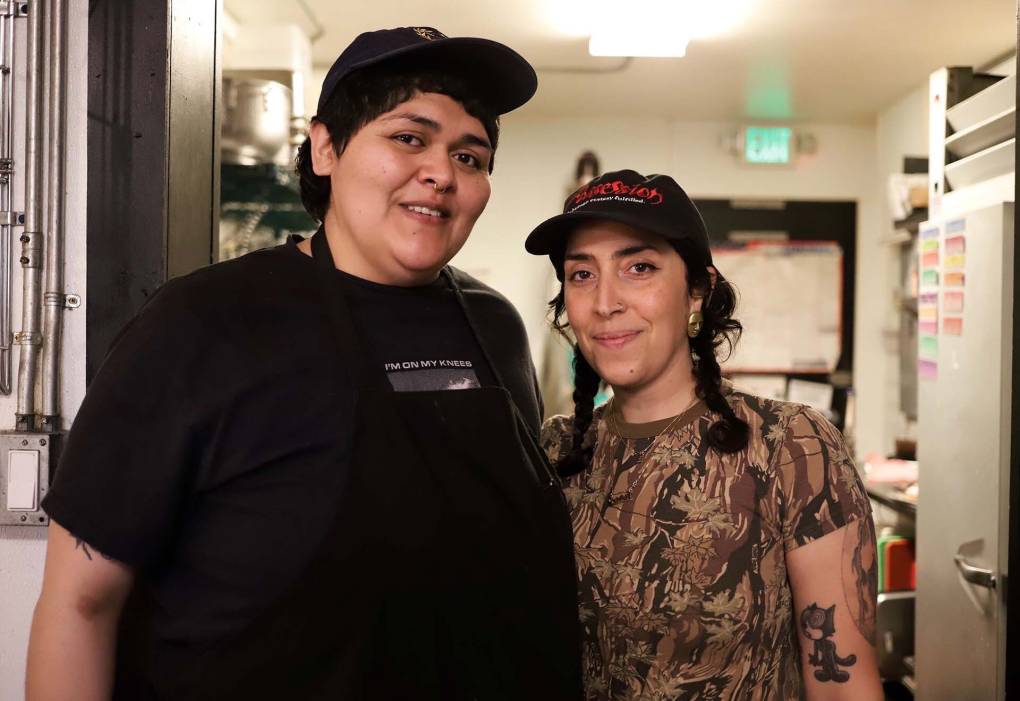
"altTag": "Two women foodmakers stand in an Oakland kitchen during their Palestinian food pop-up",
"isLoading": false,
"fetchFailed": false
},
"arts_13928180": {
"type": "attachments",
"id": "arts_13928180",
"meta": {
"index": "attachments_1716263798",
"site": "arts",
"id": "13928180",
"found": true
},
"parent": 13928174,
"imgSizes": {
"twentyfourteen-full-width": {
"file": "https://ww2.kqed.org/app/uploads/sites/2/2023/04/mj2-1038x576.jpg",
"width": 1038,
"mimeType": "image/jpeg",
"height": 576
},
"thumbnail": {
"file": "https://ww2.kqed.org/app/uploads/sites/2/2023/04/mj2-160x120.jpg",
"width": 160,
"mimeType": "image/jpeg",
"height": 120
},
"post-thumbnail": {
"file": "https://ww2.kqed.org/app/uploads/sites/2/2023/04/mj2-672x372.jpg",
"width": 672,
"mimeType": "image/jpeg",
"height": 372
},
"kqedFullSize": {
"file": "https://ww2.kqed.org/app/uploads/sites/2/2023/04/mj2.jpg",
"width": 1600,
"height": 1200
},
"large": {
"file": "https://ww2.kqed.org/app/uploads/sites/2/2023/04/mj2-1020x765.jpg",
"width": 1020,
"mimeType": "image/jpeg",
"height": 765
},
"1536x1536": {
"file": "https://ww2.kqed.org/app/uploads/sites/2/2023/04/mj2-1536x1152.jpg",
"width": 1536,
"mimeType": "image/jpeg",
"height": 1152
},
"medium": {
"file": "https://ww2.kqed.org/app/uploads/sites/2/2023/04/mj2-800x600.jpg",
"width": 800,
"mimeType": "image/jpeg",
"height": 600
},
"medium_large": {
"file": "https://ww2.kqed.org/app/uploads/sites/2/2023/04/mj2-768x576.jpg",
"width": 768,
"mimeType": "image/jpeg",
"height": 576
}
},
"publishDate": 1682358377,
"modified": 1682358467,
"caption": "Poet Michal “MJ” Jones. ",
"description": null,
"title": "mj2",
"credit": "Courtesy of the author",
"status": "inherit",
"altTag": "A young black poet in a brown jacket against a blue vehicle painted with red and white polka dots.",
"isLoading": false,
"fetchFailed": false
},
"arts_13928007": {
"type": "attachments",
"id": "arts_13928007",
"meta": {
"index": "attachments_1716263798",
"site": "arts",
"id": "13928007",
"found": true
},
"parent": 13927810,
"imgSizes": {
"twentyfourteen-full-width": {
"file": "https://ww2.kqed.org/app/uploads/sites/2/2023/04/Brenda.Square.MAIN_-1038x576.jpg",
"width": 1038,
"mimeType": "image/jpeg",
"height": 576
},
"thumbnail": {
"file": "https://ww2.kqed.org/app/uploads/sites/2/2023/04/Brenda.Square.MAIN_-160x160.jpg",
"width": 160,
"mimeType": "image/jpeg",
"height": 160
},
"post-thumbnail": {
"file": "https://ww2.kqed.org/app/uploads/sites/2/2023/04/Brenda.Square.MAIN_-672x372.jpg",
"width": 672,
"mimeType": "image/jpeg",
"height": 372
},
"kqedFullSize": {
"file": "https://ww2.kqed.org/app/uploads/sites/2/2023/04/Brenda.Square.MAIN_.jpg",
"width": 1060,
"height": 1060
},
"large": {
"file": "https://ww2.kqed.org/app/uploads/sites/2/2023/04/Brenda.Square.MAIN_-1020x1020.jpg",
"width": 1020,
"mimeType": "image/jpeg",
"height": 1020
},
"medium": {
"file": "https://ww2.kqed.org/app/uploads/sites/2/2023/04/Brenda.Square.MAIN_-800x800.jpg",
"width": 800,
"mimeType": "image/jpeg",
"height": 800
},
"medium_large": {
"file": "https://ww2.kqed.org/app/uploads/sites/2/2023/04/Brenda.Square.MAIN_-768x768.jpg",
"width": 768,
"mimeType": "image/jpeg",
"height": 768
}
},
"publishDate": 1681919459,
"modified": 1681919479,
"caption": "Ethel Love, at age 17, as Brenda in Tupac Shakur's music video for 'Brenda's Got a Baby.' Love says the role came naturally to her 'because it was similar to my life already.'",
"description": null,
"title": "Brenda.Square.MAIN",
"credit": "YouTube/Interscope Records",
"status": "inherit",
"altTag": null,
"isLoading": false,
"fetchFailed": false
},
"arts_13927685": {
"type": "attachments",
"id": "arts_13927685",
"meta": {
"index": "attachments_1716263798",
"site": "arts",
"id": "13927685",
"found": true
},
"parent": 0,
"imgSizes": {
"thumbnail": {
"file": "https://ww2.kqed.org/app/uploads/sites/2/2023/04/DelGif2-v1-BB-160x174.gif",
"width": 160,
"mimeType": "image/gif",
"height": 174
},
"post-thumbnail": {
"file": "https://ww2.kqed.org/app/uploads/sites/2/2023/04/DelGif2-v1-BB-500x372.gif",
"width": 500,
"mimeType": "image/gif",
"height": 372
},
"kqedFullSize": {
"file": "https://ww2.kqed.org/app/uploads/sites/2/2023/04/DelGif2-v1-BB.gif",
"width": 500,
"height": 544
}
},
"publishDate": 1681313890,
"modified": 1681317761,
"caption": null,
"description": null,
"title": "DelGif2-v1-BB",
"credit": "Beth LaBerge/KQED; Animation by Bryan Bindloss",
"status": "inherit",
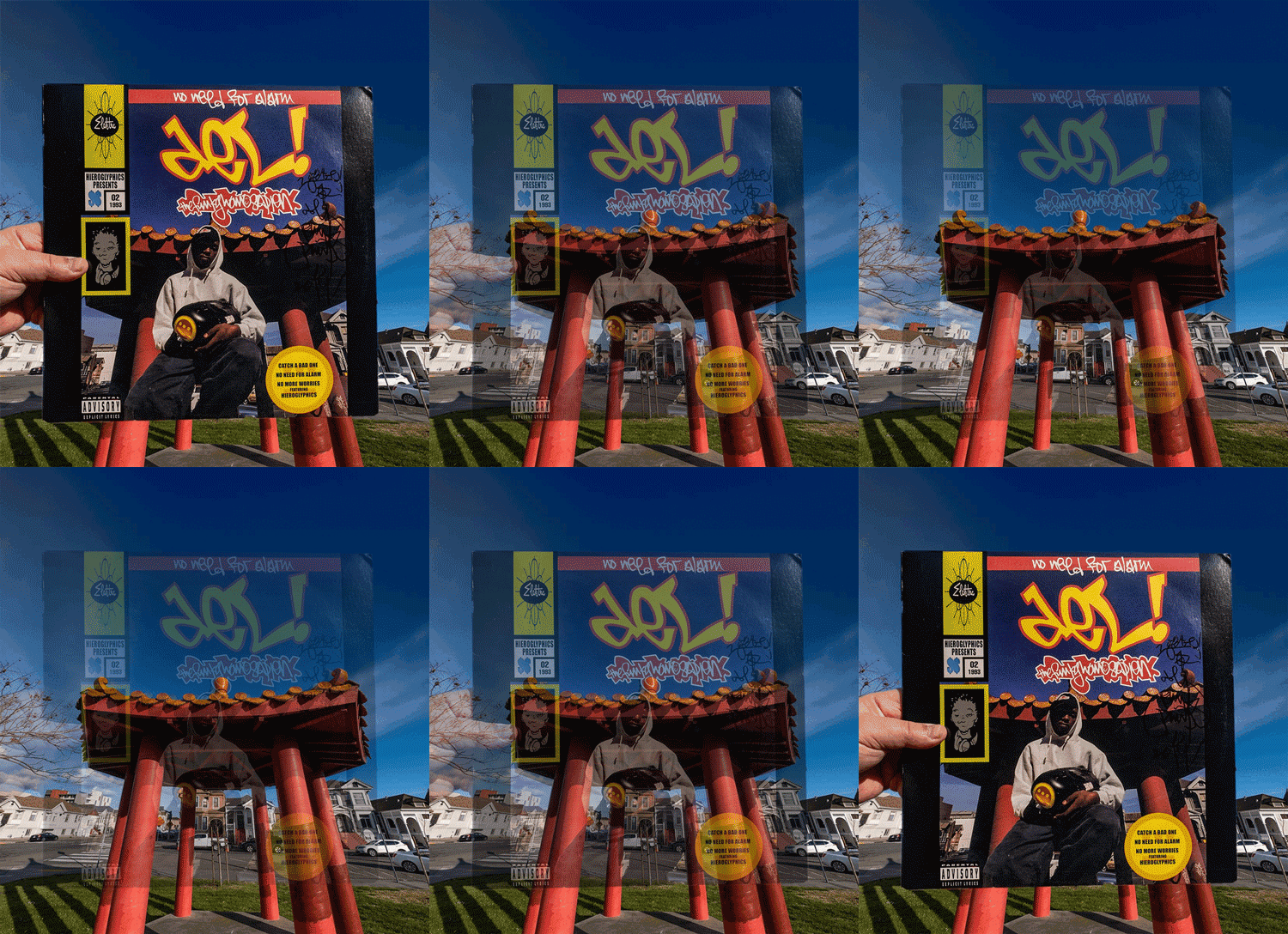
"altTag": "a record cover cycles in and out of the background where its original cover photo was shot, showing a pagoda and victorian houses",
"isLoading": false,
"fetchFailed": false
},
"arts_13927697": {
"type": "attachments",
"id": "arts_13927697",
"meta": {
"index": "attachments_1716263798",
"site": "arts",
"id": "13927697",
"found": true
},
"parent": 13927692,
"imgSizes": {
"twentyfourteen-full-width": {
"file": "https://ww2.kqed.org/app/uploads/sites/2/2023/04/Del.16x9.cover_.pagoda-1038x576.jpg",
"width": 1038,
"mimeType": "image/jpeg",
"height": 576
},
"thumbnail": {
"file": "https://ww2.kqed.org/app/uploads/sites/2/2023/04/Del.16x9.cover_.pagoda-160x90.jpg",
"width": 160,
"mimeType": "image/jpeg",
"height": 90
},
"post-thumbnail": {
"file": "https://ww2.kqed.org/app/uploads/sites/2/2023/04/Del.16x9.cover_.pagoda-672x372.jpg",
"width": 672,
"mimeType": "image/jpeg",
"height": 372
},
"kqedFullSize": {
"file": "https://ww2.kqed.org/app/uploads/sites/2/2023/04/Del.16x9.cover_.pagoda.jpg",
"width": 1920,
"height": 1080
},
"large": {
"file": "https://ww2.kqed.org/app/uploads/sites/2/2023/04/Del.16x9.cover_.pagoda-1020x574.jpg",
"width": 1020,
"mimeType": "image/jpeg",
"height": 574
},
"1536x1536": {
"file": "https://ww2.kqed.org/app/uploads/sites/2/2023/04/Del.16x9.cover_.pagoda-1536x864.jpg",
"width": 1536,
"mimeType": "image/jpeg",
"height": 864
},
"medium": {
"file": "https://ww2.kqed.org/app/uploads/sites/2/2023/04/Del.16x9.cover_.pagoda-800x450.jpg",
"width": 800,
"mimeType": "image/jpeg",
"height": 450
},
"medium_large": {
"file": "https://ww2.kqed.org/app/uploads/sites/2/2023/04/Del.16x9.cover_.pagoda-768x432.jpg",
"width": 768,
"mimeType": "image/jpeg",
"height": 432
}
},
"publishDate": 1681317515,
"modified": 1681317541,
"caption": null,
"description": null,
"title": "Del.16x9.cover.pagoda",
"credit": "Beth LaBerge/KQED",
"status": "inherit",
"altTag": null,
"isLoading": false,
"fetchFailed": false
}
},
"audioPlayerReducer": {
"postId": "stream_live",
"isPaused": true,
"isPlaying": false,
"pfsActive": false,
"pledgeModalIsOpen": true,
"playerDrawerIsOpen": false,
"liveAudioPlayStartedAt": 0,
"liveAudioPlayContext": ""
},
"authorsReducer": {
"byline_arts_13928550": {
"type": "authors",
"id": "byline_arts_13928550",
"meta": {
"override": true
},
"slug": "byline_arts_13928550",
"name": "J. Darrah",
"isLoading": false
},
"byline_arts_13927692": {
"type": "authors",
"id": "byline_arts_13927692",
"meta": {
"override": true
},
"slug": "byline_arts_13927692",
"name": "Del the Funky Homosapien",
"isLoading": false
},
"shotchkiss": {
"type": "authors",
"id": "61",
"meta": {
"index": "authors_1716337520",
"id": "61",
"found": true
},
"name": "Sarah Hotchkiss",
"firstName": "Sarah",
"lastName": "Hotchkiss",
"slug": "shotchkiss",
"email": "shotchkiss@kqed.org",
"display_author_email": true,
"staff_mastheads": [
"arts"
],
"title": "Senior Editor",
"bio": "Sarah Hotchkiss is a San Francisco \u003ca href=\"http://www.sarahhotchkiss.com\">artist\u003c/a> and arts writer. In 2019, she received the Dorothea & Leo Rabkin Foundation grant for visual art journalism and in 2020 she received a Society of Professional Journalists, Northern California award for excellence in arts and culture reporting.",
"avatar": "https://secure.gravatar.com/avatar/bc662df144b3d27fd8b1b6f1c2a420d34e91e53154d411bb7ad353cc8b6cea8d?s=600&d=blank&r=g",
"twitter": null,
"bluesky": null,
"facebook": null,
"instagram": null,
"linkedin": null,
"sites": [
{
"site": "",
"roles": [
"editor"
]
},
{
"site": "arts",
"roles": [
"Contributor",
"administrator"
]
},
{
"site": "artschool",
"roles": [
"administrator"
]
},
{
"site": "news",
"roles": [
"editor"
]
},
{
"site": "pop",
"roles": [
"administrator"
]
},
{
"site": "bayareabites",
"roles": [
"editor"
]
},
{
"site": "spark",
"roles": [
"editor"
]
},
{
"site": "checkplease",
"roles": [
"editor"
]
}
],
"headData": {
"title": "Sarah Hotchkiss | KQED",
"description": "Senior Editor",
"ogImgSrc": "https://secure.gravatar.com/avatar/bc662df144b3d27fd8b1b6f1c2a420d34e91e53154d411bb7ad353cc8b6cea8d?s=600&d=blank&r=g",
"twImgSrc": "https://secure.gravatar.com/avatar/bc662df144b3d27fd8b1b6f1c2a420d34e91e53154d411bb7ad353cc8b6cea8d?s=600&d=blank&r=g"
},
"isLoading": false,
"link": "/author/shotchkiss"
},
"gmeline": {
"type": "authors",
"id": "185",
"meta": {
"index": "authors_1716337520",
"id": "185",
"found": true
},
"name": "Gabe Meline",
"firstName": "Gabe",
"lastName": "Meline",
"slug": "gmeline",
"email": "gmeline@kqed.org",
"display_author_email": true,
"staff_mastheads": [
"arts"
],
"title": "Senior Editor, KQED Arts & Culture",
"bio": "Gabe Meline entered journalism at age 15 making photocopied zines, and has since earned awards from the Edward R. Murrow Awards, the Society for Professional Journalists, the Online Journalism Awards, the Association of Alternative Newsweeklies and the California Newspaper Publishers Association. Prior to KQED, he was the editor of the \u003cem>North Bay Bohemian\u003c/em> and a touring musician. He lives with his wife and daughter in his hometown of Santa Rosa, CA.",
"avatar": "https://secure.gravatar.com/avatar/5bebe57be0d8bc2dd318934feb47299e2d2d10cba28d09d8d7afb389a2ce2bdd?s=600&d=blank&r=g",
"twitter": null,
"bluesky": null,
"facebook": null,
"instagram": null,
"linkedin": null,
"sites": [
{
"site": "",
"roles": [
"editor"
]
},
{
"site": "arts",
"roles": [
"administrator"
]
},
{
"site": "artschool",
"roles": [
"editor"
]
},
{
"site": "news",
"roles": [
"author"
]
},
{
"site": "pop",
"roles": [
"editor"
]
},
{
"site": "bayareabites",
"roles": [
"editor"
]
},
{
"site": "food",
"roles": [
"editor"
]
},
{
"site": "liveblog",
"roles": [
"editor"
]
},
{
"site": "hiphop",
"roles": [
"editor"
]
}
],
"headData": {
"title": "Gabe Meline | KQED",
"description": "Senior Editor, KQED Arts & Culture",
"ogImgSrc": "https://secure.gravatar.com/avatar/5bebe57be0d8bc2dd318934feb47299e2d2d10cba28d09d8d7afb389a2ce2bdd?s=600&d=blank&r=g",
"twImgSrc": "https://secure.gravatar.com/avatar/5bebe57be0d8bc2dd318934feb47299e2d2d10cba28d09d8d7afb389a2ce2bdd?s=600&d=blank&r=g"
},
"isLoading": false,
"link": "/author/gmeline"
},
"ralexandra": {
"type": "authors",
"id": "11242",
"meta": {
"index": "authors_1716337520",
"id": "11242",
"found": true
},
"name": "Rae Alexandra",
"firstName": "Rae",
"lastName": "Alexandra",
"slug": "ralexandra",
"email": "ralexandra@kqed.org",
"display_author_email": true,
"staff_mastheads": [
"arts"
],
"title": "Reporter/Producer",
"bio": "Rae Alexandra is a Reporter/Producer for KQED Arts & Culture, and the creator/author of the \u003ca href=\"https://www.kqed.org/arts/program/rebel-girls-from-bay-area-history\">Rebel Girls From Bay Area History\u003c/a> and \u003ca href=\"https://www.kqed.org/bizarrebayarea\">Bizarre Bay Area\u003c/a> series. Her debut book, \u003ca href=\"https://citylights.com/politics-current-events-history/unsung-heroines35-women-who-changed/\">Unsung Heroines: 35 Women Who Changed the Bay Area\u003c/a> was published by City Lights in March 2026. In 2023, Rae was awarded an SPJ Excellence in Journalism Award for Arts & Culture. Rae was born and raised in Wales and subsequently — even after two decades in Northern California — still uses phrases that regularly baffle her coworkers.",
"avatar": "https://secure.gravatar.com/avatar/edfee8176c80cc0a382b051190f5341997df378a934a5774dcb0977732dfd401?s=600&d=blank&r=g",
"twitter": null,
"bluesky": null,
"facebook": null,
"instagram": null,
"linkedin": null,
"sites": [
{
"site": "arts",
"roles": [
"editor"
]
},
{
"site": "news",
"roles": [
"editor"
]
},
{
"site": "pop",
"roles": [
"editor"
]
},
{
"site": "bayareabites",
"roles": [
"editor"
]
},
{
"site": "science",
"roles": [
"editor"
]
}
],
"headData": {
"title": "Rae Alexandra | KQED",
"description": "Reporter/Producer",
"ogImgSrc": "https://secure.gravatar.com/avatar/edfee8176c80cc0a382b051190f5341997df378a934a5774dcb0977732dfd401?s=600&d=blank&r=g",
"twImgSrc": "https://secure.gravatar.com/avatar/edfee8176c80cc0a382b051190f5341997df378a934a5774dcb0977732dfd401?s=600&d=blank&r=g"
},
"isLoading": false,
"link": "/author/ralexandra"
},
"aproehl": {
"type": "authors",
"id": "11296",
"meta": {
"index": "authors_1716337520",
"id": "11296",
"found": true
},
"name": "Ariana Proehl",
"firstName": "Ariana",
"lastName": "Proehl",
"slug": "aproehl",
"email": "aproehl@KQED.org",
"display_author_email": true,
"staff_mastheads": [
"news"
],
"title": "Culture Reporter, KQED",
"bio": "Ariana Proehl is a Culture Reporter and Host.",
"avatar": "https://secure.gravatar.com/avatar/c96b24567eb5bb3a4f8bb295ed53e232?s=600&d=blank&r=g",
"twitter": "ArianaProehl",
"facebook": null,
"instagram": null,
"linkedin": null,
"sites": [
{
"site": "arts",
"roles": []
},
{
"site": "news",
"roles": []
},
{
"site": "education",
"roles": []
},
{
"site": "forum",
"roles": []
}
],
"headData": {
"title": "Ariana Proehl | KQED",
"description": "Culture Reporter, KQED",
"ogImgSrc": "https://secure.gravatar.com/avatar/c96b24567eb5bb3a4f8bb295ed53e232?s=600&d=blank&r=g",
"twImgSrc": "https://secure.gravatar.com/avatar/c96b24567eb5bb3a4f8bb295ed53e232?s=600&d=blank&r=g"
},
"isLoading": false,
"link": "/author/aproehl"
},
"nvoynovskaya": {
"type": "authors",
"id": "11387",
"meta": {
"index": "authors_1716337520",
"id": "11387",
"found": true
},
"name": "Nastia Voynovskaya",
"firstName": "Nastia",
"lastName": "Voynovskaya",
"slug": "nvoynovskaya",
"email": "nvoynovskaya@kqed.org",
"display_author_email": false,
"staff_mastheads": [
"arts"
],
"title": "Editor and reporter",
"bio": "Nastia Voynovskaya is a reporter and editor at KQED Arts & Culture. She's been covering the arts in the Bay Area for over a decade, with a focus on music, queer culture, labor issues and grassroots organizing. She has edited KQED story series such as Trans Bay: A History of San Francisco's Gender-Diverse Community, and co-created KQED's Bay Area hip-hop history project, That's My Word. Nastia's work has been recognized by the Society of Professional Journalists and San Francisco Press Club. She holds a BA in comparative literature from UC Berkeley.",
"avatar": "https://secure.gravatar.com/avatar/5025ee460e5a85d69ca20ea6c6f2f80d7e17795c828f61ea3aecfcd924e9042e?s=600&d=blank&r=g",
"twitter": null,
"bluesky": null,
"facebook": null,
"instagram": "https://www.instagram.com/nananastia/",
"linkedin": null,
"sites": [
{
"site": "arts",
"roles": [
"administrator"
]
},
{
"site": "news",
"roles": [
"editor"
]
},
{
"site": "pop",
"roles": [
"administrator"
]
},
{
"site": "bayareabites",
"roles": [
"editor"
]
},
{
"site": "podcasts",
"roles": [
"editor"
]
},
{
"site": "hiphop",
"roles": [
"editor"
]
}
],
"headData": {
"title": "Nastia Voynovskaya | KQED",
"description": "Editor and reporter",
"ogImgSrc": "https://secure.gravatar.com/avatar/5025ee460e5a85d69ca20ea6c6f2f80d7e17795c828f61ea3aecfcd924e9042e?s=600&d=blank&r=g",
"twImgSrc": "https://secure.gravatar.com/avatar/5025ee460e5a85d69ca20ea6c6f2f80d7e17795c828f61ea3aecfcd924e9042e?s=600&d=blank&r=g"
},
"isLoading": false,
"link": "/author/nvoynovskaya"
},
"ogpenn": {
"type": "authors",
"id": "11491",
"meta": {
"index": "authors_1716337520",
"id": "11491",
"found": true
},
"name": "Pendarvis Harshaw",
"firstName": "Pendarvis",
"lastName": "Harshaw",
"slug": "ogpenn",
"email": "ogpenn@gmail.com",
"display_author_email": false,
"staff_mastheads": [
"arts"
],
"title": "Community Engagement Reporter",
"bio": "Pendarvis Harshaw is an educator, host and writer with KQED Arts.",
"avatar": "https://secure.gravatar.com/avatar/972b77ee8e3f346ae2b00622661187fbfabd059b5693bbdc1475ea7a722fd4cd?s=600&d=blank&r=g",
"twitter": null,
"bluesky": null,
"facebook": null,
"instagram": "ogpenn",
"linkedin": null,
"sites": [
{
"site": "arts",
"roles": [
"administrator"
]
},
{
"site": "news",
"roles": [
"editor"
]
},
{
"site": "bayareabites",
"roles": [
"author"
]
},
{
"site": "hiphop",
"roles": [
"editor"
]
}
],
"headData": {
"title": "Pendarvis Harshaw | KQED",
"description": "Community Engagement Reporter",
"ogImgSrc": "https://secure.gravatar.com/avatar/972b77ee8e3f346ae2b00622661187fbfabd059b5693bbdc1475ea7a722fd4cd?s=600&d=blank&r=g",
"twImgSrc": "https://secure.gravatar.com/avatar/972b77ee8e3f346ae2b00622661187fbfabd059b5693bbdc1475ea7a722fd4cd?s=600&d=blank&r=g"
},
"isLoading": false,
"link": "/author/ogpenn"
},
"mmedina": {
"type": "authors",
"id": "11528",
"meta": {
"index": "authors_1716337520",
"id": "11528",
"found": true
},
"name": "Marisol Medina-Cadena",
"firstName": "Marisol",
"lastName": "Medina-Cadena",
"slug": "mmedina",
"email": "mmedina@KQED.org",
"display_author_email": true,
"staff_mastheads": [],
"title": "Producer, Rightnowish Podcast",
"bio": "Marisol Medina-Cadena is a radio reporter and podcast producer. Before working at KQED, she produced for PBS member station, KCET, in Los Angeles. In 2017, Marisol won an Emmy Award for her work on the televised documentary, \u003cem>City Rising\u003c/em>, examining California's affordable housing crisis and the historical roots of gentrification.",
"avatar": "https://secure.gravatar.com/avatar/6c3db46a1cabb5e1fe9a365b5f4e681e?s=600&d=blank&r=g",
"twitter": "marisolreports",
"facebook": null,
"instagram": null,
"linkedin": null,
"sites": [
{
"site": "arts",
"roles": []
},
{
"site": "news",
"roles": [
"edit_others_posts"
]
}
],
"headData": {
"title": "Marisol Medina-Cadena | KQED",
"description": "Producer, Rightnowish Podcast",
"ogImgSrc": "https://secure.gravatar.com/avatar/6c3db46a1cabb5e1fe9a365b5f4e681e?s=600&d=blank&r=g",
"twImgSrc": "https://secure.gravatar.com/avatar/6c3db46a1cabb5e1fe9a365b5f4e681e?s=600&d=blank&r=g"
},
"isLoading": false,
"link": "/author/mmedina"
},
"achazaro": {
"type": "authors",
"id": "11748",
"meta": {
"index": "authors_1716337520",
"id": "11748",
"found": true
},
"name": "Alan Chazaro",
"firstName": "Alan",
"lastName": "Chazaro",
"slug": "achazaro",
"email": "agchazaro@gmail.com",
"display_author_email": true,
"staff_mastheads": [],
"title": "Food Writer and Reporter",
"bio": "Alan Chazaro is the author of \u003cem>This Is Not a Frank Ocean Cover Album\u003c/em> (Black Lawrence Press, 2019), \u003cem>Piñata Theory\u003c/em> (Black Lawrence Press, 2020), and \u003cem>Notes from the Eastern Span of the Bay Bridge\u003c/em> (Ghost City Press, 2021). He is a graduate of June Jordan’s Poetry for the People program at UC Berkeley and a former Lawrence Ferlinghetti Fellow at the University of San Francisco. He writes about sports, food, art, music, education, and culture while repping the Bay on \u003ca href=\"https://twitter.com/alan_chazaro\">Twitter\u003c/a> and \u003ca href=\"https://www.instagram.com/alan_chazaro/?hl=en\">Instagram\u003c/a> at @alan_chazaro.",
"avatar": "https://secure.gravatar.com/avatar/ea8b6dd970fc5c29e7a188e7d5861df7?s=600&d=blank&r=g",
"twitter": "alan_chazaro",
"facebook": null,
"instagram": null,
"linkedin": null,
"sites": [
{
"site": "arts",
"roles": [
"contributor"
]
},
{
"site": "news",
"roles": [
"editor"
]
}
],
"headData": {
"title": "Alan Chazaro | KQED",
"description": "Food Writer and Reporter",
"ogImgSrc": "https://secure.gravatar.com/avatar/ea8b6dd970fc5c29e7a188e7d5861df7?s=600&d=blank&r=g",
"twImgSrc": "https://secure.gravatar.com/avatar/ea8b6dd970fc5c29e7a188e7d5861df7?s=600&d=blank&r=g"
},
"isLoading": false,
"link": "/author/achazaro"
},
"emilianovilla": {
"type": "authors",
"id": "11752",
"meta": {
"index": "authors_1716337520",
"id": "11752",
"found": true
},
"name": "Emiliano Villa",
"firstName": "Emiliano",
"lastName": "Villa",
"slug": "emilianovilla",
"email": "evilla@kqed.org",
"display_author_email": true,
"staff_mastheads": [],
"title": "KQED Education Staff",
"bio": "Emiliano Villa is a multimedia journalist seeped in Oakland culture. Through their training at YR Media, they discovered their love for journalism and realized the power of youth media in addressing inequity. This passion led them to join YR's newsroom, reporting on politics, arts, and queer culture through a youth perspective. Their work has been featured on NPR, SF Chronicle, and the NY Times. When they aren't creating, Emiliano enjoys nature and dancing their heart out to pop music.",
"avatar": "https://secure.gravatar.com/avatar/1b7b4ba50c7d726845f5f18c6b77b0ba?s=600&d=mm&r=g",
"twitter": null,
"facebook": null,
"instagram": null,
"linkedin": null,
"sites": [
{
"site": "",
"roles": [
"editor"
]
},
{
"site": "arts",
"roles": []
},
{
"site": "news",
"roles": []
},
{
"site": "education",
"roles": []
},
{
"site": "perspectives",
"roles": []
}
],
"headData": {
"title": "Emiliano Villa | KQED",
"description": "KQED Education Staff",
"ogImgSrc": "https://secure.gravatar.com/avatar/1b7b4ba50c7d726845f5f18c6b77b0ba?s=600&d=mm&r=g",
"twImgSrc": "https://secure.gravatar.com/avatar/1b7b4ba50c7d726845f5f18c6b77b0ba?s=600&d=mm&r=g"
},
"isLoading": false,
"link": "/author/emilianovilla"
},
"ksong": {
"type": "authors",
"id": "11813",
"meta": {
"index": "authors_1716337520",
"id": "11813",
"found": true
},
"name": "Kristie Song",
"firstName": "Kristie",
"lastName": "Song",
"slug": "ksong",
"email": "ksong@kqed.org",
"display_author_email": false,
"staff_mastheads": [],
"title": "Editorial Intern ",
"bio": "Kristie Song is an Arts & Culture Intern at KQED. She is currently a graduate student at UC Berkeley, where she studies audio and multimedia journalism. Previously, she covered the local community for Oakland North, produced episodes for The Science of Happiness, and served as news director for KUCI, UC Irvine’s radio station. Outside of reporting, she likes drawing comics, listening to angsty rock, and practicing the guitar.",
"avatar": "https://secure.gravatar.com/avatar/c1149e78c3c44f92d4945a8ab0711af6?s=600&d=blank&r=g",
"twitter": null,
"facebook": null,
"instagram": null,
"linkedin": null,
"sites": [
{
"site": "arts",
"roles": [
"editor"
]
}
],
"headData": {
"title": "Kristie Song | KQED",
"description": "Editorial Intern ",
"ogImgSrc": "https://secure.gravatar.com/avatar/c1149e78c3c44f92d4945a8ab0711af6?s=600&d=blank&r=g",
"twImgSrc": "https://secure.gravatar.com/avatar/c1149e78c3c44f92d4945a8ab0711af6?s=600&d=blank&r=g"
},
"isLoading": false,
"link": "/author/ksong"
}
},
"pagesReducer": {
"arts_tag_oakland": {
"type": "terms",
"id": "arts_1143",
"meta": {
"index": "terms_1716263798",
"site": "arts",
"id": "1143",
"score": 6.8845096
},
"featImg": null,
"name": "Oakland",
"description": null,
"taxonomy": "tag",
"headData": {
"twImgId": null,
"twTitle": null,
"ogTitle": null,
"ogImgId": null,
"twDescription": null,
"description": null,
"title": "Oakland Archives | KQED Arts",
"ogDescription": null
},
"ttid": 692,
"slug": "oakland",
"isLoading": false,
"title": "Oakland",
"pageMeta": {
"site": "arts",
"WpPageTemplate": "page-topic-editorial",
"currentPage": 28
},
"blocks": [
{
"blockName": "kqed/post-list",
"attrs": {
"layout": "cardArticle2",
"query": "posts/arts?tag=oakland",
"seeMore": false,
"paginated": true,
"page": 28
}
},
{
"blockName": "kqed/ad"
}
]
}
},
"pfsSessionReducer": {},
"postsReducer": {
"stream_live": {
"type": "live",
"id": "stream_live",
"audioUrl": "https://streams.kqed.org/kqedradio",
"title": "Live Stream",
"excerpt": "Live Stream information currently unavailable.",
"link": "/radio",
"featImg": "",
"label": {
"name": "KQED Live",
"link": "/"
}
},
"stream_kqedNewscast": {
"type": "posts",
"id": "stream_kqedNewscast",
"audioUrl": "https://www.kqed.org/.stream/anon/radio/RDnews/newscast.mp3?_=1",
"title": "KQED Newscast",
"featImg": "",
"label": {
"name": "88.5 FM",
"link": "/"
}
},
"arts_13929396": {
"type": "posts",
"id": "arts_13929396",
"meta": {
"index": "posts_1716263798",
"site": "arts",
"id": "13929396",
"score": null,
"sort": [
1684958412000
]
},
"guestAuthors": [],
"slug": "books-readings-summer-bay-area",
"title": "Get Lit: 8 Bay Area Events to Help You Discover Your Next Summer Read",
"publishDate": 1684958412,
"format": "aside",
"headTitle": "Get Lit: 8 Bay Area Events to Help You Discover Your Next Summer Read | KQED",
"labelTerm": {},
"content": "\u003cp>\u003cem>\u003cstrong>Be sure to check out our full \u003ca href=\"https://www.kqed.org/summerguide2023\">2023 Summer Arts Guide to live music, movies, art, theater, festivals and more\u003c/a> in the Bay Area.\u003c/strong> \u003c/em>\u003c/p>\n\u003cp>Summer heat always brings me back to being a young student, eager to reconnect with joy during breaks from school. It’s the perfect time to get back into reading for pleasure — to dust off the books you’ve shoved into the corners of your desk or visit the local bookstore or library for something new. There are also plenty of chances to get out and explore the Bay Area’s literary scene, with a wave of author talks, book fairs and zine fests offering spaces for bookworms to gather and discover new reads.\u003c/p>\n\u003cfigure id=\"attachment_13929398\" class=\"wp-caption aligncenter\" style=\"max-width: 800px\">\u003ca href=\"https://ww2.kqed.org/app/uploads/sites/2/2023/05/Oakland-2023-youth-poet-laureate-finalists-Sharon-Mckellar-scaled.jpg\">\u003cimg loading=\"lazy\" decoding=\"async\" class=\"size-medium wp-image-13929398\" src=\"https://ww2.kqed.org/app/uploads/sites/2/2023/05/Oakland-2023-youth-poet-laureate-finalists-Sharon-Mckellar-800x533.jpg\" alt=\"a diverse group of seven young women pose and smile while sitting on a stoop\" width=\"800\" height=\"533\" srcset=\"https://cdn.kqed.org/wp-content/uploads/sites/2/2023/05/Oakland-2023-youth-poet-laureate-finalists-Sharon-Mckellar-800x533.jpg 800w, https://cdn.kqed.org/wp-content/uploads/sites/2/2023/05/Oakland-2023-youth-poet-laureate-finalists-Sharon-Mckellar-1020x680.jpg 1020w, https://cdn.kqed.org/wp-content/uploads/sites/2/2023/05/Oakland-2023-youth-poet-laureate-finalists-Sharon-Mckellar-160x107.jpg 160w, https://cdn.kqed.org/wp-content/uploads/sites/2/2023/05/Oakland-2023-youth-poet-laureate-finalists-Sharon-Mckellar-768x512.jpg 768w, https://cdn.kqed.org/wp-content/uploads/sites/2/2023/05/Oakland-2023-youth-poet-laureate-finalists-Sharon-Mckellar-1536x1024.jpg 1536w, https://cdn.kqed.org/wp-content/uploads/sites/2/2023/05/Oakland-2023-youth-poet-laureate-finalists-Sharon-Mckellar-2048x1365.jpg 2048w, https://cdn.kqed.org/wp-content/uploads/sites/2/2023/05/Oakland-2023-youth-poet-laureate-finalists-Sharon-Mckellar-1920x1280.jpg 1920w\" sizes=\"(max-width: 800px) 100vw, 800px\">\u003c/a>\u003cfigcaption class=\"wp-caption-text\">2023 Oakland Youth Poet Laureate finalists Serafina Mackintosh, Maya Raveneu-Bey, Aniylah (Niy) Dixon, Michelle Vong, Ella Gordon, Isabel Park and Nairobi Barnes. \u003ccite>(Sharon Mckellar)\u003c/cite>\u003c/figcaption>\u003c/figure>\n\u003ch2>\u003ca href=\"https://oaklandlibrary.bibliocommons.com/events/640f576581da764500c35abb\" target=\"_blank\" rel=\"noopener\">Oakland’s Youth Poet Laureate Reading\u003c/a>\u003c/h2>\n\u003cp>\u003cem>Oakstop, Oakland \u003c/em>\u003cbr>\n\u003cem>June 2\u003c/em>\u003c/p>\n\u003cp>In high school, I joined a small literary group to find camaraderie with other bookworms. We met weekly, \u003cem>Dead Poets Society\u003c/em>-style, in a secluded part of campus, sharing excerpts from our favorite reads (a good amount was fan fiction) and our own writing projects. I think back on this time as a tender era of exploration, when I was first understanding writing as a way to process my deepest curiosities. It’s always heartening, then, for me to see younger generations come into their own through this form of expression.\u003c/p>\n\u003cp>The Oakland Youth Poet Laureate program was created to help promising young writers do just that, connecting youth ages 13 to 18 with opportunities and community to foster their passions for poetry and literature. On June 2, Oakland Public Library hosts a reading and announcement of this year’s 12th Oakland Youth Poet Laureate and Vice Youth Poet Laureate, selected from a group of seven finalists that includes Aniylah (Niy) Dixon, Ella Gordon, Isabel Park, Maya Raveneau-Bey, Michelle Vong, Nairobi Barnes and Serafina Mackintosh.\u003c/p>\n\u003cp>[ad fullwidth]\u003c/p>\n\u003cp>Each of these writers has already developed a distinct voice and unique delivery. Watching a recent online series of their readings, I was struck by their composure as they recited poems drawing inspiration from Oakland, while holding space for grief and pain, rebellion against sexism and the power and anxieties of Black womanhood.\u003c/p>\n\u003cfigure id=\"attachment_13929576\" class=\"wp-caption aligncenter\" style=\"max-width: 800px\">\u003ca href=\"https://ww2.kqed.org/app/uploads/sites/2/2023/05/Screen-Shot-2023-05-24-at-10.39.51-AM.png\">\u003cimg loading=\"lazy\" decoding=\"async\" class=\"size-medium wp-image-13929576\" src=\"https://ww2.kqed.org/app/uploads/sites/2/2023/05/Screen-Shot-2023-05-24-at-10.39.51-AM-800x488.png\" alt=\"a young Asian American person in a black and white headshot and a Black man with a beard and glasses in a headshot\" width=\"800\" height=\"488\" srcset=\"https://cdn.kqed.org/wp-content/uploads/sites/2/2023/05/Screen-Shot-2023-05-24-at-10.39.51-AM-800x488.png 800w, https://cdn.kqed.org/wp-content/uploads/sites/2/2023/05/Screen-Shot-2023-05-24-at-10.39.51-AM-1020x622.png 1020w, https://cdn.kqed.org/wp-content/uploads/sites/2/2023/05/Screen-Shot-2023-05-24-at-10.39.51-AM-160x98.png 160w, https://cdn.kqed.org/wp-content/uploads/sites/2/2023/05/Screen-Shot-2023-05-24-at-10.39.51-AM-768x468.png 768w, https://cdn.kqed.org/wp-content/uploads/sites/2/2023/05/Screen-Shot-2023-05-24-at-10.39.51-AM.png 1142w\" sizes=\"(max-width: 800px) 100vw, 800px\">\u003c/a>\u003cfigcaption class=\"wp-caption-text\">L to R: Writers Brandon Taylor and Ocean Vuong. \u003ccite>(Tom Hines; H. Xu)\u003c/cite>\u003c/figcaption>\u003c/figure>\n\u003ch2>City Arts & Lectures: \u003ca href=\"https://www.cityarts.net/event/brandon-taylor/\" target=\"_blank\" rel=\"noopener\">Brandon Taylor\u003c/a> and \u003ca href=\"https://www.cityarts.net/event/ocean-vuong-2/\">Ocean Vuong\u003c/a>\u003c/h2>\n\u003cp>\u003cem>Sydney Goldstein Theater, San Francisco \u003c/em>\u003cbr>\n\u003cem>June 2 (Brandon Taylor) and June 9 (Ocean Vuong)\u003c/em>\u003c/p>\n\u003cp>Around two years ago, I began reading more queer literature from contemporary writers of color, scouring the internet for short stories and poems, and saving as much as I could. The world was in the midst of lockdown chaos, and questions of identity felt more pressing than ever before.\u003c/p>\n\u003cp>This is how I discovered the works of \u003ca href=\"https://www.instagram.com/brandonlgtaylor/?hl=en\">Brandon Taylor\u003c/a> and \u003ca href=\"https://www.instagram.com/ocean_vuong/\">Ocean Vuong\u003c/a>. I devoured Taylor’s essays on his \u003ca href=\"https://lithub.com/who-cares-what-straight-people-think/\">conflictedness in reading and writing queer narratives\u003c/a> and on \u003ca href=\"https://lithub.com/being-gay-vs-being-southern-a-false-choice/\">being gay in the South\u003c/a>; and spent hours underlining quotes from Vuong’s debut novel, \u003cem>On Earth We’re Briefly Gorgeous\u003c/em>. Taylor’s writing encouraged me to think more critically about craft, while Vuong’s prose presented new and unconventional ways to use language in vulnerable stories.\u003c/p>\n\u003cp>At Taylor’s and Vuong’s City Arts & Lectures talks, each writer will discuss their most recent works — Taylor’s upcoming book \u003cem>The Late Americans\u003c/em>, and Vuong’s latest poetry collection, \u003cem>Time is a Mother\u003c/em>.\u003c/p>\n\u003cfigure id=\"attachment_13929544\" class=\"wp-caption aligncenter\" style=\"max-width: 800px\">\u003ca href=\"https://ww2.kqed.org/app/uploads/sites/2/2023/05/Peter-Limata-MDX-REPCO-2020-049.jpeg\">\u003cimg loading=\"lazy\" decoding=\"async\" class=\"size-medium wp-image-13929544\" src=\"https://ww2.kqed.org/app/uploads/sites/2/2023/05/Peter-Limata-MDX-REPCO-2020-049-800x533.jpeg\" alt=\"a young Black man in a denim button up shirt smiles while holding a children's book in a bookstore\" width=\"800\" height=\"533\" srcset=\"https://cdn.kqed.org/wp-content/uploads/sites/2/2023/05/Peter-Limata-MDX-REPCO-2020-049-800x533.jpeg 800w, https://cdn.kqed.org/wp-content/uploads/sites/2/2023/05/Peter-Limata-MDX-REPCO-2020-049-1020x680.jpeg 1020w, https://cdn.kqed.org/wp-content/uploads/sites/2/2023/05/Peter-Limata-MDX-REPCO-2020-049-160x107.jpeg 160w, https://cdn.kqed.org/wp-content/uploads/sites/2/2023/05/Peter-Limata-MDX-REPCO-2020-049-768x512.jpeg 768w, https://cdn.kqed.org/wp-content/uploads/sites/2/2023/05/Peter-Limata-MDX-REPCO-2020-049.jpeg 1500w\" sizes=\"(max-width: 800px) 100vw, 800px\">\u003c/a>\u003cfigcaption class=\"wp-caption-text\">Peter Limata, seen here at Marcus Books, is an Oakland educator who’s become nationally known for his live book readings. He’ll host this year’s book festival at Children’s Fairyland. \u003ccite>(Molly DeCoudreaux Photography)\u003c/cite>\u003c/figcaption>\u003c/figure>\n\u003ch2>\u003ca href=\"https://fairyland.org/events-and-performances/book-festival/\">The Children’s Fairyland Book Festival\u003c/a>\u003c/h2>\n\u003cp>\u003cem>Children’s Fairyland, Oakland\u003cbr>\nJune 3\u003c/em>\u003c/p>\n\u003cp>At this family-friendly event, local youth are invited to celebrate literature and reading with a lineup of author talks, book-making activities, a puppet show, meet-and-greets and more. The speaker lineup features illustrators and authors including Angela Dalton, Christian Robinson, Gennifer Choldenko, JaNay Brown-Wood, Mac Barnett, Nidhi Chanani, Shawn Harris and members of Fairyland’s \u003ca href=\"https://www.fairyland.org/education-and-community/youth-writers-workshop/\">Youth Writers Workshop\u003c/a>. The festival will be hosted by Oakland educator\u003ca href=\"https://www.storytimewithmrlimata.com/\"> Mr. Limata\u003c/a>, who is known for his live children’s book readings.\u003c/p>\n\u003cfigure id=\"attachment_13929400\" class=\"wp-caption aligncenter\" style=\"max-width: 800px\">\u003ca href=\"https://ww2.kqed.org/app/uploads/sites/2/2023/05/Screen-Shot-2023-05-19-at-12.00.51-PM.png\">\u003cimg loading=\"lazy\" decoding=\"async\" class=\"size-medium wp-image-13929400\" src=\"https://ww2.kqed.org/app/uploads/sites/2/2023/05/Screen-Shot-2023-05-19-at-12.00.51-PM-800x506.png\" alt=\"a diptych of an author, a woman with brown hair and glasses and a book cover for a graphic novel called 'impossible people'\" width=\"800\" height=\"506\" srcset=\"https://cdn.kqed.org/wp-content/uploads/sites/2/2023/05/Screen-Shot-2023-05-19-at-12.00.51-PM-800x506.png 800w, https://cdn.kqed.org/wp-content/uploads/sites/2/2023/05/Screen-Shot-2023-05-19-at-12.00.51-PM-1020x645.png 1020w, https://cdn.kqed.org/wp-content/uploads/sites/2/2023/05/Screen-Shot-2023-05-19-at-12.00.51-PM-160x101.png 160w, https://cdn.kqed.org/wp-content/uploads/sites/2/2023/05/Screen-Shot-2023-05-19-at-12.00.51-PM-768x485.png 768w, https://cdn.kqed.org/wp-content/uploads/sites/2/2023/05/Screen-Shot-2023-05-19-at-12.00.51-PM.png 1190w\" sizes=\"(max-width: 800px) 100vw, 800px\">\u003c/a>\u003cfigcaption class=\"wp-caption-text\">Author Julia Wertz and the cover of her latest book, ‘Impossible People.’ \u003ccite>(Author photo by Oliver Trixl; book cover courtesy of the artist)\u003c/cite>\u003c/figcaption>\u003c/figure>\n\u003ch2>\u003ca href=\"https://www.juliawertz.com/events/\">Cartoonist Julia Wertz’s ‘Impossible People’\u003c/a>\u003c/h2>\n\u003cp>\u003cem>Pegasus Books, Berkeley, June 8\u003cbr>\nBookmine, Napa, June 15\u003cbr>\nSilver Sprocket, San Francisco, Aug. 11 (with \u003ca href=\"https://www.instagram.com/janelleblarg\">Janelle Hessig\u003c/a>!)\u003c/em>\u003c/p>\n\u003cp>As both a nosy person and comics lover, my favorite subcategory of the artform has always been diary comics and graphic memoirs. They don’t have to be notable public figures, nor do their recollections need to be magnificent or fanciful for me to be invested — I’m just entranced by people being people, navigating their doubts and fears as they search for their own versions of peace.\u003c/p>\n\u003cp>When I first read Sonoma County cartoonist Julia Wertz’s comics, I immediately fell in love with her storytelling. Wertz has an illustrative style that is cute, simple and detailed; a witty and reflective approach to dialogue and narrative; and an openness that is intimate and relatable. In her latest book, \u003cem>Impossible People\u003c/em>, she details her five-year sobriety journey in all its chaos. Digging into stories of group therapy sessions, relapses, relationship troubles, an eviction and other trials, she tells the story of how she succeeded, failed and picked herself back up throughout her recovery process. Reflective and honest, Wertz’s take on recovery is filled with ups, downs and unexpected turns. Through each winding revelation, she comes to see herself in a new light — one that forces her to care more deeply for herself.\u003c/p>\n\u003cfigure id=\"attachment_13929403\" class=\"wp-caption aligncenter\" style=\"max-width: 800px\">\u003ca href=\"https://ww2.kqed.org/app/uploads/sites/2/2023/05/image10.png\">\u003cimg loading=\"lazy\" decoding=\"async\" class=\"size-medium wp-image-13929403\" src=\"https://ww2.kqed.org/app/uploads/sites/2/2023/05/image10-800x824.png\" alt=\"a young Asian woman poses behind a table full of zines and stickers and tshirts at a book fair\" width=\"800\" height=\"824\" srcset=\"https://cdn.kqed.org/wp-content/uploads/sites/2/2023/05/image10-800x824.png 800w, https://cdn.kqed.org/wp-content/uploads/sites/2/2023/05/image10-1020x1051.png 1020w, https://cdn.kqed.org/wp-content/uploads/sites/2/2023/05/image10-160x165.png 160w, https://cdn.kqed.org/wp-content/uploads/sites/2/2023/05/image10-768x791.png 768w, https://cdn.kqed.org/wp-content/uploads/sites/2/2023/05/image10.png 1246w\" sizes=\"(max-width: 800px) 100vw, 800px\">\u003c/a>\u003cfigcaption class=\"wp-caption-text\">Local illustrator HAETAE will be tabling at the San Jose Art, Zine & Book Fair. \u003ccite>(Courtesy of the artit)\u003c/cite>\u003c/figcaption>\u003c/figure>\n\u003ch2>\u003ca href=\"https://www.empiresevenstudios.com/sj-art-zine-book-fair\">San Jose Art, Zine & Book Fair\u003c/a>\u003c/h2>\n\u003cp>\u003cem>Japantown, San Jose\u003cbr>\nJune 10–11\u003c/em>\u003c/p>\n\u003cp>A newer addition to the local DIY arts scene, this two-day event is organized by art gallery \u003ca href=\"https://www.instagram.com/empire7studios/\">Empire Seven Studios\u003c/a> and community arts organization \u003ca href=\"https://www.instagram.com/sj.makers/\">SJ Makers\u003c/a>. The event will feature local indie creators tabling with their art, a pop-up market and artist panelists, including Sean Barton, creator of \u003cem>Indecent Exposure\u003c/em>, a 300-page graffiti zine published in San Jose.\u003c/p>\n\u003cp>While the event is relatively new, its presence proves that the South Bay — a region often overlooked in Bay Area arts events — is a thriving hotspot for underground zine culture.\u003c/p>\n\u003cfigure id=\"attachment_13929543\" class=\"wp-caption aligncenter\" style=\"max-width: 800px\">\u003ca href=\"https://ww2.kqed.org/app/uploads/sites/2/2023/05/image7.png\">\u003cimg loading=\"lazy\" decoding=\"async\" class=\"size-medium wp-image-13929543\" src=\"https://ww2.kqed.org/app/uploads/sites/2/2023/05/image7-800x738.png\" alt=\"a young Black woman wearing a coat and red lipstick laughs in a portrait\" width=\"800\" height=\"738\" srcset=\"https://cdn.kqed.org/wp-content/uploads/sites/2/2023/05/image7-800x738.png 800w, https://cdn.kqed.org/wp-content/uploads/sites/2/2023/05/image7-1020x941.png 1020w, https://cdn.kqed.org/wp-content/uploads/sites/2/2023/05/image7-160x148.png 160w, https://cdn.kqed.org/wp-content/uploads/sites/2/2023/05/image7-768x709.png 768w, https://cdn.kqed.org/wp-content/uploads/sites/2/2023/05/image7.png 1062w\" sizes=\"(max-width: 800px) 100vw, 800px\">\u003c/a>\u003cfigcaption class=\"wp-caption-text\">Author and NPR podcast host Aisha Harris. \u003ccite>(Sheilby Macena)\u003c/cite>\u003c/figcaption>\u003c/figure>\n\u003ch2>\u003ca href=\"https://www.eventbrite.com/e/aisha-harris-in-store-launch-and-signing-for-her-new-book-wannabe-tickets-610208669557\">Aisha Harris’ ‘Wannabe: Reckonings with the Pop Culture That Shapes Me’\u003c/a>\u003c/h2>\n\u003cp>\u003cem>Mrs. Dalloway’s, Berkeley\u003c/em>\u003cbr>\n\u003cem>June 14\u003c/em>\u003c/p>\n\u003cp>I’ve often tuned into NPR’s Pop Culture Happy Hour during long walks, finding solace in the lively conversations of its hosts, a warm, funny and knowledgeable group of arts journalists. In bite-sized episodes, the hosts and guests banter and discuss the intricacies of popular shows, films and pop culture events, while dissecting their significance.\u003c/p>\n\u003cp>Host and culture critic \u003ca href=\"https://www.instagram.com/aha88/\">Aisha Harris\u003c/a> is touring this summer with her debut essay collection, \u003cem>Wannabe: Reckonings with the Pop Culture That Shapes Me\u003c/em>. In it, she takes readers through her adolescence, and the pop-culture figures, moments and concepts that impacted her growing up. On Instagram, Harris offers snippets of some of her chapters and the “mood boards” behind them, with one focusing on her relationship with being the “cool girl,” writing that this journey is “the story of a girl who sought power through exception and various posturings of masculinity.”\u003c/p>\n\u003cp>The book is a more intimate look into Harris’ life: a treat for those, like myself, who have grown to savor her wisdom and humor on Pop Culture Happy Hour.\u003c/p>\n\u003cfigure id=\"attachment_13929542\" class=\"wp-caption aligncenter\" style=\"max-width: 509px\">\u003ca href=\"https://ww2.kqed.org/app/uploads/sites/2/2023/05/image9.jpg\">\u003cimg loading=\"lazy\" decoding=\"async\" class=\" wp-image-13929542\" src=\"https://ww2.kqed.org/app/uploads/sites/2/2023/05/image9-800x534.jpg\" alt=\"people gather at a book fair, scene in an aerial shot\" width=\"509\" height=\"339\" srcset=\"https://cdn.kqed.org/wp-content/uploads/sites/2/2023/05/image9-800x534.jpg 800w, https://cdn.kqed.org/wp-content/uploads/sites/2/2023/05/image9-1020x681.jpg 1020w, https://cdn.kqed.org/wp-content/uploads/sites/2/2023/05/image9-160x107.jpg 160w, https://cdn.kqed.org/wp-content/uploads/sites/2/2023/05/image9-768x513.jpg 768w, https://cdn.kqed.org/wp-content/uploads/sites/2/2023/05/image9-1536x1025.jpg 1536w, https://cdn.kqed.org/wp-content/uploads/sites/2/2023/05/image9-1920x1281.jpg 1920w, https://cdn.kqed.org/wp-content/uploads/sites/2/2023/05/image9.jpg 1999w\" sizes=\"(max-width: 509px) 100vw, 509px\">\u003c/a>\u003cfigcaption class=\"wp-caption-text\">Attendees and artists gather at SF Art Book Fair 2022. \u003ccite>(Jenna Garrett)\u003c/cite>\u003c/figcaption>\u003c/figure>\n\u003ch2>\u003ca href=\"https://sfartbookfair.com/\">The San Francisco Art Book Fair\u003c/a>\u003c/h2>\n\u003cp>\u003cem>Minnesota Street Project, San Francisco\u003c/em>\u003cbr>\n\u003cem>July 14-16 (Preview July 13)\u003c/em>\u003c/p>\n\u003cp>Zine fests and book fairs are staples amongst local artists and enthusiasts in the Bay Area: each one a new treasure trove of colorful, eclectic items to add to one’s ever-growing personal collection. The San Francisco Art Book Fair is one of these essential events, and offers a large range of independent artists, publishers and designers who will sell prints, zines, books, apparel and other wares over the course of four days.\u003c/p>\n\u003cp>The fair, currently in its sixth year, also includes artist talks, book presentations, performances, lectures and other special events. In previous years, they’ve hosted a documentary screening on Bay Area zine culture, collaborative drawing sessions and an exhibition showcasing unseen work from cultural icons John Waters and Andy Warhol. Best of all, it retains the spirit of the humble book fair, where accessibility and inclusivity are key. In this place, there is truly something for everyone.\u003c/p>\n\u003cfigure id=\"attachment_13929541\" class=\"wp-caption aligncenter\" style=\"max-width: 800px\">\u003ca href=\"https://ww2.kqed.org/app/uploads/sites/2/2023/05/Screen-Shot-2023-05-23-at-1.15.24-PM.png\">\u003cimg loading=\"lazy\" decoding=\"async\" class=\"size-medium wp-image-13929541\" src=\"https://ww2.kqed.org/app/uploads/sites/2/2023/05/Screen-Shot-2023-05-23-at-1.15.24-PM-800x803.png\" alt=\"a collage of an Asian-American woman with two book covers, with titles 'In the Beautiful Country' and 'Land of Broken Promises'\" width=\"800\" height=\"803\" srcset=\"https://cdn.kqed.org/wp-content/uploads/sites/2/2023/05/Screen-Shot-2023-05-23-at-1.15.24-PM-800x803.png 800w, https://cdn.kqed.org/wp-content/uploads/sites/2/2023/05/Screen-Shot-2023-05-23-at-1.15.24-PM-1020x1023.png 1020w, https://cdn.kqed.org/wp-content/uploads/sites/2/2023/05/Screen-Shot-2023-05-23-at-1.15.24-PM-160x161.png 160w, https://cdn.kqed.org/wp-content/uploads/sites/2/2023/05/Screen-Shot-2023-05-23-at-1.15.24-PM-768x771.png 768w, https://cdn.kqed.org/wp-content/uploads/sites/2/2023/05/Screen-Shot-2023-05-23-at-1.15.24-PM.png 1212w\" sizes=\"(max-width: 800px) 100vw, 800px\">\u003c/a>\u003cfigcaption class=\"wp-caption-text\">Author Jane Kuo with her two novels, ‘In the Beautiful Country,’ and ‘Land of Broken Promises.’ \u003ccite>(Jane Kuo photo by Jon Paris; collage courtesy Palo Alto City Library)\u003c/cite>\u003c/figcaption>\u003c/figure>\n\u003ch2>\u003ca href=\"https://paloalto.bibliocommons.com/events/6463ce250e0afc41007480ba\">Jane Kuo’s ‘Land of Broken Promises’\u003c/a>\u003c/h2>\n\u003cp>\u003cem>Rinconada Library, Palo Alto\u003c/em>\u003cbr>\n\u003cem>July 15\u003c/em>\u003c/p>\n\u003cp>[ad floatright]\u003c/p>\n\u003cp>Novelist Jane Kuo’s latest book follows Anna, a young Taiwanese immigrant who struggles to adjust to 1980s Los Angeles. Drawn from Kuo’s own life, the book is a tribute to the author’s experience immigrating to the U.S. and her subsequent explorations of identity, language, family and the concept of the American Dream. The novel is a sequel to Kuo’s first book, \u003cem>In the Beautiful Country\u003c/em>, and similarly explores the lesser-told coming-of-age narrative of a young Taiwanese immigrant. Here, Kuo will appear for a craft talk and book signing.\u003c/p>\n\n",
"blocks": [],
"excerpt": "Hear from Oakland's finest youth poets, browse at a zine fest in San Jose, and enjoy local authors' book launches all around the Bay. ",
"status": "publish",
"parent": 0,
"modified": 1726758614,
"stats": {
"hasAudio": false,
"hasVideo": false,
"hasChartOrMap": false,
"iframeSrcs": [],
"hasGoogleForm": false,
"hasGallery": false,
"hasHearkenModule": false,
"hasPolis": false,
"paragraphCount": 29,
"wordCount": 1675
},
"headData": {
"title": "Get Lit: 8 Bay Area Events to Help You Discover Your Next Summer Read | KQED",
"description": "Hear from Oakland's finest youth poets, browse at a zine fest in San Jose, and enjoy local authors' book launches all around the Bay. ",
"ogTitle": "",
"ogDescription": "",
"ogImgId": "",
"twTitle": "",
"twDescription": "",
"twImgId": "",
"schema": {
"@context": "https://schema.org",
"@type": "Article",
"headline": "Get Lit: 8 Bay Area Events to Help You Discover Your Next Summer Read",
"datePublished": "2023-05-24T13:00:12-07:00",
"dateModified": "2024-09-19T08:10:14-07:00",
"image": "https://cdn.kqed.org/wp-content/uploads/2020/02/KQED-OG-Image@1x.png"
}
},
"source": "Hot Summer Guide 2023",
"sourceUrl": "/summerguide2023",
"sticky": false,
"WpOldSlug": "get-lit-8-bay-area-events-to-help-you-discover-your-next-summer-read",
"templateType": "standard",
"featuredImageType": "standard",
"excludeFromSiteSearch": "Include",
"articleAge": "0",
"path": "/arts/13929396/books-readings-summer-bay-area",
"audioTrackLength": null,
"parsedContent": [
{
"type": "contentString",
"content": "\u003cdiv class=\"post-body\">\u003cp>\u003cp>\u003cem>\u003cstrong>Be sure to check out our full \u003ca href=\"https://www.kqed.org/summerguide2023\">2023 Summer Arts Guide to live music, movies, art, theater, festivals and more\u003c/a> in the Bay Area.\u003c/strong> \u003c/em>\u003c/p>\n\u003cp>Summer heat always brings me back to being a young student, eager to reconnect with joy during breaks from school. It’s the perfect time to get back into reading for pleasure — to dust off the books you’ve shoved into the corners of your desk or visit the local bookstore or library for something new. There are also plenty of chances to get out and explore the Bay Area’s literary scene, with a wave of author talks, book fairs and zine fests offering spaces for bookworms to gather and discover new reads.\u003c/p>\n\u003cfigure id=\"attachment_13929398\" class=\"wp-caption aligncenter\" style=\"max-width: 800px\">\u003ca href=\"https://ww2.kqed.org/app/uploads/sites/2/2023/05/Oakland-2023-youth-poet-laureate-finalists-Sharon-Mckellar-scaled.jpg\">\u003cimg loading=\"lazy\" decoding=\"async\" class=\"size-medium wp-image-13929398\" src=\"https://ww2.kqed.org/app/uploads/sites/2/2023/05/Oakland-2023-youth-poet-laureate-finalists-Sharon-Mckellar-800x533.jpg\" alt=\"a diverse group of seven young women pose and smile while sitting on a stoop\" width=\"800\" height=\"533\" srcset=\"https://cdn.kqed.org/wp-content/uploads/sites/2/2023/05/Oakland-2023-youth-poet-laureate-finalists-Sharon-Mckellar-800x533.jpg 800w, https://cdn.kqed.org/wp-content/uploads/sites/2/2023/05/Oakland-2023-youth-poet-laureate-finalists-Sharon-Mckellar-1020x680.jpg 1020w, https://cdn.kqed.org/wp-content/uploads/sites/2/2023/05/Oakland-2023-youth-poet-laureate-finalists-Sharon-Mckellar-160x107.jpg 160w, https://cdn.kqed.org/wp-content/uploads/sites/2/2023/05/Oakland-2023-youth-poet-laureate-finalists-Sharon-Mckellar-768x512.jpg 768w, https://cdn.kqed.org/wp-content/uploads/sites/2/2023/05/Oakland-2023-youth-poet-laureate-finalists-Sharon-Mckellar-1536x1024.jpg 1536w, https://cdn.kqed.org/wp-content/uploads/sites/2/2023/05/Oakland-2023-youth-poet-laureate-finalists-Sharon-Mckellar-2048x1365.jpg 2048w, https://cdn.kqed.org/wp-content/uploads/sites/2/2023/05/Oakland-2023-youth-poet-laureate-finalists-Sharon-Mckellar-1920x1280.jpg 1920w\" sizes=\"(max-width: 800px) 100vw, 800px\">\u003c/a>\u003cfigcaption class=\"wp-caption-text\">2023 Oakland Youth Poet Laureate finalists Serafina Mackintosh, Maya Raveneu-Bey, Aniylah (Niy) Dixon, Michelle Vong, Ella Gordon, Isabel Park and Nairobi Barnes. \u003ccite>(Sharon Mckellar)\u003c/cite>\u003c/figcaption>\u003c/figure>\n\u003ch2>\u003ca href=\"https://oaklandlibrary.bibliocommons.com/events/640f576581da764500c35abb\" target=\"_blank\" rel=\"noopener\">Oakland’s Youth Poet Laureate Reading\u003c/a>\u003c/h2>\n\u003cp>\u003cem>Oakstop, Oakland \u003c/em>\u003cbr>\n\u003cem>June 2\u003c/em>\u003c/p>\n\u003cp>In high school, I joined a small literary group to find camaraderie with other bookworms. We met weekly, \u003cem>Dead Poets Society\u003c/em>-style, in a secluded part of campus, sharing excerpts from our favorite reads (a good amount was fan fiction) and our own writing projects. I think back on this time as a tender era of exploration, when I was first understanding writing as a way to process my deepest curiosities. It’s always heartening, then, for me to see younger generations come into their own through this form of expression.\u003c/p>\n\u003cp>The Oakland Youth Poet Laureate program was created to help promising young writers do just that, connecting youth ages 13 to 18 with opportunities and community to foster their passions for poetry and literature. On June 2, Oakland Public Library hosts a reading and announcement of this year’s 12th Oakland Youth Poet Laureate and Vice Youth Poet Laureate, selected from a group of seven finalists that includes Aniylah (Niy) Dixon, Ella Gordon, Isabel Park, Maya Raveneau-Bey, Michelle Vong, Nairobi Barnes and Serafina Mackintosh.\u003c/p>\n\u003cp>\u003c/p>\u003c/div>",
"attributes": {
"named": {},
"numeric": []
}
},
{
"type": "component",
"content": "",
"name": "ad",
"attributes": {
"named": {
"label": "fullwidth"
},
"numeric": [
"fullwidth"
]
}
},
{
"type": "contentString",
"content": "\u003cdiv class=\"post-body\">\u003cp>\u003c/p>\n\u003cp>Each of these writers has already developed a distinct voice and unique delivery. Watching a recent online series of their readings, I was struck by their composure as they recited poems drawing inspiration from Oakland, while holding space for grief and pain, rebellion against sexism and the power and anxieties of Black womanhood.\u003c/p>\n\u003cfigure id=\"attachment_13929576\" class=\"wp-caption aligncenter\" style=\"max-width: 800px\">\u003ca href=\"https://ww2.kqed.org/app/uploads/sites/2/2023/05/Screen-Shot-2023-05-24-at-10.39.51-AM.png\">\u003cimg loading=\"lazy\" decoding=\"async\" class=\"size-medium wp-image-13929576\" src=\"https://ww2.kqed.org/app/uploads/sites/2/2023/05/Screen-Shot-2023-05-24-at-10.39.51-AM-800x488.png\" alt=\"a young Asian American person in a black and white headshot and a Black man with a beard and glasses in a headshot\" width=\"800\" height=\"488\" srcset=\"https://cdn.kqed.org/wp-content/uploads/sites/2/2023/05/Screen-Shot-2023-05-24-at-10.39.51-AM-800x488.png 800w, https://cdn.kqed.org/wp-content/uploads/sites/2/2023/05/Screen-Shot-2023-05-24-at-10.39.51-AM-1020x622.png 1020w, https://cdn.kqed.org/wp-content/uploads/sites/2/2023/05/Screen-Shot-2023-05-24-at-10.39.51-AM-160x98.png 160w, https://cdn.kqed.org/wp-content/uploads/sites/2/2023/05/Screen-Shot-2023-05-24-at-10.39.51-AM-768x468.png 768w, https://cdn.kqed.org/wp-content/uploads/sites/2/2023/05/Screen-Shot-2023-05-24-at-10.39.51-AM.png 1142w\" sizes=\"(max-width: 800px) 100vw, 800px\">\u003c/a>\u003cfigcaption class=\"wp-caption-text\">L to R: Writers Brandon Taylor and Ocean Vuong. \u003ccite>(Tom Hines; H. Xu)\u003c/cite>\u003c/figcaption>\u003c/figure>\n\u003ch2>City Arts & Lectures: \u003ca href=\"https://www.cityarts.net/event/brandon-taylor/\" target=\"_blank\" rel=\"noopener\">Brandon Taylor\u003c/a> and \u003ca href=\"https://www.cityarts.net/event/ocean-vuong-2/\">Ocean Vuong\u003c/a>\u003c/h2>\n\u003cp>\u003cem>Sydney Goldstein Theater, San Francisco \u003c/em>\u003cbr>\n\u003cem>June 2 (Brandon Taylor) and June 9 (Ocean Vuong)\u003c/em>\u003c/p>\n\u003cp>Around two years ago, I began reading more queer literature from contemporary writers of color, scouring the internet for short stories and poems, and saving as much as I could. The world was in the midst of lockdown chaos, and questions of identity felt more pressing than ever before.\u003c/p>\n\u003cp>This is how I discovered the works of \u003ca href=\"https://www.instagram.com/brandonlgtaylor/?hl=en\">Brandon Taylor\u003c/a> and \u003ca href=\"https://www.instagram.com/ocean_vuong/\">Ocean Vuong\u003c/a>. I devoured Taylor’s essays on his \u003ca href=\"https://lithub.com/who-cares-what-straight-people-think/\">conflictedness in reading and writing queer narratives\u003c/a> and on \u003ca href=\"https://lithub.com/being-gay-vs-being-southern-a-false-choice/\">being gay in the South\u003c/a>; and spent hours underlining quotes from Vuong’s debut novel, \u003cem>On Earth We’re Briefly Gorgeous\u003c/em>. Taylor’s writing encouraged me to think more critically about craft, while Vuong’s prose presented new and unconventional ways to use language in vulnerable stories.\u003c/p>\n\u003cp>At Taylor’s and Vuong’s City Arts & Lectures talks, each writer will discuss their most recent works — Taylor’s upcoming book \u003cem>The Late Americans\u003c/em>, and Vuong’s latest poetry collection, \u003cem>Time is a Mother\u003c/em>.\u003c/p>\n\u003cfigure id=\"attachment_13929544\" class=\"wp-caption aligncenter\" style=\"max-width: 800px\">\u003ca href=\"https://ww2.kqed.org/app/uploads/sites/2/2023/05/Peter-Limata-MDX-REPCO-2020-049.jpeg\">\u003cimg loading=\"lazy\" decoding=\"async\" class=\"size-medium wp-image-13929544\" src=\"https://ww2.kqed.org/app/uploads/sites/2/2023/05/Peter-Limata-MDX-REPCO-2020-049-800x533.jpeg\" alt=\"a young Black man in a denim button up shirt smiles while holding a children's book in a bookstore\" width=\"800\" height=\"533\" srcset=\"https://cdn.kqed.org/wp-content/uploads/sites/2/2023/05/Peter-Limata-MDX-REPCO-2020-049-800x533.jpeg 800w, https://cdn.kqed.org/wp-content/uploads/sites/2/2023/05/Peter-Limata-MDX-REPCO-2020-049-1020x680.jpeg 1020w, https://cdn.kqed.org/wp-content/uploads/sites/2/2023/05/Peter-Limata-MDX-REPCO-2020-049-160x107.jpeg 160w, https://cdn.kqed.org/wp-content/uploads/sites/2/2023/05/Peter-Limata-MDX-REPCO-2020-049-768x512.jpeg 768w, https://cdn.kqed.org/wp-content/uploads/sites/2/2023/05/Peter-Limata-MDX-REPCO-2020-049.jpeg 1500w\" sizes=\"(max-width: 800px) 100vw, 800px\">\u003c/a>\u003cfigcaption class=\"wp-caption-text\">Peter Limata, seen here at Marcus Books, is an Oakland educator who’s become nationally known for his live book readings. He’ll host this year’s book festival at Children’s Fairyland. \u003ccite>(Molly DeCoudreaux Photography)\u003c/cite>\u003c/figcaption>\u003c/figure>\n\u003ch2>\u003ca href=\"https://fairyland.org/events-and-performances/book-festival/\">The Children’s Fairyland Book Festival\u003c/a>\u003c/h2>\n\u003cp>\u003cem>Children’s Fairyland, Oakland\u003cbr>\nJune 3\u003c/em>\u003c/p>\n\u003cp>At this family-friendly event, local youth are invited to celebrate literature and reading with a lineup of author talks, book-making activities, a puppet show, meet-and-greets and more. The speaker lineup features illustrators and authors including Angela Dalton, Christian Robinson, Gennifer Choldenko, JaNay Brown-Wood, Mac Barnett, Nidhi Chanani, Shawn Harris and members of Fairyland’s \u003ca href=\"https://www.fairyland.org/education-and-community/youth-writers-workshop/\">Youth Writers Workshop\u003c/a>. The festival will be hosted by Oakland educator\u003ca href=\"https://www.storytimewithmrlimata.com/\"> Mr. Limata\u003c/a>, who is known for his live children’s book readings.\u003c/p>\n\u003cfigure id=\"attachment_13929400\" class=\"wp-caption aligncenter\" style=\"max-width: 800px\">\u003ca href=\"https://ww2.kqed.org/app/uploads/sites/2/2023/05/Screen-Shot-2023-05-19-at-12.00.51-PM.png\">\u003cimg loading=\"lazy\" decoding=\"async\" class=\"size-medium wp-image-13929400\" src=\"https://ww2.kqed.org/app/uploads/sites/2/2023/05/Screen-Shot-2023-05-19-at-12.00.51-PM-800x506.png\" alt=\"a diptych of an author, a woman with brown hair and glasses and a book cover for a graphic novel called 'impossible people'\" width=\"800\" height=\"506\" srcset=\"https://cdn.kqed.org/wp-content/uploads/sites/2/2023/05/Screen-Shot-2023-05-19-at-12.00.51-PM-800x506.png 800w, https://cdn.kqed.org/wp-content/uploads/sites/2/2023/05/Screen-Shot-2023-05-19-at-12.00.51-PM-1020x645.png 1020w, https://cdn.kqed.org/wp-content/uploads/sites/2/2023/05/Screen-Shot-2023-05-19-at-12.00.51-PM-160x101.png 160w, https://cdn.kqed.org/wp-content/uploads/sites/2/2023/05/Screen-Shot-2023-05-19-at-12.00.51-PM-768x485.png 768w, https://cdn.kqed.org/wp-content/uploads/sites/2/2023/05/Screen-Shot-2023-05-19-at-12.00.51-PM.png 1190w\" sizes=\"(max-width: 800px) 100vw, 800px\">\u003c/a>\u003cfigcaption class=\"wp-caption-text\">Author Julia Wertz and the cover of her latest book, ‘Impossible People.’ \u003ccite>(Author photo by Oliver Trixl; book cover courtesy of the artist)\u003c/cite>\u003c/figcaption>\u003c/figure>\n\u003ch2>\u003ca href=\"https://www.juliawertz.com/events/\">Cartoonist Julia Wertz’s ‘Impossible People’\u003c/a>\u003c/h2>\n\u003cp>\u003cem>Pegasus Books, Berkeley, June 8\u003cbr>\nBookmine, Napa, June 15\u003cbr>\nSilver Sprocket, San Francisco, Aug. 11 (with \u003ca href=\"https://www.instagram.com/janelleblarg\">Janelle Hessig\u003c/a>!)\u003c/em>\u003c/p>\n\u003cp>As both a nosy person and comics lover, my favorite subcategory of the artform has always been diary comics and graphic memoirs. They don’t have to be notable public figures, nor do their recollections need to be magnificent or fanciful for me to be invested — I’m just entranced by people being people, navigating their doubts and fears as they search for their own versions of peace.\u003c/p>\n\u003cp>When I first read Sonoma County cartoonist Julia Wertz’s comics, I immediately fell in love with her storytelling. Wertz has an illustrative style that is cute, simple and detailed; a witty and reflective approach to dialogue and narrative; and an openness that is intimate and relatable. In her latest book, \u003cem>Impossible People\u003c/em>, she details her five-year sobriety journey in all its chaos. Digging into stories of group therapy sessions, relapses, relationship troubles, an eviction and other trials, she tells the story of how she succeeded, failed and picked herself back up throughout her recovery process. Reflective and honest, Wertz’s take on recovery is filled with ups, downs and unexpected turns. Through each winding revelation, she comes to see herself in a new light — one that forces her to care more deeply for herself.\u003c/p>\n\u003cfigure id=\"attachment_13929403\" class=\"wp-caption aligncenter\" style=\"max-width: 800px\">\u003ca href=\"https://ww2.kqed.org/app/uploads/sites/2/2023/05/image10.png\">\u003cimg loading=\"lazy\" decoding=\"async\" class=\"size-medium wp-image-13929403\" src=\"https://ww2.kqed.org/app/uploads/sites/2/2023/05/image10-800x824.png\" alt=\"a young Asian woman poses behind a table full of zines and stickers and tshirts at a book fair\" width=\"800\" height=\"824\" srcset=\"https://cdn.kqed.org/wp-content/uploads/sites/2/2023/05/image10-800x824.png 800w, https://cdn.kqed.org/wp-content/uploads/sites/2/2023/05/image10-1020x1051.png 1020w, https://cdn.kqed.org/wp-content/uploads/sites/2/2023/05/image10-160x165.png 160w, https://cdn.kqed.org/wp-content/uploads/sites/2/2023/05/image10-768x791.png 768w, https://cdn.kqed.org/wp-content/uploads/sites/2/2023/05/image10.png 1246w\" sizes=\"(max-width: 800px) 100vw, 800px\">\u003c/a>\u003cfigcaption class=\"wp-caption-text\">Local illustrator HAETAE will be tabling at the San Jose Art, Zine & Book Fair. \u003ccite>(Courtesy of the artit)\u003c/cite>\u003c/figcaption>\u003c/figure>\n\u003ch2>\u003ca href=\"https://www.empiresevenstudios.com/sj-art-zine-book-fair\">San Jose Art, Zine & Book Fair\u003c/a>\u003c/h2>\n\u003cp>\u003cem>Japantown, San Jose\u003cbr>\nJune 10–11\u003c/em>\u003c/p>\n\u003cp>A newer addition to the local DIY arts scene, this two-day event is organized by art gallery \u003ca href=\"https://www.instagram.com/empire7studios/\">Empire Seven Studios\u003c/a> and community arts organization \u003ca href=\"https://www.instagram.com/sj.makers/\">SJ Makers\u003c/a>. The event will feature local indie creators tabling with their art, a pop-up market and artist panelists, including Sean Barton, creator of \u003cem>Indecent Exposure\u003c/em>, a 300-page graffiti zine published in San Jose.\u003c/p>\n\u003cp>While the event is relatively new, its presence proves that the South Bay — a region often overlooked in Bay Area arts events — is a thriving hotspot for underground zine culture.\u003c/p>\n\u003cfigure id=\"attachment_13929543\" class=\"wp-caption aligncenter\" style=\"max-width: 800px\">\u003ca href=\"https://ww2.kqed.org/app/uploads/sites/2/2023/05/image7.png\">\u003cimg loading=\"lazy\" decoding=\"async\" class=\"size-medium wp-image-13929543\" src=\"https://ww2.kqed.org/app/uploads/sites/2/2023/05/image7-800x738.png\" alt=\"a young Black woman wearing a coat and red lipstick laughs in a portrait\" width=\"800\" height=\"738\" srcset=\"https://cdn.kqed.org/wp-content/uploads/sites/2/2023/05/image7-800x738.png 800w, https://cdn.kqed.org/wp-content/uploads/sites/2/2023/05/image7-1020x941.png 1020w, https://cdn.kqed.org/wp-content/uploads/sites/2/2023/05/image7-160x148.png 160w, https://cdn.kqed.org/wp-content/uploads/sites/2/2023/05/image7-768x709.png 768w, https://cdn.kqed.org/wp-content/uploads/sites/2/2023/05/image7.png 1062w\" sizes=\"(max-width: 800px) 100vw, 800px\">\u003c/a>\u003cfigcaption class=\"wp-caption-text\">Author and NPR podcast host Aisha Harris. \u003ccite>(Sheilby Macena)\u003c/cite>\u003c/figcaption>\u003c/figure>\n\u003ch2>\u003ca href=\"https://www.eventbrite.com/e/aisha-harris-in-store-launch-and-signing-for-her-new-book-wannabe-tickets-610208669557\">Aisha Harris’ ‘Wannabe: Reckonings with the Pop Culture That Shapes Me’\u003c/a>\u003c/h2>\n\u003cp>\u003cem>Mrs. Dalloway’s, Berkeley\u003c/em>\u003cbr>\n\u003cem>June 14\u003c/em>\u003c/p>\n\u003cp>I’ve often tuned into NPR’s Pop Culture Happy Hour during long walks, finding solace in the lively conversations of its hosts, a warm, funny and knowledgeable group of arts journalists. In bite-sized episodes, the hosts and guests banter and discuss the intricacies of popular shows, films and pop culture events, while dissecting their significance.\u003c/p>\n\u003cp>Host and culture critic \u003ca href=\"https://www.instagram.com/aha88/\">Aisha Harris\u003c/a> is touring this summer with her debut essay collection, \u003cem>Wannabe: Reckonings with the Pop Culture That Shapes Me\u003c/em>. In it, she takes readers through her adolescence, and the pop-culture figures, moments and concepts that impacted her growing up. On Instagram, Harris offers snippets of some of her chapters and the “mood boards” behind them, with one focusing on her relationship with being the “cool girl,” writing that this journey is “the story of a girl who sought power through exception and various posturings of masculinity.”\u003c/p>\n\u003cp>The book is a more intimate look into Harris’ life: a treat for those, like myself, who have grown to savor her wisdom and humor on Pop Culture Happy Hour.\u003c/p>\n\u003cfigure id=\"attachment_13929542\" class=\"wp-caption aligncenter\" style=\"max-width: 509px\">\u003ca href=\"https://ww2.kqed.org/app/uploads/sites/2/2023/05/image9.jpg\">\u003cimg loading=\"lazy\" decoding=\"async\" class=\" wp-image-13929542\" src=\"https://ww2.kqed.org/app/uploads/sites/2/2023/05/image9-800x534.jpg\" alt=\"people gather at a book fair, scene in an aerial shot\" width=\"509\" height=\"339\" srcset=\"https://cdn.kqed.org/wp-content/uploads/sites/2/2023/05/image9-800x534.jpg 800w, https://cdn.kqed.org/wp-content/uploads/sites/2/2023/05/image9-1020x681.jpg 1020w, https://cdn.kqed.org/wp-content/uploads/sites/2/2023/05/image9-160x107.jpg 160w, https://cdn.kqed.org/wp-content/uploads/sites/2/2023/05/image9-768x513.jpg 768w, https://cdn.kqed.org/wp-content/uploads/sites/2/2023/05/image9-1536x1025.jpg 1536w, https://cdn.kqed.org/wp-content/uploads/sites/2/2023/05/image9-1920x1281.jpg 1920w, https://cdn.kqed.org/wp-content/uploads/sites/2/2023/05/image9.jpg 1999w\" sizes=\"(max-width: 509px) 100vw, 509px\">\u003c/a>\u003cfigcaption class=\"wp-caption-text\">Attendees and artists gather at SF Art Book Fair 2022. \u003ccite>(Jenna Garrett)\u003c/cite>\u003c/figcaption>\u003c/figure>\n\u003ch2>\u003ca href=\"https://sfartbookfair.com/\">The San Francisco Art Book Fair\u003c/a>\u003c/h2>\n\u003cp>\u003cem>Minnesota Street Project, San Francisco\u003c/em>\u003cbr>\n\u003cem>July 14-16 (Preview July 13)\u003c/em>\u003c/p>\n\u003cp>Zine fests and book fairs are staples amongst local artists and enthusiasts in the Bay Area: each one a new treasure trove of colorful, eclectic items to add to one’s ever-growing personal collection. The San Francisco Art Book Fair is one of these essential events, and offers a large range of independent artists, publishers and designers who will sell prints, zines, books, apparel and other wares over the course of four days.\u003c/p>\n\u003cp>The fair, currently in its sixth year, also includes artist talks, book presentations, performances, lectures and other special events. In previous years, they’ve hosted a documentary screening on Bay Area zine culture, collaborative drawing sessions and an exhibition showcasing unseen work from cultural icons John Waters and Andy Warhol. Best of all, it retains the spirit of the humble book fair, where accessibility and inclusivity are key. In this place, there is truly something for everyone.\u003c/p>\n\u003cfigure id=\"attachment_13929541\" class=\"wp-caption aligncenter\" style=\"max-width: 800px\">\u003ca href=\"https://ww2.kqed.org/app/uploads/sites/2/2023/05/Screen-Shot-2023-05-23-at-1.15.24-PM.png\">\u003cimg loading=\"lazy\" decoding=\"async\" class=\"size-medium wp-image-13929541\" src=\"https://ww2.kqed.org/app/uploads/sites/2/2023/05/Screen-Shot-2023-05-23-at-1.15.24-PM-800x803.png\" alt=\"a collage of an Asian-American woman with two book covers, with titles 'In the Beautiful Country' and 'Land of Broken Promises'\" width=\"800\" height=\"803\" srcset=\"https://cdn.kqed.org/wp-content/uploads/sites/2/2023/05/Screen-Shot-2023-05-23-at-1.15.24-PM-800x803.png 800w, https://cdn.kqed.org/wp-content/uploads/sites/2/2023/05/Screen-Shot-2023-05-23-at-1.15.24-PM-1020x1023.png 1020w, https://cdn.kqed.org/wp-content/uploads/sites/2/2023/05/Screen-Shot-2023-05-23-at-1.15.24-PM-160x161.png 160w, https://cdn.kqed.org/wp-content/uploads/sites/2/2023/05/Screen-Shot-2023-05-23-at-1.15.24-PM-768x771.png 768w, https://cdn.kqed.org/wp-content/uploads/sites/2/2023/05/Screen-Shot-2023-05-23-at-1.15.24-PM.png 1212w\" sizes=\"(max-width: 800px) 100vw, 800px\">\u003c/a>\u003cfigcaption class=\"wp-caption-text\">Author Jane Kuo with her two novels, ‘In the Beautiful Country,’ and ‘Land of Broken Promises.’ \u003ccite>(Jane Kuo photo by Jon Paris; collage courtesy Palo Alto City Library)\u003c/cite>\u003c/figcaption>\u003c/figure>\n\u003ch2>\u003ca href=\"https://paloalto.bibliocommons.com/events/6463ce250e0afc41007480ba\">Jane Kuo’s ‘Land of Broken Promises’\u003c/a>\u003c/h2>\n\u003cp>\u003cem>Rinconada Library, Palo Alto\u003c/em>\u003cbr>\n\u003cem>July 15\u003c/em>\u003c/p>\n\u003cp>\u003c/p>\u003c/div>",
"attributes": {
"named": {},
"numeric": []
}
},
{
"type": "component",
"content": "",
"name": "ad",
"attributes": {
"named": {
"label": "floatright"
},
"numeric": [
"floatright"
]
}
},
{
"type": "contentString",
"content": "\u003cdiv class=\"post-body\">\u003cp>\u003c/p>\n\u003cp>Novelist Jane Kuo’s latest book follows Anna, a young Taiwanese immigrant who struggles to adjust to 1980s Los Angeles. Drawn from Kuo’s own life, the book is a tribute to the author’s experience immigrating to the U.S. and her subsequent explorations of identity, language, family and the concept of the American Dream. The novel is a sequel to Kuo’s first book, \u003cem>In the Beautiful Country\u003c/em>, and similarly explores the lesser-told coming-of-age narrative of a young Taiwanese immigrant. Here, Kuo will appear for a craft talk and book signing.\u003c/p>\n\n\u003c/div>\u003c/p>",
"attributes": {
"named": {},
"numeric": []
}
}
],
"link": "/arts/13929396/books-readings-summer-bay-area",
"authors": [
"11813"
],
"programs": [
"arts_140"
],
"categories": [
"arts_1",
"arts_73"
],
"tags": [
"arts_928",
"arts_10629",
"arts_1143",
"arts_1496",
"arts_20565",
"arts_585",
"arts_914"
],
"featImg": "arts_13929554",
"label": "source_arts_13929396"
},
"arts_13929233": {
"type": "posts",
"id": "arts_13929233",
"meta": {
"index": "posts_1716263798",
"site": "arts",
"id": "13929233",
"score": null,
"sort": [
1684340901000
]
},
"guestAuthors": [],
"slug": "tupac-shakur-street-oakland-tupac-shakur-way",
"title": "Tupac Shakur to Have His Own Street, ‘Tupac Shakur Way,’ in Oakland",
"publishDate": 1684340901,
"format": "aside",
"headTitle": "Tupac Shakur to Have His Own Street, ‘Tupac Shakur Way,’ in Oakland | KQED",
"labelTerm": {
"site": "arts"
},
"content": "\u003cfigure id=\"attachment_13929237\" class=\"wp-caption aligncenter\" style=\"max-width: 800px\">\u003cimg loading=\"lazy\" decoding=\"async\" class=\"size-medium wp-image-13929237\" src=\"https://ww2.kqed.org/app/uploads/sites/2/2023/05/Tupac.Square-800x800.jpg\" alt=\"\" width=\"800\" height=\"800\" srcset=\"https://cdn.kqed.org/wp-content/uploads/sites/2/2023/05/Tupac.Square-800x800.jpg 800w, https://cdn.kqed.org/wp-content/uploads/sites/2/2023/05/Tupac.Square-1020x1020.jpg 1020w, https://cdn.kqed.org/wp-content/uploads/sites/2/2023/05/Tupac.Square-160x160.jpg 160w, https://cdn.kqed.org/wp-content/uploads/sites/2/2023/05/Tupac.Square-768x768.jpg 768w, https://cdn.kqed.org/wp-content/uploads/sites/2/2023/05/Tupac.Square-1536x1536.jpg 1536w, https://cdn.kqed.org/wp-content/uploads/sites/2/2023/05/Tupac.Square.jpg 1716w\" sizes=\"(max-width: 800px) 100vw, 800px\">\u003cfigcaption class=\"wp-caption-text\">Tupac Shakur pictured in Oakland in 1992. The rap icon is set to have an Oakland street renamed in his honor. \u003ccite>(Gary Reyes / Oakland Tribune Staff Archives (MediaNews Group/Bay Area News via Getty Images))\u003c/cite>\u003c/figcaption>\u003c/figure>\n\u003cp>Tupac Shakur will soon have an Oakland street named after him, following a unanimous vote by the Oakland City Council Tuesday night to honor the rap icon, whose career began in the Bay Area.\u003c/p>\n\u003cp>[aside postID='arts_13937563']MacArthur Boulevard between Grand Avenue and Van Buren Avenue will be known as “Tupac Shakur Way,” marked by commemorative signage. In the early 1990s, Shakur \u003ca href=\"https://www.julienslive.com/lot-details/index/catalog/192/lot/82603/\">lived in the apartment complex\u003c/a> at 275 MacArthur Boulevard.\u003c/p>\n\u003cp>Eight members of the council voted in favor of the renaming. No members voted against it.\u003c/p>\n\u003cp>Shakur moved to Oakland in the early 1990s, after brief stints living in Marin City and Santa Rosa. It was while living in Oakland that the ambitious young rapper split from Digital Underground and started his solo career with the 1991 LP \u003cem>2Pacalypse Now\u003c/em>.\u003c/p>\n\u003cp>[aside postID='arts_13927810']Shakur also \u003ca href=\"https://www.kqed.org/arts/13927810/brendas-got-a-baby-tupac-shakur-ethel-love\">filmed the pivotal music video for “Brenda’s Got a Baby” in downtown Oakland\u003c/a>, and famously \u003ca href=\"https://www.kqed.org/arts/11696060/its-tupac-day-in-oakland-where-he-once-sued-the-police-for-10-million\">sued the Oakland Police Department for slamming him to the ground\u003c/a> during a jaywalking arrest at 17th and Broadway.\u003c/p>\n\u003cp>[ad fullwidth]\u003c/p>\n\u003cp>Even after he moved to Los Angeles, Tupac \u003ca href=\"https://youtu.be/yCYT3T3UBdw\">credited Oakland\u003c/a> as the place “where I got the game at. … I give all my love to Oakland. If imma claim somewhere, imma claim Oakland.”\u003c/p>\n\u003cp>The \u003ca href=\"https://ww2.kqed.org/app/uploads/sites/2/2023/05/TupacShakurWay.pdf\">council’s resolution [PDF]\u003c/a> notes that a street renaming will be considered appropriate if “the individual has positively impacted the lives of a nation or the world.”\u003c/p>\n\u003cp>[aside postID='arts_13922616']The resolution continues: “MacArthur Boulevard between Grand Avenue and Van Buren Avenue where [Shakur] once lived serves to remind us of his contributions to Oakland and our communities through the celebration of art and culture as an awakening tool towards changes in society.”\u003c/p>\n\u003cp>This is the second time in the past year that Oakland has renamed a street after a rap artist. In December 2022, \u003ca href=\"https://www.kqed.org/arts/13922616/too-short-way-street-sign-unveiled-oakland\">a portion of Foothill Boulevard in East Oakland was renamed “Too Short Way.”\u003c/a>\u003c/p>\n\u003cp>\u003c/p>\n\u003cp>Costs for the signage will be covered by the Tupac Shakur Foundation. No timeline has been set for a street renaming ceremony.\u003c/p>\n\n",
"blocks": [],
"excerpt": "'Tupac Shakur Way' will be on MacArthur Boulevard near Grand Avenue after a unanimous city council vote. ",
"status": "publish",
"parent": 0,
"modified": 1726758648,
"stats": {
"hasAudio": false,
"hasVideo": false,
"hasChartOrMap": false,
"iframeSrcs": [],
"hasGoogleForm": false,
"hasGallery": false,
"hasHearkenModule": false,
"hasPolis": false,
"paragraphCount": 12,
"wordCount": 387
},
"headData": {
"title": "Tupac Shakur to Have His Own Street, ‘Tupac Shakur Way,’ in Oakland | KQED",
"description": "'Tupac Shakur Way' will be on MacArthur Boulevard near Grand Avenue after a unanimous city council vote. ",
"ogTitle": "",
"ogDescription": "",
"ogImgId": "",
"twTitle": "",
"twDescription": "",
"twImgId": "",
"schema": {
"@context": "https://schema.org",
"@type": "Article",
"headline": "Tupac Shakur to Have His Own Street, ‘Tupac Shakur Way,’ in Oakland",
"datePublished": "2023-05-17T09:28:21-07:00",
"dateModified": "2024-09-19T08:10:48-07:00",
"image": "https://cdn.kqed.org/wp-content/uploads/2020/02/KQED-OG-Image@1x.png"
}
},
"sticky": false,
"WpOldSlug": "tupac-shakur-to-have-his-own-street-tupac-shakur-way-in-oakland",
"templateType": "standard",
"featuredImageType": "standard",
"excludeFromSiteSearch": "Include",
"articleAge": "0",
"path": "/arts/13929233/tupac-shakur-street-oakland-tupac-shakur-way",
"audioTrackLength": null,
"parsedContent": [
{
"type": "contentString",
"content": "\u003cdiv class=\"post-body\">\u003cp>\u003cfigure id=\"attachment_13929237\" class=\"wp-caption aligncenter\" style=\"max-width: 800px\">\u003cimg loading=\"lazy\" decoding=\"async\" class=\"size-medium wp-image-13929237\" src=\"https://ww2.kqed.org/app/uploads/sites/2/2023/05/Tupac.Square-800x800.jpg\" alt=\"\" width=\"800\" height=\"800\" srcset=\"https://cdn.kqed.org/wp-content/uploads/sites/2/2023/05/Tupac.Square-800x800.jpg 800w, https://cdn.kqed.org/wp-content/uploads/sites/2/2023/05/Tupac.Square-1020x1020.jpg 1020w, https://cdn.kqed.org/wp-content/uploads/sites/2/2023/05/Tupac.Square-160x160.jpg 160w, https://cdn.kqed.org/wp-content/uploads/sites/2/2023/05/Tupac.Square-768x768.jpg 768w, https://cdn.kqed.org/wp-content/uploads/sites/2/2023/05/Tupac.Square-1536x1536.jpg 1536w, https://cdn.kqed.org/wp-content/uploads/sites/2/2023/05/Tupac.Square.jpg 1716w\" sizes=\"(max-width: 800px) 100vw, 800px\">\u003cfigcaption class=\"wp-caption-text\">Tupac Shakur pictured in Oakland in 1992. The rap icon is set to have an Oakland street renamed in his honor. \u003ccite>(Gary Reyes / Oakland Tribune Staff Archives (MediaNews Group/Bay Area News via Getty Images))\u003c/cite>\u003c/figcaption>\u003c/figure>\n\u003cp>Tupac Shakur will soon have an Oakland street named after him, following a unanimous vote by the Oakland City Council Tuesday night to honor the rap icon, whose career began in the Bay Area.\u003c/p>\n\u003cp>\u003c/p>\u003c/div>",
"attributes": {
"named": {},
"numeric": []
}
},
{
"type": "component",
"content": "",
"name": "aside",
"attributes": {
"named": {
"postid": "arts_13937563",
"label": ""
},
"numeric": []
}
},
{
"type": "contentString",
"content": "\u003cdiv class=\"post-body\">\u003cp>MacArthur Boulevard between Grand Avenue and Van Buren Avenue will be known as “Tupac Shakur Way,” marked by commemorative signage. In the early 1990s, Shakur \u003ca href=\"https://www.julienslive.com/lot-details/index/catalog/192/lot/82603/\">lived in the apartment complex\u003c/a> at 275 MacArthur Boulevard.\u003c/p>\n\u003cp>Eight members of the council voted in favor of the renaming. No members voted against it.\u003c/p>\n\u003cp>Shakur moved to Oakland in the early 1990s, after brief stints living in Marin City and Santa Rosa. It was while living in Oakland that the ambitious young rapper split from Digital Underground and started his solo career with the 1991 LP \u003cem>2Pacalypse Now\u003c/em>.\u003c/p>\n\u003cp>\u003c/p>\u003c/div>",
"attributes": {
"named": {},
"numeric": []
}
},
{
"type": "component",
"content": "",
"name": "aside",
"attributes": {
"named": {
"postid": "arts_13927810",
"label": ""
},
"numeric": []
}
},
{
"type": "contentString",
"content": "\u003cdiv class=\"post-body\">\u003cp>Shakur also \u003ca href=\"https://www.kqed.org/arts/13927810/brendas-got-a-baby-tupac-shakur-ethel-love\">filmed the pivotal music video for “Brenda’s Got a Baby” in downtown Oakland\u003c/a>, and famously \u003ca href=\"https://www.kqed.org/arts/11696060/its-tupac-day-in-oakland-where-he-once-sued-the-police-for-10-million\">sued the Oakland Police Department for slamming him to the ground\u003c/a> during a jaywalking arrest at 17th and Broadway.\u003c/p>\n\u003cp>\u003c/p>\u003c/div>",
"attributes": {
"named": {},
"numeric": []
}
},
{
"type": "component",
"content": "",
"name": "ad",
"attributes": {
"named": {
"label": "fullwidth"
},
"numeric": [
"fullwidth"
]
}
},
{
"type": "contentString",
"content": "\u003cdiv class=\"post-body\">\u003cp>\u003c/p>\n\u003cp>Even after he moved to Los Angeles, Tupac \u003ca href=\"https://youtu.be/yCYT3T3UBdw\">credited Oakland\u003c/a> as the place “where I got the game at. … I give all my love to Oakland. If imma claim somewhere, imma claim Oakland.”\u003c/p>\n\u003cp>The \u003ca href=\"https://ww2.kqed.org/app/uploads/sites/2/2023/05/TupacShakurWay.pdf\">council’s resolution [PDF]\u003c/a> notes that a street renaming will be considered appropriate if “the individual has positively impacted the lives of a nation or the world.”\u003c/p>\n\u003cp>\u003c/p>\u003c/div>",
"attributes": {
"named": {},
"numeric": []
}
},
{
"type": "component",
"content": "",
"name": "aside",
"attributes": {
"named": {
"postid": "arts_13922616",
"label": ""
},
"numeric": []
}
},
{
"type": "contentString",
"content": "\u003cdiv class=\"post-body\">\u003cp>The resolution continues: “MacArthur Boulevard between Grand Avenue and Van Buren Avenue where [Shakur] once lived serves to remind us of his contributions to Oakland and our communities through the celebration of art and culture as an awakening tool towards changes in society.”\u003c/p>\n\u003cp>This is the second time in the past year that Oakland has renamed a street after a rap artist. In December 2022, \u003ca href=\"https://www.kqed.org/arts/13922616/too-short-way-street-sign-unveiled-oakland\">a portion of Foothill Boulevard in East Oakland was renamed “Too Short Way.”\u003c/a>\u003c/p>\n\u003cp>\u003c/p>\n\u003cp>Costs for the signage will be covered by the Tupac Shakur Foundation. No timeline has been set for a street renaming ceremony.\u003c/p>\n\n\u003c/div>\u003c/p>",
"attributes": {
"named": {},
"numeric": []
}
}
],
"link": "/arts/13929233/tupac-shakur-street-oakland-tupac-shakur-way",
"authors": [
"185"
],
"categories": [
"arts_1",
"arts_69",
"arts_235"
],
"tags": [
"arts_10278",
"arts_831",
"arts_1143",
"arts_6903",
"arts_4269"
],
"featImg": "arts_13929238",
"label": "arts"
},
"arts_13929183": {
"type": "posts",
"id": "arts_13929183",
"meta": {
"index": "posts_1716263798",
"site": "arts",
"id": "13929183",
"score": null,
"sort": [
1684339247000
]
},
"guestAuthors": [],
"slug": "at-the-bay-area-hip-hop-archives-leaving-a-legacy-is-an-art",
"title": "At the Bay Area Hip-Hop Archives, Leaving a Legacy is an Art",
"publishDate": 1684339247,
"format": "standard",
"headTitle": "At the Bay Area Hip-Hop Archives, Leaving a Legacy is an Art | KQED",
"labelTerm": {},
"content": "\u003cp>\u003cem>\u003cstrong>Editor’s note\u003c/strong>: This story is part of \u003c/em>\u003ca href=\"https://www.kqed.org/bayareahiphop\">That’s My Word\u003c/a>\u003cem>, KQED’s year-long exploration of \u003ca href=\"https://www.kqed.org/bayareahiphop\">Bay Area hip-hop\u003c/a> history.\u003c/em>\u003c/p>\n\u003cp>The uneven power dynamics in hip-hop — and the music industry in general — are no secret: Mostly white executives enrich themselves from Black ingenuity, invest in the salacious and the sensational, and ignore the true diversity of the culture. That’s why, on a January Zoom call with the inaugural inductee class of the \u003ca href=\"https://microphonemechanics.com/bay-area-hip-hop-archives\">Bay Area Hip-Hop Archives\u003c/a>, Jahi implored: “Don’t leave your legacy to chance.”\u003c/p>\n\u003cp>Those in the virtual room included well-known figures like \u003ca href=\"https://www.instagram.com/suga_t_/\">Suga T\u003c/a> and \u003ca href=\"https://djdsharp.co/\">DJ D Sharp\u003c/a> of the Golden State Warriors. There was also \u003ca href=\"https://thembisamshaka.com/\">Thembisa Mshaka\u003c/a>, former editor of the influential industry magazine \u003ci>Gavin Report\u003c/i>; Helen Warren, mother of the late, great turntablist Pam the Funkstress; Black Panther-descended aerosol artist \u003ca href=\"http://www.refa1.com/\">Refa One\u003c/a>; rapper-turned-elementary educator \u003ca href=\"https://mysticworldwide.com/\">Mystic\u003c/a>; and others connected to hip-hop’s revolutionary core, who’ve helped build the culture in the Bay from the ground up. [aside postid='arts_13927349']\u003c/p>\n\u003cp>For archive curator Jahi, the time is right to preserve the Bay Area’s impact on hip-hop culture, which celebrates its 50th anniversary on Aug. 11, the day of \u003ca href=\"https://www.theguardian.com/music/2011/jun/13/dj-kool-herc-block-party\">DJ Kool Herc’s fateful 1973 Bronx block party\u003c/a>. Not to mention that, in recent years, the Bay Area has seen the untimely passing of numerous hip-hop greats in their 40s and 50s. The loss of \u003ca href=\"https://www.kqed.org/arts/13818092/pam-the-funkstress-pioneering-bay-area-dj-passes-away\">Pam the Funkstress\u003c/a>, Digital Underground frontman \u003ca href=\"https://www.kqed.org/arts/13896288/remembering-shock-g-the-funky-digital-underground-frontman-who-shaped-oakland-rap\">Shock G\u003c/a>, Zion I’s \u003ca href=\"https://www.kqed.org/arts/13920198/zumbi-zion-i-improper-restraint-at-hospital\">Zumbi\u003c/a> and Blackalicious’ \u003ca href=\"https://www.kqed.org/arts/13899378/blackalicious-gift-of-gab-a-celebrated-mc-dies-at-age-50\">Gift of Gab\u003c/a> sent shockwaves of grief throughout the Bay Area. For Jahi’s generation, time is precious, and the creators of the culture feel an imperative to leave a record for posterity.\u003c/p>\n\u003cp>“When you think about ancient Egypt and other societies, their cultures took dynasties to grow and develop,” says Jahi with reverence. “And in 50 years, look what we’ve created.”\u003c/p>\n\u003cfigure id=\"attachment_13929194\" class=\"wp-caption aligncenter\" style=\"max-width: 800px\">\u003cimg loading=\"lazy\" decoding=\"async\" class=\"size-medium wp-image-13929194\" src=\"https://ww2.kqed.org/app/uploads/sites/2/2023/05/Jahi-photo-1-800x1028.jpg\" alt=\"Jahi wears a fedora and black suit while giving a speech on stage. \" width=\"800\" height=\"1028\" srcset=\"https://cdn.kqed.org/wp-content/uploads/sites/2/2023/05/Jahi-photo-1-800x1028.jpg 800w, https://cdn.kqed.org/wp-content/uploads/sites/2/2023/05/Jahi-photo-1-160x206.jpg 160w, https://cdn.kqed.org/wp-content/uploads/sites/2/2023/05/Jahi-photo-1-768x987.jpg 768w, https://cdn.kqed.org/wp-content/uploads/sites/2/2023/05/Jahi-photo-1.jpg 935w\" sizes=\"(max-width: 800px) 100vw, 800px\">\u003cfigcaption class=\"wp-caption-text\">Bay Area Hip-Hop Archives curator Jahi had a successful career as an MC before foraying into exhibitions, theater and legacy work. \u003ccite>(Courtesy of Jahi)\u003c/cite>\u003c/figcaption>\u003c/figure>\n\u003cp>Indeed, hip-hop is now a multi-billion dollar industry with influence on Wall Street, the \u003ca href=\"https://www.paris2024.org/en/sport/breaking/\">2024 Olympics\u003c/a> and beyond. But it still remains a Black, working-class, grassroots culture that empowers, heals and politically mobilizes, an aspect that was front of mind for Jahi as he planned the archive, which is housed at the \u003ca href=\"https://oaklandlibrary.org/aamlo/\">African American Museum and Library at Oakland\u003c/a> (AAMLO).\u003c/p>\n\u003cp>[ad fullwidth]\u003c/p>\n\u003cp>Since inducting the first Bay Area Hip-Hop Archives class of 15 honorees during Black History Month, Jahi has gathered 1,000 artifacts and counting from their personal collections, some of which will be on view at AAMLO’s Aug. 11 block party celebrating hip-hop’s 50th anniversary, with another viewing to come in February 2024. Concert flyers, setlists, photos, audio and video interviews are getting the “white-glove” museum treatment for future fans, artists and scholars to explore. Jahi is also hosting a \u003ca href=\"https://www.instagram.com/p/Cryc31GpDH6/?igshid=MzRlODBiNWFlZA%3D%3D\">Meet the Curator Night\u003c/a> with music and discussion at AAMLO on May 19, and is gearing up to announce the next 40 honorees on Juneteenth next month. [pullquote size='large' citation='Jahi, Bay Area Hip-Hop Archives curator']‘When you think about ancient Egypt and other societies, their cultures took dynasties to grow and develop. And in 50 years, look what we’ve created.’[/pullquote]\u003c/p>\n\u003cp>To create the archive, Jahi sought out a partnership with a Black-led institution, and he found the right collaborator in AAMLO and its Chief Curator Bamidele Agbasegbe-Demerson. Prior to the Bay Area Hip-Hop Archives’ launch, AAMLO already had close to 12,000 artifacts and documents chronicling Black life in Northern California, from the Gold Rush to the Black Panther Party. “So we’re joining their community,” Jahi says. “And when we’re done, we’ll probably have about ten or 12,000 pieces from the Bay Area Hip-Hop Archives. It’s a level up — in terms of preservation, protection and, most importantly, the opportunity for artists to tell their story in their own voices so they are not erased.”\u003c/p>\n\u003cp>Beyond artists, the Bay Area Hip-Hop Archives honors people who’ve played a crucial role in facilitating the local scene, such as promoter \u003ca href=\"https://ankhmarketing.com/\">Ankh Marketing\u003c/a>, which has produced community events and big-name concerts with Goapele and Erykah Badu alike, and \u003ca href=\"https://youtu.be/lkadOO6UuR0\">the Upper Room\u003c/a>, a substance-free gathering space for the San Francisco spoken word and alternative hip-hop scenes of the ’90s. Other inductees include MC and queer party producer \u003ca href=\"https://www.instagram.com/aimathedrmr/?hl=en\">Aima the Dreamer\u003c/a>; journalist, scholar and DJ \u003ca href=\"https://daveyd.com/\">Davey D\u003c/a> (who serves as an advisor on KQED’s \u003cem>That’s My Word\u003c/em>); dance historian and photographer \u003ca href=\"http://www.iamtracibartlow.com/\">Traci Bartlow\u003c/a>; \u003ca href=\"https://www.instagram.com/realdjkevykev/?hl=en\">DJ Kevy Kev\u003c/a>; the “Black Panther of hip-hop,” \u003ca href=\"https://www.guerrillafunk.com/paris\">Paris\u003c/a>; poet and educator \u003ca href=\"https://www.instagram.com/mrdavis510/?hl=en\">Hodari Davis\u003c/a>; and \u003ca href=\"https://www.instagram.com/phestohierosoul/?hl=en\">Phesto Dee\u003c/a> of Souls of Mischief.\u003c/p>\n\u003cp>https://youtu.be/uMqQgf__apQ\u003c/p>\n\u003cp>Jahi himself comes from the activist, alternative corner of hip-hop — what he refers to as the “socially conscious, mostly profanity-free, life-affirming lane.” He’s called Oakland home for 24 years, but he grew up DJing and freestyling in East Cleveland in the early ’80s. It was a turbulent time in American history, with the crack epidemic and rise of mass incarceration, and hip-hop offered him a sense of belonging and an artistic outlet. “All the rappers had perfect attendance, because we was always at school 30 minutes before school opened so we could battle,” says Jahi.\u003c/p>\n\u003cp>Jahi’s path into music was somewhat unconventional: He had a successful career at an educational nonprofit before embarking on a professional music career at 28 years old, in the late ’90s. Public Enemy’s Chuck D and KRS One gave him some of his first big opportunities, which led to a major-label album and a successful stint in Europe. He later founded the production company Microphone Mechanics, which has been his springboard into museum exhibitions, theater and, now, the archives.\u003c/p>\n\u003cp>Jahi has an inclusive vision of hip-hop, and isn’t about creating a dichotomy of street-versus-conscious, mainstream-versus-underground — nor is he into shaming or excluding practitioners of the art form who are different from him. Instead, he wants to celebrate the many styles and philosophies, the collective efforts, that have made the culture such a potent form of expression. “Hip-hop is a house with many rooms, and we’ve been in the sex, drugs, violence, pimp, hustler room,” he says. “It’s not the whole house.”\u003c/p>\n\u003cp>At the unveiling of the Bay Area Hip-Hop Archives in February, artists spoke of unity and pride. “We built this community,” said Mystic. “We built this when we had no models. We created magazines, we produced albums, we threw events. We created what the dream needed to be, and it was grounded in the radically loving and socially political foundation that is Oakland.” [aside postid='arts_13906176']\u003c/p>\n\u003cp>“Everybody likes to make us believe, especially as Black people, that our history is kind of happenstance. You know, Martin just kind of wrote a speech, and Malcolm just showed up,” said Davey D. “And that makes for a good story, it makes it sound like these individuals were superhuman, when in fact they put in a lot of work. They were very intentional, they were in the pocket, they thought about things. Even in hip-hop.”\u003c/p>\n\u003cp>As the mic was passed around, other inductees spoke of their hopes for the next 50 years of hip-hop culture as calls of “ashe” resounded throughout AAMLO’s high-ceilinged, marbled halls. “For the level of murder and violence that exists in our streets, what are we saying with this culture?” asked Refa One. “Is it more healing and food, or is it toxic? Because it could be either one. … It could be a weapon to liberate us, or one to put our people down. … It’s got to have that knowledge element. That fifth element is key.” [aside postid='arts_13923978']\u003c/p>\n\u003cp>For his part, Jahi has ambitious plans to invest in that fifth element. After the next group of Bay Area Hip-Hop Archives inductees are announced on Juneteenth, he’s planning on hosting Friday nights at OMCA throughout the month of August, curating talks, performances and screenings for hip-hop’s 50th anniversary.\u003c/p>\n\u003cp>DJ Kool Herc’s foundational 1973 party was a back-to-school event. So in that spirit, AAMLO’s Aug. 11 block party will be a family-friendly affair hosted by \u003ca href=\"http://www.kqed.org/bayareahiphop/timeline#home-turf-premieres-on-kron-tv\">Dominique DiPrima\u003c/a>, with school supply giveaways, music by DJs Davey D, \u003ca href=\"https://www.kqed.org/arts/13915614/black-the-bay-areas-mother-of-djs-is-getting-the-recognition-she-deserves\">Black\u003c/a> and True Justice and an appearance from 12-year-old race car driver Cam-Man Races. The second class of the Archives will be formally inducted, and select items from the collections will be on view, with more to come next year.\u003c/p>\n\u003cp>And, of course, Jahi is busy documenting items and stories for the Bay Area Hip-Hop Archives, which he anticipates will be fully up and running in person and online in two to five years. He’s moving with intention, and already coming up with a succession plan and fundraising structure to keep the archives sustainable for generations to come.\u003c/p>\n\u003cp>“So a Black child that looks like me, that comes from the hood, can know that without anything other than sheer determination, you can make something happen,” Jahi says. “That’s what this legacy work is also about.”\u003c/p>\n\u003cp>\u003cimg loading=\"lazy\" decoding=\"async\" class=\"aligncenter size-medium wp-image-11687704\" src=\"https://ww2.kqed.org/app/uploads/sites/2/2016/06/Turntable.Break_-800x60.jpg\" alt=\"\" width=\"800\" height=\"60\" srcset=\"https://cdn.kqed.org/wp-content/uploads/sites/2/2016/06/Turntable.Break_.jpg 800w, https://cdn.kqed.org/wp-content/uploads/sites/2/2016/06/Turntable.Break_-400x30.jpg 400w, https://cdn.kqed.org/wp-content/uploads/sites/2/2016/06/Turntable.Break_-768x58.jpg 768w\" sizes=\"(max-width: 800px) 100vw, 800px\">\u003c/p>\n\u003cp>\u003cstrong>\u003cem>Upcoming Events\u003c/em>\u003c/strong>\u003c/p>\n\u003cp>\u003cem>The Bay Area Hip-Hop Archives’ \u003ca href=\"https://www.instagram.com/p/Cryc31GpDH6/?igshid=MzRlODBiNWFlZA%3D%3D\">Meet the Curator night\u003c/a> takes place at the African American Museum and Library at Oakland on May 19, 5-7 p.m.\u003c/em>\u003c/p>\n\u003cp>[ad floatright]\u003c/p>\n\u003cp>\u003cem>Jahi curates \u003ca href=\"https://museumca.org/about-friday-nights-at-omca-with-off-the-grid/?utm_campaign=OMCA+friday&utm_source=g&utm_medium=g&utm_campaignid=17402932715&utm_adgroupid=143053530931&utm_adid=601813286558&utm_placement=g&utm_agency=gupta&gclid=CjwKCAjw04yjBhApEiwAJcvNoeLJe-Tq8pu1hXdxKKrMNMwIdyAT1TnduoOrcc2dy-Osklytg0t1rhoCP3QQAvD_BwE\">Friday Nights at the Oakland Museum of California\u003c/a> throughout the month of August. Diamano Coura West African Dance Company performs on Aug. 4; Aug. 11 features DJ sets by Jahi and Davey D, a meet-and-greet with race-car driver Cameron “Cam-Man” Carraway, a turfing dance class with Telice and an induction ceremony for the Bay Area Hip-Hop Archives. Destiny Muhammad plays Bay Area hip-hop on jazz harp on Aug. 18; and programming concludes Aug. 25 with an evening of aerosol art with Refa One and hands-on beatmaking activities led by Seti X of June Jordan School for Equity. KQED’s \u003ca href=\"https://www.kqed.org/if-cities-could-dance\">If Cities Could Dance\u003c/a> series will screen on Aug. 4 and 11, and our video podcast \u003ca href=\"https://www.kqed.org/whatspimpin\">What’s Pimpin’?\u003c/a> screens on Aug. 18 and 25. \u003c/em>\u003c/p>\n\n",
"blocks": [],
"excerpt": "Housed at AAMLO, the archive gears up for its next inductee class — and a summer of musical events.",
"status": "publish",
"parent": 0,
"modified": 1726791179,
"stats": {
"hasAudio": false,
"hasVideo": false,
"hasChartOrMap": false,
"iframeSrcs": [],
"hasGoogleForm": false,
"hasGallery": false,
"hasHearkenModule": false,
"hasPolis": false,
"paragraphCount": 25,
"wordCount": 1826
},
"headData": {
"title": "At the Bay Area Hip-Hop Archives, Leaving a Legacy is an Art | KQED",
"description": "Housed at AAMLO, the archive gears up for its next inductee class — and a summer of musical events.",
"ogTitle": "",
"ogDescription": "",
"ogImgId": "",
"twTitle": "",
"twDescription": "",
"twImgId": "",
"schema": {
"@context": "https://schema.org",
"@type": "Article",
"headline": "At the Bay Area Hip-Hop Archives, Leaving a Legacy is an Art",
"datePublished": "2023-05-17T09:00:47-07:00",
"dateModified": "2024-09-19T17:12:59-07:00",
"image": "https://cdn.kqed.org/wp-content/uploads/2020/02/KQED-OG-Image@1x.png"
}
},
"source": "That's My Word",
"sourceUrl": "/bayareahiphop",
"sticky": false,
"templateType": "standard",
"featuredImageType": "standard",
"excludeFromSiteSearch": "Include",
"articleAge": "0",
"path": "/arts/13929183/at-the-bay-area-hip-hop-archives-leaving-a-legacy-is-an-art",
"audioTrackLength": null,
"parsedContent": [
{
"type": "contentString",
"content": "\u003cdiv class=\"post-body\">\u003cp>\u003cp>\u003cem>\u003cstrong>Editor’s note\u003c/strong>: This story is part of \u003c/em>\u003ca href=\"https://www.kqed.org/bayareahiphop\">That’s My Word\u003c/a>\u003cem>, KQED’s year-long exploration of \u003ca href=\"https://www.kqed.org/bayareahiphop\">Bay Area hip-hop\u003c/a> history.\u003c/em>\u003c/p>\n\u003cp>The uneven power dynamics in hip-hop — and the music industry in general — are no secret: Mostly white executives enrich themselves from Black ingenuity, invest in the salacious and the sensational, and ignore the true diversity of the culture. That’s why, on a January Zoom call with the inaugural inductee class of the \u003ca href=\"https://microphonemechanics.com/bay-area-hip-hop-archives\">Bay Area Hip-Hop Archives\u003c/a>, Jahi implored: “Don’t leave your legacy to chance.”\u003c/p>\n\u003cp>Those in the virtual room included well-known figures like \u003ca href=\"https://www.instagram.com/suga_t_/\">Suga T\u003c/a> and \u003ca href=\"https://djdsharp.co/\">DJ D Sharp\u003c/a> of the Golden State Warriors. There was also \u003ca href=\"https://thembisamshaka.com/\">Thembisa Mshaka\u003c/a>, former editor of the influential industry magazine \u003ci>Gavin Report\u003c/i>; Helen Warren, mother of the late, great turntablist Pam the Funkstress; Black Panther-descended aerosol artist \u003ca href=\"http://www.refa1.com/\">Refa One\u003c/a>; rapper-turned-elementary educator \u003ca href=\"https://mysticworldwide.com/\">Mystic\u003c/a>; and others connected to hip-hop’s revolutionary core, who’ve helped build the culture in the Bay from the ground up. \u003c/p>\u003c/div>",
"attributes": {
"named": {},
"numeric": []
}
},
{
"type": "component",
"content": "",
"name": "aside",
"attributes": {
"named": {
"postid": "arts_13927349",
"label": ""
},
"numeric": []
}
},
{
"type": "contentString",
"content": "\u003cdiv class=\"post-body\">\u003cp>\u003c/p>\n\u003cp>For archive curator Jahi, the time is right to preserve the Bay Area’s impact on hip-hop culture, which celebrates its 50th anniversary on Aug. 11, the day of \u003ca href=\"https://www.theguardian.com/music/2011/jun/13/dj-kool-herc-block-party\">DJ Kool Herc’s fateful 1973 Bronx block party\u003c/a>. Not to mention that, in recent years, the Bay Area has seen the untimely passing of numerous hip-hop greats in their 40s and 50s. The loss of \u003ca href=\"https://www.kqed.org/arts/13818092/pam-the-funkstress-pioneering-bay-area-dj-passes-away\">Pam the Funkstress\u003c/a>, Digital Underground frontman \u003ca href=\"https://www.kqed.org/arts/13896288/remembering-shock-g-the-funky-digital-underground-frontman-who-shaped-oakland-rap\">Shock G\u003c/a>, Zion I’s \u003ca href=\"https://www.kqed.org/arts/13920198/zumbi-zion-i-improper-restraint-at-hospital\">Zumbi\u003c/a> and Blackalicious’ \u003ca href=\"https://www.kqed.org/arts/13899378/blackalicious-gift-of-gab-a-celebrated-mc-dies-at-age-50\">Gift of Gab\u003c/a> sent shockwaves of grief throughout the Bay Area. For Jahi’s generation, time is precious, and the creators of the culture feel an imperative to leave a record for posterity.\u003c/p>\n\u003cp>“When you think about ancient Egypt and other societies, their cultures took dynasties to grow and develop,” says Jahi with reverence. “And in 50 years, look what we’ve created.”\u003c/p>\n\u003cfigure id=\"attachment_13929194\" class=\"wp-caption aligncenter\" style=\"max-width: 800px\">\u003cimg loading=\"lazy\" decoding=\"async\" class=\"size-medium wp-image-13929194\" src=\"https://ww2.kqed.org/app/uploads/sites/2/2023/05/Jahi-photo-1-800x1028.jpg\" alt=\"Jahi wears a fedora and black suit while giving a speech on stage. \" width=\"800\" height=\"1028\" srcset=\"https://cdn.kqed.org/wp-content/uploads/sites/2/2023/05/Jahi-photo-1-800x1028.jpg 800w, https://cdn.kqed.org/wp-content/uploads/sites/2/2023/05/Jahi-photo-1-160x206.jpg 160w, https://cdn.kqed.org/wp-content/uploads/sites/2/2023/05/Jahi-photo-1-768x987.jpg 768w, https://cdn.kqed.org/wp-content/uploads/sites/2/2023/05/Jahi-photo-1.jpg 935w\" sizes=\"(max-width: 800px) 100vw, 800px\">\u003cfigcaption class=\"wp-caption-text\">Bay Area Hip-Hop Archives curator Jahi had a successful career as an MC before foraying into exhibitions, theater and legacy work. \u003ccite>(Courtesy of Jahi)\u003c/cite>\u003c/figcaption>\u003c/figure>\n\u003cp>Indeed, hip-hop is now a multi-billion dollar industry with influence on Wall Street, the \u003ca href=\"https://www.paris2024.org/en/sport/breaking/\">2024 Olympics\u003c/a> and beyond. But it still remains a Black, working-class, grassroots culture that empowers, heals and politically mobilizes, an aspect that was front of mind for Jahi as he planned the archive, which is housed at the \u003ca href=\"https://oaklandlibrary.org/aamlo/\">African American Museum and Library at Oakland\u003c/a> (AAMLO).\u003c/p>\n\u003cp>\u003c/p>\u003c/div>",
"attributes": {
"named": {},
"numeric": []
}
},
{
"type": "component",
"content": "",
"name": "ad",
"attributes": {
"named": {
"label": "fullwidth"
},
"numeric": [
"fullwidth"
]
}
},
{
"type": "contentString",
"content": "\u003cdiv class=\"post-body\">\u003cp>\u003c/p>\n\u003cp>Since inducting the first Bay Area Hip-Hop Archives class of 15 honorees during Black History Month, Jahi has gathered 1,000 artifacts and counting from their personal collections, some of which will be on view at AAMLO’s Aug. 11 block party celebrating hip-hop’s 50th anniversary, with another viewing to come in February 2024. Concert flyers, setlists, photos, audio and video interviews are getting the “white-glove” museum treatment for future fans, artists and scholars to explore. Jahi is also hosting a \u003ca href=\"https://www.instagram.com/p/Cryc31GpDH6/?igshid=MzRlODBiNWFlZA%3D%3D\">Meet the Curator Night\u003c/a> with music and discussion at AAMLO on May 19, and is gearing up to announce the next 40 honorees on Juneteenth next month. \u003c/p>\u003c/div>",
"attributes": {
"named": {},
"numeric": []
}
},
{
"type": "component",
"content": "‘When you think about ancient Egypt and other societies, their cultures took dynasties to grow and develop. And in 50 years, look what we’ve created.’",
"name": "pullquote",
"attributes": {
"named": {
"size": "large",
"citation": "Jahi, Bay Area Hip-Hop Archives curator",
"label": ""
},
"numeric": []
}
},
{
"type": "contentString",
"content": "\u003cdiv class=\"post-body\">\u003cp>\u003c/p>\n\u003cp>To create the archive, Jahi sought out a partnership with a Black-led institution, and he found the right collaborator in AAMLO and its Chief Curator Bamidele Agbasegbe-Demerson. Prior to the Bay Area Hip-Hop Archives’ launch, AAMLO already had close to 12,000 artifacts and documents chronicling Black life in Northern California, from the Gold Rush to the Black Panther Party. “So we’re joining their community,” Jahi says. “And when we’re done, we’ll probably have about ten or 12,000 pieces from the Bay Area Hip-Hop Archives. It’s a level up — in terms of preservation, protection and, most importantly, the opportunity for artists to tell their story in their own voices so they are not erased.”\u003c/p>\n\u003cp>Beyond artists, the Bay Area Hip-Hop Archives honors people who’ve played a crucial role in facilitating the local scene, such as promoter \u003ca href=\"https://ankhmarketing.com/\">Ankh Marketing\u003c/a>, which has produced community events and big-name concerts with Goapele and Erykah Badu alike, and \u003ca href=\"https://youtu.be/lkadOO6UuR0\">the Upper Room\u003c/a>, a substance-free gathering space for the San Francisco spoken word and alternative hip-hop scenes of the ’90s. Other inductees include MC and queer party producer \u003ca href=\"https://www.instagram.com/aimathedrmr/?hl=en\">Aima the Dreamer\u003c/a>; journalist, scholar and DJ \u003ca href=\"https://daveyd.com/\">Davey D\u003c/a> (who serves as an advisor on KQED’s \u003cem>That’s My Word\u003c/em>); dance historian and photographer \u003ca href=\"http://www.iamtracibartlow.com/\">Traci Bartlow\u003c/a>; \u003ca href=\"https://www.instagram.com/realdjkevykev/?hl=en\">DJ Kevy Kev\u003c/a>; the “Black Panther of hip-hop,” \u003ca href=\"https://www.guerrillafunk.com/paris\">Paris\u003c/a>; poet and educator \u003ca href=\"https://www.instagram.com/mrdavis510/?hl=en\">Hodari Davis\u003c/a>; and \u003ca href=\"https://www.instagram.com/phestohierosoul/?hl=en\">Phesto Dee\u003c/a> of Souls of Mischief.\u003c/p>\u003c/p>\u003cp>\u003cspan class='utils-parseShortcode-shortcodes-__youtubeShortcode__embedYoutube'>\n \u003cspan class='utils-parseShortcode-shortcodes-__youtubeShortcode__embedYoutubeInside'>\n \u003ciframe\n loading='lazy'\n class='utils-parseShortcode-shortcodes-__youtubeShortcode__youtubePlayer'\n type='text/html'\n src='//www.youtube.com/embed/uMqQgf__apQ'\n title='//www.youtube.com/embed/uMqQgf__apQ'\n allowfullscreen='true'\n style='border:0;'>\u003c/iframe>\n \u003c/span>\n \u003c/span>\u003c/p>\u003cp>\u003cp>Jahi himself comes from the activist, alternative corner of hip-hop — what he refers to as the “socially conscious, mostly profanity-free, life-affirming lane.” He’s called Oakland home for 24 years, but he grew up DJing and freestyling in East Cleveland in the early ’80s. It was a turbulent time in American history, with the crack epidemic and rise of mass incarceration, and hip-hop offered him a sense of belonging and an artistic outlet. “All the rappers had perfect attendance, because we was always at school 30 minutes before school opened so we could battle,” says Jahi.\u003c/p>\n\u003cp>Jahi’s path into music was somewhat unconventional: He had a successful career at an educational nonprofit before embarking on a professional music career at 28 years old, in the late ’90s. Public Enemy’s Chuck D and KRS One gave him some of his first big opportunities, which led to a major-label album and a successful stint in Europe. He later founded the production company Microphone Mechanics, which has been his springboard into museum exhibitions, theater and, now, the archives.\u003c/p>\n\u003cp>Jahi has an inclusive vision of hip-hop, and isn’t about creating a dichotomy of street-versus-conscious, mainstream-versus-underground — nor is he into shaming or excluding practitioners of the art form who are different from him. Instead, he wants to celebrate the many styles and philosophies, the collective efforts, that have made the culture such a potent form of expression. “Hip-hop is a house with many rooms, and we’ve been in the sex, drugs, violence, pimp, hustler room,” he says. “It’s not the whole house.”\u003c/p>\n\u003cp>At the unveiling of the Bay Area Hip-Hop Archives in February, artists spoke of unity and pride. “We built this community,” said Mystic. “We built this when we had no models. We created magazines, we produced albums, we threw events. We created what the dream needed to be, and it was grounded in the radically loving and socially political foundation that is Oakland.” \u003c/p>\u003c/div>",
"attributes": {
"named": {},
"numeric": []
}
},
{
"type": "component",
"content": "",
"name": "aside",
"attributes": {
"named": {
"postid": "arts_13906176",
"label": ""
},
"numeric": []
}
},
{
"type": "contentString",
"content": "\u003cdiv class=\"post-body\">\u003cp>\u003c/p>\n\u003cp>“Everybody likes to make us believe, especially as Black people, that our history is kind of happenstance. You know, Martin just kind of wrote a speech, and Malcolm just showed up,” said Davey D. “And that makes for a good story, it makes it sound like these individuals were superhuman, when in fact they put in a lot of work. They were very intentional, they were in the pocket, they thought about things. Even in hip-hop.”\u003c/p>\n\u003cp>As the mic was passed around, other inductees spoke of their hopes for the next 50 years of hip-hop culture as calls of “ashe” resounded throughout AAMLO’s high-ceilinged, marbled halls. “For the level of murder and violence that exists in our streets, what are we saying with this culture?” asked Refa One. “Is it more healing and food, or is it toxic? Because it could be either one. … It could be a weapon to liberate us, or one to put our people down. … It’s got to have that knowledge element. That fifth element is key.” \u003c/p>\u003c/div>",
"attributes": {
"named": {},
"numeric": []
}
},
{
"type": "component",
"content": "",
"name": "aside",
"attributes": {
"named": {
"postid": "arts_13923978",
"label": ""
},
"numeric": []
}
},
{
"type": "contentString",
"content": "\u003cdiv class=\"post-body\">\u003cp>\u003c/p>\n\u003cp>For his part, Jahi has ambitious plans to invest in that fifth element. After the next group of Bay Area Hip-Hop Archives inductees are announced on Juneteenth, he’s planning on hosting Friday nights at OMCA throughout the month of August, curating talks, performances and screenings for hip-hop’s 50th anniversary.\u003c/p>\n\u003cp>DJ Kool Herc’s foundational 1973 party was a back-to-school event. So in that spirit, AAMLO’s Aug. 11 block party will be a family-friendly affair hosted by \u003ca href=\"http://www.kqed.org/bayareahiphop/timeline#home-turf-premieres-on-kron-tv\">Dominique DiPrima\u003c/a>, with school supply giveaways, music by DJs Davey D, \u003ca href=\"https://www.kqed.org/arts/13915614/black-the-bay-areas-mother-of-djs-is-getting-the-recognition-she-deserves\">Black\u003c/a> and True Justice and an appearance from 12-year-old race car driver Cam-Man Races. The second class of the Archives will be formally inducted, and select items from the collections will be on view, with more to come next year.\u003c/p>\n\u003cp>And, of course, Jahi is busy documenting items and stories for the Bay Area Hip-Hop Archives, which he anticipates will be fully up and running in person and online in two to five years. He’s moving with intention, and already coming up with a succession plan and fundraising structure to keep the archives sustainable for generations to come.\u003c/p>\n\u003cp>“So a Black child that looks like me, that comes from the hood, can know that without anything other than sheer determination, you can make something happen,” Jahi says. “That’s what this legacy work is also about.”\u003c/p>\n\u003cp>\u003cimg loading=\"lazy\" decoding=\"async\" class=\"aligncenter size-medium wp-image-11687704\" src=\"https://ww2.kqed.org/app/uploads/sites/2/2016/06/Turntable.Break_-800x60.jpg\" alt=\"\" width=\"800\" height=\"60\" srcset=\"https://cdn.kqed.org/wp-content/uploads/sites/2/2016/06/Turntable.Break_.jpg 800w, https://cdn.kqed.org/wp-content/uploads/sites/2/2016/06/Turntable.Break_-400x30.jpg 400w, https://cdn.kqed.org/wp-content/uploads/sites/2/2016/06/Turntable.Break_-768x58.jpg 768w\" sizes=\"(max-width: 800px) 100vw, 800px\">\u003c/p>\n\u003cp>\u003cstrong>\u003cem>Upcoming Events\u003c/em>\u003c/strong>\u003c/p>\n\u003cp>\u003cem>The Bay Area Hip-Hop Archives’ \u003ca href=\"https://www.instagram.com/p/Cryc31GpDH6/?igshid=MzRlODBiNWFlZA%3D%3D\">Meet the Curator night\u003c/a> takes place at the African American Museum and Library at Oakland on May 19, 5-7 p.m.\u003c/em>\u003c/p>\n\u003cp>\u003c/p>\u003c/div>",
"attributes": {
"named": {},
"numeric": []
}
},
{
"type": "component",
"content": "",
"name": "ad",
"attributes": {
"named": {
"label": "floatright"
},
"numeric": [
"floatright"
]
}
},
{
"type": "contentString",
"content": "\u003cdiv class=\"post-body\">\u003cp>\u003c/p>\n\u003cp>\u003cem>Jahi curates \u003ca href=\"https://museumca.org/about-friday-nights-at-omca-with-off-the-grid/?utm_campaign=OMCA+friday&utm_source=g&utm_medium=g&utm_campaignid=17402932715&utm_adgroupid=143053530931&utm_adid=601813286558&utm_placement=g&utm_agency=gupta&gclid=CjwKCAjw04yjBhApEiwAJcvNoeLJe-Tq8pu1hXdxKKrMNMwIdyAT1TnduoOrcc2dy-Osklytg0t1rhoCP3QQAvD_BwE\">Friday Nights at the Oakland Museum of California\u003c/a> throughout the month of August. Diamano Coura West African Dance Company performs on Aug. 4; Aug. 11 features DJ sets by Jahi and Davey D, a meet-and-greet with race-car driver Cameron “Cam-Man” Carraway, a turfing dance class with Telice and an induction ceremony for the Bay Area Hip-Hop Archives. Destiny Muhammad plays Bay Area hip-hop on jazz harp on Aug. 18; and programming concludes Aug. 25 with an evening of aerosol art with Refa One and hands-on beatmaking activities led by Seti X of June Jordan School for Equity. KQED’s \u003ca href=\"https://www.kqed.org/if-cities-could-dance\">If Cities Could Dance\u003c/a> series will screen on Aug. 4 and 11, and our video podcast \u003ca href=\"https://www.kqed.org/whatspimpin\">What’s Pimpin’?\u003c/a> screens on Aug. 18 and 25. \u003c/em>\u003c/p>\n\n\u003c/div>\u003c/p>",
"attributes": {
"named": {},
"numeric": []
}
}
],
"link": "/arts/13929183/at-the-bay-area-hip-hop-archives-leaving-a-legacy-is-an-art",
"authors": [
"11387"
],
"series": [
"arts_22314"
],
"categories": [
"arts_1",
"arts_69"
],
"tags": [
"arts_8505",
"arts_7711",
"arts_10342",
"arts_10278",
"arts_903",
"arts_831",
"arts_3477",
"arts_1143",
"arts_19347"
],
"featImg": "arts_13929202",
"label": "source_arts_13929183"
},
"arts_13929138": {
"type": "posts",
"id": "arts_13929138",
"meta": {
"index": "posts_1716263798",
"site": "arts",
"id": "13929138",
"score": null,
"sort": [
1684180162000
]
},
"guestAuthors": [],
"slug": "in-oakland-a-drag-fest-for-the-community-by-the-community",
"title": "In Oakland, a Drag Fest for the Community, by the Community",
"publishDate": 1684180162,
"format": "standard",
"headTitle": "In Oakland, a Drag Fest for the Community, by the Community | KQED",
"labelTerm": {
"term": 140,
"site": "arts"
},
"content": "\u003cp>For \u003ca href=\"https://www.instagram.com/beatrixlahaine/\">Beatrix Lahaine\u003c/a> and \u003ca href=\"https://www.instagram.com/mamacelestefanclub/\" target=\"_blank\" rel=\"noopener\">Mama Celeste\u003c/a>, drag has been about community from the start. Nearly a decade ago, both performers started participating in Bay Area nightlife to build queer connections. They soon found their place in San Francisco’s drag scene, with its subversive, no-rules style.\u003c/p>\n\u003cp>But when the fun turned into too many late nights out — “This was before Uber,” says Lahaine, “and I didn’t wanna take the late night bus” — they decided to bring it home over the bridge to the East Bay.\u003c/p>\n\u003cp>[aside postid='arts_13835533']In 2018, the duo founded \u003ca href=\"https://www.oaklash.com/\">Oaklash\u003c/a> as one night of drag shows. Now, their celebration has grown into a whole month of events designed to uplift local drag artists and provide them with resources to keep performing. For its sixth annual event this year, the Bay Area’s drag festival includes a series of panels and workshops — \u003ca href=\"https://www.eventbrite.com/e/black-brown-king-workshop-registration-620400553757\" target=\"_blank\" rel=\"noopener\">like one on May 17 for Black and brown drag kings\u003c/a> — all leading up to its main weekend of “nonstop” drag, from May 19–21.\u003c/p>\n\u003cp>Oaklash kicks off with Backlash at Thee Stork Club on Friday night, hosted by \u003ca href=\"https://www.instagram.com/kochinarude/\" target=\"_blank\" rel=\"noopener\">Kochina Rude\u003c/a> and featuring live sets by queer and trans musicians and bands.\u003c/p>\n\u003cfigure id=\"attachment_13929152\" class=\"wp-caption aligncenter\" style=\"max-width: 800px\">\u003ca href=\"https://ww2.kqed.org/app/uploads/sites/2/2023/05/Bionka-Simone-by-Fred-Rowe-Oaklash-2022-scaled.jpeg\">\u003cimg loading=\"lazy\" decoding=\"async\" class=\"size-medium wp-image-13929152\" src=\"https://ww2.kqed.org/app/uploads/sites/2/2023/05/Bionka-Simone-by-Fred-Rowe-Oaklash-2022-800x478.jpeg\" alt=\"a Black drag performer in a bright blue wig and red outfit performs in the street as a crowd looks on, smiling and cheering\" width=\"800\" height=\"478\" srcset=\"https://cdn.kqed.org/wp-content/uploads/sites/2/2023/05/Bionka-Simone-by-Fred-Rowe-Oaklash-2022-800x478.jpeg 800w, https://cdn.kqed.org/wp-content/uploads/sites/2/2023/05/Bionka-Simone-by-Fred-Rowe-Oaklash-2022-1020x610.jpeg 1020w, https://cdn.kqed.org/wp-content/uploads/sites/2/2023/05/Bionka-Simone-by-Fred-Rowe-Oaklash-2022-160x96.jpeg 160w, https://cdn.kqed.org/wp-content/uploads/sites/2/2023/05/Bionka-Simone-by-Fred-Rowe-Oaklash-2022-768x459.jpeg 768w, https://cdn.kqed.org/wp-content/uploads/sites/2/2023/05/Bionka-Simone-by-Fred-Rowe-Oaklash-2022-1536x919.jpeg 1536w, https://cdn.kqed.org/wp-content/uploads/sites/2/2023/05/Bionka-Simone-by-Fred-Rowe-Oaklash-2022-2048x1225.jpeg 2048w, https://cdn.kqed.org/wp-content/uploads/sites/2/2023/05/Bionka-Simone-by-Fred-Rowe-Oaklash-2022-1920x1148.jpeg 1920w\" sizes=\"(max-width: 800px) 100vw, 800px\">\u003c/a>\u003cfigcaption class=\"wp-caption-text\">Drag performer Bionka Simone at Oaklash 2022. \u003ccite>(Fred Rowe)\u003c/cite>\u003c/figcaption>\u003c/figure>\n\u003cp>Saturday brings an all-ages block party to Old Oakland with two stages of live drag performances, DJs, and more at 9th & Washington. Performers come from the Bay and beyond — including \u003ca href=\"https://www.instagram.com/nicki_jizz/\" target=\"_blank\" rel=\"noopener\">Nicki Jizz\u003c/a>, recently crowned \u003ca href=\"https://twitter.com/SalinaEstitties/status/1657985795842805765\">Drag Queen of the Year\u003c/a> and host of SF Oasis’ \u003ca href=\"https://www.instagram.com/reparationssf/\" target=\"_blank\" rel=\"noopener\">Reparations drag show\u003c/a>, as well as \u003ca href=\"https://www.instagram.com/getjaxed/?hl=en\" target=\"_blank\" rel=\"noopener\">Jax\u003c/a> and\u003ca href=\"https://www.instagram.com/naomismalls/\"> Naomi Smalls\u003c/a> of \u003cem>RuPaul’s Drag Race\u003c/em>. It’s all followed by an Afterkii at the Continental Club, hosted by \u003ca href=\"https://www.instagram.com/princesspanocha/\" target=\"_blank\" rel=\"noopener\">Princess Panocha\u003c/a> and going until late.\u003c/p>\n\u003cp>Oaklash gets a fairytale ending with an adults-only takeover of \u003ca href=\"https://www.kqed.org/news/11948422/the-future-looks-bright-for-childrens-fairyland-as-it-seeks-to-better-reflect-oaklands-cultural-rainbow\">Children’s Fairyland\u003c/a> on Sunday night. “Who needs Disneyland?” says Lahaine. “We have actual drag at Fairyland, the one that started it all!”\u003c/p>\n\u003cp>At each event, say organizers, equity will take center stage: “It speaks to the authentic community nature of our event that we’re not the ones making all the decisions,” says Mama Celeste. The organization’s board has built the festival around a \u003ca href=\"https://www.oaklash.com/equity\">Cultural Equity Framework\u003c/a>, designed to mirror Oakland’s revolutionary and inclusive spirit. All talent was selected by other Bay Area artists — and they’re all being paid. Several focus on providing tough-to-find resources. For example, Oaklash hosted a workshop about lip syncing, a skill many performers aren’t even taught, as they’re simply expected to learn by watching, says Mama Celeste.\u003c/p>\n\u003cfigure id=\"attachment_13929153\" class=\"wp-caption aligncenter\" style=\"max-width: 800px\">\u003ca href=\"https://ww2.kqed.org/app/uploads/sites/2/2023/05/Mahlae-Balenciaga-by-Fred-Rowe-Oaklash-2022-scaled.jpeg\">\u003cimg loading=\"lazy\" decoding=\"async\" class=\"size-medium wp-image-13929153\" src=\"https://ww2.kqed.org/app/uploads/sites/2/2023/05/Mahlae-Balenciaga-by-Fred-Rowe-Oaklash-2022-800x533.jpeg\" alt=\"a drag performer in high heel red boots laughs as she performs outside for a crowd\" width=\"800\" height=\"533\" srcset=\"https://cdn.kqed.org/wp-content/uploads/sites/2/2023/05/Mahlae-Balenciaga-by-Fred-Rowe-Oaklash-2022-800x533.jpeg 800w, https://cdn.kqed.org/wp-content/uploads/sites/2/2023/05/Mahlae-Balenciaga-by-Fred-Rowe-Oaklash-2022-1020x680.jpeg 1020w, https://cdn.kqed.org/wp-content/uploads/sites/2/2023/05/Mahlae-Balenciaga-by-Fred-Rowe-Oaklash-2022-160x107.jpeg 160w, https://cdn.kqed.org/wp-content/uploads/sites/2/2023/05/Mahlae-Balenciaga-by-Fred-Rowe-Oaklash-2022-768x512.jpeg 768w, https://cdn.kqed.org/wp-content/uploads/sites/2/2023/05/Mahlae-Balenciaga-by-Fred-Rowe-Oaklash-2022-1536x1024.jpeg 1536w, https://cdn.kqed.org/wp-content/uploads/sites/2/2023/05/Mahlae-Balenciaga-by-Fred-Rowe-Oaklash-2022-2048x1365.jpeg 2048w, https://cdn.kqed.org/wp-content/uploads/sites/2/2023/05/Mahlae-Balenciaga-by-Fred-Rowe-Oaklash-2022-1920x1280.jpeg 1920w\" sizes=\"(max-width: 800px) 100vw, 800px\">\u003c/a>\u003cfigcaption class=\"wp-caption-text\">Mahlae Balenciaga performs at Oaklash 2022. \u003ccite>(Fred Rowe)\u003c/cite>\u003c/figcaption>\u003c/figure>\n\u003cp>“We put out open calls for these workshops because we don’t want to decide what’s important for the community; we want the community to tell us what’s important.” All Oaklash events are ASL interpreted. Last year, the organization created the \u003ca href=\"https://48hills.org/2022/10/newly-established-oaklash-disability-fund-wants-to-make-drag-accessible-to-all/\">Oaklash Disability Fund\u003c/a> to make drag even more accessible to all.\u003c/p>\n\u003cp>With the scale of the festival growing each year, logistics can get crazy, says Beatrix. But the community’s enthusiasm keeps organizers going. “The Bay Area really supports new ideas and people who are trying new things,” says Beatrix. “I feel like there’s this ‘I can do that’ attitude that’s very accepting. Like, ‘If you want to do it, do it!’”\u003c/p>\n\u003cp>It’s this love that’s helped Oaklash evolve and thrive, says Mama Celeste: “It’s why we create these safe, welcoming, accessible, loving, heart-filled spaces — queer people deserve to forget about the rest of the world for a second and just kiki and party and have the most fun in their lives.”\u003c/p>\n\u003cp>\u003cimg loading=\"lazy\" decoding=\"async\" class=\"aligncenter size-full wp-image-12127869\" src=\"https://ww2.kqed.org/app/uploads/sites/2/2016/09/Q.Logo_.Break_.jpg\" alt=\"\" width=\"800\" height=\"78\" srcset=\"https://cdn.kqed.org/wp-content/uploads/sites/2/2016/09/Q.Logo_.Break_.jpg 800w, https://cdn.kqed.org/wp-content/uploads/sites/2/2016/09/Q.Logo_.Break_-400x39.jpg 400w, https://cdn.kqed.org/wp-content/uploads/sites/2/2016/09/Q.Logo_.Break_-768x75.jpg 768w\" sizes=\"(max-width: 800px) 100vw, 800px\">\u003c/p>\n\u003cp>\u003cem>Oaklash hosts a series of workshops throughout May, leading up to a weekend of drag May 19–21. Highlights include the Oaklash Block Party in Old Oakland (9th and Broadway) and the Grand Finale at Children’s Fairyland (699 Bellevue Ave). \u003ca href=\"https://www.eventbrite.com/e/oaklash-2023-registration-526910382137\">Find tickets\u003c/a> and \u003ca href=\"https://www.oaklash.com/\">more info here\u003c/a>.\u003c/em>\u003c/p>\n\u003cp>[ad fullwidth]\u003c/p>\n\u003cp>\u003c/p>\n",
"blocks": [],
"excerpt": "In Oaklash's sixth year, the celebration brings accessible parties to Thee Stork Club, Fairyland and the streets. ",
"status": "publish",
"parent": 0,
"modified": 1726758670,
"stats": {
"hasAudio": false,
"hasVideo": false,
"hasChartOrMap": false,
"iframeSrcs": [],
"hasGoogleForm": false,
"hasGallery": false,
"hasHearkenModule": false,
"hasPolis": false,
"paragraphCount": 14,
"wordCount": 713
},
"headData": {
"title": "In Oakland, a Drag Fest for the Community, by the Community | KQED",
"description": "In Oaklash's sixth year, the celebration brings accessible parties to Thee Stork Club, Fairyland and the streets. ",
"ogTitle": "",
"ogDescription": "",
"ogImgId": "",
"twTitle": "",
"twDescription": "",
"twImgId": "",
"socialTitle": "In Oakland, a Drag Fest for the Community, by the Community | KQED",
"schema": {
"@context": "https://schema.org",
"@type": "Article",
"headline": "In Oakland, a Drag Fest for the Community, by the Community",
"datePublished": "2023-05-15T12:49:22-07:00",
"dateModified": "2024-09-19T08:11:10-07:00",
"image": "https://cdn.kqed.org/wp-content/uploads/2020/02/KQED-OG-Image@1x.png"
}
},
"sticky": false,
"nprStoryId": "kqed-13929138",
"templateType": "standard",
"featuredImageType": "standard",
"excludeFromSiteSearch": "Include",
"showOnAuthorArchivePages": "No",
"articleAge": "0",
"path": "/arts/13929138/in-oakland-a-drag-fest-for-the-community-by-the-community",
"audioTrackLength": null,
"parsedContent": [
{
"type": "contentString",
"content": "\u003cdiv class=\"post-body\">\u003cp>\u003cp>For \u003ca href=\"https://www.instagram.com/beatrixlahaine/\">Beatrix Lahaine\u003c/a> and \u003ca href=\"https://www.instagram.com/mamacelestefanclub/\" target=\"_blank\" rel=\"noopener\">Mama Celeste\u003c/a>, drag has been about community from the start. Nearly a decade ago, both performers started participating in Bay Area nightlife to build queer connections. They soon found their place in San Francisco’s drag scene, with its subversive, no-rules style.\u003c/p>\n\u003cp>But when the fun turned into too many late nights out — “This was before Uber,” says Lahaine, “and I didn’t wanna take the late night bus” — they decided to bring it home over the bridge to the East Bay.\u003c/p>\n\u003cp>\u003c/p>\u003c/div>",
"attributes": {
"named": {},
"numeric": []
}
},
{
"type": "component",
"content": "",
"name": "aside",
"attributes": {
"named": {
"postid": "arts_13835533",
"label": ""
},
"numeric": []
}
},
{
"type": "contentString",
"content": "\u003cdiv class=\"post-body\">\u003cp>In 2018, the duo founded \u003ca href=\"https://www.oaklash.com/\">Oaklash\u003c/a> as one night of drag shows. Now, their celebration has grown into a whole month of events designed to uplift local drag artists and provide them with resources to keep performing. For its sixth annual event this year, the Bay Area’s drag festival includes a series of panels and workshops — \u003ca href=\"https://www.eventbrite.com/e/black-brown-king-workshop-registration-620400553757\" target=\"_blank\" rel=\"noopener\">like one on May 17 for Black and brown drag kings\u003c/a> — all leading up to its main weekend of “nonstop” drag, from May 19–21.\u003c/p>\n\u003cp>Oaklash kicks off with Backlash at Thee Stork Club on Friday night, hosted by \u003ca href=\"https://www.instagram.com/kochinarude/\" target=\"_blank\" rel=\"noopener\">Kochina Rude\u003c/a> and featuring live sets by queer and trans musicians and bands.\u003c/p>\n\u003cfigure id=\"attachment_13929152\" class=\"wp-caption aligncenter\" style=\"max-width: 800px\">\u003ca href=\"https://ww2.kqed.org/app/uploads/sites/2/2023/05/Bionka-Simone-by-Fred-Rowe-Oaklash-2022-scaled.jpeg\">\u003cimg loading=\"lazy\" decoding=\"async\" class=\"size-medium wp-image-13929152\" src=\"https://ww2.kqed.org/app/uploads/sites/2/2023/05/Bionka-Simone-by-Fred-Rowe-Oaklash-2022-800x478.jpeg\" alt=\"a Black drag performer in a bright blue wig and red outfit performs in the street as a crowd looks on, smiling and cheering\" width=\"800\" height=\"478\" srcset=\"https://cdn.kqed.org/wp-content/uploads/sites/2/2023/05/Bionka-Simone-by-Fred-Rowe-Oaklash-2022-800x478.jpeg 800w, https://cdn.kqed.org/wp-content/uploads/sites/2/2023/05/Bionka-Simone-by-Fred-Rowe-Oaklash-2022-1020x610.jpeg 1020w, https://cdn.kqed.org/wp-content/uploads/sites/2/2023/05/Bionka-Simone-by-Fred-Rowe-Oaklash-2022-160x96.jpeg 160w, https://cdn.kqed.org/wp-content/uploads/sites/2/2023/05/Bionka-Simone-by-Fred-Rowe-Oaklash-2022-768x459.jpeg 768w, https://cdn.kqed.org/wp-content/uploads/sites/2/2023/05/Bionka-Simone-by-Fred-Rowe-Oaklash-2022-1536x919.jpeg 1536w, https://cdn.kqed.org/wp-content/uploads/sites/2/2023/05/Bionka-Simone-by-Fred-Rowe-Oaklash-2022-2048x1225.jpeg 2048w, https://cdn.kqed.org/wp-content/uploads/sites/2/2023/05/Bionka-Simone-by-Fred-Rowe-Oaklash-2022-1920x1148.jpeg 1920w\" sizes=\"(max-width: 800px) 100vw, 800px\">\u003c/a>\u003cfigcaption class=\"wp-caption-text\">Drag performer Bionka Simone at Oaklash 2022. \u003ccite>(Fred Rowe)\u003c/cite>\u003c/figcaption>\u003c/figure>\n\u003cp>Saturday brings an all-ages block party to Old Oakland with two stages of live drag performances, DJs, and more at 9th & Washington. Performers come from the Bay and beyond — including \u003ca href=\"https://www.instagram.com/nicki_jizz/\" target=\"_blank\" rel=\"noopener\">Nicki Jizz\u003c/a>, recently crowned \u003ca href=\"https://twitter.com/SalinaEstitties/status/1657985795842805765\">Drag Queen of the Year\u003c/a> and host of SF Oasis’ \u003ca href=\"https://www.instagram.com/reparationssf/\" target=\"_blank\" rel=\"noopener\">Reparations drag show\u003c/a>, as well as \u003ca href=\"https://www.instagram.com/getjaxed/?hl=en\" target=\"_blank\" rel=\"noopener\">Jax\u003c/a> and\u003ca href=\"https://www.instagram.com/naomismalls/\"> Naomi Smalls\u003c/a> of \u003cem>RuPaul’s Drag Race\u003c/em>. It’s all followed by an Afterkii at the Continental Club, hosted by \u003ca href=\"https://www.instagram.com/princesspanocha/\" target=\"_blank\" rel=\"noopener\">Princess Panocha\u003c/a> and going until late.\u003c/p>\n\u003cp>Oaklash gets a fairytale ending with an adults-only takeover of \u003ca href=\"https://www.kqed.org/news/11948422/the-future-looks-bright-for-childrens-fairyland-as-it-seeks-to-better-reflect-oaklands-cultural-rainbow\">Children’s Fairyland\u003c/a> on Sunday night. “Who needs Disneyland?” says Lahaine. “We have actual drag at Fairyland, the one that started it all!”\u003c/p>\n\u003cp>At each event, say organizers, equity will take center stage: “It speaks to the authentic community nature of our event that we’re not the ones making all the decisions,” says Mama Celeste. The organization’s board has built the festival around a \u003ca href=\"https://www.oaklash.com/equity\">Cultural Equity Framework\u003c/a>, designed to mirror Oakland’s revolutionary and inclusive spirit. All talent was selected by other Bay Area artists — and they’re all being paid. Several focus on providing tough-to-find resources. For example, Oaklash hosted a workshop about lip syncing, a skill many performers aren’t even taught, as they’re simply expected to learn by watching, says Mama Celeste.\u003c/p>\n\u003cfigure id=\"attachment_13929153\" class=\"wp-caption aligncenter\" style=\"max-width: 800px\">\u003ca href=\"https://ww2.kqed.org/app/uploads/sites/2/2023/05/Mahlae-Balenciaga-by-Fred-Rowe-Oaklash-2022-scaled.jpeg\">\u003cimg loading=\"lazy\" decoding=\"async\" class=\"size-medium wp-image-13929153\" src=\"https://ww2.kqed.org/app/uploads/sites/2/2023/05/Mahlae-Balenciaga-by-Fred-Rowe-Oaklash-2022-800x533.jpeg\" alt=\"a drag performer in high heel red boots laughs as she performs outside for a crowd\" width=\"800\" height=\"533\" srcset=\"https://cdn.kqed.org/wp-content/uploads/sites/2/2023/05/Mahlae-Balenciaga-by-Fred-Rowe-Oaklash-2022-800x533.jpeg 800w, https://cdn.kqed.org/wp-content/uploads/sites/2/2023/05/Mahlae-Balenciaga-by-Fred-Rowe-Oaklash-2022-1020x680.jpeg 1020w, https://cdn.kqed.org/wp-content/uploads/sites/2/2023/05/Mahlae-Balenciaga-by-Fred-Rowe-Oaklash-2022-160x107.jpeg 160w, https://cdn.kqed.org/wp-content/uploads/sites/2/2023/05/Mahlae-Balenciaga-by-Fred-Rowe-Oaklash-2022-768x512.jpeg 768w, https://cdn.kqed.org/wp-content/uploads/sites/2/2023/05/Mahlae-Balenciaga-by-Fred-Rowe-Oaklash-2022-1536x1024.jpeg 1536w, https://cdn.kqed.org/wp-content/uploads/sites/2/2023/05/Mahlae-Balenciaga-by-Fred-Rowe-Oaklash-2022-2048x1365.jpeg 2048w, https://cdn.kqed.org/wp-content/uploads/sites/2/2023/05/Mahlae-Balenciaga-by-Fred-Rowe-Oaklash-2022-1920x1280.jpeg 1920w\" sizes=\"(max-width: 800px) 100vw, 800px\">\u003c/a>\u003cfigcaption class=\"wp-caption-text\">Mahlae Balenciaga performs at Oaklash 2022. \u003ccite>(Fred Rowe)\u003c/cite>\u003c/figcaption>\u003c/figure>\n\u003cp>“We put out open calls for these workshops because we don’t want to decide what’s important for the community; we want the community to tell us what’s important.” All Oaklash events are ASL interpreted. Last year, the organization created the \u003ca href=\"https://48hills.org/2022/10/newly-established-oaklash-disability-fund-wants-to-make-drag-accessible-to-all/\">Oaklash Disability Fund\u003c/a> to make drag even more accessible to all.\u003c/p>\n\u003cp>With the scale of the festival growing each year, logistics can get crazy, says Beatrix. But the community’s enthusiasm keeps organizers going. “The Bay Area really supports new ideas and people who are trying new things,” says Beatrix. “I feel like there’s this ‘I can do that’ attitude that’s very accepting. Like, ‘If you want to do it, do it!’”\u003c/p>\n\u003cp>It’s this love that’s helped Oaklash evolve and thrive, says Mama Celeste: “It’s why we create these safe, welcoming, accessible, loving, heart-filled spaces — queer people deserve to forget about the rest of the world for a second and just kiki and party and have the most fun in their lives.”\u003c/p>\n\u003cp>\u003cimg loading=\"lazy\" decoding=\"async\" class=\"aligncenter size-full wp-image-12127869\" src=\"https://ww2.kqed.org/app/uploads/sites/2/2016/09/Q.Logo_.Break_.jpg\" alt=\"\" width=\"800\" height=\"78\" srcset=\"https://cdn.kqed.org/wp-content/uploads/sites/2/2016/09/Q.Logo_.Break_.jpg 800w, https://cdn.kqed.org/wp-content/uploads/sites/2/2016/09/Q.Logo_.Break_-400x39.jpg 400w, https://cdn.kqed.org/wp-content/uploads/sites/2/2016/09/Q.Logo_.Break_-768x75.jpg 768w\" sizes=\"(max-width: 800px) 100vw, 800px\">\u003c/p>\n\u003cp>\u003cem>Oaklash hosts a series of workshops throughout May, leading up to a weekend of drag May 19–21. Highlights include the Oaklash Block Party in Old Oakland (9th and Broadway) and the Grand Finale at Children’s Fairyland (699 Bellevue Ave). \u003ca href=\"https://www.eventbrite.com/e/oaklash-2023-registration-526910382137\">Find tickets\u003c/a> and \u003ca href=\"https://www.oaklash.com/\">more info here\u003c/a>.\u003c/em>\u003c/p>\n\u003cp>\u003c/p>\u003c/div>",
"attributes": {
"named": {},
"numeric": []
}
},
{
"type": "component",
"content": "",
"name": "ad",
"attributes": {
"named": {
"label": "fullwidth"
},
"numeric": [
"fullwidth"
]
}
},
{
"type": "contentString",
"content": "\u003cdiv class=\"post-body\">\u003cp>\u003c/p>\n\u003cp>\u003c/p>\n\u003c/div>\u003c/p>",
"attributes": {
"named": {},
"numeric": []
}
}
],
"link": "/arts/13929138/in-oakland-a-drag-fest-for-the-community-by-the-community",
"authors": [
"11752"
],
"programs": [
"arts_140"
],
"categories": [
"arts_1"
],
"tags": [
"arts_11374",
"arts_1556",
"arts_10278",
"arts_1143",
"arts_1334",
"arts_585",
"arts_699"
],
"featImg": "arts_13929146",
"label": "arts_140"
},
"arts_13928550": {
"type": "posts",
"id": "arts_13928550",
"meta": {
"index": "posts_1716263798",
"site": "arts",
"id": "13928550",
"score": null,
"sort": [
1683157005000
]
},
"guestAuthors": [],
"slug": "20-best-rare-oakland-rap-tapes",
"title": "20 Oakland Rap Tapes You've (Probably) Never Heard Before",
"publishDate": 1683157005,
"format": "aside",
"headTitle": "20 Oakland Rap Tapes You’ve (Probably) Never Heard Before | KQED",
"labelTerm": {},
"content": "\u003cfigure id=\"attachment_13928637\" class=\"wp-caption aligncenter\" style=\"max-width: 1920px\">\u003cimg loading=\"lazy\" decoding=\"async\" src=\"https://ww2.kqed.org/app/uploads/sites/2/2023/05/CassetteTapesOakland_COVER.jpg\" alt=\"\" width=\"1920\" height=\"1080\" class=\"size-full wp-image-13928637\" srcset=\"https://cdn.kqed.org/wp-content/uploads/sites/2/2023/05/CassetteTapesOakland_COVER.jpg 1920w, https://cdn.kqed.org/wp-content/uploads/sites/2/2023/05/CassetteTapesOakland_COVER-800x450.jpg 800w, https://cdn.kqed.org/wp-content/uploads/sites/2/2023/05/CassetteTapesOakland_COVER-1020x574.jpg 1020w, https://cdn.kqed.org/wp-content/uploads/sites/2/2023/05/CassetteTapesOakland_COVER-160x90.jpg 160w, https://cdn.kqed.org/wp-content/uploads/sites/2/2023/05/CassetteTapesOakland_COVER-768x432.jpg 768w, https://cdn.kqed.org/wp-content/uploads/sites/2/2023/05/CassetteTapesOakland_COVER-1536x864.jpg 1536w\" sizes=\"(max-width: 1920px) 100vw, 1920px\">\u003cfigcaption class=\"wp-caption-text\">Along with major artists like Too Short and Tupac, the streets of the Town produced dozens of independent rappers whose rare underground cassettes contain Oakland gold. (Clockwise from top left: Mr. Fresh & Master T.M.D., Cassidine, Mac Mill, M.C. Jay and DJ Villian, Easy-A-Ski. \u003ccite>(Collage by Sarah Hotchkiss)\u003c/cite>\u003c/figcaption>\u003c/figure>\n\u003cp>\u003cem>\u003cstrong>Editor’s note\u003c/strong>: This story is part of \u003c/em>\u003ca href=\"https://www.kqed.org/bayareahiphop\">That’s My Word\u003c/a>\u003cem>, KQED’s year-long exploration of \u003ca href=\"https://www.kqed.org/bayareahiphop\">Bay Area hip-hop\u003c/a> history.\u003c/em>\u003c/p>\n\u003cp>\u003cem>An obsessive collector of underground Bay Area rap cassettes, J. Darrah has chronicled \u003ca href=\"https://12manrambotapes.blogspot.com/\">over 500 Northern California hip-hop tapes from 1985–2000\u003c/a> on his blog, \u003ca href=\"https://12manrambotapes.blogspot.com/\">12ManRambo\u003c/a>. Here, he shares 20 standout tracks from mostly unknown Oakland rap artists who recorded some straight-up heat for posterity.\u003c/em>\u003c/p>\n\u003cp>\u003cspan style=\"font-size: 4.6875em;float: left;line-height: 0.733em;padding: 0.05em 0.1em 0 0;font-family: times, serif, georgia\">I\u003c/span>t’s an exhilarating and strange feeling to randomly find a tape like \u003ca href=\"https://12manrambotapes.blogspot.com/2012/08/step-g-dream-oakland-strip-oakland-91.html\">MC Sirgeo’s “Oakland Strip”\u003c/a> and, after being mesmerized by the “self-done” cover art, you pop the tape into the deck and think “Damn, this guy’s got sort of a funny voice… but so did MC Pooh and even Too Short, right?”\u003c/p>\n\u003cp>[aside postID='arts_13927349']The beat is a slumper, and the dude is rapping about “taking Coolidge up to Macarthur” (an intersection I lived near for 10 years) in his drop-top Mustang. Then you start finding other tapes from the same era and city, and they just happen to have MC Sirgeo listed prominently in the shout-outs inside the J-card. You start to wonder why you’ve never heard of this guy before.\u003c/p>\n\u003cp>Or when you find a tape from the early ’90s at the Oakland Coliseum flea market by a rapper named \u003ca href=\"https://12manrambotapes.blogspot.com/2012/08/the-govenor-feat-2pac-richie-rich.html\">The Govenor\u003c/a> and see that he’s got 2pac & Richie Rich featured on there, and you pop \u003cem>that\u003c/em> tape in the deck and it’s absolutely incredible. The Govenor not only keeps up with the two heavyweights, he even seems to have been actual friends with them for a while. (Would you believe that the “feature” fee was \u003cem>zero\u003c/em> dollars?).\u003c/p>\n\u003cp>These are just two of the many revelations I’ve had digging around the East Bay and beyond for the past 20 years, finding different releases, most on cassette, from Bay Area artists that seem to have been almost completely overlooked. You won’t find these songs on streaming, but they all link together in small ways to form a clearer picture of Oakland rap history.\u003c/p>\n\u003cp>Here are 20 tracks from Oakland rappers from the mid ’80s to early ’90s that you’ve likely never heard — but that definitely have historical significance, and influenced the formative years of Bay Area rap.\u003c/p>\n\u003cp>https://youtu.be/qC7ecFVkGIE\u003c/p>\n\u003ch2>1. Mr. Fresh & Master T.M.D., ‘What Fer’ (1986)\u003c/h2>\n\u003cp>A fun little jam from way back in ’86 featuring a very young Master T.M.D. (Total Mind Devastator), whose later group \u003ca href=\"https://www.youtube.com/watch?v=1_dnat21y5w\">Capital Tax\u003c/a> went on to be signed to MCA. Was this really the “slang of Oakland” at the time, or did they simply make this track “just to be buggin’,” as they state at the end?\u003c/p>\n\u003cp>https://youtu.be/vfMxP1fUzVE\u003c/p>\n\u003ch2>2. MC Sirgeo, ‘Oakland Strip’ (1989)\u003c/h2>\n\u003cp>An underground classic from MC Sirgeo before he formed his group \u003ca href=\"https://www.discogs.com/artist/963392-Step-G\">Step G\u003c/a>. Lingo is spit and spots are name-dropped as Sirgeo gives a virtual tour of East Oakland via his drop-top ‘Stang: “The light turned green and I was back on the scene / Right by Eastmont and Mickey D’s / Parked right by the 43 bus stop / Ya see they all love me ‘cuz I’m rollin’ a drop.”\u003c/p>\n\u003cp>https://youtu.be/Ds_psH1TrJo\u003c/p>\n\u003ch2>3. East Side Oakland, ‘Eastmont Mall’ (1990)\u003c/h2>\n\u003cp>MC Tray-C and Gino Blacknell (the son of legendary Bay soul/funk artist \u003ca href=\"https://studylib.net/doc/8069642/in-1961-the-earliest-incarnation-of-the-band-was-at-hoove...\">Eugene Blacknell\u003c/a>, and whose \u003ca href=\"https://www.discogs.com/artist/370548-Gino-Blacknell?type=Credits&subtype=Production&filter_anv=0\">production credits\u003c/a> comprise a who’s-who of formative East Oakland rap) come with a dreamy ode to the town square of the East Side, the \u003ca href=\"http://www.kqed.org/bayareahiphop/timeline#the-eastmont-malls-grand-opening\">Eastmont Mall\u003c/a>.\u003c/p>\n\u003cp>https://youtu.be/3q8mwbBRvoc\u003c/p>\n\u003ch2>4. Underground Rebellion, ‘Gin & Juice’ (1991)\u003c/h2>\n\u003cp>Preceding Snoop’s classic hit of the same name by a few years, MC Jullie D and pioneering West Oakland MC and producer \u003ca href=\"https://www.discogs.com/artist/359766-Krushadelic?type=Credits&filter_anv=0\">Krushadelic\u003c/a> (RIP) take a few too many gulps “down the throat chamber” over a clever Jimmy Spicer “Money (Dollar Bill Y’all)” / Vaughan Mason & Crew “Bounce, Rock, Skate, Roll” blend, all the while hittin’ the dank and gettin’ “major high!”\u003c/p>\n\u003cp>https://www.youtube.com/watch?v=-6_Ln7LhzwQ&ab_channel=deathsounds\u003c/p>\n\u003ch2>5. Cassidine, ‘Yeah Bitch I’m Cassidine’ (1988)\u003c/h2>\n\u003cp>Seen as by some as the original Foxy Brown or Lil Kim of Rap, Cassidine definitely aimed to prove that she could get as nasty as her labelmate Too Short. Call her or her other labelmate \u003ca href=\"https://www.youtube.com/watch?v=9yB2vcs16VY&ab_channel=rapreal\">Kimmie Fresh\u003c/a> gimmicky Dean Hodges-funded products of his infamous \u003ca href=\"https://www.discogs.com/label/27733-75-Girls-Records-And-Tapes\">75 Girls\u003c/a> label if you want, but these girls could \u003cem>rap\u003c/em> — and in an ideal world, they would have been the start of a much bigger movement of Oakland female rappers.\u003c/p>\n\u003cp>https://www.youtube.com/watch?v=YEOpHvj2rLI\u003c/p>\n\u003ch2>6. Conscious Daughters, ‘Princess of Poetry (Original Demo Version)’ (1991)\u003c/h2>\n\u003cp>Though the explosion of female rappers didn’t quite materialize, the \u003ca href=\"https://www.kqed.org/arts/13925177/the-conscious-daughters-raps-sucka-free-thelma-and-louise-rewrote-the-rules\">Conscious Daughters\u003c/a> took the Bay by storm. We all know CMG and Special One’s classic \u003cem>\u003ca href=\"https://www.youtube.com/watch?v=Pa3iq2CsW-g\">Ear to the Street\u003c/a>\u003c/em> LP, but prior to their full-length debut came their demo tape from ’91, which includes the original version of “Princess of Poetry.” Witness how they simply rip the mic to shreds despite the rather generic, skeletal production, which under the guidance of SF’s mighty “Black Panther of Hip-Hop,” Paris, would be vastly improved upon two years later.\u003c/p>\n\u003cp>https://www.youtube.com/watch?v=UiBQEHtLts0\u003c/p>\n\u003ch2>7. Mac Mill, ‘Lifetime Mission’ (1990)\u003c/h2>\n\u003cp>Before Mac Mall, there was \u003ca href=\"https://www.youtube.com/watch?v=5u3eiG9BtdE&list=PLHaMBojaobux8fAV_B3Iq-KsXOKbK2V0e&index=3\">Mac Mill\u003c/a>, a North Oakland veteran on the mic who had been making tapes since the mid-’80s, similar to those of Too Short and \u003ca href=\"https://www.youtube.com/watch?v=4I-LUdwVn_8&t=1s\">Freddy B\u003c/a> with 10-minute raps over Sugar Hill and Def Jam 12″ instrumentals. The fact that he never delivered a full-length is a damn shame. His 1990 \u003cem>Run of the Mill\u003c/em> EP release, however, contained three solid tracks that showcased his talents. “Lifetime Mission” is a long, way-out storytelling rhyme with his “funky def rhymes and Arabian words” that finds him mackin’ on a tender while visiting his cousins in Zanzibar and beyond.\u003c/p>\n\u003cp>https://www.youtube.com/watch?v=sqZIfdbutt8\u003c/p>\n\u003ch2>8. Em-Cee Quik and DJ K-OS, ‘Just Rollin’ (1988)\u003c/h2>\n\u003cp>Em-Cee Quik a.k.a. Sir Quickdraw a.k.a. A Brotha Named Quick a.k.a. Naru is somewhat of a silent factor in the East Bay rap scene. With his 1987 Macola-distributed “\u003ca href=\"https://www.youtube.com/watch?v=NRuv7r_6A24\">Rapaholic\u003c/a>” 12″, he got an early start busting solid rhymes on wax. A year later, he and DJ Dav-id K-os came hard and ballsy as hell with B-side “Just Rollin,” which is not about rollin’ in his Cougar or Mustang…but on his \u003cem>bike\u003c/em>! Quick went on to release his dope album \u003cem>\u003ca href=\"https://www.youtube.com/watch?v=BEgpsTIPnmU\">Never in Your Wildest Dreams\u003c/a>\u003c/em> in ’94 on the APG-related Basement Flavor label, with production from \u003ca href=\"https://www.discogs.com/artist/198047-Bas-1\">Bas-1\u003c/a> and \u003ca href=\"https://www.discogs.com/artist/379417-Turntable-T?type=Credits&filter_anv=0\">Turntable T\u003c/a>.\u003c/p>\n\u003cp>https://www.youtube.com/watch?v=iVc2d4ufBVM\u003c/p>\n\u003ch2>9. MC Jay & DJ Villian, ‘City Of A Gangster’ (1990)\u003c/h2>\n\u003cp>MC Jay a.k.a. Jay Soul was a super-talented rapper and producer from East Oakland who put down an impressive but virtually unheard catalog on his \u003ca href=\"https://www.discogs.com/label/467354-Cali-Jam-Music\">Cali-Jam Music\u003c/a> label in the early ’90s. After releasing his own killer cassette-only release \u003cem>\u003ca href=\"https://12manrambotapes.blogspot.com/2013/04/mc-jay-dj-villian-once-again-oakland-91.html\">Once Again\u003c/a>\u003c/em> along with DJ Villian, as well as his ventures with \u003ca href=\"https://12manrambotapes.blogspot.com/2013/04/lavish-style-hustlers-klan-ridin-high.html\">Lavish Style Hustlers Klan\u003c/a> and \u003ca href=\"https://12manrambotapes.blogspot.com/2012/08/twon-dead-end-oakland-93.html\">Twon\u003c/a>, he seemed to simply disappear. “City of a Gangster” is a classic slow and heavy-rolling track warning of the dangers of the crime-ridden streets of Oakland in the late ’80s/early ’90s.\u003c/p>\n\u003cp>https://www.youtube.com/watch?v=tsJYRTCpl1Q\u003c/p>\n\u003ch2>10. Freddy B, ‘Dopefene Beat (I Want Some Helium)’ (1992)\u003c/h2>\n\u003cp>A lethal, bugged-out display of imaginative storytelling from Too Short’s old partner in crime Freddy B. (“Oh yeah, it takes me back to back in the days / When me and my boy Short Dog were just chillin’ / Oh yeah, we used to do somethin’ like this…”) Far outdated for ’92 (sadly, Freddy B was behind bars for much of the ’80s while Short made major moves), this song hints at the more far-out tracks the duo might have made selling “special request” tapes to local dealers and pimps around Sobrante Park and beyond.\u003c/p>\n\u003cp>https://www.youtube.com/watch?v=ogNoOCIVPrI\u003c/p>\n\u003ch2>11. Morocco Moe, ‘Task’ (1988)\u003c/h2>\n\u003cp>A classic overlooked cut by \u003ca href=\"https://12manrambotapes.blogspot.com/2013/04/morocco-moe-did-it-my-damn-self-oakland.html\">Morocco Moe\u003c/a> (RIP), this comes off as an updated, more hardcore version of Toddy Tee’s “\u003ca href=\"https://www.youtube.com/watch?v=wUxH5APAEmA&ab_channel=The4-TrackIsKing\">Batteram\u003c/a>” complete with a slick Kraftwerk “Man Machine” sample. Over omnipresent local producer Raul “EFX” Recinos’ beat, Moe warns of the feds that come knocking on your door when you least expect it.\u003c/p>\n\u003cp>https://www.youtube.com/watch?v=oxP_y-ACG_A\u003c/p>\n\u003ch2>12. Spice 1, ‘East Bay Gangsta (Original Version)’ (1991)\u003c/h2>\n\u003cp>OK, yeah — we don’t care he was originally from Hayward! This \u003ca href=\"https://12manrambotapes.blogspot.com/2013/04/spice-1-etc-187-proof-dope-like-pound.html\">mysterious tape\u003c/a>, likely put out by \u003ca href=\"https://www.discogs.com/artist/1272883-Pizo\">DJ Pizo\u003c/a>, introduced the world to \u003ca href=\"https://www.discogs.com/artist/137528-The-Coup\">The Coup\u003c/a>. On the heels of Too Short’s \u003ca href=\"https://www.discogs.com/release/734047-The-Dangerous-Crew-Dangerous-Crew\">first Dangerous Crew compilation\u003c/a>, it also reintroduced a more full-fledged hardcore Spice 1 just before signing to Jive Records. With classic punchline- and murder-laced rhymes over a brilliantly dense sample merging of the O’Jays “Got To Give The People” and 9th Creation’s “Bubble Gum,” Spice shows why he became one of the top Bay Area rappers of all time, especially with lines as mundane as “Rollin’ thicker than a milkshake / I like to eat crab but I prefer steak” that \u003cem>still\u003c/em> sound fly as all hell.\u003c/p>\n\u003cp>https://www.youtube.com/watch?v=YsuZZxRrxt0\u003c/p>\n\u003ch2>13. Commanda C & DJ MF, ‘Check ‘Em’ (1992)\u003c/h2>\n\u003cp>A random demo tape found at \u003ca href=\"https://www.daveyd.com/whoisdaveyd.html\">Davey “I Got Everyone’s Demo Tape” D\u003c/a>‘s crib about 10 years ago, only to find out afterward that \u003ca href=\"https://www.youtube.com/watch?v=L_71XuDWzeE&t=42s&ab_channel=JimRichards\">Commanda C was wreckin’ Sproul Plaza as far back as ’84\u003c/a>. With a thick East Bay “\u003ca href=\"https://youtu.be/7xKkSpna9bA?t=100\">country accent, hillbillies-and-all-that\u003c/a>” delivery and Hiero-esque wordplay (“Here’s the album / Now tell me how come / You haven’t bought it yet / Man, how dumb”), this guy definitely gets my vote for Influential Rapper That Almost Nobody Ever Heard Of.\u003c/p>\n\u003cp>https://www.youtube.com/watch?v=4f7warzCk78\u003c/p>\n\u003ch2>14. FM Blue feat. Dangerous Dame, ‘Oakland Styles’ (1993)\u003c/h2>\n\u003cp>A loose \u003ca href=\"https://www.discogs.com/artist/197231-The-Dangerous-Crew\">Dangerous Crew\u003c/a> member with flows for days, this track finds FM Blue and the legendary \u003ca href=\"http://www.kqed.org/bayareahiphop/timeline#dangerous-dames-town-tribute-oaktown\">Dangerous Dame\u003c/a> (RIP) trading verses over a classic Ant Banks beat. Likely the very first release on \u003ca href=\"https://www.discogs.com/label/662358-CELLBLOCK-Productions\">Cell Block Records\u003c/a>, which also released Dangerous Crew members Rappin’ Ron & Ant Diddley Dog’s almost equally slept-on album \u003cem>\u003ca href=\"https://12manrambotapes.blogspot.com/2018/07/rappin-ron-ant-diddly-dog-bad-n-fluenz.html\">Bad N-Fluenz\u003c/a>\u003c/em>, it’s still a bit of a mystery why this wasn’t released on any other format than cassette in ’93.\u003c/p>\n\u003cp>https://www.youtube.com/watch?v=vpoFnXAC-8U\u003c/p>\n\u003ch2>15. Easy A-Ski, ‘High Stepping’ (1990)\u003c/h2>\n\u003cp>Before he shortened his name and got with a young up-and-coming New Orleans transplant by the name of \u003ca href=\"http://www.kqed.org/bayareahiphop/timeline#master-p-establishes-no-limit-records-in-richmond\">Master P\u003c/a> who signed him to No Limit Records, EA-Ski was gettin’ busy over James Brown loops with his DJ, CMT. A solid debut here, but his production sound would soon change drastically post-\u003cem>Chronic\u003c/em> (EA-Ski became a frequent Dr. Dre collaborator through the mid- to late-’90s) and help pave the way for the glorious sound of \u003ca href=\"https://www.youtube.com/watch?v=AQnnIlk7ojU\">mobb music\u003c/a>.\u003c/p>\n\u003cp>https://www.youtube.com/watch?v=VC6bf3ib3Hc\u003c/p>\n\u003ch2>16. APG, ‘Action Packed Gangstas’ (1989)\u003c/h2>\n\u003cp>The \u003ca href=\"https://www.youtube.com/watch?v=WXBkiwQ_ZGo\">APG Crew\u003c/a> was a legendary 12-or-more-man crew outta North Oakland (853 Apgar St., to be exact), including the main dudes putting the whole Voltron-like ensemble together, the Blackwell brothers. Marlon (a.k.a. \u003ca href=\"https://www.discogs.com/artist/680232-MC-Mello-Mar\">MC Mello Mar\u003c/a>) and \u003ca href=\"https://www.discogs.com/artist/233085-Allen-Blackwell\">Allen Blackwell\u003c/a> (RIP), who ran Metro Records, linked with the very fine talents of DJ Red, \u003ca href=\"https://www.discogs.com/artist/224834-J-Cutt?type=Credits&subtype=Production&filter_anv=0\">J-Cutt\u003c/a> and MC Money Ray, who is featured here on the lead-off track from the album. It’s a perfect early blend of East Coast-style production and undeniably Oakland vocal delivery. Long live APG!\u003c/p>\n\u003cp>https://www.youtube.com/watch?v=jRTZ5iwtI24\u003c/p>\n\u003ch2>17. Delinquents, ‘Bitches Ain’t Shit’ (1992)\u003c/h2>\n\u003cp>Incredibly dope duo G-Stak and Big V a.k.a. V-Dal of East Oakland started their own label \u003ca href=\"https://www.discogs.com/label/44068-Dank-Or-Die-Records\">Dank Or Die\u003c/a> in ’92 and were even briefly signed to Priority Records in ’97. This track, off their solid debut \u003cem>Insane\u003c/em>, utilizes a cool Middle Eastern sample alongside The Controllers “Stay.”\u003c/p>\n\u003ch2>18. The Govenor feat. Richie Rich & 2pac, ‘Gaffled Like That’ (1992)\u003c/h2>\n\u003cp>https://www.youtube.com/watch?v=JBN2n_KnxRc\u003c/p>\n\u003cp>An absolutely classic “\u003ca href=\"https://www.youtube.com/watch?v=oTfkAicXmEo&ab_channel=IceCubeVEVO\">Jackin’ For Beats\u003c/a>“-style jam featuring some top-notch ’92 verses from major factors 2pac and Richie Rich over A-1 production from 415’s \u003ca href=\"https://www.discogs.com/artist/173778-DJ-Daryl?type=Credits&subtype=Production&filter_anv=0\">DJ Daryl\u003c/a>, who went on to be a bonafide super-producer shortly after this. Their sense of fun in the studio and camaraderie really shows; 2pac fires off an amazing verse, but nothing can beat the 415 veteran Rich’s tale of outsmarting the po-po’s while simultaneously ducking the jackers in the Fillmore, on his way to “get a fat feast on” at his cousin’s Thanksgiving party.\u003c/p>\n\u003cp>https://www.youtube.com/watch?v=7jY7Q-vGZ34\u003c/p>\n\u003ch2>19. The Ansārs, ‘Not A Dance Tune’ (1991)\u003c/h2>\n\u003cp>Led by a very young \u003ca href=\"https://www.discogs.com/artist/190818-Askari-X\">Askari X\u003c/a> and featuring veteran MC Tray-C of \u003ca href=\"https://www.discogs.com/release/7963606-East-Side-Oakland-Tyme-4-Unutha-Blackout-\">East Side Oakland\u003c/a>, this serious group was aligned philosophically with the Nation Of Islam and the Uhuru Movement. They only dropped one EP release in ’91 on the \u003ca href=\"https://www.discogs.com/label/43966-Righteous-Records\">Righteous Records\u003c/a> label before Askari was incarcerated for suspected bank robbery the very next year (the same year in which his classic solo debut \u003cem>\u003ca href=\"https://www.youtube.com/watch?v=9SatYcmmSWA\">Ward Of The State\u003c/a>\u003c/em> was released). NYC’s Dead Prez cite Askari as a major influence, and even commissioned him to produce a track off their 2003 mixtape \u003cem>Get Free or Die Tryin’\u003c/em>.\u003c/p>\n\u003cp>https://www.youtube.com/watch?v=bW7904AQhNE\u003c/p>\n\u003ch2>20. TKO, ‘415-510’ (1993)\u003c/h2>\n\u003cp>Mac Ted (RIP) and Kette of the “twomps” make up the duo TKO (Ted & Kette from Oakland) and put out a true gem of a tape, \u003cem>\u003ca href=\"https://12manrambotapes.blogspot.com/2012/08/tko-lets-get-ready-to-rumble-oakland-93.html\">Let’s Get Ready To Rumble\u003c/a>\u003c/em>, in ’93. Ted had already been featured on the Triple R Productions \u003cem>\u003ca href=\"https://12manrambotapes.blogspot.com/2013/08/triple-r-productions-extra-extra.html\">Extra! Extra!\u003c/a>\u003c/em> mini-compilation from ’89, in addition to kicking a dope guest verse on overlooked Oakland rapper \u003ca href=\"https://www.discogs.com/release/12721272-Chocolate-Milk-Big-Payback\">Chocolate Milk\u003c/a>‘s debut full-length. Here, he gets so honed in on the details of the day’s activities in his hood he even mentions the hat his homeboy is sporting (“Reg has got a hat that reads ‘All The Way To Heaven'”) and name-drops \u003ca href=\"https://www.loc8nearme.com/california/oakland/eng-market-tonys-liquor/3757328/\">Tony’s Liquor Store\u003c/a>, which is still around on 23rd and East 20th.\u003c/p>\n\u003cp>But mainly, in this song (essentially a glorious ode to Richie Rich’s “\u003ca href=\"https://www.youtube.com/watch?v=K9GIhOBH9fU&ab_channel=TunedInMusicChannel\">415\u003c/a>“), he’s frustrated about the area code change in the East Bay that occurred in late ’92 (“Me, I kinda took the shit personal / I think the shit shoulda been vice-verso / They changed the 415 to the 510… / Now what the fuck they do that fo’?”).\u003c/p>\n\u003cp>[ad fullwidth]\u003c/p>\n\u003cp>This track has to be my favorite of all the lesser-known Oakland raps, and it truly marks the end of an era in East Bay rap. Years ago, I was blown away when I mentioned this track to my boy Clint at my local liquor store \u003ca href=\"https://2starmarket.com/\">Two Star Market\u003c/a> and he immediately started reciting the hook. I mentioned Mac Ted and he said “Yep, from the 20’s — that’s where I grew up!”\u003c/p>\n\u003cp>Stuff like that makes me very happy to be a life-long rap fan – especially after moving to Oaktown and discovering what a treasure this city really is. Dangerous Dame (RIP) once said “New York is the place where the rappers dwell / But I don’t even care cuz I’m hard as hell / Yes Oakland’s comin’ up and it’s gonna be known / As the itty-bitty-city of the microphone.” But as I’ve found more and more tapes like these, I can say: Oakland deserves to be known as “The city where you got your whole style, swagger and slang from!”\u003c/p>\n\u003cp>\u003cimg loading=\"lazy\" decoding=\"async\" src=\"https://ww2.kqed.org/app/uploads/sites/2/2016/06/Turntable.Break_.jpg\" alt=\"\" width=\"800\" height=\"60\" class=\"aligncenter size-full wp-image-11687704\" srcset=\"https://cdn.kqed.org/wp-content/uploads/sites/2/2016/06/Turntable.Break_.jpg 800w, https://cdn.kqed.org/wp-content/uploads/sites/2/2016/06/Turntable.Break_-400x30.jpg 400w, https://cdn.kqed.org/wp-content/uploads/sites/2/2016/06/Turntable.Break_-768x58.jpg 768w\" sizes=\"(max-width: 800px) 100vw, 800px\">\u003c/p>\n\u003cp>\u003c/p>\n\u003cp>[ad alignright]\u003c/p>\n\u003cp>[ad floatright]\u003c/p>\n",
"blocks": [],
"excerpt": "Listen to rare songs from a massive archive of over 500 underground rap tapes.",
"status": "publish",
"parent": 0,
"modified": 1726791184,
"stats": {
"hasAudio": false,
"hasVideo": true,
"hasChartOrMap": false,
"iframeSrcs": [],
"hasGoogleForm": false,
"hasGallery": false,
"hasHearkenModule": false,
"hasPolis": false,
"paragraphCount": 35,
"wordCount": 2924
},
"headData": {
"title": "20 Oakland Rap Tapes You've (Probably) Never Heard Before | KQED",
"description": "Listen to rare songs from a massive archive of over 500 underground rap tapes.",
"ogTitle": "20 Oakland Rap Tapes You've (Probably) Never Heard Before",
"ogDescription": "Listen to rare songs from a massive archive of over 500 underground rap tapes.",
"ogImgId": "arts_13928637",
"twTitle": "20 Oakland Rap Tapes You've (Probably) Never Heard Before",
"twDescription": "Listen to rare songs from a massive archive of over 500 underground rap tapes.",
"twImgId": "arts_13928637",
"schema": {
"@context": "https://schema.org",
"@type": "Article",
"headline": "20 Oakland Rap Tapes You've (Probably) Never Heard Before",
"datePublished": "2023-05-03T16:36:45-07:00",
"dateModified": "2024-09-19T17:13:04-07:00",
"image": "https://cdn.kqed.org/wp-content/uploads/2020/02/KQED-OG-Image@1x.png"
}
},
"source": "That's My Word",
"sourceUrl": "/bayareahiphop",
"sticky": false,
"nprByline": "J. Darrah",
"templateType": "standard",
"featuredImageType": "standard",
"excludeFromSiteSearch": "Include",
"showOnAuthorArchivePages": "No",
"articleAge": "0",
"path": "/arts/13928550/20-best-rare-oakland-rap-tapes",
"audioTrackLength": null,
"parsedContent": [
{
"type": "contentString",
"content": "\u003cdiv class=\"post-body\">\u003cp>\u003cfigure id=\"attachment_13928637\" class=\"wp-caption aligncenter\" style=\"max-width: 1920px\">\u003cimg loading=\"lazy\" decoding=\"async\" src=\"https://ww2.kqed.org/app/uploads/sites/2/2023/05/CassetteTapesOakland_COVER.jpg\" alt=\"\" width=\"1920\" height=\"1080\" class=\"size-full wp-image-13928637\" srcset=\"https://cdn.kqed.org/wp-content/uploads/sites/2/2023/05/CassetteTapesOakland_COVER.jpg 1920w, https://cdn.kqed.org/wp-content/uploads/sites/2/2023/05/CassetteTapesOakland_COVER-800x450.jpg 800w, https://cdn.kqed.org/wp-content/uploads/sites/2/2023/05/CassetteTapesOakland_COVER-1020x574.jpg 1020w, https://cdn.kqed.org/wp-content/uploads/sites/2/2023/05/CassetteTapesOakland_COVER-160x90.jpg 160w, https://cdn.kqed.org/wp-content/uploads/sites/2/2023/05/CassetteTapesOakland_COVER-768x432.jpg 768w, https://cdn.kqed.org/wp-content/uploads/sites/2/2023/05/CassetteTapesOakland_COVER-1536x864.jpg 1536w\" sizes=\"(max-width: 1920px) 100vw, 1920px\">\u003cfigcaption class=\"wp-caption-text\">Along with major artists like Too Short and Tupac, the streets of the Town produced dozens of independent rappers whose rare underground cassettes contain Oakland gold. (Clockwise from top left: Mr. Fresh & Master T.M.D., Cassidine, Mac Mill, M.C. Jay and DJ Villian, Easy-A-Ski. \u003ccite>(Collage by Sarah Hotchkiss)\u003c/cite>\u003c/figcaption>\u003c/figure>\n\u003cp>\u003cem>\u003cstrong>Editor’s note\u003c/strong>: This story is part of \u003c/em>\u003ca href=\"https://www.kqed.org/bayareahiphop\">That’s My Word\u003c/a>\u003cem>, KQED’s year-long exploration of \u003ca href=\"https://www.kqed.org/bayareahiphop\">Bay Area hip-hop\u003c/a> history.\u003c/em>\u003c/p>\n\u003cp>\u003cem>An obsessive collector of underground Bay Area rap cassettes, J. Darrah has chronicled \u003ca href=\"https://12manrambotapes.blogspot.com/\">over 500 Northern California hip-hop tapes from 1985–2000\u003c/a> on his blog, \u003ca href=\"https://12manrambotapes.blogspot.com/\">12ManRambo\u003c/a>. Here, he shares 20 standout tracks from mostly unknown Oakland rap artists who recorded some straight-up heat for posterity.\u003c/em>\u003c/p>\n\u003cp>\u003cspan style=\"font-size: 4.6875em;float: left;line-height: 0.733em;padding: 0.05em 0.1em 0 0;font-family: times, serif, georgia\">I\u003c/span>t’s an exhilarating and strange feeling to randomly find a tape like \u003ca href=\"https://12manrambotapes.blogspot.com/2012/08/step-g-dream-oakland-strip-oakland-91.html\">MC Sirgeo’s “Oakland Strip”\u003c/a> and, after being mesmerized by the “self-done” cover art, you pop the tape into the deck and think “Damn, this guy’s got sort of a funny voice… but so did MC Pooh and even Too Short, right?”\u003c/p>\n\u003cp>\u003c/p>\u003c/div>",
"attributes": {
"named": {},
"numeric": []
}
},
{
"type": "component",
"content": "",
"name": "aside",
"attributes": {
"named": {
"postid": "arts_13927349",
"label": ""
},
"numeric": []
}
},
{
"type": "contentString",
"content": "\u003cdiv class=\"post-body\">\u003cp>The beat is a slumper, and the dude is rapping about “taking Coolidge up to Macarthur” (an intersection I lived near for 10 years) in his drop-top Mustang. Then you start finding other tapes from the same era and city, and they just happen to have MC Sirgeo listed prominently in the shout-outs inside the J-card. You start to wonder why you’ve never heard of this guy before.\u003c/p>\n\u003cp>Or when you find a tape from the early ’90s at the Oakland Coliseum flea market by a rapper named \u003ca href=\"https://12manrambotapes.blogspot.com/2012/08/the-govenor-feat-2pac-richie-rich.html\">The Govenor\u003c/a> and see that he’s got 2pac & Richie Rich featured on there, and you pop \u003cem>that\u003c/em> tape in the deck and it’s absolutely incredible. The Govenor not only keeps up with the two heavyweights, he even seems to have been actual friends with them for a while. (Would you believe that the “feature” fee was \u003cem>zero\u003c/em> dollars?).\u003c/p>\n\u003cp>These are just two of the many revelations I’ve had digging around the East Bay and beyond for the past 20 years, finding different releases, most on cassette, from Bay Area artists that seem to have been almost completely overlooked. You won’t find these songs on streaming, but they all link together in small ways to form a clearer picture of Oakland rap history.\u003c/p>\n\u003cp>Here are 20 tracks from Oakland rappers from the mid ’80s to early ’90s that you’ve likely never heard — but that definitely have historical significance, and influenced the formative years of Bay Area rap.\u003c/p>\u003c/p>\u003cp>\u003cspan class='utils-parseShortcode-shortcodes-__youtubeShortcode__embedYoutube'>\n \u003cspan class='utils-parseShortcode-shortcodes-__youtubeShortcode__embedYoutubeInside'>\n \u003ciframe\n loading='lazy'\n class='utils-parseShortcode-shortcodes-__youtubeShortcode__youtubePlayer'\n type='text/html'\n src='//www.youtube.com/embed/qC7ecFVkGIE'\n title='//www.youtube.com/embed/qC7ecFVkGIE'\n allowfullscreen='true'\n style='border:0;'>\u003c/iframe>\n \u003c/span>\n \u003c/span>\u003c/p>\u003cp>\u003ch2>1. Mr. Fresh & Master T.M.D., ‘What Fer’ (1986)\u003c/h2>\n\u003cp>A fun little jam from way back in ’86 featuring a very young Master T.M.D. (Total Mind Devastator), whose later group \u003ca href=\"https://www.youtube.com/watch?v=1_dnat21y5w\">Capital Tax\u003c/a> went on to be signed to MCA. Was this really the “slang of Oakland” at the time, or did they simply make this track “just to be buggin’,” as they state at the end?\u003c/p>\u003c/p>\u003cp>\u003cspan class='utils-parseShortcode-shortcodes-__youtubeShortcode__embedYoutube'>\n \u003cspan class='utils-parseShortcode-shortcodes-__youtubeShortcode__embedYoutubeInside'>\n \u003ciframe\n loading='lazy'\n class='utils-parseShortcode-shortcodes-__youtubeShortcode__youtubePlayer'\n type='text/html'\n src='//www.youtube.com/embed/vfMxP1fUzVE'\n title='//www.youtube.com/embed/vfMxP1fUzVE'\n allowfullscreen='true'\n style='border:0;'>\u003c/iframe>\n \u003c/span>\n \u003c/span>\u003c/p>\u003cp>\u003ch2>2. MC Sirgeo, ‘Oakland Strip’ (1989)\u003c/h2>\n\u003cp>An underground classic from MC Sirgeo before he formed his group \u003ca href=\"https://www.discogs.com/artist/963392-Step-G\">Step G\u003c/a>. Lingo is spit and spots are name-dropped as Sirgeo gives a virtual tour of East Oakland via his drop-top ‘Stang: “The light turned green and I was back on the scene / Right by Eastmont and Mickey D’s / Parked right by the 43 bus stop / Ya see they all love me ‘cuz I’m rollin’ a drop.”\u003c/p>\u003c/p>\u003cp>\u003cspan class='utils-parseShortcode-shortcodes-__youtubeShortcode__embedYoutube'>\n \u003cspan class='utils-parseShortcode-shortcodes-__youtubeShortcode__embedYoutubeInside'>\n \u003ciframe\n loading='lazy'\n class='utils-parseShortcode-shortcodes-__youtubeShortcode__youtubePlayer'\n type='text/html'\n src='//www.youtube.com/embed/Ds_psH1TrJo'\n title='//www.youtube.com/embed/Ds_psH1TrJo'\n allowfullscreen='true'\n style='border:0;'>\u003c/iframe>\n \u003c/span>\n \u003c/span>\u003c/p>\u003cp>\u003ch2>3. East Side Oakland, ‘Eastmont Mall’ (1990)\u003c/h2>\n\u003cp>MC Tray-C and Gino Blacknell (the son of legendary Bay soul/funk artist \u003ca href=\"https://studylib.net/doc/8069642/in-1961-the-earliest-incarnation-of-the-band-was-at-hoove...\">Eugene Blacknell\u003c/a>, and whose \u003ca href=\"https://www.discogs.com/artist/370548-Gino-Blacknell?type=Credits&subtype=Production&filter_anv=0\">production credits\u003c/a> comprise a who’s-who of formative East Oakland rap) come with a dreamy ode to the town square of the East Side, the \u003ca href=\"http://www.kqed.org/bayareahiphop/timeline#the-eastmont-malls-grand-opening\">Eastmont Mall\u003c/a>.\u003c/p>\u003c/p>\u003cp>\u003cspan class='utils-parseShortcode-shortcodes-__youtubeShortcode__embedYoutube'>\n \u003cspan class='utils-parseShortcode-shortcodes-__youtubeShortcode__embedYoutubeInside'>\n \u003ciframe\n loading='lazy'\n class='utils-parseShortcode-shortcodes-__youtubeShortcode__youtubePlayer'\n type='text/html'\n src='//www.youtube.com/embed/3q8mwbBRvoc'\n title='//www.youtube.com/embed/3q8mwbBRvoc'\n allowfullscreen='true'\n style='border:0;'>\u003c/iframe>\n \u003c/span>\n \u003c/span>\u003c/p>\u003cp>\u003ch2>4. Underground Rebellion, ‘Gin & Juice’ (1991)\u003c/h2>\n\u003cp>Preceding Snoop’s classic hit of the same name by a few years, MC Jullie D and pioneering West Oakland MC and producer \u003ca href=\"https://www.discogs.com/artist/359766-Krushadelic?type=Credits&filter_anv=0\">Krushadelic\u003c/a> (RIP) take a few too many gulps “down the throat chamber” over a clever Jimmy Spicer “Money (Dollar Bill Y’all)” / Vaughan Mason & Crew “Bounce, Rock, Skate, Roll” blend, all the while hittin’ the dank and gettin’ “major high!”\u003c/p>\u003c/p>\u003cp>\u003cspan class='utils-parseShortcode-shortcodes-__youtubeShortcode__embedYoutube'>\n \u003cspan class='utils-parseShortcode-shortcodes-__youtubeShortcode__embedYoutubeInside'>\n \u003ciframe\n loading='lazy'\n class='utils-parseShortcode-shortcodes-__youtubeShortcode__youtubePlayer'\n type='text/html'\n src='//www.youtube.com/embed/-6_Ln7LhzwQ'\n title='//www.youtube.com/embed/-6_Ln7LhzwQ'\n allowfullscreen='true'\n style='border:0;'>\u003c/iframe>\n \u003c/span>\n \u003c/span>\u003c/p>\u003cp>\u003ch2>5. Cassidine, ‘Yeah Bitch I’m Cassidine’ (1988)\u003c/h2>\n\u003cp>Seen as by some as the original Foxy Brown or Lil Kim of Rap, Cassidine definitely aimed to prove that she could get as nasty as her labelmate Too Short. Call her or her other labelmate \u003ca href=\"https://www.youtube.com/watch?v=9yB2vcs16VY&ab_channel=rapreal\">Kimmie Fresh\u003c/a> gimmicky Dean Hodges-funded products of his infamous \u003ca href=\"https://www.discogs.com/label/27733-75-Girls-Records-And-Tapes\">75 Girls\u003c/a> label if you want, but these girls could \u003cem>rap\u003c/em> — and in an ideal world, they would have been the start of a much bigger movement of Oakland female rappers.\u003c/p>\u003c/p>\u003cp>\u003cspan class='utils-parseShortcode-shortcodes-__youtubeShortcode__embedYoutube'>\n \u003cspan class='utils-parseShortcode-shortcodes-__youtubeShortcode__embedYoutubeInside'>\n \u003ciframe\n loading='lazy'\n class='utils-parseShortcode-shortcodes-__youtubeShortcode__youtubePlayer'\n type='text/html'\n src='//www.youtube.com/embed/YEOpHvj2rLI'\n title='//www.youtube.com/embed/YEOpHvj2rLI'\n allowfullscreen='true'\n style='border:0;'>\u003c/iframe>\n \u003c/span>\n \u003c/span>\u003c/p>\u003cp>\u003ch2>6. Conscious Daughters, ‘Princess of Poetry (Original Demo Version)’ (1991)\u003c/h2>\n\u003cp>Though the explosion of female rappers didn’t quite materialize, the \u003ca href=\"https://www.kqed.org/arts/13925177/the-conscious-daughters-raps-sucka-free-thelma-and-louise-rewrote-the-rules\">Conscious Daughters\u003c/a> took the Bay by storm. We all know CMG and Special One’s classic \u003cem>\u003ca href=\"https://www.youtube.com/watch?v=Pa3iq2CsW-g\">Ear to the Street\u003c/a>\u003c/em> LP, but prior to their full-length debut came their demo tape from ’91, which includes the original version of “Princess of Poetry.” Witness how they simply rip the mic to shreds despite the rather generic, skeletal production, which under the guidance of SF’s mighty “Black Panther of Hip-Hop,” Paris, would be vastly improved upon two years later.\u003c/p>\u003c/p>\u003cp>\u003cspan class='utils-parseShortcode-shortcodes-__youtubeShortcode__embedYoutube'>\n \u003cspan class='utils-parseShortcode-shortcodes-__youtubeShortcode__embedYoutubeInside'>\n \u003ciframe\n loading='lazy'\n class='utils-parseShortcode-shortcodes-__youtubeShortcode__youtubePlayer'\n type='text/html'\n src='//www.youtube.com/embed/UiBQEHtLts0'\n title='//www.youtube.com/embed/UiBQEHtLts0'\n allowfullscreen='true'\n style='border:0;'>\u003c/iframe>\n \u003c/span>\n \u003c/span>\u003c/p>\u003cp>\u003ch2>7. Mac Mill, ‘Lifetime Mission’ (1990)\u003c/h2>\n\u003cp>Before Mac Mall, there was \u003ca href=\"https://www.youtube.com/watch?v=5u3eiG9BtdE&list=PLHaMBojaobux8fAV_B3Iq-KsXOKbK2V0e&index=3\">Mac Mill\u003c/a>, a North Oakland veteran on the mic who had been making tapes since the mid-’80s, similar to those of Too Short and \u003ca href=\"https://www.youtube.com/watch?v=4I-LUdwVn_8&t=1s\">Freddy B\u003c/a> with 10-minute raps over Sugar Hill and Def Jam 12″ instrumentals. The fact that he never delivered a full-length is a damn shame. His 1990 \u003cem>Run of the Mill\u003c/em> EP release, however, contained three solid tracks that showcased his talents. “Lifetime Mission” is a long, way-out storytelling rhyme with his “funky def rhymes and Arabian words” that finds him mackin’ on a tender while visiting his cousins in Zanzibar and beyond.\u003c/p>\u003c/p>\u003cp>\u003cspan class='utils-parseShortcode-shortcodes-__youtubeShortcode__embedYoutube'>\n \u003cspan class='utils-parseShortcode-shortcodes-__youtubeShortcode__embedYoutubeInside'>\n \u003ciframe\n loading='lazy'\n class='utils-parseShortcode-shortcodes-__youtubeShortcode__youtubePlayer'\n type='text/html'\n src='//www.youtube.com/embed/sqZIfdbutt8'\n title='//www.youtube.com/embed/sqZIfdbutt8'\n allowfullscreen='true'\n style='border:0;'>\u003c/iframe>\n \u003c/span>\n \u003c/span>\u003c/p>\u003cp>\u003ch2>8. Em-Cee Quik and DJ K-OS, ‘Just Rollin’ (1988)\u003c/h2>\n\u003cp>Em-Cee Quik a.k.a. Sir Quickdraw a.k.a. A Brotha Named Quick a.k.a. Naru is somewhat of a silent factor in the East Bay rap scene. With his 1987 Macola-distributed “\u003ca href=\"https://www.youtube.com/watch?v=NRuv7r_6A24\">Rapaholic\u003c/a>” 12″, he got an early start busting solid rhymes on wax. A year later, he and DJ Dav-id K-os came hard and ballsy as hell with B-side “Just Rollin,” which is not about rollin’ in his Cougar or Mustang…but on his \u003cem>bike\u003c/em>! Quick went on to release his dope album \u003cem>\u003ca href=\"https://www.youtube.com/watch?v=BEgpsTIPnmU\">Never in Your Wildest Dreams\u003c/a>\u003c/em> in ’94 on the APG-related Basement Flavor label, with production from \u003ca href=\"https://www.discogs.com/artist/198047-Bas-1\">Bas-1\u003c/a> and \u003ca href=\"https://www.discogs.com/artist/379417-Turntable-T?type=Credits&filter_anv=0\">Turntable T\u003c/a>.\u003c/p>\u003c/p>\u003cp>\u003cspan class='utils-parseShortcode-shortcodes-__youtubeShortcode__embedYoutube'>\n \u003cspan class='utils-parseShortcode-shortcodes-__youtubeShortcode__embedYoutubeInside'>\n \u003ciframe\n loading='lazy'\n class='utils-parseShortcode-shortcodes-__youtubeShortcode__youtubePlayer'\n type='text/html'\n src='//www.youtube.com/embed/iVc2d4ufBVM'\n title='//www.youtube.com/embed/iVc2d4ufBVM'\n allowfullscreen='true'\n style='border:0;'>\u003c/iframe>\n \u003c/span>\n \u003c/span>\u003c/p>\u003cp>\u003ch2>9. MC Jay & DJ Villian, ‘City Of A Gangster’ (1990)\u003c/h2>\n\u003cp>MC Jay a.k.a. Jay Soul was a super-talented rapper and producer from East Oakland who put down an impressive but virtually unheard catalog on his \u003ca href=\"https://www.discogs.com/label/467354-Cali-Jam-Music\">Cali-Jam Music\u003c/a> label in the early ’90s. After releasing his own killer cassette-only release \u003cem>\u003ca href=\"https://12manrambotapes.blogspot.com/2013/04/mc-jay-dj-villian-once-again-oakland-91.html\">Once Again\u003c/a>\u003c/em> along with DJ Villian, as well as his ventures with \u003ca href=\"https://12manrambotapes.blogspot.com/2013/04/lavish-style-hustlers-klan-ridin-high.html\">Lavish Style Hustlers Klan\u003c/a> and \u003ca href=\"https://12manrambotapes.blogspot.com/2012/08/twon-dead-end-oakland-93.html\">Twon\u003c/a>, he seemed to simply disappear. “City of a Gangster” is a classic slow and heavy-rolling track warning of the dangers of the crime-ridden streets of Oakland in the late ’80s/early ’90s.\u003c/p>\u003c/p>\u003cp>\u003cspan class='utils-parseShortcode-shortcodes-__youtubeShortcode__embedYoutube'>\n \u003cspan class='utils-parseShortcode-shortcodes-__youtubeShortcode__embedYoutubeInside'>\n \u003ciframe\n loading='lazy'\n class='utils-parseShortcode-shortcodes-__youtubeShortcode__youtubePlayer'\n type='text/html'\n src='//www.youtube.com/embed/tsJYRTCpl1Q'\n title='//www.youtube.com/embed/tsJYRTCpl1Q'\n allowfullscreen='true'\n style='border:0;'>\u003c/iframe>\n \u003c/span>\n \u003c/span>\u003c/p>\u003cp>\u003ch2>10. Freddy B, ‘Dopefene Beat (I Want Some Helium)’ (1992)\u003c/h2>\n\u003cp>A lethal, bugged-out display of imaginative storytelling from Too Short’s old partner in crime Freddy B. (“Oh yeah, it takes me back to back in the days / When me and my boy Short Dog were just chillin’ / Oh yeah, we used to do somethin’ like this…”) Far outdated for ’92 (sadly, Freddy B was behind bars for much of the ’80s while Short made major moves), this song hints at the more far-out tracks the duo might have made selling “special request” tapes to local dealers and pimps around Sobrante Park and beyond.\u003c/p>\u003c/p>\u003cp>\u003cspan class='utils-parseShortcode-shortcodes-__youtubeShortcode__embedYoutube'>\n \u003cspan class='utils-parseShortcode-shortcodes-__youtubeShortcode__embedYoutubeInside'>\n \u003ciframe\n loading='lazy'\n class='utils-parseShortcode-shortcodes-__youtubeShortcode__youtubePlayer'\n type='text/html'\n src='//www.youtube.com/embed/ogNoOCIVPrI'\n title='//www.youtube.com/embed/ogNoOCIVPrI'\n allowfullscreen='true'\n style='border:0;'>\u003c/iframe>\n \u003c/span>\n \u003c/span>\u003c/p>\u003cp>\u003ch2>11. Morocco Moe, ‘Task’ (1988)\u003c/h2>\n\u003cp>A classic overlooked cut by \u003ca href=\"https://12manrambotapes.blogspot.com/2013/04/morocco-moe-did-it-my-damn-self-oakland.html\">Morocco Moe\u003c/a> (RIP), this comes off as an updated, more hardcore version of Toddy Tee’s “\u003ca href=\"https://www.youtube.com/watch?v=wUxH5APAEmA&ab_channel=The4-TrackIsKing\">Batteram\u003c/a>” complete with a slick Kraftwerk “Man Machine” sample. Over omnipresent local producer Raul “EFX” Recinos’ beat, Moe warns of the feds that come knocking on your door when you least expect it.\u003c/p>\u003c/p>\u003cp>\u003cspan class='utils-parseShortcode-shortcodes-__youtubeShortcode__embedYoutube'>\n \u003cspan class='utils-parseShortcode-shortcodes-__youtubeShortcode__embedYoutubeInside'>\n \u003ciframe\n loading='lazy'\n class='utils-parseShortcode-shortcodes-__youtubeShortcode__youtubePlayer'\n type='text/html'\n src='//www.youtube.com/embed/oxP_y-ACG_A'\n title='//www.youtube.com/embed/oxP_y-ACG_A'\n allowfullscreen='true'\n style='border:0;'>\u003c/iframe>\n \u003c/span>\n \u003c/span>\u003c/p>\u003cp>\u003ch2>12. Spice 1, ‘East Bay Gangsta (Original Version)’ (1991)\u003c/h2>\n\u003cp>OK, yeah — we don’t care he was originally from Hayward! This \u003ca href=\"https://12manrambotapes.blogspot.com/2013/04/spice-1-etc-187-proof-dope-like-pound.html\">mysterious tape\u003c/a>, likely put out by \u003ca href=\"https://www.discogs.com/artist/1272883-Pizo\">DJ Pizo\u003c/a>, introduced the world to \u003ca href=\"https://www.discogs.com/artist/137528-The-Coup\">The Coup\u003c/a>. On the heels of Too Short’s \u003ca href=\"https://www.discogs.com/release/734047-The-Dangerous-Crew-Dangerous-Crew\">first Dangerous Crew compilation\u003c/a>, it also reintroduced a more full-fledged hardcore Spice 1 just before signing to Jive Records. With classic punchline- and murder-laced rhymes over a brilliantly dense sample merging of the O’Jays “Got To Give The People” and 9th Creation’s “Bubble Gum,” Spice shows why he became one of the top Bay Area rappers of all time, especially with lines as mundane as “Rollin’ thicker than a milkshake / I like to eat crab but I prefer steak” that \u003cem>still\u003c/em> sound fly as all hell.\u003c/p>\u003c/p>\u003cp>\u003cspan class='utils-parseShortcode-shortcodes-__youtubeShortcode__embedYoutube'>\n \u003cspan class='utils-parseShortcode-shortcodes-__youtubeShortcode__embedYoutubeInside'>\n \u003ciframe\n loading='lazy'\n class='utils-parseShortcode-shortcodes-__youtubeShortcode__youtubePlayer'\n type='text/html'\n src='//www.youtube.com/embed/YsuZZxRrxt0'\n title='//www.youtube.com/embed/YsuZZxRrxt0'\n allowfullscreen='true'\n style='border:0;'>\u003c/iframe>\n \u003c/span>\n \u003c/span>\u003c/p>\u003cp>\u003ch2>13. Commanda C & DJ MF, ‘Check ‘Em’ (1992)\u003c/h2>\n\u003cp>A random demo tape found at \u003ca href=\"https://www.daveyd.com/whoisdaveyd.html\">Davey “I Got Everyone’s Demo Tape” D\u003c/a>‘s crib about 10 years ago, only to find out afterward that \u003ca href=\"https://www.youtube.com/watch?v=L_71XuDWzeE&t=42s&ab_channel=JimRichards\">Commanda C was wreckin’ Sproul Plaza as far back as ’84\u003c/a>. With a thick East Bay “\u003ca href=\"https://youtu.be/7xKkSpna9bA?t=100\">country accent, hillbillies-and-all-that\u003c/a>” delivery and Hiero-esque wordplay (“Here’s the album / Now tell me how come / You haven’t bought it yet / Man, how dumb”), this guy definitely gets my vote for Influential Rapper That Almost Nobody Ever Heard Of.\u003c/p>\u003c/p>\u003cp>\u003cspan class='utils-parseShortcode-shortcodes-__youtubeShortcode__embedYoutube'>\n \u003cspan class='utils-parseShortcode-shortcodes-__youtubeShortcode__embedYoutubeInside'>\n \u003ciframe\n loading='lazy'\n class='utils-parseShortcode-shortcodes-__youtubeShortcode__youtubePlayer'\n type='text/html'\n src='//www.youtube.com/embed/4f7warzCk78'\n title='//www.youtube.com/embed/4f7warzCk78'\n allowfullscreen='true'\n style='border:0;'>\u003c/iframe>\n \u003c/span>\n \u003c/span>\u003c/p>\u003cp>\u003ch2>14. FM Blue feat. Dangerous Dame, ‘Oakland Styles’ (1993)\u003c/h2>\n\u003cp>A loose \u003ca href=\"https://www.discogs.com/artist/197231-The-Dangerous-Crew\">Dangerous Crew\u003c/a> member with flows for days, this track finds FM Blue and the legendary \u003ca href=\"http://www.kqed.org/bayareahiphop/timeline#dangerous-dames-town-tribute-oaktown\">Dangerous Dame\u003c/a> (RIP) trading verses over a classic Ant Banks beat. Likely the very first release on \u003ca href=\"https://www.discogs.com/label/662358-CELLBLOCK-Productions\">Cell Block Records\u003c/a>, which also released Dangerous Crew members Rappin’ Ron & Ant Diddley Dog’s almost equally slept-on album \u003cem>\u003ca href=\"https://12manrambotapes.blogspot.com/2018/07/rappin-ron-ant-diddly-dog-bad-n-fluenz.html\">Bad N-Fluenz\u003c/a>\u003c/em>, it’s still a bit of a mystery why this wasn’t released on any other format than cassette in ’93.\u003c/p>\u003c/p>\u003cp>\u003cspan class='utils-parseShortcode-shortcodes-__youtubeShortcode__embedYoutube'>\n \u003cspan class='utils-parseShortcode-shortcodes-__youtubeShortcode__embedYoutubeInside'>\n \u003ciframe\n loading='lazy'\n class='utils-parseShortcode-shortcodes-__youtubeShortcode__youtubePlayer'\n type='text/html'\n src='//www.youtube.com/embed/vpoFnXAC-8U'\n title='//www.youtube.com/embed/vpoFnXAC-8U'\n allowfullscreen='true'\n style='border:0;'>\u003c/iframe>\n \u003c/span>\n \u003c/span>\u003c/p>\u003cp>\u003ch2>15. Easy A-Ski, ‘High Stepping’ (1990)\u003c/h2>\n\u003cp>Before he shortened his name and got with a young up-and-coming New Orleans transplant by the name of \u003ca href=\"http://www.kqed.org/bayareahiphop/timeline#master-p-establishes-no-limit-records-in-richmond\">Master P\u003c/a> who signed him to No Limit Records, EA-Ski was gettin’ busy over James Brown loops with his DJ, CMT. A solid debut here, but his production sound would soon change drastically post-\u003cem>Chronic\u003c/em> (EA-Ski became a frequent Dr. Dre collaborator through the mid- to late-’90s) and help pave the way for the glorious sound of \u003ca href=\"https://www.youtube.com/watch?v=AQnnIlk7ojU\">mobb music\u003c/a>.\u003c/p>\u003c/p>\u003cp>\u003cspan class='utils-parseShortcode-shortcodes-__youtubeShortcode__embedYoutube'>\n \u003cspan class='utils-parseShortcode-shortcodes-__youtubeShortcode__embedYoutubeInside'>\n \u003ciframe\n loading='lazy'\n class='utils-parseShortcode-shortcodes-__youtubeShortcode__youtubePlayer'\n type='text/html'\n src='//www.youtube.com/embed/VC6bf3ib3Hc'\n title='//www.youtube.com/embed/VC6bf3ib3Hc'\n allowfullscreen='true'\n style='border:0;'>\u003c/iframe>\n \u003c/span>\n \u003c/span>\u003c/p>\u003cp>\u003ch2>16. APG, ‘Action Packed Gangstas’ (1989)\u003c/h2>\n\u003cp>The \u003ca href=\"https://www.youtube.com/watch?v=WXBkiwQ_ZGo\">APG Crew\u003c/a> was a legendary 12-or-more-man crew outta North Oakland (853 Apgar St., to be exact), including the main dudes putting the whole Voltron-like ensemble together, the Blackwell brothers. Marlon (a.k.a. \u003ca href=\"https://www.discogs.com/artist/680232-MC-Mello-Mar\">MC Mello Mar\u003c/a>) and \u003ca href=\"https://www.discogs.com/artist/233085-Allen-Blackwell\">Allen Blackwell\u003c/a> (RIP), who ran Metro Records, linked with the very fine talents of DJ Red, \u003ca href=\"https://www.discogs.com/artist/224834-J-Cutt?type=Credits&subtype=Production&filter_anv=0\">J-Cutt\u003c/a> and MC Money Ray, who is featured here on the lead-off track from the album. It’s a perfect early blend of East Coast-style production and undeniably Oakland vocal delivery. Long live APG!\u003c/p>\u003c/p>\u003cp>\u003cspan class='utils-parseShortcode-shortcodes-__youtubeShortcode__embedYoutube'>\n \u003cspan class='utils-parseShortcode-shortcodes-__youtubeShortcode__embedYoutubeInside'>\n \u003ciframe\n loading='lazy'\n class='utils-parseShortcode-shortcodes-__youtubeShortcode__youtubePlayer'\n type='text/html'\n src='//www.youtube.com/embed/jRTZ5iwtI24'\n title='//www.youtube.com/embed/jRTZ5iwtI24'\n allowfullscreen='true'\n style='border:0;'>\u003c/iframe>\n \u003c/span>\n \u003c/span>\u003c/p>\u003cp>\u003ch2>17. Delinquents, ‘Bitches Ain’t Shit’ (1992)\u003c/h2>\n\u003cp>Incredibly dope duo G-Stak and Big V a.k.a. V-Dal of East Oakland started their own label \u003ca href=\"https://www.discogs.com/label/44068-Dank-Or-Die-Records\">Dank Or Die\u003c/a> in ’92 and were even briefly signed to Priority Records in ’97. This track, off their solid debut \u003cem>Insane\u003c/em>, utilizes a cool Middle Eastern sample alongside The Controllers “Stay.”\u003c/p>\n\u003ch2>18. The Govenor feat. Richie Rich & 2pac, ‘Gaffled Like That’ (1992)\u003c/h2>\u003c/p>\u003cp>\u003cspan class='utils-parseShortcode-shortcodes-__youtubeShortcode__embedYoutube'>\n \u003cspan class='utils-parseShortcode-shortcodes-__youtubeShortcode__embedYoutubeInside'>\n \u003ciframe\n loading='lazy'\n class='utils-parseShortcode-shortcodes-__youtubeShortcode__youtubePlayer'\n type='text/html'\n src='//www.youtube.com/embed/JBN2n_KnxRc'\n title='//www.youtube.com/embed/JBN2n_KnxRc'\n allowfullscreen='true'\n style='border:0;'>\u003c/iframe>\n \u003c/span>\n \u003c/span>\u003c/p>\u003cp>\u003cp>An absolutely classic “\u003ca href=\"https://www.youtube.com/watch?v=oTfkAicXmEo&ab_channel=IceCubeVEVO\">Jackin’ For Beats\u003c/a>“-style jam featuring some top-notch ’92 verses from major factors 2pac and Richie Rich over A-1 production from 415’s \u003ca href=\"https://www.discogs.com/artist/173778-DJ-Daryl?type=Credits&subtype=Production&filter_anv=0\">DJ Daryl\u003c/a>, who went on to be a bonafide super-producer shortly after this. Their sense of fun in the studio and camaraderie really shows; 2pac fires off an amazing verse, but nothing can beat the 415 veteran Rich’s tale of outsmarting the po-po’s while simultaneously ducking the jackers in the Fillmore, on his way to “get a fat feast on” at his cousin’s Thanksgiving party.\u003c/p>\u003c/p>\u003cp>\u003cspan class='utils-parseShortcode-shortcodes-__youtubeShortcode__embedYoutube'>\n \u003cspan class='utils-parseShortcode-shortcodes-__youtubeShortcode__embedYoutubeInside'>\n \u003ciframe\n loading='lazy'\n class='utils-parseShortcode-shortcodes-__youtubeShortcode__youtubePlayer'\n type='text/html'\n src='//www.youtube.com/embed/7jY7Q-vGZ34'\n title='//www.youtube.com/embed/7jY7Q-vGZ34'\n allowfullscreen='true'\n style='border:0;'>\u003c/iframe>\n \u003c/span>\n \u003c/span>\u003c/p>\u003cp>\u003ch2>19. The Ansārs, ‘Not A Dance Tune’ (1991)\u003c/h2>\n\u003cp>Led by a very young \u003ca href=\"https://www.discogs.com/artist/190818-Askari-X\">Askari X\u003c/a> and featuring veteran MC Tray-C of \u003ca href=\"https://www.discogs.com/release/7963606-East-Side-Oakland-Tyme-4-Unutha-Blackout-\">East Side Oakland\u003c/a>, this serious group was aligned philosophically with the Nation Of Islam and the Uhuru Movement. They only dropped one EP release in ’91 on the \u003ca href=\"https://www.discogs.com/label/43966-Righteous-Records\">Righteous Records\u003c/a> label before Askari was incarcerated for suspected bank robbery the very next year (the same year in which his classic solo debut \u003cem>\u003ca href=\"https://www.youtube.com/watch?v=9SatYcmmSWA\">Ward Of The State\u003c/a>\u003c/em> was released). NYC’s Dead Prez cite Askari as a major influence, and even commissioned him to produce a track off their 2003 mixtape \u003cem>Get Free or Die Tryin’\u003c/em>.\u003c/p>\u003c/p>\u003cp>\u003cspan class='utils-parseShortcode-shortcodes-__youtubeShortcode__embedYoutube'>\n \u003cspan class='utils-parseShortcode-shortcodes-__youtubeShortcode__embedYoutubeInside'>\n \u003ciframe\n loading='lazy'\n class='utils-parseShortcode-shortcodes-__youtubeShortcode__youtubePlayer'\n type='text/html'\n src='//www.youtube.com/embed/bW7904AQhNE'\n title='//www.youtube.com/embed/bW7904AQhNE'\n allowfullscreen='true'\n style='border:0;'>\u003c/iframe>\n \u003c/span>\n \u003c/span>\u003c/p>\u003cp>\u003ch2>20. TKO, ‘415-510’ (1993)\u003c/h2>\n\u003cp>Mac Ted (RIP) and Kette of the “twomps” make up the duo TKO (Ted & Kette from Oakland) and put out a true gem of a tape, \u003cem>\u003ca href=\"https://12manrambotapes.blogspot.com/2012/08/tko-lets-get-ready-to-rumble-oakland-93.html\">Let’s Get Ready To Rumble\u003c/a>\u003c/em>, in ’93. Ted had already been featured on the Triple R Productions \u003cem>\u003ca href=\"https://12manrambotapes.blogspot.com/2013/08/triple-r-productions-extra-extra.html\">Extra! Extra!\u003c/a>\u003c/em> mini-compilation from ’89, in addition to kicking a dope guest verse on overlooked Oakland rapper \u003ca href=\"https://www.discogs.com/release/12721272-Chocolate-Milk-Big-Payback\">Chocolate Milk\u003c/a>‘s debut full-length. Here, he gets so honed in on the details of the day’s activities in his hood he even mentions the hat his homeboy is sporting (“Reg has got a hat that reads ‘All The Way To Heaven'”) and name-drops \u003ca href=\"https://www.loc8nearme.com/california/oakland/eng-market-tonys-liquor/3757328/\">Tony’s Liquor Store\u003c/a>, which is still around on 23rd and East 20th.\u003c/p>\n\u003cp>But mainly, in this song (essentially a glorious ode to Richie Rich’s “\u003ca href=\"https://www.youtube.com/watch?v=K9GIhOBH9fU&ab_channel=TunedInMusicChannel\">415\u003c/a>“), he’s frustrated about the area code change in the East Bay that occurred in late ’92 (“Me, I kinda took the shit personal / I think the shit shoulda been vice-verso / They changed the 415 to the 510… / Now what the fuck they do that fo’?”).\u003c/p>\n\u003cp>\u003c/p>\u003c/div>",
"attributes": {
"named": {},
"numeric": []
}
},
{
"type": "component",
"content": "",
"name": "ad",
"attributes": {
"named": {
"label": "fullwidth"
},
"numeric": [
"fullwidth"
]
}
},
{
"type": "contentString",
"content": "\u003cdiv class=\"post-body\">\u003cp>\u003c/p>\n\u003cp>This track has to be my favorite of all the lesser-known Oakland raps, and it truly marks the end of an era in East Bay rap. Years ago, I was blown away when I mentioned this track to my boy Clint at my local liquor store \u003ca href=\"https://2starmarket.com/\">Two Star Market\u003c/a> and he immediately started reciting the hook. I mentioned Mac Ted and he said “Yep, from the 20’s — that’s where I grew up!”\u003c/p>\n\u003cp>Stuff like that makes me very happy to be a life-long rap fan – especially after moving to Oaktown and discovering what a treasure this city really is. Dangerous Dame (RIP) once said “New York is the place where the rappers dwell / But I don’t even care cuz I’m hard as hell / Yes Oakland’s comin’ up and it’s gonna be known / As the itty-bitty-city of the microphone.” But as I’ve found more and more tapes like these, I can say: Oakland deserves to be known as “The city where you got your whole style, swagger and slang from!”\u003c/p>\n\u003cp>\u003cimg loading=\"lazy\" decoding=\"async\" src=\"https://ww2.kqed.org/app/uploads/sites/2/2016/06/Turntable.Break_.jpg\" alt=\"\" width=\"800\" height=\"60\" class=\"aligncenter size-full wp-image-11687704\" srcset=\"https://cdn.kqed.org/wp-content/uploads/sites/2/2016/06/Turntable.Break_.jpg 800w, https://cdn.kqed.org/wp-content/uploads/sites/2/2016/06/Turntable.Break_-400x30.jpg 400w, https://cdn.kqed.org/wp-content/uploads/sites/2/2016/06/Turntable.Break_-768x58.jpg 768w\" sizes=\"(max-width: 800px) 100vw, 800px\">\u003c/p>\n\u003cp>\u003c/p>\n\u003cp>\u003c/p>\u003c/div>",
"attributes": {
"named": {},
"numeric": []
}
},
{
"type": "component",
"content": "",
"name": "ad",
"attributes": {
"named": {
"label": "alignright"
},
"numeric": [
"alignright"
]
}
},
{
"type": "contentString",
"content": "\u003cdiv class=\"post-body\">\u003cp>\u003c/p>\n\u003cp>\u003c/p>\u003c/div>",
"attributes": {
"named": {},
"numeric": []
}
},
{
"type": "component",
"content": "",
"name": "ad",
"attributes": {
"named": {
"label": "floatright"
},
"numeric": [
"floatright"
]
}
},
{
"type": "contentString",
"content": "\u003cdiv class=\"post-body\">\u003cp>\u003c/p>\n\u003c/div>\u003c/p>",
"attributes": {
"named": {},
"numeric": []
}
}
],
"link": "/arts/13928550/20-best-rare-oakland-rap-tapes",
"authors": [
"byline_arts_13928550"
],
"series": [
"arts_22314"
],
"categories": [
"arts_1",
"arts_69"
],
"tags": [
"arts_8505",
"arts_20453",
"arts_10342",
"arts_10278",
"arts_831",
"arts_1143",
"arts_974",
"arts_19347"
],
"featImg": "arts_13928636",
"label": "source_arts_13928550"
},
"arts_13928445": {
"type": "posts",
"id": "arts_13928445",
"meta": {
"index": "posts_1716263798",
"site": "arts",
"id": "13928445",
"score": null,
"sort": [
1682969757000
]
},
"parent": 0,
"labelTerm": {
"site": "arts"
},
"blocks": [],
"publishDate": 1682969757,
"format": "standard",
"title": "Our Picks for the 2023 Bay Area Book Festival",
"headTitle": "Our Picks for the 2023 Bay Area Book Festival | KQED",
"content": "\u003cp>While certain themes usually emerge during the \u003ca href=\"https://www.baybookfest.org/\">Bay Area Book Festival\u003c/a>, now in its ninth year, the stacked two-day program always has a bit of something for everyone — whether you’re looking for \u003ca href=\"https://www.baybookfest.org/session/science-fiction-space-exploration/\">world-expanding sci-fi\u003c/a>, \u003ca href=\"https://www.baybookfest.org/session/do-the-work/\">anti-racist instruction\u003c/a>, an \u003ca href=\"https://www.baybookfest.org/session/scavenger-hunt/\">IRL \u003ci>Where’s Waldo\u003c/i> hunt\u003c/a> or your next \u003ca href=\"https://www.baybookfest.org/session/finding-nature-saving-time/\">contemplative read\u003c/a>.\u003c/p>\n\u003cp>Hosting nearly 300 authors on indoor and outdoor stages May 6 and 7 alongside literary exhibitors, food vendors and a youth expo, the Bay Area Book Festival is completely free to attend, save for ticketed events featuring \u003ca href=\"https://www.baybookfest.org/session/joan-baez/\">Joan Baez\u003c/a> and \u003ca href=\"https://www.baybookfest.org/session/do-the-work/\">W. Kamau Bell\u003c/a>. Expect enthusiastic crowds, and avoid driving if you can — parking will be hard to come by.\u003c/p>\n\u003cp>Below, find the KQED Arts & Culture team’s recommendations for the weekend, and be sure to \u003ca href=\"https://www.baybookfest.org/schedule23/\">check out the full weekend schedule\u003c/a>.\u003c/p>\n\u003ch2>\u003ca href=\"https://www.baybookfest.org/session/seen-and-unseen/\">Seen and Unseen: New Glimpses of Japanese Incarceration\u003c/a>\u003c/h2>\n\u003cp>\u003ci>Saturday, May 6, 11–11:45 a.m.\u003cbr>\nBerkeley Public Library, Community Meeting Room (2090 Kittredge St.)\u003c/i>\u003c/p>\n\u003cp>Last year, two beautifully illustrated works about the imprisonment of Japanese Americans during World War II were released by two Bay Area authors.\u003c/p>\n\u003cp>[ad fullwidth]\u003c/p>\n\u003cp>Elizabeth Partridge’s \u003ci>\u003ca href=\"https://www.elizabethpartridge.com/young/seenandunseed\">Seen and Unseen\u003c/a>\u003c/i> (illustrated by Lauren Tamaki) uses the documentary photos of Dorothea Lange, Ansel Adams and Toyo Miyatake — a photographer who endured incarceration alongside 120,000 other Japanese Americans — to tell the story of this great injustice from three different angles. It demonstrates to readers how the ways Lange, Adams and Miyatake each captured scenes at the camps reflected their own perspectives on what was happening.\u003c/p>\n\u003cp>[aside postID='arts_13927861']Meanwhile, Maggie Tokuda-Hall’s \u003ci>\u003ca href=\"https://www.penguinrandomhouse.com/books/688897/love-in-the-library-by-maggie-tokuda-hall-illustrated-by-yas-imamura/\">Love in the Library\u003c/a>\u003c/i> (illustrated by Yas Imamura) tells the story of the author’s grandparents — a couple who somehow found love while incarcerated, over the stacks of books that offered them some semblance of escape. Tokuda-Hall recently \u003ca href=\"https://www.kqed.org/arts/13927861/scholastic-wanted-to-license-her-childrens-book-if-she-cut-a-part-about-racism\">turned down a licensing deal\u003c/a> from Scholastic after the publisher asked her to remove a reference to “the deeply American tradition of racism” from her author’s note.\u003c/p>\n\u003cp>Both books take an unthinkable period from recent history and make it relatable and engaging for young readers. Both honor the people who lived and died in those camps. And both question what it means to be a “good American.”\u003c/p>\n\u003cp>The Bay Area Book Festival’s decision to pair these two authors for a deeper conversation about \u003ci>Seen and Unseen\u003c/i>, then, is a stroke of brilliance. Partridge and Tokuda-Hall will be discussing how history is shaped by those chosen to document it and how power imbalances impact the narratives we leave behind. This fascinating event is suitable for an audiences of all ages. — \u003ci>Rae Alexandra\u003c/i>\u003c/p>\n\u003cfigure id=\"attachment_13928492\" class=\"wp-caption aligncenter\" style=\"max-width: 1920px\">\u003cimg loading=\"lazy\" decoding=\"async\" class=\"size-full wp-image-13928492\" src=\"https://ww2.kqed.org/app/uploads/sites/2/2023/05/NatureWriting.jpg\" alt=\"Three book covers laid out side by side\" width=\"1920\" height=\"942\" srcset=\"https://cdn.kqed.org/wp-content/uploads/sites/2/2023/05/NatureWriting.jpg 1920w, https://cdn.kqed.org/wp-content/uploads/sites/2/2023/05/NatureWriting-800x393.jpg 800w, https://cdn.kqed.org/wp-content/uploads/sites/2/2023/05/NatureWriting-1020x500.jpg 1020w, https://cdn.kqed.org/wp-content/uploads/sites/2/2023/05/NatureWriting-160x79.jpg 160w, https://cdn.kqed.org/wp-content/uploads/sites/2/2023/05/NatureWriting-768x377.jpg 768w, https://cdn.kqed.org/wp-content/uploads/sites/2/2023/05/NatureWriting-1536x754.jpg 1536w\" sizes=\"(max-width: 1920px) 100vw, 1920px\">\u003cfigcaption class=\"wp-caption-text\">Authors Tom Commita, Talia Lakshmi Kolluri and Erica Berry appear together on a panel at the Magnes Museum. \u003ccite>(Covers courtesy of Coffee House Press, Tin House and Macmillan Publishers)\u003c/cite>\u003c/figcaption>\u003c/figure>\n\u003ch2>\u003ca href=\"https://www.baybookfest.org/session/nature-writing/\">The Beauty and Urgency of Nature Writing\u003c/a>\u003c/h2>\n\u003cp>\u003ci>Saturday, May 6, 11 a.m.–12 p.m.\u003cbr>\nThe Magnes Museum, Auditorium (2121 Allston Way)\u003c/i>\u003c/p>\n\u003cp>Those first few months of the pandemic hit me hard. \u003ci>Is spring always this glorious?\u003c/i> I wondered as I rambled along previously unknown paths in Golden Gate Park. The answer, of course, was yes. I just hadn’t been paying attention until I was forced — by the closure of all indoor spaces — to actually take stock of the blossoms, animals and shifting weather patterns around me.\u003c/p>\n\u003cp>Thankfully, authors Tom Comitta, Erica Berry and Talia Lakshmi Kolluri are far more observant than I am, and they’ve turned their focus to nature writing, a category as expansive in form as the subject it covers. Comitta’s \u003ci>\u003ca href=\"https://coffeehousepress.org/products/the-nature-book\">The Nature Book\u003c/a>\u003c/i> collages together nature writing from over 300 existing English-language novels — a method they call the “literary supercut.” By subtracting all references to the human world, Comitta challenges our anthropocentric view while also archiving the many ways we have, over time, written about nature.\u003c/p>\n\u003cp>Kolluri likewise commits to inventively shifting her readers’ focus. In \u003ci>\u003ca href=\"https://tinhouse.com/book/what-we-fed-to-the-manticore/\">What We Fed to the Manticore\u003c/a>\u003c/i>, short stories are told from the points of view of different animals, including vultures dining on an antelope in Central Asia. And Berry’s book, \u003ci>\u003ca href=\"https://us.macmillan.com/books/9781250821621/wolfish\">Wolfish: Wolf, Self, and the Stories We Tell About Fear\u003c/a>\u003c/i> uses wolves both real and metaphorical to examine what it means to be brave in a changing, damaged world. If all of the above wasn’t intriguing enough, this panel discussion will be moderated by KQED’s own community reporter \u003ca href=\"https://www.kqed.org/author/ccabreralomeli\">Carlos Cabrera-Lomelí\u003c/a>. — \u003ci>Sarah Hotchkiss\u003c/i>\u003c/p>\n\u003cfigure id=\"attachment_13875123\" class=\"wp-caption aligncenter\" style=\"max-width: 1616px\">\u003cimg loading=\"lazy\" decoding=\"async\" class=\"size-full wp-image-13875123\" src=\"https://ww2.kqed.org/app/uploads/sites/2/2020/02/DSC8425.jpg\" alt=\"An older Black woman with short hair wears glasses, a pink sweater and a light scarf, smiling in a library\" width=\"1616\" height=\"1080\" srcset=\"https://cdn.kqed.org/wp-content/uploads/sites/2/2020/02/DSC8425.jpg 1616w, https://cdn.kqed.org/wp-content/uploads/sites/2/2020/02/DSC8425-160x107.jpg 160w, https://cdn.kqed.org/wp-content/uploads/sites/2/2020/02/DSC8425-800x535.jpg 800w, https://cdn.kqed.org/wp-content/uploads/sites/2/2020/02/DSC8425-768x513.jpg 768w, https://cdn.kqed.org/wp-content/uploads/sites/2/2020/02/DSC8425-1020x682.jpg 1020w\" sizes=\"(max-width: 1616px) 100vw, 1616px\">\u003cfigcaption class=\"wp-caption-text\">Dorothy Lazard, former head librarian of the Oakland Public Library’s History Center, pictured in 2020. \u003ccite>(Pendarvis Harshaw/KQED)\u003c/cite>\u003c/figcaption>\u003c/figure>\n\u003ch2>\u003ca href=\"https://www.baybookfest.org/session/a-life-in-books/\">A Life In Books\u003c/a>\u003c/h2>\n\u003cp>\u003ci>Saturday May 6, 11 a.m.–12 p.m.\u003cbr>\nThe Marsh Theater (2120 Allston Way)\u003c/i>\u003c/p>\n\u003cp>In her forthcoming memoir, \u003ci>\u003ca href=\"https://www.heydaybooks.com/catalog/what-you-dont-know-will-make-a-whole-new-world/\">What You Don’t Know Will Make a Whole New World\u003c/a>\u003c/i>, beloved retired Oakland librarian and historian Dorothy Lazard opens with the period in her adolescence when she fell in love with reading. As a young person, she found a safe haven in her local library, diving into pages of books to escape the issues she was facing at home. Those years laid the foundation for a career in literature.\u003c/p>\n\u003cp>[aside postID='forum_2010101887349'] On this panel Lazard is joined by essayist, playwright and author Joan Frank, as well as Pulitzer Prize-winning author Jane Smiley. All three speakers have led amazing lives full of stories, and will be sharing their wisdom when it comes to accessing the power of words, the magic of writing and the wonders of reading. Hosted by author John Freeman, this conversation will center the beauty of living a life dedicated to the written word. — \u003ci>Pendarvis Harshaw\u003c/i>\u003c/p>\n\u003ch2>\u003ca href=\"https://www.baybookfest.org/session/noir-at-the-bar-23/\">Noir at the Bar\u003c/a>\u003c/h2>\n\u003cp>\u003ci>Saturday, May 6, 5:30–7 p.m.\u003cbr>\nCornerstone Berkeley (2367 Shattuck Ave.)\u003c/i>\u003c/p>\n\u003cp>While there’s plenty of offerings at the festival to get young people excited about reading, there’s also a time and place for, ahem, more adult matters. Look no further than this lineup of mystery and thriller writers that lets those 21 and above journey through time and space (like with Rina Ayuyang’s \u003ca href=\"https://drawnandquarterly.com/books/the-man-in-the-macintosh-suit/\">Depression-era graphic novel\u003c/a> about Filipino immigrants in rural California) in the cozy comfort of a Shattuck Avenue bar. The event, which also features readings from authors Mary Robinette Kwal, Marcie Rendon, T. Jefferson Parker, Kwei Quartey and Margot Douaihy, is emceed by Randal Brandt, curator of the California Detective Fiction Collection at the Bancroft Library. Talk about amazing jobs. One Dark ‘n’ Stormy, please! — \u003ci>Sarah Hotchkiss\u003c/i>\u003c/p>\n\u003cfigure id=\"attachment_13928484\" class=\"wp-caption aligncenter\" style=\"max-width: 1200px\">\u003cimg loading=\"lazy\" decoding=\"async\" class=\"size-full wp-image-13928484\" src=\"https://ww2.kqed.org/app/uploads/sites/2/2023/05/Alphabet-Rockers-6-performers-Nino-Fernandez_1200.jpg\" alt=\"Three adults and three teens in brightly colored clothes pose and smile at camera\" width=\"1200\" height=\"801\" srcset=\"https://cdn.kqed.org/wp-content/uploads/sites/2/2023/05/Alphabet-Rockers-6-performers-Nino-Fernandez_1200.jpg 1200w, https://cdn.kqed.org/wp-content/uploads/sites/2/2023/05/Alphabet-Rockers-6-performers-Nino-Fernandez_1200-800x534.jpg 800w, https://cdn.kqed.org/wp-content/uploads/sites/2/2023/05/Alphabet-Rockers-6-performers-Nino-Fernandez_1200-1020x681.jpg 1020w, https://cdn.kqed.org/wp-content/uploads/sites/2/2023/05/Alphabet-Rockers-6-performers-Nino-Fernandez_1200-160x107.jpg 160w, https://cdn.kqed.org/wp-content/uploads/sites/2/2023/05/Alphabet-Rockers-6-performers-Nino-Fernandez_1200-768x513.jpg 768w\" sizes=\"(max-width: 1200px) 100vw, 1200px\">\u003cfigcaption class=\"wp-caption-text\">The Grammy-winning Alphabet Rockers. \u003ccite>(Nino Fernandez)\u003c/cite>\u003c/figcaption>\u003c/figure>\n\u003ch2>\u003ca href=\"https://www.baybookfest.org/session/alphabet-rockers-musical-performance/\">Alphabet Rockers\u003c/a>\u003c/h2>\n\u003cp>\u003ci>Saturday, May 6, 2–2:45 p.m.\u003cbr>\nBART Plaza Stage (Shattuck & Allston)\u003c/i>\u003c/p>\n\u003cp>After being nominated for Grammy Awards two previous times, it was the Alphabet Rockers’ 2022 album, \u003ci>The Movement\u003c/i>, that brought home the gold earlier this year. Led by Kaitlin McGaw and Tommy Soulati Shepherd, the stars of the show are the three teenagers of the group, Kali de Jesus, Tommy Shepherd III and Maya Fleming.\u003c/p>\n\u003cp>[aside postID='arts_13856498'] The Oakland-based collective makes fresh music that has the foundational sound of hip-hop, the energy of rock and roll, and the messages we need to hear if we’re going to have a brighter future. If you’re around midday and need a break from using big words to talk about small books with enormous ideas, then I’d suggest watching this group get down. — \u003ci>Pendarvis Harshaw\u003c/i>\u003c/p>\n\u003ch2>\u003ca href=\"https://www.baybookfest.org/session/rest-is-resistance/\">Tricia Hersey: Rest is Resistance\u003c/a>\u003c/h2>\n\u003cp>\u003ci>Sunday, May 7, 2–3 p.m.\u003cbr>\nFreight & Salvage (2020 Addison St.)\u003c/i>\u003c/p>\n\u003cp>[aside postID='arts_13870917'] I love taking naps. But I never thought about them as forms of resistance or reparations until I encountered the work of \u003ca href=\"http://www.triciahersey.com/\">Tricia Hersey\u003c/a>, aka The Nap Bishop. \u003ci>You mean I’m\u003c/i> not \u003ci>lazy for preferring naps over “grind culture”? And I\u003c/i> should \u003ci>be daydreaming more?\u003c/i> Her frameworks around rest, detailed in her bestselling book, \u003ci>\u003ca href=\"https://www.hachettebookgroup.com/titles/tricia-hersey/rest-is-resistance/9780316365536/\">Rest is Resistance: A Manifesto\u003c/a>\u003c/i>, are as empowering as they are paradigm-shifting.\u003c/p>\n\u003cp>Hersey very much practices what she preaches, so her media appearances and interviews are intentionally few and far between — which means this is a prime opportunity for fans of her work and curious folk to take advantage of her visit to the Bay Area. That she’ll be in conversation with Bay Area curator Ashara Ekundayo, who leads the organization \u003ca href=\"https://www.artistasfirstresponder.com/\">Artist as First Responder\u003c/a>, makes the opportunity even sweeter. — \u003ci>Ariana Proehl\u003c/i>\u003c/p>\n\u003cfigure id=\"attachment_13928496\" class=\"wp-caption aligncenter\" style=\"max-width: 1620px\">\u003cimg loading=\"lazy\" decoding=\"async\" class=\"size-full wp-image-13928496\" src=\"https://ww2.kqed.org/app/uploads/sites/2/2023/05/Free-Books-BABF-Mike-Hitchner-8688x5792-2.jpg\" alt=\"\" width=\"1620\" height=\"1080\" srcset=\"https://cdn.kqed.org/wp-content/uploads/sites/2/2023/05/Free-Books-BABF-Mike-Hitchner-8688x5792-2.jpg 1620w, https://cdn.kqed.org/wp-content/uploads/sites/2/2023/05/Free-Books-BABF-Mike-Hitchner-8688x5792-2-800x533.jpg 800w, https://cdn.kqed.org/wp-content/uploads/sites/2/2023/05/Free-Books-BABF-Mike-Hitchner-8688x5792-2-1020x680.jpg 1020w, https://cdn.kqed.org/wp-content/uploads/sites/2/2023/05/Free-Books-BABF-Mike-Hitchner-8688x5792-2-160x107.jpg 160w, https://cdn.kqed.org/wp-content/uploads/sites/2/2023/05/Free-Books-BABF-Mike-Hitchner-8688x5792-2-768x512.jpg 768w, https://cdn.kqed.org/wp-content/uploads/sites/2/2023/05/Free-Books-BABF-Mike-Hitchner-8688x5792-2-1536x1024.jpg 1536w\" sizes=\"(max-width: 1620px) 100vw, 1620px\">\u003cfigcaption class=\"wp-caption-text\">Readers browse the free books at a past Bay Area Books Festival. \u003ccite>(Mike Hitchner)\u003c/cite>\u003c/figcaption>\u003c/figure>\n\u003ch2>Briefly Noted\u003c/h2>\n\u003cp>\u003ca href=\"https://www.baybookfest.org/session/hidden-histories/\">\u003cb>Hidden Histories\u003c/b>\u003c/a>\u003cbr>\n\u003ci>Saturday, May 6, 4–5 p.m. at the Brower Center’s Tamalpais Room (2150 Allston Way)\u003c/i>\u003cbr>\nKQED’s Ariana Proehl moderates a conversation on Saturday, May 6 with journalist Jori Lewis (\u003ci>\u003ca href=\"https://thenewpress.com/books/slaves-for-peanuts\">Slaves for Peanuts\u003c/a>\u003c/i>) and Swiss author Dorothee Elmiger (\u003ci>\u003ca href=\"https://www.catranslation.org/shop/book/out-of-the-sugar-factory/\">Out of the Sugar Factory\u003c/a>\u003c/i>) about the hidden histories of the peanut and sugar industries.\u003c/p>\n\u003cp>\u003cb>Emil DeAndreis tabling for \u003ci>\u003ca href=\"https://www.flexiblepub.com/tell-us-when-to-go\">Tell Us When To Go\u003c/a>\u003c/i>\u003c/b>\u003cbr>\n\u003ci>Sunday, May 7, 11 a.m.–5 p.m. at Booth #112 on Allston Way\u003c/i>\u003cbr>\nIn a world of technology, big business and gentrification, friendship is more valuable and unfortunately more volatile than ever. Through a unique lens, Emil DeAndreis brings readers into a coming-of-age tale based on the real-life changes happening to the place he calls home. Through the divergent stories of two friends, the reader gets a sense of the dichotomies that exist in the Bay Area, as well as the influence of tech companies and local hip-hop culture.\u003c/p>\n\u003cp>\u003ca href=\"https://www.baybookfest.org/session/parable-of-the-sower-turns-30/\">\u003cb>‘Parable of the Sower’ Turns 30\u003c/b>\u003c/a>\u003cbr>\n\u003ci>Sunday, May 7, 2:30–3:30 p.m. at the Brower Center’s Tamalpais Room (2150 Allston Way)\u003c/i>\u003cbr>\nPoets Camille Dungy and Ashia Ajani and novelist Aya de Leon discuss Octavia Butler’s increasingly prescient sci-fi \u003ci>Parable of the Sower\u003c/i>. Moderated by Pinole mayor and climate organizer Devin T. Murphy, the panel promises to address current efforts at movement building to address the climate crisis.\u003c/p>\n\u003cp>[ad floatright]\u003c/p>\n\u003cp>\u003ca href=\"https://www.baybookfest.org/session/poetry-at-the-end-of-the-world/\">\u003cb>Poetry at the End of the World\u003c/b>\u003c/a>\u003cbr>\n\u003ci>Sunday, May 7, 3:30–4:30 p.m. at Freight & Salvage (2020 Addison St.)\u003c/i>\u003cbr>\nA panel of poets, including Saeed Jones (\u003ci>\u003ca href=\"https://coffeehousepress.org/products/alive-at-the-end-of-the-world\">Alive at the End of the World\u003c/a>\u003c/i>) and the El Cerrito-based Tess Taylor (\u003ci>\u003ca href=\"https://www.tess-taylor.com/the-forage-house\">The Forage House\u003c/a>\u003c/i>), contemplate the apocalyptic and the hopeful.\u003c/p>\n\n",
"stats": {
"hasVideo": false,
"hasChartOrMap": false,
"hasAudio": false,
"hasPolis": false,
"wordCount": 1750,
"hasGoogleForm": false,
"hasGallery": false,
"hasHearkenModule": false,
"iframeSrcs": [],
"paragraphCount": 30
},
"modified": 1705005557,
"excerpt": "The literary bonanza on May 6 and 7 hosts nearly 300 authors — here's your guide to the weekend's best bets.",
"headData": {
"twImgId": "",
"twTitle": "",
"ogTitle": "",
"ogImgId": "",
"twDescription": "",
"description": "The literary bonanza on May 6 and 7 hosts nearly 300 authors — here's your guide to the weekend's best bets.",
"title": "Our Picks for the 2023 Bay Area Book Festival | KQED",
"ogDescription": "",
"schema": {
"@context": "https://schema.org",
"@type": "Article",
"headline": "Our Picks for the 2023 Bay Area Book Festival",
"datePublished": "2023-05-01T12:35:57-07:00",
"dateModified": "2024-01-11T12:39:17-08:00",
"image": "https://cdn.kqed.org/wp-content/uploads/2020/02/KQED-OG-Image@1x.png"
}
},
"guestAuthors": [],
"slug": "bay-area-book-festival-2023-guide",
"status": "publish",
"templateType": "standard",
"excludeFromSiteSearch": "Include",
"featuredImageType": "standard",
"sticky": false,
"articleAge": "0",
"path": "/arts/13928445/bay-area-book-festival-2023-guide",
"audioTrackLength": null,
"parsedContent": [
{
"type": "contentString",
"content": "\u003cdiv class=\"post-body\">\u003cp>\u003cp>While certain themes usually emerge during the \u003ca href=\"https://www.baybookfest.org/\">Bay Area Book Festival\u003c/a>, now in its ninth year, the stacked two-day program always has a bit of something for everyone — whether you’re looking for \u003ca href=\"https://www.baybookfest.org/session/science-fiction-space-exploration/\">world-expanding sci-fi\u003c/a>, \u003ca href=\"https://www.baybookfest.org/session/do-the-work/\">anti-racist instruction\u003c/a>, an \u003ca href=\"https://www.baybookfest.org/session/scavenger-hunt/\">IRL \u003ci>Where’s Waldo\u003c/i> hunt\u003c/a> or your next \u003ca href=\"https://www.baybookfest.org/session/finding-nature-saving-time/\">contemplative read\u003c/a>.\u003c/p>\n\u003cp>Hosting nearly 300 authors on indoor and outdoor stages May 6 and 7 alongside literary exhibitors, food vendors and a youth expo, the Bay Area Book Festival is completely free to attend, save for ticketed events featuring \u003ca href=\"https://www.baybookfest.org/session/joan-baez/\">Joan Baez\u003c/a> and \u003ca href=\"https://www.baybookfest.org/session/do-the-work/\">W. Kamau Bell\u003c/a>. Expect enthusiastic crowds, and avoid driving if you can — parking will be hard to come by.\u003c/p>\n\u003cp>Below, find the KQED Arts & Culture team’s recommendations for the weekend, and be sure to \u003ca href=\"https://www.baybookfest.org/schedule23/\">check out the full weekend schedule\u003c/a>.\u003c/p>\n\u003ch2>\u003ca href=\"https://www.baybookfest.org/session/seen-and-unseen/\">Seen and Unseen: New Glimpses of Japanese Incarceration\u003c/a>\u003c/h2>\n\u003cp>\u003ci>Saturday, May 6, 11–11:45 a.m.\u003cbr>\nBerkeley Public Library, Community Meeting Room (2090 Kittredge St.)\u003c/i>\u003c/p>\n\u003cp>Last year, two beautifully illustrated works about the imprisonment of Japanese Americans during World War II were released by two Bay Area authors.\u003c/p>\n\u003cp>\u003c/p>\u003c/div>",
"attributes": {
"named": {},
"numeric": []
}
},
{
"type": "component",
"content": "",
"name": "ad",
"attributes": {
"named": {
"label": "fullwidth"
},
"numeric": [
"fullwidth"
]
}
},
{
"type": "contentString",
"content": "\u003cdiv class=\"post-body\">\u003cp>\u003c/p>\n\u003cp>Elizabeth Partridge’s \u003ci>\u003ca href=\"https://www.elizabethpartridge.com/young/seenandunseed\">Seen and Unseen\u003c/a>\u003c/i> (illustrated by Lauren Tamaki) uses the documentary photos of Dorothea Lange, Ansel Adams and Toyo Miyatake — a photographer who endured incarceration alongside 120,000 other Japanese Americans — to tell the story of this great injustice from three different angles. It demonstrates to readers how the ways Lange, Adams and Miyatake each captured scenes at the camps reflected their own perspectives on what was happening.\u003c/p>\n\u003cp>\u003c/p>\u003c/div>",
"attributes": {
"named": {},
"numeric": []
}
},
{
"type": "component",
"content": "",
"name": "aside",
"attributes": {
"named": {
"postid": "arts_13927861",
"label": ""
},
"numeric": []
}
},
{
"type": "contentString",
"content": "\u003cdiv class=\"post-body\">\u003cp>Meanwhile, Maggie Tokuda-Hall’s \u003ci>\u003ca href=\"https://www.penguinrandomhouse.com/books/688897/love-in-the-library-by-maggie-tokuda-hall-illustrated-by-yas-imamura/\">Love in the Library\u003c/a>\u003c/i> (illustrated by Yas Imamura) tells the story of the author’s grandparents — a couple who somehow found love while incarcerated, over the stacks of books that offered them some semblance of escape. Tokuda-Hall recently \u003ca href=\"https://www.kqed.org/arts/13927861/scholastic-wanted-to-license-her-childrens-book-if-she-cut-a-part-about-racism\">turned down a licensing deal\u003c/a> from Scholastic after the publisher asked her to remove a reference to “the deeply American tradition of racism” from her author’s note.\u003c/p>\n\u003cp>Both books take an unthinkable period from recent history and make it relatable and engaging for young readers. Both honor the people who lived and died in those camps. And both question what it means to be a “good American.”\u003c/p>\n\u003cp>The Bay Area Book Festival’s decision to pair these two authors for a deeper conversation about \u003ci>Seen and Unseen\u003c/i>, then, is a stroke of brilliance. Partridge and Tokuda-Hall will be discussing how history is shaped by those chosen to document it and how power imbalances impact the narratives we leave behind. This fascinating event is suitable for an audiences of all ages. — \u003ci>Rae Alexandra\u003c/i>\u003c/p>\n\u003cfigure id=\"attachment_13928492\" class=\"wp-caption aligncenter\" style=\"max-width: 1920px\">\u003cimg loading=\"lazy\" decoding=\"async\" class=\"size-full wp-image-13928492\" src=\"https://ww2.kqed.org/app/uploads/sites/2/2023/05/NatureWriting.jpg\" alt=\"Three book covers laid out side by side\" width=\"1920\" height=\"942\" srcset=\"https://cdn.kqed.org/wp-content/uploads/sites/2/2023/05/NatureWriting.jpg 1920w, https://cdn.kqed.org/wp-content/uploads/sites/2/2023/05/NatureWriting-800x393.jpg 800w, https://cdn.kqed.org/wp-content/uploads/sites/2/2023/05/NatureWriting-1020x500.jpg 1020w, https://cdn.kqed.org/wp-content/uploads/sites/2/2023/05/NatureWriting-160x79.jpg 160w, https://cdn.kqed.org/wp-content/uploads/sites/2/2023/05/NatureWriting-768x377.jpg 768w, https://cdn.kqed.org/wp-content/uploads/sites/2/2023/05/NatureWriting-1536x754.jpg 1536w\" sizes=\"(max-width: 1920px) 100vw, 1920px\">\u003cfigcaption class=\"wp-caption-text\">Authors Tom Commita, Talia Lakshmi Kolluri and Erica Berry appear together on a panel at the Magnes Museum. \u003ccite>(Covers courtesy of Coffee House Press, Tin House and Macmillan Publishers)\u003c/cite>\u003c/figcaption>\u003c/figure>\n\u003ch2>\u003ca href=\"https://www.baybookfest.org/session/nature-writing/\">The Beauty and Urgency of Nature Writing\u003c/a>\u003c/h2>\n\u003cp>\u003ci>Saturday, May 6, 11 a.m.–12 p.m.\u003cbr>\nThe Magnes Museum, Auditorium (2121 Allston Way)\u003c/i>\u003c/p>\n\u003cp>Those first few months of the pandemic hit me hard. \u003ci>Is spring always this glorious?\u003c/i> I wondered as I rambled along previously unknown paths in Golden Gate Park. The answer, of course, was yes. I just hadn’t been paying attention until I was forced — by the closure of all indoor spaces — to actually take stock of the blossoms, animals and shifting weather patterns around me.\u003c/p>\n\u003cp>Thankfully, authors Tom Comitta, Erica Berry and Talia Lakshmi Kolluri are far more observant than I am, and they’ve turned their focus to nature writing, a category as expansive in form as the subject it covers. Comitta’s \u003ci>\u003ca href=\"https://coffeehousepress.org/products/the-nature-book\">The Nature Book\u003c/a>\u003c/i> collages together nature writing from over 300 existing English-language novels — a method they call the “literary supercut.” By subtracting all references to the human world, Comitta challenges our anthropocentric view while also archiving the many ways we have, over time, written about nature.\u003c/p>\n\u003cp>Kolluri likewise commits to inventively shifting her readers’ focus. In \u003ci>\u003ca href=\"https://tinhouse.com/book/what-we-fed-to-the-manticore/\">What We Fed to the Manticore\u003c/a>\u003c/i>, short stories are told from the points of view of different animals, including vultures dining on an antelope in Central Asia. And Berry’s book, \u003ci>\u003ca href=\"https://us.macmillan.com/books/9781250821621/wolfish\">Wolfish: Wolf, Self, and the Stories We Tell About Fear\u003c/a>\u003c/i> uses wolves both real and metaphorical to examine what it means to be brave in a changing, damaged world. If all of the above wasn’t intriguing enough, this panel discussion will be moderated by KQED’s own community reporter \u003ca href=\"https://www.kqed.org/author/ccabreralomeli\">Carlos Cabrera-Lomelí\u003c/a>. — \u003ci>Sarah Hotchkiss\u003c/i>\u003c/p>\n\u003cfigure id=\"attachment_13875123\" class=\"wp-caption aligncenter\" style=\"max-width: 1616px\">\u003cimg loading=\"lazy\" decoding=\"async\" class=\"size-full wp-image-13875123\" src=\"https://ww2.kqed.org/app/uploads/sites/2/2020/02/DSC8425.jpg\" alt=\"An older Black woman with short hair wears glasses, a pink sweater and a light scarf, smiling in a library\" width=\"1616\" height=\"1080\" srcset=\"https://cdn.kqed.org/wp-content/uploads/sites/2/2020/02/DSC8425.jpg 1616w, https://cdn.kqed.org/wp-content/uploads/sites/2/2020/02/DSC8425-160x107.jpg 160w, https://cdn.kqed.org/wp-content/uploads/sites/2/2020/02/DSC8425-800x535.jpg 800w, https://cdn.kqed.org/wp-content/uploads/sites/2/2020/02/DSC8425-768x513.jpg 768w, https://cdn.kqed.org/wp-content/uploads/sites/2/2020/02/DSC8425-1020x682.jpg 1020w\" sizes=\"(max-width: 1616px) 100vw, 1616px\">\u003cfigcaption class=\"wp-caption-text\">Dorothy Lazard, former head librarian of the Oakland Public Library’s History Center, pictured in 2020. \u003ccite>(Pendarvis Harshaw/KQED)\u003c/cite>\u003c/figcaption>\u003c/figure>\n\u003ch2>\u003ca href=\"https://www.baybookfest.org/session/a-life-in-books/\">A Life In Books\u003c/a>\u003c/h2>\n\u003cp>\u003ci>Saturday May 6, 11 a.m.–12 p.m.\u003cbr>\nThe Marsh Theater (2120 Allston Way)\u003c/i>\u003c/p>\n\u003cp>In her forthcoming memoir, \u003ci>\u003ca href=\"https://www.heydaybooks.com/catalog/what-you-dont-know-will-make-a-whole-new-world/\">What You Don’t Know Will Make a Whole New World\u003c/a>\u003c/i>, beloved retired Oakland librarian and historian Dorothy Lazard opens with the period in her adolescence when she fell in love with reading. As a young person, she found a safe haven in her local library, diving into pages of books to escape the issues she was facing at home. Those years laid the foundation for a career in literature.\u003c/p>\n\u003cp>\u003c/p>\u003c/div>",
"attributes": {
"named": {},
"numeric": []
}
},
{
"type": "component",
"content": "",
"name": "aside",
"attributes": {
"named": {
"postid": "forum_2010101887349",
"label": ""
},
"numeric": []
}
},
{
"type": "contentString",
"content": "\u003cdiv class=\"post-body\">\u003cp> On this panel Lazard is joined by essayist, playwright and author Joan Frank, as well as Pulitzer Prize-winning author Jane Smiley. All three speakers have led amazing lives full of stories, and will be sharing their wisdom when it comes to accessing the power of words, the magic of writing and the wonders of reading. Hosted by author John Freeman, this conversation will center the beauty of living a life dedicated to the written word. — \u003ci>Pendarvis Harshaw\u003c/i>\u003c/p>\n\u003ch2>\u003ca href=\"https://www.baybookfest.org/session/noir-at-the-bar-23/\">Noir at the Bar\u003c/a>\u003c/h2>\n\u003cp>\u003ci>Saturday, May 6, 5:30–7 p.m.\u003cbr>\nCornerstone Berkeley (2367 Shattuck Ave.)\u003c/i>\u003c/p>\n\u003cp>While there’s plenty of offerings at the festival to get young people excited about reading, there’s also a time and place for, ahem, more adult matters. Look no further than this lineup of mystery and thriller writers that lets those 21 and above journey through time and space (like with Rina Ayuyang’s \u003ca href=\"https://drawnandquarterly.com/books/the-man-in-the-macintosh-suit/\">Depression-era graphic novel\u003c/a> about Filipino immigrants in rural California) in the cozy comfort of a Shattuck Avenue bar. The event, which also features readings from authors Mary Robinette Kwal, Marcie Rendon, T. Jefferson Parker, Kwei Quartey and Margot Douaihy, is emceed by Randal Brandt, curator of the California Detective Fiction Collection at the Bancroft Library. Talk about amazing jobs. One Dark ‘n’ Stormy, please! — \u003ci>Sarah Hotchkiss\u003c/i>\u003c/p>\n\u003cfigure id=\"attachment_13928484\" class=\"wp-caption aligncenter\" style=\"max-width: 1200px\">\u003cimg loading=\"lazy\" decoding=\"async\" class=\"size-full wp-image-13928484\" src=\"https://ww2.kqed.org/app/uploads/sites/2/2023/05/Alphabet-Rockers-6-performers-Nino-Fernandez_1200.jpg\" alt=\"Three adults and three teens in brightly colored clothes pose and smile at camera\" width=\"1200\" height=\"801\" srcset=\"https://cdn.kqed.org/wp-content/uploads/sites/2/2023/05/Alphabet-Rockers-6-performers-Nino-Fernandez_1200.jpg 1200w, https://cdn.kqed.org/wp-content/uploads/sites/2/2023/05/Alphabet-Rockers-6-performers-Nino-Fernandez_1200-800x534.jpg 800w, https://cdn.kqed.org/wp-content/uploads/sites/2/2023/05/Alphabet-Rockers-6-performers-Nino-Fernandez_1200-1020x681.jpg 1020w, https://cdn.kqed.org/wp-content/uploads/sites/2/2023/05/Alphabet-Rockers-6-performers-Nino-Fernandez_1200-160x107.jpg 160w, https://cdn.kqed.org/wp-content/uploads/sites/2/2023/05/Alphabet-Rockers-6-performers-Nino-Fernandez_1200-768x513.jpg 768w\" sizes=\"(max-width: 1200px) 100vw, 1200px\">\u003cfigcaption class=\"wp-caption-text\">The Grammy-winning Alphabet Rockers. \u003ccite>(Nino Fernandez)\u003c/cite>\u003c/figcaption>\u003c/figure>\n\u003ch2>\u003ca href=\"https://www.baybookfest.org/session/alphabet-rockers-musical-performance/\">Alphabet Rockers\u003c/a>\u003c/h2>\n\u003cp>\u003ci>Saturday, May 6, 2–2:45 p.m.\u003cbr>\nBART Plaza Stage (Shattuck & Allston)\u003c/i>\u003c/p>\n\u003cp>After being nominated for Grammy Awards two previous times, it was the Alphabet Rockers’ 2022 album, \u003ci>The Movement\u003c/i>, that brought home the gold earlier this year. Led by Kaitlin McGaw and Tommy Soulati Shepherd, the stars of the show are the three teenagers of the group, Kali de Jesus, Tommy Shepherd III and Maya Fleming.\u003c/p>\n\u003cp>\u003c/p>\u003c/div>",
"attributes": {
"named": {},
"numeric": []
}
},
{
"type": "component",
"content": "",
"name": "aside",
"attributes": {
"named": {
"postid": "arts_13856498",
"label": ""
},
"numeric": []
}
},
{
"type": "contentString",
"content": "\u003cdiv class=\"post-body\">\u003cp> The Oakland-based collective makes fresh music that has the foundational sound of hip-hop, the energy of rock and roll, and the messages we need to hear if we’re going to have a brighter future. If you’re around midday and need a break from using big words to talk about small books with enormous ideas, then I’d suggest watching this group get down. — \u003ci>Pendarvis Harshaw\u003c/i>\u003c/p>\n\u003ch2>\u003ca href=\"https://www.baybookfest.org/session/rest-is-resistance/\">Tricia Hersey: Rest is Resistance\u003c/a>\u003c/h2>\n\u003cp>\u003ci>Sunday, May 7, 2–3 p.m.\u003cbr>\nFreight & Salvage (2020 Addison St.)\u003c/i>\u003c/p>\n\u003cp>\u003c/p>\u003c/div>",
"attributes": {
"named": {},
"numeric": []
}
},
{
"type": "component",
"content": "",
"name": "aside",
"attributes": {
"named": {
"postid": "arts_13870917",
"label": ""
},
"numeric": []
}
},
{
"type": "contentString",
"content": "\u003cdiv class=\"post-body\">\u003cp> I love taking naps. But I never thought about them as forms of resistance or reparations until I encountered the work of \u003ca href=\"http://www.triciahersey.com/\">Tricia Hersey\u003c/a>, aka The Nap Bishop. \u003ci>You mean I’m\u003c/i> not \u003ci>lazy for preferring naps over “grind culture”? And I\u003c/i> should \u003ci>be daydreaming more?\u003c/i> Her frameworks around rest, detailed in her bestselling book, \u003ci>\u003ca href=\"https://www.hachettebookgroup.com/titles/tricia-hersey/rest-is-resistance/9780316365536/\">Rest is Resistance: A Manifesto\u003c/a>\u003c/i>, are as empowering as they are paradigm-shifting.\u003c/p>\n\u003cp>Hersey very much practices what she preaches, so her media appearances and interviews are intentionally few and far between — which means this is a prime opportunity for fans of her work and curious folk to take advantage of her visit to the Bay Area. That she’ll be in conversation with Bay Area curator Ashara Ekundayo, who leads the organization \u003ca href=\"https://www.artistasfirstresponder.com/\">Artist as First Responder\u003c/a>, makes the opportunity even sweeter. — \u003ci>Ariana Proehl\u003c/i>\u003c/p>\n\u003cfigure id=\"attachment_13928496\" class=\"wp-caption aligncenter\" style=\"max-width: 1620px\">\u003cimg loading=\"lazy\" decoding=\"async\" class=\"size-full wp-image-13928496\" src=\"https://ww2.kqed.org/app/uploads/sites/2/2023/05/Free-Books-BABF-Mike-Hitchner-8688x5792-2.jpg\" alt=\"\" width=\"1620\" height=\"1080\" srcset=\"https://cdn.kqed.org/wp-content/uploads/sites/2/2023/05/Free-Books-BABF-Mike-Hitchner-8688x5792-2.jpg 1620w, https://cdn.kqed.org/wp-content/uploads/sites/2/2023/05/Free-Books-BABF-Mike-Hitchner-8688x5792-2-800x533.jpg 800w, https://cdn.kqed.org/wp-content/uploads/sites/2/2023/05/Free-Books-BABF-Mike-Hitchner-8688x5792-2-1020x680.jpg 1020w, https://cdn.kqed.org/wp-content/uploads/sites/2/2023/05/Free-Books-BABF-Mike-Hitchner-8688x5792-2-160x107.jpg 160w, https://cdn.kqed.org/wp-content/uploads/sites/2/2023/05/Free-Books-BABF-Mike-Hitchner-8688x5792-2-768x512.jpg 768w, https://cdn.kqed.org/wp-content/uploads/sites/2/2023/05/Free-Books-BABF-Mike-Hitchner-8688x5792-2-1536x1024.jpg 1536w\" sizes=\"(max-width: 1620px) 100vw, 1620px\">\u003cfigcaption class=\"wp-caption-text\">Readers browse the free books at a past Bay Area Books Festival. \u003ccite>(Mike Hitchner)\u003c/cite>\u003c/figcaption>\u003c/figure>\n\u003ch2>Briefly Noted\u003c/h2>\n\u003cp>\u003ca href=\"https://www.baybookfest.org/session/hidden-histories/\">\u003cb>Hidden Histories\u003c/b>\u003c/a>\u003cbr>\n\u003ci>Saturday, May 6, 4–5 p.m. at the Brower Center’s Tamalpais Room (2150 Allston Way)\u003c/i>\u003cbr>\nKQED’s Ariana Proehl moderates a conversation on Saturday, May 6 with journalist Jori Lewis (\u003ci>\u003ca href=\"https://thenewpress.com/books/slaves-for-peanuts\">Slaves for Peanuts\u003c/a>\u003c/i>) and Swiss author Dorothee Elmiger (\u003ci>\u003ca href=\"https://www.catranslation.org/shop/book/out-of-the-sugar-factory/\">Out of the Sugar Factory\u003c/a>\u003c/i>) about the hidden histories of the peanut and sugar industries.\u003c/p>\n\u003cp>\u003cb>Emil DeAndreis tabling for \u003ci>\u003ca href=\"https://www.flexiblepub.com/tell-us-when-to-go\">Tell Us When To Go\u003c/a>\u003c/i>\u003c/b>\u003cbr>\n\u003ci>Sunday, May 7, 11 a.m.–5 p.m. at Booth #112 on Allston Way\u003c/i>\u003cbr>\nIn a world of technology, big business and gentrification, friendship is more valuable and unfortunately more volatile than ever. Through a unique lens, Emil DeAndreis brings readers into a coming-of-age tale based on the real-life changes happening to the place he calls home. Through the divergent stories of two friends, the reader gets a sense of the dichotomies that exist in the Bay Area, as well as the influence of tech companies and local hip-hop culture.\u003c/p>\n\u003cp>\u003ca href=\"https://www.baybookfest.org/session/parable-of-the-sower-turns-30/\">\u003cb>‘Parable of the Sower’ Turns 30\u003c/b>\u003c/a>\u003cbr>\n\u003ci>Sunday, May 7, 2:30–3:30 p.m. at the Brower Center’s Tamalpais Room (2150 Allston Way)\u003c/i>\u003cbr>\nPoets Camille Dungy and Ashia Ajani and novelist Aya de Leon discuss Octavia Butler’s increasingly prescient sci-fi \u003ci>Parable of the Sower\u003c/i>. Moderated by Pinole mayor and climate organizer Devin T. Murphy, the panel promises to address current efforts at movement building to address the climate crisis.\u003c/p>\n\u003cp>\u003c/p>\u003c/div>",
"attributes": {
"named": {},
"numeric": []
}
},
{
"type": "component",
"content": "",
"name": "ad",
"attributes": {
"named": {
"label": "floatright"
},
"numeric": [
"floatright"
]
}
},
{
"type": "contentString",
"content": "\u003cdiv class=\"post-body\">\u003cp>\u003c/p>\n\u003cp>\u003ca href=\"https://www.baybookfest.org/session/poetry-at-the-end-of-the-world/\">\u003cb>Poetry at the End of the World\u003c/b>\u003c/a>\u003cbr>\n\u003ci>Sunday, May 7, 3:30–4:30 p.m. at Freight & Salvage (2020 Addison St.)\u003c/i>\u003cbr>\nA panel of poets, including Saeed Jones (\u003ci>\u003ca href=\"https://coffeehousepress.org/products/alive-at-the-end-of-the-world\">Alive at the End of the World\u003c/a>\u003c/i>) and the El Cerrito-based Tess Taylor (\u003ci>\u003ca href=\"https://www.tess-taylor.com/the-forage-house\">The Forage House\u003c/a>\u003c/i>), contemplate the apocalyptic and the hopeful.\u003c/p>\n\n\u003c/div>\u003c/p>",
"attributes": {
"named": {},
"numeric": []
}
}
],
"link": "/arts/13928445/bay-area-book-festival-2023-guide",
"authors": [
"61",
"11296",
"11491",
"11242"
],
"categories": [
"arts_1",
"arts_73"
],
"tags": [
"arts_4574",
"arts_10278",
"arts_2415",
"arts_1006",
"arts_1143",
"arts_585",
"arts_2450"
],
"featImg": "arts_13928498",
"label": "arts"
},
"arts_13928459": {
"type": "posts",
"id": "arts_13928459",
"meta": {
"index": "posts_1716263798",
"site": "arts",
"id": "13928459",
"score": null,
"sort": [
1682964831000
]
},
"parent": 0,
"labelTerm": {},
"blocks": [],
"publishDate": 1682964831,
"format": "standard",
"title": "Reclaiming Cinco de Mayo with a Poblano-Style Dinner in Oakland",
"headTitle": "Reclaiming Cinco de Mayo with a Poblano-Style Dinner in Oakland | KQED",
"content": "\u003cp>\u003cspan style=\"font-weight: 400\">When it comes to being Mexican American, or Chicanx, in California, there is a double consciousness that is fractured by our proximity to the U.S.-Mexico border. It’s a beautiful contradiction: to exist physically in one location, but to dream spiritually and psychologically of another home. Within our community, it’s often the role of artists and food makers to merge those worlds, inviting others to grapple with — and enjoy — the flavors and edges of the borderland we occupy.\u003c/span>\u003c/p>\n\u003cp>\u003cspan style=\"font-weight: 400\">Such is the mission for Marisa Sanchez-Dunning, a 29-year-old Chicana from Berkeley who is launching \u003c/span>\u003ca href=\"https://www.ifonly-creative.com/shop/el-otro-lado\">\u003cspan style=\"font-weight: 400\">El Otro Lado\u003c/span>\u003c/a>\u003cspan style=\"font-weight: 400\">, or “the other side” — a Cinco de Mayo dinner that will honor the food and history of the central Mexican city of Puebla. Puebla is where the battle of Cinco de Mayo took place against the French in 1862 and where the holiday is mostly celebrated in Mexico. (Most regions in Mexico don’t celebrate Cinco de Mayo since it represents a battle that holds minor significance in the country’s larger history.)\u003c/span>\u003c/p>\n\u003cfigure id=\"attachment_13928472\" class=\"wp-caption alignnone\" style=\"max-width: 800px\">\u003cimg loading=\"lazy\" decoding=\"async\" class=\"size-medium wp-image-13928472\" src=\"https://ww2.kqed.org/app/uploads/sites/2/2023/05/space1-800x480.jpg\" alt=\"an outdoor patio in Oakland with Mexican cacti and warm colors\" width=\"800\" height=\"480\" srcset=\"https://cdn.kqed.org/wp-content/uploads/sites/2/2023/05/space1-800x480.jpg 800w, https://cdn.kqed.org/wp-content/uploads/sites/2/2023/05/space1-1020x613.jpg 1020w, https://cdn.kqed.org/wp-content/uploads/sites/2/2023/05/space1-160x96.jpg 160w, https://cdn.kqed.org/wp-content/uploads/sites/2/2023/05/space1-768x461.jpg 768w, https://cdn.kqed.org/wp-content/uploads/sites/2/2023/05/space1-1536x922.jpg 1536w, https://cdn.kqed.org/wp-content/uploads/sites/2/2023/05/space1.jpg 1920w\" sizes=\"(max-width: 800px) 100vw, 800px\">\u003cfigcaption class=\"wp-caption-text\">If Only Creative aspires to build spaces like “El Otro Lado” for minority-owned businesses. \u003ccite>(Courtesy of Marisa Sanchez-Dunning)\u003c/cite>\u003c/figcaption>\u003c/figure>\n\u003cp>\u003cspan style=\"font-weight: 400\">In Puebla, it’s still a day of commemoration and celebration. Unlike the Americanized version of the event — which overuses stereotypical symbols of Mexicanidad like Corona beers, Tostitos salsa dip and sombreros — Sanchez-Dunning plans to highlight the day and her heritage with more dimension and accuracy. \u003c/span>\u003c/p>\n\u003cp>\u003cspan style=\"font-weight: 400\">To help make that happen, an array of diverse food makers from both countries will fly into Oakland for the event, each representing various facets of Mexican foods and cultures, from chocolates and pasteles to mezcal and moles.\u003c/span>\u003c/p>\n\u003cp>\u003cspan style=\"font-weight: 400\">“How can we do something bigger and better? What’s a milestone in the year I can take and reimagine? Within our community it was Cinco de Mayo,” says Sanchez-Dunning, who will host the event in partnership with her creative studio, \u003c/span>\u003ca href=\"https://www.instagram.com/ifonlycreative/\">\u003cspan style=\"font-weight: 400\">If Only Creative\u003c/span>\u003c/a>\u003cspan style=\"font-weight: 400\">. “I wanted to figure out what that would look like and make sense for a holiday that feels so Americanized. It just feels blindly celebrated without knowing where it stems from. How can we make this holiday better?”\u003c/span>\u003c/p>\n\u003cfigure id=\"attachment_13928469\" class=\"wp-caption alignnone\" style=\"max-width: 800px\">\u003cimg loading=\"lazy\" decoding=\"async\" class=\"size-medium wp-image-13928469\" src=\"https://ww2.kqed.org/app/uploads/sites/2/2023/05/delacreamery-800x550.jpg\" alt=\"a platter of colorful, Mexican-style ice creams \" width=\"800\" height=\"550\" srcset=\"https://cdn.kqed.org/wp-content/uploads/sites/2/2023/05/delacreamery-800x550.jpg 800w, https://cdn.kqed.org/wp-content/uploads/sites/2/2023/05/delacreamery-1020x702.jpg 1020w, https://cdn.kqed.org/wp-content/uploads/sites/2/2023/05/delacreamery-160x110.jpg 160w, https://cdn.kqed.org/wp-content/uploads/sites/2/2023/05/delacreamery-768x528.jpg 768w, https://cdn.kqed.org/wp-content/uploads/sites/2/2023/05/delacreamery-1536x1057.jpg 1536w, https://cdn.kqed.org/wp-content/uploads/sites/2/2023/05/delacreamery.jpg 1920w\" sizes=\"(max-width: 800px) 100vw, 800px\">\u003cfigcaption class=\"wp-caption-text\">De La Creamery will be supplying their small-batch Mexican helados. \u003ccite>(Andrea Arevalo)\u003c/cite>\u003c/figcaption>\u003c/figure>\n\u003cp>\u003cspan style=\"font-weight: 400\">Despite the biases of our Californian palates, there won’t be any tacos or burritos — since those dishes aren’t typically associated with Puebla. That would be like serving New York-style pizza in New Orleans for Mardi Gras.\u003c/span>\u003c/p>\n\u003cp>[ad fullwidth]\u003c/p>\n\u003cp>\u003cspan style=\"font-weight: 400\">[aside postID='arts_13919032,arts_13920076,arts_13918088']Instead, Portland’s \u003c/span>\u003ca href=\"https://www.instagram.com/lacasademamapdx/?hl=en\">\u003cspan style=\"font-weight: 400\">La Casa de Mamá\u003c/span>\u003c/a>\u003cspan style=\"font-weight: 400\"> — an all-vegan Mexican American bakery — will handle the main dishes. The menu will include vegan versions of classic Poblano favorites like chiles en nogada — a large Poblano pepper traditionally stuffed with ground meat and spices, then topped with sour cream and sprinkled with pomegranate seeds to form the tri-color of the Mexican flag. Pozole verde, tamalitos, cemitas, flautas and mole Poblano will round out the\u003ca href=\"https://www.instagram.com/p/CrLpqiuruZL/?hl=en\"> five-course meal\u003c/a>.\u003c/span>\u003c/p>\n\u003cp>\u003cspan style=\"font-weight: 400\">Other highlights will include drinking chocolates, agua fresca and Mexican coffee (from Austin’s \u003c/span>\u003ca href=\"https://www.instagram.com/hijita_co/\">\u003cspan style=\"font-weight: 400\">Hijita\u003c/span>\u003c/a>\u003cspan style=\"font-weight: 400\">, \u003c/span>\u003ca href=\"https://www.instagram.com/drinkbawi/\">\u003cspan style=\"font-weight: 400\">Bawi Agua Fresca\u003c/span>\u003c/a>\u003cspan style=\"font-weight: 400\"> and \u003c/span>\u003ca href=\"https://www.instagram.com/mercadosinnombre/?hl=en\">\u003cspan style=\"font-weight: 400\">Mercado Sin Nombre\u003c/span>\u003c/a>\u003cspan style=\"font-weight: 400\">, respectively), specially-made \u003c/span>\u003ca href=\"https://www.instagram.com/paqueramezcal/\">\u003cspan style=\"font-weight: 400\">Paquera\u003c/span>\u003c/a>\u003cspan style=\"font-weight: 400\"> mezcal imported directly from Mexico by the mezcalero himself and Mexican helados from the Bay Area’s own \u003c/span>\u003ca href=\"https://www.instagram.com/delacreamery/\">\u003cspan style=\"font-weight: 400\">De La Creamery\u003c/span>\u003c/a>\u003cspan style=\"font-weight: 400\">. San Francisco’s \u003c/span>\u003ca href=\"https://www.kqed.org/arts/13919032/norte-54-modern-mexican-american-bakery-conchas-pan-dulce-san-francisco\">\u003cspan style=\"font-weight: 400\">Norte 54\u003c/span>\u003c/a>\u003cspan style=\"font-weight: 400\"> will serve Mexican cakes, and take-home “goodie bags” will include original art from L.A.’s Latina-owned brand, \u003c/span>\u003ca href=\"https://www.instagram.com/raggedytiff/?hl=en\">\u003cspan style=\"font-weight: 400\">Raggedy Tiff\u003c/span>\u003c/a>\u003cspan style=\"font-weight: 400\">. \u003c/span>\u003c/p>\n\u003cfigure id=\"attachment_13928473\" class=\"wp-caption alignnone\" style=\"max-width: 800px\">\u003cimg loading=\"lazy\" decoding=\"async\" class=\"size-medium wp-image-13928473\" src=\"https://ww2.kqed.org/app/uploads/sites/2/2023/05/norte54-800x533.jpg\" alt=\"a plate of Mexican pastries are served on a wooden table top\" width=\"800\" height=\"533\" srcset=\"https://cdn.kqed.org/wp-content/uploads/sites/2/2023/05/norte54-800x533.jpg 800w, https://cdn.kqed.org/wp-content/uploads/sites/2/2023/05/norte54-1020x680.jpg 1020w, https://cdn.kqed.org/wp-content/uploads/sites/2/2023/05/norte54-160x107.jpg 160w, https://cdn.kqed.org/wp-content/uploads/sites/2/2023/05/norte54-768x512.jpg 768w, https://cdn.kqed.org/wp-content/uploads/sites/2/2023/05/norte54-1536x1024.jpg 1536w, https://cdn.kqed.org/wp-content/uploads/sites/2/2023/05/norte54.jpg 1920w\" sizes=\"(max-width: 800px) 100vw, 800px\">\u003cfigcaption class=\"wp-caption-text\">Norte 54’s pasteles will cap off the five-course dinner. \u003ccite>(Alan Chazaro)\u003c/cite>\u003c/figcaption>\u003c/figure>\n\u003cp>\u003cspan style=\"font-weight: 400\">Sanchez-Dunning hopes to turn El Otro Lado into a recurring series with rotating guests.\u003c/span>\u003c/p>\n\u003cp>\u003cspan style=\"font-weight: 400\">“[If Only Creative] was born out of creative frustration, frustration in general. I felt like I was working for people who were not aligned with me — really wealthy white men. It wasn’t the vibe,” Sanchez-Dunning says about starting her creative agency in 2021 and taking the leap to host events like El Otro Lado. “This was [created from] my day-to-day rebellious daydreams.” \u003c/span>\u003c/p>\n\u003cp>\u003cimg loading=\"lazy\" decoding=\"async\" class=\"size-medium wp-image-12127869 aligncenter\" src=\"https://ww2.kqed.org/app/uploads/sites/2/2016/09/Q.Logo_.Break_-800x78.jpg\" alt=\"\" width=\"800\" height=\"78\" srcset=\"https://cdn.kqed.org/wp-content/uploads/sites/2/2016/09/Q.Logo_.Break_.jpg 800w, https://cdn.kqed.org/wp-content/uploads/sites/2/2016/09/Q.Logo_.Break_-400x39.jpg 400w, https://cdn.kqed.org/wp-content/uploads/sites/2/2016/09/Q.Logo_.Break_-768x75.jpg 768w\" sizes=\"(max-width: 800px) 100vw, 800px\">\u003c/p>\n\u003cp>\u003c/p>\n\u003cp>\u003ci>\u003cspan style=\"font-weight: 400\">El Otro Lado is happening on Fri., May 5 from 6 to 9:30 p.m at 4200 Piedmont Ave., Oakland. The full dinner menu with non-alcoholic beverages costs \u003c/span>\u003c/i>\u003ci>\u003cspan style=\"font-weight: 400\">$111.11 per guest\u003c/span>\u003c/i>\u003ci>\u003cspan style=\"font-weight: 400\">. Unlimited mezcal cocktails are also available for an optional $30. Tickets are available \u003ca href=\"https://linktr.ee/ifonlycreative\">online\u003c/a>.\u003c/span>\u003c/i>\u003c/p>\n\n",
"stats": {
"hasVideo": false,
"hasChartOrMap": false,
"hasAudio": false,
"hasPolis": false,
"wordCount": 757,
"hasGoogleForm": false,
"hasGallery": false,
"hasHearkenModule": false,
"iframeSrcs": [],
"paragraphCount": 14
},
"modified": 1705005559,
"excerpt": "El Otro Lado celebrates the holiday's roots with a vegan dinner, mezcal cocktails, ice cream and more.",
"headData": {
"twImgId": "",
"twTitle": "",
"ogTitle": "",
"ogImgId": "",
"twDescription": "",
"description": "El Otro Lado celebrates the holiday's roots with a vegan dinner, mezcal cocktails, ice cream and more.",
"title": "Reclaiming Cinco de Mayo with a Poblano-Style Dinner in Oakland | KQED",
"ogDescription": "",
"schema": {
"@context": "https://schema.org",
"@type": "Article",
"headline": "Reclaiming Cinco de Mayo with a Poblano-Style Dinner in Oakland",
"datePublished": "2023-05-01T11:13:51-07:00",
"dateModified": "2024-01-11T12:39:19-08:00",
"image": "https://cdn.kqed.org/wp-content/uploads/2020/02/KQED-OG-Image@1x.png"
}
},
"guestAuthors": [],
"slug": "cinco-de-mayo-vegan-dinner-el-otro-lado-oakland",
"status": "publish",
"sourceUrl": "/food/",
"excludeFromSiteSearch": "Include",
"sticky": false,
"source": "Food",
"articleAge": "0",
"path": "/arts/13928459/cinco-de-mayo-vegan-dinner-el-otro-lado-oakland",
"audioTrackLength": null,
"parsedContent": [
{
"type": "contentString",
"content": "\u003cdiv class=\"post-body\">\u003cp>\u003cp>\u003cspan style=\"font-weight: 400\">When it comes to being Mexican American, or Chicanx, in California, there is a double consciousness that is fractured by our proximity to the U.S.-Mexico border. It’s a beautiful contradiction: to exist physically in one location, but to dream spiritually and psychologically of another home. Within our community, it’s often the role of artists and food makers to merge those worlds, inviting others to grapple with — and enjoy — the flavors and edges of the borderland we occupy.\u003c/span>\u003c/p>\n\u003cp>\u003cspan style=\"font-weight: 400\">Such is the mission for Marisa Sanchez-Dunning, a 29-year-old Chicana from Berkeley who is launching \u003c/span>\u003ca href=\"https://www.ifonly-creative.com/shop/el-otro-lado\">\u003cspan style=\"font-weight: 400\">El Otro Lado\u003c/span>\u003c/a>\u003cspan style=\"font-weight: 400\">, or “the other side” — a Cinco de Mayo dinner that will honor the food and history of the central Mexican city of Puebla. Puebla is where the battle of Cinco de Mayo took place against the French in 1862 and where the holiday is mostly celebrated in Mexico. (Most regions in Mexico don’t celebrate Cinco de Mayo since it represents a battle that holds minor significance in the country’s larger history.)\u003c/span>\u003c/p>\n\u003cfigure id=\"attachment_13928472\" class=\"wp-caption alignnone\" style=\"max-width: 800px\">\u003cimg loading=\"lazy\" decoding=\"async\" class=\"size-medium wp-image-13928472\" src=\"https://ww2.kqed.org/app/uploads/sites/2/2023/05/space1-800x480.jpg\" alt=\"an outdoor patio in Oakland with Mexican cacti and warm colors\" width=\"800\" height=\"480\" srcset=\"https://cdn.kqed.org/wp-content/uploads/sites/2/2023/05/space1-800x480.jpg 800w, https://cdn.kqed.org/wp-content/uploads/sites/2/2023/05/space1-1020x613.jpg 1020w, https://cdn.kqed.org/wp-content/uploads/sites/2/2023/05/space1-160x96.jpg 160w, https://cdn.kqed.org/wp-content/uploads/sites/2/2023/05/space1-768x461.jpg 768w, https://cdn.kqed.org/wp-content/uploads/sites/2/2023/05/space1-1536x922.jpg 1536w, https://cdn.kqed.org/wp-content/uploads/sites/2/2023/05/space1.jpg 1920w\" sizes=\"(max-width: 800px) 100vw, 800px\">\u003cfigcaption class=\"wp-caption-text\">If Only Creative aspires to build spaces like “El Otro Lado” for minority-owned businesses. \u003ccite>(Courtesy of Marisa Sanchez-Dunning)\u003c/cite>\u003c/figcaption>\u003c/figure>\n\u003cp>\u003cspan style=\"font-weight: 400\">In Puebla, it’s still a day of commemoration and celebration. Unlike the Americanized version of the event — which overuses stereotypical symbols of Mexicanidad like Corona beers, Tostitos salsa dip and sombreros — Sanchez-Dunning plans to highlight the day and her heritage with more dimension and accuracy. \u003c/span>\u003c/p>\n\u003cp>\u003cspan style=\"font-weight: 400\">To help make that happen, an array of diverse food makers from both countries will fly into Oakland for the event, each representing various facets of Mexican foods and cultures, from chocolates and pasteles to mezcal and moles.\u003c/span>\u003c/p>\n\u003cp>\u003cspan style=\"font-weight: 400\">“How can we do something bigger and better? What’s a milestone in the year I can take and reimagine? Within our community it was Cinco de Mayo,” says Sanchez-Dunning, who will host the event in partnership with her creative studio, \u003c/span>\u003ca href=\"https://www.instagram.com/ifonlycreative/\">\u003cspan style=\"font-weight: 400\">If Only Creative\u003c/span>\u003c/a>\u003cspan style=\"font-weight: 400\">. “I wanted to figure out what that would look like and make sense for a holiday that feels so Americanized. It just feels blindly celebrated without knowing where it stems from. How can we make this holiday better?”\u003c/span>\u003c/p>\n\u003cfigure id=\"attachment_13928469\" class=\"wp-caption alignnone\" style=\"max-width: 800px\">\u003cimg loading=\"lazy\" decoding=\"async\" class=\"size-medium wp-image-13928469\" src=\"https://ww2.kqed.org/app/uploads/sites/2/2023/05/delacreamery-800x550.jpg\" alt=\"a platter of colorful, Mexican-style ice creams \" width=\"800\" height=\"550\" srcset=\"https://cdn.kqed.org/wp-content/uploads/sites/2/2023/05/delacreamery-800x550.jpg 800w, https://cdn.kqed.org/wp-content/uploads/sites/2/2023/05/delacreamery-1020x702.jpg 1020w, https://cdn.kqed.org/wp-content/uploads/sites/2/2023/05/delacreamery-160x110.jpg 160w, https://cdn.kqed.org/wp-content/uploads/sites/2/2023/05/delacreamery-768x528.jpg 768w, https://cdn.kqed.org/wp-content/uploads/sites/2/2023/05/delacreamery-1536x1057.jpg 1536w, https://cdn.kqed.org/wp-content/uploads/sites/2/2023/05/delacreamery.jpg 1920w\" sizes=\"(max-width: 800px) 100vw, 800px\">\u003cfigcaption class=\"wp-caption-text\">De La Creamery will be supplying their small-batch Mexican helados. \u003ccite>(Andrea Arevalo)\u003c/cite>\u003c/figcaption>\u003c/figure>\n\u003cp>\u003cspan style=\"font-weight: 400\">Despite the biases of our Californian palates, there won’t be any tacos or burritos — since those dishes aren’t typically associated with Puebla. That would be like serving New York-style pizza in New Orleans for Mardi Gras.\u003c/span>\u003c/p>\n\u003cp>\u003c/p>\u003c/div>",
"attributes": {
"named": {},
"numeric": []
}
},
{
"type": "component",
"content": "",
"name": "ad",
"attributes": {
"named": {
"label": "fullwidth"
},
"numeric": [
"fullwidth"
]
}
},
{
"type": "contentString",
"content": "\u003cdiv class=\"post-body\">\u003cp>\u003c/p>\n\u003cp>\u003cspan style=\"font-weight: 400\">\u003c/p>\u003c/div>",
"attributes": {
"named": {},
"numeric": []
}
},
{
"type": "component",
"content": "",
"name": "aside",
"attributes": {
"named": {
"postid": "arts_13919032,arts_13920076,arts_13918088",
"label": ""
},
"numeric": []
}
},
{
"type": "contentString",
"content": "\u003cdiv class=\"post-body\">\u003cp>Instead, Portland’s \u003c/span>\u003ca href=\"https://www.instagram.com/lacasademamapdx/?hl=en\">\u003cspan style=\"font-weight: 400\">La Casa de Mamá\u003c/span>\u003c/a>\u003cspan style=\"font-weight: 400\"> — an all-vegan Mexican American bakery — will handle the main dishes. The menu will include vegan versions of classic Poblano favorites like chiles en nogada — a large Poblano pepper traditionally stuffed with ground meat and spices, then topped with sour cream and sprinkled with pomegranate seeds to form the tri-color of the Mexican flag. Pozole verde, tamalitos, cemitas, flautas and mole Poblano will round out the\u003ca href=\"https://www.instagram.com/p/CrLpqiuruZL/?hl=en\"> five-course meal\u003c/a>.\u003c/span>\u003c/p>\n\u003cp>\u003cspan style=\"font-weight: 400\">Other highlights will include drinking chocolates, agua fresca and Mexican coffee (from Austin’s \u003c/span>\u003ca href=\"https://www.instagram.com/hijita_co/\">\u003cspan style=\"font-weight: 400\">Hijita\u003c/span>\u003c/a>\u003cspan style=\"font-weight: 400\">, \u003c/span>\u003ca href=\"https://www.instagram.com/drinkbawi/\">\u003cspan style=\"font-weight: 400\">Bawi Agua Fresca\u003c/span>\u003c/a>\u003cspan style=\"font-weight: 400\"> and \u003c/span>\u003ca href=\"https://www.instagram.com/mercadosinnombre/?hl=en\">\u003cspan style=\"font-weight: 400\">Mercado Sin Nombre\u003c/span>\u003c/a>\u003cspan style=\"font-weight: 400\">, respectively), specially-made \u003c/span>\u003ca href=\"https://www.instagram.com/paqueramezcal/\">\u003cspan style=\"font-weight: 400\">Paquera\u003c/span>\u003c/a>\u003cspan style=\"font-weight: 400\"> mezcal imported directly from Mexico by the mezcalero himself and Mexican helados from the Bay Area’s own \u003c/span>\u003ca href=\"https://www.instagram.com/delacreamery/\">\u003cspan style=\"font-weight: 400\">De La Creamery\u003c/span>\u003c/a>\u003cspan style=\"font-weight: 400\">. San Francisco’s \u003c/span>\u003ca href=\"https://www.kqed.org/arts/13919032/norte-54-modern-mexican-american-bakery-conchas-pan-dulce-san-francisco\">\u003cspan style=\"font-weight: 400\">Norte 54\u003c/span>\u003c/a>\u003cspan style=\"font-weight: 400\"> will serve Mexican cakes, and take-home “goodie bags” will include original art from L.A.’s Latina-owned brand, \u003c/span>\u003ca href=\"https://www.instagram.com/raggedytiff/?hl=en\">\u003cspan style=\"font-weight: 400\">Raggedy Tiff\u003c/span>\u003c/a>\u003cspan style=\"font-weight: 400\">. \u003c/span>\u003c/p>\n\u003cfigure id=\"attachment_13928473\" class=\"wp-caption alignnone\" style=\"max-width: 800px\">\u003cimg loading=\"lazy\" decoding=\"async\" class=\"size-medium wp-image-13928473\" src=\"https://ww2.kqed.org/app/uploads/sites/2/2023/05/norte54-800x533.jpg\" alt=\"a plate of Mexican pastries are served on a wooden table top\" width=\"800\" height=\"533\" srcset=\"https://cdn.kqed.org/wp-content/uploads/sites/2/2023/05/norte54-800x533.jpg 800w, https://cdn.kqed.org/wp-content/uploads/sites/2/2023/05/norte54-1020x680.jpg 1020w, https://cdn.kqed.org/wp-content/uploads/sites/2/2023/05/norte54-160x107.jpg 160w, https://cdn.kqed.org/wp-content/uploads/sites/2/2023/05/norte54-768x512.jpg 768w, https://cdn.kqed.org/wp-content/uploads/sites/2/2023/05/norte54-1536x1024.jpg 1536w, https://cdn.kqed.org/wp-content/uploads/sites/2/2023/05/norte54.jpg 1920w\" sizes=\"(max-width: 800px) 100vw, 800px\">\u003cfigcaption class=\"wp-caption-text\">Norte 54’s pasteles will cap off the five-course dinner. \u003ccite>(Alan Chazaro)\u003c/cite>\u003c/figcaption>\u003c/figure>\n\u003cp>\u003cspan style=\"font-weight: 400\">Sanchez-Dunning hopes to turn El Otro Lado into a recurring series with rotating guests.\u003c/span>\u003c/p>\n\u003cp>\u003cspan style=\"font-weight: 400\">“[If Only Creative] was born out of creative frustration, frustration in general. I felt like I was working for people who were not aligned with me — really wealthy white men. It wasn’t the vibe,” Sanchez-Dunning says about starting her creative agency in 2021 and taking the leap to host events like El Otro Lado. “This was [created from] my day-to-day rebellious daydreams.” \u003c/span>\u003c/p>\n\u003cp>\u003cimg loading=\"lazy\" decoding=\"async\" class=\"size-medium wp-image-12127869 aligncenter\" src=\"https://ww2.kqed.org/app/uploads/sites/2/2016/09/Q.Logo_.Break_-800x78.jpg\" alt=\"\" width=\"800\" height=\"78\" srcset=\"https://cdn.kqed.org/wp-content/uploads/sites/2/2016/09/Q.Logo_.Break_.jpg 800w, https://cdn.kqed.org/wp-content/uploads/sites/2/2016/09/Q.Logo_.Break_-400x39.jpg 400w, https://cdn.kqed.org/wp-content/uploads/sites/2/2016/09/Q.Logo_.Break_-768x75.jpg 768w\" sizes=\"(max-width: 800px) 100vw, 800px\">\u003c/p>\n\u003cp>\u003c/p>\n\u003cp>\u003ci>\u003cspan style=\"font-weight: 400\">El Otro Lado is happening on Fri., May 5 from 6 to 9:30 p.m at 4200 Piedmont Ave., Oakland. The full dinner menu with non-alcoholic beverages costs \u003c/span>\u003c/i>\u003ci>\u003cspan style=\"font-weight: 400\">$111.11 per guest\u003c/span>\u003c/i>\u003ci>\u003cspan style=\"font-weight: 400\">. Unlimited mezcal cocktails are also available for an optional $30. Tickets are available \u003ca href=\"https://linktr.ee/ifonlycreative\">online\u003c/a>.\u003c/span>\u003c/i>\u003c/p>\n\n\u003c/div>\u003c/p>",
"attributes": {
"named": {},
"numeric": []
}
}
],
"link": "/arts/13928459/cinco-de-mayo-vegan-dinner-el-otro-lado-oakland",
"authors": [
"11748"
],
"programs": [
"arts_140"
],
"categories": [
"arts_1",
"arts_12276"
],
"tags": [
"arts_10278",
"arts_1256",
"arts_5573",
"arts_1143",
"arts_585"
],
"featImg": "arts_13928471",
"label": "source_arts_13928459"
},
"arts_13928405": {
"type": "posts",
"id": "arts_13928405",
"meta": {
"index": "posts_1716263798",
"site": "arts",
"id": "13928405",
"score": null,
"sort": [
1682676028000
]
},
"parent": 0,
"labelTerm": {
"site": "arts",
"term": 8720
},
"blocks": [],
"publishDate": 1682676028,
"format": "standard",
"title": "Dear Future Self: Letters From Fremont High Students",
"headTitle": "Dear Future Self: Letters From Fremont High Students | KQED",
"content": "\u003cp>Imagine opening a letter from yourself as a high school student, addressed to the current version of you.\u003c/p>\n\u003cp>10, 15, or even 30 years ago, what did you care about? What were you curious about? Did you have fears about the world? Goals of being a lawyer or a ball player? Boy bands you wanted to see in concert? Friendships that you hoped would last forever?\u003c/p>\n\u003cp>Do you even remember the high school version of you?\u003c/p>\n\u003cp>On this week’s episode of Rightnowish, we combine forces with students from Oakland’s Fremont High School, as they share letters to their future selves for KQED’s annual Youth Takeover Week.\u003c/p>\n\u003cp>This episode is a slight deviation from our \u003ca href=\"https://www.kqed.org/arts/13927453/rightnowish-presents-pens-pals\" target=\"_blank\" rel=\"noopener\">Pen’s Pals\u003c/a> series, as everyone featured in the piece is local. But the themes of writing letters, shifting perspectives, traveling and pursuing goals remain.\u003c/p>\n\u003cp>We hope this serves as a time capsule to the students who shared their words with us. For the listeners, we hope this takes you back to when you were in high school– what would you have written in your letter to your future self?\u003c/p>\n\u003cp>\u003c!-- iframe plugin v.4.3 wordpress.org/plugins/iframe/ -->\u003cbr>\n\u003ciframe loading=\"lazy\" frameborder=\"0\" height=\"200\" scrolling=\"no\" src=\"https://playlist.megaphone.fm/?e=KQINC1539394342&light=true\" width=\"100%\" class=\"iframe-class\">\u003c/iframe>\u003c/p>\n\u003cp>\u003ca href=\"https://bit.ly/3HIqIsT\">Read the transcript\u003c/a>\u003c/p>\n\u003cp>Below are lightly edited excerpts from this episode\u003c/p>\n\u003cp>\u003cstrong>Citlali Udovic Sanchez:\u003c/strong> Dear Future Citlali,\u003c/p>\n\u003cp>Remember me? I’m our past self. I’m writing to you now to give you a piece of advice. Take advantage of everything we’ve worked so hard for. I am so hopeful that you are using everything we have learned in all of our experiences as reasons to keep going and not reasons to quit. I am so grateful for you.\u003c/p>\n\u003cp>\u003cb>Brenda Chales Pablo: \u003c/b>\u003cspan style=\"font-weight: 400\">Dear Future Brenda,\u003c/span>\u003c/p>\n\u003cp>\u003cspan style=\"font-weight: 400\">Never forget the joy of dancing. Remember the joy you felt being on stage performing for a big audience? Remember how you would forget about absolutely everything once you stepped onto the stage at Fremont High School? Choosing dance as an elective will always be one of the best choices you’ve made in life, because dancing has become such a big part of it.\u003c/span>\u003c/p>\n\u003cp>\u003cb>Joshua Watan:\u003c/b>\u003cspan style=\"font-weight: 400\"> Dear Future Joshua,\u003c/span>\u003c/p>\n\u003cp>\u003cspan style=\"font-weight: 400\">I hope you never forget the thrill of playing football and working out every day and how it made you into a stronger and more disciplined person. If you ever do forget, remember to kick it with your former teammates and friends and just reminisce about the high school experience. \u003c/span>\u003c/p>\n\u003cp>\u003cb>Tauryana Hickman: \u003c/b>\u003cspan style=\"font-weight: 400\">Dear Future Tauryana,\u003c/span>\u003c/p>\n\u003cp>\u003cspan style=\"font-weight: 400\">I hope when I get older, I will still enjoy playing video games and sports. \u003c/span>\u003cspan style=\"font-weight: 400\">I love basketball. It’s my joy and, and it’s my comfort zone. I was told I would make a great lawyer and that motivated me. I’m very good at debating and that’s something I could see myself doing.\u003c/span>\u003c/p>\n\u003cp>\u003cb>Diana Tieng: \u003c/b>\u003cspan style=\"font-weight: 400\">Dear Future Diana,\u003c/span>\u003c/p>\n\u003cp>\u003cspan style=\"font-weight: 400\">I hope you never forget the joy you had in high school and how it made you feel. If you ever forget. Remember to look back at your camera roll to feel that memory again. Stay in contact with your hometown friends and make sure they’re ok.\u003c/span>\u003c/p>\n\u003cp>\u003cb>Rebekah Chavez: \u003c/b>\u003cspan style=\"font-weight: 400\">Dear Rebecca, future me, \u003c/span>\u003c/p>\n\u003cp>\u003cspan style=\"font-weight: 400\">I hope you’ve let go of everything that was holding you back, everything that made you feel like you wouldn’t be successful, everything that hurt you and made you feel like nothing. But no matter how much worry and hope I have, I know that you’ll do and be something great and you’ll be really proud of yourself someday, \u003c/span>\u003c/p>\n\u003cp>\u003cb>Victor Familathe: \u003c/b>\u003cspan style=\"font-weight: 400\">Dear Future Victor Familathe,\u003c/span>\u003c/p>\n\u003cp>\u003cspan style=\"font-weight: 400\">I hope that you are in a better position now. I hope that there are more opportunities and triumphs in your future than there were in your past. \u003c/span>\u003cspan style=\"font-weight: 400\">To accept both parts of yourself is to truly live and it is the only way to live. \u003c/span>\u003cspan style=\"font-weight: 400\">I must learn to live with the bad, to appreciate the good. \u003c/span>\u003c/p>\n\u003cp> \u003c/p>\n\u003cp>\u003cimg loading=\"lazy\" decoding=\"async\" class=\"aligncenter wp-image-12127869\" src=\"https://ww2.kqed.org/app/uploads/sites/2/2016/09/Q.Logo_.Break_.jpg\" alt=\"\" width=\"800\" height=\"78\" srcset=\"https://cdn.kqed.org/wp-content/uploads/sites/2/2016/09/Q.Logo_.Break_.jpg 800w, https://cdn.kqed.org/wp-content/uploads/sites/2/2016/09/Q.Logo_.Break_-400x39.jpg 400w, https://cdn.kqed.org/wp-content/uploads/sites/2/2016/09/Q.Logo_.Break_-768x75.jpg 768w\" sizes=\"(max-width: 800px) 100vw, 800px\">\u003c/p>\n\u003cp>\u003cstrong>\u003cem>Rightnowish is an arts and culture podcast produced at KQED. Listen to it wherever you get your podcasts or click the play button at the top of this page and subscribe to the show on \u003ca href=\"https://www.npr.org/podcasts/721590300/rightnowish\">NPR One\u003c/a>, \u003ca href=\"https://open.spotify.com/show/7kEJuafTzTVan7B78ttz1I\">Spotify\u003c/a>, \u003ca href=\"https://podcasts.apple.com/us/podcast/rightnowish/id1482187648\">Apple Podcasts\u003c/a>, \u003ca href=\"https://tunein.com/podcasts/Arts--Culture-Podcasts/Rightnowish-p1258245/\">TuneIn\u003c/a>, \u003ca href=\"https://www.stitcher.com/podcast/kqed/rightnowish\">Stitcher\u003c/a> or wherever you get your podcasts. \u003c/em>\u003c/strong>\u003c/p>\n\u003cp>[ad fullwidth]=\u003c/p>\n\u003cp>\u003c/p>\n",
"stats": {
"hasVideo": false,
"hasChartOrMap": false,
"hasAudio": true,
"hasPolis": false,
"wordCount": 715,
"hasGoogleForm": false,
"hasGallery": false,
"hasHearkenModule": false,
"iframeSrcs": [],
"paragraphCount": 27
},
"modified": 1705005563,
"excerpt": "Students from Oakland's Fremont High School share letters to their future selves.",
"headData": {
"twImgId": "",
"twTitle": "",
"ogTitle": "",
"ogImgId": "",
"twDescription": "",
"description": "Students from Oakland's Fremont High School share letters to their future selves.",
"title": "Dear Future Self: Letters From Fremont High Students | KQED",
"ogDescription": "",
"schema": {
"@context": "https://schema.org",
"@type": "Article",
"headline": "Dear Future Self: Letters From Fremont High Students",
"datePublished": "2023-04-28T03:00:28-07:00",
"dateModified": "2024-01-11T12:39:23-08:00",
"image": "https://cdn.kqed.org/wp-content/uploads/2020/02/KQED-OG-Image@1x.png"
}
},
"guestAuthors": [],
"slug": "dear-future-self-letters-from-fremont-high-students",
"status": "publish",
"audioUrl": "https://www.podtrac.com/pts/redirect.mp3/chrt.fm/track/A511B8/traffic.megaphone.fm/KQINC1539394342.mp3?updated=1682636190",
"excludeFromSiteSearch": "Include",
"sticky": false,
"subhead": "East Oakland high school students pen letters to their future selves. ",
"articleAge": "0",
"path": "/arts/13928405/dear-future-self-letters-from-fremont-high-students",
"audioTrackLength": null,
"parsedContent": [
{
"type": "contentString",
"content": "\u003cdiv class=\"post-body\">\u003cp>\u003cp>Imagine opening a letter from yourself as a high school student, addressed to the current version of you.\u003c/p>\n\u003cp>10, 15, or even 30 years ago, what did you care about? What were you curious about? Did you have fears about the world? Goals of being a lawyer or a ball player? Boy bands you wanted to see in concert? Friendships that you hoped would last forever?\u003c/p>\n\u003cp>Do you even remember the high school version of you?\u003c/p>\n\u003cp>On this week’s episode of Rightnowish, we combine forces with students from Oakland’s Fremont High School, as they share letters to their future selves for KQED’s annual Youth Takeover Week.\u003c/p>\n\u003cp>This episode is a slight deviation from our \u003ca href=\"https://www.kqed.org/arts/13927453/rightnowish-presents-pens-pals\" target=\"_blank\" rel=\"noopener\">Pen’s Pals\u003c/a> series, as everyone featured in the piece is local. But the themes of writing letters, shifting perspectives, traveling and pursuing goals remain.\u003c/p>\n\u003cp>We hope this serves as a time capsule to the students who shared their words with us. For the listeners, we hope this takes you back to when you were in high school– what would you have written in your letter to your future self?\u003c/p>\n\u003cp>\u003c!-- iframe plugin v.4.3 wordpress.org/plugins/iframe/ -->\u003cbr>\n\u003ciframe loading=\"lazy\" frameborder=\"0\" height=\"200\" scrolling=\"no\" src=\"https://playlist.megaphone.fm/?e=KQINC1539394342&light=true\" width=\"100%\" class=\"iframe-class\">\u003c/iframe>\u003c/p>\n\u003cp>\u003ca href=\"https://bit.ly/3HIqIsT\">Read the transcript\u003c/a>\u003c/p>\n\u003cp>Below are lightly edited excerpts from this episode\u003c/p>\n\u003cp>\u003cstrong>Citlali Udovic Sanchez:\u003c/strong> Dear Future Citlali,\u003c/p>\n\u003cp>Remember me? I’m our past self. I’m writing to you now to give you a piece of advice. Take advantage of everything we’ve worked so hard for. I am so hopeful that you are using everything we have learned in all of our experiences as reasons to keep going and not reasons to quit. I am so grateful for you.\u003c/p>\n\u003cp>\u003cb>Brenda Chales Pablo: \u003c/b>\u003cspan style=\"font-weight: 400\">Dear Future Brenda,\u003c/span>\u003c/p>\n\u003cp>\u003cspan style=\"font-weight: 400\">Never forget the joy of dancing. Remember the joy you felt being on stage performing for a big audience? Remember how you would forget about absolutely everything once you stepped onto the stage at Fremont High School? Choosing dance as an elective will always be one of the best choices you’ve made in life, because dancing has become such a big part of it.\u003c/span>\u003c/p>\n\u003cp>\u003cb>Joshua Watan:\u003c/b>\u003cspan style=\"font-weight: 400\"> Dear Future Joshua,\u003c/span>\u003c/p>\n\u003cp>\u003cspan style=\"font-weight: 400\">I hope you never forget the thrill of playing football and working out every day and how it made you into a stronger and more disciplined person. If you ever do forget, remember to kick it with your former teammates and friends and just reminisce about the high school experience. \u003c/span>\u003c/p>\n\u003cp>\u003cb>Tauryana Hickman: \u003c/b>\u003cspan style=\"font-weight: 400\">Dear Future Tauryana,\u003c/span>\u003c/p>\n\u003cp>\u003cspan style=\"font-weight: 400\">I hope when I get older, I will still enjoy playing video games and sports. \u003c/span>\u003cspan style=\"font-weight: 400\">I love basketball. It’s my joy and, and it’s my comfort zone. I was told I would make a great lawyer and that motivated me. I’m very good at debating and that’s something I could see myself doing.\u003c/span>\u003c/p>\n\u003cp>\u003cb>Diana Tieng: \u003c/b>\u003cspan style=\"font-weight: 400\">Dear Future Diana,\u003c/span>\u003c/p>\n\u003cp>\u003cspan style=\"font-weight: 400\">I hope you never forget the joy you had in high school and how it made you feel. If you ever forget. Remember to look back at your camera roll to feel that memory again. Stay in contact with your hometown friends and make sure they’re ok.\u003c/span>\u003c/p>\n\u003cp>\u003cb>Rebekah Chavez: \u003c/b>\u003cspan style=\"font-weight: 400\">Dear Rebecca, future me, \u003c/span>\u003c/p>\n\u003cp>\u003cspan style=\"font-weight: 400\">I hope you’ve let go of everything that was holding you back, everything that made you feel like you wouldn’t be successful, everything that hurt you and made you feel like nothing. But no matter how much worry and hope I have, I know that you’ll do and be something great and you’ll be really proud of yourself someday, \u003c/span>\u003c/p>\n\u003cp>\u003cb>Victor Familathe: \u003c/b>\u003cspan style=\"font-weight: 400\">Dear Future Victor Familathe,\u003c/span>\u003c/p>\n\u003cp>\u003cspan style=\"font-weight: 400\">I hope that you are in a better position now. I hope that there are more opportunities and triumphs in your future than there were in your past. \u003c/span>\u003cspan style=\"font-weight: 400\">To accept both parts of yourself is to truly live and it is the only way to live. \u003c/span>\u003cspan style=\"font-weight: 400\">I must learn to live with the bad, to appreciate the good. \u003c/span>\u003c/p>\n\u003cp> \u003c/p>\n\u003cp>\u003cimg loading=\"lazy\" decoding=\"async\" class=\"aligncenter wp-image-12127869\" src=\"https://ww2.kqed.org/app/uploads/sites/2/2016/09/Q.Logo_.Break_.jpg\" alt=\"\" width=\"800\" height=\"78\" srcset=\"https://cdn.kqed.org/wp-content/uploads/sites/2/2016/09/Q.Logo_.Break_.jpg 800w, https://cdn.kqed.org/wp-content/uploads/sites/2/2016/09/Q.Logo_.Break_-400x39.jpg 400w, https://cdn.kqed.org/wp-content/uploads/sites/2/2016/09/Q.Logo_.Break_-768x75.jpg 768w\" sizes=\"(max-width: 800px) 100vw, 800px\">\u003c/p>\n\u003cp>\u003cstrong>\u003cem>Rightnowish is an arts and culture podcast produced at KQED. Listen to it wherever you get your podcasts or click the play button at the top of this page and subscribe to the show on \u003ca href=\"https://www.npr.org/podcasts/721590300/rightnowish\">NPR One\u003c/a>, \u003ca href=\"https://open.spotify.com/show/7kEJuafTzTVan7B78ttz1I\">Spotify\u003c/a>, \u003ca href=\"https://podcasts.apple.com/us/podcast/rightnowish/id1482187648\">Apple Podcasts\u003c/a>, \u003ca href=\"https://tunein.com/podcasts/Arts--Culture-Podcasts/Rightnowish-p1258245/\">TuneIn\u003c/a>, \u003ca href=\"https://www.stitcher.com/podcast/kqed/rightnowish\">Stitcher\u003c/a> or wherever you get your podcasts. \u003c/em>\u003c/strong>\u003c/p>\n\u003cp>\u003c/p>\u003c/div>",
"attributes": {
"named": {},
"numeric": []
}
},
{
"type": "component",
"content": "",
"name": "ad",
"attributes": {
"named": {
"label": "fullwidth"
},
"numeric": [
"fullwidth"
]
}
},
{
"type": "contentString",
"content": "\u003cdiv class=\"post-body\">\u003cp>=\u003c/p>\n\u003cp>\u003c/p>\n\u003c/div>\u003c/p>",
"attributes": {
"named": {},
"numeric": []
}
}
],
"link": "/arts/13928405/dear-future-self-letters-from-fremont-high-students",
"authors": [
"11491",
"11528"
],
"programs": [
"arts_8720"
],
"categories": [
"arts_1",
"arts_21759"
],
"tags": [
"arts_1143",
"arts_7292",
"arts_20223",
"arts_6764",
"arts_9159",
"arts_4533"
],
"featImg": "arts_13928408",
"label": "arts_8720"
},
"arts_13928345": {
"type": "posts",
"id": "arts_13928345",
"meta": {
"index": "posts_1716263798",
"site": "arts",
"id": "13928345",
"score": null,
"sort": [
1682620214000
]
},
"guestAuthors": [],
"slug": "mishmish-vegan-palestinian-pop-up",
"title": "Mishmish Reimagines Family-Style Palestinian Bites for Bay Area Vegans",
"publishDate": 1682620214,
"format": "standard",
"headTitle": "Mishmish Reimagines Family-Style Palestinian Bites for Bay Area Vegans | KQED",
"labelTerm": {},
"content": "\u003cp>\u003cb>\u003ci>¡Hella Hungry! is a column about Bay Area foodmakers, exploring the region’s culinary cultures through the mouth of a first-generation local.\u003c/i>\u003c/b>\u003c/p>\n\u003cp>I love the East Bay. On a spring afternoon, you can wander into an Oakland punk bar with an outdoor patio to enjoy a cocktail with a longtime friend and discuss the rise of artificial intelligence with a stranger at your table — all while sharing plates of fattoush (an Arabic salad) and foul medammes (a fava bean dip served with oil and pita bread) beneath the hazy sun.\u003c/p>\n\u003cp>Slow moments like this are welcomed in our fast-paced world — a chance to check in, make new connections and nourish a sense of self-care and community through an exchange of cultural lessons and life experiences. And, at least for this particular dive bar pop-up, \u003ca href=\"https://www.instagram.com/mishmishsouq/\">Mishmish\u003c/a> — Michelle Nazzal’s take on vegan Palestinian recipes with a Bay Area lens — is at the center of it all.\u003c/p>\n\u003cp>Historically, \u003ca href=\"https://decolonizepalestine.com/intro/palestine-throughout-history/\">Palestine and its diaspora have had to fight to resist erasure and preserve their identity\u003c/a>. Nazzal’s grandparents immigrated from Palestine to San Francisco in the 1960s, and her family has long used food as a way to sustain themselves and those around them. After opening Arabic markets around the city, the family eventually moved to Petaluma, where Nazzal grew up taking notes on her grandmother’s cooking.\u003c/p>\n\u003cp>For Nazzal, who is mixed white and Palestinian, food transcends a mere meal. Instead, it becomes a way to acknowledge the resilience of others, a conduit to pass down sacred knowledge and a gathering point for intergenerational optimism.\u003c/p>\n\u003cp>[ad fullwidth]\u003c/p>\n\u003cp>After stopping by \u003ca href=\"https://www.instagram.com/elismilehighclub/\">Eli’s Mile High Club\u003c/a> — where the pop-up ran throughout April — to experience Mishmish, I asked Nazzal about her connection to Palestine, Northern California and her grandmother’s recipes.\u003c/p>\n\u003cp>\u003ci>This interview has been edited for length and clarity.\u003c/i>\u003c/p>\n\u003cp style=\"text-align: center\">********\u003c/p>\n\u003cp>\u003cb>Alan Chazaro: Let’s start with “Mishmish.” What does that concept mean for you, and how did it turn into a food pop-up?\u003c/b>\u003c/p>\n\u003cp>\u003cb>Michelle Nazzal: \u003c/b>It’s something that’s very personal to me. It means “apricot” in Arabic. [But it’s also] a nickname my grandpa gave me as a kid. People in my family call me that.\u003c/p>\n\u003cp>When I was putting together Mishmish, it started out in a different format. I was a graphic designer [at the time] and I was thinking of ways to document food. I spent time with my grandma and wanted to catalog it. It started out as a [PDF] cookbook project, a personal thing with family photos and things like that. It sort of became a thing where I made food for friends, and they asked if I had a pop-up. My parents had a grocery and deli around San Francisco but I hadn’t thought about getting into making food. It’s different [from the family’s market]. It’s Palestinian and vegan. A lot of Palestinian food is innately vegan, but I took time to change recipes that are usually meat-centric. It started out in 2021.\u003c/p>\n\u003cfigure id=\"attachment_13928353\" class=\"wp-caption alignnone\" style=\"max-width: 1920px\">\u003cimg loading=\"lazy\" decoding=\"async\" class=\"size-full wp-image-13928353\" src=\"https://ww2.kqed.org/app/uploads/sites/2/2023/04/uag2vFZW.jpg-large.jpeg\" alt=\"a tray of Palestinian food is served at an outdoor patio in Oakland\" width=\"1920\" height=\"1280\" srcset=\"https://cdn.kqed.org/wp-content/uploads/sites/2/2023/04/uag2vFZW.jpg-large.jpeg 1920w, https://cdn.kqed.org/wp-content/uploads/sites/2/2023/04/uag2vFZW.jpg-large-800x533.jpeg 800w, https://cdn.kqed.org/wp-content/uploads/sites/2/2023/04/uag2vFZW.jpg-large-1020x680.jpeg 1020w, https://cdn.kqed.org/wp-content/uploads/sites/2/2023/04/uag2vFZW.jpg-large-160x107.jpeg 160w, https://cdn.kqed.org/wp-content/uploads/sites/2/2023/04/uag2vFZW.jpg-large-768x512.jpeg 768w, https://cdn.kqed.org/wp-content/uploads/sites/2/2023/04/uag2vFZW.jpg-large-1536x1024.jpeg 1536w\" sizes=\"(max-width: 1920px) 100vw, 1920px\">\u003cfigcaption class=\"wp-caption-text\">Foul medammes and fattoush served with a sweet pastry and pita bread. \u003ccite>(Alan Chazaro)\u003c/cite>\u003c/figcaption>\u003c/figure>\n\u003cp>In thinking about how I want Mishmish to feel, it’s welcoming and community-based. Providing things that are authentic and mostly traditional and hard to find, things I grew up with that are weird and niche, like jameed, a dried yogurt ball. It’s a really big process, but there’s no vegan version of that. I want to figure that out and offer it. Having my own twist on things that I’ve discovered and played around with as a vegan [that incorporate] other Arabic flavors as well.\u003c/p>\n\u003cp>\u003cb>Are apricots common in Palestinian food?\u003c/b>\u003c/p>\n\u003cp>Apricots are used frequently in desserts. You can get it in Turkish delight, puddings are made from or topped with it, compotes, jams. [It’s used] as a sweet component. There’s also a saying in Arabic, “Bukra fil mish-mish.” The season for apricots is so quick. They ripen and go bad really quickly. It’s a saying everyone always says. It’s like saying “when pigs fly.”\u003c/p>\n\u003cp>\u003cb>When did your family migrate from Palestine to the Bay Area, and in what ways has food been passed on throughout that transition?\u003c/b>\u003c/p>\n\u003cp>I grew up with this food because of my grandma. My grandparents immigrated here in the ‘60s with a rich culture and background and all their recipes. When \u003ca href=\"https://www.history.com/this-day-in-history/u-n-votes-for-partition-of-palestine\">the partition happened in the ‘40s\u003c/a>, my grandma was expelled from the land, which is now Tel Aviv. They decided they wanted to give the family a bit of a better life. A lot of [Palestinians] moved in the ‘60s. My family moved directly to San Francisco, around Cole Valley. They lived in one building, one family per floor, but all our family was together. My dad got to grow up with his first cousins in the same building.\u003c/p>\n\u003cfigure id=\"attachment_13928382\" class=\"wp-caption alignnone\" style=\"max-width: 1920px\">\u003cimg loading=\"lazy\" decoding=\"async\" class=\"size-full wp-image-13928382\" src=\"https://ww2.kqed.org/app/uploads/sites/2/2023/04/Tete_RichmondMarket-1.jpg\" alt='Old black-and-white photo of a woman standing inside a deli/market; a neon sign in back reads, \"Burgie!\"' width=\"1920\" height=\"1321\" srcset=\"https://cdn.kqed.org/wp-content/uploads/sites/2/2023/04/Tete_RichmondMarket-1.jpg 1920w, https://cdn.kqed.org/wp-content/uploads/sites/2/2023/04/Tete_RichmondMarket-1-800x550.jpg 800w, https://cdn.kqed.org/wp-content/uploads/sites/2/2023/04/Tete_RichmondMarket-1-1020x702.jpg 1020w, https://cdn.kqed.org/wp-content/uploads/sites/2/2023/04/Tete_RichmondMarket-1-160x110.jpg 160w, https://cdn.kqed.org/wp-content/uploads/sites/2/2023/04/Tete_RichmondMarket-1-768x528.jpg 768w, https://cdn.kqed.org/wp-content/uploads/sites/2/2023/04/Tete_RichmondMarket-1-1536x1057.jpg 1536w\" sizes=\"(max-width: 1920px) 100vw, 1920px\">\u003cfigcaption class=\"wp-caption-text\">Nazzal’s grandmother, Laurain Nazzal, inside the market her family used to run at 41st and Balboa in San Francisco. \u003ccite>(Courtesy of Michelle Nazzal)\u003c/cite>\u003c/figcaption>\u003c/figure>\n\u003cp>My grandma grew up on a farm in Jericho, raising her food and livestock. The perspective she brings to [foodmaking] is from her region. My grandma taught me how to break down a vegetable or animal [because] it all has a purpose. We honor it. There’s something special about that. She showed me how to make a lot of things fully from scratch. There’s a tenderness and slowness to that. It can take multiple days; it’s involved and hands-on to prepare a big dish. It’s so community-based and community-oriented. Palestinians have a connection to the soil and agriculture which has been passed down through generations.\u003c/p>\n\u003cp>Growing up in the diaspora and having never gone to Palestine has been challenging, so my direct connection is through food and recipes. That’s how I connect to ancestral things I’ve inherited from my family.\u003c/p>\n\u003cp>\u003cb>Why is it important for you to serve Palestinian food in today’s Bay Area?\u003c/b>\u003c/p>\n\u003cp>There’s so much erasure happening with Palestine — the people, culture, land. Being in diaspora, you’re one step removed from everything, and the further you get and water it down, the more it gets diluted and starts disappearing. In the diaspora, it’s a good idea for us to represent those roots.\u003c/p>\n\u003cfigure id=\"attachment_13928383\" class=\"wp-caption alignnone\" style=\"max-width: 1920px\">\u003cimg loading=\"lazy\" decoding=\"async\" class=\"size-full wp-image-13928383\" src=\"https://ww2.kqed.org/app/uploads/sites/2/2023/04/mishmish_nazzal.jpg\" alt=\"Tattooed woman wearing black plastic gloves prepares a plate of rice inside a restaurant kitchen.\" width=\"1920\" height=\"1280\" srcset=\"https://cdn.kqed.org/wp-content/uploads/sites/2/2023/04/mishmish_nazzal.jpg 1920w, https://cdn.kqed.org/wp-content/uploads/sites/2/2023/04/mishmish_nazzal-800x533.jpg 800w, https://cdn.kqed.org/wp-content/uploads/sites/2/2023/04/mishmish_nazzal-1020x680.jpg 1020w, https://cdn.kqed.org/wp-content/uploads/sites/2/2023/04/mishmish_nazzal-160x107.jpg 160w, https://cdn.kqed.org/wp-content/uploads/sites/2/2023/04/mishmish_nazzal-768x512.jpg 768w, https://cdn.kqed.org/wp-content/uploads/sites/2/2023/04/mishmish_nazzal-1536x1024.jpg 1536w\" sizes=\"(max-width: 1920px) 100vw, 1920px\">\u003cfigcaption class=\"wp-caption-text\">Nazzal says she wants to introduce diners to Palestinian dishes that go beyond the usual hummus and shawarma. \u003ccite>(Alan Chazaro)\u003c/cite>\u003c/figcaption>\u003c/figure>\n\u003cp>My family comes from a Christian background, and there are a lot of Christian Palestinians in the Bay — especially in San Francisco, San Jose. If we went to a market, we knew people were Palestinian but it was never broadly announced. It’s challenging to honor your background as a small business owner, making sure it doesn’t affect your business. It was more challenging perhaps to do that back then, but it’s important to me to make that an essential part of what I’m doing. I don’t shy away from it. I have a punk and anarchist background so it’s important to honor that. Sharing my food, that’s important. Removing Palestine from it isn’t doing justice to the sacrifices my family has made.\u003c/p>\n\u003cp>\u003cb>What challenges have you faced as a Palestinian American food maker?\u003c/b>\u003c/p>\n\u003cp>When people think of places like the Arab region there tends to be a stereotype about the people or how the food will taste. With Arab food people default to shawarma, falafel, hummus. But there’s so much nuance to our food. It’s challenging when you have a pop-up because there are certain expectations to [serve] things like hummus. But I don’t always want to give that to people. I want to share dishes I grew up with that are special to me.\u003c/p>\n\u003cp>\u003cb>What’s the most popular item you serve at Mishmish? And what’s an example of a traditional Palestinian dish that represents comfort for you?\u003c/b>\u003c/p>\n\u003cfigure id=\"attachment_13928355\" class=\"wp-caption alignright\" style=\"max-width: 1366px\">\u003cimg loading=\"lazy\" decoding=\"async\" class=\"size-full wp-image-13928355\" src=\"https://ww2.kqed.org/app/uploads/sites/2/2023/04/5HOA9KqO.jpg-large.jpeg\" alt=\"\" width=\"1366\" height=\"2048\" srcset=\"https://cdn.kqed.org/wp-content/uploads/sites/2/2023/04/5HOA9KqO.jpg-large.jpeg 1366w, https://cdn.kqed.org/wp-content/uploads/sites/2/2023/04/5HOA9KqO.jpg-large-800x1199.jpeg 800w, https://cdn.kqed.org/wp-content/uploads/sites/2/2023/04/5HOA9KqO.jpg-large-1020x1529.jpeg 1020w, https://cdn.kqed.org/wp-content/uploads/sites/2/2023/04/5HOA9KqO.jpg-large-160x240.jpeg 160w, https://cdn.kqed.org/wp-content/uploads/sites/2/2023/04/5HOA9KqO.jpg-large-768x1151.jpeg 768w, https://cdn.kqed.org/wp-content/uploads/sites/2/2023/04/5HOA9KqO.jpg-large-1025x1536.jpeg 1025w\" sizes=\"(max-width: 1366px) 100vw, 1366px\">\u003cfigcaption class=\"wp-caption-text\">Bazella, a carrot and green pea stew, served at Mishmish. \u003ccite>(Alan Chazaro)\u003c/cite>\u003c/figcaption>\u003c/figure>\n\u003cp>My cashew labneh is a big hit. People who are lactose intolerant or maybe have never had labneh before love it. I’ve been a vegetarian for a long time and went vegan five or six years ago. I had to figure out how to replace knafeh, which is a cheese-based dessert, and labneh [with vegan substitutes]. That’s really special for me to share with people who have a similar background to experience and invoke those memories, but also for those who haven’t had it before to introduce those flavors.\u003c/p>\n\u003cp>Depending upon where you’re from in Palestinian, there are very regional dishes. Labneh is, traditionally, yogurt that has been salted over time and fermented for over a week or so. Knafeh is very Palestinian, from Nablus. My family uses sweet and salty cheese and dough, like shredded filo, with orange powder and butter for a crunchy effect. It gets baked and dusted in sugar — it’s syrupy, very sweet, salty, crunchy. Depending on which region you’re from, they will make it differently. In Gaza they don’t use cheese; they make more of a baklava filling with spiced walnuts and pistachios. But it’s specifically Palestinian.\u003c/p>\n\u003cp>There are variations [of similar dishes in other regions]. Labneh, hummus, falafel — a lot of people in Lebanon, Syria, Iraq and Yemen, they all make similar food. But it’s important to highlight things that are specific to your culture, to make those differentiations. That’s important to me with Mishmish — to make dishes that have inspirations, maybe from Persian food or other Arab countries that are adjacent to Palestine, but I want to make sure to make that differentiation.\u003c/p>\n\u003cfigure id=\"attachment_13928354\" class=\"wp-caption alignleft\" style=\"max-width: 750px\">\u003cimg loading=\"lazy\" decoding=\"async\" class=\"size-full wp-image-13928354\" src=\"https://ww2.kqed.org/app/uploads/sites/2/2023/04/KU86MpD2.jpg-medium.jpeg\" alt=\"a menu for Mishmish, a Palestinian pop-up, offers a variety of family-style plates\" width=\"750\" height=\"1104\" srcset=\"https://cdn.kqed.org/wp-content/uploads/sites/2/2023/04/KU86MpD2.jpg-medium.jpeg 750w, https://cdn.kqed.org/wp-content/uploads/sites/2/2023/04/KU86MpD2.jpg-medium-160x236.jpeg 160w\" sizes=\"(max-width: 750px) 100vw, 750px\">\u003cfigcaption class=\"wp-caption-text\">Mishmish offers a rotating array of Palestinian and SSWANA-inspired vegan foods. \u003ccite>(Alan Chazaro)\u003c/cite>\u003c/figcaption>\u003c/figure>\n\u003cp>\u003cb>How has growing up in San Francisco and Petaluma influenced your approach to food?\u003c/b>\u003c/p>\n\u003cp>I sometimes take special trips around the Bay to get something I’m specifically looking for. I remember being a kid and taking Muni with my grandma and going to different Filipino vendors to find things that are similar in our cultures. My grandma would find the closest possible thing to use in her cooking. That’s really special — being able to adapt and support other people and cultures. It’s a cool cross-cultural way of honoring food. It gives you a wider appreciation.\u003c/p>\n\u003cp>A few businesses here are an inspiration for me. \u003ca href=\"https://www.instagram.com/queens_sf/?hl=en\">Queens\u003c/a> in San Francisco, a Korean market. They make and vend Korean foods and ingredients you can’t really find anywhere else. \u003ca href=\"https://www.instagram.com/reemscalifornia/\">Reem’s\u003c/a>, of course, is an amazing Arab street food place and bakery. I love their idea of creating equitable workplaces for people. That’s important to how I structure my business and how I want to hire and provide a safe work environment for people who are paid well. I also like \u003ca href=\"https://www.instagram.com/liondancecafe/\">Lion Dance\u003c/a> — they’re a vegan Singaporean restaurant here in Oakland. I appreciate their approach. One of the owners is Singaporean and the other is Italian, so they’ve created a beautiful menu that honors the authenticity of their foods and cultures. I celebrate that and want to see that more for SSWANA people.\u003c/p>\n\u003cp>\u003cb>What’s SSWANA?\u003c/b>\u003c/p>\n\u003cp>\u003cspan style=\"font-weight: 400\">[aside postID='arts_13918017,arts_13925984,arts_13920581']\u003c/span>\u003ca href=\"https://www.kqed.org/arts/13918017/jeweled-rice-art-persian-food-sswana-middle-eastern-pop-up\">SSWANA\u003c/a> means South Asian, Southwest Asian and North African. When you think of Middle Eastern versus SSWANA, SSWANA is actually more accurate. Middle Eastern is a colonized word and term that was created by people who aren’t Arab. I’m trying to help change that narrative by changing my vocabulary. I’ve had a wild experience filling out my ethnicity on census forms.\u003c/p>\n\u003cp>\u003cb>That’s dope, I didn’t know that. I think specificity is important for the liberation of all groups. What’s next on your food journey?\u003c/b>\u003c/p>\n\u003cp>It feels good to see where I’ve gone without any [formal] cooking background. I’ve cooked with my family throughout my life, but by figuring out how to make food to order and things like that, I’ve made progress. I’m always wondering: What feels good? How do I want to move forward? What that means for me right now is I’ll probably move away from the pop-up format and go into farmers markets and package my food and eventually keep building toward my brick-and-mortar grocery and deli. When I first started out I didn’t have the intention of it being a full-blown food project, but it went on that trajectory.\u003c/p>\n\u003cp>\u003cimg loading=\"lazy\" decoding=\"async\" class=\"alignnone size-medium wp-image-12127869\" src=\"https://ww2.kqed.org/app/uploads/sites/2/2016/09/Q.Logo_.Break_-800x78.jpg\" alt=\"\" width=\"800\" height=\"78\" srcset=\"https://cdn.kqed.org/wp-content/uploads/sites/2/2016/09/Q.Logo_.Break_.jpg 800w, https://cdn.kqed.org/wp-content/uploads/sites/2/2016/09/Q.Logo_.Break_-400x39.jpg 400w, https://cdn.kqed.org/wp-content/uploads/sites/2/2016/09/Q.Logo_.Break_-768x75.jpg 768w\" sizes=\"(max-width: 800px) 100vw, 800px\">\u003c/p>\n\u003cp>[ad floatright]\u003c/p>\n\u003cp>\u003ca href=\"https://www.mishmishsouq.com/\">\u003ci>Mishmish\u003c/i>\u003c/a>\u003ci> operates as a roaming pop-up around the Bay Area. \u003c/i>\u003ca href=\"https://www.instagram.com/mishmishsouq/?hl=en\">\u003ci>Check online\u003c/i>\u003c/a>\u003ci> for updates on locations and menus. They appear every second Sunday of the month at Birba Wine Bar (458 Grove St., San Francisco) from 1–8 p.m. They will also pop up at\u003c/i> \u003ci>Millennium Restaurant (5912 College Ave., Oakland) on Sun., May 21 from 11 a.m. to 2 p.m., and Abacus Row (1256 Mason St., San Francisco) on Sat., June 24, time TBD.\u003c/i>\u003c/p>\n\n",
"blocks": [],
"excerpt": "Michelle Nazzal is expanding the Bay Area's vocabulary of Palestinian food beyond the usual hummus and shawarma.",
"status": "publish",
"parent": 0,
"modified": 1727131873,
"stats": {
"hasAudio": false,
"hasVideo": false,
"hasChartOrMap": false,
"iframeSrcs": [],
"hasGoogleForm": false,
"hasGallery": false,
"hasHearkenModule": false,
"hasPolis": false,
"paragraphCount": 37,
"wordCount": 2277
},
"headData": {
"title": "Mishmish Reimagines Family-Style Palestinian Bites for Bay Area Vegans | KQED",
"description": "Michelle Nazzal is expanding the Bay Area's vocabulary of Palestinian food beyond the usual hummus and shawarma.",
"ogTitle": "",
"ogDescription": "",
"ogImgId": "",
"twTitle": "",
"twDescription": "",
"twImgId": "",
"schema": {
"@context": "https://schema.org",
"@type": "Article",
"headline": "Mishmish Reimagines Family-Style Palestinian Bites for Bay Area Vegans",
"datePublished": "2023-04-27T11:30:14-07:00",
"dateModified": "2024-09-23T15:51:13-07:00",
"image": "https://cdn.kqed.org/wp-content/uploads/2020/02/KQED-OG-Image@1x.png"
}
},
"source": "Food",
"sourceUrl": "https://www.kqed.org/food",
"sticky": false,
"excludeFromSiteSearch": "Include",
"articleAge": "0",
"path": "/arts/13928345/mishmish-vegan-palestinian-pop-up",
"audioTrackLength": null,
"parsedContent": [
{
"type": "contentString",
"content": "\u003cdiv class=\"post-body\">\u003cp>\u003cp>\u003cb>\u003ci>¡Hella Hungry! is a column about Bay Area foodmakers, exploring the region’s culinary cultures through the mouth of a first-generation local.\u003c/i>\u003c/b>\u003c/p>\n\u003cp>I love the East Bay. On a spring afternoon, you can wander into an Oakland punk bar with an outdoor patio to enjoy a cocktail with a longtime friend and discuss the rise of artificial intelligence with a stranger at your table — all while sharing plates of fattoush (an Arabic salad) and foul medammes (a fava bean dip served with oil and pita bread) beneath the hazy sun.\u003c/p>\n\u003cp>Slow moments like this are welcomed in our fast-paced world — a chance to check in, make new connections and nourish a sense of self-care and community through an exchange of cultural lessons and life experiences. And, at least for this particular dive bar pop-up, \u003ca href=\"https://www.instagram.com/mishmishsouq/\">Mishmish\u003c/a> — Michelle Nazzal’s take on vegan Palestinian recipes with a Bay Area lens — is at the center of it all.\u003c/p>\n\u003cp>Historically, \u003ca href=\"https://decolonizepalestine.com/intro/palestine-throughout-history/\">Palestine and its diaspora have had to fight to resist erasure and preserve their identity\u003c/a>. Nazzal’s grandparents immigrated from Palestine to San Francisco in the 1960s, and her family has long used food as a way to sustain themselves and those around them. After opening Arabic markets around the city, the family eventually moved to Petaluma, where Nazzal grew up taking notes on her grandmother’s cooking.\u003c/p>\n\u003cp>For Nazzal, who is mixed white and Palestinian, food transcends a mere meal. Instead, it becomes a way to acknowledge the resilience of others, a conduit to pass down sacred knowledge and a gathering point for intergenerational optimism.\u003c/p>\n\u003cp>\u003c/p>\u003c/div>",
"attributes": {
"named": {},
"numeric": []
}
},
{
"type": "component",
"content": "",
"name": "ad",
"attributes": {
"named": {
"label": "fullwidth"
},
"numeric": [
"fullwidth"
]
}
},
{
"type": "contentString",
"content": "\u003cdiv class=\"post-body\">\u003cp>\u003c/p>\n\u003cp>After stopping by \u003ca href=\"https://www.instagram.com/elismilehighclub/\">Eli’s Mile High Club\u003c/a> — where the pop-up ran throughout April — to experience Mishmish, I asked Nazzal about her connection to Palestine, Northern California and her grandmother’s recipes.\u003c/p>\n\u003cp>\u003ci>This interview has been edited for length and clarity.\u003c/i>\u003c/p>\n\u003cp style=\"text-align: center\">********\u003c/p>\n\u003cp>\u003cb>Alan Chazaro: Let’s start with “Mishmish.” What does that concept mean for you, and how did it turn into a food pop-up?\u003c/b>\u003c/p>\n\u003cp>\u003cb>Michelle Nazzal: \u003c/b>It’s something that’s very personal to me. It means “apricot” in Arabic. [But it’s also] a nickname my grandpa gave me as a kid. People in my family call me that.\u003c/p>\n\u003cp>When I was putting together Mishmish, it started out in a different format. I was a graphic designer [at the time] and I was thinking of ways to document food. I spent time with my grandma and wanted to catalog it. It started out as a [PDF] cookbook project, a personal thing with family photos and things like that. It sort of became a thing where I made food for friends, and they asked if I had a pop-up. My parents had a grocery and deli around San Francisco but I hadn’t thought about getting into making food. It’s different [from the family’s market]. It’s Palestinian and vegan. A lot of Palestinian food is innately vegan, but I took time to change recipes that are usually meat-centric. It started out in 2021.\u003c/p>\n\u003cfigure id=\"attachment_13928353\" class=\"wp-caption alignnone\" style=\"max-width: 1920px\">\u003cimg loading=\"lazy\" decoding=\"async\" class=\"size-full wp-image-13928353\" src=\"https://ww2.kqed.org/app/uploads/sites/2/2023/04/uag2vFZW.jpg-large.jpeg\" alt=\"a tray of Palestinian food is served at an outdoor patio in Oakland\" width=\"1920\" height=\"1280\" srcset=\"https://cdn.kqed.org/wp-content/uploads/sites/2/2023/04/uag2vFZW.jpg-large.jpeg 1920w, https://cdn.kqed.org/wp-content/uploads/sites/2/2023/04/uag2vFZW.jpg-large-800x533.jpeg 800w, https://cdn.kqed.org/wp-content/uploads/sites/2/2023/04/uag2vFZW.jpg-large-1020x680.jpeg 1020w, https://cdn.kqed.org/wp-content/uploads/sites/2/2023/04/uag2vFZW.jpg-large-160x107.jpeg 160w, https://cdn.kqed.org/wp-content/uploads/sites/2/2023/04/uag2vFZW.jpg-large-768x512.jpeg 768w, https://cdn.kqed.org/wp-content/uploads/sites/2/2023/04/uag2vFZW.jpg-large-1536x1024.jpeg 1536w\" sizes=\"(max-width: 1920px) 100vw, 1920px\">\u003cfigcaption class=\"wp-caption-text\">Foul medammes and fattoush served with a sweet pastry and pita bread. \u003ccite>(Alan Chazaro)\u003c/cite>\u003c/figcaption>\u003c/figure>\n\u003cp>In thinking about how I want Mishmish to feel, it’s welcoming and community-based. Providing things that are authentic and mostly traditional and hard to find, things I grew up with that are weird and niche, like jameed, a dried yogurt ball. It’s a really big process, but there’s no vegan version of that. I want to figure that out and offer it. Having my own twist on things that I’ve discovered and played around with as a vegan [that incorporate] other Arabic flavors as well.\u003c/p>\n\u003cp>\u003cb>Are apricots common in Palestinian food?\u003c/b>\u003c/p>\n\u003cp>Apricots are used frequently in desserts. You can get it in Turkish delight, puddings are made from or topped with it, compotes, jams. [It’s used] as a sweet component. There’s also a saying in Arabic, “Bukra fil mish-mish.” The season for apricots is so quick. They ripen and go bad really quickly. It’s a saying everyone always says. It’s like saying “when pigs fly.”\u003c/p>\n\u003cp>\u003cb>When did your family migrate from Palestine to the Bay Area, and in what ways has food been passed on throughout that transition?\u003c/b>\u003c/p>\n\u003cp>I grew up with this food because of my grandma. My grandparents immigrated here in the ‘60s with a rich culture and background and all their recipes. When \u003ca href=\"https://www.history.com/this-day-in-history/u-n-votes-for-partition-of-palestine\">the partition happened in the ‘40s\u003c/a>, my grandma was expelled from the land, which is now Tel Aviv. They decided they wanted to give the family a bit of a better life. A lot of [Palestinians] moved in the ‘60s. My family moved directly to San Francisco, around Cole Valley. They lived in one building, one family per floor, but all our family was together. My dad got to grow up with his first cousins in the same building.\u003c/p>\n\u003cfigure id=\"attachment_13928382\" class=\"wp-caption alignnone\" style=\"max-width: 1920px\">\u003cimg loading=\"lazy\" decoding=\"async\" class=\"size-full wp-image-13928382\" src=\"https://ww2.kqed.org/app/uploads/sites/2/2023/04/Tete_RichmondMarket-1.jpg\" alt='Old black-and-white photo of a woman standing inside a deli/market; a neon sign in back reads, \"Burgie!\"' width=\"1920\" height=\"1321\" srcset=\"https://cdn.kqed.org/wp-content/uploads/sites/2/2023/04/Tete_RichmondMarket-1.jpg 1920w, https://cdn.kqed.org/wp-content/uploads/sites/2/2023/04/Tete_RichmondMarket-1-800x550.jpg 800w, https://cdn.kqed.org/wp-content/uploads/sites/2/2023/04/Tete_RichmondMarket-1-1020x702.jpg 1020w, https://cdn.kqed.org/wp-content/uploads/sites/2/2023/04/Tete_RichmondMarket-1-160x110.jpg 160w, https://cdn.kqed.org/wp-content/uploads/sites/2/2023/04/Tete_RichmondMarket-1-768x528.jpg 768w, https://cdn.kqed.org/wp-content/uploads/sites/2/2023/04/Tete_RichmondMarket-1-1536x1057.jpg 1536w\" sizes=\"(max-width: 1920px) 100vw, 1920px\">\u003cfigcaption class=\"wp-caption-text\">Nazzal’s grandmother, Laurain Nazzal, inside the market her family used to run at 41st and Balboa in San Francisco. \u003ccite>(Courtesy of Michelle Nazzal)\u003c/cite>\u003c/figcaption>\u003c/figure>\n\u003cp>My grandma grew up on a farm in Jericho, raising her food and livestock. The perspective she brings to [foodmaking] is from her region. My grandma taught me how to break down a vegetable or animal [because] it all has a purpose. We honor it. There’s something special about that. She showed me how to make a lot of things fully from scratch. There’s a tenderness and slowness to that. It can take multiple days; it’s involved and hands-on to prepare a big dish. It’s so community-based and community-oriented. Palestinians have a connection to the soil and agriculture which has been passed down through generations.\u003c/p>\n\u003cp>Growing up in the diaspora and having never gone to Palestine has been challenging, so my direct connection is through food and recipes. That’s how I connect to ancestral things I’ve inherited from my family.\u003c/p>\n\u003cp>\u003cb>Why is it important for you to serve Palestinian food in today’s Bay Area?\u003c/b>\u003c/p>\n\u003cp>There’s so much erasure happening with Palestine — the people, culture, land. Being in diaspora, you’re one step removed from everything, and the further you get and water it down, the more it gets diluted and starts disappearing. In the diaspora, it’s a good idea for us to represent those roots.\u003c/p>\n\u003cfigure id=\"attachment_13928383\" class=\"wp-caption alignnone\" style=\"max-width: 1920px\">\u003cimg loading=\"lazy\" decoding=\"async\" class=\"size-full wp-image-13928383\" src=\"https://ww2.kqed.org/app/uploads/sites/2/2023/04/mishmish_nazzal.jpg\" alt=\"Tattooed woman wearing black plastic gloves prepares a plate of rice inside a restaurant kitchen.\" width=\"1920\" height=\"1280\" srcset=\"https://cdn.kqed.org/wp-content/uploads/sites/2/2023/04/mishmish_nazzal.jpg 1920w, https://cdn.kqed.org/wp-content/uploads/sites/2/2023/04/mishmish_nazzal-800x533.jpg 800w, https://cdn.kqed.org/wp-content/uploads/sites/2/2023/04/mishmish_nazzal-1020x680.jpg 1020w, https://cdn.kqed.org/wp-content/uploads/sites/2/2023/04/mishmish_nazzal-160x107.jpg 160w, https://cdn.kqed.org/wp-content/uploads/sites/2/2023/04/mishmish_nazzal-768x512.jpg 768w, https://cdn.kqed.org/wp-content/uploads/sites/2/2023/04/mishmish_nazzal-1536x1024.jpg 1536w\" sizes=\"(max-width: 1920px) 100vw, 1920px\">\u003cfigcaption class=\"wp-caption-text\">Nazzal says she wants to introduce diners to Palestinian dishes that go beyond the usual hummus and shawarma. \u003ccite>(Alan Chazaro)\u003c/cite>\u003c/figcaption>\u003c/figure>\n\u003cp>My family comes from a Christian background, and there are a lot of Christian Palestinians in the Bay — especially in San Francisco, San Jose. If we went to a market, we knew people were Palestinian but it was never broadly announced. It’s challenging to honor your background as a small business owner, making sure it doesn’t affect your business. It was more challenging perhaps to do that back then, but it’s important to me to make that an essential part of what I’m doing. I don’t shy away from it. I have a punk and anarchist background so it’s important to honor that. Sharing my food, that’s important. Removing Palestine from it isn’t doing justice to the sacrifices my family has made.\u003c/p>\n\u003cp>\u003cb>What challenges have you faced as a Palestinian American food maker?\u003c/b>\u003c/p>\n\u003cp>When people think of places like the Arab region there tends to be a stereotype about the people or how the food will taste. With Arab food people default to shawarma, falafel, hummus. But there’s so much nuance to our food. It’s challenging when you have a pop-up because there are certain expectations to [serve] things like hummus. But I don’t always want to give that to people. I want to share dishes I grew up with that are special to me.\u003c/p>\n\u003cp>\u003cb>What’s the most popular item you serve at Mishmish? And what’s an example of a traditional Palestinian dish that represents comfort for you?\u003c/b>\u003c/p>\n\u003cfigure id=\"attachment_13928355\" class=\"wp-caption alignright\" style=\"max-width: 1366px\">\u003cimg loading=\"lazy\" decoding=\"async\" class=\"size-full wp-image-13928355\" src=\"https://ww2.kqed.org/app/uploads/sites/2/2023/04/5HOA9KqO.jpg-large.jpeg\" alt=\"\" width=\"1366\" height=\"2048\" srcset=\"https://cdn.kqed.org/wp-content/uploads/sites/2/2023/04/5HOA9KqO.jpg-large.jpeg 1366w, https://cdn.kqed.org/wp-content/uploads/sites/2/2023/04/5HOA9KqO.jpg-large-800x1199.jpeg 800w, https://cdn.kqed.org/wp-content/uploads/sites/2/2023/04/5HOA9KqO.jpg-large-1020x1529.jpeg 1020w, https://cdn.kqed.org/wp-content/uploads/sites/2/2023/04/5HOA9KqO.jpg-large-160x240.jpeg 160w, https://cdn.kqed.org/wp-content/uploads/sites/2/2023/04/5HOA9KqO.jpg-large-768x1151.jpeg 768w, https://cdn.kqed.org/wp-content/uploads/sites/2/2023/04/5HOA9KqO.jpg-large-1025x1536.jpeg 1025w\" sizes=\"(max-width: 1366px) 100vw, 1366px\">\u003cfigcaption class=\"wp-caption-text\">Bazella, a carrot and green pea stew, served at Mishmish. \u003ccite>(Alan Chazaro)\u003c/cite>\u003c/figcaption>\u003c/figure>\n\u003cp>My cashew labneh is a big hit. People who are lactose intolerant or maybe have never had labneh before love it. I’ve been a vegetarian for a long time and went vegan five or six years ago. I had to figure out how to replace knafeh, which is a cheese-based dessert, and labneh [with vegan substitutes]. That’s really special for me to share with people who have a similar background to experience and invoke those memories, but also for those who haven’t had it before to introduce those flavors.\u003c/p>\n\u003cp>Depending upon where you’re from in Palestinian, there are very regional dishes. Labneh is, traditionally, yogurt that has been salted over time and fermented for over a week or so. Knafeh is very Palestinian, from Nablus. My family uses sweet and salty cheese and dough, like shredded filo, with orange powder and butter for a crunchy effect. It gets baked and dusted in sugar — it’s syrupy, very sweet, salty, crunchy. Depending on which region you’re from, they will make it differently. In Gaza they don’t use cheese; they make more of a baklava filling with spiced walnuts and pistachios. But it’s specifically Palestinian.\u003c/p>\n\u003cp>There are variations [of similar dishes in other regions]. Labneh, hummus, falafel — a lot of people in Lebanon, Syria, Iraq and Yemen, they all make similar food. But it’s important to highlight things that are specific to your culture, to make those differentiations. That’s important to me with Mishmish — to make dishes that have inspirations, maybe from Persian food or other Arab countries that are adjacent to Palestine, but I want to make sure to make that differentiation.\u003c/p>\n\u003cfigure id=\"attachment_13928354\" class=\"wp-caption alignleft\" style=\"max-width: 750px\">\u003cimg loading=\"lazy\" decoding=\"async\" class=\"size-full wp-image-13928354\" src=\"https://ww2.kqed.org/app/uploads/sites/2/2023/04/KU86MpD2.jpg-medium.jpeg\" alt=\"a menu for Mishmish, a Palestinian pop-up, offers a variety of family-style plates\" width=\"750\" height=\"1104\" srcset=\"https://cdn.kqed.org/wp-content/uploads/sites/2/2023/04/KU86MpD2.jpg-medium.jpeg 750w, https://cdn.kqed.org/wp-content/uploads/sites/2/2023/04/KU86MpD2.jpg-medium-160x236.jpeg 160w\" sizes=\"(max-width: 750px) 100vw, 750px\">\u003cfigcaption class=\"wp-caption-text\">Mishmish offers a rotating array of Palestinian and SSWANA-inspired vegan foods. \u003ccite>(Alan Chazaro)\u003c/cite>\u003c/figcaption>\u003c/figure>\n\u003cp>\u003cb>How has growing up in San Francisco and Petaluma influenced your approach to food?\u003c/b>\u003c/p>\n\u003cp>I sometimes take special trips around the Bay to get something I’m specifically looking for. I remember being a kid and taking Muni with my grandma and going to different Filipino vendors to find things that are similar in our cultures. My grandma would find the closest possible thing to use in her cooking. That’s really special — being able to adapt and support other people and cultures. It’s a cool cross-cultural way of honoring food. It gives you a wider appreciation.\u003c/p>\n\u003cp>A few businesses here are an inspiration for me. \u003ca href=\"https://www.instagram.com/queens_sf/?hl=en\">Queens\u003c/a> in San Francisco, a Korean market. They make and vend Korean foods and ingredients you can’t really find anywhere else. \u003ca href=\"https://www.instagram.com/reemscalifornia/\">Reem’s\u003c/a>, of course, is an amazing Arab street food place and bakery. I love their idea of creating equitable workplaces for people. That’s important to how I structure my business and how I want to hire and provide a safe work environment for people who are paid well. I also like \u003ca href=\"https://www.instagram.com/liondancecafe/\">Lion Dance\u003c/a> — they’re a vegan Singaporean restaurant here in Oakland. I appreciate their approach. One of the owners is Singaporean and the other is Italian, so they’ve created a beautiful menu that honors the authenticity of their foods and cultures. I celebrate that and want to see that more for SSWANA people.\u003c/p>\n\u003cp>\u003cb>What’s SSWANA?\u003c/b>\u003c/p>\n\u003cp>\u003cspan style=\"font-weight: 400\">\u003c/p>\u003c/div>",
"attributes": {
"named": {},
"numeric": []
}
},
{
"type": "component",
"content": "",
"name": "aside",
"attributes": {
"named": {
"postid": "arts_13918017,arts_13925984,arts_13920581",
"label": ""
},
"numeric": []
}
},
{
"type": "contentString",
"content": "\u003cdiv class=\"post-body\">\u003cp>\u003c/span>\u003ca href=\"https://www.kqed.org/arts/13918017/jeweled-rice-art-persian-food-sswana-middle-eastern-pop-up\">SSWANA\u003c/a> means South Asian, Southwest Asian and North African. When you think of Middle Eastern versus SSWANA, SSWANA is actually more accurate. Middle Eastern is a colonized word and term that was created by people who aren’t Arab. I’m trying to help change that narrative by changing my vocabulary. I’ve had a wild experience filling out my ethnicity on census forms.\u003c/p>\n\u003cp>\u003cb>That’s dope, I didn’t know that. I think specificity is important for the liberation of all groups. What’s next on your food journey?\u003c/b>\u003c/p>\n\u003cp>It feels good to see where I’ve gone without any [formal] cooking background. I’ve cooked with my family throughout my life, but by figuring out how to make food to order and things like that, I’ve made progress. I’m always wondering: What feels good? How do I want to move forward? What that means for me right now is I’ll probably move away from the pop-up format and go into farmers markets and package my food and eventually keep building toward my brick-and-mortar grocery and deli. When I first started out I didn’t have the intention of it being a full-blown food project, but it went on that trajectory.\u003c/p>\n\u003cp>\u003cimg loading=\"lazy\" decoding=\"async\" class=\"alignnone size-medium wp-image-12127869\" src=\"https://ww2.kqed.org/app/uploads/sites/2/2016/09/Q.Logo_.Break_-800x78.jpg\" alt=\"\" width=\"800\" height=\"78\" srcset=\"https://cdn.kqed.org/wp-content/uploads/sites/2/2016/09/Q.Logo_.Break_.jpg 800w, https://cdn.kqed.org/wp-content/uploads/sites/2/2016/09/Q.Logo_.Break_-400x39.jpg 400w, https://cdn.kqed.org/wp-content/uploads/sites/2/2016/09/Q.Logo_.Break_-768x75.jpg 768w\" sizes=\"(max-width: 800px) 100vw, 800px\">\u003c/p>\n\u003cp>\u003c/p>\u003c/div>",
"attributes": {
"named": {},
"numeric": []
}
},
{
"type": "component",
"content": "",
"name": "ad",
"attributes": {
"named": {
"label": "floatright"
},
"numeric": [
"floatright"
]
}
},
{
"type": "contentString",
"content": "\u003cdiv class=\"post-body\">\u003cp>\u003c/p>\n\u003cp>\u003ca href=\"https://www.mishmishsouq.com/\">\u003ci>Mishmish\u003c/i>\u003c/a>\u003ci> operates as a roaming pop-up around the Bay Area. \u003c/i>\u003ca href=\"https://www.instagram.com/mishmishsouq/?hl=en\">\u003ci>Check online\u003c/i>\u003c/a>\u003ci> for updates on locations and menus. They appear every second Sunday of the month at Birba Wine Bar (458 Grove St., San Francisco) from 1–8 p.m. They will also pop up at\u003c/i> \u003ci>Millennium Restaurant (5912 College Ave., Oakland) on Sun., May 21 from 11 a.m. to 2 p.m., and Abacus Row (1256 Mason St., San Francisco) on Sat., June 24, time TBD.\u003c/i>\u003c/p>\n\n\u003c/div>\u003c/p>",
"attributes": {
"named": {},
"numeric": []
}
}
],
"link": "/arts/13928345/mishmish-vegan-palestinian-pop-up",
"authors": [
"11748"
],
"series": [
"arts_22307"
],
"categories": [
"arts_1",
"arts_12276"
],
"tags": [
"arts_2546",
"arts_10278",
"arts_1297",
"arts_17573",
"arts_18436",
"arts_1143",
"arts_3231",
"arts_5826",
"arts_14089",
"arts_14087"
],
"featImg": "arts_13928357",
"label": "source_arts_13928345"
},
"arts_13928174": {
"type": "posts",
"id": "arts_13928174",
"meta": {
"index": "posts_1716263798",
"site": "arts",
"id": "13928174",
"score": null,
"sort": [
1682368201000
]
},
"parent": 0,
"labelTerm": {
"site": "arts"
},
"blocks": [],
"publishDate": 1682368201,
"format": "standard",
"title": "Talking With Oakland Poet Michal ‘MJ’ Jones",
"headTitle": "Talking With Oakland Poet Michal ‘MJ’ Jones | KQED",
"content": "\u003cp>I first encountered the poetry of \u003ca href=\"https://www.michal-jones.com/\">Michal “MJ” Jones\u003c/a> in April 2021, when they answered a call for submissions for a \u003ca href=\"https://www.kqed.org/arts/13896800/read-the-poems-bay-area-writers-shared-on-air-for-national-poetry-month\">National Poetry Month series\u003c/a> I produced for KQED Forum. Jones submitted their poem “Turnstiles,” and I was drawn in by the deep feeling and imagery of their words, as well as the rhythm. On their website, I saw a note about a forthcoming book. \u003c/p>\n\u003cp>Two years later, Jones has not only recently published their debut book of poetry, \u003ca href=\"https://blacklawrencepress.com/books/hood-vacations/#:~:text=Hood%20Vacations%20is%20a%20massive,familiar%20as%20your%20own%20home.\">\u003cem>Hood Vacations\u003c/em>\u003c/a>, but a chapbook as well, titled \u003ca href=\"https://www.spdbooks.org/Products/9781955239394/soft-armor.aspx\">\u003cem>Soft Armor\u003c/em>\u003c/a>. These accomplishments add to a resume that includes fellowships from the Hurston/Wright Foundation, VONA/Voices and the Kearny Street Workshop, a Pushcart Prize nomination and a role as editor in chief of the queer literary journal \u003ca href=\"https://foglifterjournal.com/\">\u003cem>Foglifter\u003c/em>\u003c/a>.\u003c/p>\n\u003cp>Jones and I reconnected for this year’s National Poetry Month to talk about their new books, the stories behind them and the role community care plays in their work. \u003c/p>\n\u003cp>\u003cem>Interview has been edited for length and clarity.\u003c/em>\u003c/p>\n\u003cp>\u003cstrong>KQED Arts: So, two published books since we last corresponded – in 2023 alone! What was the journey like for you becoming a published poet?\u003c/strong>\u003c/p>\n\u003cp>[ad fullwidth]\u003c/p>\n\u003cp>\u003cstrong>Michal “MJ” Jones\u003c/strong>: I went through a couple stages of submitting to places and having the work accepted, but wanted to find the right fit. I did with Black Lawrence [Press, for \u003cem>Hood Vacations\u003c/em>], and yeah, I’m weirdly bad at self-promotion, so I haven’t really processed being a published author. But it’s really meaningful to be able to hold the books. I have been a writer since I was a child and always dreamt of having a published book, so that’s meaningful. \u003c/p>\n\u003cp>\u003cstrong>How do you define your voice as a poet? \u003c/strong>\u003c/p>\n\u003cp>I guess I’m a lyrical poet in the sense that I am literally being influenced by music. I am also a musician, singer and songwriter, and music has been very informative. In fact, \u003cem>Hood Vacations\u003c/em> was primarily written using the music my father would play me. Because we would be on the road for like 8 to 15 hours at a time, depending on where we were going. We’d hear zydeco, jazz, soul, Motown, folk music, hip-hop – literally everything. So there is a certain rhythm and assonance and mouthfeel [to my work]. That’s very important to me and I think just how I naturally express myself in poems.\u003c/p>\n\u003cp>\u003cstrong>What’s the story behind all your road tripping as a kid? \u003c/strong>\u003c/p>\n\u003cp>I grew up in Michigan until I was 12. My parents separated when I was younger and my dad would take us to visit his family in Philly. And we would be on the road with him all the time because his job required a lot of travel. So we would drive out to Colorado and Kentucky – wherever he was working in the summers. So I got to see a lot of different parts of the country. And then moved out here to Berkeley with my mom when I was 12 or 13.\u003c/p>\n\u003cp>\u003cimg loading=\"lazy\" decoding=\"async\" src=\"https://ww2.kqed.org/app/uploads/sites/2/2023/04/Hood-Vacations-Soft-Armor-800x528.jpg\" alt=\"Two book covers; one with an abstract pink, black and white image, the other with a white background and illustration of a car\" width=\"800\" height=\"528\" class=\"aligncenter size-medium wp-image-13928192\" srcset=\"https://cdn.kqed.org/wp-content/uploads/sites/2/2023/04/Hood-Vacations-Soft-Armor-800x528.jpg 800w, https://cdn.kqed.org/wp-content/uploads/sites/2/2023/04/Hood-Vacations-Soft-Armor-1020x674.jpg 1020w, https://cdn.kqed.org/wp-content/uploads/sites/2/2023/04/Hood-Vacations-Soft-Armor-160x106.jpg 160w, https://cdn.kqed.org/wp-content/uploads/sites/2/2023/04/Hood-Vacations-Soft-Armor-768x507.jpg 768w, https://cdn.kqed.org/wp-content/uploads/sites/2/2023/04/Hood-Vacations-Soft-Armor-1536x1014.jpg 1536w, https://cdn.kqed.org/wp-content/uploads/sites/2/2023/04/Hood-Vacations-Soft-Armor.jpg 1920w\" sizes=\"(max-width: 800px) 100vw, 800px\">\u003c/p>\n\u003cp>\u003cstrong>Tell us about the books, and what each project represents for you.\u003c/strong>\u003c/p>\n\u003cp>I started writing the poems for \u003cem>Hood Vacations\u003c/em> over the course of three or four years, starting in 2018. It was shortly after my son was born and I was having insomnia and just like, if I’m going to be up, I’ll write some poems. So those poems came to me around then for several years. \u003c/p>\n\u003cp>It tackles a lot of political things: race, colorism, gender, sexuality, class – through the lens of my family. One of the motifs of \u003cem>Hood Vacations\u003c/em> is the road trip and how important travel was as a child. Traveling into different stages of Blackness or moving through privilege. The title \u003cem>Hood Vacations\u003c/em> comes from a line in the poem “Rita’s on Stenton”: \u003cem>You take hood vacations, you don’t stay there\u003c/em>. \u003c/p>\n\u003cp>And the poems from \u003cem>Soft Armor\u003c/em> – they’re just vastly different. Basically, what happened with \u003cem>Soft Armor\u003c/em> was I fell in love and met the love of my life. And those poems came very unexpectedly. It was really more of a channeling, like vignettes that just came and had very little revision to them. So super, super close to my essence. It’s also probably the most vulnerable that I’ve been in my writing.\u003c/p>\n\u003cp>\u003cem>Soft Armor\u003c/em> has a lot of poems about loving Sedona, Arizona, and poems about loving the redwood trees in Oakland. It’s a very place-based text, and a lot of my poems [overall] are place-based and talking about the political realities of the place and also just the connection and love of nature and how it ties to romantic love, familial love, love from my parents, myself to my child, etc. That is something that’s common to both of them: love of place or place as a metaphor.\u003c/p>\n\u003cp>https://www.youtube.com/watch?v=8HgR5JWeY1w\u003c/p>\n\u003cp>\u003cstrong>As I read \u003cem>Hood Vacations\u003c/em>, I was moved by the intermingling of the personal and the political across poems, and it made me think about poet and writer June Jordan who, among others, asserted that “the personal is political.” Does that resonate with your own view of your work?\u003c/strong> \u003c/p>\n\u003cp>I do agree with the idea of personal as political. Even when a poem is not specifically addressing a political issue, if I am writing it, it is [political], as a multi-marginalized person. I think often we are pigeonholed into writing maybe only about certain topics to the point where maybe we can’t write about anything else. Or it’s like, “well, where is ‘X identity’ in the poem?” if it’s not made explicit. I grapple with that because even in \u003cem>Soft Armor\u003c/em>, there are poems about the natural world and it references an aliveness that is fleeting. For me, poems demand aliveness and witness. They demand a specific moment. They demand a reader leaving with something shifting in their own perspective or vantage point. \u003c/p>\n\u003cp>https://www.youtube.com/watch?v=AZS8SphpzmY\u003c/p>\n\u003cp>\u003cstrong>Can you tell me about your work with the Bay Area-based journal \u003cem>Foglifter\u003c/em> and what that community means to you?\u003c/strong>\u003c/p>\n\u003cp>\u003cem>Foglifter\u003c/em> is a biannual journal that publishes queer and trans LGBTQI2S writers – all the folks in our alphabet. It’s an amazing, mighty queer publication. I actually started off as a contributor and they published my first published poem five years ago. So that’s how I came in and started off as a reader in poetry and then managed the poetry team. And now I’m editor-in-chief. It’s a really good, living example of queering text – hybrid forms that challenge a cis, hetero, white canon. It’s also transgressive. It’s bold. Unapologetic. It’s extremely rewarding to be a part of.\u003c/p>\n\u003cp>\u003cstrong>Hearing that \u003cem>Foglifter\u003c/em> provided you with the opportunity to be published for the first time makes me think about the significance of creating intentional space for marginalized voices to develop and be heard. That’s something you’ve done through your own workshops for Black queer and trans writers. Can you talk about those?\u003c/strong>\u003c/p>\n\u003cp>I called the group \u003cem>Litany!\u003c/em> after Audre Lorde’s [poem] “\u003ca href=\"https://www.poetryfoundation.org/poems/147275/a-litany-for-survival\">A Litany for Survival\u003c/a>.” It’s a passion project and I would really like to get it started up again in the summer. Especially when we are in \u003ca href=\"https://translegislation.com/\">unprecedented times of anti-trans legislation\u003c/a>. There’s never been a time where state, local, federal governments are after people as much as they are now. And so I think the baseline is surviving and creating spaces – spaces outside of the MFA pathway, especially for folks who cannot afford it, or choose not to learn in that way. I say that as somebody who has an MFA [in creative writing from Mills College] – and probably wouldn’t if it wasn’t fully funded, not going to lie. \u003c/p>\n\u003cp>Another thing that informs my writing, and just like who I am, is community care. So I put out a call at the beginning of the year for Black, queer, trans writers who had not yet published a debut to send me their work and I would edit it for free and consult on how to submit it for publication, etc. Because people need that. I can’t help everybody, but I committed to editing four projects this year. It’s important for me as a literary citizen to do what I can for other people. \u003c/p>\n\u003cp>\u003cstrong>What are you excited to explore next with your writing?\u003c/strong>\u003c/p>\n\u003cp>[ad floatright]\u003c/p>\n\u003cp>I am a huge fan of almost everything I can consume related to documentary poetics. And that is what my third project is primarily grounded in. So we’re talking Patricia Smith’s \u003ca href=\"https://www.npr.org/templates/story/story.php?storyId=96922274\">\u003cem>Blood Dazzler\u003c/em>\u003c/a>, Layli Long Soldier’s \u003ca href=\"https://www.nytimes.com/2017/08/04/books/review/whereas-layli-long-soldier.html\">\u003cem>Whereas\u003c/em>\u003c/a>, Solmaz Sharif’s \u003ca href=\"https://www.npr.org/2016/10/09/494928388/powerful-poetry-urges-us-to-look-more-closely\">\u003cem>Look\u003c/em>\u003c/a>, Tyehimba Jess’ \u003ca href=\"https://www.pulitzer.org/winners/tyehimba-jess\">\u003cem>Olio\u003c/em>\u003c/a>. That’s where I am at now. And I’m just really excited because I think that all of my projects will show some sort of range; something I’m interested in at the time and trying to do well. \u003c/p>\n\n",
"stats": {
"hasVideo": true,
"hasChartOrMap": false,
"hasAudio": false,
"hasPolis": false,
"wordCount": 1573,
"hasGoogleForm": false,
"hasGallery": false,
"hasHearkenModule": false,
"iframeSrcs": [],
"paragraphCount": 27
},
"modified": 1705005595,
"excerpt": "The author of 'Hood Vacations' discusses road trips, poetry as 'aliveness,' and falling in love. ",
"headData": {
"twImgId": "",
"twTitle": "",
"ogTitle": "",
"ogImgId": "",
"twDescription": "",
"description": "The author of 'Hood Vacations' discusses road trips, poetry as 'aliveness,' and falling in love. ",
"title": "Talking With Oakland Poet Michal ‘MJ’ Jones | KQED",
"ogDescription": "",
"schema": {
"@context": "https://schema.org",
"@type": "Article",
"headline": "Talking With Oakland Poet Michal ‘MJ’ Jones",
"datePublished": "2023-04-24T13:30:01-07:00",
"dateModified": "2024-01-11T12:39:55-08:00",
"image": "https://cdn.kqed.org/wp-content/uploads/2020/02/KQED-OG-Image@1x.png"
}
},
"guestAuthors": [],
"slug": "talking-with-oakland-poet-michal-mj-jones",
"status": "publish",
"templateType": "standard",
"excludeFromSiteSearch": "Include",
"featuredImageType": "standard",
"sticky": false,
"articleAge": "0",
"path": "/arts/13928174/talking-with-oakland-poet-michal-mj-jones",
"audioTrackLength": null,
"parsedContent": [
{
"type": "contentString",
"content": "\u003cdiv class=\"post-body\">\u003cp>\u003cp>I first encountered the poetry of \u003ca href=\"https://www.michal-jones.com/\">Michal “MJ” Jones\u003c/a> in April 2021, when they answered a call for submissions for a \u003ca href=\"https://www.kqed.org/arts/13896800/read-the-poems-bay-area-writers-shared-on-air-for-national-poetry-month\">National Poetry Month series\u003c/a> I produced for KQED Forum. Jones submitted their poem “Turnstiles,” and I was drawn in by the deep feeling and imagery of their words, as well as the rhythm. On their website, I saw a note about a forthcoming book. \u003c/p>\n\u003cp>Two years later, Jones has not only recently published their debut book of poetry, \u003ca href=\"https://blacklawrencepress.com/books/hood-vacations/#:~:text=Hood%20Vacations%20is%20a%20massive,familiar%20as%20your%20own%20home.\">\u003cem>Hood Vacations\u003c/em>\u003c/a>, but a chapbook as well, titled \u003ca href=\"https://www.spdbooks.org/Products/9781955239394/soft-armor.aspx\">\u003cem>Soft Armor\u003c/em>\u003c/a>. These accomplishments add to a resume that includes fellowships from the Hurston/Wright Foundation, VONA/Voices and the Kearny Street Workshop, a Pushcart Prize nomination and a role as editor in chief of the queer literary journal \u003ca href=\"https://foglifterjournal.com/\">\u003cem>Foglifter\u003c/em>\u003c/a>.\u003c/p>\n\u003cp>Jones and I reconnected for this year’s National Poetry Month to talk about their new books, the stories behind them and the role community care plays in their work. \u003c/p>\n\u003cp>\u003cem>Interview has been edited for length and clarity.\u003c/em>\u003c/p>\n\u003cp>\u003cstrong>KQED Arts: So, two published books since we last corresponded – in 2023 alone! What was the journey like for you becoming a published poet?\u003c/strong>\u003c/p>\n\u003cp>\u003c/p>\u003c/div>",
"attributes": {
"named": {},
"numeric": []
}
},
{
"type": "component",
"content": "",
"name": "ad",
"attributes": {
"named": {
"label": "fullwidth"
},
"numeric": [
"fullwidth"
]
}
},
{
"type": "contentString",
"content": "\u003cdiv class=\"post-body\">\u003cp>\u003c/p>\n\u003cp>\u003cstrong>Michal “MJ” Jones\u003c/strong>: I went through a couple stages of submitting to places and having the work accepted, but wanted to find the right fit. I did with Black Lawrence [Press, for \u003cem>Hood Vacations\u003c/em>], and yeah, I’m weirdly bad at self-promotion, so I haven’t really processed being a published author. But it’s really meaningful to be able to hold the books. I have been a writer since I was a child and always dreamt of having a published book, so that’s meaningful. \u003c/p>\n\u003cp>\u003cstrong>How do you define your voice as a poet? \u003c/strong>\u003c/p>\n\u003cp>I guess I’m a lyrical poet in the sense that I am literally being influenced by music. I am also a musician, singer and songwriter, and music has been very informative. In fact, \u003cem>Hood Vacations\u003c/em> was primarily written using the music my father would play me. Because we would be on the road for like 8 to 15 hours at a time, depending on where we were going. We’d hear zydeco, jazz, soul, Motown, folk music, hip-hop – literally everything. So there is a certain rhythm and assonance and mouthfeel [to my work]. That’s very important to me and I think just how I naturally express myself in poems.\u003c/p>\n\u003cp>\u003cstrong>What’s the story behind all your road tripping as a kid? \u003c/strong>\u003c/p>\n\u003cp>I grew up in Michigan until I was 12. My parents separated when I was younger and my dad would take us to visit his family in Philly. And we would be on the road with him all the time because his job required a lot of travel. So we would drive out to Colorado and Kentucky – wherever he was working in the summers. So I got to see a lot of different parts of the country. And then moved out here to Berkeley with my mom when I was 12 or 13.\u003c/p>\n\u003cp>\u003cimg loading=\"lazy\" decoding=\"async\" src=\"https://ww2.kqed.org/app/uploads/sites/2/2023/04/Hood-Vacations-Soft-Armor-800x528.jpg\" alt=\"Two book covers; one with an abstract pink, black and white image, the other with a white background and illustration of a car\" width=\"800\" height=\"528\" class=\"aligncenter size-medium wp-image-13928192\" srcset=\"https://cdn.kqed.org/wp-content/uploads/sites/2/2023/04/Hood-Vacations-Soft-Armor-800x528.jpg 800w, https://cdn.kqed.org/wp-content/uploads/sites/2/2023/04/Hood-Vacations-Soft-Armor-1020x674.jpg 1020w, https://cdn.kqed.org/wp-content/uploads/sites/2/2023/04/Hood-Vacations-Soft-Armor-160x106.jpg 160w, https://cdn.kqed.org/wp-content/uploads/sites/2/2023/04/Hood-Vacations-Soft-Armor-768x507.jpg 768w, https://cdn.kqed.org/wp-content/uploads/sites/2/2023/04/Hood-Vacations-Soft-Armor-1536x1014.jpg 1536w, https://cdn.kqed.org/wp-content/uploads/sites/2/2023/04/Hood-Vacations-Soft-Armor.jpg 1920w\" sizes=\"(max-width: 800px) 100vw, 800px\">\u003c/p>\n\u003cp>\u003cstrong>Tell us about the books, and what each project represents for you.\u003c/strong>\u003c/p>\n\u003cp>I started writing the poems for \u003cem>Hood Vacations\u003c/em> over the course of three or four years, starting in 2018. It was shortly after my son was born and I was having insomnia and just like, if I’m going to be up, I’ll write some poems. So those poems came to me around then for several years. \u003c/p>\n\u003cp>It tackles a lot of political things: race, colorism, gender, sexuality, class – through the lens of my family. One of the motifs of \u003cem>Hood Vacations\u003c/em> is the road trip and how important travel was as a child. Traveling into different stages of Blackness or moving through privilege. The title \u003cem>Hood Vacations\u003c/em> comes from a line in the poem “Rita’s on Stenton”: \u003cem>You take hood vacations, you don’t stay there\u003c/em>. \u003c/p>\n\u003cp>And the poems from \u003cem>Soft Armor\u003c/em> – they’re just vastly different. Basically, what happened with \u003cem>Soft Armor\u003c/em> was I fell in love and met the love of my life. And those poems came very unexpectedly. It was really more of a channeling, like vignettes that just came and had very little revision to them. So super, super close to my essence. It’s also probably the most vulnerable that I’ve been in my writing.\u003c/p>\n\u003cp>\u003cem>Soft Armor\u003c/em> has a lot of poems about loving Sedona, Arizona, and poems about loving the redwood trees in Oakland. It’s a very place-based text, and a lot of my poems [overall] are place-based and talking about the political realities of the place and also just the connection and love of nature and how it ties to romantic love, familial love, love from my parents, myself to my child, etc. That is something that’s common to both of them: love of place or place as a metaphor.\u003c/p>\u003c/p>\u003cp>\u003cspan class='utils-parseShortcode-shortcodes-__youtubeShortcode__embedYoutube'>\n \u003cspan class='utils-parseShortcode-shortcodes-__youtubeShortcode__embedYoutubeInside'>\n \u003ciframe\n loading='lazy'\n class='utils-parseShortcode-shortcodes-__youtubeShortcode__youtubePlayer'\n type='text/html'\n src='//www.youtube.com/embed/8HgR5JWeY1w'\n title='//www.youtube.com/embed/8HgR5JWeY1w'\n allowfullscreen='true'\n style='border:0;'>\u003c/iframe>\n \u003c/span>\n \u003c/span>\u003c/p>\u003cp>\u003cp>\u003cstrong>As I read \u003cem>Hood Vacations\u003c/em>, I was moved by the intermingling of the personal and the political across poems, and it made me think about poet and writer June Jordan who, among others, asserted that “the personal is political.” Does that resonate with your own view of your work?\u003c/strong> \u003c/p>\n\u003cp>I do agree with the idea of personal as political. Even when a poem is not specifically addressing a political issue, if I am writing it, it is [political], as a multi-marginalized person. I think often we are pigeonholed into writing maybe only about certain topics to the point where maybe we can’t write about anything else. Or it’s like, “well, where is ‘X identity’ in the poem?” if it’s not made explicit. I grapple with that because even in \u003cem>Soft Armor\u003c/em>, there are poems about the natural world and it references an aliveness that is fleeting. For me, poems demand aliveness and witness. They demand a specific moment. They demand a reader leaving with something shifting in their own perspective or vantage point. \u003c/p>\u003c/p>\u003cp>\u003cspan class='utils-parseShortcode-shortcodes-__youtubeShortcode__embedYoutube'>\n \u003cspan class='utils-parseShortcode-shortcodes-__youtubeShortcode__embedYoutubeInside'>\n \u003ciframe\n loading='lazy'\n class='utils-parseShortcode-shortcodes-__youtubeShortcode__youtubePlayer'\n type='text/html'\n src='//www.youtube.com/embed/AZS8SphpzmY'\n title='//www.youtube.com/embed/AZS8SphpzmY'\n allowfullscreen='true'\n style='border:0;'>\u003c/iframe>\n \u003c/span>\n \u003c/span>\u003c/p>\u003cp>\u003cp>\u003cstrong>Can you tell me about your work with the Bay Area-based journal \u003cem>Foglifter\u003c/em> and what that community means to you?\u003c/strong>\u003c/p>\n\u003cp>\u003cem>Foglifter\u003c/em> is a biannual journal that publishes queer and trans LGBTQI2S writers – all the folks in our alphabet. It’s an amazing, mighty queer publication. I actually started off as a contributor and they published my first published poem five years ago. So that’s how I came in and started off as a reader in poetry and then managed the poetry team. And now I’m editor-in-chief. It’s a really good, living example of queering text – hybrid forms that challenge a cis, hetero, white canon. It’s also transgressive. It’s bold. Unapologetic. It’s extremely rewarding to be a part of.\u003c/p>\n\u003cp>\u003cstrong>Hearing that \u003cem>Foglifter\u003c/em> provided you with the opportunity to be published for the first time makes me think about the significance of creating intentional space for marginalized voices to develop and be heard. That’s something you’ve done through your own workshops for Black queer and trans writers. Can you talk about those?\u003c/strong>\u003c/p>\n\u003cp>I called the group \u003cem>Litany!\u003c/em> after Audre Lorde’s [poem] “\u003ca href=\"https://www.poetryfoundation.org/poems/147275/a-litany-for-survival\">A Litany for Survival\u003c/a>.” It’s a passion project and I would really like to get it started up again in the summer. Especially when we are in \u003ca href=\"https://translegislation.com/\">unprecedented times of anti-trans legislation\u003c/a>. There’s never been a time where state, local, federal governments are after people as much as they are now. And so I think the baseline is surviving and creating spaces – spaces outside of the MFA pathway, especially for folks who cannot afford it, or choose not to learn in that way. I say that as somebody who has an MFA [in creative writing from Mills College] – and probably wouldn’t if it wasn’t fully funded, not going to lie. \u003c/p>\n\u003cp>Another thing that informs my writing, and just like who I am, is community care. So I put out a call at the beginning of the year for Black, queer, trans writers who had not yet published a debut to send me their work and I would edit it for free and consult on how to submit it for publication, etc. Because people need that. I can’t help everybody, but I committed to editing four projects this year. It’s important for me as a literary citizen to do what I can for other people. \u003c/p>\n\u003cp>\u003cstrong>What are you excited to explore next with your writing?\u003c/strong>\u003c/p>\n\u003cp>\u003c/p>\u003c/div>",
"attributes": {
"named": {},
"numeric": []
}
},
{
"type": "component",
"content": "",
"name": "ad",
"attributes": {
"named": {
"label": "floatright"
},
"numeric": [
"floatright"
]
}
},
{
"type": "contentString",
"content": "\u003cdiv class=\"post-body\">\u003cp>\u003c/p>\n\u003cp>I am a huge fan of almost everything I can consume related to documentary poetics. And that is what my third project is primarily grounded in. So we’re talking Patricia Smith’s \u003ca href=\"https://www.npr.org/templates/story/story.php?storyId=96922274\">\u003cem>Blood Dazzler\u003c/em>\u003c/a>, Layli Long Soldier’s \u003ca href=\"https://www.nytimes.com/2017/08/04/books/review/whereas-layli-long-soldier.html\">\u003cem>Whereas\u003c/em>\u003c/a>, Solmaz Sharif’s \u003ca href=\"https://www.npr.org/2016/10/09/494928388/powerful-poetry-urges-us-to-look-more-closely\">\u003cem>Look\u003c/em>\u003c/a>, Tyehimba Jess’ \u003ca href=\"https://www.pulitzer.org/winners/tyehimba-jess\">\u003cem>Olio\u003c/em>\u003c/a>. That’s where I am at now. And I’m just really excited because I think that all of my projects will show some sort of range; something I’m interested in at the time and trying to do well. \u003c/p>\n\n\u003c/div>\u003c/p>",
"attributes": {
"named": {},
"numeric": []
}
}
],
"link": "/arts/13928174/talking-with-oakland-poet-michal-mj-jones",
"authors": [
"11296"
],
"categories": [
"arts_1",
"arts_73"
],
"tags": [
"arts_10278",
"arts_1143",
"arts_1496"
],
"featImg": "arts_13928180",
"label": "arts"
},
"arts_13927810": {
"type": "posts",
"id": "arts_13927810",
"meta": {
"index": "posts_1716263798",
"site": "arts",
"id": "13927810",
"score": null,
"sort": [
1681930840000
]
},
"guestAuthors": [],
"slug": "brendas-got-a-baby-tupac-shakur-ethel-love",
"title": "'Brenda's Got a Baby' — Then and Now",
"publishDate": 1681930840,
"format": "aside",
"headTitle": "‘Brenda’s Got a Baby’ — Then and Now | KQED",
"labelTerm": {},
"content": "\u003cfigure id=\"attachment_13927959\" class=\"wp-caption aligncenter\" style=\"max-width: 800px\">\u003cimg loading=\"lazy\" decoding=\"async\" class=\"size-medium wp-image-13927959\" src=\"https://ww2.kqed.org/app/uploads/sites/2/2023/04/Brenda.MAIN_-1-800x601.jpg\" alt=\"A young woman in a top ponytail holds a white blanket containing a baby\" width=\"800\" height=\"601\" srcset=\"https://cdn.kqed.org/wp-content/uploads/sites/2/2023/04/Brenda.MAIN_-1-800x601.jpg 800w, https://cdn.kqed.org/wp-content/uploads/sites/2/2023/04/Brenda.MAIN_-1-1020x767.jpg 1020w, https://cdn.kqed.org/wp-content/uploads/sites/2/2023/04/Brenda.MAIN_-1-160x120.jpg 160w, https://cdn.kqed.org/wp-content/uploads/sites/2/2023/04/Brenda.MAIN_-1-768x577.jpg 768w, https://cdn.kqed.org/wp-content/uploads/sites/2/2023/04/Brenda.MAIN_-1.jpg 1410w\" sizes=\"(max-width: 800px) 100vw, 800px\">\u003cfigcaption class=\"wp-caption-text\">Ethel Love, at age 17, as Brenda in Tupac Shakur’s music video for ‘Brenda’s Got a Baby.’ Love says the role came naturally, ‘because it was similar to my life already.’ \u003ccite>(YouTube/Interscope Records)\u003c/cite>\u003c/figcaption>\u003c/figure>\n\u003cp>\u003cem>\u003cstrong>Editor’s note\u003c/strong>: This story is part of \u003c/em>\u003ca href=\"https://www.kqed.org/bayareahiphop\">That’s My Word\u003c/a>\u003cem>, KQED’s year-long exploration of \u003ca href=\"https://www.kqed.org/bayareahiphop\">Bay Area hip-hop\u003c/a> history, with new content dropping all throughout 2023.\u003c/em>\u003c/p>\n\u003cp>\u003cspan style=\"font-size: 4.6875em;float: left;line-height: 0.733em;padding: 0.05em 0.1em 0 0;font-family: times, serif, georgia\">T\u003c/span>here’s an alley in downtown Oakland that connects Webster Street and Harrison Street, between 12th Street and 13th Street. Situated on the border of downtown and Chinatown, gated on both ends and naturally lit from above, the block-long walkway has been the site of day parties, shady doings, and a runway for rats in the middle of the night.\u003c/p>\n\u003cp>I’d often walk past this alley when I lived on 13th and Webster, thinking nothing of it. That is, until one day when I was watching the 1992 music video for Tupac’s classic song, “Brenda’s Got A Baby.”\u003c/p>\n\u003cp>It suddenly hit me: \u003cem>That’s the spot where Brenda’s body was found\u003c/em>.\u003c/p>\n\u003cfigure id=\"attachment_13927967\" class=\"wp-caption aligncenter\" style=\"max-width: 720px\">\u003cimg loading=\"lazy\" decoding=\"async\" class=\"size-full wp-image-13927967\" src=\"https://ww2.kqed.org/app/uploads/sites/2/2023/04/screenshot_2023-04-17_at_10.44.49_am_720.png\" alt=\"\" width=\"720\" height=\"520\" srcset=\"https://cdn.kqed.org/wp-content/uploads/sites/2/2023/04/screenshot_2023-04-17_at_10.44.49_am_720.png 720w, https://cdn.kqed.org/wp-content/uploads/sites/2/2023/04/screenshot_2023-04-17_at_10.44.49_am_720-160x116.png 160w\" sizes=\"(max-width: 720px) 100vw, 720px\">\u003cfigcaption class=\"wp-caption-text\">A scene from Tupac Shakur’s video for ‘Brenda’s Got a Baby.’ \u003ccite>(YouTube/Interscope Records)\u003c/cite>\u003c/figcaption>\u003c/figure>\n\u003cp>In the video, an OPD cruiser idles in the alley as Brenda’s body is covered by a bloody white sheet — not far from where, earlier in the video, she’d dropped her newborn in a dumpster. As Tupac narrates the story, Brenda’s death is shown reported on the front page of the Oakland Tribune.\u003c/p>\n\u003cp>[ad fullwidth]\u003c/p>\n\u003cp>Brenda’s death may have been fictitious, but as the video notes, it was based on a true story. Tupac had been inspired by one particularly heinous account of a 12 year-old girl in New York who was molested and impregnated by a family member — a story that symbolizes the unfortunate reality too many young people face, then and now.\u003c/p>\n\u003cp>As the video begins, the character of Brenda walks down the street holding a baby wrapped in a white cloth. Her image then cross-dissolves, revealing Tupac surrounded by a crew of teenagers and young adults.\u003c/p>\n\u003cp>Money B, rapper of Digital Underground fame and friend of Tupac, is among the people in the posse. Money B says everyone in that shot, aside from him and Pac’s childhood friend Mouse Man, were artists Pac was working to develop at the time. “Pac was very strategic in all of that,” Money B says, on a group call. “He understood product placement and branding from the very beginning.”\u003c/p>\n\u003cfigure id=\"attachment_13927969\" class=\"wp-caption aligncenter\" style=\"max-width: 720px\">\u003cimg loading=\"lazy\" decoding=\"async\" class=\"size-full wp-image-13927969\" src=\"https://ww2.kqed.org/app/uploads/sites/2/2023/04/screenshot_2023-04-17_at_10.46.18_am_720.png\" alt=\"\" width=\"720\" height=\"530\" srcset=\"https://cdn.kqed.org/wp-content/uploads/sites/2/2023/04/screenshot_2023-04-17_at_10.46.18_am_720.png 720w, https://cdn.kqed.org/wp-content/uploads/sites/2/2023/04/screenshot_2023-04-17_at_10.46.18_am_720-160x118.png 160w\" sizes=\"(max-width: 720px) 100vw, 720px\">\u003cfigcaption class=\"wp-caption-text\">A scene from Tupac Shakur’s video for ‘Brenda’s Got a Baby.’ \u003ccite>(YouTube/Interscope Records)\u003c/cite>\u003c/figcaption>\u003c/figure>\n\u003cp>There’s some other Easter eggs in the video too, says Money B, including Digital Underground’s DJ Fuze portraying a cop, a street pole adorned with an Oakland logo, and a cardboard sign reading “Bush Sucks,” a shot at George H.W. Bush, the United States’ sitting president at the time.\u003c/p>\n\u003cp>In addition to appearing in the video, Money B is featured on the song through a brief back and forth with Pac:\u003c/p>\n\u003cp>“I hear Brenda’s got a baby / But Brenda’s barely got a brain / A damn shame, the girl can hardly spell her name,” says Tupac.\u003c/p>\n\u003cp>“That’s not our problem, that’s up to Brenda’s family,” says Money B.\u003c/p>\n\u003cp>To which Pac responds, “Well, let me show ya how it affects the whole community.”\u003c/p>\n\u003cp>Discussing the music video now, Money B laughs and says, “When I say that line, I’m leaning down, and I try to get up and I stumble, and I fall, and I do a smirk, like, ‘Oh shit, I scrubbed.’ But they kept it in there.”\u003c/p>\n\u003cp>[aside postID='arts_11696060']Tupac wrote the whole song, including that line for Money B, before Deon “Big D the Impossible” Evans produced the track. The day they recorded it, Money B happened to be hanging out with Chicago singer Dave Hollister (formerly of Blackstreet) and Roniece Levias (who has also worked with Too Short, E-40 and Digital Underground). When they heard the beat in Starlight studio, the two vocalists, both steeped in the church, began to sing.\u003c/p>\n\u003cp>“They were going back and forth,” Money B says of Levias and Hollister. “They caught a groove and Pac was like, ‘Go in there and do that.’ That was on the spot, spur of the moment, lightning in a bottle.” Atron Gregory, Tupac’s former manager, chimes in on the call: “That was the first time on a hip-hop record that singing was done all the way through the record. There was singing on hip-hop records, but not all the way through.”\u003c/p>\n\u003cp>Money B points out another distinguishing feature of the song: “Brenda’s Got a Baby is just one verse,” he says. “It’s not like: song, hook, song, hook. All (Tupac) wanted to do is tell a story, and everything else just happened on the spot.”\u003c/p>\n\u003cfigure id=\"attachment_13927973\" class=\"wp-caption aligncenter\" style=\"max-width: 720px\">\u003cimg loading=\"lazy\" decoding=\"async\" class=\"size-full wp-image-13927973\" src=\"https://ww2.kqed.org/app/uploads/sites/2/2023/04/screenshot_2023-04-17_at_8.20.26_am_720.png\" alt=\"\" width=\"720\" height=\"503\" srcset=\"https://cdn.kqed.org/wp-content/uploads/sites/2/2023/04/screenshot_2023-04-17_at_8.20.26_am_720.png 720w, https://cdn.kqed.org/wp-content/uploads/sites/2/2023/04/screenshot_2023-04-17_at_8.20.26_am_720-160x112.png 160w\" sizes=\"(max-width: 720px) 100vw, 720px\">\u003cfigcaption class=\"wp-caption-text\">Ethel Love, who played Brenda in Tupac Shakur’s ‘Brenda’s Got a Baby Video,’ pictured in a recent photo. \u003ccite>(Courtesy Ethel Love)\u003c/cite>\u003c/figcaption>\u003c/figure>\n\u003cp>\u003cspan style=\"font-size: 4.6875em;float: left;line-height: 0.733em;padding: 0.05em 0.1em 0 0;font-family: times, serif, georgia\">E\u003c/span>thel Love, the woman who portrayed Brenda in the music video, is watching her grandchildren when she joins the call. Bright-spirited and full of energy, she talks to us from a car in Georgia, preparing to celebrate her 49th birthday, remembering the video shoot vividly.\u003c/p>\n\u003cp>“I didn’t hear the story for the first time until after I did the video,” says Love.\u003c/p>\n\u003cp>Just 17 years old at the time, Love was tapped by her brother Deandre (a.k.a. Papa Doc), a friend of Tupac’s, to be the lead actress. Love says the video’s directors, Allen and Albert Hughes, let the song’s lyrics inform their direction, and simply told Love what they wanted her to do in each scene.\u003c/p>\n\u003cp>Love, who was raised between North and Central Richmond and grew up in the church, was involved in the arts through the East Bay Center for the Performing Arts. But she’d never done anything of this magnitude.\u003c/p>\n\u003cp>https://www.youtube.com/watch?v=NRWUs0KtB-I\u003c/p>\n\u003cp>Money B interjects, “Do you remember my momma being your momma?” His question about his real mother portraying Love’s mother in the video is met with a round of laughs. “Yes,” says Love, before explaining that arguing with her fictional mother on the set wasn’t a far stretch from her real life. “I’d just not too long ago went off on my momma … because I wanted to hang out, and my momma attacked me, and I was talking to her just like that.”\u003c/p>\n\u003cp>Love was a mother of one at the time, and says she drew from her own experience in portraying the role of Brenda. “It was easy because it was similar to my life already,” she says. Aside from Brenda becoming a prostitute, the girls’ stories had eerie parallels. “All that was so real,” she says, “because I was living that life.”\u003c/p>\n\u003cp>The weight of the moment is broken by the laughter of one of Love’s four grandchildren in the background of the call. “Brenda’s still got a lot of babies,” Love jokes.\u003c/p>\n\u003cp>\u003cimg loading=\"lazy\" decoding=\"async\" class=\"aligncenter size-full wp-image-13927968\" src=\"https://ww2.kqed.org/app/uploads/sites/2/2023/04/screenshot_2023-04-17_at_10.44.28_am_720.png\" alt=\"\" width=\"720\" height=\"430\" srcset=\"https://cdn.kqed.org/wp-content/uploads/sites/2/2023/04/screenshot_2023-04-17_at_10.44.28_am_720.png 720w, https://cdn.kqed.org/wp-content/uploads/sites/2/2023/04/screenshot_2023-04-17_at_10.44.28_am_720-160x96.png 160w\" sizes=\"(max-width: 720px) 100vw, 720px\">\u003c/p>\n\u003cp>In the early ’90s, after the video dropped, life changed for Love. “It was hard walking down the hallway at school, because everyone thought I was different now, because I was on a popular video with this popular young man,” says Love. People questioned why she didn’t tell them what she was doing; all the while Love just wanted to remain low-key.\u003c/p>\n\u003cp>“I was always secretive anyway,” says Love, anecdotally sharing that she had quietly been driving to school since the age of 13, parking around the corner and not telling anyone. But now she was on TV, and friends she grew up with were changing on her. People she didn’t know treated her equally as weird. “I couldn’t go outside like I used to for a while, especially with my daughter. It used to scare her,” says Love. “People used to come up to her and say, ‘Oh my god, you that girl from the video?!’ Screaming and trying to touch me and grab her. It was really weird.”\u003c/p>\n\u003cp>Love soon had two more daughters, and as her children matured, she shared with them the story of the music video, the song and the golden plaque she received from her role in it all. She also warned her children not to tell anyone about her role in Tupac’s video, because she didn’t want them to be treated differently in school. But as the girls grew older, they kept seeing images of their mother on social media.\u003c/p>\n\u003cfigure id=\"attachment_13927976\" class=\"wp-caption aligncenter\" style=\"max-width: 720px\">\u003cimg loading=\"lazy\" decoding=\"async\" class=\"size-full wp-image-13927976\" src=\"https://ww2.kqed.org/app/uploads/sites/2/2023/04/screenshot_2023-04-17_at_8.22.01_am_720-1.png\" alt=\"\" width=\"720\" height=\"678\" srcset=\"https://cdn.kqed.org/wp-content/uploads/sites/2/2023/04/screenshot_2023-04-17_at_8.22.01_am_720-1.png 720w, https://cdn.kqed.org/wp-content/uploads/sites/2/2023/04/screenshot_2023-04-17_at_8.22.01_am_720-1-160x151.png 160w\" sizes=\"(max-width: 720px) 100vw, 720px\">\u003cfigcaption class=\"wp-caption-text\">Ethel Love as a teenager. \u003ccite>(Courtesy Ethel Love)\u003c/cite>\u003c/figcaption>\u003c/figure>\n\u003cp>“Only reason I’m \u003ca href=\"https://www.facebook.com/ethelloveeddy/\">on Facebook\u003c/a> and \u003ca href=\"https://www.instagram.com/therealbrenda2/?hl=en\">Instagram\u003c/a> is because my kids,” says Love. She imitates her children as she says, “Mom look, you in the feed again. They’re saying you’re LisaRaye.”\u003c/p>\n\u003cp>Atron and Money B laugh, they’ve heard that rumor too. (LisaRaye appeared in a different Tupac video, “Toss It Up.”) Love sees no shade in being mixed up with another successful beautiful Black woman. But Love is not LisaRaye, nor is she “Brenda.” Instead, Love is quite clear on who she is and how, as a child, she portrayed an image that spoke to some of the largest issues facing society.\u003c/p>\n\u003cp>“I like the bathroom scene,” Love tells me, referring to the moment in the video when Brenda is physically delivering the baby. “Because that is so real to people that have kids, but don’t know how to tell their parents they’re having a child. (They) end up having a child in the bathtub or in a bathroom,” says Love. One of her own family members, she adds, experienced this firsthand.\u003c/p>\n\u003cp>One of Ethel’s grand-babies enters the screen as I ask about last year’s overturning of Roe v. Wade, reproductive rights and how hip-hop has addressed this issue—or added to the issue.\u003c/p>\n\u003cp>Love says she didn’t understand at the time, but being a grandmother now, she sees the significance of her role. Not just as a character in a popular music video from four decades ago, but as a volunteer babysitter, reproductive health advocate and firm believer in the concept of a village raising a child.\u003c/p>\n\u003cfigure id=\"attachment_13927970\" class=\"wp-caption aligncenter\" style=\"max-width: 720px\">\u003cimg loading=\"lazy\" decoding=\"async\" class=\"size-full wp-image-13927970\" src=\"https://ww2.kqed.org/app/uploads/sites/2/2023/04/screenshot_2023-04-17_at_10.41.12_am_720.png\" alt=\"\" width=\"720\" height=\"526\" srcset=\"https://cdn.kqed.org/wp-content/uploads/sites/2/2023/04/screenshot_2023-04-17_at_10.41.12_am_720.png 720w, https://cdn.kqed.org/wp-content/uploads/sites/2/2023/04/screenshot_2023-04-17_at_10.41.12_am_720-160x117.png 160w\" sizes=\"(max-width: 720px) 100vw, 720px\">\u003cfigcaption class=\"wp-caption-text\">A scene from Tupac Shakur’s video for ‘Brenda’s Got a Baby.’ \u003ccite>(YouTube/Interscope Records)\u003c/cite>\u003c/figcaption>\u003c/figure>\n\u003cp>\u003cspan style=\"font-size: 4.6875em;float: left;line-height: 0.733em;padding: 0.05em 0.1em 0 0;font-family: times, serif, georgia\">W\u003c/span>hen she looks back at the music video, and considers how far she’s come, she realizes that, in many ways, she’s still that person — the one Tupac saw when he suggested her for the role. “It’s like he marked me,” says Love. “He knew that I was going to be that person. I’ve always been that person. I had other people’s kids before I had kids. I’m a nurturer.”\u003c/p>\n\u003cp>On the note of reproductive health and healthy methods of community support, I ask Money B again about that line of his: “That’s not our problem, that’s up to Brenda’s family.”\u003c/p>\n\u003cp>[aside postID='pop_23762']Money B refers to he and Tupac’s shared Black Panther lineage. Pac’s mother, the late Afeni Shakur, was a New York Black Panther Party member and a part of the Panther 21. As a child in the Bay Area, Money B attended the Black Panther Party’s Freedom School in Oakland. With that community-oriented foundation, Money B and Tupac share the same mindset as Ethel Love: it takes a village.\u003c/p>\n\u003cp>“It’s the mentality that a lot of us have, or have had, when it comes to raising the youth,” says Money B. When done right, he says, it’s amazing the difference that we can collectively make.\u003c/p>\n\u003cp>Before the call ends, Mon, as friends call him, tells Love how happy he is to see her, and how proud he is of the woman she’s become; he brags that he’s going to tell his mother about her.\u003c/p>\n\u003cp>[ad floatright]\u003c/p>\n\u003cp>Love responds, “Give her a hug and a kiss for me.”\u003c/p>\n\n",
"blocks": [],
"excerpt": "Talking with the star of Tupac Shakur’s groundbreaking music video filmed in downtown Oakland.",
"status": "publish",
"parent": 0,
"modified": 1726791361,
"stats": {
"hasAudio": false,
"hasVideo": true,
"hasChartOrMap": false,
"iframeSrcs": [],
"hasGoogleForm": false,
"hasGallery": false,
"hasHearkenModule": false,
"hasPolis": false,
"paragraphCount": 41,
"wordCount": 2195
},
"headData": {
"title": "Talking With the Star of Tupac's Video for 'Brenda's Got a Baby' | KQED",
"description": "The story of Tupac Shakur’s groundbreaking music video filmed in downtown Oakland.",
"ogTitle": "",
"ogDescription": "",
"ogImgId": "",
"twTitle": "",
"twDescription": "",
"twImgId": "",
"socialTitle": "Talking With the Star of Tupac's Video for 'Brenda's Got a Baby' %%page%% %%sep%% KQED",
"socialDescription": "The story of Tupac Shakur’s groundbreaking music video filmed in downtown Oakland.",
"schema": {
"@context": "https://schema.org",
"@type": "Article",
"headline": "'Brenda's Got a Baby' — Then and Now",
"datePublished": "2023-04-19T12:00:40-07:00",
"dateModified": "2024-09-19T17:16:01-07:00",
"image": "https://cdn.kqed.org/wp-content/uploads/2020/02/KQED-OG-Image@1x.png"
}
},
"source": "That's My Word",
"sourceUrl": "https://www.kqed.org/bayareahiphop",
"sticky": false,
"templateType": "standard",
"featuredImageType": "standard",
"excludeFromSiteSearch": "Include",
"articleAge": "0",
"path": "/arts/13927810/brendas-got-a-baby-tupac-shakur-ethel-love",
"audioTrackLength": null,
"parsedContent": [
{
"type": "contentString",
"content": "\u003cdiv class=\"post-body\">\u003cp>\u003cfigure id=\"attachment_13927959\" class=\"wp-caption aligncenter\" style=\"max-width: 800px\">\u003cimg loading=\"lazy\" decoding=\"async\" class=\"size-medium wp-image-13927959\" src=\"https://ww2.kqed.org/app/uploads/sites/2/2023/04/Brenda.MAIN_-1-800x601.jpg\" alt=\"A young woman in a top ponytail holds a white blanket containing a baby\" width=\"800\" height=\"601\" srcset=\"https://cdn.kqed.org/wp-content/uploads/sites/2/2023/04/Brenda.MAIN_-1-800x601.jpg 800w, https://cdn.kqed.org/wp-content/uploads/sites/2/2023/04/Brenda.MAIN_-1-1020x767.jpg 1020w, https://cdn.kqed.org/wp-content/uploads/sites/2/2023/04/Brenda.MAIN_-1-160x120.jpg 160w, https://cdn.kqed.org/wp-content/uploads/sites/2/2023/04/Brenda.MAIN_-1-768x577.jpg 768w, https://cdn.kqed.org/wp-content/uploads/sites/2/2023/04/Brenda.MAIN_-1.jpg 1410w\" sizes=\"(max-width: 800px) 100vw, 800px\">\u003cfigcaption class=\"wp-caption-text\">Ethel Love, at age 17, as Brenda in Tupac Shakur’s music video for ‘Brenda’s Got a Baby.’ Love says the role came naturally, ‘because it was similar to my life already.’ \u003ccite>(YouTube/Interscope Records)\u003c/cite>\u003c/figcaption>\u003c/figure>\n\u003cp>\u003cem>\u003cstrong>Editor’s note\u003c/strong>: This story is part of \u003c/em>\u003ca href=\"https://www.kqed.org/bayareahiphop\">That’s My Word\u003c/a>\u003cem>, KQED’s year-long exploration of \u003ca href=\"https://www.kqed.org/bayareahiphop\">Bay Area hip-hop\u003c/a> history, with new content dropping all throughout 2023.\u003c/em>\u003c/p>\n\u003cp>\u003cspan style=\"font-size: 4.6875em;float: left;line-height: 0.733em;padding: 0.05em 0.1em 0 0;font-family: times, serif, georgia\">T\u003c/span>here’s an alley in downtown Oakland that connects Webster Street and Harrison Street, between 12th Street and 13th Street. Situated on the border of downtown and Chinatown, gated on both ends and naturally lit from above, the block-long walkway has been the site of day parties, shady doings, and a runway for rats in the middle of the night.\u003c/p>\n\u003cp>I’d often walk past this alley when I lived on 13th and Webster, thinking nothing of it. That is, until one day when I was watching the 1992 music video for Tupac’s classic song, “Brenda’s Got A Baby.”\u003c/p>\n\u003cp>It suddenly hit me: \u003cem>That’s the spot where Brenda’s body was found\u003c/em>.\u003c/p>\n\u003cfigure id=\"attachment_13927967\" class=\"wp-caption aligncenter\" style=\"max-width: 720px\">\u003cimg loading=\"lazy\" decoding=\"async\" class=\"size-full wp-image-13927967\" src=\"https://ww2.kqed.org/app/uploads/sites/2/2023/04/screenshot_2023-04-17_at_10.44.49_am_720.png\" alt=\"\" width=\"720\" height=\"520\" srcset=\"https://cdn.kqed.org/wp-content/uploads/sites/2/2023/04/screenshot_2023-04-17_at_10.44.49_am_720.png 720w, https://cdn.kqed.org/wp-content/uploads/sites/2/2023/04/screenshot_2023-04-17_at_10.44.49_am_720-160x116.png 160w\" sizes=\"(max-width: 720px) 100vw, 720px\">\u003cfigcaption class=\"wp-caption-text\">A scene from Tupac Shakur’s video for ‘Brenda’s Got a Baby.’ \u003ccite>(YouTube/Interscope Records)\u003c/cite>\u003c/figcaption>\u003c/figure>\n\u003cp>In the video, an OPD cruiser idles in the alley as Brenda’s body is covered by a bloody white sheet — not far from where, earlier in the video, she’d dropped her newborn in a dumpster. As Tupac narrates the story, Brenda’s death is shown reported on the front page of the Oakland Tribune.\u003c/p>\n\u003cp>\u003c/p>\u003c/div>",
"attributes": {
"named": {},
"numeric": []
}
},
{
"type": "component",
"content": "",
"name": "ad",
"attributes": {
"named": {
"label": "fullwidth"
},
"numeric": [
"fullwidth"
]
}
},
{
"type": "contentString",
"content": "\u003cdiv class=\"post-body\">\u003cp>\u003c/p>\n\u003cp>Brenda’s death may have been fictitious, but as the video notes, it was based on a true story. Tupac had been inspired by one particularly heinous account of a 12 year-old girl in New York who was molested and impregnated by a family member — a story that symbolizes the unfortunate reality too many young people face, then and now.\u003c/p>\n\u003cp>As the video begins, the character of Brenda walks down the street holding a baby wrapped in a white cloth. Her image then cross-dissolves, revealing Tupac surrounded by a crew of teenagers and young adults.\u003c/p>\n\u003cp>Money B, rapper of Digital Underground fame and friend of Tupac, is among the people in the posse. Money B says everyone in that shot, aside from him and Pac’s childhood friend Mouse Man, were artists Pac was working to develop at the time. “Pac was very strategic in all of that,” Money B says, on a group call. “He understood product placement and branding from the very beginning.”\u003c/p>\n\u003cfigure id=\"attachment_13927969\" class=\"wp-caption aligncenter\" style=\"max-width: 720px\">\u003cimg loading=\"lazy\" decoding=\"async\" class=\"size-full wp-image-13927969\" src=\"https://ww2.kqed.org/app/uploads/sites/2/2023/04/screenshot_2023-04-17_at_10.46.18_am_720.png\" alt=\"\" width=\"720\" height=\"530\" srcset=\"https://cdn.kqed.org/wp-content/uploads/sites/2/2023/04/screenshot_2023-04-17_at_10.46.18_am_720.png 720w, https://cdn.kqed.org/wp-content/uploads/sites/2/2023/04/screenshot_2023-04-17_at_10.46.18_am_720-160x118.png 160w\" sizes=\"(max-width: 720px) 100vw, 720px\">\u003cfigcaption class=\"wp-caption-text\">A scene from Tupac Shakur’s video for ‘Brenda’s Got a Baby.’ \u003ccite>(YouTube/Interscope Records)\u003c/cite>\u003c/figcaption>\u003c/figure>\n\u003cp>There’s some other Easter eggs in the video too, says Money B, including Digital Underground’s DJ Fuze portraying a cop, a street pole adorned with an Oakland logo, and a cardboard sign reading “Bush Sucks,” a shot at George H.W. Bush, the United States’ sitting president at the time.\u003c/p>\n\u003cp>In addition to appearing in the video, Money B is featured on the song through a brief back and forth with Pac:\u003c/p>\n\u003cp>“I hear Brenda’s got a baby / But Brenda’s barely got a brain / A damn shame, the girl can hardly spell her name,” says Tupac.\u003c/p>\n\u003cp>“That’s not our problem, that’s up to Brenda’s family,” says Money B.\u003c/p>\n\u003cp>To which Pac responds, “Well, let me show ya how it affects the whole community.”\u003c/p>\n\u003cp>Discussing the music video now, Money B laughs and says, “When I say that line, I’m leaning down, and I try to get up and I stumble, and I fall, and I do a smirk, like, ‘Oh shit, I scrubbed.’ But they kept it in there.”\u003c/p>\n\u003cp>\u003c/p>\u003c/div>",
"attributes": {
"named": {},
"numeric": []
}
},
{
"type": "component",
"content": "",
"name": "aside",
"attributes": {
"named": {
"postid": "arts_11696060",
"label": ""
},
"numeric": []
}
},
{
"type": "contentString",
"content": "\u003cdiv class=\"post-body\">\u003cp>Tupac wrote the whole song, including that line for Money B, before Deon “Big D the Impossible” Evans produced the track. The day they recorded it, Money B happened to be hanging out with Chicago singer Dave Hollister (formerly of Blackstreet) and Roniece Levias (who has also worked with Too Short, E-40 and Digital Underground). When they heard the beat in Starlight studio, the two vocalists, both steeped in the church, began to sing.\u003c/p>\n\u003cp>“They were going back and forth,” Money B says of Levias and Hollister. “They caught a groove and Pac was like, ‘Go in there and do that.’ That was on the spot, spur of the moment, lightning in a bottle.” Atron Gregory, Tupac’s former manager, chimes in on the call: “That was the first time on a hip-hop record that singing was done all the way through the record. There was singing on hip-hop records, but not all the way through.”\u003c/p>\n\u003cp>Money B points out another distinguishing feature of the song: “Brenda’s Got a Baby is just one verse,” he says. “It’s not like: song, hook, song, hook. All (Tupac) wanted to do is tell a story, and everything else just happened on the spot.”\u003c/p>\n\u003cfigure id=\"attachment_13927973\" class=\"wp-caption aligncenter\" style=\"max-width: 720px\">\u003cimg loading=\"lazy\" decoding=\"async\" class=\"size-full wp-image-13927973\" src=\"https://ww2.kqed.org/app/uploads/sites/2/2023/04/screenshot_2023-04-17_at_8.20.26_am_720.png\" alt=\"\" width=\"720\" height=\"503\" srcset=\"https://cdn.kqed.org/wp-content/uploads/sites/2/2023/04/screenshot_2023-04-17_at_8.20.26_am_720.png 720w, https://cdn.kqed.org/wp-content/uploads/sites/2/2023/04/screenshot_2023-04-17_at_8.20.26_am_720-160x112.png 160w\" sizes=\"(max-width: 720px) 100vw, 720px\">\u003cfigcaption class=\"wp-caption-text\">Ethel Love, who played Brenda in Tupac Shakur’s ‘Brenda’s Got a Baby Video,’ pictured in a recent photo. \u003ccite>(Courtesy Ethel Love)\u003c/cite>\u003c/figcaption>\u003c/figure>\n\u003cp>\u003cspan style=\"font-size: 4.6875em;float: left;line-height: 0.733em;padding: 0.05em 0.1em 0 0;font-family: times, serif, georgia\">E\u003c/span>thel Love, the woman who portrayed Brenda in the music video, is watching her grandchildren when she joins the call. Bright-spirited and full of energy, she talks to us from a car in Georgia, preparing to celebrate her 49th birthday, remembering the video shoot vividly.\u003c/p>\n\u003cp>“I didn’t hear the story for the first time until after I did the video,” says Love.\u003c/p>\n\u003cp>Just 17 years old at the time, Love was tapped by her brother Deandre (a.k.a. Papa Doc), a friend of Tupac’s, to be the lead actress. Love says the video’s directors, Allen and Albert Hughes, let the song’s lyrics inform their direction, and simply told Love what they wanted her to do in each scene.\u003c/p>\n\u003cp>Love, who was raised between North and Central Richmond and grew up in the church, was involved in the arts through the East Bay Center for the Performing Arts. But she’d never done anything of this magnitude.\u003c/p>\u003c/p>\u003cp>\u003cspan class='utils-parseShortcode-shortcodes-__youtubeShortcode__embedYoutube'>\n \u003cspan class='utils-parseShortcode-shortcodes-__youtubeShortcode__embedYoutubeInside'>\n \u003ciframe\n loading='lazy'\n class='utils-parseShortcode-shortcodes-__youtubeShortcode__youtubePlayer'\n type='text/html'\n src='//www.youtube.com/embed/NRWUs0KtB-I'\n title='//www.youtube.com/embed/NRWUs0KtB-I'\n allowfullscreen='true'\n style='border:0;'>\u003c/iframe>\n \u003c/span>\n \u003c/span>\u003c/p>\u003cp>\u003cp>Money B interjects, “Do you remember my momma being your momma?” His question about his real mother portraying Love’s mother in the video is met with a round of laughs. “Yes,” says Love, before explaining that arguing with her fictional mother on the set wasn’t a far stretch from her real life. “I’d just not too long ago went off on my momma … because I wanted to hang out, and my momma attacked me, and I was talking to her just like that.”\u003c/p>\n\u003cp>Love was a mother of one at the time, and says she drew from her own experience in portraying the role of Brenda. “It was easy because it was similar to my life already,” she says. Aside from Brenda becoming a prostitute, the girls’ stories had eerie parallels. “All that was so real,” she says, “because I was living that life.”\u003c/p>\n\u003cp>The weight of the moment is broken by the laughter of one of Love’s four grandchildren in the background of the call. “Brenda’s still got a lot of babies,” Love jokes.\u003c/p>\n\u003cp>\u003cimg loading=\"lazy\" decoding=\"async\" class=\"aligncenter size-full wp-image-13927968\" src=\"https://ww2.kqed.org/app/uploads/sites/2/2023/04/screenshot_2023-04-17_at_10.44.28_am_720.png\" alt=\"\" width=\"720\" height=\"430\" srcset=\"https://cdn.kqed.org/wp-content/uploads/sites/2/2023/04/screenshot_2023-04-17_at_10.44.28_am_720.png 720w, https://cdn.kqed.org/wp-content/uploads/sites/2/2023/04/screenshot_2023-04-17_at_10.44.28_am_720-160x96.png 160w\" sizes=\"(max-width: 720px) 100vw, 720px\">\u003c/p>\n\u003cp>In the early ’90s, after the video dropped, life changed for Love. “It was hard walking down the hallway at school, because everyone thought I was different now, because I was on a popular video with this popular young man,” says Love. People questioned why she didn’t tell them what she was doing; all the while Love just wanted to remain low-key.\u003c/p>\n\u003cp>“I was always secretive anyway,” says Love, anecdotally sharing that she had quietly been driving to school since the age of 13, parking around the corner and not telling anyone. But now she was on TV, and friends she grew up with were changing on her. People she didn’t know treated her equally as weird. “I couldn’t go outside like I used to for a while, especially with my daughter. It used to scare her,” says Love. “People used to come up to her and say, ‘Oh my god, you that girl from the video?!’ Screaming and trying to touch me and grab her. It was really weird.”\u003c/p>\n\u003cp>Love soon had two more daughters, and as her children matured, she shared with them the story of the music video, the song and the golden plaque she received from her role in it all. She also warned her children not to tell anyone about her role in Tupac’s video, because she didn’t want them to be treated differently in school. But as the girls grew older, they kept seeing images of their mother on social media.\u003c/p>\n\u003cfigure id=\"attachment_13927976\" class=\"wp-caption aligncenter\" style=\"max-width: 720px\">\u003cimg loading=\"lazy\" decoding=\"async\" class=\"size-full wp-image-13927976\" src=\"https://ww2.kqed.org/app/uploads/sites/2/2023/04/screenshot_2023-04-17_at_8.22.01_am_720-1.png\" alt=\"\" width=\"720\" height=\"678\" srcset=\"https://cdn.kqed.org/wp-content/uploads/sites/2/2023/04/screenshot_2023-04-17_at_8.22.01_am_720-1.png 720w, https://cdn.kqed.org/wp-content/uploads/sites/2/2023/04/screenshot_2023-04-17_at_8.22.01_am_720-1-160x151.png 160w\" sizes=\"(max-width: 720px) 100vw, 720px\">\u003cfigcaption class=\"wp-caption-text\">Ethel Love as a teenager. \u003ccite>(Courtesy Ethel Love)\u003c/cite>\u003c/figcaption>\u003c/figure>\n\u003cp>“Only reason I’m \u003ca href=\"https://www.facebook.com/ethelloveeddy/\">on Facebook\u003c/a> and \u003ca href=\"https://www.instagram.com/therealbrenda2/?hl=en\">Instagram\u003c/a> is because my kids,” says Love. She imitates her children as she says, “Mom look, you in the feed again. They’re saying you’re LisaRaye.”\u003c/p>\n\u003cp>Atron and Money B laugh, they’ve heard that rumor too. (LisaRaye appeared in a different Tupac video, “Toss It Up.”) Love sees no shade in being mixed up with another successful beautiful Black woman. But Love is not LisaRaye, nor is she “Brenda.” Instead, Love is quite clear on who she is and how, as a child, she portrayed an image that spoke to some of the largest issues facing society.\u003c/p>\n\u003cp>“I like the bathroom scene,” Love tells me, referring to the moment in the video when Brenda is physically delivering the baby. “Because that is so real to people that have kids, but don’t know how to tell their parents they’re having a child. (They) end up having a child in the bathtub or in a bathroom,” says Love. One of her own family members, she adds, experienced this firsthand.\u003c/p>\n\u003cp>One of Ethel’s grand-babies enters the screen as I ask about last year’s overturning of Roe v. Wade, reproductive rights and how hip-hop has addressed this issue—or added to the issue.\u003c/p>\n\u003cp>Love says she didn’t understand at the time, but being a grandmother now, she sees the significance of her role. Not just as a character in a popular music video from four decades ago, but as a volunteer babysitter, reproductive health advocate and firm believer in the concept of a village raising a child.\u003c/p>\n\u003cfigure id=\"attachment_13927970\" class=\"wp-caption aligncenter\" style=\"max-width: 720px\">\u003cimg loading=\"lazy\" decoding=\"async\" class=\"size-full wp-image-13927970\" src=\"https://ww2.kqed.org/app/uploads/sites/2/2023/04/screenshot_2023-04-17_at_10.41.12_am_720.png\" alt=\"\" width=\"720\" height=\"526\" srcset=\"https://cdn.kqed.org/wp-content/uploads/sites/2/2023/04/screenshot_2023-04-17_at_10.41.12_am_720.png 720w, https://cdn.kqed.org/wp-content/uploads/sites/2/2023/04/screenshot_2023-04-17_at_10.41.12_am_720-160x117.png 160w\" sizes=\"(max-width: 720px) 100vw, 720px\">\u003cfigcaption class=\"wp-caption-text\">A scene from Tupac Shakur’s video for ‘Brenda’s Got a Baby.’ \u003ccite>(YouTube/Interscope Records)\u003c/cite>\u003c/figcaption>\u003c/figure>\n\u003cp>\u003cspan style=\"font-size: 4.6875em;float: left;line-height: 0.733em;padding: 0.05em 0.1em 0 0;font-family: times, serif, georgia\">W\u003c/span>hen she looks back at the music video, and considers how far she’s come, she realizes that, in many ways, she’s still that person — the one Tupac saw when he suggested her for the role. “It’s like he marked me,” says Love. “He knew that I was going to be that person. I’ve always been that person. I had other people’s kids before I had kids. I’m a nurturer.”\u003c/p>\n\u003cp>On the note of reproductive health and healthy methods of community support, I ask Money B again about that line of his: “That’s not our problem, that’s up to Brenda’s family.”\u003c/p>\n\u003cp>\u003c/p>\u003c/div>",
"attributes": {
"named": {},
"numeric": []
}
},
{
"type": "component",
"content": "",
"name": "aside",
"attributes": {
"named": {
"postid": "pop_23762",
"label": ""
},
"numeric": []
}
},
{
"type": "contentString",
"content": "\u003cdiv class=\"post-body\">\u003cp>Money B refers to he and Tupac’s shared Black Panther lineage. Pac’s mother, the late Afeni Shakur, was a New York Black Panther Party member and a part of the Panther 21. As a child in the Bay Area, Money B attended the Black Panther Party’s Freedom School in Oakland. With that community-oriented foundation, Money B and Tupac share the same mindset as Ethel Love: it takes a village.\u003c/p>\n\u003cp>“It’s the mentality that a lot of us have, or have had, when it comes to raising the youth,” says Money B. When done right, he says, it’s amazing the difference that we can collectively make.\u003c/p>\n\u003cp>Before the call ends, Mon, as friends call him, tells Love how happy he is to see her, and how proud he is of the woman she’s become; he brags that he’s going to tell his mother about her.\u003c/p>\n\u003cp>\u003c/p>\u003c/div>",
"attributes": {
"named": {},
"numeric": []
}
},
{
"type": "component",
"content": "",
"name": "ad",
"attributes": {
"named": {
"label": "floatright"
},
"numeric": [
"floatright"
]
}
},
{
"type": "contentString",
"content": "\u003cdiv class=\"post-body\">\u003cp>\u003c/p>\n\u003cp>Love responds, “Give her a hug and a kiss for me.”\u003c/p>\n\n\u003c/div>\u003c/p>",
"attributes": {
"named": {},
"numeric": []
}
}
],
"link": "/arts/13927810/brendas-got-a-baby-tupac-shakur-ethel-love",
"authors": [
"11491"
],
"series": [
"arts_22314"
],
"categories": [
"arts_1",
"arts_7862",
"arts_69",
"arts_75"
],
"tags": [
"arts_8505",
"arts_10342",
"arts_10278",
"arts_831",
"arts_1143",
"arts_19347",
"arts_6903"
],
"featImg": "arts_13928007",
"label": "source_arts_13927810"
},
"arts_13927692": {
"type": "posts",
"id": "arts_13927692",
"meta": {
"index": "posts_1716263798",
"site": "arts",
"id": "13927692",
"score": null,
"sort": [
1681326623000
]
},
"guestAuthors": [],
"slug": "del-funky-homosapien-no-need-for-alarm-30-years-anniversary",
"title": "Looking Back on My Album ‘No Need for Alarm,’ 30 Years Later",
"publishDate": 1681326623,
"format": "aside",
"headTitle": "Looking Back on My Album ‘No Need for Alarm,’ 30 Years Later | KQED",
"labelTerm": {},
"content": "\u003cfigure id=\"attachment_13927684\" class=\"wp-caption aligncenter\" style=\"max-width: 792px\">\u003cimg loading=\"lazy\" decoding=\"async\" class=\"size-full wp-image-13927684\" src=\"https://ww2.kqed.org/app/uploads/sites/2/2023/04/DEL.GIF.Horiz_.USE_.gif\" alt=\"a record cover cycles in and out of the background where its original cover photo was shot, showing a pagoda and victorian houses\" width=\"792\" height=\"565\">\u003cfigcaption class=\"wp-caption-text\">Released Nov. 23, 1993, Del the Funky Homosapien’s ‘No Need for Alarm’ is shown at the original location of its cover photo, in Chinese Garden Park at Alice and 7th Streets in Oakland. \u003ccite>(Photos by Beth LaBerge/KQED; animation by Bryan Bindloss/KQED)\u003c/cite>\u003c/figcaption>\u003c/figure>\n\u003cp>\u003cem>\u003cstrong>Editor’s note\u003c/strong>: This story is part of \u003ca href=\"https://www.kqed.org/bayareahiphop\">That’s My Word\u003c/a>, KQED’s year-long exploration of \u003ca href=\"https://www.kqed.org/bayareahiphop\">Bay Area hip-hop\u003c/a> history, with new content dropping all throughout 2023.\u003c/em>\u003c/p>\n\u003cp>\u003cem>Del the Funky Homosapien’s sophomore album \u003c/em>No Need For Alarm\u003cem> is a Bay Area classic that proved his uncompromising skill and helped establish the Hieroglyphics collective nationally as a creative force. Here, from an interview condensed for length and clarity, Del, a.k.a. Teren Delvon Jones, recalls the circumstances of the album’s recording, artwork and reception.\u003c/em>\u003c/p>\n\u003cp>\u003cem>\u003cstrong>As told to\u003c/strong>: Gabe Meline\u003c/em>\u003c/p>\n\u003cp>\u003cspan style=\"font-size: 4.6875em;float: left;line-height: 0.733em;padding: 0.05em 0.1em 0 0;font-family: times, serif, georgia\">W\u003c/span>hen I was making \u003cem>No Need for Alarm\u003c/em>, I was in a dark space. I had a lot of issues growing up. I don’t think I was aware of it then, but looking back, I was in an angsty space. I was dealing with issues of abuse, being different from everybody, pretty much being a loner except for people that was into the culture I was, which was not that many. I appreciated the camaraderie that I had, too, don’t get me wrong. But yeah, I had an attitude.\u003c/p>\n\u003cp>I had come out with my first album, \u003cem>I Wish My Brother George Was Here\u003c/em>, which I made with Ice Cube — he’s my cousin. And the response from a lot of heads was not at all what I expected. It wasn’t celebratory. It was more like, “OK, you’re selling out. Why’re you rappin’ over P-Funk shit?” So, that caused me to be, like, “All right, I’m just going all in this time, just to show motherfuckers what I really be on.”\u003c/p>\n\u003cp>And I think that hurt Cube — I think he was like, “OK, well, damn, you didn’t like the first album?” I’m like, “Nah, nah, I like it, but, you know…” It was just that, from my little social network, I wasn’t getting the love that I thought I was going to get. It was the opposite. Because motherfuckers already done heard all my demos and shit. They knew how wild I could get.\u003c/p>\n\u003cfigure id=\"attachment_13927683\" class=\"wp-caption aligncenter\" style=\"max-width: 800px\">\u003cimg loading=\"lazy\" decoding=\"async\" class=\"size-medium wp-image-13927683\" src=\"https://ww2.kqed.org/app/uploads/sites/2/2023/04/Del.ApolloTheater.1992-800x532.jpg\" alt=\"A man in a baseball cap, sunglasses, nose ring and sweatshirt holds a microphone out to the crowd\" width=\"800\" height=\"532\" srcset=\"https://cdn.kqed.org/wp-content/uploads/sites/2/2023/04/Del.ApolloTheater.1992-800x532.jpg 800w, https://cdn.kqed.org/wp-content/uploads/sites/2/2023/04/Del.ApolloTheater.1992-1020x678.jpg 1020w, https://cdn.kqed.org/wp-content/uploads/sites/2/2023/04/Del.ApolloTheater.1992-160x106.jpg 160w, https://cdn.kqed.org/wp-content/uploads/sites/2/2023/04/Del.ApolloTheater.1992-768x511.jpg 768w, https://cdn.kqed.org/wp-content/uploads/sites/2/2023/04/Del.ApolloTheater.1992.jpg 1024w\" sizes=\"(max-width: 800px) 100vw, 800px\">\u003cfigcaption class=\"wp-caption-text\">Del the Funky Homosapien onstage at the Apollo Theater in Harlem on Feb. 22, 1992, the year before ‘No Need for Alarm.’ \u003ccite>(Al Pereira/Michael Ochs Archives/Getty Images)\u003c/cite>\u003c/figcaption>\u003c/figure>\n\u003cp>So that’s what I did for \u003cem>No Need for Alarm\u003c/em>. I’m a battle rapper by nature. That’s what I really do. It was limited on the first album. And that was probably a wise decision, because a lot of people can’t understand that shit.\u003c/p>\n\u003cp>I was in transition. I was couch-surfing for a minute, living with different people, roommating. In ’93, I ended up living in New York mixing the album, doing whatever I needed to do for the album, so I had a little flat in New York that I was staying out of.\u003c/p>\n\u003cp>[aside postID='arts_13923766']Before mixing in New York, though, we recorded at Hyde Street Studios in San Francisco, with Matt Kelly. Matt Kelly is one of my mentors. He really showed me how to mix, he showed me how to be able to listen to the mix, how to work the equipment in the studio. When I had questions, he would answer my questions and really fuck with me. He took me under his wing and showed me a lot.\u003c/p>\n\u003cp>Some people write in the studio. We were more self-reliant — we had songs done before we even hit the studio. Nine times out of 10 when we hit the studio, we’re there to record the shit and get it done.\u003c/p>\n\u003cp>Our time outside the studio, though, that would be when we were smoking and drinking, making beats, selecting shit. Motherfuckers might bring records over, I’d be like, “Ooh, what’s this?” Be like, “Ooh, okay. We’ll use that real quick.” I might be at Opio’s house with A-Plus, Tajai might be there, we might be listening to records. His stepfather had a great collection of records, so we’d just be in his office, listening to records, getting ideas, maybe watching anime or something, playing video games.\u003c/p>\n\u003cfigure id=\"attachment_13927690\" class=\"wp-caption aligncenter\" style=\"max-width: 600px\">\u003cimg loading=\"lazy\" decoding=\"async\" class=\"size-full wp-image-13927690\" src=\"https://ww2.kqed.org/app/uploads/sites/2/2023/04/Del.BackCover.600.72dpi.jpg\" alt=\"a young man in a superman t-shirt smokes in a park\" width=\"600\" height=\"840\" srcset=\"https://cdn.kqed.org/wp-content/uploads/sites/2/2023/04/Del.BackCover.600.72dpi.jpg 600w, https://cdn.kqed.org/wp-content/uploads/sites/2/2023/04/Del.BackCover.600.72dpi-160x224.jpg 160w\" sizes=\"(max-width: 600px) 100vw, 600px\">\u003cfigcaption class=\"wp-caption-text\">Del: ‘One of my favorite songs from around that time, ‘Pistol Whippers,’ it didn’t even make the album. I was proud of the production on that one. I just thought that beat was hella crazy.’ \u003ccite>(Carl Posey / Elektra Records)\u003c/cite>\u003c/figcaption>\u003c/figure>\n\u003cp>The album came out and Elektra Records loved it. I don’t know if Cube loved it, but Elektra was fully supportive. And Dante Ross was my dog over there — he’s part of the culture, so he felt it. I was with Sophia Chang too, she was A&R over at Jive Records, and got Souls of Mischief and Casual on the label there. She ended up leaving, but I still was good friends with her. So when I was in New York, I would never be at my little flat. A lot of the time I’d either be at Dante’s crib, or Sophia’s crib, or over at Kurious Jorge’s crib.\u003c/p>\n\u003cp>I appreciated their friendship and the encouragement, because like I said, I was in a dark place. I don’t even think I really believed in my shit like that, but Sophia and Dante really backed it, especially Sophia. I appreciated her taste because she fucked with Wu-Tang, she knew what was up. So it was big for her to be like, “Nah, this really is tight. Go forward.” Even when Cube was like, “Whatever, man, if you wanna do what you wanna to do, go ahead.”\u003c/p>\n\u003cp>https://www.youtube.com/watch?v=spcKBTfjW1M\u003c/p>\n\u003cp>I will say this, there’s some things I said about women on that album that I’m not too proud of. I was a kid, but no excuses. I said some shit about white people on there that I’m not too proud of. I don’t really feel like that. Like I said, I have my issues — and, I’m Black, growing up in that era, so it was different. I think people that heard it understood where I was coming from, too, because I wasn’t trying to be malicious, necessarily. I was just letting it spill out, whatever the fuck it was.\u003c/p>\n\u003cp>Oakland had crack going on and the high murder rate, which affected me, but I didn’t wanna rap about that shit. For me, hip-hop was like how it was for motherfuckers in the Bronx, like Ultramagnetic MCs. I done talked to Kool Keith, and he was like, “You might come home and see a hand in the mailbox, or your next-door neighbor might have a gorilla in this house.” Just wild shit. Because if you’ve got dope money, you might be trying to floss, maybe you might get a tiger.\u003c/p>\n\u003cp>But Ultramag, they’re trying to escape that shit. They’re like, “Man, why I wanna rap about gangster shit? I don’t wanna rap about that shit.” So, that’s how I was. It did affect me, but hip-hop gave me a vehicle to escape it.\u003c/p>\n\u003cfigure id=\"attachment_13927688\" class=\"wp-caption aligncenter\" style=\"max-width: 800px\">\u003cimg loading=\"lazy\" decoding=\"async\" class=\"size-medium wp-image-13927688\" src=\"https://ww2.kqed.org/app/uploads/sites/2/2023/04/Del.Square.NoLP_.72dpi-800x800.jpg\" alt=\"a red pagoda in a park, with victorian houses in the background\" width=\"800\" height=\"800\" srcset=\"https://cdn.kqed.org/wp-content/uploads/sites/2/2023/04/Del.Square.NoLP_.72dpi-800x800.jpg 800w, https://cdn.kqed.org/wp-content/uploads/sites/2/2023/04/Del.Square.NoLP_.72dpi-1020x1020.jpg 1020w, https://cdn.kqed.org/wp-content/uploads/sites/2/2023/04/Del.Square.NoLP_.72dpi-160x160.jpg 160w, https://cdn.kqed.org/wp-content/uploads/sites/2/2023/04/Del.Square.NoLP_.72dpi-768x768.jpg 768w, https://cdn.kqed.org/wp-content/uploads/sites/2/2023/04/Del.Square.NoLP_.72dpi-1536x1536.jpg 1536w, https://cdn.kqed.org/wp-content/uploads/sites/2/2023/04/Del.Square.NoLP_.72dpi.jpg 1920w\" sizes=\"(max-width: 800px) 100vw, 800px\">\u003cfigcaption class=\"wp-caption-text\">The pagoda at Chinese Garden Park in Oakland, where the ‘No Need for Alarm’ cover photo was shot. Photographer Carl Posey recalls of the location: “The idea was to take people out of their typical element, and try something different.” \u003ccite>(Beth LaBerge/KQED)\u003c/cite>\u003c/figcaption>\u003c/figure>\n\u003cp>The album cover was shot by Carl Posey. The pagoda, you know, I love all kind of different cultures, and that just spoke to me, the structure and how it looked. Maybe since I was into anime and shit, martial arts, that might’ve had a slight thing to do with it too. But I just like Chinatown too, you feel me?\u003c/p>\n\u003cp>[aside postID='arts_13924167']We shot at the pagoda, then I picked this other spot that’s an underpass over by Lake Merritt, by the college. These are places that I liked to go to at night, because I was like, a street kid. I might not have had a place to go sometimes, so I’d just be out at night, tripping or whatever, in some of the places that I like to be at.\u003c/p>\n\u003cp>We did a comic book design for the cover. That was my idea. I was into Marvel and DC, but I was also heavy into underground comics. Vaughn Bodē, Mark Bodē, \u003cem>Teenage Mutant Ninja Turtles\u003c/em>, all that shit was starting to come out and really bust the bubble. I did the lettering too. I’m a visual artist first and foremost, so I already had an artistic vision. Elektra was just gracious enough to let me go with it.\u003c/p>\n\u003cfigure id=\"attachment_13927691\" class=\"wp-caption aligncenter\" style=\"max-width: 800px\">\u003cimg loading=\"lazy\" decoding=\"async\" class=\"size-full wp-image-13927691\" src=\"https://ww2.kqed.org/app/uploads/sites/2/2023/04/Del.PressPhoto.93.800.72dpi.jpg\" alt=\"a man in a bucket hat sitting in a concrete culvert holds his hands out toward the camera\" width=\"800\" height=\"800\" srcset=\"https://cdn.kqed.org/wp-content/uploads/sites/2/2023/04/Del.PressPhoto.93.800.72dpi.jpg 800w, https://cdn.kqed.org/wp-content/uploads/sites/2/2023/04/Del.PressPhoto.93.800.72dpi-160x160.jpg 160w, https://cdn.kqed.org/wp-content/uploads/sites/2/2023/04/Del.PressPhoto.93.800.72dpi-768x768.jpg 768w\" sizes=\"(max-width: 800px) 100vw, 800px\">\u003cfigcaption class=\"wp-caption-text\">Del the Funky Homosapien in Oakland, in 1993, in a publicity photo for ‘No Need for Alarm.’ ‘I think, looking back, Cube feels like, ‘Okay, you really did your thing. You didn’t try to ride my coattails. You did your thing and you became successful for that.’ I think he respects that now.’ \u003ccite>(Carl Posey / Elektra Records)\u003c/cite>\u003c/figcaption>\u003c/figure>\n\u003cp>Man, I wish I still had that boombox I’m holding on the cover. I’d be playing all the classics on it. I was a huge Gang Starr fan. Ultramag, Erick Sermon, Jungle Brothers, De La, KMD, Brand Nubian. I also might be fucking with some dub, too, some King Tubby or Scratch Perry. I’d listen to dancehall too, and a bit of punk rock, like Black Flag.\u003c/p>\n\u003cp>I was 20 when I recorded \u003cem>No Need for Alarm\u003c/em>. I’m 50 now. I don’t feel 50, because I don’t drive. I skate everywhere. In certain ways I feel my age because of some of the injuries I’ve had, like when I was with the Gorillaz, I had a real bad injury, fell off the stage, damn near killed myself. But I don’t feel like I look hella old, either.\u003c/p>\n\u003cp>[ad fullwidth]\u003c/p>\n\u003cp>Hip-hop is 50 now, too, and it’s gotten to the point where it’s so far removed from where it was. The essence of it is so far removed from where kids is at now. I’m not saying that don’t nobody care about it, because a lot of kids do care about it, and they try to research the shit and figure it out. It speaks to them. But it’s been commercialized to the point where it’s been milked down by corporate society, motherfuckers feasting on shit, just wearing it into the ground. That’s the sad situation of it.\u003c/p>\n\u003cp>I’m not trying to sound hella dark or nothing, because I do got a lot of hope in the shit. There’s been new movements within hip-hop that took it somewhere else, that maybe a lot of old heads might not really fuck with. But I feel, overall, just the corporate rule, always, that’s what it is — “We trying to make money off this.” Ain’t really no concern about the culture or people.\u003c/p>\n\u003cp>As for \u003cem>No Need for Alarm\u003c/em>, I’m just glad people still fuck with it, 30 years later. One love to all the supporters and all the fans. I love you all.\u003c/p>\n\u003cp>\u003cimg loading=\"lazy\" decoding=\"async\" class=\"aligncenter size-medium wp-image-11687704\" src=\"https://ww2.kqed.org/app/uploads/sites/2/2016/06/Turntable.Break_-800x60.jpg\" alt=\"\" width=\"800\" height=\"60\" srcset=\"https://cdn.kqed.org/wp-content/uploads/sites/2/2016/06/Turntable.Break_.jpg 800w, https://cdn.kqed.org/wp-content/uploads/sites/2/2016/06/Turntable.Break_-400x30.jpg 400w, https://cdn.kqed.org/wp-content/uploads/sites/2/2016/06/Turntable.Break_-768x58.jpg 768w\" sizes=\"(max-width: 800px) 100vw, 800px\">\u003c/p>\n\u003cp>[ad floatright]\u003c/p>\n",
"blocks": [],
"excerpt": "Del the Funky Homosapien tells all about recording, being 'in a dark space,' and rapping as an escape.",
"status": "publish",
"parent": 0,
"modified": 1726791190,
"stats": {
"hasAudio": false,
"hasVideo": true,
"hasChartOrMap": false,
"iframeSrcs": [],
"hasGoogleForm": false,
"hasGallery": false,
"hasHearkenModule": false,
"hasPolis": false,
"paragraphCount": 27,
"wordCount": 2037
},
"headData": {
"title": "Del the Funky Homosapien Looks Back on 'No Need for Alarm,' 30 Years Later | KQED",
"description": "Del the Funky Homosapien tells all about recording 'No Need for Alarm,' being 'in a dark space,' and rapping as an escape.",
"ogTitle": "How I Recorded ‘No Need for Alarm’ While Couchsurfing 30 Years Ago",
"ogDescription": "Del the Funky Homosapien tells all about recording, being 'in a dark space,' and rapping as an escape.",
"ogImgId": "arts_13927697",
"twTitle": "How I Recorded ‘No Need for Alarm’ While Couchsurfing 30 Years Ago",
"twDescription": "Del the Funky Homosapien tells all about recording, being 'in a dark space,' and rapping as an escape.",
"twImgId": "arts_13927697",
"socialTitle": "Del the Funky Homosapien Looks Back on 'No Need for Alarm,' 30 Years Later %%page%% %%sep%% KQED",
"socialDescription": "Del the Funky Homosapien tells all about recording 'No Need for Alarm,' being 'in a dark space,' and rapping as an escape.",
"schema": {
"@context": "https://schema.org",
"@type": "Article",
"headline": "Looking Back on My Album ‘No Need for Alarm,’ 30 Years Later",
"datePublished": "2023-04-12T12:10:23-07:00",
"dateModified": "2024-09-19T17:13:10-07:00",
"image": "https://cdn.kqed.org/wp-content/uploads/2020/02/KQED-OG-Image@1x.png"
}
},
"source": "That's My Word",
"sourceUrl": "https://www.kqed.org/bayareahiphop",
"sticky": false,
"nprByline": "Del the Funky Homosapien",
"templateType": "standard",
"featuredImageType": "standard",
"excludeFromSiteSearch": "Include",
"showOnAuthorArchivePages": "Yes",
"articleAge": "0",
"path": "/arts/13927692/del-funky-homosapien-no-need-for-alarm-30-years-anniversary",
"audioTrackLength": null,
"parsedContent": [
{
"type": "contentString",
"content": "\u003cdiv class=\"post-body\">\u003cp>\u003cfigure id=\"attachment_13927684\" class=\"wp-caption aligncenter\" style=\"max-width: 792px\">\u003cimg loading=\"lazy\" decoding=\"async\" class=\"size-full wp-image-13927684\" src=\"https://ww2.kqed.org/app/uploads/sites/2/2023/04/DEL.GIF.Horiz_.USE_.gif\" alt=\"a record cover cycles in and out of the background where its original cover photo was shot, showing a pagoda and victorian houses\" width=\"792\" height=\"565\">\u003cfigcaption class=\"wp-caption-text\">Released Nov. 23, 1993, Del the Funky Homosapien’s ‘No Need for Alarm’ is shown at the original location of its cover photo, in Chinese Garden Park at Alice and 7th Streets in Oakland. \u003ccite>(Photos by Beth LaBerge/KQED; animation by Bryan Bindloss/KQED)\u003c/cite>\u003c/figcaption>\u003c/figure>\n\u003cp>\u003cem>\u003cstrong>Editor’s note\u003c/strong>: This story is part of \u003ca href=\"https://www.kqed.org/bayareahiphop\">That’s My Word\u003c/a>, KQED’s year-long exploration of \u003ca href=\"https://www.kqed.org/bayareahiphop\">Bay Area hip-hop\u003c/a> history, with new content dropping all throughout 2023.\u003c/em>\u003c/p>\n\u003cp>\u003cem>Del the Funky Homosapien’s sophomore album \u003c/em>No Need For Alarm\u003cem> is a Bay Area classic that proved his uncompromising skill and helped establish the Hieroglyphics collective nationally as a creative force. Here, from an interview condensed for length and clarity, Del, a.k.a. Teren Delvon Jones, recalls the circumstances of the album’s recording, artwork and reception.\u003c/em>\u003c/p>\n\u003cp>\u003cem>\u003cstrong>As told to\u003c/strong>: Gabe Meline\u003c/em>\u003c/p>\n\u003cp>\u003cspan style=\"font-size: 4.6875em;float: left;line-height: 0.733em;padding: 0.05em 0.1em 0 0;font-family: times, serif, georgia\">W\u003c/span>hen I was making \u003cem>No Need for Alarm\u003c/em>, I was in a dark space. I had a lot of issues growing up. I don’t think I was aware of it then, but looking back, I was in an angsty space. I was dealing with issues of abuse, being different from everybody, pretty much being a loner except for people that was into the culture I was, which was not that many. I appreciated the camaraderie that I had, too, don’t get me wrong. But yeah, I had an attitude.\u003c/p>\n\u003cp>I had come out with my first album, \u003cem>I Wish My Brother George Was Here\u003c/em>, which I made with Ice Cube — he’s my cousin. And the response from a lot of heads was not at all what I expected. It wasn’t celebratory. It was more like, “OK, you’re selling out. Why’re you rappin’ over P-Funk shit?” So, that caused me to be, like, “All right, I’m just going all in this time, just to show motherfuckers what I really be on.”\u003c/p>\n\u003cp>And I think that hurt Cube — I think he was like, “OK, well, damn, you didn’t like the first album?” I’m like, “Nah, nah, I like it, but, you know…” It was just that, from my little social network, I wasn’t getting the love that I thought I was going to get. It was the opposite. Because motherfuckers already done heard all my demos and shit. They knew how wild I could get.\u003c/p>\n\u003cfigure id=\"attachment_13927683\" class=\"wp-caption aligncenter\" style=\"max-width: 800px\">\u003cimg loading=\"lazy\" decoding=\"async\" class=\"size-medium wp-image-13927683\" src=\"https://ww2.kqed.org/app/uploads/sites/2/2023/04/Del.ApolloTheater.1992-800x532.jpg\" alt=\"A man in a baseball cap, sunglasses, nose ring and sweatshirt holds a microphone out to the crowd\" width=\"800\" height=\"532\" srcset=\"https://cdn.kqed.org/wp-content/uploads/sites/2/2023/04/Del.ApolloTheater.1992-800x532.jpg 800w, https://cdn.kqed.org/wp-content/uploads/sites/2/2023/04/Del.ApolloTheater.1992-1020x678.jpg 1020w, https://cdn.kqed.org/wp-content/uploads/sites/2/2023/04/Del.ApolloTheater.1992-160x106.jpg 160w, https://cdn.kqed.org/wp-content/uploads/sites/2/2023/04/Del.ApolloTheater.1992-768x511.jpg 768w, https://cdn.kqed.org/wp-content/uploads/sites/2/2023/04/Del.ApolloTheater.1992.jpg 1024w\" sizes=\"(max-width: 800px) 100vw, 800px\">\u003cfigcaption class=\"wp-caption-text\">Del the Funky Homosapien onstage at the Apollo Theater in Harlem on Feb. 22, 1992, the year before ‘No Need for Alarm.’ \u003ccite>(Al Pereira/Michael Ochs Archives/Getty Images)\u003c/cite>\u003c/figcaption>\u003c/figure>\n\u003cp>So that’s what I did for \u003cem>No Need for Alarm\u003c/em>. I’m a battle rapper by nature. That’s what I really do. It was limited on the first album. And that was probably a wise decision, because a lot of people can’t understand that shit.\u003c/p>\n\u003cp>I was in transition. I was couch-surfing for a minute, living with different people, roommating. In ’93, I ended up living in New York mixing the album, doing whatever I needed to do for the album, so I had a little flat in New York that I was staying out of.\u003c/p>\n\u003cp>\u003c/p>\u003c/div>",
"attributes": {
"named": {},
"numeric": []
}
},
{
"type": "component",
"content": "",
"name": "aside",
"attributes": {
"named": {
"postid": "arts_13923766",
"label": ""
},
"numeric": []
}
},
{
"type": "contentString",
"content": "\u003cdiv class=\"post-body\">\u003cp>Before mixing in New York, though, we recorded at Hyde Street Studios in San Francisco, with Matt Kelly. Matt Kelly is one of my mentors. He really showed me how to mix, he showed me how to be able to listen to the mix, how to work the equipment in the studio. When I had questions, he would answer my questions and really fuck with me. He took me under his wing and showed me a lot.\u003c/p>\n\u003cp>Some people write in the studio. We were more self-reliant — we had songs done before we even hit the studio. Nine times out of 10 when we hit the studio, we’re there to record the shit and get it done.\u003c/p>\n\u003cp>Our time outside the studio, though, that would be when we were smoking and drinking, making beats, selecting shit. Motherfuckers might bring records over, I’d be like, “Ooh, what’s this?” Be like, “Ooh, okay. We’ll use that real quick.” I might be at Opio’s house with A-Plus, Tajai might be there, we might be listening to records. His stepfather had a great collection of records, so we’d just be in his office, listening to records, getting ideas, maybe watching anime or something, playing video games.\u003c/p>\n\u003cfigure id=\"attachment_13927690\" class=\"wp-caption aligncenter\" style=\"max-width: 600px\">\u003cimg loading=\"lazy\" decoding=\"async\" class=\"size-full wp-image-13927690\" src=\"https://ww2.kqed.org/app/uploads/sites/2/2023/04/Del.BackCover.600.72dpi.jpg\" alt=\"a young man in a superman t-shirt smokes in a park\" width=\"600\" height=\"840\" srcset=\"https://cdn.kqed.org/wp-content/uploads/sites/2/2023/04/Del.BackCover.600.72dpi.jpg 600w, https://cdn.kqed.org/wp-content/uploads/sites/2/2023/04/Del.BackCover.600.72dpi-160x224.jpg 160w\" sizes=\"(max-width: 600px) 100vw, 600px\">\u003cfigcaption class=\"wp-caption-text\">Del: ‘One of my favorite songs from around that time, ‘Pistol Whippers,’ it didn’t even make the album. I was proud of the production on that one. I just thought that beat was hella crazy.’ \u003ccite>(Carl Posey / Elektra Records)\u003c/cite>\u003c/figcaption>\u003c/figure>\n\u003cp>The album came out and Elektra Records loved it. I don’t know if Cube loved it, but Elektra was fully supportive. And Dante Ross was my dog over there — he’s part of the culture, so he felt it. I was with Sophia Chang too, she was A&R over at Jive Records, and got Souls of Mischief and Casual on the label there. She ended up leaving, but I still was good friends with her. So when I was in New York, I would never be at my little flat. A lot of the time I’d either be at Dante’s crib, or Sophia’s crib, or over at Kurious Jorge’s crib.\u003c/p>\n\u003cp>I appreciated their friendship and the encouragement, because like I said, I was in a dark place. I don’t even think I really believed in my shit like that, but Sophia and Dante really backed it, especially Sophia. I appreciated her taste because she fucked with Wu-Tang, she knew what was up. So it was big for her to be like, “Nah, this really is tight. Go forward.” Even when Cube was like, “Whatever, man, if you wanna do what you wanna to do, go ahead.”\u003c/p>\u003c/p>\u003cp>\u003cspan class='utils-parseShortcode-shortcodes-__youtubeShortcode__embedYoutube'>\n \u003cspan class='utils-parseShortcode-shortcodes-__youtubeShortcode__embedYoutubeInside'>\n \u003ciframe\n loading='lazy'\n class='utils-parseShortcode-shortcodes-__youtubeShortcode__youtubePlayer'\n type='text/html'\n src='//www.youtube.com/embed/spcKBTfjW1M'\n title='//www.youtube.com/embed/spcKBTfjW1M'\n allowfullscreen='true'\n style='border:0;'>\u003c/iframe>\n \u003c/span>\n \u003c/span>\u003c/p>\u003cp>\u003cp>I will say this, there’s some things I said about women on that album that I’m not too proud of. I was a kid, but no excuses. I said some shit about white people on there that I’m not too proud of. I don’t really feel like that. Like I said, I have my issues — and, I’m Black, growing up in that era, so it was different. I think people that heard it understood where I was coming from, too, because I wasn’t trying to be malicious, necessarily. I was just letting it spill out, whatever the fuck it was.\u003c/p>\n\u003cp>Oakland had crack going on and the high murder rate, which affected me, but I didn’t wanna rap about that shit. For me, hip-hop was like how it was for motherfuckers in the Bronx, like Ultramagnetic MCs. I done talked to Kool Keith, and he was like, “You might come home and see a hand in the mailbox, or your next-door neighbor might have a gorilla in this house.” Just wild shit. Because if you’ve got dope money, you might be trying to floss, maybe you might get a tiger.\u003c/p>\n\u003cp>But Ultramag, they’re trying to escape that shit. They’re like, “Man, why I wanna rap about gangster shit? I don’t wanna rap about that shit.” So, that’s how I was. It did affect me, but hip-hop gave me a vehicle to escape it.\u003c/p>\n\u003cfigure id=\"attachment_13927688\" class=\"wp-caption aligncenter\" style=\"max-width: 800px\">\u003cimg loading=\"lazy\" decoding=\"async\" class=\"size-medium wp-image-13927688\" src=\"https://ww2.kqed.org/app/uploads/sites/2/2023/04/Del.Square.NoLP_.72dpi-800x800.jpg\" alt=\"a red pagoda in a park, with victorian houses in the background\" width=\"800\" height=\"800\" srcset=\"https://cdn.kqed.org/wp-content/uploads/sites/2/2023/04/Del.Square.NoLP_.72dpi-800x800.jpg 800w, https://cdn.kqed.org/wp-content/uploads/sites/2/2023/04/Del.Square.NoLP_.72dpi-1020x1020.jpg 1020w, https://cdn.kqed.org/wp-content/uploads/sites/2/2023/04/Del.Square.NoLP_.72dpi-160x160.jpg 160w, https://cdn.kqed.org/wp-content/uploads/sites/2/2023/04/Del.Square.NoLP_.72dpi-768x768.jpg 768w, https://cdn.kqed.org/wp-content/uploads/sites/2/2023/04/Del.Square.NoLP_.72dpi-1536x1536.jpg 1536w, https://cdn.kqed.org/wp-content/uploads/sites/2/2023/04/Del.Square.NoLP_.72dpi.jpg 1920w\" sizes=\"(max-width: 800px) 100vw, 800px\">\u003cfigcaption class=\"wp-caption-text\">The pagoda at Chinese Garden Park in Oakland, where the ‘No Need for Alarm’ cover photo was shot. Photographer Carl Posey recalls of the location: “The idea was to take people out of their typical element, and try something different.” \u003ccite>(Beth LaBerge/KQED)\u003c/cite>\u003c/figcaption>\u003c/figure>\n\u003cp>The album cover was shot by Carl Posey. The pagoda, you know, I love all kind of different cultures, and that just spoke to me, the structure and how it looked. Maybe since I was into anime and shit, martial arts, that might’ve had a slight thing to do with it too. But I just like Chinatown too, you feel me?\u003c/p>\n\u003cp>\u003c/p>\u003c/div>",
"attributes": {
"named": {},
"numeric": []
}
},
{
"type": "component",
"content": "",
"name": "aside",
"attributes": {
"named": {
"postid": "arts_13924167",
"label": ""
},
"numeric": []
}
},
{
"type": "contentString",
"content": "\u003cdiv class=\"post-body\">\u003cp>We shot at the pagoda, then I picked this other spot that’s an underpass over by Lake Merritt, by the college. These are places that I liked to go to at night, because I was like, a street kid. I might not have had a place to go sometimes, so I’d just be out at night, tripping or whatever, in some of the places that I like to be at.\u003c/p>\n\u003cp>We did a comic book design for the cover. That was my idea. I was into Marvel and DC, but I was also heavy into underground comics. Vaughn Bodē, Mark Bodē, \u003cem>Teenage Mutant Ninja Turtles\u003c/em>, all that shit was starting to come out and really bust the bubble. I did the lettering too. I’m a visual artist first and foremost, so I already had an artistic vision. Elektra was just gracious enough to let me go with it.\u003c/p>\n\u003cfigure id=\"attachment_13927691\" class=\"wp-caption aligncenter\" style=\"max-width: 800px\">\u003cimg loading=\"lazy\" decoding=\"async\" class=\"size-full wp-image-13927691\" src=\"https://ww2.kqed.org/app/uploads/sites/2/2023/04/Del.PressPhoto.93.800.72dpi.jpg\" alt=\"a man in a bucket hat sitting in a concrete culvert holds his hands out toward the camera\" width=\"800\" height=\"800\" srcset=\"https://cdn.kqed.org/wp-content/uploads/sites/2/2023/04/Del.PressPhoto.93.800.72dpi.jpg 800w, https://cdn.kqed.org/wp-content/uploads/sites/2/2023/04/Del.PressPhoto.93.800.72dpi-160x160.jpg 160w, https://cdn.kqed.org/wp-content/uploads/sites/2/2023/04/Del.PressPhoto.93.800.72dpi-768x768.jpg 768w\" sizes=\"(max-width: 800px) 100vw, 800px\">\u003cfigcaption class=\"wp-caption-text\">Del the Funky Homosapien in Oakland, in 1993, in a publicity photo for ‘No Need for Alarm.’ ‘I think, looking back, Cube feels like, ‘Okay, you really did your thing. You didn’t try to ride my coattails. You did your thing and you became successful for that.’ I think he respects that now.’ \u003ccite>(Carl Posey / Elektra Records)\u003c/cite>\u003c/figcaption>\u003c/figure>\n\u003cp>Man, I wish I still had that boombox I’m holding on the cover. I’d be playing all the classics on it. I was a huge Gang Starr fan. Ultramag, Erick Sermon, Jungle Brothers, De La, KMD, Brand Nubian. I also might be fucking with some dub, too, some King Tubby or Scratch Perry. I’d listen to dancehall too, and a bit of punk rock, like Black Flag.\u003c/p>\n\u003cp>I was 20 when I recorded \u003cem>No Need for Alarm\u003c/em>. I’m 50 now. I don’t feel 50, because I don’t drive. I skate everywhere. In certain ways I feel my age because of some of the injuries I’ve had, like when I was with the Gorillaz, I had a real bad injury, fell off the stage, damn near killed myself. But I don’t feel like I look hella old, either.\u003c/p>\n\u003cp>\u003c/p>\u003c/div>",
"attributes": {
"named": {},
"numeric": []
}
},
{
"type": "component",
"content": "",
"name": "ad",
"attributes": {
"named": {
"label": "fullwidth"
},
"numeric": [
"fullwidth"
]
}
},
{
"type": "contentString",
"content": "\u003cdiv class=\"post-body\">\u003cp>\u003c/p>\n\u003cp>Hip-hop is 50 now, too, and it’s gotten to the point where it’s so far removed from where it was. The essence of it is so far removed from where kids is at now. I’m not saying that don’t nobody care about it, because a lot of kids do care about it, and they try to research the shit and figure it out. It speaks to them. But it’s been commercialized to the point where it’s been milked down by corporate society, motherfuckers feasting on shit, just wearing it into the ground. That’s the sad situation of it.\u003c/p>\n\u003cp>I’m not trying to sound hella dark or nothing, because I do got a lot of hope in the shit. There’s been new movements within hip-hop that took it somewhere else, that maybe a lot of old heads might not really fuck with. But I feel, overall, just the corporate rule, always, that’s what it is — “We trying to make money off this.” Ain’t really no concern about the culture or people.\u003c/p>\n\u003cp>As for \u003cem>No Need for Alarm\u003c/em>, I’m just glad people still fuck with it, 30 years later. One love to all the supporters and all the fans. I love you all.\u003c/p>\n\u003cp>\u003cimg loading=\"lazy\" decoding=\"async\" class=\"aligncenter size-medium wp-image-11687704\" src=\"https://ww2.kqed.org/app/uploads/sites/2/2016/06/Turntable.Break_-800x60.jpg\" alt=\"\" width=\"800\" height=\"60\" srcset=\"https://cdn.kqed.org/wp-content/uploads/sites/2/2016/06/Turntable.Break_.jpg 800w, https://cdn.kqed.org/wp-content/uploads/sites/2/2016/06/Turntable.Break_-400x30.jpg 400w, https://cdn.kqed.org/wp-content/uploads/sites/2/2016/06/Turntable.Break_-768x58.jpg 768w\" sizes=\"(max-width: 800px) 100vw, 800px\">\u003c/p>\n\u003cp>\u003c/p>\u003c/div>",
"attributes": {
"named": {},
"numeric": []
}
},
{
"type": "component",
"content": "",
"name": "ad",
"attributes": {
"named": {
"label": "floatright"
},
"numeric": [
"floatright"
]
}
},
{
"type": "contentString",
"content": "\u003cdiv class=\"post-body\">\u003cp>\u003c/p>\n\u003c/div>\u003c/p>",
"attributes": {
"named": {},
"numeric": []
}
}
],
"link": "/arts/13927692/del-funky-homosapien-no-need-for-alarm-30-years-anniversary",
"authors": [
"byline_arts_13927692"
],
"series": [
"arts_22314"
],
"categories": [
"arts_1",
"arts_7862",
"arts_69",
"arts_75",
"arts_70"
],
"tags": [
"arts_8505",
"arts_10342",
"arts_10278",
"arts_2284",
"arts_831",
"arts_1143",
"arts_19347"
],
"featImg": "arts_13927685",
"label": "source_arts_13927692"
}
},
"podcastsReducer": {
"isFetching": false,
"fetchFailed": false,
"hasFetched": false,
"podcasts": {}
},
"radioProgramsReducer": {
"isFetching": false,
"fetchFailed": false,
"hasFetched": false,
"radioPrograms": {}
},
"programsReducer": {
"all-things-considered": {
"id": "all-things-considered",
"title": "All Things Considered",
"info": "Every weekday, \u003cem>All Things Considered\u003c/em> hosts Robert Siegel, Audie Cornish, Ari Shapiro, and Kelly McEvers present the program's trademark mix of news, interviews, commentaries, reviews, and offbeat features. Michel Martin hosts on the weekends.",
"airtime": "MON-FRI 1pm-2pm, 4:30pm-6:30pm\u003cbr />SAT-SUN 5pm-6pm",
"imageSrc": "https://cdn.kqed.org/wp-content/uploads/2024/04/All-Things-Considered-Podcast-Tile-360x360-1.jpg",
"officialWebsiteLink": "https://www.npr.org/programs/all-things-considered/",
"meta": {
"site": "news",
"source": "npr"
},
"link": "/radio/program/all-things-considered"
},
"american-suburb-podcast": {
"id": "american-suburb-podcast",
"title": "American Suburb: The Podcast",
"tagline": "The flip side of gentrification, told through one town",
"info": "Gentrification is changing cities across America, forcing people from neighborhoods they have long called home. Call them the displaced. Now those priced out of the Bay Area are looking for a better life in an unlikely place. American Suburb follows this migration to one California town along the Delta, 45 miles from San Francisco. But is this once sleepy suburb ready for them?",
"imageSrc": "https://cdn.kqed.org/wp-content/uploads/2024/04/American-Suburb-Podcast-Tile-703x703-1.jpg",
"officialWebsiteLink": "/news/series/american-suburb-podcast",
"meta": {
"site": "news",
"source": "kqed",
"order": 19
},
"link": "/news/series/american-suburb-podcast/",
"subscribe": {
"npr": "https://rpb3r.app.goo.gl/RBrW",
"apple": "https://itunes.apple.com/WebObjects/MZStore.woa/wa/viewPodcast?mt=2&id=1287748328",
"tuneIn": "https://tunein.com/radio/American-Suburb-p1086805/",
"rss": "https://ww2.kqed.org/news/series/american-suburb-podcast/feed/podcast",
"google": "https://podcasts.google.com/feed/aHR0cHM6Ly9mZWVkcy5tZWdhcGhvbmUuZm0vS1FJTkMzMDExODgxNjA5"
}
},
"baycurious": {
"id": "baycurious",
"title": "Bay Curious",
"tagline": "Exploring the Bay Area, one question at a time",
"info": "KQED’s new podcast, Bay Curious, gets to the bottom of the mysteries — both profound and peculiar — that give the Bay Area its unique identity. And we’ll do it with your help! You ask the questions. You decide what Bay Curious investigates. And you join us on the journey to find the answers.",
"imageSrc": "https://cdn.kqed.org/wp-content/uploads/2024/04/Bay-Curious-Podcast-Tile-703x703-1.jpg",
"imageAlt": "KQED Bay Curious",
"officialWebsiteLink": "/news/series/baycurious",
"meta": {
"site": "news",
"source": "kqed",
"order": 3
},
"link": "/podcasts/baycurious",
"subscribe": {
"apple": "https://podcasts.apple.com/us/podcast/bay-curious/id1172473406",
"npr": "https://www.npr.org/podcasts/500557090/bay-curious",
"rss": "https://ww2.kqed.org/news/category/bay-curious-podcast/feed/podcast",
"amazon": "https://music.amazon.com/podcasts/9a90d476-aa04-455d-9a4c-0871ed6216d4/bay-curious",
"stitcher": "https://www.stitcher.com/podcast/kqed/bay-curious",
"spotify": "https://open.spotify.com/show/6O76IdmhixfijmhTZLIJ8k"
}
},
"bbc-world-service": {
"id": "bbc-world-service",
"title": "BBC World Service",
"info": "The day's top stories from BBC News compiled twice daily in the week, once at weekends.",
"airtime": "MON-FRI 9pm-10pm, TUE-FRI 1am-2am",
"imageSrc": "https://cdn.kqed.org/wp-content/uploads/2024/04/BBC-World-Service-Podcast-Tile-360x360-1.jpg",
"officialWebsiteLink": "https://www.bbc.co.uk/sounds/play/live:bbc_world_service",
"meta": {
"site": "news",
"source": "BBC World Service"
},
"link": "/radio/program/bbc-world-service",
"subscribe": {
"apple": "https://itunes.apple.com/us/podcast/global-news-podcast/id135067274?mt=2",
"tuneIn": "https://tunein.com/radio/BBC-World-Service-p455581/",
"rss": "https://podcasts.files.bbci.co.uk/p02nq0gn.rss"
}
},
"californiareport": {
"id": "californiareport",
"title": "The California Report",
"tagline": "California, day by day",
"info": "KQED’s statewide radio news program providing daily coverage of issues, trends and public policy decisions.",
"imageSrc": "https://cdn.kqed.org/wp-content/uploads/2024/04/The-California-Report-Podcast-Tile-703x703-1.jpg",
"imageAlt": "KQED The California Report",
"officialWebsiteLink": "/californiareport",
"meta": {
"site": "news",
"source": "kqed",
"order": 8
},
"link": "/californiareport",
"subscribe": {
"apple": "https://podcasts.apple.com/us/podcast/kqeds-the-california-report/id79681292",
"amazon": "https://music.amazon.com/podcasts/26099305-72af-4542-9dde-ac1807fe36d5/kqed-s-the-california-report",
"npr": "https://www.npr.org/podcasts/432285393/the-california-report",
"stitcher": "https://www.stitcher.com/podcast/kqedfm-kqeds-the-california-report-podcast-8838",
"rss": "https://ww2.kqed.org/news/tag/tcram/feed/podcast"
}
},
"californiareportmagazine": {
"id": "californiareportmagazine",
"title": "The California Report Magazine",
"tagline": "Your state, your stories",
"info": "Every week, The California Report Magazine takes you on a road trip for the ears: to visit the places and meet the people who make California unique. The in-depth storytelling podcast from the California Report.",
"airtime": "FRI 4:30pm-5pm, 6:30pm-7pm, 11pm-11:30pm",
"imageSrc": "https://cdn.kqed.org/wp-content/uploads/2024/04/The-California-Report-Magazine-Podcast-Tile-703x703-1.jpg",
"imageAlt": "KQED The California Report Magazine",
"officialWebsiteLink": "/californiareportmagazine",
"meta": {
"site": "news",
"source": "kqed",
"order": 10
},
"link": "/californiareportmagazine",
"subscribe": {
"apple": "https://podcasts.apple.com/us/podcast/the-california-report-magazine/id1314750545",
"google": "https://podcasts.google.com/feed/aHR0cHM6Ly9mZWVkcy5tZWdhcGhvbmUuZm0vS1FJTkM3NjkwNjk1OTAz",
"npr": "https://www.npr.org/podcasts/564733126/the-california-report-magazine",
"stitcher": "https://www.stitcher.com/podcast/kqed/the-california-report-magazine",
"rss": "https://ww2.kqed.org/news/tag/tcrmag/feed/podcast"
}
},
"city-arts": {
"id": "city-arts",
"title": "City Arts & Lectures",
"info": "A one-hour radio program to hear celebrated writers, artists and thinkers address contemporary ideas and values, often discussing the creative process. Please note: tapes or transcripts are not available",
"imageSrc": "https://ww2.kqed.org/radio/wp-content/uploads/sites/50/2018/05/cityartsandlecture-300x300.jpg",
"officialWebsiteLink": "https://www.cityarts.net/",
"airtime": "SUN 1pm-2pm, TUE 10pm, WED 1am",
"meta": {
"site": "news",
"source": "City Arts & Lectures"
},
"link": "https://www.cityarts.net",
"subscribe": {
"tuneIn": "https://tunein.com/radio/City-Arts-and-Lectures-p692/",
"rss": "https://www.cityarts.net/feed/"
}
},
"closealltabs": {
"id": "closealltabs",
"title": "Close All Tabs",
"tagline": "Your irreverent guide to the trends redefining our world",
"info": "Close All Tabs breaks down how digital culture shapes our world through thoughtful insights and irreverent humor.",
"imageSrc": "https://cdn.kqed.org/wp-content/uploads/2025/02/CAT_2_Tile-scaled.jpg",
"imageAlt": "KQED Close All Tabs",
"officialWebsiteLink": "/podcasts/closealltabs",
"meta": {
"site": "news",
"source": "kqed",
"order": 1
},
"link": "/podcasts/closealltabs",
"subscribe": {
"apple": "https://podcasts.apple.com/us/podcast/close-all-tabs/id214663465",
"rss": "https://feeds.megaphone.fm/KQINC6993880386",
"amazon": "https://music.amazon.com/podcasts/92d9d4ac-67a3-4eed-b10a-fb45d45b1ef2/close-all-tabs",
"spotify": "https://open.spotify.com/show/6LAJFHnGK1pYXYzv6SIol6?si=deb0cae19813417c"
}
},
"code-switch-life-kit": {
"id": "code-switch-life-kit",
"title": "Code Switch / Life Kit",
"info": "\u003cem>Code Switch\u003c/em>, which listeners will hear in the first part of the hour, has fearless and much-needed conversations about race. Hosted by journalists of color, the show tackles the subject of race head-on, exploring how it impacts every part of society — from politics and pop culture to history, sports and more.\u003cbr />\u003cbr />\u003cem>Life Kit\u003c/em>, which will be in the second part of the hour, guides you through spaces and feelings no one prepares you for — from finances to mental health, from workplace microaggressions to imposter syndrome, from relationships to parenting. The show features experts with real world experience and shares their knowledge. Because everyone needs a little help being human.\u003cbr />\u003cbr />\u003ca href=\"https://www.npr.org/podcasts/510312/codeswitch\">\u003cem>Code Switch\u003c/em> offical site and podcast\u003c/a>\u003cbr />\u003ca href=\"https://www.npr.org/lifekit\">\u003cem>Life Kit\u003c/em> offical site and podcast\u003c/a>\u003cbr />",
"airtime": "SUN 9pm-10pm",
"imageSrc": "https://cdn.kqed.org/wp-content/uploads/2024/04/Code-Switch-Life-Kit-Podcast-Tile-360x360-1.jpg",
"meta": {
"site": "radio",
"source": "npr"
},
"link": "/radio/program/code-switch-life-kit",
"subscribe": {
"apple": "https://podcasts.apple.com/podcast/1112190608?mt=2&at=11l79Y&ct=nprdirectory",
"google": "https://podcasts.google.com/feed/aHR0cHM6Ly93d3cubnByLm9yZy9yc3MvcG9kY2FzdC5waHA_aWQ9NTEwMzEy",
"spotify": "https://open.spotify.com/show/3bExJ9JQpkwNhoHvaIIuyV",
"rss": "https://feeds.npr.org/510312/podcast.xml"
}
},
"commonwealth-club": {
"id": "commonwealth-club",
"title": "Commonwealth Club of California Podcast",
"info": "The Commonwealth Club of California is the nation's oldest and largest public affairs forum. As a non-partisan forum, The Club brings to the public airwaves diverse viewpoints on important topics. The Club's weekly radio broadcast - the oldest in the U.S., dating back to 1924 - is carried across the nation on public radio stations and is now podcasting. Our website archive features audio of our recent programs, as well as selected speeches from our long and distinguished history. This podcast feed is usually updated twice a week and is always un-edited.",
"airtime": "THU 10pm, FRI 1am",
"imageSrc": "https://cdn.kqed.org/wp-content/uploads/2024/04/Commonwealth-Club-Podcast-Tile-360x360-1.jpg",
"officialWebsiteLink": "https://www.commonwealthclub.org/podcasts",
"meta": {
"site": "news",
"source": "Commonwealth Club of California"
},
"link": "/radio/program/commonwealth-club",
"subscribe": {
"apple": "https://itunes.apple.com/us/podcast/commonwealth-club-of-california-podcast/id976334034?mt=2",
"google": "https://podcasts.google.com/feed/aHR0cDovL3d3dy5jb21tb253ZWFsdGhjbHViLm9yZy9hdWRpby9wb2RjYXN0L3dlZWtseS54bWw",
"tuneIn": "https://tunein.com/radio/Commonwealth-Club-of-California-p1060/"
}
},
"forum": {
"id": "forum",
"title": "Forum",
"tagline": "The conversation starts here",
"info": "KQED’s live call-in program discussing local, state, national and international issues, as well as in-depth interviews.",
"airtime": "MON-FRI 9am-11am, 10pm-11pm",
"imageSrc": "https://cdn.kqed.org/wp-content/uploads/2024/04/Forum-Podcast-Tile-703x703-1.jpg",
"imageAlt": "KQED Forum with Mina Kim and Alexis Madrigal",
"officialWebsiteLink": "/forum",
"meta": {
"site": "news",
"source": "kqed",
"order": 9
},
"link": "/forum",
"subscribe": {
"apple": "https://podcasts.apple.com/us/podcast/kqeds-forum/id73329719",
"google": "https://podcasts.google.com/feed/aHR0cHM6Ly9mZWVkcy5tZWdhcGhvbmUuZm0vS1FJTkM5NTU3MzgxNjMz",
"npr": "https://www.npr.org/podcasts/432307980/forum",
"stitcher": "https://www.stitcher.com/podcast/kqedfm-kqeds-forum-podcast",
"rss": "https://feeds.megaphone.fm/KQINC9557381633"
}
},
"freakonomics-radio": {
"id": "freakonomics-radio",
"title": "Freakonomics Radio",
"info": "Freakonomics Radio is a one-hour award-winning podcast and public-radio project hosted by Stephen Dubner, with co-author Steve Levitt as a regular guest. It is produced in partnership with WNYC.",
"imageSrc": "https://ww2.kqed.org/news/wp-content/uploads/sites/10/2018/05/freakonomicsRadio.png",
"officialWebsiteLink": "http://freakonomics.com/",
"airtime": "SUN 1am-2am, SAT 3pm-4pm",
"meta": {
"site": "radio",
"source": "WNYC"
},
"link": "/radio/program/freakonomics-radio",
"subscribe": {
"npr": "https://rpb3r.app.goo.gl/4s8b",
"apple": "https://itunes.apple.com/us/podcast/freakonomics-radio/id354668519",
"tuneIn": "https://tunein.com/podcasts/WNYC-Podcasts/Freakonomics-Radio-p272293/",
"rss": "https://feeds.feedburner.com/freakonomicsradio"
}
},
"fresh-air": {
"id": "fresh-air",
"title": "Fresh Air",
"info": "Hosted by Terry Gross, \u003cem>Fresh Air from WHYY\u003c/em> is the Peabody Award-winning weekday magazine of contemporary arts and issues. One of public radio's most popular programs, Fresh Air features intimate conversations with today's biggest luminaries.",
"airtime": "MON-FRI 7pm-8pm",
"imageSrc": "https://cdn.kqed.org/wp-content/uploads/2024/04/Fresh-Air-Podcast-Tile-360x360-1.jpg",
"officialWebsiteLink": "https://www.npr.org/programs/fresh-air/",
"meta": {
"site": "radio",
"source": "npr"
},
"link": "/radio/program/fresh-air",
"subscribe": {
"npr": "https://rpb3r.app.goo.gl/4s8b",
"apple": "https://itunes.apple.com/WebObjects/MZStore.woa/wa/viewPodcast?s=143441&mt=2&id=214089682&at=11l79Y&ct=nprdirectory",
"tuneIn": "https://tunein.com/radio/Fresh-Air-p17/",
"rss": "https://feeds.npr.org/381444908/podcast.xml"
}
},
"here-and-now": {
"id": "here-and-now",
"title": "Here & Now",
"info": "A live production of NPR and WBUR Boston, in collaboration with stations across the country, Here & Now reflects the fluid world of news as it's happening in the middle of the day, with timely, in-depth news, interviews and conversation. Hosted by Robin Young, Jeremy Hobson and Tonya Mosley.",
"airtime": "MON-THU 11am-12pm",
"imageSrc": "https://cdn.kqed.org/wp-content/uploads/2024/04/Here-And-Now-Podcast-Tile-360x360-1.jpg",
"officialWebsiteLink": "http://www.wbur.org/hereandnow",
"meta": {
"site": "news",
"source": "npr"
},
"link": "/radio/program/here-and-now",
"subsdcribe": {
"apple": "https://itunes.apple.com/WebObjects/MZStore.woa/wa/viewPodcast?mt=2&id=426698661",
"tuneIn": "https://tunein.com/radio/Here--Now-p211/",
"rss": "https://feeds.npr.org/510051/podcast.xml"
}
},
"hidden-brain": {
"id": "hidden-brain",
"title": "Hidden Brain",
"info": "Shankar Vedantam uses science and storytelling to reveal the unconscious patterns that drive human behavior, shape our choices and direct our relationships.",
"imageSrc": "https://ww2.kqed.org/radio/wp-content/uploads/sites/50/2018/05/hiddenbrain.jpg",
"officialWebsiteLink": "https://www.npr.org/series/423302056/hidden-brain",
"airtime": "SUN 7pm-8pm",
"meta": {
"site": "news",
"source": "NPR"
},
"link": "/radio/program/hidden-brain",
"subscribe": {
"apple": "https://itunes.apple.com/us/podcast/hidden-brain/id1028908750?mt=2",
"tuneIn": "https://tunein.com/podcasts/Science-Podcasts/Hidden-Brain-p787503/",
"rss": "https://feeds.npr.org/510308/podcast.xml"
}
},
"how-i-built-this": {
"id": "how-i-built-this",
"title": "How I Built This with Guy Raz",
"info": "Guy Raz dives into the stories behind some of the world's best known companies. How I Built This weaves a narrative journey about innovators, entrepreneurs and idealists—and the movements they built.",
"imageSrc": "https://ww2.kqed.org/news/wp-content/uploads/sites/10/2018/05/howIBuiltThis.png",
"officialWebsiteLink": "https://www.npr.org/podcasts/510313/how-i-built-this",
"airtime": "SUN 7:30pm-8pm",
"meta": {
"site": "news",
"source": "npr"
},
"link": "/radio/program/how-i-built-this",
"subscribe": {
"npr": "https://rpb3r.app.goo.gl/3zxy",
"apple": "https://itunes.apple.com/us/podcast/how-i-built-this-with-guy-raz/id1150510297?mt=2",
"tuneIn": "https://tunein.com/podcasts/Arts--Culture-Podcasts/How-I-Built-This-p910896/",
"rss": "https://feeds.npr.org/510313/podcast.xml"
}
},
"hyphenacion": {
"id": "hyphenacion",
"title": "Hyphenación",
"tagline": "Where conversation and cultura meet",
"info": "What kind of no sabo word is Hyphenación? For us, it’s about living within a hyphenation. Like being a third-gen Mexican-American from the Texas border now living that Bay Area Chicano life. Like Xorje! Each week we bring together a couple of hyphenated Latinos to talk all about personal life choices: family, careers, relationships, belonging … everything is on the table. ",
"imageSrc": "https://cdn.kqed.org/wp-content/uploads/2025/03/Hyphenacion_FinalAssets_PodcastTile.png",
"imageAlt": "KQED Hyphenación",
"officialWebsiteLink": "/podcasts/hyphenacion",
"meta": {
"site": "news",
"source": "kqed",
"order": 15
},
"link": "/podcasts/hyphenacion",
"subscribe": {
"apple": "https://podcasts.apple.com/us/podcast/hyphenaci%C3%B3n/id1191591838",
"spotify": "https://open.spotify.com/show/2p3Fifq96nw9BPcmFdIq0o?si=39209f7b25774f38",
"youtube": "https://www.youtube.com/c/kqedarts",
"amazon": "https://music.amazon.com/podcasts/6c3dd23c-93fb-4aab-97ba-1725fa6315f1/hyphenaci%C3%B3n",
"rss": "https://feeds.megaphone.fm/KQINC2275451163"
}
},
"jerrybrown": {
"id": "jerrybrown",
"title": "The Political Mind of Jerry Brown",
"tagline": "Lessons from a lifetime in politics",
"info": "The Political Mind of Jerry Brown brings listeners the wisdom of the former Governor, Mayor, and presidential candidate. Scott Shafer interviewed Brown for more than 40 hours, covering the former governor's life and half-century in the political game – and Brown has some lessons he'd like to share. ",
"imageSrc": "https://cdn.kqed.org/wp-content/uploads/2024/04/The-Political-Mind-of-Jerry-Brown-Podcast-Tile-703x703-1.jpg",
"imageAlt": "KQED The Political Mind of Jerry Brown",
"officialWebsiteLink": "/podcasts/jerrybrown",
"meta": {
"site": "news",
"source": "kqed",
"order": 18
},
"link": "/podcasts/jerrybrown",
"subscribe": {
"npr": "https://www.npr.org/podcasts/790253322/the-political-mind-of-jerry-brown",
"apple": "https://itunes.apple.com/us/podcast/id1492194549",
"rss": "https://ww2.kqed.org/news/series/jerrybrown/feed/podcast/",
"tuneIn": "http://tun.in/pjGcK",
"stitcher": "https://www.stitcher.com/podcast/kqed/the-political-mind-of-jerry-brown",
"spotify": "https://open.spotify.com/show/54C1dmuyFyKMFttY6X2j6r?si=K8SgRCoISNK6ZbjpXrX5-w",
"amazon": "https://music.amazon.com/podcasts/44420f75-3b0e-4301-ab3b-16da6b09e543/the-political-mind-of-jerry-brown"
}
},
"latino-usa": {
"id": "latino-usa",
"title": "Latino USA",
"airtime": "MON 1am-2am, SUN 6pm-7pm",
"info": "Latino USA, the radio journal of news and culture, is the only national, English-language radio program produced from a Latino perspective.",
"imageSrc": "https://ww2.kqed.org/radio/wp-content/uploads/sites/50/2018/04/latinoUsa.jpg",
"officialWebsiteLink": "http://latinousa.org/",
"meta": {
"site": "news",
"source": "npr"
},
"link": "/radio/program/latino-usa",
"subscribe": {
"npr": "https://rpb3r.app.goo.gl/xtTd",
"apple": "https://itunes.apple.com/WebObjects/MZStore.woa/wa/viewPodcast?s=143441&mt=2&id=79681317&at=11l79Y&ct=nprdirectory",
"tuneIn": "https://tunein.com/radio/Latino-USA-p621/",
"rss": "https://feeds.npr.org/510016/podcast.xml"
}
},
"marketplace": {
"id": "marketplace",
"title": "Marketplace",
"info": "Our flagship program, helmed by Kai Ryssdal, examines what the day in money delivered, through stories, conversations, newsworthy numbers and more. Updated Monday through Friday at about 3:30 p.m. PT.",
"airtime": "MON-FRI 4pm-4:30pm, MON-WED 6:30pm-7pm",
"imageSrc": "https://cdn.kqed.org/wp-content/uploads/2024/04/Marketplace-Podcast-Tile-360x360-1.jpg",
"officialWebsiteLink": "https://www.marketplace.org/",
"meta": {
"site": "news",
"source": "American Public Media"
},
"link": "/radio/program/marketplace",
"subscribe": {
"apple": "https://itunes.apple.com/WebObjects/MZStore.woa/wa/viewPodcast?s=143441&mt=2&id=201853034&at=11l79Y&ct=nprdirectory",
"tuneIn": "https://tunein.com/radio/APM-Marketplace-p88/",
"rss": "https://feeds.publicradio.org/public_feeds/marketplace-pm/rss/rss"
}
},
"masters-of-scale": {
"id": "masters-of-scale",
"title": "Masters of Scale",
"info": "Masters of Scale is an original podcast in which LinkedIn co-founder and Greylock Partner Reid Hoffman sets out to describe and prove theories that explain how great entrepreneurs take their companies from zero to a gazillion in ingenious fashion.",
"airtime": "Every other Wednesday June 12 through October 16 at 8pm (repeats Thursdays at 2am)",
"imageSrc": "https://cdn.kqed.org/wp-content/uploads/2024/04/Masters-of-Scale-Podcast-Tile-360x360-1.jpg",
"officialWebsiteLink": "https://mastersofscale.com/",
"meta": {
"site": "radio",
"source": "WaitWhat"
},
"link": "/radio/program/masters-of-scale",
"subscribe": {
"apple": "http://mastersofscale.app.link/",
"rss": "https://rss.art19.com/masters-of-scale"
}
},
"mindshift": {
"id": "mindshift",
"title": "MindShift",
"tagline": "A podcast about the future of learning and how we raise our kids",
"info": "The MindShift podcast explores the innovations in education that are shaping how kids learn. Hosts Ki Sung and Katrina Schwartz introduce listeners to educators, researchers, parents and students who are developing effective ways to improve how kids learn. We cover topics like how fed-up administrators are developing surprising tactics to deal with classroom disruptions; how listening to podcasts are helping kids develop reading skills; the consequences of overparenting; and why interdisciplinary learning can engage students on all ends of the traditional achievement spectrum. This podcast is part of the MindShift education site, a division of KQED News. KQED is an NPR/PBS member station based in San Francisco. You can also visit the MindShift website for episodes and supplemental blog posts or tweet us \u003ca href=\"https://twitter.com/MindShiftKQED\">@MindShiftKQED\u003c/a> or visit us at \u003ca href=\"/mindshift\">MindShift.KQED.org\u003c/a>",
"imageSrc": "https://cdn.kqed.org/wp-content/uploads/2024/04/Mindshift-Podcast-Tile-703x703-1.jpg",
"imageAlt": "KQED MindShift: How We Will Learn",
"officialWebsiteLink": "/mindshift/",
"meta": {
"site": "news",
"source": "kqed",
"order": 12
},
"link": "/podcasts/mindshift",
"subscribe": {
"apple": "https://podcasts.apple.com/us/podcast/mindshift-podcast/id1078765985",
"google": "https://podcasts.google.com/feed/aHR0cHM6Ly9mZWVkcy5tZWdhcGhvbmUuZm0vS1FJTkM1NzY0NjAwNDI5",
"npr": "https://www.npr.org/podcasts/464615685/mind-shift-podcast",
"stitcher": "https://www.stitcher.com/podcast/kqed/stories-teachers-share",
"spotify": "https://open.spotify.com/show/0MxSpNYZKNprFLCl7eEtyx"
}
},
"morning-edition": {
"id": "morning-edition",
"title": "Morning Edition",
"info": "\u003cem>Morning Edition\u003c/em> takes listeners around the country and the world with multi-faceted stories and commentaries every weekday. Hosts Steve Inskeep, David Greene and Rachel Martin bring you the latest breaking news and features to prepare you for the day.",
"airtime": "MON-FRI 3am-9am",
"imageSrc": "https://cdn.kqed.org/wp-content/uploads/2024/04/Morning-Edition-Podcast-Tile-360x360-1.jpg",
"officialWebsiteLink": "https://www.npr.org/programs/morning-edition/",
"meta": {
"site": "news",
"source": "npr"
},
"link": "/radio/program/morning-edition"
},
"onourwatch": {
"id": "onourwatch",
"title": "On Our Watch",
"tagline": "Deeply-reported investigative journalism",
"info": "For decades, the process for how police police themselves has been inconsistent – if not opaque. In some states, like California, these proceedings were completely hidden. After a new police transparency law unsealed scores of internal affairs files, our reporters set out to examine these cases and the shadow world of police discipline. On Our Watch brings listeners into the rooms where officers are questioned and witnesses are interrogated to find out who this system is really protecting. Is it the officers, or the public they've sworn to serve?",
"imageSrc": "https://cdn.kqed.org/wp-content/uploads/2024/04/On-Our-Watch-Podcast-Tile-703x703-1.jpg",
"imageAlt": "On Our Watch from NPR and KQED",
"officialWebsiteLink": "/podcasts/onourwatch",
"meta": {
"site": "news",
"source": "kqed",
"order": 11
},
"link": "/podcasts/onourwatch",
"subscribe": {
"apple": "https://podcasts.apple.com/podcast/id1567098962",
"google": "https://podcasts.google.com/feed/aHR0cHM6Ly9mZWVkcy5ucHIub3JnLzUxMDM2MC9wb2RjYXN0LnhtbD9zYz1nb29nbGVwb2RjYXN0cw",
"npr": "https://rpb3r.app.goo.gl/onourwatch",
"spotify": "https://open.spotify.com/show/0OLWoyizopu6tY1XiuX70x",
"tuneIn": "https://tunein.com/radio/On-Our-Watch-p1436229/",
"stitcher": "https://www.stitcher.com/show/on-our-watch",
"rss": "https://feeds.npr.org/510360/podcast.xml"
}
},
"on-the-media": {
"id": "on-the-media",
"title": "On The Media",
"info": "Our weekly podcast explores how the media 'sausage' is made, casts an incisive eye on fluctuations in the marketplace of ideas, and examines threats to the freedom of information and expression in America and abroad. For one hour a week, the show tries to lift the veil from the process of \"making media,\" especially news media, because it's through that lens that we see the world and the world sees us",
"airtime": "SUN 2pm-3pm, MON 12am-1am",
"imageSrc": "https://ww2.kqed.org/radio/wp-content/uploads/sites/50/2018/04/onTheMedia.png",
"officialWebsiteLink": "https://www.wnycstudios.org/shows/otm",
"meta": {
"site": "news",
"source": "wnyc"
},
"link": "/radio/program/on-the-media",
"subscribe": {
"apple": "https://itunes.apple.com/us/podcast/on-the-media/id73330715?mt=2",
"tuneIn": "https://tunein.com/radio/On-the-Media-p69/",
"rss": "http://feeds.wnyc.org/onthemedia"
}
},
"pbs-newshour": {
"id": "pbs-newshour",
"title": "PBS NewsHour",
"info": "Analysis, background reports and updates from the PBS NewsHour putting today's news in context.",
"airtime": "MON-FRI 3pm-4pm",
"imageSrc": "https://cdn.kqed.org/wp-content/uploads/2024/04/PBS-News-Hour-Podcast-Tile-360x360-1.jpg",
"officialWebsiteLink": "https://www.pbs.org/newshour/",
"meta": {
"site": "news",
"source": "pbs"
},
"link": "/radio/program/pbs-newshour",
"subscribe": {
"apple": "https://itunes.apple.com/us/podcast/pbs-newshour-full-show/id394432287?mt=2",
"tuneIn": "https://tunein.com/radio/PBS-NewsHour---Full-Show-p425698/",
"rss": "https://www.pbs.org/newshour/feeds/rss/podcasts/show"
}
},
"perspectives": {
"id": "perspectives",
"title": "Perspectives",
"tagline": "KQED's series of daily listener commentaries since 1991",
"info": "KQED's series of daily listener commentaries since 1991.",
"imageSrc": "https://cdn.kqed.org/wp-content/uploads/2025/01/Perspectives_Tile_Final.jpg",
"imageAlt": "KQED Perspectives",
"officialWebsiteLink": "/perspectives/",
"meta": {
"site": "radio",
"source": "kqed",
"order": 14
},
"link": "/perspectives",
"subscribe": {
"apple": "https://podcasts.apple.com/us/podcast/id73801135",
"npr": "https://www.npr.org/podcasts/432309616/perspectives",
"rss": "https://ww2.kqed.org/perspectives/category/perspectives/feed/",
"google": "https://podcasts.google.com/feed/aHR0cHM6Ly93dzIua3FlZC5vcmcvcGVyc3BlY3RpdmVzL2NhdGVnb3J5L3BlcnNwZWN0aXZlcy9mZWVkLw"
}
},
"planet-money": {
"id": "planet-money",
"title": "Planet Money",
"info": "The economy explained. Imagine you could call up a friend and say, Meet me at the bar and tell me what's going on with the economy. Now imagine that's actually a fun evening.",
"airtime": "SUN 3pm-4pm",
"imageSrc": "https://ww2.kqed.org/radio/wp-content/uploads/sites/50/2018/04/planetmoney.jpg",
"officialWebsiteLink": "https://www.npr.org/sections/money/",
"meta": {
"site": "news",
"source": "npr"
},
"link": "/radio/program/planet-money",
"subscribe": {
"npr": "https://rpb3r.app.goo.gl/M4f5",
"apple": "https://itunes.apple.com/us/podcast/planet-money/id290783428?mt=2",
"tuneIn": "https://tunein.com/podcasts/Business--Economics-Podcasts/Planet-Money-p164680/",
"rss": "https://feeds.npr.org/510289/podcast.xml"
}
},
"politicalbreakdown": {
"id": "politicalbreakdown",
"title": "Political Breakdown",
"tagline": "Politics from a personal perspective",
"info": "Political Breakdown is a new series that explores the political intersection of California and the nation. Each week hosts Scott Shafer and Marisa Lagos are joined with a new special guest to unpack politics -- with personality — and offer an insider’s glimpse at how politics happens.",
"airtime": "THU 6:30pm-7pm",
"imageSrc": "https://cdn.kqed.org/wp-content/uploads/2024/04/Political-Breakdown-2024-Podcast-Tile-703x703-1.jpg",
"imageAlt": "KQED Political Breakdown",
"officialWebsiteLink": "/podcasts/politicalbreakdown",
"meta": {
"site": "radio",
"source": "kqed",
"order": 5
},
"link": "/podcasts/politicalbreakdown",
"subscribe": {
"apple": "https://podcasts.apple.com/us/podcast/political-breakdown/id1327641087",
"amazon": "https://music.amazon.com/podcasts/e0c2d153-ad36-4c8d-901d-f1da6a724824/political-breakdown",
"npr": "https://www.npr.org/podcasts/572155894/political-breakdown",
"stitcher": "https://www.stitcher.com/podcast/kqed/political-breakdown",
"spotify": "https://open.spotify.com/show/07RVyIjIdk2WDuVehvBMoN",
"rss": "https://ww2.kqed.org/news/tag/political-breakdown/feed/podcast"
}
},
"possible": {
"id": "possible",
"title": "Possible",
"info": "Possible is hosted by entrepreneur Reid Hoffman and writer Aria Finger. Together in Possible, Hoffman and Finger lead enlightening discussions about building a brighter collective future. The show features interviews with visionary guests like Trevor Noah, Sam Altman and Janette Sadik-Khan. Possible paints an optimistic portrait of the world we can create through science, policy, business, art and our shared humanity. It asks: What if everything goes right for once? How can we get there? Each episode also includes a short fiction story generated by advanced AI GPT-4, serving as a thought-provoking springboard to speculate how humanity could leverage technology for good.",
"airtime": "SUN 2pm",
"imageSrc": "https://cdn.kqed.org/wp-content/uploads/2024/04/Possible-Podcast-Tile-360x360-1.jpg",
"officialWebsiteLink": "https://www.possible.fm/",
"meta": {
"site": "news",
"source": "Possible"
},
"link": "/radio/program/possible",
"subscribe": {
"apple": "https://podcasts.apple.com/us/podcast/possible/id1677184070",
"spotify": "https://open.spotify.com/show/730YpdUSNlMyPQwNnyjp4k"
}
},
"pri-the-world": {
"id": "pri-the-world",
"title": "PRI's The World: Latest Edition",
"info": "Each weekday, host Marco Werman and his team of producers bring you the world's most interesting stories in an hour of radio that reminds us just how small our planet really is.",
"airtime": "MON-FRI 2pm-3pm",
"imageSrc": "https://cdn.kqed.org/wp-content/uploads/2024/04/The-World-Podcast-Tile-360x360-1.jpg",
"officialWebsiteLink": "https://www.pri.org/programs/the-world",
"meta": {
"site": "news",
"source": "PRI"
},
"link": "/radio/program/pri-the-world",
"subscribe": {
"apple": "https://itunes.apple.com/us/podcast/pris-the-world-latest-edition/id278196007?mt=2",
"tuneIn": "https://tunein.com/podcasts/News--Politics-Podcasts/PRIs-The-World-p24/",
"rss": "http://feeds.feedburner.com/pri/theworld"
}
},
"radiolab": {
"id": "radiolab",
"title": "Radiolab",
"info": "A two-time Peabody Award-winner, Radiolab is an investigation told through sounds and stories, and centered around one big idea. In the Radiolab world, information sounds like music and science and culture collide. Hosted by Jad Abumrad and Robert Krulwich, the show is designed for listeners who demand skepticism, but appreciate wonder. WNYC Studios is the producer of other leading podcasts including Freakonomics Radio, Death, Sex & Money, On the Media and many more.",
"airtime": "SUN 12am-1am, SAT 2pm-3pm",
"imageSrc": "https://ww2.kqed.org/radio/wp-content/uploads/sites/50/2018/04/radiolab1400.png",
"officialWebsiteLink": "https://www.wnycstudios.org/shows/radiolab/",
"meta": {
"site": "science",
"source": "WNYC"
},
"link": "/radio/program/radiolab",
"subscribe": {
"apple": "https://itunes.apple.com/us/podcast/radiolab/id152249110?mt=2",
"tuneIn": "https://tunein.com/radio/RadioLab-p68032/",
"rss": "https://feeds.wnyc.org/radiolab"
}
},
"reveal": {
"id": "reveal",
"title": "Reveal",
"info": "Created by The Center for Investigative Reporting and PRX, Reveal is public radios first one-hour weekly radio show and podcast dedicated to investigative reporting. Credible, fact based and without a partisan agenda, Reveal combines the power and artistry of driveway moment storytelling with data-rich reporting on critically important issues. The result is stories that inform and inspire, arming our listeners with information to right injustices, hold the powerful accountable and improve lives.Reveal is hosted by Al Letson and showcases the award-winning work of CIR and newsrooms large and small across the nation. In a radio and podcast market crowded with choices, Reveal focuses on important and often surprising stories that illuminate the world for our listeners.",
"airtime": "SAT 4pm-5pm",
"imageSrc": "https://ww2.kqed.org/radio/wp-content/uploads/sites/50/2018/04/reveal300px.png",
"officialWebsiteLink": "https://www.revealnews.org/episodes/",
"meta": {
"site": "news",
"source": "npr"
},
"link": "/radio/program/reveal",
"subscribe": {
"apple": "https://itunes.apple.com/us/podcast/reveal/id886009669",
"tuneIn": "https://tunein.com/radio/Reveal-p679597/",
"rss": "http://feeds.revealradio.org/revealpodcast"
}
},
"rightnowish": {
"id": "rightnowish",
"title": "Rightnowish",
"tagline": "Art is where you find it",
"info": "Rightnowish digs into life in the Bay Area right now… ish. Journalist Pendarvis Harshaw takes us to galleries painted on the sides of liquor stores in West Oakland. We'll dance in warehouses in the Bayview, make smoothies with kids in South Berkeley, and listen to classical music in a 1984 Cutlass Supreme in Richmond. Every week, Pen talks to movers and shakers about how the Bay Area shapes what they create, and how they shape the place we call home.",
"imageSrc": "https://cdn.kqed.org/wp-content/uploads/2024/04/Rightnowish-Podcast-Tile-500x500-1.jpg",
"imageAlt": "KQED Rightnowish with Pendarvis Harshaw",
"officialWebsiteLink": "/podcasts/rightnowish",
"meta": {
"site": "arts",
"source": "kqed",
"order": 16
},
"link": "/podcasts/rightnowish",
"subscribe": {
"npr": "https://www.npr.org/podcasts/721590300/rightnowish",
"rss": "https://ww2.kqed.org/arts/programs/rightnowish/feed/podcast",
"apple": "https://podcasts.apple.com/us/podcast/rightnowish/id1482187648",
"stitcher": "https://www.stitcher.com/podcast/kqed/rightnowish",
"google": "https://podcasts.google.com/feed/aHR0cHM6Ly9mZWVkcy5tZWdhcGhvbmUuZm0vS1FJTkMxMjU5MTY3NDc4",
"spotify": "https://open.spotify.com/show/7kEJuafTzTVan7B78ttz1I"
}
},
"science-friday": {
"id": "science-friday",
"title": "Science Friday",
"info": "Science Friday is a weekly science talk show, broadcast live over public radio stations nationwide. Each week, the show focuses on science topics that are in the news and tries to bring an educated, balanced discussion to bear on the scientific issues at hand. Panels of expert guests join host Ira Flatow, a veteran science journalist, to discuss science and to take questions from listeners during the call-in portion of the program.",
"airtime": "FRI 11am-1pm",
"imageSrc": "https://cdn.kqed.org/wp-content/uploads/2024/04/Science-Friday-Podcast-Tile-360x360-1.jpg",
"officialWebsiteLink": "https://www.wnycstudios.org/shows/science-friday",
"meta": {
"site": "news",
"source": "npr"
},
"link": "/radio/program/science-friday",
"subscribe": {
"apple": "https://itunes.apple.com/WebObjects/MZStore.woa/wa/viewPodcast?s=143441&mt=2&id=73329284&at=11l79Y&ct=nprdirectory",
"tuneIn": "https://tunein.com/radio/Science-Friday-p394/",
"rss": "http://feeds.wnyc.org/science-friday"
}
},
"snap-judgment": {
"id": "snap-judgment",
"title": "Snap Judgment",
"tagline": "Real stories with killer beats",
"info": "The Snap Judgment radio show and podcast mixes real stories with killer beats to produce cinematic, dramatic radio. Snap's musical brand of storytelling dares listeners to see the world through the eyes of another. This is storytelling... with a BEAT!! Snap first aired on public radio stations nationwide in July 2010. Today, Snap Judgment airs on over 450 public radio stations and is brought to the airwaves by KQED & PRX.",
"airtime": "SAT 1pm-2pm, 9pm-10pm",
"imageSrc": "https://cdn.kqed.org/wp-content/uploads/2024/05/Snap-Judgment-Podcast-Tile-703x703-1.jpg",
"imageAlt": "KQED Snap Judgment",
"officialWebsiteLink": "https://snapjudgment.org",
"meta": {
"site": "arts",
"source": "kqed",
"order": 4
},
"link": "https://snapjudgment.org",
"subscribe": {
"apple": "https://podcasts.apple.com/us/podcast/snap-judgment/id283657561",
"npr": "https://www.npr.org/podcasts/449018144/snap-judgment",
"stitcher": "https://www.pandora.com/podcast/snap-judgment/PC:241?source=stitcher-sunset",
"spotify": "https://open.spotify.com/show/3Cct7ZWmxHNAtLgBTqjC5v",
"rss": "https://snap.feed.snapjudgment.org/"
}
},
"soldout": {
"id": "soldout",
"title": "SOLD OUT: Rethinking Housing in America",
"tagline": "A new future for housing",
"info": "Sold Out: Rethinking Housing in America",
"imageSrc": "https://cdn.kqed.org/wp-content/uploads/2024/04/Sold-Out-Podcast-Tile-703x703-1.jpg",
"imageAlt": "KQED Sold Out: Rethinking Housing in America",
"officialWebsiteLink": "/podcasts/soldout",
"meta": {
"site": "news",
"source": "kqed",
"order": 13
},
"link": "/podcasts/soldout",
"subscribe": {
"npr": "https://www.npr.org/podcasts/911586047/s-o-l-d-o-u-t-a-new-future-for-housing",
"apple": "https://podcasts.apple.com/us/podcast/introducing-sold-out-rethinking-housing-in-america/id1531354937",
"rss": "https://feeds.megaphone.fm/soldout",
"spotify": "https://open.spotify.com/show/38dTBSk2ISFoPiyYNoKn1X",
"stitcher": "https://www.stitcher.com/podcast/kqed/sold-out-rethinking-housing-in-america",
"tunein": "https://tunein.com/radio/SOLD-OUT-Rethinking-Housing-in-America-p1365871/"
}
},
"spooked": {
"id": "spooked",
"title": "Spooked",
"tagline": "True-life supernatural stories",
"info": "",
"imageSrc": "https://cdn.kqed.org/wp-content/uploads/2024/10/Spooked-Podcast-Tile-703x703-1.jpg",
"imageAlt": "KQED Spooked",
"officialWebsiteLink": "https://spookedpodcast.org/",
"meta": {
"site": "news",
"source": "kqed",
"order": 7
},
"link": "https://spookedpodcast.org/",
"subscribe": {
"apple": "https://podcasts.apple.com/us/podcast/spooked/id1279361017",
"npr": "https://www.npr.org/podcasts/549547848/snap-judgment-presents-spooked",
"spotify": "https://open.spotify.com/show/76571Rfl3m7PLJQZKQIGCT",
"rss": "https://feeds.simplecast.com/TBotaapn"
}
},
"tech-nation": {
"id": "tech-nation",
"title": "Tech Nation Radio Podcast",
"info": "Tech Nation is a weekly public radio program, hosted by Dr. Moira Gunn. Founded in 1993, it has grown from a simple interview show to a multi-faceted production, featuring conversations with noted technology and science leaders, and a weekly science and technology-related commentary.",
"airtime": "FRI 10pm",
"imageSrc": "https://cdn.kqed.org/wp-content/uploads/2024/04/Tech-Nation-Radio-Podcast-Tile-360x360-1.jpg",
"officialWebsiteLink": "http://technation.podomatic.com/",
"meta": {
"site": "science",
"source": "Tech Nation Media"
},
"link": "/radio/program/tech-nation",
"subscribe": {
"rss": "https://technation.podomatic.com/rss2.xml"
}
},
"ted-radio-hour": {
"id": "ted-radio-hour",
"title": "TED Radio Hour",
"info": "The TED Radio Hour is a journey through fascinating ideas, astonishing inventions, fresh approaches to old problems, and new ways to think and create.",
"airtime": "SUN 3pm-4pm, SAT 10pm-11pm",
"imageSrc": "https://ww2.kqed.org/radio/wp-content/uploads/sites/50/2018/04/tedRadioHour.jpg",
"officialWebsiteLink": "https://www.npr.org/programs/ted-radio-hour/?showDate=2018-06-22",
"meta": {
"site": "news",
"source": "npr"
},
"link": "/radio/program/ted-radio-hour",
"subscribe": {
"npr": "https://rpb3r.app.goo.gl/8vsS",
"apple": "https://itunes.apple.com/WebObjects/MZStore.woa/wa/viewPodcast?s=143441&mt=2&id=523121474&at=11l79Y&ct=nprdirectory",
"tuneIn": "https://tunein.com/radio/TED-Radio-Hour-p418021/",
"rss": "https://feeds.npr.org/510298/podcast.xml"
}
},
"thebay": {
"id": "thebay",
"title": "The Bay",
"tagline": "Local news to keep you rooted",
"info": "Host Devin Katayama walks you through the biggest story of the day with reporters and newsmakers.",
"imageSrc": "https://cdn.kqed.org/wp-content/uploads/2024/04/The-Bay-Podcast-Tile-703x703-1.jpg",
"imageAlt": "KQED The Bay",
"officialWebsiteLink": "/podcasts/thebay",
"meta": {
"site": "radio",
"source": "kqed",
"order": 2
},
"link": "/podcasts/thebay",
"subscribe": {
"apple": "https://podcasts.apple.com/us/podcast/the-bay/id1350043452",
"amazon": "https://music.amazon.com/podcasts/d800ea4c-7a2c-42f2-b861-edaf78a5db0b/the-bay",
"npr": "https://www.npr.org/podcasts/586725995/the-bay",
"stitcher": "https://www.stitcher.com/podcast/kqed/the-bay",
"spotify": "https://open.spotify.com/show/4BIKBKIujizLHlIlBNaAqQ",
"rss": "https://feeds.megaphone.fm/KQINC8259786327"
}
},
"thelatest": {
"id": "thelatest",
"title": "The Latest",
"tagline": "Trusted local news in real time",
"info": "",
"imageSrc": "https://cdn.kqed.org/wp-content/uploads/2025/05/The-Latest-2025-Podcast-Tile-703x703-1.jpg",
"imageAlt": "KQED The Latest",
"officialWebsiteLink": "/thelatest",
"meta": {
"site": "news",
"source": "kqed",
"order": 6
},
"link": "/thelatest",
"subscribe": {
"apple": "https://podcasts.apple.com/us/podcast/the-latest-from-kqed/id1197721799",
"npr": "https://www.npr.org/podcasts/1257949365/the-latest-from-k-q-e-d",
"spotify": "https://open.spotify.com/show/5KIIXMgM9GTi5AepwOYvIZ?si=bd3053fec7244dba",
"rss": "https://feeds.megaphone.fm/KQINC9137121918"
}
},
"theleap": {
"id": "theleap",
"title": "The Leap",
"tagline": "What if you closed your eyes, and jumped?",
"info": "Stories about people making dramatic, risky changes, told by award-winning public radio reporter Judy Campbell.",
"imageSrc": "https://cdn.kqed.org/wp-content/uploads/2024/04/The-Leap-Podcast-Tile-703x703-1.jpg",
"imageAlt": "KQED The Leap",
"officialWebsiteLink": "/podcasts/theleap",
"meta": {
"site": "news",
"source": "kqed",
"order": 17
},
"link": "/podcasts/theleap",
"subscribe": {
"apple": "https://podcasts.apple.com/us/podcast/the-leap/id1046668171",
"npr": "https://www.npr.org/podcasts/447248267/the-leap",
"stitcher": "https://www.stitcher.com/podcast/kqed/the-leap",
"spotify": "https://open.spotify.com/show/3sSlVHHzU0ytLwuGs1SD1U",
"rss": "https://ww2.kqed.org/news/programs/the-leap/feed/podcast"
}
},
"the-moth-radio-hour": {
"id": "the-moth-radio-hour",
"title": "The Moth Radio Hour",
"info": "Since its launch in 1997, The Moth has presented thousands of true stories, told live and without notes, to standing-room-only crowds worldwide. Moth storytellers stand alone, under a spotlight, with only a microphone and a roomful of strangers. The storyteller and the audience embark on a high-wire act of shared experience which is both terrifying and exhilarating. Since 2008, The Moth podcast has featured many of our favorite stories told live on Moth stages around the country. For information on all of our programs and live events, visit themoth.org.",
"airtime": "SAT 8pm-9pm and SUN 11am-12pm",
"imageSrc": "https://ww2.kqed.org/radio/wp-content/uploads/sites/50/2018/04/theMoth.jpg",
"officialWebsiteLink": "https://themoth.org/",
"meta": {
"site": "arts",
"source": "prx"
},
"link": "/radio/program/the-moth-radio-hour",
"subscribe": {
"apple": "https://itunes.apple.com/us/podcast/the-moth-podcast/id275699983?mt=2",
"tuneIn": "https://tunein.com/radio/The-Moth-p273888/",
"rss": "http://feeds.themoth.org/themothpodcast"
}
},
"the-new-yorker-radio-hour": {
"id": "the-new-yorker-radio-hour",
"title": "The New Yorker Radio Hour",
"info": "The New Yorker Radio Hour is a weekly program presented by the magazine's editor, David Remnick, and produced by WNYC Studios and The New Yorker. Each episode features a diverse mix of interviews, profiles, storytelling, and an occasional burst of humor inspired by the magazine, and shaped by its writers, artists, and editors. This isn't a radio version of a magazine, but something all its own, reflecting the rich possibilities of audio storytelling and conversation. Theme music for the show was composed and performed by Merrill Garbus of tUnE-YArDs.",
"airtime": "SAT 10am-11am",
"imageSrc": "https://cdn.kqed.org/wp-content/uploads/2024/04/The-New-Yorker-Podcast-Tile-360x360-1.jpg",
"officialWebsiteLink": "https://www.wnycstudios.org/shows/tnyradiohour",
"meta": {
"site": "arts",
"source": "WNYC"
},
"link": "/radio/program/the-new-yorker-radio-hour",
"subscribe": {
"apple": "https://itunes.apple.com/us/podcast/id1050430296",
"tuneIn": "https://tunein.com/podcasts/WNYC-Podcasts/New-Yorker-Radio-Hour-p803804/",
"rss": "https://feeds.feedburner.com/newyorkerradiohour"
}
},
"the-sam-sanders-show": {
"id": "the-sam-sanders-show",
"title": "The Sam Sanders Show",
"info": "One of public radio's most dynamic voices, Sam Sanders helped launch The NPR Politics Podcast and hosted NPR's hit show It's Been A Minute. Now, the award-winning host returns with something brand new, The Sam Sanders Show. Every week, Sam Sanders and friends dig into the culture that shapes our lives: what's driving the biggest trends, how artists really think, and even the memes you can't stop scrolling past. Sam is beloved for his way of unpacking the world and bringing you up close to fresh currents and engaging conversations. The Sam Sanders Show is smart, funny and always a good time.",
"airtime": "FRI 12-1pm AND SAT 11am-12pm",
"imageSrc": "https://cdn.kqed.org/wp-content/uploads/2025/11/The-Sam-Sanders-Show-Podcast-Tile-400x400-1.jpg",
"officialWebsiteLink": "https://www.kcrw.com/shows/the-sam-sanders-show/latest",
"meta": {
"site": "arts",
"source": "KCRW"
},
"link": "https://www.kcrw.com/shows/the-sam-sanders-show/latest",
"subscribe": {
"rss": "https://feed.cdnstream1.com/zjb/feed/download/ac/28/59/ac28594c-e1d0-4231-8728-61865cdc80e8.xml"
}
},
"the-splendid-table": {
"id": "the-splendid-table",
"title": "The Splendid Table",
"info": "\u003cem>The Splendid Table\u003c/em> hosts our nation's conversations about cooking, sustainability and food culture.",
"imageSrc": "https://cdn.kqed.org/wp-content/uploads/2024/04/The-Splendid-Table-Podcast-Tile-360x360-1.jpg",
"officialWebsiteLink": "https://www.splendidtable.org/",
"airtime": "SUN 10-11 pm",
"meta": {
"site": "radio",
"source": "npr"
},
"link": "/radio/program/the-splendid-table"
},
"this-american-life": {
"id": "this-american-life",
"title": "This American Life",
"info": "This American Life is a weekly public radio show, heard by 2.2 million people on more than 500 stations. Another 2.5 million people download the weekly podcast. It is hosted by Ira Glass, produced in collaboration with Chicago Public Media, delivered to stations by PRX The Public Radio Exchange, and has won all of the major broadcasting awards.",
"airtime": "SAT 12pm-1pm, 7pm-8pm",
"imageSrc": "https://ww2.kqed.org/radio/wp-content/uploads/sites/50/2018/04/thisAmericanLife.png",
"officialWebsiteLink": "https://www.thisamericanlife.org/",
"meta": {
"site": "news",
"source": "wbez"
},
"link": "/radio/program/this-american-life",
"subscribe": {
"apple": "https://itunes.apple.com/WebObjects/MZStore.woa/wa/viewPodcast?s=143441&mt=2&id=201671138&at=11l79Y&ct=nprdirectory",
"rss": "https://www.thisamericanlife.org/podcast/rss.xml"
}
},
"tinydeskradio": {
"id": "tinydeskradio",
"title": "Tiny Desk Radio",
"info": "We're bringing the best of Tiny Desk to the airwaves, only on public radio.",
"airtime": "SUN 8pm and SAT 9pm",
"imageSrc": "https://cdn.kqed.org/wp-content/uploads/2025/04/300x300-For-Member-Station-Logo-Tiny-Desk-Radio-@2x.png",
"officialWebsiteLink": "https://www.npr.org/series/g-s1-52030/tiny-desk-radio",
"meta": {
"site": "news",
"source": "npr"
},
"link": "/radio/program/tinydeskradio",
"subscribe": {
"rss": "https://feeds.npr.org/g-s1-52030/rss.xml"
}
},
"wait-wait-dont-tell-me": {
"id": "wait-wait-dont-tell-me",
"title": "Wait Wait... Don't Tell Me!",
"info": "Peter Sagal and Bill Kurtis host the weekly NPR News quiz show alongside some of the best and brightest news and entertainment personalities.",
"airtime": "SUN 10am-11am, SAT 11am-12pm, SAT 6pm-7pm",
"imageSrc": "https://cdn.kqed.org/wp-content/uploads/2024/04/Wait-Wait-Podcast-Tile-300x300-1.jpg",
"officialWebsiteLink": "https://www.npr.org/programs/wait-wait-dont-tell-me/",
"meta": {
"site": "news",
"source": "npr"
},
"link": "/radio/program/wait-wait-dont-tell-me",
"subscribe": {
"npr": "https://rpb3r.app.goo.gl/Xogv",
"apple": "https://itunes.apple.com/WebObjects/MZStore.woa/wa/viewPodcast?s=143441&mt=2&id=121493804&at=11l79Y&ct=nprdirectory",
"tuneIn": "https://tunein.com/radio/Wait-Wait-Dont-Tell-Me-p46/",
"rss": "https://feeds.npr.org/344098539/podcast.xml"
}
},
"weekend-edition-saturday": {
"id": "weekend-edition-saturday",
"title": "Weekend Edition Saturday",
"info": "Weekend Edition Saturday wraps up the week's news and offers a mix of analysis and features on a wide range of topics, including arts, sports, entertainment, and human interest stories. The two-hour program is hosted by NPR's Peabody Award-winning Scott Simon.",
"airtime": "SAT 5am-10am",
"imageSrc": "https://cdn.kqed.org/wp-content/uploads/2024/04/Weekend-Edition-Podcast-Tile-360x360-1.jpg",
"officialWebsiteLink": "https://www.npr.org/programs/weekend-edition-saturday/",
"meta": {
"site": "news",
"source": "npr"
},
"link": "/radio/program/weekend-edition-saturday"
},
"weekend-edition-sunday": {
"id": "weekend-edition-sunday",
"title": "Weekend Edition Sunday",
"info": "Weekend Edition Sunday features interviews with newsmakers, artists, scientists, politicians, musicians, writers, theologians and historians. The program has covered news events from Nelson Mandela's 1990 release from a South African prison to the capture of Saddam Hussein.",
"airtime": "SUN 5am-10am",
"imageSrc": "https://cdn.kqed.org/wp-content/uploads/2024/04/Weekend-Edition-Podcast-Tile-360x360-1.jpg",
"officialWebsiteLink": "https://www.npr.org/programs/weekend-edition-sunday/",
"meta": {
"site": "news",
"source": "npr"
},
"link": "/radio/program/weekend-edition-sunday"
}
},
"racesReducer": {},
"racesGenElectionReducer": {},
"racesGenElection2026Reducer": {},
"radioSchedulesReducer": {},
"listsReducer": {
"posts/arts?tag=oakland": {
"isFetching": false,
"latestQuery": {
"from": 324,
"size": 12
},
"vitalsOnly": false,
"totalRequested": 12,
"isLoading": false,
"isLoadingMore": true,
"total": {
"value": 791,
"relation": "eq"
},
"items": [
"arts_13929396",
"arts_13929233",
"arts_13929183",
"arts_13929138",
"arts_13928550",
"arts_13928445",
"arts_13928459",
"arts_13928405",
"arts_13928345",
"arts_13928174",
"arts_13927810",
"arts_13927692"
],
"complete": true
}
},
"recallGuideReducer": {
"intros": {},
"policy": {},
"candidates": {}
},
"savedArticleReducer": {
"articles": [],
"status": {}
},
"newslettersReducer": {
"isFetching": false,
"fetchFailed": false,
"hasFetched": false,
"newsletters": {},
"isSubscribing": false,
"isUnsubscribing": false,
"subscribedNewsletters": {}
},
"termsReducer": {
"about": {
"name": "About",
"type": "terms",
"id": "about",
"slug": "about",
"link": "/about",
"taxonomy": "site"
},
"arts": {
"name": "Arts & Culture",
"grouping": [
"arts",
"pop",
"trulyca"
],
"description": "KQED Arts provides daily in-depth coverage of the Bay Area's music, art, film, performing arts, literature and arts news, as well as cultural commentary and criticism.",
"type": "terms",
"id": "arts",
"slug": "arts",
"link": "/arts",
"taxonomy": "site"
},
"artschool": {
"name": "Art School",
"parent": "arts",
"type": "terms",
"id": "artschool",
"slug": "artschool",
"link": "/artschool",
"taxonomy": "site"
},
"bayareabites": {
"name": "KQED food",
"grouping": [
"food",
"bayareabites",
"checkplease"
],
"parent": "food",
"type": "terms",
"id": "bayareabites",
"slug": "bayareabites",
"link": "/food",
"taxonomy": "site"
},
"bayareahiphop": {
"name": "Bay Area Hiphop",
"type": "terms",
"id": "bayareahiphop",
"slug": "bayareahiphop",
"link": "/bayareahiphop",
"taxonomy": "site"
},
"campaign21": {
"name": "Campaign 21",
"type": "terms",
"id": "campaign21",
"slug": "campaign21",
"link": "/campaign21",
"taxonomy": "site"
},
"careers": {
"name": "Careers",
"type": "terms",
"id": "careers",
"slug": "careers",
"link": "/careers",
"taxonomy": "site"
},
"checkplease": {
"name": "KQED food",
"grouping": [
"food",
"bayareabites",
"checkplease"
],
"parent": "food",
"type": "terms",
"id": "checkplease",
"slug": "checkplease",
"link": "/food",
"taxonomy": "site"
},
"education": {
"name": "Education",
"grouping": [
"education"
],
"type": "terms",
"id": "education",
"slug": "education",
"link": "/education",
"taxonomy": "site"
},
"elections": {
"name": "Elections",
"type": "terms",
"id": "elections",
"slug": "elections",
"link": "/elections",
"taxonomy": "site"
},
"events": {
"name": "Events",
"type": "terms",
"id": "events",
"slug": "events",
"link": "/events",
"taxonomy": "site"
},
"event": {
"name": "Event",
"alias": "events",
"type": "terms",
"id": "event",
"slug": "event",
"link": "/event",
"taxonomy": "site"
},
"filmschoolshorts": {
"name": "Film School Shorts",
"type": "terms",
"id": "filmschoolshorts",
"slug": "filmschoolshorts",
"link": "/filmschoolshorts",
"taxonomy": "site"
},
"food": {
"name": "KQED food",
"grouping": [
"food",
"bayareabites",
"checkplease"
],
"type": "terms",
"id": "food",
"slug": "food",
"link": "/food",
"taxonomy": "site"
},
"forum": {
"name": "Forum",
"relatedContentQuery": "posts/forum?",
"parent": "news",
"type": "terms",
"id": "forum",
"slug": "forum",
"link": "/forum",
"taxonomy": "site"
},
"futureofyou": {
"name": "Future of You",
"grouping": [
"science",
"futureofyou"
],
"parent": "science",
"type": "terms",
"id": "futureofyou",
"slug": "futureofyou",
"link": "/futureofyou",
"taxonomy": "site"
},
"jpepinheart": {
"name": "KQED food",
"relatedContentQuery": "posts/food,bayareabites,checkplease",
"parent": "food",
"type": "terms",
"id": "jpepinheart",
"slug": "jpepinheart",
"link": "/food",
"taxonomy": "site"
},
"liveblog": {
"name": "Live Blog",
"type": "terms",
"id": "liveblog",
"slug": "liveblog",
"link": "/liveblog",
"taxonomy": "site"
},
"livetv": {
"name": "Live TV",
"parent": "tv",
"type": "terms",
"id": "livetv",
"slug": "livetv",
"link": "/livetv",
"taxonomy": "site"
},
"lowdown": {
"name": "The Lowdown",
"relatedContentQuery": "posts/lowdown?",
"parent": "news",
"type": "terms",
"id": "lowdown",
"slug": "lowdown",
"link": "/lowdown",
"taxonomy": "site"
},
"mindshift": {
"name": "Mindshift",
"parent": "news",
"description": "MindShift explores the future of education by highlighting the innovative – and sometimes counterintuitive – ways educators and parents are helping all children succeed.",
"type": "terms",
"id": "mindshift",
"slug": "mindshift",
"link": "/mindshift",
"taxonomy": "site"
},
"news": {
"name": "News",
"grouping": [
"news",
"forum"
],
"type": "terms",
"id": "news",
"slug": "news",
"link": "/news",
"taxonomy": "site"
},
"newsletters": {
"name": "newsletters",
"type": "terms",
"id": "newsletters",
"slug": "newsletters",
"link": "/newsletters",
"taxonomy": "site"
},
"perspectives": {
"name": "Perspectives",
"parent": "radio",
"type": "terms",
"id": "perspectives",
"slug": "perspectives",
"link": "/perspectives",
"taxonomy": "site"
},
"podcasts": {
"name": "Podcasts",
"type": "terms",
"id": "podcasts",
"slug": "podcasts",
"link": "/podcasts",
"taxonomy": "site"
},
"pop": {
"name": "Pop",
"parent": "arts",
"type": "terms",
"id": "pop",
"slug": "pop",
"link": "/pop",
"taxonomy": "site"
},
"pressroom": {
"name": "Pressroom",
"type": "terms",
"id": "pressroom",
"slug": "pressroom",
"link": "/pressroom",
"taxonomy": "site"
},
"quest": {
"name": "Quest",
"parent": "science",
"type": "terms",
"id": "quest",
"slug": "quest",
"link": "/quest",
"taxonomy": "site"
},
"radio": {
"name": "Radio",
"grouping": [
"forum",
"perspectives"
],
"description": "Listen to KQED Public Radio – home of Forum and The California Report – on 88.5 FM in San Francisco, 89.3 FM in Sacramento, 88.3 FM in Santa Rosa and 88.1 FM in Martinez.",
"type": "terms",
"id": "radio",
"slug": "radio",
"link": "/radio",
"taxonomy": "site"
},
"root": {
"name": "KQED",
"image": "https://ww2.kqed.org/app/uploads/2020/02/KQED-OG-Image@1x.png",
"imageWidth": 1200,
"imageHeight": 630,
"headData": {
"title": "KQED | News, Radio, Podcasts, TV | Public Media for Northern California",
"description": "KQED provides public radio, television, and independent reporting on issues that matter to the Bay Area. We’re the NPR and PBS member station for Northern California."
},
"type": "terms",
"id": "root",
"slug": "root",
"link": "/root",
"taxonomy": "site"
},
"science": {
"name": "Science",
"grouping": [
"science",
"futureofyou"
],
"description": "KQED Science brings you award-winning science and environment coverage from the Bay Area and beyond.",
"type": "terms",
"id": "science",
"slug": "science",
"link": "/science",
"taxonomy": "site"
},
"stateofhealth": {
"name": "State of Health",
"parent": "science",
"type": "terms",
"id": "stateofhealth",
"slug": "stateofhealth",
"link": "/stateofhealth",
"taxonomy": "site"
},
"support": {
"name": "Support",
"type": "terms",
"id": "support",
"slug": "support",
"link": "/support",
"taxonomy": "site"
},
"thedolist": {
"name": "The Do List",
"parent": "arts",
"type": "terms",
"id": "thedolist",
"slug": "thedolist",
"link": "/thedolist",
"taxonomy": "site"
},
"trulyca": {
"name": "Truly CA",
"grouping": [
"arts",
"pop",
"trulyca"
],
"parent": "arts",
"type": "terms",
"id": "trulyca",
"slug": "trulyca",
"link": "/trulyca",
"taxonomy": "site"
},
"tv": {
"name": "TV",
"type": "terms",
"id": "tv",
"slug": "tv",
"link": "/tv",
"taxonomy": "site"
},
"voterguide": {
"name": "Voter Guide",
"parent": "elections",
"alias": "elections",
"type": "terms",
"id": "voterguide",
"slug": "voterguide",
"link": "/voterguide",
"taxonomy": "site"
},
"guiaelectoral": {
"name": "Guia Electoral",
"parent": "elections",
"alias": "elections",
"type": "terms",
"id": "guiaelectoral",
"slug": "guiaelectoral",
"link": "/guiaelectoral",
"taxonomy": "site"
},
"arts_tag_oakland": {
"isLoading": true
},
"arts_1143": {
"type": "terms",
"id": "arts_1143",
"meta": {
"index": "terms_1716263798",
"site": "arts",
"id": "1143",
"found": true
},
"relationships": {},
"featImg": null,
"name": "Oakland",
"description": null,
"taxonomy": "tag",
"headData": {
"twImgId": null,
"twTitle": null,
"ogTitle": null,
"ogImgId": null,
"twDescription": null,
"description": null,
"title": "Oakland Archives | KQED Arts",
"ogDescription": null
},
"ttid": 692,
"slug": "oakland",
"isLoading": false,
"link": "/arts/tag/oakland"
},
"source_arts_13929396": {
"type": "terms",
"id": "source_arts_13929396",
"meta": {
"override": true
},
"name": "Hot Summer Guide 2023",
"link": "/summerguide2023",
"isLoading": false
},
"source_arts_13929183": {
"type": "terms",
"id": "source_arts_13929183",
"meta": {
"override": true
},
"name": "That's My Word",
"link": "/bayareahiphop",
"isLoading": false
},
"source_arts_13928550": {
"type": "terms",
"id": "source_arts_13928550",
"meta": {
"override": true
},
"name": "That's My Word",
"link": "/bayareahiphop",
"isLoading": false
},
"source_arts_13928459": {
"type": "terms",
"id": "source_arts_13928459",
"meta": {
"override": true
},
"name": "Food",
"link": "/food/",
"isLoading": false
},
"source_arts_13928345": {
"type": "terms",
"id": "source_arts_13928345",
"meta": {
"override": true
},
"name": "Food",
"link": "https://www.kqed.org/food",
"isLoading": false
},
"source_arts_13927810": {
"type": "terms",
"id": "source_arts_13927810",
"meta": {
"override": true
},
"name": "That's My Word",
"link": "https://www.kqed.org/bayareahiphop",
"isLoading": false
},
"source_arts_13927692": {
"type": "terms",
"id": "source_arts_13927692",
"meta": {
"override": true
},
"name": "That's My Word",
"link": "https://www.kqed.org/bayareahiphop",
"isLoading": false
},
"arts_140": {
"type": "terms",
"id": "arts_140",
"meta": {
"index": "terms_1716263798",
"site": "arts",
"id": "140",
"found": true
},
"relationships": {},
"name": "The Do List",
"slug": "the-do-list",
"taxonomy": "program",
"description": null,
"featImg": "https://cdn.kqed.org/wp-content/uploads/sites/2/2015/11/The-Do-LIst-logo-2014-horizontal-015.png",
"headData": {
"title": "The Do List Archives | KQED Arts",
"description": null,
"ogTitle": null,
"ogDescription": null,
"ogImgId": null,
"twTitle": null,
"twDescription": null,
"twImgId": null
},
"ttid": 141,
"isLoading": false,
"link": "/arts/program/the-do-list"
},
"arts_1": {
"type": "terms",
"id": "arts_1",
"meta": {
"index": "terms_1716263798",
"site": "arts",
"id": "1",
"found": true
},
"relationships": {},
"featImg": null,
"name": "Arts",
"description": null,
"taxonomy": "category",
"headData": {
"twImgId": null,
"twTitle": null,
"ogTitle": null,
"ogImgId": null,
"twDescription": null,
"description": null,
"title": "Arts Archives | KQED Arts",
"ogDescription": null
},
"ttid": 1,
"slug": "arts",
"isLoading": false,
"link": "/arts/category/arts"
},
"arts_73": {
"type": "terms",
"id": "arts_73",
"meta": {
"index": "terms_1716263798",
"site": "arts",
"id": "73",
"found": true
},
"relationships": {},
"featImg": null,
"name": "Books",
"description": null,
"taxonomy": "category",
"headData": {
"twImgId": null,
"twTitle": null,
"ogTitle": null,
"ogImgId": null,
"twDescription": null,
"description": null,
"title": "Books Archives | KQED Arts",
"ogDescription": null
},
"ttid": 74,
"slug": "literature",
"isLoading": false,
"link": "/arts/category/literature"
},
"arts_928": {
"type": "terms",
"id": "arts_928",
"meta": {
"index": "terms_1716263798",
"site": "arts",
"id": "928",
"found": true
},
"relationships": {},
"featImg": null,
"name": "books",
"description": null,
"taxonomy": "tag",
"headData": {
"twImgId": null,
"twTitle": null,
"ogTitle": null,
"ogImgId": null,
"twDescription": null,
"description": null,
"title": "books Archives | KQED Arts",
"ogDescription": null
},
"ttid": 946,
"slug": "books",
"isLoading": false,
"link": "/arts/tag/books"
},
"arts_10629": {
"type": "terms",
"id": "arts_10629",
"meta": {
"index": "terms_1716263798",
"site": "arts",
"id": "10629",
"found": true
},
"relationships": {},
"name": "Graphic Novels",
"slug": "graphic-novels",
"taxonomy": "tag",
"description": null,
"featImg": null,
"headData": {
"title": "Graphic Novels | KQED Arts",
"description": null,
"ogTitle": null,
"ogDescription": null,
"ogImgId": null,
"twTitle": null,
"twDescription": null,
"twImgId": null
},
"ttid": 10641,
"isLoading": false,
"link": "/arts/tag/graphic-novels"
},
"arts_1496": {
"type": "terms",
"id": "arts_1496",
"meta": {
"index": "terms_1716263798",
"site": "arts",
"id": "1496",
"found": true
},
"relationships": {},
"featImg": null,
"name": "Poetry",
"description": null,
"taxonomy": "tag",
"headData": {
"twImgId": null,
"twTitle": null,
"ogTitle": null,
"ogImgId": null,
"twDescription": null,
"description": null,
"title": "Poetry Archives | KQED Arts",
"ogDescription": null
},
"ttid": 1508,
"slug": "poetry",
"isLoading": false,
"link": "/arts/tag/poetry"
},
"arts_20565": {
"type": "terms",
"id": "arts_20565",
"meta": {
"index": "terms_1716263798",
"site": "arts",
"id": "20565",
"found": true
},
"relationships": {},
"featImg": null,
"name": "summerguide2023",
"description": null,
"taxonomy": "tag",
"headData": {
"twImgId": null,
"twTitle": null,
"ogTitle": null,
"ogImgId": null,
"twDescription": null,
"description": null,
"title": "summerguide2023 Archives | KQED Arts",
"ogDescription": null
},
"ttid": 20577,
"slug": "summerguide2023",
"isLoading": false,
"link": "/arts/tag/summerguide2023"
},
"arts_585": {
"type": "terms",
"id": "arts_585",
"meta": {
"index": "terms_1716263798",
"site": "arts",
"id": "585",
"found": true
},
"relationships": {},
"featImg": null,
"name": "thedolist",
"description": null,
"taxonomy": "tag",
"headData": {
"twImgId": null,
"twTitle": null,
"ogTitle": null,
"ogImgId": null,
"twDescription": null,
"description": null,
"title": "thedolist Archives | KQED Arts",
"ogDescription": null
},
"ttid": 590,
"slug": "thedolist",
"isLoading": false,
"link": "/arts/tag/thedolist"
},
"arts_914": {
"type": "terms",
"id": "arts_914",
"meta": {
"index": "terms_1716263798",
"site": "arts",
"id": "914",
"found": true
},
"relationships": {},
"featImg": null,
"name": "zines",
"description": null,
"taxonomy": "tag",
"headData": {
"twImgId": null,
"twTitle": null,
"ogTitle": null,
"ogImgId": null,
"twDescription": null,
"description": null,
"title": "zines Archives | KQED Arts",
"ogDescription": null
},
"ttid": 932,
"slug": "zines",
"isLoading": false,
"link": "/arts/tag/zines"
},
"arts_69": {
"type": "terms",
"id": "arts_69",
"meta": {
"index": "terms_1716263798",
"site": "arts",
"id": "69",
"found": true
},
"relationships": {},
"featImg": null,
"name": "Music",
"description": null,
"taxonomy": "category",
"headData": {
"twImgId": null,
"twTitle": null,
"ogTitle": null,
"ogImgId": null,
"twDescription": null,
"description": null,
"title": "Music Archives | KQED Arts",
"ogDescription": null
},
"ttid": 70,
"slug": "music",
"isLoading": false,
"link": "/arts/category/music"
},
"arts_235": {
"type": "terms",
"id": "arts_235",
"meta": {
"index": "terms_1716263798",
"site": "arts",
"id": "235",
"found": true
},
"relationships": {},
"featImg": null,
"name": "News",
"description": null,
"taxonomy": "category",
"headData": {
"twImgId": null,
"twTitle": null,
"ogTitle": null,
"ogImgId": null,
"twDescription": null,
"description": null,
"title": "News Archives | KQED Arts",
"ogDescription": null
},
"ttid": 236,
"slug": "news",
"isLoading": false,
"link": "/arts/category/news"
},
"arts_10278": {
"type": "terms",
"id": "arts_10278",
"meta": {
"index": "terms_1716263798",
"site": "arts",
"id": "10278",
"found": true
},
"relationships": {},
"featImg": null,
"name": "featured-arts",
"description": null,
"taxonomy": "tag",
"headData": {
"twImgId": null,
"twTitle": null,
"ogTitle": null,
"ogImgId": null,
"twDescription": null,
"description": null,
"title": "featured-arts Archives | KQED Arts",
"ogDescription": null
},
"ttid": 10290,
"slug": "featured-arts",
"isLoading": false,
"link": "/arts/tag/featured-arts"
},
"arts_831": {
"type": "terms",
"id": "arts_831",
"meta": {
"index": "terms_1716263798",
"site": "arts",
"id": "831",
"found": true
},
"relationships": {},
"featImg": null,
"name": "Hip Hop",
"description": null,
"taxonomy": "tag",
"headData": {
"twImgId": null,
"twTitle": null,
"socialTitle": "Fresh Off the Streets: Get Amped by the Bay's Hottest Hip-Hop Stories",
"ogTitle": null,
"ogImgId": null,
"twDescription": null,
"description": "Discover rising stars, hidden gems, and live events that'll keep your head nodding. Find your next favorite local hip hop artist right here.",
"metaRobotsNoIndex": "index",
"title": "Fresh Off the Streets: Get Amped by the Bay's Hottest Hip-Hop Stories",
"ogDescription": null
},
"ttid": 849,
"slug": "hip-hop",
"isLoading": false,
"link": "/arts/tag/hip-hop"
},
"arts_6903": {
"type": "terms",
"id": "arts_6903",
"meta": {
"index": "terms_1716263798",
"site": "arts",
"id": "6903",
"found": true
},
"relationships": {},
"featImg": null,
"name": "Tupac",
"description": null,
"taxonomy": "tag",
"headData": {
"twImgId": null,
"twTitle": null,
"ogTitle": null,
"ogImgId": null,
"twDescription": null,
"description": null,
"title": "Tupac Archives | KQED Arts",
"ogDescription": null
},
"ttid": 6915,
"slug": "tupac",
"isLoading": false,
"link": "/arts/tag/tupac"
},
"arts_4269": {
"type": "terms",
"id": "arts_4269",
"meta": {
"index": "terms_1716263798",
"site": "arts",
"id": "4269",
"found": true
},
"relationships": {},
"featImg": null,
"name": "tupac shakur",
"description": null,
"taxonomy": "tag",
"headData": {
"twImgId": null,
"twTitle": null,
"ogTitle": null,
"ogImgId": null,
"twDescription": null,
"description": null,
"title": "tupac shakur Archives | KQED Arts",
"ogDescription": null
},
"ttid": 4281,
"slug": "tupac-shakur",
"isLoading": false,
"link": "/arts/tag/tupac-shakur"
},
"arts_22314": {
"type": "terms",
"id": "arts_22314",
"meta": {
"index": "terms_1716263798",
"site": "arts",
"id": "22314",
"found": true
},
"relationships": {},
"name": "That’s My Word",
"slug": "thats-my-word",
"taxonomy": "series",
"description": null,
"featImg": null,
"headData": {
"title": "That’s My Word | KQED Arts",
"description": null,
"ogTitle": null,
"ogDescription": null,
"ogImgId": null,
"twTitle": null,
"twDescription": null,
"twImgId": null
},
"ttid": 22326,
"isLoading": false,
"link": "/arts/series/thats-my-word"
},
"arts_8505": {
"type": "terms",
"id": "arts_8505",
"meta": {
"index": "terms_1716263798",
"site": "arts",
"id": "8505",
"found": true
},
"relationships": {},
"featImg": null,
"name": "bay area hip-hop",
"description": null,
"taxonomy": "tag",
"headData": {
"twImgId": null,
"twTitle": null,
"ogTitle": null,
"ogImgId": null,
"twDescription": null,
"description": null,
"title": "bay area hip-hop Archives | KQED Arts",
"ogDescription": null
},
"ttid": 8517,
"slug": "bay-area-hip-hop",
"isLoading": false,
"link": "/arts/tag/bay-area-hip-hop"
},
"arts_7711": {
"type": "terms",
"id": "arts_7711",
"meta": {
"index": "terms_1716263798",
"site": "arts",
"id": "7711",
"found": true
},
"relationships": {},
"featImg": null,
"name": "Davey D",
"description": null,
"taxonomy": "tag",
"headData": {
"twImgId": null,
"twTitle": null,
"ogTitle": null,
"ogImgId": null,
"twDescription": null,
"description": null,
"title": "Davey D Archives | KQED Arts",
"ogDescription": null
},
"ttid": 7723,
"slug": "davey-d",
"isLoading": false,
"link": "/arts/tag/davey-d"
},
"arts_10342": {
"type": "terms",
"id": "arts_10342",
"meta": {
"index": "terms_1716263798",
"site": "arts",
"id": "10342",
"found": true
},
"relationships": {},
"featImg": null,
"name": "editorspick",
"description": null,
"taxonomy": "tag",
"headData": {
"twImgId": null,
"twTitle": null,
"ogTitle": null,
"ogImgId": null,
"twDescription": null,
"description": null,
"title": "editorspick Archives | KQED Arts",
"ogDescription": null
},
"ttid": 10354,
"slug": "editorspick",
"isLoading": false,
"link": "/arts/tag/editorspick"
},
"arts_903": {
"type": "terms",
"id": "arts_903",
"meta": {
"index": "terms_1716263798",
"site": "arts",
"id": "903",
"found": true
},
"relationships": {},
"featImg": null,
"name": "graffiti",
"description": null,
"taxonomy": "tag",
"headData": {
"twImgId": null,
"twTitle": null,
"ogTitle": null,
"ogImgId": null,
"twDescription": null,
"description": null,
"title": "graffiti Archives | KQED Arts",
"ogDescription": null
},
"ttid": 921,
"slug": "graffiti",
"isLoading": false,
"link": "/arts/tag/graffiti"
},
"arts_3477": {
"type": "terms",
"id": "arts_3477",
"meta": {
"index": "terms_1716263798",
"site": "arts",
"id": "3477",
"found": true
},
"relationships": {},
"featImg": null,
"name": "Mystic",
"description": null,
"taxonomy": "tag",
"headData": {
"twImgId": null,
"twTitle": null,
"ogTitle": null,
"ogImgId": null,
"twDescription": null,
"description": null,
"title": "Mystic Archives | KQED Arts",
"ogDescription": null
},
"ttid": 3489,
"slug": "mystic",
"isLoading": false,
"link": "/arts/tag/mystic"
},
"arts_19347": {
"type": "terms",
"id": "arts_19347",
"meta": {
"index": "terms_1716263798",
"site": "arts",
"id": "19347",
"found": true
},
"relationships": {},
"featImg": null,
"name": "tmw-latest",
"description": null,
"taxonomy": "tag",
"headData": {
"twImgId": null,
"twTitle": null,
"ogTitle": null,
"ogImgId": null,
"twDescription": null,
"description": null,
"title": "tmw-latest Archives | KQED Arts",
"ogDescription": null
},
"ttid": 19359,
"slug": "tmw-latest",
"isLoading": false,
"link": "/arts/tag/tmw-latest"
},
"arts_11374": {
"type": "terms",
"id": "arts_11374",
"meta": {
"index": "terms_1716263798",
"site": "arts",
"id": "11374",
"found": true
},
"relationships": {},
"featImg": null,
"name": "arts-featured",
"description": null,
"taxonomy": "tag",
"headData": {
"twImgId": null,
"twTitle": null,
"ogTitle": null,
"ogImgId": null,
"twDescription": null,
"description": null,
"title": "arts-featured Archives | KQED Arts",
"ogDescription": null
},
"ttid": 11386,
"slug": "arts-featured",
"isLoading": false,
"link": "/arts/tag/arts-featured"
},
"arts_1556": {
"type": "terms",
"id": "arts_1556",
"meta": {
"index": "terms_1716263798",
"site": "arts",
"id": "1556",
"found": true
},
"relationships": {},
"featImg": null,
"name": "drag",
"description": null,
"taxonomy": "tag",
"headData": {
"twImgId": null,
"twTitle": null,
"ogTitle": null,
"ogImgId": null,
"twDescription": null,
"description": null,
"title": "drag Archives | KQED Arts",
"ogDescription": null
},
"ttid": 1568,
"slug": "drag",
"isLoading": false,
"link": "/arts/tag/drag"
},
"arts_1334": {
"type": "terms",
"id": "arts_1334",
"meta": {
"index": "terms_1716263798",
"site": "arts",
"id": "1334",
"found": true
},
"relationships": {},
"featImg": null,
"name": "the do list",
"description": null,
"taxonomy": "tag",
"headData": {
"twImgId": null,
"twTitle": null,
"ogTitle": null,
"ogImgId": null,
"twDescription": null,
"description": null,
"title": "the do list Archives | KQED Arts",
"ogDescription": null
},
"ttid": 1346,
"slug": "the-do-list",
"isLoading": false,
"link": "/arts/tag/the-do-list"
},
"arts_699": {
"type": "terms",
"id": "arts_699",
"meta": {
"index": "terms_1716263798",
"site": "arts",
"id": "699",
"found": true
},
"relationships": {},
"featImg": null,
"name": "thedolist-featured",
"description": null,
"taxonomy": "tag",
"headData": {
"twImgId": null,
"twTitle": null,
"ogTitle": null,
"ogImgId": null,
"twDescription": null,
"description": null,
"title": "thedolist-featured Archives | KQED Arts",
"ogDescription": null
},
"ttid": 710,
"slug": "thedolist-featured",
"isLoading": false,
"link": "/arts/tag/thedolist-featured"
},
"arts_20453": {
"type": "terms",
"id": "arts_20453",
"meta": {
"index": "terms_1716263798",
"site": "arts",
"id": "20453",
"found": true
},
"relationships": {},
"featImg": null,
"name": "conscious daughters",
"description": null,
"taxonomy": "tag",
"headData": {
"twImgId": null,
"twTitle": null,
"ogTitle": null,
"ogImgId": null,
"twDescription": null,
"description": null,
"title": "conscious daughters Archives | KQED Arts",
"ogDescription": null
},
"ttid": 20465,
"slug": "conscious-daughters",
"isLoading": false,
"link": "/arts/tag/conscious-daughters"
},
"arts_974": {
"type": "terms",
"id": "arts_974",
"meta": {
"index": "terms_1716263798",
"site": "arts",
"id": "974",
"found": true
},
"relationships": {},
"featImg": null,
"name": "rap",
"description": null,
"taxonomy": "tag",
"headData": {
"twImgId": null,
"twTitle": null,
"ogTitle": null,
"ogImgId": null,
"twDescription": null,
"description": null,
"title": "rap Archives | KQED Arts",
"ogDescription": null
},
"ttid": 992,
"slug": "rap",
"isLoading": false,
"link": "/arts/tag/rap"
},
"arts_4574": {
"type": "terms",
"id": "arts_4574",
"meta": {
"index": "terms_1716263798",
"site": "arts",
"id": "4574",
"found": true
},
"relationships": {},
"featImg": null,
"name": "bay area book festival",
"description": null,
"taxonomy": "tag",
"headData": {
"twImgId": null,
"twTitle": null,
"ogTitle": null,
"ogImgId": null,
"twDescription": null,
"description": null,
"title": "bay area book festival Archives | KQED Arts",
"ogDescription": null
},
"ttid": 4586,
"slug": "bay-area-book-festival",
"isLoading": false,
"link": "/arts/tag/bay-area-book-festival"
},
"arts_2415": {
"type": "terms",
"id": "arts_2415",
"meta": {
"index": "terms_1716263798",
"site": "arts",
"id": "2415",
"found": true
},
"relationships": {},
"featImg": null,
"name": "folk music",
"description": null,
"taxonomy": "tag",
"headData": {
"twImgId": null,
"twTitle": null,
"ogTitle": null,
"ogImgId": null,
"twDescription": null,
"description": null,
"title": "folk music Archives | KQED Arts",
"ogDescription": null
},
"ttid": 2427,
"slug": "folk-music",
"isLoading": false,
"link": "/arts/tag/folk-music"
},
"arts_1006": {
"type": "terms",
"id": "arts_1006",
"meta": {
"index": "terms_1716263798",
"site": "arts",
"id": "1006",
"found": true
},
"relationships": {},
"featImg": null,
"name": "guide",
"description": null,
"taxonomy": "tag",
"headData": {
"twImgId": null,
"twTitle": null,
"ogTitle": null,
"ogImgId": null,
"twDescription": null,
"description": null,
"title": "guide Archives | KQED Arts",
"ogDescription": null
},
"ttid": 1023,
"slug": "guide",
"isLoading": false,
"link": "/arts/tag/guide"
},
"arts_2450": {
"type": "terms",
"id": "arts_2450",
"meta": {
"index": "terms_1716263798",
"site": "arts",
"id": "2450",
"found": true
},
"relationships": {},
"featImg": null,
"name": "w. kamau bell",
"description": null,
"taxonomy": "tag",
"headData": {
"twImgId": null,
"twTitle": null,
"ogTitle": null,
"ogImgId": null,
"twDescription": null,
"description": null,
"title": "w. kamau bell Archives | KQED Arts",
"ogDescription": null
},
"ttid": 2462,
"slug": "w-kamau-bell",
"isLoading": false,
"link": "/arts/tag/w-kamau-bell"
},
"arts_12276": {
"type": "terms",
"id": "arts_12276",
"meta": {
"index": "terms_1716263798",
"site": "arts",
"id": "12276",
"found": true
},
"relationships": {},
"featImg": null,
"name": "Food",
"description": null,
"taxonomy": "category",
"headData": {
"twImgId": null,
"twTitle": null,
"ogTitle": null,
"ogImgId": null,
"twDescription": null,
"description": "Explore the Bay Area culinary scene through KQED's food stories, recipes, dining experiences, and stories from the diverse tastemakers that define the Bay's cuisines.",
"title": "Bay Area Food Archives, Articles, News, and Reviews | KQED",
"ogDescription": null
},
"ttid": 12288,
"slug": "food",
"isLoading": false,
"link": "/arts/category/food"
},
"arts_1256": {
"type": "terms",
"id": "arts_1256",
"meta": {
"index": "terms_1716263798",
"site": "arts",
"id": "1256",
"found": true
},
"relationships": {},
"featImg": null,
"name": "Latino",
"description": null,
"taxonomy": "tag",
"headData": {
"twImgId": null,
"twTitle": null,
"ogTitle": null,
"ogImgId": null,
"twDescription": null,
"description": null,
"title": "Latino Archives | KQED Arts",
"ogDescription": null
},
"ttid": 1268,
"slug": "latino",
"isLoading": false,
"link": "/arts/tag/latino"
},
"arts_5573": {
"type": "terms",
"id": "arts_5573",
"meta": {
"index": "terms_1716263798",
"site": "arts",
"id": "5573",
"found": true
},
"relationships": {},
"featImg": null,
"name": "mexico",
"description": null,
"taxonomy": "tag",
"headData": {
"twImgId": null,
"twTitle": null,
"ogTitle": null,
"ogImgId": null,
"twDescription": null,
"description": null,
"title": "mexico Archives | KQED Arts",
"ogDescription": null
},
"ttid": 5585,
"slug": "mexico",
"isLoading": false,
"link": "/arts/tag/mexico"
},
"arts_8720": {
"type": "terms",
"id": "arts_8720",
"meta": {
"index": "terms_1716263798",
"site": "arts",
"id": "8720",
"found": true
},
"relationships": {},
"featImg": null,
"name": "Rightnowish",
"description": null,
"taxonomy": "program",
"headData": {
"twImgId": null,
"twTitle": null,
"ogTitle": null,
"ogImgId": null,
"twDescription": null,
"description": null,
"title": "Rightnowish Archives | KQED Arts",
"ogDescription": null
},
"ttid": 8732,
"slug": "rightnowish",
"isLoading": false,
"link": "/arts/program/rightnowish"
},
"arts_21759": {
"type": "terms",
"id": "arts_21759",
"meta": {
"index": "terms_1716263798",
"site": "arts",
"id": "21759",
"found": true
},
"relationships": {},
"featImg": null,
"name": "Podcast",
"description": null,
"taxonomy": "category",
"headData": {
"twImgId": null,
"twTitle": null,
"ogTitle": null,
"ogImgId": null,
"twDescription": null,
"description": null,
"title": "Podcast Archives | KQED Arts",
"ogDescription": null
},
"ttid": 21771,
"slug": "podcast",
"isLoading": false,
"link": "/arts/category/podcast"
},
"arts_7292": {
"type": "terms",
"id": "arts_7292",
"meta": {
"index": "terms_1716263798",
"site": "arts",
"id": "7292",
"found": true
},
"relationships": {},
"featImg": null,
"name": "OUSD",
"description": null,
"taxonomy": "tag",
"headData": {
"twImgId": null,
"twTitle": null,
"ogTitle": null,
"ogImgId": null,
"twDescription": null,
"description": null,
"title": "OUSD Archives | KQED Arts",
"ogDescription": null
},
"ttid": 7304,
"slug": "ousd",
"isLoading": false,
"link": "/arts/tag/ousd"
},
"arts_20223": {
"type": "terms",
"id": "arts_20223",
"meta": {
"index": "terms_1716263798",
"site": "arts",
"id": "20223",
"found": true
},
"relationships": {},
"featImg": null,
"name": "Pen's Pals",
"description": null,
"taxonomy": "tag",
"headData": {
"twImgId": null,
"twTitle": null,
"ogTitle": null,
"ogImgId": null,
"twDescription": null,
"description": null,
"title": "Pen's Pals Archives | KQED Arts",
"ogDescription": null
},
"ttid": 20235,
"slug": "pens-pals",
"isLoading": false,
"link": "/arts/tag/pens-pals"
},
"arts_6764": {
"type": "terms",
"id": "arts_6764",
"meta": {
"index": "terms_1716263798",
"site": "arts",
"id": "6764",
"found": true
},
"relationships": {},
"featImg": "https://ww2.kqed.org/app/uploads/sites/2/2019/02/Rightnowish-Link-for-Social.jpg",
"name": "Rightnowish",
"description": "Art is where you find it. Each week, follow lifelong Oaklander, Pendarvis Harshaw, on a brief but memorable trip through the Bay Area’s creative hubs. ",
"taxonomy": "tag",
"headData": {
"twImgId": null,
"twTitle": null,
"ogTitle": null,
"ogImgId": null,
"twDescription": null,
"description": "Art is where you find it. Each week, follow lifelong Oaklander, Pendarvis Harshaw, on a brief but memorable trip through the Bay Area’s creative hubs.",
"title": "Rightnowish Archives | KQED Arts",
"ogDescription": null
},
"ttid": 6776,
"slug": "rightnowish",
"isLoading": false,
"link": "/arts/tag/rightnowish"
},
"arts_9159": {
"type": "terms",
"id": "arts_9159",
"meta": {
"index": "terms_1716263798",
"site": "arts",
"id": "9159",
"found": true
},
"relationships": {},
"featImg": null,
"name": "schools",
"description": null,
"taxonomy": "tag",
"headData": {
"twImgId": null,
"twTitle": null,
"ogTitle": null,
"ogImgId": null,
"twDescription": null,
"description": null,
"title": "schools Archives | KQED Arts",
"ogDescription": null
},
"ttid": 9171,
"slug": "schools",
"isLoading": false,
"link": "/arts/tag/schools"
},
"arts_4533": {
"type": "terms",
"id": "arts_4533",
"meta": {
"index": "terms_1716263798",
"site": "arts",
"id": "4533",
"found": true
},
"relationships": {},
"featImg": null,
"name": "Youth Takeover",
"description": null,
"taxonomy": "tag",
"headData": {
"twImgId": null,
"twTitle": null,
"ogTitle": null,
"ogImgId": null,
"twDescription": null,
"description": null,
"title": "Youth Takeover Archives | KQED Arts",
"ogDescription": null
},
"ttid": 4545,
"slug": "youth-takeover",
"isLoading": false,
"link": "/arts/tag/youth-takeover"
},
"arts_22307": {
"type": "terms",
"id": "arts_22307",
"meta": {
"index": "terms_1716263798",
"site": "arts",
"id": "22307",
"found": true
},
"relationships": {},
"name": "¡Hella Hungry!",
"slug": "hella-hungry",
"taxonomy": "series",
"description": null,
"featImg": null,
"headData": {
"title": "¡Hella Hungry! | KQED Arts",
"description": null,
"ogTitle": null,
"ogDescription": null,
"ogImgId": null,
"twTitle": null,
"twDescription": null,
"twImgId": null
},
"ttid": 22319,
"isLoading": false,
"link": "/arts/series/hella-hungry"
},
"arts_2546": {
"type": "terms",
"id": "arts_2546",
"meta": {
"index": "terms_1716263798",
"site": "arts",
"id": "2546",
"found": true
},
"relationships": {},
"featImg": null,
"name": "eli's mile high club",
"description": null,
"taxonomy": "tag",
"headData": {
"twImgId": null,
"twTitle": null,
"ogTitle": null,
"ogImgId": null,
"twDescription": null,
"description": null,
"title": "eli's mile high club Archives | KQED Arts",
"ogDescription": null
},
"ttid": 2558,
"slug": "elis-mile-high-club",
"isLoading": false,
"link": "/arts/tag/elis-mile-high-club"
},
"arts_1297": {
"type": "terms",
"id": "arts_1297",
"meta": {
"index": "terms_1716263798",
"site": "arts",
"id": "1297",
"found": true
},
"relationships": {},
"featImg": null,
"name": "food",
"description": null,
"taxonomy": "tag",
"headData": {
"twImgId": null,
"twTitle": null,
"ogTitle": null,
"ogImgId": null,
"twDescription": null,
"description": null,
"title": "food Archives | KQED Arts",
"ogDescription": null
},
"ttid": 1309,
"slug": "food",
"isLoading": false,
"link": "/arts/tag/food"
},
"arts_17573": {
"type": "terms",
"id": "arts_17573",
"meta": {
"index": "terms_1716263798",
"site": "arts",
"id": "17573",
"found": true
},
"relationships": {},
"featImg": null,
"name": "hella hungry",
"description": null,
"taxonomy": "tag",
"headData": {
"twImgId": null,
"twTitle": null,
"socialTitle": "From Tamales to Trendy Toasts: Hella Hungry Tours Bay Area Flavors",
"ogTitle": null,
"ogImgId": null,
"twDescription": null,
"description": "KQED's food blog, Hella Hungry, dives into the Bay Area's diverse culinary scene. Discover hidden gems, meet passionate chefs, and explore the stories behind the flavors.",
"metaRobotsNoIndex": "index",
"title": "From Tamales to Trendy Toasts: Hella Hungry Tours Bay Area Flavors",
"ogDescription": null
},
"ttid": 17585,
"slug": "hella-hungry",
"isLoading": false,
"link": "/arts/tag/hella-hungry"
},
"arts_18436": {
"type": "terms",
"id": "arts_18436",
"meta": {
"index": "terms_1716263798",
"site": "arts",
"id": "18436",
"found": true
},
"relationships": {},
"featImg": null,
"name": "Michelle Nazzal",
"description": null,
"taxonomy": "tag",
"headData": {
"twImgId": null,
"twTitle": null,
"ogTitle": null,
"ogImgId": null,
"twDescription": null,
"description": null,
"title": "Michelle Nazzal Archives | KQED Arts",
"ogDescription": null
},
"ttid": 18448,
"slug": "michelle-nazzal",
"isLoading": false,
"link": "/arts/tag/michelle-nazzal"
},
"arts_3231": {
"type": "terms",
"id": "arts_3231",
"meta": {
"index": "terms_1716263798",
"site": "arts",
"id": "3231",
"found": true
},
"relationships": {},
"featImg": null,
"name": "Petaluma",
"description": null,
"taxonomy": "tag",
"headData": {
"twImgId": null,
"twTitle": null,
"ogTitle": null,
"ogImgId": null,
"twDescription": null,
"description": null,
"title": "Petaluma Archives | KQED Arts",
"ogDescription": null
},
"ttid": 3243,
"slug": "petaluma",
"isLoading": false,
"link": "/arts/tag/petaluma"
},
"arts_5826": {
"type": "terms",
"id": "arts_5826",
"meta": {
"index": "terms_1716263798",
"site": "arts",
"id": "5826",
"found": true
},
"relationships": {},
"featImg": null,
"name": "politics",
"description": null,
"taxonomy": "tag",
"headData": {
"twImgId": null,
"twTitle": null,
"ogTitle": null,
"ogImgId": null,
"twDescription": null,
"description": null,
"title": "politics Archives | KQED Arts",
"ogDescription": null
},
"ttid": 5838,
"slug": "politics",
"isLoading": false,
"link": "/arts/tag/politics"
},
"arts_14089": {
"type": "terms",
"id": "arts_14089",
"meta": {
"index": "terms_1716263798",
"site": "arts",
"id": "14089",
"found": true
},
"relationships": {},
"featImg": null,
"name": "pop-up",
"description": null,
"taxonomy": "tag",
"headData": {
"twImgId": null,
"twTitle": null,
"ogTitle": null,
"ogImgId": null,
"twDescription": null,
"description": null,
"title": "pop-up Archives | KQED Arts",
"ogDescription": null
},
"ttid": 14101,
"slug": "pop-up",
"isLoading": false,
"link": "/arts/tag/pop-up"
},
"arts_14087": {
"type": "terms",
"id": "arts_14087",
"meta": {
"index": "terms_1716263798",
"site": "arts",
"id": "14087",
"found": true
},
"relationships": {},
"featImg": null,
"name": "vegan",
"description": null,
"taxonomy": "tag",
"headData": {
"twImgId": null,
"twTitle": null,
"ogTitle": null,
"ogImgId": null,
"twDescription": null,
"description": null,
"title": "vegan Archives | KQED Arts",
"ogDescription": null
},
"ttid": 14099,
"slug": "vegan",
"isLoading": false,
"link": "/arts/tag/vegan"
},
"arts_7862": {
"type": "terms",
"id": "arts_7862",
"meta": {
"index": "terms_1716263798",
"site": "arts",
"id": "7862",
"found": true
},
"relationships": {},
"featImg": null,
"name": "History",
"description": null,
"taxonomy": "category",
"headData": {
"twImgId": null,
"twTitle": null,
"ogTitle": null,
"ogImgId": null,
"twDescription": null,
"description": null,
"title": "History Archives | KQED Arts",
"ogDescription": null
},
"ttid": 7874,
"slug": "history",
"isLoading": false,
"link": "/arts/category/history"
},
"arts_75": {
"type": "terms",
"id": "arts_75",
"meta": {
"index": "terms_1716263798",
"site": "arts",
"id": "75",
"found": true
},
"relationships": {},
"featImg": null,
"name": "Pop Culture",
"description": null,
"taxonomy": "category",
"headData": {
"twImgId": null,
"twTitle": null,
"ogTitle": null,
"ogImgId": null,
"twDescription": null,
"description": null,
"title": "Pop Culture Archives | KQED Arts",
"ogDescription": null
},
"ttid": 76,
"slug": "popculture",
"isLoading": false,
"link": "/arts/category/popculture"
},
"arts_70": {
"type": "terms",
"id": "arts_70",
"meta": {
"index": "terms_1716263798",
"site": "arts",
"id": "70",
"found": true
},
"relationships": {},
"featImg": null,
"name": "Visual Arts",
"description": null,
"taxonomy": "category",
"headData": {
"twImgId": null,
"twTitle": null,
"ogTitle": null,
"ogImgId": null,
"twDescription": null,
"description": null,
"title": "Visual Arts Archives | KQED Arts",
"ogDescription": null
},
"ttid": 71,
"slug": "visualarts",
"isLoading": false,
"link": "/arts/category/visualarts"
},
"arts_2284": {
"type": "terms",
"id": "arts_2284",
"meta": {
"index": "terms_1716263798",
"site": "arts",
"id": "2284",
"found": true
},
"relationships": {},
"featImg": null,
"name": "Hieroglyphics",
"description": null,
"taxonomy": "tag",
"headData": {
"twImgId": null,
"twTitle": null,
"ogTitle": null,
"ogImgId": null,
"twDescription": null,
"description": null,
"title": "Hieroglyphics Archives | KQED Arts",
"ogDescription": null
},
"ttid": 2296,
"slug": "hieroglyphics",
"isLoading": false,
"link": "/arts/tag/hieroglyphics"
}
},
"userPermissionsReducer": {
"wpLoggedIn": false
},
"eventsReducer": {},
"fssReducer": {},
"tvDailyScheduleReducer": {},
"tvWeeklyScheduleReducer": {},
"tvPrimetimeScheduleReducer": {},
"tvMonthlyScheduleReducer": {},
"userAccountReducer": {
"user": {
"email": null,
"emailStatus": "EMAIL_UNVALIDATED",
"loggedStatus": "LOGGED_OUT",
"loggingChecked": false,
"articles": [],
"firstName": null,
"lastName": null,
"phoneNumber": null,
"fetchingMembership": false,
"membershipError": false,
"memberships": [
{
"id": null,
"startDate": null,
"firstName": null,
"lastName": null,
"familyNumber": null,
"memberNumber": null,
"memberSince": null,
"expirationDate": null,
"pfsEligible": false,
"isSustaining": false,
"membershipLevel": "Prospect",
"membershipStatus": "Non Member",
"lastGiftDate": null,
"renewalDate": null,
"lastDonationAmount": null
}
]
},
"authModal": {
"isOpen": false,
"view": "LANDING_VIEW"
},
"error": null
},
"youthMediaReducer": {},
"checkPleaseReducer": {
"filterData": {
"region": {
"key": "Restaurant Region",
"filters": [
"Any Region"
]
},
"cuisine": {
"key": "Restaurant Cuisine",
"filters": [
"Any Cuisine"
]
}
},
"restaurantDataById": {},
"restaurantIdsSorted": [],
"error": null
},
"userAgentReducer": {
"userAgent": "Mozilla/5.0 AppleWebKit/537.36 (KHTML, like Gecko; compatible; ClaudeBot/1.0; +claudebot@anthropic.com)",
"isBot": true
}
}
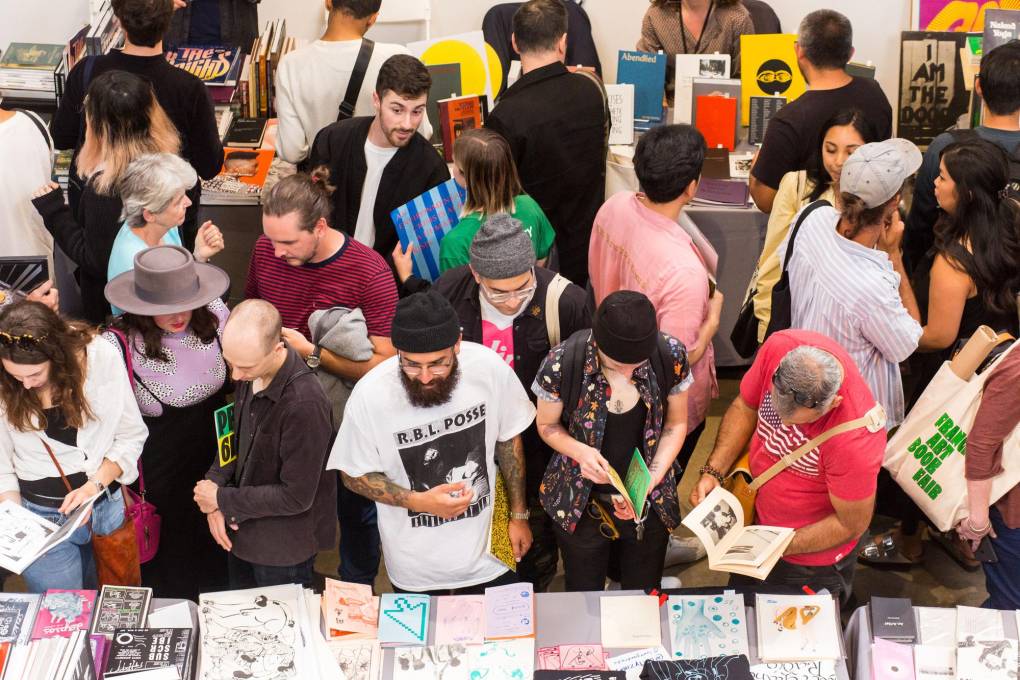

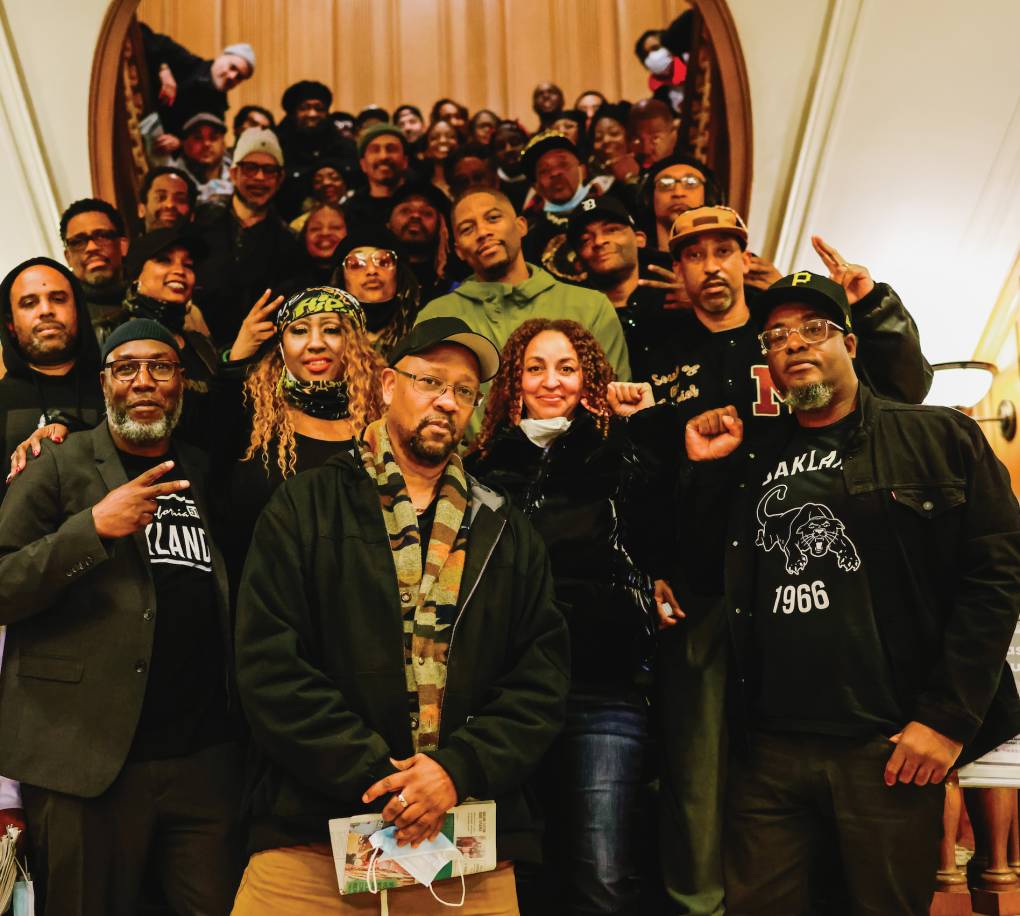
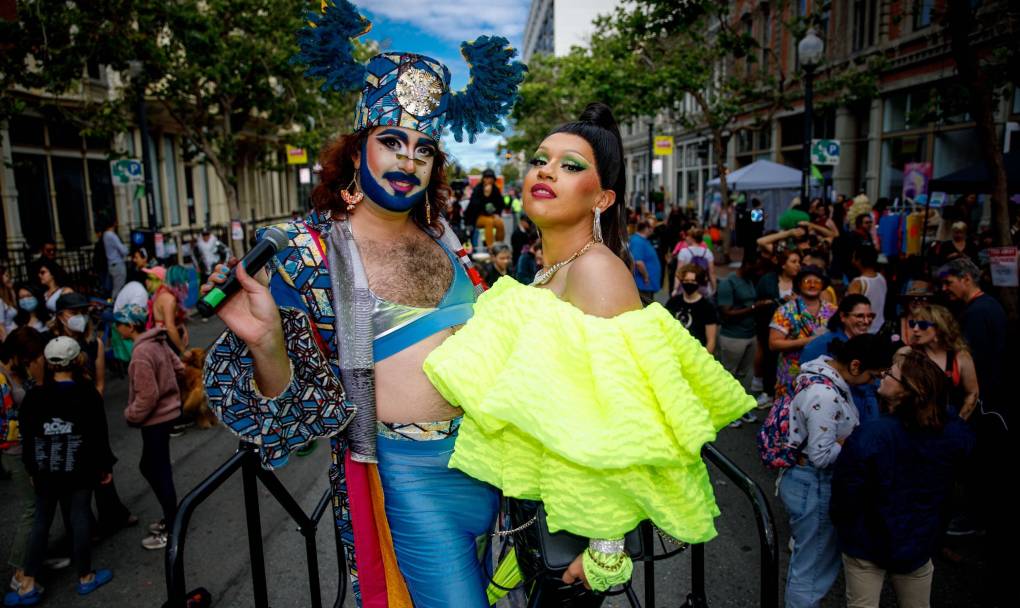
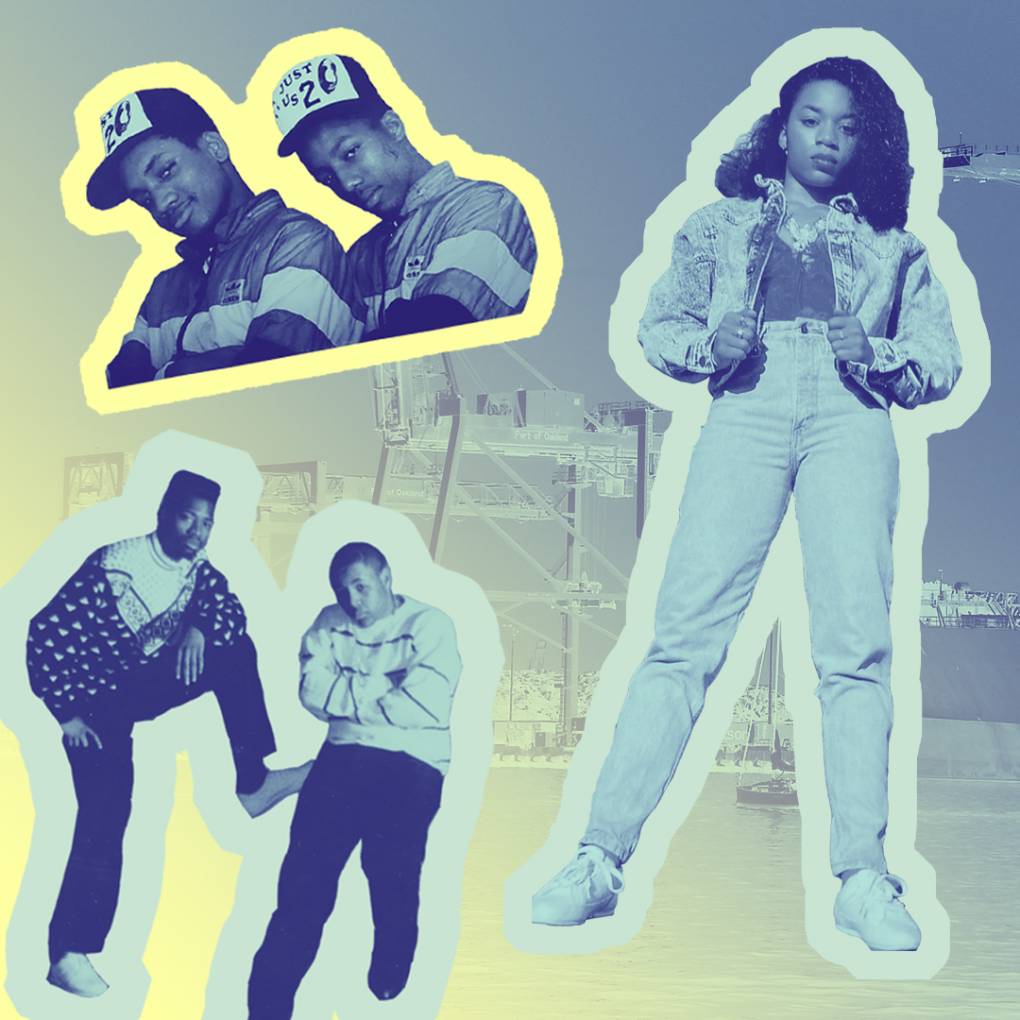
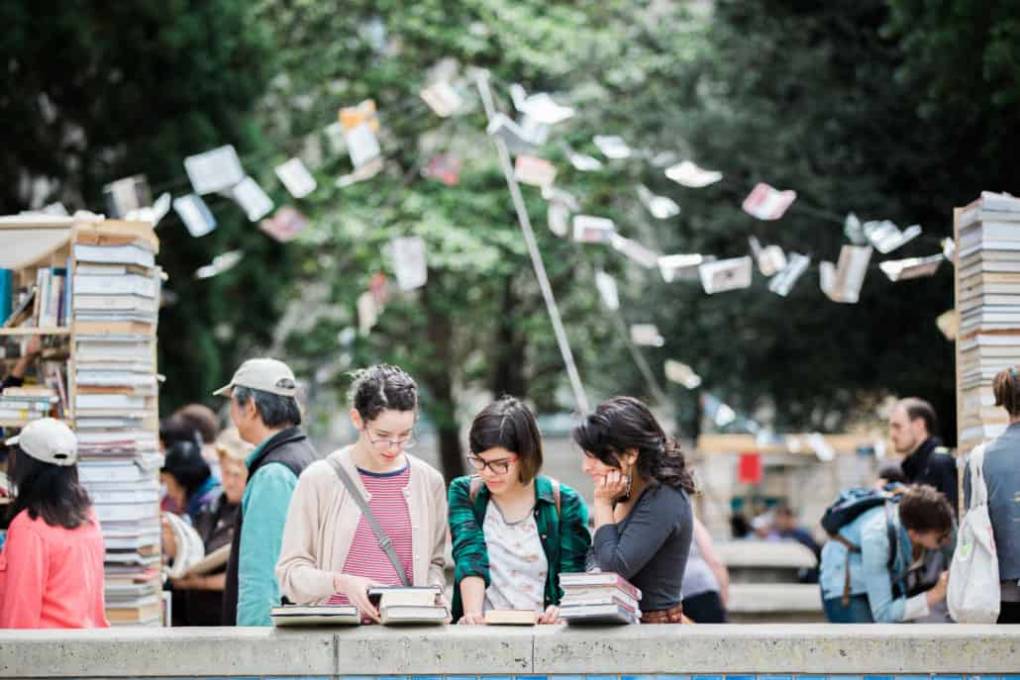

![Dear Future Self... [image of a letter written to someone's "future self".]](https://ww2.kqed.org/app/uploads/sites/2/2023/04/Notepad-and-Margin-Goodnight-Quotes-6-1020x600.jpg)