window.__IS_SSR__=true
window.__INITIAL_STATE__={
"attachmentsReducer": {
"audio_0": {
"type": "attachments",
"id": "audio_0",
"imgSizes": {
"kqedFullSize": {
"file": "https://ww2.kqed.org/news/wp-content/themes/KQED-unified/img/audio_bgs/background0.jpg"
}
}
},
"audio_1": {
"type": "attachments",
"id": "audio_1",
"imgSizes": {
"kqedFullSize": {
"file": "https://ww2.kqed.org/news/wp-content/themes/KQED-unified/img/audio_bgs/background1.jpg"
}
}
},
"audio_2": {
"type": "attachments",
"id": "audio_2",
"imgSizes": {
"kqedFullSize": {
"file": "https://ww2.kqed.org/news/wp-content/themes/KQED-unified/img/audio_bgs/background2.jpg"
}
}
},
"audio_3": {
"type": "attachments",
"id": "audio_3",
"imgSizes": {
"kqedFullSize": {
"file": "https://ww2.kqed.org/news/wp-content/themes/KQED-unified/img/audio_bgs/background3.jpg"
}
}
},
"audio_4": {
"type": "attachments",
"id": "audio_4",
"imgSizes": {
"kqedFullSize": {
"file": "https://ww2.kqed.org/news/wp-content/themes/KQED-unified/img/audio_bgs/background4.jpg"
}
}
},
"placeholder": {
"type": "attachments",
"id": "placeholder",
"imgSizes": {
"thumbnail": {
"file": "https://cdn.kqed.org/wp-content/uploads/2024/12/KQED-Default-Image-816638274-2000x1333-1-160x107.jpg",
"width": 160,
"height": 107,
"mimeType": "image/jpeg"
},
"medium": {
"file": "https://cdn.kqed.org/wp-content/uploads/2024/12/KQED-Default-Image-816638274-2000x1333-1-800x533.jpg",
"width": 800,
"height": 533,
"mimeType": "image/jpeg"
},
"medium_large": {
"file": "https://cdn.kqed.org/wp-content/uploads/2024/12/KQED-Default-Image-816638274-2000x1333-1-768x512.jpg",
"width": 768,
"height": 512,
"mimeType": "image/jpeg"
},
"large": {
"file": "https://cdn.kqed.org/wp-content/uploads/2024/12/KQED-Default-Image-816638274-2000x1333-1-1020x680.jpg",
"width": 1020,
"height": 680,
"mimeType": "image/jpeg"
},
"1536x1536": {
"file": "https://cdn.kqed.org/wp-content/uploads/2024/12/KQED-Default-Image-816638274-2000x1333-1-1536x1024.jpg",
"width": 1536,
"height": 1024,
"mimeType": "image/jpeg"
},
"fd-lrg": {
"file": "https://cdn.kqed.org/wp-content/uploads/2024/12/KQED-Default-Image-816638274-2000x1333-1-1536x1024.jpg",
"width": 1536,
"height": 1024,
"mimeType": "image/jpeg"
},
"fd-med": {
"file": "https://cdn.kqed.org/wp-content/uploads/2024/12/KQED-Default-Image-816638274-2000x1333-1-1020x680.jpg",
"width": 1020,
"height": 680,
"mimeType": "image/jpeg"
},
"fd-sm": {
"file": "https://cdn.kqed.org/wp-content/uploads/2024/12/KQED-Default-Image-816638274-2000x1333-1-800x533.jpg",
"width": 800,
"height": 533,
"mimeType": "image/jpeg"
},
"post-thumbnail": {
"file": "https://cdn.kqed.org/wp-content/uploads/2024/12/KQED-Default-Image-816638274-2000x1333-1-672x372.jpg",
"width": 672,
"height": 372,
"mimeType": "image/jpeg"
},
"twentyfourteen-full-width": {
"file": "https://cdn.kqed.org/wp-content/uploads/2024/12/KQED-Default-Image-816638274-2000x1333-1-1038x576.jpg",
"width": 1038,
"height": 576,
"mimeType": "image/jpeg"
},
"xxsmall": {
"file": "https://cdn.kqed.org/wp-content/uploads/2024/12/KQED-Default-Image-816638274-2000x1333-1-160x107.jpg",
"width": 160,
"height": 107,
"mimeType": "image/jpeg"
},
"xsmall": {
"file": "https://cdn.kqed.org/wp-content/uploads/2024/12/KQED-Default-Image-816638274-2000x1333-1-672x372.jpg",
"width": 672,
"height": 372,
"mimeType": "image/jpeg"
},
"small": {
"file": "https://cdn.kqed.org/wp-content/uploads/2024/12/KQED-Default-Image-816638274-2000x1333-1-672x372.jpg",
"width": 672,
"height": 372,
"mimeType": "image/jpeg"
},
"xlarge": {
"file": "https://cdn.kqed.org/wp-content/uploads/2024/12/KQED-Default-Image-816638274-2000x1333-1-1020x680.jpg",
"width": 1020,
"height": 680,
"mimeType": "image/jpeg"
},
"full-width": {
"file": "https://cdn.kqed.org/wp-content/uploads/2024/12/KQED-Default-Image-816638274-2000x1333-1-1920x1280.jpg",
"width": 1920,
"height": 1280,
"mimeType": "image/jpeg"
},
"guest-author-32": {
"file": "https://cdn.kqed.org/wp-content/uploads/2025/01/KQED-Default-Image-816638274-1333x1333-1-160x160.jpg",
"width": 32,
"height": 32,
"mimeType": "image/jpeg"
},
"guest-author-50": {
"file": "https://cdn.kqed.org/wp-content/uploads/2025/01/KQED-Default-Image-816638274-1333x1333-1-160x160.jpg",
"width": 50,
"height": 50,
"mimeType": "image/jpeg"
},
"guest-author-64": {
"file": "https://cdn.kqed.org/wp-content/uploads/2025/01/KQED-Default-Image-816638274-1333x1333-1-160x160.jpg",
"width": 64,
"height": 64,
"mimeType": "image/jpeg"
},
"guest-author-96": {
"file": "https://cdn.kqed.org/wp-content/uploads/2025/01/KQED-Default-Image-816638274-1333x1333-1-160x160.jpg",
"width": 96,
"height": 96,
"mimeType": "image/jpeg"
},
"guest-author-128": {
"file": "https://cdn.kqed.org/wp-content/uploads/2025/01/KQED-Default-Image-816638274-1333x1333-1-160x160.jpg",
"width": 128,
"height": 128,
"mimeType": "image/jpeg"
},
"detail": {
"file": "https://cdn.kqed.org/wp-content/uploads/2025/01/KQED-Default-Image-816638274-1333x1333-1-160x160.jpg",
"width": 160,
"height": 160,
"mimeType": "image/jpeg"
},
"kqedFullSize": {
"file": "https://cdn.kqed.org/wp-content/uploads/2024/12/KQED-Default-Image-816638274-2000x1333-1.jpg",
"width": 2000,
"height": 1333
}
}
},
"arts_13931441": {
"type": "attachments",
"id": "arts_13931441",
"meta": {
"index": "attachments_1716263798",
"site": "arts",
"id": "13931441",
"found": true
},
"parent": 13931440,
"imgSizes": {
"twentyfourteen-full-width": {
"file": "https://ww2.kqed.org/app/uploads/sites/2/2023/07/cheryl-dunye-1.26.14-fullbleed-photo-by-jamie-hopper-7de6c0fafe02fee18f1926837fc51559999d3e1e-e1689056706762-1038x576.jpg",
"width": 1038,
"mimeType": "image/jpeg",
"height": 576
},
"thumbnail": {
"file": "https://ww2.kqed.org/app/uploads/sites/2/2023/07/cheryl-dunye-1.26.14-fullbleed-photo-by-jamie-hopper-7de6c0fafe02fee18f1926837fc51559999d3e1e-e1689056706762-160x120.jpg",
"width": 160,
"mimeType": "image/jpeg",
"height": 120
},
"post-thumbnail": {
"file": "https://ww2.kqed.org/app/uploads/sites/2/2023/07/cheryl-dunye-1.26.14-fullbleed-photo-by-jamie-hopper-7de6c0fafe02fee18f1926837fc51559999d3e1e-e1689056706762-672x372.jpg",
"width": 672,
"mimeType": "image/jpeg",
"height": 372
},
"kqedFullSize": {
"file": "https://ww2.kqed.org/app/uploads/sites/2/2023/07/cheryl-dunye-1.26.14-fullbleed-photo-by-jamie-hopper-7de6c0fafe02fee18f1926837fc51559999d3e1e-e1689056706762.jpg",
"width": 1920,
"height": 1440
},
"2048x2048": {
"file": "https://ww2.kqed.org/app/uploads/sites/2/2023/07/cheryl-dunye-1.26.14-fullbleed-photo-by-jamie-hopper-7de6c0fafe02fee18f1926837fc51559999d3e1e-2048x1536.jpg",
"width": 2048,
"mimeType": "image/jpeg",
"height": 1536
},
"large": {
"file": "https://ww2.kqed.org/app/uploads/sites/2/2023/07/cheryl-dunye-1.26.14-fullbleed-photo-by-jamie-hopper-7de6c0fafe02fee18f1926837fc51559999d3e1e-e1689056706762-1020x765.jpg",
"width": 1020,
"mimeType": "image/jpeg",
"height": 765
},
"1536x1536": {
"file": "https://ww2.kqed.org/app/uploads/sites/2/2023/07/cheryl-dunye-1.26.14-fullbleed-photo-by-jamie-hopper-7de6c0fafe02fee18f1926837fc51559999d3e1e-e1689056706762-1536x1152.jpg",
"width": 1536,
"mimeType": "image/jpeg",
"height": 1152
},
"full-width": {
"file": "https://ww2.kqed.org/app/uploads/sites/2/2023/07/cheryl-dunye-1.26.14-fullbleed-photo-by-jamie-hopper-7de6c0fafe02fee18f1926837fc51559999d3e1e-1920x1440.jpg",
"width": 1920,
"mimeType": "image/jpeg",
"height": 1440
},
"medium": {
"file": "https://ww2.kqed.org/app/uploads/sites/2/2023/07/cheryl-dunye-1.26.14-fullbleed-photo-by-jamie-hopper-7de6c0fafe02fee18f1926837fc51559999d3e1e-e1689056706762-800x600.jpg",
"width": 800,
"mimeType": "image/jpeg",
"height": 600
},
"medium_large": {
"file": "https://ww2.kqed.org/app/uploads/sites/2/2023/07/cheryl-dunye-1.26.14-fullbleed-photo-by-jamie-hopper-7de6c0fafe02fee18f1926837fc51559999d3e1e-e1689056706762-768x576.jpg",
"width": 768,
"mimeType": "image/jpeg",
"height": 576
}
},
"publishDate": 1689055445,
"modified": 1689056856,
"caption": "Cheryl Dunye’s 1996 debut, ‘The Watermelon Woman,’ is being added to the Criterion Collection. It's a long overdue honor for the filmmaker who shaped how Black LGBTQ+ stories are told.",
"description": null,
"title": "Cheryl Dunye’s 1996 debut, ‘The Watermelon Woman,’ is being added to the Criterion Collection. It's a long overdue honor for the filmmaker who shaped how Black LGBTQ+ stories are told.",
"credit": "Jamie Hopper",
"status": "inherit",
"altTag": "A Black woman sits against a white wall wearing a white buttoned up shirt, small, round, green eye glasses and a red beanie. She rests one finger under her chin.",
"isLoading": false,
"fetchFailed": false
},
"arts_13930309": {
"type": "attachments",
"id": "arts_13930309",
"meta": {
"index": "attachments_1716263798",
"site": "arts",
"id": "13930309",
"found": true
},
"parent": 13930249,
"imgSizes": {
"twentyfourteen-full-width": {
"file": "https://ww2.kqed.org/app/uploads/sites/2/2023/06/Elena-3-1038x576.jpg",
"width": 1038,
"mimeType": "image/jpeg",
"height": 576
},
"thumbnail": {
"file": "https://ww2.kqed.org/app/uploads/sites/2/2023/06/Elena-3-160x160.jpg",
"width": 160,
"mimeType": "image/jpeg",
"height": 160
},
"post-thumbnail": {
"file": "https://ww2.kqed.org/app/uploads/sites/2/2023/06/Elena-3-672x372.jpg",
"width": 672,
"mimeType": "image/jpeg",
"height": 372
},
"kqedFullSize": {
"file": "https://ww2.kqed.org/app/uploads/sites/2/2023/06/Elena-3-scaled.jpg",
"width": 2560,
"height": 2560
},
"2048x2048": {
"file": "https://ww2.kqed.org/app/uploads/sites/2/2023/06/Elena-3-2048x2048.jpg",
"width": 2048,
"mimeType": "image/jpeg",
"height": 2048
},
"large": {
"file": "https://ww2.kqed.org/app/uploads/sites/2/2023/06/Elena-3-1020x1020.jpg",
"width": 1020,
"mimeType": "image/jpeg",
"height": 1020
},
"1536x1536": {
"file": "https://ww2.kqed.org/app/uploads/sites/2/2023/06/Elena-3-1536x1536.jpg",
"width": 1536,
"mimeType": "image/jpeg",
"height": 1536
},
"full-width": {
"file": "https://ww2.kqed.org/app/uploads/sites/2/2023/06/Elena-3-1920x1920.jpg",
"width": 1920,
"mimeType": "image/jpeg",
"height": 1920
},
"medium": {
"file": "https://ww2.kqed.org/app/uploads/sites/2/2023/06/Elena-3-800x800.jpg",
"width": 800,
"mimeType": "image/jpeg",
"height": 800
},
"medium_large": {
"file": "https://ww2.kqed.org/app/uploads/sites/2/2023/06/Elena-3-768x768.jpg",
"width": 768,
"mimeType": "image/jpeg",
"height": 768
}
},
"publishDate": 1686252101,
"modified": 1686266331,
"caption": "Elena Pinderhughes is an extremely talented flutist and vocalist from Berkeley. ",
"description": "Elena Pinderhughes is an extremely talented flutist and vocalist from Berkeley. ",
"title": "Elena Pinderhughes is an extremely talented flutist and vocalist from Berkeley.",
"credit": "Darrin Baldridge",
"status": "inherit",
"altTag": "Elena Pinderhughes is an extremely talented flutist and vocalist from Berkeley.",
"isLoading": false,
"fetchFailed": false
},
"arts_13931025": {
"type": "attachments",
"id": "arts_13931025",
"meta": {
"index": "attachments_1716263798",
"site": "arts",
"id": "13931025",
"found": true
},
"parent": 13931016,
"imgSizes": {
"twentyfourteen-full-width": {
"file": "https://ww2.kqed.org/app/uploads/sites/2/2023/06/Copy-of-Pass-The-Aux-template-22-1038x576.jpg",
"width": 1038,
"mimeType": "image/jpeg",
"height": 576
},
"thumbnail": {
"file": "https://ww2.kqed.org/app/uploads/sites/2/2023/06/Copy-of-Pass-The-Aux-template-22-160x90.jpg",
"width": 160,
"mimeType": "image/jpeg",
"height": 90
},
"post-thumbnail": {
"file": "https://ww2.kqed.org/app/uploads/sites/2/2023/06/Copy-of-Pass-The-Aux-template-22-672x372.jpg",
"width": 672,
"mimeType": "image/jpeg",
"height": 372
},
"kqedFullSize": {
"file": "https://ww2.kqed.org/app/uploads/sites/2/2023/06/Copy-of-Pass-The-Aux-template-22.jpg",
"width": 1920,
"height": 1080
},
"large": {
"file": "https://ww2.kqed.org/app/uploads/sites/2/2023/06/Copy-of-Pass-The-Aux-template-22-1020x574.jpg",
"width": 1020,
"mimeType": "image/jpeg",
"height": 574
},
"1536x1536": {
"file": "https://ww2.kqed.org/app/uploads/sites/2/2023/06/Copy-of-Pass-The-Aux-template-22-1536x864.jpg",
"width": 1536,
"mimeType": "image/jpeg",
"height": 864
},
"medium": {
"file": "https://ww2.kqed.org/app/uploads/sites/2/2023/06/Copy-of-Pass-The-Aux-template-22-800x450.jpg",
"width": 800,
"mimeType": "image/jpeg",
"height": 450
},
"medium_large": {
"file": "https://ww2.kqed.org/app/uploads/sites/2/2023/06/Copy-of-Pass-The-Aux-template-22-768x432.jpg",
"width": 768,
"mimeType": "image/jpeg",
"height": 432
}
},
"publishDate": 1687989901,
"modified": 1687990901,
"caption": "The Strangers consist of Lateef the Truthspeaker (left), Hervé Salters (center) and Leeroy (right).",
"description": null,
"title": "Copy of Pass The Aux template (22)",
"credit": "Jules & Adele Salters",
"status": "inherit",
"altTag": "three musicians stand in a darkened room with neon lighting",
"isLoading": false,
"fetchFailed": false
},
"arts_13930929": {
"type": "attachments",
"id": "arts_13930929",
"meta": {
"index": "attachments_1716263798",
"site": "arts",
"id": "13930929",
"found": true
},
"parent": 13930867,
"imgSizes": {
"twentyfourteen-full-width": {
"file": "https://ww2.kqed.org/app/uploads/sites/2/2023/06/pimp-culture-essay-2-1038x576.png",
"width": 1038,
"mimeType": "image/png",
"height": 576
},
"thumbnail": {
"file": "https://ww2.kqed.org/app/uploads/sites/2/2023/06/pimp-culture-essay-2-160x160.png",
"width": 160,
"mimeType": "image/png",
"height": 160
},
"post-thumbnail": {
"file": "https://ww2.kqed.org/app/uploads/sites/2/2023/06/pimp-culture-essay-2-672x372.png",
"width": 672,
"mimeType": "image/png",
"height": 372
},
"kqedFullSize": {
"file": "https://ww2.kqed.org/app/uploads/sites/2/2023/06/pimp-culture-essay-2.png",
"width": 1080,
"height": 1080
},
"large": {
"file": "https://ww2.kqed.org/app/uploads/sites/2/2023/06/pimp-culture-essay-2-1020x1020.png",
"width": 1020,
"mimeType": "image/png",
"height": 1020
},
"medium": {
"file": "https://ww2.kqed.org/app/uploads/sites/2/2023/06/pimp-culture-essay-2-800x800.png",
"width": 800,
"mimeType": "image/png",
"height": 800
},
"medium_large": {
"file": "https://ww2.kqed.org/app/uploads/sites/2/2023/06/pimp-culture-essay-2-768x768.png",
"width": 768,
"mimeType": "image/png",
"height": 768
}
},
"publishDate": 1687885716,
"modified": 1687886892,
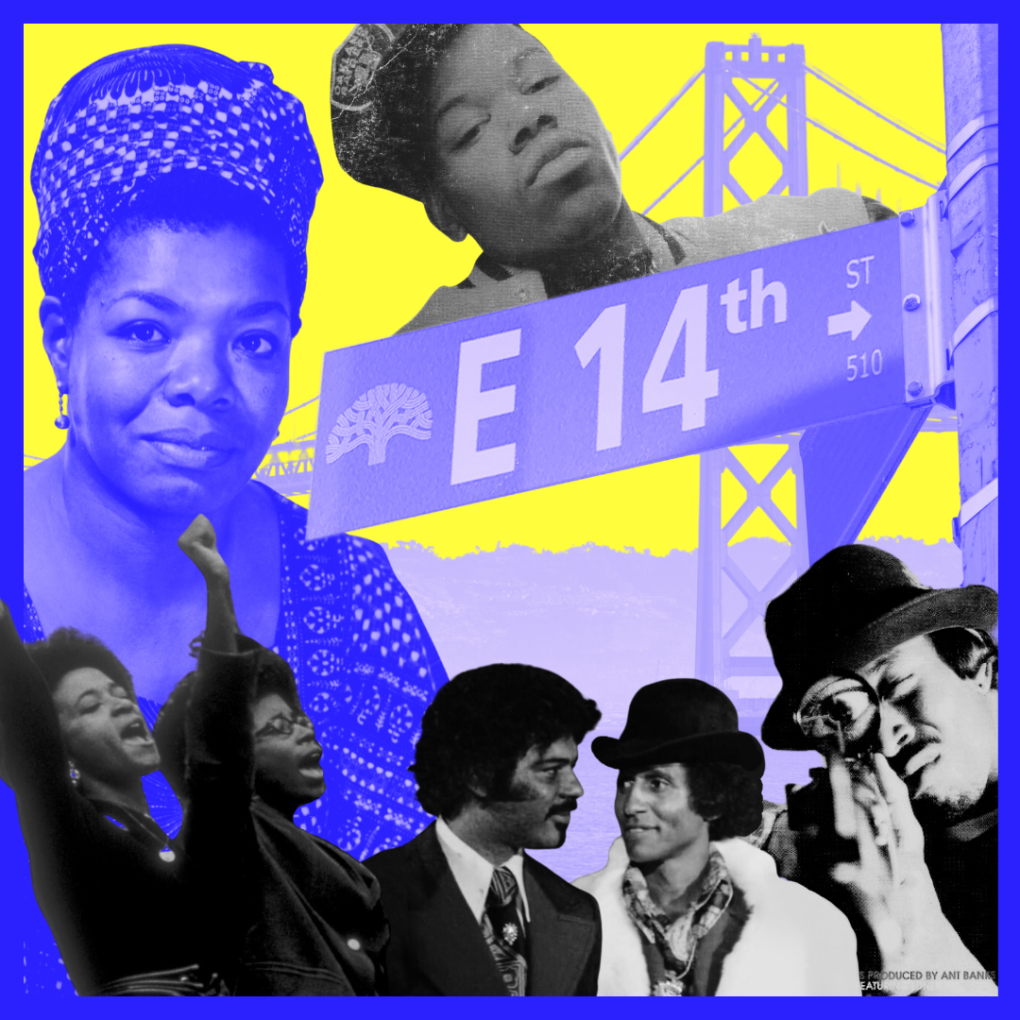
"caption": "In our new vodcast 'What's Pimpin'?,' hosts Maddy Clifford, Coco Peila and RyanNicole dissect why Oakland came to be known as \"the land of pimps and Panthers.\" Clockwise from left: Maya Angelou; Too Short; Dru Down; Frank Ward and Max Julien in 'The Mack;' and women of the Black Panther Party.",
"description": null,
"title": "pimp culture essay 2",
"credit": "Michael Ochs Archives/Getty Images; Jive Records/Dangerous Music; C-Note Records; New Line Cinema; Pirkle Jones and Ruth-Marion Baruch",
"status": "inherit",
"altTag": "A yellow-and-blue collage features cultural figures that represent Black feminism and pimp culture, two themes explored in our new vodcast, 'What's Pimpin'?'",
"isLoading": false,
"fetchFailed": false
},
"arts_13930933": {
"type": "attachments",
"id": "arts_13930933",
"meta": {
"index": "attachments_1716263798",
"site": "arts",
"id": "13930933",
"found": true
},
"parent": 13930867,
"imgSizes": {
"twentyfourteen-full-width": {
"file": "https://ww2.kqed.org/app/uploads/sites/2/2023/06/pimp-culture-essay-1038x576.png",
"width": 1038,
"mimeType": "image/png",
"height": 576
},
"thumbnail": {
"file": "https://ww2.kqed.org/app/uploads/sites/2/2023/06/pimp-culture-essay-160x90.png",
"width": 160,
"mimeType": "image/png",
"height": 90
},
"post-thumbnail": {
"file": "https://ww2.kqed.org/app/uploads/sites/2/2023/06/pimp-culture-essay-672x372.png",
"width": 672,
"mimeType": "image/png",
"height": 372
},
"kqedFullSize": {
"file": "https://ww2.kqed.org/app/uploads/sites/2/2023/06/pimp-culture-essay.png",
"width": 1920,
"height": 1080
},
"large": {
"file": "https://ww2.kqed.org/app/uploads/sites/2/2023/06/pimp-culture-essay-1020x574.png",
"width": 1020,
"mimeType": "image/png",
"height": 574
},
"1536x1536": {
"file": "https://ww2.kqed.org/app/uploads/sites/2/2023/06/pimp-culture-essay-1536x864.png",
"width": 1536,
"mimeType": "image/png",
"height": 864
},
"medium": {
"file": "https://ww2.kqed.org/app/uploads/sites/2/2023/06/pimp-culture-essay-800x450.png",
"width": 800,
"mimeType": "image/png",
"height": 450
},
"medium_large": {
"file": "https://ww2.kqed.org/app/uploads/sites/2/2023/06/pimp-culture-essay-768x432.png",
"width": 768,
"mimeType": "image/png",
"height": 432
}
},
"publishDate": 1687886878,
"modified": 1687886908,
"caption": "In our new vodcast 'What's Pimpin'?,' hosts Maddy Clifford, Coco Peila and RyanNicole dissect why Oakland came to be known as \"the land of pimps and Panthers.\" Clockwise from left: Maya Angelou; Too Short; Dru Down; Frank Ward and Max Julien in 'The Mack;' and women of the Black Panther Party.",
"description": null,
"title": "pimp culture essay",
"credit": "Michael Ochs Archives/Getty Images; Jive Records/Dangerous Music; C-Note Records; New Line Cinema; Pirkle Jones and Ruth-Marion Baruch",
"status": "inherit",
"altTag": "A yellow-and-blue collage features cultural figures that represent Black feminism and pimp culture, two themes explored in our new vodcast, 'What's Pimpin'?'",
"isLoading": false,
"fetchFailed": false
},
"arts_13930964": {
"type": "attachments",
"id": "arts_13930964",
"meta": {
"index": "attachments_1716263798",
"site": "arts",
"id": "13930964",
"found": true
},
"parent": 13930923,
"imgSizes": {
"twentyfourteen-full-width": {
"file": "https://ww2.kqed.org/app/uploads/sites/2/2023/06/tuneyards.16.9-1038x576.jpg",
"width": 1038,
"mimeType": "image/jpeg",
"height": 576
},
"thumbnail": {
"file": "https://ww2.kqed.org/app/uploads/sites/2/2023/06/tuneyards.16.9-160x90.jpg",
"width": 160,
"mimeType": "image/jpeg",
"height": 90
},
"post-thumbnail": {
"file": "https://ww2.kqed.org/app/uploads/sites/2/2023/06/tuneyards.16.9-672x372.jpg",
"width": 672,
"mimeType": "image/jpeg",
"height": 372
},
"kqedFullSize": {
"file": "https://ww2.kqed.org/app/uploads/sites/2/2023/06/tuneyards.16.9.jpg",
"width": 1920,
"height": 1080
},
"large": {
"file": "https://ww2.kqed.org/app/uploads/sites/2/2023/06/tuneyards.16.9-1020x574.jpg",
"width": 1020,
"mimeType": "image/jpeg",
"height": 574
},
"1536x1536": {
"file": "https://ww2.kqed.org/app/uploads/sites/2/2023/06/tuneyards.16.9-1536x864.jpg",
"width": 1536,
"mimeType": "image/jpeg",
"height": 864
},
"medium": {
"file": "https://ww2.kqed.org/app/uploads/sites/2/2023/06/tuneyards.16.9-800x450.jpg",
"width": 800,
"mimeType": "image/jpeg",
"height": 450
},
"medium_large": {
"file": "https://ww2.kqed.org/app/uploads/sites/2/2023/06/tuneyards.16.9-768x432.jpg",
"width": 768,
"mimeType": "image/jpeg",
"height": 432
}
},
"publishDate": 1687891860,
"modified": 1687901040,
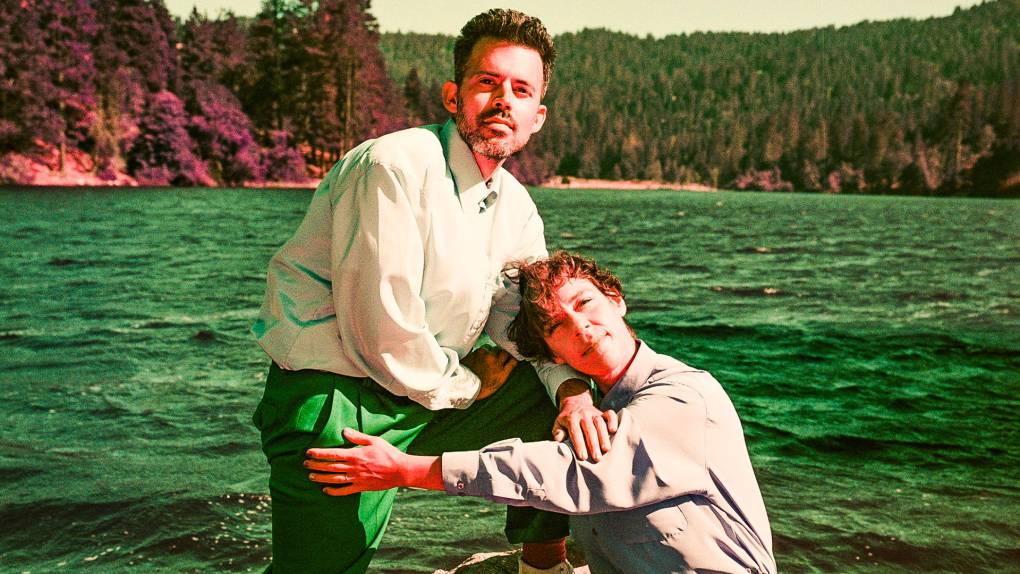
"caption": "Nate Brenner and Merrill Garbus are Tune-Yards, whose experimental indie pop sets the tone for Boots Riley's new show, 'I'm A Virgo.'",
"description": null,
"title": "tuneyards.16.9",
"credit": "Pooneh Ghana",
"status": "inherit",
"altTag": "a white man and woman pose on a rock in front of a lake",
"isLoading": false,
"fetchFailed": false
},
"arts_13930819": {
"type": "attachments",
"id": "arts_13930819",
"meta": {
"index": "attachments_1716263798",
"site": "arts",
"id": "13930819",
"found": true
},
"parent": 13930747,
"imgSizes": {
"twentyfourteen-full-width": {
"file": "https://ww2.kqed.org/app/uploads/sites/2/2023/06/AMW-bone-down-809x576.jpg",
"width": 809,
"mimeType": "image/jpeg",
"height": 576
},
"thumbnail": {
"file": "https://ww2.kqed.org/app/uploads/sites/2/2023/06/AMW-bone-down-160x157.jpg",
"width": 160,
"mimeType": "image/jpeg",
"height": 157
},
"post-thumbnail": {
"file": "https://ww2.kqed.org/app/uploads/sites/2/2023/06/AMW-bone-down-672x372.jpg",
"width": 672,
"mimeType": "image/jpeg",
"height": 372
},
"kqedFullSize": {
"file": "https://ww2.kqed.org/app/uploads/sites/2/2023/06/AMW-bone-down.jpg",
"width": 809,
"height": 794
},
"medium": {
"file": "https://ww2.kqed.org/app/uploads/sites/2/2023/06/AMW-bone-down-800x785.jpg",
"width": 800,
"mimeType": "image/jpeg",
"height": 785
},
"medium_large": {
"file": "https://ww2.kqed.org/app/uploads/sites/2/2023/06/AMW-bone-down-768x754.jpg",
"width": 768,
"mimeType": "image/jpeg",
"height": 754
}
},
"publishDate": 1687470101,
"modified": 1687470348,
"caption": "Dr. Angela Wellman looks directly into the camera as she plays her trombone.",
"description": "Dr. Angela Wellman looks directly into the camera as she plays her trombone. ",
"title": "Dr. Angela Wellman looks directly into the camera as she plays her trombone.",
"credit": "Via Dr. Angela Wellman",
"status": "inherit",
"altTag": "Dr. Angela Wellman looks directly into the camera as she plays her trombone.",
"isLoading": false,
"fetchFailed": false
},
"arts_13930737": {
"type": "attachments",
"id": "arts_13930737",
"meta": {
"index": "attachments_1716263798",
"site": "arts",
"id": "13930737",
"found": true
},
"parent": 13930727,
"imgSizes": {
"twentyfourteen-full-width": {
"file": "https://ww2.kqed.org/app/uploads/sites/2/2023/06/CafesWeHaveLost_BL_Med_1-crop-1038x576.jpg",
"width": 1038,
"mimeType": "image/jpeg",
"height": 576
},
"thumbnail": {
"file": "https://ww2.kqed.org/app/uploads/sites/2/2023/06/CafesWeHaveLost_BL_Med_1-crop-160x90.jpg",
"width": 160,
"mimeType": "image/jpeg",
"height": 90
},
"post-thumbnail": {
"file": "https://ww2.kqed.org/app/uploads/sites/2/2023/06/CafesWeHaveLost_BL_Med_1-crop-672x372.jpg",
"width": 672,
"mimeType": "image/jpeg",
"height": 372
},
"kqedFullSize": {
"file": "https://ww2.kqed.org/app/uploads/sites/2/2023/06/CafesWeHaveLost_BL_Med_1-crop.jpg",
"width": 1920,
"height": 1080
},
"large": {
"file": "https://ww2.kqed.org/app/uploads/sites/2/2023/06/CafesWeHaveLost_BL_Med_1-crop-1020x574.jpg",
"width": 1020,
"mimeType": "image/jpeg",
"height": 574
},
"1536x1536": {
"file": "https://ww2.kqed.org/app/uploads/sites/2/2023/06/CafesWeHaveLost_BL_Med_1-crop-1536x864.jpg",
"width": 1536,
"mimeType": "image/jpeg",
"height": 864
},
"medium": {
"file": "https://ww2.kqed.org/app/uploads/sites/2/2023/06/CafesWeHaveLost_BL_Med_1-crop-800x450.jpg",
"width": 800,
"mimeType": "image/jpeg",
"height": 450
},
"medium_large": {
"file": "https://ww2.kqed.org/app/uploads/sites/2/2023/06/CafesWeHaveLost_BL_Med_1-crop-768x432.jpg",
"width": 768,
"mimeType": "image/jpeg",
"height": 432
}
},
"publishDate": 1687304567,
"modified": 1687304923,
"caption": null,
"description": null,
"title": "CafesWeHaveLost_BL_Med_1-crop",
"credit": "Briana Loewinsohn",
"status": "inherit",
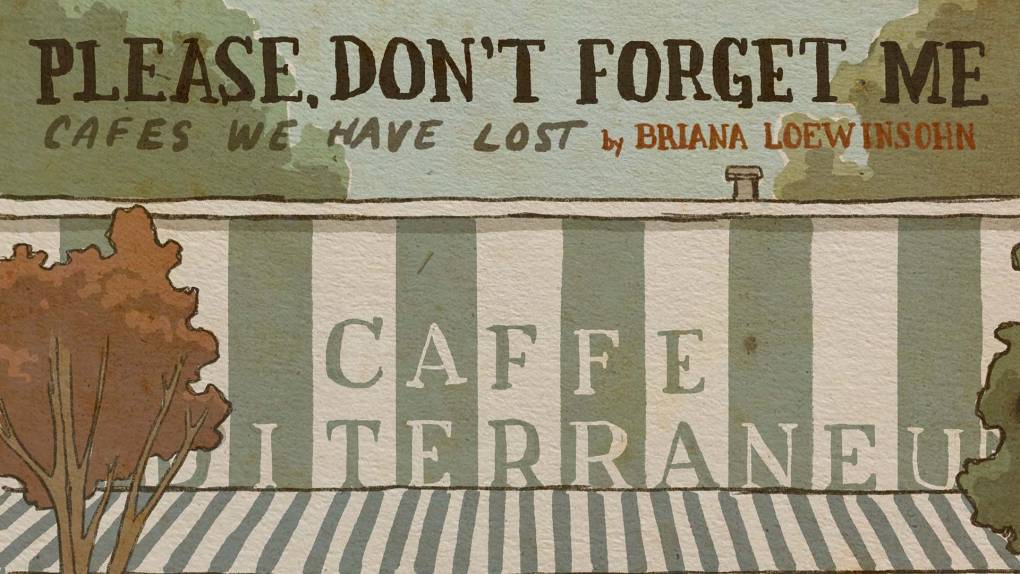
"altTag": "Illustration: A cafe whose green and white striped facade reads, \"Caffe Mediterraneum.\" This is the lead panel for a comic titled \"Please, Don't Forget Me: Cafes We Have Lost,\" by Briana Loewinsohn",
"isLoading": false,
"fetchFailed": false
},
"arts_13930717": {
"type": "attachments",
"id": "arts_13930717",
"meta": {
"index": "attachments_1716263798",
"site": "arts",
"id": "13930717",
"found": true
},
"parent": 13930458,
"imgSizes": {
"twentyfourteen-full-width": {
"file": "https://ww2.kqed.org/app/uploads/sites/2/2023/06/Thien_COVER-1038x576.jpg",
"width": 1038,
"mimeType": "image/jpeg",
"height": 576
},
"thumbnail": {
"file": "https://ww2.kqed.org/app/uploads/sites/2/2023/06/Thien_COVER-160x90.jpg",
"width": 160,
"mimeType": "image/jpeg",
"height": 90
},
"post-thumbnail": {
"file": "https://ww2.kqed.org/app/uploads/sites/2/2023/06/Thien_COVER-672x372.jpg",
"width": 672,
"mimeType": "image/jpeg",
"height": 372
},
"kqedFullSize": {
"file": "https://ww2.kqed.org/app/uploads/sites/2/2023/06/Thien_COVER.jpg",
"width": 1920,
"height": 1080
},
"large": {
"file": "https://ww2.kqed.org/app/uploads/sites/2/2023/06/Thien_COVER-1020x574.jpg",
"width": 1020,
"mimeType": "image/jpeg",
"height": 574
},
"1536x1536": {
"file": "https://ww2.kqed.org/app/uploads/sites/2/2023/06/Thien_COVER-1536x864.jpg",
"width": 1536,
"mimeType": "image/jpeg",
"height": 864
},
"medium": {
"file": "https://ww2.kqed.org/app/uploads/sites/2/2023/06/Thien_COVER-800x450.jpg",
"width": 800,
"mimeType": "image/jpeg",
"height": 450
},
"medium_large": {
"file": "https://ww2.kqed.org/app/uploads/sites/2/2023/06/Thien_COVER-768x432.jpg",
"width": 768,
"mimeType": "image/jpeg",
"height": 432
}
},
"publishDate": 1687295507,
"modified": 1687295909,
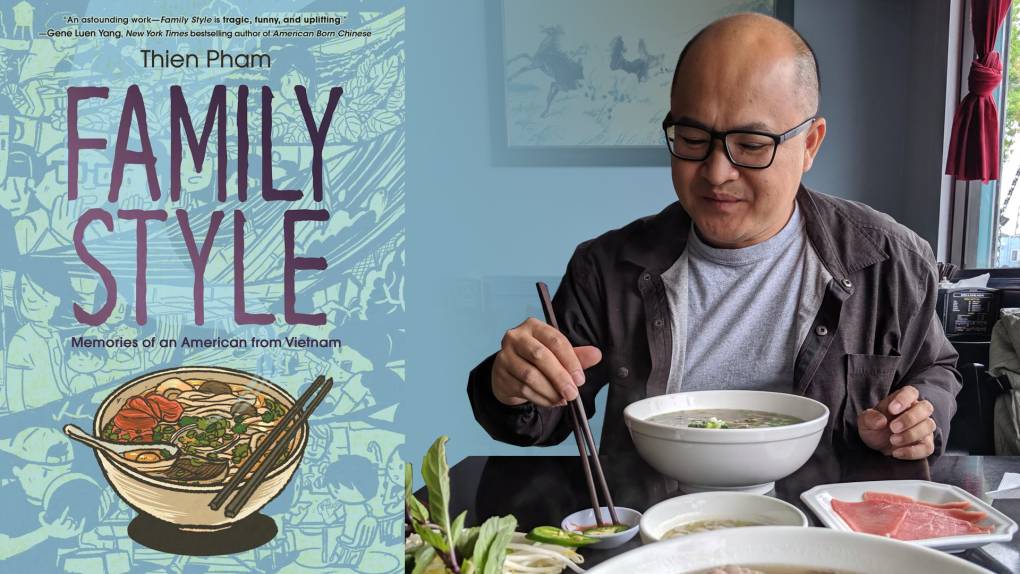
"caption": "Thien Pham's new graphic novel, 'Family Style,' is a memoir of his family's immigration story. It documents their refugee journey from Vietnam to San Jose through the lens of eight different food memories.",
"description": null,
"title": "Thien_COVER",
"credit": "Courtesy of Macmillan Publishers; collage by Sarah Hotchkiss",
"status": "inherit",
"altTag": "Composite image with the cover of the graphic novel 'Family Style,' which has an illustration of a bowl of pho, on the left. On the right, a photograph of author Thien Pham, in glasses and a plaid shirt, holds chopsticks as he prepares to eat a bowl of pho.",
"isLoading": false,
"fetchFailed": false
},
"arts_13930318": {
"type": "attachments",
"id": "arts_13930318",
"meta": {
"index": "attachments_1716263798",
"site": "arts",
"id": "13930318",
"found": true
},
"parent": 13930249,
"imgSizes": {
"twentyfourteen-full-width": {
"file": "https://ww2.kqed.org/app/uploads/sites/2/2023/06/Liner-Notes-collage-1038x576.png",
"width": 1038,
"mimeType": "image/png",
"height": 576
},
"thumbnail": {
"file": "https://ww2.kqed.org/app/uploads/sites/2/2023/06/Liner-Notes-collage-160x90.png",
"width": 160,
"mimeType": "image/png",
"height": 90
},
"post-thumbnail": {
"file": "https://ww2.kqed.org/app/uploads/sites/2/2023/06/Liner-Notes-collage-672x372.png",
"width": 672,
"mimeType": "image/png",
"height": 372
},
"kqedFullSize": {
"file": "https://ww2.kqed.org/app/uploads/sites/2/2023/06/Liner-Notes-collage.png",
"width": 1920,
"height": 1080
},
"large": {
"file": "https://ww2.kqed.org/app/uploads/sites/2/2023/06/Liner-Notes-collage-1020x574.png",
"width": 1020,
"mimeType": "image/png",
"height": 574
},
"1536x1536": {
"file": "https://ww2.kqed.org/app/uploads/sites/2/2023/06/Liner-Notes-collage-1536x864.png",
"width": 1536,
"mimeType": "image/png",
"height": 864
},
"medium": {
"file": "https://ww2.kqed.org/app/uploads/sites/2/2023/06/Liner-Notes-collage-800x450.png",
"width": 800,
"mimeType": "image/png",
"height": 450
},
"medium_large": {
"file": "https://ww2.kqed.org/app/uploads/sites/2/2023/06/Liner-Notes-collage-768x432.png",
"width": 768,
"mimeType": "image/png",
"height": 432
}
},
"publishDate": 1686257322,
"modified": 1686257543,
"caption": "From right to left Dr. Angela Wellman, Elena Pinderhughes, Lidia Rodriguez, Greg Bridges, Giulio Xavier Cetto.\n",
"description": null,
"title": "Liner Notes collage",
"credit": "Photo collage by Ryce Stoughtenborough",
"status": "inherit",
"altTag": "Black and white images of series guests in front of a purple background with aqua colored outlines of jazz instruments.",
"isLoading": false,
"fetchFailed": false
},
"arts_13930125": {
"type": "attachments",
"id": "arts_13930125",
"meta": {
"index": "attachments_1716263798",
"site": "arts",
"id": "13930125",
"found": true
},
"parent": 13930122,
"imgSizes": {
"twentyfourteen-full-width": {
"file": "https://ww2.kqed.org/app/uploads/sites/2/2023/06/RS65564_013_KQEDArts_HipHop4ChangeBayview_05082023-qut-1038x576.jpg",
"width": 1038,
"mimeType": "image/jpeg",
"height": 576
},
"thumbnail": {
"file": "https://ww2.kqed.org/app/uploads/sites/2/2023/06/RS65564_013_KQEDArts_HipHop4ChangeBayview_05082023-qut-160x107.jpg",
"width": 160,
"mimeType": "image/jpeg",
"height": 107
},
"post-thumbnail": {
"file": "https://ww2.kqed.org/app/uploads/sites/2/2023/06/RS65564_013_KQEDArts_HipHop4ChangeBayview_05082023-qut-672x372.jpg",
"width": 672,
"mimeType": "image/jpeg",
"height": 372
},
"kqedFullSize": {
"file": "https://ww2.kqed.org/app/uploads/sites/2/2023/06/RS65564_013_KQEDArts_HipHop4ChangeBayview_05082023-qut.jpg",
"width": 1920,
"height": 1280
},
"large": {
"file": "https://ww2.kqed.org/app/uploads/sites/2/2023/06/RS65564_013_KQEDArts_HipHop4ChangeBayview_05082023-qut-1020x680.jpg",
"width": 1020,
"mimeType": "image/jpeg",
"height": 680
},
"1536x1536": {
"file": "https://ww2.kqed.org/app/uploads/sites/2/2023/06/RS65564_013_KQEDArts_HipHop4ChangeBayview_05082023-qut-1536x1024.jpg",
"width": 1536,
"mimeType": "image/jpeg",
"height": 1024
},
"medium": {
"file": "https://ww2.kqed.org/app/uploads/sites/2/2023/06/RS65564_013_KQEDArts_HipHop4ChangeBayview_05082023-qut-800x533.jpg",
"width": 800,
"mimeType": "image/jpeg",
"height": 533
},
"medium_large": {
"file": "https://ww2.kqed.org/app/uploads/sites/2/2023/06/RS65564_013_KQEDArts_HipHop4ChangeBayview_05082023-qut-768x512.jpg",
"width": 768,
"mimeType": "image/jpeg",
"height": 512
}
},
"publishDate": 1686075051,
"modified": 1686090701,
"caption": "The Hip Hop for Change leadership team (from left) Marlon Richardson, Pallavi Kidambi, Marc Stretch and Malina King at the organization's new Bayview-Hunters Point film and recording studio in San Francisco on May 8, 2023.",
"description": null,
"title": "RS65564_013_KQEDArts_HipHop4ChangeBayview_05082023-qut",
"credit": "Beth LaBerge/KQED",
"status": "inherit",
"altTag": "The four Hip-Hop for Change leaders, two men and two women, stand in front of a red studio backdrop covered in graffiti.",
"isLoading": false,
"fetchFailed": false
},
"arts_13930041": {
"type": "attachments",
"id": "arts_13930041",
"meta": {
"index": "attachments_1716263798",
"site": "arts",
"id": "13930041",
"found": true
},
"parent": 13930040,
"imgSizes": {
"twentyfourteen-full-width": {
"file": "https://ww2.kqed.org/app/uploads/sites/2/2023/06/Sonoma-County-Pomo-Dancers-1038x576.jpeg",
"width": 1038,
"mimeType": "image/jpeg",
"height": 576
},
"thumbnail": {
"file": "https://ww2.kqed.org/app/uploads/sites/2/2023/06/Sonoma-County-Pomo-Dancers-160x120.jpeg",
"width": 160,
"mimeType": "image/jpeg",
"height": 120
},
"post-thumbnail": {
"file": "https://ww2.kqed.org/app/uploads/sites/2/2023/06/Sonoma-County-Pomo-Dancers-672x372.jpeg",
"width": 672,
"mimeType": "image/jpeg",
"height": 372
},
"kqedFullSize": {
"file": "https://ww2.kqed.org/app/uploads/sites/2/2023/06/Sonoma-County-Pomo-Dancers-scaled.jpeg",
"width": 2560,
"height": 1920
},
"2048x2048": {
"file": "https://ww2.kqed.org/app/uploads/sites/2/2023/06/Sonoma-County-Pomo-Dancers-2048x1536.jpeg",
"width": 2048,
"mimeType": "image/jpeg",
"height": 1536
},
"large": {
"file": "https://ww2.kqed.org/app/uploads/sites/2/2023/06/Sonoma-County-Pomo-Dancers-1020x765.jpeg",
"width": 1020,
"mimeType": "image/jpeg",
"height": 765
},
"1536x1536": {
"file": "https://ww2.kqed.org/app/uploads/sites/2/2023/06/Sonoma-County-Pomo-Dancers-1536x1152.jpeg",
"width": 1536,
"mimeType": "image/jpeg",
"height": 1152
},
"full-width": {
"file": "https://ww2.kqed.org/app/uploads/sites/2/2023/06/Sonoma-County-Pomo-Dancers-1920x1440.jpeg",
"width": 1920,
"mimeType": "image/jpeg",
"height": 1440
},
"medium": {
"file": "https://ww2.kqed.org/app/uploads/sites/2/2023/06/Sonoma-County-Pomo-Dancers-800x600.jpeg",
"width": 800,
"mimeType": "image/jpeg",
"height": 600
},
"medium_large": {
"file": "https://ww2.kqed.org/app/uploads/sites/2/2023/06/Sonoma-County-Pomo-Dancers-768x576.jpeg",
"width": 768,
"mimeType": "image/jpeg",
"height": 576
}
},
"publishDate": 1685895029,
"modified": 1685906824,
"caption": "Sonoma County Pomo Dancers performing at the 2022 Many Nations One Land festival in Oakland. ",
"description": "Sonoma County Pomo Dancers performing at the 2022 Many Nations One Land festival in Oakland. ",
"title": "Sonoma County Pomo Dancers performing at the 2022 Many Nations One Land festival in Oakland.",
"credit": "Manny Lieras",
"status": "inherit",
"altTag": "Sonoma County Pomo Dancers performing at the 2022 Many Nations One Land festival in Oakland.",
"isLoading": false,
"fetchFailed": false
},
"arts_13929626": {
"type": "attachments",
"id": "arts_13929626",
"meta": {
"index": "attachments_1716263798",
"site": "arts",
"id": "13929626",
"found": true
},
"parent": 13929612,
"imgSizes": {
"twentyfourteen-full-width": {
"file": "https://ww2.kqed.org/app/uploads/sites/2/2023/05/Bardo_bartender_leadimage-1038x576.jpg",
"width": 1038,
"mimeType": "image/jpeg",
"height": 576
},
"thumbnail": {
"file": "https://ww2.kqed.org/app/uploads/sites/2/2023/05/Bardo_bartender_leadimage-160x100.jpg",
"width": 160,
"mimeType": "image/jpeg",
"height": 100
},
"post-thumbnail": {
"file": "https://ww2.kqed.org/app/uploads/sites/2/2023/05/Bardo_bartender_leadimage-672x372.jpg",
"width": 672,
"mimeType": "image/jpeg",
"height": 372
},
"kqedFullSize": {
"file": "https://ww2.kqed.org/app/uploads/sites/2/2023/05/Bardo_bartender_leadimage.jpg",
"width": 1920,
"height": 1200
},
"large": {
"file": "https://ww2.kqed.org/app/uploads/sites/2/2023/05/Bardo_bartender_leadimage-1020x638.jpg",
"width": 1020,
"mimeType": "image/jpeg",
"height": 638
},
"1536x1536": {
"file": "https://ww2.kqed.org/app/uploads/sites/2/2023/05/Bardo_bartender_leadimage-1536x960.jpg",
"width": 1536,
"mimeType": "image/jpeg",
"height": 960
},
"medium": {
"file": "https://ww2.kqed.org/app/uploads/sites/2/2023/05/Bardo_bartender_leadimage-800x500.jpg",
"width": 800,
"mimeType": "image/jpeg",
"height": 500
},
"medium_large": {
"file": "https://ww2.kqed.org/app/uploads/sites/2/2023/05/Bardo_bartender_leadimage-768x480.jpg",
"width": 768,
"mimeType": "image/jpeg",
"height": 480
}
},
"publishDate": 1684962246,
"modified": 1684962576,
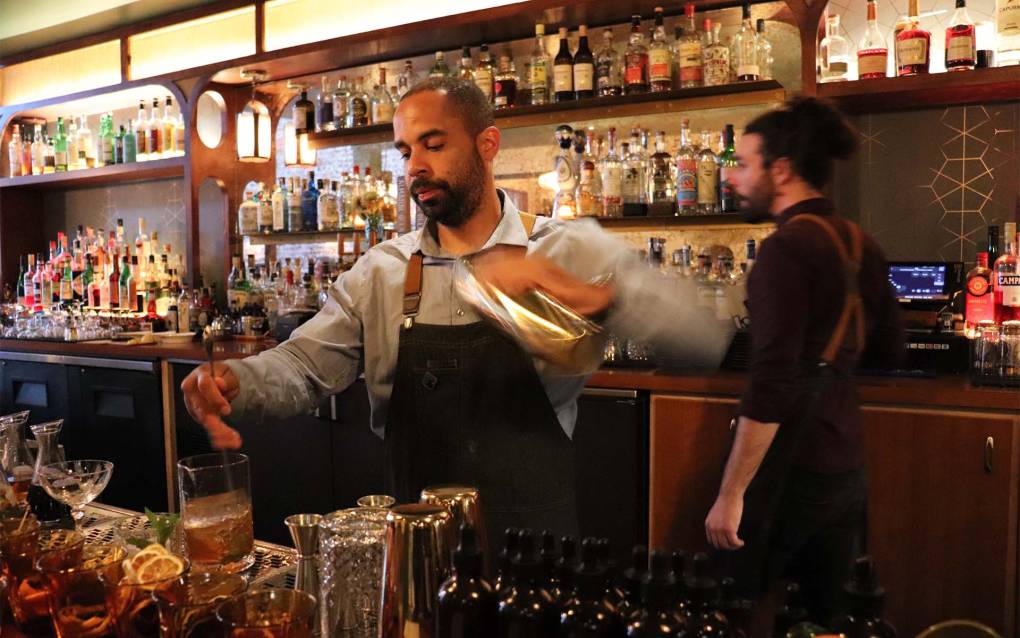
"caption": "A bartender at Bardo mixes a drink. The Oakland cocktail spot's version of a Back Porch bourbon sweet tea drink is a strong contender for the Bay Area drink of the summer. ",
"description": null,
"title": "Bardo_bartender_leadimage",
"credit": "Alan Chazaro",
"status": "inherit",
"altTag": "A bartender in an apron vigorously shakes a a tumbler to make a cocktail. A fully stocked bar is visible behind him.",
"isLoading": false,
"fetchFailed": false
}
},
"audioPlayerReducer": {
"postId": "stream_live",
"isPaused": true,
"isPlaying": false,
"pfsActive": false,
"pledgeModalIsOpen": true,
"playerDrawerIsOpen": false,
"liveAudioPlayStartedAt": 0,
"liveAudioPlayContext": ""
},
"authorsReducer": {
"byline_arts_13931440": {
"type": "authors",
"id": "byline_arts_13931440",
"meta": {
"override": true
},
"slug": "byline_arts_13931440",
"name": "Allyson McCabe",
"isLoading": false
},
"kqedarts": {
"type": "authors",
"id": "92",
"meta": {
"index": "authors_1716337520",
"id": "92",
"found": true
},
"name": "KQED Arts",
"firstName": "KQED",
"lastName": "Arts",
"slug": "kqedarts",
"email": "arts@kqed.org",
"display_author_email": false,
"staff_mastheads": [],
"title": "KQED Staff",
"bio": null,
"avatar": "https://secure.gravatar.com/avatar/321c9ebfeb7736f9e55366a6d3399ab0?s=600&d=blank&r=g",
"twitter": null,
"facebook": null,
"instagram": "https://www.instagram.com/kqed_arts/",
"linkedin": null,
"sites": [
{
"site": "arts",
"roles": [
"contributor"
]
},
{
"site": "pop",
"roles": [
"contributor"
]
},
{
"site": "science",
"roles": [
"author"
]
},
{
"site": "food",
"roles": [
"contributor"
]
}
],
"headData": {
"title": "KQED Arts | KQED",
"description": "KQED Staff",
"ogImgSrc": "https://secure.gravatar.com/avatar/321c9ebfeb7736f9e55366a6d3399ab0?s=600&d=blank&r=g",
"twImgSrc": "https://secure.gravatar.com/avatar/321c9ebfeb7736f9e55366a6d3399ab0?s=600&d=blank&r=g"
},
"isLoading": false,
"link": "/author/kqedarts"
},
"esilvers": {
"type": "authors",
"id": "7237",
"meta": {
"index": "authors_1716337520",
"id": "7237",
"found": true
},
"name": "Emma Silvers",
"firstName": "Emma",
"lastName": "Silvers",
"slug": "esilvers",
"email": "esilvers@kqed.org",
"display_author_email": false,
"staff_mastheads": [],
"title": "KQED Contributor",
"bio": "Emma Silvers is an editor at KQED Arts and a former digital producer at KQED News. Born and raised in the Bay Area, she has previously been an arts and entertainment editor at the \u003cem>San Francisco Chronicle\u003c/em>, \u003cem>SF Weekly\u003c/em> and the \u003cem>San Francisco Bay Guardian.\u003c/em> \u003ca href=\"https://www.emmasilvers.com\">Her work\u003c/a> has also appeared in \u003cem>Rolling Stone\u003c/em>, Pitchfork and \u003cem>Mother Jones\u003c/em>. In 2017 she was the recipient of the Society of Professional Journalists-Northern California's award for arts and culture reporting. In 1993 she \u003ca href=\"https://www.kqed.org/pop/16759/wait-what-my-coworker-was-a-voice-over-hyperventilator-for-jurassic-park\">hyperventilated in \u003cem>Jurassic Park\u003c/em>\u003c/a>.",
"avatar": "https://secure.gravatar.com/avatar/247beada39b88ea5759db1f51dba05cf?s=600&d=blank&r=g",
"twitter": "emmaruthless",
"facebook": null,
"instagram": null,
"linkedin": null,
"sites": [
{
"site": "arts",
"roles": [
"editor"
]
},
{
"site": "news",
"roles": [
"editor"
]
},
{
"site": "pop",
"roles": [
"contributor"
]
},
{
"site": "bayareabites",
"roles": [
"editor"
]
},
{
"site": "food",
"roles": [
"contributor"
]
},
{
"site": "liveblog",
"roles": [
"editor"
]
}
],
"headData": {
"title": "Emma Silvers | KQED",
"description": "KQED Contributor",
"ogImgSrc": "https://secure.gravatar.com/avatar/247beada39b88ea5759db1f51dba05cf?s=600&d=blank&r=g",
"twImgSrc": "https://secure.gravatar.com/avatar/247beada39b88ea5759db1f51dba05cf?s=600&d=blank&r=g"
},
"isLoading": false,
"link": "/author/esilvers"
},
"nvoynovskaya": {
"type": "authors",
"id": "11387",
"meta": {
"index": "authors_1716337520",
"id": "11387",
"found": true
},
"name": "Nastia Voynovskaya",
"firstName": "Nastia",
"lastName": "Voynovskaya",
"slug": "nvoynovskaya",
"email": "nvoynovskaya@kqed.org",
"display_author_email": false,
"staff_mastheads": [
"arts"
],
"title": "Editor and reporter",
"bio": "Nastia Voynovskaya is a reporter and editor at KQED Arts & Culture. She's been covering the arts in the Bay Area for over a decade, with a focus on music, queer culture, labor issues and grassroots organizing. She has edited KQED story series such as Trans Bay: A History of San Francisco's Gender-Diverse Community, and co-created KQED's Bay Area hip-hop history project, That's My Word. Nastia's work has been recognized by the Society of Professional Journalists and San Francisco Press Club. She holds a BA in comparative literature from UC Berkeley.",
"avatar": "https://secure.gravatar.com/avatar/5025ee460e5a85d69ca20ea6c6f2f80d7e17795c828f61ea3aecfcd924e9042e?s=600&d=blank&r=g",
"twitter": null,
"bluesky": null,
"facebook": null,
"instagram": "https://www.instagram.com/nananastia/",
"linkedin": null,
"sites": [
{
"site": "arts",
"roles": [
"administrator"
]
},
{
"site": "news",
"roles": [
"editor"
]
},
{
"site": "pop",
"roles": [
"administrator"
]
},
{
"site": "bayareabites",
"roles": [
"editor"
]
},
{
"site": "podcasts",
"roles": [
"editor"
]
},
{
"site": "hiphop",
"roles": [
"editor"
]
}
],
"headData": {
"title": "Nastia Voynovskaya | KQED",
"description": "Editor and reporter",
"ogImgSrc": "https://secure.gravatar.com/avatar/5025ee460e5a85d69ca20ea6c6f2f80d7e17795c828f61ea3aecfcd924e9042e?s=600&d=blank&r=g",
"twImgSrc": "https://secure.gravatar.com/avatar/5025ee460e5a85d69ca20ea6c6f2f80d7e17795c828f61ea3aecfcd924e9042e?s=600&d=blank&r=g"
},
"isLoading": false,
"link": "/author/nvoynovskaya"
},
"ogpenn": {
"type": "authors",
"id": "11491",
"meta": {
"index": "authors_1716337520",
"id": "11491",
"found": true
},
"name": "Pendarvis Harshaw",
"firstName": "Pendarvis",
"lastName": "Harshaw",
"slug": "ogpenn",
"email": "ogpenn@gmail.com",
"display_author_email": false,
"staff_mastheads": [
"arts"
],
"title": "Community Engagement Reporter",
"bio": "Pendarvis Harshaw is an educator, host and writer with KQED Arts.",
"avatar": "https://secure.gravatar.com/avatar/972b77ee8e3f346ae2b00622661187fbfabd059b5693bbdc1475ea7a722fd4cd?s=600&d=blank&r=g",
"twitter": null,
"bluesky": null,
"facebook": null,
"instagram": "ogpenn",
"linkedin": null,
"sites": [
{
"site": "arts",
"roles": [
"administrator"
]
},
{
"site": "news",
"roles": [
"editor"
]
},
{
"site": "bayareabites",
"roles": [
"author"
]
},
{
"site": "hiphop",
"roles": [
"editor"
]
}
],
"headData": {
"title": "Pendarvis Harshaw | KQED",
"description": "Community Engagement Reporter",
"ogImgSrc": "https://secure.gravatar.com/avatar/972b77ee8e3f346ae2b00622661187fbfabd059b5693bbdc1475ea7a722fd4cd?s=600&d=blank&r=g",
"twImgSrc": "https://secure.gravatar.com/avatar/972b77ee8e3f346ae2b00622661187fbfabd059b5693bbdc1475ea7a722fd4cd?s=600&d=blank&r=g"
},
"isLoading": false,
"link": "/author/ogpenn"
},
"mmedina": {
"type": "authors",
"id": "11528",
"meta": {
"index": "authors_1716337520",
"id": "11528",
"found": true
},
"name": "Marisol Medina-Cadena",
"firstName": "Marisol",
"lastName": "Medina-Cadena",
"slug": "mmedina",
"email": "mmedina@KQED.org",
"display_author_email": true,
"staff_mastheads": [],
"title": "Producer, Rightnowish Podcast",
"bio": "Marisol Medina-Cadena is a radio reporter and podcast producer. Before working at KQED, she produced for PBS member station, KCET, in Los Angeles. In 2017, Marisol won an Emmy Award for her work on the televised documentary, \u003cem>City Rising\u003c/em>, examining California's affordable housing crisis and the historical roots of gentrification.",
"avatar": "https://secure.gravatar.com/avatar/6c3db46a1cabb5e1fe9a365b5f4e681e?s=600&d=blank&r=g",
"twitter": "marisolreports",
"facebook": null,
"instagram": null,
"linkedin": null,
"sites": [
{
"site": "arts",
"roles": []
},
{
"site": "news",
"roles": [
"edit_others_posts"
]
}
],
"headData": {
"title": "Marisol Medina-Cadena | KQED",
"description": "Producer, Rightnowish Podcast",
"ogImgSrc": "https://secure.gravatar.com/avatar/6c3db46a1cabb5e1fe9a365b5f4e681e?s=600&d=blank&r=g",
"twImgSrc": "https://secure.gravatar.com/avatar/6c3db46a1cabb5e1fe9a365b5f4e681e?s=600&d=blank&r=g"
},
"isLoading": false,
"link": "/author/mmedina"
},
"maddycliff": {
"type": "authors",
"id": "11725",
"meta": {
"index": "authors_1716337520",
"id": "11725",
"found": true
},
"name": "Maddy Clifford",
"firstName": "Maddy",
"lastName": "Clifford",
"slug": "maddycliff",
"email": "maddycliff@gmail.com",
"display_author_email": true,
"staff_mastheads": [],
"title": "KQED Contributor",
"bio": "Maddy Clifford is an Oakland-based writer, artist, and activist. She has a notable career highlighted by her eight-year tenure as a Poet in Residence at the San Francisco Juvenile Justice Center. Following this, Maddy released a solo album titled \"downCHANTS\" and composed a forty-minute musical score for the aerial dance piece \"Apparatus of Repair\" in collaboration with Flyaway Productions. Her latest project is a video-podcast called \"What’s Pimpin’?\" produced with KQED Arts. Maddy's written contributions can be found in Prism Reports, Truthout and 48hills.",
"avatar": "https://secure.gravatar.com/avatar/a90ce07df8d231f24acf7ea72e94e394?s=600&d=blank&r=g",
"twitter": "@mad_lines",
"facebook": "https://www.facebook.com/MADlinesmusic/",
"instagram": "https://www.instagram.com/mad.lines/",
"linkedin": "https://www.linkedin.com/in/maddy-clifford-65ba7729/",
"sites": [
{
"site": "arts",
"roles": [
"contributor"
]
}
],
"headData": {
"title": "Maddy Clifford | KQED",
"description": "KQED Contributor",
"ogImgSrc": "https://secure.gravatar.com/avatar/a90ce07df8d231f24acf7ea72e94e394?s=600&d=blank&r=g",
"twImgSrc": "https://secure.gravatar.com/avatar/a90ce07df8d231f24acf7ea72e94e394?s=600&d=blank&r=g"
},
"isLoading": false,
"link": "/author/maddycliff"
},
"achazaro": {
"type": "authors",
"id": "11748",
"meta": {
"index": "authors_1716337520",
"id": "11748",
"found": true
},
"name": "Alan Chazaro",
"firstName": "Alan",
"lastName": "Chazaro",
"slug": "achazaro",
"email": "agchazaro@gmail.com",
"display_author_email": true,
"staff_mastheads": [],
"title": "Food Writer and Reporter",
"bio": "Alan Chazaro is the author of \u003cem>This Is Not a Frank Ocean Cover Album\u003c/em> (Black Lawrence Press, 2019), \u003cem>Piñata Theory\u003c/em> (Black Lawrence Press, 2020), and \u003cem>Notes from the Eastern Span of the Bay Bridge\u003c/em> (Ghost City Press, 2021). He is a graduate of June Jordan’s Poetry for the People program at UC Berkeley and a former Lawrence Ferlinghetti Fellow at the University of San Francisco. He writes about sports, food, art, music, education, and culture while repping the Bay on \u003ca href=\"https://twitter.com/alan_chazaro\">Twitter\u003c/a> and \u003ca href=\"https://www.instagram.com/alan_chazaro/?hl=en\">Instagram\u003c/a> at @alan_chazaro.",
"avatar": "https://secure.gravatar.com/avatar/ea8b6dd970fc5c29e7a188e7d5861df7?s=600&d=blank&r=g",
"twitter": "alan_chazaro",
"facebook": null,
"instagram": null,
"linkedin": null,
"sites": [
{
"site": "arts",
"roles": [
"contributor"
]
},
{
"site": "news",
"roles": [
"editor"
]
}
],
"headData": {
"title": "Alan Chazaro | KQED",
"description": "Food Writer and Reporter",
"ogImgSrc": "https://secure.gravatar.com/avatar/ea8b6dd970fc5c29e7a188e7d5861df7?s=600&d=blank&r=g",
"twImgSrc": "https://secure.gravatar.com/avatar/ea8b6dd970fc5c29e7a188e7d5861df7?s=600&d=blank&r=g"
},
"isLoading": false,
"link": "/author/achazaro"
},
"bloewinsohn": {
"type": "authors",
"id": "11904",
"meta": {
"index": "authors_1716337520",
"id": "11904",
"found": true
},
"name": "Briana Loewinsohn",
"firstName": "Briana",
"lastName": "Loewinsohn",
"slug": "bloewinsohn",
"email": "brianabreaks@gmail.com",
"display_author_email": false,
"staff_mastheads": [],
"title": "KQED Contributor",
"bio": null,
"avatar": "https://secure.gravatar.com/avatar/3d271841017c9b3e8fd8bf5552758c08?s=600&d=blank&r=g",
"twitter": null,
"facebook": null,
"instagram": null,
"linkedin": null,
"sites": [
{
"site": "arts",
"roles": [
"author"
]
}
],
"headData": {
"title": "Briana Loewinsohn | KQED",
"description": "KQED Contributor",
"ogImgSrc": "https://secure.gravatar.com/avatar/3d271841017c9b3e8fd8bf5552758c08?s=600&d=blank&r=g",
"twImgSrc": "https://secure.gravatar.com/avatar/3d271841017c9b3e8fd8bf5552758c08?s=600&d=blank&r=g"
},
"isLoading": false,
"link": "/author/bloewinsohn"
}
},
"pagesReducer": {
"arts_tag_oakland": {
"type": "terms",
"id": "arts_1143",
"meta": {
"index": "terms_1716263798",
"site": "arts",
"id": "1143",
"score": 6.883923
},
"featImg": null,
"name": "Oakland",
"description": null,
"taxonomy": "tag",
"headData": {
"twImgId": null,
"twTitle": null,
"ogTitle": null,
"ogImgId": null,
"twDescription": null,
"description": null,
"title": "Oakland Archives | KQED Arts",
"ogDescription": null
},
"ttid": 692,
"slug": "oakland",
"isLoading": false,
"title": "Oakland",
"pageMeta": {
"site": "arts",
"WpPageTemplate": "page-topic-editorial",
"currentPage": 27
},
"blocks": [
{
"blockName": "kqed/post-list",
"attrs": {
"layout": "cardArticle2",
"query": "posts/arts?tag=oakland",
"seeMore": false,
"paginated": true,
"page": 27
}
},
{
"blockName": "kqed/ad"
}
]
}
},
"pfsSessionReducer": {},
"postsReducer": {
"stream_live": {
"type": "live",
"id": "stream_live",
"audioUrl": "https://streams.kqed.org/kqedradio",
"title": "Live Stream",
"excerpt": "Live Stream information currently unavailable.",
"link": "/radio",
"featImg": "",
"label": {
"name": "KQED Live",
"link": "/"
}
},
"stream_kqedNewscast": {
"type": "posts",
"id": "stream_kqedNewscast",
"audioUrl": "https://www.kqed.org/.stream/anon/radio/RDnews/newscast.mp3?_=1",
"title": "KQED Newscast",
"featImg": "",
"label": {
"name": "88.5 FM",
"link": "/"
}
},
"arts_13931440": {
"type": "posts",
"id": "arts_13931440",
"meta": {
"index": "posts_1716263798",
"site": "arts",
"id": "13931440",
"score": null,
"sort": [
1689092160000
]
},
"guestAuthors": [],
"slug": "oakland-filmmaker-cheryl-dunye-watermelon-woman-criterion-collection",
"title": "Oakland-Based Filmmaker Cheryl Dunye Advises: 'Put Yourself Out Where You Belong'",
"publishDate": 1689092160,
"format": "standard",
"headTitle": "Oakland-Based Filmmaker Cheryl Dunye Advises: ‘Put Yourself Out Where You Belong’ | KQED",
"labelTerm": {
"term": 137,
"site": "arts"
},
"content": "\u003cp>Growing up in Philadelphia, Cheryl Dunye says she was fascinated by the stories reflected in her mother’s scrapbook photos. She studied filmmaking in college and graduate school but didn’t see people who looked like her on screen.\u003c/p>\n\u003cp>Dunye changed that with her 1996 debut, \u003cem>The Watermelon Woman.\u003c/em> It is the first feature-length film written and directed by a Black lesbian. In it, Dunye plays a fictionalized version of her 25-year-old self, a video store clerk aspiring to become a filmmaker. In her off hours, she watches films from the 1930s and ’40s with Black actresses such as Hattie McDaniel and Louise Beavers. However, they’re often relegated to racially stereotyped roles; some aren’t even listed in the credits.\u003c/p>\n\u003cp>https://www.youtube.com/watch?v=uwJc6hVgMDk\u003c/p>\n\u003cp>Cheryl decides to make a documentary about an actress who’d been typecast as a mammy in a movie called \u003cem>Plantation Memories\u003c/em> and credited as “the watermelon woman.” Her quest mirrored that of the real life Dunye, who says archival records about Black actresses of that era were hard to come by. Even then, she often came up empty-handed.\u003c/p>\n\u003cfigure id=\"attachment_13931448\" class=\"wp-caption aligncenter\" style=\"max-width: 800px\">\u003cimg loading=\"lazy\" decoding=\"async\" class=\"size-medium wp-image-13931448\" src=\"https://ww2.kqed.org/app/uploads/sites/2/2023/07/Screen-Shot-2023-07-10-at-11.07.48-PM-800x607.png\" alt='A hand holding up a pile of photos. The top image shows a Black woman facing the camera with a startled expression. Handwriting underneath the image says \"Woman holding flowers (full frame).\"' width=\"800\" height=\"607\" srcset=\"https://cdn.kqed.org/wp-content/uploads/sites/2/2023/07/Screen-Shot-2023-07-10-at-11.07.48-PM-800x607.png 800w, https://cdn.kqed.org/wp-content/uploads/sites/2/2023/07/Screen-Shot-2023-07-10-at-11.07.48-PM-1020x774.png 1020w, https://cdn.kqed.org/wp-content/uploads/sites/2/2023/07/Screen-Shot-2023-07-10-at-11.07.48-PM-160x121.png 160w, https://cdn.kqed.org/wp-content/uploads/sites/2/2023/07/Screen-Shot-2023-07-10-at-11.07.48-PM-768x583.png 768w, https://cdn.kqed.org/wp-content/uploads/sites/2/2023/07/Screen-Shot-2023-07-10-at-11.07.48-PM.png 1294w\" sizes=\"(max-width: 800px) 100vw, 800px\">\u003cfigcaption class=\"wp-caption-text\">In ‘The Watermelon Woman,’ Dunye reconstructs the story of Fae Richards through personal photos, home movies, and the memories of those who knew her. \u003ccite>(The Criterion Collection)\u003c/cite>\u003c/figcaption>\u003c/figure>\n\u003cp>In the film, Cheryl reconstructs the actress’ story through personal photos, home movies, and the memories of those who knew her. We learn that Fae Richards, like Cheryl, was from Philadelphia. She had a fraught relationship with the white female director of \u003cem>Plantation Memories\u003c/em>. Her acting career stymied by racism, Faye later found lasting love with a Black woman named June. In a letter written from her hospital bed at the end of her life, June encourages Cheryl to “make our history before we are all dead and gone.”\u003c/p>\n\u003cp>[ad fullwidth]\u003c/p>\n\u003cp>The experience leads Cheryl to take stock of her relationship with a white woman \u003ca href=\"https://www.youtube.com/watch?v=pq22qx9dJhY\">she met at the video store \u003c/a>and what she’s learned about herself while searching for Fae. Speaking into the camera at the close of the film, she says, “Most importantly, what I understand is that I’m gonna be the one who says ‘I am a Black lesbian filmmaker who’s just beginning, but I’m gonna say a lot more and have a lot more work to do.'”\u003c/p>\n\u003cfigure id=\"attachment_13931449\" class=\"wp-caption aligncenter\" style=\"max-width: 800px\">\u003cimg loading=\"lazy\" decoding=\"async\" class=\"size-medium wp-image-13931449\" src=\"https://ww2.kqed.org/app/uploads/sites/2/2023/07/Screen-Shot-2023-07-10-at-11.13.47-PM-800x608.png\" alt=\"A Black woman with very short hair sits in front of a wall of images, pins messily to a wall. She is in the middle of talking.\" width=\"800\" height=\"608\" srcset=\"https://cdn.kqed.org/wp-content/uploads/sites/2/2023/07/Screen-Shot-2023-07-10-at-11.13.47-PM-800x608.png 800w, https://cdn.kqed.org/wp-content/uploads/sites/2/2023/07/Screen-Shot-2023-07-10-at-11.13.47-PM-1020x775.png 1020w, https://cdn.kqed.org/wp-content/uploads/sites/2/2023/07/Screen-Shot-2023-07-10-at-11.13.47-PM-160x122.png 160w, https://cdn.kqed.org/wp-content/uploads/sites/2/2023/07/Screen-Shot-2023-07-10-at-11.13.47-PM-768x583.png 768w, https://cdn.kqed.org/wp-content/uploads/sites/2/2023/07/Screen-Shot-2023-07-10-at-11.13.47-PM.png 1290w\" sizes=\"(max-width: 800px) 100vw, 800px\">\u003cfigcaption class=\"wp-caption-text\">A still from Cheryl Dunye’s film ‘The Watermelon Woman.’ \u003ccite>(The Criterion Collection)\u003c/cite>\u003c/figcaption>\u003c/figure>\n\u003cp>After presenting what she discovered about Fae, a title card reveals that the watermelon woman is a fiction invented to tell a true story about the invisibility and erasure of Black lesbian lives. (In real life, Dunye conjured Fae Richards with the help of \u003ca href=\"https://digitalcollections.saic.edu/islandora/object/islandora%3Ajfabc_9041\">a faux archive\u003c/a> co-created by the photographer Zoe Leonard, parts of which were sold to raise money for the completion of the film.)\u003c/p>\n\u003cp>[aside postid='arts_13894145']Filmmaker and historian \u003ca href=\"http://yvonnewelbon.com/\">Yvonne Welbon\u003c/a> says Dunye’s film reflected history and possibility. “There’s so many ways that we are seeing Black women. We are seeing this Black woman as a filmmaker, and we know the film is made by a Black woman who is searching for a Black woman in film on the other side of the camera, and so it’s reminding us all along about Cheryl’s agency as a director. It just really drives home the point that sometimes we have to take it upon ourselves to tell our own stories.”\u003c/p>\n\u003cp>But Welbon points out that even today, only about \u003ca href=\"https://assets.uscannenberg.org/docs/aii-inclusion-directors-chair-2022.pdf\">10% of directors are women\u003c/a>. “Then you drill down to our other identities around race and around our orientation,” she says. “Cheryl put herself in the film so that filmmakers could see what a \u003ca href=\"http://sistersinthelife.com/\">Black queer media maker \u003c/a>looked like. I don’t know if that’s why she did it, but we could see her, and in seeing her, it made it possible for other people to believe that they could be just like her.”\u003c/p>\n\u003cp>When \u003cem>The Watermelon Woman\u003c/em> premiered in 1996 at the Berlin International Film Festival, it won the prestigious \u003ca href=\"https://www.berlinale.de/en/festival/awards-and-juries/further-prizes.html\">Teddy Prize\u003c/a>. It went on to win awards at Italy’s Torino Film Festival, France’s Cretéil International Women’s Film Festival, and LA’s OutFest. \u003cem>Newsday\u003c/em> called Dunye “the lesbian Spike Lee,” but the culture wars were raging, and in 1997 Michigan Republican Congressman Pete Hoekstra derided \u003cem>The Watermelon Woman\u003c/em> as “possibly pornographic.” \u003ca href=\"https://www.c-span.org/video/?c4722291/user-clip-house-debate-cheryl-dunyes-watermelon-woman\">During a House debate\u003c/a> on an appropriations bill, he decried that the film had been funded by taxpayers — referring to a $31,500 NEA grant that made up roughly a tenth of its shoestring budget.\u003c/p>\n\u003cp>\u003cimg loading=\"lazy\" decoding=\"async\" class=\"size-full wp-image-13931450 aligncenter\" src=\"https://ww2.kqed.org/app/uploads/sites/2/2023/07/Screen-Shot-2023-07-10-at-11.18.52-PM.png\" alt=\"The pink cover of 'The Watermelon Woman,' showing a Black woman's face obscured by an image of another Black woman wearing a headscarf. \" width=\"556\" height=\"694\" srcset=\"https://cdn.kqed.org/wp-content/uploads/sites/2/2023/07/Screen-Shot-2023-07-10-at-11.18.52-PM.png 556w, https://cdn.kqed.org/wp-content/uploads/sites/2/2023/07/Screen-Shot-2023-07-10-at-11.18.52-PM-160x200.png 160w\" sizes=\"(max-width: 556px) 100vw, 556px\">\u003c/p>\n\u003cp>Most of Dunye’s subsequent films — \u003ca href=\"https://www.imdb.com/name/nm0243109/\">including nearly a half dozen features\u003c/a> — were made outside Hollywood. Yet \u003cem>The Watermelon Woman\u003c/em> was often screened at festivals and colleges, leading to its \u003ca href=\"https://firstrunfeatures.com/watermelonwomandvd.html\">20th anniversary restoration and re-release\u003c/a>. Columbia University film Professor \u003ca href=\"https://www.racquelgates.com/\">Racquel J. Gates\u003c/a> says its staying power is a testament to Dunye’s voice and vision: “She’s talking about issues of lesbian identity, but she’s also thinking through the politics of race and interracial relationships and friendships, generational differences within lesbian communities, and she’s also interweaving that with an interesting, speculative history of Black representation in Hollywood.”\u003c/p>\n\u003cp>[aside postid='arts_13930047']As opportunities opened in cable and streaming, Ava Duvernay tapped Dunye to direct episodes of \u003cem>Queen Sugar\u003c/em> in 2017. Since then, she’s worked on scores of other TV shows, including \u003cem>The Chi\u003c/em>, \u003cem>Lovecraft Country\u003c/em> and \u003cem>David Makes Man\u003c/em>. Series creator \u003ca href=\"https://www.drama.yale.edu/bios/tarell-mccraney-2/\">Tarell Alvin McCraney\u003c/a> says Dunye expanded how Black LGBTQ+ stories are told and by whom, building a legacy for future generations. “She gave me this shirt that is a replica of \u003ca href=\"https://www.youtube.com/watch?v=qyVmaX4uQNU\">\u003cem>Brother to Brother\u003c/em>\u003c/a>, which is also a seminal documentary about queer Black love. Whenever I’m on a set, or I have a meeting, I just wear that shirt because it feels like I’m connected to something bigger than myself. I’m connected to a community of artists who have my back from time immemorial.”\u003c/p>\n\u003cp>Added to \u003ca href=\"https://www.moma.org/collection/works/312266\">the permanent collection of New York’s Museum of Modern Art\u003c/a>, and inducted into the \u003ca href=\"https://www.loc.gov/programs/national-film-preservation-board/film-registry/inductee-gallery/\">National Film Registry\u003c/a>, \u003cem>The Watermelon Woman\u003c/em> is now coming to the \u003ca href=\"https://www.criterion.com/films/30705-the-watermelon-woman\">Criterion Collection\u003c/a>. McCraney says becoming part of the canon of films past and present is more than symbolic, particularly in light of the current political climate. “It’s making sure that our stories are being told and our voices are still being heard, and that a thread in the fabric is not being unwoven or cut out.”\u003c/p>\n\u003cp>Dunye says her upcoming plans include directing a feature film based on Audre Lorde’s 1982 biomythography \u003ca href=\"https://www.penguinrandomhouse.com/books/198090/zami-a-new-spelling-of-my-name-by-audre-lorde/\">\u003cem>Zami: A New Spelling of My Name\u003c/em>\u003c/a> and collaborating with \u003ca href=\"http://jewellegomez.com/\">Jewelle Gomez\u003c/a> to adapt \u003ca href=\"http://jewellegomez.com/506-2/the-gilda-stories/\">\u003cem>The Gilda Stories\u003c/em>\u003c/a>, Gomez’s trailblazing 1991 novel about a Black lesbian vampire who travels through 200 years of American history, as an episodic television series.\u003c/p>\n\u003cp>[ad floatright]\u003c/p>\n\u003cp>Citing both authors as inspirations for her own journey, Dunye says they also carry a message for others. “Making work is a privilege, a right,” Dunye says. “Getting that out there is just connecting with people and community. You have to constantly keep putting yourself out where you belong. There’s a loop to it.”\u003c/p>\n\u003cdiv class=\"fullattribution\">\u003cem>Copyright 2023 NPR. To see more, \u003ca href=\"https://www.npr.org\">visit NPR\u003c/a>.\u003cimg decoding=\"async\" src=\"https://www.google-analytics.com/__utm.gif?utmac=UA-5828686-4&utmdt=Some+advice+from+filmmaker+Cheryl+Dunye%3A+%27Keep+putting+yourself+out+where+you+belong%27&utme=8(APIKey)9(MDAxOTAwOTE4MDEyMTkxMDAzNjczZDljZA004)\">\u003c/em>\u003c/div>\n\n",
"blocks": [],
"excerpt": "Cheryl Dunye’s 1996 debut ‘The Watermelon Woman’ is being added to the Criterion Collection.",
"status": "publish",
"parent": 0,
"modified": 1726771094,
"stats": {
"hasAudio": false,
"hasVideo": true,
"hasChartOrMap": false,
"iframeSrcs": [],
"hasGoogleForm": false,
"hasGallery": false,
"hasHearkenModule": false,
"hasPolis": false,
"paragraphCount": 17,
"wordCount": 1274
},
"headData": {
"title": "Oakland-Based Filmmaker Cheryl Dunye Advises: 'Put Yourself Out Where You Belong' | KQED",
"description": "Cheryl Dunye’s 1996 debut ‘The Watermelon Woman’ is being added to the Criterion Collection.",
"ogTitle": "",
"ogDescription": "",
"ogImgId": "",
"twTitle": "",
"twDescription": "",
"twImgId": "",
"schema": {
"@context": "https://schema.org",
"@type": "Article",
"headline": "Oakland-Based Filmmaker Cheryl Dunye Advises: 'Put Yourself Out Where You Belong'",
"datePublished": "2023-07-11T09:16:00-07:00",
"dateModified": "2024-09-19T11:38:14-07:00",
"image": "https://cdn.kqed.org/wp-content/uploads/2020/02/KQED-OG-Image@1x.png"
}
},
"sticky": false,
"nprByline": "Allyson McCabe",
"nprImageAgency": "Jamie Hopper",
"nprStoryId": "1186387526",
"nprApiLink": "http://api.npr.org/query?id=1186387526&apiKey=MDAxOTAwOTE4MDEyMTkxMDAzNjczZDljZA004",
"nprHtmlLink": "https://www.npr.org/2023/07/08/1186387526/cheryl-dunye-the-watermelon-woman?ft=nprml&f=1186387526",
"nprRetrievedStory": "1",
"nprPubDate": "Sat, 08 Jul 2023 11:23:00 -0400",
"nprStoryDate": "Sat, 08 Jul 2023 05:00:42 -0400",
"nprLastModifiedDate": "Sat, 08 Jul 2023 05:00:42 -0400",
"nprAudio": "https://ondemand.npr.org/anon.npr-mp3/npr/wesat/2023/07/20230708_wesat_some_advice_from_filmmaker_cheryl_dunye_keep_putting_yourself_out_where_you_belong.mp3?orgId=1&topicId=1045&d=327&p=7&story=1186387526&ft=nprml&f=1186387526",
"nprAudioM3u": "http://api.npr.org/m3u/11186631661-213772.m3u?orgId=1&topicId=1045&d=327&p=7&story=1186387526&ft=nprml&f=1186387526",
"templateType": "standard",
"featuredImageType": "standard",
"excludeFromSiteSearch": "Include",
"showOnAuthorArchivePages": "No",
"articleAge": "0",
"path": "/arts/13931440/oakland-filmmaker-cheryl-dunye-watermelon-woman-criterion-collection",
"audioUrl": "https://ondemand.npr.org/anon.npr-mp3/npr/wesat/2023/07/20230708_wesat_some_advice_from_filmmaker_cheryl_dunye_keep_putting_yourself_out_where_you_belong.mp3?orgId=1&topicId=1045&d=327&p=7&story=1186387526&ft=nprml&f=1186387526",
"audioTrackLength": null,
"parsedContent": [
{
"type": "contentString",
"content": "\u003cdiv class=\"post-body\">\u003cp>\u003cp>Growing up in Philadelphia, Cheryl Dunye says she was fascinated by the stories reflected in her mother’s scrapbook photos. She studied filmmaking in college and graduate school but didn’t see people who looked like her on screen.\u003c/p>\n\u003cp>Dunye changed that with her 1996 debut, \u003cem>The Watermelon Woman.\u003c/em> It is the first feature-length film written and directed by a Black lesbian. In it, Dunye plays a fictionalized version of her 25-year-old self, a video store clerk aspiring to become a filmmaker. In her off hours, she watches films from the 1930s and ’40s with Black actresses such as Hattie McDaniel and Louise Beavers. However, they’re often relegated to racially stereotyped roles; some aren’t even listed in the credits.\u003c/p>\u003c/p>\u003cp>\u003cspan class='utils-parseShortcode-shortcodes-__youtubeShortcode__embedYoutube'>\n \u003cspan class='utils-parseShortcode-shortcodes-__youtubeShortcode__embedYoutubeInside'>\n \u003ciframe\n loading='lazy'\n class='utils-parseShortcode-shortcodes-__youtubeShortcode__youtubePlayer'\n type='text/html'\n src='//www.youtube.com/embed/uwJc6hVgMDk'\n title='//www.youtube.com/embed/uwJc6hVgMDk'\n allowfullscreen='true'\n style='border:0;'>\u003c/iframe>\n \u003c/span>\n \u003c/span>\u003c/p>\u003cp>\u003cp>Cheryl decides to make a documentary about an actress who’d been typecast as a mammy in a movie called \u003cem>Plantation Memories\u003c/em> and credited as “the watermelon woman.” Her quest mirrored that of the real life Dunye, who says archival records about Black actresses of that era were hard to come by. Even then, she often came up empty-handed.\u003c/p>\n\u003cfigure id=\"attachment_13931448\" class=\"wp-caption aligncenter\" style=\"max-width: 800px\">\u003cimg loading=\"lazy\" decoding=\"async\" class=\"size-medium wp-image-13931448\" src=\"https://ww2.kqed.org/app/uploads/sites/2/2023/07/Screen-Shot-2023-07-10-at-11.07.48-PM-800x607.png\" alt='A hand holding up a pile of photos. The top image shows a Black woman facing the camera with a startled expression. Handwriting underneath the image says \"Woman holding flowers (full frame).\"' width=\"800\" height=\"607\" srcset=\"https://cdn.kqed.org/wp-content/uploads/sites/2/2023/07/Screen-Shot-2023-07-10-at-11.07.48-PM-800x607.png 800w, https://cdn.kqed.org/wp-content/uploads/sites/2/2023/07/Screen-Shot-2023-07-10-at-11.07.48-PM-1020x774.png 1020w, https://cdn.kqed.org/wp-content/uploads/sites/2/2023/07/Screen-Shot-2023-07-10-at-11.07.48-PM-160x121.png 160w, https://cdn.kqed.org/wp-content/uploads/sites/2/2023/07/Screen-Shot-2023-07-10-at-11.07.48-PM-768x583.png 768w, https://cdn.kqed.org/wp-content/uploads/sites/2/2023/07/Screen-Shot-2023-07-10-at-11.07.48-PM.png 1294w\" sizes=\"(max-width: 800px) 100vw, 800px\">\u003cfigcaption class=\"wp-caption-text\">In ‘The Watermelon Woman,’ Dunye reconstructs the story of Fae Richards through personal photos, home movies, and the memories of those who knew her. \u003ccite>(The Criterion Collection)\u003c/cite>\u003c/figcaption>\u003c/figure>\n\u003cp>In the film, Cheryl reconstructs the actress’ story through personal photos, home movies, and the memories of those who knew her. We learn that Fae Richards, like Cheryl, was from Philadelphia. She had a fraught relationship with the white female director of \u003cem>Plantation Memories\u003c/em>. Her acting career stymied by racism, Faye later found lasting love with a Black woman named June. In a letter written from her hospital bed at the end of her life, June encourages Cheryl to “make our history before we are all dead and gone.”\u003c/p>\n\u003cp>\u003c/p>\u003c/div>",
"attributes": {
"named": {},
"numeric": []
}
},
{
"type": "component",
"content": "",
"name": "ad",
"attributes": {
"named": {
"label": "fullwidth"
},
"numeric": [
"fullwidth"
]
}
},
{
"type": "contentString",
"content": "\u003cdiv class=\"post-body\">\u003cp>\u003c/p>\n\u003cp>The experience leads Cheryl to take stock of her relationship with a white woman \u003ca href=\"https://www.youtube.com/watch?v=pq22qx9dJhY\">she met at the video store \u003c/a>and what she’s learned about herself while searching for Fae. Speaking into the camera at the close of the film, she says, “Most importantly, what I understand is that I’m gonna be the one who says ‘I am a Black lesbian filmmaker who’s just beginning, but I’m gonna say a lot more and have a lot more work to do.'”\u003c/p>\n\u003cfigure id=\"attachment_13931449\" class=\"wp-caption aligncenter\" style=\"max-width: 800px\">\u003cimg loading=\"lazy\" decoding=\"async\" class=\"size-medium wp-image-13931449\" src=\"https://ww2.kqed.org/app/uploads/sites/2/2023/07/Screen-Shot-2023-07-10-at-11.13.47-PM-800x608.png\" alt=\"A Black woman with very short hair sits in front of a wall of images, pins messily to a wall. She is in the middle of talking.\" width=\"800\" height=\"608\" srcset=\"https://cdn.kqed.org/wp-content/uploads/sites/2/2023/07/Screen-Shot-2023-07-10-at-11.13.47-PM-800x608.png 800w, https://cdn.kqed.org/wp-content/uploads/sites/2/2023/07/Screen-Shot-2023-07-10-at-11.13.47-PM-1020x775.png 1020w, https://cdn.kqed.org/wp-content/uploads/sites/2/2023/07/Screen-Shot-2023-07-10-at-11.13.47-PM-160x122.png 160w, https://cdn.kqed.org/wp-content/uploads/sites/2/2023/07/Screen-Shot-2023-07-10-at-11.13.47-PM-768x583.png 768w, https://cdn.kqed.org/wp-content/uploads/sites/2/2023/07/Screen-Shot-2023-07-10-at-11.13.47-PM.png 1290w\" sizes=\"(max-width: 800px) 100vw, 800px\">\u003cfigcaption class=\"wp-caption-text\">A still from Cheryl Dunye’s film ‘The Watermelon Woman.’ \u003ccite>(The Criterion Collection)\u003c/cite>\u003c/figcaption>\u003c/figure>\n\u003cp>After presenting what she discovered about Fae, a title card reveals that the watermelon woman is a fiction invented to tell a true story about the invisibility and erasure of Black lesbian lives. (In real life, Dunye conjured Fae Richards with the help of \u003ca href=\"https://digitalcollections.saic.edu/islandora/object/islandora%3Ajfabc_9041\">a faux archive\u003c/a> co-created by the photographer Zoe Leonard, parts of which were sold to raise money for the completion of the film.)\u003c/p>\n\u003cp>\u003c/p>\u003c/div>",
"attributes": {
"named": {},
"numeric": []
}
},
{
"type": "component",
"content": "",
"name": "aside",
"attributes": {
"named": {
"postid": "arts_13894145",
"label": ""
},
"numeric": []
}
},
{
"type": "contentString",
"content": "\u003cdiv class=\"post-body\">\u003cp>Filmmaker and historian \u003ca href=\"http://yvonnewelbon.com/\">Yvonne Welbon\u003c/a> says Dunye’s film reflected history and possibility. “There’s so many ways that we are seeing Black women. We are seeing this Black woman as a filmmaker, and we know the film is made by a Black woman who is searching for a Black woman in film on the other side of the camera, and so it’s reminding us all along about Cheryl’s agency as a director. It just really drives home the point that sometimes we have to take it upon ourselves to tell our own stories.”\u003c/p>\n\u003cp>But Welbon points out that even today, only about \u003ca href=\"https://assets.uscannenberg.org/docs/aii-inclusion-directors-chair-2022.pdf\">10% of directors are women\u003c/a>. “Then you drill down to our other identities around race and around our orientation,” she says. “Cheryl put herself in the film so that filmmakers could see what a \u003ca href=\"http://sistersinthelife.com/\">Black queer media maker \u003c/a>looked like. I don’t know if that’s why she did it, but we could see her, and in seeing her, it made it possible for other people to believe that they could be just like her.”\u003c/p>\n\u003cp>When \u003cem>The Watermelon Woman\u003c/em> premiered in 1996 at the Berlin International Film Festival, it won the prestigious \u003ca href=\"https://www.berlinale.de/en/festival/awards-and-juries/further-prizes.html\">Teddy Prize\u003c/a>. It went on to win awards at Italy’s Torino Film Festival, France’s Cretéil International Women’s Film Festival, and LA’s OutFest. \u003cem>Newsday\u003c/em> called Dunye “the lesbian Spike Lee,” but the culture wars were raging, and in 1997 Michigan Republican Congressman Pete Hoekstra derided \u003cem>The Watermelon Woman\u003c/em> as “possibly pornographic.” \u003ca href=\"https://www.c-span.org/video/?c4722291/user-clip-house-debate-cheryl-dunyes-watermelon-woman\">During a House debate\u003c/a> on an appropriations bill, he decried that the film had been funded by taxpayers — referring to a $31,500 NEA grant that made up roughly a tenth of its shoestring budget.\u003c/p>\n\u003cp>\u003cimg loading=\"lazy\" decoding=\"async\" class=\"size-full wp-image-13931450 aligncenter\" src=\"https://ww2.kqed.org/app/uploads/sites/2/2023/07/Screen-Shot-2023-07-10-at-11.18.52-PM.png\" alt=\"The pink cover of 'The Watermelon Woman,' showing a Black woman's face obscured by an image of another Black woman wearing a headscarf. \" width=\"556\" height=\"694\" srcset=\"https://cdn.kqed.org/wp-content/uploads/sites/2/2023/07/Screen-Shot-2023-07-10-at-11.18.52-PM.png 556w, https://cdn.kqed.org/wp-content/uploads/sites/2/2023/07/Screen-Shot-2023-07-10-at-11.18.52-PM-160x200.png 160w\" sizes=\"(max-width: 556px) 100vw, 556px\">\u003c/p>\n\u003cp>Most of Dunye’s subsequent films — \u003ca href=\"https://www.imdb.com/name/nm0243109/\">including nearly a half dozen features\u003c/a> — were made outside Hollywood. Yet \u003cem>The Watermelon Woman\u003c/em> was often screened at festivals and colleges, leading to its \u003ca href=\"https://firstrunfeatures.com/watermelonwomandvd.html\">20th anniversary restoration and re-release\u003c/a>. Columbia University film Professor \u003ca href=\"https://www.racquelgates.com/\">Racquel J. Gates\u003c/a> says its staying power is a testament to Dunye’s voice and vision: “She’s talking about issues of lesbian identity, but she’s also thinking through the politics of race and interracial relationships and friendships, generational differences within lesbian communities, and she’s also interweaving that with an interesting, speculative history of Black representation in Hollywood.”\u003c/p>\n\u003cp>\u003c/p>\u003c/div>",
"attributes": {
"named": {},
"numeric": []
}
},
{
"type": "component",
"content": "",
"name": "aside",
"attributes": {
"named": {
"postid": "arts_13930047",
"label": ""
},
"numeric": []
}
},
{
"type": "contentString",
"content": "\u003cdiv class=\"post-body\">\u003cp>As opportunities opened in cable and streaming, Ava Duvernay tapped Dunye to direct episodes of \u003cem>Queen Sugar\u003c/em> in 2017. Since then, she’s worked on scores of other TV shows, including \u003cem>The Chi\u003c/em>, \u003cem>Lovecraft Country\u003c/em> and \u003cem>David Makes Man\u003c/em>. Series creator \u003ca href=\"https://www.drama.yale.edu/bios/tarell-mccraney-2/\">Tarell Alvin McCraney\u003c/a> says Dunye expanded how Black LGBTQ+ stories are told and by whom, building a legacy for future generations. “She gave me this shirt that is a replica of \u003ca href=\"https://www.youtube.com/watch?v=qyVmaX4uQNU\">\u003cem>Brother to Brother\u003c/em>\u003c/a>, which is also a seminal documentary about queer Black love. Whenever I’m on a set, or I have a meeting, I just wear that shirt because it feels like I’m connected to something bigger than myself. I’m connected to a community of artists who have my back from time immemorial.”\u003c/p>\n\u003cp>Added to \u003ca href=\"https://www.moma.org/collection/works/312266\">the permanent collection of New York’s Museum of Modern Art\u003c/a>, and inducted into the \u003ca href=\"https://www.loc.gov/programs/national-film-preservation-board/film-registry/inductee-gallery/\">National Film Registry\u003c/a>, \u003cem>The Watermelon Woman\u003c/em> is now coming to the \u003ca href=\"https://www.criterion.com/films/30705-the-watermelon-woman\">Criterion Collection\u003c/a>. McCraney says becoming part of the canon of films past and present is more than symbolic, particularly in light of the current political climate. “It’s making sure that our stories are being told and our voices are still being heard, and that a thread in the fabric is not being unwoven or cut out.”\u003c/p>\n\u003cp>Dunye says her upcoming plans include directing a feature film based on Audre Lorde’s 1982 biomythography \u003ca href=\"https://www.penguinrandomhouse.com/books/198090/zami-a-new-spelling-of-my-name-by-audre-lorde/\">\u003cem>Zami: A New Spelling of My Name\u003c/em>\u003c/a> and collaborating with \u003ca href=\"http://jewellegomez.com/\">Jewelle Gomez\u003c/a> to adapt \u003ca href=\"http://jewellegomez.com/506-2/the-gilda-stories/\">\u003cem>The Gilda Stories\u003c/em>\u003c/a>, Gomez’s trailblazing 1991 novel about a Black lesbian vampire who travels through 200 years of American history, as an episodic television series.\u003c/p>\n\u003cp>\u003c/p>\u003c/div>",
"attributes": {
"named": {},
"numeric": []
}
},
{
"type": "component",
"content": "",
"name": "ad",
"attributes": {
"named": {
"label": "floatright"
},
"numeric": [
"floatright"
]
}
},
{
"type": "contentString",
"content": "\u003cdiv class=\"post-body\">\u003cp>\u003c/p>\n\u003cp>Citing both authors as inspirations for her own journey, Dunye says they also carry a message for others. “Making work is a privilege, a right,” Dunye says. “Getting that out there is just connecting with people and community. You have to constantly keep putting yourself out where you belong. There’s a loop to it.”\u003c/p>\n\u003cdiv class=\"fullattribution\">\u003cem>Copyright 2023 NPR. To see more, \u003ca href=\"https://www.npr.org\">visit NPR\u003c/a>.\u003cimg decoding=\"async\" src=\"https://www.google-analytics.com/__utm.gif?utmac=UA-5828686-4&utmdt=Some+advice+from+filmmaker+Cheryl+Dunye%3A+%27Keep+putting+yourself+out+where+you+belong%27&utme=8(APIKey)9(MDAxOTAwOTE4MDEyMTkxMDAzNjczZDljZA004)\">\u003c/em>\u003c/div>\n\n\u003c/div>\u003c/p>",
"attributes": {
"named": {},
"numeric": []
}
}
],
"link": "/arts/13931440/oakland-filmmaker-cheryl-dunye-watermelon-woman-criterion-collection",
"authors": [
"byline_arts_13931440"
],
"categories": [
"arts_1",
"arts_74",
"arts_75"
],
"tags": [
"arts_3226",
"arts_1143",
"arts_17559",
"arts_9303"
],
"affiliates": [
"arts_137"
],
"featImg": "arts_13931441",
"label": "arts_137"
},
"arts_13931138": {
"type": "posts",
"id": "arts_13931138",
"meta": {
"index": "posts_1716263798",
"site": "arts",
"id": "13931138",
"score": null,
"sort": [
1688724034000
]
},
"parent": 0,
"labelTerm": {
"site": "arts",
"term": 8720
},
"blocks": [],
"publishDate": 1688724034,
"format": "audio",
"title": "Liner Notes: Flutist and Vocalist Elena Pinderhughes is Limitless",
"headTitle": "Liner Notes: Flutist and Vocalist Elena Pinderhughes is Limitless | KQED",
"content": "\u003cp>\u003ca href=\"https://www.instagram.com/iamelena/\" target=\"_blank\" rel=\"noopener\">Elena Pinderhughes\u003c/a> has been around the East Bay music scene since before she learned how to walk.\u003c/p>\n\u003cp>She recorded her first published work before the age of 10, and has gone on to share stages with Herbie Hancock, and work with Carlos Santana. She’s also played NPR’s Tiny Desk with Chief Xian aTunde Adjuah (formerly Christian Scott) and even played a set at Coachella with Future.\u003c/p>\n\u003cp>But Elena says she wouldn’t be where she is today without family support and the musical institutions of the East Bay. Working with her brother, pianist and vocalist Samora Pinderhughes, assisted her growth at home, while organizations like the \u003ca href=\"https://www.youngmusiciansco.org/\" target=\"_blank\" rel=\"noopener\">Young Musicians Choral Orchestra\u003c/a> aided her progress in the community.\u003c/p>\n\u003cp>As she learned more about music, she learned about the world around her and within herself. Her travels helped her realize the value of the diversity in her community back home. Through playing the flute in male-dominated bands, she gained a deeper understanding of the power she wields as a woman.\u003c/p>\n\u003cp>Now Elena is preparing for the next iteration of her career. She’s relying on the tools given to her by the Bay Area’s multi-talented musical community as she moves into the world of scoring films, making R&B music and more.\u003c/p>\n\u003cp>This week she tells us all about the depths of family bonds, and how jazz is conversation in musical form.\u003c/p>\n\u003ch5 id=\"embed-code\" class=\"inconsolata\">\n\u003c!-- iframe plugin v.4.3 wordpress.org/plugins/iframe/ -->\u003cbr>\n\u003ciframe loading=\"lazy\" frameborder=\"0\" height=\"200\" scrolling=\"no\" src=\"https://playlist.megaphone.fm/?e=KQINC9039639824&light=true\" width=\"100%\" class=\"iframe-class\">\u003c/iframe>\u003cbr>\n\u003c/h5>\n\u003cp> \u003c/p>\n\u003cp>\u003ca href=\"https://bit.ly/3NvYMuh\">Read the transcript\u003c/a>\u003c/p>\n\u003cp>Below are lightly edited excerpts of my conversation with Elena Pinderhughes\u003c/p>\n\u003cp>\u003cb>HARSHAW:\u003c/b>\u003cspan style=\"font-weight: 400\"> What do you define as jazz? \u003c/span>\u003c/p>\n\u003cp>\u003cb>PINDERHUGHES:\u003c/b>\u003cspan style=\"font-weight: 400\"> I don’t know if I have a short answer to that, but I think there’s a couple of parts of it that are really important. \u003c/span>\u003cspan style=\"font-weight: 400\">It’s creativity. It’s freedom. Its legacy. It’s music that stems from the Black experience. I think it’s really a Black cultural expression that stretches and changes with people’s experiences but is rooted in different things like call and response and different harmonic traditions that we’re all familiar with, but have been stretched and changed as the times and different generations have come through. \u003c/span>\u003c/p>\n\u003cp>\u003cspan style=\"font-weight: 400\">At its core I think it’s communication. Because when you’re playing jazz, the biggest thing is you’re listening to everybody around you, reacting. You’re communicating. \u003c/span>\u003c/p>\n\u003cp>[aside tag ='liner-notes' label= 'More From the Liner Notes Series' num='5']\u003c/p>\n\u003cp>\u003cb>HARSHAW: \u003c/b>\u003cspan style=\"font-weight: 400\">What makes the jazz scene in the Bay Area unique? \u003c/span>\u003c/p>\n\u003cp>\u003cb>PINDERHUGHES: \u003c/b>\u003cspan style=\"font-weight: 400\">I think, for me, community. I wouldn’t be who I am without that community, that mentorship, that love. The Bay Area just has this incredible group of people, musicians that lead with love. Everybody’s a mentor. Like you’d never find in the Bay Area that people aren’t willing to teach you and I think that’s unique.\u003c/span>\u003c/p>\n\u003cp>\u003cspan style=\"font-weight: 400\">No one’s going to turn you away for asking questions. They’re going to be like ‘Oh, let me let me bring you to this thing’ or ‘Let me show you where you can get this giant community of people that are just so loving, so special’ and that comes out in the music. \u003c/span>\u003c/p>\n\u003cp>\u003cimg loading=\"lazy\" decoding=\"async\" class=\"aligncenter size-full wp-image-12127869\" src=\"https://ww2.kqed.org/app/uploads/sites/2/2016/09/Q.Logo_.Break_.jpg\" alt=\"\" width=\"800\" height=\"78\" srcset=\"https://cdn.kqed.org/wp-content/uploads/sites/2/2016/09/Q.Logo_.Break_.jpg 800w, https://cdn.kqed.org/wp-content/uploads/sites/2/2016/09/Q.Logo_.Break_-400x39.jpg 400w, https://cdn.kqed.org/wp-content/uploads/sites/2/2016/09/Q.Logo_.Break_-768x75.jpg 768w\" sizes=\"(max-width: 800px) 100vw, 800px\">\u003c/p>\n\u003cp>\u003cstrong>\u003cem>Rightnowish is an arts and culture podcast produced at KQED. Listen to it wherever you get your podcasts or click the play button at the top of this page and subscribe to the show on \u003ca href=\"https://www.npr.org/podcasts/721590300/rightnowish\">NPR One\u003c/a>, \u003ca href=\"https://open.spotify.com/show/7kEJuafTzTVan7B78ttz1I\">Spotify\u003c/a>, \u003ca href=\"https://podcasts.apple.com/us/podcast/rightnowish/id1482187648\">Apple Podcasts\u003c/a>, \u003ca href=\"https://tunein.com/podcasts/Arts--Culture-Podcasts/Rightnowish-p1258245/\">TuneIn\u003c/a>, \u003ca href=\"https://www.stitcher.com/podcast/kqed/rightnowish\">Stitcher\u003c/a> or wherever you get your podcasts. \u003c/em>\u003c/strong>\u003c/p>\n\u003cp>[ad fullwidth]=\u003c/p>\n\u003cp>\u003c/p>\n",
"stats": {
"hasVideo": false,
"hasChartOrMap": false,
"hasAudio": true,
"hasPolis": false,
"wordCount": 609,
"hasGoogleForm": false,
"hasGallery": false,
"hasHearkenModule": false,
"iframeSrcs": [],
"paragraphCount": 19
},
"modified": 1710986556,
"excerpt": "Elena Pinderhughes talks about the depths of family bonds, and how jazz is conversation in musical form.",
"headData": {
"twImgId": "",
"twTitle": "",
"ogTitle": "",
"ogImgId": "",
"twDescription": "",
"description": "Elena Pinderhughes tells us all about the depths of family bonds, how jazz is conversation in musical form, and more.",
"socialDescription": "Elena Pinderhughes tells us all about the depths of family bonds, how jazz is conversation in musical form, and more.",
"title": "Liner Notes: Flutist and Vocalist Elena Pinderhughes is Limitless | KQED",
"ogDescription": "",
"schema": {
"@context": "https://schema.org",
"@type": "Article",
"headline": "Liner Notes: Flutist and Vocalist Elena Pinderhughes is Limitless",
"datePublished": "2023-07-07T03:00:34-07:00",
"dateModified": "2024-03-20T19:02:36-07:00",
"image": "https://cdn.kqed.org/wp-content/uploads/2020/02/KQED-OG-Image@1x.png"
}
},
"guestAuthors": [],
"slug": "liner-notes-flutist-and-vocalist-elena-pinderhughes-is-limitless",
"status": "publish",
"audioUrl": "https://www.podtrac.com/pts/redirect.mp3/chrt.fm/track/G6C7C3/traffic.megaphone.fm/KQINC9039639824.mp3?updated=1688686141",
"excludeFromSiteSearch": "Include",
"sticky": false,
"articleAge": "0",
"path": "/arts/13931138/liner-notes-flutist-and-vocalist-elena-pinderhughes-is-limitless",
"audioTrackLength": null,
"parsedContent": [
{
"type": "contentString",
"content": "\u003cdiv class=\"post-body\">\u003cp>\u003cp>\u003ca href=\"https://www.instagram.com/iamelena/\" target=\"_blank\" rel=\"noopener\">Elena Pinderhughes\u003c/a> has been around the East Bay music scene since before she learned how to walk.\u003c/p>\n\u003cp>She recorded her first published work before the age of 10, and has gone on to share stages with Herbie Hancock, and work with Carlos Santana. She’s also played NPR’s Tiny Desk with Chief Xian aTunde Adjuah (formerly Christian Scott) and even played a set at Coachella with Future.\u003c/p>\n\u003cp>But Elena says she wouldn’t be where she is today without family support and the musical institutions of the East Bay. Working with her brother, pianist and vocalist Samora Pinderhughes, assisted her growth at home, while organizations like the \u003ca href=\"https://www.youngmusiciansco.org/\" target=\"_blank\" rel=\"noopener\">Young Musicians Choral Orchestra\u003c/a> aided her progress in the community.\u003c/p>\n\u003cp>As she learned more about music, she learned about the world around her and within herself. Her travels helped her realize the value of the diversity in her community back home. Through playing the flute in male-dominated bands, she gained a deeper understanding of the power she wields as a woman.\u003c/p>\n\u003cp>Now Elena is preparing for the next iteration of her career. She’s relying on the tools given to her by the Bay Area’s multi-talented musical community as she moves into the world of scoring films, making R&B music and more.\u003c/p>\n\u003cp>This week she tells us all about the depths of family bonds, and how jazz is conversation in musical form.\u003c/p>\n\u003ch5 id=\"embed-code\" class=\"inconsolata\">\n\u003c!-- iframe plugin v.4.3 wordpress.org/plugins/iframe/ -->\u003cbr>\n\u003ciframe loading=\"lazy\" frameborder=\"0\" height=\"200\" scrolling=\"no\" src=\"https://playlist.megaphone.fm/?e=KQINC9039639824&light=true\" width=\"100%\" class=\"iframe-class\">\u003c/iframe>\u003cbr>\n\u003c/h5>\n\u003cp> \u003c/p>\n\u003cp>\u003ca href=\"https://bit.ly/3NvYMuh\">Read the transcript\u003c/a>\u003c/p>\n\u003cp>Below are lightly edited excerpts of my conversation with Elena Pinderhughes\u003c/p>\n\u003cp>\u003cb>HARSHAW:\u003c/b>\u003cspan style=\"font-weight: 400\"> What do you define as jazz? \u003c/span>\u003c/p>\n\u003cp>\u003cb>PINDERHUGHES:\u003c/b>\u003cspan style=\"font-weight: 400\"> I don’t know if I have a short answer to that, but I think there’s a couple of parts of it that are really important. \u003c/span>\u003cspan style=\"font-weight: 400\">It’s creativity. It’s freedom. Its legacy. It’s music that stems from the Black experience. I think it’s really a Black cultural expression that stretches and changes with people’s experiences but is rooted in different things like call and response and different harmonic traditions that we’re all familiar with, but have been stretched and changed as the times and different generations have come through. \u003c/span>\u003c/p>\n\u003cp>\u003cspan style=\"font-weight: 400\">At its core I think it’s communication. Because when you’re playing jazz, the biggest thing is you’re listening to everybody around you, reacting. You’re communicating. \u003c/span>\u003c/p>\n\u003cp>\u003c/p>\u003c/div>",
"attributes": {
"named": {},
"numeric": []
}
},
{
"type": "component",
"content": "",
"name": "aside",
"attributes": {
"named": {
"tag": "liner-notes",
"label": "More From the Liner Notes Series ",
"num": "5"
},
"numeric": []
}
},
{
"type": "contentString",
"content": "\u003cdiv class=\"post-body\">\u003cp>\u003c/p>\n\u003cp>\u003cb>HARSHAW: \u003c/b>\u003cspan style=\"font-weight: 400\">What makes the jazz scene in the Bay Area unique? \u003c/span>\u003c/p>\n\u003cp>\u003cb>PINDERHUGHES: \u003c/b>\u003cspan style=\"font-weight: 400\">I think, for me, community. I wouldn’t be who I am without that community, that mentorship, that love. The Bay Area just has this incredible group of people, musicians that lead with love. Everybody’s a mentor. Like you’d never find in the Bay Area that people aren’t willing to teach you and I think that’s unique.\u003c/span>\u003c/p>\n\u003cp>\u003cspan style=\"font-weight: 400\">No one’s going to turn you away for asking questions. They’re going to be like ‘Oh, let me let me bring you to this thing’ or ‘Let me show you where you can get this giant community of people that are just so loving, so special’ and that comes out in the music. \u003c/span>\u003c/p>\n\u003cp>\u003cimg loading=\"lazy\" decoding=\"async\" class=\"aligncenter size-full wp-image-12127869\" src=\"https://ww2.kqed.org/app/uploads/sites/2/2016/09/Q.Logo_.Break_.jpg\" alt=\"\" width=\"800\" height=\"78\" srcset=\"https://cdn.kqed.org/wp-content/uploads/sites/2/2016/09/Q.Logo_.Break_.jpg 800w, https://cdn.kqed.org/wp-content/uploads/sites/2/2016/09/Q.Logo_.Break_-400x39.jpg 400w, https://cdn.kqed.org/wp-content/uploads/sites/2/2016/09/Q.Logo_.Break_-768x75.jpg 768w\" sizes=\"(max-width: 800px) 100vw, 800px\">\u003c/p>\n\u003cp>\u003cstrong>\u003cem>Rightnowish is an arts and culture podcast produced at KQED. Listen to it wherever you get your podcasts or click the play button at the top of this page and subscribe to the show on \u003ca href=\"https://www.npr.org/podcasts/721590300/rightnowish\">NPR One\u003c/a>, \u003ca href=\"https://open.spotify.com/show/7kEJuafTzTVan7B78ttz1I\">Spotify\u003c/a>, \u003ca href=\"https://podcasts.apple.com/us/podcast/rightnowish/id1482187648\">Apple Podcasts\u003c/a>, \u003ca href=\"https://tunein.com/podcasts/Arts--Culture-Podcasts/Rightnowish-p1258245/\">TuneIn\u003c/a>, \u003ca href=\"https://www.stitcher.com/podcast/kqed/rightnowish\">Stitcher\u003c/a> or wherever you get your podcasts. \u003c/em>\u003c/strong>\u003c/p>\n\u003cp>\u003c/p>\u003c/div>",
"attributes": {
"named": {},
"numeric": []
}
},
{
"type": "component",
"content": "",
"name": "ad",
"attributes": {
"named": {
"label": "fullwidth"
},
"numeric": [
"fullwidth"
]
}
},
{
"type": "contentString",
"content": "\u003cdiv class=\"post-body\">\u003cp>=\u003c/p>\n\u003cp>\u003c/p>\n\u003c/div>\u003c/p>",
"attributes": {
"named": {},
"numeric": []
}
}
],
"link": "/arts/13931138/liner-notes-flutist-and-vocalist-elena-pinderhughes-is-limitless",
"authors": [
"11491",
"11528"
],
"programs": [
"arts_8720"
],
"categories": [
"arts_1",
"arts_69",
"arts_21759"
],
"tags": [
"arts_1270",
"arts_1420",
"arts_22035",
"arts_1143"
],
"featImg": "arts_13930309",
"label": "arts_8720"
},
"arts_13931016": {
"type": "posts",
"id": "arts_13931016",
"meta": {
"index": "posts_1716263798",
"site": "arts",
"id": "13931016",
"score": null,
"sort": [
1688059951000
]
},
"guestAuthors": [],
"slug": "oakland-meets-paris-in-the-strangers-fizzy-new-summer-anthem-movin-lateef-the-truthspeaker",
"title": "The Strangers Deliver a Bouncy, Bilingual Summer Anthem",
"publishDate": 1688059951,
"format": "standard",
"headTitle": "The Strangers Deliver a Bouncy, Bilingual Summer Anthem | KQED",
"labelTerm": {},
"content": "\u003cp>If you’re looking for a fun, fizzy summer anthem with electro-pop optimism at its core, the newly formed group The Strangers have you covered with their debut single, “Movin’.”\u003c/p>\n\u003cp>In their inaugural effort, this eclectic crew — which consists of Oakland rapper \u003ca href=\"https://www.instagram.com/truthspeaker/?hl=en\">Lateef the Truthspeaker\u003c/a>, Parisian emcee \u003ca href=\"https://www.instagram.com/leeroystagram/?hl=en\">Leeroy\u003c/a> and Berlin-based producer Hervé Salters, also known as General Elektriks — delivers a memorable teaser for their upcoming album, slated for this September.[aside postid='arts_13929861']\u003c/p>\n\u003cp>With an upbeat tempo and boom-bap lyricism, the song unites three artists from around the globe for a feel-good track that essentially promotes being outdoors and literally moving more. It’s perfectly timed for warm-weather outings and is clean enough to play for the entire family, which gives it an endearing touch.\u003c/p>\n\u003cp>It’s the kind of song that makes you want to get out of bed and move purposefully along with your day: “Handle all my bidness grab my coffee and my breakfast/ and my bag already packed so now I’m heading for the exit,” Lateef spits on the opening verse, like an experienced father on his way out the front door to put in an afternoon of work.\u003c/p>\n\u003cp>https://www.youtube.com/watch?v=Z8A-450oBm8\u003c/p>\n\u003cp>\u003cspan style=\"color: #ffffff\">p\u003c/span>\u003cbr>\nLateef, a celebrated Oakland wordsmith and \u003ca href=\"https://www.kqed.org/arts/13929861/latyrx-lateef-lyrics-born-solesides-quannum\">founding Latyrx member\u003c/a>, first tapped into the Parisian arts scene when he was touring Europe in the ’90s. That’s when he met Salters, a French native and the keyboardist for Blackalicious, the famed Sacramento hip-hop duo consisting of \u003ca href=\"https://www.kqed.org/arts/13899416/the-gift-of-gab-5-songs-to-know-by-the-blackalicious-legend\">Gift of Gab\u003c/a> and Chief Xcel. At the time, Leeroy was a member of France’s Wu-Tang-esque mega group of the decade, \u003ca href=\"https://www.instagram.com/saian.supacrew/?hl=en\">Saian Supa Crew\u003c/a>, who toured with Lateef and Salters.\u003c/p>\n\u003cp>But while they’ve shared stages, the trio never actually made music together until now. The old friends reconnected at last year’s Marseille Jazz Festival in France, then re-configured themselves like updated Transformers to do what they do best: rap over cool beats.\u003c/p>\n\u003cp>“Movin’” offers a glimpse into their funky fusion of modern sound, punctuated by Lateef’s rapid-fire delivery in English and Leeroy’s curvy flows in French. It’s all held together by the appealing bippity bop bounce of Salters on keyboard production.\u003c/p>\n\u003cp>For now, I’ll be moving along to their tune and waiting patiently until their extended project drops.\u003c/p>\n\u003cp>\u003cimg loading=\"lazy\" decoding=\"async\" class=\"alignnone size-medium wp-image-12127869\" src=\"https://ww2.kqed.org/app/uploads/sites/2/2016/09/Q.Logo_.Break_-800x78.jpg\" alt=\"\" width=\"800\" height=\"78\" srcset=\"https://cdn.kqed.org/wp-content/uploads/sites/2/2016/09/Q.Logo_.Break_.jpg 800w, https://cdn.kqed.org/wp-content/uploads/sites/2/2016/09/Q.Logo_.Break_-400x39.jpg 400w, https://cdn.kqed.org/wp-content/uploads/sites/2/2016/09/Q.Logo_.Break_-768x75.jpg 768w\" sizes=\"(max-width: 800px) 100vw, 800px\">\u003c/p>\n\u003cp>\u003ci>The Strangers’ debut single, \u003c/i>\u003ca href=\"https://open.spotify.com/artist/7pzxl4apBrrS6xfwP0EMCT?si=2t_E_SXDSN2Wm8_n0xoDAQ\">\u003ci>‘Movin,’ is available on all streaming platforms\u003c/i>\u003c/a>\u003ci>.\u003c/i>\u003c/p>\n\u003cp>[ad fullwidth]\u003c/p>\n\u003cp>\u003c/p>\n",
"blocks": [],
"excerpt": "Lateef the Truthspeaker, French emcee Leeroy and Berlin producer General Elektriks deliver an upbeat glimpse of a new project.",
"status": "publish",
"parent": 0,
"modified": 1726758498,
"stats": {
"hasAudio": false,
"hasVideo": true,
"hasChartOrMap": false,
"iframeSrcs": [],
"hasGoogleForm": false,
"hasGallery": false,
"hasHearkenModule": false,
"hasPolis": false,
"paragraphCount": 12,
"wordCount": 433
},
"headData": {
"title": "The Strangers Deliver a Bouncy, Bilingual Summer Anthem | KQED",
"description": "Lateef the Truthspeaker, French emcee Leeroy and Berlin producer General Elektriks deliver an upbeat glimpse of a new project.",
"ogTitle": "",
"ogDescription": "",
"ogImgId": "",
"twTitle": "",
"twDescription": "",
"twImgId": "",
"schema": {
"@context": "https://schema.org",
"@type": "Article",
"headline": "The Strangers Deliver a Bouncy, Bilingual Summer Anthem",
"datePublished": "2023-06-29T10:32:31-07:00",
"dateModified": "2024-09-19T08:08:18-07:00",
"image": "https://cdn.kqed.org/wp-content/uploads/2020/02/KQED-OG-Image@1x.png"
}
},
"source": "pass the aux",
"sourceUrl": "https://www.kqed.org/passtheaux",
"sticky": false,
"excludeFromSiteSearch": "Include",
"articleAge": "0",
"path": "/arts/13931016/oakland-meets-paris-in-the-strangers-fizzy-new-summer-anthem-movin-lateef-the-truthspeaker",
"audioTrackLength": null,
"parsedContent": [
{
"type": "contentString",
"content": "\u003cdiv class=\"post-body\">\u003cp>\u003cp>If you’re looking for a fun, fizzy summer anthem with electro-pop optimism at its core, the newly formed group The Strangers have you covered with their debut single, “Movin’.”\u003c/p>\n\u003cp>In their inaugural effort, this eclectic crew — which consists of Oakland rapper \u003ca href=\"https://www.instagram.com/truthspeaker/?hl=en\">Lateef the Truthspeaker\u003c/a>, Parisian emcee \u003ca href=\"https://www.instagram.com/leeroystagram/?hl=en\">Leeroy\u003c/a> and Berlin-based producer Hervé Salters, also known as General Elektriks — delivers a memorable teaser for their upcoming album, slated for this September.\u003c/p>\u003c/div>",
"attributes": {
"named": {},
"numeric": []
}
},
{
"type": "component",
"content": "",
"name": "aside",
"attributes": {
"named": {
"postid": "arts_13929861",
"label": ""
},
"numeric": []
}
},
{
"type": "contentString",
"content": "\u003cdiv class=\"post-body\">\u003cp>\u003c/p>\n\u003cp>With an upbeat tempo and boom-bap lyricism, the song unites three artists from around the globe for a feel-good track that essentially promotes being outdoors and literally moving more. It’s perfectly timed for warm-weather outings and is clean enough to play for the entire family, which gives it an endearing touch.\u003c/p>\n\u003cp>It’s the kind of song that makes you want to get out of bed and move purposefully along with your day: “Handle all my bidness grab my coffee and my breakfast/ and my bag already packed so now I’m heading for the exit,” Lateef spits on the opening verse, like an experienced father on his way out the front door to put in an afternoon of work.\u003c/p>\u003c/p>\u003cp>\u003cspan class='utils-parseShortcode-shortcodes-__youtubeShortcode__embedYoutube'>\n \u003cspan class='utils-parseShortcode-shortcodes-__youtubeShortcode__embedYoutubeInside'>\n \u003ciframe\n loading='lazy'\n class='utils-parseShortcode-shortcodes-__youtubeShortcode__youtubePlayer'\n type='text/html'\n src='//www.youtube.com/embed/Z8A-450oBm8'\n title='//www.youtube.com/embed/Z8A-450oBm8'\n allowfullscreen='true'\n style='border:0;'>\u003c/iframe>\n \u003c/span>\n \u003c/span>\u003c/p>\u003cp>\u003cp>\u003cspan style=\"color: #ffffff\">p\u003c/span>\u003cbr>\nLateef, a celebrated Oakland wordsmith and \u003ca href=\"https://www.kqed.org/arts/13929861/latyrx-lateef-lyrics-born-solesides-quannum\">founding Latyrx member\u003c/a>, first tapped into the Parisian arts scene when he was touring Europe in the ’90s. That’s when he met Salters, a French native and the keyboardist for Blackalicious, the famed Sacramento hip-hop duo consisting of \u003ca href=\"https://www.kqed.org/arts/13899416/the-gift-of-gab-5-songs-to-know-by-the-blackalicious-legend\">Gift of Gab\u003c/a> and Chief Xcel. At the time, Leeroy was a member of France’s Wu-Tang-esque mega group of the decade, \u003ca href=\"https://www.instagram.com/saian.supacrew/?hl=en\">Saian Supa Crew\u003c/a>, who toured with Lateef and Salters.\u003c/p>\n\u003cp>But while they’ve shared stages, the trio never actually made music together until now. The old friends reconnected at last year’s Marseille Jazz Festival in France, then re-configured themselves like updated Transformers to do what they do best: rap over cool beats.\u003c/p>\n\u003cp>“Movin’” offers a glimpse into their funky fusion of modern sound, punctuated by Lateef’s rapid-fire delivery in English and Leeroy’s curvy flows in French. It’s all held together by the appealing bippity bop bounce of Salters on keyboard production.\u003c/p>\n\u003cp>For now, I’ll be moving along to their tune and waiting patiently until their extended project drops.\u003c/p>\n\u003cp>\u003cimg loading=\"lazy\" decoding=\"async\" class=\"alignnone size-medium wp-image-12127869\" src=\"https://ww2.kqed.org/app/uploads/sites/2/2016/09/Q.Logo_.Break_-800x78.jpg\" alt=\"\" width=\"800\" height=\"78\" srcset=\"https://cdn.kqed.org/wp-content/uploads/sites/2/2016/09/Q.Logo_.Break_.jpg 800w, https://cdn.kqed.org/wp-content/uploads/sites/2/2016/09/Q.Logo_.Break_-400x39.jpg 400w, https://cdn.kqed.org/wp-content/uploads/sites/2/2016/09/Q.Logo_.Break_-768x75.jpg 768w\" sizes=\"(max-width: 800px) 100vw, 800px\">\u003c/p>\n\u003cp>\u003ci>The Strangers’ debut single, \u003c/i>\u003ca href=\"https://open.spotify.com/artist/7pzxl4apBrrS6xfwP0EMCT?si=2t_E_SXDSN2Wm8_n0xoDAQ\">\u003ci>‘Movin,’ is available on all streaming platforms\u003c/i>\u003c/a>\u003ci>.\u003c/i>\u003c/p>\n\u003cp>\u003c/p>\u003c/div>",
"attributes": {
"named": {},
"numeric": []
}
},
{
"type": "component",
"content": "",
"name": "ad",
"attributes": {
"named": {
"label": "fullwidth"
},
"numeric": [
"fullwidth"
]
}
},
{
"type": "contentString",
"content": "\u003cdiv class=\"post-body\">\u003cp>\u003c/p>\n\u003cp>\u003c/p>\n\u003c/div>\u003c/p>",
"attributes": {
"named": {},
"numeric": []
}
}
],
"link": "/arts/13931016/oakland-meets-paris-in-the-strangers-fizzy-new-summer-anthem-movin-lateef-the-truthspeaker",
"authors": [
"11748"
],
"categories": [
"arts_1",
"arts_69"
],
"tags": [
"arts_831",
"arts_17319",
"arts_20720",
"arts_1143",
"arts_13240"
],
"featImg": "arts_13931025",
"label": "source_arts_13931016"
},
"arts_13930867": {
"type": "posts",
"id": "arts_13930867",
"meta": {
"index": "posts_1716263798",
"site": "arts",
"id": "13930867",
"score": null,
"sort": [
1687964431000
]
},
"guestAuthors": [],
"slug": "whats-pimpin-culture-hip-hop-rap-sexism-misogynoir-black-women",
"title": "It’s Time to Unpack Pimp Culture in Bay Area Hip-Hop",
"publishDate": 1687964431,
"format": "aside",
"headTitle": "It’s Time to Unpack Pimp Culture in Bay Area Hip-Hop | KQED",
"labelTerm": {},
"content": "\u003cfigure id=\"attachment_13930933\" class=\"wp-caption aligncenter\" style=\"max-width: 800px\">\u003cimg loading=\"lazy\" decoding=\"async\" class=\"size-medium wp-image-13930933\" src=\"https://ww2.kqed.org/app/uploads/sites/2/2023/06/pimp-culture-essay-800x450.png\" alt=\"A yellow-and-blue collage features cultural figures that represent Black feminism and pimp culture, two themes explored in our new vodcast, 'What's Pimpin'?'\" width=\"800\" height=\"450\" srcset=\"https://cdn.kqed.org/wp-content/uploads/sites/2/2023/06/pimp-culture-essay-800x450.png 800w, https://cdn.kqed.org/wp-content/uploads/sites/2/2023/06/pimp-culture-essay-1020x574.png 1020w, https://cdn.kqed.org/wp-content/uploads/sites/2/2023/06/pimp-culture-essay-160x90.png 160w, https://cdn.kqed.org/wp-content/uploads/sites/2/2023/06/pimp-culture-essay-768x432.png 768w, https://cdn.kqed.org/wp-content/uploads/sites/2/2023/06/pimp-culture-essay-1536x864.png 1536w, https://cdn.kqed.org/wp-content/uploads/sites/2/2023/06/pimp-culture-essay.png 1920w\" sizes=\"(max-width: 800px) 100vw, 800px\">\u003cfigcaption class=\"wp-caption-text\">In our new vodcast ‘What’s Pimpin’?,’ hosts Maddy Clifford, Coco Peila and RyanNicole dissect why Oakland came to be known as “the land of pimps and Panthers.” Clockwise from left: Maya Angelou; Too Short; Dru Down; Frank Ward and Max Julien in ‘The Mack;’ and women of the Black Panther Party. \u003ccite>(Michael Ochs Archives/Getty Images; Jive Records/Dangerous Music; C-Note Records; New Line Cinema; Pirkle Jones and Ruth-Marion Baruch)\u003c/cite>\u003c/figcaption>\u003c/figure>\n\u003cp>\u003cb>\u003ci>Editor’s note:\u003c/i>\u003c/b>\u003ci> This story is part of\u003c/i>\u003ca href=\"http://kqed.org/bayareahiphop\"> That’s My Word\u003c/a>\u003ci>, KQED’s year-long exploration of \u003ca href=\"https://www.kqed.org/bayareahiphop\">Bay Area hip-hop history\u003c/a>, with new content dropping all throughout 2023. \u003c/i>\u003c/p>\n\u003cp>I’m a teaching artist standing before 20 teenage boys, mostly Black and brown. They’re inquisitive at the moment, which means I have just minutes to grab their attention before they zone out. Oh, and by the way, they’re incarcerated in the high-security unit at San Francisco Juvenile Hall.\u003c/p>\n\u003cp>“So feminism is…”\u003c/p>\n\u003cp>I trail off. The white, male teacher assigned to leading discussions for Women’s History Month eyes me. I’m nervous he’ll interrupt again, launching into a mansplanation about why the unit should care about the girls in their community.\u003c/p>\n\u003cp>“I know it’s sometimes hard for y’all to understand feminism because y’all go through so much,” I continue.\u003c/p>\n\u003cp>[ad fullwidth]\u003c/p>\n\u003cp>It’s true. Most of them sleep on concrete beds each night. They’re at a pivotal age, a time when they’re in desperate need of positive direction. Unfortunately, they’re locked up instead. And they’re inundated with notions of toxic masculinity.\u003c/p>\n\u003cp>It doesn’t help that most of the rap music they love reinforces the idea that women are objects. Sometimes they waste sharp wits cooking up ways to exploit young women in their lives. I remember one boy telling me: “I can’t wait to have a wife so she can pay for all my shit.” I guess that Mac Dre line — “\u003ca href=\"https://www.youtube.com/watch?v=6vE6oUc0t4o\">I treat my bitch like an ATM card\u003c/a>” — already got to him.\u003c/p>\n\u003cp>To combat this messaging, I handpick rap bars for our creative writing lessons. 2pac’s “\u003ca href=\"https://youtu.be/Mb1ZvUDvLDY\">Dear Mama\u003c/a>” is essentially an epistolary poem, and “\u003ca href=\"https://youtu.be/vYJCT8EqbtU\">Birds Eye View\u003c/a>” by Zion I is a great example of personification. But how am I supposed to compete with the allure of patriarchy?\u003c/p>\n\u003cp>I clear my throat and keep talking.\u003c/p>\n\u003cp>“Y’all probably heard about the #MeToo movement, right? Well, I met \u003ca href=\"https://www.taranaburke.com/\">Tarana Burke\u003c/a>. She’s the founder of the movement. She told me #MeToo isn’t a women’s movement, it’s a survivors’ movement.”\u003c/p>\n\u003cp>To my delight, some of my students nod. Furrowed brows begin to soften, and empathy permeates the room. It makes sense. Almost \u003ca href=\"https://kidsimprisoned.news21.com/foster-care-kids-juvenile-justice-system/\">60% of incarcerated youth\u003c/a> have been through the foster care system. And, according to one Johns Hopkins University study, foster youth are \u003ca href=\"https://www.focusforhealth.org/sex-abuse-and-the-foster-care-system/\">four times as likely to experience sexual abuse\u003c/a> as their peers. I wasn’t merely standing in front of a group of teenage boys. I was standing with fellow survivors. [aside postid='arts_13930886' hero='https://ww2.kqed.org/app/uploads/sites/2/2023/06/Whats-Pimpin-Episode-1-Wordpress-Thumbnail.jpg']\u003c/p>\n\u003cp>For decades, hip-hop has empowered and given voice to countless young people like my students. And now, the culture has grown up. In light of its 50th anniversary, isn’t it time we seriously examine hip-hop’s contradictions? If Bay Area hip-hop is “\u003ca href=\"https://www.kqed.org/arts/13923938/thats-my-word-intro\">the product of pimps and hustlers just as much as activists and intellectuals\u003c/a>,” how do we uplift its innovative potential while holding space to look at all the ways it falls short?\u003c/p>\n\u003cp>Throughout my decade-plus of experience as an educator, MC and community organizer, I’ve seen firsthand how hip-hop’s glorification of pimp culture harms people of all genders. Pimping obviously predates hip-hop. But that doesn’t mean we should normalize antiquated ideas about gender, or push played-out power dynamics. We can sugarcoat the truth, but at its root, pimp culture is about exploitation. Ignoring this reality risks harming some of the most marginalized people in the Bay Area. I’m talking about poor folks, and about Black, brown and Indigenous women, in addition to LGBTQ people. I promise you, they’re already paying the ultimate price.\u003c/p>\n\u003cp>In my poetry classes in juve, the poem “Still I Rise” by Maya Angelou was a favorite, especially among incarcerated girls. Something about rising “like dust” against all odds resonated with them. Still I Rise is also the name of a recent creative collaboration among myself and the Bay Area-rooted rappers \u003ca href=\"https://www.kqed.org/arts/13890558/with-labor-ryannicole-uplifts-black-womens-invisible-work\">RyanNicole\u003c/a> and \u003ca href=\"https://www.kqed.org/arts/13915289/hip-hop-songs-lyrics-abortion\">Coco Peila\u003c/a>. Together we’ve created a three-part video podcast, \u003ca href=\"https://www.kqed.org/arts/13930886/madlines-coco-peila-ryannicole-whats-pimpin-vodcast-1\">\u003ci>What’s Pimpin’?\u003c/i>\u003c/a> A new episode drops each Wednesday on \u003ca href=\"https://www.youtube.com/channel/UCS7Oxr5knNkZ8SlryFZnq0g\">KQED Arts & Culture’s YouTube channel\u003c/a> June 28–July 12, and our EP of the same title is coming soon. The project examines pimp culture, with a particular focus on misogynoir. Our goal: having tough conversations and cultivating solutions.\u003c/p>\n\u003cp>[pullquote size=\"large\" citation=\"Maddy Clifford, artist and co-host of 'What's Pimpin'?'\"]We want to separate hip-hop culture from pimp culture, which mirrors the exploitation and domination of colonialism, slavery and racial capitalism.[/pullquote]\u003c/p>\n\u003cp>Despite its flaws, Bay Area hip-hop is incredibly creative and full of liberatory potential. I saw this as a young rapper growing up in Seattle, when I had Andre Nickatina’s “\u003ca href=\"https://youtu.be/Ad4Bx8QCKSU\">Jungle\u003c/a>” on repeat. There was something wildly unique about his sound. He was nerdy — referencing \u003ci>Alice in Wonderland\u003c/i> and \u003ci>Star Wars\u003c/i> in his rhymes — yet dangerous. I could relate. Other Bay Area rappers shared my desire to use the music for revolutionary change. I sang along to Mystic’s “\u003ca href=\"https://youtu.be/GoK01XY52Uc\">The Life\u003c/a>” because it captured my passion to alleviate suffering. Bay Area hip-hop influenced my decision to move to Oakland in my early 20s, over a decade ago. It’s as multifaceted as the streets where it originates. [aside postid='arts_13931108' hero='https://ww2.kqed.org/app/uploads/sites/2/2023/07/Episode-2-Youtube-Thumbnail.jpg']\u003c/p>\n\u003cp>The conversations we’re having in \u003ci>What’s Pimpin’?\u003c/i> are challenging because critiquing Bay Area hip-hop can feel like airing out dirty laundry. The Bay Area often gets overlooked in the music industry despite its outsized influence. Since the \u003ca href=\"https://slate.com/podcasts/slow-burn/s3/biggie-and-tupac/e4/c-delores-tucker-against-hip-hop\">gangsta rap moral panic\u003c/a> of the early ’90s, white \u003ca href=\"https://apnews.com/article/a249c215c523dbd528710412cb91b193\">politicians\u003c/a>, pundits and other outsiders have bolstered their careers by vilifying hip-hop. And our racist criminal justice system has used \u003ca href=\"https://www.nbcnews.com/news/us-news/black-rappers-call-double-standard-using-hip-hop-lyrics-evidence-rappe-rcna65529\">rap lyrics to put people behind bars\u003c/a>. Fans are rightfully protective.\u003c/p>\n\u003cp>But as hip-hop artists who believe in gender equality, we want to push the culture forward. We want to separate hip-hop culture from pimp culture, which mirrors the exploitation and domination of colonialism, slavery and racial capitalism — it didn’t start in 1973 with the movie \u003ci>The Mack\u003c/i> and didn’t end the day Too Short got a \u003ca href=\"https://www.kqed.org/arts/13922548/too-short-way-oakland-street-renamed\">street named after him\u003c/a>.\u003c/p>\n\u003cfigure id=\"attachment_13930868\" class=\"wp-caption aligncenter\" style=\"max-width: 800px\">\u003cimg loading=\"lazy\" decoding=\"async\" class=\"size-medium wp-image-13930868\" src=\"https://ww2.kqed.org/app/uploads/sites/2/2023/06/SIR-artists-2-800x533.jpg\" alt=\"Three young Black female MCs pose together wearing black. A shadow falls over their faces.\" width=\"800\" height=\"533\" srcset=\"https://cdn.kqed.org/wp-content/uploads/sites/2/2023/06/SIR-artists-2-800x533.jpg 800w, https://cdn.kqed.org/wp-content/uploads/sites/2/2023/06/SIR-artists-2-1020x679.jpg 1020w, https://cdn.kqed.org/wp-content/uploads/sites/2/2023/06/SIR-artists-2-160x107.jpg 160w, https://cdn.kqed.org/wp-content/uploads/sites/2/2023/06/SIR-artists-2-768x511.jpg 768w, https://cdn.kqed.org/wp-content/uploads/sites/2/2023/06/SIR-artists-2.jpg 1280w\" sizes=\"(max-width: 800px) 100vw, 800px\">\u003cfigcaption class=\"wp-caption-text\">RyanNicole, Coco Peila and Maddy Clifford are Still I Rise. \u003ccite>(DIFF WORKS LLC)\u003c/cite>\u003c/figcaption>\u003c/figure>\n\u003cp>Rapping about pimping is profitable, but behind the glamorous image are real-world statistics about how Black women and girls are particularly vulnerable to exploitation and violence. A 2011 study tracking a two-year period showed that \u003ca href=\"https://rights4girls.org/wp-content/uploads/2019/05/Racial-Disparties-FactSheet-_Jan-2021.pdf\">94% of U.S. sex-trafficking victims were female\u003c/a>. Of those victims, 40% were Black and 24% were Latinx. Meanwhile, buyers are overwhelmingly white men.\u003c/p>\n\u003cp>Protecting Black women and girls is particularly difficult because they’re less likely to be reported missing. According to a \u003ca href=\"https://www.oaklandca.gov/news/2023/council-unanimously-votes-in-favor-of-councilmember-reids-resolution-supporting-the-establishment-of-a-statewide-ebony-alert-to-help-locate-missing-black-women-and-girls\">May statement from Oakland City Councilmember Treva Reid\u003c/a>, of the 1,500 missing-persons cases in Oakland this year, 400 of them are Black women. The stakes couldn’t be higher.\u003c/p>\n\u003cp>I’m a firm believer in the kind of love that Assata Shakur describes as “contraband in hell.” She says it’s as powerful as “an acid that eats away bars.” If we love our Bay Area community, then we can’t expect to actualize that love without having some uncomfortable conversations. My love for the men in my community motivates me to hold them accountable instead of coddling harmful behavior. My love has inspired me to spend almost a decade uplifting youth trapped in jail cells. My love isn’t about censorship — it’s about owning up to what’s being said. [aside postid='arts_13931295' hero='https://ww2.kqed.org/app/uploads/sites/2/2023/07/Whats-Pimpin-Episode-3-Wordpress-Thumbnail.jpg']\u003c/p>\n\u003cp>But I can’t love alone. I need men to step up and question their own conditioning. Our project \u003ca href=\"https://www.kqed.org/arts/13930886/madlines-coco-peila-ryannicole-whats-pimpin-vodcast-1\">\u003ci>What’s Pimpin’?\u003c/i>\u003c/a> isn’t the first to ask an age-old question about exploitation, coercion and control. I can only hope it won’t be the last.\u003c/p>\n\u003ch2>Resources\u003c/h2>\n\u003cp>The \u003ca href=\"https://humantraffickinghotline.org/en\">National Human Trafficking Hotline\u003c/a> is available at 1-888-373-7888 or via text message at 233733.\u003c/p>\n\u003cp>\u003ca href=\"https://bayareaworkerssupport.org/\">Bay Area Worker Support\u003c/a> offers mutual aid, social support and resources to people working in the sex trade.\u003c/p>\n\u003cp>\u003ca href=\"https://www.loveneverfailsus.com/\">Love Never Fails\u003c/a> provides housing and support to human-trafficking survivors.\u003c/p>\n\u003cp>\u003ca href=\"https://www.npr.org/podcasts/510357/louder-than-a-riot\">\u003cem>Louder Than a Riot\u003c/em>\u003c/a>, an NPR Podcast, examines misogynoir and homophobia in hip-hop.\u003c/p>\n\u003cp>\u003ca href=\"https://misssey.org/\">MISSSEY\u003c/a> works to prevent girls and gender-expansive youth from being sexually exploited, and supports survivors.\u003c/p>\n\u003cp>\u003ca href=\"https://www.rainn.org/\">RAINN\u003c/a> offers free, confidential help for survivors of sexual violence at 800-656-4673 or via chat at \u003ca href=\"http://online.rainn.org\">online.rainn.org\u003c/a>.\u003c/p>\n\u003cp>\u003ca href=\"https://rights4girls.org/\">Rights4Girls\u003c/a> offers numerous educational resources about sex trafficking.\u003c/p>\n\u003cp>The \u003ca href=\"https://southbayendtrafficking.org/\">South Bay Coalition to End Human Trafficking\u003c/a> provides resources to survivors in Santa Clara and San Benito counties.\u003c/p>\n\u003cp>[ad floatright]\u003c/p>\n\u003cp>\u003ca href=\"https://www.shademovement.org/about-us\">Survivors Healing, Advising and Dedicated to Empowerment (SHADE)\u003c/a> offers support groups, crisis response, peer counseling and more to human-trafficking survivors.\u003c/p>\n\n",
"blocks": [],
"excerpt": "'We can sugarcoat the truth, but at the root, pimp culture is about exploitation,' writes Maddy Clifford. ",
"status": "publish",
"parent": 0,
"modified": 1726790683,
"stats": {
"hasAudio": false,
"hasVideo": false,
"hasChartOrMap": false,
"iframeSrcs": [],
"hasGoogleForm": false,
"hasGallery": false,
"hasHearkenModule": false,
"hasPolis": false,
"paragraphCount": 33,
"wordCount": 1704
},
"headData": {
"title": "Unpacking Pimp Culture in Bay Area Hip-Hop | KQED",
"description": "'We can sugarcoat the truth, but at the root, pimp culture is about exploitation,' writes Maddy Clifford. ",
"ogTitle": "It's Time to Unpack Pimp Culture in Bay Area Hip-Hop",
"ogDescription": "",
"ogImgId": "arts_13930933",
"twTitle": "It's Time to Unpack Pimp Culture in Bay Area Hip-Hop",
"twDescription": "",
"twImgId": "arts_13930933",
"socialTitle": "Unpacking Pimp Culture in Bay Area Hip-Hop %%page%% %%sep%% KQED",
"schema": {
"@context": "https://schema.org",
"@type": "Article",
"headline": "It’s Time to Unpack Pimp Culture in Bay Area Hip-Hop",
"datePublished": "2023-06-28T08:00:31-07:00",
"dateModified": "2024-09-19T17:04:43-07:00",
"image": "https://cdn.kqed.org/wp-content/uploads/2020/02/KQED-OG-Image@1x.png"
}
},
"source": "That's My Word",
"sourceUrl": "https://www.kqed.org/bayareahiphop",
"sticky": false,
"templateType": "standard",
"featuredImageType": "standard",
"excludeFromSiteSearch": "Include",
"showOnAuthorArchivePages": "No",
"articleAge": "0",
"path": "/arts/13930867/whats-pimpin-culture-hip-hop-rap-sexism-misogynoir-black-women",
"audioTrackLength": null,
"parsedContent": [
{
"type": "contentString",
"content": "\u003cdiv class=\"post-body\">\u003cp>\u003cfigure id=\"attachment_13930933\" class=\"wp-caption aligncenter\" style=\"max-width: 800px\">\u003cimg loading=\"lazy\" decoding=\"async\" class=\"size-medium wp-image-13930933\" src=\"https://ww2.kqed.org/app/uploads/sites/2/2023/06/pimp-culture-essay-800x450.png\" alt=\"A yellow-and-blue collage features cultural figures that represent Black feminism and pimp culture, two themes explored in our new vodcast, 'What's Pimpin'?'\" width=\"800\" height=\"450\" srcset=\"https://cdn.kqed.org/wp-content/uploads/sites/2/2023/06/pimp-culture-essay-800x450.png 800w, https://cdn.kqed.org/wp-content/uploads/sites/2/2023/06/pimp-culture-essay-1020x574.png 1020w, https://cdn.kqed.org/wp-content/uploads/sites/2/2023/06/pimp-culture-essay-160x90.png 160w, https://cdn.kqed.org/wp-content/uploads/sites/2/2023/06/pimp-culture-essay-768x432.png 768w, https://cdn.kqed.org/wp-content/uploads/sites/2/2023/06/pimp-culture-essay-1536x864.png 1536w, https://cdn.kqed.org/wp-content/uploads/sites/2/2023/06/pimp-culture-essay.png 1920w\" sizes=\"(max-width: 800px) 100vw, 800px\">\u003cfigcaption class=\"wp-caption-text\">In our new vodcast ‘What’s Pimpin’?,’ hosts Maddy Clifford, Coco Peila and RyanNicole dissect why Oakland came to be known as “the land of pimps and Panthers.” Clockwise from left: Maya Angelou; Too Short; Dru Down; Frank Ward and Max Julien in ‘The Mack;’ and women of the Black Panther Party. \u003ccite>(Michael Ochs Archives/Getty Images; Jive Records/Dangerous Music; C-Note Records; New Line Cinema; Pirkle Jones and Ruth-Marion Baruch)\u003c/cite>\u003c/figcaption>\u003c/figure>\n\u003cp>\u003cb>\u003ci>Editor’s note:\u003c/i>\u003c/b>\u003ci> This story is part of\u003c/i>\u003ca href=\"http://kqed.org/bayareahiphop\"> That’s My Word\u003c/a>\u003ci>, KQED’s year-long exploration of \u003ca href=\"https://www.kqed.org/bayareahiphop\">Bay Area hip-hop history\u003c/a>, with new content dropping all throughout 2023. \u003c/i>\u003c/p>\n\u003cp>I’m a teaching artist standing before 20 teenage boys, mostly Black and brown. They’re inquisitive at the moment, which means I have just minutes to grab their attention before they zone out. Oh, and by the way, they’re incarcerated in the high-security unit at San Francisco Juvenile Hall.\u003c/p>\n\u003cp>“So feminism is…”\u003c/p>\n\u003cp>I trail off. The white, male teacher assigned to leading discussions for Women’s History Month eyes me. I’m nervous he’ll interrupt again, launching into a mansplanation about why the unit should care about the girls in their community.\u003c/p>\n\u003cp>“I know it’s sometimes hard for y’all to understand feminism because y’all go through so much,” I continue.\u003c/p>\n\u003cp>\u003c/p>\u003c/div>",
"attributes": {
"named": {},
"numeric": []
}
},
{
"type": "component",
"content": "",
"name": "ad",
"attributes": {
"named": {
"label": "fullwidth"
},
"numeric": [
"fullwidth"
]
}
},
{
"type": "contentString",
"content": "\u003cdiv class=\"post-body\">\u003cp>\u003c/p>\n\u003cp>It’s true. Most of them sleep on concrete beds each night. They’re at a pivotal age, a time when they’re in desperate need of positive direction. Unfortunately, they’re locked up instead. And they’re inundated with notions of toxic masculinity.\u003c/p>\n\u003cp>It doesn’t help that most of the rap music they love reinforces the idea that women are objects. Sometimes they waste sharp wits cooking up ways to exploit young women in their lives. I remember one boy telling me: “I can’t wait to have a wife so she can pay for all my shit.” I guess that Mac Dre line — “\u003ca href=\"https://www.youtube.com/watch?v=6vE6oUc0t4o\">I treat my bitch like an ATM card\u003c/a>” — already got to him.\u003c/p>\n\u003cp>To combat this messaging, I handpick rap bars for our creative writing lessons. 2pac’s “\u003ca href=\"https://youtu.be/Mb1ZvUDvLDY\">Dear Mama\u003c/a>” is essentially an epistolary poem, and “\u003ca href=\"https://youtu.be/vYJCT8EqbtU\">Birds Eye View\u003c/a>” by Zion I is a great example of personification. But how am I supposed to compete with the allure of patriarchy?\u003c/p>\n\u003cp>I clear my throat and keep talking.\u003c/p>\n\u003cp>“Y’all probably heard about the #MeToo movement, right? Well, I met \u003ca href=\"https://www.taranaburke.com/\">Tarana Burke\u003c/a>. She’s the founder of the movement. She told me #MeToo isn’t a women’s movement, it’s a survivors’ movement.”\u003c/p>\n\u003cp>To my delight, some of my students nod. Furrowed brows begin to soften, and empathy permeates the room. It makes sense. Almost \u003ca href=\"https://kidsimprisoned.news21.com/foster-care-kids-juvenile-justice-system/\">60% of incarcerated youth\u003c/a> have been through the foster care system. And, according to one Johns Hopkins University study, foster youth are \u003ca href=\"https://www.focusforhealth.org/sex-abuse-and-the-foster-care-system/\">four times as likely to experience sexual abuse\u003c/a> as their peers. I wasn’t merely standing in front of a group of teenage boys. I was standing with fellow survivors. \u003c/p>\u003c/div>",
"attributes": {
"named": {},
"numeric": []
}
},
{
"type": "component",
"content": "",
"name": "aside",
"attributes": {
"named": {
"postid": "arts_13930886",
"hero": "https://ww2.kqed.org/app/uploads/sites/2/2023/06/Whats-Pimpin-Episode-1-Wordpress-Thumbnail.jpg",
"label": ""
},
"numeric": []
}
},
{
"type": "contentString",
"content": "\u003cdiv class=\"post-body\">\u003cp>\u003c/p>\n\u003cp>For decades, hip-hop has empowered and given voice to countless young people like my students. And now, the culture has grown up. In light of its 50th anniversary, isn’t it time we seriously examine hip-hop’s contradictions? If Bay Area hip-hop is “\u003ca href=\"https://www.kqed.org/arts/13923938/thats-my-word-intro\">the product of pimps and hustlers just as much as activists and intellectuals\u003c/a>,” how do we uplift its innovative potential while holding space to look at all the ways it falls short?\u003c/p>\n\u003cp>Throughout my decade-plus of experience as an educator, MC and community organizer, I’ve seen firsthand how hip-hop’s glorification of pimp culture harms people of all genders. Pimping obviously predates hip-hop. But that doesn’t mean we should normalize antiquated ideas about gender, or push played-out power dynamics. We can sugarcoat the truth, but at its root, pimp culture is about exploitation. Ignoring this reality risks harming some of the most marginalized people in the Bay Area. I’m talking about poor folks, and about Black, brown and Indigenous women, in addition to LGBTQ people. I promise you, they’re already paying the ultimate price.\u003c/p>\n\u003cp>In my poetry classes in juve, the poem “Still I Rise” by Maya Angelou was a favorite, especially among incarcerated girls. Something about rising “like dust” against all odds resonated with them. Still I Rise is also the name of a recent creative collaboration among myself and the Bay Area-rooted rappers \u003ca href=\"https://www.kqed.org/arts/13890558/with-labor-ryannicole-uplifts-black-womens-invisible-work\">RyanNicole\u003c/a> and \u003ca href=\"https://www.kqed.org/arts/13915289/hip-hop-songs-lyrics-abortion\">Coco Peila\u003c/a>. Together we’ve created a three-part video podcast, \u003ca href=\"https://www.kqed.org/arts/13930886/madlines-coco-peila-ryannicole-whats-pimpin-vodcast-1\">\u003ci>What’s Pimpin’?\u003c/i>\u003c/a> A new episode drops each Wednesday on \u003ca href=\"https://www.youtube.com/channel/UCS7Oxr5knNkZ8SlryFZnq0g\">KQED Arts & Culture’s YouTube channel\u003c/a> June 28–July 12, and our EP of the same title is coming soon. The project examines pimp culture, with a particular focus on misogynoir. Our goal: having tough conversations and cultivating solutions.\u003c/p>\n\u003cp>\u003c/p>\u003c/div>",
"attributes": {
"named": {},
"numeric": []
}
},
{
"type": "component",
"content": "We want to separate hip-hop culture from pimp culture, which mirrors the exploitation and domination of colonialism, slavery and racial capitalism.",
"name": "pullquote",
"attributes": {
"named": {
"size": "large",
"citation": "Maddy Clifford, artist and co-host of 'What's Pimpin'?'",
"label": ""
},
"numeric": []
}
},
{
"type": "contentString",
"content": "\u003cdiv class=\"post-body\">\u003cp>\u003c/p>\n\u003cp>Despite its flaws, Bay Area hip-hop is incredibly creative and full of liberatory potential. I saw this as a young rapper growing up in Seattle, when I had Andre Nickatina’s “\u003ca href=\"https://youtu.be/Ad4Bx8QCKSU\">Jungle\u003c/a>” on repeat. There was something wildly unique about his sound. He was nerdy — referencing \u003ci>Alice in Wonderland\u003c/i> and \u003ci>Star Wars\u003c/i> in his rhymes — yet dangerous. I could relate. Other Bay Area rappers shared my desire to use the music for revolutionary change. I sang along to Mystic’s “\u003ca href=\"https://youtu.be/GoK01XY52Uc\">The Life\u003c/a>” because it captured my passion to alleviate suffering. Bay Area hip-hop influenced my decision to move to Oakland in my early 20s, over a decade ago. It’s as multifaceted as the streets where it originates. \u003c/p>\u003c/div>",
"attributes": {
"named": {},
"numeric": []
}
},
{
"type": "component",
"content": "",
"name": "aside",
"attributes": {
"named": {
"postid": "arts_13931108",
"hero": "https://ww2.kqed.org/app/uploads/sites/2/2023/07/Episode-2-Youtube-Thumbnail.jpg",
"label": ""
},
"numeric": []
}
},
{
"type": "contentString",
"content": "\u003cdiv class=\"post-body\">\u003cp>\u003c/p>\n\u003cp>The conversations we’re having in \u003ci>What’s Pimpin’?\u003c/i> are challenging because critiquing Bay Area hip-hop can feel like airing out dirty laundry. The Bay Area often gets overlooked in the music industry despite its outsized influence. Since the \u003ca href=\"https://slate.com/podcasts/slow-burn/s3/biggie-and-tupac/e4/c-delores-tucker-against-hip-hop\">gangsta rap moral panic\u003c/a> of the early ’90s, white \u003ca href=\"https://apnews.com/article/a249c215c523dbd528710412cb91b193\">politicians\u003c/a>, pundits and other outsiders have bolstered their careers by vilifying hip-hop. And our racist criminal justice system has used \u003ca href=\"https://www.nbcnews.com/news/us-news/black-rappers-call-double-standard-using-hip-hop-lyrics-evidence-rappe-rcna65529\">rap lyrics to put people behind bars\u003c/a>. Fans are rightfully protective.\u003c/p>\n\u003cp>But as hip-hop artists who believe in gender equality, we want to push the culture forward. We want to separate hip-hop culture from pimp culture, which mirrors the exploitation and domination of colonialism, slavery and racial capitalism — it didn’t start in 1973 with the movie \u003ci>The Mack\u003c/i> and didn’t end the day Too Short got a \u003ca href=\"https://www.kqed.org/arts/13922548/too-short-way-oakland-street-renamed\">street named after him\u003c/a>.\u003c/p>\n\u003cfigure id=\"attachment_13930868\" class=\"wp-caption aligncenter\" style=\"max-width: 800px\">\u003cimg loading=\"lazy\" decoding=\"async\" class=\"size-medium wp-image-13930868\" src=\"https://ww2.kqed.org/app/uploads/sites/2/2023/06/SIR-artists-2-800x533.jpg\" alt=\"Three young Black female MCs pose together wearing black. A shadow falls over their faces.\" width=\"800\" height=\"533\" srcset=\"https://cdn.kqed.org/wp-content/uploads/sites/2/2023/06/SIR-artists-2-800x533.jpg 800w, https://cdn.kqed.org/wp-content/uploads/sites/2/2023/06/SIR-artists-2-1020x679.jpg 1020w, https://cdn.kqed.org/wp-content/uploads/sites/2/2023/06/SIR-artists-2-160x107.jpg 160w, https://cdn.kqed.org/wp-content/uploads/sites/2/2023/06/SIR-artists-2-768x511.jpg 768w, https://cdn.kqed.org/wp-content/uploads/sites/2/2023/06/SIR-artists-2.jpg 1280w\" sizes=\"(max-width: 800px) 100vw, 800px\">\u003cfigcaption class=\"wp-caption-text\">RyanNicole, Coco Peila and Maddy Clifford are Still I Rise. \u003ccite>(DIFF WORKS LLC)\u003c/cite>\u003c/figcaption>\u003c/figure>\n\u003cp>Rapping about pimping is profitable, but behind the glamorous image are real-world statistics about how Black women and girls are particularly vulnerable to exploitation and violence. A 2011 study tracking a two-year period showed that \u003ca href=\"https://rights4girls.org/wp-content/uploads/2019/05/Racial-Disparties-FactSheet-_Jan-2021.pdf\">94% of U.S. sex-trafficking victims were female\u003c/a>. Of those victims, 40% were Black and 24% were Latinx. Meanwhile, buyers are overwhelmingly white men.\u003c/p>\n\u003cp>Protecting Black women and girls is particularly difficult because they’re less likely to be reported missing. According to a \u003ca href=\"https://www.oaklandca.gov/news/2023/council-unanimously-votes-in-favor-of-councilmember-reids-resolution-supporting-the-establishment-of-a-statewide-ebony-alert-to-help-locate-missing-black-women-and-girls\">May statement from Oakland City Councilmember Treva Reid\u003c/a>, of the 1,500 missing-persons cases in Oakland this year, 400 of them are Black women. The stakes couldn’t be higher.\u003c/p>\n\u003cp>I’m a firm believer in the kind of love that Assata Shakur describes as “contraband in hell.” She says it’s as powerful as “an acid that eats away bars.” If we love our Bay Area community, then we can’t expect to actualize that love without having some uncomfortable conversations. My love for the men in my community motivates me to hold them accountable instead of coddling harmful behavior. My love has inspired me to spend almost a decade uplifting youth trapped in jail cells. My love isn’t about censorship — it’s about owning up to what’s being said. \u003c/p>\u003c/div>",
"attributes": {
"named": {},
"numeric": []
}
},
{
"type": "component",
"content": "",
"name": "aside",
"attributes": {
"named": {
"postid": "arts_13931295",
"hero": "https://ww2.kqed.org/app/uploads/sites/2/2023/07/Whats-Pimpin-Episode-3-Wordpress-Thumbnail.jpg",
"label": ""
},
"numeric": []
}
},
{
"type": "contentString",
"content": "\u003cdiv class=\"post-body\">\u003cp>\u003c/p>\n\u003cp>But I can’t love alone. I need men to step up and question their own conditioning. Our project \u003ca href=\"https://www.kqed.org/arts/13930886/madlines-coco-peila-ryannicole-whats-pimpin-vodcast-1\">\u003ci>What’s Pimpin’?\u003c/i>\u003c/a> isn’t the first to ask an age-old question about exploitation, coercion and control. I can only hope it won’t be the last.\u003c/p>\n\u003ch2>Resources\u003c/h2>\n\u003cp>The \u003ca href=\"https://humantraffickinghotline.org/en\">National Human Trafficking Hotline\u003c/a> is available at 1-888-373-7888 or via text message at 233733.\u003c/p>\n\u003cp>\u003ca href=\"https://bayareaworkerssupport.org/\">Bay Area Worker Support\u003c/a> offers mutual aid, social support and resources to people working in the sex trade.\u003c/p>\n\u003cp>\u003ca href=\"https://www.loveneverfailsus.com/\">Love Never Fails\u003c/a> provides housing and support to human-trafficking survivors.\u003c/p>\n\u003cp>\u003ca href=\"https://www.npr.org/podcasts/510357/louder-than-a-riot\">\u003cem>Louder Than a Riot\u003c/em>\u003c/a>, an NPR Podcast, examines misogynoir and homophobia in hip-hop.\u003c/p>\n\u003cp>\u003ca href=\"https://misssey.org/\">MISSSEY\u003c/a> works to prevent girls and gender-expansive youth from being sexually exploited, and supports survivors.\u003c/p>\n\u003cp>\u003ca href=\"https://www.rainn.org/\">RAINN\u003c/a> offers free, confidential help for survivors of sexual violence at 800-656-4673 or via chat at \u003ca href=\"http://online.rainn.org\">online.rainn.org\u003c/a>.\u003c/p>\n\u003cp>\u003ca href=\"https://rights4girls.org/\">Rights4Girls\u003c/a> offers numerous educational resources about sex trafficking.\u003c/p>\n\u003cp>The \u003ca href=\"https://southbayendtrafficking.org/\">South Bay Coalition to End Human Trafficking\u003c/a> provides resources to survivors in Santa Clara and San Benito counties.\u003c/p>\n\u003cp>\u003c/p>\u003c/div>",
"attributes": {
"named": {},
"numeric": []
}
},
{
"type": "component",
"content": "",
"name": "ad",
"attributes": {
"named": {
"label": "floatright"
},
"numeric": [
"floatright"
]
}
},
{
"type": "contentString",
"content": "\u003cdiv class=\"post-body\">\u003cp>\u003c/p>\n\u003cp>\u003ca href=\"https://www.shademovement.org/about-us\">Survivors Healing, Advising and Dedicated to Empowerment (SHADE)\u003c/a> offers support groups, crisis response, peer counseling and more to human-trafficking survivors.\u003c/p>\n\n\u003c/div>\u003c/p>",
"attributes": {
"named": {},
"numeric": []
}
}
],
"link": "/arts/13930867/whats-pimpin-culture-hip-hop-rap-sexism-misogynoir-black-women",
"authors": [
"11725"
],
"series": [
"arts_22314"
],
"categories": [
"arts_1",
"arts_2303"
],
"tags": [
"arts_16989",
"arts_14452",
"arts_21002",
"arts_20980",
"arts_10278",
"arts_1962",
"arts_831",
"arts_10135",
"arts_17020",
"arts_1143",
"arts_974",
"arts_10325",
"arts_19347",
"arts_20984"
],
"featImg": "arts_13930929",
"label": "source_arts_13930867"
},
"arts_13930923": {
"type": "posts",
"id": "arts_13930923",
"meta": {
"index": "posts_1716263798",
"site": "arts",
"id": "13930923",
"score": null,
"sort": [
1687899384000
]
},
"guestAuthors": [],
"slug": "tune-yards-boots-riley-im-a-virgo",
"title": "How Tune-Yards Became the House Band for the Boots Riley Cinematic Universe",
"publishDate": 1687899384,
"format": "aside",
"headTitle": "How Tune-Yards Became the House Band for the Boots Riley Cinematic Universe | KQED",
"labelTerm": {
"site": "arts"
},
"content": "\u003cfigure id=\"attachment_13930965\" class=\"wp-caption aligncenter\" style=\"max-width: 800px\">\u003cimg loading=\"lazy\" decoding=\"async\" class=\"size-medium wp-image-13930965\" src=\"https://ww2.kqed.org/app/uploads/sites/2/2023/06/tuneyards.square-800x800.jpg\" alt=\"a white man and a woman pose on a rock in front of a lake\" width=\"800\" height=\"800\" srcset=\"https://cdn.kqed.org/wp-content/uploads/sites/2/2023/06/tuneyards.square-800x800.jpg 800w, https://cdn.kqed.org/wp-content/uploads/sites/2/2023/06/tuneyards.square-1020x1020.jpg 1020w, https://cdn.kqed.org/wp-content/uploads/sites/2/2023/06/tuneyards.square-160x160.jpg 160w, https://cdn.kqed.org/wp-content/uploads/sites/2/2023/06/tuneyards.square-768x768.jpg 768w, https://cdn.kqed.org/wp-content/uploads/sites/2/2023/06/tuneyards.square-1536x1536.jpg 1536w, https://cdn.kqed.org/wp-content/uploads/sites/2/2023/06/tuneyards.square-1920x1920.jpg 1920w, https://cdn.kqed.org/wp-content/uploads/sites/2/2023/06/tuneyards.square.jpg 1976w\" sizes=\"(max-width: 800px) 100vw, 800px\">\u003cfigcaption class=\"wp-caption-text\">Nate Brenner and Merrill Garbus are Tune-Yards, whose experimental indie pop sets the tone for Boots Riley’s new show, ‘I’m A Virgo.’ \u003ccite>(Pooneh Ghana)\u003c/cite>\u003c/figcaption>\u003c/figure>\n\u003cp>Given the many delightfully strange elements packed into \u003ca href=\"https://www.google.com/url?q=https://www.kqed.org/arts/13836455/in-sorry-to-bother-you-an-alternate-universe-oakland-is-still-true-and-familiar&sa=D&source=docs&ust=1687838246775907&usg=AOvVaw1djNgiIIFJwO-81Fyq3ZsQ\">\u003cem>Sorry to Bother You\u003c/em>\u003c/a>, Boots Riley’s 2018 directorial debut, one could be forgiven for overlooking its musical score. But from start to finish, the vocal-looped compositions created by Tune-Yards (Merrill Garbus and Nate Brenner) play a key role in bringing Riley’s surreal version of Oakland to life.\u003c/p>\n\u003cp>[aside postid='arts_13836455']The same is true in \u003cem>I’m A Virgo\u003c/em>, Riley’s new series for Amazon Prime, which debuted on June 23 to rave reviews. The story, which follows a 13-foot-tall 19-year-old named Cootie (Jharrel Jerome) as he first discovers life outside his house, spans tones and genres; the plot contains elements of a superhero story, a heist movie, a romance, a buddy movie — there’s even an animated show-within-the-show.\u003c/p>\n\u003cp>What’s consistent is the score, which works subtly but powerfully, almost as its own character. No one in modern pop music uses vocals as an instrument quite the way Tune-Yards does. Garbus’ voice surrounds the viewer, becoming a siren, then percussion; it’s layered into a Greek chorus; its timbre shifts nimbly with the show’s mood. The effect here is expansive — it adds weight to the storyline’s central tragedy, brings a light sweetness to Cootie’s experience of falling in love, and imbues action scenes with a colorful, off-kilter urgency.\u003c/p>\n\u003cp>https://www.youtube.com/watch?v=DYfpWY330mM\u003c/p>\n\u003cp>\u003cspan style=\"color: #ffffff\">p\u003c/span>\u003c/p>\n\u003cp>\u003cem>Virgo\u003c/em> also seems to confirm that Tune-Yards has become the house band for the Boots Riley cinematic universe — the Danny Elfman to his Tim Burton, if you will — which means we can likely expect more from the partnership in years to come. (Riley has said he thinks of \u003cem>Sorry to Bother You\u003c/em> and \u003cem>I’m A Virgo\u003c/em> as tracks No. 1 and 2 in a \u003ca href=\"https://www.rollingstone.com/tv-movies/tv-movie-features/boots-riley-interview-im-a-virgo-anti-capitalist-revolution-amazon-prime-1234772623/\">seven- or eight-track “cinematic album.”\u003c/a>)\u003c/p>\n\u003cp>While Garbus and Brenner work on material for a new Tune-Yards record, the score to \u003cem>I’m A Virgo\u003c/em> should be released on vinyl later this year. We called them up to hear more.\u003c/p>\n\u003cp>\u003cem>This interview has been edited for length and clarity.\u003c/em>\u003c/p>\n\u003cp>\u003cstrong>Emma Silvers: How did you and Boots meet? Were you fans of each other’s work first?\u003c/strong>\u003c/p>\n\u003cp>\u003cstrong>Nate Brenner:\u003c/strong> I believe \u003ca href=\"https://www.instagram.com/gabbylalamusic/?hl=en\">Gabby [La La]\u003c/a>, his wife, liked Tune-Yards, and showed him some of our music. And then maybe he saw us at Stern Grove? But the first time we really met was New Year’s Eve 2012, when he opened for Erykah Badu at the Fox. His energy when he performed was just unbelievable.\u003c/p>\n\u003cp>\u003cstrong>Merrill Garbus: \u003c/strong>[His son] Django was only a couple months old at the time, and he was like, wearing him, with the little headphones on, hanging out between sets at the Fox.\u003c/p>\n\u003cp>[aside postid='arts_13927554']I grew up on the East Coast, so I only knew of the Coup peripherally, but once I started listening it was just completely up my alley. Coming from where I come from — my grandparents kind of hovered around the communism of New York Jews in the ’40s and ’50s, and I have a background in a lot of the stuff that I was hearing in the music.\u003c/p>\n\u003cp>\u003cstrong>Had you ever scored a film before \u003cem>Sorry to Bother You\u003c/em>? How did that part of your partnership begin?\u003c/strong>\u003c/p>\n\u003cp>\u003cstrong>Merrill Garbus:\u003c/strong> He was like “I’m making a movie, and I want you to do the music. Can I send you the screenplay?” A lot of times when people say they want Tune-Yards to score something, they mean they want us to write “Bizness” over again, or they want us to write “Water Fountain” over again. But with Boots, I had a feeling he was like, “No, I want all the weird of you.”\u003c/p>\n\u003cp>Honestly, it sounded too amazing to ever be made into a movie. But I was like, sure, I’ll make some weird music. So we started demoing and recording, and we’d meet at Awaken Cafe and just talk. He wanted a lot of my vocals, and I was using a lot of this harmonizer pedal I was into at that time.\u003c/p>\n\u003cp>But no, we had never scored a film before. If you had asked me before if I wanted to, I probably would have been like “Ha! Sure.” But — maybe because I didn’t go to school for music — it always seemed out of the realm of possibility for me.\u003c/p>\n\u003cp>https://www.instagram.com/reel/CtsDLj7g_oF/?hl=en\u003c/p>\n\u003cp>\u003cstrong>What was your process like for the \u003cem>I’m A Virgo\u003c/em> score?\u003c/strong>\u003c/p>\n\u003cp>\u003cstrong>Nate Brenner:\u003c/strong> We had a lot of time before they even started filming, on both \u003cem>Sorry to Bother You\u003c/em> and \u003cem>I’m A Virgo\u003c/em>. We uploaded probably 100 demos to a SoundCloud, and he was still writing the script while he was listening to those. So he’d be like, ‘Oh, that was cool, you guys sent me that thing and I changed the script to fit it.’ I think he also wound up playing demos for the cast as they were shooting.\u003c/p>\n\u003cp>\u003cstrong>Merrill Garbus:\u003c/strong> Boots is really clear about the sounds in his head, including instrumentation. When he told us the concept of the show, I was like ‘Oh, do you want superhero music?’ and he was like ‘No, I don’t. Here is what I want.’ And he gave us a couple references that were wildly different than what I ever would have conceived of: carillon bells; the 1956 Japanese film\u003cem> Street of Shame\u003c/em>, with music by [avant-garde composer] Toshiro Mayuzumi; \u003cem>Cape Fear\u003c/em>.\u003c/p>\n\u003cp>\u003cstrong>Nate Brenner:\u003c/strong> Throughout the process he’d text us at, like, midnight on a Sunday, being like “Check this out! I don’t want it to sound \u003cem>like\u003c/em> this, but maybe have a similar vibe…”\u003c/p>\n\u003cfigure id=\"attachment_13931048\" class=\"wp-caption aligncenter\" style=\"max-width: 800px\">\u003ca href=\"https://ww2.kqed.org/app/uploads/sites/2/2023/06/vrgo_s1_ut_100_221024_leepet-00563.jpeg\">\u003cimg loading=\"lazy\" decoding=\"async\" class=\"size-medium wp-image-13931048\" src=\"https://ww2.kqed.org/app/uploads/sites/2/2023/06/vrgo_s1_ut_100_221024_leepet-00563-800x534.jpeg\" alt=\"a man and a woman in a music studio, the woman is wearing headphones and sitting at a computer and giving a thumbs up\" width=\"800\" height=\"534\" srcset=\"https://cdn.kqed.org/wp-content/uploads/sites/2/2023/06/vrgo_s1_ut_100_221024_leepet-00563-800x534.jpeg 800w, https://cdn.kqed.org/wp-content/uploads/sites/2/2023/06/vrgo_s1_ut_100_221024_leepet-00563-1020x680.jpeg 1020w, https://cdn.kqed.org/wp-content/uploads/sites/2/2023/06/vrgo_s1_ut_100_221024_leepet-00563-160x107.jpeg 160w, https://cdn.kqed.org/wp-content/uploads/sites/2/2023/06/vrgo_s1_ut_100_221024_leepet-00563-768x512.jpeg 768w, https://cdn.kqed.org/wp-content/uploads/sites/2/2023/06/vrgo_s1_ut_100_221024_leepet-00563.jpeg 1499w\" sizes=\"(max-width: 800px) 100vw, 800px\">\u003c/a>\u003cfigcaption class=\"wp-caption-text\">Tune-Yards at their studio, working on the score for ‘I’m A Virgo.’ \u003ccite>(Pete Lee)\u003c/cite>\u003c/figcaption>\u003c/figure>\n\u003cp>\u003cstrong>Merrill Garbus:\u003c/strong> Having a really strong melody was important to him. He didn’t want it to be abstract music. But he also didn’t want it to be repetitive, like in \u003cem>White Lotus\u003c/em> where you hear the theme over and over again and you can’t get it out of your head … so a lot of the intuition about how to be musicians scoring a television show went out the window. As it did with \u003cem>Sorry to Bother You\u003c/em>. We’d be like “Well, typically in movie scores they do this…” and he’d be like, “Erase that from your mind! I don’t want to do typical movie music.”\u003c/p>\n\u003cp>\u003cstrong>Nate Brenner:\u003c/strong> Also, he remembers \u003cem>everything\u003c/em>. He’d come over, like, two nights a week after our kid went to bed, and we’d play him something, and he’d give us notes. “OK, what if we tried a tambourine on this one?” And then we’d have a million things to do, and he’s busy, but four weeks later he’d be like “Let’s hear that tambourine.” He’s always throwing out so many ideas, you think he can’t possibly be keeping track of all of them. But he is.\u003c/p>\n\u003cp>https://www.instagram.com/p/CtkKuRkyH8U/\u003c/p>\n\u003cp>\u003cstrong>This show is set in a surreal version of Oakland. Were you consciously thinking about the sound of the Town when you were writing this score?\u003c/strong>\u003c/p>\n\u003cp>\u003cstrong>Merrill Garbus:\u003c/strong> I think about Oakland and Oakland music traditions all the time, with the discomfort and self-consciousness of not growing up here, having moved here in 2009. I think Nate and Boots share a lot more of the George Clinton and Bootsy [Collins] thing, Nate grew up listening to that music. But I came to the Coup late, I came to E-40 late. I grew up on the East Coast with New York hip-hop and, like, Dave Matthews Band, the music of suburban Connecticut.\u003c/p>\n\u003cp>Which is all to say, with the exception of the our very first record, all our albums — the music that has really made Tune-Yards Tune-Yards — has been when I’ve lived in Oakland, and it’s \u003cem>always\u003c/em> me trying to figure myself out here, myself as a white person here. I almost want to say “as an expat.”[aside postid='arts_13894750']\u003c/p>\n\u003cp>With this show, though, I thought a lot about wanting to honor the fact that he asked \u003cem>us\u003c/em> to do this, he wanted Tune-Yards music. So we’re gonna do Tune-Yards music, knowing that Oakland is being filtered through us. Or maybe we’re being filtered through Oakland. Also, the references he gave us were so out there — like, from a Japanese film from the ’50s. If he wanted music that came from Oakland, he knows how to do that. But he wanted the world. He wants everything.\u003c/p>\n\u003cfigure id=\"attachment_13931049\" class=\"wp-caption aligncenter\" style=\"max-width: 800px\">\u003ca href=\"https://ww2.kqed.org/app/uploads/sites/2/2023/06/iav-1705.jpeg\">\u003cimg loading=\"lazy\" decoding=\"async\" class=\"size-medium wp-image-13931049\" src=\"https://ww2.kqed.org/app/uploads/sites/2/2023/06/iav-1705-800x534.jpeg\" alt=\"a woman sitting on the floor and a man sitting on a couch in a music studio\" width=\"800\" height=\"534\" srcset=\"https://cdn.kqed.org/wp-content/uploads/sites/2/2023/06/iav-1705-800x534.jpeg 800w, https://cdn.kqed.org/wp-content/uploads/sites/2/2023/06/iav-1705-1020x680.jpeg 1020w, https://cdn.kqed.org/wp-content/uploads/sites/2/2023/06/iav-1705-160x107.jpeg 160w, https://cdn.kqed.org/wp-content/uploads/sites/2/2023/06/iav-1705-768x512.jpeg 768w, https://cdn.kqed.org/wp-content/uploads/sites/2/2023/06/iav-1705.jpeg 1499w\" sizes=\"(max-width: 800px) 100vw, 800px\">\u003c/a>\u003cfigcaption class=\"wp-caption-text\">Merrill Garbus and Boots Riley, working on the score for ‘I’m A Virgo.’ \u003ccite>(Pete Lee)\u003c/cite>\u003c/figcaption>\u003c/figure>\n\u003cp>\u003cstrong>Were there any particularly challenging scenes or elements?\u003c/strong>\u003c/p>\n\u003cp>\u003cstrong>Merrill Garbus:\u003c/strong> Definitely the psychic theater [a few segments in which Jones, an organizer played by Kara Young, delivers monologues about capitalism]. The last one is like seven and a half minutes of a character breaking down the exploitative and racist nature of capitalism. It really needs the music to help an audience stick around for that — even though Kara’s acting is amazing, and it’s extremely dynamic. But that’s another problem: how do you use music to move it along and also not get in the way of the dialogue?\u003c/p>\n\u003cp>https://www.youtube.com/watch?v=lpagmvYZKRc\u003c/p>\n\u003cp>\u003cspan style=\"color: #ffffff\">p\u003c/span>\u003c/p>\n\u003cp>\u003cstrong>Those scenes are so wild to watch — for me, there was an element of “I can’t believe this is real, that this is going to be on a TV show distributed by Amazon.”\u003c/strong>\u003c/p>\n\u003cp>\u003cstrong>Merrill Garbus:\u003c/strong> It’s definitely the first time I’ve seen an organizer as the main character in a TV show. There are just so many things [in this show that] we haven’t seen in mainstream culture. But there are organizers all over this country. And now someone could see that and think, ‘Oh, I want to do that in my community. I’ve never seen it before.’ It feels really instructive of how to use art in a way that can tap into people’s imaginations, open them up to different futures.\u003c/p>\n\u003cp>I’ll just say I hope this continues to be the time in our lives where we get to keep working with Boots Riley. \u003cem>Sorry to Bother You\u003c/em> was a big change for me, and how I related to music. I think that indie pop, Pitchfork-y world of the mid-2000s that Tune-Yards came up in — I started to feel kind of constricted as an artist, as a creator. And it’s so satisfying to see Boots kind of bloom in pop culture at this particular moment in time. Just to be around him and be part of his creative universe has really opened my mind … It’s reinvigorated my sense of curiosity and inventiveness and wanting to do things that have never been done before.\u003c/p>\n\u003cp>We worked harder on \u003cem>I’m A Virgo\u003c/em> than we have in a really long time, up late at night after our kid went to bed. Even just the amount of music that we wrote … it was all super intense.\u003c/p>\n\u003cp>\u003cstrong>Nate Brenner: \u003c/strong>It’s one of those where, when you’re in the middle of it, you’re like, oh, we need a vacation as soon as this is over. But then when it’s over you’re like … what am I doing? And you just want to be working on it again.\u003c/p>\n\u003cp>\u003cimg loading=\"lazy\" decoding=\"async\" class=\"aligncenter size-full wp-image-12127869\" src=\"https://ww2.kqed.org/app/uploads/sites/2/2016/09/Q.Logo_.Break_.jpg\" alt=\"\" width=\"800\" height=\"78\" srcset=\"https://cdn.kqed.org/wp-content/uploads/sites/2/2016/09/Q.Logo_.Break_.jpg 800w, https://cdn.kqed.org/wp-content/uploads/sites/2/2016/09/Q.Logo_.Break_-400x39.jpg 400w, https://cdn.kqed.org/wp-content/uploads/sites/2/2016/09/Q.Logo_.Break_-768x75.jpg 768w\" sizes=\"(max-width: 800px) 100vw, 800px\">\u003c/p>\n\u003cp>\u003cem>‘I’m A Virgo’ is streaming now on Amazon Prime. Tune-Yards is scheduled to perform at Gundlach Bundschu Winery in Sonoma on Aug. 22 and at the Center for the Arts in Grass Valley on Aug. 23; \u003ca href=\"https://tune-yards.com/tourdates/\">details here\u003c/a>. \u003c/em>\u003c/p>\n\u003cp>[ad fullwidth]\u003c/p>\n\u003cp>[ad floatright]\u003c/p>\n",
"blocks": [],
"excerpt": "The Oakland indie pop duo discusses their score for the rapper-activist-filmmaker's wild new show, 'I'm A Virgo.'",
"status": "publish",
"parent": 0,
"modified": 1726758510,
"stats": {
"hasAudio": false,
"hasVideo": true,
"hasChartOrMap": false,
"iframeSrcs": [],
"hasGoogleForm": false,
"hasGallery": false,
"hasHearkenModule": false,
"hasPolis": false,
"paragraphCount": 37,
"wordCount": 2132
},
"headData": {
"title": "How Tune-Yards Became the House Band for the Boots Riley Cinematic Universe | KQED",
"description": "The Oakland indie pop duo discusses their score for the rapper-activist-filmmaker's wild new show, 'I'm A Virgo.'",
"ogTitle": "",
"ogDescription": "",
"ogImgId": "",
"twTitle": "",
"twDescription": "",
"twImgId": "",
"schema": {
"@context": "https://schema.org",
"@type": "Article",
"headline": "How Tune-Yards Became the House Band for the Boots Riley Cinematic Universe",
"datePublished": "2023-06-27T13:56:24-07:00",
"dateModified": "2024-09-19T08:08:30-07:00",
"image": "https://cdn.kqed.org/wp-content/uploads/2020/02/KQED-OG-Image@1x.png"
}
},
"sticky": false,
"templateType": "standard",
"featuredImageType": "standard",
"excludeFromSiteSearch": "Include",
"articleAge": "0",
"path": "/arts/13930923/tune-yards-boots-riley-im-a-virgo",
"audioTrackLength": null,
"parsedContent": [
{
"type": "contentString",
"content": "\u003cdiv class=\"post-body\">\u003cp>\u003cfigure id=\"attachment_13930965\" class=\"wp-caption aligncenter\" style=\"max-width: 800px\">\u003cimg loading=\"lazy\" decoding=\"async\" class=\"size-medium wp-image-13930965\" src=\"https://ww2.kqed.org/app/uploads/sites/2/2023/06/tuneyards.square-800x800.jpg\" alt=\"a white man and a woman pose on a rock in front of a lake\" width=\"800\" height=\"800\" srcset=\"https://cdn.kqed.org/wp-content/uploads/sites/2/2023/06/tuneyards.square-800x800.jpg 800w, https://cdn.kqed.org/wp-content/uploads/sites/2/2023/06/tuneyards.square-1020x1020.jpg 1020w, https://cdn.kqed.org/wp-content/uploads/sites/2/2023/06/tuneyards.square-160x160.jpg 160w, https://cdn.kqed.org/wp-content/uploads/sites/2/2023/06/tuneyards.square-768x768.jpg 768w, https://cdn.kqed.org/wp-content/uploads/sites/2/2023/06/tuneyards.square-1536x1536.jpg 1536w, https://cdn.kqed.org/wp-content/uploads/sites/2/2023/06/tuneyards.square-1920x1920.jpg 1920w, https://cdn.kqed.org/wp-content/uploads/sites/2/2023/06/tuneyards.square.jpg 1976w\" sizes=\"(max-width: 800px) 100vw, 800px\">\u003cfigcaption class=\"wp-caption-text\">Nate Brenner and Merrill Garbus are Tune-Yards, whose experimental indie pop sets the tone for Boots Riley’s new show, ‘I’m A Virgo.’ \u003ccite>(Pooneh Ghana)\u003c/cite>\u003c/figcaption>\u003c/figure>\n\u003cp>Given the many delightfully strange elements packed into \u003ca href=\"https://www.google.com/url?q=https://www.kqed.org/arts/13836455/in-sorry-to-bother-you-an-alternate-universe-oakland-is-still-true-and-familiar&sa=D&source=docs&ust=1687838246775907&usg=AOvVaw1djNgiIIFJwO-81Fyq3ZsQ\">\u003cem>Sorry to Bother You\u003c/em>\u003c/a>, Boots Riley’s 2018 directorial debut, one could be forgiven for overlooking its musical score. But from start to finish, the vocal-looped compositions created by Tune-Yards (Merrill Garbus and Nate Brenner) play a key role in bringing Riley’s surreal version of Oakland to life.\u003c/p>\n\u003cp>\u003c/p>\u003c/div>",
"attributes": {
"named": {},
"numeric": []
}
},
{
"type": "component",
"content": "",
"name": "aside",
"attributes": {
"named": {
"postid": "arts_13836455",
"label": ""
},
"numeric": []
}
},
{
"type": "contentString",
"content": "\u003cdiv class=\"post-body\">\u003cp>The same is true in \u003cem>I’m A Virgo\u003c/em>, Riley’s new series for Amazon Prime, which debuted on June 23 to rave reviews. The story, which follows a 13-foot-tall 19-year-old named Cootie (Jharrel Jerome) as he first discovers life outside his house, spans tones and genres; the plot contains elements of a superhero story, a heist movie, a romance, a buddy movie — there’s even an animated show-within-the-show.\u003c/p>\n\u003cp>What’s consistent is the score, which works subtly but powerfully, almost as its own character. No one in modern pop music uses vocals as an instrument quite the way Tune-Yards does. Garbus’ voice surrounds the viewer, becoming a siren, then percussion; it’s layered into a Greek chorus; its timbre shifts nimbly with the show’s mood. The effect here is expansive — it adds weight to the storyline’s central tragedy, brings a light sweetness to Cootie’s experience of falling in love, and imbues action scenes with a colorful, off-kilter urgency.\u003c/p>\u003c/p>\u003cp>\u003cspan class='utils-parseShortcode-shortcodes-__youtubeShortcode__embedYoutube'>\n \u003cspan class='utils-parseShortcode-shortcodes-__youtubeShortcode__embedYoutubeInside'>\n \u003ciframe\n loading='lazy'\n class='utils-parseShortcode-shortcodes-__youtubeShortcode__youtubePlayer'\n type='text/html'\n src='//www.youtube.com/embed/DYfpWY330mM'\n title='//www.youtube.com/embed/DYfpWY330mM'\n allowfullscreen='true'\n style='border:0;'>\u003c/iframe>\n \u003c/span>\n \u003c/span>\u003c/p>\u003cp>\u003cp>\u003cspan style=\"color: #ffffff\">p\u003c/span>\u003c/p>\n\u003cp>\u003cem>Virgo\u003c/em> also seems to confirm that Tune-Yards has become the house band for the Boots Riley cinematic universe — the Danny Elfman to his Tim Burton, if you will — which means we can likely expect more from the partnership in years to come. (Riley has said he thinks of \u003cem>Sorry to Bother You\u003c/em> and \u003cem>I’m A Virgo\u003c/em> as tracks No. 1 and 2 in a \u003ca href=\"https://www.rollingstone.com/tv-movies/tv-movie-features/boots-riley-interview-im-a-virgo-anti-capitalist-revolution-amazon-prime-1234772623/\">seven- or eight-track “cinematic album.”\u003c/a>)\u003c/p>\n\u003cp>While Garbus and Brenner work on material for a new Tune-Yards record, the score to \u003cem>I’m A Virgo\u003c/em> should be released on vinyl later this year. We called them up to hear more.\u003c/p>\n\u003cp>\u003cem>This interview has been edited for length and clarity.\u003c/em>\u003c/p>\n\u003cp>\u003cstrong>Emma Silvers: How did you and Boots meet? Were you fans of each other’s work first?\u003c/strong>\u003c/p>\n\u003cp>\u003cstrong>Nate Brenner:\u003c/strong> I believe \u003ca href=\"https://www.instagram.com/gabbylalamusic/?hl=en\">Gabby [La La]\u003c/a>, his wife, liked Tune-Yards, and showed him some of our music. And then maybe he saw us at Stern Grove? But the first time we really met was New Year’s Eve 2012, when he opened for Erykah Badu at the Fox. His energy when he performed was just unbelievable.\u003c/p>\n\u003cp>\u003cstrong>Merrill Garbus: \u003c/strong>[His son] Django was only a couple months old at the time, and he was like, wearing him, with the little headphones on, hanging out between sets at the Fox.\u003c/p>\n\u003cp>\u003c/p>\u003c/div>",
"attributes": {
"named": {},
"numeric": []
}
},
{
"type": "component",
"content": "",
"name": "aside",
"attributes": {
"named": {
"postid": "arts_13927554",
"label": ""
},
"numeric": []
}
},
{
"type": "contentString",
"content": "\u003cdiv class=\"post-body\">\u003cp>I grew up on the East Coast, so I only knew of the Coup peripherally, but once I started listening it was just completely up my alley. Coming from where I come from — my grandparents kind of hovered around the communism of New York Jews in the ’40s and ’50s, and I have a background in a lot of the stuff that I was hearing in the music.\u003c/p>\n\u003cp>\u003cstrong>Had you ever scored a film before \u003cem>Sorry to Bother You\u003c/em>? How did that part of your partnership begin?\u003c/strong>\u003c/p>\n\u003cp>\u003cstrong>Merrill Garbus:\u003c/strong> He was like “I’m making a movie, and I want you to do the music. Can I send you the screenplay?” A lot of times when people say they want Tune-Yards to score something, they mean they want us to write “Bizness” over again, or they want us to write “Water Fountain” over again. But with Boots, I had a feeling he was like, “No, I want all the weird of you.”\u003c/p>\n\u003cp>Honestly, it sounded too amazing to ever be made into a movie. But I was like, sure, I’ll make some weird music. So we started demoing and recording, and we’d meet at Awaken Cafe and just talk. He wanted a lot of my vocals, and I was using a lot of this harmonizer pedal I was into at that time.\u003c/p>\n\u003cp>But no, we had never scored a film before. If you had asked me before if I wanted to, I probably would have been like “Ha! Sure.” But — maybe because I didn’t go to school for music — it always seemed out of the realm of possibility for me.\u003c/p>\u003c/p>\u003c/div>",
"attributes": {
"named": {},
"numeric": []
}
},
{
"type": "component",
"content": "",
"name": "instagramLink",
"attributes": {
"named": {
"instagramUrl": "https://www.instagram.com/reel/CtsDLj7g_oF/?hl=en"
},
"numeric": []
}
},
{
"type": "contentString",
"content": "\u003cdiv class=\"post-body\">\u003cp>\u003cp>\u003cstrong>What was your process like for the \u003cem>I’m A Virgo\u003c/em> score?\u003c/strong>\u003c/p>\n\u003cp>\u003cstrong>Nate Brenner:\u003c/strong> We had a lot of time before they even started filming, on both \u003cem>Sorry to Bother You\u003c/em> and \u003cem>I’m A Virgo\u003c/em>. We uploaded probably 100 demos to a SoundCloud, and he was still writing the script while he was listening to those. So he’d be like, ‘Oh, that was cool, you guys sent me that thing and I changed the script to fit it.’ I think he also wound up playing demos for the cast as they were shooting.\u003c/p>\n\u003cp>\u003cstrong>Merrill Garbus:\u003c/strong> Boots is really clear about the sounds in his head, including instrumentation. When he told us the concept of the show, I was like ‘Oh, do you want superhero music?’ and he was like ‘No, I don’t. Here is what I want.’ And he gave us a couple references that were wildly different than what I ever would have conceived of: carillon bells; the 1956 Japanese film\u003cem> Street of Shame\u003c/em>, with music by [avant-garde composer] Toshiro Mayuzumi; \u003cem>Cape Fear\u003c/em>.\u003c/p>\n\u003cp>\u003cstrong>Nate Brenner:\u003c/strong> Throughout the process he’d text us at, like, midnight on a Sunday, being like “Check this out! I don’t want it to sound \u003cem>like\u003c/em> this, but maybe have a similar vibe…”\u003c/p>\n\u003cfigure id=\"attachment_13931048\" class=\"wp-caption aligncenter\" style=\"max-width: 800px\">\u003ca href=\"https://ww2.kqed.org/app/uploads/sites/2/2023/06/vrgo_s1_ut_100_221024_leepet-00563.jpeg\">\u003cimg loading=\"lazy\" decoding=\"async\" class=\"size-medium wp-image-13931048\" src=\"https://ww2.kqed.org/app/uploads/sites/2/2023/06/vrgo_s1_ut_100_221024_leepet-00563-800x534.jpeg\" alt=\"a man and a woman in a music studio, the woman is wearing headphones and sitting at a computer and giving a thumbs up\" width=\"800\" height=\"534\" srcset=\"https://cdn.kqed.org/wp-content/uploads/sites/2/2023/06/vrgo_s1_ut_100_221024_leepet-00563-800x534.jpeg 800w, https://cdn.kqed.org/wp-content/uploads/sites/2/2023/06/vrgo_s1_ut_100_221024_leepet-00563-1020x680.jpeg 1020w, https://cdn.kqed.org/wp-content/uploads/sites/2/2023/06/vrgo_s1_ut_100_221024_leepet-00563-160x107.jpeg 160w, https://cdn.kqed.org/wp-content/uploads/sites/2/2023/06/vrgo_s1_ut_100_221024_leepet-00563-768x512.jpeg 768w, https://cdn.kqed.org/wp-content/uploads/sites/2/2023/06/vrgo_s1_ut_100_221024_leepet-00563.jpeg 1499w\" sizes=\"(max-width: 800px) 100vw, 800px\">\u003c/a>\u003cfigcaption class=\"wp-caption-text\">Tune-Yards at their studio, working on the score for ‘I’m A Virgo.’ \u003ccite>(Pete Lee)\u003c/cite>\u003c/figcaption>\u003c/figure>\n\u003cp>\u003cstrong>Merrill Garbus:\u003c/strong> Having a really strong melody was important to him. He didn’t want it to be abstract music. But he also didn’t want it to be repetitive, like in \u003cem>White Lotus\u003c/em> where you hear the theme over and over again and you can’t get it out of your head … so a lot of the intuition about how to be musicians scoring a television show went out the window. As it did with \u003cem>Sorry to Bother You\u003c/em>. We’d be like “Well, typically in movie scores they do this…” and he’d be like, “Erase that from your mind! I don’t want to do typical movie music.”\u003c/p>\n\u003cp>\u003cstrong>Nate Brenner:\u003c/strong> Also, he remembers \u003cem>everything\u003c/em>. He’d come over, like, two nights a week after our kid went to bed, and we’d play him something, and he’d give us notes. “OK, what if we tried a tambourine on this one?” And then we’d have a million things to do, and he’s busy, but four weeks later he’d be like “Let’s hear that tambourine.” He’s always throwing out so many ideas, you think he can’t possibly be keeping track of all of them. But he is.\u003c/p>\u003c/p>\u003c/div>",
"attributes": {
"named": {},
"numeric": []
}
},
{
"type": "component",
"content": "",
"name": "instagramLink",
"attributes": {
"named": {
"instagramUrl": "https://www.instagram.com/p/CtkKuRkyH8U/"
},
"numeric": []
}
},
{
"type": "contentString",
"content": "\u003cdiv class=\"post-body\">\u003cp>\u003cp>\u003cstrong>This show is set in a surreal version of Oakland. Were you consciously thinking about the sound of the Town when you were writing this score?\u003c/strong>\u003c/p>\n\u003cp>\u003cstrong>Merrill Garbus:\u003c/strong> I think about Oakland and Oakland music traditions all the time, with the discomfort and self-consciousness of not growing up here, having moved here in 2009. I think Nate and Boots share a lot more of the George Clinton and Bootsy [Collins] thing, Nate grew up listening to that music. But I came to the Coup late, I came to E-40 late. I grew up on the East Coast with New York hip-hop and, like, Dave Matthews Band, the music of suburban Connecticut.\u003c/p>\n\u003cp>Which is all to say, with the exception of the our very first record, all our albums — the music that has really made Tune-Yards Tune-Yards — has been when I’ve lived in Oakland, and it’s \u003cem>always\u003c/em> me trying to figure myself out here, myself as a white person here. I almost want to say “as an expat.”\u003c/p>\u003c/div>",
"attributes": {
"named": {},
"numeric": []
}
},
{
"type": "component",
"content": "",
"name": "aside",
"attributes": {
"named": {
"postid": "arts_13894750",
"label": ""
},
"numeric": []
}
},
{
"type": "contentString",
"content": "\u003cdiv class=\"post-body\">\u003cp>\u003c/p>\n\u003cp>With this show, though, I thought a lot about wanting to honor the fact that he asked \u003cem>us\u003c/em> to do this, he wanted Tune-Yards music. So we’re gonna do Tune-Yards music, knowing that Oakland is being filtered through us. Or maybe we’re being filtered through Oakland. Also, the references he gave us were so out there — like, from a Japanese film from the ’50s. If he wanted music that came from Oakland, he knows how to do that. But he wanted the world. He wants everything.\u003c/p>\n\u003cfigure id=\"attachment_13931049\" class=\"wp-caption aligncenter\" style=\"max-width: 800px\">\u003ca href=\"https://ww2.kqed.org/app/uploads/sites/2/2023/06/iav-1705.jpeg\">\u003cimg loading=\"lazy\" decoding=\"async\" class=\"size-medium wp-image-13931049\" src=\"https://ww2.kqed.org/app/uploads/sites/2/2023/06/iav-1705-800x534.jpeg\" alt=\"a woman sitting on the floor and a man sitting on a couch in a music studio\" width=\"800\" height=\"534\" srcset=\"https://cdn.kqed.org/wp-content/uploads/sites/2/2023/06/iav-1705-800x534.jpeg 800w, https://cdn.kqed.org/wp-content/uploads/sites/2/2023/06/iav-1705-1020x680.jpeg 1020w, https://cdn.kqed.org/wp-content/uploads/sites/2/2023/06/iav-1705-160x107.jpeg 160w, https://cdn.kqed.org/wp-content/uploads/sites/2/2023/06/iav-1705-768x512.jpeg 768w, https://cdn.kqed.org/wp-content/uploads/sites/2/2023/06/iav-1705.jpeg 1499w\" sizes=\"(max-width: 800px) 100vw, 800px\">\u003c/a>\u003cfigcaption class=\"wp-caption-text\">Merrill Garbus and Boots Riley, working on the score for ‘I’m A Virgo.’ \u003ccite>(Pete Lee)\u003c/cite>\u003c/figcaption>\u003c/figure>\n\u003cp>\u003cstrong>Were there any particularly challenging scenes or elements?\u003c/strong>\u003c/p>\n\u003cp>\u003cstrong>Merrill Garbus:\u003c/strong> Definitely the psychic theater [a few segments in which Jones, an organizer played by Kara Young, delivers monologues about capitalism]. The last one is like seven and a half minutes of a character breaking down the exploitative and racist nature of capitalism. It really needs the music to help an audience stick around for that — even though Kara’s acting is amazing, and it’s extremely dynamic. But that’s another problem: how do you use music to move it along and also not get in the way of the dialogue?\u003c/p>\u003c/p>\u003cp>\u003cspan class='utils-parseShortcode-shortcodes-__youtubeShortcode__embedYoutube'>\n \u003cspan class='utils-parseShortcode-shortcodes-__youtubeShortcode__embedYoutubeInside'>\n \u003ciframe\n loading='lazy'\n class='utils-parseShortcode-shortcodes-__youtubeShortcode__youtubePlayer'\n type='text/html'\n src='//www.youtube.com/embed/lpagmvYZKRc'\n title='//www.youtube.com/embed/lpagmvYZKRc'\n allowfullscreen='true'\n style='border:0;'>\u003c/iframe>\n \u003c/span>\n \u003c/span>\u003c/p>\u003cp>\u003cp>\u003cspan style=\"color: #ffffff\">p\u003c/span>\u003c/p>\n\u003cp>\u003cstrong>Those scenes are so wild to watch — for me, there was an element of “I can’t believe this is real, that this is going to be on a TV show distributed by Amazon.”\u003c/strong>\u003c/p>\n\u003cp>\u003cstrong>Merrill Garbus:\u003c/strong> It’s definitely the first time I’ve seen an organizer as the main character in a TV show. There are just so many things [in this show that] we haven’t seen in mainstream culture. But there are organizers all over this country. And now someone could see that and think, ‘Oh, I want to do that in my community. I’ve never seen it before.’ It feels really instructive of how to use art in a way that can tap into people’s imaginations, open them up to different futures.\u003c/p>\n\u003cp>I’ll just say I hope this continues to be the time in our lives where we get to keep working with Boots Riley. \u003cem>Sorry to Bother You\u003c/em> was a big change for me, and how I related to music. I think that indie pop, Pitchfork-y world of the mid-2000s that Tune-Yards came up in — I started to feel kind of constricted as an artist, as a creator. And it’s so satisfying to see Boots kind of bloom in pop culture at this particular moment in time. Just to be around him and be part of his creative universe has really opened my mind … It’s reinvigorated my sense of curiosity and inventiveness and wanting to do things that have never been done before.\u003c/p>\n\u003cp>We worked harder on \u003cem>I’m A Virgo\u003c/em> than we have in a really long time, up late at night after our kid went to bed. Even just the amount of music that we wrote … it was all super intense.\u003c/p>\n\u003cp>\u003cstrong>Nate Brenner: \u003c/strong>It’s one of those where, when you’re in the middle of it, you’re like, oh, we need a vacation as soon as this is over. But then when it’s over you’re like … what am I doing? And you just want to be working on it again.\u003c/p>\n\u003cp>\u003cimg loading=\"lazy\" decoding=\"async\" class=\"aligncenter size-full wp-image-12127869\" src=\"https://ww2.kqed.org/app/uploads/sites/2/2016/09/Q.Logo_.Break_.jpg\" alt=\"\" width=\"800\" height=\"78\" srcset=\"https://cdn.kqed.org/wp-content/uploads/sites/2/2016/09/Q.Logo_.Break_.jpg 800w, https://cdn.kqed.org/wp-content/uploads/sites/2/2016/09/Q.Logo_.Break_-400x39.jpg 400w, https://cdn.kqed.org/wp-content/uploads/sites/2/2016/09/Q.Logo_.Break_-768x75.jpg 768w\" sizes=\"(max-width: 800px) 100vw, 800px\">\u003c/p>\n\u003cp>\u003cem>‘I’m A Virgo’ is streaming now on Amazon Prime. Tune-Yards is scheduled to perform at Gundlach Bundschu Winery in Sonoma on Aug. 22 and at the Center for the Arts in Grass Valley on Aug. 23; \u003ca href=\"https://tune-yards.com/tourdates/\">details here\u003c/a>. \u003c/em>\u003c/p>\n\u003cp>\u003c/p>\u003c/div>",
"attributes": {
"named": {},
"numeric": []
}
},
{
"type": "component",
"content": "",
"name": "ad",
"attributes": {
"named": {
"label": "fullwidth"
},
"numeric": [
"fullwidth"
]
}
},
{
"type": "contentString",
"content": "\u003cdiv class=\"post-body\">\u003cp>\u003c/p>\n\u003cp>\u003c/p>\u003c/div>",
"attributes": {
"named": {},
"numeric": []
}
},
{
"type": "component",
"content": "",
"name": "ad",
"attributes": {
"named": {
"label": "floatright"
},
"numeric": [
"floatright"
]
}
},
{
"type": "contentString",
"content": "\u003cdiv class=\"post-body\">\u003cp>\u003c/p>\n\u003c/div>\u003c/p>",
"attributes": {
"named": {},
"numeric": []
}
}
],
"link": "/arts/13930923/tune-yards-boots-riley-im-a-virgo",
"authors": [
"7237"
],
"categories": [
"arts_1",
"arts_69",
"arts_990"
],
"tags": [
"arts_10589",
"arts_14347",
"arts_11374",
"arts_1998",
"arts_10342",
"arts_3607",
"arts_10278",
"arts_977",
"arts_1050",
"arts_1143",
"arts_10521",
"arts_989",
"arts_1584"
],
"featImg": "arts_13930964",
"label": "arts"
},
"arts_13930747": {
"type": "posts",
"id": "arts_13930747",
"meta": {
"index": "posts_1716263798",
"site": "arts",
"id": "13930747",
"score": null,
"sort": [
1687514425000
]
},
"parent": 0,
"labelTerm": {
"site": "arts",
"term": 8720
},
"blocks": [],
"publishDate": 1687514425,
"format": "audio",
"title": "Liner Notes: Dr. Angela Wellman and Music Of The Highest Order",
"headTitle": "Liner Notes: Dr. Angela Wellman and Music Of The Highest Order | KQED",
"content": "\u003cp>In 2005, \u003ca style=\"color: #41a62a\" href=\"https://www.instagram.com/wellmanangela/\" target=\"_blank\" rel=\"noopener\">Dr. Angela Wellman\u003c/a>, an acclaimed trombonist, founded the \u003ca href=\"https://opcclasses.squarespace.com/\" target=\"_blank\" rel=\"noopener\">Oakland Public Conservatory of Music\u003c/a>. For nearly 20 years, the institution has provided musical lessons for people of all backgrounds, with a specific aim at teaching young African American students.\u003c/p>\n\u003cp>Earlier this year, Dr. Wellman earned her PhD from the University of Wisconsin-Madison. Her dissertation focused on the work of the institution she founded two decades ago, diving deep into the ways racism impedes music education for Black students.\u003c/p>\n\u003cfigure id=\"attachment_13930820\" class=\"wp-caption aligncenter\" style=\"max-width: 800px\">\u003cimg loading=\"lazy\" decoding=\"async\" class=\"wp-image-13930820 size-medium\" src=\"https://ww2.kqed.org/app/uploads/sites/2/2023/06/AMW-graduation-2-800x1531.jpg\" alt=\"Dr. Angela Wellman\" width=\"800\" height=\"1531\" srcset=\"https://cdn.kqed.org/wp-content/uploads/sites/2/2023/06/AMW-graduation-2-800x1531.jpg 800w, https://cdn.kqed.org/wp-content/uploads/sites/2/2023/06/AMW-graduation-2-1020x1952.jpg 1020w, https://cdn.kqed.org/wp-content/uploads/sites/2/2023/06/AMW-graduation-2-160x306.jpg 160w, https://cdn.kqed.org/wp-content/uploads/sites/2/2023/06/AMW-graduation-2-768x1470.jpg 768w, https://cdn.kqed.org/wp-content/uploads/sites/2/2023/06/AMW-graduation-2-803x1536.jpg 803w, https://cdn.kqed.org/wp-content/uploads/sites/2/2023/06/AMW-graduation-2.jpg 1070w\" sizes=\"(max-width: 800px) 100vw, 800px\">\u003cfigcaption class=\"wp-caption-text\">Dr. Angela Wellman, pictured in her doctoral tam and gown, earned her PhD from the University of Wisconsin-Madison in May, 2023. \u003ccite>(Via Dr. Angela Wellman )\u003c/cite>\u003c/figcaption>\u003c/figure>\n\u003cp>Dr. Wellman, a “\u003cspan style=\"font-weight: 400\">music education activist,” has a highly decorated resume. She’s a former recipient of the National Endowment for the Arts Jazz Study Fellowship. She’s been honored with the Cultural Key to the City of Oakland, and earlier this year she was inducted into the\u003c/span> \u003ca href=\"https://www.acgov.org/whof/inductees/2023/Wellman.htm\" target=\"_blank\" rel=\"noopener\">Alameda County Women’s Hall of Fame\u003c/a>.\u003c/p>\n\u003cp>But before all of that, she was a 6th grader in Kansas City, Missouri, learning about an instrument called a trombone. The seeds planted during grade school sprouted while she was a junior college student, as she got paid opportunities to play music in her community through the \u003cspan style=\"font-weight: 400\">\u003ca href=\"https://www.congress.gov/bill/93rd-congress/house-bill/17526?s=1&r=5\" target=\"_blank\" rel=\"noopener\">Comprehensive Employment Training Act\u003c/a> (CETA).\u003c/span>\u003c/p>\n\u003cfigure id=\"attachment_13930825\" class=\"wp-caption aligncenter\" style=\"max-width: 300px\">\u003cimg loading=\"lazy\" decoding=\"async\" class=\"size-full wp-image-13930825\" src=\"https://ww2.kqed.org/app/uploads/sites/2/2023/06/Angie-Young-KC-New-Breed-Orchestra-1.jpg\" alt=\"Archival photo of Dr. Angela Wellman playing the trombone in Kansas City's New Breed Orchestra.\" width=\"300\" height=\"441\" srcset=\"https://cdn.kqed.org/wp-content/uploads/sites/2/2023/06/Angie-Young-KC-New-Breed-Orchestra-1.jpg 300w, https://cdn.kqed.org/wp-content/uploads/sites/2/2023/06/Angie-Young-KC-New-Breed-Orchestra-1-160x235.jpg 160w\" sizes=\"(max-width: 300px) 100vw, 300px\">\u003cfigcaption class=\"wp-caption-text\">Archival photo of Dr. Angela Wellman playing the trombone in Kansas City’s New Breed Orchestra. \u003ccite>(Via Dr. Angela Wellman)\u003c/cite>\u003c/figcaption>\u003c/figure>\n\u003cp>\u003cspan style=\"font-weight: 400\">Reflecting on what she has accomplished and how she got to where she is today, she can clearly see how it all started with access. \u003c/span>\u003cspan style=\"font-weight: 400\">This week on Rightnowish, Dr. Wellman shares with us some wisdom from her travels as a musician, a touch of family history and her definition of jazz– music of the highest order. \u003c/span>\u003c/p>\n\u003cp>\u003c!-- iframe plugin v.4.3 wordpress.org/plugins/iframe/ -->\u003cbr>\n\u003ciframe loading=\"lazy\" frameborder=\"0\" height=\"200\" scrolling=\"no\" src=\"https://playlist.megaphone.fm/?e=KQINC8994929597&light=true\" width=\"100%\" class=\"iframe-class\">\u003c/iframe>\u003c/p>\n\u003cp>\u003ca href=\"https://bit.ly/46kvuqR\">Read the transcript\u003c/a>\u003c/p>\n\u003cp>Lightly edited excerpts of my conversation with Dr. Angela Wellman\u003c/p>\n\u003cp>\u003cstrong>HARSHAW:\u003c/strong> As an activist and music educator, you founded the Oakland Public Conservatory of Music. Can you talk to me about what it is?\u003c/p>\n\u003cp>\u003cstrong>WELLMAN:\u003c/strong> People have thought that the Public Conservatory is a jazz school, but it isn’t. It is a school of music of the people. When I founded the Oakland Public Conservatory of Music, it was really to lift up the musical practices and traditions that are eons old that exist here in the Bay Area.\u003c/p>\n\u003cp>This thing called jazz is an important tradition in the Bay Area. I also saw a real lack of opportunities for young people, particularly to study with master musicians. So that’s what I was interested in and continue to be interested in, really just supplying an access to music to underserved people, particularly Black and brown people.\u003c/p>\n\u003cp>[aside tag ='liner-notes' label= 'More From the Liner Notes Series' num='5']\u003c/p>\n\u003cp>\u003cstrong>HARSHAW:\u003c/strong> You threw something out there and I’m gonna follow up on it. You said, “this thing we call jazz” and I need to know your definition of the word. What do you define as jazz ?\u003c/p>\n\u003cp>\u003cstrong>WELLMAN:\u003c/strong> I really don’t like to use that term and I only use it because that’s the term of the marketplace. It’s just another way of saying a certain kind of, you know, Black music.\u003c/p>\n\u003cp>Jazz is a particular kind of groove. If I’m going to think about it in terms of how we understand it, it is a very high order music. It’s not for the faint of heart, if you’re going to really be a jazz musician. It is to me the highest musical form that exists in our country.\u003c/p>\n\u003cp>To really excel and master this thing called jazz, one has to go into very deep study, the same kind of years and deep study as a doctor or surgeon. A surgeon has to really be precise and clear and careful, same way with a jazz musician who’s up on stage.\u003c/p>\n\u003cp>Your technique has to be solid. You also have to have really well developed knowledge and understanding of harmony and theory in order to be able to, in the moment, communicate effectively, clearly, beautifully, melodically, lyrically, rhythmically, and democratically with all of the musicians that you are playing with. Jazz to me is a very high order, scientific almost, methodology of expression of blackness in music.\u003c/p>\n\u003cp>\u003cimg loading=\"lazy\" decoding=\"async\" class=\"aligncenter size-full wp-image-12127869\" src=\"https://ww2.kqed.org/app/uploads/sites/2/2016/09/Q.Logo_.Break_.jpg\" alt=\"\" width=\"800\" height=\"78\" srcset=\"https://cdn.kqed.org/wp-content/uploads/sites/2/2016/09/Q.Logo_.Break_.jpg 800w, https://cdn.kqed.org/wp-content/uploads/sites/2/2016/09/Q.Logo_.Break_-400x39.jpg 400w, https://cdn.kqed.org/wp-content/uploads/sites/2/2016/09/Q.Logo_.Break_-768x75.jpg 768w\" sizes=\"(max-width: 800px) 100vw, 800px\">\u003c/p>\n\u003cp>\u003cstrong>\u003cem>Rightnowish is an arts and culture podcast produced at KQED. Listen to it wherever you get your podcasts or click the play button at the top of this page and subscribe to the show on \u003ca href=\"https://www.npr.org/podcasts/721590300/rightnowish\">NPR One\u003c/a>, \u003ca href=\"https://open.spotify.com/show/7kEJuafTzTVan7B78ttz1I\">Spotify\u003c/a>, \u003ca href=\"https://podcasts.apple.com/us/podcast/rightnowish/id1482187648\">Apple Podcasts\u003c/a>, \u003ca href=\"https://tunein.com/podcasts/Arts--Culture-Podcasts/Rightnowish-p1258245/\">TuneIn\u003c/a>, \u003ca href=\"https://www.stitcher.com/podcast/kqed/rightnowish\">Stitcher\u003c/a> or wherever you get your podcasts. \u003c/em>\u003c/strong>\u003c/p>\n\u003cp>[ad fullwidth]=\u003c/p>\n\u003cp>\u003c/p>\n",
"stats": {
"hasVideo": false,
"hasChartOrMap": false,
"hasAudio": true,
"hasPolis": false,
"wordCount": 780,
"hasGoogleForm": false,
"hasGallery": false,
"hasHearkenModule": false,
"iframeSrcs": [],
"paragraphCount": 21
},
"modified": 1710986670,
"excerpt": "Trombonist Dr. Angela Wellman increases access to musical education with the Oakland Public Conservatory of Music. ",
"headData": {
"twImgId": "",
"twTitle": "",
"ogTitle": "",
"ogImgId": "",
"twDescription": "",
"description": "Trombonist and activist, Dr. Angela Wellman, founded the Oakland Public Conservatory of Music to increase access to musical education for Black and brown children.",
"socialDescription": "Trombonist and activist, Dr. Angela Wellman, founded the Oakland Public Conservatory of Music to increase access to musical education for Black and brown children.",
"title": "Liner Notes: Dr. Angela Wellman and Music Of The Highest Order | KQED",
"ogDescription": "",
"schema": {
"@context": "https://schema.org",
"@type": "Article",
"headline": "Liner Notes: Dr. Angela Wellman and Music Of The Highest Order",
"datePublished": "2023-06-23T03:00:25-07:00",
"dateModified": "2024-03-20T19:04:30-07:00",
"image": "https://cdn.kqed.org/wp-content/uploads/2020/02/KQED-OG-Image@1x.png"
}
},
"guestAuthors": [],
"slug": "liner-notes-dr-angela-wellman-and-music-of-the-highest-order",
"status": "publish",
"audioUrl": "https://www.podtrac.com/pts/redirect.mp3/chrt.fm/track/G6C7C3/traffic.megaphone.fm/KQINC8994929597.mp3?updated=1687474301",
"excludeFromSiteSearch": "Include",
"sticky": false,
"articleAge": "0",
"path": "/arts/13930747/liner-notes-dr-angela-wellman-and-music-of-the-highest-order",
"audioTrackLength": null,
"parsedContent": [
{
"type": "contentString",
"content": "\u003cdiv class=\"post-body\">\u003cp>\u003cp>In 2005, \u003ca style=\"color: #41a62a\" href=\"https://www.instagram.com/wellmanangela/\" target=\"_blank\" rel=\"noopener\">Dr. Angela Wellman\u003c/a>, an acclaimed trombonist, founded the \u003ca href=\"https://opcclasses.squarespace.com/\" target=\"_blank\" rel=\"noopener\">Oakland Public Conservatory of Music\u003c/a>. For nearly 20 years, the institution has provided musical lessons for people of all backgrounds, with a specific aim at teaching young African American students.\u003c/p>\n\u003cp>Earlier this year, Dr. Wellman earned her PhD from the University of Wisconsin-Madison. Her dissertation focused on the work of the institution she founded two decades ago, diving deep into the ways racism impedes music education for Black students.\u003c/p>\n\u003cfigure id=\"attachment_13930820\" class=\"wp-caption aligncenter\" style=\"max-width: 800px\">\u003cimg loading=\"lazy\" decoding=\"async\" class=\"wp-image-13930820 size-medium\" src=\"https://ww2.kqed.org/app/uploads/sites/2/2023/06/AMW-graduation-2-800x1531.jpg\" alt=\"Dr. Angela Wellman\" width=\"800\" height=\"1531\" srcset=\"https://cdn.kqed.org/wp-content/uploads/sites/2/2023/06/AMW-graduation-2-800x1531.jpg 800w, https://cdn.kqed.org/wp-content/uploads/sites/2/2023/06/AMW-graduation-2-1020x1952.jpg 1020w, https://cdn.kqed.org/wp-content/uploads/sites/2/2023/06/AMW-graduation-2-160x306.jpg 160w, https://cdn.kqed.org/wp-content/uploads/sites/2/2023/06/AMW-graduation-2-768x1470.jpg 768w, https://cdn.kqed.org/wp-content/uploads/sites/2/2023/06/AMW-graduation-2-803x1536.jpg 803w, https://cdn.kqed.org/wp-content/uploads/sites/2/2023/06/AMW-graduation-2.jpg 1070w\" sizes=\"(max-width: 800px) 100vw, 800px\">\u003cfigcaption class=\"wp-caption-text\">Dr. Angela Wellman, pictured in her doctoral tam and gown, earned her PhD from the University of Wisconsin-Madison in May, 2023. \u003ccite>(Via Dr. Angela Wellman )\u003c/cite>\u003c/figcaption>\u003c/figure>\n\u003cp>Dr. Wellman, a “\u003cspan style=\"font-weight: 400\">music education activist,” has a highly decorated resume. She’s a former recipient of the National Endowment for the Arts Jazz Study Fellowship. She’s been honored with the Cultural Key to the City of Oakland, and earlier this year she was inducted into the\u003c/span> \u003ca href=\"https://www.acgov.org/whof/inductees/2023/Wellman.htm\" target=\"_blank\" rel=\"noopener\">Alameda County Women’s Hall of Fame\u003c/a>.\u003c/p>\n\u003cp>But before all of that, she was a 6th grader in Kansas City, Missouri, learning about an instrument called a trombone. The seeds planted during grade school sprouted while she was a junior college student, as she got paid opportunities to play music in her community through the \u003cspan style=\"font-weight: 400\">\u003ca href=\"https://www.congress.gov/bill/93rd-congress/house-bill/17526?s=1&r=5\" target=\"_blank\" rel=\"noopener\">Comprehensive Employment Training Act\u003c/a> (CETA).\u003c/span>\u003c/p>\n\u003cfigure id=\"attachment_13930825\" class=\"wp-caption aligncenter\" style=\"max-width: 300px\">\u003cimg loading=\"lazy\" decoding=\"async\" class=\"size-full wp-image-13930825\" src=\"https://ww2.kqed.org/app/uploads/sites/2/2023/06/Angie-Young-KC-New-Breed-Orchestra-1.jpg\" alt=\"Archival photo of Dr. Angela Wellman playing the trombone in Kansas City's New Breed Orchestra.\" width=\"300\" height=\"441\" srcset=\"https://cdn.kqed.org/wp-content/uploads/sites/2/2023/06/Angie-Young-KC-New-Breed-Orchestra-1.jpg 300w, https://cdn.kqed.org/wp-content/uploads/sites/2/2023/06/Angie-Young-KC-New-Breed-Orchestra-1-160x235.jpg 160w\" sizes=\"(max-width: 300px) 100vw, 300px\">\u003cfigcaption class=\"wp-caption-text\">Archival photo of Dr. Angela Wellman playing the trombone in Kansas City’s New Breed Orchestra. \u003ccite>(Via Dr. Angela Wellman)\u003c/cite>\u003c/figcaption>\u003c/figure>\n\u003cp>\u003cspan style=\"font-weight: 400\">Reflecting on what she has accomplished and how she got to where she is today, she can clearly see how it all started with access. \u003c/span>\u003cspan style=\"font-weight: 400\">This week on Rightnowish, Dr. Wellman shares with us some wisdom from her travels as a musician, a touch of family history and her definition of jazz– music of the highest order. \u003c/span>\u003c/p>\n\u003cp>\u003c!-- iframe plugin v.4.3 wordpress.org/plugins/iframe/ -->\u003cbr>\n\u003ciframe loading=\"lazy\" frameborder=\"0\" height=\"200\" scrolling=\"no\" src=\"https://playlist.megaphone.fm/?e=KQINC8994929597&light=true\" width=\"100%\" class=\"iframe-class\">\u003c/iframe>\u003c/p>\n\u003cp>\u003ca href=\"https://bit.ly/46kvuqR\">Read the transcript\u003c/a>\u003c/p>\n\u003cp>Lightly edited excerpts of my conversation with Dr. Angela Wellman\u003c/p>\n\u003cp>\u003cstrong>HARSHAW:\u003c/strong> As an activist and music educator, you founded the Oakland Public Conservatory of Music. Can you talk to me about what it is?\u003c/p>\n\u003cp>\u003cstrong>WELLMAN:\u003c/strong> People have thought that the Public Conservatory is a jazz school, but it isn’t. It is a school of music of the people. When I founded the Oakland Public Conservatory of Music, it was really to lift up the musical practices and traditions that are eons old that exist here in the Bay Area.\u003c/p>\n\u003cp>This thing called jazz is an important tradition in the Bay Area. I also saw a real lack of opportunities for young people, particularly to study with master musicians. So that’s what I was interested in and continue to be interested in, really just supplying an access to music to underserved people, particularly Black and brown people.\u003c/p>\n\u003cp>\u003c/p>\u003c/div>",
"attributes": {
"named": {},
"numeric": []
}
},
{
"type": "component",
"content": "",
"name": "aside",
"attributes": {
"named": {
"tag": "liner-notes",
"label": "More From the Liner Notes Series ",
"num": "5"
},
"numeric": []
}
},
{
"type": "contentString",
"content": "\u003cdiv class=\"post-body\">\u003cp>\u003c/p>\n\u003cp>\u003cstrong>HARSHAW:\u003c/strong> You threw something out there and I’m gonna follow up on it. You said, “this thing we call jazz” and I need to know your definition of the word. What do you define as jazz ?\u003c/p>\n\u003cp>\u003cstrong>WELLMAN:\u003c/strong> I really don’t like to use that term and I only use it because that’s the term of the marketplace. It’s just another way of saying a certain kind of, you know, Black music.\u003c/p>\n\u003cp>Jazz is a particular kind of groove. If I’m going to think about it in terms of how we understand it, it is a very high order music. It’s not for the faint of heart, if you’re going to really be a jazz musician. It is to me the highest musical form that exists in our country.\u003c/p>\n\u003cp>To really excel and master this thing called jazz, one has to go into very deep study, the same kind of years and deep study as a doctor or surgeon. A surgeon has to really be precise and clear and careful, same way with a jazz musician who’s up on stage.\u003c/p>\n\u003cp>Your technique has to be solid. You also have to have really well developed knowledge and understanding of harmony and theory in order to be able to, in the moment, communicate effectively, clearly, beautifully, melodically, lyrically, rhythmically, and democratically with all of the musicians that you are playing with. Jazz to me is a very high order, scientific almost, methodology of expression of blackness in music.\u003c/p>\n\u003cp>\u003cimg loading=\"lazy\" decoding=\"async\" class=\"aligncenter size-full wp-image-12127869\" src=\"https://ww2.kqed.org/app/uploads/sites/2/2016/09/Q.Logo_.Break_.jpg\" alt=\"\" width=\"800\" height=\"78\" srcset=\"https://cdn.kqed.org/wp-content/uploads/sites/2/2016/09/Q.Logo_.Break_.jpg 800w, https://cdn.kqed.org/wp-content/uploads/sites/2/2016/09/Q.Logo_.Break_-400x39.jpg 400w, https://cdn.kqed.org/wp-content/uploads/sites/2/2016/09/Q.Logo_.Break_-768x75.jpg 768w\" sizes=\"(max-width: 800px) 100vw, 800px\">\u003c/p>\n\u003cp>\u003cstrong>\u003cem>Rightnowish is an arts and culture podcast produced at KQED. Listen to it wherever you get your podcasts or click the play button at the top of this page and subscribe to the show on \u003ca href=\"https://www.npr.org/podcasts/721590300/rightnowish\">NPR One\u003c/a>, \u003ca href=\"https://open.spotify.com/show/7kEJuafTzTVan7B78ttz1I\">Spotify\u003c/a>, \u003ca href=\"https://podcasts.apple.com/us/podcast/rightnowish/id1482187648\">Apple Podcasts\u003c/a>, \u003ca href=\"https://tunein.com/podcasts/Arts--Culture-Podcasts/Rightnowish-p1258245/\">TuneIn\u003c/a>, \u003ca href=\"https://www.stitcher.com/podcast/kqed/rightnowish\">Stitcher\u003c/a> or wherever you get your podcasts. \u003c/em>\u003c/strong>\u003c/p>\n\u003cp>\u003c/p>\u003c/div>",
"attributes": {
"named": {},
"numeric": []
}
},
{
"type": "component",
"content": "",
"name": "ad",
"attributes": {
"named": {
"label": "fullwidth"
},
"numeric": [
"fullwidth"
]
}
},
{
"type": "contentString",
"content": "\u003cdiv class=\"post-body\">\u003cp>=\u003c/p>\n\u003cp>\u003c/p>\n\u003c/div>\u003c/p>",
"attributes": {
"named": {},
"numeric": []
}
}
],
"link": "/arts/13930747/liner-notes-dr-angela-wellman-and-music-of-the-highest-order",
"authors": [
"11491"
],
"programs": [
"arts_8720"
],
"categories": [
"arts_1",
"arts_69",
"arts_21759"
],
"tags": [
"arts_1420",
"arts_22035",
"arts_1143",
"arts_6764"
],
"featImg": "arts_13930819",
"label": "arts_8720"
},
"arts_13930727": {
"type": "posts",
"id": "arts_13930727",
"meta": {
"index": "posts_1716263798",
"site": "arts",
"id": "13930727",
"score": null,
"sort": [
1687455136000
]
},
"guestAuthors": [],
"slug": "comic-lost-cafes-coffee-shops-the-med-au-coquelet-gaylords-oakland-berkeley",
"title": "Please, Don’t Forget Me: Cafes We Have Lost",
"publishDate": 1687455136,
"format": "aside",
"headTitle": "Please, Don’t Forget Me: Cafes We Have Lost | KQED",
"labelTerm": {},
"content": "\u003cp>I was born and grew up in the East Bay. We have seen a lot of change in the last ten years. A lot of great new places have opened, but we have also lost so many beloved establishments. What I covet most are the big, spacious cafes where you could sit for hours and work or do nothing — or a little of both. This piece is a love letter to the places that raised me. They haunt me in the best way possible, and I miss them like crazy.\u003c/p>\n\u003cp>\u003cimg loading=\"lazy\" decoding=\"async\" class=\"alignnone size-full wp-image-13930738\" src=\"https://ww2.kqed.org/app/uploads/sites/2/2023/06/CafesWeHaveLost_BL_Med_1.jpg\" alt=\"Illustration: A man and his young daughter stroll outside of a cafe whose green and white striped facade reads, "Caffe Mediterraneum." This is the lead panel for a comic titled "Please, Don't Forget Me: Cafes We Have Lost," by Briana Loewinsohn\" width=\"1920\" height=\"1920\" srcset=\"https://cdn.kqed.org/wp-content/uploads/sites/2/2023/06/CafesWeHaveLost_BL_Med_1.jpg 1920w, https://cdn.kqed.org/wp-content/uploads/sites/2/2023/06/CafesWeHaveLost_BL_Med_1-800x800.jpg 800w, https://cdn.kqed.org/wp-content/uploads/sites/2/2023/06/CafesWeHaveLost_BL_Med_1-1020x1020.jpg 1020w, https://cdn.kqed.org/wp-content/uploads/sites/2/2023/06/CafesWeHaveLost_BL_Med_1-160x160.jpg 160w, https://cdn.kqed.org/wp-content/uploads/sites/2/2023/06/CafesWeHaveLost_BL_Med_1-768x768.jpg 768w, https://cdn.kqed.org/wp-content/uploads/sites/2/2023/06/CafesWeHaveLost_BL_Med_1-1536x1536.jpg 1536w\" sizes=\"(max-width: 1920px) 100vw, 1920px\" />\u003c/p>\n\u003cp>\u003cimg loading=\"lazy\" decoding=\"async\" class=\"alignnone size-full wp-image-13930736\" src=\"https://ww2.kqed.org/app/uploads/sites/2/2023/06/CafesWeHaveLost_BL_Med_2.jpg\" alt=\"This panel is dated "1987." Balding father and young daughter order at the cafe counter where colorful flavored syrups are displayed in the back. The store employee is wearing a black t-shirt that says, "The Cure." "A cappuccino please," says the dad. "And a lime Italian soda, please," says the girl.\" width=\"1920\" height=\"1920\" srcset=\"https://cdn.kqed.org/wp-content/uploads/sites/2/2023/06/CafesWeHaveLost_BL_Med_2.jpg 1920w, https://cdn.kqed.org/wp-content/uploads/sites/2/2023/06/CafesWeHaveLost_BL_Med_2-800x800.jpg 800w, https://cdn.kqed.org/wp-content/uploads/sites/2/2023/06/CafesWeHaveLost_BL_Med_2-1020x1020.jpg 1020w, https://cdn.kqed.org/wp-content/uploads/sites/2/2023/06/CafesWeHaveLost_BL_Med_2-160x160.jpg 160w, https://cdn.kqed.org/wp-content/uploads/sites/2/2023/06/CafesWeHaveLost_BL_Med_2-768x768.jpg 768w, https://cdn.kqed.org/wp-content/uploads/sites/2/2023/06/CafesWeHaveLost_BL_Med_2-1536x1536.jpg 1536w\" sizes=\"(max-width: 1920px) 100vw, 1920px\" />\u003c/p>\n\u003cp>\u003cimg loading=\"lazy\" decoding=\"async\" class=\"alignnone size-full wp-image-13930735\" src=\"https://ww2.kqed.org/app/uploads/sites/2/2023/06/CafesWeHaveLost_BL_Med_3.jpg\" alt=\"The father, wearing a green A's shirt, sits at a table in the cafe with his daughter, who looks down at her glass of soda.\" width=\"1920\" height=\"1920\" srcset=\"https://cdn.kqed.org/wp-content/uploads/sites/2/2023/06/CafesWeHaveLost_BL_Med_3.jpg 1920w, https://cdn.kqed.org/wp-content/uploads/sites/2/2023/06/CafesWeHaveLost_BL_Med_3-800x800.jpg 800w, https://cdn.kqed.org/wp-content/uploads/sites/2/2023/06/CafesWeHaveLost_BL_Med_3-1020x1020.jpg 1020w, https://cdn.kqed.org/wp-content/uploads/sites/2/2023/06/CafesWeHaveLost_BL_Med_3-160x160.jpg 160w, https://cdn.kqed.org/wp-content/uploads/sites/2/2023/06/CafesWeHaveLost_BL_Med_3-768x768.jpg 768w, https://cdn.kqed.org/wp-content/uploads/sites/2/2023/06/CafesWeHaveLost_BL_Med_3-1536x1536.jpg 1536w\" sizes=\"(max-width: 1920px) 100vw, 1920px\" />\u003c/p>\n\u003cp>\u003cimg loading=\"lazy\" decoding=\"async\" class=\"alignnone size-full wp-image-13930734\" src=\"https://ww2.kqed.org/app/uploads/sites/2/2023/06/CafesWeHaveLost_BL_Med_4.jpg\" alt=\"The dad is now daydreaming. In a sepia-toned thought bubble he pictures the cafe as it was during the 1960s.\" width=\"1920\" height=\"1920\" srcset=\"https://cdn.kqed.org/wp-content/uploads/sites/2/2023/06/CafesWeHaveLost_BL_Med_4.jpg 1920w, https://cdn.kqed.org/wp-content/uploads/sites/2/2023/06/CafesWeHaveLost_BL_Med_4-800x800.jpg 800w, https://cdn.kqed.org/wp-content/uploads/sites/2/2023/06/CafesWeHaveLost_BL_Med_4-1020x1020.jpg 1020w, https://cdn.kqed.org/wp-content/uploads/sites/2/2023/06/CafesWeHaveLost_BL_Med_4-160x160.jpg 160w, https://cdn.kqed.org/wp-content/uploads/sites/2/2023/06/CafesWeHaveLost_BL_Med_4-768x768.jpg 768w, https://cdn.kqed.org/wp-content/uploads/sites/2/2023/06/CafesWeHaveLost_BL_Med_4-1536x1536.jpg 1536w\" sizes=\"(max-width: 1920px) 100vw, 1920px\" />\u003c/p>\n\u003cp>\u003cimg loading=\"lazy\" decoding=\"async\" class=\"alignnone size-full wp-image-13930733\" src=\"https://ww2.kqed.org/app/uploads/sites/2/2023/06/CafesWeHaveLost_BL_Med_5.jpg\" alt=\"The daydream bubble now takes over the entire panel. Beatnik-looking types lounge in the cafe, smoking and drinking coffee. The dad in his younger days sports a big, poofy hairstyle and wears a vest over his green, 60s-style button-down.\" width=\"1920\" height=\"1920\" srcset=\"https://cdn.kqed.org/wp-content/uploads/sites/2/2023/06/CafesWeHaveLost_BL_Med_5.jpg 1920w, https://cdn.kqed.org/wp-content/uploads/sites/2/2023/06/CafesWeHaveLost_BL_Med_5-800x800.jpg 800w, https://cdn.kqed.org/wp-content/uploads/sites/2/2023/06/CafesWeHaveLost_BL_Med_5-1020x1020.jpg 1020w, https://cdn.kqed.org/wp-content/uploads/sites/2/2023/06/CafesWeHaveLost_BL_Med_5-160x160.jpg 160w, https://cdn.kqed.org/wp-content/uploads/sites/2/2023/06/CafesWeHaveLost_BL_Med_5-768x768.jpg 768w, https://cdn.kqed.org/wp-content/uploads/sites/2/2023/06/CafesWeHaveLost_BL_Med_5-1536x1536.jpg 1536w\" sizes=\"(max-width: 1920px) 100vw, 1920px\" />\u003c/p>\n\u003cp>\u003cimg loading=\"lazy\" decoding=\"async\" class=\"alignnone size-full wp-image-13930732\" src=\"https://ww2.kqed.org/app/uploads/sites/2/2023/06/CafesWeHaveLost_BL_Med_6.jpg\" alt=\"Still in his daydream, the dad walks over to two African American men seated at another table. He daps up the one with a beard wearing a turtleneck. The other, in glasses, holds a cigarette over an ashtray.\" width=\"1920\" height=\"1920\" srcset=\"https://cdn.kqed.org/wp-content/uploads/sites/2/2023/06/CafesWeHaveLost_BL_Med_6.jpg 1920w, https://cdn.kqed.org/wp-content/uploads/sites/2/2023/06/CafesWeHaveLost_BL_Med_6-800x800.jpg 800w, https://cdn.kqed.org/wp-content/uploads/sites/2/2023/06/CafesWeHaveLost_BL_Med_6-1020x1020.jpg 1020w, https://cdn.kqed.org/wp-content/uploads/sites/2/2023/06/CafesWeHaveLost_BL_Med_6-160x160.jpg 160w, https://cdn.kqed.org/wp-content/uploads/sites/2/2023/06/CafesWeHaveLost_BL_Med_6-768x768.jpg 768w, https://cdn.kqed.org/wp-content/uploads/sites/2/2023/06/CafesWeHaveLost_BL_Med_6-1536x1536.jpg 1536w\" sizes=\"(max-width: 1920px) 100vw, 1920px\" />\u003c/p>\n\u003cp>\u003cimg loading=\"lazy\" decoding=\"async\" class=\"alignnone size-full wp-image-13930731\" src=\"https://ww2.kqed.org/app/uploads/sites/2/2023/06/CafesWeHaveLost_BL_Med_7.jpg\" alt=\"Still in the daydream, the dad now sits next to an attractive, smiling young woman holding a cigarette between her fingers. The two appear to be flirting.\" width=\"1920\" height=\"1920\" srcset=\"https://cdn.kqed.org/wp-content/uploads/sites/2/2023/06/CafesWeHaveLost_BL_Med_7.jpg 1920w, https://cdn.kqed.org/wp-content/uploads/sites/2/2023/06/CafesWeHaveLost_BL_Med_7-800x800.jpg 800w, https://cdn.kqed.org/wp-content/uploads/sites/2/2023/06/CafesWeHaveLost_BL_Med_7-1020x1020.jpg 1020w, https://cdn.kqed.org/wp-content/uploads/sites/2/2023/06/CafesWeHaveLost_BL_Med_7-160x160.jpg 160w, https://cdn.kqed.org/wp-content/uploads/sites/2/2023/06/CafesWeHaveLost_BL_Med_7-768x768.jpg 768w, https://cdn.kqed.org/wp-content/uploads/sites/2/2023/06/CafesWeHaveLost_BL_Med_7-1536x1536.jpg 1536w\" sizes=\"(max-width: 1920px) 100vw, 1920px\" />\u003c/p>\n\u003cp>\u003cimg loading=\"lazy\" decoding=\"async\" class=\"alignnone size-full wp-image-13930730\" src=\"https://ww2.kqed.org/app/uploads/sites/2/2023/06/CafesWeHaveLost_BL_Med_8.jpg\" alt=\"Back in the present day, the dad stares off into space. Both his coffee cup and the soda glass are now empty. Just outside the panel, the daughter says, "Dad?" "Dad, our drinks are empty."\" width=\"1920\" height=\"1920\" srcset=\"https://cdn.kqed.org/wp-content/uploads/sites/2/2023/06/CafesWeHaveLost_BL_Med_8.jpg 1920w, https://cdn.kqed.org/wp-content/uploads/sites/2/2023/06/CafesWeHaveLost_BL_Med_8-800x800.jpg 800w, https://cdn.kqed.org/wp-content/uploads/sites/2/2023/06/CafesWeHaveLost_BL_Med_8-1020x1020.jpg 1020w, https://cdn.kqed.org/wp-content/uploads/sites/2/2023/06/CafesWeHaveLost_BL_Med_8-160x160.jpg 160w, https://cdn.kqed.org/wp-content/uploads/sites/2/2023/06/CafesWeHaveLost_BL_Med_8-768x768.jpg 768w, https://cdn.kqed.org/wp-content/uploads/sites/2/2023/06/CafesWeHaveLost_BL_Med_8-1536x1536.jpg 1536w\" sizes=\"(max-width: 1920px) 100vw, 1920px\" />\u003c/p>\n\u003cp>\u003cimg loading=\"lazy\" decoding=\"async\" class=\"alignnone size-full wp-image-13930780\" src=\"https://ww2.kqed.org/app/uploads/sites/2/2023/06/CafesWeHaveLost_BL_Med_9-edit.jpg\" alt=\"Roused from his daydream, the dad says, "Oh. Well, let's hit the road, girl." The two are still seated in the cafe. Above them, a plaque reads, "Caffe Mediteraneum, 1956–2022"\" width=\"1920\" height=\"1920\" srcset=\"https://cdn.kqed.org/wp-content/uploads/sites/2/2023/06/CafesWeHaveLost_BL_Med_9-edit.jpg 1920w, https://cdn.kqed.org/wp-content/uploads/sites/2/2023/06/CafesWeHaveLost_BL_Med_9-edit-800x800.jpg 800w, https://cdn.kqed.org/wp-content/uploads/sites/2/2023/06/CafesWeHaveLost_BL_Med_9-edit-1020x1020.jpg 1020w, https://cdn.kqed.org/wp-content/uploads/sites/2/2023/06/CafesWeHaveLost_BL_Med_9-edit-160x160.jpg 160w, https://cdn.kqed.org/wp-content/uploads/sites/2/2023/06/CafesWeHaveLost_BL_Med_9-edit-768x768.jpg 768w, https://cdn.kqed.org/wp-content/uploads/sites/2/2023/06/CafesWeHaveLost_BL_Med_9-edit-1536x1536.jpg 1536w\" sizes=\"(max-width: 1920px) 100vw, 1920px\" />\u003c/p>\n\u003cp>\u003cimg loading=\"lazy\" decoding=\"async\" class=\"alignnone size-full wp-image-13930728\" src=\"https://ww2.kqed.org/app/uploads/sites/2/2023/06/CafesWeHaveLost_BL_Med_10_Note.jpg\" alt=\"A handwritten note reads, "The Med was a place for poets and revolutionaries. Later it was a place for college students and ex-revolutionaries. My dad loved it no matter what. He loved it in the '60s, talking about People's Park with Bobby Seale. He loved it when he dragged us to see how Telegraph Avenue fared after the Rodney King riots. He loved it because it's what he knew. Berkeley native and divorcee, why would he go anywhere else? He took us because where else could we go and just BE for a minute. Where else can you take a kid if you have them all day one Saturday a month? The Ashby Flea Market and the Med. The single dad special. I thought those murals would never ever crumble. We all did."\" width=\"1920\" height=\"1920\" srcset=\"https://cdn.kqed.org/wp-content/uploads/sites/2/2023/06/CafesWeHaveLost_BL_Med_10_Note.jpg 1920w, https://cdn.kqed.org/wp-content/uploads/sites/2/2023/06/CafesWeHaveLost_BL_Med_10_Note-800x800.jpg 800w, https://cdn.kqed.org/wp-content/uploads/sites/2/2023/06/CafesWeHaveLost_BL_Med_10_Note-1020x1020.jpg 1020w, https://cdn.kqed.org/wp-content/uploads/sites/2/2023/06/CafesWeHaveLost_BL_Med_10_Note-160x160.jpg 160w, https://cdn.kqed.org/wp-content/uploads/sites/2/2023/06/CafesWeHaveLost_BL_Med_10_Note-768x768.jpg 768w, https://cdn.kqed.org/wp-content/uploads/sites/2/2023/06/CafesWeHaveLost_BL_Med_10_Note-1536x1536.jpg 1536w\" sizes=\"(max-width: 1920px) 100vw, 1920px\" />\u003c/p>\n\u003cp>\u003cimg loading=\"lazy\" decoding=\"async\" class=\"alignnone size-full wp-image-13930798\" src=\"https://ww2.kqed.org/app/uploads/sites/2/2023/06/CafesWeHaveLost_BL_Au_Coquelet_Title.jpg\" alt=\"Title panel for a comic shows a glass of foam-topped hot chocolate and a camcorder on a table against a brick wall. The text reads, "Please, Don't Forget Me: Cafes We Have Lost" and underneath that, "Au Coquelet".\" width=\"1920\" height=\"1920\" srcset=\"https://cdn.kqed.org/wp-content/uploads/sites/2/2023/06/CafesWeHaveLost_BL_Au_Coquelet_Title.jpg 1920w, https://cdn.kqed.org/wp-content/uploads/sites/2/2023/06/CafesWeHaveLost_BL_Au_Coquelet_Title-800x800.jpg 800w, https://cdn.kqed.org/wp-content/uploads/sites/2/2023/06/CafesWeHaveLost_BL_Au_Coquelet_Title-1020x1020.jpg 1020w, https://cdn.kqed.org/wp-content/uploads/sites/2/2023/06/CafesWeHaveLost_BL_Au_Coquelet_Title-160x160.jpg 160w, https://cdn.kqed.org/wp-content/uploads/sites/2/2023/06/CafesWeHaveLost_BL_Au_Coquelet_Title-768x768.jpg 768w, https://cdn.kqed.org/wp-content/uploads/sites/2/2023/06/CafesWeHaveLost_BL_Au_Coquelet_Title-1536x1536.jpg 1536w\" sizes=\"(max-width: 1920px) 100vw, 1920px\" />\u003c/p>\n\u003cp>\u003cimg loading=\"lazy\" decoding=\"async\" class=\"alignnone size-full wp-image-13930761\" src=\"https://ww2.kqed.org/app/uploads/sites/2/2023/06/CafesWeHaveLost_BL_Au_Coquelet_1.jpg\" alt=\"In this illustrated comic panel (labeled "1997"), we seen two teenage girls — a brunette and a blonde — through the viewfinder of a camcorder. The two girls are drawing in their sketchbooks. "Are you recording?" asks the brown-haired girl. "Yes. Tell us who the real Briana is," says the person holding the camcorder.\" width=\"1920\" height=\"1920\" srcset=\"https://cdn.kqed.org/wp-content/uploads/sites/2/2023/06/CafesWeHaveLost_BL_Au_Coquelet_1.jpg 1920w, https://cdn.kqed.org/wp-content/uploads/sites/2/2023/06/CafesWeHaveLost_BL_Au_Coquelet_1-800x800.jpg 800w, https://cdn.kqed.org/wp-content/uploads/sites/2/2023/06/CafesWeHaveLost_BL_Au_Coquelet_1-1020x1020.jpg 1020w, https://cdn.kqed.org/wp-content/uploads/sites/2/2023/06/CafesWeHaveLost_BL_Au_Coquelet_1-160x160.jpg 160w, https://cdn.kqed.org/wp-content/uploads/sites/2/2023/06/CafesWeHaveLost_BL_Au_Coquelet_1-768x768.jpg 768w, https://cdn.kqed.org/wp-content/uploads/sites/2/2023/06/CafesWeHaveLost_BL_Au_Coquelet_1-1536x1536.jpg 1536w\" sizes=\"(max-width: 1920px) 100vw, 1920px\" />\u003c/p>\n\u003cp>\u003cimg loading=\"lazy\" decoding=\"async\" class=\"alignnone size-full wp-image-13930760\" src=\"https://ww2.kqed.org/app/uploads/sites/2/2023/06/CafesWeHaveLost_BL_Au_Coquelet_2.jpg\" alt=\"Still framed in the viewfinder, Briana says, "Okay. Well, Jacob — oh dang, it's...Ponytail Guy!"\" width=\"1920\" height=\"1920\" srcset=\"https://cdn.kqed.org/wp-content/uploads/sites/2/2023/06/CafesWeHaveLost_BL_Au_Coquelet_2.jpg 1920w, https://cdn.kqed.org/wp-content/uploads/sites/2/2023/06/CafesWeHaveLost_BL_Au_Coquelet_2-800x800.jpg 800w, https://cdn.kqed.org/wp-content/uploads/sites/2/2023/06/CafesWeHaveLost_BL_Au_Coquelet_2-1020x1020.jpg 1020w, https://cdn.kqed.org/wp-content/uploads/sites/2/2023/06/CafesWeHaveLost_BL_Au_Coquelet_2-160x160.jpg 160w, https://cdn.kqed.org/wp-content/uploads/sites/2/2023/06/CafesWeHaveLost_BL_Au_Coquelet_2-768x768.jpg 768w, https://cdn.kqed.org/wp-content/uploads/sites/2/2023/06/CafesWeHaveLost_BL_Au_Coquelet_2-1536x1536.jpg 1536w\" sizes=\"(max-width: 1920px) 100vw, 1920px\" />\u003c/p>\n\u003cp>\u003cimg loading=\"lazy\" decoding=\"async\" class=\"alignnone size-full wp-image-13930759\" src=\"https://ww2.kqed.org/app/uploads/sites/2/2023/06/CafesWeHaveLost_BL_Au_Coquelet_3.jpg\" alt=\"A young man with a blonde ponytail and a keychain attached to his gray pants walks past the three friends' table holding a tray. Briana (in a red shirt) covers her mouth and nudges her friend.\" width=\"1920\" height=\"1920\" srcset=\"https://cdn.kqed.org/wp-content/uploads/sites/2/2023/06/CafesWeHaveLost_BL_Au_Coquelet_3.jpg 1920w, https://cdn.kqed.org/wp-content/uploads/sites/2/2023/06/CafesWeHaveLost_BL_Au_Coquelet_3-800x800.jpg 800w, https://cdn.kqed.org/wp-content/uploads/sites/2/2023/06/CafesWeHaveLost_BL_Au_Coquelet_3-1020x1020.jpg 1020w, https://cdn.kqed.org/wp-content/uploads/sites/2/2023/06/CafesWeHaveLost_BL_Au_Coquelet_3-160x160.jpg 160w, https://cdn.kqed.org/wp-content/uploads/sites/2/2023/06/CafesWeHaveLost_BL_Au_Coquelet_3-768x768.jpg 768w, https://cdn.kqed.org/wp-content/uploads/sites/2/2023/06/CafesWeHaveLost_BL_Au_Coquelet_3-1536x1536.jpg 1536w\" sizes=\"(max-width: 1920px) 100vw, 1920px\" />\u003c/p>\n\u003cp>\u003cimg loading=\"lazy\" decoding=\"async\" class=\"alignnone size-full wp-image-13930758\" src=\"https://ww2.kqed.org/app/uploads/sites/2/2023/06/CafesWeHaveLost_BL_Au_Coquelet_4.jpg\" alt=\"The two girls turn their attention back to their sketchpads. The camcorder guy — wearing glasses and a brown plaid shirt — says, "Hot chocolate time?" Briana says, "And avocado cheese sandwich?" Blonde-haired girl says, "I got five on it."\" width=\"1920\" height=\"1920\" srcset=\"https://cdn.kqed.org/wp-content/uploads/sites/2/2023/06/CafesWeHaveLost_BL_Au_Coquelet_4.jpg 1920w, https://cdn.kqed.org/wp-content/uploads/sites/2/2023/06/CafesWeHaveLost_BL_Au_Coquelet_4-800x800.jpg 800w, https://cdn.kqed.org/wp-content/uploads/sites/2/2023/06/CafesWeHaveLost_BL_Au_Coquelet_4-1020x1020.jpg 1020w, https://cdn.kqed.org/wp-content/uploads/sites/2/2023/06/CafesWeHaveLost_BL_Au_Coquelet_4-160x160.jpg 160w, https://cdn.kqed.org/wp-content/uploads/sites/2/2023/06/CafesWeHaveLost_BL_Au_Coquelet_4-768x768.jpg 768w, https://cdn.kqed.org/wp-content/uploads/sites/2/2023/06/CafesWeHaveLost_BL_Au_Coquelet_4-1536x1536.jpg 1536w\" sizes=\"(max-width: 1920px) 100vw, 1920px\" />\u003c/p>\n\u003cp>\u003cimg loading=\"lazy\" decoding=\"async\" class=\"alignnone size-full wp-image-13930757\" src=\"https://ww2.kqed.org/app/uploads/sites/2/2023/06/CafesWeHaveLost_BL_Au_Coquelet_5.jpg\" alt=\"Briana peers at the cafe's counter display of baked goods: biscotti in a glass jar, a linzer torte with a wedge cut out of it, the last two remaining slices of a cheesecake.\" width=\"1920\" height=\"1920\" srcset=\"https://cdn.kqed.org/wp-content/uploads/sites/2/2023/06/CafesWeHaveLost_BL_Au_Coquelet_5.jpg 1920w, https://cdn.kqed.org/wp-content/uploads/sites/2/2023/06/CafesWeHaveLost_BL_Au_Coquelet_5-800x800.jpg 800w, https://cdn.kqed.org/wp-content/uploads/sites/2/2023/06/CafesWeHaveLost_BL_Au_Coquelet_5-1020x1020.jpg 1020w, https://cdn.kqed.org/wp-content/uploads/sites/2/2023/06/CafesWeHaveLost_BL_Au_Coquelet_5-160x160.jpg 160w, https://cdn.kqed.org/wp-content/uploads/sites/2/2023/06/CafesWeHaveLost_BL_Au_Coquelet_5-768x768.jpg 768w, https://cdn.kqed.org/wp-content/uploads/sites/2/2023/06/CafesWeHaveLost_BL_Au_Coquelet_5-1536x1536.jpg 1536w\" sizes=\"(max-width: 1920px) 100vw, 1920px\" />\u003c/p>\n\u003cp>\u003cimg loading=\"lazy\" decoding=\"async\" class=\"alignnone size-full wp-image-13930756\" src=\"https://ww2.kqed.org/app/uploads/sites/2/2023/06/CafesWeHaveLost_BL_Au_Coquelet_6.jpg\" alt=\"Ponytail guy and a curly red-haired employee look on from behind the counter as Briana walks away with her sandwich and hot chocolate. "Thanks!" she says. On the counter are a few scattered coins and crumpled bills. \" width=\"1920\" height=\"1920\" srcset=\"https://cdn.kqed.org/wp-content/uploads/sites/2/2023/06/CafesWeHaveLost_BL_Au_Coquelet_6.jpg 1920w, https://cdn.kqed.org/wp-content/uploads/sites/2/2023/06/CafesWeHaveLost_BL_Au_Coquelet_6-800x800.jpg 800w, https://cdn.kqed.org/wp-content/uploads/sites/2/2023/06/CafesWeHaveLost_BL_Au_Coquelet_6-1020x1020.jpg 1020w, https://cdn.kqed.org/wp-content/uploads/sites/2/2023/06/CafesWeHaveLost_BL_Au_Coquelet_6-160x160.jpg 160w, https://cdn.kqed.org/wp-content/uploads/sites/2/2023/06/CafesWeHaveLost_BL_Au_Coquelet_6-768x768.jpg 768w, https://cdn.kqed.org/wp-content/uploads/sites/2/2023/06/CafesWeHaveLost_BL_Au_Coquelet_6-1536x1536.jpg 1536w\" sizes=\"(max-width: 1920px) 100vw, 1920px\" />\u003c/p>\n\u003cp>\u003cimg loading=\"lazy\" decoding=\"async\" class=\"alignnone size-full wp-image-13930755\" src=\"https://ww2.kqed.org/app/uploads/sites/2/2023/06/CafesWeHaveLost_BL_Au_Coquelet_7.jpg\" alt=\"Seen through the camcorder viewfinder again, Briana walks back to her table. Off screen, Jacob says, "Watch Briana drop all this stuff!" "I hate you," Briana says in response.\" width=\"1920\" height=\"1920\" srcset=\"https://cdn.kqed.org/wp-content/uploads/sites/2/2023/06/CafesWeHaveLost_BL_Au_Coquelet_7.jpg 1920w, https://cdn.kqed.org/wp-content/uploads/sites/2/2023/06/CafesWeHaveLost_BL_Au_Coquelet_7-800x800.jpg 800w, https://cdn.kqed.org/wp-content/uploads/sites/2/2023/06/CafesWeHaveLost_BL_Au_Coquelet_7-1020x1020.jpg 1020w, https://cdn.kqed.org/wp-content/uploads/sites/2/2023/06/CafesWeHaveLost_BL_Au_Coquelet_7-160x160.jpg 160w, https://cdn.kqed.org/wp-content/uploads/sites/2/2023/06/CafesWeHaveLost_BL_Au_Coquelet_7-768x768.jpg 768w, https://cdn.kqed.org/wp-content/uploads/sites/2/2023/06/CafesWeHaveLost_BL_Au_Coquelet_7-1536x1536.jpg 1536w\" sizes=\"(max-width: 1920px) 100vw, 1920px\" />\u003c/p>\n\u003cp>\u003cimg loading=\"lazy\" decoding=\"async\" class=\"alignnone size-full wp-image-13930754\" src=\"https://ww2.kqed.org/app/uploads/sites/2/2023/06/CafesWeHaveLost_BL_Au_Coquelet_8.jpg\" alt=\"A panned out view from outside the window shows the three friends laughing and chattering away. The awning above reads, "SOUP SALADS OMEL". Underneath, a plaque reads, "Au Coquelet, 1976–2020"\" width=\"1920\" height=\"1920\" srcset=\"https://cdn.kqed.org/wp-content/uploads/sites/2/2023/06/CafesWeHaveLost_BL_Au_Coquelet_8.jpg 1920w, https://cdn.kqed.org/wp-content/uploads/sites/2/2023/06/CafesWeHaveLost_BL_Au_Coquelet_8-800x800.jpg 800w, https://cdn.kqed.org/wp-content/uploads/sites/2/2023/06/CafesWeHaveLost_BL_Au_Coquelet_8-1020x1020.jpg 1020w, https://cdn.kqed.org/wp-content/uploads/sites/2/2023/06/CafesWeHaveLost_BL_Au_Coquelet_8-160x160.jpg 160w, https://cdn.kqed.org/wp-content/uploads/sites/2/2023/06/CafesWeHaveLost_BL_Au_Coquelet_8-768x768.jpg 768w, https://cdn.kqed.org/wp-content/uploads/sites/2/2023/06/CafesWeHaveLost_BL_Au_Coquelet_8-1536x1536.jpg 1536w\" sizes=\"(max-width: 1920px) 100vw, 1920px\" />\u003c/p>\n\u003cp>\u003cimg loading=\"lazy\" decoding=\"async\" class=\"alignnone size-full wp-image-13930753\" src=\"https://ww2.kqed.org/app/uploads/sites/2/2023/06/CafesWeHaveLost_BL_Au_Coquelet_9_Note.jpg\" alt=\"A handwritten note reads, "We ended up at Au Coquelet pretty regularly because it was only a couple blocks from: Mod Lang, Comic Relief, 2am Chinese (I never learned the real name of that place), Paper Heaven, and the UC Theater. It had a lot of tables filled with people who seemed like adults. Being adults. Having adult conversations. Au Coquelet had items that felt fancy like Linzer Torte and steamed almond milk. We drifted in, settled down. Drew, made fun of each other. Made fun of other patrons. Made fun of people playing Dungeons and Dragons. Played Dungeons and Dragons. We escaped our homes, planned for life after high school. We made each other laugh. I'll miss those nights without end."\" width=\"1920\" height=\"1920\" srcset=\"https://cdn.kqed.org/wp-content/uploads/sites/2/2023/06/CafesWeHaveLost_BL_Au_Coquelet_9_Note.jpg 1920w, https://cdn.kqed.org/wp-content/uploads/sites/2/2023/06/CafesWeHaveLost_BL_Au_Coquelet_9_Note-800x800.jpg 800w, https://cdn.kqed.org/wp-content/uploads/sites/2/2023/06/CafesWeHaveLost_BL_Au_Coquelet_9_Note-1020x1020.jpg 1020w, https://cdn.kqed.org/wp-content/uploads/sites/2/2023/06/CafesWeHaveLost_BL_Au_Coquelet_9_Note-160x160.jpg 160w, https://cdn.kqed.org/wp-content/uploads/sites/2/2023/06/CafesWeHaveLost_BL_Au_Coquelet_9_Note-768x768.jpg 768w, https://cdn.kqed.org/wp-content/uploads/sites/2/2023/06/CafesWeHaveLost_BL_Au_Coquelet_9_Note-1536x1536.jpg 1536w\" sizes=\"(max-width: 1920px) 100vw, 1920px\" />\u003c/p>\n\u003cp>\u003cimg loading=\"lazy\" decoding=\"async\" class=\"alignnone size-full wp-image-13930797\" src=\"https://ww2.kqed.org/app/uploads/sites/2/2023/06/CafesWeHaveLost_BL_Gaylord_s_Title.jpg\" alt=\"Title panel for a comic shows a green sketchpad, a pencil and a white disposable coffee cup on a round table. The text reads, "Please, Don't Forget Me: Cafes We Have Lost" and underneath that, "Gaylord's Caffe and Espresso".\" width=\"1920\" height=\"1920\" srcset=\"https://cdn.kqed.org/wp-content/uploads/sites/2/2023/06/CafesWeHaveLost_BL_Gaylord_s_Title.jpg 1920w, https://cdn.kqed.org/wp-content/uploads/sites/2/2023/06/CafesWeHaveLost_BL_Gaylord_s_Title-800x800.jpg 800w, https://cdn.kqed.org/wp-content/uploads/sites/2/2023/06/CafesWeHaveLost_BL_Gaylord_s_Title-1020x1020.jpg 1020w, https://cdn.kqed.org/wp-content/uploads/sites/2/2023/06/CafesWeHaveLost_BL_Gaylord_s_Title-160x160.jpg 160w, https://cdn.kqed.org/wp-content/uploads/sites/2/2023/06/CafesWeHaveLost_BL_Gaylord_s_Title-768x768.jpg 768w, https://cdn.kqed.org/wp-content/uploads/sites/2/2023/06/CafesWeHaveLost_BL_Gaylord_s_Title-1536x1536.jpg 1536w\" sizes=\"(max-width: 1920px) 100vw, 1920px\" />\u003c/p>\n\u003cp>\u003cimg loading=\"lazy\" decoding=\"async\" class=\"alignnone size-full wp-image-13930776\" src=\"https://ww2.kqed.org/app/uploads/sites/2/2023/06/CafesWeHaveLost_BL_Gaylord_s_1.jpg\" alt=\"In a comics panel labeled "2004," a woman wearing a similar red shirt — but older now, with shorter hair — walks into a coffee shop with a worried expression, holding a sketchpad. An older Black gentleman with a white beard sits on a bench near the entrance reading a newspaper. The lettering on the window, seen in reverse, is cut off but the visible portion reads, "GAYL...CAFFE...BREWING"\" width=\"1920\" height=\"1920\" srcset=\"https://cdn.kqed.org/wp-content/uploads/sites/2/2023/06/CafesWeHaveLost_BL_Gaylord_s_1.jpg 1920w, https://cdn.kqed.org/wp-content/uploads/sites/2/2023/06/CafesWeHaveLost_BL_Gaylord_s_1-800x800.jpg 800w, https://cdn.kqed.org/wp-content/uploads/sites/2/2023/06/CafesWeHaveLost_BL_Gaylord_s_1-1020x1020.jpg 1020w, https://cdn.kqed.org/wp-content/uploads/sites/2/2023/06/CafesWeHaveLost_BL_Gaylord_s_1-160x160.jpg 160w, https://cdn.kqed.org/wp-content/uploads/sites/2/2023/06/CafesWeHaveLost_BL_Gaylord_s_1-768x768.jpg 768w, https://cdn.kqed.org/wp-content/uploads/sites/2/2023/06/CafesWeHaveLost_BL_Gaylord_s_1-1536x1536.jpg 1536w\" sizes=\"(max-width: 1920px) 100vw, 1920px\" />\u003c/p>\n\u003cp>\u003cimg loading=\"lazy\" decoding=\"async\" class=\"alignnone size-full wp-image-13930775\" src=\"https://ww2.kqed.org/app/uploads/sites/2/2023/06/CafesWeHaveLost_BL_Gaylord_s_2.jpg\" alt=\"The woman — Briana as an adult — sits at a table and starts sketching. The older Black gentleman gets up to return his empty coffee cup.\" width=\"1920\" height=\"1920\" srcset=\"https://cdn.kqed.org/wp-content/uploads/sites/2/2023/06/CafesWeHaveLost_BL_Gaylord_s_2.jpg 1920w, https://cdn.kqed.org/wp-content/uploads/sites/2/2023/06/CafesWeHaveLost_BL_Gaylord_s_2-800x800.jpg 800w, https://cdn.kqed.org/wp-content/uploads/sites/2/2023/06/CafesWeHaveLost_BL_Gaylord_s_2-1020x1020.jpg 1020w, https://cdn.kqed.org/wp-content/uploads/sites/2/2023/06/CafesWeHaveLost_BL_Gaylord_s_2-160x160.jpg 160w, https://cdn.kqed.org/wp-content/uploads/sites/2/2023/06/CafesWeHaveLost_BL_Gaylord_s_2-768x768.jpg 768w, https://cdn.kqed.org/wp-content/uploads/sites/2/2023/06/CafesWeHaveLost_BL_Gaylord_s_2-1536x1536.jpg 1536w\" sizes=\"(max-width: 1920px) 100vw, 1920px\" />\u003c/p>\n\u003cp>\u003cimg loading=\"lazy\" decoding=\"async\" class=\"alignnone size-full wp-image-13930774\" src=\"https://ww2.kqed.org/app/uploads/sites/2/2023/06/CafesWeHaveLost_BL_Gaylord_s_3.jpg\" alt=\"2005: Now wearing a striped tank top, Briana sits in the same coffee shop but is now joined by a friend — an Asian guy wearing a "Math Olympiad" t-shirt. The two are laughing and talking as they draw. The same older Black gentleman from the previous panel sits on his bench reading the paper.\" width=\"1920\" height=\"1920\" srcset=\"https://cdn.kqed.org/wp-content/uploads/sites/2/2023/06/CafesWeHaveLost_BL_Gaylord_s_3.jpg 1920w, https://cdn.kqed.org/wp-content/uploads/sites/2/2023/06/CafesWeHaveLost_BL_Gaylord_s_3-800x800.jpg 800w, https://cdn.kqed.org/wp-content/uploads/sites/2/2023/06/CafesWeHaveLost_BL_Gaylord_s_3-1020x1020.jpg 1020w, https://cdn.kqed.org/wp-content/uploads/sites/2/2023/06/CafesWeHaveLost_BL_Gaylord_s_3-160x160.jpg 160w, https://cdn.kqed.org/wp-content/uploads/sites/2/2023/06/CafesWeHaveLost_BL_Gaylord_s_3-768x768.jpg 768w, https://cdn.kqed.org/wp-content/uploads/sites/2/2023/06/CafesWeHaveLost_BL_Gaylord_s_3-1536x1536.jpg 1536w\" sizes=\"(max-width: 1920px) 100vw, 1920px\" />\u003c/p>\n\u003cp>\u003cimg loading=\"lazy\" decoding=\"async\" class=\"alignnone size-full wp-image-13930773\" src=\"https://ww2.kqed.org/app/uploads/sites/2/2023/06/CafesWeHaveLost_BL_Gaylord_s_4.jpg\" alt=\"2006: The two friends are still drawing in the same coffee shop. The friend, now in a black T-shirt, waves at a man in an A's cap and orange jacket who is waving back from outside the window. Briana, now in a green shirt, says, "Bro. That's him. Don't say anything!"\" width=\"1920\" height=\"1920\" srcset=\"https://cdn.kqed.org/wp-content/uploads/sites/2/2023/06/CafesWeHaveLost_BL_Gaylord_s_4.jpg 1920w, https://cdn.kqed.org/wp-content/uploads/sites/2/2023/06/CafesWeHaveLost_BL_Gaylord_s_4-800x800.jpg 800w, https://cdn.kqed.org/wp-content/uploads/sites/2/2023/06/CafesWeHaveLost_BL_Gaylord_s_4-1020x1020.jpg 1020w, https://cdn.kqed.org/wp-content/uploads/sites/2/2023/06/CafesWeHaveLost_BL_Gaylord_s_4-160x160.jpg 160w, https://cdn.kqed.org/wp-content/uploads/sites/2/2023/06/CafesWeHaveLost_BL_Gaylord_s_4-768x768.jpg 768w, https://cdn.kqed.org/wp-content/uploads/sites/2/2023/06/CafesWeHaveLost_BL_Gaylord_s_4-1536x1536.jpg 1536w\" sizes=\"(max-width: 1920px) 100vw, 1920px\" />\u003c/p>\n\u003cp>\u003cimg loading=\"lazy\" decoding=\"async\" class=\"alignnone size-full wp-image-13930772\" src=\"https://ww2.kqed.org/app/uploads/sites/2/2023/06/CafesWeHaveLost_BL_Gaylord_s_5.jpg\" alt=\"2014: The two friends are drawing in the same coffee shop, now joined by a toddler who climbs onto a chair to reach a Ms. Pac-Man arcade console. "Careful, Janie Bear," says the friend, now wearing glasses, jeans, flip flops, and a different black t-shirt. The toddler, who has short pigtails, says, "Uncle Thien! It's exciiiting." Briana, busy drawing, doesn't look up as she says, "She's fine, bro." \" width=\"1920\" height=\"1920\" srcset=\"https://cdn.kqed.org/wp-content/uploads/sites/2/2023/06/CafesWeHaveLost_BL_Gaylord_s_5.jpg 1920w, https://cdn.kqed.org/wp-content/uploads/sites/2/2023/06/CafesWeHaveLost_BL_Gaylord_s_5-800x800.jpg 800w, https://cdn.kqed.org/wp-content/uploads/sites/2/2023/06/CafesWeHaveLost_BL_Gaylord_s_5-1020x1020.jpg 1020w, https://cdn.kqed.org/wp-content/uploads/sites/2/2023/06/CafesWeHaveLost_BL_Gaylord_s_5-160x160.jpg 160w, https://cdn.kqed.org/wp-content/uploads/sites/2/2023/06/CafesWeHaveLost_BL_Gaylord_s_5-768x768.jpg 768w, https://cdn.kqed.org/wp-content/uploads/sites/2/2023/06/CafesWeHaveLost_BL_Gaylord_s_5-1536x1536.jpg 1536w\" sizes=\"(max-width: 1920px) 100vw, 1920px\" />\u003c/p>\n\u003cp>\u003cimg loading=\"lazy\" decoding=\"async\" class=\"alignnone size-full wp-image-13930771\" src=\"https://ww2.kqed.org/app/uploads/sites/2/2023/06/CafesWeHaveLost_BL_Gaylord_s_6.jpg\" alt=\"2016: Briana stands on a stool to hang up a poster that reads, "Shirts + Prints by Thien and Briana" on the wall, probably of the same coffee shop. Holding a roll of masking tape, Thien (the friend) helps from below. A t-shirt pinned to a clothesline above depicts a man holding a bowling ball and reads, "Picture Me Bowling."\" width=\"1920\" height=\"1920\" srcset=\"https://cdn.kqed.org/wp-content/uploads/sites/2/2023/06/CafesWeHaveLost_BL_Gaylord_s_6.jpg 1920w, https://cdn.kqed.org/wp-content/uploads/sites/2/2023/06/CafesWeHaveLost_BL_Gaylord_s_6-800x800.jpg 800w, https://cdn.kqed.org/wp-content/uploads/sites/2/2023/06/CafesWeHaveLost_BL_Gaylord_s_6-1020x1020.jpg 1020w, https://cdn.kqed.org/wp-content/uploads/sites/2/2023/06/CafesWeHaveLost_BL_Gaylord_s_6-160x160.jpg 160w, https://cdn.kqed.org/wp-content/uploads/sites/2/2023/06/CafesWeHaveLost_BL_Gaylord_s_6-768x768.jpg 768w, https://cdn.kqed.org/wp-content/uploads/sites/2/2023/06/CafesWeHaveLost_BL_Gaylord_s_6-1536x1536.jpg 1536w\" sizes=\"(max-width: 1920px) 100vw, 1920px\" />\u003c/p>\n\u003cp>\u003cimg loading=\"lazy\" decoding=\"async\" class=\"alignnone size-full wp-image-13930770\" src=\"https://ww2.kqed.org/app/uploads/sites/2/2023/06/CafesWeHaveLost_BL_Gaylord_s_7.jpg\" alt=\"2017: Two kids — the younger one with red hair and freckles — sit in front of what appear to be cups of hot chocolate topped with giant mounds of whipped cream and sprinkles. The older sister says, "Sonny! It might be hot." Briana, older now with glasses and her hair in a bun, sits at the same table across from Thien, still drawing. "He's fine, Janie," she says.\" width=\"1920\" height=\"1920\" srcset=\"https://cdn.kqed.org/wp-content/uploads/sites/2/2023/06/CafesWeHaveLost_BL_Gaylord_s_7.jpg 1920w, https://cdn.kqed.org/wp-content/uploads/sites/2/2023/06/CafesWeHaveLost_BL_Gaylord_s_7-800x800.jpg 800w, https://cdn.kqed.org/wp-content/uploads/sites/2/2023/06/CafesWeHaveLost_BL_Gaylord_s_7-1020x1020.jpg 1020w, https://cdn.kqed.org/wp-content/uploads/sites/2/2023/06/CafesWeHaveLost_BL_Gaylord_s_7-160x160.jpg 160w, https://cdn.kqed.org/wp-content/uploads/sites/2/2023/06/CafesWeHaveLost_BL_Gaylord_s_7-768x768.jpg 768w, https://cdn.kqed.org/wp-content/uploads/sites/2/2023/06/CafesWeHaveLost_BL_Gaylord_s_7-1536x1536.jpg 1536w\" sizes=\"(max-width: 1920px) 100vw, 1920px\" />\u003c/p>\n\u003cp>\u003cimg loading=\"lazy\" decoding=\"async\" class=\"alignnone size-full wp-image-13930769\" src=\"https://ww2.kqed.org/app/uploads/sites/2/2023/06/CafesWeHaveLost_BL_Gaylord_s_8.jpg\" alt=\"Briana in glasses and overall shorts stands outside of the coffee shop with a sad look on her face. The sign on the door says, "CLOSED," and the window lettering now clearly reads, "Gaylord's Caffe Espresso, brewing since 1976!" A plaque overhead reads, "Gaylord's Caffe Espresso, 1976–2020."\" width=\"1920\" height=\"1920\" srcset=\"https://cdn.kqed.org/wp-content/uploads/sites/2/2023/06/CafesWeHaveLost_BL_Gaylord_s_8.jpg 1920w, https://cdn.kqed.org/wp-content/uploads/sites/2/2023/06/CafesWeHaveLost_BL_Gaylord_s_8-800x800.jpg 800w, https://cdn.kqed.org/wp-content/uploads/sites/2/2023/06/CafesWeHaveLost_BL_Gaylord_s_8-1020x1020.jpg 1020w, https://cdn.kqed.org/wp-content/uploads/sites/2/2023/06/CafesWeHaveLost_BL_Gaylord_s_8-160x160.jpg 160w, https://cdn.kqed.org/wp-content/uploads/sites/2/2023/06/CafesWeHaveLost_BL_Gaylord_s_8-768x768.jpg 768w, https://cdn.kqed.org/wp-content/uploads/sites/2/2023/06/CafesWeHaveLost_BL_Gaylord_s_8-1536x1536.jpg 1536w\" sizes=\"(max-width: 1920px) 100vw, 1920px\" />\u003c/p>\n\u003cp>\u003cimg loading=\"lazy\" decoding=\"async\" class=\"alignnone size-full wp-image-13930768\" src=\"https://ww2.kqed.org/app/uploads/sites/2/2023/06/CafesWeHaveLost_BL_Gaylord_s_9_Note.jpg\" alt=\"A handwritten note reads, "I probably went to Gaylord's when I was little, but I don't remember it. When I moved back to the Bay in 2004 I had no one to draw with and nowhere to draw. Gaylord's was the spot. It had good hours and nice people. At first I drew alone, then I drew with my new bestie. We made comics and art. We lived our 20s and 30s at that cafe. I had kids, we drew, we hung our art and took it down, we were pals with the baristas and the regulars, we drew some more. And then in the early pandemic, it was closed. Without warning. We tried to buy the Ms. Pac-Man machine, but that never panned out."\" width=\"1920\" height=\"1920\" srcset=\"https://cdn.kqed.org/wp-content/uploads/sites/2/2023/06/CafesWeHaveLost_BL_Gaylord_s_9_Note.jpg 1920w, https://cdn.kqed.org/wp-content/uploads/sites/2/2023/06/CafesWeHaveLost_BL_Gaylord_s_9_Note-800x800.jpg 800w, https://cdn.kqed.org/wp-content/uploads/sites/2/2023/06/CafesWeHaveLost_BL_Gaylord_s_9_Note-1020x1020.jpg 1020w, https://cdn.kqed.org/wp-content/uploads/sites/2/2023/06/CafesWeHaveLost_BL_Gaylord_s_9_Note-160x160.jpg 160w, https://cdn.kqed.org/wp-content/uploads/sites/2/2023/06/CafesWeHaveLost_BL_Gaylord_s_9_Note-768x768.jpg 768w, https://cdn.kqed.org/wp-content/uploads/sites/2/2023/06/CafesWeHaveLost_BL_Gaylord_s_9_Note-1536x1536.jpg 1536w\" sizes=\"(max-width: 1920px) 100vw, 1920px\" />\u003c/p>\n\u003cp>\u003cimg loading=\"lazy\" decoding=\"async\" class=\"aligncenter size-full wp-image-12127869\" src=\"https://ww2.kqed.org/app/uploads/sites/2/2016/09/Q.Logo_.Break_.jpg\" alt=\"\" width=\"800\" height=\"78\" srcset=\"https://cdn.kqed.org/wp-content/uploads/sites/2/2016/09/Q.Logo_.Break_.jpg 800w, https://cdn.kqed.org/wp-content/uploads/sites/2/2016/09/Q.Logo_.Break_-400x39.jpg 400w, https://cdn.kqed.org/wp-content/uploads/sites/2/2016/09/Q.Logo_.Break_-768x75.jpg 768w\" sizes=\"(max-width: 800px) 100vw, 800px\" />\u003c/p>\n\u003cp>\u003cem>\u003ca href=\"https://www.instagram.com/brianabreaks/\">Briana Loewinsohn\u003c/a> is an American cartoonist. These days she teaches high school art and draws comic books. She is the author of the acclaimed graphic memoir \u003c/em>\u003ca href=\"https://www.kqed.org/arts/13926136/poignant-graphic-novel-ephemera-explores-an-oakland-artists-lonely-childhood\">EPHEMERA\u003c/a>\u003cem>. She lives in Oakland with her husband, daughter and son. If she doesn’t text you back, she is probably gardening.\u003c/em>\u003c/p>\n",
"blocks": [],
"excerpt": "A love letter to the East Bay coffee shops that raised me.",
"status": "publish",
"parent": 0,
"modified": 1732296468,
"stats": {
"hasAudio": false,
"hasVideo": false,
"hasChartOrMap": false,
"iframeSrcs": [],
"hasGoogleForm": false,
"hasGallery": false,
"hasHearkenModule": false,
"hasPolis": false,
"paragraphCount": 33,
"wordCount": 138
},
"headData": {
"title": "Lost Coffee Shops of the East Bay: The Med, Gaylord's, Au Coquelet | KQED",
"description": "A love letter to the East Bay coffee shops that raised me.",
"ogTitle": "Please, Don't Forget Me: Cafes We Have Lost",
"ogDescription": "",
"ogImgId": "",
"twTitle": "Please, Don't Forget Me: Cafes We Have Lost",
"twDescription": "",
"twImgId": "",
"socialTitle": "Lost Coffee Shops of the East Bay: The Med, Gaylord's, Au Coquelet %%page%% %%sep%% KQED",
"schema": {
"@context": "https://schema.org",
"@type": "Article",
"headline": "Please, Don’t Forget Me: Cafes We Have Lost",
"datePublished": "2023-06-22T10:32:16-07:00",
"dateModified": "2024-11-22T09:27:48-08:00",
"image": "https://cdn.kqed.org/wp-content/uploads/2020/02/KQED-OG-Image@1x.png"
}
},
"source": "Food",
"sourceUrl": "https://www.kqed.org/food",
"sticky": false,
"excludeFromSiteSearch": "Include",
"showOnAuthorArchivePages": "No",
"articleAge": "0",
"path": "/arts/13930727/comic-lost-cafes-coffee-shops-the-med-au-coquelet-gaylords-oakland-berkeley",
"audioTrackLength": null,
"parsedContent": [
{
"type": "contentString",
"content": "\u003cdiv class=\"post-body\">\u003cp>\u003cp>I was born and grew up in the East Bay. We have seen a lot of change in the last ten years. A lot of great new places have opened, but we have also lost so many beloved establishments. What I covet most are the big, spacious cafes where you could sit for hours and work or do nothing — or a little of both. This piece is a love letter to the places that raised me. They haunt me in the best way possible, and I miss them like crazy.\u003c/p>\n\u003cp>\u003cimg loading=\"lazy\" decoding=\"async\" class=\"alignnone size-full wp-image-13930738\" src=\"https://ww2.kqed.org/app/uploads/sites/2/2023/06/CafesWeHaveLost_BL_Med_1.jpg\" alt=\"Illustration: A man and his young daughter stroll outside of a cafe whose green and white striped facade reads, "Caffe Mediterraneum." This is the lead panel for a comic titled "Please, Don't Forget Me: Cafes We Have Lost," by Briana Loewinsohn\" width=\"1920\" height=\"1920\" srcset=\"https://cdn.kqed.org/wp-content/uploads/sites/2/2023/06/CafesWeHaveLost_BL_Med_1.jpg 1920w, https://cdn.kqed.org/wp-content/uploads/sites/2/2023/06/CafesWeHaveLost_BL_Med_1-800x800.jpg 800w, https://cdn.kqed.org/wp-content/uploads/sites/2/2023/06/CafesWeHaveLost_BL_Med_1-1020x1020.jpg 1020w, https://cdn.kqed.org/wp-content/uploads/sites/2/2023/06/CafesWeHaveLost_BL_Med_1-160x160.jpg 160w, https://cdn.kqed.org/wp-content/uploads/sites/2/2023/06/CafesWeHaveLost_BL_Med_1-768x768.jpg 768w, https://cdn.kqed.org/wp-content/uploads/sites/2/2023/06/CafesWeHaveLost_BL_Med_1-1536x1536.jpg 1536w\" sizes=\"(max-width: 1920px) 100vw, 1920px\" />\u003c/p>\n\u003cp>\u003cimg loading=\"lazy\" decoding=\"async\" class=\"alignnone size-full wp-image-13930736\" src=\"https://ww2.kqed.org/app/uploads/sites/2/2023/06/CafesWeHaveLost_BL_Med_2.jpg\" alt=\"This panel is dated "1987." Balding father and young daughter order at the cafe counter where colorful flavored syrups are displayed in the back. The store employee is wearing a black t-shirt that says, "The Cure." "A cappuccino please," says the dad. "And a lime Italian soda, please," says the girl.\" width=\"1920\" height=\"1920\" srcset=\"https://cdn.kqed.org/wp-content/uploads/sites/2/2023/06/CafesWeHaveLost_BL_Med_2.jpg 1920w, https://cdn.kqed.org/wp-content/uploads/sites/2/2023/06/CafesWeHaveLost_BL_Med_2-800x800.jpg 800w, https://cdn.kqed.org/wp-content/uploads/sites/2/2023/06/CafesWeHaveLost_BL_Med_2-1020x1020.jpg 1020w, https://cdn.kqed.org/wp-content/uploads/sites/2/2023/06/CafesWeHaveLost_BL_Med_2-160x160.jpg 160w, https://cdn.kqed.org/wp-content/uploads/sites/2/2023/06/CafesWeHaveLost_BL_Med_2-768x768.jpg 768w, https://cdn.kqed.org/wp-content/uploads/sites/2/2023/06/CafesWeHaveLost_BL_Med_2-1536x1536.jpg 1536w\" sizes=\"(max-width: 1920px) 100vw, 1920px\" />\u003c/p>\n\u003cp>\u003cimg loading=\"lazy\" decoding=\"async\" class=\"alignnone size-full wp-image-13930735\" src=\"https://ww2.kqed.org/app/uploads/sites/2/2023/06/CafesWeHaveLost_BL_Med_3.jpg\" alt=\"The father, wearing a green A's shirt, sits at a table in the cafe with his daughter, who looks down at her glass of soda.\" width=\"1920\" height=\"1920\" srcset=\"https://cdn.kqed.org/wp-content/uploads/sites/2/2023/06/CafesWeHaveLost_BL_Med_3.jpg 1920w, https://cdn.kqed.org/wp-content/uploads/sites/2/2023/06/CafesWeHaveLost_BL_Med_3-800x800.jpg 800w, https://cdn.kqed.org/wp-content/uploads/sites/2/2023/06/CafesWeHaveLost_BL_Med_3-1020x1020.jpg 1020w, https://cdn.kqed.org/wp-content/uploads/sites/2/2023/06/CafesWeHaveLost_BL_Med_3-160x160.jpg 160w, https://cdn.kqed.org/wp-content/uploads/sites/2/2023/06/CafesWeHaveLost_BL_Med_3-768x768.jpg 768w, https://cdn.kqed.org/wp-content/uploads/sites/2/2023/06/CafesWeHaveLost_BL_Med_3-1536x1536.jpg 1536w\" sizes=\"(max-width: 1920px) 100vw, 1920px\" />\u003c/p>\n\u003cp>\u003cimg loading=\"lazy\" decoding=\"async\" class=\"alignnone size-full wp-image-13930734\" src=\"https://ww2.kqed.org/app/uploads/sites/2/2023/06/CafesWeHaveLost_BL_Med_4.jpg\" alt=\"The dad is now daydreaming. In a sepia-toned thought bubble he pictures the cafe as it was during the 1960s.\" width=\"1920\" height=\"1920\" srcset=\"https://cdn.kqed.org/wp-content/uploads/sites/2/2023/06/CafesWeHaveLost_BL_Med_4.jpg 1920w, https://cdn.kqed.org/wp-content/uploads/sites/2/2023/06/CafesWeHaveLost_BL_Med_4-800x800.jpg 800w, https://cdn.kqed.org/wp-content/uploads/sites/2/2023/06/CafesWeHaveLost_BL_Med_4-1020x1020.jpg 1020w, https://cdn.kqed.org/wp-content/uploads/sites/2/2023/06/CafesWeHaveLost_BL_Med_4-160x160.jpg 160w, https://cdn.kqed.org/wp-content/uploads/sites/2/2023/06/CafesWeHaveLost_BL_Med_4-768x768.jpg 768w, https://cdn.kqed.org/wp-content/uploads/sites/2/2023/06/CafesWeHaveLost_BL_Med_4-1536x1536.jpg 1536w\" sizes=\"(max-width: 1920px) 100vw, 1920px\" />\u003c/p>\n\u003cp>\u003cimg loading=\"lazy\" decoding=\"async\" class=\"alignnone size-full wp-image-13930733\" src=\"https://ww2.kqed.org/app/uploads/sites/2/2023/06/CafesWeHaveLost_BL_Med_5.jpg\" alt=\"The daydream bubble now takes over the entire panel. Beatnik-looking types lounge in the cafe, smoking and drinking coffee. The dad in his younger days sports a big, poofy hairstyle and wears a vest over his green, 60s-style button-down.\" width=\"1920\" height=\"1920\" srcset=\"https://cdn.kqed.org/wp-content/uploads/sites/2/2023/06/CafesWeHaveLost_BL_Med_5.jpg 1920w, https://cdn.kqed.org/wp-content/uploads/sites/2/2023/06/CafesWeHaveLost_BL_Med_5-800x800.jpg 800w, https://cdn.kqed.org/wp-content/uploads/sites/2/2023/06/CafesWeHaveLost_BL_Med_5-1020x1020.jpg 1020w, https://cdn.kqed.org/wp-content/uploads/sites/2/2023/06/CafesWeHaveLost_BL_Med_5-160x160.jpg 160w, https://cdn.kqed.org/wp-content/uploads/sites/2/2023/06/CafesWeHaveLost_BL_Med_5-768x768.jpg 768w, https://cdn.kqed.org/wp-content/uploads/sites/2/2023/06/CafesWeHaveLost_BL_Med_5-1536x1536.jpg 1536w\" sizes=\"(max-width: 1920px) 100vw, 1920px\" />\u003c/p>\n\u003cp>\u003cimg loading=\"lazy\" decoding=\"async\" class=\"alignnone size-full wp-image-13930732\" src=\"https://ww2.kqed.org/app/uploads/sites/2/2023/06/CafesWeHaveLost_BL_Med_6.jpg\" alt=\"Still in his daydream, the dad walks over to two African American men seated at another table. He daps up the one with a beard wearing a turtleneck. The other, in glasses, holds a cigarette over an ashtray.\" width=\"1920\" height=\"1920\" srcset=\"https://cdn.kqed.org/wp-content/uploads/sites/2/2023/06/CafesWeHaveLost_BL_Med_6.jpg 1920w, https://cdn.kqed.org/wp-content/uploads/sites/2/2023/06/CafesWeHaveLost_BL_Med_6-800x800.jpg 800w, https://cdn.kqed.org/wp-content/uploads/sites/2/2023/06/CafesWeHaveLost_BL_Med_6-1020x1020.jpg 1020w, https://cdn.kqed.org/wp-content/uploads/sites/2/2023/06/CafesWeHaveLost_BL_Med_6-160x160.jpg 160w, https://cdn.kqed.org/wp-content/uploads/sites/2/2023/06/CafesWeHaveLost_BL_Med_6-768x768.jpg 768w, https://cdn.kqed.org/wp-content/uploads/sites/2/2023/06/CafesWeHaveLost_BL_Med_6-1536x1536.jpg 1536w\" sizes=\"(max-width: 1920px) 100vw, 1920px\" />\u003c/p>\n\u003cp>\u003cimg loading=\"lazy\" decoding=\"async\" class=\"alignnone size-full wp-image-13930731\" src=\"https://ww2.kqed.org/app/uploads/sites/2/2023/06/CafesWeHaveLost_BL_Med_7.jpg\" alt=\"Still in the daydream, the dad now sits next to an attractive, smiling young woman holding a cigarette between her fingers. The two appear to be flirting.\" width=\"1920\" height=\"1920\" srcset=\"https://cdn.kqed.org/wp-content/uploads/sites/2/2023/06/CafesWeHaveLost_BL_Med_7.jpg 1920w, https://cdn.kqed.org/wp-content/uploads/sites/2/2023/06/CafesWeHaveLost_BL_Med_7-800x800.jpg 800w, https://cdn.kqed.org/wp-content/uploads/sites/2/2023/06/CafesWeHaveLost_BL_Med_7-1020x1020.jpg 1020w, https://cdn.kqed.org/wp-content/uploads/sites/2/2023/06/CafesWeHaveLost_BL_Med_7-160x160.jpg 160w, https://cdn.kqed.org/wp-content/uploads/sites/2/2023/06/CafesWeHaveLost_BL_Med_7-768x768.jpg 768w, https://cdn.kqed.org/wp-content/uploads/sites/2/2023/06/CafesWeHaveLost_BL_Med_7-1536x1536.jpg 1536w\" sizes=\"(max-width: 1920px) 100vw, 1920px\" />\u003c/p>\n\u003cp>\u003cimg loading=\"lazy\" decoding=\"async\" class=\"alignnone size-full wp-image-13930730\" src=\"https://ww2.kqed.org/app/uploads/sites/2/2023/06/CafesWeHaveLost_BL_Med_8.jpg\" alt=\"Back in the present day, the dad stares off into space. Both his coffee cup and the soda glass are now empty. Just outside the panel, the daughter says, "Dad?" "Dad, our drinks are empty."\" width=\"1920\" height=\"1920\" srcset=\"https://cdn.kqed.org/wp-content/uploads/sites/2/2023/06/CafesWeHaveLost_BL_Med_8.jpg 1920w, https://cdn.kqed.org/wp-content/uploads/sites/2/2023/06/CafesWeHaveLost_BL_Med_8-800x800.jpg 800w, https://cdn.kqed.org/wp-content/uploads/sites/2/2023/06/CafesWeHaveLost_BL_Med_8-1020x1020.jpg 1020w, https://cdn.kqed.org/wp-content/uploads/sites/2/2023/06/CafesWeHaveLost_BL_Med_8-160x160.jpg 160w, https://cdn.kqed.org/wp-content/uploads/sites/2/2023/06/CafesWeHaveLost_BL_Med_8-768x768.jpg 768w, https://cdn.kqed.org/wp-content/uploads/sites/2/2023/06/CafesWeHaveLost_BL_Med_8-1536x1536.jpg 1536w\" sizes=\"(max-width: 1920px) 100vw, 1920px\" />\u003c/p>\n\u003cp>\u003cimg loading=\"lazy\" decoding=\"async\" class=\"alignnone size-full wp-image-13930780\" src=\"https://ww2.kqed.org/app/uploads/sites/2/2023/06/CafesWeHaveLost_BL_Med_9-edit.jpg\" alt=\"Roused from his daydream, the dad says, "Oh. Well, let's hit the road, girl." The two are still seated in the cafe. Above them, a plaque reads, "Caffe Mediteraneum, 1956–2022"\" width=\"1920\" height=\"1920\" srcset=\"https://cdn.kqed.org/wp-content/uploads/sites/2/2023/06/CafesWeHaveLost_BL_Med_9-edit.jpg 1920w, https://cdn.kqed.org/wp-content/uploads/sites/2/2023/06/CafesWeHaveLost_BL_Med_9-edit-800x800.jpg 800w, https://cdn.kqed.org/wp-content/uploads/sites/2/2023/06/CafesWeHaveLost_BL_Med_9-edit-1020x1020.jpg 1020w, https://cdn.kqed.org/wp-content/uploads/sites/2/2023/06/CafesWeHaveLost_BL_Med_9-edit-160x160.jpg 160w, https://cdn.kqed.org/wp-content/uploads/sites/2/2023/06/CafesWeHaveLost_BL_Med_9-edit-768x768.jpg 768w, https://cdn.kqed.org/wp-content/uploads/sites/2/2023/06/CafesWeHaveLost_BL_Med_9-edit-1536x1536.jpg 1536w\" sizes=\"(max-width: 1920px) 100vw, 1920px\" />\u003c/p>\n\u003cp>\u003cimg loading=\"lazy\" decoding=\"async\" class=\"alignnone size-full wp-image-13930728\" src=\"https://ww2.kqed.org/app/uploads/sites/2/2023/06/CafesWeHaveLost_BL_Med_10_Note.jpg\" alt=\"A handwritten note reads, "The Med was a place for poets and revolutionaries. Later it was a place for college students and ex-revolutionaries. My dad loved it no matter what. He loved it in the '60s, talking about People's Park with Bobby Seale. He loved it when he dragged us to see how Telegraph Avenue fared after the Rodney King riots. He loved it because it's what he knew. Berkeley native and divorcee, why would he go anywhere else? He took us because where else could we go and just BE for a minute. Where else can you take a kid if you have them all day one Saturday a month? The Ashby Flea Market and the Med. The single dad special. I thought those murals would never ever crumble. We all did."\" width=\"1920\" height=\"1920\" srcset=\"https://cdn.kqed.org/wp-content/uploads/sites/2/2023/06/CafesWeHaveLost_BL_Med_10_Note.jpg 1920w, https://cdn.kqed.org/wp-content/uploads/sites/2/2023/06/CafesWeHaveLost_BL_Med_10_Note-800x800.jpg 800w, https://cdn.kqed.org/wp-content/uploads/sites/2/2023/06/CafesWeHaveLost_BL_Med_10_Note-1020x1020.jpg 1020w, https://cdn.kqed.org/wp-content/uploads/sites/2/2023/06/CafesWeHaveLost_BL_Med_10_Note-160x160.jpg 160w, https://cdn.kqed.org/wp-content/uploads/sites/2/2023/06/CafesWeHaveLost_BL_Med_10_Note-768x768.jpg 768w, https://cdn.kqed.org/wp-content/uploads/sites/2/2023/06/CafesWeHaveLost_BL_Med_10_Note-1536x1536.jpg 1536w\" sizes=\"(max-width: 1920px) 100vw, 1920px\" />\u003c/p>\n\u003cp>\u003cimg loading=\"lazy\" decoding=\"async\" class=\"alignnone size-full wp-image-13930798\" src=\"https://ww2.kqed.org/app/uploads/sites/2/2023/06/CafesWeHaveLost_BL_Au_Coquelet_Title.jpg\" alt=\"Title panel for a comic shows a glass of foam-topped hot chocolate and a camcorder on a table against a brick wall. The text reads, "Please, Don't Forget Me: Cafes We Have Lost" and underneath that, "Au Coquelet".\" width=\"1920\" height=\"1920\" srcset=\"https://cdn.kqed.org/wp-content/uploads/sites/2/2023/06/CafesWeHaveLost_BL_Au_Coquelet_Title.jpg 1920w, https://cdn.kqed.org/wp-content/uploads/sites/2/2023/06/CafesWeHaveLost_BL_Au_Coquelet_Title-800x800.jpg 800w, https://cdn.kqed.org/wp-content/uploads/sites/2/2023/06/CafesWeHaveLost_BL_Au_Coquelet_Title-1020x1020.jpg 1020w, https://cdn.kqed.org/wp-content/uploads/sites/2/2023/06/CafesWeHaveLost_BL_Au_Coquelet_Title-160x160.jpg 160w, https://cdn.kqed.org/wp-content/uploads/sites/2/2023/06/CafesWeHaveLost_BL_Au_Coquelet_Title-768x768.jpg 768w, https://cdn.kqed.org/wp-content/uploads/sites/2/2023/06/CafesWeHaveLost_BL_Au_Coquelet_Title-1536x1536.jpg 1536w\" sizes=\"(max-width: 1920px) 100vw, 1920px\" />\u003c/p>\n\u003cp>\u003cimg loading=\"lazy\" decoding=\"async\" class=\"alignnone size-full wp-image-13930761\" src=\"https://ww2.kqed.org/app/uploads/sites/2/2023/06/CafesWeHaveLost_BL_Au_Coquelet_1.jpg\" alt=\"In this illustrated comic panel (labeled "1997"), we seen two teenage girls — a brunette and a blonde — through the viewfinder of a camcorder. The two girls are drawing in their sketchbooks. "Are you recording?" asks the brown-haired girl. "Yes. Tell us who the real Briana is," says the person holding the camcorder.\" width=\"1920\" height=\"1920\" srcset=\"https://cdn.kqed.org/wp-content/uploads/sites/2/2023/06/CafesWeHaveLost_BL_Au_Coquelet_1.jpg 1920w, https://cdn.kqed.org/wp-content/uploads/sites/2/2023/06/CafesWeHaveLost_BL_Au_Coquelet_1-800x800.jpg 800w, https://cdn.kqed.org/wp-content/uploads/sites/2/2023/06/CafesWeHaveLost_BL_Au_Coquelet_1-1020x1020.jpg 1020w, https://cdn.kqed.org/wp-content/uploads/sites/2/2023/06/CafesWeHaveLost_BL_Au_Coquelet_1-160x160.jpg 160w, https://cdn.kqed.org/wp-content/uploads/sites/2/2023/06/CafesWeHaveLost_BL_Au_Coquelet_1-768x768.jpg 768w, https://cdn.kqed.org/wp-content/uploads/sites/2/2023/06/CafesWeHaveLost_BL_Au_Coquelet_1-1536x1536.jpg 1536w\" sizes=\"(max-width: 1920px) 100vw, 1920px\" />\u003c/p>\n\u003cp>\u003cimg loading=\"lazy\" decoding=\"async\" class=\"alignnone size-full wp-image-13930760\" src=\"https://ww2.kqed.org/app/uploads/sites/2/2023/06/CafesWeHaveLost_BL_Au_Coquelet_2.jpg\" alt=\"Still framed in the viewfinder, Briana says, "Okay. Well, Jacob — oh dang, it's...Ponytail Guy!"\" width=\"1920\" height=\"1920\" srcset=\"https://cdn.kqed.org/wp-content/uploads/sites/2/2023/06/CafesWeHaveLost_BL_Au_Coquelet_2.jpg 1920w, https://cdn.kqed.org/wp-content/uploads/sites/2/2023/06/CafesWeHaveLost_BL_Au_Coquelet_2-800x800.jpg 800w, https://cdn.kqed.org/wp-content/uploads/sites/2/2023/06/CafesWeHaveLost_BL_Au_Coquelet_2-1020x1020.jpg 1020w, https://cdn.kqed.org/wp-content/uploads/sites/2/2023/06/CafesWeHaveLost_BL_Au_Coquelet_2-160x160.jpg 160w, https://cdn.kqed.org/wp-content/uploads/sites/2/2023/06/CafesWeHaveLost_BL_Au_Coquelet_2-768x768.jpg 768w, https://cdn.kqed.org/wp-content/uploads/sites/2/2023/06/CafesWeHaveLost_BL_Au_Coquelet_2-1536x1536.jpg 1536w\" sizes=\"(max-width: 1920px) 100vw, 1920px\" />\u003c/p>\n\u003cp>\u003cimg loading=\"lazy\" decoding=\"async\" class=\"alignnone size-full wp-image-13930759\" src=\"https://ww2.kqed.org/app/uploads/sites/2/2023/06/CafesWeHaveLost_BL_Au_Coquelet_3.jpg\" alt=\"A young man with a blonde ponytail and a keychain attached to his gray pants walks past the three friends' table holding a tray. Briana (in a red shirt) covers her mouth and nudges her friend.\" width=\"1920\" height=\"1920\" srcset=\"https://cdn.kqed.org/wp-content/uploads/sites/2/2023/06/CafesWeHaveLost_BL_Au_Coquelet_3.jpg 1920w, https://cdn.kqed.org/wp-content/uploads/sites/2/2023/06/CafesWeHaveLost_BL_Au_Coquelet_3-800x800.jpg 800w, https://cdn.kqed.org/wp-content/uploads/sites/2/2023/06/CafesWeHaveLost_BL_Au_Coquelet_3-1020x1020.jpg 1020w, https://cdn.kqed.org/wp-content/uploads/sites/2/2023/06/CafesWeHaveLost_BL_Au_Coquelet_3-160x160.jpg 160w, https://cdn.kqed.org/wp-content/uploads/sites/2/2023/06/CafesWeHaveLost_BL_Au_Coquelet_3-768x768.jpg 768w, https://cdn.kqed.org/wp-content/uploads/sites/2/2023/06/CafesWeHaveLost_BL_Au_Coquelet_3-1536x1536.jpg 1536w\" sizes=\"(max-width: 1920px) 100vw, 1920px\" />\u003c/p>\n\u003cp>\u003cimg loading=\"lazy\" decoding=\"async\" class=\"alignnone size-full wp-image-13930758\" src=\"https://ww2.kqed.org/app/uploads/sites/2/2023/06/CafesWeHaveLost_BL_Au_Coquelet_4.jpg\" alt=\"The two girls turn their attention back to their sketchpads. The camcorder guy — wearing glasses and a brown plaid shirt — says, "Hot chocolate time?" Briana says, "And avocado cheese sandwich?" Blonde-haired girl says, "I got five on it."\" width=\"1920\" height=\"1920\" srcset=\"https://cdn.kqed.org/wp-content/uploads/sites/2/2023/06/CafesWeHaveLost_BL_Au_Coquelet_4.jpg 1920w, https://cdn.kqed.org/wp-content/uploads/sites/2/2023/06/CafesWeHaveLost_BL_Au_Coquelet_4-800x800.jpg 800w, https://cdn.kqed.org/wp-content/uploads/sites/2/2023/06/CafesWeHaveLost_BL_Au_Coquelet_4-1020x1020.jpg 1020w, https://cdn.kqed.org/wp-content/uploads/sites/2/2023/06/CafesWeHaveLost_BL_Au_Coquelet_4-160x160.jpg 160w, https://cdn.kqed.org/wp-content/uploads/sites/2/2023/06/CafesWeHaveLost_BL_Au_Coquelet_4-768x768.jpg 768w, https://cdn.kqed.org/wp-content/uploads/sites/2/2023/06/CafesWeHaveLost_BL_Au_Coquelet_4-1536x1536.jpg 1536w\" sizes=\"(max-width: 1920px) 100vw, 1920px\" />\u003c/p>\n\u003cp>\u003cimg loading=\"lazy\" decoding=\"async\" class=\"alignnone size-full wp-image-13930757\" src=\"https://ww2.kqed.org/app/uploads/sites/2/2023/06/CafesWeHaveLost_BL_Au_Coquelet_5.jpg\" alt=\"Briana peers at the cafe's counter display of baked goods: biscotti in a glass jar, a linzer torte with a wedge cut out of it, the last two remaining slices of a cheesecake.\" width=\"1920\" height=\"1920\" srcset=\"https://cdn.kqed.org/wp-content/uploads/sites/2/2023/06/CafesWeHaveLost_BL_Au_Coquelet_5.jpg 1920w, https://cdn.kqed.org/wp-content/uploads/sites/2/2023/06/CafesWeHaveLost_BL_Au_Coquelet_5-800x800.jpg 800w, https://cdn.kqed.org/wp-content/uploads/sites/2/2023/06/CafesWeHaveLost_BL_Au_Coquelet_5-1020x1020.jpg 1020w, https://cdn.kqed.org/wp-content/uploads/sites/2/2023/06/CafesWeHaveLost_BL_Au_Coquelet_5-160x160.jpg 160w, https://cdn.kqed.org/wp-content/uploads/sites/2/2023/06/CafesWeHaveLost_BL_Au_Coquelet_5-768x768.jpg 768w, https://cdn.kqed.org/wp-content/uploads/sites/2/2023/06/CafesWeHaveLost_BL_Au_Coquelet_5-1536x1536.jpg 1536w\" sizes=\"(max-width: 1920px) 100vw, 1920px\" />\u003c/p>\n\u003cp>\u003cimg loading=\"lazy\" decoding=\"async\" class=\"alignnone size-full wp-image-13930756\" src=\"https://ww2.kqed.org/app/uploads/sites/2/2023/06/CafesWeHaveLost_BL_Au_Coquelet_6.jpg\" alt=\"Ponytail guy and a curly red-haired employee look on from behind the counter as Briana walks away with her sandwich and hot chocolate. "Thanks!" she says. On the counter are a few scattered coins and crumpled bills. \" width=\"1920\" height=\"1920\" srcset=\"https://cdn.kqed.org/wp-content/uploads/sites/2/2023/06/CafesWeHaveLost_BL_Au_Coquelet_6.jpg 1920w, https://cdn.kqed.org/wp-content/uploads/sites/2/2023/06/CafesWeHaveLost_BL_Au_Coquelet_6-800x800.jpg 800w, https://cdn.kqed.org/wp-content/uploads/sites/2/2023/06/CafesWeHaveLost_BL_Au_Coquelet_6-1020x1020.jpg 1020w, https://cdn.kqed.org/wp-content/uploads/sites/2/2023/06/CafesWeHaveLost_BL_Au_Coquelet_6-160x160.jpg 160w, https://cdn.kqed.org/wp-content/uploads/sites/2/2023/06/CafesWeHaveLost_BL_Au_Coquelet_6-768x768.jpg 768w, https://cdn.kqed.org/wp-content/uploads/sites/2/2023/06/CafesWeHaveLost_BL_Au_Coquelet_6-1536x1536.jpg 1536w\" sizes=\"(max-width: 1920px) 100vw, 1920px\" />\u003c/p>\n\u003cp>\u003cimg loading=\"lazy\" decoding=\"async\" class=\"alignnone size-full wp-image-13930755\" src=\"https://ww2.kqed.org/app/uploads/sites/2/2023/06/CafesWeHaveLost_BL_Au_Coquelet_7.jpg\" alt=\"Seen through the camcorder viewfinder again, Briana walks back to her table. Off screen, Jacob says, "Watch Briana drop all this stuff!" "I hate you," Briana says in response.\" width=\"1920\" height=\"1920\" srcset=\"https://cdn.kqed.org/wp-content/uploads/sites/2/2023/06/CafesWeHaveLost_BL_Au_Coquelet_7.jpg 1920w, https://cdn.kqed.org/wp-content/uploads/sites/2/2023/06/CafesWeHaveLost_BL_Au_Coquelet_7-800x800.jpg 800w, https://cdn.kqed.org/wp-content/uploads/sites/2/2023/06/CafesWeHaveLost_BL_Au_Coquelet_7-1020x1020.jpg 1020w, https://cdn.kqed.org/wp-content/uploads/sites/2/2023/06/CafesWeHaveLost_BL_Au_Coquelet_7-160x160.jpg 160w, https://cdn.kqed.org/wp-content/uploads/sites/2/2023/06/CafesWeHaveLost_BL_Au_Coquelet_7-768x768.jpg 768w, https://cdn.kqed.org/wp-content/uploads/sites/2/2023/06/CafesWeHaveLost_BL_Au_Coquelet_7-1536x1536.jpg 1536w\" sizes=\"(max-width: 1920px) 100vw, 1920px\" />\u003c/p>\n\u003cp>\u003cimg loading=\"lazy\" decoding=\"async\" class=\"alignnone size-full wp-image-13930754\" src=\"https://ww2.kqed.org/app/uploads/sites/2/2023/06/CafesWeHaveLost_BL_Au_Coquelet_8.jpg\" alt=\"A panned out view from outside the window shows the three friends laughing and chattering away. The awning above reads, "SOUP SALADS OMEL". Underneath, a plaque reads, "Au Coquelet, 1976–2020"\" width=\"1920\" height=\"1920\" srcset=\"https://cdn.kqed.org/wp-content/uploads/sites/2/2023/06/CafesWeHaveLost_BL_Au_Coquelet_8.jpg 1920w, https://cdn.kqed.org/wp-content/uploads/sites/2/2023/06/CafesWeHaveLost_BL_Au_Coquelet_8-800x800.jpg 800w, https://cdn.kqed.org/wp-content/uploads/sites/2/2023/06/CafesWeHaveLost_BL_Au_Coquelet_8-1020x1020.jpg 1020w, https://cdn.kqed.org/wp-content/uploads/sites/2/2023/06/CafesWeHaveLost_BL_Au_Coquelet_8-160x160.jpg 160w, https://cdn.kqed.org/wp-content/uploads/sites/2/2023/06/CafesWeHaveLost_BL_Au_Coquelet_8-768x768.jpg 768w, https://cdn.kqed.org/wp-content/uploads/sites/2/2023/06/CafesWeHaveLost_BL_Au_Coquelet_8-1536x1536.jpg 1536w\" sizes=\"(max-width: 1920px) 100vw, 1920px\" />\u003c/p>\n\u003cp>\u003cimg loading=\"lazy\" decoding=\"async\" class=\"alignnone size-full wp-image-13930753\" src=\"https://ww2.kqed.org/app/uploads/sites/2/2023/06/CafesWeHaveLost_BL_Au_Coquelet_9_Note.jpg\" alt=\"A handwritten note reads, "We ended up at Au Coquelet pretty regularly because it was only a couple blocks from: Mod Lang, Comic Relief, 2am Chinese (I never learned the real name of that place), Paper Heaven, and the UC Theater. It had a lot of tables filled with people who seemed like adults. Being adults. Having adult conversations. Au Coquelet had items that felt fancy like Linzer Torte and steamed almond milk. We drifted in, settled down. Drew, made fun of each other. Made fun of other patrons. Made fun of people playing Dungeons and Dragons. Played Dungeons and Dragons. We escaped our homes, planned for life after high school. We made each other laugh. I'll miss those nights without end."\" width=\"1920\" height=\"1920\" srcset=\"https://cdn.kqed.org/wp-content/uploads/sites/2/2023/06/CafesWeHaveLost_BL_Au_Coquelet_9_Note.jpg 1920w, https://cdn.kqed.org/wp-content/uploads/sites/2/2023/06/CafesWeHaveLost_BL_Au_Coquelet_9_Note-800x800.jpg 800w, https://cdn.kqed.org/wp-content/uploads/sites/2/2023/06/CafesWeHaveLost_BL_Au_Coquelet_9_Note-1020x1020.jpg 1020w, https://cdn.kqed.org/wp-content/uploads/sites/2/2023/06/CafesWeHaveLost_BL_Au_Coquelet_9_Note-160x160.jpg 160w, https://cdn.kqed.org/wp-content/uploads/sites/2/2023/06/CafesWeHaveLost_BL_Au_Coquelet_9_Note-768x768.jpg 768w, https://cdn.kqed.org/wp-content/uploads/sites/2/2023/06/CafesWeHaveLost_BL_Au_Coquelet_9_Note-1536x1536.jpg 1536w\" sizes=\"(max-width: 1920px) 100vw, 1920px\" />\u003c/p>\n\u003cp>\u003cimg loading=\"lazy\" decoding=\"async\" class=\"alignnone size-full wp-image-13930797\" src=\"https://ww2.kqed.org/app/uploads/sites/2/2023/06/CafesWeHaveLost_BL_Gaylord_s_Title.jpg\" alt=\"Title panel for a comic shows a green sketchpad, a pencil and a white disposable coffee cup on a round table. The text reads, "Please, Don't Forget Me: Cafes We Have Lost" and underneath that, "Gaylord's Caffe and Espresso".\" width=\"1920\" height=\"1920\" srcset=\"https://cdn.kqed.org/wp-content/uploads/sites/2/2023/06/CafesWeHaveLost_BL_Gaylord_s_Title.jpg 1920w, https://cdn.kqed.org/wp-content/uploads/sites/2/2023/06/CafesWeHaveLost_BL_Gaylord_s_Title-800x800.jpg 800w, https://cdn.kqed.org/wp-content/uploads/sites/2/2023/06/CafesWeHaveLost_BL_Gaylord_s_Title-1020x1020.jpg 1020w, https://cdn.kqed.org/wp-content/uploads/sites/2/2023/06/CafesWeHaveLost_BL_Gaylord_s_Title-160x160.jpg 160w, https://cdn.kqed.org/wp-content/uploads/sites/2/2023/06/CafesWeHaveLost_BL_Gaylord_s_Title-768x768.jpg 768w, https://cdn.kqed.org/wp-content/uploads/sites/2/2023/06/CafesWeHaveLost_BL_Gaylord_s_Title-1536x1536.jpg 1536w\" sizes=\"(max-width: 1920px) 100vw, 1920px\" />\u003c/p>\n\u003cp>\u003cimg loading=\"lazy\" decoding=\"async\" class=\"alignnone size-full wp-image-13930776\" src=\"https://ww2.kqed.org/app/uploads/sites/2/2023/06/CafesWeHaveLost_BL_Gaylord_s_1.jpg\" alt=\"In a comics panel labeled "2004," a woman wearing a similar red shirt — but older now, with shorter hair — walks into a coffee shop with a worried expression, holding a sketchpad. An older Black gentleman with a white beard sits on a bench near the entrance reading a newspaper. The lettering on the window, seen in reverse, is cut off but the visible portion reads, "GAYL...CAFFE...BREWING"\" width=\"1920\" height=\"1920\" srcset=\"https://cdn.kqed.org/wp-content/uploads/sites/2/2023/06/CafesWeHaveLost_BL_Gaylord_s_1.jpg 1920w, https://cdn.kqed.org/wp-content/uploads/sites/2/2023/06/CafesWeHaveLost_BL_Gaylord_s_1-800x800.jpg 800w, https://cdn.kqed.org/wp-content/uploads/sites/2/2023/06/CafesWeHaveLost_BL_Gaylord_s_1-1020x1020.jpg 1020w, https://cdn.kqed.org/wp-content/uploads/sites/2/2023/06/CafesWeHaveLost_BL_Gaylord_s_1-160x160.jpg 160w, https://cdn.kqed.org/wp-content/uploads/sites/2/2023/06/CafesWeHaveLost_BL_Gaylord_s_1-768x768.jpg 768w, https://cdn.kqed.org/wp-content/uploads/sites/2/2023/06/CafesWeHaveLost_BL_Gaylord_s_1-1536x1536.jpg 1536w\" sizes=\"(max-width: 1920px) 100vw, 1920px\" />\u003c/p>\n\u003cp>\u003cimg loading=\"lazy\" decoding=\"async\" class=\"alignnone size-full wp-image-13930775\" src=\"https://ww2.kqed.org/app/uploads/sites/2/2023/06/CafesWeHaveLost_BL_Gaylord_s_2.jpg\" alt=\"The woman — Briana as an adult — sits at a table and starts sketching. The older Black gentleman gets up to return his empty coffee cup.\" width=\"1920\" height=\"1920\" srcset=\"https://cdn.kqed.org/wp-content/uploads/sites/2/2023/06/CafesWeHaveLost_BL_Gaylord_s_2.jpg 1920w, https://cdn.kqed.org/wp-content/uploads/sites/2/2023/06/CafesWeHaveLost_BL_Gaylord_s_2-800x800.jpg 800w, https://cdn.kqed.org/wp-content/uploads/sites/2/2023/06/CafesWeHaveLost_BL_Gaylord_s_2-1020x1020.jpg 1020w, https://cdn.kqed.org/wp-content/uploads/sites/2/2023/06/CafesWeHaveLost_BL_Gaylord_s_2-160x160.jpg 160w, https://cdn.kqed.org/wp-content/uploads/sites/2/2023/06/CafesWeHaveLost_BL_Gaylord_s_2-768x768.jpg 768w, https://cdn.kqed.org/wp-content/uploads/sites/2/2023/06/CafesWeHaveLost_BL_Gaylord_s_2-1536x1536.jpg 1536w\" sizes=\"(max-width: 1920px) 100vw, 1920px\" />\u003c/p>\n\u003cp>\u003cimg loading=\"lazy\" decoding=\"async\" class=\"alignnone size-full wp-image-13930774\" src=\"https://ww2.kqed.org/app/uploads/sites/2/2023/06/CafesWeHaveLost_BL_Gaylord_s_3.jpg\" alt=\"2005: Now wearing a striped tank top, Briana sits in the same coffee shop but is now joined by a friend — an Asian guy wearing a "Math Olympiad" t-shirt. The two are laughing and talking as they draw. The same older Black gentleman from the previous panel sits on his bench reading the paper.\" width=\"1920\" height=\"1920\" srcset=\"https://cdn.kqed.org/wp-content/uploads/sites/2/2023/06/CafesWeHaveLost_BL_Gaylord_s_3.jpg 1920w, https://cdn.kqed.org/wp-content/uploads/sites/2/2023/06/CafesWeHaveLost_BL_Gaylord_s_3-800x800.jpg 800w, https://cdn.kqed.org/wp-content/uploads/sites/2/2023/06/CafesWeHaveLost_BL_Gaylord_s_3-1020x1020.jpg 1020w, https://cdn.kqed.org/wp-content/uploads/sites/2/2023/06/CafesWeHaveLost_BL_Gaylord_s_3-160x160.jpg 160w, https://cdn.kqed.org/wp-content/uploads/sites/2/2023/06/CafesWeHaveLost_BL_Gaylord_s_3-768x768.jpg 768w, https://cdn.kqed.org/wp-content/uploads/sites/2/2023/06/CafesWeHaveLost_BL_Gaylord_s_3-1536x1536.jpg 1536w\" sizes=\"(max-width: 1920px) 100vw, 1920px\" />\u003c/p>\n\u003cp>\u003cimg loading=\"lazy\" decoding=\"async\" class=\"alignnone size-full wp-image-13930773\" src=\"https://ww2.kqed.org/app/uploads/sites/2/2023/06/CafesWeHaveLost_BL_Gaylord_s_4.jpg\" alt=\"2006: The two friends are still drawing in the same coffee shop. The friend, now in a black T-shirt, waves at a man in an A's cap and orange jacket who is waving back from outside the window. Briana, now in a green shirt, says, "Bro. That's him. Don't say anything!"\" width=\"1920\" height=\"1920\" srcset=\"https://cdn.kqed.org/wp-content/uploads/sites/2/2023/06/CafesWeHaveLost_BL_Gaylord_s_4.jpg 1920w, https://cdn.kqed.org/wp-content/uploads/sites/2/2023/06/CafesWeHaveLost_BL_Gaylord_s_4-800x800.jpg 800w, https://cdn.kqed.org/wp-content/uploads/sites/2/2023/06/CafesWeHaveLost_BL_Gaylord_s_4-1020x1020.jpg 1020w, https://cdn.kqed.org/wp-content/uploads/sites/2/2023/06/CafesWeHaveLost_BL_Gaylord_s_4-160x160.jpg 160w, https://cdn.kqed.org/wp-content/uploads/sites/2/2023/06/CafesWeHaveLost_BL_Gaylord_s_4-768x768.jpg 768w, https://cdn.kqed.org/wp-content/uploads/sites/2/2023/06/CafesWeHaveLost_BL_Gaylord_s_4-1536x1536.jpg 1536w\" sizes=\"(max-width: 1920px) 100vw, 1920px\" />\u003c/p>\n\u003cp>\u003cimg loading=\"lazy\" decoding=\"async\" class=\"alignnone size-full wp-image-13930772\" src=\"https://ww2.kqed.org/app/uploads/sites/2/2023/06/CafesWeHaveLost_BL_Gaylord_s_5.jpg\" alt=\"2014: The two friends are drawing in the same coffee shop, now joined by a toddler who climbs onto a chair to reach a Ms. Pac-Man arcade console. "Careful, Janie Bear," says the friend, now wearing glasses, jeans, flip flops, and a different black t-shirt. The toddler, who has short pigtails, says, "Uncle Thien! It's exciiiting." Briana, busy drawing, doesn't look up as she says, "She's fine, bro." \" width=\"1920\" height=\"1920\" srcset=\"https://cdn.kqed.org/wp-content/uploads/sites/2/2023/06/CafesWeHaveLost_BL_Gaylord_s_5.jpg 1920w, https://cdn.kqed.org/wp-content/uploads/sites/2/2023/06/CafesWeHaveLost_BL_Gaylord_s_5-800x800.jpg 800w, https://cdn.kqed.org/wp-content/uploads/sites/2/2023/06/CafesWeHaveLost_BL_Gaylord_s_5-1020x1020.jpg 1020w, https://cdn.kqed.org/wp-content/uploads/sites/2/2023/06/CafesWeHaveLost_BL_Gaylord_s_5-160x160.jpg 160w, https://cdn.kqed.org/wp-content/uploads/sites/2/2023/06/CafesWeHaveLost_BL_Gaylord_s_5-768x768.jpg 768w, https://cdn.kqed.org/wp-content/uploads/sites/2/2023/06/CafesWeHaveLost_BL_Gaylord_s_5-1536x1536.jpg 1536w\" sizes=\"(max-width: 1920px) 100vw, 1920px\" />\u003c/p>\n\u003cp>\u003cimg loading=\"lazy\" decoding=\"async\" class=\"alignnone size-full wp-image-13930771\" src=\"https://ww2.kqed.org/app/uploads/sites/2/2023/06/CafesWeHaveLost_BL_Gaylord_s_6.jpg\" alt=\"2016: Briana stands on a stool to hang up a poster that reads, "Shirts + Prints by Thien and Briana" on the wall, probably of the same coffee shop. Holding a roll of masking tape, Thien (the friend) helps from below. A t-shirt pinned to a clothesline above depicts a man holding a bowling ball and reads, "Picture Me Bowling."\" width=\"1920\" height=\"1920\" srcset=\"https://cdn.kqed.org/wp-content/uploads/sites/2/2023/06/CafesWeHaveLost_BL_Gaylord_s_6.jpg 1920w, https://cdn.kqed.org/wp-content/uploads/sites/2/2023/06/CafesWeHaveLost_BL_Gaylord_s_6-800x800.jpg 800w, https://cdn.kqed.org/wp-content/uploads/sites/2/2023/06/CafesWeHaveLost_BL_Gaylord_s_6-1020x1020.jpg 1020w, https://cdn.kqed.org/wp-content/uploads/sites/2/2023/06/CafesWeHaveLost_BL_Gaylord_s_6-160x160.jpg 160w, https://cdn.kqed.org/wp-content/uploads/sites/2/2023/06/CafesWeHaveLost_BL_Gaylord_s_6-768x768.jpg 768w, https://cdn.kqed.org/wp-content/uploads/sites/2/2023/06/CafesWeHaveLost_BL_Gaylord_s_6-1536x1536.jpg 1536w\" sizes=\"(max-width: 1920px) 100vw, 1920px\" />\u003c/p>\n\u003cp>\u003cimg loading=\"lazy\" decoding=\"async\" class=\"alignnone size-full wp-image-13930770\" src=\"https://ww2.kqed.org/app/uploads/sites/2/2023/06/CafesWeHaveLost_BL_Gaylord_s_7.jpg\" alt=\"2017: Two kids — the younger one with red hair and freckles — sit in front of what appear to be cups of hot chocolate topped with giant mounds of whipped cream and sprinkles. The older sister says, "Sonny! It might be hot." Briana, older now with glasses and her hair in a bun, sits at the same table across from Thien, still drawing. "He's fine, Janie," she says.\" width=\"1920\" height=\"1920\" srcset=\"https://cdn.kqed.org/wp-content/uploads/sites/2/2023/06/CafesWeHaveLost_BL_Gaylord_s_7.jpg 1920w, https://cdn.kqed.org/wp-content/uploads/sites/2/2023/06/CafesWeHaveLost_BL_Gaylord_s_7-800x800.jpg 800w, https://cdn.kqed.org/wp-content/uploads/sites/2/2023/06/CafesWeHaveLost_BL_Gaylord_s_7-1020x1020.jpg 1020w, https://cdn.kqed.org/wp-content/uploads/sites/2/2023/06/CafesWeHaveLost_BL_Gaylord_s_7-160x160.jpg 160w, https://cdn.kqed.org/wp-content/uploads/sites/2/2023/06/CafesWeHaveLost_BL_Gaylord_s_7-768x768.jpg 768w, https://cdn.kqed.org/wp-content/uploads/sites/2/2023/06/CafesWeHaveLost_BL_Gaylord_s_7-1536x1536.jpg 1536w\" sizes=\"(max-width: 1920px) 100vw, 1920px\" />\u003c/p>\n\u003cp>\u003cimg loading=\"lazy\" decoding=\"async\" class=\"alignnone size-full wp-image-13930769\" src=\"https://ww2.kqed.org/app/uploads/sites/2/2023/06/CafesWeHaveLost_BL_Gaylord_s_8.jpg\" alt=\"Briana in glasses and overall shorts stands outside of the coffee shop with a sad look on her face. The sign on the door says, "CLOSED," and the window lettering now clearly reads, "Gaylord's Caffe Espresso, brewing since 1976!" A plaque overhead reads, "Gaylord's Caffe Espresso, 1976–2020."\" width=\"1920\" height=\"1920\" srcset=\"https://cdn.kqed.org/wp-content/uploads/sites/2/2023/06/CafesWeHaveLost_BL_Gaylord_s_8.jpg 1920w, https://cdn.kqed.org/wp-content/uploads/sites/2/2023/06/CafesWeHaveLost_BL_Gaylord_s_8-800x800.jpg 800w, https://cdn.kqed.org/wp-content/uploads/sites/2/2023/06/CafesWeHaveLost_BL_Gaylord_s_8-1020x1020.jpg 1020w, https://cdn.kqed.org/wp-content/uploads/sites/2/2023/06/CafesWeHaveLost_BL_Gaylord_s_8-160x160.jpg 160w, https://cdn.kqed.org/wp-content/uploads/sites/2/2023/06/CafesWeHaveLost_BL_Gaylord_s_8-768x768.jpg 768w, https://cdn.kqed.org/wp-content/uploads/sites/2/2023/06/CafesWeHaveLost_BL_Gaylord_s_8-1536x1536.jpg 1536w\" sizes=\"(max-width: 1920px) 100vw, 1920px\" />\u003c/p>\n\u003cp>\u003cimg loading=\"lazy\" decoding=\"async\" class=\"alignnone size-full wp-image-13930768\" src=\"https://ww2.kqed.org/app/uploads/sites/2/2023/06/CafesWeHaveLost_BL_Gaylord_s_9_Note.jpg\" alt=\"A handwritten note reads, "I probably went to Gaylord's when I was little, but I don't remember it. When I moved back to the Bay in 2004 I had no one to draw with and nowhere to draw. Gaylord's was the spot. It had good hours and nice people. At first I drew alone, then I drew with my new bestie. We made comics and art. We lived our 20s and 30s at that cafe. I had kids, we drew, we hung our art and took it down, we were pals with the baristas and the regulars, we drew some more. And then in the early pandemic, it was closed. Without warning. We tried to buy the Ms. Pac-Man machine, but that never panned out."\" width=\"1920\" height=\"1920\" srcset=\"https://cdn.kqed.org/wp-content/uploads/sites/2/2023/06/CafesWeHaveLost_BL_Gaylord_s_9_Note.jpg 1920w, https://cdn.kqed.org/wp-content/uploads/sites/2/2023/06/CafesWeHaveLost_BL_Gaylord_s_9_Note-800x800.jpg 800w, https://cdn.kqed.org/wp-content/uploads/sites/2/2023/06/CafesWeHaveLost_BL_Gaylord_s_9_Note-1020x1020.jpg 1020w, https://cdn.kqed.org/wp-content/uploads/sites/2/2023/06/CafesWeHaveLost_BL_Gaylord_s_9_Note-160x160.jpg 160w, https://cdn.kqed.org/wp-content/uploads/sites/2/2023/06/CafesWeHaveLost_BL_Gaylord_s_9_Note-768x768.jpg 768w, https://cdn.kqed.org/wp-content/uploads/sites/2/2023/06/CafesWeHaveLost_BL_Gaylord_s_9_Note-1536x1536.jpg 1536w\" sizes=\"(max-width: 1920px) 100vw, 1920px\" />\u003c/p>\n\u003cp>\u003cimg loading=\"lazy\" decoding=\"async\" class=\"aligncenter size-full wp-image-12127869\" src=\"https://ww2.kqed.org/app/uploads/sites/2/2016/09/Q.Logo_.Break_.jpg\" alt=\"\" width=\"800\" height=\"78\" srcset=\"https://cdn.kqed.org/wp-content/uploads/sites/2/2016/09/Q.Logo_.Break_.jpg 800w, https://cdn.kqed.org/wp-content/uploads/sites/2/2016/09/Q.Logo_.Break_-400x39.jpg 400w, https://cdn.kqed.org/wp-content/uploads/sites/2/2016/09/Q.Logo_.Break_-768x75.jpg 768w\" sizes=\"(max-width: 800px) 100vw, 800px\" />\u003c/p>\n\u003cp>\u003cem>\u003ca href=\"https://www.instagram.com/brianabreaks/\">Briana Loewinsohn\u003c/a> is an American cartoonist. These days she teaches high school art and draws comic books. She is the author of the acclaimed graphic memoir \u003c/em>\u003ca href=\"https://www.kqed.org/arts/13926136/poignant-graphic-novel-ephemera-explores-an-oakland-artists-lonely-childhood\">EPHEMERA\u003c/a>\u003cem>. She lives in Oakland with her husband, daughter and son. If she doesn’t text you back, she is probably gardening.\u003c/em>\u003c/p>\n\u003c/div>\u003c/p>",
"attributes": {
"named": {},
"numeric": []
}
}
],
"link": "/arts/13930727/comic-lost-cafes-coffee-shops-the-med-au-coquelet-gaylords-oakland-berkeley",
"authors": [
"11904"
],
"categories": [
"arts_1",
"arts_12276"
],
"tags": [
"arts_1270",
"arts_19985",
"arts_20950",
"arts_1942",
"arts_10278",
"arts_10629",
"arts_1143"
],
"featImg": "arts_13930737",
"label": "source_arts_13930727"
},
"arts_13930458": {
"type": "posts",
"id": "arts_13930458",
"meta": {
"index": "posts_1716263798",
"site": "arts",
"id": "13930458",
"score": null,
"sort": [
1687295942000
]
},
"guestAuthors": [],
"slug": "thien-pham-family-style-graphic-novel-food-memoir-vietnamese-refugee-san-jose-hella-hungry",
"title": "Thien Pham's Graphic Novel Is an Immigration Story Told Through Food",
"publishDate": 1687295942,
"format": "standard",
"headTitle": "Thien Pham’s Graphic Novel Is an Immigration Story Told Through Food | KQED",
"labelTerm": {},
"content": "\u003cp>\u003cstrong>\u003ci>¡Hella Hungry! is a column about Bay Area foodmakers, exploring the region’s culinary cultures through the mouth of a first-generation local.\u003c/i>\u003c/strong>\u003c/p>\n\u003cp>Nothing sustains a community more than food. It’s where all memories of home begin, and it’s how anyone who has ever been separated from their roots finds a way back — eventually.\u003c/p>\n\u003cp>For \u003ca href=\"https://www.instagram.com/thiendog/?hl=en\">Thien Pham\u003c/a>, an Oakland-based graphic novelist, \u003ca href=\"https://www.kqed.org/arts/13897498/mama-liu-lu-rou-fan-taiwanese-food-comic\">comics\u003c/a> \u003ca href=\"https://www.kqed.org/arts/13905153/underground-vietnamese-restaurants-social-media-san-jose\">artist\u003c/a> and high school educator, it took more than 40 years after fleeing his home country, Vietnam, to gather the right ingredients needed for his life’s work: \u003ci>Family Style\u003c/i>. Packed with life lessons about family, friendship, assimilation and \u003ca href=\"https://www.kqed.org/sanjosefood\">life in San Jose\u003c/a> as a refugee, the graphic novel also serves as a love letter to his most memorable meals, from Southeast Asia to Northern California.\u003c/p>\n\u003cp>Each chapter of the story presents a thematic dish that encapsulates Pham’s experience at the time, from the “Rice and Fish” he ate as a child refugee living on a boat to the luxurious “Steak and Potatoes” he enjoyed after first arriving to the United States — and many unexpected food combinations in between.\u003c/p>\n\u003cp>Though the book grapples with traumatic topics of forced migration and diasporic displacement, it’s largely centered on the joy of communal gathering, shared culinary knowledge and family-sustained recipes for dishes like his mother’s bánh cuốn.\u003c/p>\n\u003cp>[ad fullwidth]\u003c/p>\n\u003cp>\u003cimg loading=\"lazy\" decoding=\"async\" class=\"alignnone size-full wp-image-13930698\" src=\"https://ww2.kqed.org/app/uploads/sites/2/2023/06/family-style-thien-pham-pg058.jpg\" alt=\"Excerpted panels from a graphic novel: 1) Image of a thin rice crepe on a plate. Text reads, "Put the pork filling in the middle, then roll, fold the rice paper with the bamboo stick. 2) A woman reaches into a bowl, assembling the banch cuon. Text reads, "Top with the fried onions, garlic, and veggies." 3) She holds out a plate with the finished banh cuon. "Add fish sauce at the end. And that's it. Here, try it." 4) Another woman in a red blouse picks up a piece with chopsticks. 5) She eats it with her eyes closed in pleasure. "It tastes like home," she says. 6) The panel zooms out to show the two of them sitting in front of a small stall made up of various cooking implements. "So do you think you're ready to do this?" the woman who prepared the banh cuon asks.\" width=\"1920\" height=\"2326\" srcset=\"https://cdn.kqed.org/wp-content/uploads/sites/2/2023/06/family-style-thien-pham-pg058.jpg 1920w, https://cdn.kqed.org/wp-content/uploads/sites/2/2023/06/family-style-thien-pham-pg058-800x969.jpg 800w, https://cdn.kqed.org/wp-content/uploads/sites/2/2023/06/family-style-thien-pham-pg058-1020x1236.jpg 1020w, https://cdn.kqed.org/wp-content/uploads/sites/2/2023/06/family-style-thien-pham-pg058-160x194.jpg 160w, https://cdn.kqed.org/wp-content/uploads/sites/2/2023/06/family-style-thien-pham-pg058-768x930.jpg 768w, https://cdn.kqed.org/wp-content/uploads/sites/2/2023/06/family-style-thien-pham-pg058-1268x1536.jpg 1268w, https://cdn.kqed.org/wp-content/uploads/sites/2/2023/06/family-style-thien-pham-pg058-1691x2048.jpg 1691w\" sizes=\"(max-width: 1920px) 100vw, 1920px\">\u003c/p>\n\u003cp>There’s one poignant scene when Pham eats his first bag of potato chips with his family after they’ve worked as migrant field laborers picking strawberries. Later as an adult, he memorizes important dates in U.S. history in order to pass his citizenship test while eating lunch in the teacher’s lounge. Often, food is at the center of it all, helping to nourish Pham’s identity and feed his family’s aspirational immigrant dreams.\u003c/p>\n\u003cp>On the eve of his national book launch, I spoke with Pham about his memories of growing up in the Bay Area, his favorite San Jose restaurant and the beauty of being an immigrant.\u003c/p>\n\u003cp>\u003ci>This interview has been edited for length and clarity.\u003c/i>\u003c/p>\n\u003cp style=\"text-align: center\">********\u003c/p>\n\u003cp>\u003cb>Alan Chazaro: \u003c/b>\u003cb>\u003ci>Family Style \u003c/i>\u003c/b>\u003cb>is a graphic novel about food, family, diaspora, teenage angst, American assimilation and more. As a visual storyteller, where did you begin, and how long did it take to complete?\u003c/b>\u003c/p>\n\u003cp>\u003cb>Thien Pham: \u003c/b>I’ve wanted to tell this family story for a long time, but there were things preventing me from it in the past. I never had a tight enough connection with my parents to get the full story, my art style wasn’t where I wanted it to be and I didn’t have a fresh enough perspective. Coming to America as a Vietnamese immigrant has been told before. It’s a universal immigration story, and I didn’t know how to tell it at the level I thought it could be. I needed time to figure it all out.\u003c/p>\n\u003cp>During the pandemic, it just intersected for me in a weird way. I finally spent time with my parents and talked to them about it all, and we were all old enough to talk about the truth. I also felt at that point my art was at a level that could do the story justice. When I talked to my mom, I realized that what I told her was mostly food related. As soon as I got that last piece, I knew that was the angle for me to approach it: immigration told through food. It was the missing piece; it was already inside me.\u003c/p>\n\u003cp>After that, I just did it page by page. It was fast, in terms of drawing comics; it wasn’t agonizing or dragged out. It’s not often I get that. Maybe two or three times in my life I’ve had that feeling. That’s one of the reasons this book is so special to me. Who knows if I’ll ever have all that coming together so perfectly again? At the end of the book, there are strips of me talking to my parents and explaining how the book was created. I wanted to capture that in the book. It was magical.\u003c/p>\n\u003cp>\u003cimg loading=\"lazy\" decoding=\"async\" class=\"alignnone size-full wp-image-13930695\" src=\"https://ww2.kqed.org/app/uploads/sites/2/2023/06/family-style-thien-pham-pg006-1.jpg\" alt='Panels excerpted from a graphic novel: 1) A boat pulls up to a larger freighter ship. 2) A man on the boat says, \"They said they can take us as far as they can, and give us food and water for some money...\" 3) The Vietnamese refugees on the boat look stunned to receive this news. 4) They line up to receive food from a man in a baseball cap. 5) When she reaches the front of the line, one woman says, \"We have five people. Can we get some more?\" as he hands her a plate of squid and a slice of watermelon. 6) The woman and her two small children look overwhelmed as someone approaches offering two additional plates of squid and rice.' width=\"1920\" height=\"2315\" srcset=\"https://cdn.kqed.org/wp-content/uploads/sites/2/2023/06/family-style-thien-pham-pg006-1.jpg 1920w, https://cdn.kqed.org/wp-content/uploads/sites/2/2023/06/family-style-thien-pham-pg006-1-800x965.jpg 800w, https://cdn.kqed.org/wp-content/uploads/sites/2/2023/06/family-style-thien-pham-pg006-1-1020x1230.jpg 1020w, https://cdn.kqed.org/wp-content/uploads/sites/2/2023/06/family-style-thien-pham-pg006-1-160x193.jpg 160w, https://cdn.kqed.org/wp-content/uploads/sites/2/2023/06/family-style-thien-pham-pg006-1-768x926.jpg 768w, https://cdn.kqed.org/wp-content/uploads/sites/2/2023/06/family-style-thien-pham-pg006-1-1274x1536.jpg 1274w, https://cdn.kqed.org/wp-content/uploads/sites/2/2023/06/family-style-thien-pham-pg006-1-1699x2048.jpg 1699w\" sizes=\"(max-width: 1920px) 100vw, 1920px\">\u003c/p>\n\u003cp>\u003cb>Your first graphic novel, \u003c/b>\u003cb>\u003ci>Sumo\u003c/i>\u003c/b>\u003cb>, was published over a decade ago. When did you realize you were ready to illustrate and write \u003c/b>\u003cb>\u003ci>Family Style\u003c/i>\u003c/b>\u003cb>?\u003c/b>\u003c/p>\n\u003cp>Everybody has stories in them, but it’s about recognizing when it’s time to share it. That’s crucial. I didn’t have any idea about my next big graphic novel. I would start and stop with things and nothing really stuck. I can only create when I feel a major emotional pull to do it. But between those graphic novels I’ve been drawing. I did short stories, \u003ca href=\"https://eastbayexpress.com/comic-strip-i-like-eating-2-1/\">food magazines\u003c/a>. I was always honing my craft. Through these smaller projects I really found how to tell stories in my own voice. By the time the inspiration finally hit me, I was ready in terms of art and storytelling. I was at the point I could tell the story in the style I wanted.\u003c/p>\n\u003cp>\u003cb>The book includes references to recipes related to your family’s experiences. What have you realized about the connection between food and family?\u003c/b>\u003c/p>\n\u003cp>I always wanted to cook my mom’s food. I missed it. During the pandemic, you couldn’t just go to Vietnamese restaurants, so I started learning how to do it. Every day I tried to make something my mom made me when I was a kid. This is a very metaphoric thing in the book. I thought these simple meals she used to make were easy and took no time, and they were delicious. She made meals in 15 minutes for the family in between her work shifts. But when she described to me how they were made, I realized simple meals are very, very nuanced, and there are so many more things to it I never thought about.\u003c/p>\n\u003cp>For example, something I thought was just fish sauce also had sugar and coconut soda and star anise. When I ate it I never picked up on those things. I realized how it mirrored our trip to America. My mom just says, “Yeah, we were on a boat and got here, and it was this and that.” But when you sit with the details, it’s like the nuance of a recipe with so much more happening. That made me realize that my parents were constantly trying to protect us when we were kids by making it look easy. Whether it’s not telling us about their hardships or making light of the work they did to provide dinner, they were trying to shield us. [pullquote size=\"large\" align=\"right\" citation=\"Thien Pham\"]“Immigration and refugees are always portrayed as sad and struggling. But there is also joy, opportunity and having each other.”[/pullquote]\u003c/p>\n\u003cp>Now, at 48 years old, I realize what an amazing cook and person my mom was. I think I always took that for granted.\u003c/p>\n\u003cp>\u003cb>What were the challenges of writing and illustrating \u003c/b>\u003cb>\u003ci>Family Style\u003c/i>\u003c/b>\u003cb>, which invariably deals with intense immigrant hardships?\u003c/b>\u003c/p>\n\u003cp>My dad surprised me when I asked him about how he maintained his hope through hardships: He said it wasn’t hard. Looking back, he’ll now admit it was tough, but in the moment he said it was so much joy and fun, even in the refugee camps while living in shacks with nothing. Because at least you have friends and family, and everyone is there and making the best of it. He recalls the refugee camps as some of his best times. When he told me that, it made me realize how immigration and refugees are always portrayed as sad and struggling. But there is also joy, opportunity and having each other. I wanted to write a story full of that hope and joy.\u003c/p>\n\u003cp>If there was a challenge, it was to convey some of the challenges while keeping a tone of joy. I didn’t want it to be about only the hardships, but seeing the fortunate side of things.\u003c/p>\n\u003cp>\u003cimg loading=\"lazy\" decoding=\"async\" class=\"alignnone size-full wp-image-13930702\" src=\"https://ww2.kqed.org/app/uploads/sites/2/2023/06/family-style-thien-pham-pg121.jpg\" alt=\"Excerpted panels from a graphic novel: 1) Kids eating lunch at a table in the cafeteria. A smiling, gap-toothed boy says, "Hey Thien! How's your first day of school going?" 2) Thien, with a perplexed expression, responds, "Okay, but for some reason everyone's calling me 'Tin.' The gap-toothed boy responds, "Ha! That's your new name! At least it sorta sounds like your name. They call me 'Tony'!" 3) Thien examines a plastic-wrapped carton of food. "What's this?" 4) While chewing, gap-toothed boy responds, "It's called sals-buree steak. Try it. I think you'll like it!" 5) Thien warily peels back the plastic wrap. 6) As prepares to put a spork-ful in his mouth, he says, "You sure? It smells funny..." "Okay, here goes..."\" width=\"1920\" height=\"2307\" srcset=\"https://cdn.kqed.org/wp-content/uploads/sites/2/2023/06/family-style-thien-pham-pg121.jpg 1920w, https://cdn.kqed.org/wp-content/uploads/sites/2/2023/06/family-style-thien-pham-pg121-800x961.jpg 800w, https://cdn.kqed.org/wp-content/uploads/sites/2/2023/06/family-style-thien-pham-pg121-1020x1226.jpg 1020w, https://cdn.kqed.org/wp-content/uploads/sites/2/2023/06/family-style-thien-pham-pg121-160x192.jpg 160w, https://cdn.kqed.org/wp-content/uploads/sites/2/2023/06/family-style-thien-pham-pg121-768x923.jpg 768w, https://cdn.kqed.org/wp-content/uploads/sites/2/2023/06/family-style-thien-pham-pg121-1278x1536.jpg 1278w, https://cdn.kqed.org/wp-content/uploads/sites/2/2023/06/family-style-thien-pham-pg121-1704x2048.jpg 1704w\" sizes=\"(max-width: 1920px) 100vw, 1920px\">\u003c/p>\n\u003cp>\u003cb>Community is a major part of immigrant survival for any group. In your family’s case, you met Chu Nhan, a neighbor and social advocate, who helped you move into an apartment complex with other Viet families. I’m curious, what’s the Vietnamese community in the Bay Area currently like, and do these networks still exist for newcomers? So much has changed since your family’s arrival in 1980.\u003c/b>\u003c/p>\n\u003cp>For research, I went back to that exact apartment complex where we started. It’s still very much filled with immigrants. The immigrants aren’t only Vietnamese but Hispanic and Indian as well. So it’s more diverse, but it’s still there. It’s really great.\u003c/p>\n\u003cp>\u003cspan style=\"font-weight: 400\">[aside postID='arts_13905153,arts_13904835,arts_13926136']\u003c/span>That was one of the most defining moments of my childhood — to find a community of kids. When we first came here, we were latchkey kids in kindergarten and were home all the time. Our neighbors checked in on us, and our friends were all from around the street, and we just hung around until 9 at night when our parents finally came home from work.\u003c/p>\n\u003cp>In the Bay Area, I would say the South Bay is where most Vietnamese people live. But as I was writing this book and traveling around to promote it, I’m seeing Vietnamese immigrant populations all over the United States. I know of San Jose and Orange County, of course. But I recently discovered Houston has a huge population, and their food scene is amazing. Same with New Orleans. They brought Viet Cajun, which is one of my favorite things — those boils. There are pockets everywhere. I think that’s great. They all have their own flair and personality. California Vietnamese. Louisiana Vietnamese.\u003c/p>\n\u003cp>\u003cb>If you had to add a new chapter and dish to the book to reflect your current living situation, what would it be and why?\u003c/b>\u003c/p>\n\u003cp>I would definitely do a sushi chapter. I’m a huge sushi fan. Or tacos. I love tacos, too. The Jalisco Marisco truck in LA is one of my favorite things to eat. Or pasta. Spaghetti can be an amazing artisan experience.\u003c/p>\n\u003cp>\u003cb>As an immigrant living in the U.S., how have your experiences with food changed over time?\u003c/b>\u003c/p>\n\u003cp>I used to think Chili’s was high-end (laughs). I used to think that was making it in life. Then, when I first started dating my ex-wife, she took me to a Michelin-star restaurant in San Francisco. It blew my mind, and for so long I was looking for those beautifully refined restaurants. But I’ve journeyed back to my roots and discovered the nuance of phở or a birria taco. Those kinds of things.\u003c/p>\n\u003cp>\u003cb>You regularly contribute food-related comics to publications like \u003c/b>\u003ca href=\"https://www.kqed.org/author/tpham\">\u003cb>KQED\u003c/b>\u003c/a>\u003cb> and the \u003c/b>\u003ca href=\"https://eastbayexpress.com/author/thien-pham/\">\u003cb>\u003ci>East Bay Express\u003c/i>\u003c/b>\u003c/a>\u003cb>. You also grew up in \u003c/b>\u003ca href=\"https://www.kqed.org/arts/13904835/san-jose-immigrant-food\">\u003cb>San Jose’s diverse immigrant food communities\u003c/b>\u003c/a>\u003cb>. You’re a true OG foodie. Where do you go to eat when you’re in the mood for a soul-satisfying meal?\u003c/b>\u003c/p>\n\u003cp>I go to San Jose every Saturday. I have two nephews who have a single mother, and since the oldest has been in fourth grade, I come to see them for phở. We’ve gone to the same place for 20 years now: \u003ca href=\"https://www.instagram.com/dacphucsanjose/\">Dac Phuc\u003c/a>. One of the nephews just got married and the other just graduated from San Jose State and got a job. And the restaurant has always been there. I think it’s the best hands down. Yelp doesn’t always agree; it’s not the most fancy place (laughs). But for me and my family, there’s no better phở. It’s nostalgia. [pullquote size=\"large\" align=\"right\" citation=\"Thien Pham\"]“It’s hard to be an immigrant in America, but it’s also the best. We walk through two cultures at once. We’re raised to eat everything. Other people are missing out.”[/pullquote]\u003c/p>\n\u003cp>I just went on a trip to Detroit, and when I got home, all I wanted was Dac Phuc. I feel the most at home there. Whenever I miss those Saturdays, it knocks me off kilter. We still do it every weekend. I love San Jose.\u003c/p>\n\u003cp>\u003cb>It’s a marathon to finish any sustained creative process, so I’m sure you’re recharging your battery. But when the time arrives, what other projects or potential book ideas do you have?\u003c/b>\u003c/p>\n\u003cp>When I finished \u003ci>Family Style\u003c/i> I was thinking of how to follow it up. A really cool way felt like the opposite of what I did. This book is about me as a child immigrating from Vietnam to America, but I’ve been here for 40 years now and have never been back to Vietnam. People tell me I need to eat Vietnamese food in Vietnam. I’m told I haven’t had the real thing yet.\u003c/p>\n\u003cp>Recently, I had a life changing event when my grandma passed away. She took care of me the most in Vietnam. My relatives told me that her house, the same house where I grew up, is still there and owned by my family. I want to go back and discover the history that I don’t know about in Vietnam. I want to try the food I love at the source. It’s hard to be an immigrant in America, but it’s also the best. We walk through two cultures at once. We’re raised to eat everything. Other people are missing out.\u003c/p>\n\u003cp>\u003cimg loading=\"lazy\" decoding=\"async\" class=\"alignnone size-medium wp-image-12127869\" src=\"https://ww2.kqed.org/app/uploads/sites/2/2016/09/Q.Logo_.Break_-800x78.jpg\" alt=\"\" width=\"800\" height=\"78\" srcset=\"https://cdn.kqed.org/wp-content/uploads/sites/2/2016/09/Q.Logo_.Break_.jpg 800w, https://cdn.kqed.org/wp-content/uploads/sites/2/2016/09/Q.Logo_.Break_-400x39.jpg 400w, https://cdn.kqed.org/wp-content/uploads/sites/2/2016/09/Q.Logo_.Break_-768x75.jpg 768w\" sizes=\"(max-width: 800px) 100vw, 800px\">\u003c/p>\n\u003cp>\u003ca href=\"https://www.instagram.com/thiendog/?hl=en\">\u003ci>Thien Pham\u003c/i>\u003c/a>\u003ci> will be reading excerpts from \u003c/i>Family Style\u003ci> at \u003ca href=\"https://www.eventbrite.com/e/thien-pham-in-store-launch-for-his-new-ya-graphic-novel-family-style-tickets-546643624797\">Mrs. Dalloway’s\u003c/a> (2904 College Ave., Berkeley) on Tues., June 20 at 7 p.m. He will also appear at the \u003ca href=\"https://portal.cca.edu/events-calendar/thien-pham/\">California College of Arts\u003c/a> (1111 8th St., San Francisco) on Fri., July 14 and Hicklebee’s Bookstore (1378 Lincoln Ave., San Jose) on Sun., July 16. \u003c/i>\u003c/p>\n\u003cp>[ad floatright]\u003c/p>\n\u003cp>\u003ci>Pham is currently also doing a \u003ca href=\"https://www.eventbrite.com/e/cartoonists836m-exhibition-opening-tickets-612684324307\">four-month artist’s residency\u003c/a> and exhibition at 836M Gallery (836 Montgomery St., San Francisco), with a focus on the history of San Francisco’s neighborhoods.\u003c/i>\u003c/p>\n\n",
"blocks": [],
"excerpt": "'Family Style' documents the author's refugee journey from Vietnam to San Jose.",
"status": "publish",
"parent": 0,
"modified": 1729111914,
"stats": {
"hasAudio": false,
"hasVideo": false,
"hasChartOrMap": false,
"iframeSrcs": [],
"hasGoogleForm": false,
"hasGallery": false,
"hasHearkenModule": false,
"hasPolis": false,
"paragraphCount": 43,
"wordCount": 2441
},
"headData": {
"title": "Thien Pham's Graphic Novel 'Family Style' Tells His Immigration Story Through Food | KQED",
"description": "'Family Style' documents the author's refugee journey from Vietnam to San Jose.",
"ogTitle": "Thien Pham's Graphic Novel Is an Immigration Story Told Through Food",
"ogDescription": "",
"ogImgId": "",
"twTitle": "Thien Pham's Graphic Novel Is an Immigration Story Told Through Food",
"twDescription": "",
"twImgId": "",
"socialTitle": "Thien Pham's Graphic Novel 'Family Style' Tells His Immigration Story Through Food %%page%% %%sep%% KQED",
"schema": {
"@context": "https://schema.org",
"@type": "Article",
"headline": "Thien Pham's Graphic Novel Is an Immigration Story Told Through Food",
"datePublished": "2023-06-20T14:19:02-07:00",
"dateModified": "2024-10-16T13:51:54-07:00",
"image": "https://cdn.kqed.org/wp-content/uploads/2020/02/KQED-OG-Image@1x.png"
}
},
"source": "Food",
"sourceUrl": "https://www.kqed.org/food",
"sticky": false,
"excludeFromSiteSearch": "Include",
"articleAge": "0",
"path": "/arts/13930458/thien-pham-family-style-graphic-novel-food-memoir-vietnamese-refugee-san-jose-hella-hungry",
"audioTrackLength": null,
"parsedContent": [
{
"type": "contentString",
"content": "\u003cdiv class=\"post-body\">\u003cp>\u003cp>\u003cstrong>\u003ci>¡Hella Hungry! is a column about Bay Area foodmakers, exploring the region’s culinary cultures through the mouth of a first-generation local.\u003c/i>\u003c/strong>\u003c/p>\n\u003cp>Nothing sustains a community more than food. It’s where all memories of home begin, and it’s how anyone who has ever been separated from their roots finds a way back — eventually.\u003c/p>\n\u003cp>For \u003ca href=\"https://www.instagram.com/thiendog/?hl=en\">Thien Pham\u003c/a>, an Oakland-based graphic novelist, \u003ca href=\"https://www.kqed.org/arts/13897498/mama-liu-lu-rou-fan-taiwanese-food-comic\">comics\u003c/a> \u003ca href=\"https://www.kqed.org/arts/13905153/underground-vietnamese-restaurants-social-media-san-jose\">artist\u003c/a> and high school educator, it took more than 40 years after fleeing his home country, Vietnam, to gather the right ingredients needed for his life’s work: \u003ci>Family Style\u003c/i>. Packed with life lessons about family, friendship, assimilation and \u003ca href=\"https://www.kqed.org/sanjosefood\">life in San Jose\u003c/a> as a refugee, the graphic novel also serves as a love letter to his most memorable meals, from Southeast Asia to Northern California.\u003c/p>\n\u003cp>Each chapter of the story presents a thematic dish that encapsulates Pham’s experience at the time, from the “Rice and Fish” he ate as a child refugee living on a boat to the luxurious “Steak and Potatoes” he enjoyed after first arriving to the United States — and many unexpected food combinations in between.\u003c/p>\n\u003cp>Though the book grapples with traumatic topics of forced migration and diasporic displacement, it’s largely centered on the joy of communal gathering, shared culinary knowledge and family-sustained recipes for dishes like his mother’s bánh cuốn.\u003c/p>\n\u003cp>\u003c/p>\u003c/div>",
"attributes": {
"named": {},
"numeric": []
}
},
{
"type": "component",
"content": "",
"name": "ad",
"attributes": {
"named": {
"label": "fullwidth"
},
"numeric": [
"fullwidth"
]
}
},
{
"type": "contentString",
"content": "\u003cdiv class=\"post-body\">\u003cp>\u003c/p>\n\u003cp>\u003cimg loading=\"lazy\" decoding=\"async\" class=\"alignnone size-full wp-image-13930698\" src=\"https://ww2.kqed.org/app/uploads/sites/2/2023/06/family-style-thien-pham-pg058.jpg\" alt=\"Excerpted panels from a graphic novel: 1) Image of a thin rice crepe on a plate. Text reads, "Put the pork filling in the middle, then roll, fold the rice paper with the bamboo stick. 2) A woman reaches into a bowl, assembling the banch cuon. Text reads, "Top with the fried onions, garlic, and veggies." 3) She holds out a plate with the finished banh cuon. "Add fish sauce at the end. And that's it. Here, try it." 4) Another woman in a red blouse picks up a piece with chopsticks. 5) She eats it with her eyes closed in pleasure. "It tastes like home," she says. 6) The panel zooms out to show the two of them sitting in front of a small stall made up of various cooking implements. "So do you think you're ready to do this?" the woman who prepared the banh cuon asks.\" width=\"1920\" height=\"2326\" srcset=\"https://cdn.kqed.org/wp-content/uploads/sites/2/2023/06/family-style-thien-pham-pg058.jpg 1920w, https://cdn.kqed.org/wp-content/uploads/sites/2/2023/06/family-style-thien-pham-pg058-800x969.jpg 800w, https://cdn.kqed.org/wp-content/uploads/sites/2/2023/06/family-style-thien-pham-pg058-1020x1236.jpg 1020w, https://cdn.kqed.org/wp-content/uploads/sites/2/2023/06/family-style-thien-pham-pg058-160x194.jpg 160w, https://cdn.kqed.org/wp-content/uploads/sites/2/2023/06/family-style-thien-pham-pg058-768x930.jpg 768w, https://cdn.kqed.org/wp-content/uploads/sites/2/2023/06/family-style-thien-pham-pg058-1268x1536.jpg 1268w, https://cdn.kqed.org/wp-content/uploads/sites/2/2023/06/family-style-thien-pham-pg058-1691x2048.jpg 1691w\" sizes=\"(max-width: 1920px) 100vw, 1920px\">\u003c/p>\n\u003cp>There’s one poignant scene when Pham eats his first bag of potato chips with his family after they’ve worked as migrant field laborers picking strawberries. Later as an adult, he memorizes important dates in U.S. history in order to pass his citizenship test while eating lunch in the teacher’s lounge. Often, food is at the center of it all, helping to nourish Pham’s identity and feed his family’s aspirational immigrant dreams.\u003c/p>\n\u003cp>On the eve of his national book launch, I spoke with Pham about his memories of growing up in the Bay Area, his favorite San Jose restaurant and the beauty of being an immigrant.\u003c/p>\n\u003cp>\u003ci>This interview has been edited for length and clarity.\u003c/i>\u003c/p>\n\u003cp style=\"text-align: center\">********\u003c/p>\n\u003cp>\u003cb>Alan Chazaro: \u003c/b>\u003cb>\u003ci>Family Style \u003c/i>\u003c/b>\u003cb>is a graphic novel about food, family, diaspora, teenage angst, American assimilation and more. As a visual storyteller, where did you begin, and how long did it take to complete?\u003c/b>\u003c/p>\n\u003cp>\u003cb>Thien Pham: \u003c/b>I’ve wanted to tell this family story for a long time, but there were things preventing me from it in the past. I never had a tight enough connection with my parents to get the full story, my art style wasn’t where I wanted it to be and I didn’t have a fresh enough perspective. Coming to America as a Vietnamese immigrant has been told before. It’s a universal immigration story, and I didn’t know how to tell it at the level I thought it could be. I needed time to figure it all out.\u003c/p>\n\u003cp>During the pandemic, it just intersected for me in a weird way. I finally spent time with my parents and talked to them about it all, and we were all old enough to talk about the truth. I also felt at that point my art was at a level that could do the story justice. When I talked to my mom, I realized that what I told her was mostly food related. As soon as I got that last piece, I knew that was the angle for me to approach it: immigration told through food. It was the missing piece; it was already inside me.\u003c/p>\n\u003cp>After that, I just did it page by page. It was fast, in terms of drawing comics; it wasn’t agonizing or dragged out. It’s not often I get that. Maybe two or three times in my life I’ve had that feeling. That’s one of the reasons this book is so special to me. Who knows if I’ll ever have all that coming together so perfectly again? At the end of the book, there are strips of me talking to my parents and explaining how the book was created. I wanted to capture that in the book. It was magical.\u003c/p>\n\u003cp>\u003cimg loading=\"lazy\" decoding=\"async\" class=\"alignnone size-full wp-image-13930695\" src=\"https://ww2.kqed.org/app/uploads/sites/2/2023/06/family-style-thien-pham-pg006-1.jpg\" alt='Panels excerpted from a graphic novel: 1) A boat pulls up to a larger freighter ship. 2) A man on the boat says, \"They said they can take us as far as they can, and give us food and water for some money...\" 3) The Vietnamese refugees on the boat look stunned to receive this news. 4) They line up to receive food from a man in a baseball cap. 5) When she reaches the front of the line, one woman says, \"We have five people. Can we get some more?\" as he hands her a plate of squid and a slice of watermelon. 6) The woman and her two small children look overwhelmed as someone approaches offering two additional plates of squid and rice.' width=\"1920\" height=\"2315\" srcset=\"https://cdn.kqed.org/wp-content/uploads/sites/2/2023/06/family-style-thien-pham-pg006-1.jpg 1920w, https://cdn.kqed.org/wp-content/uploads/sites/2/2023/06/family-style-thien-pham-pg006-1-800x965.jpg 800w, https://cdn.kqed.org/wp-content/uploads/sites/2/2023/06/family-style-thien-pham-pg006-1-1020x1230.jpg 1020w, https://cdn.kqed.org/wp-content/uploads/sites/2/2023/06/family-style-thien-pham-pg006-1-160x193.jpg 160w, https://cdn.kqed.org/wp-content/uploads/sites/2/2023/06/family-style-thien-pham-pg006-1-768x926.jpg 768w, https://cdn.kqed.org/wp-content/uploads/sites/2/2023/06/family-style-thien-pham-pg006-1-1274x1536.jpg 1274w, https://cdn.kqed.org/wp-content/uploads/sites/2/2023/06/family-style-thien-pham-pg006-1-1699x2048.jpg 1699w\" sizes=\"(max-width: 1920px) 100vw, 1920px\">\u003c/p>\n\u003cp>\u003cb>Your first graphic novel, \u003c/b>\u003cb>\u003ci>Sumo\u003c/i>\u003c/b>\u003cb>, was published over a decade ago. When did you realize you were ready to illustrate and write \u003c/b>\u003cb>\u003ci>Family Style\u003c/i>\u003c/b>\u003cb>?\u003c/b>\u003c/p>\n\u003cp>Everybody has stories in them, but it’s about recognizing when it’s time to share it. That’s crucial. I didn’t have any idea about my next big graphic novel. I would start and stop with things and nothing really stuck. I can only create when I feel a major emotional pull to do it. But between those graphic novels I’ve been drawing. I did short stories, \u003ca href=\"https://eastbayexpress.com/comic-strip-i-like-eating-2-1/\">food magazines\u003c/a>. I was always honing my craft. Through these smaller projects I really found how to tell stories in my own voice. By the time the inspiration finally hit me, I was ready in terms of art and storytelling. I was at the point I could tell the story in the style I wanted.\u003c/p>\n\u003cp>\u003cb>The book includes references to recipes related to your family’s experiences. What have you realized about the connection between food and family?\u003c/b>\u003c/p>\n\u003cp>I always wanted to cook my mom’s food. I missed it. During the pandemic, you couldn’t just go to Vietnamese restaurants, so I started learning how to do it. Every day I tried to make something my mom made me when I was a kid. This is a very metaphoric thing in the book. I thought these simple meals she used to make were easy and took no time, and they were delicious. She made meals in 15 minutes for the family in between her work shifts. But when she described to me how they were made, I realized simple meals are very, very nuanced, and there are so many more things to it I never thought about.\u003c/p>\n\u003cp>For example, something I thought was just fish sauce also had sugar and coconut soda and star anise. When I ate it I never picked up on those things. I realized how it mirrored our trip to America. My mom just says, “Yeah, we were on a boat and got here, and it was this and that.” But when you sit with the details, it’s like the nuance of a recipe with so much more happening. That made me realize that my parents were constantly trying to protect us when we were kids by making it look easy. Whether it’s not telling us about their hardships or making light of the work they did to provide dinner, they were trying to shield us. \u003c/p>\u003c/div>",
"attributes": {
"named": {},
"numeric": []
}
},
{
"type": "component",
"content": "“Immigration and refugees are always portrayed as sad and struggling. But there is also joy, opportunity and having each other.”",
"name": "pullquote",
"attributes": {
"named": {
"size": "large",
"align": "right",
"citation": "Thien Pham",
"label": ""
},
"numeric": []
}
},
{
"type": "contentString",
"content": "\u003cdiv class=\"post-body\">\u003cp>\u003c/p>\n\u003cp>Now, at 48 years old, I realize what an amazing cook and person my mom was. I think I always took that for granted.\u003c/p>\n\u003cp>\u003cb>What were the challenges of writing and illustrating \u003c/b>\u003cb>\u003ci>Family Style\u003c/i>\u003c/b>\u003cb>, which invariably deals with intense immigrant hardships?\u003c/b>\u003c/p>\n\u003cp>My dad surprised me when I asked him about how he maintained his hope through hardships: He said it wasn’t hard. Looking back, he’ll now admit it was tough, but in the moment he said it was so much joy and fun, even in the refugee camps while living in shacks with nothing. Because at least you have friends and family, and everyone is there and making the best of it. He recalls the refugee camps as some of his best times. When he told me that, it made me realize how immigration and refugees are always portrayed as sad and struggling. But there is also joy, opportunity and having each other. I wanted to write a story full of that hope and joy.\u003c/p>\n\u003cp>If there was a challenge, it was to convey some of the challenges while keeping a tone of joy. I didn’t want it to be about only the hardships, but seeing the fortunate side of things.\u003c/p>\n\u003cp>\u003cimg loading=\"lazy\" decoding=\"async\" class=\"alignnone size-full wp-image-13930702\" src=\"https://ww2.kqed.org/app/uploads/sites/2/2023/06/family-style-thien-pham-pg121.jpg\" alt=\"Excerpted panels from a graphic novel: 1) Kids eating lunch at a table in the cafeteria. A smiling, gap-toothed boy says, "Hey Thien! How's your first day of school going?" 2) Thien, with a perplexed expression, responds, "Okay, but for some reason everyone's calling me 'Tin.' The gap-toothed boy responds, "Ha! That's your new name! At least it sorta sounds like your name. They call me 'Tony'!" 3) Thien examines a plastic-wrapped carton of food. "What's this?" 4) While chewing, gap-toothed boy responds, "It's called sals-buree steak. Try it. I think you'll like it!" 5) Thien warily peels back the plastic wrap. 6) As prepares to put a spork-ful in his mouth, he says, "You sure? It smells funny..." "Okay, here goes..."\" width=\"1920\" height=\"2307\" srcset=\"https://cdn.kqed.org/wp-content/uploads/sites/2/2023/06/family-style-thien-pham-pg121.jpg 1920w, https://cdn.kqed.org/wp-content/uploads/sites/2/2023/06/family-style-thien-pham-pg121-800x961.jpg 800w, https://cdn.kqed.org/wp-content/uploads/sites/2/2023/06/family-style-thien-pham-pg121-1020x1226.jpg 1020w, https://cdn.kqed.org/wp-content/uploads/sites/2/2023/06/family-style-thien-pham-pg121-160x192.jpg 160w, https://cdn.kqed.org/wp-content/uploads/sites/2/2023/06/family-style-thien-pham-pg121-768x923.jpg 768w, https://cdn.kqed.org/wp-content/uploads/sites/2/2023/06/family-style-thien-pham-pg121-1278x1536.jpg 1278w, https://cdn.kqed.org/wp-content/uploads/sites/2/2023/06/family-style-thien-pham-pg121-1704x2048.jpg 1704w\" sizes=\"(max-width: 1920px) 100vw, 1920px\">\u003c/p>\n\u003cp>\u003cb>Community is a major part of immigrant survival for any group. In your family’s case, you met Chu Nhan, a neighbor and social advocate, who helped you move into an apartment complex with other Viet families. I’m curious, what’s the Vietnamese community in the Bay Area currently like, and do these networks still exist for newcomers? So much has changed since your family’s arrival in 1980.\u003c/b>\u003c/p>\n\u003cp>For research, I went back to that exact apartment complex where we started. It’s still very much filled with immigrants. The immigrants aren’t only Vietnamese but Hispanic and Indian as well. So it’s more diverse, but it’s still there. It’s really great.\u003c/p>\n\u003cp>\u003cspan style=\"font-weight: 400\">\u003c/p>\u003c/div>",
"attributes": {
"named": {},
"numeric": []
}
},
{
"type": "component",
"content": "",
"name": "aside",
"attributes": {
"named": {
"postid": "arts_13905153,arts_13904835,arts_13926136",
"label": ""
},
"numeric": []
}
},
{
"type": "contentString",
"content": "\u003cdiv class=\"post-body\">\u003cp>\u003c/span>That was one of the most defining moments of my childhood — to find a community of kids. When we first came here, we were latchkey kids in kindergarten and were home all the time. Our neighbors checked in on us, and our friends were all from around the street, and we just hung around until 9 at night when our parents finally came home from work.\u003c/p>\n\u003cp>In the Bay Area, I would say the South Bay is where most Vietnamese people live. But as I was writing this book and traveling around to promote it, I’m seeing Vietnamese immigrant populations all over the United States. I know of San Jose and Orange County, of course. But I recently discovered Houston has a huge population, and their food scene is amazing. Same with New Orleans. They brought Viet Cajun, which is one of my favorite things — those boils. There are pockets everywhere. I think that’s great. They all have their own flair and personality. California Vietnamese. Louisiana Vietnamese.\u003c/p>\n\u003cp>\u003cb>If you had to add a new chapter and dish to the book to reflect your current living situation, what would it be and why?\u003c/b>\u003c/p>\n\u003cp>I would definitely do a sushi chapter. I’m a huge sushi fan. Or tacos. I love tacos, too. The Jalisco Marisco truck in LA is one of my favorite things to eat. Or pasta. Spaghetti can be an amazing artisan experience.\u003c/p>\n\u003cp>\u003cb>As an immigrant living in the U.S., how have your experiences with food changed over time?\u003c/b>\u003c/p>\n\u003cp>I used to think Chili’s was high-end (laughs). I used to think that was making it in life. Then, when I first started dating my ex-wife, she took me to a Michelin-star restaurant in San Francisco. It blew my mind, and for so long I was looking for those beautifully refined restaurants. But I’ve journeyed back to my roots and discovered the nuance of phở or a birria taco. Those kinds of things.\u003c/p>\n\u003cp>\u003cb>You regularly contribute food-related comics to publications like \u003c/b>\u003ca href=\"https://www.kqed.org/author/tpham\">\u003cb>KQED\u003c/b>\u003c/a>\u003cb> and the \u003c/b>\u003ca href=\"https://eastbayexpress.com/author/thien-pham/\">\u003cb>\u003ci>East Bay Express\u003c/i>\u003c/b>\u003c/a>\u003cb>. You also grew up in \u003c/b>\u003ca href=\"https://www.kqed.org/arts/13904835/san-jose-immigrant-food\">\u003cb>San Jose’s diverse immigrant food communities\u003c/b>\u003c/a>\u003cb>. You’re a true OG foodie. Where do you go to eat when you’re in the mood for a soul-satisfying meal?\u003c/b>\u003c/p>\n\u003cp>I go to San Jose every Saturday. I have two nephews who have a single mother, and since the oldest has been in fourth grade, I come to see them for phở. We’ve gone to the same place for 20 years now: \u003ca href=\"https://www.instagram.com/dacphucsanjose/\">Dac Phuc\u003c/a>. One of the nephews just got married and the other just graduated from San Jose State and got a job. And the restaurant has always been there. I think it’s the best hands down. Yelp doesn’t always agree; it’s not the most fancy place (laughs). But for me and my family, there’s no better phở. It’s nostalgia. \u003c/p>\u003c/div>",
"attributes": {
"named": {},
"numeric": []
}
},
{
"type": "component",
"content": "“It’s hard to be an immigrant in America, but it’s also the best. We walk through two cultures at once. We’re raised to eat everything. Other people are missing out.”",
"name": "pullquote",
"attributes": {
"named": {
"size": "large",
"align": "right",
"citation": "Thien Pham",
"label": ""
},
"numeric": []
}
},
{
"type": "contentString",
"content": "\u003cdiv class=\"post-body\">\u003cp>\u003c/p>\n\u003cp>I just went on a trip to Detroit, and when I got home, all I wanted was Dac Phuc. I feel the most at home there. Whenever I miss those Saturdays, it knocks me off kilter. We still do it every weekend. I love San Jose.\u003c/p>\n\u003cp>\u003cb>It’s a marathon to finish any sustained creative process, so I’m sure you’re recharging your battery. But when the time arrives, what other projects or potential book ideas do you have?\u003c/b>\u003c/p>\n\u003cp>When I finished \u003ci>Family Style\u003c/i> I was thinking of how to follow it up. A really cool way felt like the opposite of what I did. This book is about me as a child immigrating from Vietnam to America, but I’ve been here for 40 years now and have never been back to Vietnam. People tell me I need to eat Vietnamese food in Vietnam. I’m told I haven’t had the real thing yet.\u003c/p>\n\u003cp>Recently, I had a life changing event when my grandma passed away. She took care of me the most in Vietnam. My relatives told me that her house, the same house where I grew up, is still there and owned by my family. I want to go back and discover the history that I don’t know about in Vietnam. I want to try the food I love at the source. It’s hard to be an immigrant in America, but it’s also the best. We walk through two cultures at once. We’re raised to eat everything. Other people are missing out.\u003c/p>\n\u003cp>\u003cimg loading=\"lazy\" decoding=\"async\" class=\"alignnone size-medium wp-image-12127869\" src=\"https://ww2.kqed.org/app/uploads/sites/2/2016/09/Q.Logo_.Break_-800x78.jpg\" alt=\"\" width=\"800\" height=\"78\" srcset=\"https://cdn.kqed.org/wp-content/uploads/sites/2/2016/09/Q.Logo_.Break_.jpg 800w, https://cdn.kqed.org/wp-content/uploads/sites/2/2016/09/Q.Logo_.Break_-400x39.jpg 400w, https://cdn.kqed.org/wp-content/uploads/sites/2/2016/09/Q.Logo_.Break_-768x75.jpg 768w\" sizes=\"(max-width: 800px) 100vw, 800px\">\u003c/p>\n\u003cp>\u003ca href=\"https://www.instagram.com/thiendog/?hl=en\">\u003ci>Thien Pham\u003c/i>\u003c/a>\u003ci> will be reading excerpts from \u003c/i>Family Style\u003ci> at \u003ca href=\"https://www.eventbrite.com/e/thien-pham-in-store-launch-for-his-new-ya-graphic-novel-family-style-tickets-546643624797\">Mrs. Dalloway’s\u003c/a> (2904 College Ave., Berkeley) on Tues., June 20 at 7 p.m. He will also appear at the \u003ca href=\"https://portal.cca.edu/events-calendar/thien-pham/\">California College of Arts\u003c/a> (1111 8th St., San Francisco) on Fri., July 14 and Hicklebee’s Bookstore (1378 Lincoln Ave., San Jose) on Sun., July 16. \u003c/i>\u003c/p>\n\u003cp>\u003c/p>\u003c/div>",
"attributes": {
"named": {},
"numeric": []
}
},
{
"type": "component",
"content": "",
"name": "ad",
"attributes": {
"named": {
"label": "floatright"
},
"numeric": [
"floatright"
]
}
},
{
"type": "contentString",
"content": "\u003cdiv class=\"post-body\">\u003cp>\u003c/p>\n\u003cp>\u003ci>Pham is currently also doing a \u003ca href=\"https://www.eventbrite.com/e/cartoonists836m-exhibition-opening-tickets-612684324307\">four-month artist’s residency\u003c/a> and exhibition at 836M Gallery (836 Montgomery St., San Francisco), with a focus on the history of San Francisco’s neighborhoods.\u003c/i>\u003c/p>\n\n\u003c/div>\u003c/p>",
"attributes": {
"named": {},
"numeric": []
}
}
],
"link": "/arts/13930458/thien-pham-family-style-graphic-novel-food-memoir-vietnamese-refugee-san-jose-hella-hungry",
"authors": [
"11748"
],
"programs": [
"arts_140"
],
"series": [
"arts_22307"
],
"categories": [
"arts_1",
"arts_73",
"arts_12276",
"arts_22352"
],
"tags": [
"arts_10278",
"arts_10629",
"arts_17573",
"arts_1773",
"arts_9054",
"arts_1143",
"arts_19019",
"arts_1084",
"arts_585",
"arts_2473",
"arts_4385",
"arts_15126"
],
"featImg": "arts_13930717",
"label": "source_arts_13930458"
},
"arts_13930249": {
"type": "posts",
"id": "arts_13930249",
"meta": {
"index": "posts_1716263798",
"site": "arts",
"id": "13930249",
"score": null,
"sort": [
1686301256000
]
},
"parent": 0,
"labelTerm": {
"site": "arts",
"term": 8720
},
"blocks": [],
"publishDate": 1686301256,
"format": "audio",
"title": "Rightnowish Presents: Liner Notes",
"headTitle": "Rightnowish Presents: Liner Notes | KQED",
"content": "\u003cp>Welcome to Liner Notes, the Rightnowish podcast series all about jazz in the Bay Area. Through five conversations with key players in the scene, we gain some insight into the past and present of jazz in the Bay Area.\u003c/p>\n\u003cp style=\"text-align: center\">…\u003c/p>\n\u003cfigure id=\"attachment_13930276\" class=\"wp-caption alignnone\" style=\"max-width: 800px\">\u003cimg loading=\"lazy\" decoding=\"async\" class=\"wp-image-13930276 size-medium\" src=\"https://ww2.kqed.org/app/uploads/sites/2/2023/06/Screenshot-2023-06-08-at-9.39.18-AM-800x439.png\" alt=\"Greg Bridges is photographed in black and white as he sits behind a microphone and soundboard at KPFA studios in Berkeley, while hosting his jazz radio show. He is holding a cd case and reading the track list. \" width=\"800\" height=\"439\" srcset=\"https://cdn.kqed.org/wp-content/uploads/sites/2/2023/06/Screenshot-2023-06-08-at-9.39.18-AM-800x439.png 800w, https://cdn.kqed.org/wp-content/uploads/sites/2/2023/06/Screenshot-2023-06-08-at-9.39.18-AM-1020x560.png 1020w, https://cdn.kqed.org/wp-content/uploads/sites/2/2023/06/Screenshot-2023-06-08-at-9.39.18-AM-160x88.png 160w, https://cdn.kqed.org/wp-content/uploads/sites/2/2023/06/Screenshot-2023-06-08-at-9.39.18-AM-768x422.png 768w, https://cdn.kqed.org/wp-content/uploads/sites/2/2023/06/Screenshot-2023-06-08-at-9.39.18-AM-1536x843.png 1536w, https://cdn.kqed.org/wp-content/uploads/sites/2/2023/06/Screenshot-2023-06-08-at-9.39.18-AM-2048x1124.png 2048w, https://cdn.kqed.org/wp-content/uploads/sites/2/2023/06/Screenshot-2023-06-08-at-9.39.18-AM-1920x1054.png 1920w\" sizes=\"(max-width: 800px) 100vw, 800px\">\u003cfigcaption class=\"wp-caption-text\">Greg Bridges is photographed in black and white as he sits behind a microphone and soundboard at KPFA studios in Berkeley, while hosting a jazz radio show. \u003ccite>(Pendarvis Harshaw)\u003c/cite>\u003c/figcaption>\u003c/figure>\n\u003cp>\u003c!-- iframe plugin v.4.3 wordpress.org/plugins/iframe/ -->\u003cbr>\n\u003ciframe loading=\"lazy\" frameborder=\"0\" height=\"200\" scrolling=\"no\" src=\"https://playlist.megaphone.fm/?e=KQINC4300364745&light=true\" width=\"100%\" class=\"iframe-class\">\u003c/iframe>\u003c/p>\n\u003cp>\u003cstrong>Greg Bridges, Jazz Radio Host and Journalist\u003c/strong>\u003c/p>\n\u003cp>We start with a conversation with someone who has a wealth of knowledge, especially when it comes to jazz in the Bay: \u003ca href=\"https://www.instagram.com/g1rhythm/\" target=\"_blank\" rel=\"noopener\">Greg Bridges.\u003c/a>\u003c/p>\n\u003cp>As a journalist and longtime radio host at Bay Area radio stations KCSM and KPFA, Greg is steeped in Bay Area jazz history. And as a reoccurring host of events like the San Jose Jazz Festival, he has his finger on the current pulse of the culture. But this isn’t just a career choice, he was born into the world of jazz.\u003c/p>\n\u003cp>In this episode Greg shares some family history and gives us the lay of the land when it comes to jazz in the Bay. He also shares the secret ingredient that makes the Bay Area’s jazz scene unique.\u003c/p>\n\u003cfigure id=\"attachment_13930297\" class=\"wp-caption aligncenter\" style=\"max-width: 800px\">\u003cimg loading=\"lazy\" decoding=\"async\" class=\"wp-image-13930297 size-medium\" src=\"https://ww2.kqed.org/app/uploads/sites/2/2023/06/IMG_3040-800x533.jpeg\" alt=\"Lidia Rodriguez is poses with her baritone saxophone. She looks off camera and in her left hand holds a succulent in a skeleton-themed pot. \" width=\"800\" height=\"533\" srcset=\"https://cdn.kqed.org/wp-content/uploads/sites/2/2023/06/IMG_3040-800x533.jpeg 800w, https://cdn.kqed.org/wp-content/uploads/sites/2/2023/06/IMG_3040-1020x680.jpeg 1020w, https://cdn.kqed.org/wp-content/uploads/sites/2/2023/06/IMG_3040-160x107.jpeg 160w, https://cdn.kqed.org/wp-content/uploads/sites/2/2023/06/IMG_3040-768x512.jpeg 768w, https://cdn.kqed.org/wp-content/uploads/sites/2/2023/06/IMG_3040-1536x1024.jpeg 1536w, https://cdn.kqed.org/wp-content/uploads/sites/2/2023/06/IMG_3040-2048x1365.jpeg 2048w, https://cdn.kqed.org/wp-content/uploads/sites/2/2023/06/IMG_3040-1920x1280.jpeg 1920w\" sizes=\"(max-width: 800px) 100vw, 800px\">\u003cfigcaption class=\"wp-caption-text\">Lidia Rodriguez is a prominent baritone saxophone player based in San Jose by way of Stockton. She’s on a mission to spread peace and love through her instrument one show at a time. \u003ccite>(Via Lidia Rodriguez )\u003c/cite>\u003c/figcaption>\u003c/figure>\n\u003cp>\u003c!-- iframe plugin v.4.3 wordpress.org/plugins/iframe/ -->\u003cbr>\n\u003ciframe loading=\"lazy\" frameborder=\"0\" height=\"200\" scrolling=\"no\" src=\"https://playlist.megaphone.fm/?e=KQINC2510938176&light=true\" width=\"100%\" class=\"iframe-class\">\u003c/iframe>\u003cbr>\n\u003cb>\u003cbr>\nLidia Rodriguez, Baritone Saxophonist and Music Educator \u003c/b>\u003c/p>\n\u003cp>\u003ca href=\"https://www.lidiapeacelovesax.com/\">Lidia Rodriguez\u003c/a> is a premier baritone saxophone player who grew up in Mudville a.k.a. Stockton, CA. Now based in San Jose, Lidia teaches music education to K-5th grade students, helping young people discover the joys of playing instruments, and practice self-love and self-expression. In the evenings, Lidia can be found playing shows with a number of bands, including the Golden State Warriors’ jazz band, the Bay Blue Notes, and the percussive electronic artist Madame Gandhi.\u003c/p>\n\u003cp>In case you didn’t know, the baritone saxophone stands out among the other saxophones because it’s the biggest in size and plays the lowest notes. Lidia’s big personality and big curly hair are a perfect match for the baritone saxophone— together they command audience attention. To watch Lidia on the “bari sax” is to witness an artist be totally in sync with an instrument. Real talk, Lidia can go dumb playing Mac Dre on the sax.\u003c/p>\n\u003cp>In this episode, Lidia shares with us her journey from being a cantankerous kid who once took all the screws out of a flute, to an adult who shuts down machismo in the music scene, all while becoming a rockstar educator and performer.\u003c/p>\n\u003cfigure id=\"attachment_13930304\" class=\"wp-caption aligncenter\" style=\"max-width: 415px\">\u003cimg loading=\"lazy\" decoding=\"async\" class=\"wp-image-13930304 \" src=\"https://ww2.kqed.org/app/uploads/sites/2/2023/06/AMW-graduation-1-1020x1952.jpg\" alt=\"Dr. Angela Wellman wears a graduation cap and gown as she receives her PHD. \" width=\"415\" height=\"794\" srcset=\"https://cdn.kqed.org/wp-content/uploads/sites/2/2023/06/AMW-graduation-1-1020x1952.jpg 1020w, https://cdn.kqed.org/wp-content/uploads/sites/2/2023/06/AMW-graduation-1-800x1531.jpg 800w, https://cdn.kqed.org/wp-content/uploads/sites/2/2023/06/AMW-graduation-1-160x306.jpg 160w, https://cdn.kqed.org/wp-content/uploads/sites/2/2023/06/AMW-graduation-1-768x1470.jpg 768w, https://cdn.kqed.org/wp-content/uploads/sites/2/2023/06/AMW-graduation-1-803x1536.jpg 803w, https://cdn.kqed.org/wp-content/uploads/sites/2/2023/06/AMW-graduation-1.jpg 1070w\" sizes=\"(max-width: 415px) 100vw, 415px\">\u003cfigcaption class=\"wp-caption-text\">Dr. Angela Wellman celebrates her 2023 graduation. \u003ccite>(Via Dr. Angela Wellman)\u003c/cite>\u003c/figcaption>\u003c/figure>\n\u003cp>\u003c!-- iframe plugin v.4.3 wordpress.org/plugins/iframe/ -->\u003cbr>\n\u003ciframe loading=\"lazy\" frameborder=\"0\" height=\"200\" scrolling=\"no\" src=\"https://playlist.megaphone.fm/?e=KQINC8994929597&light=true\" width=\"100%\" class=\"iframe-class\">\u003c/iframe>\u003cbr>\n\u003cstrong>\u003cbr>\nDr. Angela Wellman, Trombonist and Music Education Activist\u003c/strong>\u003c/p>\n\u003cp>\u003ca href=\"https://www.instagram.com/wellmanangela/\" target=\"_blank\" rel=\"noopener\">Dr. Angela Wellman’s\u003c/a> musical journey traces back to her upbringing in Kansas City, MO. As a young person involved in a music training initiative that was backed by the CETA (Comprehensive Employment and Training Act) program, she found the trombone– or rather, it found her.\u003c/p>\n\u003cp>In 2005, after music carried her around the map, Angela founded the \u003ca href=\"https://opcclasses.squarespace.com/\" target=\"_blank\" rel=\"noopener\">Oakland Public Conservatory of Music \u003c/a>as a way to assist Black and brown kids in accessing musical education. Now, after receiving numerous accolades for her work, including the National Endowment for the Arts Jazz Study Fellowship and being inducted into the Alameda County Women’s Hall of Fame, Dr. Wellman recently completed her doctorate degree in education. The focus of her dissertation: the importance of access to music for Black and brown children.\u003c/p>\n\u003cfigure id=\"attachment_13930308\" class=\"wp-caption aligncenter\" style=\"max-width: 439px\">\u003cimg loading=\"lazy\" decoding=\"async\" class=\"wp-image-13930308 \" src=\"https://ww2.kqed.org/app/uploads/sites/2/2023/06/photo-by-Donovan-Washington.jpg\" alt=\"A black and white photo of musician Giulio Xavier Cetto playing an upright bass.\" width=\"439\" height=\"585\" srcset=\"https://cdn.kqed.org/wp-content/uploads/sites/2/2023/06/photo-by-Donovan-Washington.jpg 769w, https://cdn.kqed.org/wp-content/uploads/sites/2/2023/06/photo-by-Donovan-Washington-160x213.jpg 160w\" sizes=\"(max-width: 439px) 100vw, 439px\">\u003cfigcaption class=\"wp-caption-text\">Between touring and recording with notable musicians, bass player Giulio Xavier Cetto composes original music for his band Big Trippin. \u003ccite>(Donovan Washington)\u003c/cite>\u003c/figcaption>\u003c/figure>\n\u003cp>\u003c!-- iframe plugin v.4.3 wordpress.org/plugins/iframe/ -->\u003cbr>\n\u003ciframe loading=\"lazy\" frameborder=\"0\" height=\"200\" scrolling=\"no\" src=\"https://playlist.megaphone.fm/?e=KQINC3420729776&light=true\" width=\"100%\" class=\"iframe-class\">\u003c/iframe>\u003c/p>\n\u003cp>\u003cstrong>Giulio Xavier Cetto, Bass player and Composer\u003cbr>\n\u003c/strong>\u003c/p>\n\u003cp>Raised in musical family, \u003ca href=\"https://www.giulioxaviercetto.com/\">Giulio Xavier Cetto’s\u003c/a> musical influences range from his Venezuelan-Italian heritage to Bay Area rap. Giulio can play multiple styles and genres with ease, but at the intersection of jazz and hip hop is where his artistry truly shines. He brings an electric energy to his performances, encouraging audiences to not only vibe, but to get up and dance.\u003c/p>\n\u003cp>Playing tribute to these genres, Giulio hosts and performs at a reoccurring “Sunday Slaps” night at San Francisco’s beloved jazz venue, Black Cat. He also curates a weekly jazz set at Golden Gate Park’s Stowe Lake Boathouse.\u003c/p>\n\u003cp>Between gigging and recording with notable musicians including Kev Choice, Spelling, Kassa Overall, and Fantastic Negrito, he leads and composes original music for his own jazz band, Big Trippin. On their debut album, which drops this year, you can hear Giulio’s passion for jazz and hip hop.\u003c/p>\n\u003cp>On Rightnowish, Giulio talks about his favorite San Francisco venues to perform in, how the synthesis between jazz and hip-hop shape his sound and why the bass (upright and electric) is the heart of music.\u003c/p>\n\u003cfigure id=\"attachment_13930309\" class=\"wp-caption alignnone\" style=\"max-width: 486px\">\u003cimg loading=\"lazy\" decoding=\"async\" class=\"wp-image-13930309 \" style=\"background-color: transparent;font-weight: bold;color: #767676\" src=\"https://ww2.kqed.org/app/uploads/sites/2/2023/06/Elena-3-1020x1020.jpg\" alt=\"Elena Pinderhughes, an extremely talented flutist and vocalist from Berkeley, is pictured in a stylish brown and beige jacket and mocha shirt, hoop earrings and braids as she poses for a photo. \" width=\"486\" height=\"486\" srcset=\"https://cdn.kqed.org/wp-content/uploads/sites/2/2023/06/Elena-3-1020x1020.jpg 1020w, https://cdn.kqed.org/wp-content/uploads/sites/2/2023/06/Elena-3-800x800.jpg 800w, https://cdn.kqed.org/wp-content/uploads/sites/2/2023/06/Elena-3-160x160.jpg 160w, https://cdn.kqed.org/wp-content/uploads/sites/2/2023/06/Elena-3-768x768.jpg 768w, https://cdn.kqed.org/wp-content/uploads/sites/2/2023/06/Elena-3-1536x1536.jpg 1536w, https://cdn.kqed.org/wp-content/uploads/sites/2/2023/06/Elena-3-2048x2048.jpg 2048w, https://cdn.kqed.org/wp-content/uploads/sites/2/2023/06/Elena-3-1920x1920.jpg 1920w\" sizes=\"(max-width: 486px) 100vw, 486px\">\u003cfigcaption class=\"wp-caption-text\">Elena Pinderhughes is an extremely talented flutist and vocalist from Berkeley. \u003ccite>(Darrin Baldridge)\u003c/cite>\u003c/figcaption>\u003c/figure>\n\u003cp>\u003c!-- iframe plugin v.4.3 wordpress.org/plugins/iframe/ -->\u003cbr>\n\u003ciframe loading=\"lazy\" frameborder=\"0\" height=\"200\" scrolling=\"no\" src=\"https://playlist.megaphone.fm/?e=KQINC9039639824&light=true\" width=\"100%\" class=\"iframe-class\">\u003c/iframe>\u003cbr>\n\u003cstrong>\u003cbr>\nElena Pinderhughes, Vocalist and Flutist \u003c/strong>\u003c/p>\n\u003cp>\u003ca href=\"https://www.instagram.com/iamelena/\" target=\"_blank\" rel=\"noopener\">Elena Pinderhughes\u003c/a> has been around the East Bay jazz scene since before she learned how to walk. After recording her first published work as a kid, she has gone on to share stages with Herbie Hancock and work with Carlos Santana. She’s also played NPR’s Tiny Desk with Chief Xian aTunde Adjuah (formerly Christian Scott) and even rocked on stage at Coachella with Future.\u003c/p>\n\u003cp>But Elena says she wouldn’t be where she is today without family support and the musical institutions of the East Bay. While working with her brother, pianist and vocalist Samora Pinderhughes, assisted her growth at home, organizations like the \u003ca href=\"https://www.youngmusiciansco.org/\" target=\"_blank\" rel=\"noopener\">Young Musicians Choral Orchestra\u003c/a> aided her progress in the community.\u003c/p>\n\u003cp>Elena is preparing for the next iteration of her career, relying on the tools given to her by the Bay Area’s multi-talented musical community, as she moves into the world of scoring films, making R&B music and more.\u003c/p>\n\u003cp>\u003cimg loading=\"lazy\" decoding=\"async\" class=\"aligncenter size-full wp-image-12127869\" src=\"https://ww2.kqed.org/app/uploads/sites/2/2016/09/Q.Logo_.Break_.jpg\" alt=\"\" width=\"800\" height=\"78\" srcset=\"https://cdn.kqed.org/wp-content/uploads/sites/2/2016/09/Q.Logo_.Break_.jpg 800w, https://cdn.kqed.org/wp-content/uploads/sites/2/2016/09/Q.Logo_.Break_-400x39.jpg 400w, https://cdn.kqed.org/wp-content/uploads/sites/2/2016/09/Q.Logo_.Break_-768x75.jpg 768w\" sizes=\"(max-width: 800px) 100vw, 800px\">\u003c/p>\n\u003cp>\u003cstrong>\u003cem>Rightnowish is an arts and culture podcast produced at KQED. Listen to it wherever you get your podcasts or click the play button at the top of this page and subscribe to the show on \u003ca href=\"https://www.npr.org/podcasts/721590300/rightnowish\">NPR One\u003c/a>, \u003ca href=\"https://open.spotify.com/show/7kEJuafTzTVan7B78ttz1I\">Spotify\u003c/a>, \u003ca href=\"https://podcasts.apple.com/us/podcast/rightnowish/id1482187648\">Apple Podcasts\u003c/a>, \u003ca href=\"https://tunein.com/podcasts/Arts--Culture-Podcasts/Rightnowish-p1258245/\">TuneIn\u003c/a>, \u003ca href=\"https://www.stitcher.com/podcast/kqed/rightnowish\">Stitcher\u003c/a> or wherever you get your podcasts. \u003c/em>\u003c/strong>\u003c/p>\n\u003cp>[ad fullwidth]=\u003c/p>\n\u003cp>[ad floatright]\u003c/p>\n",
"stats": {
"hasVideo": false,
"hasChartOrMap": false,
"hasAudio": true,
"hasPolis": false,
"wordCount": 1075,
"hasGoogleForm": false,
"hasGallery": false,
"hasHearkenModule": false,
"iframeSrcs": [],
"paragraphCount": 27
},
"modified": 1710986345,
"excerpt": "Welcome to Liner Notes, the Rightnowish podcast series all about jazz in the Bay Area. ",
"headData": {
"twImgId": "",
"twTitle": "",
"ogTitle": "",
"ogImgId": "",
"twDescription": "",
"description": "Welcome to Liner Notes, the Rightnowish podcast series all about jazz in the Bay Area. ",
"title": "Rightnowish Presents: Liner Notes | KQED",
"ogDescription": "",
"schema": {
"@context": "https://schema.org",
"@type": "Article",
"headline": "Rightnowish Presents: Liner Notes",
"datePublished": "2023-06-09T02:00:56-07:00",
"dateModified": "2024-03-20T18:59:05-07:00",
"image": "https://cdn.kqed.org/wp-content/uploads/2020/02/KQED-OG-Image@1x.png"
}
},
"guestAuthors": [],
"slug": "rightnowish-presents-liner-notes",
"status": "publish",
"excludeFromSiteSearch": "Include",
"sticky": false,
"subhead": "Stories About Jazz in The Bay Area",
"articleAge": "0",
"path": "/arts/13930249/rightnowish-presents-liner-notes",
"audioTrackLength": null,
"parsedContent": [
{
"type": "contentString",
"content": "\u003cdiv class=\"post-body\">\u003cp>\u003cp>Welcome to Liner Notes, the Rightnowish podcast series all about jazz in the Bay Area. Through five conversations with key players in the scene, we gain some insight into the past and present of jazz in the Bay Area.\u003c/p>\n\u003cp style=\"text-align: center\">…\u003c/p>\n\u003cfigure id=\"attachment_13930276\" class=\"wp-caption alignnone\" style=\"max-width: 800px\">\u003cimg loading=\"lazy\" decoding=\"async\" class=\"wp-image-13930276 size-medium\" src=\"https://ww2.kqed.org/app/uploads/sites/2/2023/06/Screenshot-2023-06-08-at-9.39.18-AM-800x439.png\" alt=\"Greg Bridges is photographed in black and white as he sits behind a microphone and soundboard at KPFA studios in Berkeley, while hosting his jazz radio show. He is holding a cd case and reading the track list. \" width=\"800\" height=\"439\" srcset=\"https://cdn.kqed.org/wp-content/uploads/sites/2/2023/06/Screenshot-2023-06-08-at-9.39.18-AM-800x439.png 800w, https://cdn.kqed.org/wp-content/uploads/sites/2/2023/06/Screenshot-2023-06-08-at-9.39.18-AM-1020x560.png 1020w, https://cdn.kqed.org/wp-content/uploads/sites/2/2023/06/Screenshot-2023-06-08-at-9.39.18-AM-160x88.png 160w, https://cdn.kqed.org/wp-content/uploads/sites/2/2023/06/Screenshot-2023-06-08-at-9.39.18-AM-768x422.png 768w, https://cdn.kqed.org/wp-content/uploads/sites/2/2023/06/Screenshot-2023-06-08-at-9.39.18-AM-1536x843.png 1536w, https://cdn.kqed.org/wp-content/uploads/sites/2/2023/06/Screenshot-2023-06-08-at-9.39.18-AM-2048x1124.png 2048w, https://cdn.kqed.org/wp-content/uploads/sites/2/2023/06/Screenshot-2023-06-08-at-9.39.18-AM-1920x1054.png 1920w\" sizes=\"(max-width: 800px) 100vw, 800px\">\u003cfigcaption class=\"wp-caption-text\">Greg Bridges is photographed in black and white as he sits behind a microphone and soundboard at KPFA studios in Berkeley, while hosting a jazz radio show. \u003ccite>(Pendarvis Harshaw)\u003c/cite>\u003c/figcaption>\u003c/figure>\n\u003cp>\u003c!-- iframe plugin v.4.3 wordpress.org/plugins/iframe/ -->\u003cbr>\n\u003ciframe loading=\"lazy\" frameborder=\"0\" height=\"200\" scrolling=\"no\" src=\"https://playlist.megaphone.fm/?e=KQINC4300364745&light=true\" width=\"100%\" class=\"iframe-class\">\u003c/iframe>\u003c/p>\n\u003cp>\u003cstrong>Greg Bridges, Jazz Radio Host and Journalist\u003c/strong>\u003c/p>\n\u003cp>We start with a conversation with someone who has a wealth of knowledge, especially when it comes to jazz in the Bay: \u003ca href=\"https://www.instagram.com/g1rhythm/\" target=\"_blank\" rel=\"noopener\">Greg Bridges.\u003c/a>\u003c/p>\n\u003cp>As a journalist and longtime radio host at Bay Area radio stations KCSM and KPFA, Greg is steeped in Bay Area jazz history. And as a reoccurring host of events like the San Jose Jazz Festival, he has his finger on the current pulse of the culture. But this isn’t just a career choice, he was born into the world of jazz.\u003c/p>\n\u003cp>In this episode Greg shares some family history and gives us the lay of the land when it comes to jazz in the Bay. He also shares the secret ingredient that makes the Bay Area’s jazz scene unique.\u003c/p>\n\u003cfigure id=\"attachment_13930297\" class=\"wp-caption aligncenter\" style=\"max-width: 800px\">\u003cimg loading=\"lazy\" decoding=\"async\" class=\"wp-image-13930297 size-medium\" src=\"https://ww2.kqed.org/app/uploads/sites/2/2023/06/IMG_3040-800x533.jpeg\" alt=\"Lidia Rodriguez is poses with her baritone saxophone. She looks off camera and in her left hand holds a succulent in a skeleton-themed pot. \" width=\"800\" height=\"533\" srcset=\"https://cdn.kqed.org/wp-content/uploads/sites/2/2023/06/IMG_3040-800x533.jpeg 800w, https://cdn.kqed.org/wp-content/uploads/sites/2/2023/06/IMG_3040-1020x680.jpeg 1020w, https://cdn.kqed.org/wp-content/uploads/sites/2/2023/06/IMG_3040-160x107.jpeg 160w, https://cdn.kqed.org/wp-content/uploads/sites/2/2023/06/IMG_3040-768x512.jpeg 768w, https://cdn.kqed.org/wp-content/uploads/sites/2/2023/06/IMG_3040-1536x1024.jpeg 1536w, https://cdn.kqed.org/wp-content/uploads/sites/2/2023/06/IMG_3040-2048x1365.jpeg 2048w, https://cdn.kqed.org/wp-content/uploads/sites/2/2023/06/IMG_3040-1920x1280.jpeg 1920w\" sizes=\"(max-width: 800px) 100vw, 800px\">\u003cfigcaption class=\"wp-caption-text\">Lidia Rodriguez is a prominent baritone saxophone player based in San Jose by way of Stockton. She’s on a mission to spread peace and love through her instrument one show at a time. \u003ccite>(Via Lidia Rodriguez )\u003c/cite>\u003c/figcaption>\u003c/figure>\n\u003cp>\u003c!-- iframe plugin v.4.3 wordpress.org/plugins/iframe/ -->\u003cbr>\n\u003ciframe loading=\"lazy\" frameborder=\"0\" height=\"200\" scrolling=\"no\" src=\"https://playlist.megaphone.fm/?e=KQINC2510938176&light=true\" width=\"100%\" class=\"iframe-class\">\u003c/iframe>\u003cbr>\n\u003cb>\u003cbr>\nLidia Rodriguez, Baritone Saxophonist and Music Educator \u003c/b>\u003c/p>\n\u003cp>\u003ca href=\"https://www.lidiapeacelovesax.com/\">Lidia Rodriguez\u003c/a> is a premier baritone saxophone player who grew up in Mudville a.k.a. Stockton, CA. Now based in San Jose, Lidia teaches music education to K-5th grade students, helping young people discover the joys of playing instruments, and practice self-love and self-expression. In the evenings, Lidia can be found playing shows with a number of bands, including the Golden State Warriors’ jazz band, the Bay Blue Notes, and the percussive electronic artist Madame Gandhi.\u003c/p>\n\u003cp>In case you didn’t know, the baritone saxophone stands out among the other saxophones because it’s the biggest in size and plays the lowest notes. Lidia’s big personality and big curly hair are a perfect match for the baritone saxophone— together they command audience attention. To watch Lidia on the “bari sax” is to witness an artist be totally in sync with an instrument. Real talk, Lidia can go dumb playing Mac Dre on the sax.\u003c/p>\n\u003cp>In this episode, Lidia shares with us her journey from being a cantankerous kid who once took all the screws out of a flute, to an adult who shuts down machismo in the music scene, all while becoming a rockstar educator and performer.\u003c/p>\n\u003cfigure id=\"attachment_13930304\" class=\"wp-caption aligncenter\" style=\"max-width: 415px\">\u003cimg loading=\"lazy\" decoding=\"async\" class=\"wp-image-13930304 \" src=\"https://ww2.kqed.org/app/uploads/sites/2/2023/06/AMW-graduation-1-1020x1952.jpg\" alt=\"Dr. Angela Wellman wears a graduation cap and gown as she receives her PHD. \" width=\"415\" height=\"794\" srcset=\"https://cdn.kqed.org/wp-content/uploads/sites/2/2023/06/AMW-graduation-1-1020x1952.jpg 1020w, https://cdn.kqed.org/wp-content/uploads/sites/2/2023/06/AMW-graduation-1-800x1531.jpg 800w, https://cdn.kqed.org/wp-content/uploads/sites/2/2023/06/AMW-graduation-1-160x306.jpg 160w, https://cdn.kqed.org/wp-content/uploads/sites/2/2023/06/AMW-graduation-1-768x1470.jpg 768w, https://cdn.kqed.org/wp-content/uploads/sites/2/2023/06/AMW-graduation-1-803x1536.jpg 803w, https://cdn.kqed.org/wp-content/uploads/sites/2/2023/06/AMW-graduation-1.jpg 1070w\" sizes=\"(max-width: 415px) 100vw, 415px\">\u003cfigcaption class=\"wp-caption-text\">Dr. Angela Wellman celebrates her 2023 graduation. \u003ccite>(Via Dr. Angela Wellman)\u003c/cite>\u003c/figcaption>\u003c/figure>\n\u003cp>\u003c!-- iframe plugin v.4.3 wordpress.org/plugins/iframe/ -->\u003cbr>\n\u003ciframe loading=\"lazy\" frameborder=\"0\" height=\"200\" scrolling=\"no\" src=\"https://playlist.megaphone.fm/?e=KQINC8994929597&light=true\" width=\"100%\" class=\"iframe-class\">\u003c/iframe>\u003cbr>\n\u003cstrong>\u003cbr>\nDr. Angela Wellman, Trombonist and Music Education Activist\u003c/strong>\u003c/p>\n\u003cp>\u003ca href=\"https://www.instagram.com/wellmanangela/\" target=\"_blank\" rel=\"noopener\">Dr. Angela Wellman’s\u003c/a> musical journey traces back to her upbringing in Kansas City, MO. As a young person involved in a music training initiative that was backed by the CETA (Comprehensive Employment and Training Act) program, she found the trombone– or rather, it found her.\u003c/p>\n\u003cp>In 2005, after music carried her around the map, Angela founded the \u003ca href=\"https://opcclasses.squarespace.com/\" target=\"_blank\" rel=\"noopener\">Oakland Public Conservatory of Music \u003c/a>as a way to assist Black and brown kids in accessing musical education. Now, after receiving numerous accolades for her work, including the National Endowment for the Arts Jazz Study Fellowship and being inducted into the Alameda County Women’s Hall of Fame, Dr. Wellman recently completed her doctorate degree in education. The focus of her dissertation: the importance of access to music for Black and brown children.\u003c/p>\n\u003cfigure id=\"attachment_13930308\" class=\"wp-caption aligncenter\" style=\"max-width: 439px\">\u003cimg loading=\"lazy\" decoding=\"async\" class=\"wp-image-13930308 \" src=\"https://ww2.kqed.org/app/uploads/sites/2/2023/06/photo-by-Donovan-Washington.jpg\" alt=\"A black and white photo of musician Giulio Xavier Cetto playing an upright bass.\" width=\"439\" height=\"585\" srcset=\"https://cdn.kqed.org/wp-content/uploads/sites/2/2023/06/photo-by-Donovan-Washington.jpg 769w, https://cdn.kqed.org/wp-content/uploads/sites/2/2023/06/photo-by-Donovan-Washington-160x213.jpg 160w\" sizes=\"(max-width: 439px) 100vw, 439px\">\u003cfigcaption class=\"wp-caption-text\">Between touring and recording with notable musicians, bass player Giulio Xavier Cetto composes original music for his band Big Trippin. \u003ccite>(Donovan Washington)\u003c/cite>\u003c/figcaption>\u003c/figure>\n\u003cp>\u003c!-- iframe plugin v.4.3 wordpress.org/plugins/iframe/ -->\u003cbr>\n\u003ciframe loading=\"lazy\" frameborder=\"0\" height=\"200\" scrolling=\"no\" src=\"https://playlist.megaphone.fm/?e=KQINC3420729776&light=true\" width=\"100%\" class=\"iframe-class\">\u003c/iframe>\u003c/p>\n\u003cp>\u003cstrong>Giulio Xavier Cetto, Bass player and Composer\u003cbr>\n\u003c/strong>\u003c/p>\n\u003cp>Raised in musical family, \u003ca href=\"https://www.giulioxaviercetto.com/\">Giulio Xavier Cetto’s\u003c/a> musical influences range from his Venezuelan-Italian heritage to Bay Area rap. Giulio can play multiple styles and genres with ease, but at the intersection of jazz and hip hop is where his artistry truly shines. He brings an electric energy to his performances, encouraging audiences to not only vibe, but to get up and dance.\u003c/p>\n\u003cp>Playing tribute to these genres, Giulio hosts and performs at a reoccurring “Sunday Slaps” night at San Francisco’s beloved jazz venue, Black Cat. He also curates a weekly jazz set at Golden Gate Park’s Stowe Lake Boathouse.\u003c/p>\n\u003cp>Between gigging and recording with notable musicians including Kev Choice, Spelling, Kassa Overall, and Fantastic Negrito, he leads and composes original music for his own jazz band, Big Trippin. On their debut album, which drops this year, you can hear Giulio’s passion for jazz and hip hop.\u003c/p>\n\u003cp>On Rightnowish, Giulio talks about his favorite San Francisco venues to perform in, how the synthesis between jazz and hip-hop shape his sound and why the bass (upright and electric) is the heart of music.\u003c/p>\n\u003cfigure id=\"attachment_13930309\" class=\"wp-caption alignnone\" style=\"max-width: 486px\">\u003cimg loading=\"lazy\" decoding=\"async\" class=\"wp-image-13930309 \" style=\"background-color: transparent;font-weight: bold;color: #767676\" src=\"https://ww2.kqed.org/app/uploads/sites/2/2023/06/Elena-3-1020x1020.jpg\" alt=\"Elena Pinderhughes, an extremely talented flutist and vocalist from Berkeley, is pictured in a stylish brown and beige jacket and mocha shirt, hoop earrings and braids as she poses for a photo. \" width=\"486\" height=\"486\" srcset=\"https://cdn.kqed.org/wp-content/uploads/sites/2/2023/06/Elena-3-1020x1020.jpg 1020w, https://cdn.kqed.org/wp-content/uploads/sites/2/2023/06/Elena-3-800x800.jpg 800w, https://cdn.kqed.org/wp-content/uploads/sites/2/2023/06/Elena-3-160x160.jpg 160w, https://cdn.kqed.org/wp-content/uploads/sites/2/2023/06/Elena-3-768x768.jpg 768w, https://cdn.kqed.org/wp-content/uploads/sites/2/2023/06/Elena-3-1536x1536.jpg 1536w, https://cdn.kqed.org/wp-content/uploads/sites/2/2023/06/Elena-3-2048x2048.jpg 2048w, https://cdn.kqed.org/wp-content/uploads/sites/2/2023/06/Elena-3-1920x1920.jpg 1920w\" sizes=\"(max-width: 486px) 100vw, 486px\">\u003cfigcaption class=\"wp-caption-text\">Elena Pinderhughes is an extremely talented flutist and vocalist from Berkeley. \u003ccite>(Darrin Baldridge)\u003c/cite>\u003c/figcaption>\u003c/figure>\n\u003cp>\u003c!-- iframe plugin v.4.3 wordpress.org/plugins/iframe/ -->\u003cbr>\n\u003ciframe loading=\"lazy\" frameborder=\"0\" height=\"200\" scrolling=\"no\" src=\"https://playlist.megaphone.fm/?e=KQINC9039639824&light=true\" width=\"100%\" class=\"iframe-class\">\u003c/iframe>\u003cbr>\n\u003cstrong>\u003cbr>\nElena Pinderhughes, Vocalist and Flutist \u003c/strong>\u003c/p>\n\u003cp>\u003ca href=\"https://www.instagram.com/iamelena/\" target=\"_blank\" rel=\"noopener\">Elena Pinderhughes\u003c/a> has been around the East Bay jazz scene since before she learned how to walk. After recording her first published work as a kid, she has gone on to share stages with Herbie Hancock and work with Carlos Santana. She’s also played NPR’s Tiny Desk with Chief Xian aTunde Adjuah (formerly Christian Scott) and even rocked on stage at Coachella with Future.\u003c/p>\n\u003cp>But Elena says she wouldn’t be where she is today without family support and the musical institutions of the East Bay. While working with her brother, pianist and vocalist Samora Pinderhughes, assisted her growth at home, organizations like the \u003ca href=\"https://www.youngmusiciansco.org/\" target=\"_blank\" rel=\"noopener\">Young Musicians Choral Orchestra\u003c/a> aided her progress in the community.\u003c/p>\n\u003cp>Elena is preparing for the next iteration of her career, relying on the tools given to her by the Bay Area’s multi-talented musical community, as she moves into the world of scoring films, making R&B music and more.\u003c/p>\n\u003cp>\u003cimg loading=\"lazy\" decoding=\"async\" class=\"aligncenter size-full wp-image-12127869\" src=\"https://ww2.kqed.org/app/uploads/sites/2/2016/09/Q.Logo_.Break_.jpg\" alt=\"\" width=\"800\" height=\"78\" srcset=\"https://cdn.kqed.org/wp-content/uploads/sites/2/2016/09/Q.Logo_.Break_.jpg 800w, https://cdn.kqed.org/wp-content/uploads/sites/2/2016/09/Q.Logo_.Break_-400x39.jpg 400w, https://cdn.kqed.org/wp-content/uploads/sites/2/2016/09/Q.Logo_.Break_-768x75.jpg 768w\" sizes=\"(max-width: 800px) 100vw, 800px\">\u003c/p>\n\u003cp>\u003cstrong>\u003cem>Rightnowish is an arts and culture podcast produced at KQED. Listen to it wherever you get your podcasts or click the play button at the top of this page and subscribe to the show on \u003ca href=\"https://www.npr.org/podcasts/721590300/rightnowish\">NPR One\u003c/a>, \u003ca href=\"https://open.spotify.com/show/7kEJuafTzTVan7B78ttz1I\">Spotify\u003c/a>, \u003ca href=\"https://podcasts.apple.com/us/podcast/rightnowish/id1482187648\">Apple Podcasts\u003c/a>, \u003ca href=\"https://tunein.com/podcasts/Arts--Culture-Podcasts/Rightnowish-p1258245/\">TuneIn\u003c/a>, \u003ca href=\"https://www.stitcher.com/podcast/kqed/rightnowish\">Stitcher\u003c/a> or wherever you get your podcasts. \u003c/em>\u003c/strong>\u003c/p>\n\u003cp>\u003c/p>\u003c/div>",
"attributes": {
"named": {},
"numeric": []
}
},
{
"type": "component",
"content": "",
"name": "ad",
"attributes": {
"named": {
"label": "fullwidth"
},
"numeric": [
"fullwidth"
]
}
},
{
"type": "contentString",
"content": "\u003cdiv class=\"post-body\">\u003cp>=\u003c/p>\n\u003cp>\u003c/p>\u003c/div>",
"attributes": {
"named": {},
"numeric": []
}
},
{
"type": "component",
"content": "",
"name": "ad",
"attributes": {
"named": {
"label": "floatright"
},
"numeric": [
"floatright"
]
}
},
{
"type": "contentString",
"content": "\u003cdiv class=\"post-body\">\u003cp>\u003c/p>\n\u003c/div>\u003c/p>",
"attributes": {
"named": {},
"numeric": []
}
}
],
"link": "/arts/13930249/rightnowish-presents-liner-notes",
"authors": [
"11491",
"11528"
],
"programs": [
"arts_8720"
],
"categories": [
"arts_1",
"arts_69",
"arts_21759"
],
"tags": [
"arts_1270",
"arts_1420",
"arts_22035",
"arts_1143",
"arts_6764",
"arts_1146",
"arts_1084"
],
"featImg": "arts_13930318",
"label": "arts_8720"
},
"arts_13930122": {
"type": "posts",
"id": "arts_13930122",
"meta": {
"index": "posts_1716263798",
"site": "arts",
"id": "13930122",
"score": null,
"sort": [
1686157218000
]
},
"guestAuthors": [],
"slug": "hip-hop-for-change-studio-oakland-san-francisco-leadership-change",
"title": "At Hip Hop For Change, Two New Creative Studios and a Seismic Shift",
"publishDate": 1686157218,
"format": "standard",
"headTitle": "At Hip Hop For Change, Two New Creative Studios and a Seismic Shift | KQED",
"labelTerm": {},
"content": "\u003cp>\u003cem>\u003cstrong>Editor’s note\u003c/strong>: This story is part of \u003ca href=\"https://www.kqed.org/bayareahiphop\">That’s My Word\u003c/a>, KQED’s year-long exploration of \u003ca href=\"https://www.kqed.org/bayareahiphop\">Bay Area hip-hop\u003c/a> history.\u003c/em>\u003c/p>\n\u003cp>There’s a new creative hub blossoming between auto shops and construction businesses in San Francisco’s Bayview-Hunters Point. On a recent afternoon, \u003ca href=\"https://www.hiphopforchange.org/\">Hip Hop For Change\u003c/a>’s education director Marlon Richardson beams with excitement as he walks us through the 1,200-square-foot studio, which will soon come alive with possibilities: a recording space for music and podcasts; a lighting set-up for photography and video shoots; a screen-printing press for artist merch.\u003c/p>\n\u003cp>On June 26, Hip Hop For Change’s new San Francisco studio will be ready to welcome the thousands of children and young people the organization serves every year, plus local artists from its staff and the surrounding community. A second studio is coming soon to the organization’s North Oakland headquarters. And other developments are on the horizon, including a 24/7 online radio station and Pipeline 2 Positivity, a paid internship program for system-impacted youth to get training in artistic, professional and restorative justice skills.\u003c/p>\n\u003cp>“We’re putting them in a system that’s going to change the individual for the better, that’s going to prepare them for a world that has historically kept them out of the equation,” says Richardson, an MC and producer who performs as \u003ca href=\"https://www.instagram.com/unlearntheworld/\">UnLearn The World\u003c/a>. “And we’re saying that you can do so by being your most authentic self, finding your voice and letting your voice be heard as loud as possible across all these different creative spectrums.”\u003c/p>\n\u003cp>These new, ambitious projects come at an exciting time for Hip Hop For Change, but also one of seismic shifts for the organization. The most prominent hip-hop education nonprofit in the Bay Area has recently received an influx of funding from partners such as Meta and the San Francisco 49ers, which has allowed it to expand its youth programming. And the organization has ambitions to take its hip-hop curriculum — which teaches history, culture, beatmaking and other music skills at schools throughout California — nationwide.\u003c/p>\n\u003cfigure id=\"attachment_13930126\" class=\"wp-caption aligncenter\" style=\"max-width: 800px\">\u003cimg loading=\"lazy\" decoding=\"async\" class=\"size-medium wp-image-13930126\" src=\"https://ww2.kqed.org/app/uploads/sites/2/2023/06/RS65563_016_KQEDArts_HipHop4ChangeBayview_05082023-qut-800x533.jpg\" alt=\"\" width=\"800\" height=\"533\" srcset=\"https://cdn.kqed.org/wp-content/uploads/sites/2/2023/06/RS65563_016_KQEDArts_HipHop4ChangeBayview_05082023-qut-800x533.jpg 800w, https://cdn.kqed.org/wp-content/uploads/sites/2/2023/06/RS65563_016_KQEDArts_HipHop4ChangeBayview_05082023-qut-1020x680.jpg 1020w, https://cdn.kqed.org/wp-content/uploads/sites/2/2023/06/RS65563_016_KQEDArts_HipHop4ChangeBayview_05082023-qut-160x107.jpg 160w, https://cdn.kqed.org/wp-content/uploads/sites/2/2023/06/RS65563_016_KQEDArts_HipHop4ChangeBayview_05082023-qut-768x512.jpg 768w, https://cdn.kqed.org/wp-content/uploads/sites/2/2023/06/RS65563_016_KQEDArts_HipHop4ChangeBayview_05082023-qut-1536x1024.jpg 1536w, https://cdn.kqed.org/wp-content/uploads/sites/2/2023/06/RS65563_016_KQEDArts_HipHop4ChangeBayview_05082023-qut.jpg 1920w\" sizes=\"(max-width: 800px) 100vw, 800px\">\u003cfigcaption class=\"wp-caption-text\">Marlon Richardson, education director, poses for a portrait at Hip Hop For Change’s new Bayview-Hunters Point film and recording studio in San Francisco on May 8, 2023. \u003ccite>(Beth LaBerge/KQED)\u003c/cite>\u003c/figcaption>\u003c/figure>\n\u003cp>This period of growth has not been without turbulence: In March, the nonprofit announced on its Instagram that founder Khafre James was removed as executive director in January, and that he subsequently resigned. James, who oversaw the growth of the organization from a grassroots initiative, had been the face of the organization for 10 years, and the announcement stirred up controversy and speculation.\u003c/p>\n\u003cp>[ad fullwidth]\u003c/p>\n\u003cp>Since James’ departure, Hip Hop For Change is now collectively helmed by Richardson, grassroots director Malina King, marketing and creative director \u003ca href=\"https://www.instagram.com/stretchito/\">Marc Stretch\u003c/a> and grants manager \u003ca href=\"https://www.instagram.com/pallavi.kidambi/\">Pallavi Kidambi\u003c/a>. And the four of them were tight-lipped during our interview about the circumstances surrounding James’ departure, saying only that the organization’s board of directors hired an outside investigator to look into allegations about his leadership, which led to his removal. When reached by KQED, James pointed to a “disgruntled employee” and said “there was no merit” to the allegations.\u003c/p>\n\u003cp>“I’ve always been proud of what I started at Hip Hop For Change, and I wish them the best simply for the fact that they’re teaching babies in the community, the culture,” says James, whose new nonprofit, Hip Hop For the People, is hosting a free health and wellness summit at the New Parish with Inspectah Deck of Wu-Tang Clan on June 25. “As long as they’re doing that, they have my full blessing.”\u003c/p>\n\u003cfigure id=\"attachment_13930127\" class=\"wp-caption aligncenter\" style=\"max-width: 800px\">\u003cimg loading=\"lazy\" decoding=\"async\" class=\"size-medium wp-image-13930127\" src=\"https://ww2.kqed.org/app/uploads/sites/2/2023/06/RS65568_018_KQEDArts_HipHop4ChangeBayview_05082023-qut-800x533.jpg\" alt=\"\" width=\"800\" height=\"533\" srcset=\"https://cdn.kqed.org/wp-content/uploads/sites/2/2023/06/RS65568_018_KQEDArts_HipHop4ChangeBayview_05082023-qut-800x533.jpg 800w, https://cdn.kqed.org/wp-content/uploads/sites/2/2023/06/RS65568_018_KQEDArts_HipHop4ChangeBayview_05082023-qut-1020x680.jpg 1020w, https://cdn.kqed.org/wp-content/uploads/sites/2/2023/06/RS65568_018_KQEDArts_HipHop4ChangeBayview_05082023-qut-160x107.jpg 160w, https://cdn.kqed.org/wp-content/uploads/sites/2/2023/06/RS65568_018_KQEDArts_HipHop4ChangeBayview_05082023-qut-768x512.jpg 768w, https://cdn.kqed.org/wp-content/uploads/sites/2/2023/06/RS65568_018_KQEDArts_HipHop4ChangeBayview_05082023-qut-1536x1024.jpg 1536w, https://cdn.kqed.org/wp-content/uploads/sites/2/2023/06/RS65568_018_KQEDArts_HipHop4ChangeBayview_05082023-qut.jpg 1920w\" sizes=\"(max-width: 800px) 100vw, 800px\">\u003cfigcaption class=\"wp-caption-text\">Malina King, grassroots director, poses for a portrait at Hip Hop For Change’s new Bayview film and recording studio in San Francisco on May 8, 2023. \u003ccite>(Beth LaBerge/KQED)\u003c/cite>\u003c/figcaption>\u003c/figure>\n\u003cp>At Hip Hop For Change, its four leaders are focused on forward motion. King is building up the grassroots staff — the canvassing team with clipboards often seen asking passersby if they want to help end white supremacy — and expanding their professional development opportunities. Richardson is busy getting more hip-hop history and musical programming into schools up and down the state, from Los Angeles to Santa Rosa.\u003c/p>\n\u003cp>A number of schools have already seen those programs unlock students’ creativity and self-expression. Dr. Delores Thompson, the pathway coordinator at Oakland School for the Arts who began her career at Black-owned television station \u003ca href=\"https://www.kqed.org/arts/13877570/a-tribute-to-soul-beat-tv-the-black-owned-network-of-east-oakland\">Soul Beat TV\u003c/a>, says she appreciates Hip Hop For Change’s emphasis on storytelling — an empowering facet of the culture that is often neglected in the mainstream music industry.\u003c/p>\n\u003cfigure id=\"attachment_13930128\" class=\"wp-caption aligncenter\" style=\"max-width: 800px\">\u003cimg loading=\"lazy\" decoding=\"async\" class=\"size-medium wp-image-13930128\" src=\"https://ww2.kqed.org/app/uploads/sites/2/2023/06/RS65573_023_KQEDArts_HipHop4ChangeBayview_05082023-qut-800x533.jpg\" alt=\"\" width=\"800\" height=\"533\" srcset=\"https://cdn.kqed.org/wp-content/uploads/sites/2/2023/06/RS65573_023_KQEDArts_HipHop4ChangeBayview_05082023-qut-800x533.jpg 800w, https://cdn.kqed.org/wp-content/uploads/sites/2/2023/06/RS65573_023_KQEDArts_HipHop4ChangeBayview_05082023-qut-1020x680.jpg 1020w, https://cdn.kqed.org/wp-content/uploads/sites/2/2023/06/RS65573_023_KQEDArts_HipHop4ChangeBayview_05082023-qut-160x107.jpg 160w, https://cdn.kqed.org/wp-content/uploads/sites/2/2023/06/RS65573_023_KQEDArts_HipHop4ChangeBayview_05082023-qut-768x512.jpg 768w, https://cdn.kqed.org/wp-content/uploads/sites/2/2023/06/RS65573_023_KQEDArts_HipHop4ChangeBayview_05082023-qut-1536x1024.jpg 1536w, https://cdn.kqed.org/wp-content/uploads/sites/2/2023/06/RS65573_023_KQEDArts_HipHop4ChangeBayview_05082023-qut.jpg 1920w\" sizes=\"(max-width: 800px) 100vw, 800px\">\u003cfigcaption class=\"wp-caption-text\">Pallavi Kidambi, grants manager, poses for a portrait at Hip Hop for Change’s new Bayview film and recording studio in San Francisco on May 8, 2023. \u003ccite>(Beth LaBerge/KQED)\u003c/cite>\u003c/figcaption>\u003c/figure>\n\u003cp>“We’ve had hip-hop artists like Grandmaster Flash, ‘The Message,’ Public Enemy, you know, all these people that actually told stories and either undergirded movements and or started movements,” she says.\u003c/p>\n\u003cp>“Storytellers not only can lift up our community, but they can also help our community to go to the next level or kind of kite us to where we’re going,” Thompson adds. [aside postid='arts_13929183']\u003c/p>\n\u003cp>Kidambi, the grants manager, is securing more funding and also working on next year’s annual Women’s Empowerment Summit. Along with Stretch, the four Hip Hop For Change leaders are moving as a unit. All artists themselves, the youngest among them are still establishing themselves within hip-hop while the oldest have seen its evolution into a global force. As conversations about inclusivity evolve, the team has embraced intergenerational collaboration, and is a rare example of an explicitly pro-woman and pro-LGBTQ+ hip-hop organization.\u003c/p>\n\u003cfigure id=\"attachment_13930129\" class=\"wp-caption aligncenter\" style=\"max-width: 800px\">\u003cimg loading=\"lazy\" decoding=\"async\" class=\"size-medium wp-image-13930129\" src=\"https://ww2.kqed.org/app/uploads/sites/2/2023/06/RS65575_026_KQEDArts_HipHop4ChangeBayview_05082023-qut-800x533.jpg\" alt=\"\" width=\"800\" height=\"533\" srcset=\"https://cdn.kqed.org/wp-content/uploads/sites/2/2023/06/RS65575_026_KQEDArts_HipHop4ChangeBayview_05082023-qut-800x533.jpg 800w, https://cdn.kqed.org/wp-content/uploads/sites/2/2023/06/RS65575_026_KQEDArts_HipHop4ChangeBayview_05082023-qut-1020x680.jpg 1020w, https://cdn.kqed.org/wp-content/uploads/sites/2/2023/06/RS65575_026_KQEDArts_HipHop4ChangeBayview_05082023-qut-160x107.jpg 160w, https://cdn.kqed.org/wp-content/uploads/sites/2/2023/06/RS65575_026_KQEDArts_HipHop4ChangeBayview_05082023-qut-768x512.jpg 768w, https://cdn.kqed.org/wp-content/uploads/sites/2/2023/06/RS65575_026_KQEDArts_HipHop4ChangeBayview_05082023-qut-1536x1024.jpg 1536w, https://cdn.kqed.org/wp-content/uploads/sites/2/2023/06/RS65575_026_KQEDArts_HipHop4ChangeBayview_05082023-qut.jpg 1920w\" sizes=\"(max-width: 800px) 100vw, 800px\">\u003cfigcaption class=\"wp-caption-text\">Marc Stretch, marketing and creative director, poses for a portrait at Hip Hop For Change’s new Bayview film and recording studio in San Francisco on May 8, 2023. \u003ccite>(Beth LaBerge/KQED)\u003c/cite>\u003c/figcaption>\u003c/figure>\n\u003cp>“I am a Black Latina queer woman from East Oakland, and that is hip-hop,” says King. “I’m in the right place.”\u003c/p>\n\u003cp>“Hip-hop is expansive,” says Stretch. “It’s not defined by the ’90s, it’s not defined by the 2000s. It’s defined by whoever is listening to it, whoever’s creating it. … The culture is for all of us now, and we take from it what’s important to us. And sometimes the important part is just to be quiet and listen to someone else.”\u003c/p>\n\u003cp>\u003cimg loading=\"lazy\" decoding=\"async\" class=\"aligncenter size-medium wp-image-11687704\" src=\"https://ww2.kqed.org/app/uploads/sites/2/2016/06/Turntable.Break_-800x60.jpg\" alt=\"\" width=\"800\" height=\"60\" srcset=\"https://cdn.kqed.org/wp-content/uploads/sites/2/2016/06/Turntable.Break_.jpg 800w, https://cdn.kqed.org/wp-content/uploads/sites/2/2016/06/Turntable.Break_-400x30.jpg 400w, https://cdn.kqed.org/wp-content/uploads/sites/2/2016/06/Turntable.Break_-768x58.jpg 768w\" sizes=\"(max-width: 800px) 100vw, 800px\">\u003c/p>\n\u003cp>\u003cem>Hip Hop For Change’s \u003ca href=\"https://www.hiphopforchange.org/copy-of-agents-of-change\">Pipeline 2 Positivity\u003c/a> youth internship program is currently accepting applications. The organization’s San Francisco studio opens for bookings on June 26.\u003c/em>\u003c/p>\n\u003cp>\u003cem>UnLearn The World hosts a \u003ca href=\"https://www.instagram.com/p/CtH_AFluII8/\">youth MC Competition for Town Nights\u003c/a> with \u003ca href=\"https://www.kqed.org/arts/13918908/oakland-department-violence-prevention-curyj-restorative-justice-town-nights\">CURYJ\u003c/a> on June 16 at Josie de la Cruz Park in Oakland. UnLearn The World and Marc Stretch host \u003ca href=\"https://enjoymillvalley.com/double-the-juneteenth-mill-valleys-freedom-festival-on-downtown-plaza-is-june-17-marin-citys-follows-on-june-19/\">Mill Valley’s Juneteenth celebration\u003c/a> on June 17. And Hip Hop For Change curates a youth performance showcase at the \u003ca href=\"https://www.sjearthquakes.com/news/news-earthquakes-announce-2023-theme-nights\">San Jose Earthquakes\u003c/a> soccer game on July 1, celebrating hip-hop’s 50th anniversary.\u003c/em>\u003c/p>\n\u003cp>[ad floatright]\u003c/p>\n\u003cp>\u003cstrong>\u003cem>Correction: \u003c/em>\u003c/strong>\u003cem>This story listed the size of Hip Hop For Change’s San Francisco studio as 12,000 square feet when it is 1,200. \u003c/em>\u003c/p>\n\n",
"blocks": [],
"excerpt": "The Oakland educational nonprofit opens new facilities and expands its scope after its founder’s departure. ",
"status": "publish",
"parent": 0,
"modified": 1726791173,
"stats": {
"hasAudio": false,
"hasVideo": false,
"hasChartOrMap": false,
"iframeSrcs": [],
"hasGoogleForm": false,
"hasGallery": false,
"hasHearkenModule": false,
"hasPolis": false,
"paragraphCount": 21,
"wordCount": 1282
},
"headData": {
"title": "At Hip Hop for Change, New Leadership and an SF Studio | KQED",
"description": "The Oakland educational nonprofit opens new facilities and expands its scope after its founder’s departure. ",
"ogTitle": "At Hip Hop For Change, Two New Creative Studios and a Seismic Shift",
"ogDescription": "",
"ogImgId": "",
"twTitle": "At Hip Hop For Change, Two New Creative Studios and a Seismic Shift",
"twDescription": "",
"twImgId": "",
"socialTitle": "At Hip Hop for Change, New Leadership and an SF Studio %%page%% %%sep%% KQED",
"schema": {
"@context": "https://schema.org",
"@type": "Article",
"headline": "At Hip Hop For Change, Two New Creative Studios and a Seismic Shift",
"datePublished": "2023-06-07T10:00:18-07:00",
"dateModified": "2024-09-19T17:12:53-07:00",
"image": "https://cdn.kqed.org/wp-content/uploads/2020/02/KQED-OG-Image@1x.png"
}
},
"source": "That's My Word",
"sourceUrl": "https://www.kqed.org/bayareahiphop",
"sticky": false,
"templateType": "standard",
"featuredImageType": "standard",
"excludeFromSiteSearch": "Include",
"articleAge": "0",
"path": "/arts/13930122/hip-hop-for-change-studio-oakland-san-francisco-leadership-change",
"audioTrackLength": null,
"parsedContent": [
{
"type": "contentString",
"content": "\u003cdiv class=\"post-body\">\u003cp>\u003cp>\u003cem>\u003cstrong>Editor’s note\u003c/strong>: This story is part of \u003ca href=\"https://www.kqed.org/bayareahiphop\">That’s My Word\u003c/a>, KQED’s year-long exploration of \u003ca href=\"https://www.kqed.org/bayareahiphop\">Bay Area hip-hop\u003c/a> history.\u003c/em>\u003c/p>\n\u003cp>There’s a new creative hub blossoming between auto shops and construction businesses in San Francisco’s Bayview-Hunters Point. On a recent afternoon, \u003ca href=\"https://www.hiphopforchange.org/\">Hip Hop For Change\u003c/a>’s education director Marlon Richardson beams with excitement as he walks us through the 1,200-square-foot studio, which will soon come alive with possibilities: a recording space for music and podcasts; a lighting set-up for photography and video shoots; a screen-printing press for artist merch.\u003c/p>\n\u003cp>On June 26, Hip Hop For Change’s new San Francisco studio will be ready to welcome the thousands of children and young people the organization serves every year, plus local artists from its staff and the surrounding community. A second studio is coming soon to the organization’s North Oakland headquarters. And other developments are on the horizon, including a 24/7 online radio station and Pipeline 2 Positivity, a paid internship program for system-impacted youth to get training in artistic, professional and restorative justice skills.\u003c/p>\n\u003cp>“We’re putting them in a system that’s going to change the individual for the better, that’s going to prepare them for a world that has historically kept them out of the equation,” says Richardson, an MC and producer who performs as \u003ca href=\"https://www.instagram.com/unlearntheworld/\">UnLearn The World\u003c/a>. “And we’re saying that you can do so by being your most authentic self, finding your voice and letting your voice be heard as loud as possible across all these different creative spectrums.”\u003c/p>\n\u003cp>These new, ambitious projects come at an exciting time for Hip Hop For Change, but also one of seismic shifts for the organization. The most prominent hip-hop education nonprofit in the Bay Area has recently received an influx of funding from partners such as Meta and the San Francisco 49ers, which has allowed it to expand its youth programming. And the organization has ambitions to take its hip-hop curriculum — which teaches history, culture, beatmaking and other music skills at schools throughout California — nationwide.\u003c/p>\n\u003cfigure id=\"attachment_13930126\" class=\"wp-caption aligncenter\" style=\"max-width: 800px\">\u003cimg loading=\"lazy\" decoding=\"async\" class=\"size-medium wp-image-13930126\" src=\"https://ww2.kqed.org/app/uploads/sites/2/2023/06/RS65563_016_KQEDArts_HipHop4ChangeBayview_05082023-qut-800x533.jpg\" alt=\"\" width=\"800\" height=\"533\" srcset=\"https://cdn.kqed.org/wp-content/uploads/sites/2/2023/06/RS65563_016_KQEDArts_HipHop4ChangeBayview_05082023-qut-800x533.jpg 800w, https://cdn.kqed.org/wp-content/uploads/sites/2/2023/06/RS65563_016_KQEDArts_HipHop4ChangeBayview_05082023-qut-1020x680.jpg 1020w, https://cdn.kqed.org/wp-content/uploads/sites/2/2023/06/RS65563_016_KQEDArts_HipHop4ChangeBayview_05082023-qut-160x107.jpg 160w, https://cdn.kqed.org/wp-content/uploads/sites/2/2023/06/RS65563_016_KQEDArts_HipHop4ChangeBayview_05082023-qut-768x512.jpg 768w, https://cdn.kqed.org/wp-content/uploads/sites/2/2023/06/RS65563_016_KQEDArts_HipHop4ChangeBayview_05082023-qut-1536x1024.jpg 1536w, https://cdn.kqed.org/wp-content/uploads/sites/2/2023/06/RS65563_016_KQEDArts_HipHop4ChangeBayview_05082023-qut.jpg 1920w\" sizes=\"(max-width: 800px) 100vw, 800px\">\u003cfigcaption class=\"wp-caption-text\">Marlon Richardson, education director, poses for a portrait at Hip Hop For Change’s new Bayview-Hunters Point film and recording studio in San Francisco on May 8, 2023. \u003ccite>(Beth LaBerge/KQED)\u003c/cite>\u003c/figcaption>\u003c/figure>\n\u003cp>This period of growth has not been without turbulence: In March, the nonprofit announced on its Instagram that founder Khafre James was removed as executive director in January, and that he subsequently resigned. James, who oversaw the growth of the organization from a grassroots initiative, had been the face of the organization for 10 years, and the announcement stirred up controversy and speculation.\u003c/p>\n\u003cp>\u003c/p>\u003c/div>",
"attributes": {
"named": {},
"numeric": []
}
},
{
"type": "component",
"content": "",
"name": "ad",
"attributes": {
"named": {
"label": "fullwidth"
},
"numeric": [
"fullwidth"
]
}
},
{
"type": "contentString",
"content": "\u003cdiv class=\"post-body\">\u003cp>\u003c/p>\n\u003cp>Since James’ departure, Hip Hop For Change is now collectively helmed by Richardson, grassroots director Malina King, marketing and creative director \u003ca href=\"https://www.instagram.com/stretchito/\">Marc Stretch\u003c/a> and grants manager \u003ca href=\"https://www.instagram.com/pallavi.kidambi/\">Pallavi Kidambi\u003c/a>. And the four of them were tight-lipped during our interview about the circumstances surrounding James’ departure, saying only that the organization’s board of directors hired an outside investigator to look into allegations about his leadership, which led to his removal. When reached by KQED, James pointed to a “disgruntled employee” and said “there was no merit” to the allegations.\u003c/p>\n\u003cp>“I’ve always been proud of what I started at Hip Hop For Change, and I wish them the best simply for the fact that they’re teaching babies in the community, the culture,” says James, whose new nonprofit, Hip Hop For the People, is hosting a free health and wellness summit at the New Parish with Inspectah Deck of Wu-Tang Clan on June 25. “As long as they’re doing that, they have my full blessing.”\u003c/p>\n\u003cfigure id=\"attachment_13930127\" class=\"wp-caption aligncenter\" style=\"max-width: 800px\">\u003cimg loading=\"lazy\" decoding=\"async\" class=\"size-medium wp-image-13930127\" src=\"https://ww2.kqed.org/app/uploads/sites/2/2023/06/RS65568_018_KQEDArts_HipHop4ChangeBayview_05082023-qut-800x533.jpg\" alt=\"\" width=\"800\" height=\"533\" srcset=\"https://cdn.kqed.org/wp-content/uploads/sites/2/2023/06/RS65568_018_KQEDArts_HipHop4ChangeBayview_05082023-qut-800x533.jpg 800w, https://cdn.kqed.org/wp-content/uploads/sites/2/2023/06/RS65568_018_KQEDArts_HipHop4ChangeBayview_05082023-qut-1020x680.jpg 1020w, https://cdn.kqed.org/wp-content/uploads/sites/2/2023/06/RS65568_018_KQEDArts_HipHop4ChangeBayview_05082023-qut-160x107.jpg 160w, https://cdn.kqed.org/wp-content/uploads/sites/2/2023/06/RS65568_018_KQEDArts_HipHop4ChangeBayview_05082023-qut-768x512.jpg 768w, https://cdn.kqed.org/wp-content/uploads/sites/2/2023/06/RS65568_018_KQEDArts_HipHop4ChangeBayview_05082023-qut-1536x1024.jpg 1536w, https://cdn.kqed.org/wp-content/uploads/sites/2/2023/06/RS65568_018_KQEDArts_HipHop4ChangeBayview_05082023-qut.jpg 1920w\" sizes=\"(max-width: 800px) 100vw, 800px\">\u003cfigcaption class=\"wp-caption-text\">Malina King, grassroots director, poses for a portrait at Hip Hop For Change’s new Bayview film and recording studio in San Francisco on May 8, 2023. \u003ccite>(Beth LaBerge/KQED)\u003c/cite>\u003c/figcaption>\u003c/figure>\n\u003cp>At Hip Hop For Change, its four leaders are focused on forward motion. King is building up the grassroots staff — the canvassing team with clipboards often seen asking passersby if they want to help end white supremacy — and expanding their professional development opportunities. Richardson is busy getting more hip-hop history and musical programming into schools up and down the state, from Los Angeles to Santa Rosa.\u003c/p>\n\u003cp>A number of schools have already seen those programs unlock students’ creativity and self-expression. Dr. Delores Thompson, the pathway coordinator at Oakland School for the Arts who began her career at Black-owned television station \u003ca href=\"https://www.kqed.org/arts/13877570/a-tribute-to-soul-beat-tv-the-black-owned-network-of-east-oakland\">Soul Beat TV\u003c/a>, says she appreciates Hip Hop For Change’s emphasis on storytelling — an empowering facet of the culture that is often neglected in the mainstream music industry.\u003c/p>\n\u003cfigure id=\"attachment_13930128\" class=\"wp-caption aligncenter\" style=\"max-width: 800px\">\u003cimg loading=\"lazy\" decoding=\"async\" class=\"size-medium wp-image-13930128\" src=\"https://ww2.kqed.org/app/uploads/sites/2/2023/06/RS65573_023_KQEDArts_HipHop4ChangeBayview_05082023-qut-800x533.jpg\" alt=\"\" width=\"800\" height=\"533\" srcset=\"https://cdn.kqed.org/wp-content/uploads/sites/2/2023/06/RS65573_023_KQEDArts_HipHop4ChangeBayview_05082023-qut-800x533.jpg 800w, https://cdn.kqed.org/wp-content/uploads/sites/2/2023/06/RS65573_023_KQEDArts_HipHop4ChangeBayview_05082023-qut-1020x680.jpg 1020w, https://cdn.kqed.org/wp-content/uploads/sites/2/2023/06/RS65573_023_KQEDArts_HipHop4ChangeBayview_05082023-qut-160x107.jpg 160w, https://cdn.kqed.org/wp-content/uploads/sites/2/2023/06/RS65573_023_KQEDArts_HipHop4ChangeBayview_05082023-qut-768x512.jpg 768w, https://cdn.kqed.org/wp-content/uploads/sites/2/2023/06/RS65573_023_KQEDArts_HipHop4ChangeBayview_05082023-qut-1536x1024.jpg 1536w, https://cdn.kqed.org/wp-content/uploads/sites/2/2023/06/RS65573_023_KQEDArts_HipHop4ChangeBayview_05082023-qut.jpg 1920w\" sizes=\"(max-width: 800px) 100vw, 800px\">\u003cfigcaption class=\"wp-caption-text\">Pallavi Kidambi, grants manager, poses for a portrait at Hip Hop for Change’s new Bayview film and recording studio in San Francisco on May 8, 2023. \u003ccite>(Beth LaBerge/KQED)\u003c/cite>\u003c/figcaption>\u003c/figure>\n\u003cp>“We’ve had hip-hop artists like Grandmaster Flash, ‘The Message,’ Public Enemy, you know, all these people that actually told stories and either undergirded movements and or started movements,” she says.\u003c/p>\n\u003cp>“Storytellers not only can lift up our community, but they can also help our community to go to the next level or kind of kite us to where we’re going,” Thompson adds. \u003c/p>\u003c/div>",
"attributes": {
"named": {},
"numeric": []
}
},
{
"type": "component",
"content": "",
"name": "aside",
"attributes": {
"named": {
"postid": "arts_13929183",
"label": ""
},
"numeric": []
}
},
{
"type": "contentString",
"content": "\u003cdiv class=\"post-body\">\u003cp>\u003c/p>\n\u003cp>Kidambi, the grants manager, is securing more funding and also working on next year’s annual Women’s Empowerment Summit. Along with Stretch, the four Hip Hop For Change leaders are moving as a unit. All artists themselves, the youngest among them are still establishing themselves within hip-hop while the oldest have seen its evolution into a global force. As conversations about inclusivity evolve, the team has embraced intergenerational collaboration, and is a rare example of an explicitly pro-woman and pro-LGBTQ+ hip-hop organization.\u003c/p>\n\u003cfigure id=\"attachment_13930129\" class=\"wp-caption aligncenter\" style=\"max-width: 800px\">\u003cimg loading=\"lazy\" decoding=\"async\" class=\"size-medium wp-image-13930129\" src=\"https://ww2.kqed.org/app/uploads/sites/2/2023/06/RS65575_026_KQEDArts_HipHop4ChangeBayview_05082023-qut-800x533.jpg\" alt=\"\" width=\"800\" height=\"533\" srcset=\"https://cdn.kqed.org/wp-content/uploads/sites/2/2023/06/RS65575_026_KQEDArts_HipHop4ChangeBayview_05082023-qut-800x533.jpg 800w, https://cdn.kqed.org/wp-content/uploads/sites/2/2023/06/RS65575_026_KQEDArts_HipHop4ChangeBayview_05082023-qut-1020x680.jpg 1020w, https://cdn.kqed.org/wp-content/uploads/sites/2/2023/06/RS65575_026_KQEDArts_HipHop4ChangeBayview_05082023-qut-160x107.jpg 160w, https://cdn.kqed.org/wp-content/uploads/sites/2/2023/06/RS65575_026_KQEDArts_HipHop4ChangeBayview_05082023-qut-768x512.jpg 768w, https://cdn.kqed.org/wp-content/uploads/sites/2/2023/06/RS65575_026_KQEDArts_HipHop4ChangeBayview_05082023-qut-1536x1024.jpg 1536w, https://cdn.kqed.org/wp-content/uploads/sites/2/2023/06/RS65575_026_KQEDArts_HipHop4ChangeBayview_05082023-qut.jpg 1920w\" sizes=\"(max-width: 800px) 100vw, 800px\">\u003cfigcaption class=\"wp-caption-text\">Marc Stretch, marketing and creative director, poses for a portrait at Hip Hop For Change’s new Bayview film and recording studio in San Francisco on May 8, 2023. \u003ccite>(Beth LaBerge/KQED)\u003c/cite>\u003c/figcaption>\u003c/figure>\n\u003cp>“I am a Black Latina queer woman from East Oakland, and that is hip-hop,” says King. “I’m in the right place.”\u003c/p>\n\u003cp>“Hip-hop is expansive,” says Stretch. “It’s not defined by the ’90s, it’s not defined by the 2000s. It’s defined by whoever is listening to it, whoever’s creating it. … The culture is for all of us now, and we take from it what’s important to us. And sometimes the important part is just to be quiet and listen to someone else.”\u003c/p>\n\u003cp>\u003cimg loading=\"lazy\" decoding=\"async\" class=\"aligncenter size-medium wp-image-11687704\" src=\"https://ww2.kqed.org/app/uploads/sites/2/2016/06/Turntable.Break_-800x60.jpg\" alt=\"\" width=\"800\" height=\"60\" srcset=\"https://cdn.kqed.org/wp-content/uploads/sites/2/2016/06/Turntable.Break_.jpg 800w, https://cdn.kqed.org/wp-content/uploads/sites/2/2016/06/Turntable.Break_-400x30.jpg 400w, https://cdn.kqed.org/wp-content/uploads/sites/2/2016/06/Turntable.Break_-768x58.jpg 768w\" sizes=\"(max-width: 800px) 100vw, 800px\">\u003c/p>\n\u003cp>\u003cem>Hip Hop For Change’s \u003ca href=\"https://www.hiphopforchange.org/copy-of-agents-of-change\">Pipeline 2 Positivity\u003c/a> youth internship program is currently accepting applications. The organization’s San Francisco studio opens for bookings on June 26.\u003c/em>\u003c/p>\n\u003cp>\u003cem>UnLearn The World hosts a \u003ca href=\"https://www.instagram.com/p/CtH_AFluII8/\">youth MC Competition for Town Nights\u003c/a> with \u003ca href=\"https://www.kqed.org/arts/13918908/oakland-department-violence-prevention-curyj-restorative-justice-town-nights\">CURYJ\u003c/a> on June 16 at Josie de la Cruz Park in Oakland. UnLearn The World and Marc Stretch host \u003ca href=\"https://enjoymillvalley.com/double-the-juneteenth-mill-valleys-freedom-festival-on-downtown-plaza-is-june-17-marin-citys-follows-on-june-19/\">Mill Valley’s Juneteenth celebration\u003c/a> on June 17. And Hip Hop For Change curates a youth performance showcase at the \u003ca href=\"https://www.sjearthquakes.com/news/news-earthquakes-announce-2023-theme-nights\">San Jose Earthquakes\u003c/a> soccer game on July 1, celebrating hip-hop’s 50th anniversary.\u003c/em>\u003c/p>\n\u003cp>\u003c/p>\u003c/div>",
"attributes": {
"named": {},
"numeric": []
}
},
{
"type": "component",
"content": "",
"name": "ad",
"attributes": {
"named": {
"label": "floatright"
},
"numeric": [
"floatright"
]
}
},
{
"type": "contentString",
"content": "\u003cdiv class=\"post-body\">\u003cp>\u003c/p>\n\u003cp>\u003cstrong>\u003cem>Correction: \u003c/em>\u003c/strong>\u003cem>This story listed the size of Hip Hop For Change’s San Francisco studio as 12,000 square feet when it is 1,200. \u003c/em>\u003c/p>\n\n\u003c/div>\u003c/p>",
"attributes": {
"named": {},
"numeric": []
}
}
],
"link": "/arts/13930122/hip-hop-for-change-studio-oakland-san-francisco-leadership-change",
"authors": [
"11387"
],
"series": [
"arts_22314"
],
"categories": [
"arts_1",
"arts_69"
],
"tags": [
"arts_8505",
"arts_10278",
"arts_831",
"arts_1143",
"arts_1146",
"arts_19347"
],
"featImg": "arts_13930125",
"label": "source_arts_13930122"
},
"arts_13930040": {
"type": "posts",
"id": "arts_13930040",
"meta": {
"index": "posts_1716263798",
"site": "arts",
"id": "13930040",
"score": null,
"sort": [
1686071137000
]
},
"guestAuthors": [],
"slug": "a-native-festival-for-all-ages",
"title": "A Native Festival for All Ages",
"publishDate": 1686071137,
"format": "standard",
"headTitle": "A Native Festival for All Ages | KQED",
"labelTerm": {
"term": 140,
"site": "arts"
},
"content": "\u003cp>On Saturday, June 10, Oakland’s La Escuelita Elementary School will host the Many Nations One Land American Indian Music and Cultural Arts festival. From 12 p.m. to 5 p.m., people of all ages are invited to a free afternoon of beading workshops, dance performances, Native cuisine and more.\u003c/p>\n\u003cp>Co-hosts of the event are The American Indian Child Resource Center’s \u003ca href=\"https://www.instagram.com/mann1e/?hl=en\" target=\"_blank\" rel=\"noopener\">Manny Lieras\u003c/a> and comedian \u003ca href=\"https://www.instagram.com/jackiecomedy/\" target=\"_blank\" rel=\"noopener\">Jackie Keliiaa\u003c/a>, who is also on the Many Nations One Land Planning Committee. “I’m doing a clean 15-minute set,” says Keliiaa, calling herself a “Jackie of all trades.”\u003c/p>\n\u003cfigure id=\"attachment_13930045\" class=\"wp-caption aligncenter\" style=\"max-width: 800px\">\u003cimg loading=\"lazy\" decoding=\"async\" class=\"size-medium wp-image-13930045\" src=\"https://ww2.kqed.org/app/uploads/sites/2/2023/06/Copy-of-DSC07512-800x1200.jpg\" alt=\"Comedian and host Jackie Keliiaa poses for a photo.\" width=\"800\" height=\"1200\" srcset=\"https://cdn.kqed.org/wp-content/uploads/sites/2/2023/06/Copy-of-DSC07512-800x1200.jpg 800w, https://cdn.kqed.org/wp-content/uploads/sites/2/2023/06/Copy-of-DSC07512-160x240.jpg 160w, https://cdn.kqed.org/wp-content/uploads/sites/2/2023/06/Copy-of-DSC07512-768x1152.jpg 768w, https://cdn.kqed.org/wp-content/uploads/sites/2/2023/06/Copy-of-DSC07512.jpg 995w\" sizes=\"(max-width: 800px) 100vw, 800px\">\u003cfigcaption class=\"wp-caption-text\">Comedian and host Jackie Keliiaa poses for a photo. \u003ccite>(Jim McCambridge)\u003c/cite>\u003c/figcaption>\u003c/figure>\n\u003cp>Keliiaa, who was raised in the East Bay, sees this event as a chance for folks to get familiar with their Native neighbors. “It’s a good opportunity for the Oakland, and the overarching Bay community to get to know the thriving Native community that we have right here in Oakland,” says Keliiaa, adding that people will leave with further understanding of current Native arts and culture, as well as how people are living in the modern world.\u003c/p>\n\u003cp>In addition to learning about making cornhusk dolls, people will have an opportunity to hear firsthand about the work of the \u003ca href=\"https://sogoreate-landtrust.org/\" target=\"_blank\" rel=\"noopener\">Sogorea Te’ Land Trust \u003c/a>and enjoy a performance by the Sonoma County Pomo Dancers.\u003c/p>\n\u003cp>Other artists on the lineup include Wally Ogi Johnson, C-log, The Bobby Young Project, Stewie G, and Twice as Good.\u003c/p>\n\u003cfigure id=\"attachment_13930043\" class=\"wp-caption aligncenter\" style=\"max-width: 800px\">\u003cimg loading=\"lazy\" decoding=\"async\" class=\"size-medium wp-image-13930043\" src=\"https://ww2.kqed.org/app/uploads/sites/2/2023/06/Bobby-Young-of-the-Bobby-Young-Project-800x1067.jpg\" alt=\"Bobby Young of the Bobby Young Project performing in Oakland. \" width=\"800\" height=\"1067\" srcset=\"https://cdn.kqed.org/wp-content/uploads/sites/2/2023/06/Bobby-Young-of-the-Bobby-Young-Project-800x1067.jpg 800w, https://cdn.kqed.org/wp-content/uploads/sites/2/2023/06/Bobby-Young-of-the-Bobby-Young-Project-1020x1360.jpg 1020w, https://cdn.kqed.org/wp-content/uploads/sites/2/2023/06/Bobby-Young-of-the-Bobby-Young-Project-160x213.jpg 160w, https://cdn.kqed.org/wp-content/uploads/sites/2/2023/06/Bobby-Young-of-the-Bobby-Young-Project-768x1024.jpg 768w, https://cdn.kqed.org/wp-content/uploads/sites/2/2023/06/Bobby-Young-of-the-Bobby-Young-Project-1152x1536.jpg 1152w, https://cdn.kqed.org/wp-content/uploads/sites/2/2023/06/Bobby-Young-of-the-Bobby-Young-Project-1536x2048.jpg 1536w, https://cdn.kqed.org/wp-content/uploads/sites/2/2023/06/Bobby-Young-of-the-Bobby-Young-Project-scaled.jpg 1920w\" sizes=\"(max-width: 800px) 100vw, 800px\">\u003cfigcaption class=\"wp-caption-text\">Bobby Young of the Bobby Young Project performing in Oakland. \u003ccite>(Manny Lieras)\u003c/cite>\u003c/figcaption>\u003c/figure>\n\u003cp>This is the second year for this event, which is partially supported by The City of Oakland’s Cultural Fund. Keliiaa says that building on last year’s event is important, as it further pushes Oakland and the larger Bay Area to get more familiar with local Native groups.\u003cbr>\n“When people talk about the Native experience it’s always in the past tense,” says Keliiaa. “But we’re right here, and we’d love people to get together and celebrate Native culture and Native music with us.”\u003c/p>\n\u003cp>[ad fullwidth]\u003c/p>\n\u003cp>\u003cimg loading=\"lazy\" decoding=\"async\" class=\"aligncenter size-full wp-image-12127869\" src=\"https://ww2.kqed.org/app/uploads/sites/2/2016/09/Q.Logo_.Break_.jpg\" alt=\"\" width=\"800\" height=\"78\" srcset=\"https://cdn.kqed.org/wp-content/uploads/sites/2/2016/09/Q.Logo_.Break_.jpg 800w, https://cdn.kqed.org/wp-content/uploads/sites/2/2016/09/Q.Logo_.Break_-400x39.jpg 400w, https://cdn.kqed.org/wp-content/uploads/sites/2/2016/09/Q.Logo_.Break_-768x75.jpg 768w\" sizes=\"(max-width: 800px) 100vw, 800px\">\u003c/p>\n\u003cp>\u003c/p>\n\u003cp>\u003cem>The Many Nations One Land American Indian Music and Cultural Arts festival will take place from noon to 5 p.m. on June 10 at La Escuelita Elementary School (1050 2nd Ave., Oakland). The festival is free to attend; \u003ca href=\"https://www.visitoakland.com/event/%E2%80%9Cmany-nations-one-land%E2%80%9D-american-indian-music-and-cultural-arts-festival/31150/\">more info here\u003c/a>. \u003c/em>\u003c/p>\n\n",
"blocks": [],
"excerpt": "The Many Nations One Land American Indian Music and Cultural Arts festival takes place June 10 in Oakland.",
"status": "publish",
"parent": 0,
"modified": 1726758574,
"stats": {
"hasAudio": false,
"hasVideo": false,
"hasChartOrMap": false,
"iframeSrcs": [],
"hasGoogleForm": false,
"hasGallery": false,
"hasHearkenModule": false,
"hasPolis": false,
"paragraphCount": 10,
"wordCount": 408
},
"headData": {
"title": "A Native Festival for All Ages | KQED",
"description": "The Many Nations One Land American Indian Music and Cultural Arts festival takes place June 10 in Oakland.",
"ogTitle": "",
"ogDescription": "",
"ogImgId": "",
"twTitle": "",
"twDescription": "",
"twImgId": "",
"schema": {
"@context": "https://schema.org",
"@type": "Article",
"headline": "A Native Festival for All Ages",
"datePublished": "2023-06-06T10:05:37-07:00",
"dateModified": "2024-09-19T08:09:34-07:00",
"image": "https://cdn.kqed.org/wp-content/uploads/2020/02/KQED-OG-Image@1x.png"
}
},
"sticky": false,
"subhead": "Many Nations One Land American Indian Music and Cultural Arts festival in Oakland",
"excludeFromSiteSearch": "Include",
"articleAge": "0",
"path": "/arts/13930040/a-native-festival-for-all-ages",
"audioTrackLength": null,
"parsedContent": [
{
"type": "contentString",
"content": "\u003cdiv class=\"post-body\">\u003cp>\u003cp>On Saturday, June 10, Oakland’s La Escuelita Elementary School will host the Many Nations One Land American Indian Music and Cultural Arts festival. From 12 p.m. to 5 p.m., people of all ages are invited to a free afternoon of beading workshops, dance performances, Native cuisine and more.\u003c/p>\n\u003cp>Co-hosts of the event are The American Indian Child Resource Center’s \u003ca href=\"https://www.instagram.com/mann1e/?hl=en\" target=\"_blank\" rel=\"noopener\">Manny Lieras\u003c/a> and comedian \u003ca href=\"https://www.instagram.com/jackiecomedy/\" target=\"_blank\" rel=\"noopener\">Jackie Keliiaa\u003c/a>, who is also on the Many Nations One Land Planning Committee. “I’m doing a clean 15-minute set,” says Keliiaa, calling herself a “Jackie of all trades.”\u003c/p>\n\u003cfigure id=\"attachment_13930045\" class=\"wp-caption aligncenter\" style=\"max-width: 800px\">\u003cimg loading=\"lazy\" decoding=\"async\" class=\"size-medium wp-image-13930045\" src=\"https://ww2.kqed.org/app/uploads/sites/2/2023/06/Copy-of-DSC07512-800x1200.jpg\" alt=\"Comedian and host Jackie Keliiaa poses for a photo.\" width=\"800\" height=\"1200\" srcset=\"https://cdn.kqed.org/wp-content/uploads/sites/2/2023/06/Copy-of-DSC07512-800x1200.jpg 800w, https://cdn.kqed.org/wp-content/uploads/sites/2/2023/06/Copy-of-DSC07512-160x240.jpg 160w, https://cdn.kqed.org/wp-content/uploads/sites/2/2023/06/Copy-of-DSC07512-768x1152.jpg 768w, https://cdn.kqed.org/wp-content/uploads/sites/2/2023/06/Copy-of-DSC07512.jpg 995w\" sizes=\"(max-width: 800px) 100vw, 800px\">\u003cfigcaption class=\"wp-caption-text\">Comedian and host Jackie Keliiaa poses for a photo. \u003ccite>(Jim McCambridge)\u003c/cite>\u003c/figcaption>\u003c/figure>\n\u003cp>Keliiaa, who was raised in the East Bay, sees this event as a chance for folks to get familiar with their Native neighbors. “It’s a good opportunity for the Oakland, and the overarching Bay community to get to know the thriving Native community that we have right here in Oakland,” says Keliiaa, adding that people will leave with further understanding of current Native arts and culture, as well as how people are living in the modern world.\u003c/p>\n\u003cp>In addition to learning about making cornhusk dolls, people will have an opportunity to hear firsthand about the work of the \u003ca href=\"https://sogoreate-landtrust.org/\" target=\"_blank\" rel=\"noopener\">Sogorea Te’ Land Trust \u003c/a>and enjoy a performance by the Sonoma County Pomo Dancers.\u003c/p>\n\u003cp>Other artists on the lineup include Wally Ogi Johnson, C-log, The Bobby Young Project, Stewie G, and Twice as Good.\u003c/p>\n\u003cfigure id=\"attachment_13930043\" class=\"wp-caption aligncenter\" style=\"max-width: 800px\">\u003cimg loading=\"lazy\" decoding=\"async\" class=\"size-medium wp-image-13930043\" src=\"https://ww2.kqed.org/app/uploads/sites/2/2023/06/Bobby-Young-of-the-Bobby-Young-Project-800x1067.jpg\" alt=\"Bobby Young of the Bobby Young Project performing in Oakland. \" width=\"800\" height=\"1067\" srcset=\"https://cdn.kqed.org/wp-content/uploads/sites/2/2023/06/Bobby-Young-of-the-Bobby-Young-Project-800x1067.jpg 800w, https://cdn.kqed.org/wp-content/uploads/sites/2/2023/06/Bobby-Young-of-the-Bobby-Young-Project-1020x1360.jpg 1020w, https://cdn.kqed.org/wp-content/uploads/sites/2/2023/06/Bobby-Young-of-the-Bobby-Young-Project-160x213.jpg 160w, https://cdn.kqed.org/wp-content/uploads/sites/2/2023/06/Bobby-Young-of-the-Bobby-Young-Project-768x1024.jpg 768w, https://cdn.kqed.org/wp-content/uploads/sites/2/2023/06/Bobby-Young-of-the-Bobby-Young-Project-1152x1536.jpg 1152w, https://cdn.kqed.org/wp-content/uploads/sites/2/2023/06/Bobby-Young-of-the-Bobby-Young-Project-1536x2048.jpg 1536w, https://cdn.kqed.org/wp-content/uploads/sites/2/2023/06/Bobby-Young-of-the-Bobby-Young-Project-scaled.jpg 1920w\" sizes=\"(max-width: 800px) 100vw, 800px\">\u003cfigcaption class=\"wp-caption-text\">Bobby Young of the Bobby Young Project performing in Oakland. \u003ccite>(Manny Lieras)\u003c/cite>\u003c/figcaption>\u003c/figure>\n\u003cp>This is the second year for this event, which is partially supported by The City of Oakland’s Cultural Fund. Keliiaa says that building on last year’s event is important, as it further pushes Oakland and the larger Bay Area to get more familiar with local Native groups.\u003cbr>\n“When people talk about the Native experience it’s always in the past tense,” says Keliiaa. “But we’re right here, and we’d love people to get together and celebrate Native culture and Native music with us.”\u003c/p>\n\u003cp>\u003c/p>\u003c/div>",
"attributes": {
"named": {},
"numeric": []
}
},
{
"type": "component",
"content": "",
"name": "ad",
"attributes": {
"named": {
"label": "fullwidth"
},
"numeric": [
"fullwidth"
]
}
},
{
"type": "contentString",
"content": "\u003cdiv class=\"post-body\">\u003cp>\u003c/p>\n\u003cp>\u003cimg loading=\"lazy\" decoding=\"async\" class=\"aligncenter size-full wp-image-12127869\" src=\"https://ww2.kqed.org/app/uploads/sites/2/2016/09/Q.Logo_.Break_.jpg\" alt=\"\" width=\"800\" height=\"78\" srcset=\"https://cdn.kqed.org/wp-content/uploads/sites/2/2016/09/Q.Logo_.Break_.jpg 800w, https://cdn.kqed.org/wp-content/uploads/sites/2/2016/09/Q.Logo_.Break_-400x39.jpg 400w, https://cdn.kqed.org/wp-content/uploads/sites/2/2016/09/Q.Logo_.Break_-768x75.jpg 768w\" sizes=\"(max-width: 800px) 100vw, 800px\">\u003c/p>\n\u003cp>\u003c/p>\n\u003cp>\u003cem>The Many Nations One Land American Indian Music and Cultural Arts festival will take place from noon to 5 p.m. on June 10 at La Escuelita Elementary School (1050 2nd Ave., Oakland). The festival is free to attend; \u003ca href=\"https://www.visitoakland.com/event/%E2%80%9Cmany-nations-one-land%E2%80%9D-american-indian-music-and-cultural-arts-festival/31150/\">more info here\u003c/a>. \u003c/em>\u003c/p>\n\n\u003c/div>\u003c/p>",
"attributes": {
"named": {},
"numeric": []
}
}
],
"link": "/arts/13930040/a-native-festival-for-all-ages",
"authors": [
"11491"
],
"programs": [
"arts_140"
],
"categories": [
"arts_1"
],
"tags": [
"arts_2640",
"arts_3178",
"arts_1143",
"arts_585",
"arts_7960"
],
"featImg": "arts_13930041",
"label": "arts_140"
},
"arts_13929612": {
"type": "posts",
"id": "arts_13929612",
"meta": {
"index": "posts_1716263798",
"site": "arts",
"id": "13929612",
"score": null,
"sort": [
1685035802000
]
},
"guestAuthors": [],
"slug": "bay-area-summer-cocktails-summer-guide-2023",
"title": "9 Bay Area Cocktails to Drink This Summer",
"publishDate": 1685035802,
"format": "standard",
"headTitle": "9 Bay Area Cocktails to Drink This Summer | KQED",
"labelTerm": {},
"content": "\u003cp>\u003cem>\u003cstrong>Be sure to check out our full \u003ca href=\"https://www.kqed.org/summerguide2023\">2023 Summer Arts Guide to live music, movies, art, theater, festivals and more\u003c/a> in the Bay Area.\u003c/strong> \u003c/em>\u003c/p>\n\u003cp>Let’s be honest: Bay Area summers are hella weird. With inconsistent days that get interrupted by strong winds, fog and poorly-timed storms, it’s not quite the palm tree–saturated, sunglasses vibe that an uninitiated visitor might be craving. Still, it \u003ci>does \u003c/i>warm up around here (relatively speaking), and if you’re lucky, your boss might let you hop off the clock early so you can inhale more fresh oxygen than usual — or, better yet, unwind with a decadent cocktail in hand.\u003c/p>\n\u003cp>Whether it’s a non-alcoholic concoction with top-shelf botanical extracts sipped on a ritzy rooftop or a boozy behemoth poured with a heavy hand at a red-light dive bar, Bay Area bartenders will be serving up enough drinks this summer to keep Alcatraz Island afloat. Trust me, I did the science, it checks out.\u003c/p>\n\u003cp>Here’s where KQED employees will be sipping their favorite “warm-weather” cocktails around the Bay.\u003c/p>\n\u003cfigure id=\"attachment_13929628\" class=\"wp-caption alignnone\" style=\"max-width: 1707px\">\u003cimg loading=\"lazy\" decoding=\"async\" class=\"size-full wp-image-13929628\" src=\"https://ww2.kqed.org/app/uploads/sites/2/2023/05/BackPorch_Bardo-scaled.jpg\" alt=\"A bourbon cocktail served in a glass tumbler, garnished with a lemon slice and a sprig of mint.\" width=\"1707\" height=\"2560\" srcset=\"https://cdn.kqed.org/wp-content/uploads/sites/2/2023/05/BackPorch_Bardo-scaled.jpg 1707w, https://cdn.kqed.org/wp-content/uploads/sites/2/2023/05/BackPorch_Bardo-800x1200.jpg 800w, https://cdn.kqed.org/wp-content/uploads/sites/2/2023/05/BackPorch_Bardo-1020x1530.jpg 1020w, https://cdn.kqed.org/wp-content/uploads/sites/2/2023/05/BackPorch_Bardo-160x240.jpg 160w, https://cdn.kqed.org/wp-content/uploads/sites/2/2023/05/BackPorch_Bardo-768x1152.jpg 768w, https://cdn.kqed.org/wp-content/uploads/sites/2/2023/05/BackPorch_Bardo-1024x1536.jpg 1024w, https://cdn.kqed.org/wp-content/uploads/sites/2/2023/05/BackPorch_Bardo-1365x2048.jpg 1365w\" sizes=\"auto, (max-width: 1707px) 100vw, 1707px\">\u003cfigcaption class=\"wp-caption-text\">The drink reminds the author of a hot Louisiana summer. \u003ccite>(Alan Chazaro)\u003c/cite>\u003c/figcaption>\u003c/figure>\n\u003ch2>\u003cb>Back Porch at Bardo Lounge & Supper Club\u003c/b>\u003c/h2>\n\u003cp>\u003ci>Bourbon, house black tea syrup, mint, Angostura, lemon peel ($14)\u003c/i>\u003cbr>\n\u003ci>3343 Lakeshore Ave., Oakland\u003c/i>\u003c/p>\n\u003cp>[ad fullwidth]\u003c/p>\n\u003cp>This slickly decorated, mid-century themed bar and restaurant tucked a few blocks away from Grand Lake Theater is a cocktail lover’s paradise. \u003ca href=\"https://www.instagram.com/bardo_oakland/\">Bardo’s\u003c/a> zine-length drink menu is sophisticated and diverse (including an impressive range of mocktails), but my personal favorite is the Back Porch. The name alone reminds me of a hot Louisiana summer, and the mix of bourbon and black tea syrup, with touches of fresh mint and lemon, give it that homemade sweet tea aroma you can’t ever go wrong with. \u003ci>—A.C.\u003c/i>\u003c/p>\n\u003cp>https://www.instagram.com/p/CblN8bbvQEu/?hl=en\u003c/p>\n\u003ch2>\u003cb>‘Surfer on Acid’ at White Cap\u003c/b>\u003c/h2>\n\u003cp>\u003ci>Coconut coffee rum, amaro, sherry wine, falernum, pineapple ($14)\u003c/i>\u003c/p>\n\u003cp>\u003ci>3608 Taraval St., San Francisco\u003c/i>\u003c/p>\n\u003cp>Summer is a tough season in San Francisco. And it’s especially tough in the Outer Sunset. In the two summers I lived out in the Avenues, the cold fog could get so thick that I wasn’t able to see any sand on the beach, mere blocks away. One way to cope was by building fires to stay warm. The other? To bundle up in a down jacket and grab a cocktail at \u003ca href=\"https://whitecapsf.com/\">White Cap\u003c/a>. The “Surfer on Acid” is a classic — tropical, boozy — and while you’re drinking it, you can pretend you’re somewhere where it’s actually hot in May, June or July. \u003ci>—Bianca Taylor\u003c/i>\u003c/p>\n\u003cfigure id=\"attachment_13929630\" class=\"wp-caption alignnone\" style=\"max-width: 1920px\">\u003cimg loading=\"lazy\" decoding=\"async\" class=\"size-full wp-image-13929630\" src=\"https://ww2.kqed.org/app/uploads/sites/2/2023/05/Saturn_LittleHillLounge.jpg\" alt=\"Two mint-garnished tropical cocktails, lit from behind by candle light.\" width=\"1920\" height=\"1280\" srcset=\"https://cdn.kqed.org/wp-content/uploads/sites/2/2023/05/Saturn_LittleHillLounge.jpg 1920w, https://cdn.kqed.org/wp-content/uploads/sites/2/2023/05/Saturn_LittleHillLounge-800x533.jpg 800w, https://cdn.kqed.org/wp-content/uploads/sites/2/2023/05/Saturn_LittleHillLounge-1020x680.jpg 1020w, https://cdn.kqed.org/wp-content/uploads/sites/2/2023/05/Saturn_LittleHillLounge-160x107.jpg 160w, https://cdn.kqed.org/wp-content/uploads/sites/2/2023/05/Saturn_LittleHillLounge-768x512.jpg 768w, https://cdn.kqed.org/wp-content/uploads/sites/2/2023/05/Saturn_LittleHillLounge-1536x1024.jpg 1536w\" sizes=\"auto, (max-width: 1920px) 100vw, 1920px\">\u003cfigcaption class=\"wp-caption-text\">The Saturn is one of the refreshing tiki drinks you can find at El Cerrito’s Little Hill Lounge. \u003ccite>(Alan Chazaro)\u003c/cite>\u003c/figcaption>\u003c/figure>\n\u003ch2>\u003cb>Saturn at Little Hill Lounge\u003c/b>\u003c/h2>\n\u003cp>\u003ci>Gin, passion fruit, orgeat, falernum, lemon juice ($12)\u003c/i>\u003cbr>\n\u003ci>10753 San Pablo Ave., El Cerrito\u003c/i>\u003c/p>\n\u003cp>Here’s a quick lesson for my non-Spanish speakers: “cerro” translates as “hill” and “El Cerrito” means “the little hill.” So the next time you’re on Highway 80, look for the tiny hillside along the San Pablo Bay shoreline and tell your Uber driver to hop off the first exit. At \u003ca href=\"https://littlehillelcerrito.com/\">Little Hill Lounge\u003c/a>, you’ll encounter tiki drinks inside a retro ’70s red-interior room with a gorgeous oval-shaped bar in the middle. There might even be a neighborhood regular belting jukebox favorites to himself. The Saturn is my beverage of choice here. It’s smooth, satiating, zesty and simple. \u003ci>—A.C.\u003c/i>\u003c/p>\n\u003cp>https://www.instagram.com/p/Coz_ZA6paN3/\u003c/p>\n\u003ch2>\u003cb>Chamborlada at Forbidden Island\u003c/b>\u003c/h2>\n\u003cp>\u003ci>Rum, Chambord, pineapple, coconut ($16)\u003c/i>\u003cbr>\n\u003ci>1304 Lincoln Ave., Alameda\u003c/i>\u003c/p>\n\u003cp>Full disclosure: I’m one of those maniacs whose favorite La Croix flavor is coconut. I want coconut everything. Coconut cake, coconut sake (it’s a real thing!), coconut protein bars — just give me all of the coconut. (Don’t tell me it tastes like sun block, I’ve heard it all before.) Because of that, \u003ca href=\"https://www.forbiddenislandalameda.com/\">Forbidden Island\u003c/a> is a cocktail paradise for me. There are ample drink options for coconut haters in this fantastically kitsch little joint, but there is also an entire section of the menu dedicated to “Coconutty Creations.” My favorite is the Chamborlada, a drink that combines light tropical flavors with a heavy hit of alcohol. It’s the perfect cocktail to transport you to a tropical island, even as the fog rolls over the Bay outside. —\u003ci>Rae Alexandra\u003c/i>\u003c/p>\n\u003cfigure id=\"attachment_13929632\" class=\"wp-caption alignnone\" style=\"max-width: 1920px\">\u003cimg loading=\"lazy\" decoding=\"async\" class=\"size-full wp-image-13929632\" src=\"https://ww2.kqed.org/app/uploads/sites/2/2023/05/umami-mart-whisky-highball.jpg\" alt=\"A whisky highball in a tall glass, garnished with a slice of lemon peel.\" width=\"1920\" height=\"2560\" srcset=\"https://cdn.kqed.org/wp-content/uploads/sites/2/2023/05/umami-mart-whisky-highball.jpg 1920w, https://cdn.kqed.org/wp-content/uploads/sites/2/2023/05/umami-mart-whisky-highball-800x1067.jpg 800w, https://cdn.kqed.org/wp-content/uploads/sites/2/2023/05/umami-mart-whisky-highball-1020x1360.jpg 1020w, https://cdn.kqed.org/wp-content/uploads/sites/2/2023/05/umami-mart-whisky-highball-160x213.jpg 160w, https://cdn.kqed.org/wp-content/uploads/sites/2/2023/05/umami-mart-whisky-highball-768x1024.jpg 768w, https://cdn.kqed.org/wp-content/uploads/sites/2/2023/05/umami-mart-whisky-highball-1152x1536.jpg 1152w, https://cdn.kqed.org/wp-content/uploads/sites/2/2023/05/umami-mart-whisky-highball-1536x2048.jpg 1536w\" sizes=\"auto, (max-width: 1920px) 100vw, 1920px\">\u003cfigcaption class=\"wp-caption-text\">The Japanese whisky highball at Umami Mart is simple, elegant and extremely refreshing. \u003ccite>(Luke Tsai)\u003c/cite>\u003c/figcaption>\u003c/figure>\n\u003ch2>\u003cb>Whisky Highball at Umami Mart\u003c/b>\u003c/h2>\n\u003cp>\u003ci>Japanese whisky, soda, lemon ($12)\u003c/i>\u003cbr>\n\u003ci>4027 Broadway, Oakland\u003c/i>\u003c/p>\n\u003cp>\u003cspan style=\"font-weight: 400\">[aside postID='arts_13928804,arts_13929494']\u003c/span>As someone who goes for low-alcohol carbonated drinks almost exclusively (yes, I’m a lightweight), I love a good Japanese whisky highball. My drink of the summer this year is the version they’re pouring at \u003ca href=\"https://www.instagram.com/umamimart/?hl=en\">Umami Mart\u003c/a>, which you might know for its design-conscious Japanese bar gadget and kitchenware shop in North Oakland. But did you know about the not-so-secret bar in the back, where you can bop your head to old jazz records while perusing the finely curated shochu and sake collection? The classic highball couldn’t be simpler: a high-proof Iwai whisky from Nagano (so the drink isn’t actually \u003ci>that\u003c/i> weak), Fever Tree’s aggressively fizzy club soda, a slice of lemon peel and plenty of ice. It’s the kind of elegant cocktail you make for a person who enjoys cold beer: super smooth, super refreshing. On a hot day, there’s nothing better. \u003ci>—Luke Tsai\u003c/i>\u003c/p>\n\u003ch2>\u003cb>‘Last Mistake’ at North Light\u003c/b>\u003c/h2>\n\u003cp>\u003ci>Mezcal, Aperol, aloe, citrus, ginger, soda\u003c/i> (\u003ci>$15)\u003c/i>\u003cbr>\n\u003ci>4915 Telegraph Ave., Oakland\u003c/i>\u003c/p>\n\u003cp>\u003ca href=\"https://northlight.bar/\">North Light\u003c/a> appears to be a narrow bar hidden between busy Temescal stores, but keep going to the back and it opens into a beautiful patio. The place serves delicious food (love the tater tots), and my go-to drink is the “Last Mistake,” a smooth and uplifting blend of mezcal, citrus flavors and ginger. My favorite thing about North Light is that it doubles as a bookstore whose selection is curated by writers and artists as illustrious as Michael Chabon, Patti Smith and Samin Nosrat. Nothing I love more than snacks and a drink with a book in front of me. (Also on the drinks front: the \u003ca href=\"http://kqed.org/live\">KQED Live\u003c/a> team’s July 13 cocktail event with the podcast Bay Curious!) —\u003ci>Sarah Rose Leonard\u003c/i>\u003c/p>\n\u003cfigure id=\"attachment_13929633\" class=\"wp-caption alignnone\" style=\"max-width: 1920px\">\u003cimg loading=\"lazy\" decoding=\"async\" class=\"size-full wp-image-13929633\" src=\"https://ww2.kqed.org/app/uploads/sites/2/2023/05/E_E_CatHouse.jpg\" alt=\"A hand holding up a cocktail, with fruity, pulpy bits floating on top. A fully stocked bar is visible in the background.\" width=\"1920\" height=\"1280\" srcset=\"https://cdn.kqed.org/wp-content/uploads/sites/2/2023/05/E_E_CatHouse.jpg 1920w, https://cdn.kqed.org/wp-content/uploads/sites/2/2023/05/E_E_CatHouse-800x533.jpg 800w, https://cdn.kqed.org/wp-content/uploads/sites/2/2023/05/E_E_CatHouse-1020x680.jpg 1020w, https://cdn.kqed.org/wp-content/uploads/sites/2/2023/05/E_E_CatHouse-160x107.jpg 160w, https://cdn.kqed.org/wp-content/uploads/sites/2/2023/05/E_E_CatHouse-768x512.jpg 768w, https://cdn.kqed.org/wp-content/uploads/sites/2/2023/05/E_E_CatHouse-1536x1024.jpg 1536w\" sizes=\"auto, (max-width: 1920px) 100vw, 1920px\">\u003cfigcaption class=\"wp-caption-text\">A fruity, spicy “E&E” from the Cat House Bar makes a good start or finish to a Lake Merritt excursion. \u003ccite>(Alan Chazaro)\u003c/cite>\u003c/figcaption>\u003c/figure>\n\u003ch2>\u003cb>‘E&E’ at the Cat House Bar\u003c/b>\u003c/h2>\n\u003cp>\u003ci>Tequila, mezcal, pineapple, cilantro, lime, jalapeño ($13)\u003c/i>\u003cbr>\n\u003ci>3255 Lakeshore Ave., Oakland\u003c/i>\u003c/p>\n\u003cp>When all else fails, add tequila and mezcal to your night for an extra summery kick. With fruity splashes of pineapple and lime and dashes of spice from the jalapeño and cilantro, \u003ca href=\"https://www.instagram.com/the_cat_house_bar/?hl=en\">The Cat House Bar’s\u003c/a> “E&E” is a perfectly balanced cocktail served in an elegant, laid-back environment. Pro tip: Both Lake Merritt and the aforementioned \u003ca href=\"https://www.bardooakland.com/\">Bardo\u003c/a> are within short walking distance. \u003ci>—A.C.\u003c/i>\u003c/p>\n\u003cfigure id=\"attachment_13929652\" class=\"wp-caption alignnone\" style=\"max-width: 1920px\">\u003cimg loading=\"lazy\" decoding=\"async\" class=\"size-full wp-image-13929652\" src=\"https://ww2.kqed.org/app/uploads/sites/2/2023/05/Hitman_Dalva.jpg\" alt=\"A pink cocktail garnished with mint on a wood bar counter.\" width=\"1920\" height=\"1280\" srcset=\"https://cdn.kqed.org/wp-content/uploads/sites/2/2023/05/Hitman_Dalva.jpg 1920w, https://cdn.kqed.org/wp-content/uploads/sites/2/2023/05/Hitman_Dalva-800x533.jpg 800w, https://cdn.kqed.org/wp-content/uploads/sites/2/2023/05/Hitman_Dalva-1020x680.jpg 1020w, https://cdn.kqed.org/wp-content/uploads/sites/2/2023/05/Hitman_Dalva-160x107.jpg 160w, https://cdn.kqed.org/wp-content/uploads/sites/2/2023/05/Hitman_Dalva-768x512.jpg 768w, https://cdn.kqed.org/wp-content/uploads/sites/2/2023/05/Hitman_Dalva-1536x1024.jpg 1536w\" sizes=\"auto, (max-width: 1920px) 100vw, 1920px\">\u003cfigcaption class=\"wp-caption-text\">The ‘Hitman’ is an pink, effervescent beauty of a cocktail. It also happens to be alcohol-free. \u003ccite>(Alan Chazaro)\u003c/cite>\u003c/figcaption>\u003c/figure>\n\u003ch2>\u003cb>The ‘Hitman’ at Dalva\u003c/b>\u003c/h2>\n\u003cp>\u003ci>Grapefruit, lime, NA bitter, Mala syrup, soda ($7)\u003c/i>\u003cbr>\n\u003ci>3121 16th St., San Francisco\u003c/i>\u003c/p>\n\u003cp>There may not be another bar in San Francisco serving a better mocktail than this pink beauty at \u003ca href=\"https://www.instagram.com/dalva_thehideout/?hl=en\">Dalva\u003c/a>. The beverage is what some of my bar-hopping friends might call effervescent — it’s also light, minty, herbaceous and bubbly. Soak up the non-alcoholic (or \u003ca href=\"https://www.dalvasf.com/menu\">alcoholic\u003c/a>) vibes at this grown-up lounge with psychedelically-swirled decor next to the \u003ca href=\"https://www.instagram.com/roxie_theater/\">Roxie Theater\u003c/a>. Conveniently, it’s just a few feet away from some of the \u003ca href=\"https://www.instagram.com/panchitaspupuseria/?hl=en\">Bay Area’s best pupusas\u003c/a>. —\u003ci>A.C.\u003c/i>\u003c/p>\n\u003ch2>\u003cb>The Great American Sazerac at the Great American Music Hall\u003c/b>\u003c/h2>\n\u003cp>\u003ci>cognac, rye whiskey, simple syrup, absinthe rinse ($16)\u003c/i>\u003cbr>\n\u003ci>859 O’Farrell St., San Francisco\u003c/i>\u003c/p>\n\u003cp>In need of a good drink and show this summer? The \u003ca href=\"https://gamh.com/\">Great American Music Hall\u003c/a> is your place. This historic building lies in the heart of the city, surrounded by some of the best restaurants in San Francisco. Formerly known as “Blancos,” the venue was built in 1907, served as a speakeasy during Prohibition and, just like the movies, even had a small basement stage that remains to this day — the perfect place for an intimate show with your favorite artist. My go-to drink is the Great American Sazerac, a little drink that packs a punch and is as rich as the venue it’s named after. It’s complex, warm and just sweet enough to balance out the potent kick of rye whiskey. \u003ci>—Antony Fangary\u003c/i>\u003c/p>\n\u003cp>[ad floatright]\u003c/p>\n\u003cp>\u003cimg loading=\"lazy\" decoding=\"async\" class=\"aligncenter size-full wp-image-12127869\" src=\"https://ww2.kqed.org/app/uploads/sites/2/2016/09/Q.Logo_.Break_.jpg\" alt=\"\" width=\"800\" height=\"78\" srcset=\"https://cdn.kqed.org/wp-content/uploads/sites/2/2016/09/Q.Logo_.Break_.jpg 800w, https://cdn.kqed.org/wp-content/uploads/sites/2/2016/09/Q.Logo_.Break_-400x39.jpg 400w, https://cdn.kqed.org/wp-content/uploads/sites/2/2016/09/Q.Logo_.Break_-768x75.jpg 768w\" sizes=\"auto, (max-width: 800px) 100vw, 800px\">\u003c/p>\n\n",
"blocks": [],
"excerpt": "It's the season to unwind with an ice-cold Chamborlada, whisky highball or bourbon sweet tea.",
"status": "publish",
"parent": 0,
"modified": 1746055678,
"stats": {
"hasAudio": false,
"hasVideo": false,
"hasChartOrMap": false,
"iframeSrcs": [],
"hasGoogleForm": false,
"hasGallery": false,
"hasHearkenModule": false,
"hasPolis": false,
"paragraphCount": 26,
"wordCount": 1542
},
"headData": {
"title": "Bay Area Summer Cocktails to Drink in 2023 | KQED",
"description": "It's the season to unwind with an ice-cold Chamborlada, whisky highball or bourbon sweet tea.",
"ogTitle": "9 Bay Area Cocktails to Drink This Summer",
"ogDescription": "",
"ogImgId": "",
"twTitle": "9 Bay Area Cocktails to Drink This Summer",
"twDescription": "",
"twImgId": "",
"socialTitle": "Bay Area Summer Cocktails to Drink in 2023 %%page%% %%sep%% KQED",
"schema": {
"@context": "https://schema.org",
"@type": "Article",
"headline": "9 Bay Area Cocktails to Drink This Summer",
"datePublished": "2023-05-25T10:30:02-07:00",
"dateModified": "2025-04-30T16:27:58-07:00",
"image": "https://cdn.kqed.org/wp-content/uploads/2020/02/KQED-OG-Image@1x.png"
}
},
"source": "Food",
"sourceUrl": "https://www.kqed.org/food",
"sticky": false,
"templateType": "standard",
"featuredImageType": "standard",
"excludeFromSiteSearch": "Include",
"articleAge": "0",
"path": "/arts/13929612/bay-area-summer-cocktails-summer-guide-2023",
"audioTrackLength": null,
"parsedContent": [
{
"type": "contentString",
"content": "\u003cdiv class=\"post-body\">\u003cp>\u003cp>\u003cem>\u003cstrong>Be sure to check out our full \u003ca href=\"https://www.kqed.org/summerguide2023\">2023 Summer Arts Guide to live music, movies, art, theater, festivals and more\u003c/a> in the Bay Area.\u003c/strong> \u003c/em>\u003c/p>\n\u003cp>Let’s be honest: Bay Area summers are hella weird. With inconsistent days that get interrupted by strong winds, fog and poorly-timed storms, it’s not quite the palm tree–saturated, sunglasses vibe that an uninitiated visitor might be craving. Still, it \u003ci>does \u003c/i>warm up around here (relatively speaking), and if you’re lucky, your boss might let you hop off the clock early so you can inhale more fresh oxygen than usual — or, better yet, unwind with a decadent cocktail in hand.\u003c/p>\n\u003cp>Whether it’s a non-alcoholic concoction with top-shelf botanical extracts sipped on a ritzy rooftop or a boozy behemoth poured with a heavy hand at a red-light dive bar, Bay Area bartenders will be serving up enough drinks this summer to keep Alcatraz Island afloat. Trust me, I did the science, it checks out.\u003c/p>\n\u003cp>Here’s where KQED employees will be sipping their favorite “warm-weather” cocktails around the Bay.\u003c/p>\n\u003cfigure id=\"attachment_13929628\" class=\"wp-caption alignnone\" style=\"max-width: 1707px\">\u003cimg loading=\"lazy\" decoding=\"async\" class=\"size-full wp-image-13929628\" src=\"https://ww2.kqed.org/app/uploads/sites/2/2023/05/BackPorch_Bardo-scaled.jpg\" alt=\"A bourbon cocktail served in a glass tumbler, garnished with a lemon slice and a sprig of mint.\" width=\"1707\" height=\"2560\" srcset=\"https://cdn.kqed.org/wp-content/uploads/sites/2/2023/05/BackPorch_Bardo-scaled.jpg 1707w, https://cdn.kqed.org/wp-content/uploads/sites/2/2023/05/BackPorch_Bardo-800x1200.jpg 800w, https://cdn.kqed.org/wp-content/uploads/sites/2/2023/05/BackPorch_Bardo-1020x1530.jpg 1020w, https://cdn.kqed.org/wp-content/uploads/sites/2/2023/05/BackPorch_Bardo-160x240.jpg 160w, https://cdn.kqed.org/wp-content/uploads/sites/2/2023/05/BackPorch_Bardo-768x1152.jpg 768w, https://cdn.kqed.org/wp-content/uploads/sites/2/2023/05/BackPorch_Bardo-1024x1536.jpg 1024w, https://cdn.kqed.org/wp-content/uploads/sites/2/2023/05/BackPorch_Bardo-1365x2048.jpg 1365w\" sizes=\"auto, (max-width: 1707px) 100vw, 1707px\">\u003cfigcaption class=\"wp-caption-text\">The drink reminds the author of a hot Louisiana summer. \u003ccite>(Alan Chazaro)\u003c/cite>\u003c/figcaption>\u003c/figure>\n\u003ch2>\u003cb>Back Porch at Bardo Lounge & Supper Club\u003c/b>\u003c/h2>\n\u003cp>\u003ci>Bourbon, house black tea syrup, mint, Angostura, lemon peel ($14)\u003c/i>\u003cbr>\n\u003ci>3343 Lakeshore Ave., Oakland\u003c/i>\u003c/p>\n\u003cp>\u003c/p>\u003c/div>",
"attributes": {
"named": {},
"numeric": []
}
},
{
"type": "component",
"content": "",
"name": "ad",
"attributes": {
"named": {
"label": "fullwidth"
},
"numeric": [
"fullwidth"
]
}
},
{
"type": "contentString",
"content": "\u003cdiv class=\"post-body\">\u003cp>\u003c/p>\n\u003cp>This slickly decorated, mid-century themed bar and restaurant tucked a few blocks away from Grand Lake Theater is a cocktail lover’s paradise. \u003ca href=\"https://www.instagram.com/bardo_oakland/\">Bardo’s\u003c/a> zine-length drink menu is sophisticated and diverse (including an impressive range of mocktails), but my personal favorite is the Back Porch. The name alone reminds me of a hot Louisiana summer, and the mix of bourbon and black tea syrup, with touches of fresh mint and lemon, give it that homemade sweet tea aroma you can’t ever go wrong with. \u003ci>—A.C.\u003c/i>\u003c/p>\u003c/p>\u003c/div>",
"attributes": {
"named": {},
"numeric": []
}
},
{
"type": "component",
"content": "",
"name": "instagramLink",
"attributes": {
"named": {
"instagramUrl": "https://www.instagram.com/p/CblN8bbvQEu/?hl=en"
},
"numeric": []
}
},
{
"type": "contentString",
"content": "\u003cdiv class=\"post-body\">\u003cp>\u003ch2>\u003cb>‘Surfer on Acid’ at White Cap\u003c/b>\u003c/h2>\n\u003cp>\u003ci>Coconut coffee rum, amaro, sherry wine, falernum, pineapple ($14)\u003c/i>\u003c/p>\n\u003cp>\u003ci>3608 Taraval St., San Francisco\u003c/i>\u003c/p>\n\u003cp>Summer is a tough season in San Francisco. And it’s especially tough in the Outer Sunset. In the two summers I lived out in the Avenues, the cold fog could get so thick that I wasn’t able to see any sand on the beach, mere blocks away. One way to cope was by building fires to stay warm. The other? To bundle up in a down jacket and grab a cocktail at \u003ca href=\"https://whitecapsf.com/\">White Cap\u003c/a>. The “Surfer on Acid” is a classic — tropical, boozy — and while you’re drinking it, you can pretend you’re somewhere where it’s actually hot in May, June or July. \u003ci>—Bianca Taylor\u003c/i>\u003c/p>\n\u003cfigure id=\"attachment_13929630\" class=\"wp-caption alignnone\" style=\"max-width: 1920px\">\u003cimg loading=\"lazy\" decoding=\"async\" class=\"size-full wp-image-13929630\" src=\"https://ww2.kqed.org/app/uploads/sites/2/2023/05/Saturn_LittleHillLounge.jpg\" alt=\"Two mint-garnished tropical cocktails, lit from behind by candle light.\" width=\"1920\" height=\"1280\" srcset=\"https://cdn.kqed.org/wp-content/uploads/sites/2/2023/05/Saturn_LittleHillLounge.jpg 1920w, https://cdn.kqed.org/wp-content/uploads/sites/2/2023/05/Saturn_LittleHillLounge-800x533.jpg 800w, https://cdn.kqed.org/wp-content/uploads/sites/2/2023/05/Saturn_LittleHillLounge-1020x680.jpg 1020w, https://cdn.kqed.org/wp-content/uploads/sites/2/2023/05/Saturn_LittleHillLounge-160x107.jpg 160w, https://cdn.kqed.org/wp-content/uploads/sites/2/2023/05/Saturn_LittleHillLounge-768x512.jpg 768w, https://cdn.kqed.org/wp-content/uploads/sites/2/2023/05/Saturn_LittleHillLounge-1536x1024.jpg 1536w\" sizes=\"auto, (max-width: 1920px) 100vw, 1920px\">\u003cfigcaption class=\"wp-caption-text\">The Saturn is one of the refreshing tiki drinks you can find at El Cerrito’s Little Hill Lounge. \u003ccite>(Alan Chazaro)\u003c/cite>\u003c/figcaption>\u003c/figure>\n\u003ch2>\u003cb>Saturn at Little Hill Lounge\u003c/b>\u003c/h2>\n\u003cp>\u003ci>Gin, passion fruit, orgeat, falernum, lemon juice ($12)\u003c/i>\u003cbr>\n\u003ci>10753 San Pablo Ave., El Cerrito\u003c/i>\u003c/p>\n\u003cp>Here’s a quick lesson for my non-Spanish speakers: “cerro” translates as “hill” and “El Cerrito” means “the little hill.” So the next time you’re on Highway 80, look for the tiny hillside along the San Pablo Bay shoreline and tell your Uber driver to hop off the first exit. At \u003ca href=\"https://littlehillelcerrito.com/\">Little Hill Lounge\u003c/a>, you’ll encounter tiki drinks inside a retro ’70s red-interior room with a gorgeous oval-shaped bar in the middle. There might even be a neighborhood regular belting jukebox favorites to himself. The Saturn is my beverage of choice here. It’s smooth, satiating, zesty and simple. \u003ci>—A.C.\u003c/i>\u003c/p>\u003c/p>\u003c/div>",
"attributes": {
"named": {},
"numeric": []
}
},
{
"type": "component",
"content": "",
"name": "instagramLink",
"attributes": {
"named": {
"instagramUrl": "https://www.instagram.com/p/Coz_ZA6paN3/"
},
"numeric": []
}
},
{
"type": "contentString",
"content": "\u003cdiv class=\"post-body\">\u003cp>\u003ch2>\u003cb>Chamborlada at Forbidden Island\u003c/b>\u003c/h2>\n\u003cp>\u003ci>Rum, Chambord, pineapple, coconut ($16)\u003c/i>\u003cbr>\n\u003ci>1304 Lincoln Ave., Alameda\u003c/i>\u003c/p>\n\u003cp>Full disclosure: I’m one of those maniacs whose favorite La Croix flavor is coconut. I want coconut everything. Coconut cake, coconut sake (it’s a real thing!), coconut protein bars — just give me all of the coconut. (Don’t tell me it tastes like sun block, I’ve heard it all before.) Because of that, \u003ca href=\"https://www.forbiddenislandalameda.com/\">Forbidden Island\u003c/a> is a cocktail paradise for me. There are ample drink options for coconut haters in this fantastically kitsch little joint, but there is also an entire section of the menu dedicated to “Coconutty Creations.” My favorite is the Chamborlada, a drink that combines light tropical flavors with a heavy hit of alcohol. It’s the perfect cocktail to transport you to a tropical island, even as the fog rolls over the Bay outside. —\u003ci>Rae Alexandra\u003c/i>\u003c/p>\n\u003cfigure id=\"attachment_13929632\" class=\"wp-caption alignnone\" style=\"max-width: 1920px\">\u003cimg loading=\"lazy\" decoding=\"async\" class=\"size-full wp-image-13929632\" src=\"https://ww2.kqed.org/app/uploads/sites/2/2023/05/umami-mart-whisky-highball.jpg\" alt=\"A whisky highball in a tall glass, garnished with a slice of lemon peel.\" width=\"1920\" height=\"2560\" srcset=\"https://cdn.kqed.org/wp-content/uploads/sites/2/2023/05/umami-mart-whisky-highball.jpg 1920w, https://cdn.kqed.org/wp-content/uploads/sites/2/2023/05/umami-mart-whisky-highball-800x1067.jpg 800w, https://cdn.kqed.org/wp-content/uploads/sites/2/2023/05/umami-mart-whisky-highball-1020x1360.jpg 1020w, https://cdn.kqed.org/wp-content/uploads/sites/2/2023/05/umami-mart-whisky-highball-160x213.jpg 160w, https://cdn.kqed.org/wp-content/uploads/sites/2/2023/05/umami-mart-whisky-highball-768x1024.jpg 768w, https://cdn.kqed.org/wp-content/uploads/sites/2/2023/05/umami-mart-whisky-highball-1152x1536.jpg 1152w, https://cdn.kqed.org/wp-content/uploads/sites/2/2023/05/umami-mart-whisky-highball-1536x2048.jpg 1536w\" sizes=\"auto, (max-width: 1920px) 100vw, 1920px\">\u003cfigcaption class=\"wp-caption-text\">The Japanese whisky highball at Umami Mart is simple, elegant and extremely refreshing. \u003ccite>(Luke Tsai)\u003c/cite>\u003c/figcaption>\u003c/figure>\n\u003ch2>\u003cb>Whisky Highball at Umami Mart\u003c/b>\u003c/h2>\n\u003cp>\u003ci>Japanese whisky, soda, lemon ($12)\u003c/i>\u003cbr>\n\u003ci>4027 Broadway, Oakland\u003c/i>\u003c/p>\n\u003cp>\u003cspan style=\"font-weight: 400\">\u003c/p>\u003c/div>",
"attributes": {
"named": {},
"numeric": []
}
},
{
"type": "component",
"content": "",
"name": "aside",
"attributes": {
"named": {
"postid": "arts_13928804,arts_13929494",
"label": ""
},
"numeric": []
}
},
{
"type": "contentString",
"content": "\u003cdiv class=\"post-body\">\u003cp>\u003c/span>As someone who goes for low-alcohol carbonated drinks almost exclusively (yes, I’m a lightweight), I love a good Japanese whisky highball. My drink of the summer this year is the version they’re pouring at \u003ca href=\"https://www.instagram.com/umamimart/?hl=en\">Umami Mart\u003c/a>, which you might know for its design-conscious Japanese bar gadget and kitchenware shop in North Oakland. But did you know about the not-so-secret bar in the back, where you can bop your head to old jazz records while perusing the finely curated shochu and sake collection? The classic highball couldn’t be simpler: a high-proof Iwai whisky from Nagano (so the drink isn’t actually \u003ci>that\u003c/i> weak), Fever Tree’s aggressively fizzy club soda, a slice of lemon peel and plenty of ice. It’s the kind of elegant cocktail you make for a person who enjoys cold beer: super smooth, super refreshing. On a hot day, there’s nothing better. \u003ci>—Luke Tsai\u003c/i>\u003c/p>\n\u003ch2>\u003cb>‘Last Mistake’ at North Light\u003c/b>\u003c/h2>\n\u003cp>\u003ci>Mezcal, Aperol, aloe, citrus, ginger, soda\u003c/i> (\u003ci>$15)\u003c/i>\u003cbr>\n\u003ci>4915 Telegraph Ave., Oakland\u003c/i>\u003c/p>\n\u003cp>\u003ca href=\"https://northlight.bar/\">North Light\u003c/a> appears to be a narrow bar hidden between busy Temescal stores, but keep going to the back and it opens into a beautiful patio. The place serves delicious food (love the tater tots), and my go-to drink is the “Last Mistake,” a smooth and uplifting blend of mezcal, citrus flavors and ginger. My favorite thing about North Light is that it doubles as a bookstore whose selection is curated by writers and artists as illustrious as Michael Chabon, Patti Smith and Samin Nosrat. Nothing I love more than snacks and a drink with a book in front of me. (Also on the drinks front: the \u003ca href=\"http://kqed.org/live\">KQED Live\u003c/a> team’s July 13 cocktail event with the podcast Bay Curious!) —\u003ci>Sarah Rose Leonard\u003c/i>\u003c/p>\n\u003cfigure id=\"attachment_13929633\" class=\"wp-caption alignnone\" style=\"max-width: 1920px\">\u003cimg loading=\"lazy\" decoding=\"async\" class=\"size-full wp-image-13929633\" src=\"https://ww2.kqed.org/app/uploads/sites/2/2023/05/E_E_CatHouse.jpg\" alt=\"A hand holding up a cocktail, with fruity, pulpy bits floating on top. A fully stocked bar is visible in the background.\" width=\"1920\" height=\"1280\" srcset=\"https://cdn.kqed.org/wp-content/uploads/sites/2/2023/05/E_E_CatHouse.jpg 1920w, https://cdn.kqed.org/wp-content/uploads/sites/2/2023/05/E_E_CatHouse-800x533.jpg 800w, https://cdn.kqed.org/wp-content/uploads/sites/2/2023/05/E_E_CatHouse-1020x680.jpg 1020w, https://cdn.kqed.org/wp-content/uploads/sites/2/2023/05/E_E_CatHouse-160x107.jpg 160w, https://cdn.kqed.org/wp-content/uploads/sites/2/2023/05/E_E_CatHouse-768x512.jpg 768w, https://cdn.kqed.org/wp-content/uploads/sites/2/2023/05/E_E_CatHouse-1536x1024.jpg 1536w\" sizes=\"auto, (max-width: 1920px) 100vw, 1920px\">\u003cfigcaption class=\"wp-caption-text\">A fruity, spicy “E&E” from the Cat House Bar makes a good start or finish to a Lake Merritt excursion. \u003ccite>(Alan Chazaro)\u003c/cite>\u003c/figcaption>\u003c/figure>\n\u003ch2>\u003cb>‘E&E’ at the Cat House Bar\u003c/b>\u003c/h2>\n\u003cp>\u003ci>Tequila, mezcal, pineapple, cilantro, lime, jalapeño ($13)\u003c/i>\u003cbr>\n\u003ci>3255 Lakeshore Ave., Oakland\u003c/i>\u003c/p>\n\u003cp>When all else fails, add tequila and mezcal to your night for an extra summery kick. With fruity splashes of pineapple and lime and dashes of spice from the jalapeño and cilantro, \u003ca href=\"https://www.instagram.com/the_cat_house_bar/?hl=en\">The Cat House Bar’s\u003c/a> “E&E” is a perfectly balanced cocktail served in an elegant, laid-back environment. Pro tip: Both Lake Merritt and the aforementioned \u003ca href=\"https://www.bardooakland.com/\">Bardo\u003c/a> are within short walking distance. \u003ci>—A.C.\u003c/i>\u003c/p>\n\u003cfigure id=\"attachment_13929652\" class=\"wp-caption alignnone\" style=\"max-width: 1920px\">\u003cimg loading=\"lazy\" decoding=\"async\" class=\"size-full wp-image-13929652\" src=\"https://ww2.kqed.org/app/uploads/sites/2/2023/05/Hitman_Dalva.jpg\" alt=\"A pink cocktail garnished with mint on a wood bar counter.\" width=\"1920\" height=\"1280\" srcset=\"https://cdn.kqed.org/wp-content/uploads/sites/2/2023/05/Hitman_Dalva.jpg 1920w, https://cdn.kqed.org/wp-content/uploads/sites/2/2023/05/Hitman_Dalva-800x533.jpg 800w, https://cdn.kqed.org/wp-content/uploads/sites/2/2023/05/Hitman_Dalva-1020x680.jpg 1020w, https://cdn.kqed.org/wp-content/uploads/sites/2/2023/05/Hitman_Dalva-160x107.jpg 160w, https://cdn.kqed.org/wp-content/uploads/sites/2/2023/05/Hitman_Dalva-768x512.jpg 768w, https://cdn.kqed.org/wp-content/uploads/sites/2/2023/05/Hitman_Dalva-1536x1024.jpg 1536w\" sizes=\"auto, (max-width: 1920px) 100vw, 1920px\">\u003cfigcaption class=\"wp-caption-text\">The ‘Hitman’ is an pink, effervescent beauty of a cocktail. It also happens to be alcohol-free. \u003ccite>(Alan Chazaro)\u003c/cite>\u003c/figcaption>\u003c/figure>\n\u003ch2>\u003cb>The ‘Hitman’ at Dalva\u003c/b>\u003c/h2>\n\u003cp>\u003ci>Grapefruit, lime, NA bitter, Mala syrup, soda ($7)\u003c/i>\u003cbr>\n\u003ci>3121 16th St., San Francisco\u003c/i>\u003c/p>\n\u003cp>There may not be another bar in San Francisco serving a better mocktail than this pink beauty at \u003ca href=\"https://www.instagram.com/dalva_thehideout/?hl=en\">Dalva\u003c/a>. The beverage is what some of my bar-hopping friends might call effervescent — it’s also light, minty, herbaceous and bubbly. Soak up the non-alcoholic (or \u003ca href=\"https://www.dalvasf.com/menu\">alcoholic\u003c/a>) vibes at this grown-up lounge with psychedelically-swirled decor next to the \u003ca href=\"https://www.instagram.com/roxie_theater/\">Roxie Theater\u003c/a>. Conveniently, it’s just a few feet away from some of the \u003ca href=\"https://www.instagram.com/panchitaspupuseria/?hl=en\">Bay Area’s best pupusas\u003c/a>. —\u003ci>A.C.\u003c/i>\u003c/p>\n\u003ch2>\u003cb>The Great American Sazerac at the Great American Music Hall\u003c/b>\u003c/h2>\n\u003cp>\u003ci>cognac, rye whiskey, simple syrup, absinthe rinse ($16)\u003c/i>\u003cbr>\n\u003ci>859 O’Farrell St., San Francisco\u003c/i>\u003c/p>\n\u003cp>In need of a good drink and show this summer? The \u003ca href=\"https://gamh.com/\">Great American Music Hall\u003c/a> is your place. This historic building lies in the heart of the city, surrounded by some of the best restaurants in San Francisco. Formerly known as “Blancos,” the venue was built in 1907, served as a speakeasy during Prohibition and, just like the movies, even had a small basement stage that remains to this day — the perfect place for an intimate show with your favorite artist. My go-to drink is the Great American Sazerac, a little drink that packs a punch and is as rich as the venue it’s named after. It’s complex, warm and just sweet enough to balance out the potent kick of rye whiskey. \u003ci>—Antony Fangary\u003c/i>\u003c/p>\n\u003cp>\u003c/p>\u003c/div>",
"attributes": {
"named": {},
"numeric": []
}
},
{
"type": "component",
"content": "",
"name": "ad",
"attributes": {
"named": {
"label": "floatright"
},
"numeric": [
"floatright"
]
}
},
{
"type": "contentString",
"content": "\u003cdiv class=\"post-body\">\u003cp>\u003c/p>\n\u003cp>\u003cimg loading=\"lazy\" decoding=\"async\" class=\"aligncenter size-full wp-image-12127869\" src=\"https://ww2.kqed.org/app/uploads/sites/2/2016/09/Q.Logo_.Break_.jpg\" alt=\"\" width=\"800\" height=\"78\" srcset=\"https://cdn.kqed.org/wp-content/uploads/sites/2/2016/09/Q.Logo_.Break_.jpg 800w, https://cdn.kqed.org/wp-content/uploads/sites/2/2016/09/Q.Logo_.Break_-400x39.jpg 400w, https://cdn.kqed.org/wp-content/uploads/sites/2/2016/09/Q.Logo_.Break_-768x75.jpg 768w\" sizes=\"auto, (max-width: 800px) 100vw, 800px\">\u003c/p>\n\n\u003c/div>\u003c/p>",
"attributes": {
"named": {},
"numeric": []
}
}
],
"link": "/arts/13929612/bay-area-summer-cocktails-summer-guide-2023",
"authors": [
"11748",
"92"
],
"programs": [
"arts_140"
],
"categories": [
"arts_1",
"arts_12276",
"arts_235"
],
"tags": [
"arts_14987",
"arts_22055",
"arts_19355",
"arts_10278",
"arts_1297",
"arts_2187",
"arts_1143",
"arts_1146",
"arts_20565"
],
"featImg": "arts_13929626",
"label": "source_arts_13929612"
}
},
"podcastsReducer": {
"isFetching": false,
"fetchFailed": false,
"hasFetched": false,
"podcasts": {}
},
"radioProgramsReducer": {
"isFetching": false,
"fetchFailed": false,
"hasFetched": false,
"radioPrograms": {}
},
"programsReducer": {
"all-things-considered": {
"id": "all-things-considered",
"title": "All Things Considered",
"info": "Every weekday, \u003cem>All Things Considered\u003c/em> hosts Robert Siegel, Audie Cornish, Ari Shapiro, and Kelly McEvers present the program's trademark mix of news, interviews, commentaries, reviews, and offbeat features. Michel Martin hosts on the weekends.",
"airtime": "MON-FRI 1pm-2pm, 4:30pm-6:30pm\u003cbr />SAT-SUN 5pm-6pm",
"imageSrc": "https://cdn.kqed.org/wp-content/uploads/2024/04/All-Things-Considered-Podcast-Tile-360x360-1.jpg",
"officialWebsiteLink": "https://www.npr.org/programs/all-things-considered/",
"meta": {
"site": "news",
"source": "npr"
},
"link": "/radio/program/all-things-considered"
},
"american-suburb-podcast": {
"id": "american-suburb-podcast",
"title": "American Suburb: The Podcast",
"tagline": "The flip side of gentrification, told through one town",
"info": "Gentrification is changing cities across America, forcing people from neighborhoods they have long called home. Call them the displaced. Now those priced out of the Bay Area are looking for a better life in an unlikely place. American Suburb follows this migration to one California town along the Delta, 45 miles from San Francisco. But is this once sleepy suburb ready for them?",
"imageSrc": "https://cdn.kqed.org/wp-content/uploads/2024/04/American-Suburb-Podcast-Tile-703x703-1.jpg",
"officialWebsiteLink": "/news/series/american-suburb-podcast",
"meta": {
"site": "news",
"source": "kqed",
"order": 19
},
"link": "/news/series/american-suburb-podcast/",
"subscribe": {
"npr": "https://rpb3r.app.goo.gl/RBrW",
"apple": "https://itunes.apple.com/WebObjects/MZStore.woa/wa/viewPodcast?mt=2&id=1287748328",
"tuneIn": "https://tunein.com/radio/American-Suburb-p1086805/",
"rss": "https://ww2.kqed.org/news/series/american-suburb-podcast/feed/podcast",
"google": "https://podcasts.google.com/feed/aHR0cHM6Ly9mZWVkcy5tZWdhcGhvbmUuZm0vS1FJTkMzMDExODgxNjA5"
}
},
"baycurious": {
"id": "baycurious",
"title": "Bay Curious",
"tagline": "Exploring the Bay Area, one question at a time",
"info": "KQED’s new podcast, Bay Curious, gets to the bottom of the mysteries — both profound and peculiar — that give the Bay Area its unique identity. And we’ll do it with your help! You ask the questions. You decide what Bay Curious investigates. And you join us on the journey to find the answers.",
"imageSrc": "https://cdn.kqed.org/wp-content/uploads/2024/04/Bay-Curious-Podcast-Tile-703x703-1.jpg",
"imageAlt": "KQED Bay Curious",
"officialWebsiteLink": "/news/series/baycurious",
"meta": {
"site": "news",
"source": "kqed",
"order": 3
},
"link": "/podcasts/baycurious",
"subscribe": {
"apple": "https://podcasts.apple.com/us/podcast/bay-curious/id1172473406",
"npr": "https://www.npr.org/podcasts/500557090/bay-curious",
"rss": "https://ww2.kqed.org/news/category/bay-curious-podcast/feed/podcast",
"amazon": "https://music.amazon.com/podcasts/9a90d476-aa04-455d-9a4c-0871ed6216d4/bay-curious",
"stitcher": "https://www.stitcher.com/podcast/kqed/bay-curious",
"spotify": "https://open.spotify.com/show/6O76IdmhixfijmhTZLIJ8k"
}
},
"bbc-world-service": {
"id": "bbc-world-service",
"title": "BBC World Service",
"info": "The day's top stories from BBC News compiled twice daily in the week, once at weekends.",
"airtime": "MON-FRI 9pm-10pm, TUE-FRI 1am-2am",
"imageSrc": "https://cdn.kqed.org/wp-content/uploads/2024/04/BBC-World-Service-Podcast-Tile-360x360-1.jpg",
"officialWebsiteLink": "https://www.bbc.co.uk/sounds/play/live:bbc_world_service",
"meta": {
"site": "news",
"source": "BBC World Service"
},
"link": "/radio/program/bbc-world-service",
"subscribe": {
"apple": "https://itunes.apple.com/us/podcast/global-news-podcast/id135067274?mt=2",
"tuneIn": "https://tunein.com/radio/BBC-World-Service-p455581/",
"rss": "https://podcasts.files.bbci.co.uk/p02nq0gn.rss"
}
},
"californiareport": {
"id": "californiareport",
"title": "The California Report",
"tagline": "California, day by day",
"info": "KQED’s statewide radio news program providing daily coverage of issues, trends and public policy decisions.",
"imageSrc": "https://cdn.kqed.org/wp-content/uploads/2024/04/The-California-Report-Podcast-Tile-703x703-1.jpg",
"imageAlt": "KQED The California Report",
"officialWebsiteLink": "/californiareport",
"meta": {
"site": "news",
"source": "kqed",
"order": 8
},
"link": "/californiareport",
"subscribe": {
"apple": "https://podcasts.apple.com/us/podcast/kqeds-the-california-report/id79681292",
"amazon": "https://music.amazon.com/podcasts/26099305-72af-4542-9dde-ac1807fe36d5/kqed-s-the-california-report",
"npr": "https://www.npr.org/podcasts/432285393/the-california-report",
"stitcher": "https://www.stitcher.com/podcast/kqedfm-kqeds-the-california-report-podcast-8838",
"rss": "https://ww2.kqed.org/news/tag/tcram/feed/podcast"
}
},
"californiareportmagazine": {
"id": "californiareportmagazine",
"title": "The California Report Magazine",
"tagline": "Your state, your stories",
"info": "Every week, The California Report Magazine takes you on a road trip for the ears: to visit the places and meet the people who make California unique. The in-depth storytelling podcast from the California Report.",
"airtime": "FRI 4:30pm-5pm, 6:30pm-7pm, 11pm-11:30pm",
"imageSrc": "https://cdn.kqed.org/wp-content/uploads/2024/04/The-California-Report-Magazine-Podcast-Tile-703x703-1.jpg",
"imageAlt": "KQED The California Report Magazine",
"officialWebsiteLink": "/californiareportmagazine",
"meta": {
"site": "news",
"source": "kqed",
"order": 10
},
"link": "/californiareportmagazine",
"subscribe": {
"apple": "https://podcasts.apple.com/us/podcast/the-california-report-magazine/id1314750545",
"google": "https://podcasts.google.com/feed/aHR0cHM6Ly9mZWVkcy5tZWdhcGhvbmUuZm0vS1FJTkM3NjkwNjk1OTAz",
"npr": "https://www.npr.org/podcasts/564733126/the-california-report-magazine",
"stitcher": "https://www.stitcher.com/podcast/kqed/the-california-report-magazine",
"rss": "https://ww2.kqed.org/news/tag/tcrmag/feed/podcast"
}
},
"city-arts": {
"id": "city-arts",
"title": "City Arts & Lectures",
"info": "A one-hour radio program to hear celebrated writers, artists and thinkers address contemporary ideas and values, often discussing the creative process. Please note: tapes or transcripts are not available",
"imageSrc": "https://ww2.kqed.org/radio/wp-content/uploads/sites/50/2018/05/cityartsandlecture-300x300.jpg",
"officialWebsiteLink": "https://www.cityarts.net/",
"airtime": "SUN 1pm-2pm, TUE 10pm, WED 1am",
"meta": {
"site": "news",
"source": "City Arts & Lectures"
},
"link": "https://www.cityarts.net",
"subscribe": {
"tuneIn": "https://tunein.com/radio/City-Arts-and-Lectures-p692/",
"rss": "https://www.cityarts.net/feed/"
}
},
"closealltabs": {
"id": "closealltabs",
"title": "Close All Tabs",
"tagline": "Your irreverent guide to the trends redefining our world",
"info": "Close All Tabs breaks down how digital culture shapes our world through thoughtful insights and irreverent humor.",
"imageSrc": "https://cdn.kqed.org/wp-content/uploads/2025/02/CAT_2_Tile-scaled.jpg",
"imageAlt": "KQED Close All Tabs",
"officialWebsiteLink": "/podcasts/closealltabs",
"meta": {
"site": "news",
"source": "kqed",
"order": 1
},
"link": "/podcasts/closealltabs",
"subscribe": {
"apple": "https://podcasts.apple.com/us/podcast/close-all-tabs/id214663465",
"rss": "https://feeds.megaphone.fm/KQINC6993880386",
"amazon": "https://music.amazon.com/podcasts/92d9d4ac-67a3-4eed-b10a-fb45d45b1ef2/close-all-tabs",
"spotify": "https://open.spotify.com/show/6LAJFHnGK1pYXYzv6SIol6?si=deb0cae19813417c"
}
},
"code-switch-life-kit": {
"id": "code-switch-life-kit",
"title": "Code Switch / Life Kit",
"info": "\u003cem>Code Switch\u003c/em>, which listeners will hear in the first part of the hour, has fearless and much-needed conversations about race. Hosted by journalists of color, the show tackles the subject of race head-on, exploring how it impacts every part of society — from politics and pop culture to history, sports and more.\u003cbr />\u003cbr />\u003cem>Life Kit\u003c/em>, which will be in the second part of the hour, guides you through spaces and feelings no one prepares you for — from finances to mental health, from workplace microaggressions to imposter syndrome, from relationships to parenting. The show features experts with real world experience and shares their knowledge. Because everyone needs a little help being human.\u003cbr />\u003cbr />\u003ca href=\"https://www.npr.org/podcasts/510312/codeswitch\">\u003cem>Code Switch\u003c/em> offical site and podcast\u003c/a>\u003cbr />\u003ca href=\"https://www.npr.org/lifekit\">\u003cem>Life Kit\u003c/em> offical site and podcast\u003c/a>\u003cbr />",
"airtime": "SUN 9pm-10pm",
"imageSrc": "https://cdn.kqed.org/wp-content/uploads/2024/04/Code-Switch-Life-Kit-Podcast-Tile-360x360-1.jpg",
"meta": {
"site": "radio",
"source": "npr"
},
"link": "/radio/program/code-switch-life-kit",
"subscribe": {
"apple": "https://podcasts.apple.com/podcast/1112190608?mt=2&at=11l79Y&ct=nprdirectory",
"google": "https://podcasts.google.com/feed/aHR0cHM6Ly93d3cubnByLm9yZy9yc3MvcG9kY2FzdC5waHA_aWQ9NTEwMzEy",
"spotify": "https://open.spotify.com/show/3bExJ9JQpkwNhoHvaIIuyV",
"rss": "https://feeds.npr.org/510312/podcast.xml"
}
},
"commonwealth-club": {
"id": "commonwealth-club",
"title": "Commonwealth Club of California Podcast",
"info": "The Commonwealth Club of California is the nation's oldest and largest public affairs forum. As a non-partisan forum, The Club brings to the public airwaves diverse viewpoints on important topics. The Club's weekly radio broadcast - the oldest in the U.S., dating back to 1924 - is carried across the nation on public radio stations and is now podcasting. Our website archive features audio of our recent programs, as well as selected speeches from our long and distinguished history. This podcast feed is usually updated twice a week and is always un-edited.",
"airtime": "THU 10pm, FRI 1am",
"imageSrc": "https://cdn.kqed.org/wp-content/uploads/2024/04/Commonwealth-Club-Podcast-Tile-360x360-1.jpg",
"officialWebsiteLink": "https://www.commonwealthclub.org/podcasts",
"meta": {
"site": "news",
"source": "Commonwealth Club of California"
},
"link": "/radio/program/commonwealth-club",
"subscribe": {
"apple": "https://itunes.apple.com/us/podcast/commonwealth-club-of-california-podcast/id976334034?mt=2",
"google": "https://podcasts.google.com/feed/aHR0cDovL3d3dy5jb21tb253ZWFsdGhjbHViLm9yZy9hdWRpby9wb2RjYXN0L3dlZWtseS54bWw",
"tuneIn": "https://tunein.com/radio/Commonwealth-Club-of-California-p1060/"
}
},
"forum": {
"id": "forum",
"title": "Forum",
"tagline": "The conversation starts here",
"info": "KQED’s live call-in program discussing local, state, national and international issues, as well as in-depth interviews.",
"airtime": "MON-FRI 9am-11am, 10pm-11pm",
"imageSrc": "https://cdn.kqed.org/wp-content/uploads/2024/04/Forum-Podcast-Tile-703x703-1.jpg",
"imageAlt": "KQED Forum with Mina Kim and Alexis Madrigal",
"officialWebsiteLink": "/forum",
"meta": {
"site": "news",
"source": "kqed",
"order": 9
},
"link": "/forum",
"subscribe": {
"apple": "https://podcasts.apple.com/us/podcast/kqeds-forum/id73329719",
"google": "https://podcasts.google.com/feed/aHR0cHM6Ly9mZWVkcy5tZWdhcGhvbmUuZm0vS1FJTkM5NTU3MzgxNjMz",
"npr": "https://www.npr.org/podcasts/432307980/forum",
"stitcher": "https://www.stitcher.com/podcast/kqedfm-kqeds-forum-podcast",
"rss": "https://feeds.megaphone.fm/KQINC9557381633"
}
},
"freakonomics-radio": {
"id": "freakonomics-radio",
"title": "Freakonomics Radio",
"info": "Freakonomics Radio is a one-hour award-winning podcast and public-radio project hosted by Stephen Dubner, with co-author Steve Levitt as a regular guest. It is produced in partnership with WNYC.",
"imageSrc": "https://ww2.kqed.org/news/wp-content/uploads/sites/10/2018/05/freakonomicsRadio.png",
"officialWebsiteLink": "http://freakonomics.com/",
"airtime": "SUN 1am-2am, SAT 3pm-4pm",
"meta": {
"site": "radio",
"source": "WNYC"
},
"link": "/radio/program/freakonomics-radio",
"subscribe": {
"npr": "https://rpb3r.app.goo.gl/4s8b",
"apple": "https://itunes.apple.com/us/podcast/freakonomics-radio/id354668519",
"tuneIn": "https://tunein.com/podcasts/WNYC-Podcasts/Freakonomics-Radio-p272293/",
"rss": "https://feeds.feedburner.com/freakonomicsradio"
}
},
"fresh-air": {
"id": "fresh-air",
"title": "Fresh Air",
"info": "Hosted by Terry Gross, \u003cem>Fresh Air from WHYY\u003c/em> is the Peabody Award-winning weekday magazine of contemporary arts and issues. One of public radio's most popular programs, Fresh Air features intimate conversations with today's biggest luminaries.",
"airtime": "MON-FRI 7pm-8pm",
"imageSrc": "https://cdn.kqed.org/wp-content/uploads/2024/04/Fresh-Air-Podcast-Tile-360x360-1.jpg",
"officialWebsiteLink": "https://www.npr.org/programs/fresh-air/",
"meta": {
"site": "radio",
"source": "npr"
},
"link": "/radio/program/fresh-air",
"subscribe": {
"npr": "https://rpb3r.app.goo.gl/4s8b",
"apple": "https://itunes.apple.com/WebObjects/MZStore.woa/wa/viewPodcast?s=143441&mt=2&id=214089682&at=11l79Y&ct=nprdirectory",
"tuneIn": "https://tunein.com/radio/Fresh-Air-p17/",
"rss": "https://feeds.npr.org/381444908/podcast.xml"
}
},
"here-and-now": {
"id": "here-and-now",
"title": "Here & Now",
"info": "A live production of NPR and WBUR Boston, in collaboration with stations across the country, Here & Now reflects the fluid world of news as it's happening in the middle of the day, with timely, in-depth news, interviews and conversation. Hosted by Robin Young, Jeremy Hobson and Tonya Mosley.",
"airtime": "MON-THU 11am-12pm",
"imageSrc": "https://cdn.kqed.org/wp-content/uploads/2024/04/Here-And-Now-Podcast-Tile-360x360-1.jpg",
"officialWebsiteLink": "http://www.wbur.org/hereandnow",
"meta": {
"site": "news",
"source": "npr"
},
"link": "/radio/program/here-and-now",
"subsdcribe": {
"apple": "https://itunes.apple.com/WebObjects/MZStore.woa/wa/viewPodcast?mt=2&id=426698661",
"tuneIn": "https://tunein.com/radio/Here--Now-p211/",
"rss": "https://feeds.npr.org/510051/podcast.xml"
}
},
"hidden-brain": {
"id": "hidden-brain",
"title": "Hidden Brain",
"info": "Shankar Vedantam uses science and storytelling to reveal the unconscious patterns that drive human behavior, shape our choices and direct our relationships.",
"imageSrc": "https://ww2.kqed.org/radio/wp-content/uploads/sites/50/2018/05/hiddenbrain.jpg",
"officialWebsiteLink": "https://www.npr.org/series/423302056/hidden-brain",
"airtime": "SUN 7pm-8pm",
"meta": {
"site": "news",
"source": "NPR"
},
"link": "/radio/program/hidden-brain",
"subscribe": {
"apple": "https://itunes.apple.com/us/podcast/hidden-brain/id1028908750?mt=2",
"tuneIn": "https://tunein.com/podcasts/Science-Podcasts/Hidden-Brain-p787503/",
"rss": "https://feeds.npr.org/510308/podcast.xml"
}
},
"how-i-built-this": {
"id": "how-i-built-this",
"title": "How I Built This with Guy Raz",
"info": "Guy Raz dives into the stories behind some of the world's best known companies. How I Built This weaves a narrative journey about innovators, entrepreneurs and idealists—and the movements they built.",
"imageSrc": "https://ww2.kqed.org/news/wp-content/uploads/sites/10/2018/05/howIBuiltThis.png",
"officialWebsiteLink": "https://www.npr.org/podcasts/510313/how-i-built-this",
"airtime": "SUN 7:30pm-8pm",
"meta": {
"site": "news",
"source": "npr"
},
"link": "/radio/program/how-i-built-this",
"subscribe": {
"npr": "https://rpb3r.app.goo.gl/3zxy",
"apple": "https://itunes.apple.com/us/podcast/how-i-built-this-with-guy-raz/id1150510297?mt=2",
"tuneIn": "https://tunein.com/podcasts/Arts--Culture-Podcasts/How-I-Built-This-p910896/",
"rss": "https://feeds.npr.org/510313/podcast.xml"
}
},
"hyphenacion": {
"id": "hyphenacion",
"title": "Hyphenación",
"tagline": "Where conversation and cultura meet",
"info": "What kind of no sabo word is Hyphenación? For us, it’s about living within a hyphenation. Like being a third-gen Mexican-American from the Texas border now living that Bay Area Chicano life. Like Xorje! Each week we bring together a couple of hyphenated Latinos to talk all about personal life choices: family, careers, relationships, belonging … everything is on the table. ",
"imageSrc": "https://cdn.kqed.org/wp-content/uploads/2025/03/Hyphenacion_FinalAssets_PodcastTile.png",
"imageAlt": "KQED Hyphenación",
"officialWebsiteLink": "/podcasts/hyphenacion",
"meta": {
"site": "news",
"source": "kqed",
"order": 15
},
"link": "/podcasts/hyphenacion",
"subscribe": {
"apple": "https://podcasts.apple.com/us/podcast/hyphenaci%C3%B3n/id1191591838",
"spotify": "https://open.spotify.com/show/2p3Fifq96nw9BPcmFdIq0o?si=39209f7b25774f38",
"youtube": "https://www.youtube.com/c/kqedarts",
"amazon": "https://music.amazon.com/podcasts/6c3dd23c-93fb-4aab-97ba-1725fa6315f1/hyphenaci%C3%B3n",
"rss": "https://feeds.megaphone.fm/KQINC2275451163"
}
},
"jerrybrown": {
"id": "jerrybrown",
"title": "The Political Mind of Jerry Brown",
"tagline": "Lessons from a lifetime in politics",
"info": "The Political Mind of Jerry Brown brings listeners the wisdom of the former Governor, Mayor, and presidential candidate. Scott Shafer interviewed Brown for more than 40 hours, covering the former governor's life and half-century in the political game – and Brown has some lessons he'd like to share. ",
"imageSrc": "https://cdn.kqed.org/wp-content/uploads/2024/04/The-Political-Mind-of-Jerry-Brown-Podcast-Tile-703x703-1.jpg",
"imageAlt": "KQED The Political Mind of Jerry Brown",
"officialWebsiteLink": "/podcasts/jerrybrown",
"meta": {
"site": "news",
"source": "kqed",
"order": 18
},
"link": "/podcasts/jerrybrown",
"subscribe": {
"npr": "https://www.npr.org/podcasts/790253322/the-political-mind-of-jerry-brown",
"apple": "https://itunes.apple.com/us/podcast/id1492194549",
"rss": "https://ww2.kqed.org/news/series/jerrybrown/feed/podcast/",
"tuneIn": "http://tun.in/pjGcK",
"stitcher": "https://www.stitcher.com/podcast/kqed/the-political-mind-of-jerry-brown",
"spotify": "https://open.spotify.com/show/54C1dmuyFyKMFttY6X2j6r?si=K8SgRCoISNK6ZbjpXrX5-w",
"amazon": "https://music.amazon.com/podcasts/44420f75-3b0e-4301-ab3b-16da6b09e543/the-political-mind-of-jerry-brown"
}
},
"latino-usa": {
"id": "latino-usa",
"title": "Latino USA",
"airtime": "MON 1am-2am, SUN 6pm-7pm",
"info": "Latino USA, the radio journal of news and culture, is the only national, English-language radio program produced from a Latino perspective.",
"imageSrc": "https://ww2.kqed.org/radio/wp-content/uploads/sites/50/2018/04/latinoUsa.jpg",
"officialWebsiteLink": "http://latinousa.org/",
"meta": {
"site": "news",
"source": "npr"
},
"link": "/radio/program/latino-usa",
"subscribe": {
"npr": "https://rpb3r.app.goo.gl/xtTd",
"apple": "https://itunes.apple.com/WebObjects/MZStore.woa/wa/viewPodcast?s=143441&mt=2&id=79681317&at=11l79Y&ct=nprdirectory",
"tuneIn": "https://tunein.com/radio/Latino-USA-p621/",
"rss": "https://feeds.npr.org/510016/podcast.xml"
}
},
"marketplace": {
"id": "marketplace",
"title": "Marketplace",
"info": "Our flagship program, helmed by Kai Ryssdal, examines what the day in money delivered, through stories, conversations, newsworthy numbers and more. Updated Monday through Friday at about 3:30 p.m. PT.",
"airtime": "MON-FRI 4pm-4:30pm, MON-WED 6:30pm-7pm",
"imageSrc": "https://cdn.kqed.org/wp-content/uploads/2024/04/Marketplace-Podcast-Tile-360x360-1.jpg",
"officialWebsiteLink": "https://www.marketplace.org/",
"meta": {
"site": "news",
"source": "American Public Media"
},
"link": "/radio/program/marketplace",
"subscribe": {
"apple": "https://itunes.apple.com/WebObjects/MZStore.woa/wa/viewPodcast?s=143441&mt=2&id=201853034&at=11l79Y&ct=nprdirectory",
"tuneIn": "https://tunein.com/radio/APM-Marketplace-p88/",
"rss": "https://feeds.publicradio.org/public_feeds/marketplace-pm/rss/rss"
}
},
"masters-of-scale": {
"id": "masters-of-scale",
"title": "Masters of Scale",
"info": "Masters of Scale is an original podcast in which LinkedIn co-founder and Greylock Partner Reid Hoffman sets out to describe and prove theories that explain how great entrepreneurs take their companies from zero to a gazillion in ingenious fashion.",
"airtime": "Every other Wednesday June 12 through October 16 at 8pm (repeats Thursdays at 2am)",
"imageSrc": "https://cdn.kqed.org/wp-content/uploads/2024/04/Masters-of-Scale-Podcast-Tile-360x360-1.jpg",
"officialWebsiteLink": "https://mastersofscale.com/",
"meta": {
"site": "radio",
"source": "WaitWhat"
},
"link": "/radio/program/masters-of-scale",
"subscribe": {
"apple": "http://mastersofscale.app.link/",
"rss": "https://rss.art19.com/masters-of-scale"
}
},
"mindshift": {
"id": "mindshift",
"title": "MindShift",
"tagline": "A podcast about the future of learning and how we raise our kids",
"info": "The MindShift podcast explores the innovations in education that are shaping how kids learn. Hosts Ki Sung and Katrina Schwartz introduce listeners to educators, researchers, parents and students who are developing effective ways to improve how kids learn. We cover topics like how fed-up administrators are developing surprising tactics to deal with classroom disruptions; how listening to podcasts are helping kids develop reading skills; the consequences of overparenting; and why interdisciplinary learning can engage students on all ends of the traditional achievement spectrum. This podcast is part of the MindShift education site, a division of KQED News. KQED is an NPR/PBS member station based in San Francisco. You can also visit the MindShift website for episodes and supplemental blog posts or tweet us \u003ca href=\"https://twitter.com/MindShiftKQED\">@MindShiftKQED\u003c/a> or visit us at \u003ca href=\"/mindshift\">MindShift.KQED.org\u003c/a>",
"imageSrc": "https://cdn.kqed.org/wp-content/uploads/2024/04/Mindshift-Podcast-Tile-703x703-1.jpg",
"imageAlt": "KQED MindShift: How We Will Learn",
"officialWebsiteLink": "/mindshift/",
"meta": {
"site": "news",
"source": "kqed",
"order": 12
},
"link": "/podcasts/mindshift",
"subscribe": {
"apple": "https://podcasts.apple.com/us/podcast/mindshift-podcast/id1078765985",
"google": "https://podcasts.google.com/feed/aHR0cHM6Ly9mZWVkcy5tZWdhcGhvbmUuZm0vS1FJTkM1NzY0NjAwNDI5",
"npr": "https://www.npr.org/podcasts/464615685/mind-shift-podcast",
"stitcher": "https://www.stitcher.com/podcast/kqed/stories-teachers-share",
"spotify": "https://open.spotify.com/show/0MxSpNYZKNprFLCl7eEtyx"
}
},
"morning-edition": {
"id": "morning-edition",
"title": "Morning Edition",
"info": "\u003cem>Morning Edition\u003c/em> takes listeners around the country and the world with multi-faceted stories and commentaries every weekday. Hosts Steve Inskeep, David Greene and Rachel Martin bring you the latest breaking news and features to prepare you for the day.",
"airtime": "MON-FRI 3am-9am",
"imageSrc": "https://cdn.kqed.org/wp-content/uploads/2024/04/Morning-Edition-Podcast-Tile-360x360-1.jpg",
"officialWebsiteLink": "https://www.npr.org/programs/morning-edition/",
"meta": {
"site": "news",
"source": "npr"
},
"link": "/radio/program/morning-edition"
},
"onourwatch": {
"id": "onourwatch",
"title": "On Our Watch",
"tagline": "Deeply-reported investigative journalism",
"info": "For decades, the process for how police police themselves has been inconsistent – if not opaque. In some states, like California, these proceedings were completely hidden. After a new police transparency law unsealed scores of internal affairs files, our reporters set out to examine these cases and the shadow world of police discipline. On Our Watch brings listeners into the rooms where officers are questioned and witnesses are interrogated to find out who this system is really protecting. Is it the officers, or the public they've sworn to serve?",
"imageSrc": "https://cdn.kqed.org/wp-content/uploads/2024/04/On-Our-Watch-Podcast-Tile-703x703-1.jpg",
"imageAlt": "On Our Watch from NPR and KQED",
"officialWebsiteLink": "/podcasts/onourwatch",
"meta": {
"site": "news",
"source": "kqed",
"order": 11
},
"link": "/podcasts/onourwatch",
"subscribe": {
"apple": "https://podcasts.apple.com/podcast/id1567098962",
"google": "https://podcasts.google.com/feed/aHR0cHM6Ly9mZWVkcy5ucHIub3JnLzUxMDM2MC9wb2RjYXN0LnhtbD9zYz1nb29nbGVwb2RjYXN0cw",
"npr": "https://rpb3r.app.goo.gl/onourwatch",
"spotify": "https://open.spotify.com/show/0OLWoyizopu6tY1XiuX70x",
"tuneIn": "https://tunein.com/radio/On-Our-Watch-p1436229/",
"stitcher": "https://www.stitcher.com/show/on-our-watch",
"rss": "https://feeds.npr.org/510360/podcast.xml"
}
},
"on-the-media": {
"id": "on-the-media",
"title": "On The Media",
"info": "Our weekly podcast explores how the media 'sausage' is made, casts an incisive eye on fluctuations in the marketplace of ideas, and examines threats to the freedom of information and expression in America and abroad. For one hour a week, the show tries to lift the veil from the process of \"making media,\" especially news media, because it's through that lens that we see the world and the world sees us",
"airtime": "SUN 2pm-3pm, MON 12am-1am",
"imageSrc": "https://ww2.kqed.org/radio/wp-content/uploads/sites/50/2018/04/onTheMedia.png",
"officialWebsiteLink": "https://www.wnycstudios.org/shows/otm",
"meta": {
"site": "news",
"source": "wnyc"
},
"link": "/radio/program/on-the-media",
"subscribe": {
"apple": "https://itunes.apple.com/us/podcast/on-the-media/id73330715?mt=2",
"tuneIn": "https://tunein.com/radio/On-the-Media-p69/",
"rss": "http://feeds.wnyc.org/onthemedia"
}
},
"pbs-newshour": {
"id": "pbs-newshour",
"title": "PBS NewsHour",
"info": "Analysis, background reports and updates from the PBS NewsHour putting today's news in context.",
"airtime": "MON-FRI 3pm-4pm",
"imageSrc": "https://cdn.kqed.org/wp-content/uploads/2024/04/PBS-News-Hour-Podcast-Tile-360x360-1.jpg",
"officialWebsiteLink": "https://www.pbs.org/newshour/",
"meta": {
"site": "news",
"source": "pbs"
},
"link": "/radio/program/pbs-newshour",
"subscribe": {
"apple": "https://itunes.apple.com/us/podcast/pbs-newshour-full-show/id394432287?mt=2",
"tuneIn": "https://tunein.com/radio/PBS-NewsHour---Full-Show-p425698/",
"rss": "https://www.pbs.org/newshour/feeds/rss/podcasts/show"
}
},
"perspectives": {
"id": "perspectives",
"title": "Perspectives",
"tagline": "KQED's series of daily listener commentaries since 1991",
"info": "KQED's series of daily listener commentaries since 1991.",
"imageSrc": "https://cdn.kqed.org/wp-content/uploads/2025/01/Perspectives_Tile_Final.jpg",
"imageAlt": "KQED Perspectives",
"officialWebsiteLink": "/perspectives/",
"meta": {
"site": "radio",
"source": "kqed",
"order": 14
},
"link": "/perspectives",
"subscribe": {
"apple": "https://podcasts.apple.com/us/podcast/id73801135",
"npr": "https://www.npr.org/podcasts/432309616/perspectives",
"rss": "https://ww2.kqed.org/perspectives/category/perspectives/feed/",
"google": "https://podcasts.google.com/feed/aHR0cHM6Ly93dzIua3FlZC5vcmcvcGVyc3BlY3RpdmVzL2NhdGVnb3J5L3BlcnNwZWN0aXZlcy9mZWVkLw"
}
},
"planet-money": {
"id": "planet-money",
"title": "Planet Money",
"info": "The economy explained. Imagine you could call up a friend and say, Meet me at the bar and tell me what's going on with the economy. Now imagine that's actually a fun evening.",
"airtime": "SUN 3pm-4pm",
"imageSrc": "https://ww2.kqed.org/radio/wp-content/uploads/sites/50/2018/04/planetmoney.jpg",
"officialWebsiteLink": "https://www.npr.org/sections/money/",
"meta": {
"site": "news",
"source": "npr"
},
"link": "/radio/program/planet-money",
"subscribe": {
"npr": "https://rpb3r.app.goo.gl/M4f5",
"apple": "https://itunes.apple.com/us/podcast/planet-money/id290783428?mt=2",
"tuneIn": "https://tunein.com/podcasts/Business--Economics-Podcasts/Planet-Money-p164680/",
"rss": "https://feeds.npr.org/510289/podcast.xml"
}
},
"politicalbreakdown": {
"id": "politicalbreakdown",
"title": "Political Breakdown",
"tagline": "Politics from a personal perspective",
"info": "Political Breakdown is a new series that explores the political intersection of California and the nation. Each week hosts Scott Shafer and Marisa Lagos are joined with a new special guest to unpack politics -- with personality — and offer an insider’s glimpse at how politics happens.",
"airtime": "THU 6:30pm-7pm",
"imageSrc": "https://cdn.kqed.org/wp-content/uploads/2024/04/Political-Breakdown-2024-Podcast-Tile-703x703-1.jpg",
"imageAlt": "KQED Political Breakdown",
"officialWebsiteLink": "/podcasts/politicalbreakdown",
"meta": {
"site": "radio",
"source": "kqed",
"order": 5
},
"link": "/podcasts/politicalbreakdown",
"subscribe": {
"apple": "https://podcasts.apple.com/us/podcast/political-breakdown/id1327641087",
"amazon": "https://music.amazon.com/podcasts/e0c2d153-ad36-4c8d-901d-f1da6a724824/political-breakdown",
"npr": "https://www.npr.org/podcasts/572155894/political-breakdown",
"stitcher": "https://www.stitcher.com/podcast/kqed/political-breakdown",
"spotify": "https://open.spotify.com/show/07RVyIjIdk2WDuVehvBMoN",
"rss": "https://ww2.kqed.org/news/tag/political-breakdown/feed/podcast"
}
},
"possible": {
"id": "possible",
"title": "Possible",
"info": "Possible is hosted by entrepreneur Reid Hoffman and writer Aria Finger. Together in Possible, Hoffman and Finger lead enlightening discussions about building a brighter collective future. The show features interviews with visionary guests like Trevor Noah, Sam Altman and Janette Sadik-Khan. Possible paints an optimistic portrait of the world we can create through science, policy, business, art and our shared humanity. It asks: What if everything goes right for once? How can we get there? Each episode also includes a short fiction story generated by advanced AI GPT-4, serving as a thought-provoking springboard to speculate how humanity could leverage technology for good.",
"airtime": "SUN 2pm",
"imageSrc": "https://cdn.kqed.org/wp-content/uploads/2024/04/Possible-Podcast-Tile-360x360-1.jpg",
"officialWebsiteLink": "https://www.possible.fm/",
"meta": {
"site": "news",
"source": "Possible"
},
"link": "/radio/program/possible",
"subscribe": {
"apple": "https://podcasts.apple.com/us/podcast/possible/id1677184070",
"spotify": "https://open.spotify.com/show/730YpdUSNlMyPQwNnyjp4k"
}
},
"pri-the-world": {
"id": "pri-the-world",
"title": "PRI's The World: Latest Edition",
"info": "Each weekday, host Marco Werman and his team of producers bring you the world's most interesting stories in an hour of radio that reminds us just how small our planet really is.",
"airtime": "MON-FRI 2pm-3pm",
"imageSrc": "https://cdn.kqed.org/wp-content/uploads/2024/04/The-World-Podcast-Tile-360x360-1.jpg",
"officialWebsiteLink": "https://www.pri.org/programs/the-world",
"meta": {
"site": "news",
"source": "PRI"
},
"link": "/radio/program/pri-the-world",
"subscribe": {
"apple": "https://itunes.apple.com/us/podcast/pris-the-world-latest-edition/id278196007?mt=2",
"tuneIn": "https://tunein.com/podcasts/News--Politics-Podcasts/PRIs-The-World-p24/",
"rss": "http://feeds.feedburner.com/pri/theworld"
}
},
"radiolab": {
"id": "radiolab",
"title": "Radiolab",
"info": "A two-time Peabody Award-winner, Radiolab is an investigation told through sounds and stories, and centered around one big idea. In the Radiolab world, information sounds like music and science and culture collide. Hosted by Jad Abumrad and Robert Krulwich, the show is designed for listeners who demand skepticism, but appreciate wonder. WNYC Studios is the producer of other leading podcasts including Freakonomics Radio, Death, Sex & Money, On the Media and many more.",
"airtime": "SUN 12am-1am, SAT 2pm-3pm",
"imageSrc": "https://ww2.kqed.org/radio/wp-content/uploads/sites/50/2018/04/radiolab1400.png",
"officialWebsiteLink": "https://www.wnycstudios.org/shows/radiolab/",
"meta": {
"site": "science",
"source": "WNYC"
},
"link": "/radio/program/radiolab",
"subscribe": {
"apple": "https://itunes.apple.com/us/podcast/radiolab/id152249110?mt=2",
"tuneIn": "https://tunein.com/radio/RadioLab-p68032/",
"rss": "https://feeds.wnyc.org/radiolab"
}
},
"reveal": {
"id": "reveal",
"title": "Reveal",
"info": "Created by The Center for Investigative Reporting and PRX, Reveal is public radios first one-hour weekly radio show and podcast dedicated to investigative reporting. Credible, fact based and without a partisan agenda, Reveal combines the power and artistry of driveway moment storytelling with data-rich reporting on critically important issues. The result is stories that inform and inspire, arming our listeners with information to right injustices, hold the powerful accountable and improve lives.Reveal is hosted by Al Letson and showcases the award-winning work of CIR and newsrooms large and small across the nation. In a radio and podcast market crowded with choices, Reveal focuses on important and often surprising stories that illuminate the world for our listeners.",
"airtime": "SAT 4pm-5pm",
"imageSrc": "https://ww2.kqed.org/radio/wp-content/uploads/sites/50/2018/04/reveal300px.png",
"officialWebsiteLink": "https://www.revealnews.org/episodes/",
"meta": {
"site": "news",
"source": "npr"
},
"link": "/radio/program/reveal",
"subscribe": {
"apple": "https://itunes.apple.com/us/podcast/reveal/id886009669",
"tuneIn": "https://tunein.com/radio/Reveal-p679597/",
"rss": "http://feeds.revealradio.org/revealpodcast"
}
},
"rightnowish": {
"id": "rightnowish",
"title": "Rightnowish",
"tagline": "Art is where you find it",
"info": "Rightnowish digs into life in the Bay Area right now… ish. Journalist Pendarvis Harshaw takes us to galleries painted on the sides of liquor stores in West Oakland. We'll dance in warehouses in the Bayview, make smoothies with kids in South Berkeley, and listen to classical music in a 1984 Cutlass Supreme in Richmond. Every week, Pen talks to movers and shakers about how the Bay Area shapes what they create, and how they shape the place we call home.",
"imageSrc": "https://cdn.kqed.org/wp-content/uploads/2024/04/Rightnowish-Podcast-Tile-500x500-1.jpg",
"imageAlt": "KQED Rightnowish with Pendarvis Harshaw",
"officialWebsiteLink": "/podcasts/rightnowish",
"meta": {
"site": "arts",
"source": "kqed",
"order": 16
},
"link": "/podcasts/rightnowish",
"subscribe": {
"npr": "https://www.npr.org/podcasts/721590300/rightnowish",
"rss": "https://ww2.kqed.org/arts/programs/rightnowish/feed/podcast",
"apple": "https://podcasts.apple.com/us/podcast/rightnowish/id1482187648",
"stitcher": "https://www.stitcher.com/podcast/kqed/rightnowish",
"google": "https://podcasts.google.com/feed/aHR0cHM6Ly9mZWVkcy5tZWdhcGhvbmUuZm0vS1FJTkMxMjU5MTY3NDc4",
"spotify": "https://open.spotify.com/show/7kEJuafTzTVan7B78ttz1I"
}
},
"science-friday": {
"id": "science-friday",
"title": "Science Friday",
"info": "Science Friday is a weekly science talk show, broadcast live over public radio stations nationwide. Each week, the show focuses on science topics that are in the news and tries to bring an educated, balanced discussion to bear on the scientific issues at hand. Panels of expert guests join host Ira Flatow, a veteran science journalist, to discuss science and to take questions from listeners during the call-in portion of the program.",
"airtime": "FRI 11am-1pm",
"imageSrc": "https://cdn.kqed.org/wp-content/uploads/2024/04/Science-Friday-Podcast-Tile-360x360-1.jpg",
"officialWebsiteLink": "https://www.wnycstudios.org/shows/science-friday",
"meta": {
"site": "news",
"source": "npr"
},
"link": "/radio/program/science-friday",
"subscribe": {
"apple": "https://itunes.apple.com/WebObjects/MZStore.woa/wa/viewPodcast?s=143441&mt=2&id=73329284&at=11l79Y&ct=nprdirectory",
"tuneIn": "https://tunein.com/radio/Science-Friday-p394/",
"rss": "http://feeds.wnyc.org/science-friday"
}
},
"snap-judgment": {
"id": "snap-judgment",
"title": "Snap Judgment",
"tagline": "Real stories with killer beats",
"info": "The Snap Judgment radio show and podcast mixes real stories with killer beats to produce cinematic, dramatic radio. Snap's musical brand of storytelling dares listeners to see the world through the eyes of another. This is storytelling... with a BEAT!! Snap first aired on public radio stations nationwide in July 2010. Today, Snap Judgment airs on over 450 public radio stations and is brought to the airwaves by KQED & PRX.",
"airtime": "SAT 1pm-2pm, 9pm-10pm",
"imageSrc": "https://cdn.kqed.org/wp-content/uploads/2024/05/Snap-Judgment-Podcast-Tile-703x703-1.jpg",
"imageAlt": "KQED Snap Judgment",
"officialWebsiteLink": "https://snapjudgment.org",
"meta": {
"site": "arts",
"source": "kqed",
"order": 4
},
"link": "https://snapjudgment.org",
"subscribe": {
"apple": "https://podcasts.apple.com/us/podcast/snap-judgment/id283657561",
"npr": "https://www.npr.org/podcasts/449018144/snap-judgment",
"stitcher": "https://www.pandora.com/podcast/snap-judgment/PC:241?source=stitcher-sunset",
"spotify": "https://open.spotify.com/show/3Cct7ZWmxHNAtLgBTqjC5v",
"rss": "https://snap.feed.snapjudgment.org/"
}
},
"soldout": {
"id": "soldout",
"title": "SOLD OUT: Rethinking Housing in America",
"tagline": "A new future for housing",
"info": "Sold Out: Rethinking Housing in America",
"imageSrc": "https://cdn.kqed.org/wp-content/uploads/2024/04/Sold-Out-Podcast-Tile-703x703-1.jpg",
"imageAlt": "KQED Sold Out: Rethinking Housing in America",
"officialWebsiteLink": "/podcasts/soldout",
"meta": {
"site": "news",
"source": "kqed",
"order": 13
},
"link": "/podcasts/soldout",
"subscribe": {
"npr": "https://www.npr.org/podcasts/911586047/s-o-l-d-o-u-t-a-new-future-for-housing",
"apple": "https://podcasts.apple.com/us/podcast/introducing-sold-out-rethinking-housing-in-america/id1531354937",
"rss": "https://feeds.megaphone.fm/soldout",
"spotify": "https://open.spotify.com/show/38dTBSk2ISFoPiyYNoKn1X",
"stitcher": "https://www.stitcher.com/podcast/kqed/sold-out-rethinking-housing-in-america",
"tunein": "https://tunein.com/radio/SOLD-OUT-Rethinking-Housing-in-America-p1365871/"
}
},
"spooked": {
"id": "spooked",
"title": "Spooked",
"tagline": "True-life supernatural stories",
"info": "",
"imageSrc": "https://cdn.kqed.org/wp-content/uploads/2024/10/Spooked-Podcast-Tile-703x703-1.jpg",
"imageAlt": "KQED Spooked",
"officialWebsiteLink": "https://spookedpodcast.org/",
"meta": {
"site": "news",
"source": "kqed",
"order": 7
},
"link": "https://spookedpodcast.org/",
"subscribe": {
"apple": "https://podcasts.apple.com/us/podcast/spooked/id1279361017",
"npr": "https://www.npr.org/podcasts/549547848/snap-judgment-presents-spooked",
"spotify": "https://open.spotify.com/show/76571Rfl3m7PLJQZKQIGCT",
"rss": "https://feeds.simplecast.com/TBotaapn"
}
},
"tech-nation": {
"id": "tech-nation",
"title": "Tech Nation Radio Podcast",
"info": "Tech Nation is a weekly public radio program, hosted by Dr. Moira Gunn. Founded in 1993, it has grown from a simple interview show to a multi-faceted production, featuring conversations with noted technology and science leaders, and a weekly science and technology-related commentary.",
"airtime": "FRI 10pm",
"imageSrc": "https://cdn.kqed.org/wp-content/uploads/2024/04/Tech-Nation-Radio-Podcast-Tile-360x360-1.jpg",
"officialWebsiteLink": "http://technation.podomatic.com/",
"meta": {
"site": "science",
"source": "Tech Nation Media"
},
"link": "/radio/program/tech-nation",
"subscribe": {
"rss": "https://technation.podomatic.com/rss2.xml"
}
},
"ted-radio-hour": {
"id": "ted-radio-hour",
"title": "TED Radio Hour",
"info": "The TED Radio Hour is a journey through fascinating ideas, astonishing inventions, fresh approaches to old problems, and new ways to think and create.",
"airtime": "SUN 3pm-4pm, SAT 10pm-11pm",
"imageSrc": "https://ww2.kqed.org/radio/wp-content/uploads/sites/50/2018/04/tedRadioHour.jpg",
"officialWebsiteLink": "https://www.npr.org/programs/ted-radio-hour/?showDate=2018-06-22",
"meta": {
"site": "news",
"source": "npr"
},
"link": "/radio/program/ted-radio-hour",
"subscribe": {
"npr": "https://rpb3r.app.goo.gl/8vsS",
"apple": "https://itunes.apple.com/WebObjects/MZStore.woa/wa/viewPodcast?s=143441&mt=2&id=523121474&at=11l79Y&ct=nprdirectory",
"tuneIn": "https://tunein.com/radio/TED-Radio-Hour-p418021/",
"rss": "https://feeds.npr.org/510298/podcast.xml"
}
},
"thebay": {
"id": "thebay",
"title": "The Bay",
"tagline": "Local news to keep you rooted",
"info": "Host Devin Katayama walks you through the biggest story of the day with reporters and newsmakers.",
"imageSrc": "https://cdn.kqed.org/wp-content/uploads/2024/04/The-Bay-Podcast-Tile-703x703-1.jpg",
"imageAlt": "KQED The Bay",
"officialWebsiteLink": "/podcasts/thebay",
"meta": {
"site": "radio",
"source": "kqed",
"order": 2
},
"link": "/podcasts/thebay",
"subscribe": {
"apple": "https://podcasts.apple.com/us/podcast/the-bay/id1350043452",
"amazon": "https://music.amazon.com/podcasts/d800ea4c-7a2c-42f2-b861-edaf78a5db0b/the-bay",
"npr": "https://www.npr.org/podcasts/586725995/the-bay",
"stitcher": "https://www.stitcher.com/podcast/kqed/the-bay",
"spotify": "https://open.spotify.com/show/4BIKBKIujizLHlIlBNaAqQ",
"rss": "https://feeds.megaphone.fm/KQINC8259786327"
}
},
"thelatest": {
"id": "thelatest",
"title": "The Latest",
"tagline": "Trusted local news in real time",
"info": "",
"imageSrc": "https://cdn.kqed.org/wp-content/uploads/2025/05/The-Latest-2025-Podcast-Tile-703x703-1.jpg",
"imageAlt": "KQED The Latest",
"officialWebsiteLink": "/thelatest",
"meta": {
"site": "news",
"source": "kqed",
"order": 6
},
"link": "/thelatest",
"subscribe": {
"apple": "https://podcasts.apple.com/us/podcast/the-latest-from-kqed/id1197721799",
"npr": "https://www.npr.org/podcasts/1257949365/the-latest-from-k-q-e-d",
"spotify": "https://open.spotify.com/show/5KIIXMgM9GTi5AepwOYvIZ?si=bd3053fec7244dba",
"rss": "https://feeds.megaphone.fm/KQINC9137121918"
}
},
"theleap": {
"id": "theleap",
"title": "The Leap",
"tagline": "What if you closed your eyes, and jumped?",
"info": "Stories about people making dramatic, risky changes, told by award-winning public radio reporter Judy Campbell.",
"imageSrc": "https://cdn.kqed.org/wp-content/uploads/2024/04/The-Leap-Podcast-Tile-703x703-1.jpg",
"imageAlt": "KQED The Leap",
"officialWebsiteLink": "/podcasts/theleap",
"meta": {
"site": "news",
"source": "kqed",
"order": 17
},
"link": "/podcasts/theleap",
"subscribe": {
"apple": "https://podcasts.apple.com/us/podcast/the-leap/id1046668171",
"npr": "https://www.npr.org/podcasts/447248267/the-leap",
"stitcher": "https://www.stitcher.com/podcast/kqed/the-leap",
"spotify": "https://open.spotify.com/show/3sSlVHHzU0ytLwuGs1SD1U",
"rss": "https://ww2.kqed.org/news/programs/the-leap/feed/podcast"
}
},
"the-moth-radio-hour": {
"id": "the-moth-radio-hour",
"title": "The Moth Radio Hour",
"info": "Since its launch in 1997, The Moth has presented thousands of true stories, told live and without notes, to standing-room-only crowds worldwide. Moth storytellers stand alone, under a spotlight, with only a microphone and a roomful of strangers. The storyteller and the audience embark on a high-wire act of shared experience which is both terrifying and exhilarating. Since 2008, The Moth podcast has featured many of our favorite stories told live on Moth stages around the country. For information on all of our programs and live events, visit themoth.org.",
"airtime": "SAT 8pm-9pm and SUN 11am-12pm",
"imageSrc": "https://ww2.kqed.org/radio/wp-content/uploads/sites/50/2018/04/theMoth.jpg",
"officialWebsiteLink": "https://themoth.org/",
"meta": {
"site": "arts",
"source": "prx"
},
"link": "/radio/program/the-moth-radio-hour",
"subscribe": {
"apple": "https://itunes.apple.com/us/podcast/the-moth-podcast/id275699983?mt=2",
"tuneIn": "https://tunein.com/radio/The-Moth-p273888/",
"rss": "http://feeds.themoth.org/themothpodcast"
}
},
"the-new-yorker-radio-hour": {
"id": "the-new-yorker-radio-hour",
"title": "The New Yorker Radio Hour",
"info": "The New Yorker Radio Hour is a weekly program presented by the magazine's editor, David Remnick, and produced by WNYC Studios and The New Yorker. Each episode features a diverse mix of interviews, profiles, storytelling, and an occasional burst of humor inspired by the magazine, and shaped by its writers, artists, and editors. This isn't a radio version of a magazine, but something all its own, reflecting the rich possibilities of audio storytelling and conversation. Theme music for the show was composed and performed by Merrill Garbus of tUnE-YArDs.",
"airtime": "SAT 10am-11am",
"imageSrc": "https://cdn.kqed.org/wp-content/uploads/2024/04/The-New-Yorker-Podcast-Tile-360x360-1.jpg",
"officialWebsiteLink": "https://www.wnycstudios.org/shows/tnyradiohour",
"meta": {
"site": "arts",
"source": "WNYC"
},
"link": "/radio/program/the-new-yorker-radio-hour",
"subscribe": {
"apple": "https://itunes.apple.com/us/podcast/id1050430296",
"tuneIn": "https://tunein.com/podcasts/WNYC-Podcasts/New-Yorker-Radio-Hour-p803804/",
"rss": "https://feeds.feedburner.com/newyorkerradiohour"
}
},
"the-sam-sanders-show": {
"id": "the-sam-sanders-show",
"title": "The Sam Sanders Show",
"info": "One of public radio's most dynamic voices, Sam Sanders helped launch The NPR Politics Podcast and hosted NPR's hit show It's Been A Minute. Now, the award-winning host returns with something brand new, The Sam Sanders Show. Every week, Sam Sanders and friends dig into the culture that shapes our lives: what's driving the biggest trends, how artists really think, and even the memes you can't stop scrolling past. Sam is beloved for his way of unpacking the world and bringing you up close to fresh currents and engaging conversations. The Sam Sanders Show is smart, funny and always a good time.",
"airtime": "FRI 12-1pm AND SAT 11am-12pm",
"imageSrc": "https://cdn.kqed.org/wp-content/uploads/2025/11/The-Sam-Sanders-Show-Podcast-Tile-400x400-1.jpg",
"officialWebsiteLink": "https://www.kcrw.com/shows/the-sam-sanders-show/latest",
"meta": {
"site": "arts",
"source": "KCRW"
},
"link": "https://www.kcrw.com/shows/the-sam-sanders-show/latest",
"subscribe": {
"rss": "https://feed.cdnstream1.com/zjb/feed/download/ac/28/59/ac28594c-e1d0-4231-8728-61865cdc80e8.xml"
}
},
"the-splendid-table": {
"id": "the-splendid-table",
"title": "The Splendid Table",
"info": "\u003cem>The Splendid Table\u003c/em> hosts our nation's conversations about cooking, sustainability and food culture.",
"imageSrc": "https://cdn.kqed.org/wp-content/uploads/2024/04/The-Splendid-Table-Podcast-Tile-360x360-1.jpg",
"officialWebsiteLink": "https://www.splendidtable.org/",
"airtime": "SUN 10-11 pm",
"meta": {
"site": "radio",
"source": "npr"
},
"link": "/radio/program/the-splendid-table"
},
"this-american-life": {
"id": "this-american-life",
"title": "This American Life",
"info": "This American Life is a weekly public radio show, heard by 2.2 million people on more than 500 stations. Another 2.5 million people download the weekly podcast. It is hosted by Ira Glass, produced in collaboration with Chicago Public Media, delivered to stations by PRX The Public Radio Exchange, and has won all of the major broadcasting awards.",
"airtime": "SAT 12pm-1pm, 7pm-8pm",
"imageSrc": "https://ww2.kqed.org/radio/wp-content/uploads/sites/50/2018/04/thisAmericanLife.png",
"officialWebsiteLink": "https://www.thisamericanlife.org/",
"meta": {
"site": "news",
"source": "wbez"
},
"link": "/radio/program/this-american-life",
"subscribe": {
"apple": "https://itunes.apple.com/WebObjects/MZStore.woa/wa/viewPodcast?s=143441&mt=2&id=201671138&at=11l79Y&ct=nprdirectory",
"rss": "https://www.thisamericanlife.org/podcast/rss.xml"
}
},
"tinydeskradio": {
"id": "tinydeskradio",
"title": "Tiny Desk Radio",
"info": "We're bringing the best of Tiny Desk to the airwaves, only on public radio.",
"airtime": "SUN 8pm and SAT 9pm",
"imageSrc": "https://cdn.kqed.org/wp-content/uploads/2025/04/300x300-For-Member-Station-Logo-Tiny-Desk-Radio-@2x.png",
"officialWebsiteLink": "https://www.npr.org/series/g-s1-52030/tiny-desk-radio",
"meta": {
"site": "news",
"source": "npr"
},
"link": "/radio/program/tinydeskradio",
"subscribe": {
"rss": "https://feeds.npr.org/g-s1-52030/rss.xml"
}
},
"wait-wait-dont-tell-me": {
"id": "wait-wait-dont-tell-me",
"title": "Wait Wait... Don't Tell Me!",
"info": "Peter Sagal and Bill Kurtis host the weekly NPR News quiz show alongside some of the best and brightest news and entertainment personalities.",
"airtime": "SUN 10am-11am, SAT 11am-12pm, SAT 6pm-7pm",
"imageSrc": "https://cdn.kqed.org/wp-content/uploads/2024/04/Wait-Wait-Podcast-Tile-300x300-1.jpg",
"officialWebsiteLink": "https://www.npr.org/programs/wait-wait-dont-tell-me/",
"meta": {
"site": "news",
"source": "npr"
},
"link": "/radio/program/wait-wait-dont-tell-me",
"subscribe": {
"npr": "https://rpb3r.app.goo.gl/Xogv",
"apple": "https://itunes.apple.com/WebObjects/MZStore.woa/wa/viewPodcast?s=143441&mt=2&id=121493804&at=11l79Y&ct=nprdirectory",
"tuneIn": "https://tunein.com/radio/Wait-Wait-Dont-Tell-Me-p46/",
"rss": "https://feeds.npr.org/344098539/podcast.xml"
}
},
"weekend-edition-saturday": {
"id": "weekend-edition-saturday",
"title": "Weekend Edition Saturday",
"info": "Weekend Edition Saturday wraps up the week's news and offers a mix of analysis and features on a wide range of topics, including arts, sports, entertainment, and human interest stories. The two-hour program is hosted by NPR's Peabody Award-winning Scott Simon.",
"airtime": "SAT 5am-10am",
"imageSrc": "https://cdn.kqed.org/wp-content/uploads/2024/04/Weekend-Edition-Podcast-Tile-360x360-1.jpg",
"officialWebsiteLink": "https://www.npr.org/programs/weekend-edition-saturday/",
"meta": {
"site": "news",
"source": "npr"
},
"link": "/radio/program/weekend-edition-saturday"
},
"weekend-edition-sunday": {
"id": "weekend-edition-sunday",
"title": "Weekend Edition Sunday",
"info": "Weekend Edition Sunday features interviews with newsmakers, artists, scientists, politicians, musicians, writers, theologians and historians. The program has covered news events from Nelson Mandela's 1990 release from a South African prison to the capture of Saddam Hussein.",
"airtime": "SUN 5am-10am",
"imageSrc": "https://cdn.kqed.org/wp-content/uploads/2024/04/Weekend-Edition-Podcast-Tile-360x360-1.jpg",
"officialWebsiteLink": "https://www.npr.org/programs/weekend-edition-sunday/",
"meta": {
"site": "news",
"source": "npr"
},
"link": "/radio/program/weekend-edition-sunday"
}
},
"racesReducer": {},
"racesGenElectionReducer": {},
"racesGenElection2026Reducer": {},
"radioSchedulesReducer": {},
"listsReducer": {
"posts/arts?tag=oakland": {
"isFetching": false,
"latestQuery": {
"from": 312,
"size": 12
},
"vitalsOnly": false,
"totalRequested": 12,
"isLoading": false,
"isLoadingMore": true,
"total": {
"value": 791,
"relation": "eq"
},
"items": [
"arts_13931440",
"arts_13931138",
"arts_13931016",
"arts_13930867",
"arts_13930923",
"arts_13930747",
"arts_13930727",
"arts_13930458",
"arts_13930249",
"arts_13930122",
"arts_13930040",
"arts_13929612"
],
"complete": true
}
},
"recallGuideReducer": {
"intros": {},
"policy": {},
"candidates": {}
},
"savedArticleReducer": {
"articles": [],
"status": {}
},
"newslettersReducer": {
"isFetching": false,
"fetchFailed": false,
"hasFetched": false,
"newsletters": {},
"isSubscribing": false,
"isUnsubscribing": false,
"subscribedNewsletters": {}
},
"termsReducer": {
"about": {
"name": "About",
"type": "terms",
"id": "about",
"slug": "about",
"link": "/about",
"taxonomy": "site"
},
"arts": {
"name": "Arts & Culture",
"grouping": [
"arts",
"pop",
"trulyca"
],
"description": "KQED Arts provides daily in-depth coverage of the Bay Area's music, art, film, performing arts, literature and arts news, as well as cultural commentary and criticism.",
"type": "terms",
"id": "arts",
"slug": "arts",
"link": "/arts",
"taxonomy": "site"
},
"artschool": {
"name": "Art School",
"parent": "arts",
"type": "terms",
"id": "artschool",
"slug": "artschool",
"link": "/artschool",
"taxonomy": "site"
},
"bayareabites": {
"name": "KQED food",
"grouping": [
"food",
"bayareabites",
"checkplease"
],
"parent": "food",
"type": "terms",
"id": "bayareabites",
"slug": "bayareabites",
"link": "/food",
"taxonomy": "site"
},
"bayareahiphop": {
"name": "Bay Area Hiphop",
"type": "terms",
"id": "bayareahiphop",
"slug": "bayareahiphop",
"link": "/bayareahiphop",
"taxonomy": "site"
},
"campaign21": {
"name": "Campaign 21",
"type": "terms",
"id": "campaign21",
"slug": "campaign21",
"link": "/campaign21",
"taxonomy": "site"
},
"careers": {
"name": "Careers",
"type": "terms",
"id": "careers",
"slug": "careers",
"link": "/careers",
"taxonomy": "site"
},
"checkplease": {
"name": "KQED food",
"grouping": [
"food",
"bayareabites",
"checkplease"
],
"parent": "food",
"type": "terms",
"id": "checkplease",
"slug": "checkplease",
"link": "/food",
"taxonomy": "site"
},
"education": {
"name": "Education",
"grouping": [
"education"
],
"type": "terms",
"id": "education",
"slug": "education",
"link": "/education",
"taxonomy": "site"
},
"elections": {
"name": "Elections",
"type": "terms",
"id": "elections",
"slug": "elections",
"link": "/elections",
"taxonomy": "site"
},
"events": {
"name": "Events",
"type": "terms",
"id": "events",
"slug": "events",
"link": "/events",
"taxonomy": "site"
},
"event": {
"name": "Event",
"alias": "events",
"type": "terms",
"id": "event",
"slug": "event",
"link": "/event",
"taxonomy": "site"
},
"filmschoolshorts": {
"name": "Film School Shorts",
"type": "terms",
"id": "filmschoolshorts",
"slug": "filmschoolshorts",
"link": "/filmschoolshorts",
"taxonomy": "site"
},
"food": {
"name": "KQED food",
"grouping": [
"food",
"bayareabites",
"checkplease"
],
"type": "terms",
"id": "food",
"slug": "food",
"link": "/food",
"taxonomy": "site"
},
"forum": {
"name": "Forum",
"relatedContentQuery": "posts/forum?",
"parent": "news",
"type": "terms",
"id": "forum",
"slug": "forum",
"link": "/forum",
"taxonomy": "site"
},
"futureofyou": {
"name": "Future of You",
"grouping": [
"science",
"futureofyou"
],
"parent": "science",
"type": "terms",
"id": "futureofyou",
"slug": "futureofyou",
"link": "/futureofyou",
"taxonomy": "site"
},
"jpepinheart": {
"name": "KQED food",
"relatedContentQuery": "posts/food,bayareabites,checkplease",
"parent": "food",
"type": "terms",
"id": "jpepinheart",
"slug": "jpepinheart",
"link": "/food",
"taxonomy": "site"
},
"liveblog": {
"name": "Live Blog",
"type": "terms",
"id": "liveblog",
"slug": "liveblog",
"link": "/liveblog",
"taxonomy": "site"
},
"livetv": {
"name": "Live TV",
"parent": "tv",
"type": "terms",
"id": "livetv",
"slug": "livetv",
"link": "/livetv",
"taxonomy": "site"
},
"lowdown": {
"name": "The Lowdown",
"relatedContentQuery": "posts/lowdown?",
"parent": "news",
"type": "terms",
"id": "lowdown",
"slug": "lowdown",
"link": "/lowdown",
"taxonomy": "site"
},
"mindshift": {
"name": "Mindshift",
"parent": "news",
"description": "MindShift explores the future of education by highlighting the innovative – and sometimes counterintuitive – ways educators and parents are helping all children succeed.",
"type": "terms",
"id": "mindshift",
"slug": "mindshift",
"link": "/mindshift",
"taxonomy": "site"
},
"news": {
"name": "News",
"grouping": [
"news",
"forum"
],
"type": "terms",
"id": "news",
"slug": "news",
"link": "/news",
"taxonomy": "site"
},
"newsletters": {
"name": "newsletters",
"type": "terms",
"id": "newsletters",
"slug": "newsletters",
"link": "/newsletters",
"taxonomy": "site"
},
"perspectives": {
"name": "Perspectives",
"parent": "radio",
"type": "terms",
"id": "perspectives",
"slug": "perspectives",
"link": "/perspectives",
"taxonomy": "site"
},
"podcasts": {
"name": "Podcasts",
"type": "terms",
"id": "podcasts",
"slug": "podcasts",
"link": "/podcasts",
"taxonomy": "site"
},
"pop": {
"name": "Pop",
"parent": "arts",
"type": "terms",
"id": "pop",
"slug": "pop",
"link": "/pop",
"taxonomy": "site"
},
"pressroom": {
"name": "Pressroom",
"type": "terms",
"id": "pressroom",
"slug": "pressroom",
"link": "/pressroom",
"taxonomy": "site"
},
"quest": {
"name": "Quest",
"parent": "science",
"type": "terms",
"id": "quest",
"slug": "quest",
"link": "/quest",
"taxonomy": "site"
},
"radio": {
"name": "Radio",
"grouping": [
"forum",
"perspectives"
],
"description": "Listen to KQED Public Radio – home of Forum and The California Report – on 88.5 FM in San Francisco, 89.3 FM in Sacramento, 88.3 FM in Santa Rosa and 88.1 FM in Martinez.",
"type": "terms",
"id": "radio",
"slug": "radio",
"link": "/radio",
"taxonomy": "site"
},
"root": {
"name": "KQED",
"image": "https://ww2.kqed.org/app/uploads/2020/02/KQED-OG-Image@1x.png",
"imageWidth": 1200,
"imageHeight": 630,
"headData": {
"title": "KQED | News, Radio, Podcasts, TV | Public Media for Northern California",
"description": "KQED provides public radio, television, and independent reporting on issues that matter to the Bay Area. We’re the NPR and PBS member station for Northern California."
},
"type": "terms",
"id": "root",
"slug": "root",
"link": "/root",
"taxonomy": "site"
},
"science": {
"name": "Science",
"grouping": [
"science",
"futureofyou"
],
"description": "KQED Science brings you award-winning science and environment coverage from the Bay Area and beyond.",
"type": "terms",
"id": "science",
"slug": "science",
"link": "/science",
"taxonomy": "site"
},
"stateofhealth": {
"name": "State of Health",
"parent": "science",
"type": "terms",
"id": "stateofhealth",
"slug": "stateofhealth",
"link": "/stateofhealth",
"taxonomy": "site"
},
"support": {
"name": "Support",
"type": "terms",
"id": "support",
"slug": "support",
"link": "/support",
"taxonomy": "site"
},
"thedolist": {
"name": "The Do List",
"parent": "arts",
"type": "terms",
"id": "thedolist",
"slug": "thedolist",
"link": "/thedolist",
"taxonomy": "site"
},
"trulyca": {
"name": "Truly CA",
"grouping": [
"arts",
"pop",
"trulyca"
],
"parent": "arts",
"type": "terms",
"id": "trulyca",
"slug": "trulyca",
"link": "/trulyca",
"taxonomy": "site"
},
"tv": {
"name": "TV",
"type": "terms",
"id": "tv",
"slug": "tv",
"link": "/tv",
"taxonomy": "site"
},
"voterguide": {
"name": "Voter Guide",
"parent": "elections",
"alias": "elections",
"type": "terms",
"id": "voterguide",
"slug": "voterguide",
"link": "/voterguide",
"taxonomy": "site"
},
"guiaelectoral": {
"name": "Guia Electoral",
"parent": "elections",
"alias": "elections",
"type": "terms",
"id": "guiaelectoral",
"slug": "guiaelectoral",
"link": "/guiaelectoral",
"taxonomy": "site"
},
"arts_tag_oakland": {
"isLoading": true
},
"arts_1143": {
"type": "terms",
"id": "arts_1143",
"meta": {
"index": "terms_1716263798",
"site": "arts",
"id": "1143",
"found": true
},
"relationships": {},
"featImg": null,
"name": "Oakland",
"description": null,
"taxonomy": "tag",
"headData": {
"twImgId": null,
"twTitle": null,
"ogTitle": null,
"ogImgId": null,
"twDescription": null,
"description": null,
"title": "Oakland Archives | KQED Arts",
"ogDescription": null
},
"ttid": 692,
"slug": "oakland",
"isLoading": false,
"link": "/arts/tag/oakland"
},
"source_arts_13931016": {
"type": "terms",
"id": "source_arts_13931016",
"meta": {
"override": true
},
"name": "pass the aux",
"link": "https://www.kqed.org/passtheaux",
"isLoading": false
},
"source_arts_13930867": {
"type": "terms",
"id": "source_arts_13930867",
"meta": {
"override": true
},
"name": "That's My Word",
"link": "https://www.kqed.org/bayareahiphop",
"isLoading": false
},
"source_arts_13930727": {
"type": "terms",
"id": "source_arts_13930727",
"meta": {
"override": true
},
"name": "Food",
"link": "https://www.kqed.org/food",
"isLoading": false
},
"source_arts_13930458": {
"type": "terms",
"id": "source_arts_13930458",
"meta": {
"override": true
},
"name": "Food",
"link": "https://www.kqed.org/food",
"isLoading": false
},
"source_arts_13930122": {
"type": "terms",
"id": "source_arts_13930122",
"meta": {
"override": true
},
"name": "That's My Word",
"link": "https://www.kqed.org/bayareahiphop",
"isLoading": false
},
"source_arts_13929612": {
"type": "terms",
"id": "source_arts_13929612",
"meta": {
"override": true
},
"name": "Food",
"link": "https://www.kqed.org/food",
"isLoading": false
},
"arts_1": {
"type": "terms",
"id": "arts_1",
"meta": {
"index": "terms_1716263798",
"site": "arts",
"id": "1",
"found": true
},
"relationships": {},
"featImg": null,
"name": "Arts",
"description": null,
"taxonomy": "category",
"headData": {
"twImgId": null,
"twTitle": null,
"ogTitle": null,
"ogImgId": null,
"twDescription": null,
"description": null,
"title": "Arts Archives | KQED Arts",
"ogDescription": null
},
"ttid": 1,
"slug": "arts",
"isLoading": false,
"link": "/arts/category/arts"
},
"arts_74": {
"type": "terms",
"id": "arts_74",
"meta": {
"index": "terms_1716263798",
"site": "arts",
"id": "74",
"found": true
},
"relationships": {},
"featImg": null,
"name": "Movies",
"description": null,
"taxonomy": "category",
"headData": {
"twImgId": null,
"twTitle": null,
"ogTitle": null,
"ogImgId": null,
"twDescription": null,
"description": null,
"title": "Movies Archives | KQED Arts",
"ogDescription": null
},
"ttid": 75,
"slug": "movies",
"isLoading": false,
"link": "/arts/category/movies"
},
"arts_75": {
"type": "terms",
"id": "arts_75",
"meta": {
"index": "terms_1716263798",
"site": "arts",
"id": "75",
"found": true
},
"relationships": {},
"featImg": null,
"name": "Pop Culture",
"description": null,
"taxonomy": "category",
"headData": {
"twImgId": null,
"twTitle": null,
"ogTitle": null,
"ogImgId": null,
"twDescription": null,
"description": null,
"title": "Pop Culture Archives | KQED Arts",
"ogDescription": null
},
"ttid": 76,
"slug": "popculture",
"isLoading": false,
"link": "/arts/category/popculture"
},
"arts_3226": {
"type": "terms",
"id": "arts_3226",
"meta": {
"index": "terms_1716263798",
"site": "arts",
"id": "3226",
"found": true
},
"relationships": {},
"name": "LGBTQ+",
"slug": "lgbtq",
"taxonomy": "tag",
"description": null,
"featImg": null,
"headData": {
"title": "LGBTQ+ | KQED Arts",
"description": null,
"ogTitle": null,
"ogDescription": null,
"ogImgId": null,
"twTitle": null,
"twDescription": null,
"twImgId": null
},
"ttid": 3238,
"isLoading": false,
"link": "/arts/tag/lgbtq"
},
"arts_17559": {
"type": "terms",
"id": "arts_17559",
"meta": {
"index": "terms_1716263798",
"site": "arts",
"id": "17559",
"found": true
},
"relationships": {},
"featImg": null,
"name": "Queen Sugar",
"description": null,
"taxonomy": "tag",
"headData": {
"twImgId": null,
"twTitle": null,
"ogTitle": null,
"ogImgId": null,
"twDescription": null,
"description": null,
"title": "Queen Sugar Archives | KQED Arts",
"ogDescription": null
},
"ttid": 17571,
"slug": "queen-sugar",
"isLoading": false,
"link": "/arts/tag/queen-sugar"
},
"arts_9303": {
"type": "terms",
"id": "arts_9303",
"meta": {
"index": "terms_1716263798",
"site": "arts",
"id": "9303",
"found": true
},
"relationships": {},
"featImg": null,
"name": "The Chi",
"description": null,
"taxonomy": "tag",
"headData": {
"twImgId": null,
"twTitle": null,
"ogTitle": null,
"ogImgId": null,
"twDescription": null,
"description": null,
"title": "The Chi Archives | KQED Arts",
"ogDescription": null
},
"ttid": 9315,
"slug": "the-chi",
"isLoading": false,
"link": "/arts/tag/the-chi"
},
"arts_137": {
"type": "terms",
"id": "arts_137",
"meta": {
"index": "terms_1716263798",
"site": "arts",
"id": "137",
"found": true
},
"relationships": {},
"featImg": "https://ww2.kqed.org/app/uploads/sites/2/2014/04/logo-npr-lg1.png",
"name": "NPR",
"description": null,
"taxonomy": "affiliate",
"headData": {
"twImgId": null,
"twTitle": null,
"ogTitle": null,
"ogImgId": null,
"twDescription": null,
"description": null,
"title": "NPR Archives | KQED Arts",
"ogDescription": null
},
"ttid": 138,
"slug": "npr",
"isLoading": false,
"link": "/arts/affiliate/npr"
},
"arts_8720": {
"type": "terms",
"id": "arts_8720",
"meta": {
"index": "terms_1716263798",
"site": "arts",
"id": "8720",
"found": true
},
"relationships": {},
"featImg": null,
"name": "Rightnowish",
"description": null,
"taxonomy": "program",
"headData": {
"twImgId": null,
"twTitle": null,
"ogTitle": null,
"ogImgId": null,
"twDescription": null,
"description": null,
"title": "Rightnowish Archives | KQED Arts",
"ogDescription": null
},
"ttid": 8732,
"slug": "rightnowish",
"isLoading": false,
"link": "/arts/program/rightnowish"
},
"arts_69": {
"type": "terms",
"id": "arts_69",
"meta": {
"index": "terms_1716263798",
"site": "arts",
"id": "69",
"found": true
},
"relationships": {},
"featImg": null,
"name": "Music",
"description": null,
"taxonomy": "category",
"headData": {
"twImgId": null,
"twTitle": null,
"ogTitle": null,
"ogImgId": null,
"twDescription": null,
"description": null,
"title": "Music Archives | KQED Arts",
"ogDescription": null
},
"ttid": 70,
"slug": "music",
"isLoading": false,
"link": "/arts/category/music"
},
"arts_21759": {
"type": "terms",
"id": "arts_21759",
"meta": {
"index": "terms_1716263798",
"site": "arts",
"id": "21759",
"found": true
},
"relationships": {},
"featImg": null,
"name": "Podcast",
"description": null,
"taxonomy": "category",
"headData": {
"twImgId": null,
"twTitle": null,
"ogTitle": null,
"ogImgId": null,
"twDescription": null,
"description": null,
"title": "Podcast Archives | KQED Arts",
"ogDescription": null
},
"ttid": 21771,
"slug": "podcast",
"isLoading": false,
"link": "/arts/category/podcast"
},
"arts_1270": {
"type": "terms",
"id": "arts_1270",
"meta": {
"index": "terms_1716263798",
"site": "arts",
"id": "1270",
"found": true
},
"relationships": {},
"featImg": null,
"name": "Berkeley",
"description": null,
"taxonomy": "tag",
"headData": {
"twImgId": null,
"twTitle": null,
"ogTitle": null,
"ogImgId": null,
"twDescription": null,
"description": null,
"title": "Berkeley Archives | KQED Arts",
"ogDescription": null
},
"ttid": 1282,
"slug": "berkeley",
"isLoading": false,
"link": "/arts/tag/berkeley"
},
"arts_1420": {
"type": "terms",
"id": "arts_1420",
"meta": {
"index": "terms_1716263798",
"site": "arts",
"id": "1420",
"found": true
},
"relationships": {},
"featImg": null,
"name": "jazz",
"description": null,
"taxonomy": "tag",
"headData": {
"twImgId": null,
"twTitle": null,
"ogTitle": null,
"ogImgId": null,
"twDescription": null,
"description": null,
"title": "jazz Archives | KQED Arts",
"ogDescription": null
},
"ttid": 1432,
"slug": "jazz",
"isLoading": false,
"link": "/arts/tag/jazz"
},
"arts_22035": {
"type": "terms",
"id": "arts_22035",
"meta": {
"index": "terms_1716263798",
"site": "arts",
"id": "22035",
"found": true
},
"relationships": {},
"featImg": null,
"name": "liner-notes",
"description": null,
"taxonomy": "tag",
"headData": {
"twImgId": null,
"twTitle": null,
"ogTitle": null,
"ogImgId": null,
"twDescription": null,
"description": null,
"title": "liner-notes Archives | KQED Arts",
"ogDescription": null
},
"ttid": 22047,
"slug": "liner-notes",
"isLoading": false,
"link": "/arts/tag/liner-notes"
},
"arts_831": {
"type": "terms",
"id": "arts_831",
"meta": {
"index": "terms_1716263798",
"site": "arts",
"id": "831",
"found": true
},
"relationships": {},
"featImg": null,
"name": "Hip Hop",
"description": null,
"taxonomy": "tag",
"headData": {
"twImgId": null,
"twTitle": null,
"socialTitle": "Fresh Off the Streets: Get Amped by the Bay's Hottest Hip-Hop Stories",
"ogTitle": null,
"ogImgId": null,
"twDescription": null,
"description": "Discover rising stars, hidden gems, and live events that'll keep your head nodding. Find your next favorite local hip hop artist right here.",
"metaRobotsNoIndex": "index",
"title": "Fresh Off the Streets: Get Amped by the Bay's Hottest Hip-Hop Stories",
"ogDescription": null
},
"ttid": 849,
"slug": "hip-hop",
"isLoading": false,
"link": "/arts/tag/hip-hop"
},
"arts_17319": {
"type": "terms",
"id": "arts_17319",
"meta": {
"index": "terms_1716263798",
"site": "arts",
"id": "17319",
"found": true
},
"relationships": {},
"featImg": null,
"name": "Lateef the Truthspeaker",
"description": null,
"taxonomy": "tag",
"headData": {
"twImgId": null,
"twTitle": null,
"ogTitle": null,
"ogImgId": null,
"twDescription": null,
"description": null,
"title": "Lateef the Truthspeaker Archives | KQED Arts",
"ogDescription": null
},
"ttid": 17331,
"slug": "lateef-the-truthspeaker",
"isLoading": false,
"link": "/arts/tag/lateef-the-truthspeaker"
},
"arts_20720": {
"type": "terms",
"id": "arts_20720",
"meta": {
"index": "terms_1716263798",
"site": "arts",
"id": "20720",
"found": true
},
"relationships": {},
"featImg": null,
"name": "latyrx",
"description": null,
"taxonomy": "tag",
"headData": {
"twImgId": null,
"twTitle": null,
"ogTitle": null,
"ogImgId": null,
"twDescription": null,
"description": null,
"title": "latyrx Archives | KQED Arts",
"ogDescription": null
},
"ttid": 20732,
"slug": "latyrx",
"isLoading": false,
"link": "/arts/tag/latyrx"
},
"arts_13240": {
"type": "terms",
"id": "arts_13240",
"meta": {
"index": "terms_1716263798",
"site": "arts",
"id": "13240",
"found": true
},
"relationships": {},
"featImg": null,
"name": "Pass the Aux",
"description": null,
"taxonomy": "tag",
"headData": {
"twImgId": null,
"twTitle": null,
"socialTitle": "Bay Area Beats: Discover New Music with KQED's Pass the Aux",
"ogTitle": null,
"ogImgId": null,
"twDescription": null,
"description": "Discover rising stars, genre-bending gems, and local legends recommended by our music experts. Tune in, crank it up, and find your next musical obsession.",
"metaRobotsNoIndex": "index",
"title": "Bay Area Beats: Discover New Music with KQED's Pass the Aux",
"ogDescription": null
},
"ttid": 13252,
"slug": "pass-the-aux",
"isLoading": false,
"link": "/arts/tag/pass-the-aux"
},
"arts_22314": {
"type": "terms",
"id": "arts_22314",
"meta": {
"index": "terms_1716263798",
"site": "arts",
"id": "22314",
"found": true
},
"relationships": {},
"name": "That’s My Word",
"slug": "thats-my-word",
"taxonomy": "series",
"description": null,
"featImg": null,
"headData": {
"title": "That’s My Word | KQED Arts",
"description": null,
"ogTitle": null,
"ogDescription": null,
"ogImgId": null,
"twTitle": null,
"twDescription": null,
"twImgId": null
},
"ttid": 22326,
"isLoading": false,
"link": "/arts/series/thats-my-word"
},
"arts_2303": {
"type": "terms",
"id": "arts_2303",
"meta": {
"index": "terms_1716263798",
"site": "arts",
"id": "2303",
"found": true
},
"relationships": {},
"featImg": null,
"name": "Commentary",
"description": null,
"taxonomy": "category",
"headData": {
"twImgId": null,
"twTitle": null,
"ogTitle": null,
"ogImgId": null,
"twDescription": null,
"description": null,
"title": "Commentary Archives | KQED Arts",
"ogDescription": null
},
"ttid": 2315,
"slug": "commentary",
"isLoading": false,
"link": "/arts/category/commentary"
},
"arts_16989": {
"type": "terms",
"id": "arts_16989",
"meta": {
"index": "terms_1716263798",
"site": "arts",
"id": "16989",
"found": true
},
"relationships": {},
"featImg": null,
"name": "arts commentary",
"description": null,
"taxonomy": "tag",
"headData": {
"twImgId": null,
"twTitle": null,
"ogTitle": null,
"ogImgId": null,
"twDescription": null,
"description": null,
"title": "arts commentary Archives | KQED Arts",
"ogDescription": null
},
"ttid": 17001,
"slug": "arts-commentary",
"isLoading": false,
"link": "/arts/tag/arts-commentary"
},
"arts_14452": {
"type": "terms",
"id": "arts_14452",
"meta": {
"index": "terms_1716263798",
"site": "arts",
"id": "14452",
"found": true
},
"relationships": {},
"featImg": null,
"name": "artscommentary",
"description": null,
"taxonomy": "tag",
"headData": {
"twImgId": null,
"twTitle": null,
"ogTitle": null,
"ogImgId": null,
"twDescription": null,
"description": null,
"title": "artscommentary Archives | KQED Arts",
"ogDescription": null
},
"ttid": 14464,
"slug": "artscommentary",
"isLoading": false,
"link": "/arts/tag/artscommentary"
},
"arts_21002": {
"type": "terms",
"id": "arts_21002",
"meta": {
"index": "terms_1716263798",
"site": "arts",
"id": "21002",
"found": true
},
"relationships": {},
"featImg": null,
"name": "Black feminism",
"description": null,
"taxonomy": "tag",
"headData": {
"twImgId": null,
"twTitle": null,
"ogTitle": null,
"ogImgId": null,
"twDescription": null,
"description": null,
"title": "Black feminism Archives | KQED Arts",
"ogDescription": null
},
"ttid": 21014,
"slug": "black-feminism",
"isLoading": false,
"link": "/arts/tag/black-feminism"
},
"arts_20980": {
"type": "terms",
"id": "arts_20980",
"meta": {
"index": "terms_1716263798",
"site": "arts",
"id": "20980",
"found": true
},
"relationships": {},
"featImg": null,
"name": "Coco Peila",
"description": null,
"taxonomy": "tag",
"headData": {
"twImgId": null,
"twTitle": null,
"ogTitle": null,
"ogImgId": null,
"twDescription": null,
"description": null,
"title": "Coco Peila Archives | KQED Arts",
"ogDescription": null
},
"ttid": 20992,
"slug": "coco-peila",
"isLoading": false,
"link": "/arts/tag/coco-peila"
},
"arts_10278": {
"type": "terms",
"id": "arts_10278",
"meta": {
"index": "terms_1716263798",
"site": "arts",
"id": "10278",
"found": true
},
"relationships": {},
"featImg": null,
"name": "featured-arts",
"description": null,
"taxonomy": "tag",
"headData": {
"twImgId": null,
"twTitle": null,
"ogTitle": null,
"ogImgId": null,
"twDescription": null,
"description": null,
"title": "featured-arts Archives | KQED Arts",
"ogDescription": null
},
"ttid": 10290,
"slug": "featured-arts",
"isLoading": false,
"link": "/arts/tag/featured-arts"
},
"arts_1962": {
"type": "terms",
"id": "arts_1962",
"meta": {
"index": "terms_1716263798",
"site": "arts",
"id": "1962",
"found": true
},
"relationships": {},
"featImg": null,
"name": "feminism",
"description": null,
"taxonomy": "tag",
"headData": {
"twImgId": null,
"twTitle": null,
"ogTitle": null,
"ogImgId": null,
"twDescription": null,
"description": null,
"title": "feminism Archives | KQED Arts",
"ogDescription": null
},
"ttid": 1974,
"slug": "feminism",
"isLoading": false,
"link": "/arts/tag/feminism"
},
"arts_10135": {
"type": "terms",
"id": "arts_10135",
"meta": {
"index": "terms_1716263798",
"site": "arts",
"id": "10135",
"found": true
},
"relationships": {},
"featImg": null,
"name": "intersectional feminism",
"description": null,
"taxonomy": "tag",
"headData": {
"twImgId": null,
"twTitle": null,
"ogTitle": null,
"ogImgId": null,
"twDescription": null,
"description": null,
"title": "intersectional feminism Archives | KQED Arts",
"ogDescription": null
},
"ttid": 10147,
"slug": "intersectional-feminism",
"isLoading": false,
"link": "/arts/tag/intersectional-feminism"
},
"arts_17020": {
"type": "terms",
"id": "arts_17020",
"meta": {
"index": "terms_1716263798",
"site": "arts",
"id": "17020",
"found": true
},
"relationships": {},
"featImg": null,
"name": "misogynoir",
"description": null,
"taxonomy": "tag",
"headData": {
"twImgId": null,
"twTitle": null,
"ogTitle": null,
"ogImgId": null,
"twDescription": null,
"description": null,
"title": "misogynoir Archives | KQED Arts",
"ogDescription": null
},
"ttid": 17032,
"slug": "misogynoir",
"isLoading": false,
"link": "/arts/tag/misogynoir"
},
"arts_974": {
"type": "terms",
"id": "arts_974",
"meta": {
"index": "terms_1716263798",
"site": "arts",
"id": "974",
"found": true
},
"relationships": {},
"featImg": null,
"name": "rap",
"description": null,
"taxonomy": "tag",
"headData": {
"twImgId": null,
"twTitle": null,
"ogTitle": null,
"ogImgId": null,
"twDescription": null,
"description": null,
"title": "rap Archives | KQED Arts",
"ogDescription": null
},
"ttid": 992,
"slug": "rap",
"isLoading": false,
"link": "/arts/tag/rap"
},
"arts_10325": {
"type": "terms",
"id": "arts_10325",
"meta": {
"index": "terms_1716263798",
"site": "arts",
"id": "10325",
"found": true
},
"relationships": {},
"featImg": null,
"name": "Ryan Nicole Austin",
"description": null,
"taxonomy": "tag",
"headData": {
"twImgId": null,
"twTitle": null,
"ogTitle": null,
"ogImgId": null,
"twDescription": null,
"description": null,
"title": "Ryan Nicole Austin Archives | KQED Arts",
"ogDescription": null
},
"ttid": 10337,
"slug": "ryan-nicole-austin",
"isLoading": false,
"link": "/arts/tag/ryan-nicole-austin"
},
"arts_19347": {
"type": "terms",
"id": "arts_19347",
"meta": {
"index": "terms_1716263798",
"site": "arts",
"id": "19347",
"found": true
},
"relationships": {},
"featImg": null,
"name": "tmw-latest",
"description": null,
"taxonomy": "tag",
"headData": {
"twImgId": null,
"twTitle": null,
"ogTitle": null,
"ogImgId": null,
"twDescription": null,
"description": null,
"title": "tmw-latest Archives | KQED Arts",
"ogDescription": null
},
"ttid": 19359,
"slug": "tmw-latest",
"isLoading": false,
"link": "/arts/tag/tmw-latest"
},
"arts_20984": {
"type": "terms",
"id": "arts_20984",
"meta": {
"index": "terms_1716263798",
"site": "arts",
"id": "20984",
"found": true
},
"relationships": {
"ogImgId": {
"data": {
"type": "attachments",
"id": "arts_13931365"
}
},
"twImgId": {
"data": {
"type": "attachments",
"id": "arts_13931365"
}
}
},
"featImg": null,
"name": "What’s Pimpin’?",
"description": "In our YouTube series \u003ci>What’s Pimpin’?\u003c/i>, MCs Maddy Clifford, Coco Peila and RyanNicole have candid conversations about pimp culture in Bay Area hip-hop, and ask tough questions about how Black women are treated in rap and beyond.",
"taxonomy": "tag",
"headData": {
"twImgId": "arts_13931365",
"twTitle": null,
"ogTitle": null,
"ogImgId": "arts_13931365",
"twDescription": null,
"description": "In our YouTube series What’s Pimpin’?, MCs Maddy Clifford, Coco Peila and RyanNicole have candid conversations about pimp culture in Bay Area hip-hop, and ask tough questions about how Black women are treated in rap and beyond.",
"title": "What’s Pimpin’? Archives | KQED Arts",
"ogDescription": null
},
"ttid": 20996,
"slug": "whats-pimpin",
"isLoading": false,
"link": "/arts/tag/whats-pimpin"
},
"arts_990": {
"type": "terms",
"id": "arts_990",
"meta": {
"index": "terms_1716263798",
"site": "arts",
"id": "990",
"found": true
},
"relationships": {},
"featImg": null,
"name": "TV",
"description": null,
"taxonomy": "category",
"headData": {
"twImgId": null,
"twTitle": null,
"ogTitle": null,
"ogImgId": null,
"twDescription": null,
"description": null,
"title": "TV Archives | KQED Arts",
"ogDescription": null
},
"ttid": 1008,
"slug": "tv",
"isLoading": false,
"link": "/arts/category/tv"
},
"arts_10589": {
"type": "terms",
"id": "arts_10589",
"meta": {
"index": "terms_1716263798",
"site": "arts",
"id": "10589",
"found": true
},
"relationships": {},
"featImg": null,
"name": "&Music",
"description": null,
"taxonomy": "tag",
"headData": {
"twImgId": null,
"twTitle": null,
"ogTitle": null,
"ogImgId": null,
"twDescription": null,
"description": null,
"title": "&Music Archives | KQED Arts",
"ogDescription": null
},
"ttid": 10601,
"slug": "music",
"isLoading": false,
"link": "/arts/tag/music"
},
"arts_14347": {
"type": "terms",
"id": "arts_14347",
"meta": {
"index": "terms_1716263798",
"site": "arts",
"id": "14347",
"found": true
},
"relationships": {},
"featImg": null,
"name": "Amazon Studios",
"description": null,
"taxonomy": "tag",
"headData": {
"twImgId": null,
"twTitle": null,
"ogTitle": null,
"ogImgId": null,
"twDescription": null,
"description": null,
"title": "Amazon Studios Archives | KQED Arts",
"ogDescription": null
},
"ttid": 14359,
"slug": "amazon-studios",
"isLoading": false,
"link": "/arts/tag/amazon-studios"
},
"arts_11374": {
"type": "terms",
"id": "arts_11374",
"meta": {
"index": "terms_1716263798",
"site": "arts",
"id": "11374",
"found": true
},
"relationships": {},
"featImg": null,
"name": "arts-featured",
"description": null,
"taxonomy": "tag",
"headData": {
"twImgId": null,
"twTitle": null,
"ogTitle": null,
"ogImgId": null,
"twDescription": null,
"description": null,
"title": "arts-featured Archives | KQED Arts",
"ogDescription": null
},
"ttid": 11386,
"slug": "arts-featured",
"isLoading": false,
"link": "/arts/tag/arts-featured"
},
"arts_1998": {
"type": "terms",
"id": "arts_1998",
"meta": {
"index": "terms_1716263798",
"site": "arts",
"id": "1998",
"found": true
},
"relationships": {},
"featImg": null,
"name": "Boots Riley",
"description": null,
"taxonomy": "tag",
"headData": {
"twImgId": null,
"twTitle": null,
"ogTitle": null,
"ogImgId": null,
"twDescription": null,
"description": null,
"title": "Boots Riley Archives | KQED Arts",
"ogDescription": null
},
"ttid": 2010,
"slug": "boots-riley",
"isLoading": false,
"link": "/arts/tag/boots-riley"
},
"arts_10342": {
"type": "terms",
"id": "arts_10342",
"meta": {
"index": "terms_1716263798",
"site": "arts",
"id": "10342",
"found": true
},
"relationships": {},
"featImg": null,
"name": "editorspick",
"description": null,
"taxonomy": "tag",
"headData": {
"twImgId": null,
"twTitle": null,
"ogTitle": null,
"ogImgId": null,
"twDescription": null,
"description": null,
"title": "editorspick Archives | KQED Arts",
"ogDescription": null
},
"ttid": 10354,
"slug": "editorspick",
"isLoading": false,
"link": "/arts/tag/editorspick"
},
"arts_3607": {
"type": "terms",
"id": "arts_3607",
"meta": {
"index": "terms_1716263798",
"site": "arts",
"id": "3607",
"found": true
},
"relationships": {},
"featImg": null,
"name": "experimental music",
"description": null,
"taxonomy": "tag",
"headData": {
"twImgId": null,
"twTitle": null,
"ogTitle": null,
"ogImgId": null,
"twDescription": null,
"description": null,
"title": "experimental music Archives | KQED Arts",
"ogDescription": null
},
"ttid": 3619,
"slug": "experimental-music",
"isLoading": false,
"link": "/arts/tag/experimental-music"
},
"arts_977": {
"type": "terms",
"id": "arts_977",
"meta": {
"index": "terms_1716263798",
"site": "arts",
"id": "977",
"found": true
},
"relationships": {},
"name": "Film",
"slug": "film",
"taxonomy": "tag",
"description": null,
"featImg": null,
"headData": {
"title": "Film Archives | KQED Arts",
"description": null,
"ogTitle": null,
"ogDescription": null,
"ogImgId": null,
"twTitle": null,
"twDescription": null,
"twImgId": null
},
"ttid": 995,
"isLoading": false,
"link": "/arts/tag/film"
},
"arts_1050": {
"type": "terms",
"id": "arts_1050",
"meta": {
"index": "terms_1716263798",
"site": "arts",
"id": "1050",
"found": true
},
"relationships": {},
"featImg": null,
"name": "interview",
"description": null,
"taxonomy": "tag",
"headData": {
"twImgId": null,
"twTitle": null,
"ogTitle": null,
"ogImgId": null,
"twDescription": null,
"description": null,
"title": "interview Archives | KQED Arts",
"ogDescription": null
},
"ttid": 1067,
"slug": "interview",
"isLoading": false,
"link": "/arts/tag/interview"
},
"arts_10521": {
"type": "terms",
"id": "arts_10521",
"meta": {
"index": "terms_1716263798",
"site": "arts",
"id": "10521",
"found": true
},
"relationships": {},
"featImg": null,
"name": "Prime Video",
"description": null,
"taxonomy": "tag",
"headData": {
"twImgId": null,
"twTitle": null,
"ogTitle": null,
"ogImgId": null,
"twDescription": null,
"description": null,
"title": "Prime Video Archives | KQED Arts",
"ogDescription": null
},
"ttid": 10533,
"slug": "prime-video",
"isLoading": false,
"link": "/arts/tag/prime-video"
},
"arts_989": {
"type": "terms",
"id": "arts_989",
"meta": {
"index": "terms_1716263798",
"site": "arts",
"id": "989",
"found": true
},
"relationships": {},
"featImg": null,
"name": "Q&A",
"description": null,
"taxonomy": "tag",
"headData": {
"twImgId": null,
"twTitle": null,
"ogTitle": null,
"ogImgId": null,
"twDescription": null,
"description": null,
"title": "Q&A Archives | KQED Arts",
"ogDescription": null
},
"ttid": 1007,
"slug": "qa",
"isLoading": false,
"link": "/arts/tag/qa"
},
"arts_1584": {
"type": "terms",
"id": "arts_1584",
"meta": {
"index": "terms_1716263798",
"site": "arts",
"id": "1584",
"found": true
},
"relationships": {},
"featImg": null,
"name": "tune-yards",
"description": null,
"taxonomy": "tag",
"headData": {
"twImgId": null,
"twTitle": null,
"ogTitle": null,
"ogImgId": null,
"twDescription": null,
"description": null,
"title": "tune-yards Archives | KQED Arts",
"ogDescription": null
},
"ttid": 1596,
"slug": "tune-yards",
"isLoading": false,
"link": "/arts/tag/tune-yards"
},
"arts_6764": {
"type": "terms",
"id": "arts_6764",
"meta": {
"index": "terms_1716263798",
"site": "arts",
"id": "6764",
"found": true
},
"relationships": {},
"featImg": "https://ww2.kqed.org/app/uploads/sites/2/2019/02/Rightnowish-Link-for-Social.jpg",
"name": "Rightnowish",
"description": "Art is where you find it. Each week, follow lifelong Oaklander, Pendarvis Harshaw, on a brief but memorable trip through the Bay Area’s creative hubs. ",
"taxonomy": "tag",
"headData": {
"twImgId": null,
"twTitle": null,
"ogTitle": null,
"ogImgId": null,
"twDescription": null,
"description": "Art is where you find it. Each week, follow lifelong Oaklander, Pendarvis Harshaw, on a brief but memorable trip through the Bay Area’s creative hubs.",
"title": "Rightnowish Archives | KQED Arts",
"ogDescription": null
},
"ttid": 6776,
"slug": "rightnowish",
"isLoading": false,
"link": "/arts/tag/rightnowish"
},
"arts_12276": {
"type": "terms",
"id": "arts_12276",
"meta": {
"index": "terms_1716263798",
"site": "arts",
"id": "12276",
"found": true
},
"relationships": {},
"featImg": null,
"name": "Food",
"description": null,
"taxonomy": "category",
"headData": {
"twImgId": null,
"twTitle": null,
"ogTitle": null,
"ogImgId": null,
"twDescription": null,
"description": "Explore the Bay Area culinary scene through KQED's food stories, recipes, dining experiences, and stories from the diverse tastemakers that define the Bay's cuisines.",
"title": "Bay Area Food Archives, Articles, News, and Reviews | KQED",
"ogDescription": null
},
"ttid": 12288,
"slug": "food",
"isLoading": false,
"link": "/arts/category/food"
},
"arts_19985": {
"type": "terms",
"id": "arts_19985",
"meta": {
"index": "terms_1716263798",
"site": "arts",
"id": "19985",
"found": true
},
"relationships": {},
"featImg": null,
"name": "Briana Loewinsohn",
"description": null,
"taxonomy": "tag",
"headData": {
"twImgId": null,
"twTitle": null,
"ogTitle": null,
"ogImgId": null,
"twDescription": null,
"description": null,
"title": "Briana Loewinsohn Archives | KQED Arts",
"ogDescription": null
},
"ttid": 19997,
"slug": "briana-loewinsohn",
"isLoading": false,
"link": "/arts/tag/briana-loewinsohn"
},
"arts_20950": {
"type": "terms",
"id": "arts_20950",
"meta": {
"index": "terms_1716263798",
"site": "arts",
"id": "20950",
"found": true
},
"relationships": {},
"featImg": null,
"name": "coffee shops",
"description": null,
"taxonomy": "tag",
"headData": {
"twImgId": null,
"twTitle": null,
"ogTitle": null,
"ogImgId": null,
"twDescription": null,
"description": null,
"title": "coffee shops Archives | KQED Arts",
"ogDescription": null
},
"ttid": 20962,
"slug": "coffee-shops",
"isLoading": false,
"link": "/arts/tag/coffee-shops"
},
"arts_1942": {
"type": "terms",
"id": "arts_1942",
"meta": {
"index": "terms_1716263798",
"site": "arts",
"id": "1942",
"found": true
},
"relationships": {},
"featImg": null,
"name": "comics",
"description": null,
"taxonomy": "tag",
"headData": {
"twImgId": null,
"twTitle": null,
"ogTitle": null,
"ogImgId": null,
"twDescription": null,
"description": null,
"title": "comics Archives | KQED Arts",
"ogDescription": null
},
"ttid": 1954,
"slug": "comics",
"isLoading": false,
"link": "/arts/tag/comics"
},
"arts_10629": {
"type": "terms",
"id": "arts_10629",
"meta": {
"index": "terms_1716263798",
"site": "arts",
"id": "10629",
"found": true
},
"relationships": {},
"name": "Graphic Novels",
"slug": "graphic-novels",
"taxonomy": "tag",
"description": null,
"featImg": null,
"headData": {
"title": "Graphic Novels | KQED Arts",
"description": null,
"ogTitle": null,
"ogDescription": null,
"ogImgId": null,
"twTitle": null,
"twDescription": null,
"twImgId": null
},
"ttid": 10641,
"isLoading": false,
"link": "/arts/tag/graphic-novels"
},
"arts_21866": {
"type": "terms",
"id": "arts_21866",
"meta": {
"index": "terms_1716263798",
"site": "arts",
"id": "21866",
"found": true
},
"relationships": {},
"featImg": null,
"name": "Arts and Culture",
"description": null,
"taxonomy": "interest",
"headData": {
"twImgId": null,
"twTitle": null,
"ogTitle": null,
"ogImgId": null,
"twDescription": null,
"description": null,
"title": "Arts and Culture Archives | KQED Arts",
"ogDescription": null
},
"ttid": 21878,
"slug": "arts-and-culture",
"isLoading": false,
"link": "/arts/interest/arts-and-culture"
},
"arts_21872": {
"type": "terms",
"id": "arts_21872",
"meta": {
"index": "terms_1716263798",
"site": "arts",
"id": "21872",
"found": true
},
"relationships": {},
"featImg": null,
"name": "Berkeley",
"description": null,
"taxonomy": "interest",
"headData": {
"twImgId": null,
"twTitle": null,
"ogTitle": null,
"ogImgId": null,
"twDescription": null,
"description": null,
"title": "Berkeley Archives | KQED Arts",
"ogDescription": null
},
"ttid": 21884,
"slug": "berkeley",
"isLoading": false,
"link": "/arts/interest/berkeley"
},
"arts_21871": {
"type": "terms",
"id": "arts_21871",
"meta": {
"index": "terms_1716263798",
"site": "arts",
"id": "21871",
"found": true
},
"relationships": {},
"featImg": null,
"name": "East Bay",
"description": null,
"taxonomy": "interest",
"headData": {
"twImgId": null,
"twTitle": null,
"ogTitle": null,
"ogImgId": null,
"twDescription": null,
"description": null,
"title": "East Bay Archives | KQED Arts",
"ogDescription": null
},
"ttid": 21883,
"slug": "east-bay",
"isLoading": false,
"link": "/arts/interest/east-bay"
},
"arts_21865": {
"type": "terms",
"id": "arts_21865",
"meta": {
"index": "terms_1716263798",
"site": "arts",
"id": "21865",
"found": true
},
"relationships": {},
"featImg": null,
"name": "Food and Drink",
"description": null,
"taxonomy": "interest",
"headData": {
"twImgId": null,
"twTitle": null,
"ogTitle": null,
"ogImgId": null,
"twDescription": null,
"description": null,
"title": "Food and Drink Archives | KQED Arts",
"ogDescription": null
},
"ttid": 21877,
"slug": "food-and-drink",
"isLoading": false,
"link": "/arts/interest/food-and-drink"
},
"arts_21860": {
"type": "terms",
"id": "arts_21860",
"meta": {
"index": "terms_1716263798",
"site": "arts",
"id": "21860",
"found": true
},
"relationships": {},
"featImg": null,
"name": "Oakland",
"description": null,
"taxonomy": "interest",
"headData": {
"twImgId": null,
"twTitle": null,
"ogTitle": null,
"ogImgId": null,
"twDescription": null,
"description": null,
"title": "Oakland Archives | KQED Arts",
"ogDescription": null
},
"ttid": 21872,
"slug": "oakland",
"isLoading": false,
"link": "/arts/interest/oakland"
},
"arts_140": {
"type": "terms",
"id": "arts_140",
"meta": {
"index": "terms_1716263798",
"site": "arts",
"id": "140",
"found": true
},
"relationships": {},
"name": "The Do List",
"slug": "the-do-list",
"taxonomy": "program",
"description": null,
"featImg": "https://cdn.kqed.org/wp-content/uploads/sites/2/2015/11/The-Do-LIst-logo-2014-horizontal-015.png",
"headData": {
"title": "The Do List Archives | KQED Arts",
"description": null,
"ogTitle": null,
"ogDescription": null,
"ogImgId": null,
"twTitle": null,
"twDescription": null,
"twImgId": null
},
"ttid": 141,
"isLoading": false,
"link": "/arts/program/the-do-list"
},
"arts_22307": {
"type": "terms",
"id": "arts_22307",
"meta": {
"index": "terms_1716263798",
"site": "arts",
"id": "22307",
"found": true
},
"relationships": {},
"name": "¡Hella Hungry!",
"slug": "hella-hungry",
"taxonomy": "series",
"description": null,
"featImg": null,
"headData": {
"title": "¡Hella Hungry! | KQED Arts",
"description": null,
"ogTitle": null,
"ogDescription": null,
"ogImgId": null,
"twTitle": null,
"twDescription": null,
"twImgId": null
},
"ttid": 22319,
"isLoading": false,
"link": "/arts/series/hella-hungry"
},
"arts_73": {
"type": "terms",
"id": "arts_73",
"meta": {
"index": "terms_1716263798",
"site": "arts",
"id": "73",
"found": true
},
"relationships": {},
"featImg": null,
"name": "Books",
"description": null,
"taxonomy": "category",
"headData": {
"twImgId": null,
"twTitle": null,
"ogTitle": null,
"ogImgId": null,
"twDescription": null,
"description": null,
"title": "Books Archives | KQED Arts",
"ogDescription": null
},
"ttid": 74,
"slug": "literature",
"isLoading": false,
"link": "/arts/category/literature"
},
"arts_22352": {
"type": "terms",
"id": "arts_22352",
"meta": {
"index": "terms_1716263798",
"site": "arts",
"id": "22352",
"found": true
},
"relationships": {},
"name": "Immigration",
"slug": "immigration",
"taxonomy": "category",
"description": null,
"featImg": null,
"headData": {
"title": "Immigration | KQED Arts",
"description": null,
"ogTitle": null,
"ogDescription": null,
"ogImgId": null,
"twTitle": null,
"twDescription": null,
"twImgId": null
},
"ttid": 22364,
"isLoading": false,
"link": "/arts/category/immigration"
},
"arts_17573": {
"type": "terms",
"id": "arts_17573",
"meta": {
"index": "terms_1716263798",
"site": "arts",
"id": "17573",
"found": true
},
"relationships": {},
"featImg": null,
"name": "hella hungry",
"description": null,
"taxonomy": "tag",
"headData": {
"twImgId": null,
"twTitle": null,
"socialTitle": "From Tamales to Trendy Toasts: Hella Hungry Tours Bay Area Flavors",
"ogTitle": null,
"ogImgId": null,
"twDescription": null,
"description": "KQED's food blog, Hella Hungry, dives into the Bay Area's diverse culinary scene. Discover hidden gems, meet passionate chefs, and explore the stories behind the flavors.",
"metaRobotsNoIndex": "index",
"title": "From Tamales to Trendy Toasts: Hella Hungry Tours Bay Area Flavors",
"ogDescription": null
},
"ttid": 17585,
"slug": "hella-hungry",
"isLoading": false,
"link": "/arts/tag/hella-hungry"
},
"arts_1773": {
"type": "terms",
"id": "arts_1773",
"meta": {
"index": "terms_1716263798",
"site": "arts",
"id": "1773",
"found": true
},
"relationships": {},
"featImg": null,
"name": "immigration",
"description": null,
"taxonomy": "tag",
"headData": {
"twImgId": null,
"twTitle": null,
"ogTitle": null,
"ogImgId": null,
"twDescription": null,
"description": null,
"title": "immigration Archives | KQED Arts",
"ogDescription": null
},
"ttid": 1785,
"slug": "immigration",
"isLoading": false,
"link": "/arts/tag/immigration"
},
"arts_9054": {
"type": "terms",
"id": "arts_9054",
"meta": {
"index": "terms_1716263798",
"site": "arts",
"id": "9054",
"found": true
},
"relationships": {},
"featImg": null,
"name": "memoir",
"description": null,
"taxonomy": "tag",
"headData": {
"twImgId": null,
"twTitle": null,
"ogTitle": null,
"ogImgId": null,
"twDescription": null,
"description": null,
"title": "memoir Archives | KQED Arts",
"ogDescription": null
},
"ttid": 9066,
"slug": "memoir",
"isLoading": false,
"link": "/arts/tag/memoir"
},
"arts_19019": {
"type": "terms",
"id": "arts_19019",
"meta": {
"index": "terms_1716263798",
"site": "arts",
"id": "19019",
"found": true
},
"relationships": {},
"featImg": null,
"name": "pho",
"description": null,
"taxonomy": "tag",
"headData": {
"twImgId": null,
"twTitle": null,
"ogTitle": null,
"ogImgId": null,
"twDescription": null,
"description": null,
"title": "pho Archives | KQED Arts",
"ogDescription": null
},
"ttid": 19031,
"slug": "pho",
"isLoading": false,
"link": "/arts/tag/pho"
},
"arts_1084": {
"type": "terms",
"id": "arts_1084",
"meta": {
"index": "terms_1716263798",
"site": "arts",
"id": "1084",
"found": true
},
"relationships": {},
"featImg": null,
"name": "San Jose",
"description": null,
"taxonomy": "tag",
"headData": {
"twImgId": null,
"twTitle": null,
"ogTitle": null,
"ogImgId": null,
"twDescription": null,
"description": null,
"title": "San Jose Archives | KQED Arts",
"ogDescription": null
},
"ttid": 1101,
"slug": "san-jose",
"isLoading": false,
"link": "/arts/tag/san-jose"
},
"arts_585": {
"type": "terms",
"id": "arts_585",
"meta": {
"index": "terms_1716263798",
"site": "arts",
"id": "585",
"found": true
},
"relationships": {},
"featImg": null,
"name": "thedolist",
"description": null,
"taxonomy": "tag",
"headData": {
"twImgId": null,
"twTitle": null,
"ogTitle": null,
"ogImgId": null,
"twDescription": null,
"description": null,
"title": "thedolist Archives | KQED Arts",
"ogDescription": null
},
"ttid": 590,
"slug": "thedolist",
"isLoading": false,
"link": "/arts/tag/thedolist"
},
"arts_2473": {
"type": "terms",
"id": "arts_2473",
"meta": {
"index": "terms_1716263798",
"site": "arts",
"id": "2473",
"found": true
},
"relationships": {},
"featImg": null,
"name": "Vietnam",
"description": null,
"taxonomy": "tag",
"headData": {
"twImgId": null,
"twTitle": null,
"ogTitle": null,
"ogImgId": null,
"twDescription": null,
"description": null,
"title": "Vietnam Archives | KQED Arts",
"ogDescription": null
},
"ttid": 2485,
"slug": "vietnam",
"isLoading": false,
"link": "/arts/tag/vietnam"
},
"arts_4385": {
"type": "terms",
"id": "arts_4385",
"meta": {
"index": "terms_1716263798",
"site": "arts",
"id": "4385",
"found": true
},
"relationships": {},
"featImg": null,
"name": "Vietnamese",
"description": null,
"taxonomy": "tag",
"headData": {
"twImgId": null,
"twTitle": null,
"ogTitle": null,
"ogImgId": null,
"twDescription": null,
"description": null,
"title": "Vietnamese Archives | KQED Arts",
"ogDescription": null
},
"ttid": 4397,
"slug": "vietnamese",
"isLoading": false,
"link": "/arts/tag/vietnamese"
},
"arts_15126": {
"type": "terms",
"id": "arts_15126",
"meta": {
"index": "terms_1716263798",
"site": "arts",
"id": "15126",
"found": true
},
"relationships": {},
"featImg": null,
"name": "vietnamese food",
"description": null,
"taxonomy": "tag",
"headData": {
"twImgId": null,
"twTitle": null,
"ogTitle": null,
"ogImgId": null,
"twDescription": null,
"description": null,
"title": "vietnamese food Archives | KQED Arts",
"ogDescription": null
},
"ttid": 15138,
"slug": "vietnamese-food",
"isLoading": false,
"link": "/arts/tag/vietnamese-food"
},
"arts_1146": {
"type": "terms",
"id": "arts_1146",
"meta": {
"index": "terms_1716263798",
"site": "arts",
"id": "1146",
"found": true
},
"relationships": {},
"featImg": null,
"name": "San Francisco",
"description": null,
"taxonomy": "tag",
"headData": {
"twImgId": null,
"twTitle": null,
"ogTitle": null,
"ogImgId": null,
"twDescription": null,
"description": null,
"title": "San Francisco Archives | KQED Arts",
"ogDescription": null
},
"ttid": 701,
"slug": "san-francisco",
"isLoading": false,
"link": "/arts/tag/san-francisco"
},
"arts_8505": {
"type": "terms",
"id": "arts_8505",
"meta": {
"index": "terms_1716263798",
"site": "arts",
"id": "8505",
"found": true
},
"relationships": {},
"featImg": null,
"name": "bay area hip-hop",
"description": null,
"taxonomy": "tag",
"headData": {
"twImgId": null,
"twTitle": null,
"ogTitle": null,
"ogImgId": null,
"twDescription": null,
"description": null,
"title": "bay area hip-hop Archives | KQED Arts",
"ogDescription": null
},
"ttid": 8517,
"slug": "bay-area-hip-hop",
"isLoading": false,
"link": "/arts/tag/bay-area-hip-hop"
},
"arts_2640": {
"type": "terms",
"id": "arts_2640",
"meta": {
"index": "terms_1716263798",
"site": "arts",
"id": "2640",
"found": true
},
"relationships": {},
"featImg": null,
"name": "history",
"description": null,
"taxonomy": "tag",
"headData": {
"twImgId": null,
"twTitle": null,
"ogTitle": null,
"ogImgId": null,
"twDescription": null,
"description": null,
"title": "history Archives | KQED Arts",
"ogDescription": null
},
"ttid": 2652,
"slug": "history",
"isLoading": false,
"link": "/arts/tag/history"
},
"arts_3178": {
"type": "terms",
"id": "arts_3178",
"meta": {
"index": "terms_1716263798",
"site": "arts",
"id": "3178",
"found": true
},
"relationships": {},
"featImg": null,
"name": "native american",
"description": null,
"taxonomy": "tag",
"headData": {
"twImgId": null,
"twTitle": null,
"ogTitle": null,
"ogImgId": null,
"twDescription": null,
"description": null,
"title": "native american Archives | KQED Arts",
"ogDescription": null
},
"ttid": 3190,
"slug": "native-american",
"isLoading": false,
"link": "/arts/tag/native-american"
},
"arts_7960": {
"type": "terms",
"id": "arts_7960",
"meta": {
"index": "terms_1716263798",
"site": "arts",
"id": "7960",
"found": true
},
"relationships": {},
"featImg": null,
"name": "things to do this weekend",
"description": null,
"taxonomy": "tag",
"headData": {
"twImgId": null,
"twTitle": null,
"ogTitle": null,
"ogImgId": null,
"twDescription": null,
"description": null,
"title": "things to do this weekend Archives | KQED Arts",
"ogDescription": null
},
"ttid": 7972,
"slug": "things-to-do-this-weekend",
"isLoading": false,
"link": "/arts/tag/things-to-do-this-weekend"
},
"arts_235": {
"type": "terms",
"id": "arts_235",
"meta": {
"index": "terms_1716263798",
"site": "arts",
"id": "235",
"found": true
},
"relationships": {},
"featImg": null,
"name": "News",
"description": null,
"taxonomy": "category",
"headData": {
"twImgId": null,
"twTitle": null,
"ogTitle": null,
"ogImgId": null,
"twDescription": null,
"description": null,
"title": "News Archives | KQED Arts",
"ogDescription": null
},
"ttid": 236,
"slug": "news",
"isLoading": false,
"link": "/arts/category/news"
},
"arts_14987": {
"type": "terms",
"id": "arts_14987",
"meta": {
"index": "terms_1716263798",
"site": "arts",
"id": "14987",
"found": true
},
"relationships": {},
"featImg": null,
"name": "Alameda",
"description": null,
"taxonomy": "tag",
"headData": {
"twImgId": null,
"twTitle": null,
"ogTitle": null,
"ogImgId": null,
"twDescription": null,
"description": null,
"title": "Alameda Archives | KQED Arts",
"ogDescription": null
},
"ttid": 14999,
"slug": "alameda",
"isLoading": false,
"link": "/arts/tag/alameda"
},
"arts_22055": {
"type": "terms",
"id": "arts_22055",
"meta": {
"index": "terms_1716263798",
"site": "arts",
"id": "22055",
"found": true
},
"relationships": {},
"featImg": null,
"name": "cocktails",
"description": null,
"taxonomy": "tag",
"headData": {
"twImgId": null,
"twTitle": null,
"ogTitle": null,
"ogImgId": null,
"twDescription": null,
"description": null,
"title": "cocktails Archives | KQED Arts",
"ogDescription": null
},
"ttid": 22067,
"slug": "cocktails",
"isLoading": false,
"link": "/arts/tag/cocktails"
},
"arts_19355": {
"type": "terms",
"id": "arts_19355",
"meta": {
"index": "terms_1716263798",
"site": "arts",
"id": "19355",
"found": true
},
"relationships": {},
"featImg": null,
"name": "El Cerrito",
"description": null,
"taxonomy": "tag",
"headData": {
"twImgId": null,
"twTitle": null,
"ogTitle": null,
"ogImgId": null,
"twDescription": null,
"description": null,
"title": "El Cerrito Archives | KQED Arts",
"ogDescription": null
},
"ttid": 19367,
"slug": "el-cerrito",
"isLoading": false,
"link": "/arts/tag/el-cerrito"
},
"arts_1297": {
"type": "terms",
"id": "arts_1297",
"meta": {
"index": "terms_1716263798",
"site": "arts",
"id": "1297",
"found": true
},
"relationships": {},
"featImg": null,
"name": "food",
"description": null,
"taxonomy": "tag",
"headData": {
"twImgId": null,
"twTitle": null,
"ogTitle": null,
"ogImgId": null,
"twDescription": null,
"description": null,
"title": "food Archives | KQED Arts",
"ogDescription": null
},
"ttid": 1309,
"slug": "food",
"isLoading": false,
"link": "/arts/tag/food"
},
"arts_2187": {
"type": "terms",
"id": "arts_2187",
"meta": {
"index": "terms_1716263798",
"site": "arts",
"id": "2187",
"found": true
},
"relationships": {},
"featImg": null,
"name": "Great American Music Hall",
"description": null,
"taxonomy": "tag",
"headData": {
"twImgId": null,
"twTitle": null,
"ogTitle": null,
"ogImgId": null,
"twDescription": null,
"description": null,
"title": "Great American Music Hall Archives | KQED Arts",
"ogDescription": null
},
"ttid": 2199,
"slug": "great-american-music-hall",
"isLoading": false,
"link": "/arts/tag/great-american-music-hall"
},
"arts_20565": {
"type": "terms",
"id": "arts_20565",
"meta": {
"index": "terms_1716263798",
"site": "arts",
"id": "20565",
"found": true
},
"relationships": {},
"featImg": null,
"name": "summerguide2023",
"description": null,
"taxonomy": "tag",
"headData": {
"twImgId": null,
"twTitle": null,
"ogTitle": null,
"ogImgId": null,
"twDescription": null,
"description": null,
"title": "summerguide2023 Archives | KQED Arts",
"ogDescription": null
},
"ttid": 20577,
"slug": "summerguide2023",
"isLoading": false,
"link": "/arts/tag/summerguide2023"
}
},
"userPermissionsReducer": {
"wpLoggedIn": false
},
"eventsReducer": {},
"fssReducer": {},
"tvDailyScheduleReducer": {},
"tvWeeklyScheduleReducer": {},
"tvPrimetimeScheduleReducer": {},
"tvMonthlyScheduleReducer": {},
"userAccountReducer": {
"user": {
"email": null,
"emailStatus": "EMAIL_UNVALIDATED",
"loggedStatus": "LOGGED_OUT",
"loggingChecked": false,
"articles": [],
"firstName": null,
"lastName": null,
"phoneNumber": null,
"fetchingMembership": false,
"membershipError": false,
"memberships": [
{
"id": null,
"startDate": null,
"firstName": null,
"lastName": null,
"familyNumber": null,
"memberNumber": null,
"memberSince": null,
"expirationDate": null,
"pfsEligible": false,
"isSustaining": false,
"membershipLevel": "Prospect",
"membershipStatus": "Non Member",
"lastGiftDate": null,
"renewalDate": null,
"lastDonationAmount": null
}
]
},
"authModal": {
"isOpen": false,
"view": "LANDING_VIEW"
},
"error": null
},
"youthMediaReducer": {},
"checkPleaseReducer": {
"filterData": {
"region": {
"key": "Restaurant Region",
"filters": [
"Any Region"
]
},
"cuisine": {
"key": "Restaurant Cuisine",
"filters": [
"Any Cuisine"
]
}
},
"restaurantDataById": {},
"restaurantIdsSorted": [],
"error": null
},
"userAgentReducer": {
"userAgent": "Mozilla/5.0 AppleWebKit/537.36 (KHTML, like Gecko; compatible; ClaudeBot/1.0; +claudebot@anthropic.com)",
"isBot": true
}
}